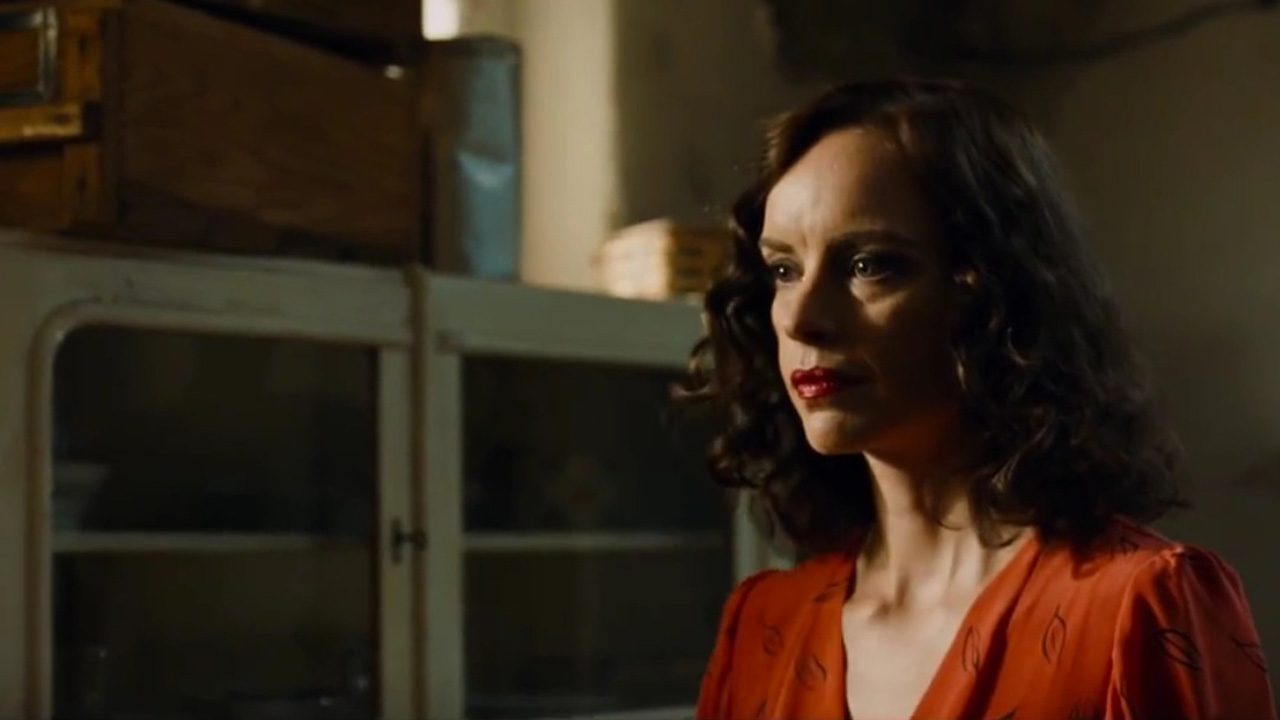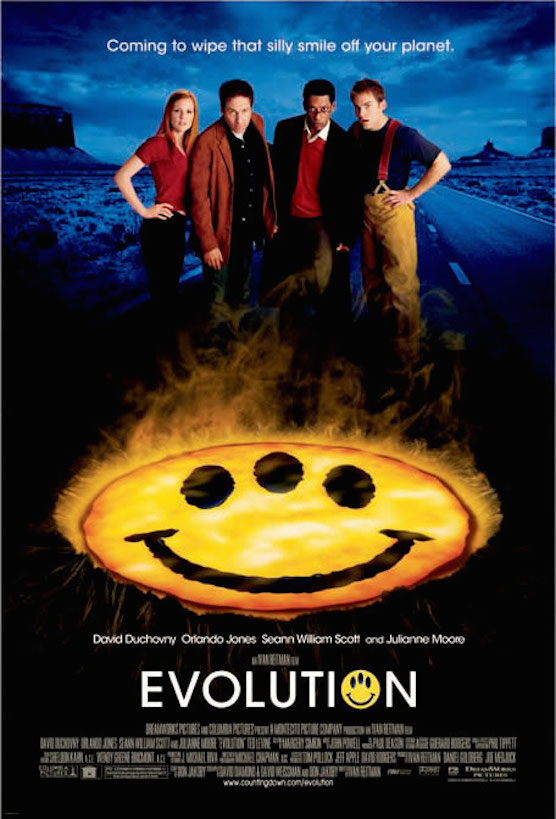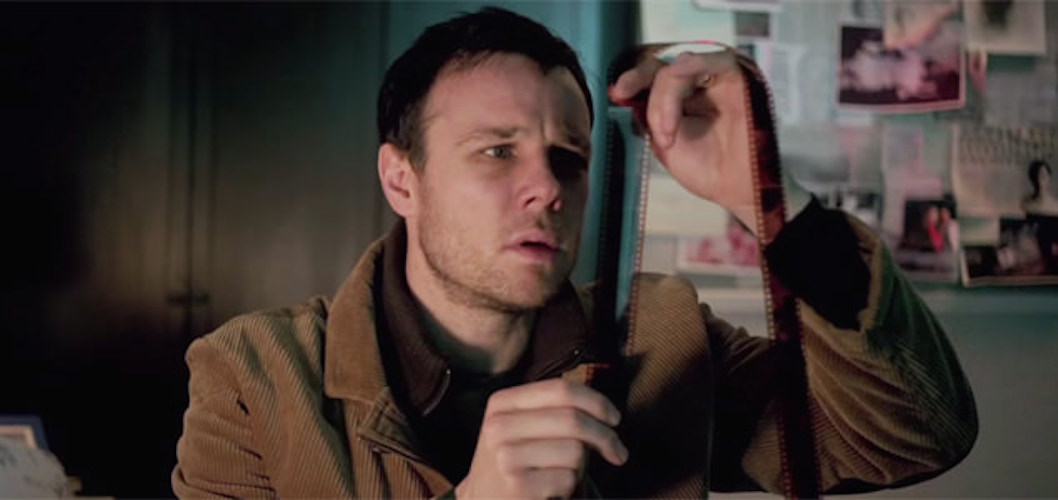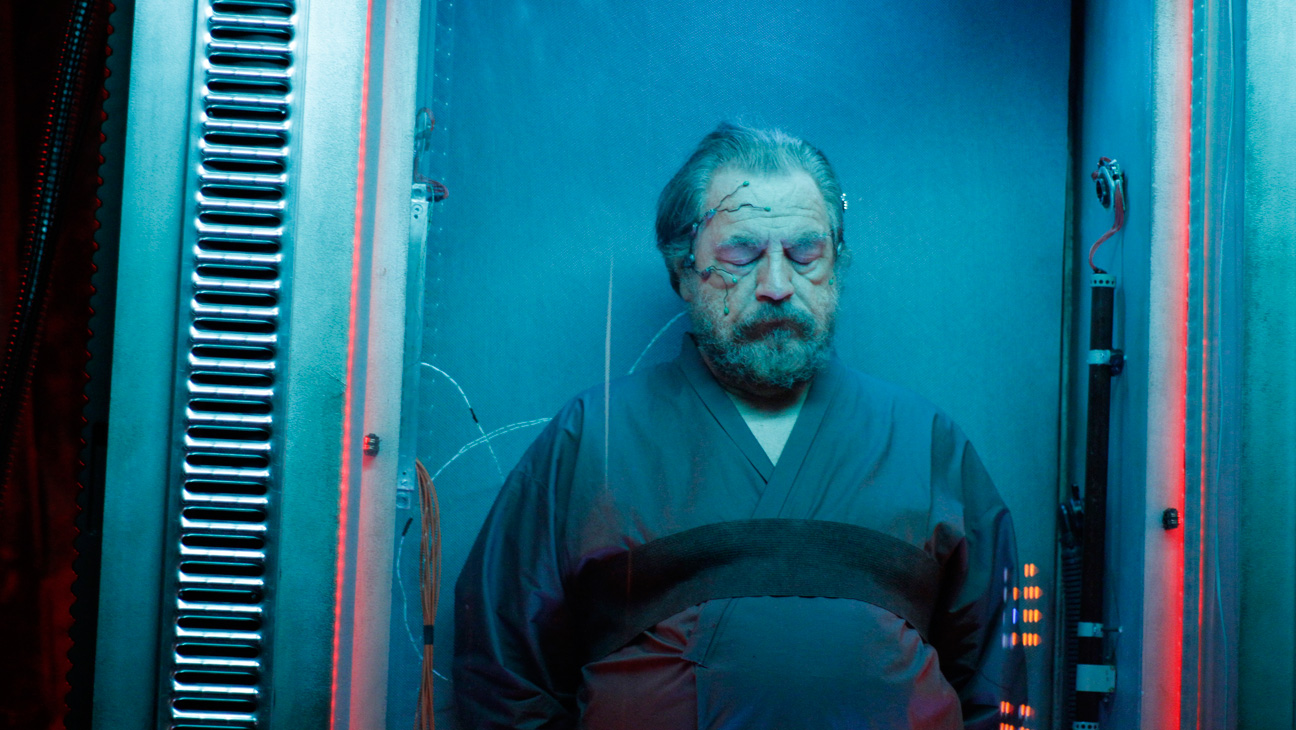
Poster of the Week – A Countess from Hong Kong (1967)

Tags

, , , ,

Countess from Hong Kong, A

A Countess from Hong Kong (1967)

Chaplin’s final movie wasn’t the well-received swan song he may have hoped for, and it does try to tell a modern story in an old-fashioned way that doesn’t work for the most part, but this poster captures some of the light-hearted fun he was aiming for.

It’s a very Sixties poster, with lots of space left unused, and a slightly trippy feel to the border, the blue bubbles reducing and expanding for no particular reason but still suiting the design. The break at the top left for the stars’ names and the title disrupts the pattern, but it’s a break that doesn’t upset the overall style. Having the stars’ names in red makes for an obvious focus, and they pop out from the pale yellow background like an alert.

The images of Loren and Brando are appealing, especially Loren’s pout, though whether she’s doing so out of surprise or distaste is hard to tell at first thanks to the direction in which her eyes are looking, while Brando’s grin speaks of a man enjoying himself immensely (and if you’re sharing romantic scenes with Sophia Loren, why not?). They seem to be enjoying each other’s company, and it’s clear that they’re relaxed and comfortable with each other. It’s a lovely image, the kind it’s easy to imagine two lovers sharing. And then there’s the inclusion of Brando’s hand and arm, as he attempts to pull away the sheet from Loren’s upper half; it’s a neat touch, and explains the look on Loren’s face.

Below the image are the remaining credits, with Chaplin’s name highlighted in black, and then the supporting cast (also in black). With the bright, primary colours used elsewhere, it’s a bit of a surprise to see black employed so much, though it does make Chaplin’s name stand out (which may have been the intention). All in all, though, this is a fun poster to look at, and it brings together its few elements to surprisingly good effect.

Agree? Disagree? Feel free to let me know.

The Giver (2014)

Tags

, , , , , , , , , , ,

Giver, The

D: Phillip Noyce / 97m

Cast: Brenton Thwaites, Jeff Bridges, Meryl Streep, Alexander Skarsgård, Katie Holmes, Odeya Rush, Cameron Monaghan, Taylor Swift, Emma Tremblay

In the future, an event known as the Ruin has left the remains of North American society living in communities with rigid rules and hierarchies, and with no memory of the past. The stronger emotions such as love and fear have been quelled, leaving the world a literally grey, colourless place. On their eighteenth birthdays, friends Jonas (Thwaites), Fiona (Rush) and Asher (Monaghan), attend a ceremony that determines their roles as adults in the community. Fiona is given the role of Nurturer, working with newborns in the Nurturing Centre, while Asher is chosen to be a drone pilot. Jonas, however, is initially passed over, until the Chief Elder (Streep) decrees that he will become the next Receiver of Memories.

The next day, Jonas begins his training with an old man who is the current Receiver (Bridges). The old man – the Giver – explains that he is the repository of all the memories of the past, from even before the Ruin, and this knowledge is used by the Elders to provide them with advice and guidance. Meanwhile, Jonas’s father (Skarsgård), a doctor at the Nurturing Centre, has brought home a sickly infant called Gabriel in the hope that more personal care can improve his health.

Jonas’s training continues and slowly the emotions that emerge lead to Jonas beginning to see colours instead of the grey. As Jonas starts to share his newfound experiences with Fiona and Asher, his increasingly erratic behaviour (by community standards) begins to attract the attention of the Chief Elder. She becomes worried that Jonas’ training won’t be successful, and stresses this to the Giver. To make matters more complicated, Jonas discovers that Gabriel has the same birthmark that he does, and that this means Gabriel will grow up to be a Receiver.

However, the next stage of Jonas’ training sees him learn about warfare and death, and he comes to realise that the community practices selective euthanasia as a way of maintaining the status quo, and of weeding out any infants who are too weak or sickly. When he learns this, he wants nothing more to do with being a Receiver, but then Gabriel is returned to the hospital to be “released”. Unable to let Gabriel be killed, Jonas has no option but to rescue the infant, and head for the boundary between the community and the rest of the world. If he can get them both safely across the boundary, then they will both be safe, and the community will undergo the very change the Elders are most frightened of.

Giver, The - scene

While very similar in its set up to Divergent (2014), The Giver – based on the young adult novel by Lois Lowry – is lacking in many of the areas that made that particular movie so surprisingly effective. Even though the script is a largely faithful adaptation by screenwriters Michael Mitnick and Robert B. Weide, The Giver suffers from having a bland central character in Jonas, a social structure that clearly hasn’t done away with the emotions it abhors, and chief amongst a myriad of other problems, doesn’t even attempt to make any sense.

This is an adaptation where the faults of the original novel have been translated directly onto the screen, and where the novel’s flawed logic has been allowed to dictate events that should have been tightened up dramatically, and which should have seen the characters given a lot more to do than behave as nothing more than genre stereotypes. Good science fiction that depicts a future society – especially one born out of the ruins of an older social structure – always links back to that previous structure in ways that resonate and make an audience either blink in recognition or baulk in horror at the mistakes being repeated. All The Giver does is say, Here’s the community, here’s the set up, no one sees colours, nobody understands the concept of death, parents aren’t really parents, and there’s a whole other world out there but no one’s allowed to see it. And then: just accept it.

But even if the audience were to accept the world of The Giver, even if disbelief could be suspended, it would have to be suspended with pretty much every single scene. There are too many occasions where the viewer’s credulity is stretched to breaking point. Throughout, Jonas behaves as if he’s forgotten the community is littered with surveillance cameras, choosing to carry out his small rebellions while being watched continually. And then, the extent of what he’s been doing is only discovered once he’s chosen to flee with Gabriel (wasn’t anyone watching up ’til then? If not, why not?). It’s also clear that infants such as Gabriel aren’t allowed to stay with families they’re not assigned to, so why is Jonas’s father allowed to bring him home (other than to suit the needs of the story)? And why, in a society that is apparently crime-free and has never been the subject of attack from any other survivors of the Ruin, does it have a security force, or fighter drones to patrol its airspace? These and many more questions remain unanswered, but perhaps the biggest question of all is one reserved for the extended sequence that occurs once Jonas and Gabriel have fled the community and are on their way to the boundary: namely, when were pyramids built in North America?

With the material proving so shoddy and conflicted, audiences are likely to fall back on the performances for comfort but even here they’ll be disappointed. Thwaites seems a good choice for Jonas but within the first ten minutes it becomes obvious that the few demands of the role aren’t going to be met. He’s adequate, but in the way that allows some actors to appear to be giving a more competent performance than they really are. Surprisingly, he’s matched by Streep. Here, the three-time Oscar winner dons an unflattering wig and adopts the air of someone who’s signed on without realising just how bad the script is. As the Giver, Bridges – for whom this has been something of a pet project over the years – brings a gravelly voice and the occasional flash of emotion to his role, but even he can’t inject any life into proceedings, leaving his scenes with Thwaites as near to lifeless as you can get without needing to call an ambulance. (And spare a thought for Holmes, required to do little more than frown a lot and remind Jonas to be more precise in his speech; what a stretch.)

In the hands of veteran Noyce, The Giver has that Hollywood sheen that keeps things looking interesting even when they’re not, and with editor Barry Alexander Brown, manages to keep things moving, especially during a difficult final third that sees the script ramp up the awkwardness and the clumsiness of proceedings to such a point that some viewers may give up out of mounting frustration. It is a handsomely mounted production however (once the grey gives way to full colour), and Marco Beltrami’s score adds a much needed fillip to the overall blandness, but these are minor successes in a movie that remains sluggish and uninspired.

Rating: 4/10 – an unsuccessful adaptation that tests the patience of its audience, and which raises too many questions it has no intention of answering, The Giver is yet another teen vision of a future dystopian society that offers complacency of ideas over originality of thought; dull and meandering, this is one future tale that rarely warrants the attention it’s seeking.

My Top 10 Movie Quotes

Tags

, , , , , , , , , , , ,

It’s always great when you recognise a line from the movies, whether it’s as iconic as “Frankly, my dear, I don’t give a damn”, or as casually effective as “I’ll be back”. But I suspect most of us have our own favourites, those lines of dialogue that have stuck in our memories for one reason or another, and which we trot out whenever we can to impress our friends and families – or just anyone who’ll listen.

Here then are my top 10 quotes, listed in no particular order, but all “ear-catching’ in their own way. See how many you recognise.

1 – “Englishmen. You’re all so fucking pompous. None of you have got any balls.” – The Grim Reaper, Monty Python’s The Meaning of Life (1983)

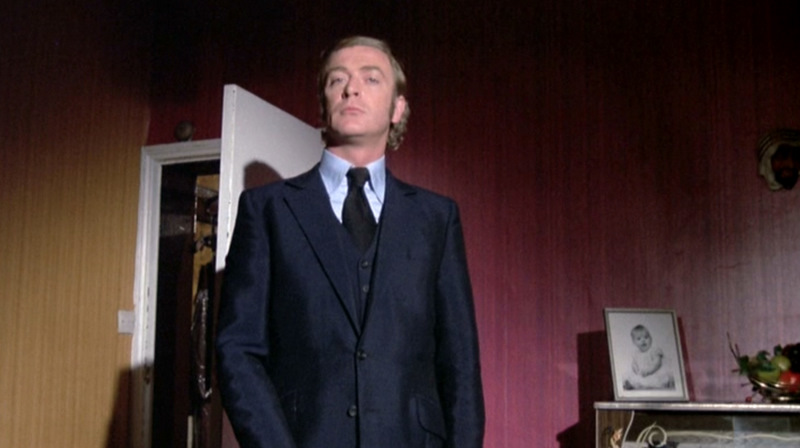
2 – “You’re a big man, but you’re in bad shape. With me it’s a full time job. Now behave yourself.” – Jack Carter, Get Carter (1971)

Get Carter (1971) - Michael Caine

3 – “The dead are not quiet in Hill House.” – Mrs Sanderson, The Haunting (1963)

4 – “Get out of my way son, you’re usin’ my oxygen.” – Randall P. McMurphy, One Flew Over the Cuckoo’s Nest (1975)

5 – “It’s been emotional.” – Big Chris, Lock, Stock and Two Smoking Barrels (1998)

6 – “This isn’t the state of California, it’s a state of insanity.” – General Joseph W. Stilwell, 1941 (1979)

7 – “You’re going to die up there.” – Regan MacNeil, The Exorcist (1973)

8 – “You’re terrible, Muriel.” – Joanie Heslop, Muriel’s Wedding (1994)

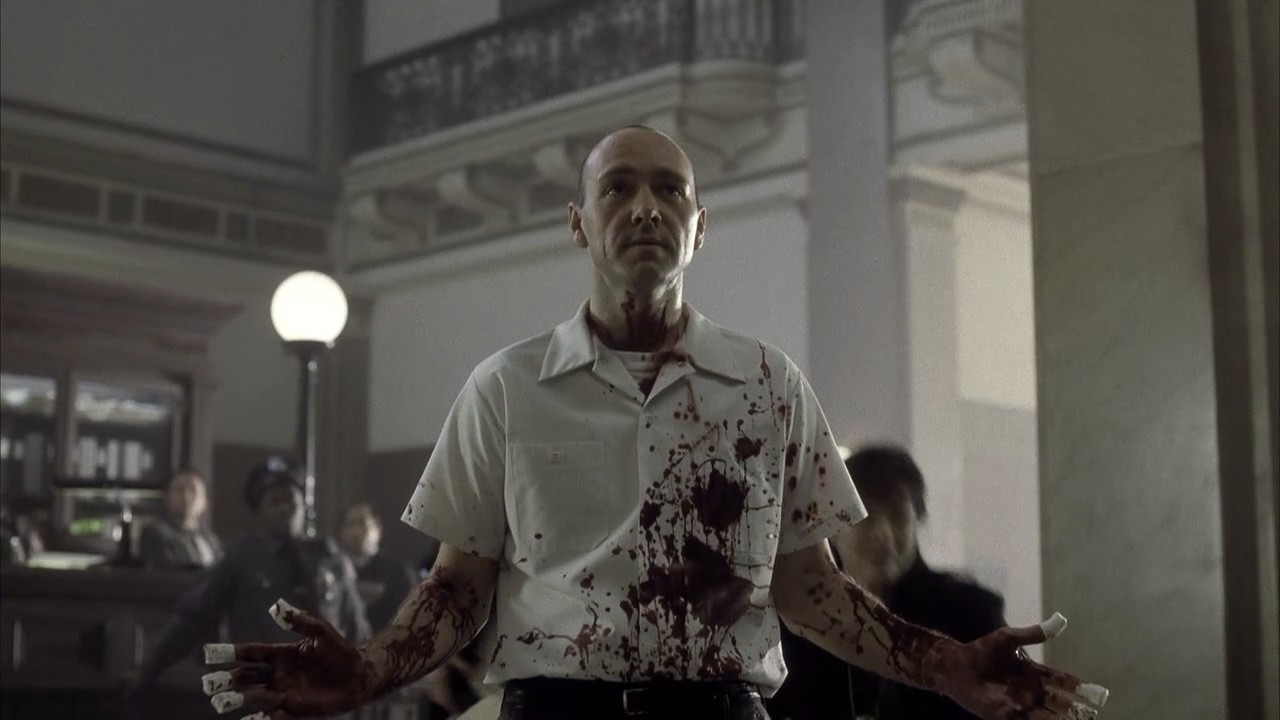
9 – “It seems that envy is my sin.” – John Doe, Se7en (1995)

Se7en - John Doe

10 – “Dead? No excuse for laying off work.” – Supreme Being, Time Bandits (1981)

Honourable mention: “Stack ’em, pack ’em and rack ’em.” – Trudeau, Die Hard 2 (1990).

Feel free to let me know your own favourites, and keep on quoting!

Mini-Review: Kite (2014)

Tags

, , , , , , , , , , , ,

Kite

D: Ralph Ziman / 90m

Cast: India Eisley, Samuel L. Jackson, Callan McAuliffe, Carl Beukes, Deon Lotz, Zane Meas

Some time after the death of her parents, Sawa (Eisley) starts killing members of the criminal organisation headed by the Emir (Meas), the man held responsible for her parents’ deaths. Sawa is helped by Karl Aker (Jackson), a detective who was her father’s partner. As she kills the Emir’s people, she gets closer and closer to him, but her dependency on a drug called Amp causes her to begin making mistakes, and soon her identity is in danger of being revealed.

While Aker covers up any evidence she leaves behind, Sawa is also helped by a young man named Oburi (McAuliffe). He says he knows her from before her parents’ death, and that they were friends, but thanks to Amp, Sawa’s memories of him are hazy and indistinct (along with most of her past). When a hit sees her being chased by some of the Emir’s people, Oburi helps her escape and, with no access to Amp, her withdrawal symptoms begin to help her remember exactly what happened when her parents were killed. And when she finally comes face to face with the Emir, the encounter leaves her with more questions than answers.

Kite - scene

A live action version of Yasuomi Umetsu’s A kaito (1998), Kite was probably hoping that arriving so long after the original might mean any comparisons would be kept to a minimum. Sadly for the makers of this version, the gap in time isn’t an advantage, and the decision to “go live” has led to yet another dystopian vision of the future where street gangs dominate, crime appears to be the only growth industry, and the police are so jaded as to be little more than bystanders. We’ve seen this kind of movie so often now that it’s hard to get any kind of enjoyment out of it; the viewer can only sit back and watch as Kite ticks the boxes it so resolutely refuses to think outside of.

In the end, it’s all about the action, but despite some well choreographed moments of mayhem, including a bathroom shootout that’s reminiscent of the one in True Lies (1994), there’s nothing here that has any real impact. The characters are bland and/or one-dimensional, and nothing the cast does elevates the material in any way (not even Jackson, not exactly a stranger to crass or unconvincing dialogue, can do anything with lines that include “I can’t do this anymore”). As a result, there’s no one to care about, not even Sawa herself, and as the plot staggers towards the inevitable “twist” (that can be seen coming before the movie even starts), the sense of despair rises accordingly.

Rating: 3/10 – looking and feeling like a compendium of scenes and locations from every other ghetto-based action movie made in the last few years, Kite suffers from leaden direction and a script that fosters complacency all round; tiring and dispiriting, with missed opportunities galore, potential viewers should skip this altogether.

Seduced and Abandoned (2013)

Tags

, , , , , , , , , , ,

Seduced and Abandoned

D: James Toback / 98m

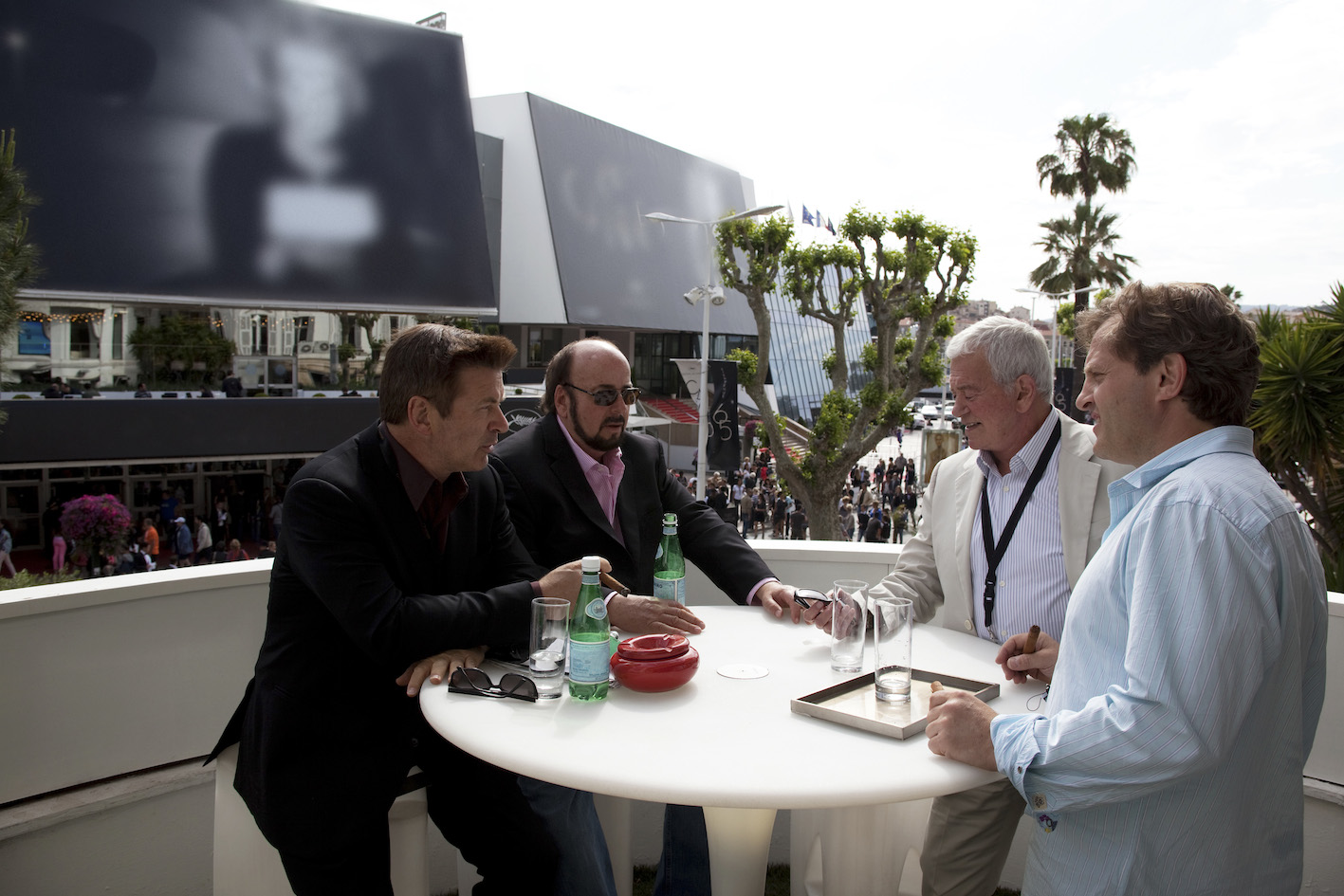
Alec Baldwin, James Toback, Bernardo Bertolucci, Martin Scorsese, Francis Ford Coppola, Roman Polanski, Bérénice Bejo, Diane Kruger, Ryan Gosling, Jessica Chastain, Neve Campbell, James Caan, Mark Damon, Avi Lerner, Ashok Amritraj

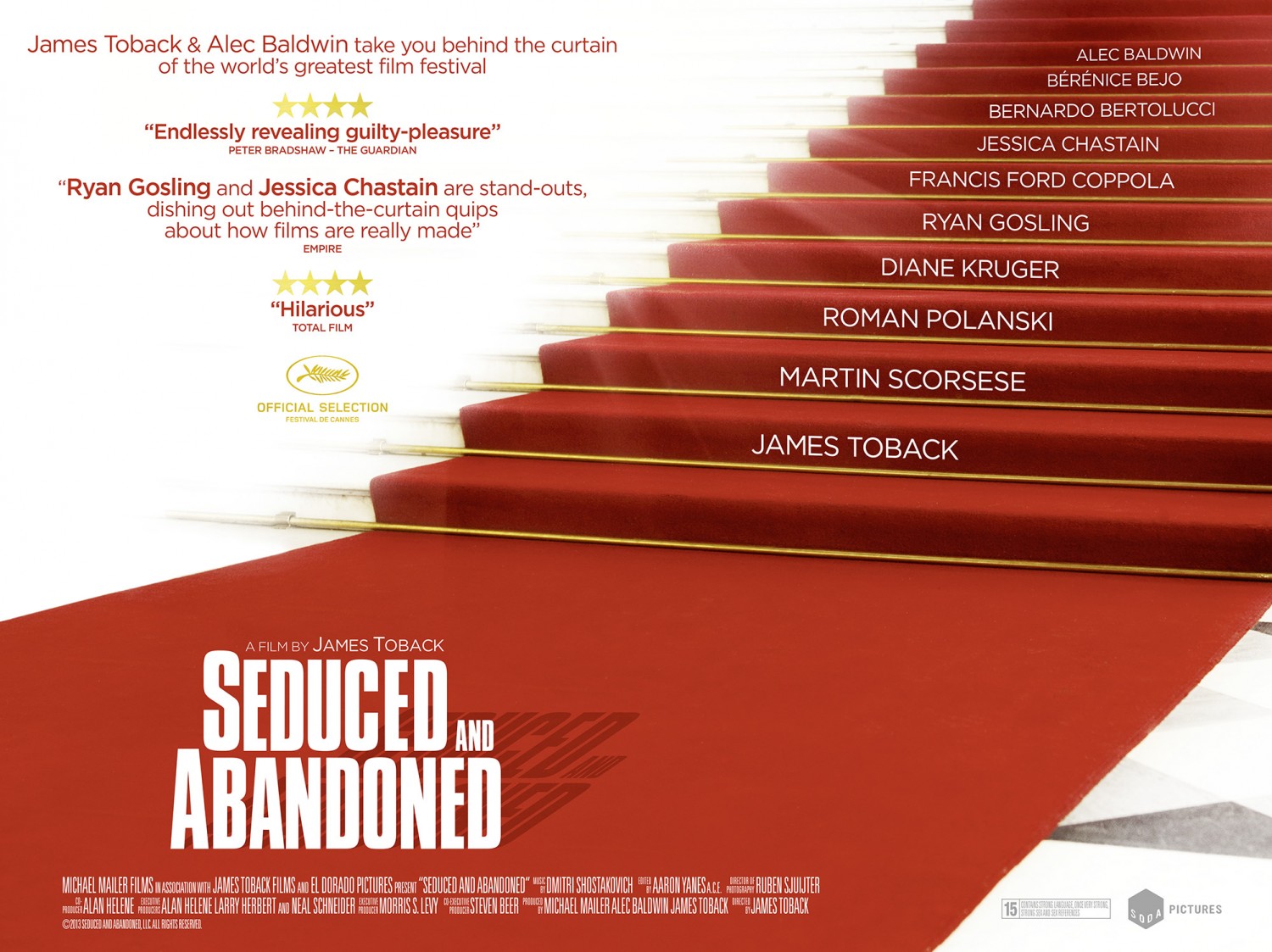
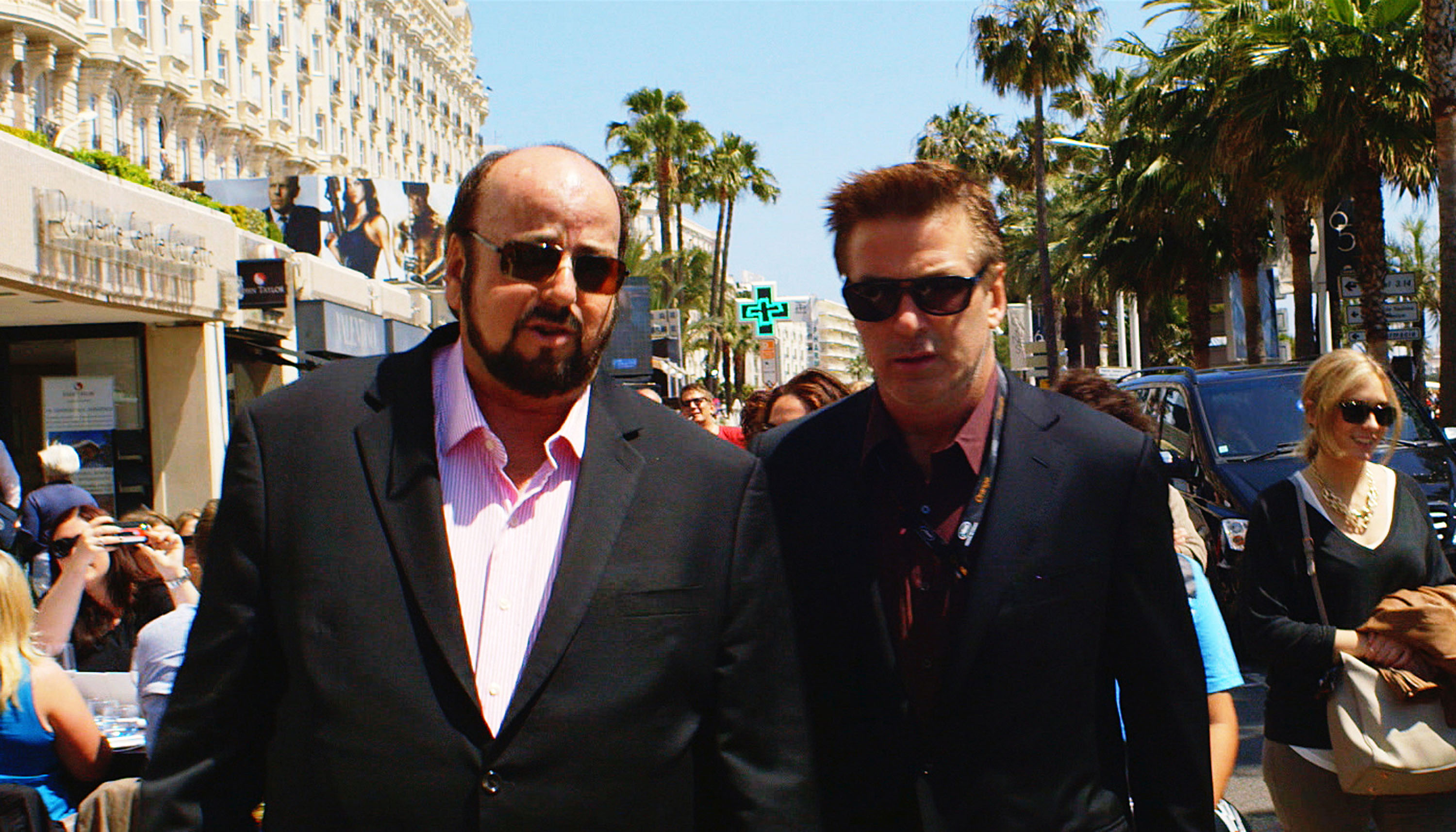
Deciding to make a movie together, director James Toback and actor Alec Baldwin first work out the kind of movie they want to make – a Last Tango in Paris-style project set in Iraq – and who they want to co-star with Baldwin, namely, Neve Campbell. Then, they take their idea to the 2012 Cannes Film Festival in the hope of securing the financing needed to get the movie made. Along the way they speak to various people about the difficulties of getting movies made, the challenges in persuading potential investors to part with their money, and how easier/harder it was back in the Seventies to get a project off the ground.

The search for investors leads to meditations on money, fame, acting, glamour, even death, as Toback and Baldwin look at the wider aspects of movie making, and the constraints that stop some movies from being made as their makers intended. The movie also looks at the industry from both a creative and a financial standpoint, and features interviews with the likes of Martin Scorsese and Francis Ford Coppola, and their own experiences of funding and making movies.

Seduced and Abandoned - scene

Opening with a quote from Orson Welles – “I look back on my life and it’s 95% running around trying to raise money to make movies and 5% actually making them. It’s no way to live.” – Seduced and Abandoned is an often hilarious, witty and insightful look at contemporary movie making, made by a director whose own career has seen him struggle to get movies made, and an actor whose career resurgence since The Aviator (2004) has propelled him to the lower reaches of the ‘A’ List. Together, they take the viewer on a tour of the highs and lows of movie making, and even when they’re coming up against closed door after closed door, still manage to stay positive.

In fact, it’s sometimes difficult to discern if this apparent by-product documentary is the real movie or not, or just some idea they had on the back of trying to make their version of what Baldwin refers to as Last Tango in Tikrit. Although the pair are seen in several meetings pitching their ideas for the movie, they never seem entirely convincing that this is a legitimate project that they’re trying to get off the ground; they don’t even have a script yet, nor anything approaching a synopsis. (Asked point blank if she’d appear in the movie, Diane Kruger blanches and then falls back on the tried and trusted, “If I can see a script I’ll consider it” answer.) Matters aren’t helped by Baldwin’s continual references to the sex scenes the movie would include, making it seem like some weird, sexual fantasy of his own that he’s trying to get off the ground.

However unlikely the premise, though, we all know there are movies out there that have been made out of worse ideas – Teenage Mutant Ninja Turtles (2014), anyone? – but the reactions of veteran producers/distributors Avi Lerner and Ashok Amritraj provide a short, predatory lesson in how to get a movie made: always bear in mind the profits. Toback is told in no uncertain terms that with Campbell aboard he won’t get the $15-$20m he wants to make the movie; instead he’ll only get $4-$5m. Only in those circumstances will producers or investors feel comfortable that they’ll get their money back. It’s a harsh reality, and one that shouldn’t come as a surprise, but it’s so casually discussed that it’s like a slap in the face.

The case for Last Tango in Tikrit being entirely a fabrication is given further credence by Toback’s almost slavish reactions to suggestions for changes to the plot and the story, and the casting. He agrees to almost all of them, seemingly eager – maybe too eager – to please his potential investors in order to secure the financing he needs. In moments such as these, Toback seems uncomfortably close to abandoning the whole concept of the movie, just as long as he gets the money to make a movie, if not the one he’s there to try and get made. (It’s a shame no one asks him to replace Baldwin with a bigger name actor; it would have been interesting to see his reaction to that.)

With Toback and Baldwin being rebuffed at every turn, and to ensure that the movie runs for more than half an hour, there are plenty of interviews with industry notables such as Martin Scorsese, who recounts some of the issues that came up when he was making Mean Streets (1973); Bernardo Bertolucci, who talks about working with Brando on Last Tango in Paris (1972); Francis Ford Coppola, who conveys his dismay at making two Godfather movies and then not being able to get backing for a movie of his own; and Ryan Gosling, whose reaction to an airplane emergency isn’t quite what you’d expect.

Seduced and Abandoned - scene2

The movie’s sly wit and acerbic humour help to keep things interesting, and it’s a good thing as Seduced and Abandoned is a documentary that will remain largely of interest to movie buffs and/or anyone trying to get their own project off the ground. The movie does assume a degree of awareness of what goes on at Cannes, and there’s also an assumption that viewers will be up to speed on the way in which movies are financed, but the lay person may well struggle, or find it less than fascinating. And Toback doesn’t always maintain a linear focus, letting the movie wander from one meeting to another but without any clear context (and reinforcing the idea that the movie is the movie, whatever Toback and Baldwin might say).

Rating: 7/10 – with its two “leads” obviously having a whale of a time, Seduced and Abandoned comes across more as a bit of a jolly boys’ outing to Cannes rather than a properly realised documentary; as a result it lacks focus and doesn’t entirely convince, instead making it seem like a huge in-joke that Toback and Baldwin have concocted for their own amusement.

The Skeleton Twins (2014)

Tags

, , , , , , , , , ,

Skeleton Twins, The

D: Craig Johnson / 93m

Cast: Bill Hader, Kristen Wiig, Luke Wilson, Ty Burrell, Boyd Holbrook, Joanna Gleason

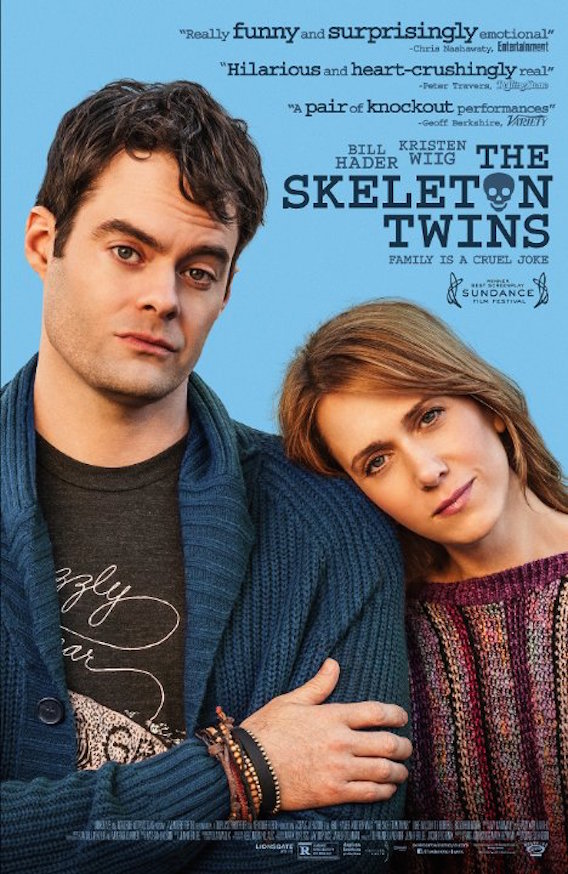
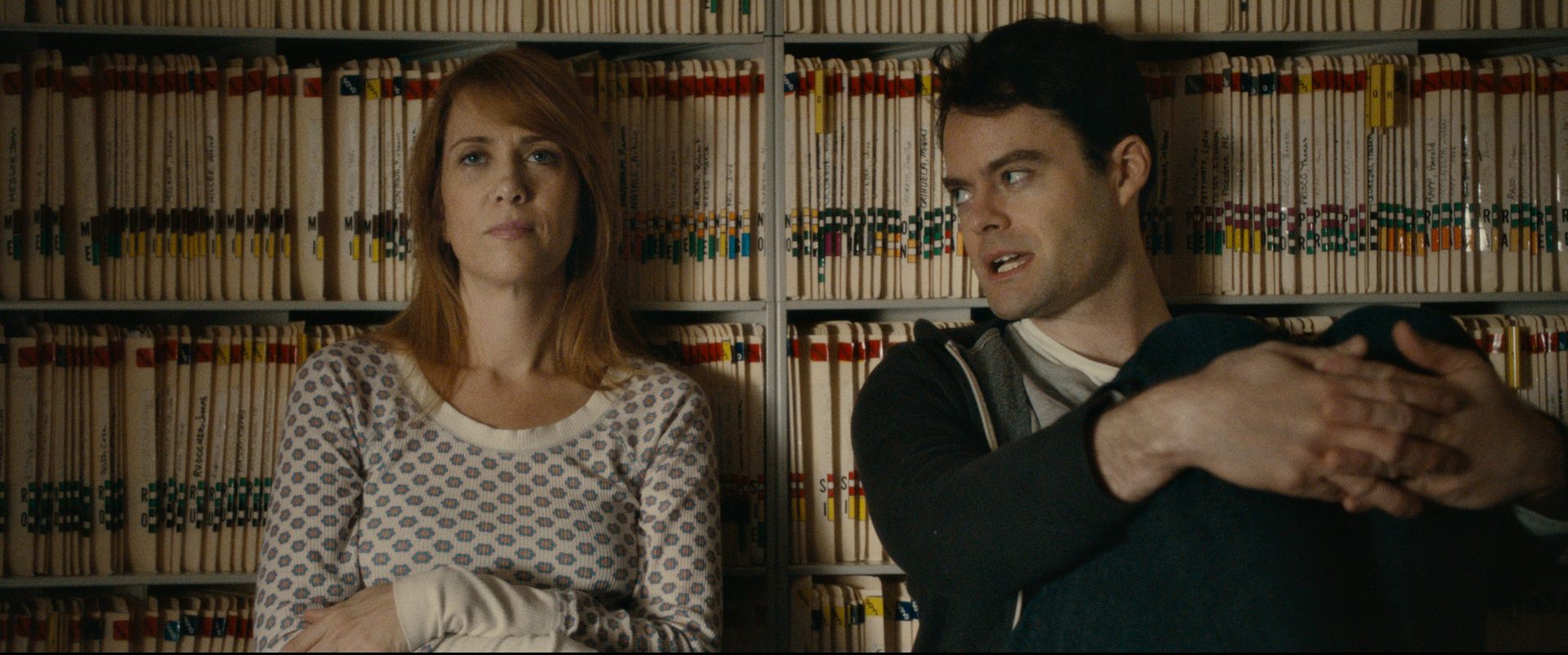
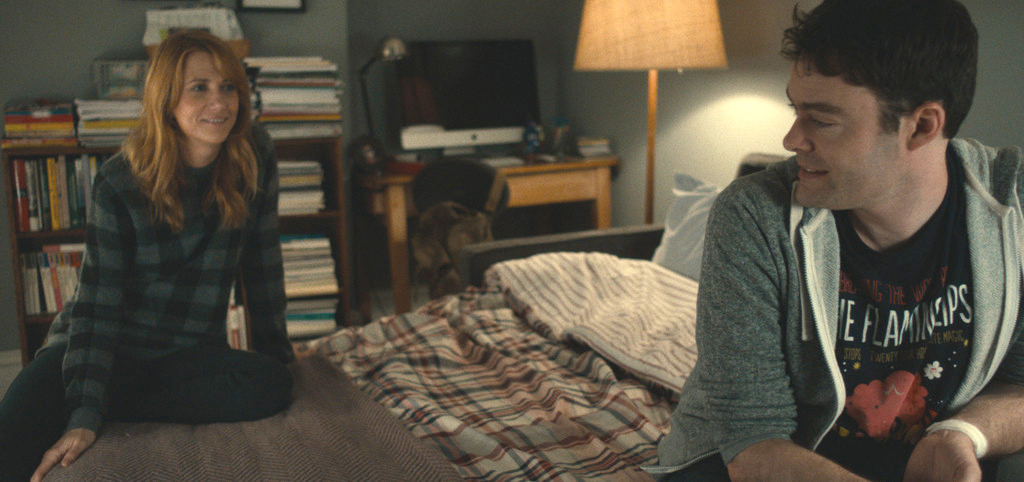
Following an unsuccessful suicide attempt, Milo Dean (Hader) agrees to stay for a while with his twin sister, Maggie (Wiig) and her husband, Lance (Wilson). Milo and Maggie haven’t seen or spoken to each other in ten years, and at first, they are hesitant with each other. Milo is gay, and getting over the end of a relationship (hence the suicide attempt), while Maggie appears happy in her marriage but is always off taking courses – currently it’s scuba diving – and while Lance is keen to have children, Maggie is secretly taking the pill.

While out one day, Milo sees an “old flame”, Rich (Burrell), working in a bookstore. He approaches him but Rich is hostile. Meanwhile, Maggie is becoming increasingly attracted to her scuba diving instructor, Billy (Holbrook). Milo begins helping Lance with his work clearing paths in the woods, and after a visit from their mother (Gleason) that doesn’t go well, Milo and Maggie take the first proper steps in rebuilding their relationship. The next day, Milo returns to the bookstore and things go better with Rich; Maggie though, goes to a bar after class with Billy and they end up having sex in the bathroom.

The issue of pregnancy and Maggie’s abilities as a mother lead to a falling out between her and Milo. They patch things up, and in the process, tell each other some secrets: Milo reveals he has had sex with a woman, while Maggie reveals she’s on birth control. She further reveals it’s not because she doesn’t want children, but that she always sleeps with her instructors; it’s a compulsion she can’t help. That evening, Milo meets up with Rich and they spend the night together (even though Rich has a wife and son).

Halloween comes round and Milo and Maggie decide to dress up and go out like they did as kids. While they’re in a bar, Milo goes to the bathroom and leaves his phone behind. It rings and Maggie sees that it’s Rich calling. This leads to a row between them. Soon after, Lance and Milo have a Dudes Day, during which Lance voices his concerns that he might be shooting blanks because of how long it’s taking for Maggie to become pregnant. Milo, still smarting over Maggie’s reaction to his seeing Rich, plants the seed that she may be taking some “medication” that Lance doesn’t know about. But unbeknownst to both Lance and Milo, Maggie just might be pregnant after all.

Skeleton Twins, The - scene

Early on in The Skeleton Twins we see Maggie holding a handful of pills with the intention of taking them and ending her life. She’s interrupted by the call that tells her about Milo’s failed attempt. Suicide is a big issue in the movie, and while it sets the scene for the movie as a whole, and is referred to on several occasions, it appears more as a deus ex machina than as a raison d’être, spurring the movie on when Craig Johnson and Mark Heyman’s script needs it to. There’s plenty of incident in the movie, and there’s more than enough to keep an audience interested, but the recurring use of suicide as a plot device makes it seem – by the movie’s end – artificial, and it loses its effect. If it had been used just to set up, or introduce, the characters of Milo and Maggie then it might have had more potency. As it is, their reasons for trying to end their lives – while obvious – are never really explored in any real depth, and what becomes clear as the movie progresses is that the viewer will only be given access to Milo and Maggie’s surface feelings and nothing more profound.

Which makes The Skeleton Twins a frustrating, though nevertheless enjoyable viewing experience. As mentioned above, there’s a lot going on in the movie, and a lot of it is very engaging, and even though it’s predictable in the way that indie movies that deal with fractured relationships often are, it’s that familiar sheen that carries the movie forward and makes it work (for the most part). Milo and Maggie live average lives that border on quiet desperation; they both want to feel something more than they usually feel, and both are searching for a contentment they can’t quite grasp hold of. Milo feels the need to brag to Rich about an acting career he doesn’t have, because he’s envious of the life Rich is leading. Maggie feels the need to have affairs because being settled scares her. Both of them want stability but don’t know to achieve or maintain it. In the end, they learn to rely on each other a little bit more than they used to, but they’re still a long way from finding the peace that has so far eluded them.

There are other angles and avenues that aren’t fully explored – their mother’s role in their childhood (and the same for their father), the previous relationship between Milo and Rich, Maggie’s compulsion re: extra-marital sex – and these add to the sense that the script wasn’t fully developed before filming began. However, the script does have its compensations, not least some terrific dialogue, and an often delightful sense of the absurd. And there’s a great sequence where Milo cheers up Maggie by miming to Starship’s Nothing’s Gonna Stop Us Now, so vividly expressed by the pair that it’s easily the movie’s highlight.

What saves the movie completely, though, are the performances from Hader and Wiig. Wiig is on fine form, displaying an understanding of the character that makes Maggie a lot more sympathetic than she might be otherwise (both she and Milo are quite self-centred and narcissistic in their own ways, and these aren’t always attractive qualities in either of them). Maggie has a vulnerability about her as well that Wiig portrays with skill, and she pulls off the difficult moments when Maggie is overwhelmed by her own feelings with both talent and proficiency. But the real performance of note is Hader’s, shrugging off his usual comic schtick to provide an impressive, noteworthy portrayal of a man hoping to reconnect with a time when he felt valued and needed (even if it wasn’t the best of situations). There’s a soulful aspect to his performance that makes Milo the more likeable of the two siblings, and even when he’s messing things up in his relationship with Maggie, you can see clearly that Milo is doing his best, even if it’s coming out wrong. It’s a well-balanced rendition that is more affecting that might be expected, and shows Hader to be a far more intuitive actor than previous roles have indicated.

Alongside Hader and Wiig, Wilson takes Lance’s almost puppy-dog looks and personality and makes him the quintessential good guy, but not quite so bland or vanilla that you can’t see Maggie’s attraction to him. It’s the awkward, not-quite-so-invested-in-by-the-script supporting role that can seem a bit colourless, but Wilson is quietly effective throughout. As Rich, Burrell has the more dramatic role, and gives a good portrayal of a man afraid of his past and the feelings it brings up, matching Hader for intensity in their scenes together.

Skeleton Twins, The - scene2

In the director’s chair, Johnson directs his and Heyman’s script with a delicate touch that, unfortunately, leaves much of the drama either quickly dispelled with or feeling lightweight and lacking in importance. He fares better with the visual look of the movie, the various locations and interiors given a sharp focus by Reed Morano’s complementary photography, and he uses close ups with a firm understanding of how potent they can be at the right time. Nathan Larson’s score is evocative and breezy, and full marks absolutely have to go to key makeup artist Liz Lash for coming up with Milo’s Halloween look – disturbing, for once, for all the right reasons.

Rating: 6/10 – with the material only scratching the surface of its characters lives and problems, The Skeleton Twins just misses out on being as poignant and as emotionally involving as it should have been; stellar lead performances aside, this is a movie that is still worth watching but with the proviso that it’s sadly less than the sum of its parts.

Poster of the Week – JFK (1992)

Tags

, , , , ,

JFK

JFK (1992)

Oliver Stone’s controversial examination of the assassination of US President John F. Kennedy is engrossing, challenging and provocative. This poster for the movie isn’t quite as powerful – though that’s not a bad thing – but it what does do really well is compile some very iconic imagery into an attractive, attention-grabbing whole.

There are three very potent images included here. The first is the shot of Jackie Kennedy reaching over the back of the car with the Security Service agent rushing toward her. Even if you were unaware of the context of that image, you’d still know there was something wrong there, that this woman was in trouble. Knowing the context adds sympathy, sorrow, grief and shock, and the image’s inclusion is a poignant and concise reminder of the events of 22 November 1963.

In contrast, the image of Lee Harvey Oswald clasping a rifle in one hand and copies of the Communist paper The Militant in the other, provokes a different reaction. Whether you regard him as an assassin or a patsy, there’s something about Oswald’s look to camera that makes the viewer a little uneasy. Whatever his involvement in the death of John F. Kennedy, Oswald is still someone who invites suspicion, and this image reinforces that feeling with quiet authority.

Lastly, and perhaps less obviously, there is the torn American flag, a symbol of the “loss of innocence” America as a nation felt in the wake of Kennedy’s death. This was an event that – if such a thing is truly possible – damaged the nation’s psyche. It’s inclusion is the poster’s most subtle aspect, and mixed with the other two images, creates a compelling reflection on the movie’s subject matter.

The further inclusion of an image of Kevin Costner as District Attorney Jim Garrison doesn’t really add anything to the overall design, and appears more of a marketing idea than anything else. But the tag line is certainly apt, and rounds off the poster’s effect quite nicely: “The Story That Won’t Go Away”. How true, indeed.

Agree? Disagree? Feel free to let me know.

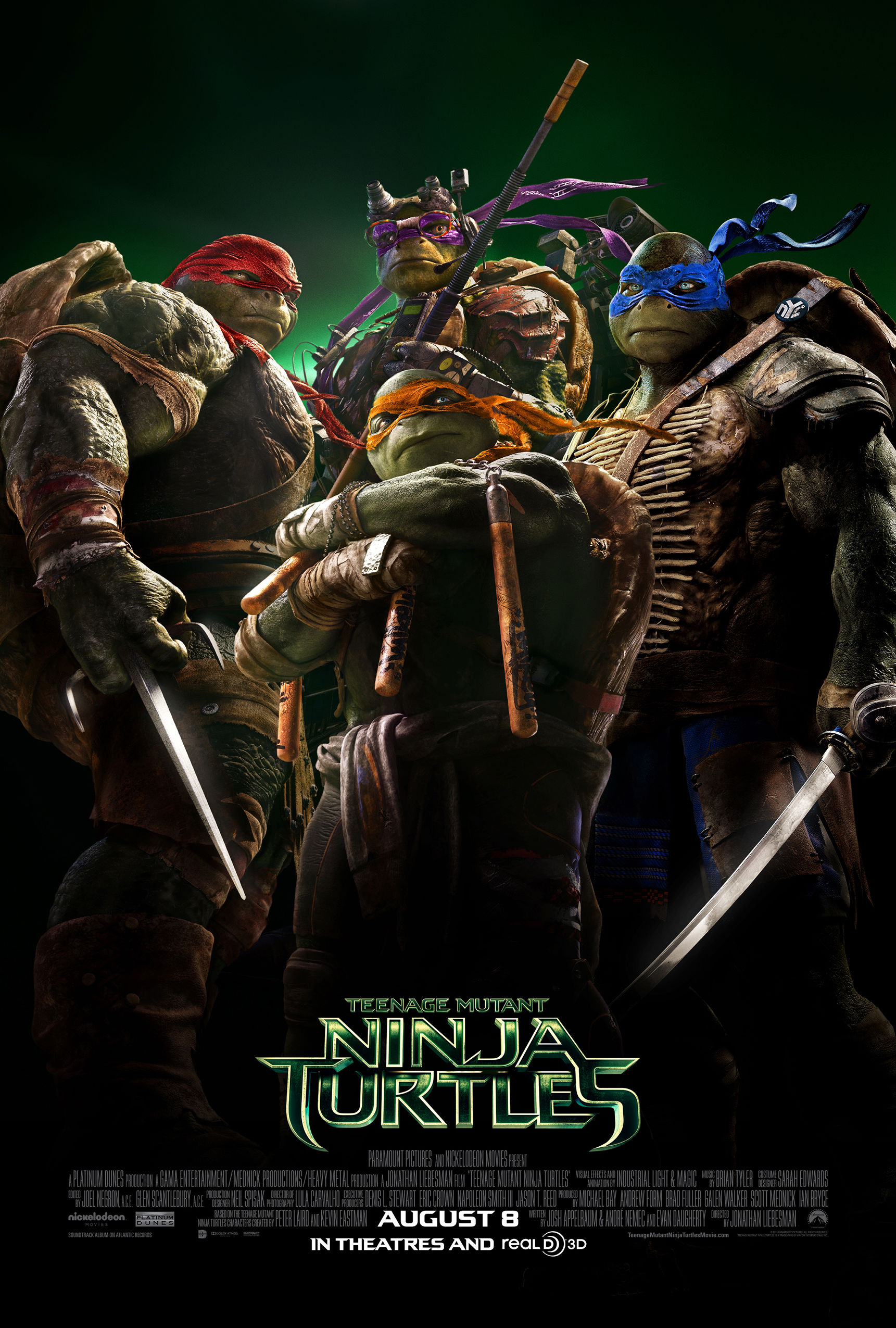
Teenage Mutant Ninja Turtles (2014)

Tags

, , , , , , , , , , , , , , ,

Teenage Mutant Ninja Turtles (2014)

D: Jonathan Liebesman / 101m

Cast: Megan Fox, Will Arnett, William Fichtner, Alan Ritchson, Noel Fisher, Pete Ploszek, Jeremy Howard, Danny Woodburn, Tohoru Masamune, Whoopi Goldberg, Minae Noji, Johnny Knoxville, Tony Shalhoub

Ten reasons NOT to see this movie:

1) Megan Fox – still trying too hard and still unable to display even a hint of a recognisable or credible emotion.

2) Splinter learns jujitsu from a book.

3) Splinter teaches the turtles jujitsu – after learning from a book.

4) April O’Neil saves the turtles and Splinter from a lab fire – only to dump them into a sewer.

5) The Foot Clan ninjas use automatic weapons – they never use their ninja skills.

6) April O’Neil tries to convince her boss that there are mutant ninja turtles acting as vigilantes – and doesn’t provide a shred of proof – twice.

7) The New York sewer system contains enough discarded electronic equipment to assemble a sophisticated, city-wide surveillance system.

8) The super-rich bad guy’s only reason for being the bad guy is so he can be even richer.

9) April O’Neil is the subject of constant sexual harassment from Michelangelo – this is regarded as humour.

10) Turtles – apparently – are bulletproof.

Rating: 2/10 – so bad it’s a crime, and continuing evidence that Michael Bay’s Platinum Dunes has no idea how to reboot a franchise or remake a movie from the Eighties; as poorly executed as you might expect, Teenage Mutant Ninja Turtles drains the life out of its own premise, and gives new meaning to the word “awful”.

The Babadook (2014)

Tags

, , , , , , , , , , , ,

Babadook, The

D: Jennifer Kent / 93m

Cast: Essie Davis, Noah Wiseman, Hayley McElhinney, Daniel Henshall, Barbara West, Benjamin Winspear, Tim Purcell

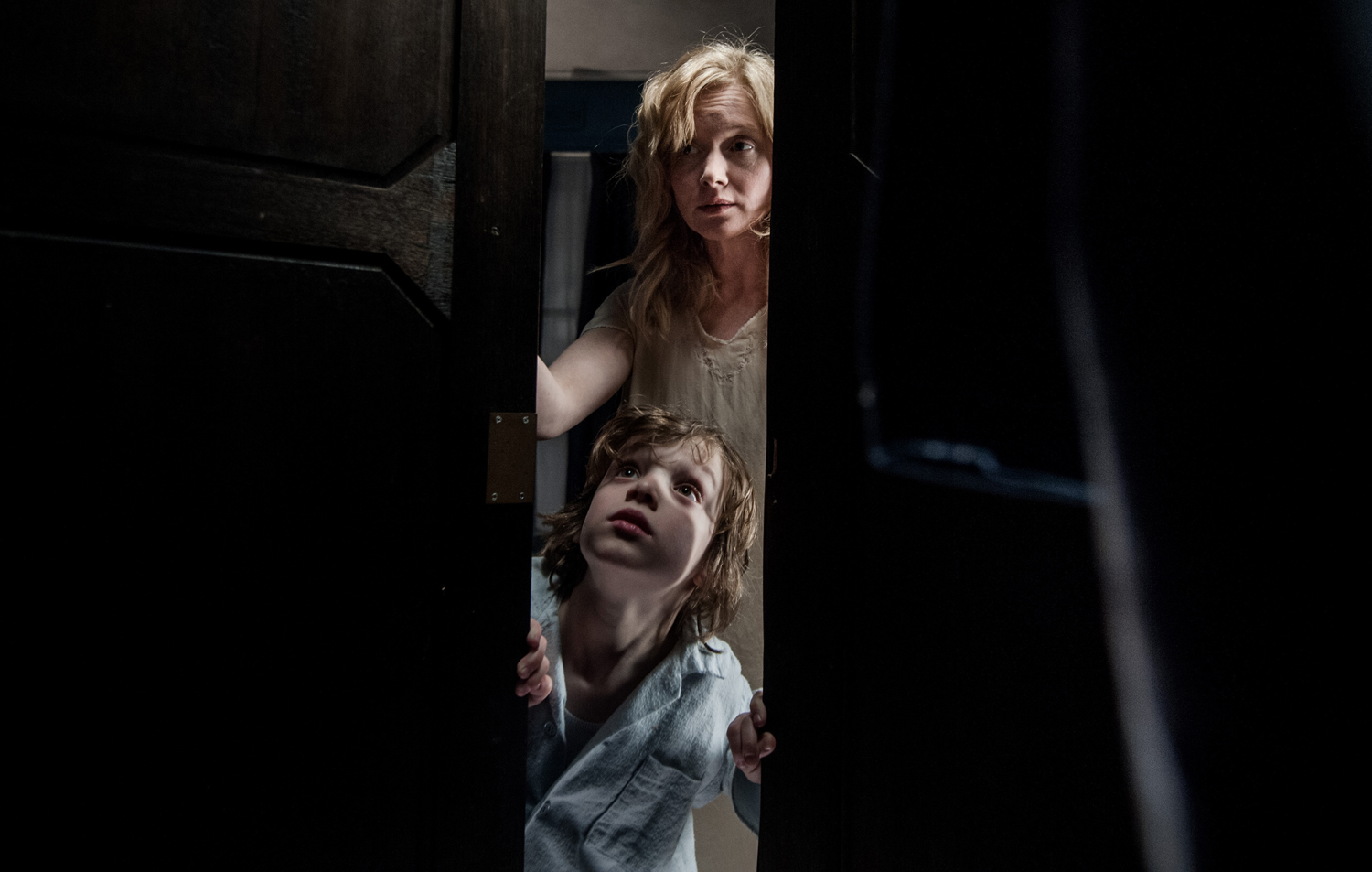
Six-year-old Samuel (Wiseman) has a deep-rooted fear of monsters. Each night he makes sure his mother, Amelia (Davis) checks under the bed and inside his wardrobe to ensure nothing lurks in his room. Most nights, though, Samuel’s fear leads to his sleeping with his mother; this in turn leads to Amelia being constantly tired. With his fear of monsters becoming obsessive – Samuel is convinced they’re real and constructs weapons to kill them – his behaviour begins to have an isolating effect. His school doesn’t know how to deal with him, and Amelia’s sister, Claire (McElhinney) is sufficiently worried to want to keep her daughter away from him.

One night, Samuel chooses a book for Amelia to read to him at bedtime. The book is called The Babadook, and shows a menacing creature trying to prey on a young child; strangely, the last few pages are blank. Amelia is disturbed by the book, but not as much as Samuel. His behaviour worsens as he refers to the Babadook as being real. Unable to cope at work, and struggling with Samuel’s “acting up”, Amelia rips the book into pieces and throws it into the trash. Soon after, there is a loud knocking at the front door. Amelia finds the book on the doorstep, its pages reassembled, and with the last few pages now depicting her murdering their dog, and then Samuel before taking her own life. Horrified, this time she burns the book.

Amelia also starts to receive phone calls where a voice chants “ba-BA-ba Dook! Dook! Dook!” Then one night she sees the creature in her room. Terrified, but unsure of what to do, Amelia attempts to carry on as usual but Samuel becomes increasingly wary of her. When he has a fit in the back of their car, she keeps him off school, but her attempts to look after him are hampered by sudden mood swings and angry outbursts. Samuel becomes convinced she’s been possessed by the Babadook, and tells her so. And soon, the book’s added illustrations start to come true…

Babadook, The - scene

Expanded from Kent’s debut short, Monster (2005), The Babadook is an occasionally chilling examination of childhood terror and adult paranoia. It opens with the accident that claims the life of Oskar (Winspear), Amelia’s husband. This pivotal moment is at the heart of Amelia’s troubles, her unresolved grief keeping her from moving on with her life and hindering her from properly dealing with Samuel’s fear of monsters. Of the two, she is the more susceptible to the attentions of the Babadook, and so it proves, the creature targeting the weaker inhabitant of the house. It’s a frightening scenario for any child: to see their parent turning into the very creature they’re most afraid of, and it’s this very real terror that the movie exploits so effectively.

However, the concept of the Babadook itself is less successful. As the latest boogeyman to hit our screens, its look a combination of German Expressionism and Freddy Krueger’s favourite manicure, the creature is kept hidden for the most part, Kent preferring to use Oskar as its more user-friendly incarnation. This decision is a wise one on the writer/director’s part, as when the Babadook does appear in the flesh, the nightmarish quality of the book’s rendering of it is undermined, and there’s just too much of a resemblance to Conrad Veidt in The Cabinet of Dr. Caligari (1920). (There’s also a moment when the Babadook, hidden in the darkness of Amelia’s bedroom, extends its arms in a wing-like effect; it’s meant to be terrifying but instead is puzzling as there’s no follow up.) Used largely as a shock effect, the Babadook isn’t quite as scary as might be expected, and Kent doesn’t do full justice to the opportunities the creature could have afforded.

The Babadook is more effective, however, as a study of one woman’s extreme mental breakdown. Taking the death of her husband as a starting point, Amelia’s inability to cope is more understandable. There’s a scene with her sister where Amelia admits she doesn’t talk about Oskar’s death but it’s still a source of pain; it’s clear from this that she’s never properly dealt with the feelings and emotions that have developed over the years since he died (there is an added level of heartache to Oskar’s death: he was driving Amelia to the hospital so she could give birth to Samuel when the accident happened). With Samuel’s seventh birthday fast approaching, and his insistence on the reality of monsters – in particular the Babadook – Amelia’s descent into murderous psychosis is a credible alternative to the idea of a creature in the shadows. To back this up, Amelia is shown in various fugue states, and her mood swings revolve around items belonging to Oskar, or Samuel’s own need for reassurance and comfort. As she clings to the past and deflects the concerns of the present, her grip on reality loosens to the point where her mania is all-encompassing, and where any lucid moments are short-lived.

In this context, the Babadook is an obvious extension of Amelia’s mania, but the script calls for a more traditional showdown, though even here Kent can’t resist throwing a twist into the mix, and the movie ends by creating a fresh mystery (viewers can decide for themselves just what it all means in relation to what’s gone before). With its drab, murky interiors and deep shadows, Amelia and Samuel’s home is yet another movie location where the lighting is largely ineffectual (or never used), and there’s a conveniently placed kitchen window that allows Amelia to view the Babadook in their neighbour’s home (and which violates the creature’s own mythology for the sake of a cheap scare). Unable to resist the inclusion of some standard horror tropes – bumps in the night, the wardrobe door that was shut and is later mysteriously open – Kent’s script also offers up some very minor subplots that aren’t developed fully, and keeps its secondary characters firmly in the background. Away from the script, Kent directs with a confidence that stands her in good stead when the focus is on the relationship between Amelia and Samuel, but less so when she’s trying to inject some terror into the proceedings.

Babadook, The - scene2

If you’re someone who rarely watches horror movies, and really this is more of a domestic drama with horror themes attached, then it’s likely you’ll find The Babadook quite disturbing. However, fans of the genre will find less to celebrate, and may well feel let down by all the hype that’s surrounded the movie since its release. Kent has done a proficient job of expanding her original short film (which is well worth checking out), but the main problem in that version remains here: just what does the Babadook represent, and why?

Rating: 6/10 – uneven, and with too many longueurs holding up the action, The Babadook never quite lives up to its potential; only occasionally scary, and with performances from Davis and Wiseman that don’t resonate or impress as much as they should, this is yet another reminder of how difficult it is nowadays to create a truly terrifying horror movie.

The Cat Returns (2002)

Tags

, , , , , , , , , , ,

Cat Returns, The

Original title: Neko no ongaeshi

D: Hiroyuki Morita / 75m

Cast: Chizuru Ikewaki, Yoshihiko Hakamada, Aki Maeda, Takayuki Yamada, Hitomi Satô, Kenta Satoi, Mari Hamada, Tetsu Watanabe, Yôsuke Saitô, Kumiko Okae, Tetsurô Tanba

Haru (Ikewaki) is a young girl who always seems to be running to catch up in her life. While on her way home from school one day, she saves a cat from being run over by a truck. Unseen by anyone else, the cat dusts itself down and thanks her for saving his life; afterwards Haru thinks she’s going mad. When she mentions the incident to her mother (Okae), her mother recalls an occasion when Haru was much younger and she spoke to a kitten. Somewhat reassured, Haru is still surprised to find a procession of cats appear in the night outside her home. Led by the Cat King (Tanba) of Cat Kingdom, he bestows on her his thanks for saving his son, Prince Lune (Yamada), and promises to bestow on her a range of gifts.

The gifts begin appearing the next morning, with cat tail plants overtaking the garden, Haru being chased to school by a large band of cats, and her locker containing boxes of live mice. Later, Haru is lamenting the way things are going when she sees Natoru (Hamada), the Cat King’s assistant. When she complains about the gifts, he offers her a trip to Cat Kingdom and tells her of the most important gift of all: her marriage to Prince Lune. Haru panics at the idea, and while she wonders what she can do, she hears a voice tell her to find the big white cat at the crossroads.

The cat, Muta (Watanabe), takes her to a strange part of town where the buildings are all much smaller than usual and where she is introduced to Humbert von Gikkingen (Hakamada), aka the Baron. Haru tells the Baron about her predicament, and he agrees to help her, aided by Muta and a crow called Toto (Saitô). Before they can however, there is a knock at the door and Haru is carried off by Natoru and several other cats. When Haru wakes she finds herself in the Cat Kingdom; she also finds she’s shrunk to the size of a cat, and is half-human, half-cat. With preparations for the wedding going ahead, Haru appears to be trapped in the Cat Kingdom with no way out and no prospect of being rescued.

Cat Returns, The - scene

Regarded as a minor entry in the Studio Ghibli canon, The Cat Returns is a light, good-hearted movie that tells a simple story in a simple, old-fashioned style, and is all the better for it. It may not have the depth of, say, Spirited Away (2001) or Grave of the Fireflies (1988), but Haru’s plight is tinged with clever humour and the movie embraces its premise with a delightful vigour. Haru herself is an appealing character, her teenage awkwardness imaginatively rendered, and given free expression in the opening twenty minutes.

Once the premise of talking cats is established, the movie piles on the charm with cheerful abandon, and while Haru’s adventures in the Cat Kingdom take on a more serious tone, there’s still plenty of imaginative whimsy on display (Haru’s half-cat look is a prime example). The characters are – as expected – carefully designed, with the Baron’s urbane Victorian apparel proving a winner. Likewise, the Cat King is a terrific creation, his heavy-lidded stare and overfed frame highlighting the dissolute nature of his life and position.

This being a Studio Ghibli production the animation is naturally of a very high standard, particularly with regard to the backgrounds, which are so full of detail that it’s hard to take in all at once. There’s also a richness in their colour schemes that makes a lot of these background shots pop off the screen, so bright and vivid are they. Haru and the Baron et al. fit in well against these backdrops, but where the main characters look like they belong, the same can’t be said for the cats who are, in effect, bit players and extras. The level of detail brought to the main characters is absent here, with large groups of cats in certain scenes looking more like pre-viz animation than the finished product. And it’s unfortunate, but the Baron’s mouth is often represented by an awkwardly drawn line, making him look unnecessarily thin-lipped and/or petulant.

But these are minor problems in a movie that entertains throughout and whose sole purpose is to provide seventy-five minutes’ worth of fun, with no hidden meanings, and no dramatic subtext beyond the notion that almost being made to marry a cat will lead to a reassessment of one’s outlook on Life (Haru is a more focused individual come the movie’s end). As fluffy as one of the clouds seen floating in the sky in more than one scene, The Cat Returns is directed with flair and a good sense of the absurd nature of the story by Morita (whose only directorial credit this is, so far), and the Japanese voice cast all prove perfect matches for their characters, with special mention going to Ikewaki and Watanabe. There’s also a wonderfully playful score courtesy of Yuji Nomi that is a character all by itself.

Rating: 7/10 – as adaptations of comic books go – this one from Aoi Hiragi’s Neko no Danshaku, BaronThe Cat Returns is a joyous diversion that boasts some unsurprisingly beautiful animation and an inventive storyline; a feelgood movie in every way, this can, and should be, enjoyed by children and adults alike.

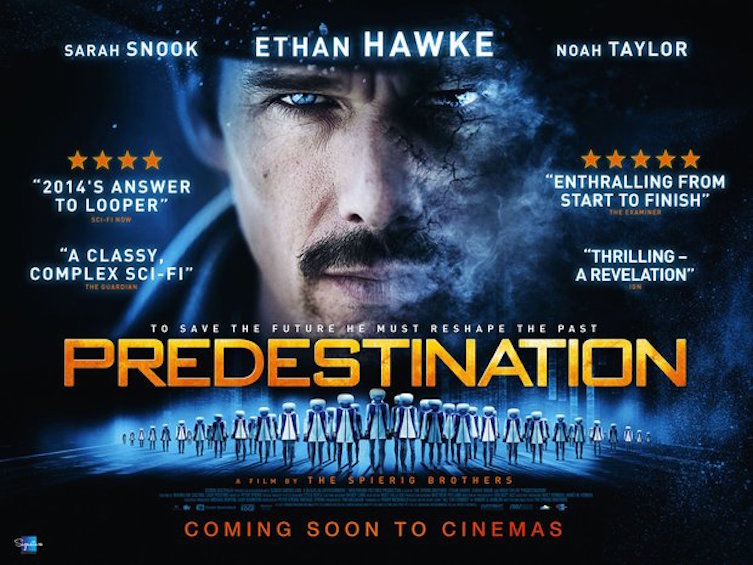
Predestination (2014)

Tags

, , , , , , , , , ,

Predestination

D: The Spierig Brothers / 97m

Cast: Ethan Hawke, Sarah Snook, Noah Taylor, Christopher Kirby, Cate Wolfe, Ben Prendergast, Freya Stafford

A man enters a building and heads for the basement where the boiler is housed. There he finds an explosive device that’s counting down to its detonation. Just as he is about to stop the bomb from detonating he is shot at and injured. He makes one last attempt to save the building and the people inside it, but is badly burnt in the process. In desperation, he reaches for what looks like a violin case, but it’s just out of reach. Then someone pushes it closer, the man is able to push some buttons on the case… and he vanishes. When he wakes up he’s in a hospital recovering from severe burns to his face and throat. So bad were the man’s injuries, the doctors have had to carry out extensive reconstructive surgery, and he’s advised that the pitch of his voice will be very different than before.

The man (Hawke) is a temporal agent, able to travel back and forth in time within fifty-three years of 1981, the year in which time travel is achieved. Working for a secret organisation, his task – as before – is to track down and eliminate the so-called Fizzle Bomber, a terrorist responsible for several arson attacks in the Sixties and Seventies, but whose greatest “achievement” was the murder of 11,000 people in a massive explosion in New York City in 1975. Accepting one last chance to stop the Fizzle Bomber, the agent travels back from 1985 to 1978 and finds work in a bar. One night a young man comes in who reveals himself to be a writer of true confessions stories. The agent challenges him to tell the best story he knows.

The young man begins by telling the agent that when he was a girl he was abandoned by his parents on the steps of an orphanage when he was just a baby; he was named Jane. Growing up healthy and fit, and with a fierce intellect, he was precocious and headstrong. As a teenager he tried to join an organisation called Spacecorp which trained future astronauts but an anomaly discovered during a physical meant he had to leave the programme. At a night class, he met a man and fell pregnant. The child, a girl,  was born by Caesarean, and afterwards one of his doctors (Pendergast) explained to him that his internal organs were both male and female, and that they’d made the decision to remove the female organs and set him on the path to becoming a man. And if that wasn’t enough to deal with, his child was abducted a few days later and never seen again. Eventually moving to New York City, he found he had a knack for writing true confessions-style magazine articles, and now here he is. The agent is unimpressed however, and reveals that he’s known who the man is all along. The man believes he’s being scammed, but when the agent tells him that he can help him kill the man who got him pregnant (and presumably stole their child), the man is sufficiently intrigued to agree to whatever the agent has in mind.

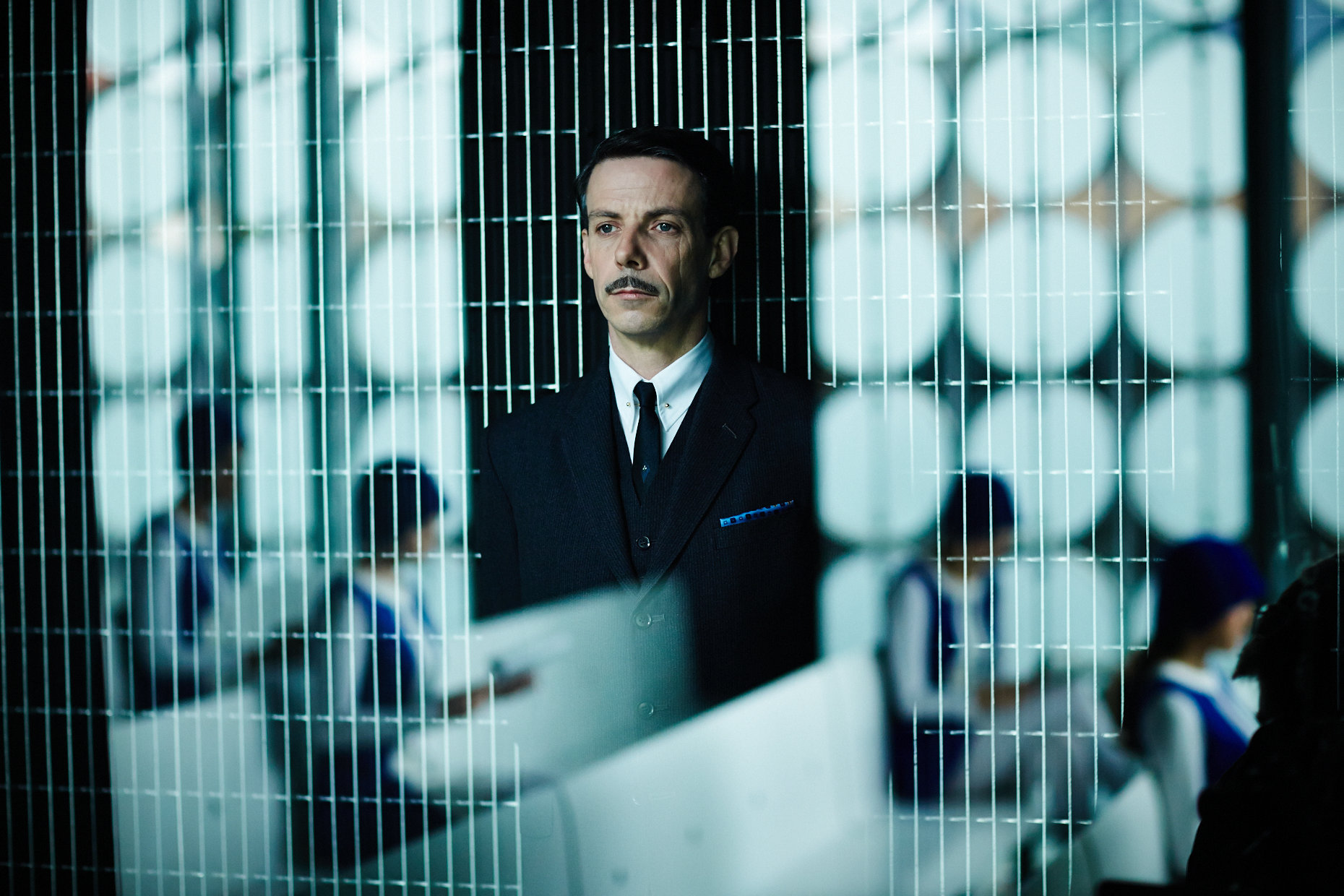
Predestination - scene

With such a lengthy back story, Predestination has the look and feel of a convoluted soap opera, its abandoned/stolen babies and sex change protagonist the kind of thing that is so open to parody and ridicule it risks losing its audience’s involvement from the moment the writer mentions being born a girl. But the premise is played out in such a straight, deliberate fashion that what might be loosely termed “a tall story” soon proves to have more depth than is readily obvious. As the writer embarks on his quest for revenge he finds himself drawn into a world of time travel, unexpected twists and turns, temporal paradoxes, and the mystery of the Fizzle Bomber.

What happens before the scene in the bar is repeated later in the movie, while what happens after the scene in the bar sees the agent and the writer separating and converging in ways that neither they nor (hopefully) the audience are able to predict. Adapted from the short story All You Zombies by Robert A. Heinlein – a copy of his novel Stranger in a Strange Land can be seen on the writer’s desk at one point – Predestination is a mostly faithful retelling of Heinlein’s tale, and keeps the time travel paradox that unites the main characters. Outwardly complex and confusing, the movie isn’t actually that difficult to follow, but it does its best to obscure matters (mostly by having the agent make several seemingly unconnected “jumps” in the final third), and creators the Spierig Brothers (Michael and Peter) have fun providing just enough misdirection to complicate matters when necessary. But while it all adds up to an occasionally challenging viewing experience, and it holds the attention for most of its running time, sadly the movie doesn’t quite become more than the sum of its parts.

Part of this is due to the central time travel paradox, a clever conceit on paper, but not so reasonable when portrayed on film. That it breaks one of the biggest taboos ever regarding time travel is at first impressive, but then as the plot unfolds and things fall into place, the movie takes that taboo and pretty much tramples all over it. It’s actually hard to work out if Heinlein’s original concept was as well thought out as it might have been, or if the Spierigs have taken the idea a step too far (certainly the ending is modified from the original). In either case the movie begins to stumble over itself in the final third as it seeks a satisfactory conclusion. What it comes up with, though bold in itself, is not as dramatically rewarding as was perhaps intended, and some viewers may feel short changed by the nihilism employed.

With the story losing its way, the cast have a greater struggle on their hands than just remembering where they are in any given scene. There are emotional arcs here that need to be maintained, and character motivations that need to be reliably and consistently adhered to, and thanks to decisive performances from Hawke and Snook, this is largely the case, but even they are unable to offset the emphasis on overly clever plotting that hampers the last thirty minutes. Taylor has a more shadowy role as the head of the time travel agency, and while he maintains an air of inscrutability throughout, his appearances are too few to provide any real answers as to what is going on.

The various time frames and locations are kept to a generic minimum, with only costume changes and/or cars to herald the period the characters find themselves in, and the score and song choices are integrated into these scenes with aplomb. The look and style of the movie is fairly gloomy, and the camerawork by Ben Nott isn’t as fluid as perhaps was needed, though the Spierigs show a knack for effective medium shots that contain a lot of visual information for the viewer to ponder on. It’s not an attractive movie to watch for the most part, but the look of the movie is consistent, and it certainly fits the mood of the piece.

Rating: 7/10 – an intriguing idea given a progressively rougher handling than necessary, Predestination is still a valiant attempt at an intelligent science fiction story, and for that reason, shouldn’t be overlooked; a movie that sees Hawke and Snook on fine form, this also has a great sense of its own tragedy, and bravely takes its time in setting up the main storyline.

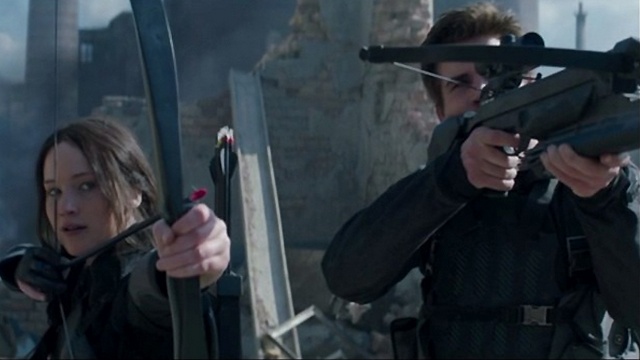
The Hunger Games: Mockingjay Part 1 (2014)

Tags

, , , , , , , , , , , , , , , , , ,

Hunger Games Mockingjay Part 1, The

D: Francis Lawrence / 123m

Cast: Jennifer Lawrence, Josh Hutcherson, Liam Hemsworth, Woody Harrelson, Julianne Moore, Philip Seymour Hoffman, Donald Sutherland, Elizabeth Banks, Sam Claflin, Jeffrey Wright, Mahershala Ali, Willow Shields, Natalie Dormer, Stanley Tucci

Having been rescued from the Quarter Quell Hunger Games, Katniss Everdeen (Lawrence), Finnick Odair (Claflin), and Beetee (Wright) find themselves in the underground fortress that is the new District 13, and which has been built beneath the ruins of the old District 13. While Finnick despairs the loss of his lover, Annie Cresta, and Beetee sets about helping the district leaders with their plans to take the fight to the Capitol, Katniss is asked to become the Mockingjay, the symbol of the resistance. She refuses, blaming the District 13 leaders – headed by President Alma Coin (Moore) and ex-gamemaker Plutarch Heavensbee (Hoffman) – for not trying to save Peeta Mellark (Hutcherson), Annie, and Johanna Mason who are all prisoners in the Capitol.

Heavensbee decides it would be better to convince Katniss another way, and he arranges for her to visit the ruins of District 12. There she sees the devastation and the remains of her people and is visibly shocked by what’s happened. She agrees to become the Mockingjay but on the condition that the captured Victors are rescued and granted full pardons. Coin agrees and Katniss becomes a part of the rebel propaganda campaign, appearing in videos that are broadcast across the districts and eventually, into the Capitol. These videos lead to uprisings in some of the other districts, including the destruction of the dam that provides the bulk of the Capitol’s electrical power.

An attack on District 13 follows but the underground fortress isn’t breached. Coin sends a team led by security chief Boggs (Ali) and Gale (Hemsworth) to rescue the captured Victors. They find their way in with ease, helped immeasurably by Beetee’s jamming of the Capitol’s security signals. But when Beetee’s transmissions are interrupted, and President Snow himself reveals his awareness of the rescue attempt, the safety of Gale and Boggs and the rest of the team hangs in the balance.

Hunger Games Mockingjay Part 1, The - scene

It’s a rare movie in any franchise that opens with two scenes showing characters in utter despair, but The Hunger Games: Mockingjay Part 1 is so confident in its set up, and what it needs to do in this necessarily darker episode, that these two scenes act both as a brief summation of where the story has been and where it is now. It’s also exposition given added weight by an emotional heft that exposition generally doesn’t carry, and gives notice that the writers – Danny Strong and Peter Craig – aren’t going to take the easy route in adapting the first part of Suzanne Collins’ final book in the Hunger Games trilogy.

In fact, this is an even more carefully assembled, and thought out, screenplay than the one that made The Hunger Games: Catching Fire (2013) so effective. Here, the political machinations are more exposed, the betrayals and compromises crueller than ever, and Katniss’ sense of being alone (even with Prim (Shields) and her mother, and Gale to support her) heightened even more. It’s a movie that looks at the loss of hope and the suspension of faith, and emphasises the way in which personal sacrifice almost always comes at a cost. It’s a bleaker, more anxiety-ridden movie, and in being true to the original source, furthers the series’ own integrity.

The introduction of President Snow’s District 13 counterpart, Alma Coin, is handled incredibly well, with Moore proving an excellent choice in the role. Fans of the book will know where the narrative takes President Coin, but for now the script provides very subtle clues as to the nature of that direction, and Moore gives a clever, finely tuned performance that provides a perfect foil for Sutherland’s spider-like turn as the malevolent Panem president. (It’s a shame that the best verbal sparring is reserved for Snow and Katniss – seeing Coin and Snow exchanging words would be an intense and fascinating encounter.) Moore isn’t on screen a lot but when she is, Coin is an enticingly vivid presence.

But the focus is, of course, on Katniss, and the way in which she deals with this new direction in her life. Lawrence is an intelligent, perceptive actress and she handles the demands of the role – again – with a fierce determination that matches the character and the journey she’s making. Katniss may not be the most emotionally stable young woman you’re ever likely to meet, but she has an inner strength that Lawrence brings to the fore with accomplished ease. Watching her reaction to the horrors of a devastated District 12 shows just why it’s now so difficult to imagine anyone else in the role, so completely does she inhabit the part.

The rest of the characters share varying amounts of screen time, with Gale having a larger part to play this time round, and Effie Trinket (Banks) also benefitting from an expanded role (that wasn’t in the novel; Banks’ previous performances convinced Collins the character needed to be more involved in the final two movies). A newly sober Haymitch (Harrelson) proves less effective as a character, but the actor rises to the challenge of providing the same (required) turn in each movie. Heavensbee reveals himself to be a clever, thoughtful manipulator, and Hoffman has fun with the role, a genial smirk never too far from his features. The relationship between Katniss and Prim continues in the same fashion as before, with their mother still given a background role, and Katniss’ affection for Gale is barely mentioned, leaving her (presumed) love for Peeta to take centre stage. This dynamic, always in doubt during the previous two movies, begins to coalesce into something more tangible here, and leads to one of the most heart-rending, and shocking, scenes in the series so far.

Returning to the director’s chair, Lawrence continues to be a wise choice for the hot seat, and keeps the focus on the characters and their relationships to each other, emphasising the emotional ups and downs that Katniss has to overcome, and the difficult path she has to take as the rebels’ figurehead. Lawrence also keeps the action on point, each sequence plotted and designed for maximum effect, and he brings the other featured districts to life with a well thought out economy. There’s another stirring score courtesy of James Newton Howard, and Jo Willems’ photography maintains the visual style of the previous movie while adding a grittier sheen to things.

Rating: 9/10 – with one more movie to go, The Hunger Games: Mockingjay Part 1 is a memorable, thrilling addition to the series, and perfectly sets up Part 2; with a handful of superb performances, and a director firmly in control of the material, this instalment stands as a perfect example of how to make a bridging chapter relevant and exciting in equal measure.

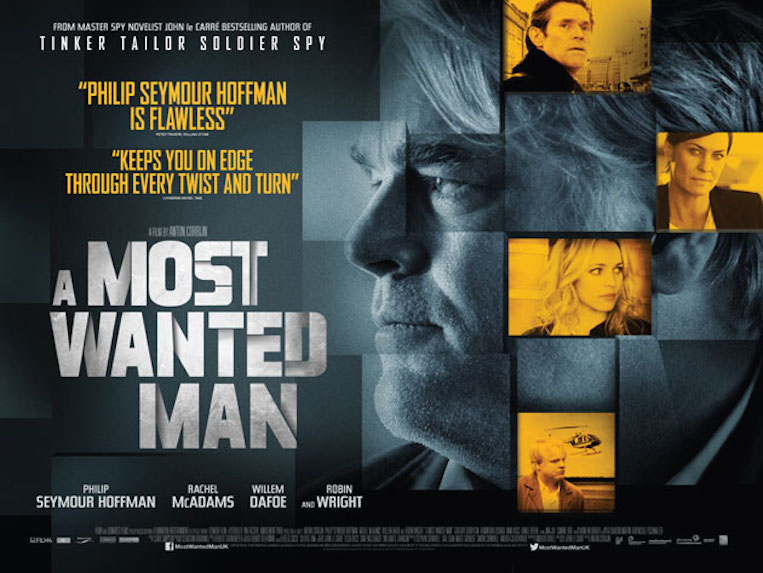
A Most Wanted Man (2014)

Tags

, , , , , , , , , , , , ,

Most Wanted Man, A

D: Anton Corbijn / 122m

Cast: Philip Seymour Hoffman, Rachel McAdams, Willem Dafoe, Grigoriy Dobrygin, Nina Hoss, Robin Wright, Homayoun Ershadi, Daniel Brühl, Mehdi Dehbi, Rainer Bock

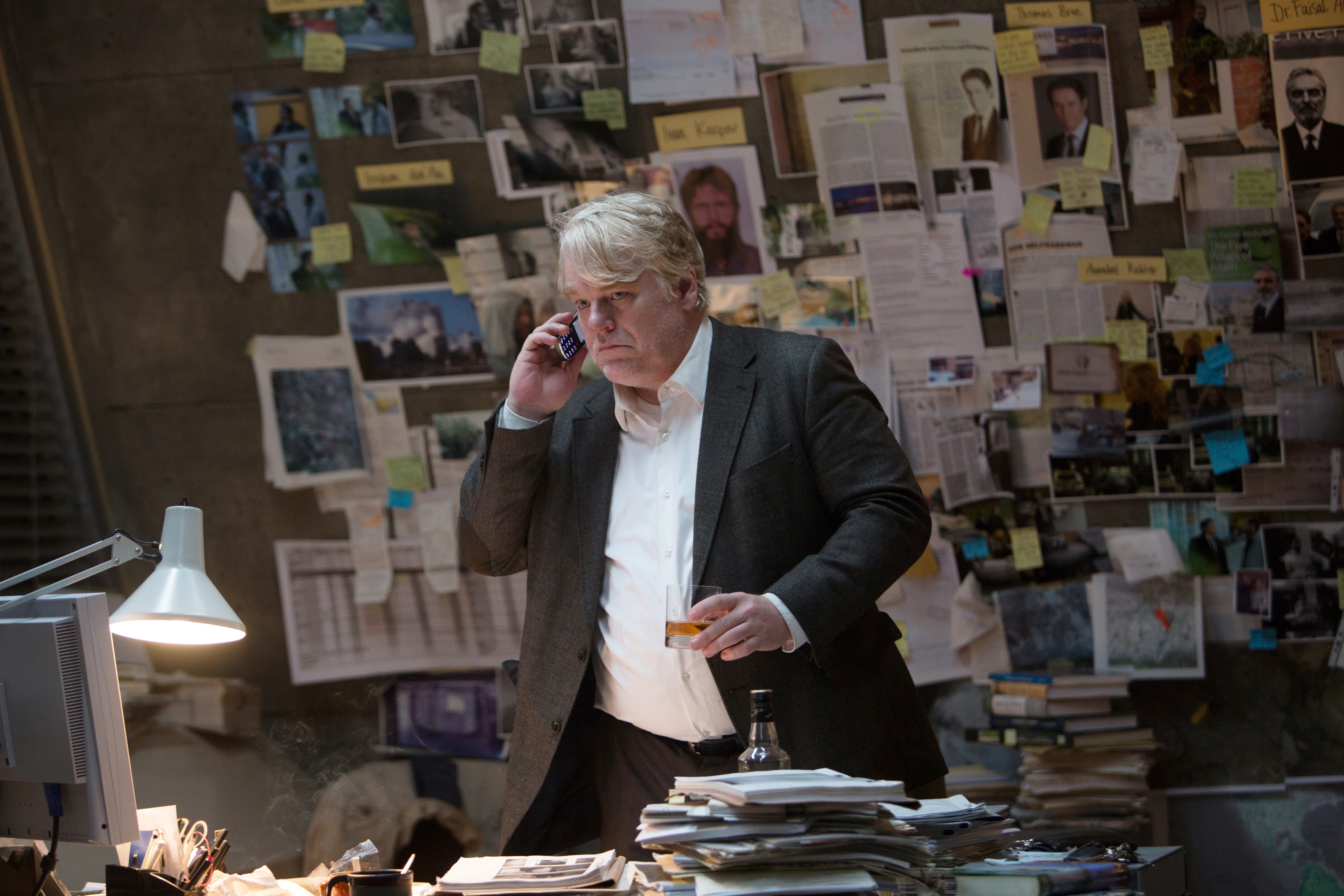
Chechnyan refugee Issa Karpov (Dobrygin) arrives in Hamburg illegally. Spied on CCTV by the German intelligence network, Karpov is of particular interest to the team led by Günther Bachmann (Hoffman). With their specific focus on the Muslim community, Karpov’s appearance raises questions, especially as the Russians believe he could be an extremist bent on committing a terrorist attack. With another German intelligence agency led by Dieter Mohr (Bock) wanting to arrest Karpov immediately, Bachmann gains seventy-two hours in which to identify Karpov’s motives. At the same time, Bachmann is also looking into the financial dealings of local Muslim philanthropist Dr Abdullah (Ershadi), suspecting him of siphoning charity donations to terrorist organisations.

However, Karpov has come to claim an inheritance. He enlists the help of immigration lawyer Annabel Richter (McAdams), asking her to make contact with banker Tommy Brue (Dafoe). Karpov’s inheritance is held at Brue’s bank, and while Brue needs proof of Karpov’s identity and his claim, Bachmann recruits Brue as part of a plan that has wider implications than whether or not the Chechnyan is in Hamburg for suspicious reasons. With Brue on board, Bachmann begins to piece together more and more information relating to Karpov’s past and his reasons for being there. When Richter begins to feel she and Karpov are being watched she manages to get him to a safe house, but Bachmann abducts her, and persuades her to help him in getting Karpov’s money to him.

In the meantime, US diplomatic attache Martha Sullivan (Wright), ostensibly an observer, helps Bachmann with his investigation, and uses her position to keep Mohr off Bachmann’s back. With Brue and Richter both on board, Bachmann’s wider plan to entrap Dr Abdullah begins to come together. Karpov, unaware of what’s happening, or that he’s been under constant surveillance, is persuaded to sign over his inheritance. But when Abdullah presents a list of charities to receive funds from Karpov’s unwanted legacy, and it doesn’t contain the name of the charity that Bachmann and his team suspect is being used by Abdullah to divert monies to terrorists, it looks as if all their intelligence gathering and surveillance work has been for nothing.

Most Wanted Man, A - scene

A sharply detailed look at the behind the scenes work needed to apprehend or “turn” a terrorist suspect, A Most Wanted Man is a dour triumph that succeeds because Andrew Bovell’s measured and skilful adaptation of the novel by John le Carré takes its time introducing and maintaining the various subterfuges that pepper the narrative. This is an espionage thriller that eschews gunplay and car chases, and instead focuses on the mind games used in manipulating people into “keeping the world safe”.

A Most Wanted Man is an absorbing, slow burn movie that takes a somewhat familiar plot – does a person of interest have good or bad motives? – and thanks to a commanding central performance from Hoffman, Bovell’s polished script, and Corbijn’s exacting direction, is as sure-footed in its design and execution as any other le Carré adaptation (it does seem that the author’s works lend themselves well to being adapted for the screen). Holding it all together is another superb performance from Hoffman, his German accent making him sound completely different, and his somewhat slovenly appearance belying the intellect that keeps him several steps ahead of his quarry (and often, his team). This was Hoffman’s last lead role before his death, and as an unexpected swan song, shows once again why he was one of the finest actors of his generation. There’s not one moment where the artifice slips and the viewer becomes aware that they’re watching an actor – Hoffman inhabits the role so completely, it wouldn’t surprise anyone if they bumped into Günther Bachmann in real life.

Hoffman is ably supported by his co-stars, particularly McAdams who takes a largely conventional role and gives it a depth that is surprising for the character (but not for the actress). Dafoe is equally good as the compromised banker, Brue, and Hoss’ fatalistic second-in-command adds a layer of melancholy to the movie that reflects the sombre approach to the material. As the tortured, subdued refugee, Dobrygin is terrific in his English language debut, mournful and emotionally reticent, but with a deep-rooted sincerity that fits the character perfectly. But while the main cast all excel, spare a thought for Brühl, whose character is reduced to contributing the odd line and who stays firmly in the background.

With the political background given due relevance, and the inner workings of German intelligence – whether correctly detailed or not – explored in surprising detail, A Most Wanted Man remains a captivating, quietly meticulous thriller that benefits from an austere, gloomy production design by Sebastian Krawinkel that in turn is matched by Sabine Engelberg’s precisely detailed art direction. Keeping all these elements in tune, and creating a wholly believable milieu, Corbijn – whose previous feature The American (2010) was not as disciplined as his efforts here – makes it easy for the viewer to understand what’s going on at each twist and turn, and ratchets up the tension with a confidence that some more experienced directors never attain no matter how many movies they make. In the end, it all hinges on a signature, the kind of moment that few thrillers rely on, but here, Corbijn has the viewer on the edge of their seat and holding their breath. And then with victory assured, he and Le Carré pull off something so unexpected that the viewer’s breath is taken away altogether. It’s an audacious feat, and all the more impressive in the way it’s carried out.

Rating: 8/10 – with an eerily compelling score by Herbert Grönemeyer, the only negative that can be said about A Most Wanted Man is that, even with le Carré’s source material at its heart, some parts of the story and plotting are predictable; that said, it’s still a complex, engrossing thriller featuring effortless performances and is an intelligent, thought-provoking piece that rewards throughout.

The Sin of Nora Moran (1933)

Tags

, , , , , , , , , , , , , ,

Sin of Nora Moran, The

D: Phil Goldstone / 65m

Cast: Zita Johann, Paul Cavanagh, Alan Dinehart, Claire Du Brey, John Miljan, Henry B. Walthall, Sarah Padden, Cora Sue Collins, Aggie Herring, Otis Harlan

Edith Crawford (Du Brey), the wife of a state governor, goes to visit her brother John Grant (Dinehart), the District Attorney. She shows him several letters that prove her husband, Dick (Cavanagh) has been having an affair. She wants to know the woman’s name, but her brother tries to reassure her there could be other explanations for the letters, but then he lets slip that he knew what was going on. Pushed to reveal the woman’s name he hands his sister a newspaper cutting that reports the imminent execution of a woman named Nora Moran (Johann). At first, Edith doesn’t see the connection, but then her brother begins to explain.

He tells her of an orphaned child called Nora (Collins) who is adopted by an elderly but loving couple, the Morans (Herring, Harlan). When Nora is twenty-one the Morans are both killed in a car crash. Using her inheritance, Nora determines to be a dancer and seek her fame and fortune in the theatre. But she encounters disappointment after disappointment, until, almost broke, she gets a job working in a circus as the assistant for lion wrestler, Paulino (Miljan). Paulino proves to be a sexually abusive boss; with the aid of one of her co-workers, Mrs Watts (Padden), Nora flees the circus and heads to New York where she finds work in a nightclub. There she meets Dick Crawford, and their romance begins.

Grant becomes aware of his brother-in-law’s affair and pays the lovers a visit at Dick’s country hideaway. He confronts the pair; Nora pretends to have “known” several men during her time at the circus. This causes Dick to leave, and after she assures Grant she won’t hang around anymore, he leaves too. Later, Nora telephones Grant and asks him to return to the hideaway, where she shows him the dead body of a man, a man she has murdered. Fearing a scandal, Grant helps Nora dispose of the body, and she leaves town. Later, Nora is arrested for the man’s murder, and at her trial, and with Nora refusing to give any evidence to save herself, she is sentenced to be electrocuted.

Sin of Nora Moran, The - scene

A somewhat surreal, non-linear drama, The Sin of Nora Moran is a strange, visually inventive movie that resists easy categorisation – it has elements of murder, mystery, romance, redemption and sacrifice – and gives Johann her best role by far. It’s also a far cry from the more usual romantic dramas of the period, and doesn’t shy away from showing the terrors of pre-execution incarceration.

Dark and brooding, this adaptation of W. Maxwell Goodhue’s story Burnt Offering, features a narrative that begins in the office of the District Attorney and then flits about from place to place – and from time to time – in its efforts to tell a very plain tale and infuse it with some flair. At one point, Grant makes Dick look at Nora in her coffin; it’s a fantasy sequence but unsettling all the same for not being signposted. Or there’s the shot of Nora’s head being encased in imaginary flames (a none-too blatant example of how badly she’s being treated, as well as being indicative of her expected post-mortem destination). With imagery such as this, the  movie has a vivid, sometimes hallucinatory quality that perfectly complements the more melodramatic twists and turns of the script.

Full credit for this must go to the director, as well as the screenplay by Frances Hyland that, together, forge a significantly darker tragedy than perhaps even audiences of the time might have expected. Faced with the man she loves being exposed as a love cheat in the press, and his reputation tarnished irrevocably, Nora does what every lovestruck young woman would do: she keeps quiet, and by doing so, keeps him safe. The theme of self-sacrifice is given probably its best expression when Grant’s intrusion leads to Nora’ almost immediate, and selfless, decision to withdraw from Dick’s life; she believes with all her heart that his reputation and character mustn’t be sullied. (Of course, these days, Dick would probably be left to fend for himself, and would probably be asked to do whatever fun things someone could come up with.)

With all the symbolism on display, and no end of metaphors for those viewers who aren’t quite up to speed on the visual clues, The Sin of Nora Moran features several broad acting performances from the likes of Dinehart and Miljan, while sadly confirming what contemporary audiences must have known all along: that Cavanagh was an actor with the range of a large piece of wood. As the titular heroine, Johann gives an assured, sympathetic performance as the young woman looking for some fleeting happiness to make her life all the more worthwhile.

Rating: 7/10 – shot in an unfussy yet often severe style by DoP Ira H. Morgan, and with a suitably intense score by an uncredited Heinz Roemheld, The Sin of Nora Moran is a cautionary tale of love gone awry that is often enthralling, and visually arresting; Johann shines in the title role, and the expected sentimentality is given short shrift thanks to the script’s determined sobriety.

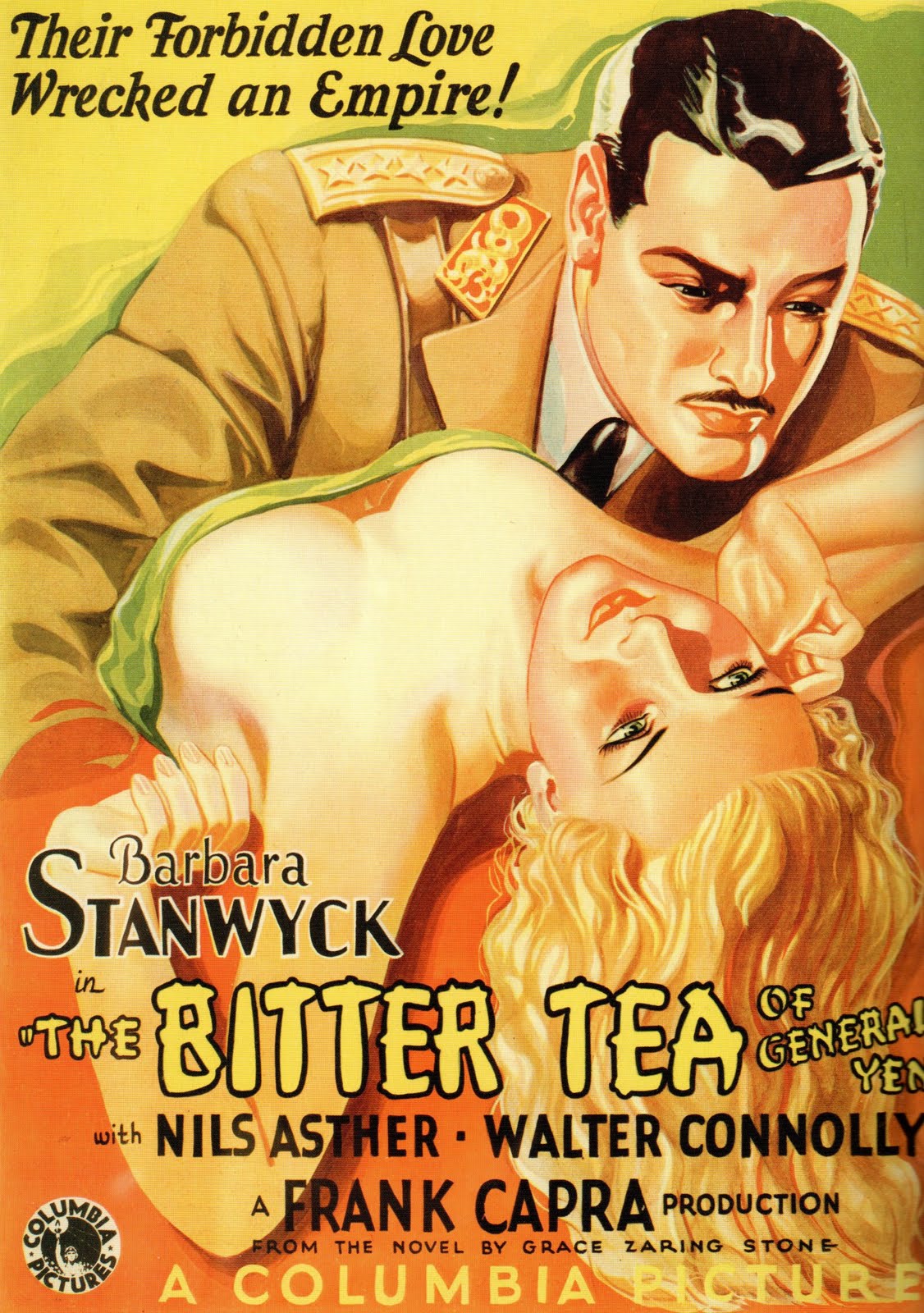
Poster of the Week – The Bitter Tea of General Yen (1933)

Tags

, , , , , , ,

Bitter Tea of General Yen, The

The Bitter Tea of General Yen (1933)

In 1930, Hollywood adopted the Motion Picture Production Code (aka the Hays Code), as a way of ensuring that movies wouldn’t “lower the moral standards of those who see [them]”. Although the Code was formally adopted at that time, it would be another four years before the Code was rigidly enforced, as producers between 1930 and 1934 ignored the Code in favour of strong box office returns on movies with racy material. And one such movie that flouted the Code was The Bitter Tea of General Yen.

Its tale of a Chinese warlord and the fianceé of a Christian missionary who fall in love, the movie transgressed against several particulars of the Code, not the least of which was in its depiction of sexual passion. And while most of the posters made to advertise the movie were entirely sedate and gave no indication of the torrid goings-on between Barbara Stanwyck and Nils Asther, this one spells it out as boldly as possible, and leaves the potential viewer in no doubt as to what he or she can expect (if they’re lucky).

General Yen’s ethnicity has been toned down quite a bit, making Asther look more Central European than Chinese, but the title is a giveaway, and there’s also the military-style jacket to reinforce matters. As he approaches the prone character of Megan Davis, there are two very obvious reasons for his interest: her barely covered breasts. Seen today, this rather blatant attempt at prurience doesn’t have as much effect as it would have done back in 1933, but it’s still a bit of a surprise to see such an exposure of flesh so prominently displayed. It certainly gives a good indication of how racy the movie is likely to be – even if that particular image isn’t replicated in the movie itself – and it’s also a further indication that the Code was being flouted as often, and in as many ways, as possible.

A racy, sexually provocative depiction of an inter-racial relationship – unusual for the time – and a great example of how the studios ignored the Code, this poster has a terrific collision of colours and only one worrying aspect to the whole thing: just what has happened to Asther’s right hand?

Agree? Disagree? Feel free to let me know.

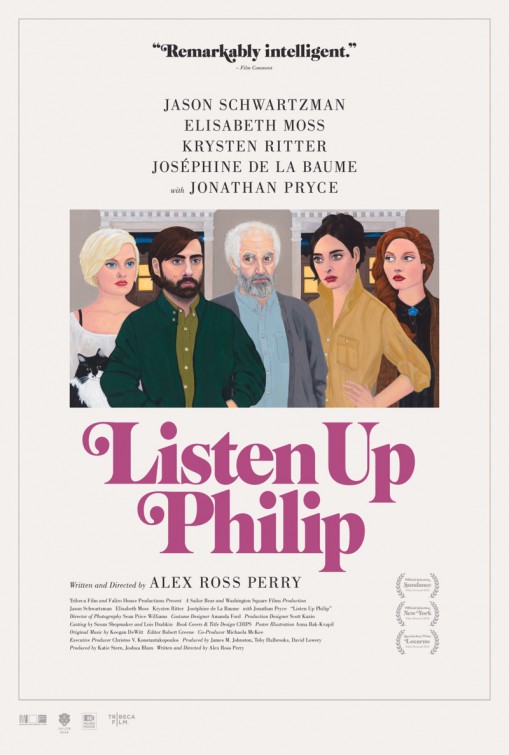
Listen Up Philip (2014)

Tags

, , , , , , , , , ,

Listen Up Philip

D: Alex Ross Perry / 109m

Cast: Jason Schwartzman, Elisabeth Moss, Jonathan Pryce, Krysten Ritter, Joséphine de La Baume, Jess Weixler, Dree Hemingway, Keith Poulson, Kate Lyn Sheil, Eric Bogosian

On the verge of having his second novel published, Philip Lewis Friedman (Schwartzman) takes the opportunity to berate the people who didn’t support him when he was trying to get his writing career off the ground. And yet he doesn’t feel any better for doing so. His success is making him unhappy, both with his publisher who wants him to undergo a book tour, and with his girlfriend, Ashley (Moss), a photographer who’s beginning to achieve her own success. As Philip does his best to sabotage his various relationships, his publisher puts him in touch with respected, prize-winning novelist Ike Zimmerman (Pryce). Ike has read Philip’s second novel and liked it enough to want to meet him.

Their meeting leads Ike to offer Philip the use of his country house. Ike feels that living in the city isn’t conducive to producing great writing, and Philip agrees with him. His decision adds tension to his relationship with Ashley who hates that he’s made such a decision without involving her. At Ike’s country house, Philip meets Ike’s daughter, Melanie (Ritter). She’s not impressed by his angry, selfish behaviour, and sees him as just another (younger) version of her father, someone Ike can further mould in his own image.

Ike arranges for Philip to teach at a college for a semester. Again his decision upsets Ashley and she decides while he’s gone to end their relationship. As she begins to establish a life without Philip, he becomes intrigued by one of the other teachers at the college, Yvette (de La Baume), and they begin a tentative relationship. When things with Yvette don’t work out, Philip returns to Ashley but finds that his certainty about their relationship and her needs aren’t exactly what he believed.

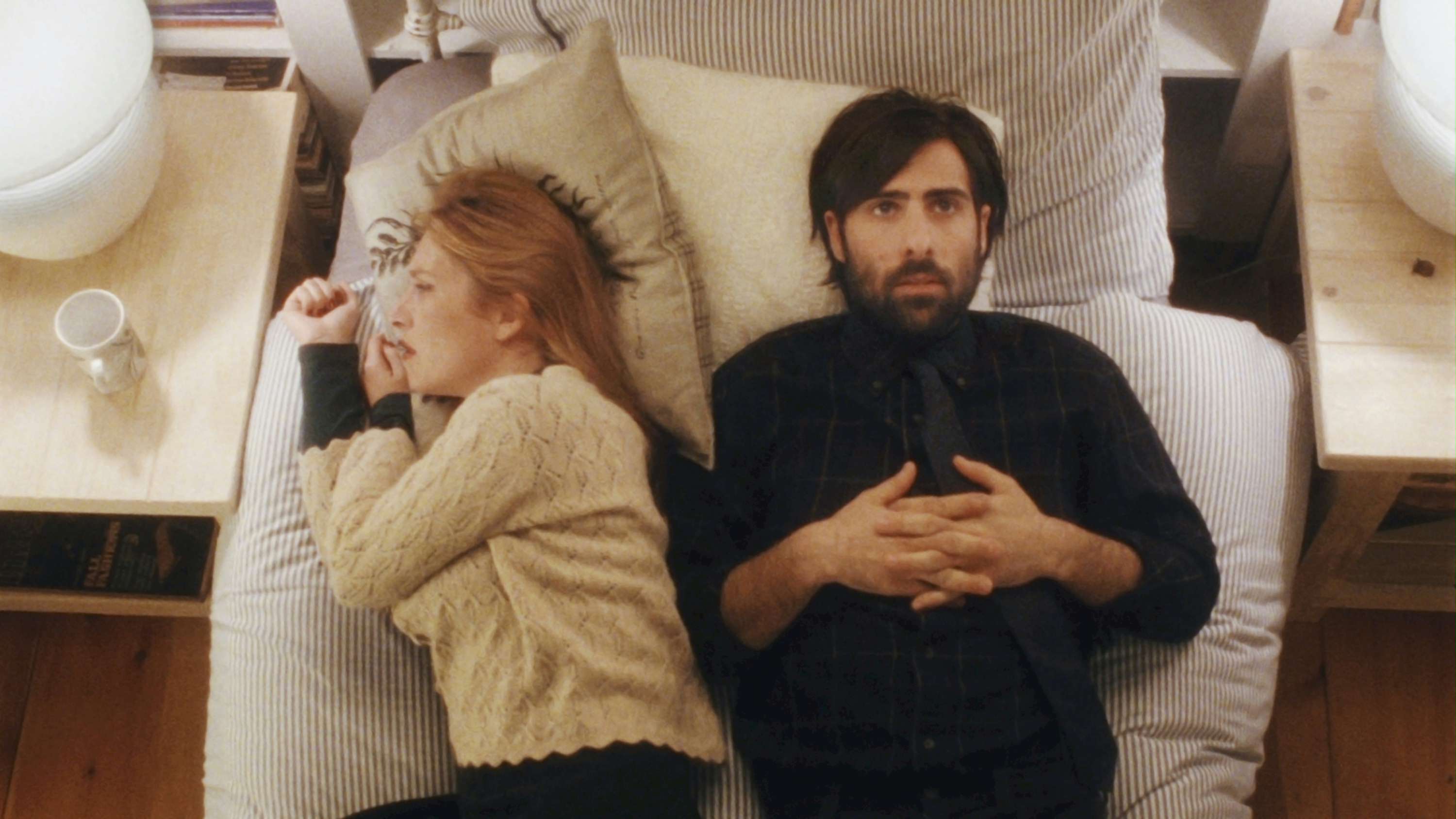
Listen Up Philip - scene

An absorbing if not entirely rewarding look at the life of a writer who takes the pursuit of selfishness to new extremes, Listen Up Philip is an unsubtle drama that spends a lot of its running time reinforcing – as if we need it – the idea that Philip is a deeply unpleasant person to be around. From the first scene where he lambasts his ex-girlfriend, Philip’s caustic, choleric attitude is clearly going to be difficult to deal with for the entire movie, and writer/director Perry wisely avoids putting Philip centre stage throughout. He’s quite simply an asshole, something Philip himself acknowledges from time to time, but the problem is that his self-awareness isn’t used to initiate any self-improvement. Philip remains resolutely selfish and arrogant all the way to the movie’s end, and even though he’s played superbly by Schwartzman, the lack of an appreciable character arc is disappointing, and leaves the movie feeling like an extended snapshot rather than a full-fledged story.

There’s also the issue of Philip’s relationship with Ike, a father/son dynamic that never really goes anywhere, other than to show that how Ike is now, is how Philip will be when he’s older, whether he’s as successful or not. As played by Pryce, Ike is as unappealing and dismissive as Philip is, intellectually snobbish, emotionally stunted, and a firm believer in the high quality of his own endeavours. So instead of having one unpleasant, narcissistic character to deal with, Perry gives us two, and the movie seems set to be a bit of an endurance test: can the viewer possibly withstand the deleterious effects of spending so much time with two such disagreeable characters? But, thankfully, Perry splits them up and sends Philip off to college where he can alienate a whole new bunch of characters.

With Philip out of the way, Perry turns his attention to Ashley, and at last the movie gives us a chance to get to know someone we can sympathise with. Moss is just as good as Schwartzman – if not better – and she shines as the under-appreciated Ashley, slowly building up the character’s confidence and determination to improve matters relating to her work, her friendships, and her relationship with Philip. It’s a terrific performance, balanced and intuitive, and the movie becomes more interesting when she’s on screen. (If the movie had been about Ashley, and Philip was a secondary character, then, who knows?) By the end, the viewer is rooting for her to succeed, and Perry gives us the outcome we’ve all been hoping for.

Perry also gives us a very erudite script with plenty of juicy, faux-intellectual dialogue for the cast – and narrator Eric Bogosian – to sink their teeth into. There are literary, cinematic and philosophical references galore, some obvious, some more obscure, but all seemingly included to give the impression that Philip and Ike operate on a higher creative plane than the rest of the characters. It soon becomes overbearing, which may have been the intention, but when the narrator spouts such precepts and apothegms as well, it becomes too arch and mannered to have any meaning, even if it does sound good.

Ultimately, there’s no explanation for Philip’s behaviour that would allow the viewer to appreciate the way he is, and again, this leaves us with a main character it’s hard to associate with, or feel any affinity for. Nihilistic it may be but with Philip so determined not to be happy, and with no intention of letting others around him be happy, not even Keegan DeWitt’s vibrant score, or long-time collaborator Sean Price Williams’ immaculate photography can counteract Perry’s attempts to show how isolated we can become from our friends and family, and ourselves. It’s doubly ironic then that when Philip is off screen, the movie picks up and becomes more involving.

Rating: 5/10 – dour and often feeling like it’s too clever for its own good, Listen Up Philip has two impressive central performances, and a vivid sense of its main character’s vanity, but at the expense of a narrative that holds the attention; a good effort nevertheless, but one that the casual viewer might need to be in a certain frame of mind for before watching it.

St. Vincent (2014)

Tags

, , , , , , , , , , , , , , ,

St. Vincent

D: Theodore Melfi / 102m

Cast: Bill Murray, Melissa McCarthy, Naomi Watts, Jaeden Lieberher, Chris O’Dowd, Terrence Howard, Kimberly Quinn, Donna Mitchell, Dario Barosso

Vincent McKenna (Murray) is the kind of curmudgeonly old man it’s best to steer clear of. He drinks to excess, gambles too much, and is about as sociable as a dose of the clap; in short, he’s the kind of you’d cross the street to avoid. When new neighbours Maggie (McCarthy) and her son Oliver (Lieberher) move in next door, relations are initially frosty as the removals van causes damage to Vincent’s car. On Oliver’s first day at his new school he falls foul of bully Ocinski (Barosso) and has his keys, wallet and phone stolen. He manages to get home but with his mother at work and no other way of getting in, he calls on Vincent to use his phone to call his mother. Vincent isn’t best pleased but agrees nevertheless and Oliver stays with him until Maggie can get home from work – but not before he’s agreed a babysitting rate with her.

The money is important as Vincent’s terrible luck at gambling has left him very short of money. He can’t get a loan from the bank, he owes too much money to loan shark Zucko (Howard), and he’s behind on payments to the care home that looks after his wife Sandy (Mitchell). With Maggie working late more and more, he and Oliver spend more and more time together. Vincent teaches Oliver to defend himself from bullies such as Ocinski, and takes him to the race track where Oliver learns how to bet. He also bonds with the old man, becoming the only friend Vincent really has, unless you count pregnant stripper Daka (Watts), who has a fondness for the old man that she plays down at every opportunity.

When Vincent and Oliver win big at the race track, it’s potentially the beginning of a big change in Vincent’s life, but he still avoids paying Zucko. Meanwhile, Maggie’s husband begins a custody battle for Oliver, leading to an awkward court appearance where the depth of her son’s relationship with Vincent is revealed, and with less than perfect consequences. And matters are made worse when Zucko pays Vincent a surprise visit at home.

St. Vincent - scene

If you’re looking to make a movie where the main character is a caustic, mean-spirited, emotionally withdrawn malcontent, well, in the words of one of his earlier movies, “Who ya gonna call?” The obvious answer is Bill Murray, the one actor who does “grumpy” better than anyone else on the planet, and for whom the art of being a killjoy seems like second nature. He’s the perfect choice to play Vincent, and it’s a good job writer/director Melfi was able to get him to commit to the movie because without him, St. Vincent may not have turned out to be as enjoyable as it actually is.

It’s a particular kind of actor who can pull off such a deceptively difficult role, for while Vincent is outwardly abrasive, there’s a grudging kindness and likeability buried below the surface that is reserved for the people he cares about. As he becomes more and more enamoured of Oliver and Maggie, it’s good to see that the script doesn’t do the one thing that most movies of this kind do without fail: have the main character renounce his mordant ways and become more agreeable. Here, Vincent remains unlikeable to pretty much everyone for the entire movie, allowing Murray to paint a convincing portrait of a man continually at war with a world that kicks the rug out from under him at nearly every opportunity. His antipathy towards the world is entirely understandable, but it’s his willingness to let some people in, while retaining that antipathy, that saves the character from being entirely one note.

Murray grabs the character of Vincent and gives the kind of assured, entirely believable performance that only he can pull off, making the old man by turns acerbically funny, justly melancholy, disappointingly selfish, and unsurprisingly reticent. It’s a virtuoso performance, one that lifts the movie up and out of the rut of its less than original plotting and straightforward storylines. Aside from a couple of instances that don’t turn out in just the way the viewer might expect – the result of the custody hearing, the outcome of Zucko’s home visit – Melfi, making his feature debut as writer/director, has assembled an old-fashioned drama with over-familiar characters we’ve all seen at least a dozen times before, added the kind of spiteful humour that modern audiences appreciate, and has made his movie seem fresh and unconventional.

He’s also procured a raft of excellent performances, and not just from Murray. Leaving behind the forced hilarity of movies such as The Heat (2013) and Tammy (2014), McCarthy excels as Oliver’s mother, playing her with an honesty and put-upon vulnerability that works effectively against Murray’s obnoxious grouch. Watts is equally as good as the pregnant Daka, her hard-boiled exterior the perfect foil for Vincent’s ingrained irascibility; when they spar it’s like watching an old married couple, and the fondness that builds up in such a relationship. Howard, sadly, has little to do but appear menacing in a couple of scenes, and O’Dowd works his magic as Oliver’s home room teacher, a priest with very relaxed ideas about prayer. But the real revelation here is Lieberher as Oliver – like Melfi, making his feature debut – giving the role a delicate, yet simple touch that dispels the idea early on that Oliver is going to be one of those precious and precocious kids that Hollywood is so fond of putting on screen. He’s a natural, comfortable with his dialogue and able to hold his own with Murray (it really feels like he’s been doing this for a lot longer).

With its deft one-liners and subtle nuances, Melfi’s script makes the occasional stumble – Zucko disappears completely after he visits Vincent, Oliver and Ocinski become friends a little too easily (you’ll understand why when you see the movie), and the sub-plot involving Vincent’s wife adds little to the mix – but all in all this is a solid, hugely enjoyable movie that features some terrific performances, a great score by Theodore Shapiro, and enough charm to melt a dozen icebergs.

Rating: 8/10 – a great first feature from Melfi – who’s now one to watch out for – St. Vincent is a breath of fresh air, and rarely puts a foot wrong with its main characters; Murray carries the movie with ease, and the movie’s indie sensibility isn’t allowed to overwhelm the material, making for a very good time to be had by all.

Miss Meadows (2014)

Tags

, , , , , , , , , , ,

Miss Meadows

D: Karen Leigh Hopkins / 88m

Cast: Katie Holmes, James Badge Dale, Callan Mulvey, Ava Kolker, Mary Kay Place, Jean Smart, Stephen Bishop

Miss Meadows (Holmes) is a sweet-natured, well-mannered substitute school teacher who hides a dark secret: she’s a vigilante, dedicated to “removing” anyone whose moral compass isn’t attuned as finely as her own. On her way home one day, she’s threatened by a gun-wielding kerb crawler who points a gun at her and tells her to get in his car. Miss Meadows promptly shoots him dead with her own gun… and carries on walking as if nothing has happened.

At the elementary school, Miss Meadows is put in charge of a class whose teacher has just died of cancer. One little girl, Heather (Kolker), has been seriously upset by this and Miss Meadows does her best to console her, and eventually earns her trust. In the meantime, she also meets the town Sheriff (Dale); there’s an immediate attraction but neither of them pursue it immediately. It’s left to the Sheriff to do the pursuing, and he takes Miss Meadows for a drive. As their romance blossoms, a school trip to a local park eventually sees Miss Meadows entering a fast food restaurant in order to get the school children some hot dogs. There she finds a young man has killed all the staff and customers and wants to kill himself. When she tells him he should, he attempts to kill Miss Meadows instead, but she proves quicker on the draw than he does, and she kills him.

Faced with a vigilante in his town, the Sheriff is suspicious that it might be Miss Meadows but he doesn’t have any evidence, other than that she’s lived in previous towns where a vigilante has been on the loose. Meanwhile, Miss Meadows learns that she’s pregnant with the Sheriff’s baby; she doesn’t tell him straight away but when she does he asks her to marry him, and she says yes. Around this time a convicted child molester called Skylar (Mulvey) moves into the neighbourhood. Miss Meadows tries to warn him off but he ignores her and starts hanging around the school. And Heather reveals that she saw Miss Meadows shoot the man in the fast food restaurant.

An incident with a priest leads to Miss Meadows killing him as well but this time she leaves behind a clue, and one that the Sheriff recognises. He confronts her, and out of love for her, tells Miss Meadows her vigilante days are over. But then on their wedding day, Skylar abducts Heather…

Miss Meadows - scene

A quirky mix of drama, comedy, romance and the kind of vigilante thrillers Charles Bronson made in the Seventies and Eighties, Miss Meadows gives Katie Holmes her best role since Batman Begins (2005). As the unfeasibly sweet and wholesome Miss Meadows (we never learn her first name), Holmes embraces the role and gives a tremendous performance, doing full justice to the duality of the character and the changes in tone such a character demands. It’s an assured, confident performance – the kind Holmes hasn’t given in a very long time – but it’s so good that Miss Meadows the movie sadly doesn’t match the  quality of Miss Meadows the character.

While Holmes is mesmerising throughout, her understanding of the role so complete she doesn’t put a foot wrong at any point, the rest of the movie stumbles along around her, the various strands and shifts in tone not quite gelling to create a balanced, effective whole. Matching Miss Meadows with the equally good-natured Sheriff (we don’t learn either of his names) lessens the chance of any real tension between the two when his suspicions are confirmed. Because the script avoids the Sheriff experiencing any personal dilemma at all, the confrontation between the two has no depth to it at all, and it’s almost perfunctory in its execution. Similarly, the scene where Miss Meadows confronts Skylar over tea in his home feels forced because of its mixture of genteel manners and unequivocal threat.

There are other scenes and moments that don’t quite work. The cause of Miss Meadows antipathy towards wrongdoers is due to a childhood trauma that is teased out as the movie progresses, but there are clues to be had in the character’s talks with her mother (Smart). And as those clues are revealed before the full tragedy of the traumatic incident is shown, the viewer is effectively given the same information twice, leaving the incident to play out with little dramatic resonance or emotional impact. It’s poor choices like this that undermine the movie’s persuasiveness, and leave the cast adrift within scenes that often bear no relation to the ones that have gone before, or follow on. The scenes in the Sheriff’s office are the best examples of this, taking place almost in isolation of the rest of the plot, and again feeling more perfunctory than essential to the story.

It’s not all bad, though. Holmes’ mannered, skilful performance anchors the movie, and is so rich it bolsters the movie during those short stretches when she’s not on screen. Dale and Mulvey are more than competent foils for Holmes’ ultra-proper, Fifties influenced femme fatale – the scene where Miss Meadows and the Sheriff make love for the first time is worth seeing all by itself just for her delighted reaction; it’s not just their first time – and the photography by Barry Markowitz is almost painterly in its depiction of small-town life. There’s also an amusing, wistful score courtesy of Jeff Cardoni that is appropriately idiosyncratic, and matches Miss Meadows’ prim nature perfectly. And even though her script doesn’t always meet the challenges it sets itself, Hopkins is on firmer ground in her choice of shots and the way in which she places the camera to achieve the desired comic or dramatic effect (this is a very good-looking, carefully composed movie).

Rating: 5/10 – without Holmes’ assured, ironic performance, Miss Meadows would swiftly become a chore to sit through, even though the premise is a shrewd one; uneven and unsure of which impression to make, the movie aims for a John Waters-style vibe but is ultimately too lightweight to succeed completely.

Mini-Review: The Moonlighter (1953)

Tags

, , , , , , , , , , ,

Moonlighter, The

D: Roy Rowland / 77m

Cast: Barbara Stanwyck, Fred MacMurray, Ward Bond, William Ching, John Dierkes, Morris Ankrum, Jack Elam, Charles Halton, Myra Marsh

Cattle rustler Wes Anderson (MacMurray) is in jail waiting to be tried for his crimes but there’s an angry lynch mob planning to storm the jail and hang him from the nearest tree. When an innocent man is hanged in his place, Wes vows to seek revenge against the lynch mob (and any others). During an encounter with the head of the lynch mob and two of his men, Anderson is wounded in the shoulder. He manages to get away and heads for the town of Rio Hondo where his mother (Marsh) and younger brother Tom (Ching) still live on the outskirts.

While recuperating, Wes hopes to restart his relationship with old flame Rela (Stanwyck), but while he’s been away for the last five years and hasn’t stayed in touch, she’s agreed to marry Tom in order to have a more secure future. Wes is reluctant to accept this but doesn’t try to interfere. Then one day an old friend of Wes’s, Cole Gardner (Bond) drops by with a plan to rob the local bank. Tom, who works at the bank, convinces Gardner and an averse Wes to be a part of the robbery. What happens as a result leads to Wes and Gardner being hunted by Rela, and a shootout in the nearby hills.

Moonlighter, The - scene

Originally released in 3D – in Natural Vision, no less – The Moonlighter is a bland, unexceptional Western that’s of note mainly for the pairing of Stanwyck and MacMurray in their third movie together. Otherwise, there’s not much to recommend, with Wes’s antipathy for lynch mobs being jettisoned once he’s injured, and Gardner’s bank job taking over as a way of moving the story forward. What twists and turns there are, are unremarkable for the most part, though the ease with which Rela is deputised to go after Wes and Gardner is probably the biggest surprise the script – by the usually more reliable Niven Busch – comes up with. It all hinges on Rela’s love for Wes, and how determined she is to bring him to justice (though the actual outcome seems arrived at because of convenience rather than any credible dramatic necessity – it’s a short movie, after all).

Rowland’s uninspired, pedestrian direction makes the movie seem more of a drag than it actually is, though there’s a rough energy to the early scenes leading up to the lynching. However, this energy isn’t kept up, and with the introduction of Rela and Tom the movie begins to falter, trying to set up a romantic triangle that never really takes off or convinces. Similarly, the speed with which Wes agrees to rob the bank seems forced and implausible, but not as much as his acceptance of Tom’s being a part of it. As the reluctant lovers, Stanwyck and MacMurray inject a little of their own energy into their scenes together, but it’s not enough to keep the viewer interested in how things will turn out.

Rating: 4/10 – lacklustre and plodding, The Moonlighter hasn’t the pace or the style to be anything than a standard oater with few pretensions; Stanwyck and MacMurray are as watchable as ever, but the script and direction doesn’t support them enough to help them overcome the dreariness of the material.

10 Reasons to Remember Mike Nichols (1931-2014)

Tags

, , ,

A talented director who came to prominence in the Sixties with a brace of movies that heralded a prodigious talent, Mike Nichols had a distinct visual style and an even more distinctive rapport with his often very talented casts (he directed seventeen actors who were Oscar nominated for their roles). He made some very fine movies – see below – and even if later in his career, when the movies weren’t always as successful, or rewarding, his work still maintained a level of integrity that few directors have managed to achieve in the course of their careers. He also came up with the “Five Rules for Filmmaking”:

1 – The careful application of terror is an important form of communication.

2 – Anything worth fighting for is worth fighting dirty for.

3 – There’s absolutely no substitute for genuine lack of preparation.

4 – If you think there’s good in everybody, you haven’t met everybody.

5 – Friends may come and go, but enemies will certainly become studio heads.

Film Director Mike Nichols

1 – Who’s Afraid of Virginia Woolf? (1966)

2 – The Graduate (1967)

3 – Catch-22 (1970)

4 – Carnal Knowledge (1971)

5 – The Day of the Dolphin (1973)

6 – Silkwood (1983)

7 – Working Girl (1988)

8 – Postcards from the Edge (1990)

9 – The Birdcage (1996)

10 – Angels in America (2003)

Mike Nichols2

Lethal Weapon 4 (1998)

Tags

, , , , , , , , , , , , , , , ,

Lethal Weapon 4

D: Richard Donner / 127m

Cast: Mel Gibson, Danny Glover, Joe Pesci, Rene Russo, Chris Rock, Jet Li, Steve Kahan, Kim Chan, Darlene Love, Traci Wolfe, Eddy Ko

An incident involving an iron-suited, flamethrower-wielding criminal leads to two revelations: that Roger Murtaugh (Glover) is going to be a grandfather, and that Martin Riggs (Gibson) is going to be a father. Nine months later the two men are looking forward to the imminent births. Out one night on Roger’s boat, and accompanied by Leo Getz (Pesci), they find themselves nearly struck by a cargo freighter. When the freighter’s crew opens fire on them, Riggs takes the fight to them and boards the vessel. The ship eventually runs aground and the cargo hold reveals a group of Chinese illegal immigrants.

Later, Murtaugh discovers a family hiding in one of the lifeboats. Instead of letting INS know, he allows them to come home with him (but he doesn’t tell Riggs; he also doesn’t tell the investigating officer, Butters (Rock), who is secretly the father of Roger’s grandchild). In Chinatown, triad boss Uncle Benny (Chan) has a visitor in the form of Triad negotiator Wah Sing Ku (Li). Wah has been expecting the family Roger has discovered, as they are an important part of his plan to free four Triad overlords (including one who is his brother) from the clutches of a corrupt Chinese general. The head of the family, Hong (Ko), has an uncle who is a master engraver; Wah aims to buy the overlords’ freedom with counterfeit money.

Riggs and Murtaugh are given promotions to captain, and they start to help Butters with his investigation. A visit to Uncle Benny sees them meet Wah but they don’t find out who he is. Leaving Leo to trail Uncle Benny, Riggs and Murtaugh are unaware of just how close they’re getting, but it’s close enough for Wah to find out where the family are hiding and to abduct them – and then to put Riggs, his partner Lorna (Russo), Murtaugh and his wife (Love) and pregnant daughter (Wolfe) in danger of being burned alive. They all manage to escape unharmed, and with Butters in tow, Riggs and Murtaugh track down Uncle Benny at his dentist’s. With the use of some nitrous oxide, they get Uncle Benny to reveal the plot involving the Four Fathers (the triad overlords). When they liaise with other detectives who work the Chinatown beat, the three men learn about the corrupt Chinese general and where the exchange is likely to take place. Interrupting the meet, they spill the beans about the money, and a vicious firefight breaks, along with a three-way showdown between Riggs, Murtaugh and Wah.

Lethal Weapon 4 - scene

The last in the series, Lethal Weapon 4 could, and perhaps should, have been a whole lot worse, but it’s a measure of the likeability of the characters, and the directorial flair of Richard Donner that, while it may still be the least in the series, it’s also an entertaining ride that will put a smile on fans’ faces. The familiarity of the material and the verbal sparring between Riggs and Murtaugh (however predictable), along with the extended action sequences and the often slapstick comedy, makes this the celluloid equivalent of being wrapped up in a nice, warm blanket on a cold winter’s evening. It’s a huge comfort to know that everything you could want from a Lethal Weapon movie is all present and correct.

With all the series’ highlights in place, the movie does meander in places, mostly when it’s trying to acknowledge the fact that its characters are getting on a bit and are “getting too old for this shit”. Given that this is the fourth in the series, and also given that there’s been a clear decision to end the franchise before it gets too derivative and stale, this acknowledgment is a welcome development. It makes for a satisfactory conclusion to the series, but all the angst and drama of the first two movies – already lessened in Lethal Weapon 3 (1992) – has now been left behind completely. Riggs’ journey from near-suicidal nut job to devoted family man is complete, while Murtaugh is a proud grandfather whose anxiety about the loss of material things (usually his car, this time round his boat) and whatever can go wrong actually doing so, is more accepting of what Fate throws at him. These are now very settled men, and while it’s heartening to see them take on the bad guys one last time, this is a movie that – fortunately – realises it’s time to call it a day.

As lighthearted – and lightweight – as it is, Lethal Weapon 4 still does its best to deliver where it matters most: in the action sequences. The opener, with its exploding tanker and fiery devastation, is as preposterous as it sounds, but is still an impressive start to the movie and at least reassures the viewer that it’s going to be business as usual. There’s the obligatory car chase with its detour aboard a trailer, a foot chase that ends with Riggs dangling from a roof, a well choreographed fight at the Murtaugh home that showcases Li’s martial arts skills, and a climactic shootout that evolves into the three-way showdown mentioned above. All are expertly shot and cut together, and all are exciting to watch, but the familiarity they bring with them makes them less than memorable. It’s a shame, but draws attention to the fact that familiarity doesn’t always breed originality.

It’s difficult as well to bring anything new to the table with such well established characters, and while Gibson and Glover are still as enjoyable to watch as always, there’s more than a hint of tiredness in their banter, as they rework old lines and try to maintain the jokiness of previous outings. This leads to some awkward dialogue being exchanged – mostly around Murtaugh’s belief that Butters is attracted to him – and a sense that all the in-jokes and series’ references were included at the expense of more original material. It’s a trade-off, no doubt willingly made by Donner and the producers, but leaves the movie feeling a little jaded and occasionally lacklustre.

On the performance side, everyone acquits themselves well, particularly Pesci who’s given a completely out of character monologue towards the movie’s end that is surprisingly effective, and Li who provides Riggs and Murtaugh with the series’ first truly formidable adversary. Two scenes aside, Russo is reduced to hovering in the background, while Rock plays Butters as an earnest, slightly duller version of the man Murtaugh may have been when he was younger. Behind the camera, Donner plays ringmaster with his usual skill and expertise, while Andrzej Bartkowiak does a great job in making even the static shots interesting to watch. And no Lethal Weapon movie would be complete without the musical collaboration of Eric Clapton and Michael Kamen, here adding another familiar element with their jazz-infused score.

Rating: 7/10 – the tag line reads “The gang’s all here” and they are, along with all the other “best bits” of the series, in a movie that could have been called Lethal Weapon’s Greatest Hits; fun, if a tad too long thanks to its need to wrap things up, Lethal Weapon 4 is still an enjoyable diversion and provides an admirable send off for its two aging heroes.

Two Shorts by François Ozon: A Summer Dress (1996) and X2000 (1998)

Tags

, , , , , , , , , , , , ,

François Ozon is one of the most interesting writer/directors working currently in movies. He makes socially astute, emotionally complex features, and infuses them with wit and style. He writes great roles for women – Charlotte Rampling, Swimming Pool (2003); Romola Garai, Angel (2007); Catherine Deneuve, Potiche (2010) – and isn’t afraid to tackle themes surrounding sexuality and sexual identity. Early in his career Ozon made a number of short movies, and unusually, they’re all intriguing for one reason or another. The two movies reviewed here show a marked difference in style and tone, but taken as examples of a writer/director who’s discovering just what he can do, they make for beguiling viewing.

A Summer Dress (1996)

Summer Dress

Original title: Une robe d’été

D: François Ozon / 15m

Cast: Frédéric Mangenot, Lucia Sanchez, Sébastien Charles

Luc (Mangenot) and Lucien (Charles) are young, gay and on holiday together. Lucien is the more extroverted of the two and likes dancing along to Sheila’s version of Bang Bang. Luc, on the other hand, wants to enjoy the peace and quiet and concentrate on getting a tan. When Lucien refuses to stop enjoying himself, Luc heads off to the beach where he strips off and goes for a swim before settling back down to sunbathe. There he meets a young girl, Lucia (Sanchez), who asks him if he wants to go into the nearby woods and make love. Luc agrees and they find a spot in the woods and have sex. When they return to the beach, Luc’s clothes are gone. Lucia lends him her dress so that he can get home without having to travel naked. When he gets back to Lucien, the sight of Luc in a dress arouses him and they have sex as well. The next day, Luc returns the dress to Lucia.

Summer Dress - scene

If that all sounds too slight, even for a fifteen minute movie, then in some ways you’d be right, but then it’s also the point. A Summer Dress is interested in capturing a small series of moments in a twenty-four hour period, but moments that aren’t necessarily profound or destined to have a prolonged effect on its main characters. It’s the cinematic equivalent of a summer fling, a fleeting holiday romance that happens on its own terms and comes without any emotional baggage. As such, the movie is a treat to watch, its young protagonists experiencing life on their own terms and without the judgement of others (a lifestyle we might all like to have). There’s an openness and honesty in their approach to sex that is both carefree and naïve, but so redolent of youth that it’s refreshing to be reminded of it (if you’re well clear of your teens). A Summer Dress is an ode to the time in our lives when there are endless possibilities and life is bright and beautiful and full of promise.

Rating: 8/10 – a simple yet elegantly filmed tale of sexual liberation, A Summer Dress is Ozon at his most playful; with winning performances and the lightest of touches, this is a movie that provides a perfect capsule of time and place and incident.

X2000 (1998)

X2000

D: François Ozon / 8m

Cast: Denise Schropfer-Aron, Bruno Slagmulder, Lucia Sanchez, Flavien Coupeau, Lionel Le Guevellou, Olivier Le Guevellou

Waking up in his apartment the morning after the New Year’s Eve celebrations for the year 2000, a man (Slagmulder) goes into his kitchen and makes himself a glass of water with two Alka Seltzers in it. Then he’s puzzled to find twins in a sleeping bag in his lounge. When he looks out of the window he sees a couple making love in the apartment opposite. Meanwhile, his wife (Schropfer-Aron) also wakes up and decides to take a bath. The man falls from his perch at the window and breaks the glass with the Alka Seltzer in it. When he puts the broken glass in the bin he finds ants crawling over and around something underneath the bin. He then goes into the bathroom where he tells his wife that the ants are attacking.

X2000 - scene

Where A Summer Dress sees Ozon taking a somewhat lighthearted approach to the material, X2000 sees him in a more formal, meditative mood, using heavily stylised, static shots to represent notions of time and space and distance and perception. The man is continually surprised and/or bemused by what he sees, either within the flat or without. It’s as if he’s learning about everything from scratch, his reactions more childlike than that of an experienced adult (when he sees the couple making love he climbs up onto a unit in order to get a better view). His wife, meanwhile, keeps her head under the water, retreating from the world, prolonging the silence in the flat, even when her husband breaks all the glass. It’s a very clinical piece, dialogue-free until the very end, and shows Ozon working with limited resources to great effect. The elliptical nature of the storyline – such as it is – is clearly meant to be left to the viewer to interpret, but that doesn’t stop X2000 from being compelling in its own way.

Rating: 8/10 – with so much going on under the surface, X2000 is open to so many interpretations it’s almost confounding, but this makes it all the more rewarding; the brief running time merely reinforces the quality of Ozon’s perspective on the material and the cleverness of its construction.

The Brain That Wouldn’t Die (1962)

Tags

, , , , , , , , , ,

Brain That Wouldn't Die, The

D: Joseph Green / 82m

Cast: Herb Evers, Virginia Leith, Leslie Daniel, Adele Lamont, Bonnie Sharie, Paula Maurice, Bruce Brighton

Dr Bill Cortner (Evers) is assisting his father (Brighton) in an operation on a man whose life is slipping away. Cortner Sr is prepared to accept the man’s passing, but Bill persuades his father to let him try something experimental. By a combination of heart massage and brain cortex manipulation, Bill’s efforts prove successful and the man’s life is saved. Afterwards, Bill tells his father about the experiments he’s been carrying out, experiments that involve limb and organ transplants from deceased patients. Cortner Sr voices his concerns but his son remains adamant that his experiments will lead to a time when illness and disease can be conquered by the use of transplanted organs and tissue.

The Cortners are joined by Bill’s fianceé, Jan Compton (Leith). They have a weekend trip planned to the Cortners’ country house (also where Bill has been conducting his research). An urgent call from the house sees Bill rushing to get there, and in the process, causing the car to go off the road. The ensuing crash sees Bill thrown clear but Jan is decapitated and killed. However, Bill flees the scene and heads for the house – with Jan’s head wrapped in his jacket. At the house he’s met by his assistant, Kurt (Daniel), and he quickly arranges Jan’s head in a tray of rejuvenating serum that he’s developed. Once Jan’s consciousness is revived, Bill tells Kurt his plan next is to find a body he can attach Jan’s head to.

Kurt manages to tell Bill about the reason for the urgent call: one of Bill’s experiments in limb transplantation has gone awry, and the “patient” is currently locked away in a room in the cellar where Bill works. Bill dismisses Kurt’s fears and goes in search of a “donor” body for Jan. While he’s gone, Jan wakes up and is horrified at what’s happened to her; she also finds she can communicate with Bill’s previous “patient”. Determined to make Bill pay for what he’s done to her, Jan plans her revenge. Meanwhile, Bill’s search for a woman with an appropriately attractive body proves unsuccessful. He returns to the house to find Kurt even more anxious than before and Jan threatening to stop him. He continues to ignore any warnings, and leaves again to find a suitable woman. Through an old flame he’s reminded of someone they used to know who’s suffered a facial disfigurement. Bill visits the woman, Doris Powell (Lamont), and on the pretext of correcting her scarring, convinces her to come with him to the house. But when they get there, not everything is as Bill left it…

Brain That Wouldn't Die, The - scene

Confusingly (or mistakenly) titled The Head That Wouldn’t Die at the very end of the movie, The Brain That Wouldn’t Die is a semi-exploitation movie that surprisingly spends several occasions questioning the lengths to which medical science should go in order to save lives. This philosophical and ethical approach serves to ground the movie more effectively than the standard mad-scientist-playing-at-God scenario it otherwise plays with. That Bill Cortner experiments with dead tissue in his efforts to perfect his transplants – a predictable nod to Frankenstein – it’s ironic that if he’d used live tissue (however unethically), he’d likely be regarded as a true saviour of people’s lives (he even mentions the “recent eye cornea transplants” that have been carried out). Ironic, but not quite as lurid as required.

Scientific discussions aside, there’s a marked prurience on display here, with Bill’s first search for a donor body taking him to a strip club. Cue a scene where a blonde “exotic” dancer (Sharie) moves around with all the flair of a barely animated mannequin, and a follow-on scene where another stripper (Maurice) removes her dress for no other reason than because the script requires her to. And as if that wasn’t enough for early Sixties audiences, there’s a swimsuit contest, and Bill’s eventual intended victim, Doris, is shown in her part-time role as a photographer’s model, dressed only in a bikini. It’s all quaint enough by today’s standards but back then would have been considered quite racy, and in terms of the narrative it’s probably as lurid as the producers could get away with.

As with most “creature features” from the Fifties and Sixties, the movie holds off on revealing its monster until the end. Usually the build-up is more impressive than the actual monster itself, but here that’s not the case. Played by Eddie Carmel, who was 7′ 6¾” tall and suffered from acromegaly, the make-up applied to his face and head is suitably horrific, even if it is reminiscent of The Monster from Hammer’s The Curse of Frankenstein (1957). When he’s first seen it’s a real jolt, and even afterwards, he commands the viewer’s attention, despite whatever else is going on in the frame.

As the increasingly megalomaniacal Bill, Evers is a poor choice for the committed doctor, his acting skills ranging from cursory to absent, often within the same scene. It’s a struggle to listen to him expound on Bill’s medical theories; even he doesn’t sound that convinced by them. Forced to act with her head through a table for most of the movie, Leith is at least able to provide two separate characterisations for Jan. First, and briefly, there’s the happy-go-lucky bride-to-be, and then there’s the embittered head in a tray. She’s asked to laugh and cackle a little too much but her performance is still the nearest to satisfactory that the movie manages to achieve. Daniel gives the impression that the conversations he has with Jan are all happening in his head, and chews so much of the scenery it’s amazing there’s any left by the movie’s end.

The script, written by Green, is unnecessarily padded out by both its dissertations on medical ethics (they could have been gone over in half the time), and Bill’s tour of places filled with scantily clad females. Once it enters the last ten minutes the movie picks up speed, but the final shot prompts more questions than it can answer. The production values are predictably low – Bill apparently has the use of just a table and a few tubes and beakers for his experiments – and Stephen Hajnal’s camerawork is particularly awkward when asked to provide something more than a standard medium shot. Green directs competently enough but doesn’t have the experience – this was his first movie – to make it visually interesting (despite all the heaving bosoms) and to avoid things becoming too melodramatic. And the uncredited score is as derivative as they come for this type of movie, and in that era.

Rating: 4/10 – filmed in 1959, and regarded by some as a cult classic, The Brain That Wouldn’t Die is only occasionally diverting, and only occasionally satisfying; with the look and feel of a movie assembled from rehearsal footage, this is still worth seeking out, if only to see just how badly an exploitation movie can turn out when there’s so little exploitation actually included.

Poster of the Week – Lust, Caution (2007)

Tags

, , ,

Lust, Caution

Lust, Caution (2007)

Ang Lee’s exemplary drama of political and sexual intrigue is what many critics would describe as “awards worthy”. And so it has proven, particularly at the 2007 Venice Film Festival where it won Best Film (as you can see on the poster). And this is a great example of an “awards” poster, as well as being quite beautiful to look at.

The gold and red colouring immediately makes the poster alluring to look at, the warm flesh tones and splashes of vibrant red acting as flashpoints for the eyes, bold highlights that attract the eye and help settle it on the poster as a whole. The beauty of the image is appealing too, the wariness in the eyes of Wei Tang matching the cold stare of Tony Leung, and drawing attention to the tension in their relationship. With a swirl of blood adding an air of danger at the bottom, the drama inherent in the image becomes more potent (even if there’s no clear indication of what that drama encompasses).

But what’s most interesting – and nearly always is with this type of poster – is the choice of quotes. Each one is a lofty superlative drawn from respected reviewers and their publications, and each one leaves the reader with no doubts as to the movie’s quality. But while superlatives on a movie poster aren’t exactly unusual, here they’re just that little bit too effusive, making the movie sound like a masterpiece (which it doesn’t quite live up to).

And then, as if all the praise wasn’t enough, the designer decides to add the text that reminds everyone of Ang Lee’s prowess as a director, quoting his two most popular movies and giving the impression that Lust, Caution is as good (if not worse) than they are. It’s actually a subtle touch, more so than the review quotes, and more likely to draw in an audience. It all adds up to a movie poster that is deceptively effective at promoting the movie, and deceptively evocative at the same time.

Agree? Disagree? Feel free to let me know.

The Town That Dreaded Sundown (2014)

Tags

, , , , , , , , , , , ,

Town That Dreaded Sundown, The (2014)

D: Alfonso Gomez-Rejon / 86m

Cast: Addison Timlin, Veronica Cartwright, Gary Cole, Edward Herrmann, Travis Tope, Joshua Leonard, Anthony Anderson, Ed Lauter, Denis O’Hare, Spencer Treat Clark

Texarkana, October 2013. At an outdoor screening of The Town That Dreaded Sundown, the movie made in 1976 about the murders that took place in the town during the spring of 1946, Corey (Clark) realises that his girlfriend Jami (Timlin) isn’t enjoying the movie. They leave, and find somewhere else to park up. They soon find they’re not alone: a man with a burlap sack over his head and eyeholes cut out is standing in front of their car with a gun in his hand. He forces them out of the car. The man makes Corey lie face down on the ground before killing him with a knife. Jami escapes but not before the man tells her that he’s doing this for “Mary, and so that the town won’t forget her”.

In the days that follow, Jami tries to discover what the killer meant about “Mary”, and goes to the town’s newspaper archives to learn more about the murders in 1946. She meets Nick (Tope) who helps her find the material she’s looking for. She finds a suspect at the time whose son might be responsible for the new crimes and takes her findings to the police. Led by Texas Ranger, Captain J.D. Morales (Anderson), the investigating team – which also includes Chief Deputy Tillman (Cole), Sheriff Underwood (Lauter), and Deputy Foster (Leonard) – allow Jami to explain her theory but reveal that they’ve already explored that avenue and it leads to a dead end.

A double murder occurs and it becomes clear that the killer is replicating the original murders. Jami continues her own investigation and discovers that there was a death in 1946 that was considered to be a suicide but which may have been the Phantom Killer’s final victim. When she also discovers that the man’s wife was called Mary, she begins to piece together enough evidence to suggest that the man’s grandson is very likely the killer. Meanwhile, the murders continue, and Jami finds herself targeted once again, as she and Nick edge ever nearer to revealing the killer’s identity.

Town That Dreaded Sundown, The (2014) - scene

Less a remake of the original movie than a belated sequel – though it has elements of the former – The Town That Dreaded Sundown is an initially interesting, apparently well constructed movie that riffs on the events of 1946 while adding a modern day twist to proceedings that appears cleverer than it actually is.

The movie begins with a voiceover reminiscent of the 1976 movie, and offers a recap of the Phantom Killer’s exploits. It then states that the following events happened in Texarkana in 2013. With such an unnecessary claim made right from the start, the movie’s attempts at creating a companion piece to Charles B. Pierce’s cult classic are seriously hindered, as the credibility needed to make the movie work on the same level is quickly abandoned. It’s a shame, as the meta-movie that was intended shines through from time to time, dispelling the fug of contemporary horror movie clichés that the movie trots out with wearying persistence.

As a result the killings are less intense, eschewing the febrile pitch of the original for a more blood-soaked approach; it’s as if the makers didn’t trust their audience to remain interested unless they threw in a gory moment or two every ten minutes. This leads to unnecessarily silly moments such as when a woman jumps out of a motel room window and breaks her leg (you get a close-up shot of the bone sticking out) – and then makes it to a car and tries to get it started. To make matters worse, when the killer catches up with her and stabs her to death in the car, the windows are treated to the kind of blood spray that looks like it was achieved by ejecting it from a cannon.

Where the movie does score points for originality is when Jami and Nick focus on the original movie and the idea that, in putting his movie together, Charles B. Pierce may have come across evidence that he wasn’t able to either incorporate into his movie, or prove was relevant to the murders. With Pierce having passed away in 2010, they turn their attention to his son – also Charles – who still lives in Texarkana. Alas, this twist in the story is ruined by having Pierce Jr behave like an obsessive backwoods loon, rather than someone who’s just interested in what is a very beguiling mystery (he’s played by Denis O’Hare, but the real Pierce can be seen in the background of the bar where Tillman meets up with a local prostitute).

With the script by Roberto Aguirre-Sacasa proving so uneven despite a plethora of good intentions, and with Gomez-Rejon unable to raise the material above the level of a slasher movie, this dispenses with character development early on – Anderson’s laid-back Morales remains that way whatever happens – and reveals the killer’s identity in such a WTF? moment (as well as being lifted from another horror franchise) that the viewer will probably be picking their jaw up off the floor. The cast add little to the proceedings, with Timlin unable to dial down Jami’s insipid nature, or provide any energy in a role that the likes of Jamie Lee Curtis would have made their own in the first couple of scenes. Cole is wasted, as is Leonard and Cartwright (as Jami’s grandmother), while Lauter gets the odd line here and there, and Herrmann has a puzzling role as the local clergyman who’s dispensed with – by the plot, at least – halfway through.

As noted above, there are plenty of good intentions here but almost none of them are organised into a coherent, plausible whole. The accent on gore is a misstep, the whole revenge plot is never given the depth or sense of injustice it needs, and the whole scene at the gas station throws what little credibility the movie has managed to retain to the four winds and beyond. As a belated sequel it barely works, but as an example of a potentially clever remake it fails completely.

Rating: 4/10 – a clever premise undermined by sloppy plotting, weak characters and a lack of directorial control, The Town That Dreaded Sundown is one of the less appealing horror movies of 2014; if watched on a double bill with the original, this should definitely be viewed first.

The Town That Dreaded Sundown (1976)

Tags

, , , , , , , , , , ,

Town That Dreaded Sundown, The (1976)

D: Charles B. Pierce / 89m

Cast: Ben Johnson, Andrew Prine, Dawn Wells, Jimmy Clem, Jim Citty, Charles B. Pierce, Robert Aquino, Cindy Butler, Christine Ellsworth, Earl E. Smith, Bud Davis

Texarkana, February 1946. As the inhabitants of the town continue to put the war behind them, a couple park up along the local lovers’ lane. They hear a noise outside the car and find themselves confronted by a man wearing a burlap sack over his head with eyeholes cut out (Davis). He rips out some of the engine wiring before shattering the driver’s window and dragging the man out of the car. He batters the man before turning his attention to the woman whom he assaults before leaving both of them for dead. They survive the attack but with so little to go on the police – led by Chief Sullivan (Citty) – are unable to make any headway in the case.

Three weeks later, another couple are attacked in their car. This time, their attacker shoots the man dead and assaults the woman before killing her too. A police officer, Deputy Ramsey (Prine), almost catches the killer but he makes good his escape. Yet again the police have no clues to help them catch the man, and with the citizens of Texarkana becoming ever more fearful, they call in the help of the Texas Rangers. Led by legendary Ranger Captain J.D. Morales (Johnson), the investigation falls under his purview and he arranges for more police cars to patrol the streets, a curfew after dark, and a news blackout.

However, following a junior and high schools prom, a young couple park up in one of the town’s parks but nod off. When they wake they’re attacked by the man now known as the Phantom Killer. The man is shot and killed, while the woman (a trombonist in the high school band) is tied to a tree and murdered when the killer ties his knife to the end of her trombone and repeatedly stabs her as he “plays” it. With still no clues or evidence to reveal the killer’s identity, Morales becomes less sure they’ll catch him. When he kills a man by shooting him in the head through a window and tries to kill the man’s wife (who succeeds in getting to safety), it seems as if the trail will run cold yet again. However, a car fitting the description of the one that Ramsey saw the night of the first murders is reported abandoned. Morales and Ramsey follow a nearby path to an old quarry, and there they find the Phantom Killer…

Town That Dreaded Sundown, The (1976) - scene

Based on real events that took place in Texarkana between February and May 1946, and dubbed the Moonlight Murders, The Town That Dreaded Sundown owes much to the drive-in features of the late Fifties and the Sixties, its independent, low budget feel so reminiscent of the movies from – and for – that period that it’s comforting to revisit such a lively era. With its ominous, scene-setting narration, effective recreation of post-war Texarkana, and silent killer, the movie has a quiet power in its killing scenes that makes them quite uncomfortable to watch. The sequence involving the trombone is the best example: in other hands, this could have been unintentionally funny, but Pierce focuses on the horror of the situation and keeps the Phantom Killer’s murderous intent at the forefront of things, his muffled breathing acting as a chilling counterpoint to the pleas of his victim.

All the attacks have an intensity about them that is hard to forget, and these often prolonged sequences are the movie’s strong suit; the movie also makes each successive event as terrifying as the one before. The decision to keep the killer from speaking is a wise one, and with his eyes staring out from his hood, the Phantom Killer’s implacable nature is never in doubt. He’s an early boogeyman, a proto-Michael Myers without the supernatural background. Never caught in real life, the movie posits its own (fictional) account of what might have happened, but it’s as credible as the idea that the police force would employ an officer as inept as patrolman Benson (Pierce).

For while The Town That Dreaded Sundown is incredibly gripping when the Phantom Killer is on screen, when he’s not we’re left with too many unsubtle, almost slapstick encounters with Benson and his inability to follow even the simplest of orders (and which leads to a Dukes of Hazzard-style car accident that feels like it was air-lifted in specially from the series). The character is very much a throwback to the type of comic relief that was prevalent in drive-in movies only a decade before, the kind of witless nincompoop who screws up continually but somehow retains his job and the goodwill of the people around him. Pierce is actually pretty good in the role, but it’s a jarring, unnecessary character, and while Benson may be there to lessen the horror of the murders, he’s on screen too often to be anything other than annoying.

Johnson is his usual gruff self, Morales’ increasing frustration at not being able to catch the killer tempered by his experience. It’s a great performance from Johnson, relaxed and yet coiled like a spring at the same time. The same, alas, can’t be said for Prine, who acts with all the stiffness of several planks of wood, and manages one or two decent line readings late on in the movie (just wait for any exchange over the police radio to see just how bad he is). The supporting cast are all fine without distinguishing themselves, though special mention should go to Davis, whose imposing presence precludes any hint of mercy that the killer may be susceptible to.

Pierce, a native of Texarkana, assembles the material with a fine eye for detail and as mentioned above, makes each attack so intense even the casual viewer will be transfixed. The script, by Earl E. Smith (who also appears as Dr Kress, the shrink who attempts to explain the killer’s motives), is mostly faithful to events as they happened, but anyone familiar with what really happened back then will be able to spot the necessary artistic licence used by Smith to tell the story in such a short running time. There’s some eerily atmospheric photography, especially at night, courtesy of James W. Roberson, and a robust score by Jaime Mendoza-Nava that underscores events with surprising panache. And anyone worried that the movie might be excessively gory will be pleasantly surprised as Pierce keeps the bloodletting to an onscreen minimum, choosing instead to focus on the fear and terror of the victims.

Rating: 7/10 – rough and uneven, but with a clear sense of the horror involved in the attacks/murders, The Town That Dreaded Sundown has a ferocity that acts like a slap to the viewer’s face; a minor true crime classic, and since 2003, shown in Texarkana each year as part of a “Movies in the Park” mini-festival.

Fifty Shades of Grey and the Art of the Advance Warning

Tags

, , ,

Today I received an e-mail from Empire Cinemas here in the UK, alerting me to the fact that I could now book tickets for Fifty Shades of Grey, a movie that isn’t due out in the UK until – wait for it – 13 February 2015.

Empire Cinemas logo

Once I’d got over the shock of being sent such an e-mail a good three months before the movie’s release, I began to wonder why the wonderful folks at Empire Cinemas were doing such a thing in the first place. Sure, Fifty Shades of Grey – in novel form at least – has become a cultural phenomenon, but to open the box office before anyone has seen the finished product (and yes, I’m assuming that’s the case), and before anyone can make a qualified judgement on it, just seems a tad optimistic. But then, if you follow the booking link, the Empire Cinemas website only lists two showings per day that the movie can be seen. Two showings? With all the effort involved in alerting the great British public, there’s only two screenings?

Perhaps – and despite the inference that UK residents are really eager to see the exploits of Christian Grey and Anastasia Steele – there’s actually a bit of hedging going on here, with Empire Cinemas dialling back their confidence that the movie will be the big box office success they expect. But even if that’s the case, why on earth are they opening the box office now? Just how many seats do they expect to sell a full four months before the movie opens? And who’s likely to book their seats so far in advance when anything could happen to disrupt their plans in the meantime?

Here in the UK, booking cinema tickets is a fairly straightforward process. Programmes change each Friday, with “advance” booking available from the Tuesday of the same week. Occasionally, and depending on the cinema – I mean you, BFI IMAX at London’s Waterloo – you can book weeks in advance for a particular movie (I’ve had my ticket for The Hobbit: The Battle of the Five Armies for a week now)… but months? No, that’s not usual at all.

Unless… unless it’s yet another example of marketing gone awry, an attempt to boost attendance figures and “pre-sell” the movie before it comes out and audiences realise that E.L. James’ “mommy-porn” exercise has been translated into one giant turkey (the latest trailer certainly avoids showing anything too memorable or original). If that’s the case then anyone who books now and not much nearer the time of the movie’s release will have played right into the hands of Universal’s and Empire’s assumption that there is a built-in audience that won’t be able to wait to get their hands on a ticket. (If you’re reading this, and you’re living in the UK, and the idea of grabbing a ticket so far in advance is making you want to grab your masquerade mask and indulge in a little light spanking to celebrate, then stop a moment and ask yourself this: in this day and age of over-priced ticketing and poorly projected movies, will it really make a difference to be one of the first to book a ticket to see Fifty Shades of Grey? And what will differentiate you from someone who buys their ticket, say, the day before the screening?)

Fifty Shades of Grey

Advance word about future movies, and advance screenings, and carefully disseminated information about the movies the studios want us to see at the cinema, are all becoming more and more important to the way in which movies are marketed and advertised. With Fifty Shades of Grey having a fanbase that Universal hopes will translate into big box office returns, this particular degree of advance warning seems entirely unnecessary, but it is indicative of a growing trend in Hollywood (and one I’ve previousy looked at in X-Men: Apocalypse and Cinema’s Dependency on Superheroes). Even Disney/Pixar aren’t immune from it, having recently announced the release in 2017 of Toy Story 4. It’s like having the identity of a Xmas present revealed by an eager relative who can’t wait for you to see what a great gift they’ve bought you – except it’s a present you won’t get for a couple of years or so.

On a personal level, I don’t see the point of revealing movie releases so far in advance, or offering advance tickets long before a movie’s release, or leaking plot details in infuriating dribs and drabs, or creating a viral ad campaign on the Internet – promote a movie, yes, but nearer the time it’s due to hit cinemas. On IMDb there are currently fourteen movies slated for release in 2020 (including a Green Lantern movie – yikes!), but do we really need to know now that they’re on the way? (In case you’re hesitating, the answer is No.) What it all boils down to is the studios trying to tell us what to see, and what to like, and when to do so. And while I know that’s what marketing and advertising and trendsetting is all about, it still doesn’t mean I have to like it, or go along with it. And neither should anyone else.

What If (2013)

Tags

, , , , , , , , , , , ,

What If

D: Michael Dowse / 98m

Cast: Daniel Radcliffe, Zoe Kazan, Megan Park, Adam Driver, Mackenzie Davis, Rafe Spall

Following a difficult break-up, Wallace (Radcliffe) wants nothing to do with love. He no longer believes in it, and is in no hurry to hook up with someone new. At a party held by his best friend Alan (Driver) however, he meets Chantry (Kazan), Alan’s cousin. They hit it off, and he walks her home; at this point she reveals she has a boyfriend. Even so, Chantry gives Wallace her number but feeling that nothing good can come of their new association he doesn’t keep it. Sometime later they bump into each other outside a cinema they’ve just been to, and they pick up from where they left off. This time, when they reach Chantry’s home, she asks if they can be friends, to which Wallace agrees.

Their relationship grows as they spend more time together. Chantry invites Wallace to meet her boyfriend, Ben (Spall), and her sister, Dalia (Park). Ben warns Wallace off, while Dalia finds him attractive. An accident leaves Ben in the hospital overnight, and leads to his revealing why he’s so anti-love: his parents were doctors who cheated on each other until they divorced, and while he was a med student his girlfriend (also a med student) cheated on him with another doctor. Now he’s determined not to behave like his parents did.

Ben takes advantage of a job opportunity and moves to Dublin for six months, though he and Chantry commit to keeping their relationship going despite the distance between them. Alan and his girlfriend, Nicole (Davis) realise that Wallace is falling for Chantry, and even though he denies it, they keep pushing him to tell her how he feels about her, even on the day they get married. A disastrous night left naked and stranded at the beach by Alan and Nicole with just a sleeping bag to keep them warm, leads to an estrangement between Wallace and Chantry that neither knows how to fix. Confused about her feelings for Wallace she flies to Dublin and discovers that Ben has been offered a further job in Rio de Janeiro for another six months.

Alan tries once again to get Wallace to come clean to Chantry. Goaded to the point where he feels he has to come clean about his feelings for her, he follows Chantry to Dublin but receives a voicemail message when he gets there from Chantry that tells him she’s returned home and can he meet her. He rushes back and still feeling it’s best that he tells her how she feels, he tells her about his trip to Dublin and how much she means to him. Angry that he went to break up her relationship with Ben – something he’d promised he would never do – Chantry dismisses his claims that she has similar feelings for him, and they part. She accepts a promotion that means her moving to Taiwan. Realising that she’s not handled things too well, Chantry clings to the hope that Wallace will attend her leaving party, and they will have one last chance to make amends to each other.

What If - scene

Romantic comedies, these days at least, come in two forms: the kind that falls back on  gross-out humour to provide something memorable, and the kind that makes an effort to create memorable characters so that the humour flows organically from the actual set up. What If is definitely in the latter category, a rom-com that pitches two of the most appealing, agreeable characters that we’ve seen for a long while, and develops their relationship with patience and a surprising degree of skill.

Adapted from the play Toothpaste & Cigars by T.J. Dawe and Michael Rinaldi, What If scores highly by virtue of the script by Elan Mastai – coming a very long way from his debut script for MVP: Most Vertical Primate (2001) – and the inspired pairing of Radcliffe and Kazan. As the couple living in mutual denial of their feelings for each other, both actors excel, raising the movie’s standard plotting and set up into something much more worthwhile and affecting. (This isn’t to say that Mastai’s screenplay is lacking in any way, it’s just that it does follow the basic formula of boy-meets-girl, boy-keeps-his-feelings-to-himself-for-too-long, boy-finally-reveals-feelings-but-girl-feels-betrayed, boy-and-girl-may-or-may-not-be-reconciled that holds up most romantic comedies.)

Kazan and Radcliffe are both on terrific form, creating a convincing, captivating couple that makes it easier to root for them both through their personal and united travails. Kazan is a remarkably intuitive actress, able to adequately demonstrate the pain and confusion of unexpected love with an intensity that’s not often called for in a rom-com, but it all leads to a well-rounded, vivid characterisation and performance that elevates the material. She’s a beguiling actress, her unconventional looks and line readings adding to the believability of both Chantry as a character and her reactions to the developments in her relationship with Wallace. There are numerous moments where she reveals both the strength and the insecurity inherent in Chantry’s personality, and each moment is rendered beautifully.

Matching Kazan for believability and commitment is Radcliffe, demonstrating once again that he is one of the most talented actors of his generation. As the conflicted, honourably-minded Wallace, Radcliffe nails yet another role where he’s required (or so it seems) to be the engine that drives the movie on. Here he expertly dissects Wallace’s character and shows us the torment of a man whose experience of love has been so cruelly undermined by the people most important to him, and before he’s really had a chance to participate in it properly. It’s a measured, perceptive performance, full of insight and wit, and it complements Kazan’s role perfectly.

The secondary characters are well-drawn even if they’re unsurprisingly not as alluring or interesting as Chantry and Wallace are, but the supporting cast have fun with them nevertheless. Driver and Davis are a great match as the overly physical Alan and Nicole, their free-spiritedness at odds with the more closed in, hesitant natures of Chantry and Wallace, while Park is daffily amusing as Chantry’s predatory sister. And in the often thankless role of partner-who-must-be-shown-the-door, Spall makes Ben more interesting (and sympathetic) than the viewer might expect.

With a great script and great performances, the romantic aspects are handled with a great deal of delicacy and skill – the scene where Wallace helps Chantry out of a dress she’s trying on but has got stuck in is a superb case in point; the longing both characters display for each other is unexpectedly moving and outstandingly played. In the director’s chair, Dowse orchestrates things with poise and sensitivity, and shows an innate understanding of the characters and the material. He also knows when to let the camera linger on his leads, and when to go for the “killer” close up. It all adds up to a movie that’s not afraid to look good while pointing up the intimacy of the feelings on display. And there’s a wonderfully appropriate indie-style score by A.C. Newman that enhances and embellishes the action with casual aplomb.

Rating: 8/10 – funny, sad, heartwarming, quirky and absorbing, What If is a cleverly constructed, endlessly entertaining rom-com with two hugely impressive central performances; the perfect movie for singles looking for reassurance that love is just around the corner, or couples who want to rediscover that first thrill of finding someone special.

The November Man (2014)

Tags

, , , , , , , , , , , , ,

November Man, The

D: Roger Donaldson / 108m

Cast: Pierce Brosnan, Luke Bracey, Olga Kurylenko, Bill Smitrovich, Lazar Ristovski, Eliza Taylor, Caterina Scorsone, Will Patton, Mediha Musliovic, Amila Terzimehic, Patrick Kennedy

Montenegro, 2008. CIA agent Peter Devereaux (Brosnan) and his protegé David Mason (Bracey) are on an assignment to stop the assassination of a visiting dignitary. Devereaux takes the man’s place and while they identify and kill the would-be assassin, it comes at a price: Mason’s lack of experience causes the death of a young boy.

Lausanne, 2013. Devereaux is now retired and owns a small lakeside cafe. One day he’s approached by his old handler, Hanley (Smitrovich), with a job. Devereaux’s ex-lover, Natalia (Musliovic) is in trouble. She is in Moscow working undercover as an aide to Russian President-elect Arkady Federov (Ristovski). Natalia has uncovered intelligence that she says will destroy Federov’s chances of becoming president, but won’t reveal any details unless she’s extracted. Devereaux agrees to get her out. On the day of the extraction, Natalia obtains the evidence she needs against Federov but her actions are discovered. With her position compromised, and with Federov’s men chasing her, she evades capture long enough for Devereaux to find her. However, Hanley’s superior, Weinstein (Patton) gives an order that leads the extraction team – led by Mason – to kill her.

Devereaux kills the rest of Mason’s team but leaves him alive. While Mason is tasked with tracking down his mentor – Weinstein believes Devereaux and Hanley are in collusion, but doesn’t know why – Devereaux seeks to find out just what was going on in Moscow and why Natalia was killed. Using the evidence she gathered and was able to give him before she died, Devereaux tries to find a young woman named Mira Filipova; she is the only witness to war crimes Federov committed in Chechnya, and he will stop at nothing to silence her. With the only clue to her whereabouts being her association with a Belgrade women’s aid centre, Devereaux – and an assassin (Terzimehic) sent by Federov – attempts to find out more from centre worker Alice Fournier (Kurylenko). They go on the run together, chased by both Federov’s assassin and Mason, but managing to stay one step ahead of both. Along the way Devereaux tests Mason’s resolve, learns the truth about Federov’s involvement in a bombing that started the Chechnya war, and finds his twelve year old daughter, Lucy, put in harm’s way.

_LAS9652.NEF

An old-fashioned spy thriller where the Russians are – ostensibly – the bad guys, and the CIA is equally corrupt, this adaptation of the novel There Are No Spies by Bill Granger (and the seventh in a series of novels featuring Devereaux) has a simple, retro feel to it, but the now over-familiar Belgrade locations and haphazard plotting, as well as some disastrous attempts at characterisation, leave the movie looking and feeling disjointed and ill-conceived. From its opening sequence, The November Man makes a valiant attempt to bring the viewer on board but then keeps them at a distance thanks to its unfailing ability to jettison credibility at every turn.

Despite the retro feel – at one point Devereaux picks a lock the old-fashioned way – The November Man makes the occasional attempt to appear and feel relevant, but making Devereaux seem like an ageing Jason Bourne merely highlights the scarcity of original thought on display. The script, by Michael Finch and Karl Gajdusek, is littered with ill-considered and poorly written scenes that fail to advance the plot, and which give the impression that, rather than adapting Granger’s novel, they were making things up as they went along. There’s one very disturbing, completely out of left field scene where Devereaux cuts the femoral artery of Mason’s neighbour, Sarah (Taylor), leaving her to die unless Mason saves her (and doesn’t pursue his mentor). It’s an incredibly stupid scene, badly written and directed, and serves only to show how determined the movie is to get it wrong.

The basic plot is sound if unoriginal – someone in the CIA colluded with Federov to instigate the war in Chechnya, but who? – but somewhere along the way the need to add in as many convoluted twists and turns as possible has distorted the movie’s focus and made it more ludicrous than convincing. There’s also some wildly absurd action beats that defy logic, such as when Mason drives at full speed into a wall in order to kill the agent he’s riding with (don’t ask!); seconds later, Mason’s running away from the crash as if nothing’s happened.

Against all this, not even Brosnan can rescue things, even when running along alleyways and hotel corridors like he did in his Bond days. He’s also tasked with constantly looking aggrieved (and judging by how badly the movie’s turned out, he probably knew something was up during filming), but it’s the continual change back and forth between cold-blooded killer and sensitive family man that fails to have any impact. Thanks to the script, Brosnan is effectively playing two different Devereauxs, but they don’t fit together (not even once), leaving the actor struggling to combine the two into one recognisable character. It’s no surprise then that the rest of the cast fare equally badly, though Bracey deserves special mention for the woodenness of his expressions and the awkwardness of his line readings. Kurylenko has a little more to do than be the female lead who gets to “stand-next-to-the-star-and-look-pretty”, and Smitrovich does aggressive even when the script doesn’t call for it.

In the end, The November Man is a soggy mess of a movie that does just enough to hold the attention but without putting in too much effort. Donaldson directs as if he’s only seen every other page of the script, and the location photography by Romain Lacourbas is perfunctory, leaving the backdrop of the movie looking less than interesting. And John Gilbert’s editing lacks the necessary punch and energy to make the action scenes anything more than humdrum and predictably constructed.

Rating: 4/10 – weak in almost every department, The November Man is a dire attempt at replicating the kind of spy thrillers that popped up every other month throughout the Eighties; it doesn’t work here, and hasn’t done in any of the three hundred similar movies that Steven Seagal has made in the last ten years either.

The Boy and the World (2013)

Tags

, , , ,

Boy and the World, The

Original title: O Menino e o Mundo

D: Alê Abreu / 80m

Cast: Vinicius Garcia, Felipe Zilse, Alê Abreu, Lu Horta, Marco Aurélio Campos, Cassius Romero

A small boy (Garcia) living in the countryside with his mother and father is devastated when his father leaves and doesn’t come back. The boy decides to go in search of his father, and in doing so encounters a migrant worker and his dog, a loom worker, and experiences the trials and perils of the world beyond his home. The boy travels a long way and sees many strange things, but his journey eventually finds him returning home, though he finds his quest has brought about an unexpected consequence.

From its beginning – creating dazzling concentric shapes of colour and design – The Boy and the World stands out as a virtuoso piece of animation, a cleverly assembled and thought out work that stimulates the mind as well as pleasing the eye (something it achieves throughout). There are a number of stylistic approaches used here to present the world the boy sees, from the open, sparsely animated countryside where we first meet him (and which is very different from the almost jungle-like environment he inhabits when he’s playing), to the ordered, grid-like orchard where the trees stretch out in row after row, and to the overcrowded, boxed-in structures of the distant city that the boy finds himself in. As the boy becomes increasingly hemmed in by the world around him, so too does the viewer. It’s a clever conceit: that the wider we roam, the more restricted we become.

The movie’s opening sequence, where the image is just the boy and a musical stone (the music is explained later on in the movie), is so simple and effective it’s a wonder that other animators don’t use this technique more often. Slowly, other textures and colours and shapes are added until the screen is filled with the riotous expression of the boy’s fantasy life. It’s a stunning progression, strangely beautiful and uplifting, a cornucopia of hues and tones mixed with swathes of water colours that bewitch and astound with every addition. And with a whistle it all disappears, receding into nothing as quickly as it was assembled; it’s a bravura sequence, superbly animated, and superbly evocative of the way a young boy might give life to a fantasy world.

With such an incredible opening the viewer might be forgiven for thinking that such a visual salvo would be difficult – if not impossible – to follow. But they’d be wrong. The boy’s home and its surroundings are uncomplicated, simplistic even, but totally in keeping with the movie’s reflection of the boy’s experience of life (only the skies are more dramatic). There’s a glorious moment when the boy’s father, waiting for the train that will take him away, is the only remaining image as everything else (except for his suitcase) fades from view. Again it’s this simplicity that makes the moment so effective and so heartbreaking for the boy. (And there’s been very little dialogue, and what there has been, has been in Portuguese which has then been played backwards.)

Leaving home, the boy’s adventure begins in earnest when he meets a sad-faced migrant worker who takes him to the orchard where he picks blossom from trees all day. There the boy hears – and sees – the music his father used to play. The boy runs among the trees, chasing the notes, and though his pursuit ends in disappointment, he remains committed to his quest – and the viewer with him. It’s a marvellous sequence, bolder and more formal in its design than anything seen previously, but still wonderfully emotive.

Boy and the World, The - scene

Later, when the boy arrives at the factory where the blossom is turned into rugs on giant looms, the tone becomes darker. Colours are muted, the curves and circles give away to more rectangular, sharper-edged shapes, and the boy encounters physical danger for the first time. Watching the movie head into more dramatic territory – there’s a hint as well that the factory is facing modernisation – it’s good to see that Abreu keeps the focus on the boy, even while the movie’s scope begins to broaden into areas involving industrialisation and the lack of workers’ rights.

From there the boy ventures by train into the big city, its box-like configuration, confusion of streets, and rampant, soulless consumerism proving too much for him. Lost, but still able to find some beauty in amongst the bustle and mayhem thanks to a kaleidoscope, the boy finds himself on a container ship that takes supplies to huge domed cities in the sky. It’s a startlingly futuristic moment, but rendered in such an awe-inspiring way that we can only share in the boy’s sense of wonder at what he sees. When he returns to the city it becomes clear there is a huge social divide, with poverty more evident than before, and the images become more detailed in order to highlight the level of despair and anguish of the people who live there. By now the movie is as dark as it’s going to get, but with the advent of real footage to show just how badly the world is being treated, the animation is dropped in favour of more hard-hitting examples of the movie’s message.

A bittersweet coda follows, but it’s in keeping with what’s gone before, the boy’s innocence transformed into something a little more modulated. He’s still able to see and hear his father’s music but it comes with a melancholy that the viewer knows he won’t be able to shake. It’s still a fitting ending, though, and the movie ends as it began, in a swirl of dazzling concentric shapes of colour and design until there is only a dot.

There is so much to admire in The Boy and the World that it’s easy to forget that it’s message is often too heavily put across (and illustrated) and there are some moments that lack the emotional heft that the movie displays elsewhere – the slums and its inhabitants are a case in point, with Abreu unable to resist pointing out how badly these people live and are treated, surrounded as they are by the kind of consumer products they’ll never be able to afford. It’s a blunt message, at odds with the more lyrical approach of the rest of the movie, and threatens to tip things over into the social injustice arena rather than have the movie continue to be about a boy’s search for his father.

As for the character designs, there are very, very few fat people depicted, with pretty much everyone appearing rake thin, though this is mainly due to the animation style that Abreu has adopted. Legs and feet are often straight lines, while arms are often held so close to the side that it appears the characters have no arms at all. It’s the adult faces that take the most getting used to, Abreu and his animators having gone for a look with the eyes that wouldn’t look amiss in say, Mama (2013) or The Woman in Black (2012), big long grey slashes that are unsettling to look at. As for the boy himself, he’s possibly the simplest character in the movie, his red-hooped top standing out in the crowd above his shorts and stick-thin legs and below his rosy-cheeked face. And with three strands of hair on top of his head, he’s just too adorable not to look at.

Rating: 8/10 – some viewers might be put off by the heavy-handed attempts at putting across the message about social injustice and the perils of institutionalised poverty, but The Boy and the World has so much more to offer; often lyrical, always beautiful to look at – even when the mood turns dark – and a rare piece of animation that really does let the movie speak for itself.

As the Light Goes Out (2014)

Tags

, , , , , , , , , , ,

As the Light Goes Out

Original title: Jiu huo ying xiong

aka Final Rescue

D: Chi-kin Kwok / 115m

Cast: Nicholas Tse, Shawn Yue, Simon Yam, Hu Jun, Bai Bing, William Chan, Andy On, Patrick Tam, Liu Kai-chi, Deep Ng, Michelle Wai, Kenny Kwan, Alice Li, Jackie Chan, Andrew Lau, Susan Shaw, Bonnie Xian

Three Hong Kong firefighters – Sam (Tse), Chill (Yue), and Yip (On) – ignore basic safety rules when dealing with a fire and are brought before a disciplinary hearing to answer for their actions. Chill takes the blame but the trio’s friendship is undermined by the experience, as it was Yip who should have admitted it was his decision to ignore the rules.

A year later it’s 24 December and Hong Kong is experiencing the hottest, most humid weather in recorded history, with the soaring temperatures and an approaching typhoon set to make conditions potentially very dangerous in the coming days. At Lung Kwu Tan fire station it’s Sam’s last day before transferring to another station. It’s a bittersweet occasion as he still works with Chill and Yip (who’s now his station boss). At the same time a new firefighter, a transfer from the mainland called Ocean (Jun), is in his early forties and quickly earns the animosity of Chill when he overreacts to a minor situation at the station.

Meanwhile, Lee’s son, Water (Vincent Lo) is on a school trip to the nearby Pillar Point power station. Along with another station, Pillar Point is responsible for around eighty per cent of the power for Kowloon but while the plant supervisor Man (Tam) is convinced of its capabilities, others are not so certain with the impending weather conditions about to converge. When a fire breaks out in a winery that is adjacent to the main gas pipe that feeds the power station, Sam and his team deal with the fire but have reservations as to whether or not they’ve fully dealt with the situation. Overruled by Yip, Sam remains doubtful but returns to the station.

While Water and his schoolmates are waiting to leave the power station, Sam’s doubts about the winery grow and while Yip is away at a function, he decides to return to the site. The winery warehouse proves to be alight and when efforts to shut off the gas pipe fail, the resulting explosion sends fiery shock waves along the pipe and into the power station, causing devastation and trapping Water and two of his schoolmates, as well as Man, two of his colleagues, and Tao (Yam), a fellow firefighter. Sam must mount a rescue mission to save them, all while encountering situations and dangers that preclude following the rules.

As the Light Goes Out - scene

Impressively mounted, As the Light Goes Out is the kind of disaster movie where the characters’ personal issues and their fears and insecurities are set out carefully from the beginning, only to be abandoned once a big fire breaks out. In fact, it’s the movie’s first half where the rivalries and animosities, all bubbling below the surface for the most part in true Hong Kong fashion, are explored that grabs the attention, even when the winery and its unfortunate location re: the gas pipe is discovered. While the viewer waits for the gas pipe to explode and the devastation to begin, the characters fall in and out with each other, and mistrust is either added to or begun. It’s the potential for emotional disaster that’s more intriguing: whether or not the raft of personal issues will override professional ethics and make the rescue effort more difficult.

Alas, under Kwok’s direction, the sterling effort put into setting up the characters – and Sam in particular – is put aside in favour of the type of selfless heroics that often defy logic and make the viewer wonder what all the fuss of the first hour was for. Even the callow Man steps up to the plate and has his moment of heroism, and while it makes a change to see such a rote character prove less than cowardly, when everyone is working together it actually lessens the drama; you need that sense that someone is going to endanger everyone else at some point in order to increase the tension. As it is, characters do die – one very, very predictably – but the movie lacks any emotional resonance on these occasions, and quickly moves on to the next dangerous situation with barely a backward glance.

As for the disaster itself, there’s the usual inevitability of man’s hubris coming back to bite him in the ass, and the pyrotechnics are suitably impressive, though the scale doesn’t seem quite as spectacular as it might have been. Once the gas pipe explodes and the power station blows up, the main enemy isn’t the fires that sporadically populate the inside of the station but the black smoke that seems to move around with a will of its own. Treated almost like a character itself, the smoke is ever-present at times but rarely proves a viable threat, so the rescuers and the rescued face peril instead from a variety of dangerous obstacles and missing walkways they have to find their way around. Cue some low-key heroics and hastily improvised solutions, and a sense that Jill Leung and Yung Tsz-kwong’s script was originally a firefighter drama that wasn’t intended to be the disaster epic it’s aiming for.

Uneven then, and with moments of unnecessary reflection amidst all the carnage, As the Light Goes Out isn’t the compelling drama it wants to be, and there’s too much that’s perfunctory to lift it out of the doldrums it runs into every now and then. The cast perform well but ultimately are restrained from doing any better because of the script’s need for them to become action heroes. Kwok’s direction is equally uneven and the pacing is off in several sequences that should be exciting but turn out to be surprisingly dull instead. There are better firefighter dramas out there – Ron Howard’s Backdraft (1991), Johnnie To’s Lifeline (1997) – and this may have had ambitions to join that select group, but sadly, the movie’s lack of focus and mishandled structure holds it back.

Rating: 5/10 – initially full of deft characterisations and engaging performances, As the Light Goes Out segues into its firefighting dramatics and promptly stalls; loud, impassioned, occasionally spectacular, this is a movie that promises much but rarely delivers (and did we really need kids in peril as well?).

Battle Creek Brawl (1980)

Tags

, , , , , , , , , , , , ,

Battle Creek Brawl

aka The Big Brawl

D: Robert Clouse / 95m

Cast: Jackie Chan, José Ferrer, Kristine DeBell, Mako, Ron Max, David Sheiner, Rosalind Chao, H.B. Haggerty, Chao Li Chi

In Chicago in the 1930’s, restaurant owner Kwan (Chi) is being pressured into paying protection money to gangster Dominici (Ferrer). When he receives a visit from Dominici’s henchman Leggetti (Max) and some of his goons, Kwan is physically intimidated but doesn’t pay. As Leggetti leaves, Kwan’s son Jerry (Chan) – who has considerable martial arts prowess but has promised his father he won’t fight – intervenes and leaves the goons thoroughly embarrassed and beaten by using their own moves against them.

When Dominici hears about Jerry’s prowess he believes he’s found the fighter he needs for the upcoming Battle Creek Brawl, a street fighting contest held in Texas. Dominici needs Jerry to combat the fighter backed by rival gangster Morgan (Sheiner), but Jerry  refuses at first. This leads Dominici to have Jerry’s brother’s fiancee (Chao) kidnapped and held hostage. Jerry attempts to rescue her – aided by his martial arts mentor, Herbert (Mako) – but Dominici outsmarts him; they strike a bargain though, and Jerry agrees to take part in the brawl.

Morgan, meanwhile, has persuaded Leggetti to betray Dominici and ensure his fighter’s win by kidnapping Herbert. Having made it to the final round, and facing off against Morgan’s fighter, Kiss (Taggerty), Leggetti threatens Jerry with his mentor being hurt if he doesn’t lose the contest. The only thing Jerry can do is to stall until he can find a way of saving Herbert, and then defeating Kiss.

Battle Creek Brawl - scene

Chan’s first English language feature, Battle Creek Brawl is an enjoyable, free-wheeling martial arts movie that gives the diminutive star the chance to show off his athletic skills and flash the cheeky grin that’s stood him in such good stead for more than forty years. It’s a mainly lightweight distraction, unconcerned with providing any depth to the proceedings, and in many ways all the better for it. It’s a very likeable movie, made purely to entertain its target audience, and on that level it’s a complete success.

Chan’s acrobatics are given plenty of screen time, and as ever he’s a joy to watch, the sheer inventiveness and physical dexterity of his movements proving as entertaining as ever. His wonderfully expressive features and often amazing agility are placed to the fore as much as possible, and writer/director Clouse – with a few awkward exceptions – keeps the camera focused on Chan and leaves everyone else several places behind. The clever intricacy of the fight scenes, particularly the incredibly well choreographed bouts between Chan and Mako, raises the bar throughout, and if Chan’s adversaries are a little too eager to line up and take their punishment, well, that’s always going to be a drawback when working with US stuntmen – it’s a question of timing.

The movie takes place in a strange mix-world of Thirties Chicago and Seventies Texas, with only the costumes and the cars giving an indication that the brawl itself is taking place in the same time zone as the rest of the movie (keep an eye on the Texas backgrounds and you’ll see how jarring it can be). That said, the decision to make it a period piece in the first place makes no difference to the story or the action, but the apparent acceptance of Jerry’s inter-racial relationship with Nancy (DeBell) is a refreshing change (even if it does reinforce the lightweight nature of the script).

With the script’s refusal to add any real intensity to events, the performances are necessarily lacking in substance with even Ferrer struggling to add any appropriate menace to his role. He’s more like a cuddly uncle figure playing at being nasty but in as urbane a manner as possible. As his rival, Sheiner tries to add some threat to events but he’s not given enough screen time to succeed, while Max is given the chance to take on Chan, but with predictable results. DeBell is kept firmly in the background, and of the rest of the cast, only Haggerty as the dastardly Kiss, and Mako as Herbert make any real impression.

Clouse keeps the focus firmly on the fight scenes, and keeps the action moving in ever more exciting ways, and the camerawork by Robert C. Jessup – aided by editor George Grenville – is surprisingly precise and fluid in equal measure; there’s always something going on in the frame and some of it is as interesting to watch as what’s going on in the foreground, especially during the brawl itself, where there are plenty of “bits” that enrich the fights themselves. And to round things off there’s a rich, emphatic score courtesy of Lalo Schifrin that works so well with the material.

Rating: 8/10 – almost too flimsy in its construction and execution, Battle Creek Brawl is still simple yet effective, and a terrific introduction to Chan’s remarkable agility; with an innocence that borders on deliberate naïvete, the movie succeeds by having a great sense of humour and by not taking itself at all seriously – and by showcasing some tremendous fight scenes.

Poster of the Week – Amarcord (1973)

Tags

, , ,

Amarcord

Amarcord (1973)

There are several great posters out there for Fellini’s movies, and while some of them have a caché that can’t be beat – I’m talking I vitelloni (1953) for one – this particular poster appeals to me in ways that have crept up on me over the years. (Some historical background: I saw the majority of Fellini’s movies over a period of four months back in 2002, and while learning more about them, saw the variety of designs allocated to the posters for his movies; most of them are really expressive and charming.)

Here it’s the breadth of the design, coupled with the number of references to characters, places and events in the movie that impresses the most, along with the clever way in which the eye is drawn to each component of the poster in a way that allows one to focus on one aspect without losing sight of the whole. The dark-hued sky with its portentous colouring is wonderfully dramatic, hinting at some of the conflict contained within the movie, and then there’s the space between the characters and the sea, sparingly dotted with images, a brighter stretch of colour that looks more optimistic.

It also serves as the backdrop for one of the most incredible assemblies of characters from a movie you’re ever likely to see. They’re all there: from Ciccio Ingrassia’s mad uncle, to Magali Noël’s beautiful Gradisca, to Maria Antonietta Beluzzi’s impossibly bosomed tobacconist – an intimate series of representations that border on good-natured caricature yet retain the essence of that character, allowing their personalities to be hinted at or confirmed (to find out which you have to see the movie). It’s like a rogues gallery except that these are all people you’d be intrigued to meet.

And then there’s the bold, swirling script used for the director’s name and the title, a magnificently cursive grouping of letters that maintains its own identity and oversees the image like a proud, protective parent. It all adds up to an audacious, striking movie poster that perfectly reflects the movie it represents.

Agree? Disagree? Feel free to let me know.

Interstellar (2014)

Tags

, , , , , , , , , , , , , , ,

Interstellar

D: Christopher Nolan / 169m

Cast: Matthew McConaughey, Anne Hathaway, Jessica Chastain, Michael Caine, Matt Damon, Mackenzie Foy, Wes Bentley, David Gyasi, John Lithgow, Casey Affleck, Topher Grace, Ellen Burstyn, Leah Cairns, Timothée Chalamet

In the near future, humanity is at risk of extinction due to a worldwide shortage of food. Ex-pilot, engineer and widower Cooper (McConaughey) runs a farm in the Midwest growing corn, the last remaining crop that is resistant to the blight that has devastated the rest of the world’s crops. Cooper is helped by his father-in-law, Donald (Lithgow), son Tom (Chalamet) and daughter Murph (Foy). Murph is a precocious child who is convinced their farmhouse has a ghost that is trying to communicate with them.  Cooper isn’t convinced but as the phenomena increases he comes to realise that there is a message being sent, but why and by whom remains a mystery.

The message translates into coordinates. Cooper determines to travel to where the coordinates are located, but finds Murph has stowed away in their truck. Letting her go with them, they find themselves at what appears to be an abandoned army base. They try to break in, but Cooper finds himself tasered. When he comes to, he finds himself in the company of a group of NASA scientists led by Professor Brand (Caine) who are attempting to find a way to solve the problem of humanity’s approaching doom. Brand, along with his daughter (Hathaway), have been working on finding another planet to live on. Through the appearance of a mysterious wormhole near Saturn, Brand and his team have sent twelve manned probes into the wormhole and three have returned signals that indicate the planets they’ve found could sustain human life. The next mission, which Brand wants Cooper to pilot, is to travel to each planet and make a definitive choice for mankind’s future.

Cooper’s decision to make the trip alienates Murph and he leaves without reconciling things between them. Along with Brand’s daughter and two other scientists, Doyle (Bentley) and Romilly (Gyasi), plus two robots, TARS and CASE, Cooper makes the two year journey to Saturn and then pilots their ship, the Endurance, into the wormhole. Once on the other side, they have to decide which planet to visit first. When they do they find it covered in water, and with wreckage of the manned probe strewn about; by Brand’s calculations and thanks to the difference in time and relativity, they’ve arrived only a few hours after the probe landed. When nearby mountains prove to be an approaching wave of huge proportions, Brand’s determination to retrieve the flight data leads to a member of the team dying before they can escape back to the Endurance.

Back on Earth, a grown up Murph (Chasten) is now working for Professor Brand; she still feels animosity toward Cooper and still hasn’t forgiven him for leaving. With her brother Tom (Affleck) now married and with a child of his own, and still trying to run the farm, she’s taken the place of Brand’s daughter and is working with him on his research. As the situation on Earth worsens, Murph learns that Brand hasn’t been entirely honest about his motivations in sending Cooper et al on their mission.

The second planet reveals a surprise: the scientist who was sent there is still alive. Dr Mann (Damon) is initially pleased to see them, but he behaves oddly, especially when he learns that their mission’s back up plan – to colonise the new planet with specially chosen embryos – is still feasible. He makes an attempt on Cooper’s life and then tries to gain control of the Endurance. His plan fails, but provides Cooper with the opportunity to head back through the wormhole in the hope that he can be reunited with Murph, while also allowing Brand to get to the last remaining planet.
Interstellar - scene

Ambitious, thought-provoking, and visually arresting, Interstellar is Nolan’s ode to 2001: A Space Odyssey, a dazzling sci-fi venture into the unknown that finds itself bogged down by the need to emphasise the human values that make us what we are, while making less of the actual space adventure that takes up so much of its running time. It’s a bold experiment, detailed and rich in its scientific background, but one that leaves many questions unanswered by the movie’s end.

While a degree of ambiguity is no bad thing in a movie, here there’s too many elements and aspects of the script that either don’t make sense or leave the viewer wondering if they’ve missed something. It seems clear that Nolan and co-scripter/brother Jonathan have made a great deal of effort to get the physics right, but they’ve done so at the cost of a consistent narrative. At the movie’s beginning, Cooper is shown as a man with somewhat undeveloped parental skills: a problem with Murph’s attitude at school is resolved by his getting her suspended. He encourages her to scientifically investigate their home’s ghost phenomena, but remains unconvinced of her findings. She’s not exactly an inconvenience to him, but the viewer can see that he’s happier dealing with machines. So when it comes time to leave for space, and he suddenly becomes completely committed to Murph and all misty-eyed over leaving her behind, it comes as a bit of a surprise that she means that much to him (but it does set up a later conflict between Cooper and Brand’s daughter, so maybe that’s why it’s there).

The mission itself is another device that doesn’t work entirely well. Ostensibly, the plan is to find a planet that can sustain human life and that humanity can eventually all travel to (the enormity of such an operation is never discussed though – but hold on, there’s a reason for that too). The back up plan – as noted above – is akin to a kind of Noah’s Ark solution, but again the details of just how these embryos are going to be “grown” is never fully examined. It’s things like these, where the reasons behind the mission are glossed over, that make Interstellar such a frustrating watch for so much of its running time. With so much riding on the mission and its success, and with the whole programme being hidden from the public – though wouldn’t someone have noticed the launch of a rocket ship into space? – the notion that humanity is facing extinction is never quite made to feel like that much of a pressing problem. When events on the first planet prove disastrous, the relative time they’ve spent there means that twenty-three years have passed on Earth. This allows for Chastain’s appearance as the adult Murph, but conditions haven’t changed, and if anything, no one seems any more worried than before. Certainly not the adult Tom, whose life running the farm carries on without comment.

Once on the second planet, the introduction of Damon as the unhinged Dr Mann – an unadvertised performance whose secrecy wasn’t really necessary – lends the movie some unneeded action heroics but also leads to musings on the nature of death and the importance of connecting with our loved ones, particularly our children. It’s an attempt at adding depth to a part of the film that doesn’t need it, and hamstrings what little suspense there is (which basically boils down to when is Mann going to go all psycho on everyone). Damon is good but it’s the predictable nature of his character that hampers the set up and by now the audience can accurately guess just where the movie is heading.

There’s more but a special mention should be made for a scene near the movie’s end, where one character finds themselves dismissed by another character in a matter of a couple of minutes (maybe three). It’s an astonishingly abrupt moment, and one that seems to have been written deliberately that way because the Nolans became conscious of the movie’s running time and needed to wind things up as quickly as possible. It undermines the relationship between the two characters completely and, considering it’s a scene that should carry one hell of an emotional wallop, it has the feel of an outtake that was added back in at the last minute.
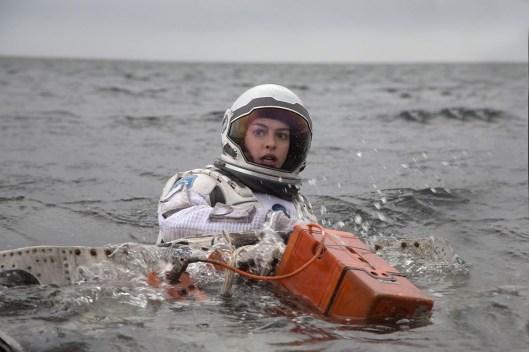
interstellar - scene2

While the storyline and the plotting suffer from a consistent inconsistency – if such a thing, like the movie’s appearing-out-of-nowhere wormhole, can be said to exist – Interstellar at least looks stunning, its space travel sequences some of the best since 2001, and has Nolan cannily dispensing with sound effects outside the Endurance. The level of detail is impressive, and Nolan displays his usual knack of framing shots and scenes with an eye for the unusual angle and the beautiful image. He’s a master craftsman and it’s a pleasure to watch him at work – even here where the themes and motifs are not as congruous as they should be. (For his next project, it would be interesting to see Nolan direct someone else’s screenplay, one that he doesn’t get to adapt into something with more of his DNA on it than the writer’s.)

It’s also a pleasure to see Nolan assemble such a great cast. Man of the moment McConaughey is excellent as the tough-minded but ultimately emotionally driven Cooper, and Hathaway also excels in a role that, thankfully, isn’t as generic as it could have been; she also gets to deliver a speech about love that is genuinely moving and something all of us can relate to. As the conflicted adult Murph, Chastain provides an emotional touchstone for the audience in the movie’s latter half, giving a more subtle performance than might be expected, and Caine continues his run of Nolan movies with an appearance that, refreshingly, isn’t as overloaded with the usual heavy handed gravitas that this type of role normally attracts. Lithgow, Affleck, Bentley, Burstyn and Gyasi offer solid support, and Foy matches McConaughey scene for scene at the movie’s beginning.

Interstellar is a big picture that would like to be seen as an important picture, the kind that, back in the Fifties, would have had a roadshow release ahead of its theatrical run. But as mentioned above, there are too many “issues” – the overbearing, intrusive organ-based score by Hans Zimmer, Brand’s most important line in the movie being rendered unintelligible, the design of the robots that changes from scene to scene depending on what they’re needed to do – to allow it to be regarded as truly important. It strives hard to achieve this but as with The Dark Knight Rises (2012), Nolan’s grip on the material is not as strong or as focused as on previous projects. But again, it’s an impressive visual experience and shouldn’t be faulted on that level, but as the good folks at Pixar always say, “It’s all about the story”, and sadly, that’s not the case here.

Rating: 6/10 – best seen on an IMAX screen – though even that will have viewers scratching their heads at Nolan’s choice of shots in the format – Interstellar sets out to be a profound meditation on love and the will to survive, but falls well short of effectively engaging with either concept, except occasionally; technically superb, this is a movie that, despite its star power and exceptional director, won’t remain in the memory for long because, sadly, it lacks the resonance to do so.

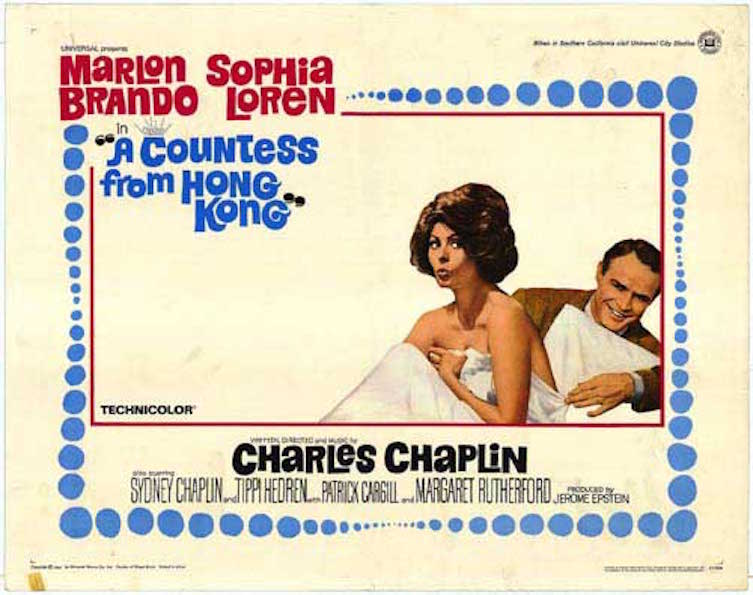
My Top 10 Guilty Pleasures

Tags

, , , , , , , , , , ,

If you love movies, there’s always going to be those select favourites that, even if they’ve been critically derided and/or flopped at the box office, that you can watch over and over again, and which will always raise your spirits when you’re having a bad day or need cheering up.  With this in mind, these are my (mostly) guilty pleasures, the ten movies that I can return to time after time, but which aren’t exactly going to feature on any ten best lists (except this one).

10 – Con Air (1997) – D: Simon West / 115m

Con Air

A plane full of vicious criminals, Nicolas Cage with a mullet, Colm Meaney’s apoplectic DEA agent, more testosterone than you can shake an Uzi at, one of the most over-the-top climaxes in action cinema history, a bunny in a box, and Steve Buscemi as a serial killer with a keen sense of irony – what’s not to like in this profane, blustering, blackly comic action movie? It’s a blast of pure escapism, and while it has its fair share of crass, stupid moments, it’s still the kind of simple-minded excess that never lets up in its efforts to entertain.

9) – Q (1982) – D: Larry Cohen / 93m

Q

There are other Larry Cohen movies that are as enjoyable as this one, but it has a marvellous sense of its own absurdity and plays it straight throughout. The big Q himself – Quetzalcoatl – is used sparingly, but when he’s on screen the movie steps up a pace and the flaws in the acting and the production design are forgotten (and forgiven). A great homage to the monster movies of the Fifties and Sixties, Q is often rough and ready in its approach but at its heart it has passion and some very offbeat humour.

8) – Happy Gilmore (1996) – D: Dennis Dugan / 92m

Happy Gilmore

Adam Sandler’s man-child persona is given its most effective outing in this tale of a hockey player who discovers an aptitude for golf. Gilmore’s angry outbursts are a joy to watch, and though the movie is as uneven and lacking in a consistent tone as most of Sandler’s early movies, it’s the energy he brings to proceedings that lifts the movie and gives it such a winning sheen (and angry slapstick is always funny).

7) – Tucker and Dale vs. Evil (2010) – D: Eli Craig / 89m

Tucker and Dale vs Evil

Not really a guilty pleasure considering it was well received on release (and probably has a cult following by now), Tucker and Dale’s attempts at surviving the intrusion of a group of preppy college kids with unfortunately murderous intentions is an inventive, fun-filled exercise in subverting the backwoods psycho sub-genre of horror movies.  As our heroes, Alan Tudyk and Tyler Labine make for a great duo, and there are twists and surprises galore, as well as some great one-liners (“He’s heavy for half a guy”).

6) – Lake Placid (1999) – D: Steve Miner / 82m

Lake Placid

Of course it’s the best in the series, and of course it has a sense of humour that often overwhelms the horror, but the first in the rapidly worsening series is so deftly constructed that the inspired sparring between Oliver Platt’s arrogant hunter and Brendan Gleeson’s sardonic sheriff is just one highlight in a creature feature that just barrels along making the viewer smile at every opportunity. And there’s a wonderfully vulgar performance from Betty White that is as hilarious as it is unexpected.

5) – 1941 (1979) – D: Steven Spielberg / 118m

1941

Spielberg’s pet project is a complete mess, but it’s still a glorious mess, the kind of big budget misfire that still has a heart and a soul and is only interested in providing as much in the way of zany entertainment as it possibly can. The cast do their best but the script hinders any attempt at a cohesive narrative (almost deliberately so), and even Spielberg isn’t as in control of the material as he normally is. But if you go with it there’s lots to enjoy and some of the slapstick is really, really funny.

4) – Blown Away (1994) – D: Stephen Hopkins / 121m

Blown Away

Yes, Blown Away is barmy, and yes, Tommy Lee Jones’ Irish bomber is about as convincing as Sean Bean in The Patriot Games, but it has a simple intensity that offsets the ridiculous nature of the plot. It also features what is simply the most impressive explosion in movie history (spoiled slightly by having Jeff Bridges and Forest Whitaker almost photo-shopped into the sequence). It stretches credulity to the snapping point, and has more than a few moments where the script takes the cinematic equivalent of an extended lunch break, but it has a certain charm nevertheless.

3) – Arachnophobia (1990) – D: Frank Marshall / 103m

Arachnophobia

A thrill ride with spiders, and possibly Jeff Daniels’ finest hour, this heady mix of arachno-horror and small-town dramatics is unsure if it’s a slightly gorier tribute to the creature movies of the Fifties, or an adventure movie with hundreds of web-spinning villains. Either way it still works for the most part, and while some of the spider scenes err on the side of being more teasing than terrifying, the slowburn approach leads to a hugely satisfying climax.

2) – The Quick and the Dead (1995) – D: Sam Raimi / 105m

Quick and the Dead, The

Unfairly overlooked on its initial release, Raimi’s Western gunfight contest is high on impressive camerawork and special effects, but suffers from these aspects being the same reason the movie doesn’t quite work. Over-stylised it may be, and Raimi may not be able to rein in the movie’s visual ingenuity, but even so, surprisingly good performances from the likes of Gene Hackman, Leonardo DiCaprio and Tobin Bell help things immensely, and it never loses the viewer’s attention.

1) – CutThroat Island (1995) – D: Renny Harlin / 123m

Cut Throat Island

One of the most notorious money losers in box office history, Harlin’s overwrought, effects heavy, leaden-acted pirate movie is still huge fun despite all its problems. Frank Langella steals the movie, the locations are stunning, the stunts are great, and the whole movie revels in its complete absurdity. It’s the epitome of loud, dumb fun, and all the more enjoyable for it, making a remarkable virtue out of being so stupid that it just has to be watched over and over again just to see if it is as bad as it looks and sounds (it is, but who cares?).

The Lady in No 6 (2014)

Tags

, , , , , , , , , , ,

Lady in No 6, The

aka: The Lady in Number 6: Music Saved My Life

D: Malcolm Clarke / 39m

Alice Herz-Sommer

Born in Prague in 1903, Alice Herz grew up surrounded by the intelligentsia of the day, her parents’ cultural salon frequented by the likes of Franz Kafka (who would go for walks with Aiice and her twin sister, Mariana, and tell them stories) and Gustav Mahler. She learnt to play the piano at an early age and was encouraged to take it up as a career by another friend of the family, Artur Schnabel.  She studied at the prestigious Prague German Conservatory of Music (where she was the youngest pupil), and there drew the attention of cellist Leopold Sommer.  They married in 1931, and in 1937 had a son, Raphael.  Alice gave recitals and performed in concerts until the Nazis took control of Prague and Jewish involvement in performances was curtailed.  While several of her family members and friends fled to Israel, Alice remained in Prague to care for her mother who was very ill.

In July 1943, Alice was arrested and sent to Theresienstadt where her skills as a pianist were utilised in over one hundred concert performances, including those for the visiting Red Cross, as the Nazis strove to show that conditions were not as bad as the Allies suspected.  Billeted with Raphael, he and Alice were liberated in 1945 (sadly, Leopold died of typhus in Dachau six weeks before it too was liberated).  Rebuilding her life, she and Raphael emigrated to Israel in 1949 and were reunited with their family, including Mariana.  There, Alice worked as a teacher at the Jerusalem Academy of Music until she decided to emigrate to England in 1986.  In retirement she still played the piano for three hours every day, and remained an inspiration to everyone who knew her.  Remarkably, she was a hundred and ten when she died in February 2014.

Lady in No 6, The - scene

The key to Alice’s life, she always said, was optimism.  She unfailingly looked for the good in life, even during the terrible years when she and Raphael were incarcerated in Theresienstadt.  Like so many of her fellow concentration camp survivors – two of whom are featured in the movie – Alice’s positive attitude helped her to withstand the horror that surrounded her.  She saw “the beauty in life” in almost everything, but particularly in music.  For Alice, “music was magic”.  It could raise her spirits and bring happiness in even the most terrible of situations or circumstances.  With her unwavering memory for classical pieces, Alice could always retreat into her own mind, a place where even the Nazis couldn’t follow her.  It’s inspiring to think that, despite where she was, she was perhaps freer than anyone could imagine.

This remarkable woman is the focus of an equally remarkable documentary short.  The Lady in No 6 is a compelling, fascinating account of one woman’s lifelong love affair with music.  Alice is seen at 109, still mobile, still playing the piano with wonderful dexterity, and still enjoying life with a vitality and energy that would put most thirty-somethings to shame.  She’s always smiling and laughing, and her eyes – only slightly dulled by old age – twinkle with a mixture of mirth and sincerity that is surprisingly wistful when she sits in repose.  Alice’s upbeat nature and lack of pessimism is a joy to behold, and when she talks about her love of music you can see that she’s transported by it.  As she’s said in the past, “I am Jewish, but Beethoven is my religion”.

Wisely focusing on her passion for music for the most part – with an extended but emotive sidestep into World War II – Clarke deftly avoids any hint of sentimentality (as does Alice) and paints an engaging, winning portrait of a woman whose devotion to music has the effect of making the viewer wish they had even a tenth of Alice’s ability and commitment to her art.  Testimony from one of her neighbours provides an idea of how much her morning recitals are enjoyed, and a reminiscence of her time at Theresienstadt reveals the same approval from some of the guards.  It’s a wonderful affirmation of Alice and her dedication to her muse, that her playing has been able to cross social and ideological divides with such incredible efficacy.

Away from Alice and her contagious love affair with classical music, the movie paints a sobering yet hope-infused account of her time at Theresienstadt, with one of her friends recounting a particularly chilling account of an encounter with Josef Mengele.  The focus shifts to take into account the resilience of those inmates who could see no other outcome but their own survival, and while Alice takes a back seat during these moments, it still serves to highlight the tenacity she must have had to endure (and to be so well-balanced in the aftermath of it all).

Visually as well, The Lady in No 6 is a treat, with Clarke’s assembly of various archival materials proving both eye-catching and memorable, his blending of the historical and the modern throwing each element into sharp relief.  The post-production work is highly impressive, and so is the editing by co-writer Carl Freed, both of such a high standard that the movie has a precise, almost painterly feel to it, and the scenes of Alice in her flat feel entirely welcoming, not as if the audience is eavesdropping on her, but that she’s gladly invited everyone in… and couldn’t be more pleased for the intrusion.

Rating: 9/10 – a delightful and inspiring look at the life of an absolutely exceptional woman, The Lady in No 6 fully deserves its Oscar win and is one of the best documentary short movies of recent years; it’s a shame then that we get to spend such a short amount of time in Alice’s wonderful company.

Opstandelsen (2010)

Tags

, , , , , , , , , , ,

Opstandelsen

aka Resurrection

D: Casper Haugegaard / 50m

Cast: Marie Frohmé Vanglund, Mads Althoff,  Jonas Bjørn-Andersen, Asta Stidsen, Roxanne Tirkov, Peter Althoff, Hans Maaløe

At the funeral of Simon (Peter Althoff), one member of his family is noticeably absent from the service: his brother Peter (Mads Althoff).  Peter’s other brother, Johannes (Bjørn-Andersen), and his sister, Esther (Vanglund), go to look for him.  They find him in the toilets, snorting cocaine.  He and Johannes argue, but Peter is dismissive when Johannes tells him the family is through supporting him with his drug problem.  Johannes and Esther return to the service; Peter continues to take cocaine.

With the drug affecting him substantially, Peter makes his way to the service.  When he does he finds scenes of carnage, with everyone under attack from the newly risen dead.  Scrabbling away he seeks refuge in another room and is joined by Johannes, Esther, and their younger sister, Maria (Stidsen).  Johannes finds a trap door and they all follow him down into the room below; in the process, Peter blacks out.

When he comes to, he finds they are trapped in a small room beneath the church, and with no safe way out.  Maria has been injured and with no way for her to stem the bleeding, Esther cradles her as she dies.  While the two brothers argue about what to do, Maria comes back to life and attacks Esther.  Peter and Johannes restrain her but have little option in the end but to kill her.  The shock of it all has a terrible effect on Esther and she retreats into her own mind.

Peter takes control of the situation and they leave the room, finding themselves in a maze of underground corridors and rooms.  Coming under attack from the undead at almost every turn, they fight their way to ground level but become separated, leading each of them into confrontations that will decide their eventual fate.

Opstandelsen - scene

A very, very low budget exercise in zombie terror, Opstandelsen is a compact feature that works better as a calling card to the industry than as a fully realised project.  The decision to shoot this as a short film was a wise one, and shows just how padded out by endless running around in tunnels/corridors/woods other horror movies have become.  It also helps the movie hit an above average number of dramatic high points, with the beleaguered trio facing (and fending off) attack after attack in their efforts to escape from the church.

The low budget necessitates some inventive responses to the challenge of presenting a church-bound zombie apocalypse, and while some work very well indeed – Maaløe’s fire and brimstone preaching from the pulpit (and practically blaming everyone there for what’s about to happen), an attack on Johannes through a door, Esther’s confrontation with her mother (Tirkov) – there are others that don’t, most notably the use of camera lights as the only form of illumination during a chase sequence below ground.  The editing is determinedly choppy during several of the attacks and it’s difficult to work out just what is going on (it gives the impression that some of the zombie make up and effects weren’t that great during those scenes).  It’s a shame, as these scenes would otherwise be quite effective at adding further energy to a movie that wastes little time in putting its main characters at risk and showing in gory detail what can happen to them.

There are things to be said for briefly introducing characters before letting the action take hold, but here it does lead to some problems, the main one being the way that Peter shakes off the effects of some very excessive coke-snorting to become as focused as he does (either he’s very used to it or the cocaine wasn’t as pure as it looks).  And the way in which Johannes earnestly prays to God for protection – giving the impression he may fold under the pressure – isn’t followed up or allowed to get in the way of his subsequent heroics.  Otherwise, the narrative follows a fairly standard formula, whittling down its cast until there’s only one survivor, and leaving things open-ended as to where the story might go next.

With a strong, heavily stylised visual aesthetic in play, Opstandelsen is often potent stuff, with its gruesome splatter effects used sparingly and with unflinching attention to detail, leaving the unprepared viewer to deal with some purposely raw and violent imagery; fans, however, will lap it up.  Haugegaard drives the action forward, making the movie a kinetic treat, allowing only the briefest of pauses once the trio leave the room below the trap door.  Some of the more violent, dramatic scenes are abetted by having Lasse Elkjær’s pounding score jacked-up in volume, and the soundtrack is beefed up as well, making all the lip-smacking zombie sounds that much more appalling to hear.  As an attempt to further highlight the awfulness of what’s happening, it’s unnecessary, but it does fit in with the movie’s unsubtle, in-your-face approach to the material.

Rating: 6/10 – very rough around the edges, and with performances that are perfunctory if not memorable, Opstandelsen is a short that bodes well for Haugegaard’s future projects; seriously grim and grisly throughout, fans of zombie movies will find much to enjoy even if the storyline offers very little that’s new.

Apron Strings (2008)

Tags

, , , , , , , , , , , , , , ,

Apron Strings

D: Vaele Sima Urale / 90m

Cast: Laila Rouass, Scott Wills, Jennifer Ludlam, Nathan Whitaker, Leela Patel, Jodie Rimmer, Kate Harcourt, Peter Elliott, Gary Young

Michael (Whitaker) is a young Indian student whose mother, Anita (Rouass) is estranged from her sister, Tara (Patel).  On the pretext of doing a college project, he visits his aunt at the restaurant she runs, while keeping his visit a secret from Anita.  He and Tara hit it off and he visits more often until she offers him a job there.  Anita, meanwhile, is at odds with the producers of the TV cookery programme she hosts: about the content, about the recipes, and about the costumes she’s asked to wear.

One of Tara’s regular customers is Barry (Wills).  He’s a middle-aged man still living at home with his mother, Lorna (Ludlam) and his Nan (Harcourt).  Barry is drifting through life looking for one get-rich-quick scheme to pay off after another, and he sponges off his mother – who runs a cake shop – with unvarying results: the money is always wasted.  Lorna’s attempts at tough love are undermined by her soft-hearted nature, even when Barry gets into debt through his attempts to get local baker Minh (Young) to buy out his mother’s business.

As Michael gets to know his aunt, and the family history, he begins to pull away from his mother.  This only adds to the anger she feels over her cookery programme, and their relationship suffers even further.  Michael spends more time at Tara’s restaurant until, suspicious of what her son has been doing, Anita follows him there.  Meanwhile, Lorna also has to deal with the return of her daughter, Virginia (Rimmer), several months pregnant and refusing to take on her mother’s ideas of conformity.  With passions running high in both families, each member has to look at themselves before they can make peace with each other.  But can they?

MCDAPST EC005

A subtly ambitious tale that takes in themes of racism, community, homophobia – Michael is gay – injured pride, personal responsibility and motherhood, Apron Strings is a small-scale drama that tells its various stories with simple precision throughout.  Both main stories involve mothers who have become distant from their sons, and who no longer understand them.  The blame for this seems squarely laid at the doors of Anita and Lorna, but it’s offset by their unswerving love for their children, as both women strive to ensure their children are happy.  The movie shows how difficult it can be to be both supportive and unsupportive depending on the situation, and how walking such a tightrope can backfire on the mother.

The movie also shows us how striking out on their own can undermine the best intentions of the two sons.  Michael aims to reunite Anita and Tara but he’s unprepared for the emotions that learning about his aunt and his mother’s fractured relationship are awakened in him.  He finds it difficult to reconcile the image he has of his mother with that of the proud young woman who made a difficult choice in her youth and has fought hard not to let that decision define her.  With Michael so sure of his racial identity, and having such a strong sense of family, that his mother has turned her back on all that, proves too much of a shock.  And yet, by being gay, he runs the risk of his own community rejecting him, making his own need to make a decision about his future all the more important.

Alternately, Barry is a lazy conniver, a wastrel who thinks being rich will solve all his problems, and the problems he perceives his mother has.  He’s the classic underachiever who thinks he’ll make his mother proud by hitting the jackpot, but he fails to recognise that she loves him all the same, and would do even if he was working at a mundane nine-to-five job, and as long as he was content.  But Barry is restless, with no chance of getting a job, or beginning a relationship, and with no pride in his appearance.  He struggles with himself and rebels against his mother’s hopes for him, failing time after time and never learning from the experience.

As the two mothers trying hard to connect with their sons, Rouass and Ludlam both turn in polished performances that make the audience waver in their sympathies for them, as each woman is allowed to appear strong and determined and yet flawed at the same time.  Rouass is at her best when railing against the constraints Anita believes her cultural background have placed on her, and she simmers with an anger that clearly has deep-seated roots.  It’s an impressive performance, a precise, detailed characterisation that is at once charming and distressing in its emotional candour.  Ludlam is equally good, Lorna’s tired efforts to rein in her best intentions and play the hard line blunted continually by what she sees as the need to be a caring, though accommodating mother.  She too is suffused with anger, but it’s an anger that has been compromised over time and it no longer carries the emotional weight that would enable Lorna to overcome the inadequacies she feels in dealing with her son (and her daughter).

Apron Strings - scene2

With two such strong, committed performances, it’s reassuring that under the equally strong and committed direction of Urale – making her feature film debut – the other performances aren’t overwhelmed in the process.  Wills plays Barry as a sad, desperate individual with few redeeming qualities but who is strangely sympathetic as well, a neat trick given the levels of perfidy that Barry will stoop to.  Patel provides the cultural and racial grounding that informs the audience, and paints a moving portrait of a woman whose sense of family obligation has paved the way for her own happiness and sense of purpose in life.  And Michael’s sense of confusion and anger over what he perceives is his mother’s betrayal of her heritage is neatly handled by Whitaker, as well as his conflicted emotions.

Each of these performances wouldn’t be quite so good if it wasn’t for the carefully constructed and multi-layered screenplay by Shuchi Kothari.  Her only feature length screenplay to date, it contains – and maintains – a level of detail that makes it easy for Urale to deliver an affecting, quietly moving piece that looks at the generational divide evident in today’s society, and which does its best to show that bridges can be built when the willingness is there on both sides.

Rating: 8/10 – a moving portrait of two families struggling to deal with the emotional fallout from unfulfilled dreams and desires, Apron Strings is a finely tuned drama that deserves a wider audience; and the scenes of Indian food being prepared are as mouth-watering as you’d expect.

Poster of the Week – Dad and Dave Come to Town (1938)

Tags

, , , ,

Dad and Dave Come to Town

Dad and Dave Come to Town (1938)

For those of you wondering who Dad and Dave were, they were characters – father and son – who featured in four Australian movies made between 1932 and 1940.  In many ways they were a precursor to the Beverly Hillbillies, though the humour in them relied heavily on slapstick.  All four movies were successful Down Under, and even today are highly regarded.

Dad and Dave Come to Town was the third movie in the series, and this poster reflects both the storyline and the carefree approach to the material.  Emphasis is given to the difference that city life has on Dad and Dave’s appearance in the movie, both of their gruff exteriors replaced by noticeably airbrushed “makeovers” (though Dave changes from slightly dangerous looking to appropriately dim looking).  For enthusiasts, seeing Dad and Dave transformed into “city slickers” would have been an irresistible attraction.

The contrast between the rural community they come from and the big city is further highlighted by the warm farmyard scene juxtaposed with the dark outline of the city at the bottom – can it be a good influence on our heroes, or will they prove to be more than a match for city ways?  And as if to reinforce the idea of the city’s wicked ways and its corrupting influence, there’s a couple of scantily clad women alongside the cityscape (as well as a very worrying looking mannequin), all carefully posed to promote the risqué nature of the humour in this particular outing.

What grabs the eye the most though is the colourful garishness of the poster itself, the bright yellows and reds bursting forth from the blue background like typographic explosions (and be honest, how often do you see the word ‘cripes’ given such prominence in a poster?).  The depth and richness of these primary colours makes the whole poster that much more appealing and easy to look at.  It’s the perfect way to enrich an already lusciously presented poster and its alluring images.

Agree?  Disagree?  Feel free to let me know.

Mini-Review: Bipolar (2014)

Tags

, , , , , , , , , , ,

Bipolar

D: Jean Veber / 80m

Cast: Andrew J. West, Emma Bell, Beatrice Rosen, Andrew Howard, Lenny Jacobson, Taylor Nichols

At the AltaVista clinic, Dr Lanyon (Howard) is embarking on a series of trials to determine if a new drug is of any benefit to sufferers of bipolar disorder.  One of the volunteers, a young man named Harry Poole (West) is nervous, fidgety and lacks self-confidence.  He stays at the clinic for the trials where he’s assigned a nurse, Anna (Bell), to oversee his treatment.  He soon becomes attracted to Anna and as the trials continue, the new drug prompts a change in Harry’s outlook and his demeanour.  He is more confident, he looks and acts differently, but when the drug he’s taking begins to wear off he becomes aggressive.

Dr Lanyon calls a halt to the trials when similar reactions occur in other volunteers.  Unable to accept this, Harry’s new, more confident alter-ego, Edward Grey, takes over and steals a supply of the drug.  Back at his brother John’s (Jacobson) house, Harry/Edward begins treating his brother badly, as well as his friend Ivy (Rosen) who visits often, and Anna, who is attracted to Harry but finds herself dealing more and more with Edward.  As Edward’s personality dominates Harry’s, Edward’s violent tendencies also come to the fore, until he decides to confront Dr Lanyon when his meds run out.  Lanyon goes to Harry’s home but by now, Edward is in full control… or likes to think he is.

Bipolar - scene

Although the mood swings associated with bipolar disorder can provoke violent reactions and/or outbursts, the illness depicted in Bipolar is more akin to split personality disorder (or at least the movie version of it).  With its premise owing more to the story of Jekyll & Hyde than any accurate medical diagnoses, the movie opts for a found-footage style that is awkward and inconsistent (the two cameras Harry uses at home are moved around to accommodate the action on too many occasions for their use to remain credible), and a denouement that is plucked from the bucket marked “crazy and ridiculous”.  (And if the viewer doesn’t “get” the central conceit, there are two scenes from John Barrymore’s 1920 version of Dr. Jekyll and Mr. Hyde shown to reinforce the idea.)

As Harry and Edward, West is either pale and sweaty (Harry) or suave and distant (Edward).  Playing bad for the most part, West never really convinces in either role, and when called upon to release Edward’s evil nature, appears more petulant than frightening.  Bell and Rosen struggle to make much of an impact due to the script’s need for them to be victims (albeit for different reasons), while Howard does “man on LSD” as if he’s only heard rumours about it.  Behind the camera, Veber directs with all the certainty of someone who hasn’t made a movie in eleven years and hammers out any subtleties his script might have had in the first place.

Rating: 3/10 – scattershot and unconvincing, Bipolar is too intent on making Edward a sexist, murderous thug to worry if it makes sense (which it doesn’t); with annoying performances and a script that keeps the viewer at a distance, this is one Jekyll & Hyde variation that is both tedious and uninventive.

Phoenix (2014)

Tags

, , , , , , , , , , ,

Phoenix

D: Christian Petzold / 98m

Cast: Nina Hoss, Ronald Zehrfeld, Nina Kunzendorf, Michael Maertens, Imogen Kogge

Nelly (Hoss) is a former nightclub singer who was interned in a concentration camp during World War II and subsequently disfigured.  At the war’s end she undergoes reconstructive surgery that makes her look as close as possible to her real self.  The resemblance is striking but there are enough differences that she could be mistaken for someone else.  Nelly recovers from her surgery with the help of fellow survivor, Lene (Kunzendorf).  When Nelly is better, Lene wants both of them to emigrate to Israel, but Nelly has other ideas: she wants to return to Berlin and find her husband, Johnny (Zehrfeld).

Her search takes her to the Phoenix club, where she finds Johnny, but there is no happy reunion.  When he sees her, Johnny doesn’t recognise her, but he does see the resemblance and comes up with a plan to claim Nelly’s inheritance.  After a period in which he will teach her to “be” Nelly, he will present her to their families and friends, and pass her off as his wife.  Nelly goes along with the plan.  She keeps quiet about her identity in the hope that Johnny will one day recognise her, but those hopes are cruelly dashed when Lene learns that Johnny was the person who deposed her to the authorities and which led to her being taken to the concentration camp (and then divorced her the day after).

Upset by this news, Nelly becomes ambivalent towards Johnny and begins to question his plan and its chances of succeeding.  She drops hints about her true identity but he doesn’t pick up on them.  She challenges him and makes things more difficult for him when he tries to tell her about their past, questioning what he tells her.  She also changes the way she is asked to dress and behave, subtly altering the balance of power in their relationship.  As the time approaches when Nelly is due to “return”, she must make the decision to either reveal the truth, or go along with the deception.

Phoenix - scene

A mordant, austere tale about one woman’s attempt to reconstruct her life and reconnect with her past, but under unexpected conditions, Phoenix is the sixth collaboration between Petzold and Hoss, and a great example of contemporary German cinema.

Adapted by Petzold from the novel Return from the Ashes by Hubert Monteilhet, Phoenix is a quietly gripping examination of memory and identity, and the ways in which each can undermine the other.  From the movie’s beginning, with Nelly about to undergo the surgery she hopes will give her her life back, it’s clear that she has lost more than just her looks.  She’s lost her sense of self, and by looking as much as possible as she did – and not differently as recommended by her surgeon – she has faith that this will restore her.  But what is really missing is the self-confidence she had before she was interned, and even looking as she did, she’s still hesitant and unsure of herself.

When it comes to actually rebuilding her life with Johnny she doesn’t find it easy, her emotional fragility keeping her subdued and unwilling to jeopardise the duplicitous scheme her ex-husband has come up with.  Being able to do the “role” justice begins to change matters, Nelly slowly gaining in confidence until she is as much in control of Johnny’s scheme as he is – if not more so.  The power play that develops between them adds tension and a deeper emotional complexity than up til now, and as Nelly begins to assert herself – and not the impostor version she’s adopted – her sense of pride develops as well.  The final scene shows just how far Nelly has come, and it’s a rewarding moment both for her and for the viewer (if not for Johnny).
With Nelly finding that Johnny’s memories of their marriage lack any residual warmth or fondness, she also has to come to terms with the idea that her view of their marriage may not be as truthful as she believed.  As she struggles to maintain that wilting perspective, the moment when she puts it all behind her and decides to move forward is put off until the very end, leaving the movie balanced on a cinematic precipice.  Mean-spirited it may be, but whether or not Nelly and Johnny do go back to each other after all their plotting, is largely irrelevant.  That Nelly now has a choice in the decision is what matters, and by the look on Johnny’s face at the end, it’s not a choice he’s looking forward to her making.

As the uncertain, deceptively enigmatic Nelly, Hoss puts in a superb performance, perfectly capturing the various fears, worries and concerns of a person playing a part and slowly learning how empowering it can be.  Hoss is one of the best actresses working in movies today, and she gives a measured, quietly authoritative performance that shows her complete command of the character and her (somewhat skewed) behaviour.  It’s a fantastic achievement, outwardly clinical in that detached manner people expect from German actors, but ruinously emotional underneath, emoting often with just her eyes, her expressionless face hiding the inner turmoil Nelly feels inside.  It’s an acting masterclass, the kind of role that would go to Nicole Kidman if there was an English language remake (though let’s hope there isn’t).

Phoenix Ronald Zehrfeld Nina Hoss

With his lead actress having such firm control over the main character, Petzold is free to highlight the emotional and psychological aspects of his script, keeping “Nelly” hidden away for most of the movie, even when the war is over and she’s forced to hide behind the surgery she’s had.  Petzold (with Hoss’s help of course) brings Nelly to life with painstaking attention to the more poignant aspects of her tale, most notably in a scene where by dressing as she once did Nelly hopes to reignite a spark in Johnny’s heart, that even though he doesn’t feel toward her as he did before the War, that he might do so now, even though she’s different.  It’s an incredibly touching, hopeful moment, beautifully and sensitively acted by Hoss and Zehrfeld, and on its own, one of the most powerful scenes you’re likely to see all year.

The post-war period is effectively replicated and photographed (by Hans Fromm), and there’s a simple but equally effective score by Stefan Will (who has worked on all bar one of Petzold’s movies).  It all adds up to a quietly engrossing tale that makes a virtue of keeping its main characters’ emotions hidden close under the surface, and by making Nelly’s struggle to unite her past and future all the more enthralling.

Rating: 8/10 – at first glance, Phoenix looks gloomy and uninviting, but Petzold is an astute director and the movie is far more passionate than it seems; with another outstanding performance from Hoss, this is a movie that exceeds expectations and does so with honesty and tremendous skill from its makers.

Evolution (2001)

Tags

, , , , , , , , , ,

Evolution

D: Ivan Reitman / 101m

Cast: David Duchovny, Julianne Moore, Orlando Jones, Seann William Scott, Ted Levine, Ethan Suplee, Michael Bower, Pat Kilbane, Ty Burrell, Dan Aykroyd, Katharine Towne

A meteor crash lands outside of the small Arizona town of Glen Canyon, punching a hole through the ground and coming to rest in a cavern.  A professor at the local university, Harry Block (Jones), is also a member of the US Geological Service.  When he hears about the meteor he heads for the site with his friend and fellow professor, ira Kane (Duchovny).  They meet Wayne (Scott) who was there when the met or landed.  Harry and Ira descend into the cavern and find that the meteor is still warm, and when they begin taking a sample from it, they also discover that it releases a strange blue liquid, almost as if it were bleeding.  They take the sample back to Ira’s lab where he discovers that the liquid contains micro-organisms that appear to be single-celled, and which are definitely extraterrestrial in origin.

He breaks the news to Harry and they go back to the crash site with some of their students on the pretence of conducting a field trip (and to remove the meteor).  They find the beginnings of an entirely new eco-system, as well as evidence of evolutionary advances that are happening far too quickly.  When a flatworm dies from excess oxygen, Ira realises the importance of what they’ve discovered, and convinces Harry to  keep things to themselves until they can assess matters further (it helps that Harry is focused on a potential Nobel prize at some time in the future).

Meanwhile, while working at the local country club, Wayne sees evidence of the flatworms having spread further than the meteor site but he doesn’t say anything to anyone.  Harry and Ira return again to the cavern but are stopped when they find the site has been turned into a restricted military area overseen by General Woodman (Levine).  It turns out that Woodman was once Ira’s boss and that Ira has a checkered past involving an experimental virus that produced some unfortunate side effects.  Helped by Center for Disease Control scientist Alison Reed (Moore), Woodman takes over the site and bars ira and Harry from any further involvement.

While the military continue to monitor the cavern’s growing eco-system, and the creatures that are evolving there, other creatures are finding their way into the local community.  At the country club, one of the members is killed by a creature that is in turn killed by Wayne.  He takes the corpse to Ira and Harry; they later learn that dozens of creatures have died near the meteor site due to being oxygen intolerant.  When one gives birth to its offspring, a dragon-like creature, before dying, the newborn proves able to breathe properly and it flies off to cause mayhem at a nearby shopping centre.  Harry, Ira and Wayne track it down and kill it before warning General Woodman about the growing menace.  Under increasing pressure from the state governor (Aykroyd), Woodman advocates napalming the cavern and the tunnels that spur off from it.  But when Ira and co discover that heat speeds up the creatures’ evolutionary process, they face a race against time to stop them from over-running the planet.

Evolution - scene

An often raucous, good-natured sci-fi romp, Evolution is the type of comic fantasy that makes no bones about how absurd or ridiculous it might be, and throws caution, logic and plausibility as far out of the window as it can manage.  There’s a boisterous, almost schoolboy aesthetic going on, with Jones’ sex-obsessed geology teacher, Scott’s not-so-bright would-be fireman, and Duchovny’s good-natured ex-military scientist proving a good mix, and bolstered by Moore’s clumsy, well-meaning disease expert.  All four are clearly having fun and their enthusiasm, added to the script’s sense of mischief (courtesy of Don Jakoby, David Diamond and David Weissman), makes for an entertaining monster movie that flaunts its lack of scientific realism with wild abandon.

With its focus on making things as fun as possible, Evolution plays out like a movie whose basic concept was probably much simpler, but which, luckily, ended up being a whole lot more involved and wonderfully, gloriously silly.  There’s almost too much to enjoy: Wayne’s practice run at saving a woman from a burning building; Harry’s one-liners – “There’s ALWAYS time for lubricant!” – and extravagant facial expressions; Ira’s mooning of General Woodman; an encounter with Ira’s ex-girlfriend (played by Sarah Silverman); and Aykroyd’s pissed off state governor.  Amidst all the human levity, it would be easy to forget that there are some pretty weird alien creatures to deal with as well, but Reitman co-ordinates things with his trademark ease, and grounds the action with just enough unexpected gravitas to make the threat more credible than it might initially appear.

With the cast on top form, and Reitman orchestrating things with his usual aplomb, the occasional lapse can be forgiven – a cringe-inducing amount of sexist behaviour from Harry, Suplee and Bower being in Ira’s class in the first place (though it’s still funny) – and some of the creature effects are poorly integrated into the action, but there are some great desert locations that are beautifully photographed by Michael Chapman, and John Powell’s stirring score complements the movie throughout.

Rating: 8/10 – preposterous and silly, Evolution is nevertheless the kind of guilty pleasure you can brag about to your friends; even if you only watch it for Harry’s rectal procedure, it will still have been all worthwhile.

The Canal (2014)

Tags

, , , , , , ,

Canal, The

D: Ivan Kavanagh / 92m

Cast: Rupert Evans, Antonia Campbell-Hughes, Hannah Hoekstra, Steve Oram, Kelly Byrne, Calum Heath, Carl Shaaban

Film archivist David, his wife, Alice (Hoekstra), and young son Billy (Heath) move into an old house near a canal.  There are marital tensions: David suspects Alice of having an affair, and their lovemaking is perfunctory and passionless.  While they get used to living in their new home, David’s colleague Claire (Campbell-Hughes) asks him to look through some old crime scene footage sent to the archive by the police.  When he does, he discovers that the house was the site of a murder in 1902.  The discovery has a profound effect on David who starts to imagine he can hear voices in the walls, and he begins to catch glimpses of a man in the house.  He also has nightmares in which he sees the man kill his wife and then dump her body in the canal.

One day, Alice tells David she’ll be working late.  He waits outside the place where she works and sees her leave with a man (Shaaban).  He follows them along the canal to the man’s home.  He finds his way inside and sees them having sex.  David comes away upset and feverish.  He heads back along the canal but becomes nauseous and stops in a disused public toilet to throw up.  There he has what may be an hallucination involving the man he’s glimpsed at the house, and sees Alice at the side of the canal being attacked by the same man.

The next morning, David discovers that Alice hasn’t come home.  He reports her as missing, and the case is investigated by Inspector McNamara (Oram).  David continues to fixate on the house’s history and he learns more about the murder in 1902 and how it fits into a wider pattern of child abduction and ritual sacrifice.  When Alice’s body is found in the canal it’s deemed an accidental death but David’s visions increase and so too his sense of paranoia.  David tells Claire that he suspects the ghost of the man who killed his wife has killed Alice and is trying to kill Billy as well, but Claire doesn’t believe him.  With the help of babysitter Sophie (Byrne) he tries to keep Billy safe, while attempting to find proof of the supernatural events happening around the house.  But when McNamara returns with news that David was seen at the canal the night Alice died, David has no choice but to take Billy with him in a final chance to escape the dead man’s clutches.

Canal, The - scene

Featuring one of the creepiest set ups of recent years, The Canal has enough chilling moments to make it one of the most effective scary movies of recent years.  It’s a refreshing change to watch a horror movie where the nightmarish qualities of the script are brought so potently to life.  Filmed in Ireland, The Canal is a dark, eerie, disturbing movie that uses well set up scares and shocks to keep the viewer on the edge of their seat.  The depictions of past events are often shocking, but are used sparingly, their execution and careful inclusion adding to the tension and the horror.

The mystery of the murder in 1902 and its connection to the canal is the spine of the movie, making David’s growing paranoia and sense of mounting terror its meat.  As the beleaguered archivist, Evans paints a convincing portrait of a man searching for a meaning to the strange phenomena happening around him, while also trying to maintain his sanity.  It’s a standard characterisation seen in many other horror movies but here Evans’ performance lends a credibility to David’s reactions and motivations that isn’t that prevalent elsewhere.  Evans’ sweaty, desperate turn anchors the movie throughout, and his early likeable, nervous approach makes David a sympathetic character the viewer can relate to.  As events become darker and more intense, Evans never loses focus on the character and he helps ground the more lurid developments, so that David’s mounting terror is rendered with complete conviction.
Evans’ performance is one of the main reasons the movie is as good as it is.  Another is the well constructed screenplay by writer/director Kavanagh, with its cleverly realised flashbacks, archival footage and photographs showing what really happened in 1902.  Kavanagh also makes a virtue of the kind of choppy editing style that usually makes things more difficult to process, but here adds to the disjointed, off-kilter and unnerving sequences involving the dead husband and the children who watched him kill their mother before being meeting an even worse fate.  These sequences carry a distinctive power that elevates the material and makes it all the more impressive in its visual styling.

The various scares – the man passing by open doorways, the sequence in the public toilet where blackened fingers appear over the top of a cubicle door, David’s vision of the murder in 1902 – are confidently presented and completely gripping.  It’s occasionally uncompromising, rarely dull or distracting, and a tour-de-force of low budget inventiveness and emphatic editing.  Ceiri Torjussen’s perturbing score adds a layer of menace to the proceedings and there’s sterling work from production designer Stephanie Clerkin that makes the house and its environs look unearthly even in  daylight.

Rating: 8/10 – a genuinely scary movie that deserves a wider audience, The Canal is often a tough watch, but is bolstered by a cast and writer/director who know exactly what they’re doing; moody and demanding, this is entirely worthwhile and not for the faint-hearted.

Happy Birthday! – thedullwoodexperiment is a Year Old Today

Tags

, , , ,

It’s incredible to think that I’ve been doing this for a year now, a year in which thedullwoodexperiment has exceeded all my expectations – not that I had very many – and which has, in its own small way, found a home on the Web that hopefully has proven thought-provoking, entertaining and informative.

When I wrote my first review – Touchy Feely (2013) – it was with a sense of trepidation.  I didn’t know if anyone would read it, or if they did, whether they would like it, agree with it, disagree with it, or just be dismissive of it.  But as I added more and more content, and I started getting more and more traffic, I could see that my efforts weren’t entirely in vain.  As I gained a few followers (still something that seems incredibly weird to me), I also gained more confidence in what I was writing, in my choice of movies to write about, and thanks to some generous comments and feedback in those early days, the momentum I needed to keep going when it seemed no one was interested (those were dark days indeed).

But now I feel I’m in a position to continue with even more confidence that, with all the other movie blogs out there, my little piece of the Net is getting the attention that it deserves, and that it’s appreciated as well.  It’s a tremendous feeling when I log on and find someone has liked a review or a post; it makes it all the more worthwhile.

So, a big THANK YOU to everyone who’s read a review, or a post – whether you’ve liked it or not – and especially to those very kind and generous people who are currently following thedullwoodexperiment.  As it’s customary to say on these occasions, “I couldn’t have done it without you”.

With Phase 1 of my version of Marvel’s Cinematic Universe now complete, it’s time to look forward to Phase 2, and making this particular blog even more well-known than it is now.  Hopefully I’ll pick up some new readers along the way, and hopefully they’ll like the blog enough to tell their friends etc.  (That’s a big hopefully, by the way.)  I have some ideas for the blog that will happen in the next twelve months, and a lot of them I’m really excited about.  A couple of new “additions” can be seen from today.

But the reviews will continue to be the focus of the blog.  I hope to include even more reviews in the next year, and not leave some out like I did this year – my apologies to 47 Ronin, several Roger Corman movies, Pride, and a few low budget horror movies that I just couldn’t bring myself to write about.  I’ll continue to review a wide range of movies from a variety of eras and countries, and not just the latest new releases; I think that’s only fair.

Finally, if you’ve ever wanted to leave a comment, positive or negative, and decided in the end not to, can I suggest that you just go for it?  Hearing from other people, bloggers and non-bloggers alike, is always special, and feedback is always greatly appreciated.  So, don’t be shy, and let me know what you’re thinking.

That’s all for now, folks!

Life After Beth (2014)

Tags

, , , , , , , , , ,

Life After Beth

D: Jeff Baena / 89m

Cast: Aubrey Plaza, Dane DeHaan, John C. Reilly, Molly Shannon, Cheryl Hines, Paul Reiser, Matthew Gray Gubler, Anna Kendrick

Zach Orfman (DeHaan) has been devastated by the unexpected death of his girlfriend, Beth Slocum (Plaza).  Unable to fully come to terms with her passing, Zach spends time after the funeral with her parents, Maury (Reilly) and Geenie (Shannon).  His behaviour concerns his own parents, Judy (Hines) and Noah (Reiser), as well as his brother Kyle (Gubler).  When Zach goes to see the Slocums but they don’t answer the door, or return his phone calls he’s initially upset.  He decides to try one last time to see them but when he does they still don’t answer the door.  Knowing they’re inside, Zach looks in through one of the windows… and sees Beth.

Forcing his way in, Zach confronts the Slocums who tell him that Beth came home on the night of the wake and seems fine, but she has no memory of dying; as far as she’s concerned she has a test at school the next day even though it’s summer break.  The Slocums allow Zach to visit Beth but insist he doesn’t tell her what’s happened to her.  Zach reluctantly agrees and the two resume dating, but Beth’s behaviour is erratic and demanding.  As time goes on it becomes more difficult to hide the fact that Beth has come back from the dead.  She begins to deteriorate, but her parents continue to reject Zach’s pleas to tell her the truth.

Things come to a head when Zach bumps into an old schoolfriend, Erica (Kendrick) at a restaurant.  He tells her about Beth’s death (but not her resurrection).  When he leaves he (literally) runs over Beth who is unharmed.  Erica appears and is surprised by Beth’s appearance.  Beth realises Zach is keeping something from her, and forces him to tell her what it is.  He shows Beth her grave and the hole in it where she got out.  She runs off.  Zach returns home to find his dead grandfather has returned as well; it becomes clear that the dead are returning in droves and the town becomes a disaster zone, with vigilante groups culling the undead.  Still in love with Beth he races to the Slocums to rescue her, but now Beth is constantly in need of food, preferably human flesh.  Zach is faced with a terrible choice: to travel far away with Beth and keep her safe, or send her back to the grave.

Life After Beth - scene

A rom-zom-com with plenty of heart (and other body parts), Life After Beth is a deftly funny diversion that treats its central character with dignity and affection, even when she is trying to devour someone or has degenerated into a snarling zombie.  It walks a fine line between horror and comedy, and adds romance to the mix with surprising ease, making its absurd premise all the more believable.  It’s all cleverly done, and though it would have been easy to do so, doesn’t rely on self-reflexive in-jokes or knowing nods to the camera.  Life After Beth is played largely straight, incorporating humour with a relaxed confidence, and making the horror elements as gruesome as the material needs (which isn’t very gruesome).

The partly traditional romantic tale is well catered for – boy loses girl, boy gets girl back, girl turns into ravenous monster, boy still loves her – and is handled with assurance by Plaza and DeHaan.  Plaza effects Beth’s transformation from slightly confused corpse to psychotic girlfriend to the aforementioned ravenous monster with a surprising amount of charm, investing Beth with an unexpected warmth that offsets the cruel trajectory her character takes as the movie progresses.  With her pinched features and wide eyes, Plaza makes Beth both dangerous and (relatively) innocent at the same time.  As the bewildered and conflicted Zach, DeHaan shows an aptitude for comedy that might not have been readily apparent from his previous movie roles, and is a delight to watch as he struggles with his feelings for Beth in the face of her rapidly deteriorating behaviour.  Together, they’re a winning team, sparking off each other and making Zach and Beth’s relationship entirely credible – even if one of them is dead.

Writer/director Baena’s only previous credit is the script for David O. Russell’s I ♥ Huckabees (2004).  With such an assured movie as this it’s a shame he hasn’t had any other projects produced since then.  He gets the tone just right, even when he throws in some awkward necrophilia, and as mentioned already, obtains strong performances from his two leads while allowing his supporting cast to do what they do best: almost steal the movie.  Reilly is on great form, turning self-denial into a personal mantra, and Shannon is terrific as well, her offbeat screen persona a perfect match for Geenie, a woman who responds to life just a second or two too late (watch out for how she feeds Beth at one point).

The movie extracts so much good will in its relatively short running time it’s almost embarrassing, but Life After Beth is that enjoyable; at times it’s a romp, at other times  it’s a sly meditation on love’s permanence and the sacrifices we make to hold onto it.  Baena even finds time to add one of the year’s funniest moments as Beth leaves home strapped to a cooker.  It’s laugh out loud funny and worthy of an award all on its own.

Rating: 8/10 – everything a good rom-zom-com should be, Life After Beth is a small-scale delight; witty, with plenty of pathos and charm, it’s refreshingly mounted and seductively light-hearted – in short, an absolute joy.

The Anomaly (2014)

Tags

, , , , , , , , , , , ,

Anomaly, The

D: Noel Clarke / 97m

Cast: Noel Clarke, Ian Somerhalder, Alexis Knapp, Luke Hemsworth, Brian Cox, Ali Cook, Art Parkinson, Niall Greig Fulton, Michael Bisping

When Ryan (Clarke) wakes up in the back of a moving van and finds a young boy called Alex (Parkinson) shacked to the dividing wall, he puts aside the strangeness of the situation and helps the boy escape when the van comes to a halt.  Chased by two men into a cemetery, Ryan learns that Alex’s mother has been killed by the men chasing them.  He uses military training to incapacitate one of the men before a third man shows up who seems to know he is.  Before he can find out any more, he finds himself in an office but older now and with a beard.  Further changes in time and location happen to him and he learns that this will happen every nine minutes and forty-seven seconds.

Not knowing why this is happening to him, or why he can’t remember anything before he woke up in the van, Ryan sets about finding the truth.  The mystery third man turns out to be Harkin (Somerhalder), a colleague Ryan’s host body works with.  Ryan’s consciousness is being manipulated by a Dr Langham (Cox), but solar flares are interfering with the satellite link that aids Langham in controlling him; this allows Ryan his nine minutes and forty-seven seconds of autonomy.  As Ryan begins to piece together the conspiracy his host body is involved in, he finds himself aided by a prostitute called Dana (Knapp).  She believes his story, and his further persuaded to help him by his attempts to get her away from her pimp, Sergio (Bisping).

Harkin is attempting to sell the mind control technology to the highest bidder, while supporting a scientist (Fulton) whose DNA work has led to the discovery of a virus that will cause hideous mutations if made airborne.  Both these projects can be linked in such a way that it will be possible for one man to control everyone in the world.  Intent on finding Alex and rescuing him – he’s the scientist’s son – Ryan uses the knowledge he learns about the mind control programme to stay one step ahead of Harkin and two US agents (Hemsworth, Cook) who are trying to acquire the technology for their own government.

Anomaly, The - scene

Set sometime in the future – London and Times Square are given a bit of a makeover – The Anomaly takes its sci-fi premise seriously and never lets up on the drama and the potential horror of worldwide mind control.  The movie sets a grim tone early on and never really lets the viewer forget just what’s at stake, making Ryan’s search for answers and then a solution all the more dramatic.  However, the movie’s structure, where Ryan moves from one seemingly disparate time and location to another every ten minutes or so, soon becomes tiresome and seems more of a concept that was committed to early on, but which wasn’t fully thought out.

Linking the various locations and characters proves to be a hit-and-miss affair, with Ryan and Dana meeting up when the script demands it rather than in any organic, credible way, and the same can be said for Harkin’s interventions as well.  There’s a thread of plausibility somewhere in the movie but it’s lost amid the slo-mo action sequences – fine once but then just repetitive pieces of violent choreography that make Clarke and myriad stuntmen look clumsy – and the need to continually establish what’s going on every time Ryan’s on/off switch gets triggered.  It’s a frustrating experience, peppered with the kind of dire exposition that makes it look as if the cast are having to remind themselves of what scene they’re in.

Both behind and in front of the camera, Clarke wears his usual slightly baffled look (as well he might with the material), and fails to assemble the various plot threads with any real confidence that it will all make sense by the movie’s end.  He also shows a knack of putting the camera in entirely the wrong place during the action scenes (which adds to the notion that he and the stuntmen look clumsy).  Clarke is a talented actor and director – he also contributed to Simon Lewis’s convoluted screenplay – but here the material defeats him, and he never shows that he has a firm grasp of how to present things.

The rest of the cast fare either badly or worse, with Somerhalder annoyingly diffident for most of the movie and then going all cruel, sadistic villain in the last ten minutes, a sea change that again seems arranged more out of necessity than as a real piece of character development.  Knapp does fearful in little or no clothing, while Hemsworth’s “old school” agent is the nearest the movie comes to providing any levity.  It’s Cox you have to feel sorry for, though: he’s strapped inside a perspex box with electrodes stuck to his head and no lines.

With little wit or originality on display, The Anomaly is a sci-fi action thriller that plods along, convinced of its own relevance, and yet has nothing to say beyond be careful what scientists get up to in their labs.  It’s not a complete waste of time, but it will test the average viewer’s patience.  And a good answer to the movie poster’s tag line, If you only had 9 minutes, 47 seconds what would you do? would be: see if I can fast forward the whole movie in that time.

Rating: 4/10 – Clarke and sci-fi prove to be unsatisfactory bedfellows in a movie where the highlight is Clarke being blasted with a fire extinguisher; The Anomaly is low budget nonsense that is rarely coherent, and “viewer discretion” should be used throughout.

Fury (2014)

Tags

, , , , , , , , , , ,

Fury

D: David Ayer / 134m

Cast: Brad Pitt, Shia LaBeouf, Logan Lerman, Michael Peña, Jon Bernthal, Jason Isaacs, Jim Parrack, Brad William Henke, Kevin Vance, Xavier Samuel, Anamaria Marinca, Alicia von Rittberg

April 1945, Germany.  A battered, disabled tank lies amidst the carnage of a recently fought battle.  Its men – Collier (Pitt), Swan (LaBeouf), Garcia (Peña), and Travis (Bernthal) – are battle-hardened and weary but they have an unshakeable bond.  Under Collier’s tough, uncompromising leadership they’ve survived countless skirmishes, encounters and battles.  Now, with the war nearing its end, they are all looking forward to peacetime.

Travis gets their tank – named Fury – moving again and they head back to base.  There, much to Collier’s disgust, they are assigned a new driver/gunner, Ellison (Lerman); Collier is disgusted because Ellison is too young, he’s only been in the Army for eight weeks and he knows nothing about tanks.  Introduced to the rest of the crew, Ellison is treated with disdain and told to take a bucket of hot water and clean out the inside of the tank.  When he does, he finds the partial remains of the previous driver/gunner.  Meanwhile, Collier and three other tank commanders are given a mission to meet up with Baker Company and from there take over a small town.

On the way to the rendezvous, Ellison’s inexperience causes the death of several men including the lieutenant (Samuel) who was leading them.  Now led by Collier, the convoy carries on and they meet up with Baker Company and their commanding officer, Captain Waggoner (Isaacs).  Before seizing the town, Waggoner needs the tanks to flush out a German unit that has several dozen US troops pinned down in a field.  Fury and the other tanks get the job done, but Ellison’s inexperience nearly causes more casualties.  When the fight is over, Collier tries to make Ellison kill a captured German soldier, putting a gun in his hand and telling him to “do his job”, which is to kill Nazis.  Ellison refuses but Collier puts his hand over the young man’s hand and pulls the trigger.  Ellison is horrified by it all but it proves to be a turning point, and when the nearby town is taken he is less nervous and is able to despatch the Germans without feeling too sick or nervous.

With the town taken, Collier and Ellison investigate a building where they’ve seen a woman peering from a window.  They find the woman, Irma (Marinca) and her niece Emma (Rittberg).  While Collier washes up, Ellison takes Emma into the bedroom and clearly attracted to each other, they make love.  Later, while the four are about to have a meal, the rest of Fury’s crew barge in and spoil things, before orders are received to report to Captain Waggoner.  He tells Collier and the other tank commanders that there is a nearby crossroads that needs holding because of a large German troop movement that’s heading in that direction.  But on their way there, the tanks find themselves under attack crossing a large field, and very soon the whole mission is in danger of failing.

Fury - scene

After the less than impressive Sabotage (2014), writer/director Ayer returns with a movie that paints a portrait of extreme heroism under one of the most difficult of environments, and with a keen eye for detail that grounds both the action and the characters.  It’s a challenging piece of moviemaking and provides a reminder of just how awful tank warfare could be.

And yet, Fury is a curious mix of the heroic and the mundane.  Ayer’s script paints each man as a distinct individual – Collier as noted above, Swan as religiously minded, Garcia as more carnally oriented, Travis as a bigoted animal, Ellison as a callow liability (at first) – but it doesn’t take the time to explore or delve into those characters any further than those broad brush strokes allow.  Collier speaks fluent German but the reason for this is never revealed, leaving the audience wondering if it’s part of a back story that was excised from the final script, or if it’s just a case of Screenwriting Expediency 101, a way to keep the crew ahead of the Germans without them having to work too hard to get there.  Ellison is the only character who gets a story arc, and while his initial shock is well presented, though predictable given his introduction, when he does take to killing Nazis, all of a sudden he’s enjoying it.  The change in attitude is too quick, and is an example of Ayer’s script downplaying motivation in favour of the next big action sequence.

The extended sequence in the apartment of Irma and Emma is another case in point where Ayer seems to be scratching the surface of an issue, highlighting the essential need, even in wartime, for people to hold on to their innate humanity.  Collier and Ellison treat both women with the utmost respect but when the rest of the crew bundles in creating tension around the table and being hostile and objectionable, the tone shifts uncomfortably and Travis in particular is allowed to behave as if social manners were alien to him (he later apologises to Ellison but it’s not in the least convincing – if it were to happen in real life it would appear forced and contrived).  The whole sequence becomes uneven and any message that Ayer was aiming for becomes lost in the telling.  He then adds a layer of tragedy that speaks of the callous nature of war but which, for the viewer, will only come across as an unnecessary twist in the tale.

With so many apparent flaws in the screenplay, and with its shifting tone proving hard to pin down, Fury presents a problem for the viewer in that it’s a movie that attempts to take a snapshot of one part of what happened in World War II and to make it resonate beyond that snapshot.  This is almost a timepiece, a movie where the overall picture is lost in the mist and shadow that permeates the fields and roads that the tanks travel through.  It’s not a bad approach as such, but without that wider focus, Fury limits itself to being solely about the men inside a tank, and with no real effort to expand on their characters, it becomes a snapshot with no context.

Screenplay issues notwithstanding, the movie is on firmer ground with its action scenes, making the tank skirmishes urgent and vital, and deftly playing up the cramped conditions under which the crew operate, making a virtue of the economy of movement needed to load and fire the shells (try and count how many times we see Swan’s foot press down on the firing pedal).  These scenes are impressively shot and edited together by Roman Vasyanov, and Jay Cassidy and Dody Dorn respectively, and offer a few heart-stopping moments along the way.  But Ayer then settles for a final showdown between Fury and the advancing German troops that lifts action beats from every direct-to-video war movie you’ve ever seen, and which sacrifices credibility for the kind of careless heroics that undermines (and overturns) everything that’s gone before.

Fury - scene2

On the whole, Fury isn’t a bad movie per se, it’s sadly a movie that never quite realises its full potential.  It does feature some very good performances however, and these raise up the movie when it most needs it.  Pitt is as intense and commanding as ever, dominating every scene he’s in and making it difficult for the audience to concentrate on anyone else.  But matching him – thankfully – is Lerman, putting in a career best performance that quickly obliterates any embarrassing memories of him in the Percy Jackson movies or The Three Musketeers (2011).  As Ellison grows up on screen so too does Lerman, showing a range and a conviction that’s eluded him up until now.  It’s a pleasure to watch him match the likes of Pitt and his co-stars, all actors who, on their day, can impress beyond all expectations.  (Well, maybe not LaBeouf, but here he’s tolerable and seems required to stare fixedly at Pitt for most of the movie, but good luck with working out what emotion he’s meant to be feeling.)

Ayer is a talented individual, and he’s written some great scripts over the last fifteen years; he’s also making a name for himself as a director as well, but to date End of Watch (2012) remains his most fully realised project.  Fury will definitely attract audiences initially but there’s a sense that, ironically, it won’t have “legs”.  Which is a shame, as the movie could have been so much better had Ayer been more rigorous with his script.

Rating: 7/10 – slightly better than average but with enough problems to make viewing the movie more disappointing than not, Fury bristles with energy during its action scenes but otherwise is sluggish; one to see on the big screen though, and with one’s expectations firmly kept in check.

The Riot Club (2014)

Tags

, , , , , , , , , , , ,

Riot Club, The

D: Lone Scherfig / 107m

Cast: Sam Claflin, Max Irons, Douglas Booth, Holliday Grainger, Sam Reid, Ben Schnetzer, Freddie Fox, Olly Alexander, Matthew Beard, Jessica Brown Findlay, Jack Farthing, Michael Jibson, Natalie Dormer, Tom Hollander

Two new students at an Oxford university, Alistair Ryle (Claflin) and Miles Richards (Irons), are from privileged backgrounds but couldn’t be more different.  Alistair is cold and aloof, and arrogant in his approach to others.  Miles is more carefree and open, and less snobbish.  Despite their very different personalities they both find themselves sought after for membership of the Riot Club, an exclusive fraternity that favours drinking and debauchery and any other hedonistic pursuits.  With their annual dinner coming up, and both young men needed to meet the required numbers for the dinner to go ahead, the Riot Club recruits them (but not before they have to undergo a variety of tests to prove they’re worthy of membership).

In the meantime, Miles has begun a relationship with Lauren (Grainger), a young woman of humbler origins.  But as the selection process for the Riot Club begins in earnest, Miles fails to see the warning signs of being part of the club while Lauren sees them all too clearly.  When she starts to question Miles’s need to be a part of the Riot Club, a rift begins to open up between them, but they remain friends nevertheless.

With the club having been banned from most of the pubs and bars and restaurants in Oxford, they are forced to hold their annual dinner at a country pub.  The landlord, Chris (Jibson), is delighted to have them as it will mean a substantial amount of revenue for the pub, but his daughter, Rachel (Findlay) isn’t so sure, or so keen to have them there.  The evening arrives and the club members quickly become drunk and rowdy, causing a disturbance and behaving with appalling manners.  When the prostitute (Dormer) that club member Harry Villiers (Booth) has arranged baulks at giving oral sex to all ten men, Alistair secretly uses Miles’s mobile phone to text Lauren and get her to come to the pub.  When she arrives, thinking that Miles is looking forward to seeing her, she is shocked to find herself verbally abused and asked to substitute for the prostitute.  Even worse, Miles fails to do anything to help her; she leaves in tears.

As the evening progresses, the Riot Club members become increasingly unruly, and when they discover that the food they ordered isn’t exactly what they asked for, they grow aggressive and begin to trash the dining room, egged on by Alistair, who spouts class-based bile.  When Chris sees the damage they’ve done and tries to remonstrate with them, things take a darker, more violent turn…

Riot Club, The - scene

Featuring the cream of young British male acting talent, The Riot Club is a demanding, disturbing look at the ways in which privilege and contempt can go hand in hand and lead to the most horrifying of situations and circumstances.  Adapted by Laura Wade from her play, Posh – itself based on the exploits of the Bullingdon Club – The Riot Club depicts the kind of arrogant, dismissive behaviour most viewers will take for granted, and therein lies one of the movie’s main problems: even at its most melodramatic, the club’s actions aren’t quite as appalling as the movie would like them to be.  True, they’re abusive, disdainful, egotistical, misogynistic, conceited and full of their own self-importance, but we’ve seen this kind of misconduct before, and while it’s competently presented, viewers won’t be surprised by the direction in which the storyline travels.

What we have here is a spurious social commentary made up to appear relevant in relation to the latest ideas about the class divide (and acerbically delivered in a caustic speech by Claflin near the dinner’s end).  In truth it boils down to the standard, predictable belief that the haves are dismissive of, and abhor, the have-nots, and look down on them as inferior and unimportant when weighed against the needs of the so-called elite.  It’s hardly news, and Wade’s depiction of these privileged young men is often as cynical as the characters’ attitudes, leaving the viewer unsure if she, in her own way, is as contemptuous of them as they are of Lauren et al.  There’s an attempt as well to provide a political as well as social context to the club members’ behaviour, but it comes across as too prosaic to have much of an impact.  Alistair’s desperate assertions notwithstanding, it’s clear there’s no excuse for what they do, and the script rarely tries to provide any credible explanation.  This leaves the club’s self-aggrandising dissipation with no other justification than that they behave the way they do purely because they can, a message that is clear from the beginning.

In transferring Wade’s play to the screen, Scherfig wisely stages things with a nod to the material’s theatrical origins, and the dinner party itself achieves a certain claustrophobic ambience after a time, and while Scherfig keeps the camera moving – often dizzyingly so – the movie traps the viewer in that room with the Riot Club and keeps a seat there for them throughout, in an attempt to make them in some way complicit in the debauchery.  It’s a neat idea, but doesn’t quite work, the camera forced to move outside the room too often to maintain the effect.  Otherwise, the dinner party and all its tawdry developments – the movie’s own main course, if you will – have a cumulative effect that is surprisingly effective from a visual perspective.  In fact, the movie looks good throughout, a tribute to both DoP Sebastian Blenkov and production designer Alice Normington.

Of the cast, Claflin stands out the most by virtue of being the movie’s most clearly defined villain, an acid-tongued, rancour-spouting advocate of class hatred.  It’s a fierce, uncompromising performance and confirms Claflin isn’t afraid to “mix it up” outside of the heroics of The Hunger Games.  As his foil and target, Irons makes Miles a little too insipid to be entirely credible or likeable, while Grainger quietly steals the movie with a well-rounded portrayal of a young woman for whom the best privilege is being where she is, and having a sense of achievement her more aristocratic co-students can’t (or don’t have to) fathom.  In amongst all the sturm und drang, its cast members such as Jibson as the conflicted Chris that make the most impact, while Booth, Reid and Alexander et al. struggle to do much with their less detailed roles.

A clutch of good performances however, fail to make up for the unevenness of the material and its often simplistic notions of class warfare.  That the members of the Riot Club are snobbish and uncaring of others is a given; that they don’t show any signs of self-awareness means their unrestrained amorality becomes both unpleasant and increasingly dull to watch.  To see so much bad behaviour taking place, and with continued impunity, makes The Riot Club a frustrating experience to watch and one that arrives at its final “point” with a dispiriting vindication that robs the viewer of any catharsis from what they’ve seen up til then.  And that’s a mean trick to play on anyone.

Rating: 5/10 – visually arresting at times, and with strong performances that offset the often muddled dramatics, The Riot Club has energy to spare but doesn’t quite know what to do with it all; suffocating at times, and not as “relevant” as it might have been thirty years ago.

A Good Marriage (2014)

Tags

, , , , , , , , , , , ,

Good Marriage, A

D: Peter Askin / 101m

Cast: Joan Allen, Anthony LaPaglia, Stephen Lang, Cara Buono, Kristen Connolly, Theo Stockman

Darcy and Bob Anderson (Allen, LaPaglia) are the perfect couple: loving, considerate, still attracted to each other, and with two bright, well-adjusted children, Petra (Connolly) and Donnie (Stockman). Everyone says what a good marriage they have. On their twenty-fifth wedding anniversary, Bob gives Darcy a pair of earrings that represent her birth sign of Pisces. Darcy is delighted by them.  In return she offers to purchase a coin that avid collector Bob has been looking for but he tells her he’d rather wait for it to turn up in some change.  Both happy in their affection for each other, their lives continue as normal, with Darcy running a mail order business that sells rare coins, and Bob working as an accountant who often has to travel away.
In the news is a serial killer called Beadie who has just claimed his tenth victim, a woman named Marjorie Duvall.  Beadie kidnaps and tortures his victims before killing them and dumping their bodies; later he sends any I.D. cards they had to the police with a note taunting them for not being able to catch him.

One night, while Bob is away on a trip, the TV remote won’t work and Darcy goes out to the garage where the spare batteries are kept.  While looking for them she dislodges a box under a bench.  She sees some magazines inside the box and pulls them out, as some of them are ones she’s been looking for.  She also finds an S&M magazine that shows pictures of women being bound and humiliated.  And at the very back underneath the bench is a hole in the wall that contains a box that Petra made for Bob when she was younger – a box that contains Marjorie Duvall’s I.D.

Shocked and horrified, Darcy can’t believe what she’s found.  She Googles Beadie and his killings, and becomes completely convinced that Bob is Beadie when she sees a picture of Marjorie Duvall wearing the same earrings Bob got her for their anniversary. And then Bob comes home early from his trip, and the truth about Beadie is revealed. But now Darcy has an even bigger dilemma…

Good Marriage, A - scene

Adapted by King from his novella of the same name (and which can be found in his short story collection Full Dark, No Stars), A Good Marriage is a slow-burn thriller that lights the blue touch paper very early on but which, sadly, never really bursts into flame at any point.  As with the original novella, King focuses on the little details and inherent rhythms of the Andersons’ life together, leaving the thriller elements to (almost) fend for themselves.  They’re only brought in when King needs to drive the story forwards, but otherwise they seem of secondary importance, whereas the relationship between Darcy and Bob takes centre stage.  To some degree this is entirely necessary, but it also stops the movie from being as dramatic as it could have been.

Part of the problem with A Good Marriage is Darcy’s reaction – and subsequent actions – when Bob arrives home and she learns all about Beadie.  For some viewers it will appear unconvincing and contrived (it will help if you’ve read the novella), while others will find it completely unbelievable.  Even if the viewer gives Darcy some considerable leeway for her behaviour, it still hurts the movie to see her behaving in the way that she does.  Even Allen, an actress with more smarts than most, can’t quite pull it off, and the movie’s middle section slows down even further, making a movie that is already moving at a slow, steady pace now almost glacial.

While the audience waits for things to pick up, and Beadie to claim another victim, King and director Askin throw in an unexpected twist that turns the movie on its head and proves to be A Good Marriage‘s standout, bravura moment, a quintessential King literary moment made uncomfortable flesh, and which is reminiscent of that scene in Hitchcock’s Torn Curtain (1966).  With that moment out of the way, it’s time to properly introduce Lang’s supporting character, a retired detective who thinks he knows who Beadie is, and have him provide quite a bit of extraneous exposition.  It all leads to a final scene that – on screen at least – appears entirely superfluous and adds nothing to what’s gone before.

As Darcy and Bob, Allen and LaPaglia at least share a degree of chemistry, and their early scenes together are well played and playful at the same time.  As the movie darkens, Allen becomes more distant as Darcy, while if anything, LaPaglia takes the opposite approach and makes Bob seem like he’s permanently on a cheerful streak.  If this sounds awkward to watch, and difficult to believe, then it is, but King is too clever a writer to make it appear too incredible, and it suits the mood of the movie as the viewer waits to see what’s going to happen next.  Both stars put in good performances on the whole, though it must be said, Allen – who doesn’t always look like herself from certain angles – has the harder job, and she doesn’t always nail it in the way she would normally.

The supporting cast aren’t given much to do – this would work well as a two-hander on stage – and Lang’s detective aside, are interchangeable in terms of their importance to the story.  Buono’s saucy neighbour is a potential victim for all of a minute, while Connolly and Stockman fail to make much of an impact, and are sidelined at the halfway mark.  Askin, along with DoP Frank G. DeMarco keeps things visually subdued as befits the material, and while the pace of the movie is kept deliberately slow, Colleen Sharp’s astute editing makes each scene, individually at least, interesting to watch.  However, the score, by Saunder Juriaans and Danny Bensi is too generic to add much to the proceedings.

Rating: 5/10 – while it’s very faithful to the original novella, A Good Marriage still isn’t the best example of a Stephen King adaptation, even if it is penned by the man himself; some parts are extraneous, while others are meant to increase the tension but fail to do so making the movie – on the whole – a bit of a disappointment.

Poster of the Week – For a Few Dollars More (1965)

Tags

, , , , , , ,

For a Few Dollars More

For a Few Dollars More (1965)

The sequel to Sergio Leone’s surprise hit, A Fistful of Dollars (1964), had several interesting posters designed for it at the time of its release, but this one is interesting for a couple of reasons.

The first thing to realise is that this is very much a poster that follows on from its predecessor, both in terms of design and reference.  The image of Clint Eastwood is taken from the poster for A Fistful of Dollars (though just what’s going on with his left eye is a little strange), and the third tag line below the title is an updated version of a similar tag line from the first movie – that one read, “It’s the first motion picture of its kind! It won’t be the last!”  It’s not often you see that kind of continuity in movie posters, but it’s a nice touch (even if it is bragging a little).

The principal tag line is urgent and attention grabbing, a bold statement of intent, and promising a showdown that will be exciting and dramatic.  However, the description of Lee Van Cleef’s character – the man in black – is undermined by the poster’s image of him in very obviously brown coat and trousers and red waistcoat (though perhaps the artist was working from an early character or costume design).  Van Cleef’s horse, clumsily included behind him, is there to show off the range of his arsenal, giving a clear indication (despite its positioning) of the danger facing the Man With No Name, and adding to the sense of threat in the main tag line.

There are other elements that don’t work as well – the gold coins dotted around, the slightly awkward second tag line – and at first glance it’s not as bold or inventive as some other posters for Westerns, but its warm tones and straightforward imagery work well enough to draw the eye more than once, and in its way, proves unexpectedly evocative.

Agree?  Disagree?  Feel free to let me know.