• 10 Reasons to Remember…
  • A Brief Word About…
  • About
  • For One Week Only
  • Happy Birthday
  • Monthly Roundup
  • Old-Time Crime
  • Other Posts
  • Poster of the Week
  • Question of the Week
  • Reviews
  • Trailers

thedullwoodexperiment

~ Viewing movies in a different light

thedullwoodexperiment

Tag Archives: Crime

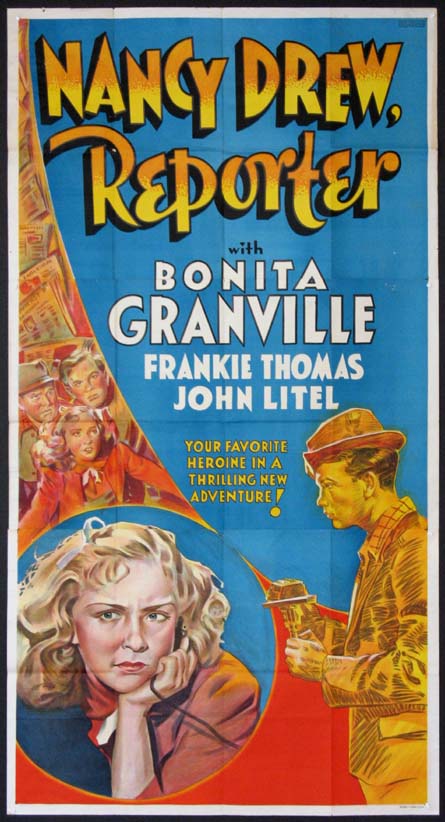
Nancy Drew… Reporter (1939)

13 Monday Jul 2015

Posted by dullwood68 in Movies

≈ Leave a comment

Tags

Bonita Granville, Crime, Drama, Frankie Thomas, John Litel, Literary adaptation, Murder, Mystery, Nancy Drew, Review, Series, Thriller, William Clemens

Nancy Drew... Reporter

D: William Clemens / 68m

Cast: Bonita Granville, John Litel, Frankie Thomas, Dickie Jones, Mary Lee, Larry Williams, Betty Amann, Jack Perry, Thomas E. Jackson, Olin Howland, Sheila Bromley

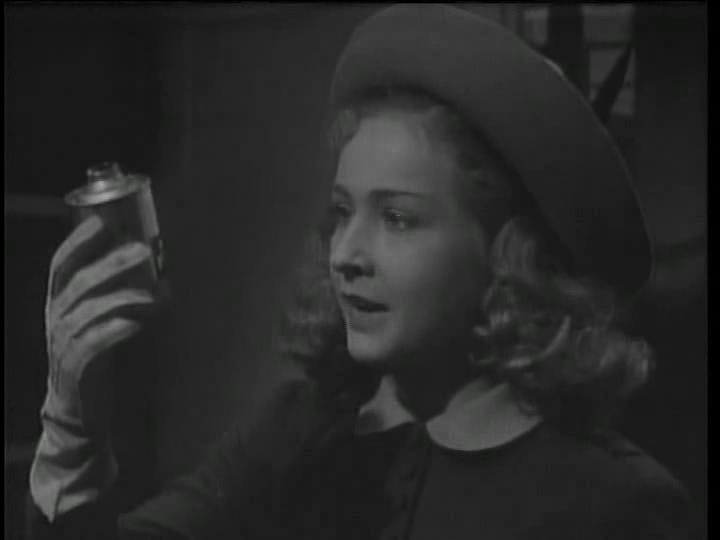
When she takes part in a newspaper contest, headstrong Nancy Drew (Granville) doesn’t like the assignment she’s given, so instead she swipes another reporter’s assignment: to cover the inquest of a woman, Kate Lambert, who was recently found dead. At the inquest, it’s revealed that Mrs Lambert was poisoned by a photographic chemical, and suspicion falls on her companion, Eula Denning (Amann). Protesting her innocence, and stating that whoever killed Mrs Lambert would have left fingerprints on the tin the poison came in, Eula is still remanded in custody for trial.

Also at the inquest is a man with a cauliflower ear (Perry) who hits Nancy’s bumper as he leaves the courthouse. She follows him to the Lambert house where he tries to gain entry, but Nancy and a guard stop him. She tells her father, well-known and respected lawyer Carson Drew (Litel), all about it but he warns her to leave well alone. Instead, Nancy gains the help of her neighbour, Ted Nickerson (Thomas) and together they visit Eula in jail. She tells them the tin must still be in the house and gives them a clue as to where to find it. At the Lambert house, Ted distracts the guard while Nancy sneaks inside and finds the tin. But the man is also there, and tries to grab the tin but Nancy gets away from him. She takes the tin to the police station, but before she can hand it over, the man’s girlfriend (Bromley) steals it from her.

Nancy discovers that the man is a boxer, Soxie Anthens, and she also discovers the gym where he trains. She and Ted go there and further learn that Soxie’s girlfriend is called Miss Lucas. They track her down to the Beldenburg Hotel, where they also find out that she’s gone to the Mandarin Cafe. Nancy and Ted head over there, and find Soxie’s girlfriend in the company of Miles Lambert (Williams), the son of the murdered woman. Alerting Soxie to their being together, he causes a scene when he arrives at the cafe. During the altercation, Nancy learns enough about the tin and the murder to set a trap for the killer.

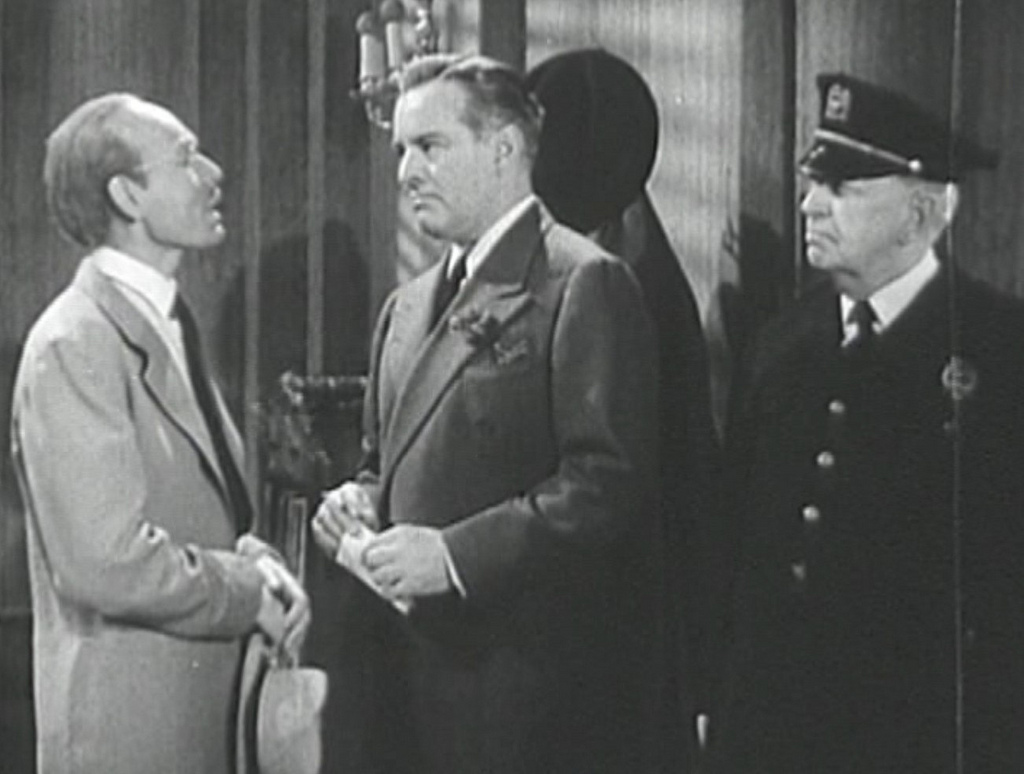
Nancy Drew... Reporter - scene

The second of four movies made in 1938-9 by Warner Bros. and based on the character created by Edward Stratemeyer, Nancy Drew… Reporter is a fast-paced comedy whodunnit that has time to pause for a musical interlude, and adds two young “whippersnappers” in the form of Ted’s younger sister Mary (Lee) and her friend in mischief Killer Parkins (Jones) to the mix as often as it can. It has a certain degree of innocent charm, and is largely inoffensive, but beneath the irreproachable content of the plot and storyline, the movie is surprisingly subversive.

When Nancy steals the reporter’s assignment, she later justifies her actions by stating that a good reporter should always do what it takes to get the story. It’s the best example of the lying and manipulation that Nancy displays throughout the movie in her efforts to catch the killer. She hoodwinks Ted on more than one occasion, traps her father into defending Eula thanks to a fait accompli, and blatantly lies in order to get the newspaper to print a fraudulent headline in order to flush out the killer. In her quest to uncover the truth it seems that Nancy will bend or break the rules in whatever way she needs in order to do so. And it’s noticeable that she rarely – if ever – apologises.

With its heroine proving almost as devious and deceitful as the bad guys, the movie carries on as if it hadn’t noticed at all that Nancy was so duplicitous, and of course, she wins the newspaper contest (though, to be fair, she declines the cash prize, but accepts the accompanying medal). There’s too much of this ironic counterpoint for the movie to be an entirely comfortable watch, with its moral compass being so broadly compromised. Of course, Nancy isn’t the only character in the movies to behave in such a way, but this is a character who was intended to encourage young girls to read more; what message are they meant to be getting when Nancy behaves as if the usual rules don’t apply to her?

Away from the dubious character of Nancy, there’s the small matter of the plot, which is very basic to say the least, and which advertises the villains straight away at the inquest. Usually, the killer is revealed in the final reel, but here anyone will be able to work out their identity well in advance, and this helps to dilute whatever drama or tension is inherent in the plot. In fact, there are times when the plot is so lightweight it’s almost gossamer thin. But the cast are entertaining to watch, with Granville and Thomas proving a good pairing, while Litel is kept firmly in the background, aside from an uncomfortable moment when he carries Granville off to bed and sings an awkward lullaby to her while also tucking her in.

Series’ director Clemens maintains a loose feel throughout and gives his cast enough room to indulge themselves when appropriate, and this happy-go-lucky approach makes the movie seem smarter and more energetic than it actually is, and despite the best efforts of screenwriter Kenneth Gamet. A mention too for editor Frank DeWar whose skill in the cutting room means the movie contains very little fat, and has a freshness to it even now, over seventy-five years since its release.

Rating: 6/10 – allowing for its (probably) unintentionally crafty heroine, Nancy Drew… Reporter is still an interesting, if flawed, take on the teen sleuth genre; bolstered by good performances, though with a mystery that even a blind person could work out, the movie is nevertheless a minor treat for fans of this type of movie, and of Granville in particular.

Share this:

  • Click to share on X (Opens in new window) X
  • Click to share on Facebook (Opens in new window) Facebook
  • More
  • Click to print (Opens in new window) Print
  • Click to email a link to a friend (Opens in new window) Email
Like Loading...

The Absent One (2014)

06 Monday Jul 2015

Posted by dullwood68 in Movies

≈ 1 Comment

Tags

Boarding school, Cold cases, Conspiracy, Crime, David Dencik, Denmark, Department Q, Drama, Fares Fares, Jussi Adler-Olsen, Literary adaptation, Mikkel Nørgaard, Murder, Nikolaj Lie Kaas, Pilou Asbæk, Review, Sequel, Thriller

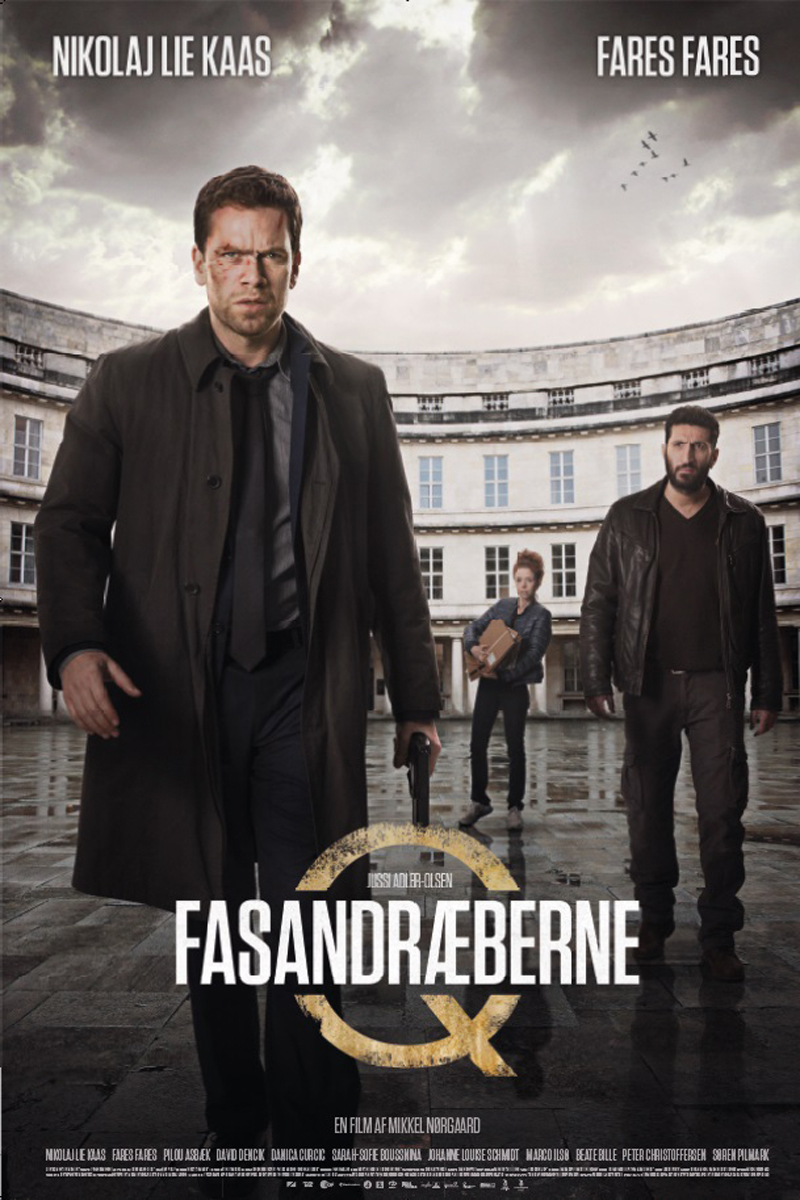
Fasandraeberne

Original title: Fasandræberne

D: Mikkel Nørgaard / 119m

Cast Nikolaj Lie Kaas, Fares Fares, Pilou Asbæk, David Dencik, Sarah-Sofie Boussnina, Danica Curcic, Nikolaj Groth, Søren Pilmark, Beate Bille, Marco Ilsø, Philip Stilling, Kristian Høgh Jeppesen, Johanne Louise Schmidt, Hans Henrik Clemensen, Peter Christoffersen, Katrine Rosenthal

At a police awards ceremony, cold case investigator Carl Mørck (Kaas) is accosted by a retired policeman who begs him to look into the case of his two children who were both killed in 1994. Mørck refuses, and later the man commits suicide, prompting Mørck, supported by his partner Assad (Fares) to look into the case. They learn that the siblings both attended the same boarding school, and that there was a call to the police – made by a young woman – alerting them to the crime. With this as their only clue, Mørck and Assad visit the school where they learn that the young woman was probably Kimmie Lassen (Boussnina); but unfortunately for them she hasn’t been seen in twenty years.

Learning also that Kimmie’s friends at the time included now reputable businessmen Ditlev Pram (Asbæk) and Ulrik Dybbøl (Dencik), and that the man who confessed to the crime, Bjarne Thøgersen (Jeppesen), was represented by the best criminal lawyer in Denmark, Bent Krum (Clemensen), and only served three years in prison, Mørck and Assad sense a conspiracy. They visit Thøgersen who alerts Pram to the new interest in the deaths. Pram hires a man named Albjerg (Christofferson) to look for Kimmie, while Mørck endeavours to find her first. But an older Kimmie (Curcic) is also a very wary Kimmie, and with the help of her friend, Tine (Rosenthal), she manages to stay one step ahead of everyone when she becomes aware that people are looking for her. But Albjerg tracks her down, and though she gets away, she also has a run in with Mørck that leaves him bruised and battered.

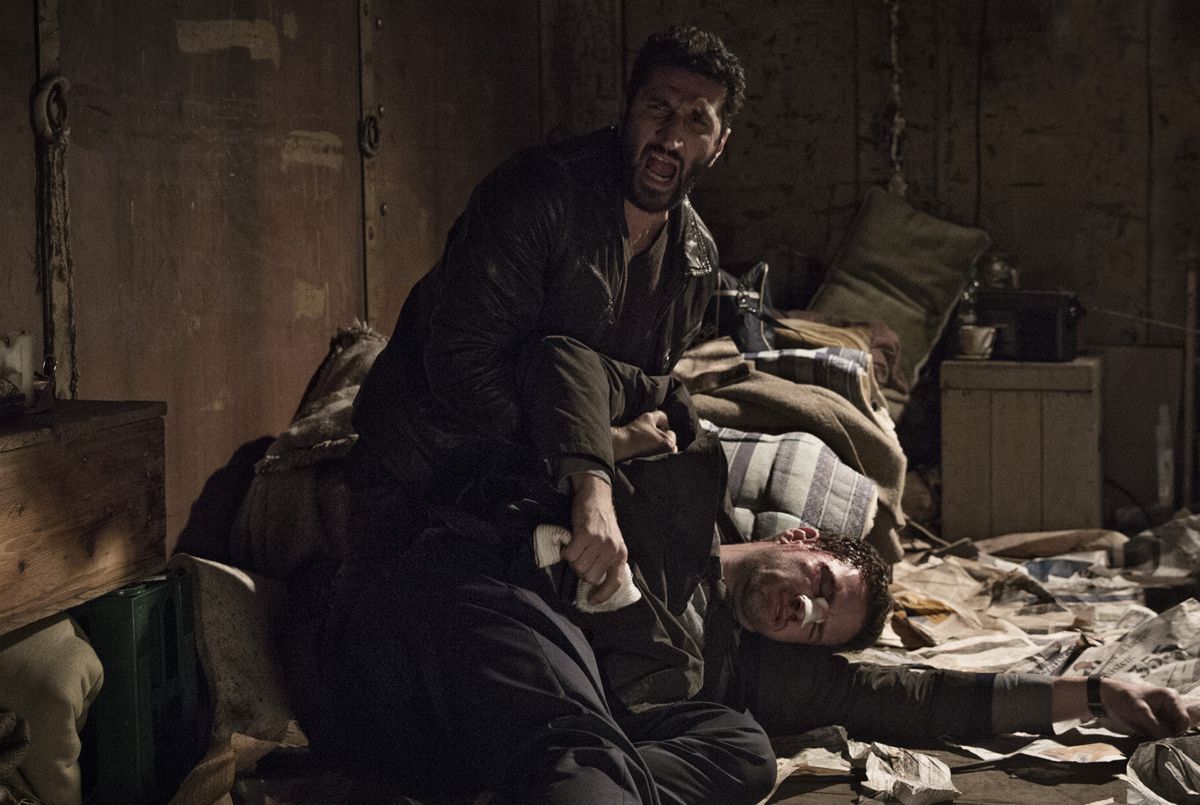
Meanwhile, Pram and Dybbøl use their political contacts to put pressure on senior police in an effort to get Mørck and Assad taken off the case. Furious, Mørck confronts his immediate boss (Pilmark) and makes enough of a case from the evidence that he’s amassed to show that it should be pursued further, and that Kimmie Lassen holds the key to what happened twenty years ago. When she is finally caught by the police, it seems that Pram and Dybbøl’s arrest is only a matter of time. But Kimmie has other ideas: she escapes and goes after them herself, as much to kill them first, and as much again to make up for her involvement in the deaths of the young brother and sister.

Fasandraeberne - scene

As much a riveting crime thriller as its predecessor, The Keeper of Lost Causes (2013), The Absent One is another triumphal adaptation of a novel by Jussi Adler-Olsen. With almost everyone involved in the first movie returning to make this one, the movie is like a seamless addition to what is an ongoing series. The tone, the feel, the pace, and the sensibility of The Absent One is such that anyone who has seen The Keeper of Lost Causes can slip into the series’ bleak, gloomy mise en scene with ease, sure in the knowledge that what follows will be of an equally high standard, and equally as satisfying (if not more so).

There are several reasons for this, not least the taut, gripping screenplay by Nikolaj Arcel and his writing partner Rasmus Heisterberg. In distilling Adler-Olsen’s novel they’ve kept the focus on the ripple effect the murders have had over the years, as well as Mørck’s inability to let something go once he’s got a grip on it. The detective’s persistence and dogged nature – which are pretty much all he has to keep him going – is beautifully expressed through Kaas’s beleaguered performance. This is a man who keeps his pain externalised to stop it from eating away at him inside, but the payoff is a lack of compassion and sympathy for others; he only takes on the case in the first place because he can’t deal with the guilt of refusing the retired policeman. Kaas gives a wonderfully fractured portrayal of Mørck, growing further into the character and inhabiting him completely.

Ably supported by Fares, whose Assad is never a foil for Mørck, Kaas heads up a cast that never puts a foot wrong, even in the smaller roles. The script supports them all the way, assembling the pieces of the plot with skill and precision, letting the viewer glimpse the events of twenty years ago without spoiling the true nature of the killings, and allowing the mystery surrounding those killings to remain in place almost until the very end. It’s a bold, confident approach, and allows the tension inherent in the story to build to a quietly devastating denouement (and which puts Mørck through the ringer once more – but then he probably wouldn’t have it any other way).

Retaining his place in the director’s chair, Nørgaard keeps things tightly focused and highlights the psychological toll felt by Kimmie over the course of twenty years (she has a terrible secret of her own that, when revealed, is the most upsetting thing seen in either movie). It’s to Nørgaard’s credit that Kimmie’s humanity is never downplayed,  and in the hands of Curcic, she’s a character so far removed from her younger self (also extremely well played by Boussnina) that the sadness of her situation is almost palpable. (In a better world, she and Mørck would make for an interesting couple.)

While the villains of the piece aren’t as effectively drawn, their callous natures are given plenty of screen time, as well as the slow disintegration of their self-confidence and eventual hubris. Asbæk and Dencik are appropriately cold and uncaring in their roles, revealing the innate hostility towards others that privilege has bestowed on them, and providing strong counterpoints to Mørck’s own disdain for others. It’s all reflected in the somber, unforgiving violence and shadowy dangers that permeate the movie and which help to make it such a rewarding (if slightly downbeat) experience.

Rating: 9/10 – a sequel that is as equally good as its forerunner, The Absent One is a dark, atmospheric thriller that is as uncompromising as it is compelling; with two further movies in the pipeline, let’s hope that the makers can maintain the quality shown so far.

Share this:

  • Click to share on X (Opens in new window) X
  • Click to share on Facebook (Opens in new window) Facebook
  • More
  • Click to print (Opens in new window) Print
  • Click to email a link to a friend (Opens in new window) Email
Like Loading...

Monthly Roundup – June 2015

30 Tuesday Jun 2015

Posted by dullwood68 in Movies

≈ 1 Comment

Tags

Action, Animation, Beyond the Reach, Black Samurai, Blood, Brian Cox, Bulldog Drummond Comes Back, Bulldog Drummond in Africa, Children of the Corn: Genesis, Chris Evans, Chyler Leigh, Crazy Sexy Cancer, Crime, Curse of the Witching Tree, Daphne, Documentary, Dolph Lundgren, Drama, Drunk Wedding, E.E. Clive, Echelon Conspiracy, Ed Burns, Espionage, Every Secret Thing, Faults, Forrest Tucker, Fred, Gambling, Green Dragon, Gunsmoke in Tucson, Horror, Human trafficking, Imogen Poots, Indie movie, Jennifer Aniston, Jeremy Irvine, John Barrymore, John Howard, Kris Carr, Leland Orser, Leticia Dolera, Louis King, Mark Stevens, Martin Sheen, Mary Elizabeth Winstead, Michael Douglas, Miguel Ferrer, Mojave Desert, Movies, Murder, Noboru Iguchi, Not Another Teen Movie, Owen Wilson, Pamela Springsteen, Paul Bethany, Peter Bogdanovich, Prague, Predator: Dark Ages, Reviews, Rhys Ifans, Riley Stearns, Scooby-Doo! and the Samurai Sword, Serial killer, Shaggy, Shane West, She's Funny That Way, Skin Trade, Sleepaway Camp 2: Unhappy Campers, Thailand, The Four-Faced Liar, The Night Flier, The Posthuman Project, The Reconstruction of William Zero, Thriller, Tony Jaa, uwantme2killhim?, Vampire, Velma, Ving Rhames, Witch's curse, Zombie Ass: The Toilet of the Dead, Zombies, [Rec]³ Génesis

This month, the roundup is bigger than usual thanks to spending three weeks in sunny France, in an area where the Internet was an occasional luxury rather than a constant presence. But in between drinking copious amounts of beer and wine, and sampling far too much cheese and local bread, there was quite a bit of movie watching going on. These are the movies I watched in a gite in the middle of the gorgeous Brittany countryside, almost all of them a reminder that when life is this good you can forgive quite a bit…

The Posthuman Project (2014) / D: Kyle Roberts / 93m

Cast: Kyle Whalen, Collin Place, Josh Bonzie, Lindsay Sawyer, Alexandra Harris, Jason Leyva, Rett Terrell, Will Schwab

Rating: 5/10 – a group of teens develop super powers thanks to a device created by the dastardly uncle of one of them, and must thwart his plan to use it for immoral profit; pretty much a low-budget, amateur version of The Fantastic Four, The Posthuman Project relies on its not inconsiderable charm to help the viewer get past its rough edges, but the acting and the dialogue leave an awful lot to be desired, sometimes too much so.

Posthuman Project, The

Predator: Dark Ages (2015) / D: James Bushe / 27m

Cast: Adrian Bouchet, Amed Hashimi, Sabine Crossen, Ben Loyd-Holmes, Jon Campling, Joe Egan, Philip Lane, Bryan Hands

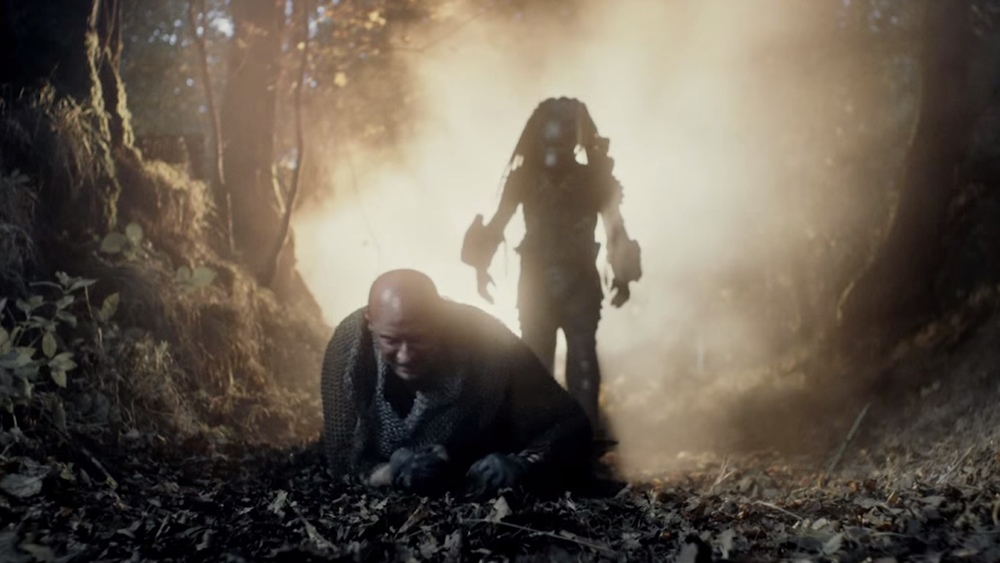
Rating: 7/10 – a group of mercenaries led by Thomas (Bouchard) set off to hunt the mysterious creature killing people and animals in a nearby forest – and find something even more deadly than they expected; a fan-made short that adds a novel twist to the Predator saga, Predator: Dark Ages is a welcome distraction that confirms that, sometimes, the big studios don’t always have the right idea when it comes to their franchise characters.
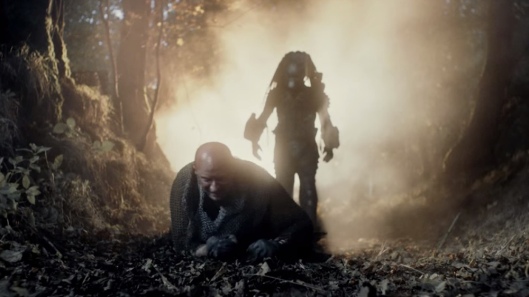
Predator Dark Ages

Drunk Wedding (2015) / D: Nick Weiss / 81m

Cast: Christian Cooke, Victoria Gold, Dan Gill, Anne Gregory, J.R. Ramirez, Nick P. Ross, Genevieve Jones, Diana Newton

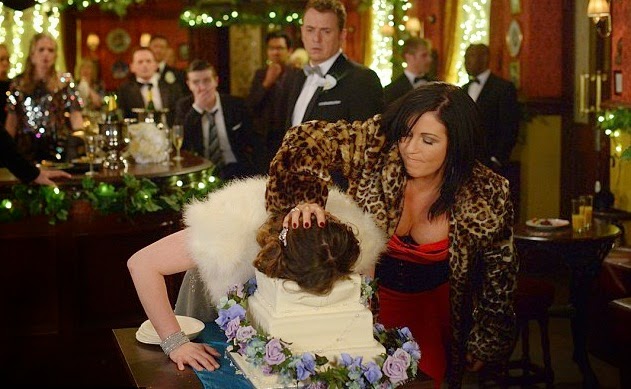
Rating: 4/10 – when a couple decide to get married in Nicaragua, they and some of their friends are given hand-held cameras to film it all… with predictably awful, drunken, outrageous, and potentially life-altering effects; if your idea of comedy is seeing someone urinating on another person’s back, then Drunk Wedding is the movie for you, and despite its lowbrow modern day National Lampoon-style approach it still manages to hold the attention and is surprisingly enjoyable – if you don’t expect too much.
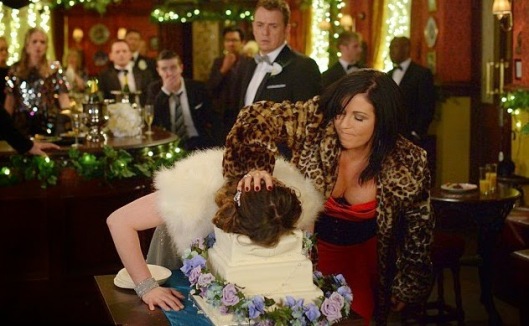
Drunk Wedding

Zombie Ass: The Toilet of the Dead (2011) / D: Noboru Iguchi / 85m

Original title: Zonbi asu

Cast: Arisa Nakamura, Mayu Sugano, Asana Mamoru, Yûki, Danny, Kentaro Kishi, Demo Tanaka

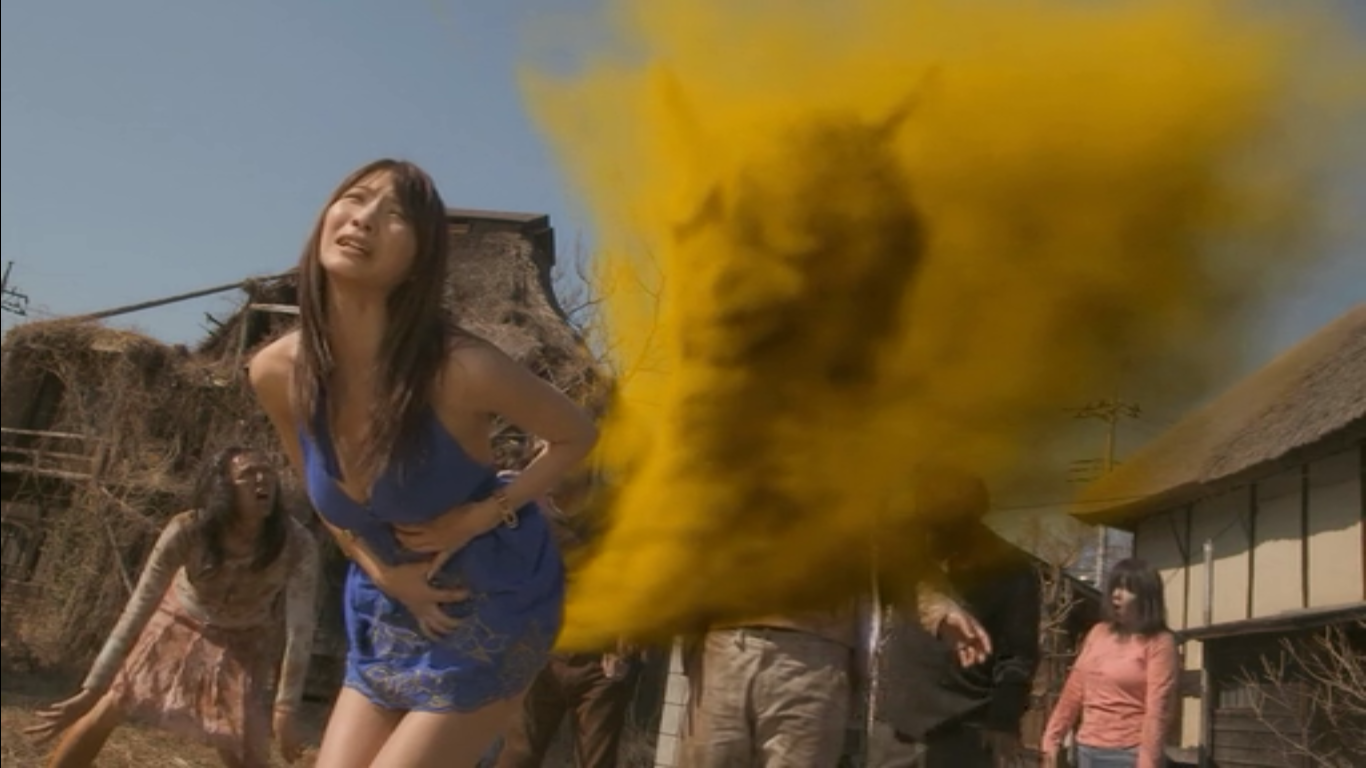
Rating: 5/10 – while on a trip to the woods, Megumi (Nakamura) and four older friends find themselves under attack from zombies who have emerged from the bowels of an outhouse – and only her martial arts skills can save them; a wild, wild ride from one of the masters of Japanese Shock Cinema, Zombie Ass: The Toilet of the Dead is equal parts raw, uncompromising, witless, and gross, but it’s also a movie that just can’t be taken at all seriously, and on that level it succeeds tremendously, providing enough WtF? moments to make it all worthwhile.
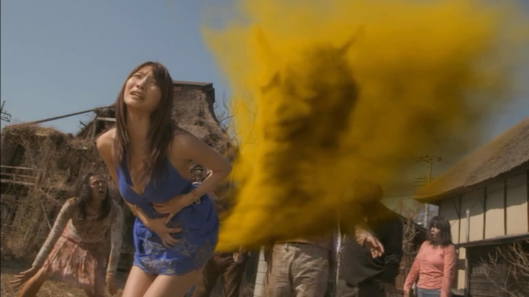
Zombie Ass

Faults (2014) / D: Riley Stearns / 89m

Cast: Leland Orser, Mary Elizabeth Winstead, Chris Ellis, Beth Grant, Jon Gries, Lance Reddick

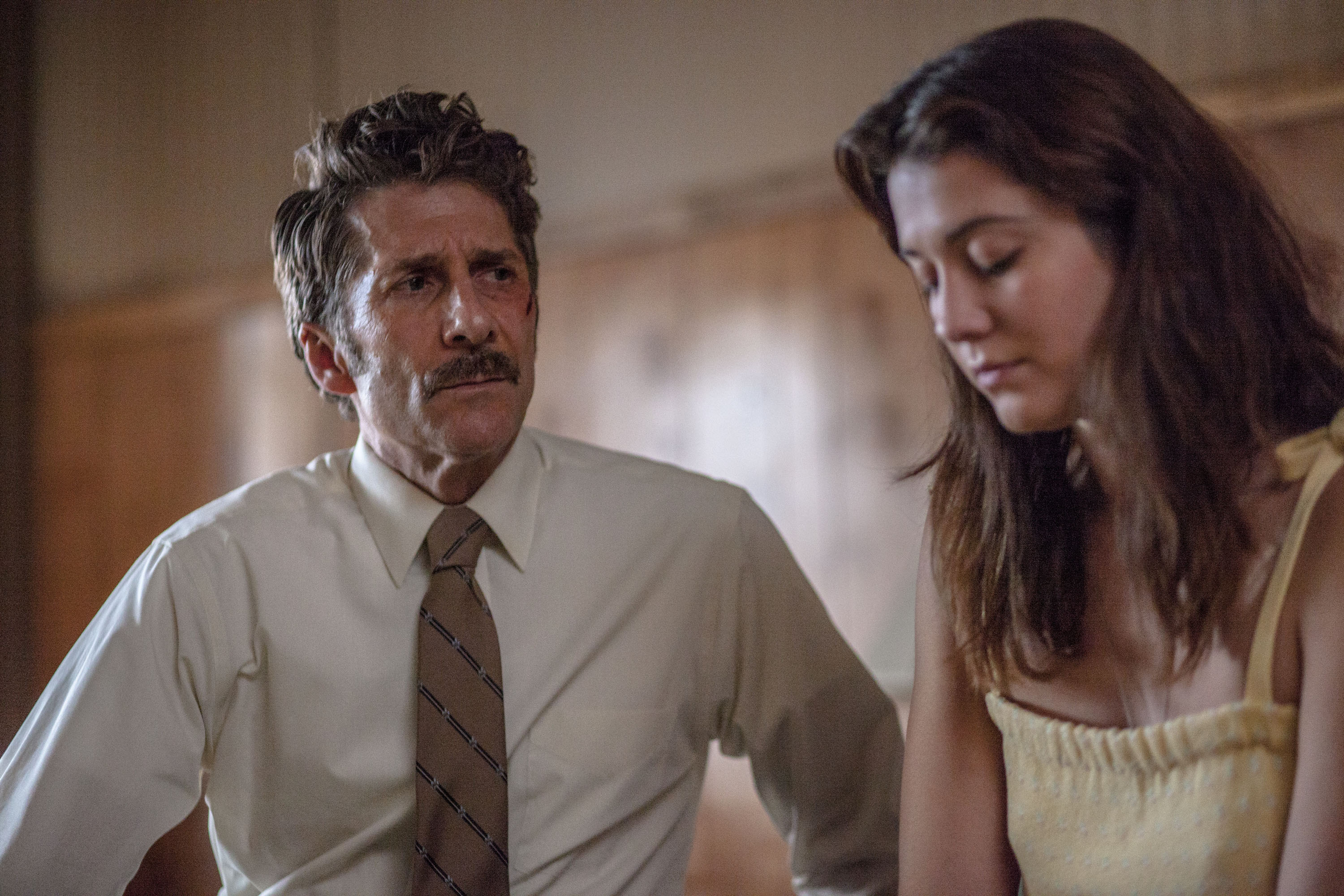
Rating: 8/10 – down on his luck cult expert Ansel (Orser) sees a way out of debt and a chance to regain some self-respect when a couple (Ellis, Grant) ask him to abduct and de-programme their daughter (Winstead), but he soon finds himself out of his depth and facing up to some hard truths; a tour-de-force from the always excellent Orser – and with a solid supporting performance from Winstead – Faults is an unnerving look at a man on the verge of a nervous breakdown, and the ways in which his broken life have led him to a motel room where his own personal beliefs come under as much scrutiny as his captive’s.
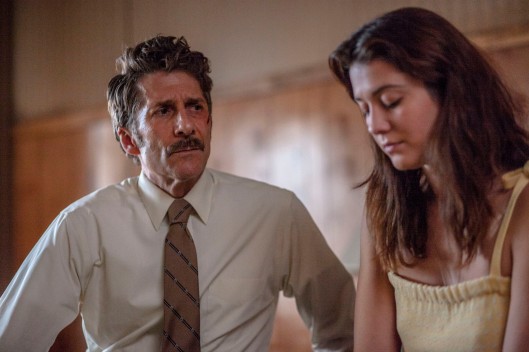
(l-r) Leland Orser and Mary Elizabeth Winstead stars in FAULTS. ©Snoot Entertainment. CR: Jack Zeman.

She’s Funny That Way (2014) / D: Peter Bogdanovich / 93m

Cast: Imogen Poots, Owen Wilson, Rhys Ifans, Jennifer Aniston, Will Forte, Kathryn Hahn, Illeana Douglas, Debi Mazar, Cybill Shepherd, Richard Lewis, Ahna O’Reilly, Joanna Lumley

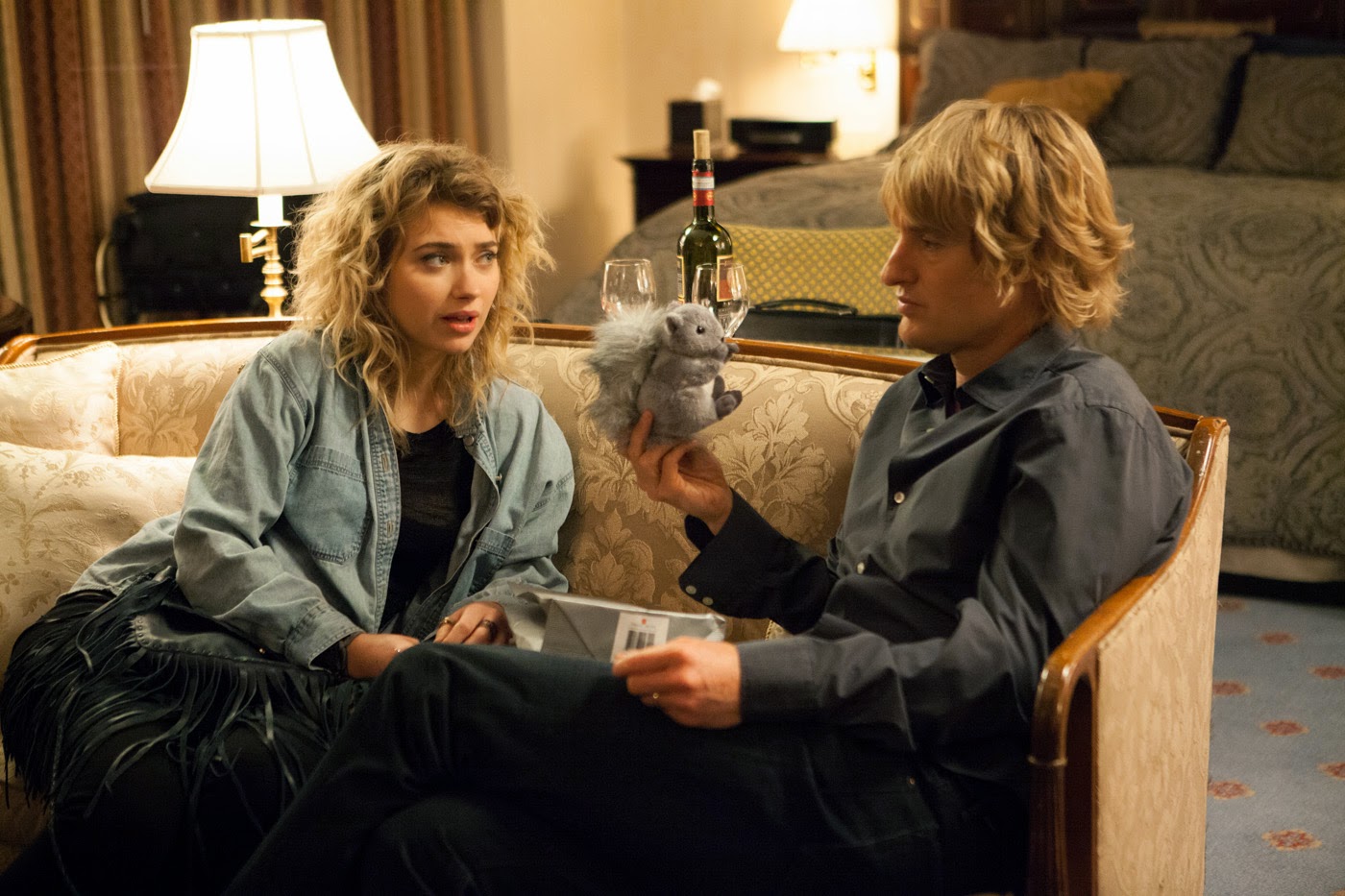
Rating: 6/10 – theatre director Arnold Albertson has a secret: he gives prostitutes money in order that they can set up their own businesses, but when his latest “project”, aspiring actress Isabella Patterson (Poots) lands the starring role in his latest production, it all leads to the kind of deception and duplicity that will test the notion that the show must go on; a modern attempt at a screwball comedy, She’s Funny That Way doesn’t have the sheer energy that made movies such as His Girl Friday (1940) or  Bringing Up Baby (1938) so enjoyable, but Bogdanovich knows his stuff and keeps the movie entertaining for the most part, even if it doesn’t stay in the memory for too long afterwards.
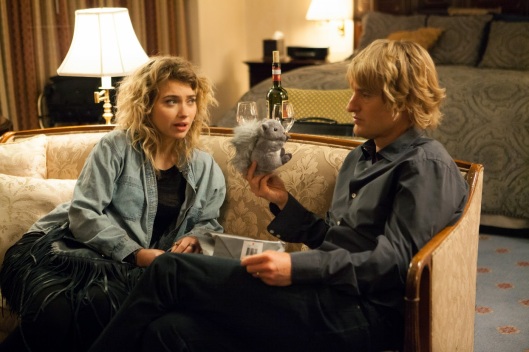
She's Funny That Way

Curse of the Witching Tree (2015) / D: James Crow / 102m

Cast: Sarah Rose Denton, Lucy Clarvis, Lawrence Weller, Jon Campling, Caroline Boulton, Danielle Bux

Rating: 2/10 – divorcée Amber Thorson (Denton) moves into an old house with her two children (Clarvis, Weller) only for strange phenomena to start happening that’s connected to a witch’s curse, and which leaves them all at risk of supernatural forces; woeful in the extreme, Curse of the Witching Tree is amateurish nonsense that is badly directed, poorly acted, contains defiantly stilted dialogue, suffers from below-par photography, is tension-free throughout, and stands as an object lesson in how not to make a low-budget British horror movie.
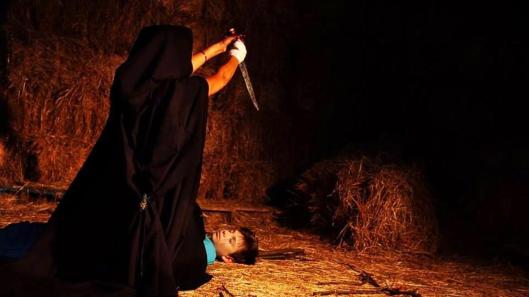
Curse of the Witching Tree

Bulldog Drummond Comes Back (1937) / D: Louis King / 64m

Cast: John Barrymore, John Howard, Louise Campbell, Reginald Denny, E.E. Clive, J. Carrol Naish, Helen Freeman

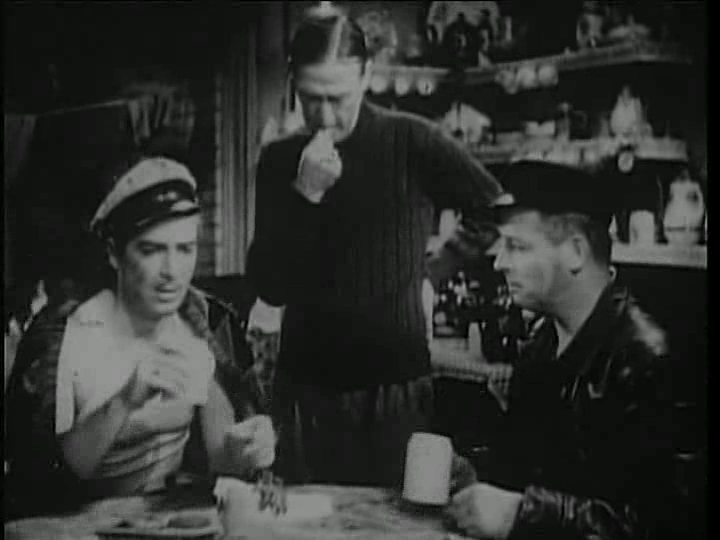
Rating: 5/10 – when dastardly villains Mikhail Valdin (Naish) and Irena Saldanis (Freeman) kidnap Phyllis Clavering (Campbell), the girlfriend of Captain Hugh Drummond (Howard), they send him on a merry chase where each clue he finds leads to another clue as to her whereabouts – but no nearer to finding her; the first of seven movies with Howard as the dashing sleuth created by H.C. “Sapper” McNeile, Bulldog Drummond Comes Back is as cheap and cheerful and antiquatedly entertaining as you might expect, and benefits enormously from a cast and crew who know exactly what they’re doing.
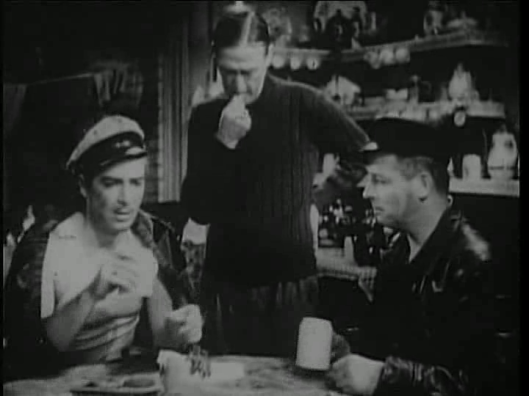
vlcsnap-00001

Every Secret Thing (2014) / D: Amy Berg / 93m

Cast: Diane Lane, Elizabeth Banks, Dakota Fanning, Danielle Macdonald, Nate Parker, Common

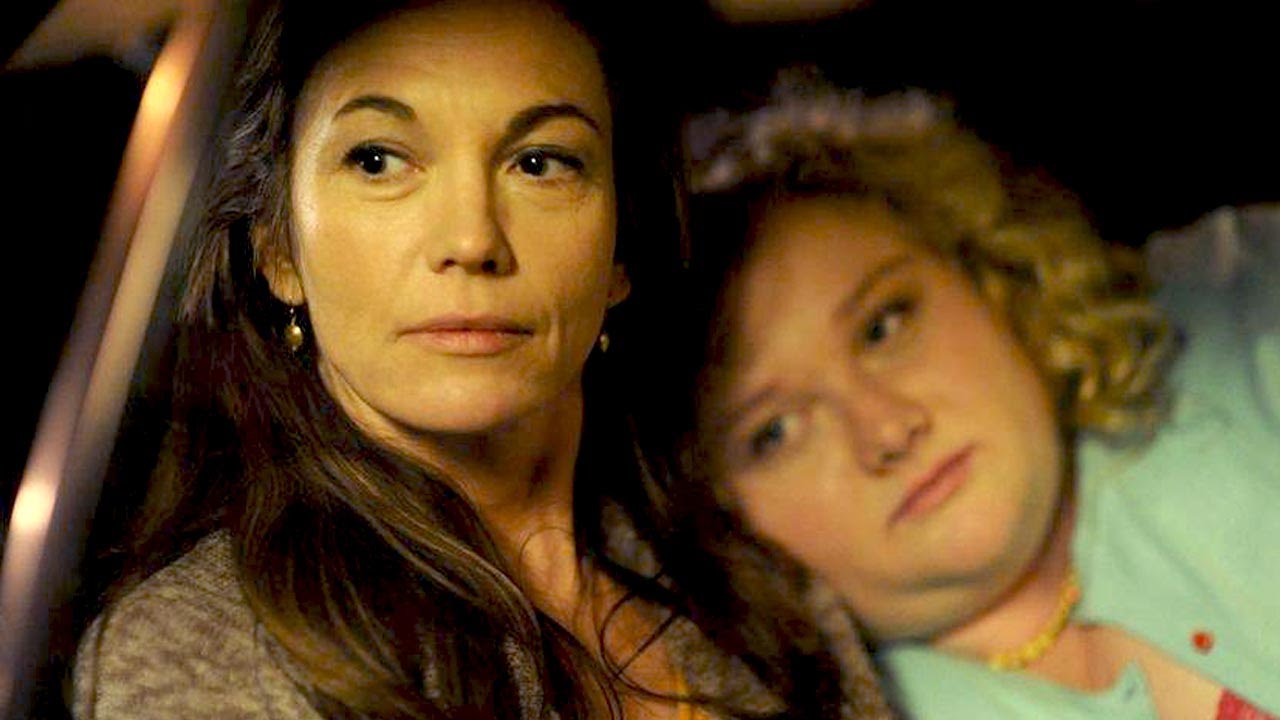
Rating: 7/10 – several years after two young girls are incarcerated for the murder of a younger child, their return to their hometown is marred by the disappearance of a little girl, and the belief that one or both of them is responsible; a stilted attempt at an indie film noir, Every Secret Thing features good performances – particularly from Macdonald – and focuses on the emotional effects a child abduction can have on everyone involved, but it never develops a sense of urgency, though its key revelation at the end carries a wallop that helps dismiss what will seem like a narrative impasse up until then.
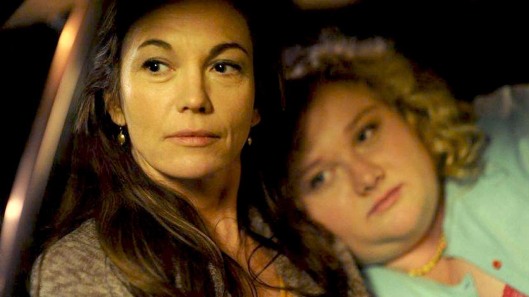
Every Secret Thing

Children of the Corn: Genesis (2011) / D: Joel Soisson / 80m

Cast: Kelen Coleman, Tim Rock, Billy Drago, Barbara Nedeljakova

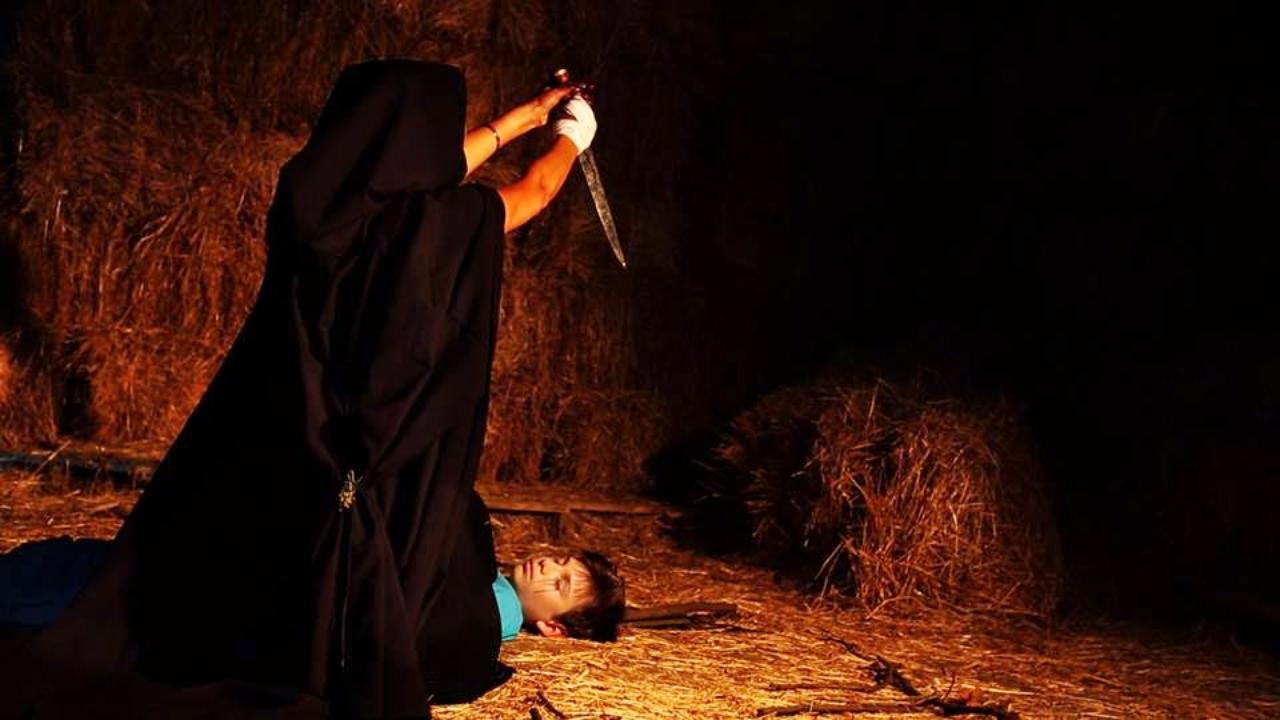
Rating: 3/10 – a couple (Coleman, Rock) break down on a desert highway but manage to find shelter overnight with a old preacher (Drago) and his much younger, foreign bride (Nedeljakova), but soon find that what’s in the preacher’s barn is much more menacing than the old man himself; placing the action largely away from Gatlin, Nebraska may have seemed like a smart move but this tired, dreary, and just downright dull entry in the franchise shows just how bad things have gotten since the 1984 original, and just why Children of the Corn: Genesis should remain the last in the series to be made.

Children of the Corn Genesis

Skin Trade (2014) / D: Ekachai Uekrongtham / 96m

aka Battle Heat

Cast: Dolph Lundgren, Tony Jaa, Michael Jai White, Ron Perlman, Celina Jade, Peter Weller

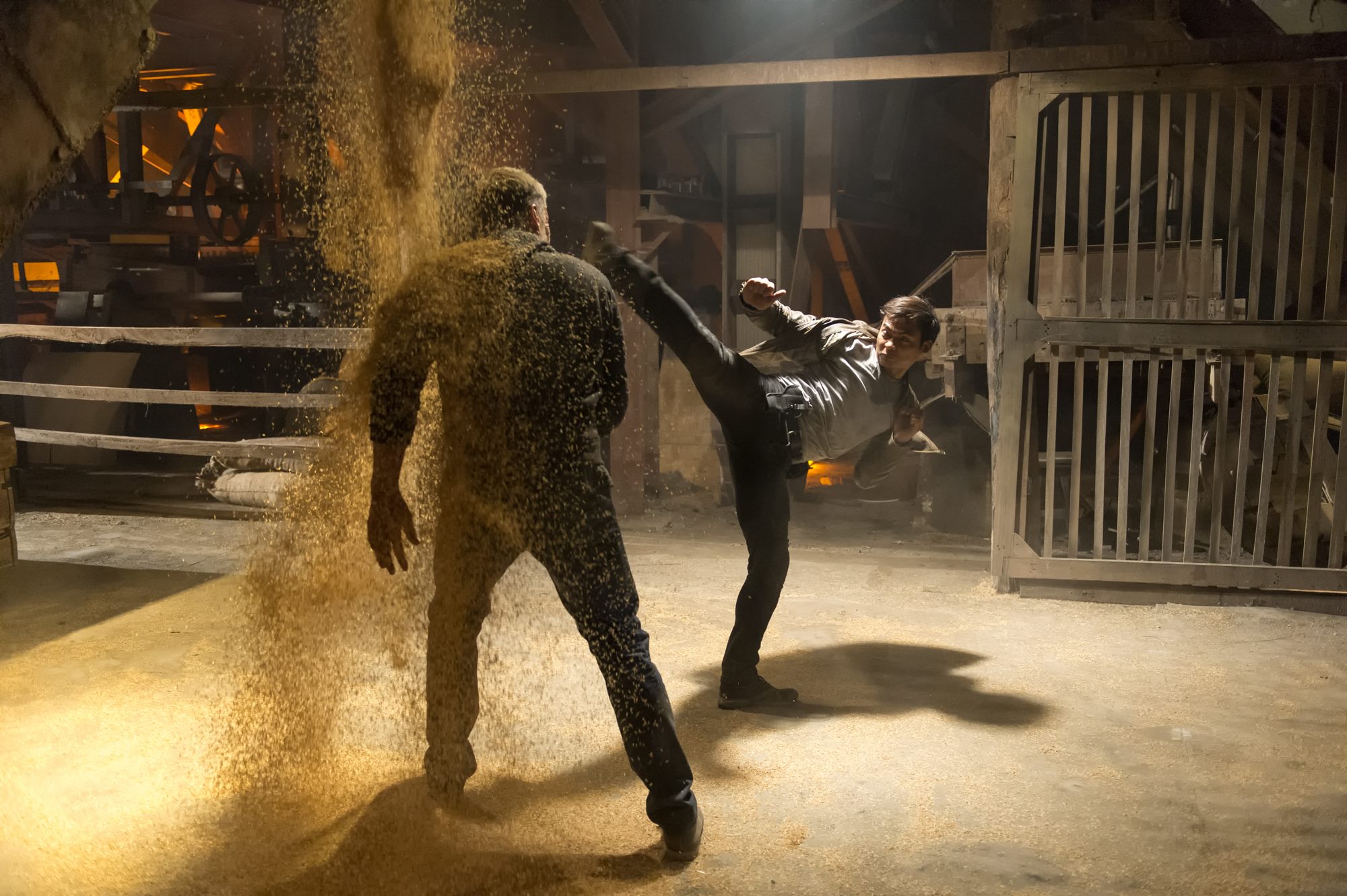
Rating: 6/10 – when cop Nick Cassidy (Lundgren) is powerless to stop his wife and daughter being killed, he determines to go after the crime boss responsible, Viktor (Perlman), and destroy his human trafficking network, which means travelling to Thailand and teaming up with detective Tony Vitayakul (Jaa), who’s also out to put a stop to Viktor’s illegal behaviour; with its human trafficking backdrop giving it an unexpected depth, Skin Trade is not just a brainless, slam-bang action movie, but instead a very well-made (for its budget) revenge flick that features some great fight scenes – particularly one between Lundgren and Jaa – and uses its Thai locations to very good effect.
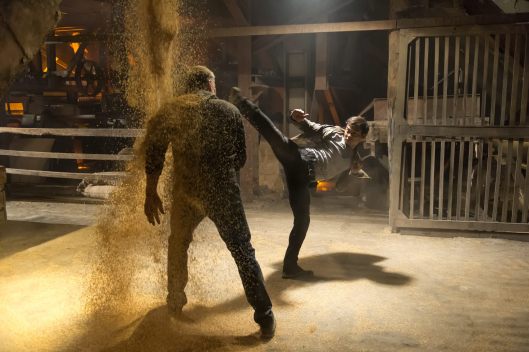
Skin Trade

The Reconstruction of William Zero (2014) / D: Dan Bush / 98m

Cast: Conal Byrne, Amy Seimetz, Scott Poythress, Lake Roberts, Melissa McBride, Tim Habeger

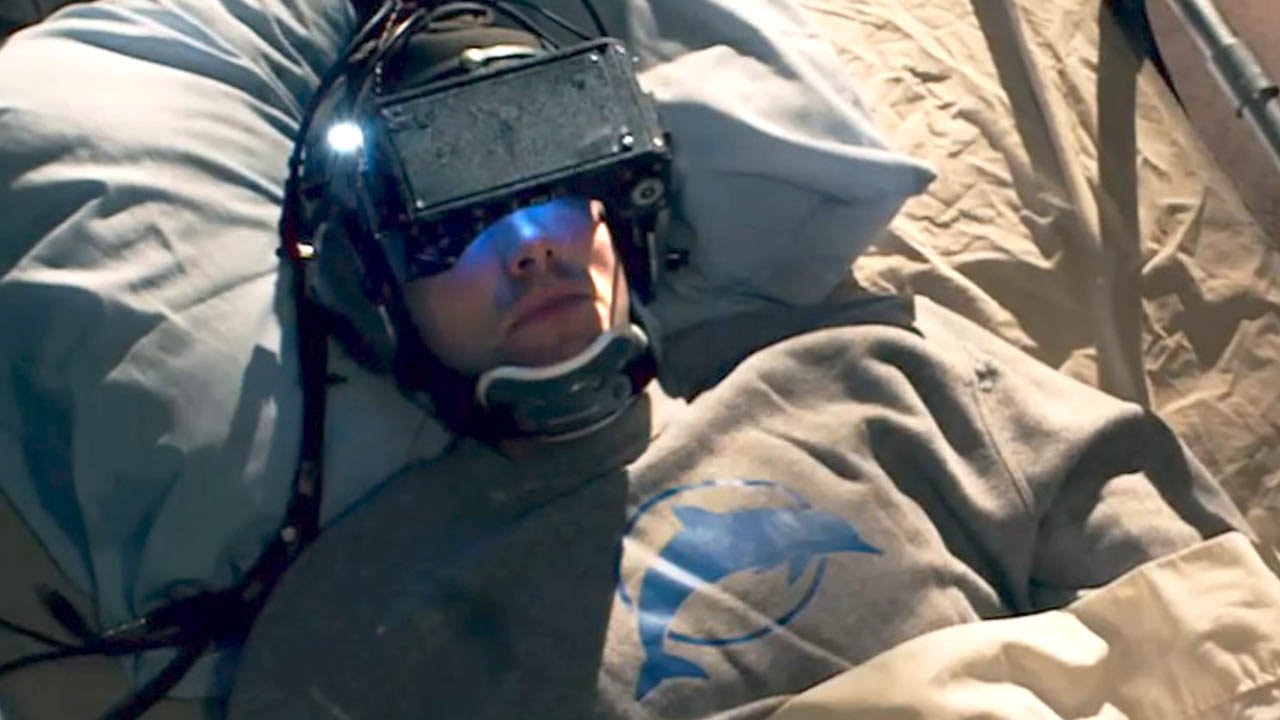
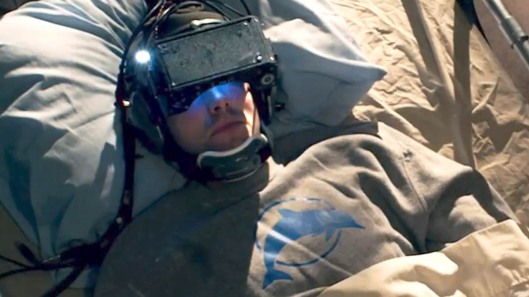
Rating: 6/10 – when the brother (Byrne) of a scientist (also Byrne) wakes from a coma, it’s not long before he begins to suspect that this identity may not be that of the scientist’s brother, and that he’s a pawn in a much bigger conspiracy, but the truth proves even stranger and more disturbing than he realised; a spare, almost antiseptic movie about notions of identity and individual consciousness, The Reconstruction of William Zero features terrific performances from Byrne, but lacks consistency of pace and sometimes feels as if Bush has taken his eye off the ball and taken a while to find it again, which leaves the movie often feeling flat and lifeless.
Reconstruction of William Zero, The

Not Another Teen Movie (2001) / D: Joel Gallen / 89m

aka Sex Academy

Cast: Chyler Leigh, Chris Evans, Jaime Pressly, Eric Christian Olsen, Randy Quaid, Mia Kirshner, Deon Richmond, Ed Lauter, Paul Gleason, Mr T, Molly Ringwald

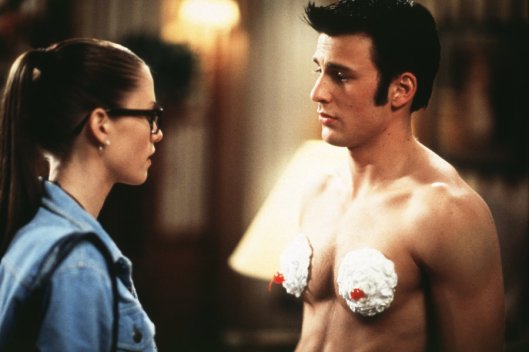
Rating: 5/10 – at John Hughes High School, popular jock Jake Wyler (Evans) accepts a bet that he can’t take an ugly girl and transform her into the prom queen, but when he picks out Janey Briggs (Leigh), and begins to spend time with her, it makes him begin to question whether he should have made the bet in the first place; a predictably irreverent teen movie that parodies all those dreadful teen comedies from the Eighties, Not Another Teen Movie has more heart than most, and thanks to Mike Bender’s script contributions, is also quite funny in its knowing way, and gives viewers a chance to see the future Captain America back in the day when his skill as an actor wasn’t quite as honed as it is now.
Not Another Teen Movie

Bloomington (2010) / D: Fernanda Cardoso / 83m

Cast: Allison McAtee, Sarah Stouffer, Katherine Ann McGregor, Ray Zupp, J. Blakemore, Erika Heidewald

Rating: 7/10 – former child actress Jackie (Stouffer) attends Bloomington college, and finds herself having an affair with one of the professors, Catherine (McAtee), until the offer of a comeback threatens to end their relationship before it’s fully begun; an intelligent, finely crafted romantic drama, Bloomington has two great central performances, and an emotional honesty that is only undermined by the clichéd nature of Jackie’s need to return to acting, and Cardoso’s over-reliance on silent longing as a sign of emotional upheaval.

Bloomington

Sleepaway Camp 2: Unhappy Campers (1988) / D: Michael A. Simpson / 80m

Cast: Pamela Springsteen, Renée Estevez, Tony Higgins, Valerie Hartman, Brian Patrick Clarke, Walter Gotell

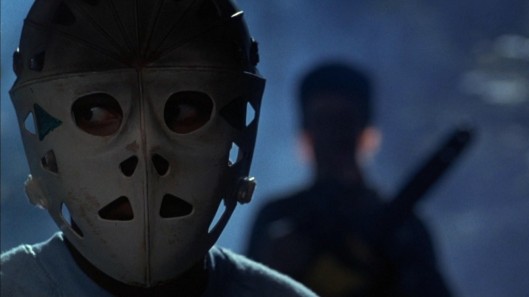
Rating: 5/10 – Angela Baker (Springsteen), having decimated most of the staff and children at Camp Arawak, and now judged to be safe around others, begins sending unruly teenagers “home” from Camp Rolling Hills – which in reality means killing them for any and all perceived infractions that Angela takes a dislike to; a much better sequel than expected, Sleepaway Camp 2: Unhappy Campers gets by on Springsteen’s preppy performance, some not-too-gory deaths, and Simpson’s confident touch behind the camera, as well as that dreadful musical interlude: The Happy Camper Song.
Sleepaway Camp 2

Gunsmoke in Tucson (1958) / D: Thomas Carr / 80m

Cast: Mark Stevens, Forrest Tucker, Gale Robbins, Vaughn Taylor, John Ward, Kevin Hagen, William Henry, Richard Reeves, John Cliff, Gail Kobe

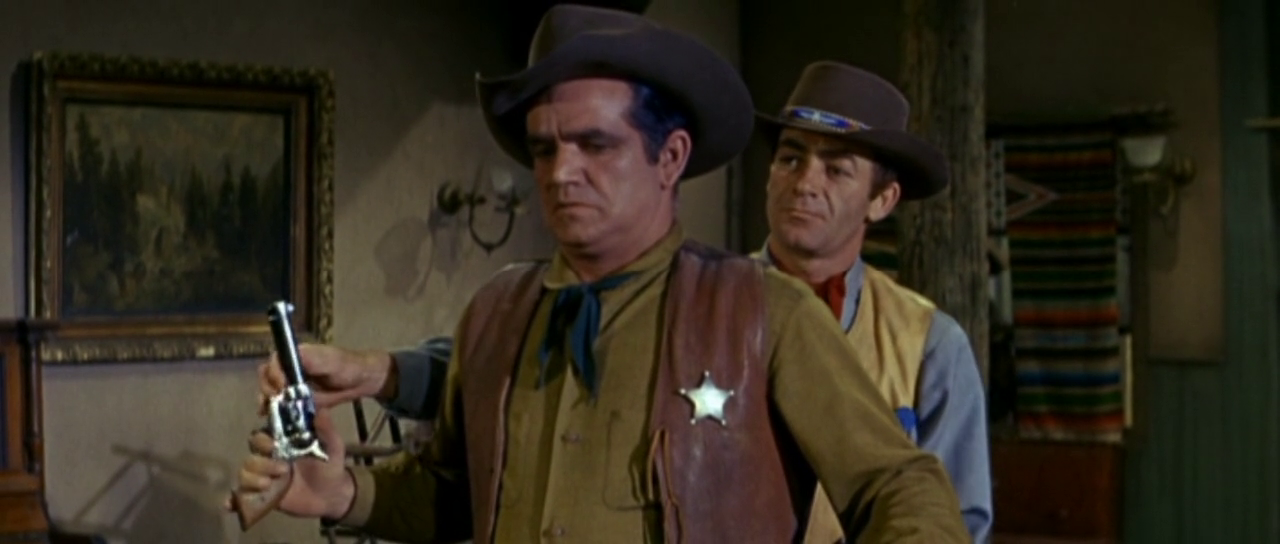
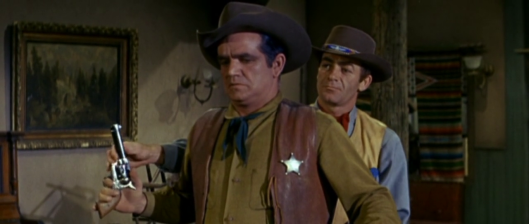
Rating: 6/10 – brothers Jedediah (Stevens) and John (Tucker) are on opposite sides of the law, but when Jedediah becomes involved in a land dispute between cattle ranchers and farmers, his sense of right and wrong is put to the test, and he has to choose sides in the upcoming fight for the choicest plot of land; a robust, earnest Western, Gunsmoke in Tucson is a staid, respectable movie that doesn’t stray too far from its basic plot, and skimps on any psychological undertones in favour of a straight ahead anti-hero vs. the bad guys scenario that makes for a pleasant diversion.
vlcsnap-00002

Beyond the Reach (2014) / D: Jean-Baptiste Léonetti / 91m

Cast: Michael Douglas, Jeremy Irvine, Ronny Cox, Hanna Mangan Lawrence

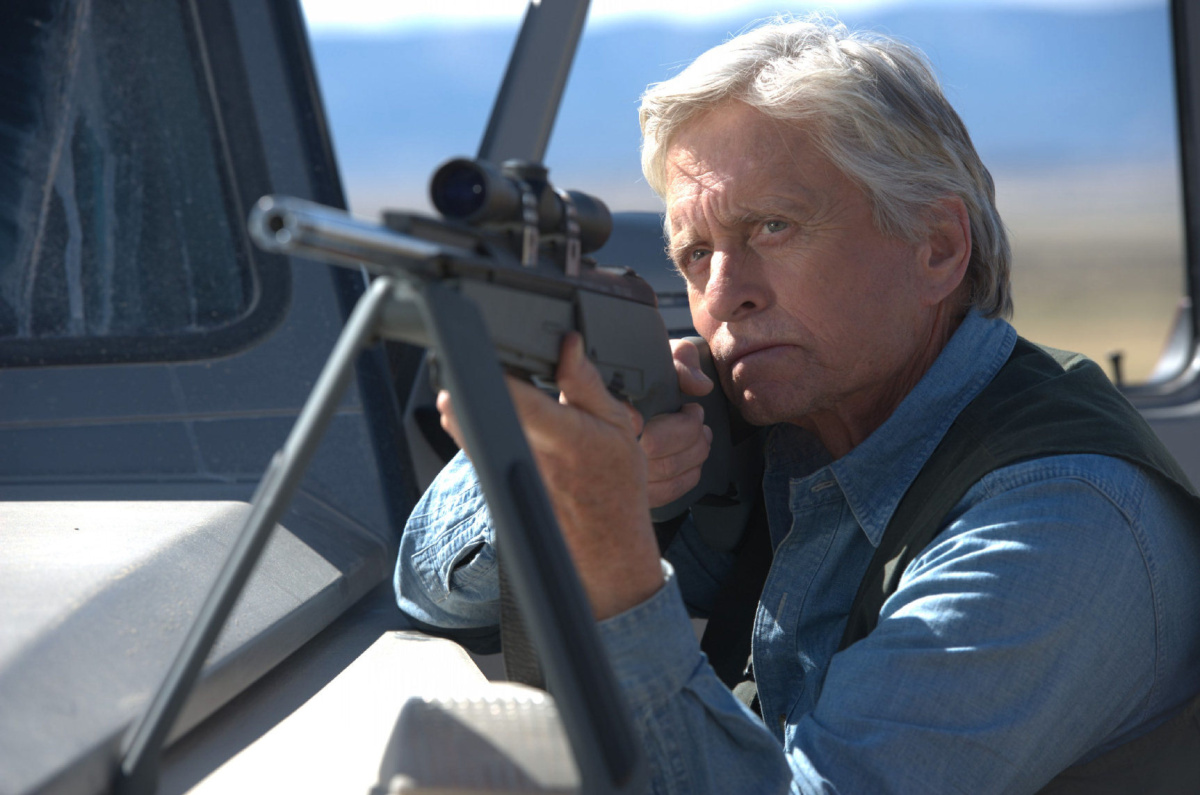
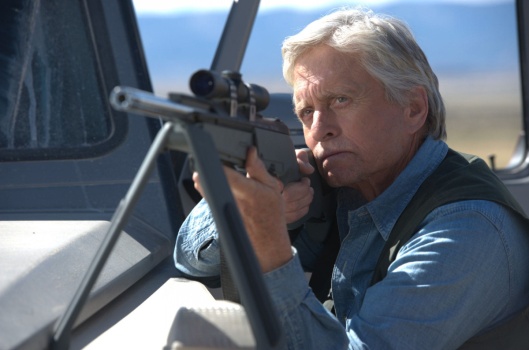
Rating: 6/10 – arrogant businessman Madec (Douglas) hires tracker Ben (Irvine) in order to bag some game out of season, but when he shoots and kills an old man by mistake, Madec refuses to accept responsibility for his actions and when Ben stands his ground over the issue, finds himself being hunted instead through the harsh Mojave Desert; an occasionally tense two hander that will do little for either actor’s career, Beyond the Reach ramps up the contrivance levels with each successive narrow escape that Ben makes, and with each missed shot that Madec makes, leading to the inevitable conclusion that this is one movie where credulity needs to be left at the door – an idea that is further enhanced by the movie’s risible conclusion.
Email sent from: "Barnard, Linda"  lbarnard@thestar.ca  Subject: Beyond the Reach Date: 9 April, 2015 4:30:15 PM EDT   Jeremy Irvine and Michael Douglas star in Beyond The Reach Linda Barnard Movie Writer The Toronto Star thestar.com 416-869-4290

Blood (2012) / Nick Murphy / 92m

Cast: Paul Bettany, Mark Strong, Stephen Graham, Brian Cox, Ben Crompton, Naomi Battrick, Zoë Tapper, Adrian Edmondson

Rating: 5/10 – when a young girl is found murdered, the police, led by Joe Fairburn (Bethany) immediately set their sights on local child molester Jason Buleigh (Crompton), but when their prime suspect has to be let go for lack of evidence, Joe and his brother Chrissie (Graham) decide to take the law into their own hands, with terrible results; grim, visually depressing, and with a script that has more holes in it than a string vest, Blood has only its performances to recommend it, particularly those of Bethany, Graham and Cox, as well as the sense to know that its tale of a proud man’s downfall is always more interesting when you don’t know just how far they’ll fall.

Blood

Echelon Conspiracy (2009) / D: Greg Marcks / 102m

aka The Conspiracy; The Gift

Cast: Shane West, Ed Burns, Ving Rhames, Martin Sheen, Tamara Feldman, Jonathan Pryce, Sergey Gubanov, Todd Jensen

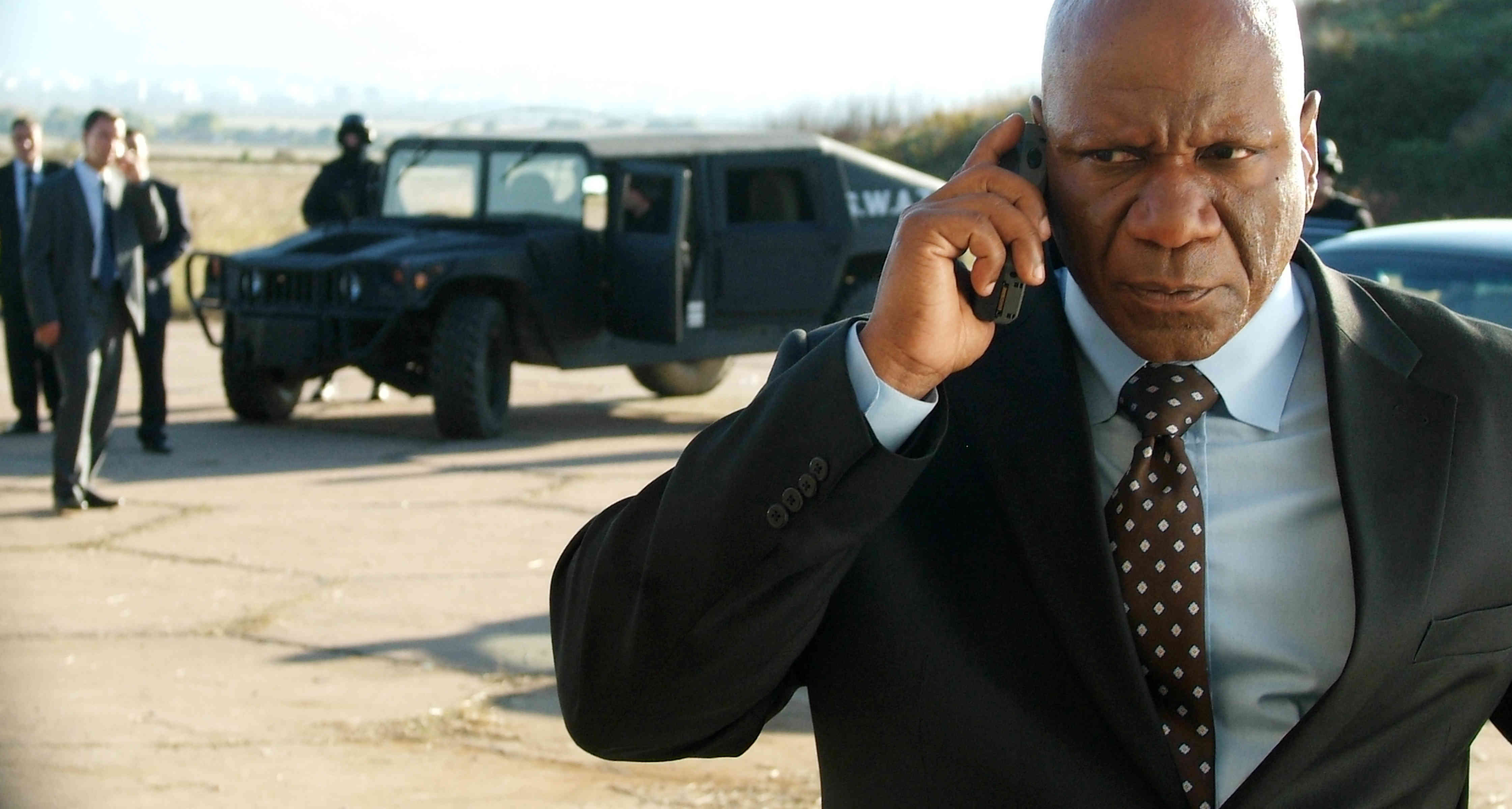
Rating: 3/10 – computer security tech Max Peterson is given a mysterious phone that helps him gain a small fortune, but in doing so he finds himself embroiled in a plot to ensure that the NSA’s super computer, Echelon, gains the upgrade it needs in order to spy on everyone globally; so bad on so many levels, Echelon Conspiracy wastes its (mostly) talented cast, flirts with credibility before running away from it at high speed, offers laughs in places where they shouldn’t be, and is the cinematic equivalent of a car crash.
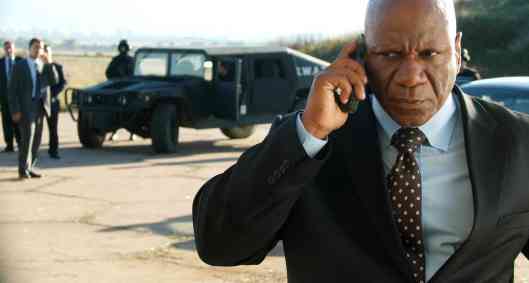
Echelon Conspiracy

Crazy Sexy Cancer (2007) / D: Kris Carr / 90m

With: Kris Carr, Jackie Farry, Melissa Gonzalez, Brian Fassett, Aura Carr, Kenneth Carr, Leslie Carr, Oni Faida Lampley, Bhavagan Das

Rating: 7/10 – when aspiring actress Kris Carr was diagnosed with cancer, she decided to make a visual record of the process of dealing with it, and the various ways in which other cancer sufferers have done so, and supported by the cameraman/editor who became her husband, as well as family and friends; an uplifting, positive message for anyone dealing with cancer, or who knows someone who is, Crazy Sexy Cancer is the kind of documentary that doesn’t attempt to overdo the physical and emotional strain of being in such a situation, but which does nevertheless offer plenty of poignant moments in amongst the hospital visits, and shows Carr to be a determined, aggressive would-be survivor.

Crazy Sexy Cancer

The Night Flier (1997) / D: Mark Pavia / 94m

Cast: Miguel Ferrer, Julie Entwisle, Dan Monahan, Michael H. Moss, John Bennes, Beverly Skinner, Rob Wilds, Richard K. Olsen, Elizabeth McCormick

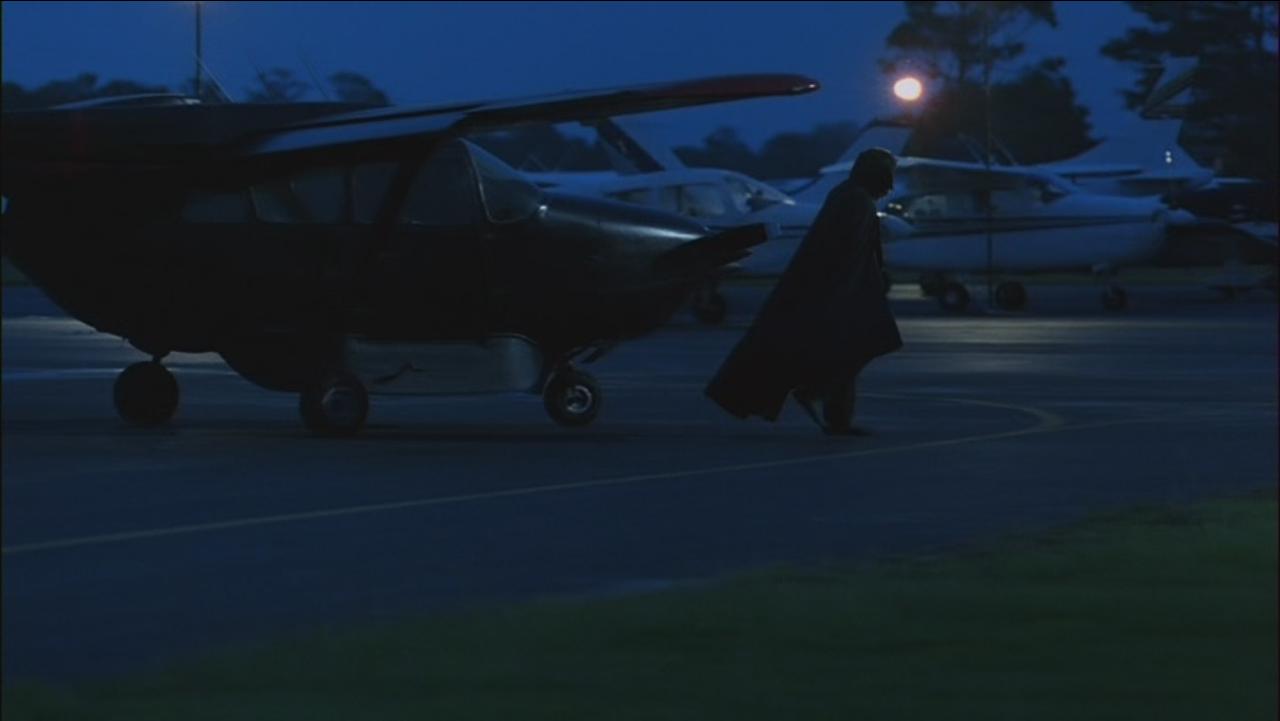
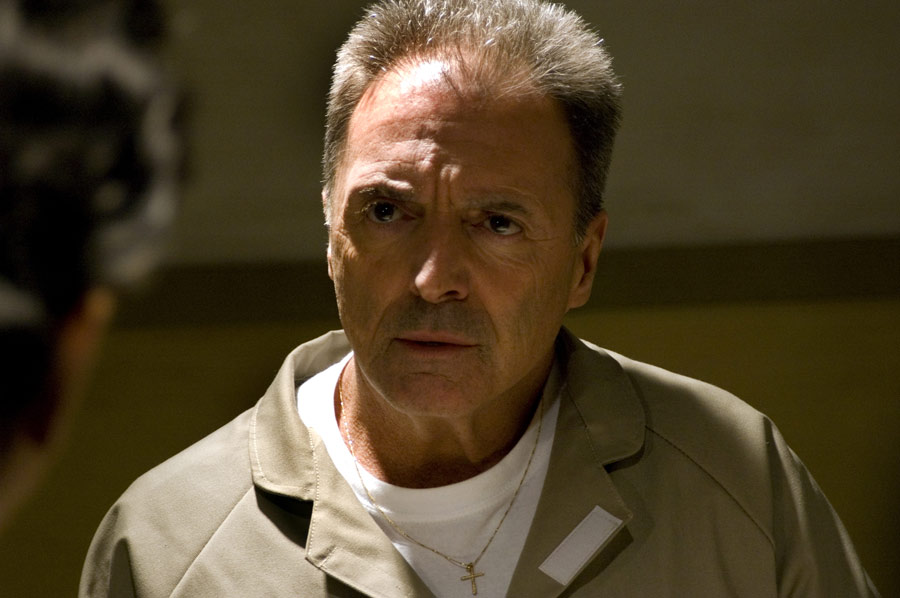
Rating: 7/10 – hard-nosed, disreputable reporter Richard Dees investigates a series of murders carried out at small airstrips that appear to be the work of a vampire, but his initial scepticism gives way to reluctant belief as he talks to witnesses, and sees the injuries the victims have sustained; a well-crafted movie that betrays its low budget and scrappy production design, The Night Flier is still one of the better Stephen King adaptations thanks to Pavia’s confident handling of the material, Ferrer’s see-if-I-care performance, and some impressively nasty effects work courtesy of the KNB Group.

Night Flier, The

Killer by Nature (2010) / D: Douglas S. Younglove / 90m

Cast: Ron Perlman, Armand Assante, Zachary Ray Sherman, Lin Shaye, Haley Hudson, Richard Riehle, Richard Portnow, Svetlana Efremova, Jason Hildebrandt

Rating: 3/10 – troubled by nightmares of murder and sleepwalking, teen Owen (Sherman) undergoes therapy with Dr Julian (Perlman), a therapist who believes that a person’s essential nature is handed down through bloodlines – a theory originated by convicted murderer Eugene Branch (Assante), and who is connected to Owen in a way that causes Owen to believe he might be the perpetrator of a series of murders that mimic Branch’s modus operandi; a thriller that can’t decide if it’s tepid or overwrought, and then settles for both (sometimes in the same scene), Killer by Nature is a humdinger of a bad movie, and proof positive that sometimes the old saying that “if you can, it doesn’t mean you should” relates to far too many movies for comfort – especially this farrago of awful performances, pseudo-intellectual posturing, and deathless direction.
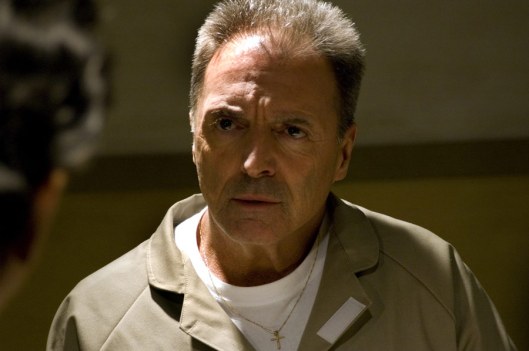
Killer by Nature

Scooby-Doo! and the Samurai Sword (2009) / D: Christopher Berkeley / 75m

Cast: Frank Welker, Casey Kasem, Mindy Cohn, Grey DeLisle, Kelly Hu, Kevin Michael Richardson, Sab Shimono, Keone Young, Gedde Watanabe, George Takei, Brian Cox

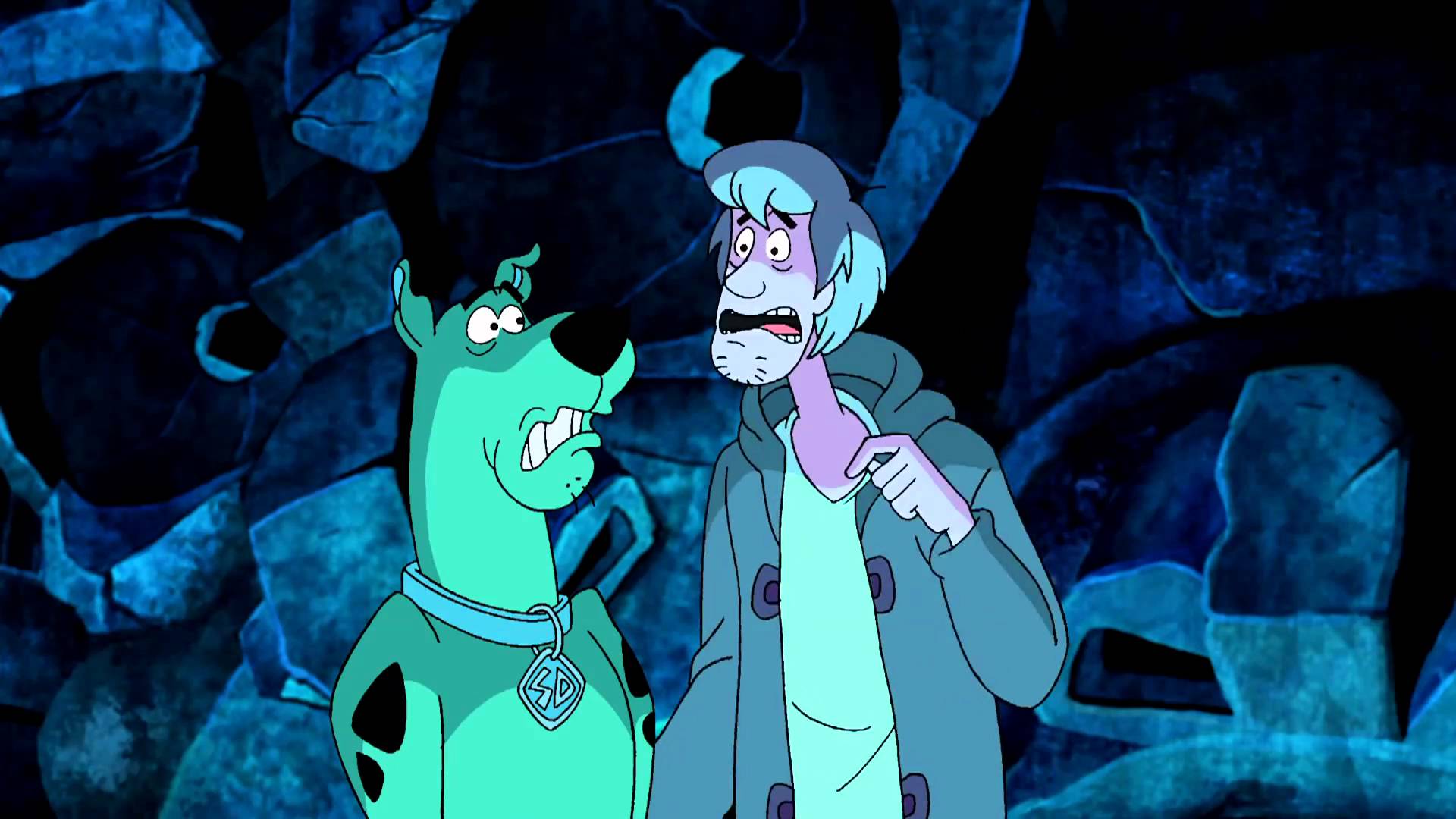
Rating: 6/10 – on a trip to Japan, Scooby-Doo and the gang become involved in the search for a mystical sword, while trying to thwart the efforts of the ghost of the Black Samurai to beat them to it; a middling entry in the series that at least provides a different backdrop than the standard old dark house (or mine, or hotel, or funfair…), and which allows Shaggy and Scooby to be the heroes we all know they really are deep down, while displaying a pleasing awareness of Japanese culture.
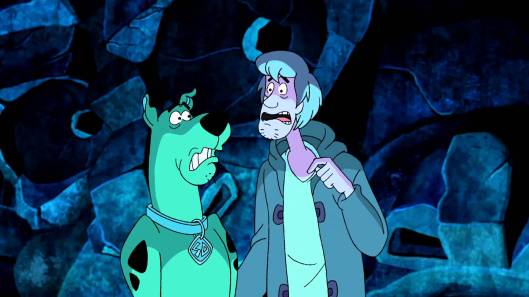
Scooby-Doo! and the Samurai Sword

[Rec]³ Génesis (2012) / D: Paco Plaza / 80m

Cast: Leticia Dolera, Diego Martín, Ismael Martínez, Àlex Monner, Sr. B, Emilio Mencheta, David Ramírez, Miguel Ángel González

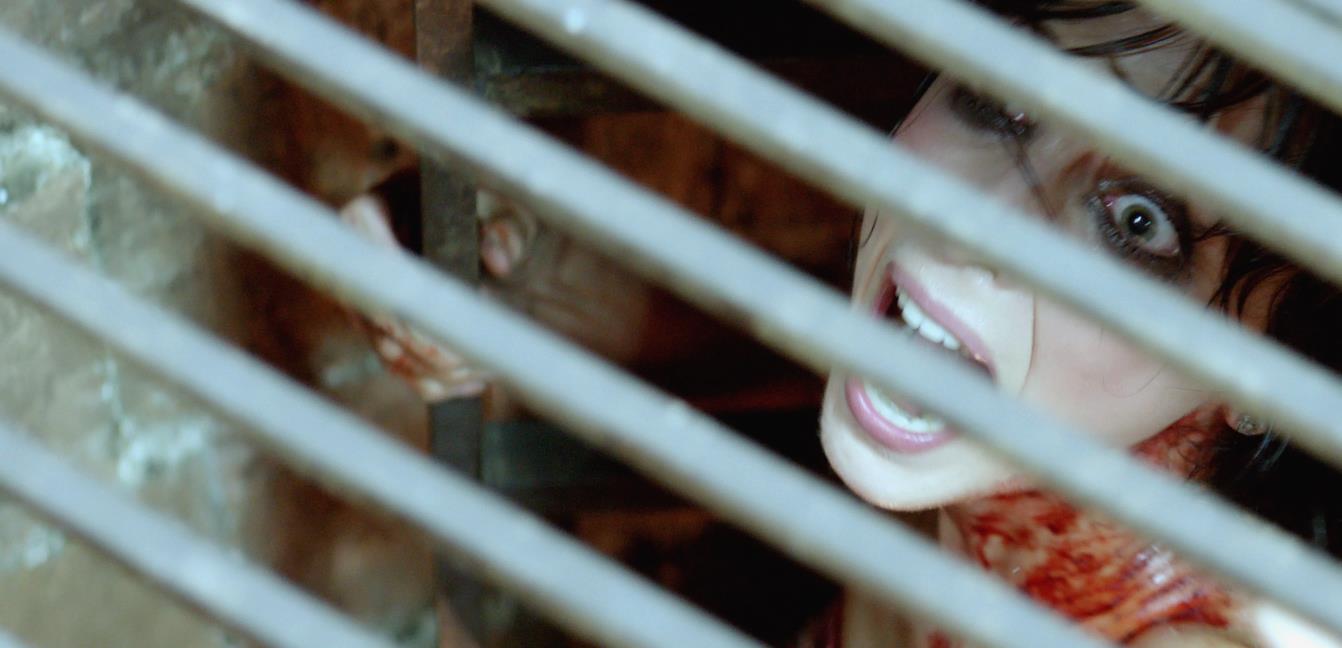
Rating: 7/10 – a young couple’s wedding day is disrupted for good when one of the guests takes a bite out of another one, leading to a frenzied free-for-all among the guests and a fight for survival for those not affected by whatever’s causing people to become zombies – including the bride and groom, who have become separated in the mêlée; half found footage, half professionally filmed, [Rec]³ Génesis acts as a prequel to the events of the first two movies but is let down by both the change in location, and the absence of Claudia Silva, as well as a sense that by going backwards in terms of the outbreak and its possible cause, the makers are treading water until an idea as to how to carry the story forward from [Rec]2 (2009) comes along.
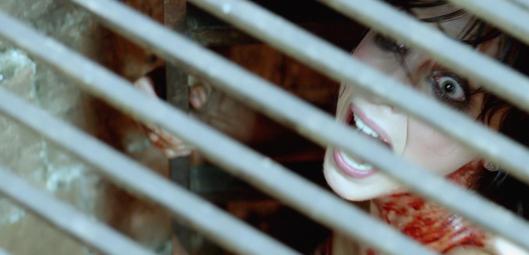
Rec3 Genesis

uwantme2killhim? (2013) / D: Andrew Douglas / 92m

Cast: Jamie Blackley, Toby Regbo, Joanne Froggatt, Jaime Winstone, Liz White, Mark Womack, Louise Delamere, Stephanie Leonidas, Mingus Johnston

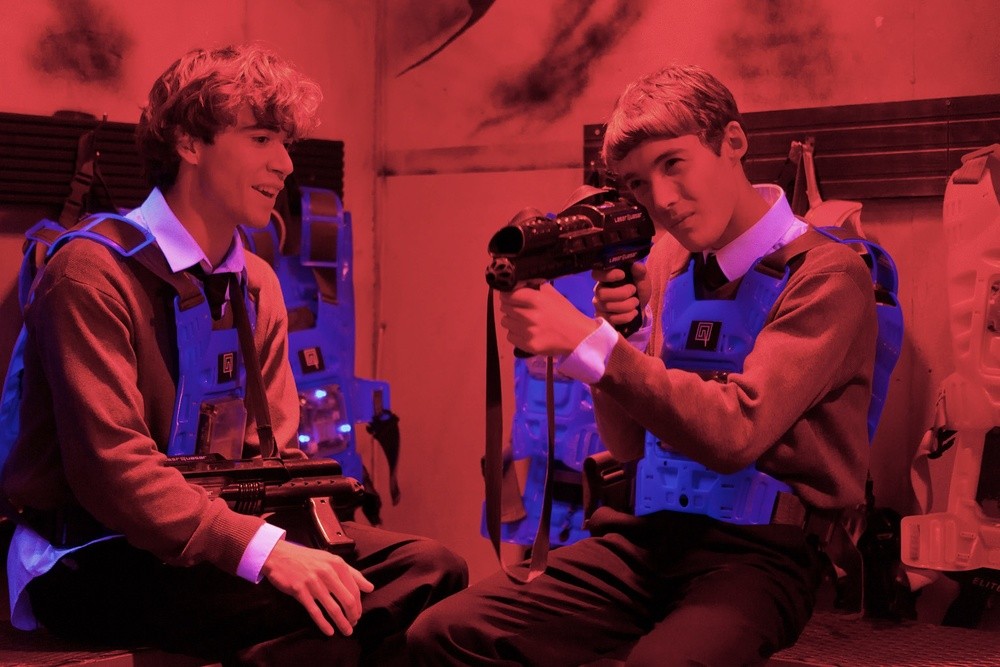
Rating: 7/10 – popular schoolboy Mark (Blackley) leads a secret life on the Internet, where he invests his time and emotions in relationships with people he’s never met, but when of those people ask him to stop their younger brother, John (Regbo), from being bullied, what follows sets Mark on a dangerous path to murder; based on a true story, and told with a glum sense of foreboding throughout, uwantme2killhim? is an engrossing (though slightly frustrating) recounting of one of the strangest cases of the last fifteen years, and features two very good performances from Blackley and Regbo, though they have to fight against a script that favours repetition over clarity, but which still manages to flesh out what must have been a very strange relationship between the two boys.
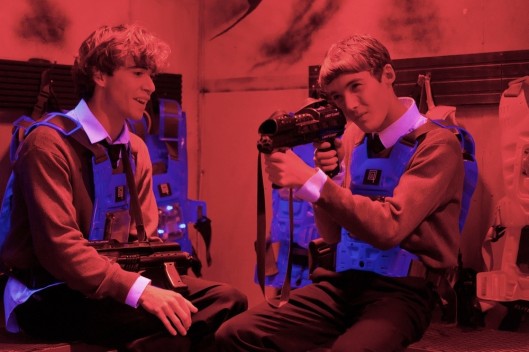
JAMIE BLACKLEY (Mark) (L) & TOBY REGBO (John) (R) in UWANTME2KILLHIM? (c) 2011 U Want M2K Ltd. Photo by Mark Tillie

Bulldog Drummond in Africa (1938) / D: Louis King / 58m

Cast: John Howard, Heather Angel, H.B. Warner, J. Carrol Naish, Reginald Denny, E.E. Clive, Anthony Quinn

Rating: 7/10 – on the very day that Drummond (Howard) is finally due to marry his long-suffering girlfriend Phyllis (Angel) he becomes embroiled in the kidnapping of his old friend Colonel Nielsen (Warner), and finds himself travelling to Morocco – with Phyllis, butler Tenny (Clive) and old pal Algy (Denny) in tow – in order to rescue him; the fourth in the series is perhaps the funniest, with Howard allowed to spread his comedic wings, and even the villain (played again by Naish) given some splendidly dry remarks to make in amongst the threats of death by hungry lion, and a bomb on Drummond’s plane.
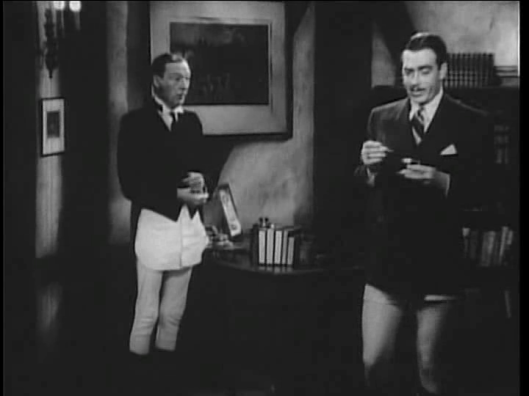
vlcsnap-00003

The Four-Faced Liar (2010) / D: Jacob Chase / 87m

Cast: Daniel Carlisle, Todd Kubrak, Emily Peck, Marja-Lewis Ryan, Liz Osborn

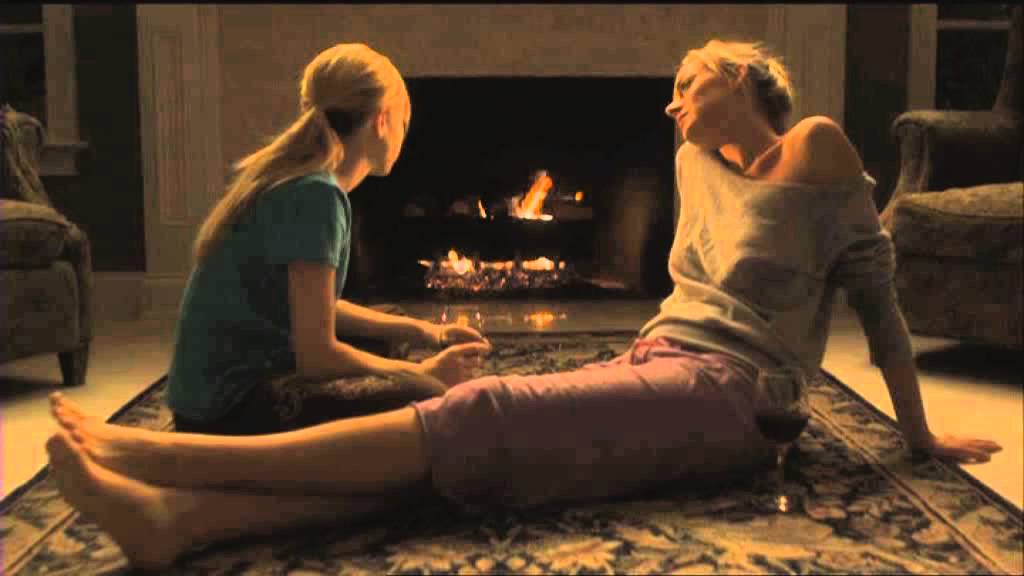
Rating: 8/10 – five friends – couples Greg (Carlisle) and Molly (Peck), Trip (Kubrak) and Chloe (Osborn), and single lesbian Bridget (Ryan) – experience various ups and downs in their relationships, especially when Trip has a one night stand, and Molly finds herself attracted to Bridget; a refreshingly honest look at what relationships mean to different individuals, and how they affect the people around them, The Four-Faced Liar is an effective, well-written drama that benefits from good performances all round, a soundtrack that supports the mood throughout, and Chase’s confident approach to Ryan’s script.
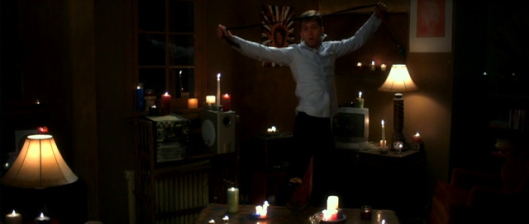
vlcsnap-00004

Share this:

  • Click to share on X (Opens in new window) X
  • Click to share on Facebook (Opens in new window) Facebook
  • More
  • Click to print (Opens in new window) Print
  • Click to email a link to a friend (Opens in new window) Email
Like Loading...

Monthly Roundup – May 2015

31 Sunday May 2015

Posted by dullwood68 in Movies

≈ Leave a comment

Tags

Antonio Banderas, Art heist, Artificial intelligence, Ballard Berkeley, Bat Masterson, Berlin, Boston, Bullying, Burger Beard, Chappie, Christopher Plummer, Clancy Brown, Comet, Conrad Phillips, Crime, Dave Franco, Dead body, Drama, Emmy Rossum, Eric Stonestreet, Father/son relationship, Frank R. Strayer, Gay bar, George Pastell, Glory holes, Hugh Jackman, Impact, Irene Ware, James Marsden, Joel McCrea, John Miljan, John Travolta, Joseph M. Newman, Julie Adams, Justin Long, Karl Urban, Ken Scott, Krabby Patty formula, Matthias Schoenaerts, Monthly roundup, Murder at Glen Athol, Murder mystery, Neill Blomkamp, Peter Maxwell, Philip Martin, Plankton, Review, Romance, Sam Esmail, Sharlto Copley, Sienna Miller, SpongeBob Squarepants, Swarf, The Duke, The Forger, The Gunfight at Dodge City, The Loft, The Spongebob Movie: Sponge Out of Water, Thriller, Tom Denny, Tom Wilkinson, Tye Sheridan, Unfinished Business, Vince Vaughn, Wentworth Miller, Western

There’s a phrase that everyone will be familiar with: “Too many [insert item here], too little time”. When it comes to the number of movies that I watch in any given month, that phrase is apt in relation to the ones that get reviewed here on thedullwoodexperiment. I would love to have the time to post reviews of all the movies I see, but it’s just not practical; and besides which, some movies just don’t merit the attention (Annabelle (2014), for instance). Sometimes it’s a case of choosing one movie over another, sometimes Life gets in the way of blogging and a movie falls by the wayside. To combat this, and to give these “other” movies their due, I’ve decided to present, at the end of each month, a brief “review” of all the other movies I’ve seen. There won’t be any synopsis, or proper full-length analysis, just the title, director, running time, cast, and then the traditional two sentence ratings summation. So, let’s see which movies didn’t quite make the cut in May 2015.

The Forger (2014) / D: Philip Martin / 96m

Cast: John Travolta, Christopher Plummer, Tye Sheridan, Abigail Spencer, Anson Mount, Marcus Thomas, Jennifer Ehle, Travis Aaron Wade

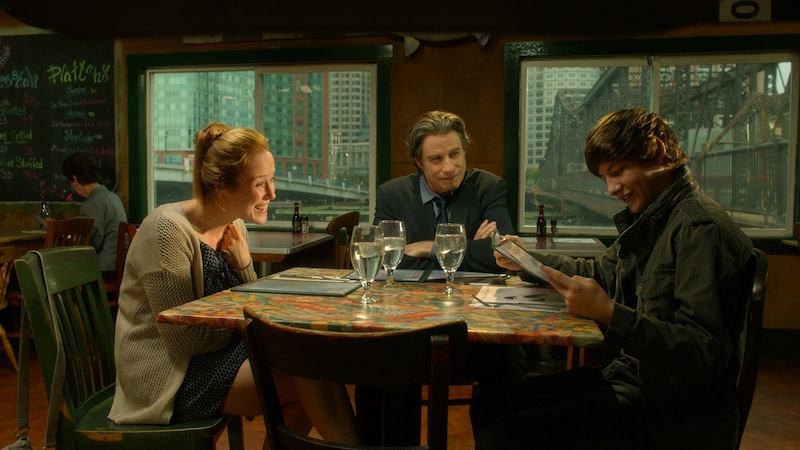
Rating: 5/10 – Travolta’s art forger comes out of prison to spend time with his dying son (Sheridan) and pull off an audacious robbery; a derivative, occasionally unappealing crime drama that tries to do something different with its dying child angle, The Forger is nevertheless a movie whose “one last heist” scenario has been done to death elsewhere, and with far better results.

Forger, The - scene

The Gunfight at Dodge City (1959) / D: Joseph M. Newman / 81m

Cast: Joel McCrea, Julie Adams, John McIntire, Nancy Gates, Richard Anderson, James Westerfield, Walter Coy, Don Haggerty, Wright King, Harry Lauter

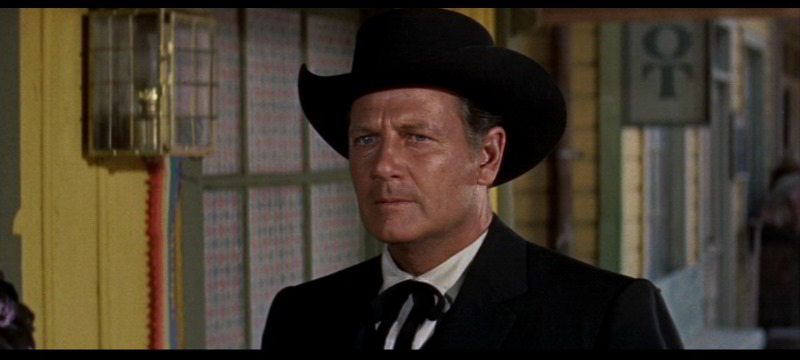
Rating: 6/10 – Western legend Bat Masterson (McCrea) tackles corruption supported by Haggerty’s devious sheriff in Dodge City and faces romantic problems as well from minister’s daughter Adams and saloon owner Gates; a middling, mildly diverting Western, The Gunfight at Dodge City benefits from McCrea’s solid, no-nonsense performance and Newman’s underrated abilities behind the camera.

Gunfight at Dodge City, The - scene

Comet (2014) / D: Sam Esmail / 91m

Cast: Justin Long, Emmy Rossum

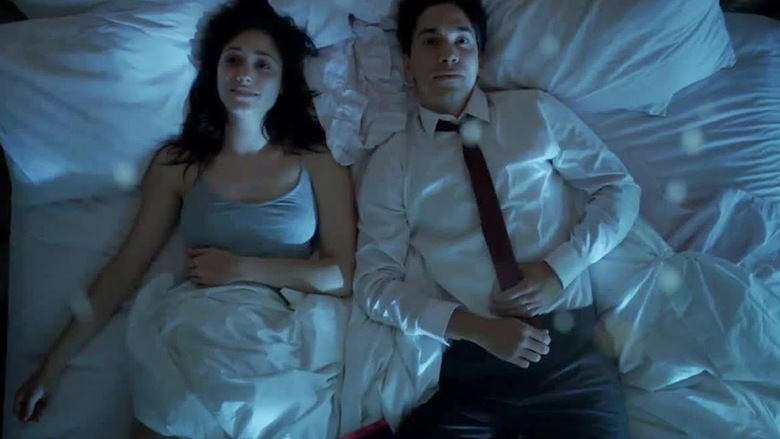
Rating: 7/10 – Long and Rossum are the soulmates whose on-again-off-again relationship is examined over the course of six years; with the narrative continually fractured and reassembled, Comet is replete with the kind of “serious” romantic musings that sound alternately pretentious and profound, but the two leads have a definite chemistry and this helps immensely in making the movie as enjoyable as it (largely) is.

Comet - scene

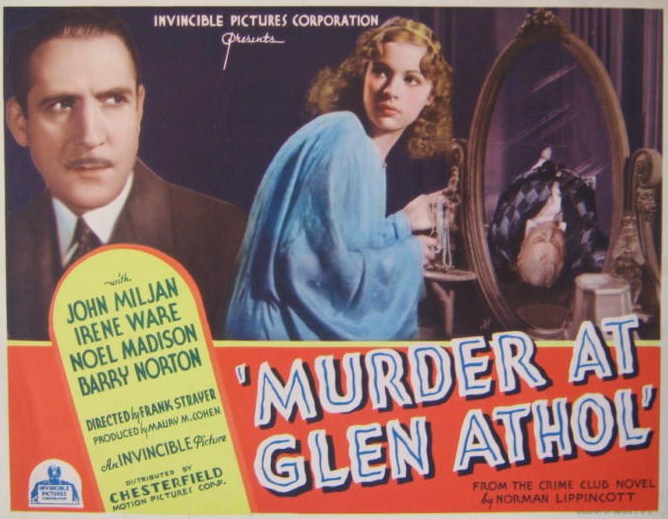
Murder at Glen Athol (1936) / D: Frank R. Strayer / 67m

Cast: John Miljan, Irene Ware, Iris Adrian, Noel Madison, Oscar Apfel, Barry Norton, Harry Holman, Betty Blythe, James P. Burtis

Rating: 5/10 – two murders and a dying confession confuse matters for a detective (Miljan) who’s just trying to take a vacation – next door to where the murders have taken place; packed full of seemingly endless exposition and no shortage of suspects, Murder at Glen Athol is a sprightly murder mystery that packs a lot in but not always to its best advantage.

Murder at Glen Athol

The SpongeBob Movie: Sponge Out of Water (2015) / D: Paul Tibbitt / 92m

Cast: Antonio Banderas, Tom Kenny, Clancy Brown, Bill Fagerbakke, Rodger Bumpass, Mr. Lawrence, Carolyn Lawrence

Rating: 7/10 – when the formula for Krabby Patty is stolen by the notorious Burger Beard (Banderas), SpongeBob (Kenny) is forced to team up with Plankton (Mr. Lawrence) to get it back… and venture above the surface; freewheeling fun with the denizens of Bikini Bottom that features lots of gags and the usual bright visuals, but takes an awfully long time in getting to the “sponge out of water” part.

SpongeBob Movie, The

Chappie (2015) / D: Neill Blomkamp / 120m

Cast: Sharlto Copley, Dev Patel, Hugh Jackman, Ninja, Yo-Landi Visser, Jose Pablo Cantillo, Sigourney Weaver, Brandon Auret, Johnny Selema

Rating: 6/10 – with a robot police force firmly established in Johannesburg, the introduction of artificial intelligence leads to one robot, named Chappie, learning what it’s like to be human; disappointing outing from Blomkamp that never quite gels or seems sure of what it’s trying to do or say, but does feature an excellent performance from Copley.

Chappie

Impact (1963) / D: Peter Maxwell / 61m

Cast: Conrad Phillips, George Pastell, Ballard Berkeley, Linda Marlowe, Richard Klee, Anita West, John Rees

Rating: 5/10 – when newspaper reporter Jack Moir (Phillips) is framed for robbery by arch-nemesis “The Duke” (Pastell), he swears to get even when he gets out of jail; a low-key crime drama that seems busier than it is and which gets bogged down in the mechanics of Moir’s revenge plot, Impact does allow for a welcome appearance by Berkeley aka Fawlty Towers‘ Major, and an above average performance by Pastell.

Impact

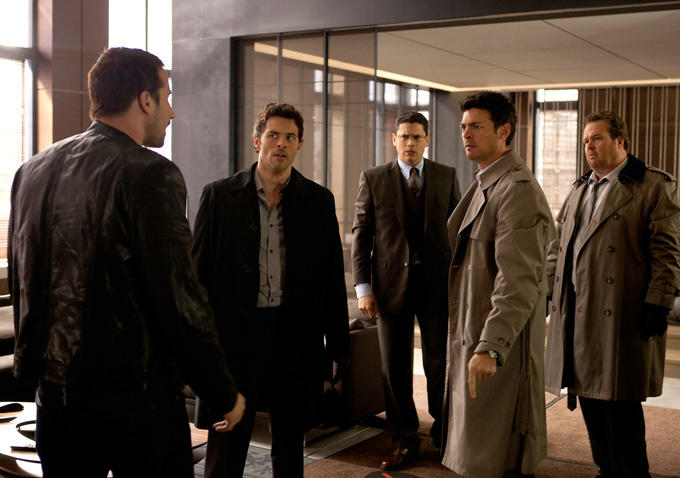
The Loft (2014) / D: Erik Van Looy / 103m

Cast: Karl Urban, James Marsden, Wentworth Miller, Eric Stonestreet, Matthias Schoenaerts, Isabel Lucas, Rachael Taylor, Rhona Mitra, Valerie Cruz, Kali Rocha, Elaine Cassidy, Margarita Levieva, Kristin Lehman, Robert Wisdom

Rating: 6/10 – the discovery of a woman’s dead body in the loft apartment shared by five married men for their secret liaisons prompts them to suspect each other of the crime; alternately gripping and implausible, The Loft is a modern day cautionary tale that loses credibility with its solution then recovers with a great twist, but still has the air of a thriller that its writer never quite got to grips with.

Loft, The

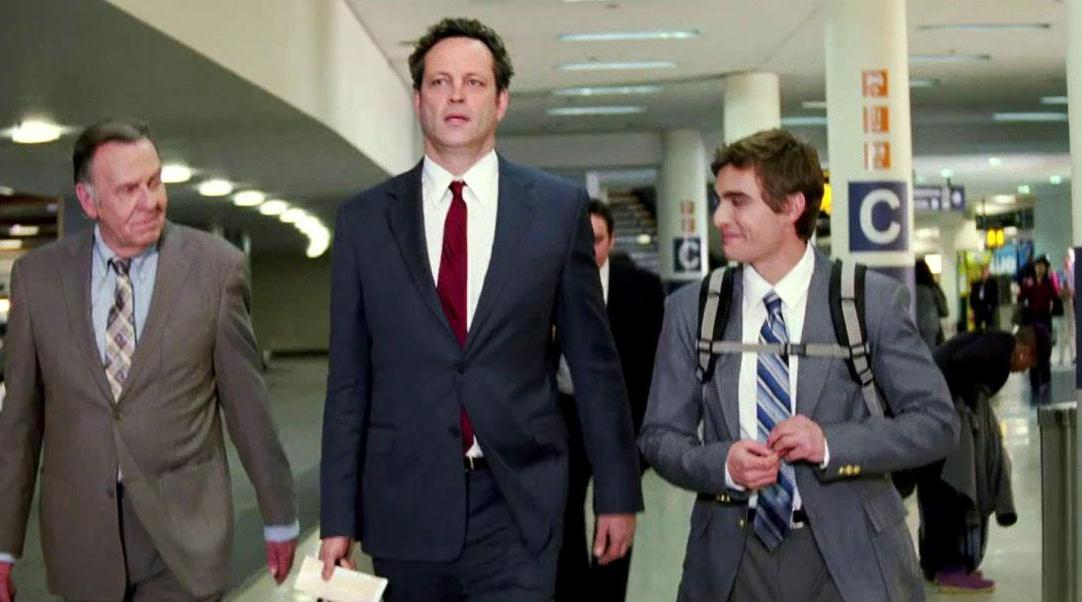
Unfinished Business (2015) / D: Ken Scott / 91m

Cast: Vince Vaughn, Tom Wilkinson, Dave Franco, Sienna Miller, Nick Frost, James Marsden, June Diane Raphael, Britton Sear, Ella Anderson, Uwe Ochsenknecht

Rating: 5/10 – Swarf salesman Dan Trunkman (Vaughn) has to overcome all sorts of obstacles to land the contract that will save his fledgling company from going under, including a visit to a Berlin gay bar; a bit of a strange fish, Unfinished Business suffers from being two separate movies joined at the hip: one a raucous comedy, the other a thoughtful study of bullying, but together they don’t make for a cohesive whole, and it’s yet another movie where Vaughn coasts along on former glories.

Unfinished Business

Share this:

  • Click to share on X (Opens in new window) X
  • Click to share on Facebook (Opens in new window) Facebook
  • More
  • Click to print (Opens in new window) Print
  • Click to email a link to a friend (Opens in new window) Email
Like Loading...

Cut Bank (2014)

12 Tuesday May 2015

Posted by dullwood68 in Movies

≈ Leave a comment

Tags

Billy Bob Thornton, Bruce Dern, Crime, Drama, John Malkovich, Liam Hemsworth, Matt Shakman, Michael Stuhlbarg, Miss Cut Bank pageant, Montana, Movie reviews, Murder, Postman, Review, Reward money, Teresa Palmer, Thriller

Cut Bank

D: Matt Shakman / 93m

Cast: Liam Hemsworth, Teresa Palmer, John Malkovich, Billy Bob Thornton, Bruce Dern, Michael Stuhlbarg, Oliver Platt, Sonya Salomaa, David Burke, Denis O’Hare

In the small town of Cut Bank, Montana, car mechanic Dwayne McLaren (Hemsworth) dreams of leaving town with his girlfriend Cassandra (Palmer), but he hasn’t got any money and he has to look after his disabled father (O’Hare). While spending time together on the outskirts of town, Dwayne inadvertently films the murder of local postman Georgie Witts (Dern). He takes the footage to Cassandra’s father, car dealer Big Stan Steeley (Thornton), who calls in the sheriff, Roland Vogel (Malkovich). The sheriff watches the footage and declares it’s the town’s first murder.

With the community in shock over Georgie’s death and the disappearance of the mail van he was driving, Vogel begins his investigation. At the same time, a loner with a strong interest in taxidermy named Derby Milton (Stuhlbarg) comes looking for a parcel he was expecting (and which was in the mail van). Where Vogel looks for a vehicle with a particular set of tyres, Milton looks for a boot with a particular sole. He finds out that a Native American named Match (Burke) bought a pair a few months before.

Meanwhile, Dwayne applies for a reward due for evidence relating to the death of a member of the postal service. The reward – $100,000 – will allow Dwayne to find alternative care for his father, and give him and Cassandra the chance to start a new life together in California. But when the Postal Inspector (Platt) arrives to confirm the reward, there’s only one snag: he needs to see the body, which so far hasn’t been found as it was taken with the mail van.

Matters escalate when Big Stan makes a discovery at his spare parts yard, a discovery that sees him brutally attacked. However, Milton – still looking for his parcel and unwilling to forget about it – makes the same discovery, but with a different outcome, one that implicates Dwayne. With the reward money not being paid out for a few months, it’s down to Cassandra to win the upcoming Miss Cut Bank pageant and its first prize of $5,000, and thereby give them enough money to leave town for good. But Milton has other ideas, and the sheriff is beginning to put all the pieces together surrounding Georgie’s death…

Cut Bank - scene

Watching Cut Bank, the obvious comparison is with Fargo (1996), but while that movie is still highly regarded as a classic nearly twenty years on, it’s hard to believe that Cut Bank will be looked on in the same way, or remembered at all. While it does its best to look and feel as moody as many other small-town crime dramas, it’s the quality of the story that lets it down. There are too many occasions where the story is driven forward by the messiest of contrivances, or characters behave in ways that contradict their previous attitudes. For the viewer it means a suspension of disbelief that is needed on several occasions, and for which the movie makes no apologies, as it just carries on digging a bigger and bigger hole for itself.

Indeed, it’s the script by Roberto Patino, and as directed by Shakman, that proves the movie’s downfall, causing as it does a loss of faith almost from the beginning. It plods through its twists and turns with all the authority of a movie that doesn’t know where it’s going or why – and which winds things up with one of the worst, most nonsensical outcomes that anyone could possibly imagine (except Patino). To say that it defies belief would be to suggest that the viewer might actually have some by this point. And as for some of the dialogue, the script aims for clever and insightful, but succeeds in being arch and unimportant. Only the running gag, “I thought you were dead” works as well as it should, and at one point it receives a great pay-off, but it’s the only aspect of the script that really hits home.

With the script being so derivative and uneven, the movie suffers and so too does its more than talented cast. Hemsworth proves once more that he’s the blandest of the Hemsworth brothers, and still has trouble being convincing as any character in any movie, while Palmer has an embarrassing pageant song to sing and dance to but very little else. Thornton portrays Big Stan as the same kind of no-nonsense bully he’s played so often before, and Malkovich gives possibly the best performance as the sheriff who looks to be so out of his depth that he can’t see the bottom. Of the rest of the cast, Dern is great but not well-used, and Stuhlbarg is given a monologue that attempts to explain his behaviour but which actually proves too confusing to be much of an explanation. And Platt breezes through his scenes with all the bluster that he’s employed elsewhere, but here, it’s all to no effect, and his character adds nothing to the mix.

Shakman orchestrates the various plot strands and characters with the confidence of a director who doesn’t quite know what to do with the material – which is strange as he directed two episodes of the TV version of Fargo (2014) – but again it’s the quality of the material that hampers him. He does display an appreciation for widescreen composition, but he never seems comfortable presenting any close ups, and appears content to work with medium or long-range shots instead. This creates a distancing effect between the audience and the characters, and before long, the viewer has lost all interest in what’s happening, or how important it might all be. This applies particularly to Milton’s basement “secret”, which, when it’s revealed, is never adequately explained (though an attempt is made with Milton’s monologue). It’s the movie’s one true moment where it pulls something out of the bag that’s different and entirely unexpected.

In failing to live up to its potential, and by wasting the talents of its cast, Cut Bank stalls and stutters so often, and finds it so difficult to maintain a convincing approach that in the end it becomes too frustrating to watch, and is so undermined by its cavalier attitude to law enforcement and guilt, that it never recovers. The plot lacks originality, and the characters lack any appreciable depth, often doing things without any clear motivation. That said, there’s supportive and beautiful cinematography by Ben Richardson, and while some scenes appear to run on too long, the editing by Carol Littleton is sharp and keeps things moving (when they should be stalling).

Rating: 4/10 – with a script that tries to be clever and ingenious, but falls short on both counts, Cut Bank is left to founder in almost every area; one to avoid unless the idea of a murder mystery that leaves out the mystery is an attractive one that you can’t pass up.

NOTE: The trailer contains a few spoilers that aren’t included in the above synopsis, so if you watch it, please bear this in mind.

Share this:

  • Click to share on X (Opens in new window) X
  • Click to share on Facebook (Opens in new window) Facebook
  • More
  • Click to print (Opens in new window) Print
  • Click to email a link to a friend (Opens in new window) Email
Like Loading...

Stretch (2014)

11 Monday May 2015

Posted by dullwood68 in Movies

≈ Leave a comment

Tags

Chris Pine, Comedy, Crime, Drama, Ed Helms, FBI, Gambling debt, James Badge Dale, Jessica Alba, Joe Carnahan, Limo driver, Patrick Wilson, Review

Stretch

D: Joe Carnahan / 94m

Cast: Patrick Wilson, Chris Pine, Ed Helms, James Badge Dale, Brooklyn Decker, Jessica Alba, Shaun Toub, Randy Couture, Matthew Willig, Ben Bray, David Hasselhoff, Ray Liotta, Norman Reedus

Following the unexpected break up of his relationship with the love of his life, Candace (Decker), would-be actor and ex-cocaine and gambling addict Stretch (Wilson) turns to limo driving to make ends meet. With his life coasting along in neutral, it comes as a shock when one day a gambling debt he thought had lapsed, is taken over by Ignacio (Bray), who wants payment by midnight of the same day. With little chance of coming up with the $6,000 he owes, Stretch convinces one of his co-workers, Charlie (Alba), to steer any high-paying customers his way during the evening, in the hope that he’ll earn enough in tips to pay off Ignacio.

With his boss Naseem (Toub) worried about a rival limo company run by the mysterious Jovi (Couture), Stretch sees his first pick-up, David Hasselhoff, persuaded to go with the Jovi. In an attempt at getting his own back, Stretch gets to the Jovi’s next client, Ray Liotta, first. Picking him up from a movie set, Liotta leaves with a prop gun and fake police I.D., but insists that Stretch return them to the studio. Before he can do so, Charlie sets him up with another client, an eccentric businessman called Roger Karos (Pine). Knowing that he’s a renowned big tipper, Stretch tells Karos about his gambling debt; Karos agrees to tip Stretch that amount if he takes him wherever he wants to go.

“Wherever” turns out to be a secret sex club. When they get there, Karos gives Stretch a task: to visit another club, see a Frenchman called Laurent (Dale) and obtain a specific briefcase, plus locate a supply of cocaine, and all within one hundred minutes – without fail. But Laurent is expecting Karos to hand over some ledgers in exchange for the briefcase (which contains a lot of money). Using Ray Liotta’s fake police I.D., Stretch bluffs his way out of the club with the briefcase, and by chance runs into Candace. Without batting an eyelid he tells her he’s doing really well and when she shows a renewed interest in him, Stretch turns her down flat.

He gets hold of some cocaine but the limo gets stolen. With the briefcase hidden inside it, he tracks it down, only for it to be towed by the Jovi’s brother, Boris (Willig). Stretch manages to get the limo back and returns to pick up Karos. But Karos reneges on his deal to pay Stretch the $6,000, saying he was a minute late in returning to collect him. So when Ignacio calls demanding the money, Stretch tells him to meet him where Karos wants to go next. But when they all meet up, Stretch’s plans go awry when the Jovi appears and Karos hands Stretch over to him.

Stretch - scene

You know, a funny thing happened on the way to the box office…

Stretch was originally scheduled for release in March 2014, but with two months to go, Universal scrapped the release and allowed producer Jason Blum to offer the movie to other distributors. But no one picked it up, and it came back to Universal. Eventually the movie was released on iTunes and Amazon.com, and VOD, in October 2014. Which begs the question, if Universal were so eager to disown it, then just how bad a movie is it?

The answer is: not that bad. It is rough and ready though, and often threatens to disappear up its own backside by trying to be edgy and complicated, but on the whole Joe Carnahan’s blackly comic limo ride is a bit of a guilty pleasure. He’s helped immensely by the casting of Wilson in the title role, his resigned, long-suffering features put to excellent use throughout as Stretch manoeuvres his way through the kind of night that only happens to characters in the movies. It’s Scorsese’s After Hours (1985) given a more modern sensibility and with a higher absurdity quotient.

It does, however, take an age to get going. It’s not until Ray Liotta’s dropped off at his hotel that the movie begins to move up a gear, and Stretch’s evening really starts to fall apart. Up until then we’re treated to too many scenes that show just how much his life sucks, and how everything he tries never quite works out how he needs it to. By the third or fourth example we get the idea, but Carnahan isn’t finished, and Stretch’s humiliation continues, right up until the moment he cons the briefcase from Laurent. From then on he begins to fight back – against Naseem, the Jovi and Boris, Ignacio, and Karos. It’s great to see this particular worm turning, and Wilson’s unprotesting features change to reflect the smug satisfaction Stretch begins to experience as he turns the tables on everyone. It’s a winning performance, and one that makes the viewer root for Stretch at every turn.

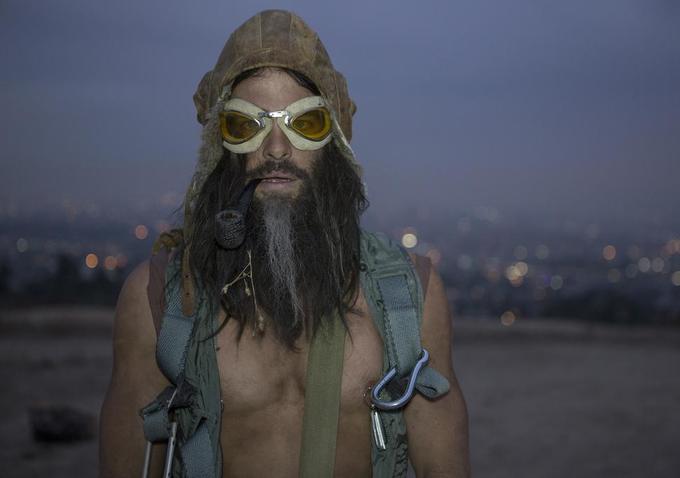
Wilson is the calm centre at the midst of what is an otherwise wild and wacky tale of male empowerment gone AWOL, but more than holds his own when up against the feverish performance given by an uncredited Pine. Sporting a bushy hairstyle and beard, and making his appearance semi-naked in a parachute, Pine gives such a larger than life performance it’s almost as if he’s been given carte blanche by Carnahan to do and say whatever he wants (such as setting fire to the inside of the limo, or punching himself in the face for “clarity”). Luckily, he’s not so over-the-top that he proves too much of a distraction, but when he isn’t on screen, his absence is palpable; full marks to Carnahan then for not over-relying on him, or letting the character take over.

But while Wilson and Pine have fun with their roles, fun that translates as unwavering commitment in front of the camera, spare a thought for poor Ed Helms, saddled with playing Karl, the ghost of an ex-limo driver. The script requires him to pop up at odd moments and either point out Stretch’s failings, or pass comment on the action. He’s meant to be a source of humour, and Helms plays him that way, but alas nobody thought to tell Carnahan, who provides him with some of the most awkward dialogue this side of a later entry in the Saw series. To compensate, though, the cameos – from Hasselhoff, Liotta, Shaun White, and Norman Reedus – are all hilarious (especially Reedus’s).

Stretch - scene2

With the movie pushing credibility further and further under the wheels of absurdity, Stretch often comes perilously close to derailing, but at each crazy turn Carnahan reins it in and finds some plausibility – however weak – from somewhere, and the movie carries on regardless. It’s a movie that comes self-contained and relies on its own twisted logic to work, and  for the most part, that’s exactly what happens: it works. There’s a romantic sub-plot involving Stretch and a woman he’s met online, plus the whole running-scared-of-the-Jovi-and-his-brother routine, and they add nicely to the mix, adding some small amount of depth to the story and providing some secondary amusement.

If its’ all a little too far-fetched then it’s to be expected. And though being a little far-fetched doesn’t necessarily hurt the movie, it does raise that question again: just what bee had gotten into Universal’s bonnet? Because from here, Carnahan’s crazy thrill ride has a lot to offer once that shaky start has passed.

Rating: 7/10 – with a very slow start leading eventually to all sorts of comic encounters and dialogue – “I’m sorry, I didn’t see the light.” “Well, don’t go towards it now.” – Stretch is an imperfect but still hugely enjoyable comedy-thriller; best viewed with any expectations dialled down so that it can (again eventually) surprise you and make you glad you watched it.

Share this:

  • Click to share on X (Opens in new window) X
  • Click to share on Facebook (Opens in new window) Facebook
  • More
  • Click to print (Opens in new window) Print
  • Click to email a link to a friend (Opens in new window) Email
Like Loading...

Mini-Review: Mortdecai (2015)

11 Monday May 2015

Posted by dullwood68 in Movies

≈ Leave a comment

Tags

Action, Art heist, Comedy, Crime, David Koepp, Ewan McGregor, Gwyneth Paltrow, Johnny Depp, Literary adaptation, Moustache, Murder, Paul Bettany, Review

Mortdecai

D: David Koepp / 107m

Cast: Johnny Depp, Gwyneth Paltrow, Ewan McGregor, Paul Bettany, Olivia Munn, Jonny Pasvolsky, Michael Culkin, Ulrich Thomsen, Jeff Goldblum, Michael Byrne, Paul Whitehouse

When an art restorer is killed and the painting she was working on stolen, Inspector Alistair Martland (McGregor) is put in charge of the investigation. He brings on board crooked art dealer Charlie Mortdecai (Depp) to help recover the painting which is a Goya. Mortdecai has potentially ruinous debts, and though agreeing to help, he plans to sell the painting when he finds it. While he begins the search, his wife Johanna (Paltrow) decides to look for it herself. She visits a duke (Byrne) who tells her it was stolen by a friend of his during the war, and that on the back of the painting are codes that will lead to a hidden stash of Nazi gold.

With criminal Emil Strago (Pasvolsky) also after the painting to help fund his terrorist activities, and the involvement of Russian mobster Romanov (Thomsen), Mortdecai, aided by his faithful manservant Jock Strapp (Bettany), eventually discovers the location of the painting and attempts to steal it back from the man who has it, American dealer Milton Krampf (Goldblum). Strago, in cahoots with Cramp’s daughter Georgina (Munn), manages to get the painting himself, but when he tries to find the codes, he inadvertently destroys it. But Johanna reveals that the painting was a fake, and that she knows the location of the real one.

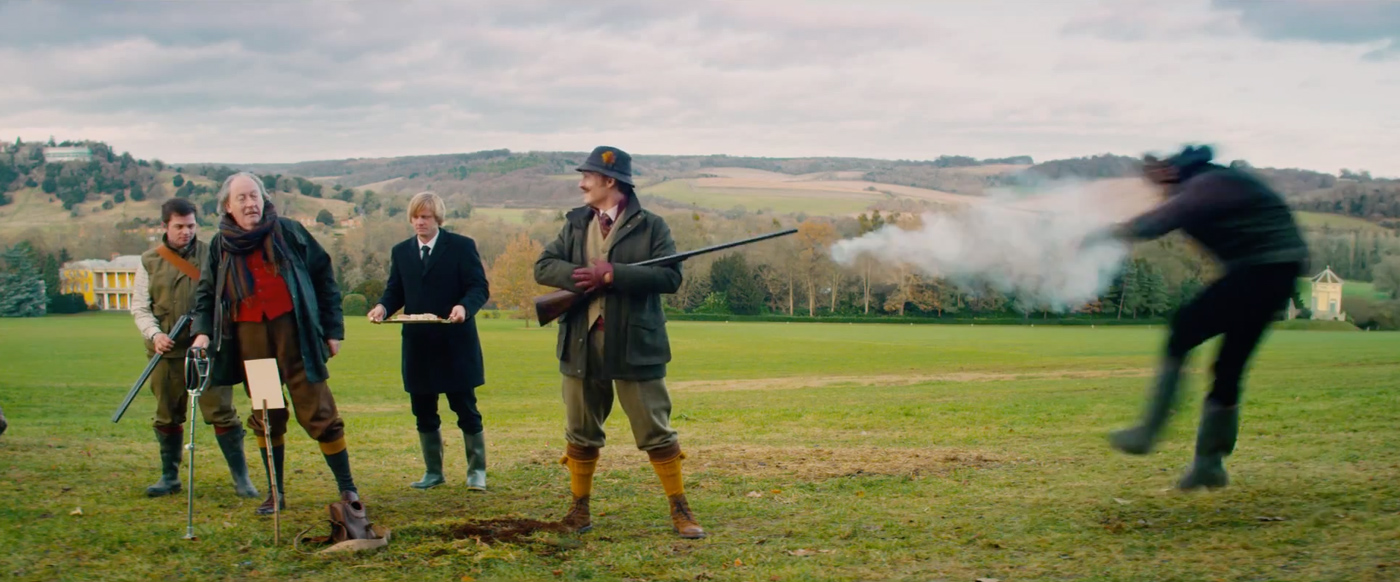
Mortdecai - scene

Recent movies starring Johnny Depp have proved to be mostly disappointing, and Mortdecai continues that streak, lacking cohesion, credible characters, and worst of all, sufficient laughs to offset the movie’s other faults, such as Depp’s own performance. For anyone with even a passing knowledge of British comedy from the Fifties and Sixties, Mortdecai will be the movie where Depp does his best Terry-Thomas impersonation, even down to the gap in his upper teeth. It’s hard to say if Depp is being affectionate or paying tribute, but either way his overly mannered performance is so distracting it ultimately becomes off-putting (not to mention annoying).

Thanks to Eric Aronson’s trying-too-hard screenplay (adapted from the novel by Kyril Bonfiglioli), the movie struggles on almost every level except for cinematography and costume design, and makes a hash of its absurdist situations, refusing to acknowledge that less is more and that caper movies should be fun and not a trial to sit through. Koepp is a better writer than he is a director, and he plays around with the pace of the movie throughout, making some stretches play out inordinately while letting his cast direct themselves. The twists and turns of the plot are too predictable for anyone to care about, and the action scenes too pedestrian. With running gags the order of the day, the humour soon becomes tiresome as well. There’s a decent movie to be made from Bonfiglioli’s Mortdecai novels, but sadly, this isn’t it.

Rating: 3/10 – not as clever or funny as its makers will have intended, Mortdecai is yet another movie where no one realised early on just how many mistakes were being made; lacking subtlety, wit or charm, the movie is like a smörgåsbord of bad ideas all pulled together in the wrong place at the wrong time and in the wrong way.

Share this:

  • Click to share on X (Opens in new window) X
  • Click to share on Facebook (Opens in new window) Facebook
  • More
  • Click to print (Opens in new window) Print
  • Click to email a link to a friend (Opens in new window) Email
Like Loading...

Uh-Oh! Here Comes Summer! – Furious 7 (2015) and Avengers: Age of Ultron (2015)

03 Sunday May 2015

Posted by dullwood68 in Movies

≈ 2 Comments

Tags

Action, Avengers, Black Widow, Chris Evans, Chris Hemsworth, Crime, Deckard Shaw, Dominic Toretto, Drama, Dwayne Johnson, Hulk, Iron Man, james Wan, Jason Statham, Joss Whedon, Mark Ruffalo, Marvel Cinematic Universe, Paul Walker, Reviews, Robert Downey Jr, Sequels, Superheroes, Thor, Thriller, Ultron, Villains, Vin Diesel

Furious 7

Furious 7 (2015)

aka Fast and Furious 7

D: James Wan / 137m

Cast: Vin Diesel, Paul Walker, Michelle Rodriguez, Jason Statham, Jordana Brewster, Dwayne Johnson, Tyrese Gibson, Ludacris, Kurt Russell, Nathalie Emmanuel, Elsa Pataky, Djimon Hounsou, Tony Jaa, Ronda Rousey, John Brotherton, Lucas Black

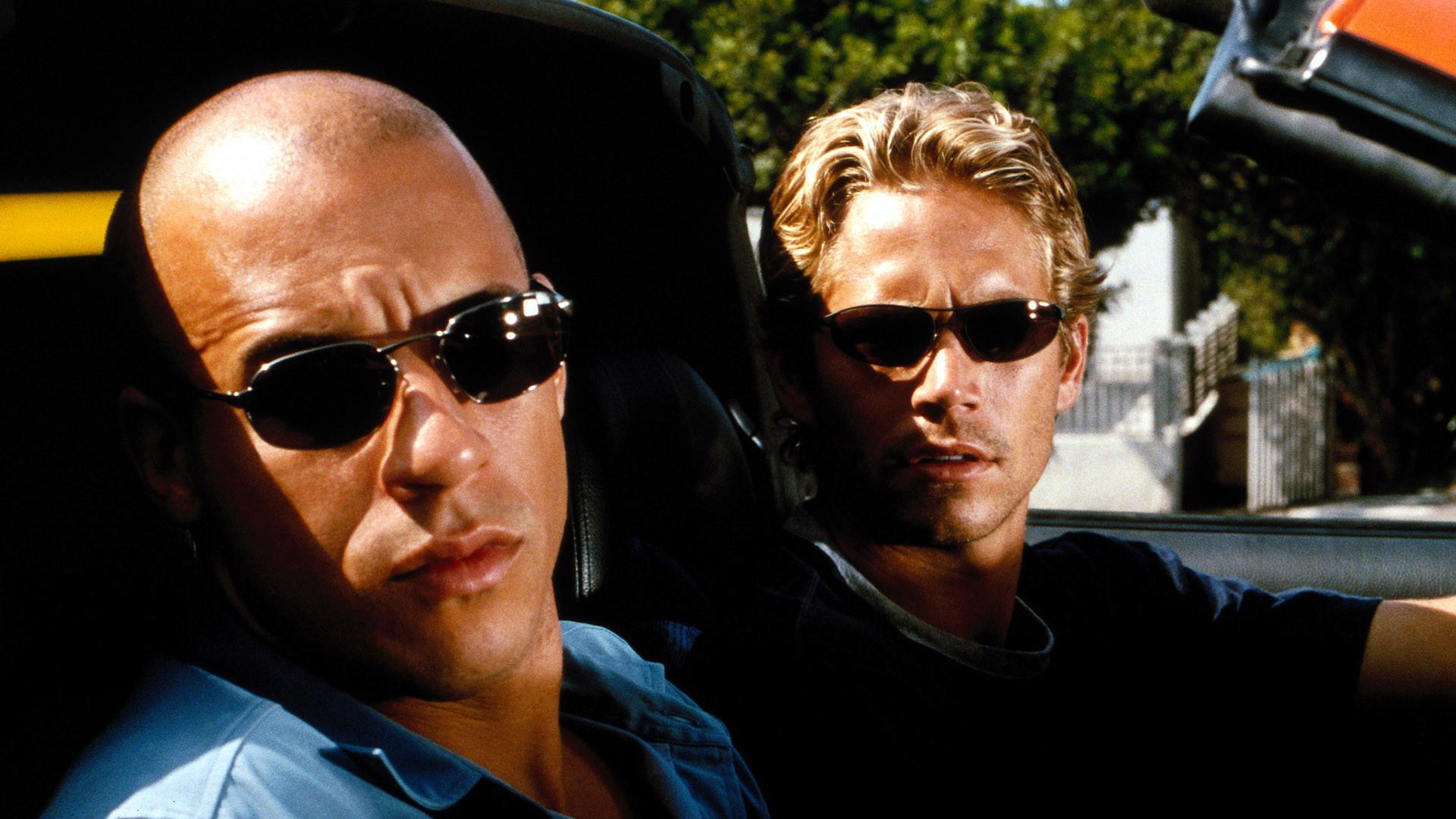
Having bested Owen Shaw and his gang in the previous instalment, now Dominic (Diesel), Brian (Walker), Letty (Rodriguez), and what seems like every main character from the series, have to pull together – with the aid of the mysterious Mr. Nobody (Russell) to take down his vengeful brother, Deckard Shaw (Statham). Throw in the hunt for a software programme, and its creator (Emmanuel), that can track anyone anywhere in the world, a trip to Abu Dhabi, and the usual amount of hyper-realistic cartoon violence, and you have the most successful entry in the franchise to date with, at time of writing, a worldwide gross of $1,352,724,000 (making it the fourth highest grossing movie ever).

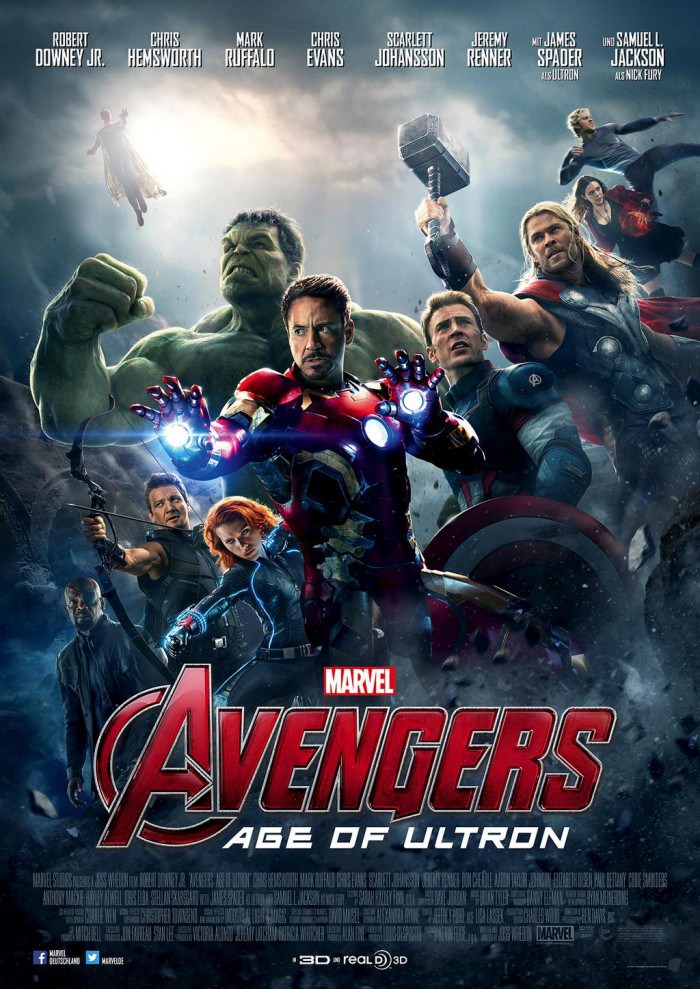
Avengers Age of Ultron

Avengers: Age of Ultron (2015)

D: Joss Whedon / 141m

Cast: Robert Downey Jr, Chris Hemsworth, Mark Ruffalo, Chris Evans, Scarlett Johansson, Jeremy Renner, James Spader, Samuel L. Jackson, Don Cheadle, Aaron Taylor-Johnson, Elizabeth Olsen, Paul Bettany, Cobie Smulders, Anthony Mackie, Hayley Atwell, Idris Elba, Stellan Skarsgård, Linda Cardellini, Claudia Kim, Thomas Kretschmann, Andy Serkis, Julie Delpy, Henry Goodman

In an attempt to retire the Avengers from group duty, Tony Stark (Downey Jr) creates a robot that comes equipped with artificial intelligence. Only there’s a flaw: the robot, named Ultron (Spader), sees the best way of carrying out his peacekeeping mission is to wipe out the human race (and thereby ensure a peaceful world). With internal conflicts hampering their efforts to combat Stark’s creation, the introduction of Quicksilver (Taylor-Johnson) and Scarlet Witch (Olsen) to the mix, a showdown between the Hulk (Ruffalo) and Iron Man in his Hulkbuster suit, and Ultron planning an extinction level event, you have a sequel that has made $424,460,000 at the box office in just over a week.

And so we have the first two candidates for 2015’s Mega-Blockbuster of the Year Award. In the red corner we have the testosterone-fuelled, carmageddon-inspired Furious 7, and in the blue corner we have Avengers: Age of Ultron, the latest juggernaut designed to increase Marvel’s grip on the world and its wallet. The inclusion of their box office takes is deliberate, as this is really what both these movies are about: making as much money as possible off the back of a heavily marketable idea. That the idea is becoming stale (Furious 7) or showing signs of running out of steam already (Avengers: Age of Ultron) is neither here nor there. These movies are guaranteed crowd pleasers, and all the studios that make them have to do is give the fans enough of what they like most to ensure those big box office grosses.

It’s a well-known fact that recent entries in the Fast and Furious franchise have been built around the action sequences: the stunts come first and then a story is created around them. Such an approach isn’t exactly new, but as the series continues, it appears that the writer, Chris Morgan, is fast running out of ways to keep it as real as possible given the absurd, physics-defying world Dominic and his family live in. Morgan has scripted every movie since The Fast and the Furious: Tokyo Drift (2006), and this time round the law of diminishing returns has clearly set in with a vengeance. With its dodgy timescales, crude attempts at characterisation, and action sequences that go on and on and on without ever changing pace (or should that be, gear?), Furious 7 is a movie that believes in its hype so much that it’s forgotten it still needs to make an effort beyond what’s expected of it.

Of course, script revisions had to be made due to the untimely death of Paul Walker, but like so many of the cast, he’s marginalised in a movie that has too many characters and too little time to do much with them apart from put them in continual jeopardy. Brewster is sidelined in the Dominican Republic (admittedly, not so bad), Johnson winds up in hospital until needed at the end, and Walker’s contribution seems reduced to fighting Tony Jaa. But with the script showing more interest in the villains (Statham, Hounsou, Russell maybe) than its heroes, it comes as a bit of a shock to realise that the main characters have nowhere to go – everyone, even Letty with her amnesia, is still the same as they were when they first appeared. Maybe this kind of familiarity is what the fans want but ultimately it just means that future entries – and there are three more planned for release – will continue to mine the same formula and with less satisfying results.

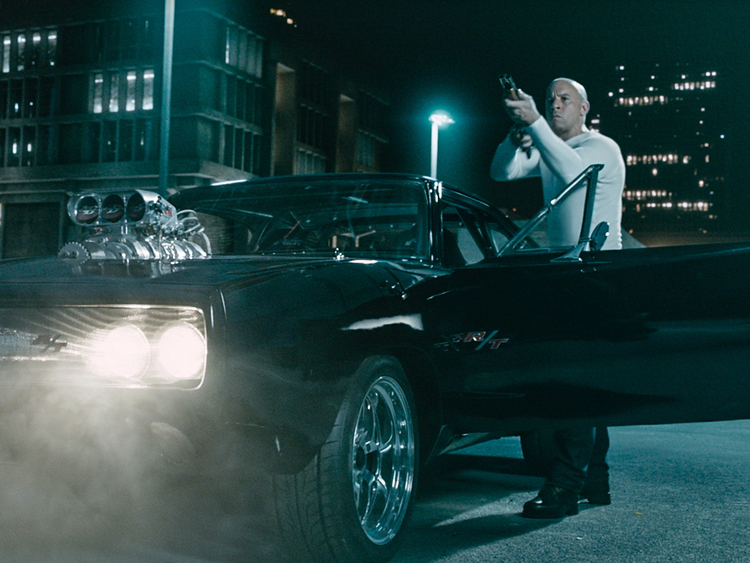
Furious 7 - scene

The same problem that occurs in Furious 7 occurs in Avengers: Age of Ultron, namely what to do with so many different characters, especially the new ones. Writer/director Whedon doesn’t appear to be as sure this time round as he was on the first Avengers movie (and it may be why he won’t be helming the two Avengers: Infinity War movies). While he does effective work exploring the personalities and idiosyncrasies of the Avengers themselves – Stark’s continuing egotism, a burgeoning relationship between Bruce Banner and Black Widow (Johansson), where Hawkeye (Renner) spends his downtime – he’s less successful when it comes to the villain, the villain’s sidekicks, and the whole let’s-level-a-city-and-cause-as-much-destruction-as-possible angle.

With so many characters to deal with, it’s inevitable that some of them don’t receive as much attention as others. The introduction of Quicksilver and Scarlet Witch is a case in point, with Taylor-Johnson reduced to asking people he’s knocked over if they saw that coming (and not just once), and Olsen saddled with a perma-frown as she casts spells on people. They have a back story but it doesn’t impact on how they behave in the movie, and their teaming up with Ultron seems convenient rather than a well thought out plot development. Likewise, we have appearances by Kretschmann (dispensed with too quickly), Serkis (as an intro to his character’s appearance in Black Panther), and Delpy (as Natasha Romanoff’s childhood instructor). All great actors, and all reduced to walk-ons in the service of the ever-expanding Marvel Cinematic Universe.

But all great superhero teams need a great villain, and while Ultron seems to pass muster, the main problem with him is the actor cast to play him. Now it’s not that James Spader is a terrible actor – far from it – but what’s clear from his performance is that, rather than come up with an entirely new characterisation, he’s gone for a slight deviation on Raymond Reddington from The Blacklist… and it’s been encouraged. As a result we have a robot that often sounds whimsical rather than destructive, and petulant when he should be megalomaniacal. Whedon is good at injecting comedy into his movies – here, the throwaway line “No it wasn’t” is used perfectly – but when he tries too hard, as he does with Ultron, the effect is lost, and the viewer could be forgiven for wondering if Ultron is meant to be so eccentric.

On the action front, once again we’re treated (if that’s the right word) to another massive showdown where buildings are levelled, the Avengers fight off an army of attackers (last time the Chi’tauri, this time Ultron’s robots), and the special effects budget goes through the (recently blasted) roof. The whole massive destruction approach is a huge disappointment, having been done to death already in movies such as Man of Steel (2013) and the previous Avengers outing (and even Furious 7 with its car park demolition). (If anyone is listening, please let Thanos take on the Avengers on his own when he finally “does it himself”.)

Avengers Age of Ultron - scene

Ratings:

Furious 7: 6/10 – overblown (though no surprises there) and lacking a coherent story, Furious 7 has all the ingredients the fans love, but as a tribute to the late Paul Walker it falls short; a triumph of hype over content, someone seriously needs to look under the hood before taking this particular baby out for another drive.

Avengers: Age of Ultron: 7/10 – overblown and lacking in any real drama, Avengers: Age of Ultron skates perilously close to being Marvel’s first dud since Iron Man 2 (2010); saved by Whedon’s attention to (most of) the characters, it lumbers through its action set-pieces with all the joy of a contractual obligation.

Share this:

  • Click to share on X (Opens in new window) X
  • Click to share on Facebook (Opens in new window) Facebook
  • More
  • Click to print (Opens in new window) Print
  • Click to email a link to a friend (Opens in new window) Email
Like Loading...

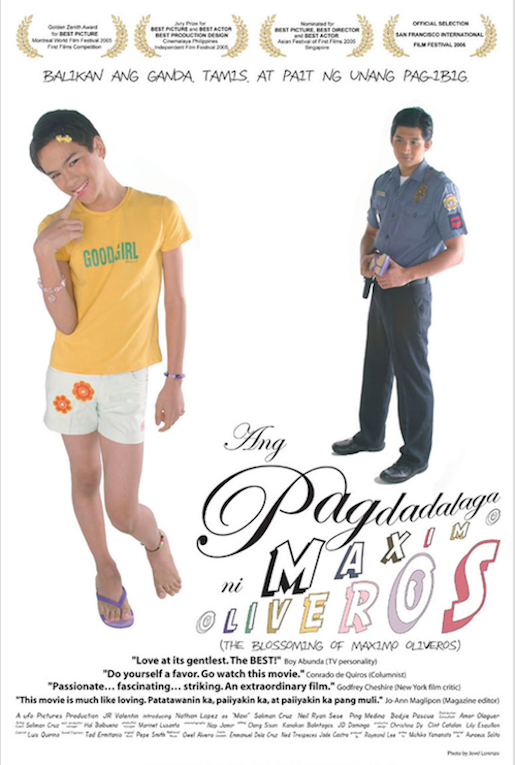
The Blossoming of Maximo Oliveros (2005)

29 Wednesday Apr 2015

Posted by dullwood68 in Movies

≈ Leave a comment

Tags

Auraeus Solito, Crime, Drama, Homosexuality, J.R. Valentin, Manila, Murder, Nathan Lopez, Neil Ryan Sese, Philippines, Ping Medina, Police officer, Review, Soliman Cruz

Blossoming of Maximo Oliveros, The

Original title: Ang pagdadalaga ni Maximo Oliveros

D: Auraeus Solito / 100m

Cast: Nathan Lopez, Soliman Cruz, J.R. Valentin, Neil Ryan Sese, Ping Medina, Bodjie Pascua, Elmo Redrico

Twelve-year-old Maximo Oliveros (Lopez) lives with his father Paco (Cruz), and his two older brothers, Boy (Sese) and Bogs (Medina). In the absence of his mother who has passed away, Maximo cooks and cleans and generally takes care of everyone. But where his brothers and father are all tough, macho men, Maximo is the opposite: he’s effeminate, sashays when he walks, and he likes dressing up in women’s clothes and wearing make up. He has a few friends who have similar interests, and most of the time they watch romantic movies in a local DVD shop.

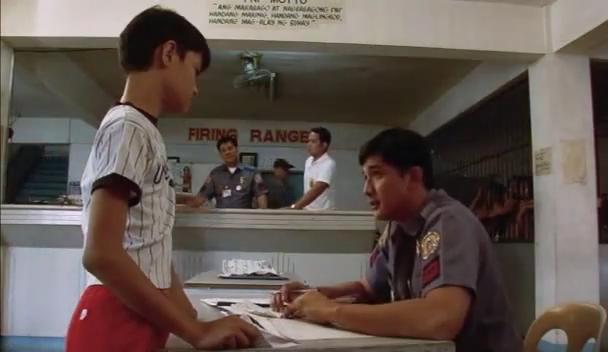
The arrival of a new police officer in the district, Victor Perez (Valentin), has Maximo wondering if what he’s seen in the movies could happen in real life. Despite the difference in their ages, Maximo develops a crush on Victor and determines to get to know him better. His attraction deepens when Victor interrupts two youths who assault Maximo and remove his clothes. Victor takes Maximo home, but earns Paco’s suspicion when he refuses to accept money as thanks. Later, the two youths are found naked and unconscious on a rubbish heap; one of them subsequently dies. At the same time, Maximo finds Boy cleaning blood from a T-shirt that belongs to Bogs.

With Victor proving to be a cop who doesn’t take bribes, Paco, who steals cell phones and sells them on, begins to become concerned over Maximo’s liking for him. Maximo cooks for him and begins to neglect his family. When Victor quizzes him over the murder of the youth, it leads to Paco, Boy and Bogs ambushing him one night and giving him a severe beating. Maximo finds him and taking him to Victor’s home, nurses him until he falls asleep. The next morning, Victor is hesitant towards Maximo, despite what he’s done, but they do share a wistful moment together that gives Maximo renewed hope that they will remain friends at least.

The arrival of a new police chief, Dominguez (Pascua), however, means promotion for Victor and a crackdown on local criminal activity. Maximo’s home is raided but the police don’t find anything. With Maximo still hoping that his relationship with Victor can be saved, Paco has other ideas: he decides he’s going to kill Victor, but when he confronts him, Paco comes face-to-face with an enemy from the past, an enemy as willing to step outside the law as Paco.

Blossoming of Maximo Oliveros, The - scene

A movie that begins brightly, almost in a carefree manner before slowly darkening until tragedy is the order of the day, The Blossoming of Maximo Oliveros is a heartfelt, uplifting movie when it comes to Maximo’s lifestyle and subsequent infatuation with Victor, but plays it safe with its more dramatic, criminal elements.

When we first meet Maximo he’s on his way home and swinging his hips as if he’s parading along a catwalk rather than the grimy backstreets of Manila. He’s unashamed, confident, and more importantly, he’s not harassed in any way. In his local community, Maximo is well-known and much liked. His family treat him no differently than they would anyone else, and are openly affectionate toward him. In short, his obviously gay mannerisms and outlook aren’t a problem – until he meets Victor. The difference in age, the social divide created by Victor’s job and Paco’s “business”, the moral and spiritual implications (Victor is a practising Catholic), all conspire to keep Maximo and Victor apart, but it’s Maximo’s naïve yearning that gives him hope.

It’s Maximo’s continued hope in spite of everything that the script by Michiko Yamamoto plays with most effectively. It’s a delicate balancing act, but Yamamoto, aided by intuitive direction from Solito and razor-sharp performances from Lopez and Valentin, succeeds in adequately capturing the heady infatuation of first love alongside that love’s inevitable disintegration. It’s handled with a great deal of charm and discretion and scenes that might have bordered on being uncomfortable aren’t allowed to become so thanks to the script’s awareness of where the boundaries are. Even when Maximo gives Victor a peck on the cheek it’s done with an emphasis on the sweetness of the gesture rather than anything more sexual.

With the Maximo’s one-sided “romance” so confidently dealt with, it’s a pleasure to see the Oliveros’ family dynamic treated with equal confidence, their close-knit inter-dependence one of the movie’s many plusses. The tenderness shown toward Maximo by his father and brothers is heartwarming and sincere, and even though their criminal activities threaten all their futures, including Maximo’s, the movie’s message is clear: this family will do whatever it can to stay together. Played with artless integrity by Cruz, Sese and Medina, this is a nuclear family (sans the mother) that has learned the hard way that family matters above all else. So when Maximo begins to place Victor ahead of his family, the threat to that solidarity is all the more disconcerting for them; it’s no wonder Paco makes the choice he does.

But while the rest of the cast play their roles with a strong sense of authenticity and purpose – with the exception of Valentin who retains a hulking presence but little else – the movie remains a showcase for the remarkable talent shown by Lopez. Making his feature debut, Lopez inhabits the role of Maximo with so much assurance and poise that it doesn’t seem as if he’s acting at all. From his first appearance making that catwalk strut to the scene where Victor tests his loyalty to his brothers, to the final scene where he employs an altogether different walk from that first one, Lopez’s performance is never less than authoritative and genuine. He’s not fazed by the emotional requirements of the script and handles each development in the story with an ease you can imagine some other actors would kill for.

But while the movie has several strong components going for it, one of them isn’t the descent into turgid melodrama it takes in the final half hour, as notions of honour and revenge take a back seat to the carefully constructed storyline that’s gone before. With no other possible ending for Maximo and Victor’s relationship than the one that occurs, the movie was always likely to end quietly, but Yamamoto’s script turns its focus away from its main protagonist and leaves him on the sidelines while his future is decided on without him. Somehow, given Maximo’s intelligence and acceptance of the world he lives in, it seems a shame to marginalise him in this way. And a quick mention for the music, mostly guitar-based, but which is, at times, incredibly intrusive.

Rating: 8/10 – a compelling drama about the consequences of one young boy’s first love, The Blossoming of Maximo Oliveros makes no judgment about his love, but does tread a very fine line in displaying it; with a mesmerising performance from Lopez it’s genuinely affecting and rewarding.

Share this:

  • Click to share on X (Opens in new window) X
  • Click to share on Facebook (Opens in new window) Facebook
  • More
  • Click to print (Opens in new window) Print
  • Click to email a link to a friend (Opens in new window) Email
Like Loading...

Unit 7 (2012)

17 Friday Apr 2015

Posted by dullwood68 in Movies

≈ Leave a comment

Tags

1992 World Expo, Alberto Rodríguez, Antonio de la Torre, Corruption, Crime, Drama, Drugs, Joaquín Núñez, José Manuel Poga, Mario Casas, Police, Review, Seville, Spain, Thriller, Violence

Grupo 7

Original title: Grupo 7

D: Alberto Rodríguez / 95m

Cast: Antonio de la Torre, Mario Casas, Joaquín Núñez, José Manuel Poga, Inma Cuesta, Lucía Guerrero, Estefanía de los Santos, Alfonso Sánchez, Julián Villagrán, Carlos Olalla

Seville, 1987. With five years to go before the city plays host to the 1992 World Expo, the authorities are determined to root out any and all crime in the city, and particularly the drugs trade. Spearheading this attempt is Unit 7, made up of four officers: tough, uncompromising Rafael (de la Torre), young, ambitious Ángel (Casas), jovial, emotional Mateo (Núñez), and vain, homophobic Miguel (Poga). Using informants such as Joaquín (Villagrán) the team begins dismantling the various dealers and suppliers that threaten the Expo’s success. But their initial busts don’t amount to very much. It’s only when they find a substantial amount of heroin at the apartment of a prostitute known as Mahogany (de los Santos), Ángel takes some of it, and the team agrees to use it to create more informants, and thereby catch more dealers and suppliers.

Over the next four years their plan comes to fruition, and to such an extent that the team are responsible for fifty per cent of all arrests made by the Seville police. But tensions arise within the group as Rafael, nominally the group’s leader, is challenged more and more by an increasingly erratic and unpredictable Ángel. Ángel becomes more and more intolerant of the drug dealers and the junkies, and often violently assaults them in the way that Rafael used to. But where Ángel becomes more inured to the violence, and emotionally closed off – and which affects his marriage to Elena (Cuesta) – Rafael becomes more relaxed and indifferent, due to his relationship with a young junkie, Lucía (Guerrero).

The team’s high arrest rate also begins to attract the attention of Internal Affairs, and the team find themselves being followed. With an increasing media spotlight on them as well, a misguided raid on a home in the suburbs causes them to lose some of their credibility (and sense of invincibility). And when Ángel becomes the target of someone who knows why the team are so successful, and is prepared to use terror tactics to undermine them, their efficiency continues to falter. When they’re ambushed and humiliated in a similar fashion that they used to intimidate some junkies once before, and the identity of their tormentor is revealed, it leads to Ángel and Rafael going back to deal with their tormentor once and for all.

Grupo 7 - scene

Incorporating contemporary footage of the World Expo site being developed and built over the years between 1987 and 1992, Unit 7 provides a social, political and historical perspective to its story that adds some degree of depth to the material, and while this is to be applauded, the episodic nature of the story ultimately works against it, leaving the viewer wanting to know more about the characters and their motivations, and with the feeling that there’s a lot more going on behind the scenes than we ever get to see or know about.

The trickiest (and not entirely convincing) aspect of all is the character of Ángel, set up as the rookie of the group and suitably naïve when the movie begins. An unfortunate encounter with a drug dealer leaves his lack of experience exposed, and his attempts to gain promotion are hampered by his diabetes – a plot device which is used in such a haphazard manner it might as well not be mentioned. But from the moment he picks up the pack of heroin and hides it he becomes a different man: arrogant for the most part and acting more like a vigilante than a cop. It’s a swift, unexpected change in direction, and while it helps set up the rest of the movie, appears too much out of the blue for comfort.

In contrast, Rafael’s turn to the “softer” side is given more room to develop, and while his relationship with Lucía provides more of an emotional component for the movie than it has anywhere else, the whole thing ultimately doesn’t go anywhere and leaves Rafael just as embittered and alone as he was at the beginning. With Mateo equalling comedy relief and Miguel placed firmly in the background, screenwriter Rafael Cobos’ more random approach to characterisation has the effect of distancing the viewer from the team, even though strong efforts are made to show their camaraderie and their combined sense of purpose. Certainly the cast, all well chosen for their roles, put in strong, confident portrayals – with de la Torre and de los Santos proving especially convincing – and make more of their roles than the script allows for.

Thankfully, Cobos’ script does work extremely well in its attempts to portray the effort made to break up various drugs rings and the kind of intimidation and violence that goes with it. The team regularly use excessive force, and while it’s probably not a misrepresentation of the times or the police attitude towards criminals, the savagery of their actions is remarkably one-sided – even when their tormentor reveals himself he doesn’t treat them as harshly as he was by them. This difference again has the effect of distancing the viewer from the group, and their subsequent actions, plus their ultimate fate come 1992, lacks the resonance it should have had.

That said, the action scenes are well-mounted, and Rodríguez shows a flair for unusual camera angles that makes – in particular – the opening rooftop chase such a visceral and propulsive experience to watch. With so many movies like this being made across the world (and too many in the US), Rodríguez’ visual acuity helps lift the movie above many of its competitors, and while this is his first attempt at making a película policial, bodes well enough if he should decide to make another. Aided by regular collaborators DoP Alex Catalán and composer Julio de la Rosa, Rodríguez has fashioned a hard-hitting, if emotionally distant crime drama that, fortunately, scores more often than it misses.

Rating: 7/10 – though struggling to offer a connection for the viewer on an emotional level, Unit 7 does provide a solid, impactful ride for most of its running time; with a firm sense of place and time, and an often impressive look and feel to it, this movie is still worth tracking down.

Share this:

  • Click to share on X (Opens in new window) X
  • Click to share on Facebook (Opens in new window) Facebook
  • More
  • Click to print (Opens in new window) Print
  • Click to email a link to a friend (Opens in new window) Email
Like Loading...

The Keeper of Lost Causes (2013)

06 Monday Apr 2015

Posted by dullwood68 in Movies

≈ 3 Comments

Tags

Assad, Carl Mørck, Cold cases, Crime, Denmark, Department Q, Drama, Fares Fares, Jussi Adler-Olsen, Literary adaptation, Mikkel Nørgaard, Nicolaj Lie Kaas, Police, Review, Sonja Richter, Thriller

Keeper of Lost Causes, The

Original title: Kvinden i buret

aka The Woman in the Cage

D: Mikkel Nørgaard / 97m

Cast: Nikolaj Lie Kaas, Fares Fares, Sonja Richter, Peter Plaugborg, Søren Pilmark, Mikkel Boe Følsgaard, Troels Lyby

Following a police raid that leaves his partner, Hardy (Lyby) paralysed and another officer dead, detective Carl Mørck (Kaas) is transferred out of homicide and into Department Q, which deals exclusively with cold cases. His brief, along with his assistant, Assad (Fares), is to review the cases, submit a brief report and then close them. The first case he looks at concerns the apparent suicide of politician Merete Lynggaard (Richter) five years ago. Something about the case doesn’t make sense to Mørck and he reopens the investigation. He looks through the witness statements and finds that one statement wasn’t included in the final report: that Merete’s brother, Uffe (Følsgaard), who was with her on the ferry she is supposed to have jumped overboard from, was seen with a man in a raincoat.

Since Merete’s suicide, Uffe has resided in a home. Mørck and Assad visit him but his condition – brain damage from a car accident when he and Merete were children – prevents him from being of any help. A conversation with one of Merete’s colleagues reveals her liaison with a man at a conference shortly before she killed herself. Mørck gets hold of the list of attendees and photos that were taken at the conference. Suspecting that Uffe might recognise one of the men at the conference, they show him the various photos that show Merete and one of the male delegates. Uffe does recognise one of them, a man named Daniel Hale. With a solid lead to work with, Mørck’s investigation is brought up short by his boss, Marcus (Pilmark) following a complaint by the manager of the home and the original investigating officer. Unable to let things go, Mørck continues his investigation and travels to Sweden to speak to Hale.

When he and Assad get there, they discover that Hale died a few months after Merete’s suicide. They also discover that the man who attended the conference and was recognised by Uffe isn’t Daniel Hale. Learning that the man is likely to be a friend of Hale’s known as Lasse, the pair return to Denmark only to be suspended from duty. But again, Mørck can’t let things drop, and their investigation leads to an isolated farmhouse and a revelation involving the car accident that left Uffe in his current condition.

Keeper of Lost Causes, The - scene

The first of four movies adapted from Danish author Jussi Adler-Olsen’s Department Q novels – The Absent One (2014), A Conspiracy of Faith (2015), and The Purity of Vengeance (TBC) complete the quartet – The Keeper of Lost Causes is an efficient, gripping thriller that introduces possibly one of the dourest police detectives in recent cinema history. At one point, Assad remarks that he’s never seen Mørck smile. Mørck’s response? “My wife left me. My colleague’s dead, and my best friend’s a cripple … I don’t have a lot to smile about.” It’s a pithy, succinct summation of Mørck’s character, and while it seems in keeping with the recent trend in Scandinavian crime fiction and movies, the combination of Mørck’s gloomy outlook on life and Kaas’s glum demeanour raise this particular movie into the above average category.

With the central character so firmly established in the opening fifteen minutes, the movie is then free to concentrate on the mystery surrounding Merete’s apparent suicide. But as Mørck begins to piece together the clues that point to something more sinister, the script by Nikolaj Arcel takes a parallel line and shows the viewer what happened that day on the ferry. It’s a bold move, as the mystery elements inherent in the story are jettisoned in favour of a more cross-linear approach where the events of five years before run concurrently with the progress of Mørck’s investigation. This leaves the viewer with an entirely different type of crime drama than seems in play from the beginning, and while the villain of the piece enters the story quite late in the day, their appearance and the reason for their behaviour is cleverly revealed (even if what they actually do isn’t properly explained or feels credible).

The plot and various storylines play out with a surprising attention to detail, and Arcel’s adaptation does a good job of downplaying any implausibilities such as Mørck’s boss Marcus ignoring the progress he’s made in disputing the suicide theory. This aside, the movie is a solid, methodically paced crime drama that works best by keeping it simple, and Nørgaard’s unfussy, yet expressive direction is best exemplified by two moments of unexpected lyricism relating to Merete’s childhood. He’s good with the cast as well, eliciting strong, confident performances from all concerned. Kaas’s downbeat yet focused portrayal of Mørck is one of the things that makes the movie work so well; he’s completely credible as the impatient, disrespectful and arrogant ex-homicide detective who finds a new home in Department Q. And he’s matched for dedication and immersion in the role by Fares as Assad. Fares, who is Lebanese, spent two months learning Danish for the movie, but you wouldn’t know it. Assad is the sidekick role, but Fares brings a determination and an intelligence to the role that a lot of seasoned actors would have skirted past on their way to a more stereotypical portrayal.

Shot by DoP Eric Kress with an emphasis on dark, shadowy interiors and overcast, cloudy exteriors, the movie is recognisably part of the recent Nordic Noir genre that has spawned a myriad of similar tales both on the big screen and television. But thanks to a clever script, a director on top of his game, and a cast that brings credibility to (almost) every scene, The Keeper of Lost Causes is a terrific first movie in the series. If this outing is anything to go by, then the remaining three movies will definitely be ones to watch.

Rating: 8/10 – a well-paced, intelligent, and above all, absorbing crime thriller, The Keeper of Lost Causes is a testament to good story telling; quietly ambitious, the movie is a terrific example of how to maintain suspense without undermining either the plot or the characters.

Share this:

  • Click to share on X (Opens in new window) X
  • Click to share on Facebook (Opens in new window) Facebook
  • More
  • Click to print (Opens in new window) Print
  • Click to email a link to a friend (Opens in new window) Email
Like Loading...

Tracers (2015)

31 Tuesday Mar 2015

Posted by dullwood68 in Movies

≈ Leave a comment

Tags

Action, Adam Rayner, Bike messenger, Chinatown, Crime, Daniel Benmayor, Drama, Marie Avgeropoulos, Parkour, Review, Robberies, Taylor Lautner, Thriller

Tracers

D: Daniel Benmayor / 94m

Cast: Taylor Lautner, Marie Avgeropoulos, Adam Raynor, Rafi Gavron, Luciano Acuna Jr, Josh Yadon, Johnny Wu, Sam Medina, Amirah Vann, Christian Steel, Wai Ching Ho

Cam (Lautner) has a problem: he owes the Chinese Mafia $15,000 and his work as a bike messenger isn’t earning him enough to meet the repayment schedule that’s been arranged. When his bike is totalled in a collision caused by a female freerunner, Cam doesn’t know what he’s going to do next. But the next day he finds that his “girlfriend” has dropped off a new bike where he works. Cam goes in search of his mystery benefactor and eventually catches up with her. Her name is Nikki (Avgeropoulos) and she’s part of a small group of tracers that includes her brother, Dylan (Gavron), and friends Tate (Acuna Jr) and Jax (Yadon). Cam is attracted to Marie and at first it’s his main reason for hanging out with them, but when his new bike is stolen and he has to move out of the garage space he’s renting because the Chinese Mafia threaten his landlord (Vann) and her young son (Steel), he tells the group that he wants “in” on whatever it is that they do (and which is probably both illegal and lucrative).

Cam eventually meets Miller (Raynor) who tells him that he runs the group as a kind of specialist team, hired to carry out dangerous or high risk “jobs” that are illegal, most of which involve stealing. Cam goes on a job with them that turns out to be a test, which he passes. But the money he’s earning isn’t enough to pay off his debt. At the same time, he and Nikki become closer, even though she is with Miller. They begin seeing each other, though Miller becomes suspicious. When Miller announces a big job, one that will earn each of them around $20,000, Cam sees his way out. But when he’s picked up for the job and Nikki isn’t taking part, he begins to wonder if Miller is setting him up. But the job, a robbery at the “bank” of a notorious Korean gang, goes wrong and in their attempt at escaping, Jax is killed and Cam ends up being arrested. But there is a surprise in store for him, but one that he might be able to turn to his advantage – if he stays alive long enough.

Tracers - scene

Since the first and subsequent Twilight movies, the career of Taylor Lautner hasn’t exactly set cinema screens alight. From being lost in the giant ensemble that was Valentine’s Day (2010), to the entirely risible Abduction (2011) and an uncredited turn in Grown Ups 2 (2013), his career seems to have stalled. On the strength of Tracers it doesn’t look as if it’s going to get any better any time soon.

It’s not that the movie is all bad or that Lautner is – in fact, he’s just about bearable – but it is the kind of movie that the word “disposable” was made for, occasionally exciting but generally quite benign and underwhelming. No one is required to do too much in the way of emoting, and the script seems determined to include as much in the way of bland dialogue as it can, while each character wanders from scene to scene with the vacant approach of someone under hypnosis. Even when Cam and Nikki end up in bed together it’s all Lautner and Avgeropoulos can do to make it seem like they’re attracted to each other.

But despite all this, where the movie does score points is with its parkour scenes, which stay just this side of inventive, and manage to install some much needed energy and thrills into proceedings. It’s also good to see that Lautner has put in his time learning how to participate without looking like an amateur, and if he’s not given anything too dangerous to jump across/down from/over, then it shouldn’t be a surprise. That said, it’s fun to watch his training montage and work out which fails were choreographed and which were originally meant to be outtakes.

With the camera following Cam and the gang from time to time on their parkour routines, the excitement of the chase is never far away, and there’s one sequence which looks set to emulate the foot chase from Point Break (1991), but unfortunately it’s over almost as soon as it’s started – did no one think to strap a helmet-cam on someone at any point? And the twin action sequences toward the end of the movie raise the raise things out of the doldrums of the previous hour. But without these elements – shot with an energetic, well-paced attention to low angles by DoP Nelson Cragg – Tracers is a largely humdrum affair that screams banality from every (other) angle.

Outside of Lautner, the cast are largely forgettable, with the exception of Wu who brings both humour and menace to his role as Tong enforcer Jerry, and Vann who portrays Cam’s landlady with a quiet grace that makes her the most credible character in the whole movie. Benmayor lacks the experience needed to meld the characters and the action together into a unified whole, and directs much of the movie as if from a distance, almost as if he were leaving the cast to direct themselves (and if so, that wasn’t such a good idea either). With his attention wandering – sometimes within a scene – it makes for an uneven, debilitating viewing experience that you won’t want to repeat.

Rating: 4/10 – with parts of the movie feeling padded out and slowed down unnecessarily, Tracers only picks up when its cast fling themselves over and around various rooftops; bordering on vacuous, it’s a movie that could be viewed as the second nail in the coffin of Lautner’s career.

Share this:

  • Click to share on X (Opens in new window) X
  • Click to share on Facebook (Opens in new window) Facebook
  • More
  • Click to print (Opens in new window) Print
  • Click to email a link to a friend (Opens in new window) Email
Like Loading...

Cymbeline (2014)

18 Wednesday Mar 2015

Posted by dullwood68 in Movies

≈ Leave a comment

Tags

Anton Yelchin, Biker gang, Crime, Dakota Johnson, Delroy Lindo, Drama, Ed Harris, Ethan Hawke, Iachimo, Imogen, John Leguizamo, Literary adaptation, Michael Almereyda, Milla Jovovich, Mistaken identity, Murder, Penn Badgley, Posthumus, Review, Shakespeare, Thriller

Cymbeline

D: Michael Almereyda / 98m

Cast: Ethan Hawke, Ed Harris, Milla Jovovich, John Leguizamo, Penn Badgley, Dakota Johnson, Anton Yelchin, Peter Gerety, Kevin Corrigan, Vondie Curtis-Hall, Delroy Lindo, James Ransone, Spencer Treat Clark, Harley Ware, Bill Pullman

Imogen (Johnson) and Posthumus (Badgley) are young lovers who have married in secret and exchanged gifts of a ring (for Posthumus) and a bracelet (for Imogen). Their marriage is not to the liking of Imogen’s father, biker king Cymbeline (Harris). He banishes Posthumus, and so paves the way for his second wife, the Queen (Jovovich) to advance her own son, Cloten (Yelchin) as Imogen’s husband, in an attempt to secure control of the biker gang when Cymbeline is dead. Aided by his servant, Pisanio (Leguizamo), Posthumus goes to stay with his friend Philario (Ransone). There he meets Iachomo (Hawke) who wagers that he can seduce Imogen to prove that she isn’t as virtuous as Posthumus believes. The wager accepted, Iachomo visits Imogen and when a direct assault on her virtue backfires, he portrays it as a test of her commitment to Posthumus – which she accepts. Before he leaves he asks her to look after an item for him overnight, which she also agrees to.

The item is a chest, one that Iachomo has hidden himself inside. While Imogen sleeps he climbs out of the chest and puts together evidence that he has slept with her. He takes this evidence back to Posthumus who, enraged by Imogen’s seeming duplicity, sends two letters: one to Imogen asking her to meet him at Milford Haven, the other to Pisanio asking him to take her there and when they arrive, to kill her. Pisanio, however, is unable to carry out his order and shows Imogen his letter. He has her disguise herself as a boy and tells her to travel on to Milford Haven; he also gives her what he believes to be a remedy for travel sickness that he has taken from the Queen, but which is a potion that will mimic death.

Meanwhile, Cloten discovers Posthumus’ plan to meet Imogen and heads to Milford Haven himself with the intention of killing Posthumus and bringing Imogen back to marry him. Imogen has reached the town already and fallen in with Belarius (Lindo) and his two “sons” Guiderius (Clark) and Arviragus (Ware). She tells them her name is Fidele. While they are out hunting, they encounter Cloten who insults and then threatens Guiderius, who in turn kills him and then beheads him. Imogen, feeling unwell, takes the remedy and becomes as dead. Belarius decides to bury her with Cloten’s body; when she wakes she believes Cloten to be Posthumus as he is wearing similar clothes. With both she and Posthumus believing themselves lost to each other, an impending war between Cymbeline’s gang and the Rome police – to whom they pay a tribute – proves to be the unlikely cause of their reconciliation.

Cymbeline - scene

In adapting the play by William Shakespeare, writer/director Almereyda has done two things very well, and two things not so well. The first is to employ an incredibly talented cast, all of whom are able to take Shakespeare’s lines and make them sound as natural as modern day speech, fully understandable and with clear purpose in their meaning. The likes of Hawke – reuniting with Almereyda for the first time since Hamlet (2000) – Harris, Leguizamo and Lindo provide convincing interpretations of the prose and help the casual viewer through some of the more confusing aspects of the plot (mistaken identities are key here). The second is to condense the play’s final third into a more manageable “wrapping up” of things, even if it all feels rushed and at the expense of the movie’s previously more measured pace.

But where Almereyda gets those things absolutely right, where he gets it absolutely wrong proves too damaging for the movie to recover from. The first is to set the action in a modern day setting, mostly Brooklyn, and to flavour the movie as if it were a version of Shakespeare meets Sons of Anarchy. This backdrop, given that it should enhance the drama – the Queen persuades Cymbeline to back out of his arrangement with the Rome police in the hope that war between them will see him dead – instead seems ponderous and ill-considered, more of a budgetary consideration than a narrative one. It leads to some incongruous moments, such as Cloten pushing a motorbike along a gravel road, Imogen choosing her nom-de-plume thanks to a T-shirt worn by Guiderius, and Posthumus getting about on a skateboard. While some of these tweaks may have appeared sound in the pre-production phase, on screen they’re not as effective as was probably hoped for.

The second problem is with Almereyda’s direction itself. The movie plods along from scene to scene with little energy or flair displayed, and struggles to provide any momentum to take the audience with it. There’s a signal lack of connection between scenes that makes for a stop/start experience, the narrative appearing jumbled and ill at ease with itself, like a story that needs more cohesion. With so many subplots and supporting characters, Cymbeline looks and feels like a movie that can’t quite get a grip on what it’s trying to say, or even how to say it. Again, if it weren’t for the very talented cast, the movie would founder even more, and the audience would be left adrift, waiting – unsuccessfully – for Almereyda to place his authority on the material and make it work with more style and verve.

Generally regarded as one of Shakespeare’s weaker plays (written at a time when he seemed to be bored with them), Cymbeline is a strange choice for a movie adaptation, its tale of thwarted lovers and political machinations proving not quite as amenable to the translation as might be expected. It also looks very much as if it were shot too quickly – some of the set ups look rushed or improvised. Still, it’s a brave choice by Almereyda, but if he has any plans to adapt any more of Shakespeare’s works, he might be better off securing a bigger budget, and concentrating on the script rather than directing. After all, “the play’s the thing…”

Rating: 5/10 – a dour, unimpressive adaptation, Cymbeline is rescued by a set of strong performances and an astute conflation of the plot; not as engrossing as it should have been, but not as awful as the early scenes seem to indicate.

Share this:

  • Click to share on X (Opens in new window) X
  • Click to share on Facebook (Opens in new window) Facebook
  • More
  • Click to print (Opens in new window) Print
  • Click to email a link to a friend (Opens in new window) Email
Like Loading...

Blackhat (2015)

25 Wednesday Feb 2015

Posted by dullwood68 in Movies

≈ 1 Comment

Tags

Action, Chris Hemsworth, Computer virus, Crime, Drama, Hacker, Hong Kong, Jakarta, Leehom Wang, Michael Mann, Nuclear plant, Remote Access Tool, Review, Thriller, Viola Davis, Wei Tang

Blackhat

D: Michael Mann / 133m

Cast: Chris Hemsworth, Leehom Wang, Wei Tang, Viola Davis, Holt McCallany, Andy On, Ritchie Coster, Christian Borle, John Ortiz, Yorick van Wageningen

When a nuclear plant in Chai Wan, Hong Kong is targeted by a hacker (van Wageningen) and the cooling pumps made to explode and cause a radiation leak, the Chinese authorities hand over the investigation to cyber warfare officer Chen Dawai (Wang). When the same hacker infiltrates Chicago’s Mercantile Trade Exchange, causing soy futures to rise, it becomes clear that he’s using a Remote Access Tool (RAT). Dawai insists that that he be allowed to work with the FBI on a joint investigation, and he travels to the US where he joins forces with Agent Carol Barrett (Davis). Once there he reveals that the original code for the RAT was written by himself and another hacker named Nick Hathaway (Hemsworth). Hathaway is currently in prison for committing computer crimes; Dawai wants him released to help with the investigation.

With Nick on board – though security tagged and accompanied by US Marshal Jessup (McCallany) – and with Dawai’s US based sister, Lien (Tang) helping as well, they discover that the soy futures hack was designed to siphon off nearly $75 million, but they don’t know why. When they discover the hacker has had a mole in the Trade Exchange, Nick and Lien find he’s been killed but was supposed to meet his boss at a restaurant. Nick finds a clue to the hacker’s identity, while the money is traced to a mercenary named Kassar (Coster). An attempt to apprehend him in Hong Kong fails and several of Dawai’s men are killed.

A break in the investigation comes with the retrieval of a data drive from the nuclear plant. Although it’s been corrupted by the radiation leak, Barrett tells Hathaway about a program the NSA uses called Black Widow which assesses corrupt data and is then able to reconstruct it by “filling in the blanks”. Her request to use it is denied however, which prompts Hathaway to use it anyway, hacking into the programme and using it to discover that the hacker’s server is based in Jakarta. At the same time, Lien discovers that the hacker has an interest in a remote site in Perak, Malaysia.

Hathaway’s use of Black Widow is detected, and Barrett is ordered to bring him back to the US. Dawai alerts him about this, and Hathaway and Lien (who have started a relationship) attempt to flee Hong Kong with her brother’s help. But Kassar ambushes them. Hathaway and Lien manage to get away and they travel to Perak to see what is so interesting about the site. It’s there that they discover the hacker’s true motives, and devise a way in which they can stop him.

Blackhat - scene2

It’s always a pleasure to watch a Michael Mann movie. You know going in that it’s going to look beautiful (especially if there are scenes shot at night – and there’s always scenes shot at night), there’ll be a level of machismo that few other directors can attain, some pulse-pounding action sequences, and a storyline that will have been researched for the utmost authenticity. And so it proves with Blackhat, Mann’s first movie since Public Enemies (2009), and a return to the world of modern day criminals for which he has such a proven affinity. However, while Blackhat‘s plot and storyline are drawn from recent events – in this case the Stuxnet computer worm that apparently ruined one fifth of Iran’s nuclear centrifuges in 2010 – and it paints a convincing portrait of cyber crime and how systems can be breached, it badly falls down in its attempts to show just how cyber crime can be detected and defeated.

There are several problems with the overall plot that don’t add up, and it’s these problems that stop the movie from being as effective – or gripping – as Mann intended. The first is the coincidental nature of the relationship between Dawai and Hathaway and they’re having written the RAT code. It’s an unnecessary, and clumsy contrivance that asks the viewer to believe that they wrote this code as a test of their abilities and then they just left it on the Internet, apparently unaware of what it could be potentially used for. The second problem is the idea that a felon, serving time for computer crimes, would be allowed out of the country in order to help with the investigation. Hathaway is even allowed to take part in the attempt to capture Kassar in Hong Kong; how was that allowed to happen? All he needs is a desk and a computer – he doesn’t need to be globe-trotting with everyone else.

The third and most glaring problem is the way in which senior agents such as Barrett and Jessup allow Hathaway so much leeway in his efforts to catch the hacker. At the point where the Black Widow program is introduced, the speed and the ease with which Barrett goes along with Hathaway’s plan to hack into it is breathtaking for the way it undermines any authority she had up to that point. It would have been a better idea for Hathaway to have done it behind her back, thus making the need to bring him in once his hack is detected that much more dramatic, but Morgan Davis Foehl’s script instead takes the opportunity to throw all further attempts at credibility into the trash bin.

And like so many of his colleagues before him, Mann is unable to make looking at computer screens and tapping on keyboards anywhere near exciting. To offset this he focuses on the characters and their reactions to what’s happening on the computer screens, but this is even less exciting, and the viewer is subjected to endless reaction shots that are meant to convey various emotions but ultimately mean nothing as most reactions are ones of surprise or moments when a light bulb goes on over someone’s head.

Against all this, the cast do their best but Hemsworth is miscast, his performance only convincing when he’s required to physically go up against the bad guys. Wang and Tang both give earnest performances, but struggle with the script’s insistence on making their characters crime movie stereotypes: he the diligent cop battling professional prejudice, she the hero’s girlfriend (despite being independent and having a mind of her own the script still requires her to “stand by her man” when the going gets tough). Davis flits in and out of the narrative, while you could be forgiven for forgetting that McCallany was there at all, his character’s job to babysit Hathaway at all times conveniently ignored when the script requires it.

As with any Michael Mann movie, Blackhat does at least look impressive, DoP Stuart Dryburgh providing the kind of hyper-stylised, glossy feel to the night-time exteriors that we’ve come to expect from Mann’s movies. The scenes set in Hong Kong have a wonderfully organic, shiny aspect to them that makes the backgrounds and the locations the most effectively shot for a Mann movie since Collateral (2004), while the lighting throughout offers enough mood and intensity for a dozen other thrillers. But, ultimately, it’s not enough to rescue a movie that is let down by a poorly constructed script and its sympathy-free characters. (In fact, the movie has been so badly received that one of its distributors, Universal Pictures International, has decided not to release it theatrically in Australia at all.)

Rating: 4/10 – while Mann is a clever and experienced enough director to keep things moving, there are too many cracks to paper over no matter how quickly he does so; a major disappointment, Blackhat is a reminder that even the most talented of directors don’t always get it right (sadly).

Share this:

  • Click to share on X (Opens in new window) X
  • Click to share on Facebook (Opens in new window) Facebook
  • More
  • Click to print (Opens in new window) Print
  • Click to email a link to a friend (Opens in new window) Email
Like Loading...

The Fast and the Furious (2001)

31 Saturday Jan 2015

Posted by dullwood68 in Movies

≈ Leave a comment

Tags

Action, Brian O'Conner, Crime, Dominic Toretto, Drama, Hijackings, Jordana Brewster, Michelle Rodriguez, Paul Walker, Race Wars, Review, Rob Cohen, Street racing, Thriller, Undercover cop, Vin Diesel

Fast and the Furious, The

D: Rob Cohen / 106m

Cast: Vin Diesel, Paul Walker, Michelle Rodriguez, Jordana Brewster, Rick Yune, Chad Lindberg, Johnny Strong, Matt Schulze, Ted Levine, Ja Rule, Vyto Ruginis, Noel Gugliemi, Reggie Lee

In Los Angeles, a gang of thieves are hijacking trucks using heavily modified Honda Civics. Sent undercover to find out who is behind the thefts, cop Brian O’Conner (Walker) infiltrates the street racing scene, making a particular impression at Toretto’s Market where he flirts with Mia Toretto (Brewster). This angers Vince (Schulze) who is attracted to Mia and is part of Dominic Toretto (Diesel)’s crew (Dominic is the focus of Brian’s investigation). Vince and Brian fight but Dominic breaks it up. Later, Brian turns up at a street race and bets his car’s pink slip that he can beat Dominic, but he loses. The police arrive to break up the event and Brian sees a chance to get into Dominic’s good books: he helps him get away.

They find themselves in territory controlled by Dominic’s old rival, Johnny Tran (Yune) and his cousin Lance (Lee). Johnny blows up Brian’s car, leaving him to find a “ten-second car” for Dominic. He finds a wrecked Toyota Supra and brings it to Dominic’s garage where he starts to restore it; he also begins dating Mia. Evidence points toward Tran being responsible for the hijackings, but a raid on Tran’s property reveals the goods Brian has seen there to have been legally purchased. With Tran no longer a suspect, Brian begins to believe that Dominic and his crew are responsible.

A street racing event, Race Wars, sees Dominic’s friend, Jesse (Lindberg) lose a race with Tran. Jesse flees with the car he should have handed over. Tran demands Dominic find the car and bring it to him, but Dominic is less than accommodating. Instead of looking for Jesse, Dominic and his team (who are the thieves), attempt a heist in order to help get Jesse out of Tran’s debt. But the heist goes wrong, and when Vince is badly injured, Brian breaks his cover to get him help.

Brian later attempts to arrest Dominic but he’s interrupted by the return of Jesse, who is killed by Tran and Lance in a drive-by shooting. Dominic and Brian both go after them, and it leads to a desperate chase through the streets and Brian making the toughest decision of his police career.

Fast and the Furious, The - scene

Back in 2001, the idea that this modest, straight-shooting actioner would spawn six sequels, and that they would be increasingly successful – so much so that the fifth sequel in the series, Fast & Furious 6 (2013) would gross over $750 million worldwide – seemed an unlikely one. The cast weren’t exactly household names, the director had made a modest success of Dragon: The Bruce Lee Story (1993) but again wasn’t very well known, and the concept of street racing as a backdrop for criminal activity involving high-speed cars didn’t sound that exciting.

And yet the movie was – and remains – a pleasant surprise, not quite as high-octane as some of its successors, but (if it’s at all possible) more grounded and less reliant on being over the top. The car chases and vehicular action sequences are all well-staged and expertly choreographed, but there’s a lot of attention paid to the characters, and their milieu is entirely credible. With the groundwork providing a solid basis for the action, the movie is free to examine notions of brotherhood, loyalty, respect, and most of all, family, with Dominic in the role of pater familias.

All this offsets some of the sillier aspects of the script – Brian’s superiors behave like they’ve had a collective tyre iron shoved somewhere uncomfortable, and make noises like spoilt children; the final heist is attempted on one of those long American roads that no one else travels along – and helps make the movie more than just a collection of scenes that car fetishists will replay over and over again. The cars are spectacular, and the street racing scenes do have a raw energy to them, but it’s the growing bromance between Dominic and Brian that takes centre stage and proves the most enjoyable element, as the gruff, laconic mechanic-cum-street-racer-cum-hijacker takes the foolhardy policeman under his wing and welcomes him into a world he barely knew existed. It’s a little too neat that Brian keeps Dominic out of jail and places his own career in jeopardy, and Brian’s reasons for doing so are never adequately explained, but within the confines of the movie it still, somehow, works.

As ever, Diesel does brooding with his usual menacing insouciance, while Walker is all tousled curls and winning smile, but not quite the fully formed character the movie needs (though this is due more to the script by Gary Scott Thompson, Erik Bergquist and David Ayer than Walker’s actual performance). On the distaff side, Rodriguez is as ballsy as you’d expect, and Brewster provides a softer contrast, though in most respects their characters serve as eye candy with dialogue (again a problem with the script). Of the supporting cast, only Schulze makes any real impression, and it soon becomes clear that none of the rest are going to return in later instalments.

Similarities to Point Break (1991) are pretty obvious, but The Fast and the Furious is still its own thing, a turbo-charged action movie that Cohen has fun with, changing gears with gusto and setting up several moments where the audience can say “wow!” and not feel embarrassed immediately afterward. There’s a terrific score by BT that fuses industrial, hip-hop and electronica and perfectly suits the movie’s mise en scene, as well as providing a propulsive background to some of the car sequences. And if not all the car stunts seem likely, it’s worth bearing in mind the physics-defying absurdity of some of the movies that followed.

Rating: 7/10 – a solid, unpretentious beginning to the franchise, The Fast and the Furious is one of those guilty pleasures guaranteed to put a smile on your face – every time; fast moving and tense, the movie aims for thrills and spills and doesn’t disappoint.

Share this:

  • Click to share on X (Opens in new window) X
  • Click to share on Facebook (Opens in new window) Facebook
  • More
  • Click to print (Opens in new window) Print
  • Click to email a link to a friend (Opens in new window) Email
Like Loading...

Mini-Review: The Calling (2014)

23 Friday Jan 2015

Posted by dullwood68 in Movies

≈ Leave a comment

Tags

Canada, Crime, Donald Sutherland, Drama, Ellen Burstyn, Fort Dundas, Gil Bellows, Jason Stone, Literary adaptation, Murder, Religion, Review, Serial killer, Susan Sarandon, Thriller, Topher Grace

Calling, The

D: Jason Stone / 108m

Cast: Susan Sarandon, Gil Bellows, Ellen Burstyn, Topher Grace, Christopher Heyerdahl, Donald Sutherland, Kristin Booth, Ella Ballentine, Jane Moffat

Asked to look in on an old woman as a courtesy, Fort Dundas police inspector Hazel Micallef (Sarandon) finds the woman has been murdered, her throat cut and her mouth manipulated to make it look like she’s screaming. With help from fellow detective Ray Green (Bellows) she begins to investigate the murder but when another victim is discovered in similar circumstances, she begins to suspect a serial killer is responsible. She asks for help on the case and is sent Ben Wingate (Grace), an officer from Toronto; he’s a bit wet behind the ears but eager to help.

As previous victims are identified, Hazel discovers a religious aspect to the murders. She consults with Father Price (Sutherland) who tells her of a biblical portent that relates to the belief in the resurrection of the dead through the sacrifice of twelve willing individuals. Further murders occur but clues lead to a man named Simon (Heyerdahl); they also show the trail he appears to be taking across the country and the way in which he chooses his victims. Armed with this knowledge, Hazel takes a risk and sends Wingate to the home of Simon’s next intended victim…

Calling, The - scene

Pitched somewhere between Fargo (1996) and Se7en (1995), The Calling is a serial killer movie that, like many others before it, takes a biblical angle and makes it sound preposterous. It’s always difficult to provide a religious-minded serial killer with an entirely plausible reason for their actions, but this movie, with its otherwise cleverly constructed script by Scott Abramovitch (based on Inger Ash Wolfe’s novel), has a hard time making Simon’s motive credible, and fares even less well when it comes to the sacrificial elements – why does his victims have to be killed so horribly? It’s all too confusing and muddled to work properly and hampers a movie that goes about its business with a moody, unrelenting seriousness.

There’s a sterling performance from Sarandon as a detective with a drink problem, but even she can’t avoid comparisons with Frances McDormand in Fargo – though her level of world-weariness is more pronounced. Bellows and Grace offer solid support, as does Burstyn as Hazel’s over-protective mother, but it’s Heyerdahl who makes the most impact, his portrayal of Simon both unnerving and chilling in its quiet intensity. One scene with the daughter of a waitress is so unsettling it’ll stay with you long after the rest of the movie has faded from your memory. Stone directs with the eagerness of someone making their first feature (which he is), but reigns in the desire to show off and throw in everything including the kitchen sink. He has a pleasingly straightforward approach to framing and composition, and isn’t afraid to embrace some of the more awkward plot developments (basically, anything involving Sutherland). It’s a confident outing for Stone, but sadly, it only gets him so far.

Rating: 5/10 – an interesting premise that’s let down by its own explanation, The Calling is left feeling overcooked and underwhelming; fans of this sort of thing will see the final scene coming from a mile off, while anyone else will have lost any initial enthusiasm once Hazel consults with Father Price.

Share this:

  • Click to share on X (Opens in new window) X
  • Click to share on Facebook (Opens in new window) Facebook
  • More
  • Click to print (Opens in new window) Print
  • Click to email a link to a friend (Opens in new window) Email
Like Loading...

Columbus Circle (2012)

12 Friday Dec 2014

Posted by dullwood68 in Movies

≈ Leave a comment

Tags

Agoraphobia, Amy Smart, Beau Bridges, Crime, Drama, George Gallo, Jason Lee, MIssing person, Murder, Penthouse, Review, Selma Blair, Thriller

Columbus Circle

D: George Gallo / 82m

Cast: Selma Blair, Amy Smart, Jason Lee, Beau Bridges, Kevin Pollak, Giovanni Ribisi, Jason Antoon, Robert Guillaume

Abigail Clayton (Blair) lives alone in her penthouse apartment overlooking Columbus Circle, and has done so for nearly twenty years. She communicates with only two people: in person with her physician and long-time family friend Raymond Fontaine (Bridges), and by note with concierge Klandermann (Pollak). Her quiet, ordered life is disrupted following the death of her neighbour. The investigating detective, Frank Giardello (Ribisi), isn’t convinced it’s the accidental death it looks like. He speaks to Abigail (much to her dislike); she in turn alerts Fontaine who reassures her that Giardello’s talking to her was just routine.

Abigail attempts to buy her neighbour’s apartment to further maintain her privacy but to her dismay a couple move in shortly afterward. Charles (Lee) and Lillian (Smart) seem like a young, prosperous, happy couple but one night, Abigail overhears an argument the couple have in the corridor. The argument becomes violent and Lillian is hit by her husband. Lillian’s cries for help prompt Abigail to do something she would never have thought possible: help the injured woman. Once inside Abigail’s apartment, Lillian makes excuses for Charles’s behaviour before she falls asleep. The next morning she thanks Abigail for her help and the beginnings of a friendship are established.

Meanwhile, Giardello’s investigation reveals a link between Abigail’s neighbour and Fontaine. When Giardello visits him, Fontaine lets slip that he knows Abigail as well. The detective begins to suspect that Abigail isn’t who she seems to be, and is probably wealthy heiress Justine Waters, who disappeared on her eighteenth birthday and hasn’t been seen since.

Abigail and Lillian grow closer, while Charles becomes more and more aggressive in his behaviour. One evening, he and Klandermann are in the elevator together when the concierge remarks that Charles is familiar to him but he can’t place where they might have met. Charles thinks it unlikely but Klandermann is convinced that he’ll remember. When he does, it brings to light a conspiracy that involves the search for a missing heiress…

Columbus Circle - scene

Making out like a Hitchcockian thriller, Columbus Circle has a basic plot that seems clever at the outset but which quickly abandons plausibility in favour of a more tired and derivative approach, and wraps things up so awkwardly that it makes you wonder if co-scripters Pollak and Gallo really had an ending in the first place. With any thriller there’s an accepted – indeed, expected – amount of suspension of disbelief, and Columbus Circle is no different in this respect, but sometimes it’s a matter of how many times that suspension is required that defeats everything. No matter how much good will a movie generates during its running time, sometimes it’s never enough. And so it proves here.

Abigail’s reclusive lifestyle is explained via a mix of flashbacks and exposition, and is used as the basis for her helping Lillian. So far, so good. But when we see Lillian playing amateur therapist and helping Abigail down the corridor in an attempt to conquer her fear of leaving her apartment, then things begin to tumble downhill with ever increasing speed. And even later still, when the movie requires Abigail to leave the safety of her apartment altogether, she does so without a backward glance. It’s moments like these that prompt the question, why make Abigail a recluse in the first place? For ultimately it doesn’t matter. Nor does the issue of whether or not she’s really a missing heiress (something the movie gives up quite early on). What Columbus Circle does, and with a clumsiness that does itself no favours, is to take a fairly run-of-the-mill scenario and then try to make it more intriguing by having its lead character driven by a deep-rooted phobia – which it then ignores/drops/abandons in order to provide the movie with a “satisfying” ending.

Long-time mystery fans will spot the mechanics of what’s happening from a mile off, while even newcomers shouldn’t have too many problems spotting the bad guys. It all leaves the movie appearing less effective than it should be given the calibre of the cast involved. Blair is a perfect choice for Abigail, her injured looks and awkward physicality providing more character development than her dialogue, but the rest of the cast struggle to make more of their characters than is on the page or the script allows. As a result, generic performances abound, particularly from Pollak who you’d be forgiven for thinking would have given himself a better role. Ribisi takes a secondary role and employs his trademark blank-faced stare to minimal effect, and Bridges (sadly) reminds us once again why his brother gets all the good roles. Worst of all, Lee and Smart fail to convince as Charles and Lillian, displaying a lack of chemistry that hurts the movie whenever they’re on screen together.

Organising it all, Gallo starts off strong but fumbles things almost from the moment Giardello talks to Abigail. Their encounter is stiff and unfriendly and it sets the tone for many of the scenes that follow, even amongst other characters. As the mystery unfolds and the movie heads into unashamed thriller territory, Gallo loses his grip completely, leading to a final fifteen minutes that defies the movie’s own logic and screams “convenience” at the top of its lungs. The movie also looks like it was made for TV, with Anastasia Michos’ photography battling against an incredibly bland lighting design. Add an equally bland score by Brian Tyler and you have a movie that seems content to settle for second best in its endeavours.

Rating: 4/10 – of passing interest only, Columbus Circle undermines itself by dispensing with its mystery elements early on, leaving any tension or drama feeling forced and artless; the only puzzle here is why Gallo and Pollak thought this would pass muster as either a mystery or a thriller.


//ws-eu.amazon-adsystem.com/widgets/q?ServiceVersion=20070822&OneJS=1&Operation=GetAdHtml&MarketPlace=GB&source=ss&ref=as_ss_li_til&ad_type=product_link&tracking_id=thedullwoodex-21&marketplace=amazon&region=GB&placement=B01N5OPW1E&asins=B01N5OPW1E&linkId=9aa194befe76589f95d1ee291eb5ad5e&show_border=true&link_opens_in_new_window=true

Share this:

  • Click to share on X (Opens in new window) X
  • Click to share on Facebook (Opens in new window) Facebook
  • More
  • Click to print (Opens in new window) Print
  • Click to email a link to a friend (Opens in new window) Email
Like Loading...

The Mule (2014)

09 Tuesday Dec 2014

Posted by dullwood68 in Movies

≈ 1 Comment

Tags

Angus Sampson, Australia, Crime, Crooked businessman, Drama, Drugs smuggling, Ewen Leslie, Federal Police, Hugo Weaving, John Noble, Leigh Whannell, Review, Thailand, True story

Mule, The

D: Tony Mahony, Angus Sampson / 103m

Cast: Hugo Weaving, Angus Sampson, Leigh Whannell, Ewen Leslie, Geoff Morrell, Georgina Haig, Noni Hazlehurst, John Noble

Melbourne, 1983. Ray Jenkins (Sampson) is voted player of the year at his local football club, and is included in the team’s trip to Thailand as part of its end of season celebrations. With the trip funded largely by local businessman Pat Shepherd (Noble), the team’s vice captain, Gavin Ellis (Whannell) makes Ray an offer: while they’re in Bangkok they can pick up a kilo of heroin, and smuggle it back by putting it in condoms and then swallowing them. Ray reluctantly agrees, but when the time comes only he swallows any condoms.

Back in Australia, Ray behaves suspiciously at the airport and is detained by customs officials. They suspect him of carrying drugs but he refuses to be x-rayed or be given any laxatives (Ray has to give his consent for either to happen). Ray is handed over to the Australian Federal Police, led by Detectives Croft (Weaving) and Paris (Leslie). They take him to a nearby motel where they keep him under surveillance for seven days, and where they wait for one of two outcomes: either Ray confesses to being a drug mule, or he defecates twice. Ray makes the decision to keep quiet and resist going to the toilet for as long as he can.

Meanwhile, Gavin is avoiding Pat, for whom he was smuggling the heroin in the first place. However, Gavin was planning to double cross Pat and sell the heroin himself, but Ray’s detention has ruined things. With Pat after him, Gavin finds out where Ray is being held and books into a room in the same motel. On Ray’s second day he’s appointed a lawyer, Jasmine Griffiths (Haig). She advises him not to cooperate with the police and to hold on for as long as he can. As the week goes on, Ray finds himself being bullied by Croft and some of the other officers, while Pat learns of Ray’s involvement (Gavin was meant to be working alone). When Pat finally catches up with Gavin he gives him no alternative but to find a way into Ray’s motel room and silence him before he can tell the police anything. But when he does, what happens afterwards makes matters far more complicated than even he could have predicted.

Mule, The - scene

Based on a true story, and set against the backdrop of the 1983 America’s Cup competition, The Mule is the kind of slightly warped, slightly off-kilter drama that Australian cinema does so well. Taking the bare bones of an arrest in the early Eighties, co-writers Sampson and Whannell, along with Jaime Browne, have fashioned a tale of personal endurance and criminal conspiracy that is by turns tense and dramatic, while also maintaining a fair degree of black comedy in its approach (see the above still). It sets things up with an economy and confidence that makes Ray’s dilemma all the more agonising, as he seeks to make it through his detention at the motel without giving anything away – literally.

Ray is initially presented as a bit of a quiet, unassuming, and gullible character, but there is an intelligence working beneath the furrowed brow that proves more than a match for the likes of Croft and his bully-boy tactics, and there’s a degree of fun to be had in seeing him turn the tables on the police, especially later on in the movie when he discovers a way out of his predicament. Along the way though, Ray has to make some hard choices in between the stomach cramps and protracted bowel spasms, and thanks to Sampson’s natural, perceptive performance, the viewer is sympathetic to Ray’s predicament throughout; he’s an easy character to like, and to root for. (Though one scene may well have audiences reaching for their sick bags, as Ray finds a temporary solution to his problems.)

With Ray’s predicament taking centre stage, the supporting storylines prove less original, though they do bolster the basic man-in-a-room-for-a-week scenario, and give the audience a break from Ray’s protracted agony. There is a twist that arrives partway through, but anyone who’s seen even a handful of crime dramas will see what’s coming based purely on its location, and it seems geared to provide a more “thrilling” ending to the movie than is actually necessary. As well as the criminal plotting going on, there’s some domestic drama ladled into the mix as well, and some crude sexism on Croft’s part that seems reflective of the period rather than an unnecessary character trait.

The cast all have enough to get their teeth into, with Weaving clearly relishing his role at the atavistic Croft, all macho posturing and sneering disdain. As his partner (and in a sense the straight man in their relationship), Leslie has the unshowy role that contrasts with Croft’s boorishness. Both actors put in good performances, and are matched by Haig’s idealistic public defender, Morrell’s shady stepfather, and Hazlehurst’s strong-willed mother. Noble exudes a cruel menace as the crooked businessman with a grim way of chastising his employees, while Whannell does sweaty paranoia with aplomb as the in-over-his-head Gavin. But it’s Sampson’s movie, his portrayal of Ray entirely convincing even when the script requires him to up the IQ points in his efforts to outsmart the police. It’s an often gruelling performance to watch, but as realistic in all likelihood as you’d expect.

Along with Mahony, Sampson also proves adept behind the camera, directing matters with an assurance and boldness that pays off handsomely. He even makes the many scenes where Ray is writhing around in pain as agonising for the audience as it is for the character, and ensures that the humour, when it’s included, isn’t there just for the sake of it. Two moments stand out: the two customs agents deciding who’s going to do Ray’s cavity search, and the police officer returning to Ray’s room and spraying some air freshener – small moments of hilarity that are also timed to perfection. There are also some inventive camera shots to keep things interesting from a visual perspective, and the editing by Andy Canny ensures the pace is kept tight and that scenes don’t outstay their welcome. On the downside, having the main character kept in the same location for so long does restrict the narrative, and while outside events prove engaging overall, without them the movie would have struggled to maintain the audience’s interest. There’s also the small issue of the police always falling asleep at night when they’re supposed to be watching Ray for signs of any “movement”. It’s a clumsy plot device, and is the one really false note in the whole movie.

Rating: 8/10 – thanks to the efforts of Sampson and Whannell – if they look familiar it’s because they play Tucker and Specs in the Insidious movies – The Mule is a little gem of a movie that deserves as big an audience as it can achieve; uncompromising in places, wickedly funny in others, this is an unusual tale that walks a fine line between implausibility and credibility, and succeeds in walking that line admirably.

Share this:

  • Click to share on X (Opens in new window) X
  • Click to share on Facebook (Opens in new window) Facebook
  • More
  • Click to print (Opens in new window) Print
  • Click to email a link to a friend (Opens in new window) Email
Like Loading...

Son of a Gun (2014)

25 Saturday Oct 2014

Posted by dullwood68 in Movies

≈ 1 Comment

Tags

Alicia Vikander, Brenton Thwaites, Crime, Double cross, Drama, Ewan McGregor, Gold robbery, Julius Avery, Prison escape, Review, Thriller, Western Australia

Son of a Gun

aka Guns & Gold

D: Julius Avery / 108m

Cast: Ewan McGregor, Brenton Thwaites, Alicia Vikander, Matt Nable, Jacek Koman, Tom Budge, Eddie Baroo, Nash Edgerton

Sent to prison for a minor crime, JR (Thwaites) soon learns that being “connected” is the only way to survive.  Through a shared interest in chess, JR is taken under the wing of notorious bank robber Brendan Lynch (McGregor).  When JR is threatened by another inmate, Lynch and his accomplices, Sterlo (Nable) and Merv (Baroo), step in and save him.  Owing his life to Lynch, JR finds himself part of the robber’s plan to attempt a breakout.  When JR is released some months later he goes to see Lynch’s associate, Sam (Koman).  Set up in a beautiful beachfront home, JR meets Tasha (Vikander), a hostess in one of Sam’s clubs; she acts as a go-between JR and Sam, and he quickly becomes smitten with her.  Despite his attempts to get to know her better, Tasha remains at a distance from him.

After some weeks of waiting, JR is finally given the details of the breakout.  He hijacks a helicopter and uses it to effect a daring “rescue”.  Once on the outside, Lynch is soon offered the chance to carry out a gold heist, not from a bank but from the smelting plant where gold ingots are made.  Lynch agrees to take part in Sam’s plan (along with JR and Sterlo), and while the details of the heist are worked out, JR finds himself making some head way with Tasha, and a romance between them begins to emerge.  With the heist about to go ahead, Lynch is forced to take along Sam’s unstable son, Josh (Budge).  Josh proves to be the liability Lynch thought he would be when he shoots one of the plant workers.  A faster response by the police adds to their problems and their getaway is complicated by Sterlo’s being shot.  They manage to rendezvous with Sam and they hand over the gold for him to sell and give them their cut later.

Sam, however, double crosses them, especially as he’s discovered that Tasha and JR are planning to go away together once JR receives his money from the heist.  With Tasha in tow, JR and Lynch lay low while avoiding both the police and Sam’s men.  Lynch comes up with a plan to get the gold back and take his revenge on Sam, but as JR becomes increasingly concerned about Lynch’s reliability, he realises he needs his own plan if he and Tasha are to have the future they’ve been planning.

Son of a Gun - scene

Aussie crime dramas seem to be coming thick and fast at the moment, and while home audiences appear to be less than enthralled – Son of a Gun has proven a modest success Down Under – Avery’s feature debut has much to recommend it, despite being rough around the edges.  It’s sharpest in its opening twenty minutes, with JR finding his feet in prison and a mentor in Lynch.  There’s a palpable sense of menace in these scenes, both from Lynch and from the inmate who’s threatening JR and while the outcome is never in doubt, Avery uses some clever framing to add to the tension.

Once on the outside, the movie switches from intense prison drama to heist thriller and ups the pace, giving McGregor a chance to show Lynch’s more deceptive, amoral nature, and Thwaites the opportunity to make JR more self-confident and less of a bystander.  Avery use this section of the movie to more clearly define the characters but it has the effect of making the movie’s ensuing twists more easy to predict.  This doesn’t mean that Son of a Gun is any less engaging, but it does make it more of a movie where the viewer can tick off in advance each ensuing incident with complete confidence.

That said, Avery does obtain a trio of substantial performances from his lead actors, with Vikander making an impact as the pessimistic, emotionally withdrawn Tasha.  McGregor has the harder task, Lynch’s hardened attitude belying a softer, more considerate side to the character.  McGregor makes this dichotomy work though (and where some other actors might not have), and puts in one of his freshest performances for quite some time.  As the initially naïve JR, Thwaites turns in a performance that cements his position as a rising star, and has the viewer rooting for JR from the outset.

While Son of a Gun may not be completely satisfying – the prison breakout betrays the scene’s budgetary limitations, the movie’s denouement isn’t entirely convincing, some of the minor characters conform to genre stereotypes a little too much – there’s more than enough to hold the viewer’s attention and reward them at the same time.  The natural beauty of Western Australia is dialled down to reflect the cheerless nature of events, and there’s an emphasis on the casual brutality that sees several characters removed from the story without a backward glance.  Avery shows an intelligent awareness of where to place the camera, and he keeps scenes moving fluidly throughout, aided by some equally astute editing by Jack Hutchings.  A word too for the score by Jed Kurzel, that skilfully weaves genre motifs with a more propulsive approach and which complements the movie without becoming overbearing.

Rating: 8/10 – leaving aside some problems caused by the low budget, Son of a Gun is a largely impressive feature debut by Avery, and bodes well for future projects; coarse,  violent, and unexpectedly poignant in places, this is well played out and another welcome addition to the list of worthwhile Aussie crime dramas.

Share this:

  • Click to share on X (Opens in new window) X
  • Click to share on Facebook (Opens in new window) Facebook
  • More
  • Click to print (Opens in new window) Print
  • Click to email a link to a friend (Opens in new window) Email
Like Loading...

10 Movies That Are 40 Years Old This Year – 2014

22 Wednesday Oct 2014

Posted by dullwood68 in Movies

≈ 1 Comment

Tags

1974, A Woman Under the Influence, Al Pacino, Biography, Bob Fosse, Chinatown, Comedy, Crime, Drama, Dustin Hoffman, Fear Eats the Soul, Francis Ford Coppola, Gena Rowlands, Gene Hackman, Gene Wilder, Gunnar Hansen, Horror, John Cassavetes, Lenny, Luis Buñuel, Mel Brooks, Movies, Rainer Werner Fassbinder, Reviews, Robert De Niro, Roman Polanski, The Conversation, The Godfather Part II, The Phantom of Liberty, The Taking of Pelham One Two Three, The Texas Chain Saw Massacre, Walter Matthau, Young Frankenstein

Pick any year and you’re likely to find ten really good films that were released during that year, but 1974 is a year when there were ten really great films released.  It’s not a year that stands out when first thought about, but upon closer inspection it seems like a banner year, when movie makers pulled out all the stops and gave us a succession of impressive movies that even now, still resonate and attract viewers in high numbers.  (And if truth be told, this list could have been stretched a little further, but 13 Movies That Are 40 Years Old This Year didn’t sound right.)  So, in no particular order, here are those ten movies we’re all still talking about.

1) Chinatown – Roman Polanski’s stunning neo-noir thriller transformed Jack Nicholson into a superstar and made Robert Towne’s elaborate, gripping screenplay – one of the most compelling, intelligent screenplays ever written – the main reason for seeing the movie.  With superb performances from Faye Dunaway and John Huston, this incredible movie still has the power to unnerve and startle with its story of corruption and greed in 40’s Los Angeles, and that tragic revelation.

Chinatown - scene

2) Lenny – Revisiting the life of counter-culture, angst-ridden comic Lenny Bruce was always going to depend on the actor playing him, but Dustin Hoffman turns in an amazing, detailed performance that is possibly his best ever.  With a career best turn from Valerie Perrine, deft, sympathetic direction from Bob Fosse, and a grimy, authentic recreation of the clubs where Bruce vented his anger at the hypocrisies of society, Lenny still has the potential to shock and surprise, and takes no prisoners (just like Bruce himself).

3) Fear Eats the Soul – German auteur Rainer Werner Fassbinder had made a number of excursions into movies for TV before he wrote and directed this vital, important tale of the relationship between a Moroccan migrant worker (the soulful El Hadi ben Salem) and a German woman in her mid-sixties (the affecting Brigitte Mira). Ageism and racism are given short shrift by Fassbinder’s script, and the growing relationship is portrayed naturally and with little sentiment.  It’s a dour movie, to be sure, but uplifting at the same time.

4) The Godfather Part II – The crowning glory of Francis Ford Coppola’s career and a movie that’s nigh on faultless, The Godfather Part II is the classic example of a sequel that is better than its predecessor… so, so much better.  Even Brando’s presence isn’t missed.  With its flashback sequences detailing the origin of Vito Corleone’s role as Godfather conflated with the inexorable rise of his son Michael to the same position, this has tragedy and triumph in equal measure, and features astonishing achievements in directing, scripting, acting, cinematography, sound, editing, costumes, art direction, and set design.  In short, it’s a masterpiece.

Godfather Part II, The - scene

5) The Texas Chain Saw Massacre – With its fierce, tension-wringing set up and feral, nightmarish family of cannibals, Tobe Hooper’s second feature still has the power to shock, and leave audiences feeling drained by the end.  The iconic image of Gunnar Hansen with a literal “face”-mask and revving a chainsaw – once seen, never forgotten – sums up the movie’s terrifying approach to its subject matter, and confirms (if anyone needed reminding) that low budget horror can be startling, original and a once in a lifetime experience.

6) A Woman Under the Influence – Possibly the finest examination of mental illness within the family, John Cassavetes’ stinging, heart-rending drama features a tour-de-force performance from Gena Rowlands as the emotionally downtrodden Mabel, a woman whose ill treatment by her husband and children leads her to suppress any positive feelings for fear of being judged as “unbalanced”.  Not a movie for everyone but one that isn’t afraid to confront a complex, contentious issue with poise and a piercing intelligence.

7) The Phantom of Liberty – If you like your movies chock-full of symbolism, surrealism and absurdist humour, then Luis Buñuel’s collection of barely connected episodes will capture your attention and never let go.  It’s a modern masterpiece of (mis)direction and subversive behaviour, and features a seasoned cast that includes Jean Rochefort, Monica Vitti and Adolfo Celi, all of whom enter into the spirit of things with undisguised gusto.

Phantom of Liberty, The - scene

8) The Conversation – It’s that man Coppola again, this time with an introspective low-key look at the self-contained life of a surveillance expert (the superb Gene Hackman) who finds himself drawn – against his better judgment – into a perfectly weighted mystery.  The chilly, withdrawn mise-en-scene is expertly crafted, and Coppola’s script delivers more and more as the movie heads toward its incredible denouement.  To release both this and The Godfather Part II in the same year – well, that’s just insane.

9) Young Frankenstein – Mel Brooks’ finest hour, even though Blazing Saddles was also released in ’74, this grand homage to the Universal horrors of the 30’s and 40’s is an undeniable treat, full of terrific one-liners – “To the lumber yard!” – and wonderful visual flourishes.  Co-writers Brooks and Gene Wilder are on top form, and their affection for the Fronkensteen movies made by Universal adds to the joy of watching Mary Shelley’s classic tale unfold in its own, very unique manner.  And the “Puttin’ on the Ritz” sequence is just inspired.

10) The Taking of Pelham One Two Three – Ignore the turgid remake with Denzel Washington and John Travolta, this is ten times as good and ten times as gripping.  Walter Matthau is the grizzled cop engaged in a battle of wits with train hijacker Robert Shaw, and as the movie ratchets up the tension, audiences are treated to one of the finest thrillers ever made.  Bravura movie making from all concerned but anchored by a fantastic job of direction by the underrated Joseph Sargent.

Taking of Pelham One Two Three, The - scene

If you agree or disagree with my choices, feel free to let me know.  And if there’s another year with an equally brilliant selection of movies released, feel free to let me know as well.  But more importantly, if you haven’t seen some or all of the movies listed above, then what are you doing reading this?  Get out there and watch them!

Share this:

  • Click to share on X (Opens in new window) X
  • Click to share on Facebook (Opens in new window) Facebook
  • More
  • Click to print (Opens in new window) Print
  • Click to email a link to a friend (Opens in new window) Email
Like Loading...

Kill Me Three Times (2014)

19 Sunday Oct 2014

Posted by dullwood68 in Movies

≈ 1 Comment

Tags

Alice Braga, Australia, Black comedy, Blackmail, Bryan Brown, Crime, Drama, Eagle's Nest, Insurance fraud, Kriv Stenders, Murder, Review, Simon Pegg, Sullivan Stapleton, Teresa Palmer, Thriller

Kill Me Three Times

D: Kriv Stenders / 90m

Cast: Simon Pegg, Sullivan Stapleton, Alice Braga, Teresa Palmer, Callan Mulvey, Bryan Brown, Luke Hemsworth

In the small Western Australian town of Eagle’s Nest, bar owner Jack (Mulvey) suspects his wife, Alice (Braga), is having an affair.  He’s a jealous man, and hires a “consultant”, Charlie Wolfe (Pegg), to find out if his suspicions are true.  Meanwhile, Alice has been chosen by dentist Nathan Webb (Stapleton) and his wife Lucy (Palmer) to be the substitute corpse in their plan to fake Lucy’s death and claim on her life insurance (Nathan has huge gambling debts that he needs to clear as quickly as possible).  When Wolfe provides proof of Alice’s infidelity – with garage owner Dylan (Hemsworth) who she plans to run away with – Jack wants her dead and asks Wolfe to take care of it.

Alice books an appointment with Nathan for later that day, and the Webbs decide it’s the perfect opportunity to put their plan into action.  When Alice arrives, she’s drugged  and put into the boot of Nathan’s car.  Lucy drives Alice’s car to a nearby quarry while Nathan heads there in his car, though he has to stop off at Dylan’s garage for some petrol first.  At the quarry, a mishap with Alice’s car sees it still end up in the water as planned, and the Webbs head back to the main road where, despite an attempt by Alice to get away, they put her in Lucy’s car, douse it in petrol and set light to it, and send it over the cliff edge.

Unknown to the Webbs, Wolfe has been following and taking photos of them.  When they reach a local beach house where the owners are away travelling (and where Lucy will hide out until the insurance money comes through), Wolfe sends Nathan an e-mail containing some of the photos he’s taken and demanding $250,000.  As if that wasn’t bad enough, local bent cop Bruce Jones (Brown), having seen Lucy’s car in flames at the bottom of the cliff has put two and two together and believes Nathan has actually killed her for the insurance money.  He blackmails Nathan for half the insurance money.

Back at the bar, Wolfe tells Jack that Alice is dead (though he keeps quiet about the details) and asks for his money.  It’s now that Jack discovers Alice has robbed him over three hundred thousand dollars he had in his safe.  He manages to put off paying Wolfe until the next day, but finds himself in even more trouble when Dylan turns up demanding to know where Alice is and what he’s done to her.  And while all that’s happening, Nathan agrees to meet Wolfe at the quarry to pay the blackmail demand…

Kill Me Three Times - scene

What follows on is an increasingly maze-like series of twists and turns and counter-twists that make Kill Me Three Times a hugely enjoyable and darkly comic thriller that picks up momentum after a slow start, and gleefully begins killing off its cast in ever more violent ways.  It’s a fine balancing act, mixing traditional thriller elements with a more extravagant comic sensibility, but without letting either ingredient overwhelm the other.  It’s the kind of off-kilter movie the Australians do so well and here, under the auspices of director Stenders, proves that they’re still more than capable of making this kind of movie and instilling it with originality and verve.

The movie’s chief asset is the script by first-timer James McFarland.  Structured in three parts – part one focuses on Alice’s murder by the Webbs, part two on the various back stories and how things move forward following Alice’s death, while part three ties things up neatly and in a nice big bloodstained bow – Kill Me Three Times avoids any potential pitfalls in its narrative by making its characters’ motivations quite clearcut and even relatable (whether you like them or not).  With such an investment made in the characters, the story is that much easier to accept and go along with, and despite an opening half hour where everything is established (and is necessarily slower than the rest of the movie), once all that is dispensed with, the movie becomes faster, funnier and more engrossing.

Behind the camera, Stenders – who made the criminally under seen Red Dog (2011) – shows a keen understanding and appreciation for the impulses driving the characters and elicits great performances from all concerned.  He’s also got a great eye for composition, highlighting the natural beauty of the Western Australia landscape and shoreline, and framing each shot with skill and conviction.  As a result the movie is often stunning to look at, his collaboration with very talented DoP Geoffrey Simpson paying off in dividends.

As the amoral psychopath Charlie Wolfe, Pegg is on fine form, inhabiting him with a carefree exuberance and just the right amount of bemused mirth.  As the observer of all the machinations and double-crosses and manipulations and blackmail going on, Wolfe is our eyes and ears, allowing us to see just how awful these people are – Alice and Dylan aside, though they’re not entirely innocent.  In a sense, his lack of artifice and straightforward approach to matters makes him seem less “evil” and more of an anti-hero.  Whichever way you view it, it’s still one of Pegg’s more enjoyable performances (and he gets the movie’s best line).

In support, Stapleton is great as the nervous, weak-minded Nathan (a million miles away from his turn as Themistocles in this year’s 300: Rise of an Empire), Palmer is suitably abrasive as his Lady Macbeth-like wife, and Braga earns the audience’s sympathy and support by virtue of being entirely likeable as the put-upon Alice.  Brown does glib menace with aplomb, Hemsworth makes dumb seem appealing, and Mulvey broods as if Jack’s life depends on it (which, actually, it does).  It’s a great ensemble cast, and you can see the fun everyone had making the movie coming out in the spirited and enthusiastic performances.

Kill Me Three Times won’t change anyone’s life, or inspire people to go on to do great things, but it is an entertaining and rewarding way to spend an hour and a half, and if it does so by shamelessly drawing in the viewer and keeping them hooked on what’s going to happen next, then that’s no bad thing, even if things do get (very) nasty and violent.

Rating: 8/10 – a hugely enjoyable romp that takes itself just seriously enough to make the thriller elements bitingly effective, Kill Me Three Times is at times happily “wrong” in all the right ways; with beautiful locations and a great cast clearly having a blast, this is strong, confident stuff that’s definitely worth seeking out.

Share this:

  • Click to share on X (Opens in new window) X
  • Click to share on Facebook (Opens in new window) Facebook
  • More
  • Click to print (Opens in new window) Print
  • Click to email a link to a friend (Opens in new window) Email
Like Loading...

Good People (2014)

12 Sunday Oct 2014

Posted by dullwood68 in Movies

≈ Leave a comment

Tags

Crime, Drama, Henrik Ruben Genz, Hidden money, Jack Witkowski, James Franco, Kate Hudson, Liquid heroin, Review, Thriller, Tom Wilkinson

Good People

D: Henrik Ruben Genz / 90m

Cast: James Franco, Kate Hudson, Tom Wilkinson, Sam Spruell, Omar Sy, Anna Friel, Diarmaid Murtaugh, Michael Jibson, Oliver Dimsdale, Francis Magee

Tom Wright (Franco) and his wife Anna (Hudson) have moved from America to London to make a fresh start, and to renovate the house left to Tom by his grandmother.  Where they’re living, they rent the basement to a man named Ben Tuttle (Magee).  When they find Tuttle dead from an apparent overdose, the police investigation brings them into contact with DI Halden (Wilkinson).  Although Tuttle had a criminal background, Halden is after bigger fish: Jack Witkowski (Spruell), a vicious gangster whom Tuttle had recently helped steal a consignment of liquid heroin from French drug dealer, Khan (Sy).  Later on, while clearing the basement, Tom finds a hidden bag of money with over £300,000 in it.  With bills mounting and his grandmother’s house costing more to put right than he’d expected, Tom suggests they keep the money hidden and when the time is right, begin to use it to settle their debts and get ahead.

Anna reluctantly agrees to Tom’s plan, but both use the money in small ways, and it comes to Halden’s attention.  Tuttle’s whereabouts, meanwhile, have come to the attention of Witkowski, who has been looking for him since the theft of the liquid heroin.  Tuttle had double-crossed him and taken both the money and the heroin, as well as contributing to the death of Witkowski’s younger brother.  Witkowski visits the basement flat and finds the heroin but not the money.

Tom is then approached by Khan who is looking for revenge on Witkowksi and his drugs and money back.  He impresses on Tom the importance of being a team player, leaving no doubt that he and Anna will suffer if they don’t help him.  Things get worse when Witkowski returns to their home, attacks Tom and demands the money.  Anna arrives home and bargains for their lives, stalling long enough until, by good fortune, Halden appears and Witkowski leaves.  The Wrights come clean about the money, though Halden tells them they’re not out of the woods yet.  He suggests setting a trap for Witkowski and they organise a rendezvous in a park to drop off the money.  The trap goes wrong and Halden is shot, leaving Tom and Anna to negotiate another meeting… but this time at Tom’s grandmother’s house.

Good People - scene

By most standards, Good People is – and let’s make this perfectly clear from the outset – a shockingly bad movie.  It labours under the misapprehension that it’s a thriller and it’s almost entirely a case of what you see is what you get – there’s little or no depth here, and even less that’s credible or convincing.  Based on the novel by Marcus Sakey, the movie stumbles and staggers its way from disjointed scene to disjointed scene with barely a moment to pause and consider where it’s going or how it’s going to get there.  There are problems literally everywhere, from the police’s inability to trace any of Tuttle’s relatives (while Witkowski finds a cousin at the drop of a hat), to Halden’s vigilante-style approach to police work, to Tom’s attempts at action man heroics, to a number of undeveloped subplots, and the extended showdown at the end that seems to be de rigueur these days (and stretches the boundaries of human physical endurance).

Matters aren’t helped by muted performances from the two leads – unsurprising in Hudson’s case as she’s off screen more than she’s on – and Wilkinson overdoing the weary policeman routine to the point where it wouldn’t surprise anyone if he fell asleep during a scene and started snoring.  And he delivers his lines with a kind of bored, indifferent approach that begs the question as to why he took on the role in the first place (surely he’s still not making mortgage payments?).  Spruell exudes an icy menace (one of the few positives the movie manages to provide), while Sy comes across as less a disgruntled gangster and more like a petulant catalogue model made to wear a jacket with an ugly stain on it.  And Friel, as Anna’s friend Sarah, has a priceless moment where, after being held hostage with her baby by Witkowski, escapes the house at the end and promptly runs off without a backward glance.

There really isn’t much to recommend about Good People.  Kelly Masterson’s screenplay gives new meaning to the phrase “all over the place”, and is a major step down from his adaptation of Snowpiercer (2013), while in the director’s chair, newbie Genz displays a liking for odd camera angles that add little to the proceedings other than to leave the audience trying to work out what they’re looking at.  The cinematography by Jørgen Johansson makes London look interminably grim and depressing, and there’s an unfortunate emphasis on subdued lighting that adds to the movie’s too-sombre look.  There are also issues with the continuity within individual scenes that haven’t been addressed in the editing suite.

Rating: 3/10 – unappealing, contrived and as wearying to watch as Tom Wilkinson’s equally weary performance, Good People is dispiriting fare that never really knows what to do with its basic plot; one for Franco or Hudson completists only, or fans of pedestrian thrillers that leave out the thrills.

Share this:

  • Click to share on X (Opens in new window) X
  • Click to share on Facebook (Opens in new window) Facebook
  • More
  • Click to print (Opens in new window) Print
  • Click to email a link to a friend (Opens in new window) Email
Like Loading...

A Walk Among the Tombstones (2014)

06 Monday Oct 2014

Posted by dullwood68 in Movies

≈ Leave a comment

Tags

Crime, Dan Stevens, David Harbour, DEA, Drama, Kidnapping, Lawrence Block, Liam Neeson, Literary adaptation, Matt Scudder, Murder, Ransom, Review, Scott Frank, Thriller

Walk Among the Tombstones, A

D: Scott Frank / 114m

Cast: Liam Neeson, Dan Stevens, David Harbour, Boyd Holbrook, Brian ‘Astro’ Bradley, Ólafur Darri Ólafsson, Adam David Thompson, Mark Consuelos, Sebastian Roché

New York, 1991.  Matt Scudder (Neeson) is a cop with a drink problem.  When armed robbers hold up the bar he’s in, he chases them outside and shoots all three of them, fatally.

Eight years later, Scudder is an unlicensed private detective, still working in New York, and a recovering alcoholic.  When a fellow AA member, Peter (Holbrook) tells him his brother, Kenny (Stevens) wants to offer him a job, Scudder isn’t really interested at first, but he decides to see what the job is about.  Kenny offers him $20,000 to find the men who kidnapped and killed his wife.  Kenny’s reluctance to involve the police tips off Scudder that he’s a drug dealer, and he declines the offer.  When Scudder returns to his apartment later, he finds Kenny waiting for him.  Kenny tells him about the kidnapping, and how he was left to find his wife dismembered in the trunk of a car.  He also leaves a tape recording the kidnappers made of them torturing his wife.  Scudder decides to take the case.

Sensing that Kenny’s wife may not have been the kidnappers first victim, Scudder visits the library to go through the newspaper records.  He strikes up a conversation with a young boy, TJ (Bradley), and together they discover two other murder victims where abduction and subsequent dismemberment have occurred.  Scudder visits the cemetery where the second victim’s body was discovered, and talks to one of the groundskeepers, Jonas (Ólafsson).  Jonas behaves suspiciously, and when he leaves work, Scudder follows him to his apartment.  While there he discovers that the partner of the second victim lives in the building opposite.  Beginning to see a connection, Scudder goes up onto the roof of Jonas’s building and finds a shed that contains evidence of Jonas’ involvement in her kidnapping and murder.  When Jonas returns, he gives Scudder a name – Ray – then jumps off the roof to his death.

Later, Scudder learns that the first victim was a DEA agent, and that the kidnappers may be rogue or ex-DEA agents themselves, as the second victim and Kenny’s wife were both linked to drug dealers.  When they kidnap a fourth victim, the daughter of a Russian drug dealer, Yuri (Roché), he calls on Kenny and Scudder’s help.  Scudder negotiates a ransom drop in the same cemetery where he met Jonas, but the drop goes badly, and the kidnappers get away… with TJ hiding in their van.

Walk Among the Tombstones, A - scene

Adapted from the tenth book in the series of Matt Scudder novels written by Lawrence Block, A Walk Among the Tombstones is a grim, atmospheric crime thriller that features a brooding, melancholy performance from Neeson, and suitably gloomy New York locations.  It’s a look at the darker, seedier side of Life that is impressively realised by writer/director Frank, and draws the viewer in from its opening shootout (which has tragic consequences), to its blood-soaked denouement in the basement of the kidnappers’ house.  Brief moments of levity do occur but they’re few and far between in a movie that anchors itself so effectively in the underbelly of criminal life that some viewers may be put off by its downbeat, distressing approach to the source material.

Carrying the movie like a well-worn overcoat is Neeson, his battered visage telling the audience all they need to know about Scudder and the kind of life he’s lived.  The scenes where he’s attending various AA meetings, while appearing as no more than standard character development, are instead chances for Neeson to show a more reflective, considered approach to the character.  These add subtly to the overall performance, grounding Scudder while the other characters aren’t quite so well fleshed out.  Neeson is a strong, credible actor, and when he’s the focus of a movie (as he is here), then the audience will follow him anywhere, even in something as nonsensical as Non-Stop (2014).

And it helps, because while A Walk Among the Tombstones is determinedly dour, this is a movie that does itself no favours when addressing its bad guys and what they do.  It’s dark, edgy stuff, and made all the more potent by the performances of Harbour and Thompson, who make Ray and his accomplice Albert two of the nastiest villains seen for a while, with the more garrulous Harbour making some truly horrifying dialogue sound even worse by virtue of Ray’s emotional and moral detachment.  These guys are evil, pure and simple, and as the black heart of the movie, are incredibly effective and completely justify Jonas’s decision to jump off the roof.

With a strong, capable hero and two loathsome villains in place, it’s disappointing that the remaining characters don’t quite resonate as much.  As Kenny, Stevens is oddly distant, his anger at his wife’s murder coming across as what’s expected of him rather than a real emotion (even after he’s gone through what happened).  TJ is the annoying would-be sidekick with a poignant back story that threatens to derail the movie – isn’t it enough that Scudder is looking to personally redeem himself, without the added responsibility of a homeless child as well (and one who, when hospitalised, isn’t handed over to social services)?  That said, Bradley does have a screen presence, and he makes the most of a potentially irritating character.

Morally complex it may be, and with drug dealers painted more sympathetically than usual, nevertheless the movie is a crime thriller, and as it ramps up the violence towards the end, the slow deliberate pace of the first half is ramped up as well, and gives the audience another chance to see Neeson in action hero mode (watch though for the table that breaks before it’s landed on).  There’s a satisfying conclusion, and if another Matt Scudder movie doesn’t get made, Frank’s polished, considered outing will stand on its own as an above average entry in the private eye genre.

Rating: 8/10 – stronger and more powerful than the average crime flick, this benefits from a committed turn by Neeson and has a funereal approach that works far better than perhaps it should; confident, absorbing and persuasive, A Walk Among the Tombstones is stirring stuff and shouldn’t be missed.


Share this:

  • Click to share on X (Opens in new window) X
  • Click to share on Facebook (Opens in new window) Facebook
  • More
  • Click to print (Opens in new window) Print
  • Click to email a link to a friend (Opens in new window) Email
Like Loading...

The Purge: Anarchy (2014)

02 Saturday Aug 2014

Posted by dullwood68 in Movies

≈ Leave a comment

Tags

Annual event, Big Daddy, Carmen Ejogo, Crime, Frank Grillo, James DeMonaco, Murder, Revenge, Review, Sequel

Purge Anarchy, The

D: James DeMonaco / 103m

Cast: Frank Grillo, Carmen Ejogo, Zach Gilford, Kiele Sanchez, Zoë Soul, Justina Machado, John Beasley, Jack Conley, Michael K. Williams

March 31, 2023: The annual Purge is mere hours away.  A police sergeant, Leo (Grillo) is preparing to use the twelve hour crime amnesty to murder the man who ran over and killed his son.  A diner waitress, Eva (Ejogo) is on her way home to spend the evening with her daughter, Cali (Soul) and father, Rico (Beasley).  And a couple, Shane (Gilford) and Liz (Sanchez), are travelling to see his sister; they have something important to tell her.  Then the couple’s car breaks down, leaving them stranded and pursued by a gang of masked and face-painted Purgers.  Meanwhile, Eva and Cali are doing their best to reassure their father that they will be able to cope with the increasing cost of his medical treatment, but Rico is dismissive.  While they prepare dinner, he leaves their apartment, having made arrangements that will see both of them well taken care of… but at a price.

The Purge begins.  Leo takes to the streets, while Shane and Liz continue to try and avoid the gang that’s pursuing them.  Eva and Cali discover their father has gone – and the reason why.  They also find their building under attack from a team of SWAT-like intruders led by Big Daddy (Conley).  A more immediate threat comes from one of their neighbours but the women find themselves abducted by Big Daddy’s men instead.  Leo happens to be passing by when he sees Eva and Cali being dragged into the street; against his better judgment he rescues the women, and without knowing it, Shane and Liz as well (they’ve taken the opportunity to hide in the back of his car).  Their escape sees Leo’s car hit several times by bullets and later it breaks down.  Eva tells Leo she has a friend nearby with a car and if he gets everyone to her friend’s apartment then she’ll persuade her friend, Tanya (Machado) to let him have the car.  Leo agrees and they all set off on foot.  The group finds itself under attack before they reach Tanya’s apartment, and Shane is wounded in the shoulder in the process.

Simmering tensions amongst Tanya’s family leads to unexpected bloodshed and the group are forced to leave – but without a car.  Outside it isn’t long before Big Daddy’s men capture them.  They are taken to a building that has been set up to provide rich patrons with the opportunity to have their own private Purge, and the five find themselves in a room being stalked by seven of the rich Purgers.  Leo kills some of them, at which point the building is invaded by a group of anti-Purgists led by Carmelo (Williams).  Leo, Eva and Cali flee in the confusion and they head to the home of the man who killed Leo’s son.  The women try to convince Leo to let it go, but he enters the man’s home anyway…

Purge Anarchy, The - scene

It’s an ominous thought, but there’s a good possibility that we’ll be “treated” to a Purge movie every year until the law of dwindling financial returns convinces the producers to shut up shop and move on to pastures new.  In the meantime, this first sequel does its best to expand on the original movie’s intriguing premise, but dulls matters despite its increased budget ($9 million, triple the original’s), and a broadening of the material that takes in everything from Government corruption to an anti-Purge movement to its third act Most Dangerous Game development.   It’s a smart move, but it’s not too long before the viewer may well be wondering, Why didn’t they stick with the whole home under siege schtick of the first movie?  The family under attack is briefly referenced when Eva and Cali’s building is stormed by Big Daddy’s men but it’s less an excuse for some carefully built-up tension and suspense than for Noel Gugliemi’s gun-toting neighbour to bring on the ham.  And the makers have fallen into the trap of so many other filmmakers in the past, and failed to realise that having a group of people running around deserted streets at night while being pursued is about as exciting a prospect as watching an Uwe Boll double bill.

The main problem here is that none of the characters are particularly likeable, so it’s difficult to care if they’re killed or not.  Where The Purge (2013) took some time to introduce its dysfunctional family, here the emphasis is on quick brush strokes and on to the next set up before anyone realises how little has been invested in creating a group the audience can root for.  Leo is as taciturn as you’d expect from a character who occupies an uneasy moral high ground, while Eva, who you might also expect to turn out to be the resourceful heroine is instead relegated to bystander the longer the movie goes on.  Cali is too whiny to care about, and Shane and Liz are as irritating as a paper cut – of all five, these are the ones you hope don’t make it to the next morning.  However, this isn’t the actors’ fault, but returning writer/director DeMonaco’s, his script trying to cram too much in – the whole third act with the moneyed elite feels like it should be the focus of another instalment, and is as dramatically rushed as the rest of the movie.

Thanks to its hurried pacing and uninspired plotting, The Purge: Anarchy is only fitfully involving, and with only hints and oblique clues as to the even wider conspiracy still to be explored, the movie feels increasingly like a transition piece, something to keep the audience happy until the bigger story can be worked out and put on screen.  That said, there are some nice, incidental touches: the woman covered in blood at the roadside, the bus on fire rolling by in the background, the return of the Stranger (Edwin Hodge) from the first movie, but they’re so few and far between, they make you wonder why the rest of the movie has to be so predictable.  The cast do their best with the material but the limitations of their characters defeat them for the most part, and the lack of any real threat – having someone wearing face paint really isn’t scary or threatening any more, not on screen at least – leaves the group’s chances of survival looking more likely than not.  DeMonaco directs efficiently enough but without bringing anything new visually or stylistically that we haven’t seen in a hundred other similar movies.

Rating: 5/10 – a calculated sequel that never really takes off, The Purge: Anarchy shows what can happen when a movie is unexpectedly successful and the idea of a franchise is borne; future Purges will need to be more tightly focused than this episode, and with characters the audience can invest in emotionally, otherwise the series may well find itself purged of anyone who’s interested.

Share this:

  • Click to share on X (Opens in new window) X
  • Click to share on Facebook (Opens in new window) Facebook
  • More
  • Click to print (Opens in new window) Print
  • Click to email a link to a friend (Opens in new window) Email
Like Loading...

Violet & Daisy (2011)

01 Friday Aug 2014

Posted by dullwood68 in Movies

≈ Leave a comment

Tags

Alexis Bledel, Assassins, Crime, Geoffrey Fletcher, James Gandolfini, Murder, Rival killers, Saoirse Ronan, Teenagers

Violet & Daisy

D: Geoffrey Fletcher / 88m

Cast: Saoirse Ronan, Alexis Bledel, James Gandolfini, Marianne Jean-Baptiste, Danny Trejo, Tatiana Maslany, Lynda Gravatt

Two teenagers, Violet (Bledel) and Daisy (Ronan), when they’re not obsessing over singing sensation Barbie Sunday, are professional assassins.  They work for a man called Chet but they’ve never met him; instead they’re given their jobs via an intermediary, Russ (Trejo).  When their next assignment – to kill a man who’s stolen from Chet – is given to them the set up seems a little strange: the man has contacted Chet and given his name and address.  As planned, the pair wait for the man at his apartment, but fall asleep while waiting for him to come home.  When they wake, they find he’s covered them with a quilt and is unsurprised to see them; in fact, he tells them he’s been expecting them.  With the hit already not going to plan, Violet and Daisy decide to just shoot the man and have done with it but when they try – blasting away at where he was sitting moments before – they find he’s got up and made them cookies.

Now out of bullets, Violet leaves the apartment to get some more, leaving Daisy and the man alone.  They start to talk, learning about each other, and a bond develops between them.  The man reveals he’s also expecting another set of killers to pay him a visit as he’s stolen from their boss as well.  They’re part of a rival organisation and when they arrive at the man’s apartment, Daisy stalls them long enough for Violet to return and kill them.  Learning more about the man, and discovering he has terminal cancer, Violet once more leaves the flat to re-stock their arsenal, still determined to carry out their mission.  The man tells Daisy about his daughter, April (Maslany), and his regret over the way his relationship with her has deteriorated.  As it becomes increasingly clear that the man has engineered his death by stealing from Chet and his rival, it’s down to the two girls to decide if this is one hit that shouldn’t be carried out.

Violet & Daisy - scene

The feature debut of the screenwriter of Precious (2009), Violet & Daisy is a singularly adventurous movie that does its best to wrong foot its audience throughout, and maintains a quirky, offbeat charm through its sometimes whimsical script and its trio of lead performances.  The set up is intriguing, and provides a lot of laughs as Violet and Daisy try and get the measure of a man who isn’t afraid of them, or the fact that they’re there to kill him.  While their confidence doesn’t quite desert them, it is undermined by the man’s calmness, and how nicely he treats them.  It’s fun to see the pair heading off to another room (while remaining in earshot) in an effort to decide what to do, their experience counting for little in the face of such cooperation and concern for them as individuals.

This basic premise is fleshed out by the inclusion of the rival killers and the history that Violet has with them, as well as a nosy neighbour, Dolores (Gravatt), and the threat of Chet’s number one assassin (Jean-Baptiste) lurking outside the building (to take out the man or Violet and Daisy is never clear).  The girls’ relationship is explored as well, giving both actresses the chance to provide strong, compelling performances that highlight the disparity between the girls’ feelings about the way their mission has gone awry.  Ronan is superb as always, Daisy’s somewhat gauche behaviour during the early part of the movie giving way to a measured, more emotional response to the situation, her growing liking for the man giving her a confidence that she didn’t have before.  As the initially controlling Violet, Bledel has the more obviously showy role but as the movie progresses, she shows the vulnerability beneath the confidence, and while it would be taking it too far to say their roles are reversed, by the end there’s a balance that actually compromises their working relationship.  And Gandolfini is as artless and affecting as ever, imbuing his character with a quiet determination that perfectly illustrates his need to give meaning to the end of his life.

Fletcher organises his cast and the material with a poise and assurance that belies the fact this is his first director’s credit, and the movie’s mix of violence, black humour and indie drama makes Violet & Daisy a real pleasure to watch.  With top-notch performances, and an unshowy, yet deadpan approach to the situation, Fletcher creates a winning crime drama that has a strong visual approach and features equally strong performances.  The references to the singer Barbie Sunday are probably the movie’s main weakness, giving Violet and Daisy a fairly spurious reason for taking on the job in the first place, and there are a few moments where the humour does a disservice to the drama it’s meant to offset.  But these are minor issues, and don’t hinder the movie at all.

Rating: 8/10 – an underrated gem, Violet & Daisy has lots to offer, and rewards the viewer from start to finish; Ronan and Bledel make a great team, and the movie’s indie sensibility means it provides a fresh take on what could have been a much more straightforward and predictable tale.

Share this:

  • Click to share on X (Opens in new window) X
  • Click to share on Facebook (Opens in new window) Facebook
  • More
  • Click to print (Opens in new window) Print
  • Click to email a link to a friend (Opens in new window) Email
Like Loading...

Mini-Review: The Panther’s Claw (1942)

10 Thursday Jul 2014

Posted by dullwood68 in Movies

≈ Leave a comment

Tags

B-movie, Byron Foulger, Crime, Drama, Extortion, Murder, Mystery, Opera company, PRC, Producers Releasing Corporation, Sidney Blackmer, William Beaudine

Panther's Claw, The

D: William Beaudine / 70m

Cast: Sidney Blackmer, Rick Vallin, Byron Foulger, Herbert Rawlinson, Lynn Starr, Barry Bernard, Gerta Rozan, Joaquin Edwards, John Ince, Martin Ashe, Frank Darien, Billy Mitchell

When gauche wigmaker Everett P. Digberry (Foulger) is discovered leaving a cemetery at one in the morning, it’s not long before the extortion plot he’s mixed up in leads to murder.  Having been sent a letter demanding he leave $1000 in the cemetery, it transpires that similar letters have been received by members of the New York Opera Company (or Gotham Opera Company if you read the headlines); Digberry has a connection to the company in that he provides the wigs for their productions.  The case is taken up by the police commissioner, Thatcher Colt (Blackmer), but his search for an extortionist who signs his letters with the footprint of a panther points increasingly to Digberry being the culprit behind it all.  And then one of the members of the opera company is found dead, and it appears that Digberry is guilty of that crime as well.  Is Digberry a cunning criminal mastermind, or is he being set up?

Panther's Claw, The - scene

Another quickie from low-budget movie factory Producers Releasing Corporation – the third and last movie to feature Anthony Abbot’s fictional detective, Thatcher Colt – The Panther’s Claw is a convoluted tale, with twists and turns galore and a large dash of playful humour, held together by Foulger’s dazed, nervous performance and a confidence in the material that helps move things along swiftly.  Foulger is effectively the lead and is afforded a lot of screen time, leaving Blackmer to sit back and appear knowing and debonair at the same time.  There’s able support from the rest of the cast, including Rawlinson as an impatient District Attorney looking to convict Digberry because it’s an election year, and Edwards as the kind of hammy opera singer with a drink problem that’s almost a caricature by modern standards.

Beaudine’s direction is as briskly efficient as ever, and while the sets are of the usual “bare bones” quality and the camerawork as bland and uninspired as you might expect, the movie has an energy and a surprising sense of its own silliness (which it embraces).

Rating: 6/10 – an offbeat, entertaining production from PRC that is better than most of their output from the period; Blackmer is a great replacement for Adolphe Menjou, and the mystery elements add to the fun.


Share this:

  • Click to share on X (Opens in new window) X
  • Click to share on Facebook (Opens in new window) Facebook
  • More
  • Click to print (Opens in new window) Print
  • Click to email a link to a friend (Opens in new window) Email
Like Loading...

Tokarev (2014)

29 Sunday Jun 2014

Posted by dullwood68 in Movies

≈ Leave a comment

Tags

Action, Crime, Criminal past, Danny Glover, Irish gang, Kidnapping, Murder, Nicolas Cage, Paco Cabezas, Rachel Nichols, Revenge, Russian gang

Tokarev

aka Rage

D: Paco Cabezas / 98m

Cast: Nicolas Cage, Rachel Nichols, Danny Glover, Max Ryan, Michael McGrady, Peter Stormare, Pasha D. Lychnikoff, Max Fowler, Aubrey Peeples, Jack Falahee, Ron Goleman

Paul Maguire (Cage) is a successful property developer with a beautiful wife, Vanessa (Nichols), and a precocious teenage daughter, Caitlin (Peeples).  One evening, while Paul and Vanessa are out to dinner with the mayor, and Caitlin is at home with two friends, they’re interrupted by Detective St. John (Glover), who tells them that Caitlin has been kidnapped.  Her two friends, Mike (Fowler) and Evan (Falahee) tell Paul and the police that three armed men broke into the house and took Caitlin; the men were brutal, efficient and said nothing.  St. John warns Paul to let the police do their job and not use the skills he has to track the men down (it turns out Paul was part of a criminal gang but got out and has been straight ever since).  Paul pays lip service to St. John’s advice and enlists the help of old friends Kane (Ryan) and Doherty (McGrady) in searching for his daughter.

Their own enquiries reveal nothing; no one knows who is behind the kidnapping.  Then, after a few days, Caitlin’s body is found in a nearby river; she’s been shot in the head.  At her funeral, Paul is stopped by his ex-boss, Francis O’Connell (Stormare), who warns him not to stir up any more trouble than already exists between O’Connell’s gang, and that of the Russians, led by Chernov (Lychnikoff).  The warning brings back memories of a heist Paul and his two friends carried out nearly twenty years before, and which ended with them killing Chernov’s younger brother.  Having kept their involvement a secret all these years, Paul wonders if someone now knows, and Caitlin’s death is a form of payback.  Convinced this is the case, Paul, Kane and Doherty begin to target the Russians’ drug business, shutting down distribution houses and killing anyone that gets in their way.

Soon enough, Chernov begins to retaliate.  He abducts Kane and tortures him, while at the same time, Paul begins to suspect that Doherty has told someone what they did to Chernov’s brother.  With St. John doing his best to keep Paul out of trouble, and Chernov getting ever closer to finding out what happened to his brother, a sudden realisation leads Paul to the truth about Caitlin’s kidnapping and murder.

Tokarev - scene

Tokarev, with its slipshod script and lacklustre mise-en-scène, re-confirms the downward spiral that seems to be Nicolas Cage’s career.  Since World Trade Center (2006), Cage has appeared in twenty-one movies before this one, and the number of genuinely good movies he’s made can be counted on the fingers of one hand*.  It’s also hard to believe Cage is an Oscar winner, such is the decline in quality of the movies he’s made since then (only Cuba Gooding Jr’s post-Oscar career contains more poor choices).  Either Cage has some serious bills to pay, or his critical faculties are all burnt out, but either way, Tokarev is an out-and-out turkey.

None of it makes any sense, from Paul’s having been able to walk away clean from his criminal past, to the hackneyed “secret-no-one-knows” subplot, to St John’s leniency in the face of Paul’s flagrant vigilante behaviour, to O’Connell’s warning to Paul to let it go.  Expediency is piled on top of artifice which is then topped off with preposterousness, and it all comes complete with a large side order of implausibility.  The truth behind Caitlin’s abduction and murder is so unlikely even Cage can’t make it work (not that he’s trying very hard; his performance isn’t so much phoned in as faxed in from a different decade).  It’s all so much nonsense it’s almost insulting, the script by Jim Agnew and Sean Keller adding up to a series of barely connected scenes and events that operate separately from each other, and sometimes, in complete isolation (the two or three scenes where Paul tries to persuade Vanessa to find somewhere safe to be while he does the things she’s asked him to do but really doesn’t want to know about).

Adding to the disappointment doled out by the script is the leaden direction courtesy of Cabezas, an amazing combination of apathy towards the material and disinterest in the characters, leaving the cast adrift and having to fend for themselves.  What acting there is in the movie is mostly unexpected, as Cage et al. deliver their dialogue with all the capability of people for whom English is a second language.  Doherty, in particular, seems unable to say anything without mangling the content, and even when he does manage a clean delivery, there’s no emotion or heart there; he’s like a robot who’s stuck in neutral.  Nichols plays the upset second wife and stepmother as if she’s grateful to be there, while Stormare (in a glorified cameo) attempts an Irish accent with all the purpose of a man who knows he’s probably not going to be called back for redubbing.  As for Glover, he’s hamstrung by a character so vapid and ineffectual (as a policeman) that he might as well be invisible.

It doesn’t help that the movie is also drab to look at, with uninspired lighting and camera movements, and pacing that kills the movie stone dead just minutes in (editor Robert A. Ferretti has the same problem as the script writers: he doesn’t know what to focus on or for how long).  Scenes that should be powerful and dramatic are regularly stopped from doing so, and thanks to Cabezas, any potential interest in the story is quickly abandoned, leaving the viewer to count the minutes until the movie ends.

Rating: 3/10 – with the action sequences providing a bare minimum of excitement, Tokarev – the make of gun that kills both Chernov’s brother and Caitlin – has little to recommend it; fans of Nicolas Cage might give it a go, but otherwise this is one quasi-revenge movie that should be avoided completely.

*Those genuinely good movies: Kick-Ass (2010), The Croods (2013), and Joe (2013).

Share this:

  • Click to share on X (Opens in new window) X
  • Click to share on Facebook (Opens in new window) Facebook
  • More
  • Click to print (Opens in new window) Print
  • Click to email a link to a friend (Opens in new window) Email
Like Loading...

Wicked Blood (2014)

28 Wednesday May 2014

Posted by dullwood68 in Movies

≈ Leave a comment

Tags

Abigail Breslin, Alexa Vega, Chess, Crime, Delivering drugs, Down South, Drama, Drugs, Jake Busey, James Purefoy, Lew Temple, Mark H. Young, Review, Sean Bean

Wicked Blood

aka Bad Blood

D: Mark H. Young / 92m

Cast: Abigail Breslin, Sean Bean, James Purefoy, Alexa Vega, Lew Temple, Jake Busey, Jody Quigley

Hannah Lee Baker (Breslin) and her sister Amber (Vega) live in a small Southern town. Both their parents are dead and they live with their uncle Donny (Temple). Hannah is something of a chess prodigy and views the world around her in terms of a tournament match, with the pieces on the board representing the people she interacts with. The king is her uncle Frank (Bean), the local crime boss. After receiving a threatening visit from the FBI about Frank, she hatches a plan to leave town and take her sister and Donny with her. She approaches Frank and asks for a job making drug deliveries at $20 a time. He agrees to the job but gives her only $10 a time. Picking up the drugs from the trailer where Donny cooks it, her first delivery is to biker Bill Owens (Purefoy), a meth dealer who acts as Frank’s distributor; unknown to Hannah, Bill has begun seeing Amber.

When some of the drugs Bill has been distributing prove to be cut with vitamins, he tells Frank about it and asks for compensation. When Frank refuses to pay, an argument breaks out between Bill’s buddy Jackson (Quigley) and Frank’s brother Bobby (Busey). Bobby is keen to hit back at Bill and Jackson for their being disrespectful but Frank needs Bill to continue distributing his meth. Nevertheless, Bobby kills Jackson and another of Bill’s associates, but Bill doesn’t retaliate. He tells Hannah (who he’s now befriended) that he doesn’t want a war. He’s also fallen in love with Amber and doesn’t want to jeopardise his relationship with her. Meanwhile, Hannah is trying to convince Donny to leave with her and Amber but he’s too afraid of what Frank will do if he does; he’s also addicted to the product he makes.

Things are brought to a head when Bobby, who has a crush on Amber, sees her with Bill. One night he goes to collect her at Frank’s request but she refuses to go. When he grabs her she fights back but Bobby overpowers her and beats her half to death before dumping her body outside town. When she wakes up in the hospital, Bobby pays her a visit and threatens to hurt Hannah if Amber says anything. But Hannah guesses the truth and seeks Bill’s help. He refuses though, leaving Hannah to seek revenge on her own, and set in motion a series of events that will either see her plan come to fruition, or find her dead at the hands of her uncle Frank.

Wicked Blood - scene

From its low-key opening, with Hannah playing chess against a little boy, to its downbeat ending at the trailer, Wicked Blood is a crime drama that aspires to be something more than just another tale of one person’s determination to break free from hometown ties. Hannah’s need to escape is highlighted by her serious demeanour: she finds it difficult to find any amusement in life, brushing off the attentions of a skateboarder with undisguised disdain, and being told by Donny that she doesn’t smile anymore. She relies on her plan, adapting it when necessary, refusing to let go of it, or come up with another one. The allusion to chess, that it’s not just a game, the same as Life, is firmly made, and Hannah’s focus is unwavering. It all adds up to a character who is entirely believable, despite her teenage years, and Hannah is ably brought to life by Breslin. It’s a strong performance, utterly credible and a clear indication that Breslin isn’t going to be one of those child actors that doesn’t make the transition to adult roles.

With such a strong central character it would be natural to expect a slight drop-off in the quality of the remaining individuals the movie is concerned with. But thanks to the quality of the script, courtesy of director Young, this isn’t the case. Frank is presented more as a businessman than a crime boss (though these days the two roles aren’t so dissimilar); for most of the movie he sits in a darkened office poring over balance sheets. It’s a given that he’s a hard man, but it’s a subtler performance from Bean than might be expected, and even when the expected outburst of violence occurs towards the movie’s end, it’s a tribute to Young’s script – and Bean as well – that Frank doesn’t just become a psycho with a gun. Equally memorable is Temple’s performance as drug-addled Donny, a man who recognises the dead end his life has become, and who clings to Hannah’s offer of a new life with a mixture of childish hope and diminished longing.

In comparison, Purefoy has the harder task of making Owens’ passivity credible, and it’s not until he makes an unexpected confession to Hannah that his reluctance to engage with Frank is fully understood. It’s a difficult role, and one of the few areas where the script doesn’t entirely convince, but Purefoy is such a good actor that he never quite loses the credibility the character needs. Amber is a secondary character, a little naive but with a good heart even if she and Hannah are at loggerheads like most sisters, and Vega brings a confidence to the role that makes Amber both level-headed and hopelessly romantic at the same time. As Bobby, Busey has the most generic role, that of slow-thinking muscle to Frank’s brains, but imbues the character with a kind of nervous puppy energy that makes Bobby scarily unpredictable.

The small-town milieu is well represented by a handful of recurring locations, and there’s an emotive score courtesy of Elia Cmiral. Young shows a liking for low-level camerawork which allows for several shots to stand out in terms of space and composition, and the violence, when it comes, is almost casually brutal yet effective. All in all, Wicked Blood is a well-paced drama whose only drawbacks are its predictability and its repeated use of chess as a metaphor for life, but thanks to Young’s assured handling of the material as a whole, it remains absorbing and potent throughout.

Rating: 7/10 – a well-worn idea given a spirited interpretation by Young, and bolstered by strong turns from its cast, Wicked Blood has a quiet, slow burn intensity that works well; easy to overlook considering how many other low-key crime dramas are out there, but definitely worth a look, and a rewarding one at that.

Share this:

  • Click to share on X (Opens in new window) X
  • Click to share on Facebook (Opens in new window) Facebook
  • More
  • Click to print (Opens in new window) Print
  • Click to email a link to a friend (Opens in new window) Email
Like Loading...

Sabotage (2014)

28 Wednesday May 2014

Posted by dullwood68 in Movies

≈ 2 Comments

Tags

Action, Arnold Schwarzenegger, Crime, David Ayer, DEA agents, Drugs cartel, Murder, Olivia Williams, Review, Robbery, Sam Worthington, Stolen money

sabotage_c82f99af

D: David Ayer / 109m

Cast: Arnold Schwarzenegger, Sam Worthington, Olivia Williams, Terrence Howard, Mireille Enos, Joe Manganiello, Harold Perrineau, Josh Holloway, Max Martini, Kevin Vance, Martin Donovan

When a DEA task force led by veteran John “Breacher” Wharton takes down a house used by a Mexican drugs cartel, it becomes clear they have a more primary mission their superiors know nothing about: to steal $10 million of the cartel’s money.  Hiding the money in the sewers to be collected later, “Breacher” and his team – “Monster” (Worthington), “Grinder” (Manganiello), “Sugar” (Howard), “Neck” (Holloway), “Pyro” (Martini), “Tripod” (Vance), and Lizzy (Enos) – are soon under investigation by Internal Affairs on suspicion of stealing the money, but when they go to collect it, they find it’s gone.  Six months later, and with IA having found no evidence to prove they took the money, “Breacher” and his team are reinstated.

Shortly after, one of the team is killed when his trailer is hit by a train (it was moved onto the tracks while he was unconscious).  The death is investigated by Detective Caroline Brentwood (Williams) and her partner Darius Jackson (Perrineau).  Attempting to interview the team proves fruitless, and Brentwood enlists “Breacher”‘s help in talking to them.  They visit one of the team, only to find he’s been killed as well, and in a way that suggests the Mexican drugs cartel is targeting them in retaliation for stealing the money.  They find a third member of the team murdered also, along with clear evidence that he was killed by the cartel, one of whom they find dead nearby.  Jackson traces the dead man’s mobile phone to an apartment block; he and Brentwood take a squad there to arrest them but “Breacher” and the remainder of his team get there first and kill the men they find there, only to discover they aren’t the cartel’s hit squad.  When the bodies of the cartel hit squad are found a short time after, and it becomes clear they couldn’t have committed the first two murders, “Breacher” realises it’s one of his team that is picking them off one by one.

Things quickly unravel.  One of the team tells Brentwood about the money, and is subsequently murdered while talking to her and “Breacher”.  With no other possibilities as to the murderer’s identity, “Breacher” agrees to a meeting with them.  In the ensuing showdown, the whereabouts of the money is revealed and the motive for its theft becomes clear.

Sabotage (2014) - scene

Aiming for the kind of contemporary, gritty, urgent, down and dirty feel achieved in two of Ayer’s other outings as a writer – Training Day (2001) and End of Watch (2012) – Sabotage starts promisingly enough with a well-staged assault on the cartel house but then stumbles badly with its decision to delay the ensuing action for six months.  It doesn’t make sense that the cartel would wait that long to make their reprisals, nor that the killer within the team – especially when their motive is revealed – would also wait so long to target their teammates.  There’s also the matter of the back story involving “Breacher” that is revealed halfway through, which, once out in the open, muddies the waters even further.  With three separate ways of approaching the murders, and the reasons for them, Ayer’s script does its best to keep things as straightforward as possible, but there are too many times when narrative complexity is abandoned for moving the story along quickly to the next action sequence.  This leads to some lapses in logic that also weaken proceedings, such as Brentwood jumping into bed with “Breacher” at the drop of a hat, and “Breacher” allowing one of his team to have a drug problem, and there’s an air of convenience throughout.

Continuing his return to the big screen, Schwarzenegger puts in a grizzled performance that still relies on his trademark squint and square-jawed impassivity.  He’s the rock that anchors the movie but he doesn’t bring anything new to the table, and coasts on his physical presence, leaving the emoting to the rest of the cast (it’s still good to have him back though).  The casting of Williams is an interesting choice but she’s hampered by having to provide “Breacher” with a potential love interest, as well as trying to be a bad-ass detective.  From the team, Worthington and Enos fare best, while Holloway, whose career post-Lost seems to consist of uninspiring cameo turns, is forgettable in a role that appears written as one-dimensional.  Howard is sidelined for much of the movie, and Perrineau is the kind of peppy partner who’s so annoying you wonder why Brentwood hasn’t already shot him for the peace and quiet.

What hampers the movie most, though, is the curiously flat feel it has.  Everything happens at the same pitch, with little or no attempt to make even the action scenes tense or exciting, and the drama is disappointing for being so casually handled.  With Ayer’s direction largely AWOL, his and Skip Woods’ script is left to fend for itself, and its limitations are cruelly highlighted as a result.  By the time we get to the movie’s epilogue – a long time coming in and of itself – the viewer is left wondering what was the point.

Rating: 5/10 – not quite as terrible as it looks, Sabotage is nevertheless a serious letdown given the talent involved; one for fans of Ah-nold, and best viewed as an undemanding Saturday night/beer and a takeaway movie.

Share this:

  • Click to share on X (Opens in new window) X
  • Click to share on Facebook (Opens in new window) Facebook
  • More
  • Click to print (Opens in new window) Print
  • Click to email a link to a friend (Opens in new window) Email
Like Loading...

The Raid 2 (2014)

29 Tuesday Apr 2014

Posted by dullwood68 in Movies

≈ 1 Comment

Tags

Action, Baseball Bat Man, Car chase, Crime, Gareth Evans, Hammer Girl, Iko Uwais, Indonesia, Martial arts, Review, Sequel, The Raid

Raid 2, The

aka The Raid 2: Berandal

D: Gareth Evans / 150m

Cast: Iko Uwais, Arifin Putra, Tio Pakusodewo, Oka Antara, Alex Abbad, Cecep Arif Rahman, Ken’ichi Endô, Julie Estelle, Very Tri Yulisman, Yayan Ruhian, Cok Simbara, Roy Marten

Picking up after the events of The Raid, The Raid 2 reintroduces us to Rama (Uwais), that movie’s protagonist, and his boss Bunawar (Simbara).  After a quick debrief, Bunawar tells Rama he has another job for him, one that will take him undercover in an attempt to find further links to corrupt police officials.  Given a false identity, Yuda, Rama is sent to prison with the intention of getting close to Uco (Putra).  Uco is the son of gang boss Bangun (Pakusodewo), and the two men strike up an uneasy friendship, culminating in Rama saving Uco’s life during a massive prison brawl (one of the movie’s several impressive set pieces).

Two years later, Rama is released from prison and is welcomed into Bangun’s gang where he acts as a bodyguard for Uco and as an enforcer.  He also learns that Bangun isn’t the only crime boss in town, there’s also a Chinese gang led by Goto (Endô), but both sides have agreed on a truce that has lasted for ten years.  However, up-and-coming gangster Bejo (Abbad) wants both gangs overthrown and himself installed as overall boss.  With Uco desperate to become more involved in his father’s organisation, and continually being passed over when important jobs present themselves, it isn’t long before Bejo has struck a deal with Uco, and the pair begin to undermine the peace that has existed for so long.

With both sides doing their best to avoid any conflict, Uco is forced to take drastic measures to ensure the war between them takes place.  Now caught in the middle and with little support from Bunawar, Rama must avoid having his real identity revealed while also stopping Bejo and Uco from taking over.  This leads to an extended showdown at a restaurant where Bejo and Uco are negotiating with corrupt policeman, Reza (Marten).

Raid 2, The - scene

Following the tremendous success of The Raid, a follow up was inevitable, and it’s to writer/director Gareth Evans’ credit that he’s managed to expand on the criminal underworld introduced in the first movie, while retaining the fierce, bone-crunching action that made that movie such an exhilarating (albeit vicious) thrill ride.  The introduction of the two rival gangs deepens the ongoing story – there’s a third movie still to come – and the relationship between Bangun and Uco, while predictable, is given sufficient screen time to be credible.  It does mean that Rama takes a bit of a back seat during the movie’s middle third, and this protracted section could have done with some judicious trimming, but you can’t fault Evans for trying to broaden the scope after the claustrophobic setting of the first movie.  However, much of this expansion is unnecessary and there are too many scenes that replicate scenes that have gone before, while most of the new characters are a whisper away from being derivative and uninspired; it’s thanks to a great cast that they resonate more effectively than the shortcomings of Evans’ script would seem to allow.  And Rama’s remit: to expose more of the high-level corruption revealed in The Raid, is largely forgotten about until the movie’s untidy resolution.

But it’s the action that counts and it’s here that Evans builds on the explosive, visceral content of The Raid to bring us several sequences that are just astonishing for their creativity, incredible choreography, and wince-inducing blows.  From the prison brawl (where one inmate has his leg broken in suitably horrible fashion), to the exploits of Bejo’s hired assassins Hammer Girl (Estelle) and Baseball Bat Man (Yulisman), to a car chase that earns prizes for its verve and ingenuity, to the final showdown between Rama and The Assassin (Rahman) that is dizzying in the speed of its execution, Evans raises the bar once more and shows Hollywood that even now, most action movies it churns out remain anaemic in comparison.

Rating: 8/10 – an adrenaline rush of a movie tempered by slower-paced sequences that boost the overall plot, The Raid 2 is slightly less rewarding than its predecessor but still head and shoulders above any other action movie you’ll see this year; unremittingly savage and gory in places, this sees Evans consolidate his position as the best action director working today.

Share this:

  • Click to share on X (Opens in new window) X
  • Click to share on Facebook (Opens in new window) Facebook
  • More
  • Click to print (Opens in new window) Print
  • Click to email a link to a friend (Opens in new window) Email
Like Loading...

The Haunting of Harry Payne (2014)

16 Wednesday Apr 2014

Posted by dullwood68 in Movies

≈ 4 Comments

Tags

Crime, Gangster, Ghosts, Graham Cole, Horror, John Mangan, Martyn Pick, Norfolk, P.H. Moriarty, Rayleton, Review, Sickle, Tony Scannell, White Lady

Haunting of Harry Payne, The

aka Evil Never Dies

D: Martyn Pick / 73m

Cast: Tony Scannell, Graham Cole, Anouska Mond, Fliss Walton, Katy Manning, P.H. Moriarty, Neil Maskell, John Mangan, Louis Selwyn

These days, British horror – Hammer’s recent resurgence aside – is almost entirely the preserve of low-budget filmmakers.  Within the broad spectrum of horror movies that are being made, there is a sub-genre involving a rural setting and a lot of blood-letting.  The Haunting of Harry Payne fits the mould quite nicely, and adds a gangster back story for its troubled title character.  It’s an awkward mash-up, but it is at least an attempt to do something a little different, even if the end results are as unstable as the movie’s chief villain.

Harry Payne (Scannell) is released from prison after serving ten years for the murder of his friend and gang boss, Eugene McCann (Moriarty).  He leaves London for the Norfolk countryside and the sleepy village of Rayleton, where he is the new owner of the pub.  He’s also able to visit his wife, Susan (Manning), who lives at a nearby sanitarium.  On his first night in Rayleton a young woman is brutally killed and dismembered.  Payne is immediately accused of the crime by Detective Inspector Bracken (Cole) who knows about Payne’s gangster past.  Along with Detective Sergeant Churchill (Walton), Bracken does his best to implicate Payne in the murder but doesn’t even have circumstantial evidence to proceed, just an intense dislike for Payne and his history.  When another murder occurs, Payne becomes embroiled in both the murders and the local legend of a Lady in White, a ghostly apparition that may or may not be responsible for the deaths.

To complicate matters, Payne has violent headaches that leave him with no memory of what he’s done, and flashbacks to his days working for McCann.  McCann was an extremely vicious gangster with a penchant for torture and cold-blooded murder.  This back story impacts on the events at Rayleton in a surprising fashion and leads to revelations that affect Payne and his wife, Bracken and Churchill and local occult store owner, Angela (Mond).  There’s a further twist to proceedings which I won’t spoil by revealing here, but it adds a little depth to the storyline, and gives Payne an extra layer of characterisation.

Haunting of Harry Payne, The - scene

From the outset, The Haunting of Harry Payne shows evidence of its low-budget origins and continues to do so throughout.  The flashbacks to Payne working with McCann are shot in large, open warehouse spaces that feature little or no props or set design.  The roads outside Rayleton are actually the same road through the woods each time, plus the same village road is used (but is shot from different angles).  There’s too much footage of a predatory presence prowling through the woods at ankle height, replaying the roving camerawork from The Evil Dead (1983) and dozens of other horror movies from the last thirty years.  And the gore effects are reduced to the results or after affects of an attack, making the various blood spurts that are seen almost abstract in their presentation.  The painfully short running time is another clear indicator of the movie’s low budget, though it does mean that the movie doesn’t outstay its (potential) welcome.

The script, by Mangan (who also appears as pub manager Tark), packs a lot in, but sacrifices characterisation and effective dialogue for a melange of ideas and plot contrivances in an effort to hold the audience’s attention.  Events happen quickly, almost overlapping themselves at times, with Payne striving to make sense of what’s going on, and in particular, how the Lady in White fits into everything.  The filmmakers’  ambition should be rewarded; however, in its execution the movie falls flat, and it’s like watching an am-dram attempt at making a gangster/horror movie.

Director Martyn Pick (better known as an animator), fails to rein in his cast’s preference for hamming it up – Moriarty and Cole are the worst offenders while Manning misjudges her role completely – and his inexperience leaves the movie looking distinctly ramshackle and visually unappealing.  He’s aided by John Fensom’s scattershot editing – some scenes look and feel like they’ve been taken from a work print – and an overbearing score courtesy of Alex Ball.  As Payne, Scannell looks uncomfortable throughout, as if he’s having second thoughts about being in the movie, and leaves what little acting kudos there is to Mond, who takes a severely malnourished character and makes more of her than would seem possible from the script.
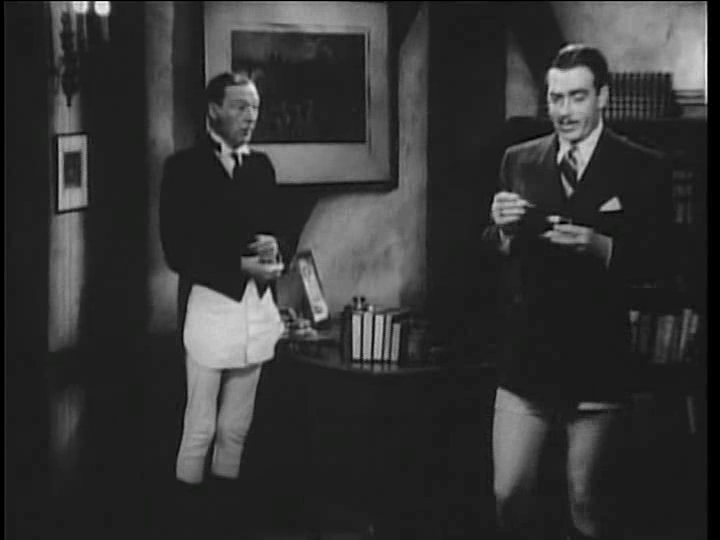
With so much of contemporary British horror lying in the doldrums, The Haunting of Harry Payne could have been a welcome addition to the rural terror sub-genre, but its botched attempts at creating menace, and its awkward shoe-horning of McCann’s evil nature into the scheme of things serve only to show – once again – that horror is incredibly difficult to get right, and especially on a low budget.

Rating: 3/10 – with so much crammed in, it’s no surprise that The Haunting of Harry Payne lacks focus, or that it often looks rushed; at best an interesting failure, at worst a terrible mess that ought to be missed off everyone’s CV.

Share this:

  • Click to share on X (Opens in new window) X
  • Click to share on Facebook (Opens in new window) Facebook
  • More
  • Click to print (Opens in new window) Print
  • Click to email a link to a friend (Opens in new window) Email
Like Loading...

The Inner Circle (1946)

13 Sunday Apr 2014

Posted by dullwood68 in Movies

≈ Leave a comment

Tags

Adele Mara, Blackmail, Crime, Johnny Strange, Murder, Mystery, Philip Ford, Republic Pictures, Review, Secretary, Warren Douglas

Inner Circle, The

D: Philip Ford / 57m

Cast: Adele Mara, Warren Douglas, William Frawley, Ricardo Cortez, Virginia Christine, Will Wright, Dorothy Adams

When private eye Johnny Strange (Douglas) wants a new secretary, he calls an agency and explains what he needs: “a blonde, beautiful, between 22-28, unmarried, with skin you love to touch, and a heart you can’t”.  His wish is granted immediately in the form of Geraldine Travis (Mara), who appears before he can finish the call, and effectively gives herself the job.  Overwhelmed and on the back foot from the moment she appears, Strange agrees to her employment just as the phone rings.  Geraldine deals with the call which is from a Spanish woman, asking for Strange to meet her later that evening; she has something very important she needs to talk to him about.

Strange meets the woman, who insists on hiding her identity behind a thick black veil.  They drive to her home where Strange is surprised to find the body of a man who’s been shot dead.  The Spanish woman attempts to bribe Strange into dealing with the body her way but when he declines and begins to call the police, she knocks him unconscious.  At this point, the movie reveals a major twist in the plot, and it becomes as much a whodunit as a whydunit?  The police, headed by ultra-suspicious Detective Lieutenant Webb (Frawley), think Strange killed the man – revealed as notorious gossip columnist Anthony Fitch – but with little evidence to secure a conviction, and the testimony of his new secretary keeping him out of jail, Strange resolves to find the killer and clear his name completely.
It soon becomes evident that Fitch wasn’t well-liked, and a number of people had motive and opportunity: there’s club owner Duke York (Cortez); singer Rhoda Roberts (Christine); Fitch’s housekeeper Emma Wilson (Adams); and Fitch’s gardener Henry Boggs (Wright).  Each behaves suspiciously but each denies any involvement in Fitch’s murder, even though they all saw him on the day he was killed.  When Strange learns that Fitch was about to reveal somebody’s big secret in his next radio broadcast, the why becomes clear but the who remains a mystery (unless you’ve seen some of these kind of movies before).

Inner Circle, The - scene

The Inner Circle has a jaunty, often comic feel to it that is nicely underplayed by its cast, and there are some great one-liners (mostly at Strange’s expense).  The humorous tone softens and complements the mystery elements, while the drama spins out at a surprisingly leisurely pace given the movie’s short running time.  It’s an easy movie to watch, and has a distinct charm that lifts it above the usual fare delivered by Republic Pictures during the Forties.  Mara and Douglas are a good match for each other, displaying a real chemistry together, and adding a spark to their scenes that benefits the movie throughout.  The mystery itself is hardly original, and there are moments when the audience’s credulity is strained as Strange makes yet another goof (is he really as good a private investigator as he thinks he is?), but taken as a whole, The Inner Circle succeeds with defiant ebullience.

What helps is it’s determination not to take the easy route.  So much of the movie – courtesy of Dorrell and Stuart E. McGowan’s fractious screenplay – turns on a willingness to upset its audience’s preconceptions.  The twist revealed after Strange is knocked unconscious gives a great indication of how slyly subversive the rest of the movie will turn out to be, with the murder complicated by side orders of blackmail, theft and unexpected revelations.  It all culminates in a radio broadcast where all the suspects are persuaded to play themselves in reenactments of key moments from earlier in the plot.  It’s like an Agatha Christie homage but with extra attitude in the staging and playing.

The cast all give good performances – Wright is a particular joy as the irascible gardener – and Ford’s direction shows a firm grasp of the material.  With its short running time and pleasant air, The Inner Circle deserves a wider audience than it’s likely to get these days.  As an example from the days when Poverty Row often meant appalling sets and even worse acting and/or directing, this is one movie that bucks the trend, and does it with a wonderful lack of concern.

Rating: 7/10 – often surprisingly witty and with a slightly eccentric approach to telling its story, The Inner Circle is a delight from beginning to end; proof as well that even Republic could grind out a winner every now and then.

Share this:

  • Click to share on X (Opens in new window) X
  • Click to share on Facebook (Opens in new window) Facebook
  • More
  • Click to print (Opens in new window) Print
  • Click to email a link to a friend (Opens in new window) Email
Like Loading...

Mini-Review: Bad Country (2014)

11 Friday Apr 2014

Posted by dullwood68 in Movies

≈ 1 Comment

Tags

Amy Smart, Baton Rouge, Chris Brinker, Crime, Crime drama, Drama, Hit list, Louisiana, Matt Dillon, Review, Tom Berenger, Willem Dafoe

Bad Country

D: Chris Brinker / 95m

Cast: Matt Dillon, Willem Dafoe, Neal McDonough, Amy Smart, Tom Berenger, Chris Marquette, Don Yesso, John Edward Lee, Alex Solowitz, Christopher Denham, Bill Duke

At times, Bad Country seems like an Eighties throwback, a Walking Tall-type movie that swaps Tennessee for Louisiana, and Buford Pusser for Willem Dafoe’s detective Bud Carter.  Its production design and filming style is reminiscent of other movies from that era, and while that’s no bad thing by itself, this grounding doesn’t add anything to the movie, or make it stand out.

With an opening statement that gives the impression the movie is based on a true story (but it’s not), Bad Country sees Carter bust a small-time gang of thieves.  Their arrest leads him to Jesse Weiland (Dillon).  Weiland is a safecracker-cum-enforcer for local syndicate kingpin Lutin Adams (Berenger); he also has a wife, Lynn (Smart) and baby son.  Adams is in Carter’s sights and he turns Jesse, aided by Jesse’s animosity towards Adams for having his brother killed, and his need to provide for Lynn and the baby (which will be difficult if he ends up in jail).  With the Feds, represented by rookie Fitch (Marquette), muscling in on Carter’s operation, the original plan is hijacked and things quickly go sour, with further loss of life on both sides.  When an attempt is made on Weiland’s life, he goes after Adams himself.

Bad Country - scene

There’s little that’s fresh or new here, and the movie trundles along in fits and starts and never really springs to life.  The plot is perfunctory and often banal, while Chris Brinker’s direction is drab and uninvolving.  The cast do their best – Dafoe gives his usual impassioned performance, despite the material – but Smart and McDonough are given short shrift, while Dillon often seems on auto-pilot.  The Baton Rouge locations are well-used but not enough to make them a feature, and there’s one too many scenes that fade to black, as if those scenes should have continued a bit longer but the script didn’t know how to manage it.  There’s plenty of gunfire, and a final shootout that lacks energy and focus when it should be thrilling.

Rating: 5/10 – more ho-hum than humdinger, Bad Country plods along without ever really getting going; set against other, more recent crime thrillers, it lacks more than most, and the Eighties setting ends up being of no benefit at all.

Share this:

  • Click to share on X (Opens in new window) X
  • Click to share on Facebook (Opens in new window) Facebook
  • More
  • Click to print (Opens in new window) Print
  • Click to email a link to a friend (Opens in new window) Email
Like Loading...

Reasonable Doubt (2014)

24 Monday Mar 2014

Posted by dullwood68 in Movies

≈ Leave a comment

Tags

Court case, Crime, District attorney, Dominic Cooper, Gloria Reuben, Hit and run, Murder, Parolees, Peter Howitt, Revenge, Review, Samuel L. Jackson, Wife and child

Reasonable Doubt

D: Peter P. Croudins / 91m

Cast: Dominic Cooper, Samuel L. Jackson, Gloria Reuben, Ryan Robbins, Erin Karpluk, Dylan Taylor

Pop quiz: You’re a mega-successful district attorney who’s never lost a case.  After a night out celebrating another win in court, and having had a few drinks, you still drive home because you’re worried your car might be stolen while you take a taxi.  On the way, you hit and injure a man.  Do you: a) call for an ambulance using your mobile phone and stay with the man until it arrives? b) call for an ambulance by using a pay phone and then drive off? or c) carry on driving and don’t look back?  If you answered b, then give yourself a gold star.

This is what hot shot DA Mitch Brockden (Cooper) does, and inevitably it sets in motion a series of events that ends with his wife, Rachel (Karpluk) and newborn child Ella being put in mortal danger.  In between those two events, Mitch gets an uncomfortable case of the guilts.  When Clinton Davis (Jackson) is arrested with the injured man – who is now dead – in his car later that evening, Davis’s assertion that he had found the man and was trying to get him to a hospital rings true with Mitch, even though Davis has tools in his car that match the weapons that caused the man’s other injuries.  When Davis is charged with the man’s murder, it’s Mitch who gets to prosecute him.

For reasons too tiresome and unlikely to reveal here, Mitch’s estranged step-brother Jimmy (Robbins) testifies at the trial that he saw the hit and run.  Davis is freed.  Soon after, another man is found dead with similar injuries.  Mitch now believes Davis did kill the man he knocked down, and when investigating Detective Kanon (Reuben) mentions other incidents that Davis is connected to, Mitch is convinced of Davis’s guilt.  He decides to investigate further, but soon finds that Davis is more dangerous than he expected.

Reasonable Doubt - scene

It’s not that the whole scenario of Reasonable Doubt is far-fetched, or that the motivations of both Mitch and Davis are about as convincing as a politician’s probity, nor even that the level of credibility is undermined continually by Cooper’s lacklustre performance – he demonstrates guilt by looking as if his haemorrhoids are playing up – it’s more that no one stopped to take stock of the movie while it was being made and said, “Hold on, isn’t this just the biggest load of rubbish?”  If someone had, then perhaps we’d all have been spared this poor excuse for a thriller.  As it is, the audience has to endure scene after scene of disjointed dialogue, uncomfortable plot contrivances, woeful acting (Cooper and Reuben are the worst offenders), and such dreadful direction that Peter Howitt’s name is changed in the credits (see above).

It’s always frustrating when movies like this are made.  Reasonable Doubt could have been so much better, but the script by Peter A. Dowling comes across as a hastily assembled first draft.  There is very little internal logic on display, and what there is is so ridiculous that even if you suspended all credulity you’d still be asking yourself if what you were seeing was really happening.  The character of Mitch bears no resemblance to anyone in real life, he makes risky decisions based more on the script’s need for him to do so than any actual self-motivation, and for someone who is so good at his job – so much so that he knows a judge’s decision before he even makes it – he makes one stupid mistake after another, until he ends up arrested for the attempted murder of his step-brother.

And then the movie presents us with it’s most ridiculous and stupid moment: after receiving a call from Davis who tells him he’s going to kill Rachel and Ella, and after he overpowers a police officer, Mitch walks out of the police station without being stopped and while carrying the police officer’s gun!  He doesn’t even try to hide it, just walks out with it in his hand!  It’s when a script offers this as a development, and no one stops to say “Hold on, isn’t this just the biggest load of complete rubbish?” that you know no one really cares.  So why should the audience?

There are – amazingly – worse thrillers out there, but these are mostly low-budget affairs with semi-professional casts and inexperienced directors.  Here, there’s a level of conspicuous ability but it’s all for nought.  Even Jackson phones in his performance, giving us a less intense, less convincing version of his character from Meeting Evil (2012).  You could say that Reasonable Doubt is so bad it’s mesmerising… but that would be a whole other load of rubbish.

Rating: 3/10 – dreadful thriller that insults its own cast as well as the audience; proof if any were needed that some movies should have their productions shut down after day one.

Share this:

  • Click to share on X (Opens in new window) X
  • Click to share on Facebook (Opens in new window) Facebook
  • More
  • Click to print (Opens in new window) Print
  • Click to email a link to a friend (Opens in new window) Email
Like Loading...

Pressed (2011)

23 Sunday Mar 2014

Posted by dullwood68 in Movies

≈ Leave a comment

Tags

Bankruptcy, Crime, Jeffrey Ballard, Justin Donnelly, Luke Goss, Michael Eklund, Review, Teens, Tyler Johnston

Pressed

D: Justin Donnelly / 105m

Cast: Luke Goss, Tyler Johnston, Jeffrey Ballard, Michael Eklund, Erica Carroll, Craig Stanghetta

When affluent sales executive Brian (Goss) is let go from his job, the childhood trauma he experienced when his father had to declare himself bankrupt, stops him from telling his wife Leanne (Carroll), and soon puts him on the path to contemplating desperate measures.  These arise from a chance encounter with an old schoolmate, Jimmy (Eklund).  Jimmy persuades Brian to go in with him on a quick fire money-making scheme that – so Brian believes – will enable him to stave off his immediate financial problems and also give him time to find another job.  Meanwhile, teen Jesse (Johnston) is looking to get out of town and make something of his life.  He seeks help from his friend Sam (Ballard).  Soon enough, Jesse and Brian cross paths and find their lives are on the line, as Jimmy’s get-rich-quick scheme goes horribly wrong for both of them.

Pressed - scene

Written and directed by first-timer Donnelly, Pressed benefits most from a committed performance by Goss, and by Donnelly’s attempts to try something different in an already over-stuffed genre.  At first, Goss plays Brian as a naive bystander in his own life, and while this isn’t necessarily the first description you’d apply to an actor like Goss, he pulls off these early scenes with sweaty conviction.  As the movie continues and he has to “man up”, Goss shows Brian’s transition from mild-mannered businessman to determined protagonist with clarity and conviction.

In the director’s chair, Donnelly orchestrates with a (largely) sure hand, allowing his script to play out unhurriedly, and with a greater focus on characterisation than is usual for this type of movie.  A strong case in point is the character of Jimmy, played with brio by Eklund.  Jimmy is a perfect example of how a stereotypical role can be imbued with enough additional nuances to overcome any expected deficiencies.  When Eklund is on screen, his portrayal is so effective you can’t keep your eyes off him.

Where Donnelly does falter is with the movie’s timescale.  When Brian arrives home after being laid off, Leanne and their young son (Ethan Sawyer) are going on holiday for a week.  As the story unfolds it’s clear that events are happening after this period should be up, and yet they don’t return home.  Also, Brian has his car repossessed within a couple of days of being let go – is that really likely?  Against this, Donnelly’s script does avoid the usual cliches, and even finds time for Brian to provide Jesse with some fatherly advice, albeit in the unlikeliest of circumstances.  And the final scenes allow for a pleasing ambiguity.

As the two teens caught up in Brian’s problems, Johnston and Ballard provide strong performances.  Johnston imbues Jesse with a vulnerability that is never at odds with his outwardly tough manner, and is a name to watch out for (though he does have extensive experience in television).  Ballard acquits himself with equal distinction, taking a less showy character in comparison to Jesse, but making him just as memorable.

The action, when it happens, is well choreographed, and the photography by Norm Li – while occasionally lax in terms of framing – has a gritty feel to it, matching the increasingly fervid atmosphere.  The final showdown is tenser than expected, and doesn’t cheat the viewer, giving Brian the chance to make things right on more than a personal level, and convincingly draw the movie to an end.

Rating: 6/10 – the too familiar mise-en-scene detracts from the all-round effectiveness of Donnelly’s debut but it maintains a grim credibility thanks largely to Goss’s well-judged performance; careful plotting gives it an edge over many of its contemporaries.

Originally posted on thedullwoodexperiment website.

Share this:

  • Click to share on X (Opens in new window) X
  • Click to share on Facebook (Opens in new window) Facebook
  • More
  • Click to print (Opens in new window) Print
  • Click to email a link to a friend (Opens in new window) Email
Like Loading...

Group Review: Shed No Tears (1948) / Child Bride (1938) / Detective Kitty O’Day (1944)

13 Thursday Mar 2014

Posted by dullwood68 in Movies

≈ Leave a comment

Tags

Child marriage, Crime, Exploitation, Harry Revier, Insurance fraud, Jean Parker, Jean Yarbrough, June Vincent, Murder, Mystery, Ozarks, Review, Shirley Mills, Wallace Ford, William Beaudine, www.archive.org

NOTE: All three movies were viewed courtesy of http://www.archive.org – go check it out!

Shed No Tears (1948)

Shed No Tears

D: Jean Yarbrough / 70m

Cast: Wallace Ford, June Vincent, Mark Roberts, Johnstone White, Frank Albertson, Dick Hogan, Elena Verdugo

Spirited noir with a constantly twisting, changing plot to keep its audience guessing (although the eventual outcome is never in doubt – it’s the Forties after all, and bad people still need to be punished).  After faking his death with the help of his wife Edna (Vincent), Sam Grover (Ford) hides out until Edna can collect on the insurance money.  What Sam doesn’t know is that Edna has no intention of sharing the money with him, and has her own plans involving her lover, Ray (Roberts).  Meanwhile, Sam’s son Tom (Hogan), unconvinced that his father’s “death” was accidental, hires a private detective (White) to look into the matter.  What follows is an entertaining yarn full of double crosses, unexpected twists and turns, and hard-boiled dialogue (mostly uttered by Vincent).  The cast are proficient – though some of Vincent’s line readings are memorable for all the wrong reasons – and Yarbrough’s direction shows a sure hand.  Not as slick or as impressive as some other post-war noirs but worth catching nevertheless.

Rating: 6/10 – a minor gem that works well when focusing on its lead characters’ greed; Vincent looks completely untrustworthy throughout.

Child Bride (1938)

Child Bride

D: Harry Revier / 62m

Cast: Shirley Mills, Bob Bollinger, Warner Richmond, Diana Durrell, Dorothy Carrol, George Humphreys, Frank Martin

Exploitation curio that mixes child marriage reform with more traditional soap opera elements.  Jennie (Mills) is twelve.  She’s a bright, precocious child who lives with her mother (Carrol) and father (Humphreys) in the Ozarks.  The community there sees nothing wrong with children Jennie’s age being married because, as one character puts it, “there ain’t enough adult women to go round”.  The local school teacher, Miss Carol (Durrell) is fighting to have the law changed but it’s an uphill struggle.  Meanwhile, Jennie’s father falls foul of his partner in an illegal still, Jake Bolby (Richmond).  Events play out so that Jennie ends up betrothed to Bolby.  Will she be saved in the nick of time?  Child Bride moves along at a rapid pace and crams a lot into its short running time.  Revier directs ably enough but the cast vary from just about credible (Richmond) to downright terrible (Durrell and Martin).  There’s an extended sequence where Jennie goes skinny-dipping and it’s clear that Mills is naked, and an even more risible sequence where Miss Carol is abducted at night by hooded men.

Rating: 4/10 – engrossing in its way, Child Bride ends up being a little too melodramatic for its own good; it’s also dated badly but the presentation of its central theme still has the ability to make modern audiences uncomfortable.


Detective Kitty O’Day (1944)

Detective Kitty O'Day

D: William Beaudine / 61m

Cast: Jean Parker, Peter Cookson, Tim Ryan, Veda Ann Borg, Edward Gargan, Douglas Fowley, Herbert Heyes, Pat Gleason

Fast-paced comedy whodunnit featuring Parker as Kitty O’Day, who, when her boss is murdered, decides to find the killer – against the best advice of her boyfriend Johnny (Cookson) and the police (Ryan, Gargan).  But everywhere she turns, more dead bodies pop up and soon Kitty and Johnny become the number one suspects.  Parker and Cookson make for a good team, and if their banter seems a little forced at times, it doesn’t detract from the obvious chemistry they have together.  The storyline dips in and out of being plausible, and the final explanation is unnecessarily convoluted, but otherwise this is an enjoyable romp that relies largely on short, punchy scenes to make up its running time.  Beaudine – who could make this kind of movie in his sleep – keeps it light and frothy, and the cast fill their roles with ease, especially Ryan and Gargan who steal the show as the by turns exasperated and clueless cops on the case.  Not a classic – and neither is the sequel, Adventures of Kitty O’Day (1945) – but it’s a fun way to pass an hour.

Rating: 5/10 – tries to be rip-roaring but gets bogged down in its own plot; light and breezy throughout with few variations to compensate for all the frivolity.

Share this:

  • Click to share on X (Opens in new window) X
  • Click to share on Facebook (Opens in new window) Facebook
  • More
  • Click to print (Opens in new window) Print
  • Click to email a link to a friend (Opens in new window) Email
Like Loading...

Blind Detective (2013)

03 Tuesday Dec 2013

Posted by dullwood68 in Movies

≈ Leave a comment

Tags

Andy Lau, Blind Detective, Crime, Drama, Hong Kong, Johnnie To, Review, Sammi Cheng, Serial killer

Blind Detective

Original title: Man Tam

D: Johnnie To / 130m

Cast: Andy Lau, Sammi Cheng, Tao Guo, Yuanyuan Gao

Notable for the re-teaming of Lau and Cheng – they last appeared together in 2004’s Yesterday Once More, also by To – Blind Detective is a mad, eclectic mix of crime thriller, romance, humour Hong Kong style, action, and whodunnit.  Lau plays Johnston, a retired detective who lost his sight while chasing a criminal.  This setback doesn’t stop him from investigating cases, though, and while attempting to apprehend the perpetrator behind a series of acid attacks he meets Officer Ho (Cheng).  She realises Johnston has a gift: that even though he is blind he can still “see” in a way that allows him to solve crimes.  Tormented by the disappearance ten years before of a childhood friend, Minnie, Ho asks Johnston to look into the case; she is certain that Minnie was abducted and killed, and hopes Johnston will be able to find the culprit.  He agrees to help her but for a fee, and with the proviso that he instructs her in how to become a better detective.

This means Ho finds herself helping Johnston solving a variety of cold cases instead before she manages to get him to focus on Minnie.  As events unfold, Ho finds herself drawn to Johnston, and despite his methods being highly irregular, she also finds her respect for him deepen.  And one of the cold cases leads them to a serial killer…

For the most part, Blind Detective has all the hallmarks of a first-rate Hong Kong crime thriller: moody photography and lighting (courtesy of Siu-keung Cheng), strong yet unambiguous characters, a linear narrative punctuated by explanatory flashbacks, an unhurried pace, and a serious approach leavened by a combination of often very dark humour and strangely apt slapstick.  What it also has is a compelling narrative, a clever visual style – witness Johnston’s “imagining” of the crimes he and Ho investigate – superb performances from Lau and Cheng, and a central mystery that is as challenging as it is artfully resolved.  To directs with a sure hand, making each scene count both individually and as part of the whole, taking risks with the material and coming up trumps each time; it’s a bravura display from a director who rarely gets it wrong and whose movies almost always surprise with their virtuosity and confidence.

Blind Detective - scene

You can tell that Lau is having a ball playing Johnston, whether he’s instructing Ho to let him hit her with a hammer, or gradually piecing the clues together surrounding Minnie’s disappearance, or realising how dependent he’s become on Ho, with each successive scene Lau brings us a character we grow to like and empathise with, and this despite an initial arrogance that is mostly off-putting.  This isn’t the type of role that Lau usually plays and it’s good to see him broaden his range.  Cheng more than matches Lau, giving us a rookie officer who grows in both stature and experience, while retaining a soulful vulnerability that makes Ho all the more endearing.  Both performances are accomplished, and the chemistry between the two actors adds to the movie’s (already substantial) surfeit of riches.  The supporting cast, including Tao as the unfortunately named Fatbo, are uniformly good, and there’s yet another outstanding performance, this time from the young actress who plays the teenage Minnie (alas, finding her name amongst the few available credits is really difficult).  It’s a small role but well handled and convincingly played.

On the downside, there are too many “foodie” scenes – it’s supposed to be one of Johnston’s character traits – and the denouement is a trifle rushed, while Johnston makes as many implausible leaps of faith in his deductive reasoning as he does actually interpret the clues around him.  You might also question the punishment that Ho allows Johnston to put her through but the guilt she feels for doing nothing when Minnie was in trouble acts as an emotional counterweight for this.  There’s also a subplot involving a woman (Yuanyuan) Johnston was in love with before he became blind, but which adds nothing to the movie overall.  These problems aside, Blind Detective remains another impressive string to To’s bow.

Rating: 8/10 – given a less than rapturous welcome in its homeland, Blind Detective nevertheless works well on many levels and is entertaining throughout; at times anarchic, the movie presents a new twist on the disabled detective genre and deserves a wider audience.

Share this:

  • Click to share on X (Opens in new window) X
  • Click to share on Facebook (Opens in new window) Facebook
  • More
  • Click to print (Opens in new window) Print
  • Click to email a link to a friend (Opens in new window) Email
Like Loading...

The Counselor (2013)

23 Saturday Nov 2013

Posted by dullwood68 in Movies

≈ 1 Comment

Tags

Brad Pitt, Cameron Diaz, Cartel, Cormac McCarthy, Crime, Drama, Drugs, Javier Bardem, Michael Fassbender, Penélope Cruz, Review, Ridley Scott, Thriller

Counselor, The

aka The Counsellor

D: Ridley Scott / 117m

Cast: Michael Fassbender, Penélope Cruz, Cameron Diaz, Javier Bardem, Brad Pitt, Rosie Perez, Bruno Ganz, Rubén Blades, Sam Spruell, Toby Kebbell, Natalie Dormer, Goran Visnjic

An original thriller from the pen of Cormac McCarthy, The Counselor is a cautionary tale about what can happen when a good man does something bad. The ‘bad’ in this case is get involved in a drug deal where a $20m shipment, bound for Chicago from Ciudad Juárez in Mexico, is hijacked along the way. The good man is the titular (unnamed) counsellor, seen first expressing his love for Laura (Cruz). His plan is to use the money he’ll get back from the deal to set up their life together; he buys a very expensive diamond engagement ring for her, further stretching his finances. In on the deal with him is Rainer (Bardem, sporting another of his strange movie hairstyles) and Westray (Pitt). What none of them know is that Rainer’s girlfriend, Malkina (Diaz) is behind the hijacking. What follows is a game of cat-and-mouse as all three men try and stay one step ahead of the cartel that suspects one or all of them are responsible.

Like a lot of Ridley Scott’s movies, The Counselor starts off promisingly enough but soon tails off into something completely at odds with the original mise-en-scène. The cautionary tale becomes a darkly-comic thriller that becomes a series of improbable scenes involving the Counselor’s efforts to extricate himself from the mess he’s got himself into, before becoming an equally improbable electronic money heist set in London. All the while, the movie is punctuated with the kind of profound monologues (Blades’ especially) that nobody really says in real life, and clinically-filmed set pieces that offer brief release from the turgid nature of the screenplay. There’s no doubt that McCarthy is a great writer, but film is a medium that, on this occasion, he’s failed to get to grips with. His characterisations are only occasionally compelling, while the Counselor is required to fall apart as soon as he hears about the hijacking and just plummet further from there. Malkina has no back story, no reasons given for her actions and Diaz is left playing a modern-dress version of Lady Macbeth, but without the informed psychology. It’s a tribute to Diaz that Malkina isn’t played entirely one-dimensionally, but there are times when it’s a close-run thing. And the character of Laura is given little to do other than to provide a reason for the Counselor’s getting involved in the deal in the first place; after that Cruz is pretty much sidelined.

Counselor, The - scene

As you would expect from a Ridley Scott movie, The Counselor is a visual treat, Scott painting celluloid pictures with the same verve and attention to detail that he’s been doing since The Duellists (1977). The desert vistas in Mexico are beautifully filmed, as is the US back road where the hijacking takes place – a brutally short but bravura piece that is a stand out, along with Westray’s eventual fate. Scott’s grasp on a script’s cinematic requirements is as sharp as always, and while he is a supreme stylist, he doesn’t appear to have kept a firm hand on what’s being filmed; as a result there are several nuances that are missing or undeveloped, not least in the encounter between Malkina and Laura which could have resonated much more than it does. Instead it becomes just a scene where we learn Malkina can be manipulative for the sake of it.

While Diaz and Bardem’s characters make for an unlikely couple, their scenes together are fun to watch, but it’s Pitt who comes off best as the been there, seen-it-all, knows when to get out Westray. It’s he that predicts the movie’s outcome, he that tells the audience in his first scene what’s going to happen to at least two of the characters, and it’s he that has the best line in the movie: when talking about the cartel, he says, “…they don’t really believe in coincidences.  They’ve heard of them.  They’ve just never seen one.” There’s a great little cameo from John Leguizamo (uncredited), and as Malkina’s hijacker of choice, Sam Spruell exudes a cold menace that keeps you watching out for him even when he’s not on-screen. Fassbender has the unenviable task of getting the audience to sympathise with a character who looks for anyone else to get him out of the hole he’s dug too deep, and by the film’s end you wish the cartel would catch up with him and put him, and us, out of our collective misery.

The Counselor isn’t a bad movie per se, just a muddled, at times distracting movie that loses focus throughout, only to redeem itself with a scene or two of better impact. There’s a nihilistic approach at times, and often you don’t care what happens to anyone, even Laura, presented here as a (mostly) innocent bystander. It looks great, as expected, but there are too many hollow moments for it to work properly. As with a lot of movies, the script is responsible for this, and while this is only his second screenplay after The Sunset Limited (2011), McCarthy shouldn’t be discouraged from writing any more.

Rating: 6/10 – it could have been so much better, but The Counselor fails to engage on an emotional level, and while as you’d expect from Scott it’s a pleasure to look at, there’s too little going on too often for it to work as a whole.

Share this:

  • Click to share on X (Opens in new window) X
  • Click to share on Facebook (Opens in new window) Facebook
  • More
  • Click to print (Opens in new window) Print
  • Click to email a link to a friend (Opens in new window) Email
Like Loading...

Freaky Deaky (2012)

10 Sunday Nov 2013

Posted by dullwood68 in Movies

≈ Leave a comment

Tags

$50 million, Billy Burke, Black comedy, Bombs, Charles Matthau, Christian Slater, Crime, Drama, Elmore Leonard, Literary adaptation, Michael Jai White, Review

Freaky Deaky

D: Charles Matthau / 90m

Cast: Billy Burke, Michael Jai White, Christian Slater, Breanne Rocano, Crispin Glover, Sabina Gadecki, Roger Bart, Andy Dick, Bill Duke, Gloria Hendry

When bomb squad detective Chris Mankowski (Burke) transfers to Sex Crimes he meets Greta (Gadecki) who reports she was raped by multi-millionaire pothead Woody Ricks (Glover). Ricks’ arrest leads to strings being pulled and Mankowski being suspended. Determined not to let Ricks get away with it, Mankowski agrees to help Greta get some financial compensation from Ricks. Meanwhile, two 60’s radicals, Robin (Rocano) and Skip (Slater), convinced that Ricks gave testimony that led to their being imprisoned, plot to relieve him of the $50 million he’s just inherited. To do this they  plan a bombing campaign that will frighten him into paying up. In the middle of all this is Donnell (White), Ricks’s bodyguard-cum-personal assistant. He ends up as the go-between for all parties, while trying to defraud his boss of the $50 million himself.

An adaptation of the novel by Elmore Leonard (his personal favourite, apparently), Freaky Deaky – as adapted by writer/director Matthau – has an air of listlessness that it doesn’t quite shrug off, despite some good casting, and a neat line in Leonard’s trademark dialogue. On the page, Leonard’s plots fairly zing and fizz with an energy born from Leonard’s sparse prose. Here, that energy is missing from a movie that fails to generate more than a Chinese burn of excitement. The result is that Freaky Deaky plods from scene to scene without really drawing its audience in, which is a shame as the structure is sound, and as mentioned above, the cast are well-matched to their roles (Slater continues his mini-renaissance with a well-judged take on a mild-manic bomb maker) and there’s some great visual gags (Ricks’s car in the driveway, Ricks trying to put on his pants).

Freaky Deaky

Of the rest of the cast, Burke is saddled with a good guy role that lacks shading, while Glover almost steals the show as the permanently drug- and alcohol-addled Ricks, all vacant stares and poor co-ordination. I say almost because White just beats Glover into second place, playing a seen-it-all ex-con dealing with each successive twist and turn of the plot with weary resignation and some of the best, drollest dialogue on offer. But while the male cast fare well, the same can’t be said of Rocano and Gadeski.  As Robin, Rocano sails perilously close at times to coming across as merely a one-note revenge-seeker, while Gadeski does her best to avoid being just eye candy. It’s not their fault, just the way the script has been written.

Matthau has been quiet since 2005’s rom-com Her Minor Thing, and while he’s to be congratulated for persevering through Freaky Deaky‘s troubled production – its original cast, including Matt Dillon, Brendan Fraser and Katie Cassidy, were replaced by Burke et al in 2011 – the end result is a disappointment. There’s no flow to the scenes, and it’s obvious the budget was an issue, but even with all the obstacles in the movie’s way, it deserved better. There are few really good adaptations of Elmore Leonard’s work out there, and sadly this isn’t one of them.

Rating: 5/10 – not as impressive as it could have been given its cast, but helped immeasurably by them, Freaky Deaky serves as a reminder that adapting a well-written, well-received book isn’t as easy as it looks; one for Leonard completists only.

Share this:

  • Click to share on X (Opens in new window) X
  • Click to share on Facebook (Opens in new window) Facebook
  • More
  • Click to print (Opens in new window) Print
  • Click to email a link to a friend (Opens in new window) Email
Like Loading...
Newer posts →

Blog Stats

  • 491,506 hits

Recent Posts

  • 10 Reasons to Remember Bibi Andersson (1935-2019)
  • Fantasia (1940)
  • Dances With Wolves (1990) – The Special Edition
  • Kiss of the Spider Woman (1985)
  • The Three Musketeers (1973)

Top Posts & Pages

  • I Origins (2014)
    I Origins (2014)
  • Cardboard Boxer (2016)
    Cardboard Boxer (2016)
  • Logan (2017)
    Logan (2017)
  • Breaking and Exiting (2018)
    Breaking and Exiting (2018)
  • The White Orchid (2018)
    The White Orchid (2018)
  • Bang Gang (A Modern Love Story) (2015)
    Bang Gang (A Modern Love Story) (2015)
  • The Corpse of Anna Fritz (2015)
    The Corpse of Anna Fritz (2015)
  • Groundhog Day (1993)
    Groundhog Day (1993)
  • Poster of the Week - Werewolf of London (1935)
    Poster of the Week - Werewolf of London (1935)
  • Honeytrap (2014)
    Honeytrap (2014)
Follow thedullwoodexperiment on WordPress.com

Blogs I Follow

  • Rubbish Talk
  • Film 4 Fan
  • Fast Film Reviews
  • The Film Blog
  • All Things Movies UK
  • Interpreting the Stars
  • Let's Go To The Movies
  • Movie Reviews 101
  • TMI News
  • Dan the Man's Movie Reviews
  • Film History
  • Jordan and Eddie (The Movie Guys)

Archives

  • April 2019 (13)
  • March 2019 (28)
  • February 2019 (28)
  • January 2019 (32)
  • December 2018 (28)
  • November 2018 (30)
  • October 2018 (29)
  • September 2018 (29)
  • August 2018 (29)
  • July 2018 (30)
  • June 2018 (28)
  • May 2018 (24)
  • April 2018 (21)
  • March 2018 (31)
  • February 2018 (25)
  • January 2018 (30)
  • December 2017 (30)
  • November 2017 (27)
  • October 2017 (27)
  • September 2017 (26)
  • August 2017 (32)
  • July 2017 (32)
  • June 2017 (30)
  • May 2017 (29)
  • April 2017 (29)
  • March 2017 (30)
  • February 2017 (27)
  • January 2017 (32)
  • December 2016 (30)
  • November 2016 (28)
  • October 2016 (30)
  • September 2016 (27)
  • August 2016 (30)
  • July 2016 (30)
  • June 2016 (31)
  • May 2016 (34)
  • April 2016 (30)
  • March 2016 (30)
  • February 2016 (28)
  • January 2016 (35)
  • December 2015 (34)
  • November 2015 (31)
  • October 2015 (31)
  • September 2015 (34)
  • August 2015 (31)
  • July 2015 (33)
  • June 2015 (12)
  • May 2015 (31)
  • April 2015 (32)
  • March 2015 (30)
  • February 2015 (37)
  • January 2015 (39)
  • December 2014 (34)
  • November 2014 (34)
  • October 2014 (36)
  • September 2014 (25)
  • August 2014 (29)
  • July 2014 (29)
  • June 2014 (28)
  • May 2014 (23)
  • April 2014 (21)
  • March 2014 (42)
  • February 2014 (38)
  • January 2014 (29)
  • December 2013 (28)
  • November 2013 (34)
  • October 2013 (4)

Blog at WordPress.com.

Rubbish Talk

Film 4 Fan

A Movie Blog

Fast Film Reviews

The Film Blog

The official blog of everything in film

All Things Movies UK

Movie Reviews and Original Articles

Interpreting the Stars

Dave Examines Movies

Let's Go To The Movies

Film and Theatre Lover!

Movie Reviews 101

Daily Movie Reviews

TMI News

Latest weather, crime and breaking news

Dan the Man's Movie Reviews

All my aimless thoughts, ideas, and ramblings, all packed into one site!

Film History

Telling the story of film

Jordan and Eddie (The Movie Guys)

Movie Reviews & Ramblings from an Australian Based Film Fan

Privacy & Cookies: This site uses cookies. By continuing to use this website, you agree to their use.
To find out more, including how to control cookies, see here: Cookie Policy
  • Subscribe Subscribed
    • thedullwoodexperiment
    • Join 481 other subscribers
    • Already have a WordPress.com account? Log in now.
    • thedullwoodexperiment
    • Subscribe Subscribed
    • Sign up
    • Log in
    • Report this content
    • View site in Reader
    • Manage subscriptions
    • Collapse this bar
 

Loading Comments...
 

    %d