• 10 Reasons to Remember…
  • A Brief Word About…
  • About
  • For One Week Only
  • Happy Birthday
  • Monthly Roundup
  • Old-Time Crime
  • Other Posts
  • Poster of the Week
  • Question of the Week
  • Reviews
  • Trailers

thedullwoodexperiment

~ Viewing movies in a different light

thedullwoodexperiment

Tag Archives: Drama

My Top 10 Movies – Part Seven

03 Monday Feb 2014

Posted by dullwood68 in Movies

≈ Leave a comment

Tags

Alfred Hitchcock, Apartment block, Broken leg, Cornell Woolrich, Drama, Grace Kelly, James Stewart, John Michael Hayes, Raymond Burr, Rear Window (1954), Review, Suspected murder, Thriller, Voyeurism

Rear Window (1954)
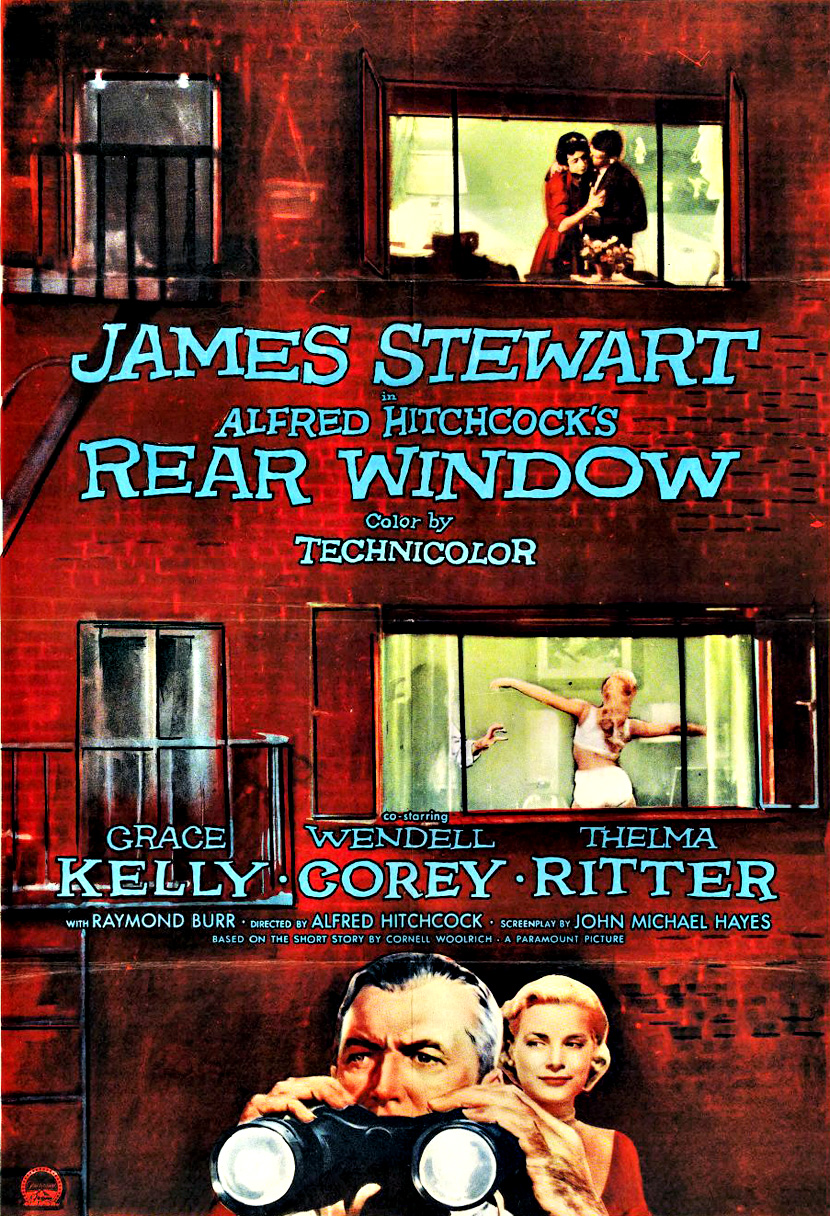
Rear Window

D: Alfred Hitchcock / 112m

Cast: James Stewart, Grace Kelly, Wendell Corey, Thelma Ritter, Raymond Burr, Judith Evelyn

I guess it was inevitable that there’d be a Hitchcock movie in my Top 10, but while the likes of Psycho (1960) and Vertigo (1958) are more highly regarded, for me it’s Rear Window any time and all the time.

I first saw Rear Window in the early Nineties.  It was shown on TV, and while I was more than familiar with Hitchcock – and by this time had seen most of his sound features – this particular movie, along with Torn Curtain (1967) and The Trouble With Harry (1955), had evaded me until then.  My favourite Hitchcock movie at that stage was Foreign Correspondent (1942), followed very closely by Strangers on a Train (1951).  I was looking forward to seeing what Hitchcock would do with the “has he or hasn’t he?” style plot, and how Kelly would be treated, being the first of his blonde heroines (with all that that entailed).

I must admit to having a mixed reaction at first.  The movie’s opening, with its slow, voyeuristic peering into the apartments and lives of L.B. Jefferies (Stewart)’s neighbours seemed like an extended piece of scene setting, audacious in its camera moves but serving no discernible purpose (bear in mind I had only a faint idea of the movie’s plot).  As each neighbour was introduced I couldn’t help but wonder how much of what we were seeing was relevant to the plot, and which characters were going to prove more important than the others.  It seemed obvious Miss Lonelyhearts (Evelyn) would be given a fair bit of screen time, as well as the creepy salesman Thorwald (Burr) with the nagging wife, but how these characters would interact I really didn’t have a clue.  (I should admit at this point that I watch a lot of movies where I don’t have any idea of what’s going to happen or what the movie is about; I’m looking for the movie to surprise me.)
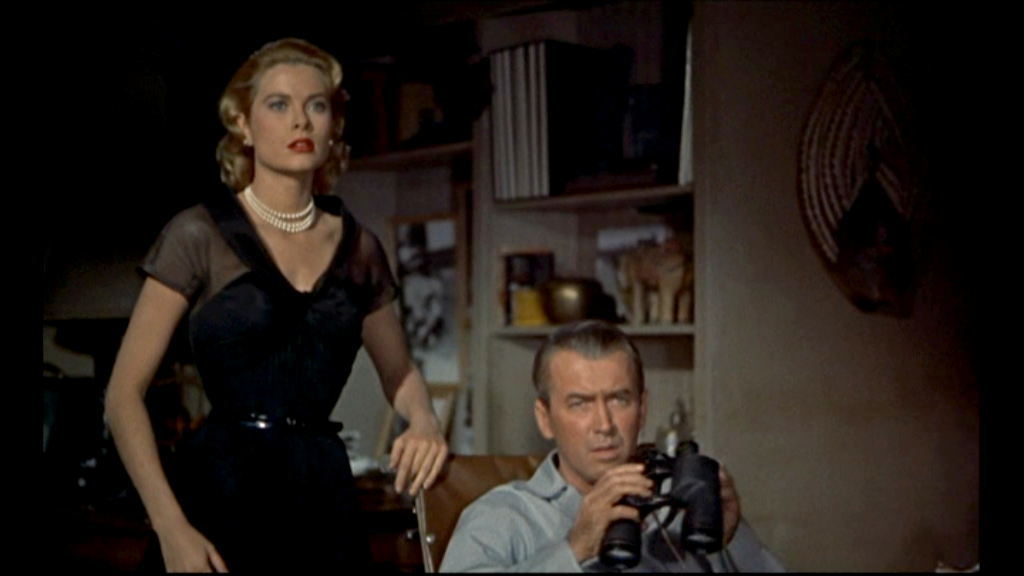
Rear Window - scene

Now, this being a Hitchcock movie, I knew there must be some kind of skullduggery about to be committed, and I knew that James Stewart’s character would likely be the hero, and Grace Kelly his romantic interest, but what I wasn’t prepared for, at all, was the movie’s master stroke: that up until the final scene, the whole movie doesn’t stray from Jefferies’ apartment.  Everything you see of his neighbours’ activities, and his girlfriend Lisa’s sleuthing, is seen from Jefferies’ perspective.  As it dawned on me that Hitchcock wasn’t going to take the camera any further than Jefferies’ window, it also dawned on me that, far from being a cinematic parlour trick, this was one of the cleverest set ups I’d ever seen.  Like Jefferies, the audience was confined to that small apartment, and again like Jefferies we too were helpless bystanders (he’s in a hip cast the whole time), involved in the action but removed from it at the same time.

This realisation made so much difference that I found myself agonising over what was happening as much as Jefferies.  When he was unable to convince his friend Doyle (Corey) of the likelihood of Thorwald’s guilty behaviour, I was there urging Doyle to see the sense in what Jefferies was saying.  And when Lisa appeared in Thorwald’s apartment, I was on the edge of my seat, knowing with a sick feeling in the pit of my stomach that Thorwald was bound to return home and find her.  And then, the worst moment of all, when Thorwald turns and sees…

Rear Window was the first thriller that gripped me, both physically and emotionally, and left me feeling wrung out to dry at its end (where Jefferies suffers a fitting punishment for his “professional” voyeurism).  Other movies have had a similar effect since – most recently, Captain Phillips (2013) – but I guess you never forget your first time.  The simplicity of the set up was terrific, and full marks should go to John Michael Hayes for building such a mousetrap from Cornell Woolrich’s short story (if you’ve never read Woolrich you’re missing out; his prose leaves you breathless).  Between them, Hayes and Hitchcock constructed a movie where watching other people’s lives becomes a litmus test for our own happiness, and where one man’s rescinded involvement provides an unwitting source of redemption for both himself and those he spies on.

I always get the feeling that Hitchcock is regarded as just a purveyor of thrills, and that people miss the psychological elements in his films.  Those elements are there in the majority of his movies, but when you mention Hitchcock most people are likely to remember scenes such as the shower murder in Psycho, or the crop duster attack in North by Northwest (1959), or Tippi Hedren under attack in a phone booth in The Birds (1963).  But for me, it’s the darker elements that make watching a Hitchcock movie so rewarding.  And if you want darker, then watch Rear Window, and see just how much Jefferies is put through the wringer; it’s torture, pure and simple.  And that’s just where Hitchcock wants us, and puts us.  And for myself, I was glad to be there.

Rating: 9/10 – one of the most memorable thrillers ever filmed and a testament to Hitchcock’s genius and creativity; excellent performances added to a perfectly coiled script and a wonderfully threatening score by Franz Waxman all go together to make Rear Window an absolute masterpiece.

Share this:

  • Click to share on X (Opens in new window) X
  • Click to share on Facebook (Opens in new window) Facebook
  • More
  • Click to print (Opens in new window) Print
  • Click to email a link to a friend (Opens in new window) Email
Like Loading...

The Wolf of Wall Street (2013)

02 Sunday Feb 2014

Posted by dullwood68 in Movies

≈ Leave a comment

Tags

Drama, FBI, Insider trading, Investment fraud, Jean Dujardin, Joanna Lumley, Jonah Hill, Jordan Belfort, Leonardo DiCaprio, Margot Robbie, Martin Scorsese, Matthew McConaughey, Penny stocks, Review, Stratton Oakmont, True story

Wolf of Wall Street, The

D: Martin Scorsese / 180m

Cast: Leonardo DiCaprio, Jonah Hill, Margot Robbie, Kyle Chandler, Matthew McConaughey, Rob Reiner, Jon Bernthal, Jon Favreau, Jean Dujardin, Joanna Lumley, Cristin Milioti, Shea Whigham, P.J. Byrne, Kenneth Choi, Brian Sacca, Henry Zebrowski, Ethan Suplee

Already the basis for the movie Boiler Room (2000), and adapted from the life and experiences of Jordan Belfort (DiCaprio), an investment broker who started his career on Wall Street in the late Eighties, and went on to become the head of his own company, selling penny stocks to gullible investors before moving into the big leagues, The Wolf of Wall Street is a modern day cautionary tale about greed, corruption and the pursuit of money.

Having become a licensed stock broker, Belfort begins work on the worst day possible, 19 October 1987, Black Monday. With his company ruined by the fallout, Belfort is forced to start again at the bottom, working for a small investment company that sells penny shares to small-time investors. Seeing the potential in a part of the investment industry that offers a fifty per cent commission on any sales, Belfort starts up his own investment company, Stratton Oakmont. Taking some of the staff from the investment company, he shows them how to persuade reluctant investors into parting with their money, and more importantly, ensuring they never take their money out again, thereby keeping up the exorbitant profits Belfort and his staff are raking in. He meets Donnie Azoff (Hill) who comes to work for him; together they build up the company until they’re at a point where they can compete with some of the bigger Wall Street firms. Their selling tactics and methods bring them to the attention of the FBI’s Agent Denham (Chandler) who begins an investigation into their fraudulent business practices. In the meantime, Belfort’s first marriage collapses; he becomes addicted to drugs, booze and sex; the FBI’s investigation prompts him to spirit his money away to Switzerland; he remarries, this time to Naomi (Robbie), and has two children with her; risks his life getting to Switzerland when it looks as if he’ll lose all his money; sees one of his friends, Brad (Bernthal), go to jail thanks to Azoff’s stupidity; and excess dominates his life completely. When a deal to take a shoe company public on the stock market (and illegally arrange to be the major stockholder) begins to unravel, and his marriage falls apart, Belfort finds himself helping the FBI incriminate his colleagues in order to avoid a long prison sentence.
With occasional breaks to camera, Belfort relates his life of excess with a relish that reflects both his character and, you suspect, a love for the times that hasn’t quite dissipated. Starting as a typically naive young man with bold aspirations, Belfort appears easily swayed when Azoff coaxes him into taking drugs, and he seems equally unconcerned by the ease with which he can swindle unsuspecting investors. While this aspect isn’t properly addressed, it’s not so much where Belfort has come from as what he does once he’s there that the movie is concerned with. The Wolf of Wall Street focuses on the excess of both the characters and the times they were active, a period in recent history (the Nineties) where affluence by any means was a mantra to live by, and if you weren’t rich then you were a nobody.

Wolf of Wall Street, The - scene

Working with his usual technical mastery, Scorsese recreates that period with remarkable skill and the level of incidental detail is impressive. The look of the movie is always arresting, and there’s never a moment when the camera doesn’t pick out an impressive detail or something visually interesting. Scorsese also knows when to keep the camera moving, or when to choose an odd camera angle to highlight the mood or emotion of a scene. There are moments when it’s like watching a cinematic masterclass, so sure is Scorsese of his filmmaking prowess and intuition.
Arresting as it is visually, The Wolf of Wall Street stumbles a bit when it comes to the structure of the movie and its content. There are too many extended pep talks that Belfort gives to his staff, too many scenes of drug-fuelled debauchery (we get it – that was the lifestyle), and too many occasions where the core of a scene is repeated but with some variation (Belfort reassuring first wife Teresa (Milioti) that everything will be okay; Azoff and Belfort congratulating themselves on the amount of money they’ve made).  There are moments that lead nowhere: Belfort’s butler saying he’s seen Azoff at a gay club; sudden changes in tone: Belfort attacks Naomi when she threatens to leave him and take their children with her; and awkward moments that should be more meaningful: Belfort confessing his addictions to Naomi’s Aunt Emma (Lumley).

Terence Winter’s script, adapted from Belfort’s own memoir, does contain some good scenes, hits a patchy stretch around the two hour mark, and relegates the FBI investigation to a handful of scenes where Denham stares at info-laden whiteboards.  Thankfully there are more than enough individual scenes that work – and work brilliantly – to offset the missteps.  There’s Belfort’s lunch with first boss Mark Hanna (McConaughey), a mini-classic where Hanna explains the attitude needed to succeed as a stockbroker; McConaughey almost steals the movie with that one scene alone.  There’s the scene where Azoff meets Belfort and quits his job upon seeing proof of the amount of Belfort’s earnings; Belfort waking up at the end of a flight to Switzerland and having Azoff explain why he’s restrained in his seat; Belfort’s veiled attempt to bribe Denham during a meeting on Belfort’s yacht – and Denham’s amused response; and best of all, Belfort’s attempts to leave a country club after succumbing to the effects of several out-of-date Quaaludes – it’s the funniest sequence of 2013 and shows that DiCaprio has a surprising aptitude for physical comedy.

As Belfort, DiCaprio puts in one of his best performances, imbuing the man with a vain pride that proves his downfall.  It’s no one-dimensional characterisation, and DiCaprio nails the insecurities and the insanity of Belfort’s lifestyle: regarding money as “fun vouchers”; thinking he can seduce Aunt Emma; the aforementioned trip to Switzerland that results in the sinking of his yacht.  It’s a raging, tornado-like performance, with DiCaprio towering above his co-stars, eclipsing everyone around him.  As Belfort’s loyal “partner in excess” Azoff, Hill sports prominent false teeth and exudes charmless unreliability from every pore.  Robbie, fresh from playing the girl who got away in Richard Curtis’ About Time, is superb as Naomi, a simple girl from New Jersey who falls for Belfort but resists the darker aspects of the dream life he builds for them.  In minor supporting roles, Dujardin – as a slimy Swiss banker – and Lumley stand out from the crowd, and in the role of Belfort’s father, Reiner provides a calm at the eye of the storm that helps offset the wanton debauchery.

Ultimately, the success of The Wolf of Wall Street depends on whether or not the rise and inevitable downfall of a self-confessed drug addict and convicted fraudster is worth three hours of anyone’s time.  The movie is entertaining and convincingly portrays the hedonistic, shallow lifestyle Belfort and his cronies enjoyed, and it’s shot through with humorous moments, and yet the movie appears to revel in the hedonism itself.  With a cameo from the real Belfort, as well as only a passing nod towards the thousands of investors who were defrauded, The Wolf of Wall Street could be seen to be saying that Belfort et al were just greedy and selfish, and not so deserving of our approbation.  The operative words here, though, are “could be”.  Without those occasional darker elements, our sympathy for Belfort would be complete.

Rating: 7/10 – a better collaboration for Scorsese and DiCaprio than the lamentable Shutter Island (2010), The Wolf of Wall Street is striking, beautifully filmed and too eager to have its coke and snort it; less a character study than a valediction of the times, and saved by a handful of smart, knowing performances.

Share this:

  • Click to share on X (Opens in new window) X
  • Click to share on Facebook (Opens in new window) Facebook
  • More
  • Click to print (Opens in new window) Print
  • Click to email a link to a friend (Opens in new window) Email
Like Loading...

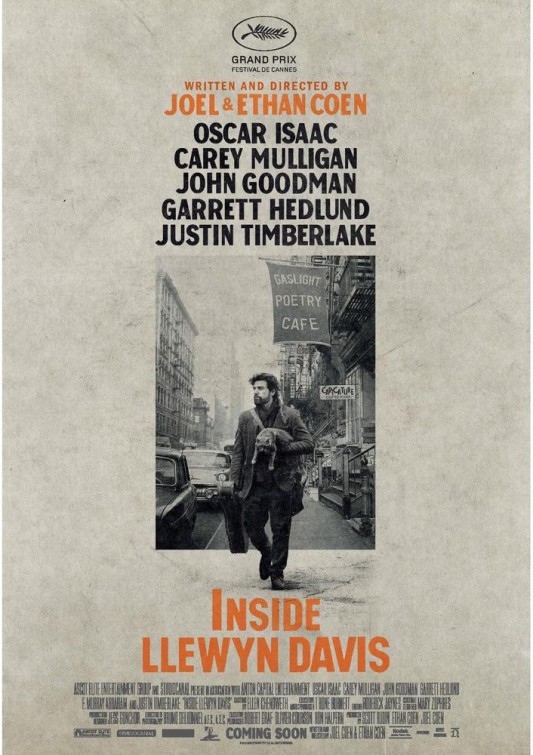
Inside Llewyn Davis (2013)

26 Sunday Jan 2014

Posted by dullwood68 in Movies

≈ 1 Comment

Tags

Audition, Carey Mulligan, Chicago, Drama, Ethan Coen, Folk music, Gaslight Café, Greenwich Village, Joel Coen, John Goodman, Justin Timberlake, Llewyn Davis, New York, Oscar Isaac, Relationships, Review

Inside Llewyn Davis

D: Ethan Coen, Joel Coen / 104m

Cast: Oscar Isaac, Carey Mulligan, John Goodman, Justin Timberlake, Garrett Hedlund, Adam Driver, Stark Sands, Jeanine Serralles, F. Murray Abraham

The Coen brothers have led a remarkably charmed cinematic life, making quirky, offbeat movies featuring all sorts of weird and wonderful characters in all sorts of weird and wonderful situations. Part of the fun to be had from watching a Coen brothers movie is that you never quite know what’s going to happen next; the Coens are so unpredictable there’s always that element of surprise in every movie, even something as outwardly formulaic as The Ladykillers (2004) or True Grit (2010). It’s a real surprise then, to find that the main character in their latest melancholy opus, Inside Llewyn Davis is, to put it mildly, a bit of a shit.

The movie is set in Greenwich Village, New York in 1961. Davis (Isaac) is a folk singer, eking out a career in clubs but without a clear idea on where he’s heading. He doesn’t have a place to live, so he sofa hops from place to place, trying the patience of friends and acquaintances, and never really repaying their kindnesses to him. He scoffs at the performances of others, including folk duo Jim (Timberlake) and Jean (Mulligan), but fails to see the weakness in his own abilities, weaknesses exacerbated by the recent death of his singing partner. Davis is horrible to just about everyone around him, foisting his unhappiness on them with all the fervour of a man trying to offload his troubles as fast as he gains them. His relationship with Jean becomes complicated when she tells him she’s pregnant and he might be the father. But Davis is so wretched she would rather have an abortion than give birth to a child that might be his. While he tries to deal with that issue, he’s also trying to deal with having lost his friends, the Gorfeins, cat. (When he takes a replacement cat back to them, it leads to one of the best lines in a Coen brothers movie ever.)  Taking a chance he can kick start his solo career in Chicago, Davis travels with proto-beat poet Johnny Five (Hedlund) and musician Roland Turner (Goodman) to audition for promoter Bud Grossman (Abraham). What he learns there has the possibility of changing his life.

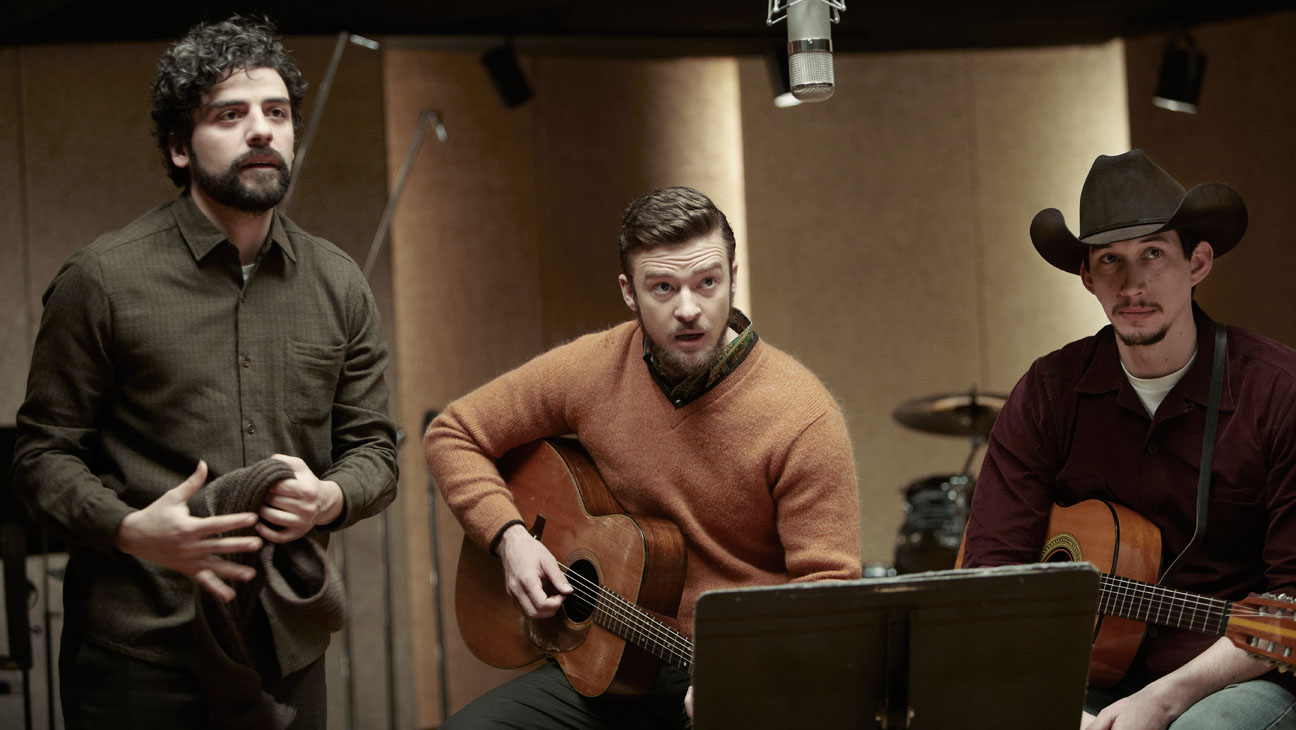
Inside Llewyn Davis - scene

From its darkened, confessional-style opening at the Gaslight Café with Isaac proving himself to be a passionate vocalist, Inside Llewyn Davis is a fitting tribute to the era when folk music was at a turning point (see the singer who follows Davis on stage at the movie’s end). As well, though, it’s a clever, witty and engaging look at a man for whom Life is a constant struggle, but only because he hasn’t developed the ability to be happy. Thanks to a terrific performance by Isaac, Davis isn’t entirely the angry curmudgeon he appears to be. There are glimmers of hope throughout the movie that elicit the audience’s sympathy for him, and if he buries those glimmers almost as soon as they pop up, it’s still enough that they happen for him. Davis is like the black sheep of the family or the troubled friend you secretly like – despite all the times they upset you or let you down – and hope Life will eventually be kind to. For Davis it’s all about the music, the only thing he truly cares about, and around which his life revolves; without it he would be a truly broken man.

Once again, the Coens have chosen a strong supporting cast for their leading man, with Mulligan’s angry turn a standout, and Goodman close behind as the disabled, anecdote spouting Turner. It’s good to see the likes of Driver and Sands given the chance to shine in small, beautifully realised roles, and Abraham too, albeit in a smaller though more pivotal role (and obviously fitted in between episodes of Homeland). A wintry New York looks cold and yet somehow vibrant thanks to crisp, striking photography courtesy of Bruno Delbonnel, and the period detail is subtly evoked by Jess Gonchor’s production design and Deborah Jensen’s art direction.

What is less obvious from this review so far is the humour that permeates the movie. Davis may be an awkward, unlikely source of merriment, but the Coens weave comedy into the somewhat solemn proceedings with deceptive skill. There are laughs to be had, and they’re scattered here and there in the script like precious jewels. And then there’s the music. Perhaps closest to O Brother, Where Art Thou? (2000) in terms of dramatic importance, the music in Inside Llewyn Davis is extremely well chosen, both for reflecting the state of Davis’s life, and for providing a candid view of the folk music scene at the time (check out the wonderfully daft Please Mr. Kennedy, an ode to world peace performed by Isaac, Timberlake and Driver that amazes as much as it amuses). As already noted, Isaac has a commanding vocal style, and his deep, rich, melodic delivery suits the material well; it’s hard now to imagine anyone else in the role.

Rating: 9/10 – a richly detailed movie that delights and impresses in equal measure; confident, absorbing, and wickedly funny in places, Inside Llewyn Davis confirms once more that when it comes to off-kilter, the Coen brothers are in a class of their own.

Share this:

  • Click to share on X (Opens in new window) X
  • Click to share on Facebook (Opens in new window) Facebook
  • More
  • Click to print (Opens in new window) Print
  • Click to email a link to a friend (Opens in new window) Email
Like Loading...

American Hustle (2013)

20 Monday Jan 2014

Posted by dullwood68 in Movies

≈ 1 Comment

Tags

AMSCAM, Amy Adams, Bradley Cooper, Christian Bale, David O. Russell, Drama, FBI, Investment scam, Jennifer Lawrence, Jeremy Renner, Review, Seventies crime, True story

American Hustle

D: David O. Russell / 138m

Cast: Christian Bale, Bradley Cooper, Amy Adams, Jeremy Renner, Jennifer Lawrence, Louis C.K., Jack Huston, Michael Peña, Shea Whigham, Alessandro Nivola, Elisabeth Röhm

Small-time hustlers Irving Rosenfeld (Bale) and Sydney Prosser (Adams) have made a success out of an investment scam that involves Sydney posing as an English aristocrat with British banking connections.  They become so successful that they soon attract the attention of ambitious FBI agent Richie DiMaso.  DiMaso gives them a choice: either be prosecuted or help him go after local mayor Carmine Polito (Renner) who he suspects of being corrupt.  Not really having a choice, Irving and Sydney go along with DiMaso’s plan, only to find the plan mutating beyond the scope of exposing Polito’s possible corruption.  Soon the Mob is involved and DiMaso’s ambitions are jeopardising both the scam he’s set up, and their lives.  With Irving’s wife, Rosalyn (Lawrence) causing unexpected complications as well, it’s up to Irving and Sydney to come up with one more scam to save their necks.

Apparently based on the ABSCAM scandal from the late Seventies – where the FBI attempted to expose corrupt politicians and senators by dressing up as Arab sheikhs and offering them bribes for a wide range of illegal requests – American Hustle is a weird movie in many ways.  It celebrates Irving and Sydney’s love for each other while at the same time eulogising Irving’s faithfulness to his wife and adopted child.  The movie also presents their investment scam as essentially victimless.  This sets up DiMaso as the movie’s villain-in-residence, and encourages us to root for Irving and Sydney from the very beginning, and while pretty much every movie under the sun has a protagonist that the audience is supposed to identify or empathise with, the fact that Russell so blatantly overlooks their criminal tendencies – other than as necessary for the plot – is immediately disarming: we’re actively complicit in their criminal behaviour.  Where’s the moral ambiguity?

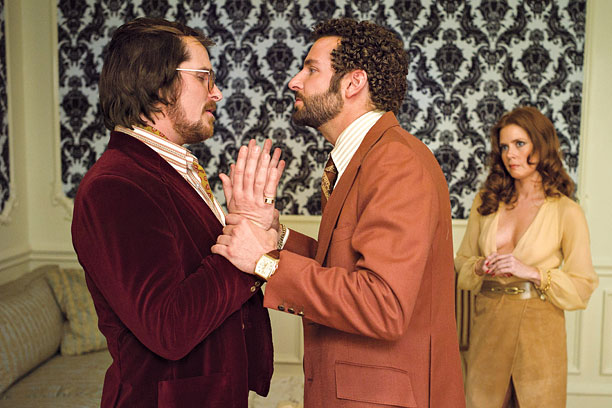
Christian Bale;Amy Adams;Bradley Cooper

While Irving and Sydney are clearly “nice” criminals, Richie is the “bad” cop: manipulative, self-aggrandising, violent, and arrogant.  He attempts to come between Irving and Sydney, shows his impatience at every turn, and due to his eagerness to get ahead, rarely makes the right move when part of the scam is in progress.  So bad is he, it’s almost funny, as if he’s an unfortunate composite of every bumbling FBI agent ever portrayed on the big screen.  Rosalyn, initially dim-witted and somewhat agoraphobic, develops into a player overnight, eventually “showing” Irving the way out of their shared predicament.  She’s a brash, outspoken character who never once rings true except when lambasting Irving for getting involved with Sydney.  And then there’s Carmine, a well-meaning politician whose naïveté gets him into so much trouble, and so quickly, you wonder how he ever managed to become mayor in the first place.  These are the main characters that Russell has admitted he cared more about than the story.

With such a focus, it’s a relief then that the performances by all concerned are uniformly excellent.  Bale, sporting a hideous comb-over and a beer gut, gives one of his best performances as the love-struck, hen-pecked, slightly less clever than he thinks Irving.  With each scene he peels back another layer of a man who at first seems one-dimensional and hollow, but who is actually heartfelt and loyal to those he cares about.  It’s a carefully structured performance and reminds anyone who might have forgotten that Bale is as adept at playing ordinary characters as he is damaged or vengeful ones.  Adams offers equally good support – and a decent British accent – as the emotionally torn Sydney, battling her burgeoning feelings for Richie before realising he’s using her as much as she’s used her marks in the past.  As the wildly out of control Richie, Cooper excels, adding to the kudos he gained from The Place Beyond the Pines with a controlled yet seething reading of a man with too much ambition for his own good, and a frightening lack of empathy or understanding of the people around him.  Renner has the least showy role, but manages to breathe life into a character who, at first, lacks any depth.  As the movie progresses, his need to help the people is shown as a personal crusade and his inevitable downfall a sad indictment of the collateral damage that can occur in these situations.  And lastly, there’s Lawrence, possibly the finest actress of her generation, imbuing Rosalyn with a vulnerability and tenacity that more than make up for the deficiencies in the characterisation.  She’s nothing short of miraculous.

With such a concentration on the characters, rather than the story or indeed the script – there’s a great deal of improvisation throughout – American Hustle ultimately falls short of its potential.  The story and plot are predictable, with any quirks that may have been part of the real-life scam ironed out in favour of more time with Irving and Sydney and Rosalyn and Richie and Carmine.  Russell directs with his usual flair, and while his focus may have been misguided, the look and feel of the Seventies is recreated effectively – those clothes! – and the structure of the movie is almost flawless.  Danny Elfman’s music, along with a carefully selected soundtrack, helps heighten the mood of the period and complements Linus Sandgren’s warm-toned cinematography, while Judy Becker’s production design provides a subtler evocation of time and place than most “period” pieces.

In essence, this isn’t the polished gem that most would have it but more of a rough diamond.  Russell is incapable of making a dull movie, but he nearly pulls it off here.  This is a character piece, not the crime drama the trailers and the advertising make it out to be, and while there’s always room for a character piece, with this movie’s background, more attention to those aspects would have made the movie a stronger, more interesting watch.

Rating: 8/10 – with a great cast – and one notable cameo – keeping things from being too dull, American Hustle doesn’t quite make the grade as a modern classic; absorbing and awkward to watch in equal measure, there’s another movie in there somewhere but not the one that Russell wants us to see.

Share this:

  • Click to share on X (Opens in new window) X
  • Click to share on Facebook (Opens in new window) Facebook
  • More
  • Click to print (Opens in new window) Print
  • Click to email a link to a friend (Opens in new window) Email
Like Loading...

The High Command (1938)

17 Friday Jan 2014

Posted by dullwood68 in Movies

≈ Leave a comment

Tags

Drama, James Mason, Lionel Atwill, Lucie Mannheim, Military fort, Murder, Review, The General Goes Too Far, Thorold Dickinson, West Africa

High Command, The

D: Thorold Dickinson / 84m

Cast: Lionel Atwill, Lucie Mannheim, Steven Geray, James Mason, Leslie Perrins, Allan Jeayes, Michael Lambart, Kathleen Gibson

In Ireland in 1921, two army majors, Sangye (Atwill) and Challoner (Philip Strange), are caught in an ambush by Republican rebels.  With the attack over, and both men the only survivors, Challoner turns on Sangye and threatens him over Sangye’s affair with Challoner’s wife.  He also reveals that Sangye is the real father of Challoner’s daughter.  Sangye is remorseful but when Challoner tries to shoot him, he’s forced to shoot first, killing Challoner.  Sangye covers up his crime, but is unaware that the doctor who saw to Challoner’s body has identified the bullet that killed him as coming from Sangye’s gun.

Sixteen years later, Sangye is now Major-General Sir John Sangye VC, and in charge of a fort located on the West Coast of Africa.  With him is his ward, Challoner’s daughter Belinda (Gibson).  Feeling that the events in Ireland are far behind him, Sangye is unsettled by the arrival of Major Carson (Perrins) who appears to know what happened all those years ago.  In turn, Carson who has travelled to the fort in the company of local businessman’s wife Diana Cloam (Mannheim), is related to Captain Heverall (Mason), one of Sangye’s junior officers.  Heverall and Diana are attracted to each other but vow to remain friends for the good of her marriage to jealous husband Martin (Geray).  Carson has no such qualms, and actively pursues her.  This leads to a misunderstanding that results in Carson’s murder.  When it’s revealed that Heverall stands to inherit a fortune as a result of Carson’s death, he is arrested and put on trial by a military court.  With Challoner’s murder about to be exposed, and Heverall’s life at stake, Sangye determines to unmask Carson’s killer, and by doing so, redeem himself.

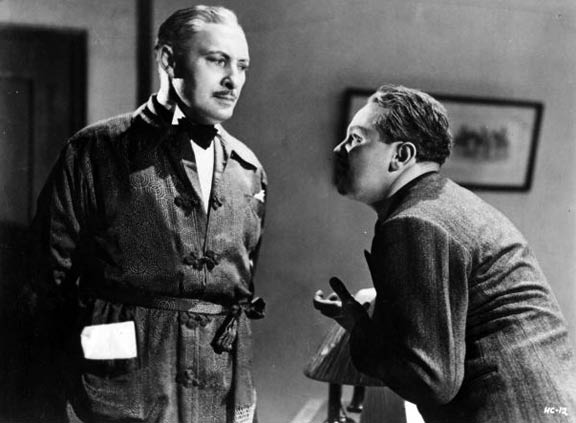
High Command, The - scene

A quickly made drama that belies its low budget, The High Command, once past its awkward exposition-heavy opening, settles into a predictable yet entertaining groove that’s bolstered by a measured performance from Atwill, and fine supporting turns from Mannheim (Miss Smith in Hitchcock’s The 39 Steps) and Jeayes as the Governor who must reluctantly accept the evidence of Sangye’s guilt.  It’s actually good to see Atwill at work here; he’s a much underrated actor who deserves far more credit than he’s usually given.  As the outwardly composed but inwardly tortured Sangye, Atwill proves a good fit for the part, and rewards the producers for their picking him for the role.  Allied to Dickinson’s fluid direction and focus on the emotional undercurrents anchoring the plot, Atwill displays a capacity for vulnerability that most other roles he played didn’t allow him to reveal.

In an early role, Mason is less than convincing as Diana Cloam’s love interest, while Geray narrowly avoids chewing the scenery to tatters as her embittered husband.  The subplot involving Sangye being Belinda’s father is left aside in favour of Heverall’s trial, and the introduction of comic relief in the form of trial witness Miss Tuff (Drusilla Wills) almost overshadows the drama of the situation.  The identity of Carson’s killer is obvious despite a half-hearted attempt to make it a mystery, the cast contend well with appropriately clipped and/or stilted dialogue, and the minimalist art direction proves occasionally distracting (would a fort be this sparse with its fixtures and furnishings?).  With so much clashing going on, Dickinson ably holds it all together with his usual sense of restrained intimacy and a keen eye for the social and military hierarchies and how they commingle.

The High Command adequately reflects the prevailing attitudes of its time and fares well when exposing the hypocrisies of its main characters; pride is a theme that recurs throughout the movie, and the consequences of having too much pride are keenly observed.  The script by Katherine Strueby, Walter Meade and Val Valentine from the novel The General Goes Too Far – a much better title – by Lewis Robinson calls for less histrionics than might be expected, and allows the cast to inhabit their roles instead of get bogged down in the usual stuffed shirt theatrics.  Otto Heller’s photography is occasionally a little soft but otherwise well-framed, and the music by Ernest Irving ably supports the action.

Rating: 6/10 – raised up by good performances and clever direction, The High Command works best when focusing on Atwill and Mannheim; a minor gem well worth seeking out.

Share this:

  • Click to share on X (Opens in new window) X
  • Click to share on Facebook (Opens in new window) Facebook
  • More
  • Click to print (Opens in new window) Print
  • Click to email a link to a friend (Opens in new window) Email
Like Loading...

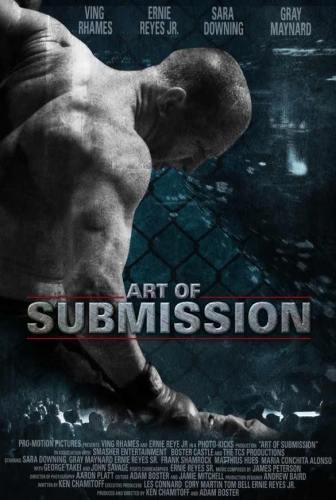
Art of Submission (2009)

16 Thursday Jan 2014

Posted by dullwood68 in Movies

≈ Leave a comment

Tags

Cage fighting, Drama, Ernie Reyes Jr, Frank Shamrock, George Takei, Gray Maynard, John Savage, Mixed Martial Arts, MMA, Review, The Red Canvas, Ving Rhames

Art of Submission

aka The Cage Fighter: Pride vs Honour; The Red Canvas; Submission

D: Kenneth Chamitoff, Adam Boster / 102m

Cast: Ving Rhames, Ernie Reyes Jr, John Savage, George Takei, Sara Downing, Ernie Reyes Sr, Maria Conchita Alonso, Ken Takemoto, Gray Maynard, Frank Shamrock

Primarily funded by martial arts school owners and their students, Art of Submission aims to show the other side of Mixed Martial Arts (MMA), namely the dedication and the respect that fighters have for the sport and for each other.  On that level it succeeds, but two main creative decisions undermine the message the movie wants to make.

The story centres around Johnny (Reyes Jr).  He’s a hothead who wants to get ahead in MMA but without first paying his dues or according the people around him the respect they deserve, including his father (Reyes Sr).  His trainer, Gene (Rhames) acknowledges his talent but insists he works his way up to fighting in a paying match.  Johnny has money problems and tries a variety of schemes to solve them without success.  When he and Gene’s daughter, Julia (Downing) have a child together, he tries to earn some easy money and winds up in jail.

At this point it’s all been so far, so predictable.  Rhames does his gruff mentor routine, Reyes Jr looks slightly weird with long straggly hair, the supporting cast come and go in various subplots, and the few fight sequences are edited to within an inch of the fighters’ trunks.  Family loyalties are strained, Reyes Jr pouts a lot, steroids are used, and prison awaits, though not in the way Johnny expects (he’s been offered a job as a prison guard more than once).  With Johnny inside, Art of Submission becomes a different movie altogether.

Art of Submission - scene

Coincidence and contrivance come thick and fast from this point on as Johnny meets Warden Rask (Savage).  Rask sees Johnny’s potential and arranges to have him released to take part in an MMA tournament organised by Krang (Takei).  It turns out Krang knew Rask – and Gene – during Vietnam, and… you know what, watch the movie and find out; it’s far too convoluted to recount here.  This narrative overkill hurts the movie from here until the end, and while it’s not confusing as such, it does lead to there being too many scenes that fail to advance the plot, and in turn, reduce the amount of time that could have been spent on the qualifying rounds and the tournament final.  Let’s just say that Krang is the villain of the piece, performance-enhancing drugs are involved, the various subplots are tidied up neatly, and the outcome of the final is never in doubt for a moment.

As well as the convoluted plotting, the other decision the filmmakers made that hurts the movie is with the editing.  At one point, Johnny’s father ends up in hospital in a coma; the sequences that follow are a badly stitched together montage that merge in and out of each other, stopping the viewer from making complete sense of what’s happening.  The dialogue in these sequences is also overwhelmed by the score, making it even more difficult to work out what’s going on (though to be fair, the copy of the movie I saw may have been the problem).  Elsewhere, the editing appears random, with shots chosen not so much for their relevance to the action as for their framing, and to show off the various camera angles that mire the look of the movie.  All in all, the last half hour seems to have been edited by someone with ADHD (my apologies to co-editors Boster and Jamie Mitchell if either one of them actually has this condition).

All of which leaves the fight scenes.  Choreographed by Reyes Sr, these are in keeping with regular MMA bouts: short, brutal bursts of physical punishment that leave you wondering how these guys stay upright for as long as they do.  What makes the bouts even more impressive is the participation of real MMA fighters (Maynard, Shamrock, ‘Crazy’ Bob Cook, Kim Do Nguyen et al).  Knowing that the moves and the blows are real makes all the difference.  (However, the manic editing still makes it look like the bouts were shot from over thirty different camera angles and in four second bursts.)

Art of Submission isn’t the best MMA movie in the world, but the level of behind-the-scenes authenticity does keep it from being a complete letdown.  The cast do their best with a script that resorts to muddled cliché more often than not, and the direction by Chamitoff and Boster is serviceable if uninspired.  Rhames coasts, Reyes Jr tries too hard, but the bouts save the day.

Rating: 5/10 – an uneven attempt at promoting MMA despite the involvement of several well-known participants, and not helped by crudely drawn characters; fitfully absorbing, but overall, one for the fans.

Originally posted on thedullwoodexperiment website.

Share this:

  • Click to share on X (Opens in new window) X
  • Click to share on Facebook (Opens in new window) Facebook
  • More
  • Click to print (Opens in new window) Print
  • Click to email a link to a friend (Opens in new window) Email
Like Loading...

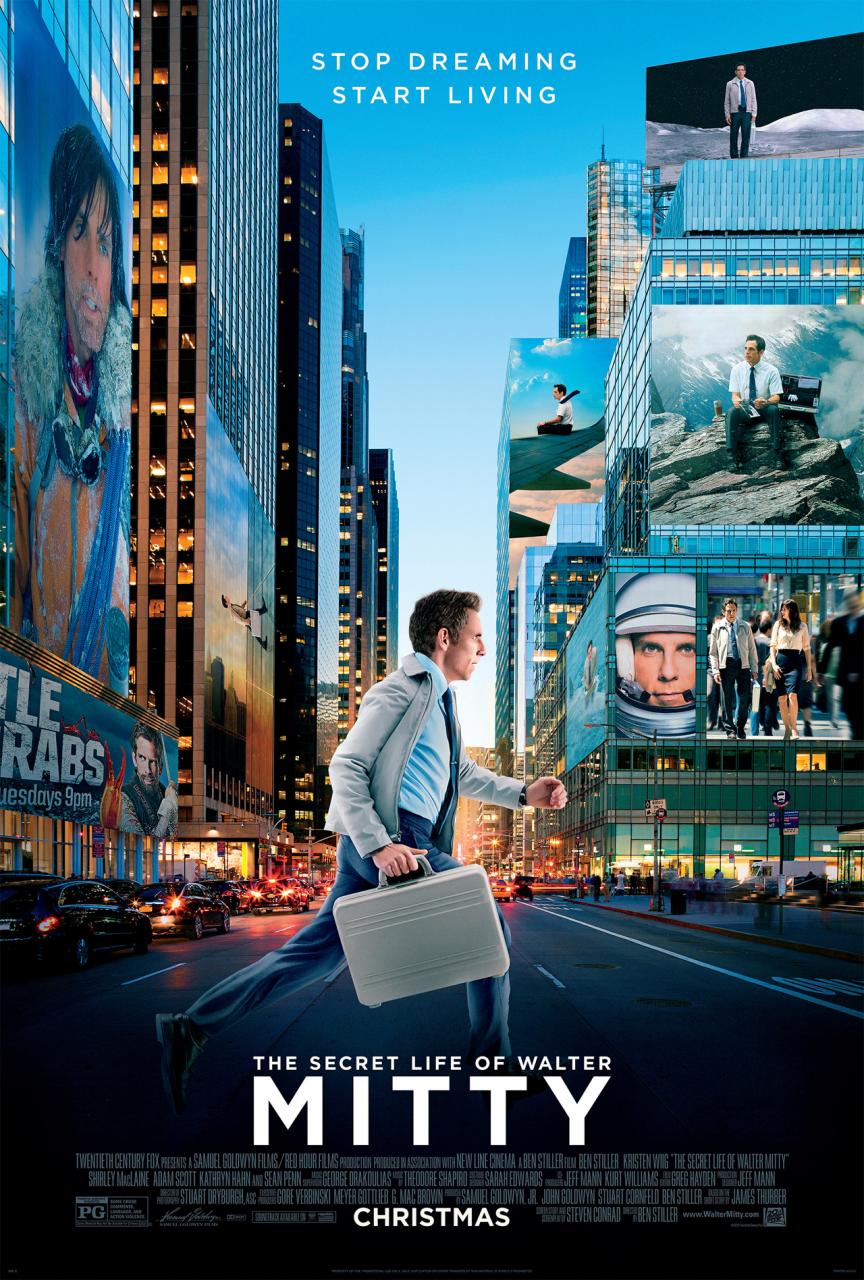
The Secret Life of Walter Mitty (2013)

15 Wednesday Jan 2014

Posted by dullwood68 in Movies

≈ Leave a comment

Tags

Ben Stiller, Cover photo, Drama, Fantasy, Iceland, Kristen Wiig, Life magazine, Review, Romantic drama, Sean Penn, Shirley MacLaine, Walter Mitty

Secret Life of Walter Mitty, The

D: Ben Stiller / 114m

Cast: Ben Stiller, Kristen Wiig, Adam Scott, Shirley MacLaine, Kathryn Hahn, Adrian Martinez, Ólafur Darri Ólafsson, Patton Oswalt, Sean Penn

Working as a negative accounts manager (responsible for photo negatives sent in by contributing photographers) at Life magazine, Walter Mitty (Stiller) has led a largely unremarkable life.  Unmarried, with few friends, Walter is devoted to his job, but with the recent arrival of Cheryl Melhoff (Wiig) at the magazine, he finds himself smitten.  Upheaval also arrives with the news that the magazine is being cancelled in favour of an online edition.  Brought in to oversee the closure of the magazine and staff lay-offs, Ted Hendricks (Scott) picks on Walter, having caught him day-dreaming in the office.  When noted photographer Sean O’Connell (Penn) sends in a series of negatives, with one being his preferred choice for the final cover, Walter is horrified to discover he can’t find it.  With the final issue a matter of two weeks away, Walter decides to track down O’Connell and retrieve the missing negative.

Walter enlists Cheryl’s help in finding the elusive O’Connell.  A clue leads Walter to Iceland, where a drunken helicopter pilot (Ólafsson) tells him O’Connell is heading via trawler to Greenland.  He catches up with the trawler at sea but O’Connell has already left the ship.  Arriving in Greenland, Walter learns that his quarry is headed for a local airstrip.  As he gets there, O’Connell’s plane takes off… and a nearby volcano erupts.  With no further leads to help him follow O’Connell, Walter is forced to return to New York.  Back at work, he’s fired by Hendricks.  Depressed, Walter visits his mother (MacLaine) who tells him O’Connell came to see her a few weeks before.  She also provides him with enough information to help Walter decipher another clue he’s picked up during his travels.  Travelling to the foothills of the Himalayas, Walter finally catches  up with O’Connell and the mystery of the missing negative is solved.

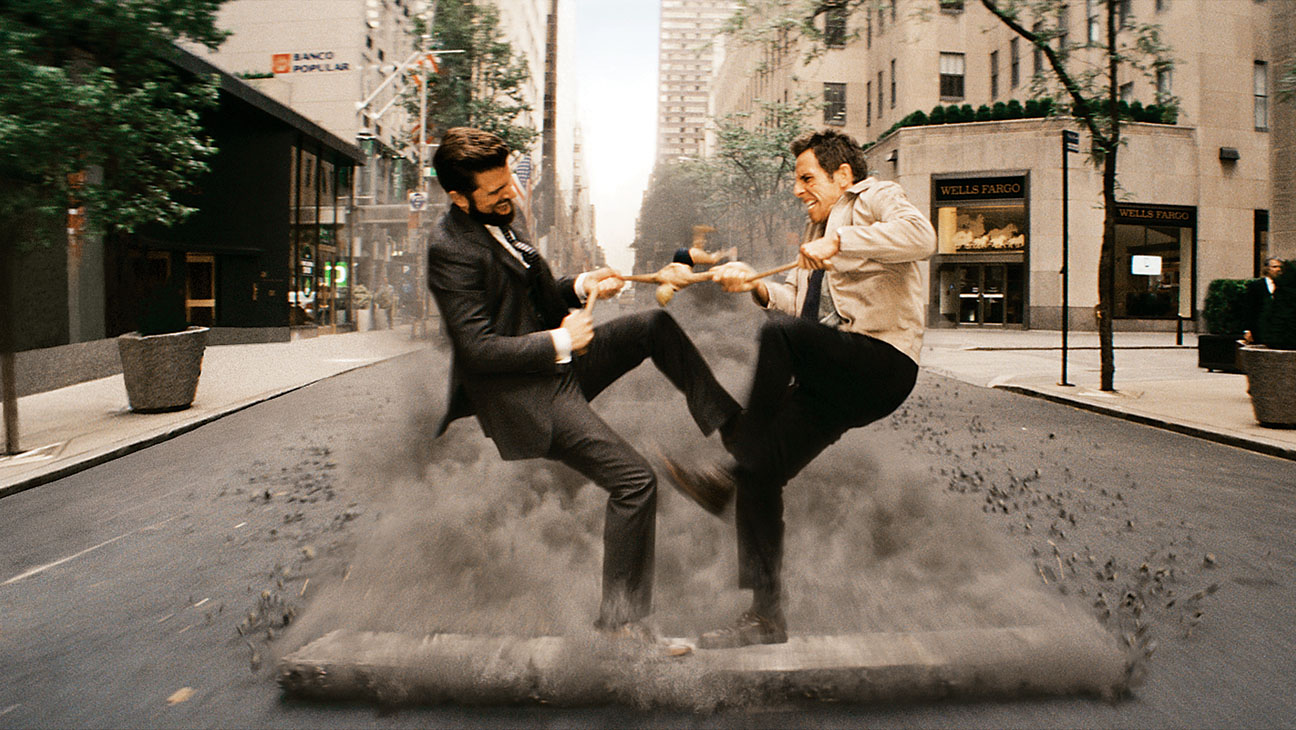
THE SECRET LIFE OF WALTER MITTY

From its trailer, The Secret Life of Walter Mitty could be mistaken for another comic fantasy à la Stiller’s Night at the Museum movies, but thanks to a sharply observed script by Steve Conrad, and a sure hand at the helm from Stiller himself, nothing could be further from the truth.  This is not just an excuse for humorous fantasy sequences designed to prop up a patchy script, but a carefully thought out, intelligent, affectionate account of one man’s emergence from his own shell.  Walter is a terrific creation, a recognisable person with recognisable hopes and dreams, and a genuinely nice man who’s self-confidence is only evident when he’s at work.  His attraction to Cheryl is handled beautifully, his longing for a relationship played with adroitness and charm.  And as Walter’s adventures bring him further into the real world, and away from the fantasy world he slips into so easily, the acceptance he finds from the people he meets brings him a series of personal rewards.  By the time he confronts O’Connell, Walter is a changed man, able to deal with anything Life can throw at him (and which comes in handy when he later confronts Hendricks).

It’s a wonderful, nuanced turn from Stiller, subtle, skilful and affecting in equal measure, and a joy to watch.  It’s a life-affirming performance, ably supported by a well-chosen supporting cast headed by Wiig, and Stiller proves a confident director, marshalling the disparate elements of the script with verve and evident ease.  Penn is a great choice for the errant photographer, and Wiig adds several shades to a character she has played similar versions of before.  The only false note amongst the performances is Scott’s but that’s because his character is written as an obnoxious prat from the beginning; it’s the script’s only misstep.

The movie is often gorgeous to look at as well, especially when Walter is trekking through the foothills of the Himalayas; as he walks along the top of one particular ridge the panorama behind him is simply breathtaking.  But even amongst the offices of Life magazine, Stiller’s compositions are pleasing to the eye and far from perfunctory, a testament to the effort he’s made in presenting a movie that has a unique visual style throughout.  He’s ably supported by cinematographer Stuart Dryburgh and editor Greg Hayden, and there’s a wonderful score replete with songs courtesy of José González.

The Secret Life of Walter Mitty is that modern rarity amongst Hollywood movies, an uplifting, feel good, life-affirming romantic drama that isn’t queasily sentimental or emotionally over-the-top, and which doesn’t outstay its welcome.  It’s worth watching a second time for the subtle bits of business Stiller peppers the movie with, and for the pleasure of spending the best part of two hours with someone you’d be happy to call your friend.

Rating: 9/10 – a triumph for Stiller and his very talented cast and crew, The Secret Life of Walter Mitty deserves to be seen over and over again; a winning, multi-faceted experience that will keep a smile on your face for hours after seeing it.

Share this:

  • Click to share on X (Opens in new window) X
  • Click to share on Facebook (Opens in new window) Facebook
  • More
  • Click to print (Opens in new window) Print
  • Click to email a link to a friend (Opens in new window) Email
Like Loading...

My Top 10 Movies – Part Five

13 Monday Jan 2014

Posted by dullwood68 in Movies

≈ 1 Comment

Tags

4k restoration, Alec Guinness, Anthony Quinn, Aqaba, Cinematography, David Lean, Drama, London Film Festival 2012, Omar Sharif, Peter O'Toole, Review, T.E. Lawrence, True story

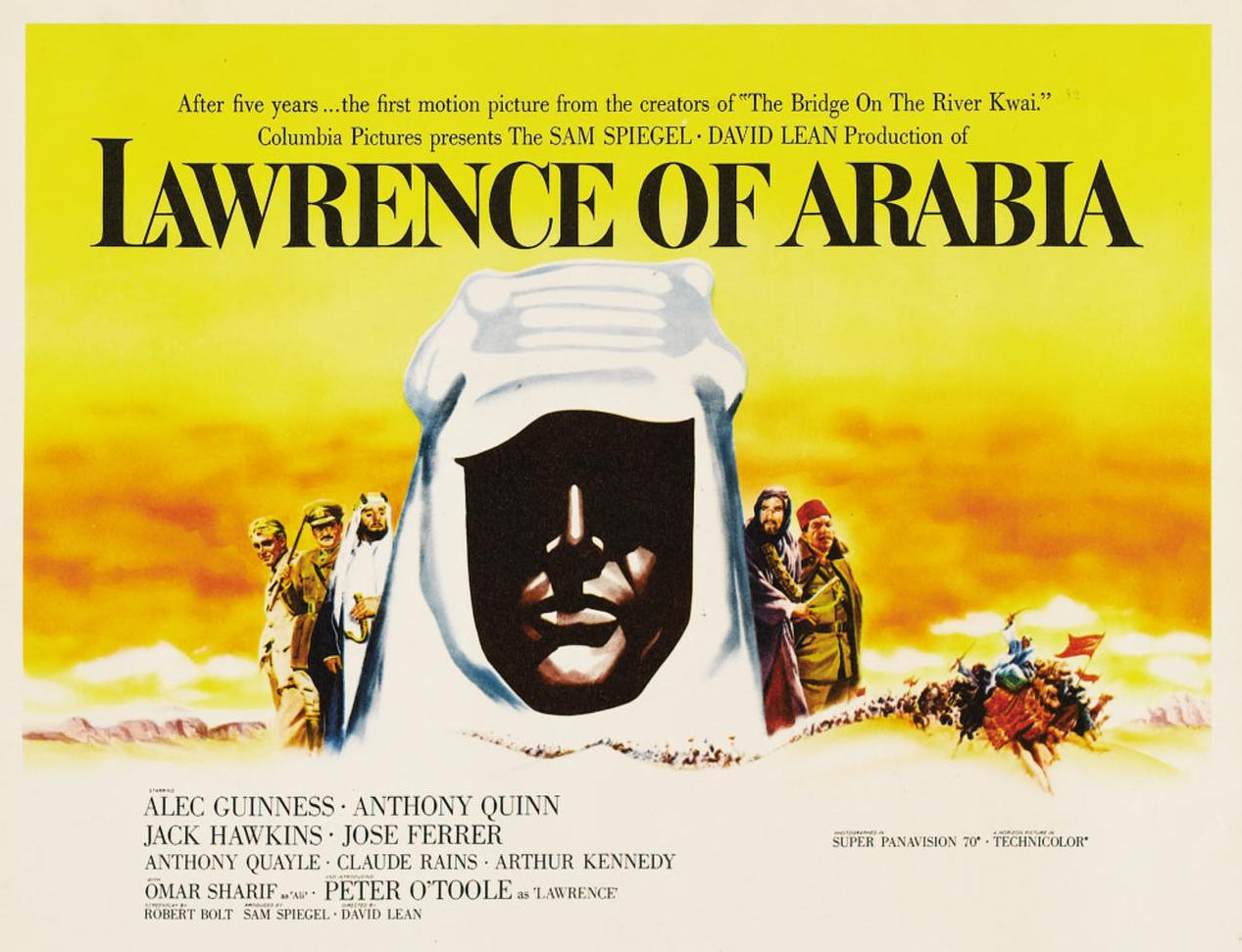
Lawrence of Arabia (1962)

Lawrence of Arabia

D: David Lean / 222m

Cast: Peter O’Toole, Alec Guinness, Anthony Quinn, Jack Hawkins, Omar Sharif, José Ferrer, Anthony Quayle, Claude Rains, Arthur Kennedy, Donald Wolfit, I.S. Johar

We’re at the halfway stage and so far I think I’ve got some pretty good choices for my Top 5: all are classics, all have stood (and continue to stand) the test of time, and all of them have had a profound effect on me as an individual and not just as a film buff.

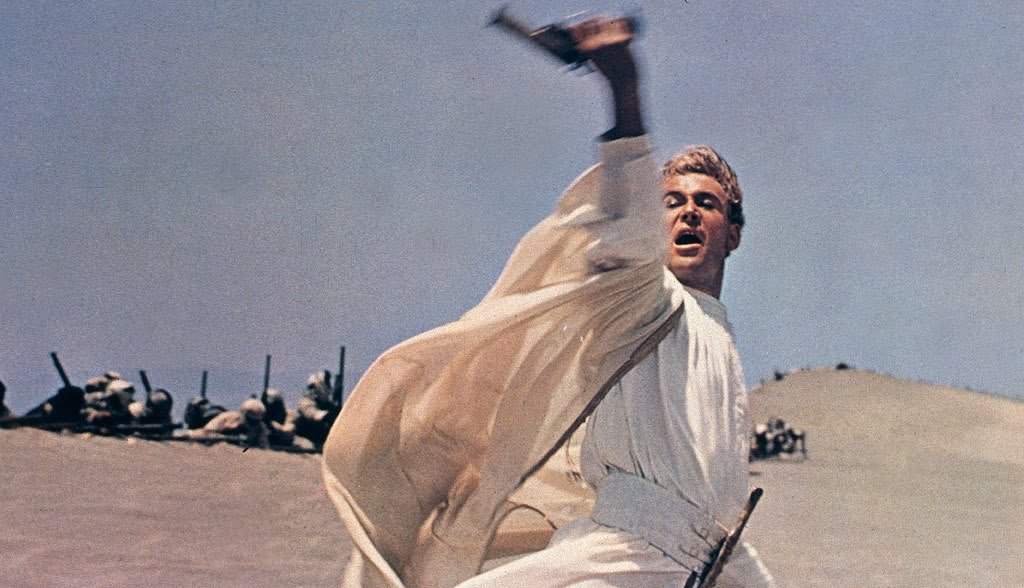
I first saw Lawrence of Arabia on TV in the late Eighties.  It was one of those movies I’d lifted from my trusty Halliwell’s Film Guide as a must-see, and while I’d seen a few other epics up ’til then – Ben-Hur (1959), Spartacus (1960), and Lean’s own Doctor Zhivago (1965) – what really impressed me as the movie unfolded was the sheer size and scale of everything; even on a tiny portable TV in my bedroom this movie was astonishing in its scope (and it was a panned and scanned version as well – how terrible is that?).  There was so much to marvel at: the desert landscapes that seemed to stretch away into infinity, the shot of the attack on Aqaba with the tribesmen hurtling towards the city defences in that long panning shot that took in so much visual information it almost seemed impossible, the sense of mountains so tall and imposing that the characters appeared like ants in relation, and towering over it all, a performance that stands as one of the greatest in cinema history: Peter O’Toole as T.E. Lawrence.

I was familiar with O’Toole, had seen him in a few films, including The Lion in Winter (1968) and The Night of the Generals (1967), and while I’d thought him a good actor, very intense in his approach, I hadn’t marked him out as an actor to follow (unlike his co-stars Alec Guinness and Claude Rains).  Seeing him as Lawrence I began to realise I was watching something special, something beyond normal screen acting; here was a performance that not only made you forget there was an actor in front of you, but – and I know this is supremely silly – gave the impression that they’d somehow found the real Lawrence and plonked him down in the movie and asked him to recreate those scenes from his life being filmed.  O’Toole wasn’t just astonishing, he was breathtaking.  When he was on screen he was hypnotic, I couldn’t take my eyes off him.  If the camera cut away to another character, I wanted it to come back to Lawrence as quickly as possible.  If he wasn’t in a scene at all, I wanted that scene to end as quickly as possible so I could see him again.  (It sounds a bit creepy, I know, but this was a revelation to me, that an actor could be this good; I’m not even sure I’ve seen another performance as good since.)

Lawrence of Arabia - scene

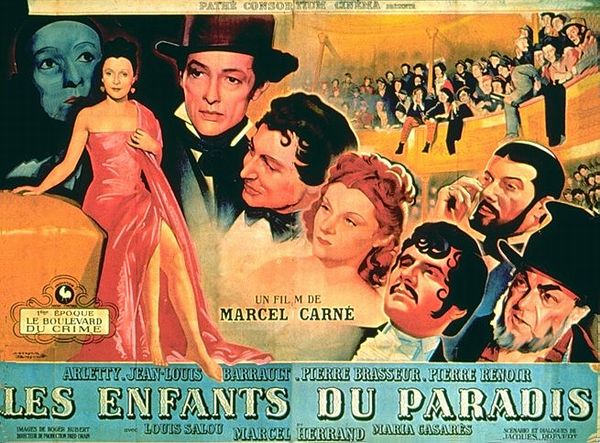
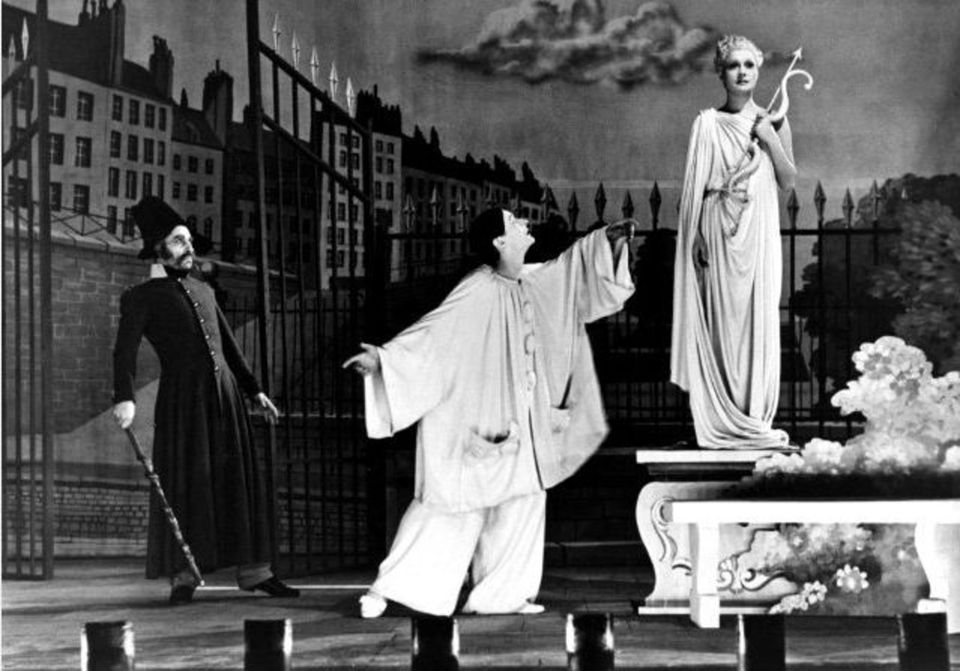
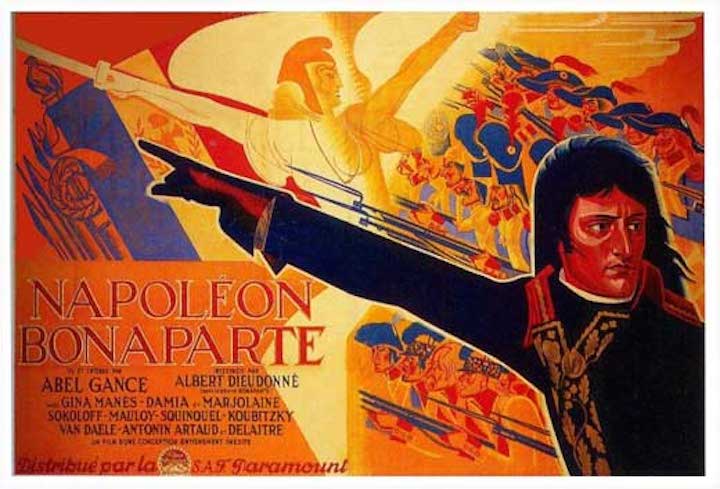
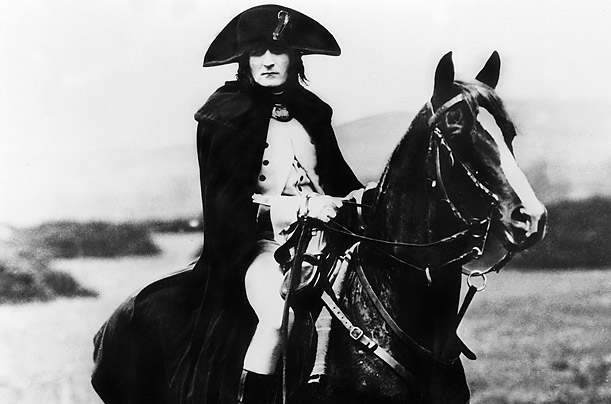
As with Stanley Kubrick and Abel Gance and Marcel Carné (sorry, Terry Jones!), here also was a director with complete mastery and control over the material.  Lean did things in terms of composition and lighting I’d never seen before, things I’d never even considered could be done.  His use of natural light alone was impressive.  Watching Lawrence of Arabia now, over fifty years on from its release, there are shots that have never been replicated by other directors and/or cinematographers.  Lean was truly a cinematic painter, an artist concerned as much with light and shade as character and emotion and motivation; he could fuse these elements together to make an organic, complete representation of the subject at hand, and their environment.  In Lawrence of Arabia this makes for filmmaking of breathtaking beauty and accomplishment.

When I first saw the movie, and as I usually did, I raved about it to friends, even though I knew the subject matter and the movie’s length would put them off.  But one friend did see it (though some time later), and reported that they’d really enjoyed it but was surprised that the movie ended with the attack on Aqaba; he’d really wanted to find out what happened next.  I tried to keep my laughter to a minimum as I explained he’d only seen the first part of the movie.

I’ve seen the movie now around a dozen times, and each time it captivates me and mesmerises me in equal measure.  The last time I saw it was at the London Film Festival in 2012.  It was the first time the recent 4k restoration of the movie had been screened in the UK, and as a surprise, the festival organisers had arranged for two people connected with the movie to say a few words before the showing started.  Those two people turned out to be Anne V. Coates, the movie’s editor, and none other than Omar Sharif.  From where I was sitting I was only about six feet away from them both, and while Sharif spoke about his experiences making the film, several times he looked directly at me as he spoke.  (To say I walked out of that screening on cloud nine would be an understatement.)  And the movie looked tremendous, ravishing and beautiful in a way I’d never seen before, having never seen it at the cinema, only on home video or DVD.  It took me back to that first showing on TV, as I saw a movie I thought I was familiar with, but realised I hadn’t seen really properly in all this time.

For me, Lawrence of Arabia is the epic to end all epics, the grandest piece of filmmaking ever committed to celluloid.  Like the other movies I’ve discussed so far, it opened my eyes to what was possible in cinema, and its lustre hasn’t dimmed after all these years.  It’s also the most beautiful movie I’ve ever seen.

Rating: 9/10 – a movie that mixes the epic with quieter, more intimate moments, and  with skill and considerable brio; Lean’s masterpiece and O’Toole’s finest hour.

Share this:

  • Click to share on X (Opens in new window) X
  • Click to share on Facebook (Opens in new window) Facebook
  • More
  • Click to print (Opens in new window) Print
  • Click to email a link to a friend (Opens in new window) Email
Like Loading...

Stuck in Love (2012)

07 Tuesday Jan 2014

Posted by dullwood68 in Movies

≈ Leave a comment

Tags

Comedy, Divorce, Drama, First love, Greg Kinnear, Jennifer Connelly, Josh Boone, Lily Collins, Logan Lerman, Nat Wolff, Novels, Review, Stephen King, Writers

Stuck in Love

D: Josh Boone / 97m

Cast: Greg Kinnear, Jennifer Connelly, Lily Collins, Nat Wolff, Kristen Bell, Logan Lerman, Liana Liberato, Michael Goodwin

Three years after his wife, Erica (Connelly), left him, acclaimed writer William Borgens (Kinnear) is still convinced she will come back to him, even though she’s remarried. To make matters worse, he hasn’t written a word since Erica left. All he seems able to do is spy on his ex-wife in the hope he’ll see some evidence that her marriage isn’t working, and engage in casual sex with one of his neighbours, Tricia (Bell). The break-up has affected their children in different ways. Daughter Samantha (Collins) refuses to have anything to do with her mother and wants her father to move on with his life. Son Rusty (Wolff) still sees his mother and has no animosity toward her at all.

With William not writing anything, it comes as a surprise to learn that Samantha is about to have her first novel published. Both William and Rusty are initially frosty about the news, William because it’s not the same book he helped her with before, and Rusty because he’s struggling to find his own voice as a writer (he likes fantasy fiction and is a huge fan of Stephen King). With Samantha’s return home from college, the family dynamic alters considerably, with no doubts that her novel will be a success leading William and Rusty to question their roles as writers. For Rusty it means experiencing life more fully, leading him into a relationship with substance abuser Kate (Liberato). William tries to put the past behind him but without much success until Tricia tells him he shouldn’t be settling for the kind of relationship he has with her. Samantha, however, is fiercely opposed to getting close to anyone, as she fears the same thing happening to her as it did to her parents. Despite this, she meets and begins a relationship with Louis (Lerman).

As the various relationships deepen and become more serious, with unexpected consequences for all concerned, the Borgens, including Erica, find their family dynamic being tested at every turn.

Stuck in Love - scene

While it’s true that Stuck in Love is a little light on real drama, and the emotional crises the characters have to deal with are far from original, the movie is still a pleasure to watch, and is rewarding in many other ways. The chemistry between Kinnear and Connelly is affecting and effective in equal measure, with both actors playing off each other with practiced ease. There’s a scene where they meet at a shopping mall, and while the dialogue is mainly functional, the underlying charge given to their meeting is all down to how they look at each other, and their body language. Wolff shines too, imbuing Rusty with a restless, nervous energy that transforms over the course of the movie (from one Thanksgiving to the next) into a more relaxed, easily maintained confidence. As the initially self-repressed Samantha, Collins does well in a role that could have been more vapid than vital, and she copes equally well with the demands of being remote from her mother and fully engaged with her father. As the love interests, Bell is all business and tough love, Lerman is sweet but under-used, and Liberato shows promise as the wayward Kate.

The interaction between the characters is well handled, and thanks to first-time writer/director Boone, there aren’t any awkward moments where motivations can be questioned or behaviour impeached.  The family scenes feel natural, and if some viewers are put off by the idea of yet another slice of middle class neurotic navel-gazing, then that would be a shame, because Stuck in Love is sharp, observant, knowing, and above all, intelligent.  The comic elements fit comfortably alongside the dramatic elements, and the East Coast locations are a good fit for the story (as well as being beautifully photographed by DP Tim Orr).

Rating: 8/10 – a genuine pleasure to watch, with great performances enhancing an already great script; an indie movie with a warmth and a feel good factor all its own.

Share this:

  • Click to share on X (Opens in new window) X
  • Click to share on Facebook (Opens in new window) Facebook
  • More
  • Click to print (Opens in new window) Print
  • Click to email a link to a friend (Opens in new window) Email
Like Loading...

Evasive Action (1998)

06 Monday Jan 2014

Posted by dullwood68 in Movies

≈ Leave a comment

Tags

Action, DeLane Matthews, Dorian Harewood, Drama, Jerry P. Jacobs, Prison escape, Prisoners, Ray Wise, Review, Roy Scheider, Runaway train, Thriller

Evasive Action

aka Con Train; Steel Train

D: Jerry P. Jacobs / 91m

Cast: Dorian Harewood, Ray Wise, Roy Scheider, DeLane Matthews, Ed O’Ross, John Toles-Bey, Clint Howard, Don Swayze, Richard Foronjy, Steven Barr, Blake Gibbons, Mallory Farrow, Keith Coogan, Bill McGee

An unabashed mash-up of Con Air and Under Siege 2 but with a tenth of either movie’s budget (or inventiveness), Evasive Action pits con-with-integrity Luke Sinclair (Harewood) against prison big wheel Enzo Marcelli (Scheider) during an attempted escape from the train carrying them both to a new prison.  Sinclair is doing time for the murder of the man who killed his wife and child, while Marcelli’s crime is never revealed; he’s just a very bad man.  Sinclair’s integrity is shown by his refusal to admit remorse for his crime at his parole hearings; Marcelli’s evil nature is shown by…. well, he queue jumps in the prison yard.

Once Sinclair and Marcelli, along with additional convicts Tommy (Toles-Bey), Ian (Swayze), and Hector “The Director” Miller (Howard, on Steve Buscemi psychopath duty), are on the way to San Diego and their new “home”, what has been up-to-now a fairly unremarkable thriller with some daft dialogue, moves quickly into the outer reaches of low-budget silliness.  With the aid of accomplices Vince (Foronjy) and Joe (Barr), Marcelli et al are freed from the high-tech (but actually low-tech) carriage they are being transported in.  With a plan to rendezvous with a helicopter and flee to Mexico, it’s up to Sinclair and plucky train employee Zoe (Matthews) to save the day and thwart Marcelli’s (slightly) evil plan.

Evasive Action starts promisingly but soon resorts to desperate measures to keep itself “on track”.  With the convicts taking over the train, Zoe manages to contact the police; soon Sheriff Blaidek (Wise) is heading to intercept the train and save the day.  What follows is a series of incidents that demand such a massive suspension of disbelief, the viewer is in danger of self-inducing a migraine.  For example, Blaidek commandeers the helicopter and orders the pilot to get him onto the train; Sinclair jumps from the train and reconnects with it after travelling across the desert on foot before reaching a town and stealing a motorbike; and the train company has only one worker, Anthony (Coogan), who can help the police keep track of where the train is headed and/or located (and he’s inexperienced).

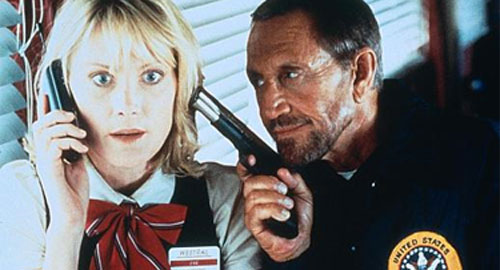
Evasive Action - scene

As an action thriller, Evasive Action sets a robust pace once the train sets off but the audience is unlikely to connect with any of the characters.  As Luke, Harewood is earnest and just a little bit stuffy; plus in the fight scenes it’s clear he hasn’t squared up to anyone since he was probably five.  Wise acts like a man who hopes no one he knows will see the movie, while Matthews shows no fear, merely a kind of mild exasperation at what she has to go through.  It’s left to Scheider to raise the acting bar but even he can’t salvage a character so underwritten he has to resort to snarling his way through the movie as a way of keeping him interesting.

Jacobs’ direction lacks focus and substance (he’s better known as a producer, albeit of movies such as Vampires Suck and Disaster Movie), and the photography by Ken Blakey too often resorts to shaking the camera in order to make it look like the train is moving.  The script plays fast and loose with its own timescale, and makes Passenger 57 – another movie it’s been partially cloned from – look like Oscar-bait.  The movie looks bland and lacks any kind of zest.  And the movie’s big set-piece moment, when the train crashes through a terminus at high speed, is reduced to three poorly achieved shots involving model work.

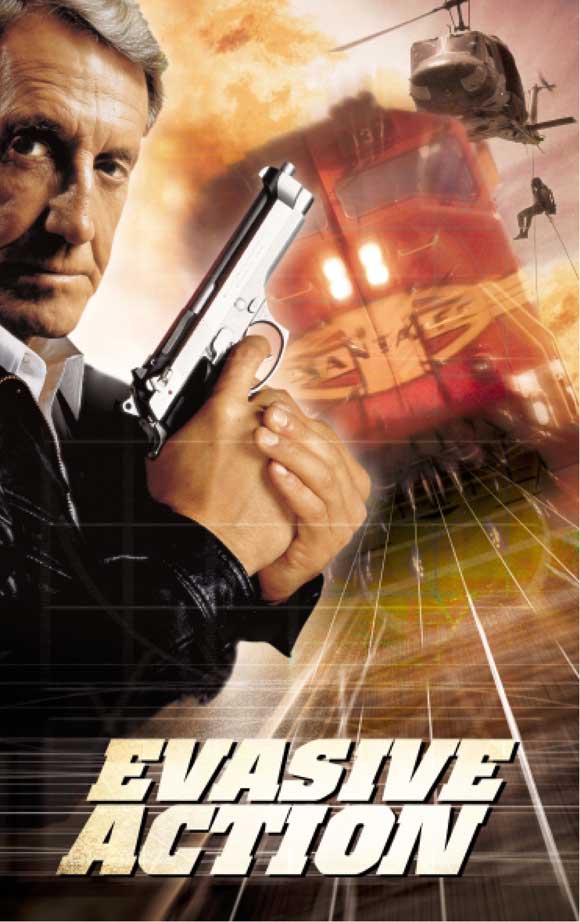
While Evasive Action does try hard to entertain its audience, what you’re left with is a sense that this was a movie that was made quickly so as not to burden its cast and crew any more than it had to.  And whoever came up with the poster design has made it look as if Scheider is some kind of spy dealing with terrorists (maybe), or, as some reviewers might put it, is “in the wrong place at the wrong time”.  (Well, yes he is, but only in the “whoops-I-should-have-passed-on-this-one” sense.)  All in all, the best thing about the movie is that it moves with a sense of urgency, even if that urgency is to get things over with as quickly as possible.

Rating: 4/10 – saved from a lower score because its very inoffensiveness is a kind of relief from the madness of most direct-to-video releases, but only worth a view if every other variation on Con Air is unavailable.

Originally posted on thedullwoodexperiment website.

Share this:

  • Click to share on X (Opens in new window) X
  • Click to share on Facebook (Opens in new window) Facebook
  • More
  • Click to print (Opens in new window) Print
  • Click to email a link to a friend (Opens in new window) Email
Like Loading...

Illegal (1955)

06 Monday Jan 2014

Posted by dullwood68 in Movies

≈ Leave a comment

Tags

Albert Dekker, Courtroom drama, DeForest Kelley, District attorney, Drama, Drink problem, Edward G. Robinson, Jayne Mansfield, Lewis Allen, Nina Foch, Review, Thriller

Illegal

D: Lewis Allen / 88m

Cast: Edward G. Robinson, Nina Foch, Hugh Marlowe, Jayne Mansfield, Albert Dekker, Howard St John, Ellen Corby, Edward Platt, Jan Merlin

When ace district attorney Victor Scott (Robinson) gains a conviction in the case of wife murderer Edward Clary (Star Trek’s DeForest Kelley), he couldn’t be more pleased as it maintains his impressive run of convictions.  Clary is sentenced to be executed but as he goes to the chair, a death bed confession by another man proves Clary’s innocence.  Alerted to the confession, Scott tries to halt the execution but is too late.  His professional reputation in tatters, Scott takes to the bottle.  Self-pitying and pushing away anyone who might help him, particularly his assistant Ellen Miles (Foch), Scott eventually pulls himself together but determines to take on only defence cases from then on.  In the process he falls in with local gangster Frank Garland (Dekker).  Scott defends Garland’s men when they end up in court, and on one occasion goes to extreme lengths to gain an acquittal.  Soon he begins to regret the course he’s chosen and tries to extricate himself from Garland’s clutches.  And then Ellen ends up on trial for the murder of her husband Ray (Marlowe), giving Scott a chance to redeem himself for the mistake he made with Clary, and ensure that Garland is brought to justice.

Illegal - scene

A remake of The Mouthpiece (1932), Illegal is a fast-paced courtroom drama with fine performances (though Foch can be a trifle stiff at times), and an early appearance for the buxom Mansfield.  Some of Scott’s motivations are a little bit hazy, especially when he begins working for Garland, but Robinson, consummate professional that he is, doesn’t allow this to interfere with the need for pushing the story forward.  As Garland, Dekker is a great foil for Robinson, and gives a firm reminder of why he was such a reliable supporting actor in the Forties.  There are a number of twists and turns, a mole in the DA’s office who must be uncovered (though the culprit is revealed early on), the usual lack of a romantic involvement for Robinson (he never did that well with the ladies), and some typically hard-boiled dialogue chewed on with relish by the largely male cast.

Directed with flair by Brit-born Allen (also responsible for The Uninvited – see review posted on 31 October 2013), Illegal is a legal potboiler that still retains a great deal of charm and is a pleasant enough way to spend an hour and a half.  On the downside, the sets are quite drab – evidence of a tight budget – and the photography is perfunctory, composed largely of medium shots.  It’s mostly predictable too, but this isn’t a drawback, and while there’s the odd misstep along the way (which might cause a grimace), the movie is an acceptable addition to the genre.  Plus there’s a great score from the ever-reliable Max Steiner.  There’s always an in-built reassurance with this type of movie, and if you’re a fan, you’ll be pleased you caught up with it.

Rating: 6/10 – minor problems with production values aside, Illegal benefits from a committed turn by Robinson and assured direction by Allen; not a classic but enjoyable nonetheless.

Share this:

  • Click to share on X (Opens in new window) X
  • Click to share on Facebook (Opens in new window) Facebook
  • More
  • Click to print (Opens in new window) Print
  • Click to email a link to a friend (Opens in new window) Email
Like Loading...

Frozen (2013)

06 Monday Jan 2014

Posted by dullwood68 in Movies

≈ 2 Comments

Tags

Animation, Arendelle, Disney, Disney Classics, Drama, Idina Menzel, Jonathan Groff, Josh Gad, Kristen Bell, Olaf, Review, Snow and ice, Snowman, Sven

Frozen

D: Jennifer Lee, Chris Buck / 102m

Cast: Kristen Bell, Idina Menzel, Jonathan Groff, Josh Gad, Santino Fontana, Alan Tudyk, Ciarán Hinds

With many a nod to Tangled, Frozen is the story of two sisters, Anna (Bell) and Elsa (Menzel), young princesses in the fairytale kingdom of Arendelle, who seem to live an idyllic lifestyle until Anna is hurt by Elsa’s “gift”: the ability to create snow and ice just by touch alone.  Anna nearly dies; this leads to Elsa hiding her gift and devoting the rest of her life to living a quiet, almost monastic life away from other people (including Anna). When their parents die, it is Elsa who becomes Queen.  On the day she is crowned, events transpire to reveal her gift to the people, who are horrified.  Urged on by the treacherous Duke of Weselton (Tudyk), Elsa is forced to flee the kingdom and take refuge in the snowy mountains, but not before her gift has covered her kingdom in ice.  There she fashions a castle for herself and determines never to return to her kingdom or her people.

Unperturbed by the revelation of her sister’s gift, Anna determines to find her, heading into the mountains by herself.  She soon finds herself lost and without transport, but is rescued by Kristoff (Groff), an ice harvester who agrees to help her (with the aid of his trusty reindeer, Sven). Meanwhile, the Duke of Weselton has sent two of his men to kill Elsa; they form part of a party led by Prince Hans of the Southern Isles, whose romantic eye has fallen on Anna (he leads the party in order to find her after she goes looking for Elsa).  They all reach Elsa’s hideout at the same time only to encounter a snow monster created by Elsa, as well as a snowman named Olaf.  Olaf tags along with Anna as she seeks to convince her sister that there is still a place for her in the kingdom.  But treachery ensues, and the fate of the kingdom rests in Elsa’s “gifted” hands, and Anna’s forgiving heart.

Frozen - scene

Overloaded with songs in its first half – the first of which is hard to understand – Frozen is a fine addition to the list of animated Disney Classics.  With richly drawn characters, often breathtakingly beautiful animation, a terrific voice cast, and memorable scenes throughout, the movie is a visual treat.  The storyline packs an emotional heft and the script is clever and well-constructed.  There are the usual Disney themes of a family in crisis, unselfish love winning out, the importance of being true to yourself, and being kind to others, and while these are all timeworn aspects of virtually every Disney movie (animated or otherwise), there’s a freshness here that keeps the familiar material interesting, and the audience’s attention throughout.

Ably directed by Lee and Buck, Frozen succeeds because it takes the aforementioned Disney values and puts a pleasing modern spin on them, even if the story feels like it’s taking place a couple of centuries ago in some mittel-European kingdom.  The movie is funny, sad, dramatic, action-packed, romantic and affecting, with fine performances from Bell and Menzel, and a great supporting turn from Gad as Olaf the endlessly upbeat, glad-to-be-alive snowman.  There’s what appears to be a cameo from Tangled’s Maximus (see Prince Hans’s horse at the quayside), a pleasing and convincing relationship between the two sisters, a couple of unexpected twists and turns, and a satisfying comeuppance for the main villain.

Rating: 8/10 – another absorbing, engaging hit from Disney, with glorious visuals and the required amount of laughs; even more impressive in 3D.

NOTE: I saw Frozen with my daughter.  She’s nineteen, loves animated movies, and has probably seen Disney’s Beauty and the Beast more times than is actually good for her.  She thought Frozen was wonderful.  For me, though, what was wonderful was that she and I can still go to the movies together and both let our inner child out to play for a couple of hours.  I hope we can carry on doing that for a very long time to come.

Share this:

  • Click to share on X (Opens in new window) X
  • Click to share on Facebook (Opens in new window) Facebook
  • More
  • Click to print (Opens in new window) Print
  • Click to email a link to a friend (Opens in new window) Email
Like Loading...

Don Jon (2013)

05 Sunday Jan 2014

Posted by dullwood68 in Movies

≈ 2 Comments

Tags

Casual sex, Comedy, Drama, Joseph-Gordon-Levitt, Julianne Moore, One-night stands, Porn, Relationships, Review, Scarlett Johansson

Don Jon

D: Joseph Gordon-Levitt / 90m

Cast: Joseph Gordon-Levitt, Scarlett Johansson, Julianne Moore, Tony Danza, Glenne Headly, Brie Larson, Rob Brown, Jeremy Luke

Jon (Gordon-Levitt) is young, brash, cocky, and with his buddies, more comfortable rating women out of ten than engaging with them on a more meaningful level.  Although Jon has a lot of one-night stands, he finds the sex unfulfilling; often, once the women he’s with are asleep, he’ll go and fire up his laptop and masturbate to online porn.  For Jon, this kind of sexual activity is more rewarding than the real thing, and it dominates his life and his attitude to relationships.

When he meets Barbara (Johansson) in a club and she rebuffs his advances, he finds himself intrigued by her, and what begins as a chase to get her to sleep with him soon becomes more serious as Jon realises he has stronger feelings for Barbara than he would have thought possible.  When Barbara agrees to go out with him, she tells Jon the only thing she asks for is complete honesty; if he lies to her their relationship will be over.  Unable or unwilling to give up online porn, it’s only a matter of time before Jon slips up.  Will their relationship survive?  Will Jon change his ways to keep Barbara in his life, or will Jon’s addiction to porn continue to hamper his emotional growth?

The answers to these questions are all answered by a film that is only notionally edgy, and wants to argue the question of men’s use of porn from the perspective of both camps: the one where it’s okay (but not in a relationship), and the one where it is completely wrong altogether.  There’s a middle ground but for the purposes of this movie, first-time writer/director Gordon-Levitt focuses on the absolute wrongs and rights of the issue.  It makes for a starker, more clear-cut approach to the material and the characters reactions to porn, but at the same time, makes anticipating the outcome a little too easy.  Jon sees porn as the answer to all those unhappy fumbles one night stands often end up becoming, where a lack of awareness of each other’s likes and dislikes can lead to disappointment all round.  Jon wants solid, satisfying sex every time; once actual people are involved, well, there’s the problem.

Don Jon - scene

As a critique of modern sexual etiquette, Don Jon takes a mainly male point of view and leaves the female perspective largely undeveloped.  While Jon – thanks to well-written and conceived voice overs – expresses his feelings, however stunted, Barbara is less accessible.  She believes in love, that much is obvious, and she relishes the type of romantic chick flick where true love conquers everything, but aside from the need for honesty she remains the deus ex machina required to bring Jon up short and get him to rethink his approach to women and sex.  And to further help him, Jon meets Esther (Moore) at night school.  She catches him watching porn on his phone, but isn’t fazed by it; instead, the next time she sees him, she brings him some porn DVDs to watch.  As their relationship begins to broaden, the audience is left to wonder if Esther will free Jon of his predilection for porn, thus allowing him to grow as a person and begin to trust in relationships.

Putting aside the issue of porn and its mass consumption by men whether in or out of a relationship, Gordon-Levitt’s main focus seems to be on the emotional distancing that can arise out of such a dependency.  When we first meet Jon he’s not actually that likeable.  He has a boyish charm, sure, but his attitude is off-putting and offensive.  He works hard, goes to the gym where he works even harder, meets his buddies at the weekend, goes to church each Sunday with his family (and where he confesses the number of sexual liaisons he’s had), and all the while treats women like accessories.  As the movie progresses, and his relationship with Barbara becomes more and more important to him, his weakness for porn proves too much.  It’s at this point that, much as the audience might not realise it, Jon becomes more sympathetic.  We’ve all been in situations where we can’t help ourselves and we do the wrong thing even though we know it’ll get us in trouble, and it’s the same for Jon.  He just can’t resist the lure of unattached, unemotional sex.  When Barbara discovers he’s been lying about porn, you can’t help but feel sorry for the guy, but only because you begin to realise that, thanks to his avoiding commitment for all this time, he just doesn’t have a clue.

It’s a clever twist on Gordon-Levitt’s part and offsets the likelihood that Don Jon is going to be pro-porn all the way through.  As it is, the porn on display is unlikely to upset any but the most prurient of viewers, and the movie is far from explicit.  On an emotional level, Gordon-Levitt’s script provides the necessary number of beats to show Jon’s burgeoning awareness of the benefits of a fully committed relationship, and the performances are effective and well-judged (Danza, as Jon’s father, is a stand-out).  (Though as already noted, Johansson isn’t given a great deal to work with.)  The script is clever, laugh-out-loud funny in places, and each scene is tooled to produce the maximum effect.  As a director, Gordon-Levitt displays a confident approach to his own material, and handles the cast with supportive aplomb; he also knows when to keep the camera on a particular character, something of a lost art these days.  The movie is attractive to look at, boasts a great score courtesy of Nathan Johnson, and while it ends somewhat abruptly, certainly doesn’t outstay its welcome.

Rating: 8/10 – uneven in places but awash with good intentions, Don Jon isn’t quite the challenging movie it might appear; it is heartfelt though, and marks Gordon-Levitt as a writer/director to watch out for.  Oh, and despite what you might believe, this is a perfect date movie.

Share this:

  • Click to share on X (Opens in new window) X
  • Click to share on Facebook (Opens in new window) Facebook
  • More
  • Click to print (Opens in new window) Print
  • Click to email a link to a friend (Opens in new window) Email
Like Loading...

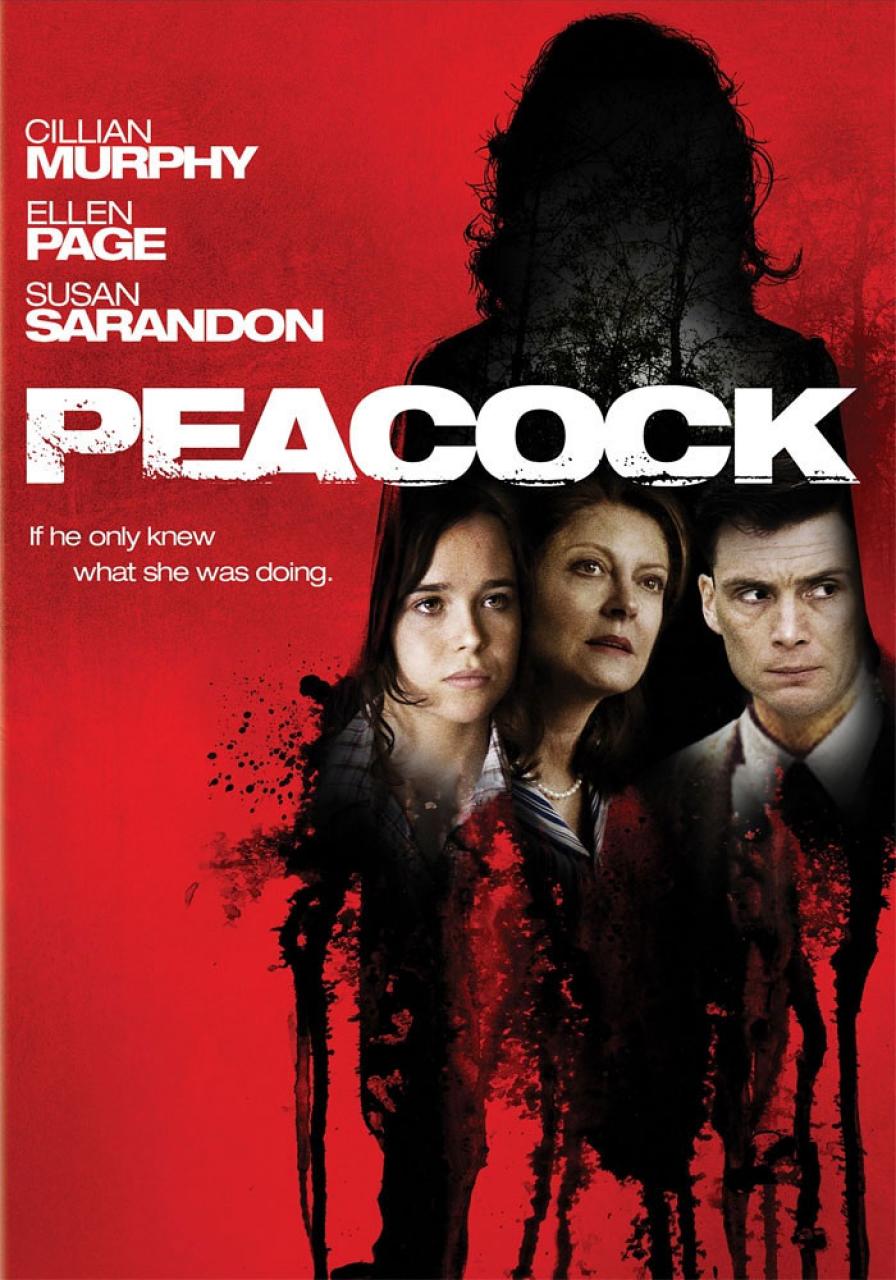
Peacock (2010)

02 Thursday Jan 2014

Posted by dullwood68 in Movies

≈ Leave a comment

Tags

Bill Pullman, Cillian Murphy, Drama, Ellen Page, Michael Lander, Review, Small-town America, Susan Sarandon, Thriller

Peacock

D: Michael Lander / 90m

Cast: Cillian Murphy, Ellen Page, Susan Sarandon, Josh Lucas, Keith Carradine, Bill Pullman, Graham Beckel

Beginning with a major plot twist that most movies would leave until the final reel, Peacock is a small-town drama that focuses on notions of family and identity, as well as what it can mean to be part of a small-town community.

Murphy plays John, a painfully shy/socially awkward bank clerk who has managed to keep himself to himself in the year since his mother passed away, despite the best efforts of neighbours and some of the customers at the bank.  He lives in a large house next to the train tracks; when a carriage jumps the rails and ends up crashing into his back garden, narrowly missing him, his life becomes more complicated than he could ever have wished, leading him to discover things about himself that he would rather not have known.

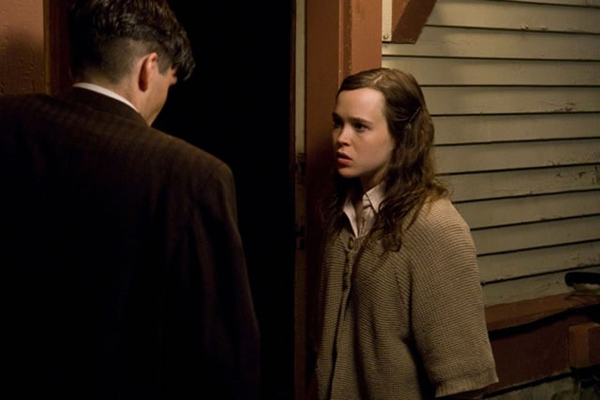
Peacock - scene

Peacock is a beguiling movie, with Murphy’s performance firmly at its heart.  He shows the complexity of the character and the fragility of John’s mental state with an ease that is hypnotic, keeping the viewer glued to the unfolding events and eliciting sympathy at every turn.  It is a bravura piece, and the movie is worth watching for his performance alone.  It’s great to be able to add that he is more than ably supported by Sarandon, Pullman and Carradine, whose characters all want something from John, and use their apparent concern for him to advance their own causes.  Lucas serves as the nearest John has to a friend, while Page plays Maggie, a figure from his past who further adds to the problems he can’t seem to shake.  It all leads to a desperate climax with John sacrificing everything in order to be able to carry on.

There is much to admire in Peacock.  Aside from the quality of the acting – unsurprising given the cast involved – the cinematography by Philippe Rousselot is perfectly framed throughout and at times shows an almost painterly eye.  The editing, by Sally Menke (on her last film) and Jeffrey M. Werner, keeps the movie expertly paced, and the production design, especially with regard to the darkened interior of John’s home, is faultless; this is small-town America as even non-Americans will recognise it.

Director and co-writer Lander, making his feature debut, has a good eye for the nuances and undercurrents of small-town life, and manages everything with the confidence of a director with many more films under their belt.  He also knows how to keep a scene moving and when to switch focus from character to character.  And lastly, a mention for the score by Brian Reitzell: it ably supports the various emotional arcs of the characters and adds an appropriately melancholy touch to the proceedings.

Rating: 8/10 – a touching drama that becomes a character-driven thriller at the end but which remains grounded in credibility throughout; a minor gem.

Originally posted on thedullwoodexperiment website.

Share this:

  • Click to share on X (Opens in new window) X
  • Click to share on Facebook (Opens in new window) Facebook
  • More
  • Click to print (Opens in new window) Print
  • Click to email a link to a friend (Opens in new window) Email
Like Loading...

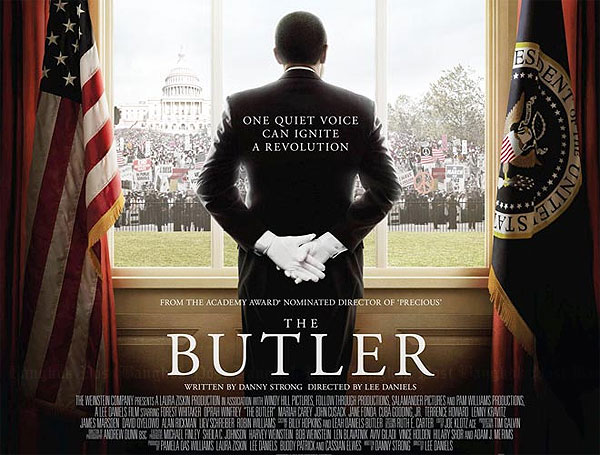
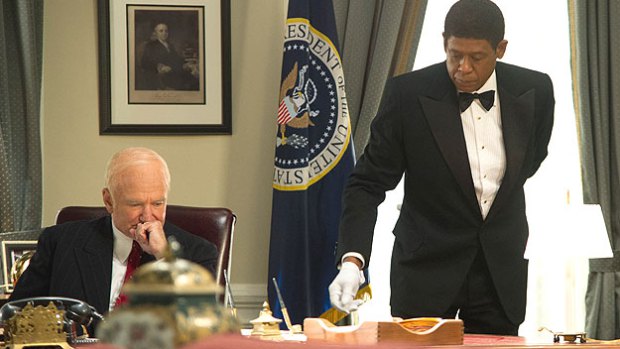
The Butler (2013)

29 Sunday Dec 2013

Posted by dullwood68 in Movies

≈ Leave a comment

Tags

Cecil Gaines, Civil rights movement, David Oyelowo, Drama, Eugene Allen, Forest Whitaker, History, Lee Daniels, Martin Luther King, Oprah Winfrey, Presidents, Racism, Review, True story, White House

Butler, The

D: Lee Daniels / 132m

Cast: Forest Whitaker, Oprah Winfrey, Cuba Gooding Jr, Lenny Kravitz, David Oyelowo, Terrence Howard, Olivia Washington, Yaya DaCosta, Clarence Williams III, Vanessa Redgrave, Alex Pettyfer, Robin Williams, John Cusack, James Marsden, Liev Schreiber, Alan Rickman, Jane Fonda

Based on the life of Eugene Allen (here re-named Cecil Gaines), The Butler covers over eighty years of American history, and focuses on the civil rights movement as seen through the eyes of Gaines, his family, and the various Presidents he served in the White House.  Beginning in 1926 where the young Gaines and his mother and father work on a cotton plantation, the film progresses through the decades touching on various important political events and attempts to establish the effect these events have on Gaines (Whitaker) and his family – wife Gloria (Winfrey), and two sons, Louis (Oyelowo) and Charlie (Isaac White, Elijah Kelley).

While Cecil’s climb from plantation worker’s son to White House servant takes up the first part of the movie, and reflects the prevailing attitudes surrounding race and social integration (or lack of it), there’s a hint throughout these scenes that this is merely the build up to the central story; there’s a lack of real incident once Cecil leaves the plantation and too much time passes as well.  Once he begins work at the White House it becomes clear that Louis isn’t as impressed by his father’s job, and sees his father’s easy acceptance of his place within a society struggling to achieve equality as a betrayal.

As Louis becomes more and more involved in the civil rights movement – he rides the Freedom Bus, works for Martin Luther King, joins the Black Panthers – we see the widening gulf between father and son at the same time as a nation begins to unify itself.  It’s this disparity that offers the most drama, while the political machinations and behind the scenes decision-making make for an interesting counterpoint to the home-spun drama being played out.

Butler, The - scene

It’s an interesting story, and one that shines a rare light on the personal side of political and social upheaval witnessed in the US during the 50s, 60s and 70s, and features strong performances from all concerned.  However – and it’s a big however – the movie has one major flaw: in attempting to cover so much ground it ends up being largely superficial and only fleetingly involving.  Thanks to Danny Strong’s wayward script, scenes pass with little purpose other than to reinforce Gaines’ apathy with regard to the fight for racial equality, and after the sixth or seventh or eighth time they become tedious and wearing (we get it already!).  Likewise for Louis’s involvement with the movement: yes, he’s committed, yes he sees his father as a sell-out, yes he feels with his head rather than his heart – all this is laboured and needlessly pedantic.  Gloria and Charlie are given small moments throughout as a result, and the larger family dynamic is reduced to odd scenes set around the dinner table; the only problem is there’s no meat being served. There are scenes that never amount to much: Gaines’ friend Howard (Howard) trying to seduce Gloria; a late-night encounter in the kitchens with Nixon (Cusack).

And then there are the Presidents, Eisenhower (Williams), Kennedy (Marsden), Johnson (Schreiber), Nixon and Reagan (Rickman).  Each actor has only two or three scenes to work with, and while each does well with what he’s given, they all suffer from the same approach: show the man in the highest office in the land struggling to decide what to do (though Kennedy comes off best in this regard).  At least the movie stops short of Gaines acting as some kind of authoritative guide, offering the best advice at the right time; but he does remain annoyingly non-partisan, except for the issue of equal pay between the white and the black employees at the White House (his own small battle for equality that is shown as the only part of the struggle he’s ever interested in).

The performances, though, are good, and while some of the cast are given little to work with – Kravitz, Washington, Howard, and surprisingly, Winfrey – they rise above the script’s limitations to convey a sense of what it was like to live during those troubled times.  Whitaker carries the movie with ease, and while it’s a little difficult to accept him as a man in his late twenties (when he takes over the part from Aml Ameen, himself a twenty-eight year old playing a fifteen year old), he displays a confidence and conviction that helps his character immensely.  Whitaker is an actor who can be unpredictable at times, but here he reins in any of his usual eccentricities and maintains the stolid, often resigned approach of a man who feels he has found his place in the world and doesn’t need to reach any further.

As with all historical dramas where real events are being portrayed there are inaccuracies and fabrications galore, but while this is sometimes glaring – Reagan’s indifference to civil rights, Eugene Allen’s son Charles wasn’t the political activist Louis is – they’re not so glaring that they detract from the story that’s being told.  This is based on the life of Eugene Allen, and if people are offended or upset by any deviation from “the truth” or historical fact, then they should avoid this movie completely.

On the technical side, Daniels directs with an increasingly confident flair but is hampered by the script’s lack of dramatic focus (it still feels odd to say that about a movie that appears to be all drama), and has no answer for its often stop/start structure.  That said, the movie is beautifully lensed by Andrew Dunn, and the production design by Tim Galvin, allied with Lori Agostino, Erik Polczwartek and Jason Baldwin Stewart’s art direction, means the movie is always handsome to look at.  Alas, Rodrigo Leão’s score is intrusive and overcooks the emotional beats.

Rating: 5/10 – not the incisive overview of the civil rights movement it should have been, nor the family drama it could have been, The Butler will probably do well in the Awards season, but there’s a lack of substance, and focus, here that holds it back from being a truly good movie; good performances aside, this has little to recommend it if you already know enough about its subject matter.

Share this:

  • Click to share on X (Opens in new window) X
  • Click to share on Facebook (Opens in new window) Facebook
  • More
  • Click to print (Opens in new window) Print
  • Click to email a link to a friend (Opens in new window) Email
Like Loading...

My Top 10 Movies – Part Three

28 Saturday Dec 2013

Posted by dullwood68 in Movies

≈ Leave a comment

Tags

Arletty, Boulevard du Crime, Children of Paradise, Debureau, Drama, French cinema, Garance, Jacques Prévert, Jean-Louis Barrault, Louis Brasseur, Marcel Carné, Marcel Herrand, Mime, Review, Romance

Les enfants du paradis (1945)

Image

aka Children of Paradise

D: Marcel Carné / 190m

Cast: Arletty, Jean-Louis Barrault, Pierre Brasseur, Marcel Herrand, Pierre Renoir, Maria Casares, Louis Salou, Gaston Modot, Fabien Loris

When I first heard about Les enfants du paradis I was fifteen and working my way through that year’s edition of Halliwell’s Film Guide, picking out all the 5-star movies and adding them to a list of “must-see” movies that I was compiling.  It was a long list as it turned out, and although Halliwell’s review was overwhelmingly positive, there were so many others that Les enfants didn’t stand out from the crowd.  Slowly but surely – this was in the days before video – I worked my way through the list, until around a couple of years later, Les  enfants was given an airing on BBC2.  It was on a Bank Holiday afternoon, and if memory serves, was shown with a fifteen-minute programme added during the interval.

I wasn’t entirely sure what to expect.  The setting was unusual: Paris’s Boulevard du Crime in the 1830s and 40s, and the background was intriguing as well: the life and loves and personal trials of a theatre troupe and associated individuals.  The sets, the costumes, the hair and make up, all had an impact on me that was as unexpected as it was welcome.  Up until then, these aspects of the movie making process and end product hadn’t made much of an impression on me; I took it all for granted.  But having an idea of the difficulty the filmmakers had in making the movie made me more aware of these details, and so, for the first time I found myself watching a movie where the details became as important as the overall mise-en-scène.

Les Enfants du Paradis - scene

There are times still when I watch Les enfants du paradis and find myself gazing in awe at the level of detail in any one frame, even a closeup.  And then there are the characters, the alluring, love-weary Garance (Arletty), the tragic-faced mime Debureau (Barrault), the carefree, preening actor Lemaître (Brasseur), the suave yet amoral Lacenaire (Herrand), the jealously scheming Nathalie (Casares), all of them so memorable and so superbly played.  Seeing these characters live and breathe on screen, seeing them behave credibly and realistically (if a trifle theatrically as well) was an enduring joy to watch.  I became swept up in the growing tumult of emotions as the plot unfolded and the various story lines blossomed, as the welter of finely observed detail complimented the highs and lows of the script.  By the interval, when everything seems to say “there will be no happy ending here”, I was desperate to see the rest of the movie, and cursed the BBC for adding an extra programme at its middle.

Of course, the second part was as captivating as the first, and the denouement as affecting and powerful as could have been hoped for.  When the movie ended I gave silent thanks to director Carné and screenwriter Jacques Prévert for making such an enchanting, magical, gripping experience, and under such incredible circumstances: filming in Vichy France at a time when all the materials needed to create the Boulevard  du Crime were being directed towards the war effort, somehow Carné and his team achieved a small miracle in constructing a set that looks so realistic you can believe the characters actually inhabit it when the camera isn’t rolling.

Having seen Les enfants du paradis several more times now, I still get carried away with the love stories, the dizzying photography of the opening minutes (courtesy of Roger Hubert), the threats of danger and violence that lurk at every turn, the peaceful moments that add soothing counterpoints to the frenzy of emotions on display, the disarming elegance of Arletty and Barrault’s performances, Carné’s amazing ability to frame and depict each scene with such skill and dexterity, and the perfect harmony between the visuals and Prévert’s exquisite dialogue.  This is – like the two previous movies discussed in my Top 10 – a masterpiece, pure and simple.  It’s often described or advertised as the “best French film ever made”, and while I think that title belongs to Napoleon (1927), let’s qualify it in order to give it its proper due: it’s the “best French language film ever made”.

Rating: 9/10 – miles upon miles ahead of every other historical romantic drama ever made and one of the true masterpieces of French cinema; a movie to lose yourself in over and over again and to never tire of.

NOTE: The trailer below is an extended promotional piece from 1945.

Share this:

  • Click to share on X (Opens in new window) X
  • Click to share on Facebook (Opens in new window) Facebook
  • More
  • Click to print (Opens in new window) Print
  • Click to email a link to a friend (Opens in new window) Email
Like Loading...

Walking With Dinosaurs: The 3D Movie (2013)

26 Thursday Dec 2013

Posted by dullwood68 in Movies

≈ 1 Comment

Tags

3D, Animation, Barry Cook, BBC series, CGI, Dinosaurs, Drama, John Leguizamo, Justin Long, Karl Urban, Neil Nightingale, Pachyrhinosaurus, Patchi, Review

walking-with-dinosaurs-3d_086fd500

D: Barry Cook, Neil Nightingale / 87m

Cast: John Leguizamo, Justin Long, Tiya Sircar, Skyler Stone, Karl Urban, Charlie Rowe, Angourie Rice

Taking his kids Ricky (Rowe) and Jade (Rice) to an archaeological dig, Zack (Urban) fails to engage a reluctant Ricky into moving far from the car.  While he waits for his dad and sis to come back, Ricky is greeted by a talking bird, Alex (Leguizamo).  Alex chides Ricky for his lack of interest in the past and begins to tell him a story set 70 million years before, the story of Patchi (Long), a pachyrhinosaurus.  Born the runt of a litter, Patchi has trouble fitting in, especially with his brother Scowler (Stone); they are at odds from day one.  After a run-in with a predator leaves him with a hole in his frill, Patchi’s efforts to fit in become even harder.  When the weather changes, an older Patchi must join his herd on a great migration; thus begins Patchi’s road to acceptance not only by the herd, but by his brother and by love interest Juniper (Sircar).

Walking With Dinosaurs: The 3D Movie is a mash-up of The Land Before Time (1988) and The Incredible Journey (1963). The mix of live action and CGI is impressive, with several of the dinosaurs achieving a level of photo-realism that bodes well for the forthcoming Jurassic World (2015).  Their “interaction” with the real world is well-staged and handled, and there is a pleasing sense of verisimilitude throughout.  Taking its cue from the BBC TV series of the same name, Walking With Dinosaurs: The 3D Movie looks amazing from start to finish (and in 3D it looks even better – despite being converted in post-production).  The detail is nothing less than breathtaking.  The backgrounds, shot in Alaska and New Zealand, are spectacular, and add a pleasing sense of scope to the movie despite its (relatively) small budget of $85m.

Walking With Dinosaurs The 3D Movie - scene

What isn’t so pleasing, however, is the script by John Collee (Master and Commander: The Far Side of the World, Happy Feet), a dialogue-driven disaster that manages to make dinosaurs seem un-cool and almost entirely lame in their pea-brained outlook.  That their lips don’t deliberately move in sync with their lines isn’t as distracting as the fact that what’s being said is so childish and immature (it’s actually amazing there isn’t a fart gag in there somewhere).  While Leguizamo fares better than the rest, even he can’t pull off some of his dialogue, and Long is saddled with some of the dopiest, silliest lines he may ever have to deal with.  Granted Walking With Dinosaurs: The 3D Movie is meant to be a children’s movie, but do kids really respond to, or appreciate, this level of half-baked, jokey, verbal simplicity?  If I was over the age of eight and watching this movie I might feel so insulted I’d want to chuck my popcorn at the screen in protest.

With things so hampered by the script, everything else suffers.  The plotting and story arcs are simplistic and predictable, the characterisations equally so, and the sense of danger provided by a pursuing trio of Gorgosauruses is never allowed to accrue too much tension.  Directors Cook and Nightingale at least ensure that things move along at a decent pace (helped by their editor, John Carnochan), but fail to inject much of note into proceedings.  The photography, as already mentioned, is impressive, and the scenery often breathtaking, but these aspects are unable to offer a distraction from the awkwardness of the movie as a whole.

Rating: 5/10 – saved from a lower score by its visuals, Walking With Dinosaurs: The 3D Movie is a movie that will probably impress very young children, but will frustrate teens and adults alike; a missed opportunity that sounds as if the producers lost faith in it somewhere during the production.

Share this:

  • Click to share on X (Opens in new window) X
  • Click to share on Facebook (Opens in new window) Facebook
  • More
  • Click to print (Opens in new window) Print
  • Click to email a link to a friend (Opens in new window) Email
Like Loading...

My Top 10 Movies – Part Two

18 Wednesday Dec 2013

Posted by dullwood68 in Movies

≈ Leave a comment

Tags

Abel Gance, Albert Dieudonné, Drama, French movie, History, Kevin Brownlow, Napoleon, Review, Silent film, Triptych, True story

Napoléon (1927)

Napoleon

D: Abel Gance / 330m

Cast: Albert Dieudonné, Vladimir Roudenko, Edmond Van Daële, Gina Manès, Antonin Artaud, Alexandre Koubitzky, Marguerite Gance, Yvette Dieudonné, Philippe Hériat, Abel Gance

A five and a half hour silent movie?  One that’s unavailable in any home video format, and is unlikely to be for the very foreseeable future?  A rich visual spectacle that impresses from its opening snow fight sequence to its stunning triptych finale?  I have only one word as my answer: Absolutely!

Before I saw Napoléon, my exposure to silent movies had been restricted largely to comedies featuring the likes of Charlie Chaplin, Buster Keaton, Larry Semon etc.  The Keystone Kops were a favourite, and Harold Lloyd impressed me even more when I discovered he’d lost his right thumb and forefinger in an accident involving a bomb prop (I know, it’s a bit shallow, but in mitigation I was around nine or ten).  I remember seeing most of The Iron Horse (1924) on TV, and it had the effect of making me realise that silent movies could last longer than twenty minutes, but UK TV wasn’t in the habit of showing anything other than the short films already mentioned.  When Napoléon was shown as part of a nationwide tour in 1980 at my local arts theatre – with live piano accompaniment – I saw the advert for it and took out my trusty copy of Halliwell’s Film Guide to find out more about it.

It was the length of the movie that intrigued me.  At that time – and my memory is a bit hazy on this – the available print ran to just over five hours.  The idea of sitting in a theatre for that length of time, plus interval, was daunting, but equally an attractive one.  It’s a little shallow (again) but I wanted to see if I could “stay the course” and be able to say – if anyone I knew had even cared! – that I had seen, all the way through, the five hour plus silent movie set during the French Revolution and beyond.  It was like having a badge of honour.

Napoleon - scene

Imagine my surprise (and delight) when the movie began and I found myself swept up by the depth and breadth of Gance’s technical mastery of the silent medium.  By the intensity of the performances, the sweep of the narrative, the visual panache of the battle scenes – Gance put his camera in the middle of the action, unheard of up until then – and the effectiveness of the quieter moments against the stirring swirl of historical events.  Those five hours flew by.  At the interval, I can remember coming out of the auditorium (and into the light) and feeling overwhelmed.  Aside from 2001: A Space Odyssey (1968), I’d never been affected as much by a movie, and definitely not by a silent movie.  I was seeing techniques and a visual language that were truly amazing; this was breathtaking stuff and I couldn’t wait to go back in and see if the rest of the movie was as incredible.  And, of course, it was.

Since then I’ve seen Napoléon four more times.  (Sadly, I was out of the country for its most recent UK screening, on 30 November 2013.)  Each time I’ve revelled in its complexity and the sheer joy it provides, and each time I’ve come away wanting someone, anyone – but preferably Kevin Brownlow – to come along and say, “We’ve found all the missing footage, and will be presenting the original premiere version of Napoléon in just a few months’ time”.  I know this is unlikely, and Brownlow has said himself that the current version is probably the longest it will be for some time to come.  (But, what’s the world without a little hope, eh?)  Perhaps the best screening was the premiere of Carl Davis’s score for the movie shown at the Royal Festival Hall on London’s south bank.  The addition of an orchestra made the whole event even more wonderful and fulfilling.

Napoléon was the first movie that really engaged my heart and my mind and wouldn’t let go.  It holds a special place for me as the one movie that remains an event each time I see it.  In these days of instant streaming and fast downloads and blu ray discs, the notion of only being able to see a film at a cinema or a concert hall is somehow reassuring, that we haven’t lost that true element of spectacle that we take now for granted.  This was how audiences were first exposed to movies, not with ads for the latest trainers or holiday destinations, but with a sense of scale and excitement, a palpable tension at being swept away by what was unfolding on screen.  The language of cinema was being created by these movies, and it’s this aspect that shouldn’t be overlooked or forgotten.  Without trailblazers such as Gance, a lot of what we take for granted about movies today (or don’t even notice), would be missing.  That we’ve lost some of that grandeur is simply disappointing.

Sadly, it will be some time before Napoléon will be seen again on the big screen.  But when it is, you can rest assured that I’ll be there (if it’s in the UK), and ready to be enthralled and transported and amazed all over again.

Share this:

  • Click to share on X (Opens in new window) X
  • Click to share on Facebook (Opens in new window) Facebook
  • More
  • Click to print (Opens in new window) Print
  • Click to email a link to a friend (Opens in new window) Email
Like Loading...

Disaster Zone: Volcano in New York (2006)

13 Friday Dec 2013

Posted by dullwood68 in Movies

≈ Leave a comment

Tags

Alexandra Paul, Construction team, Costas Mandylor, Disaster movie, Drama, Michael Ironside, Review, Robert Lee, Thriller, Volcano

Disaster Zone Volcano in New York

D: Robert Lee / 90m

Cast: Costas Mandylor, Alexandra Paul, Michael Ironside, Michael Boisvert, Eric Breker, Ron Selmour, Pascale Hutton, Kevin McNulty, Zak Santiago, Robert Moloney, Kaj-Erik Eriksen, Matthew Bennett, William S. Taylor

What looks like a SyFy movie, sounds like a SyFy movie, has a script and direction like a SyFy movie, and special effects like a SyFy movie, and yet isn’t a SyFy movie?  The answer, of course, is Disaster Zone: Volcano in New York.  Shot on a predictably low budget, Disaster Zone begins well, showing the camaraderie of a construction team working on a new water supply tunnel for the Manhattan area.  Two newbies, Joey (Eriksen) and Karen (Hutton) are thrown in the deep end when a routine blasting goes wrong and three members of the team are killed.  The ensuing enquiry – which seems to take place the very next day – sees team leader Matt McLaughlin (Mandylor) sacked, despite his having seen lava break through the tunnel wall just before he got out.  No one believes his story, least of all the NY authorities, who authorise his team to continue working on the tunnel.  Enter a team from the US Geological Service to investigate (and immediately dismiss) Matt’s claims.  On the USGS team is Matt’s ex-wife Susan (Paul).  At first they butt heads, but soon enough they’ve made up their differences and are trying to work out if what Matt saw is just an isolated incident or something presaging a bigger problem.

Experienced viewers will now be shouting, “Of course there’s a bigger problem!”, and the cause of it all is pill-popping mad scientist Dr Levering (Ironside).  He’s drilled down seven miles into the earth’s crust (from a warehouse, no less!), and has caused major instability as well as aggravating the volcano that no one has ever been aware of previously.  For some reason this is a highly secret operation, backed by mysterious investors, and overseen by oily politician Kavanagh (McNulty).  Levering’s plan is to harness the earth’s geo-thermal energy and do away with fossil fuels.  But in the drive to meet his backers’ deadline, Levering ignores the warning signs and presses on.  Eventually it’s up to Matt and his remaining crew to save the day.

Disaster Zone Volcano in New York - scene

Disaster Zone: Volcano in New York has two main problems and they are both fundamental to the movie’s success (or lack of it).  Firstly, there is the script by Sarah Watson, which, as expected, is as scientifically accurate as saying that water falls upwards, and is littered with lines even the best actors in the world couldn’t give credibility to.  One sequence, and perhaps the most laughable in a movie riddled with laughable moments, shows a man watering a lawn who goes to open a neighbour’s door and finds the handle is red hot.  He uses his sleeve to open the door, lava pours out, engulfs him, and then causes an explosion in the house.  Minutes later we’re told that seventy-two people died in the explosion, in what is being described as a “terrorist incident”.  By this point you’re reduced to mouthing WTF? almost every couple of minutes in sheer astonishment at the script’s determined implausibility.  The second problem is Lee’s scattershot attempts at direction.  Lee is more often employed as a first assistant director or a second unit director, and his lack of ability shows throughout.  Few scenes are handled with any appreciable skill and his decision to shoot the bulk of the movie using various headache-inducing camera techniques such as whip-pans makes it unpleasant to watch.  He’s also unable to frame a shot properly or provide his cast with enough support; sometimes it seems he’s shot a rehearsal rather than the finished scene.

Woeful as this movie is, it’s further undercut by the dreadful special effects – there’s even a couple of shots lifted from footage taken on 9/11 – and lighting that makes everyone look ill.  There’s also a ludicrous subplot involving an anti-terrorist unit led by Agent Walters (Bennett), who believes everything is down to terrorists.  Of the cast, Mandylor and Paul show real chemistry, and while Ironside ends up chewing the scenery with relish, he’s still the best thing in the movie.  The supporting cast do their best against insurmountable odds, and the score hits every beat with leaden predictability.  And to cap it all off, there isn’t even a proper eruption.

Rating: 3/10 – watchable only if you’re in the mood to check your brain at the door; or for the opportunity to witness so much that is witless and stupid in such a short space of time.

Originally posted on thedullwoodexperiment website.

Share this:

  • Click to share on X (Opens in new window) X
  • Click to share on Facebook (Opens in new window) Facebook
  • More
  • Click to print (Opens in new window) Print
  • Click to email a link to a friend (Opens in new window) Email
Like Loading...

Saving Mr. Banks (2013)

13 Friday Dec 2013

Posted by dullwood68 in Movies

≈ Leave a comment

Tags

Annie Rose Buckley, Australia, Colin Farrell, Comedy, Disney, Drama, Emma Thompson, John Lee Hancock, Mary Poppins, P.L. Travers, Review, Tom Hanks, True story, Walt Disney

Saving Mr. Banks

D: John Lee Hancock / 125m

Cast: Emma Thompson, Tom Hanks, Annie Rose Buckley, Colin Farrell, Paul Giamatti, Ruth Wilson, Bradley Whitford, Jason Schwartzman, B.J. Novak, Rachel Griffiths, Kathy Baker, Ronan Vibert

Based on the true story of Walt Disney’s attempts to secure the film rights to P.L. Travers’ Mary Poppins, Saving Mr. Banks opens with the financially compromised author (Thompson) telling her agent she has absolutely no intention of flying to Los Angeles and letting Disney (Hanks) ruin her creation.  One quick turnaround later and we see Travers arriving in La La Land and being met by her driver for the duration of her stay, Ralph (Giamatti).  One dispiriting car journey (for her) later and she is introduced to the charming and sincere Disney.  Her doubts assuaged for the time being, she agrees to work with the proposed movie’s writers (Whitford, Schwartzman and Novak).  As they work through the script and songs we’ve all come to know – and perhaps love – Travers’ objections remain largely in place, but gradually her resistance is worn down by a combination of the writers’ enthusiasm, Disney’s determination not to renege on a promise made to his daughters twenty years before, and memories of her childhood that resurface during the visit.

It’s these flashbacks that add meat to the otherwise thin story of “a writer taking on the system”.  As portrayed by Thompson – and superbly, I might add – Travers is presented as a bit of an old dragon: scathing, contemptuous of her American “cousins”, rude, condescending and almost completely out of her depth.  Hancock and writers Kelly Marcel and Sue Smith, instead of making the movie a “fish out of water” story where the fish wins out by virtue of personal fortitude and stubbornness, have wisely chosen to look at the reasons for Travers’ animosity towards Disney, and why the character of Mr Banks was so important to her.  As Travers’ back story unfolds through the depiction of her childhood, so we come to learn the fundamental truth behind the characters of Mr Banks and of Mary Poppins herself, and the long-term effect Travers’ childhood has had on her.  These scenes give a much-needed depth to the movie, and allows Thompson to provide a richer, more psychological approach to P.L. Travers than may have been expected.  Thompson dominates the movie, reducing even Tom Hanks to the level of humble onlooker in their scenes together, and gives a masterclass in screen acting, her voice and mannerisms and facial expressions all perfectly pitched to leave the audience in no doubt as to her thoughts and feelings at any time.

Saving Mr. Banks - scene

Matching Thompson in terms of screen performance, and presence, is her younger counterpart, Annie Rose Buckley.  With only an episode of Aussie soap Home and Away back in 2010 under her belt, Buckley’s performance as Ginty is intuitive, mesmerising and a minor revelation.  As her scenes transform from pastoral idyllic to domestic unstable, Buckley displays a maturity and command of the material that few actresses her age would be capable of achieving, let alone maintaining, over the course of a two hour movie.  She’s a remarkable find, and all credit to the casting director Ronna Kress for picking her out.

As Disney, Tom Hanks gives a comfortable performance but the script often sidelines him, so that he pops up only now and again to urge on Travers and perform a little light damage control when required.  It’s effectively a supporting role, and one that doesn’t stretch him in any way.  In other roles, Farrell as the inspiration for Mr Banks plays against type for the first half of the movie, while Wilson is given little to do as his wife other than look disappointed or, in one scene, have a five minute breakdown.  Giamatti is good as Travers’ driver, and he provides several deft comic ripostes to Thompson’s sarcastic jibes.  And in perhaps the most sublime casting decision of all, Rachel Griffiths messes with our acceptance of Julie Andrews as Mary Poppins by portraying the “real” Mary.

Saving Mr. Banks is lovely to watch, courtesy of bright, colourful photography by John Schwartzman (half-brother of Jason), and a pleasing recreation both of turn-of-the-20th-century Australia and 60’s Los Angeles.  Disneyland is given an effective retro makeover, and the music by Thomas Newman – incorporating several of the songs from Mary Poppins (1964) – adds extra emotional elements to both storylines.  If there is a lightness of touch, a slight distancing from the more dramatic aspects of Ginty’s childhood, then it should be remembered that this is still a Disney movie, and the studio that works hard to sanitise almost all of its family-oriented movies – and at heart this is still one of them, make no mistake – isn’t about to let people leave the cinema feeling saddened or depressed.  Fortunately, Saving Mr. Banks carries enough emotional heft to offset its more calculated hilarity, and if there are moments where you wonder just how much of it all is true or not, the fact that Disney were banking on a much-loved “product” in Mary Poppins, also informs this movie as well.

Rating: 8/10 – enjoyable, handsomely mounted movie that avoids being as original as say, “Supercalifragilisticexpialidocious”; and without Thompson in the lead role providing a strong point of reference for the audience, would have struggled to stand out from the crowd of other “true stories” set in Hollywood.

Share this:

  • Click to share on X (Opens in new window) X
  • Click to share on Facebook (Opens in new window) Facebook
  • More
  • Click to print (Opens in new window) Print
  • Click to email a link to a friend (Opens in new window) Email
Like Loading...

21/12/12 (2010)

10 Tuesday Dec 2013

Posted by dullwood68 in Movies

≈ Leave a comment

Tags

Chris Scheuerman, Drama, End of the world, Murders, New Image College of the Arts, Review, Short film, Suicide, Taylor Hastings

21:12:12

D: Chris Scheuerman / 16m

Cast: Taylor Hastings, Chris Donoghue, Aaron Baker, Edna Rojas, Beth Cantor, Anthony MacLean, Jordan Smith, Marianne Tikkanen

An intriguing short film from the New Image College of the Arts in Vancouver, 21/12/12 is set an hour before a mysterious event is due to bring about the end of the world.  Various individuals’ lives collide and interconnect, and each tries to deal with what’s happening in different ways.  One man tries to unburden himself by telling the woman he loves about two murders he committed, another gets himself shot while visiting an apartment to buy drugs, and the woman who shoots him finds herself stopping another man from jumping off their building.  At the end, two women witness for themselves the mysterious event.

The question, What would you do if you only had an hour to live, is answered here in a variety of ways.  The would-be suicide is reminded he doesn’t have to go to all the trouble when the event is bound to kill him anyway.  A woman leaves her deluded boss – he wants to make last-minute transactions on the stock market to make himself a rich man when he dies – to find the woman she has been looking for for some time; it’s they who witness the mysterious event.  And the woman who shoots the drug addict, goes out for some air.

21:12:12 - scene

A collection of untidy vignettes that vary in quality and significance, what stops 21/12/12 from being the small gem its writer/director/producer Scheuerman probably hoped for are its unexceptional characters, one-note for the most part, and matter-of-fact approach to the end of the world.  Nobody displays any signs of panic or look upset, everybody is going about their business – the murderer aside – almost as if it were just another normal day in the big city.  On the soundtrack there’s the sounds of rioting and looting, but again, the characters remain unaffected by it.  If Scheuerman is saying that, even facing impending doom, people will remain self-centred and insular – even with the end of the world an hour away – then as an hypothesis he has a sound anthropological idea.

However, the dialogue is awkward and occasionally stilted, and not all the cast are as adept at coping with its idiosyncrasies as the rest.  Two scenes, meant to be overtly dramatic, are undermined by the cast – and Scheuerman’s – inexperience.  One is rushed, the other played more for laughs than it should be.  The photography helps isolate the characters as they face the end, but the editing could have been a bit tighter: some scenes play out a little longer than necessary.

Rating: 5/10 – not bad for a college short film but 21/12/12 is worryingly vague about its intentions; a good idea that works intermittently and at the expense of a cohesive narrative.

Share this:

  • Click to share on X (Opens in new window) X
  • Click to share on Facebook (Opens in new window) Facebook
  • More
  • Click to print (Opens in new window) Print
  • Click to email a link to a friend (Opens in new window) Email
Like Loading...

The Hunger Games: Catching Fire (2013)

10 Tuesday Dec 2013

Posted by dullwood68 in Movies

≈ 3 Comments

Tags

Action, District 12, Donald Sutherland, Drama, Francis Lawrence, Gale, Haymitch, Jennifer Lawrence, Josh Hutcherson, Katniss Everdeen, Mockingjay, Peeta, Philip Seymour Hoffman, President Snow, Review, Sci-fi, Suzanne Collins, Woody Harrelson

Hunger Games Catching Fire, The

D: Francis Lawrence / 146m

Cast: Jennifer Lawrence, Josh Hutcherson, Liam Hemsworth, Woody Harrelson, Donald Sutherland, Philip Seymour Hoffman, Elizabeth Banks, Stanley Tucci, Lenny Kravitz, Jeffrey Wright, Amanda Plummer, Sam Claflin, Toby Jones, Jena Malone, Willow Shields

Picking up from the end of The Hunger Games, part two of the franchise – Mockingjay is being adapted into two parts, due in 2014 and 2015 respectively – sees Katniss Everdeen (Lawrence) trying to fit in to a post-Games world where she is now seen as a symbol of hope for the beleaguered districts.  Becoming increasingly aware of the social injustice around her, Katniss tries her best to balance protecting her family from the less-than-veiled threats of President Snow (Sutherland) against the increasing demands made of her to be the symbol that promotes the resistance.  With things made even more difficult by her mixed feelings for Peeta (Hutcherson), and the attentions of Gale (Hemsworth), Katniss finds herself struggling to find her way in a world that is changing rapidly both around her, and because of her.

Aware of her increasing importance to the resistance movement, President Snow plots to destroy her with the help of new Games Master Plutarch Heavensbee (Hoffman).  In order to do this the next Hunger Games is designed to pit Katniss against the remaining winners in a kind of Best of the Best tournament.  She also has to contend with Peeta taking part as well and trying to keep him safe.  For his part, Peeta wants to keep Katniss safe in order for her to remain a beacon of hope.  With both of them striking deals with Haymitch (Harrelson) to protect the other, Katniss is unaware that their are deeper political manoeuvrings going on behind the scenes, manoeuvrings that will have a greater effect on her life than she could ever imagine.

As that awkward beast, the middle part of a trilogy, Catching Fire builds on the first movie’s strengths and benefits immensely from an even more assured and commanding turn from Lawrence.  She dominates proceedings from start to finish, eclipsing her co-stars with ease – no mean feat given the calibre of actors such as Hoffman and Sutherland – and gives such a layered, intelligent performance that it almost threatens to overwhelm the rest of the movie.  Full marks to director Lawrence and screenwriters Simon Beaufoy and Michael Arndt then for making Catching Fire such an exciting, dramatic episode that grips throughout, and successfully juggles the widening story arc with more intimate moments and the kind of cutting-edge visuals we’ve come to expect from big-budget sci-fi movies.

Hunger Games Catching Fire, The - scene

With the movie in such assured hands, Catching Fire is free to impress on even further levels: the gritty realism of District 12 contrasted with the spectacular opulence of the Capitol, both triumphs of art direction and production design; the costumes courtesy of  Trish Summerville (her costumes for Effie Trinket (Banks) are even more outlandish than those of the first movie); the score by James Newton Howard, by turns austere,  stirring and richly evocative from scene to scene, supporting effortlessly the emotional and physical elements; and the superb photography by Jo Willems, a feast for the eyes and even more impressive when seen at an IMAX cinema – the Hunger Games tournament is played out in the full IMAX format; it adds a whole new dimension to the movie, and the scale is suitably impressive: the lagoon seems impossibly huge and the forest thickly impenetrable.

But the scale of the movie is nothing without the characters that inhabit it, and here the cast display a greater confidence in their roles, while newcomers such as Hoffman, Claflin and Malone fit in with ease.  As already noted, Lawrence is excellent, while Hutcherson and Hemsworth overcome the limitations of the source material to forge much stronger characters than you’d expect.  Sutherland is as icy as the President’s name implies, and Hoffman creates a devious sadist in Heavensbee: all self-satisfied smiles and preening behaviour.  Tucci excels (as always) as the overly coiffed broadcaster Caesar Flickerman, Wright and Plummer have small but important roles as fellow Victors Beetee and Wiress, and once again, as Haymitch, Harrelson proves what a versatile actor he is by nearly stealing the movie out from under Lawrence – but only nearly.

With two more films to come, the producers have given themselves a hard task to overcome.  Catching Fire, in terms of the novels, was the point at which author Suzanne Collins began to lose her grip on the overall storyline.  Where Katniss and Peeta and Gale go from here is already known by millions; the trick will be to turn what was a largely disappointing resolution to Katniss’s story into something as exhilarating as this adaptation.  It will be interesting to see if they manage it.

Rating: 9/10 – a bold adaptation that retains all the strengths of the novel, and manages to jettison all the aspects that marred it; a rare sequel that stands on its own and towers over its predecessor.

Share this:

  • Click to share on X (Opens in new window) X
  • Click to share on Facebook (Opens in new window) Facebook
  • More
  • Click to print (Opens in new window) Print
  • Click to email a link to a friend (Opens in new window) Email
Like Loading...

The Family (2013)

08 Sunday Dec 2013

Posted by dullwood68 in Movies

≈ Leave a comment

Tags

Action, Comedy, Drama, Hitman, Luc Besson, Michelle Pfeiffer, Normandy, Review, Robert DeNiro, the Mob, Tommy Lee Jones, Witness Protection

Family, The

D: Luc Besson / 111m

Cast: Robert De Niro, Michelle Pfeiffer, Tommy Lee Jones, Dianna Agron, John D’Leo, Jimmy Palumbo, Domenick Lombardozzi, Stan Carp, Vincent Pastore, Jon Freda

Having ratted on his bosses in the Mob, Giovanni Manzoni (De Niro) and his family – wife Maggie (Pfeiffer), daughter Belle (Agron) and son Warren (D’Leo) – are living in France under the Witness Protection Program.  Following an incident at their placement on the Riviera, the Manzonis are moved to a quiet Normandy town where their handler, CIA agent Robert Stansfield (Jones), hopes they’ll settle down and stay out of trouble. While the Manzonis (now the Blakes) try to fit in, a hitman (Freda) is trying to track them down.

Each member of the family does their best to adapt to their new surroundings but with varied results.  Giovanni begins writing his memoirs, Maggie takes an interest in a nearby church, Belle fends off the advances of the local teenage boys and falls in love with a mature student, while Warren takes over the various rackets at their school.  They all encounter problems along the way, and each deals with these problems in their own way: Giovanni with violence, Belle with violence, Warren with violence, and Maggie with violence but then followed by her making confession.  It’s their inability to fit in without reverting to their Mob ways that causes Stansfield to threaten them with yet another relocation, especially after he reads Giovanni’s memoirs and realises how dangerous they could be if anyone outside the family were to read them.  But then the hitman and his gang find them, and everyone has to pull together to keep the Manzonis alive.

Family, The - scene

Ostensibly a comedy, The Family is ultimately a bit of a mixed bag.  Besson, directing from a script co-written with Michael Caleo, adds drama, romance, action, a lot of casual violence, a wonderful moment for De Niro at a film screening, and a soupçon of domestic troubles.  The main characters are well-drawn: Giovanni is both naturally aggressive and yet also quite melancholy and thoughtful, while Maggie appears lonely and struggling to adjust; she’s a mother whose role is no longer as clearly defined as it was back in New York.  Belle is sophisticated and yet naïve at the same time: she misunderstands the situation with the mature student, and takes too much for granted.  And Warren finds he’s not quite the clever gangster he thought he was.  All four actors are on top form, De Niro providing a world-weary performance that belies the uncompromising mobster he’ll always be at heart; he’s a joy to watch.  Pfeiffer revisits her character from Married to the Mob (1987), and gives a shaded turn where her unhappiness at her family’s situation is offset by her obvious pride and love for them.  As the children, Agron (from TV’s Glee) is confident, poised and vulnerable, and D’Leo plays Warren with an equal confidence that is impressive for his age.

What spoils the movie though is the continuing shifts in tone.  Beginning with a hit on a family (and providing Freda with a great entrance) that is horribly violent, the movie shifts uneasily between moments of light humour – there are no really laugh-out-loud moments in the movie – and more and more extreme bouts of violence: Belle taking a tennis racket to a teenage boy’s face, Giovanni fantasising about pushing a man’s face onto a barbecue grill.  These episodes, meant to remind the audience perhaps that these people, after all, were part of the Mob and have done some horrible things in the past, serve only to show that, Giovanni’s writing aside, the experience of being in the Witness Protection Program hasn’t changed them at all; if anything, they are using their unique skill-sets to dominate their community just as they used to do.  It’s this lack of personal improvement or growth that undermines the characters and makes them appear close to stereotypes.  There’s also an unpleasant whiff of institutionalised racism that runs throughout the movie, with the Manzonis the target of some unvarnished cultural attacks (“they eat hamburgers morning, noon and night”); the family’s only response is to have a barbecue for their neighbours where they serve only American food, and of course, the French all go away very happy.

The movie also isn’t quite as funny as it thinks it is, and shifts in tone aside, fails to hit the mark too often.  It’s largely predictable and while this isn’t necessarily a bad thing with this type of movie, with the cast involved you’d hope for something a little richer, and with more surprises.  The final shootout is well-staged and shows Besson is still more than adept at shooting action scenes.  The preceding set-up is equally well-staged and quite gripping.  If only the previous hour and a half had been the same.  That said, Thierry Arbogast’s photography is deceptively fluid and gives certain scenes an almost painterly finish, and the score by Sacha and Evgueni Galperine subtly enhances things throughout.

Rating: 6/10 – only fitfully entertaining, and saved by strong performances; The Family won’t change your life, but then it hasn’t changed theirs either.

Share this:

  • Click to share on X (Opens in new window) X
  • Click to share on Facebook (Opens in new window) Facebook
  • More
  • Click to print (Opens in new window) Print
  • Click to email a link to a friend (Opens in new window) Email
Like Loading...

Zombex (2013)

07 Saturday Dec 2013

Posted by dullwood68 in Movies

≈ Leave a comment

Tags

Chandler Pharmaceuticals, David Christopher, Drama, Emily Kaye, Horror, Jesse Dayton, Lew Temple, Malcolm McDowell, New Orleans, Review, Zombies

Zombex

D: Jesse Dayton / 81m

Cast: Lew Temple, Malcolm McDowell, David Christopher, Emily Kaye, Desiree McKinney, Pierre Kennel, Sid Haig, John Doe, Corey Feldman

An attempt at bringing something new to the zombie genre, Zombex has a fast-tracked drug devised to help the residents of New Orleans worst affected by the devastation caused by Hurricane Katrina, brought front and centre as the reason why people are transformed into flesh-eating monsters (the word zombie isn’t actually used in the movie).  The drug is the brainchild of Dr Soulis (McDowell); he works for Chandler Pharmaceuticals.  The company, led by Rush Chandler (Kennel), refuses to accept any blame for the chaos and death happening in New Orleans and employs a private security consultant Katie Ann (Kaye) to provide a “final solution” involving the killing and removal of all the affected.  Also caught up in Chandler’s rearguard action are radio DJ Aldous Huxtable (Temple), and musician Charlie Thibideaux (Christopher).  Huxtable uses his radio show to rail against Chandler Pharmaceuticals; when he receives a package from the military containing an antidote to the drug created by Soulis, he determines to travel to Austin, Texas where there are further supplies, and to bring more of the antidote back to New Orleans.  Thibideaux, whose parents are among the first victims of the drug, agrees to help him.

For the first thirty minutes or so, Zombex succeeds in its aim of telling a different story from the standard zombie outing.  The characters are introduced with an economy and flair that bodes well for the rest of the movie, and Dayton’s script, while keeping the narrative fragmented at first, is sure-footed and absorbing.  Some of the dialogue isn’t quite as convincing but Huxtable’s on-air rants are certainly entertaining.  Then Thibideaux and Huxtable hit the road for Austin, and the movie’s confidence in itself begins to wane.

Zombex - scene

As a road movie, Zombex is where things begin to go seriously wrong.  The tension drains away, Huxtable and Thibideaux pick up Katie Ann and her subordinate Thea (McKinney), and the journey is peppered with random attacks that serve to thin the cast and provide a series of gory moments that are an awkward mix of practical effects and CGI.  There are equally awkward digressions: an unnecessary sex scene between Katie Ann and Thea (watched by Thibideaux), a repeat of a scene involving Thibideaux outside his parents’ house, and the attack on Rush Chandler and his family (this last example is troubling because it’s never clear where Chandler lives or works but the impression is given that it’s outside New Orleans and the affected are supposed to be restricted to that area).  And the movie ends abruptly, with the rug pulled out from under the audience.

Budgetary considerations aside, Dayton, making his first outing as a writer/director, manages to keep things (mostly) interesting throughout, though events become increasingly risible.  There’s the small matter of Katie Ann being a dancer in a club as well as a security consultant – it’s how she and Thibideaux first meet – and the issue of her wearing hot pants and a low-cut top from the time she meets Thibideaux and Huxtable despite having been seen killing the affected in faux-combat gear.  (Thea’s change of costume is even more revealing.)  The affected pop up all over the place: at the side of the road, out of lakes, even appearing suddenly in a room in a secure building.  And one character’s fate – while packing an emotional heft lacking from the rest of the movie – comes across as an idea Dayton had while writing the script and decided to keep in, even though the reason behind it is tenuous at best.

The cast provide mixed performances, with Temple a stand out as the verbose, never-quite-knowing-when-to-keep-quiet DJ.  Christopher copes fairly well with the dialogue but uses only a couple of expressions from start to finish, while Kaye has the amateur’s talent for stressing the wrong syllables and distorting the meaning of what’s being said.  McDowell looks bored but still manages to shine in a role that requires him to spout a terrible amount of exposition, Kennel plays it one-note as the self-centred Chandler, while Haig reminds everyone why he only gets cameo roles these days: he’s just plain bad (and in possibly the world’s worst military outfit; he looks more like the commandante of a South American dictatorship than an army man).  And let’s not forget Feldman, who enters the first of his two scenes as if he’s late and the scene’s been filming past his entrance.

The photography by Allan Curtis is bright and energetic, and Dayton frames each scene with a more experienced eye than you’d expect.  Further on the technical side, Zombex features some good make up effects, and the music by Stuart Rau is quietly atmospheric and supports the action well.  Zombex is well-mounted from start to finish, and looks like a movie with a much bigger budget.

Rating: 5/10 – let down by its road movie mentality, Zombex struggles to maintain and capitalise on its early promise; not the car wreck it could have been but still a disappointment.


Share this:

  • Click to share on X (Opens in new window) X
  • Click to share on Facebook (Opens in new window) Facebook
  • More
  • Click to print (Opens in new window) Print
  • Click to email a link to a friend (Opens in new window) Email
Like Loading...

Paranoia (2013)

04 Wednesday Dec 2013

Posted by dullwood68 in Movies

≈ Leave a comment

Tags

Amber Heard, Commercial fraud, Communications, Drama, Gary Oldman, Harrison Ford, Liam Hemsworth, Review, Robert Luketic, Smart phone, Thriller

Paranoia

D: Robert Luketic / 106m

Cast: Liam Hemsworth, Gary Oldman, Amber Heard, Harrison Ford, Lucas Till, Embeth Davidtz, Julian McMahon, Josh Holloway, Richard Dreyfuss

When the final history of movies comes to be written, and all the various genres and sub-genres are assessed and valued, one type of movie will probably be given short shrift by its assessors: the industrial espionage thriller. In the real world, the cut and thrust of commercial enterprise, with often billions – and companies’ reputations – at stake, must play out with some degree of dramatic potential, but when it comes to the movies, this dramatic potential is all too often squandered for the sake of cinematic familiarity. And so it goes with Paranoia, a thriller based around the power play between two communications empires and the youngish would-be player who gets caught in the middle.

The player is Adam Cassidy (Hemsworth), an entry-level employee working for Nicolas Wyatt (Oldman). When a pitch to secure a position at Wyatt’s company fails disastrously, Adam decides to have one last splurge on his company credit card.  $16,000 later, he finds himself being blackmailed by Wyatt into going to work for Wyatt’s long-time rival, Jock Goddard (Ford). Once he has Goddard’s trust and knows his way around the company, Adam’s task is to steal details of the new, revolutionary smart phone that Goddard is planning to release onto the market. Along the way Adam meets and falls for Emma Jennings (Heard), an executive at Goddard’s company. As Wyatt increases the pressure on Adam to get the info he needs, Adam must decide if the path he has chosen is the right one.

PARANOIA

The problem with Paranoia – aside from the fact that the movie is mis-titled – is that we don’t care about anyone in the movie…at all. We’re supposed to feel sorry for Adam because his dad Frank (Dreyfuss) is ill and it’s a struggle for them to pay for the mounting medical bills. But Frank, who is on oxygen a lot of the time, continues to smoke; it’s this that gets him hospitalised and pushes the costs up. When Adam loses his job with Wyatt he doesn’t consider his responsibilities, he just goes out with his team and runs up a huge bill, another one he can’t pay.  So when Wyatt blackmails Adam into working for him as an industrial spy, there’s no sympathy for him at all. (I wanted him to really suffer as the movie went on but Adam is the “hero” in the movie, so that only goes so far.) Even when Wyatt threatens to hurt Frank if Adam doesn’t go along with his plan, you’re left thinking “yeah, that’s fair enough”. Adam is a slightly older version of the ‘callow youth’ the movies like to put in peril every so often, but here it doesn’t work. He’s simply not a good enough person for the audience to get behind.  Even when he begins to realise the real position he’s in, it’s still a case of “you got yourself into this mess…”.

As Adam, Hemsworth fails to make any connection with the audience, playing him as someone who thinks he’s smart but who actually hasn’t learnt anything in his twenty-seven years on the planet. Hemsworth is not the greatest actor in the world – watch how he tries to explain to Emma that he’s done some things he should have told her about – and there are times when the relevant emotion comes along a beat or two after it’s required, but as the character isn’t fully formed anyway – thanks to Jason Dean Hall and Barry L. Levy’s unconvincing screenplay – he does the best he can under the circumstances. Oldman uses an awkward mix of Cockney and mid-Atlantic vocal swagger as the keystone of his performance, while Heard, an actress who has yet to realise her full potential, is given little to do other than appear vapid and superficially strong. It’s Ford who impresses most, although that’s not saying much; he’s saddled with some of the most turgid dialogue this side of Star Wars (so he’s probably used to it), but at least he puts some energy and commitment into his performance, even if it counts, ultimately, for nothing. In a supporting role, McMahon exudes icy menace as Wyatt’s enforcer, Meechum, but Davidtz, as Wyatt’s PA, looks embarrassed throughout.

The direction by Robert Luketic is low-key and close to pedestrian, while the photography offers an almost wintry, subdued look that matches the downbeat aspects of the storyline and the grubby nature of the proceedings. The script struggles to add depth or texture to both events and characters, and the outcome can be seen from a mile off (you could even say it was phoned in). As a thriller, Paranoia never really hits the mark, and as a drama it’s too undercooked to be effective. Everyone involved has done better elsewhere, and probably will do again. What matters here is whether or not a hundred and five minutes of your time could be used doing something better instead.

Rating: 5/10 – an unimaginative thriller that goes through the motions for most of its running time, Paranoia never engages its audience or provides a way in to become involved; a shame then considering the talent taking part.

Share this:

  • Click to share on X (Opens in new window) X
  • Click to share on Facebook (Opens in new window) Facebook
  • More
  • Click to print (Opens in new window) Print
  • Click to email a link to a friend (Opens in new window) Email
Like Loading...

Sharknado (2013)

03 Tuesday Dec 2013

Posted by dullwood68 in Movies

≈ 3 Comments

Tags

Drama, Hurricane, Ian Ziering, John Heard, Review, Sci-fi, Sharks, SyFy Channel, Tara Reid, The Asylum, Thriller, Tornados

D: Anthony C. Ferrante / 86m

Cast: Ian Ziering, Tara Reid, Cassie Scerbo, Jaason Simmons, John Heard, Alex Arleo, Chuck Hittinger, Aubrey Peeples

With a title like Sharknado, this movie already has one strike against it.  That it’s also made by The Asylum for the SyFy Channel makes two more.  And… it’s out!

Any movie should be given the benefit of the doubt.  As the saying correctly has it, don’t criticise what you haven’t seen.  But there are times when to say this would be wrong, when the whole concept of a fair hearing, and leaving your prejudices at the door, is completely, totally and utterly a lost cause.  And ladies and gentlemen, here is one of those times.

Let’s not beat around the bush: Sharknado isn’t so bad it’s good, it’s just plain awful, and in ways that you can’t anticipate.  It takes the idea of low-concept movie making to somewhere below the acceptable nadir, and stakes its claim as the most inept, appalling movie ever made.  There are levels of bad this movie practically races past in its efforts to be dreadful.  If there was a clear intention to make the worst movie possible, and the filmmakers actually sat down and planned it to look and sound like this then, ladies and gentlemen of the jury, there can be only one verdict handed down this day: life imprisonment without hope of parole.

Beginning with a confusing scene set aboard a fishing boat, Sharknado sets out its stall of fake goods from the start.  A storm hoves into view and before you can say “holy flying sharks” the crew are all eaten by sharks that are being thrown about like tooth picks by the violent winds.  The movie then switches focus to the California coastline and bar owner/surfer Fin (Ziering).  When sharks that are attempting to outrun the storm – hey, I’m guessing here – start chewing on the local surfers and swimmers, including Fin’s pal Baz (Simmons), Fin, along with feisty bar girl Nova (Scerbo) and permanent lush George (Heard), decides that everyone needs to get to higher ground, as it’s a sure thing the storm – now upgraded to a hurricane – is going to cause untold devastation and, wait a minute!  Aren’t those sharks swirling around in the hurricane?  And aren’t they liable to just fall out of the sky at any minute and chomp on whoever’s unfortunate to hang around for dinner?

Sharknado - scene

With his estranged family – ex-wife April (Reid), son Matt (Hittinger), and daughter Claudia (Peeples) – living up in the hills, Fin and his entourage head over to rescue them.  With all sorts of obstacles in their way – flooded roads, marauding sharks popping up at every turn, the hurricane getting nearer as well – it looks unlikely they’ll live long enough to make it.  But they’re a plucky bunch, and before you can say “holy plot contrivances” they reach Fin’s family; once April’s new boyfriend is reduced to so much chum, they make a break for the airbase where Matt is doing some ATC work, and from there devise a plan to kill all the sharks, stop the hurricane in its tracks (it’s now subdivided into three huge water spouts), and save the California coastline from further devastation/a colossal insurance bill/being the source of the end of the world.  (Any of these could be true.)

Just writing that synopsis is difficult enough.  Seeing Sharknado in all its non-glory is harder still.  Yes, The Asylum make bad movies, yes the SyFy Channel is home to some of the worst monster mash-ups in recent history (Sharktopus (2010) anyone?), but this is just the worst kind of cynical movie making, with a script that makes no sense at all, where the characters behave like they were lobotomised a short while before everything went wrong, where the direction has all the style and originality of a toddler’s tea party, where the cast struggle and then give up quickly with any attempts at real acting (“just say the lines, keep your head down and it’ll all soon be over”), where the woeful special effects plumb new depths of ineptitude, where cutaways and inserts provide most of the photographic style, where the editing seems less fluid and more cut and splice with a hacksaw, and where the occasional gore effects are – surprise! – the only halfway decent aspect of the movie.  Sharknado is so bad it’s appalling, and so appalling it’s devoid of any worth at all.

If you have to watch Sharknado, and I suspect there are plenty of you out there for whom this will be as much a challenge as a must-see, then take this one piece of advice with you into the living room/lounge/den/bedroom/wherever: have no expectations whatsoever; that way you’ll survive the experience relatively intact.

Rating: 1/10 – saved from my first ever 0/10 rating by the acceptable gore effects (too few and far between though); atrocious, incompetent and utterly irredeemable as cinema, all those involved should hang their heads in shame.

Share this:

  • Click to share on X (Opens in new window) X
  • Click to share on Facebook (Opens in new window) Facebook
  • More
  • Click to print (Opens in new window) Print
  • Click to email a link to a friend (Opens in new window) Email
Like Loading...

Jekhane Bhooter Bhoy (2012)

03 Tuesday Dec 2013

Posted by dullwood68 in Movies

≈ Leave a comment

Tags

Anath Babur Bhoy, Bhut Bhabishyat, Brown Saheber Bari, Drama, Ghost stories, Ghosts, Horror, India, Paran Banerjee, Review, Sandip Ray, Satyajit Ray, Tarini Khuro

jekhane Bhooter Bhoy

D: Sandip Ray / 105m

Cast: Paran Banerjee, Dwijen Banerjee, Abir Chatterjee, Bhaswar Chatterjee, Biswajit Chakraborty, Saswata Chatterjee, Abanti Mohan Bandyopadhyay

A trio of ghost stories – two by Satyajit Ray, one by Saradindu Bandopadhyay – Jekhane Bhooter Bhoy (roughly translated it means “where there is a fear of ghosts”) opens with a character created by Satyajit Ray, Tarini Khuro (Paran Banerjee), travelling to the home of a friend. There are five children there and once settled with tea, Khuro begins to tell the first of the three stories, Anath Babur Bhoy. On a trip to Raghunathpur, a writer meets Anath Babu (Dwijen Banerjee), a semi-famous ghost hunter on his way to visit the reputedly haunted Halder Bari, a dilapidated mansion on the outskirts of the town. Babu aims to spend the night there and see for himself if the story that no one who spends the night there is alive the next morning.

The second tale, Brown Saheber Bari, concerns a diary that has come into the possession of a bank employee, Ranjan Sengupta (Abir Chatterjee). The diary was written by a man named Brown, and in it there are constant references to someone called Simon. Ranjan is convinced that Simon’s ghost haunts the house where Brown lived, and with his friend Aneek (Bhaswar Chatterjee) and associate Mr Banerjee (Chakraborty), arranges to stay there for the night in the hope of proving his theory.

The final tale, Bhut Bhabishyat, sees a writer, Pratap Sarkar (Saswata Chatterjee), renting a place in Raipur where he aims to write his latest novel. One night he is surprised by a ghost, Nandadulal Nandy (also Paran Banerjee). Initially astonished but unafraid, when the ghost reappears, Sarkar speaks to him, and so discovers a tale of woe that leads him to helping the ghost ensure his family, who are struggling financially, are taken care of.

Jekhane Bhooter Bhoy - scene

As a compendium of classic ghost stories, Jekhane Bhooter Bhoy works only occasionally, with the framing device of only minimal interest, and each story lacking any real scares. There’s a reverence to the material that undermines the effectiveness of each tale, and while Ray directs efficiently and elicits good performances from all concerned, the movie fails to make much of an impact. The first tale has an impressive haunted house, the location being creepy all by itself, and the set up is well handled but the payoff is predictable and banal. The second tale takes quite a while to get going, and though the cast in this segment do their best to “sell” the supernatural elements, the twist in the tale is badly executed and skirts dangerously close to being unintentionally humorous. Humour, though, is essential to the third tale, as the machinations of Nandy are played deliberately for laughs, and of the three stories, this is the most successful. That said, it sits uneasily against the other stories, played as they are for their scare factors, and while the playing by both Saswata Chatterjee and Paran Banerjee is a delight to watch, it’s this change in direction that undercuts the (minor) power of the two previous segments.

Visually, the movie isn’t all that impressive either. It’s a bit murky at times, and while the lighting of the first two tales is shadowy in relation to the mood and content of the stories, it serves only to make things look unnecessarily gloomy. A spooky atmosphere is supplied only in the first tale (courtesy of the dilapidated mansion and its locale), while any sense of unease is diminished due to a distancing from the material that doesn’t help the viewer get involved in what’s happening on screen. It’s almost as if Ray was loathe to try anything new with the material. As a result it’s hard to feel anything other than a kind of creeping lassitude.

Rating: 5/10 – an overly safe retelling of three classic Indian ghost stories, bolstered by good performances but ultimately falling short in its ambition; worth a look to see how it’s done elsewhere, just don’t expect anything too compelling, or scary.

Share this:

  • Click to share on X (Opens in new window) X
  • Click to share on Facebook (Opens in new window) Facebook
  • More
  • Click to print (Opens in new window) Print
  • Click to email a link to a friend (Opens in new window) Email
Like Loading...

Blind Detective (2013)

03 Tuesday Dec 2013

Posted by dullwood68 in Movies

≈ Leave a comment

Tags

Andy Lau, Blind Detective, Crime, Drama, Hong Kong, Johnnie To, Review, Sammi Cheng, Serial killer

Blind Detective

Original title: Man Tam

D: Johnnie To / 130m

Cast: Andy Lau, Sammi Cheng, Tao Guo, Yuanyuan Gao

Notable for the re-teaming of Lau and Cheng – they last appeared together in 2004’s Yesterday Once More, also by To – Blind Detective is a mad, eclectic mix of crime thriller, romance, humour Hong Kong style, action, and whodunnit.  Lau plays Johnston, a retired detective who lost his sight while chasing a criminal.  This setback doesn’t stop him from investigating cases, though, and while attempting to apprehend the perpetrator behind a series of acid attacks he meets Officer Ho (Cheng).  She realises Johnston has a gift: that even though he is blind he can still “see” in a way that allows him to solve crimes.  Tormented by the disappearance ten years before of a childhood friend, Minnie, Ho asks Johnston to look into the case; she is certain that Minnie was abducted and killed, and hopes Johnston will be able to find the culprit.  He agrees to help her but for a fee, and with the proviso that he instructs her in how to become a better detective.

This means Ho finds herself helping Johnston solving a variety of cold cases instead before she manages to get him to focus on Minnie.  As events unfold, Ho finds herself drawn to Johnston, and despite his methods being highly irregular, she also finds her respect for him deepen.  And one of the cold cases leads them to a serial killer…

For the most part, Blind Detective has all the hallmarks of a first-rate Hong Kong crime thriller: moody photography and lighting (courtesy of Siu-keung Cheng), strong yet unambiguous characters, a linear narrative punctuated by explanatory flashbacks, an unhurried pace, and a serious approach leavened by a combination of often very dark humour and strangely apt slapstick.  What it also has is a compelling narrative, a clever visual style – witness Johnston’s “imagining” of the crimes he and Ho investigate – superb performances from Lau and Cheng, and a central mystery that is as challenging as it is artfully resolved.  To directs with a sure hand, making each scene count both individually and as part of the whole, taking risks with the material and coming up trumps each time; it’s a bravura display from a director who rarely gets it wrong and whose movies almost always surprise with their virtuosity and confidence.

Blind Detective - scene

You can tell that Lau is having a ball playing Johnston, whether he’s instructing Ho to let him hit her with a hammer, or gradually piecing the clues together surrounding Minnie’s disappearance, or realising how dependent he’s become on Ho, with each successive scene Lau brings us a character we grow to like and empathise with, and this despite an initial arrogance that is mostly off-putting.  This isn’t the type of role that Lau usually plays and it’s good to see him broaden his range.  Cheng more than matches Lau, giving us a rookie officer who grows in both stature and experience, while retaining a soulful vulnerability that makes Ho all the more endearing.  Both performances are accomplished, and the chemistry between the two actors adds to the movie’s (already substantial) surfeit of riches.  The supporting cast, including Tao as the unfortunately named Fatbo, are uniformly good, and there’s yet another outstanding performance, this time from the young actress who plays the teenage Minnie (alas, finding her name amongst the few available credits is really difficult).  It’s a small role but well handled and convincingly played.

On the downside, there are too many “foodie” scenes – it’s supposed to be one of Johnston’s character traits – and the denouement is a trifle rushed, while Johnston makes as many implausible leaps of faith in his deductive reasoning as he does actually interpret the clues around him.  You might also question the punishment that Ho allows Johnston to put her through but the guilt she feels for doing nothing when Minnie was in trouble acts as an emotional counterweight for this.  There’s also a subplot involving a woman (Yuanyuan) Johnston was in love with before he became blind, but which adds nothing to the movie overall.  These problems aside, Blind Detective remains another impressive string to To’s bow.

Rating: 8/10 – given a less than rapturous welcome in its homeland, Blind Detective nevertheless works well on many levels and is entertaining throughout; at times anarchic, the movie presents a new twist on the disabled detective genre and deserves a wider audience.

Share this:

  • Click to share on X (Opens in new window) X
  • Click to share on Facebook (Opens in new window) Facebook
  • More
  • Click to print (Opens in new window) Print
  • Click to email a link to a friend (Opens in new window) Email
Like Loading...

1812: Lancers Ballad (2012)

02 Monday Dec 2013

Posted by dullwood68 in Movies

≈ Leave a comment

Tags

Action, Borodino, Dirigible, Drama, French history, History, Napoleon, Oleg Fesenko, Period movie, Review, Russian history, Sergey Bezrukov, The Three Musketeers

1812 Lancers Ballad

Original title: 1812 Ulanskaya ballada

aka 1812: Ballad of the Uhlans

D: Oleg Fesenko / 98m

Cast: Anton Sokolov, Anna Chipovskaya, Sergey Bezrukov, Valeriy Nikolaev, Pawel Delag, Gediminas Adomaitis, Anatoliy Belyy, Olga Kabo, Eric Fraticelli, Sergei Zhuravel

Napoleon Bonaparte (Fraticelli) is planning to do battle with the Russians at Borodino. An unscrupulous nobleman, De Vitte (Nikolaev) steals the details of the Russian positions and presents them to the French leader. The treachery is overheard by young Russian Aleksey (Sokolov), who has come to assassinate Bonaparte but finds himself chased back to the Russian lines. There he informs Field Marshal Kutuzov (Zhuravel) of the diminutive invader’s plans. Kutuzov rewards Aleksey with a commission in the Lancers, where he meets Gorzhevskiy (Bezrukov), de Kolenkur (Adomaitis) and Kiknadze (Belyy). Together, the quartet are sent behind enemy lines to retrieve the Empress’s crown which has been appropriated by Napoleon. They discover De Vitte has stolen the crown for himself, and determine to retrieve it. All the while they are being chased by Polish officer Ledokhovskiy (Delag).

1812 Lancers Ballad - scene

With a love interest for Aleksey provided by Beata (Chipovskaya), a maid of the Countess Walewska, and fight sequences/explosions galore, 1812: Lancers Ballad is a lunatic reworking of the Three Musketeers with De Vitte in the Milady de Winter role, and any pretense of originality or logic dispensed with within the first few minutes. The script by Gleb Shprigov is amateurish, with dreadful dialogue (even worse probably when subtitled), implausible motivations, lifeless characters, shoddy plotting, and the sense that whole pages were torn out just prior to filming. Scenes stumble and collide with each other, and Arunas Baraznauskas’ photography comes complete with arbitrary angles and desultory, washed-out lighting so bad the cast all look ill. The movie gives a home to a jumble of poorly choreographed and edited action scenes – Fesenkov loves his slo-mo – while the cast drown under a welter of unconvincing good intentions, and subsequently, no turn should be left unstoned. Sokolov, in particular, serves up a prime slice of ham pie, while everyone else does their best not to look too embarrassed (and fail).

Fesenkov directs proceedings with all the flair and accuracy of a blind man at a firing range, leaving the plot to hang out to dry in favour of one more underwhelming explosion. He leaves the cast to find their own way, shows no interest in constructing a coherent visual narrative, and fails to grasp the fact that even the most ridiculous of action movies has to have action sequences that are exciting. Here they’re a reminder that it’s all been done before and better, even in Paul W.S. Anderson’s laughable The Three Musketeers (2011). (Hang on, does that count as an achievement?) And let’s not even mention the glaring historical errors and inconsistencies.

As an historical drama, the movie makes for a decent comedy, and if you’re a connoisseur of bad movies then this will be right up your стреэт. Inept, nonsensical, incoherent, witless, 1812: Lancers Ballad is such a misfire that it really has to be seen to be believed.

Rating: 3/10 – car crash movie making from the country that gave us Battleship Potemkin (1925) and War and Peace (1967-8), 1812: Lancers Ballad, complete with stirring songs played – oddly – over the action scenes, deserves some kind of place in movie history as the one time an exploding dirigible is more a cause for yawning than excitement.

NOTE: The trailer below is in Russian without English subtitles but they’re not really needed as the focus is mainly on the movie’s action scenes.

Share this:

  • Click to share on X (Opens in new window) X
  • Click to share on Facebook (Opens in new window) Facebook
  • More
  • Click to print (Opens in new window) Print
  • Click to email a link to a friend (Opens in new window) Email
Like Loading...

12 Rounds: Reloaded (2013)

29 Friday Nov 2013

Posted by dullwood68 in Movies

≈ Leave a comment

Tags

Action, Brian Markinson, Drama, EMT, Low budget, Randy Orton, Review, Roel Reiné, Sequel, Thriller, WWE Films

12 Rounds Reloaded

aka 12 Rounds 2: Reloaded

D: Roel Reiné / 95m

Cast: Randy Orton, Tom Stevens, Brian Markinson, Venus Terzo, Cindy Busby, Sean Rogerson

Taking the semi-original idea of 12 Rounds (2009) and repeating it, 12 Rounds: Reloaded swaps John Cena’s cop for Randy Orton’s EMT (emergency medical technician), and Aiden Gillen’s psycho criminal for Brian Markinson’s psycho government defence contractor. This time around, Nick Malloy (Orton) fails to save the female passenger in a two-car pile-up. One year later and aggrieved husband Heller (Markinson) is out to “balance the scales of justice”. Malloy’s wife, Sarah (Busby) is kidnapped, and Malloy is forced to find clue after clues to why he and Sarah have been targeted, as he travels from one place to another in an occasionally desperate race against time. Along the way he picks up wastrel Tommy Weaver (Stevens), and the attention as they begin to realise Malloy is somehow connected to the recent disappearance of the Governor (don’t worry, it all comes together after about an hour).

This is dispiriting stuff, with a mess of a script that gives none of its cast the chance to provide anything resembling a performance. Orton gives new meaning to the phrase “as wooden as a dimestore Indian”, while Stevens and Markinson crank up the dial past eleven in their attempts to spout their dialogue convincingly. Terzo, as McKenzie, the police officer in charge of chasing Malloy and finding the Governor, fares even less well and the scene where she agrees to help Malloy is as brief and as unconvincing as it could possibly get (the part really needed Yancy Butler, but hey, them’s the breaks). The race against time aspect of the plot is played without throughout:  often Heller resets the time during rounds whenever there’s the slightest hold up or delay in Malloy’s progress.

12 Rounds Reloaded - scene

Reiné, no stranger to the world of low-budget action movies, does his best but the lack of any real peril linked to the continual absurdities of David Benullo’s script, hampers him from the start. The action sequences are poorly edited, and the scene where Malloy takes on two police officers in a park is so disjointed it makes the following sequence where he and Weaver escape in the officers’ cruiser look like the Odessa steps sequence in Battleship Potemkin. And the movie’s budget is, in fact, so low that the opening car crash happens off screen.

Ultimately, 12 Rounds: Reloaded fails because it’s a very cheap knock-off of an already fully played out idea. It lacks the conviction to put Malloy in any real danger or morally dubious circumstances, and reduces the threat to his wife by leaving her out of things until almost the end; a brief shot of Sarah asleep on a couch is used by Heller to keep Malloy in tow, but the script itself undercuts any menace – and believe me, there isn’t any – by having the police talk to her later in the movie…and she’s fine. Minor – often very minor – characters meet various grisly ends but there’s no sense of outrage or horror at what Heller’s doing, just a hope that he’ll get his comeuppance sooner rather than later so we can all go and do something more interesting. There’s only one moment in the whole movie where the audience’s expectations are undermined but by the time it happens, the viewer will have been past caring (waaaaay past).

WWE Films have produced a lot of low-budget action movies in recent years, in part as a way of further branding their “superstars” in the acting world. So far, only Dwayne Johnson, aka The Rock, is still the only wrestler who has met, and indeed surpassed, expectations. And while Orton was completely adequate in his cameo in That’s What I Am (2011), on this evidence his elevation from prime-time wrestling to movie stardom won’t be happening anytime soon.

Rating: 3/10 – muddled, underwhelming, dire, atrocious… just some of the words that could have been in the main review, but they all apply; let’s hope no one has the idea of making 12 Rounds: Revolutions.

Originally posted on thedullwoodexperiment website.

Share this:

  • Click to share on X (Opens in new window) X
  • Click to share on Facebook (Opens in new window) Facebook
  • More
  • Click to print (Opens in new window) Print
  • Click to email a link to a friend (Opens in new window) Email
Like Loading...

Roar of the Press (1941)

26 Tuesday Nov 2013

Posted by dullwood68 in Movies

≈ Leave a comment

Tags

B-movie, Comedy, Crime mystery, Drama, Honeymoon, Jean Parker, Monogram Pictures, Murder, Mystery, New York, Newlyweds, Phil Rosen, Review, Thriller, Wallace Ford

Roar of the Press

D: Phil Rosen / 71m

Cast: Jean Parker, Wallace Ford, Jed Prouty, Suzanne Kaaren, Harland Tucker, Evalyn Knapp, Robert Frazer, Dorothy Lee, John Holland, Maxine Leslie, Paul Fix, Betty Compson, Matty Fain, Byron Foulger

When journalist Wally Williams (Ford) and his just-married-that-morning bride Alice (Parker) arrive in New York for their honeymoon, little does Alice know she’s about to find out just how committed her husband is to his job. Within seconds of arriving at the building where they’ll be staying, Alice sees a body fall from a nearby building. Rushing over to the scene, Wally purloins a piece of paper from the dead man’s hands then runs back to Alice is waiting, rushes into their building, commandeers the telephone and phones the news through to his editor at the Globe, Gordon MacEwan (Prouty). Soon, MacEwan is doing everything in his power to keep Wally on the story, and away from an increasingly isolated and fuming Alice. The piece of paper turns out to be a personal ad from the Globe. This leads Wally to another dead body, and a deepening mystery involving a pacifist organisation. All the while, Alice remains at a loose end in their honeymoon penthouse, except for visits from some of the other newspaper wives, including Angela (Kaaren). As Wally’s plans to spend time with Alice are either curtailed or he finds himself hijacked, he finds himself torn between wanting to spend time with her, and solving the mystery.

Roar of the Press - scene

A Monogram picture – one of twenty-nine released in 1941 – Roar of the Press benefits from its two leads’ performances (though Parker is sorely underused throughout), and the kind of newsroom comedy made popular by His Girl Friday (1939). While the mystery itself is rather dull and only routinely presented – it doesn’t really take centre stage until the last twenty minutes – and the domestic issues are repeated a little too often, its the characters that make the movie, from MacEwan’s story-at-all-costs approach, to Mrs Mabel Leslie (coincidentally, Leslie)’s acid take on the reliability of newspaper men, to dodgy businessman ‘Sparrow’ McGraun (Fix) who proves to be a valuable friend to Wally, and to henpecked Eddie Tate (Foulger), a fellow newshound. These and other smooth characterisations provide the enjoyment the movie’s plot sadly lacks, and shows the cast picking up the slack with enviable ease. This is one of those B-movies where, by the end, everyone’s an old friend.

Rosen, who cut his teeth working successfully in silent movies, here does his best with some really slight material and keeps things as engaging as possible. His skill as a director isn’t tested here, and while some aspects of the movie are handled well, Roar of the Press always feels like an assembly line production where everyone was encouraged to knock off early but thankfully didn’t. The script, by Albert Duffy from an original story by Alfred Block, struggles to unite the two story lines – crime mystery and domestic drama – and the dialogue isn’t as snappy as it would like to be. The photography by Harry Neumann is proficient enough, but often settles for a standard medium-shot that doesn’t help the movie visually. For true movie buffs out there, there are also one-scene cameos for Dorothy Lee (regular foil to Bert Wheeler and Robert Woolsey) and Betty Compson, and a blink-and-you’ll-miss-it appearance by I. Stanford Jolley.

Rating: 5/10 – it often misses the mark (sometimes by a mile) but Roar of the Press gets by thanks to sterling work by its cast, and by having a director who can (mostly) elevate poor material; if you’re a fan of Ford or Parker then by all means track it down, otherwise this is one trip to the newsroom that can be missed.

NOTE: Currently, there’s no trailer for Roar of the Press.

Share this:

  • Click to share on X (Opens in new window) X
  • Click to share on Facebook (Opens in new window) Facebook
  • More
  • Click to print (Opens in new window) Print
  • Click to email a link to a friend (Opens in new window) Email
Like Loading...

Killers from Space (1954)

25 Monday Nov 2013

Posted by dullwood68 in Movies

≈ Leave a comment

Tags

50's sci-fi movie, Alien threat, Aliens, Atom bomb, Drama, Peter Graves, Review, Sci-fi, Thriller, W. Lee Wilder

killers-from-space_39ecf069

D: W. Lee Wilder / 71m

Cast: Peter Graves, James Seay, Steve Pendleton, Frank Gerstle, John Frederick (as John Merrick), Barbara Bestar, Shepard Menken

Following an A-bomb test, scientist Dr Doug Martin (Graves) goes missing when the plane he was in collating data about the blast, crash lands, killing the pilot. A while later he returns to the base where he works overseeing the bomb tests. He can’t remember what has happened to him after the plane went into a nose-dive, or how he got a surgical scar on his chest that he didn’t have before. Given an initially clean bill-of-health by both the military – represented by Colonel Banks (Seay) and medic Major Clift (Menken), as well as FBI agent Briggs (Pendleton) – Martin is sent home with his wife, Ellen (Bestar) to recuperate. Instead, Martin becomes anxious about being able to work on the next bomb test, and attempts to get himself back on the team. Still considered a security risk by Colonel Banks and Briggs, Martin resorts to breaking into the safe where his colleague Dr Kruger (Gerstle) keeps the test data – well, he doesn’t exactly break in, as he knows the combination; as a perceived security risk, you’d have thought someone would have changed it straight away to avoid such a thing happening.

Martin then takes the information – on a scrap of paper, no less – out into the desert where he is surprised by Briggs. Following a short sequence where Martin tries to evade everyone looking for him, he is taken back to the base and given sodium amytal in an attempt to find out what happened to him after the plane crash. What Martin reveals is the presence of aliens on Earth, aliens with a plan to take over our planet, and who are hiding in the caves near the test site; they need the energy from the atomic tests to further their plans. Even after this, Martin isn’t believed. Can he save the day and thwart the aliens?

Killers from Space - scene

The answer is obvious; this is a 50’s sci-fi movie after all. And yes, it is as laughable as it sounds, and yes, the acting and the script and the direction and the photography and the sets and the dodgy rear projection and the aliens themselves – bug-eyed men who do become unsettling the more you look at them – all border on the dire, but Killers from Space, like the majority of 50’s sci-fi movies, plays everything straight, no matter how absurd or loony it looks and sounds. There’s no irony involved, no campy humour (such as began creeping in in the 60’s), and no attempt to make any more of its basic premise than it does. In short, it’s not aiming to be profound.

It’s fitfully entertaining, suffers from an extended sequence where Martin, trying to escape from the caves where the aliens are hiding out, encounters all manner of giant insects and lizards and tries to look suitably horrified (but fails), and has too many scenes that are stretched to ensure the movie doesn’t run at least fifteen minutes shorter (Martin, while hiding in his office until Kruger leaves, opens the door so many times to look out that you almost wish someone would see him, just to put an end to it all). As noted, the acting is borderline dire with only Pendleton and Graves showing any aptitude for the material, though not consistently. The ultra-low budget scuppers any attempt at making the movie look halfway professional, and Wilder’s direction proves that that his younger brother Billy definitely inherited the talent gene.

Rating: 3/10 – woeful, woeful, woeful, why fore art thou woeful? KIllers from Space wouldn’t have turned out quite so bad if anyone on the production side had had any idea of what they were doing; alas, they didn’t, and while Peter Graves and 50’s sci-fi completists should track it down, there’s nothing here for pretty much everyone else, even if you treat it as an unintentional comedy.

Share this:

  • Click to share on X (Opens in new window) X
  • Click to share on Facebook (Opens in new window) Facebook
  • More
  • Click to print (Opens in new window) Print
  • Click to email a link to a friend (Opens in new window) Email
Like Loading...

Renegade Girl (1946)

25 Monday Nov 2013

Posted by dullwood68 in Movies

≈ Leave a comment

Tags

Alan Curtis, American Civil War, Ann Savage, Drama, Edward Brophy, Quantrill's Raiders, Ray Corrigan, Review, Simi Valley, Western, William Berke

D: William Berke / 65m

Cast: Ann Savage, Alan Curtis, Edward Brophy, Russell Wade, Jack Holt, Claudia Drake, Ray Corrigan, Chief Thundercloud

Opening in 1864, Renegade Girl is a mixed bag of a Western featuring Savage as Jean Shelby, a notorious road agent working with Quantrill’s raiders. She and her brother Bob (James Martin) have been passing information to Quantrill (Corrigan) in their fight against the North. When Bob is killed by renegade Cherokee, White Cloud (Chief Thundercloud), she vows revenge against him. At the same time she meets and falls in love with a Yankee captain, Fred Raymond (Curtis). Saving him from Quantrill and his men she ends up being wounded during an encounter with White Cloud.

Her recovery takes her a year. The war is over but Jean receives a visit from two of Quantrill’s men, Jerry Long (Wade) and Bob Crandall (Brophy). They tell her that the survivors of Quantrill’s band are hiding in the nearby hills and are looking to target people who helped the North win the war. Long has amorous intentions towards Jean and wants her to join them; at first she rebuffs him, but not having seen or heard from Raymond since she was wounded, she decides to join them on the understanding that they help her find White Cloud and kill him once and for all…

Renegade Girl - scene

Filmed on Corrigan’s own ranch in Simi Valley, California, Renegade Girl is entertaining enough but suffers from too many close-ups of the dour, stony-faced Savage. While the character of Jean is meant to be proud, self-sufficient and courageous, Savage plays her instead as petulant and wilful. It’s not a great choice as Jean is a strong character with a good story arc and plenty of dramatic moments for any actress to sink her teeth into. Savage also adopts a kind of angry monotone to many of her lines and this approach soon becomes tiresome to hear. Supporting her, Curtis is largely colourless as her love interest, Wade brings an insouciant menace not often seen in low-budget Westerns as the devious Long, while Brophy shines – as always – as the loyal sidekick/comic relief; there’s a lovely, touching scene between him and Savage that’s worth watching all by itself. As the renegade Indian, Chief Thundercloud is badly underused and wears an unfeasibly tall black hat to mark him out as the main villain.

Otherwise, the script by Edwin V. Westrate is more than adequate, and while not entirely original, does take a few unexpected turns, as well as maintaining its moral through-line. There is redemption and sacrifice, and the decisions made by Jean are considered before she moves ahead with them. There’s even a short sequence where she has a kind of mental breakdown over something she’s caused to happen (Savage doesn’t play it particularly well though).

Berke – who directed five other movies in 1946, including the bizarrely named Ding Dong Williams – has a fluent shooting style and stages the various action sequences with a greater conviction than perhaps was expected by the budget. Occasionally his blocking of a scene leads to too many bodies being in the frame at the same time, but this is a minor quibble. The photography by James S. Brown Jr shows off Corrigan’s ranch to good effect, and the music by Darrell Calker adds to the mood of the movie without overwhelming it.

Despite the miscasting of Savage in the lead role, Renegade Girl is an enjoyable Western that zips along quite well and doesn’t outstay its welcome. Berke is a director to keep an eye out for, and while some of the more overtly romantic aspects of the script may cause advanced tooth decay in some viewers – Jean goes all googly-eyed over Raymond from the moment she first sees him – this is still a fun to way spend sixty-five minutes.

Rating: 6/10 – undone by Savage’s inability to understand her character, Renegade Girls is still far better than it appears on paper, and works best when focused on Jean’s almost primal need for revenge.

Share this:

  • Click to share on X (Opens in new window) X
  • Click to share on Facebook (Opens in new window) Facebook
  • More
  • Click to print (Opens in new window) Print
  • Click to email a link to a friend (Opens in new window) Email
Like Loading...

Deer Crossing (2012)

24 Sunday Nov 2013

Posted by dullwood68 in Movies

≈ Leave a comment

Tags

Carvin County, Christian Jude Grillo, Christopher Mann, Disappearance, Doug Bradley, Drama, K.J. Linhein, Murder, Review, Thriller

Deer Crossing

D: Christian Jude Grillo / 110m

Cast: Christopher Mann, Laura L. Cottrel, K.J. Linhein, Doug Bradley, Tom Detrik, Carmela Hayslett, Jennifer Butler, Warren Hemenway, Kevin Fennell

Part thriller, part drama, part horror, Deer Crossing is a mixed bag to say the least, with elements from so many different genres it’s hard to keep track of them all. Just when you think you’ve got a handle on what’s going on writer/director Grillo turns the tables on you and leaves you thinking WTF?

At the film’s beginning, Maggie (Cottrel) and her six year old son Cole (Sebastian Banes) set out on a trip to visit her mother. They have an accident and are never seen again by husband and father Michael (Hemenway). Eight years pass and one day Michael receives a phone call from a boy claiming to be Cole and telling him that Maggie has died. Michael contacts the detective who was in charge of the original investigation, Stanswood (Mann), and asks him to look into it. At first the detective, recently retired and looking after his invalid wife, declines. Tragedy ensues and Stanswood then agrees to help. He travels to Carvin County and the small town where the phone call was made. Once there he encounters Sheriff Lock (Bradley) who proves less than helpful without being openly obstructive. It isn’t long however before suspicion points its ugly head in the direction of psychotic mountain man Lukas Walton (Linhein). And what Stanswood discovers proves to be only half the story…

By now, if you’ve reached this point in the movie you will already know Maggie and Cole’s fate and what part Walton has played in it. You’ll also know that director Christian Jude Grillo – here making his feature film debut – isn’t one for subtlety or a tight script. What you’ll also discover is that in a Christian Jude Grillo movie, padding comes along every five minutes or so in the shape of town hairdresser/brothel owner/drug dealer Gail Kennedy (Butler) and her amoral partner Randy (Detrik). Their antics take up far too much time and while both actors, Detrik in particular, are entirely watchable, their scenes are an unwelcome interruption to the main storyline. (Having said that, one scene featuring Randy threatening to lop off one gay punter’s nuts if he doesn’t obey the brothel’s rules is both disturbing and hypnotic at the same time. It may even be the movie’s best written scene; it just doesn’t fit with the rest of them.)

Deer Crossing - scene

As Stanswood gets nearer to finding the truth, a truth the viewer is fully aware of, Grillo pulls off one majorly mean trick on the audience and two of his characters. It’s a real shocker, make no mistake. It also leaves a nasty taste in the mouth, and one that female viewers will probably not appreciate. By this stage, though, the level of misogynism the movie is unafraid to portray will probably have alienated them anyway.

But is the movie any good? On the whole, no. There are too many random scenes that have no relevance to the ones before them, too few characters to feel sympathy or root for, haphazard pacing and plotting, hazy character motivation, dialogue that sounds forced, okay performances (though Linhein makes a great villain), and at least two storylines that add nothing to the movie as a whole. Grillo does have talent, he just needs someone, a strong producer perhaps, to rein him in when he starts to throw everything including the kitchen sink into his movies.

Rating: 5/10 – a muddled thriller with torture porn overtones sadly sabotaged by its own director’s over-reaching ambition.

Originally posted on thedullwoodexperiment website.

Share this:

  • Click to share on X (Opens in new window) X
  • Click to share on Facebook (Opens in new window) Facebook
  • More
  • Click to print (Opens in new window) Print
  • Click to email a link to a friend (Opens in new window) Email
Like Loading...

Slave Girls (1967)

24 Sunday Nov 2013

Posted by dullwood68 in Movies

≈ Leave a comment

Tags

Africa, Cave girls, Drama, Edina Ronay, Fantasy, Hammer Films, Kanuka tribe, Martine Beswick, Michael Carreras, Michael Latimer, Queen Kari, Review, White rhinoceros

Slave Girls

aka Prehistoric Women

D: Michael Carreras / 90m

Cast: Martine Beswick, Edina Ronay, Michael Latimer, Stephanie Randall, Carol White, Alexandra Stevenson, Sydney Bromley, Robert Raglan

The second of Hammer’s “cave girls” movies, Slave Girls begins with stock footage shot in Africa, then moves to a set bound hunting expedition led by David Marchand (Latimer). Tracking a wounded leopard, he ventures into the lands of the Kanuka tribe, where he is captured. Taken before their leader, he is told of their god, the white rhinoceros, and the legend surrounding it, that all trespassers on their lands will be executed until either the white rhinoceros (now extinct) returns, or the large white rhinoceros statue they worship is destroyed. At the point of his being executed, David reaches out to touch the statue. There is a flash of lightning, the tribesmen are frozen in time, and the rock wall behind the statue opens to reveal another part of the jungle.

David explores this new area and encounters a girl, Saria (Ronay).  She attacks him but he knocks her unconscious. Immediately, he is surrounded by other women brandishing spears and taken prisoner. The women are part of a tribe led by the malicious Queen Kari (Beswick). It soon becomes clear there is a hierarchy here where brunette women have the power and blonde women are used as slaves. The men are all imprisoned in a cave. Asked by Kari to reign by her side, David refuses, and is imprisoned as well. Meanwhile, the blonde women plot to rebel against Kari and regain their freedom.

Slave Girls - scene

Watching Slave Girls over forty-five years on from its release, the first thing that strikes you isn’t the overtly sexist approach taken by writer/director Michael Carreras, or even the dreadful, convoluted storyline. Instead it’s the sense of déjà vu: isn’t this all terribly familiar? Well, yes it is, because the viewer is looking at the same sets and costumes that were used for Hammer’s first foray into the cave girl mini-genre One Million Years B.C. (1966). Full marks for economising then, but it’s subtly distracting. Once you get past that though, the full awfulness of the movie hits you full in the face, from the pallid direction to the atrocious dialogue to the contra-feminist approach to the material to the dreadful acting (some of the blondes don’t do themselves any favours in this regard), to the tribal dance routines designed to pad out the movie’s running time to the men all seemingly borrowed from a ratty beard and hair club.

And yet, as so often with Hammer’s movies from the mid- to late Sixties, Slave Girls retains a kind of quirky likeability. Despite its glaring faults (some as large as the white rhinoceros statue itself), the movie holds the attention throughout, is well-paced thanks to editor Roy Hyde, and offsets the limitations of the budget by providing some decent special effects in amongst the painted backdrops and cardboard-looking sets. The campy feel that would detract from several later Hammer movies is kept to a minimum, and Beswick is suitably cruel and manipulative as Queen Kari, while Latimer, all brooding stares and rampant masculinity, overcomes some awkwardness in his early scenes to gain increasing confidence in his role. As David’s love interest, Saria, Ronay proves surprisingly good, providing a strong counterpoint to Beswick. (Look out too for a brief appearance at the end by Steven Berkoff in his first, credited, screen performance.)

Made quickly as a response to the success of One Million Years B.C., Slave Girls fails to match that movie’s quality but does manage to be entertaining enough for all that. Hammer would go on to make two more cave girl movies, 1970’s When Dinosaurs Ruled the Earth, and 1971’s Creatures the World Forgot (also scripted by Carreras). Both films traded heavily on even more scantily clad women as part of their attraction, but neither were as barmy in terms of its script as Slave Girls.

Rating: 5/10 – saved by strong performances and Robert Jones’ art direction, Slave Girls holds a fascination that makes up for its many mistakes; a bit of a cult movie now and well worth watching on that basis.

Share this:

  • Click to share on X (Opens in new window) X
  • Click to share on Facebook (Opens in new window) Facebook
  • More
  • Click to print (Opens in new window) Print
  • Click to email a link to a friend (Opens in new window) Email
Like Loading...

The Counselor (2013)

23 Saturday Nov 2013

Posted by dullwood68 in Movies

≈ 1 Comment

Tags

Brad Pitt, Cameron Diaz, Cartel, Cormac McCarthy, Crime, Drama, Drugs, Javier Bardem, Michael Fassbender, Penélope Cruz, Review, Ridley Scott, Thriller

Counselor, The

aka The Counsellor

D: Ridley Scott / 117m

Cast: Michael Fassbender, Penélope Cruz, Cameron Diaz, Javier Bardem, Brad Pitt, Rosie Perez, Bruno Ganz, Rubén Blades, Sam Spruell, Toby Kebbell, Natalie Dormer, Goran Visnjic

An original thriller from the pen of Cormac McCarthy, The Counselor is a cautionary tale about what can happen when a good man does something bad. The ‘bad’ in this case is get involved in a drug deal where a $20m shipment, bound for Chicago from Ciudad Juárez in Mexico, is hijacked along the way. The good man is the titular (unnamed) counsellor, seen first expressing his love for Laura (Cruz). His plan is to use the money he’ll get back from the deal to set up their life together; he buys a very expensive diamond engagement ring for her, further stretching his finances. In on the deal with him is Rainer (Bardem, sporting another of his strange movie hairstyles) and Westray (Pitt). What none of them know is that Rainer’s girlfriend, Malkina (Diaz) is behind the hijacking. What follows is a game of cat-and-mouse as all three men try and stay one step ahead of the cartel that suspects one or all of them are responsible.

Like a lot of Ridley Scott’s movies, The Counselor starts off promisingly enough but soon tails off into something completely at odds with the original mise-en-scène. The cautionary tale becomes a darkly-comic thriller that becomes a series of improbable scenes involving the Counselor’s efforts to extricate himself from the mess he’s got himself into, before becoming an equally improbable electronic money heist set in London. All the while, the movie is punctuated with the kind of profound monologues (Blades’ especially) that nobody really says in real life, and clinically-filmed set pieces that offer brief release from the turgid nature of the screenplay. There’s no doubt that McCarthy is a great writer, but film is a medium that, on this occasion, he’s failed to get to grips with. His characterisations are only occasionally compelling, while the Counselor is required to fall apart as soon as he hears about the hijacking and just plummet further from there. Malkina has no back story, no reasons given for her actions and Diaz is left playing a modern-dress version of Lady Macbeth, but without the informed psychology. It’s a tribute to Diaz that Malkina isn’t played entirely one-dimensionally, but there are times when it’s a close-run thing. And the character of Laura is given little to do other than to provide a reason for the Counselor’s getting involved in the deal in the first place; after that Cruz is pretty much sidelined.

Counselor, The - scene

As you would expect from a Ridley Scott movie, The Counselor is a visual treat, Scott painting celluloid pictures with the same verve and attention to detail that he’s been doing since The Duellists (1977). The desert vistas in Mexico are beautifully filmed, as is the US back road where the hijacking takes place – a brutally short but bravura piece that is a stand out, along with Westray’s eventual fate. Scott’s grasp on a script’s cinematic requirements is as sharp as always, and while he is a supreme stylist, he doesn’t appear to have kept a firm hand on what’s being filmed; as a result there are several nuances that are missing or undeveloped, not least in the encounter between Malkina and Laura which could have resonated much more than it does. Instead it becomes just a scene where we learn Malkina can be manipulative for the sake of it.

While Diaz and Bardem’s characters make for an unlikely couple, their scenes together are fun to watch, but it’s Pitt who comes off best as the been there, seen-it-all, knows when to get out Westray. It’s he that predicts the movie’s outcome, he that tells the audience in his first scene what’s going to happen to at least two of the characters, and it’s he that has the best line in the movie: when talking about the cartel, he says, “…they don’t really believe in coincidences.  They’ve heard of them.  They’ve just never seen one.” There’s a great little cameo from John Leguizamo (uncredited), and as Malkina’s hijacker of choice, Sam Spruell exudes a cold menace that keeps you watching out for him even when he’s not on-screen. Fassbender has the unenviable task of getting the audience to sympathise with a character who looks for anyone else to get him out of the hole he’s dug too deep, and by the film’s end you wish the cartel would catch up with him and put him, and us, out of our collective misery.

The Counselor isn’t a bad movie per se, just a muddled, at times distracting movie that loses focus throughout, only to redeem itself with a scene or two of better impact. There’s a nihilistic approach at times, and often you don’t care what happens to anyone, even Laura, presented here as a (mostly) innocent bystander. It looks great, as expected, but there are too many hollow moments for it to work properly. As with a lot of movies, the script is responsible for this, and while this is only his second screenplay after The Sunset Limited (2011), McCarthy shouldn’t be discouraged from writing any more.

Rating: 6/10 – it could have been so much better, but The Counselor fails to engage on an emotional level, and while as you’d expect from Scott it’s a pleasure to look at, there’s too little going on too often for it to work as a whole.

Share this:

  • Click to share on X (Opens in new window) X
  • Click to share on Facebook (Opens in new window) Facebook
  • More
  • Click to print (Opens in new window) Print
  • Click to email a link to a friend (Opens in new window) Email
Like Loading...

The Monkey’s Paw (2013)

23 Saturday Nov 2013

Posted by dullwood68 in Movies

≈ Leave a comment

Tags

Brett Simmons, C.J. Thomason, Drama, Horror, Literary adaptation, Murders, Review, Stephen Lang, Three wishes, W.R. Jacobs

Monkey's Paw, The

D: Brett Simmons / 92m

Cast: C.J. Thomason, Stephen Lang, Michelle Pierce, Corbin Bleu, Daniel Hugh Kelly, Charles S. Dutton, Tauvia Dawn, Andy Favreau, Grayson Berry, Sabrina Gennarino

A modern-day adaptation of W.R. Jacobs’ classic horror tale, The Monkey’s Paw begins promisingly with a well-staged, condensed version of the original tale as seen through the eyes of Gillespie (Kelly) as a child. Years later, Gillespie is working as a supervisor at a factory. Also working there are pals Jake (Thomason) and Cobb (Lang). A mistake with an order gets Gillespie fired. Later that night, Jake and Cobb run into Gillespie at a local bar. He tells them about the monkey’s paw, and how it grants three wishes to whomever owns it; once the wishes are used, it can move on to another owner. Jake takes hold of the paw and makes a wish: that a car in the parking lot should be his. When Jake and Cobb leave, they look at the car and find the keys are in it. With Jake driving they go for a spin along some of the back roads. Swerving to avoid an alligator in the road, Jake loses control of the car and hits a tree; the impact sends Cobb through the windshield, killing him. In a panic, Jake wishes his friend was alive, then when it doesn’t work straight away, he flees the scene. After he’s gone, Cobb comes back to “life”.

So far, so good. Some real thought has been put into the set up, and the car crash is effectively staged. Cobb returns to “life” with some facial scarring, but otherwise, apart from some jerky movements, looks pretty normal. Jake throws away the paw in an abandoned building, and after a day or two brooding about what’s happened, tries to get on with his life. Until Cobb shows up, demanding that Jake use his third wish to bring Cobb and his estranged young son together again. Jake sees that Cobb’s return has made him dangerous and he refuses to do so. At this point, Cobb begins targeting the people Jake knows, including their boss Kevin (Favreau), his wife (and Jake’s ex-girlfriend Olivia (Pearce), Gillespie, and Jake’s brother and sister-in-law (Berry, Gennarino).

Monkey's Paw, The - scene

At this point, the movie starts to lose its way, opting for a Friday the 13th/slasher style approach as Cobb picks off Jake’s friends and family one by one. The previous slow-build of tension is left behind as Jake struggles to deal with what’s happening while at the same time trying to get back with Olivia. Motivations and logic are put aside as Cobb goes on an undetected killing spree, where the police, led by Detective Margolis (Dutton) are so far behind they might as well not be involved. Cobb kills with impunity time and again and seems able to vanish at will in-between times. Eventually, Jake retrieves the paw and there is a showdown at the home of Cobb’s estranged son.

The extended premise of The Monkey’s Paw, that those we bring back from the dead may want more from their new life than they could have had before, is an interesting one that could have been explored a lot further. Lang brings an initial pathos to his role, but it’s quickly put aside so he can become the script’s required psycho. (A mention here for how Cobb looks as the movie continues; aside from the facial scarring, he also shows more and more decay, courtesy of special makeup effects artist Emily Burka.  It’s an intriguing look, which, if the movie had taken place over a longer period, would have added another layer to the character’s mental and physical decline.) Jake goes from cocky to desperate in the time to takes for Cobb to crash through the windscreen, and although Thomason – back in familiar territory after Simmons’ Husk (2011) – struggles to maintain a grip on the character as the movie goes on, he’s still a likeable presence on screen.

The script, by Macon Blair, as noted before has some interesting aspects in its first half hour, and if The Monkey’s Paw had retained this psychological approach, it may have turned out better. As it is, the movie suffers by lurching from one (admittedly) well-executed kill scene to the next, leaving the viewer in unnecessarily unoriginal waters and hoping for a better resolution (which doesn’t come). Simmons shows occasional flashes of creativity that bolster the script (the kill scenes), but ultimately he can’t get around the lack of imagination the script settles for.

Rating: 6/10 – there’s a better movie here than might have been expected but it’s severely let down by it’s need to fit in with an already overcrowded market; psychological horror movies are few and far between these days – this could have been one of them.

Share this:

  • Click to share on X (Opens in new window) X
  • Click to share on Facebook (Opens in new window) Facebook
  • More
  • Click to print (Opens in new window) Print
  • Click to email a link to a friend (Opens in new window) Email
Like Loading...

Getaway (2013)

20 Wednesday Nov 2013

Posted by dullwood68 in Movies

≈ 1 Comment

Tags

Action, Car chase, Courtney Solomon, Drama, Ethan Hawke, Jon Voight, Review, Selena Gomez, Sofia, Thriller

Getaway

D: Courtney Solomon / 90m

Cast: Ethan Hawke, Selena Gomez, Jon Voight, Rebecca Budig, Bruce Payne, Paul Freeman

It’s Xmas time in Sofia, Bulgaria.  Ex-racing driver Brent Magna (Hawke) arrives home one evening and finds signs of a violent struggle, but no sign of his wife Leanne (Budig).  His mobile rings.  The voice of a man he doesn’t know tells him if he wants to see Leanne again Brent must do as the man says, beginning with picking up a specially modified car from an underground garage.  Once he’s behind the wheel, Brent is set a series of tasks, all of which see him causing vehicular mayhem, and being continuously chased by the Sofia police.

During a breather, a young girl – whose name we never discover – tries to carjack him but he overpowers her.  The voice tells Brent to ensure she stays in the car as she will be useful… and so begins a cat-and-mouse game in which Brent and the girl try to work out the voice’s plan and then thwart it.  The girl proves vital to the plot – although her connection to the car is ham-fisted and beyond contrived – while Brent tries to regain his confidence as a driver after losing it on the racetrack (he’s supposed to be starting a new life in Sofia, but as what we never find out).

Getaway is by no means a cerebral thriller, far from it.  It flexes its muscles and makes its intentions clear within the first ten minutes as Brent is forced to drive at speed through a park full of Xmas revellers and shoppers, hitting an assortment of stands and displays but miraculously missing everyone in sight.  This is a blunt force trauma movie, with a car as the object of mass destruction.  Brent collides with an abundance of police vehicles, he outruns them, he causes them to crash – the regular laws of mechanical physics are blatantly ignored as usual as cars flip and crash with tiresome abandon – he is never followed by a helicopter, and on the one occasion when he encounters a roadblock, he bluffs his way out of it in about five seconds flat.  Yes, you’ve guessed it, this is one of those movies where plot, characterisation and a logical  sequence of events are of no importance because the action is the thing, and the only thing.

Getaway - scene

So, are the action sequences exciting, varied, above average for this sort of thing?  The answer is: once, in a sequence that involves Brent outrunning three henchmen on motorbikes.  It ends in a train yard with the unlikely destruction of a marshalling platform that explodes in sections giving a slight rush as Brent speeds away from the increasing inferno.  Aside from this one sequence, Getaway‘s action choreographer, the well-regarded and experienced Charlie Picerni, fumbles the ball too often to make sitting through Brent’s efforts to remain at large anything other than a chore.  They almost make you want to listen to the terrible dialogue that co-writers Sean Finegan and Gregg Maxwell Parker have hacked together.  Add to all this an ending that feels like it’s been lifted from a discarded Mission Impossible script and you have a truly dispiriting ninety minutes.

Solomon, who gave us the equally execrable Dungeons & Dragons (2000), directs with all the flair of someone who’s learnt all he knows from kids cartoons.  The film is clumsily edited as well by Ryan Dufrene, with images flicking between the video feeds from the car and Yaron Levy’s uninspired photography, as if further tension will be added that way.  On the performance side, Hawke is so lacklustre it’s hard to believe he also appeared in the sublime Before Midnight this year, while Gomez, continuing her transition from annoying teen actress to annoying adult actress, fails to inject anything remotely approaching an emotion into her role, and handles the exposition with the grace of someone speaking in a second language.

It’s only the location work – recognisably Sofia and not filmed in a Canadian location masquerading as same – and the silky menace offered by Voight that elevates Getaway from the mire it inhabits for most of its running time.  Without these two positives to save it, Getaway would be a complete waste of time.  Action movies can be as dumb as they like as long as they deliver the goods action-wise; if they don’t then what’s the point?

Rating: 4/10 – car chases are always a good draw, and when they’re done right – Bullitt, The French Connection, To Live and Die in L.A., Ronin – they can make a movie that much better, but when only one sequence out of a dozen or so works, someone should wave that checkered flag and call time; it’s a shame the filmmakers didn’t do so here.

Share this:

  • Click to share on X (Opens in new window) X
  • Click to share on Facebook (Opens in new window) Facebook
  • More
  • Click to print (Opens in new window) Print
  • Click to email a link to a friend (Opens in new window) Email
Like Loading...

Jobs (2013)

19 Tuesday Nov 2013

Posted by dullwood68 in Movies

≈ Leave a comment

Tags

Apple, Apple II, Ashton Kutcher, Biography, Drama, Home computers, iMac, Josh Gad, Joshua Michael Stern, Review, Steve Jobs, Steve Wozniak, True story

Jobs

D: Joshua Michael Stern / 128m

Cast: Ashton Kutcher, Dermot Mulroney, Josh Gad, Lukas Haas, Matthew Modine, J.K. Simmons, Lesley Ann Warren, Ron Eldard, Ahna O’Reilly, Victor Rasuk, John Getz, Kevin Dunn, Robert Pine, James Woods

Opening with the unveiling of the iPod in 2001, Jobs looks back at the founding of Apple, and the emergence of the Mac, while also providing a biography of Apple’s co-founder Steve Jobs (Kutcher).  The movie covers the years 1974 to 1996, and while there is at least one other movie that paints a better picture of those times – Pirates of Silicon Valley (1999) – this tries hard to provide a fair representation of both the events that occurred and the people involved with them.  That said, the focus here is squarely on Steve Jobs.

From the earliest moments at Reed College where Jobs has dropped out, the movie paints him as a maverick, well-liked, able to maintain relationships, but still an outsider.  Two of these aspects would fade as time passed, but in these early days it’s easy to root for Jobs because he has an almost goofy enthusiasm for what he’s doing. When he sees what his friend Steve Wozniak (Gad) is working on, and realises the potential for the home computer market (which didn’t exist back in 1976), he persuades Wozniak to go into business with him, and Apple Computer Ltd is born.

Getting Apple off the ground isn’t easy, but Jobs pushes and pushes until the company is launched on the stock market.  But there’s no overnight success story.  The Apple II consumes so much research and development money that Apple is on the verge of being financially crippled; the shareholders start to question Jobs’ methods, and the board of directors, led by Arthur Rock (Simmons), relieve Jobs of his position as head of the company.

Asked by board member (and original investor) Mike Markkula (Mulroney) to work on another project that Apple had initially passed on, Jobs takes over the development of the Macintosh.  The same motivations and working methods cause similar problems but the Macintosh is a revolutionary step forward for home computing.  When the board is presented with the Mac they see its potential but have no idea how to market it.  Jobs insists they hire John Sculley (Modine) away from Pepsi (he came up with the Pepsi Taste Test Challenge).  With Sculley on board, everything looks set for the success everyone has waited for.  But there’s a problem (isn’t there always?): the cost of making the Mac is prohibitive in terms of selling it to the public.  This time, the board votes to remove Jobs from Apple altogether, and install Sculley as its CEO.  Let down by everyone around him, Jobs turns his back on Apple and works on another project that he launches himself, NeXT.  While this affords him modest success, the same can’t be said for Apple.  The company flounders without him, the shares take a nosedive, and they spend too much time and money competing with Microsoft.  With things spiralling out of control, the new board, led by Ed Woolard (Pine), bring Jobs back in as – at first – a consultant, and then as the new CEO.  Back in charge of his own company, Jobs takes Apple forward on the journey that so many of us are grateful for.

Jobs - scene

As a one-stop shop for the early history of Apple, Jobs is consistently lightweight, both in its depictions of those early days, and the impact those days have on us now, and it’s the movie’s split personality that gets in the way.  It wants to be a chronicle of those pioneering days when home computers were a dream that only a few could imagine.  It also wants to be a biopic of Steve Jobs.  And even though the movie runs over two hours, it always feels that there’s a lot of incidents and events that have been left out.

The movie also struggles to explain a lot of what was happening and why on a personal level.  The relationship between Jobs and Wozniak is a case in point.  Wozniak is the man largely responsible for the first Apple computer; his initial work paved the way for all the Apple computer products we use today.  He and Jobs, at first, are great pals.  But as the business grows and Jobs becomes more and more obsessed with making Apple a pioneer in home computing, their relationship withers until Wozniak decides he has to leave.  Gad gets a compelling but ultimately “Hollywood” speech to make as Wozniak, explaining why he thinks things have gone wrong between them.  It’s a rare moment in a movie that provides plenty of strong emotional moments – Jobs’ rant at Bill Gates over the phone is a highlight – but they’re not grounded in any kind of recognisable, explainable way.  Jobs shouts at his co-workers to goad them on; Jobs refuses to believe his girlfriend’s child is his; Markkula says he’s on Jobs’ side the night before he votes with the board to force Jobs out; all these events or moments and more remain unexplained or unexplored.

The problem lies with the script by Matt Whiteley.  It skims over a lot of events without attaching any depth to them, or overdoes the “significance” factor (Jobs throwing away a Walkman).  The dialogue is often simplistic in relation to the people involved, but seems more sure-footed when dealing with the technical side of things.  It also provides a few unintentional moments of humour, and in its efforts to cover such a long period of time, misses things out altogether (for example, Jobs’ marriage to Laurene Powell – she and their first child, Reed, appear out of the blue).  Stern fails to address these issues, and while most scenes hold the attention, they often lack for any cohesion or cumulative effect – sometimes it’s like watching a series of vignettes.

Kutcher has a superficial resemblance to the younger Jobs, and this may be why he was cast.  However, Kutcher is not an actor with a broad range, and there are several instances where he fails to convince, mostly when Jobs is being cruel: the conviction is there but Kutcher makes Jobs sound petulant as well, an aspect of his character that seems out of place.  Mulroney and Simmons do well, as does Gad, although each actor has a minimal amount of support from the script and their director.  The production design by Freddy Waff is solid if unspectacular, while Russell Carpenter’s cinematography gives the movie a welcome boost.  For a movie made in the past year, it certainly looks like one made in the 70’s and 80’s, and that contemporary feel is one of the few positive aspects Jobs gets right.

Rating: 5/10 – a scattershot approach to the early days of Apple leaves Jobs as unrewarding as buying a Betamax video player must have been; watch only as a jumping off point, or to dip your toes in the water.

Share this:

  • Click to share on X (Opens in new window) X
  • Click to share on Facebook (Opens in new window) Facebook
  • More
  • Click to print (Opens in new window) Print
  • Click to email a link to a friend (Opens in new window) Email
Like Loading...

Beneath the Blue (2010)

17 Sunday Nov 2013

Posted by dullwood68 in Movies

≈ Leave a comment

Tags

Bahamas, Caitlin Wachs, David Keith, Dolphins, Drama, Michael D. Sellers, Michael Ironside, Paul Wesley, Rasca, Research centre, Review, Romance, Sonar testing

Beneath the Blue

aka Way of the Dolphin

D: Michael D. Sellers / 103m

Cast: Caitlin Wachs, David Keith, Paul Wesley, Samantha Jade, Ivana Milicevic, Michael Ironside, George Harris, Christine Adams, Leah Eneas, Eva-Jean Sophia Young

A sequel to Eye of the Dolphin (2006), Beneath the Blue is a family-oriented movie set in and around a dolphin research centre in the Bahamas, and concerns the attempt to steal one particular dolphin, Rasca.  (I haven’t seen Eye of the Dolphin so I won’t refer to it in relation to this movie.)

The dolphin research centre is run by Hawk (Keith).  His goal is to create a synthetic language that can be understood by dolphins and humans alike, and while he has made some amazing progress, it’s still early days.  Helping him is his daughter Alyssa (Wachs), and a team of dedicated helpers including his wife Tamika (Adams).  Their star dolphin is Rasca; she’s the most intelligent dolphin taking part in the programme and she’s allowed to come and go as she pleases.

Enter Craig (Wesley, from TV’s Vampire Diaries) and his sister Gwen (Milicevic).  While Gwen occupies herself diving and seeing the sights, Craig shows an interest in Rasca and the research centre, but more specifically, in Alyssa.  Alyssa hasn’t got a clue about guys so her friends set her up on a date with Craig and soon he’s helping at the research centre and spending time with Alyssa out on the ocean.  But is Craig all that he appears, or does he have an ulterior motive for spending so much time at the centre and with Alyssa?

Beneath the Blue - scene

While all this is happening, Hawk is fighting a battle with the Navy over sonar testing.  The testing is causing the deaths of numerous dolphins and he wants the Navy to either stop altogether or at least move to waters that would be safer for the dolphins.  He butts heads with Captain Blaine (Ironside), who, while he’s sympathetic to Hawk’s concerns, doesn’t believe the problem is relevant in comparison with the lives sonar testing could save in the long-term.  (As the movie points out at the end, this was a legitimate concern that was being addressed in US courts just before the movie was made; the outcome is delivered on screen.)

Up ’til this point the movie has been fairly predictable and even a little dull.  The script lacks a little ‘zing’ and the cast, as a result, have little to work with.  Then the truth about Craig and Gwen is revealed and now we have a bit of a thriller on our hands… but one that ends up becoming so far-fetched it undermines its own ambitions.  It does make the movie more interesting to watch though, and although the outcome is never in doubt, you’ll be shaking your head and saying, “I know it’s a movie, but come on“.

Of the cast, Wachs is okay, but that’s because she’s not really given anything major to do apart from look doe-eyed at Wesley.  Keith attempts to bring some energy to his role, and his scenes with Ironside certainly raise the dramatic bar but everyone else is pretty much going through the motions.  The fault lies with the script which ambles along from scene to scene without really making an impact.  Michael D. Sellers keeps things moving but again the pace is steady without really stepping up at any point, even during the chase sequence at the end.  However, the photography does make the most of the beautiful locations, and while it may be churlish to say so, Wachs et al do look good in their swimwear.

Rating: 6/10 – dolphins are always a joy to watch so it’s good they get quite a bit of screen time, and as usual with marine based films it’s when this movie is on dry land that it flounders.

Originally posted on thedullwoodexperiment website.

Share this:

  • Click to share on X (Opens in new window) X
  • Click to share on Facebook (Opens in new window) Facebook
  • More
  • Click to print (Opens in new window) Print
  • Click to email a link to a friend (Opens in new window) Email
Like Loading...

Red 2 (2013)

17 Sunday Nov 2013

Posted by dullwood68 in Movies

≈ 2 Comments

Tags

Action, Anthony Hopkins, Bruce Willis, Catherine Zeta-Jones, Dean Parisot, Drama, Helen Mirren, John Malkovich, Nuclear bomb, Project Nightshade, Review, Sequel, The Frog, Thriller

D: Dean Parisot / 116m

Cast: Bruce Willis, John Malkovich, Mary-Louise Parker, Helen Mirren, Byung-hun Lee, Anthony Hopkins, Catherine Zeta-Jones, Neal McDonough, David Thewlis, Brian Cox, Garrick Hagon, Tim Pigott-Smith

A surprise hit in 2010, Red was fun to watch because it had an ageing cast (Parker excepted) indulging in the kind of action movie heroics that (Willis excepted) you wouldn’t normally find them involved in. Everyone looked like they were having a great time, so it was almost a certainty there would be a sequel. And here it is.

Following on from the first movie, Frank Moses (Willis) is still having trouble settling down with Sarah (Parker). When Marvin (Malkovich) warns that someone is coming for both of them, he then fakes his own death. At the funeral, Frank is taken in for questioning by federal agents.  Frank and Marvin are accused of having worked on Project Nightshade, an operation carried out over thirty years before whose purpose was to plant a nuclear bomb in Moscow. After Frank survives an attempt to kill him by sinister US agent Jack Horton (McDonough), the Americans hire Han (Lee) to complete the task, while the British give the job to old friend and ally Victoria (Mirren). Both countries have their reasons for putting Frank and Marvin on their most wanted lists, and as the movie progresses those reasons become clearer and clearer, and have a lot to do with missing-presumed-dead scientist Edward Bailey (Hopkins). In order to clear themselves, Frank, Marvin and Sarah travel from the US to Paris to Moscow and then to London in their efforts to stop the bomb from being set off. Along the way they are variously helped and/or hindered by terrorist The Frog (Thewlis), Russian official Ivan (Cox), and an ex-flame of Frank’s, Katja (Zeta-Jones).

Red 2 - scene

The first movie, as mentioned above, was fun to watch, but Red 2 is a chore. From the opening sequence to the final scene, the movie lumbers from set up to set up, barely pausing to catch its own breath. If it did, if it gave itself a chance to breathe, then there’s more chance the audience would realise how poor a sequel it is, so the movie doesn’t let up. Willis, Malkovich and Hopkins overact as if their careers depend on it, while Parker stretches kooky to flat-out annoying. Lee is underused, McDonough makes the most of his early scenes, while Zeta-Jones succeeds in putting the fatal in femme fatale. Only Helen Mirren emerges unscathed from a script – by Jon and Erich Hoeber – that dispenses with any attempt at characterisation, pays lip service to the idea of a coherent plot, and includes some of the worst dialogue this side of an Adam Sandler movie (Jack & Jill anyone?).

The action sequences are perfunctory and often poorly edited, and the humour that punctuates the movie seems forced rather than organic. It’s the same old schtick from the first movie but less interesting and on a bigger budget. Parisot directs as if he’s not responsible for anything that appears on screen, and nothing can detract from the sense of hopelessness that builds toward the incredibly naff – and predictable – showdown between Willis and the movie’s main villain (their identity in itself completely predictable). It’s somehow more disappointing when a big budget movie with a talented cast tanks so badly – you’d think someone might look at the script and say, “hang on, can’t we do something about this?”. If this is a cast and crew that are doing their best, perhaps they just shouldn’t bother.

Rating: 4/10 – an unremittingly bad sequel to a moderately good first movie, Red 2 stutters and stumbles its way through a disaster of a script; saved from a lower rating by some good location work, and the pleasure of seeing Helen Mirren showing everyone else how it should be done.

Share this:

  • Click to share on X (Opens in new window) X
  • Click to share on Facebook (Opens in new window) Facebook
  • More
  • Click to print (Opens in new window) Print
  • Click to email a link to a friend (Opens in new window) Email
Like Loading...

Twixt (2011)

16 Saturday Nov 2013

Posted by dullwood68 in Movies

≈ 1 Comment

Tags

Bruce Dern, Drama, Edgar Allan Poe, Elle Fanning, Francis Ford Coppola, Horror, Murder investigation, Murders, Old Chickering hotel, Psychological thriller, Review, Swann Valley, Thriller, Val Kilmer

D: Francis Ford Coppola / 88m

Cast: Val Kilmer, Bruce Dern, Elle Fanning, Ben Chaplin, Joanne Whalley, David Paymer, Anthony Fusco, Alden Ehrenreich, Bruce A. Miroglio

Several years ago, Francis Ford Coppola announced he would be making only personal films, and since then we’ve had Youth Without Youth (2007), Tetro (2009), and now Twixt, ostensibly a horror movie but one that veers off down several different paths before its conclusion.

Hall Baltimore (Kilmer) is a moderately successful writer of witchcraft-themed horror novels.  He’s also in a bit of a creative slump.  While on a book tour, he finds himself in the small town of Swann Valley. He meets Sheriff Bobby LeGrange (Dern) who tells him about a mystery that involves a dead girl and a group of teens camped out across the lake. The girl is recently deceased, “obviously the victim of a serial killer”, according to LaGrange, and still in the sheriff’s office-cum-morgue with a stake through her heart. That night, Baltimore falls asleep and dreams of walking through town and out into the surrounding woods. There he meets V (Fanning), a young girl who looks drained of blood. They go to the Old Chickering Hotel where Baltimore learns that the bodies of twelve children are buried under the floor. This adds to the mystery, and when Baltimore wakes up he realises the answers to both his creative slump and the murder of the dead girl are to be found in his dreams.

To give a fuller description of the plot would take a while as Coppola, serving as writer, producer and director, piles layer upon layer of story onto the already overloaded plotting.  There’s several appearances by Edgar Allan Poe (Chaplin) who helps Baltimore in his dreams but also provides some literary allusions to the main plot. There’s a sub-plot involving a seven-sided clock tower where each clock face tells a different time. The twelve children were the charge of Pastor Allan Floyd (Fusco); there’s a protracted sequence involving a Jim Jones-style massacre. LaGrange acts strangely throughout, at one point knocking Baltimore unconscious out of anger (but also as a handy device for getting him to the next dream sequence). Baltimore is also mourning the death of his teenage daughter, while fending off the financial needs of his wife Denise (Whalley). The teens across the river, led by Beaudelaire-quoting Flamingo (Ehrenreich), provide temporary relief from the increasing pretentiousness of all the other proceedings. Oh, and there’s a scene involving a Ouija board, and Baltimore fighting writer’s block by impersonating Marlon Brando (with a near-quote from Apocalypse Now) and James Mason amongst others, and an ending so abrupt you might wonder if you’ve nodded off and missed a few minutes.

Twixt - scene

From all this you could be forgiven for thinking that Twixt is a bit of a mess, and largely it is. Coppola has applied a kind of kitchen sink approach to the movie, and it would be a dedicated viewer – one prepared to watch it several times in fact – who could find a strict, coherent storyline that runs through the movie, and who could adequately explain the various diversions that Coppola includes. However, it’s unclear if Coppola himself knows exactly what’s going on, or why, and if he doesn’t, then the rest of us don’t stand a chance.

Visually, though, the movie is often stunning to look at, the initial dream sequences – at the Old Chickering hotel, Baltimore’s chat with Poe in the same location – all have a weird, surreal quality that suits the action that’s unfolding. The characters speak with a slight hollowness, and the colour scheme, all grey, metallic hues, looks wonderfully unsettling. This is where Twixt works best, in the dreamworld that Baltimore inhabits as often as he can. Coppola pulls out all the stops in these sequences, imbuing them with a sense of predatory menace that elevates them from perfunctory scenes of exposition to something more disquieting. Alas, the scenes in the real world lack any kind of sense or coherence, and as a result, bog down the movie unnecessarily.

The cast do their best under the circumstances, Kilmer injecting some humour when he can at the absurdity of LaGrange’s eccentricities, but otherwise going with the flow and committing to the script’s vagaries. Dern adds another oddball character to his repertoire, while Fanning plays the girl who may or may not have gotten away from the pastor (it’s never made clear) with an appropriate detachment. Chaplin copes well with some really dense, literary dialogue, and rest of the supporting cast do the best they can as well, particularly Miroglio as Deputy Arbus.

Ultimately, the best that can be said about Twixt is that it’s no better or worse than a lot of other horror movies made in the last five years, but definitely a step up visually.  Coppola still knows how to construct a scene and have it play out – even if the internal logic is skewed – and he still has the confidence borne out of his many years as a director.  He may not have made the best decision in working from his own script, and if truth be told, this may not be the best version of that script (some of the cast have apparently seen an earlier, different version), but despite the absurdities and the incoherent plot, Twixt still has enough going for it to make it worth watching, even if it’s just to say you have.

Rating: 6/10 – Coppola delivers what appears to be a train wreck of a movie, but on closer inspection, there’s still a few carriages on the track to rescue things; worth seeing for its hallucinogenic visuals and Kilmer back on form after too many low-budget thrillers.

Share this:

  • Click to share on X (Opens in new window) X
  • Click to share on Facebook (Opens in new window) Facebook
  • More
  • Click to print (Opens in new window) Print
  • Click to email a link to a friend (Opens in new window) Email
Like Loading...

Skytten (2013)

15 Friday Nov 2013

Posted by dullwood68 in Movies

≈ 1 Comment

Tags

Annette K. Olesen, Danish film, Drama, Kim Bodnia, Oil deal, Political conspiracy, Review, Sniper, Thriller, Trine Dyrholm

Skytten

English title: The Shooter

D: Annette K. Olesen / 90m

Cast: Trine Dyrholm, Kim Bodnia, Kristian Halken, Nikolaj Lie Kaas, Lars Ranthe, Marie-Louise Coninck, Carsten Bjørnlund

A remake of 1977’s The Marksman, this updates the political cause from keeping Denmark a nuclear-free zone to one where the government is holding back information about an off-shore oil deal that involves the US.

The movie begins with a montage detailing the election of a new government, one founded on strong environmental credentials, in particular, the promise that their won’t be any drilling for oil in the area between the Danish coastline and Greenland. Nearly a year later, and the Government has done a complete u-turn; now, in conjunction with the US and Greenland there is a deal to exploit the oil fields that have been found, and which will see significant investment made in Denmark itself by the US. Journalist Mia Moesgaard (Dyrholm) takes part in a TV debate with government minister Thomas Borby (Kaas) where she is manipulated into appearing to advocate violent reprisals against the drilling. Watching the broadcast is a geological worker, Rasmus (Bodnia).  He has information that proves the government is lying about vital aspects of the oil field. He also agrees with the idea that violent action is the way to force the issue out into the open. He sends Mia the information he has gathered, but while the newspaper strives to confirm the figures he’s provided, he takes it upon himself to target the people he feels are responsible for betraying the Danish electorate. Soon, he and Mia are being regarded as in collusion, and Mia has to do everything she can to stop Rasmus from carrying out his plan to stop the deal from being ratified.

Like its predecessor, Skytten relies on its conspiracy to provide the driving force for the movie, and while the notion that the government is covering up a big lie is usually a reliable one, here it appears to boil down to just how much oil is under the sea; it’s only in the closing minutes that the real reason for the deal is revealed, and even then, it’s still an underwhelming one. It’s an approach that comes close to undermining the movie’s credibility as an exciting political thriller – which it remains – but a better scenario would have been preferable.

Skytten - scene

There’s also an awkward sub-plot involving Mia adopting a child from India. She has to attend an adoption meeting in India in a few days from when Rasmus contacts her; if she doesn’t then she loses her chance. So now we have a race against time on two fronts, with Mia desperate to stop Rasmus as much for personal reasons as to stop him from killing someone. It’s an uneasy decision that the filmmakers have gone for, a mixture of the personal and the political, and while Dyrholm copes with the emotional tug-of-war that defines her character, it doesn’t quite work: her journalistic instincts always seem stronger than her maternal ones.

As for Rasmus, Bodnia keeps him removed emotionally, playing him almost passively, as if he has no choice in what he’s doing. His motives are clear, but there is little to explain his reasons for taking the action he does. In some respects it makes for a more interesting character, but ultimately he remains a cipher, there to provide the danger the movie requires but providing the viewer with little else than an avenging angel. That said, in his scenes with Mia, his presence is unsettling, and you’re never sure how he’s going to react when she challenges him over his actions.

Although the meat of the story is the effort to track down Rasmus and prevent him from disrupting the deal’s ratification, there are nods in the direction of newspaper censorship, civil liberties, whistle-blowing, and political expediency, all of which help to ground the thriller aspects and darken the main theme even further.  Olesen, who directed four episodes of the series Borgen, keeps a firm grip on things throughout and knows when to up the pace. The final sequence, where Mia tracks down Rasmus while everyone else thinks he’s heading for the border, owes a little to Fred Zinnemann’s The Day of the Jackal, and makes for a satisfying conclusion.

Shot in a familiar, wintry style by cinematographer Rasmus Videbæk, Skytten works best when focused on Mia or Rasmus, and both actors give good performances. The tension that mounts gradually until the final showdown is aided by fine editing courtesy of Nicolaj Monberg, and if the denouement is a trifle pat it doesn’t detract from what’s gone before.

Rating: 7/10 – an absorbing, occasionally over-elaborate movie that works well on the whole but trips over itself in its efforts to be clever; good central performances keep it from faltering completely.

Share this:

  • Click to share on X (Opens in new window) X
  • Click to share on Facebook (Opens in new window) Facebook
  • More
  • Click to print (Opens in new window) Print
  • Click to email a link to a friend (Opens in new window) Email
Like Loading...

Qualche nuvola (2011)

15 Friday Nov 2013

Posted by dullwood68 in Movies

≈ Leave a comment

Tags

Drama, Engagement, Greta Scarano, Housing project, Italian film, Michele Alhaique, Relationships, Review, Romance, Saverio Di Biagio, Scattered Cloud

Qualche nuvola

English title: Scattered Cloud

D: Saverio Di Biagio / 99m

Cast: Michele Alhaique, Greta Scarano, Aylin Prandi, Giorgio Colangeli, Michele Riondino, Paola Tiziana Cruciani, Paolo De Vita

Diego (Alhaique) and Cinzia (Scarano) have been engaged for ten years and finally their wedding is approaching. Diego is having second thoughts about getting married, and while he loves Cinzia, he has the usual young man’s doubts about committing himself. He works as a builder, and while working on a housing project for a Ristoratore (Nick Nicolosi), he’s asked to do some work on the apartment of the man’s niece Viola (Prandi). For Diego, meeting her is like a bolt out of the blue.  Viola is a free spirit, a contrast to the practical-minded Cinzia. Where Cinzia’s focus is purely on the wedding, Viola is carefree and artistic; she and Diego go for walks, she gives him a book to read (Haruki Murakami’s Sputnik Sweetheart), and eventually their relationship becomes more intimate. Soon, Diego is leading a double life, and his relationship with Cinzia begins to break down. And then her friend Maria (Cruciani) sees Diego and Viola together…

Qualche Nuvola - scene

Scattered Cloud is an engaging, simply told movie that holds the attention but for most of its running time doesn’t really offer anything new (although it does wrong foot the viewer a couple of times). The two relationships – Diego and Cinzia, Diego and Viola – are given equal screen time, and all three actors give good performances. Alhaique portrays both his reluctance to marry and his infatuation with Viola skilfully and with confidence, while Scarano ensures that Cinzia, who could have been just a scold, is shown as being tough and vulnerable at the same time. Prandi does well also with a largely underwritten role, providing Viola with a child-like intensity that allows Diego to see the world around him a little bit differently. (It comes as no surprise when the Ristoratore warns Diego that Viola is “unstable”, but this isn’t taken any further.)

Di Biagio handles things with ease, and directs his cast with a confidence that allows them to expand on the characters as written (he also wrote the script). The movie’s visual style is naturalistic, with an emphasis on low-key lighting and tight close-ups on the characters’ faces. While the script anchors the movie in too-familiar territory, including a sub-plot involving discontented workers at Diego’s workplace, there’s enough here to engage the viewer and keep things interesting, even if, at times, you can anticipate a lot of the dialogue. A mention too for Francesco Cerasi’s score, sparsely but effectively used, and using subtle motifs to highlight the characters’ moods.

Rating: 7/10 – an almost traditional romantic drama, with flashes of humour, that is easy to watch but lacks any real depth or packs any real emotional heft; a pleasant enough diversion that relies heavily on its performances.

Share this:

  • Click to share on X (Opens in new window) X
  • Click to share on Facebook (Opens in new window) Facebook
  • More
  • Click to print (Opens in new window) Print
  • Click to email a link to a friend (Opens in new window) Email
Like Loading...

An Arcadian Maid (1910)

12 Tuesday Nov 2013

Posted by dullwood68 in Movies

≈ Leave a comment

Tags

D.W. Griffith, Drama, Gambling, Mack Sennett, Mary Pickford, Peddler, Review, Romance, Silent film, Stolen money

Arcadian Maid, An

D: D.W. Griffith / 16m

Cast: Mary Pickford, Mack Sennett, George Nichols, Kate Bruce

An engaging tale of romantic deception, An Arcadian Maid sees Priscilla (Pickford) finding work on a farm run by a farmer (Nichols) and his wife (Bruce). Shortly after, Priscilla is approached by a peddler (Sennett) who pays attention to her before showing his wares to the farmer’s wife. Unable to make a sale, the peddler speaks again to Priscilla. Before he takes his leave he gives her a ring, and declares them betrothed. Later, in town, the peddler loses what money he has in a gambling den. Aware that the farmer and his wife are in possession of a large sum of money, and determined to clear his gambling debts, the peddler persuades Priscilla to steal the money for him.

An Arcadian Maid was one of 96 short films D.W. Griffith made in 1910 – that’s one movie nearly every four days – and it plays simply and effectively. Pickford may throw her arms in the air a few times to show agitation, and Sennett play with the ends of his moustache a little too often, but this is a pretty straightforward tale of petty larceny and shattered romantic dreams. The pleasure to be had from a lot of movies of this period is the very brevity that forced filmmakers to focus on what was necessary and important to the storyline (here the work of Stanner E.V. Taylor); it wouldn’t be unfair to say this is as lean a piece of filmmaking as you’re likely to see under any circumstances. Griffith marshals his cast to good effect, and keeps a tight grip on proceedings.  G.W. Bitzer’s photography is sharp and well-lit (not always the case with movies of this period), while the two leads work well together, lending an air of credibility that, as with the photography, wasn’t always the case.

Arcadian Maid, An - scene

The ending rounds off proceedings satisfactorily, with the villain punished and the heroine redeemed. Griffith’s strengths as a director are in evidence: the affecting nature of the peddler’s wooing of the naive Priscilla; the tension created when Priscilla steals the couples’ money; the peddler’s dramatic comeuppance; and Priscilla’s redemption thanks to the intervention of Fate. Griffith was a very “proper” director, even for the time, and his moral fables were popular; An Arcadian Maid gives a good indication why.

Rating: 8/10 – an involving and rewarding tale that cements Pickford’s rising stardom, and also gives a clue as to why Sennett moved into the production side of things; a small, rarely seen gem that bolsters the importance of the silent short film.

Share this:

  • Click to share on X (Opens in new window) X
  • Click to share on Facebook (Opens in new window) Facebook
  • More
  • Click to print (Opens in new window) Print
  • Click to email a link to a friend (Opens in new window) Email
Like Loading...

Two Tickets to Paradise (2006)

11 Monday Nov 2013

Posted by dullwood68 in Movies

≈ Leave a comment

Tags

Championship game, Comedy, D.B. Sweeney, Drama, Ed Harris, Friendships, John C. McGinley, Paul Hipp, Review, Road trip

Two Tickets to Paradise

aka Dirt Nap; Life’s a Trip

D: D.B. Sweeney / 90m

Cast: John C. McGinley, Paul Hipp, D.B. Sweeney, Ed Harris, Janet Jones, Moira Kelly, Rex Linn Tanya Mayeux, M.C. Gainey, Mark Moses, Pat Hingle

Three friends, Mark (McGinley), Jason (Hipp) and Billy (Sweeney), embark on a road trip to see a championship football match, partly because they haven’t done anything together like this for ages, and partly to escape the troubles they each have at home.  Mark is a gambler, in deep with his bookie. When a collector (Brian Doyle-Murray, the movie’s co-scripter) comes to his home, his wife Sherry (Jones) takes their son away with her until Mark can get his gambling under control. Jason is a bit of a nerd, disrespected by his work colleagues and unlucky in love; he just wants to break away from the small town ties that bind him. And Billy, a singer who never saw a musical career materialise and who now works in a warehouse, has discovered his wife Kate (Kelly) is having an affair.

On the way to the game the three friends must overcome the usual hurdles – losing their map, arguments amongst themselves, deciding whether or not to fake their deaths, to ingest hallucinogenic mushrooms or not to – and find the inner strength to make their lives a whole lot better.

Two Tickets to Paradise - scene

To date, this is actor D.B. Sweeney’s only directorial outing, and while Two Tickets to Paradise is wildly uneven and struggles to maintain its dramatic focus, there is still much that works. Working from his own (co-written) script, Sweeney’s strengths as a director come to the fore in his handling of his cast. McGinley and Hipp give life to otherwise stock characters, and the supporting cast add flavour to the proceedings.  The lead trio have a great chemistry together and if the resolutions to their individual dilemmas are entirely predictable, then it’s no fault of theirs.

Where the movie fails is in its structure and its storyline. The events that happen during the road trip don’t always ring true, especially when the guys try to impress three stoned young women and Jason ends up remarking on one woman’s “hoe tag” (tattoo); it’s a horribly misogynistic moment that sits uneasily with the movie’s mainly light-hearted approach. There’s no urgency about the trip, even when they lose their car, and it seems as if the game is weeks away. Sherry has a change of heart about Mark and decides to meet him at the game, but misses him, only to reappear later when one of them ends up in the hospital (and how did she know they were there?). Likewise the collector, who finds Mark at a motel they hadn’t booked ahead of time.

There’s also a recurring subplot involving Billy’s inability to stand up for himself. Time and again Mark tries to goad him into reacting, and while it’s fine once, by the fourth time it’s not only tired but frustrating as well (we get it!). Add to that the unlikely romance between Jason and Janice (Dilsey Davis), born out of a shared love of darts, and you have a movie that fails to work in so many ways that it almost becomes distracting.

I say “almost” because even with all this, Two Tickets to Paradise is a lot of fun to watch. It all hinges on the performances, and the humour Sweeney and Doyle-Murray have imbued the script with. The three leads are obviously having fun and this comes across as they make the best they can of often very thin material. (It would be interesting to know if there was any improvisation that made it into the final cut.) The humour, while broad at times, is still underplayed by all three, and there are plenty of one-liners that hit the mark with well-timed accuracy. Add in a touch of pathos here and there, and Two Tickets to Paradise proves vastly more effective on the comedy front than it does with the dramatic.

Rating: 6/10 – hit-and-miss throughout but on the whole an entertaining movie with enjoyable performances from its leads.

Originally posted on thedullwoodexperiment website.

Share this:

  • Click to share on X (Opens in new window) X
  • Click to share on Facebook (Opens in new window) Facebook
  • More
  • Click to print (Opens in new window) Print
  • Click to email a link to a friend (Opens in new window) Email
Like Loading...

Freaky Deaky (2012)

10 Sunday Nov 2013

Posted by dullwood68 in Movies

≈ Leave a comment

Tags

$50 million, Billy Burke, Black comedy, Bombs, Charles Matthau, Christian Slater, Crime, Drama, Elmore Leonard, Literary adaptation, Michael Jai White, Review

Freaky Deaky

D: Charles Matthau / 90m

Cast: Billy Burke, Michael Jai White, Christian Slater, Breanne Rocano, Crispin Glover, Sabina Gadecki, Roger Bart, Andy Dick, Bill Duke, Gloria Hendry

When bomb squad detective Chris Mankowski (Burke) transfers to Sex Crimes he meets Greta (Gadecki) who reports she was raped by multi-millionaire pothead Woody Ricks (Glover). Ricks’ arrest leads to strings being pulled and Mankowski being suspended. Determined not to let Ricks get away with it, Mankowski agrees to help Greta get some financial compensation from Ricks. Meanwhile, two 60’s radicals, Robin (Rocano) and Skip (Slater), convinced that Ricks gave testimony that led to their being imprisoned, plot to relieve him of the $50 million he’s just inherited. To do this they  plan a bombing campaign that will frighten him into paying up. In the middle of all this is Donnell (White), Ricks’s bodyguard-cum-personal assistant. He ends up as the go-between for all parties, while trying to defraud his boss of the $50 million himself.

An adaptation of the novel by Elmore Leonard (his personal favourite, apparently), Freaky Deaky – as adapted by writer/director Matthau – has an air of listlessness that it doesn’t quite shrug off, despite some good casting, and a neat line in Leonard’s trademark dialogue. On the page, Leonard’s plots fairly zing and fizz with an energy born from Leonard’s sparse prose. Here, that energy is missing from a movie that fails to generate more than a Chinese burn of excitement. The result is that Freaky Deaky plods from scene to scene without really drawing its audience in, which is a shame as the structure is sound, and as mentioned above, the cast are well-matched to their roles (Slater continues his mini-renaissance with a well-judged take on a mild-manic bomb maker) and there’s some great visual gags (Ricks’s car in the driveway, Ricks trying to put on his pants).

Freaky Deaky

Of the rest of the cast, Burke is saddled with a good guy role that lacks shading, while Glover almost steals the show as the permanently drug- and alcohol-addled Ricks, all vacant stares and poor co-ordination. I say almost because White just beats Glover into second place, playing a seen-it-all ex-con dealing with each successive twist and turn of the plot with weary resignation and some of the best, drollest dialogue on offer. But while the male cast fare well, the same can’t be said of Rocano and Gadeski.  As Robin, Rocano sails perilously close at times to coming across as merely a one-note revenge-seeker, while Gadeski does her best to avoid being just eye candy. It’s not their fault, just the way the script has been written.

Matthau has been quiet since 2005’s rom-com Her Minor Thing, and while he’s to be congratulated for persevering through Freaky Deaky‘s troubled production – its original cast, including Matt Dillon, Brendan Fraser and Katie Cassidy, were replaced by Burke et al in 2011 – the end result is a disappointment. There’s no flow to the scenes, and it’s obvious the budget was an issue, but even with all the obstacles in the movie’s way, it deserved better. There are few really good adaptations of Elmore Leonard’s work out there, and sadly this isn’t one of them.

Rating: 5/10 – not as impressive as it could have been given its cast, but helped immeasurably by them, Freaky Deaky serves as a reminder that adapting a well-written, well-received book isn’t as easy as it looks; one for Leonard completists only.

Share this:

  • Click to share on X (Opens in new window) X
  • Click to share on Facebook (Opens in new window) Facebook
  • More
  • Click to print (Opens in new window) Print
  • Click to email a link to a friend (Opens in new window) Email
Like Loading...

Gravity (2013)

09 Saturday Nov 2013

Posted by dullwood68 in Movies

≈ Leave a comment

Tags

Action, Alfonso Cuarón, Astronauts, Drama, Emmanuel Lubezki, George Clooney, Hubble telescope, Outer space, Review, Sandra Bullock, Satellite debris, Sci-fi, Shuttle, Tim Webber

D: Alfonso Cuarón / 91m / 3D

Cast: Sandra Bullock, George Clooney, Ed Harris

Several years in the making, Gravity arrives with a tremendous amount of expectation attached to it, its cutting-edge visuals hinted at in both trailers that preceded it. What wasn’t given as much emphasis was the storyline. Having seen Gravity there’s a good reason why…

Towards the end of a shuttle mission to service the Hubble telescope, mission specialist Dr Ryan Stone (Bullock) and retiring astronaut Matt Kowalski (Clooney) are working outside the shuttle when they’re advised by Houston Mission Control (Harris) that debris from a Russian satellite (recently destroyed by the Russians) is heading towards them. Before they can get back inside the shuttle, the debris hits, killing another member of the team and disabling the shuttle altogether.  After Kowalski saves Stone from spiralling off into space, they head for the nearby International Space Station in the hopes of using one of its landing modules. But things don’t go according to plan…

Gravity - scene

There’s more to the story than that, but to mention any more would be a shame in terms of spoiling things, even if what does follow is disappointing in terms of the plot and Stone’s development as a character. Suffice it to say there follows a series of cliffhangers, and even though you can probably guess that Stone makes it back to Earth – doesn’t she? – it’s the way in which it’s arrived at that stops Gravity from being better than expected.

Thankfully, the visuals are superb, with space represented, if not accurately, then with a verve and a verisimilitude than adds to the (mock-)realism. The scenes where Stone is tumbling through space after the debris strike, where Earth seems to be tumbling around her as much as she is, are breathtaking, as is the opening sequence where the camera appears to be roving around the Hubble telescope in a dizzying whirl of images. As the movie continues, each scene is a feast for the eyes, with a standout moment coming when Stone reaches the ISS and the camera’s point of view – roving around Stone at first – suddenly becomes her point of view from inside her helmet (in 3D this effect is even more impressive). The technical advancement on view is nothing short of incredible and come the awards season, Gravity should be a shoo-in for pretty much every technical award going. The amount of work director Cuarón, director of photography Emmanuel Lubezki and visual effects supervisor Tim Webber have put into creating “space” as it’s never been seen before, close-up and frequently terrifying, has resulted in a movie that is both beautiful and astonishing to look at.

But still there’s Stone’s character and back story, neither of which inspire much of a connection, and stops the audience from empathising with her as much as needed. She remains a fairly reticent, removed character from beginning to end, and while Bullock does her best to project a degree of steely vulnerability, she never quite manages it; Stone only “steps up” in the final ten minutes and even then it seems forced rather than the organic conclusion of her journey for survival. Equally, Clooney isn’t best served by the character of Kowalski, a glib would-be raconteur with a story for every occasion that belies, and even undermines, his experience as an astronaut.

Rating: 7/10 – seen in 3D, Gravity is a genuine cinematic experience, and all the more impressive for being converted in post-production. There hasn’t been such an exceptional 3D movie since Avatar. It’s a shame then about the muted characters and the undercooked storyline.

Share this:

  • Click to share on X (Opens in new window) X
  • Click to share on Facebook (Opens in new window) Facebook
  • More
  • Click to print (Opens in new window) Print
  • Click to email a link to a friend (Opens in new window) Email
Like Loading...

Assault on Wall Street (2013)

09 Saturday Nov 2013

Posted by dullwood68 in Movies

≈ Leave a comment

Tags

Action, Cancer treatment, Dominic Purcell, Drama, Edward Furlong, Killing spree, Review, Thriller, Uwe Boll, Vigilante, Wall Street

Assault on Wall Street

D: Uwe Boll / 99m

Cast: Dominic Purcell, Erin Karpluk, John Heard, Edward Furlong, Keith David, Michael Paré, Lochlyn Munro, Eric Roberts

Security guard Jim Baxford (Purcell) and his wife Rosie (Karpluk) are faced with mounting debts when Rosie’s post-cancer treatment proves to be too expensive. Soon their medical insurance is capped, the savings they had invested are wiped out by fraudulent banking practices engineered by Jeremy Stancroft (Heard), they max out their credit card, the bank refuses to extend them any further credit then informs them they’ll be foreclosing on their property, and to top it all off, Jim loses his job. Can things get any worse? Well, yes they can, but then it’s up to Jim to fight back and redress the balance.

Set against the backdrop of the recent financial meltdown in America, Assault on Wall Street takes a simple tale of financial woes pushing a good man into doing (very) bad things, and turns it into something turgid and forgettable. Baxford’s response is to become judge, jury and executioner of every bigwig investment banker he can train his ‘scope on. There’s a long, slow build-up to all that, though – around seventy minutes – and as setback after setback is piled on poor Jim’s back, you’re supposed to feel so sorry for him and his plight that the extreme course of action he embarks upon seems entirely reasonable; forgivable even.

Assault on Wall Street - scene

But when all’s said and done, this is an old-style vigilante movie. Purcell makes for a cut-rate Charles Bronson, but at least has a better range of facial expressions (though check how he looks at a funeral: his eyes are so red and wet he looks like he’s been Maced). The main difference here is that Bronson’s Paul Kelso famously “took out the trash” while Purcell’s Jim Baxford merely goes on a killing spree. Like most vigilante movies there’s an unsurprising lack of moral depth on display, and what little there is is trampled underfoot by the banalities of Boll’s own script. At the film’s end, a voice over proclaims, “I promise I will keep killing” – nothing having been settled at all, other than the movie’s own requirement for some good old fashioned biblical-style bloodletting.

This being an Uwe Boll movie you can expect the usual disjointed montage sequences, a simplistic script peppered by implausible dialogue, the camera being in the wrong place at the wrong time so that even the simplest of scenes are visually confusing, performances that range from underwhelming to apparently improvised, and well-known character actors such as David and Paré (who should know better by now – Assault on Wall Street is his 11th movie under Boll’s direction) turning up to pay the mortgage without looking too embarrassed. In short, Assault on Wall Street is a very bad movie, and while Boll has made worse movies in his time (check out Bloodrayne: The Third Reich if you don’t believe me), this is a very slightly better movie than he usually makes. But don’t let anyone else tell you it’s a great deal better because it’s not: it’s leaden, unconvincing and slipshod.

That said there are some positives: Mathias Neumann’s photography is crisp and well-lit, and Jim’s firearm rampage is effectively choreographed, while Karpluk does a good job with her woefully underwritten role. Otherwise, this is one movie to avoid.

Rating: 3/10 – the sluggish pace and haphazard direction stifle any chance Assault on Wall Street had of being even remotely interesting. To all producers out there, a word of warning: if Uwe Boll wants you to finance his next picture, make sure he hasn’t written it as well.

Share this:

  • Click to share on X (Opens in new window) X
  • Click to share on Facebook (Opens in new window) Facebook
  • More
  • Click to print (Opens in new window) Print
  • Click to email a link to a friend (Opens in new window) Email
Like Loading...

Concussion (2013)

08 Friday Nov 2013

Posted by dullwood68 in Movies

≈ 1 Comment

Tags

Drama, Female sexuality, Indie movie, Julie Fain Lawrence, Lesbian, Prostitution, Relationships, Review, Robin Weigert, Sexual identity, Stacie Passon

D: Stacie Passon / 96m

Cast: Robin Weigert, Julie Fain Lawrence, Johnathan Tchaikovsky, Maggie Siff, Janel Moloney, Emily Kinney, Laila Robins

A hit at both this year’s Sundance and Berlin Film Festivals, Concussion is a drama that looks at lesbian desire from the perspective of Abby (Weigert), 42 years old, in a loving yet loveless relationship with Kate (Lawrence), and who, following a severe concussion, finds a way to regain the sexual passion her life is missing.

Abby and Kate have a son and daughter who are both under ten, a group of close friends they socialise often with, a busy home life, and jobs that require a lot of time and effort from both of them: Kate is a lawyer, while Abby buys, renovates and sells vacant properties. Following her concussion, Abby finds an apartment that she wants to work on with her friend Justin (Tchaikovksy). With her sexual identity becoming stifled by Kate’s inattention, Abby visits a prostitute. The experience is a liberating one but she is unsure if she should pursue things further. She confides in Justin who tells her he knows someone who might be able to help her: his current girlfriend (Kinney) (known only as The Girl). And so, while Kate remains completely unaware, Abby embarks on a personal odyssey as a prostitute, using the apartment as the place for her appointments.

Concussion - scene

While Concussion is a thought-provoking movie that provides viewers with a well-rounded, intelligent portrait of a middle-aged woman dealing with a personal crisis, it’s also occasionally glib and paints a rather depressing portrait of middle-class suburban lives where wives play games such as “You Should”, and in this milieu at least, the men are only occasionally referred to or seen. This bitter backdrop helps highlight the difficulty Abby has in connecting with Kate: they don’t really communicate with each other. Even when Abby is spending far longer than usual at the apartment, Kate doesn’t suspect anything may be untoward; and equally, Abby carries on as if the two worlds she now inhabits will never overlap. At the movie’s start, Kate is the only one who is indifferent; now it’s Abby too.

Abby’s journey of rediscovery is well-handled, her encounters with a variety of women of all ages, shapes and sizes, painted by writer/director Passon with tenderness, wit and compassion. (One small complaint though: why is it only the young, slim clients that are seen semi-naked?) Each client has their story to tell, and Abby forges relationships with all but one of them, seeing them each several times. Over time she learns that very few relationships work out in the way people expect or want them to, and that her relationship with Kate is far from unusual in its dynamic. As for the sex scenes, Passon highlights the passion and desire inherent in each coupling, and Weigert excels in displaying both her physical and emotional needs throughout.

in fact, Weigert is excellent, by turns vulnerable, aggressive, confident, remorseful, anxious, frustrated, sexy and vital. Lawrence has the more subdued role but proves herself entirely capable of fleshing out her character’s vulnerability and emotional reticence. The rest of the cast make equally vital contributions, and there isn’t a false note to be had. Passon has a keen eye for the quirks and foibles of every day suburban life, and her dialogue is fresh and convincing. She’s a fine director, too, with an equally keen eye for composition and how one scene connects to another.

That said, there are plot contrivances – it’s convenient that Justin’s girlfriend is effectively a madam even though she’s in law school and looks like she’s still in her teens – and it’s a shame that we have another movie where the main characters can’t or won’t talk to each other thereby precipitating the movie’s raison d’être. But Concussion works as a compelling drama exploring one woman’s efforts to reclaim her sexual identity, and more pertinently, how a relationship can maintain an equilibrium despite little or no input from both partners. It’s this relatively under-explored aspect of the movie that resonates the most.

Rating: 8/10 – an absorbing tale that takes an honest, often unflinching approach to female sexuality and one woman’s need to redefine her sexual identity; an indie gem from a writer/director whose future projects will be worth looking out for.

Share this:

  • Click to share on X (Opens in new window) X
  • Click to share on Facebook (Opens in new window) Facebook
  • More
  • Click to print (Opens in new window) Print
  • Click to email a link to a friend (Opens in new window) Email
Like Loading...
← Older posts
Newer posts →

Blog Stats

  • 492,524 hits

Recent Posts

  • 10 Reasons to Remember Bibi Andersson (1935-2019)
  • Fantasia (1940)
  • Dances With Wolves (1990) – The Special Edition
  • Kiss of the Spider Woman (1985)
  • The Three Musketeers (1973)

Top Posts & Pages

  • Cardboard Boxer (2016)
    Cardboard Boxer (2016)
  • Mary Queen of Scots (2018)
    Mary Queen of Scots (2018)
  • Black Tar Road (2016)
    Black Tar Road (2016)
  • Death on the Nile (1978)
    Death on the Nile (1978)
  • Shame the Devil (2013)
    Shame the Devil (2013)
  • Art of Submission (2009)
    Art of Submission (2009)
  • Table 19 (2017)
    Table 19 (2017)
  • Frozen (2013)
    Frozen (2013)
  • For One Week Only
    For One Week Only
  • Bang Gang (A Modern Love Story) (2015)
    Bang Gang (A Modern Love Story) (2015)
Follow thedullwoodexperiment on WordPress.com

Blogs I Follow

  • Rubbish Talk
  • Film 4 Fan
  • Fast Film Reviews
  • The Film Blog
  • All Things Movies UK
  • Interpreting the Stars
  • Let's Go To The Movies
  • Movie Reviews 101
  • TMI News
  • Dan the Man's Movie Reviews
  • Film History
  • Jordan and Eddie (The Movie Guys)

Archives

  • April 2019 (13)
  • March 2019 (28)
  • February 2019 (28)
  • January 2019 (32)
  • December 2018 (28)
  • November 2018 (30)
  • October 2018 (29)
  • September 2018 (29)
  • August 2018 (29)
  • July 2018 (30)
  • June 2018 (28)
  • May 2018 (24)
  • April 2018 (21)
  • March 2018 (31)
  • February 2018 (25)
  • January 2018 (30)
  • December 2017 (30)
  • November 2017 (27)
  • October 2017 (27)
  • September 2017 (26)
  • August 2017 (32)
  • July 2017 (32)
  • June 2017 (30)
  • May 2017 (29)
  • April 2017 (29)
  • March 2017 (30)
  • February 2017 (27)
  • January 2017 (32)
  • December 2016 (30)
  • November 2016 (28)
  • October 2016 (30)
  • September 2016 (27)
  • August 2016 (30)
  • July 2016 (30)
  • June 2016 (31)
  • May 2016 (34)
  • April 2016 (30)
  • March 2016 (30)
  • February 2016 (28)
  • January 2016 (35)
  • December 2015 (34)
  • November 2015 (31)
  • October 2015 (31)
  • September 2015 (34)
  • August 2015 (31)
  • July 2015 (33)
  • June 2015 (12)
  • May 2015 (31)
  • April 2015 (32)
  • March 2015 (30)
  • February 2015 (37)
  • January 2015 (39)
  • December 2014 (34)
  • November 2014 (34)
  • October 2014 (36)
  • September 2014 (25)
  • August 2014 (29)
  • July 2014 (29)
  • June 2014 (28)
  • May 2014 (23)
  • April 2014 (21)
  • March 2014 (42)
  • February 2014 (38)
  • January 2014 (29)
  • December 2013 (28)
  • November 2013 (34)
  • October 2013 (4)

Create a free website or blog at WordPress.com.

Rubbish Talk

Film 4 Fan

A Movie Blog

Fast Film Reviews

The Film Blog

The official blog of everything in film

All Things Movies UK

Movie Reviews and Original Articles

Interpreting the Stars

Dave Examines Movies

Let's Go To The Movies

Film and Theatre Lover!

Movie Reviews 101

Daily Movie Reviews

TMI News

Latest weather, crime and breaking news

Dan the Man's Movie Reviews

All my aimless thoughts, ideas, and ramblings, all packed into one site!

Film History

Telling the story of film

Jordan and Eddie (The Movie Guys)

Movie Reviews & Ramblings from an Australian Based Film Fan

Privacy & Cookies: This site uses cookies. By continuing to use this website, you agree to their use.
To find out more, including how to control cookies, see here: Cookie Policy
  • Subscribe Subscribed
    • thedullwoodexperiment
    • Join 481 other subscribers
    • Already have a WordPress.com account? Log in now.
    • thedullwoodexperiment
    • Subscribe Subscribed
    • Sign up
    • Log in
    • Report this content
    • View site in Reader
    • Manage subscriptions
    • Collapse this bar
 

Loading Comments...
 

    %d