Cast: David Brian, Lynette Bernay, Jonathan Haze, Norman Wright, Harry Chang, Gene Bergman, Mel Prestidge
Set in the Philippines during World War II, Ghost of the China Sea is an amiable, if mostly forgettable drama about a group of civilians trying to escape the clutches of the approaching Japanese army. Trapped on an island that has begun to be invaded, and led by rough, tough ex-military man Martin French (Brian), the group – plantation owner Justine (Bernay), pacifist Reverend Darby Edwards (Wright), and plantation bookkeeper Himo Matsumo (Chang) – head for the nearby coast in the hope of finding a boat they can use to find safety on one of the other, numerous islands that make up the Philippines. Along the way they encounter Larry Peters (Haze), a seaman who has become lost on the island, but who saves them when they’re captured by the Japanese.
They help him find his ship, the Ilima, a broken-down vessel that barely qualifies as a navy ship, and which Peters refers to as the “USS Frankenstein”. They set off but soon need supplies, and discover that the Americans are being overrun and destroying any fuel and ammo dumps before moving on. Managing to get what they need, and still being pursued by the Japanese, French and co add a trio of Filipino resistance fighters to their group, and make way again. Along the way, French is challenged by Justine over his dismissive, arrogant attitude towards the others, and as the group is whittled down over time, French comes to realise that he can’t do everything by himself.
Produced and scripted by Charles B. Griffith – better known as the screenwriter of such B-movie classics as Attack of the Crab Monsters (1957), The Little Shop of Horrors (1960), and Death Race 2000 (1975) – and shot in Hawaii, Ghost of the China Sea is as ordinary and unremarkable a wartime drama as you’re ever likely to see. Like many similarly themed movies made in the Fifties, it tells a simple story, populates it with stock characters from the period – the stoic hero, the independent-minded heroine who still needs protecting and/or saving, the comic relief – and puts them all into situations where nothing too unexpected or exciting happens. Griffith himself was unhappy with how the movie turned out, but even so, and despite several reservations that could be mentioned about the movie, it’s still worth watching if you’re interested.
A lot of what makes it worth watching is due to the efforts of its director. This was Sears’ final movie, and the last of five movies to be released following his death in November 1957 (as you can imagine, he had a very busy career). What Sears does best here is to focus on the characters and what few internal struggles they have to contend with. French is all about getting the job done, but has decided that in order to do that he has to shut off from those around him. This makes him practically unlikeable, but thanks to Sears (and Brian), French’s slow reveal as a man of hidden feeling is both believable and a relief. Also, Sears takes Wright’s pacifist reverend and makes his dilemma more heartfelt than perfunctory, and while it’s tempting to view the moment when he has to make a choice (personal integrity vs necessity) as entirely predictable, it’s an affecting moment nevertheless.
Rating: 5/10 – not as corny or pedestrian as it might seem at first glance, Ghost of the China Sea is mildly diverting stuff that benefits greatly from Sears’ direction; unloved perhaps by its writer/producer, it’s a movie that deserves a little better attention than it’s received over the years.
Cast: Chris Pine, Zachary Quinto, Karl Urban, Zoe Saldana, Simon Pegg, John Cho, Anton Yelchin, Idris Elba, Sofia Boutella, Joe Taslim, Lydia Wilson, Deep Roy, Shohreh Aghdashloo
It’s unfortunate, given the response to Star Trek: Into Darkness (2013), that the latest instalment in the JJ Abrams’ revamped movie franchise opens with über-Captain James T. Kirk (Pine) lamenting his time in space as part of the Enterprise’s five year mission. After nine hundred and sixty-six days, Kirk is, frankly, bored, and as he puts it, “wondering what it is we are trying to accomplish”. It’s like a listening to a man who’s treading water in the ocean, far from land, and hoping a shark comes along to break the monotony. Harking after further adventure, Kirk sounds petulant rather than unhappy. But if it’s a challenge he’s after, then he need wait no further, because once the Enterprise has docked at the Federation’s new super-duper starbase, the Yorktown (a nod to the Enterprise’s original name in the original series’ pilot), an alien craft seeking help arrives and propels Kirk and his long-suffering crew into just the kind of adventure that he craves.
Told that an alien menace headed by someone called Krall (Elba) is responsible for the abduction and imprisonment of her crew, Kalara (Wilson), leads Kirk and co to the planet where her crew are being held. Orbiting the planet, the Enterprise suffers a devastating attack, and the main saucer is forced into a crash landing – but not before Krall and his men have invaded the starship and made it clear they’re after an artifact – the Abronath – that is on board, and not before the crew have been either captured by Krall or gotten away by means of the Enterprise’s escape pods. Spock and Bones escape together, as do Kirk and Chekov, while Scotty gets clear by himself. Down on the planet, Scotty meets Jaylah (Boutella), a scavenger whose people were captured and imprisoned by Krall in the past. She takes him to what she calls her ship, and Scotty is amazed to find it’s the remains of the USS Franklin, a ship long considered to have been lost.
Meanwhile, Spock has been injured, and Bones is doing his best to keep him alive. Sulu and Uhura have been captured, and Kirk and Chekov head for the downed Enterprise to see if they can make it operational again. Krall appears to be one step ahead of everyone, and his motive for gaining the Abronath is revealed to be part of a plan of revenge on the Federation. Aided by Jaylah, the crew of the Enterprise come together to fight back against Krall’s homicidal intentions, and in the process, find some very unique ways of taking the fight to him.
When Paramount announced that they were rebooting the original Star Trek franchise and had given the project to JJ Abrams, it seemed like a risky proposition, what with William Shatner et al having become so completely associated with the roles of Kirk and Spock and Bones etc, that it was hard to imagine anyone else portraying them. But Abrams was more than up to the task, and even managed to come up with a plot device that allowed his “new crew” to have their own adventures independently of the original movie series’ timeline. Quinto was a great choice for Spock, Pine had the cocksure audacity of a younger Kirk down pat, and Urban was possibly a better (if underused) Bones than DeForest Kelley. Only the lack of a convincing villain stopped Star Trek (2009) from being a complete triumph. And then Star Trek: Into Darkness tried to be too clever for its own good with its “He’s not Khan/Okay, he is Khan” shenanigans, and overwrought plotting.
Perhaps realising that going “darker” on the first sequel works only on other sci-fi franchises, the producers have decided with this third outing to go lighter and make Star Trek Beyond more like an episode of the original series; or to be more accurate (or cynical – you decide) a retread of Star Trek: Generations (1994). The script, by Simon Pegg and Doug Jung (who appears briefly as Sulu’s husband, a gender acknowledgment that carries no weight whatsoever in the grand scheme of things), coasts along for the most part, and does what the original series always did so well: focuses on the relationships between Kirk, Spock and Bones, gives Scotty a chance to shine when something needs fixing (which happened pretty much every week), adds an alien collaborator to help the crew overcome the villain, throws in said villain and ensures they have a grudge against everyone else, and sidelines Uhura at every opportunity (though she is involved, by reference, in one of the movie’s funniest scenes). A tried and tested formula, to be sure, and one that on this occasion makes for an enjoyable if underwhelming experience.
But while enjoyable is good – and in a loud, dumb, fun kind of way the movie is enjoyable – there’s something missing that stops it from becoming a Star Trek movie that makes you want to go back and view it again because you had such a great experience watching it the first time. Partly because Krall is yet another weak villain, partly because there are too many occasions when the solution to a problem is to “couple the doohickey to the whatchamacallit and transverse the first number you thought of” (and who knew Kirk was so familiar with the properties of FM radio frequencies?), and partly because any plot development that relies on the presence of a fully functioning motor bike on the bridge of a downed starship, is stretching credibility to snapping point. (There are other moments where the viewer’s jaw is in danger of hitting the floor, but to reveal them all would take too long.)
In the director’s chair, Fast & Furious alumni Lin makes a decent enough fist of things but doesn’t manage to provide audiences with anything really memorable to go away with. It’s a turbo-charged experience, to be sure, and Lin, along with his editing team (Greg D’Auria, Dylan Highsmith, Kelly Matsumoto and Steven Sprung) ensures that the movie zips along at an exciting pace. The visuals are as crisp and vibrant as you would expect, and even though there’s an over-reliance on CGI, this is to be expected: it’s a science fiction movie, for Pete’s sake; how else is it going to look? The cast enter into the spirit of things, though Elba struggles with his dialogue thanks to the kind of alien mask that looks great but probably isn’t that functional; and there’s a touching moment where Spock looks at a picture from the past (that he can’t possibly have).
All in all, Star Trek Beyond is a movie that falls under the heading of “honourable mention”. It’s not going to be at the top of anyone’s list of all-time favourite Star Trek movies, but it won’t be anywhere near the bottom, like Star Trek V: The Final Frontier (1989). It zips along like a young child eager to show off the neat-looking toy it’s just found, but as any parent will tell you, even neat-looking toys can lose their attraction quickly and without warning.
Rating: 6/10 – a middling, superficially diverting entry in the Star Trek canon, Star Trek Beyond is nothing new or special, and only occasionally rises to meet the demands of franchise (and genre) expectations; more a case of “boldly going where everyone has been before” than anything else, the movie is yet another reminder that the odd-numbered entries in the series are the ones that don’t always work.
Cast: Kevin Conroy, Mark Hamill, Tara Strong, Ray Wise, John DiMaggio, Robin Atkin Downes, Maury Sterling, Anna Vocino
The latest in Warner Bros. series of direct-to-video animated movies to feature the Caped Crusader, Batman: The Killing Joke is a movie Harvey Dent would appreciate as it compromises two separate stories that are welded together to make a full-length feature. Fans will have their own feelings about which one of the two stories is the more effective, but taken on its own merits, the movie does have some distinctive moments that warrant more than a cursory acknowledgment.
The first “half” concerns Barbara Gordon, aka Batgirl (Strong). As an occasional “partner” to Batman, Batgirl still feels the need to prove herself. The opportunity arises when she helps Batman in stopping a group of criminals led by Paris Franz (Sterling), escaping after a robbery. Franz gets away, but in the process he becomes obsessed with Batgirl, and when his plans to take over his father’s criminal empire begin to come to fruition, he drags her into it. This leads to Batgirl putting herself increasingly at risk, a situation that Batman is unhappy about. He tells her not to continue her involvement, but instead she rounds on him. Matters take an unexpected turn, and their relationship becomes even more strained. Later, Batman is lured into a trap by Franz, prompting Batgirl to go to his aid, and in doing so, she learns a valuable lesson – one that leads to her making a life-changing decision.
This storyline is more reminiscent of previous Batman outings, both tonally and visually, with compact, multi-angled scenes that remind viewers of Batman’s comic book origins, and which serve as dramatic enhancements of the narrative. The animation here is a key component, serving to reassure returning viewers to the series, and maintaining a style that Warner Bros. have made their own. But the storyline itself isn’t as impressive, or as well thought out. Batgirl is made to look too dependent on Batman’s sanctioning her actions, and there’s a hint of a daughter seeking approval from her father that is terribly at odds with the “unexpected turn” that alters their relationship (this moment in the movie has been widely reported and talked about elsewhere, and caused a fair degree of controversy). It’s a brave move on Warner Bros.’ part, but while there is some justification for it happening, it’s the way in which the movie fails to properly address it afterwards that spoils things, preferring instead to finish on an action sequence.
But as one door closes – as they say – another door opens, and the meat of the movie is thrust front and centre. The Killing Joke is a justly celebrated graphic novel by Alan Moore and Brian Bolland that was first published in 1988. An adaptation has been anticipated ever since Mark Hamill announced his willingness to play the Joker in a movie of The Killing Joke back in 2011. Now that it’s here, fans can relax somewhat, but not entirely, as there are elements in this “half” that don’t work as well as they should.
It begins with Batman being called to a crime scene that could only have been the work of the Joker. But the Joker is being held at Arkham Asylum – or at least, that’s what everybody thinks. When Batman pays his arch-enemy a visit, he discovers that the Joker has escaped and left a decoy in his place. Meanwhile, the Joker has bought an old, rundown amusement park as part of his plan to hurt Batman and those he cares about. To this end, he shoots Barbara Gordon and abducts her father (Wise). Invited to the amusement park’s reopening, Batman rescues Commissioner Gordon and goes after the Joker – but not before Gordon insists that Batman brings him in “by the book”.
The Killing Joke is primarily about the Joker, his origin and the psychology that he shares with Batman. But while the movie embraces this idea, and does its best to reflect the graphic novel’s content, it’s not as successful in exploring the notion of Batman and the Joker being two sides of the same coin, or brothers cut from the same emotionally disturbed cloth. Aside from a surprise musical interlude sung by the Joker (I’m Looney), the emphasis rests firmly on setting up the inevitable confrontation between the Dark Knight and the Clown Prince of Crime. In between all this, we get to see the Joker’s origin story, a tale designed to provide the character with a degree of built-in sympathy, and which leads to the conclusion that we’re all “only one bad day away from being him”. It’s a neat idea, but fatally at odds with the fact that Batman has chosen to fight crime, while the Joker actively embraces it. Yes, both characters are psychologically disturbed, but in ways that are more different than similar.
With the psychological content failing to make as much of an impact as it needed to, there’s also the matter of what happens to Barbara Gordon. Again, much has been made of this elsewhere, and there is an implication that the Joker is responsible for much more than just shooting her, but it’s at odds with the character and his history, and while this is an animated Batman movie that is trying hard to be more adult in its themes and approach, it’s unlikely that the producers would have allowed this interpretation to be included deliberately (and producer Bruce Timm has confirmed this). Clumsy writing seems to be the culprit here, rather than an attempt at pushing any boundaries.
And then there’s the animation. While it’s a perfect fit for the first “half” and the preceeding entries in the series, here it fails to recreate Brian Bolland’s intense artistic vision with anything approaching the effect he conceived. There are enough iconic images retained from the source to keep fans happy but overall it would have been better to have made The Killing Joke as a true stand-alone movie, with maybe a bigger budget, and a visual style that reflects the graphic novel. There are too many moments where the Joker looks cartoonish rather than scary, and too many moments where the sparse visual details on offer leave the viewer with too little to look at. In the end, it all helps to devalue the impact of the story, and makes the movie look a little under-developed.
But there are still plenty of good things to be savoured, from the re-casting of Conroy and Hamill, to the energy expressed in the action sequences (which are all expertly designed and choreographed), the decision to explore darker and more disturbing material (even if it doesn’t always work out), and returning director Sam Liu’s confident direction. Fans of the series will be delighted to see the references to this story made in Batman: Under the Red Hood (2010) expanded on here, and the future of Batgirl is foreshadowed in an epilogue that, again, should please fans of the character.
Rating: 6/10 – too many bad decisions at a creative level scupper what could have been – potentially – the best animated Batman movie ever, but unfortunately Batman: The Killing Joke remains a slightly above average entry in the series; it’s great to have Hamill back in the fold, though, and his usual exemplary work as the Joker is highlighted by an impressively told joke at the movie’s end, a moment of class that the movie is sometimes sorely in need of elsewhere.
Cast: Robert Carlyle, Emma Thompson, Ray Winstone, Ashley Jensen, Martin Compston, Tom Courtenay, James Cosmo, Brian Pettifer, Kevin Guthrie, Stephen McCole
Barney Thomson (Carlyle) lives a sad, awkward life as a Glaswegian barber who doesn’t talk to his customers (or even likes them), has few friends, and lives on his own in a drab flat; in short, he leads a life of quiet desperation. With his attitude at work causing too many problems, his boss, Wullie (McCole), gives him a month’s notice. Barney isn’t too good at accepting this, and pleads with Wullie to keep him on. But Wullie won’t change his mind. Barney’s bad luck gets worse: while trying to convince him, Barney causes Wullie’s death. Panicked, Barney endeavours to get rid of the body, but ends up confessing his “crime” to his mother, Cemolina (Thompson). To Barney’s surprise, his mother helps him by cutting up the body and, at first, putting the pieces in her freezer.
At the same time, the Glasgow police are trying to track down a serial killer who posts body parts to his victims’ families. In charge of the investigation is relocated London policeman, Detective Holdall (Winstone). He’s also tasked with looking into Wullie’s “disappearance”, which brings him into contact with Barney. To offset Barney’s paranoid suspicion that Holdall thinks he’s responsible for Wullie’s “disappearance”, Barney attempts to pin the blame on his colleague, Chris (Compston). But Barney’s plan takes an unexpected turn, and soon matters become even more complicated, leading him to have to count on his mother once more – but in a way that he couldn’t possibly have foreseen.
Robert Carlyle’s first venture into big screen directing – he previously directed an episode of SGU Stargate Universe in 2010 – The Legend of Barney Thomson is an enjoyable if sometimes over-reaching movie that works best as farce, but less so as a straightforward black comedy. Adapted from the novel The Long Midnight of Barney Thomson by David Lindsay, the movie paints a vivid world of meandering lives, muddled relationships and the aforementioned quiet desperation. Barney is the eternal loser, always taking second place in his own life, and too reliant on others to make any serious decisions that would change his life for the better. Carlyle is terrific as Barney: put upon, afraid, going through the motions, and then on edge, anxious and terrified. He’s matched by Thompson, who makes Cemolina a cruel figure in Barney’s life, and whose brassy, couldn’t-care-less behaviour is the antithesis of Barney and his constant worrying. (Winstone and Jensen are less successful, their continual haranguing of each other feeling like it’s been drafted in from another, weaker movie.)
There’s humour aplenty, but too much of it is signposted in advance, and as a result it lacks the kind of impact to have audiences laughing out loud very often. Despite this, the movie moves at a good pace, and Carlyle directs with confidence, even though the material could have been straightened out here and there, and the ending a little less contrived. The Bridgend, Glasgow locations add flavour to the storyline, and there’s solid, suitably dour cinematography courtesy of Fabian Wagner that adds to the often astringent feel of the movie as a whole.
Rating: 6/10 – though not entirely successful, The Legend of Barney Thomson has much to recommend it, from Thompson’s harridan of a mother, to Winstone’s transplanted copper moaning about living and working in Scotland; it’s not a movie that will linger long in the memory after you’ve seen it, but it’s definitely worth watching, and does have an instant classic in the line (directed at Barney), “You look like a haunted tree.”
Cast: Tom Hanks, Alexander Black, Sarita Choudhury, Sidse Babett Knudsen, Tracey Fairaway, Jane Perry, Tom Skerritt, Ben Whishaw, David Menkin, Christy Meyer, Megan Maczko, Eric Meyers, Khalid Laith
Early on in A Hologram for the King – and after a wonderfully staged, and ironic, interpretation of Talking Heads’ Once in a Lifetime – Tom Hanks’ character, Alan Clay, is sitting across a desk from his boss, Eric Randall (Meyers). They’re talking about a deal to be made in Saudi Arabia, and about Clay’s ability to clinch the deal. Randall is making it clear that Clay has to make the deal, while Clay is being equivocal (and not exactly inspiring his boss with confidence). It’s also clear that this is a very important deal for their company, and that Clay has to clinch it or his career – which is already suffering thanks to his recent divorce – will be over. All of which begs the question: if you have potentially the biggest, most important deal in your company’s history about to happen, would you really put it in the hands of a man whose life seems to be falling apart around him?
It’s a question this adaptation of the novel by Dave Eggers never quite manages to address, let alone answer, and it’s indicative of the problems with the movie as a whole. Clay’s mission – to deliver a contract-winning presentation to the King of Saudi Arabia on the merits of holographic telecommunications – should be a simple one, but right from the start nothing seems to be going according to plan. Jet lag means he misses the hotel shuttle to the site where the presentation will be conducted, and has to avail himself of the services of a driver, Yousef (Black). At the King’s Metropolis of Economy and Trade, Clay finds his small team (Menkin, Meyer, Maczko) sequestered in a tent away from the main building where all the other companies making presentations are based, and without benefit of consistent wi-fi, air conditioning or food. And no one knows when the King will actually be visiting the site for the presentation to be made.
Unable to make any headway against the seemingly carefree approach to business that the Saudis appear to be indulging in, Clay finds his health deteriorating. A large growth appears on his back; when he attempts to “investigate” it with a heated steak knife he’s not entirely successful in his efforts. This leads to his visiting a clinic and being seen by a female doctor, Zahra (Choudhury). She reassures him that the growth is a cyst and should be removed. Meanwhile, a combination of persistent delays, angry phone calls from Randall, and memories of his time with Schwinn and a deal he was involved in that went badly wrong, conspire to bring on an anxiety attack. When he wakes he finds Zahra at his bedside, and the beginning of an unlikely relationship is forged.
As unlikely this relationship is – and Yousef points out just how unlikely it is given that there are so few female doctors in Saudi Arabia – it’s as unlikely as any other relationship Clay has. From the adversarial conversation with Randall at the movie’s start, to the spiteful divorce-signing barbs of his ex-wife (Perry), and his e-mail based discourses with his daughter, Kit (Fairaway), Clay is always struggling to connect with the people either closest to him, or those he’s dependent on. Ordinarily this would be scope for an ironic commentary on the nature of modern communications and the way in which traditional methods are being usurped and/or replaced. But A Hologram for the King pitches itself firmly as a fish-out-of-water tale (or camel-out-of-the-desert tale, if you will), and in doing so avoids doing anything fresh or surprising. Even his relationship with Yousef, the source of much of the movie’s humour, is dependent on a connection that feels forced into place by the demands of the script.
Watching the movie you begin to wonder how it was that Dave Eggers’ source novel managed to be a finalist for the 2012 National Book Award. In the hands of writer/director Tom Tykwer, the movie stutters and flails about trying to make itself relevant in any way possible, and succeeds only in wasting the viewer’s time. There’s such a lack of clarity and focus that scenes pass without making any impact – even when Clay probes the growth on his back it’s handled in such a matter of fact way he might as well be probing a potato on a plate. Tykwer mishandles so many scenes in this way that after a while the viewer has no choice but to just go along with the jumbled narrative and hope for the best. Add an abbreviated ending to everything that hints at production problems, and you have a movie that disappoints on too many levels to count.
Against the odds though, it’s not all bad. Hanks is too accomplished and intelligent an actor to allow a ragged script to get the better of him, and while Tykwer’s direction is erratic and lacks consistency from scene to scene, the actor at least makes Clay a sympathetic (if somewhat bewildered) everyman, and has the viewer hoping that despite all the chaos around him, he’ll come good in the end. In the hands of (probably) any other actor, Clay wouldn’t have been as rounded as he is here, and certainly despite the laissez-faire nature of Tykwer’s approach to the character. And Choudhury, an actress who, like Hanks, rarely if ever puts in a bad performance, is on equally fine form as a kindred spirit of Clay’s who provides him with a degree of stability he can’t find otherwise.
Filmed largely in Morocco, the desert locations are given a lustrous sheen by Tykwer’s DoP of choice, Frank Griebe, and there are plenty of diverting compositions to take the heat off the wayward narrative, not least the beautifully shot underwater scenes that appear towards the end. And again, despite Tykwer’s involvement, the movie has a natural, organic rhythm courtesy of underrated editor Alexander Berner (he’s one of the few people able to come away from Jupiter Ascending (2015) with their reputation intact).
Rating: 4/10 – muddled and frustrating, A Hologram for the King never engages with its intended audience, and gets by thanks to the efforts of Hanks and Choudhury; Tykwer has talent but with two disappointing literary adaptations in a row now, perhaps it’s time he turned his attention to more original material.
Vincent (Schoenaerts) is a soldier suffering from post traumatic stress disorder following a tour in Afghanistan. A medical reveals a variety of associated problems, all of which mean he’s unable to remain in the army. Given a medical discharge, he goes back home but struggles to make sense out of being there. Soon, though, he accepts a job from his friend and ex-comrade, Denis (Hamy). Working as part of a security detail at a party held at a villa called Maryland on the French Riviera, Vincent’s suspicions about the host, Imad Whalid (Kemp), and at least one of his guests – allied with an interest in the host’s wife, Jessie (Kruger) – lead nowhere (albeit initially). It’s a surprise then that the next day, Denis advises Vincent that he’s been chosen to play bodyguard to Whalid’s wife and child, Ali (Errougui-Demonsant), while Whalid is away on business for a couple of days.
Vincent takes his new assignment seriously but finds Jessie barely acknowledges that he’s there. Ali seems more intrigued by Vincent’s presence but is a shy child who doesn’t say much. A trip to the beach passes without incident until the trio begin to make their way back to Maryland. Their car is rammed and masked men attempt to abduct Jessie. Vincent fights them off, killing one and wounding another before they take flight. Afterwards, at a police station, he and Jessie are both interviewed about the attack but Vincent is convinced by their line of questioning that the police are more interested in Whalid than they are in the attempted abduction. Back at the villa, he and Jessie find it’s been ransacked and the staff are no longer there.
Matters are made more complicated by the news that Whalid has been arrested. His lawyer advises Jessie to stay at the villa, but Vincent believes they should go somewhere else. Jessie overrules him, and even though the police have arranged for officers to keep watch outside the front gates, Vincent decides to call Denis and get him to come over. Feeling more confident with his old army buddy there, Vincent is still sure that the house will come under attack before long. And then the police detail is removed, and Vincent’s worst fears begin to come true…
Alice Winocour’s first (and previous) movie was the erotically charged Augustine (2012), based on the relationship between a pioneering 19th Century French neurologist and his star patient, a partially paralyzed kitchen maid. If bets had been taken as to the content of her follow-up feature, it’s unlikely anyone would have chosen this dour contemplation on the effects of PTSD on an already withdrawn ex-soldier. But thanks to a committed and largely internalised performance from Schoenaerts, the character of Vincent is dependable instead of unreliable, and focused on keeping his charges safe. Winocour and co-screenwriter Jean-Stéphane Bron have taken what seems to be an odd tack at first, using Vincent’s PTSD to define the character and set up audience expectations.
But Winocour doesn’t allow Vincent to tread an obvious path in terms of how the narrative develops. As it becomes clear that he and Jessie, Ali and Denis are going to come under siege, Vincent’s paranoid suspicions prove all too real, enabling him to deal with the situation effectively and, at one point, quite brutally. That one moment of brutality aside, Vincent acts swiftly and purposefully, leading the viewer to realise that his PTSD is what is going to keep them all alive, and that without it he may not be as resolute as he needs to be. It’s an interesting approach to what is essentially a mental illness, and though both Winocour and Schoenaerts downplay this aspect of the material – and certainly it’s jettisoned once the police detail is called off – there are enough echoes and quietly realised moments to remind the viewer that Vincent is always going to be just that little bit “damaged”.
Ultimately, Disorder is a mix of European arthouse character study and recognisably French thriller tropes. As you might expect, Winocour employs lots of close ups to help establish Vincent’s thoughts and feelings, and Schoenaerts’ often blank expression is betrayed by what’s going on with his eyes. He’s the movie’s focus, and we learn everything we need to know from an assortment of frowns and glances. The camera records them all, and soon we have a visual lexicon to refer to, as Vincent reveals more and more of himself (and possibly without his being aware he’s doing so). It’s in these moments that Schoenaerts excels, combining his imposing physical presence with a complex, sympathetic portrait of a man struggling, and finding, a reason not to be defined by his illness.
Opposite Schoenaerts, Kruger has much less to do, but this is due mainly to the script’s decision to focus on Vincent at the expense of the other characters. Jessie is a woman who turns a blind eye to her husband’s business activities, content to look after their child and reap the obvious benefits. When Vincent confronts her with the reality of Whalid’s occupation, her reaction is hardly any reaction at all, and Vincent’s distaste washes over her with little effect. Kruger handles this convenient apathy with ease, but still manages to retain the audience’s sympathy for the situation she finds herself in. The actress has made some great choices in recent years – her performance in The Better Angels (2014) is a good example – and this is another quietly impressive portrayal from someone who could so easily have remained typecast because of her looks.
It’s also good to report that the thriller elements of Disorder are also well executed, particularly the attack on the car, which is filmed for the most part from within the car and which has an immediacy and an urgency that a lot of so-called out-and-out thrillers fail to achieve. While Vincent, Jessie, Ali and Denis wait in the villa for something to happen, the script allows them a brief interlude for laughter, but even then there’s a sense of foreboding, a certainty that the home invasion we all know is coming could happen right then and there. Again, Winocour shows a confidence in the material that for once doesn’t rely heavily on the same old tired thriller elements (even though she can’t resist having one of the intruders pass by in the background at one point), and there’s an understated tension to the final half an hour that’s maintained with a great deal of patience and aplomb.
Rating: 8/10 – part character study, part taut thriller, Disorder manages to unite both elements to impressive effect, and features a superb, well-modulated performance from Schoenaerts; a little slow to start with, but full of clever touches that enhance the material, the movie is both conventional and surprisingly unconventional at the same time, a rare feat these days and a very welcome one at that.
Cast: Meegan Warner, Ian Meadows, Olivia DeJonge, Josh Quong Tart, Patrick Harvey, Cassandra Magrath, Steve Mouzakis, Jason Geary, John Brumpton, Sigrid Thornton
Scare Campaign is a TV show that loves to prank unsuspecting members of the public by putting them in creepy situations and then scaring the life out of them. Approaching the end of its fifth season, the latest show has to be rescued after the stooge reacts to a “reanimated” corpse by producing a gun. Warned by their boss (Thornton) at the network, Marcus (Meadows) and his team are tasked with making their season finale more contemporary and more dramatic, particularly in light of the exploits of a rival “reality” TV show called Masked Freaks, which appears to show snuff footage.
Taking over an abandoned mental hospital, Marcus and his team – including ex-girlfriend and lead actress, Emma (Warner), aspiring newcomer Abby (DeJonge), and make up supremo JD (Harvey) – get ready to prank their latest stooge by making it look as if the place is haunted by the ghosts of former patients. Enter Rohan (Tart), the stooge, who reveals an unexpected connection to the hospital, and who soon goes on a rampage killing the Scared Campaign team. Emma finds herself being chased by Rohan, and along the way, discovers cameras that aren’t linked to the production…
There’s a degree of fun to be had from Scare Campaign, the latest feature from Australians Colin and Cameron Cairnes, and horror fans in general will be happy with the level of inventive gore on display, but the movie falls into the same traps as many other low-budget horror movies, from the perfunctory character development – does it really matter if Emma and Marcus once had a relationship? – to the uninspired use of the low-budget horror movie maker’s location of choice, the abandoned medical facility.
Where the movie does score highly is in its use of humour, offering up some genuinely funny moments when you least expect it, as when one of the team reveals that they do their research. Co-writers and directors Colin and Cameron Cairnes inject enough rude energy to keep viewers watching once the central conceit is revealed, but by the movie’s awkward and credibility-lite conclusion, some viewers may well have become exasperated by some of the narrative decisions. That said, Warner and Tart provide good performances, and the relatively short running time means the movie doesn’t outstay its welcome.
Rating: 5/10 – though not as effective as it would like to be, Scare Campaign is still a reasonably likeable shocker, even if it does come across as too derivative for comfort; the Cairnes brothers have talent, but coming after their more impressive first feature 100 Bloody Acres (2012), this looks and feels like a backward step.
Emelie (2015) / D: Michael Thelin / 80m
Cast: Sarah Bolger, Joshua Rush, Carly Adams, Thomas Bair, Chris Beetem, Susan Pourfar, Elizabeth Jayne, Dante Hoagland
Stressed out and needing an evening together without their kids, frazzled parents Dan and Joyce (Beetem, Pourfar) don’t stop to think that it’s strange that the babysitter who shows up isn’t the one they were expecting. Instead they head off without checking to see if Anna (Bolger) really is who she says she is, and leave their three children – Jacob (Rush), Sally (Adams), and Christopher (Bair) – in the care of a young woman who soon begins behaving oddly. She plays inappropriate games with them, and soon earns the suspicion of eldest child Jacob, who begins to realise that Anna may not be the replacement babysitter she’s supposed to be.
While their parents remain oblivious to what’s going on at home, Anna’s behaviour becomes increasingly alarming, and Jacob, Sally and Christopher find themselves being menaced by her. When the reason for her being there is revealed, Jacob does his best to keep his siblings safe, but Anna (now revealed as Emelie), always manages to keep one step ahead, even when the original babysitter’s friend, Maggie (Jayne), calls to say hi. Matters escalate, and by the time Dan and Joyce try to ring home and get no answer – prompting their swift return home – Emelie has almost achieved her aim in being there.
Michael Thelin’s first feature opens with an abduction, a predatory incident that takes place in broad daylight, and which is scary because it happens so easily. And a few uneasy moments aside, it’s also easily Emelie‘s most effective sequence. For despite many good intentions, and a handful of scenes that veer off in directions that aren’t immediately obvious, the movie struggles to maintain the sense of eerie disquietude that that opening provides. It’s a shame, as the uneven narrative needs more than just a few incongruous and unsettling moments to be as potent as it should be.
As the titular villain, Bolger gives a compelling performance, and manages to maintain a sense of repressed violence that adds greatly to her portrayal of a young woman pushing herself into a very dark expression of parental need. It’s also good to report that all three child actors cope well with the demands of the script, and Thelin directs them with due care and consideration. Once a cat-and-mouse situation develops, Thelin can’t resist adopting a more melodramatic approach, and there’s a subplot involving Emelie’s “partner” that seems superfluous until it’s used (clumsily) to link the parents and their belief that something is wrong at home. And to rounds things off, Thelin also can’t resist the possibility of a sequel, something that anyone watching this will not be clamouring for.
Rating: 4/10 – clunky and annoying for the most part, Emelie takes every parent’s fear – that of their children being at the mercy of a stranger who means to do them harm – and tries too hard to be different, resulting in a movie that is only fitfully tense and only occasionally alarming; with any menace reduced as a result, the movie can only pander to genre tropes in the hope that no one will notice just how ineffectual it is, and how poorly developed is Rich Herbeck’s screenplay.
Cast: Zoë Bell, Jake Abel, Vail Bloom, Justin Huen, Doug Jones, Lucy Lawless, Brian Poth, Ingrid Rogers, John Serge, Lucy Lawless
The career of Zoë Bell is one you could charitably and fairly say is all due to the influence and intervention of one Quentin Tarantino. If he hadn’t picked her to a) be Uma Thurman’s stunt double in both Kill Bill movies, and b) to do the “ship’s mast” stunt in Death Proof (2007), then it’s unlikely she would have the acting career that has followed in the wake of those movies (prior to Death Proof, her only big screen appearance – believe it or not – was in Billy Elliot (2000). A short stint on Lost (2008) followed, but Angel of Death was the first movie to put Bell front and centre.
Except that Angel of Death was originally a web series, ten episodes that aired on Crackle in March 2009 and which ran eight to ten minutes per episode. The series had limited success (a second season was considered but has yet to be made), but it provided Bell with a showcase for her obvious physical talents, while at the same time highlighting her limitations with dialogue and characterisation. For every kick-ass moment where she punches and kicks people in the face, there’s another that sees her mangle her lines as if the effort of disguising her New Zealand accent is too difficult when combined with speaking like an American.
However distracting Bell’s limitations may be though, Angel of Death provides the stuntwoman-turned-actress with a platform on which she can showcase her tremendous physical presence. Bell plays Eve, an assassin working for shadowy fixer Graham (Poth). The pair are partners in both their professional and private lives, and there’s an edge to their relationship that has more to do with Eve’s unwillingness to be treated like an employee rather than an equal. A straightforward hit is initially successful, but goes wrong when Eve finds herself facing two unexpected bodyguards and their charge, the target’s teenage daughter. Eve dispatches all three, but not before one of the bodyguards manages to stab her in the head (leaving the blade in her skull).
How you react to the sight of Bell with a knife sticking out of her head will set the tone for the rest of the movie. Keep a straight face, and you’ll find yourself accepting the movie’s more perverse developments with an ease that will probably surprise you. Laugh, and you’ll find yourself deriding those selfsame developments with the same amount of ease. And if that image isn’t enough to sway matters one way or the other, then the later image of Doug Jones’ mob-related Dr Rankin pulling it out without benefit of anaesthetic or proper surgical procedure, will decide things once and for all (clue: your ribs should be aching).
But to paraphrase Peter Parker’s Uncle Ben: with great cranial relief, comes great responsibility, because Eve begins to have disturbing visions of the teenage girl she killed. Worse yet, these visions have the effect of causing her to go after the people involved in hiring her. This leads her to Arthur Max (Serge), an underworld fixer in the same vein as Graham but with less of a conscience. Eve takes the first of several beatings before she manages to kill him. This brings her to the attention of Max’s boss, the young but suitably psychopathic Cameron Downes (Abel). Downes is the son of an ailing crime boss, and has designs on inheriting the business sooner than his father may have planned. He’s a nasty piece of work whose weapon of choice is a cutthroat razor.
With Eve trusting no one, everyone is out to find her, including Graham, Cameron, the FBI, and a former colleague, Franklin (Huen), who winds up working for Cameron’s duplicitous sister, Regina (Bloom). With Eve’s hallucinations having an increasingly deleterious effect, she soon finds herself face-to-face with a bloodthirsty Cameron, but with the odds stacked massively against her. (You can guess the outcome, especially given a second season was mooted.)
Amongst all the bone-cracking fight scenes, the script by Ed Brubaker makes random attempts to give Eve and Graham’s relationship a sense of poignancy, and gives Huen a chance to humanise his character – even though he’s supposed to be a hitman (who instead comes across as a bit of a whinger). Etheredge directs things with an eye for making Eve’s world a low-budget film noir (the action seems to take place in and around the seedy tenement building in which Eve lives), but beyond the visual look of the movie he has no control over the actors or the vagaries of Brubaker’s credibility-lite screenplay.
But this is an action movie first and foremost, and Etheredge does know where to put the camera during the numerous fight sequences. Alas, and despite Bell being her own stuntwoman for these sequences, these scenes are perfunctory and Ron Yuan’s fight choreography isn’t particularly thrilling, leaving them looking and feeling brutal, but without the emotional connection to Eve that would have you willing her on when things aren’t going her way. The episodic nature of the material doesn’t help either, or the way in which Eve recovers from each bout as if it’s never happened (really, she has powers of recovery that would embarrass the Wolverine).
But in the end, none of this is Bell’s fault. Brubaker’s script is a mess, Etheredge’s direction is cumbersome at best and lazy at worst, and the cast go about their performances as if each of them were appearing in a completely different movie. There’s a short, filmed-in-a-day performance by Lawless that is meant to provide some comic relief, but by the time she appears, there’s been too much comedy elsewhere for her ex-hooker character to register as anything more than a cameo for Bell’s benefit (Bell was Lawless’ stunt double on Xena – Warrior Princess). Bell does her best, and she’s surprisingly watchable, but only seems comfortable when she’s kicking ass, and not trying to approximate the kind of PTSD her character is suffering from.
Rating: 4/10 – Bell is the star attraction here, but like so many low-budget action thrillers, Angel of Death is strong on mood but weak on plausibiity; there’s some unnecessary comic strip transitions between episodes, some equally unnecessary attempts at providing depth, and a nagging sense that no one really felt there would be a second season.
Cast: Joseph Cross, Adelaide Clemens, Deborah Ann Woll, Richard Schiff, Ricky Jay, Yvonne Zima, Vanessa Zima, Catherine Carlen, Caitlin O’Connell
What do you do when someone you’ve never met before – or more appropriately, never knew existed – suddenly appears and tells you they’re related to you, that you’re cousins? That’s the situation that Davis Green (Cross) faces at the beginning of The Automatic Hate, an indie drama that asks the question, should family secrets stay secret for the good of everyone involved?
When Davis’s cousin Alexis (Clemens) comes calling out of the blue, his relationship with Cassie (Woll) is going through a rough patch. Cassie is distant yet emotional, and conversation between the two is awkward. When Alexis reveals that she is the daughter of his uncle Josh (Jay), Davis is understandably confused because up until that moment he didn’t know he had an uncle. And when he tackles his father, Ronald (Schiff), over this surprising news, all he gets in return is, “We never talk about him”. As you might expect, Davis isn’t exactly satisfied with his father’s response, but can’t get any further answers.
Partly to find out why there’s such a hatred and division between his father and his uncle, and partly to give himself some space from Cassie, Davis decides to seek out his extended family and to try and discover why such a serious rift began in the first place. He travels to upstate New York and learns that he has two other cousins, Annie (Yvonne Zima) and Amanda (Vanessa Zima), and in turn meets his uncle. Josh at first believes Davis has been sent by Ronald to spy on him, and insists Davis should leave. But the mystery of the rift, and Alexis’s increasingly romantic attentions keep him there; he finds himself responding to Alexis’s almost desperate attraction to him, and he stops responding to Cassie’s texts and calls.
The discovery of some old home movies by Davis and Alexis shows the two brothers as much younger men, and in the company of a young woman. One scene shows Josh and the young woman holding hands. Davis deduces that the rift is the result of a romantic triangle, and that Josh stole Ronald’s girlfriend from him. But this development has to be put on hold due to the death of Davis’s grandfather (and the brothers’ father). Despite the differences between the two men, Davis convinces Josh to attend the funeral, which is to be held near to a summer house owned by the family. The family unites at last, but tensions are high, and matters are made more difficult for Davis by his relationship with Alexis and the unexpected presence of Cassie. And then the mystery of what happened all those years ago is revealed…
Fans of indie dramas will be pleased with the nature of Justin Lerner’s latest feature, and in particular with the way in which he sets up the main storyline, which isn’t the mystery at the heart of things, but the relationship between Davis and Alexis. From the moment they meet there’s a clear attraction between the two, but Lerner keeps them apart for quite a while, with Davis’s loyalty and commitment to Cassie as his reason for not acting on his newfound feelings. It’s during this period that the movie moves in parallel with events from the past, and there are tonal and emotional references that infuse both past and present. Lerner, along with co-writer Katharine O’Brien, keeps things low-key, but with hints of the greater drama to come, and the opening forty minutes sees the movie establish a setting and a mood that is very effective.
But then the family comes together, and the movie feels obliged to step up a gear. The ensuing drama, heightened as it is by the revealing of family secrets and the kind of dinner table confrontations – physical and verbal – that have a habit of destroying any attempt at familial accord, is an uncomfortable change of approach and the movie suffers as a result. Alexis’s behaviour in particular is a cause for concern, as the script allows her full rein to express her feelings for Davis. But she does so in such a way that most viewers will be thinking, “Uh oh, watch out Davis!” And how their relationship develops from then on also weakens the movie, leaving the final scenes to limp unconvincingly to the end credits, undoing so much of the good work that’s gone before.
But while the final twenty minutes prove disappointing due to the script’s need to provide viewers with an unequivocal ending to the problem of Davis and Alexis’s relationship (and the decision it makes regarding their relationship), there are still plenty of things to recommend the movie. Along with Lerner’s confident handling of the material, there’s a clutch of effective, carefully modulated performances with Clemens and Jay stealing the honours from everyone else. Clemens – yet another Australian actress making the successful transition to US movie making – is vulnerable and disturbing in equal measure as Alexis, and exudes an unspoken menace at times that gives her character an edgy, dangerous quality that is both attractive and unnerving at the same time. Jay is equally good as the estranged uncle, resigned, implacable, and dignified in the face of Schiff’s angry brother. He’s an actor you can always rely on, and here he gives one of his best performances, allowing the enmity Josh feels to be expressed in dismissive looks and carefully loaded comments.
And of course, there’s the mystery itself, the movie’s McGuffin. Lerner is canny enough to provide clues that point in one direction while also maintaining the sense that nothing is quite what it seems (the home movie footage, if watched closely, is both explanation and red herring). When it is revealed it packs a punch that doesn’t dissipate easily, but it’s not allowed to overwhelm what follows. Lerner switches focus quickly, and the movie becomes oppressive for how it prompts reactions amongst the characters, and some bitter outpourings. Again, it’s not an entirely successful transition but one of the movie’s strengths is that it doesn’t always do what the audience may be expecting it to.
Rating: 7/10 – with much to recommend it, The Automatic Hate is a worthy indie drama with good performances, a (mostly) well constructed script, and a director firmly in control of the material if not the narrative; tense on occasion, with flashes of mordaunt humour to offset the latter half’s overwrought drama, the movie is on firmer ground as a study of the ties that bind family members, and is especially effective at exposing just how fragile those ties can be.
Cast: Nikolaj Lie Kaas, Fares Fares, Pål Sverre Hagen, Jakob Ulrik Lohmann, Amanda Collin, Johanne Louise Schmidt, Jakob Oftebro, Signe Anastassia Mannov, Søren Pilmark, Olivia Terpet Gammelgaard, Jasper Møller Friis
The third in the series of Department Q adaptations – from the novels of Jussi Adler-Olsen – sees the discovery of, literally, a message in a bottle being forwarded to said department in the hope that they can deduce if it’s some kind of prank or if the message is for real. With the head of Department Q, Carl Mørck (Kaas), still on sick leave following the events of the previous instalment, The Absent One (2014), his partner, Assad (Fares), and their assistant, Rose (Schmidt), begin to tease out the puzzle of the message, faded and corrupted as it is after being in the water for eight years. When Mørck does return to work he makes an important point: that there have been only two children reported missing in Sweden in the last ten years.
A name in the message – Poul – leads the team to looking at schools in the general area where the message was washed ashore. They discover that around seven years ago a boy named Poul and his brother Trygve were removed from a school by their parents, and were apparently sent to live with a relative. But when Mørck and Assad manage to track down Trygve he eventually tells them an entirely different story: that of being abducted by a man who ransomed the two boys, and who killed Poul. What also becomes clear is that the man who has done this was known to Trygve’s parents, and they said nothing at the time. Meanwhile, the man in question, known as Johannes (Hagen) and posing as a minister, meets with a couple, Elias (Lohmann) and Rakel (Collin), and their two children, Magdalena (Gammelgaard) and Samuel (Friis). Later, Johannes abducts the two children but is spotted doing so. Mørck and Assad are informed by a local police officer, Lisa (Mannov), and the three of them visit Elias and Rakel.
At first, Elias is defiant, and doesn’t want their help, but when Johannes demands Elias bring him the ransom, Mørck insists the police mount a large-scale operation designed to catch Johannes when he collects the money. With Elias tasked with taking a train until being given further instructions, when those instructions involve throwing the money off the train at a certain point, the anxious father does something no one could have expected: he jumps from the train. But in doing so, his attempt at confronting Johannes himself goes awry, and the hunted soon becomes the hunter as he learns of Mørck’s involvement, and decides to target the detective – and anyone who gets in his way.
Three movies in and this adaptation of Jussi Adler-Olsen’s novel is still uniquely Scandinavian, and is still as gripping as its predecessors. This is a series that trades on the bleakness at the heart of its central character’s soul, so it’s fitting that A Conspiracy of Faith should challenge Mørck’s insistence that having faith in any kind of deity is “stupid” – even Assad is derided by his partner’s intransigence on the matter. But as anyone who’s been following the series since it began with The Keeper of Lost Causes (2013) can attest, Mørck does have faith, it’s just that it’s been damaged by the terrible things that have happened to him over the years. He’s out of touch with people and his surroundings – at the beginning of the movie, Assad finds Mørck dressed and ready to return to work but sitting motionless in his apartment as if he’s waiting for something to give him purpose. The message does this, but the nature of the case, and the realisation that the parents of previously abducted children kept quiet about what had happened and made up lies about it, merely serves to reinforce his view that religion has no place in the real world.
By the movie’s end, Mørck may have had a revelation of his own, and he may have discovered a way to accept a degree of faith for himself, but the viewer will have to make up their own mind about that. Returning screenwriter Nikolaj Arcel is too clever to make such a consequence of Mørck’s involvement in the case so literal, but the clues are there, and it will be interesting to see where this takes the character in the next, and final, movie. With Mørck being so adamant about religion and worship, it’s good to see Assad take him to task over his own faith, and the way in which Mørck is disrespectful of him. Again, three movies in and Assad is a far cry from the slightly under-developed character he was in the first movie. Here his intelligence and leaps of, well – faith, help propel the investigation, and for much of the movie he’s the one in charge, not Mørck. It’s good to see that Assad has become such an integral part of the series, and not just the average sidekick who might get the odd moment to shine if the script allows it.
Both Kaas and Fares know their roles so well by now that they pick up where they left off without missing a beat. Returning minor characters Rose and Marcus Jacobsen (Pilmark) provide further links with the previous movies and are welcome aspects of the series’ continuity, while the various newcomers all do extremely well, from Lohmann’s prideful father, to Oftebro’s pretty boy police officer, and all the way to Hagen’s impressive turn as the murderous Johannes. Hagen is perhaps the series’ best adversary for Mørck and Assad, his passive face and physical stillness providing a keen counterpoint to the urgency that they bring to their roles, as inevitably, they encounter a race against time.
The story does skim over the motivations of characters such as Elias, and the central sequence involving the train and the ransom drop looks too much like it’s been visually inspired by the climax of Mission: Impossible (1996) – without the helicopter in a tunnel, naturally – but these are minor issues in a movie that has a solid emotional base beneath all the thriller elements, and a movie that further confirms the producers decision to make four movies altogether was the right one (though they could adapt the other three Department Q novels Adler-Olsen has written – if they wanted to). Stepping into the director’s chair for the first time, Moland has made a fine job of seamlessly integrating this movie into the series as a whole, and along with DoP John Andreas Andersen and editors Olivier Bugge Coutté and Nicolaj Monberg, has retained the series’ beautifully dour visual style and narrative rhythms. With one more movie to go, let’s hope the producers can maintain the quality of the series so far, and bow out on a continuing high.
Rating: 8/10 – there’s much to admire (and enjoy) here, from some truly mordaunt humour to the creepy behavioural tics that Hagen brings to his role, but overall this is another fine instalment from a series that really, really needs a wider audience; by maintaining its focus on its lead character, and the problems that plague him, A Conspiracy of Faith avoids comparisons with any other crime thrillers out there, and confirms its place in modern cinema as a second sequel that works equally as well as the original.
Cast: Henry Phillips, Ellen Ratner, Wade Kelley, Matthew Walker, Audrey Siegel, Guilford Adams, Mik Scriba, Evan Arnold, Mark Cohen
Movies about comedians and how they struggle to get noticed or challenge their audiences are few and far between. Dustin Hoffman portrayed Lenny Bruce in the succinctly titled Lenny (1974), Tom Hanks played a fictional comedian in Punchline (1988), and Robert De Niro’s role as Rupert Pupkin in The King of Comedy (1982) is still a benchmark performance in terms of the darkness that (reputedly) lies within the heart of each and every comedian. There’s always a toll to be endured, and whether it’s rejection, disappointment, or outright failure, success – true success – is rarely found at the end of the comedian’s journey.
And so it goes with Punching the Clown (which is a line from one of Henry Phillips’s songs, and refers to something other than actually punching a clown). Having toiled long and hard travelling across America, and taken on gigs at places as diverse as coffee shops and bowling alleys, singer/songwriter Phillips lands a spot at a pizza restaurant. But his performance doesn’t go down so well, particularly with the Christian fund raisers in the audience, and he’s not even paid fully. Deciding it’s time he tried his luck in L.A., he goes to stay with his brother Matt (Walker). Matt is a struggling actor reduced to dressing up as Batman at children’s parties, but he puts Henry in touch with an agent, Ellen Pinsky (Ratner). Ellen takes a shine to Henry but needs to see his act. At a local coffee bar, Espresso Yourself, Henry takes to the stage on an open mic night, and promptly wins over the audience with his songs, which are a mix of droll observational comedy and trenchant psychopathy.
Ellen gets Henry an invite to a party being held by a record company executive but his attempt at performing backfires. However, a chance encounter with one of the guests there the next day, along with an overheard comment that is misconstrued, leads Henry to being wooed by a record company with the offer of a recording contract. While he makes up his mind, Henry continues playing at the coffee bar, and begins a very tentative relationship with one of the barmaids, Becca (Siegel). But just as Henry’s star begins to wax brightly, a further misunderstanding over the provenance of some bagels leads to accusations that he’s anti-semitic. As this misunderstanding gathers more and more acceptance, Henry finds himself losing his grip not only on the recording contract, but also his relationship with Becca, and his now regular spot at the coffee bar. As things begin to spiral out of control, Henry has to decide if staying in L.A. is still as good an idea as it seemed when he first arrived.
If you haven’t heard of Henry Phillips, don’t worry. Unless you’re familiar with the YouTube series Henry’s Kitchen, then chances are you have no more idea of who he is than you do in knowing who your partner’s seeing behind your back (this is the kind of humour Phillips brings out in his songs; nobody is saying your partner’s seeing anyone behind your back). In songs such as Gotta Get a Girlfriend and Hello Michelle, Phillips spins twisted yarn after twisted yarn as he cuts through the niceties of modern relationships and gets right to the heart of what we’re all really thinking about when it comes to love, sex, and all the selfish motivations that go with them. He’s caustic, witty, keeps just on the right side of being offensive, and has a winning stage presence that’s enhanced by his self-deprecating approach.
Punching the Clown was a labour of love for Phillips – it took around a decade to get made – and the inclusion of so much material he’d already honed by the time of the movie’s release has the effect of making his stage performances the undisputed highlights of a feature that otherwise lacks the bite needed to make Henry’s odyssey as engaging. As noted above, Phillips has a winning presence on stage, but off it he takes too much of a back seat in his own story, adopting the role of the persistent loser who never gets the respect or acknowledgment he deserves (throughout the movie his act is unfairly compared to that of another singer, Stupid Joe (Cohen), whose clarion call to audiences is, “Are you ready to get guitarded?”). It makes him an entirely sympathetic character, and someone you can root for with ease, but at the same time undercuts the drama when Henry’s “anti-semitism” begins to ruin his newfound success.
That said, there are some quite trenchant comments made about the difficult road to stardom, and the party at the record company executive’s house features a deliciously malicious sequence where each guest rebuffs another guest and is then rebuffed themselves, often with unnecessary cruelty. And when Henry finally gets to begin recording an album, he’s tasked with singing his funniest song, and then a song that’s funny from the very first line, a situation that highlights the common notion that in La La Land, taste is a concept misunderstood by many. Henry’s relationship with his agent is a sweet-natured one, and if it has a whiff of wishful thinking about it, it’s to Phillips’ credit that it’s still affecting (and benefits from a wonderful performance from Ratner, who, it should be noted, is also a White House correspondent when she’s not acting).
The movie is structured around a radio interview that Henry gives to DJ Captain Chaotic (Kelley), and while some of the scenes in the studio cause an unnecessary disruption to the narrative, Kelley’s portrayal is acerbic, disarming and damn funny. Henry’s relationship with Becca avoids some of the more predictable pitfalls but is set up to fail in such an obvious manner that it’s a little dispiriting (but Phillips makes up for this later). In the director’s chair, Viens holds it all together with a great deal of panache, the movie’s unsurprisingly low budget stretched to good use, and in conjunction with DoP Ian Campbell provides proceedings with a suitably cinema verité look that anchors the “action”. It’s all rounded off by Phillips’ songs, the true heart of the movie, and what makes it work as well as it does.
Rating: 8/10 – some narrative stumbles aside, Punching the Clown is still hugely enjoyable, though if you’re expecting it to be a laugh-a-minute comedy, you’ll be sorely disappointed; far more subtle than it may look, the movie acts as a clever, knowing, well-constructed introduction to the weird and wonderful world of Phillips’ stage persona, and on that basis, is entirely successful.
Cast: Kevin Costner, Gary Oldman, Tommy Lee Jones, Gal Gadot, Ryan Reynolds, Alice Eve, Michael Pitt, Jordi Mollà, Antje Traue, Amaury Nolasco, Scott Adkins, Lara Decaro
Emotionless career criminal and sociopath Jericho Stewart (Costner) has a motto: “You hurt me… I hurt you worse.” It’s tempting to rephrase said motto so that it reflects Criminal‘s effect on its audience: “You trust the movie… and it gets worse.” For the movie is an unappealing mix of action movie, paranoid thriller and sentimental drama, and it tries to be all these things at once, with varied results.
It begins with London-based CIA agent Bill Pope (Reynolds) being followed by a bunch of bad guys led by Elsa Mueller (Traue). He has a holdall full of money, but he manages to hide it. When he’s tricked into making an “escape” to a cement works, he finds himself under fire and eventually captured by terrorist nutjob Xavier Heimdahl (Mollà). Heimdahl (he’s Spanish but his Scandinavian surname elicits no comment from anyone) wants a flash drive that’s also in the holdall; on it is a wormhole program that will give him complete access and control over the US’s weapons and defence system. But Bill keeps schtum and is beaten to death.
But this is the movies and being dead doesn’t always mean being dead. In Criminal, the twist is that Bill’s memories can be accessed and transferred into the mind of another person; in theory, that is. Pioneer scientist Dr Mahal Franks (Jones) has been trying to get permission for human trial for five years, but with the CIA’s London overseer, Quaker Wells (Oldman), desperate to find the program’s creator, a hacker called Jan Stroop aka The Dutchman (Pitt) before he can sell it to the highest bidder (which was Bill before he was killed), he sees no option but to allow Franks to test his theory that transference of memories is possible in humans. But there’s a catch (isn’t there always?).
Franks’ best candidate to receive Bill’s memories is the aforementioned emotionless career criminal and sociopath Jericho Stewart. Currently in prison, he’s dragged from his cell in the US and shoved on a plane to the UK where Franks operates on him. When he comes to, Wells conveniently fills him in on what’s at stake and his part in it all, but Jericho pretends he doesn’t have any of Bill’s memories. Thinking he’s of no further use, Wells instructs two of his men to take Jericho out into the British countryside somewhere and kill him. But Jericho has other ideas, ideas that centre around a holdall full of money…
Criminal is a movie that offers three storylines for the price of one, and while each one would have made a respectable enough impact as a single movie, Douglas Cook and David Weisberg’s script gets so carried away with itself that the storylines tend to trip each other up and get entangled. Storyline one is a standard world-in-peril scenario that gives Gary Oldman the chance to run around and shout a lot about how much peril the world is in, while storyline two concerns Jericho Stewart’s coming to terms with having Bill’s feelings and emotions, two things he’s had no previous use for. And then there’s storyline three, the (very) unlikely relationship that develops between Jericho and Bill’s wife, Jill (Gadot).
It’s this last storyline that’s the most problematic, and not just because on their first meeting, Jericho uses duct tape to tie Jill to her bed before making off with her jewellery. No, it’s the alacrity with which she lets him stay the night when he returns the next time, albeit wounded and showing clear signs that her husband is in his head somewhere. And while Jan Stroop demonstrates his control over the US’s weapons and defence system by firing a nuclear warhead from a submarine in the atlantic, Jericho and Jill (now there’s a name for a spin-off TV series) share chicken and waffles with her daughter, Emma (Decaro). This is the point in the movie where storylines two and three ride roughshod over storyline one – it literally grinds to a halt – and any pretense of Criminal being an action thriller is forgotten.
The movie rights itself, though – thankfully – and Jericho is soon back to letting out his inner rage, and on one singular occasion, in a way that’s uncomfortably, misogynistically non-PC (and he gloats about it too). Unfortunately it’s a moment that not even Costner can rescue, which is a shame as he’s just about the only consistently good thing in the whole movie. From his first appearance as a fuzzy-wigged prisoner in chains, all animal instincts and snarling antagonism – when he’s shot with a tranquiliser dart he merely grunts and says, “You’re gonna need another one” – Costner gives a terrific performance that holds the movie together; when he’s on screen you can’t take your eyes off him, and when he isn’t, you can’t wait until he’s back. As Jericho begins to deal with the onslaught of Bill’s memories and feelings, Costner articulates the pain he feels with conviction and sincerity – and this despite having to deal with some truly lame dialogue.
Elsewhere, Oldman and Jones pop up at various points to push along the basic plot to its unsurprising conclusion, Reynolds contributes what amounts to an extended cameo that anyone could have played, Eve is completely wasted in a role that amounts to approximately five minutes of screen time and a handful of lines, Mollà never gets a grip on his character’s motivations, Pitt has the same problem, Adkins has a supporting role that doesn’t require him to go up against anyone (not even Costner), and Gadot struggles with a role that most actresses would have had trouble with.
Doing his best to make all this fit together in a halfway credible sense is Vromen, whose last movie was the gripping character study The Iceman (2013). He does his best, and the action sequences, despite offering little in the way of original thrills and spills, have a kinetic energy to them that ensures they stand out from the often plodding nature of the rest of the movie… but it’s the generic nature of the thriller elements that defeats him. Danny Rafic’s editing tries to make the movie feel more vigorous than it actually is, and there’s an appropriately dramatic score by Keith Power and Brian Tyler that provides a degree of ad hoc excitement but like so much of the movie, never fully encapsulates the sense of imminent peril Oldman continually shouts about.
Rating: 5/10 – another high-concept idea gets a lukewarm treatment, leaving Criminal feeling undercooked and dragging its heels when it should be embracing its race against time plotting; fans of Costner won’t be disappointed but otherwise this is an action/thriller/sci-fi/drama hybrid that lets its cast, and the audience, down way too often for its own good.
Cast: Michael Shannon, Kevin Spacey, Alex Pettyfer, Johnny Knoxville, Colin Hanks, Evan Peters, Sky Ferreira, Tracy Letts, Tate Donovan, Ashley Benson
It’s one of those tales that has to be filed under Believe-It-Or-Not: when Richard Nixon (Spacey) met Elvis Presley (Shannon) in the White House on 21 December 1970. There’s no doubt that the meeting took place – one of the photographs taken that day is the most requested item in the US National Archives – but even so, if a conspiracy theorist came up to you and said Elvis met Nixon because he wanted to go undercover as an agent for the Bureau of Narcotics and Dangerous Drugs, you’d brush them off with a “Yeah, right,” and promptly move on with your life. But that is exactly what happened, and Liza Johnson’s bright and breezy movie looks at what might have occurred, and what might have been said, during that unexpected meeting (alas, Nixon didn’t start recording conversations in the Oval Office until some months after he met Elvis).
The Elvis Presley we meet at the movie’s beginning is an odd, troubled figure, unamused and made fearful by the revolution being played out on American streets by the youth of the day. To Elvis they’re all being misled, and to him, it’s the drugs that are leading them astray. What better way, thinks Elvis, to help his country and avoid a dire future, than to go to Washington and plead his case to become a Federal Agent at Large, an undercover role that would allow him to infiltrate the various organisations leading the so-called revolution. (And just in case you’re thinking, undercover? Is he mad?, then the answer is, probably. Or at least, very deluded. Very, very deluded.) And what better justification for his going undercover, than the fact that he already has various honorary law enforcement badges which have been given to him over the years (and which he seems to think is all the I.D. he needs wherever he goes – even the White House).
Elvis writes a letter to Nixon that he hand delivers to the North Gate of the White House. The letter reaches one of Nixon’s aides, Dwight Chapin (Peters), who in turn shows it to senior aide Egil “Bud” Krogh (Hanks). At first, Krogh is dismissive, until he realises the benefit to Nixon’s image that a meeting with Elvis might have; but Nixon is dismissive of the idea. It’s only when Elvis’s personal assistant, Jerry Schilling (Pettyfer), suggests that Krogh “let slip” to Nixon’s daughters that their father might be meeting Elvis, that Nixon is emotionally blackmailed into letting the meeting go ahead. And so, the stage is set for one of the most unlikely get-togethers in the history of US politics and entertainment.
With the movie firmly deciding that Elvis was acting like a fruitcake at the time, and with Shannon playing him like a man who thinks everybody else around him is on the same wavelength – even though it’s doubtful there is a wavelength in the first place – his odd mannerisms and apparent lack of social awareness make for an amusing yet also deeply sad interpretation of the man and his misguided sense of commitment. That he really felt he could go undercover is the clearest guide to how barmy his idea was, but Shannon makes it all seem plausible – to Elvis if no one else. And that so many other people went along with it makes it even more bizarre. But amidst all the extraordinary behaviour, Shannon wisely adds a sense of almost child-like innocence to his portayal of Elvis that helps offset the surface notion that The King has lost his marbles. However you view his “ambition”, what Shannon consolidates in his offbeat, whimsical performance is that Elvis believed in everything he said – completely and without equivocation.
Shannon is probably not everyone’s idea of Elvis Presley, and it’s true that even with a wig, sideburns, and Elvis’s trademark sunglasses the actor still looks nothing like him. But the same is true of Spacey, whose portrayal of the President stops short of being a caricature of the man, and even with the aid of a terrific make-up job, the actor is still recognisable as himself first and foremost. In the end though, it doesn’t matter because the performances of both men are so very good indeed. Separately – and the movie keeps them apart for nearly an hour – they bring to life their real-life characters with a mixture of vocal impersonation, physical posturing, and attention to detail. But when they finally meet, and Nixon’s obduracy gives way to an unforeseen liking for Elvis and his right-wing political views, the apparent differences between the two men fall away, and both actors enjoy the kind of verbal sparring that helps lift the movie over and above its slightly pedestrian beginnings.
Ultimately, Elvis & Nixon only works fully once Elvis actually meets Nixon, and the script by Joey Sagal (who has a memorable cameo as an Elvis impersonator), Hanala Sagal and Cary Elwes (yes, Westley himself) springs into life in a way that makes up for the meandering, inopportune approach taken up until then. Make no mistake, the movie is a lightweight, engaging, yet deliberately frothy concoction, and it’s made in such a way that it’s not meant to be taken too seriously. But there’s an awful lot of running around for no good reason as the movie makes this momentous meeting happen. A subplot involving Schilling’s need to fly home to meet his girlfriend’s father is entirely superfluous, which makes Pettyfer’s presence entirely superfluous as well, while Knoxville’s presence is pared to the minimum. Hanks and Peters fare better, portraying Krogh and Chapin as two guys just trying to do their best, and getting quite a lot of the laughs as a result (however, there’s a sting in the tail when a pre-post credits sequence informs the viewer that both men were jailed for their involvement in the Watergate scandal).
Whatever was discussed between Nixon and Elvis on that December day is unlikely to ever be revealed. And even if this particular version has it all wrong, it is reassuring to know that it doesn’t matter. This is a movie where you could almost apply the old adage, “Print the legend!”, and it wouldn’t make any difference. Johnson’s direction is assured if not outstanding but she does coax outstanding performances from her two leads, and if it weren’t for them, the movie wouldn’t be as enjoyable as it is.
Rating: 7/10 – taken with a very large pinch of salt, Elvis & Nixon can be enjoyed for the sugar-coated treat it is, and not as anything more serious; with good performances all round (and not just from Shannon and Spacey), and a pleasing sense of its own silliness, the movie may not linger in the memory once you’ve seen it, but it will delight and impress you while you watch it.
Cast: Sally Field, Max Greenfield, Tyne Daly, Stephen Root, Wendi McLendon-Covey, Beth Behrs, Natasha Lyonne, Kumail Nanjiani, Rich Sommer, Isabella Acres, Caroline Aaron, Elizabeth Reaser, Peter Gallagher
A romantic comedy with a difference, Hello, My Name Is Doris begins with a funeral. Not necessarily the best place for a romantic comedy to start from, but it introduces us to Doris Miller (Field), a sixty-something spinster who works in the accounting department of a trendy, up-market firm. Never married and having spent a considerable amount of her life looking after her ailing mother (who has just died), Doris is adrift in her own life and the home she shared with her mother on Staten Island. But when new art director John Fremont compliments her on his first day on the job, Doris reacts like a teenager and straight away develops a crush on him. And when she attends a self-help seminar hosted by “new you” guru Willy Williams (Gallagher), Doris takes his advice and persuades herself that she can have a relationship with John that can be more than professional.
Ignoring the concerns and the advice of her best friend, Roz (Daly), Doris makes attempt after clumsy attempt to engage John in conversation at the office but she’s too nervous to make much of an impact. It’s not until she mentions her interest in John within earshot of Roz’s teenage daughter, Vivian (Acres), that Doris discovers there’s a way into John’s world that might make all the difference. With John having a Facebook page, Vivian sets up Doris with a fake account and gets John to accept her as a friend. His site reveals various interests, one of which is a band called Baby Goya and the Nuclear Winters. They prove to be an electronic band – not Doris’s cup of tea – but when John finds out she’s a “fan”, and she then learns they’re playing a gig nearby, the stage is set for a “chance” meeting that sees the pair begin to get to know each other… and eventually become friends.
But John has a girlfriend, Brooklyn (Behrs), and Doris has to find a way of dealing with this development, as well as the increasing concerns of Roz, and the fact that her friendship with John is based on deception. Doris ends up doing something petty and malicious that provides her with an opportunity to tell John how she feels about him. But while Doris is (mostly) having the time of her life, her brother Todd (Root) and his wife Cynthia (McLendon-Covey) are pressuring her to sell her home. They also insist she see a therapist dealing in hoarding issues, as the house is a mess of unneeded junk. Trying to balance these things with her newfound enthusiasm for John and the potential for romance with him, Doris has to try and keep a clear head in the run-up to telling him how she feels about him. But will he feel the same way…?
Hands up anyone who remembers the last time Sally Field had the lead role in a movie… Anyone? Well, if you came up with Two Weeks (2006) then give yourself a big pat on the back. Nine (now ten) years on, and Field is finally back on our screens in a role that not only reflects her age – she’ll be seventy in November – but which also serves as a reminder of just how good an actress she is. Forget the movie’s raison d’etre – which some viewers may find uncomfortable or just plain excruciating – this is a chance to see Field playing both drama and comedy with equal skill and navigating her way through the choppy waters of Laura Terruso and Michael Showalter’s broadly effective screenplay, itself based on Terruso’s short, Doris & the Intern (2011).
What could well have proven to be a cringeworthy tale of an old(er) woman lusting after a younger man is headed off at the pass by Field’s perfectly judged, and empowering performance. As the socially removed (and then newly improved) Doris, Field shows the character’s vulnerability and desperate need for acceptance – not just by John but by his peers as well – at all times, reminding the viewer that there’s a lot more to Doris than predatory instincts and a late-blooming libido. That the script is sympathetic towards Doris is a given, but it’s Field’s instinctive and assiduous portrayal that stops that sympathy from becoming too cloying or saccharine. While the first half of the movie is content to wring out some offbeat and occasionally embarrassing comedy, the second half gives way to the necessary drama the movie needs to wrap things up. Field’s performance is the glue that holds the movie together, and it’s a pleasure to see her in a role that allows her to show off her range.
Again, the notion of a May-December relationship where the woman is way past the cougar stage may well put off some viewers, but a couple of dream sequences aside, this is a splendidly old-fashioned movie that doesn’t seek to offend anyone, and carries enough modern-day smarts to keep viewers hooked. There’s a smattering of jokes that are very funny thanks to their popping up out of nowhere – at a backstage party, Doris talks to a woman who tells her she’s “a teacher at a gay pre-school” – and Doris’s outfits are a mad jumble of colours and designs that make you wonder if she’s colour blind or has reached a point in her life where she just doesn’t care anymore (either could be true but the movie doesn’t reveal the reason for her sartorial mash-ups). And when things get serious, Field ensures that the poignancy and heartache surrounding Doris aren’t downplayed by the script’s need to be realistic about her relationship with John.
With Field being on top form, it’s hard for the rest of the cast to look as good, and only Daly manages to stand out from the crowd. Otherwise, there are too many minor roles jostling for attention, and Max Greenfield’s John is too vanilla to make much of an impact (a problem that lies with the script rather than Greenfield’s portrayal). The likes of Lyonne, Reaser and Gallagher appear here and there when needed, while Root and McLendon-Covey play good cop/bad cop as Doris’s brother and sister-in-law, but the movie can’t decide if their characters work better as dramatic foils or comic relief. One area where the movie lacks insight is in its hoarding subplot, with Doris agreeing to see a therapist too readily, and subsequent attempts to show her dealing with this issue feeling shallow and poorly thought out (the therapist is shown to have no interest in Doris’s newfound happiness as John’s friend).
Showalter is a competent director and he has an economy of style that fits well with the material. This isn’t a flashy, unappealing movie – not by a long shot – and this approach suits the material, but it does lead on occasion to a few bland stretches where it appears the script is ticking over until the next big laugh or dramatic scene arrives. Thankfully there’s a terrific soundtrack to occupy the viewer during these stretches, and Brian H. Kim’s score adds immeasurably to the emotional atmosphere of several key scenes.
Rating: 7/10 – worth seeing just for Field’s exemplary performance, Hello, My Name Is Doris is nevertheless well worth seeking out, even if it does feel a little lightweight at times; a touching, undemanding movie for the most part, but one that can raise a smile a lot of the time, and do so without undermining the inherent drama.
Cast: Giuseppe Battiston, Anna Foglietta, Marco Giallini, Edoardo Leo, Valerio Mastandrea, Alba Rohrwacher, Kasia Smutniak, Benedetta Porcaroli
Seven friends gather together for a dinner party, held at the home of cosmetic surgeon Rocco (Giallini) and his wife, therapist Eva (Smutniak). Joining them are newlyweds Cosimo (Leo) and Bianca (Rohrwacher), who have decided to try for a baby; distant married couple Lele (Mastandrea) and Carlotta (Foglietta); and single friend Peppe (Battiston), who should be bringing his new girlfriend for everyone to meet, but who turns up alone as she’s fallen ill. Before the dinner party gets under way, we’re treated to telling glimpses of the three couples’ relationships, and in particular, the fractious way in which Rocco and Eva deal with their daughter, Sofia (Porcaroli).
With an eclipse of the sun due to occur that evening, the friends muse on that and various other topics before a phone call to one of them raises the question of whether or not any of them know each other as well as they think. With the call used as an instigator, Eva suggests they all play a game: each has to place their mobile phone on the table and if they receive a phone call during the evening they have to let everyone else hear what the caller is saying, or if they receive a text or e-mail they have to read it out and show someone else to prove what they’re saying is correct. Rocco isn’t too keen to play the game but he’s in the minority, and so he goes along with it. Eva is keen to see if anyone has any secrets they want to hide, but everyone denies the likelihood that she’ll be proven right.
As the evening progresses, certain calls and texts lead to certain revelations: that at least three of the friends are having affairs, one is on the verge of doing so, two are living a lie, and one has been betrayed from the very beginning of their relationship with their partner. Emotions run high, accusations are made, confrontations are endured, and relationships are smashed apart with only the barest possibility of reconciliations occurring in the future. And still more secrets go unrevealed…
Before the invention of the telephone, the letter was the pre-eminent way for lovers, especially those conducting their affairs under cover of secrecy, to communicate their feelings for each other (when they weren’t able to snatch some time together). The telephone made communication easier and more immediate – no more waiting for a letter that might be intercepted or not even arrive – but with the explosion in telecommunications over the last twenty years it’s become easier to conduct our secret affairs in private, and to keep our unwitting partners in the dark, our misdeeds hidden behind a barrage of passcodes and biometric security.
Against this, it’s hard to imagine anyone agreeing to reveal the nature of the calls and messages they receive on their mobile phones, especially if their partners are there with them at the time, so Rocco’s objection seems correct. Like everyone else he has a secret, but in relation to subsequent revelations it’s on the trivial side (though it does speak volumes for the state of his relationship with Eva). But because everyone else, despite some minor objections, agrees to go along with Eva’s “game”, Perfect Strangers avoids discussing either our over-reliance on modern technology, or the ways in which it can allow us to lead hidden, secretive lives. Instead, and after a suitably languorous period where suspicions go unraised and calls/texts are easily explained away, the movie starts to unravel the lives of its characters and the façades they adopt in everyday life. As the poster puts it, each of us has three lives: a public one, a private one, and a secret one.
Once these façades are exposed for what they are – the masks we wear to prove that our deceit is necessary and/or acceptable, at least to ourselves – the script by director Genovese, Filippo Bologna, Paolo Costella, Paola Mammini and Rolando Ravello piles on the anguish and the shame and does its best to up the ante with each new secret that’s revealed. With some of the secrets proving inter-connected, and in ways that stretch the narrative’s carefully established plausibility – these are friends you can believe have known each other for years, and are comfortable with each other – the movie becomes overheated, its characters behaving as if the betrayals they’ve discovered are worse than any betrayal they’ve committed themselves. There’s a stark, angry moment when the provenance of a pair of earrings reveals an unexpected connection between two of the characters; it’s a brief scene that arrives out of the blue and is all the better for it. Otherwise, the script opts for extended, unlikely conversations that feel too articulate for the emotions everyone’s supposed to be feeling.
That said, this is the type of movie that feels as if it could have been adapted from a stage play (or could be adapted into one). Rocco and Eva’s apartment, an assortment of rooms dominated not by the dining room (which always feels cramped, adding to the notion of a pressure cooker environment) but by their vast kitchen, is the kind of set where a camera can prowl around characters with impunity and a keen eye for deceitful behaviour or motivations. Genovese frames his characters carefully, always showing the emotional distance between them (as well as the physical distance) while they’re at the dinner table, and the further distance they put between themselves when they’re away from it. As the movie progresses, and small rifts of insecurity become gaping chasms of duplicity, it reinforces the idea that we never really know anyone, even someone we live with or have known for a long time.
At the movie’s end, and with the guests departing in various degrees of haste, Genovese and his co-screenwriters throw audiences a curveball that allows for a different, perhaps more mournful ending than expected. It’s awkwardly done, and as curveballs go, isn’t signposted too well; some audiences may be confused by what they’re seeing, but in relation to what’s happened throughout the evening it does allow the individual viewer to make their own mind up as to whether or not “honesty is the best policy”.
The cast all get their moments to shine, with Battiston delivering Peppe’s verdict on his friends’ behaviour with a sad resignation that’s entirely appropriate. Foglietta is on fine form as the wife who yearns for something more from her marriage but can’t find the wherewithal to find it and keep it, and Rohrwacher gives a touching performance as Bianca, the naïve young newcomer to the group whose aspirations as a wife and willing friend are cruelly dashed. Mastandrea has the most difficult role, but thanks to some poorly crafted dialogue, isn’t allowed to make Lele’s secret as affecting or believable as it needs to be. Genovese directs them all with aplomb, allowing each character to grow and develop, but again there are too many moments where, in the wake of a revelation, the movie struggles to maintain momentum thanks to the recurring decision to have a character express their feelings at length, and with too much hesitation.
Rating: 7/10 – a fascinating, though contrived drama, Perfect Strangers takes a dinner party game and uses it as a way of exposing the deceptions and dishonesty that can lie at the heart of modern relationships; too astute for its own good at times, the movie is occasionally uncomfortable to watch, but it features a wealth of good performances, some effective and unexpectedly poignant moments, and doesn’t – not once – allow the audience to feel superior to any of its characters.
Cast: Liam Hemsworth, Jeff Goldblum, Jessie T. Usher, Bill Pullman, Maika Monroe, Sela Ward, William Fichtner, Judd Hirsch, Brent Spiner, Travis Tope, Charlotte Gainsbourg, Angelababy, Deobia Oparei, Nicolas Wright, Patrick St. Esprit, Chin Han, Vivica A. Fox
The tagline says it all: “We had twenty years to prepare.” And after all the waiting, this is the sequel we get, a bloated, lumbering, obscenely stupid movie that takes its predecessor’s legacy and repeatedly takes a dump on it. It’s a movie that insults the audience’s intelligence, and patience, at almost every turn in its efforts to tell the kind of half-baked story that should have been abandoned at the earliest stage possible. It took five people to pen the screenplay, two of them Emmerich and his long-time producing partner Dean Devlin, and it shows in the way that no two scenes run together seamlessly or with any sense of on-going purpose. Make no mistake about it: Independence Day: Resurgence is not worth your time.
The signs are there early on. Ex-President Whitmore (Pullman) is having dreams that anticipate the aliens returning. Once awake he’s plagued by a vision of an image he takes to be another of the aliens’ spaceships. Meanwhile, in Africa, a tribal warlord Dikembe Umbutu (Oparei), is visited by David Levinson (Goldblum), but there’s no reason given for Levinson’s being there. When Umbutu takes him to the site of a crashed alien spaceship they discover that it’s been sending out a distress call. Uh oh, we all know what that means!
Cue the Moon-based planetary defence systems coming under apparent attack from a giant sphere that appears out of some kind of black hole. Taking the approach that it’s safer to shoot first then ask questions later, current US President Lanford (Ward) orders its destruction. Maverick pilot Jake Morrison (Hemsworth), though grounded for saving a weapon from destroying the moon base (don’t ask), “borrows” a spaceship and heads for Africa to pick up Levinson so that he can take a look at the wreckage of the sphere (again, don’t ask). Umbutu tags along, as does Dr Catherine Marceaux (Gainsbourg), Umbutu’s shrink-cum-alien researcher, and a cowardly auditor, Floyd Rosenberg (Wright), who’s followng Levinson around for no other reason than the script has put him there. (Is it bizarre enough yet?)
Other characters are added to the mix. There’s ex-President Whitmore’s daughter, Patricia (Monroe), an ex-fighter pilot now working as part of President Lanford’s entourage. There’s Dylan Hiller (Usher), the son of Steven Hiller, the hero of the first movie who has died in a training exercise; he’s in a relationship with Patricia. Then there’s Dr Brakish Okun (Spiner). He’s been in a coma for the last twenty years since his “close encounter” with one of the aliens. Once the distress call goes out, he wakes up, older certainly, but suffering none of the side effects of being in a coma for such a long time (there’s certainly no muscle atrophy). Falling into line are General Adams (Fichtner), the military leader of the US forces, Dylan’s mother, Jasmine (Fox), who works in a hospital, and Jake’s co-pilot/gunner Charlie Miller (Tope), who acts as a comic alternative to Jake’s more serious demeanour. Oh, and let’s not forget Julius Levinson (Hirsch), David’s father, another character from the first movie who’s shoehorned into this one to add even more familiarity to the proceedings (and who miraculously survives what should be the world’s most destructive tsunami). (And that’s all without even mentioning the giant sphere that proves to have the personality of a stuffy doctor’s receptionist – still not bizarre enough?)
All these characters flit in and out of the narrative, adding little beyond their required presence at various points, and only occasionally making an impact. Even Levinson is sidelined by events, while Whitmore fills the role of this movie’s Russell Casse, and President Lanford proves expendable in a sequence that comes and goes without making audiences feel anything other than apathy. Even the movie’s principal hero, Jake, is cruelly underwritten, leaving Hemsworth in the unenviable position of playing a role that highlights his shortcomings as an actor. With the likes of Monroe, Usher and Fichtner reduced to the status of bit part players, the movie ignores its cast for the most part and concentrates on providing more spectacle than you can shake a giant spaceship at.
It’s while Emmerich piles on the destruction that the tagline for Gareth Edwards’ reboot of Godzilla (2014) springs to mind: “Size does matter.” For as the director gets carried away crashing an enormous spaceship into the North Atlantic, and displacing Singapore only as long as it takes to float it halfway around the world and drop it on London, the message comes across loud and clear, that this movie is better because it’s bigger, both in scope and special effects. But it’s all soulless and uninvolving, populated by whizz-bang dogfights and lacklustre retreads of moments from Indepedence Day that only serve to remind viewers just how enjoyable that movie was, and still is.
And where Independence Day kept its laughs to a minimum, its bloated but thankfully shorter sequel adds humour and silliness by the bucket load, largely whenever Okun or Floyd is on screen, and in the plethora of one-liners sprinkled throughout the script. This may have seemed like a good idea at the time but this reliance on making the audience laugh undercuts the seriousness of the situation, leaving the movie feeling uneven and, sometimes, crass in its efforts to entertain instead of having us on the edge of our seats. The world is about to end, but that’s okay, here comes Brent Spiner with another less-than-pithy wisecrack.
That this is so woeful proves the old adage, penned by William Goldman, that in Hollywood, “nobody knows anything”. If they did, then Messrs Emmerich and Devlin wouldn’t have transferred such a dreadful script to the screen and attempted to pass it off as a worthy successor to the movie that made both their names. Where Amy Schumer appeared in a movie called Trainwreck (2015), it wouldn’t be inappropriate for this farrago to be re-titled Spaceshipwreck – it’s a far more apt description.
Rating: 3/10 – without a doubt the worst – so far – of this year’s summer blockbusters, Independence Day: Resurgence lacks apppreciable thrills, appreciable drama, appreciable tension or emotion, and any clear idea of the story it wants to tell; frustrating on so many levels, it’s a movie that consistently defies belief, and does the one thing the viewer will be praying it won’t do: set things up for another sequel.
Cast: Tina Fey, Margot Robbie, Martin Freeman, Alfred Molina, Christopher Abbott, Billy Bob Thornton, Nicholas Braun, Stephen Peacocke, Sheila Vand, Evan Jonigkeit, Fahim Anwar, Josh Charles, Cherry Jones
If you’re a fan of Tina Fey, and have been waiting to see Whiskey Tango Foxtrot with some anticipation after seeing the trailer, be warned! This isn’t the out and out comedy with occasional dramatic moments that the trailer makes it out to be. Instead it’s the opposite, a drama with occasional comedic moments that fit awkwardly for the most part with the movie’s main focus, the true story of one woman journalist’s stay in Afghanistan and the experiences she had there.
Fey plays Kim Baker, the fictionalised version of Kim Barker (why the slight name change?). In 2004 and dissatisfied with the way her career in television news is going, she takes up the offer of an assignment reporting from Afghanistan. Taking a huge chance – she doesn’t know the language or the customs, and has never reported from a war zone before – Baker is assigned a driver/interpreter, Fahim (Abbott), and a personal bodyguard, Nic (Peacocke). She’s also grateful to find another female journalist there in the form of Tanya Vanderpoel (Robbie).
At first, Kim’s inexperience doesn’t do her any favours but she soon begins to gauge the lie of the land and the feelings of the US soldiers stationed there. Her status as a woman helps her gain access to news stories that other (male) journalists and reporters are unable to gather, and as time goes by, she earns the respect of her fellow journalists, Fahim, and even General Hollanek (Thornton), the head of the US forces. She also takes risks when she feels it necessary, such as leaving an armoured vehicle when the convoy she’s in is attacked and capturing the event on video. The only downside of her experience thus far is when she catches her boyfriend (Charles) with another woman during an unscheduled video call.
Her sudden availability has its upside, though. It allows her to manipulate local Afghan minister Ali Massoud Sadiq (Molina), into providing her with background intelligence, though Fahim warns her that she is becoming like the drug addicts he used to treat before the war: willing to do anything to get a story. She also develops a relationship with Scottish journalist Iain MacKelpie (Freeman); at first it’s only serious on his side, but Kim becomes attached to him, and their relationship deepens. As the two get to know each other, Iain tells her of an opportunity to interview a local warlord. The only drawback is his location: on the other side of a mountain pass that is closed due to heavy snow. While they wait for the snows to clear, Kim finds herself having to justify her continuing presence in Afghanistan, and travels to New York to state her case in person. There she discovers an unexpected rival for her “spot”, and also learns that Iain has been abducted for ransom…
Barker’s story – recounted in her book The Taliban Shuffle: Strange Days in Afghanistan and Pakistan – is remarkable for how “Pakistan and Afghanistan would ultimately become more all-consuming than any relationship [she] had ever had.” Sadly, Robert Carlock’s screenplay only manages to skirt round this attachment, preferring instead to imply an unrequited attraction between Kim and Fahim that can never be consummated, and an actual relationship with Iain that sees Fey look uncomfortable whenever she and Freeman end up in a clinch. This is one of many components that the movie never finds a satisfactory place for, and the result is an uneven, sporadically effecive piece that does occasional justice to Barker’s story, and Fey’s skills as an actress.
As with so many true stories adapted for the screen, the movie changes a lot, and in the process loses sight of what works best. Kim’s back story is predictably sketchy – why is she so miserable about her job?; how did she get to a point where the idea of covering a war in a far-off country became her best option? – and it’s jettisoned just as predictably once she arrives in Kabul. The movie continues in the same vein, offering brief soundbites in lieu of solid characterisations, and making only intermittent attempts to provide motivations for the actions of its principals (when it can be bothered to go beyond the superficial). By failing to provide any of its characters with any depth – Thornton’s General is so lightweight he’s practically gossamer-thin – it becomes hard to care about anyone, even Kim. Aside from a sincere yet unnecessary subplot involving a wounded soldier (Jonigkeit), Whiskey Tango Foxtrot rarely gives the viewer a reason to believe that any of Barker’s memoir has been adapted with a view to making it appear earnest or artless.
Fey’s obvious forté is comedy, and when the movie needs her to be, she’s very funny indeed. But she’s not quite so confident in the dramatic stretches, and it’s these moments that help undermine the movie further. Fey only comes across as comfortable in these situations if she can put a comedic spin on things, and the script lets her do this far too often for the audience to be comfortable as well. In support, Freeman puts in a good enough performance but isn’t given enough to do that’s memorable or fresh, while Robbie flits in and out of the narrative just enough for viewers to remember she’s there, and to remind Fey as Kim that in Afghanistan she’s gone from a solid six to a nine (so much for female solidarity in a male-dominated society). As for Molina, he plays Sadiq as a lecherous horny goat, a character two steps removed from a Carry On movie racial stereotype; it’s not quite a completely offensive portrayal, but both Molina and directors Ficarra and Requa should have known better.
Despite all this, the movie is amiable enough, and under Ficarra and Requa’s stewardship makes for an undemanding viewing experience. Like Fey they seem more at home when dealing with the more humorous aspects of Barker’s time in Afghanistan (Pakistan is left out of the equation entirely), though they redeem themselves in terms of the movie’s look. Along with DoP Xavier Grobet, the directing duo give the movie a rich visual style that offers crisp compositions at almost every turn, and a warm colour palette that refutes the idea of Afghanistan as a ravaged, war-blighted country lacking in beauty. At least they got that right.
Rating: 5/10 – an awkward mix of drama and comedy where neither comes out on top and where each ends up countering the other, Whiskey Tango Foxtrot isn’t as bad as it may seem, but it’s also not as good as it could have been; fans of Fey may be satisfied by her performance here, and she’s to be applauded for trying something outside her comfort zone, but there’s too many times when she doesn’t do the (admittedly) thin material any justice.
Cast: Nia Vardalos, John Corbett, Michael Constantine, Lainie Kazan, Andrea Martin, Gia Carides, Joey Fatone, Louis Mandylor, Elena Kampouris, Alex Wolff, Bess Meisler, Rita Wilson, John Stamos, Mark Margolis, Rob Riggle
The extended Portokalos family are back, but since we saw them in My Big Fat Greek Wedding (2002), things haven’t remained the same: Toula (Vardalos) has had to close her travel agency due to the recession, and the family dry cleaning business has gone the same way. All that’s left is the restaurant started by her father, Gus (Constantine). On the home front, Toula and her husband, Ian (Corbett) have a grown-up daughter, Paris (Kampouris), who can’t wait to head off to college and escape her family’s overbearing attempts to make sure she’s okay – and Gus’s constant reminders that she needs to marry at the first opportunity. Some things though haven’t changed: Gus is still convinced that the Greeks invented everything, and that he’s a direct descendant of Alexander the Great. When this assertion is challenged he decides to prove his claim by entering his ancestors’ details on an online ancestry site. But when he starts going through his paper records he discovers that his marriage certificate was never signed by the priest, and that he and wife Maria (Kazan) aren’t officially married.
Expecting Maria to go along with his idea of renewing their vows, Gus is horrified when she tells him she wants a proper wedding, and more importantly, a proper proposal, something Gus failed to provide fifty years before. Gus baulks at this and a stalemate ensues, with each proving as stubborn as each other. It’s only when Gus falls ill and Maria refuses to go with him to the hospital that Gus relents and proposes. Maria accepts his proposal and when Gus is well again, she begins to plan their wedding. Meanwhile, Paris gets accepted to a college in New York, Toula and Ian try to spend more time together and rekindle the romance that brought them together, Gus’s estranged brother, Panos (Margolis) arrives from Greece for the wedding, and the ancestry site replies to Gus’s application.
If you liked My Big Fat Greek Wedding then you’ll definitely like My Big Fat Greek Wedding 2. There’s very little here that’s different from the first movie (“Now, give me a word, any word; and I will show you how the root of that word is Greek.”), and Vardalos, who wrote the script, wisely plays up the original’s strengths in favour of doing anything too new or complicated. The end result is a movie that complements the original without challenging it any way, and which offers a pleasant if unexceptional viewing experience for anyone meeting the Portokalos family for the first time.
Vardalos has also been lucky enough to reassemble everyone from the first movie, and everyone reconnects with their characters as if they’ve only been away from them for a couple of months instead of fourteen years. Martin is wisely given ample opportunity to show off her particular brand of forthright comedy, while Meisler, as Mana-Yiayia, steals every scene she’s in. It’s a tribute to Vardalos’ skills as a writer that she manages to find moments for all the characters to shine, and she doesn’t make Toula the main focus of the movie as she did before. That said, there are still the usual themes surrounding family, and mutual love and support, and director Kirk Jones adds a degree of sparkle to proceedings, raising this way up and above the level of unnecessary sequel.
Rating: 6/10 – while it’s not the most original of sequels, nevertheless My Big Fat Greek Wedding 2 is much better thanks to Vardalos’ decision to not tinker too much with the original format; still, it is formulaic, and it doesn’t stretch itself in any new directions, but it’s a nice, friendly movie that just wants to entertain – and by and large, it does.
Cast: John Travolta, Kate Bosworth, Devon Sawa, Gil Bellows, Julie Benz, Ryan Robbins, Ty Olsson, Sharon Stone
The life of a lineman – in Texas at least – is one that is continually fraught with danger and the prospect of death. This is the message that Life on the Line reminds us of throughout its (brief enough) running time, and especially when said linemen make mistake after mistake as they go about their daily work (the movie will have health and safety experts choking on their popcorn; real linemen will either be laughing at the many, many inaccuracies the movie exhibits or shaking their heads in prolonged disbelief). But, hey, this is still the fourth most dangerous job in the world.
We’re given an example of this right at the start when the actions of cocky lineman Beau Ginner (Travolta) lead to the death of his brother, who’s also his crew boss. Circumstances lead also to the death of his brother’s wife; this leaves Beau’s neice, Bailey, in his care (what the authorities were thinking is a question the movie avoids asking altogether). Fast forward ten years and Bailey (Bosworth) is on the verge of going to college, while Beau has become Mr Safety, and a well respected crew boss like his brother. The complete overhaul and replacement of thousands of miles of electrical lines throughout Texas has Beau’s crew working flat out to meet the utility company’s deadline.
Two new workers – Bailey’s ex-boyfriend Duncan (Sawa), and new neighbour Eugene (Robbins) – bring their own problems to the mix, with Duncan treating Bailey in an unexplained, dismissive manner, and Eugene having trouble with PTSD since returning from Iraq. He’s distant to his wife, Carline (Benz), and is away a lot due to his work. Meanwhile, Bailey is trying to reconnect with Duncan because she has something important to tell him, while also fending off the unwanted attentions of ex-con Danny (Olsson). And Beau is coming under increasing pressure from the utility company, even to the point of being asked to “take risks” if it will get the job done sooner rather than later.
By now it’s clear that all these separate storylines are likely to converge, and the movie makes it clear that this will be the case as it keeps counting down the days to a great storm. Until then the movie busies itself with some low-key soap opera dramatics mixed with random scenes such as Beau talking down an angry biker in a bar. Bailey reveals her secret to Duncan, and to Beau; Danny’s unwanted attentions escalate to the point where he targets Carline; Eugene’s paranoia leads him to climb an electrical pylon with the intention of killing himself; and a trainwreck causes Beau no end of problems, including one of his crew being injured. As the storm rages around them all, matters of life and death arise, and Beau has to make a terrible choice.
Whatever you may think about John Travolta and his recent run of movies, he’s still an actor to watch, even if his performances border on the perfunctory these days. Life on the Line is no different to any other movie he’s made in the last few years, and here he does the bare mimimum in terms of characterisation and emoting, a situation his fans will be overly familiar with. There’s no spark or energy in his portrayal, no attempt to overcome the many implausibilities of the script, or the diffidence with which screenwriters Primo Brown, Peter I. Horton, Marvin Peart and Dylan Scott have created the part of Beau. Instead he goes through the motions, and in some scenes, comes close to looking bored (when Beau harangues his crew about safety and shows them pictures of electrical burn injuries, Travolta’s delivery lacks the edge such a scene needs to show Beau’s doing this because he cares about his crew).
But Travolta’s paycheck-grabbing performance is the least of the movie’s worries. The aforementioned script is quite a stinker, cobbled together and assembled on screen by Hackl and his production team with all the finesse of pre-school children being asked to build a rocket ship: you can give them all the directions and tools they’ll ever need, but they won’t know what to do with them. It’s much the same here, with Travolta and his fellow cast members continually left high and dry by the vagaries of the script and the vague intentions of Hackl, DoP Brian Pearson, and editor Jamie Alain. All three share an inability of purpose that ruins the movie from the word go. And some of the dialogue – straight from the Holy Land of Cliché – is so dire that no one can rescue it and make it sound even halfway credible.
The narrative doesn’t hold up under close scrutiny, the subplots scream “Filler!”, and the denouement is so laughable and corny and hackneyed and clichéd and just plain stupid that you won’t believe your eyes and ears. As a drama, Life on the Line is the equivalent of a DOA, and should be approached as warily, as if you were, say, taking a hot dish out of the oven without the benefit of oven mitts. This is bad on a level that only low-budget movies can achieve, and while the production has attracted a reasonably talented cast, it struggles to be both interesting and dramatic, and succeeds only in giving new meaning to the word ‘risible’.
Rating: 3/10 – “no one here gets out alive,” said The Doors, and Life on the Line is a perfect example of a movie that fits that kind of doom-laden vibe; blandly executed and overly reliant on plot rehashes we’ve seen a million times before, the movie stumbles along in search of someone to steer it out of the murky backwaters of its own making, and along the way, makes you wonder if anyone associated with it could ever be happy with the way it’s turned out.
There’s a scene early on in Demolition, the latest feature from the director of Wild (2014) and Dallas Buyers Club (2013), where Jake Gyllenhaal’s character, an investment banker named Davis Mitchell, attempts to get some M&M’s from a hospital vending machine, but the M&M’s don’t drop down. He hits it a couple of times, then asks one of the hospital staff if they can open it; the answer is no, because it’s not owned by the hospital. This prompts Davis to write a letter of complaint to the Champion Vending Company, which begins, “Dear Champion Vending Company: I put five quarters in your machine and proceeded to push B2, which should have given me peanut M&M’s. Regrettably, it did not. I found this upsetting, as I was very hungry, and also my wife had died ten minutes earlier.”
Now, on the face of it, this is a great way in which to begin exploring the mindset of a recently bereaved husband, but Bryan Sipe’s unconvincing screenplay hasn’t told us enough about Davis so far for the audience to make a judgment as to whether or not this is funny, sad, poignant, or revealing. Instead, it invites the viewer into Davis’s world by getting him to expand on his relationship and marriage with his recently deceased wife, Julia (Lind), but through the medium of letters to the vending company. It’s an awkward plot device because we don’t know if this is a legitimate way for Davis to deal – initially – with his grief at losing his wife in a tragic car accident. It’s awkward because, outside of these letters, Davis acts like he’s okay and he’s dealing with it all pretty well.
At first, at least. Something his father-in-law, and boss, Phil (Cooper), says to him sends Davis off on another tack, that of dismantling things to see what they’re made of, and how they work. To this end he dismantles light fixtures and bathroom stalls at his place of work, along with his computer, and at home, a coffee machine. He takes these things apart, lines the various component parts in neat groups, and then leaves them where they are. At work it all leads to Davis being told to take some time off, while at home it leaves him restless and unfocused. When he receives a late night call from a woman called Karen Moreno (Watts), the vending company’s customer service manager and someone who has read and connected with his letters, Davis is intrigued enough by her call to want to learn more about her.
Again, though, Sipe’s screenplay – and Vallée’s direction – doesn’t make it clear just why Karen connects with Davis, and vice versa. It’s true that Davis is behaving oddly, and it’s true that Karen is a needy single mother who has the ability to behave in an equally odd manner (she stalks him until he talks to her on a train), but just why these two people find support and a degree of comfort in each other is left floating in the wind. You could argue that the script requires them to, and that would be a reasonable enough answer, but the script doesn’t legitimise their relationship, even as it develops, and especially with the introduction of Karen’s fifteen year old son, Chris (Lewis). Here, Davis is pared away from Karen and inxplicably, takes on the role of father figure to Chris.
It’s another decision made by the movie that takes Davis further and further away from the grief and (implied) despair he’s meant to be feeling following Julia’s death, and into an area where he becomes an unofficial member of Karen and Chris’s disjointed family. Meanwhile, Phil decides to use Julia’s memory to start a foundation and needs Davis to sign off on it. But Davis drags his heels, and again, the script doesn’t provide any ready answers as to why. By the two thirds mark, most viewers would be forgiven for wondering if any of Davis’s decisions have a point to them or are based on any recognisable emotions. This is because the movie is a frustrating exercise in character development and emotional withdrawal that coasts along with little regard for cause and effect, or the demands of a cohesive narrative.
It will come as no surprise that Demolition ends with everything wrapped up neatly (and with a pretty bow on top), and viewers who do manage to make it this far will be asking themselves what all the fuss was about in terms of the storyline and a handful of subplots that pop up every so often but don’t add anything to the overall narrative (a revelation regarding Julia comes out of nowhere and goes back there pretty quickly without having any real effect whatsoever). It’s hard to engage with any of the characters except on a superficial level, and the quality of the characterisations is such that even Gyllenhaal and Watts – two extremely capable actors – can only do so much with them before repetition sets in and their efforts fail to have any impact.
Vallée’s direction is also a problem. While there’s a kernel of a great idea here – widower tries to make sense of his own grief by rebuilding his life from the ground up – Vallée doesn’t have any answers to the problems that are inherent in the script. This leaves the movie plodding along for several stretches (particularly when Davis enlists Chris in the demolition of his home), and any emotional high points lacking punch or dramatic intensity. It’s a visually well-constructed movie, however, with Vallée proving once again that he has an eye for composition and filling a frame with relevant information in support of the story, and he’s ably supported by his regular DoP Yves Bélanger. But it’s not enough to hide the ways in which Sipe and his wayward screenplay fails to explore Davis’s grief and Karen’s lack of confidence.
Rating: 5/10 – given Vallée’s previous movies (and their success), his work on Demolition and partnership with Gyllenhaal seems like a guarantee of quality, but there are too many problems with the script for even this combination to improve things; the movie aims for a kind of heightened realism at times, and while this is an admirable ambition, the fact that it doesn’t even come near is a good indication of how difficult it’s been to translate Sipe’s undercooked screenplay for the screen.
Cast: Justin Chatwin, Danny Masterson, Ashley Greene, Pierce Brosnan, Nick Thune, Alexis Knapp, Chris Geere, Bar Paly, Eric Davis, Jeff Fahey, Kevin Corrigan
In Urge, there is only One Rule: you can only take said designer drug once. It’s new, much more addictive than any other drug available, and can only be found at a nightclub on Eastman Island, off the coast of New York. When arrogant businessman Neil (Masterson) takes his p.a. Theresa (Greene), and friends Joey (Knapp), Danny (Thune), Vick (Geere), and Denise (Paly) to his home there for the weekend, they find another (uninvited) friend, Jason (Chatwin) already there. The group head for the island’s only nightclub, where they find the guests rapidly shedding their inhibitions and having the time of their lives. Jason is invited to meet the club’s owner (Brosnan), who supplies him with Urge, a new drug that promises to surpass anything Jason and his friends have tried before… and so it proves, except for Jason who is unaffected by it.
Despite the One Rule, Neil and friends go back the next night to score some more Urge. Later, Jason awakes back at Neil’s house where a party is in full swing, and Urge is being taken repeatedly by everyone there. But instead of providing everyone with a good time, darker aspects of their personalities and hidden desires are being drawn out by the drug. Sex and violence abound, and try as he might, Jason can’t get any one of his friends to listen to him when he tells them something is wrong. With the violent behaviour increasing, he attempts to get them to leave but only Joey is able to go with him. But once they do they discover that things are worse all over the island, and Jason learns that the mysterious club owner has a much darker plan for Urge than anyone could have imagined.
Showing the effects of a drug high on screen is often an excuse for directors to go overboard in the editing suite by stitching together static shots with jump cuts featuring bursts of colour and/or flashing images (and not always in a way that makes any sense). Urge takes this option but doesn’t overdo it, choosing instead to have its cast behave in angry, declamatory ways that are meant to be dramatic but are often absurd and laughable; you could be forgiven for thinking that getting high means acting in an over the top manner and shouting a lot (which is pretty much Masterson’s entire performance). This all leads to various comeuppances and violent confrontations that, alas, add little to the main narrative, and are largely contrived.
What doesn’t help is the movie’s determination to be a tortured religious allegory, with Brosnan’s character (all tired verbiage and inappropriate laughing) put forward as a vengeful God, and Urge being used as one of the Four Horsemen of the Apocalypse. None of it makes any real dramatic sense, and when Jerry Stahl’s script isn’t trying to make Urge seem like an edgy thriller, it stops the movie short and lets Brosnan’s mysterious club owner pontificate on the failings of the human race (dialogue that not even Brosnan can make credible). There’s an attempt at making the spread of the drug an example of the drawbacks relating to free will, but it’s awkward and ill-conceived in its execution.
Rating: 3/10 – with an unwieldy narrative that rarely makes sense and has a nodding acquaintance with plausibility, Urge wants to be a tense, disturbing thriller, but ends up falling short on both fronts; Chatwin and co. struggle with their underwritten characters, and director Kaufman (making his feature debut) shows an aptitude-lite approach to the material that hampers it even further.
Cast: Russell Crowe, Ryan Gosling, Angourie Rice, Matt Bomer, Margaret Qualley, Yaya DaCosta, Keith David, Beau Knapp, Lois Smith, Murielle Telio, Gil Gerard, Daisy Tahan, Kim Basinger
Amidst all the super-hype surrounding the likes of Batman v Superman: Dawn of Justice and Captain America: Civil War, one movie stood out as a becaon of hope amongst all the spandex and super-destruction on offer in 2016. That movie was… Finding Dory. But after Pixar’s latest, there was another movie that looked like it could rescue the average movie goer from having to endure even more superhero shenanigans. And that movie was… Everybody Wants Some!! And then, after Richard Linklater’s latest, there was yet another movie that had the potential to offer a respite from the Marvel and DC Universes. (Drum roll please.) The Nice Guys!
Audiences needed this movie. Audiences needed it because it promised to be hyper-violent, occasionally crass (perhaps even borderline obscene), blackly funny, unapologetically profane (and profanely unapologetic), a twisted caper, beautifully acted, and fantastically written and directed by its creator, Shane Black. It was the anti-superhero movie that would remind us all that you could have a two-hour movie that didn’t rely on mega-destruction and angsty men in tights. And Shane Black, the genius who wrote Lethal Weapon (1987), The Last Boy Scout (1991), and Kiss Kiss Bang Bang (2005), he would be our saviour.
But…
Somewhere along the line, somewhere during the movie’s production, and at some point when someone really should have been paying attention, Black fumbled the ball. Not in a horrible, dying-seconds-of-the-match, the-other-team-scores-and-wins-as-a-result kind of way, but with the story, the movie’s reason for being, the set up if you will. Because the movie has a ton of promise. It has all the ingredients: it’s set in the Seventies, a decade that’s almost over-ripe for satirizing; it co-stars Russell freaking Crowe and Ryan freaking Gosling as two opposing private eyes who work together when they realise their cases are linked; it has action and stunts aplenty; it’s unfalteringly funny, with wisecracks, one-liners and visual gags sprinkled liberally through the script; and it “introduces” Kim Basinger. (Which is interesting/distracting. If you remember, Basinger played a prostitute “cut” to look like Veronica Lake in L.A. Confidential (1994). Here she looks like she’s been “cut” to look like her younger self.)
But what it doesn’t have is a coherent, or interesting plot. Somehow, Black has managed to take two of the biggest industries in America during the Seventies, the porn industry and the automobile industry, and contrive to mix them together so that neither one is interesting anymore. And then he throws in some unnecessary political scandal-mongering, and you realise it won’t get any better. (You could argue that that’s an achievement all by itself, but you’d be missing the point.) So contrived is the plot that every time Crowe and Gosling stumble over another clue and head off to make things worse, it doesn’t make any difference: anyone watching is just being carried along for the ride – and you don’t care where they (and you) end up.
So, The Nice Guys isn’t quite the triumph we were hoping for. It also makes you think of Kiss Kiss Bang Bang more than once as it drags itself along looking for an interesting enough plot to hook itself up to. Gosling is the new Robert Downey Jr, while Crowe is the new Val Kilmer (minus the gay characterisation). There are parties to attend, villains stalking the heroes, and a female character who appears to be dead but might not be. Black changes much more than he repeats, but the echoes are there, and they’re enough to make you wonder if The Nice Guys was conceived as a companion piece to Kiss Kiss Bang Bang, or if Black was thinking, “Well, it worked last time…”
However, the movie does have Crowe and Gosling as its trump card(s). Whoever thought that they’d make a great double act should be given the keys to Tinsel Town, because it is an inspired piece of casting. Crowe’s gruff, no-nonsense character we’ve seen before, but here he distills it down to its pure essence and then adds a thin layer of impish humour to boost it back up. He’s ostensibly the straight man, but thanks to Black, Crowe gets to deliver some of the movie’s drier, more acid-tinged humour, and sometimes with just a look. It’s been a while since Crowe had a role he could do real justice to, but Jackson Healy is it, and he grabs the opportunity with both hands (he looks more relaxed than we’ve seen him for a long while, as well).
If Crowe is the straight man then Gosling is definitely the funny man. He’s not known for his comedy roles, but as the cowardly, avaricious Holland March, Gosling judges his performance perfectly, squealing and flinching at the drop of a hat, and generally embarrassing his young daughter, Holly (a terrific performance by Rice). Watching him react to the several physical liberties that March is prone to during the movie is immensely rewarding, and again, thanks to Black’s way with clever dialogue, makes March’s innate stupidity more endearing than annoying (he refers to Hitler at one point as a “munich” because he had one ball). Like Crowe, Gosling looks entirely comfortable in his role, and the enjoyment both are having transfers itself to the viewer.
1977 is recreated with a great sense of fun – watch out for the billboards advertising that year’s Jaws 2 and Airport ’77 – and the movie opens with a reminder that the Hollywood sign didn’t always look so good back then; it also serves as an indication of the level of corruption that our “nice guys” will be getting involved with. The movie is given a level of off-kilter glamour thanks to the prowess of DoP Philippe Rousselot, and alongside John Ottman and David Buckley’s original score there’s a veritable hit parade of Seventies music to get down and groove to. Now, what was it all about again…?
Rating: 7/10 – despite letting itself down plot-wise, The Nice Guys should still be seen by anyone with an interest in clever storytelling and finely crafted dialogue; Black is still an inventive, ingenious writer/director, and there’s still much to enjoy from start to finish, but this is one movie that tries hard – sometimes too hard – to make itself more intriguing and engrossing than it actually is.
Cast: Dwayne Johnson, Kevin Hart, Amy Ryan, Danielle Nicolet, Jason Bateman, Aaron Paul, Ryan Hansen, Tim Griffin, Timothy John Smith, Thomas Kretschmann
An action comedy that doesn’t take itself, or its raison d’etre, seriously, Central Intelligence is the kind of buddy movie that lives or dies depending on the chemistry between its two leads. It’s a relief then that the pairing of Dwayne Johnson and Kevin Hart – this decade’s answer to Arnold Schwarzenegger and Danny DeVito perhaps – works so well, and the pair are able to riff off on one another with an ease that belies the fact that this is their first movie together.
It all begins twenty years ago at a high school rally that sees put-upon fat kid Robbie Weirdicht grabbed from the school showers and sent sprawling across the floor of the gymnasium where everyone is gathered. While everyone else laughs, only Calvin Joyner, the most popular kid in school, helps Robbie to cover up. Robbie runs away and is never seen again. Fast forward twenty years and the class of 1996 is preparing to attend their high school reunion. Calvin (Hart) is now an accountant whose initial promise seems to have petered out: he’s just been passed up for promotion. He’s married to his childhood sweetheart, Maggie (Nicolet), but they don’t have any kids and she’s more successful than he is. Then, out of the blue, Calvin recieves a friend request on Facebook from someone called Bob Stone (Johnson). Stone persuades Calvin to meet him for a drink, and when they do, Calvin is amazed that Bob is actually Robbie, and that Robbie has changed so completely from the fat kid he remembers from school.
The pair end up back at Calvin’s home, where Bob asks him to look at his payroll account as there’s a problem with it. But the account is actually a list of bids for an unknown item at an auction due to finish the next night. Bob stays over, but the morning brings a surprise visit by the CIA in the form of Agent Harris (Ryan) and her fellow agents, Mitchell (Griffin) and Cooper (Smith). They’re after Bob who, it transpires, is a CIA agent who is apparently wanted for the theft of spy sateliite codes and the murder of his partner. Bob has left, however, and only catches up with Calvin later at his office. A firefight with the CIA ensues and the pair narrowly escape. Bob explains he’s trying to find the location where the codes will be bought, and needs Calvin’s accounting skills to help him do so. Calvin balks at the idea however, and takes off at the first opportunity.
Pressure from the CIA is brought to bear on Calvin and he’s forced to give up Bob’s whereabouts. But with Bob in custody and being interrogated “the hard way”, Calvin has a change of heart and helps him escape. They use another high school alumni, Trevor (Bateman), to help them find the location of the buy, and head off to Boston to crash the meeting, and discover just who the buyer is and if he’s a shadowy figure called the Black Badger, also the man responsible for the death of Bob’s partner, Phil (Paul)…
From the above synopsis you can guess that Central Intelligence doesn’t have exactly the greatest of scripts, but that wouldn’t be entirely true. Yes, it has several painful moments where the basic plot rebounds against the constraints of credibility, and the storyline surrounding Calvin and Maggie’s relationship takes the movie off into odd areas that slow the movie down and feel like padding, but overall it’s a movie that provides solid laughs, both visual (Bob’s dislocated finger) and verbal (“And you’re still shorter than my cat” – Trevor to Calvin). For once, Hart doesn’t overdo his usual schtick and delivers his best performance for a while, making Calvin’s eventual, committed, partnership with Bob more believable than expected. Meanwhile, Johnson reminds viewers just how good he can be in a comedy role, playing Bob as an over-exuberant man-child whose enthusiasm for pretty much everything is expressed through a variety of gushing excitement and childlike wonder.
Indeed, it’s the inspired pairing of Johnson and Hart that makes Central Intelligence work as well as it does. Unlike, say, Hart’s pairing with Ice Cube in the Ride Along movies, here he displays a genuine chemistry with the former WWE Superstar that makes watching the movie far more enjoyable than it appears at first glance. And while, as mentioned above, Hart employs his trademark cowardly, fast-talking movie persona on several occasions but perhaps in deference to Johnson’s cleverer, less in-your-face approach, refrains from going as over the top as he’s done in the likes of Get Hard (2015). This makes for one of his better performances, and in his scenes with Johnson you can see and feel him upping his game, something he hasn’t done since co-starring with Stallone and De Niro in Grudge Match (2013).
Without Johnson and Hart’s sterling performances, however, Central Intelligence would be even more derivative and lightweight than it looks, thanks to its piecemeal plotting, obvious villain, and low-key action sequences (they’re well choreographed but aren’t that memorable when all’s said and done). There’s an awkward subplot involving bullying that is resolved in typically inappropriate fashion, and the secondary characters are practically cardboard cutouts, leaving the likes of Ryan and Bateman little else to do but recite their lines and hope for the best once the movie’s cut together. Thurber, whose last movie was the wickedly smart and under-appreciated We’re the Millers (2013) makes light work of a screenplay that could have been filed under “fluffy nonsense” and no one would have complained, and shows an aptitude for the buddy movie – and showing these characters in a good light in particular – that hopefully will keep him retained if a sequel is ever greenlit (which is likely).
Rating: 6/10 – there’s plenty of silly fun to be had in Central Intelligence, but while it’s amusing enough, it doesn’t excuse the waywardness or clumsiness of the script; Hart and Johnson make a great double act (though Johnson proves to be the better comic actor), and there’s enough merit to the action scenes to keep genre fans happy, all of which adds up to a surprisingly entertaining viewing experience – if you don’t expect too much.
Cast: Blake Jenner, Glen Powell, Tyler Hoechlin, J. Quinton Johnson, Ryan Guzman, Temple Baker, Wyatt Russell, Juston Street, Will Brittain, Austin Amelio, Forrest Vickery, Tanner Kalina, Zoey Deutch
Fresh from his success with Boyhood (2014), writer/director Richard Linklater has created a movie that begins where that movie ended – albeit with different characters. Set over a long weekend before the start of college, Everybody Wants Some!! sees freshman pitcher Jake (Jenner) arrive at a college in Texas and ready to see where college life will take him. It’s not long before he’s introduced to most of the rest of the team, and it’s even sooner when it’s suggested they all go out for a beer. While travelling round they try and tempt girls into coming to their frat house that night, but have middling luck; two girls in particular turn them down flat, though one of them does indicate she thinks Jake is attractive.
Over the course of the day Jake gets to meet everyone on the team, from coolly confident and loquacious Finnegan (Powell), to roommate Billy (renamed Beuter by his teammates) (Brittain), to knowledgeable, helpful Dale (Johnson), all the way to Jay aka Raw Dog (Street), a gonzoid character whose pitching speed is said to be around 95mph. Jake soon fits in with the established team’s sense of camaraderie, and the way they haze each other. Made to feel at home he soon becomes aware of the various dynamics within the team and learns from other players such as Willoughby (Russell) and McReynolds (Hoechlin) that even though they might party each and every night, nothing is more important than the team and supporting each other, and that they take playing baseball very seriously indeed.
Over the course of the weekend, Jake learns some very valuable lessons and takes a chance on contacting the girl who thought he was attractive. While his teammates concentrate on having as much “fun” as they can possibly manage with as many girls as is humanly possible, Jake gets to know the girl, Beverly (Deutch), and discovers that he likes her very much. An invitation to a Sunday night party Beverly is helping to organise for the college performing arts students leads to the team coming along too, and Jake worrying that their behaviour may cause problems, and especially for him with Beverly. But it doesn’t go entirely the way he believes based on his experiences of the previous two days.
Everybody Wants Some!! – the title comes from a Van Halen track off their Women and Children First album – looks at first as if it’s going to be yet another generic coming of age movie where the hero struggles to fit in and must find a way of being accepted by the clique or college fraternity he’s been assigned to. Even Jake’s first encounter with McReynolds, where he makes it clear he doesn’t like pitchers, seems to confirm the antagonism and animosity that Jake is likely to face as he tries to establish himself. But Linklater is not a director who deals in cliché, and what feels like the first of many obstacles Jake has to overcome in order to be accepted, proves to be the last, as his arrival is welcomed and he’s accepted into the fold with alacrity.
Linklater is clever enough to make Jake quietly likeable and offhandedly friendly, taking each new introduction as it comes and avoiding being fazed by a lot of the seemingly unfriendly behaviour exhibited by his teammates. He soon comes to realise that he’s no longer the big fish in the little pond of high school, but just a little fish in a much bigger pond, and others on the team – Beuter, fellow freshman Plummer (Baker) – are in the same predicament. Jake doesn’t know how things are going to turn out but he learns early on, that whatever happens his teammates will be there to support him. From the vagaries and disappointments and minor successes of high school, Jake now has to prove himself all over again, but thankfully in a much more encouraging environment.
Of course, this being college, high spirited behaviour is the order of the day, and the movie excels in recreating the kind of unabashed hedonistic lifestyle of the very early Eighties, where excessive drinking and smoking weed and pursuing women for sex was regarded as normal for young males at the time, and whose testosterone-fuelled exploits were (rightly or wrongly) regarded as the stuff of future legend. Out of this, Linklater shows how these young men bond unconditionally, and treat each other with respect even while they’re playing pranks on each other, or treating each other with an apparent disregard for their feelings. They might not say it to each other, and Linklater stops short of saying it directly, but there is a love here that is stronger than any individual relationships they may form outside the team. And they do know how to party, whether it’s at a disco, or at the frat house, or at a country and western bar dancing to Cotton Eye Joe – these guys live for the moment in a way that successive college students (and not just in America) have been trying to emulate ever since. It was in many ways a simpler time: pre-AIDS, pre-designer drugs, and pre-social media, and Linklater highlights how little pressure college students felt as they navigated the rocky road to adulthood.
What’s also clever about the movie and its ensemble cast of characters is the speed and succinctness that Linklater employs in allowing the viewer to get to know them. Faced with around a dozen characters, most of whom are given little or no background information to help the viewer distinguish them from each other (at first), the movie could have stumbled around introducing them, and made no impact at all. But Linklater doesn’t put a foot wrong with any of them, and broadens each character’s screen time and appeal as the movie progresses, so that by the time the movie’s reached the halfway point you may well feel you’ve known them a whole lot longer. Linklater is helped in this by some terrific performances, and though it would be a little unfair to pick out any one actor ahead of anyone else, special mention must go to Glen Powell as Finnegan. His performance is the jewel in the movie’s crown: self-assured, confident, engaging, overtly dramatic when required, and quietly impressive throughout.
Of course, Everybody Wants Some!! wouldn’t be a Richard Linklater movie set in the early Eighties without it having a killer soundtrack, and that’s exactly the case, with the director choosing a selection of songs that help both recreate the times and the social atmosphere that went along with them. There’s some iconic tunes to be sure, but it’s the way Linklater uses them that’s so effective, with the likes of Heartbreaker by Pat Benatar and Hand in Hand by Dire Straits used in support of the material and not just because they might sound good at a certain moment. The movie is also beautifully lensed by DoP Shane F. Kelly, which in turn highlights the wonderful period production design and costumes – take a bow Bruce Curtis and Kari Perkins respectively.
Rating: 9/10 – a delightful mix of comedy and drama that doesn’t short change or undermine either discipline, Everybody Wants Some!! is a movie that offers a whole host of rewards for the viewer; with a cast and crew at the top of their game, the movie is honest, reflective, heartfelt, genuinely affecting in places, and a near-perfect example of a simple story told simply and without unnecessary affectation.
Cast: Olga Kurylenko, James Purefoy, Morgan Freeman, Lee-Anne Summers, Colin Moss, Brendan Murray, Hlomla Dandala, Greg Kriek, Shelley Nicole
On the face of it, Momentum looks like another generic action movie with its central protagonist on the run from a team of highly skilled assassins who are after something the central protagonist has in their possession. And so it goes: Momentum is exactly that kind of movie. But while it certainly follows a very worn and well-trod path, there’s also enough here to warrant more than a cursory glance or viewing, because even though it could be accused of being derivative and occasionally unappealing, it has an energy and a clear sense of purpose that elevates the material and makes it a more enjoyable experience than expected.
It begins with a very odd sight: four bank robbers dressed like extras from a G.I. Joe movie breaking into a vault while bank staff and customers alike cower in fear of being shot by the usual robber with a hair trigger. The robbers steal a fair amount of diamonds and, in amongst them is a flash drive. As they’re about to leave, the robber with a hair trigger gets mouthy with the gang’s leader and winds up dead for his trouble – but not before he’s unmasked the leader who turns out to be a woman. Said woman is Alex (Kurylenko), and she’s been persuaded to take part by co-robber, Kevin (Moss). Later, at a hotel, Kevin’s idea of extra insurance re: selling the diamonds leads to the arrival of Mr Washington (Purefoy) and his team of mercenaries, who want the drive. While Alex hides under the bed, Kevin is killed. She manages to escape, and with the drive, but Washington is soon hot on her trail.
She makes it to the home of third robber, Ray (Murray). While she’s there, Alex contacts Kevin’s wife, Penny (Summers) to warn her that her life is in danger from Washington and his men but Penny is dismissive thanks to previous animosity between her and Alex. This doesn’t stop Alex from heading for Penny’s home when Washington learns her address. There she takes out two of Washington’s men, and tracks them to their hideout in an abandoned factory. For a while she has the upper hand, but is outsmarted by Washington and captured. Washington begins to torture Alex for the whereabouts of the drive, until he realises that Alex is a lot more than she seems, and changes his approach. This leads to Washington obtaining the drive – or so he believes – at the airport, but Alex has other ideas.
It should be noted from the outset that Momentum has plot holes the size of Table Mountain (seen briefly in an aerial shot of Cape Town, where the movie takes place). The biggest and most obvious plot hole concerns the flash drive itself. As the movie’s version of Hitchcock’s favoured McGuffin, the flash drive contains evidence of a plot to destabilise the US by a crooked senator (Freeman). Why it happens to be in a safety deposit box in the vault of a Cape Town bank is a question the movie never gets anywhere near answering. And where Alex gets her incendiary devices from – one pops up out of nowhere – is another mystery you might as well forget about chasing an answer for. This is an action thriller that concentrates on its various action sequences and only occasionally remembers it has a (basic) plot to refer to.
But within that framework there’s much to enjoy, from Kurylenko’s tough-as-nails Alex, a woman with a very specific past that, along with the movie’s denouement, is designed to enable further adventures, to Purefoy’s debonair assassin, a winsome, laidback, much needed performance that offsets the rest of the movie’s defiantly grim proceedings. Both actors are well-cast, and the nature of both characters is brought splendidly to the fore, despite the sometimes banal dialogue they have to recite thanks to screenwriters Adam Marcus and Debra Sullivan. As adversaries, they make a good team.
There’s also the not-so-small matter of the action sequences, which often belie the movie’s budget, and which are confidently and expertly staged. Kurylenko acquits herself well in these scenes, and there’s a sense that the makers were looking for a harder edge than usual, as Alex’s way of dealing with Washington’s team is often uncompromisingly brutal. That said, the movie baulks at putting Alex in too much physical danger, even when Washington has her leg in a vice and is determined to torture the whereabouts of the drive out of her. Elsewhere, the movie’s treatment of its secondary female characters – Penny, Kevin’s insurance policy Jessica – leaves something to be desired, as well as a couple of instances where children are threatened for no other reason than that they can be.
There are a couple of twists and turns, and the script takes time out to provide Alex with a back story that explains her particular skill set, but the emphasis is on moving things along as quickly as possible. This does lead to a number of risible moments where convenience is the order of the day, and coincidence rears its head to poor effect, but by and large Momentum concentrates on being a thrill ride, and in that respect it succeeds with aplomb. There isn’t a stand out sequence as such, but taken as a whole, the movie works in a better fashion than expected, its narrative proving a mix of standard action tropes and waspish humour that is enjoyable and mostly rewarding. Campanelli, making his feature debut after a successful career as a camera operator on movies as diverse as The Exorcism of Emily Rose (2005) and J. Edgar (2011), handles the visuals well and finds creative ways of using space, and depth of field, in the action scenes. Wisely, perhaps, he leaves Kurylenko and Purefoy to do their own thing, though Freeman (who shot his scenes over two days) looks uncomfortable trying to create a villain out of nothing.
Rating: 6/10 – clumsy in places and lacking cohesion, Momentum is on firmer ground when it lets Kurylenko and Purefoy play cat-and-mouse amidst all the violence, and said violence is taking up much of the running time; a guilty pleasure perhaps, but one that at least knows where its faults lie, and which doesn’t worry too much about them.
Cast: Melissa McCarthy, Kristen Bell, Peter Dinklage, Ella Anderson, Tyler Labine, Kathy Bates, Cecily Strong, Mary Sohn, Kristen Schaal, Timothy Simons, Cedric Yarbrough
Just when you thought it was safe to sit down and watch a movie featuring Melissa McCarthy – and this based on her supporting turn in St. Vincent (2014) and the refreshing change of career pace that was Spy (2015) – along comes The Boss, a throwback to the haphazard comedies she was making in the wake of her break-out turn in Bridesmaids (2011). That McCarthy has both comedic and acting chops to spare makes her decision to appear in The Boss seem like a backward step, a contractual obligation perhaps, but even though she has the ability to step up a gear when required, this sees the future Ghostbuster idling in neutral for much of the movie’s running time.
It’s a slight tale. McCarthy is Michelle Darnell, the 47th richest woman in America, a businesswoman whose foster-care childhood has made her the self-absorbed, take no prisoners, care about no one else success story she’s always wanted to be. But when she’s careless with a deal set up via insider trading, arch-rival and one-time lover Renault (Dinklage), makes sure she’s arrested. Cue a stretch in prison that does nothing to change her attitude. When she gets out she has nowhere to go, so she offloads herself on her ex-PA Claire (Bell), and Claire’s daughter, Rachel (Anderson). Financial salvation (and ultimately personal redemption) comes in the unlikely combination of Rachel’s Dandelions group, and Claire’s ability to make amazing brownies. Using the group to sell the brownies, Michelle begins to claw her way back up the business ladder, but will it be at the expense of the new-found regard for others that she’s discovered, and will she recognise at last that trusting in others brings its own rewards?
If you have to think about the answer to that question then… where have you been, and wherever you were, what were doing all this time? This is a riches to rags to riches movie that plays fast and loose with its stitched together screenplay, and seems content to make Michelle as brainless/obtuse/horrible as possible before she experiences the usual road to Damascus moment required in movies such as this and turns into a loveable, and loving, heroine. You’ve seen this kind of movie too often for it to offer anything new, and to be fair to McCarthy and her co-screenwriters, Falcone and Steve Mallory, it doesn’t once try too hard to be anything but what it is: a so-so comedy that offers occasional laughs while its cast tries to make more out of it than is on the page (which results in one of Dinklage’s worst performances for some time, and Labine reduced to cuddly man-child duties as Claire’s potential boyfriend). If you’re a fan of McCarthy’s previous movies, such as Tammy (2014) and Identity Thief (2013), then you’ll be amused. But if not, then this will be a hard slog indeed.
Rating: 5/10 – a by-the-numbers comedy that relies too much on its star being objectionable for no real reason, The Boss also features some awkward scenes that go on for far too long in their efforts to make the viewer laugh – the scene where McCarthy plays with Bell’s breasts being a good case in point; it’s no earth-shaker to be sure, but when even the star isn’t trying too hard, then you know this is just filler before the next, hopefully more rewarding project.
Cast: Patrick Wilson, Vera Farmiga, Frances O’Connor, Madison Wolfe, Lauren Esposito, Benjamin Haigh, Patrick McAuley, Simon McBurney, Maria Doyle Kennedy, Simon Delaney, Franka Potente, Bob Adrian
In the world of paranormal investigations, the plight of the Hodgson family, who resided in Enfield during the Seventies, is one of the most well-documented cases on record. Between 1977 and 1979, the family – single mother Peggy and her four children, Margaret (13), Janet (11), Johnny (10), and Billy (7) – were reported to have been plagued by poltergeist activity. Among the various investigators who looked into the case were Ed and Lorraine Warren. Their findings were that the activity was the result of “inhuman spirit phenomena”, and this despite a general consensus that the alleged poltergeist activity was a hoax perpetrated – largely – by Janet.
The Warrens were just two of many investigators who visited the Hodgson’s home during the late Seventies, but for the purposes of The Conjuring 2, their involvement has been beefed up to the point where lead investigator Maurice Grosse becomes a secondary character, left behind in the wake of the Warrens’ more experienced involvement with the paranormal. And in beefing up the Warrens’ involvement, the movie also connects the events that occurred in Enfield with events related to the Warrens’ investigation into the Amityville haunting.
And this is where the movie starts, in Amityville, and where it introduces us to the movie’s principal villain, a demon nun intent on claiming Ed Warren’s life (Lorraine witnesses his death while in a trance). This early sequence serves as the set up for the ensuing events based in Enfield, and widens the scope of the Warrens’ investigation once they’ve been persuaded to look into the case. In the hands of director James Wan and his co-screenwriters, Carey and Chad Hayes, and David Leslie Johnson, this gives viewers a mix of “true” occurrences and fictional explanations that works well for the most part, but which relies heavily on the style of horror movie making established in recent years through the likes of the Insidious series, the first Conjuring movie, and its spin-off Annabelle (2014).
It’s a style of horror movie making that is fast becoming too predictable for its own good, but as one of its creators, Wan is better placed than most to squeeze more life out of it. The Conjuring 2, with its demon nun and shaky dramatics, is a better sequel than might have been expected, but it still contains too many moments that shatter the ilusion of heightened reality that the script carefully tries to maintain throughout. With its flooded basement, final act heroics, and expository trance sequences, the movie identifies more with its own place in the modern horror landscape than it does with the requirements of telling a good story. And one or two standout sequences aside, the movie is too heavily reliant on the template established through previous movies to be entirely effective.
But that’s not to say that Wan doesn’t give it a good try. The opening sequence set in the house at Amityville is beautifully set up, with a reverse dolly shot that brings the viewer into the house via one of the two windows that are so iconic to the look of the property from the outside. A seance sees Lorraine (Farmiga) wandering the house and imitating/reliving the murders committed by a former occupant. It’s an effective collection of scenes but as they go on there’s a feeling that this is a sideshow, a gory hors d’oeuvre before the main course set in Enfield. The Warrens’ investigation into the events at Amityville made their names (and could have made for a movie all by itself), but we’re quickly moved on, and are introduced to the Hodgsons. Peggy (O’Connor) is an harrassed single mother struggling to keep her family afloat amid issues involving an absent husband, mounting money problems, and a house that looks in places like it’s suffered from fire damage (the set design is curious to say the least).
When Janet (Wolfe) begins to experience strange phenomena, Peggy is initially dismissive until she herself witnesses the same sort of thing. The police are called but can offer little help except as witnesses to the self-same phenomena, though this does lead to the Press taking up the story. Paranormal researcher Maurice Grosse (McBurney) begins his investigation while back in the States, Lorraine convinces Ed (Wilson) they should take a break from their own investigations (though in the end it doesn’t take much to convince Lorraine to change her mind). Once they arrive, Ed and Lorraine waste no time in contacting the spirit of the house’s previous owner, a man named Bill Wilkins (Adrian). Bill died in the house and it’s he who is responsible for all the paranormal goings-on. Unable to convince him to move on, Bill’s malicious behaviour begins to put everyone at risk. But when a video recording shows Janet causing damage that everyone had attributed to Bill Wilkins, Ed and Lorraine have no option but to leave as it throws too much doubt on the veracity of what’s happening. Until Ed has a breakthrough in relation to two recordings made of Bill talking through Janet…
While The Conjuring 2 is handsomely mounted with a touch of Grand Guignol here and there to add to the visual gloominess, and Wan orchestrates proceedings with a confidence and deftness of touch that benefits and enhances the mood of the movie to good effect, it’s still let down by the vagaries inherent in the script and its decision to include as many of the recorded events as possible (though the script seems to be saying that these events aren’t dramatic enough on their own and they’re bolstered by the inclusion of extra phenomena such as the Crooked Man and dozens of crosses that turn upside down). Narrative leaps make the movie feel disjointed at times, particularly in the stretch before Ed and Lorraine arrive in Enfield, and there’s little investment in the characters or their development, with only Grosse given a poignant (and true) reason to believe in the paranormal.
The cast perform efficiently enough, with Wilson and Farmiga settled into their roles, and there’s excellent support from Wolfe and O’Connor (though her accent, like Esposito’s, does wander from scene to scene). Don Burgess’s cinematography is a bonus, providing the movie with a sense of compressed space that feels appropriately claustrophobic when characters are shot in close-up, and there’s a subtle, “insidious” score by Joseph Bishara that adds to the effectiveness of the supernatural events. But if there’s one grumble to be made above all others, it’s why Valak, the demon nun in question, had to look like Marilyn Manson.
Rating: 7/10 – a solid if predictable horror sequel, The Conjuring 2 lacks cohesion in its narrative, but makes up for it with some impressive visuals and its recreation of the era; unnerving for the most part and featuring a couple of effective jump scares, viewers should take its assertion of being from “the true case files of Ed and Lorraine Warren” with a huge pinch of salt, and view accordingly.
Gods of Egypt starts by reinventing Egyptian history. Overly sincere narration informs us that Osiris (Brown) ruled over the populous and bountiful Nile area, while his brother Set (Butler) was given dominion over the barren, desert areas at the far edges of Osiris’ kingdom. Time passes, until Osiris decides to abdicate his throne in favour of his son, Horus (Coster-Waldau). At the crowning ceremony, Set arrives and promptly kills Osiris, blinds Horus by taking out his eyes, and usurps the kingdom. He also sets about killing all the other gods and collecting their individual powers.
A year passes. Set has enslaved the people of Egypt and has put them to building monuments in his name, including one that reaches high into the sky, a tower so great that Ra (Rush), Set’s father, will be able to see it in his heavenly orbit. A slave girl, Zaya (Eaton), convinces her beloved, a thief called Bek (Thwaites), that only Horus can save everyone, but he will need his eyes back. Horus’ eyes are kept in Set’s vaults, and Zaya’s position in the home of master builder Urshu (Sewell) means that she has access to the vaults’ plans and can ensure that Bek avoids any booby traps in his search for the eyes. He retrieves one, but is unable to find the other. In their subsequent escape from Urshu’s home, Zaya is struck by an arrow and dies. Bek continues on to the home of Horus where he bargains for Zaya’s return from the land of the dead in exchange for Horus’ other eye. The god agrees to help him find it.
Naturally, Set becomes aware of what Horus is doing. He sends assassins, and even himself, to halt their journey to the Egyptian capital and the procurement of Horus’ other eye. But luck is on Bek and Horus’ side, and aided along the way by Hathor (Yung), the goddess of love, and Thoth (Boseman), the god of wisdom, they reach the capital and Horus does battle with Set. With Set having unleashed the world-devouring creature Apep, Horus and Bek must find Horus’ eye, and a way to defeat Set and save Egypt from complete annihilation.
Students of Egyptian history will be shaking their heads in dismay at such a (brief) description of the events that occur in Gods of Egypt. But if they were to actually sit down and watch the movie, that head shaking would quickly turn into uncontrolled apoplexy. As revisionist fantasies go, Gods of Egypt is tawdry stuff, and heavily reliant on spectacle provided by CGI and poor script decisions. The gods can transform into armoured, winged variations of themselves in order to do battle with one another, but this is nothing to the way in which the characters speak an awful mix of cod-literal pseudo-intellectual exposition, and apparently heartfelt twaddle. With deathless lines of dialogue such as “I don’t want to die, I want to live! I want to live down on earth, amongst the lands I have conquered!” (spoken by Set), it’s no wonder that the script, by Matt Sazama and Burk Sharpless – who also co-wrote Dracula Untold (2014) and The Last Witch Hunter (2015), and whose next project is Power Rangers (2017) – contains enough wince-inducing moments to stun a sphinx.
Ostensibly an adventure story, the movie packs in the usual amount of over-the-top action setpieces that seem de rigeuer in modern fantasy movies, and in doing so, sacrifices credibility at every turn, and on certain occasions, any coherence it’s built up along the way (which isn’t much). Characters behave erratically, leaving the audience to wonder if Sazama and Sharpless assembled their final script from the scattered pages of previous drafts, and the journey Bek and Horus embark on seems to take in every possible physical environment – from desert to swamp to mountain – available to the screenwriters’ imagination. The movie is a big, sprawling epic, eager to please with each new bout of CGI-rendered spectacle, and yet it’s spectacularly hollow, a crowd-pleasing exercise that lacks subtlety, depth and narrative stability (which begs the question, just which kind of audience is it looking for?).
The cast are lost amid all the surface glamour and overbearing special effects. Coster-Waldau is particularly adrift, varying the level of his performance from scene to scene and never quite managing to find a through line for Horus that doesn’t smack of constantly changing improvisation. He also has trouble giving weight to his dialogue, making Horus sound plaintive and reticent rather than angry and defiant. Thwaites is stuck with the awkward task of motivating Horus and his fellow gods to take up against Set, and providing most of the movie’s humour. That he only succeeds intermittently shouldn’t be much of a surprise, as again the script doesn’t support him in either endeavour, and often leaves him hanging high and dry. And then there’s Butler, chewing the scenery with all the energy of an actor working out a contractual obligation and not caring how bad he is.
The rest of the cast struggle manfully to maintain a semblance of interest in their characters with only Yung and Boseman injecting any passion into their roles. They’re not helped by the absence of Proyas in the director’s chair. Anyone who’s seen The Crow (1994), Dark City (1998), and I, Robot (2004), will be wondering what’s happened to the idiosyncratic and daring director whose visual ingenuity and flair marked him out as a talent to watch out for. Here, Proyas’ talent is squandered in a maelstrom of pixels and perfunctory plotting that does his reputation no favours, and makes his previous movie, the nonsensical Knowing (2009), look like a masterpiece in comparison. Proyas isn’t connected with another project as yet, but let’s hope he finds one that’s worthy of his talent and commitment.
Rating: 4/10 – overcooked and belligerent in its approach, Gods of Egypt looks good but remains resolutely superficial from beginning to end; an adventure movie that goes through the motions and proves hard to engage with, it trades plausibility for spectacle at every turn, and is entirely forgettable.
Cast: Jing Wu, Nan Yu, Scott Adkins, Dahong Ni, Xiao Zhou, Qiang Ma, Zhaoqi Shi, Zibin Fang, Sen Wang, Tengyuan Liu, Yongda Zhang, Xiaolong Zhuang, Yi Zhao, Zi Liang
Action movies, when executed properly, can provide some of the most exhilarating movie moments it’s possible to experience. From John McClane’s exhortation to “take this under advisement, jerkweed” before dumping a chair load of C4 down a lift shaft in Die Hard (1988), to the spectacular destruction of the White House in Independence Day (1996), and the lobby shootout in The Matrix (1999), the movies have given us the kind of goosebump-inducing, jaw-dropping moments that make us want to go back to them time and again, so impressive are they.
But the flipside of this is the number of action movies that fail to deliver even the barest hint of one of these moments. There’s more of them, of course, and they often fall back on tried and trusted elements: running gunfire that never hits anyone, pyrotechnics rather than proper explosions, poorly orchestrated hand-to-hand combat (the kind of heavily edited sequences that end up looking as if they’ve had frames cut here and there), a scenario that sees one lone hero fend off an army of soldiers/mercenaries/thugs, a sneering villain who meets a nasty end (if the script is clever enough), a romantic interest who may or may not be abducted by the sneering villain, and/or a daring rescue mission that means certain death if anyone attempts it – usually against a heavily fortified hideout. (There are plenty of other, similar elements, but you get the general idea.)
It’s easy to take some comfort from all this familiarity; after all, action movies are often the cinematic equivalent of socially sanctioned vigilantism, even if there’s a police officer involved (a la Dirty Harry Callahan). After policemen, action movies like to employ members of the military as their protagonists, ex-soldiers home on leave in their troubled hometown, or maverick individuals who have trouble following orders. Again, it’s comforting; these characters know how to handle themselves, they know how to comfortably beat up a minor bad guy (and several of his buddies), and their grit and detemination will allow them to overcome all kinds of injuries and take down the sneering villain.
All of which makes watching Wolf Warrior such a pleasant, though unremarkable experience. Many of the basic action movie tropes are here, from Jing Wu’s stoic yet romantically cocky sniper Leng Feng, to the top brass (Yu, Zhou) forced to watch events unfold from a command room, and the leader of a group of mercenaries (Adkins) whose resourcefulness proves no match for the hero (and who is reduced to, yes, sneering). Leng also overcomes several injuries sustained throughout the movie, including a gunshot wound to the left shoulder that he promptly ignores. It’s all entirely predictable stuff, competently shot and edited, but offering little in the way of reward for the viewer.
It’s comforting, though, because this is a Chinese action movie, but it has the look and feel of an American low budget action movie but with a few extra dollars spent on it. Its basic plot – sniper kills drug dealer, drug dealer’s brother hires mercenaries to kill sniper – is very basic indeed, but the screenplay (by Wu and three others) wanders away from it so often and so consistently, the average viewer could be forgiven for thinking the basic plot, if the makers had stuck to it exclusively, would have led to the movie lasting maybe fifty minutes tops. And there are several narrative decisions and developments that imply the script was made up as the production progressed, from the inclusion of a scene where Leng and his fellow wolf warriors (they’re an elite Chinese army outfit) fend off a pack of badly CGI-rendered wolves, to the idea that trying to kill Feng would best be achieved while he’s on manoeuvres and surrounded by dozens of fellow soldiers (the mercenaries are only five in number).
The mix of action movie tropes and Chinese movie making sensibilities leads to Wolf Warrior having its fair share of comedy moments too. Wu can’t resist making Leng the kind of chirpy, up for a laugh character who would usually end up as cannon fodder at some point in other action movies, and while he can be serious when required, it’s a strange sight to see him holding back on grinning when Leng steps on a mine. He also spends as much time as possible flirting with his superior (Nan Yu), which of course is reciprocated so that they can ride off together at the end (there’s no sunset, but it’s implied). And Leng’s maverick anti-authority tendencies, the subject of an enquiry at the beginning, are soon applauded once the mercenaries are defeated and the drug dealer’s brother is apprehended at the border.
In the director’s chair, Wu proves to be an erratic presence, strangely confident when focusing on scenes that don’t involve any action, and unable to muster any tension or excitement in the scenes that do. Fans of both Wu and Adkins will be waiting for their final showdown with a fair degree of anticipation, but that anticipation is soon dispatched by the fight’s pedestrian moves and awkward wire work (it’s over too quickly as well). Adkins, whose presence in low budget action movies is often the best thing about them, is saddled with some dreadful dialogue, but he still manages to inject his character with enough venom to make his appearance fairly memorable, while Wu and his fellow cast members play up their stereotypical roles in such a way that the words ‘by rote’ spring to mind.
All this makes it sound as if Wolf Warrior is one to avoid, but while it’s certainly not a good movie, it does have a certain charm that redeems it somewhat. The Chinese setting is different, even if the overall mise-en-scene is overly familiar, and there are times when the absurdity of it all is more than capable of bringing a smile to the viewer’s face. Aside from several patriotic nods to the sanctity of the Republic of China, the movie doesn’t take itself too seriously and its running time keeps things lean and (occasionally) mean. Fans of Asian cinema might want to check it out, but if they do, they’d do well to keep their expectations in check.
Rating: 5/10 – the usual vagaries of Chinese movie making – story developments that don’t make complete sense, less than consistent characterisations, narrative inconsistencies, haphazard editing – are all present and correct in Wolf Warrior, but can’t completely derail what is basically an inoffensive, painless viewing experience; the kind of movie that’s perfectly suited to an evening’s viewing with pizza and beers, it’s an action thriller that doesn’t try too hard and should be approached accordingly.
Cast: Tom Hiddleston, Jeremy Irons, Sienna Miller, Luke Evans, Elisabeth Moss, James Purefoy, Keeley Hawes, Peter Ferdinando, Sienna Guillory, Reece Shearsmith, Louis Suc, Enzo Cilenti, Augustus Prew, Dan Renton Skinner, Stacy Martin, Bill Paterson
First published in 1975, J.G. Ballard’s novel, High-Rise, was originally meant to be made in the late Seventies by director Nicolas Roeg from a script by Paul Mayersberg. That particular project fell through, and for a while afterwards Vincenzo Natali was attached along with Richard Stanley as screenwriter, but that fell through as well. Fast forward to 2014 and writer/director Ben Wheatley – along with his wife, screenwriter Amy Jump – develops the movie along with long-term attached producer Jeremy Thomas, and the result is an edgy, claustrophobic thriller that never quite achieves the goals it sets for itself.
We meet the movie’s central protagonist, Dr Robert Laing (Hiddleston), at a time when anarchy and violence have overtaken the residents of the tower block in which he lives. Holed up in the apartment he bought several months before, Laing is surviving against the odds, surrounded by the debris of his previously ordered and carefully maintained lifestyle. Pragmatic and sanguine about his future, the first thing to understand about Laing is that he’s showing no sign of leaving the tower block he lives in. The question that follows is a simple one: what could possibly have happened to bring Laing to this point?
The movie takes us back three months and Laing’s arrival at the tower block designed by architect Anthony Royal (Irons), an experiment in social living that houses the lower classes on the lower floors, and the upper classes on the upper floors (and Royal and his wife in the penthouse suite). Laing’s apartment is somewhere in the middle, an unwelcoming collection of drably painted rooms that he makes no attempt to improve upon or make his own. He’s an aloof man, a little socially awkward, but he does attract the attention of his upstairs neighbour, Charlotte (Miller), and her son, Toby (Suc). She invites him to a party where Laing is introduced to some of the other residents, including documentary movie maker Richard Wilder (Evans) and his heavily pregnant wife, Helen (Moss).
Laing also attracts the attention of Royal, and the two meet privately, though Laing’s aloof nature keeps him at a distance from the disappointments voiced by Royal in relation to the social engineering that isn’t going as well as he’d hoped. There’s also the problem of his wife, Ann (Hawes), and her unhappiness at being cooped up in the penthouse suite, while her husband tries to perfect his plans for the tower block and the others being built nearby. With the power to the building frequently out for long periods, and the divisions between the affluent and the less well off growing wider and wider with each passing day, Laing finds himself caught between both camps in his efforts to blend in anonymously.
Wilder, and his distrust and disapproval for those more privileged than himself, proves to be the catalyst for the kind of hostile rule breaking that makes the more well off residents angry and afraid that their ordered existence is in jeopardy. A party gets out of hand, and sees the beginning of the end of order within the tower block, as residents band together in various groups to impose their own versions of order on each other, but with the upper classes holding the upper hand – and crowing about it. But even their confidence proves short-lived, and Royal’s attempts to calm things aside, no one knows how to restore order to everyone’s satisfaction. It’s not long before mutual hatred leads to violence and murder, and the breakdown of civilised behaviour amongst the tower block’s denizens.
In adapting J.G. Ballard’s highly regarded novel, Wheatley has retained the Seventies period setting – all browns and oranges in the colour scheme, many of the male characters sporting excessive facial hair – and has created an isolated (and isolating) sense of space in the tower block designed by the well-meaning yet naïve Royal. With the building’s harsh lines and overwhelming size offering a sense of foreboding that’s hard to ignore, the movie’s visual design is at once disconcerting and strangely inviting, an uneasy mix of large, empty spaces and claustrophobic interiors that draws in the viewer and keeps them as unsettled as the residents of the lower floors. It’s an impressive achievement, the tower block’s dark shadows and labyrinthine feel a potent mix that is hard to shake off.
Class divisions are at the core of the movie though, as Ballard’s clinical dissection of suburban mores and failings is given a thorough, if overbearing, once-over by Jump’s screenplay. Prejudice and bias, arrogance and denial, contempt and xenophobia, malice and psychosis – the script piles it all on with darkly comic attention to detail, and yet in such a fashion that none of it is as effective as the script, and Wheatley’s often fevered direction, would like. All these elements are combined in such a way that each of the characters experiences them to some degree or other, but not in a way that enhances the descent into self-induced madness and chaos they endure, or even the emotional fallout that results. The residents all behave appallingly, but in the same way that they find themselves trapped within the building, so too does the script trap them in a web of limited motivation, unexplained choices, and hasty reversals. The result is a movie where everyone behaves as if they’ve lost control of their ability to reason, while at the same time, behaving with a single-minded purpose: to destroy their lives and the lives of those around them.
If the bulk of the cast and characters are all required to behave in a fashion that suggests mass-induced paranoia, then it could be said that Jump and Wheatley are creating a world where this is inevitable when such class divisions are thrown together into a huge melting pot. Animosity will prevail, both seem to be saying, and it doesn’t matter how cultured or couth you may be, you’ll lower yourself accordingly in order to survive. Which leaves us with Laing, a character who starts off as being intriguing but soon becomes a cypher, a man it’s hard to identify with or even root for. As the tower block begins to disintegrate around him, he retreats from the carnage going on outside the door to his apartment, and gives in to emotional and physical lethargy, avoiding the world he’s now a part of, and retreating into himself. The movie loses its protagonist, and descends into an extended series of scenes where the focus becomes muddled due to the decision to explore various forms of maladroit behaviour in a mannered, and compromising way. The narrative, ostensibly about Laing and his reaction to the events going on around him, loses steam and becomes weighed down by stylistic excess and a repetitive disregard for its own narrative.
At least the performances, though mannered and harking back to the period in which the movie is set, are uniformly enjoyable, even if they’re often required to spout clichés and banal justifications in support of their actions. Hiddleston does extremely well as the odd man out, the outsider blessed with the ability to see beyond the tower block and the state of disillusion everyone is feeling, but who nevertheless finds himself embroiled in the angry wishes of the mob. Irons is astute and nowhere near all-seeing as Royal thinks he is, which adds to the character’s tragedy. Miller is fine as the object of several men’s lust, while Evans adds another powerful role to his career CV as the man whose anger makes him more dangerous than anyone else.
Rating: 6/10 – a movie that lacks recognisable depths in its characters, and avoids giving them appreciable feelings in the process, High-Rise takes its setting’s microcosm-in-sharp-relief and expands on it without fully exploring the consequences of anyone’s actions (even Charlotte’s); maddening for how good it could have been with a sharper attention to relevant emotional details, it’s still a thought-provoking movie, albeit one that loses its audience by letting its characters flail about unnecessarily and to little benefit.
Cast: Josh Brolin, George Clooney, Alden Ehrenreich, Ralph Fiennes, Scarlett Johansson, Tilda Swinton, Channing Tatum, Frances McDormand, Jonah Hill, Veronica Osorio, Heather Goldenhersh, Alison Pill, Max Baker, Ian Blackman, Christopher Lambert, Clancy Brown, Michael Gambon
Hollywood, 1951. Eddie Mannix (Brolin) is the head of production at Capitol Pictures; he’s also the studio “fixer’, the man who keeps all the stars in line and out of the gossip columns. It’s an average day for Eddie: one of his stars, unmarried DeeAnna Moran (Johansson), reveals she’s pregnant, his boss back in New York wants to take a young Western actor called Hobie Doyle (Ehrenreich) and put him in a period drama directed by European emigre Laurence Laurentz (Fiennes), he’s being headhunted by the Lockheed Company with the promise of a ten-year contract and early retirement, and by lunchtime he’s aware that the star of Capitol’s latest, prestige picture, Hail, Caesar! A Tale of the Christ, Baird Whitlock (Clooney) is missing.
Hail, Caesar! is an important movie for the studio, and Eddie is keen to ensure that nothing goes wrong with its production. When he receives a note from “The Future”, the group claiming responsibility for Whitlock’s disappearance, his day is further complicated by rival gossip columnists (and twin sisters) Thora and Thessaly Thacker (both Swinton) who are planning to run stories about Whitlock and want to interview him that afternoon. Eddie fends them off, promising them both exclusive access to Whitlock the next day. Meanwhile, Hobie Doyle’s portrayal of a dapper gentleman in Laurentz’s latest movie, Merrily We Sing, is proving to be disastrous. Laurentz wants Hobie off the picture, while Hobie thinks he’s not doing so well in the role. Eddie tells both of them that there will be no changes.
A ransom call from “The Future” has Eddie placing $100,000 of the studio’s money in a valise that he can’t close properly. Doyle, who is meeting with Eddie when the call comes through, lends him his belt to keep it shut, and Eddie hides it in one of the sound stages. Later, after attending the premiere of his latest movie, Hobie sees the valise in the possession of song and dance star Burt Gurney (Tatum). Hobie decides to follow him. Back on the lot, Eddie has to make a final decision about the Lockheed offer, while also finding a solution to the problem of DeeAnna’s pregnancy. And as midnight ushers in another twenty-four hours, it’s still another average day for Eddie.
First touted back in 1999, though originally to be set in the Twenties and focusing on a troupe of actors performing a play set in Ancient Rome, the Coen Brothers’ latest has sat on the shelf for a while now, but what was originally a “thought experiment” has developed into a deceptively simple, endlessly endearing movie about the frivolous nature of entertainment and the serious efforts that go into making all that frivolity seem important. There’s also a political element in the form of “The Future”, the group of Communist screenwriters who kidnap Whitlock, and enough affectionate pastiches of Fifties movie making to keep fans of the period more than happy (a song and dance number called No Dames! and featuring Channing Tatum is a particular highlight).
But look closely and you’ll also find a number of religious references, from DeeAnna’s out-of-wedlock pregnancy and need for a husband reminiscent of the Virgin Mary’s situation, to the Lockheed Company’s pursuit of Eddie being a clear ringer for Satan tempting Jesus in the desert. Contentious? Probably, but the symbolism is there, and the Coens have a lot of fun with it, adding unexpected layers to a movie that appears quite lightweight on the surface. But then there are the clever Hitchcock references as well, the idea of good versus evil, sinning and redemption, and suddenly Hail, Caesar! is more than the fluffy confection that it looks and sounds like.
And yet it is also determinedly simplistic in its approach, almost offhandedly so. Eddie faces each problem with an equanimity that seems out of place given the potential for career-ending disaster that faces him at every turn, but then there’s that Lockheed offer he can fall back on if he needs to, so why should he be worried all the time. (It’s actually really simple: he’s that good at his job.) Whitlock embraces the Communist rhetoric of “The Future” because he’s an idiot, an empty vessel who soaks up their ideas in the same way that he soaks up the lines of dialogue in a script – and then parrots them verbatim. It’s no wonder he’s unfazed by his having been kidnapped; like Eddie he lives in a protected bubble: along as he does what he’s supposed to, everything will be all right.
Brolin and Clooney both give wonderful performances but in different ways. Brolin displays a gift for understated comedy he doesn’t get the chance to show too often, while Clooney channels the ghost of Cary Grant with every double take and concerted bit of mugging he can squeeze in (“Squint at the grandeur. It’s blinding! It’s blinding!”). Not far behind them is Swinton as the warring gossip twins, exasperated and credulous, while the likes of Johansson, Hill, Tatum, and Lambert are given small but lovingly crafted supporting turns. As the dramatically talent-free Hobie, Ehrenreich is angel-faced yet crafty, and Fiennes is perfectly cast as the despairing Laurentz. The two share a scene devoted to having Hobie say the line, “Would that it were so simple” that is a marvel of linguistic dexterity and comic timing; it’s one of the movie’s many comic highlights.
Bolstered by gorgeous cinematography courtesy of DoP Roger Deakins, and allied to the kind of pin-sharp recreation of the period that the Coens are so good at providing, Hail, Caesar! – like a lot of their work – isn’t as straightforward as it seems, and rewards on all kinds of different levels. It seems to be common practice with their movies, to only look at what’s going on on the surface, and dismiss the notion that there’s more going on underneath, as if the Coens were journeyman movie makers, or new to the industry. But this is yet another movie of theirs that is clever throughout and cleverly constructed for maximum effect and enjoyment.
Rating: 9/10 – it may appear slight and lacking in depth, but Hail, Caesar! is a movie that never lets up in its desire to entertain by poking gentle fun at the movies of a bygone era; with a great script and winning performances, the Coen brothers have shown once again that when it comes to their own unique way of movie making, what you see is just the tip of what you get… and it’s damn funny too.
Cast: Chris Bell, Ross Boatman, Jesse Birdsall, Megan Lockhurst, Mark Sears, Abbie Steele, James Hodcroft, Jake Francis, Darren James King, Owen Clark, Dean Martin, Mark Arden, Carlton Leach
For anyone who doesn’t live in the county of Essex in the United Kingdom, the Rettendon murders, committed on 6 December 1995, probably won’t mean a thing. Three drug dealers – Tony Tucker, Patrick Tate and Craig Rolfe – were shot dead, executed, while they sat in a Range Rover down a small farm track. The subsequent police investigation yielded no suspects or evidence that could have led to a prosecution. It was only after the investigation was abandoned that further police enquiries led to the arrest of two men, Jack Whomes and Michael Steele, and they were eventually convicted of the murders. There is some doubt about their guilt due to the reliability of some of the evidence, but their sentence still stands.
In 1990, Essex Boys was released. It starred Sean Bean, Tom Wilkinson, and Charlie Creed-Miles, and was a fictionalised account of the murders and the events that led up to them. It’s not a great movie, but it gets most of the relevant facts right, and Bean is on splendid form as a psycho gangster. Then in 2007, Rise of the Footsoldier arrived, a violent, unimaginative movie that focused on ex-gangland enforcer Carlton Leach’s rise within the ranks of the criminal underworld, before it shoehorned in the murders at the end. (A sequel, Rise of the Footsoldier: Part 2 (2015), followed Leach in the wake of the murders.) Further movies have appeared since then, all attempting to gain some semblance of relevance by referencing the Rettendon murders, and using them as a means of exploring Essex’s criminal infrastructure – and each having the same effect: they’re all terrible.
And so, after Bonded by Blood (2010), The Fall of the Essex Boys (2013), Essex Boys: Retribution (2013), and a spurious documentary, Essex Boys: The Truth (2015), we have Essex Boys: Law of Survival, a sorry excuse for a movie that manages to reach a new low in British feature production. It’s an appalling movie that has only one positive aspect to it (more of which later), and which continually amazes in the way it maintains its completely shoddy visual style and amateurish presentation. Beginning with a voice over by Carlton Leach about the Rettendon murders, and the nature of crime (as he sees it), it sets the tone for the rest of the movie by making Leach sound as if he reads out loud to himself but doesn’t realise that full stops mean you can pause or take a breath.
Leach then disappears from the movie until he pops back up at the end with more words of wisdom. At this point we’re introduced to two rival gangs who want to beat the crap out of each other on an industrial estate, but won’t actually throw any punches until a handful of riot police get in between them. A very poorly choreographed fight sequence leads to another very poorly choreographed fight sequence – this time in a pub – and the death of one of the gang members. Two years pass. The police inspector who investigated the death, Franks (Boatman), is now a bit of a bigwig in criminal circles, and feared by pretty much everyone (even his boss won’t sanction him, despite knowing what he’s getting up to). One person who doesn’t really care is Danny (Bell). He’s making an effort to stay straight, and is helped in this by his girlfriend, Amy (Steele). But when the two of them witness Franks killing one of his “crew”, Amy is killed, and Danny is shot and left for dead.
Danny remains comatose for some time – the movie never really confirms just how long – but when he finally wakes up he has one thing on his mind: revenge on Franks for killing Amy. He seeks out an untraceable gun from a paranoid American called Gerrard (Clark), and begins targetting Franks’s men, and then Franks’s wife Judy (Lockhurst). Up until now the movie has been dreadful to watch, but it’s at this point that any semblance of credibility is thrown out of the window with the revelation that Judy is actually a Mountie – yes, a Canadian Mountie! – and has been sent undercover to become Franks’s wife and find out who the Canadian drug dealer is that’s supplying Franks with the product he’s distributing. It all leads to a showdown where Danny gets the chance to avenge Amy, and Judy gets her man (Arden). And then poor old Carlton comes back…
Watching Essex Boys: Law of Survival, the word that keeps springing to mind is: inept. The script by Christopher Jolley is replete with repetition, contains dialogue that’s never been spoken by anyone in real life, has no sense of the time period it’s trying to establish, and when it has Lockhurst admit that Judy has sex with Franks “but doesn’t enjoy it”, stomps on any hope that the viewer might have had that Jolley, director Smith, and the producers – who include the ever-dependably awful Paul Tanter and Simon Phillips (see Shame the Devil and He Who Dares) – had any intentions of making an even partially good movie. It’s not even clear that they care at all if the movie is bad or not. If they did, then they couldn’t possibly have thought that Judy’s admission, or any of the various scenes that give a bad name to screenwriting and directing, was anywhere near good enough to be included in the final cut.
The acting is atrocious, with the exception of Steele as Amy, the one bright spot in the whole movie. It’s her first feature role, and hopefully not her last, as she brings an innate sweetness to the role that thankfully offsets the harsher qualities of every other character. But she’s alone in being able to recite the dialogue convincingly, or as if English wasn’t most of the cast’s first language, and the emotional range on display ranges from teeth-clenchingly angry to teeth-clenchingly upset – and back again. Bell is particularly bad, displaying his anger at his girlfriend’s death and his own shooting by wandering around various back streets looking like he’s trying to solve a difficult maths problem in his head, instead of being on a vengeful killing spree.
The photography is alarming as well, with scenes inexpertly framed and blocked out, and odd camera angles used in almost every other shot, an effect that leaves the viewer wondering if Steadicam operator Matt Mitchell and the team of seven camera operators were all suffering from advanced Parkinsons during the shoot, or they were just putting the camera wherever they felt like it and hoping for the best. The editing is dreadful as a result; with so much ill-designed and shot footage to work with, editors Smith and Gareth Fient give up the ghost and play Connect Every Other Shot, a decision that makes continuity laughable – Danny appears in a scene with Gerrard where he has a cut lip and a head wound, and this is before we see the scene where he receives the selfsame injuries.
There are many other examples of how bad the movie is, but one that stands out is the movie’s final scene, a recreation of the Rettendon murders that wants to be an unexpected twist intended to have audiences gasping in shock and surprise, but which actually serves to show how ill-considered this whole venture has been all along. Let’s hope that with this awful farrago, we won’t have to endure yet another movie about the Rettendon murders, but if we do then we should also hope that it won’t be made on a micro-budget, feature a cast who can’t act (even veterans Boatman and Birdsall lack conviction), contain sound effects that don’t match the gunfire at any time, and have a script that has all the cohesion of a puff of smoke.
Rating: 1/10 – dire, just absolutely dire, and another nail in the coffin of low budget British crime dramas; Essex Boys: Law of Survival should be avoided at all costs, and even if you think the Rettendon murders are really fascinating, this is not the place to indulge that fascination, not when you could be doing something more useful, like knitting your own yoghurt, or counting the number of actual pixels in the movie Pixels (2015).
Cast: Dylan O’Brien, Kaya Scodelario, Ki Hong Lee, Thomas Brodie-Sangster, Dexter Darden, Alexander Flores, Jacob Lofland, Rosa Salazar, Giancarlo Esposito, Aiden Gillen, Patricia Clarkson, Barry Pepper, Lili Taylor, Alan Tudyk
Following on immediately from the events of The Maze Runner (2014), The Scorch Trials begins with Thomas (O’Brien) and his fellow Gladers – Teresa (Scodelario), Minho (Lee), Newt (Brodie-Sangster), Frypan (Darden), and Winston (Flores) – having escaped the maze and finding sanctuary in a facility run by Mr Janson (Gillen). All seems to be well, and Janson refutes any connection to WCKD, the organisation that’s behind the maze and the reason for its existence. But strange things are going on in the facility; each night selected Immunes from other mazes are chosen to be taken to a place of safety, far away from WCKD’s clutches. And Teresa is separated from the group. When Thomas tries to see her he’s prevented from doing so.
Help comes in the form of Aris, one of the first survivors to be brought to the facility. He shows Thomas proof that Janson is lying about the Immunes being safe, and that he works for WCKD. Rescuing Teresa from some kind of medical procedure, Thomas and the rest of the Gladers, and Aris, escape from the facility and find themselves in the hostile environment of the Scorch. There they encounter Cranks, people infected by the Flare, the disease that has brought worldwide destruction to the planet. Thomas and the rest head north to a range of nearby mountains where they hope to meet up with a resistance group called The Right Arm.
Circumstances find them taking shelter from a thunderstorm, where they meet Brenda (Salazar) and her surrogate father, Jorge (Esposito). Their hideout is discovered by WCKD forces led by Janson. In the resulting firefight, Thomas and Brenda find themselves separated from everyone else, but they manage to escape. At a nearby night club run by the duplicitous Marcus (Tudyk), the pair fall foul of a powerful narcotic but are saved by Jorge and the others. Marcus is forced to reveal the location of The Right Arm’s location in the mountains, and the group travels there quickly. But when they reach the Right Arm’s camp – led by Vince (Pepper) – Thomas is dismayed to discover that one of his friends has contacted WCKD, and more of their forces are on their way.
Where The Maze Runner was a surprising, tightly structured introduction to the world of the Flare and the young people known as Immunes, The Scorch Trials alas suffers very definitely from Middle Movie Syndrome. It tries hard to be as dramatic and as intense as its predecessor but the narrative is against it from the start. This is a movie that gives sporadic clues as to the larger back story, and even seems on the cusp of revealing some really important information about Thomas and his time working for WCKD, but ultimately it holds back from doing so, leaving any revelations for the final movie, The Death Cure, now due in January 2018 thanks to Dylan O’Brien’s on-set injuries suffered back in March of this year.
With the plot put largely on hold until then, The Scorch Trials becomes one long chase movie, with Thomas once again acting as unofficial leader of the Immunes, and Clarkson returning as WCKD head Dr Ava Paige. Character development is also put on hold, and the introduction of new antagonists such as Janson and Brenda is done in such a perfunctory way that it becomes impressive that both Gillen and Salazar are able to inject anything of note into their performances. And with Thomas front and centre throughout, O’Brien’s co-stars are left wth little to do but stand around while he agonises over his past, and monopolises the action scenes.
But where the plot struggles to make itself felt, the movie does impress with said action scenes, and several of the encounters with the Cranks are filmed with a sweat-inducing energy that makes what are essentially zombie attacks that much more inventive. It’s difficult enough to come up with a new look for any flesh-eaters, but the makeup and visual effects departments have done a great job here, and those that Thomas et al encounter in a ruined shopping mall are a terrific addition to the canon. It’s worth bearing in mind that this is still an adaptation of a YA novel, and the movie should be congratulated for keeping the darkness that is inherent in James Dashner’s novel (even if certain changes have been made in terms of the story).
More troublesome is the night club sequence which slows down the movie in its attempt to remind viewers that Thomas has a shared past with WCKD (it also seems to have been included to further remind viewers that when it comes to narcotics they should Just Say No). T.S. Nowlin’s script hits an awkward stretch at this point, almost as if it couldn’t find a way forward unless Thomas found himself in even more jeopardy than before. And the subsequent “interrogation” of Marcus by Jorge sees the kind of strong-arm tactics used that doesn’t sit well with the idea that this is being carried out by one of the “good” guys (there’s only a token objection made to Jorge’s methods of information gathering).
Away from troubling notions of the means justifying the ends, the movie lacks a suitable hook for the audience to cling on to. With the movie’s raison d’etre being to set up the final movie (no two-parter, thankfully), returning director Wes Ball can do little except keep things ticking over until next time. That he does this with a certain amount of conviction is evident enough, but it doesn’t help with a number of scenes that prove listless and ineffective, and there’s too much repetition as the characters move from one new introduction to yet another. This also leaves new cast members such as Pepper and Lili Taylor failing to make an impact, an oversight that points once more to the problems of trying to cram so much into a movie that runs for over two hours and lacks an overall focus.
Rating: 6/10 – although it moves (for the most part) with alacrity, The Scorch Trials isn’t as rewarding as The Maze Runner, and tries its best to make up for this by putting all its efforts into making its action scenes as thrilling as possible; in between times though, some viewers may be wondering why so much has been included and why so very little of it builds upon what’s gone before.
Cast: Deng Chao, Lin Yun, Zhang Yuqi, Show Luo, Hark Tsui, Kris Wu, Zhang Wen
Already the highest grossing Chinese movie ever at the international box office – over half a billion dollars and counting – Stephen Chow’s Mermaid is a sweet-natured fantasy, with strong romantic overtones, and enough comic moments to make it one of the funniest movies of the year. It’s a movie that deserves its success, and despite a limited release in the US and most other territories back in February, should be seen by as many people as possible.
It’s a movie with an environmental message as well. Beginning with scenes that could put off some viewers, especially those who love animals, Chow’s latest sees playboy industrialist and developer Liu Xuan (Deng) acquire a wildlife reserve called Green Gulf with a view to using the area as a sea reclamation project. In partnership with Ruolan (Zhang Yuqi), Liu Xuan plans to use sonar devices to scare off the marine wildlife and use the project to make even more obscene amounts of money than he’s already got. What he doesn’t realise is that his plan will affect not only the local marine wildlife, but has already affected a group of mermaids (and an octopus) that live in the bowels of a shipwrecked tanker in the gulf. Aware of his plan, the merpeople have decided to send an emissary to get to know him and then kill him.
Their emissary is Sham (Lin), a young mermaid who has discovered a love of chicken, and music and dancing in her brief time out of water. She manages to meet Liu Xuan but he doesn’t pay her much attention, and it’s not until some time later that he calls her wanting to meet up. When he does and Sham finally gets to be alone with him, she finds herself beginning to like Liu Xuan, so much so that she’s unable to go through with the plan to kill him. The next day, Liu Xuan takes her out and asks her to marry him; he’s fallen in love with Sham’s appealing nature, and the fact that she’s not interested in his wealth. But when Sham says no, Liu Xuan goes to her home to get her to change her mind and finds himself captured by the merpeople, who tell him about the real effects that his sonar devices are having. Just as Octopus (Luo) is about to kill Liu Xuan, Sham helps him escape.
Coming to terms with the fact that the love of his life is half-human, half-fish, and that his sonar devices will cause her and the rest of the merpeople harm, Liu Xuan has the devices turned off. He tells Ruolan the reason why, and is shocked to learn that she has known about their existence all along – and wants to hunt them down. Outmanoeuvred by his business partner, Liu Xuan has no choice but to try and reach Sham and the merpeople, and warn them before it’s too late…
One thing to know in advance about Mermaid is that it’s a fairy tale, a fabulous concoction that features all the basic elements of a fairy tale, and which has the traditional fairy tale ending where good (in this case a reformed Liu Xuan) triumphs over evil (his money and power-obsessed partner, Ruolan). It’s a feelgood movie, entertaining and satisfying for the way in which it blends its environmental message into a narrative that is both fantastical and determinedly romantic, while also providing some huge laughs. Chow, whose previous credits include Shaolin Soccer (2001) and Kung Fu Hustle (2004), has fashioned the kind of family-friendly movie that can be enjoyed by all ages and he’s done so using a great deal of infectious charm.
It’s also unapologetically a Chinese movie, which means that some of the humour may seem a little juvenile, or off, at times – one scene, where Octopus has to submit to having his tenatacles turned into sushi is likely to have Western audiences questioning whether or not such submissive mutilation is truly a source for laughter – but if you go with it there’s lots to enjoy, a goofy, carefree sense of mischief that’s hard to ignore. The movie’s funniest scene comes after Liu Xuan escapes from the tanker and tries to report what’s happened to the local police. Mermaid is worth seeing purely for the various mermaid drawings one of the officers comes up with.
Set against this is the kind of heightened, bordering on ridiculously saccharine romance that only the Chinese can do so well, with Liu Xuan’s and Sham’s relationship encountering the type of unforeseen obstacles that would cause most couples to call it a day, but which here serve only to strengthen their feelings for each other. From the scene where they serenade each other with Liu Xuan’s favourite song, to the moment where Sham saves his life, their relationship is peppered with the type of challenges that only true love was designed to overcome. Both Deng and Lin have enormous fun with their roles, and this translates to the screen, making their scenes together a joy to watch (and even more so when you consider that Lin, who’d never acted before, won her role through taking part in a talent contest-cum-audition).
There are faults, however. Chow changes the tone too many times to make the movie feel like a cohesive whole, and viewers may find themselves confused by some of Chow’s decisions both as co-screenwriter (with seven others!) and director. And while the visual effects are by and large very successful indeed, some of them are decidedly second-rate as well, and often in a scene where they’ve already been hugely impressive. But these aren’t enough to detract from the overall enjoyment the movie provides, and the often childlike sense of wonder it manages to instill.
Rating: 8/10 – a wonderful surprise for anyone who takes the time to watch it, Mermaid has heart and soul and charm by the bucket load; with terrific performances from its two leads, and a knowing sense of its own absurdity, it’s a movie that rewards the viewer over and over again without even trying too hard.
Cast: Adam Sandler, David Spade, Paula Patton, Kathryn Hahn, Nick Swardson, Matt Walsh, Renée Taylor, Sean Astin, Natasha Leggero, Luis Guzmán, Catherine Bell, Jackie Sandler, Michael Chiklis, Torsten Voges, Stan Ellsworth
The second movie in Adam Sandler’s six picture deal with Netflix, The Do-Over arrives with probably very little anticipation on anyone’s part except for those die-hard Sandler fans who’ve been helping keep him one of the most well-paid stars in Hollywood (still). But in a strange twist of fate, The Do-Over isn’t as bad as it looks. It’s bad, but considering some of Sandler’s other, more recent movies, it isn’t that bad. (There are all different levels of bad, and Sandler’s probably made at least one movie for each level, but this isn’t quite as low down as some of the others.)
The movie introduces us first of all to Charlie (Spade). He’s dressed conservatively, looks like the kind of guy who’d struggle to be recognised in a selfie, and he’s at a high school reunion watching his wife (Leggero) getting pawed by another man (Astin) on the dancefloor. He might as well have ‘Loser’ tattooed on his forehead. Enter Max (Sandler), perhaps Charlie’s only real friend from their high school days. As they swap stories about their lives since then, it seems Max has exceeded expectations and joined the FBI, while Charlie manages a bank inside a Save & Pay. It isn’t long before Max is encouraging Charlie to change his life and do what he really wants to do, but Charlie lacks the guts to do so. But a trip out to sea on Max’s boat sees Charlie forced to do exactly that, as Max has faked their deaths and they both have new identities: Charlie is Dr Ronald Fischman, and Max is Butch Rider.
The chance discovery of the key to a safety deposit box leads them to Puerto Rico and a luxury villa that the real Fischman and Rider own. But their new, idyllic existence is brought to an end by the appearance of a hired assassin, the Gymnast (Voges), who tries to kill them. Max gets them both away and in the process reveals that he’s not an FBI agent but exactly what their high school guidance counsellor always said he’d be: a morgue attendant. He wanted to change his life as well, and when the two men arrived at the morgue he took the opportunity to switch their identities. But now it’s clear that Fischman and Rider were involved in something dangerous, and using Fischman’s widow, Heather (Patton), as a source of information, they start to delve into the pair’s recent past, but in doing so, Charlie learns that even now, Max is hiding things from him.
If you’ve read the above synopsis and thought, ‘Okay, that doesn’t sound so bad’, then that’s because it isn’t. There’s more – obviously – and a lot of it is on the same dramatic level. Naturally, this being an Adam Sandler/David Spade buddy movie, there’s a fair bit of humour thrown into the mix, as well as brief moments of romance, and even some neat, uncontrived action beats. But all these elements, well intentioned as they are, remain flat and uninvolving, and despite several attempts at the kind of wacky, minor league offensive material Sandler is known for, The Do-Over consists of one largely unmemorable scene after another, and features Sandler doing what he does best: playing the same character he’s played for over thirty years now.
If anyone has to ask, after all this time, why is Adam Sandler still so popular, and why has Netflix decided to enter into a six-picture deal with him, then this movie contains the answer. It’s a quintessential Sandler movie: defiantly silly, with a series of unrelated scenes given a sprinkling of narrative cohesion to help them through; laughs based on personal abuse; visual gags at the expense of one or more of the characters; glamorous location work; and the same just-making-the-required-effort performance from Sandler that he gives in pretty much all his movies. Some may decry these aspects of his work, but Sandler knows exactly what he’s doing: he’s giving his fans what they want, and what they’ve come to expect. And it’s why his movies always make a profit, even the likes of Jack and Jill (2011) and That’s My Boy (2012).
So all that remains is to ask the question, where does The Do-Over fit in with the rest of Sandler’s movies? Well, it’s certainly not as bad as the ones mentioned in the previous paragraph, but it’s also nowhere near as good as, say, The Wedding Planner (1998 – so long ago now), or 50 First Dates (2004). It’s averagely entertaining, largely forgettable, and the script by Kevin Barnett and Chris Pappas doesn’t strive too hard in terms of the basic plot, but it does have moments where the ennui lifts and the shade of a better movie can be glimpsed. Most of these moments involve Spade, who makes Charlie quite endearing at times, and there’s a surprisingly well choreographed fight sequence between Patton and Hahn that’s funny and bruising. As mentioned before, Sandler coasts along but often looks disinterested. Unless he manages to fit in another movie for Netflix, Sandler isn’t due back on our screens until next year in Noah Baumbach’s Yeh Din Ka Kissa, a movie that also features Emma Thompson, Ben Stiller, Dustin Hoffman, and Candice Bergen. Just how he fares in such company will be interesting to see.
Frequent collaborator Brill keeps things moving at a decent pace, and the Puerto Rican locations are exploited to the full by DoP Dean Semler, yet the movie still manages to shift awkwardly between the tonal demands of the narrative, mixing comedy, drama and thriller elements to muddled effect often in the same scene (Max’s “torture” by the Gymnast is a perfect example). And for once, there aren’t the usual round of cameos from the likes of Rob Schneider et al, a minor blessing in a movie that at least doesn’t outstay its welcome.
Rating: 5/10 – amiable enough while it’s playing, The Do-Over is the kind of comedy that fades from the memory soon after it’s seen; if you don’t expect too much going in then you might be pleasantly surprised, otherwise it’s yet another Adam Sandler movie that it’s hard to get too excited about.
The Girl in the Photographs (2015) / D: Nick Simon / 98m
Cast: Kal Penn, Claudia Lee, Kenny Wormald, Toby Hemingway, Luke Baines, Miranda Rae Mayo, Oliver Seitz, Autumn Kendrick, Mitch Pileggi
Colleen (Lee) is young, pretty, stuck in a dead-end job in her home town of Spearfish, and has a jerk of a boyfriend called Ben (Hemingway). Her dull, unexciting existence is eased by the discovery of a photograph that appears to show a murdered woman. She take it to the cops but with no clear evidence that the picture is real, it’s quickly dismissed as some kind of prank. But Colleen starts receiving more photographs, all similar in tone and content, and each one more disturbing than the last. News of the photographs finds its way onto the Internet and is seen by LA photographer Peter Hemmings (Penn). He’s the type of edgy photographer who likes to think his work is “out there”, and he’s affronted by the fact that these photographs have been taken by someone else; he’s also from Spearfish so adopts an even more personal interest.
When Hemmings arrives in Spearfish it isn’t long before he meets Colleen and wants her to be the focus of the photo shoot he’s planning. Colleen, having nothing better to do, agrees to take part, and she recieves an invite to a party where Hemmings is staying. Meanwhile, one of Colleen’s friends goes missing, and the photographs keep coming. As the party gets under way, the guests start ending up dead, and Colleen, along with Hemmings’ put-upon assistant, Chris (Wormald), find themselves trying to stay one step ahead of a killer who now seems content to come out of the shadows and create their own murderous “artistic” showcase.
The last movie that Wes Craven was involved with before his death in August 2015, The Girl in the Photographs is one that he may well have been pleased with, but perhaps with some reservations as well. It starts off with the roadside murder of a young woman, the first of many narrative decisions that stop the movie from being an intriguing murder mystery-cum-horror thriller. Instead this helps the movie nail its colours to the mast as another serial killer movie, albeit with a neat twist. Where it wins points for originality is the inclusion of celebrity photographer Peter Hemmings and his selfish attitude to everyone; he’s so obnoxious you don’t know whether to cheer him or not. Penn is terrific in the role, and the script wisely includes him as much as possible.
However, the movie is on less surer ground when Hemmings isn’t around. The murders lack the kind of visceral intensity that the photographs point to, and the decision to reveal the villain’s identity by the halfway mark (after the movie spends a lot of time and energy hiding his face) allows much of the tension to dissipate, especially as the reason for the murders is none too complex. Director and co-writer (with Osgood Perkins and Robert Morast) Nick Simon shows that he’s learnt a thing or two from watching Craven’s ouevre, but the slow, deliberate, and rewarding pace of the first hour is abandoned in favour of the kind of stalk and slash routine we’ve seen way too many times before. The cast are likeable if not exactly memorable – Penn aside – though Lee is a sympathetic heroine, and the movie is enhanced by the contribution of veteran cinematographer Dean Cundey, who shot Halloween (1978) and all three Back to the Future movies. A little too nihilistic perhaps by the end but still something that Craven could, and probably would, have been proud of.
Rating: 6/10 – narrative muddles and tonal shifts aside, The Girl in the Photographs is a valiant attempt to do something different within the overstuffed serial killer sub-genere of horror movies; worth a watch though for Penn’s performance, and some subtle nods to several other horror movies that both Craven and Cundey have been involved with.
The Other Side of the Door (2016) / D: Johannes Roberts / 96m
Cast: Sarah Wayne Callies, Jeremy Sisto, Sofia Rosinsky, Logan Creran, Suchitra Pillai
Michael (Sisto) is an antiquities dealer who visits India a lot. He and his wife Maria (Callies) decide to make Mumbai their permanent home, and start a family. Six years later, the couple are struggling to come to terms with the sudden death of their young son, Oliver (Creran) in a car accident. They still have their daughter, Lucy (Rosinsky), but for Maria the pain of losing Oliver is too much and she tries to commit suicide. In the hospital, their housekeeper, Piki (Pillai), offers Maria a chance of speaking to Oliver one last time. All she has to do is travel to an abandoned temple in the woods near Piki’s home, spread Oliver’s ashes on the steps outside, and wait inside the temple with the door shut. The only proviso: she mustn’t open the door while Oliver’s spirit is there.
Of course, Maria opens the door, and soon strange, supernatural events are happening back at home. Lucy tells Maria that Oliver is back, but it soon transpires that Oliver isn’t the happy-go-lucky boy he was when he was alive. And when Piki realises what’s happened, she berates Maria for her foolishness. Oliver is a malicious spirit now, and will stop at nothing to avoid going back to where he came from. But there’s also another entity to contend with: the temple’s gatekeeper, a supernatural guardian who will also stop at nothing to retrieve Oliver’s soul. With Oliver targeting his sister, and Michael away a lot through work, Maria has to find a way of dealing with Oliver’s return, and the gatekeeper’s increasing presence.
A grim variation on The Monkey’s Paw, The Other Side of the Door wastes no time in getting its lead character to behave unbelievably and without even a first thought about what she’s doing, let alone a second one. When Maria has Oliver dug up in the middle of the night so she can burn his body for the ashes, you know that this is a movie that credibility forgot on its way to the multiplex. It’s the kind of horror movie that relies on a few jump scares, a series of strange occurrences (here all the plant and animal life, except for the family dog (for some reason), dies off due to the approach of the gatekeeper – though exactly why is a tough question to answer), and the occasional appearances of a group called the Aghori, Aboriginal-looking guardians of the dead who pop up menacingly from time to time but are there to do the same work as the gatekeeper (for some reason).
By the time the final showdown comes around, the characters have behaved too stupidly for anyone to care, and the final scene is entirely predictable. Roberts, who also co-wrote the movie with Ernest Riera, never quite grasps the idea that evil spirits disguised as children should look normal instead of covered in zombie makeup, and that long close ups of a children’s toy – for sinister effect – are only disturbing when you realise just how often they’ve been done before. As a result of these and other lacklustre decisions, both Callies and Sisto are left stranded, with Callies, whose post- The Walking Dead career is going from bad to worse – this is her third turkey in a row after Into the Storm (2014) and Pay the Ghost (2015) – unable to do anything more with a character who makes so many bad decisions that the audience will be rooting for Oliver or the gatekeeper – it doesn’t matter which – to take her with them to the other side of the door.
Rating: 4/10 – a movie that’s just plain tired in its structure and execution, and with plot developments you can see coming a mile off, The Other Side of the Door tries hard to be different with its Mumbai setting, but lets itself down by being so determinedly prosaic; it also fails to generate any genuine terror, and with the Aghori, creates a mythology that it never fully tries to explain.
Cast: Stephan James, Jason Sudeikis, Jeremy Irons, Carice van Houten, Eli Goree, Shanice Banton, David Kross, Jonathan Higgins, Tony Curran, Barnaby Metschurat, Chantel Riley, William Hurt, Glynn Turman
Made with the support of Jesse Owens’ family, Race follows Owens as he enrols at Ohio State University in 1933, meets athletics coach Larry Snyder who teaches him how to be a better sprinter, and on through until his appearance at the 1936 Olympics, held in Berlin. It’s a powerful story, and Owens’ performance at the Games is legendary… which makes Race all the more surprising for how tame it is, and how unsure it is in what it wants to say.
As biopics go, it’s all standard stuff. We see Owens (James) as a young man saying goodbye to his sweetheart (and mother of his child), Ruth (Banton) before he heads off to Ohio State University. Once there, he encounters a predictable amount of systemic and endemic racism from pupils and staff alike, but concentrates on what he can do on the running track. Attracting the attention of athletics coach Larry Snyder (Sudeikis), Owens dispels any doubts about his abilities by matching the fastest recorded time in the 100 metre dash, and doing it as casually as if it were just “one of those things”. It’s not long before Snyder is talking about the 1936 Olympics, and Owens representing his country in Nazi Germany.
Before then there’s the small matter of the 1935 Big Ten track meet in Ann Arbor, Michigan where Owens’ set three world records and tied a fourth in under an hour, his marriage to Ruth, and the political manoeuvrings that saw the US agree to compete in the 1936 Olympics once their envoy, construction magnate Avery Brundage (Irons), had negotiated terms with Dr Goebbels (Metschurat). With these things in place, Owens and the US team arrive in Berlin and begin preparations for the Games. Once they begin, it doesn’t take Owens long to disprove the Nazis’ idea of Aryan supremacy. He wins four gold medals: in the 100 metres, the 200 metres, the broad (long) jump, and the 4×100 metre relay (which was ironic as he replaced a Jewish runner who was dropped thanks to last-minute political expediency). History is made, and in the most bittersweet of circumstances.
Race covers all this, and more, but fails to make it interesting for the viewer, instead falling back on the kind of biopic clichés that were old back in the era Owens was breaking track records like they were nothing of importance. It also tries to cram in too much in the way of subplots, particularly in the way that Leni Riefenstahl (van Houten) goes about filming the Games, and often in defiance of Goebbels and his indifference to her efforts. Riefenstahl’s presence in the movie is surprising, as the movie could have worked well enough without her. Instead we’re treated to Riefenstahl acting as an unofficial interpreter/translator for Goebbels, and van Houten struggling to look intimidated when necessary. Riefenstahl keeps cropping up, and after a while you begin to wonder if she was as involved as the movie makes her out to be.
The effect of all these subplots and extraneous storylines is to (almost) make Owens a secondary character in his own biopic. And one unfortunate romantic dalliance aside, Owens is given the kind of never-do-wrong attributes that hype the legend instead of portraying the man behind the legend. As Owens, James is confident enough, but doesn’t seem able to go beyond the script’s insistence on making Owens as unaffectedly noble as possible, and in some respects, operating in a vacuum that leaves him unaware of the political and racial maelstrom going on around him once he’s in Germany. This leads to an awkward scene where Snyder wanders around Berlin and just happens to see a group of Jews being rounded up at the end of a back street. There are other moments where the era’s ugly racism is pushed to the forefront, but strangely, there’s more of it on display in the US than there is in Berlin.
By failing to make the inherent drama of Owens’ participation, well… dramatic, the movie never fully engages the audience, or allows it to become emotionally invested in the man’s achievements (although the focus is rightly on the Olympics, his achievement at Ann Arbor carries more resonance). Left with little to identify with beyond the casual attempts at characterisation made by Joe Shrapnel and Anna Waterhouse’s banal script, the viewer has no choice but to sit back and hope that the movie remembers he or she is there at some point, but without any guarantees that this will happen.
The cast do their best but the odds are stacked against them. Sudeikis dials down the comic charm he uses elsewhere but can do little with a role that requires him to take a back seat once Berlin rolls around, and which seems there to mainly provide Owens with motivational pep talks when he needs them. Irons is all capitalist swagger as the man who demanded superficial concessions from Nazi Germany in return for the US’s taking part in the Games, while as mentioned above, van Houten enjoys a bigger role as Riefenstahl than it’s likely she had historically. Of the rest of the cast, only Metschurat stands out as an icy, thuggish-looking Goebbels who wouldn’t look out of character if he was wearing braces and Doctor Martens boots.
Attempting to make a cohesive whole out of so many disparate strands, director Stephen Hopkins instead places a similar feel and importance on all of them, leading to a movie that moves seamlessly from one scene to the next without ever rising or falling in terms of the low-key drama, or tinkering with the tone of the movie. Hopkins has had a varied career, but while this isn’t his first biopic – he also made The Life and Death of Peter Sellers (2004) – this is his first “prestige” picture, and he falls back on the kind of easy choices that a first-timer might make, and in doing so, fails to charge the movie with the kind of energy that would draw in an audience and keep them glued to their seats.
Rating: 5/10 – not quite an also-ran, but near enough, Race plays liberally with the connotations of its title but is ultimately too lightweight in its execution to be a pointed, and poignant, reflection of the period it covers; Owens was an exceptional athlete, and while the movie does acknowledge this, what it doesn’t do is raise its own game to match that of its subject.
With: Kate Angus, Forrest Borie, Christopher Bleuze-Carolan, Ana Malagon, Stephen Paynter, Jeff Reed, Korinne Wilson, Connie Yom
For those who have never experienced it, sleep paralysis is truly the stuff of nightmares, a disturbing occurrence that can happen nightly to its sufferers, and which can lead them to hallucinating the appearance of strange “shadow men” who approach them menacingly. These “shadow men” aren’t real, but such is the strange reality that accompanies sleep paralysis, that while the sufferer is experiencing all this, they believe it all to be real, and these hallucinations can be terrifying.
Sleep paralysis is a recognised condition, and a fascinating subject, one that documentarian Rodney Ascher has decided to explore in his follow up to Room 237 (2012), his look at so-called hidden meanings in Stanley Kubrick’s The Shining (1980). Using the experiences of eight sufferers, Ascher adopts a combination of talking heads testimony, eerie recreations, and occasional medical research to examine a condition that affects roughly six per cent of people, and which could provide an explanation for such cultural memes as near death experiences and alien abduction.
What soon becomes apparent from hearing each individual tale is how similar they all are, with their apparent waking paralysis, open bedroom doors, and shadowy shapes making their presence known while the “sleeper” can do nothing about it. It’s perhaps this inability to move coupled with the presence of a strange creature that can’t be fended off that makes it all the more terrifying. Most sufferers begin to experience these attacks while they’re a child, and for many they persist into adulthood. As these tales unfold, one thing becomes clear (as a title card declares): it’s a thing.
Of course, the reality of the person’s recollection is supported by Ascher’s decision to re-enact their nightmares, making the movie not just a documentary but a horror movie as well, a well-intentioned hybrid that works better in some cases than in others. Using darkness and light to surreal yet credible effect, Ascher takes each case on its own merit, and introduces the kind of horror iconography that we haven’t seen since the days of Freddy Krueger (who features at one point in the movie’s journey). The “shadowman” image is repeated throughout – with some details changing as and when necessary – and it’s this chilling imagery that seems to drive the nightmares, and prove consistent in its appearance across different cultures and time zones. As Ascher probes each sufferer’s experiences, the “shadowman” takes up ever greater importance, until by the movie’s end there’s no doubt that this figure is instrumental in how terrifying each nightmare becomes.
But while Ascher’s decision to re-enact these nightmares gives the movie some bite, and stops it from being just a bunch of talking heads expounding on theories of good and evil and supernatural design, what it doesn’t do is answer the one question that should be on every viewer’s mind: why these people in particular? They’re all regular people, leading regular lives, but while there’s evidence to support the theory that it’s all down to genetic inheritance, Ascher seems more concerned with the nightmares themselves than if sleep paralysis can be overcome and a sufferer cured of their afflcition. With so many recreations clogging up the movie’s run-time, Ascher makes the mistake of assuming that every recreation will be interesting to the viewer.
Unfortuantely, it’s this repetition that bogs down the movie once all eight sufferers have introduced themselves to the viewer. With the similarities between nightmares established early on, and with little recourse but to keep repeating the same ideas that keep coming up, Ascher’s movie soon runs out of steam. Part of the problem is that a proven, workable cure hasn’t been discovered yet – one sufferer uses televisions as a means of putting off the inevitable – and another is that there’s no mystery here; as mentioned above and in the movie, it’s a thing. And while there are plenty of reasons why this happens to people, and plenty of theory work out there, The Nightmare isn’t interested in examining any of it too closely. This leads to one of the sufferers believing there to be a supernatural element to her nightmares, a belief that has no basis in fact, and which goes unchallenged by Ascher. In fact, Ascher makes very few attempts to challenge any of the assertions of his interviewees, and their concerns and interpretations of their dreams are generally accepted for what they are.
But while Ascher the interviewer forgets to provide some balance, Ascher the canny director knows that his movie will stand or fall on the quality of the re-enactments, and here he gets it right most of the time, using a variety of visual techniques to illustrate the panic and fear that envelops each sufferer, and the causes of that panic and fear. There are some genuinely chilling moments, even one or two jump scares, as each tale is told, and while some of the imagery he adopts has been seen before in a variety of horror movies from the last ten years, Ascher still manages to invest them with the kind of frisson that jangles the nerves. But then he sabotages the effect of these scenes by showing how some of them are set up by his own crew, a device that takes the viewer out of the moment and unfairly reminds them that none of this is actually real, even if the eight subjects chosen really believe their experiences are real.
By the movie’s end, some viewers will be wondering if the topic of sleep paralysis could have been examined in a better way. Ascher appears to have set out to make a documentary that examines the condition in such a way that any conclusions are avoided, and the movie suffers as a result. By not probing enough into both the condition and its sufferers’ experiences, The Nightmare ends up skimming the surface of a very intriguing phenomenon.
Rating: 5/10 – uneven and lacking a cohesive approach, The Nightmare never really decides what kind of documentary it wants to be, and misses out entirely on being the go-to movie on the subject; some arresting imagery aside, Ascher’s take on sleep paralysis and what it means to be a sufferer gets lost amidst all the appearances by “shadow men” and the director’s decision to refrain from explaining anything in any depth.
Cast: Sacha Baron Cohen, Mark Strong, Penélope Cruz, Isla Fisher, Ian McShane, Rebel Wilson, Barkhad Abdi, Gabourey Sidibe, Scott Adkins, Annabelle Wallis, Johnny Vegas, Ricky Tomlinson
Just avoid. This is a movie whose “comic” highlight is its lead characters hiding in an elephant’s vagina while it’s being penetrated by another elephant – and then the other elephant ejaculates. Fans of Baron Cohen will probably enjoy this but anyone else will be wondering how on earth this was ever made, and if they manage to get through to the end, they’ll also be wondering how they can get eighty-three minutes of their lives back.
Rating: 3/10 – yet another example of gross-out humour being more important than properly constructed comedy, Baron Cohen’s latest offering is so bad you hope he’s never allowed to make another movie of his own ever again; wasting the talents of a good cast (spare a thought for Penélope Cruz, appearing in this and Zoolander 2 in the same year), and giving new meaning to the word ‘puerile’, Grimsby is competently made but embarrassing at almost every turn.
Cast: Patricia Clarkson, Ben Kingsley, Jake Weber, Sarita Choudhury, Grace Gummer, Avi Nash, Samantha Bee, Matt Salinger
When literary critic Wendy Shields (Clarkson) learns that her twenty year-plus marriage to husband Ted is over, and he’s leaving her for someone else, she does so in the back of a cab being driven by Indian Sikh Darwan Singh Tur (Kingsley). In the wake of such a disastrous journey, Wendy receives a visit from her daughter, Tasha (Gummer), who is away working on a farm. Tasha wants her mother to come visit her but Wendy doesn’t know how to drive (and doesn’t want to learn). But when Darwan returns an envelope she left in his cab, she discovers he’s also a driving instructor. Plucking up her courage she begins to take lessons, and in doing so, finds that she’s able to deal with the new challenges in her life.
Meanwhile, Darwan is looking out for his nephew, Preet (Nash), who is in the country illegally. He’s also dealing with calls from his sister back in India who’s busy arranging a bride for him. When she arrives, Jasleen (Choudhury) isnt quite what Darwan expected; they have little in common, she’s afraid to leave their home, and Darwan is beginning to have feelings for Wendy. As their friendship develops, both Wendy and Darwan are faced with a similar problem: in facing the future, how can they use what they’ve learned from each other and be happy.
The second collaboration between Coixet, Clarkson and Kingsley after Elegy (2008), Learning to Drive is a less dramatic affair but still has some poignant things to say about relationships and the effects of loneliness when they’re taken away. Darwan has come to the US and found citizenship through seeking political asylum; he shares a basement property with several other Sikhs, most of whom are there illegally like his nephew. When they are arrested, and Preet goes to live with his girlfriend, Darwan sees his new bride as a way of avoiding being alone. Wendy, however, realises that she’s been alone for some time, even while married, but doesn’t realise at first just how used to that she’s become. As she and Darwan learn more about each other, so they learn to use the strength that believing in each other brings to both of them.
Clarkson and Kingsley have a great on-screen chemistry, and both give exemplary performances, displaying ranges of emotion both below and above the surface that leaves the viewer in no doubt as to the sincerity of their portrayals. The movie allows for humour as well, with Wendy’s blind date, Peter (Salinger), offering the kind of second date arrangement that won’t be heard in any other movie. Coixet directs with the knowledge that Sarah Kernochan’s script – itself based on a New Yorker article by Katha Pollitt – is a little lightweight in places, but this doesn’t stop her from focusing on the characters and their predicaments with a sympathetic eye. In the end, it’s a movie that stands or falls on the quality of its two leads’ performances, and thankfully, that isn’t something Learning to Drive has to worry about.
Rating: 7/10 – sometimes bittersweet, occasionally genuinely moving, Learning to Drive isn’t about learning to drive but rather about learning to reconnect, something that Wendy and Darwan have forgotten how to do; a simple pleasure then, but one that can be revisited from time to time and still be found rewarding.
Cast: Ferdia Walsh-Peelo, Lucy Boynton, Jack Reynor, Aiden Gillen, Maria Doyle Kennedy, Kelly Thornton, Mark McKenna, Ben Carolan, Percy Chamburuka, Conor Hamilton, Karl Rice, Ian Kenny, Don Wycherley
A semi-autobiographical account of writer/director John Carney’s upbringing in Dublin in the mid-Eighties, Sing Street may well be the most enjoyable romantic drama (with extra added music and comedy) of 2016. The creator of Once (2007) and Begin Again (2013) has fashioned a delightful, appealing movie that offers very few surprises, but does so with a great deal of affection and charm. It’s a movie that leaves you with a smile on your face and wondering what happens to all the characters once the movie’s ended (at this point, a sequel featuring the same characters wouldn’t go amiss).
Carney’s on-screen incarnation is Conor Lalor (Walsh-Peelo). Conor is fifteen and part of a family that is on the verge of falling apart. His mother (Kennedy) and father (Gillen) are constantly arguing, his older brother, Brendan (Reynor), is unemployed and hasn’t left the house in ages, while his sister, Ann (Thornton), is wrapped up in her schoolwork and upcoming exams. For Conor, life has been so far uneventful, but a change in the family fortunes means his transferring from a Jesuit school to a nearby Catholic school run by the Christian Brothers.
Conor has a middling interest in music and gets most of his knowledge from Brendan. While trying to fit in at his news school, Synge Street CBS, Conor falls foul of the resident bully, Barry (Kenny), but is befriended by Darren (Carolan) who offers his services should Conor ever need them. Conor finds a use for Darren almost straight away; as they loiter at the school gates, Conor spots a girl across the street who, according to Darren, is unapproachable. Conor crosses the street and asks the girl – whose name is Raphina (Boynton) – if she wants to be in a video his band is making. Raphina is skeptical but agrees to take part in the shoot. All Conor has to do is put together a band (with Darren as their manager), and his efforts to woo Raphina can be put into operation.
Conor’s plan gets off to a good start when Darren introduces him to Eamon (McKenna) who’s a multi-instrumentalist. From there they recruit a keyboard player, Ngig (Chamburuka), a bass player, Garry (Rice), and a drummer, Larry (Hamilton). They call themselves Sing Street after their school and record a demo version of Duran Duran’s Rio. They shoot their video, and Raphina takes part. Conor is happy with the way things are going but Brendan is less than supportive. Challenging Conor to write his own songs for the band, and to adopt their own visual image, Brendan makes it clear that being a covers band will get them nowhere. Suitably encouraged, Conor trusts in his own abilities and the songs he creates with Eamon go a long way to improving both the band’s repertoire and their performances.
Conor and Raphina grow closer but the shadow of her planned move to London hovers over their relationship like a black cloud. And while the band become more proficient, and score their first public performance at the upcoming school disco, Conor believes he’s made enough of an impression on Raphina that she won’t leave, but when she doesn’t turn up for a video shoot, Conor learns that the life of a budding pop star isn’t as easy or as fulfilling as he’d hoped.
A breath of fresh air amidst a period when so many other movies are proving to be disappointments for a myriad of reasons, Sing Street is a welcome reminder that you don’t have to have a mega-budget or a host of household names (or be a sequel) to connect with an audience and become a success (if only a modest one). From its opening scene where Conor learns he’s moving schools, and which features the first of several very funny lines from Brendan, Carney’s look back at the highs and lows experienced by a lovestruck teen is simply yet expressively told, and features a clutch of winning performances from its mostly inexperienced cast.
It’s a richly satisfying movie, exploring the trials of young love, the naïve expectations of forming a band, and grounding it all in the relationships, particularly that between Conor and Brendan. Carney has created the older brother we’d all like to have, the wise-beyond-his-years confidant and source of encouragement we can all look up to, and Reynor comes close to stealing the movie out from under his younger co-stars. But Carney’s insistence on choosing a largely non-professional cast has paid off handsomely. Walsh-Peelo is excellent as Conor, his shy, diffident nature giving way to the kind of self-confidence so few of us attain at that age. As he woos Raphina through the lyrics of his songs, the depth and tenderness of Conor’s feelings are expressed in such a poignant, heartfelt way that the viewer can’t help but root for him. (It’s also great to see the young actor adopt the various hairstyles of the pop stars he seeks to emulate; no doubt viewers of a certain age will wince in recognition of their own tonsorial decisions.)
While the temptation is to label Sing Street as a musical, and while there are enough musical interludes to maintain that temptation throughout the movie’s running time, this is really about a romance borne out of happenstance and unexpected need. As such it succeeds admirably in portraying that first early flush of attraction and the disjointed emotions that often come with it. Conor’s motives are clear and unerring: he wants the girl. But in the grand tradition of all romantic endeavours, the course of true love is not allowed to run smoothly, and Raphina’s own dreams intrude on and interfere with Conor’s. It’s all handled with a seductive precision and an eye for the undisclosed feeling that makes Conor and Raphina’s relationship all the more credible, even if it is predictable in its outcome.
With the central relationships all being handled with a deftness of touch that shows just how far Carney has come as a director since November Afternoon (1996), the movie is free to concentrate on the music. Like all the best musicals, Carney, in collaboration with Gary Clark, has composed a handful of songs that both advance the story and reveal Conor’s developing feelings for Raphina. It’s helpful too that they’re all very well-written, and two songs in particular, The Riddle of the Model and Drive It Like You Stole It, have the potential to find a life for themselves outside the confines of the movie. Make no mistake – and one very poignant ballad aside – these are lively, enjoyable, sing-along tunes that have an infectious glee about them, as if both Carney and his talented cast had decided from the start that melancholy tales of woe and unrequited love weren’t needed at all. And you know, they were right.
Rating: 8/10 – some elements are too familiar from too many other movies to go unnoticed, but Carney imbues these elements with a wistfulness and an enticement that makes Sing Street very hard to resist; with toe-tapping musical numbers and several appealing performances courtesy of its young cast, it’s a movie that deserves a wider audience than it will probably get, and any movie that features a great joke at the expense of Phil Collins can’t be all bad.
Cast: Greg Stuhr, Alicja Bachleda, Camilla Belle, Matthew Broderick, Robert Forster, Janeane Garofalo, Grant Shaud, Harris Yulin, Joe Grifasi, Stephen Henderson, Kelsey Siepser, Robert Vaughn
Some movies give the impression that they should be longer, that their proper running time has been truncated during the editing and post-production process. These movies seem to be saying that there’s something missing, an element that would enable the movie to be better than it is, sharper, clearer, more dynamic, more interesting, funnier, darker, better focused all round. And then there are the movies where that same impression is made, but no matter how much you may think that a longer cut might be the answer, the truth is, it wouldn’t make a difference.
Such is the case with The American Side. It’s ostensibly a modern noir thriller, with many familiar elements to ground it in that particular genre. There’s a grizzled, world-weary private detective, Charlie Paczynski (Stuhr); a damsel in distress, Nikki Meeker (Bachleda), who knows too much and whose life appears to be in danger; a femme fatale, Emily Chase (Belle), who may or may not be on the side of the bad guys; two competing businessmen – Borden Chase (Broderick) (Emily’s older brother) and Sterling Whitmore (Forster) – either of whom could be the main bad guy; and a McGuffin in the form of a mechanical design by Nikola Tesla that could be used as a weapon. In some respects its noir business as usual, and while these familiar elements should allow for a degree of comfort in navigating the twists and turns of the script, in reality they’re only used to reel in any curious – potential – viewers.
Once the movie gets started, most viewers could be forgiven for thinking that The American Side, with its early murder of a minor character and Charlie’s determined attitude in finding their killer would be the kind of investigation that leads to corruption in high places, and the private detective realising that he can’t trust anyone. Alas, here, this is only partially true, as Charlie trusts one too many people in his quest to find his friend’s killer, and a wider conspiracy begins to make itself felt. Charlie also comes across as a little too gullible, a fact that doesn’t help him with his investigations, and which leads to his being easily fobbed off or deflected by everyone around him. And as the mystery deepens, the script – courtesy of director Ricker and star Stuhr – becomes an erratic mix of noir beats and muddled plotting.
It begins simply enough, establishing Charlie as a low-rent private eye who works out of a bar and who uses a stripper, Kat (Siepser), to help catch cheating husbands, who he then blackmails so that he receives payment from both the errant husband and the suspicious wife. It’s not a particularly lucrative business, and Charlie isn’t the most likeable of guys, but he gets by. But when Kat is killed by a man they both believe will fit the brief of cheating spouse, Charlie finds himself looking for a college professor called Soberin (Yulin) who’s mixed up in a plot to build a directed energy weapon designed by Tesla.
Sadly, what up til now has been a fairly straightforward, if gloomily shot movie, becomes a puzzle that goes off in various different directions, many of which lack a purpose other than to make things even more mysterious or inexplicable. Charlie’s own investigation sees him (traditionally) one step behind everyone else, but even when he does get up to speed the viewer is left with the sense that he’s only pretending to understand what’s going on, and in reality still doesn’t have a clue as to who’s doing what, and why. It’s not even that the plot, such as it is, is unusually complex. It’s that when explanations are forthcoming, and motivations are revealed, they just don’t make any sense. The viewer is left scratching their head and wondering if they’ve missed something.
Ricker and Stuhr’s intention seems to have been a pretty simple one: combine basic noir components with a low-budget indie sensibility and stir together accordingly. But there’s something missing from the recipe, and the movie ends up sacrificing clarity in favour of providing uneven twists and turns, some of which feel awkward and contrived rather than organic. As the plot unfolds, some narrative decisions prove so unwieldy that you begin to suspect the script is a first draft that no one got around to looking at for errors or inconsistencies. It’s a shame as there’s the germ of a great idea here, and Tesla was enough of a maverick inventor for any movie maker to “have fun with”, but Ricker and Stuhr use him sparingly as a character, preferring instead to refer to him constantly as an under-appreciated genius who knew what was best for the world.
One of the movie’s main distractions is the continual referral to Niagara Falls and its history. The Falls are used as a backdrop – Charlie catches up with Soberin there – and events there in the past serve as clues to what Tesla was up to with his directed energy weapon, but this inclusion leads to more questions than the script can answer, and it makes for at least two unsatisfactory moments at the movie’s climax (which is also set at the Falls). This fascination also explains the movie’s title: no one has gone over the Falls from the American side and lived. (Alas, this isn’t a metaphor for anything that happens in the movie.)
By making so much of the movie incomprehensible, or just plain confusing, Ricker and Stuhr have undermined their own project in such a comprehensive manner that the cast have no other choice but to make the best of it. Stuhr is a relaxed, no frills actor who’s not quite hard-boiled enough to make Charlie the anti-hero the script wants him to be, and he serves as the stooge in too many scenes where he should be in control. Bachleda’s role is underwritten, Belle struggles to keep her character on the right side of believable, while Broderick has his own problems with the kind of arch, mannered dialogue that even the most inexperienced of actors would run a mile from.
Under Ricker’s purview, The American Side ends up being a cumbersome, cruelly ill-considered movie that evinces little sympathy for its characters, and which proves very difficult to care about beyond a superficial level. It’s not a bad movie per se, just one that takes what should be a simple storyline and plot, and buries both of them under a pile of unnecessary implausibilities and contradictions. And it’s a movie where continuity screams excised scenes, as Charlie suffers head lacerations that happen entirely off camera and without being referred to by anyone. Somewhere there’s a longer cut of this movie, and someone needs to release it. Only then will the movie have a real chance of impressing its audience.
Rating: 5/10 – a film noir wannabe that neglects both its storyline and its plot, The American Side is so preoccupied with prolonging its inherent mystery that it can’t resist keeping it’s distance from the viewer; as a result everything suffers, and the movie never recovers from Ricker and Stuhr’s apparent insistence on filming their script as is.
Cast: James McAvoy, Michael Fassbender, Jennifer Lawrence, Oscar Isaac, Nicholas Hoult, Rose Byrne, Evan Peters, Sophie Turner, Tye Sheridan, Kodi Smit-McPhee, Lucas Till, Olivia Munn, Ben Hardy, Alexandra Shipp, Josh Helman, Ally Sheedy
It’s okay.
Rating: 6/10 – an average sequel that offers a muddled storyline complete with yet more disaster porn, the best thing you can say about X-Men: Apocalypse is that it’s competently made; without a strong emotional core to help the audience care about the characters, or a real sense of impending apocalypse to make the stakes all the more gripping, this is a sequel that fails to build on the good work achieved in the previous two instalments.
Cast: Casey Affleck, Chiwetel Ejiofor, Anthony Mackie, Woody Harrelson, Kate Winslet, Aaron Paul, Gal Gadot, Norman Reedus, Teresa Palmer, Clifton Collins Jr, Michael Kenneth Williams, Michelle Ang
Another script liberated from the Black List (this time from 2010), Triple 9 reaches us after having been optioned back in 2012 and with John Hillcoat firmly attached to the director’s chair. Back then, Shia LaBeouf was in place to play the lead, and Nick Cave was providing the score. But funding proved to be an issue and the movie languished in development hell until 2014 when financing was found and distribution rights were secured as well. Before then, LaBeouf left the project and was replaced by Charlie Hunnam, who in turn was replaced by Casey Affleck. During pre-production, casting choices also included Cate Blanchett and Christoph Waltz in the roles eventually taken by Kate Winslet and Woody Harrelson. And Nick Cave left as well, to be replaced by Atticus Ross.
All this is mentioned because Triple 9 is a movie that could and should have been better than the finished product. Whether or not it would have been with the talent proposed above we’ll never know, but upon consideration it’s unlikely it could have been any less disappointing. For a crime/action/drama/thriller with a top-notch cast and a director whose previous movies include The Proposition (2005) and The Road (2009), Triple 9 never really gets to grips with its own storyline, or makes the relationships between the characters at all convincing.
The plot revolves around the efforts of a Russian mobster’s wife, Irina Vlaslov (Winslet), to free her husband from prison. In order to achieve this she hires a group of men consisting of three criminals – Michael (Ejiofor), Russell (Reedus) and his brother Gabe (Paul) – and two corrupt cops – Marcus (Mackie) and Franco (Collins Jr) – to steal a safety deposit box from a bank vault. This they do, but Irina refuses to pay them because what was supposed to be in the box isn’t there, and instead she insists that they have to take on another mission: the theft of data about her husband from a government storage facility.
In order to do this successfully, Marcus suggests they employ a triple nine scenario, an officer down situation that would see all other available officers sent to that incident’s location. He chooses his new partner, Chris (Affleck), to be the fall guy for their plan, and he begins to set things in motion. Using a local gang member as a patsy, Marcus arranges for Chris to be at an abandoned housing project on the day of the theft, but his plan doesn’t work in the way he’d hoped: a triple nine call does go out over the air but it isn’t Chris who is the officer down. Meanwhile, Michael and Franco retrieve the data from the storage facility, but what follows is a series of double crosses as everyone involved in the theft acts in their own, often murderous, interests.
By the time these double crosses occur, the average viewer may well be wondering if they’re going to have anyone to root for. Certainly, Matt Cook’s well-regarded script seems hell-bent on eliminating as many of its lead characters as it can, and it may come as a surprise to discover just who is still standing come the movie’s finale, but with most of said characters getting what they deserve, each demise carries with it an increasing sense of ennui. It’s simply too difficult to care about any of them, whether it’s Ejiofor’s earnest gang leader, or Harrelson’s rule-bending detective. There’s not enough investment in any of the characters for an audience to identify with them or feel sympathetic towards them. Even Chris, with his arrogant sense of right and wrong, comes across as the kind of guy you’d avoid having a drink with.
There’s also the issue of the various sub-plots that are threaded throughout the movie, from Michael’s attempts to secure custody of his son – he just happens to have had a relationship with Irina’s sister, Elena (Gadot) – to Detective Allen’s (Harrelson) investigation into the bank robbery. While these and other sub-plots link together, they do so haphazardly and often without any sense that they’re always operating in the same milieu as the main plot or storylines. And it doesn’t help that, ultimately, the data in the storage facility (and the release of Irina’s husband) is treated like a McGuffin, used to drive the story forward but having no relevance over all.
With the script and the drama proving too unwieldy and convoluted – the lengths Marcus goes to in setting up Chris being shot take up too much of the running time and seem unnecessarily complex – the characters are reduced to loosely sketched mannequins, moving around and reacting to things as the whims of the script dictate. The final half hour should have most viewers scratching their heads in amusement at the clumsy way in which Cook tries to wind things up neatly and with a bow on top. Instead of providing the audience with a satisfying and thrilling ending, the movie fizzles out and ends with a whimper and not a bang. It’s a movie that starts off promisingly with a well-staged bank robbery and getaway chase, and ends with an unlikely (and dramatically inert) confrontation in a car park.
Thankfully it’s not all doom and gloom, though that’s definitely the world the characters’ inhabit. Against the odds there are good performances to be had, with Ejiofor and Mackie giving their characters a far better grounding than the script allows them, while Winslet exudes icy menace with almost every glance. Affleck and Harrelson work well together, and there’s sterling support from Paul as the gang member who develops a conscience when confronted with the reality of the triple nine scenario. Fighting against the material, Hillcoat does manage to imbue proceedings with a nervous energy, even if he’s not able to be consistent, and the action sequences, even if they are reminiscent of Heat (1995), are still rousing enough to impress. And finally, there’s Nicolas Karakatsanis’ superb cinematography, which adds a febrile intensity to Hillcoat’s nervous energy, making the movie a pleasure to watch for its visuals if not its story.
Rating: 5/10 – with precious little back story for any of the characters, and a sense that Cook’s screenplay needed another pass, Triple 9 is a hard movie to get to grips with; stubbornly lacking in focus, it unfolds with all the inevitability of a tragedy but without the emotional content that would make it all the more rewarding.
Cast: Ginnifer Goodwin, Jason Bateman, Idris Elba, Jenny Slate, Nate Torrence, Bonnie Hunt, Don Lake, Tommy Chong, J.K. Simmons, Octavia Spencer, Alan Tudyk, Maurice LaMarche, Shakira
Appearing out of nowhere to grab over $970 million worldwide, Zootopia is yet another reminder that when Disney gets it right, Disney gets it right and then some. In terms of Disney animation only The Lion King (1994) and Frozen (2013) have taken more money at the box office, while in comparison, Pixar have only one movie, Toy Story 3 (2010), that’s been more successful. Of course, there’s always the possibility that Zootopia isn’t as good as its success at the box office suggests. But the answer to that is: yeah… right.
Like so many Disney characters, Judy Hopps (Goodwin) is a bunny with a dream: to be a police officer working for the Zootopia Police Department. Despite no rabbit ever having even tried to join the ZPD, and despite the fears and worries of her parents (Hunt, Lake), Judy excels at the training academy and graduates top of her class. But when she arrives in the great city of Zootopia – where predator and prey co-exist in harmony – she finds that her presence isn’t exactly welcomed, by her fellow officers, and in particular, by her boss, Chief Bogo (Elba). While the rest of her colleagues investigate the separate disappearances of fourteen different animals in mysterious circumstances, Judy is given Meter Maid duties.
While making the most of this change of fortune, Judy meets Nick Wilde, a fox who proves to be a hustler. Judy wants to arrest him but Nick is too smart to be caught so easily. But when Judy promises to find one of the missing animals, an otter called – appropriately – Otterton, and Chief Bogo gives her just forty-eight hours to do so or she’ll have to resign, a clue leads to Nick being coerced into helping her look for the missing otter. The trail points to the involvement of the local crime kingpin, Mr Big (LaMarche), and a mystery involving the missing animals that sees them reject their peaceful lives and revert back to their primitive, predatory ways. Judy and Nick locate the missing animals and believe they’ve found their culprit, but in the aftermath, the pair fall out over something Judy says at a press conference. Judy resigns from the ZPD when she realises that she’s inadvertently made things worse – prey animals have less trust now in their predatory neighbours – and she returns home. But a revelation there sends her back to Zootopia where she seeks Nick’s help in solving the mystery of the “savage” animals for good.
The first thing to know about Zootopia is that it’s a Disney movie through and through. There are the usual themes of tolerance and understanding, and overcoming prejudice, as well as a mismatched couple who learn to respect and trust each other, but thanks to a confident, engaging script by Phil Johnston and Jared Bush, these themes are given a spirited polish and never once feel tired or laboured. The cleverest idea the script gives us is a central female character who has a dream that isn’t based around some old-fashioned romantic notion; instead, Judy’s ambition is to make a difference. She’s perhaps the first Disney character (male or female) to be both completely self-aware and selfless at the same time. Goodwin portrays her with such a delightful sense of sincerity tinged with playfulness that you can’t help but smile at the character’s naïvete, and cheer when she proves herself to the surprise of everyone around her.
Johnston and Bush’s script also gives us a great co-star and foil for Judy in the form of wily fox Nick Wilde. As played by Bateman, Nick is the kind of schemer the actor has portrayed several times before, but here he ups his game to make Nick both cunning and contrite at the same time, a neat trick that becomes more evident as the movie progresses. Like Goodwin, Bateman gives a charming, entertaining performance that benefits the movie greatly, and they share an enviable chemistry considering they’re giving vocal performances (and may not have even recorded their scenes together).
As usual with Disney – at least Disney under the leadership of John Lasseter – there’s a wealth of riches to be had, with moments that are among the finest of any animated movie made. From Judy’s carrot pen, to Nick’s son, to an app that lets anyone appear in a video with Gazelle (Shakira) (Zootopia’s leading songstress), to the Don Corleone-inspired Mr Big, to the naturalist club run by Yax (Chong), there are moments to treasure, as well as in-jokes for those paying close attention (Tudyk plays a crooked weasel called Duke Weaselton; in Frozen he played the treacherous Duke of Weselton). All of them, however, are overshadowed by one sublime moment of animation genius: the reaction of Flash the sloth to one of Nick’s jokes. This moment alone makes the movie worth seeing, and is one of Disney’s finest eleven seconds.
Visually the movie is stunning, with levels of detail and colour that are continually arresting (no pun intended), providing a rich palette for the eyes that never stops being entertaining. The sequence where Judy chases a fleeing Weaselton into Rodentia (unexpectedly) foreshadows Captain America: Civil War (2016) as she goes from one of the smallest animals in Zootopia to a veritable giant when placed amongst the denizens of that particular area. It’s an example of just how inventive and effortlessly thrilling the movie can be, and the humour that threads itself throughout the screenplay matches that invention, with jokes at every turn and enough visual gags to keep everyone happy, young and old alike.
Zootopia‘s central storyline is enhanced by its timely message of tolerance and understanding (a message Disney have been “timely” with for decades now), and its mystery is satisfying up to a point (attentive viewers will spot the movie’s villain from the moment they make their appearance), leaving the characters to take centre stage and provide the audience with one of the most enjoyable, satisfying and rewarding animated movies of the last few years. It has a sweet-natured tone that can’t be resisted, and does everything it can to give its audience a good time, something it never fails to do.
Rating: 9/10 – animated movie-making of the highest order, Zootopia is a funny, sweet, charming, beautiful to look at movie that never puts a foot wrong in its mission to entertain; with Disney making a movie that’s this good, the competition – Pixar included – must be wondering just what they have to do to topple the House of Mouse from its (currently) well-deserved pedestal.
Cast: Ben Stiller, Owen Wilson, Will Ferrell, Penélope Cruz, Kristen Wiig, Kyle Mooney, Justin Theroux, Cyrus Arnold, Benedict Cumberbatch, Nathan Lee Graham, Billy Zane
Zero
Originality
Or
Laughs
Applied,
Now
Don’t
Ever
Repeat!
2 (for the money)
Rating: 3/10 – Stiller and co re-team for another crack at making idiot male model Derek Zoolander funny – and still miss the boat, the dock, hell, the whole damn harbour; the above photo says it all, as Zoolander 2 strikes out by repeating much of the same material the original trotted out, and (using just the one example) by thinking that “jokes” such as Susan Boyle giving the finger to a bunch of paparazzi is equal to side-splitting hilarity.
Cast: Märt Avandi, Ursula Ratasepp, Hendrik Toompere Sr, Liisa Koppel, Joonas Koff, Ann-Lisett Rebane, Elbe Reiter, Egert Kadastu, Lembit Ulfsak, Kirill Käro
The Fencer begins with a brief – but necessary – history lesson: during World War II, Estonia was occupied by Nazi Germany; most of the men were conscripted into the German army. When Estonia was absorbed into the Soviet Union, it regarded all members of the German army as war criminals, regardless of any extenuating circumstances. In the years following the war, Estonians who were known to have been a part of the German forces were tracked down by the Soviets and imprisoned.
Against this backdrop, the movie tells the story of Endel Nelis (Avandi), an Estonian and former championship fencer who was himself drafted into the German army, and who is now trying to avoid capture by the Soviets. He arrives in the small Estonian town of Haapsalu to take up a position as a teacher. His arrival is greeted with disdain by the school principal (Toompere Sr), and Endel soon finds that one of his extra duties, running the sports club, is paid lip service to by the principal, and his initial attempt to get the club up and running is undermined accordingly. But when he decides to teach fencing as part of the sports club, he finds nearly all the students turning up for the first session.
The principal is disconcerted by this show of enthusiasm, and mistrusts it, choosing instead to try and undermine its popularity at a parents meeting. While he alludes to dire consequences if the parents vote for the fencing to continue, the grandfather (Ulfsak) of one of the boys in the club, Jaan (Koff), encourages the rest of the parents to vote to keep it going. While all this is going on, Endel is visited by his best friend, Aleksei (Käro) who warns him that people are looking for him in Leningrad (where he’s come from). And Endel begins a tentative relationship with another teacher, Kadri (Ratasepp).
As time goes on, the children make enough progress that when one of them, Marta (Koppel), learns of a national fencing tournament to be held in Leningrad, and she wants Endel to enter them, it provides him with a diffcult decision: should he risk taking some of the students to Leningrad and being caught, or should he risk losing the faith the children have in him, and with it, witness the end of the club? (As if there’s any doubt as to what decision he’ll make.) Once at the tournament, the four pupils he’s chosen to compete – Marta, Jaan, Lea (Rebane), and Toomas (Kadastu) – show that the skills they’ve developed have a good chance of seeing them win the tournament outright. But the increased presence of armed guards throughout the building points to Endel’s chances of returning to Haapsalu as being even slimmer than he’d expected.
Directed by Härö from a script by Anna Heinämaa, The Fencer is a melancholy rumination on individualism and patriotic duty, with Endel as the protagonist seeking the kind of quiet life that everyone on the run wishes for, yet rarely attains. It’s a stately, deliberately paced movie that still manages to be impactful and modestly gripping. It has a keen sense of the story it’s telling, and makes its points about the Soviet Union’s totalitarian approach to socialism with understated precision, preferring to acknowledge small instances of the system’s control rather than focus on the larger examples that most other movies fall back on. It paints a broad picture of the times, the early Fifties, but adds sufficient detail to be both impressive and insightful. (This is best evidenced in the scene with the parents’ meeting, where the principal’s officious and condescending nature is contrasted by what is effectively the “will of the people”. His attempt at intimidation almost works, but Heinämaa and Härö ramp up the tension through the slow awareness of the parents that they have more power than the principal wants them to realise.)
Endel’s relationship with the pupils is developed naturally and without resorting to the kind of sentimental clichés that a Hollywood version might fall back on without thinking. Jaan looks up to Endel because his father is missing, while even the majority of the other children look upon him as a father figure, someone they can trust. But it’s Endel’s trust in them, his belief that they can be good, if not great, fencers that buoys their affection for him, and provides the movie with a great deal of its heart and soul. Even though he confides in Kadri that he’s not good with kids, that he doesn’t know how to deal with them, Endel still has an instinctive feel for dealing with them that allows him to forge such great relationships with them (though he’s not exactly the kind of teacher who maintains boundaries; instead he appears to make it up as he goes along).
At its heart, The Fencer is about doing the right thing, and doing it for all the right reasons, even if it comes with a personal price attached. Endel turns down the chance of moving on and hiding out in Novosibirsk, and it’s here that you begin to get the sense that Endel is finished with running, that with the sports club he’s found a place where he belongs (not to mention the love of a good woman). Endel can be seen putting his life and its value in perspective, and when he makes his choice near the movie’s end, he can be applauded for being true to himself and no one else.
As the beleaguered teacher, Avandi has a weary yet subtly engaged manner about him that is heartwarming and sympathetic. Endel is trying to do the best he can, and it’s easy for the viewer to root for him. Avandi’s sad, doleful features tell you more about how the character is feeling than any amount of exposition, and Härö takes every opportunity to focus on those features and weave a bit of acting magic. As the “villain” of the piece, Toompere Sr is a mean-spirited pedagogue stranded in a small town and seeking affirmation through adhering to the demands of the state. He’s a low man made even lower by his actions, but thanks to Toompere Sr he’s not a man to be hated (or even despised) but pitied instead; he’s as much a prisoner of fate as Endel is.
Once the movie arrives in Leningrad, and the tournament begins, Härö wisely drops the political and social elements for a solid, ever-so-slightly-gripping batch of fencing bouts that add a bit of zest to the pacing. The final bout is played out with élan, even if the outcome goes from being unpredictable to downright obvious halfway through, and the final coda provides a bittersweet ending that smacks of wish fulfillment on the makers’ part but at least gives the viewer the happy ending they’ve been hoping for.
Rating: 8/10 – a beautifully lensed movie that features a succinct, unpretentious yet absorbing screenplay, The Fencer can best be described as the kind of movie that sneaks up on you and takes you by surprise; it’s a quietly impressive movie that only falters when it tries to up the pace and be visually more dramatic, but this is a minor concern when weighed against the many, many, many things the movie gets right.
Cast: Cody Horn, Landon Liboiron, Kaley Cuoco, Meghann Fahy, Eli Vargas, Sasha Pieterse, Andy Buckley, Virginia Madsen, Wyatt Denny
One of the most popular stories both in literature and cinema – and the wider arts in general – is the one about the prodigal son (or daughter) returning home after a long time away. There will be family issues to face, people to tiptoe gingerly around, and reconciliations to be made, maybe even a few apologies. And it will be an emotional return for all concerned. For all the myriad reasons why someone should return home to face that kind of situation, the most overly used reason is because someone has died. In that circumstance, the pull is undeniable, and the lead character finds themselves drawn back to a place that they’ve done their best to escape from (and plan never to go back to). In its own way, this return is another rite of passage, even if the character is, say, forty or over, because it’s about acknowledging the past and coming to terms with it.
The main character in writer/director Matthew McDuffie’s bittersweet indie drama is Dylan (Liboiron). Dylan is in a relationship with Lauren (Fahy) but it’s not going so well. They’ve had a huge argument right around the time that Dylan learns of the death of his best friend in high school, Bodhi. He’s contacted by a mutual friend, Ember (Horn), who tells him she’s organising Bodhi’s fun-eral (not funeral). Feeling the need to get away for a while, Dylan travels from Chicago to New Mexico, and back to the town he grew up in. He reconnects with his dad, Buck (Buckley), but remains at a distance from his mother, Naomi (Madsen), who left them for another man. Also invited to the fun-eral is Katy (Cuoco), Dylan’s old girlfriend. Their relationship ended badly, but as the fun-eral approaches, he finds old ties hard to resist, and Dylan begins to experience some of the feelings he had for Katy before he left.
While Dylan, Ember and Katy spend time together arranging Bodhi’s send-off, Lauren follows Dylan down to New Mexico, while another friend of Bodhi’s, Miguel (Vargas) travels down by mini-van. On the way he picks up a stranded young woman called Aria (Pieterse); Aria is six months pregnant and heading to California to start a new life, but she agrees to accompany Miguel to the fun-eral. In the days leading up to the ceremony, secrets are revealed, and old relationships are thrown into sharp relief as Dylan faces up to his fears around commitment, Katy battles the drug addiction that is in constant danger of leading to her child being taken away from her, and Ember tries her best to keep her own hidden feelings from being revealed, and making things even more contentious.
There’s more than a whiff of Lawrence Kasdan’s The Big Chill (1983) about Burning Bodhi, but what’s interesting about this particular movie is the way that it makes communication between the characters both easier and more difficult because of their reliance on modern technology. When Dylan discovers that Bodhi has died, he does so via Facebook, and when he mentions Bodhi’s death to the people around him, it turns out they already know. If death is the great leveller then social media is death’s public relations officer, ready to disseminate news of its activities at the merest push of a button. It’s fast, it’s efficient, and it saves on all the phone calls.
As a step down from one-to-one conversations, the characters rarely use their phones to talk to each other either. Instead they send each other texts, and while this may seem like mass avoidance on everyone’s part, McDuffie is clever enough to make these exchanges the heart and soul of his movie. He shows how much more easy it is for Dylan and his peers to communicate with each other this way, and how easy it is for them to express their feelings, and more clearly. In one scene, Dylan and Katy exchange texts that explore the idea of their getting back together. Dylan is all for it, believing they can make things work, but Katy is unconvinced. As Dylan tries to persuade her to try again, and Katy resists the temptation, their feelings for each other, dormant but still there, are stated with such deep-rooted poignancy that the viewer can’t help but hope they get back together, even though Katy is right.
McDuffie doesn’t make his movie a talk-free zone however, and there’s plenty of verbal interaction to keep more traditional communicators happy, but he achieves more with his characters in terms of a look or a physical stance than he does with the somewhat over-written dialogue of the last fifteen minutes. Here the likes of Katy and Ember offer semi-profound insights into the nature of life and relationships, and with a side order of mortality thrown in for good measure. It makes them all seem wiser than their years, or that they all studied philosophy in high school (which doesn’t seem likely).
The cast embrace the various storylines with gusto, giving considered yet effective performances. Even Liboiron, called upon to be antagonistic and self-absorbed (aka a dick) for most of the movie, acquits himself well, and he manages to imbue Dylan with a lost puppy aura that offsets some of the more hurtful (and harmful) things he does. Horn is the type of upbeat, freewheeling young woman who should be really annoying, but the actress makes her the most sympathetic character in the whole movie, and she does so effortlessly (even when she’s trying to hook up a mutually unimpressed Dylan and Katy while Katy is doing community service). As the drug-damaged Katy, it’s Cuoco who nearly steals the movie, giving the kind of performance that reinforces the idea that there’s more to her than playing Penny on The Big Bang Theory. With her pasty face made pantomimic by the application of too much make-up, Cuoco allows the audience to view her with pity but not with any feelings of condemnation.
On the whole, McDuffie and the cast make good work of a narrative that, for all its careful construction, still appears lightweight in places, and this upholds the idea that the script is unlikely to provide anything to shock or cause concern in its audience. Viewers will be able to predict the movie’s outcome well in advance, not because McDuffie is a terrible screenwriter, but because, good as it all is, he doesn’t really take any chances with the material. This leads to a few scenes lacking in dramatic focus, and when a revelation is made about someone’s feelings or emotions, those feelings and emotions are usually left without being explored any further. This does mean a lack of emotional histrionics (which is a good thing), but it also means that a character’s reactions/demeanour aren’t as fully realised as they could be (which isn’t a good thing).
Ultimately, some lessons are learned while others are left by the wayside, and the fates of all the characters are left for the viewer to decide on, even if the script appears to be shepherding them in certain directions. The New Mexico locations are often beautifully lensed by DoP David J. Myrick, and there’s an unintrusive yet inquisitive score by Ian Hultquist that embeds itself in certain scenes and elevates the emotional content of those scenes with an ease that shouldn’t be ignored.
Rating: 7/10 – with its themes of forgiveness, regret and abandonment, Burning Bodhi may seem like it’s a movie with a message (though if it was, that message would arrive in a text), but instead it does its best to concentrate on the characters and how they can keep hurting each other while still loving each other; a few narrative stumbles here and there stop the movie from being awards-worthy impressive, but as a feature debut for Matthew McDuffie, it’s a good indicator that his next movie should be one to watch out for.
Cult movies are often beloved by their admirers beyond all other movies – passionately, fiercely, and with little truck for anyone or anything that tarnishes that movie’s reputation or their belief in it. Tell a fan of The Rocky Horror Picture Show (1975) that anyone who attends a midnight screening in costume is a few sexual peccadilloes short of an orgy, and you’re likely to be slapped round the face with a posing pouch. But cult movies, by the nature of their fans’ love for them, will often attract producers with an eye to making a quick buck by exploiting said fans’ love and affection. Here’s one such movie, apparently made with the best of intentions but which in practice proved to be as far from those intentions as it’s possible to get.
S. Darko (2009) / D: Chris Fisher / 103m
Cast: Daveigh Chase, Briana Evigan, Jackson Rathbone, James Lafferty, Ed Westwick, Matthew Davis, John Hawkes, Bret Roberts, Elizabeth Berkley
By now – unless they’re trapped somewhere in the Fragmentary Universe – fans of Donnie Darko (2001) will have realised or heard that S. Darko is a less than satisfactory follow up to Richard Kelly’s surreal mindbender of a movie. With zero involvement from Kelly himself (not even a “good luck guys!”), this independently made sequel was created with the intention of taking place in “a similar world of blurred fantasy and reality”. Watching the movie, one thing is abundantly clear: neither director Chris Fisher nor screenwriter Nathan Atkins has any real idea of the world that Kelly created for Donnie Darko, or more importantly, the elements that made it all work.
The worst idea they have is to focus on Donnie’s younger sister, Samantha (Chase), as if by using one of Kelly’s original characters (and persuading the original actress to return to the role) it will lend their movie a degree of legitimacy it otherwise wouldn’t have. That this doesn’t work is evidenced by the way in which the character is treated. Samantha has run away from home, aged seventeen, with her best friend Corey (Evigan). When their car breaks down in Utah, the two friends accept a lift into the nearest town, Conejo Springs. Once there, Samantha finds herself sleepwalking; in this state she sees a future version of herself talking to a disturbed man nicknamed Iraq Jack (Lafferty). She tells him that the world will end in a few days’ time on July 4th.
Aside from passing on these messages, Samantha tends to wander aimlessly around town bumping into various locals and being treated like a bystander in her own storyline. She does get involved in the mystery of a missing child but it’s a subplot that, like large portions of the movie, hasn’t been thought through enough, and it feels like a distraction from the larger story. References to Donnie are made but Samantha’s reactions are muted, as if both Atkins and Chase don’t really know how to articulate her feelings over what happened to him at the end of Donnie Darko. What the script does do however, is saddle both the character (and the unfortunate Chase) with little motivation and even less development, preferring instead to treat Samantha in a callous (and careless) manner not once but twice (you’ll know how when you see the movie – not that you should, of course).
Atkins’ script is further muddled by its end of the world plotting, incoherent notions of time travel, secondary characters such as creepy bride of Jesus Trudy Kavanagh (Berkley), and inclusion of local nerd Jeremy (Rathbone) who develops a nasty looking rash that remains unexplained and immaterial to the narrative. There are further problems that Atkins can’t overcome, but the main one is his inability to craft dialogue that sounds like a real human being would say it. Here’s just one deathless exchange, between Samantha and local bad boy Randy (Westwick):
Samantha: I didn’t tell you something before. My brother died too. I was ten. Ever since that day, nothing’s ever been the same.
Randy: Never will be. We can’t change that.
Samantha: Think it’ll ever get easier?
Randy: Probably get worse.
Samantha: Maybe it’s up to us.
Randy: No.
Samantha: Wake up, start over?
Randy: I wish I could believe that. We have the same holes in our hearts, you and me.
That exchanges like that one are delivered with such po-faced sincerity makes it almost impossible to take the movie seriously. It’s like watching a teen movie where the leads are trying to make sense of relationship issues rather than fathom the mystery they’re all involved in. The plot – such as it is – is developed in fits and starts, and in such a haphazard manner that when it’s all wrapped up neatly (and with the cinematic equivalent of a bow on top), the viewer who’s managed to reach the end will be wondering what the previous ninety-five minutes were all about (or for).
Fisher may well be a fan of Kelly’s (emphasis on the) original movie, and he and Atkins may have set out to make a companion piece to that movie, but they show their complete lack of understanding of what made Donnie Darko such an extraordinary experience at every turn. Even on its own merits the movie struggles to perform effectively, with Fisher failing to inject any tension into the material, and leaving scenes feeling listless and uninvolving. The spirit of the original is missing entirely, as is the sense of mystery and chaos just beyond the veil of everyday life. And anyone waiting to see Frank put in an appearance, be prepared for disappointment; here his presence is entirely symbolic.
Rating: 3/10 – while using time lapse shots of clouds as indications of a portentous enigma may work in some movies, in S. Darko it merely serves to remind viewers of just how devoid of purpose and originality the movie really is; jumbled and unnecessary, it’s a movie that doesn’t even try hard enough to match its predecessor for subtlety or thought-provoking drama.
There are dozens of sequels that turn up uninvited, years after their predecessor was first released. Some arrive without any kind of fanfare, while others appear with all the promotional backing available under the sun. Beware of those that arrive under the latter circumstances – sometimes the hype is designed to grab as much at the box office as the movie can manage before word of mouth kicks in and people begin to realise the movie is one to avoid. When the movie in question is a belated sequel to a much-loved original, any abundance of hype is perhaps the biggest clue that the sequel should be avoided. Here is one such example, a movie that came along seventeen years after the original, and still begs the question, why? (Read on for the answer.)
Cast: Diego Luna, Romola Garai, Sela Ward, John Slattery, Jonathan Jackson, Mika Boorem, January Jones, René Lavan, Patrick Swayze, Mya
If you watch the opening credits of Dirty Dancing: Havana Nights closely, you’ll find that one of the producers is called JoAnn Fregalette Jansen (she also has a small, non-speaking role in the movie itself). Jansen lived in Cuba, aged fifteen, during the period the movie is set in, 1958. Playwright Peter Sagal wrote a screenplay based on Jansen’s experiences of the Cuban Revolution, and her relationship with a Cuban revolutionary. The screenplay was titled Cuba Mine and was a serious examination of the events that occurred in Cuba at the time, and how the country’s political idealism became polluted by the Communist ideology that replaced the more liberal regime that existed in the Fifties.
The script was commissioned by Lawrence Bender in 1992. Bender was fresh from the success of producing Reservoir Dogs (1992), but the script went unproduced until Bender revisited it again ten years later. However, Sagal’s script was only used as the basis of a completely new script by Boaz Yakin and Victoria Arch. The end result? A disastrous attempt to recreate the magic of Dirty Dancing (1987).
With the original having proved so successful, and having gained a place within the cultural zeitgeist (“Nobody puts Baby in a corner”), a sequel was always likely to appear eventually, but this is a movie that spends its thankfully short running time replicating the original’s storyline instead of coming up with something new. It’s the eternal problem facing sequels everywhere: how to combine enough DNA from the original movie with newer, fresher elements to make a satisfying whole. Sadly, Dirty Dancing: Havana Nights is a sequel that can’t even assemble enough DNA from its predecessor to make much of a difference. It’s perfunctory, lazy, and lacks impact.
It also has a hard time doing the one thing that it should get right above all else, namely the dance routines. Thanks to the movie’s Cuban setting, the music and dance numbers are meant to be energetic, effortlessly fluid, and somewhat mildly erotic, but thanks to the movie’s determined efforts to edit the dance sequences into bite-sized shots that often don’t match the moves on show immediately before and after each shot, the very elements that are meant to draw in an audience are undermined from the word go. Now this could be a conscious, artisitic decision made by director Guy Ferland and his editors, Luis Colina and Scott Richter, in which case the trio have no idea of how to put together a dance sequence; or it could be that Luna and Garai’s moves weren’t quite as impressive as everyone hoped and they needed a little “help” in looking so accomplished (you decide).
Elsewhere the movie is equally determined to rely on cinematic and cultural clichés in order to tell its story. If the movie was even remotely realistic, it would be easy to believe that, before the revolution, all Cubans were happy-go-lucky souls who never tired of singing and dancing on pretty much every street corner. There are moments of casual racism that don’t amount to anything in terms of the drama, as well as cursory references to the political struggle happening at the time. Luna’s hotel waiter, Javier, evinces his distrust of Americans only until Garai’s preppy Katey waves the lure of competition prize money under his nose, while Katey’s family hang around in the background waiting to be given something to do.
The performances are average, with Luna and Garai developing an uneasy chemistry that seems more convincing on the dance floor than anywhere else, while Ward and Slattery get to play good cop/bad cop once Katey’s relationship with Javier is revealed (the scene in question is notable for playing like an outtake from a TV soap opera). Spare a thought though for poor old Patrick Swayze, co-opted into the script as a dance class instructor who gets to show Katey some moves before being reduced to providing reaction shots during the dance competition. Swayze looks uncomfortable in his scenes, as if he’s having second thoughts about being in the movie but also realising it’s too late to back out.
The movie is a sloppy mess, shot through with an earnest quality that wants to be taken for drama. But like so much on display it’s often involuntary, as if the various elements of the screenplay were put together in a blender rather than a word processor. Ferland directs it all with little or no attention to the emotions of the characters – Garai spends quite a bit of time looking upset but gets over it all just as quickly as it’s started – but at least he manages to make the Puerto Rican locations look suitably beautiful, throwing in wondrous sunsets and sunrises with giddy, artistic abandon.
Rating: 3/10 – unimaginative, even in its dance routines, Dirty Dancing: Havana Nights lacks a compelling storyline and characters to care about; with so many aspects not working to their full potential, the movie proves to be inferior in almost every way to its predecessor – and no one should be surprised.

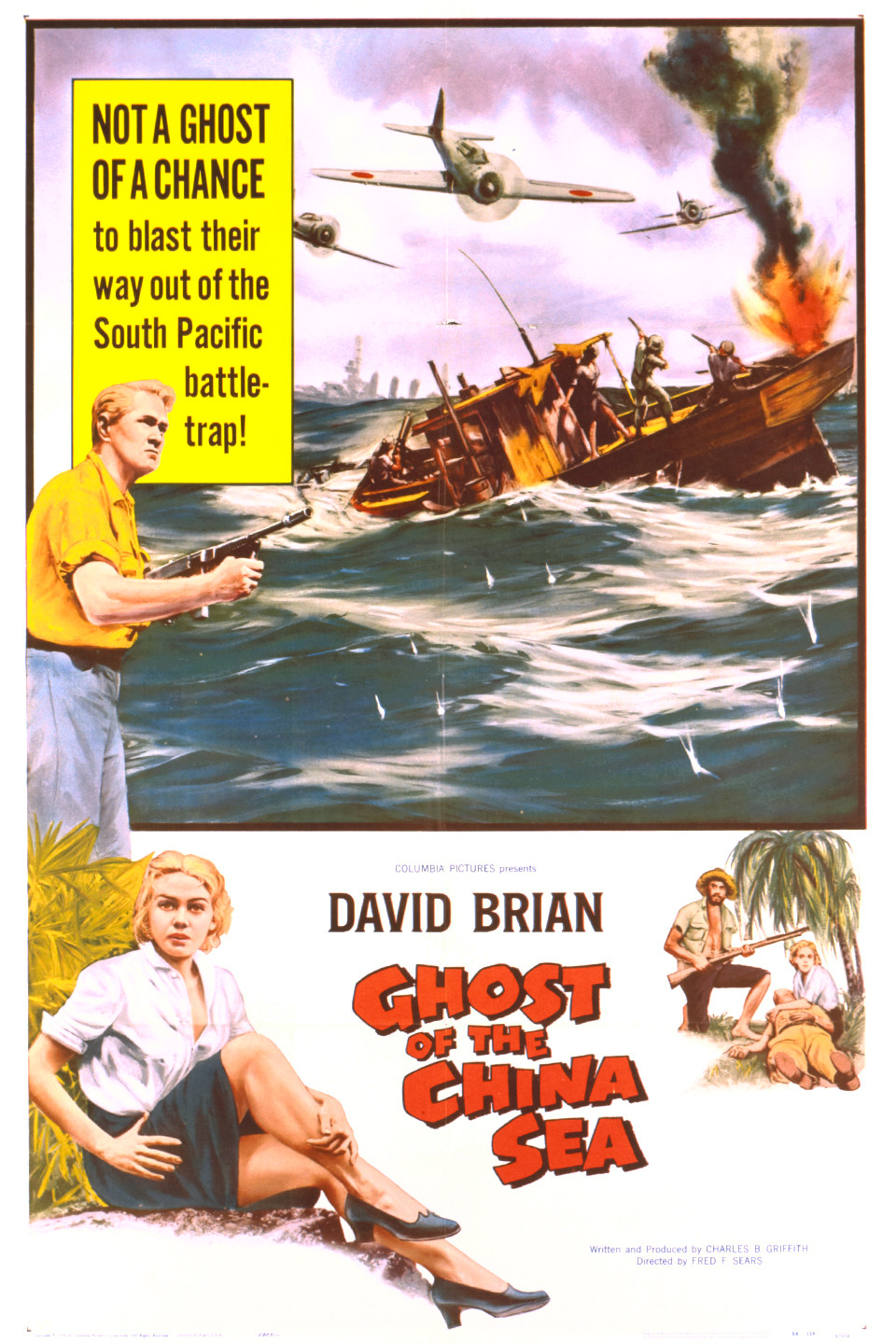
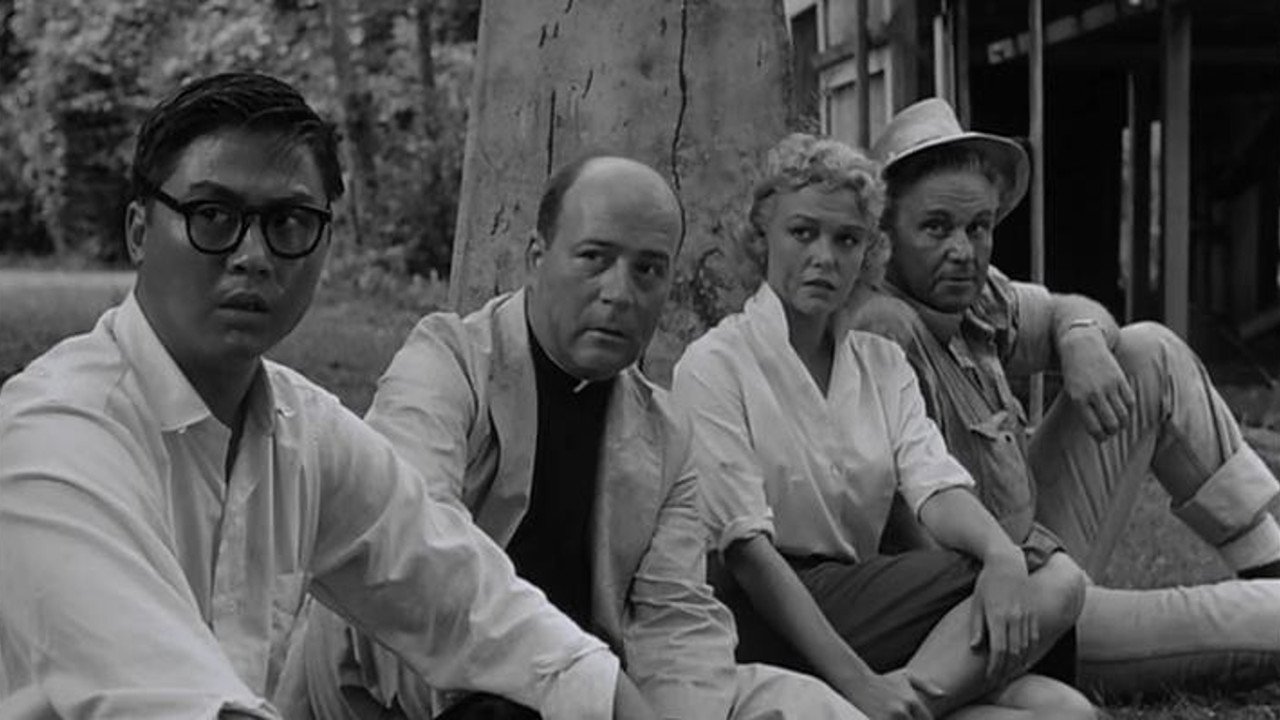


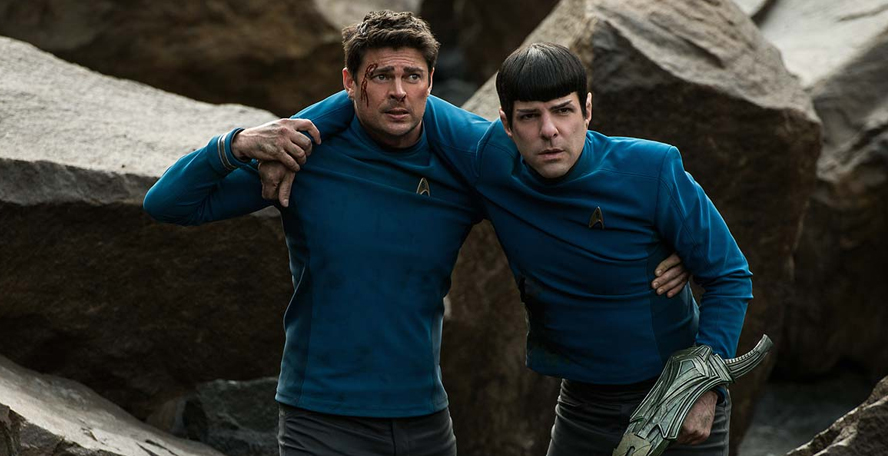

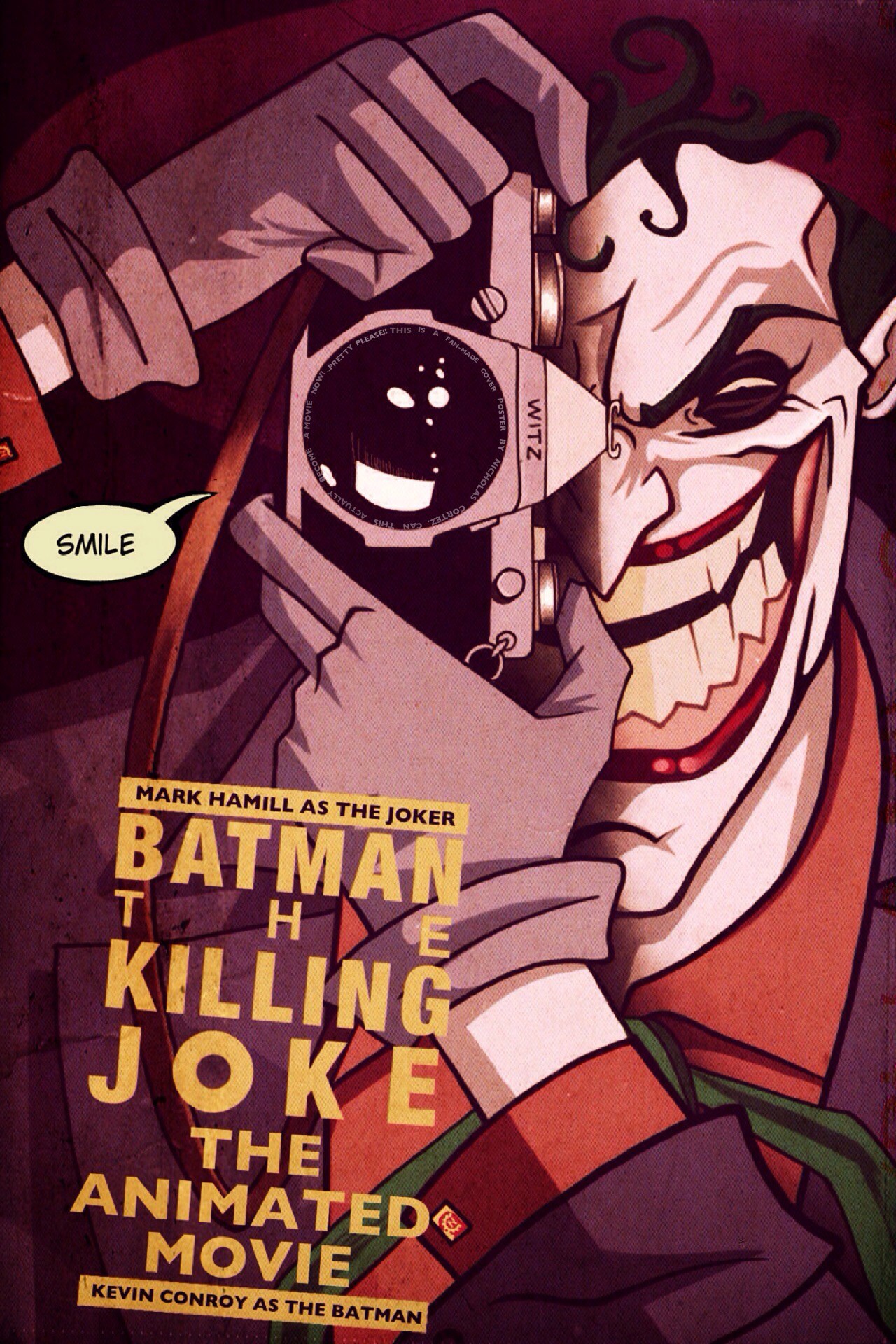

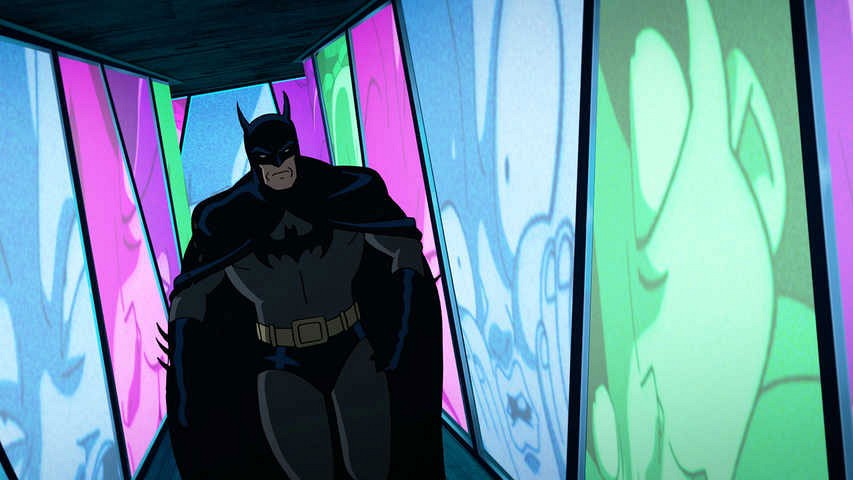
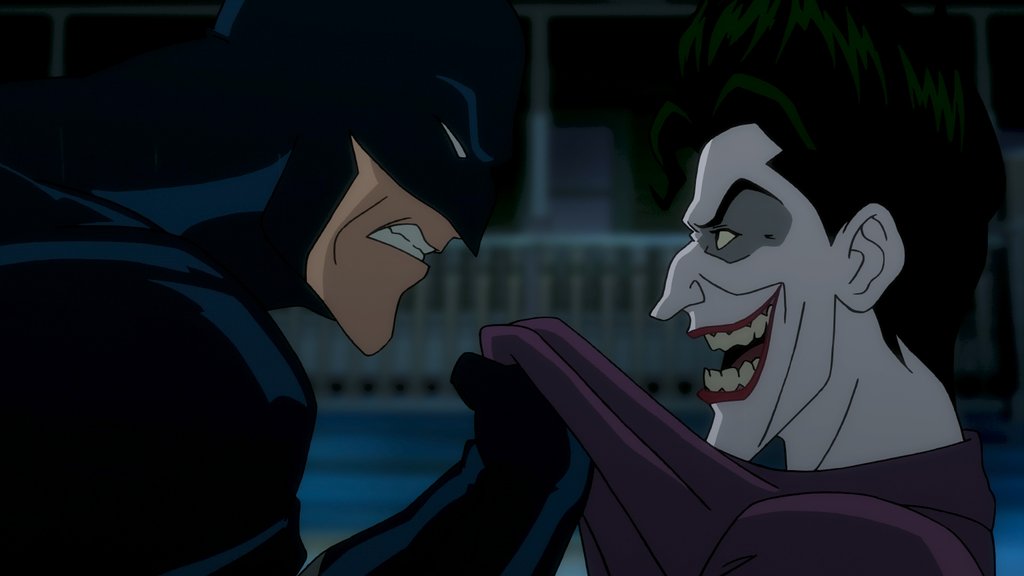


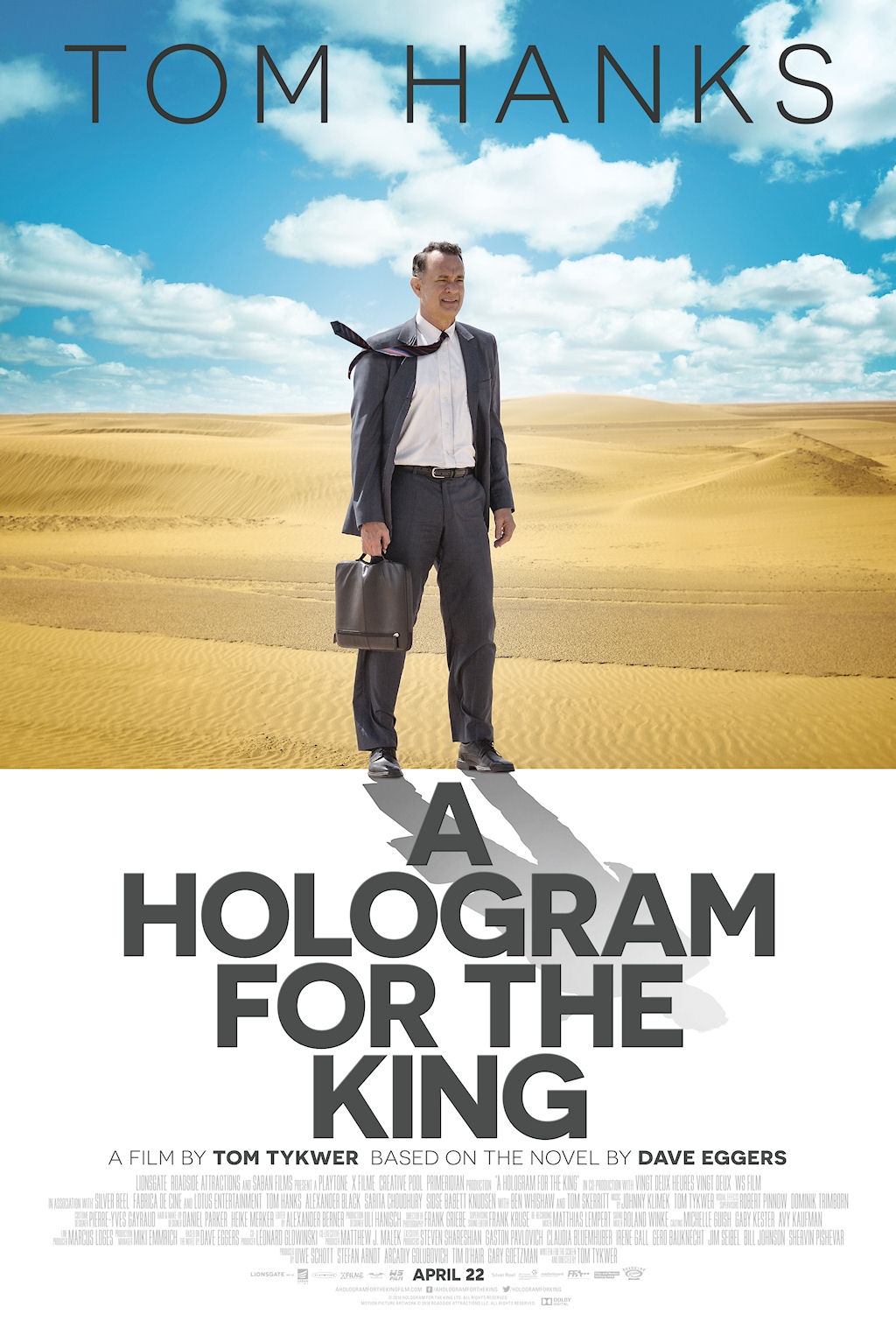
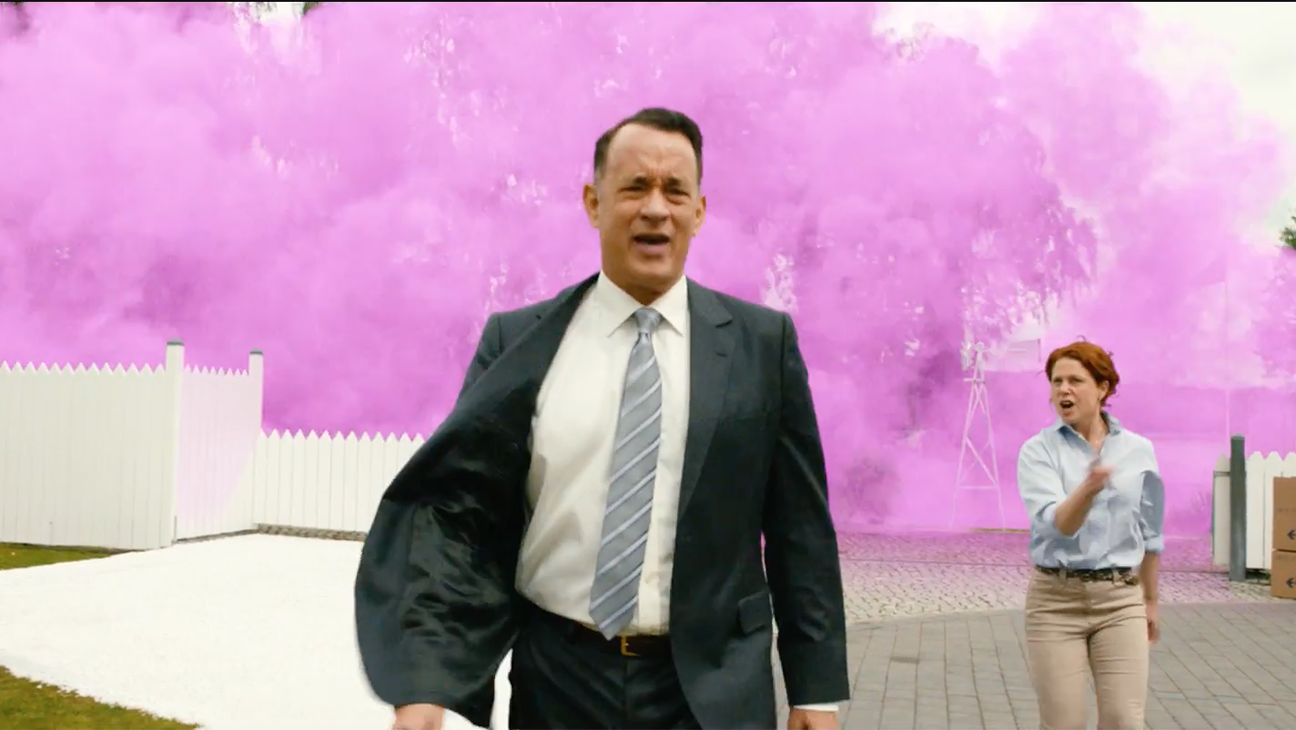

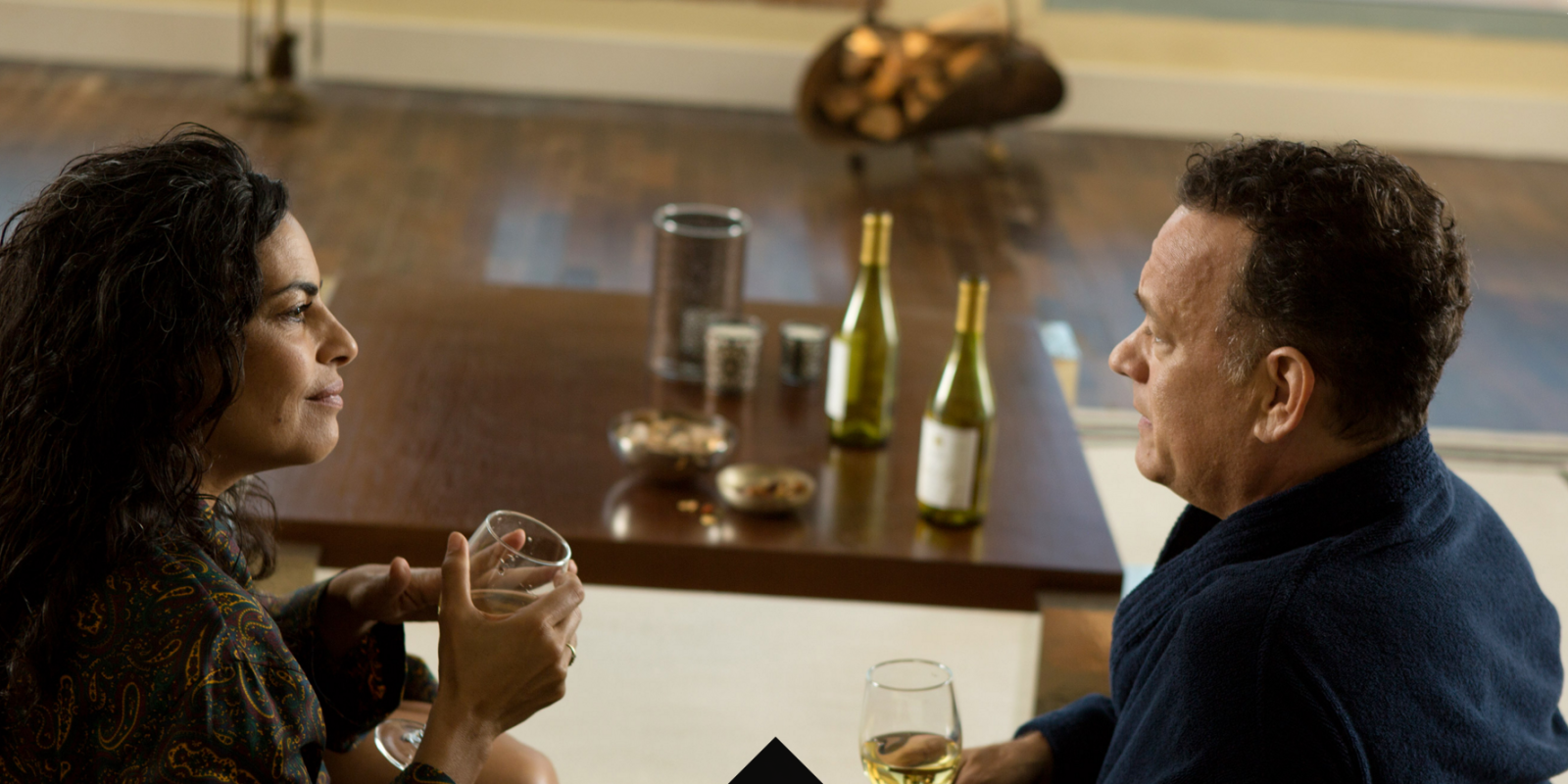


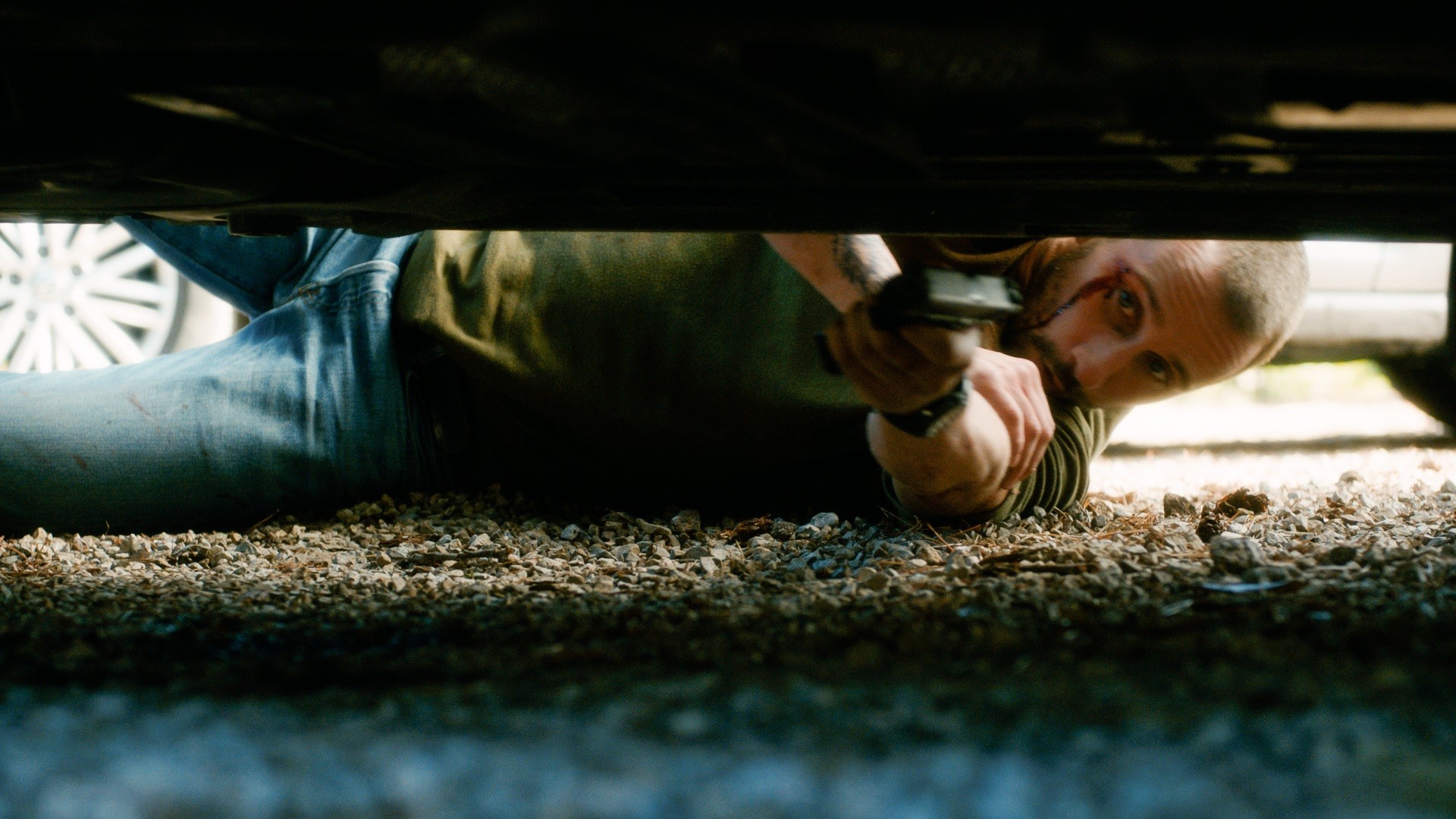
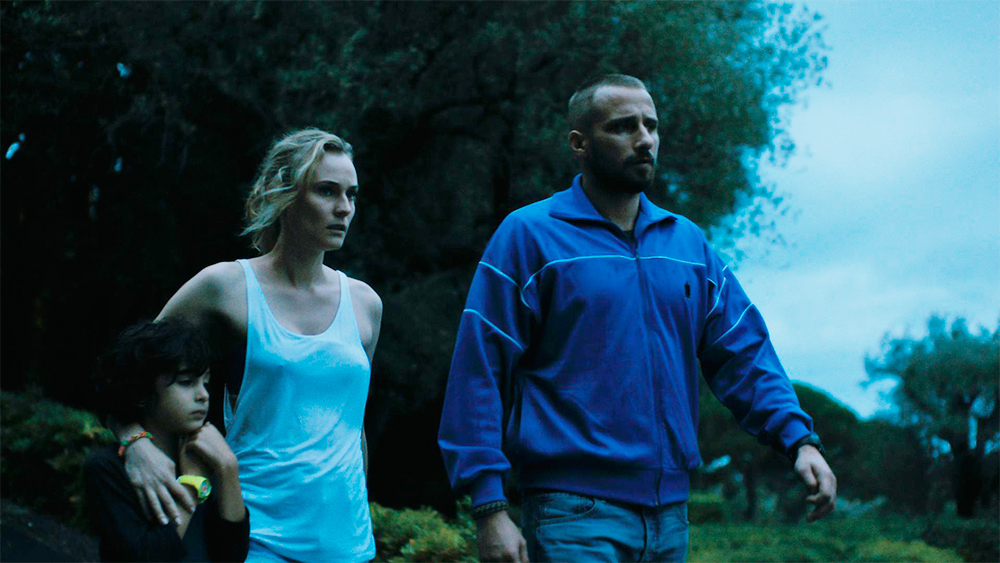
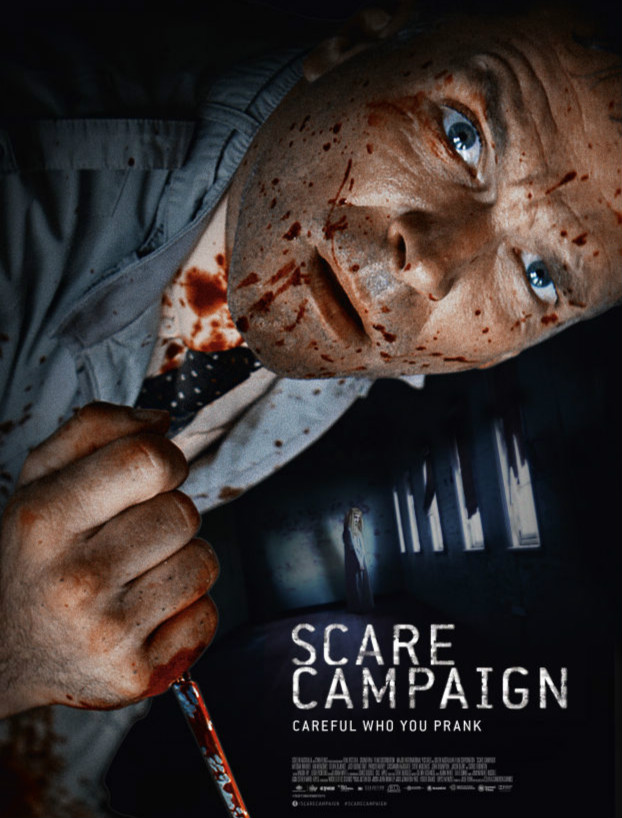


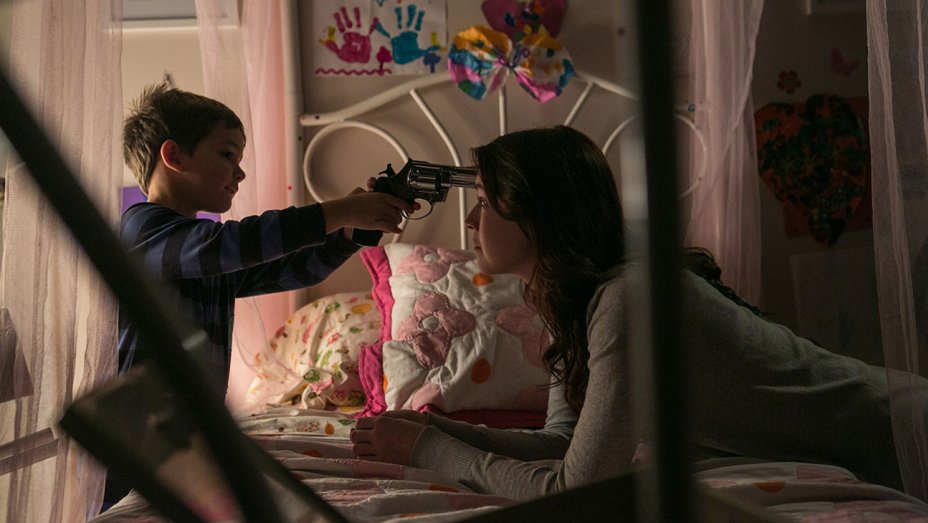


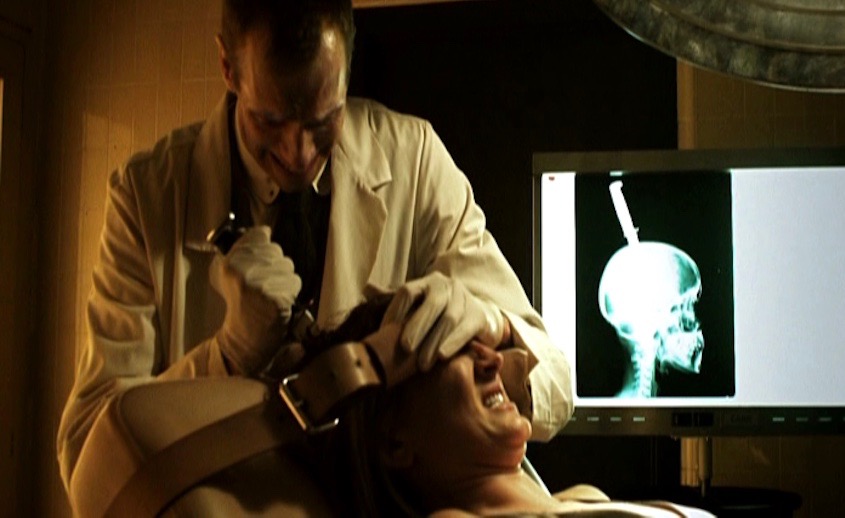

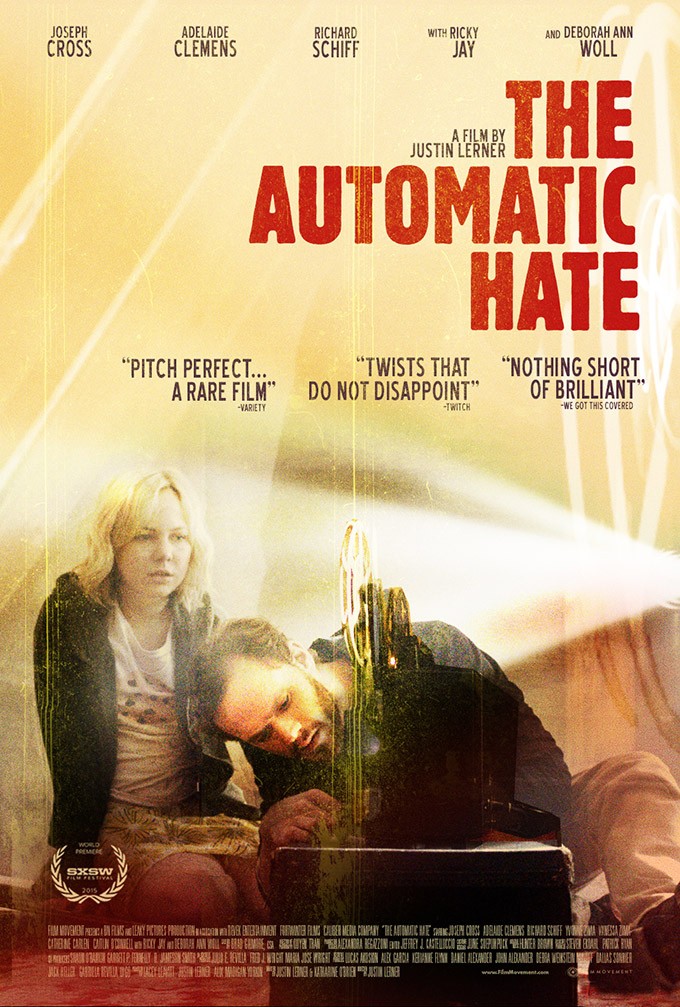


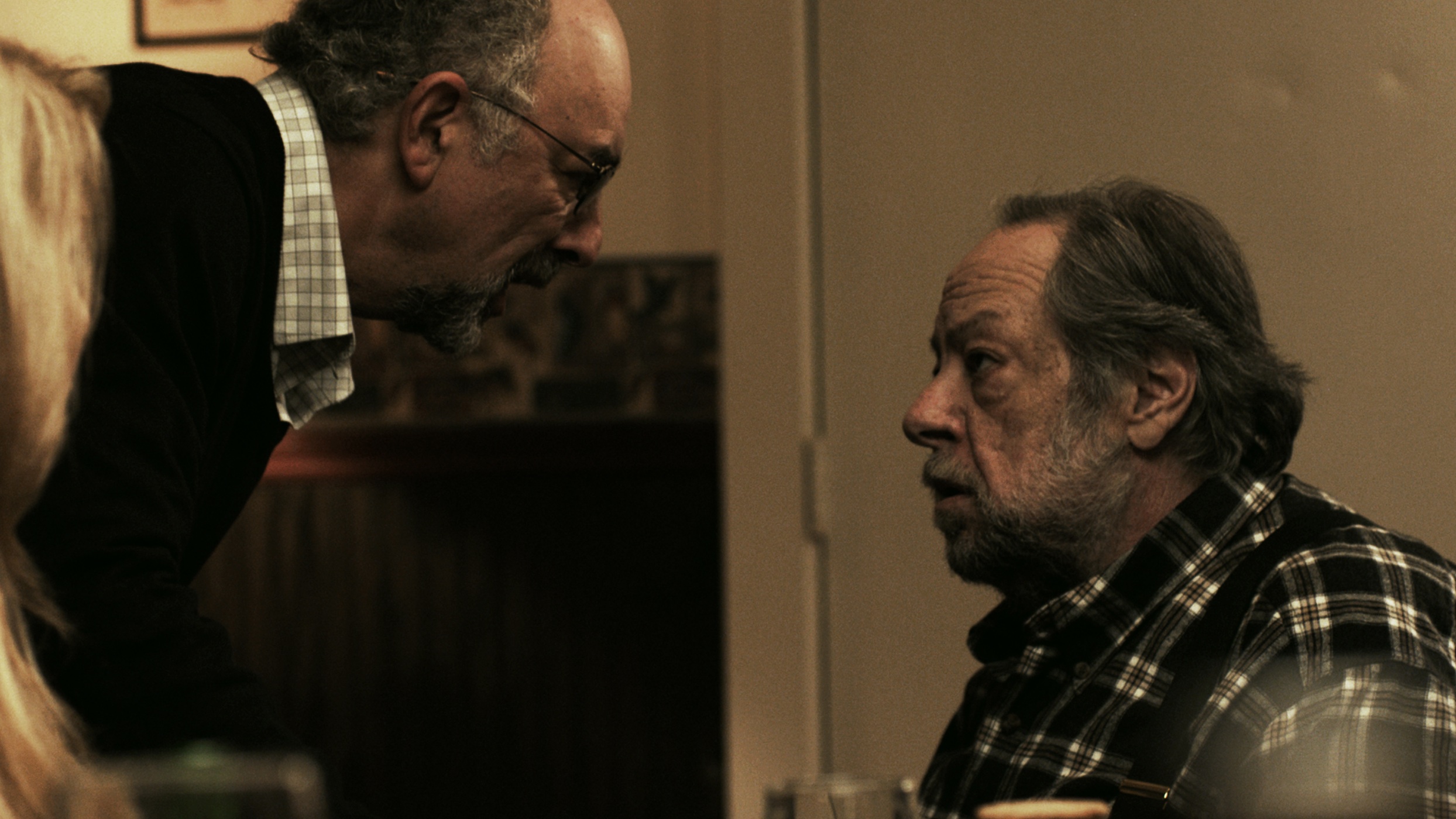


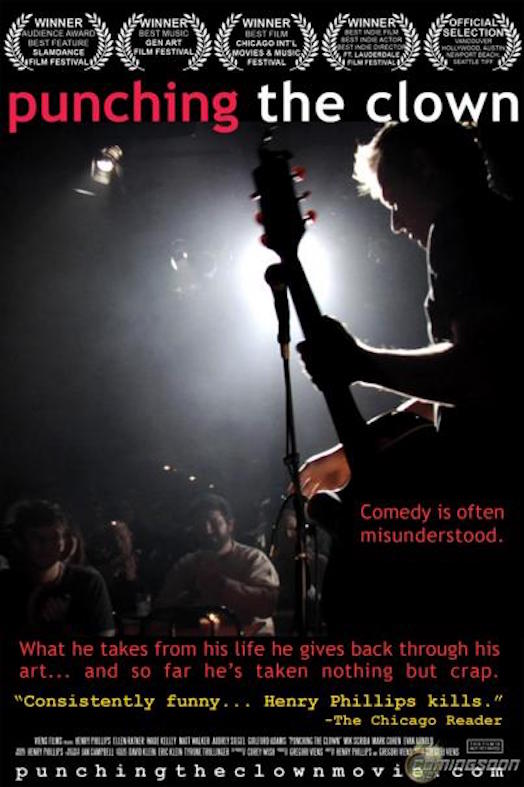


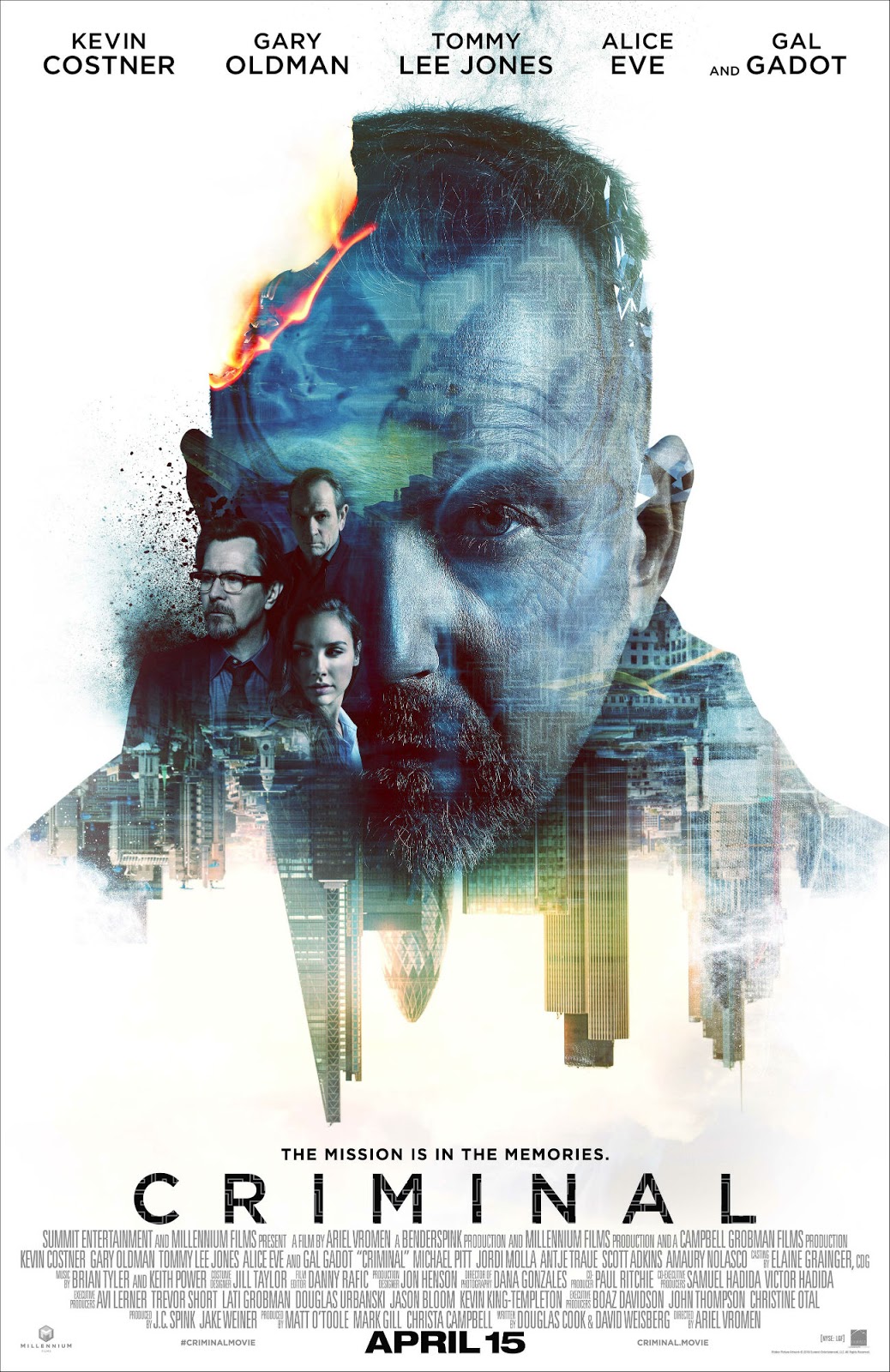
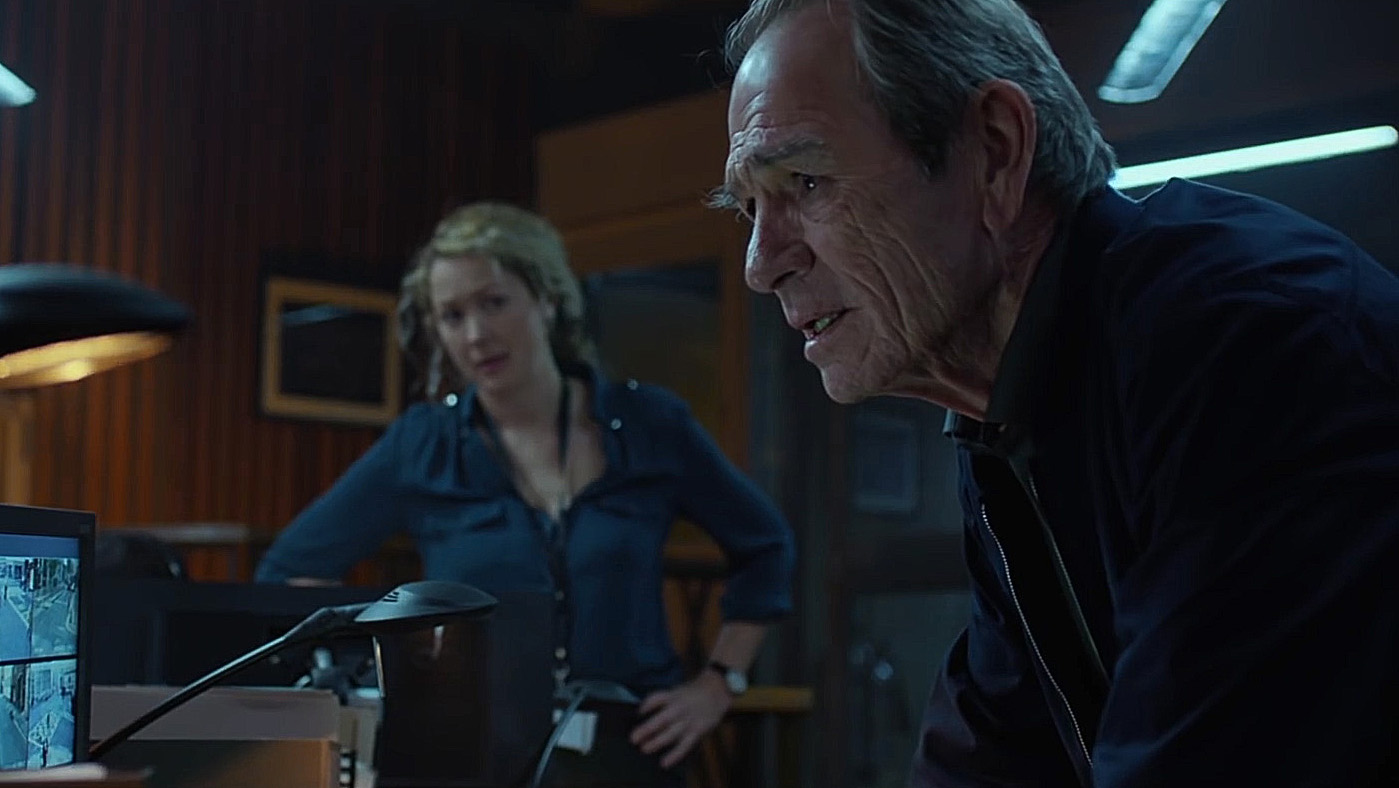



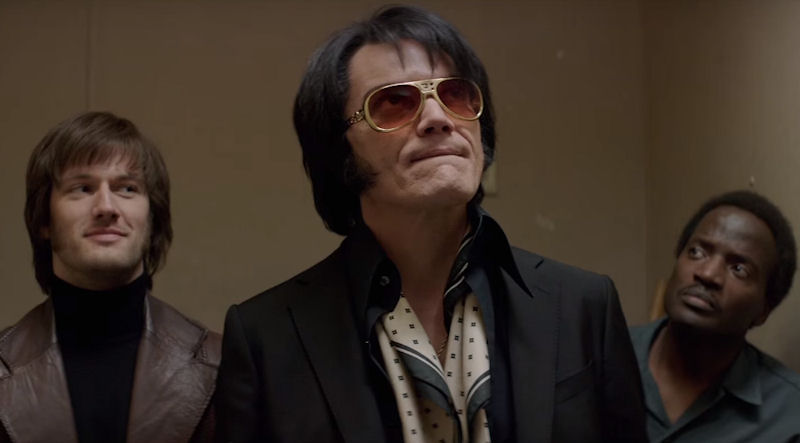
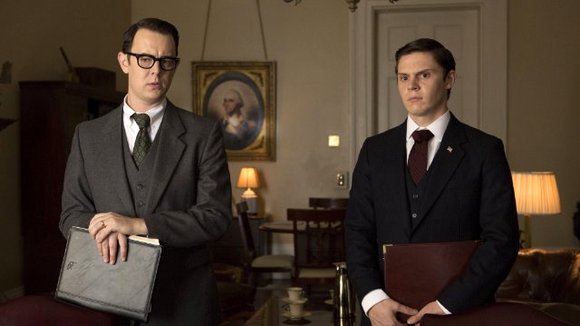
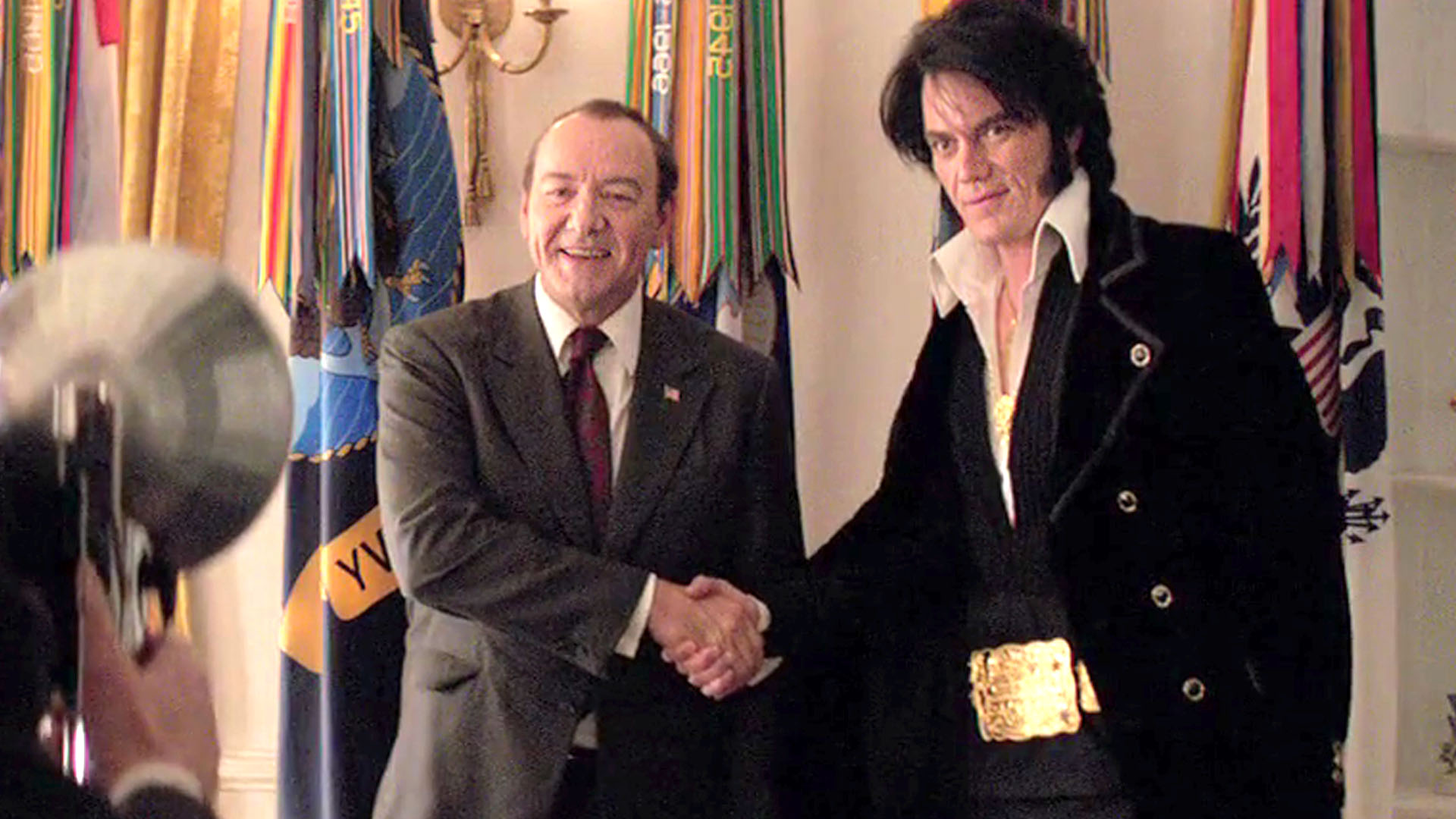



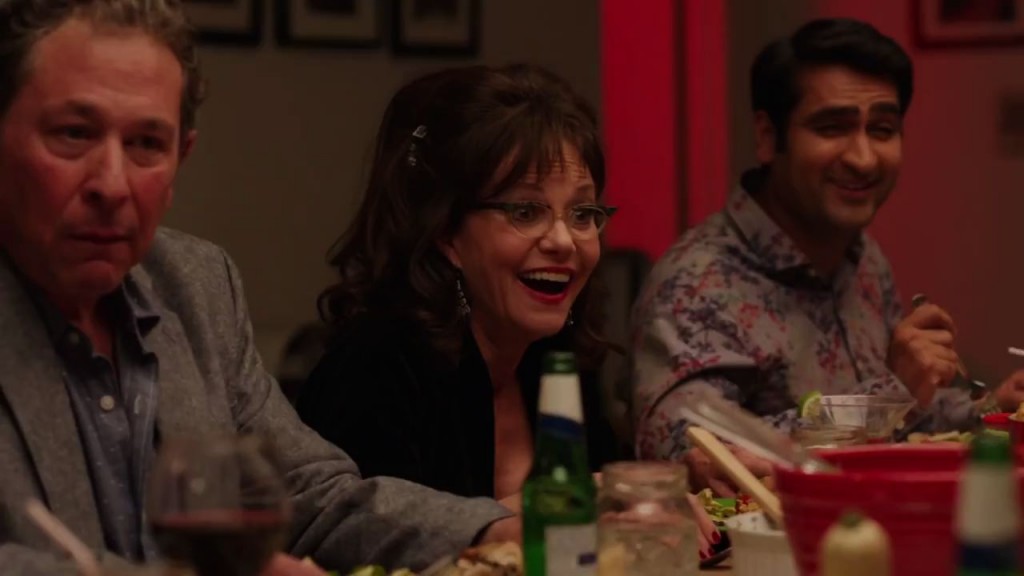

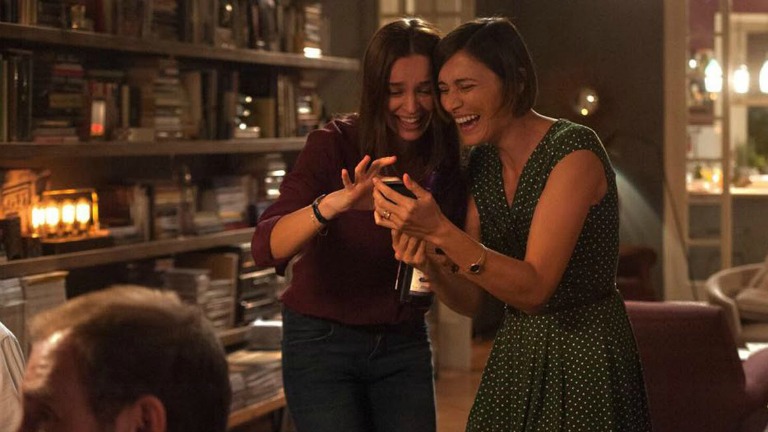
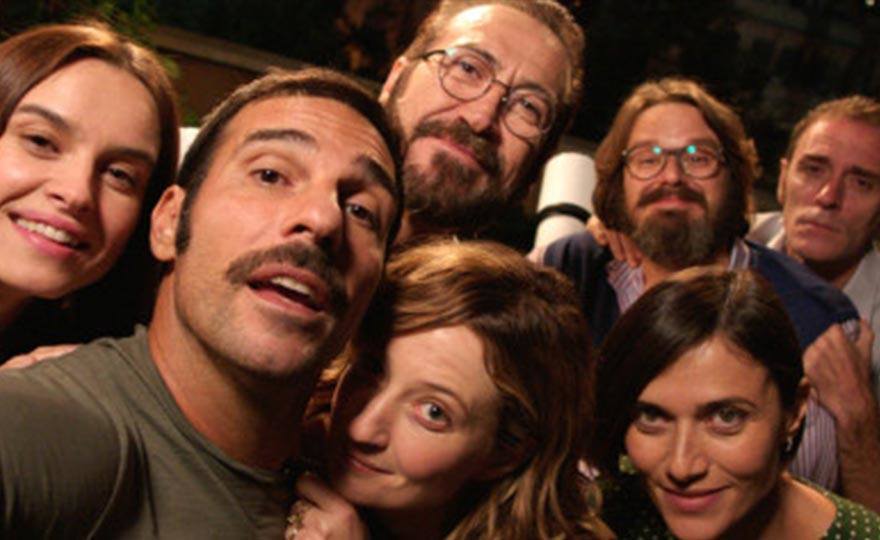














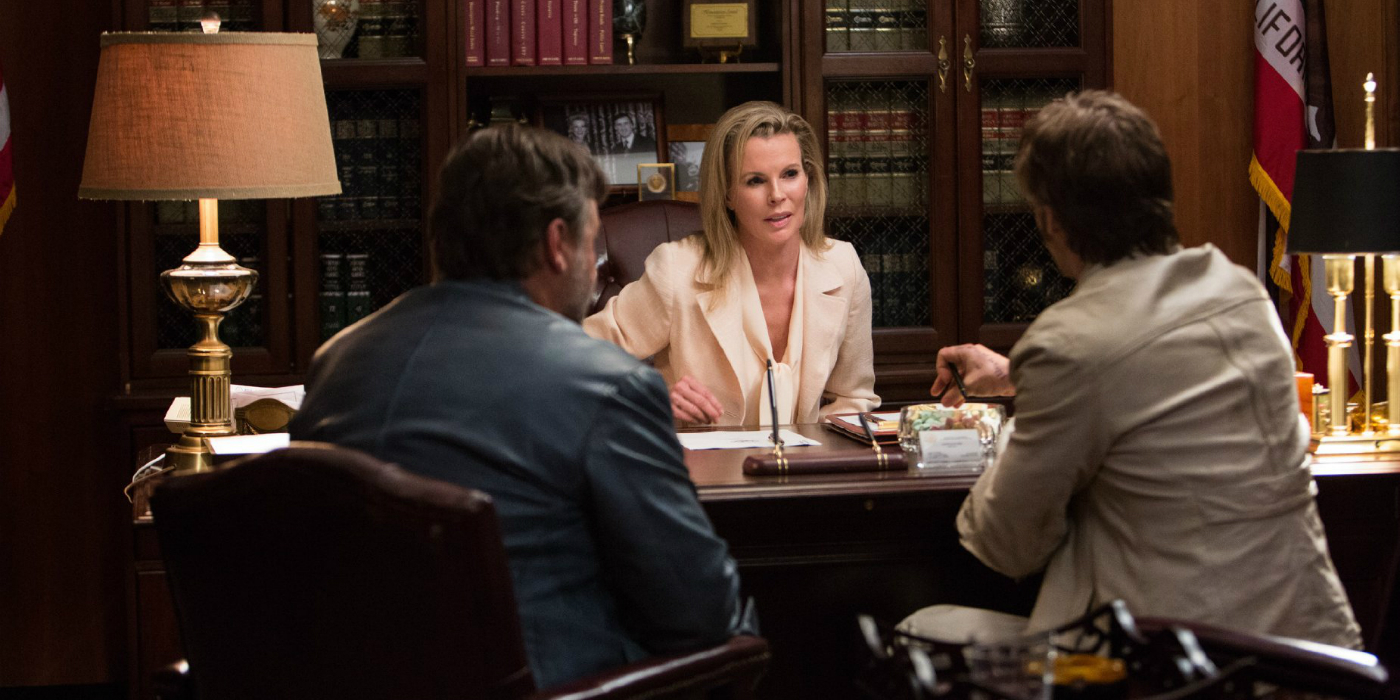
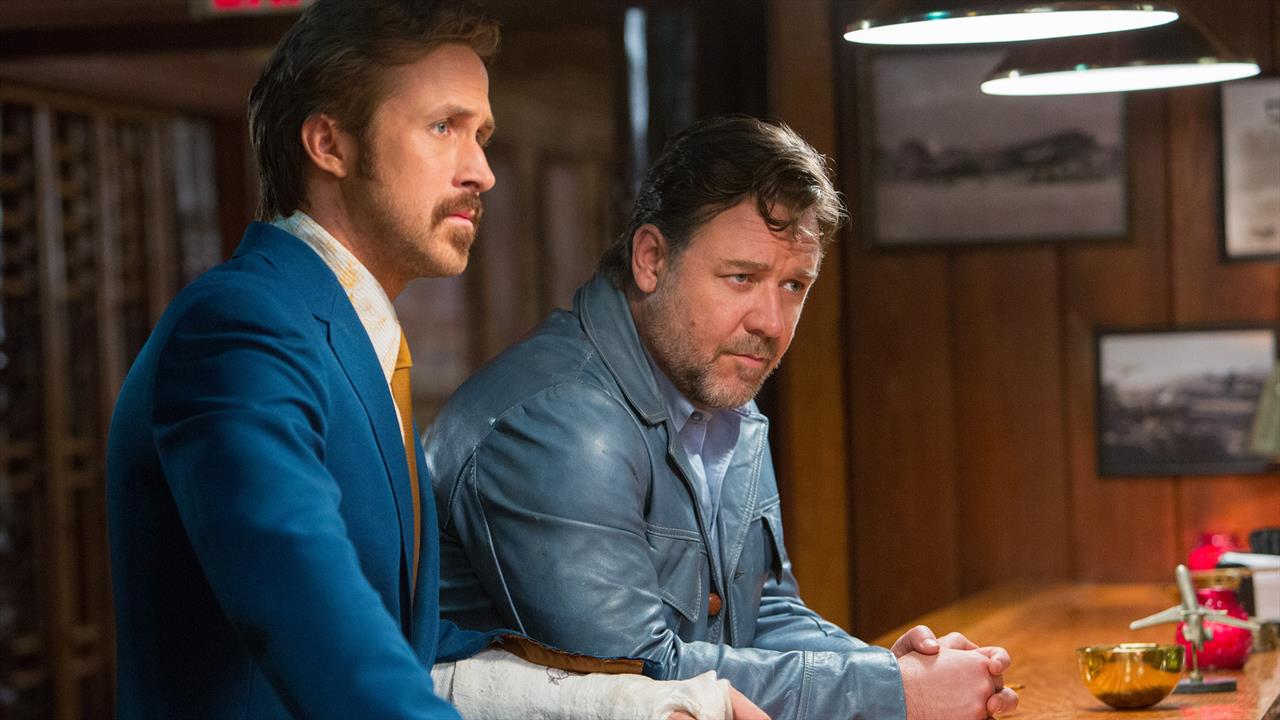
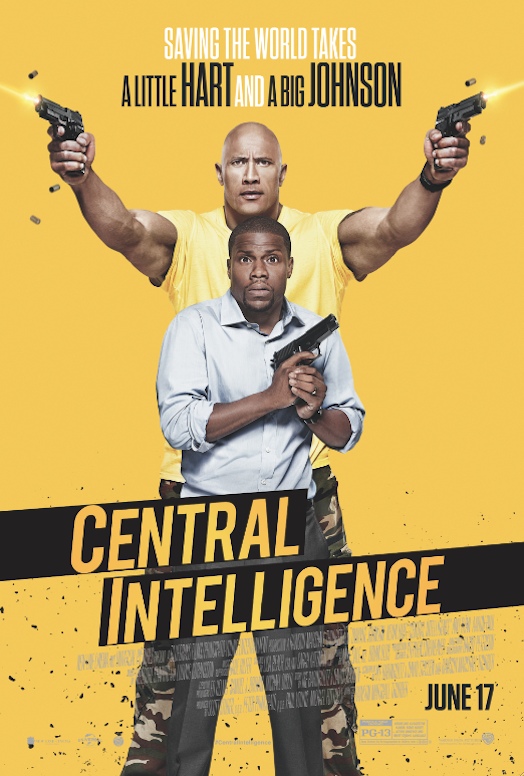
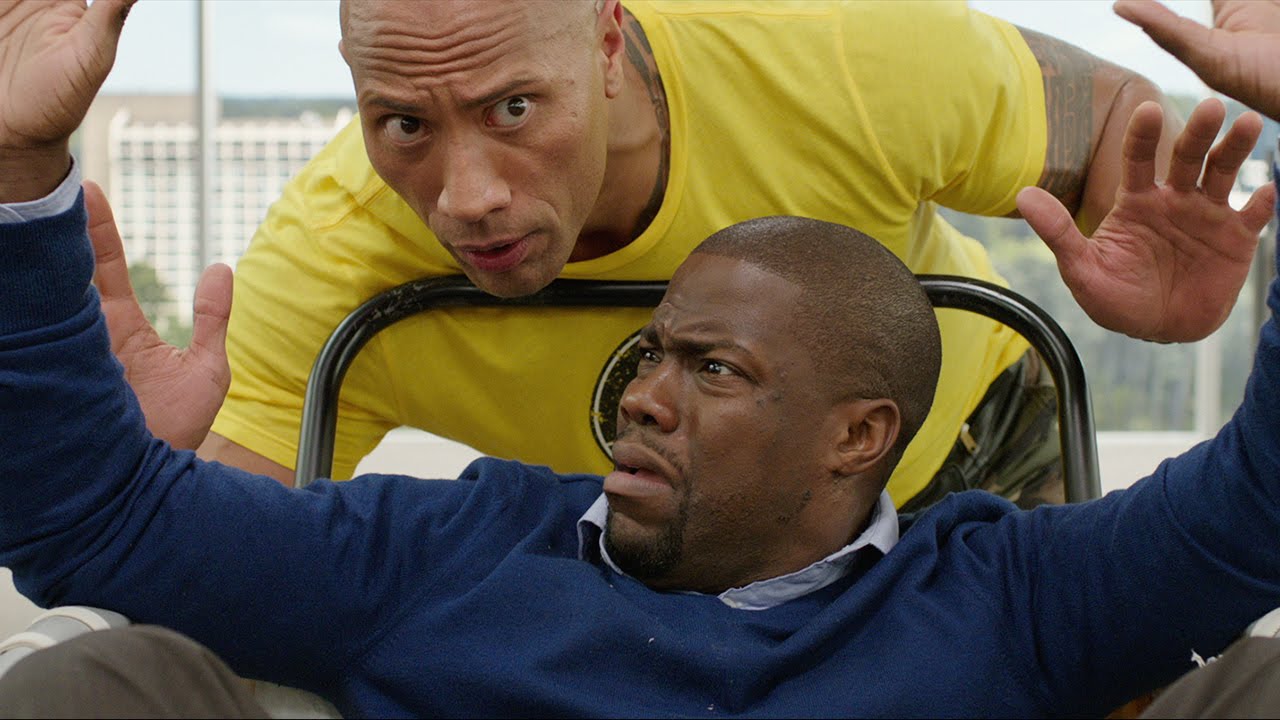


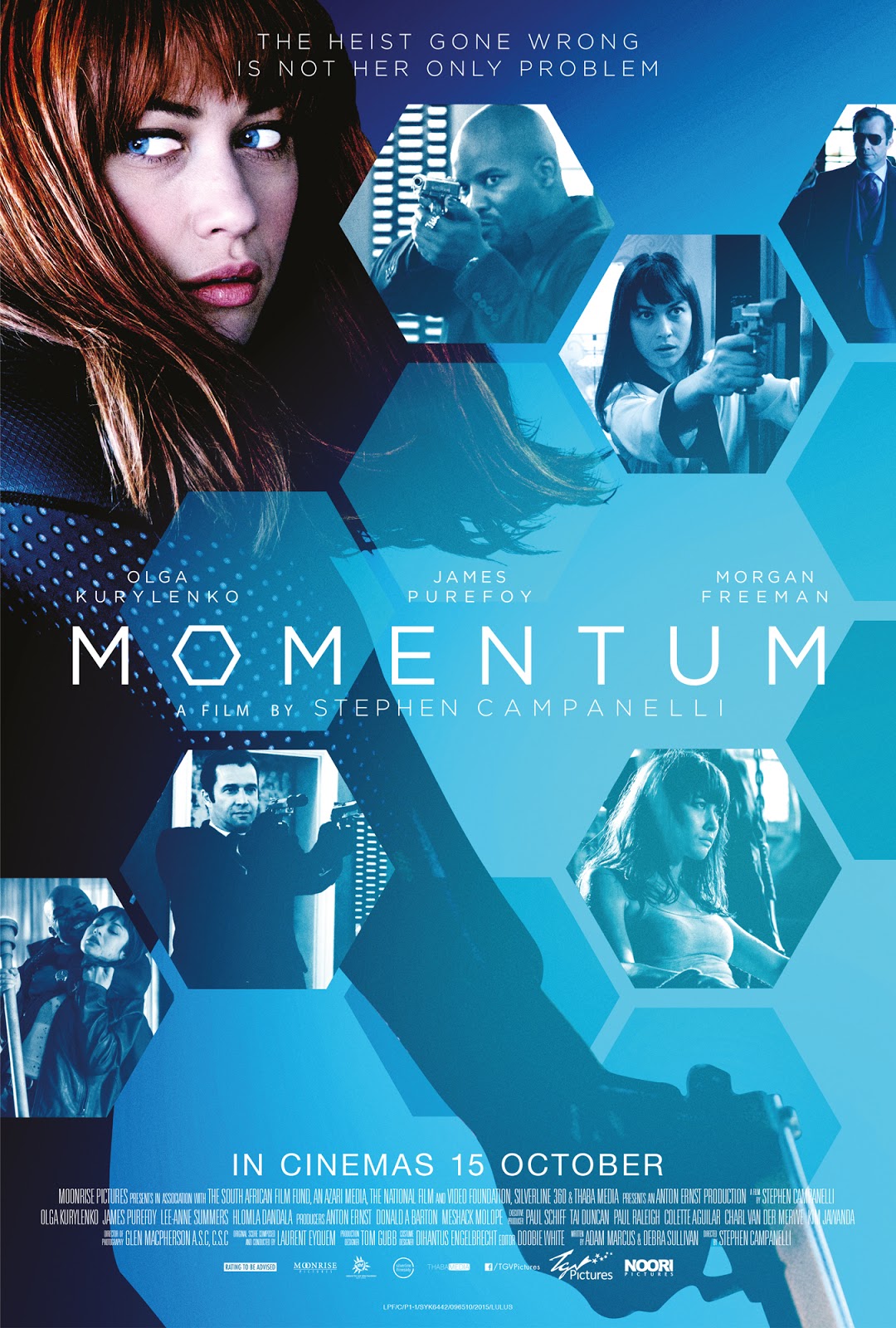


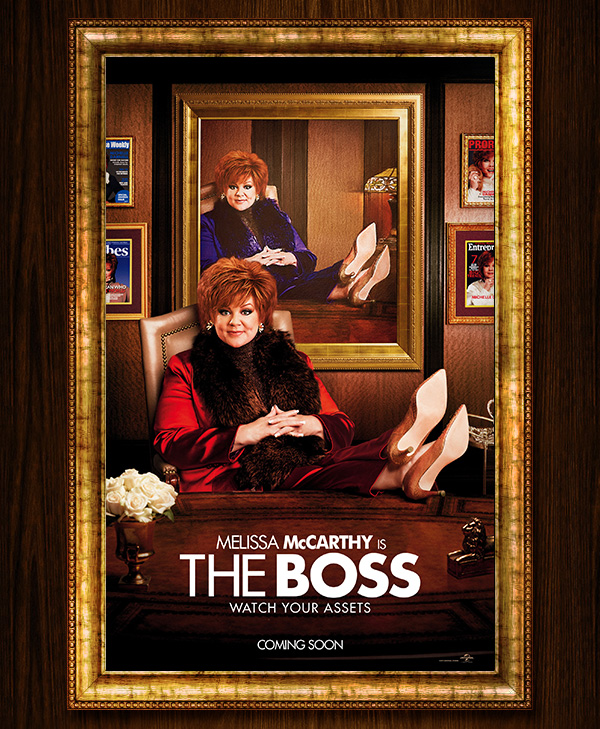








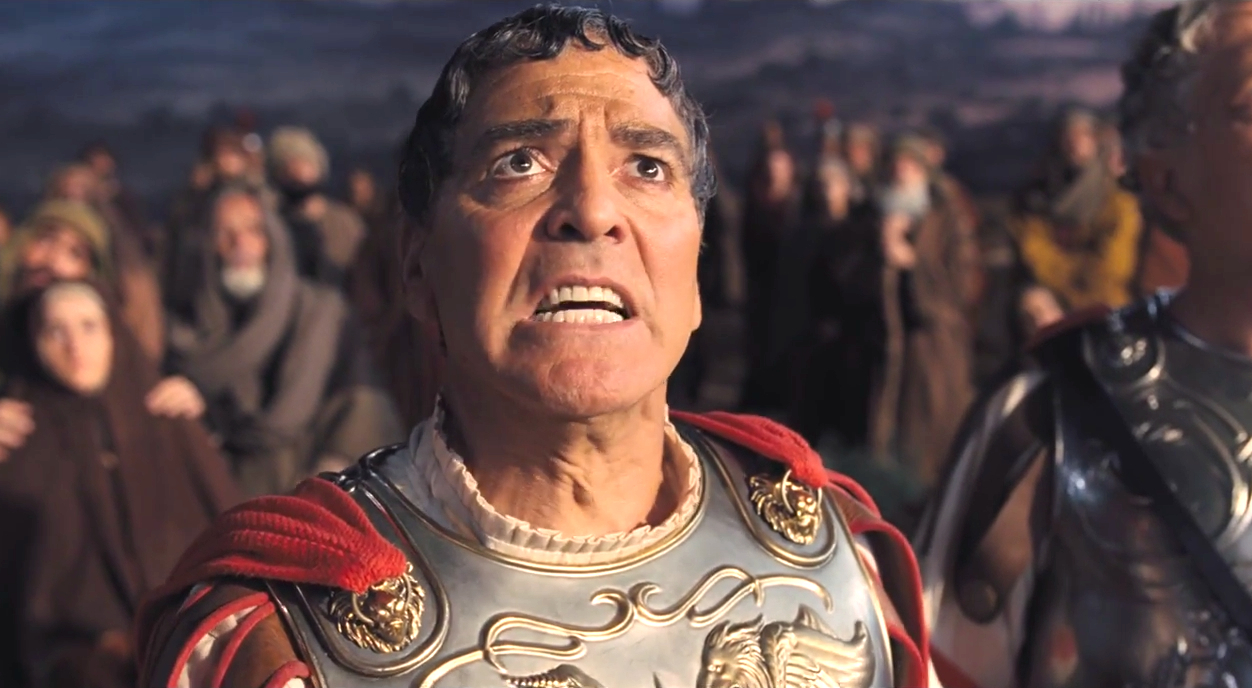
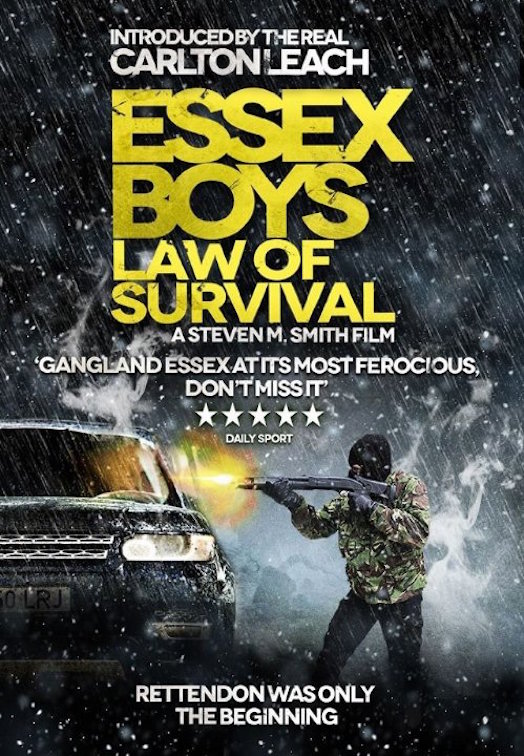











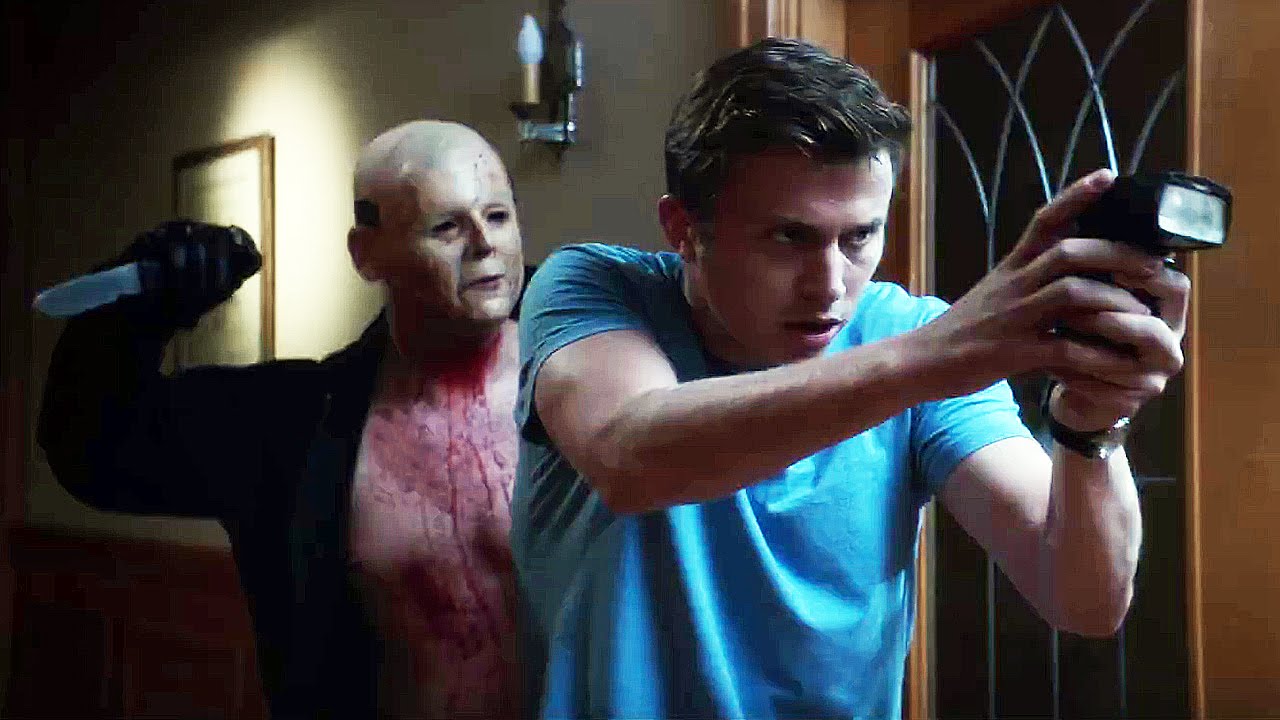






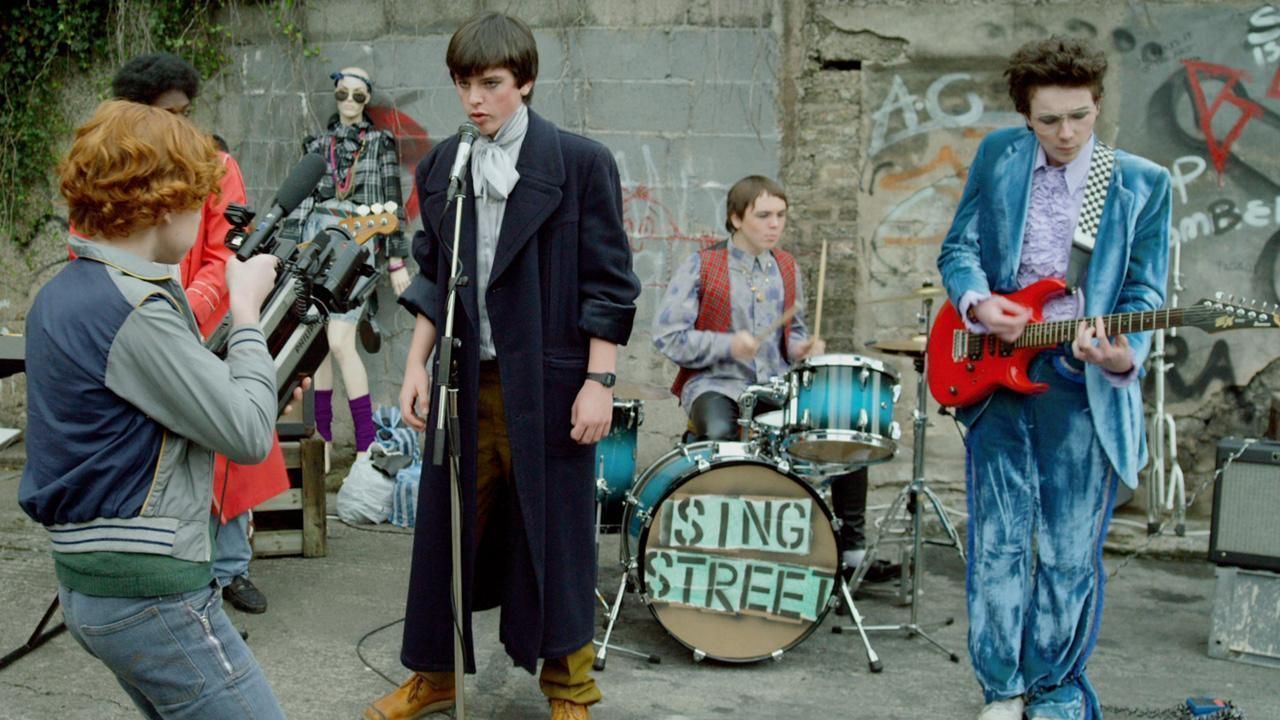
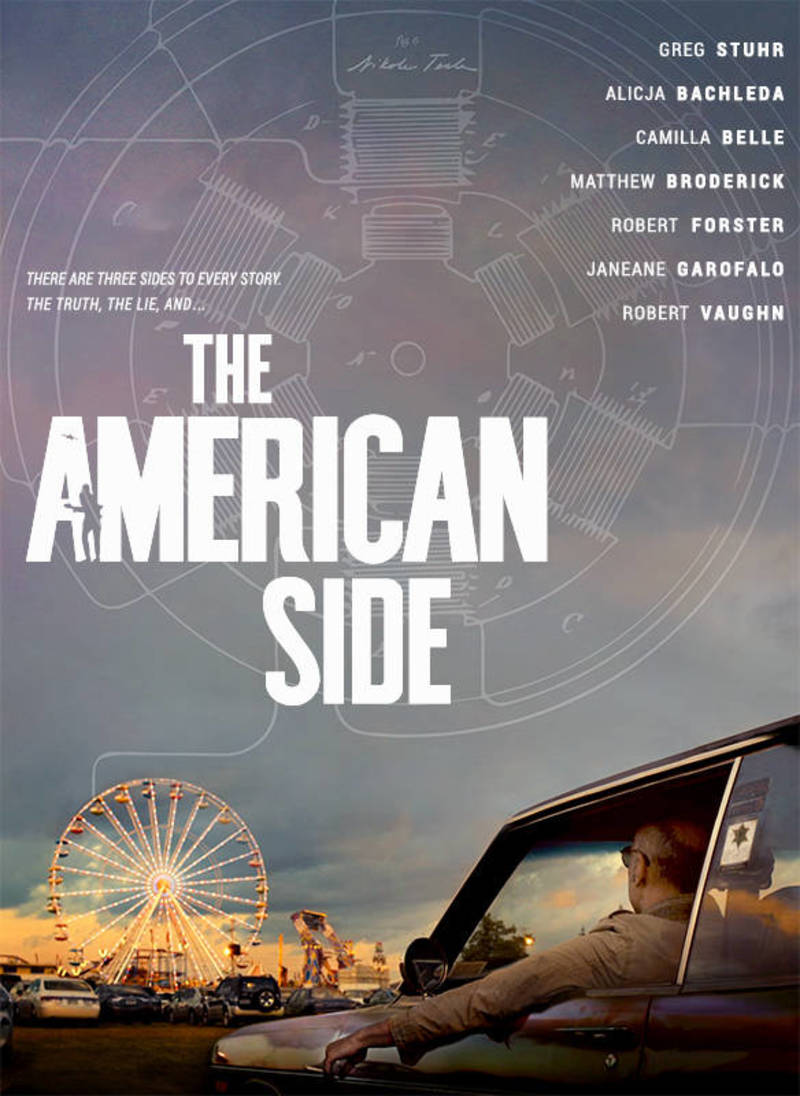


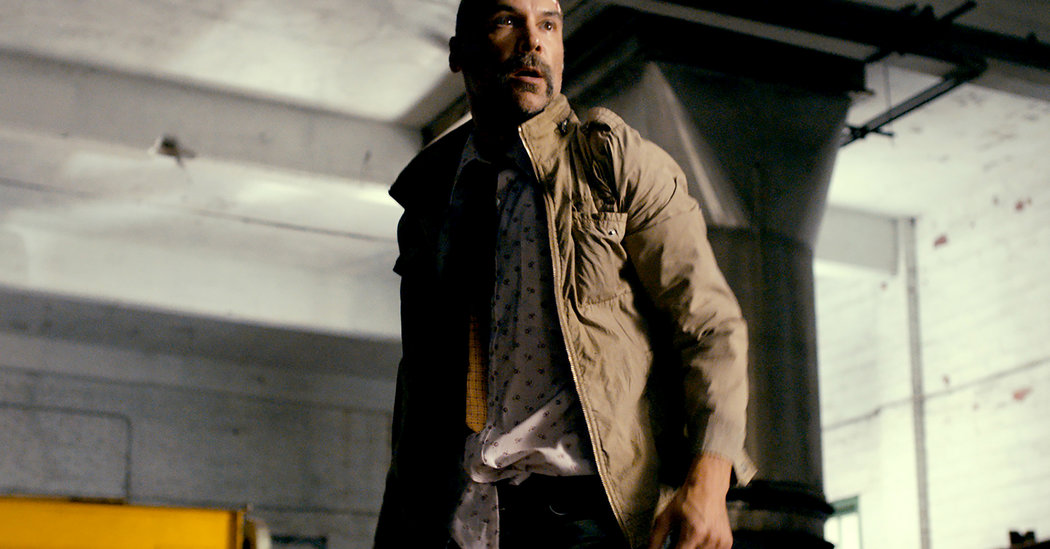
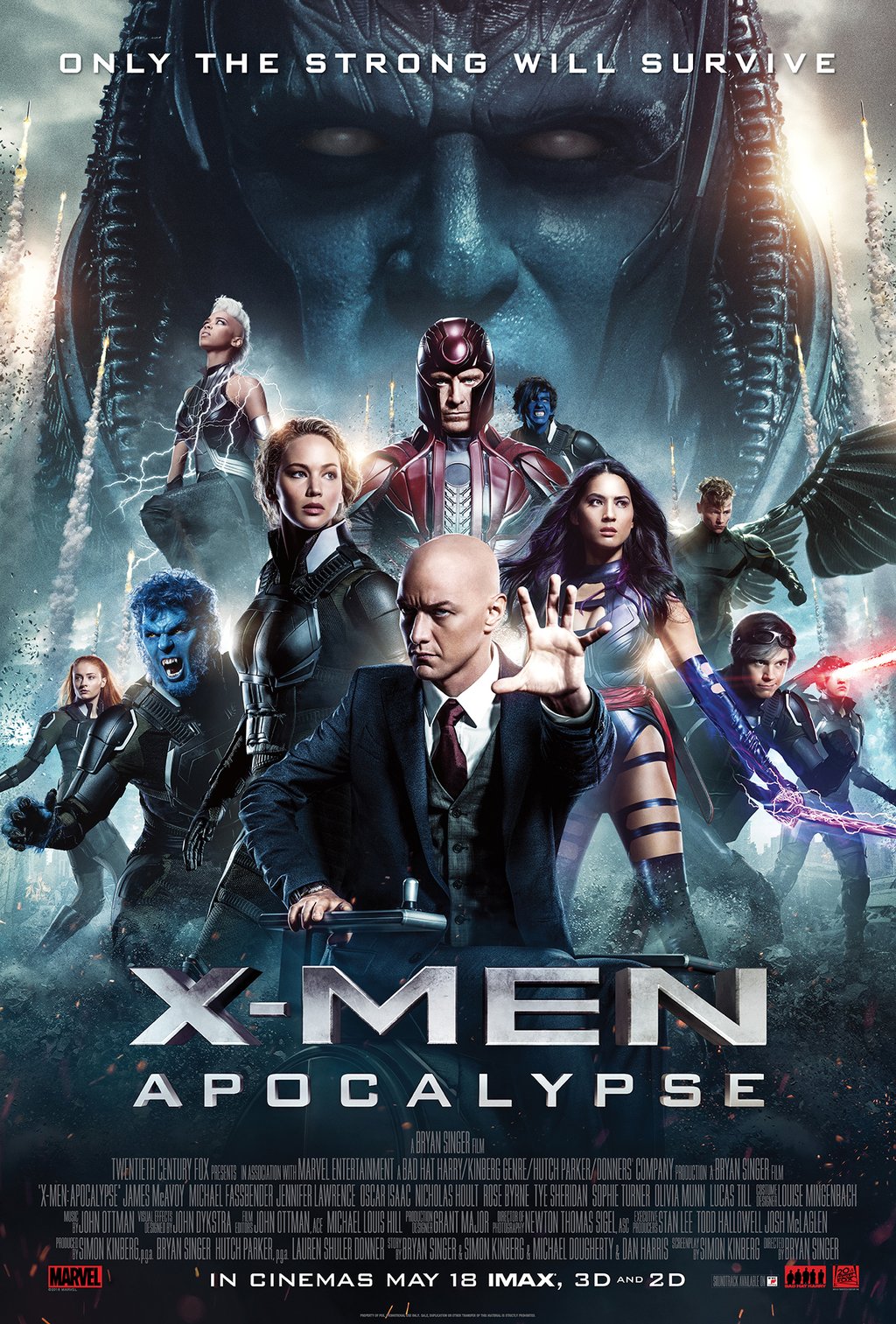








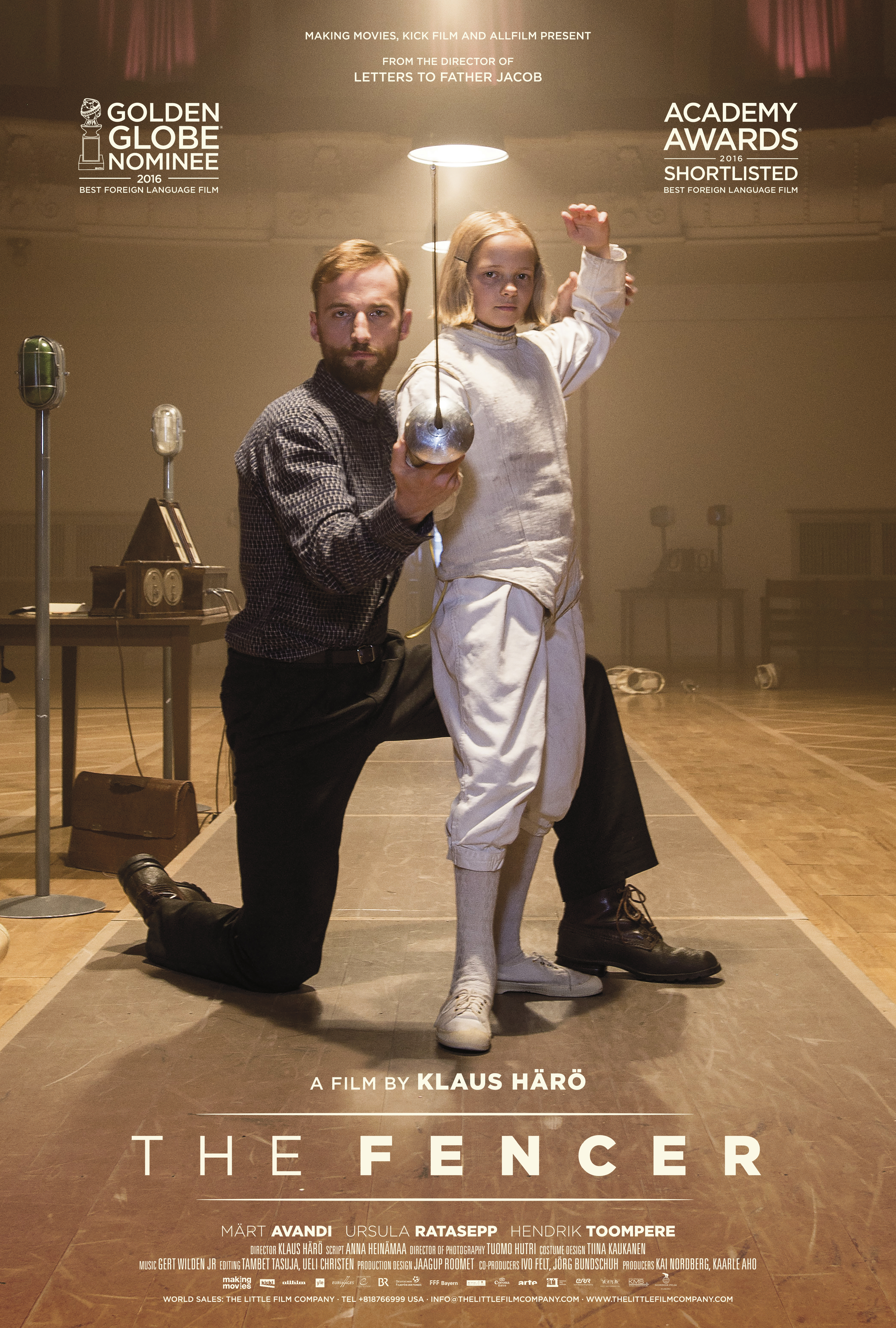
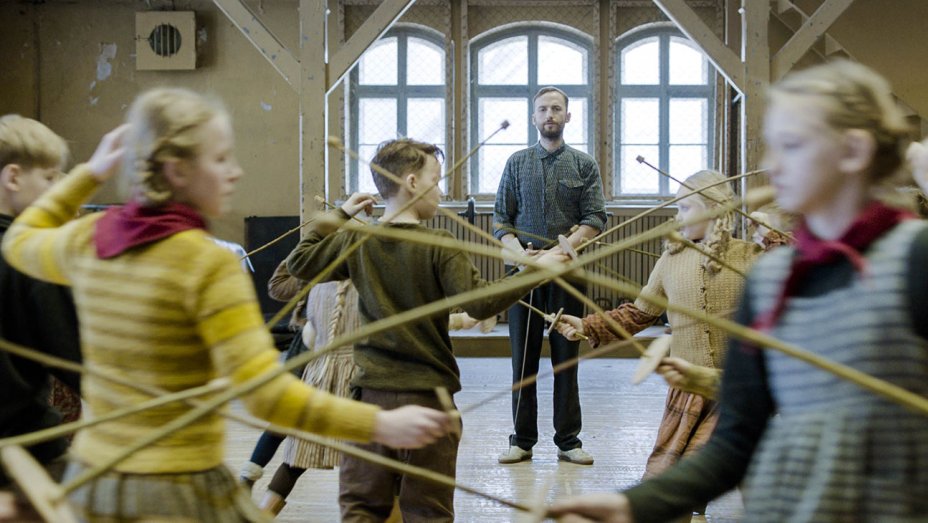
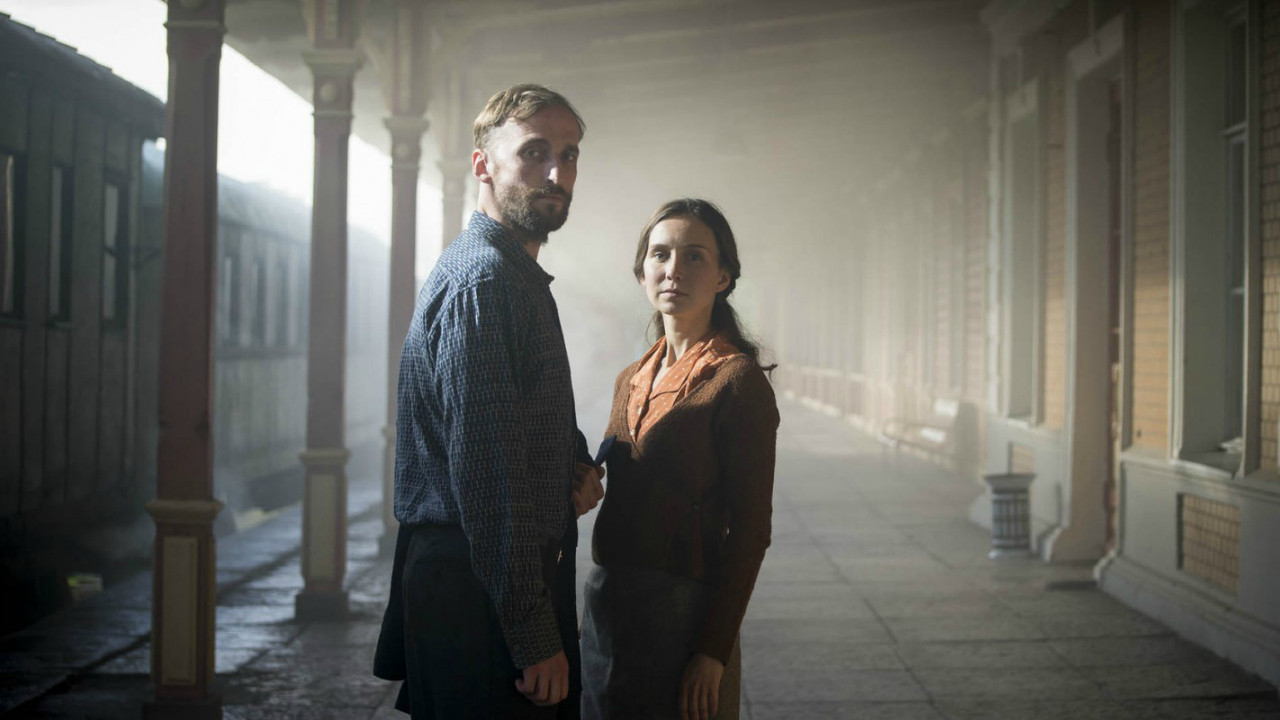




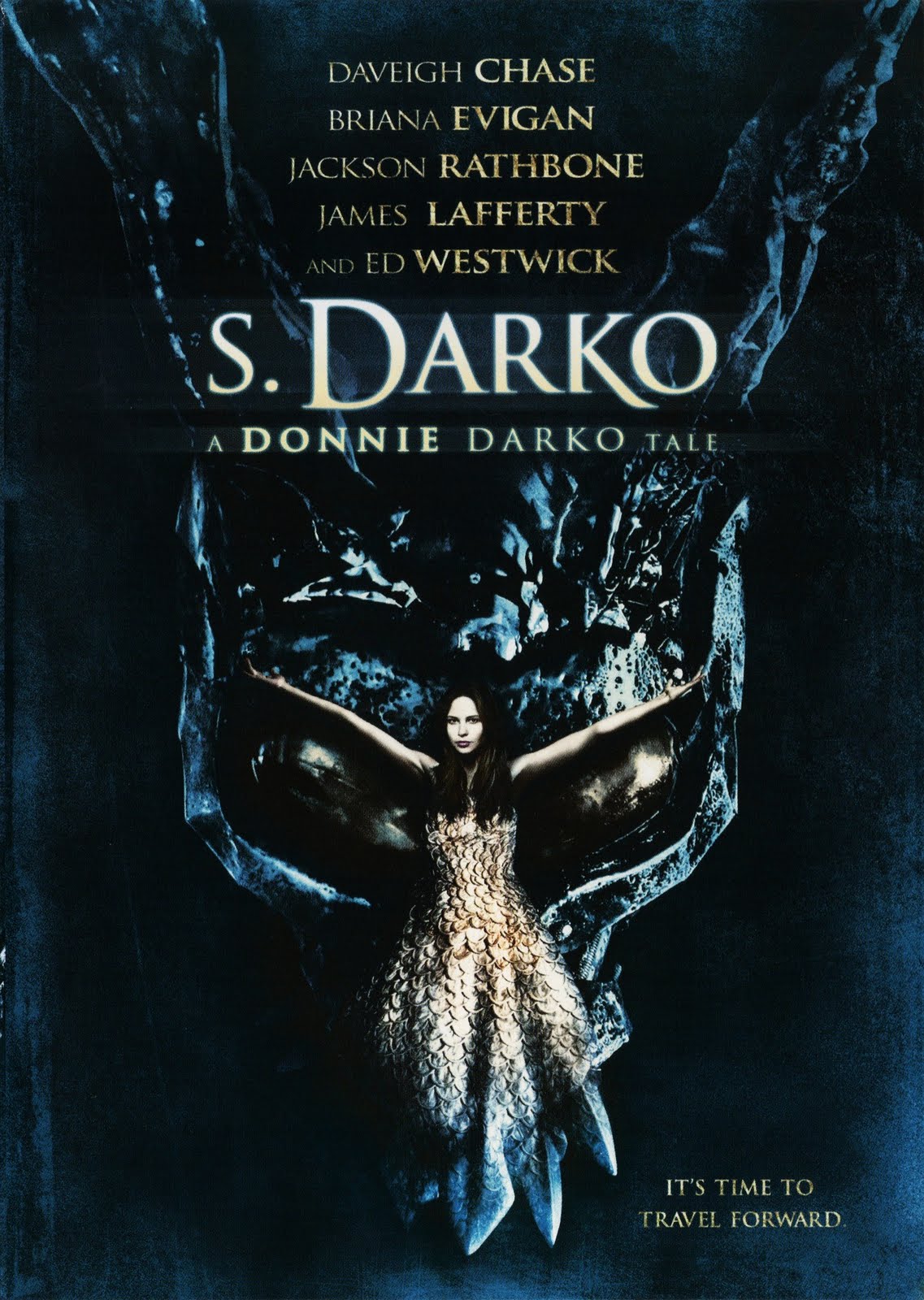

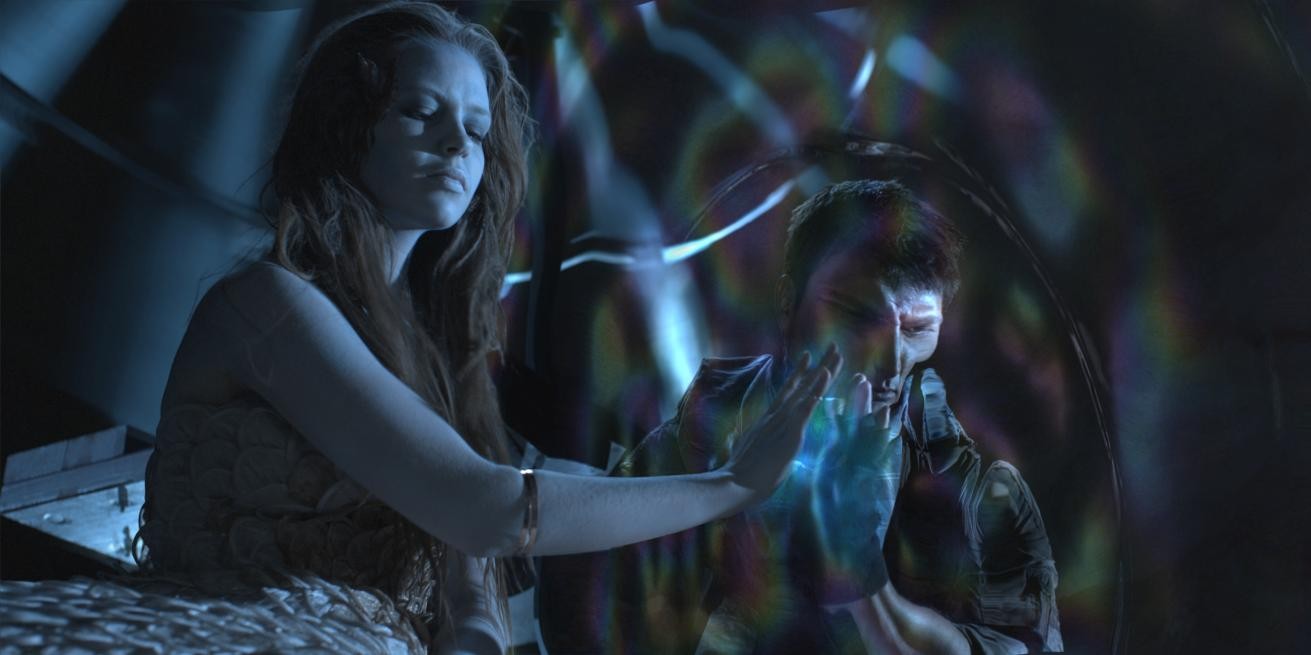


 thedullwoodexperiment