• 10 Reasons to Remember…
  • A Brief Word About…
  • About
  • For One Week Only
  • Happy Birthday
  • Monthly Roundup
  • Old-Time Crime
  • Other Posts
  • Poster of the Week
  • Question of the Week
  • Reviews
  • Trailers

thedullwoodexperiment

~ Viewing movies in a different light

thedullwoodexperiment

Tag Archives: Sci-fi

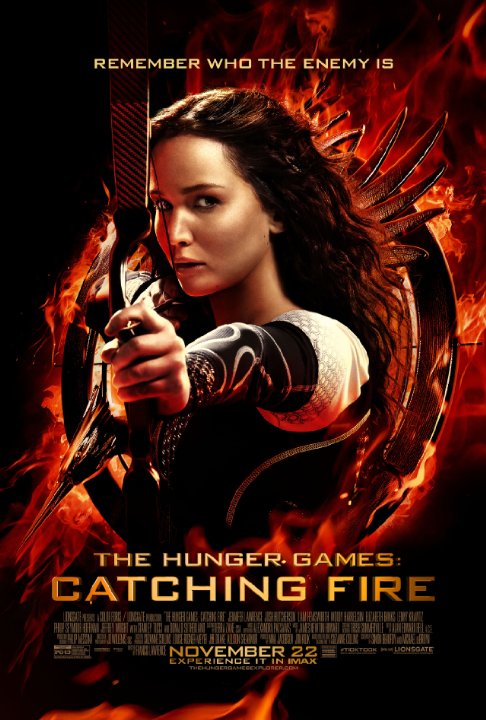
The Hunger Games: Mockingjay Part 2 (2015)

20 Friday Nov 2015

Posted by dullwood68 in Movies

≈ Leave a comment

Tags

District 13, Donald Sutherland, Drama, Francis Lawrence, Jennifer Lawrence, Josh Hutcherson, Julianne Moore, Katniss Everdeen, Liam Hemsworth, Literary adaptation, Panem, Philip Seymour Hoffman, President Snow, Review, Sci-fi, Sequel, Suzanne Collins, The Capitol, Thriller, Woody Harrelson

Mockingjay Part 2

D: Francis Lawrence / 137m

Cast: Jennifer Lawrence, Josh Hutcherson, Liam Hemsworth, Donald Sutherland, Julianne Moore, Woody Harrelson, Philip Seymour Hoffman, Willow Shields, Sam Claflin, Elizabeth Banks, Mahershala Ali, Jena Malone, Jeffrey Wright, Natalie Dormer, Evan Ross, Elden Henson, Wes Chatham, Michelle Forbes, Patina Miller, Stanley Tucci

Picking up after Peeta’s failed attempt to kill Katniss, the final instalment in The Hunger Games series begins with a problem for both the makers and the audience to consider: should the movie launch straight into the rebels’ expected attack on the Capitol, or should it hold back and spend some time reiterating the relationships between Katniss and Peeta and Gale, and begin to explore the similar machinations of President Snow and his potential successor, Alma Coin? The answer is the latter, and while this decision allows for further layers to be added to Katniss’s ever-present self-doubt (and sets up the ending), it also has the effect of reminding the viewer that we’ve been here before – and in each of the three previous movies.

One of the series’ strengths has always been the way in which Katniss appears to be a stranger to herself while everyone around her finds her actions entirely predictable. It’s an idea that continues here, with the Mockingjay being used at every turn, even when she acts independently. But it’s in danger of becoming as unwieldy a plot device as the idea that President Snow has a camera in every home in Panem (as well as in every shop, and on every street corner… you get the idea). We get it. And if the decision to split Mockingjay the novel into two parts was so that the final movie could be all about the rebels’ final push on the Capitol, then why are we still going over old ground?

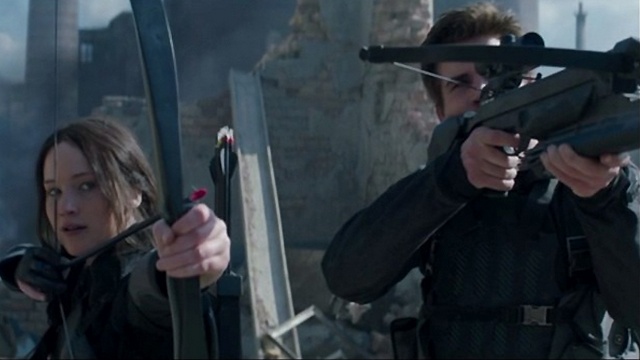
Mockingjay Part 2 - scene1

To be fair, it’s the price the movie makes for being faithful to Suzanne Collins’ source material. But what it also does is to make The Hunger Games: Mockingjay Part 2 longer than it needed to be, and curiously sapped of urgency once Katniss et al begin their progress toward the Capitol. There are too many scenes where characters stop to muse on their individual plights, and Peeta tries to sort out if his memories are real or lies constructed by his torturers in the Capitol. At first glance it’s all meaningful, and yet another indication of how careful the makers have been in grounding the action, but do you know what? It’s Part Four – we already care about these characters. All we want now is for Katniss to come face to face with President Snow, and for the promise of all those booby traps we’ve seen in the trailer to give us a thrilling, rousing, edge-of-the-seat kick-ass end to everything.

What we’re looking for is the kind of series’ ending we got with Harry Potter and the Deathly Hallows Part 2 (2011), but the action sequences, though expertly staged and choreographed – and which winnow out the surplus characters – just… don’t… bring it. It’s a strange awareness to have, to realise that the best action scenes have all appeared in the earlier movies, but there it is: even the underground fight against the Capitol Mutts suffers from over-familiarity as Katniss shows off the same bow skills we’ve seen before from Legolas and Hawkeye. And as mentioned before, there’s a distinct lack of urgency to it all, as the movie’s rhythm is maintained at such a steady pace that even when Katniss and her comrades are out-running a booby-trap at full pelt, you can sense the editing team of Alan Edward Bell and Mark Yoshikawa making sure it’s not shown at too full a pelt or their hard work elsewhere might be jeopardised.

Mockingjay Part 2 - scene2

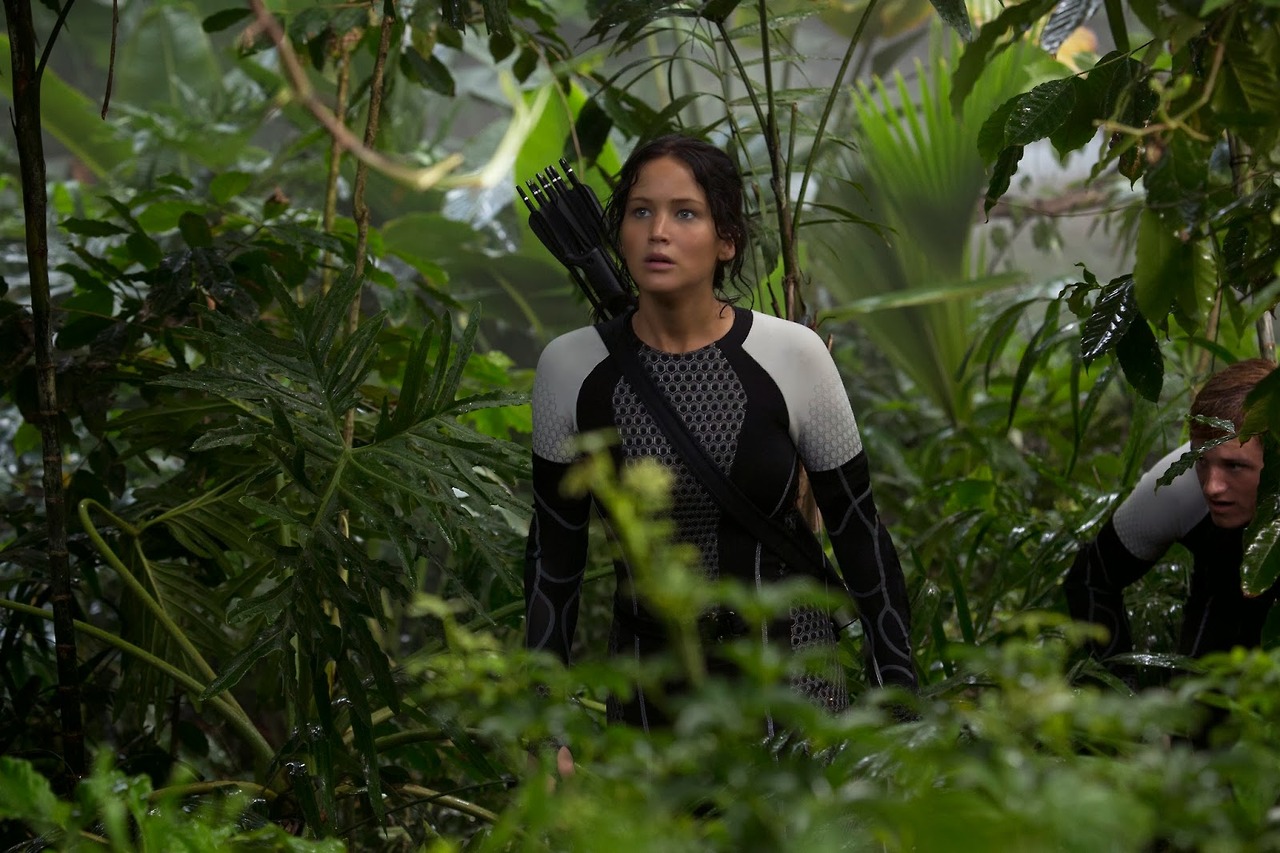
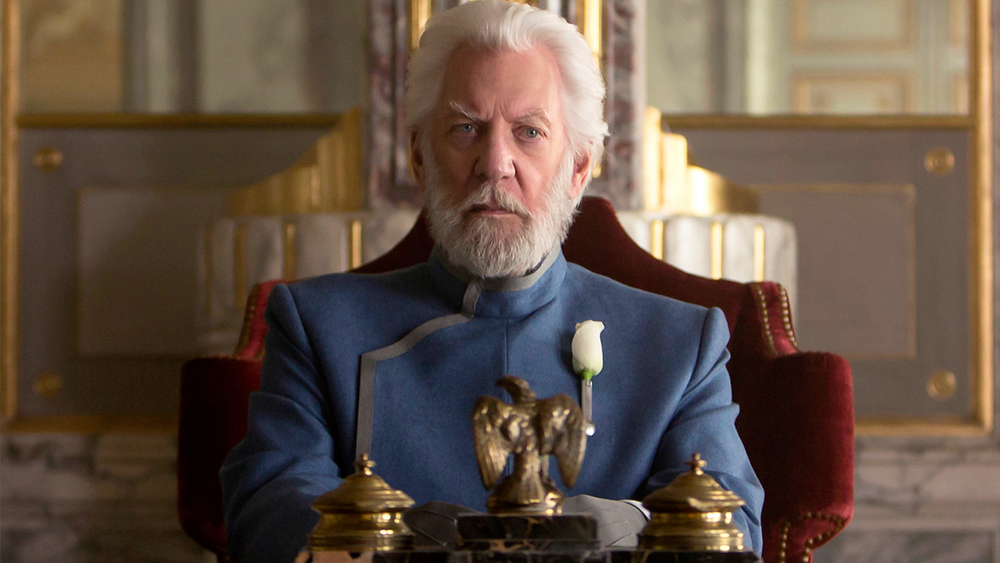
And yet, somehow – somehow – the movie overcomes these drawbacks and proves to be a fitting end to the saga. It’s still an intelligent, and intelligently made, movie, and the effort in maintaining the good work achieved in the previous movies is clear to see, with returning director Lawrence once again steering things to tremendous effect. He’s aided by a returning cast who all clearly want to be there, and who are committed to ending the series as best they can. And for the most part, they succeed. Lawrence doesn’t put a foot wrong as Katniss, miring her in doubt and misplaced guilt, and keeping her insecurities to the fore in a performance that becomes all the more impressive for having been sustained across four movies. Hutcherson impresses the most (four words I didn’t think I’d ever write), his PTSD Peeta being a difficult role to pull off, but he makes short work of it, and in doing so, makes Peeta the most sympathetic character in the whole series.

Completing the “romantic threesome” is Hemsworth as Gale. Four movies in and he’s still the series’ one weak link, an actor so stiff he could throw himself at the enemy instead of shooting them, and still score a death. (Now if Sam Claflin had played Gale, then the often tepid romance with Katniss might have been more compelling.) Sutherland continues to play Snow with effortless malice; without his silky venom to play against, the rebellion would have appeared less than necessary. As his rival for power, Moore strikes a more strident note as Coin, and as Coin’s true nature becomes more and more clear, the actress withstands the temptation to become the series’ answer to Cruella de Ville (the clue’s in the hair).
Mockingjay Part 2 - scene3

Further down the cast list, Harrelson is sidelined early on; the late, great Philip Seymour Hoffman has a few scenes that hint at a bigger, if obviously curtailed role; Claflin brings his trademark smirk to playing Finnick Odair, as well as a much needed sense of fun; Banks hangs around on the periphery of things as Effie; and Tucci is shoehorned in as Caesar Flickerman in a TV segment that goes against an earlier scene where Snow (very severely) chastises an underling. Everyone is present and correct, and director Lawrence coaxes good performances from everyone, making it incredibly easy for the audience to continue rooting for their favourite characters.

Whatever your feelings about The Hunger Games franchise – and there are plenty of nay-sayers out there – this has been one of the most surprisingly intelligent and well produced projects of the last ten years. Jennifer Lawrence has proved to be an inspired choice as Katniss Everdeen, and the world of the Districts has been so convincingly constructed that the plight of their inhabitants has been echoed by events taking place in the real world even now. And even though Suzanne Collins originally wrote her novels for the YA market, these are remarkably adult movies, with a strong sense of moral culpability and responsibility. A triumph then, and when all is said and done, one that few of us could have seen coming.

Rating: 8/10 – narrative hiccoughs aside, The Hunger Games: Mockingjay Part 2 is still head and shoulders above any other dystopian YA sci-fi series out there, and is a great showcase for what can be achieved if the intention is not to soft pedal any serious themes inherent in the material; thrilling (just) and chock-full of great performances, this is a fitting swansong to a series that has surprised and entertained audiences for four years and this despite getting increasingly bleaker as it’s gone along.
Share this:

  • Click to share on X (Opens in new window) X
  • Click to share on Facebook (Opens in new window) Facebook
  • More
  • Click to print (Opens in new window) Print
  • Click to email a link to a friend (Opens in new window) Email
Like Loading...

The Martian (2015)

14 Wednesday Oct 2015

Posted by dullwood68 in Movies

≈ 1 Comment

Tags

Andy Weir, Ares III, Chiwetel Ejiofor, Drama, Hermes, Jeff Daniels, Jessica Chastain, Kristen Wiig, Literary adaptation, Mark Watney, Mars, Matt Damon, NASA, Pathfinder, Potato crop, Review, Ridley Scott, Sci-fi, Thriller

Martian, The

D: Ridley Scott / 144m

Cast: Matt Damon, Chiwetel Ejiofor, Jessica Chastain, Jeff Daniels, Kristen Wiig, Michael Peña, Sean Bean, Kate Mara, Sebastian Stan, Aksel Hennie, Benedict Wong, Mackenzie Davis, Donald Glover

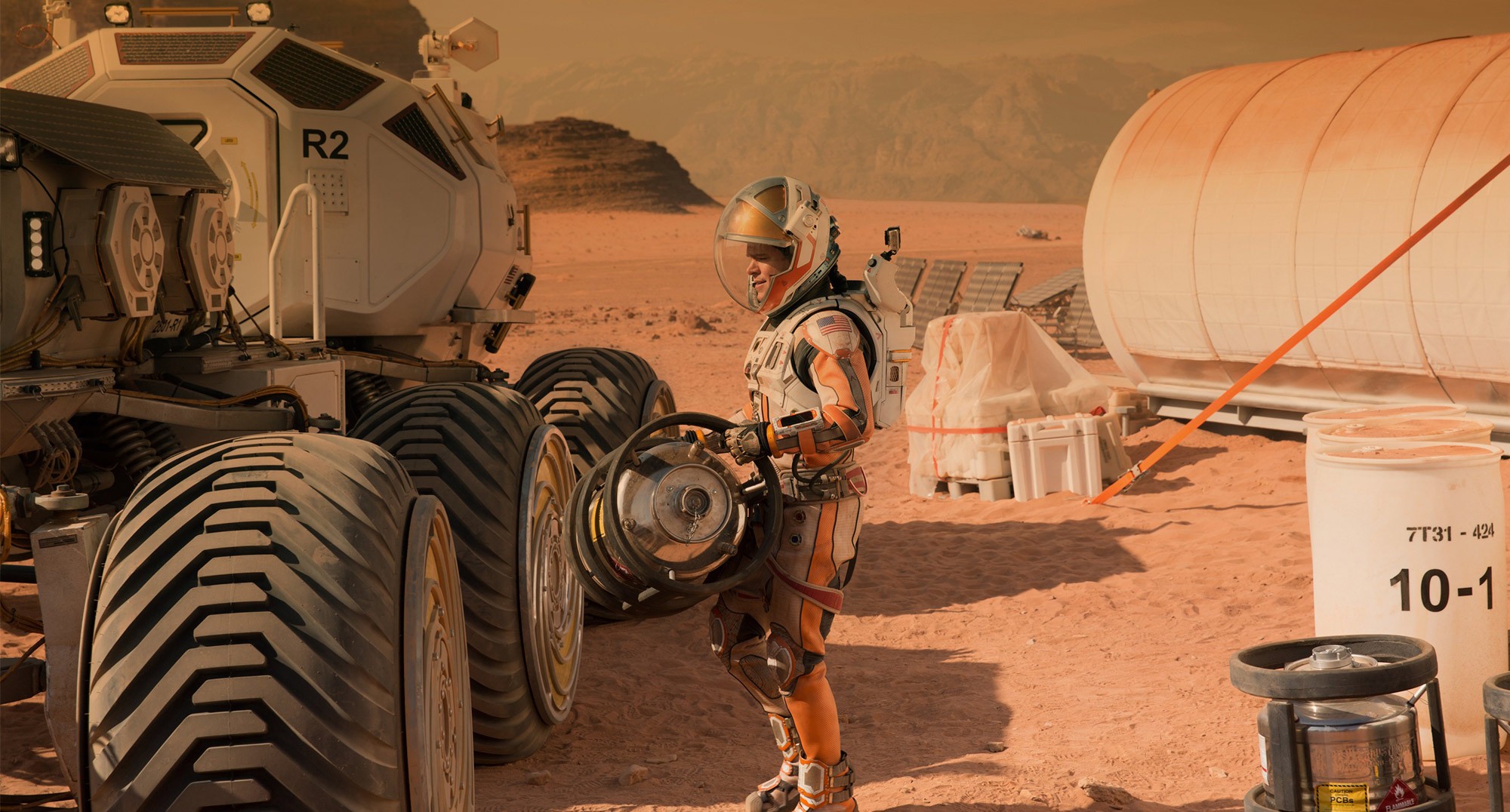
On Mars to explore the terrain and collect samples, the crew of the spaceship Hermes, headed by Commander Melissa Lewis (Chastain), have established a habitat station (the Hab) that allows them to check their samples before sending the results back to NASA. It’s also a living space for them. When a fierce storm approaches more quickly than expected, and some of the team are caught outside, botanist Mark Watney (Damon) is struck by debris and catapulted out of sight. With little option but to abandon the habitat centre and return to the Hermes, Lewis makes the decision to leave Mars even though she wants to find Watney. When NASA learns what’s happened, its director, Teddy Sanders (Daniels), holds a press conference that details the mission’s current status, and Watney’s unfortunate death.

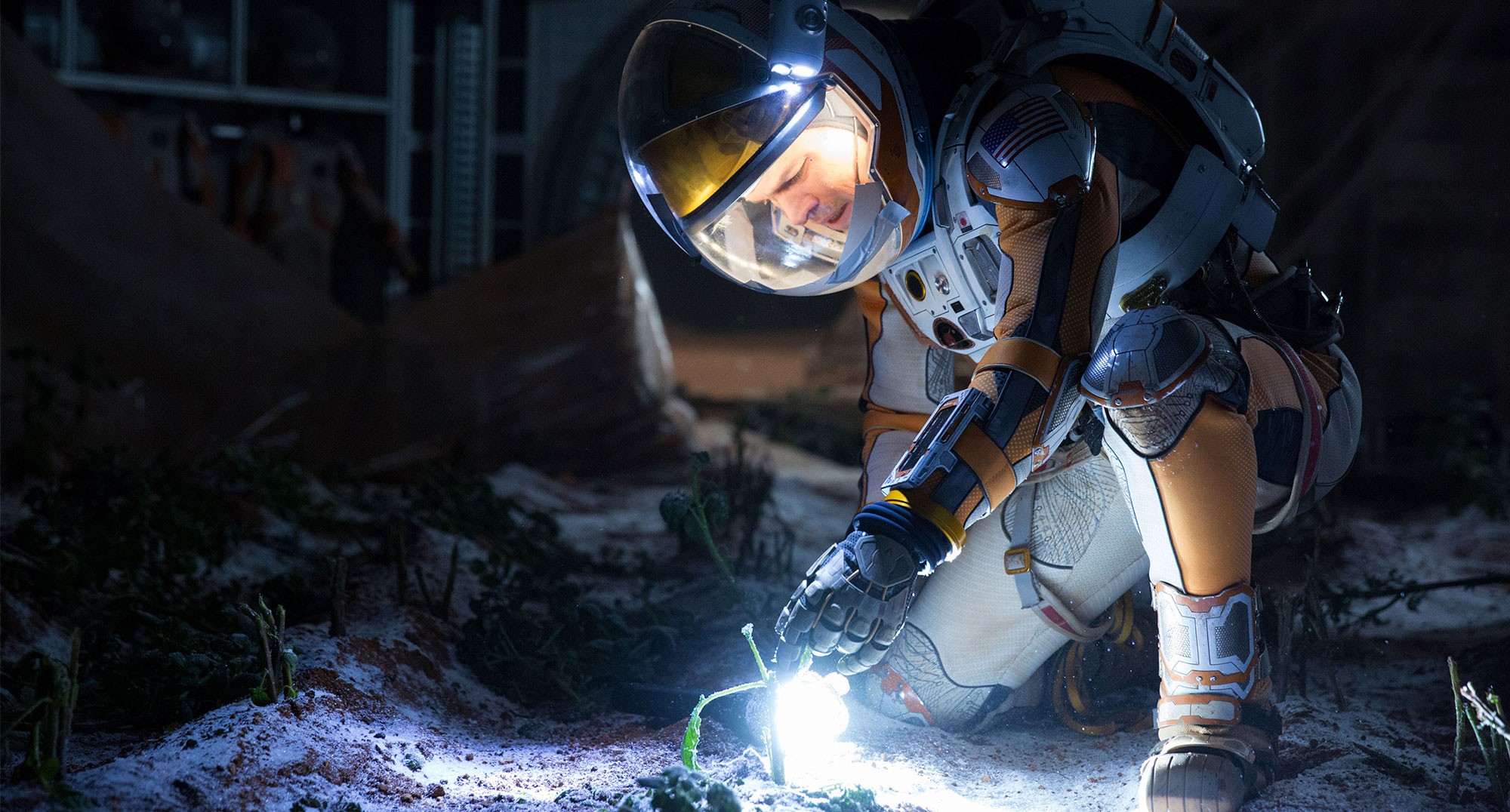
But Sanders’ declaration proves to be wrong. Watney is still alive, though when he wakes after the storm has passed, he has a piece of antenna sticking out of his torso. He makes it back to the habitat station where he removes the antenna and staples shut the wound. He then starts to work out how long he can survive on the rations left in the Hab, but quickly realises that he doesn’t anywhere near enough to sustain him until a rescue mission can reach him. Drawing on his knowledge as a botanist, Watney decides to use the Hab’s resources (including his and the crew’s waste), and the Martian soil to grow potatoes. Meanwhile, back at NASA, mission director Vincent Kapoor (Ejiofor) is alerted to the fact that there is unexpected movement occurring on Mars, and soon it becomes apparent to everyone that Watney is alive.

Watney travels to where the Pathfinder probe lies abandoned and manages to get it to transmit images back to Earth. He and NASA come up with a means of communicating with each other (even if it is a bit slow due to the distance between them), and soon Watney is able to establish a more stable comms link. With NASA determined to rescue Watney, they finally decide to tell his crewmates that he’s alive. They’re all pleased but angry as well for being left out of the loop. But disaster strikes, when an airlock decompression at the Hab destroys the potato crop, leaving Watney with only enough rations for around 200 days, and a rocket supply drop arranged by NASA malfunctions and blows up before it even leaves Earth’s atmosphere. With time running out, NASA must find a way of getting to Watney before his food runs out, and he has to find a way of making his food last as long as possible.

Martian, The - scene

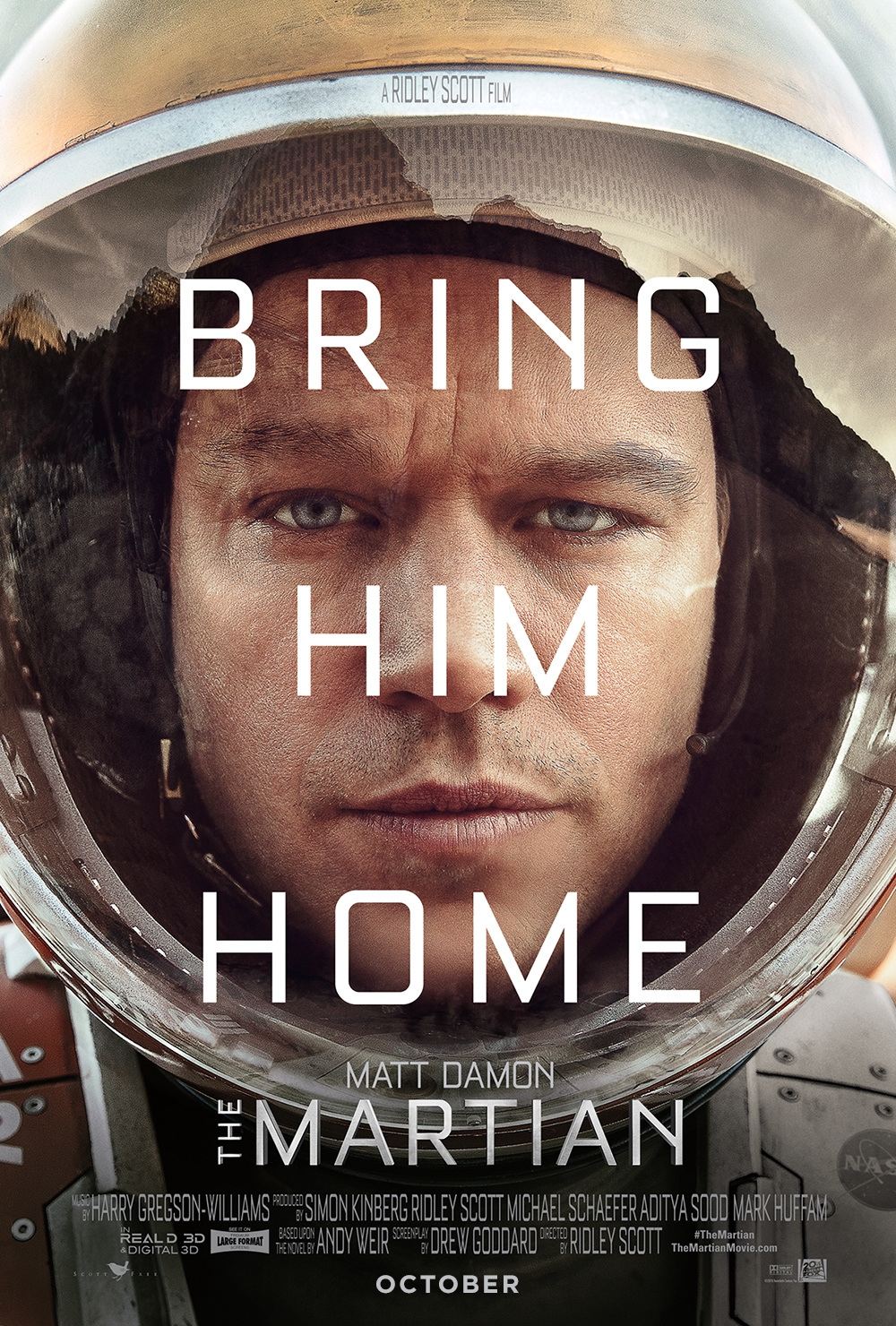
An adaptation of the bestseller by Andy Weir, The Martian is something of a return to form for Ridley Scott, with the septuagenarian director making his most accessible and expertly constructed movie for some time. This is largely due to Drew Goddard’s assured, though not entirely flawless screenplay, which juggles successfully not only the hard science that keeps Watney alive (and making it relatable to the average viewer), but a myriad cast of characters, all of whom had the potential to become stereotypes. But Scott keeps all this in check and presents us with a sci-fi thriller that feels fresher than most recent outings (despite some obvious antecedents), and which features an impressive central performance from Matt Damon that helps ground the movie immeasurably.

So good, in fact, is Damon as the embattled astronaut of the title, that sometimes the events happening on Earth come as a bit of an intrusion. Yes, it’s good to see the effort being put in to rescue one man (even though you could argue that the cost of doing so would be too prohibitive for even the most caring of space agencies to consider), but these scenes too often feel like second cousins to those in Apollo 13 (1995), and Ejiofor’s character also feels like a close relative to his character from 2012 (2009). With this element of the narrative ticking several expected boxes, even down to the plucky, rule-bending astrodynamicist (Glover) who comes up with a plan to save Watney that no one else has thought of, it’s thanks to Goddard’s understanding of the necessity for these scenes, and Scott’s accomplished direction, they’re intrusion becomes less worrisome, and as Watney’s continued survival comes closer and closer to connecting with his rescue, the viewer can root for both camps.

But with so much happening back on Earth (and with such a large ensemble cast to cater to), the script doesn’t put Watney in as much jeopardy as Weir’s novel does. Part of the fun of reading the novel was that Weir consistently came up with ways to put Watney in danger, and he consistently made it seem as if Mars itself was conspiring to make Watney pay for being there. But here the suspense is lessened in favour of Watney’s unflagging determination to survive, which is admirable in itself, but there needs to be more in the way of peril, even if we can all guess the outcome. Harking back to Apollo 13, it was the way in which problems continued to mount on that mission that heightened the drama, and the way in which each problem was overcome that made it all the more engrossing and exciting. Here, Watney’s methodical, never-say-die attitude ensures that each setback is dealt with matter-of-factly and in double-quick time (and usually by virtue of a montage). By taking some of the natural tension of the situation away, the gravity of Watney’s dilemma is lessened when it should have had us on the edge of our seats.

But Damon holds it all together, making Watney a pleasure to spend time with, and be sympathetic of. The little dance and shouts of joy he makes when he discovers he can talk to NASA is a small moment of inspiration, especially when he looks round to check if anyone has seen him. And Damon is equally good at expressing the character’s somewhat arrogant sense of humour and keeping the viewer on his side, even with lines such as “They say once you grow crops somewhere, you have officially colonised it. So technically, I colonised Mars. In your face, Neil Armstrong!” There are few actors audiences would want to spend an entire movie with, alone, but Damon is one of them, and he keeps the viewer focused on what is essentially one man’s battle for survival against (almost) impossible odds.

Martian, The - scene2

He’s supported by a great ensemble cast headed up by the ever reliable Ejiofor, with Wiig playing serious for once, and Daniels giving Sanders a sardonic air that fits well with his job as director of NASA. Chastain and Peña grab most of the limelight from Mara, Stan and Hennie as Watney’s fellow astronauts, and The Martian marks one of the few occasions when Sean Bean’s character in a movie doesn’t get killed (he’s also part of a great joke involving The Lord of the Rings). As you’d expect from a movie directed by Ridley Scott, it all looks incredible, with Jordan standing in for Mars, Arthur Max’s expressive production design, and very impressive cinematography from Dariusz Wolski (Scott’s go-to DoP for his last few movies). And on the music front, anyone expecting to hear David Bowie’s Life on Mars? at some point will find that Scott has gone for Starman instead, and there’s the completely unexpected use of ABBA’s Dancing Queen, which should feel out of place but is surprisingly apt for the point at which it’s used.

Rating: 8/10 – good sci-fi these days is rare (as anyone who’s seen Prometheus (2012) should know – sorry, Ridley), but The Martian is that rare beast, and is intelligent enough overall to overcome a few narrative concerns; with Damon in commanding form, and the drama of the situation sufficiently gripping, being stranded on another planet has never seemed so tempting.

Share this:

  • Click to share on X (Opens in new window) X
  • Click to share on Facebook (Opens in new window) Facebook
  • More
  • Click to print (Opens in new window) Print
  • Click to email a link to a friend (Opens in new window) Email
Like Loading...

Pixels (2015)

01 Thursday Oct 2015

Posted by dullwood68 in Movies

≈ 3 Comments

Tags

Adam Sandler, Adventure, Centipede, Chris Columbus, Comedy, Donkey Kong, Galaga, Josh Gad, Kevin James, Light cannons, Michelle Monaghan, Pac Man, Peter Dinklage, Review, Sci-fi, US President, Video games

Pixels

D: Chris Columbus / 106m

Cast: Adam Sandler, Kevin James, Michelle Monaghan, Josh Gad, Peter Dinklage, Matt Lintz, Brian Cox, Sean Bean, Jane Krakowski, Fiona Shaw

Ten things you’ll be wondering while watching Pixels, and the answers that may well pop into your head:

1) How on earth has Adam Sandler landed a four-picture deal with Netflix – didn’t anyone at Netflix see this before they signed on the dotted line? (He must have something on the guys who run it.)

2) Is it really necessary for Sandler and Michelle Monaghan to behave like five year olds in the White House? (No, but it does seem like the script’s idea of cutting edge humour.)

3) Will it be easier to watch if I shut my eyes? (Probably.)

4) Would Americans really elect a complete idiot to the highest office in the land? (Hang on, who was that guy George something or other?)

5) When is that unfunny Rob Schneider cameo going to turn up? (Hopefully when it’s time for a toilet break.)

6) If the aliens are using video game characters that were around in 1982, just how many video games that came out post-1982 are they going to be allowed to use as well? (Loads, because nobody could be bothered to do the research.)

7) When is Chris Columbus going to direct another decent movie? (On this evidence, not any time soon.)

8) Why are the human characters more like cartoons than the video game characters? (Perhaps it’s meant to be ironic? Maybe?)

9) Just how many young actors are there that look like Adam Sandler when he was a kid, and are they all receiving counselling? (Too many, and probably not; what help could they possibly be given?)

10) Hang on, hasn’t this been done before – and better – in an episode of Futurama? (Yes, it has, so why aren’t I watching that instead of this mess?)

Pixels - scene2

Rating: 3/10 – sci-fi has had a rough summer this year, and Pixels, with its lazy script and so-what-if-it-doesn’t-make-sense-or-is-particularly-funny approach acts as yet another nail in the coffin of tent-pole sci-fi movies; Sandler coasts, James gives yet another unfunny embarrassing performance, Monaghan and Cox look inconsolable, and Gad is left to – well, it’s not clear – making this ill-advised project one of the biggest disappointments of the year.

Share this:

  • Click to share on X (Opens in new window) X
  • Click to share on Facebook (Opens in new window) Facebook
  • More
  • Click to print (Opens in new window) Print
  • Click to email a link to a friend (Opens in new window) Email
Like Loading...

Monthly Roundup – September 2015

30 Wednesday Sep 2015

Posted by dullwood68 in Movies

≈ Leave a comment

Tags

12 Rounds 3: Lockdown, Abigail Breslin, Action, Airlock, Alexander and the Terrible Horrible No Good Very Bad Day, Arizona, Axe to Grind, Baseball, Beverly Tyler, Birthday, Brian McGinn, Brighton, Cancer charity, Cattle rustling, Corrupt cops, Crime, Dean Ambrose, Debbie Rochon, Drama, Earl Bellamy, Ferrell Takes the Field, George Montgomery, Georgie Henley, Horror, Insurance fraud, Jennifer Garner, Jim Davis, Jim O'Connolly, John Carson, Josh Gad, Judith Viorst, Keoni Waxman, Literary adaptation, Matt Zettell, Mercenary, Michael Matzur, Michael Steppe, Miguel Arteta, Mira Sorvino, Movie role, Murder, Perfect Sisters, Peter Vaughan, Rob Margolies, Roger R. Cross, Romantic comedy, Sci-fi, Screenwriter, She Wants Me, Short movie, Silver mines, Smokescreen, Stanley M. Brooks, Stephen Reynolds, Steve Carell, Steven Seagal, The Boss, The Toughest Gun in Tombstone, True story, Vacuity, Vinnie Jones, Western, Will Ferrell, Wish, WWE, Yvonne Romain

Smokescreen (1964) / D: Jim O’Connolly / 70m

Cast: Peter Vaughan, John Carson, Yvonne Romain, Gerald Flood, Glynn Edwards, John Glyn-Jones, Penny Morrell, Barbara Hicks, Sam Kydd, Deryck Guyler

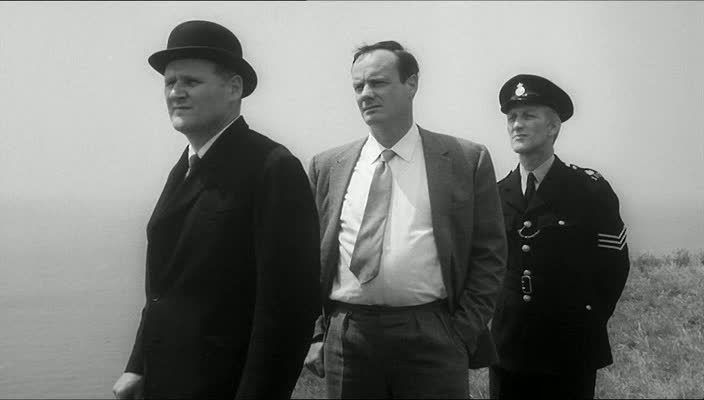
Rating: 7/10 – bowler-hatted insurance fraud investigator Roper (Vaughan) is called in to investigate when a heavily insured businessman’s car bursts into flames before going over a cliff – but was he in it?; a neat, unprepossessing British thriller, Smokescreen features an enjoyable performance from Vaughan, some stunning location photography, and a script that allows for plenty of ironic humour in amongst the drama.

Smokescreen

Alexander and the Terrible Horrible No Good Very Bad Day (2014) / D: Miguel Arteta / 81m

Cast: Steve Carell, Jennifer Garner, Ed Oxenbould, Dylan Minnette, Kerris Dorsey, Sidney Fullmer, Bella Thorne, Megan Mullally

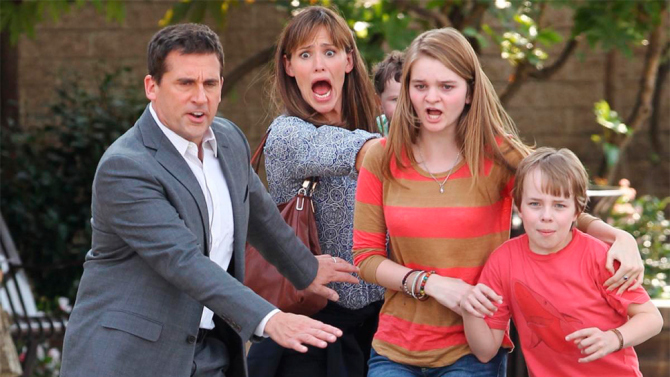
Rating: 7/10 – when overlooked youngest child Alexander (Oxenbould) has the worst day ever, he wishes that his family could experience just a little of what he has to deal with – but when they do, things quickly escalate beyond anything that Alexander has ever faced; Judith Viorst’s novel gets a fun-filled adaptation that is amusing, clever, and visually inventive, but which lacks bite, and has surprisingly few characters to root for (that is, none).

Alexander etc

She Wants Me (2012) / D: Rob Margolies / 85m

Cast: Josh Gad, Kristen Ruhlin, Johnny Messner, Aaron Yoo, Hilary Duff, Melonie Diaz, Wayne Knight, Charlie Sheen

Rating: 6/10 – an ambitious though neurotic writer (Gad) working on his first screenplay faces a dilemma when the role written for his girlfriend (Ruhlin) grabs the attention of an A-list actress (Duff); a romantic comedy with few ambitions that struggles to make good comedy out of anxious indecision, She Wants Me is innocuous stuff that passes by in amiable fashion without ever really involving its audience.

She Wants Me

12 Rounds 3: Lockdown (2015) / D: Stephen Reynolds / 90m

Cast: Dean Ambrose, Roger R. Cross, Daniel Cudmore, Lochlyn Munro, Ty Olsson, Sarah Smyth, Rebecca Marshall, Kirby Morrow

Rating: 3/10 – an honest cop (Ambrose) finds himself trapped in a station house and hunted by several of his corrupt colleagues when he comes into possession of evidence that will see them put away for the rest of their lives; another depressing WWE Films action movie, 12 Rounds 3: Lockdown dispenses with the set up of the first two movies, and does its best to be yet another Die Hard rip-off, albeit one stifled by inept plotting, terrible dialogue and a performance by Ambrose that never gets started.

12 Rounds 3 Lockdown

Perfect Sisters (2014) / D: Stanley M. Brooks / 100m

Cast: Abigail Breslin, Georgie Henley, Mira Sorvino, James Russo, Rusty Schwimmer, Zoë Belkin, Jeffrey Ballard, Zak Santiago

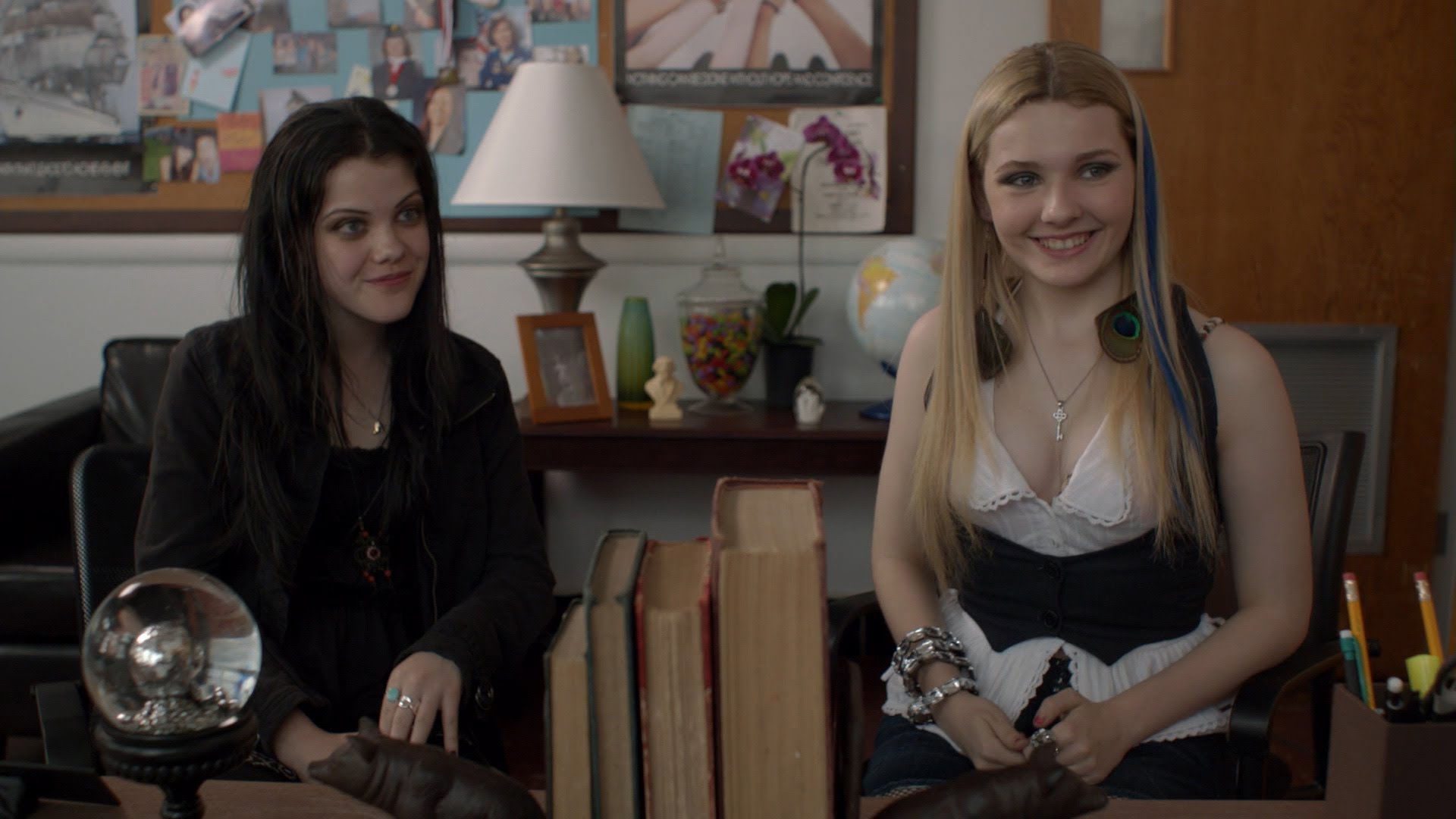
Rating: 5/10 – two sisters (Breslin, Henley), fed up with the antics of their alcoholic mother (Sorvino) and her poor choice in boyfriends, decide the only way of improving their lives is to kill her; if it wasn’t based on a true story, Perfect Sisters would be dismissed as absurd nonsense with no basis in reality, but as it is it’s an uneven, tonally awkward movie that features average performances from its leads, but which does seem completely committed to drawing the viewer’s attention to Breslin’s cleavage at every opportunity.

Perfect Sisters

Ferrell Takes the Field (2015) / D: Brian McGinn / 49m

With: Will Ferrell

Rating: 5/10 – in support of a friend’s cancer charity, Will Ferrell takes to the baseball field to play all nine positions for ten major league teams at five separate pre-season games, and all in one day; if the charity had been the Reassure Will Ferrell He’s Still Funny Charity, then this would have made more sense because Ferrell Takes the Field is a mercifully brief documentary that sees the comedian attempt to appear relevant in an arena where he has no real talent, and where, when he gets it wrong, he’s quite rightly booed by fans, leaving viewers to wonder why on earth this idea was commissioned in the first place.

Ferrell Takes the Field

Axe to Grind (2015) / D: Matt Zettell / 81m

Cast: Debbie Rochon, Guy Torry, Matthew James Gulbranson, Paula Labaredas, Michelle Tomlinson, Dani Thompson, Adrian Quihuis, Tony von Halle

Rating: 2/10 – when the producer of her latest film tells aging actress Debbie Wilkins (Rochon) that her role has gone to another, younger actress, it sets her on a killing spree that sees her despatch the cast and crew, and anyone else who gets in her way; low-budget horror always runs the risk of being offensively stupid, and Axe to Grind is no exception, as it treats its audience with disdain while failing to appear as clever and entertaining as it thinks it is.

Axe to Grind

The Toughest Gun in Tombstone (1958) / D: Earl Bellamy / 72m

Cast: George Montgomery, Jim Davis, Beverly Tyler, Gerald Milton, Don Beddoe, Scotty Morrow, Harry Lauter

Rating: 6/10 – with outlaws running most of the nascent state of Arizona, the Governor assigns Matt Sloane (Montgomery) and a team of undercover officers to apprehend the gang involved with cattle rustling and silver thefts; a modest Western that tells its simple story plainly and with few frills, The Toughest Gun in Tombstone is acceptable fare that doesn’t exert itself too much, but is enjoyable nonetheless.

Toughest Gun in Tombstone, The

Absolution (2015) / D: Keoni Waxman / 91m

aka The Mercenary: Absolution

Cast: Steven Seagal, Byron Mann, Adina Stetcu, Vinnie Jones, Howard Dell, Josh Barnett, Maria Bata, Dominte Cosmin

Rating: 4/10 – mercenary John Alexander (Seagal) and his colleague Chi (Mann) find themselves battling both a criminal syndicate and their own corrupt boss when a contract killing proves to have larger ramifications; another mumbling, stand-in heavy performance from Seagal detracts from what is – for him – a better outing than of late, and thanks to Mann’s athleticism and Jones’ snarling villain, any scenes where Seagal doesn’t take part are actually halfway enjoyable.

Absolution

Vacuity (2012) / D: Michael Matzur / 14m

Cast: Michael Steppe

Rating: 6/10 – an astronaut, Alan Brahm (Steppe), stranded in an airlock while the space station he’s on begins to fall apart has a choice: either save his crew by jettisoning the airlock (but dooming himself), or save himself and get back to Earth (and dooming the crew) – which choice will he take?; as moral dilemmas go, the one facing Alan Brahm in Vacuity is, on the face of it, fairly cut and dried, but thanks to Matzur’s script and Steppe’s performance you’re never quite sure how things will play out, or even if either choice will be taken away from him, making this short movie a model of concisely focused drama.

Vacuity

Share this:

  • Click to share on X (Opens in new window) X
  • Click to share on Facebook (Opens in new window) Facebook
  • More
  • Click to print (Opens in new window) Print
  • Click to email a link to a friend (Opens in new window) Email
Like Loading...

Fantastic Four (2015)

26 Saturday Sep 2015

Posted by dullwood68 in Movies

≈ 1 Comment

Tags

Drama, Jamie Bell, Josh Trank, Kate Mara, Marvel, Michael B. Jordan, Miles Teller, Mr Fantastic, Origin story, Reboot, Review, Sci-fi, Stan Lee, Superheroes, The Human Torch, The Invisible Woman, The Thing, Tim Blake Nelson, Toby Kebbell, Victor Von Doom

Fantastic Four

D: Josh Trank / 100m

Cast: Miles Teller, Michael B. Jordan, Kate Mara, Jamie Bell, Toby Kebbell, Reg E. Cathey, Tim Blake Nelson

Telephone call from Fantastic Four director Josh Trank to Marvel head Stan Lee:

Trank: Hi, is that Stan Lee?

Lee: Yes. Who’s this?

Trank: Hi, it’s Josh Trank, I’m directing the new Fantastic Four movie.

Lee: How’s it going?

Trank: It’s going very well, very well indeed. I think you’re going to be pleasantly surprised.

Lee: That’s good. I hear you’ve made some interesting casting choices.

Trank: That’s true, but I think Toby Kebbell will be the definitive Victor Von Doom.

Lee: Ah, that wasn’t what I meant… Anyway, what can I do for you?

Trank: Well, I was calling to find out when you can come out to Louisiana to film your cameo role.

Lee: I’ll need to get back to you on that. I’m really snowed under at the moment. By the way, can you let me see any footage if you have some?

Trank: Sure, we’ve got some great early footage of Reed and Ben as grade school kids, and then seven years later when they’re played by Miles Teller and Jamie Bell.

Lee: Seven years? Okay… Well, if you could let me see it, that would be great.

Trank: Okay, I’ll get it sent to you.

Lee: Great. And I’ll let you know about the cameo.

Trank: Terrific. Well it was great talking to you. You take care now.

Lee: You too. Bye.

Trank: Bye.

Fantastic Four - scene

E-mail sent from Stan Lee to Josh Trank six days later:

Dear Josh – Thanks for sending the early footage, it was… illuminating. I don’t think I’ll be able to find the time to film a cameo, though.

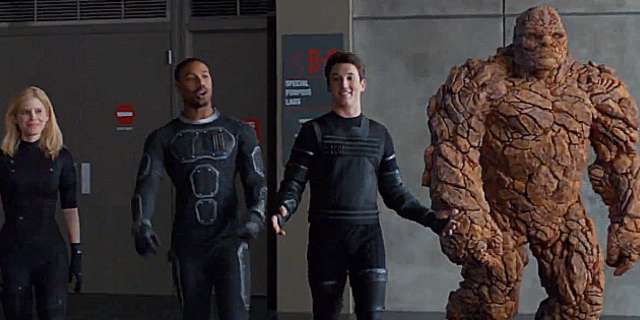
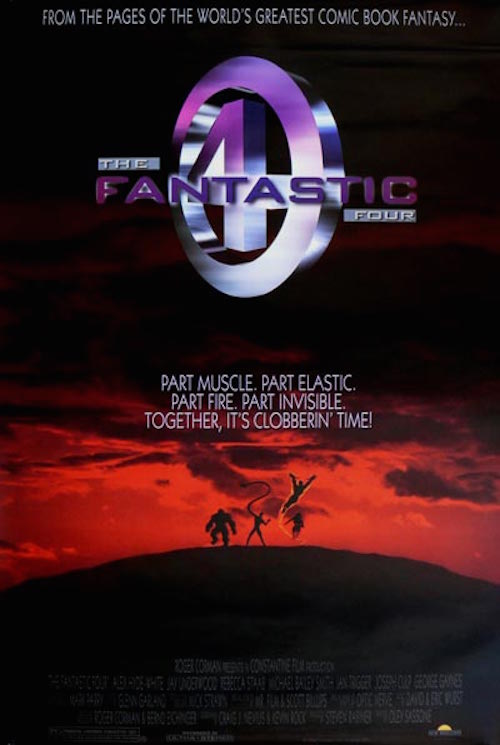
Rating: 3/10 – when your superhero team only works together as a team out of narrative necessity, and the actors portraying that team appear to have all the chemistry of fire and water, then you know you’re in trouble – unless you’re Josh Trank, writers Jeremy Slater, Simon Kinberg (and Trank), and the executives at Twentieth Century Fox, in which case you plough on hoping that no one will notice just how bad the reboot you’re making really is; an appalling mess that features a badly rendered Human Torch to add insult to injury, Fantastic Four is enough to make viewers pine for the 2005 and 2007 movies that should now be reassessed in the light of this movie’s failure to provide anything other than an incoherent plot, dreadful dialogue, even worse characterisations, and one of the all-time worst superhero movies ever (seriously, even Roger Corman’s 1994 version is more enjoyable than this farrago).


Share this:

  • Click to share on X (Opens in new window) X
  • Click to share on Facebook (Opens in new window) Facebook
  • More
  • Click to print (Opens in new window) Print
  • Click to email a link to a friend (Opens in new window) Email
Like Loading...

Trailer – The 5th Wave (2016)

20 Sunday Sep 2015

Posted by dullwood68 in Movies

≈ Leave a comment

Tags

Alien invasion, Chloë Grace Moretz, Preview, Rick Yancey, Sci-fi, Trailer

As part of my look ahead to 2016, here’s the trailer to a movie whose combination of Independence Day destruction and Divergent series’ teen action heroics could prove to be an enormous crowd pleaser. Trading on her action star status from the Kick Ass movies, Chloë Grace Moretz looks convincing as the teenager taking a lonely stand against an alien invasion, while the visuals have that crisp, arresting style that allows for moments where the audience can safely allow their jaws to hit the floor. It’s based on a novel by Rick Yancey, and if successful, we’ll see two sequels hit our screens in the coming years (unless the last in the trilogy – still to be published – is split into two movies).

Share this:

  • Click to share on X (Opens in new window) X
  • Click to share on Facebook (Opens in new window) Facebook
  • More
  • Click to print (Opens in new window) Print
  • Click to email a link to a friend (Opens in new window) Email
Like Loading...

Monthly Roundup – August 2015

23 Sunday Aug 2015

Posted by dullwood68 in Movies

≈ 1 Comment

Tags

A Capella, Action, Anna Kendrick, Arnold Schwarzenegger, Bank robbers, Barden Bellas, Bloody Mary 3D, Brighton Mob, Cathryn Michon, Charlie Vaughn, Christian J. Hearn, Comedy, Crime, David Arquette, David Siegel, Derek Jameson, Documentary, Elizabeth Banks, James Cameron, Jamie Lee Curtis, Jaqueline Siegel, Lauren Greenfield, Lavalantula, Literary adaptation, Los Angeles, Max Day, Mike Mendez, Movies, Muffin Top: A Love Story, Musical, Nia Peeples, Pitch Perfect 2, Ray James, Real estate, Rebel Wilson, Reviews, Sci-fi, Self esteem, Spiders, Steve Guttenberg, Terrorists, Thriller, Tom Arnold, True Lies, Undercover cop, Veronica Ricci, Versailles, Volcanoes, Weight loss

True Lies (1994) / D: James Cameron / 141m

Cast: Arnold Schwarzenegger, Jamie Lee Curtis, Tom Arnold, Tia Carrere, Bill Paxton, Art Malik, Eliza Dushku, Grant Heslov, Charlton Heston

Rating: 8/10 – spy Harry Tasker (Schwarzenegger) must track down and thwart the plans of jihadists to detonate nuclear bombs on US soil – and keep it all secret from his unsuspecting wife (Curtis); even now, True Lies remains tremendous fun, even if it does get bogged down by its middle act domestic dramatics, and Cameron directs with his usual attention to detail and aptitude for kinetic energy.

True Lies

The Queen of Versailles (2012) / D: Lauren Greenfield / 100m

With: Jaqueline Siegel, David Siegel, Richard Siegel, Marissa Gaspay, Victoria Siegel, Wendy Ponce

Rating: 7/10 – a look at the lives of self-made millionaire David Siegel and his wife Jaqueline, as their lives go from riches to rags thanks to the economic crisis in 2008; “how the other half lived” might be an appropriate subtitle for The Queen of Versailles, and the ways in which the Siegels try to deal with their reversal of fortune will bring a wry smile to viewers who aren’t millionaires, but ultimately this is a story about a couple for whom hardship means not being able to build their dream home: an enormous mansion that defies both taste and propriety.

Queen of Versailles, The

Brighton Mob (2015) / D: Christian J. Hearn / 79m

Cast: Ray James, Max Day, Philip Montelli Poole, Stephen Forrest, Nick Moon, George Webster, Reuben Liburd, Amy Maynard

Rating: 2/10 – an inexperienced young policeman (James) is given the job of infiltrating a gang suspected of carrying out bank robberies across the South of England; a low-budget, amateurish effort, Brighton Mob features dreadful dialogue, awful acting, and the kind of direction that seems to have been carried out by someone who’s not actually watching any of the dailies.

Brighton Mob

Muffin Top: A Love Story (2014) / D: Cathryn Michon / 97m

Cast: Cathryn Michon, Diedrich Bader, Melissa Peterman, David Arquette, Marissa Jaret Winokur, Haylie Duff, Marcia Wallace, Gary Anthony Williams

Rating: 7/10 – when Suzanne (Michon) learns that her husband (Bader) is having an affair and wants a divorce, she goes on a voyage of personal discovery; with several pertinent (if obvious) points to make about self-esteem and body image, Muffin Top: A Love Story is a gently comedic, engaging movie that features an endearing performance from Michon, and doesn’t overdo its theme of female empowerment.

Muffin Top A Love Story

Lavalantula (2015) / D: Mike Mendez / 80m

Cast: Steve Guttenberg, Nia Peeples, Patrick Renna, Noah Hunt, Michael Winslow, Marion Ramsey, Leslie Easterbrook, Ralph Garman, Diana Hopper, Zac Goodspeed, Danny Woodburn, Time Winters

Rating: 4/10 – when volcanic activity strikes Los Angeles, it brings with it giant fire-breathing spiders, and only action movie hero Colton West (Guttenberg) can save the day; taking its cue from the Sharknado series’ combination of low-budget special effects and broad self-referential humour, Lavalantula is enjoyable enough if you just go with it, and benefits from having Mendez – who gave us the superior Big Ass Spider! (2013) – in the director’s chair.

Lavalantula

Pitch Perfect 2 (2015) / D: Elizabeth Banks / 115m

Cast: Anna Kendrick, Rebel Wilson, Hailee Steinfeld, Brittany Snow, Skylar Astin, Adam DeVine, Katey Sagal, Anna Camp, Ben Platt, Alexis Knapp, Hana Mae Lee, Ester Dean, Chrissie Fit, Birgitte Hjort Sørensen, Flula Borg, John Michael Higgins, Elizabeth Banks

Rating: 6/10 – after a show goes disastrously, embarrassingly wrong, the Barden Bellas are banned from competing in the US, but it doesn’t stop them from taking part in the World A Capella Championships and going up against the dominating Das Sound Machine; a predictable sequel that offers nothing new (other than a great cameo by Snoop Dogg), Pitch Perfect 2 will satisfy fans of the original but newcomers might wonder what all the fuss is about.

Pitch Perfect 2

Bloody Mary 3D (2011) / D: Charlie Vaughn / 77m

Cast: Veronica Ricci, Derek Jameson, Alena Savostikova, Bear Badeaux, Shannon Bobo, Michael Simon, Natalie Pero, Ryan Barry McCarthy, Shawn C. Phillips, Shay Golden

Rating: 2/10 – the ghost of Mary Worth (Ricci) targets the makers of a music video when her name is invoked and she finds the reincarnation of the man who killed her is the video’s star; dire in the extreme, Bloody Mary 3D is the kind of low budget horror movie that gives low budget horror movies a bad name, and criminally, takes too much time out to showcase Jameson’s limited talents as a singer (and the 3D is awful as well).

Bloody Mary 3D

Share this:

  • Click to share on X (Opens in new window) X
  • Click to share on Facebook (Opens in new window) Facebook
  • More
  • Click to print (Opens in new window) Print
  • Click to email a link to a friend (Opens in new window) Email
Like Loading...

Tomorrowland: A World Beyond (2015)

23 Saturday May 2015

Posted by dullwood68 in Movies

≈ 1 Comment

Tags

1964 World's Fair, Brad Bird, Britt Robertson, Drama, End of the world, Fantasy, George Clooney, Hugh Laurie, Jet pack, Pin, Raffey Cassidy, Review, Sci-fi, Tomorrowland

Tomorrowland

aka Tomorrowland

D: Brad Bird / 130m

Cast: George Clooney, Hugh Laurie, Britt Robertson, Raffey Cassidy, Tim McGraw, Kathryn Hahn, Keegan-Michael Key, Thomas Robinson, Pierce Gagnon, Matthew MacCaull

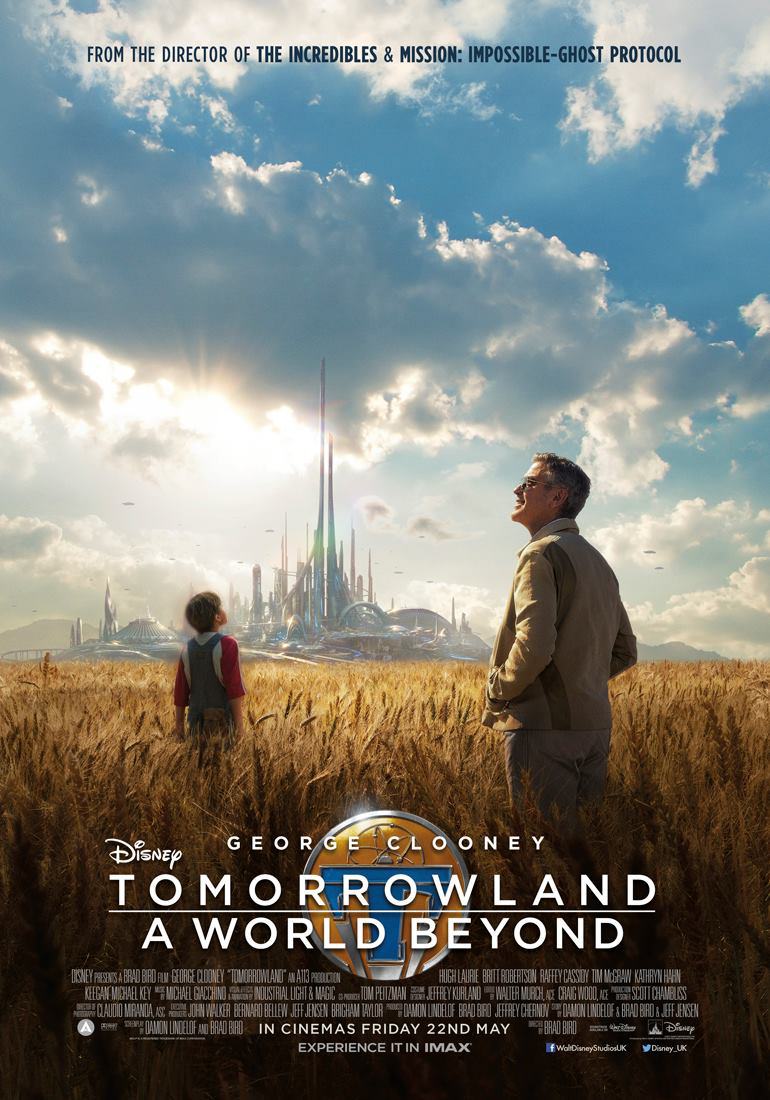
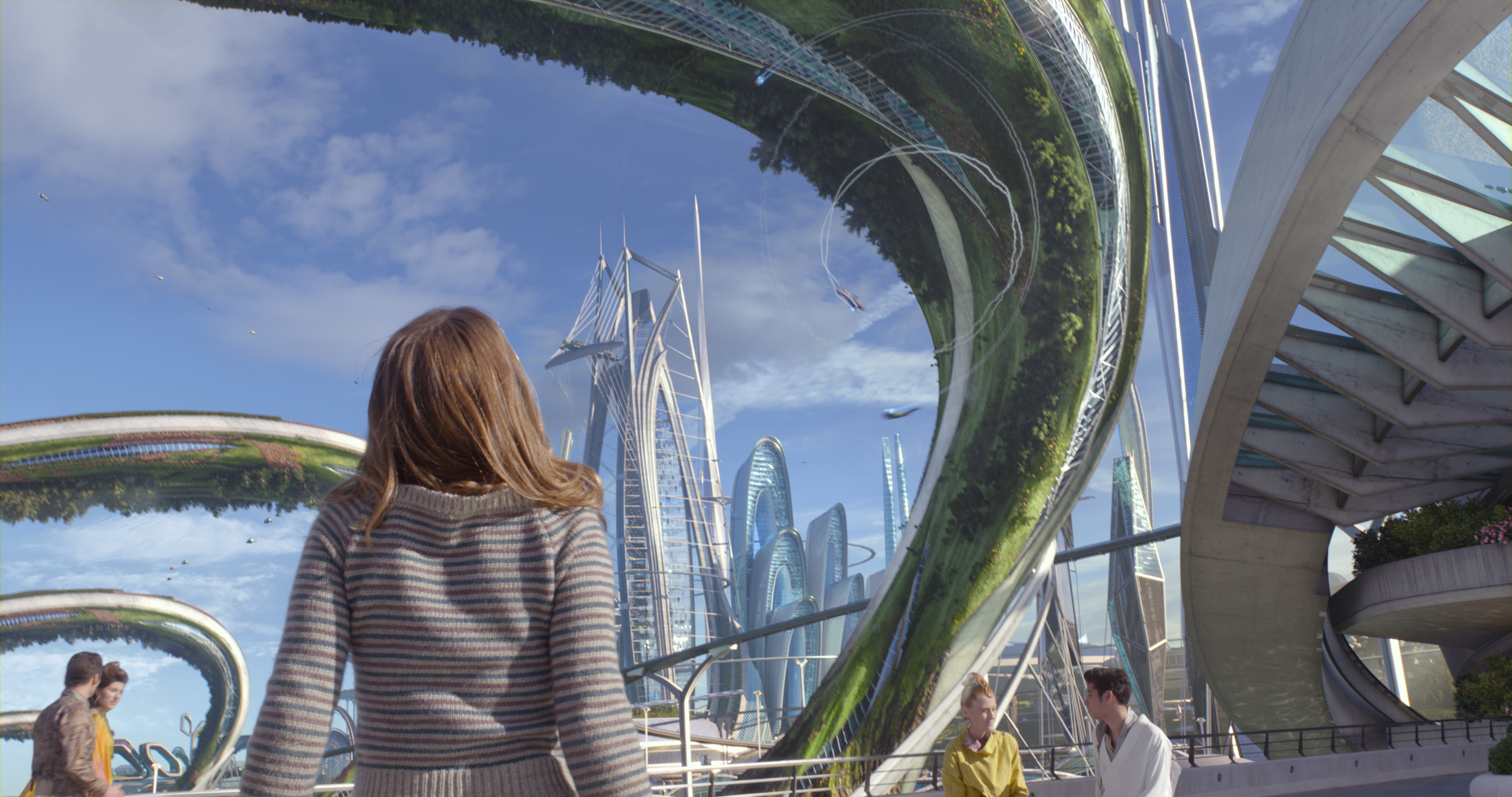
At the 1964 World’s Fair, a boy named Frank Walker (Robinson) takes his latest invention, a jet pack, to the science tent in the hopes of winning a $50 prize. But as his jet pack doesn’t actually work properly, the presiding judge, David Nix (Laurie), tells him to come back when it does. As he leaves he’s approached by a young girl called Athena (Cassidy), who gives him a pin with a bright blue T on it, and tells him to follow her when she gets on one of the rides. When he does he finds himself transported to a strange futuristic world where there are tall, shining buildings, trains and vehicles that travel on air, and a launch site for spaceships. There, his jet pack is adjusted to work properly and he’s accepted as a member of Tomorrowland, a world where the brightest and the best – the geniuses of Earth – have gone to create a utopian world devoid of war, social inequality, famine, natural disasters and greed.

Fifty years later, teenager Casey Newton (Robertson) lives near Cape Canaveral with her dad, Eddie (McGraw), and younger brother Nate (Gagnon). Eddie is an engineer working for NASA, and helping to dismantle the nearby Apollo launch site. Casey “knows how things work”, but is using her skills to delay the site’s demolition. When she’s caught and arrested, she finds a pin with a bright blue T on it in amongst her belongings when she’s released. She touches it and is immediately transported to a wheat field where, in the distance, is a city of tall gleaming spires. She drops the pin and is back in her own world. Unable to convince her father that the pin is special, she looks for information about it online, and learns that there is a store in Texas that will buy them.

She travels there but the store owners, Ursula (Hahn) and Hugo (Key), try to take the pin from her by force. Casey is rescued by Athena, who doesn’t look a day older than when she met Frank. Athena explains a little about Tomorrowland but not enough to fully satisfy Casey’s questions. They travel to a remote farmhouse where Casey is left to meet the owner, a now older Frank Walker (Clooney). When agents from Tomorrowland arrive and try to abduct Casey, Frank and Casey manage to escape, and both are reunited with Athena. From there they head for Paris and the Eiffel Tower, which, aside from being a national monument, is also the launch site for a hidden rocket ship. The ship takes them to Tomorrowland, but when they arrive, the trio find it in ruins, and Nix in charge of everything. And it becomes very clear that our world is on the brink of complete destruction, unless Casey can “fix” it, something that Nix doesn’t want her to do…

Disney's TOMORROWLAND..Casey (Britt Robertson) ..Ph: Film Frame..©Disney 2015

The movie that Bird passed on directing Star Wars Episode VII for, Tomorrowland: A World Beyond arrives with no small amount of hype attached to it, and an appropriately high level of anticipation. And up until we meet Casey it’s exactly the movie we’ve been expecting: a richly detailed, nostalgic look back at a time when the future seemed brighter than ever, and technological miracles were being produced that were poised to make our lives all the better. There’s a wistfulness about these early scenes, and a joy in the discovery of Tomorrowland that is infectious and intoxicating, and Bird and his co-writer Damon Lindelof give us an unforgettable introduction to the unforgettable world they’ve created.

And then it all goes horribly wrong. In placing our world in peril, but with the solution located in Tomorrowland, Bird and Lindelof have managed to come up with one of the murkiest, most unconvincing – or clearly explained – storylines in recent years. So much happens that doesn’t make sense, and so much happens that isn’t followed through, that the movie becomes unwieldy and bogged down by too many scenes that fail to advance the plot or deepen the characters. It’s like being given a box of assorted chocolates, only to find that they all have the same centre. For a movie that touches on so many different aspects and themes – nostalgia, individualism, collectivism, fate, unfulfilled love, the benefits of technology, looking to the future, nihilism, hope, manifest destiny – it develops not into a thrilling adventure that matches the joie de vivre of its opening section, but a tired, downbeat, dystopian odyssey that squeezes the life out of its characters and its plot.

What this leads to is an impending worldwide catastrophe that you just can’t care about, and if filmmakers of the calibre of Bird and Clooney can’t make an audience care about the end of the world then there’s definitely something wrong (although, ironically, the idea fits neatly with Nix’s disparaging remarks about everyone else on Earth). It’s as if the initial idea was settled on, but fleshing it out proved too difficult, so any way the story could be continued was seized upon and no further development took place. There’s no tension, an abstract sense of impending doom, and too much reliance on Athena to bail out Frank and Casey when they get in trouble.

The cast struggle gamely with characters who lack shading and depth, though Cassidy is a minor revelation as Athena, her poise and command of her dialogue helping her performance immeasurably (and showing the others how it should be done). Hahn and Key provide some much needed respite (though too early on) from the drudgery, and Robinson is so cute he shouldn’t be allowed. But it’s still not enough to offset the awkward miscalculations made by Messrs. Bird and Lindelof, and the strangely disaffected tone the movie adopts when it returns to Tomorrowland. However, the movie does have a wonderful sheen to it, Claudio Miranda’s cinematography proving an exquisite treat, his mix of light and colour at the World’s Fair being particularly gratifying. If only as much attention had gone into the script.

Rating: 5/10 – with just enough on display to keep it from being a complete disappointment, Tomorrowland: A World Beyond starts out fresh and engaging and ends like a lame athlete finally crossing the finishing line; Bird directs as if he were absent from the set, and it all has the air of a movie that “will just do for now”.

Share this:

  • Click to share on X (Opens in new window) X
  • Click to share on Facebook (Opens in new window) Facebook
  • More
  • Click to print (Opens in new window) Print
  • Click to email a link to a friend (Opens in new window) Email
Like Loading...

Home (2015)

22 Friday May 2015

Posted by dullwood68 in Movies

≈ Leave a comment

Tags

Adam Rex, Animation, Boov, Comedy, Drama, Dreamworks, Gorg, Invasion, Jennifer Lopez, Jim Parsons, Literary adaptation, Review, Rihanna, Sci-fi, Steve Martin, The True Meaning of Smekday, Tim Johnson

Home

D: Tim Johnson / 94m

Cast: Jim Parsons, Rihanna, Steve Martin, Jennifer Lopez, Matt Jones, Brian Stepanek

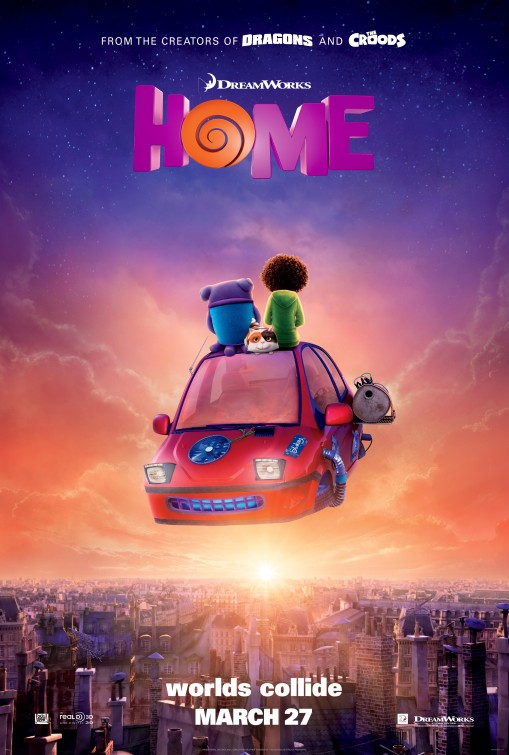
Fleeing from their sworn enemy the Gorg, the Boov race – led by Captain Smek (Martin) – arrive on Earth and begin to colonise it, sequestering the human population in various locations around the globe. The Boov are otherwise a peaceful race, and believe they are doing Earth a favour by inhabiting it. One of them, Oh (Parsons), decides to invite everyone to a party at his apartment, but when he sends out his electronic invitation he doesn’t realise that it will be picked up by the Gorg as well. When Captain Smek learns of this, Oh is forced to go on the run.

In a convenience store, Oh runs into Tip (Rihanna) and her cat Pig. Tip is on her own after her mother, Lucy (Lopez), was taken away. She hates the Boov, but when Oh transforms her mother’s car into one that can fly, and he agrees to help her find her mother, she lets him come with her. They fly to Paris to the Boov Command Centre where they learn that Lucy is in Australia. Evading the Boov, they then find themselves under attack from a Gorg ship. They manage to bring it down but their car is damaged in the process. The Gorg ship proves to be a drone, and Oh is able to use a chip from it to get their car going again.

Once in Australia, Tip and Oh discover that the Boov are evacuating to their mothership. Tip wants to find her mother but Oh insists they leave with the rest of the Boov before the Gorg destroy them all. Tip refuses and continues her search for Lucy, while Oh begins to realise that he has to do something to stop the Gorg from killing everyone, Boov and human alike. On the Boov mothership he uses the chip from the drone to place their mothership at a distance from the newly arrived Gorg mothership. This leads to Captain Smek being dismissed from his position as Boov leader, and the honour is given to Oh.

Tip and Lucy are finally reunited, but there’s still the problem of the Gorg mothership which has entered Earth’s atmosphere and is preparing to land outside the Australian camp. Oh has only a short time to find a solution that will save them all, but he finds the answer in the most unlikeliest of places…

Home - scene

Now fully committed to making computer animated movies – their last traditional animated movie was Sinbad: Legend of the Seven Seas (2003) – Dreamworks now finds itself, perhaps like Pixar, in a very strange position. Each animated movie it releases comes under a great deal of scrutiny, and Home is no different, with the movie being accused of failing to live up to the standards set by the likes of How to Train Your Dragon (2010) or Kung Fu Panda (2008). It’s an invidious position to be in, and in the case of Home, more than a little unfair.

Certainly, the movie’s message that we’re all the same under the skin (even if it is purple) is a well-worn theme in cinema, but here it’s not as hammered home as some other movies, and it’s approach to racial diversity – Tip is the first non-Caucasian lead in an animated movie – as well as its integration of the Boov, who adopt most human lifestyles, is all cleverly done. If it all seems predictable and safe, then that’s because it is. There’s nothing inherently wrong with that though, because the movie does it all with a tremendous amount of verve and eye-popping visual splendour, and is consistently funny throughout, thanks to Tom J. Astle and Matt Ember’s astute adaptation of Adam Rex’s kid-lit novel The True Meaning of Smekday.

Fizzing with a day-glo colour scheme that makes almost every scene glisten and zing, Home creates one of the sweetest on screen relationships seen for some time, as Oh and Tip become friends and realise how strong their bond is. Parsons is excellent as Oh, his vocal tics and mannerisms – some lifted, admittedly, from The Big Bang Theory – a perfect match for the continually puzzled yet curious little Boov, and Rihanna is just as effective as Tip, matching her co-star for emotional expression and displaying a range that may come as a surprise to some viewers. Martin almost steals the show with his turn as the cowardly Captain Smek, the character’s pompous vanity perfectly expressed in every scene he’s in, and while it may not be the most layered performance, it doesn’t have to be. With less screen time, Lopez doesn’t quite register as strongly as Lucy, but again, the relationship between Tip and Oh is the main focus, and not Tip and her mother.

Ably directed by Johnson, Home sets out its stall quickly and efficiently and provides enough entertainment for adults and kids alike. It isn’t a serious movie by any standard, and relies on the charm of its lead characters for most of its running time, but Oh and Tip are delightfully animated and voiced, and make for a great screen partnership. The Boov are a delight as well, the way their bodies change shade or colour depending on how they feel being one of the movie’s small pleasures. The movie doesn’t try too hard and does a lot with its small-scale story and plot, and proves endlessly visually inventive. It’s a fun, popcorn movie, the kind of animated distraction we could all use from time to time… and what’s wrong with that?

Rating: 8/10 – with a bucket load of charm and a refreshingly straightforward approach to its storyline, Home is a movie that rewards the viewer from start to finish; fun with a capital F and proof it were needed that Dreamworks is still making good choices when it comes to its animated movies.

Share this:

  • Click to share on X (Opens in new window) X
  • Click to share on Facebook (Opens in new window) Facebook
  • More
  • Click to print (Opens in new window) Print
  • Click to email a link to a friend (Opens in new window) Email
Like Loading...

The Place Promised in Our Early Days (2004)

20 Monday Apr 2015

Posted by dullwood68 in Movies

≈ Leave a comment

Tags

Airplane, Animation, Anime, Drama, Hidetaka Yoshioka, Japan, Makoto Shinkai, Masato Hagiwara, Parallel worlds, Review, Sci-fi, The Tower, The Union, Thriller, War, Yuka Nanri

Place Promised in Our Early Days, The

Original title: Kumo no mukô, yakusoku no basho

D: Makoto Shinkai / 90m

Cast: Hidetaka Yoshioka, Masato Hagiwara, Yuka Nanri, Unshô Ishizuka, Kazuhiko Inoue, Risa Mizuno

In an alternate reality, Japan is a divided nation. The northern half, Hokkaido, is ruled by the Union, while Honshu and everything else to the south is overseen by the US. At some point after the division, a tower that stretches up and beyond the clouds was built on Hokkaido, but the reason for its having been built is unknown.

One summer, two young friends, Hiroki (Yoshioka) and Takuya (Hagiwara), decide to build a plane that will enable them to fly to the top of the Tower (and maybe find out what it does). They spend all their spare time finding parts for the plane and assembling it, and are aided by their employer during school breaks, Mr Okabe (Ishizuka). One day, Takuya finds himself talking to a girl both friends know called Sayuri (Nanri). He tells her about the plane and she tags along when he next goes to the abandoned train station where they’re building it. Despite, Hiromi’s doubts about her being included in their plans, her enthusiasm for the project wins him over.

As they grow older, and the plane nears completion, Sayuri begins to have strange dreams that are connected to the Tower. One such dream sees the Tower exploding and causing tremendous destruction. Shortly after, Sayuri falls ill and is taken to Tokyo for treatment. Three years pass, during which Hiroki and Takuya stop work on the plane and go their separate ways. The political situation worsens between the Union and the US, and war is imminent. Sayuri has been asleep for the last three years, but she has been studied during this time, as her dream activity is reflected in the activity of the Tower. When Sayuri dreams, the Tower produces sufficient energy to overlay a separate reality on the area immediately around it. The scientists studying the Tower and Sayuri believe that if she were to wake up, the Tower would replace the existing reality with another, completely different one.

With Takuya being a part of the research team investigating the Tower, he learns of the connection to Sayuri and determines to free her from the hospital where she’s being kept. He enlists Hiroki’s aid in completing the plane and together they aim to fly it, with Sayuri aboard, close enough to wake her, and then to destroy the Tower with a missile. But they choose to do this just as the war breaks out, and the likelihood of their being successful is drastically reduced.

Place Promised in Our Early Days, The - scene

If your experience of Japanese anime has been restricted to the movies produced by Studio Ghibli, you could be forgiven for thinking that movies such as Howl’s Moving Castle (2004) and Arrietty (2010) are the pinnacle of that particular genre. But there are so many other fine examples out there that it’s sometimes worth the reminder that Studio Ghibli isn’t the only purveyor of tremendous Japanese anime.

Because such is the case with The Place Promised in Our Early Days. Starting out as a coming of age tale that is both affecting, and quietly and unobtrusively observed, the movie introduces its three main characters with a winning amiability. Hiroki and Takuya’s friendship is warm, committed and unselfish; they’re a good match too in terms of their intelligence and skills. And Sayuri is the girl who binds their relationship even tighter, making it stronger and more deep-rooted. The script, by director Shinkai from his own story, resists the temptation to introduce a love triangle, and the movie benefits immeasurably from this, the viewer unencumbered with having to worry as to which one of Hiroki and Takuya will be chosen over the other. Instead, two close friends become three, and each share in each other’s ambitions and concerns.

When the story changes focus in the second half and becomes more of a thriller, Shinkai retains the trio’s connections and shows how time and distance has failed to erode their bond. This allows for an emotional follow-through that adds to the increased pace and race-against-time urgency of the last twenty minutes. Takuya’s determination is easily understood, as is Hiroki’s initial reluctance to become involved in the plane and their original plan. And through it all there’s Saruyi’s consciousness, putting together the clues from her childhood, and from her time with her two friends, in order to work out the mystery of the Tower. Shinkai juggles the expanding storylines of the movie’s second half with ease, while darkening the tone and still managing to retain some of the lyricism of the first half.

The plot and storylines are served greatly by some stunning animation, with the rural location where Hiroki and Takuya build their plane offering vistas of dazzling beauty. Shinkai – again – leads the movie’s animators in creating a world that is similar and different to ours at the same time, and includes all manner of small touches that illustrate the differences (check out the advertisement for “Popsi”). The blue skies and green fields, even the greys of the town, are all shot – again by Shinkai – with a view to making it all look richly alluring, a feast for the eyes that provides ravishing image after ravishing image. Even when the tone darkens, the movie is still striking to watch and rewards the eye continuously.

On the minus side, Saruyi’s eyes have that enlarged look favoured by animators the world over, the urgency in rescuing her from the hospital is forced on the plot without any build-up, and some of the political manoeuvring of the second half is glossed over or given just a passing nod – everyone talks about the war being inevitable and no one tries to stop it. And the finale strays too close to being confusing to provide the emotional dividends that the viewer has every right to expect.

Rating: 8/10 – breathtaking and beautiful to watch for most of its running time, The Place Promised in Our Early Days is a minor masterpiece from Makoto Shinkai and shows that Japanese anime has more to offer than talking animals and creatures from Japanese folklore; a more emotional tale than usual but this is easily the movie’s strength, and it’s backed up (not overwhelmed) by some superb animation.

Share this:

  • Click to share on X (Opens in new window) X
  • Click to share on Facebook (Opens in new window) Facebook
  • More
  • Click to print (Opens in new window) Print
  • Click to email a link to a friend (Opens in new window) Email
Like Loading...

Planeta bur (1962)

08 Wednesday Apr 2015

Posted by dullwood68 in Movies

≈ 1 Comment

Tags

Drama, Georgi Zhzhyonov, John, Literary adaptation, Pavel Klushantsev, Review, Robot, Sci-fi, Sirius, Soviet Union, Spaceships, Vega, Venus, Vladimir Yemelyanov

Planeta bur

aka Planeta Burg; Planet of Storms; Planet of Tempests; Storm Planet

D: Pavel Klushantsev / 78m

Cast: Vladimir Yevelyanov, Georgi Zhzhyonov, Gennadi Vernov, Yuriy Sarantsev, Georgiy Teykh, Kyunna Ignatova

Three spaceships from the Soviet Union – Vega, Sirius and Capella – are approaching Venus when one of them, Capella, is struck by a meteorite and destroyed. The mission requires two of the ships to land on Venus while the remaining ship stays in orbit. But Capella’s replacement, Arcturus, will take four months to reach Venus, a situation the cosmonauts on board Sirius – Ilya (Yemelyanov), Aleksey (Zhzhyonov) and Roman (Vernov) – find unacceptable. They hatch a plan to land on Venus using a glider and one of the ships, but it means someone having to stay in orbit and monitor their progress on the planet. This falls to Masha (Ignatova), a Vega crew member. In the end, it’s her fellow crew members, Scherba (Sarantsev) and Dr Kern (Teykh), along with Kern’s robot John, who make the trip in the glider. However, when they land, all communication with them is lost.

The Sirius crew land in their ship to look for them. They encounter a strange, rocky environment that is perpetually shrouded in mist. They identify their colleagues’ location and set out in a hover car to find them, but not before Aleksey is almost killed by a carnivorous plant-like creature. Realising that Venus holds more dangers than they’d expected, they proceed with caution. Meanwhile, Scherba and Kern have encountered another danger, lizard-like creatures that walk upright. Fighting them off they soon find another problem: with their spacesuits torn in places, they’ve become susceptible to the air on Venus and are getting sick. They hole up in a cave and wait for their colleagues to find them.

Locking onto their position, Ilya, Aleksey and Roman find themselves under attack, this time from a creature resembling a pterodactyl (they’ve already encountered what appears to be a brontosaurus). Their hover car is damaged and ends up at the bottom of a lake. With communication lost with everyone on the surface, Masha has to decide whether or not she should mount her own rescue mission or wait for Arcturus to arrive. With time running out, the hover car is rescued from the lake and Ilya and his two colleagues get closer to finding their comrades. But not before Scherba, Kern and John have to deal with the lava flow from a nearby volcano. And all the while an ethereal female voice can be heard both in the distance and incredibly close by…

Planeta bur - scene

Viewed now, over fifty years on, Planeta bur is less of a curio than you might expect. While it’s not very prescient in terms of future science, and retains a quaint approach to some of its technology – Masha records her thoughts about making her rescue mission on a reel-to-reel tape recorder – there’s more than enough going on to keep the viewer interested, even if there are some unfortunately comic moments.

The trick is to put aside what we know now about Venus, and just go with the flow. After a stodgy opening period where the characters are introduced and the dilemma of landing on Venus is discussed and then decided on, the meat of the movie is introduced and we get to see the rugged, inhospitable landscape that represents the planet’s surface, as well as some very unpleasant inhabitants. It’s like a science fiction movie crossed with a disaster epic, as the cosmonauts encounter danger after danger, from man-eating plants to mini-Godzilla-like creatures to sudden volcanic eruptions. And though the pace is unhurried, there’s still enough tension built up between the various scenes of peril to keep the viewer interested and engaged.

In between these scenes there’s also time for the characters to wax philosophical about the origins of life on Venus and Earth – maybe we’re all descended from Martians – and the importance of the mission to the people back home in the Soviet Union (there’s even a short sequence where Masha envisions a parade with appropriately cheering masses in attendance). These interludes add a layer of intellectual gravitas to what is essentially an adventure, and is matched by the serious, intense nature of the cast and their performances. Yemelyanov looks like he’s lost the ability to smile, while Zhzhyonov’s eagerness to land on Venus makes him appear reckless. As the sole female on the mission, Ignatova looks concerned, worried and fearful throughout, and Teykh goes the opposite way ands affects a disinterested, unemotional stance that befits his reserved character.

The special effects employed range from the casually simple, such as the space suits, to the impressively clever, such as the hover car (which really looks like it’s floating a good foot off the ground). The locations, though feeling restricted, are used to very good effect, and there’s an otherworldly feel to them that adds a level of eeriness to proceedings. Klushantsev orchestrates the various alien encounters without overdoing it in terms of increasing the pace or making it look as if the cosmonauts are in any real danger, but their encounters are effective enough and shot with a good deal of style (if a little restrained at the same time). While some of the creatures remind the viewer of the budgetary constraints, again there’s a quaintness to it all that makes up for any shortcomings.

Concluding with a couple of revolutionary sounding songs extolling the virtues of both Earth and Venus, the movie has a satisfactory ending that hints at a possible sequel (but which sadly never happened). What did sadly happen is that American International Pictures got hold of the movie and re-edited it twice to make two vastly inferior “new” versions: Voyage to the Prehistoric Planet (1965), with Basil Rathbone added to the mix, and Voyage to the Planet of Prehistoric Women (1968), directed by Peter Bogdanovich and with Mamie Van Doren added instead. Neither movie has much to recommend it, and should be avoided at all costs.

Rating: 7/10 – a little clunky in places, but thankfully free of too much ideology or Soviet propaganda, Planeta bur is a serious sci-fi movie that has much to say about the idea of space exploration; entertaining throughout, and as an entry movie into the career of the under-appreciated Klushantsev, definitely a good place to start.

Trailer: Sadly, there doesn’t seem to be a trailer for Planeta bur available.

Share this:

  • Click to share on X (Opens in new window) X
  • Click to share on Facebook (Opens in new window) Facebook
  • More
  • Click to print (Opens in new window) Print
  • Click to email a link to a friend (Opens in new window) Email
Like Loading...

Insurgent (2015)

08 Wednesday Apr 2015

Posted by dullwood68 in Movies

≈ 1 Comment

Tags

Abnegation, Action, Amity, Ansel Elgort, Candor, Dauntless, Drama, Erudite, Kate Winslet, Literary adaptation, Naomi Watts, Review, Robert Schwentke, Sci-fi, Sequel, Shailene Woodley, Theo James, Thriller, Veronica Roth

Insurgent

D: Robert Schwentke / 119m

Cast: Shailene Woodley, Theo James, Kate Winslet, Ansel Elgort, Miles Teller, Naomi Watts, Octavia Spencer, Jai Courtney, Mekhi Phifer, Zoë Kravitz, Maggie Q, Daniel Dae Kim, Jonny Weston, Ashley Judd, Ray Stevenson, Tony Goldwyn, Janet McTeer

In the aftermath of the attack on Abnegation, a search reveals a box that contains all the faction symbols. It’s taken to Erudite where Jeanine (Winslet) reveals it holds a message from the city’s elders, but only a Divergent can open it; this leads Jeanine to order that all Divergents are rounded up. Meanwhile, Tris (Woodley), Four (James), Caleb (Elgort) and Peter (Teller) are hiding out in Amity, under the protection of their leader Johanna (Spencer). Tris is all for returning to Erudite and killing Jeanine but Four warns against acting so hastily: they need to be a stronger force before they can attack the ruling faction.

Matters are brought to a head when Dauntless leader Max (Phifer) arrives to look for any Divergents. Peter reveals their presence but Tris, Four and Caleb manage to escape on a train that takes them into Factionless territory. There they meet Evelyn (Watts), the Factionless leader who, it turns out, is Four’s mother. She advocates a coalition between Factionless and the remainder of Dauntless. The next day, Tris, Four and Caleb leave to visit Candor, where the remainder of Dauntless have taken refuge. On the way, Caleb tells Tris he can’t go with them and they part. In Candor, their leader, Jack (Dae Kim) arranges a trial to determine the truth of Four’s insistence that Jeanine is lying to the other factions. A raid by Max and Eric (Courtney) leads to Tris being tested and found to be 100% Divergent. The raid is unsuccessful though and Tris is rescued by Four and Candor. At Erudite, Peter tells Jeanine the best way in which she can trap Tris. With the lives of all in Candor at risk because of Tris’s presence there, she determines to turn herself in.

At Erudite, Tris is apprehended and taken in front of Jeanine. She explains about the box and has Tris hooked up to it. In order to open it, Tris has to pass each Faction test, something none of the other Divergents abducted by Jeanine has managed. With Caleb having rejoined Erudite, and Peter also on their side, Tris can only hope that whatever message the box holds, that she will survive the ordeal long enough to learn what it is, and what it means for the city.

Insurgent - scene

After the prolonged set up and introduction of each Faction and the world they support that made up most of Divergent (2014), you’d think Insurgent would be less reliant on large chunks of awkward exposition. But it’s not the case, as this instalment introduces new characters and broadens the original’s scope. This leads to more explanations for everyone’s behaviour and more occasions where the not-exactly-complicated story has to be explained every step of the way (as if the audience wouldn’t be able to keep up). Which is a shame, as this time around, Tris’s newfound place in her world is much more interesting and exciting to be a part of.

Weighed down by the expectations that come with cinema’s version of “middle child syndrome” (and even though Allegiant will be released in two parts – damn you Harry Potter!), Insurgent gets a lot right. It ups the action content, makes the heroes more heroic, the villains more villainous, and ends with the news that we’ve all been waiting to hear: next time we go outside the wall. The movie couldn’t be more designed to please its audience, both existing and new. And that’s another factor that makes the movie work: you don’t have to have seen Divergent to work out what’s going on. Such is the care that’s been taken with the adaptation of the book, that even though there are huge chunks that are missing (including whole storylines), it’s a tribute to screenwriters Brian Duffield, Akiva Goldsman and Mark Bomback that this is a well constructed, and surprisingly streamlined version that holds its own and isn’t reliant on the first movie.

It also moves the characters forward in unexpected ways. Tris is hell-bent on killing Jeanine which isn’t the usual approach in a YA movie (you’d never expect to hear Katniss Everdeen sound so vehement about President Snow as Tris is about Jeanine). It’s refreshing to see someone be that blunt and not harbour any deep-seated guilt or reservations about the rights or wrongs of such a thing; Tris is resigned and more importantly, she can’t wait to do it. As for her love interest, the taciturn Four, we get to see him deal with a greater authority than Eric or Max, or even his dad: his mother, presumed dead all these years and as determined to get Jeanine almost as much as Tris. While he wrestles with his emotional scars, Tris gets down to the task of taking out Jeanine; it’s like he’s not even supporting her anymore.

Of course, true love overcomes any dispute or disagreement and Tris and Four leave their differences behind when it comes to overthrowing Erudite, and although the message in the box is one that only readers of the novel will have seen coming, it’s still a treat to see it revealed in such a dramatic, world-upsetting way. It’s yet another way in which new director Schwentke keeps things interesting and the viewer on their toes. He makes judicious use of the new cast members, with even Watts (who has Big Villain written all over her) required to keep it simple and not detract from the main storyline, that of Tris learning to forgive herself for the deaths of her parents and the turncoat Will. Woodley, still the best thing in both movies, shades her emotions with ease and presents a version of Tris that is still learning but who’s also streets ahead of her rebellious companions (but then she is Divergent).

The rest of the cast offer and provide excellent support, with special mention going to Courtney, Spencer, Watts and Teller, though Elgort is still stuck with possibly the blandest character in the whole series, and suffers as a result; he just can’t make him interesting. Winslet is icy and controlling and strangely attractive because of all that, and steals each scene she’s in. The final scene robs us of a major character and is a great way to end this movie and set up some of the dramatics of the next, but it also feels like a bit of a cheap shot at the audience’s expense. What, do we ask, does that mean for Tris and Four and all the rest? Well, to find out, tune in next year!

Rating: 7/10 – better than Divergent, and better assembled, Insurgent shows the franchise gaining in confidence and moving ahead in the right direction; not without its flaws – Peter is still an annoyingly underwritten character – the movie packs a lot in and, on the whole, makes it all work with a great deal of panache.

Share this:

  • Click to share on X (Opens in new window) X
  • Click to share on Facebook (Opens in new window) Facebook
  • More
  • Click to print (Opens in new window) Print
  • Click to email a link to a friend (Opens in new window) Email
Like Loading...

Project Almanac (2014)

02 Monday Mar 2015

Posted by dullwood68 in Movies

≈ Leave a comment

Tags

Allen Evangelista, Almanac, Cinema One, Dean Israelite, Drama, Jonny Weston, Review, Sam Lerner, Sci-fi, Sofia Black-D'Elia, Thriller, Time machine, Time travel, Virginia Gardner, Welcome to Yesterday

Project Almanac

D: Dean Israelite / 106m

Cast: Jonny Weston, Sofia Black-D’Elia, Sam Lerner, Allen Evangelista, Virginia Gardner, Amy Landecker, Gary Weeks

Budding inventor David Raskin (Weston) has been accepted into MIT but is unable to afford his tuition. When his mother (Landecker) finds out she plans to sell their home. In an attempt to avoid this happening, David decides to see if he can find anything amongst the various inventions left behind by his father (Weeks) before he died on David’s seventh birthday in a car crash. Instead he finds an old camcorder that contains footage of his seventh birthday party. Watching it back he’s shocked to discover himself as he is now in the background of one of the shots. He shows this to his sister, Christina (Gardner) and his two friends, Adam (Evangelista) and Quinn (Lerner). With their help David finds the blueprints for a “temporal relocation device” that his father was apparently building.

They then find the prototype he was working on and using some additional resources, such as the battery from the car of the girl David has a crush on, Jessie (Black-D’Elia), they manage to get the machine to work. But Jessie discovers what they’re doing and she becomes part of the group. All five travel back in time to the previous day and decide to play a trick on Quinn, but it nearly backfires on them. Making a pact to always use it together, they use the time machine for personal gain, Adam winning the lottery, Christina getting her own back on a school bully, and Quinn passing an important test. They also decide to travel back three months to a Lollapalooza festival where David has a chance to declare his feelings for Jessie. However, he hesitates too much and the moment passes. When it becomes clear that Jessie is upset by this and growing distant from him, David travels back alone to the festival to fix things.

But even though he and Jessie are a couple when he comes back, the change has caused a ripple effect that has culminated in a plane crash that killed everyone aboard. David goes back again to fix things but this time it causes a different set of problems. Jessie begins to suspect that David has manipulated their being together, but when they both travel back to correct things, Jessie meets her past self and is erased from that particular timeline. Worldwide catastrophes occur as a result, which prompt David to travel back to his seventh birthday and warn his father of the consequences of building his machine…

Project Almanac - scene

As with No Good Deed (2014), Project Almanac is a movie whose release has been delayed for reasons unknown, but anyone watching the movie – also known and advertised as Welcome to Yesterday before ending up with its current title – will have a fair idea of why when the quintet win big on the lottery (but not as big as expected), and Adam says, “I’m not winning the lottery a second time!” Casting aside its biggest mystery – just what was David doing at his seventh birthday party? – the movie opts for several bouts of wish fulfilment first before sending in the expected trials and tribulations of changing the past (has anyone noticed that the ripple effects in these movies are always for the worst, and never the best? Isn’t that equally as likely to happen?).

The script, by Jason Pagan and Andrew Deutschman, never really has a clear goal for its characters and never really gets its head around the conundrums of time travel, preferring instead to pull the rug out from under David et al with often ill-considered consequences attached. As attempts to heighten the drama they’re less than successful: one minute David’s mother has a job, the next she hasn’t; one minute Adam’s fine, the next he’s been run over; one minute David’s in one timeline, the next he’s not – and he has no idea what’s been happening in either. If it’s frustrating or maddening for the characters, imagine what it’s like for the poor viewer, having to sit through yet another time travel movie that doesn’t fully explore the possibilities inherent in its plotting and storyline. In the end it takes an unconvincing way out and doubles back on itself in a way that you know the makers think is clever, but if you give it enough thought, you’ll soon realise it’s a cheat.

With the plot and story chock full of holes, and constantly undermining itself, Project Almanac also plays havoc with its characters and their continuity. David is meant to be intelligent and inventive with a streak of geek in him that makes his relationship with Jessie that much more awkward to navigate. But the script throws out any intelligence he has when he goes back to Lollapalooza to change his and Jessie’s life together. Would someone so smart really want to manipulate his “true” love in such a way? And why is he suddenly so insensitive and shallow? And why can’t he see that with each trip he makes he runs the risk of losing everything? (Because the script needs him to, is the answer to all these questions.) And as this central romance takes prominence, the rest of the group become less interesting and less involved, and are reduced to making dire predictions about David’s tampering with time travel.

To make matters worse, the found footage style of filming used here often makes no sense, particularly in the scene where David travels back to Lollapalooza – just who is filming him and Jessie if this is now a separate timeline and he’s making his move? It’s moments like these that further undermine the credibility of events and make the movie such a disheartening viewing experience. Making his feature debut, Israelite pulls off some clever visuals, but shows his lack of experience throughout, leaving his cast adrift for most of the movie and along with the screenwriters, making the science seem too absurd for its own good (it’s handy that David’s high school has a good supply of hydrogen tanks – hydrogen tanks, really?). One plus is the lack of a musical score – as it should be – but it’s a sad state of affairs when the absence of something is a movie’s best feature.

Rating: 3/10 – with too many stupid decisions made by an apparently intelligent character – he got into MIT, remember? – Project Almanac is another in the long line of low budget time travel movies that fails to capitalise adequately on its basic premise; continually underwhelming, it remains risible throughout and entirely forgettable.

Share this:

  • Click to share on X (Opens in new window) X
  • Click to share on Facebook (Opens in new window) Facebook
  • More
  • Click to print (Opens in new window) Print
  • Click to email a link to a friend (Opens in new window) Email
Like Loading...

Jupiter Ascending (2015)

18 Wednesday Feb 2015

Posted by dullwood68 in Movies

≈ 1 Comment

Tags

Abrasax Family, Action, Andy Wachowski, Caine Wise, Channing Tatum, Douglas Booth, Drama, Eddie Redmayne, Genetic reincarnation, Jupiter, Jupiter Jones, Lana Wachowski, Mila Kunis, Review, Sci-fi, Sean Bean, The Aegis, Thriller, Youth serum

Jupiter Ascending

D: Andy Wachowski, Lana Wachowski / 127m

Cast: Channing Tatum, Mila Kunis, Sean Bean, Eddie Redmayne, Douglas Booth, Tuppence Middleton, Nikki Amuka-Bird, Christina Cole, Nicholas A. Newman, Maria Doyle Kennedy, Gugu Mbatha-Raw, Jeremy Swift, Kick Gurry, James D’Arcy

Jupiter Jones (Kunis) works as a cleaner with her mother, Aleksa (Kennedy), and her aunt. She has no prospects, no will to succeed, and no man in her life. Shackled to her mother’s Russian family, she is unaware that she is the genetic reincarnation of the matriarch of the Abrasax family. The Abrasax family are part of an alien race whose business is that of seeding planets and harvesting the inhabitants once they reach a certain physical maturity. The Abrasax matriarch had Earth as part of her portfolio, and its importance as a source of youth-giving serum is not lost on her offspring, Balem (Redmayne), Kalique (Middleton) and Titus (Booth). Each of them is trying to acquire Earth for themselves, and when they learn of Jupiter’s existence, they initiate plans to either manipulate her or kill her (or both).

Jupiter can claim her genetic forebear’s titles and properties but if she does it will freeze out Balem and his siblings. His response is to send agents to Earth to kill her, but Titus sends a genetically engineered hunter called Caine Wise (Tatum) to protect her and bring her to him. Wise enlists aid of fellow hunter Stinger Apini (Bean) but a group of mercenaries manage to capture Jupiter and take her to a planet owned by Kalique. Kalique informs Jupiter that the conditions of her mother’s will were such that Earth would belong to her genetic reincarnation should one come forward. All Jupiter has to do is to claim her inheritance and her brothers’ plans will be thwarted.

Aided by Stinger and the Aegis, an intergalactic police force, Caine rescues Jupiter from Kalique and takes her to the planet where she can begin to claim her inheritance. Titus appears on the scene and tells Jupiter he plans to uphold his mother’s wish that Earth not be harvested, and that if she marries him it will ensure both Earth’s safety and an end to Balem and Kalique’s scheming. Titus isolates Caine from Jupiter and reveals his real plan which is to marry her and then have her killed, thus inheriting Earth by default. He has Caine expelled from an air lock, while Jupiter agrees to marry Titus…

Jupiter Ascending - scene

Originally set for release on 25 July 2014, Jupiter Ascending finally arrives on our screens and… is… well… just… terrible. It’s not quite as bad as, say, Teenage Mutant Ninja Turtles (2014) – that would be difficult – but it is shockingly, depressingly bad in ways that are completely surprising given the calibre of the directors, the cast and the crew. Already a box office bomb, with very little chance of its $176,000,000 budget being recouped any time soon, Jupiter Ascending is a classic example of what happens when you ask two feted filmmakers to come up with “an original intellectual property and franchise” – take a bow, Jeff Robinov (Warner Bros. president). The result? A movie that makes no sense at any point during its entire running time.

It’s a spectacular movie, true, but this is yet another sci-fi movie that is a triumph of style over substance. If there had been half as much effort put into the script as there has been into the special effects and the design of the movie then we might be talking about the movie in terms of it being a modern classic. But so successfully have the Wachowskis sabotaged their own script – sorry, “intellectual property” – that instead we have to talk about the movie in terms of it being an (almost) unmitigated disaster. Take the notion that only the human race can produce the serum that keeps the Abrasax family so youthful. So far, so good. But if this is the case, and the Abrasax family have “seeded” Earth in order to produce this serum, why haven’t they done it on other planets? Surely that would make sound business sense (not to mention keep them eternally young)? (It seems not.)

There are plenty of other elements within the script that don’t make sense, such as the whole idea that Jupiter is the genetic reincarnation of the Abrasax’ matriarch. How or why this should even happen in the first place is skipped over by the Wachowski’s, and it hovers over the movie like a particularly stinky McGuffin. And the speed with which Bean’s character changes sides (and is forgiven) has all the dramatic intensity of someone changing their washing powder instead of their allegiance. It’s all in service of a script that careens from one unlikely scene to another while ramping up the visual spectacle to such a pitch that the characters appear incidental to the vast spaceships and the vast sets inside them (though the Wachowskis have seen fit to ensure that no room is too small that Caine can’t pitch and hover around it with ease).

The cast look uncomfortable throughout, with Tatum doing his best not to appear confused (or wishing he was making another movie entirely), and Kunis unable to make Jupiter less irritating than she’s written. Bean appears to be apologising for each line he has to utter – his rhapsodising about bees is a highlight – while Booth mistakes petulance for silky menace, and Middleton is saddled with the weight of too much exposition (and wrinkles). And then there’s Redmayne, soft-spoken for most of the movie and evidencing Balem’s more psychotic tendencies by shouting loudly whenever he’s annoyed. By the end it’s become the movie’s most flamboyant performance, but it would have been better utilised in a pantomime than a science fiction movie trying to take itself seriously.

The action scenes are suitably large-scale and ambitious but still rely heavily on the bad guys being terrible shots, and Wise being able to get off a kill shot from any angle. The Renaissance feel to many of the sets and the overall design is, however, impressive, but the production facility on Jupiter is too overblown, and seems designed more to be destroyed (as it eventually is) than anything else. And therein lies another problem, the Zack Snyder Equation™, which posits that if there is a chance to provide mass destruction on a monumental level then it should be grasped with every gigabyte possible. It seems movie makers still haven’t caught on to the fact that while this may make for an arresting visual sequence, we’ve still seen it way too often now for it to have any meaningful effect.

Rating: 4/10 – with stumbling, forlorn attempts at comedy thrown in here and there – “I love dogs”, Jupiter’s Russian family, any time Famulus (Mbatha-Raw) makes an appearance – Jupiter Ascending succeeds in undermining its own credibility at nearly every turn; a space opera masquerading as something more (though exactly what is hard to determine), this sees the Wachowskis reprising themes from The Matrix to less than impressive effect.

Share this:

  • Click to share on X (Opens in new window) X
  • Click to share on Facebook (Opens in new window) Facebook
  • More
  • Click to print (Opens in new window) Print
  • Click to email a link to a friend (Opens in new window) Email
Like Loading...

Ex Machina (2015)

30 Friday Jan 2015

Posted by dullwood68 in Movies

≈ 1 Comment

Tags

Alex Garland, Alicia Vikander, Artificial intelligence, Domhnall Gleeson, Drama, Oscar Isaac, Review, Robots, Sci-fi, The Turing Test, Thriller

Ex Machina

D: Alex Garland / 108m

Cast: Domhnall Gleeson, Alicia Vikander, Oscar Isaac, Sonoya Mizuno

Caleb (Gleeson) is a computer coder who works for a large corporation owned by Nathan (Isaac). He wins a company raffle that involves spending a week at Nathan’s home, which is located in the midst of a vast countryside estate. On arrival he is given a key pass by an automated door system, and finds Nathan inside working out. Nathan soon reveals that he has been working on an experiment and that Caleb is there to conduct the Turing test on a robot with artificial intelligence called Ava (Vikander). Caleb’s job is to determine whether or not Ava could pass for human.

That night Caleb discovers that the TV in his room is actually a monitor that allows him to view Ava in her room. There is a power failure and Caleb is unable, temporarily, to leave his room; when he does he finds Nathan has been drinking and not in the best frame of mind. The next morning, Caleb is awakened by a Japanese girl called Kyoko (Mizuno); she doesn’t speak English, a benefit for Nathan as he can speak freely about his work. Caleb spends time with Ava and as they begin to get to know each other it becomes clear she is flirting with him. During another power failure Ava warns Caleb not to trust Nathan, and that he has been lying to him. As Ava begins to make herself more attractive to Caleb, he begins to wonder if Nathan has made this part of her programming all along.
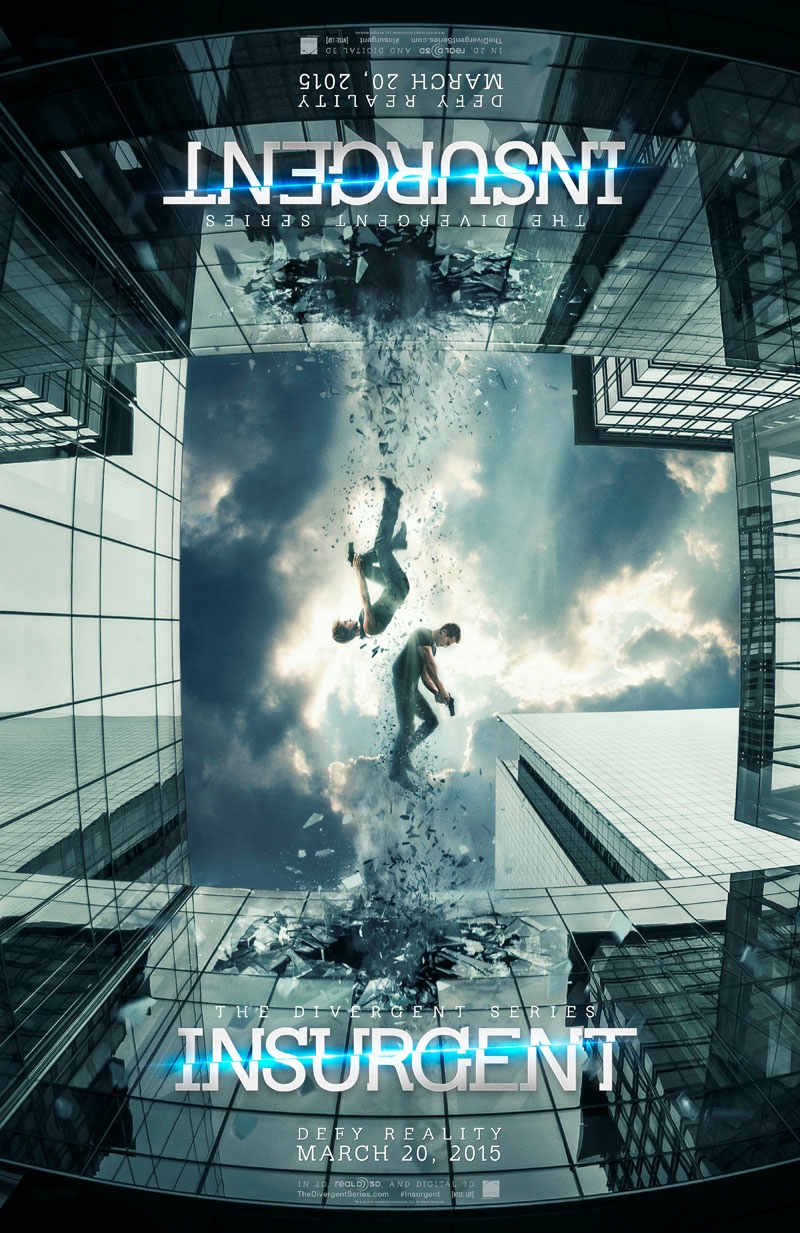
Nathan lets Caleb see his laboratory, where he made Ava and mapped out her brain function. He insists Ava’s responses must be genuine, and reminds Caleb that if they are then the results of the Turing test must be positive. Later, Nathan gets completely drunk and when Caleb takes him to his room, he spies some cupboards and what looks like an “observation” room. When Caleb asks what will happen if Ava fails the test, Nathan is blunt: she will be updated and her memory will be erased. Caleb is upset by this prospect, and when Nathan gets drunk a second time, Caleb uses Nathan’s key pass to enter the observation room. There he sees footage that shows Nathan has been building robots like Ava for some time. He also looks in the cupboards and finds the discarded robots hanging up like old suits. When Caleb has his next meeting with Ava he tells her he has a plan for both of them to escape, and asks for her help. She agrees, and the next night they put the plan into operation.

Ex Machina - scene

Working from an original script, writer/director Garland has fashioned an intriguing sci-fi thriller that asks the question, can an artificial being truly possess human qualities, particularly real emotions. In asking that question, Ex Machina quickly becomes a guessing game for the audience, or as an old advert used to put it: is it live or is it Memorex? The answer, despite some wrong-footing and a few twists and turns in the narrative, is no, but with a caveat: there’s no answer to the further question of how Ava comes to fake the emotions she does display.

It’s unfortunate for what is otherwise a skilfully constructed and intelligent science fiction drama that when we first meet Ava she’s as self-assured and poised as she is at the movie’s end. This leaves the audience feeling that she’s been playing Caleb all along, and that the whole notion of the Turing test is irrelevant; if Nathan is as brilliant as he seems to be, he’d know already how far her development has taken her. And why go to the trouble of getting Caleb to visit him (the raffle is rigged) when it’s also clear that as clinical trials go, the parameters are so loose? In the end it boils down to who is the most manipulative – Nathan or Ava.

This conundrum aside, Garland shows a keen appreciation for his subject matter, creating a robot concept in Ava that makes physical as well as an aesthetic sense, and which allows the viewer to be reminded that she is, ultimately, a construct, not real and not able to function in the same way as humans, and even if latex skin is applied where and when necessary. This keeps the audience at a distance from her, while making Caleb all the more curious about the possibilities should she pass the Turing test. It’s a neat balancing act, and one that Garland keeps up throughout, even if he’s forced by his own script to step down from it by the expected denouement.

The look and feel of the movie is very Seventies, the austere, below level laboratory complex a maze of plain walls and functional furniture. Only Nathan’s own personal living quarters look and feel like part of the “real” world. In the end, the coldness of the laboratory area reflects Ava’s personality, and at the same time acts as a catalyst for her and Caleb’s escape – in such drab surroundings and being so confined, is it any wonder she wants to leave?

The motivations of all three main characters remain constant throughout, with Caleb’s naive, white knight demeanour expertly exploited by both Ava and Nathan, while creator and created share an antipathy toward each other that borders on hatred (on Ava’s part) and disdain (on Nathan’s part). All three actors give excellent performances, with Vikander warranting particular merit for the fine line she treads as Ava, making her both remote and alluring at the same time. Gleeson handles a role that could have been completely vanilla in comparison, but his pale features generate a mass of conflicting feelings and thoughts throughout. Isaac is the blunt force object of the trio, his stocky, powerful frame proving as muscular as his mind. As with Ava it’s a shame that Nathan operates at the same level for the duration of the movie, but it’s a compelling performance nevertheless.

Ex Machina - scene2

Garland proves to be a confident, accomplished director, gauging the performances with aplomb, and staging each scene with an economy of style and movement that greatly enhances the somewhat stoic pace and increasing tension. He’s aided greatly by cinematographer Rob Hardy and production designer Mark Digby, creating a futuristic environment for the science fiction aspects along side the wider marvels of the outside world Ava is so keen to see. There is the occasional narrative stumble – at one point, Caleb becomes convinced he’s like Ava and takes a slightly extreme approach to finding out one way or the other; Ava’s need to recharge her batteries would seem to preclude a proper escape – but on the whole, the script avoids the usual pitfalls such material engenders and has enough sense not to push things too far in terms of what Ava can do. That she is recognisably human by the movie’s end (at least to look at) is the movie’s ultimate triumph, reminding us that how we look on the outside is not as important as how we feel on the inside.

Rating: 8/10 – a sci-fi drama fused with metaphysical elements, Ex Machina is the first time in ages where science fiction themes have been treated with respect and intelligence; still, it’s not for everyone due to its pace and lack of perceived action, but on an emotional level it’s definitely punching above its weight.

Share this:

  • Click to share on X (Opens in new window) X
  • Click to share on Facebook (Opens in new window) Facebook
  • More
  • Click to print (Opens in new window) Print
  • Click to email a link to a friend (Opens in new window) Email
Like Loading...

I Origins (2014)

28 Sunday Dec 2014

Posted by dullwood68 in Movies

≈ Leave a comment

Tags

Astrid Bergès-Frisbey, Biometrics, Brit Marling, Delhi, Drama, Iris patterns, Michael Pitt, Mike Cahill, Reincarnation, Research, Review, Sci-fi

I Origins

D: Mike Cahill / 106m

Cast: Michael Pitt, Brit Marling, Astrid Bergès-Frisbey, Steven Yeun, Archie Panjabi, Kashish, Cara Seymour, William Mapother

A graduate student researching the evolution of the human eye, Ian Gray (Pitt) is determined that his findings will discredit the creationists. One Halloween he meets a young woman named Sofi (Bergès-Frisbey) at a party but she leaves before he can get her number; all he has is pictures of her eyes (Ian takes photographs of the eyes of the people he meets).

Some time later, Ian sees Sofi’s eyes on a billboard poster and uses it to track her down. They begin a tentative relationship and eventually plan to marry. On the day of their planned wedding, Ian’s lab partner Karen (Marling) calls him with momentous news: she’s identified a species of worm that is blind but which has the genetic capacity to develop an eye. This leads to an argument between them that reaches its peak when they find themselves in an elevator that breaks down between floors. Their attempt to get out results in Sofi’s death, and Ian retreats from his work and everyone around him. Eventually, Karen visits him and her support leads to Ian returning to his work and their relationship becoming more intimate.

Seven years pass. Ian and Karen are married and expecting their first child. Ian has published a book about his research, though it’s still ongoing. When their child, Tobias, is born his eyes are scanned into the hospital registry but at first another patient’s details show up on the monitor. Passed off as a glitch in the system, Ian and Karen think nothing more of it until a few months later they receive a call from a Dr Simmons (Seymour). She tells them routine blood work taken when Tobias was born shows he may be autistic and she would like him to be brought in for further tests. The tests prove unusual and lead Ian and Karen to become suspicious of Dr Simmons’ motives. When Ian delves deeper, he finds Simmons appears to be working on the hypothesis that iris patterns – normally unique to every individual – may be an indicator of reincarnation.

Ian’s old lab partner Kenny (Yuen) has created an iris database that is linked into iris scanners around the world. When they scan Sofi’s eyes into the database it brings up a hit – a scan made in Delhi three months before. Ian travels to Delhi and finds the centre where the scan was carried out but learns that the girl involved (Kashish) is an orphan and will be hard to find. If he does, he resolves to test her in the same way that Dr Simmons tested Tobias.

I Origins - scene

An intriguing premise that mixes science with a belief in the unexplained, I Origins is a thoughtful, engrossing, yet ultimately uneven sci-fi drama that ends up sitting on a very broad fence in its attempts to be fair to both the scientific community and those who promote faith over facts. It’s a clever movie, erudite and well conceived by writer/director Cahill, and puts across its central tenet with intelligence and verve. Even though the science rests firmly in the realms of fantasy, it’s presented so convincingly that the movie’s first half is a fascinating exercise in scientific research intercut with Ian and Sofi’s serious-minded love affair.

Once Sofi dies the science takes a back seat it never returns from, and the focus switches to the possibility that Dr Simmons’ research really does point to the possibility that reincarnation is real – and can be scientifically proven. Ian’s reaction isn’t typical: he travels to the place shown in photos used in Tobias’s test. It’s a weak moment that doesn’t fully convince; Ian makes an assumption about the photos’ providence and is on his way almost in the blink of an eye (no pun intended). And the whole notion of an iris database linked to scanners on an international level is never fully explained, the reason for its existence skimmed over, and its inclusion seems forced, more to drive the narrative forward than anything else.

Stretching the narrative in this way leads to a lessening of the drama and the quality of its effect on the viewer. Once in Delhi, Ian’s search for the little girl with Sofi’s eyes proves too easy and hints at Cahill’s screenplay needing to speed things up to reach its conclusion. It’s a decision that hurts the movie and undermines the credibility it’s built up in its first hour. However, it’s not quite enough to undermine the journey the movie takes the viewer on, and there’s still the mystery of how well the little girl will do when Ian tests her. This allows the movie to end on a note of goodwill, but one that is put in jeopardy by a post-credits sequence that shows the extent of Dr Simmons’ studies – it’s a logical extension of Sofi’s “reincarnation” but instead feels contrived rather than thought provoking, as was probably intended.

Pitt gives an impassioned performance that isn’t always sympathetic as Ian can be self-centred and blinkered around others. His scenes with Bergès-Frisbey carry a studied intensity though that is reminiscent of his performance in The Dreamers (2003). As the love of his life (even after he marries Karen, Ian still fantasises about Sofi and their time together), Bergès-Frisbey is aloof, mysterious, and proud, a free spirit who doesn’t like to be challenged. Rounding off the main characters, Marling is brittle and reflexive, studious and controlled, but hiding a passion for Ian because of his relationship with Sofi. It’s Bergès-Frisbey who gives the movie its passion, and Marling who gives it its intelligence; both actresses give high quality performances.

Cahill directs with a strong visual sense, and while not a flashy director, contributes – along with DoP Markus Förderer – a consistent tone that benefits the movie greatly. While its early, wintry theme seems a little overearing when viewed against the later warm brown hues of Delhi, Cahill nevertheless makes each scene captivating to watch, even if the thematic content is lacking, or the dialogue sounds occasionally like it’s been drawn from the well of verbosity. It’s a movie that takes a fair degree of risk in presenting its story to the viewer, but ultimately pays off despite its change of tack at the hour mark.

Rating: 7/10 – intelligent, well-considered sci-fi that manages to say something about identity and the quest for knowledge at the same time; I Origins – while appearing to say something about death and its attendant consequences – actually works best as a meditation on what it’s like to have your scientific view on life eroded by emotions and longing.

Share this:

  • Click to share on X (Opens in new window) X
  • Click to share on Facebook (Opens in new window) Facebook
  • More
  • Click to print (Opens in new window) Print
  • Click to email a link to a friend (Opens in new window) Email
Like Loading...

The Maze Runner (2014)

20 Saturday Dec 2014

Posted by dullwood68 in Movies

≈ Leave a comment

Tags

Action, Drama, Dylan O'Brien, Grievers, James Dashner, Literary adaptation, Review, Sci-fi, The glade, Thomas Brodie-Sangster, Thriller, Wes Ball, Will Poulter

Maze Runner, The

D: Wes Ball / 113m

Cast: Dylan O’Brien, Aml Ameen, Ki Hong Lee, Blake Cooper, Thomas Brodie-Sangster, Will Poulter, Kaya Scodelario, Dexter Darden, Chris Sheffield, Patricia Clarkson

Thomas (O’Brien) wakes in a rapidly ascending elevator that deposits him in a glade inhabited by other boys of a similar age to himself. He has no idea why he’s there, and he can’t remember anything that happened before waking. Scared, he attempts to run but soon discovers the glade is surrounded on all sides by a huge wall. The group’s leader, Alby (Ameen) explains their situation: no one knows why they’re there, a new member arrives each month with supplies, and the wall opens each day to reveal a maze that may or may not provide a way out of the glade altogether.

Thomas is given a job to do like everyone else, but he keeps looking to the maze and has thoughts of escaping. He wants to be a maze runner, someone who goes into the maze each day and maps its twists and turns. When one of the group, Ben (Sheffield), is stung by a creature known as a Griever (and which lives in the maze), he becomes violent and attacks Thomas. With no cure available, he’s forced into the maze at sunset; in effect it’s a death sentence as no runner still in the maze when it closes at the end of the day has ever returned.

Alby decides to enter the maze the next day and find out what happened to Ben. He enters with lead runner Minho (Lee) but they don’t reappear until just as the wall closes, and Alby is injured, having been stung by a Griever. Thomas rushes in to help them and the wall closes behind him, leaving the three of them trapped. Night falls and they find themselves hunted by a Griever, a huge spider-like creature. Thomas succeeds in killing it, and they return to the glade. While Alby remains unconscious, the elevator returns. In it is a girl, Teresa (Scodelario); she carries a note that states “She’s the last one ever.”

Another glader, Gally (Poulter) calls for Thomas to be punished as he’s brought danger to the group. But Newt (Brodie-Sangster), Alby’s second-in-command sees merit in Thomas’s actions and makes him a runner. The next day Thomas, Minho and some of the other boys go into the maze where they discover the corpse of the Griever contains an electronic device with a display showing the number 7. Minho explains that the maze consists of different sections and when the Griever attacked them, number 7 was open. With this knowledge, Minho believes they can use the device to help them escape the maze. A further trip inside the maze reveals a sewer opening that leads to the outside but time runs out before it can be opened and they return to the glade where Teresa is now awake. She and Thomas share brief memories of their lives before the glade, and she reveals she has two syringes. They use one on Alby and he recovers. And then the wall opens and Grievers come spilling out…

THE MAZE RUNNER

Along with superhero movies, and Paranormal Activity-style shockers, the current trend for dystopian teen sci-fi seems unlikely to abate any time soon, and with The Maze Runner another (potentially) long-running movie series is born – a sequel, Maze Runner: Scorch Trials, will be with us in 2015, and as of 2016 there will be three further novels that could be adapted. On the one hand, Hollywood’s commitment to literary adaptations is to be applauded, but on the other, is yet another foray into a world where specially chosen teens are the central protagonists really what audiences are looking for?

Well, as it turns out, the answer is yes, and particularly in the case of The Maze Runner. Outperforming its two main rivals, Divergent and The Giver at this year’s box office, the movie has garnered a strong following allied with mostly positive reviews. With the future of the franchise seemingly secured, the question still remains: is this a story compelling enough to warrant our commitment over the next few years?

Predictably, the answer is yes and no. Where The Maze Runner scores highly is in its look and feel, a mix of the pastoral and the mechanical that keeps the movie visually interesting throughout. It’s a combination that works most effectively when the Grievers invade the glade, their rapacious presence exposing the frailty of the society the boys have built up. It’s also highly transgressive, the lurking threat made all too real, despite what the boys believe they know already. As a set piece, it’s incredibly effective, and solidifies the danger the boys face in trying to escape.

And the movie needs the Grievers because without them, this would be The Lord of the Flies without the angst or the grim brutality. There’s also problems with the basic set up, as the script asks us to accept that a group of teenage boys, stranded in a glade for up to three years, will all agree to cooperate with each other and create a benevolent social order. It’s an unlikely, and not entirely convincing conceit, and one that is compounded by the need for the wall to open at all. While there is a reason for the boys to have access to the maze, viewers may be wondering why that’s the case if the boys have established such a utopian existence. That something is going on outside the glade is obvious, but even when the why for everything is (partially) revealed at the movie’s end it still doesn’t make sense.

With the plot suffering from a case of constructus awkwardus, The Maze Runner also isn’t helped by its perfunctory characterisations – Thomas is the rebel, Alby the patrician leader, Gally the blinkered thug, Teresa the aloof female – and some trite dialogue (“Be careful. Don’t die.”). But the maze itself is an impressive creation, and the movie picks up every time the boys venture inside it, its crushing walls and huge metal plates that can trap and isolate working like a device dreamt up by a crazed Heath Robinson.

The cast provide serviceable performances, held back as they are by the lack of fully rounded characters, and even Poulter can’t do much with his role, leaving it difficult to root for anyone in particular. Clarkson pops up in a role that’s similar to those played elsewhere by the likes of Meryl Streep, Julianne Moore and Kate Winslet, but isn’t given enough to make more than a fleeting impact. Behind the camera, Ball directs competently enough but without displaying too much in the way of flair, and relies heavily on Enrique Chediak’s cinematography and Marc Fisichella’s production design.

Rating: 6/10 – unable to overcome the shortcomings of the source material (or in some cases, even address them), The Maze Runner falls short of reaching its full potential; uneven but visually arresting, it’s dystopian sci-fi with plenty of ideas but none that resonate too far beyond the movie’s own environs.

Share this:

  • Click to share on X (Opens in new window) X
  • Click to share on Facebook (Opens in new window) Facebook
  • More
  • Click to print (Opens in new window) Print
  • Click to email a link to a friend (Opens in new window) Email
Like Loading...

The Fantastic Four (1994)

15 Monday Dec 2014

Posted by dullwood68 in Movies

≈ Leave a comment

Tags

Action, Alex Hyde-White, Ben Grimm, Doctor Doom, Drama, Jay Underwood, Johnny Storm, Marvel, Mr Fantastic, Rebecca Staab, Reed Richards, Review, Roger Corman, Sci-fi, Sue Storm, The Human Torch, The Thing, Unreleased

Fantastic Four, The

D: Oley Sassone / 90m

Cast: Alex Hyde-White, Jay Underwood, Rebecca Staab, Michael Bailey Smith, Joseph Culp, Ian Trigger, Kat Green, Carl Ciarfalio, George Gaynes

College friends Reed Richards (Hyde-White) and Victor Von Doom (Culp) have built a machine that they hope will harness the energy from a passing cosmic phenomenon, but their experiment backfires and Victor is horribly injured. Believed to have died from his injuries, Von Doom is spirited away to his home country by two of his followers.

Ten years later, the cosmic phenomenon has returned and Reed has built a spaceship to take him and a hand-picked team – his friends Ben Grimm (Smith), Sue Storm (Staab) and her brother Johnny (Underwood) – near enough to it that they can collect data about it. Reed acquires a large diamond that will allow them to harness the power of the phenomenon’s cosmic rays, but on the eve of the flight it’s stolen by a criminal called the Jeweler (Trigger) who replaces it with a fake. As a result, Reed’s ship is bombarded by cosmic rays and forced to crash land back on Earth. The four survive but discover the rays have altered them in different ways: Reed can stretch his body, Sue can turn invisible, Johnny can control fire, and Ben has been changed into an orange-skinned stone-like creature (Ciarfalio).

Picked up by Doom’s henchmen (posing as Marines), the four are held at Victor’s mountain hideout (where he is now known as Doctor Doom). They use their newfound powers to escape and head back to New York, where they try to work out what to do next. Ben leaves and ends up being inducted into the Jeweler’s gang. While there he learns that Doom needs the diamond for a laser cannon that he wants to use to destroy New York. When Doom subsequently steals the diamond, Ben alerts Reed. Together they all don costumes Sue has created and travel back to Doom’s mountain hideout, where they attempt to stop Victor from carrying out his plan.

Fantastic Four, The - scene

Famous for being the Marvel movie that’s never been released (but which can be seen on YouTube), The Fantastic Four makes for fascinating viewing. It’s as bad as bad can be – though there are worse movies out there – and plays like a Saturday morning serial, but without the tension of a cliffhanger moment. Its low budget, let’s-make-it-to-keep-the-rights approach stifles any creativity, and even though a lot of the origin material is taken directly from the comics, there’s a spark missing that keeps The Fantastic Four from being more than just a curiosity.

On the positive side, the movie does move at a good pace, and most scenes don’t outstay their welcome, but there’s very little energy within them. The dialogue is clunky and/or chock full of needless exposition, and the cast don’t always succeed in making it sound convincing. Some of the sets have that “one puff and they’ll fall down” look to them, and the photography by Mark Parry is often static and poorly framed, making some scenes so bland and uninteresting to watch that you end up pitying editor Glenn Garland (also an associate producer) for having so little effective coverage to play around with.

The whole sub-plot involving the Jeweler and his “dregs of society” underlings feels forced and his philosophical musings feel like they’ve been drafted in from an amateur Shakespeare production. Doom has two senior henchmen who do the bulk of his dirty work for him, but are about as threatening as day-old kittens, while Doom himself is too prone to posing and making fancy hand gestures to be menacing; he’s like the camp uncle who only gets to visit at Xmas. As for the Fantastic Four themselves, Reed’s elasticity is used at one point to trip some of Doom’s henchmen; Sue’s invisibility is sometimes only partial, leaving her head and/or upper body exposed as in the good old days of silent cinema; Johnny acts like a gosh-darn college student who wants to put on a show in the old barn; and Ben as the Thing gets to say, “It’s clobbering’ time!” on three separate, yet underwhelming occasions.

With all this it’s no surprise that the cast – apparently unaware that the movie wouldn’t be released – display all the vitality of actors attending a read-through. Hyde-White aims for gravitas but misses by a mile, making Reed seem out-of-touch instead (even when Sue is practically throwing herself at him). Staab matches him in terms of banality, and delivers her lines with a breathless urgency that befits an ingenue rather than an actress in her Thirties. Underwood has plenty of energy and enthusiasm but doesn’t know what to do with it, his wide-eyed mugging making Johnny look like an idiot. And Smith isn’t on screen long enough to make much of an impact (Ciarfalio does much better in the Thing suit, even without his own dialogue). With these four making very little impression, it’s left to Culp to provide the unintentional laughs, and once inside his Doctor Doom outfit, he does so with camp abandon.

Watching The Fantastic Four it’s hard to believe that even the Seventies’ Spider-Man movies that were made for TV are better viewing experiences – but they are. It’s also difficult to work out just what the $1 million budget was spent on, what with the shoddy sets, the below-par special effects – Johnny’s full-body Human Torch effect is rendered as animation rather than live action – and the “don’t touch too much” props (though, surprisingly, the costumes are not that bad). With Sassone unable to provide much in the way of capable direction, it’s amazing that the movie can be construed as anything even close to entertainment, but even with all its failings some fans may well be prepared to forgive much of what makes the movie so bad in the first place.

Rating: 2/10 – with its behind the scenes machinations finally revealed in Doomed! The Untold Story of Roger Corman’s “The Fantastic Four” (2014), the actual movie retains its standing as one of sci-fi’s greatest misfires; made for the sake of it, The Fantastic Four continually trumps each terrible scene with another – and that’s some feat in itself.

Share this:

  • Click to share on X (Opens in new window) X
  • Click to share on Facebook (Opens in new window) Facebook
  • More
  • Click to print (Opens in new window) Print
  • Click to email a link to a friend (Opens in new window) Email
Like Loading...

The Giver (2014)

07 Sunday Dec 2014

Posted by dullwood68 in Movies

≈ 3 Comments

Tags

Brenton Thwaites, Community, Drama, Jeff Bridges, Katie Holmes, Literary adaptation, Lois Lowry, Meryl Streep, Phillip Noyce, Review, Sci-fi, The Ruin

Giver, The

D: Phillip Noyce / 97m

Cast: Brenton Thwaites, Jeff Bridges, Meryl Streep, Alexander Skarsgård, Katie Holmes, Odeya Rush, Cameron Monaghan, Taylor Swift, Emma Tremblay

In the future, an event known as the Ruin has left the remains of North American society living in communities with rigid rules and hierarchies, and with no memory of the past. The stronger emotions such as love and fear have been quelled, leaving the world a literally grey, colourless place. On their eighteenth birthdays, friends Jonas (Thwaites), Fiona (Rush) and Asher (Monaghan), attend a ceremony that determines their roles as adults in the community. Fiona is given the role of Nurturer, working with newborns in the Nurturing Centre, while Asher is chosen to be a drone pilot. Jonas, however, is initially passed over, until the Chief Elder (Streep) decrees that he will become the next Receiver of Memories.

The next day, Jonas begins his training with an old man who is the current Receiver (Bridges). The old man – the Giver – explains that he is the repository of all the memories of the past, from even before the Ruin, and this knowledge is used by the Elders to provide them with advice and guidance. Meanwhile, Jonas’s father (Skarsgård), a doctor at the Nurturing Centre, has brought home a sickly infant called Gabriel in the hope that more personal care can improve his health.

Jonas’s training continues and slowly the emotions that emerge lead to Jonas beginning to see colours instead of the grey. As Jonas starts to share his newfound experiences with Fiona and Asher, his increasingly erratic behaviour (by community standards) begins to attract the attention of the Chief Elder. She becomes worried that Jonas’ training won’t be successful, and stresses this to the Giver. To make matters more complicated, Jonas discovers that Gabriel has the same birthmark that he does, and that this means Gabriel will grow up to be a Receiver.

However, the next stage of Jonas’ training sees him learn about warfare and death, and he comes to realise that the community practices selective euthanasia as a way of maintaining the status quo, and of weeding out any infants who are too weak or sickly. When he learns this, he wants nothing more to do with being a Receiver, but then Gabriel is returned to the hospital to be “released”. Unable to let Gabriel be killed, Jonas has no option but to rescue the infant, and head for the boundary between the community and the rest of the world. If he can get them both safely across the boundary, then they will both be safe, and the community will undergo the very change the Elders are most frightened of.

Giver, The - scene

While very similar in its set up to Divergent (2014), The Giver – based on the young adult novel by Lois Lowry – is lacking in many of the areas that made that particular movie so surprisingly effective. Even though the script is a largely faithful adaptation by screenwriters Michael Mitnick and Robert B. Weide, The Giver suffers from having a bland central character in Jonas, a social structure that clearly hasn’t done away with the emotions it abhors, and chief amongst a myriad of other problems, doesn’t even attempt to make any sense.

This is an adaptation where the faults of the original novel have been translated directly onto the screen, and where the novel’s flawed logic has been allowed to dictate events that should have been tightened up dramatically, and which should have seen the characters given a lot more to do than behave as nothing more than genre stereotypes. Good science fiction that depicts a future society – especially one born out of the ruins of an older social structure – always links back to that previous structure in ways that resonate and make an audience either blink in recognition or baulk in horror at the mistakes being repeated. All The Giver does is say, Here’s the community, here’s the set up, no one sees colours, nobody understands the concept of death, parents aren’t really parents, and there’s a whole other world out there but no one’s allowed to see it. And then: just accept it.

But even if the audience were to accept the world of The Giver, even if disbelief could be suspended, it would have to be suspended with pretty much every single scene. There are too many occasions where the viewer’s credulity is stretched to breaking point. Throughout, Jonas behaves as if he’s forgotten the community is littered with surveillance cameras, choosing to carry out his small rebellions while being watched continually. And then, the extent of what he’s been doing is only discovered once he’s chosen to flee with Gabriel (wasn’t anyone watching up ’til then? If not, why not?). It’s also clear that infants such as Gabriel aren’t allowed to stay with families they’re not assigned to, so why is Jonas’s father allowed to bring him home (other than to suit the needs of the story)? And why, in a society that is apparently crime-free and has never been the subject of attack from any other survivors of the Ruin, does it have a security force, or fighter drones to patrol its airspace? These and many more questions remain unanswered, but perhaps the biggest question of all is one reserved for the extended sequence that occurs once Jonas and Gabriel have fled the community and are on their way to the boundary: namely, when were pyramids built in North America?

With the material proving so shoddy and conflicted, audiences are likely to fall back on the performances for comfort but even here they’ll be disappointed. Thwaites seems a good choice for Jonas but within the first ten minutes it becomes obvious that the few demands of the role aren’t going to be met. He’s adequate, but in the way that allows some actors to appear to be giving a more competent performance than they really are. Surprisingly, he’s matched by Streep. Here, the three-time Oscar winner dons an unflattering wig and adopts the air of someone who’s signed on without realising just how bad the script is. As the Giver, Bridges – for whom this has been something of a pet project over the years – brings a gravelly voice and the occasional flash of emotion to his role, but even he can’t inject any life into proceedings, leaving his scenes with Thwaites as near to lifeless as you can get without needing to call an ambulance. (And spare a thought for Holmes, required to do little more than frown a lot and remind Jonas to be more precise in his speech; what a stretch.)

In the hands of veteran Noyce, The Giver has that Hollywood sheen that keeps things looking interesting even when they’re not, and with editor Barry Alexander Brown, manages to keep things moving, especially during a difficult final third that sees the script ramp up the awkwardness and the clumsiness of proceedings to such a point that some viewers may give up out of mounting frustration. It is a handsomely mounted production however (once the grey gives way to full colour), and Marco Beltrami’s score adds a much needed fillip to the overall blandness, but these are minor successes in a movie that remains sluggish and uninspired.

Rating: 4/10 – an unsuccessful adaptation that tests the patience of its audience, and which raises too many questions it has no intention of answering, The Giver is yet another teen vision of a future dystopian society that offers complacency of ideas over originality of thought; dull and meandering, this is one future tale that rarely warrants the attention it’s seeking.

Share this:

  • Click to share on X (Opens in new window) X
  • Click to share on Facebook (Opens in new window) Facebook
  • More
  • Click to print (Opens in new window) Print
  • Click to email a link to a friend (Opens in new window) Email
Like Loading...

Predestination (2014)

29 Saturday Nov 2014

Posted by dullwood68 in Movies

≈ 3 Comments

Tags

Drama, Ethan Hawke, Fizzle Bomber, Noah Taylor, Review, Sarah Snook, Sci-fi, Spacecorp, The Spierig Brothers, Thriller, Time travel

Predestination

D: The Spierig Brothers / 97m

Cast: Ethan Hawke, Sarah Snook, Noah Taylor, Christopher Kirby, Cate Wolfe, Ben Prendergast, Freya Stafford

A man enters a building and heads for the basement where the boiler is housed. There he finds an explosive device that’s counting down to its detonation. Just as he is about to stop the bomb from detonating he is shot at and injured. He makes one last attempt to save the building and the people inside it, but is badly burnt in the process. In desperation, he reaches for what looks like a violin case, but it’s just out of reach. Then someone pushes it closer, the man is able to push some buttons on the case… and he vanishes. When he wakes up he’s in a hospital recovering from severe burns to his face and throat. So bad were the man’s injuries, the doctors have had to carry out extensive reconstructive surgery, and he’s advised that the pitch of his voice will be very different than before.

The man (Hawke) is a temporal agent, able to travel back and forth in time within fifty-three years of 1981, the year in which time travel is achieved. Working for a secret organisation, his task – as before – is to track down and eliminate the so-called Fizzle Bomber, a terrorist responsible for several arson attacks in the Sixties and Seventies, but whose greatest “achievement” was the murder of 11,000 people in a massive explosion in New York City in 1975. Accepting one last chance to stop the Fizzle Bomber, the agent travels back from 1985 to 1978 and finds work in a bar. One night a young man comes in who reveals himself to be a writer of true confessions stories. The agent challenges him to tell the best story he knows.

The young man begins by telling the agent that when he was a girl he was abandoned by his parents on the steps of an orphanage when he was just a baby; he was named Jane. Growing up healthy and fit, and with a fierce intellect, he was precocious and headstrong. As a teenager he tried to join an organisation called Spacecorp which trained future astronauts but an anomaly discovered during a physical meant he had to leave the programme. At a night class, he met a man and fell pregnant. The child, a girl,  was born by Caesarean, and afterwards one of his doctors (Pendergast) explained to him that his internal organs were both male and female, and that they’d made the decision to remove the female organs and set him on the path to becoming a man. And if that wasn’t enough to deal with, his child was abducted a few days later and never seen again. Eventually moving to New York City, he found he had a knack for writing true confessions-style magazine articles, and now here he is. The agent is unimpressed however, and reveals that he’s known who the man is all along. The man believes he’s being scammed, but when the agent tells him that he can help him kill the man who got him pregnant (and presumably stole their child), the man is sufficiently intrigued to agree to whatever the agent has in mind.

Predestination - scene

With such a lengthy back story, Predestination has the look and feel of a convoluted soap opera, its abandoned/stolen babies and sex change protagonist the kind of thing that is so open to parody and ridicule it risks losing its audience’s involvement from the moment the writer mentions being born a girl. But the premise is played out in such a straight, deliberate fashion that what might be loosely termed “a tall story” soon proves to have more depth than is readily obvious. As the writer embarks on his quest for revenge he finds himself drawn into a world of time travel, unexpected twists and turns, temporal paradoxes, and the mystery of the Fizzle Bomber.

What happens before the scene in the bar is repeated later in the movie, while what happens after the scene in the bar sees the agent and the writer separating and converging in ways that neither they nor (hopefully) the audience are able to predict. Adapted from the short story All You Zombies by Robert A. Heinlein – a copy of his novel Stranger in a Strange Land can be seen on the writer’s desk at one point – Predestination is a mostly faithful retelling of Heinlein’s tale, and keeps the time travel paradox that unites the main characters. Outwardly complex and confusing, the movie isn’t actually that difficult to follow, but it does its best to obscure matters (mostly by having the agent make several seemingly unconnected “jumps” in the final third), and creators the Spierig Brothers (Michael and Peter) have fun providing just enough misdirection to complicate matters when necessary. But while it all adds up to an occasionally challenging viewing experience, and it holds the attention for most of its running time, sadly the movie doesn’t quite become more than the sum of its parts.

Part of this is due to the central time travel paradox, a clever conceit on paper, but not so reasonable when portrayed on film. That it breaks one of the biggest taboos ever regarding time travel is at first impressive, but then as the plot unfolds and things fall into place, the movie takes that taboo and pretty much tramples all over it. It’s actually hard to work out if Heinlein’s original concept was as well thought out as it might have been, or if the Spierigs have taken the idea a step too far (certainly the ending is modified from the original). In either case the movie begins to stumble over itself in the final third as it seeks a satisfactory conclusion. What it comes up with, though bold in itself, is not as dramatically rewarding as was perhaps intended, and some viewers may feel short changed by the nihilism employed.

With the story losing its way, the cast have a greater struggle on their hands than just remembering where they are in any given scene. There are emotional arcs here that need to be maintained, and character motivations that need to be reliably and consistently adhered to, and thanks to decisive performances from Hawke and Snook, this is largely the case, but even they are unable to offset the emphasis on overly clever plotting that hampers the last thirty minutes. Taylor has a more shadowy role as the head of the time travel agency, and while he maintains an air of inscrutability throughout, his appearances are too few to provide any real answers as to what is going on.

The various time frames and locations are kept to a generic minimum, with only costume changes and/or cars to herald the period the characters find themselves in, and the score and song choices are integrated into these scenes with aplomb. The look and style of the movie is fairly gloomy, and the camerawork by Ben Nott isn’t as fluid as perhaps was needed, though the Spierigs show a knack for effective medium shots that contain a lot of visual information for the viewer to ponder on. It’s not an attractive movie to watch for the most part, but the look of the movie is consistent, and it certainly fits the mood of the piece.

Rating: 7/10 – an intriguing idea given a progressively rougher handling than necessary, Predestination is still a valiant attempt at an intelligent science fiction story, and for that reason, shouldn’t be overlooked; a movie that sees Hawke and Snook on fine form, this also has a great sense of its own tragedy, and bravely takes its time in setting up the main storyline.

Share this:

  • Click to share on X (Opens in new window) X
  • Click to share on Facebook (Opens in new window) Facebook
  • More
  • Click to print (Opens in new window) Print
  • Click to email a link to a friend (Opens in new window) Email
Like Loading...

The Hunger Games: Mockingjay Part 1 (2014)

28 Friday Nov 2014

Posted by dullwood68 in Movies

≈ 1 Comment

Tags

Action, District 13, Donald Sutherland, Drama, Francis Lawrence, Jennifer Lawrence, Josh Hutcherson, Julianne Moore, Katniss Everdeen, Liam Hemsworth, Literary adaptation, Mockingjay, Panem, Philip Seymour Hoffman, President Snow, Review, Sci-fi, Suzanne Collins, Woody Harrelson

Hunger Games Mockingjay Part 1, The

D: Francis Lawrence / 123m

Cast: Jennifer Lawrence, Josh Hutcherson, Liam Hemsworth, Woody Harrelson, Julianne Moore, Philip Seymour Hoffman, Donald Sutherland, Elizabeth Banks, Sam Claflin, Jeffrey Wright, Mahershala Ali, Willow Shields, Natalie Dormer, Stanley Tucci

Having been rescued from the Quarter Quell Hunger Games, Katniss Everdeen (Lawrence), Finnick Odair (Claflin), and Beetee (Wright) find themselves in the underground fortress that is the new District 13, and which has been built beneath the ruins of the old District 13. While Finnick despairs the loss of his lover, Annie Cresta, and Beetee sets about helping the district leaders with their plans to take the fight to the Capitol, Katniss is asked to become the Mockingjay, the symbol of the resistance. She refuses, blaming the District 13 leaders – headed by President Alma Coin (Moore) and ex-gamemaker Plutarch Heavensbee (Hoffman) – for not trying to save Peeta Mellark (Hutcherson), Annie, and Johanna Mason who are all prisoners in the Capitol.

Heavensbee decides it would be better to convince Katniss another way, and he arranges for her to visit the ruins of District 12. There she sees the devastation and the remains of her people and is visibly shocked by what’s happened. She agrees to become the Mockingjay but on the condition that the captured Victors are rescued and granted full pardons. Coin agrees and Katniss becomes a part of the rebel propaganda campaign, appearing in videos that are broadcast across the districts and eventually, into the Capitol. These videos lead to uprisings in some of the other districts, including the destruction of the dam that provides the bulk of the Capitol’s electrical power.

An attack on District 13 follows but the underground fortress isn’t breached. Coin sends a team led by security chief Boggs (Ali) and Gale (Hemsworth) to rescue the captured Victors. They find their way in with ease, helped immeasurably by Beetee’s jamming of the Capitol’s security signals. But when Beetee’s transmissions are interrupted, and President Snow himself reveals his awareness of the rescue attempt, the safety of Gale and Boggs and the rest of the team hangs in the balance.

Hunger Games Mockingjay Part 1, The - scene

It’s a rare movie in any franchise that opens with two scenes showing characters in utter despair, but The Hunger Games: Mockingjay Part 1 is so confident in its set up, and what it needs to do in this necessarily darker episode, that these two scenes act both as a brief summation of where the story has been and where it is now. It’s also exposition given added weight by an emotional heft that exposition generally doesn’t carry, and gives notice that the writers – Danny Strong and Peter Craig – aren’t going to take the easy route in adapting the first part of Suzanne Collins’ final book in the Hunger Games trilogy.

In fact, this is an even more carefully assembled, and thought out, screenplay than the one that made The Hunger Games: Catching Fire (2013) so effective. Here, the political machinations are more exposed, the betrayals and compromises crueller than ever, and Katniss’ sense of being alone (even with Prim (Shields) and her mother, and Gale to support her) heightened even more. It’s a movie that looks at the loss of hope and the suspension of faith, and emphasises the way in which personal sacrifice almost always comes at a cost. It’s a bleaker, more anxiety-ridden movie, and in being true to the original source, furthers the series’ own integrity.

The introduction of President Snow’s District 13 counterpart, Alma Coin, is handled incredibly well, with Moore proving an excellent choice in the role. Fans of the book will know where the narrative takes President Coin, but for now the script provides very subtle clues as to the nature of that direction, and Moore gives a clever, finely tuned performance that provides a perfect foil for Sutherland’s spider-like turn as the malevolent Panem president. (It’s a shame that the best verbal sparring is reserved for Snow and Katniss – seeing Coin and Snow exchanging words would be an intense and fascinating encounter.) Moore isn’t on screen a lot but when she is, Coin is an enticingly vivid presence.

But the focus is, of course, on Katniss, and the way in which she deals with this new direction in her life. Lawrence is an intelligent, perceptive actress and she handles the demands of the role – again – with a fierce determination that matches the character and the journey she’s making. Katniss may not be the most emotionally stable young woman you’re ever likely to meet, but she has an inner strength that Lawrence brings to the fore with accomplished ease. Watching her reaction to the horrors of a devastated District 12 shows just why it’s now so difficult to imagine anyone else in the role, so completely does she inhabit the part.

The rest of the characters share varying amounts of screen time, with Gale having a larger part to play this time round, and Effie Trinket (Banks) also benefitting from an expanded role (that wasn’t in the novel; Banks’ previous performances convinced Collins the character needed to be more involved in the final two movies). A newly sober Haymitch (Harrelson) proves less effective as a character, but the actor rises to the challenge of providing the same (required) turn in each movie. Heavensbee reveals himself to be a clever, thoughtful manipulator, and Hoffman has fun with the role, a genial smirk never too far from his features. The relationship between Katniss and Prim continues in the same fashion as before, with their mother still given a background role, and Katniss’ affection for Gale is barely mentioned, leaving her (presumed) love for Peeta to take centre stage. This dynamic, always in doubt during the previous two movies, begins to coalesce into something more tangible here, and leads to one of the most heart-rending, and shocking, scenes in the series so far.

Returning to the director’s chair, Lawrence continues to be a wise choice for the hot seat, and keeps the focus on the characters and their relationships to each other, emphasising the emotional ups and downs that Katniss has to overcome, and the difficult path she has to take as the rebels’ figurehead. Lawrence also keeps the action on point, each sequence plotted and designed for maximum effect, and he brings the other featured districts to life with a well thought out economy. There’s another stirring score courtesy of James Newton Howard, and Jo Willems’ photography maintains the visual style of the previous movie while adding a grittier sheen to things.

Rating: 9/10 – with one more movie to go, The Hunger Games: Mockingjay Part 1 is a memorable, thrilling addition to the series, and perfectly sets up Part 2; with a handful of superb performances, and a director firmly in control of the material, this instalment stands as a perfect example of how to make a bridging chapter relevant and exciting in equal measure.

Share this:

  • Click to share on X (Opens in new window) X
  • Click to share on Facebook (Opens in new window) Facebook
  • More
  • Click to print (Opens in new window) Print
  • Click to email a link to a friend (Opens in new window) Email
Like Loading...

Interstellar (2014)

09 Sunday Nov 2014

Posted by dullwood68 in Movies

≈ 1 Comment

Tags

Anne Hathaway, Black hole, Christopher Nolan, Drama, Farm, Food shortage, Human extinction, Jessica Chastain, Matt Damon, Matthew McConaughey, Michael Caine, Review, Saturn, Sci-fi, Space travel, Wormhole

Interstellar

D: Christopher Nolan / 169m

Cast: Matthew McConaughey, Anne Hathaway, Jessica Chastain, Michael Caine, Matt Damon, Mackenzie Foy, Wes Bentley, David Gyasi, John Lithgow, Casey Affleck, Topher Grace, Ellen Burstyn, Leah Cairns, Timothée Chalamet

In the near future, humanity is at risk of extinction due to a worldwide shortage of food. Ex-pilot, engineer and widower Cooper (McConaughey) runs a farm in the Midwest growing corn, the last remaining crop that is resistant to the blight that has devastated the rest of the world’s crops. Cooper is helped by his father-in-law, Donald (Lithgow), son Tom (Chalamet) and daughter Murph (Foy). Murph is a precocious child who is convinced their farmhouse has a ghost that is trying to communicate with them.  Cooper isn’t convinced but as the phenomena increases he comes to realise that there is a message being sent, but why and by whom remains a mystery.

The message translates into coordinates. Cooper determines to travel to where the coordinates are located, but finds Murph has stowed away in their truck. Letting her go with them, they find themselves at what appears to be an abandoned army base. They try to break in, but Cooper finds himself tasered. When he comes to, he finds himself in the company of a group of NASA scientists led by Professor Brand (Caine) who are attempting to find a way to solve the problem of humanity’s approaching doom. Brand, along with his daughter (Hathaway), have been working on finding another planet to live on. Through the appearance of a mysterious wormhole near Saturn, Brand and his team have sent twelve manned probes into the wormhole and three have returned signals that indicate the planets they’ve found could sustain human life. The next mission, which Brand wants Cooper to pilot, is to travel to each planet and make a definitive choice for mankind’s future.

Cooper’s decision to make the trip alienates Murph and he leaves without reconciling things between them. Along with Brand’s daughter and two other scientists, Doyle (Bentley) and Romilly (Gyasi), plus two robots, TARS and CASE, Cooper makes the two year journey to Saturn and then pilots their ship, the Endurance, into the wormhole. Once on the other side, they have to decide which planet to visit first. When they do they find it covered in water, and with wreckage of the manned probe strewn about; by Brand’s calculations and thanks to the difference in time and relativity, they’ve arrived only a few hours after the probe landed. When nearby mountains prove to be an approaching wave of huge proportions, Brand’s determination to retrieve the flight data leads to a member of the team dying before they can escape back to the Endurance.

Back on Earth, a grown up Murph (Chasten) is now working for Professor Brand; she still feels animosity toward Cooper and still hasn’t forgiven him for leaving. With her brother Tom (Affleck) now married and with a child of his own, and still trying to run the farm, she’s taken the place of Brand’s daughter and is working with him on his research. As the situation on Earth worsens, Murph learns that Brand hasn’t been entirely honest about his motivations in sending Cooper et al on their mission.

The second planet reveals a surprise: the scientist who was sent there is still alive. Dr Mann (Damon) is initially pleased to see them, but he behaves oddly, especially when he learns that their mission’s back up plan – to colonise the new planet with specially chosen embryos – is still feasible. He makes an attempt on Cooper’s life and then tries to gain control of the Endurance. His plan fails, but provides Cooper with the opportunity to head back through the wormhole in the hope that he can be reunited with Murph, while also allowing Brand to get to the last remaining planet.

Interstellar - scene

Ambitious, thought-provoking, and visually arresting, Interstellar is Nolan’s ode to 2001: A Space Odyssey, a dazzling sci-fi venture into the unknown that finds itself bogged down by the need to emphasise the human values that make us what we are, while making less of the actual space adventure that takes up so much of its running time. It’s a bold experiment, detailed and rich in its scientific background, but one that leaves many questions unanswered by the movie’s end.

While a degree of ambiguity is no bad thing in a movie, here there’s too many elements and aspects of the script that either don’t make sense or leave the viewer wondering if they’ve missed something. It seems clear that Nolan and co-scripter/brother Jonathan have made a great deal of effort to get the physics right, but they’ve done so at the cost of a consistent narrative. At the movie’s beginning, Cooper is shown as a man with somewhat undeveloped parental skills: a problem with Murph’s attitude at school is resolved by his getting her suspended. He encourages her to scientifically investigate their home’s ghost phenomena, but remains unconvinced of her findings. She’s not exactly an inconvenience to him, but the viewer can see that he’s happier dealing with machines. So when it comes time to leave for space, and he suddenly becomes completely committed to Murph and all misty-eyed over leaving her behind, it comes as a bit of a surprise that she means that much to him (but it does set up a later conflict between Cooper and Brand’s daughter, so maybe that’s why it’s there).

The mission itself is another device that doesn’t work entirely well. Ostensibly, the plan is to find a planet that can sustain human life and that humanity can eventually all travel to (the enormity of such an operation is never discussed though – but hold on, there’s a reason for that too). The back up plan – as noted above – is akin to a kind of Noah’s Ark solution, but again the details of just how these embryos are going to be “grown” is never fully examined. It’s things like these, where the reasons behind the mission are glossed over, that make Interstellar such a frustrating watch for so much of its running time. With so much riding on the mission and its success, and with the whole programme being hidden from the public – though wouldn’t someone have noticed the launch of a rocket ship into space? – the notion that humanity is facing extinction is never quite made to feel like that much of a pressing problem. When events on the first planet prove disastrous, the relative time they’ve spent there means that twenty-three years have passed on Earth. This allows for Chastain’s appearance as the adult Murph, but conditions haven’t changed, and if anything, no one seems any more worried than before. Certainly not the adult Tom, whose life running the farm carries on without comment.

Once on the second planet, the introduction of Damon as the unhinged Dr Mann – an unadvertised performance whose secrecy wasn’t really necessary – lends the movie some unneeded action heroics but also leads to musings on the nature of death and the importance of connecting with our loved ones, particularly our children. It’s an attempt at adding depth to a part of the film that doesn’t need it, and hamstrings what little suspense there is (which basically boils down to when is Mann going to go all psycho on everyone). Damon is good but it’s the predictable nature of his character that hampers the set up and by now the audience can accurately guess just where the movie is heading.

There’s more but a special mention should be made for a scene near the movie’s end, where one character finds themselves dismissed by another character in a matter of a couple of minutes (maybe three). It’s an astonishingly abrupt moment, and one that seems to have been written deliberately that way because the Nolans became conscious of the movie’s running time and needed to wind things up as quickly as possible. It undermines the relationship between the two characters completely and, considering it’s a scene that should carry one hell of an emotional wallop, it has the feel of an outtake that was added back in at the last minute.

interstellar - scene2

While the storyline and the plotting suffer from a consistent inconsistency – if such a thing, like the movie’s appearing-out-of-nowhere wormhole, can be said to exist – Interstellar at least looks stunning, its space travel sequences some of the best since 2001, and has Nolan cannily dispensing with sound effects outside the Endurance. The level of detail is impressive, and Nolan displays his usual knack of framing shots and scenes with an eye for the unusual angle and the beautiful image. He’s a master craftsman and it’s a pleasure to watch him at work – even here where the themes and motifs are not as congruous as they should be. (For his next project, it would be interesting to see Nolan direct someone else’s screenplay, one that he doesn’t get to adapt into something with more of his DNA on it than the writer’s.)

It’s also a pleasure to see Nolan assemble such a great cast. Man of the moment McConaughey is excellent as the tough-minded but ultimately emotionally driven Cooper, and Hathaway also excels in a role that, thankfully, isn’t as generic as it could have been; she also gets to deliver a speech about love that is genuinely moving and something all of us can relate to. As the conflicted adult Murph, Chastain provides an emotional touchstone for the audience in the movie’s latter half, giving a more subtle performance than might be expected, and Caine continues his run of Nolan movies with an appearance that, refreshingly, isn’t as overloaded with the usual heavy handed gravitas that this type of role normally attracts. Lithgow, Affleck, Bentley, Burstyn and Gyasi offer solid support, and Foy matches McConaughey scene for scene at the movie’s beginning.

Interstellar is a big picture that would like to be seen as an important picture, the kind that, back in the Fifties, would have had a roadshow release ahead of its theatrical run. But as mentioned above, there are too many “issues” – the overbearing, intrusive organ-based score by Hans Zimmer, Brand’s most important line in the movie being rendered unintelligible, the design of the robots that changes from scene to scene depending on what they’re needed to do – to allow it to be regarded as truly important. It strives hard to achieve this but as with The Dark Knight Rises (2012), Nolan’s grip on the material is not as strong or as focused as on previous projects. But again, it’s an impressive visual experience and shouldn’t be faulted on that level, but as the good folks at Pixar always say, “It’s all about the story”, and sadly, that’s not the case here.

Rating: 6/10 – best seen on an IMAX screen – though even that will have viewers scratching their heads at Nolan’s choice of shots in the format – Interstellar sets out to be a profound meditation on love and the will to survive, but falls well short of effectively engaging with either concept, except occasionally; technically superb, this is a movie that, despite its star power and exceptional director, won’t remain in the memory for long because, sadly, it lacks the resonance to do so.

Share this:

  • Click to share on X (Opens in new window) X
  • Click to share on Facebook (Opens in new window) Facebook
  • More
  • Click to print (Opens in new window) Print
  • Click to email a link to a friend (Opens in new window) Email
Like Loading...

Evolution (2001)

01 Saturday Nov 2014

Posted by dullwood68 in Movies

≈ Leave a comment

Tags

Aliens, Comedy, David Duchovny, Glen Canyon, Ivan Reitman, Julianne Moore, Meteor, Orlando Jones, Review, Sci-fi, Seann William Scott

Evolution

D: Ivan Reitman / 101m

Cast: David Duchovny, Julianne Moore, Orlando Jones, Seann William Scott, Ted Levine, Ethan Suplee, Michael Bower, Pat Kilbane, Ty Burrell, Dan Aykroyd, Katharine Towne

A meteor crash lands outside of the small Arizona town of Glen Canyon, punching a hole through the ground and coming to rest in a cavern.  A professor at the local university, Harry Block (Jones), is also a member of the US Geological Service.  When he hears about the meteor he heads for the site with his friend and fellow professor, ira Kane (Duchovny).  They meet Wayne (Scott) who was there when the met or landed.  Harry and Ira descend into the cavern and find that the meteor is still warm, and when they begin taking a sample from it, they also discover that it releases a strange blue liquid, almost as if it were bleeding.  They take the sample back to Ira’s lab where he discovers that the liquid contains micro-organisms that appear to be single-celled, and which are definitely extraterrestrial in origin.

He breaks the news to Harry and they go back to the crash site with some of their students on the pretence of conducting a field trip (and to remove the meteor).  They find the beginnings of an entirely new eco-system, as well as evidence of evolutionary advances that are happening far too quickly.  When a flatworm dies from excess oxygen, Ira realises the importance of what they’ve discovered, and convinces Harry to  keep things to themselves until they can assess matters further (it helps that Harry is focused on a potential Nobel prize at some time in the future).

Meanwhile, while working at the local country club, Wayne sees evidence of the flatworms having spread further than the meteor site but he doesn’t say anything to anyone.  Harry and Ira return again to the cavern but are stopped when they find the site has been turned into a restricted military area overseen by General Woodman (Levine).  It turns out that Woodman was once Ira’s boss and that Ira has a checkered past involving an experimental virus that produced some unfortunate side effects.  Helped by Center for Disease Control scientist Alison Reed (Moore), Woodman takes over the site and bars ira and Harry from any further involvement.

While the military continue to monitor the cavern’s growing eco-system, and the creatures that are evolving there, other creatures are finding their way into the local community.  At the country club, one of the members is killed by a creature that is in turn killed by Wayne.  He takes the corpse to Ira and Harry; they later learn that dozens of creatures have died near the meteor site due to being oxygen intolerant.  When one gives birth to its offspring, a dragon-like creature, before dying, the newborn proves able to breathe properly and it flies off to cause mayhem at a nearby shopping centre.  Harry, Ira and Wayne track it down and kill it before warning General Woodman about the growing menace.  Under increasing pressure from the state governor (Aykroyd), Woodman advocates napalming the cavern and the tunnels that spur off from it.  But when Ira and co discover that heat speeds up the creatures’ evolutionary process, they face a race against time to stop them from over-running the planet.

Evolution - scene

An often raucous, good-natured sci-fi romp, Evolution is the type of comic fantasy that makes no bones about how absurd or ridiculous it might be, and throws caution, logic and plausibility as far out of the window as it can manage.  There’s a boisterous, almost schoolboy aesthetic going on, with Jones’ sex-obsessed geology teacher, Scott’s not-so-bright would-be fireman, and Duchovny’s good-natured ex-military scientist proving a good mix, and bolstered by Moore’s clumsy, well-meaning disease expert.  All four are clearly having fun and their enthusiasm, added to the script’s sense of mischief (courtesy of Don Jakoby, David Diamond and David Weissman), makes for an entertaining monster movie that flaunts its lack of scientific realism with wild abandon.

With its focus on making things as fun as possible, Evolution plays out like a movie whose basic concept was probably much simpler, but which, luckily, ended up being a whole lot more involved and wonderfully, gloriously silly.  There’s almost too much to enjoy: Wayne’s practice run at saving a woman from a burning building; Harry’s one-liners – “There’s ALWAYS time for lubricant!” – and extravagant facial expressions; Ira’s mooning of General Woodman; an encounter with Ira’s ex-girlfriend (played by Sarah Silverman); and Aykroyd’s pissed off state governor.  Amidst all the human levity, it would be easy to forget that there are some pretty weird alien creatures to deal with as well, but Reitman co-ordinates things with his trademark ease, and grounds the action with just enough unexpected gravitas to make the threat more credible than it might initially appear.

With the cast on top form, and Reitman orchestrating things with his usual aplomb, the occasional lapse can be forgiven – a cringe-inducing amount of sexist behaviour from Harry, Suplee and Bower being in Ira’s class in the first place (though it’s still funny) – and some of the creature effects are poorly integrated into the action, but there are some great desert locations that are beautifully photographed by Michael Chapman, and John Powell’s stirring score complements the movie throughout.

Rating: 8/10 – preposterous and silly, Evolution is nevertheless the kind of guilty pleasure you can brag about to your friends; even if you only watch it for Harry’s rectal procedure, it will still have been all worthwhile.

Share this:

  • Click to share on X (Opens in new window) X
  • Click to share on Facebook (Opens in new window) Facebook
  • More
  • Click to print (Opens in new window) Print
  • Click to email a link to a friend (Opens in new window) Email
Like Loading...

The Anomaly (2014)

30 Thursday Oct 2014

Posted by dullwood68 in Movies

≈ Leave a comment

Tags

9 minutes 47 seconds, Alexis Knapp, Brian Cox, Drama, Ian Somerhalder, Kidnapping, Luke Hemsworth, Mind control, Murder, Noel Clarke, Review, Sci-fi, Thriller

Anomaly, The

D: Noel Clarke / 97m

Cast: Noel Clarke, Ian Somerhalder, Alexis Knapp, Luke Hemsworth, Brian Cox, Ali Cook, Art Parkinson, Niall Greig Fulton, Michael Bisping

When Ryan (Clarke) wakes up in the back of a moving van and finds a young boy called Alex (Parkinson) shacked to the dividing wall, he puts aside the strangeness of the situation and helps the boy escape when the van comes to a halt.  Chased by two men into a cemetery, Ryan learns that Alex’s mother has been killed by the men chasing them.  He uses military training to incapacitate one of the men before a third man shows up who seems to know he is.  Before he can find out any more, he finds himself in an office but older now and with a beard.  Further changes in time and location happen to him and he learns that this will happen every nine minutes and forty-seven seconds.

Not knowing why this is happening to him, or why he can’t remember anything before he woke up in the van, Ryan sets about finding the truth.  The mystery third man turns out to be Harkin (Somerhalder), a colleague Ryan’s host body works with.  Ryan’s consciousness is being manipulated by a Dr Langham (Cox), but solar flares are interfering with the satellite link that aids Langham in controlling him; this allows Ryan his nine minutes and forty-seven seconds of autonomy.  As Ryan begins to piece together the conspiracy his host body is involved in, he finds himself aided by a prostitute called Dana (Knapp).  She believes his story, and his further persuaded to help him by his attempts to get her away from her pimp, Sergio (Bisping).

Harkin is attempting to sell the mind control technology to the highest bidder, while supporting a scientist (Fulton) whose DNA work has led to the discovery of a virus that will cause hideous mutations if made airborne.  Both these projects can be linked in such a way that it will be possible for one man to control everyone in the world.  Intent on finding Alex and rescuing him – he’s the scientist’s son – Ryan uses the knowledge he learns about the mind control programme to stay one step ahead of Harkin and two US agents (Hemsworth, Cook) who are trying to acquire the technology for their own government.

Anomaly, The - scene

Set sometime in the future – London and Times Square are given a bit of a makeover – The Anomaly takes its sci-fi premise seriously and never lets up on the drama and the potential horror of worldwide mind control.  The movie sets a grim tone early on and never really lets the viewer forget just what’s at stake, making Ryan’s search for answers and then a solution all the more dramatic.  However, the movie’s structure, where Ryan moves from one seemingly disparate time and location to another every ten minutes or so, soon becomes tiresome and seems more of a concept that was committed to early on, but which wasn’t fully thought out.

Linking the various locations and characters proves to be a hit-and-miss affair, with Ryan and Dana meeting up when the script demands it rather than in any organic, credible way, and the same can be said for Harkin’s interventions as well.  There’s a thread of plausibility somewhere in the movie but it’s lost amid the slo-mo action sequences – fine once but then just repetitive pieces of violent choreography that make Clarke and myriad stuntmen look clumsy – and the need to continually establish what’s going on every time Ryan’s on/off switch gets triggered.  It’s a frustrating experience, peppered with the kind of dire exposition that makes it look as if the cast are having to remind themselves of what scene they’re in.

Both behind and in front of the camera, Clarke wears his usual slightly baffled look (as well he might with the material), and fails to assemble the various plot threads with any real confidence that it will all make sense by the movie’s end.  He also shows a knack of putting the camera in entirely the wrong place during the action scenes (which adds to the notion that he and the stuntmen look clumsy).  Clarke is a talented actor and director – he also contributed to Simon Lewis’s convoluted screenplay – but here the material defeats him, and he never shows that he has a firm grasp of how to present things.

The rest of the cast fare either badly or worse, with Somerhalder annoyingly diffident for most of the movie and then going all cruel, sadistic villain in the last ten minutes, a sea change that again seems arranged more out of necessity than as a real piece of character development.  Knapp does fearful in little or no clothing, while Hemsworth’s “old school” agent is the nearest the movie comes to providing any levity.  It’s Cox you have to feel sorry for, though: he’s strapped inside a perspex box with electrodes stuck to his head and no lines.

With little wit or originality on display, The Anomaly is a sci-fi action thriller that plods along, convinced of its own relevance, and yet has nothing to say beyond be careful what scientists get up to in their labs.  It’s not a complete waste of time, but it will test the average viewer’s patience.  And a good answer to the movie poster’s tag line, If you only had 9 minutes, 47 seconds what would you do? would be: see if I can fast forward the whole movie in that time.

Rating: 4/10 – Clarke and sci-fi prove to be unsatisfactory bedfellows in a movie where the highlight is Clarke being blasted with a fire extinguisher; The Anomaly is low budget nonsense that is rarely coherent, and “viewer discretion” should be used throughout.

Share this:

  • Click to share on X (Opens in new window) X
  • Click to share on Facebook (Opens in new window) Facebook
  • More
  • Click to print (Opens in new window) Print
  • Click to email a link to a friend (Opens in new window) Email
Like Loading...

Loom (2012)

02 Thursday Oct 2014

Posted by dullwood68 in Movies

≈ 1 Comment

Tags

4K, Cloning, Drama, Genetics, Giovanni Ribisi, Jellybean Howie, Luke Scott, Review, Sci-fi, Short film

Loom

D: Luke Scott / 21m

Cast: Giovanni Ribisi, Jellybean Howie, Jae Jung, Patrick Foy, Evelyn Edwards, Gino Aquino, Erica Piccininni

Tommi Galvin (Ribisi) is a technician in a protein growth factory, monitoring and manipulating meat products for the mass consumer market.  He’s quiet, fastidious, and apparently conscientious about his work: with colleagues he’s peremptory and quite curt.  What they don’t know is that Tommi is stealing growth hormones to help with a project that he’s working on at home.

His latest theft of the growth hormone appears to have the desired effect on his “experiment”, but the arrival of two law enforcement agents (Jung, Foy) leads to an unexpected, unfortunate reversal of fortune.

Loom - scene

Made to showcase the new 4K camera technology, Loom is a bleak, dystopian piece of science fiction directed by Ridley Scott’s son, Luke.  The world of the future is presented as a bland, antiseptic place where Man interacts on a conservative, non-social level, and where the environment is regulated and controlled for the greater good.  It’s a largely sterile world, all neutral colours and impersonal living and work spaces.  The production design by Chris Seagers is crisp and precise and expands on current architecture to provide a convincing look at the future, and supports the storyline’s examination of how we connect with other people in the face of an a sterile, distant social order.

With the world around Galvin so well constructed, Loom focuses on the sense of alienation he feels; even when he’s spending time with his “partner”, Escha (Howie), there’s a disconnect that you can see he wants to overcome but is struggling with.  His agitation at the arrival of agents Seville and Walton gives rise to an emotional reaction to subsequent events that is reassuring for his continued humanity (though it’s likely he’ll be either on the run or in prison).  Galvin’s calm, measured demeanour is impressively played by Ribisi, his passive features hiding a personality that’s striving to make a difference, if only for himself.  As Escha, Howie has a difficult role that requires her to behave with a childlike detachment, though she’s scarily effective too when the agents turn up, and she and Galvin’s relationship is threatened.

In the director’s chair, Scott displays a confidence and control in the material that augurs well for future projects, and aided by cinematographer Darius Wolski, paints a picture of the future that feels eerily prescient.  The movie is often deceptively beautiful to look at, and the clarity of the image more than upholds the decision to use the 4K cameras.

Rating: 8/10 – intriguing – though not as thought-provoking as its set up might lead viewers to expect – Loom is an impressive debut from Scott, and features a surprisingly complex performance from Ribisi; well worth seeing, and a movie that leaves you wondering what happens next.

Share this:

  • Click to share on X (Opens in new window) X
  • Click to share on Facebook (Opens in new window) Facebook
  • More
  • Click to print (Opens in new window) Print
  • Click to email a link to a friend (Opens in new window) Email
Like Loading...

Coherence (2013)

27 Wednesday Aug 2014

Posted by dullwood68 in Movies

≈ 2 Comments

Tags

Blackout, Comet, Dinner party, Drama, Emily Foxler, Hugo Armstrong, James Ward Byrkit, Maury Sterling, Review, Schrödinger's Cat, Sci-fi

Coherence

D: James Ward Byrkit / 89m

Cast: Emily Foxler, Maury Sterling, Nicholas Brendon, Elizabeth Gracen, Alex Manugian, Lauren Maher, Hugo Armstrong, Lorene Scafaria

Eight friends gather together for a dinner party on an evening when a comet is passing close to Earth.  Em (Foxler) is the first to arrive and just as she gets there the screen of her mobile phone cracks for no apparent reason.  The same thing happens to Hugh (Armstrong).  Passing it off as an unfortunate side effect of the comet’s passing, the group of friends continue with their meal.  There is some tension as one of them, Amir (Manugian), has brought his new girlfriend, Laurie (Maher) with him and she used to go out with Kevin (Sterling) who is there with Em.  As they talk about various issues, Em has a growing sense of unease.  When the lights go out suddenly, a look outside reveals the whole area is without electricity – except for another house a couple of blocks away.  With their mobile phones not working, and no landline, Hugh and Amir decide to go over to the other house to see if the people there have a phone they can use.

When they return, they have a box with them.  When they open the box they find a ping pong bat and pictures of themselves with numbers written on the back of each of the pictures.  What makes this discovery even more disturbing is that the photo of Amir has been taken that evening, there in the house.  As the group tries to work out what’s going on, personal rivalries and past betrayals come to the fore, and the secret of the house nearby begins to reveal itself.

Coherence - scene

To reveal more about the structure and the nature of Coherence would be to do a disservice to both the movie and any potential viewers.  Suffice it to say, the movie is a clever, intriguing mix of science fiction and relationship drama, with more twists and turns than the average Agatha Christie adaptation.  The central premise is well executed, and the way in which the characters behave, and how they react to what is going on, is handled with careful attention to detail.  The mystery unfolds slowly at first, and deliberately, until the effects of the comet’s passing begin to snowball, with one revelation after another pulling the rug out from under each of the friends.

Be warned though: you will need to pay attention, and not just to what’s being said, but also to the visuals, where there are plenty of clues to be found.  Coherence demands a lot, but it’s worth the investment.  Thanks to the cleverly detailed script by writer/director Byrkit, the movie takes a recent development in quantum mechanics and uses it as the foundation for the strange events that take place.  As the movie gets “weirder”, Byrkit keeps track of the marginal changes that occur alongside the more obvious ones in a way that – mostly – keeps the viewer up to speed.  It’s often the more subtle clues that have the greater effect (keep an eye out for the band aid).  That said, the movie does trip itself up a couple of times in its efforts to make things even more complex than they already are, but for such a low-budget, and largely improvised production, these should be forgiven.

The cast do extremely well with the material, especially considering they were given only basic outlines of their characters and motivations, and the more major plot points.  To their collective credit, they all acquit themselves well, with special mention going to Foxler (better known as Emily Baldoni), Brendon (as host Mike), and Armstrong.  Considering the set up, and its potential for some unnecessary over-acting, it’s good to see a cast who are committed to the material in such a way that even the most dubious of reactions or decisions are acceptable, or made plausible by their conviction.  One revelation could have easily gone down the route of being played as soap opera, but instead it’s played with power and validity.

In the director’s chair, Byrkit orchestrates things with confidence and uses hand-held cameras to provide a sense of immediacy.  It’s a sometimes dizzying effect and can be annoying when anyone ventures outside the house and there’s a reliance on close ups (so as to avoid any evidence of non-blackout areas in the background), but by and large it adds to the growing sense of paranoia and disquiet.  The use of Byrkit’s own home as the principal setting allows for an increasingly claustrophobic atmosphere, and he uses the space to move his characters around like pieces on a chess board.

Anyone interested in science will (hopefully) find much to like – it’s a rare movie that takes time out to explain the concept behind Schrödinger’s Cat – and there’s enough here to attract the attention of fans of cerebral dramas also.  The movie does descend into thriller territory as one character searches for a way out of their predicament, and while this does seem forced, it also adds another layer to the quandary everyone’s facing, giving rise to the question, What would you do if it was you yourself that was threatening your place in the world?

Rating: 8/10 – some narrative stumbles aside, Coherence is a complex sci-fi thriller that is as much about notions of existence as it is about the nature of reality; intelligent and gripping, this is one movie that is rigorous, inventive and when it needs to be, effortlessly chilling.

Share this:

  • Click to share on X (Opens in new window) X
  • Click to share on Facebook (Opens in new window) Facebook
  • More
  • Click to print (Opens in new window) Print
  • Click to email a link to a friend (Opens in new window) Email
Like Loading...

I’ll Follow You Down (2013)

12 Tuesday Aug 2014

Posted by dullwood68 in Movies

≈ 1 Comment

Tags

1947, Albert Einstein, Disappearance, Drama, Gillian Anderson, Haley Joel Osment, Missing scientist, Review, Rufus Sewell, Sci-fi, Time machine, Time travel

I'll Follow You Down

D: Richie Mehta / 93m

Cast: Haley Joel Osment, Gillian Anderson, Rufus Sewell, Victor Garber, Susanna Fournier, John Paul Ruttan, Sherry Miller

When scientist Gabe Whyte (Sewell) flies off to New York for a convention, his wife Marika (Anderson) and young son Erol (Ruttan) have no idea that it’s the last time they’ll ever see him.  The mystery deepens when they discover that he never checked out of his hotel room, and he never attended the conference.  With the aid of her father, Sal (Garber), a physics professor, Marika discovers a basement laboratory that Gabe was using, along with his wallet and mobile phone, and crates of equipment.

Twelve years pass.  Erol is now attending university, while Marika is a successful artist though she has yet to come to terms with Gabe’s disappearance.  They have an uneasy relationship, both excelling in their relative fields but also going through the motions in many respects.  When Sal approaches Erol with details about Gabe’s work, details which indicate that Gabe was working on some kind of time travel device, Erol’s reaction is that it’s all a fantasy and he walks away from it.  He puts Sal’s revelation behind him, but when Marika takes an overdose it spurs him on to replicate his father’s work, and to try and find out if his father really did travel back to 1947 as his notebooks indicate, and if he met Albert Einstein as he’d planned.

But certain elements elude him and the project always fails.  Erol also learns that a man similar in description to his father was killed in 1947.  Now Erol has a twofold mission: to save his father, and to bring him back to the present in order that his family’s lives can resume from when his father was due back from New York.  In the meantime his relationship with his girlfriend Grace (Fournier) runs aground when she finds out what he’s trying to do; if Erol succeeds then the life they’ve built together from when they were children, and the child she is carrying, will disappear, leaving no guarantee that she and Erol will have the same life if his father goes back.  Undeterred, he redoubles his efforts and having solved the problem that had been eluding him, travels back to 1947 with a plan to make sure his father returns home.

I'll Follow You Down - scene

More of a family drama than a sci-fi movie, I’ll Follow You Down downplays the science in favour of a measured approach to its domestic tribulations.  Sadly, this decision makes for a somewhat dour, unattractive looking movie that relies heavily on its cast’s commitment to the material, but which never really springs to life, despite its intriguing premise.  Its low budget doesn’t help either, lending the movie the look of a TV drama of the week, with its drab lighting and flat photography exacerbating things from start to finish.

The performances are the best thing here: from Osment’s tortured son, to Anderson’s depressed wife and mother, to Fournier’s challenging girlfriend, the cast do wonders with a script that skirts banality with uncomfortable regularity.  As Erol, Osment has a tough time developing his character beyond that of the enfant terrible whose genius outshines his father’s, and while he’s convincing enough, when he reveals his solution for persuading his father to return to his own time, it’s hard to credit that Erol would do what he does, as sudden and unexpected as it is.  Before that, Erol is a young man adrift in the world, his father’s disappearance having caused an impediment to his emotional development.  In his scenes with his girlfriend, Grace (Fournier), his lack of understanding of her needs make him seem ungrateful rather than appreciative, and in these scenes his single-mindedness leaves a lingering aftertaste that undermines any sympathy the audience is supposed to feel for him.  But Osment makes Erol as fatally determined as his father, and this symmetry works in the movie’s favour.  It’s not a great performance, but it’s better than the character deserves.

As his overwhelmed mother, Anderson gives a persuasive portrayal of a woman as adrift as her son, but who struggles to lead a normal life after her husband vanishes.  It’s the mystery surrounding his disappearance – the unexplained nature of it – that swamps her and causes her to withdraw from so much of her “normal” life.  Thanks to Anderson, Marika draws the audience’s sympathy in ways that Erol isn’t even close to, and she does it with a minimum of fuss, eliciting the viewer’s support without them being aware of it.  The same can’t be said for Gabe, who in the opening scenes is seen as a doting father, loving husband and all-round good guy.  By the end, these aspects of his character seem more like a charade, as he is revealed to be self-centred and not as considerate of his family as you’d expect him to be.  Sewell has probably the most difficult job of all in trying to make Gabe as credible as he should be, but the script is against him, and never fully expands on his reasons for creating the time machine in the first place.

Garber and Fournier are fine in supporting roles, but again it’s the script – by writer/director Mehta – that lets things down, its plotting too contrived at times (and also, strangely predictable) to be entirely coherent (not to mention that it avoids any philosophical or metaphysical implications relating to the issue of time travel).  In addition, Mehta’s direction fails to add any tension to proceedings, and leaves the final confrontation between Erol and his father lacking in both drama and plausibility; it’s as if the movie needed to end as quickly as possible by this point, and this scene was the only thing Mehta could come up with to do so.  I’ll Follow You Down could have been a deeper, richer, more cinematic experience but instead it opts for a level tone that it rarely deviates from, and which ultimately stops it from being as absorbing and entirely worthwhile.

Rating: 5/10 – viewers expecting a sombre drama centred around the impact of a father’s disappearance on his family, will be disappointed, while sci-fi fans will find the haphazard focus on time travel quite annoying; a bit of a misfire, then, I’ll Follow You Down lacks both emotional substance and a fervent approach to the material, leading to a movie that hopes the viewer will engage with it, while it makes almost the least amount of effort.

Share this:

  • Click to share on X (Opens in new window) X
  • Click to share on Facebook (Opens in new window) Facebook
  • More
  • Click to print (Opens in new window) Print
  • Click to email a link to a friend (Opens in new window) Email
Like Loading...

Guardians of the Galaxy (2014)

08 Friday Aug 2014

Posted by dullwood68 in Movies

≈ 2 Comments

Tags

Bradley Cooper, Chris Pratt, Dave Bautista, Drax, Gamora, Groot, James Gunn, Marvel, Marvel Cinematic Universe, Peter Quill, Rocket Raccoon, Ronan the Accuser, Sci-fi, Star Lord, Thanos, Vin Diesel, Zoe Saldana

Guardians of the Galaxy

D: James Gunn / 121m

Cast: Chris Pratt, Zoe Saldana, Dave Bautista, Bradley Cooper, Vin Diesel, Lee Pace, Michael Rooker, Karen Gillan, Djimon Hounsou, John C. Reilly, Glenn Close, Benicio Del Toro, Laura Haddock, Peter Serafinowicz, Christopher Fairbank, Josh Brolin

As a child, and following the death of his mother (Haddock), Peter Quill (Pratt) is kidnapped by aliens; as an adult, all he has as a memory of Earth and his past is a Sony Walkman and a cassette of his mother’s favourite songs.  Now a skilled thief working for the bandit who abducted (and raised) him, Yondu (Rooker), Quill steals a mysterious orb for an equally mysterious buyer but decides to sell it himself, taking it to the planet Xandar.  When the fence he tries to sell it to refuses to take it when Quill mentions the orb is being sought by Kree warlord Ronan the Accuser (Pace), the man who’d prefer it if people called him Star Lord finds himself attacked by Gamora (Saldana).  Gamora is the adopted daughter of Thanos (Brolin), sent by Ronan to retrieve the orb.  As they fight for possession of the orb it attracts the attention of Rocket Raccoon (Cooper) and his companion Groot (Diesel), who want Quill for the bounty on his head.  They all end up being arrested by the Xandarian police and are sent to the Kyln, a prison in orbit around Xandar.

Once there, Gamora reveals she means to betray both Ronan and Thanos, and wants the orb to be given over to another buyer who will know how to keep it safe.  The four become five when they convince inmate Drax the Destroyer (Bautista) to join them; he wants revenge on Ronan for the death of his family.  They escape, with the orb, and rendezvous with Gamora’s secret buyer, The Collector (Del Toro).  He reveals that the orb contains an Infinity Stone, a powerful gem that in the wrong hands could be used to destroy whole worlds.  One of The Collector’s assistants tries to use the Stone to kill him but she is unable to control the Stone’s power and she is killed, while The Collector’s base is partially destroyed.  Quill and the rest escape with the orb but are ambushed by Ronan; in a dogfight with her sister, Nebula (Gillan), Gamora’s ship is blown up and Nebula retrieves the orb, leaving Gamora adrift in space amongst the wreckage.  Quill rescues her, but not before he alerts Yondu as to his whereabouts.

On board Yondu’s ship, Quill convinces him to help retrieve the orb and join in the fight to stop Ronan (who has since absorbed the power of the Infinity Stone and has threatened even Thanos).  Quill devises a plan to stop him, and as Ronan heads toward Xandar in order to destroy it, the five disparate “friends” realise that only they can save the galaxy.

Guardians of the Galaxy - scene

Long regarded as the riskiest move in Marvel’s assault on the box office, Guardians of the Galaxy is likely to be their most effective, most enjoyable and most well delivered movie for some time to come (and if there’s any justice in the cosmos, their most financially successful movie as well).  This latest instalment in Marvel’s ever-expanding Cinematic Universe is a joy to watch from start to finish, a winning combination of thrills, heroics, action, hugely impressive special effects, enthralling set pieces, well grounded characters, and laughs galore.  It’s a mix that could easily have gone wrong, but thanks to an assured hand at the helm in co-writer (with Nicole Perlman) and director Gunn, Marvel’s bold mov(i)e has paid off.

There’s so much to enjoy here that it’s hard to know where to start.  As an origin movie, Guardians of the Galaxy, at first glance, appears to paint in broad brush strokes, but as the movie progresses and we learn more and more about the characters and get to know them, their individual quirks and foibles become more established, until by the movie’s end, all five guardians seem like old friends.  Pratt takes Quill’s exuberance and cocky charm and establishes it as a cover for the more serious, more regretful character he really is, while Saldana takes Gamora’s hardened exterior – necessary as a daughter of Thanos – and gradually softens it to reveal a more caring demeanour underneath.  That they complement each other is expected, but their fledgling romance is played out with due reference to their differences, and never feels as stereotypical as it might have done given the conventions of the genre.

As Drax, Bautista takes his physical presence and subverts audience expectations – both of the character and his acting ability – by providing a clever, rounded performance that overcomes some arch dialogue and draws laughs from Drax’s literal interpretations of metaphors and analogies.  The WWE star has a great sense of comic timing and delivery and more than holds his own against his co-stars, even the CGI creations Rocket and Groot, whose odd couple pairing is the movie’s strongest suit, their friendship providing an indelible emotional heft.  Cooper invests Rocket with energy and devil-may-care recklessness, while Groot is just… Groot, Diesel investing his simple lines (“I am Groot”) with enough variation of delivery to make his meaning clear throughout.

With five great performances anchoring the movie so well, the supporting cast can only hope to hang on and keep up.  As Yondu, Rooker is all blue skin, pointy teeth and unconvincing thuggishness, while Gillan oozes venom as the villainous Nebula, her voice cleverly distorted to reflect her cyborg attributes.  Pace as Ronan is the antithesis of his role as Thranduil in The Hobbit trilogy, his sharp features broadened and cloaked in make up, his physical presence as threatening as his vocal manner.  And as Xandarians Corpsman Dey and Nova Prime, Reilly and Close offer sterling support (witness Nova’s conclusion after a less than satisfactory discussion with a Kree diplomat).

The performances are the icing on the cake, the story propelling itself forward with undisguised vigour, Gunn’s expert handling never losing sight of the wider story arc that is obviously to come in future movies and is hinted at towards the end.  The dramatic elements fuse well with the humour – Guardians may just turn out to be one of the funniest movies of 2014 – and the action set pieces are exhilarating, especially the aerial assault on Ronan’s ship, the Dark Aster.  There are a couple of missteps: Drax alerting Ronan to their presence at The Collector’s reeks of awkward (and unnecessary) plot advancement; and Thanos (Brolin) is just a guy on a throne, with no menace to him at all (no wonder Ronan betrays him).  But otherwise, the movie is a genuine winner, a crowd-pleaser for everyone of all ages.

Rating: 9/10 – a huge delight for fans and for newcomers alike, Guardians of the Galaxy cements Marvel’s position as global box office leader; with a post credits scene that is just sublime, this is one movie set in a galaxy far, far away that is (almost) pure entertainment from beginning to end.

Share this:

  • Click to share on X (Opens in new window) X
  • Click to share on Facebook (Opens in new window) Facebook
  • More
  • Click to print (Opens in new window) Print
  • Click to email a link to a friend (Opens in new window) Email
Like Loading...

Sharknado 2: The Second One (2014)

04 Monday Aug 2014

Posted by dullwood68 in Movies

≈ Leave a comment

Tags

Anthony C. Ferrante, Ian Ziering, New York, Review, Sci-fi, Sequel, Sharks, Statue of Liberty, SyFy Channel, Tara Reid, The Asylum, Tornados, Vivica A. Fox

Sharknado 2 The Second One

D: Anthony C. Ferrante / 90m

Cast: Ian Ziering, Tara Reid, Vivica A. Fox, Mark McGrath, Kari Wuhrer, Courtney Baxter, Dante Palminteri, Judd Hirsch

On a flight to New York, Fin (Ziering) and April (Reid) are discussing their plans to meet up with Fin’s sister, Ellen (Wuhrer), her husband Martin (McGrath), and their two children, Mora (Baxter) and Vaughn (Palminteri).  As the plane heads into a storm, Fin thinks he sees a shark outside the plane.  When he sees more, and so does April, he’s absolutely sure.  When one of the sharks is sucked into one of the engines, blowing it out, the plane begins a rapid descent made worse by the subsequent deaths of the pilot and co-pilot, but not before April loses her hand to a shark in the melee.  Fin manages to land the plane, but before you can say FAA regulations or investigation, he’s warning the public about the impending sharknado and then heading off to the hospital with April.

With April (very, very) quickly recovered from her surgery, Fin leaves to find Ellen and her family.  He catches up with Martin and Vaughn, along with old flame Skye (Fox) at a Mets game and they flee to the subway just as the storm hits.  Meanwhile, Ellen and Mora are on a ferry heading back from the Statue of Liberty, along with a couple of Ellen’s friends, one of whom gets taken out by a flying shark.  Back in the subway, flooding causes sharks to attack the train, but the group survive and head above ground where they collect bomb-making equipment from various places; Fin’s idea is to destroy the storm – which has now mutated into two enormous twisters (as in the first movie) – and save the city.  Items collected, they head to the hotel building where his sister is staying, and where they are reunited, Ellen and Mora having made it back safely (but without the other friend, who gets flattened by a falling shark).

Fin and Skye try to destroy the twisters before they combine but their home-made bombs aren’t powerful enough.  Devising a back-up plan involving freon tanks stored at the top of the Empire State Building, Fin’s attempts to get there are helped by the unexpected arrival of April in a fire truck, and the cooperation of the city’s mayor.  Fin and Skye head to the top of the Empire State Building, and with three twisters now about to converge, Fin’s plan has to succeed.

Sharknado 2: The Second One - 2014

The success of Sharknado (2013), a movie with all the style of a bull in a china shop spouting nonsense rhymes, was completely unexpected considering it was more awful than anyone could have imagined.  And with that movie earning itself a 1/10 rating with this reviewer, the prospect of a sequel was like the cinematic equivalent of surviving testicular cancer with one intact, only to be told it’s back, and in the other one.  But – and this is the amazing part – Sharknado 2: The Second One, despite its clunky title, its risible dialogue and still dreadful CGI, is actually more fun than the original, and even more amazingly, it’s actually better than the original.

To be fair, that’s not saying that much, because even with what looks to be a bigger budget, the plot still plays fast and loose, and loose again, with logic and reality, the dialogue is still laughable – check out Fin’s line to April when he retrieves her severed arm (which should have been just a hand) – the special effects are still not even remotely convincing, the sharks are still shoved into as many contrived places as returning screenwriter Thunder Levin can come up with, and Tara Reid returns to give everyone that dead-eyed stare that sharks would give their dorsal fins for.  It’s an impressive collection of negatives for one low-budget movie to cram into ninety minutes, but you can just imagine the folks at The Asylum taking it up as a kind of challenge.

And yet, this time round the makers have added a vital ingredient that wasn’t in the first movie: ironic self-awareness.  It makes all the difference, lifting The Second One up from its expected rung on the lower depths of cinematic hell to a slightly higher rung where it can look down smugly on its predecessor.  From the moment Robert Hays pops up as the pilot of the New York flight, and Fin sees sharks outside the plane in the same way that William Shatner saw a gremlin on the wing in The Twilight Zone episode Nightmare at 20,000 Feet, there’s a palpable sense that someone, somewhere at The Asylum had realised what was missing from the first movie, and acted accordingly.  There are further cameos from the likes of Richard Kind as a washed-up baseball player who gets to swing one last bat at a falling shark, Billy Ray Cyrus as a doctor called Quint (not the only Jaws reference: Martin and Ellen’s surname is Brody), Sandra Denton (Pepa from the rap duo Salt-n-Pepa) as one of Ellen’s unfortunate friends, Andy Dick as a cop with the most unlikely haircut this side of Phil Spector, Kurt Angle as a fire chief, and Perez Hilton as an impatient subway traveller – all of them adding to the unexpected fun the movie’s been infused with.  (There’s also loads more in-jokes and shark movie references.)

Returnees Ziering and Reid keep it (largely) straight though, as does Fox, charged with providing some unneeded back story between Skye and Fin that no one’s interested in, and Hirsch makes way more of his role than he has any right to (even when he has to say the same dialogue twice in different shots).  Also returning as director, Ferrante keeps the pace moving but still leaves a lot of scenes bereft of tension, while the editing is as haphazard and ill-focused as the first movie, and the score relies a little too much on the (The Ballad of) Sharknado to support the action.

Rating: 3/10 – it’s still a mess, whichever way you chainsaw it, but at least Sharknado 2: The Second One knows it; with Sharknado 3 already promised for 2015, let’s hope the makers secure an even bigger budget and do something about those ropey effects, and the ropey production design, and the ropey editing, and the ropey plots, and the – oh well, you get the picture…


Share this:

  • Click to share on X (Opens in new window) X
  • Click to share on Facebook (Opens in new window) Facebook
  • More
  • Click to print (Opens in new window) Print
  • Click to email a link to a friend (Opens in new window) Email
Like Loading...

Dawn of the Planet of the Apes (2014)

31 Thursday Jul 2014

Posted by dullwood68 in Movies

≈ 1 Comment

Tags

Andy Serkis, Apes, Caesar, Gary Oldman, Jason Clarke, Koba, Matt Reeves, Motion capture, Planet of the Apes, Sci-fi, Sequel, Toby Kebbell

Dawn of the Planet of the Apes

D: Matt Reeves / 130m

Cast: Andy Serkis, Jason Clarke, Gary Oldman, Keri Russell, Toby Kebbell, Kodi Smit-McPhee, Kirk Acevedo, Nick Thurston, Terry Notary, Karin Konoval, Judy Greer

Set ten years on from the outbreak of the ALZ-113 virus, and which has decimated the human population, Dawn of the Planet of the Apes opens with Caesar (Serkis) and his fellow simians having made a home in the woods north of San Francisco.  They have an education system, and a code of behaviour that allows each sub-species of ape to live in harmony; their most important rule is that “ape shall not kill ape”.  Caesar has a wife, Cornelia (Greer), and son Blue Eyes (Thurston); Cornelia is pregnant with their second child.  On a deer hunt, Blue Eyes is attacked and wounded by a bear.  Caesar comes to his aid but the bear is too formidable an opponent.  It’s only when Caesar’s friend Koba (Kebbell) joins the fray that the bear is killed.  With Caesar admonishing his son for getting into such a predicament, Blue Eyes is hurt and upset and begins to resent his father’s attitude.

Later, Blue Eyes and his friend, Ash (Doc Shaw) encounter a human, Carver (Acevedo).  He panics and shoots Ash.  Alerted by the gunshot, Caesar and several other apes rush to the scene.  They find that Carver is part of a small party of humans led by Malcolm (Clarke).  Caesar tells the humans to leave but sends Koba and two other chimps to follow them.  Malcolm and his party return to their base in San Francisco where it becomes clear their fuel reserves are close to running out and their purpose in being in the woods was to find the nearby hydroelectric dam that could be restarted and restore power to the city.  The humans’ leader, Dreyfus (Oldman) is suspicious of the apes and frightened by how advanced they have become.  When Caesar rides in to their sanctuary and tells them he doesn’t want any conflict but will fight the humans if necessary, Dreyfus in turn escalates the tensions the humans already feel, and prepares them for “a war”.

Malcolm convinces Dreyfus to let him and a team – including his wife, Ellie (Russell) and son Alex (Smit-McPhee) – have three days to get the dam running again.  Caesar agrees to help them but Koba mistrusts the humans and fears Caesar is too soft on them.  Again, an incident involving Carver and a gun has Caesar telling the humans to leave but this time Caesar allows them to stay in order to help Cornelia who has fallen sick since giving birth.  Koba, who has been scouting the humans’ compound and is aware of their arsenal, accuses Caesar of loving humans more than apes.  Caesar attacks him but stops short of killing him.  Koba returns to the compound and seizes some weapons, killing two men in the process.  He then returns to the forest where he uses a rifle to shoot Caesar who falls through the tree canopy.  Malcolm’s group run for their lives and in the process find Caesar’s body.  He guides them to his old home with Will Rodman (James Franco), where he begins to recuperate.  Meanwhile, Koba, having made it look like the humans have killed Caesar, attacks the human compound.  Dreyfus and the humans mount a defence but are soon overrun.  Now it is the humans’ turn to feel what it’s like to be caged…

Dawn of the Planet of the Apes - scene

The unexpected success of Rise of the Planet of the Apes (2011) was due largely to that movie’s intelligent handling of its plot and various storylines, allied to some of the most impressive motion capture performances seen since the conclusion of The Lord of the Rings trilogy.  With Rise proving such a formidable reimagining of the Planet of the Apes franchise, it seemed unlikely that a sequel would be as good, but thanks to an equally impressive script – by Mark Bomback, Rick Jaffa and Amanda Silver – and virtually a quantum leap forward in mo-cap rendering, Dawn more than holds its own against its predecessor, and does so with a darker visual style and more interplay between the apes.  It’s a feast for the eyes, the ears, the heart and the soul, gripping throughout, with trenchant observations about the (not-so-many) differences between humans and apes, and how mistrust can so easily spawn unwanted bloodshed.

The focus is firmly on Caesar in this outing, his leadership abilities and how they shape his approach to the humans, brought to the fore from the beginning, his memories of his previous life still haunting him.  The movie shows his strength and compassion, matching his awareness of the humans capability for duplicity with his knowledge that, like himself and his extended family, they’re just trying to survive.  Caesar’s matched by the character of Malcolm, two “people” who are able to acknowledge the benefits that can be found in the two groups’ working together; it’s not unfair to say that during the course of the movie the two become friends, and this adds an extra layer of meaning to the cooperation between the two species.  As Caesar says at one point, in respect of Will Rodman, “[He was] a good man… like you.”

The movie pits Caesar and Malcolm against more fundamentalist characters in each faction, with Koba’s animosity towards the humans borne out of the pain and terror he experienced as a lab animal, while Dreyfus sees the apes as the cause of humanity’s destruction.  Neither character has much time for unity or the notion of making peace between the two groups, but they are both passionate in their own ways, even if their actions are potentially disastrous to both groups; that their personal feelings are allowed to sway their actions – in the same way that Caesar and Malcolm are able to generate mutual self-respect and understanding – show clearly, and quite cleverly, that whichever side of the argument characters are on, the similarities between the groups are many.

With this dramatic groundwork in place the movie is free to embellish upon those themes with an emotional layer that acts as an evincive counterpart to the action, and underpins those sequences with simplicity and conviction.  It’s an often delicate balancing act, but again, the script is well-constructed and while the course of events is in many ways as predictable as the flow of a river, it’s the many unexpected undercurrents that are continually surprising and moving.  Reeves, who is already attached as writer/director of the next Apes movie, due in 2016, allows the action to flow organically from the drama of each development in the plot, and extracts excellent performances all round.  He maintains the visual style of Rise while augmenting it with a more subdued approach to the lighting (but then this is meant to be a “darker” movie), and keeps the camera moving in ever more inventive, and unexpected, ways.

On the performance side, Serkis and Kebbell offer truly astonishing performances, making it even more difficult to say that motion capture isn’t a valid form of acting, the two actors’ expressions clearly conveying their characters’ emotions through the digital assembly.  There’s not a single misstep in either of their portrayals, and while Serkis’ innate understanding of mo-cap is as commanding as ever, it’s Kebbell’s performance that is the more compelling, making the traumatised Koba one of the most remarkable, and memorable, characters seen in recent years.  By comparison, the (recognisably) human cast offer sterling performances but have to make more of an effort to make an impact.  Clarke, one of Australia’s best exports, overcomes some perfunctory characterisation to breathe life into Malcolm and make him more accessible than he at first appears, and Oldman does the same with Dreyfus, heightening the character’s paranoid leadership through the sadness he still carries with him over the loss of his family.  In support, Russell is solid despite having little to do, Smit-McPhee is in the same boat, while Acevedo makes Carver’s xenophobia vivid and deplorable at the same time.

If the movie stumbles once or twice – and it does – it quickly picks itself up again and marches on boldly, its intelligence and surprisingly complex take on what it means to be “human” carrying it forward with an almost Shakespearean air of confidence.  The CGI apes fit seamlessly into the forest surroundings, and if sometimes their facial expressions aren’t quite as sharply detailed in medium shot as they are in close-up, it’s a minor distraction (and is no doubt already being addressed for the next movie).  With an even greater threat facing Caesar and the ape community in the future, Dawn serves as notice that science fiction, when it’s as well thought out and assembled as this movie is, can be as compelling and significant as any modern day drama, and just as impressive.

Rating: 9/10 – thought-provoking and convincing in equal measure, Dawn of the Planet of the Apes is that rare sequel: one that complements and expands on its predecessor with accomplished ease; with some knowing references to the original series of films, and a firm grip on what it wants to say, this instalment rewards the viewer on so many levels it’s as brilliant an accomplishment as you’re likely to see all year.

Share this:

  • Click to share on X (Opens in new window) X
  • Click to share on Facebook (Opens in new window) Facebook
  • More
  • Click to print (Opens in new window) Print
  • Click to email a link to a friend (Opens in new window) Email
Like Loading...

Poster of the Week – Westworld (1973)

28 Monday Jul 2014

Posted by dullwood68 in Movies

≈ Leave a comment

Tags

Design, Futureworld, Gunslinger, Movie poster, Poster of the week, Robot, Sci-fi, Tag line

Westworld

Westworld (1973)

When I first saw Westworld it was on a double bill with its sequel Futureworld when that movie was released in 1976.  At the cinema where I saw them both, there was only the poster for Futureworld on display, so I didn’t see this particular gem until quite some time after.  Given the disparity between the two movies – and an audience that consisted of myself and three others – maybe my hometown’s long-defunct ABC cinema should have gone with this poster instead.

There’s a lot going on here, from the faceless man at the control panel with all its futuristic dials and buttons, to the monitor screens that show images of Richard Benjamin and James Brolin, a saloon, and what looks like the Gunslinger (Brynner), this glimpse of what happens behind the scenes at Westworld is intriguing for its combination of humans and technology, and gives rise to the question, which one is in control?  For standing over the control panel is the Gunslinger, a figure that bears ominous signs of damage and proves itself to be a robot, Brynner’s face slid aside to reveal the circuitry beneath the façade.  It’s an arresting visual conceit, and one that is reinforced by the bullet wound in the robot’s torso, the combination of blood and wiring adding to what is already amiss about the character.

The extended tag line is well constructed too, with its underlining of the word anything, the implication all too clear, and the clever misspelling and debasement of the last word, an expressive augury of what will happen in the movie, and how anything can and will become too terrible to imagine.  It supports the central image of the implacable Gunslinger, and adds a further layer of threat – not that’s it really needed.  And then there’s the title,  bold and expressive in red, cutting across the image with authority, actually drawing attention away from the imagery and the text, the strongest component of a poster that draws the eye to it with calculated ease.

Agree?  Disagree?  Feel free to let me know.

Share this:

  • Click to share on X (Opens in new window) X
  • Click to share on Facebook (Opens in new window) Facebook
  • More
  • Click to print (Opens in new window) Print
  • Click to email a link to a friend (Opens in new window) Email
Like Loading...

The End (2012)

03 Thursday Jul 2014

Posted by dullwood68 in Movies

≈ Leave a comment

Tags

Adaptation, Clara Lago, Daniel Grao, Drama, End of the world, Fin, Jorge Terregrossa, Maribel Verdú, Mountains, Sci-fi, Spain, The Prophet, Vanishing people

Fin

Original title: Fin

D: Jorge Terregrossa / 92m

Cast: Maribel Verdú, Daniel Grao, Clara Lago, Carmen Ruiz, Andrés Velencoso, Miquel Fernández, Blanca Romero, Antonio Garrido, Eugenio Mira, Sofía Herraiz

Six friends who haven’t gotten together in twenty years meet up at a cabin in the mountains for a reunion.  Félix (Grao) brings along his new girlfriend, Eva (Lago), while Hugo (Velencoso) brings his wife, Cova (Romero).  Sara (Ruiz), who contacted everyone, is single, as is Sergio (Fernández).  This leaves the two friends who have married each other, Maribel (Verdú) and Rafa (Garrido).  With everyone arrived, there’s only Ángel (Mira) to wait for.  Ángel isn’t well-liked by the men in the group, their behaviour toward him in the past leading to Ángel having a breakdown and spending most of the next twenty years in a mental institution; only Sara has kept in touch with him.  It’s not long before old feuds and animosities begin to be aired, and round a campfire that first night, various personal grievances are revealed as still being close to the surface.  And with Ángel still not having arrived, things get heated until there they all hear a strange sound that seems to tear apart the very air. Moments later, they realise that there is no electrical power, and that batteries won’t work either.

The next morning, the group learns that there is still no mains power, that the telephone doesn’t work, and that Rafa has disappeared.  Everyone hikes down to the nearest house but they find it deserted, though there is evidence that whoever lived there, they left in a hurry.  Deciding to carry on to the nearest town, the group takes a short cut through a gorge but along the way, a member of the group vanishes into thin air.  Frightened by all these strange events, and by the realisation that any one of them might be the next to disappear, they continue to head for the nearest town.  The next morning, someone else has disappeared but the remainder continue their journey; the scene of a car crash provides a startling discovery, and stopping at a pool later on, the group is reduced to four.  At one house they find themselves pursued by a pack of hungry dogs, and this leads to four becoming three.  These three reach the town, and there they encounter a little girl.  The girl runs from them but when they finally catch up with her, it’s only one of them who discovers exactly what’s happening…

End, The - scene

Adapted from the novel by David Monteagudo, The End is a somewhat languidly paced end-of-the-world drama that, wisely, never attempts to explain what’s happening or why, and keeps itself focused settled on the characters and how they cope with the mystery unfolding around them.  The early scenes, with the friends’ long-buried grievances quickly being disinterred, suggest that the movie’s title may well be a metaphor for the end of the group’s closeness and love for each other (though the inter-relationships do appear fragile from the outset).  But from the moment when Félix notices that Sirius is no longer visible in the night sky, the movie begins to shift into something more threatening and mysterious.  Practical considerations give way to a growing sense of unease as their journey sees their numbers dwindle, and hidden truths are revealed.  It’s a deliberately low-key approach, with the screenplay by Sergio G. Sánchez and Jorge Guerricaechevarría providing sparse character histories and yet making Ángel a key player despite his absence.

There’s much to like here but under the direction of Torregrossa there’s also a lack of heightened tension, with only one disappearance given its proper due, a beautifully awful moment that occurs in the aftermath of the remaining group being chased by dogs.  The rest of the journey fails to match up to that one moment and is more a matter of guessing which character will vanish next (and even that’s not too difficult to work out).  With such a limitation built in from the outset, The End risks underselling the gravity and enormity of its central conceit, and there are too many instances where the same observations are made over and over again, but thanks to some enthusiastic, resolute performances, the movie overcomes these obstacles with a large measure of understated confidence.  As one-time lovers, Verdú and Grao give the most appealing and solid performances, and there’s able support from Lago and newcomer Velencoso, but it’s Ruiz who captures the attention, her growing panic and fear realised with sweaty intensity.

The movie makes the most of its mountain locations and the sweeping vistas are breathtakingly filmed by cinematographer José David Montero (indeed, some shots wouldn’t have gone amiss in the Lord of the Rings trilogy).  There’s an interesting, relaxed score courtesy of Lucio Godoy that supports the emotional and dramatic currents that run throughout the movie, and despite the slow, deliberate pace, the whole thing is assiduously edited by Carolina Martínez Urbina.  Torregrossa handles the themes of betrayal, regret and redemption with assurance, and if not every plot strand is resolved or addressed it’s because the nature of the drama prevents it.  And the ending, despite all that’s gone before, ends on a hopeful note that stops the movie from being completely nihilistic.

Rating: 7/10 – a quietly atmospheric drama that unsettles its audience in small, unobtrusive ways, The End builds uncomfortably to an ending that is both tragic and promising; far more affecting than at first viewing, this is one movie that makes a virtue of being modest.

Share this:

  • Click to share on X (Opens in new window) X
  • Click to share on Facebook (Opens in new window) Facebook
  • More
  • Click to print (Opens in new window) Print
  • Click to email a link to a friend (Opens in new window) Email
Like Loading...

Edge of Tomorrow (2014)

01 Sunday Jun 2014

Posted by dullwood68 in Movies

≈ 2 Comments

Tags

Action, Aliens, Bill Paxton, Brendan Gleeson, Doug Liman, Emily Blunt, Exo-skeleton, Live Die Repeat, Mimics, Review, Sci-fi, The Louvre, Tom Cruise

Edge of Tomorrow

D: Doug Liman / 113m

Cast: Tom Cruise, Emily Blunt, Brendan Gleeson, Bill Paxton, Noah Taylor, Kick Gurry, Jonas Armstrong, Charlotte Riley, Tony Way, Franz Drameh, Dragomir Mrsic, Masayoshi Haneda

Sometime in the near future, a meteor crashes to earth in Europe, bringing with it an alien race called Mimics.  The Mimics set about taking over the planet, swiftly conquering Europe, with the UK next in line.  Military forces under the command of General Brigham (Gleeson) are preparing for a full-scale counter attack on French soil.  When Lt. Col. Bill Cage (Cruise) arrives in London to continue the PR drive he’s orchestrated from the US, he’s shocked to find he’s expected to do so from the Front and will be going in with the first wave of the attack.  His attempts to avoid this end up with him being busted down to private and made to join J Squad, under the auspices of Master Sergeant Farell (Paxton).  With no combat training or experience, Cage has a crash course in using the exo-skeletons the military provides and finds himself in a troop carrier the very next morning.  The attack is ambushed by the Mimics; Cage survives for a few minutes before he’s confronted by an Alpha Mimic.  He manages to kill the Alpha, getting the alien’s blood on him in the process.  Instead of dying as well, Cage wakes up back at the base in the UK on the day before the attack and has to relive the exact same experience all over again.

Despite still getting killed again and again, Cage does learn to anticipate events on the battlefield.  When he saves the life of Sergeant Rita Vrataski, the military’s poster girl and with more Mimic kills than any other soldier, Vrataski is obviously shocked and tells him to find her when he wakes up.  When he does, Cage learns that what is happening to him happened to Vrataski but she lost the ability after receiving a blood transfusion.  He also learns that the reason the Mimics have been so successful in conquering Europe is due to their ability to reset time; they are a hive race controlled by what is described as an Omega creature, like a queen.  Thanks to the Alpha’s blood, Cage is linked to the aliens, and Vrataski sees a chance for them to be defeated, using their ability to reset time to anticipate their actions and change the outcome of the attack.  But Cage’s continuous efforts prove fruitless; no matter how hard he trains with Vrataski or memorises the details of what happens during the attack, he still dies.

When Dr Carter (Taylor) tells Cage and Vrataski they need to find and eliminate the Omega alien, they realise they have to get away from the battle and track it down.  This proves harder than expected, but eventually they trace the Omega to the sub-cellars of the Louvre.  With the aid of J Squad, Cage and Vrataski mount an attack on the alien hideout.

Edge of Tomorrow - scene

A mash-up of Groundhog Day (1993), D-Day the Sixth of June (1956) and Starship Troopers (1997), Edge of Tomorrow is by no means an original concept, but thanks to a whip-smart script by Christopher McQuarrie and Jez and John-Henry Butterworth, it’s easily one of the more enjoyable sci-fi movies of recent years.  There are some inconsistencies – it’s never made clear exactly why Cage is reliving the same day over and over again when the Omega appears to reset time only when necessary – but this is such a gung-ho ride that it doesn’t matter.  From the moment Cage tries to blackmail Brigham into getting out of going with the first wave (with Cruise’s cowardly efforts proving no match for Gleeson’s blank-faced indifference), Edge of Tomorrow sweeps up the viewer and doesn’t let them down until the movie’s satisfying, if slightly corny, ending.

A lot of this is down to Cruise and Blunt, who make a great team.  Cruise is in his element, all cocky charm and mega-wattage smile at the beginning, then increasingly serious as the movie progresses, his physicality predominant in the action scenes, and his generosity as an actor evident in his scenes with Blunt and the rest of the cast.  (Cruise may have his detractors but even they should find little to confirm their doubts about him here.)  It’s a well-rounded performance, giving Cruise a chance to display a variety of moods and emotions, some that rarely get a look in during big budget sci-fi spectaculars.  There are a couple of quiet moments where it’s just him and Blunt, and the warmth of those scenes makes their characters’ relationship all the more credible, and shows two actors elevating what could have been just a couple of moments where the movie slows down to take a breather.  Blunt is just as good, taking a straightforward, no-nonsense soldier and giving her an emotional strength that strikes a necessary balance with her obvious physical strength (and she must have had fun killing Cruise over and over again).  In addition, Blunt may not be everyone’s idea of a bad ass, but she’s very convincing, and if the casting director on the upcoming female Expendables movie is still looking for some cast members, well, they need to sign up Blunt right away.

As marshalled by a reinvigorated Liman – after the twin disappointments of Jumper (2008) and Fair Game (2010) – the production is handsomely mounted with some of the most effective use of London locations this side of 28 Days Later… (2002) (and those of us in the UK will know just how much was filmed on Saturday and Sunday mornings, as well as how under-developed Heathrow is).  The hardware is a credible mix of low-tech – the exo-skeletons still shoot live rounds – and high-tech – the troop carriers – while communications in London are still carried out largely by telephone (a nice touch), and the colour scheme is a steely blue/grey mix that suits the mood entirely.  The Mimics are mostly a rapid blur and all the more scary for it, and the replayed scenes are given enough of a visual spin – different camera angles, close ups etc. – that they never become tiresome.  There’s plenty of wry humour to be had, as well as a couple of laugh-out-loud moments on the battlefield that should feel incongruous but aren’t, and Cruise displays a knack for comic timing that might surprise some people.  The action sequences are inventive and  well-staged, and the special effects are impressive throughout.

What makes Edge of Tomorrow so effective in the long run though is its ability to take elements from various other movies and sources and meld them into an action-packed, exhilarating fun ride of a movie that is as broadly entertaining as any other big budget mainstream movie, and adds a generous dash of heart and soul to the mix as well.  It’s an accomplished piece of movie-making and an early highlight in a (so far) largely disappointing year.

Rating: 8/10 – a must-see on the big screen (and even better in IMAX 3D), Edge of Tomorrow has all the ingredients of a smart, self-aware movie designed to entertain at maximum levels; a couple of dodgy plot twists aside, this is exhilarating stuff and an almost perfect way to spend a couple of hours.


Share this:

  • Click to share on X (Opens in new window) X
  • Click to share on Facebook (Opens in new window) Facebook
  • More
  • Click to print (Opens in new window) Print
  • Click to email a link to a friend (Opens in new window) Email
Like Loading...

X-Men: Days of Future Past (2014)

27 Tuesday May 2014

Posted by dullwood68 in Movies

≈ 1 Comment

Tags

Beast, Bolivar Trask, Bryan Singer, Hugh Jackman, Ian McKellen, James McAvoy, Jennifer Lawrence, Magneto, Marvel, Michael Fassbender, Mutants, Patrick Stewart, Professor X, Quicksilver, Review, Sci-fi, Sentinels, Time travel, Wolverine

x-men-days-of-future-past_04aaf850

D: Bryan Singer / 131m

Cast: Hugh Jackman, James McAvoy, Michael Fassbender, Jennifer Lawrence, Nicholas Hoult, Patrick Stewart, Ian McKellen, Ellen Page, Peter Dinklage, Halle Berry, Shawn Ashmore, Evan Peters, Omar Sy, Josh Helman, Mark Camacho

With X-Men: The Last Stand (2006) leaving a sour taste in the mouth after the glories of the first two X-Men movies, and with two subsequent Wolverine adventures proving that even a massive fan favourite doesn’t mean an automatically good movie, the future of the X-Men franchise was looking a little doubtful.  With both Patrick Stewart and Ian McKellen “getting on a bit”, the decision to revisit Charles Xavier and Eric Lehnsherr in their younger days in X-Men: First Class (2011) was a positive boon for the franchise and one that revitalised what was otherwise a moribund series.  Now, with the equivalent of a spring in its step, we have a movie that both acknowledges its predecessors and forges a whole new path for its mutant protagonists.

Opening in the near future, with mutants and mankind alike being targeted for extinction by Sentinels, the world is a wasteland.  With the Sentinels able to assimilate whatever mutant powers are pitched against them, a band of mutants including Kitty Pryde (Page), Bishop (Sy) and Iceman (Ashmore) fight a rearguard action against them that sees Professor X’s pupils evade certain death through Kitty’s ability to send a person’s consciousness back in time; this allows the remaining mutants to anticipate a Sentinel attack and flee before it can happen, thus erasing that particular timeline.  With the arrival of Professor X (Stewart), Magneto (McKellen), Logan aka Wolverine (Jackman) and Storm (Berry), a last, desperate decision is made to send Wolverine’s consciousness back into his body in 1973, the year the Sentinels were created by industrialist Bolivar Trask (Dinklage).  Back then, Trask was assassinated by Raven aka Mystique (Lawrence), which led to her capture and the advancement of the Sentinel programme using her DNA (this enables the Sentinels to assimilate other mutants’ powers).  Logan’s mission: to unite the estranged Charles and Erik, track down Raven, and stop her from killing Trask.

Of course, it’s not easy.  Since the events of X-Men: First Class, Charles has taken to wallowing in self-pity at the loss of Raven, and has lost his powers thanks to a serum created by Hank McCoy aka Beast (Hoult) that allows him to walk.  He agrees to help for Mystique’s sake, though he is unhappy about needing Erik’s help.  With the aid of Quicksilver (Peters), they free Erik from a cell beneath the Pentagon and travel to Paris (where Raven is due to kill Trask at a conference).  Imitating a Vietnamese officer, Raven infiltrates the conference room where Trask plans to sell his Sentinel technology to the highest bidder.  He reveals a hand-held mutant detector that is triggered by Raven’s presence.  Hastily despatching the other attendees – including a young William Stryker (Helman) – Raven is stopped from shooting Trask by the arrival of Logan et al.  Erik disarms her and then turns the gun on her; aware that her DNA will make the Sentinels an unstoppable force he believes it is better for her to die than to let them become so strong.  Raven makes her escape but is wounded in the attempt.  Erik tries to follow her but is stopped by Hank who has morphed into his Beast persona.  All three are caught on film and the “mutant menace” espoused by Trask is taken up by President Nixon (Camacho) who gives the go ahead to the Sentinel programme.

At a press conference in the grounds of the White House set up to reveal the existence of the Sentinels and their purpose, Raven impersonates a Secret Service agent in order to get to Trask.  Now on his own, Erik steals back the helmet that magnifies his powers and uses them to levitate a baseball stadium; he transports it to the press conference and drops it around the White House, effectively sealing it off from the police and everyone else.  Charles is trapped under a piece of fallen scaffolding, while Logan and Hank do battle with one of the Sentinels (which are now under Erik’s control).  In the future, the Sentinels attack the mutant hideout; casualties mount up as Professor X and Magneto wonder if Logan’s mission will be successful in time.  As the future becomes ever bleaker, Erik castigates the President and his staff for their animosity towards mutants, and threatens them with a new world order, with mutants in control.  With Logan and Hank unable to stop the Sentinel, and Raven still intent on killing Trask, and Erik about to dispose of Nixon and his staff, in the future the Sentinels breach the mutant hideout and target Magneto and Professor X…

X-Men Days of Future Past - scene

Even at this late stage in the game there’s still more to the story than you’d expect.  X-Men: Days of Future Past is a triumph for all concerned, an exciting, often unpredictable addition to the X-Men saga that more than lives up to expectations but also deepens and enriches the story begun in X-Men: First Class.  With the stakes upped considerably, and the inclusion of more mutants than have been seen since The Last Stand, the movie seems, at first glance, to be overdoing it, adding too much to the mix for it to be as satisfying or rewarding as it should be (by necessity as much as expediency, some characters have more screen time than others).  But thanks to Simon Kinberg’s measured script, the movie glides smoothly along, gaining momentum, adding layer upon layer of meaning, and providing an emotional depth that is missing from most – if not all – other superhero movies.

Largely this is due to the stellar cast, led by McAvoy and Fassbender, two actors who have made their roles their own.  Their adversarial friendship is expanded upon here, both characters’ sense of having been betrayed by the other adding a dangerous edge to their scenes together, adding to the tension that develops as the world heads towards oblivion.  Both actors give tremendous performances (McAvoy is superb in his opening scenes with Jackman), and the support they receive, notably from Hoult and Jackman, is equally impressive, while Dinklage (sporting a wig and a half) invests Trask with an eerie messianic quality that elevates the character from perfunctory villain to unwavering fear monger.  And then there’s Lawrence, endowing Raven/Mystique with a mix of rage, sadness and longed-for redemption that makes her the most intriguing character of all, her dual nature at odds with itself even when fiercely determined to walk her own path.  The real surprise, though, is the inclusion of Quicksilver.  Peters turns in a funny, smart, freewheeling performance that is as charming as it is a real comedic shot in the arm.  His sardonic smile and deadpan glances are perfectly pitched, and his appearance leaves you wanting more (which we’ll get in X-Men: Apocalypse).

Returning to the director’s chair following the departure of Matthew Vaughn, Singer shows a firm grasp of the material and an even firmer grasp on ensuring the human/mutant element isn’t lost amongst all the special effects and impressively mounted carnage.  Even a small scene, such as the one between Professor X and Magneto towards the end of the movie, is more affecting than you might expect, and there are numerous occasions where Singer’s pleasure at being back in the director’s chair couldn’t be more evident if he’d stopped the movie mid-scene and held up a sign saying “I loved making this movie”.  Singer is an expressive director, always willing to try something new, and his staging of the showdown at the White House shows a clear intention to avoid the usual action motifs, making the sequence that much more impressive (it’s also a clever move to reduce Logan’s involvement in the action, especially as he doesn’t have his adamantium skeleton for Erik to play around with).

The early Seventies are recreated with a fine eye for the details of the time, and there’s an astute tweaking on contemporary fashions (though it might have been fun to see Wolverine in bell bottoms), while the inclusion of footage shot as if it were news reports from the time is a clever conceit and works particularly well during Raven’s escape from the conference.  The Sentinels are appropriately scary (and make Terminator 2’s T-1000 look like a skinny prototype), there’s the by-now obligatory post-credits sequence that sets up the next instalment, and there are a number of cameos that will have fans cheering in their seats (two cameos are very welcome indeed).

There are some stumbles.  The opening ten to fifteen minutes, where the plot is established and some new characters introduced, is a bit clunky and muddled, and as mentioned before some of the cast don’t fare as well as others.  Page does little more than sit with her fingers poised either side of Jackman’s temples for most of the movie, while McKellen gets to add the odd line here and there, but it’s Berry who’s almost completely sidelined, so much so that one of the cameo turns has more lines than her.  (And on the subject of screen time, someone should give Anna Paquin’s agent a gold star; she appears for approximately ten dialogue-free seconds but is seventh billed; now that’s impressive.)  Trask’s hand-held mutant detector is a clumsy contrivance that feels like it was added at the last minute, and the movie’s coda owes a little too much to another recent sci-fi franchise reboot (but it’s a welcome development nevertheless).  All in all, though, the movie is too well constructed and executed for any of these (very minor) problems to spoil the overall presentation.

Rating: 8/10 – back on top as the best of the superhero movie franchises thanks to Singer’s return and an intelligent approach to the story (one of the comics’ most well-respected outings), X-Men: Days of Future Past is a treat for fans and non-fans alike; audacious, skilful, thought-provoking and often dazzling, the movie helps erase the debacle that was X-Men: The Last Stand, and is a better alternative universe for it.

Share this:

  • Click to share on X (Opens in new window) X
  • Click to share on Facebook (Opens in new window) Facebook
  • More
  • Click to print (Opens in new window) Print
  • Click to email a link to a friend (Opens in new window) Email
Like Loading...

Godzilla (2014)

20 Tuesday May 2014

Posted by dullwood68 in Movies

≈ 4 Comments

Tags

Aaron Taylor-Johnson, Bryan Cranston, Elizabeth Olsen, Gareth Edwards, Gojira, Japan, Ken Watanabe, Monsters, Muto, Nuclear fuel, Review, San Francisco, Sci-fi, Tsunami

godzilla_485dca15

D: Gareth Edwards / 123m

Cast: Aaron Taylor-Johnson, Ken Watanabe, Elizabeth Olsen, Bryan Cranston, Sally Hawkins, David Strathairn, Victor Rasuk, Carson Bolde, Juliette Binoche

Opening with a montage of grainy black and white footage from the Fifties that reveals the real reason for all those atomic bomb detonations in the Pacific – Bikini Atoll et al – the movie fast forwards to 1999 and the discovery in The Philippines of a massive skeleton and two egg sacs, one of which bears the signs of a recent hatching. At the same time, the Janjira nuclear plant in Japan is experiencing a series of seismic anomalies that has plant supervisor Joe Brody (Cranston) worried that these anomalies may cause damage to the plant. While his wife Sandra (Binoche) investigates below ground, there is a reactor breach and the plant is destroyed.

Fifteen years on, the site of the Janjira plant is still a quarantine area.  Joe’s son Ford (Taylor-Johnson), now living in San Francisco with wife Elle (Olsen) and young son Sam (Bolde), receives a call telling him that Joe has been arrested for trespassing in the quarantined area. Ford travels to Japan to find out what his father is up to. They go back to the Janjira plant and are promptly arrested. They are taken to a secret facility within the plant where a chrysalis containing the creature that destroyed the plant is being studied by scientists Ishiro Serizawa (Watanabe) and Vivienne Graham (Hawkins). The chrysalis hatches, releasing a massive winged monster that devastates the facility before flying off. Ford, Serizawa and Graham join an American-led mission to track the monster, which is heading for Hawaii.

In Hawaii, the creature – known as a MUTO (Massive Unidentified Terrestrial Organism) – is discovered feeding on the reactor of a Russian submarine. The military attack the MUTO but it proves too much for them. Godzilla arrives to battle the MUTO but it flees. Serizawa sees the creature is headed toward the US and realises it’s trying to reach its mate, the inhabitant of the other egg sac from The Philippines, and which has been housed in a secure nuclear waste repository in Nevada. This MUTO, the female, hatches and begins heading towards the coast (but not before laying waste to Las Vegas). Serizawa is afraid the two MUTOs are making their way to each other with the intention of breeding… and if his calculations are correct, they’ll meet in San Francisco.

The military comes up with a plan to destroy the MUTOs using a more-powerful-than-usual nuclear weapon (basically two nuclear warheads strapped together). Ford goes along with the team assigned to getting it offshore far enough that it will destroy the creatures but cause minimal damage to the coastal region, but the female MUTO wrecks the train it’s being transported on and eats one of the warheads. The other is saved and flown to San Francisco. The two MUTOs meet there and capture the remaining warhead, which the female uses to build a nest for her offspring. Godzilla arrives to battle the MUTOs. While they’re distracted, Ford destroys the nest and regains the warhead, but it’s damaged and he can’t disarm it. He gets it to a boat and heads out to sea in the hope of getting far enough before it explodes. Meanwhile, Godzilla battles the MUTOs…

Godzilla (2014) - scene

One of the most eagerly awaited movies of 2014, Godzilla arrives trailing a ton of hype and pre-release fervour, but sad to say this is a major disappointment. The story is nonsensical and at almost every turn throws up a WTF? moment. There are inconsistencies galore, some of the worst dialogue so far this year, a sad waste of a more than capable cast, an incredible lack of tension or threat throughout, and the usual reliance on mass destruction to provide any thrills.  Here are just ten reasons why Godzilla doesn’t work:

1 – The characters are paper-thin and serve no purpose other than to mouth expository dialogue of the “This must mean…” variety.

2 – The cast are required to do little more than gawp and gasp at the destruction going on around them. Seriously, why employ actors such as Juliette Binoche (who had to be persuaded to take part), Sally Hawkins and David Strathairn if you’re going to give them so little to do?

3 – Inconsistency No. 1: Godzilla’s arrival in Hawaii causes a tsunami, but not when he arrives in San Francisco (perhaps the budget didn’t stretch to two such sequences).

4 – Ford has a son who isn’t put in jeopardy once; instead the writers have Ford save some random Asian-American kid when the train they’re on is attacked by one of the MUTOs (plus having Ford save his own son would have added some much needed emotional resonance to the drama).

5 – Elle is seen escaping from the destruction of San Francisco, but at no point is she in any peril; in fact she survives unscathed. What was the point of showing this (other than to give Elizabeth Olsen something more to do than make phone calls and look worried a lot)?

6 – Ford is introduced as an adult as an explosive ordnance disposal officer (and a lieutenant at that), but this skill is never utilised (it’s his relationship with his dad and his dad’s data that keeps him along for the ride).

7 – The MUTOs, even though they are supposed to be MASSIVE, seem able to appear and disappear at will.

8 – The MUTOs are attracted by nuclear radiation but the male MUTO, the one that hatches at Janjira, doesn’t stop to munch on the rest of Japan’s nuclear plants (there’s nearly fifty of them). Is MUTO love really that strong a call?

9 – How many times do the same buildings have to be destroyed in San Francisco before anyone is supposed to notice?

10 – Inconsistency No. 2: Why, if the MUTOs are supposed to have migrated towards the earth’s core for their radiation fix, is one found so close to the surface in The Philippines (and what has sustained the egg sacs)?

11 – And why was the Russian nuclear submarine found perched in the trees (on a mountainside) in Hawaii when it was earlier reported as missing at sea?

Yes, that was eleven reasons instead of ten but that just goes to show how lazy the screenwriters – all five of them! – were in assembling this narrative mess. It’s sad when a project that’s been in development for as long as this one has, falls at the first hurdle because the filmmakers couldn’t spot the problems inherent in the script (though with five writers having worked on it, maybe they did). And while this is a Godzilla movie, and what we’re looking for is some outstanding monster-on-monster action, does the rest of the movie have to be so bad? Well, the answer seems to be yes. And because the filmmakers have opted for a slow-build, let’s-keep-Godzilla-hidden approach, the effect of all this underwhelming drama is that the audience are soon praying for things to hurry up so they can get to the big showdown without lapsing into complete slack-jawed lethargy.

Once all three monsters reach San Francisco the movie does pick up, and the battle between them goes a long way toward redeeming things, though there’s still far too much cutting away to see what the human characters are up to (as if we care by now). There’s also a slightly corny moment where Ford and Godzilla share a look, but it’s the one misstep in a section where the filmmakers do get it right. And we get to witness Godzilla’s famous nuclear breath, something that will have fans cheering in their seats.

So, it’s not all bad, and the visuals (as expected) are often stunning to behold. The much-touted HALO drop is still eerily effective despite the long-term exposure given it in the trailers and the movie’s print ads, and the scenes of devastation are effectively rendered (as expected). The MUTOs have a realistic-looking solidity about them (even if they look like second cousins to the kaiju from Pacific Rim), and Godzilla himself is a leaner, meaner looking version of himself (though the problem of scale is still an issue – he’s taller in some scenes and shorter in others depending on the background). Monster-wrangling for the second time, director Gareth Edwards shows his obvious empathy for the material and despite its limitations, rescues large chunks of it from the mangler. He has a visual style and flair that is reminiscent of early Spielberg, and he has a firm grasp on how to stage the final showdown, paying special attention to the framing and using the most effective camera angles. There’s a kinetic energy to these scenes that is lacking in the rest of the movie, but it does add up to a more satisfying conclusion.

Rating: 4/10 – woeful for the most part, and just plain horrible to sit through at others, Godzilla lurches on to the big screen like the big, lumbering beast he was in the Fifties and Sixties (though minus the saggy underbelly); embarrassing to watch at times, and with no clear idea of what to do for the first ninety minutes, the movie is only slightly better than Roland Emmerich’s 1998 version, and is saved by the panache of its final showdown.


Share this:

  • Click to share on X (Opens in new window) X
  • Click to share on Facebook (Opens in new window) Facebook
  • More
  • Click to print (Opens in new window) Print
  • Click to email a link to a friend (Opens in new window) Email
Like Loading...

Everywhen (2013)

06 Tuesday May 2014

Posted by dullwood68 in Movies

≈ Leave a comment

Tags

Alternate reality, Elin Synnøve Braathen, Harald Evjan Furuholmen, Hugo Herrman, Jarand Breian Herdal, Jens Peder Hertzberg, Microchips, Norway, Police, Review, Sci-fi, Special effects, Student project

Everywhen

D: Jarand Breian Herdal / 70m

Cast: Harald Evjan Furuholmen, Hugo Herrman, Elin Synnøve Braathen, Graeme Whittington, Hauk Phillip Bugge, Rune Dennis Tønnesen, Ruben Løfgren, Gjermund Gjesme, Joseph Whittington

Set some time in the future, Everywhen shows us a world where teleportation is in common everyday usage, and education exists in the form of microchips that can be inserted into a device in a person’s wrist.  Otherwise it’s a fairly normal world, not too far removed from the world of today.  We meet Ian (Furuholmen), a teenager who is looking after his much younger, adopted brother, Dylan (Bugge) while their parents are away.  For reasons that are left unexplained, Dylan decides to take his own life one day while Ian heads off to work; he leaves a note in Ian’s pocket that he finds later on.  Ian teleports back home but finds Dylan is missing.

What Ian does find is that the world has changed.  The home he and Dylan share is different, less well cared for.  Outside the streets are strangely empty.  The police, led by Jane Scott (Braathen), are doing their best to find out what has happened to what started out as a few thousand people, but has now reached three billion.  One of the police’s tech assistants discovers a correlation between the disappearances and eight a.m. when the majority of people are teleporting to get to work, but it still doesn’t solve the problem of where they’re disappearing to (or if they’ll ever come back).

Meanwhile, Ian is surprised by a teenager with a gun (Herrman).  The teenager – never named but called The Helper in the credits – wants to know what Ian is doing in his home.  After a fight in which neither can best the other, and as the nature of Ian’s predicament deepens (here Dylan is the Helper’s younger blood relative, and he’s also disappeared), they agree to work together to find a solution to the wider problem going on around them.  This involves tracking down the creator of the teleportation system, Thomas Wilfred (Graeme Whittington).  Wilfred tells them his teleportation system is the cause of the disappearances, as he has been a victim of it himself, and is now aware that the system is a way of connecting not only with the world, or reality, that it was created in, but a vast number of other worlds/realities as well.  The drawback is that no one can travel back to their own world unless they use a particular chip…and the last two are kept in Wilfred’s office.  Ian and the Helper must find and use the chips – and avoiding the police, who are on the same track – if they are to have any chance of getting back and saving Dylan.

Everywhen - scene

Originally a school project, Everywhen is the brainchild of director Herdal (who also co-wrote the script with Elrik Moe) and editor/visual effects designer/sound mixer Jens Peder Hertzberg, and while certain allowances have to be made on account of their age and their experience when making the movie – they were both seventeen year old students – these don’t impair the movie too much, and it’s a refreshing take on a well-established sci-fi trope.  With often impressive visuals, and a good feel for widescreen compositions, Herdal and Hetzberg have created a future world that is instantly recognisable but which also introduces significant differences to make the audience aware of just when everything is happening (a holographic touch-screen device outside a school giving opening times etc. is a clever idea).  The added discrepancies between the “real” world and the world Ian finds himself in are also well thought out and often subtle enough to avoid detection on first viewing, and it’s a testament to the amount of time and consideration they’ve put into the project that these things are executed so effectively.

That said, one decision almost threatens to undermine the movie completely.  Having taken the decision to use an amateur cast throughout – and it’s obvious this is the case – the further decision to shoot entirely in English for an international release hampers things tremendously.  It’s difficult to work out exactly, but Graeme Whittington aside, there are times when it seems as if some of the dialogue is being delivered phonetically, and this can become frustrating at times, especially if the scene is largely expositional.  But while some of the performances suffer as a result, the overall effect is one that adds, strangely, to the mix.  Furuholmen and Herrman both make impressive debuts (even if Herrman does overplay the disaffected teenager once too often for comfort), and there’s strong support from Braathen and Tønnesen (as a policeman), though some of the smaller roles seem to have been filled by friends or co-students of the movie’s creators (nearly all of the police tech assistants look way too young to be working there).

With its themes surrounding what constitutes reality, and the use of highly dangerous technology as a social improvement, Everywhen isn’t the brainless, action-heavy sci-fi thriller you might expect from a couple of students who’ve obviously lifted elements from other sci-fi movies – The Matrix (1999) and Twelve Monkeys (1995) to name just a couple – but a mature, well-constructed movie that offers some thought-provoking ideas, as well as a strong emotional basis, for its storyline.  The special effects are of a consistent and polished nature that put pretty much every SyFy release to shame, and the score by William Edward offers an often striking counterpoint to events occurring on screen, as well as adding to the tension of the action scenes.

Rating: 7/10 – a good first offering from Herdal and Hertzberg, Everywhen gives more than a hint of what these two guys could do with a decent budget and a professional cast; an intriguing idea presented in a surprisingly effective way and well worth seeking out.


Share this:

  • Click to share on X (Opens in new window) X
  • Click to share on Facebook (Opens in new window) Facebook
  • More
  • Click to print (Opens in new window) Print
  • Click to email a link to a friend (Opens in new window) Email
Like Loading...

The Last Days on Mars (2013)

01 Thursday May 2014

Posted by dullwood68 in Movies

≈ Leave a comment

Tags

Bacteria, Elias Koteas, Irish Film Board, Jordan, Liev Schreiber, Mars, Review, Romola Garai, Ruairi Robinson, Sci-fi

Last Days on Mars, The

D: Ruairi Robinson / 98m

Cast: Liev Schreiber, Elias Koteas, Romola Garai, Olivia Williams, Johnny Harris, Goran Kostic, Tom Cullen, Yusra Warsama

With less than twenty hours to go before their time on Mars is to end, a team of scientists winding up their six month stay as part of the Aurora 2 mission are thrown into peril when one of the team, Marko Petrovic (Kostic), with colleague Richard Harrington (Cullen), goes to check on a broken sensor rather than attend a last briefing. Marko has an ulterior motive for going, one that the rest of the team find out about while he journeys away from their command centre. It appears there is life on Mars, at a microbial level, but just as Marko discovers this the ground beneath him gives way and he plunges into a cavern. Harrington is unable to save or rescue him, but he does notify the rest of the team. Headed by senior officer Charles Brunel (Koteas), a rescue team consisting of Brunel, systems specialist Vincent Campbell (Schreiber), and scientist Kim Aldrich (Williams) attempts to rescue Marko’s body, and discover the whereabouts of medic Lauren Dalby (Warsama) who was left to watch over the site while rescue apparatus was obtained from the command centre.

However, Marko’s body and Dalby have disappeared, but Campbell sees the microbial organism (though he can’t describe it properly). As the rescue team heads back, two figures appear on the scanners, heading for the command centre. Harrington lets the first of them in, and it proves to be Marko… or at least, what remains of Marko. Affected by the microbial organism, Marko attacks Harrington and the remainder of the team before being joined by an equally altered Dalby. The rescue team returns and they and the rest of the (unaffected) crew trap Marko and Dalby in part of the command centre, but not before Brunel has been badly wounded. With their communications to Aurora base compromised, Campbell tries to reboot the system, but has to do so by himself, leaving the rest of the team to fend off Marko and Dalby’s attempts to get to them. When things go from bad to worse, Campbell, and scientists Rebecca Lane (Garai) and Robert Irwin (Harris), head for the Aurora rendezvous point in the hope that they can alert Aurora base and stop any of the infected team from being picked up.

Last Days on Mars, The - scene

With Jordan standing in for Mars, the movie’s exteriors look suitably other-worldly, and the Martian Rovers the team uses to get around in are quite impressive, leaving the look and feel of the movie well-grounded and believable. For a relatively low-budget production, this UK/Irish co-production looks ten times better than it should – hats off to production designer Jon Henson – and the special effects are uniformly excellent.

But – and yes, this is a very predictable ‘but’ – the storyline doesn’t match the quality of the look of the movie. Adapted from the short story, The Animators, by Sydney J. Bounds, Clive Dawson’s script has its scientific team behave in ways that make you want to slap your forehead and cry, Really? From Marko’s initial lying about going to check on the sensor, to Harrington’s letting Marko in without any attempt at decontamination (shown quite clearly as protocol before then), to Irwin’s sudden decision to betray a teammate, while these things obviously advance the storyline, they make a nonsense of these people being (hopefully) highly trained and motivated, not to mention well chosen for the mission. And none of them spot that the microbial organism craves water – though why it should turn the crew into homicidal maniacs is another question entirely – and none of them think to arm themselves at any time despite the obvious threat.

There’s also some scientific anomalies that rankle as well, like the EVA suits that have a limitless supply of oxygen, and the likelihood of the microbial organism behaving as if it has a hive mind. There’s an attempt to kill it using antibiotics but this serves only to highlight the resemblances to both The Thing (1982) – testing the antibiotics on a restrained Brunel – and Alien (1979) – the last remaining threat to Campbell’s escape from Mars being expelled from an airlock. These moments only add to the disappointment that accrues as the movie progresses, and while Robinson maintains a good pace throughout and keeps a firm hand on proceedings, the movie often stumbles with the weight of its contrivances. The cast do their best – Schreiber and Koteas put in their usual committed performances – but are hampered by having to behave in such unconvincing ways.

Rating: 5/10 – hamstrung by playing to too many stock situations and character development, The Last Days on Mars starts off well but goes downhill quicker than Marko down a crater; great visuals compensate for the poor plot and storyline, but there’s still the small fact that the movie should more accurately be called The Last Hours on Mars.

Share this:

  • Click to share on X (Opens in new window) X
  • Click to share on Facebook (Opens in new window) Facebook
  • More
  • Click to print (Opens in new window) Print
  • Click to email a link to a friend (Opens in new window) Email
Like Loading...

Transcendence (2014)

21 Monday Apr 2014

Posted by dullwood68 in Movies

≈ 2 Comments

Tags

Artificial intelligence, Internet, Johnny Depp, Morgan Freeman, Nano technology, Paul Bettany, Rebecca Hall, Review, RIFT, Sci-fi, Thriller, Wally Pfister

Transcendence

D: Wally Pfister / 119m

Cast: Johnny Depp, Rebecca Hall, Paul Bettany, Morgan Freeman, Cillian Murphy, Kate Mara, Cole Hauser, Clifton Collins Jr, Cory Hardrict, Falk Hentschel, Josh Stewart, Lukas Haas, Xander Berkeley

Those of you with a good memory will recall Johnny Depp’s last sci-fi outing, the distinctly flat and underwhelming The Astronaut’s Wife (1999).  Amongst the movies in Depp’s filmography it’s a rare misstep… until now.

Here, Depp plays Dr Will Caster, a scientist investigating the possibilities surrounding artificial intelligence (AI).  He is supported by, and works with, his wife, Evelyn (Hall), and from the wider scientific community, Max Waters (Bettany) and Joseph Tagger (Freeman).  When he is shot leaving a symposium by a member (Haas) of a radical anti-AI movement, RIFT, Will receives what appears to be a non-fatal wound.  Later, he learns the bullet was coated with polonium and he has only a matter of weeks to live.

Appropriating the work of a fellow scientist, Dr Thomas Casey (Berkeley), Evelyn sets up a secret laboratory where she intends to digitise Will’s mind and connect it with a computer system, thus allowing his “consciousness” to live on after his physical death.  She’s aided by Max who has reservations about the plan; when it succeeds, and one of Will’s first requests is to be connected to the internet, Max becomes afraid of the potential danger in Will having access to every computer on the planet.  He tries to pull the plug but Evelyn stops him and forces him to leave.  Max is then kidnapped by RIFT, and their leader, Bree (Mara), decides to keep him captive until they can stop Will’s consciousness from spreading.  They arrive at the laboratory too late to stop Will connecting to the internet, and too late to stop Evelyn from escaping.

Meanwhile, Tagger is helping FBI agent Buchanan (Murphy) track down the members of RIFT.  When Will manipulates the FBI’s computer system in order to help them, Tagger also becomes worried about the possible consequences of Will’s access.  As Evelyn, under Will’s instruction, starts to oversee the building of a brand new facility in the desert town of Brightwood, RIFT inexplicably hold back from trying to sabotage it, and the FBI sit on their hands as well.  Two years later, Will has moved on to using nano-technology in his work and when a worker is badly injured, takes the opportunity to use his medical capabilities to “improve” the worker’s physical condition, even going so far as to install software in the man’s head that links him to Will.  As more and more people undergo this “corrective surgery”, RIFT and the FBI both become afraid that Will is creating an army, and decide to take steps to put an end to his new existence.  The only way they can do it?  By using a virus created by Max that should stop Will by shutting down the internet…completely.

Transcendence - scene

Hopefully that (actually quite) brief synopsis should alert the potential viewer that Transcendence has a lot going on, and not all of it either clever or logical.  At the movie’s beginning, Will is a bit like an absent-minded professor, and has no interest in trying to change the world through the appliance of new technologies; that’s Evelyn’s aim.  As his metamorphosis develops and his “power” increases, he begins to do just that, using nano-technology to heal the sick and heal the planet.  All good, right?  Well yes, and therein lies one of the movie’s major problems: it’s ostensibly a thriller, and outside of the involvement of RIFT, so far the thriller elements have been sorely lacking (it’s also meant to be a romantic drama, and a cautionary tale, and a bio-horror movie as well).  Will’s adaptation of people becomes the trigger for a last quarter increase in action and spectacle that, while predictable, is unnecessary and forced (hell, it’s so forced, the FBI and RIFT practically team up to put a stop to Will’s unwanted apotheosis).

There’s also the timescale, that “two years later” mentioned before where everyone outside of Will and Evelyn sit around waiting for things to reach a point where they have to intervene, whereas before, prevention was the order of the day, both legally and illegally.  It’s also absurd to think that Max would be held captive for all this time without anyone trying to find him, but this turns out to be the case.  And with the size of the facility being built at Brightwood it’s unreasonable to think that the government or homeland security or the NSA (or someone) wouldn’t come around for a look-see at some point, but they don’t.  And it’s equally implausible that Will, even with all the access to information that he has, can create and master so many new technological advances from scratch, but he does.

As science fiction, Transcendence is woollier than most and depends on its human element to move the story forward but even there the story stumbles.  Will and Evelyn are supposed to be devoted to each other, and before Will’s death that’s evident.  But when he “transcends” he becomes more attentive and tries hard to make up for his lack of a physical presence; however, Evelyn is unhappy with this and shows her unhappiness in such a way that even Will should notice but he doesn’t.  Even when she begins to have doubts about what he’s doing he still doesn’t notice – so much for having advanced intelligence!  This, of course, leads into the main theme of the movie: can an artificially created intelligence be self aware?  (The answer, very obviously, is no.)  The movie dangles this supposed conundrum at the audience every now and again as if it bestows some depth on proceedings, but it’s a hollow, nonsensical question which, unsurprisingly, is resolved in an awkward, unsatisfactory manner.

The cast mostly go through the motions.  Depp is off his game by a long stretch, and as AI-Will is too subdued to make much of an impression, either as the saviour of the world, or its potential destroyer.  Hall’s character is irritating and the actress never quite overcomes this limitation; she also seems unsure of how Evelyn should behave from one scene to the next.  Bettany, as the movie’s voice of reason is sidelined too much by his incarceration by RIFT, and early on, plays the concerned friend with so much humility you half expect him to start wringing his hands at the prospective awfulness of what’s going to happen.  Freeman does his by-now standard wise old man routine, while Murphy has to cope with being a bystander to pretty much everything.  And Mara gives such a blunt performance she never changes her facial expression once throughout the entire movie.

Jack Paglen’s script mixes cod-science with emotional drama to only slight effect, and as filmed, has too many stretches where the movie stops dead in its tracks – which is odd, as the movie is decently paced and only occasionally strays towards boring.  The scenes between AI-Will and Evelyn quickly become repetitive, as do those featuring Tagger and Buchanan.  In the director’s chair, veteran cinematographer Pfister (making his directorial debut), has obviously kept a close eye on DoP Jess Hall, and the movie is often beautifully lensed, particularly its desert location.  He’s less confident when it comes to the cast, hence the lacklustre performances, and the script hasn’t helped him either.  There’s also an annoying score courtesy of Mychael Danna, packed with predictable cues and motifs.

Rating: 5/10 – somehow, Transcendence holds the attention throughout, even if it’s just to see how much sillier it can get; with another sci-fi misstep under his belt, let’s see if it’s another fifteen years before Depp makes another venture into the genre.

Share this:

  • Click to share on X (Opens in new window) X
  • Click to share on Facebook (Opens in new window) Facebook
  • More
  • Click to print (Opens in new window) Print
  • Click to email a link to a friend (Opens in new window) Email
Like Loading...

Divergent (2014)

20 Sunday Apr 2014

Posted by dullwood68 in Movies

≈ 3 Comments

Tags

Abnegation, Dauntless, Erudite, Factions, Kate Winslet, Neil Burger, Review, Sci-fi, Shailene Woodley, Simulation serum, Theo James, Veronica Roth

Divergent

D: Neil Burger / 139m

Cast: Shailene Woodley, Theo James, Ashley Judd, Kate Winslet, Jai Courtney, Ray Stevenson, Zoë Kravitz, Miles Teller, Tony Goldwyn, Ansel Elgort, Maggie Q, Mekhi Phifer

The first of four movies adapted from the novels by Veronica Roth, Divergent is yet another dystopian vision of the future as seen through the eyes of a young adult, this time, Beatrice Prior (Woodley).  Beatrice lives in a partly desolate version of Chicago that has seen its social structure reorganised so that people live in factions.  These factions determine the kind of life they lead and their social responsibilities.  Beatrice and her family, father Andrew (Goldwyn), mother Natalie (Judd) and brother Caleb (Elgort), live in the Abnegation faction.  Abnegation is about being selfless and helping others including giving food to the factionless (or the homeless); they are also the ruling government.  At sixteen, Beatrice and Caleb have to decide if they want to stay with Abnegation, or join one of the other factions: Erudite (science and teaching), Candor (unable to lie, often lawyers), Amity (farmers, nurses, artists who also favour peace), and Dauntless (brave and fearless and despite the apparent lack of crime, the city’s peacekeepers if needed).

Beatrice undergoes a test to see which faction she would most fit in with, but it is inconclusive.  At the choosing ceremony, Caleb opts for Erudite, and Beatrice for Dauntless (this also means neither of them can see their parents again).  Beatrice begins her training with Dauntless, and meets instructors Eric (Courtney), and Four (James).  At first, she struggles to make the first cut, but with Four’s support and encouragement she makes it through.  As time goes on, Beatrice – now calling herself Tris – learns that her test being inconclusive means she is ‘divergent’, someone who is able to encompass the traits of each faction and effectively “think for themselves”.  Divergents are viewed as a threat to society and are disposed of when discovered.  With the second stage of her training highlighting Tris’s abilities more and more, it becomes increasingly difficult for her to avoid detection, but with Four’s help, she passes the final test.

Throughout there have been rumours of a government takeover by Erudite, who view Abnegation as untrustworthy and duplicitous.  Erudite’s leader, Jeanine Matthews (Winslet), has co-opted the Dauntless leadership into her plan; she’s also created a serum that will dupe the Dauntless into believing they are taking part in a simulation exercise when in fact they’ll be killing the members of Abnegation.  Being immune to the serum, Tris – with Four’s help – has to find a way to stop the coming massacre.

Divergent - scene

From the start, Divergent falters by staying faithful to the novel’s vision of Chicago’s new social order.  The factions are a ridiculous concept, ill-thought out and impossible to justify both thematically and dramatically.  The idea that restricting free will and promoting conformity within such narrow confines, as well as rejecting the nuclear family, is so strained and untenable it’s to the movie’s credit that it doesn’t seek to explain or endorse it.  Instead, though, the concept sits there throughout, reminding us at every turn just how unlikely it all is.  (Though if ever a social order needed tearing down, this one fits the bill completely.)

With such a huge obstacle to try and overcome, Divergent never really gets off the ground, either as dystopian fable or cautionary science fiction.  Tris is a sympathetic main character, and without her the movie would be hard to watch, as most of the other characters operate almost independently of both the plot and each other.  Motivations are rote, and behaviours change largely without explanation – look out for Peter (Teller), a villain for ninety-five per cent of the movie, right until one of the final shots – while Tris’s family are used more as a plot device than as an emotional focal point.  There’s also the budding romance between Tris and Four, played out with so little deviation from formula that you could cut and paste them into any number of other movies and not notice the difference.

Where the movie does score points is in its creation of the world that Tris inhabits, with convincing differences between the locations of the factions – Abnegation is grey and nondescript, Erudite is futuristic and glamorous – and the semi-ravaged Chicago environs hinting at a more recent, more low-key war (a visit to a ruined fairground is a highlight).  There’s a pleasing mix of high and low-tech weaponry, and the various fight scenes are unfussy and effective (though Tris does seem to master things almost overnight once the plot needs her to).  Overall, Divergent is a movie with a strong visual style and the photography by Alwin H. Küchler is surprisingly fluid and well-framed for a movie with so many static, dialogue-heavy moments.  Neil Burger’s direction can’t quite keep a grip on the pace of the movie and the last thirty minutes feel rushed in comparison to what has gone before, but otherwise it’s a solid piece of work given the limitations of the material.

However, this is Woodley’s movie, pure and simple, a star-making turn that takes the promise she showed in The Descendants (2011) and validates that promise completely.  Wrestling with an awkwardly motivated character, Woodley takes Tris in hand and makes her truly ‘divergent’, displaying a range that fleshes out the character with unassuming ease.  (Tris does remain under-developed however, and it will be interesting where Woodley is able to take her – and how effectively – in the sequels.)  Woodley is a confident young actress and she deals persuasively with what is as much a physically demanding role as an emotional one.

Sadly, the rest of the cast don’t fare as well, with only James given more than a passing nod towards a fully-fledged character.  Courtney, Stevenson and Teller are wasted, while Judd and Goldwyn provide a minimum of parental guidance (and plot exposition) before being sidelined.   Kravitz and Elgort create new shades of bland (though to be fair, that’s largely down to the characters, and not them as actors), and even Winslet – usually convincing in whatever role she takes on – fails to add any depth to her character and is here reduced to the kind of sub-standard villain you’d expect in a cheap James Bond knock-off.

Rating: 5/10 – a bizarre hotchpotch of ideas about social programming, Divergent never overcomes the faults of its source material; fans of The Hunger Games looking for an interim fix before Mockingjay Part 1 will be disappointed, while newcomers who haven’t read the book will wonder what all the fuss is about.

Share this:

  • Click to share on X (Opens in new window) X
  • Click to share on Facebook (Opens in new window) Facebook
  • More
  • Click to print (Opens in new window) Print
  • Click to email a link to a friend (Opens in new window) Email
Like Loading...

Under the Skin (2013)

25 Tuesday Feb 2014

Posted by dullwood68 in Movies

≈ Leave a comment

Tags

Alien, Drama, Jonathan Glazer, Michel Faber, Review, Scarlett Johansson, Sci-fi, Scotland

Under the Skin

D: Jonathan Glazer / 108m

Cast: Scarlett Johansson, Paul Brannigan, Michael Moreland, Scott Dymond, Jeremy McWilliams

Set in Scotland, Glazer’s third feature (after Sexy Beast and Birth) is a loose adaptation of Michel Faber’s novel, focusing on an alien, “Laura” (Johansson) who lures men to their deaths so that her species has a food supply.  The first half of the movie mostly sees “Laura” driving around in a white van asking various men for directions; it’s repetitive stuff and while there is some novelty in the fact that many of the men seen in the film didn’t know they were being filmed in the first place, it serves to keep the movie trudging along at a worryingly slow pace.  When she does pick a man to take back to the strange house she “lives” in, the men are mesmerised before being lured to their deaths. These instances are compelling and chilling at the same time, with the men’s uncomprehending gazes adding to the effectiveness of each occasion.

Things do pick up though as “Laura” begins to experience human feelings.  This leads to her going AWOL and the movie becomes more dramatic.  As she interacts with more and more people, her purpose becomes forgotten, leaving her struggling to come to terms with the emotions she experiences. A brief liaison with a man leads to “Laura” hitching a ride that ends in violence, and an unexpected revelation. All the while, she is being pursued by a mysterious man on a motorbike (who may or may not be a fellow alien).

Under the Skin - scene

Under the Skin is a bold, stylised movie that piles ambiguity on top of ambiguity, keeps things mysterious throughout, adds a discomforting off-kilter – yet effective – soundtrack to the mix, and is largely experimental in its construction.  The end result is a movie that challenges its audience and pushes dramatic expectations.

And yet all these positives add up to an underwhelming whole.  The pace is languid rather than measured, and Johansson is required to do little more than look confused or be annoyingly mute.  The men she lures to their deaths are character-less cyphers – even the one with acromegaly – and as such the audience is hard-pressed to work up any sympathy for them.  The cinematography is all wintry greys and bleached-out greens and browns, and the rural locations – which should be breathtaking, these are the Scottish highlands after all – are made drab and dreary.  The ending feels forced as well, almost as if Glazer and co-writer Walter Campbell couldn’t decide on a better outcome.

Glazer’s direction allows for little connection between “Laura” and the viewer, leaving the emotional arc she experiences one-sided and less than engaging. With a preference for long takes and static shots that add nothing to the mise-en-scène (but much to the running time), Glazer has created an empty, soulless movie that affects notions of humanity but fails to express any but the most basic emotions, and even then with only the most superficial of efforts.

There are other reasons why Under the Skin fails to convince: the absence of any momentum in the first half, its reliance on surrealist beats throughout that fail to add anything to the proceedings, and a script that seems afraid of saying anything literally.  Johansson is less than convincing at times, more so when she’s supposed to be confused about her burgeoning emotions; it’s an awkward performance, and while the character’s “evolution” should make for arresting (or at the least, intriguing) drama, Johansson doesn’t quite fulfil the role’s requirements.

Rating: 6/10 – an interesting failure that will no doubt do well with the “art” crowd, Under the Skin is well-intentioned but undermined by its approach; cold, elliptical and remote, it keeps the audience at too much of a remove.

Share this:

  • Click to share on X (Opens in new window) X
  • Click to share on Facebook (Opens in new window) Facebook
  • More
  • Click to print (Opens in new window) Print
  • Click to email a link to a friend (Opens in new window) Email
Like Loading...

Mini-Review: The Zero Theorem (2013)

22 Saturday Feb 2014

Posted by dullwood68 in Movies

≈ 1 Comment

Tags

Christoph Waltz, David Thewlis, Drama, Mathematical equations, Matt Damon, Review, Sci-fi, Terry Gilliam, Tilda Swinton

Zero Theorem, The

D: Terry Gilliam / 107m

Cast: Christoph Waltz, David Thewlis, Mélanie Thierry, Lucas Hedges, Matt Damon, Tilda Swinton

Another dystopian fable from the mind of Terry Gilliam, The Zero Theorem bears a strong relation to Brazil, but lacks that movie’s charm and deft characterisation. Here, Waltz plays Qohen (not Quinn) Leth, a company man who is asked by Management (Damon) to solve the Zero Theorem, a mathematical formula which posits that everything amounts to nothing, or zero. With the help – or is it hindrance? – of Bainsley (Thierry) and Management’s son, Bob (Hedges), Leth does his best to solve the puzzle.

Zero Theorem, The - scene

Made on a predictably small budget, the movie flirts more with ideas than it does engage with them, and there’s a delicate romance in there as well, but it’s all kept in check by the type of narrative ambiguities that make movies like this such a struggle to enjoy and connect with. Gilliam can do this kind of thing in his sleep now and while that’s not necessarily a bad thing, it does seem to limit him as a filmmaker; ultimately it’s the visuals that strike home rather than any emotional heft the story may contribute (one visual conceit is the black hole that represents Leth’s inner turmoil…or is it his soul?…or his demons? Who knows?). It’s a shame then that The Zero Theorem zips along at a good pace, and the laughs, when they come, are very good indeed. Waltz plays the baffled, slightly obsessive Leth with a keen eye for the absurdities his character has to endure, while Thierry makes for an appealing heroine. It’s Thewlis though who steals the movie, mugging throughout but with all the best lines to excuse him. With an ending that reinforces the similarities to Brazil, the movie leaves one thinking that maybe for his next project Gilliam should tackle something that doesn’t depend on weird props and special effects to get itself noticed.

Rating: 6/10 – disappointing and hollow, The Zero Theorem shows Gilliam’s imagination running riot once again, but at the plot’s expense; scattered with flashes of brilliance but too few to elevate the material.

Share this:

  • Click to share on X (Opens in new window) X
  • Click to share on Facebook (Opens in new window) Facebook
  • More
  • Click to print (Opens in new window) Print
  • Click to email a link to a friend (Opens in new window) Email
Like Loading...

Triassic Attack (2010)

18 Tuesday Feb 2014

Posted by dullwood68 in Movies

≈ 2 Comments

Tags

Colin Ferguson, Dinosaurs, Emilia Clarke, Fantasy, Kirsty Mitchell, Native American, Review, Sci-fi, Steven Brand, SyFy

Triassic Attack

D: Colin Ferguson / 87m

Cast: Steven Brand, Kirsty Mitchell, Raoul Trujillo, Gabriel Womack, Emilia Clarke, Jazz Lintott, Christopher Villiers, Nathalie Buscombe, Vladimir Mihailov

Another in the long lame of SyFy movies, Triassic Attack is, on paper at least, one of the most wretched ideas they’ve come up with.  Angry at the sale of ancestral lands to the local university, Native American Dakota (Trujillo) decides to put things right by summoning the spirit of the Great Protector.  But the ritual goes awry and the skeletons of three dinosaurs housed in the local museum come alive and wreak havoc in the surrounding area, endangering all and sundry.  And that is basically that.  The skeletons appear all over the place, the local sheriff (Brand) looks dour and unhappy throughout (as well he should – turns out Dakota is his father), his estranged wife Emma (Mitchell) allows their daughter Savannah (Clarke from TV’s Game of Thrones) to be put in harm’s way time and time again, and any viewer watching this farrago should be warned of the danger to their health: they’re likely to break several ribs and hurt their jaw when it hits the floor repeatedly.

Now, before we move on, let’s get these very valid points out of the way: 1) the skeletons depicted aren’t of creatures that lived in the Triassic period; 2) they roar and bellow despite having no vocal cords or lungs; 3) they move around easily despite not having any eyes; 4) when two are “destroyed” at the same time, the pieces reassemble together to create a flying dinosaur that never existed in any historical period; and 5) the ROTC cadets seen in the movie appear to be equipped with both Bulgarian uniforms and a Russian anti-tank weapon.

Triassic Attack - scene

Of course, Triassic Attack is rubbish.  You might even say it’s ordure of an extremely high order.  It’s been cheaply made, with a cast that struggles to engage with a script that really does seem to have been cobbled together from that cynical experiment involving monkeys and typewriters, and the direction is leaden, uninspired, and often absent.  There are worse SyFy movies out there – check out Camel Spiders (2011) if you don’t believe me – and the premise is so ripe for mickey-taking it’s actually unfair. And yet…

Despite everything, it’s a fun movie to watch.  The attack sequences are laughable yet enjoyable at the same time.  Even though they’re incredibly silly, there’s still an underlying primal threat there that comes from seeing anyone attacked by such creatures (skeletal or otherwise).  The characters are a fraction above one-dimensional, and the acting (Womack’s spirited comedy turn aside) another fraction below competent.  The locations are attractive – though the town itself is marvellously short of proper buildings or residents – and the scenery compensates for a lot of the other detractions.  There’s a hissable university bureaucrat (Villiers), music that swells and falls in complete ignorance of what’s happening on screen, the climax is better than expected, and the movie shuffles along at an agreeable pace that doesn’t allow it to outstay its (negligible) welcome.  It all adds up to a silly movie that shouldn’t be taken seriously by anyone, and actually doesn’t set out to be.

Rating: 4/10, silly, stupid, brainless movie that should put a smile on your face even though it’s really, really, really bad; the title alone tells you all you need to know.

Originally posted on thedullwoodexperiment website.

Share this:

  • Click to share on X (Opens in new window) X
  • Click to share on Facebook (Opens in new window) Facebook
  • More
  • Click to print (Opens in new window) Print
  • Click to email a link to a friend (Opens in new window) Email
Like Loading...

Ender’s Game (2013)

10 Monday Feb 2014

Posted by dullwood68 in Movies

≈ 1 Comment

Tags

Abigail Breslin, Asa Butterfield, Ben Kingsley, Colonel Graff, Drama, Ender, Formics, Gavin Hood, Harrison Ford, International Force, Orson Scott Card, Review, Sci-fi

Ender's Game

D: Gavin Hood / 114m

Cast: Asa Butterfield, Harrison Ford, Hailee Steinfeld, Viola Davis, Ben Kingsley, Abigail Breslin, Nonso Anozie

Adapted from Orson Scott Card’s novel of the same name, Ender’s Game places us at a time in the future when Earth has been attacked by an alien race called the Formics. Having repelled them but with the threat of their return looming, an International Force has been formed to address the issue and prepare for the Formics return.  Believing that children with the best tactical minds will provide the best possible offence agains the Formics, a Battle School has been set up in orbit around Earth.  Taking part is Andrew “Ender” Wiggin (Butterfield).  Watched over by Colonel Graff (Ford), Ender shows promise but is weighed down by feelings of guilt and self-doubt brought on by being a “third”; his older brother and sister have both attended the training programme but failed to make the grade.  But Graff fast-tracks his progress, seeing in Ender’s tough, unwavering approach to dealing with combat situations the key to defeating the Formics.

At Command School, on the edge of the Formic territory, Ender confirms Graff’s opinion of his abilities and under the tutelage of war hero Mazer Rackham (Kingsley).  Ender takes part in several simulated attacks but doesn’t always come out on top.  With one last simulation left in which to prove himself, Ender has to use all his skills to defeat Rackham’s programme.

With Card’s novel having gained so much prestige over the years, and with Card himself regarding it as unfilmable for so long, his involvement in this production is baffling.  Under Hood’s guidance, Ender’s Game is something of a disappointment, dragged down as it is by flaccid pacing and a script that lacks tension throughout.  The opening sequence, with its Formic attack looking too much like an outtake from Independence Day (1996), lacks the level of excitement required to make the Formic threat a viable one for the audience.  It’s a short sequence and they’re defeated almost straight away, so where’s the threat that everyone’s so worried about?

Ender's Game - scene

The rest of the movie never really resolves this issue, or makes the Formics anything other than a glorified boogeyman, and while this later proves to be the point, the fact that there’s so little actual “threat” undermines the movie and takes away a lot of the intended drama.  As it is, we’re left with war simulations set in zero gravity, Graff insisting Ender is the “one” at every turn, a video game (with some worryingly Nineties graphics) that may or may not be reflecting Ender’s inner emotional turmoil, and an increasing sense that the movie is more padding than substance.  It all looks good, and the zero gravity sequences are well-staged but as there’s no doubt that Ender will triumph each time, even those sequences fail to excite as much as they should.

Hood’s adaptation ultimately undermines the cast and gives them little to do except spout clumsy lines of dialogue, or struggle to find an emotional through-line.  Ford, in particular, is saddled with a character so badly written he’s a hair’s-breadth away from being one-dimensional.  Secondary characters such as Viola Davis’s Major Anderson and Ender’s sister, Valentine (Breslin) fare even less well, given only limited screen time and even less opportunity to make an impression or a valuable contribution to the  plot.  But it’s Ender himself who comes off worst, portrayed by Butterfield as a martinet in short pants, a little Napoleon who has no empathy for anyone but Valentine, and whose attempts at concern for others comes off as stilted and unconvincing.  Faced with a leading character that the audience has trouble identifying with, Ender’s Game fails to engage on an emotional level, and the movie is reduced to a series of video game-style simulations and war games that are muddled in execution and less than thrilling.

Given that Card’s novel came under fire for its violence, and this adaptation strays away from any graphic depictions, there’s still the underlying theme of genocide propping up the plot.  Poorly handled at the movie’s conclusion, this theme would have added more depth to proceedings if it had been brought more to the fore, and much earlier on.  Instead, we have a movie that is more family-oriented and possessed of much less bite.

Rating: 4/10 – not a complete disaster but close enough as to make very little difference; adaptations of sci-fi classics rarely turn out well and Ender’s Game does nothing to disprove the theory.

Share this:

  • Click to share on X (Opens in new window) X
  • Click to share on Facebook (Opens in new window) Facebook
  • More
  • Click to print (Opens in new window) Print
  • Click to email a link to a friend (Opens in new window) Email
Like Loading...

My Top 10 Movies – Part One

13 Friday Dec 2013

Posted by dullwood68 in Movies

≈ 2 Comments

Tags

Also Sprach Zarathustra, Arthur C. Clarke, Gary Lockwood, HAL 9000, Keir Dullea, Monolith, Moonwatcher, Review, Sci-fi, Spaceship, Stanley Kubrick, Star Child, The Sentinel

Having seen an unholy amount of movies in my life so far – over 13,000 – I do have my favourites, movies I can watch over and over and over again and never tire of.  Over the next ten weeks I’ll be posting my personal Top 10, the movies that have had either a tremendous impact on me, or that have struck a chord to such a degree that I keep returning to them.  These posts won’t be reviews as such, but a summing up of how and why they’re important to me, and – in some cases – what was happening in my life at the time that meant they ended up having such a lasting effect.  I hope some of them are your favourites too.  And at the top of the list:

2001: A Space Odyssey (1968)

2001 A Space Odyssey

D: Stanley Kubrick / 141m

Cast: Keir Dullea, Gary Lockwood, William Sylvester, Daniel Richter, Leonard Rossiter, Margaret Tyzack, Robert Beatty, Sean Sullivan, Douglas Rain

This, more than any other film, is the one that cemented my love of movies.  I first saw it in 1977, when it was on its second re-release.  My local cinema showed it for a week with three daily showings.  Back in those days you could go see a film at any time, even go in part way through; the best part was that you could then stay there and watch what you’d missed when the next showing started.  I saw 2001 at its first showing on the Saturday afternoon – I was 14 at the time – and I was so impressed, so overwhelmed, that I stayed and watched it again.  I was seriously tempted to stay and watch it a third time but sense(?) prevailed, and I left the cinema.  My head was reeling.  What had I just seen?  And why was it having such a profound effect on me?

And why couldn’t I get my friends to see how amazing it was?  Because to them it sounded boring.  A film approaching two and a half hours, with very little dialogue, no real laughs, no fights or car chases or shootouts, and whose main antagonist is a computer?  No, my friends said, we’ll stick with Doctor Who – that’s real science fiction.

2001 A Space Odyssey - scene

Looking back, I don’t blame them.  I think 2001 is an acquired taste, and it’s not for everybody.  A lot of people I’ve watched it with have given up before the Dawn of Man sequence is barely five minutes old.  They look at me as if to say, Are you serious?  And yes, I am.  This is a film I could watch every day and not tire of it.  Since its arrival on home video in 1980, I have watched 2001 at least once a year without fail, with at least six other trips to the cinema just to see it, as well.  Every time I see it I notice or see something new, some small detail perhaps, that I haven’t seen before but which has been there all along.  I hum along to the music, and get goosebumps every time I hear Also Sprach Zarathustra.  I wait for those classic moments: when Moon-Watcher first realises what he can use the animal bones for; the jump-cut; the moment when the stewardess turns and begins walking upwards; the first sight of the orbiting space station; seeing the Monolith surrounded by our “modern” technology; HAL’s first close up; Poole running in the centrifuge; the realisation that HAL can read lips; Bowman entering the air lock; “Daisy, Daisy, give me your answer do”; the journey through the Stargate; and the Star Child looking down on Earth.
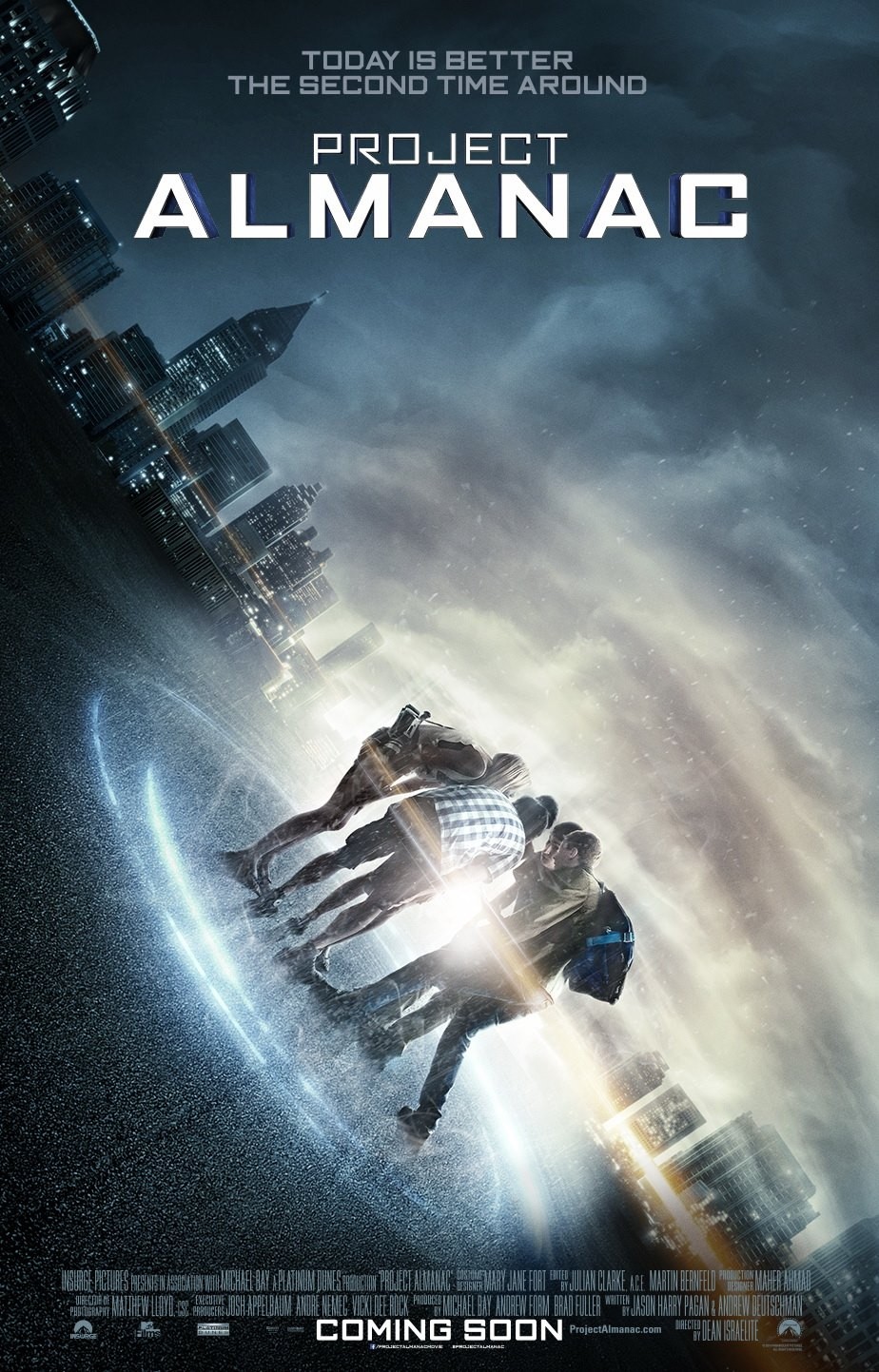
2001 is the only film that merits – for me – a score of 10/10.  It was the first film that really made me sit up and realise just how powerful and inspiring a single film could be.  I found out everything I could about its production, read Arthur C. Clarke’s original story The Sentinel, promoted it as much as I could to my friends – still not buying it, though – and fell in love with this amazing director called Stanley Kubrick.  Thirty-six years and umpteen thousand movies have passed since that first viewing, but 2001 still impresses me with its verisimilitude and its adherence to strict scientific rules (no sound in space – take that Gravity!).  I love the film’s pace, the almost languid approach that allows the viewer to take in so much detail, and the beauty inherent in space travel.  2001 is often regarded as sterile and unemotional, but there is joy to be had here, humour as well (the toilet instructions), and a sense that destiny is only a leap of faith away.  There is awe, and wonder, and expectation and that very human of characteristics, the need to explore, to broaden and expand one’s horizons, to see what lies over the next hill.

I was asked once if the timing of when I saw 2001 for the first time was in any way important in terms of how much I liked it.  And I think the timing was vitally important.  Up ’til then, my movie diet consisted of old black and white movies, silents and serials.  Modern film had failed to have any kind of impact, and in some ways I distrusted it (or perhaps I didn’t understand it), and I only saw 2001 because it was a science fiction film, and those kinds of movies I could deal with.  But, what did I know?  It opened up a whole new world for me, and set me on the path to watching movies with a greater passion and enthusiasm than I ever would have done before then.  In effect, it helped me chart my own growth, as an individual and as a film buff.  And I will be eternally grateful to it, and to Mr Kubrick.

Share this:

  • Click to share on X (Opens in new window) X
  • Click to share on Facebook (Opens in new window) Facebook
  • More
  • Click to print (Opens in new window) Print
  • Click to email a link to a friend (Opens in new window) Email
Like Loading...

The Hunger Games: Catching Fire (2013)

10 Tuesday Dec 2013

Posted by dullwood68 in Movies

≈ 3 Comments

Tags

Action, District 12, Donald Sutherland, Drama, Francis Lawrence, Gale, Haymitch, Jennifer Lawrence, Josh Hutcherson, Katniss Everdeen, Mockingjay, Peeta, Philip Seymour Hoffman, President Snow, Review, Sci-fi, Suzanne Collins, Woody Harrelson

Hunger Games Catching Fire, The

D: Francis Lawrence / 146m

Cast: Jennifer Lawrence, Josh Hutcherson, Liam Hemsworth, Woody Harrelson, Donald Sutherland, Philip Seymour Hoffman, Elizabeth Banks, Stanley Tucci, Lenny Kravitz, Jeffrey Wright, Amanda Plummer, Sam Claflin, Toby Jones, Jena Malone, Willow Shields

Picking up from the end of The Hunger Games, part two of the franchise – Mockingjay is being adapted into two parts, due in 2014 and 2015 respectively – sees Katniss Everdeen (Lawrence) trying to fit in to a post-Games world where she is now seen as a symbol of hope for the beleaguered districts.  Becoming increasingly aware of the social injustice around her, Katniss tries her best to balance protecting her family from the less-than-veiled threats of President Snow (Sutherland) against the increasing demands made of her to be the symbol that promotes the resistance.  With things made even more difficult by her mixed feelings for Peeta (Hutcherson), and the attentions of Gale (Hemsworth), Katniss finds herself struggling to find her way in a world that is changing rapidly both around her, and because of her.

Aware of her increasing importance to the resistance movement, President Snow plots to destroy her with the help of new Games Master Plutarch Heavensbee (Hoffman).  In order to do this the next Hunger Games is designed to pit Katniss against the remaining winners in a kind of Best of the Best tournament.  She also has to contend with Peeta taking part as well and trying to keep him safe.  For his part, Peeta wants to keep Katniss safe in order for her to remain a beacon of hope.  With both of them striking deals with Haymitch (Harrelson) to protect the other, Katniss is unaware that their are deeper political manoeuvrings going on behind the scenes, manoeuvrings that will have a greater effect on her life than she could ever imagine.

As that awkward beast, the middle part of a trilogy, Catching Fire builds on the first movie’s strengths and benefits immensely from an even more assured and commanding turn from Lawrence.  She dominates proceedings from start to finish, eclipsing her co-stars with ease – no mean feat given the calibre of actors such as Hoffman and Sutherland – and gives such a layered, intelligent performance that it almost threatens to overwhelm the rest of the movie.  Full marks to director Lawrence and screenwriters Simon Beaufoy and Michael Arndt then for making Catching Fire such an exciting, dramatic episode that grips throughout, and successfully juggles the widening story arc with more intimate moments and the kind of cutting-edge visuals we’ve come to expect from big-budget sci-fi movies.

Hunger Games Catching Fire, The - scene

With the movie in such assured hands, Catching Fire is free to impress on even further levels: the gritty realism of District 12 contrasted with the spectacular opulence of the Capitol, both triumphs of art direction and production design; the costumes courtesy of  Trish Summerville (her costumes for Effie Trinket (Banks) are even more outlandish than those of the first movie); the score by James Newton Howard, by turns austere,  stirring and richly evocative from scene to scene, supporting effortlessly the emotional and physical elements; and the superb photography by Jo Willems, a feast for the eyes and even more impressive when seen at an IMAX cinema – the Hunger Games tournament is played out in the full IMAX format; it adds a whole new dimension to the movie, and the scale is suitably impressive: the lagoon seems impossibly huge and the forest thickly impenetrable.

But the scale of the movie is nothing without the characters that inhabit it, and here the cast display a greater confidence in their roles, while newcomers such as Hoffman, Claflin and Malone fit in with ease.  As already noted, Lawrence is excellent, while Hutcherson and Hemsworth overcome the limitations of the source material to forge much stronger characters than you’d expect.  Sutherland is as icy as the President’s name implies, and Hoffman creates a devious sadist in Heavensbee: all self-satisfied smiles and preening behaviour.  Tucci excels (as always) as the overly coiffed broadcaster Caesar Flickerman, Wright and Plummer have small but important roles as fellow Victors Beetee and Wiress, and once again, as Haymitch, Harrelson proves what a versatile actor he is by nearly stealing the movie out from under Lawrence – but only nearly.

With two more films to come, the producers have given themselves a hard task to overcome.  Catching Fire, in terms of the novels, was the point at which author Suzanne Collins began to lose her grip on the overall storyline.  Where Katniss and Peeta and Gale go from here is already known by millions; the trick will be to turn what was a largely disappointing resolution to Katniss’s story into something as exhilarating as this adaptation.  It will be interesting to see if they manage it.

Rating: 9/10 – a bold adaptation that retains all the strengths of the novel, and manages to jettison all the aspects that marred it; a rare sequel that stands on its own and towers over its predecessor.

Share this:

  • Click to share on X (Opens in new window) X
  • Click to share on Facebook (Opens in new window) Facebook
  • More
  • Click to print (Opens in new window) Print
  • Click to email a link to a friend (Opens in new window) Email
Like Loading...

Illegal Aliens (2007)

05 Thursday Dec 2013

Posted by dullwood68 in Movies

≈ Leave a comment

Tags

Action, Aliens taking over the world, Anna Nicole Smith, Chyna, Comedy, David Giancola, Joanie Laurer, Megagravitron, Review, Sci-fi

Illegal Aliens

D: David Giancola / 96m

Cast: Lenise Sorén, Gladise Jimenez, Anna Nicole Smith, Joanie Laurer, Kevin McGuire, Patrick Burleigh, Dennis Lemoine, Woody Keppel, Michael J. Valentine

This low-budget mash-up of Charlie’s Angels and Men in Black deserves some kind of award for the most movie references shoved – sometimes unwillingly – into one movie.  From random shots to one-liners to visual effects to footage lifted from other movies, Illegal Aliens proves to be a surprisingly enjoyable experience; it even raises a smile with its fart jokes.

Three aliens  – Cameron (Sorén), Drew (Jimenez) and Lucy (Smith) – are sent to Earth to protect it from potential invasion by other aliens.  They set up shop in Hollywood as stunt coordinators (did I mention how far-fetched this movie was?), and for three years all is quiet until a renegade alien (Laurer) lands on Earth and takes over the body of a mob boss’s wife.  The alien, Rex, takes over as mob boss and uses the mob to help her (yes, Rex is a she, even in alien form) steal various items which, together, will allow her to build a megagravitron, a device that will pull the Moon into the Earth and destroy all life.  Backed by holographic know-it-all Syntax (McGuire), our three heroines vow to stop Rex’s plan and save the Earth.

Illegal Aliens - scene

That Illegal Aliens is cheesy, cheap and chock-full of over-acting, often woeful special effects and too many “Jeez, they didn’t!” moments, is actually to miss the point.  This movie is deliberately cheesy and cheap etc.  What else can you say about a movie that has a Main Villian Monologue Timer appear on screen when Rex explains her motivation for what she’s doing?  (And yes, that is how ‘villain’ is spelt onscreen.)  And how else do you explain the occasional breaking of the fourth wall, particularly at the movie’s end?  And yet, for the most part, it works.  If you take the movie for what it is, and not try to make too much out of it, then it’s actually a rewarding experience.  But you also have to have a liking for this kind of movie already.  If you go into this one blind, then all you’ll see is a silly spoof that makes too much of Lucy being brainless, Laurer adding a maniacal laugh at the end of almost every sentence, and underling Ray (Lemoine) being shot several times over and yet still going strong at the movie’s end.

As for the acting, Sorén and Jimenez do well in spoofing the Kate Jackson and Jaclyn Smith roles from the original Charlie’s Angels, while Smith – in what was her last movie – does the ditzy klutz role (worryingly) to perfection; she’s like a child that’s too distracted to learn things properly.  Laurer, better known as WWE wrestler Chyna, is surprisingly good as Rex, downplaying her physicality and using her voice and facial expressions to good effect, and channelling her inner Vincent D’Onofrio.  Giancola keeps it all moving at a good pace, and and the action sequences, again, are better than expected – especially the one lifted from Red Heat (1987).  The humour is broad, there is a fair amount of slapstick, and the whole thing is done with a knowing wink to the audience: look out for the guard who won’t fight Jimenez because his shift has just ended.

NOTE: This was a troubled shoot, with Smith proving unreliable within the first few days of filming; at the time she had personal issues surrounding her marriage.  If you’re interested in finding out more about the movie’s production and what was going on behind the scenes then watch Addicted to Fame (2012).

Rating: 6/10 – a silly sci-fi spoof that hits the mark more often than it (perhaps) has a right to do; one for the fans and anyone who likes frat humour.

Originally posted on thedullwoodexperiment website.

Share this:

  • Click to share on X (Opens in new window) X
  • Click to share on Facebook (Opens in new window) Facebook
  • More
  • Click to print (Opens in new window) Print
  • Click to email a link to a friend (Opens in new window) Email
Like Loading...

Sharknado (2013)

03 Tuesday Dec 2013

Posted by dullwood68 in Movies

≈ 3 Comments

Tags

Drama, Hurricane, Ian Ziering, John Heard, Review, Sci-fi, Sharks, SyFy Channel, Tara Reid, The Asylum, Thriller, Tornados

D: Anthony C. Ferrante / 86m

Cast: Ian Ziering, Tara Reid, Cassie Scerbo, Jaason Simmons, John Heard, Alex Arleo, Chuck Hittinger, Aubrey Peeples

With a title like Sharknado, this movie already has one strike against it.  That it’s also made by The Asylum for the SyFy Channel makes two more.  And… it’s out!

Any movie should be given the benefit of the doubt.  As the saying correctly has it, don’t criticise what you haven’t seen.  But there are times when to say this would be wrong, when the whole concept of a fair hearing, and leaving your prejudices at the door, is completely, totally and utterly a lost cause.  And ladies and gentlemen, here is one of those times.

Let’s not beat around the bush: Sharknado isn’t so bad it’s good, it’s just plain awful, and in ways that you can’t anticipate.  It takes the idea of low-concept movie making to somewhere below the acceptable nadir, and stakes its claim as the most inept, appalling movie ever made.  There are levels of bad this movie practically races past in its efforts to be dreadful.  If there was a clear intention to make the worst movie possible, and the filmmakers actually sat down and planned it to look and sound like this then, ladies and gentlemen of the jury, there can be only one verdict handed down this day: life imprisonment without hope of parole.

Beginning with a confusing scene set aboard a fishing boat, Sharknado sets out its stall of fake goods from the start.  A storm hoves into view and before you can say “holy flying sharks” the crew are all eaten by sharks that are being thrown about like tooth picks by the violent winds.  The movie then switches focus to the California coastline and bar owner/surfer Fin (Ziering).  When sharks that are attempting to outrun the storm – hey, I’m guessing here – start chewing on the local surfers and swimmers, including Fin’s pal Baz (Simmons), Fin, along with feisty bar girl Nova (Scerbo) and permanent lush George (Heard), decides that everyone needs to get to higher ground, as it’s a sure thing the storm – now upgraded to a hurricane – is going to cause untold devastation and, wait a minute!  Aren’t those sharks swirling around in the hurricane?  And aren’t they liable to just fall out of the sky at any minute and chomp on whoever’s unfortunate to hang around for dinner?

Sharknado - scene

With his estranged family – ex-wife April (Reid), son Matt (Hittinger), and daughter Claudia (Peeples) – living up in the hills, Fin and his entourage head over to rescue them.  With all sorts of obstacles in their way – flooded roads, marauding sharks popping up at every turn, the hurricane getting nearer as well – it looks unlikely they’ll live long enough to make it.  But they’re a plucky bunch, and before you can say “holy plot contrivances” they reach Fin’s family; once April’s new boyfriend is reduced to so much chum, they make a break for the airbase where Matt is doing some ATC work, and from there devise a plan to kill all the sharks, stop the hurricane in its tracks (it’s now subdivided into three huge water spouts), and save the California coastline from further devastation/a colossal insurance bill/being the source of the end of the world.  (Any of these could be true.)

Just writing that synopsis is difficult enough.  Seeing Sharknado in all its non-glory is harder still.  Yes, The Asylum make bad movies, yes the SyFy Channel is home to some of the worst monster mash-ups in recent history (Sharktopus (2010) anyone?), but this is just the worst kind of cynical movie making, with a script that makes no sense at all, where the characters behave like they were lobotomised a short while before everything went wrong, where the direction has all the style and originality of a toddler’s tea party, where the cast struggle and then give up quickly with any attempts at real acting (“just say the lines, keep your head down and it’ll all soon be over”), where the woeful special effects plumb new depths of ineptitude, where cutaways and inserts provide most of the photographic style, where the editing seems less fluid and more cut and splice with a hacksaw, and where the occasional gore effects are – surprise! – the only halfway decent aspect of the movie.  Sharknado is so bad it’s appalling, and so appalling it’s devoid of any worth at all.

If you have to watch Sharknado, and I suspect there are plenty of you out there for whom this will be as much a challenge as a must-see, then take this one piece of advice with you into the living room/lounge/den/bedroom/wherever: have no expectations whatsoever; that way you’ll survive the experience relatively intact.

Rating: 1/10 – saved from my first ever 0/10 rating by the acceptable gore effects (too few and far between though); atrocious, incompetent and utterly irredeemable as cinema, all those involved should hang their heads in shame.

Share this:

  • Click to share on X (Opens in new window) X
  • Click to share on Facebook (Opens in new window) Facebook
  • More
  • Click to print (Opens in new window) Print
  • Click to email a link to a friend (Opens in new window) Email
Like Loading...

Killers from Space (1954)

25 Monday Nov 2013

Posted by dullwood68 in Movies

≈ Leave a comment

Tags

50's sci-fi movie, Alien threat, Aliens, Atom bomb, Drama, Peter Graves, Review, Sci-fi, Thriller, W. Lee Wilder

killers-from-space_39ecf069

D: W. Lee Wilder / 71m

Cast: Peter Graves, James Seay, Steve Pendleton, Frank Gerstle, John Frederick (as John Merrick), Barbara Bestar, Shepard Menken

Following an A-bomb test, scientist Dr Doug Martin (Graves) goes missing when the plane he was in collating data about the blast, crash lands, killing the pilot. A while later he returns to the base where he works overseeing the bomb tests. He can’t remember what has happened to him after the plane went into a nose-dive, or how he got a surgical scar on his chest that he didn’t have before. Given an initially clean bill-of-health by both the military – represented by Colonel Banks (Seay) and medic Major Clift (Menken), as well as FBI agent Briggs (Pendleton) – Martin is sent home with his wife, Ellen (Bestar) to recuperate. Instead, Martin becomes anxious about being able to work on the next bomb test, and attempts to get himself back on the team. Still considered a security risk by Colonel Banks and Briggs, Martin resorts to breaking into the safe where his colleague Dr Kruger (Gerstle) keeps the test data – well, he doesn’t exactly break in, as he knows the combination; as a perceived security risk, you’d have thought someone would have changed it straight away to avoid such a thing happening.

Martin then takes the information – on a scrap of paper, no less – out into the desert where he is surprised by Briggs. Following a short sequence where Martin tries to evade everyone looking for him, he is taken back to the base and given sodium amytal in an attempt to find out what happened to him after the plane crash. What Martin reveals is the presence of aliens on Earth, aliens with a plan to take over our planet, and who are hiding in the caves near the test site; they need the energy from the atomic tests to further their plans. Even after this, Martin isn’t believed. Can he save the day and thwart the aliens?

Killers from Space - scene

The answer is obvious; this is a 50’s sci-fi movie after all. And yes, it is as laughable as it sounds, and yes, the acting and the script and the direction and the photography and the sets and the dodgy rear projection and the aliens themselves – bug-eyed men who do become unsettling the more you look at them – all border on the dire, but Killers from Space, like the majority of 50’s sci-fi movies, plays everything straight, no matter how absurd or loony it looks and sounds. There’s no irony involved, no campy humour (such as began creeping in in the 60’s), and no attempt to make any more of its basic premise than it does. In short, it’s not aiming to be profound.

It’s fitfully entertaining, suffers from an extended sequence where Martin, trying to escape from the caves where the aliens are hiding out, encounters all manner of giant insects and lizards and tries to look suitably horrified (but fails), and has too many scenes that are stretched to ensure the movie doesn’t run at least fifteen minutes shorter (Martin, while hiding in his office until Kruger leaves, opens the door so many times to look out that you almost wish someone would see him, just to put an end to it all). As noted, the acting is borderline dire with only Pendleton and Graves showing any aptitude for the material, though not consistently. The ultra-low budget scuppers any attempt at making the movie look halfway professional, and Wilder’s direction proves that that his younger brother Billy definitely inherited the talent gene.

Rating: 3/10 – woeful, woeful, woeful, why fore art thou woeful? KIllers from Space wouldn’t have turned out quite so bad if anyone on the production side had had any idea of what they were doing; alas, they didn’t, and while Peter Graves and 50’s sci-fi completists should track it down, there’s nothing here for pretty much everyone else, even if you treat it as an unintentional comedy.

Share this:

  • Click to share on X (Opens in new window) X
  • Click to share on Facebook (Opens in new window) Facebook
  • More
  • Click to print (Opens in new window) Print
  • Click to email a link to a friend (Opens in new window) Email
Like Loading...

Zeta One (1969)

18 Monday Nov 2013

Posted by dullwood68 in Movies

≈ Leave a comment

Tags

Aliens, Angvians, Charles Hawtrey, Comedy, James Robertson Justice, Michael Cort, Nudity, Review, Sci-fi, Sexploitation, Spies, Zeta magazine

Zeta One

aka The Love Factor

D: Michael Cort / 84m

Cast: James Robertson Justice, Charles Hawtrey, Robin Hawdon, Yutte Stensgaard, Anna Gaël, Brigitte Skay, Dawn Addams, Wendy Lingham, Valerie Leon, Lionel Murton

Based on a story published in Zeta, a short-lived magazine from the 60’s that specialised in glamour/art photography, Zeta One concerns a race of women called the Angvians who live in a separate dimension to ours and kidnap women to ensure their race doesn’t die out. Secret agent James Word (Hawdon) is tasked with finding out where they come from, and to stop the nefarious Major Bourdon (Justice) and his henchman Swyne (Hawtrey) from succeeding with their own plans for the Angvians.

At this point I should mention that Zeta One is a sexploitation movie with sci-fi and spy movie trappings. So there’s plenty of partial and occasionally full-frontal nudity (though thankfully not involving either Justice or Hawtrey), and the kind of plot that involves nubile young women running around in next to nothing for no particular reason at all. There’s also a pantechnicon that serves as the device that enables trans-dimensional travel, a talking lift that won’t deposit anyone on the thirteenth floor because it’s superstitious, Angvian women who can kill by “shooting” with their hands, and Walter Sparrow as a strip club employee who repeats that all the girls inside are “lovely” and makes it look as if he got his lines mixed up.

The main storyline involves Bourdon trying to get a spy into the Angvians’ lair. He discovers that the Angvians’ next target is a stripper, Edwina Strain (Lingham). He kidnaps her first, gets her to swallow a tracking device (in pill form), then allows her to be kidnapped again (this time by the Angvians). The leader of the Angvians, Zeta (Addams), is aware of Bourdon’s game – though not the tracking device – and also the involvement of Word. She monitors everything and bides her time until one of her agents, Clotho (Gaël), is about to be killed by Bourdon. Then she instructs several barely clothed Angvians to eliminate Bourdon and his henchmen.

Zeta One - scene

Zeta One was obviously a low-budget movie (there certainly wasn’t much spent on wardrobe), and the deficiencies of such a shoot are there to see on screen. Seen now, over forty years after it was first shown, it has a fascinating my-god-did-they-really-do-that quality. Hawdon spends most of his screen time in bed with either Stensgaard or Gaël, and turns up at Bourdon’s base of operations after Bourdon’s been defeated (and only after he’s put on some waders!). Justice and Hawtrey look embarrassed and non-plussed respectively, while Addams does the least she can in each scene she’s in. Why any of them are in the movie is a good question.

So the movie itself is cheesy, not even remotely prurient, and while there is a lot of female flesh on display these aren’t supermodels we’re talking about.  It’s also slow in parts, notably at the beginning, and Michael Cort’s direction is hit-and-miss, the same as his script (he co-wrote it with Alistair MacKenzie), and the locations are underused. And yet… there are still things to enjoy, or that resonate. There’s the aforementioned lift, which comes completely out of left field; Word vs a revolving door; Hawtrey peering out of a phone box; Justice being kneed in the balls by Gaël and calling her a “little bitch”; the strip poker game that neither Hawdon or Stensgaard can win; and most disturbingly, the sight of Justice and Hawtrey standing over a topless Angvian who’s tied to a rack. On reflection it’s these little moments that make watching the movie worthwhile.

Rating: 5/10 – better perhaps than it should be and only because of its quirkiness (which I’m still not sure was entirely deliberate).

Originally posted on thedullwoodexperiment website.

Share this:

  • Click to share on X (Opens in new window) X
  • Click to share on Facebook (Opens in new window) Facebook
  • More
  • Click to print (Opens in new window) Print
  • Click to email a link to a friend (Opens in new window) Email
Like Loading...

Gravity (2013)

09 Saturday Nov 2013

Posted by dullwood68 in Movies

≈ Leave a comment

Tags

Action, Alfonso Cuarón, Astronauts, Drama, Emmanuel Lubezki, George Clooney, Hubble telescope, Outer space, Review, Sandra Bullock, Satellite debris, Sci-fi, Shuttle, Tim Webber

D: Alfonso Cuarón / 91m / 3D

Cast: Sandra Bullock, George Clooney, Ed Harris

Several years in the making, Gravity arrives with a tremendous amount of expectation attached to it, its cutting-edge visuals hinted at in both trailers that preceded it. What wasn’t given as much emphasis was the storyline. Having seen Gravity there’s a good reason why…

Towards the end of a shuttle mission to service the Hubble telescope, mission specialist Dr Ryan Stone (Bullock) and retiring astronaut Matt Kowalski (Clooney) are working outside the shuttle when they’re advised by Houston Mission Control (Harris) that debris from a Russian satellite (recently destroyed by the Russians) is heading towards them. Before they can get back inside the shuttle, the debris hits, killing another member of the team and disabling the shuttle altogether.  After Kowalski saves Stone from spiralling off into space, they head for the nearby International Space Station in the hopes of using one of its landing modules. But things don’t go according to plan…

Gravity - scene

There’s more to the story than that, but to mention any more would be a shame in terms of spoiling things, even if what does follow is disappointing in terms of the plot and Stone’s development as a character. Suffice it to say there follows a series of cliffhangers, and even though you can probably guess that Stone makes it back to Earth – doesn’t she? – it’s the way in which it’s arrived at that stops Gravity from being better than expected.

Thankfully, the visuals are superb, with space represented, if not accurately, then with a verve and a verisimilitude than adds to the (mock-)realism. The scenes where Stone is tumbling through space after the debris strike, where Earth seems to be tumbling around her as much as she is, are breathtaking, as is the opening sequence where the camera appears to be roving around the Hubble telescope in a dizzying whirl of images. As the movie continues, each scene is a feast for the eyes, with a standout moment coming when Stone reaches the ISS and the camera’s point of view – roving around Stone at first – suddenly becomes her point of view from inside her helmet (in 3D this effect is even more impressive). The technical advancement on view is nothing short of incredible and come the awards season, Gravity should be a shoo-in for pretty much every technical award going. The amount of work director Cuarón, director of photography Emmanuel Lubezki and visual effects supervisor Tim Webber have put into creating “space” as it’s never been seen before, close-up and frequently terrifying, has resulted in a movie that is both beautiful and astonishing to look at.
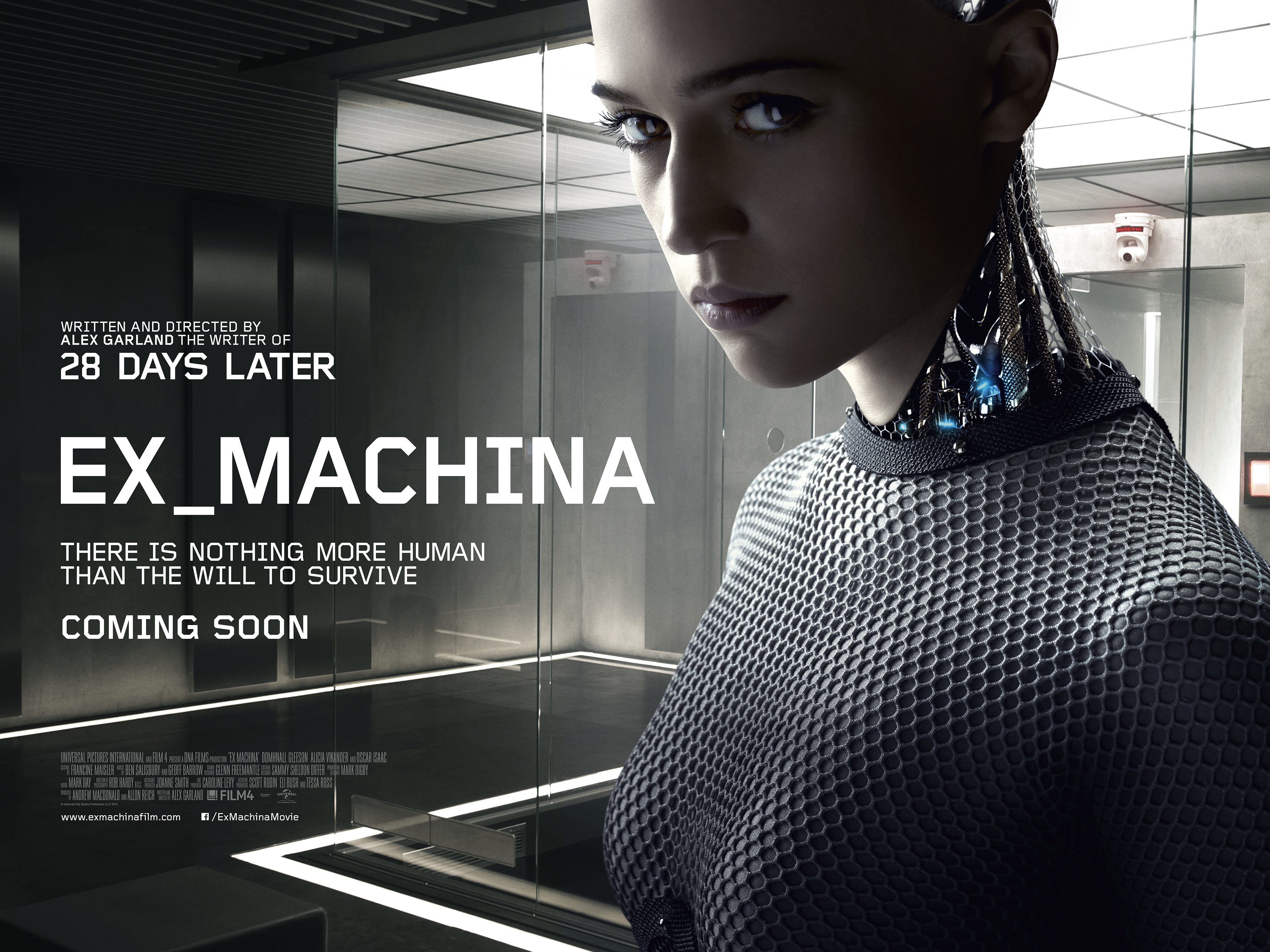
But still there’s Stone’s character and back story, neither of which inspire much of a connection, and stops the audience from empathising with her as much as needed. She remains a fairly reticent, removed character from beginning to end, and while Bullock does her best to project a degree of steely vulnerability, she never quite manages it; Stone only “steps up” in the final ten minutes and even then it seems forced rather than the organic conclusion of her journey for survival. Equally, Clooney isn’t best served by the character of Kowalski, a glib would-be raconteur with a story for every occasion that belies, and even undermines, his experience as an astronaut.

Rating: 7/10 – seen in 3D, Gravity is a genuine cinematic experience, and all the more impressive for being converted in post-production. There hasn’t been such an exceptional 3D movie since Avatar. It’s a shame then about the muted characters and the undercooked storyline.

Share this:

  • Click to share on X (Opens in new window) X
  • Click to share on Facebook (Opens in new window) Facebook
  • More
  • Click to print (Opens in new window) Print
  • Click to email a link to a friend (Opens in new window) Email
Like Loading...
← Older posts
Newer posts →

Blog Stats

  • 492,288 hits

Recent Posts

  • 10 Reasons to Remember Bibi Andersson (1935-2019)
  • Fantasia (1940)
  • Dances With Wolves (1990) – The Special Edition
  • Kiss of the Spider Woman (1985)
  • The Three Musketeers (1973)

Top Posts & Pages

  • "Science or no science, a girl's got to get her hair done" - 10 Female-centric Sci-fi Quotes from the 1950's
    "Science or no science, a girl's got to get her hair done" - 10 Female-centric Sci-fi Quotes from the 1950's
  • Lost for Life (2013)
    Lost for Life (2013)
  • Cardboard Boxer (2016)
    Cardboard Boxer (2016)
  • Carrie (2013)
    Carrie (2013)
  • Poster of the Week - Werewolf of London (1935)
    Poster of the Week - Werewolf of London (1935)
  • Mini-Review: Kill Your Darlings (2013)
    Mini-Review: Kill Your Darlings (2013)
  • Stray Bullet (2010)
    Stray Bullet (2010)
  • For One (Stretched) Week Only: Australian Cinema - Part V
    For One (Stretched) Week Only: Australian Cinema - Part V
  • Table 19 (2017)
    Table 19 (2017)
  • Dances With Wolves (1990) - The Special Edition
    Dances With Wolves (1990) - The Special Edition
Follow thedullwoodexperiment on WordPress.com

Blogs I Follow

  • Rubbish Talk
  • Film 4 Fan
  • Fast Film Reviews
  • The Film Blog
  • All Things Movies UK
  • Interpreting the Stars
  • Let's Go To The Movies
  • Movie Reviews 101
  • TMI News
  • Dan the Man's Movie Reviews
  • Film History
  • Jordan and Eddie (The Movie Guys)

Archives

  • April 2019 (13)
  • March 2019 (28)
  • February 2019 (28)
  • January 2019 (32)
  • December 2018 (28)
  • November 2018 (30)
  • October 2018 (29)
  • September 2018 (29)
  • August 2018 (29)
  • July 2018 (30)
  • June 2018 (28)
  • May 2018 (24)
  • April 2018 (21)
  • March 2018 (31)
  • February 2018 (25)
  • January 2018 (30)
  • December 2017 (30)
  • November 2017 (27)
  • October 2017 (27)
  • September 2017 (26)
  • August 2017 (32)
  • July 2017 (32)
  • June 2017 (30)
  • May 2017 (29)
  • April 2017 (29)
  • March 2017 (30)
  • February 2017 (27)
  • January 2017 (32)
  • December 2016 (30)
  • November 2016 (28)
  • October 2016 (30)
  • September 2016 (27)
  • August 2016 (30)
  • July 2016 (30)
  • June 2016 (31)
  • May 2016 (34)
  • April 2016 (30)
  • March 2016 (30)
  • February 2016 (28)
  • January 2016 (35)
  • December 2015 (34)
  • November 2015 (31)
  • October 2015 (31)
  • September 2015 (34)
  • August 2015 (31)
  • July 2015 (33)
  • June 2015 (12)
  • May 2015 (31)
  • April 2015 (32)
  • March 2015 (30)
  • February 2015 (37)
  • January 2015 (39)
  • December 2014 (34)
  • November 2014 (34)
  • October 2014 (36)
  • September 2014 (25)
  • August 2014 (29)
  • July 2014 (29)
  • June 2014 (28)
  • May 2014 (23)
  • April 2014 (21)
  • March 2014 (42)
  • February 2014 (38)
  • January 2014 (29)
  • December 2013 (28)
  • November 2013 (34)
  • October 2013 (4)

Create a free website or blog at WordPress.com.

Rubbish Talk

Film 4 Fan

A Movie Blog

Fast Film Reviews

The Film Blog

The official blog of everything in film

All Things Movies UK

Movie Reviews and Original Articles

Interpreting the Stars

Dave Examines Movies

Let's Go To The Movies

Film and Theatre Lover!

Movie Reviews 101

Daily Movie Reviews

TMI News

Latest weather, crime and breaking news

Dan the Man's Movie Reviews

All my aimless thoughts, ideas, and ramblings, all packed into one site!

Film History

Telling the story of film

Jordan and Eddie (The Movie Guys)

Movie Reviews & Ramblings from an Australian Based Film Fan

Privacy & Cookies: This site uses cookies. By continuing to use this website, you agree to their use.
To find out more, including how to control cookies, see here: Cookie Policy
  • Subscribe Subscribed
    • thedullwoodexperiment
    • Join 481 other subscribers
    • Already have a WordPress.com account? Log in now.
    • thedullwoodexperiment
    • Subscribe Subscribed
    • Sign up
    • Log in
    • Report this content
    • View site in Reader
    • Manage subscriptions
    • Collapse this bar
 

Loading Comments...
 

    %d