• 10 Reasons to Remember…
  • A Brief Word About…
  • About
  • For One Week Only
  • Happy Birthday
  • Monthly Roundup
  • Old-Time Crime
  • Other Posts
  • Poster of the Week
  • Question of the Week
  • Reviews
  • Trailers

thedullwoodexperiment

~ Viewing movies in a different light

thedullwoodexperiment

Tag Archives: Thriller

Trailer – Secret in Their Eyes (2015)

03 Monday Aug 2015

Posted by dullwood68 in Movies

≈ Leave a comment

Tags

Billy Ray, Chiwetel Ejiofor, Julia Roberts, Murder, Nicole Kidman, Preview, Remake, Thriller, Trailer

When The Secret in Their Eyes, an Argentinian thriller, was released in 2009, it was perhaps inevitable, given its critical success, that Hollywood would attempt a remake at some point – and here it is. Boasting a fantastic cast, including an almost unrecognisable Julia Roberts (could they have made her look more dowdy?), Secret in Their Eyes looks edgy and dark and compelling, and with Billy Ray in the driving seat as director and writer (bear in mind his last script was for Captain Phillips), this has all the potential to be as riveting as its predecessor, and pick up a healthy clutch of awards come 2016.

Share this:

  • Click to share on X (Opens in new window) X
  • Click to share on Facebook (Opens in new window) Facebook
  • More
  • Click to print (Opens in new window) Print
  • Click to email a link to a friend (Opens in new window) Email
Like Loading...

Murder of a Cat (2014)

29 Wednesday Jul 2015

Posted by dullwood68 in Movies

≈ Leave a comment

Tags

Blythe Danner, Drama, Ford's Megastore, Fran Kranz, Gillian Greene, Greg Kinn, J.K. Simmons, Mouser, Murder, Nikki Reed, Review, Theft, Thriller

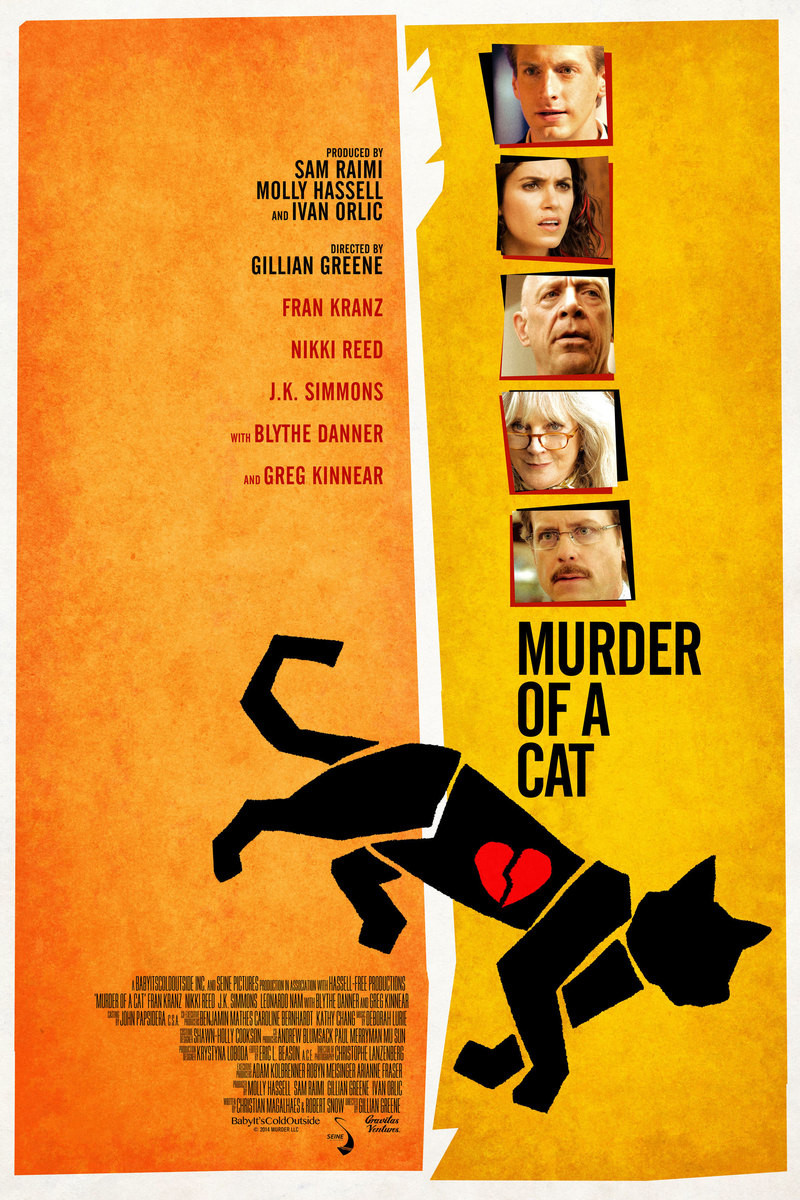
Murder of a Cat

D: Gillian Greene / 101m

Cast: Fran Kranz, Nikki Reed, J.K. Simmons, Greg Kinnear, Blythe Danner, Leo Nam, Brian Turk, Aidan Andrews

Clinton Moisey (Kranz) is still smarting after the closure of his comic book store, thanks to the arrival of a large supermarket called Ford’s. He lives with his mother, Edie (Danner) and his pet cat Mouser. Recently, Mouser has been disappearing for long periods and doesn’t seem his old self. When Clinton takes Mouser to the vet’s, it’s all put down to his advanced age. Clinton isn’t so sure, but things take a darker turn the next morning when he wakes to find Mouser lying dead in the road outside his home, and with a bolt from a crossbow sticking out of him.

Clinton calls the police. Sheriff Hoyle (Simmons) arrives but decides there’s not much he can do except file a report and hope for the best. Clinton is outraged by this, and decides to find out who killed Mouser by himself. A local boy (Andrews) tells him that he saw Mouser just after he was hit by the bolt, and it wasn’t outside Clinton’s home. When the boy shows him the spot where he saw Mouser, Clinton is shocked to see a lost pet poster that shows a picture of Mouser, but under another name, and with an address on it. He finds the address and encounters Greta (Reed). It transpires that her home was where Mouser was disappearing off to. After some initial suspicion about each other’s motives, she and Clinton agree to try and find out who killed Mouser.

Greta recognises the bolt as one that would have been sold at Ford’s. She used to work there until recently, but doesn’t say why she left. At Ford’s they discover that the brand of crossbow used is only sold in that one store, but when the store’s owner, Al Ford (Kinnear), refuses to show them details of any purchases, Clinton causes a scene and is thrown out. Later, he sneaks into the store’s warehouse and finds that the shelf where the crossbows are kept is empty; he also learns that one of the employees, Yi Kim (Nam) is using the crossbow boxes to remove computer equipment from the store and sell it to a fence.

Things become further complicated when Clinton misreads Greta’s growing interest in him, and Sheriff Hoyle is revealed to be dating his mother. When he tells the sheriff about Yi Kim’s activities, he manages to persuade Hoyle to go to Kim’s house and search it. They don’t find anything, but Clinton swipes Yi’s phone. On it he finds several photos that prove what Yi is doing, but when he takes this evidence to Al Ford, he finds the store owner depressed over his impending divorce, and certain that the fence Yi is selling to is actually Greta…

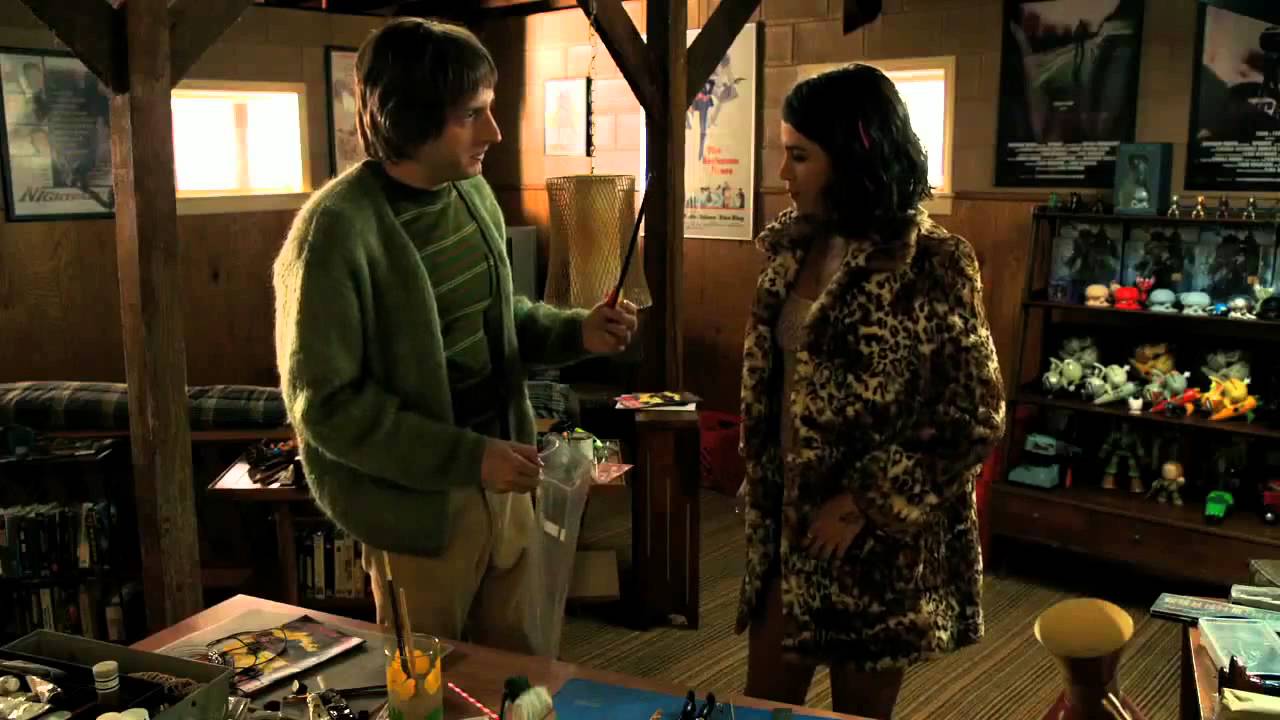
Murder of a Cat - scene

On the face of it, Murder of a Cat is a quirky, noir-tinged murder mystery with an unlikely victim, and an even more unlikely “detective”. Clinton Moisey is an adolescent trapped in an adult’s body, an older, less hyper Fred Figglehorn perhaps, but with the same selfish, socially awkward behaviour and lack of empathy towards others. When he implores Sheriff Hoyle to find Mouser’s murder, his outrage at Hoyle’s disinterest is evident but also a little unnerving. It’s the intensity that makes Clinton seem like a crazy person, and while the movie spends quite a lot of time supporting his search for justice, where the narrative takes him actually robs his cause of any emotional investment made by the viewer. As the thefts from Ford’s take priority over the murder investigation, so Clinton becomes less intense (if still determined), and his shaggy mop top gives way to a more coiffured hairstyle, changing both his look and his attitude.

By providing Clinton with a makeover, the movie ultimately robs him of the demanding, aggressive, petulant behaviour that makes him stand out in the first place. In short, he mellows, and while this may have seemed like a great idea for a character arc, it actually means the opposite: Clinton becomes less interesting as the movie goes on, and other characters – Ford, in particular – take over. It’s a strange process to watch, as a movie’s main character, though still driving the narrative forward, ends up being a bit of a bystander in his own story. Thanks to the script by Robert Snow and Christian Magalhaes, the movie never overcomes this approach and often stalls as Clinton struggles to make the next connection in the mystery. It’s as if they didn’t trust his dogged determination – a trait all the great detectives share – to fully engage the audience, and were uncertain if his way of behaving would invoke any sympathy.

The movie is further undone by some trite and unconvincing dialogue, some of which sounds so awkward that the cast do well in dealing with it all. Kinnear is saddled with some of the stiffest lines in recent memory – “I am a phony, kid. You were right about that. My whole life’s been an act” is one of the more memorable challenges he has to overcome, but there are plenty more where that came from, and though as mentioned above the cast do their best, it’s still too noticeable for comfort.

Of the cast, Kranz is a committed Clinton, absurdly childish and arrogant but lacking the support from the script and from Greene to make Clinton more likeable. Reed is efficient but used mostly to fill in the blanks in the story (she has a lot of exposition to deal with), while Simmons and Danner tread water with characters who come perilously close to being stereotypes. It’s Kinnear who makes the most impact though, taking an unevenly detailed character and making Ford the most interesting role by the movie’s end. It’s a small triumph that boosts Murder of a Cat in its last half hour, and without it, would have made the movie end on a whimper.

This is Greene’s first feature, but even though she’s the wife of Sam Raimi, it’s clear she hasn’t learnt too much from him, directing the majority of scenes with a flat, often bland approach that hurts the movie tonally and waters down both the drama and the often haphazard comedy elements, making some parts of the movie feel undeveloped. It’s a shame as there is the germ of a really good idea here, but sadly, it could – and should – have been a whole lot better.

Rating: 5/10 – a missed opportunity for everyone concerned, and the kind of movie that proves endlessly frustrating to watch, Murder of a Cat loses ground quickly and never recovers; it aims for quirky and bizarre but in reality is actually tedious and too rudimentary to work effectively throughout.

Share this:

  • Click to share on X (Opens in new window) X
  • Click to share on Facebook (Opens in new window) Facebook
  • More
  • Click to print (Opens in new window) Print
  • Click to email a link to a friend (Opens in new window) Email
Like Loading...

Oh! the Horror! – Lake Placid vs Anaconda (2015) and Sharknado 3: Oh Hell No! (2015)

25 Saturday Jul 2015

Posted by dullwood68 in Movies

≈ Leave a comment

Tags

A.B. Stone, Action, Anacondas, Anthony C. Ferrante, Black Lake, Cassie Scerbo, Clear Lake, Corin Nemec, Crocodiles, David Hasselhoff, Double bill, East Coast, Horror, Ian Ziering, Review, Sequels, Sharknado, Stephen Billington, Tara Reid, Thriller, Wexel Corporation, Yancy Butler

Lake Placid vs Anaconda

D: A.B. Stone / 91m

Cast: Corin Nemec, Yancy Butler, Stephen Billington, Skye Lourie, Oliver Walker, Ali Eagle, Annabel Wright, Laura Dale, Robert Englund

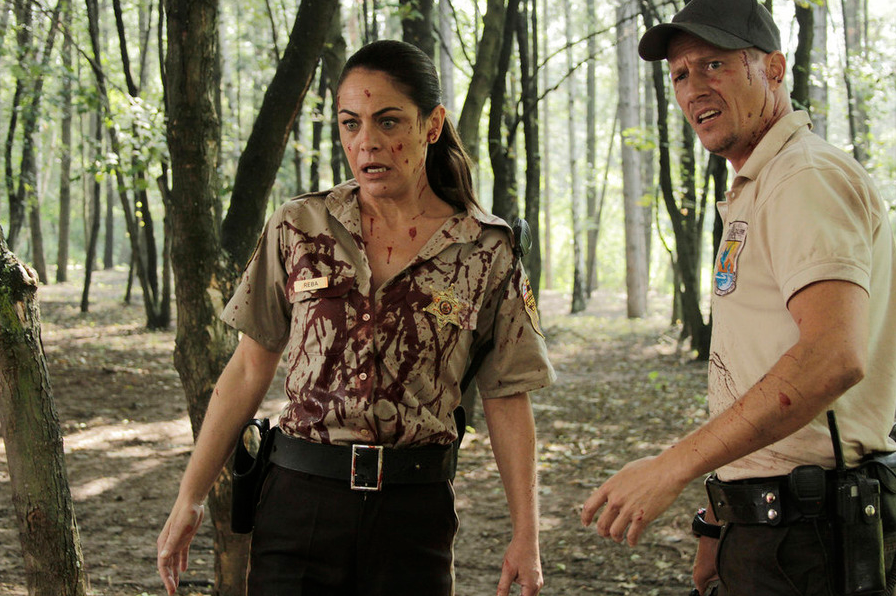
When the Wexel Corporation decides to create a hybrid anaconda/crocodile in order to increase their chances of procuring the rare properties of the Blood Orchid plant, their attempts to do so lead to both creatures being on the loose in and around Black Lake and Clear Lake. Fish and Wildlife ranger Will Tull (Nemec) and local sheriff Reba (Butler) team up to track and hunt them while at the same time trying to keep the news of the creatures’ escape quiet from the local residents.

Tull’s daughter, Bethany (Lourie), however, is at Clear Lake as part of her sorority pledge, and soon finds herself and her friends at the mercy of several crocodiles. While Tull and Reba try to find her, and fight off the attacks of the crocodiles, Wexel head Sarah Murdoch (Wright), along with hired muscle Beach (Billington) and two of his men, track the female anaconda who is due to lay her cross-fertilised eggs anytime soon. As the body count rises, the importance of finding the female anaconda before this happens becomes of paramount importance.

Lake Placid vs Anaconda - scene

For anyone who thought Lake Placid: The Final Chapter (2012) was really the final entry in the series, here’s yet another stab at the idea that ran out of steam in Lake Placid 2 (2007). If you’ve seen The Final Chapter, then as far as the crocodile parts of this movie go it’s very much business as usual, with Butler and England returning to provide a link with the previous instalment (and both looking as if they’ve regretted it). The inclusion of the anacondas from that particular series, along with the quest for the life-giving properties of the Blood Orchid, was probably felt to be a good enough idea to kickstart a new franchise – you can guess what happens in the final scene – but the whole teens in peril/let’s hunt predators in the woods set up is as dull and uninspired as it was before in both series.

Rookie director Stone is unable to make anything out of Berkeley Anderson’s patchwork script, and the performances range from perfunctory to embarrassing (Walker’s comedy deputy). Once again the special effects are of the sub-par CGI variety, with the requisite blood splatters looking even more fake than usual. The anacondas play second fiddle to the crocodiles, while the lacklustre Bulgarian locations give a clear indication of how far both series’ have fallen in terms of their production values. If, as seems likely, there’s to be another in the (joint) series, then it’s hard to imagine it could be any worse than this entry.

Rating: 3/10 – of only superficial interest, and one for the fans if no one else, Lake Placid vs Anaconda is an attempt at regenerating two flagging franchises that falls flat on its face within the first five minutes; that it’s terrible from start to finish is a given, but you have to see it to realise just how terrible it actually is.


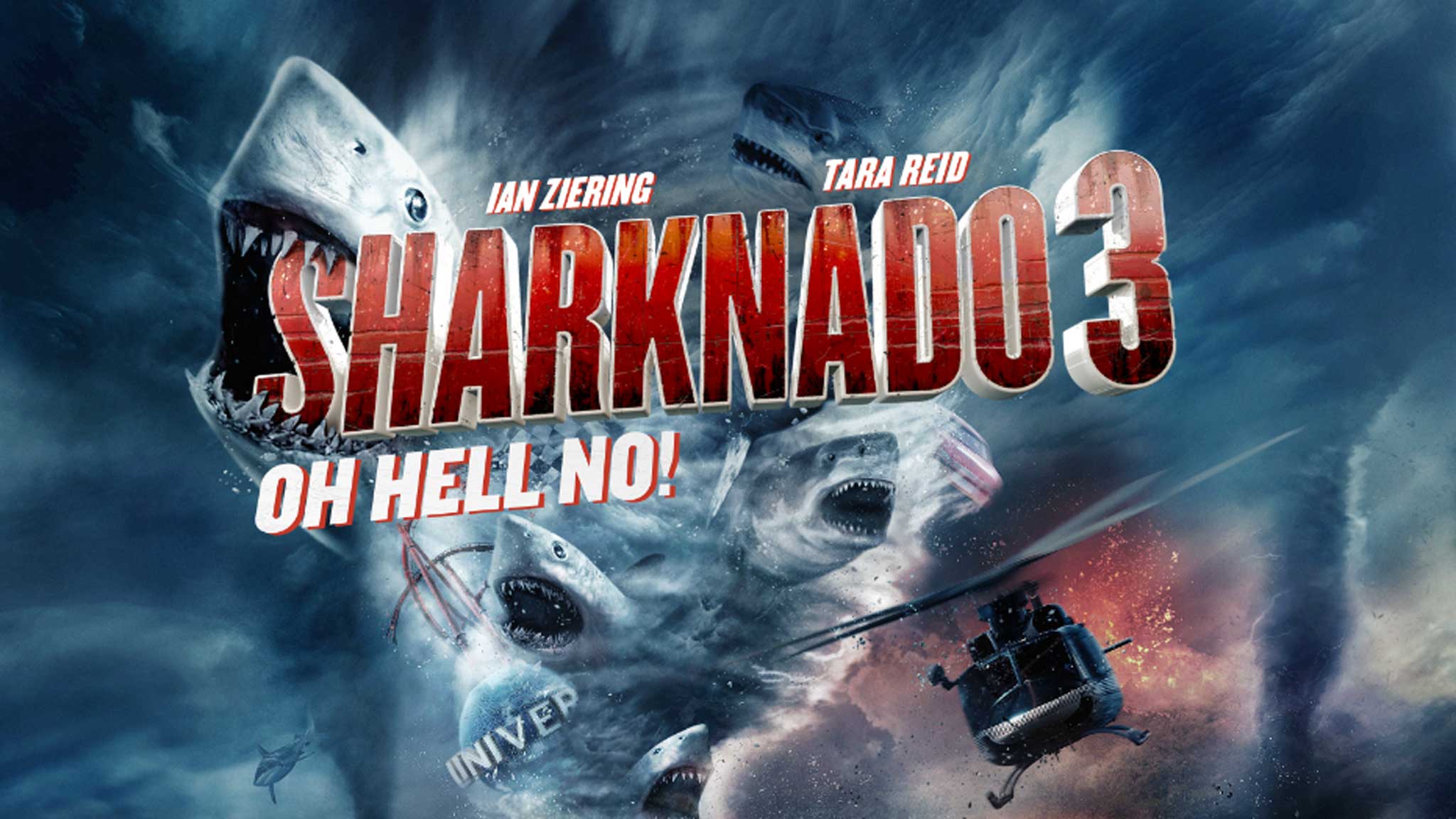
Sharknado 3

D: Anthony C. Ferrante / 88m

Cast: Ian Ziering, Tara Reid, Cassie Scerbo, Frankie Muniz, Ryan Newman, David Hasselhoff, Bo Derek, Mark Cuban

In Washington D.C. to receive a Freedom medal from the President (Cuban), unlucky hero Fin Shepard (Ziering) finds himself dealing with yet another, more intense sharknado that causes an incredible amount of destruction, hundreds of deaths, and leads to Fin saving the President’s life. Worse still, a series of storms out in the Atlantic are converging on America’s east coast, and look set to generate the worst, most devastating sharknado of them all. With his ex-wife April (Reid) close to giving birth, and spending some time with her mother May (Derek) and daughter Claudia (Newman) at the Universal Studios theme park in Florida, Fin determines to get to her as quickly as possible, and make sure she’s safe.

With mini-sharknados popping up out of the blue on his journey south, Fin finds himself rescued from one such obstacle by his friend and partner in shark killing, Nova (Scerbo). She and a friend, Lucas (Muniz) have been trying to find a way of stopping the sharknados from happening ever again, but as they help Fin get to Florida, their vehicle is destroyed and they’re forced to fly there. After a crash landing, Fin and April are reunited, and together with Nova they come up with a plan to put paid to the approaching weather system, but their plan fails, leaving Fin with only one option: to ask for help from his father, a retired NASA Colonel (Hasselhoff). By using a space shuttle, their plan is to drop the main fuel tank into the eye of the storm, but when that idea proves ineffective, there’s only one thing left to do: use the supposedly defunct Star Wars programme from the Eighties…

Sharknado 3 - scene

The first Sharknado (2013) was awful, dreadful rubbish that seemed unaware of its failings or how terrible it was. The second – aptly titled Sharknado 2: The Second One (2014) – was much better as it tried to be ironic and aware of its own absurdity. With Sharknado 3: Oh Hell No!, the makers have upped their game considerably in terms of how insane it all is and by throwing away the rule book entirely (this is perhaps the only movie where you’ll hear the line, “There’s sharks… in space!”). The sharks literally pop up out of nowhere: inside buildings, on staircases, through windows, and memorably, in the President’s secure underground bunker. With no thought to logic or any consideration for providing some level of working coherence, the movie races through each preposterous scene in Thunder Levin’s script with all the intended mayhem of a five year old with ADHD.

It’s a movie that’s incredibly, ridiculously stupid… and yet, by going balls out in terms of how absurd it can be, the movie actually attains a degree of charm that the previous movies never managed. It’s also laugh out loud funny in a way that doesn’t alienate the viewer, or have them shaking their head and groaning in despair. Instead, the laughs come thick and fast because of all the preposterous antics going on, and it’s clear the makers have just decided to make the movie as bizarre and reckless as they possibly can. Returning cast members Ziering, Reid and Scerbo play it as straight as they can, while there’s a plethora of cameos – Jerry Springer, Chris Jericho, Jedward, Lou Ferrigno, Jackie Collins, and Ne-Yo to name but a few – that adds to the fun, and the low rent special effects show no signs of being improved upon. With the potential for yet another episode to come, it’s hard to think how much more barmy this series can get.

Rating: 4/10 – as each movie improves on the last, Sharknado 3: Oh Hell No! is (currently) the series’ zenith and nadir combined, and shows that its makers have a firmer grasp on what makes these movies so successful; still terrible though in many, many, many ways, by trading on its own idiocy the movie makes a virtue of being extremely silly and defiantly farcical.

Share this:

  • Click to share on X (Opens in new window) X
  • Click to share on Facebook (Opens in new window) Facebook
  • More
  • Click to print (Opens in new window) Print
  • Click to email a link to a friend (Opens in new window) Email
Like Loading...

Careful What You Wish For (2015)

24 Friday Jul 2015

Posted by dullwood68 in Movies

≈ Leave a comment

Tags

Affair, Dermot Mulroney, Drama, Elizabeth Allen Rosenbaum, Isabel Lucas, Lake Lure, Murder, Nick Jonas, Paul Sorvino, Review, Thriller

Careful What You Wish For

D: Elizabeth Allen Rosenbaum / 91m

Cast: Nick Jonas, Isabel Lucas, Paul Sorvino, Dermot Mulroney, Graham Rogers, Kandyse McClure, Leon Pridgen, Kiki Harris, David Sherrill, Kevin L. Johnson

Doug Martin (Jonas), along with his mother and father (Harris, Sherrill), live in the small town of Lake Lure. During the summer, Doug works at a local bar with his best friend, Carson (Rogers). Carson’s aim is to find Doug a girl (or girls) he can make out with, but Doug hasn’t had much success with girls in the past, plus he also finds Carson’s approach too desperate, not to mention off-putting. Focusing on his work, Doug’s rather staid life is thrown for a loop when new neighbours move on next door. Elliott Harper (Mulroney) is a self-made millionaire with a trophy wife, Lena (Lucas). Doug is instantly attracted to Lena but keeps his distance, watching her when he can. Lena notices him but appears unperturbed by his behaviour.

One day, Doug is in his room when he hears a cry from the road outside. He rushes out and finds Lena standing beside her car, scared of something inside. It turns out to be a spider; Doug gets rid of it and Lena thanks him. Later that night, he finds Lena waiting outside his home, sheltering from the rain having locked herself out. She persuades him to help her get back in by breaking a basement window. In the Harpers’ kitchen, Lena seduces Doug and they have sex several times during the night. The next morning, Lena tells Doug that he can’t tell anyone about what they’ve done in case Elliott finds out.

At the same time that he and Lena take every opportunity to be together, Elliott employs Doug to help him renovate a sail boat he’s recently purchased. One day, the three of them go out on the boat and Doug sees bruising on Lena’s face. A succession of minor injuries culminates in Lena calling Doug from the hospital to come get her. Now completely afraid, Lena gives Doug an untraceable mobile phone so they can be in contact with each other. A little while later, Lena texts Doug saying she’s done something terrible. When he goes with her to her home, he finds she’s killed Elliott by smashing his head in with a fire extinguisher.

Convincing Doug that the police won’t believe it was a case of her defending herself, Lena lets him come up with the solution: to take Elliott’s body out on his boat, make it look like the head trauma happened there, and then set fire to the boat. But when Elliott’s remains are discovered, and it becomes clear that Lena stands to inherit ten million dollars from her husband’s death, the arrival of an insurance investigator, Angie Alvarez (McClure), begins to make life very uncomfortable for both of them.

Nick Jonas in Careful What You Wish For

If you’ve read the above synopsis, then by now you’re probably thinking something along the lines of “The wife’s up to no good” or “”It’s all a big frame up”, or even “Jesus, are they still making these kind of movies?” The correct response to all three suppositions is “Yes”, but the most important thought you could possibly have about Careful What You Wish For is: “Why am I watching this in the first place?”

Sadly for the efforts of all involved, the choice of title and tagline lend themselves far too easily to rejoinders such as “Careful what you wish for – you might get it”, or “His second mistake was reading the script”, or some such variation. It’s not that the movie is bad – which it is – it’s that this is a movie that doesn’t have one original idea to offer, and throws in one of the most badly handled “twists” in recent memory, all in service to a plot that was probably old before the movies were invented, and which has been done to death ever since. The question then becomes, not why is this movie so bad, but why was this movie made in the first place?

It’s hard to believe that the makers of Careful What You Wish For thought that their movie could be successful given it’s a rehash of a story told so often before that as soon as Lena makes her first appearance – the now hackneyed shot of a tanned, sandalled foot as its owner gets out of an expensive car – the rest of the movie falls into place, ticking all the required boxes and ending up like the cinematic version of predictive text. What doesn’t help is that everything is so deliberately signposted, it wouldn’t be too unfair to say that a blind person could see what was going to happen.

So with a screenplay by Chris Frisina that doesn’t allow the viewer to be anywhere near one step ahead, it’s left to Rosenbaum’s patchy direction (one minute she’s interested in what’s going on, the next she’s busy draining the tension out of the whole movie), and the performances of Jonas and Lucas to rescue things. But neither of them are up to the task. Jonas (yes, he is one third of the Jonas Brothers) is clearly trying to step up from being a teen heartthrob and gain some credibility as a serious actor. However, he’s got some way to go, particularly in scenes that require some degree of confrontation where he just looks uncomfortable (and the movie takes every opportunity for him to be shirtless or flashing his behind). Worse though is Lucas, whose wooden performance is, in places, simply embarrassing.

With only some pretty visuals and the performance of Sorvino to recommend it, the movie is further encumbered with a score by Josh Debney and the Newton Brothers that’s allowed to overwhelm certain stretches of dialogue, and which isn’t even that rewarding to listen to. Rogier Stoffers’ photography is proficient but bland, and the pace is often too slow for the thriller elements to have the proper effect. All in all, this is the kind of movie that’s been done better elsewhere, but not quite as poorly as it’s been made here.

Rating: 3/10 – dreary and hopelessly obvious, Careful What You Wish For is a movie that doesn’t seem to want to impress anyone at all, and which remains unconvincing throughout; if an hour and a half of tedium is what you’re looking for, then step right up – but don’t say you weren’t warned.

Share this:

  • Click to share on X (Opens in new window) X
  • Click to share on Facebook (Opens in new window) Facebook
  • More
  • Click to print (Opens in new window) Print
  • Click to email a link to a friend (Opens in new window) Email
Like Loading...

Meet Me There (2014)

18 Saturday Jul 2015

Posted by dullwood68 in Movies

≈ Leave a comment

Tags

Drama, Dustin Runnels, Horror, Lex Lybrand, Lisa Friedrich, Micheal Foulk, Review, Sexual dysfunction, Sheol, Thriller

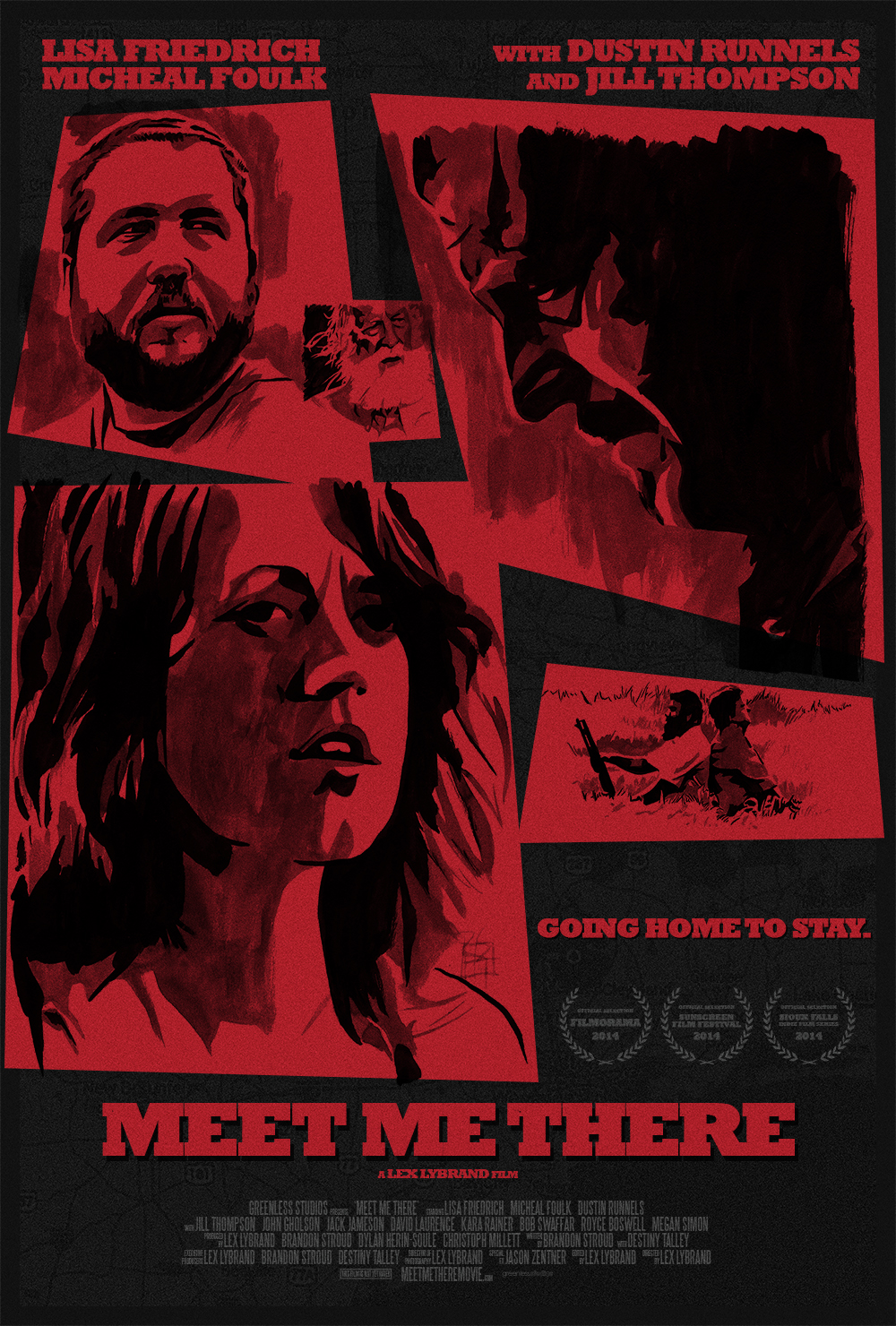
Meet Me There

D: Lex Lybrand / 93m

Cast: Lisa Friedrich, Micheal Foulk, Dustin Runnels, Jill Thompson, Megan Simon, Jack Jameson, John Gholson, David Laurence, Bob Swaffar

Ada (Friedrich) and Calvin (Foulk) are in a committed relationship but there’s a problem: Ada, despite wanting to, is unable to make love with Calvin. She tries to, but every time she does she becomes uncomfortable and stops. Calvin is understanding and makes no effort to pressure her, mainly because Ada has recurring flashbacks to scenes and images from her childhood, fragments of memory that appear to be affecting her ability to have sex, but which she is unable to decipher.

As these fragments are from Ada’s childhood – a childhood she has very little memory of – Calvin suggests that they visit her hometown of Sheol, Oklahoma in an attempt to find some answers. Ada agrees and they make the journey to where Ada grew up. Along the way, Calvin raises the point that Sheol is another name for Hell; Ada replies that it was. When they arrive, they stop at a gas station where two local men (Jameson, Gholson) challenge and intimidate Calvin, eventually running him off with the threat of being shot. He and Ada travel on to the road on which she lived, but when they get to where her home should be it’s no longer there; nor is there any evidence it was ever there.

Confused, Ada and Calvin go to Ada’s aunt Lindsay (Thompson). Aunt Lindsay proves to be unhelpful and aggressive, and Ada and Calvin seek help at the local church where they encounter the Reverend Woodward (Runnels). Woodward tells Calvin that people come to Sheol to die by their own hand, and it’s his job to help them through it. When Ada and Calvin leave the church they find their car has been set on fire. As they try to figure a way of leaving Sheol, they find themselves pursued through the woods by some of the townspeople. They manage to avoid them and head back to the church. Reverend Woodward agrees to show them a way out of town through the woods, but when they reach a stream, events take an unexpected turn for the worse…

Meet Me There - scene

Beginning with a prologue that sees two strangers meet an airport, then tracking their journey to a field outside Sheol, Meet Me There is an independent horror movie that – prologue over – takes its time in establishing its two central characters and building an eerie mood that, by the movie’s end, hangs like a pall over the material. It’s a confident approach by screenwriters Brandon Stroud and Destiny Talley, allowing the drama and the ever-growing sense of unease felt by Ada and Calvin to permeate each successive scene with increasing intensity. The script is also canny enough to take Ada’s haphazard memories and use them as a kind of McGuffin, with their importance eventually gaining less and less traction as the movie advances. Instead, the mystery of Sheol takes over, and the couple’s nightmare grows more pronounced.

By focusing on the mood of the piece, Stroud and Talley, along with multi-hyphenate Lybrand, have created a sombre and chilling tale of small town paranoia and appeasing sacrifice that is far more effective than its low budget origins would suggest. As Ada and Calvin’s initially hopeful journey to Sheol begins to give way to feelings of suspicion and terror, Lybrand and his writers do their best to ensure that Ada and Calvin’s reactions lie within the bounds of credibility, and that the actions of the townspeople never seem arbitrary but set within the parameters of the mystery that envelops them.

The imperilled couple are played with a large degree of understanding and skill by Friedrich and Foulk; not only are they believable as a couple, but their performances – which could so easily have sailed into the stratosphere named hysterical once they reached Sheol – remain considered and restrained in comparison to most other low budget horror movies where characters are chased through the woods or threatened with imminent death. Here, Ada and Calvin react and behave in a way that isn’t too stylised or removed from recognisable, understandable behaviour, and as they find themselves drawn ever deeper into the mystery of Sheol, both actors maintain the solid performances they’ve provided up ’til then.

They’re aided by Lybrand’s slightly off-kilter cinematography. Not exactly a new way of doing things, it’s still an effective way of highlighting the strangeness of Ada and Calvin’s situation and is used with careful attention to the scenes it’s used in. Otherwise the visual look of the movie doesn’t stray too far from a natural, straightforward approach that serves the majority of scenes well, and avoids any unnecessary frills. And with Lybrand serving as the movie’s editor, the movie is quite well assembled as well, though some shots are held for a little longer than is needed, especially those involving Runnels (best known as WWE wrestler Goldust).

A little less successful in terms of characterisation is the role of aunt Lindsay, well acted by Thompson, but so edgy and manic that her appearances threaten to undermine the carefully wrought suspense and low-key menace that otherwise makes the movie so quietly potent. Her facial appearance is also very distracting, and when she’s on screen the movie’s formidable mood is blunted. The sound too is mostly less than satisfying – it sounds as if everything was recorded with tin cans strapped to the front of the boom mic’s. But the sound isn’t a complete disaster as on occasion it adds to the overall mood, and on those occasions is ably supported and enhanced by Mark Daven’s creepy original score.

Rating: 7/10 – an above average entry in the low budget horror movie stakes, Meet Me There is an often intriguing movie that is held back from being more successful by a few budgetary constraints; that said, its strange disposition and increasingly doom-laden storyline has far more going for it than other movies of a similar ilk.

Share this:

  • Click to share on X (Opens in new window) X
  • Click to share on Facebook (Opens in new window) Facebook
  • More
  • Click to print (Opens in new window) Print
  • Click to email a link to a friend (Opens in new window) Email
Like Loading...

Nancy Drew… Reporter (1939)

13 Monday Jul 2015

Posted by dullwood68 in Movies

≈ Leave a comment

Tags

Bonita Granville, Crime, Drama, Frankie Thomas, John Litel, Literary adaptation, Murder, Mystery, Nancy Drew, Review, Series, Thriller, William Clemens

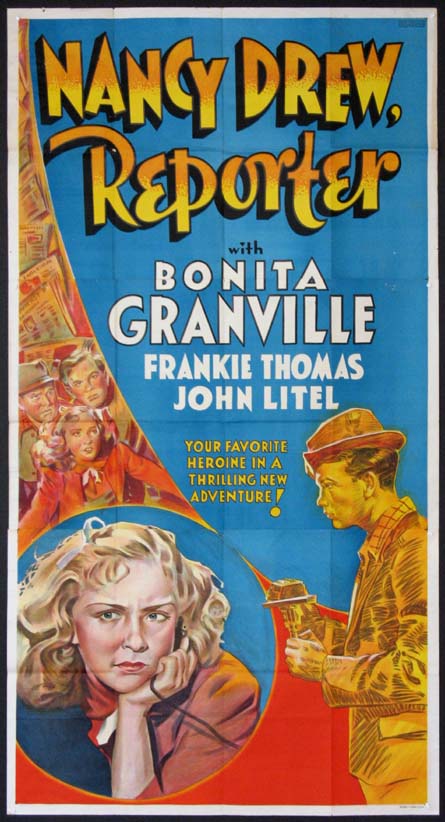
Nancy Drew... Reporter

D: William Clemens / 68m

Cast: Bonita Granville, John Litel, Frankie Thomas, Dickie Jones, Mary Lee, Larry Williams, Betty Amann, Jack Perry, Thomas E. Jackson, Olin Howland, Sheila Bromley

When she takes part in a newspaper contest, headstrong Nancy Drew (Granville) doesn’t like the assignment she’s given, so instead she swipes another reporter’s assignment: to cover the inquest of a woman, Kate Lambert, who was recently found dead. At the inquest, it’s revealed that Mrs Lambert was poisoned by a photographic chemical, and suspicion falls on her companion, Eula Denning (Amann). Protesting her innocence, and stating that whoever killed Mrs Lambert would have left fingerprints on the tin the poison came in, Eula is still remanded in custody for trial.

Also at the inquest is a man with a cauliflower ear (Perry) who hits Nancy’s bumper as he leaves the courthouse. She follows him to the Lambert house where he tries to gain entry, but Nancy and a guard stop him. She tells her father, well-known and respected lawyer Carson Drew (Litel), all about it but he warns her to leave well alone. Instead, Nancy gains the help of her neighbour, Ted Nickerson (Thomas) and together they visit Eula in jail. She tells them the tin must still be in the house and gives them a clue as to where to find it. At the Lambert house, Ted distracts the guard while Nancy sneaks inside and finds the tin. But the man is also there, and tries to grab the tin but Nancy gets away from him. She takes the tin to the police station, but before she can hand it over, the man’s girlfriend (Bromley) steals it from her.

Nancy discovers that the man is a boxer, Soxie Anthens, and she also discovers the gym where he trains. She and Ted go there and further learn that Soxie’s girlfriend is called Miss Lucas. They track her down to the Beldenburg Hotel, where they also find out that she’s gone to the Mandarin Cafe. Nancy and Ted head over there, and find Soxie’s girlfriend in the company of Miles Lambert (Williams), the son of the murdered woman. Alerting Soxie to their being together, he causes a scene when he arrives at the cafe. During the altercation, Nancy learns enough about the tin and the murder to set a trap for the killer.

Nancy Drew... Reporter - scene

The second of four movies made in 1938-9 by Warner Bros. and based on the character created by Edward Stratemeyer, Nancy Drew… Reporter is a fast-paced comedy whodunnit that has time to pause for a musical interlude, and adds two young “whippersnappers” in the form of Ted’s younger sister Mary (Lee) and her friend in mischief Killer Parkins (Jones) to the mix as often as it can. It has a certain degree of innocent charm, and is largely inoffensive, but beneath the irreproachable content of the plot and storyline, the movie is surprisingly subversive.

When Nancy steals the reporter’s assignment, she later justifies her actions by stating that a good reporter should always do what it takes to get the story. It’s the best example of the lying and manipulation that Nancy displays throughout the movie in her efforts to catch the killer. She hoodwinks Ted on more than one occasion, traps her father into defending Eula thanks to a fait accompli, and blatantly lies in order to get the newspaper to print a fraudulent headline in order to flush out the killer. In her quest to uncover the truth it seems that Nancy will bend or break the rules in whatever way she needs in order to do so. And it’s noticeable that she rarely – if ever – apologises.

With its heroine proving almost as devious and deceitful as the bad guys, the movie carries on as if it hadn’t noticed at all that Nancy was so duplicitous, and of course, she wins the newspaper contest (though, to be fair, she declines the cash prize, but accepts the accompanying medal). There’s too much of this ironic counterpoint for the movie to be an entirely comfortable watch, with its moral compass being so broadly compromised. Of course, Nancy isn’t the only character in the movies to behave in such a way, but this is a character who was intended to encourage young girls to read more; what message are they meant to be getting when Nancy behaves as if the usual rules don’t apply to her?

Away from the dubious character of Nancy, there’s the small matter of the plot, which is very basic to say the least, and which advertises the villains straight away at the inquest. Usually, the killer is revealed in the final reel, but here anyone will be able to work out their identity well in advance, and this helps to dilute whatever drama or tension is inherent in the plot. In fact, there are times when the plot is so lightweight it’s almost gossamer thin. But the cast are entertaining to watch, with Granville and Thomas proving a good pairing, while Litel is kept firmly in the background, aside from an uncomfortable moment when he carries Granville off to bed and sings an awkward lullaby to her while also tucking her in.

Series’ director Clemens maintains a loose feel throughout and gives his cast enough room to indulge themselves when appropriate, and this happy-go-lucky approach makes the movie seem smarter and more energetic than it actually is, and despite the best efforts of screenwriter Kenneth Gamet. A mention too for editor Frank DeWar whose skill in the cutting room means the movie contains very little fat, and has a freshness to it even now, over seventy-five years since its release.

Rating: 6/10 – allowing for its (probably) unintentionally crafty heroine, Nancy Drew… Reporter is still an interesting, if flawed, take on the teen sleuth genre; bolstered by good performances, though with a mystery that even a blind person could work out, the movie is nevertheless a minor treat for fans of this type of movie, and of Granville in particular.

Share this:

  • Click to share on X (Opens in new window) X
  • Click to share on Facebook (Opens in new window) Facebook
  • More
  • Click to print (Opens in new window) Print
  • Click to email a link to a friend (Opens in new window) Email
Like Loading...

Return to Sender (2015)

10 Friday Jul 2015

Posted by dullwood68 in Movies

≈ Leave a comment

Tags

Drama, Fouad Mikati, Letters, Nick Nolte, Nurse, Prison visits, Rape, Revenge, Review, Rosamund Pike, Shiloh Fernandez, Thriller

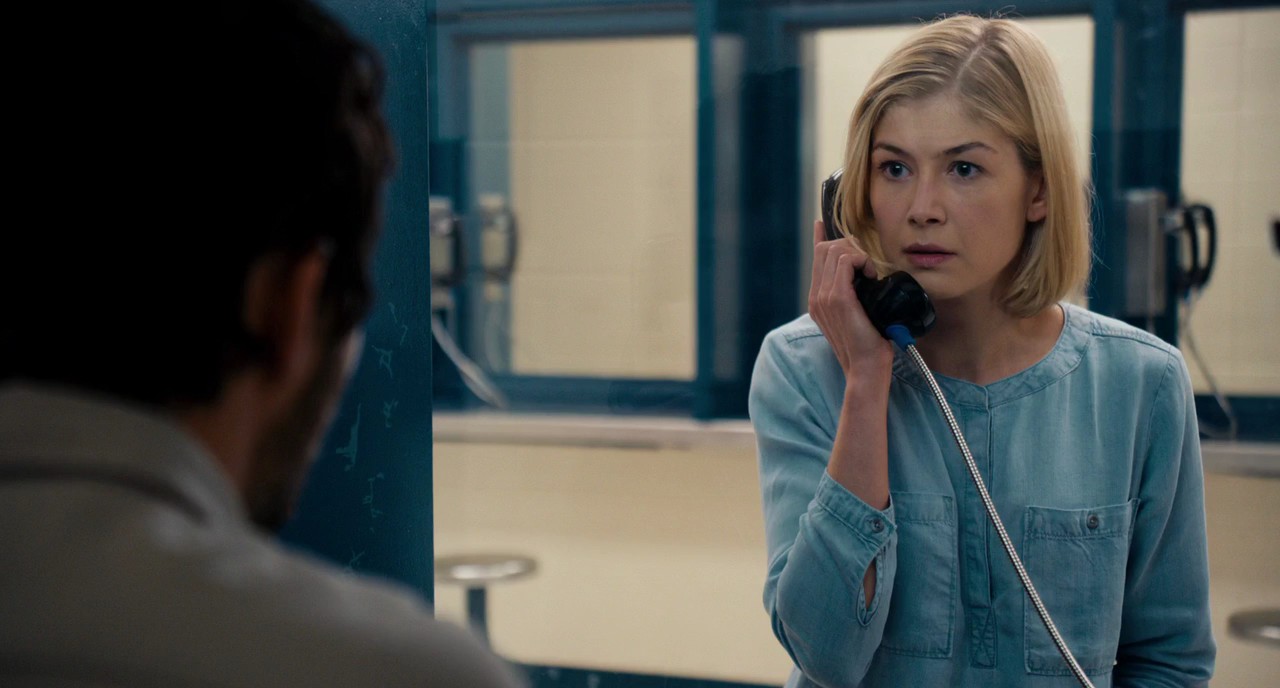
Return to Sender

D: Fouad Mikati / 95m

Cast: Rosamund Pike, Shiloh Fernandez, Nick Nolte, Camryn Manheim, Alexi Wasser, Rumer Willis, Illeana Douglas

Miranda Wells (Pike) is a nurse aiming to transfer to another hospital and become a surgical nurse. She lives alone and has few friends beyond her colleagues at work. She also has obsessive-compulsive tendencies, preferring to use her own pens, and work and rest in a (mostly) clean environment. Unattached, she’s persuaded by a friend to go on a blind date. On the day in question she’s getting ready for her date when she realises someone is at her front door. Thinking it’s her date, she tells him he’s too early but allows him in. When she becomes uncomfortable with his being there, Miranda asks him to leave. Instead, he locks the front door and assaults her, eventually raping her in the kitchen.

The man, whose name is William Finn (Fernandez), is caught, tried and sent to prison. Miranda’s recovery is aided by her father, Mitchell (Nolte), but her ordeal has affected her to the point where her transfer is denied and she finds her right hand trembles uncontrollably without warning. She experiences outbursts of anger, and is unable to move from her home because no one will buy a house where a rape occurred. Some time later she decides to write a letter to Finn. The letter comes back to her marked ‘Return to Sender’, but Miranda continues to send Finn letters until on one returned letter he writes “You win”. Keeping all this from her father, Miranda travels to the prison where Finn is incarcerated.

Her visits increase until Finn is able to tell her that he is being released. He asks her if she would want to see him once he’s out; she says yes. When Finn arrives at her home she is in the middle of having some work done on the outside, work that Mitchell has been trying to help her with. Miranda gets Finn to do some of the work as recompense for what he did, but when her father finds out he’s been there, Miranda has to persuade him that it’s all part of her coming to terms with what happened and being able to move on. Mitchell is disgusted by her attitude, and stays away, leaving Miranda and Finn by themselves…

Return to Sender - scene

An odd mix of character study and thriller, Return to Sender is a colourless movie that tries to squander a very good performance from Pike, plays flatly throughout, and shies away from anything too controversial in its efforts to tell its story. It’s a dull movie as well, with Patricia Beauchamp and Joe Gossett’s script lacking any real punch or tension, and it’s further undermined by Mikati’s weak direction.

With all this it’s a wonder that Pike that comes off as well as she does, elevating her performance above and beyond the production’s attempts to stifle her. It’s the main reason why the movie doesn’t work as well as it should, as from the beginning it almost strives to make Miranda unappealing and unsympathetic, so much so that when she is raped, the shock isn’t there for the viewer; it makes it all the harder to feel the appropriate sadness and horror for her. Even in the following scenes, where we see her battered and bruised in hospital, Miranda’s vacant stare is tellingly depicted by Pike but lacks the emotional heft that should come with it. Thanks to Mikati’s matter-of-fact approach to the scenes, Pike is left adrift, emoting in a way that should have audiences hoping Finn gets his just desserts – and then some – but which in truth does nothing of the sort. Instead, Finn disappears from the movie while Miranda spends her time aimlessly watching TV or trying to control her hand tremors.

As this section takes some time to work itself through, Miranda’s sudden decision to write to Finn seems like a turn out of left field, a way of propelling the plot forward but without any appreciable conviction. It does lead to some misdirection (or confusion, depending on your point of view), as Miranda and Finn begin to bond in prison, and the possibility of her attempting to extract some kind of revenge becomes apparent. And yet, it’s also possible that some form of emotional, even physical relationship may develop between them, and it’s all thanks to Pike’s glacial features and the way in which she makes Miranda a blank slate to look at. Again, without Pike’s performance, the movie – and this part of it – wouldn’t be anywhere near as effective as it is, and this despite any attempt to support the actress and the presentation of her character.

Fernandez fares even worse, with the reasons for Finn’s actions glossed over in a couple of mumbled sentences. As a character, Finn is too “wet” for the actor to have any chance of doing anything worthwhile with him, and Fernandez looks uncomfortable in most of his scenes, as if he’s realised early on that nothing he does will make Finn hated or pitied, or more than just a necessary plot device. Nolte coasts along, putting in the minimum effort required, and there’s an awkward scene where he’s required to fall over a porch swing and be helped up by Pike; the redundancy of the moment is shocking.

With so little effort made to sell the plot and with Pike stranded as if she’s been imported from another thriller entirely, the movie fails in other areas as well, not least in its look, which is like that of a slightly more expensive TV movie. As mentioned above, it leaves the movie feeling colourless, and there’s little going on in most scenes that grabs the attention (even the rape scene is shot in such a way that you become too aware of the choreography and the camera positions). And the movie ends so abruptly, the average viewer will be thinking, “Really? That’s it?” With all this to detract from potential enjoyment, it’ll be a fortunate viewer who takes anything more from this movie than Pike’s sterling performance.

Rating: 4/10 – muddled, poorly assembled, and lacking in focus, Return to Sender is a misfire that seems to have achieved such a status deliberately; Pike – if you haven’t guessed by now – is the only reason for watching, but good as she is, it’s a recommendation that should only be taken up after a lot of consideration and forethought.

Share this:

  • Click to share on X (Opens in new window) X
  • Click to share on Facebook (Opens in new window) Facebook
  • More
  • Click to print (Opens in new window) Print
  • Click to email a link to a friend (Opens in new window) Email
Like Loading...

The Absent One (2014)

06 Monday Jul 2015

Posted by dullwood68 in Movies

≈ 1 Comment

Tags

Boarding school, Cold cases, Conspiracy, Crime, David Dencik, Denmark, Department Q, Drama, Fares Fares, Jussi Adler-Olsen, Literary adaptation, Mikkel Nørgaard, Murder, Nikolaj Lie Kaas, Pilou Asbæk, Review, Sequel, Thriller

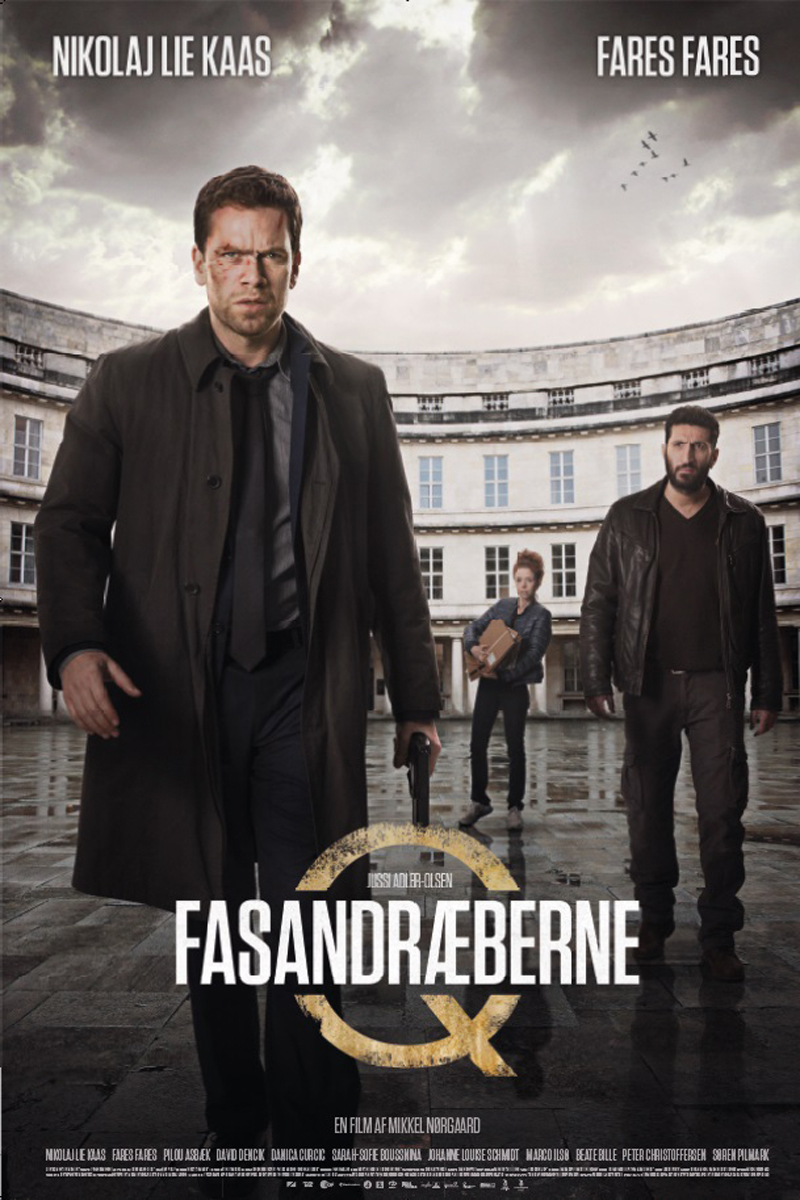
Fasandraeberne

Original title: Fasandræberne

D: Mikkel Nørgaard / 119m

Cast Nikolaj Lie Kaas, Fares Fares, Pilou Asbæk, David Dencik, Sarah-Sofie Boussnina, Danica Curcic, Nikolaj Groth, Søren Pilmark, Beate Bille, Marco Ilsø, Philip Stilling, Kristian Høgh Jeppesen, Johanne Louise Schmidt, Hans Henrik Clemensen, Peter Christoffersen, Katrine Rosenthal

At a police awards ceremony, cold case investigator Carl Mørck (Kaas) is accosted by a retired policeman who begs him to look into the case of his two children who were both killed in 1994. Mørck refuses, and later the man commits suicide, prompting Mørck, supported by his partner Assad (Fares) to look into the case. They learn that the siblings both attended the same boarding school, and that there was a call to the police – made by a young woman – alerting them to the crime. With this as their only clue, Mørck and Assad visit the school where they learn that the young woman was probably Kimmie Lassen (Boussnina); but unfortunately for them she hasn’t been seen in twenty years.

Learning also that Kimmie’s friends at the time included now reputable businessmen Ditlev Pram (Asbæk) and Ulrik Dybbøl (Dencik), and that the man who confessed to the crime, Bjarne Thøgersen (Jeppesen), was represented by the best criminal lawyer in Denmark, Bent Krum (Clemensen), and only served three years in prison, Mørck and Assad sense a conspiracy. They visit Thøgersen who alerts Pram to the new interest in the deaths. Pram hires a man named Albjerg (Christofferson) to look for Kimmie, while Mørck endeavours to find her first. But an older Kimmie (Curcic) is also a very wary Kimmie, and with the help of her friend, Tine (Rosenthal), she manages to stay one step ahead of everyone when she becomes aware that people are looking for her. But Albjerg tracks her down, and though she gets away, she also has a run in with Mørck that leaves him bruised and battered.

Meanwhile, Pram and Dybbøl use their political contacts to put pressure on senior police in an effort to get Mørck and Assad taken off the case. Furious, Mørck confronts his immediate boss (Pilmark) and makes enough of a case from the evidence that he’s amassed to show that it should be pursued further, and that Kimmie Lassen holds the key to what happened twenty years ago. When she is finally caught by the police, it seems that Pram and Dybbøl’s arrest is only a matter of time. But Kimmie has other ideas: she escapes and goes after them herself, as much to kill them first, and as much again to make up for her involvement in the deaths of the young brother and sister.

Fasandraeberne - scene

As much a riveting crime thriller as its predecessor, The Keeper of Lost Causes (2013), The Absent One is another triumphal adaptation of a novel by Jussi Adler-Olsen. With almost everyone involved in the first movie returning to make this one, the movie is like a seamless addition to what is an ongoing series. The tone, the feel, the pace, and the sensibility of The Absent One is such that anyone who has seen The Keeper of Lost Causes can slip into the series’ bleak, gloomy mise en scene with ease, sure in the knowledge that what follows will be of an equally high standard, and equally as satisfying (if not more so).

There are several reasons for this, not least the taut, gripping screenplay by Nikolaj Arcel and his writing partner Rasmus Heisterberg. In distilling Adler-Olsen’s novel they’ve kept the focus on the ripple effect the murders have had over the years, as well as Mørck’s inability to let something go once he’s got a grip on it. The detective’s persistence and dogged nature – which are pretty much all he has to keep him going – is beautifully expressed through Kaas’s beleaguered performance. This is a man who keeps his pain externalised to stop it from eating away at him inside, but the payoff is a lack of compassion and sympathy for others; he only takes on the case in the first place because he can’t deal with the guilt of refusing the retired policeman. Kaas gives a wonderfully fractured portrayal of Mørck, growing further into the character and inhabiting him completely.

Ably supported by Fares, whose Assad is never a foil for Mørck, Kaas heads up a cast that never puts a foot wrong, even in the smaller roles. The script supports them all the way, assembling the pieces of the plot with skill and precision, letting the viewer glimpse the events of twenty years ago without spoiling the true nature of the killings, and allowing the mystery surrounding those killings to remain in place almost until the very end. It’s a bold, confident approach, and allows the tension inherent in the story to build to a quietly devastating denouement (and which puts Mørck through the ringer once more – but then he probably wouldn’t have it any other way).

Retaining his place in the director’s chair, Nørgaard keeps things tightly focused and highlights the psychological toll felt by Kimmie over the course of twenty years (she has a terrible secret of her own that, when revealed, is the most upsetting thing seen in either movie). It’s to Nørgaard’s credit that Kimmie’s humanity is never downplayed,  and in the hands of Curcic, she’s a character so far removed from her younger self (also extremely well played by Boussnina) that the sadness of her situation is almost palpable. (In a better world, she and Mørck would make for an interesting couple.)

While the villains of the piece aren’t as effectively drawn, their callous natures are given plenty of screen time, as well as the slow disintegration of their self-confidence and eventual hubris. Asbæk and Dencik are appropriately cold and uncaring in their roles, revealing the innate hostility towards others that privilege has bestowed on them, and providing strong counterpoints to Mørck’s own disdain for others. It’s all reflected in the somber, unforgiving violence and shadowy dangers that permeate the movie and which help to make it such a rewarding (if slightly downbeat) experience.

Rating: 9/10 – a sequel that is as equally good as its forerunner, The Absent One is a dark, atmospheric thriller that is as uncompromising as it is compelling; with two further movies in the pipeline, let’s hope that the makers can maintain the quality shown so far.

Share this:

  • Click to share on X (Opens in new window) X
  • Click to share on Facebook (Opens in new window) Facebook
  • More
  • Click to print (Opens in new window) Print
  • Click to email a link to a friend (Opens in new window) Email
Like Loading...

Stung (2015)

04 Saturday Jul 2015

Posted by dullwood68 in Movies

≈ 1 Comment

Tags

Benni Diez, Birthday party, Clifton Collins Jr, Drama, Horror, Jessica Cook, Killer wasps, Lance Henriksen, Matt O'Leary, Review, Thriller

Stung

D: Benni Diez / 87m

Cast: Matt O’Leary, Jessica Cook, Clifton Collins Jr, Lance Henriksen, Eve Slatner, Cecilia Pillado

Caterers Julia (Cook) and Paul (O’Leary) have been booked for a birthday celebration for Mrs Perch (Slatner) at her house in the country. It’s make or break for the business, and Julia, who’s taken over since her father’s recent death, is particularly on edge and wanting to make a good impression. When they arrive and get set up, everything seems to be going in their favour, although Paul finds himself bothered by a bigger than average wasp. When the guests have arrived and the party is in full swing, the fun turns to horror as a swarm of these swaps erupts from a hole in the ground and begins attacking the guests. To make matters worse, these wasps don’t just sting their victims – they use them as cocoons from which they emerge even bigger and more powerful.

Fighting their way through the panic, Paul and Julia, along with Mrs Perch, her hunchbacked son Sydney (Collins Jr), their maid Flora (Pillado), and the local mayor (Henriksen), make into the house where they hide in the kitchen. But Mrs Perch has already been stung, and soon transforms into a giant wasp. The rest escape but in doing so, Flora is killed, leaving the remaining foursome to barricade themselves in the cellar. Deciding that their only real hope of escape is for someone to get to their catering van and bring it nearer to the house, Paul leaves the basement and retrieves the keys he dropped earlier. While he does, it soon becomes clear that Sydney has been stung as well. As he begins to change, a wasp’s head emerges from his hunch. Paul runs back when he hears Julia and the mayor cry out in fear. He knocks out Sydney and the three of them try and make their escape through the house. But when the mayor is attacked by one of the wasps, Julia and Paul have no option but to find their own way out.

Eventually they get outside and head for their van but are attacked by the biggest wasp yet. It impales Paul through his left shoulder and though Julia manages to sever the wasp’s limb it knocks her unconscious. When she comes to, the first thing she becomes aware of is Paul’s screams, which are coming from the house…

Stung - scene

A German-made movie with all the hallmarks of a low-budget horror sensibility where the concept is key, Stung is another entry in the nature gone wild sub-genre that harks back to the days of Them! (1954) and Tarantula (1955). Skipping any reason for the wasps’ behaviour (or origin), the movie sets out its stall quite early on with its wasp attack on a bee: clearly, something bad is going to happen if this is anything to go by. With the characters of Paul (carefree, rule-bending), Julia (determined, anxious), and Sydney (creepy, unreliable) firmly established, the party gets under way and Adam Aresty’s script gets on with the gleeful task of slaughtering a raft of minor characters before settling down to a game of wasp and mouse in the house, with Henriksen’s macho cliché-spouting mayor coming into his own (and stealing the movie).

From here the movie loses some of its momentum, reducing the number of wasps that appear, and concentrating on Paul and Julia’s burgeoning romance, an example of character building that thankfully doesn’t feel forced, thanks to the script and the playing of O’Leary and Cook. But once Paul is injured, the movie picks up the pace and heads for a bravura finale that features a chase sequence that definitely hasn’t been seen before. And with a coda that sets up a potential sequel, as well as providing the movie’s best sight gag, Stung ends on an unexpected, satisfying high.

But while the movie is entertaining enough, and its splatter effects convincingly gloopy, there’s a budgetary struggle that it never quite overcomes. With so many wasps erupting from the ground, and so many guests to feed on, their dwindling numbers from then on (replaced by an Aliens-style mother for the most part), actually serves to reduce the tension. While outside, Paul is only attacked by one wasp when there should be dozens more at least. Inside the house it appears there’s only one or two of the creatures prowling around, and one of those is quite easily despatched. And the final twenty minutes, with Paul trapped in the house with “Mother”, jettisons the whole idea of the wasps attacking people to grow larger, and settles instead for a queen wasp pumping out larvae that then have to be ingested. It’s an unsettling development, in the sense that the movie now feels like an insect version of James Cameron’s classic.

That this doesn’t spoil the movie entirely is down to Aresty’s tart script and Diez’s straightforward direction. This isn’t a movie with very many frills, and it’s all the better for it, telling its story with a degree of modesty and style that blunts any concerns the viewer may have about its content or how absurd it may be (of course it’s absurd – it’s a giant killer wasp movie!). There’s humour there as well, carefully included but not allowed to take away from the seriousness of the situation, and as mentioned before, the characters are credibly written considering what they’re going through (and no one behaves like a self-serving coward). Thanks to all the care and attention given to the material throughout, Stung can be taken for exactly what it is: a low-budget horror movie that’s entertaining on its own terms, and well worth seeking out.

Rating: 7/10 – some narrative concerns midway through shouldn’t detract from the fact that Stung hits just the right note in mixing strong drama, horror and an acceptable level of humour; maybe not the midnight classic it was aiming for but still a better than average killer insect movie – and how many similar movies can you say that about?

Share this:

  • Click to share on X (Opens in new window) X
  • Click to share on Facebook (Opens in new window) Facebook
  • More
  • Click to print (Opens in new window) Print
  • Click to email a link to a friend (Opens in new window) Email
Like Loading...

Monthly Roundup – June 2015

30 Tuesday Jun 2015

Posted by dullwood68 in Movies

≈ 1 Comment

Tags

Action, Animation, Beyond the Reach, Black Samurai, Blood, Brian Cox, Bulldog Drummond Comes Back, Bulldog Drummond in Africa, Children of the Corn: Genesis, Chris Evans, Chyler Leigh, Crazy Sexy Cancer, Crime, Curse of the Witching Tree, Daphne, Documentary, Dolph Lundgren, Drama, Drunk Wedding, E.E. Clive, Echelon Conspiracy, Ed Burns, Espionage, Every Secret Thing, Faults, Forrest Tucker, Fred, Gambling, Green Dragon, Gunsmoke in Tucson, Horror, Human trafficking, Imogen Poots, Indie movie, Jennifer Aniston, Jeremy Irvine, John Barrymore, John Howard, Kris Carr, Leland Orser, Leticia Dolera, Louis King, Mark Stevens, Martin Sheen, Mary Elizabeth Winstead, Michael Douglas, Miguel Ferrer, Mojave Desert, Movies, Murder, Noboru Iguchi, Not Another Teen Movie, Owen Wilson, Pamela Springsteen, Paul Bethany, Peter Bogdanovich, Prague, Predator: Dark Ages, Reviews, Rhys Ifans, Riley Stearns, Scooby-Doo! and the Samurai Sword, Serial killer, Shaggy, Shane West, She's Funny That Way, Skin Trade, Sleepaway Camp 2: Unhappy Campers, Thailand, The Four-Faced Liar, The Night Flier, The Posthuman Project, The Reconstruction of William Zero, Thriller, Tony Jaa, uwantme2killhim?, Vampire, Velma, Ving Rhames, Witch's curse, Zombie Ass: The Toilet of the Dead, Zombies, [Rec]³ Génesis

This month, the roundup is bigger than usual thanks to spending three weeks in sunny France, in an area where the Internet was an occasional luxury rather than a constant presence. But in between drinking copious amounts of beer and wine, and sampling far too much cheese and local bread, there was quite a bit of movie watching going on. These are the movies I watched in a gite in the middle of the gorgeous Brittany countryside, almost all of them a reminder that when life is this good you can forgive quite a bit…

The Posthuman Project (2014) / D: Kyle Roberts / 93m

Cast: Kyle Whalen, Collin Place, Josh Bonzie, Lindsay Sawyer, Alexandra Harris, Jason Leyva, Rett Terrell, Will Schwab

Rating: 5/10 – a group of teens develop super powers thanks to a device created by the dastardly uncle of one of them, and must thwart his plan to use it for immoral profit; pretty much a low-budget, amateur version of The Fantastic Four, The Posthuman Project relies on its not inconsiderable charm to help the viewer get past its rough edges, but the acting and the dialogue leave an awful lot to be desired, sometimes too much so.

Posthuman Project, The

Predator: Dark Ages (2015) / D: James Bushe / 27m

Cast: Adrian Bouchet, Amed Hashimi, Sabine Crossen, Ben Loyd-Holmes, Jon Campling, Joe Egan, Philip Lane, Bryan Hands

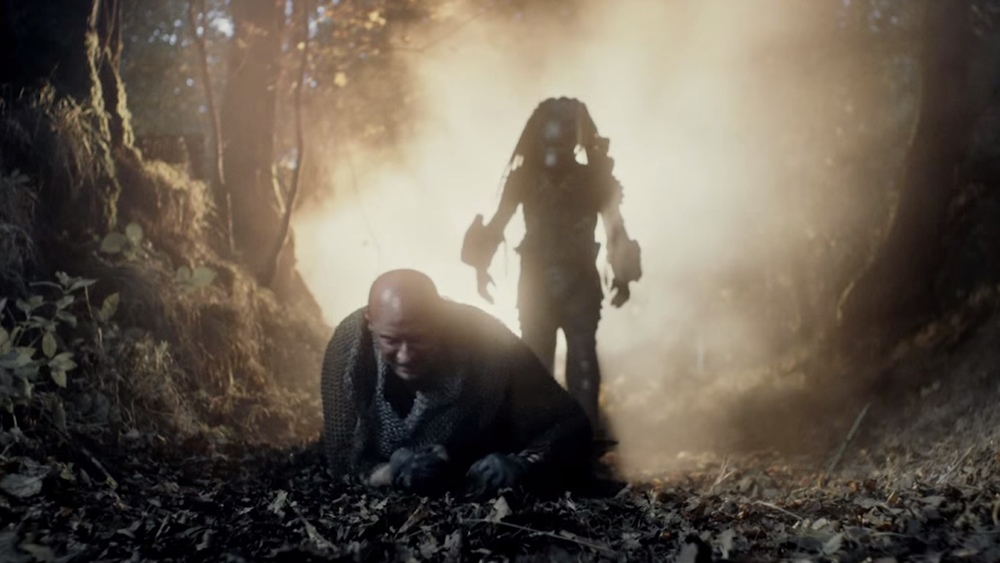
Rating: 7/10 – a group of mercenaries led by Thomas (Bouchard) set off to hunt the mysterious creature killing people and animals in a nearby forest – and find something even more deadly than they expected; a fan-made short that adds a novel twist to the Predator saga, Predator: Dark Ages is a welcome distraction that confirms that, sometimes, the big studios don’t always have the right idea when it comes to their franchise characters.
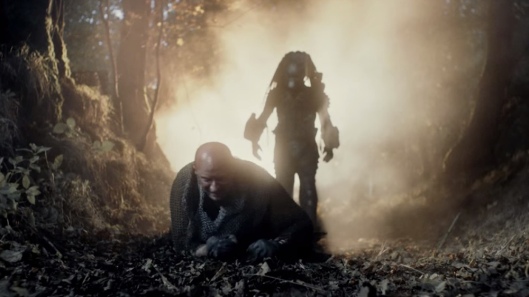
Predator Dark Ages

Drunk Wedding (2015) / D: Nick Weiss / 81m

Cast: Christian Cooke, Victoria Gold, Dan Gill, Anne Gregory, J.R. Ramirez, Nick P. Ross, Genevieve Jones, Diana Newton

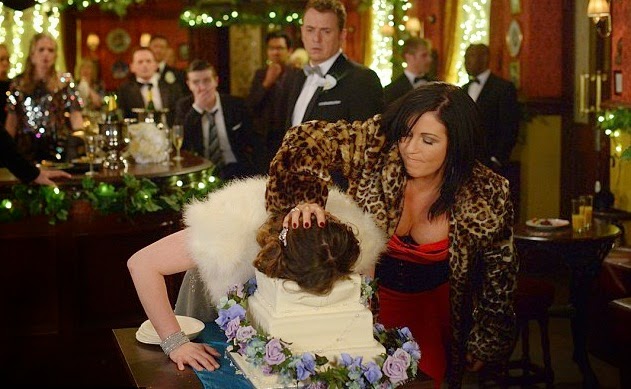
Rating: 4/10 – when a couple decide to get married in Nicaragua, they and some of their friends are given hand-held cameras to film it all… with predictably awful, drunken, outrageous, and potentially life-altering effects; if your idea of comedy is seeing someone urinating on another person’s back, then Drunk Wedding is the movie for you, and despite its lowbrow modern day National Lampoon-style approach it still manages to hold the attention and is surprisingly enjoyable – if you don’t expect too much.
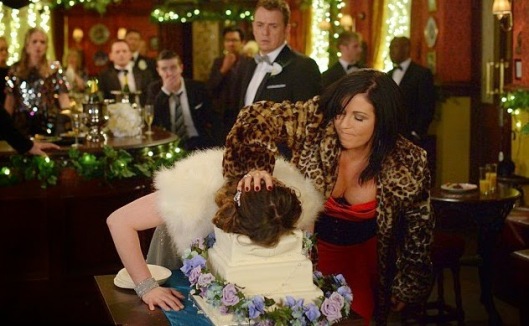
Drunk Wedding

Zombie Ass: The Toilet of the Dead (2011) / D: Noboru Iguchi / 85m

Original title: Zonbi asu

Cast: Arisa Nakamura, Mayu Sugano, Asana Mamoru, Yûki, Danny, Kentaro Kishi, Demo Tanaka

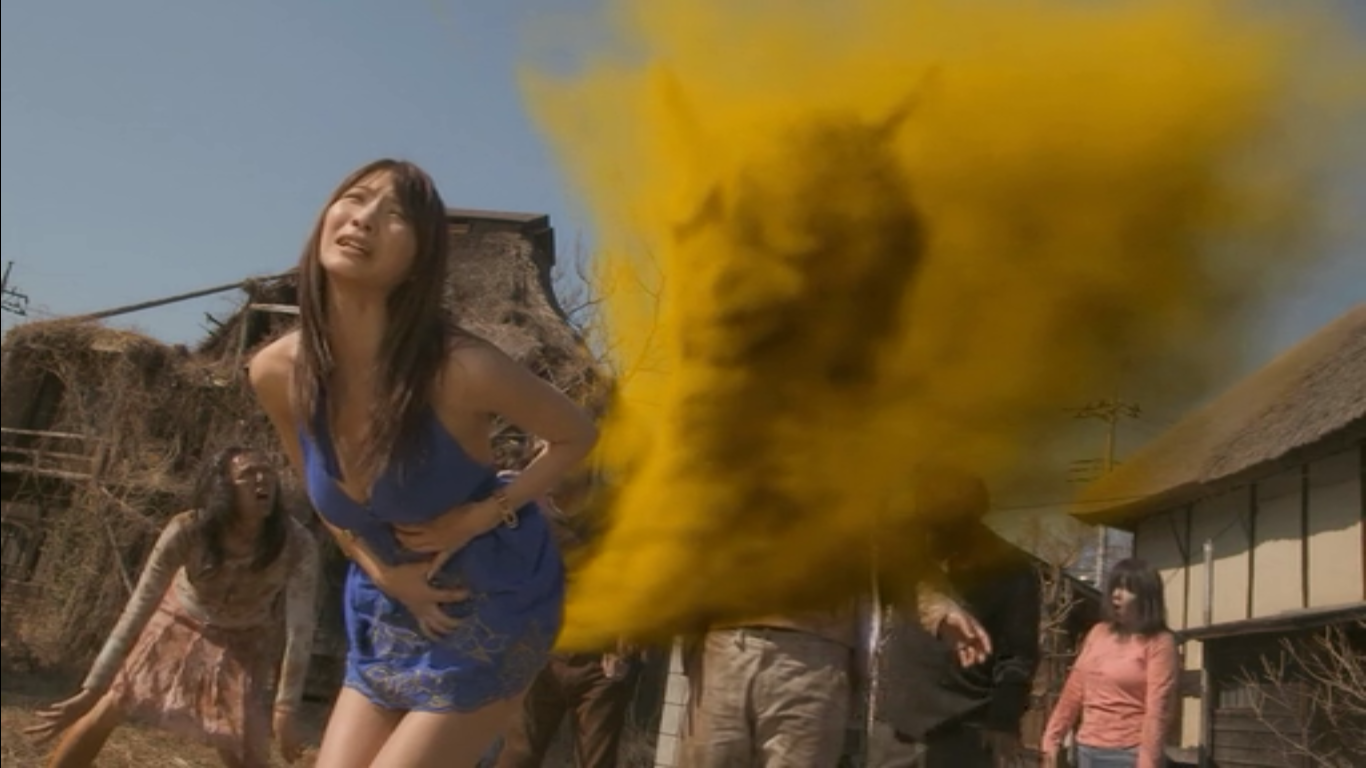
Rating: 5/10 – while on a trip to the woods, Megumi (Nakamura) and four older friends find themselves under attack from zombies who have emerged from the bowels of an outhouse – and only her martial arts skills can save them; a wild, wild ride from one of the masters of Japanese Shock Cinema, Zombie Ass: The Toilet of the Dead is equal parts raw, uncompromising, witless, and gross, but it’s also a movie that just can’t be taken at all seriously, and on that level it succeeds tremendously, providing enough WtF? moments to make it all worthwhile.
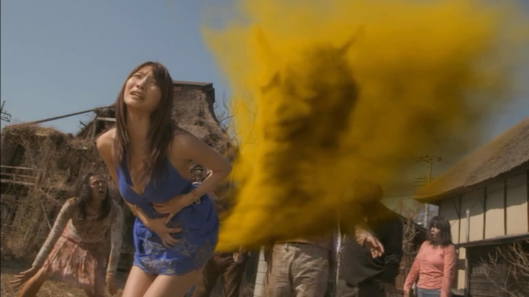
Zombie Ass

Faults (2014) / D: Riley Stearns / 89m

Cast: Leland Orser, Mary Elizabeth Winstead, Chris Ellis, Beth Grant, Jon Gries, Lance Reddick

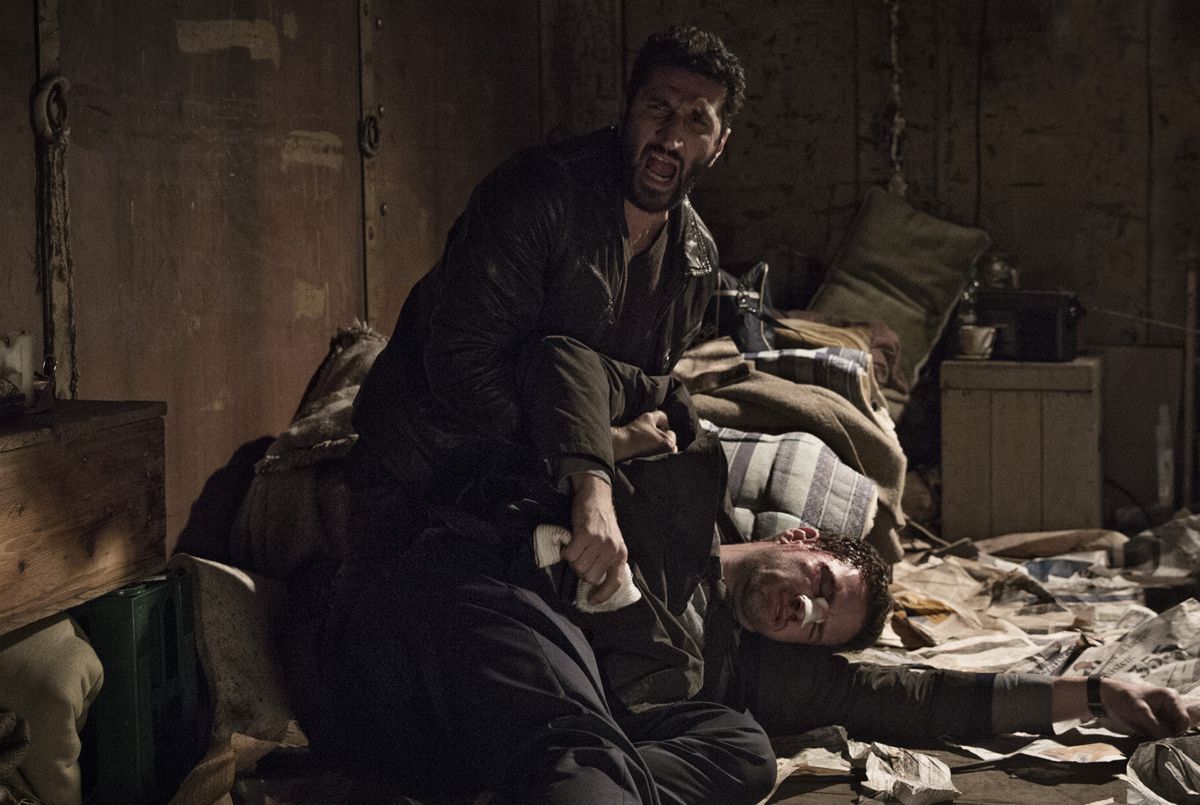
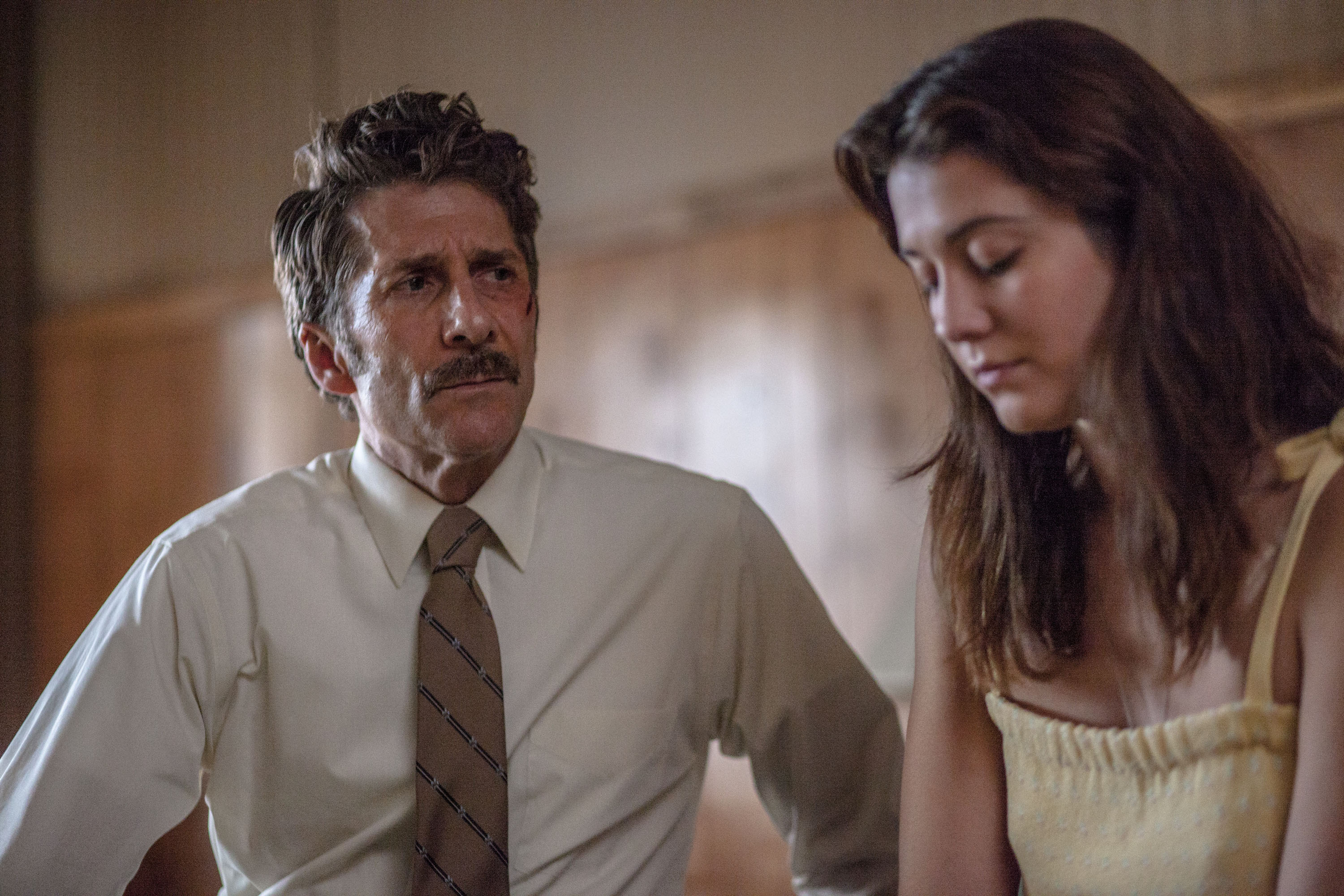
Rating: 8/10 – down on his luck cult expert Ansel (Orser) sees a way out of debt and a chance to regain some self-respect when a couple (Ellis, Grant) ask him to abduct and de-programme their daughter (Winstead), but he soon finds himself out of his depth and facing up to some hard truths; a tour-de-force from the always excellent Orser – and with a solid supporting performance from Winstead – Faults is an unnerving look at a man on the verge of a nervous breakdown, and the ways in which his broken life have led him to a motel room where his own personal beliefs come under as much scrutiny as his captive’s.
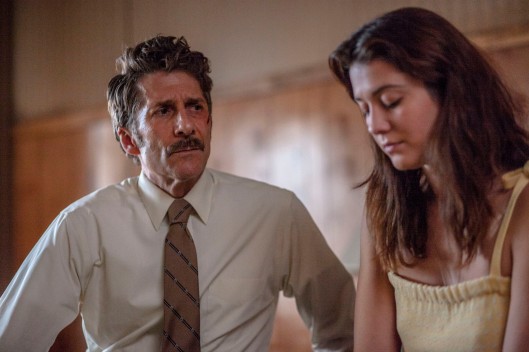
(l-r) Leland Orser and Mary Elizabeth Winstead stars in FAULTS. ©Snoot Entertainment. CR: Jack Zeman.

She’s Funny That Way (2014) / D: Peter Bogdanovich / 93m

Cast: Imogen Poots, Owen Wilson, Rhys Ifans, Jennifer Aniston, Will Forte, Kathryn Hahn, Illeana Douglas, Debi Mazar, Cybill Shepherd, Richard Lewis, Ahna O’Reilly, Joanna Lumley

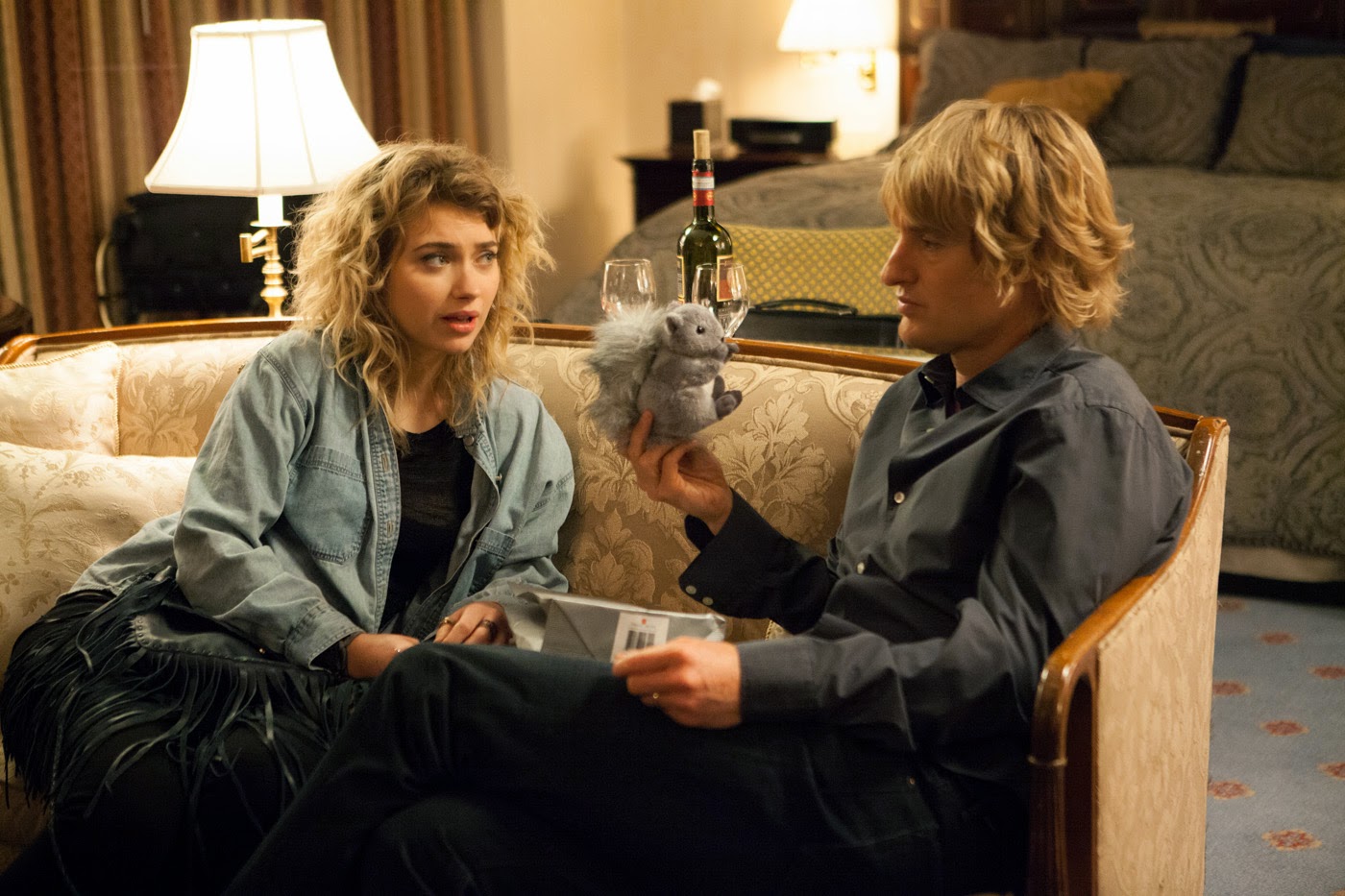
Rating: 6/10 – theatre director Arnold Albertson has a secret: he gives prostitutes money in order that they can set up their own businesses, but when his latest “project”, aspiring actress Isabella Patterson (Poots) lands the starring role in his latest production, it all leads to the kind of deception and duplicity that will test the notion that the show must go on; a modern attempt at a screwball comedy, She’s Funny That Way doesn’t have the sheer energy that made movies such as His Girl Friday (1940) or  Bringing Up Baby (1938) so enjoyable, but Bogdanovich knows his stuff and keeps the movie entertaining for the most part, even if it doesn’t stay in the memory for too long afterwards.
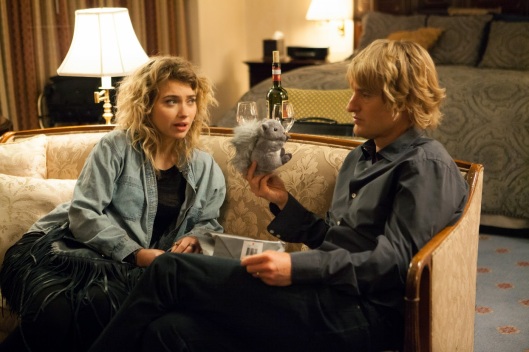
She's Funny That Way

Curse of the Witching Tree (2015) / D: James Crow / 102m

Cast: Sarah Rose Denton, Lucy Clarvis, Lawrence Weller, Jon Campling, Caroline Boulton, Danielle Bux

Rating: 2/10 – divorcée Amber Thorson (Denton) moves into an old house with her two children (Clarvis, Weller) only for strange phenomena to start happening that’s connected to a witch’s curse, and which leaves them all at risk of supernatural forces; woeful in the extreme, Curse of the Witching Tree is amateurish nonsense that is badly directed, poorly acted, contains defiantly stilted dialogue, suffers from below-par photography, is tension-free throughout, and stands as an object lesson in how not to make a low-budget British horror movie.
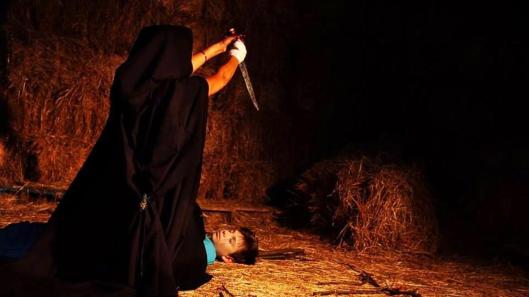
Curse of the Witching Tree

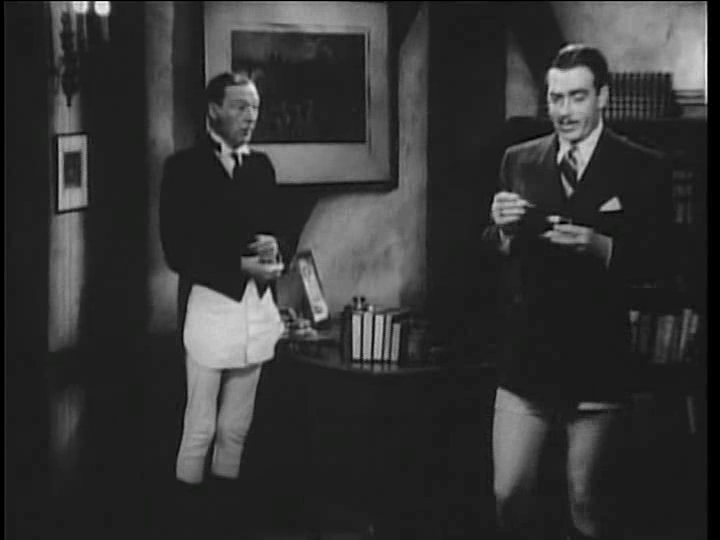
Bulldog Drummond Comes Back (1937) / D: Louis King / 64m

Cast: John Barrymore, John Howard, Louise Campbell, Reginald Denny, E.E. Clive, J. Carrol Naish, Helen Freeman

Rating: 5/10 – when dastardly villains Mikhail Valdin (Naish) and Irena Saldanis (Freeman) kidnap Phyllis Clavering (Campbell), the girlfriend of Captain Hugh Drummond (Howard), they send him on a merry chase where each clue he finds leads to another clue as to her whereabouts – but no nearer to finding her; the first of seven movies with Howard as the dashing sleuth created by H.C. “Sapper” McNeile, Bulldog Drummond Comes Back is as cheap and cheerful and antiquatedly entertaining as you might expect, and benefits enormously from a cast and crew who know exactly what they’re doing.
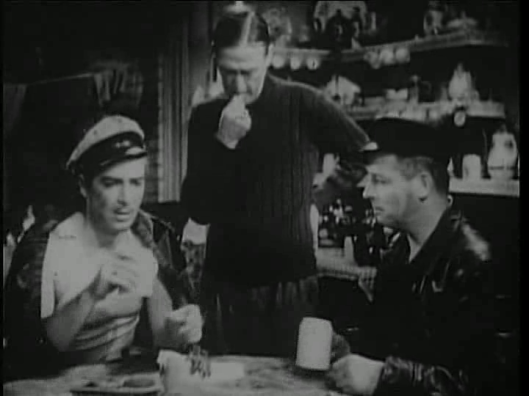
vlcsnap-00001

Every Secret Thing (2014) / D: Amy Berg / 93m

Cast: Diane Lane, Elizabeth Banks, Dakota Fanning, Danielle Macdonald, Nate Parker, Common

Rating: 7/10 – several years after two young girls are incarcerated for the murder of a younger child, their return to their hometown is marred by the disappearance of a little girl, and the belief that one or both of them is responsible; a stilted attempt at an indie film noir, Every Secret Thing features good performances – particularly from Macdonald – and focuses on the emotional effects a child abduction can have on everyone involved, but it never develops a sense of urgency, though its key revelation at the end carries a wallop that helps dismiss what will seem like a narrative impasse up until then.

Every Secret Thing

Children of the Corn: Genesis (2011) / D: Joel Soisson / 80m

Cast: Kelen Coleman, Tim Rock, Billy Drago, Barbara Nedeljakova

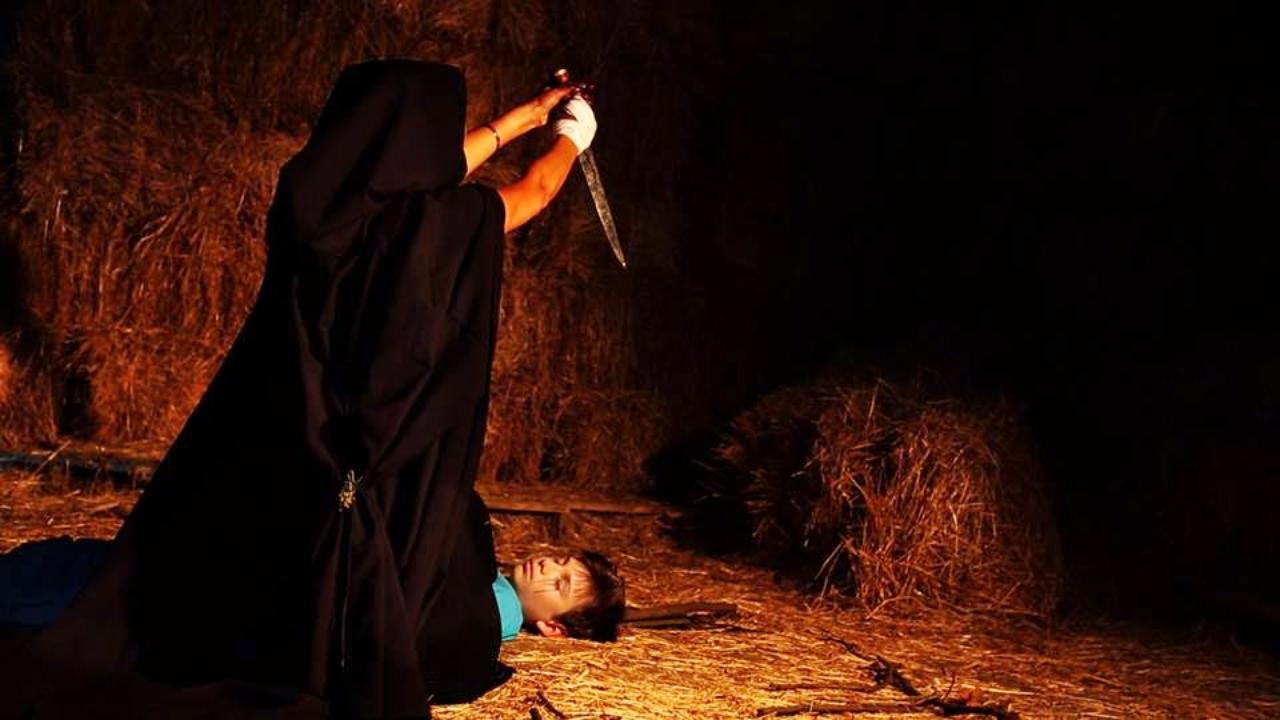
Rating: 3/10 – a couple (Coleman, Rock) break down on a desert highway but manage to find shelter overnight with a old preacher (Drago) and his much younger, foreign bride (Nedeljakova), but soon find that what’s in the preacher’s barn is much more menacing than the old man himself; placing the action largely away from Gatlin, Nebraska may have seemed like a smart move but this tired, dreary, and just downright dull entry in the franchise shows just how bad things have gotten since the 1984 original, and just why Children of the Corn: Genesis should remain the last in the series to be made.

Children of the Corn Genesis

Skin Trade (2014) / D: Ekachai Uekrongtham / 96m

aka Battle Heat

Cast: Dolph Lundgren, Tony Jaa, Michael Jai White, Ron Perlman, Celina Jade, Peter Weller

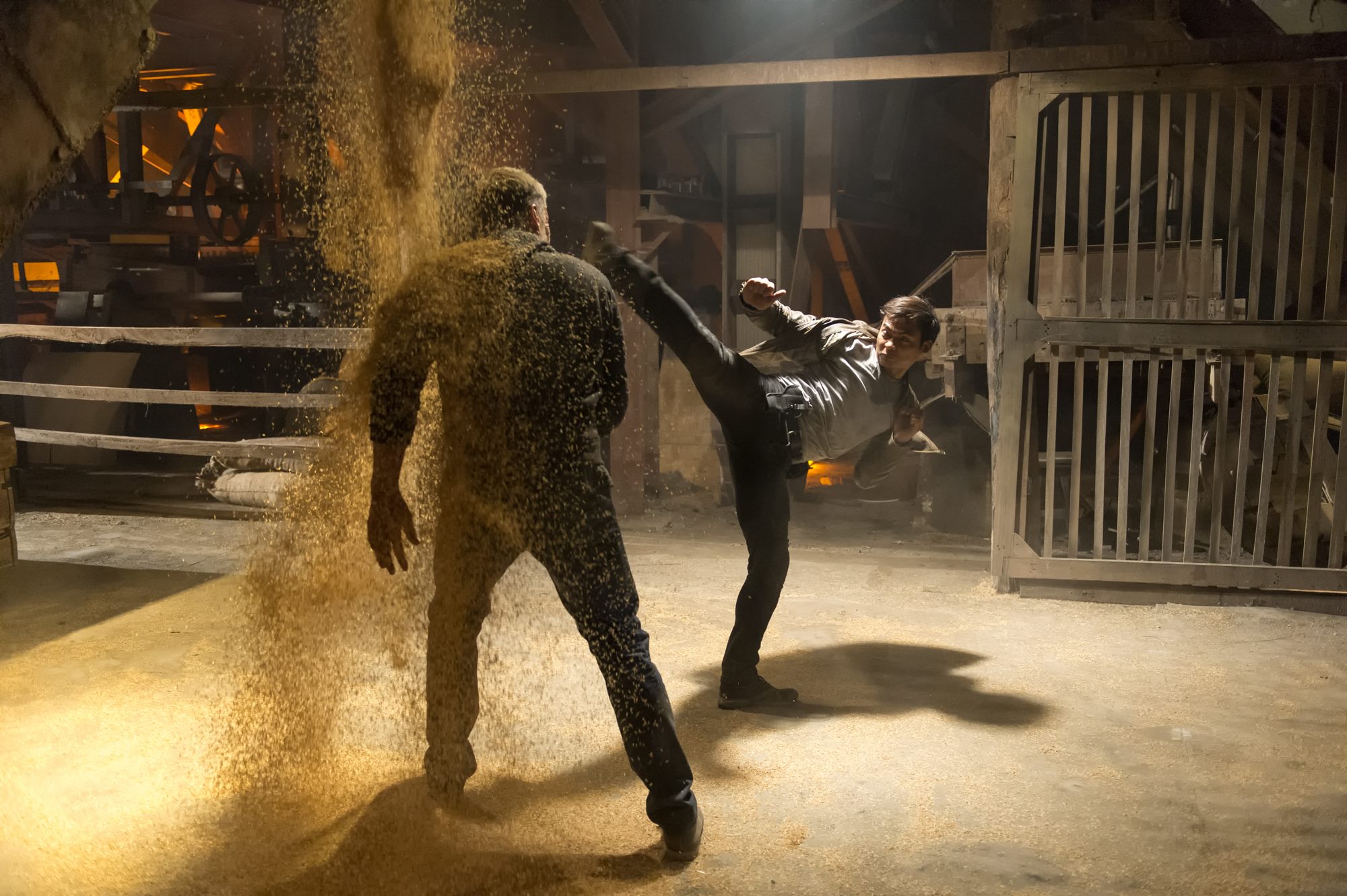
Rating: 6/10 – when cop Nick Cassidy (Lundgren) is powerless to stop his wife and daughter being killed, he determines to go after the crime boss responsible, Viktor (Perlman), and destroy his human trafficking network, which means travelling to Thailand and teaming up with detective Tony Vitayakul (Jaa), who’s also out to put a stop to Viktor’s illegal behaviour; with its human trafficking backdrop giving it an unexpected depth, Skin Trade is not just a brainless, slam-bang action movie, but instead a very well-made (for its budget) revenge flick that features some great fight scenes – particularly one between Lundgren and Jaa – and uses its Thai locations to very good effect.
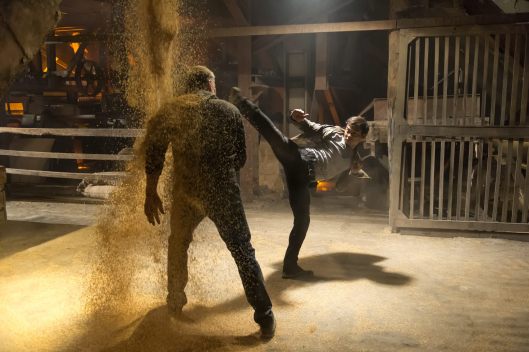
Skin Trade

The Reconstruction of William Zero (2014) / D: Dan Bush / 98m

Cast: Conal Byrne, Amy Seimetz, Scott Poythress, Lake Roberts, Melissa McBride, Tim Habeger

Rating: 6/10 – when the brother (Byrne) of a scientist (also Byrne) wakes from a coma, it’s not long before he begins to suspect that this identity may not be that of the scientist’s brother, and that he’s a pawn in a much bigger conspiracy, but the truth proves even stranger and more disturbing than he realised; a spare, almost antiseptic movie about notions of identity and individual consciousness, The Reconstruction of William Zero features terrific performances from Byrne, but lacks consistency of pace and sometimes feels as if Bush has taken his eye off the ball and taken a while to find it again, which leaves the movie often feeling flat and lifeless.
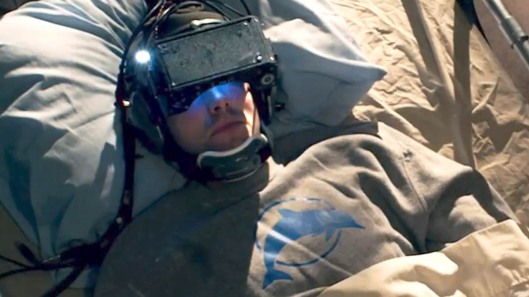
Reconstruction of William Zero, The

Not Another Teen Movie (2001) / D: Joel Gallen / 89m

aka Sex Academy

Cast: Chyler Leigh, Chris Evans, Jaime Pressly, Eric Christian Olsen, Randy Quaid, Mia Kirshner, Deon Richmond, Ed Lauter, Paul Gleason, Mr T, Molly Ringwald

Rating: 5/10 – at John Hughes High School, popular jock Jake Wyler (Evans) accepts a bet that he can’t take an ugly girl and transform her into the prom queen, but when he picks out Janey Briggs (Leigh), and begins to spend time with her, it makes him begin to question whether he should have made the bet in the first place; a predictably irreverent teen movie that parodies all those dreadful teen comedies from the Eighties, Not Another Teen Movie has more heart than most, and thanks to Mike Bender’s script contributions, is also quite funny in its knowing way, and gives viewers a chance to see the future Captain America back in the day when his skill as an actor wasn’t quite as honed as it is now.

Not Another Teen Movie

Bloomington (2010) / D: Fernanda Cardoso / 83m

Cast: Allison McAtee, Sarah Stouffer, Katherine Ann McGregor, Ray Zupp, J. Blakemore, Erika Heidewald

Rating: 7/10 – former child actress Jackie (Stouffer) attends Bloomington college, and finds herself having an affair with one of the professors, Catherine (McAtee), until the offer of a comeback threatens to end their relationship before it’s fully begun; an intelligent, finely crafted romantic drama, Bloomington has two great central performances, and an emotional honesty that is only undermined by the clichéd nature of Jackie’s need to return to acting, and Cardoso’s over-reliance on silent longing as a sign of emotional upheaval.

Bloomington

Sleepaway Camp 2: Unhappy Campers (1988) / D: Michael A. Simpson / 80m

Cast: Pamela Springsteen, Renée Estevez, Tony Higgins, Valerie Hartman, Brian Patrick Clarke, Walter Gotell

Rating: 5/10 – Angela Baker (Springsteen), having decimated most of the staff and children at Camp Arawak, and now judged to be safe around others, begins sending unruly teenagers “home” from Camp Rolling Hills – which in reality means killing them for any and all perceived infractions that Angela takes a dislike to; a much better sequel than expected, Sleepaway Camp 2: Unhappy Campers gets by on Springsteen’s preppy performance, some not-too-gory deaths, and Simpson’s confident touch behind the camera, as well as that dreadful musical interlude: The Happy Camper Song.
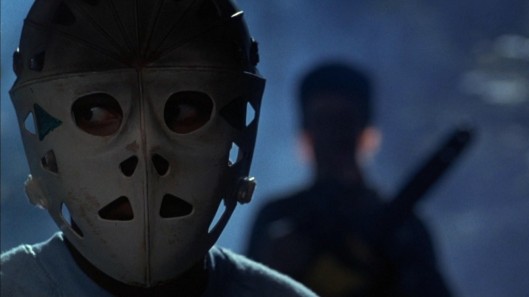
Sleepaway Camp 2

Gunsmoke in Tucson (1958) / D: Thomas Carr / 80m

Cast: Mark Stevens, Forrest Tucker, Gale Robbins, Vaughn Taylor, John Ward, Kevin Hagen, William Henry, Richard Reeves, John Cliff, Gail Kobe

Rating: 6/10 – brothers Jedediah (Stevens) and John (Tucker) are on opposite sides of the law, but when Jedediah becomes involved in a land dispute between cattle ranchers and farmers, his sense of right and wrong is put to the test, and he has to choose sides in the upcoming fight for the choicest plot of land; a robust, earnest Western, Gunsmoke in Tucson is a staid, respectable movie that doesn’t stray too far from its basic plot, and skimps on any psychological undertones in favour of a straight ahead anti-hero vs. the bad guys scenario that makes for a pleasant diversion.
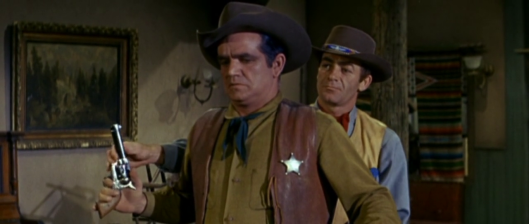
vlcsnap-00002

Beyond the Reach (2014) / D: Jean-Baptiste Léonetti / 91m

Cast: Michael Douglas, Jeremy Irvine, Ronny Cox, Hanna Mangan Lawrence

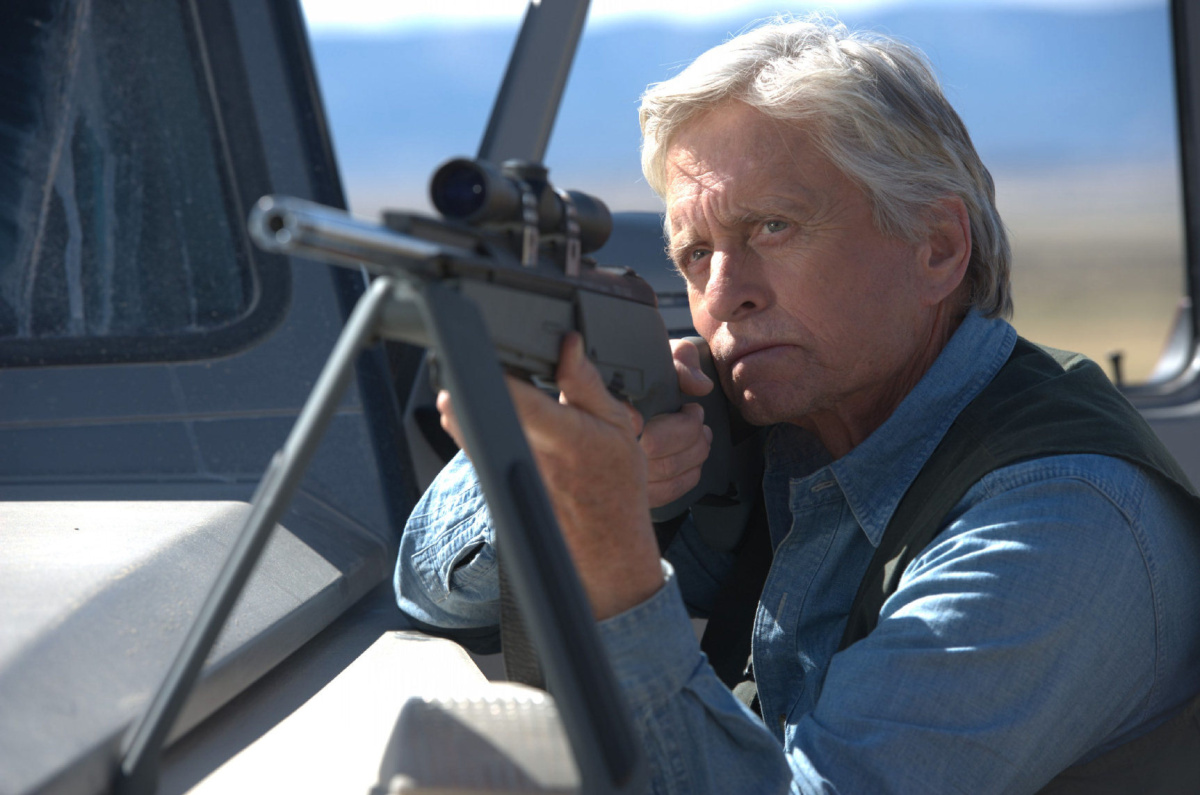
Rating: 6/10 – arrogant businessman Madec (Douglas) hires tracker Ben (Irvine) in order to bag some game out of season, but when he shoots and kills an old man by mistake, Madec refuses to accept responsibility for his actions and when Ben stands his ground over the issue, finds himself being hunted instead through the harsh Mojave Desert; an occasionally tense two hander that will do little for either actor’s career, Beyond the Reach ramps up the contrivance levels with each successive narrow escape that Ben makes, and with each missed shot that Madec makes, leading to the inevitable conclusion that this is one movie where credulity needs to be left at the door – an idea that is further enhanced by the movie’s risible conclusion.
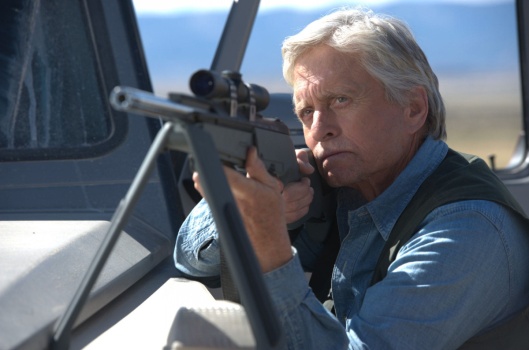
Email sent from: "Barnard, Linda"  lbarnard@thestar.ca  Subject: Beyond the Reach Date: 9 April, 2015 4:30:15 PM EDT   Jeremy Irvine and Michael Douglas star in Beyond The Reach Linda Barnard Movie Writer The Toronto Star thestar.com 416-869-4290

Blood (2012) / Nick Murphy / 92m

Cast: Paul Bettany, Mark Strong, Stephen Graham, Brian Cox, Ben Crompton, Naomi Battrick, Zoë Tapper, Adrian Edmondson

Rating: 5/10 – when a young girl is found murdered, the police, led by Joe Fairburn (Bethany) immediately set their sights on local child molester Jason Buleigh (Crompton), but when their prime suspect has to be let go for lack of evidence, Joe and his brother Chrissie (Graham) decide to take the law into their own hands, with terrible results; grim, visually depressing, and with a script that has more holes in it than a string vest, Blood has only its performances to recommend it, particularly those of Bethany, Graham and Cox, as well as the sense to know that its tale of a proud man’s downfall is always more interesting when you don’t know just how far they’ll fall.

Blood

Echelon Conspiracy (2009) / D: Greg Marcks / 102m

aka The Conspiracy; The Gift

Cast: Shane West, Ed Burns, Ving Rhames, Martin Sheen, Tamara Feldman, Jonathan Pryce, Sergey Gubanov, Todd Jensen

Rating: 3/10 – computer security tech Max Peterson is given a mysterious phone that helps him gain a small fortune, but in doing so he finds himself embroiled in a plot to ensure that the NSA’s super computer, Echelon, gains the upgrade it needs in order to spy on everyone globally; so bad on so many levels, Echelon Conspiracy wastes its (mostly) talented cast, flirts with credibility before running away from it at high speed, offers laughs in places where they shouldn’t be, and is the cinematic equivalent of a car crash.
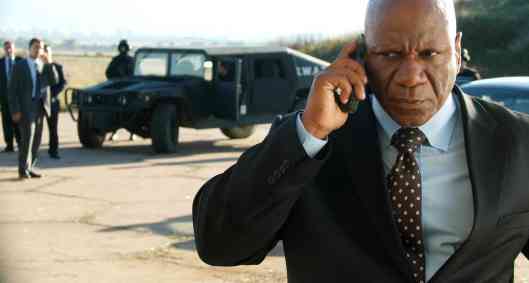
Echelon Conspiracy

Crazy Sexy Cancer (2007) / D: Kris Carr / 90m

With: Kris Carr, Jackie Farry, Melissa Gonzalez, Brian Fassett, Aura Carr, Kenneth Carr, Leslie Carr, Oni Faida Lampley, Bhavagan Das

Rating: 7/10 – when aspiring actress Kris Carr was diagnosed with cancer, she decided to make a visual record of the process of dealing with it, and the various ways in which other cancer sufferers have done so, and supported by the cameraman/editor who became her husband, as well as family and friends; an uplifting, positive message for anyone dealing with cancer, or who knows someone who is, Crazy Sexy Cancer is the kind of documentary that doesn’t attempt to overdo the physical and emotional strain of being in such a situation, but which does nevertheless offer plenty of poignant moments in amongst the hospital visits, and shows Carr to be a determined, aggressive would-be survivor.

Crazy Sexy Cancer

The Night Flier (1997) / D: Mark Pavia / 94m

Cast: Miguel Ferrer, Julie Entwisle, Dan Monahan, Michael H. Moss, John Bennes, Beverly Skinner, Rob Wilds, Richard K. Olsen, Elizabeth McCormick

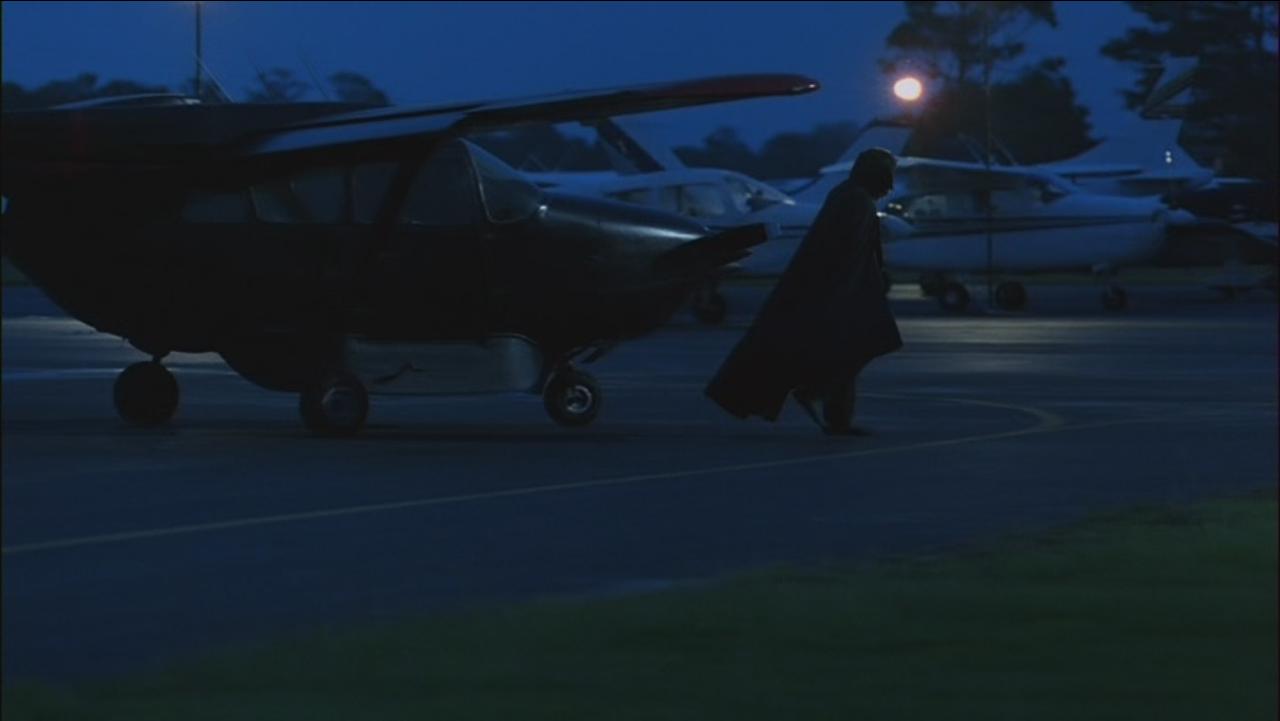
Rating: 7/10 – hard-nosed, disreputable reporter Richard Dees investigates a series of murders carried out at small airstrips that appear to be the work of a vampire, but his initial scepticism gives way to reluctant belief as he talks to witnesses, and sees the injuries the victims have sustained; a well-crafted movie that betrays its low budget and scrappy production design, The Night Flier is still one of the better Stephen King adaptations thanks to Pavia’s confident handling of the material, Ferrer’s see-if-I-care performance, and some impressively nasty effects work courtesy of the KNB Group.

Night Flier, The

Killer by Nature (2010) / D: Douglas S. Younglove / 90m

Cast: Ron Perlman, Armand Assante, Zachary Ray Sherman, Lin Shaye, Haley Hudson, Richard Riehle, Richard Portnow, Svetlana Efremova, Jason Hildebrandt

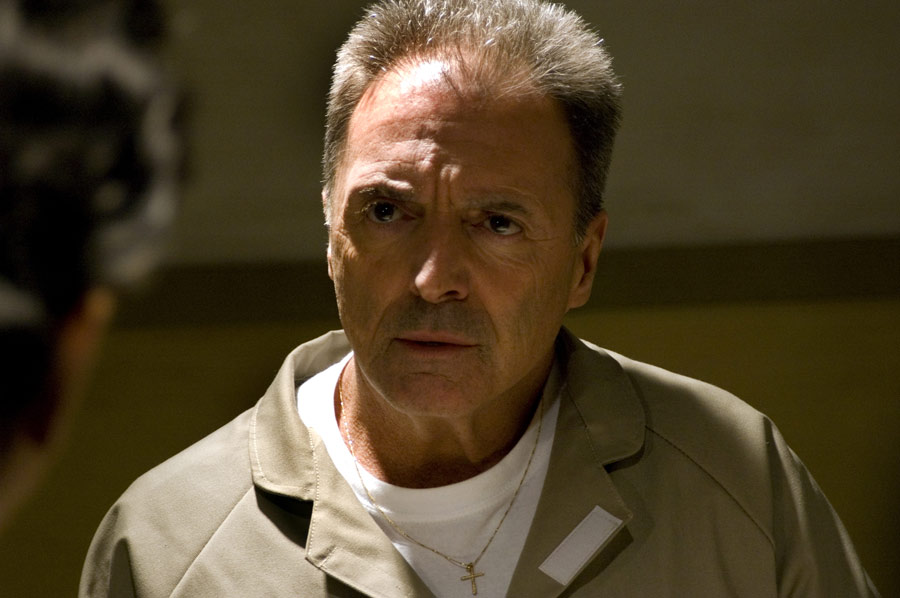
Rating: 3/10 – troubled by nightmares of murder and sleepwalking, teen Owen (Sherman) undergoes therapy with Dr Julian (Perlman), a therapist who believes that a person’s essential nature is handed down through bloodlines – a theory originated by convicted murderer Eugene Branch (Assante), and who is connected to Owen in a way that causes Owen to believe he might be the perpetrator of a series of murders that mimic Branch’s modus operandi; a thriller that can’t decide if it’s tepid or overwrought, and then settles for both (sometimes in the same scene), Killer by Nature is a humdinger of a bad movie, and proof positive that sometimes the old saying that “if you can, it doesn’t mean you should” relates to far too many movies for comfort – especially this farrago of awful performances, pseudo-intellectual posturing, and deathless direction.
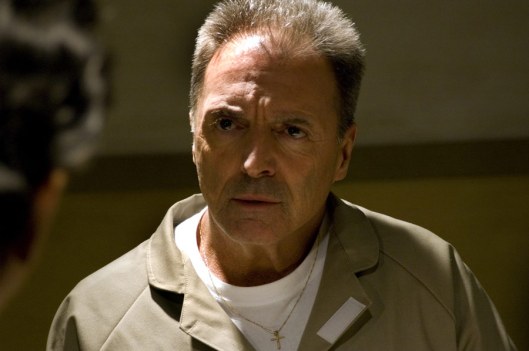
Killer by Nature

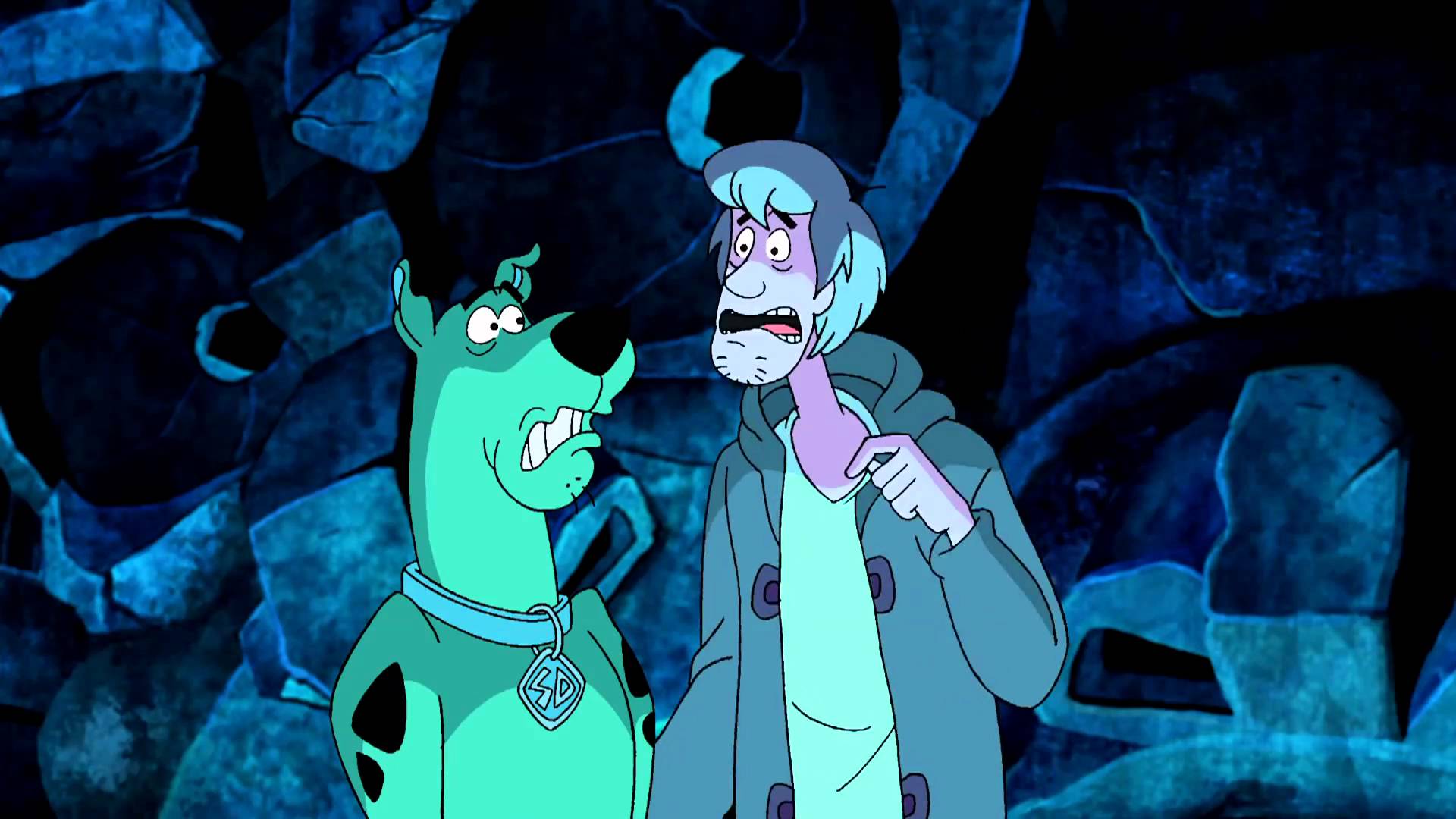
Scooby-Doo! and the Samurai Sword (2009) / D: Christopher Berkeley / 75m

Cast: Frank Welker, Casey Kasem, Mindy Cohn, Grey DeLisle, Kelly Hu, Kevin Michael Richardson, Sab Shimono, Keone Young, Gedde Watanabe, George Takei, Brian Cox

Rating: 6/10 – on a trip to Japan, Scooby-Doo and the gang become involved in the search for a mystical sword, while trying to thwart the efforts of the ghost of the Black Samurai to beat them to it; a middling entry in the series that at least provides a different backdrop than the standard old dark house (or mine, or hotel, or funfair…), and which allows Shaggy and Scooby to be the heroes we all know they really are deep down, while displaying a pleasing awareness of Japanese culture.
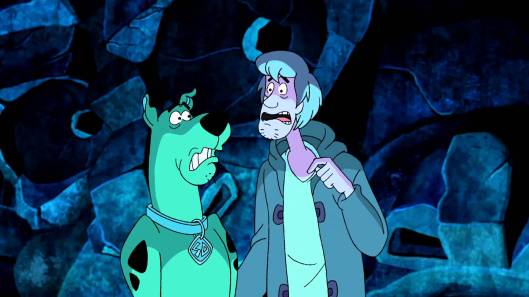
Scooby-Doo! and the Samurai Sword

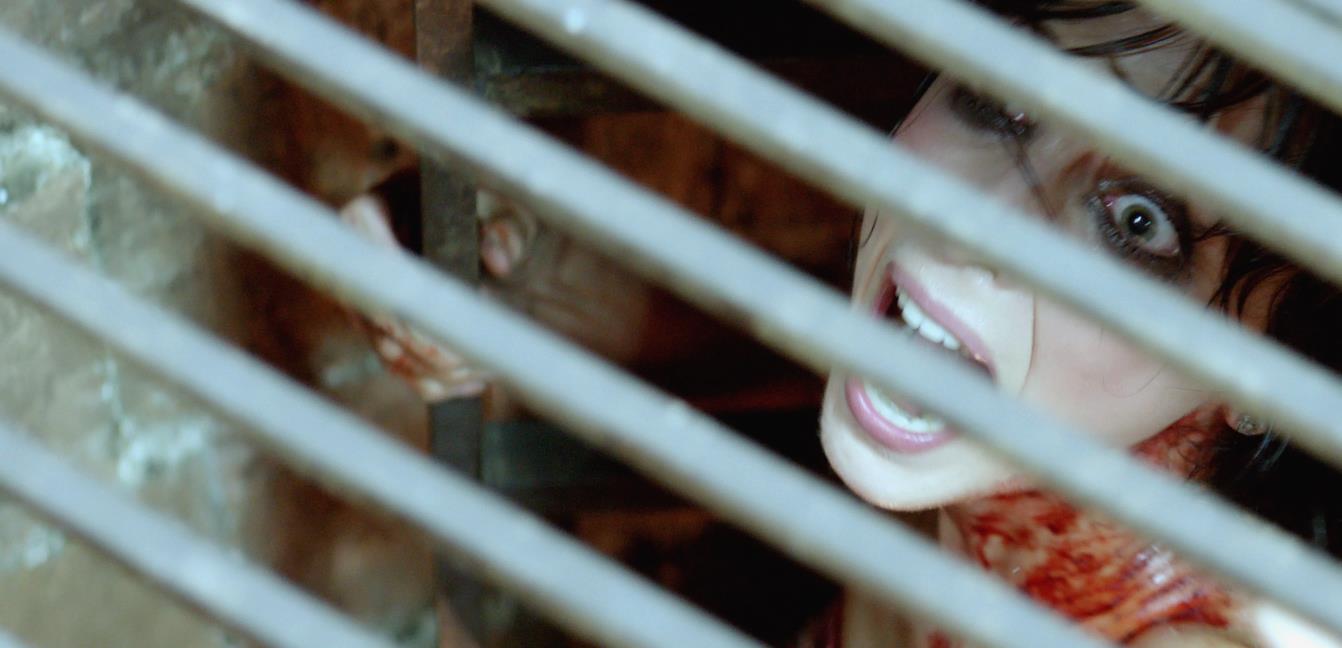
[Rec]³ Génesis (2012) / D: Paco Plaza / 80m

Cast: Leticia Dolera, Diego Martín, Ismael Martínez, Àlex Monner, Sr. B, Emilio Mencheta, David Ramírez, Miguel Ángel González

Rating: 7/10 – a young couple’s wedding day is disrupted for good when one of the guests takes a bite out of another one, leading to a frenzied free-for-all among the guests and a fight for survival for those not affected by whatever’s causing people to become zombies – including the bride and groom, who have become separated in the mêlée; half found footage, half professionally filmed, [Rec]³ Génesis acts as a prequel to the events of the first two movies but is let down by both the change in location, and the absence of Claudia Silva, as well as a sense that by going backwards in terms of the outbreak and its possible cause, the makers are treading water until an idea as to how to carry the story forward from [Rec]2 (2009) comes along.
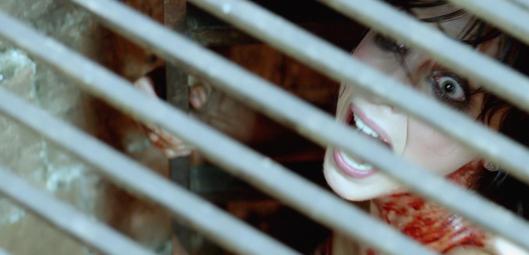
Rec3 Genesis

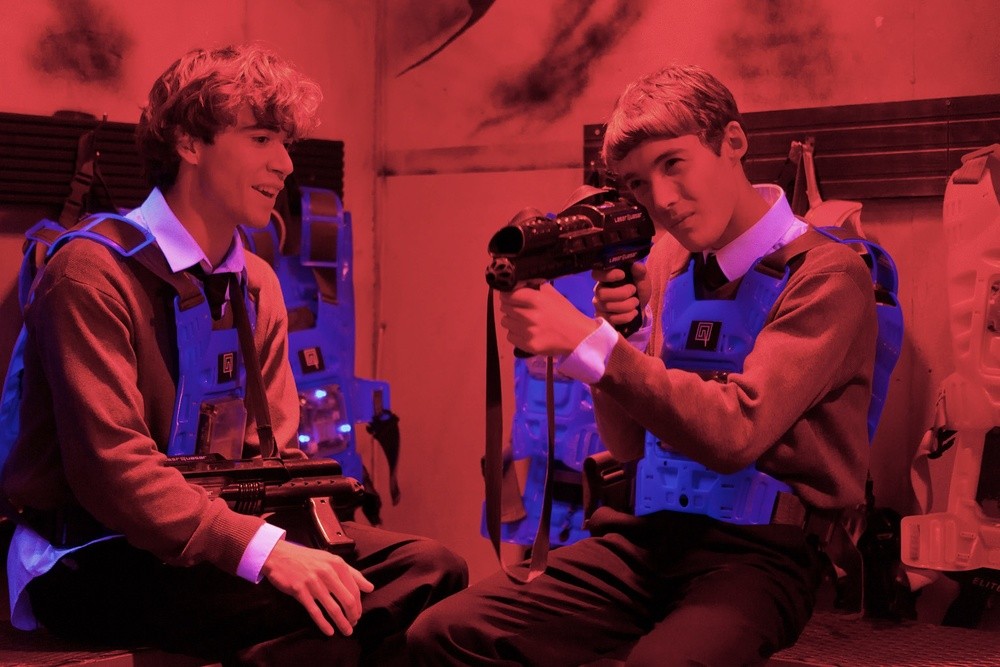
uwantme2killhim? (2013) / D: Andrew Douglas / 92m

Cast: Jamie Blackley, Toby Regbo, Joanne Froggatt, Jaime Winstone, Liz White, Mark Womack, Louise Delamere, Stephanie Leonidas, Mingus Johnston

Rating: 7/10 – popular schoolboy Mark (Blackley) leads a secret life on the Internet, where he invests his time and emotions in relationships with people he’s never met, but when of those people ask him to stop their younger brother, John (Regbo), from being bullied, what follows sets Mark on a dangerous path to murder; based on a true story, and told with a glum sense of foreboding throughout, uwantme2killhim? is an engrossing (though slightly frustrating) recounting of one of the strangest cases of the last fifteen years, and features two very good performances from Blackley and Regbo, though they have to fight against a script that favours repetition over clarity, but which still manages to flesh out what must have been a very strange relationship between the two boys.
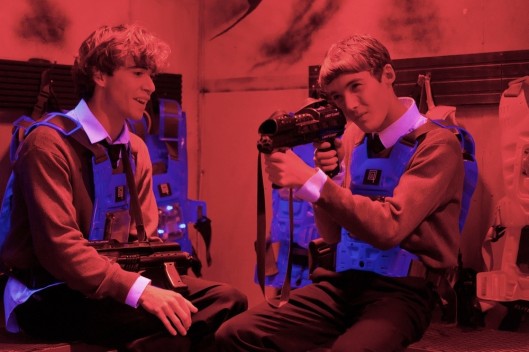
JAMIE BLACKLEY (Mark) (L) & TOBY REGBO (John) (R) in UWANTME2KILLHIM? (c) 2011 U Want M2K Ltd. Photo by Mark Tillie

Bulldog Drummond in Africa (1938) / D: Louis King / 58m

Cast: John Howard, Heather Angel, H.B. Warner, J. Carrol Naish, Reginald Denny, E.E. Clive, Anthony Quinn

Rating: 7/10 – on the very day that Drummond (Howard) is finally due to marry his long-suffering girlfriend Phyllis (Angel) he becomes embroiled in the kidnapping of his old friend Colonel Nielsen (Warner), and finds himself travelling to Morocco – with Phyllis, butler Tenny (Clive) and old pal Algy (Denny) in tow – in order to rescue him; the fourth in the series is perhaps the funniest, with Howard allowed to spread his comedic wings, and even the villain (played again by Naish) given some splendidly dry remarks to make in amongst the threats of death by hungry lion, and a bomb on Drummond’s plane.
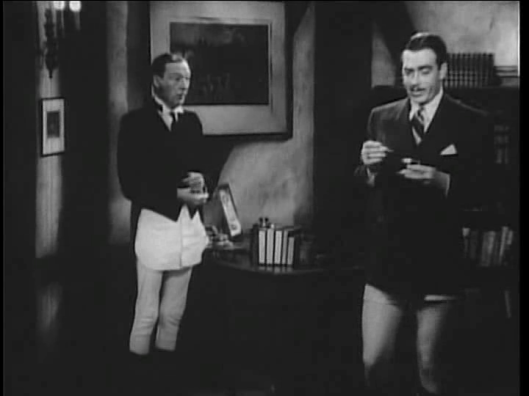
vlcsnap-00003

The Four-Faced Liar (2010) / D: Jacob Chase / 87m

Cast: Daniel Carlisle, Todd Kubrak, Emily Peck, Marja-Lewis Ryan, Liz Osborn

Rating: 8/10 – five friends – couples Greg (Carlisle) and Molly (Peck), Trip (Kubrak) and Chloe (Osborn), and single lesbian Bridget (Ryan) – experience various ups and downs in their relationships, especially when Trip has a one night stand, and Molly finds herself attracted to Bridget; a refreshingly honest look at what relationships mean to different individuals, and how they affect the people around them, The Four-Faced Liar is an effective, well-written drama that benefits from good performances all round, a soundtrack that supports the mood throughout, and Chase’s confident approach to Ryan’s script.
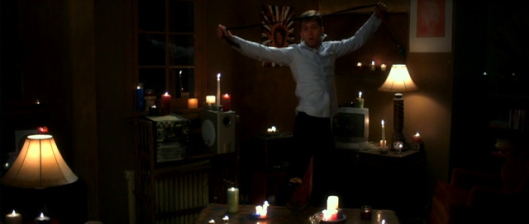
vlcsnap-00004

Share this:

  • Click to share on X (Opens in new window) X
  • Click to share on Facebook (Opens in new window) Facebook
  • More
  • Click to print (Opens in new window) Print
  • Click to email a link to a friend (Opens in new window) Email
Like Loading...

Insidious Chapter 3 (2015)

28 Sunday Jun 2015

Posted by dullwood68 in Movies

≈ Leave a comment

Tags

Angus Sampson, Dermot Mulroney, Drama, Elise Rainier, Horror, Leigh Whannell, Lin Shaye, Prequel, Review, Specs, Stefanie Scott, Supernatural, The Further, Thriller, Tucker

Insidious Chapter 3

D: Leigh Whannell / 97m

Cast: Lin Shaye, Dermot Mulroney, Stefanie Scott, Angus Sampson, Leigh Whannell, Michael Reid MacKay, Phyllis Applegate, Ele Keats

When single father Sean Brenner (Mulroney) and his teenage daughter, Quinn (Scott), move into a new apartment following the death of Quinn’s mother (Keats), the teenager’s desire to contact her mother leads her to visit retired medium Elise Rainier (Shaye). Reluctant to use her gift since becoming aware that each time she does she leaves herself open to attack from a murderous spirit – the bride in black – Elise agrees to try and contact Quinn’s mother, but another presence makes itself felt, one that scares Elise into warning Quinn to be careful about contacting her mother in the future.

Quinn begins to experience strange phenomena within the apartment, including knocking and loud footsteps from the apartment above. Cracks appear in the ceiling and walls of her room. Sean checks the upstairs apartment but it’s been empty for a while. Further disturbances occur, and Quinn is attacked, leading to both her legs being broken. Later, another attack witnessed by her father leads to her neck being injured. At this point, Sean reluctantly contacts Elise, who equally reluctantly agrees to try and help. Elise comes to the apartment and tries to contact the spirit persecuting Quinn – an entity who died in the building and is dubbed the Man Who Can’t Breathe – but is attacked by the bride in black instead. Shocked by this, Elise leaves, saying she can no longer help them.

As Quinn becomes more and more frightened by what’s happening to her, she persuades her father to contact a couple of paranormal investigators, Tucker (Sampson) and Specs (Whannell). They set up their equipment but are unprepared for the supernatural events that follow; as they pack up, Elise returns, having been reassured by a friend as to the strength of her gift. With Tucker and Specs in support, Elise travels back into the Further where she discovers Quinn, but in a faceless, limbless state: the half of Quinn’s soul that the entity has control of. Back in the apartment, Elise reveals that the battle for Quinn’s soul is down to Quinn herself. But Quinn is losing the battle, until Elise becomes aware of a presence that could tip the balance in the young girl’s favour…

3S7C3792.CR2

As any horror movie afficionado will tell you, three is rarely the charm when it comes to horror movie franchises. And Insidious Chapter 3 is no different in that respect, coming as it does after two previous entries that explored the effects of prolonged supernatural distress on the same family, the unlucky Lamberts. The decision here to make a prequel to those movies seems, at first look, to be a solid idea given the chance it takes to bring back Lin Shaye’s popular psychic. But as with any third entry, familiarity undercuts any chance of effective suspense or scares, a problem that Leigh Whannell’s script never overcomes.

The main problem is that we’ve all been here before, and though Whannell – taking over from James Wan in the director’s chair – is well-versed in the particular universe he and Wan have created, is still unable to bring anything new to the table (or the realm of the Further) that provides the required thrills and chills. The Man Who Can’t Breathe is an admittedly unsettling presence – at first – but then makes too many appearances to remain entirely scary. The appearance of the bride in black also lacks the fear factor of the previous instalments (as we know she can’t actually harm Elise), and she’s seen too much in close up to be truly startling. And the Further, once the realm of the scarily unexpected, is now the realm of the mildly alarming. But it’s the movie’s final shot that shows just how much the movie is its own insidious mix of narrative set up (for parts one and two) and self-reflexive homage, as a moment from the first movie is rehashed with a lot less style or potency.

But at least it’s not as dubiously shambolic as some prequels/sequels/later entries in a horror movie franchise. Whannell and co are really trying to scare their audience, and while any originality in doing so is quickly exhausted, at least there’s an effort involved here that most Part Threes never manage. The plot is fairly simple, a hook on which to hang a few uneasy moments that, unfortunately, never fully realise their potential, and though most viewers will see what few twists the narrative provides from a whole other dimension away, there’s enough serious intent here to offset any shortcomings. This doesn’t mean that the movie works per se, just that it doesn’t work as badly as may be expected.

Where the movie does do well is with the performances. Mulroney, making his horror debut – though a case could be made for Stoker (2013) – is surprisingly good as the beleaguered father who’s way out of his depth, but determined to save his daughter no matter what. Returning as the equally out of their depth paranormal investigators Tucker and Specs, Sampson and Whannell replay their enjoyable double act but as in the previous movies, without making them seem too much like complete buffoons. The one weak link is Scott, who never quite convinces as a teen in peril, and whose reactions to the events going on around her always feel like they’ve been lifted from the performance of another actress in a similar role. But it’s Shaye’s movie throughout, her portrayal of Elise given added depth thanks to the inclusion of nods to her deceased husband, and her ability to get across just how scary the Further really is (even if the time spent there in the movie doesn’t support her contention). She also gets a moment straight out of the Sigourney Weaver/Ripley School of Confrontational One-Liners, aimed at the bride in black and guaranteed to raise a smile.

If there is to be a fourth in the series then it’s difficult to see where the makers could go next. As the movie which brings together Elise and Tucker and Specs, Insidious Chapter 3 does its job with a certain amount of gusto and charm. But if the series is to move forward rather than, say, further back, or sideways, then a whole new approach is going to be required. Whether it will restore the intensity and the scares of the first movie, though, is another matter entirely.

Rating: 6/10 – with the scare quotient dialled down in favour of connecting to the previous (subsequent?) entries in the series, Insidious Chapter 3 is only occasionally scary, and only occasionally enthralling; helped greatly by the commitment of its cast and crew, this is one horror movie prequel that tries hard to avoid the pitfalls of its place in the franchise.

Share this:

  • Click to share on X (Opens in new window) X
  • Click to share on Facebook (Opens in new window) Facebook
  • More
  • Click to print (Opens in new window) Print
  • Click to email a link to a friend (Opens in new window) Email
Like Loading...

Mini-Review: Survivor (2015)

27 Saturday Jun 2015

Posted by dullwood68 in Movies

≈ Leave a comment

Tags

Action, American Embassy, Bombing, Conspiracy, Drama, Dylan McDermott, James McTeigue, London, Milla Jovovich, Pierce Brosnan, Review, Robert Forster, Thriller, Times Square

Survivor

D: James McTeigue / 96m

Cast: Milla Jovovich, Pierce Brosnan, Dylan McDermott, Angela Bassett, James D’Arcy, Robert Forster, Frances de la Tour, Roger Rees, Benno Fürmann, Genevieve O’Reilly, Corey Johnson

Kate Abbott (Jovovich) has transferred to the American Embassy in London. She oversees visa applications to the US by foreign nationals travelling through the UK. When she suspects that gas expert Dr Balan (Rees) isn’t all that he seems, it leads to her being hunted by assassin the Watchmaker (Brosnan). With only her colleague, Sam Parker (McDermott), believing she’s had nothing to do with the deaths of other colleagues in a bomb blast, or that of her immediate boss, Bill Talbot (Forster), Kate is forced to go on the run in an attempt to get to the bottom of the conspiracy she’s found herself entangled in.

Narrowly escaping several attempts on her life by the Watchmaker, Kate realises she has to get back into the embassy in order to find the proof she needs to expose the conspiracy. Helped by Sam and another colleague, Sally (de la Tour), Kate discovers enough information to send her off to New York on New Year’s Eve. Followed by the Watchmaker, Kate has only a few hours to foil a terrorist attack planned for midnight in Times Square, and which is backed by the pharmaceutical company that Balan works for.

Survivor - scene

Take a director whose previous output includes V for Vendetta (2005) and the underrated Ninja Assassin (2009), add two principal stars who are no strangers to the action genre, a supporting cast of more than capable (and proven) actors, and good location work in both London and New York – and what do you get? A terrible piece of nonsense that doesn’t even bother to try and hide how preposterous it all is. This is largely thanks to Philip Shelby’s overly-simplistic, corner-cutting script, a melange of action movie clichés and inane dialogue lumped in amongst an unconvincing plot and the kind of one-dimensional characterisations that leave the viewer shaking their head in disbelief.

There’s no point at which Survivor is even remotely credible, and while there’s a small degree of amusement to be had at each nutty development in the script, McTeigue fails to maintain any degree of confidence behind the camera. As a result, the movie plods from one uninspired set piece to the next without pausing for breath or an injection of self-belief. Jovovich runs around a lot looking frazzled and confused (as well she might), while Brosnan sleepwalks through his role with the look of an actor wondering where his career went to. By the end, with its inevitable showdown between Kate and the Watchmaker, the movie has given up trying to be exciting or different, and renders itself completely unremarkable.

Rating: 3/10 – why movies like these continue to be made is anybody’s guess, but Survivor is an object lesson in how not to make a modern day thriller with Cold War overtones; lacking credibility is one thing, but lacking suspense as well makes for a poorly judged and ill-considered movie that viewers can only help will end sooner than it does.

Share this:

  • Click to share on X (Opens in new window) X
  • Click to share on Facebook (Opens in new window) Facebook
  • More
  • Click to print (Opens in new window) Print
  • Click to email a link to a friend (Opens in new window) Email
Like Loading...

The Lazarus Effect (2015)

05 Friday Jun 2015

Posted by dullwood68 in Movies

≈ Leave a comment

Tags

David Gelb, Donald Glover, Drama, Evan Peters, Horror, Mark Duplass, Olivia Wilde, Reanimation, Review, Sarah Bolger, Science, Thriller

Lazarus Effect, The

D: David Gelb / 83m

Cast: Mark Duplass, Olivia Wilde, Evan Peters, Sarah Bolger, Donald Glover, Amy Aquino, Ray Wise

10 Reasons Why The Lazarus Effect Will Disappoint You:

1) It’s a Frankenstein variation that swaps injected chemicals for lightning bolts (not nearly as visually exciting).

2) Mark Duplass’ character, Frank, is supposed to be driven but instead comes across as petulant – Duplass is good at petulant but not at being a scientist.

3) Ray Wise pops in for a cameo as a corporate douchebag and takes all their research notes and computer drives – but it doesn’t stop them replicating their experiment.

4) They first revive a dog who turns out to have an aggression problem, but they don’t do anything about it, and still keep him around the lab.

5) Olivia Wilde is a fine actress with a great filmography, but she does herself no favours here with a performance that wishes it could be merely inadequate.

6) Aside from Frankenstein, it also borrows heavily from Carrie (1976) and Lucy (2014) but not in a good way, and not with any fresh ideas grafted on.

7) The reason for Zoe coming back with one hell of a mean streak is never explained, and no one even attempts to explain it.

8) What few “scares” there are in the movie are repetitively set up around the lights going out and then coming on again (boo!).

9) The script – by Luke Dawson and Jeremy Slater – wants the viewer to believe that Frank et al can work undetected in a lab overnight until it becomes convenient for the script to say that, actually, they have been watched the whole time… and Ray Wise’s corporate douchebag doesn’t show up.

10) You don’t care when Zoe starts killing off her colleagues; in fact, you feel a little bit envious that they’re out of the movie, but you’re still watching it.

And lastly, a message to studio executives everywhere: if a screenwriter can’t plug the many holes in his or her plot or storyline, then send them away until they can. And if they’re touting a horror script, don’t believe that any kind of weird shit will be scary when it’s translated to the big screen. It isn’t. And one last thing: don’t ever green light a sequel to this movie – ever.

Rating: 3/10 – once again an example of how worryingly bad some studio backed horror movies can be; The Lazarus Effect is silly, stupid, a waste of a good cast, and directed by Gelb in a way that screams “coincidence” given that his first (short) movie was called Lethargy (2002).

Share this:

  • Click to share on X (Opens in new window) X
  • Click to share on Facebook (Opens in new window) Facebook
  • More
  • Click to print (Opens in new window) Print
  • Click to email a link to a friend (Opens in new window) Email
Like Loading...

Spy (2015)

02 Tuesday Jun 2015

Posted by dullwood68 in Movies

≈ 2 Comments

Tags

Action, Budapest, CIA, Comedy, Drama, Jason Statham, Jude Law, Melissa McCarthy, Miranda Hart, Nuclear weapon, Paris, Paul Feig, Review, Rome, Rose Byrne, Spies, Thriller, Undercover

Spy

D: Paul Feig / 120m

Cast: Melissa McCarthy, Jason Statham, Rose Byrne, Miranda Hart, Allison Janney, Bobby Cannavale, Peter Serafinowicz, Morena Baccarin, Richard Brake, Nargis Fakhri, 50 Cent, Jude Law

CIA operatives Bradley Fine (Law) and Susan Cooper (McCarthy) are the best team in the organisation: Fine out in the field, Susan back at HQ guiding and protecting him on his missions. After Fine misses out on the chance to find the whereabouts of a nuclear weapon that’s up for sale – by accidentally shooting the seller – the CIA soon learns that the seller’s daughter, Rayna Boyanov (Byrne), has taken over the sale and through corrupt businessman Sergio De Luca (Cannavale) is offering it to terrorist Solsa Dudaev (Brake).

Fine infiltrates Rayna’s home but discovers it’s a trap; Susan has to watch as Rayna kills him. When it becomes clear that Rayna knows the identities of all of the CIA’s top agents, including gung-ho hothead Rick Ford (Statham), Susan volunteers to travel to Paris where De Luca has an office, and to report back any activity. Followed there by Ford, who thinks she’ll compromise the mission, Susan discovers that De Luca is now in Rome. Once there, she switches her dowdy undercover identity for a more upmarket one, and trails De Luca to a casino. She witnesses a man spike a drink at the bar; when the drink is delivered to none other than Rayna, Susan sees her chance to get close to Fine’s killer and find out the location of the nuclear weapon.

Gaining Rayna’s confidence, the pair fly to Budapest. During the flight one of the pilot tries to kill Rayna but Susan overpowers him and lands the plane instead. In the process she reveals her skills as an agent, and Rayna becomes convinced she works for the CIA. Susan manages to convince her that her father employed Susan to look after her. Rayna believes her story, but when they arrive in Budapest, matters are complicated by the arrival of Susan’s best friend and co-worker, Nancy (Hart) who has been sent to check on her. Pretending Nancy works for her, Susan foils another bid to kill Rayna, but in doing so finds herself at Rayna’s mercy, and with the sale of the nuclear weapon a matter of hours away.

Spy - scene

It’s been four short years since Melissa McCarthy shot to fame by defecating into a sink in the movie Bridesmaids (2011). In that time she’s continued with her role in the TV show Mike & Molly, had a minor role in This Is 40 (2012), given supporting turns in The Hangover Part III (2013) and St. Vincent (2014), co-starred with Sandra Bullock in The Heat (2013), and headlined two movies of her own, Identity Thief (2013) and Tammy (2014). If the last two movies didn’t exactly set critical pulses racing, both took over $100,000,000 worldwide, proving that audiences enjoyed watching slight variations on the character she first played in director Paul Feig’s earlier movie.

But it was a character that had a limited shelf life, and with Spy, McCarthy and Feig have wisely broadened their horizons, and in so doing, have given the actress her best role yet. As the ten years desk bound CIA agent who dreams of some excitement in her life, McCarthy delivers a performance that is at once more controlled and less wayward. In creating Susan Cooper, McCarthy shows that she has much more to offer than pratfalls and foul-mouthed schtick (even though there’s room for both here, just not as much as usual), and is more than capable of playing a fully rounded character. It’s good to see her owning the material as well and riffing on it to such good effect, making Susan possibly her most endearing, and appealing role to date, and entirely worthy of the movie itself.

For the best thing about Spy is that it’s consistently funny, whether it’s subverting genre conventions by thrusting the backroom girls into the spotlight, making Fine a preening douche, Ford a ridiculous blowhard, or giving Susan some of the worst makeovers in history for her undercover identities, the movie has great fun in spoofing the spy/action movie while maintaining a more serious subplot about Susan’s gaining enough self-confidence to fulfil her potential as an agent. That Feig’s script has the confidence to attempt both, and then succeed with seeming ease, adds to the movie’s lustre, and makes it all the more enjoyable.

As already noted, McCarthy delivers her best role to date, and she’s matched by the surprise – and inspired – casting of Statham as the kind of agent who can’t pass up an opportunity for a bit of self-aggrandisement. On this evidence, Statham should do more comedy, as here he’s hilarious, shouting and swearing like a man on the brink of a psychotic break, and making the kinds of boasts that are so absurd he doesn’t know how idiotic he sounds. But where Ford’s boasting is a highlight, he’s still outdone by the insults traded between Susan and Rayna, some of which are the funniest putdowns heard in recent years (and particularly when it comes to Rayna’s hairdo). Byrne and McCarthy have a great time deadpanning their lines at each other, and so does the audience as each insult escalates their dislike of each other’s character.

In support, Serafinowicz is irrepressible as Susan’s Italian contact, Aldo, for whom large bosoms are the key to happiness; Law is debonair, charming and an unfeeling arse; Janney is the CIA chief who sees promise in Susan’s wish to work in the field; Cannavale doesn’t really feature until the last twenty minutes; 50 Cent plays himself; and in a role that doesn’t see her stretch too far from her British TV persona, Hart racks up enough laughs as Nancy to have done her US career no harm at all. In short, it’s a great cast, and they all deliver as required.

The European locations are filmed by Robert D. Yeoman with that travelogue sheen that enhances even the most attractive of regions or cities, and as a result the movie is attractive to look at throughout. The music by Theodore Shapiro is occasionally overbearing, but this is due to its prominence in the sound mix rather than any compositional issues, and McCarthy’s wardrobe, courtesy of Christine Bieselin Clark, fluctuates from plain and functional to horrendous to glamorous (though her final look in the movie makes her appear too much like Dawn French for comfort). And the action scenes are splendidly realised, including a terrific fight between McCarthy and  Fakhri that wouldn’t look out of place in a… well, in a Jason Statham movie.

Rating: 8/10 – consistently entertaining, Spy is a treat for fans of McCarthy and spy spoofs in general; with a script that knows when to be serious and when to be gloriously silly, it’s a movie that is infectious in its desire to please its audience, something it does with no small amount of style and wit.

Share this:

  • Click to share on X (Opens in new window) X
  • Click to share on Facebook (Opens in new window) Facebook
  • More
  • Click to print (Opens in new window) Print
  • Click to email a link to a friend (Opens in new window) Email
Like Loading...

Monthly Roundup – May 2015

31 Sunday May 2015

Posted by dullwood68 in Movies

≈ Leave a comment

Tags

Antonio Banderas, Art heist, Artificial intelligence, Ballard Berkeley, Bat Masterson, Berlin, Boston, Bullying, Burger Beard, Chappie, Christopher Plummer, Clancy Brown, Comet, Conrad Phillips, Crime, Dave Franco, Dead body, Drama, Emmy Rossum, Eric Stonestreet, Father/son relationship, Frank R. Strayer, Gay bar, George Pastell, Glory holes, Hugh Jackman, Impact, Irene Ware, James Marsden, Joel McCrea, John Miljan, John Travolta, Joseph M. Newman, Julie Adams, Justin Long, Karl Urban, Ken Scott, Krabby Patty formula, Matthias Schoenaerts, Monthly roundup, Murder at Glen Athol, Murder mystery, Neill Blomkamp, Peter Maxwell, Philip Martin, Plankton, Review, Romance, Sam Esmail, Sharlto Copley, Sienna Miller, SpongeBob Squarepants, Swarf, The Duke, The Forger, The Gunfight at Dodge City, The Loft, The Spongebob Movie: Sponge Out of Water, Thriller, Tom Denny, Tom Wilkinson, Tye Sheridan, Unfinished Business, Vince Vaughn, Wentworth Miller, Western

There’s a phrase that everyone will be familiar with: “Too many [insert item here], too little time”. When it comes to the number of movies that I watch in any given month, that phrase is apt in relation to the ones that get reviewed here on thedullwoodexperiment. I would love to have the time to post reviews of all the movies I see, but it’s just not practical; and besides which, some movies just don’t merit the attention (Annabelle (2014), for instance). Sometimes it’s a case of choosing one movie over another, sometimes Life gets in the way of blogging and a movie falls by the wayside. To combat this, and to give these “other” movies their due, I’ve decided to present, at the end of each month, a brief “review” of all the other movies I’ve seen. There won’t be any synopsis, or proper full-length analysis, just the title, director, running time, cast, and then the traditional two sentence ratings summation. So, let’s see which movies didn’t quite make the cut in May 2015.

The Forger (2014) / D: Philip Martin / 96m

Cast: John Travolta, Christopher Plummer, Tye Sheridan, Abigail Spencer, Anson Mount, Marcus Thomas, Jennifer Ehle, Travis Aaron Wade

Rating: 5/10 – Travolta’s art forger comes out of prison to spend time with his dying son (Sheridan) and pull off an audacious robbery; a derivative, occasionally unappealing crime drama that tries to do something different with its dying child angle, The Forger is nevertheless a movie whose “one last heist” scenario has been done to death elsewhere, and with far better results.

Forger, The - scene

The Gunfight at Dodge City (1959) / D: Joseph M. Newman / 81m

Cast: Joel McCrea, Julie Adams, John McIntire, Nancy Gates, Richard Anderson, James Westerfield, Walter Coy, Don Haggerty, Wright King, Harry Lauter

Rating: 6/10 – Western legend Bat Masterson (McCrea) tackles corruption supported by Haggerty’s devious sheriff in Dodge City and faces romantic problems as well from minister’s daughter Adams and saloon owner Gates; a middling, mildly diverting Western, The Gunfight at Dodge City benefits from McCrea’s solid, no-nonsense performance and Newman’s underrated abilities behind the camera.

Gunfight at Dodge City, The - scene

Comet (2014) / D: Sam Esmail / 91m

Cast: Justin Long, Emmy Rossum

Rating: 7/10 – Long and Rossum are the soulmates whose on-again-off-again relationship is examined over the course of six years; with the narrative continually fractured and reassembled, Comet is replete with the kind of “serious” romantic musings that sound alternately pretentious and profound, but the two leads have a definite chemistry and this helps immensely in making the movie as enjoyable as it (largely) is.

Comet - scene

Murder at Glen Athol (1936) / D: Frank R. Strayer / 67m

Cast: John Miljan, Irene Ware, Iris Adrian, Noel Madison, Oscar Apfel, Barry Norton, Harry Holman, Betty Blythe, James P. Burtis

Rating: 5/10 – two murders and a dying confession confuse matters for a detective (Miljan) who’s just trying to take a vacation – next door to where the murders have taken place; packed full of seemingly endless exposition and no shortage of suspects, Murder at Glen Athol is a sprightly murder mystery that packs a lot in but not always to its best advantage.

Murder at Glen Athol

The SpongeBob Movie: Sponge Out of Water (2015) / D: Paul Tibbitt / 92m

Cast: Antonio Banderas, Tom Kenny, Clancy Brown, Bill Fagerbakke, Rodger Bumpass, Mr. Lawrence, Carolyn Lawrence

Rating: 7/10 – when the formula for Krabby Patty is stolen by the notorious Burger Beard (Banderas), SpongeBob (Kenny) is forced to team up with Plankton (Mr. Lawrence) to get it back… and venture above the surface; freewheeling fun with the denizens of Bikini Bottom that features lots of gags and the usual bright visuals, but takes an awfully long time in getting to the “sponge out of water” part.

SpongeBob Movie, The

Chappie (2015) / D: Neill Blomkamp / 120m

Cast: Sharlto Copley, Dev Patel, Hugh Jackman, Ninja, Yo-Landi Visser, Jose Pablo Cantillo, Sigourney Weaver, Brandon Auret, Johnny Selema

Rating: 6/10 – with a robot police force firmly established in Johannesburg, the introduction of artificial intelligence leads to one robot, named Chappie, learning what it’s like to be human; disappointing outing from Blomkamp that never quite gels or seems sure of what it’s trying to do or say, but does feature an excellent performance from Copley.

Chappie

Impact (1963) / D: Peter Maxwell / 61m

Cast: Conrad Phillips, George Pastell, Ballard Berkeley, Linda Marlowe, Richard Klee, Anita West, John Rees

Rating: 5/10 – when newspaper reporter Jack Moir (Phillips) is framed for robbery by arch-nemesis “The Duke” (Pastell), he swears to get even when he gets out of jail; a low-key crime drama that seems busier than it is and which gets bogged down in the mechanics of Moir’s revenge plot, Impact does allow for a welcome appearance by Berkeley aka Fawlty Towers‘ Major, and an above average performance by Pastell.

Impact

The Loft (2014) / D: Erik Van Looy / 103m

Cast: Karl Urban, James Marsden, Wentworth Miller, Eric Stonestreet, Matthias Schoenaerts, Isabel Lucas, Rachael Taylor, Rhona Mitra, Valerie Cruz, Kali Rocha, Elaine Cassidy, Margarita Levieva, Kristin Lehman, Robert Wisdom

Rating: 6/10 – the discovery of a woman’s dead body in the loft apartment shared by five married men for their secret liaisons prompts them to suspect each other of the crime; alternately gripping and implausible, The Loft is a modern day cautionary tale that loses credibility with its solution then recovers with a great twist, but still has the air of a thriller that its writer never quite got to grips with.

Loft, The

Unfinished Business (2015) / D: Ken Scott / 91m

Cast: Vince Vaughn, Tom Wilkinson, Dave Franco, Sienna Miller, Nick Frost, James Marsden, June Diane Raphael, Britton Sear, Ella Anderson, Uwe Ochsenknecht

Rating: 5/10 – Swarf salesman Dan Trunkman (Vaughn) has to overcome all sorts of obstacles to land the contract that will save his fledgling company from going under, including a visit to a Berlin gay bar; a bit of a strange fish, Unfinished Business suffers from being two separate movies joined at the hip: one a raucous comedy, the other a thoughtful study of bullying, but together they don’t make for a cohesive whole, and it’s yet another movie where Vaughn coasts along on former glories.

Unfinished Business

Share this:

  • Click to share on X (Opens in new window) X
  • Click to share on Facebook (Opens in new window) Facebook
  • More
  • Click to print (Opens in new window) Print
  • Click to email a link to a friend (Opens in new window) Email
Like Loading...

Kung Fury (2015)

31 Sunday May 2015

Posted by dullwood68 in Movies

≈ 3 Comments

Tags

Action, Adventure, David Sandberg, Drama, Jorma Taccone, Kickstarter, Kung fu, Laser raptors, Leopold Nilsson, Martial arts, Short film, Thor, Thriller, Triceracop

Kung Fury

D: David Sandberg / 31m

Cast: David Sandberg, Jorma Taccone, Leopold Nilsson, Steven Chew, Andreas Cahling, Erik Hörnqvist, Eleni Young, Helene Ahlson, Per-Henrik Arvidius, Eos Karlsson, David Hasselhoff

1985, Miami. When an arcade machine turns killer robot, there’s only one man for the police call on: Kung Fury! Destroying the robot proves easy for the Chosen One who was once just an ordinary cop. While chasing down a ninja (Karlsson) with his partner, Dragon (Chew), he was struck by lightning… and bitten by a cobra. From then on, and in line with an ancient prophecy, he became Kung Fury, the master of all kung fu, and the greatest crime fighter in the world.

Chewed out by his chief (Arvidius) over the amount of destruction Fury caused in disposing of the robot, he’s alarmed to find he’s got to work with a new partner, Triceracop (Hörnqvist). Refusing the idea point blank, Fury quits. When he learns that Adolf Hitler has travelled from the past to challenge Kung Fury’s position as the Chosen One, he decides there’s only one thing he can do: travel back to Nazi Germany and kill Hitler. With the help of Hackerman (Nilsson), Fury travels back in time, but instead of arriving in the 1940’s he ends up facing a laser raptor in the time of the Vikings. He also meets two Viking women, Barbarianna (Young), and Katana (Ahlson); when he tells them of his dilemma, they introduce him to Thor, the God of Thunder. Thor uses his hammer, Mjolnir, to create a time portal that will take Fury forward to Nazi Germany.

When he arrives, he crashes a rally being given by Hitler and proceeds to take on the assembled Nazi soldiers. Using his kung fu powers he dispatches them with ease, but when Hitler unloads with a machine gun, not even Kung Fury can survive the hail of bullets… or can he?

Kung Fury - scene

Part-funded by Kickstarter contributions, Kung Fury is an absolute blast, a knowing homage/pastiche of Eighties action and cop movies that goes to extreme lengths to entertain its target audience – and succeeds with a great deal of low budget panache. In realising that its budget required a novel approach to the material (written and directed by Swedish filmmaker Sandberg), the movie has been fashioned to look like a degraded copy of an Eighties video release. This allows the movie to hide a variety of problems such as Ahlson’s having replaced Joanna Häggblom, who filmed the scene where Katana summons Thor for the movie’s trailer. With the same footage being used in the completed short, visual scratches and distortion effects are used to hide the change in actress. In addition, the whole visual look of Kung Fury, from its softened colour palette and grainy film stock effect, gives it a pleasing retro feel that adds to the overall result.

The actual storyline is peppered with some of the craziest visual gags you’re likely to see for some time to come, as Sandberg challenges his special effects team in ways that seem impossible to complete on such a small budget: just $630,019. With digital effects, composite effects, model work, and a shed load of green screen work, Sandberg has made a movie that packs more into thirty-one minutes than some movies pack into two hours. Rampaging killer arcade machines, explosions, fight scenes, exploding heads, a giant Norse god, a talking dinosaur, Viking warrior women (with high-tech weapons), time travel, cars being tossed around like toys, gratuitous violence, a giant metal eagle, and Hitler as the Kung Führer – all this and more Sandberg manages to include in his movie, and every insane minute of it is more fun than fans of this twisted kind of thing could ever hope for.

Kung Fury‘s bizarre world is the distillation of every Eighties action cliché imaginable, from Fury being given a tongue lashing over the damage to the city he’s caused, to the absurd computations of Hackerman regarding time travel, to every macho pose that Fury strikes, all the way to Sandberg growling his lines like he gargles with gravel. There are scowling close ups, a portrayal of Hitler that veers between megalomania and whimsy, and in a great cameo, David Hasselhoff as the computer in Fury’s car, the Hoff9000 (he also gets to sing the movie’s theme tune, True Survivor).

It’s a fast, furious, absurdly entertaining fun ride, complete with an animated sequence two thirds of the way through, as well as an epilogue that sets up either a sequel or a full-length feature (either would be welcome). It’s not a movie, though, that will impress the serious cinéaste and is definitely – and defiantly – aimed at the type of movie goer who loves Chuck Norris, movies like Cobra (1986), and recent outings such as Iron Sky (2012). It’s a potent mix, full of WtF? moments, and as crazy funny (or funny crazy) as you’re ever likely to see, the cinematic equivalent of wading naked through a sea of jellyfish. Sandberg is to be congratulated for getting his project off the ground, and for getting it as far the Cannes Film Festival and since its upload to YouTube, an astonishing eight million plus views.

Rating: 8/10 – a few unnecessarily cheesy moments aside, Kung Fury is nothing short of astounding; with its cast and crew judging everything else perfectly, this is one movie that defies all logic by being so (deliberately) bad it’s brilliant.

Share this:

  • Click to share on X (Opens in new window) X
  • Click to share on Facebook (Opens in new window) Facebook
  • More
  • Click to print (Opens in new window) Print
  • Click to email a link to a friend (Opens in new window) Email
Like Loading...

Barely Lethal (2015)

31 Sunday May 2015

Posted by dullwood68 in Movies

≈ Leave a comment

Tags

Agent 83, Drama, Foreign exchange student, Hailee Steinfeld, High School, Homecoming, Jessica Alba, Kyle Newman, Prescott, Review, Romance, Samuel L. Jackson, Teen assassin, Thriller

Barely Lethal

D: Kyle Newman / 96m

Cast: Hailee Steinfeld, Samuel L. Jackson, Sophie Turner, Jessica Alba, Dove Cameron, Toby Sebastian, Thomas Mann, Rachael Harris, Jaime King, Dan Fogler, Steve-O, Gabriel Basso, Rob Huebel, Jason Ian Drucker

Sixteen year old Agent 83 (Steinfeld) works for a top secret organisation called Prescott that adopts orphaned girls and trains them to be assassins. But she yearns for a more ordinary, regular life, glimpses of which she gets when on her missions. When a plan to capture wanted terrorist Victoria Knox (Alba) leaves Agent 83 missing presumed dead, she takes the opportunity to live a normal life. She changes her name to Megan Walsh, invents a back story for herself and enrols herself in a foreign student exchange programme that sees her living with the Larsons – mum (Harris), daughter Liz (Cameron), and son Parker (Drucker) – and attending high school.

Fitting in, though, proves harder than she’d imagined. Despite doing her research, Megan finds average life more demanding, and confusing, than anything she’s encountered before. With Liz wanting nothing to do with her, and her faux-Canadian background doing her no favours, it’s not until the intervention of high school heart-throb and teen singing sensation Cash Fenton (Sebastian) that Megan begins to be accepted. Megan develops an immediate crush on Cash, but she already has an admirer in tech-geek Roger Marcus (Mann). Having been tricked into applying for the role of football team mascot – and getting it – Megan gains true acceptance when she takes out three would-be kidnappers of the team mascot, a traditional prank foiled by Megan’s “special set of skills”.

The resulting video goes viral and leads to her being found by her instructor at Prescott, Hardman (Jackson). Along with fellow Prescott agent Pedro (Steve-O), Hardman interrogates Megan, believing she’s working for someone else. But when it becomes clear she just wants to lead a normal life, Hardman tells her she only has time to wrap things up before coming back to Prescott. Later, at a party where she’s looking forward to hooking up with Cash, she finds Agent 84 (Turner), aka Heather, in attendance. Annoyed that Hardman would use Heather to keep an eye on her, Megan is further annoyed when Heather makes a play for Cash.

Another meeting with Hardman reveals that Knox has escaped and will no doubt be looking to catch up with Megan and kill her. Despite his offer of protection if she comes back to Prescott, Megan refuses to leave her new home, and begins to take steps to ensure that the Larsons remain safe. And at the upcoming Homecoming dance, she hopes to finally land Cash as her boyfriend, though she has begun to have conflicting feelings for Roger. With all this going on, Megan has to fall back on her training in order to get through it all, and maintain her new lifestyle.

Barely Lethal - scene

The idea of a teen assassin dealing with the pitfalls of high school is one that could have given new meaning to the phrase “mean girls”, but here it’s the starting point for an extremely lightweight, by-the-numbers movie that is pleasantly assembled, but astoundingly hollow at the same time. By bringing in such a talented cast, Barely Lethal (not the best pun for a movie, either), may give the interested viewer the impression that the movie is going to be better than it actually is. But in the hands of director Newman (whose previous feature, Fanboys (2009), was a surprise pleasure) and writer John D’Arco, the movie is one that struggles to maintain an even tone, and squanders many of its chances to layer its basic premise with appropriate levels of irony.

The movie makes no effort to avoid or subvert the standard tropes of high school movies, and instead embraces them wholeheartedly without doing anything new with them. This leaves the movie looking and feeling like any other generic high school movie and even the introduction of Megan and her special skill set doesn’t hamper or redefine it. This level of familiarity works against the movie and though Steinfeld et al. waltz through it all with confidence, for them it must have been like the acting equivalent of treading water. Even Jackson and Alba can’t do much with characters that scream “simple movie stereotype”. With every character and situation proving lacklustre as a result, the movie never really manages to take off and become as enjoyable as it should be.

The humour in the movie is also quite forced, from the youngest Prescott recruits being called “grandma” when their driving skills don’t come up to scratch, to Megan’s first day outfit, to creepy teacher Mr Drumm (Fogler) and his stalking of Cash, to Roger’s even creepier father (Huebel) whose conversation is almost entirely inappropriate – none of it is as funny as it probably seemed at the time of filming, and even with the best efforts of the cast. Newman’s direction doesn’t help either, as each development in the script is allowed to play out with little emphasis on the drama involved, or what reaction it provokes in the characters, and the humour doesn’t leaven things either.

As the girl who’s more comfortable deciphering weapons schematics than the pitfalls of high school life, Steinfeld is an engaging presence but settles for doing just enough to satisfy the demands of the script. The same is true of Turner, who pouts her way through the movie as Megan’s chief rival, and Alba, playing an impression of a caricature of a stereotype as the villainous Knox. Mann emerges relatively unscathed by the experience, and Jackson is predictably hard-nosed (but with a heart of gold), but by and large the performances are as blandly likeable as the material. And the whole thing is rounded off by the kind of soundtrack selections that attempt to mirror the on screen action for emotion but lack any real nuance.
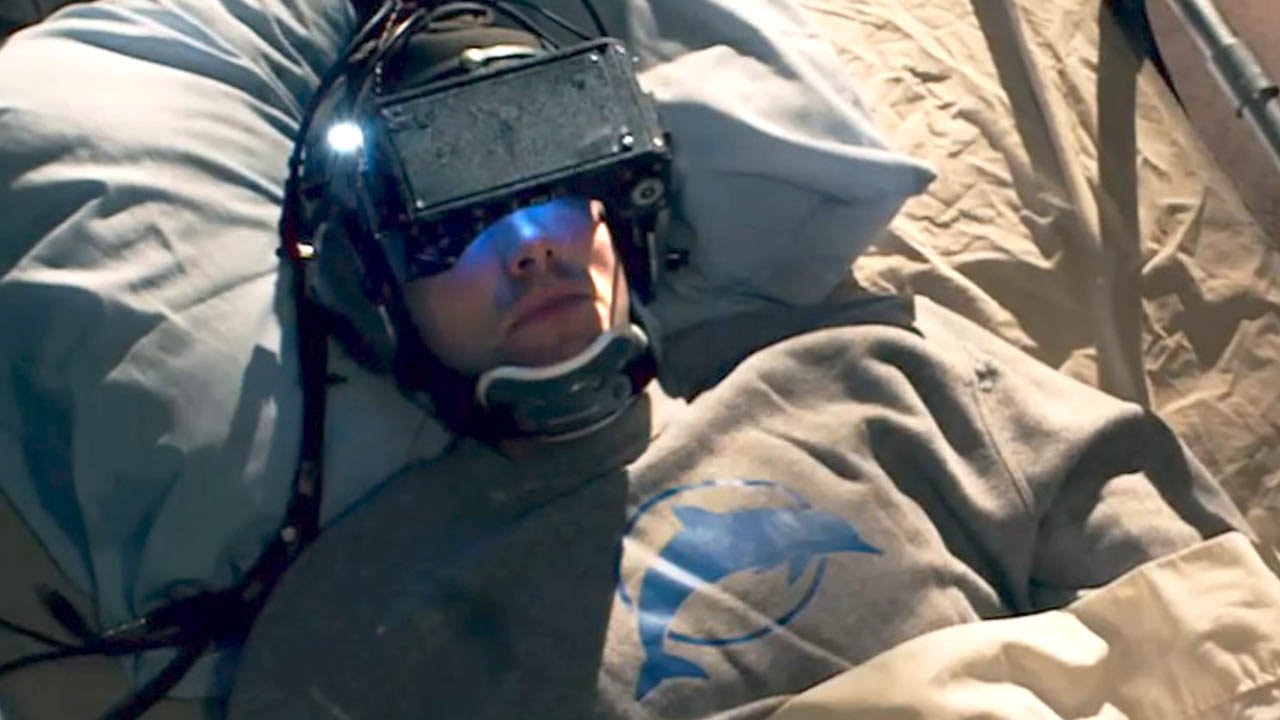
Rating: 4/10 – a missed opportunity, Barely Lethal is so humdrum it should be called Barely Lethargic; with a lack of flair behind the camera allied to a below-par script, the movie sinks under the weight of its own low expectations and despite an opening sequence that passes muster, never amounts to much more than being acceptable.

Share this:

  • Click to share on X (Opens in new window) X
  • Click to share on Facebook (Opens in new window) Facebook
  • More
  • Click to print (Opens in new window) Print
  • Click to email a link to a friend (Opens in new window) Email
Like Loading...

Mini-Review: Good Kill (2014)

28 Thursday May 2015

Posted by dullwood68 in Movies

≈ 4 Comments

Tags

Air Force, Andrew Niccol, Bruce Greenwood, Drama, Drones, Ethan Hawke, January Jones, Langley, Pilot, Review, Taliban, Terrorism, Thriller, Yemen, Zoë Kravitz

Good Kill

D: Andrew Niccol / 102m

Cast: Ethan Hawke, Bruce Greenwood, Zoë Kravitz, January Jones, Jake Abel, Dylan Kenin, Peter Coyote

With pilots no longer needed to fly as many missions thanks to the US Air Force’s reliance on drones, Major Thomas Egan (Hawke) is stuck in a dead-end post as a drone pilot at a base outside Las Vegas. Under the command of Lt. Colonel Jack Johns (Greenwood), Egan is disillusioned with his new role and wants to get back to real flying. His frustration begins to affect his marriage to Molly (Jones), and he doesn’t socialise much with his colleagues, newbie Airman Vera Suarez (Kravitz), M.I.C. Joseph Zimmer (Abel), and Capt. Ed Christie (Kenin). Targeting confirmed terrorists and Taliban members, Egan kills by remote control, and feels equally as remote from what’s happening thousands of miles away.

His role takes an unexpected turn when his unit is asked to work with the CIA in targeting and killing suspected terrorists and/or sympathisers, or anyone regarded as a potential threat to US security – but in Yemen, a country that the US isn’t at war with. When several drone strikes result in a “double tap” – the subsequent targeting and killing of anyone who goes to the aid of those injured in the first bombing – Egan, appalled by this development, begins to question the Air Force’s role in working with the CIA, and the ethics involved. Unable to influence the CIA’s thinking he attempts to thwart their plans by sabotaging the drone strikes, but when he’s found out it puts his whole future, including his marriage, in jeopardy.

Good Kill - scene

Set in 2010, at the height of the US’s use of drones in Afghanistan and neighbouring countries, Good Kill is another thought-provoking drama from writer/director Niccol. An astute observation of the ways in which technology is making modern warfare a matter of distance rather than engagement, the movie paints a chilling portrait of the callous approach to collateral damage that appears endemic in US thinking. By making Egan an unwitting – and unwilling – victim of abhorrent government policies, the movie concisely and intelligently shows the appalling effect such a responsibility can have on an individual.

Hawke gives one of his best performances outside of the Before… movies, his haunted features capturing the conflict going on inside him with studied precision. As he wrestles with his need to follow orders and his growing sense of outrage and shame at what he’s required to do, Hawke’s portrayal of Egan grounds the movie even further than the verisimilitude achieved by Niccol’s artful script. With great supporting turns from Greenwood and Kravitz, Good Kill tells its story with a great deal of subtlety and understanding of the issues involved. The Las Vegas backdrop serves to heighten the insanity of bombing people based on limited intelligence information, and the movie is immaculately shot by Amir Mokri. Niccol makes only two missteps: the character of Molly Egan, a more casually written role that Jones has trouble fleshing out, and the ending, which is too pat, but these aspects aside, the movie is a solid, engrossing thriller that shines a revealing light on yet another part of US foreign policy that ignores due process.

Rating: 8/10 – yet another contemporary, relevant drama from Niccol, Good Kill shows an unflinching, and uncompromising, approach to the material; with Hawke on top form, the human element is given a better focus than usual, and the movie persuasively challenges the idea that remote killing is less distasteful than killing someone in person.

Share this:

  • Click to share on X (Opens in new window) X
  • Click to share on Facebook (Opens in new window) Facebook
  • More
  • Click to print (Opens in new window) Print
  • Click to email a link to a friend (Opens in new window) Email
Like Loading...

Pound of Flesh (2015)

21 Thursday May 2015

Posted by dullwood68 in Movies

≈ Leave a comment

Tags

Action, Aki Aleong, Charlotte Peters, Darren Shahlevi, Drama, Ernie Barbarash, Jean-Claude Van Damme, John Ralston, Kidney transplant, Manila, Philippines, Review, Stolen kidney, Thriller

Pound of Flesh

D: Ernie Barbarash / 105m

Cast: Jean-Claude Van Damme, John Ralston, Aki Aleong (as Leonard Gonzales), Charlotte Peters, Darren Shahlevi, David P. Booth, Adele Baughan

While visiting Manila, kidnap and rescue expert Deacon Lyle (Van Damme) wakes up in his hotel room in a bath full of ice water and his right kidney missing. From hazy memories of the night before, Deacon remembers rescuing a woman (Peters) from her abusive boyfriend (Shahlevi) and her coming back to his room. He calls an old friend, Kung (Aleong) for help, and though Kung brings morphine, he also brings a warning: for Deacon to let it go. But he can’t, and the reason is made clear with the arrival of his brother, George (Ralston); George’s daughter needs a kidney transplant and in two days Deacon was going to be the donor.

Deacon goes to the bar where he and the woman went for a drink. A barmaid there reveals that the woman’s name is Ana Riley and the man who was abusing her is called Drake, and that they can be found at Gratis, an underground fight club. Using his contacts, Kung finds out where the club is being held that night. There Deacon finds Ana. She tells him that Drake paid her to be with Deacon and that it was a one time deal. Drake arrives and there is a shootout, but Drake gets away. Regrouping, Deacon, George, Ana and Kung go to George’s summer home. There it’s revealed that Deacon is really the father of George’s daughter; they also work out that whoever wants Deacon’s kidney must be on the donor register.

With the help of one of George’s ex-students, they discover the intended recipient is an Englishman, Simon Rants (Booth), with ties to an organisation that provides security via contracted mercenaries. Deacon decides to launch a one-man assault on Rants’s home. When his plan begins to backfire, George goes in as well, but what they eventually find changes all their preconceptions.

Pound of Flesh - scene

As a member of that illustrious group, the Lesser-Spotted Eighties Action Stars, Jean-Claude Van Damme is still busy churning out low-budget action flicks that bypass cinemas and head straight for DVD. Devised to be filmed in far-flung corners of the globe, and with minimal attempts at providing either a decent plot or characterisation, these movies focus on the requisite number of action or fight scenes and build to a predictable showdown between the hero and the villain. In some ways they’re the action movie equivalent of comfort food.

But sometimes comfort food isn’t enough by itself, and so it proves with Pound of Flesh, an action movie that tries to include concepts of fatalism, guilt, and religious ambivalence in an attempt to beef up the rather pedestrian plot. As an attempt at adding depth to an otherwise solidly underwhelming script it’s not such a bad idea, it’s just that it’s all handled so badly. You know these concepts are only there to fill in the downtime between fight scenes when one of the characters abandons his up-til-then deeply held beliefs, as George does here, going from guilt-ridden pacifist to gun-toting vigilante at the drop of a hat. (It doesn’t help that Ralston can’t quite carry it off.)

The script, by Joshua James, lets itself down in other ways. The most obvious is in the way it asks the viewer to suspend all disbelief as Deacon takes part in fight after fight so soon after losing his kidney. Deacon gets punched, kicked, thrown about, flash-bombed, stabbed, and aside from the odd look of discomfort, shrugs it off with the pithy comment, “I crossed the Afghan desert on two broken legs. So, this is nothing.” It’s the kind of witless macho posturing that should be ironic now, but instead it’s laughable, and the high point of the movie’s few attempts at humour (though it probably wasn’t meant that way). The script also asks us to accept that Drake (and we have to assume this) would go to all the trouble of going to George’s summer home and rigging the fridge with a grenade, so that whoever opens it next gets blown up. As that could be anyone, at any time, it’s an incredibly stupid “surprise” moment, and reinforces the idea that scripts for low budget action movies rarely reach a second draft.

Doing his best to make it work, Van Damme plays it straight but it all requires too much work, even for him, to bring it up to par. It’s a shame that his career seems to have stalled again in the direct-to-DVD arena after his “breakout” turn as himself in JCVD (2008). That movie showed a multi-faceted Van Damme, and a level of acting ability we hadn’t seen before, but he doesn’t seem to have capitalised on that at all. So now we still have him making the same moves he always makes: the high kicks, the splits, etc. And he looks so tired. He’ll be fifty-five this year, but he looks much older, much more worn down, and while this fits the character quite well given that he’s had a kidney removed, it does give rise to the possibility that Van Damme is tired himself of always being the action hero (maybe).

The rest of the cast provide varying turns, with Ralston overdoing the whole “God is good” angle, while Peters – who from certain angles resembles a thinner Rachel Weisz – makes her feature debut and seems to keep herself at a distance, as if she’s realised early on that this isn’t going to be the springboard for her career she was hoping for. Aleong is underused, and when he is on screen, is either asking for money, or bemoaning his character’s lack of influence, but always as the wise Oriental who meditates on the vagaries of life. As the main villain of the piece, Shahlavi – who sadly passed away in January this year – is as memorable as any other of Van Damme’s adversaries over the years, but does look fetching in mercenary black.

Barbarash is an old hand at this, having worked with Van Damme twice before, but he doesn’t bring anything new to the table, and several of the fight scenes suffer from having the camera in the wrong place, as well as being poorly cut together. China stands in for Manila (obvious from all the street signs), and overall, the whole thing has the air of a contractual obligation.

Rating: 3/10 – another depressing entry in Van Damme’s filmography, Pound of Flesh has all the hallmarks of a leftover script dusted off to meet its star’s requirements; with only a minimum of effort all round, it could almost be the cinematic description of “lacklustre”.

Share this:

  • Click to share on X (Opens in new window) X
  • Click to share on Facebook (Opens in new window) Facebook
  • More
  • Click to print (Opens in new window) Print
  • Click to email a link to a friend (Opens in new window) Email
Like Loading...

Mini-Review: Mad Max: Fury Road (2015)

18 Monday May 2015

Posted by dullwood68 in Movies

≈ 2 Comments

Tags

Action, Australia, Charlize Theron, Chase, Drama, George Miller, Hugh Keays-Byrne, Immortan Joe, Imperator Furiosa, Max Rockatansky, Nicholas Hoult, Nux, Review, Sequel, Thriller, Tom Hardy, Water

Mad Max Fury Road

D: George Miller / 120m

Cast: Tom Hardy, Charlize Theron, Nicholas Hoult, Hugh Keays-Byrne, Josh Helman, Nathan Jones, Zoë Kravitz, Rosie Huntington-Whiteley, Riley Keough, Abbey Lee, Courtney Eaton, John Howard, Richard Carter

Captured by men under the command of Outback warlord Immortan Joe (Keays-Byrne), Max Rockatansky (Hardy) is held prisoner in the Citadel, Joe’s fortress hideout. When one of Joe’s lieutenants, Imperator Furiosa (Theron), helps five of Joe’s “brides” escape, Joe sends everyone after her, including Nux (Hoult), a war boy with little experience and who’s been given Max as a “blood bag”. Forced to take Max with him in the pursuit, Nux catches up to Furiosa, who is driving a large petrol tanker. He and some of the other war boys attempt to stop Furiosa, but are unsuccessful. And in the melee, Max – who was chained to the front of Nux’s vehicle – frees himself and joins the fleeing women.

Quickly earning their trust, and still being pursued by Immortan Joe, Max learns that they are heading for the “Green Place”, where Furiosa was born; there they will be safe and able to live freely. Joe succeeds in catching up to them and in their efforts to elude him, one of the brides is killed. They manage to get away from him and further along the way, they meet up with a band of women called the Vuvalini. The women plan to carry on across a vast salt flat but with no guarantee that they’ll reach the other side alive. Instead, Max convinces them to go back the way they came, through Joe’s forces, and take the Citadel from him while it’s undefended.

Mad Max Fury Road - scene

Let’s get the superlatives out of the way, shall we? Thrilling, exciting, stirring, incredible, jaw-dropping, amazing, breathtaking, magnificent, gripping, mind-blowing, superb… the list goes on and on. Thirty years on from the frankly disappointing Mad Max: Beyond Thunderdome (1985), George Miller has returned to the barren future world inhabited by Max Rockatansky, and he’s come up with one of the best action movies you’ll see for some time to come. Mad Max: Fury Road is simply stunning, from John Seale’s exquisite cinematography, to Jason Ballantine and Margaret Sixel’s impressive editing techniques, to Jenny Beavan’s wonderfully expressive costume design, the movie has all this and more going for it, and in a year with so many action thrillers coming our way, will prove very hard to beat.

It’s a major triumph for Miller, hewing to a simple formula: don’t let up on the pace and don’t let up on the mayhem. There are some astonishing stunts performed in this movie, and they leave the viewer open mouthed in admiration for the various stunt teams who put all this together, and also for the sensational vehicles that have been designed and created (and endlessly destroyed). The cast are impressive as well, and if Theron steals the movie it’s mainly because Miller has amped up Max’s taciturn nature and made him more of a physical presence than an intellectual one. But everyone’s a winner, not least the audience, and this is one movie that deserves every plaudit coming its way.

Rating: 9/10 – with not an animated penguin in sight, George Miller returns to doing what he’s always done best: providing the kind of over-the-top, automobile anarchy that has the viewer watching with undisguised awe; filmed with undeniable passion – and with a lovely nod to Peter Weir’s The Cars That Ate Paris (1974) – Mad Max: Fury Road is a cause for joy and exultation, and is possibly the only time a fourth movie in a franchise has proven to be the best of the series.

Share this:

  • Click to share on X (Opens in new window) X
  • Click to share on Facebook (Opens in new window) Facebook
  • More
  • Click to print (Opens in new window) Print
  • Click to email a link to a friend (Opens in new window) Email
Like Loading...

Spooks: The Greater Good (2015)

14 Thursday May 2015

Posted by dullwood68 in Movies

≈ Leave a comment

Tags

Bharat Nalluri, Bombing, Drama, Espionage, Harry Pearce, Jennifer Ehle, Kit Harington, MI5, Peter Firth, Review, Spies, Terrorism, Thriller, TV series

Spooks The Greater Good

D: Bharat Nalluri / 104m

Cast: Peter Firth, Kit Harington, Jennifer Ehle, Elyes Gabel, Tim McInnerny, David Harewood, Lara Pulver, Eleanor Matsuura, Elliot Levey

While being taken across London under armed guard, MI5 lose the US’s most wanted terrorist, Adem Qasim (Elyes), in a rescue bid by his followers. It’s clear to the officer in charge of the operation, Harry Pearce (Firth), that Qasim’s escape was helped along by someone on the inside. However, he’s not short of suspects, from his own boss, Oliver Mace (McInnerney), to MI5 bigwig Geraldine Maltby (Ehle), US liaison Emerson (Levey), and British politician Francis Warrender (Harewood). Any of them could have been responsible; with MI5’s standing in the international community at an all-time low, it’s the perfect opportunity for the US to subsume MI5 within its own intelligence organisation.

To weed out the mole in MI5, Harry enlists ex-field operative Will Holloway (Harington), but not before he’s tracked down Qasim and made a deal with him: in exchange for arranging for Qasim’s wife to be released from a Russian prison, Harry will be given a phone number that will reveal the mole’s identity. Trusting no one else, Harry disappears, leaving Will to track down the mole from inside MI5. With his superiors uncertain if Harry has changed sides, or is working from his own agenda, he becomes as much of a target as Qasim. Aided by one of the officers, Erin Watts (Pulver) who was on the guard detail when Qasim escaped, Will learns that an order was given that requests for aerial support were to be ignored, and for the security teams not to engage with Qasim’s men.

Meanwhile, Qasim presses on with his plans to plant bombs across London. He uses a suicide bomber to set off an explosion in London’s West End, at an event attended by Warrender, who is killed. With another bombing planned to happen soon, Harry discovers that Qasim’s wife is dead. In a race to stop the bombing and still find out who the mole is in MI5, Harry must join with Will in trying to find a way to convince Qasim that his wife is still alive, and to get hold of the phone number he needs to ferret them out. Enlisting the help of communications analyst Hannah Santo (Matsuura) to impersonate Qasim’s wife, a meeting is arranged to take place on Waterloo Bridge. But when it all goes wrong, Harry sets in motion a sequence of events that could potentially bring down MI5 and make a terrorist hero of Qasim.

Spooks The Greater Good - scene

Last seen in its incarnation as a TV series back in 2011, Spooks: The Greater Good, the long-mooted movie version, finally makes it to cinemas, and proves that, yet again, big screen adaptations of small screen successes are often pale imitations of their predecessors. As it is here, with a story that tries its hardest to be hard-boiled and suitably dour, but which comes across as dull and overly complicated.

Part of the problem is that the script – by returning writers Jonathan Brackley and Sam Vincent – makes things incredibly easy for Harry (the speed with which he tracks down Qasim after his escape) and incredibly difficult for Will (he’s arrested and faces extraordinary rendition at one point). Also, the script doesn’t clarify how MI5 can know Harry’s whereabouts in, say, Berlin, but never come close to arresting him – until he needs them to, that is. (There’s a laughably awful scene where Harry and Will are lured into a trap by someone who’s supposedly on their side, the dynamics of which are so badly set up, most viewers will be scratching their heads and saying, “Was it this bad as a TV series?”)

Whether it was or not – and critical consensus states it wasn’t – this movie outing is likely to tarnish the series’ reputation, replete as it is with espionage thriller clichés (is that a piece of conveniently incriminating evidence that’s been found in the waste basket?), and by-the-numbers performances (McInnerny makes a character he’s played before sound like nothing more than the world’s most obnoxious, clueless boss ever). The movie also seems reluctant to make Qasim really villainous. This leads to a twist in the narrative that induces more head scratching, and further leads to the movie’s big showdown, in which we learn that any perimeter breach of MI5’s HQ won’t be detected until the intruders have made it quite a way inside. It’s moments like these that undermine the movie’s good intentions and spoil the series’ reputation for intelligence and provocative storytelling.

Reprising his character from the series’, Firth is annoyingly enigmatic in the kind of role that can be boiled down to the phrase, “I know something you don’t know”. He flits in and out of the story, prompting angry outbursts from the other characters, and as mentioned above, moving around with impunity. Firth does what he can, but you can tell he’s not feeling it, and by the movie’s end he looks as tired as a man would be if he were waiting for a better, less banal line of dialogue to finish off with. Cynics might argue that Harington has been brought in to do all the physical stuff that Firth can’t manage anymore, but those who are even more cynical will recognise that he’s the international draw meant to attract foreign – sorry, American – audiences. He’s not given much to do other than run around a lot and look puzzled/upset/betrayed as each scene demands, but he acquits himself well enough, and seems aware of just what his role is in the overall production. As for the rest of the cast, Ehle is as cool and mysterious as her character requires her to be, while as Qasim, Elyes looks as if he’s just taken time off from shooting 2016’s Most Hunkiest Terrorists Calendar.

Another stalwart from the series’, Nalluri fails to inject any urgency into proceedings, and leaves the movie feeling run-of-the-mill and retaining a TV vibe that doesn’t suit the movie at all. Once again, London is insufficiently used as a backdrop (overhead establishing shots abound to little effect) and the use of Waterloo Bridge and the National Theatre building soon palls once the viewer realises that nothing too exciting is going to happen in either location. With its dull, gritty colour scheme as well, it’s not a visually interesting movie to watch either, and even though Hubert Taczanowski’s photography reflects the darker recesses of espionage work and its human casualties, there are too many occasions where the foregrounds merge into the backgrounds, giving the movie a sense that it lacks depth in both its visuals and its characters.

Rating: 5/10 – while a good idea on paper, Spooks: The Greater Good proves to be a turgid, uninspired affair that skimps on thrills in favour of too many scenes where characters’ question each other’s loyalties; with a pedestrian feel about it that stops the viewer from engaging with it properly, the movie fails to exploit the drama inherent in the world it explores, and remains a missed opportunity.

Share this:

  • Click to share on X (Opens in new window) X
  • Click to share on Facebook (Opens in new window) Facebook
  • More
  • Click to print (Opens in new window) Print
  • Click to email a link to a friend (Opens in new window) Email
Like Loading...

Big Game (2014)

13 Wednesday May 2015

Posted by dullwood68 in Movies

≈ Leave a comment

Tags

Action, Air Force One, Drama, Finland, Hunting, Jalmari Helander, Manhunt, Onni Tommila, President, Ray Stevenson, Review, Rite of passage, Samuel L. Jackson, Thriller

Big Game

D: Jalmari Helander / 90m

Cast: Samuel L. Jackson, Onni Tommila, Ray Stevenson, Victor Garber, Jim Broadbent, Mehmet Kurtulus, Ted Levine, Felicity Huffman, Jorma Tommila

On the eve of his thirteenth birthday, and following the tradition of his Finnish community, Oskari (Onni Tommila) must go alone into the mountains and hunt down and kill a wild animal such as a deer. If he succeeds, as his father (Jorma Tommila) did, he will be regarded as a man. But when Oskari chooses a bow as his weapon of choice, he proves less than capable with it, and he heads off uncertain as to how well he will do. Meanwhile, the President of the United States, William Moore (Jackson), is aboard Air Force One heading for a conference in Helsinki. Travelling with him is his senior security officer, Morris (Stevenson), who once took a bullet intended for the President. When the plane is targeted by mercenaries led by Hazar (Kurtulus), Morris gets Moore into an escape pod and jettisons it. As he parachutes to safety, missiles strike the plane and it explodes. Below, Oskari is tracking through the forest when Air Force One careens through the trees above him and crashes. Oscar discovers the escape pod and releases Moore.

At the Pentagon, the Vice President (Garber), along with General Underwood (Levine) and the director of the CIA (Huffman), are made aware of the situation. Using satellite feeds they begin to track the President’s whereabouts, and are aided by terrorism expert Herbert (Broadbent). He correctly identifies Hazar as the culprit responsible for the attack on Air Force One, though the mercenary’s true reason for doing so, to hunt the President for sport, remains a mystery to them. In time, they also learn that Morris  is working with Hazar and his job is to deliver the President so that Hazar can hunt him.

While Hazar and his men begin to track the President, Oskari tells Moore about the rite of passage he’s on. They make camp for the night and the next morning press on with Oskari’s hunt. It’s not long, however, before Hazar finds them both and takes the President hostage, though only temporarily, as Oskari rescues him (though not in the most conventional of manners). In the process they discover that Air Force One has come to rest in a lake, and that their best hope for survival lies within it. But once they’re aboard they find themselves trapped, and with a bomb that is quickly counting down…

Big Game - scene

The most expensive movie yet produced in Finland, Big Game is a throwback to those action thrillers from the Eighties and Nineties where one lone hero took on a whole slew of bad guys and offed them in various inventive ways. Here the twist is that the lone hero is a thirteen year old boy, and the location – while reminiscent of Cliffhanger (1993) – is the stunning Bavarian Alps (that’s right, it’s not Finland). Though he naturally has top billing, Jackson is actually a supporting player in a movie that keeps its focus firmly on the path to manhood being taken by Oskari.

This allows the movie to rise – briefly – above the usual run-of-the-mill heroics expected of this sort of thing, but at the same time, to minimise the amount of risk or danger both Oskari and Moore find themselves in. At one point they find themselves in a fridge hurtling down the side of a mountain and then plunging into a river. But Hazar and his men make only a token effort to chase them, and they both emerge from the fridge with minor abrasions. It’s meant to be a man hunt (and the title is a pretty big clue as well), but it’s more like a polite ramble with the occasional burst of distracting gunfire. And it ends with a gloriously explosive finale that feels rushed, even if it is immensely satisfying. There’s a specific target audience here – aside from Hollywood producers – and it’s early teenage boys. It’s a boys’ own adventure, but devoid of real threats or real pain.

But despite the long-winded beginning, and the lack of any appreciable tension, Big Game is still straightforward, enjoyable stuff that ticks a variety of boxes while sidestepping some others. Jackson’s slightly pompous President is soon taken down a peg and learns a lot from his young rescuer; Stevenson’s loyal agent has a secret agenda and an Achilles heel of a health condition; Hazar is a predictably urbane psychopath; the location photography is often breathtaking; the Pentagon seems to be staffed by only ten people; and Levine and Huffman’s characters seem so inept it’s a wonder they’re in the positions they’ve reached. Add to all that a performance from Broadbent that feels like it should be in another movie entirely, and you have a movie that falls back on some tried and (not to be) trusted plot devices and stereotypical characterisations.

However, Helander – adapting an original story by himself and producer Petri Jokiranta – does invest the movie with a sharp line in humour (Oskari doesn’t recognise Moore at all; Hazar tells a helicopter pilot his best chance is to run as the mercenary doesn’t have a gun yet), and even allows Jackson to get in a carefully edited “motherf-“. It’s good to see the star of so many low-grade thrillers in recent years play against type (Moore gets beaten up twice), and even better to see that he’s enjoying himself. But it’s Onni Tommila who steals the show, his narrow gaze and determined features giving perfect expression to a boy who won’t give up, despite the odds against him (and the fact that he’s terrible with a bow and arrow). With Helander adding some family issues to the mix as well, and making Oskari resourceful but not impossibly so, the movie retains a core focus that serves it immeasurably.

Rating: 7/10 – while not as violent as audiences might expect (or want it to be), Big Game is still an enjoyable, though lightweight, piece of high concept entertainment; Jackson and Onni Tommila make a great team, and if, as it seems, the way is left open for some kind of sequel, then that’s not such a bad thing either.

Share this:

  • Click to share on X (Opens in new window) X
  • Click to share on Facebook (Opens in new window) Facebook
  • More
  • Click to print (Opens in new window) Print
  • Click to email a link to a friend (Opens in new window) Email
Like Loading...

Cut Bank (2014)

12 Tuesday May 2015

Posted by dullwood68 in Movies

≈ Leave a comment

Tags

Billy Bob Thornton, Bruce Dern, Crime, Drama, John Malkovich, Liam Hemsworth, Matt Shakman, Michael Stuhlbarg, Miss Cut Bank pageant, Montana, Movie reviews, Murder, Postman, Review, Reward money, Teresa Palmer, Thriller

Cut Bank

D: Matt Shakman / 93m

Cast: Liam Hemsworth, Teresa Palmer, John Malkovich, Billy Bob Thornton, Bruce Dern, Michael Stuhlbarg, Oliver Platt, Sonya Salomaa, David Burke, Denis O’Hare

In the small town of Cut Bank, Montana, car mechanic Dwayne McLaren (Hemsworth) dreams of leaving town with his girlfriend Cassandra (Palmer), but he hasn’t got any money and he has to look after his disabled father (O’Hare). While spending time together on the outskirts of town, Dwayne inadvertently films the murder of local postman Georgie Witts (Dern). He takes the footage to Cassandra’s father, car dealer Big Stan Steeley (Thornton), who calls in the sheriff, Roland Vogel (Malkovich). The sheriff watches the footage and declares it’s the town’s first murder.

With the community in shock over Georgie’s death and the disappearance of the mail van he was driving, Vogel begins his investigation. At the same time, a loner with a strong interest in taxidermy named Derby Milton (Stuhlbarg) comes looking for a parcel he was expecting (and which was in the mail van). Where Vogel looks for a vehicle with a particular set of tyres, Milton looks for a boot with a particular sole. He finds out that a Native American named Match (Burke) bought a pair a few months before.

Meanwhile, Dwayne applies for a reward due for evidence relating to the death of a member of the postal service. The reward – $100,000 – will allow Dwayne to find alternative care for his father, and give him and Cassandra the chance to start a new life together in California. But when the Postal Inspector (Platt) arrives to confirm the reward, there’s only one snag: he needs to see the body, which so far hasn’t been found as it was taken with the mail van.

Matters escalate when Big Stan makes a discovery at his spare parts yard, a discovery that sees him brutally attacked. However, Milton – still looking for his parcel and unwilling to forget about it – makes the same discovery, but with a different outcome, one that implicates Dwayne. With the reward money not being paid out for a few months, it’s down to Cassandra to win the upcoming Miss Cut Bank pageant and its first prize of $5,000, and thereby give them enough money to leave town for good. But Milton has other ideas, and the sheriff is beginning to put all the pieces together surrounding Georgie’s death…

Cut Bank - scene

Watching Cut Bank, the obvious comparison is with Fargo (1996), but while that movie is still highly regarded as a classic nearly twenty years on, it’s hard to believe that Cut Bank will be looked on in the same way, or remembered at all. While it does its best to look and feel as moody as many other small-town crime dramas, it’s the quality of the story that lets it down. There are too many occasions where the story is driven forward by the messiest of contrivances, or characters behave in ways that contradict their previous attitudes. For the viewer it means a suspension of disbelief that is needed on several occasions, and for which the movie makes no apologies, as it just carries on digging a bigger and bigger hole for itself.

Indeed, it’s the script by Roberto Patino, and as directed by Shakman, that proves the movie’s downfall, causing as it does a loss of faith almost from the beginning. It plods through its twists and turns with all the authority of a movie that doesn’t know where it’s going or why – and which winds things up with one of the worst, most nonsensical outcomes that anyone could possibly imagine (except Patino). To say that it defies belief would be to suggest that the viewer might actually have some by this point. And as for some of the dialogue, the script aims for clever and insightful, but succeeds in being arch and unimportant. Only the running gag, “I thought you were dead” works as well as it should, and at one point it receives a great pay-off, but it’s the only aspect of the script that really hits home.

With the script being so derivative and uneven, the movie suffers and so too does its more than talented cast. Hemsworth proves once more that he’s the blandest of the Hemsworth brothers, and still has trouble being convincing as any character in any movie, while Palmer has an embarrassing pageant song to sing and dance to but very little else. Thornton portrays Big Stan as the same kind of no-nonsense bully he’s played so often before, and Malkovich gives possibly the best performance as the sheriff who looks to be so out of his depth that he can’t see the bottom. Of the rest of the cast, Dern is great but not well-used, and Stuhlbarg is given a monologue that attempts to explain his behaviour but which actually proves too confusing to be much of an explanation. And Platt breezes through his scenes with all the bluster that he’s employed elsewhere, but here, it’s all to no effect, and his character adds nothing to the mix.

Shakman orchestrates the various plot strands and characters with the confidence of a director who doesn’t quite know what to do with the material – which is strange as he directed two episodes of the TV version of Fargo (2014) – but again it’s the quality of the material that hampers him. He does display an appreciation for widescreen composition, but he never seems comfortable presenting any close ups, and appears content to work with medium or long-range shots instead. This creates a distancing effect between the audience and the characters, and before long, the viewer has lost all interest in what’s happening, or how important it might all be. This applies particularly to Milton’s basement “secret”, which, when it’s revealed, is never adequately explained (though an attempt is made with Milton’s monologue). It’s the movie’s one true moment where it pulls something out of the bag that’s different and entirely unexpected.

In failing to live up to its potential, and by wasting the talents of its cast, Cut Bank stalls and stutters so often, and finds it so difficult to maintain a convincing approach that in the end it becomes too frustrating to watch, and is so undermined by its cavalier attitude to law enforcement and guilt, that it never recovers. The plot lacks originality, and the characters lack any appreciable depth, often doing things without any clear motivation. That said, there’s supportive and beautiful cinematography by Ben Richardson, and while some scenes appear to run on too long, the editing by Carol Littleton is sharp and keeps things moving (when they should be stalling).

Rating: 4/10 – with a script that tries to be clever and ingenious, but falls short on both counts, Cut Bank is left to founder in almost every area; one to avoid unless the idea of a murder mystery that leaves out the mystery is an attractive one that you can’t pass up.

NOTE: The trailer contains a few spoilers that aren’t included in the above synopsis, so if you watch it, please bear this in mind.

Share this:

  • Click to share on X (Opens in new window) X
  • Click to share on Facebook (Opens in new window) Facebook
  • More
  • Click to print (Opens in new window) Print
  • Click to email a link to a friend (Opens in new window) Email
Like Loading...

Child 44 (2015)

04 Monday May 2015

Posted by dullwood68 in Movies

≈ Leave a comment

Tags

Daniel Espinosa, Drama, Gary Oldman, Joel Kinnaman, Leo Demidov, Literary adaptation, Moscow, Murder, Noomi Rapace, Review, Rostov, Serial killer, Soviet Union, Thriller, Tom Hardy, Tom Rob Smith

Child 44

D: Daniel Espinosa / 137m

Cast: Tom Hardy, Noomi Rapace, Gary Oldman, Joel Kinnaman, Paddy Considine, Fares Fares, Vincent Cassel, Jason Clarke, Nikolaj Lie Kaas, Tara Fitzgerald, Sam Spruell, Charles Dance

In post-war Soviet Russia, Leo Demidov (Hardy) is a respected officer in the Secret Police. Along with wartime comrades Vasili Nikitin (Kinnaman) and Alexei Andreyev (Fares) he investigates crimes against the state. When a suspect, Anatoly Brodsky (Clarke) goes on the run, their pursuit takes them to a farm where Brodsky has taken refuge. Against Leo’s wishes, Vasili kills the farmer’s wife and his young son; this drives a wedge between the two men.

A short while later, Andreyev’s young son is found dead by some railroad tracks. Though it’s clear that he has been murdered, thanks to Stalin’s edict that there shall be “no murder in paradise”, Leo is commanded by his superior, Major Kuzmin (Cassel), to tell Andreyev that the death was accidental. The idea doesn’t sit well with Leo but he goes ahead with it. When another child is murdered, Leo learns that there have been even more, similar cases. At the same time, he is tasked with investigating another suspected enemy of the state: his wife, Raisa (Rapace). She works in a school, and is friendly with one of the teachers, Ivan Sukov (Kaas). When his investigation reveals nothing incriminating about Raisa, his report is used as an excuse to strip Leo of his job and his home.

Leo is sent to Rostov to work under the command of General Mikhail Nesterov (Oldman). There, the discovery of another child’s body leads Leo to believe that the killer is responsible for over forty murders and is using the railway line between Rostov and Moscow as a means of hiding his crimes. Convincing Nesterov of his theory, Leo, aided by Raisa, returns to Moscow to seek help from Andreyev and gain access to files that will provide further information. But Vasili, who has been promoted to Leo’s old post, learns of his being in Moscow and tries to track him down and arrest him. Leo and Raisa manage to get out of Moscow and make their way back to Rostov. Now knowing that this is where the killer lives and works, Leo tries to find him on his own, but he has to work completely outside the law to do so.

Child 44 - scene

Based on the novel by Tom Rob Smith, Child 44 looks, on the surface, to be the kind of quality literary adaptation that offers outstanding performances, first-rate direction, a gripping script, and all of it culminating in a rewarding cinematic experience. Alas, this isn’t that kind of movie.

Instead, Child 44 is one of the most lethargic, dullest thrillers in recent years. It’s hard to say just what is right about the movie, cloaked as it is in a thick layer of cod-Russian accents and the kind of amateur thesping expected from a movie with a much smaller budget.

That such a talented cast appears so ill-at-ease is thanks largely to a script by Richard Price that leaves them high and dry in terms of conviction, and rarely links two scenes with any sense that they’re connected. The movie opens with two scenes that show Leo and Vasili growing up and during the war. Anyone who’s read the novel will know the importance of this, but thanks to Price it has as much relevance later on as its clichéd outcome requires (which isn’t much). There are other moments and aspects of the novel that are included and then ignored, such as Raisa’s initial fear of Leo when they first met, and these go some way to making the movie feel uncoordinated and ill-considered.

And the movie feels rushed once Leo has to look into Raisa’s activities, as if the strain of adapting so much wieldy material became too much and Price had to jettison any subtlety in favour of just ploughing ahead with the thriller side of things. The end result is a movie that plods along avoiding any attempt to re-engage with its audience. As such, it becomes a chore, and the average viewer will be regretting the lengthy running time.

As mentioned above, the cast can do little with what they’re given. Hardy – usually a reliably  hard-working actor – here fails to get to grips with the character of Leo, and gives a drab, uninspired performance that runs out of steam before even a quarter of the movie is over. Raoace, who really should be picking her roles with more perspicacity, is left on the sidelines too much and only ever registers when taking part in a fight scene. Oldman appears halfway through, has a handful of scenes and then disappears until the end; Kinnaman plays Vasili as a one-note sociopath (and looks increasingly like a young Keith Carradine); and Considine is saddled with the role of the killer, but never looks comfortable when trying to make him seem pitiable.

Perhaps it’s as much Espinosa’s fault as the script’s, as the director never seems to have s firm grip on the material, and shoots several scenes with a peculiarly uninvolved approach that makes them seem as if they’ve been included for the sake of it. Under his wing, the movie lacks any real thrills, and the race to track down the killer is hampered by too many longeuers to be entirely effective. And when you have a cast of this quality, not getting the best out of them is practically criminal.

Rating: 4/10 – with its superficial recreation of Soviet Russia, and cruelly dispassionate approach to the material, Child 44 never convinces; when a movie adaptation is this disappointing it’s a sure sign that everyone was having a very long off day.

Share this:

  • Click to share on X (Opens in new window) X
  • Click to share on Facebook (Opens in new window) Facebook
  • More
  • Click to print (Opens in new window) Print
  • Click to email a link to a friend (Opens in new window) Email
Like Loading...

Uh-Oh! Here Comes Summer! – Furious 7 (2015) and Avengers: Age of Ultron (2015)

03 Sunday May 2015

Posted by dullwood68 in Movies

≈ 2 Comments

Tags

Action, Avengers, Black Widow, Chris Evans, Chris Hemsworth, Crime, Deckard Shaw, Dominic Toretto, Drama, Dwayne Johnson, Hulk, Iron Man, james Wan, Jason Statham, Joss Whedon, Mark Ruffalo, Marvel Cinematic Universe, Paul Walker, Reviews, Robert Downey Jr, Sequels, Superheroes, Thor, Thriller, Ultron, Villains, Vin Diesel

Furious 7

Furious 7 (2015)

aka Fast and Furious 7

D: James Wan / 137m

Cast: Vin Diesel, Paul Walker, Michelle Rodriguez, Jason Statham, Jordana Brewster, Dwayne Johnson, Tyrese Gibson, Ludacris, Kurt Russell, Nathalie Emmanuel, Elsa Pataky, Djimon Hounsou, Tony Jaa, Ronda Rousey, John Brotherton, Lucas Black

Having bested Owen Shaw and his gang in the previous instalment, now Dominic (Diesel), Brian (Walker), Letty (Rodriguez), and what seems like every main character from the series, have to pull together – with the aid of the mysterious Mr. Nobody (Russell) to take down his vengeful brother, Deckard Shaw (Statham). Throw in the hunt for a software programme, and its creator (Emmanuel), that can track anyone anywhere in the world, a trip to Abu Dhabi, and the usual amount of hyper-realistic cartoon violence, and you have the most successful entry in the franchise to date with, at time of writing, a worldwide gross of $1,352,724,000 (making it the fourth highest grossing movie ever).

Avengers Age of Ultron

Avengers: Age of Ultron (2015)

D: Joss Whedon / 141m

Cast: Robert Downey Jr, Chris Hemsworth, Mark Ruffalo, Chris Evans, Scarlett Johansson, Jeremy Renner, James Spader, Samuel L. Jackson, Don Cheadle, Aaron Taylor-Johnson, Elizabeth Olsen, Paul Bettany, Cobie Smulders, Anthony Mackie, Hayley Atwell, Idris Elba, Stellan Skarsgård, Linda Cardellini, Claudia Kim, Thomas Kretschmann, Andy Serkis, Julie Delpy, Henry Goodman

In an attempt to retire the Avengers from group duty, Tony Stark (Downey Jr) creates a robot that comes equipped with artificial intelligence. Only there’s a flaw: the robot, named Ultron (Spader), sees the best way of carrying out his peacekeeping mission is to wipe out the human race (and thereby ensure a peaceful world). With internal conflicts hampering their efforts to combat Stark’s creation, the introduction of Quicksilver (Taylor-Johnson) and Scarlet Witch (Olsen) to the mix, a showdown between the Hulk (Ruffalo) and Iron Man in his Hulkbuster suit, and Ultron planning an extinction level event, you have a sequel that has made $424,460,000 at the box office in just over a week.

And so we have the first two candidates for 2015’s Mega-Blockbuster of the Year Award. In the red corner we have the testosterone-fuelled, carmageddon-inspired Furious 7, and in the blue corner we have Avengers: Age of Ultron, the latest juggernaut designed to increase Marvel’s grip on the world and its wallet. The inclusion of their box office takes is deliberate, as this is really what both these movies are about: making as much money as possible off the back of a heavily marketable idea. That the idea is becoming stale (Furious 7) or showing signs of running out of steam already (Avengers: Age of Ultron) is neither here nor there. These movies are guaranteed crowd pleasers, and all the studios that make them have to do is give the fans enough of what they like most to ensure those big box office grosses.

It’s a well-known fact that recent entries in the Fast and Furious franchise have been built around the action sequences: the stunts come first and then a story is created around them. Such an approach isn’t exactly new, but as the series continues, it appears that the writer, Chris Morgan, is fast running out of ways to keep it as real as possible given the absurd, physics-defying world Dominic and his family live in. Morgan has scripted every movie since The Fast and the Furious: Tokyo Drift (2006), and this time round the law of diminishing returns has clearly set in with a vengeance. With its dodgy timescales, crude attempts at characterisation, and action sequences that go on and on and on without ever changing pace (or should that be, gear?), Furious 7 is a movie that believes in its hype so much that it’s forgotten it still needs to make an effort beyond what’s expected of it.

Of course, script revisions had to be made due to the untimely death of Paul Walker, but like so many of the cast, he’s marginalised in a movie that has too many characters and too little time to do much with them apart from put them in continual jeopardy. Brewster is sidelined in the Dominican Republic (admittedly, not so bad), Johnson winds up in hospital until needed at the end, and Walker’s contribution seems reduced to fighting Tony Jaa. But with the script showing more interest in the villains (Statham, Hounsou, Russell maybe) than its heroes, it comes as a bit of a shock to realise that the main characters have nowhere to go – everyone, even Letty with her amnesia, is still the same as they were when they first appeared. Maybe this kind of familiarity is what the fans want but ultimately it just means that future entries – and there are three more planned for release – will continue to mine the same formula and with less satisfying results.

Furious 7 - scene

The same problem that occurs in Furious 7 occurs in Avengers: Age of Ultron, namely what to do with so many different characters, especially the new ones. Writer/director Whedon doesn’t appear to be as sure this time round as he was on the first Avengers movie (and it may be why he won’t be helming the two Avengers: Infinity War movies). While he does effective work exploring the personalities and idiosyncrasies of the Avengers themselves – Stark’s continuing egotism, a burgeoning relationship between Bruce Banner and Black Widow (Johansson), where Hawkeye (Renner) spends his downtime – he’s less successful when it comes to the villain, the villain’s sidekicks, and the whole let’s-level-a-city-and-cause-as-much-destruction-as-possible angle.

With so many characters to deal with, it’s inevitable that some of them don’t receive as much attention as others. The introduction of Quicksilver and Scarlet Witch is a case in point, with Taylor-Johnson reduced to asking people he’s knocked over if they saw that coming (and not just once), and Olsen saddled with a perma-frown as she casts spells on people. They have a back story but it doesn’t impact on how they behave in the movie, and their teaming up with Ultron seems convenient rather than a well thought out plot development. Likewise, we have appearances by Kretschmann (dispensed with too quickly), Serkis (as an intro to his character’s appearance in Black Panther), and Delpy (as Natasha Romanoff’s childhood instructor). All great actors, and all reduced to walk-ons in the service of the ever-expanding Marvel Cinematic Universe.

But all great superhero teams need a great villain, and while Ultron seems to pass muster, the main problem with him is the actor cast to play him. Now it’s not that James Spader is a terrible actor – far from it – but what’s clear from his performance is that, rather than come up with an entirely new characterisation, he’s gone for a slight deviation on Raymond Reddington from The Blacklist… and it’s been encouraged. As a result we have a robot that often sounds whimsical rather than destructive, and petulant when he should be megalomaniacal. Whedon is good at injecting comedy into his movies – here, the throwaway line “No it wasn’t” is used perfectly – but when he tries too hard, as he does with Ultron, the effect is lost, and the viewer could be forgiven for wondering if Ultron is meant to be so eccentric.

On the action front, once again we’re treated (if that’s the right word) to another massive showdown where buildings are levelled, the Avengers fight off an army of attackers (last time the Chi’tauri, this time Ultron’s robots), and the special effects budget goes through the (recently blasted) roof. The whole massive destruction approach is a huge disappointment, having been done to death already in movies such as Man of Steel (2013) and the previous Avengers outing (and even Furious 7 with its car park demolition). (If anyone is listening, please let Thanos take on the Avengers on his own when he finally “does it himself”.)

Avengers Age of Ultron - scene

Ratings:

Furious 7: 6/10 – overblown (though no surprises there) and lacking a coherent story, Furious 7 has all the ingredients the fans love, but as a tribute to the late Paul Walker it falls short; a triumph of hype over content, someone seriously needs to look under the hood before taking this particular baby out for another drive.

Avengers: Age of Ultron: 7/10 – overblown and lacking in any real drama, Avengers: Age of Ultron skates perilously close to being Marvel’s first dud since Iron Man 2 (2010); saved by Whedon’s attention to (most of) the characters, it lumbers through its action set-pieces with all the joy of a contractual obligation.

Share this:

  • Click to share on X (Opens in new window) X
  • Click to share on Facebook (Opens in new window) Facebook
  • More
  • Click to print (Opens in new window) Print
  • Click to email a link to a friend (Opens in new window) Email
Like Loading...

Hamilton: In the Interest of the Nation (2012)

26 Sunday Apr 2015

Posted by dullwood68 in Movies

≈ Leave a comment

Tags

Action, Arms, Assassination, Drama, Guided missiles, Horn of Africa, Jan Guillou, Jason Flemyng, Kathrine Windfeld, Literary adaptation, Mikael Persbrandt, Pernilla August, Review, Saba Mubarak, Sectragon, Sweden, Thriller

Hamilton

Original title: Hamilton: I nationens intresse

D: Kathrine Windfeld / 109m

Cast: Mikael Persbrandt, Saba Mubarak, Pernilla August, Jason Flemyng, Lennart Hjulström, Aleksandr Nosik, Ray Fearon, Peter Andersson, Gustaf Hammarsten, Dan Ekborg, David Dencik, Leo Gregory, Fanny Risberg, Liv Mjönes, Kevin McNally

Posing as a member of a Russian mafia gang, Swedish intelligence officer Carl Hamilton (Persbrandt) is present at an arms deal between the Russian gang and a group of terrorists; the arms in question are Swedish guided missiles. Before the deal can be completed, both sides are ambushed by another group, who make off with the missiles. Making it to safety, Hamilton returns to Stockholm. There he resumes his relationship with a doctor, Maria (Risberg). He wants to settle down with her but an accident happens which prevents them from doing so.

In the meantime, in Ethiopia, a contractor, Martin Lagerbäck (Hammarsten) working for the Swedish company North Fors is kidnapped by fellow employee Benjamin Lee (Fearon). Lee’s reason for doing so is because Lagerbäck is the key to a conspiracy involving North Fors, their security company Sectragon, and the planned assassination of several African politicians using the guided missiles. When the Swedish government learns of Lagerbäck’s abduction, the Prime Minister (August) tasks Sectragon with his and Lee’s retrieval, and elects Hamilton to go along as an observer.

Though both men are rescued, Hamilton becomes suspicious of the intentions of Sectragon’s security chief, Hart (Flemyng). He decides to hijack an incoming helicopter and takes both men with him. Returning to Sweden via Amman in Jordan, and with the help of local PLO operative, Mouna (Mubarak), Hamilton thwarts Hart’s plans to recapture Lee and Lagerbäck. Back in Sweden it soon transpires that North Fors has a mole inside the government and that they are planning to assassinate a visiting Ethiopian politician, along with the Prime Minister. Lee is abducted by Hart, giving Hamilton very little time in which to track them both down and stop North Fors from carrying out their plan to foment war in the Horn of Africa.

Hamilton - scene

Not particularly well known for producing spy thrillers, Sweden is nevertheless very good at producing flawed heroes who are weighed down by angst and debilitating introspection. The same is true here of Carl Hamilton, the creation of author Jan Guillou and the subject of eleven novels so far (this is adapted from the third in the series). With his melancholy features and acerbic outlook, Hamilton is as far removed from James Bond – an obvious comparison to make – as Bond is from, say, Derek Flint. Persbrandt is a good choice, his imposing physique and steely gaze making him ideal for the role, and he’s as adept at the close quarter fighting as he is when either romancing Risberg or being quietly compassionate with Mubarak.

With the character arriving fully formed from the outset – a refreshing change from the usual approach taken at the beginning of a potential franchise (an oddly titled sequel, Agent Hamilton: But Not If It Concerns Your Daughter was also released in 2012) – the movie throws the viewer into the thick of things and only occasionally pauses to give them time to work out what’s going on. Alas, when the viewer is granted pause for reflection, they may well wonder what is going on a little too often for comfort. There are several moments when belief isn’t so much suspended as overlooked. Lee’s abduction of Lagerbäck refuses to make sense however you look at it, and why Hamilton has to keep making trips to the Middle East is never explained either. It’s either a case of lazy plotting, or perhaps worse, a script that’s been bowdlerised during production. Either way, this is a movie where a lot happens… because.

That’s not to say that it isn’t entertaining, because for the most part, it is. The globe-trotting aspects keep the movie looking fresh, and the location work, particularly in Jordan, is often spectacular. Orchestrating it all, Windfeld (who sadly passed away in February of this year) injects an energy into the action scenes that gives the movie a boost whenever they happen, and she shows a confidence that helps paper over the cracks created by the script. She’s good too with her cast, eliciting strong performances from Mubarak and August (you can believe in her world-weary prime minister implicitly), and even reining in most of Flemyng’s idiosyncrasies as an actor. The mix of English and Swedish actors proves fruitful, though McNally’s scenes as the head of Sectragon look to have been filmed in a day, and not by Windfeld; they stand out like a sore thumb: poorly shot and with McNally doing a tired impression of a corporate sleaze bag.

There’s little subtlety involved in the political machinations as well, with Dencik’s slimy government mole proving not too dissimilar to his role in Serena (2014). The subplot involving Hamilton’s girlfriend Maria is played out in the background, and proves more interesting in the end than the main plot itself, as a journalist (Mjönes) gets involved and Hamilton’s career is put in greater jeopardy than it is from Hart. The resolution to this subplot, however, is given short shrift in terms of dramatics, and its effect on Hamilton goes largely by the by, aside from a predictably angst-ridden conversation between Hamilton and his boss, DG (Hjulström). It’s another reminder that Hamilton, while very good at his job, just wants to get out and lead a “normal” life with Maria. But as with all spies who are too good at their job, it’s never going to happen, and Hamilton soon heads back to cracking skulls and saving the world.

Rating: 7/10 – doing just enough to win over its audience, and providing a pleasant enough diversion, Hamilton: In the Interest of the Nation is an often over-cautious attempt at making a spy thriller; with a good central performance from Persbrandt and decisive direction from Windfeld, though, it’s an interesting take on a genre that’s been reinventing itself in recent years, and well worth a look.

Share this:

  • Click to share on X (Opens in new window) X
  • Click to share on Facebook (Opens in new window) Facebook
  • More
  • Click to print (Opens in new window) Print
  • Click to email a link to a friend (Opens in new window) Email
Like Loading...

Nh10 (2015)

24 Friday Apr 2015

Posted by dullwood68 in Movies

≈ Leave a comment

Tags

Action, Anushka Sharma, Caste system, Drama, Honour killing, India, Navdeep Singh, Neil Bhoopalam, Review, Thriller

Nh10

aka NH10

D: Navdeep Singh / 106m

Cast: Anushka Sharma, Neil Bhoopalam, Darshan Kumaar, Jaswant Singh, Yogendra Singh, Ravi Jhankal, Ravi Beniwal, Deepti Naval, Tanya Purohit, Kanchan Sharma, Tushar Grover

Meera (Sharma) and her husband Arjun (Bhoopalam) are attending a party that Meera doesn’t really want to go to. When she gets an emergency call from her work, she leaves by herself. While driving she is almost forced off the road by thugs attempting to rob her. She escapes but is left so traumatised by the experience that, when an otherwise unhelpful police officer suggests she buy a gun, that’s exactly what she does. To make amends for not being with her, Arjun suggests they get away for Meera’s upcoming birthday. He books a private villa and they set off on the long journey along National Highway 10.

But along the way, Arjun decides to take a short cut, a bypass road that will shorten their journey considerably. They stop at a roadside Dhaba for something to eat, only to witness the abduction of a young couple by a group of men. Arjun attempts to intervene but the leader of the men, Satbir (Kumaar) strikes him; they then head off. Meera and Arjun continue on their journey but Arjun spies the men’s vehicle on a spur road and angry at the way he was treated, decides to follow them. The couple find the men’s vehicle and Arjun goes after them – with Meera’s gun. He finds them but is horrified to see them beating and kicking both the woman, Pinky (K. Sharma) and her partner, Mukesh (Grover). It becomes clear that Satbir and his comrades are about to commit an honour killing: Pinky is Satbir’s sister and she has married outside her caste.

Back in their car, Meera encounters Chhote (Beniwal), a simpleton who is with the group of men. She goes in search of Arjun who has witnessed Satbir pouring poison into Pinky’s mouth. But they are both captured, and are forced to watch as Pinky is killed by Satbir using Meera’ gun; Mukesh is then bludgeoned to death. During this, Chhote picks up the gun and Meera and Arjun manage to get it from him, but in doing so, the gun goes off and Chhote is killed. They run away but are pursued by Satbir and his friends, one of whom, Omi (Singh), is Chhote’s older brother. One of the gang catches up with them, but before Meera can intervene with the gun, Arjun is badly injured. Leaving him in a railway underpass, Meera goes in search of help. But when she finds the nearest police station, she also finds that things are about to get a whole lot worse.

Nh10 - scene

With its standard plot of urban couple versus rural gang, Nh10 contains – and relies on – several key elements from earlier movies such as Straw Dogs (1971) and Eden Lake (2008) (to name but two), but its unfamiliar setting and unwavering performance from Anushka Sharma stops it from becoming too derivative or banal.

It begins promisingly too, with the dynamics of Meera and Arjun’s marriage quickly and concisely outlined. Meera is the more successful of the two, and Arjun finds it hard to put aside, or hide, his dissatisfaction. When the police question his allowing Meera to travel by herself at night when she was attacked, his already wounded pride leads to the acquisition of the gun, but it’s as much to show that he can protect her as for her own peace of mind. And when he pursues the gang, against Meera’s increasingly anxious wishes, his later assertion that he was trying to do the right thing seems horribly disingenuous. By making Arjun the weaker, less confident half of the relationship, the script by Sudip Sharma sets up the movie’s second half and Meera’s resourcefulness with a confidence and an ease that belies the waywardness that is to come.

For once Meera makes the decision to leave Arjun and go for help, the tone of the movie – and its dramatic potential – becomes locked in service to the revenge motif that Chhote’s death has set in motion. As Meera encounters further danger at every turn, and finds herself trapped in a nightmare world where Indian law ends at the site of the last mall in the town where she and Arjun came from, the movie ratchets up the tension, but does so by piling coincidence on top of contrivance, and at the expense of its own credibility. In doing so, and despite Singh’s expertise in directing, there’s an inevitability about things that lets the movie down badly, and the movie struggles to maintain any sense of danger as Meera escapes the gang time after time.

As the movie drains of tension and excitement on its way to what feels like it should be a hard-hitting nihilistic conclusion, Nh10 provides enough revenge to satisfy the average viewer, and is defiantly graphic about it. These scenes benefit from – as mentioned above – an uncompromising performance by Sharma that at least adds some depth to events as they unfold, and which counteracts the descent into conformity that ensues. Sharma’s cold, dead-eyed stare in the movie’s final ten minutes is completely unnerving to watch and shows exactly how far Meera has come in such a short space of time.

The villains prove all too disposable by the time Meera makes her stand, and the introduction of a chief villain towards the end – who conveniently provides Meera with an excuse for what she feels compelled to do – lacks the kind of impact the script is aiming for. Singh makes the final showdown as exciting and horrifying as he can but with Meera’s invincibility already pre-determined, the outcome isn’t as rewarding as expected.

Rating: 6/10 – a good first half is squandered by the requirements of the second, leaving Nh10 feeling like it’s left itself high and dry; with a commanding performance by Sharma that compensates for most of the movie’s shortcomings, the movie ultimately lacks true audacity and cohesion.

Share this:

  • Click to share on X (Opens in new window) X
  • Click to share on Facebook (Opens in new window) Facebook
  • More
  • Click to print (Opens in new window) Print
  • Click to email a link to a friend (Opens in new window) Email
Like Loading...

The Place Promised in Our Early Days (2004)

20 Monday Apr 2015

Posted by dullwood68 in Movies

≈ Leave a comment

Tags

Airplane, Animation, Anime, Drama, Hidetaka Yoshioka, Japan, Makoto Shinkai, Masato Hagiwara, Parallel worlds, Review, Sci-fi, The Tower, The Union, Thriller, War, Yuka Nanri

Place Promised in Our Early Days, The

Original title: Kumo no mukô, yakusoku no basho

D: Makoto Shinkai / 90m

Cast: Hidetaka Yoshioka, Masato Hagiwara, Yuka Nanri, Unshô Ishizuka, Kazuhiko Inoue, Risa Mizuno

In an alternate reality, Japan is a divided nation. The northern half, Hokkaido, is ruled by the Union, while Honshu and everything else to the south is overseen by the US. At some point after the division, a tower that stretches up and beyond the clouds was built on Hokkaido, but the reason for its having been built is unknown.

One summer, two young friends, Hiroki (Yoshioka) and Takuya (Hagiwara), decide to build a plane that will enable them to fly to the top of the Tower (and maybe find out what it does). They spend all their spare time finding parts for the plane and assembling it, and are aided by their employer during school breaks, Mr Okabe (Ishizuka). One day, Takuya finds himself talking to a girl both friends know called Sayuri (Nanri). He tells her about the plane and she tags along when he next goes to the abandoned train station where they’re building it. Despite, Hiromi’s doubts about her being included in their plans, her enthusiasm for the project wins him over.

As they grow older, and the plane nears completion, Sayuri begins to have strange dreams that are connected to the Tower. One such dream sees the Tower exploding and causing tremendous destruction. Shortly after, Sayuri falls ill and is taken to Tokyo for treatment. Three years pass, during which Hiroki and Takuya stop work on the plane and go their separate ways. The political situation worsens between the Union and the US, and war is imminent. Sayuri has been asleep for the last three years, but she has been studied during this time, as her dream activity is reflected in the activity of the Tower. When Sayuri dreams, the Tower produces sufficient energy to overlay a separate reality on the area immediately around it. The scientists studying the Tower and Sayuri believe that if she were to wake up, the Tower would replace the existing reality with another, completely different one.

With Takuya being a part of the research team investigating the Tower, he learns of the connection to Sayuri and determines to free her from the hospital where she’s being kept. He enlists Hiroki’s aid in completing the plane and together they aim to fly it, with Sayuri aboard, close enough to wake her, and then to destroy the Tower with a missile. But they choose to do this just as the war breaks out, and the likelihood of their being successful is drastically reduced.

Place Promised in Our Early Days, The - scene

If your experience of Japanese anime has been restricted to the movies produced by Studio Ghibli, you could be forgiven for thinking that movies such as Howl’s Moving Castle (2004) and Arrietty (2010) are the pinnacle of that particular genre. But there are so many other fine examples out there that it’s sometimes worth the reminder that Studio Ghibli isn’t the only purveyor of tremendous Japanese anime.

Because such is the case with The Place Promised in Our Early Days. Starting out as a coming of age tale that is both affecting, and quietly and unobtrusively observed, the movie introduces its three main characters with a winning amiability. Hiroki and Takuya’s friendship is warm, committed and unselfish; they’re a good match too in terms of their intelligence and skills. And Sayuri is the girl who binds their relationship even tighter, making it stronger and more deep-rooted. The script, by director Shinkai from his own story, resists the temptation to introduce a love triangle, and the movie benefits immeasurably from this, the viewer unencumbered with having to worry as to which one of Hiroki and Takuya will be chosen over the other. Instead, two close friends become three, and each share in each other’s ambitions and concerns.

When the story changes focus in the second half and becomes more of a thriller, Shinkai retains the trio’s connections and shows how time and distance has failed to erode their bond. This allows for an emotional follow-through that adds to the increased pace and race-against-time urgency of the last twenty minutes. Takuya’s determination is easily understood, as is Hiroki’s initial reluctance to become involved in the plane and their original plan. And through it all there’s Saruyi’s consciousness, putting together the clues from her childhood, and from her time with her two friends, in order to work out the mystery of the Tower. Shinkai juggles the expanding storylines of the movie’s second half with ease, while darkening the tone and still managing to retain some of the lyricism of the first half.

The plot and storylines are served greatly by some stunning animation, with the rural location where Hiroki and Takuya build their plane offering vistas of dazzling beauty. Shinkai – again – leads the movie’s animators in creating a world that is similar and different to ours at the same time, and includes all manner of small touches that illustrate the differences (check out the advertisement for “Popsi”). The blue skies and green fields, even the greys of the town, are all shot – again by Shinkai – with a view to making it all look richly alluring, a feast for the eyes that provides ravishing image after ravishing image. Even when the tone darkens, the movie is still striking to watch and rewards the eye continuously.

On the minus side, Saruyi’s eyes have that enlarged look favoured by animators the world over, the urgency in rescuing her from the hospital is forced on the plot without any build-up, and some of the political manoeuvring of the second half is glossed over or given just a passing nod – everyone talks about the war being inevitable and no one tries to stop it. And the finale strays too close to being confusing to provide the emotional dividends that the viewer has every right to expect.

Rating: 8/10 – breathtaking and beautiful to watch for most of its running time, The Place Promised in Our Early Days is a minor masterpiece from Makoto Shinkai and shows that Japanese anime has more to offer than talking animals and creatures from Japanese folklore; a more emotional tale than usual but this is easily the movie’s strength, and it’s backed up (not overwhelmed) by some superb animation.

Share this:

  • Click to share on X (Opens in new window) X
  • Click to share on Facebook (Opens in new window) Facebook
  • More
  • Click to print (Opens in new window) Print
  • Click to email a link to a friend (Opens in new window) Email
Like Loading...

Borgman (2013)

18 Saturday Apr 2015

Posted by dullwood68 in Movies

≈ Leave a comment

Tags

Alex van Warmerdam, Angels, Civil rights, Demons, Drama, Hadewych Minis, Holland, Incubus, Jan Bijvoet, Jeroen Perceval, Murder, Psychological thriller, Review, Thriller

Borgman

D: Alex van Warmerdam / 108m

Cast: Jan Bijvoet, Hadewych Minis, Jeroen Perceval, Sara Hjort Ditlevsen, Tom Dewispelaere, Alex van Warmerdam, Eva van de Wijdeven, Annet Malherbe, Elve Lijbaart, Dirkje van der Pijl, Pieter-Bas de Waard, Mike Weerts

In a forest, three men (including a priest) hunt for a man (Bijvoet) who lives in an underground hideout. The man escapes and alerts two others, Pascal (Dewispalaere), and Ludwig (van Warmerdam), to the presence of the three men. The man heads into a nearby town where he tries to find somewhere to have a bath and clean up. At the home of the van Schendel’s he’s rebuffed by the husband, Richard (Perceval), until he says that he knows his wife, Marina (Minis). Although she denies this, Richard becomes angry and attacks the man, knocking him to the ground. Later, after Richard has gone to work, Marina finds the man, who is called Camiel Borgman, hiding in their summer house. She lets him have a bath and some food and he persuades her to let him stay in the summer house for a few days, though Marina makes it clear he has to avoid being seen.

However, Borgman is soon finding reasons to be in the house, and is seen by her three children and their nanny, Stine (Ditlevsen). As problems in their marriage become apparent, Marina begins to lean towards Borgman for support and he stays for longer than planned. Borgman asks if their gardener is a friend or someone they’re close to; Marina says no. The next day, the gardener is shot with a poisoned dart by Borgman who takes him to his home and where he arranges for two of his associates, Olinka (van de Wijdeven) and Brenda (Malherbe) to meet him. The three of them kill the gardener and his wife and later dispose of the bodies.

Marina and Richard’s relationship continues to deteriorate, and when Borgman applies for the job of replacement gardener, Richard doesn’t recognise him, and he’s hired straight away. His friends Pascal and Ludwig arrive to help with the work needed to be done. Suffering from nightmares in which Richard is violent towards her, Marina grows ever more distant toward him and closer – at least on her part – to Borgman. With the children and Stine beginning to act strangely, and Marina becoming more and more desperate to be with Borgman, she asks him if there is something he can do about Richard. He can, and events converge on the night of a dinner party that includes Marina’s family, Borgman and his two friends, and Stine and her boyfriend, Arthur (Weerts).

Borgman - scene

The first Dutch movie in thirty-eight years to be selected for the Cannes Film Festival, Borgman is a dark, psychological thriller that comes replete with supernatural overtones. It’s a strange movie, uneven in places, disconcerting in others, and too much of its narrative feels arbitrary, or is left unexplained, for it to work fully. The mystery of Camiel Borgman and his associates is never completely revealed (though there are clues sprinkled throughout the movie), and the relationship between Marina and Richard lacks sufficient exploration to be completely convincing. And yet the movie is deceptively fascinating despite all this, taking hold from the start and keeping the viewer’s attention until the very (disappointing) end.

What stops the movie from being as rewarding or effective as it could be is the curious motivations behind Borgman’s activities and those of his associates. With writer/director van Warmerdam appearing unsure of which side of the coin he wants to come down on – are they angels or demons? – the resulting uncertainty is reflected in the tone and the imagery of the movie. There’s a repeated visual reference to Henry Fuseli’s The Nightmare, where an incubus sits atop a sleeping woman (several times Borgman is seen astride Marina while she sleeps), but there’s also a scar on Borgman’s back that may represent the absence of wings. This causes a fair degree of confusion about the character’s motives and his reasons for choosing the van Schenkels as his targets (at first it seems as if they’ve been chosen at random but as the movie continues it seems more appropriate to think of them as having been picked out deliberately). It also leads to an unsatisfactory conclusion that is as puzzling as it is abrupt.

With the movie proving inconsistent – even though it’s absorbing at the same time – it’s left to the cast to help maintain any semblance of continuity. Bijvoet is mesmerising as the title character, his remote gaze and dispassionate regard for the people around him so exactingly portrayed it makes his performance completely unnerving; you just never know what he’s thinking. There’s a degree of urbanity about him that’s contrasted by his manipulative behaviour, but Bijvoet handles the various differences in the character of Borgman with ease. As the troubled, frustrated Marina, Minis is equally as good, and equally as mesmerising as Bijvoet, and she helps ground the more elaborate, metaphysical aspects of the script. Alas, Perceval isn’t given enough leeway to make Richard anything more than a bully and a probable victim of Borgman’s scheme to see the pair fall into his trap. With the remaining characters used to widen the narrative, but often to very little effect, the movie remains essentially a two-hander.
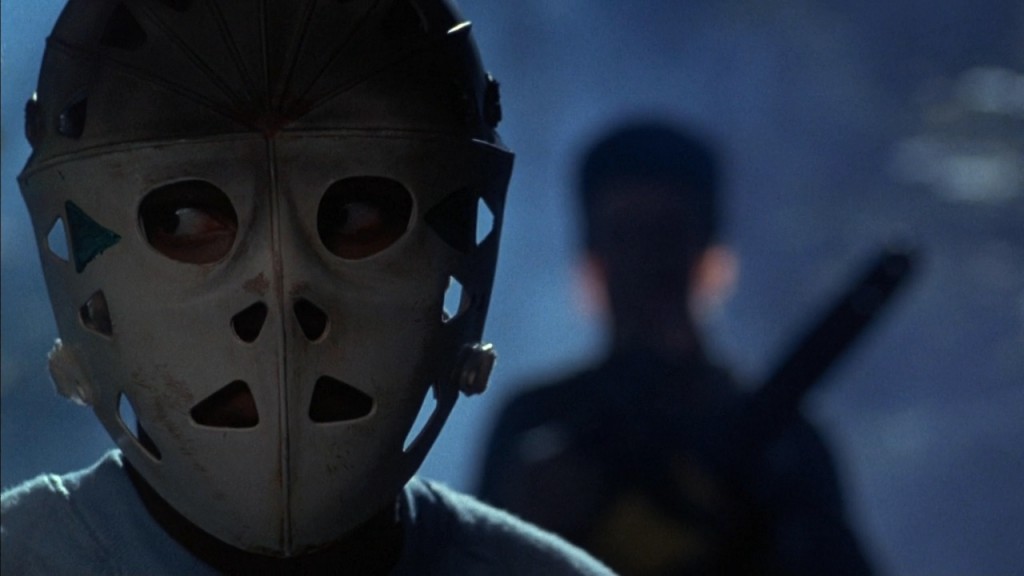
But again, Borgman is consistently absorbing and intriguing, and van Warmerdam works hard to stop the movie from becoming too abstruse, creating a tone that combines mystery, very dark humour, and psychological suspense to impressive effect. He’s aided by Tom Erisman’s clinical photography and Job ter Burg’s ascetic editing style, each adding to the somewhat distant effect used by van Warmerdam to highlight the dysfunction of the characters and their actions. There’s also some clever lighting effects used when necessary, and the score by Vincent van Warmerdam is cleverly suited and adapted to the material’s even pace and disturbing moments.

Rating: 6/10 – with the resolution of its central mystery proving so unsatisfying, Borgman wastes a lot of time setting things up only to forget to follow through; Bijvoet and Minis make for superb protagonists but can’t prop up van Warmerdam’s unwieldy script enough to save it completely.

Share this:

  • Click to share on X (Opens in new window) X
  • Click to share on Facebook (Opens in new window) Facebook
  • More
  • Click to print (Opens in new window) Print
  • Click to email a link to a friend (Opens in new window) Email
Like Loading...

Unit 7 (2012)

17 Friday Apr 2015

Posted by dullwood68 in Movies

≈ Leave a comment

Tags

1992 World Expo, Alberto Rodríguez, Antonio de la Torre, Corruption, Crime, Drama, Drugs, Joaquín Núñez, José Manuel Poga, Mario Casas, Police, Review, Seville, Spain, Thriller, Violence

Grupo 7

Original title: Grupo 7

D: Alberto Rodríguez / 95m

Cast: Antonio de la Torre, Mario Casas, Joaquín Núñez, José Manuel Poga, Inma Cuesta, Lucía Guerrero, Estefanía de los Santos, Alfonso Sánchez, Julián Villagrán, Carlos Olalla

Seville, 1987. With five years to go before the city plays host to the 1992 World Expo, the authorities are determined to root out any and all crime in the city, and particularly the drugs trade. Spearheading this attempt is Unit 7, made up of four officers: tough, uncompromising Rafael (de la Torre), young, ambitious Ángel (Casas), jovial, emotional Mateo (Núñez), and vain, homophobic Miguel (Poga). Using informants such as Joaquín (Villagrán) the team begins dismantling the various dealers and suppliers that threaten the Expo’s success. But their initial busts don’t amount to very much. It’s only when they find a substantial amount of heroin at the apartment of a prostitute known as Mahogany (de los Santos), Ángel takes some of it, and the team agrees to use it to create more informants, and thereby catch more dealers and suppliers.

Over the next four years their plan comes to fruition, and to such an extent that the team are responsible for fifty per cent of all arrests made by the Seville police. But tensions arise within the group as Rafael, nominally the group’s leader, is challenged more and more by an increasingly erratic and unpredictable Ángel. Ángel becomes more and more intolerant of the drug dealers and the junkies, and often violently assaults them in the way that Rafael used to. But where Ángel becomes more inured to the violence, and emotionally closed off – and which affects his marriage to Elena (Cuesta) – Rafael becomes more relaxed and indifferent, due to his relationship with a young junkie, Lucía (Guerrero).

The team’s high arrest rate also begins to attract the attention of Internal Affairs, and the team find themselves being followed. With an increasing media spotlight on them as well, a misguided raid on a home in the suburbs causes them to lose some of their credibility (and sense of invincibility). And when Ángel becomes the target of someone who knows why the team are so successful, and is prepared to use terror tactics to undermine them, their efficiency continues to falter. When they’re ambushed and humiliated in a similar fashion that they used to intimidate some junkies once before, and the identity of their tormentor is revealed, it leads to Ángel and Rafael going back to deal with their tormentor once and for all.

Grupo 7 - scene

Incorporating contemporary footage of the World Expo site being developed and built over the years between 1987 and 1992, Unit 7 provides a social, political and historical perspective to its story that adds some degree of depth to the material, and while this is to be applauded, the episodic nature of the story ultimately works against it, leaving the viewer wanting to know more about the characters and their motivations, and with the feeling that there’s a lot more going on behind the scenes than we ever get to see or know about.

The trickiest (and not entirely convincing) aspect of all is the character of Ángel, set up as the rookie of the group and suitably naïve when the movie begins. An unfortunate encounter with a drug dealer leaves his lack of experience exposed, and his attempts to gain promotion are hampered by his diabetes – a plot device which is used in such a haphazard manner it might as well not be mentioned. But from the moment he picks up the pack of heroin and hides it he becomes a different man: arrogant for the most part and acting more like a vigilante than a cop. It’s a swift, unexpected change in direction, and while it helps set up the rest of the movie, appears too much out of the blue for comfort.

In contrast, Rafael’s turn to the “softer” side is given more room to develop, and while his relationship with Lucía provides more of an emotional component for the movie than it has anywhere else, the whole thing ultimately doesn’t go anywhere and leaves Rafael just as embittered and alone as he was at the beginning. With Mateo equalling comedy relief and Miguel placed firmly in the background, screenwriter Rafael Cobos’ more random approach to characterisation has the effect of distancing the viewer from the team, even though strong efforts are made to show their camaraderie and their combined sense of purpose. Certainly the cast, all well chosen for their roles, put in strong, confident portrayals – with de la Torre and de los Santos proving especially convincing – and make more of their roles than the script allows for.

Thankfully, Cobos’ script does work extremely well in its attempts to portray the effort made to break up various drugs rings and the kind of intimidation and violence that goes with it. The team regularly use excessive force, and while it’s probably not a misrepresentation of the times or the police attitude towards criminals, the savagery of their actions is remarkably one-sided – even when their tormentor reveals himself he doesn’t treat them as harshly as he was by them. This difference again has the effect of distancing the viewer from the group, and their subsequent actions, plus their ultimate fate come 1992, lacks the resonance it should have had.

That said, the action scenes are well-mounted, and Rodríguez shows a flair for unusual camera angles that makes – in particular – the opening rooftop chase such a visceral and propulsive experience to watch. With so many movies like this being made across the world (and too many in the US), Rodríguez’ visual acuity helps lift the movie above many of its competitors, and while this is his first attempt at making a película policial, bodes well enough if he should decide to make another. Aided by regular collaborators DoP Alex Catalán and composer Julio de la Rosa, Rodríguez has fashioned a hard-hitting, if emotionally distant crime drama that, fortunately, scores more often than it misses.

Rating: 7/10 – though struggling to offer a connection for the viewer on an emotional level, Unit 7 does provide a solid, impactful ride for most of its running time; with a firm sense of place and time, and an often impressive look and feel to it, this movie is still worth tracking down.

Share this:

  • Click to share on X (Opens in new window) X
  • Click to share on Facebook (Opens in new window) Facebook
  • More
  • Click to print (Opens in new window) Print
  • Click to email a link to a friend (Opens in new window) Email
Like Loading...

Insurgent (2015)

08 Wednesday Apr 2015

Posted by dullwood68 in Movies

≈ 1 Comment

Tags

Abnegation, Action, Amity, Ansel Elgort, Candor, Dauntless, Drama, Erudite, Kate Winslet, Literary adaptation, Naomi Watts, Review, Robert Schwentke, Sci-fi, Sequel, Shailene Woodley, Theo James, Thriller, Veronica Roth

Insurgent

D: Robert Schwentke / 119m

Cast: Shailene Woodley, Theo James, Kate Winslet, Ansel Elgort, Miles Teller, Naomi Watts, Octavia Spencer, Jai Courtney, Mekhi Phifer, Zoë Kravitz, Maggie Q, Daniel Dae Kim, Jonny Weston, Ashley Judd, Ray Stevenson, Tony Goldwyn, Janet McTeer

In the aftermath of the attack on Abnegation, a search reveals a box that contains all the faction symbols. It’s taken to Erudite where Jeanine (Winslet) reveals it holds a message from the city’s elders, but only a Divergent can open it; this leads Jeanine to order that all Divergents are rounded up. Meanwhile, Tris (Woodley), Four (James), Caleb (Elgort) and Peter (Teller) are hiding out in Amity, under the protection of their leader Johanna (Spencer). Tris is all for returning to Erudite and killing Jeanine but Four warns against acting so hastily: they need to be a stronger force before they can attack the ruling faction.

Matters are brought to a head when Dauntless leader Max (Phifer) arrives to look for any Divergents. Peter reveals their presence but Tris, Four and Caleb manage to escape on a train that takes them into Factionless territory. There they meet Evelyn (Watts), the Factionless leader who, it turns out, is Four’s mother. She advocates a coalition between Factionless and the remainder of Dauntless. The next day, Tris, Four and Caleb leave to visit Candor, where the remainder of Dauntless have taken refuge. On the way, Caleb tells Tris he can’t go with them and they part. In Candor, their leader, Jack (Dae Kim) arranges a trial to determine the truth of Four’s insistence that Jeanine is lying to the other factions. A raid by Max and Eric (Courtney) leads to Tris being tested and found to be 100% Divergent. The raid is unsuccessful though and Tris is rescued by Four and Candor. At Erudite, Peter tells Jeanine the best way in which she can trap Tris. With the lives of all in Candor at risk because of Tris’s presence there, she determines to turn herself in.

At Erudite, Tris is apprehended and taken in front of Jeanine. She explains about the box and has Tris hooked up to it. In order to open it, Tris has to pass each Faction test, something none of the other Divergents abducted by Jeanine has managed. With Caleb having rejoined Erudite, and Peter also on their side, Tris can only hope that whatever message the box holds, that she will survive the ordeal long enough to learn what it is, and what it means for the city.

Insurgent - scene

After the prolonged set up and introduction of each Faction and the world they support that made up most of Divergent (2014), you’d think Insurgent would be less reliant on large chunks of awkward exposition. But it’s not the case, as this instalment introduces new characters and broadens the original’s scope. This leads to more explanations for everyone’s behaviour and more occasions where the not-exactly-complicated story has to be explained every step of the way (as if the audience wouldn’t be able to keep up). Which is a shame, as this time around, Tris’s newfound place in her world is much more interesting and exciting to be a part of.

Weighed down by the expectations that come with cinema’s version of “middle child syndrome” (and even though Allegiant will be released in two parts – damn you Harry Potter!), Insurgent gets a lot right. It ups the action content, makes the heroes more heroic, the villains more villainous, and ends with the news that we’ve all been waiting to hear: next time we go outside the wall. The movie couldn’t be more designed to please its audience, both existing and new. And that’s another factor that makes the movie work: you don’t have to have seen Divergent to work out what’s going on. Such is the care that’s been taken with the adaptation of the book, that even though there are huge chunks that are missing (including whole storylines), it’s a tribute to screenwriters Brian Duffield, Akiva Goldsman and Mark Bomback that this is a well constructed, and surprisingly streamlined version that holds its own and isn’t reliant on the first movie.

It also moves the characters forward in unexpected ways. Tris is hell-bent on killing Jeanine which isn’t the usual approach in a YA movie (you’d never expect to hear Katniss Everdeen sound so vehement about President Snow as Tris is about Jeanine). It’s refreshing to see someone be that blunt and not harbour any deep-seated guilt or reservations about the rights or wrongs of such a thing; Tris is resigned and more importantly, she can’t wait to do it. As for her love interest, the taciturn Four, we get to see him deal with a greater authority than Eric or Max, or even his dad: his mother, presumed dead all these years and as determined to get Jeanine almost as much as Tris. While he wrestles with his emotional scars, Tris gets down to the task of taking out Jeanine; it’s like he’s not even supporting her anymore.

Of course, true love overcomes any dispute or disagreement and Tris and Four leave their differences behind when it comes to overthrowing Erudite, and although the message in the box is one that only readers of the novel will have seen coming, it’s still a treat to see it revealed in such a dramatic, world-upsetting way. It’s yet another way in which new director Schwentke keeps things interesting and the viewer on their toes. He makes judicious use of the new cast members, with even Watts (who has Big Villain written all over her) required to keep it simple and not detract from the main storyline, that of Tris learning to forgive herself for the deaths of her parents and the turncoat Will. Woodley, still the best thing in both movies, shades her emotions with ease and presents a version of Tris that is still learning but who’s also streets ahead of her rebellious companions (but then she is Divergent).

The rest of the cast offer and provide excellent support, with special mention going to Courtney, Spencer, Watts and Teller, though Elgort is still stuck with possibly the blandest character in the whole series, and suffers as a result; he just can’t make him interesting. Winslet is icy and controlling and strangely attractive because of all that, and steals each scene she’s in. The final scene robs us of a major character and is a great way to end this movie and set up some of the dramatics of the next, but it also feels like a bit of a cheap shot at the audience’s expense. What, do we ask, does that mean for Tris and Four and all the rest? Well, to find out, tune in next year!

Rating: 7/10 – better than Divergent, and better assembled, Insurgent shows the franchise gaining in confidence and moving ahead in the right direction; not without its flaws – Peter is still an annoyingly underwritten character – the movie packs a lot in and, on the whole, makes it all work with a great deal of panache.

Share this:

  • Click to share on X (Opens in new window) X
  • Click to share on Facebook (Opens in new window) Facebook
  • More
  • Click to print (Opens in new window) Print
  • Click to email a link to a friend (Opens in new window) Email
Like Loading...

The Keeper of Lost Causes (2013)

06 Monday Apr 2015

Posted by dullwood68 in Movies

≈ 3 Comments

Tags

Assad, Carl Mørck, Cold cases, Crime, Denmark, Department Q, Drama, Fares Fares, Jussi Adler-Olsen, Literary adaptation, Mikkel Nørgaard, Nicolaj Lie Kaas, Police, Review, Sonja Richter, Thriller

Keeper of Lost Causes, The

Original title: Kvinden i buret

aka The Woman in the Cage

D: Mikkel Nørgaard / 97m

Cast: Nikolaj Lie Kaas, Fares Fares, Sonja Richter, Peter Plaugborg, Søren Pilmark, Mikkel Boe Følsgaard, Troels Lyby

Following a police raid that leaves his partner, Hardy (Lyby) paralysed and another officer dead, detective Carl Mørck (Kaas) is transferred out of homicide and into Department Q, which deals exclusively with cold cases. His brief, along with his assistant, Assad (Fares), is to review the cases, submit a brief report and then close them. The first case he looks at concerns the apparent suicide of politician Merete Lynggaard (Richter) five years ago. Something about the case doesn’t make sense to Mørck and he reopens the investigation. He looks through the witness statements and finds that one statement wasn’t included in the final report: that Merete’s brother, Uffe (Følsgaard), who was with her on the ferry she is supposed to have jumped overboard from, was seen with a man in a raincoat.

Since Merete’s suicide, Uffe has resided in a home. Mørck and Assad visit him but his condition – brain damage from a car accident when he and Merete were children – prevents him from being of any help. A conversation with one of Merete’s colleagues reveals her liaison with a man at a conference shortly before she killed herself. Mørck gets hold of the list of attendees and photos that were taken at the conference. Suspecting that Uffe might recognise one of the men at the conference, they show him the various photos that show Merete and one of the male delegates. Uffe does recognise one of them, a man named Daniel Hale. With a solid lead to work with, Mørck’s investigation is brought up short by his boss, Marcus (Pilmark) following a complaint by the manager of the home and the original investigating officer. Unable to let things go, Mørck continues his investigation and travels to Sweden to speak to Hale.

When he and Assad get there, they discover that Hale died a few months after Merete’s suicide. They also discover that the man who attended the conference and was recognised by Uffe isn’t Daniel Hale. Learning that the man is likely to be a friend of Hale’s known as Lasse, the pair return to Denmark only to be suspended from duty. But again, Mørck can’t let things drop, and their investigation leads to an isolated farmhouse and a revelation involving the car accident that left Uffe in his current condition.

Keeper of Lost Causes, The - scene

The first of four movies adapted from Danish author Jussi Adler-Olsen’s Department Q novels – The Absent One (2014), A Conspiracy of Faith (2015), and The Purity of Vengeance (TBC) complete the quartet – The Keeper of Lost Causes is an efficient, gripping thriller that introduces possibly one of the dourest police detectives in recent cinema history. At one point, Assad remarks that he’s never seen Mørck smile. Mørck’s response? “My wife left me. My colleague’s dead, and my best friend’s a cripple … I don’t have a lot to smile about.” It’s a pithy, succinct summation of Mørck’s character, and while it seems in keeping with the recent trend in Scandinavian crime fiction and movies, the combination of Mørck’s gloomy outlook on life and Kaas’s glum demeanour raise this particular movie into the above average category.

With the central character so firmly established in the opening fifteen minutes, the movie is then free to concentrate on the mystery surrounding Merete’s apparent suicide. But as Mørck begins to piece together the clues that point to something more sinister, the script by Nikolaj Arcel takes a parallel line and shows the viewer what happened that day on the ferry. It’s a bold move, as the mystery elements inherent in the story are jettisoned in favour of a more cross-linear approach where the events of five years before run concurrently with the progress of Mørck’s investigation. This leaves the viewer with an entirely different type of crime drama than seems in play from the beginning, and while the villain of the piece enters the story quite late in the day, their appearance and the reason for their behaviour is cleverly revealed (even if what they actually do isn’t properly explained or feels credible).

The plot and various storylines play out with a surprising attention to detail, and Arcel’s adaptation does a good job of downplaying any implausibilities such as Mørck’s boss Marcus ignoring the progress he’s made in disputing the suicide theory. This aside, the movie is a solid, methodically paced crime drama that works best by keeping it simple, and Nørgaard’s unfussy, yet expressive direction is best exemplified by two moments of unexpected lyricism relating to Merete’s childhood. He’s good with the cast as well, eliciting strong, confident performances from all concerned. Kaas’s downbeat yet focused portrayal of Mørck is one of the things that makes the movie work so well; he’s completely credible as the impatient, disrespectful and arrogant ex-homicide detective who finds a new home in Department Q. And he’s matched for dedication and immersion in the role by Fares as Assad. Fares, who is Lebanese, spent two months learning Danish for the movie, but you wouldn’t know it. Assad is the sidekick role, but Fares brings a determination and an intelligence to the role that a lot of seasoned actors would have skirted past on their way to a more stereotypical portrayal.

Shot by DoP Eric Kress with an emphasis on dark, shadowy interiors and overcast, cloudy exteriors, the movie is recognisably part of the recent Nordic Noir genre that has spawned a myriad of similar tales both on the big screen and television. But thanks to a clever script, a director on top of his game, and a cast that brings credibility to (almost) every scene, The Keeper of Lost Causes is a terrific first movie in the series. If this outing is anything to go by, then the remaining three movies will definitely be ones to watch.

Rating: 8/10 – a well-paced, intelligent, and above all, absorbing crime thriller, The Keeper of Lost Causes is a testament to good story telling; quietly ambitious, the movie is a terrific example of how to maintain suspense without undermining either the plot or the characters.

Share this:

  • Click to share on X (Opens in new window) X
  • Click to share on Facebook (Opens in new window) Facebook
  • More
  • Click to print (Opens in new window) Print
  • Click to email a link to a friend (Opens in new window) Email
Like Loading...

Tracers (2015)

31 Tuesday Mar 2015

Posted by dullwood68 in Movies

≈ Leave a comment

Tags

Action, Adam Rayner, Bike messenger, Chinatown, Crime, Daniel Benmayor, Drama, Marie Avgeropoulos, Parkour, Review, Robberies, Taylor Lautner, Thriller

Tracers

D: Daniel Benmayor / 94m

Cast: Taylor Lautner, Marie Avgeropoulos, Adam Raynor, Rafi Gavron, Luciano Acuna Jr, Josh Yadon, Johnny Wu, Sam Medina, Amirah Vann, Christian Steel, Wai Ching Ho

Cam (Lautner) has a problem: he owes the Chinese Mafia $15,000 and his work as a bike messenger isn’t earning him enough to meet the repayment schedule that’s been arranged. When his bike is totalled in a collision caused by a female freerunner, Cam doesn’t know what he’s going to do next. But the next day he finds that his “girlfriend” has dropped off a new bike where he works. Cam goes in search of his mystery benefactor and eventually catches up with her. Her name is Nikki (Avgeropoulos) and she’s part of a small group of tracers that includes her brother, Dylan (Gavron), and friends Tate (Acuna Jr) and Jax (Yadon). Cam is attracted to Marie and at first it’s his main reason for hanging out with them, but when his new bike is stolen and he has to move out of the garage space he’s renting because the Chinese Mafia threaten his landlord (Vann) and her young son (Steel), he tells the group that he wants “in” on whatever it is that they do (and which is probably both illegal and lucrative).

Cam eventually meets Miller (Raynor) who tells him that he runs the group as a kind of specialist team, hired to carry out dangerous or high risk “jobs” that are illegal, most of which involve stealing. Cam goes on a job with them that turns out to be a test, which he passes. But the money he’s earning isn’t enough to pay off his debt. At the same time, he and Nikki become closer, even though she is with Miller. They begin seeing each other, though Miller becomes suspicious. When Miller announces a big job, one that will earn each of them around $20,000, Cam sees his way out. But when he’s picked up for the job and Nikki isn’t taking part, he begins to wonder if Miller is setting him up. But the job, a robbery at the “bank” of a notorious Korean gang, goes wrong and in their attempt at escaping, Jax is killed and Cam ends up being arrested. But there is a surprise in store for him, but one that he might be able to turn to his advantage – if he stays alive long enough.

Tracers - scene

Since the first and subsequent Twilight movies, the career of Taylor Lautner hasn’t exactly set cinema screens alight. From being lost in the giant ensemble that was Valentine’s Day (2010), to the entirely risible Abduction (2011) and an uncredited turn in Grown Ups 2 (2013), his career seems to have stalled. On the strength of Tracers it doesn’t look as if it’s going to get any better any time soon.

It’s not that the movie is all bad or that Lautner is – in fact, he’s just about bearable – but it is the kind of movie that the word “disposable” was made for, occasionally exciting but generally quite benign and underwhelming. No one is required to do too much in the way of emoting, and the script seems determined to include as much in the way of bland dialogue as it can, while each character wanders from scene to scene with the vacant approach of someone under hypnosis. Even when Cam and Nikki end up in bed together it’s all Lautner and Avgeropoulos can do to make it seem like they’re attracted to each other.

But despite all this, where the movie does score points is with its parkour scenes, which stay just this side of inventive, and manage to install some much needed energy and thrills into proceedings. It’s also good to see that Lautner has put in his time learning how to participate without looking like an amateur, and if he’s not given anything too dangerous to jump across/down from/over, then it shouldn’t be a surprise. That said, it’s fun to watch his training montage and work out which fails were choreographed and which were originally meant to be outtakes.

With the camera following Cam and the gang from time to time on their parkour routines, the excitement of the chase is never far away, and there’s one sequence which looks set to emulate the foot chase from Point Break (1991), but unfortunately it’s over almost as soon as it’s started – did no one think to strap a helmet-cam on someone at any point? And the twin action sequences toward the end of the movie raise the raise things out of the doldrums of the previous hour. But without these elements – shot with an energetic, well-paced attention to low angles by DoP Nelson Cragg – Tracers is a largely humdrum affair that screams banality from every (other) angle.

Outside of Lautner, the cast are largely forgettable, with the exception of Wu who brings both humour and menace to his role as Tong enforcer Jerry, and Vann who portrays Cam’s landlady with a quiet grace that makes her the most credible character in the whole movie. Benmayor lacks the experience needed to meld the characters and the action together into a unified whole, and directs much of the movie as if from a distance, almost as if he were leaving the cast to direct themselves (and if so, that wasn’t such a good idea either). With his attention wandering – sometimes within a scene – it makes for an uneven, debilitating viewing experience that you won’t want to repeat.

Rating: 4/10 – with parts of the movie feeling padded out and slowed down unnecessarily, Tracers only picks up when its cast fling themselves over and around various rooftops; bordering on vacuous, it’s a movie that could be viewed as the second nail in the coffin of Lautner’s career.

Share this:

  • Click to share on X (Opens in new window) X
  • Click to share on Facebook (Opens in new window) Facebook
  • More
  • Click to print (Opens in new window) Print
  • Click to email a link to a friend (Opens in new window) Email
Like Loading...

Mandrake, the Magician (1939) – Chapter 12: The Reward of Treachery

26 Thursday Mar 2015

Posted by dullwood68 in Movies

≈ Leave a comment

Tags

Al Kikume, Car chase, Columbia, Doris Weston, Drama, Lothar, Magician, Mandrake, Norman Deming, Nullifier, Platinite, Professor Houston, Radium machine, Review, Sam Nelson, Serial, The Wasp, Thriller, Warren Hull

Mandrake, the Magician

D: Sam Nelson, Norman Deming / 19m

Cast: Warren Hull, Doris Weston, Al Kikume, Rex Downing, Edward Earle, Forbes Murray, Kenneth MacDonald, Don Beddoe

With the Wasp having used the radium machine to destroy Mandrake’s home – and everyone in it – it’s by some small miracle that no one is seriously harmed, aside from Dr Bennett who is found pinned beneath the rubble. While Webster is charged with taking him to hospital, Raymond heads home. Mandrake searches through the debris and finds a further clue to the Wasp’s identity. He enlists Lothar to help him by retracing their steps from the day before when the Wasp’s lieutenant, Dirk, escaped being followed by them. They find the abandoned store that Dirk entered. Mandrake realises that the rear of the store leads to the Wasp’s hideout, and that Raymond’s store, Bennett’s office, and Webster’s apartment are all close by. He sends Lothar to watch all three while he ventures deeper into the building.

In the same anteroom where Dirk met his untimely end, Mandrake finds himself in danger from the same poison gas that killed the Wasp’s chief henchman. He uses his handkerchief to buy himself some time until he can exit the room. Once out, he finds himself inside the Wasp’s inner sanctum. Mandrake unmasks the Wasp but is held at gunpoint. He explains his reasons for suspecting the Wasp’s real identity, before wrestling the gun away from the master criminal and engaging in a brutal fistfight. The Wasp manages to escape by car but is chased by Mandrake and Lothar, a chase that leads to justice being served and the Wasp’s plan for “world terrorisation” brought to a timely end.

Mandrake 12

And so, we come to the end of twelve weeks of thrills and spills, and endless fight scenes, and car chases, and suspicious behaviour, and blatant sexism, and some very dodgy acting. It’s been an entertaining, if occasionally very silly ride, with cliffhanger endings to each chapter (the life-threatening danger of which is usually ignored at the beginning of the next episode), and such an extreme sense of its own absurdity that it more than makes up for the preposterousness of the script by Messrs. Poland, Dickey and Dandy. It’s been crazy, escapist fun: chock full of holes and about as convincing as the idea of James Corden taking over on The Late Late Show (wait… hang on a minute…).

As Thirties serials go, Mandrake, the Magician has been gloriously stupid at times, and instead of embracing the supernatural skills of its cartoon strip character, has made him into a low-rent magician who’s somehow parlayed his (not-so-) special magic skills into a crimefighting repertoire. And he’s not been the brightest of individuals: in Chapter 12: The Reward of Treachery we see him scanning the ceiling of the Wasp’s anteroom while poison gas seeps up through the floor, and he only notices it as if by accident. Bravo, Mandrake!

But these types of serials are easy – too easy in fact – to criticise and make fun of (see the reviews of all eleven previous episodes), but taken as a whole, this particular serial borders almost on being a guilty pleasure. It has bucket loads of panache and a fair degree of charm, and while it revels in its own foolishness, there’s an acknowledgment that however serious the viewer takes it, it’ll never quite overcome just how idiotic it all seems. From its poor treatment of Betty (rarely has the love interest been given so little to do), to its complete refusal to involve the police in any way, shape or form, Mandrake, the Magician provokes as many smiles as groans, and is a slightly less than perfect way to spend nearly four hours of your time. It’s cheap and cheerful, always fun to watch, and if the identity of the Wasp is never in doubt then so be it – it’s all part of the enjoyment to be had.

Rating: 7/10 – Chapter 12: The Reward of Treachery rounds things off in style, with the long awaited showdown between Mandrake and the Wasp taking centre stage; still displaying a sure sense of its own clumsiness (as do all the other episodes), it makes for a fitting end to a largely inventive, slightly goofy, often farcical serial.

Share this:

  • Click to share on X (Opens in new window) X
  • Click to share on Facebook (Opens in new window) Facebook
  • More
  • Click to print (Opens in new window) Print
  • Click to email a link to a friend (Opens in new window) Email
Like Loading...

Cymbeline (2014)

18 Wednesday Mar 2015

Posted by dullwood68 in Movies

≈ Leave a comment

Tags

Anton Yelchin, Biker gang, Crime, Dakota Johnson, Delroy Lindo, Drama, Ed Harris, Ethan Hawke, Iachimo, Imogen, John Leguizamo, Literary adaptation, Michael Almereyda, Milla Jovovich, Mistaken identity, Murder, Penn Badgley, Posthumus, Review, Shakespeare, Thriller

Cymbeline

D: Michael Almereyda / 98m

Cast: Ethan Hawke, Ed Harris, Milla Jovovich, John Leguizamo, Penn Badgley, Dakota Johnson, Anton Yelchin, Peter Gerety, Kevin Corrigan, Vondie Curtis-Hall, Delroy Lindo, James Ransone, Spencer Treat Clark, Harley Ware, Bill Pullman

Imogen (Johnson) and Posthumus (Badgley) are young lovers who have married in secret and exchanged gifts of a ring (for Posthumus) and a bracelet (for Imogen). Their marriage is not to the liking of Imogen’s father, biker king Cymbeline (Harris). He banishes Posthumus, and so paves the way for his second wife, the Queen (Jovovich) to advance her own son, Cloten (Yelchin) as Imogen’s husband, in an attempt to secure control of the biker gang when Cymbeline is dead. Aided by his servant, Pisanio (Leguizamo), Posthumus goes to stay with his friend Philario (Ransone). There he meets Iachomo (Hawke) who wagers that he can seduce Imogen to prove that she isn’t as virtuous as Posthumus believes. The wager accepted, Iachomo visits Imogen and when a direct assault on her virtue backfires, he portrays it as a test of her commitment to Posthumus – which she accepts. Before he leaves he asks her to look after an item for him overnight, which she also agrees to.

The item is a chest, one that Iachomo has hidden himself inside. While Imogen sleeps he climbs out of the chest and puts together evidence that he has slept with her. He takes this evidence back to Posthumus who, enraged by Imogen’s seeming duplicity, sends two letters: one to Imogen asking her to meet him at Milford Haven, the other to Pisanio asking him to take her there and when they arrive, to kill her. Pisanio, however, is unable to carry out his order and shows Imogen his letter. He has her disguise herself as a boy and tells her to travel on to Milford Haven; he also gives her what he believes to be a remedy for travel sickness that he has taken from the Queen, but which is a potion that will mimic death.

Meanwhile, Cloten discovers Posthumus’ plan to meet Imogen and heads to Milford Haven himself with the intention of killing Posthumus and bringing Imogen back to marry him. Imogen has reached the town already and fallen in with Belarius (Lindo) and his two “sons” Guiderius (Clark) and Arviragus (Ware). She tells them her name is Fidele. While they are out hunting, they encounter Cloten who insults and then threatens Guiderius, who in turn kills him and then beheads him. Imogen, feeling unwell, takes the remedy and becomes as dead. Belarius decides to bury her with Cloten’s body; when she wakes she believes Cloten to be Posthumus as he is wearing similar clothes. With both she and Posthumus believing themselves lost to each other, an impending war between Cymbeline’s gang and the Rome police – to whom they pay a tribute – proves to be the unlikely cause of their reconciliation.

Cymbeline - scene

In adapting the play by William Shakespeare, writer/director Almereyda has done two things very well, and two things not so well. The first is to employ an incredibly talented cast, all of whom are able to take Shakespeare’s lines and make them sound as natural as modern day speech, fully understandable and with clear purpose in their meaning. The likes of Hawke – reuniting with Almereyda for the first time since Hamlet (2000) – Harris, Leguizamo and Lindo provide convincing interpretations of the prose and help the casual viewer through some of the more confusing aspects of the plot (mistaken identities are key here). The second is to condense the play’s final third into a more manageable “wrapping up” of things, even if it all feels rushed and at the expense of the movie’s previously more measured pace.

But where Almereyda gets those things absolutely right, where he gets it absolutely wrong proves too damaging for the movie to recover from. The first is to set the action in a modern day setting, mostly Brooklyn, and to flavour the movie as if it were a version of Shakespeare meets Sons of Anarchy. This backdrop, given that it should enhance the drama – the Queen persuades Cymbeline to back out of his arrangement with the Rome police in the hope that war between them will see him dead – instead seems ponderous and ill-considered, more of a budgetary consideration than a narrative one. It leads to some incongruous moments, such as Cloten pushing a motorbike along a gravel road, Imogen choosing her nom-de-plume thanks to a T-shirt worn by Guiderius, and Posthumus getting about on a skateboard. While some of these tweaks may have appeared sound in the pre-production phase, on screen they’re not as effective as was probably hoped for.

The second problem is with Almereyda’s direction itself. The movie plods along from scene to scene with little energy or flair displayed, and struggles to provide any momentum to take the audience with it. There’s a signal lack of connection between scenes that makes for a stop/start experience, the narrative appearing jumbled and ill at ease with itself, like a story that needs more cohesion. With so many subplots and supporting characters, Cymbeline looks and feels like a movie that can’t quite get a grip on what it’s trying to say, or even how to say it. Again, if it weren’t for the very talented cast, the movie would founder even more, and the audience would be left adrift, waiting – unsuccessfully – for Almereyda to place his authority on the material and make it work with more style and verve.

Generally regarded as one of Shakespeare’s weaker plays (written at a time when he seemed to be bored with them), Cymbeline is a strange choice for a movie adaptation, its tale of thwarted lovers and political machinations proving not quite as amenable to the translation as might be expected. It also looks very much as if it were shot too quickly – some of the set ups look rushed or improvised. Still, it’s a brave choice by Almereyda, but if he has any plans to adapt any more of Shakespeare’s works, he might be better off securing a bigger budget, and concentrating on the script rather than directing. After all, “the play’s the thing…”

Rating: 5/10 – a dour, unimpressive adaptation, Cymbeline is rescued by a set of strong performances and an astute conflation of the plot; not as engrossing as it should have been, but not as awful as the early scenes seem to indicate.

Share this:

  • Click to share on X (Opens in new window) X
  • Click to share on Facebook (Opens in new window) Facebook
  • More
  • Click to print (Opens in new window) Print
  • Click to email a link to a friend (Opens in new window) Email
Like Loading...

Mandrake, the Magician (1939) – Chapter 11: At the Stroke of Eight

17 Tuesday Mar 2015

Posted by dullwood68 in Movies

≈ Leave a comment

Tags

Al Kikume, Columbia, Doris Weston, Drama, Green Valley Rest Home, Lothar, Magician, Mandrake, Norman Deming, Nullifier, Platinite, Professor Houston, Radium machine, Review, Sam Nelson, Serial, The Wasp, Thriller, Warren Hull

Mandrake, the Magician

D: Sam Nelson, Norman Deming / 19m

Cast: Warren Hull, Doris Weston, Al Kikume, Rex Downing, Edward Earle, Forbes Murray, Kenneth MacDonald, Don Beddoe, John Tyrrell

Trapped in the east wing of the Green Valley Rest Home, Mandrake and Betty manage to survive the Wasp’s attempt to kill them. The Wasp orders his men to abandon the place and in the ensuing confusion, Mandrake and Betty are able to get out. There they are met by Raymond, who tells them he was knocked out by some of the Wasp’s men, and Webster, who tells them he was captured but managed to escape. They find Bennett in the rubble, shaken up but alive. Mandrake and Webster go back into the rest home where they discover a tunnel that leads away from the home and out to the highway; there Mandrake finds a clue: a receipt from a car hire company.

At his home, and with everyone assembled, including Professor Houston who has been working on a machine that will be able to nullify the effects of the radium machine that the Wasp has, Mandrake tells them about the receipt, and asks them all to return at eight o’clock that night. He and Lothar head for the car hire place and see Dirk and some of the Wasp’s men drive away. They follow but Dirk manages to avoid them, and he meets up with the Wasp at his secret hideaway in the rear of an abandoned store. The Wasp reveals his plan to use the radium machine to destroy Mandrake’s home at eight o’clock, and to be there when it happens. Then he traps Dirk in a room that he floods with gas, and kills him.

At Mandrake’s home, eight o’clock draws near. He and Professor Houston reveal the nullifier, which causes Bennett, Webster and Raymond to each display an uncomfortable reaction. But as the Professor goes to place the final component he drops it onto the floor. As everyone searches for it, the radium machine – set on a timer – begins to activate, and the whole house collapses around everyone.

Mandrake 11

With its focus on making as many of its characters look as likely to be the Wasp as ever before – even Professor Houston is made to look suspicious – Chapter 11: At the Stroke of Eight is easily the best episode so far as the writers aim to wind things up with as much brio as possible. The early scenes outside the rest home have a brisk feel about them as each character’s explanation for being at the home is considered, and Mandrake begins to suspect the Wasp may be someone he knows. But he tells everyone his plans, and puts himself in harm’s way yet again (he’s clever, but now and again you have to wonder…).

But even though this episode has a lot going for it – not least the comical ways in which each character acts suspiciously – there’s still the usual number of odd moments that don’t make sense or challenge credibility. When the Wasp kills Dirk it’s in the same ante-room that he came through before meeting his boss, yet he enters the room through an entirely different door than the one before. As the radium machine begins to do its work, Betty and Tommy come running into the room and she shouts “The lights are off upstairs!” as if it was a major crisis (Weston also delivers the line to the floor for some reason). And even though the tunnel from the rest home leads out to the highway, it’s still not too far away for Raymond and Bennett to see Mandrake and Webster when they emerge from it.

With only the one brief fight scene – so brief that Kikume’s stunt “double” isn’t required – this chapter concentrates more on the narrative and proves even more enthralling for doing so. With one last chapter remaining, and the identity of the Wasp to be revealed at last, this episode sees the serial coming into its own at last after so many chapters that only provided filler.

Rating: 7/10 – it’s fair to say that the excitement is mounting, and Chapter 11: At the Stroke of Eight delivers the promise of an equally exciting conclusion to matters; a great precursor to Chapter 12 but an entertaining episode in its own right as well.

Share this:

  • Click to share on X (Opens in new window) X
  • Click to share on Facebook (Opens in new window) Facebook
  • More
  • Click to print (Opens in new window) Print
  • Click to email a link to a friend (Opens in new window) Email
Like Loading...

Everly (2014)

12 Thursday Mar 2015

Posted by dullwood68 in Movies

≈ 1 Comment

Tags

Action, Apartment, Drama, Hiroyuki Watanabe, Joe Lynch, Laura Cepeda, Mother/daughter relationship, Review, Salma Hayek, The Sadist, Thriller

Everly

D: Joe Lynch / 92m

Cast: Salma Hayek, Hiroyuki Watanabe, Laura Cepeda, Togo Igawa, Akie Kotabe, Gabriella Wright, Caroline Chikezie, Jennifer Blanc, Jelena Gavrilovic, Aisha Ayamah

Everly (Hayek) has been held captive for four years in an apartment building by notorious gangster Taiko (Watanabe). She hasn’t seen her five year old daughter, Maisey (Ayamah), or mother Edith (Cepeda), in all that time. Having made the decision to help the police by informing on Taiko, her plan to get out from his clutches begins to backfire when he finds out what’s she’s done. He leaves her to several of his gang, who abuse her, but she has a gun hidden in her apartment and she uses it to kill them. With her police contact having been disposed of by Taiko, he calls to tell her that she won’t be getting out of the apartment alive. He puts a bounty on her head, and soon, the prostitutes working on the same floor are all trying to kill her.

Everly deals with all of them except for Anna (Wright), with whom she strikes a bargain: let her have two hours to make sure her mother and daughter are out of the city, and she’ll let Anna kill her and collect the bounty. Unable to get a sizeable amount of money to them, she thinks of a way in which they can come to her. Before that can happen she has to fight off various would-be assassins, and deal with one of Taiko’s gang she calls Dead Man (Kotabe), who is bleeding to death on her couch. He helps her to avoid being killed and when Edith and Maisey arrive he watches over Maisey while Everly explains the situation to her mother. But the arrival of The Sadist (Igawa) and his group of Kabuki-masked sidekicks puts Everly and her mother in mortal jeopardy, as Everly finds herself caged and forced to watch as her mother is threatened with various forms of acid.

Everly - scene

Beginning with a dark screen and a soundtrack filled with a woman’s cries of pain and then followed by an overhead shot of a heavily-tattooed, and naked, woman stumbling into a bathroom, Everly announces itself as a less-than-subtle action movie from the get-go. And so it proves, with ever more ridiculous bouts of frenzied action, ever more inane dialogue (which culminates in Taiko arriving and displaying his knowledge of the Psycho’s Book of Villainous Monologues), ever more uncomfortable moments involving the five year old Amayah, and the narrative skipping merrily from one absurd scene to the next in its quest to be as over-the-top as possible.

And therein lies the main problem with Yale Hannon’s overcooked screenplay: it tries too hard to be hip, funny and profane. Its hyper-stylised violence aside, the movie is a cornucopia of awkward humour – Maisey wanting to open a Xmas present that has a policeman’s head inside – and misjudged sentiment: Everly being able to convince Anna not to kill her straight away. (As plot devices go, this one is about as credible as Everly being shot in the side and it leaving huge entrance and exit wounds, wounds she then shrugs off for the rest of the movie.) Add in The Sadist’s cruel, icy menace, and Taiko’s barely suppressed rage, and you have a script that borders on misogyny at the same time as it propagates the idea of the strong, determined woman who’ll defend her family at all costs (as long as she’s wearing a tight-fitting, bust-enhancing bra and top).

Hayek is lumbered with a role that allows her to show Everly as brave, vulnerable, resourceful, sensitive, determined, and sometimes scared and fearless in the same scene (there are times when the actress looks as bewildered by what’s happening as the viewer probably is). But this is a movie where the main character is the movie, and without Hayek throwing herself into it – literally – a lot of what passes for serious dramatics would fall flat on its face in seconds (that original choice Kate Hudson would have been as good is hard to imagine). Hayek is rueful, proud and undeniably sexy (even when spattered with blood), and she dominates the movie, her sharp-angled features as expressive as ever, and her sheer physicality in the role proving a decided bonus.

Of the supporting cast, Kotabe as the kind-hearted yakuza “Dead Man”, and Cepeda as Everly’s worried, and harried, mother make the most impact, while Watanabe tries to be cold-hearted and threatening but succeeds in making Taiko peevish and grouchy instead, and considering the relative ease with which she’s offed around two dozen or so people, unable to realise just how deadly Everly can be (frighteningly so, in fact, showing an aptitude for handling and using guns that is never even close to being explained properly). With the main villain given such a build-up, to have him “monologue” and give Everly too many chances to kill him, it’s a wonder he’s made it as far as he has.

On the technical side, Steve Galner’s cinematography adds a pleasing amount of gloom to proceedings, and the movie never once looks as garish as you might expect. The action scenes are ably assembled by editor Evan Schiff and have a visceral intensity about them that keeps the movie ticking over from one outlandish stunt to the next, and Ondrej Nekvasil’s production design helps play down the fact that the apartment varies in size from scene to scene. Overseeing all this, Lynch displays a fondness for odd camera angles that don’t always enhance the image, but he does score highly in the way he stages each new assault on Everly with a fair degree of visual inventiveness.

Rating: 4/10 – uneven throughout, and lacking the flair needed to carry this beyond being just a vicarious thrill-ride, Everly is a balls-to-the-wall action movie whose reach is let down by its grasp; Hayek is great, but is let down by haphazard plotting and shifts in tone and perspective that don’t always work.

Share this:

  • Click to share on X (Opens in new window) X
  • Click to share on Facebook (Opens in new window) Facebook
  • More
  • Click to print (Opens in new window) Print
  • Click to email a link to a friend (Opens in new window) Email
Like Loading...

Mandrake, the Magician (1939) – Chapter 10: The Unseen Monster

10 Tuesday Mar 2015

Posted by dullwood68 in Movies

≈ Leave a comment

Tags

Al Kikume, Columbia, Doris Weston, Drama, Green Valley Rest Home, Lothar, Magician, Mandrake, Norman Deming, Platinite, Professor Houston, Radium machine, Review, Sam Nelson, Serial, The Wasp, Thriller, Warren Hull

Mandrake, the Magician

D: Sam Nelson, Norman Deming / 16m

Cast: Warren Hull, Doris Weston, Al Kikume, Rex Downing, Edward Earle, Forbes Murray, Kenneth MacDonald, Don Beddoe, John Tyrrell

Having both been thrown clear of the train crash, Lothar finds Mandrake unconscious at the side of the wreckage. While he goes to find a doctor, an ambulance arrives and takes Mandrake away. Lothar catches sight of it, and later, tells Professor Houston, Betty, Dr Bennett and Raymond about it. Deciding that a search of the local hospitals is the best way forward, Betty and Raymond try to find Mandrake together, while Bennett searches on his own. Meanwhile, Mandrake is taken to a room in the Green Valley Rest Home and tied up. Later, Webster is brought to the rest home as well, and chained to the wall in another room.

Betty, Raymond and Bennett arrange to meet at their last destination, the Green Valley Rest Home. Bennett arrives first and is locked in another room. When Betty and Raymond get there, he decides to look around the grounds; eventually he goes inside and gets involved in a fight with two of the Wasp’s men. Betty is caught also, and she’s locked in yet another room. The Wasp appears in person to interrogate Mandrake, but when he’s brought from his room, with a hood over his head, it turns out to be his guard. Loose in the building, Mandrake tries to find a way out. Betty also manages to escape her room and the two meet up. But with corridors being blocked off by the Wasp and his henchman Dirk, they’re herded into the east wing, which is then blown up.

Mandrake 10

Pushing the narrative forward, Chapter 10: The Unseen Monster is yet another fast-paced episode that packs a lot into its short running time, and which succeeds in having fun with the identity of the Wasp. With all three suspects gathered together in one place – Bennett, Raymond and Webster – it’s up to the viewer to work out just who is the masked criminal (though there is another clue hidden away amongst all the mayhem). It’s a clever move, designed to throw doubt in the viewer’s mind if they’ve settled for one particular character already, and it adds a level of drama that’s been missing for several episodes. And with Mandrake sidelined for most of the chapter, it’s a welcome change of focus.

It also makes for a pleasing change in tone, with the emphasis on action in the previous two episodes downplayed in favour of putting everyone in peril, and giving its supporting players a lot more to do. This allows directors Nelson and Deming a chance to adopt a more studied race against time scenario, rather than the breakneck speed they’ve had to employ thus far. And there’s still time for a few series’ favourites, such as a couple of rounds of fisticuffs, and Mandrake’s hat going with him in the ambulance – even the Wasp’s men know how important it is to him – and being knocked off and then quickly put back on during a fight.

Rating: 6/10 – with two episodes to go, Chapter 10: The Unseen Monster shows the serial heading towards its conclusion with a much needed injection of gusto; playing up the Who-is-the-Wasp angle works a treat, and results in an episode that shows the serial won’t be on auto-pilot all the way to the end.

Share this:

  • Click to share on X (Opens in new window) X
  • Click to share on Facebook (Opens in new window) Facebook
  • More
  • Click to print (Opens in new window) Print
  • Click to email a link to a friend (Opens in new window) Email
Like Loading...

Bad Asses on the Bayou (2015)

09 Monday Mar 2015

Posted by dullwood68 in Movies

≈ Leave a comment

Tags

Action, Bad Ass, Baton Rouge, Bayou, Bernie Pope, Carmen, Craig Moss, Danny Glover, Danny Trejo, Drama, Frank Vega, Green machine, John Amos, Kidnapping, Review, Sequel, Thriller

Bad Asses on the Bayou

D: Craig Moss / 85m

Cast: Danny Trejo, Danny Glover, John Amos, Loni Love, Jimmy Bennett, Carol Sutton, Sammi Rotibi, Davi Jay, Judd Lormand, Jeff Pope

Pensioners with attitude Frank Vega (Trejo) and Bernie Pope (Glover) are still the best of friends and still annoying each other. When their friend Carmen (Love) calls to say she’s getting married, and she wants both of them to come to Baton Rouge for the wedding – with all expenses paid by her father Earl (Amos) – they head on down for the festivities. They meet Earl’s wife, Lois (Sutton), Carmen’s brother Ronald (Bennett), and Carmen’s wheelchair-bound fiancé, Geoffrey (Rotini). But on their first night at Earl’s mansion home, intruders break in and kidnap Carmen, despite Frank’s best efforts to stop them. The next day, Earl receives a ransom demand for $5 million, due in thirty-two hours.

The local chief of police, Broussard (Jay) takes charge of the investigation, but he’s aware of Frank and Bernie’s notoriety and warns them against getting involved. In no time at all they ignore Broussard’s advice, and using a clue found by Ronald, track one of the gang of intruders to a local club. There they force him to tell them the name of another gang member, Landry (Pope), who is more “connected”. While Carmen remains imprisoned in an abandoned factory, and her family struggle to deal with her kidnapping, Frank and Bernie ignore a further, more serious warning from Detective Williamson (Lormand) and track down Landry who tells them where Carmen is being held. At the same time, Carmen manages to escape from the room where she’s been imprisoned. She ends up in an office where she’s able to fax her location to the police.

However, the fax is intercepted by one of Broussard’s deputies who takes it to his chief. On their way to the abandoned factory, Frank and Bernie are forced to stop by uniformed police. Broussard is with them, and it becomes clear that he’s behind the kidnapping. He knocks Frank unconscious; when he comes to he and Bernie are on their way to an airstrip. Broussard’s plan is to have them thrown out of a plane to their deaths. But Frank and Bernie have other ideas…

Bad Asses on the Bayou - scene

The first Bad Ass movie, released in 2012, was based on the real-life exploits of Thomas Bruso. It was an uneven mix of wish fulfilment action beats and cornball humour that did enough to warrant a sequel, Bad Asses (2014). This upped the humour, thanks largely to the involvement of Glover, and showed that there was mileage to be had from a pensioner – or two – who wasn’t prepared to take any shit. With no sign that the series is stopping any time soon, and with the budget getting bigger with each instalment, Bad Asses on the Bayou shows the series stretching credibility and common sense in its efforts to provide a good time.

Lacking a cohesive script, the movie opts to play out like a Seventies low budget actioner, with dreadful leaps in both narrative and characterisation, and with writer/director Moss clearly having assembled his script from the bottom of the bin marked “clichés”. So we have Frank and Bernie bickering in a bank and foiling a robbery. We have Frank and Bernie taking out purse thieves at a gas station (actually well choreographed). We have Frank dispensing wisdom to a bullied Ronald, Carmen played as a sassy, high-energy stereotype, Bernie hitting on women around three times younger than he is, and the odd moment of sadistic violence (Frank pushing Landry’s face into a fat frier). And to cap it all we have intermittent scenes where Bernie’s recent liver transplant causes him pain at the wrong time (but which is never developed any further than that).

There’s also some poorly executed attempts at humour – Bernie: “I ain’t running” – and Moss hasn’t decided if he’s spoofing his own creation yet, but with Trejo’s performance bordering on tired already, and Glover playing Bernie exactly as he did in Bad Asses, the series is in danger of disappearing up its own absurdity. It’s not enough this time round for the movie to flirt with plausibility and then leave it high and dry like a forgotten bride at the altar, or for it to include moderately well executed action sequences that show off where the bulk of the budget has been used. Instead of using the extra money to strengthen, expand or add depth to the original concept, Moss and co have taken Frank and Bernie out of their comfort zones and relocated them to the Deep South – and fallen back on the same approach they used in the first two movies, thus making the change of scenery no real change at all (and Frank and Bernie never actually spend any time “on the bayou”).

With Baton Rouge proving a poor, unfriendly backdrop to the main storyline – a short montage of the sights of Baton Rouge shows very little that could be considered attractive about the area – and a visual style that highlights blandness each time, Bad Asses on the Bayou is the least interesting of the series to watch in terms of its look and feel, and is a movie propagated with too many similar-sounding rap songs. If there is to be another Bad Ass movie, and this one promises a next instalment titled Bad Asses in Bangcock (yep, that’s how they’ve spelt it), then let’s hope that Moss works from someone else’s (better) script, and Trejo and Glover are given more to do than beat people up and make cheap wisecracks.

Rating: 4/10 – the law of diminishing sequels kicks in with a vengeance, leaving Bad Asses on the Bayou looking and feeling like a half-finished idea that sounded good at the time; with a sense that everyone involved is treading water, or just going through the motions, keeping the series going may not be the best way forward for both the makers and for future audiences.

Share this:

  • Click to share on X (Opens in new window) X
  • Click to share on Facebook (Opens in new window) Facebook
  • More
  • Click to print (Opens in new window) Print
  • Click to email a link to a friend (Opens in new window) Email
Like Loading...

Mini-Review: Focus (2015)

06 Friday Mar 2015

Posted by dullwood68 in Movies

≈ Leave a comment

Tags

Buenos Aires, Con artist, Drama, Gambling, Gerald McRaney, Glenn Ficarra, John Requa, Love affair, Margot Robbie, Motor racing, New Orleans, Pickpocket, Review, Rodrigo Santoro, Thriller, Will Smith

Focus

D: Glenn Ficarra, John Requa / 105m

Cast: Will Smith, Margot Robbie, Rodrigo Santoro, Gerald McRaney, Adrian Martinez, BD Wong, Robert Taylor, Brennan Brown, Dotan Bonen

Longtime conman Nicky Spurgeon (Smith) meets inexperienced grifter Jess (Robbie) and despite his initial misgivings, agrees to tutor her in the ways of becoming a real con artist. He takes her to New Orleans where he involves her in a series of minor cons such as pickpocketing. He introduces her to his crew as they prepare to hit the town during the Superbowl weekend. Altogether they amass $1.2 million from their efforts, but Nicky takes Jess to the Superbowl game where he’s challenged by compulsive gambler Liyuan Tse (Wong). The bets grow bigger until Nicky loses the money he and his crew have gained. He gets Liyuan to go for double or nothing and loses again. It’s only on when the stakes reach an even higher level that Jess realises it’s all a con designed to part Liyuan from his money.

With their relationship becoming romantic, Nicky’s reservations about becoming involved with a fellow con artist lead him to pay off Jess and leave her in New Orleans. Three years pass. Nicky is in Buenos Aires working a sting on local businessman and racing car team owner Garriga (Santoro) when he discovers that Jess is Garriga’s girlfriend. His feelings for her resurface, making it difficult for him to continue with the sting. He tries to pursue her at the same time, but Jess is reluctant to get involved with him a second time. Garriga’s head of security, Owens (McRaney) is suspicious of what Nicky is actually up to, and when he and Garriga become aware of the true sting, they grab Nicky and Jess as they try to leave town. Taken to an abandoned warehouse, Nicky has to find a way to keep both of them alive.

Focus - scene

Will Smith’s recent big screen appearances – the dreadful After Earth (2013), and cameos in Anchorman 2: The Legend Continues (2013) and Winter’s Tale (2014) – have been less than overwhelming, so it’s no surprise that he’s returned with a role that allows him to express the kind of genial, roguish charm that he’s more renowned for. However, thanks to a script by directors Ficarra and Requa that never quite works out what type of movie it is, Focus allows Smith only occasional chances to shine, and in the end, leaves him as stranded as Jess is in New Orleans. At one point, Nicky says that he can convince anyone of anything, but in practice he never convinces the viewer that his feelings for Jess are real, or even that he’s as good a conman as he makes out.

Away from Smith’s painful attempts at looking lovelorn, we have a movie that struggles to add any thrills to proceedings and only really comes alive thanks to Wong’s involvement at the Superbowl game; his extrovert performance is the movie’s one highlight. Afterwards it’s all downhill with a less than convoluted con game that steals shamelessly from The Sting (1974) and asks us to take such a leap of faith in terms of what happens to Nicky that most viewers will be picking their jaws up off the floor in stunned disbelief (or amusement). Slackly directed, and with a supporting cast reduced to mouthing platitudes, Focus won’t hang around long in the memory, and proves another stumbling block in Smith’s return to the A-list.

Rating: 5/10 – good location photography and a glossy sheen to things lift Focus out of the doldrums, and the pickpocket sequences – overseen by Apollo Robbins – are cleverly constructed and edited; with Robbie adrift in a sea of watered-down machismo, however, this is not a movie that serves its cast particularly well and is worryingly predictable.

Share this:

  • Click to share on X (Opens in new window) X
  • Click to share on Facebook (Opens in new window) Facebook
  • More
  • Click to print (Opens in new window) Print
  • Click to email a link to a friend (Opens in new window) Email
Like Loading...

Mandrake, the Magician (1939) – Chapter 9: Terror Rides the Rails

03 Tuesday Mar 2015

Posted by dullwood68 in Movies

≈ Leave a comment

Tags

Al Kikume, Columbia, Doris Weston, Drama, Gas station, Lothar, Magician, Mandrake, Norman Deming, Platinite, Professor Houston, Radium machine, Review, Sam Nelson, Serial, The Wasp, Thriller, Warren Hull

Mandrake, the Magician

D: Sam Nelson, Norman Deming / 13m

Cast: Warren Hull, Doris Weston, Al Kikume, Rex Downing, Edward Earle, Forbes Murray, Kenneth MacDonald, Don Beddoe, John Tyrrell, Lester Dorr

Mandrake and Lothar manage to avoid plunging into the raging torrent created by the dam burst and head back to the gas station where the Wasp’s men disappeared before. Beside it is a locked fence with a Private No Thoroughfare sign on it. The attendant (Dorr) tells Mandrake he doesn’t know anything about where the path beyond leads but Mandrake isn’t convinced and offers him $5000 for any information about a “rare” insect called a Wasp. He leaves the attendant his card and he and Lothar return home. There, with Betty and Dr Bennett in attendance, Mandrake receives a call from the attendant (whose name is Gray). But the Wasp’s chief henchman, Dirk, listens in on his call and sends his men to make sure Gray doesn’t talk.

Mandrake and Dr Bennett leave with Lothar to meet with Gray but just as they get there, the gas station is blown up and Gray is killed. Later, the Wasp informs Dirk that Mandrake is removing the platinite from his home and taking it to the smelting plant in the Crestline mines, and is planning to travel there by train from Giles Crossing. The Wasp wants him stopped before he gets to the train station, but his henchmen fail to do so, leaving the Wasp no choice but to use the radium machine to cause a landslide and derail the train that Mandrake and Lothar are travelling on. With the pair on board, the train leaves the tracks, sending them to “certain” death.

Mandrake 9

Just when you thought the chapters couldn’t get any shorter, along comes Chapter 9: Terror Rides the Rails. Brief, but containing as much incident as can be crammed into approximately ten minutes (the remaining three minutes feature a recap of Chapter 8 and a preview of Chapter 10), it’s a pacy, animated episode that once again reveals the Wasp’s uncanny knack for knowing what Mandrake will do next, a half decent explosion at the gas station, Mandrake and Lothar calmly climbing up out of the way of the dam burst (after appearing to fall into it), a car chase involving gunfire from both vehicles, Betty reduced to having one line: “But it may be a trap!”, and the Wasp standing up from behind his desk as if it will strike home the importance of stopping Mandrake from getting to the train station.

With so much crammed in there’s little time for any advancement of the plot, and even less time for subtlety. Co-directors Nelson and Deming, who have so far shown a fleeting regard for coaxing good performances from their cast, let Hull off the hook from some shameless eye-rolling once the train comes under attack, and allow Kikume to wrench the steering wheel all over the place during the car chase – even though both cars maintain a fairly straight line throughout. A lot of scenes have the appearance of being the first (and only) take, but again, it’s the energy and the vigour of it all that sees it through, and leaves the viewer anxious to see the next chapter.

Rating: 5/10 – you can’t fault the approach, with writers Poland, Dickey and Dandy maintaining the hell-for-leather vitality of the previous chapters, and despite its obvious flaws, making Chapter 9: Terror Rides the Rails as entertaining as its predecessors; throw in some unexpected sleight-of-hand at the gas station and an equally unexpected lack of fisticuffs, and you have an episode that offers more surprises than usual.

Share this:

  • Click to share on X (Opens in new window) X
  • Click to share on Facebook (Opens in new window) Facebook
  • More
  • Click to print (Opens in new window) Print
  • Click to email a link to a friend (Opens in new window) Email
Like Loading...

Project Almanac (2014)

02 Monday Mar 2015

Posted by dullwood68 in Movies

≈ Leave a comment

Tags

Allen Evangelista, Almanac, Cinema One, Dean Israelite, Drama, Jonny Weston, Review, Sam Lerner, Sci-fi, Sofia Black-D'Elia, Thriller, Time machine, Time travel, Virginia Gardner, Welcome to Yesterday

Project Almanac

D: Dean Israelite / 106m

Cast: Jonny Weston, Sofia Black-D’Elia, Sam Lerner, Allen Evangelista, Virginia Gardner, Amy Landecker, Gary Weeks

Budding inventor David Raskin (Weston) has been accepted into MIT but is unable to afford his tuition. When his mother (Landecker) finds out she plans to sell their home. In an attempt to avoid this happening, David decides to see if he can find anything amongst the various inventions left behind by his father (Weeks) before he died on David’s seventh birthday in a car crash. Instead he finds an old camcorder that contains footage of his seventh birthday party. Watching it back he’s shocked to discover himself as he is now in the background of one of the shots. He shows this to his sister, Christina (Gardner) and his two friends, Adam (Evangelista) and Quinn (Lerner). With their help David finds the blueprints for a “temporal relocation device” that his father was apparently building.

They then find the prototype he was working on and using some additional resources, such as the battery from the car of the girl David has a crush on, Jessie (Black-D’Elia), they manage to get the machine to work. But Jessie discovers what they’re doing and she becomes part of the group. All five travel back in time to the previous day and decide to play a trick on Quinn, but it nearly backfires on them. Making a pact to always use it together, they use the time machine for personal gain, Adam winning the lottery, Christina getting her own back on a school bully, and Quinn passing an important test. They also decide to travel back three months to a Lollapalooza festival where David has a chance to declare his feelings for Jessie. However, he hesitates too much and the moment passes. When it becomes clear that Jessie is upset by this and growing distant from him, David travels back alone to the festival to fix things.

But even though he and Jessie are a couple when he comes back, the change has caused a ripple effect that has culminated in a plane crash that killed everyone aboard. David goes back again to fix things but this time it causes a different set of problems. Jessie begins to suspect that David has manipulated their being together, but when they both travel back to correct things, Jessie meets her past self and is erased from that particular timeline. Worldwide catastrophes occur as a result, which prompt David to travel back to his seventh birthday and warn his father of the consequences of building his machine…

Project Almanac - scene

As with No Good Deed (2014), Project Almanac is a movie whose release has been delayed for reasons unknown, but anyone watching the movie – also known and advertised as Welcome to Yesterday before ending up with its current title – will have a fair idea of why when the quintet win big on the lottery (but not as big as expected), and Adam says, “I’m not winning the lottery a second time!” Casting aside its biggest mystery – just what was David doing at his seventh birthday party? – the movie opts for several bouts of wish fulfilment first before sending in the expected trials and tribulations of changing the past (has anyone noticed that the ripple effects in these movies are always for the worst, and never the best? Isn’t that equally as likely to happen?).

The script, by Jason Pagan and Andrew Deutschman, never really has a clear goal for its characters and never really gets its head around the conundrums of time travel, preferring instead to pull the rug out from under David et al with often ill-considered consequences attached. As attempts to heighten the drama they’re less than successful: one minute David’s mother has a job, the next she hasn’t; one minute Adam’s fine, the next he’s been run over; one minute David’s in one timeline, the next he’s not – and he has no idea what’s been happening in either. If it’s frustrating or maddening for the characters, imagine what it’s like for the poor viewer, having to sit through yet another time travel movie that doesn’t fully explore the possibilities inherent in its plotting and storyline. In the end it takes an unconvincing way out and doubles back on itself in a way that you know the makers think is clever, but if you give it enough thought, you’ll soon realise it’s a cheat.

With the plot and story chock full of holes, and constantly undermining itself, Project Almanac also plays havoc with its characters and their continuity. David is meant to be intelligent and inventive with a streak of geek in him that makes his relationship with Jessie that much more awkward to navigate. But the script throws out any intelligence he has when he goes back to Lollapalooza to change his and Jessie’s life together. Would someone so smart really want to manipulate his “true” love in such a way? And why is he suddenly so insensitive and shallow? And why can’t he see that with each trip he makes he runs the risk of losing everything? (Because the script needs him to, is the answer to all these questions.) And as this central romance takes prominence, the rest of the group become less interesting and less involved, and are reduced to making dire predictions about David’s tampering with time travel.

To make matters worse, the found footage style of filming used here often makes no sense, particularly in the scene where David travels back to Lollapalooza – just who is filming him and Jessie if this is now a separate timeline and he’s making his move? It’s moments like these that further undermine the credibility of events and make the movie such a disheartening viewing experience. Making his feature debut, Israelite pulls off some clever visuals, but shows his lack of experience throughout, leaving his cast adrift for most of the movie and along with the screenwriters, making the science seem too absurd for its own good (it’s handy that David’s high school has a good supply of hydrogen tanks – hydrogen tanks, really?). One plus is the lack of a musical score – as it should be – but it’s a sad state of affairs when the absence of something is a movie’s best feature.

Rating: 3/10 – with too many stupid decisions made by an apparently intelligent character – he got into MIT, remember? – Project Almanac is another in the long line of low budget time travel movies that fails to capitalise adequately on its basic premise; continually underwhelming, it remains risible throughout and entirely forgettable.

Share this:

  • Click to share on X (Opens in new window) X
  • Click to share on Facebook (Opens in new window) Facebook
  • More
  • Click to print (Opens in new window) Print
  • Click to email a link to a friend (Opens in new window) Email
Like Loading...

Nightcrawler (2014)

26 Thursday Feb 2015

Posted by dullwood68 in Movies

≈ 1 Comment

Tags

Bill Paxton, Dan Gilroy, Drama, Gunmen, Home invasion, Jake Gyllenhaal, Murders, News footage, Rene Russo, Review, Riz Ahmed, Thriller, TV News

Nightcrawler

D: Dan Gilroy / 117m

Cast: Jake Gyllenhaal, Rene Russo, Riz Ahmed, Bill Paxton, Ann Cusack, Kevin Rahm, Kent Shocknek, Leah Fredkin

Louis “Lou” Bloom (Gyllenhaal) unemployed; to make ends meet he steals things and then sells them. When he sees a freelance film crew working at the scene of a car crash, he asks their boss, Joe Loder (Paxton) how they make a living from what they do. Loder tells him about selling the footage to the TV stations; this inspires Bloom to steal a racing bicycle and trade it for a radio scanner and a camcorder. Later that same night, Bloom gets in close at the scene of a carjacking and films the victim dying. This gets both Bloom and Loder moved on and they become rivals as a result. Bloom takes his footage to a local TV station where he meets morning news director Nina Romina (Russo) who not only buys the footage but encourages him as well.

Bloom hires an assistant, Rick Carey (Ahmed), and together they start visiting as many crime scenes as they can but even though Bloom has no compunction about manipulating the scenes to provide himself with better footage, Loder still beats him to several important stories. However, his work begins to be shown more and more, and he’s able to get better equipment. Knowing she can’t do without his footage, Bloom also blackmails Nina into having sex with him. When Loder beats him to a major plane crash story, it leads to Bloom sabotaging Loder’s van. When Loder crashes his van and is severely injured, it’s Bloom who gets the footage of his rival being loaded into an ambulance.

Later that night, Bloom and Carey arrive at the site of a home invasion. Leaving Carey outside to sound an alert when the police get there, Bloom sees the gunmen leaving and films them. Going inside the house he finds three dead bodies, all of whom he films. He gives Romina a copy that doesn’t include the gunmen, and the footage is shown, even though some of Nina’s colleagues feel it’s unethical. The police become involved and ask for Bloom’s footage but he gives them another edited version. Then, using the footage he’s held back, Bloom tracks down the gunmen and he and Carey follow them to a nearby restaurant. They tip off the police, but when they arrive, things don’t go quite as Bloom planned.

Jake Gyllenhaal plays an unscrupulous news cameraman in the thriller Nightcrawler

A mesmerising, audacious drama set against the backdrop of a Los Angeles that’s never looked so foreboding at night as it does here, Nightcrawler features a powerhouse performance from Gyllenhaal, and makes for a riveting viewing experience. It all hinges on writer/director Gilroy’s script, a fervid foray into the dark underbelly of daily news gathering that exposes the often desperate need for more and more “potent” material, and the betrayal of ethical concerns in the search for ratings. It’s a bravura piece, challenging and appalling in equal measure, and in the character of Louis Bloom, shows how little appreciation can be given to the feelings of others in the pursuit of fame (and presumably fortune).

Bloom is a grim-faced, skeletal-looking, fixed-eyed monster, oozing an unstable charm, flattering just enough to get his foot in the door, dismissive when someone can’t or won’t help him. He’s the upbeat loner whose interaction with others is continually designed to improve his lot in life, to make things better for him before anyone else. As charismatic as he seems, there’s a mania lurking close beneath the surface that serves as a warning to everyone around him. But Bloom is adept at reading others; he knows when and how to press their buttons, to manipulate them, or if necessary, threaten them into doing what he wants. And if threats don’t work, well, he’s not averse to making sure he still gets what he wants, anyway he can. He’s a ruthless, predatory menace.

As the amoral stringer, Gyllenhaal gives a super-charged performance that is easily his best yet, his gaunt physical appearance a perfect fit for the rapacious Bloom. Gyllenhaal makes him uncomfortable to watch, a creepy, unsettling presence wherever he goes, those big eyes of his hinting at madness and danger. Even when he’s silent he gives off a dispiriting air, as if even what he’s thinking (and no matter how banal) is somehow as poisonous to others as anything he could actually say. Gilroy has created one of the most defiantly unprincipled characters in movie history, and Gyllenhaal has seized his chance with undisguised relish. (It’s still a mystery that he wasn’t nominated for an Oscar for the role.) Working on what seems like nervous energy, Gyllenhaal paints a convincing portrait of a man willing to do anything in order to succeed, and whose sociopathy is frightening. In the aftermath of the police’s arrival at the restaurant, the true nature and extent of his emotional detachment is revealed – and Gyllenhaal makes it truly disturbing.

It’s one of many scenes that Gilroy artfully constructs that keeps the viewer on the edge of their seat and which is anchored by Gyllenhaal’s impressive performance. As Bloom’s career blossoms, his amoral nature finds its mirror in Nina’s equally amoral disregard for conventional programming rules. In some ways she’s worse than Bloom, her lust for the material he provides as uncomfortable to watch as the ways in which he’ll procure it. When she sleeps with him the idea that she’s being blackmailed lacks currency; if anyone is being exploited it’s Bloom. Russo is superb in the role, giving ample expression to Nina’s vicious impropriety and matching Gyllenhaal for intensity. It’s been a long time since The Thomas Crown Affair (1999), and while she’s made a couple of interesting movies in the meantime, she’s not had a role that is as challenging as this one, and it’s great to see her inhabit the part with such fierce intelligence.

In presenting such a couple of despicable characters (made for each other but otherwise doomed to be alone), Gilroy has taken a considerable risk in making a movie without a sympathetic main character. But such is the awfulness of Bloom (and Nina’s) behaviour, and so complicit do we become as an audience, that we can’t take our eyes off them. In the same way that Bloom produces highly upsetting footage and Nina watches it with barely disguised impatience, Gilroy engineers things so that we too are drawn inexorably into a world we would otherwise avoid. Just how far will Bloom go? Will he film anything that Nina won’t be put off by? How much further can they take all this? All questions that the audience feels compelled to discover the answers to.

Nightcrawler - scene2

As well as his talented cast – Ahmed and Paxton provide sterling support as Bloom’s naïve employee and experienced rival respectively – Gilroy has surrounded himself with a pretty talented crew. Bringing his script to life, the movie is beautifully shot by DoP Robert Elswit, the night-time scenes having a luminosity to them that makes L.A. a character in itself. In the editor’s chair is Gilroy’s fraternal twin brother, John Gilroy, who has assembled the material with such care and attention to the movie’s emotional moods that each scene has a resonance that exists both alone and in conjunction with other scenes (and to add to the charges of nepotism he’s also Russo’s brother-in-law). And there’s a marvellously evocative score by James Newton Howard that subtly underpins the action without overwhelming it.

Rating: 9/10 – with a riveting, powerful performance from Gyllenhaal at its centre, Nightcrawler is a nightmarish journey into the heart of one man’s personal darkness; formidable and emotionally rigorous, it’s also a movie that rewards with each successive viewing, and stays in the mind long after it’s ended.

Share this:

  • Click to share on X (Opens in new window) X
  • Click to share on Facebook (Opens in new window) Facebook
  • More
  • Click to print (Opens in new window) Print
  • Click to email a link to a friend (Opens in new window) Email
Like Loading...

Mini-Review: No Good Deed (2014)

25 Wednesday Feb 2015

Posted by dullwood68 in Movies

≈ 1 Comment

Tags

Absent husband, Action, Drama, Escaped convict, Home invasion, Idris Elba, Leslie Bibb, Psychopath, Review, Sam Miller, Taraji P. Henson, Thriller

No Good Deed

D: Sam Miller / 84m

Cast: Idris Elba, Taraji P. Henson, Leslie Bibb, Kate del Castillo, Henry Simmons, Mirage Moonschein

Denied parole after serving five years for manslaughter, Colin Evans (Elba) makes his escape from a prison transport vehicle, killing a guard and the driver in the process.

In Atlanta, Terri Granger (Henson) is coping with the demands of a baby and young daughter Ryan (Moonschein). When her husband, Jeffrey (Simmons), comes home early from work and announces he has to leave right away to visit his father, Terri worries about the way he’s behaving (even though he reassures her that he loves her). Her friend, Meg (Bibb), suggests they have a girls night, to which she agrees. Meanwhile, elsewhere in Atlanta, Evans is stalking the woman who was his fiancée, Alexis (del Castillo), before he went to prison. He confronts her at her home with evidence that she’s seeing someone else; when she admits to it, Evans kills her.

With a violent storm raging, Evans crashes his car and seeks help at Terri’s house. He’s respectful and agreeable but when he calls for a tow truck and is told he could have a long wait due to the storm, Terri invites him in and gives him some dry clothes to change into. He mentions that his fiancée has been cheating on him; Terri is sympathetic (if a little unnerved by his telling her this so quickly). Meg arrives with wine and is clearly attracted to Terri’s guest. During a shared smoke break, Evans tries to get Meg to question Terri’s honesty, but when she doesn’t he kills her too. Evans tells Terri that Meg has left but Terri sees Meg’s umbrella is still there; she also discovers that the phone line has been cut. Realising that Evans is dangerous she attempts to leave with her children, but the escaped convict has other ideas.

No Good Deed - scene

A movie that all involved clearly took part in for the pay cheques, No Good Deed should be rechristened No Good Movie. Turgid and lacking in genuine excitement, the movie is a home invasion thriller that defies belief from the moment Evans is referred to as a “malignant narcissist” to one of the final scenes where multiple injuries leave Terri without a mark on her. It’s dull, it’s unimaginative, it’s repetitive, and a complete waste of its stars’ time and efforts. In fact, it’s so bad that a nadir of sorts is reached when Henson has to show fear and desperation to a police officer and succeeds only in looking as if she’s desperate for the toilet.

With Terri alternating between victim and victor (and sometimes in the same scene), and with Elba showing very little sign of the acting talent we know he has, the movie sputters its way through to one of those “Hollywood” showdowns where the attacks keep coming despite painful blows, stabbings, and the kind of injuries that would have ordinary people calling for an ambulance before the first flush of pain fully registered. It’s also a drab movie to watch, and is directed with an eye for awkward framing by Miller who probably got the job off the back of directing Elba in several episodes of the BBC series Luther. But here his lack of moviemaking experience shows and he fails to make much out of Aimee Lagos’s awful, awful script.
Rating: 3/10 – unsurprisingly pushed back for theatrical release on three occasions, No Good Deed squanders any good will by continually insulting the audience’s intelligence; poorly executed and lacking in energy, the movie seems content to undermine itself at every turn.

Share this:

  • Click to share on X (Opens in new window) X
  • Click to share on Facebook (Opens in new window) Facebook
  • More
  • Click to print (Opens in new window) Print
  • Click to email a link to a friend (Opens in new window) Email
Like Loading...

Blackhat (2015)

25 Wednesday Feb 2015

Posted by dullwood68 in Movies

≈ 1 Comment

Tags

Action, Chris Hemsworth, Computer virus, Crime, Drama, Hacker, Hong Kong, Jakarta, Leehom Wang, Michael Mann, Nuclear plant, Remote Access Tool, Review, Thriller, Viola Davis, Wei Tang

Blackhat

D: Michael Mann / 133m

Cast: Chris Hemsworth, Leehom Wang, Wei Tang, Viola Davis, Holt McCallany, Andy On, Ritchie Coster, Christian Borle, John Ortiz, Yorick van Wageningen

When a nuclear plant in Chai Wan, Hong Kong is targeted by a hacker (van Wageningen) and the cooling pumps made to explode and cause a radiation leak, the Chinese authorities hand over the investigation to cyber warfare officer Chen Dawai (Wang). When the same hacker infiltrates Chicago’s Mercantile Trade Exchange, causing soy futures to rise, it becomes clear that he’s using a Remote Access Tool (RAT). Dawai insists that that he be allowed to work with the FBI on a joint investigation, and he travels to the US where he joins forces with Agent Carol Barrett (Davis). Once there he reveals that the original code for the RAT was written by himself and another hacker named Nick Hathaway (Hemsworth). Hathaway is currently in prison for committing computer crimes; Dawai wants him released to help with the investigation.

With Nick on board – though security tagged and accompanied by US Marshal Jessup (McCallany) – and with Dawai’s US based sister, Lien (Tang) helping as well, they discover that the soy futures hack was designed to siphon off nearly $75 million, but they don’t know why. When they discover the hacker has had a mole in the Trade Exchange, Nick and Lien find he’s been killed but was supposed to meet his boss at a restaurant. Nick finds a clue to the hacker’s identity, while the money is traced to a mercenary named Kassar (Coster). An attempt to apprehend him in Hong Kong fails and several of Dawai’s men are killed.

A break in the investigation comes with the retrieval of a data drive from the nuclear plant. Although it’s been corrupted by the radiation leak, Barrett tells Hathaway about a program the NSA uses called Black Widow which assesses corrupt data and is then able to reconstruct it by “filling in the blanks”. Her request to use it is denied however, which prompts Hathaway to use it anyway, hacking into the programme and using it to discover that the hacker’s server is based in Jakarta. At the same time, Lien discovers that the hacker has an interest in a remote site in Perak, Malaysia.
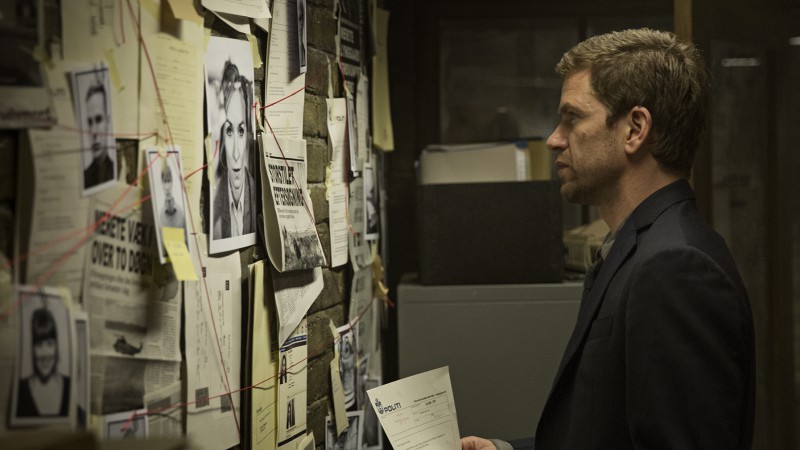
Hathaway’s use of Black Widow is detected, and Barrett is ordered to bring him back to the US. Dawai alerts him about this, and Hathaway and Lien (who have started a relationship) attempt to flee Hong Kong with her brother’s help. But Kassar ambushes them. Hathaway and Lien manage to get away and they travel to Perak to see what is so interesting about the site. It’s there that they discover the hacker’s true motives, and devise a way in which they can stop him.

Blackhat - scene2

It’s always a pleasure to watch a Michael Mann movie. You know going in that it’s going to look beautiful (especially if there are scenes shot at night – and there’s always scenes shot at night), there’ll be a level of machismo that few other directors can attain, some pulse-pounding action sequences, and a storyline that will have been researched for the utmost authenticity. And so it proves with Blackhat, Mann’s first movie since Public Enemies (2009), and a return to the world of modern day criminals for which he has such a proven affinity. However, while Blackhat‘s plot and storyline are drawn from recent events – in this case the Stuxnet computer worm that apparently ruined one fifth of Iran’s nuclear centrifuges in 2010 – and it paints a convincing portrait of cyber crime and how systems can be breached, it badly falls down in its attempts to show just how cyber crime can be detected and defeated.

There are several problems with the overall plot that don’t add up, and it’s these problems that stop the movie from being as effective – or gripping – as Mann intended. The first is the coincidental nature of the relationship between Dawai and Hathaway and they’re having written the RAT code. It’s an unnecessary, and clumsy contrivance that asks the viewer to believe that they wrote this code as a test of their abilities and then they just left it on the Internet, apparently unaware of what it could be potentially used for. The second problem is the idea that a felon, serving time for computer crimes, would be allowed out of the country in order to help with the investigation. Hathaway is even allowed to take part in the attempt to capture Kassar in Hong Kong; how was that allowed to happen? All he needs is a desk and a computer – he doesn’t need to be globe-trotting with everyone else.

The third and most glaring problem is the way in which senior agents such as Barrett and Jessup allow Hathaway so much leeway in his efforts to catch the hacker. At the point where the Black Widow program is introduced, the speed and the ease with which Barrett goes along with Hathaway’s plan to hack into it is breathtaking for the way it undermines any authority she had up to that point. It would have been a better idea for Hathaway to have done it behind her back, thus making the need to bring him in once his hack is detected that much more dramatic, but Morgan Davis Foehl’s script instead takes the opportunity to throw all further attempts at credibility into the trash bin.

And like so many of his colleagues before him, Mann is unable to make looking at computer screens and tapping on keyboards anywhere near exciting. To offset this he focuses on the characters and their reactions to what’s happening on the computer screens, but this is even less exciting, and the viewer is subjected to endless reaction shots that are meant to convey various emotions but ultimately mean nothing as most reactions are ones of surprise or moments when a light bulb goes on over someone’s head.

Against all this, the cast do their best but Hemsworth is miscast, his performance only convincing when he’s required to physically go up against the bad guys. Wang and Tang both give earnest performances, but struggle with the script’s insistence on making their characters crime movie stereotypes: he the diligent cop battling professional prejudice, she the hero’s girlfriend (despite being independent and having a mind of her own the script still requires her to “stand by her man” when the going gets tough). Davis flits in and out of the narrative, while you could be forgiven for forgetting that McCallany was there at all, his character’s job to babysit Hathaway at all times conveniently ignored when the script requires it.

As with any Michael Mann movie, Blackhat does at least look impressive, DoP Stuart Dryburgh providing the kind of hyper-stylised, glossy feel to the night-time exteriors that we’ve come to expect from Mann’s movies. The scenes set in Hong Kong have a wonderfully organic, shiny aspect to them that makes the backgrounds and the locations the most effectively shot for a Mann movie since Collateral (2004), while the lighting throughout offers enough mood and intensity for a dozen other thrillers. But, ultimately, it’s not enough to rescue a movie that is let down by a poorly constructed script and its sympathy-free characters. (In fact, the movie has been so badly received that one of its distributors, Universal Pictures International, has decided not to release it theatrically in Australia at all.)

Rating: 4/10 – while Mann is a clever and experienced enough director to keep things moving, there are too many cracks to paper over no matter how quickly he does so; a major disappointment, Blackhat is a reminder that even the most talented of directors don’t always get it right (sadly).

Share this:

  • Click to share on X (Opens in new window) X
  • Click to share on Facebook (Opens in new window) Facebook
  • More
  • Click to print (Opens in new window) Print
  • Click to email a link to a friend (Opens in new window) Email
Like Loading...

Mandrake, the Magician (1939) – Chapter 8: Across the Deadline

24 Tuesday Feb 2015

Posted by dullwood68 in Movies

≈ Leave a comment

Tags

Al Kikume, Columbia, Doris Weston, Drama, Lothar, Magician, Mandrake, Norman Deming, Platinite, Professor Houston, Radium machine, Review, Sam Nelson, Serial, The Wasp, Thriller, Warren Hull

Mandrake, the Magician

D: Sam Nelson, Norman Deming / 17m

Cast: Warren Hull, Doris Weston, Al Kikume, Rex Downing, Edward Earle, Forbes Murray, Kenneth MacDonald, Don Beddoe, John Tyrrell, Dick Curtis

Climbing up to the overhead wire just as the hook holding up the trestle car straightens out completely, and sends the car plummeting to the canyon floor below, Mandrake rejoins Lothar and Webster as they fight off the Wasp’s men. The henchmen flee in their car, with Mandrake et al. in quick pursuit. The Wasp’s men hide out at a gas station, leaving the famous magician to return home; their leader informs Dirk of what has happened, and he tells them to pose as telephone repair men in order to plant a dictaphone in Mandrake’s home. When they get there, Betty and Tommy let in two of the Wasp’s men.

Mandrake returns home and immediately realises the two men are phony. He has a fight with them but they both escape. Meanwhile, the Wasp has Dirk and another of his men, Dorgan (Curtis) set up Professor Houston’s radium machine so that he can use it to destroy a dam. Still needing some more platinite to complete Houston’s new machine, Mandrake and Lothar return to the canyon where Webster has been mining some more of the precious metal. While Webster leaves to get a magnetic test kit, Dorgan takes a flag marker out to the dam and places it as a target for the Wasp to use with the radium machine. At the canyon, some of the Wasp’s men confront Mandrake and Lothar and a fight ensues. The Wasp destroys the dam, and the waters flood the canyon, causing massive destruction and into which both Mandrake and his loyal assistant fall to their deaths.

Mandrake 8

Three fist fights, a car chase, the Wasp getting out from behind his desk, Betty having even less to do than Tommy, Mandrake running in from another room (and at quite a distance) while the Wasp’s men shoot into one of his magic tricks (a cage he’s obviously disappeared into), Webster panhandling for platinite that’s already been mined – see Chapter 7: Gamble for Life – and the worst exploding dam effect seen in many a year, Chapter 8: Across the Deadline scrambles from one scene to the next with all the energy and vigour of a small child with ADD. This is another filler episode, adding nothing to the serial’s overall plot, and lacking in sense throughout.

And yet it still retains the serial’s rude charm, and provides the usual amount of unintentional laughs in amongst the seriously played theatrics. There’s little that can be said when the Wasp’s men are able to escape by holing up at a random gas station in the middle of nowhere, or by having Dirk and Dorgan test the radium machine on a lump of concrete, as by now the writers have abandoned what little plot development had been gained in the previous episode and decided to throw in the first idea that came to them – whether it works or not.

Rating: 4/10 – not the best of episodes and spurious in its plotting, Chapter 8: Across the Deadline becomes an episode to be endured on the way to the finale; at least it’s fast-paced, and the sight of Mandrake and Lothar congratulating themselves for having avoided a landslide is guaranteed to raise a chuckle.

Share this:

  • Click to share on X (Opens in new window) X
  • Click to share on Facebook (Opens in new window) Facebook
  • More
  • Click to print (Opens in new window) Print
  • Click to email a link to a friend (Opens in new window) Email
Like Loading...

Jupiter Ascending (2015)

18 Wednesday Feb 2015

Posted by dullwood68 in Movies

≈ 1 Comment

Tags

Abrasax Family, Action, Andy Wachowski, Caine Wise, Channing Tatum, Douglas Booth, Drama, Eddie Redmayne, Genetic reincarnation, Jupiter, Jupiter Jones, Lana Wachowski, Mila Kunis, Review, Sci-fi, Sean Bean, The Aegis, Thriller, Youth serum

Jupiter Ascending

D: Andy Wachowski, Lana Wachowski / 127m

Cast: Channing Tatum, Mila Kunis, Sean Bean, Eddie Redmayne, Douglas Booth, Tuppence Middleton, Nikki Amuka-Bird, Christina Cole, Nicholas A. Newman, Maria Doyle Kennedy, Gugu Mbatha-Raw, Jeremy Swift, Kick Gurry, James D’Arcy

Jupiter Jones (Kunis) works as a cleaner with her mother, Aleksa (Kennedy), and her aunt. She has no prospects, no will to succeed, and no man in her life. Shackled to her mother’s Russian family, she is unaware that she is the genetic reincarnation of the matriarch of the Abrasax family. The Abrasax family are part of an alien race whose business is that of seeding planets and harvesting the inhabitants once they reach a certain physical maturity. The Abrasax matriarch had Earth as part of her portfolio, and its importance as a source of youth-giving serum is not lost on her offspring, Balem (Redmayne), Kalique (Middleton) and Titus (Booth). Each of them is trying to acquire Earth for themselves, and when they learn of Jupiter’s existence, they initiate plans to either manipulate her or kill her (or both).

Jupiter can claim her genetic forebear’s titles and properties but if she does it will freeze out Balem and his siblings. His response is to send agents to Earth to kill her, but Titus sends a genetically engineered hunter called Caine Wise (Tatum) to protect her and bring her to him. Wise enlists aid of fellow hunter Stinger Apini (Bean) but a group of mercenaries manage to capture Jupiter and take her to a planet owned by Kalique. Kalique informs Jupiter that the conditions of her mother’s will were such that Earth would belong to her genetic reincarnation should one come forward. All Jupiter has to do is to claim her inheritance and her brothers’ plans will be thwarted.

Aided by Stinger and the Aegis, an intergalactic police force, Caine rescues Jupiter from Kalique and takes her to the planet where she can begin to claim her inheritance. Titus appears on the scene and tells Jupiter he plans to uphold his mother’s wish that Earth not be harvested, and that if she marries him it will ensure both Earth’s safety and an end to Balem and Kalique’s scheming. Titus isolates Caine from Jupiter and reveals his real plan which is to marry her and then have her killed, thus inheriting Earth by default. He has Caine expelled from an air lock, while Jupiter agrees to marry Titus…

Jupiter Ascending - scene

Originally set for release on 25 July 2014, Jupiter Ascending finally arrives on our screens and… is… well… just… terrible. It’s not quite as bad as, say, Teenage Mutant Ninja Turtles (2014) – that would be difficult – but it is shockingly, depressingly bad in ways that are completely surprising given the calibre of the directors, the cast and the crew. Already a box office bomb, with very little chance of its $176,000,000 budget being recouped any time soon, Jupiter Ascending is a classic example of what happens when you ask two feted filmmakers to come up with “an original intellectual property and franchise” – take a bow, Jeff Robinov (Warner Bros. president). The result? A movie that makes no sense at any point during its entire running time.

It’s a spectacular movie, true, but this is yet another sci-fi movie that is a triumph of style over substance. If there had been half as much effort put into the script as there has been into the special effects and the design of the movie then we might be talking about the movie in terms of it being a modern classic. But so successfully have the Wachowskis sabotaged their own script – sorry, “intellectual property” – that instead we have to talk about the movie in terms of it being an (almost) unmitigated disaster. Take the notion that only the human race can produce the serum that keeps the Abrasax family so youthful. So far, so good. But if this is the case, and the Abrasax family have “seeded” Earth in order to produce this serum, why haven’t they done it on other planets? Surely that would make sound business sense (not to mention keep them eternally young)? (It seems not.)

There are plenty of other elements within the script that don’t make sense, such as the whole idea that Jupiter is the genetic reincarnation of the Abrasax’ matriarch. How or why this should even happen in the first place is skipped over by the Wachowski’s, and it hovers over the movie like a particularly stinky McGuffin. And the speed with which Bean’s character changes sides (and is forgiven) has all the dramatic intensity of someone changing their washing powder instead of their allegiance. It’s all in service of a script that careens from one unlikely scene to another while ramping up the visual spectacle to such a pitch that the characters appear incidental to the vast spaceships and the vast sets inside them (though the Wachowskis have seen fit to ensure that no room is too small that Caine can’t pitch and hover around it with ease).

The cast look uncomfortable throughout, with Tatum doing his best not to appear confused (or wishing he was making another movie entirely), and Kunis unable to make Jupiter less irritating than she’s written. Bean appears to be apologising for each line he has to utter – his rhapsodising about bees is a highlight – while Booth mistakes petulance for silky menace, and Middleton is saddled with the weight of too much exposition (and wrinkles). And then there’s Redmayne, soft-spoken for most of the movie and evidencing Balem’s more psychotic tendencies by shouting loudly whenever he’s annoyed. By the end it’s become the movie’s most flamboyant performance, but it would have been better utilised in a pantomime than a science fiction movie trying to take itself seriously.

The action scenes are suitably large-scale and ambitious but still rely heavily on the bad guys being terrible shots, and Wise being able to get off a kill shot from any angle. The Renaissance feel to many of the sets and the overall design is, however, impressive, but the production facility on Jupiter is too overblown, and seems designed more to be destroyed (as it eventually is) than anything else. And therein lies another problem, the Zack Snyder Equation™, which posits that if there is a chance to provide mass destruction on a monumental level then it should be grasped with every gigabyte possible. It seems movie makers still haven’t caught on to the fact that while this may make for an arresting visual sequence, we’ve still seen it way too often now for it to have any meaningful effect.

Rating: 4/10 – with stumbling, forlorn attempts at comedy thrown in here and there – “I love dogs”, Jupiter’s Russian family, any time Famulus (Mbatha-Raw) makes an appearance – Jupiter Ascending succeeds in undermining its own credibility at nearly every turn; a space opera masquerading as something more (though exactly what is hard to determine), this sees the Wachowskis reprising themes from The Matrix to less than impressive effect.

Share this:

  • Click to share on X (Opens in new window) X
  • Click to share on Facebook (Opens in new window) Facebook
  • More
  • Click to print (Opens in new window) Print
  • Click to email a link to a friend (Opens in new window) Email
Like Loading...

Mandrake, the Magician (1939) – Chapter 7: Gamble for Life

17 Tuesday Feb 2015

Posted by dullwood68 in Movies

≈ Leave a comment

Tags

Al Kikume, Columbia, Doris Weston, Drama, Lothar, Magician, Mandrake, Norman Deming, Platinite, Professor Houston, Radium machine, Review, Sam Nelson, Serial, Suburban Telephone Company, The Wasp, Thriller, Warren Hull

Mandrake, the Magician

D: Sam Nelson, Norman Deming / 16m

Cast: Warren Hull, Doris Weston, Al Kikume, Rex Downing, Edward Earle, Forbes Murray, Kenneth MacDonald, Don Beddoe, John Tyrrell

Escaping (of course) from his crashing plane, Mandrake parachutes to the ground in time to aid Professor Houston in getting away from the Wasp’s men at the ironworks in Dorgan. Unfortunately he has to leave his radium machine behind. The Wasp alerts his men to watch Mandrake’s country home. While they keep watch, Webster arrives. Mandrake needs him to help retrieve some platinite to help the professor build another radium machine. Tapping into Mandrake’s phone line, the Wasp’s men learn that he needs to collect some parts from Houston’s home. They get there first and ambush the magician but Lothar intervenes and they get away – but without the parts.

The platinite can be found in a canyon where the Suburban Telephone Company have a base of operations. Mandrake, Lothar and Webster travel there. At the same time, the Wasp’s lieutenant, Dirk, continues to implement his boss’s plans to sabotage all the local communication networks by sending them to the same site. As they arrive, Mandrake and Webster decide they have enough platinite and start to head back to their car. Alerted to the presence of the Wasp’s men by the site foreman, Mandrake and Webster tackle them. One of the men climbs a gantry and heads across the canyon in a trestle car. Mandrake jumps on and the two fight but the hook the car is hanging from is slowly straightening out. The Wasp’s man falls over the side, and as Mandrake watches him fall, the hook straightens entirely, sending the trestle car crashing down into the canyon.

Mandrake, the Magician Chapter 7

One of the more amusing episodes (and probably not for the right reasons), Chapter 7: Gamble for Life sees more things happen by chance than by any logical design. The Wasp instructs his men to watch Mandrake’s country home when he can’t know that’s where he’ll go, and instead of telling his men to go the canyon (because that’s where Mandrake and the platinite will be) they get there under their own steam – what a coincidence! Other amusing moments: Mandrake parachuting to the ground sans chapeau, and then rushing to Houston’s aid with hat firmly back on his head; telling Houston to “Buck up, man” when the professor claims he can’t make it; a gate telephone that drops down out of nowhere; and Kikume’s stunt double wearing an ill-fitting wig to make him look more like the real thing (not happening).

For all the poorly choreographed fight scenes and glaring lapses in logic and common sense, the series continues to be highly enjoyable, and often because it is rough and ready around the edges. Hull is still a somewhat smug Mandrake, everyone else has to stand in line to wait their turn in front of the camera, and the fisticuffs to narrative ratio is still approximately four to one. It’s good to see Webster, a character who otherwise pops in and out of the material, given a bit more to do, and the showdown at the canyon is one of the better set ups so far. Of course, there’s five chapters to go, so the writers have got a lot to do to wind this up, and judging by the preview for Chapter 8, they’re still not in any hurry.

Rating: 6/10 – as fast-paced and entertaining as ever, Chapter 7: Gamble for Life maintains the devil-may-care approach to the material already established and at last shows Mandrake getting one over on the Wasp by rescuing Professor Houston; it’s all thrilling stuff and it’s still a pleasure to come back to each week.

Share this:

  • Click to share on X (Opens in new window) X
  • Click to share on Facebook (Opens in new window) Facebook
  • More
  • Click to print (Opens in new window) Print
  • Click to email a link to a friend (Opens in new window) Email
Like Loading...

The Two Faces of January (2014)

14 Saturday Feb 2015

Posted by dullwood68 in Movies

≈ Leave a comment

Tags

Athens, Drama, Fraud, Hossein Amini, Istanbul, Kirsten Dunst, Oscar Isaac, Patricia Highsmith, Review, Thriller, Tour guide, Viggo Mortensen

Two Faces of January, The

D: Hossein Amini / 96m

Cast: Viggo Mortensen, Kirsten Dunst, Oscar Isaac, David Warshofsky, Daisy Bevan, Omiros Poulakis

Athens, 1962. Rydal Keener is an American working as a tour guide. He meets an American couple on holiday there, Chester and Colette McFarland (Mortensen, Dunst). They invite him to dinner and he accepts, mainly because he’s attracted to Colette. Later, after dropping them off at their hotel, Rydal discovers Colette has left a bracelet behind in the taxi. He decides to return it. Meanwhile, the McFarland’s have another visitor, a private detective named Vittorio (Warshofsky). It transpires that Chester has defrauded several people in an investment scam, and it’s this money that is allowing the McFarlands to travel around Europe. Vittorio and Chester scuffle and the private detective is killed. As he attempts to get Vittorio back to his own room in the hotel, he’s discovered by Rydal. Chester convinces Rydal that the man is merely out cold from drinking too much, and together they get him into his room.

Chester convinces Rydal that he and Colette need to leave Athens as soon as possible, but their passports are being kept by the hotel. Seeing a way of scamming some money out of Chester, Rydal agrees to help them; it also gives him a chance to be nearer to Colette. He arranges for new passports to be given to them in Crete, where they all travel to next. Without identification papers they’re forced to wait on the quayside for the next day’s bus to Chania. While they are there, Colette visits Rydal in his room while Chester is sleeping. Back on the bus, Colette panics when she sees photos of her and Chester in a newspaper and thinks they’ve been spotted. At a rest stop, Colette gets off the bus and the two men chase after her. They walk on and eventually reach the ruins of Knossos.

Rain causes them to seek shelter in the ruins. Chester lures Rydal down into the lower levels and knocks him unconscious. When Colette realises what he’s done they argue and she falls to her death from some steps. Chester flees, leaving Rydal to come to the next morning and be seen by a group of schoolgirls and their teacher as he leaves. Rydal hurries to catch up with Chester, who has collected the new passports and is heading back to Athens on a ship. There is a confrontation between the two where each tries to outwit and out-threaten the other, but both come to realise that they are bound together by their actions over the past couple of days, and would find it easy to implicate the other if either informed the police. But when they get to Athens airport, Rydal finds that Chester has one more trick up his sleeve.

Two Faces of January, The -scene

Adapted from the novel by Patricia Highsmith, The Two Faces of January is a ponderous, though well acted drama that never quite gets off the ground, despite an intriguing storyline and some glorious location photography. As written and directed by Amini – something he’d been working on for around fifteen years – there is a distance between the audience and the main characters that stops them from ever becoming likeable or sympathetic. We never get to really know them either. Chester is a cheat but it’s just accepted that he’s a cheat; there’s no back story to explain why. Colette is aware of his duplicity and has obviously chosen to stay with him but we never find out why either. It’s confusing as well when their previous happiness is so quickly overturned by the arrival of Rydal in their lives: does she really love Chester or is she too a fraud? And Rydal’s past, with his father issues and need for independence, is also glossed over, with the questions, “Why Athens?” and “Why a tour guide?” completely unanswered.

There is one clear motivation that drives them all however: escape. But it’s clumsily used as a device to keep the narrative and the characters moving, and while Amini uses it to show how each is trying to escape themselves (and more so than the authorities), this is also clumsily done. What we’re left with as a result is a mini-travelogue where it seems that the characters are constantly outwitting each other – or appear to be – but in actuality aren’t doing anything of the sort. Chester imagines all sorts of deviousness in Rydal’s behaviour (and Isaac’s performance goes a long way to suggesting this, even though it’s not true), and he’s continually on his guard for some new twist. But ultimately he’s the author of his own downfall, and has no one to blame but himself for what happens.

Amini never reconciles Rydal’s willingness to keep in with the McFarlands, even after he knows what they’ve done, and while his attraction for Colette is an understandable reason in itself, there are moments where he’s making decisions about carrying on but we never find out what his reasons are. It ends up being a problem for the narrative when it just feels that if he didn’t, the plot (and the movie) would grind to a halt.

In adapting Highsmith’s novel, Amini has jettisoned the homo-erotic subplot between Chester and Rydal in favour of a more conventional love triangle approach, and in doing so he robs the movie of a potential, and valuable, source of tension. For otherwise, the movie plods along looking good but feeling empty, its characters relying heavily on plot contrivances such as Rydal just happening to know someone who can provide forged passports, and Colette getting so easily frightened and leaving the bus.

As Chester, Mortensen puts in a good performance but even he can’t reconcile the character’s initial fearfulness and vulnerability with the more callous character he becomes. Dunst has a couple of emotional scenes that show off her skills as an actress, but again she can’t reconcile Colette’s initial happiness with her husband with the antipathy she shows toward him once they leave Athens (she already knows they’re on the run, why should this make her feel any different? And this is before she learns of Vittorio’s death). Rounding off the trio, Isaac portrays Rydal as a conspiring victim, unsure of himself as he gets in deeper and looking for a way out, even though he can’t see one. It’s a confident performance, not as conflicted as Mortensen and Dunst’s, but unfortunately, still a little shy of being satisfactory.

Two Faces of January, The - scene2

With the scenery providing a welcome (and thankful) distraction from the unwieldy and undercooked melodramatics, the movie adds a particularly awkward scene at a customs hall where Chester and Rydal act so suspiciously it’s a wonder they aren’t picked out of their respective queues sooner. And the denouement, included to add some much needed excitement, is so poorly edited that any sense of vitality is diminished quite rapidly. There’s a great movie to be had from Highsmith’s novel, but alas, this isn’t it, and for that, Amini is the only one to blame.

Rating: 5/10 – with its cast unable to elevate the material or make up for Amini’s lack of directorial control, The Two Faces of January fails to provide any tension or mystery; plodding, and with a weak resolution, the movie looks great throughout but offers little that’s arresting to occupy the viewer’s time.

Share this:

  • Click to share on X (Opens in new window) X
  • Click to share on Facebook (Opens in new window) Facebook
  • More
  • Click to print (Opens in new window) Print
  • Click to email a link to a friend (Opens in new window) Email
Like Loading...

Mini-Review: Buddy Hutchins (2015)

11 Wednesday Feb 2015

Posted by dullwood68 in Movies

≈ 1 Comment

Tags

Chainsaw, Divorce, Drama, Dry cleaning business, Jamie Kennedy, Jared Cohn, Low budget, Murder, Review, Sally Kirkland, Sara Malakul Lane, Steve Hanks, Thriller

Buddy Hutchins

D: Jared Cohn / 98m

Cast: Jamie Kennedy, Sally Kirkland, Sara Malakul Lane, Steve Hanks, David Gere, Demetrius Stear, Richard Switzer, Milana Lev, Hiram A. Murray, Nicole Alexandra Shipley, HenRii Coleman, Harwood Gordon

Recovering alcoholic Buddy Hutchins (Kennedy) has a wife, Evelyn (Lane) and two kids, Joel (Switzer) and Molly (Lev). Thanks to the time when he was an alcoholic he has a dry cleaning business that’s on the verge of failing, his son hates him, his ex-wife (Shipley) is chasing him for unpaid alimony, and his relationship with his brother, Troy (Hanks) is on rocky ground. Only his daughter, his mother, Bertha (Kirkland), and his remaining employee, Ryan (Stear) actually like him. When Buddy discovers that his wife, who is a teacher, is having an affair with one of the other staff, Don (Gere), it’s the first in a long line of injustices and reversals of fortune that end up tipping him over the edge into murderous rage.

Along the way he’s locked out of his own house, forced to stay with his mother, see his dry cleaning business seized by the bank, he’s threatened by his ex-wife’s new boyfriend (Coleman), ends up in jail for harassment, loses custody of his children in divorce proceedings, has to deal with his mother’s hospital bill when she has a heart attack, learns his father whom he thought was dead is actually alive and is really his uncle (his uncle is actually his father), and loads more beside. He starts drinking again and decides that it’s time to take back control of his life… by killing anyone he feels has contributed to the mess his life has become. In possession of a gun and a chainsaw, Buddy begins to take his revenge, leading to a standoff with the police.

vlcsnap-00007

A low budget drama-cum-thriller-cum-occasional black comedy (with a budget so low that some of it was filmed in the director’s own home), Buddy Hutchins is a movie that must have looked and sounded good on paper, but which in reality is so ragged and unconvincing that the average viewer will be wondering why anyone bothered. The movie seeks to make Buddy a sympathetic character who is just so incredibly hard done by by virtually everyone around him, but trips up from the start by making him an unlikeable, arrogant jerk who blames everyone but himself for his troubles. With Kennedy unable to salvage the character (though he tries), the movie staggers as drunkenly as Buddy from one poorly shot, flatly directed scene to another.

Against a script by Cohn that abandons all credibility long before it gets to the point where Buddy is pursued in his van for hours by three lone police cars and then evades them just… like… that (or when he’s at Don’s house and he goes straight to the one cutlery drawer that has a gun in it), the movie offers little more than a succession of disasters that are piled on with no discernible reason other than that they’re meant to be humorous somehow. With characters behaving meanly and selfishly for no other reason than the script requires them to, Buddy Hutchins becomes quickly swamped by increasingly unlikely scenarios, and branches into gore territory once Buddy starts using his chainsaw.

Rating: 3/10 – as the movie adds to Buddy’s agony, so too does it add to the viewer’s, making Buddy Hutchins a movie that satisfies on only a couple of unexpected occasions; Kennedy does his best to keep it interesting but the material defeats him, and to make matters worse – if that was possible – Cohn’s direction is largely AWOL.

Share this:

  • Click to share on X (Opens in new window) X
  • Click to share on Facebook (Opens in new window) Facebook
  • More
  • Click to print (Opens in new window) Print
  • Click to email a link to a friend (Opens in new window) Email
Like Loading...
← Older posts
Newer posts →

Blog Stats

  • 492,373 hits

Recent Posts

  • 10 Reasons to Remember Bibi Andersson (1935-2019)
  • Fantasia (1940)
  • Dances With Wolves (1990) – The Special Edition
  • Kiss of the Spider Woman (1985)
  • The Three Musketeers (1973)

Top Posts & Pages

  • Cardboard Boxer (2016)
    Cardboard Boxer (2016)
  • Table 19 (2017)
    Table 19 (2017)
  • "Science or no science, a girl's got to get her hair done" - 10 Female-centric Sci-fi Quotes from the 1950's
    "Science or no science, a girl's got to get her hair done" - 10 Female-centric Sci-fi Quotes from the 1950's
  • Lost for Life (2013)
    Lost for Life (2013)
  • For One (Stretched) Week Only: Australian Cinema - Part V
    For One (Stretched) Week Only: Australian Cinema - Part V
  • Stray Bullet (2010)
    Stray Bullet (2010)
  • Carrie (2013)
    Carrie (2013)
  • Poster of the Week - Werewolf of London (1935)
    Poster of the Week - Werewolf of London (1935)
  • Mini-Review: Kill Your Darlings (2013)
    Mini-Review: Kill Your Darlings (2013)
  • The Human Centipede (First Sequence) (2009)
    The Human Centipede (First Sequence) (2009)
Follow thedullwoodexperiment on WordPress.com

Blogs I Follow

  • Rubbish Talk
  • Film 4 Fan
  • Fast Film Reviews
  • The Film Blog
  • All Things Movies UK
  • Interpreting the Stars
  • Let's Go To The Movies
  • Movie Reviews 101
  • TMI News
  • Dan the Man's Movie Reviews
  • Film History
  • Jordan and Eddie (The Movie Guys)

Archives

  • April 2019 (13)
  • March 2019 (28)
  • February 2019 (28)
  • January 2019 (32)
  • December 2018 (28)
  • November 2018 (30)
  • October 2018 (29)
  • September 2018 (29)
  • August 2018 (29)
  • July 2018 (30)
  • June 2018 (28)
  • May 2018 (24)
  • April 2018 (21)
  • March 2018 (31)
  • February 2018 (25)
  • January 2018 (30)
  • December 2017 (30)
  • November 2017 (27)
  • October 2017 (27)
  • September 2017 (26)
  • August 2017 (32)
  • July 2017 (32)
  • June 2017 (30)
  • May 2017 (29)
  • April 2017 (29)
  • March 2017 (30)
  • February 2017 (27)
  • January 2017 (32)
  • December 2016 (30)
  • November 2016 (28)
  • October 2016 (30)
  • September 2016 (27)
  • August 2016 (30)
  • July 2016 (30)
  • June 2016 (31)
  • May 2016 (34)
  • April 2016 (30)
  • March 2016 (30)
  • February 2016 (28)
  • January 2016 (35)
  • December 2015 (34)
  • November 2015 (31)
  • October 2015 (31)
  • September 2015 (34)
  • August 2015 (31)
  • July 2015 (33)
  • June 2015 (12)
  • May 2015 (31)
  • April 2015 (32)
  • March 2015 (30)
  • February 2015 (37)
  • January 2015 (39)
  • December 2014 (34)
  • November 2014 (34)
  • October 2014 (36)
  • September 2014 (25)
  • August 2014 (29)
  • July 2014 (29)
  • June 2014 (28)
  • May 2014 (23)
  • April 2014 (21)
  • March 2014 (42)
  • February 2014 (38)
  • January 2014 (29)
  • December 2013 (28)
  • November 2013 (34)
  • October 2013 (4)

Blog at WordPress.com.

Rubbish Talk

Film 4 Fan

A Movie Blog

Fast Film Reviews

The Film Blog

The official blog of everything in film

All Things Movies UK

Movie Reviews and Original Articles

Interpreting the Stars

Dave Examines Movies

Let's Go To The Movies

Film and Theatre Lover!

Movie Reviews 101

Daily Movie Reviews

TMI News

Latest weather, crime and breaking news

Dan the Man's Movie Reviews

All my aimless thoughts, ideas, and ramblings, all packed into one site!

Film History

Telling the story of film

Jordan and Eddie (The Movie Guys)

Movie Reviews & Ramblings from an Australian Based Film Fan

Privacy & Cookies: This site uses cookies. By continuing to use this website, you agree to their use.
To find out more, including how to control cookies, see here: Cookie Policy
  • Subscribe Subscribed
    • thedullwoodexperiment
    • Join 481 other subscribers
    • Already have a WordPress.com account? Log in now.
    • thedullwoodexperiment
    • Subscribe Subscribed
    • Sign up
    • Log in
    • Report this content
    • View site in Reader
    • Manage subscriptions
    • Collapse this bar
 

Loading Comments...
 

    %d