• 10 Reasons to Remember…
  • A Brief Word About…
  • About
  • For One Week Only
  • Happy Birthday
  • Monthly Roundup
  • Old-Time Crime
  • Other Posts
  • Poster of the Week
  • Question of the Week
  • Reviews
  • Trailers

thedullwoodexperiment

~ Viewing movies in a different light

thedullwoodexperiment

Yearly Archives: 2016

Backtrack (2015)

21 Thursday Apr 2016

Posted by dullwood68 in Movies

≈ Leave a comment

Tags

Adrien Brody, Drama, False Creek, George Shevtsov, Ghosts, Michael Petroni, Repressed memories, Review, Robin McLeavy, Sam Neill, Thriller, Train crash

Backtrack

D: Michael Petroni / 90m

Cast: Adrien Brody, George Shevtsov, Robin McLeavy, Sam Neill, Malcolm Kennard, Jenni Baird, Chloe Bayliss, Emma O’Farrell, Bruce Spence, Anna Lise Phillips

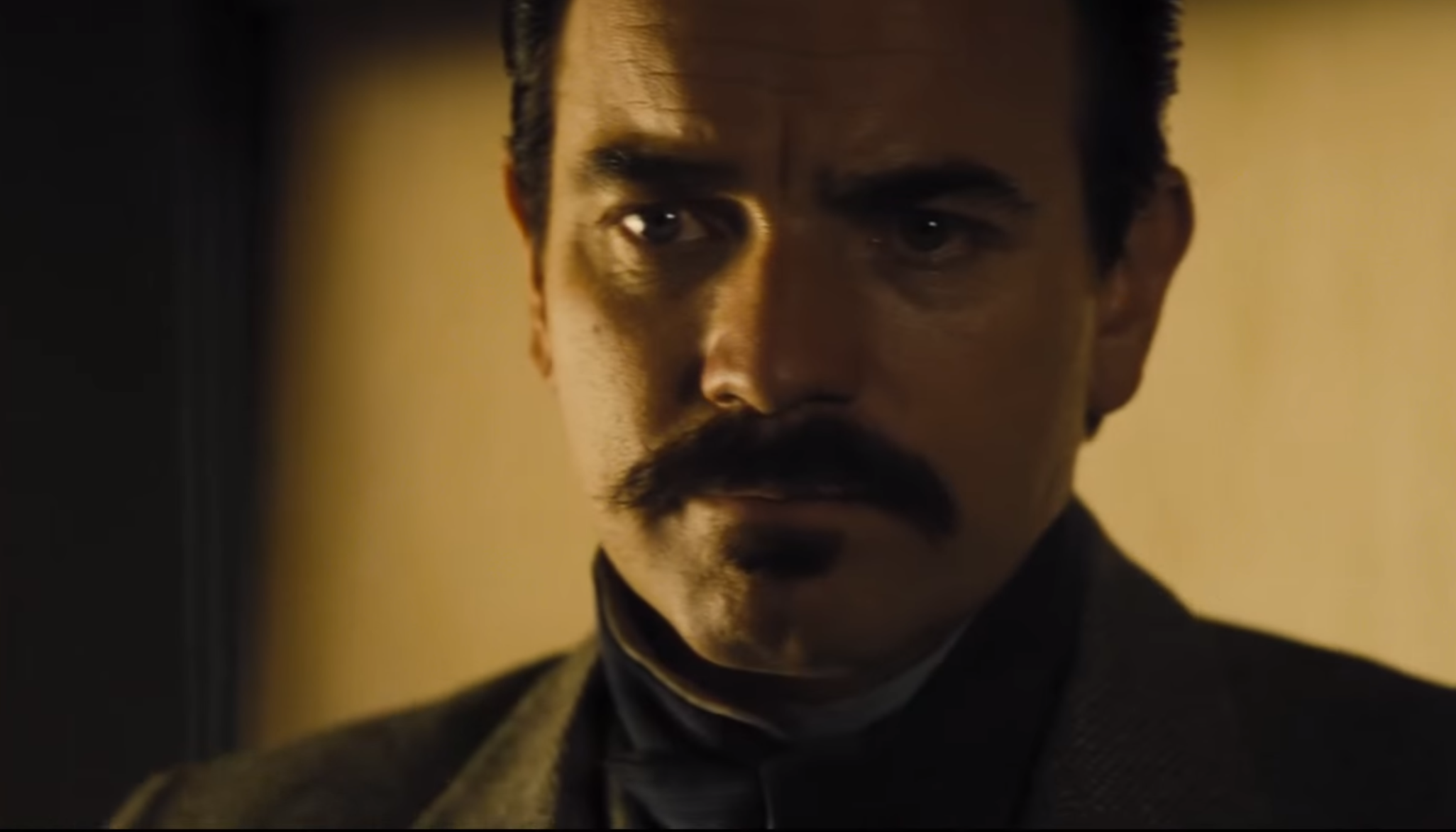
Psychotherapist Peter Bowers (Brody) has his own problems. His daughter has recently been killed in a road accident, and his career is being propped up thanks to the help of his mentor, Duncan Stewart (Neill). He seems to be managing his grief but is prone to moping about with a withdrawn, brooding demeanour that his wife (Baird) prefers to sleep through rather than engage with. As Bowers gets back into the routine of seeing patients, some of their eccentricities – one, a musician (Spence), swears he performed the night before at a club that closed down long ago – begin to worry him. He can’t put his finger on what’s bothering him, and a new patient, a young girl, Elizabeth Valentine (Bayliss), who won’t speak, adds further to his sense that something isn’t quite right.

When the mystery surrounding his patients deepens, Bowers does some detective work and discovers they all have something in common, something that sends him back to his hometown of False Creek and an event that happened twenty years before. As he starts to piece together the facts of what happened when he was a boy, Bowers attempts to reconnect with his father, William (Shevtsov), while also piquing the interest of local police officer, Barbara Henning (McLeavy). And when Bowers thinks he’s got to the bottom of it all, he’s unprepared for yet another revelation that puts his life in danger.

Backtrack - scene3

The above synopsis is deliberately vague because it would be unfair to divulge the movie’s central conceit (though there are plenty of websites that will tell you if you absolutely have to know in advance what it is). The movie itself reveals this “twist” around the half hour mark, and once it does, the movie transforms from awkwardly staged psychodrama with supernatural overtones to mystery thriller with supernatural overtones. It’s not an entirely comfortable switch, and there are more than enough clues to suggest that the movie’s narrative is a combination of two separate story ideas that weren’t strong enough on their own.

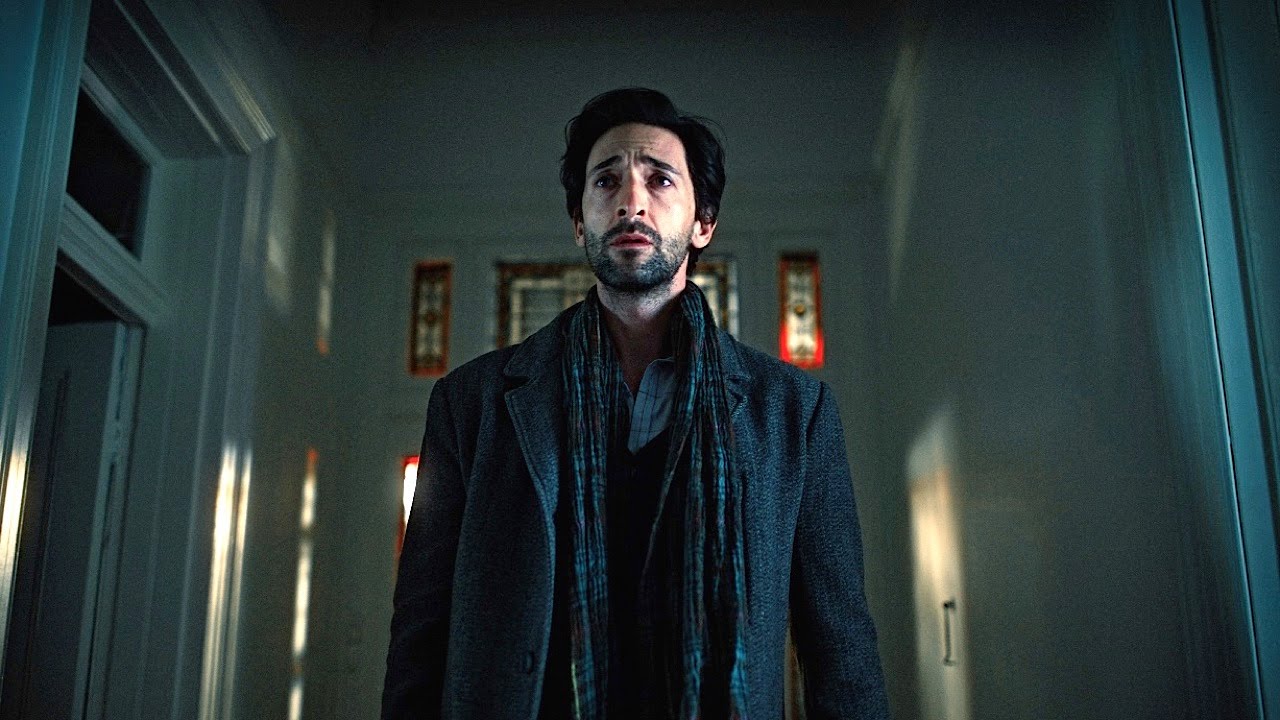
However, the switch is also welcome, as writer/director Michael Petroni isn’t as sure-footed exploring Bowers’ grief over the loss of his daughter as he is with letting Bowers loose to solve a twenty-year mystery that nobody – including him – knew was a mystery in the first place. Before Bowers arrives at False Creek, Petroni has him questioning his own sanity, but in such a crude, rudimentary way that his behaviour has all the hallmarks of having been created by someone who’s heard that grief-stricken fathers all behave in the same way. Adrien Brody is a very, very talented actor (and Petroni has been lucky to nab him), but even he can’t do anything with a character who alternates between emotionally devastated and psychologically damaged, and does so without any consistency of reasoning.
Backtrack - scene2

But once Bowers is deposited in the rural backwater that serves as his birthplace and the location of a twenty year old tragedy, Brody is freed from all that brooding and is free to loosen up in his portrayal. Unfortunately, the mystery he’s required to solve is one that will have viewers scratching their heads and wondering if they’re missing something. Coincidence is piled atop coincidence with increasing disregard for credibility, and Brody visits the scene of the tragedy so many times it becomes embarrassing as he remembers “everything”. In between times he argues with his father, arouses the suspicions of Officer Henning, and manages to remember – thanks to some ghostly visitations – that he should still be grieving. His actions appear more selfish and cathartic than altruistic, and even when the scope of the tragedy is revealed (and the mystery that goes with it), Bowers ensures that it’s all still about him.

There’s the germ of a good idea for a movie here, but under Petroni’s watch it’s not allowed to develop fully. The script repeatedly makes leaps of faith that are either baffling or absurd, Neill’s character should have all the answers but disappears too quickly, Officer Henning’s connection to the tragedy is handled as awkwardly as Bowers initial malaise, and a secondary character’s fate is decided on entirely so that one particular clue can be introduced and drive the movie forward. But by this time, most viewers will be beginning to wonder just how silly it can all get; the last ten minutes will reassure them: very.
Backtrack - scene4

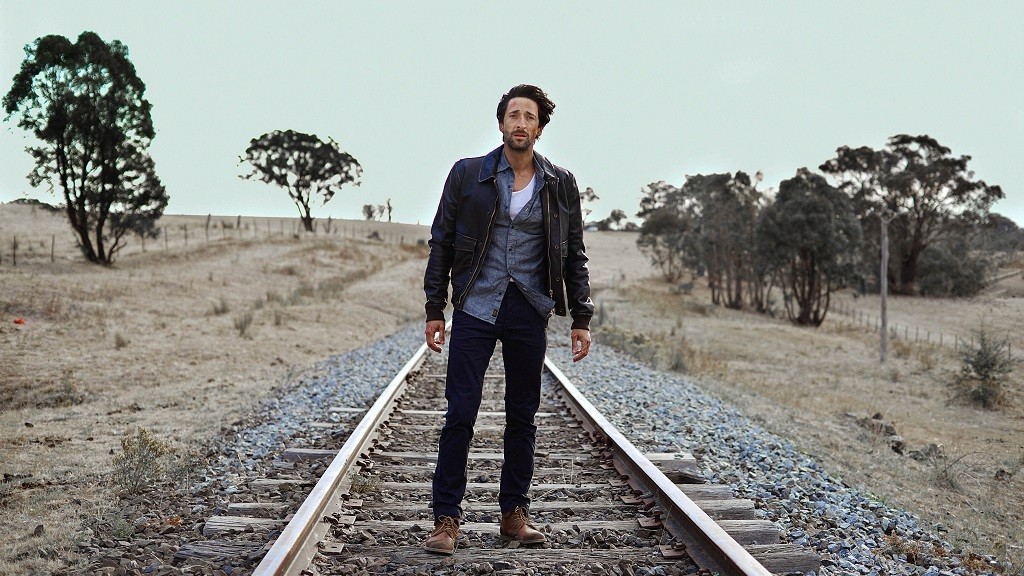
Backtrack is a movie with a handful of competent performances, but they’re not allowed to flourish thanks to the vagaries of Petroni’s script, and it’s insistence on being two parts obvious thriller and one part supernatural mishmash. Brody must be wondering what’s happened to his career (The Grand Budapest Hotel seems like such a long time ago now), while Shevtsov and McLeavy are reduced to playing pawns at the mercy of the script and Petroni’s wayward sense of direction (in both senses of the phrase), while Neill is lucky enough to escape with a minor role.

And for a movie shot entirely in Australia, this may be one of the few occasions where an Australian movie looks so nondescript. The early scenes in Melbourne could have been filmed in any large city in any number of countries, and the town of False Creek wouldn’t look out of place anywhere in America’s Deep South. DoP Stefan Duscio did some great work on his last feature, The Mule (2014), but here it’s as if he’s been instructed to make everything look bland and/or neutral. With so little to engage with on an emotional level, it’s one last disappointment to have a movie that’s so insipid to look at as well.

Rating: 4/10 – Petroni asks too much of both his cast and the audience in telling such a dreary tale, with the result that Backtrack is a movie that never really gets started; it doesn’t help that it gets sillier and sillier as it progresses, until by the end whatever positives it possessed at the start have been abandoned in favour of a generic thriller outcome that is as tedious as it is absurdly set up.


Share this:

  • Share on X (Opens in new window) X
  • Share on Facebook (Opens in new window) Facebook
  • More
  • Print (Opens in new window) Print
  • Email a link to a friend (Opens in new window) Email
Like Loading...

Question of the Week – 21 April 2016

21 Thursday Apr 2016

Posted by dullwood68 in Movies

≈ 1 Comment

The first in a weekly series designed to encourage debate on thedullwoodexperiment, and where readers/followers/first-timers/anyone can air their opinions/views/thoughts on the topic/subject/idea in question.

With the release this week of the teaser trailer for this particular movie, the Question of the Week is:

Is anyone really, seriously, actually looking forward to seeing The Magnificent Seven?

Share this:

  • Share on X (Opens in new window) X
  • Share on Facebook (Opens in new window) Facebook
  • More
  • Print (Opens in new window) Print
  • Email a link to a friend (Opens in new window) Email
Like Loading...

The Jungle Book (2016)

20 Wednesday Apr 2016

Posted by dullwood68 in Movies

≈ 3 Comments

Tags

Baloo, Ben Kingsley, Bill Murray, Christopher Walken, Disney, Drama, Fantasy, Idris Elba, Jon Favreau, Kaa, Live action, Lupita Nyong'o, Neel Sethi, Remake, Review, Scarlett Johansson, Shere Khan

The Jungle Book

D: Jon Favreau / 105m

Cast: Neel Sethi, Bill Murray, Ben Kingsley, Idris Elba, Lupita Nyong’o, Scarlett Johansson, Giancarlo Esposito, Christopher Walken, Garry Shandling, Brighton Rose, Jon Favreau, Sam Raimi

The first of two live action versions of Rudyard Kipling’s classic tale – the other, just called Jungle Book and directed by Andy Serkis, is due in 2018 – Disney’s remake of their own beloved animated classic arrives with much fanfare and enough hype to stop even Shere Khan in his bloodthirsty tracks. It’s taken over $300 million at the international box office already, and the House of Mouse is keen to get director Jon Favreau and writer Justin Marks back for a sequel (surprise, surprise). The CGI environment created for the characters, and against which token human Mowgli (Sethi) interacts, is incredibly detailed and realistic, while the final showdown between tiger and man-cub is… well… it’s okay.

And that’s the problem with the movie as a whole: it’s okay. When the best thing you can say about a movie is that the backgrounds look realistic, then it’s a sure sign that whatever Favreau and co were aiming for, they didn’t actually achieve it. And yet the material is there to be taken advantage of, as Disney did nearly fifty years ago when they made the animated version. But this version makes some significant changes to the original, and while you don’t want an exact carbon copy of what went before, there’s too much that’s different for the movie to work as well as its predecessor.

TJB - scene2

First, there’s the musical elements. Shoehorned into the movie are two of the animated version’s most enjoyable songs, The Bare Necessities and I Wanna Be Like You. This isn’t a musical version of the story, and yet these two songs are included, and awkwardly at that. There’s no reason for them to be there, unless Disney felt that modern audiences, perhaps weaned on the animated version, would feel upset if they weren’t included. As it is, The Bare Necessities is given a nostalgic feel that helps offset the oddness of its inclusion, but the same can’t be said of I Wanna Be Like You, an uncomfortable rendition of which is given by Christopher Walken as King Louie, a giant orang-utan you half suspect has been eating his tribe in order to get so big. Some viewers may well be happy to see these songs included, but in terms of the movie itself they’re interruptions to the flow of the movie and the narrative.

But the flow of the movie is also a problem. Favreau is a capable director but he doesn’t always get the pace of a movie right – check out Iron Man 2 (2010) as a prime example. Here he connects each scene as if they were part of a larger puzzle and he’s got too much time to put it all together. This leads to stretches where The Jungle Book pads along like Shere Khan at the watering hole, full of intention but held back by an unwanted need for restraint. It makes for a choppy, uneven movie that holds the attention completely in certain scenes, but then abandons that attention in favour of just moving on.

TJB - scene3

And then there’s the ending, changed from the animated version – where Mowgli heads off to the man village because that’s where his future lies – to reflect… well, it’s not altogether clear. Mowgli has clearly found his true place in the jungle, but it’s at odds with what Shere Khan and even Bagheera have been saying all along: that Mowgli will grow up to be a man, and man has no place in the jungle (it’s even part of the jungle law, but the script ignores this practically the moment it’s been brought up). Back in 1968 this bittersweet ending was the perfect conclusion to Mowgli’s story, but here it seems like a cynical decision to help set up and ensure the sequel(s) that Disney are looking for. In a weird way, the script’s decision to integrate Mowgli more fully with the jungle environment makes him seem like another Tarzan in the making.

On the plus side, Favreau has assembled a great cast to give vocal life to the animal characters, with Murray on fine form as Baloo, and Johansson proving especially effective as Kaa. Kingsley is somewhat swamped by the script’s decision to make Bagheera almost entirely like a resigned schoolmaster, Nyong’o and Esposito make the most of their underwritten wolf parts, while Walken does his best to make King Louie frightening, but weirdly, sounds more like Kevin Spacey doing an impression of Christopher Walken than Walken himself. And then there’s Idris Elba, cast as Shere Khan; somehow his gruff tones don’t seem to suit the role, and his scenes have an awkwardness to them in terms of his voice not fitting the look of the character. In effect, it’s as if his voice has been badly dubbed.

TJB - scene1

As the only human in the movie, a lot rides on the abilities of Sethi, and while he’s certainly proficient, his performance isn’t as effective as it could be. In the scene where Mowgli decides to leave the jungle and go to the man village, his lack of experience leaves the scene feeling perfunctory rather than highly emotive, and you get the sense that Favreau was unable to get more from him. If Sethi is to take part in any further movies as Mowgli then it’s to be hoped that his experience this time round proves to be the bedrock for better performances in the future.

All in all, The Jungle Book isn’t a bad movie per se, it’s just that it doesn’t have that spark that would have made it a truly enjoyable movie. And despite its evident popularity with audiences worldwide, it’s likely that its success is due to brand recognition rather than any inherent quality. Remakes are a tricky business to get right, as any studio or production company should know, but with Disney – and it shouldn’t be the case – you somehow expect something a little bit better, and a little bit more entertaining. That it’s just okay is perhaps worse than its being just bad.

Rating: 5/10 – nowhere near the live action remake audiences really needed, The Jungle Book suffers from being too clinical and too respectful of itself (if not Kipling’s original tale); with too many moments that pass without emphasis or emotion, it remains a beautiful movie to watch, but an empty one as well.

Share this:

  • Share on X (Opens in new window) X
  • Share on Facebook (Opens in new window) Facebook
  • More
  • Print (Opens in new window) Print
  • Email a link to a friend (Opens in new window) Email
Like Loading...

Son of Saul (2015)

19 Tuesday Apr 2016

Posted by dullwood68 in Movies

≈ 2 Comments

Tags

Auschwitz, Burial, Concentration camp, Drama, Géza Röhrig, Hungary, Kaddish, Kapo, László Nemes, Review, Sonderkommando, World War II

Son of Saul

Original title: Saul fia

D: László Nemes / 107m

Cast: Géza Röhrig, Levente Molnár, Urs Rechn, Todd Charmont, Jerzy Walczak, Sándor Zsótér, Marcin Czarnik, Levente Orbán, Kamil Dobrowolski, Uwe Lauer, Christian Harting

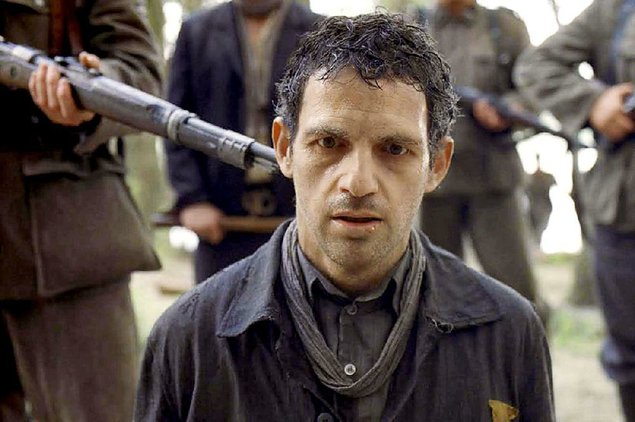
Having claimed a number of awards, including an Oscar for Best Foreign Language Film, since its debut at the 2015 Cannes Film Festival, Son of Saul has also been extremely well received by critics and was in many Top 10 lists at the end of last year. Through its central character of Saul Ausländer (Röhrig), we’re introduced to the Sonderkommandos, concentration camp work units that were usually comprised of Jews, and whose job it was to assist in the disposal of the people (and their belongings) who had been killed in the gas chambers. A Sonderkommando was never given a choice about their role, and though they had slightly better living conditions than the rest of the camp inmates, it was inevitable that they would be “retired” after three or four months of working.

Against this backdrop, and the events that took place at Auschwitz in October 1944, first-time writer/director László Nemes has fashioned a grim, harrowing, and remarkable movie debut that acknowledges the horrors of the Holocaust while also allowing for rare moments of peace and beauty and hope amidst all the despair of life in a concentration camp. How Nemes does this is perhaps the most impressive aspect of the movie, as the camera – formidably handled by DoP Mátyás Erdély – sticks close to the character of Saul and rarely strays further than a foot away from his head or shoulders. When it does, though, and the larger picture of life in the camp is revealed, it has an impact that Nemes quite carefully cultivates for maximum effect.

SOS - scene1

With the camera being so close to Saul, Nemes also distances the background by keeping it out of focus, a decision that fits with the world as Saul sees it. There will be viewers who will find this approach annoying, and perhaps less dramatic than if the wider “world” around Saul had been revealed in all its ugly wretchedness. But this would be to miss the point of Saul’s involvement with the rest of the camp. Even before he discovers the boy who survives the gas chamber – and then only to be summarily suffocated by a Nazi doctor – and takes him to be his son, Saul has chosen to survive in the camp by cutting himself off from everyone else, and only interacting with others when he needs to. So the movie’s visual design, where events happen around Saul and without his direct involvement, are kept fuzzy and indistinct, and where Saul has chosen to keep them.

To mitigate against this distancing effect, however, Nemes has also made the movie’s sound design an integral part of the drama, as through the various sounds and noises of the camp, and those made by the inmates and the guards, the things that Saul chooses to ignore are made vividly obvious and given a chilling reality that offsets the visual composition. As the continual blurring of background images occurs so too does the sharpness of dialogue and sound effects, perhaps most effectively realised in the sequence where, with one of the gas chambers not ready to be used, the latest arrivals are taken out to the nearby woods and stripped and shot. It’s an incredible sequence, shot in a cinéma vérité style that reinforces the horrible expediency that cost so many people their lives.

SOS - scene2

Away from the visual and aural decisions that make the movie look and sound like no other Holocaust movie before it, Saul’s story is a simple one: he wants to give the boy he believes to be his son a proper burial, and the attendant service given by a rabbi (Saul is not a practising religious man; as a result he doesn’t realise that a rabbi isn’t necessary for what he wants to do). Saul becomes obsessed with making his plan happen, but it proves harder to achieve than he thought. He’s unable to find a rabbi who will perform the ceremony, and his efforts to find one are constantly interrupted or foiled by the demands of some of the other Sonderkommandos. They’re planning an uprising, and want Saul to help them. His attempts to please them and also satisfy his own needs form the basis of the narrative, but Nemes makes it clear that Saul’s need to bury the boy is his first priority.

Again, some viewers may have an issue with the single-mindedness that Saul adopts here, as he jeopardises both his own life and those of his fellow Sonderkommandos as he seeks out a rabbi. His determination is such that he acts recklessly, and seemingly without regard for his own safety or the safety of others. An attempt to photograph some of the atrocities carried out at the camp is nearly discovered thanks to Saul’s unthinking behaviour, and later, when he finds someone he believes to be a rabbi (Charmont), Saul nearly ends up being mistaken for a new arrival (and killed). And when circumstances dictate that the uprising needs to happen sooner than planned, Saul’s only concern is ensuring that the boy’s body is kept safe enough to be buried still. But it’s this dogged refusal to give up that enables Saul to keep going, it’s his way of retaining some humanity in the face of the wanton cruelty he sees each and every day.

SOS - scene3

As Saul, Röhrig gives an incredible, melancholy performance that is built on telling expressions and a minimal amount of dialogue. Saul is a man consumed by reticence and detachment, focused on whatever he himself is doing at any given moment, and Röhrig, whose only previous acting experience was in a Hungarian TV show in 1989, shows the character’s distance from his surroundings as both a blessing and a curse. It’s a finely nuanced and controlled performance, intelligent and surprisingly emotive, and his ability to display a variety of emotions through the mask-like appearance Saul adopts in the camp is a masterclass in screen acting.

In addressing the issue of the Sonderkommandos and their place in the concentration camps, Nemes is also giving a voice to the people who didn’t survive the camps. It’s a fine distinction to make when so many other Holocaust movies celebrate the survivors over the ones who met their fates in a gas chamber. It makes the movie a bleaker experience than most, and its haunting, distressing tone is all the more forceful and compelling because of it. Son of Saul may not be a comfortable movie to watch, and it may not be rewarding in the traditional sense, but it is a testament to the tenacity and the courage of those who found themselves in one of the worst predicaments ever: that of aiding in the deaths of millions of people like themselves.

Rating: 9/10 – expertly handled, and refusing to indulge in any kind of melodrama, Son of Saul is one of the finest Holocaust movies ever made; intense, horrible (and horrifying), disturbing, and brilliant, there are moments that will linger in the memory, but in shining a light on a rarely discussed aspect of “life” in the camps, the movie earns its place in cinema history as an important historical record.

Share this:

  • Share on X (Opens in new window) X
  • Share on Facebook (Opens in new window) Facebook
  • More
  • Print (Opens in new window) Print
  • Email a link to a friend (Opens in new window) Email
Like Loading...

The Finest Hours (2016)

18 Monday Apr 2016

Posted by dullwood68 in Movies

≈ 4 Comments

Tags

1952, Ben Foster, Cape Cod, Casey Affleck, Chatham, Chris Pine, Coast Guard, Drama, Eric Bana, Holliday Grainger, Literary adaptation, Motor boat, Rescue, Review, SS Pendleton, True story

The Finest Hours

D: Craig Gillespie / 117m

Cast: Chris Pine, Casey Affleck, Ben Foster, Holliday Grainger, Eric Bana, John Ortiz, Kyle Gallner, John Magaro, Graham McTavish, Michael Raymond-James, Beau Knapp, Josh Stewart, Abraham Benrubi, Keiynon Lonsdale, Rachel Brosnahan

On 18 February 1952, the SS Pendleton, sailing from New Orleans to Boston, was one of two ships caught in a severe storm; both broke in two off the coast of Cape Cod, Massachusetts. The other unfortunate ship was the SS Fort Mercer. With thirty-three crew members aboard the still floating stern of the ship, the Coast Guard despatched a motor boat from nearby Chatham, though with only four crew on board. In rough seas and with no guarantee they would reach the ailing ship in time, the motor boat reached the Pendleton and was able to rescue all but one of the remaining crew. The rescue was widely regarded as one of the most daring rescues in the history of the United States Coast Guard. In 2009, the rescue was the subject of a book, The Finest Hours: The True Story of the U.S. Coast Guard’s Most Daring Sea Rescue by Michael J. Tougias and Casey Sherman.

If the brief account given above seems to indicate that The Finest Hours will be a gripping, edge-of-the-seat recounting of the that daring rescue mission, then potential viewers be warned: the movie doesn’t reach that level of excitement at any point in its running time. Instead the movie elects to be a very pedestrian retelling of the events on that fateful day, and initially, seems more concerned about covering the romance between motor boat skipper Bernie Webber (Pine) and his girlfriend, Miriam Pentinen (Grainger). We get to see how the two meet, and then there’s a protracted sequence where their engagement requires Bernie to speak to his commander, Daniel Cluff (Bana), for permission to wed (it’s a formality but Bernie treats it as if he’s asking Cluff  for something major).

TFH - scene3

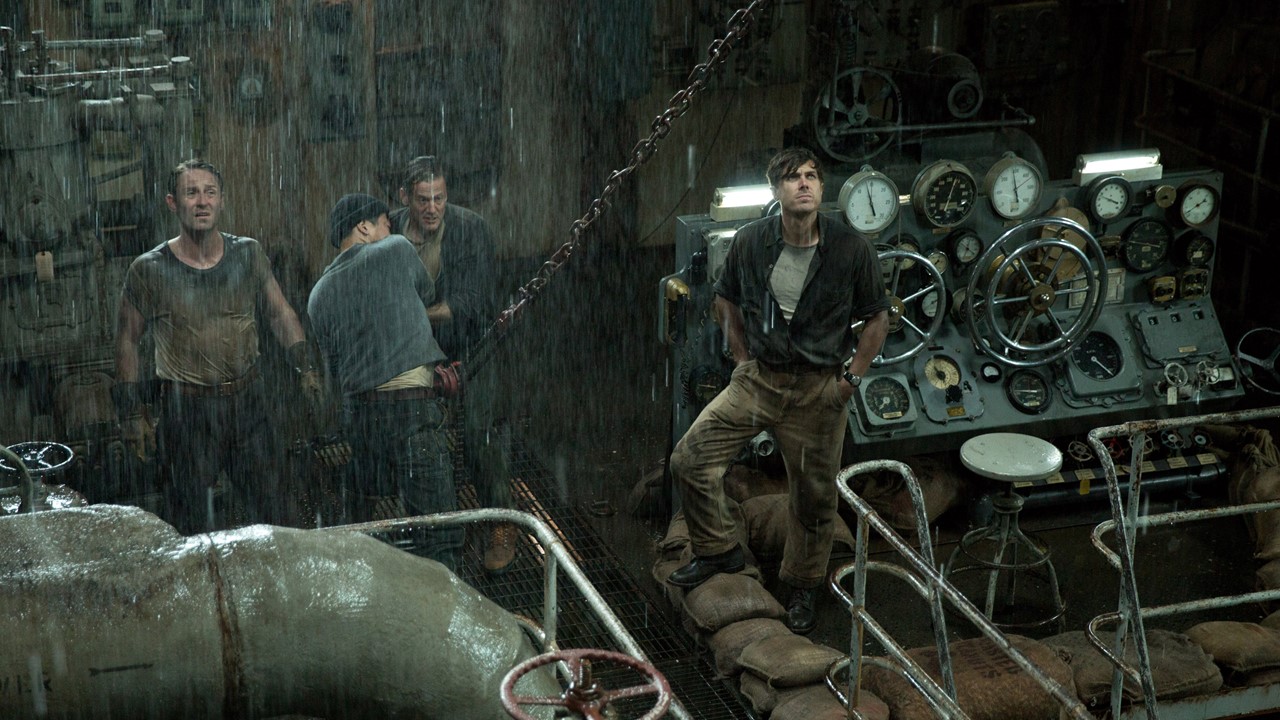
In the midst of Bernie’s dithering, the SS Fort Mercer‘s plight is reported, but other coast guard stations are already dealing with it. It’s only when the Pendleton’s equal predicament comes to light that Bernie actually stops being a bit of a doormat and chooses to go out to the stricken vessel. Most everyone sees it as a reckless, even suicidal mission, and Bernie is joined by just two of his colleagues, Richard Livesey (Foster) and Andy Fitzgerald (Gallner), and by a seaman, Ervin Maske (Magaro), who just happens to be there when the Pendleton‘s plight is discovered. Each man knows that there’s a good chance they won’t make it to the ship, or even come back, but as Bernie says, “They say you gotta go out. They don’t say you gotta come back”. And with that reassuring quote, the four men take a motor boat out into heavy seas and fight their way over a stretch of treacherous water called the Bar. And from there, and without a compass to guide them, they attempt to find the Pendleton.

Even now it all seems highly dramatic, the kind of heroic true story that proves inspiring, and makes the viewer want to be a part of that rescue mission if it were at all possible. But the movie founders from this point on, and while the crew of the Pendleton, ostensibly led by engineer Ray Sybert (Affleck), struggle to keep the stern afloat until help arrives, Bernie and his crew are faced with a seemingly number of violent swells to overcome, and all of which are bested by Bernie – basically – accelerating over or through them. This repetition proves wearing, and robs the movie of any tension, because no matter how big the approaching waves are, Bernie just floors it, and any sense of peril is quickly and completely dismissed.

TFH - scene2

Meanwhile, Sybert has to contend with semi-mutinous crew member D.A. Brown (Raymond-James) and his insistence that they get off the Pendleton by using the lifeboats. In one of the movie’s better scenes, Sybert shows everyone why that isn’t such a good idea, but otherwise any tension is dissipated by Affleck’s restrained performance, and no concrete sense that anyone on the ship is in any real danger (which is disconcerting considering their situation). And this is the movie’s main problem: it doesn’t really know how to make all this frightening or gripping or challenging. Even during the rescue, a sequence which should have ramped up the tension to unbearable levels, the movie fails to capitalise on the situation and keep the viewer on the edge of their seat. Instead the movie acts as a kind of dramatic, clichéd tick box exercise.

The movie also marginalises all its characters with the exception of Miriam. While Bernie and his crew become mere figures on a boat who are focused on the seas ahead, everyone back at Chatham is kept either hanging round the coast guard radio, or eventually, in a risible sequence where the townsfolk gather their cars at the dock with their headlights on to guide poor Bernie home, asked to pull together and be part of the heroic effort themselves. This is partly down to Miriam, who makes an attempt to get the rescue mission called off because Bernie has decided to do the right thing. It’s an incredibly selfish thing to do, but the movie tries to make her look heroic rather than self-serving, and it never recovers from it. And once he is out there, and despite several dozen close ups, Pine’s Bernie could be just about anyone getting buckets of water thrown over them.

TFH - scene1

The Finest Hours also has an odd visual look about it, one that heightens the artificality of the CGI rendered waves and the Pendleton‘s exterior, particularly when the actual rescue is in progress. It’s at this point that the viewer will be unable to retain a sense of the scope and size of the mission itself, and will be trapped into thinking, “what a small tank they must have used”. And then, with the trip out to the stricken Pendleton having taken so long, the movie rushes the return trip, and the movie ends without ever establishing itself as a thrill-ride or a serious, dramatic tale of heroism on the high seas.

Partly this is due to the structure of the script, which pays too much attention to events playing out on land rather than at sea, and Gillespie’s watered-down direction (pun intended). As a result, the cast make little impact, with only Grainger standing out from the faceless crowd – Foster is one of several cast members who are completely wasted in their roles – and the movie lurches from one unconvincing scene to the next, devoid of any sense of unease, and ending up as stranded as the Pendleton is in the few hours left to it before it sinks completely.

Rating: 5/10 – only occasionally (and even then briefly) powerful, The Finest Hours does scant justice to its true story, and introduces too many fictional elements to make it work effectively; with a bland central performance from Pine, and without a strong-minded director at the helm, the movie disappoints more than it impresses and seems almost wilfully lacklustre.

Share this:

  • Share on X (Opens in new window) X
  • Share on Facebook (Opens in new window) Facebook
  • More
  • Print (Opens in new window) Print
  • Email a link to a friend (Opens in new window) Email
Like Loading...

Happy Birthday – Sean Bean

17 Sunday Apr 2016

Posted by dullwood68 in Movies

≈ Leave a comment

Tags

Actor, Anna Karenina (1997), Birthday, Far North, Movies, North Country, Sean Bean, The Field, Tom & Thomas

Sean Bean (17 April 1959 -)

"Legends" Series Premiere

An actor with a wider range than most people give him credit for, Sean Bean is also one of the most consistently reliable actors working today. He may be well known for his more villainous roles – which, admittedly, he’s very good at playing – but since playing Boromir in The Lord of the Rings: The Fellowship of the Ring (2001), his career has become more varied and (no doubt for him as well as us) more rewarding. His tough, uncompromising demeanour belies a man who listens to classical music when he’s preparing for a scene, and who is still a fervent supporter of Sheffield United football club. He made his feature debut in Winter Flight (1984), and since then has amassed over a hundred credits in both the movies and on TV, including appearances in Lady Chatterley (1993), the Sharpe series of TV movies, and more recently, season one of Game of Thrones (2011). On the big screen he’s a familiar face who brings a certain degree of gravelly sincerity to his roles. Here then are five Sean Bean movies that feature some of his more under-appreciated portrayals… and where his character doesn’t get killed.

Tom & Thomas (2002) – Character: Paul Sheppard

SB - T&T

A rarely seen children’s movie, Tom & Thomas sees Bean play the adoptive father of one of a set of twin boys (both played by Aaron Johnson, now better known as Aaron Taylor-Johnson). Once they meet, the other twin’s involvement with a group of child smugglers sets the pair off on a great adventure. It’s an enjoyable, unassuming movie, and it’s good to see Bean making the most of such a different role from the ones he’d been used to up until then.

Anna Karenina (1997) – Character: Count Alexei Kirillovitch Vronsky

02-00233935 - 1210501

Unfairly dismissed by critics upon release, Bernard Rose’s Russian-shot (and badly cut by the studio) version of Anna Karenina certainly has its problems in the script department, but remains a beautifully realised production of Tolstoy’s classic novel, with superb use of music by Tchaikovsky and Rachmaninov. Bean is a convincing, dashing Vronsky, and his scenes with Sophie Marceau are impeccable for the way in which both actors portray the overwhelming passion their characters feel for each other.

North Country (2005) – Character: Kyle Dodge

SB - NC

Bean takes a supporting role in another movie that broadens his career CV, playing the good friend of Josey Aimes (Charlize Theron) who brings a class action suit for sexual harassment against the owners of an iron mine. Based on a true story, Niki Caro’s movie is eloquent, passionate, and inspiring, and Bean fits in well as one of the few men in Josey’s life who aren’t either sexist scumbags or manipulative, uncaring “primitives”.

Far North (2007) – Character: Loki

SB - FN

In this strange and haunting tale set in the arctic tundra, Bean plays a man whose sudden interjection into the lives of a mother and daughter leads to both unexpected passion and forecasted tragedy. Kapadia’s last feature until this year’s Ali and Nino, Far North is a tough, uncompromising movie made against some stunning backdrops and giving Bean the chance to reveal a less macho side to his acting.

The Field (1990) – Character: Tadgh McCabe

SB - TF

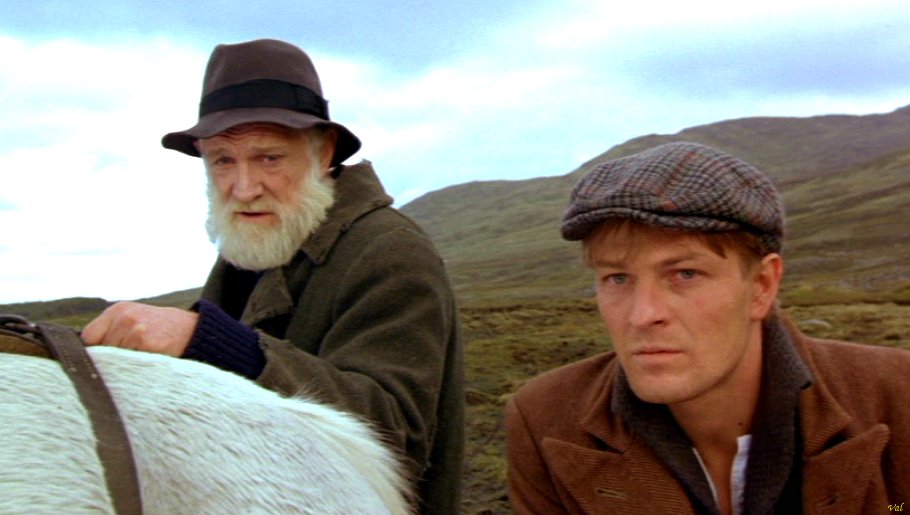
Although it was a commercial failure, The Field still has a good reputation amongst movie lovers, thanks in the main to Richard Harris’s performance as Bull McCabe, but there are other positives as well, such as Bean’s stalwart turn as Bull’s son. It’s a powerful portrayal of a son unwilling (or unable) to meet his father’s expectations of him. It’s a movie where tragedy is just waiting to happen, and where pride is the instigator of that tragedy, and in the hands of writer/director Jim Sheridan, packs such an emotional punch you’ll be bruised for days after seeing it.

Share this:

  • Share on X (Opens in new window) X
  • Share on Facebook (Opens in new window) Facebook
  • More
  • Print (Opens in new window) Print
  • Email a link to a friend (Opens in new window) Email
Like Loading...

10 Movies That Are 40 Years Old This Year – 2016

15 Friday Apr 2016

Posted by dullwood68 in Movies

≈ 1 Comment

Tags

1900, 1976, All the President's Men, Fellini's Casanova, In the Realm of the Senses, Kings of the Road, Movies, Network, Robin and Marian, Rocky, Taxi Driver, The Killing of a Chinese Bookie

1976 was a slightly odd year for movies. There were enough instant classics to help compile this list, but it wasn’t a banner year, and it passed by without too much yelling from the rooftops about this movie or that movie. After the excellent year that was 1975 (itself following on from an even more impressive 1974), 1976 was a year where the movies that were released seemed a little below par. It was almost as if movie makers around the globe – with the exception of those mentioned below – were off their game, or that there weren’t enough original ideas going around for anyone to get a hold of and make something of them. But the ten movies listed here were successful, and fully deserving of all the accolades and critical acclaim (if not the box office success that some missed out on) that came their way. It’s a tribute to the movies themselves, and to their makers, that we’re still talking about them today.

1) Rocky – It was the movie that made Sylvester Stallone a star, and introduced us to a character who has endured several sequels, and in 2015, enjoyed something of a renaissance. Rocky Balboa is a terrific creation, and Stallone understood him completely, bringing a degree of gravitas to the role that is still effective when viewed forty years on. Future incarnations may have tarnished Stallone’s original interpretation, but the movie itself is a wonderful tribute to the idea that even the most average of people can achieve greatness if they work hard enough and believe in themselves.

Rocky

2) Taxi Driver – Known more for its “You talkin’ to me?” moment than anything else these days, Martin Scorsese’s harsh, uncompromising look at one man’s mental deterioration in the face of overwhelming moral and political corruption is one of the most jarring and breathtaking movies ever made. There’s a crude energy to the movie that makes De Niro’s incredible performance all the more uncompromising, but while he’s the movie’s central focus, let’s not forget the superb supporting performances from the likes of Cybill Shepherd, Jodie Foster, and Albert Brooks, and .

3) In the Realm of the Senses – More controversy, as Japanese director Nagisa Ôshima explores the true story of Sada Abe, whose affair with her master became all-consuming, and which led to a terrible act of violence. The controversy here was the explicit sex performed by actors Tatsuya Fuji (the master) and Eiko Matsuda (Abe), but this isn’t an erotic movie by any standards, thanks to an exemplary script by Ôshima that focuses on the couple’s relationship and the overwhelming emotions that developed as a result of their affair. That said, the movie does have its lurid moments, but these are offset by Ôshima’s refusal to judge either character, and thanks to two very committed performances by Fuji and Matsuda.

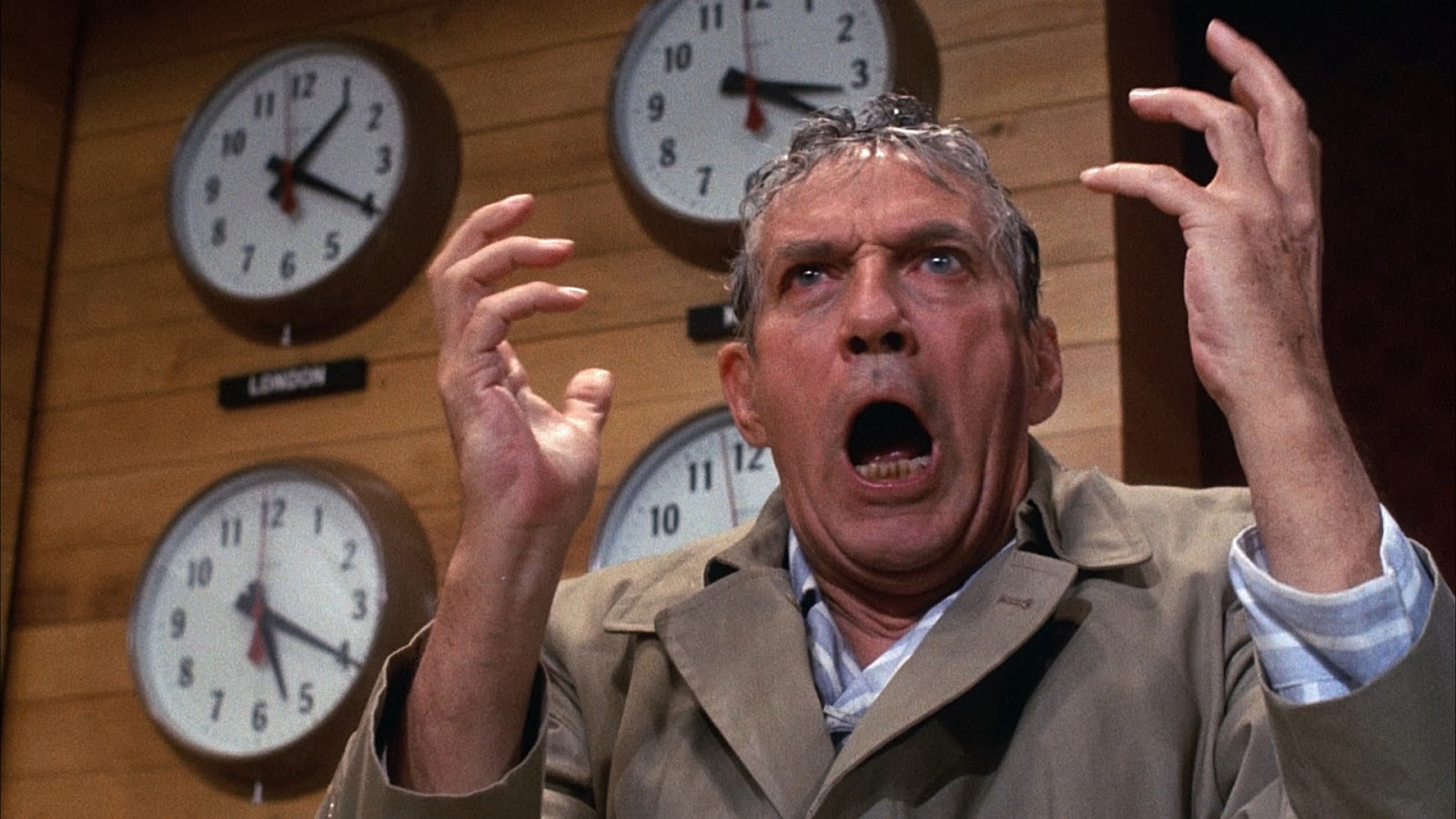
4) Network – The movie that saw Peter Finch win a posthumous Oscar for his portrayal of a newsreader who famously declares that he’s “mad as hell, and [he’s] not going to take this anymore”, Network is much more than a glimpse into one man’s mental unravelling, but a stinging satire on the nature of news gathering and the lengths some organisations will go to in exploiting their staff for financial gain. Packed with enough cynicism to stop a herd of charging elephants, Paddy Chayefsky’s script (also an Oscar winner) is one of the most intelligent, gripping and perceptive ever written, and Sidney Lumet’s direction teases out every nuance.

Network

5) All the President’s Men – William Goldman is the scribe responsible for the saying, “In Hollywood, nobody knows anything”. But in adapting Carl Bernstein and Bob Woodward’s riveting account of Richard Nixon’s fall from grace through the Watergate affair, Goldman shows he knows exactly what he’s doing, and the result is a political thriller that grabs its audience from the beginning and doesn’t let go for the next two and a quarter hours. Even though we all know the outcome, and from this point in time the depth of Nixon’s involvement, it’s still an incredible journey that the movie takes us on. The only question that remains unanswered is why Bernstein has a bicycle wheel at the side of his desk all the time.

6) 1900 – Bernardo Bertolucci’s epic, five hours plus look at the social and political upheaval in early 20th century Italy that saw fascism give way to communism, and as seen through the eyes of two friends – Gérard Depardieu, Robert De Niro – from opposite sides of the class divide. Beautifully shot by Vittorio Storraro and spanning over forty years, Bertolucci’s confidence in the material and his cast provides the viewer with some of the most breathtaking moments in world cinema (or just cinema as a whole). Unfairly mistreated since its release – several edited versions have been more available than the original cut – this is richly rewarding and a movie that never fails to excite, stimulate and inspire.

7) Robin and Marian – A somewhat dour but compelling addition to the Robin Hood myth sees Sean Connery’s older, wiser Robin returning from the Crusades to woo Audrey Hepburn’s Maid Marian one last time. It’s a bittersweet affair, a jaded yet moving romance set against the backdrop of Robin’s desire to retire the legend that’s built up around him, but which no one wants to see come to an end. It’s another movie that’s been beautifully shot, this time by David Watkin, and features an eloquent score by John Barry that is actually one of his very best, and for those patient enough to wait for it, features one of the best sword fights ever committed to the big screen.

Robin and Marian

8) The Killing of a Chinese Bookie – The kind of indie crime drama that no one makes anymore, John Cassavetes’ superb examination of an inveterate gambler’s addiction getting him into serious trouble with the Mob is a masterclass in dramatic tension. As the gambler in question, Ben Gazzara gives a career best performance, but this is Cassavetes’ movie through and through, as he explores notions of masculinity and pride through the actions of one of life’s continual losers, and structures the movie in such a way that you’re never sure if everything is happening for real or in some fever dream that Gazzara’s character is having.

9) Fellini’s Casanova – Only Fellini could have made a movie about the world’s most famous seducer of women and made it equally about the era that defined him, a time of opulence and unfettered greed. Against this backdrop, Fellini paints a compelling portrait of a Renaissance man who doesn’t fit in unless he’s bedding women as a way of warding off his own lack of self-confidence, and to maintain his “reputation”. Fellini directs in a fantastical, scattershot, self-aggrandising manner that reflects the material, and as the grand seducer, Donald Sutherland gives one of his best performances. Unfairly dismissed by US critics on release, this is now regarded as one of the best of Fellini’s later works, and deserves to be more widely available as well.

10) Kings of the Road – With standout performances from Rüdiger Vogler and Hanns Zischler as the two men who decide to travel together around Germany, Wim Wenders’ melancholic musings on loneliness and acceptance, combined with a visual austerity to match their emotional obduracy, is one of the finest German made movies of the Seventies. A road trip that also acts as an exploration of a country still coming to terms with the Second World War, this is a movie that has a surprising amount of heart beneath its drab exterior, and despite its length (nearly three hours) compels the viewer to see how it all works out.

Kings of the Road

Share this:

  • Share on X (Opens in new window) X
  • Share on Facebook (Opens in new window) Facebook
  • More
  • Print (Opens in new window) Print
  • Email a link to a friend (Opens in new window) Email
Like Loading...

Band of Robbers (2015)

14 Thursday Apr 2016

Posted by dullwood68 in Movies

≈ Leave a comment

Tags

Aaron Nee, Adam Nee, Comedy, Criminal, Drama, Friendship, Huckleberry Finn, Injun Joe, Kyle Gallner, Mark Twain, Matthew Gray Gubler, Melissa Benoist, Murrell's treasure, Policeman, Review, Stephen Lang, Tom Sawyer

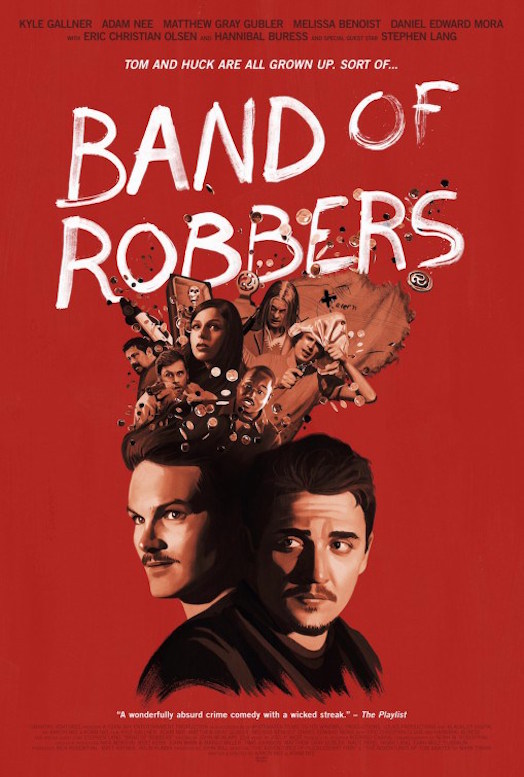
Band of Robbers

D: Aaron Nee, Adam Nee / 95m

Cast: Kyle Gallner, Adam Nee, Matthew Gray Gubler, Melissa Benoist, Hannibal Buress, Stephen Lang, Daniel Edward Mora, Johnny Pemberton, Eric Christian Olsen, Cooper Huckabee, Beth Grant

Sometimes the best movies happen because somebody had a “what if?” idea. What if toys had a life of their own? What if an amnesiac remembered the important parts of his life by tattooing them on his body? What if Netflix were to give Adam Sandler a six picture contract with carte blanche as to the movies he makes? (Hmmm…) Another great “What if?” idea is the one that makes Band of Robbers so intriguing (and appealing): what if Tom Sawyer and Huckleberry Finn were adults in the modern world, and they were still trying to find Murrell’s hidden treasure?

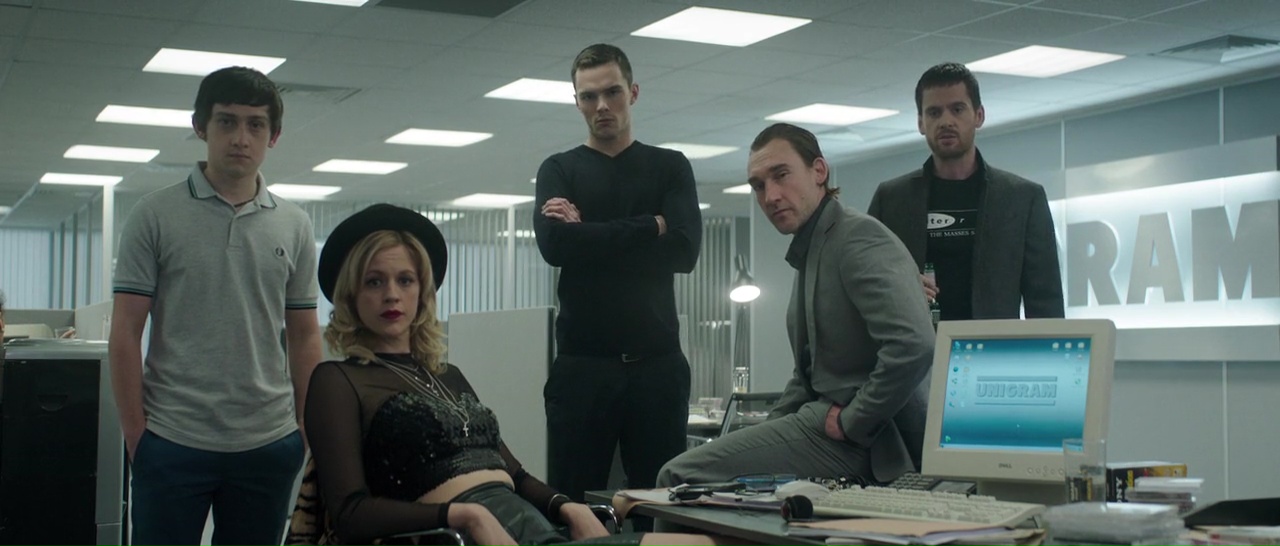
In the hands of the Brothers Nee, this idea is given a great deal of dramatic and comedic licence, with the older Tom and Huck still friends but on opposite sides of the law (or so it seems). Huck (Gallner) is a petty criminal who has just got out of prison and is determined to go straight. Tom (Nee) is a policeman living and working in the shadow of his older brother, Sid (Olsen). Tom is also a dreamer, still obsessed with finding the treasure that eluded Huck and him when they were boys. So when Huck is released from jail, it’s only natural that Tom is there to meet him. And it’s only natural that Tom has a plan, one that includes Huck, and their three friends, Joe Harper (Gubler), Ben Rogers (Buress), and Tommy Barnes (Pemberton).

Band of Robbers - scene2

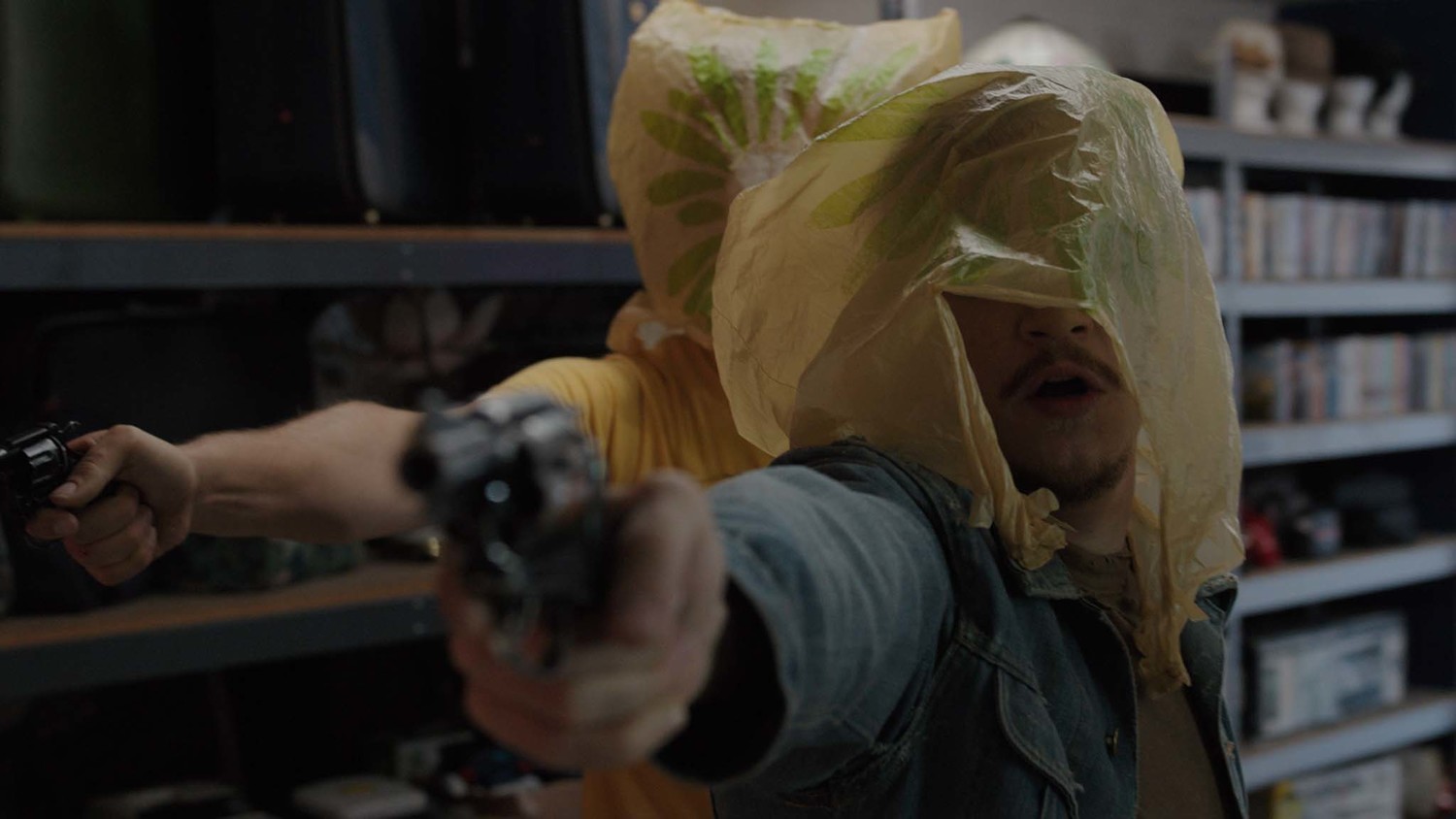
His plan is based on dubious intelligence gained from local sot Muff Potter (Huckabee). Muff has seen Injun Joe (Lang) – who has also never given up on finding the treasure – depositing something in the safe of a local pawn shop. Surmising that it must be something of great value to Injun Joe for him to keep it there, Tom has deduced (without any concrete evidence) that it must be the treasure that’s stowed away in the pawn shop’s safe. He devises a plan to rob the pawn shop that seems foolproof enough, but on the day his plan is stretched almost to ruin. First he’s teamed up with a new partner, Becky Thatcher (Benoist), then Joe forgets to hire a Mexican to drive the van he hasn’t stolen for the robbery (don’t worry, it does all makes sense in the context of the movie), and instead of stockings for Joe and Huck to wear, they’re stuck with carrier bags. But they do get away with the contents of the safe: what amounts to around two hundred dollars and a pewter coin.

Of course the pewter coin proves to be a clue to the whereabouts of the hidden treasure, but from this point on, Huck and Tom are pursued by Injun Joe. And as they solve another set of clues, Becky’s involvement – and awareness that Tom is up to no good – adds to the two friends’ predicament. And as Injun Joe’s “methods” of tracking them down leads to a surfeit of dead bodies, it becomes more and more difficult for Tom and Huck to find a way out that will keep both of them alive and out of jail. And then there’s the problem of the Mexican gardener, Jorge (Mora)…

Band of Robbers - scene1

Band of Robbers is a movie that could have gone horribly, terribly wrong. But thanks to the Nee brothers’ inspired approach to the story they’ve concocted, the somewhat awkward mix of comedy and drama that threatens to deflate like an overcooked soufflé, both maintains its shape and rises confidently to provide a delicious pudding of a movie that is a joy to consume (okay, enough of the food metaphors). Viewers might initially be put off by Nee’s portrayal of Tom Sawyer – a literary icon let’s not forget – as a morally dubious, consequence-blind idiot, but this is just the surface of the character, and Nee wisely adds more serious layers to his performance as the movie progresses. But he also provides much of the humour in the movie’s first three chapters, his forty mile an hour, rambling streams of consciousness containing a good deal of anarchic tomfoolery and comic verbal dexterity. Some jokes miss the target (as you’d expect from this kind of onslaught), but they’re in the minority.

As Huck, Gallner is the necessary straight man to Nee’s grown up wild child. He gives Nee room to do his thing, and quietly holds the movie together by virtue of being the serious one. Huck is a counter-balance to Tom’s freewheeling hijinks, and while the part may appear staid in comparison, Gallner exudes a laconic resignation re: the events he finds himself caught up in, that anchors the movie and stops it from going too far in the opposite direction. Huck is the movie’s beating heart, while Tom is the brain that’s not been wired correctly. Both actors excel in their roles, and there’s a genuine sense of camaraderie in their moments together.

Band of Robbers - scene3

Elements of Twain’s work are woven into the storyline, with nods to the original stories, and characters other than Tom and Huck are given modern day life. There are time outs for the characters to reflect on issues of responsibility and hope, morality and immorality, and the nature of determinism. Heavyweight concepts some of them, but again, the Nee brothers keep things light and buoyant for the most part, and ensure that even in the movie’s darker places there’ll soon be another reassuring moment of lightheartedness to soothe away any anxiety. And it’s in the movie’s favour that whenever the material does darken – watch out for a chilling exchange between Injun Joe and Joe Harper – that the Nees’ let it go as dark as it needs.

It would be easy to dismiss Band of Robbers as just another low budget comedy with serious pretensions, but while it does have its very silly moments, it also has its fair share of moments that reward the viewer and should leave them grinning from ear to ear with the pleasure of it all (such as the little old lady who has her car hijacked by Injun Joe). It does fall down in places – Tom’s clumsiness is an extra attempt at comedy that the movie doesn’t need, Becky Thatcher is an overwhelmingly vanilla character, some of the visual gags aren’t so well staged as others – but all in all, this is a surprisingly effective tribute to the genius that is Mark Twain, and it more than holds its own against other modern day screwball comedies.

Rating: 8/10 – an unexpected gem of a movie, Band of Robbers has genuine heart and an engaging style, and is all kinds of quirky – but in a good way; Nee and Gallner make a great team, and the movie has a confidence about it that never falters, making it a treat for anyone fortunate enough to watch it.

Share this:

  • Share on X (Opens in new window) X
  • Share on Facebook (Opens in new window) Facebook
  • More
  • Print (Opens in new window) Print
  • Email a link to a friend (Opens in new window) Email
Like Loading...

The 5th Wave (2016)

13 Wednesday Apr 2016

Posted by dullwood68 in Movies

≈ Leave a comment

Tags

Alex Roe, Alien invasion, Aliens, Chloë Grace Moretz, Drama, J Blakeson, Liev Schreiber, Literary adaptation, Maria Bello, Nick Robinson, Review, Rick Yancey, Sci-fi, Thriller, Wright Patterson Air Force Base, YA novel

The 5th Wave

D: J Blakeson / 112m

Cast: Chloë Grace Moretz, Nick Robinson, Alex Roe, Liev Schreiber, Maria Bello, Ron Livingston, Maggie Siff, Zackary Arthur, Maika Monroe, Tony Revolori, Talitha Bateman, Cade Canon Ball, Alex MacNicoll, Nadji Jeter, Gabriela Lopez

It’s actually hard to know where to start with The 5th Wave. (It’s equally hard to know where to finish as well.) Yet another adaptation of the first in a trilogy of YA novels – this time by Rick Yancey – the movie has so many problems, and so many flaws it’s almost embarrassing. Up front and centre there’s Chloë Grace Moretz, an actress whose career has evolved – somehow – out of calling a bunch of goons “c*nts”, and who lacks the wherewithal to cry properly when her character’s father dies (look closely and you’ll find that Moretz’s face is not the definition of “tear-streaked”). Moretz just isn’t convincing enough as Cassie, the nominal heroine of the novels and the movie, and every time she’s asked to show some emotion it’s like there’s a war of attrition going on in her head, as she struggles to work out which facial expression will fit the bill. Often she settles for confused, or confused and angry, almost like they’re default modes for acting.

The 5th Wave - scene2

Then there’s the supporting cast, a mix of relative newcomers and veterans who all should have known better and sought employment elsewhere. On the veterans side there’s Liev Schreiber and Maria Bello, two very good, accomplished actors who are more than capable of giving award-winning performances (and they have). But here it’s a very different story (much like this adaptation of Yancey’s novel). Schreiber, playing a US military commander, looks bored and sounds bored throughout, as if he’s committed to the movie before reading the script and is now regretting the decision completely. Bello, on the other hand, at least has the luxury of being almost unrecognisable as another member of the military, but even she can’t bring anything resembling an effective portrayal to a role that requires her to jab her co-stars with a needle gun or spit out her lines as if they were poisonous.

On the relative newcomers side, it’s disheartening to see the likes of Revolori, excellent as the bellboy in The Grand Budapest Hotel (2014), and Monroe, also excellent as the heroine of It Follows (2014), reduced to making ends meet by playing characters who are either unmemorable (Revolori) or stereotypically superficial (Monroe – the tough as nails female who doesn’t take shit from anyone). If this is the best movie they could get to work on in 2015 then they need to seriously rethink who’s representing them. As the two male leads, Robinson (as Cassie’s high school crush, Ben) opts for sulky and remote, while Roe (as Evan, who helps Cassie when she’s injured) aims for a combination of Theo James and Ansel Elgort from the Divergent series, and misses them both by a mile.

The 5th Wave - scene3

The look of the movie is also a problem. At the beginning, as Cassie provides an overview of the alien invasion and the various waves that have occurred so far, there’s a definite feel of money being well-spent, and the movie has an exciting buzz about it. But once that section is over, and Cassie, her father (Livingston), and her younger brother Sam (Arthur), arrive at the refugee camp it all becomes very generic in terms of both the art direction and the cinematography. And by the movie’s end, the cast are consigned to running around empty underground corridors in a volley of scenes that could be taking place in any post-apocalyptic low-budget sci-fi movie.

All this can be laid firmly at the door of the script, a mishmash of YA tropes and sci-fi melodrama that’s been cobbled together by three writers, all of whom should have been able to do a better job than this. Susannah Grant wrote the script for Erin Brockovich (2000) and was nominated for an Oscar, while Jeff Pinkner has an envious track record on TV shows such as Lost and Fringe. And then there’s Akiva Goldsman, an Oscar winner for A Beautiful Mind (2001), and a recent participant in YA adaptations with the script for Insurgent (2015). But when all three can’t stop a movie from sounding like it was written by a trio of people who believe caricature and cliché are the best options, then the movie is pretty much abandoning all hope and waving a surrender flag.

The 5th Wave - scene1

But all this pales in comparison to the flaccid direction foisted on the movie by Blakeson. Making only his second feature after The Disappearance of Alice Creed (2009), Blakeson has trouble making any of it sound or look convincing, from the tepid romance between Cassie and Evan, to the video game sequences where Ben and his squad try and hunt down the aliens – possibly the worst example of the movie’s haphazard approach to editing – whatever the requirement, Blakeson finds some way to spoil it or prevent it from reaching its full potential. When you can’t even find a way of making Liev Schreiber look menacing, or inject any excitement into the destruction of a major air force base then you’ve got real problems. Maybe there’s a budgetary explanation for some of this but in the main, nothing works as well as it should.

Rating: 3/10 – its opening salvo of disaster aside, The 5th Wave works best as a cautionary tale to other makers of dystopian YA movies, in that they should avoid replicating this movie’s mistakes and do exactly the opposite of what it does here; limp and unappealing, with yet another inexplicable lead role for Moretz, it’s a movie that redefines the term “lacklustre” and has hopefully done enough to dissuade any sequels from being made.

Share this:

  • Share on X (Opens in new window) X
  • Share on Facebook (Opens in new window) Facebook
  • More
  • Print (Opens in new window) Print
  • Email a link to a friend (Opens in new window) Email
Like Loading...

Midnight Special (2016)

12 Tuesday Apr 2016

Posted by dullwood68 in Movies

≈ 3 Comments

Tags

Adam Driver, Drama, FBI, Jaeden Lieberher, Jeff Nichols, Joel Edgerton, Kirsten Dunst, Michael Shannon, Mystery, NSA, Review, Sci-fi, The Ranch, Thriller

Midnight Special

D: Jeff Nichols / 112m

Cast: Michael Shannon, Joel Edgerton, Jaeden Lieberher, Kirsten Dunst, Adam Driver, Bill Camp, Scott Haze, Sam Shepard, Paul Sparks, David Jensen

It’s only taken writer/director Jeff Nichols four movies to become a movie maker whose projects carry an enormous weight of expectation. First there was Shotgun Stories (2007), then there was Take Shelter (2011). He followed that up with Mud (2012), and now he brings us Midnight Special, a tale about an eight year old boy who may be an alien, or an emissary from God, or something else completely. It’s a measure of Nichols’ success that he’s taken what could have been an awkward, unconvincing story – in lesser hands – and made it into an articulate, gripping tale that’s also exciting and thought-provoking.

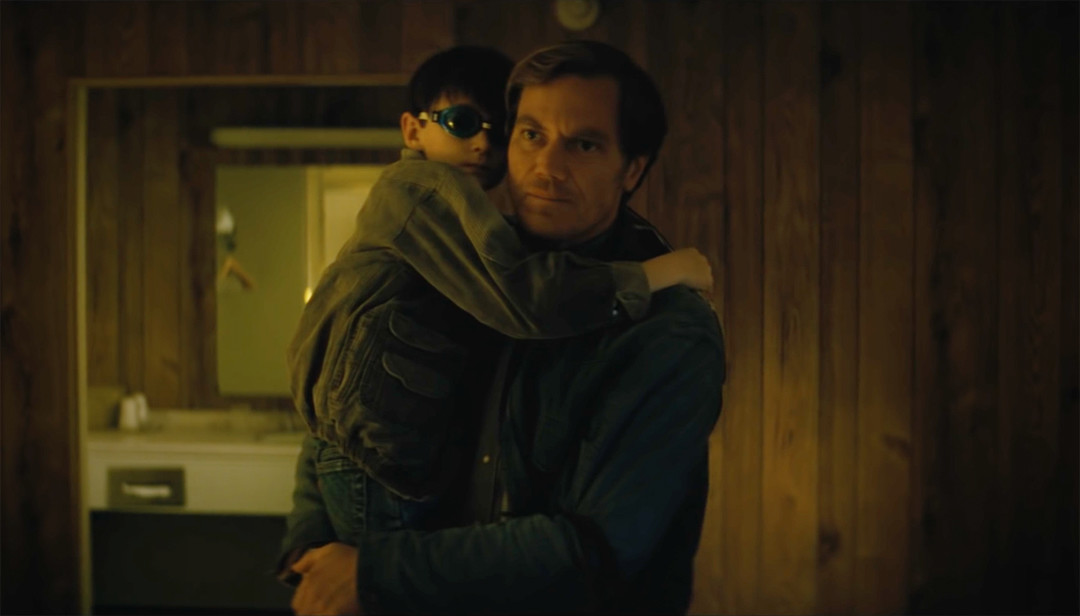
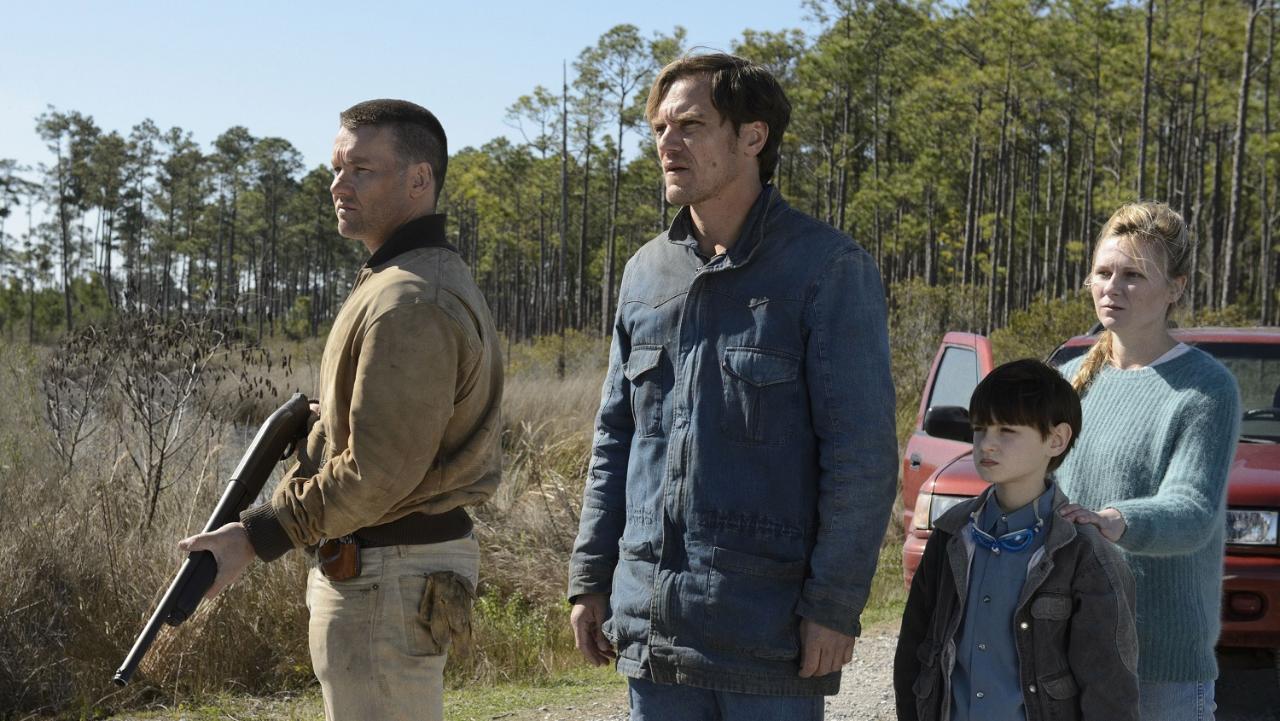
The movie begins with the police searching for a missing child called Alton Meyer (Lieberher). He’s been abducted from a religious compound known as the Ranch. It’s head, Alton’s adoptive father, Calvin Meyer (Shepard), wants him back, and within the next four days. But Alton – who has to wear blue goggles during daylight hours – has been abducted by his real father, Roy Tomlin (Shannon), and he, along with his friend, Lucas (Edgerton), are trying to keep Alton safe and also get him to a certain place in four days’ time. There, something momentous will happen, but neither Roy nor Calvin Meyer knows what it is; and at this point, Alton doesn’t know either.

MS - scene3

The FBI, and the NSA – in the form of agent Paul Sevier (Driver) – are also trying to find Alton, as they have become aware that he has been including coded intelligence in the sermons he’s written for Meyer. But Alton has other gifts, and one in particular, connected to his sight. When Ray decides to stop off at an old Ranch member’s home, that particular gift almost causes the house to shake apart. From there, the trio drive to the home of Alton’s mother, Sarah (Dunst), but not before an incident at a gas station reveals that Alton’s heat signature is similar to that of a nuclear bomb. Now a foursome, they travel on to the location that Alton must reach, however, they’re unaware that two members of the Ranch, Doak (Camp) and Levi (Haze), are tracking them with the intention of kidnapping Alton and returning him to the Ranch.

Before they are able to, Alton, who has been getting sicker and sicker, and has to avoid direct sunlight, tells Roy that he can no longer continue to keep hidden from the sun. Roy exposes Alton to a sunrise, and it has an extraordinary effect: he can now walk about unaffected in daylight, and knows exactly what he needs to do and why he needs to be in a certain place at a certain date and time. As he tells Roy: he doesn’t belong here.

MS - scene1

Whether or not Alton makes it to his rendezvous is, ultimately, neither here nor there. What’s important is the journey he makes getting there, and the way in which he and his parents, and Lucas, make it there. One of the strengths of Nichols’ impressive and layered screenplay is the way in which Roy’s parental determination to not let anything stop him from getting Alton to his rendezvous, sometimes presents itself as unfeeling and harsh. When he and Lucas encounter a state trooper, Roy is unequivocal: he tells Lucas to shoot him. Roy doesn’t care about anyone else, only Alton, and his zeal and willingness to put moral certitude aside makes him one of recent cinema’s more interesting and intriguing characters. Shannon is perfect for the role, morally absent when he needs to be, but a committed, loving father as well, and fully able to show these two sides of Roy’s character without any sense that he’s a Jekyll and Hyde personality and able to call on either side when necessary.

What’s also important is that Roy believes in Alton, albeit in a different way from Calvin (he and his followers believe that Alton’s rendezvous is also the time when they will all be judged by God). He believes in his son, wholeheartedly, and even if what he knows is incredibly far-fetched. If it wasn’t for the light that can stream from Alton’s eyes when he’s exposed to sunlight, the viewer would be hard pressed to believe in the same way as Roy does. Nichols doesn’t keep the viewer in the dark for long (no pun intended), and any doubts are dispelled when Elden (Jensen), the ex-Ranch member has to have “another look”. From then on, Alton’s gifts/abilities/powers are assimilated into the narrative in a way that both explores them and allows them to drive events forward. As the otherworldly Alton, Lieberher does a fantastic job of balancing his closeted childhood with his increasing awareness of the skills he really possesses (he reads a lot of comic books and at one point asks about Kryptonite as if it were real).

MS - scene2

Nichols orchestrates all this with a tremendous amount of flair, even as he keeps a tight rein on the more overt sci-fi elements of his screenplay. The subplot involving the Ranch members sometimes comes across as more of an afterthought, or late addition to the script, while the inclusion of Sarah doesn’t give Dunst much more to do than look concerned and hesitant. And there’s one very important question that Nichols leaves right until the very final shot to explain (in many respects it’s the most important question). But with such a high level of confidence on display, Nichols can be forgiven a couple of narrative faux pas, and his handling of the action sequences is bracing and not at all derivative (a major feat in itself). The whole thing is beautifully shot by Nichols’ regular DoP Adam Stone, and there’s an insidious, disorientating score courtesy of another Nichols’ regular, David Wingo.

Rating: 8/10 – Nichols continues his run of impressive features with a movie that asks what it is to be human, and comes up with some unexpected answers in the process; Midnight Special is an intelligent, original, and supremely well executed sci-fi drama, as well as a fantastic example of what can be done with a well constructed script, a more than willing cast, inspired direction, and all on a modest budget.

Share this:

  • Share on X (Opens in new window) X
  • Share on Facebook (Opens in new window) Facebook
  • More
  • Print (Opens in new window) Print
  • Email a link to a friend (Opens in new window) Email
Like Loading...

What’s in a Name? – The Boy (2015) and The Boy (2016)

11 Monday Apr 2016

Posted by dullwood68 in Movies

≈ Leave a comment

Tags

Arson, Brahms, Clay McLeod Chapman, Craig William Macneill, David Morse, Doll, Drama, Horror, Jared Breeze, Lauren Cohan, Literary adaptation, Mountain View Motel, Rainn Wilson, Review, Rupert Evans, Thriller, William Brent Ball

With all the potential topics available to movie makers worldwide, and all the potential titles that could be used by movie makers, it does seem a little unfair on audiences when two movies are released relatively close to each other, and have the same title. Remakes are to be expected, but original movies? Surely, movie makers could check to see ahead of time if some other release is using the same title? And if so, to avoid any confusion, change theirs if they’re going to be second out of the gate? Well, with these two movies that obviously didn’t happen. But if anyone out there is reading this, and they have a movie coming out that has the same title as another recent release, please could you make it clear in the advertising that your movie isn’t the other one? Because that would definitely ensure that viewers don’t run the risk of being disappointed (as they would be in this instance).

The Boy 2015

The Boy (2015) / D: Craig William Macneill / 110m

Cast: David Morse, Jared Breeze, Rainn Wilson, Bill Sage, Mike Vogel, Zuleikha Robinson, Aiden Lovekamp, David Valencia, Sam Morse

A quiet motel, the Mountain View Lodge, is the setting for this adaptation of a section of a novel by Clay McLeod Chapman, a dark psychological thriller that deftly explores the mind of nine year old Ted Henley (Breeze), a boy with little to do other than clean the rooms and scoop up roadkill from outside the motel. Ted is a quiet child who misses his mother; she ran off with someone who stayed at the motel and is now living in Florida. His father, John (Morse), is a lonely, broken down man running a lonely, broken down motel, and both in their own way are still grieving the loss of Ted’s mother. John drinks too much, while Ted – who gets paid twenty-five cents for every roadkill he finds – begins to leave food on the main road so that animals will be attracted to it and run over. His aim is to amass enough money to leave and journey to Florida. And when his father mentions a deer being in the vicinity, Ted sees a chance to “make a killing”.

The Boy 2015 - scene1

His plan goes slightly awry. The deer is hit by a car that ends up in need of repair, and the driver suffers a bad head injury. The man, named Colby (Wilson), ends up staying while he recuperates and his car is fixed. As the only other person there, Ted starts to gravitate towards him, and they strike up a friendship of sorts. When a couple and their son arrive and need an overnight stay, Ted fixes their car so that it won’t start the next morning. While they hang around another day, Ted and the son play together, but Ted’s lack of social awareness makes their play awkward for the other boy. When the family leaves, Ted reverts back to spending time with Colby, and he learns that the man has recently lost his wife in a fire.

But Ted’s interest in Colby is matched by the local Sheriff’s interest in him as well. Colby’s story about his wife may not be the whole truth, and a decision that Ted makes has terrible consequences, but not as terrible as the consequences when attendees at a local prom book the motel for their post-prom celebrations and treat Ted badly.

The Boy 2015 - scene3

The Boy is often an uncomfortable viewing experience, but not for the reasons you may be thinking. Anyone watching the movie beyond its opening stretch will feel certain that what they’re watching is the slow accumulation of traits that will lead to Ted’s first foray into full-blown sociopathic behaviour. And for the most part, they’d be right. But while Ted is front and centre for most of the movie, Macneill pays close attention to the two fathers in Ted’s life during this time, and in doing so, also makes much of the atmosphere that inadvertently supports Ted’s inevitable “decline”.

John is unable to connect with his son, unable to realise just how much Ted is hurting over the loss of his mother. It’s likely he’s always been unable to connect with Ted; he mentions how time-consuming running the motel has always been. It’s therefore also likely that his father has been neglecting Ted for as long as Ted can remember (John inherited the motel from his father). With both parents absent from his life, one physically, the other emotionally, it’s no wonder that Ted has grown up with a different view on life than anyone else he knows (or meets). It’s also no wonder that he tries to strike up a relationship with Colby. Colby represents an opportunity for escape, but Colby has his own issues, issues that conflict with Ted’s needs. There is an inevitable confrontation, but while it’s a necessarily dramatic one, it pales before the conversation Colby has with John about what’s best for Ted. So much is said, and yet it’s what is left unsaid by the two men (and yet understood by them) that makes their conversation so important and so relevant. It’s the point in the movie when the viewer realises that Ted is lost forever.

The Boy 2015 - scene2

As Ted, Breeze gives an astonishing, mesmerising performance. The movie’s effectiveness rests almost solely on his young shoulders, but he’s more than up to the challenge, portraying Ted with an eerie, absent intensity that is more chilling to see than any number of masked slashers. There’s a moment where he clutches a rabbit to his chest, and the vacant look on his face is so disconcerting it’s hard to know if the rabbit is safe or not. Kudos then to Macneill for his direction of Breeze, a major plus that could have gone horribly wrong, and a testament to both their individual skills. Elsewhere, Macneill maintains a palpable sense of impending, unavoidable dread, using the Colombian locations to excellent effect and playing up the unremitting remoteness of Ted’s childhood.

But while the bulk of The Boy is chilling and engrossing, it’s in the last thirty minutes that it takes an unfortunate stumble. The prom party are deliberately antagonistic and unsympathetic, and treat Ted harshly. Their behaviour, coupled with his father’s final act of neglect, pushes Ted to take much more determined, and deliberate steps on his road to becoming a full-blown sociopath. Macneill lets the sequence get away from him, prolonging an audio aspect of things way beyond what’s necessary, and tying things up rather too neatly, thereby negating the complex narrative structure he and original author Chapman have constructed up til then.

Rating: 8/10 – as an examination of nascent evil, The Boy is unsettling in its portrait of a nine year old’s unhealthy fascination with death; with superb performances from Morse and Wilson, and especially Breeze, Macneill’s movie is one that will linger long in the mind, and prove difficult to shift.


The Boy

The Boy (2016) / D: William Brent Bell / 93m

Cast: Lauren Cohan, Rupert Evans, Jim Norton, Diana Hardcastle, James Russell, Ben Robson

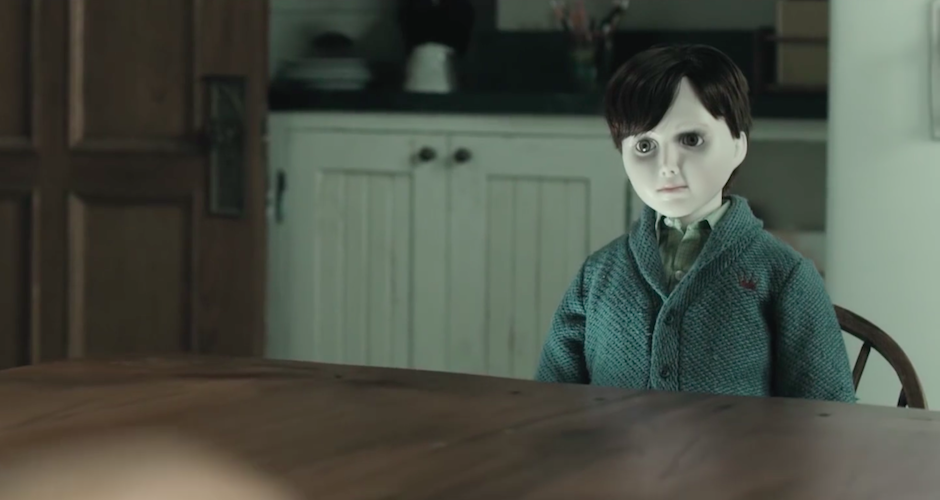
The boy in William Brent Bell’s inefficient chiller is actually a doll, and rather than have a fairly nondescript name like Ted Henley, goes by the unlikely moniker of Brahms Heelshire (pronounced Hillsher). Despite having perished in a fire twenty years ago, Brahms’ memory is kept alive by his parents (Norton, Hardcastle), who treat the doll as if Brahms were still alive. They “teach” him, play him music, read to him, set a place for him at meal times, and have set times when he “sleeps”. Into this bizarre situation comes American, Greta Evans (Cohan), to act as Brahms’ nanny while the Heelshires take their first trip away in twenty years. Before she’s even got halfway through the front door her shoes go missing, the first example of several mysterious occurrences that happen in the following days, and which lead her to believe that the doll is possessed by Brahms’ restless spirit.

The Boy - scene1

As you might expect, The Boy is a silly attempt at a horror movie, and one that stretches credibility as often as it possibly can. In contrast to its titular “rival”, this movie lacks subtlety, a coherent script, competent direction, and halfway decent performances. It’s the kind of movie that looks as if it was offered to Hammer but they turned it down because it needed too much work to make it, well, work. As it is, we’re treated to interminable shots of the doll staring back at the camera, Greta exploring the Heelshires’ house and finding herself trapped at one point in the attic, the promise of Greta’s abusive boyfriend turning up just to be killed, and a twist that undoes everything – however superficial – that the movie has built up until then.

The performances are serviceable, though Norton and Hardcastle bring a level of competence to their roles that the movie doesn’t deserve. Otherwise there’s very little to recommend The Boy, only that it’s mercifully forgettable.

Rating: 3/10 – despite a level of expectation that the movie has no intention of following through on, The Boy is neither scary nor terrifying, and for the most part settles for risible; Cohan is wasted, and Evans struggles as a character who has no clear reason for being there except to look confused – much like the unlucky viewer who settles down to watch this thinking they’re going to watch a movie about a nine year old sociopath.

Share this:

  • Share on X (Opens in new window) X
  • Share on Facebook (Opens in new window) Facebook
  • More
  • Print (Opens in new window) Print
  • Email a link to a friend (Opens in new window) Email
Like Loading...

Trailers – Our Kind of Traitor (2016), The Family Fang (2015) and The BFG (2016)

11 Monday Apr 2016

Posted by dullwood68 in Movies

≈ Leave a comment

Tags

Comedy, Ewan McGregor, Fantasy, Jason Bateman, John le Carré, Literary adaptation, Our Kind of Traitor, Previews, Roald Dahl, Steven Spielberg, The BFG, The Family Fang, Thriller, Trailers

John le Carré has always been a good source for the movies. His stories are both entertaining and complex, and his characters, often as complex and deceptively drawn as le Carré’s plotting, are the kind that actors can have a veritable field day with. Our Kind of Traitor, with its criminal Russian oligarch seeking to defect to the West, is, on the page, a terrific blend of cat-and-mouse political manoeuvring and heightened thrills. By making his main character a naïve teacher (played here by Ewan McGregor), le Carré draws the reader/viewer in by using their lack of experience to muddy the waters further in terms of what’s going on. With luck, the more than competent cast, along with screenwriter Hossein Amini and director Susanna White, can pull off yet another movie adaptation of a le Carré novel that’s both compelling and engrossing, and the cinematic equivalent of a page-turner (just like its source).


Making his second directorial feature – after Bad Words (2013) – Jason Bateman brings yet another dysfunctional group to the big screen, The Family Fang. It’s also yet another indie comedy, with quirky characters and even quirkier situations, but this appears to have a better pedigree than most, being an adaptation of the novel by Kevin Wilson – though the script is courtesy of David Lindsay-Abaire, whose last screenplay was for Poltergeist (2015) (not a great recommendation when you think about it). Hopefully, the top-notch cast, including Bateman himself, Christopher Walken, Josh Pais, Kathryn Hahn, Michael Chernus, and Nicole Kidman (in a performance that will hopefully remind us just how good she can be after a slew of recent, underwhelming performances), have brought their A-game to the material, and this will be one movie that proves to be both memorable and funny in equal measure.


It’s directed by Steven Spielberg. It’s a children’s fantasy from the extraordinary mind of Roald Dahl. It’s The BFG. And it looks – on the evidence of the trailer – a lot like Pan (2015). But again, this is Spielberg at work here, and when it comes to spinning magic on the big screen, he’s in a league of his own. The BFG also features the final screenplay written by the late Melissa Mathison, whose last collaboration with Spielberg was a little movie called E.T. – The Extra-Terrestrial (1982). And with recent Oscar-winner Mark Rylance playing the titular giant – his amazing voice tips you off before you even see the BFG’s face – it all looks to be in very good hands, even if – and this is just an instant reaction to seeing them – the other giants, Fleshlumpeater et al., all look like early character designs from Warcraft (2016).

Share this:

  • Share on X (Opens in new window) X
  • Share on Facebook (Opens in new window) Facebook
  • More
  • Print (Opens in new window) Print
  • Email a link to a friend (Opens in new window) Email
Like Loading...

The Gift (2015)

10 Sunday Apr 2016

Posted by dullwood68 in Movies

≈ Leave a comment

Tags

Drama, Gifts, Gordo, Jason Bateman, Joel Edgerton, Pregnancy, Promotion, Rebecca Hall, Revenge, Review, Stalking, Thriller

The Gift

D: Joel Edgerton / 103m

Cast: Jason Bateman, Rebecca Hall, Joel Edgerton, Allison Tolman, Tim Griffin, Busy Philipps, Adam Lazarre-White, Beau Knapp, Wendell Pierce, Mirrah Foulkes, Nash Edgerton, David Denman, Katie Aselton

You move to California from Chicago to start afresh. You try and put behind you the pain of a miscarriage. If you’re the husband you work hard and press for that promotion at work that you really deserve. If you’re the wife you stay at home and redesign the new home you’re living in, because interior design is what you do. And if you’re someone who used to know the husband years ago in high school then you suddenly show up out of the blue and start making things awkward.

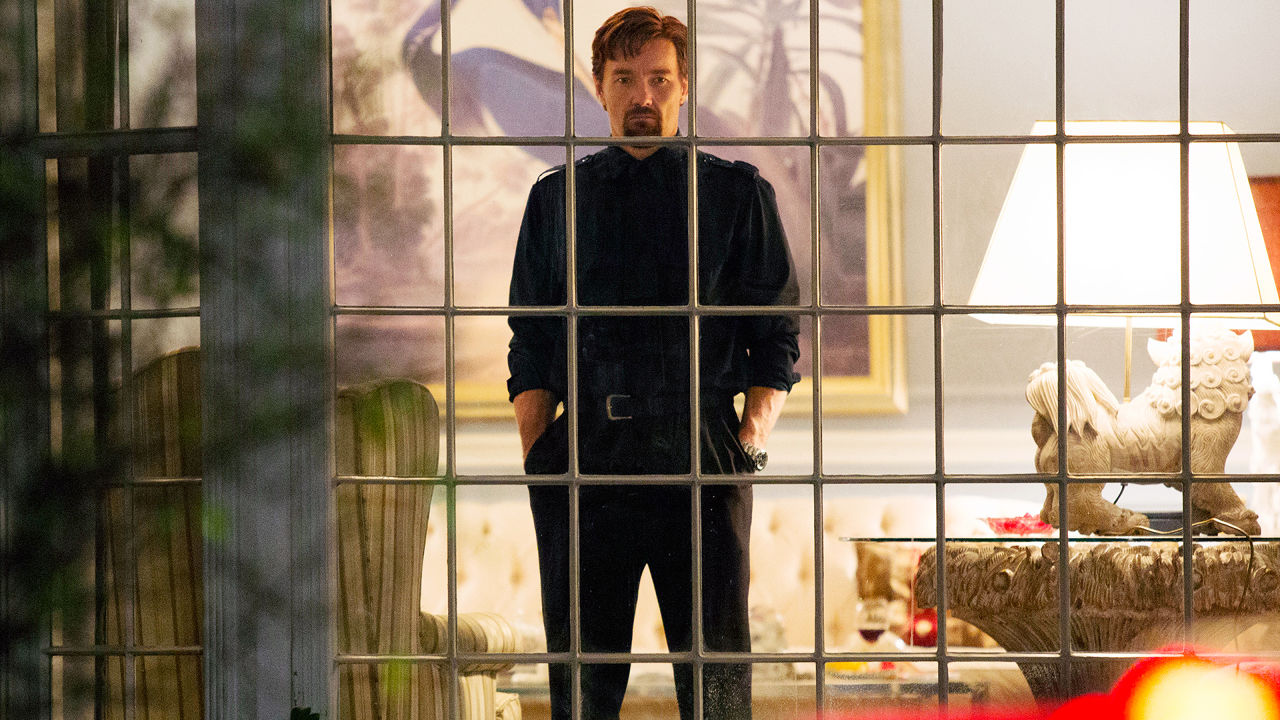
Such is the basic set-up of Joel Edgerton’s first foray into feature directing – he also wrote the script – a dark, psychological thriller that asks that old chestnut once more: what do you do when your sins come back to haunt you? The sins in question belong to Simon Callum (Bateman). He’s smart, he’s determined, he’s likeable – in short, he’s too good to be true. And so it proves, with past behaviours having been retained twenty-five years on, and his moral centre somewhat askew. When Simon is approached by a man who claims to know him (but who he doesn’t recognise), his offhand, dismissive attitude is covered by a thin veneer of acceptance. But when a bottle of wine appears on Simon and his wife Robyn’s doorstep, with a note from the same man – whose name is Gordon Mosley (Edgerton) – Simon is made uncomfortable. And this being a thriller, the audience knows that Simon is going to feel a lot more uncomfortable before the movie’s conclusion.

The Gift - scene3

But Edgerton the writer pulls a bit of a switch, and instead of having Gordon (known as Gordo) continue to make Simon’s life uncomfortable, the old high school classmate starts dropping in unexpectedly when Simon isn’t around. Robyn (Hall) is polite, and always invites him in, and even though she’s a little bit unnerved by his presence, she’s also sympathetic towards him, suspecting that his life hasn’t turned out as well as Simon’s has. She lets him set up their new TV, and increasingly seems pleased to see him when he visits. Simon is less than happy with this, and wants nothing more to do with Gordo, even though he can’t specify why.

An invitation to dinner at Gordo’s house doesn’t go well, however, and Simon uses the opportunity to end their renewed relationship. But when an incident at their house sends Simon back to Gordo’s home, he learns something alarming: it isn’t Gordo’s home at all, but belongs to someone he works for. The police become involved, briefly, but without any evidence of a crime committed against the Callums, they’re powerless to intervene. Later, Gordo sends an apology, but Simon is angry, while Robyn is more accepting. This is the beginning of a rift that will grow between them, but right then, Simon’s bid for promotion is going well, and he feels able to control everything that’s happening around them.

The Gift - scene2

Of course, this proves foolish, as Gordo continues to manipulate their lives from afar. Robyn falls pregnant, and later learns some disturbing information about Simon and Gordo’s time in high school. She delves deeper, and what she finds out throws everything into sharp relief, and places her marriage in jeopardy. And all the while, Gordo hovers in the background, a shadow figure that may or may not be seeking justice for wrongs done to him in the past, or a malevolent force of the present, with undisclosed reasons for targetting Simon.

The Gift is a movie that tells its fairly straightforward tale with a small amount of visual flair, and a deeper understanding of untrammelled arrogance. Simon is a creep, something that’s made clear almost from the start, and his character is off-putting and insincere. It makes feeling sorry for him virtually impossible, and as the audience learns more and more about him, and his true colours shine through (however blackly), any potential sympathy is washed away in a tide of unhealthy revelations. Bateman makes the most of Simon’s more despicable justifications for his behaviour, and revels in playing the movie’s real bad guy, but it’s a role that doesn’t allow for much development or depth. And by the end, when the full extent of what’s been going on is revealed, the viewer’s main reaction is likely to be that of ennui rather than satisfaction.

The Gift - scene1

As the harried, semi-stalked Robyn, Hall is her usual intelligent but emotionally removed self, peeling back the layers of Robyn’s past with more dexterity than Bateman is allowed to do, but ultimately falling short of showing us why Robyn is with Simon in the first place (or why she stays with him until events give her no choice). Hall is also let down by the script’s decision to introduce a drug problem for Robyn, and then have it resolved within fifteen minutes. Other subplots are either forgotten or abandoned, with the disappearance of the Callum’s dog, Mr Bojangles – potentially an occurrence that could ensure a great deal of suspense – again resolved far too quickly and far too easily. Likewise the matter of Gordo’s using his boss’s house; viewers may not be surprised by this development, but they might well be surprised at the way in which it’s not used to further the plot and is just abandoned along with so much else that acts as filler for the movie’s first half.

As the drama mutates uneasily into melodrama – Simon assaults Gordo and warns him off, Simon’s promotion suffers a serious setback – the tension increases, but Edgerton the director doesn’t have the experience to really make an audience sit on the edge of their seat or hold their breath in anxious anticipation. Some scenes fall flatter than a pancake, while others maintain a sense of unease that is undone by the use of too little light. There are a handful of dream sequences that seem out of place, but Edgerton integrates them with the narrative more effectively than some other (more experienced) directors would have done, but there’s still the lingering feeling that even though he’s done his homework, the writer/director/star could have done with a little bit of assistance in pulling it all together.

Rating: 6/10 – better than most psychological thrillers (but only just), The Gift should more accurately be called The Gifts, or even Several Gifts Left on a Doorstep; Edgerton does his best to explore notions of guilt and retribution but fails to fully engage with his audience, leading to a movie that promises a lot but only delivers a fraction of what’s needed to make it completely successful.

Share this:

  • Share on X (Opens in new window) X
  • Share on Facebook (Opens in new window) Facebook
  • More
  • Print (Opens in new window) Print
  • Email a link to a friend (Opens in new window) Email
Like Loading...

Batman v Superman: Dawn of Justice (2016)

08 Friday Apr 2016

Posted by dullwood68 in Movies

≈ 4 Comments

Tags

Amy Adams, Batman, Ben Affleck, Bruce Wayne, Clark Kent, Daily Planet, Diana Prince, Doomsday, Drama, Gal Gadot, General Zod, Gotham, Henry Cavill, Jesse Eisenberg, Justice League, Lex Luthor, Metropolis, Review, Sci-fi, Sequel, Superheroes, Superman, Wonder Woman, Zack Snyder

BVSDOJ

D: Zack Snyder / 151m

Cast: Ben Affleck, Henry Cavill, Amy Adams, Jesse Eisenberg, Diane Lane, Laurence Fishburne, Jeremy Irons, Gal Gadot, Holly Hunter, Scoot McNairy, Callan Mulvey, Harry Lennix

$250 million budget + uneven script + wayward direction + awkward performances + Jesse Eisenberg (“The red capes are coming, the red capes are coming”) + Doomsday looking too much like the Abomination from The Incredible Hulk (2008) + Batman and Superman being upstaged by Wonder Woman = the longest, most uninteresting, most bloated and unwieldy Batman and Superman movies yet. ‘Nuff said.

BVSDOJ - scene1

Rating: 4/10 – dreary, overlong, and lacking a coherent storyline, Batman v Superman: Dawn of Justice is neither a DC Universe movie that works, or a superhero movie that gives viewers anything new; with too many short cuts in the narrative to help overcome its sluggish construction, the movie provides further evidence – if any were needed – Snyder should move on, David S. Goyer shouldn’t be an automatic choice for DC screenplays, and Henry Cavill is still so awfully po-faced as the son of Kal-El.

Share this:

  • Share on X (Opens in new window) X
  • Share on Facebook (Opens in new window) Facebook
  • More
  • Print (Opens in new window) Print
  • Email a link to a friend (Opens in new window) Email
Like Loading...

Concussion (2015)

07 Thursday Apr 2016

Posted by dullwood68 in Movies

≈ Leave a comment

Tags

Albert Brooks, Alec Baldwin, Brain injury, Chronic Traumatic Encephalopathy, CTE, David Morse, Dr Bennet Omalu, Drama, Football players, Gugu Mbatha-Raw, Mike Webster, NFL, Pathologist, Pittsburgh Stealers, Review, Suicide, True story, Will Smith

Concussion

D: Peter Landesman / 123m

Cast: Will Smith, Alec Baldwin, Albert Brooks, Gugu Mbatha-Raw, David Morse, Arliss Howard, Adewale Akinnuoye-Agbaje, Paul Reiser, Luke Wilson, Stephen Moyer, Matthew Willig, Richard T. Jones, Hill Harper, Sara Lindsey, Mike O’Malley, Eddie Marsan

America’s National Football League, the NFL, until recently, would have had us believe that there is no correlation between severe head trauma and mental deterioration. It doesn’t take a genius to work out that if you’re hit in the head repeatedly over a long period of time, that it’s going to have a long-term effect; we’ve all seen too many punch-drunk boxers to disbelieve that one. But the NFL, despite apparently being aware of the dangers inherent in such a violent contact sport, did nothing about it. Players who developed mental health problems would often take their own lives, so overwhelming was their condition(s). And for years, no one outside the NFL knew anything about it.

And then in 2002, an unlikely “hero” appeared in the shape and form of Nigerian-born pathologist, Dr Bennet Omalu (Smith). While performing an autopsy on Pittsburgh Stealers legend Mike Webster, Omalu was unable to determine why Webster’s brain showed no signs of disease or damage, and yet his character and personality had changed to the extent that he was pulling out his own teeth and then supergluing them back in. Omalu conducted further research and tests on samples of Webster’s brain, and in doing so, discovered evidence of what he named CTE – Chronic Traumatic Encephalopathy. Omalu realised that CTE was caused by the repeated blows to the head that football players experienced in every game, and that this something that needed to be brought to the attention of both the NFL and the public.

Concussion - scene1

Omalu published his findings, and almost immediately the NFL began ridiculing his work and his theories (though within the medical profession it was regarded as an accurate representation of what was happening). Attacked on all sides, Omalu found an unexpected ally in the form of former Pittsburgh Stealers team doctor, Julian Bailes (Baldwin). He confirmed what Omalu was beginning to suspect: that the NFL were complicit in what was happening to a lot of former players. Omalu sought to open a dialogue with the NFL but they wanted nothing to do with him, and continued to criticise and rubbish his findings.

More former players died, usually from suicide. Omalu now had enough evidence to take to the NFL and prove his theory. But the NFL blindsided him, and when his boss (and friend), Dr Cyril Wecht (Brooks) was charged with multiple counts of fraud, Omalu was left with little room to manoeuvre. Unwilling to put his friends and colleagues in the line of fire, Omalu decided to quit and relocate to California with his wife, Prema (Mbatha-Raw). And then three years later, another ex-player killed himself, but this time, in such a way that not even the NFL could ignore. Now, Omalu had a chance to get his message across – but would the NFL listen?

Concussion - scene2

Concussion is a small movie with a big message to pass on. That it does so intermittently, and with very little passion attached to it, makes for an uneasy ride as Omalu continually points out the obvious, and is then ignored for his temerity as a foreign national to be someone who doesn’t follow the game, or know who half the local players are. Various justifications are made on the game’s ruling body’s behalf, but the real question – why would you place such highly-paid, professional athletes in such a potentially harmful environment, and not do something to alert them to the risks they’re taking? – is never really answered.

Partly it’s because the focus is squarely on Bennet Omalu and his relationships with medicine and science and his faith (Omalu meets his future wife at church, where he’s asked to take her in as a favour to the parish). With the NFL refusing to engage with the issue unless forced to, the movie has to surmise much of the league’s reasoning, and this leads to awkward, melodramatic moments such as when ex-player and league bigwig Dave Duerson (Akinnuoye-Agbaje) confronts Omalu and dishes up a large plate of hostility and bile. The movie also marginalises a lot of the minor characters, from Dr Ron Hamilton (Moyer), who helped Omalu get the recognition he needed from other doctors and medical personnel, to Omalu’s own wife, Prema, who, one personal tragedy aside, appears to be there to remind audiences just how good a man Omalu is.

Concussion - scene3

As the emabttled pathologist, Smith makes up for the soulless, joyless performance he gave in After Earth (2013) by making Omalu an earnest, justice-seeking missile of the truth. It is a better performance – by quite some margin – but it’s a relentlessly dour one as well, with Smith constantly frowning as if he’d lost something and couldn’t find it. Smith is a more than capable actor – see Ali (2001) if confirmation is needed – but here he’s let down by the movie’s pedestrian, made-for-home video tone, the connect-the-dots approach of the script, and Landesman’s unfocused direction. And there are too many scenes where the time to be passionate about the subject is given the equivalent of a hall pass.

The movie ends up being a lengthy one-sided examination of the head trauma issue as seen through the eyes of a moral evangelist – Omalu implores more than one person to “tell the truth”. But once Omalu has established that CTE exists and is a very real killer, the NFL’s intractability comes into play (no pun intended), and the audience is left waiting for a resolution that looks increasingly unlikely to happen. And yet, when it does, it lacks the impact required to have audiences cheering in their seats at seeing justice prevail. And as if to add to the dourness of Smith’s portrayal, the pre-end credits updates reveal the degree of inertia the issue has suffered since Omalu brought CTE to the public – and the NFL’s – attention.

Rating: 6/10 – anyone doubting the existence of CTE should look to Concussion‘s uncompromising approach to the subject and rethink accordingly; sadly though, as a movie, it lacks the crusading zeal that would have made the issue that much more exciting and/or gripping.

Share this:

  • Share on X (Opens in new window) X
  • Share on Facebook (Opens in new window) Facebook
  • More
  • Print (Opens in new window) Print
  • Email a link to a friend (Opens in new window) Email
Like Loading...

The Huntsman: Winter’s War (2016)

05 Tuesday Apr 2016

Posted by dullwood68 in Movies

≈ 1 Comment

Tags

Action, Cedric Nicolas-Troyan, Charlize Theron, Chris Hemsworth, Drama, Dwarves, Emily Blunt, Fantasy, Goblins, Ice Queen, Jessica Chastain, Magic, Mirror, Nick Frost, Prequel, Review, Rob Brydon, Sequel, Sorcery

The Huntsman Winter's War

D: Cedric Nicolas-Troyan / 114m

Cast: Chris Hemsworth, Charlize Theron, Emily Blunt, Jessica Chastain, Nick Frost, Rob Brydon, Sam Claflin, Sheridan Smith, Alexandra Roach, Sope Dirisu

Once upon a time there were two sisters. One, Ravenna (Theron), lusted for power, and used her dark magic to take over kingdoms and rule them with an iron fist. The other, Freya (Blunt), had yet to find the magic gift she possessed, but Ravenna assured her the day would come when her power would assert itself. And then Freya fell pregnant, and had a baby. But then a tragedy occurred and her baby died in a fire, apparently caused by her baby’s father, her one true love. Her powers exerted themselves then, and Freya’s gift was to be able to control ice in all its forms. She exerted her revenge on her one true love, then left Ravenna’s care to make a kingdom for herself in the North. She became known as the Ice Queen, and she was feared by all.

Her pain found expression in a strange way. She would order the children from the villages in her kingdom to be rounded and trained as warriors for her growing army. All these children had to do was swear allegiance to her and foreswear any notion of love. In return she would give their lives meaning in their service to her. But love will out, and two children grew up to love each other, despite Freya’s law. Eric (Hemsworth) and Sarah (Chastain) made plans to leave Freya’s stronghold and their roles as huntsmen. But Freya learned of their plans and saw to it that they didn’t come to fruition. Eric saw Sarah killed, and he was knocked unconscious and thrown into the river to die.

THWW - scene3

But Eric survived. Time passed. Seven years, during which time he helped Snow White rid her kingdom of the villainous Ravenna. But now a new threat is in place. Ravenna’s mirror, a source of very powerful magic, has been stolen, and Eric is tasked with finding it and taking it to a sanctuary where it can be made safe. He agrees to the task, and is joined by two dwarves, Nion (Frost) and Gryff (Brydon). Soon they discover that Freya is trying to find the mirror as well. They seek help from two female dwarves, Mrs Bronwyn (Smith) and Doreena (Roach), and journey into a hidden forest inhabited by goblins to take back the mirror. But once they do they find themselves caught in a trap of Freya’s devising, leading to the mirror’s capture, and only one course of action left to them: to follow the Ice Queen back to her stronghold and destroy her and the mirror once and for all.

Snow White and the Huntsman (2012) was an unexpected success, trading on Theron’s evil hearted queen and Kristen Stewart’s take on Snow White as a fantasy version of Joan of Arc. It had an impressive budget – $170 million – and made back nearly $400 million at the international box office. A sequel was always on the cards, it was just a matter of when. But here’s the rub: The Huntsman: Winter’s War isn’t just a sequel, it’s also a prequel. In it we see the Huntsman’s back story, his childhood years as a trainee in Freya’s huntsman army and his eventual love affair with Sarah, whom he marries in secret. When she dies, fate spares his life and the movie skims over the events of its predecessor with a single line of narrated dialogue (courtesy of Liam Neeson).

THWW - scene1

Then we’re fully in sequel mode, as Sam Claflin’s earnest prince convinces Eric to look for the mirror. And Freya, who has been adding nearby kingdoms to her own over the past seven years, gets wind of the mirror and its magical properties. A race against time, then, to see who reaches the mirror first. Alas, no, not really. Instead, after an eventful and encouraging first half hour, the movie settles down into fantasy adventure mode, with humour provided by Frost and Brydon. Freya’s threat is put on the back burner and Eric is confronted with a figure from his past who provides complications for his quest. It’s all serviceable enough, and despite everyone’s best efforts, all entirely forgettable.

The problem lies both with the script by Evan Spiliotopoulos and Craig Mazin, and Nicolas-Troyan’s direction. The script lumbers from one unconnected scene to the next, straining the audience’s patience thanks to semi-amusing quips and snide remarks courtesy of Brydon, cowardly assertions from Frost, an drab, wearing performance from Chastain, and Hemsworth’s assumption that a big grin can pass for acting when he so desires (sorry, Chris, it doesn’t). Ravenna remains the primary adversary, despite being off screen for two thirds of the movie, and Freya’s delusional take on love and its inability to offer true contentment is recounted so often it’s as if the makers weren’t sure an audience would grasp the idea the first time around.

THWW - scene2

But if the movie’s storyline and plotting are a cause for alarm, spare a thought for Nicolas-Troyan, bumped up from second unit director on the first movie, and a poor second choice after Frank Darabont, who was attached to the project for some time before he dropped out. He’s not so bad when it comes to the action sequences, but in between times, when the characters have to display their feelings, or the script calls for another bout of humorous insults (which are pretty much all of Brydon’s lines), his lack of experience shines through. Too many scenes fall flat or fail to make much of an impact, and the cast are left to inject whatever energy they can, but with the script and their director seemingly working against them, it’s an uphill struggle for all of them.

This being a big budget fantasy movie, however, it does score highly for its production design, its costumes, and its special effects (though an encounter with a goblin isn’t as effective as it should be, thanks to its looking like an angry ape with a liking for bling). The ice effects are cleverly done, and there’s a pleasing sense of a real world lurking behind all the CGI, while James Newton Howard contributes a suitably stirring score to help prop things up when it all gets a little too silly (which is most of the middle section). And of course, the makers can’t help themselves at the end, and leave a way open for a further (full-fledged) sequel. But if anyone really cares by that stage, then the movie will have truly worked its magic.

Rating: 5/10 – a superficially appealing prequel/sequel, The Huntsman: Winter’s War isn’t the most memorable of fantasy movies, and chances are, viewers will have forgotten most of its content a short while after seeing it; it’s not a bad movie per se, but then it’s not a good movie either, and sometimes, that’s the worst anyone can say about any movie.

Share this:

  • Share on X (Opens in new window) X
  • Share on Facebook (Opens in new window) Facebook
  • More
  • Print (Opens in new window) Print
  • Email a link to a friend (Opens in new window) Email
Like Loading...

Notes on a Scandal (2006)

04 Monday Apr 2016

Posted by dullwood68 in Movies

≈ Leave a comment

Tags

Affair, Bill Nighy, Cate Blanchett, Drama, Judi Dench, Lesbian, Literary adaptation, Patrick Marber, Review, Richard Eyre, St George's School, Student/teacher relationship, Zoë Heller

Notes on a Scandal

D: Richard Eyre / 92m

Cast: Judi Dench, Cate Blanchett, Bill Nighy, Philip Davis, Andrew Simpson, Michael Maloney, Juno Temple, Max Lewis, Joanna Scanlan, Tom Georgeson, Julia McKenzie

Adapted by Patrick Marber from the novel by Zoë Heller, Notes on a Scandal should be sought out for three reasons: the acting masterclasses given by Judi Dench and Cate Blanchett, a superb, unsettling score by Philip Glass, and the script itself, a beautifully constructed piece that delves into some very dark corners indeed, and which still allows itself the luxury of including a mordaunt sense of humour.

The story centres around two outwardly very different teachers in a London comprehensive school, St George’s. Dench is Barbara Covett, a history teacher who is approaching retirement. She’s never married, doesn’t have a significant other, is respected but not liked by the other teachers, and adopts a disdainful air that keeps everyone at a distance. Blanchett is Sheba Hart, a much younger art teacher who lacks Barbara’s experience and thick skin. She’s married to an older man, Richard (Nighy), and has two children, Polly (Temple) and Ben (Lewis). Sheba is the kind of teacher who often finds themselves out of their depth, and it’s on one such occasion that Barbara comes to her rescue.

Grateful to her, Sheba begins a friendship with Barbara that sees the older woman visiting Sheba’s home more and more often. Sheba effectively becomes Barbara’s protegé, although there is still a wide gulf between them, stemming mostly from Barbara’s dislike of Sheba’s middle-class lifestyle. One evening, Barbara waits for Sheba to attend a school drama performance, but Sheba is late. Barbara goes in search of her, and discovers Sheba having sex with a pupil, Steven Connolly (Simpson). Shocked, and feeling betrayed, Barbara confronts Sheba. The younger woman pleads with Barbara not to tell anyone. To Sheba’s surprise, Barbara has no intention of telling anyone – because they’re friends (though Barbara does insist Sheba end the affair immediately). Barbara sees her chance to become closer to Sheba, or destroy her if Sheba doesn’t agree to spending more time with her.

NOAS - scene3

But Steven won’t be put off by Sheba’s pleas to stop the affair. He continues to see her, and Sheba allows their relationship to continue (though she keeps this a secret from Barbara). But it’s not long before Barbara discovers Sheba’s duplicity, and when she attempts to blackmail Sheba into spending time with her – to be with her at the expense of spending time with her family – Sheba has no choice but to put her family first. Angry and spiteful, Barbara seizes an opportunity presented to her by another teacher, Brian Bangs (Davis), and it’s not long before Steven’s mother is at Sheba’s house and the whole affair is revealed.

Richard leaves Sheba in order to have time to think about their relationship, and unable to face being in their home without him, asks Barbara if she can stay with her for a few days. Barbara quite naturally agrees, but a chance discovery leads to Sheba finding out the true extent of what their friendship means to Barbara, and how their relationship has been manipulated by Barbara from the beginning. With the future of her marriage looking uncertain, and facing jail because Steven is only fifteen, Sheba has no option but to confront Barbara over what the older woman has done.

NOAS - scene1

Simply put, Notes on a Scandal is gripping stuff. Patrick Marber’s script hustles and bustles with undisguised hostility towards its two central characters, revealing their darkest traits and baser instincts with a scalpel-like precision that flays their more self-serving attributes to the metaphorical bone. Both Barbara and Sheba have their secrets, and both struggle to keep them hidden, but Marber won’t allow them any such luxury. As they interact with each other, lying and obscuring the truth about themselves, Barbara and Sheba become more and more unlikeable as the movie continues. Barbara’s domineering, manipulative demeanour is barely hidden at times, but she covers it well enough to fool Sheba, whose self-centred moral nihilism means she can’t see when someone has seen through her own carefully constructed façade.

The two women become involved in a one-sided battle, one-sided because Sheba doesn’t realise that Barbara wants nothing less than complete capitulation, and on her terms alone. Sheba is to be the sacrifice to Barbara’s vanity, another in a (conceivably) long line of hand maidens to Barbara’s idea of friendship. (The viewer may deduce that Barbara is a lesbian because of her intentions toward Sheba, but Marber’s script is too clever for that; instead, Barbara is more asexual than sexual, and is horrified at the suggestion – made by Sheba late on in the movie – that her motives lie in that direction.) Sheba, however, is very definitely a sexual creature, one who defines herself and her existence by the way in which she is found attractive and desired (once, after they’ve had sex, Steven tells Sheba she is “fit”, and Sheba positively glows under the praise). Both women are confused about love, Barbara seeing it as a kind of managed companionship, and Sheba as a validation of her sexual appeal. These confusions amount to huge fault lines in both their personalities, and when they eventually clash, the end result is force majeure.

NOAS - scene2

As noted above, this is a movie that features two very impressive performances, and there’s not even a hair’s breadth between them in terms of how good they are. Dench is icy and abrupt as Barbara, calculating and insidious, a woman used to being respected (and feared even) and getting her own way. Dench doesn’t shy away from examining Barbara’s less savoury characteristics, using Marber’s script to highlight the way in which she expects everyone around her to fit in with her ideas and prejudices. Dench is also good at portraying Barbara’s emotional sterility through a succession of expertly judged expressions, all testifying to the void in both her heart and her feelings.

Blanchett has what feels like the more compelling, emotionally wrought role, but Sheba is a pleasure seeker, and can only justify her actions in ways that are meant to elicit sympathy for what she sees as her unexciting lifestyle. It’s interesting that she was one of Richard’s students when they first met (though she was twenty and not fifteen when he seduced her – or she seduced him; which it is we’re not told), and she does use this as an attempt to excuse her behaviour and the affair, but Richard quite rightly decries this, leaving Sheba unable to gain any sympathy or acceptance for what she’s done. Blanchett embraces the complex neediness that infuses Sheba’s personality and doesn’t shy away from portraying the character’s selfish obsessions and somewhat childish naïvete. Like Barbara, Sheba is used to getting what she wants; the only real difference between them is that Barbara has grown used to being on her own, whereas it’s a situation that scares Sheba unreasonably.

Acting as an extra layer of emotional intensity, Philip Glass’s insistent, urgent score ramps up the tension as the story unfolds. It acts as an unseen musical narrator, underscoring (if that’s an appropriate analogy) the drama as it heads towards a necessarily downbeat ending. Coordinating this and the performances of Dench and Blanchett, director Richard Eyre, along with DoP Chris Menges, uses his theatrical flair to keep the movie both visually and dramatically exciting, and he teases every nuance and vicious piece of brinkmanship out of Marber’s acerbic screenplay. With great supporting turns from Nighy, Davis and Simpson, as well as some equally adept editing by John Bloom and Antonia Van Drimmelen, this is an exceptionally well crafted movie that still stands out ten years after it was released.

Rating: 9/10 – with human frailty and arrogance brought to uncomfortable life by two of today’s finest actresses, Notes on a Scandal has enough positive attributes for two movies; richly detailed and endlessly fascinating, it’s a movie whose value is unlikely to deteriorate or become degraded by repeat viewings, and which remains a remarkable convergence of talent.

Share this:

  • Share on X (Opens in new window) X
  • Share on Facebook (Opens in new window) Facebook
  • More
  • Print (Opens in new window) Print
  • Email a link to a friend (Opens in new window) Email
Like Loading...

Allegiant (2016)

03 Sunday Apr 2016

Posted by dullwood68 in Movies

≈ 1 Comment

Tags

Ansel Elgort, Bureau of Genetic Welfare, Chicago, Divergent Series, Drama, Jeff Daniels, Literary adaptation, Miles Teller, Naomi Watts, Providence, Review, Robert Schwentke, Sci-fi, Sequel, Shailene Woodley, Theo James, Thriller, Veronica Roth

Allegiant

D: Robert Schwentke / 120m

Cast: Shailene Woodley, Theo James, Naomi Watts, Octavia Spencer, Jeff Daniels, Zoë Kravitz, Ansel Elgort, Miles Teller, Keiynan Lonsdale, Daniel Dae Kim, Maggie Q, Bill Skarsgård, Jonny Weston, Ray Stevenson, Mekhi Phifer, Ashley Judd

And so Jeanine is dead, killed by Four’s mother, Evelyn (Watts). Everything’s okay and peace has been restored. Except that Evelyn is making sure it comes at a further price: everyone who was on Erudite’s side has to be put on trial and their “crimes” answered for. This means executions on a wide scale, and although Tris (Woodley) has disowned her brother, Caleb (Elgort), he faces the same fate. With the message from outside Chicago still indicating that there are more answers to be found outside the city than in, Tris and Four (James) opt to breach the wall and go in search of those answers. Four decides to help Caleb escape, and the trio are joined by Christina (Kravitz), Tori (Maggie Q), and Peter (Teller). Despite an attempt to stop them by Evelyn’s lieutenant, Edgar (Weston), they climb over the wall and down to the other side.

There they find a toxic wasteland, where the earth is a scorch blasted red. Having been followed by Edgar, the group are relieved when they reach a force field that opens to reveal an armed force. This group protects Tris and her friends from Edgar, and with his threat neutralised, they take Tris and company to their base far out in the wasteland, the so-called Bureau of Genetic Welfare, where Tris in particular is welcomed by the Bureau’s director, David (Daniels). With Tris being the fruit of an experiment to right a wrong perpetrated long ago, David is keen to run tests on her, while keeping Four and the others occupied and away from her as much as possible. But Four is quick to suspect that David isn’t as honest as he makes out, but Tris doesn’t see it.

Allegiant - scene2

Meanwhile, back in Chicago, Johanna (Spencer) has formed a group she calls Allegiant, and who are at odds with Evelyn’s way of running things. Another war of attrition is about to take place between the two factions, and though Tris wants David to intervene – after all, he has been monitoring Chicago for a long time because of the experiment – but instead of doing so, he sends Peter back with a nerve gas that will render everyone who comes into contact with it, unable to remember anything that happened to them before they were exposed. And while David takes Tris to meet the Council who ultimately decide everyone’s fate, Four discovers what the gas has been used for in the wasteland. And when Tris finally becomes aware of David’s duplicity, she and Four, along with Christina and Caleb, return to Chicago to stop Evelyn from using the gas on Allegiant.

Three movies in and the Divergent series is showing serious signs that it’s running out of ideas. Allegiant is superficially entertaining, but in comparison with parts one and two, it lacks anything fresh to entertain either fans or newcomers. It’s also the first time that the series gives up on Tris as an independent, strong-minded female, and instead hands over leadership duties to Four – which wouldn’t be such a bad idea if he wasn’t written as a bit of a pompous told-you-so kind of character. (Throughout the series, Four has been the gloomiest character of them all, unable to smile or express his feelings about anything without a frown.) And with Tris relegated to a secondary role, there’s only Daniels left to pick up the slack, as everyone else (James excepted) is afforded only enough screen time to either provide any relevant exposition, or keep the plot ticking over (Spencer and Watts are wasted, while Judd is brought back yet again to add some more of her character’s turgid back story).

Allegiant - scene1

The problem with the movie is twofold: one, it’s the first half of the third book in the series, and as such, doesn’t have a credible ending, just another narrowly avoided cliffhanger that leaves things open for part four (or should that be part three-point-five?); and two, the action seems more than usually contrived once Tris et al leave Chicago. The wasteland is less than threatening, and the Bureau is predictably shiny on the surface (and in David’s “office”), while the barracks Four and Christina are assigned to are remarkably similar to those inhabited by Dauntless in the first movie. It’s all brightly lit and commendably shot by esteemed DoP Florian Ballhaus (returning from Insurgent (2015) and already hired for the next instalment), but it’s becoming hard to care what happens to anyone.

At its heart, the Divergent series is about DNA profiling and the perils that can follow on from it. It’s a concept that’s been there in the first two movies, but which hasn’t been addressed directly. But now that it has, and through the medium of video no less, the truth behind the use of Chicago as a test ground, and the true meaning of being Divergent, all sounds quite dull and unexciting. The movie fails to make Tris’s nature important to its own story, and instead opts for being yet another race-against-time thriller, abandoning the ethical and moral debate it wants to engage in and relying on tried and trusted action movie clichés to wind up its narrative.

Allegiant - scene3

It’s no surprise that the movie has underperformed at the box office (leading to the final movie, Ascendant, due next year, having its budget cut), because even though Tris makes it out of Chicago, once she does, the movie doesn’t know what to do with her, and for a character as intriguing and interesting as Tris, that’s a terrible decision to make on any level. And it doesn’t help that your central villain is ultimately a harried bureaucrat, a futuristic pen-pusher if you will. That’s another stumble, and especially bad after having Kate Winslet fill the villain’s shoes for the first two movies. It all adds up to a movie that coasts on the success of its predecessors, and feels and looks like a stopgap before the real conclusion in part four.

Rating: 5/10 – another series instalment that will have newcomers wondering what all the fuss has been about, Allegiant is a movie that has little to offer in terms of its characters’ development, or in terms of expanding the wider narrative; Woodley – this series’ biggest asset – is sidelined for much of the movie, and though James is a competent enough actor, he doesn’t have his co-star’s presence on screen, which makes large chunks of the movie something of a chore to sit through.

Share this:

  • Share on X (Opens in new window) X
  • Share on Facebook (Opens in new window) Facebook
  • More
  • Print (Opens in new window) Print
  • Email a link to a friend (Opens in new window) Email
Like Loading...

Exposed (2016)

02 Saturday Apr 2016

Posted by dullwood68 in Movies

≈ 5 Comments

Tags

Ana de Armas, Angels, Christopher McDonald, Crime, Daughter of God, Declan Dale, Drama, Gee Malik Linton, Keanu Reeves, Lionsgate, Melody London, Mira Sorvino, Murder, Pregnancy, Review, Thriller

Exposed

aka Daughter of God; Wisdom

D: Declan Dale / 102m

Cast: Ana de Armas, Keanu Reeves, Christopher McDonald, Mira Sorvino, Big Daddy Kane, Venus Ariel, Gabriel Vargas, Melissa Linton, Michael Rispoli

Hands up anyone who’s heard of Declan Dale. Maybe you’ve seen his last movie. Well, actually, you couldn’t have because Declan Dale doesn’t exist, he’s the pseudonym of writer/director Gee Malik Linton, Exposed‘s director when it was called Daughter of God, and when it didn’t try to be two movies at the same time. Thanks to the intervention of distributor Lionsgate – who thought they were getting a gritty police drama starring Keanu Reeves – Linton’s stark, character-driven bi-lingual drama focusing on child abuse and violence towards women was emasculated, and the movie became a sluggish crime thriller instead (just watch the trailer below to see how determined Lionsgate were to make Exposed seem like an exciting, must-see thriller).

The result is astonishingly bad. In its current form, Exposed has the potential of being one of the year’s worst movies, a terrible disaster brought about, not by one of the production companies involved, but by a distributor who thought it knew better. In downplaying Isabel’s story in favour of Galban’s glum search for his partner’s killer, the less than competent folks at Lionsgate have made a potentially absorbing, surrealist drama into a muddled snoozefest that clumps along like an amputee getting used to a badly fitting prosthesis. Again, the result is astonishingly bad – really, seriously, completely, astonishingly, bad.

It’s hard to believe, but the movie’s editor, Melody London, has a great track record. She’s worked with Jim Jarmusch on movies such as Down by Law (1986) and Mystery Train (1989), and contributed greatly to the success of documentaries such as Going Upriver: The Long War of John Kerry (2004) and Apache 8 (2011). With that in mind, it’s hard to understand just how wretchedly Exposed has been stitched together, and just how deluded the “good” folks at Lionsgate were when they came to giving London their feedback on how to “improve” the movie’s chances at the box office. Because ultimately that was Lionsgate’s fear: that Linton’s original version, Daughter of God, would fail to make a dent at the box office. They were actively saying to Linton, this movie will sink without trace unless we intervene.

Exposed - scene1

Well, hubris is a wonderful thing – except when it’s unfounded. Exposed has been released in eight countries at time of writing, and while exact figures aren’t available, the movie appears to have made only $205,703 worldwide (it made just $122 in the UK, while US returns haven’t even been revealed). If anyone at Lionsgate is still trying to say they did the right thing, then any production companies planning to let them distribute their latest feature, should turn around and run as far away as possible in the opposite direction.

So just how bad is Exposed? It’s astonishingly bad (but we’ve established that). Why is it so bad? Here are just three examples (there could have been more but this review has to end at some point): Detective Galban (Reeves) is allowed to investigate the death of his partner, Cullen, even though he’s still grieving over the loss of his wife; when it becomes clear that his partner was corrupt, Galban is warned off the investigation by his boss, Lieutenant Galway (McDonald), in order to avoid Cullen’s wife, Janine (Sorvino), losing out on his pension rights; and when Janine is informed that her husband’s death isn’t going to be investigated, she’s incensed – until the next scene where she attempts to seduce Galban while also admitting that Cullen was as crooked as everyone said.

What investigation there is – Janine insists her husband’s murderer is caught – depends on photos found on a camera at the murder scene. In them, there are several Latinos, including Manuel de La Cruz (Vargas) and his sister-in-law, Isabel (de Armas). Manuel seems to be focus of Cullen’s surveillance, and when the other people in the pictures start turning up dead, the main suspect in their deaths, and Cullen’s, is local crime boss Jonathan “Black” Jones (Kane). He denies any involvement but Galban is convinced he’s guilty. All Galban really knows for sure is that the girl in the photos is probably the key to everything. But Galban is such a terrible detective that he can’t even track her down, even though it should be easy.

Exposed - scene3

Meanwhile, Isabel has problems of her own. On the night that Cullen was killed (and on the same subway platform) she has a vision: an albino man who walks on air above the tracks. With her husband away in Iraq, and living with her devout in-laws, Isabel’s faith is challenged when she begins seeing another strange being. She comes to believe that God has a plan for her, and that these beings she’s seeing are angels. But when her husband is killed and she later discovers that she’s pregnant, her in-laws disown her, despite her saying it’s a miracle (her husband was in Iraq for over a year). Ostracised, she turns her attention to a little girl, Elisa (Ariel), who appears to be suffering abuse at the hands of her father. This leads to a tragedy that reveals the reason for her pregnancy, and explains much of what happened the night that Cullen died.

In essence, there are two very different stories here, and they clash with each other at every turn. Galban’s investigation goes nowhere, partly because he’s apparently useless at his job (at one point he whinges that “nobody’s talking”), and partly because the revised storyline doesn’t know what to do with him. Reeves is a producer on the movie; one would have thought he would have more input into how the character is presented, but it’s soon obvious he either didn’t have as much clout as you’d expect, or he realised early on that, once Lionsgate got their hands on the movie, it was all over bar the crying. Either way, Reeves gives one of the most lethargic, barely involved performances of his career. For everyone who thought he’d turned his career slump around with John Wick (2014), think again. This and Knock Knock (2015) are clear indicators that John Wick was an unexpected blip on the radar.

Exposed - scene2

de Armas has the better, more developed role, and she’s very effective in an emotionally confused, gamine kind of way, but as Isabel’s story takes her to some very dark places indeed, the actress’s performance is undervalued by the arbitrary twists and turns of Lionsgate’s re-edit. There are moments when the power of Linton’s original cut is able to shine through, notably in the sequences with the angels, and later as we realise just how fragile Isabel’s grip on reality really is. But there are long stretches where her story sits there like a stalled car, and as with Galban’s story, this version of her story doesn’t always know how to move forward without looking and feeling clumsy (and which it never comes close to overcoming).

At least there is some closure to Isabel’s story, even if it is rushed and overly melodramatic. Other characters come and go without the viewer even realising, and there’s a confrontation between Manuel and “Black” Jones that comes out of nowhere and then returns there as soon as it’s done. But by the time this encounter pops up the average viewer will be checking their watch and wondering just how longer this farrago has got to go. There are just so many wretchedly glum and dispiriting scenes that have come before, suspended moments that lack resonance or emotion, for anyone to really care how it all turns out. And when it finally does, the only reaction left to the viewer who’s got that far is relief.

Rating: 3/10 – a spectacular misfire of a movie, Exposed is so bad that William Goldman’s classic quote, “In Hollywood, nobody knows anything”, should have the qualifier, “especially Lionsgate” added to it; let’s hope that Linton’s original cut eventually sees the light of day, and this dull, leaden, dreary mess can be consigned to the cinematic landfill where it belongs.

Share this:

  • Share on X (Opens in new window) X
  • Share on Facebook (Opens in new window) Facebook
  • More
  • Print (Opens in new window) Print
  • Email a link to a friend (Opens in new window) Email
Like Loading...

Free the Nipple (2014)

01 Friday Apr 2016

Posted by dullwood68 in Movies

≈ Leave a comment

Tags

Casey LeBow, Censorship, Drama, Girlrillaz, Lina Esco, Lola Kirke, Monique Coleman, Nipples, Protest, Public nudity, Review, Topless women, True story

Free the Nipple

D: Lina Esco / 79m

Cast: Lina Esco, Lola Kirke, Casey LeBow, Monique Coleman, Griffin Newman, Zach Grenier, Jen Ponton, Sarabeth Stroller, Janeane Garofalo

Originally filmed in 2012, Free the Nipple occupies a curious place in both movie history and the history of feminist activism. Made to highlight the lack of conformity in the US when it comes to a woman appearing topless in public – some states have legalised it, many more haven’t – the movie failed to attract a distributor, and it seemed it would never be released, even to the home market. In order to combat this, the movie’s director and star, Lina Esco, started the movement that can be seen in the movie itself, and with the real life campaign gaining enough publicity, Free the Nipple eventually secured a release date towards the end of 2014 (and is now available to own).

It must be an odd situation for a movie maker to find themselves in: in order to get their movie noticed, they’ve got to orchestrate the very movement their movie is depicting. Is it life imitating art, or art defining life? Either way, Esco should be congratulated for not giving up on her movie, because even though it’s an uneven mix of female empowerment, feminist polemic and relationship drama, the movie has a great deal of charm, and a great deal of low budget energy.

vlcsnap-00001

Esco plays With, a journalist whose friendship with Liv (Kirke) leads to her writing an article on Liv’s views that society discriminates against women by allowing men to go bare chested in public without being challenged, whereas if a woman does it she’s likely to be arrested for indecency. But With’s article is dismissed, and she loses her job. Liv is secretly pleased: now With can devote her energies full time to challenging the law over public nudity. But With is initially hesitant, not knowing where to begin, but she seeks help from her friend Orson (Newman), and her mentor Jim (Grenier), and soon she and Liv are interviewing women who are prepared to support their efforts in gaining attention to the issue, and being a part of an organisation that is dedicated to “free the nipple”.

Of course, there are obstacles along the way, financial ones and personal ones, and when Liv is arrested, but With refuses to give up, partly out of loyalty to the cause, partly out of guilt surrounding Liv’s arrest and subsequent detention pending bail. In-fighting in the group also takes its toll, but throughout all the drama and the setbacks and the struggle to organise a rally in Washington D.C. featuring a hundred thousand topless women, the issue of gender equality is maintained at the forefront of what With and Liv are trying to achieve.

As mentioned above, Free the Nipple has a great deal of charm, and its indie vibe is a welcome approach, but while it’s a likeable movie that has much to say about the issue of gender equality, not all the elements fit so well together. Too often, Hunter Richards’ script opts for downplaying the difficulties of kickstarting a politically motivated movement – With et al are always broke, unable to get permits, ignored by the media – but they always come through, and while the mechanisms that keep them going don’t have to be seen in detail, an acknowledgment as to how they’ve managed it would have made quite a difference. As it is, each crisis that comes along appears easily dealt with, leaving the inherent drama feeling trivial and under-developed.

vlcsnap-00003

There’s also something of a romantic subplot involving Liv’s obvious attraction to With. Esco the director serves up several lingering shots of Liv looking at With longingly, and even has Esco the actress returning said looks with a degree of emotional uncertainty from time to time, but the script offers no resolution or definitive outcome. It’s almost as if, with all the other gender issues the movie is doing its best to address, that the idea of a same sex relationship being added to the mix was perhaps one “issue” too many. It’s a shame, as the concept of love borne out of political activism isn’t one that cinema tackles very often.

The movie also downplays the contributions of the secondary characters, preferring to focus on With and Liv. As a result, most of these characters remain overshadowed throughout, with only LeBow (as the perpetually doubting Cali) and Grenier making much of an impact. Esco gives a spirited, invigorating performance, balancing With’s sense of injustice with her all too reasonable self-doubts, though With’s initial reluctance to go topless herself seems more of a clumsy storyline device than a real piece of character motivation. Kirke, meanwhile, cements her rising reputation as an actress to watch, with a portrayal of Liv that combines vulnerability, emotional longing, an impetuous nature, and enough quirky behaviour to make her immensely likeable at first meeting (even if she is a little naïve as well). And there are some lovely moments when Liv’s need to be a follower rather than a leader are expressed with just the right amount of insecurity and unspoken pliancy.

vlcsnap-00002

Elsewhere, the political elements hold sway, but while these are the movie’s main focus, sometimes it gets itself caught up in its own rhetoric. One minor character is heard to say that revolution isn’t the right word for what is happening; instead it should be an evolution. Unfortunately the script, and Esco’s direction, doesn’t make it clear if this is meant to be satirical or not, so the viewer is left with the uneasy feeling that the character is being serious. The movie also makes more of the movement’s “struggle” than it needs to. There are times when their cause is regarded – by its followers at least – as world-changing, even though most countries already have a relaxed approach to women going topless (legally or otherwise), and the which is worse argument, violence or sexual imagery, is trotted out as if it was the only argument needed to settle the debate (though to be fair, there’s very little debate involved; the Girlrillaz, as they’re dubbed, organise their rally quite easily in the end, and other groups in other countries follow suit, and there you have it).

For a movie that espouses the freedom to go topless in public, Free the Nipple does evidence some confusion over whether to show the “offending” objects or not. Early on, and at different times in the movie, women seen going about New York with their breasts exposed have them pixellated. It’s only when Kirke and Esco go topless later in the movie that the pixels are (mostly) abandoned for good. If there’s any kind of message here then it seems to have been lost in the editing stage because there doesn’t appear to be any reason for it. And while Esco the director eventually does as the title suggests, there’s lot of occasions where her framing and shot choices still leave any exposure struggling to be just that. This leaves the movie looking like somewhat of a tease in certain scenes (which Esco is unlikely to have intended), whereas if the viewer had been confronted with bare breasts from the start, their very matter-of-factness may well have achieved exactly what the movement wanted in the first place: for no one to be bothered by the sight of a free nipple.

Rating: 6/10 – though it struggles from time to time in telling its story with a clear sense of purpose, Free the Nipple is nevertheless an enjoyable, if disappointing, look at how distorted our view of the female form has become over the years; when it’s able to overcome its more zealous moments, the movie has some pertinent things to say about sexist attitudes in general, but they’re not always easy to find amongst all the distractions provided by the script.

Share this:

  • Share on X (Opens in new window) X
  • Share on Facebook (Opens in new window) Facebook
  • More
  • Print (Opens in new window) Print
  • Email a link to a friend (Opens in new window) Email
Like Loading...

Monthly Roundup – March 2016

31 Thursday Mar 2016

Posted by dullwood68 in Movies

≈ Leave a comment

Tags

Andy Mikita, Australia, Comedy, Cricket, Crime, Death of a Gentleman, Deathgasm, Devil worship, Disaster, Documentary, Drama, Ed Cowan, Edgar Ramirez, Ericson Core, Extreme Sports, FBI, Fred Durst, Horror, Ice Hockey, India, James Blake, Jarrod Kimber, Jason Bourque, Jeremy Sisto, Johnny Blank, Luke Bracey, Michael Shanks, Michelle MacLaren, Milo Cawthorne, Movies, Mr. Hockey: The Gordie Howe Story, Murder, Paul Johansson, Point Break (2015), Population / 436, Ray Winstone, Religion, Remake, Reviews, Robbery, Rockwell Falls, Sam Collins, Sci-fi, Sebastian Spence, Sports, Stonados, SyFy, Test match cricket, Twenty 20, Water spouts

Deathgasm (2015) / D: Jason Lei Howden / 86m

Cast: Milo Cawthorne, James Blake, Kimberley Crossman, Sam Berkley, Daniel Cresswell, Delaney Tabron, Stephen Ure, Andrew Laing, Colin Moy, Jodie Rimmer

Deathgasm

Rating: 7/10 – when a teenage wannabe death metal band come into possession of sheet music that, when played, summons a demon called the Blind One, it’s up to them to stop both a zombie outbreak and the Blind One from destroying the world; raucous, rough around the edges, and with a liberal approach to gore, Deathgasm is a good-natured horror comedy that stumbles on occasion but, luckily, never loses sight of its simple brief: to be loud, dumb and lots of fun.

Mr. Hockey: The Gordie Howe Story (2013) / D: Andy Mikita / 87m

Cast: Michael Shanks, Kathleen Robertson, Dylan Playfair, Andrew Herr, Emma Grabinsky, Martin Cummins, Andrew Kavadas, Teach Grant, Ali Tataryn, Lochlyn Munro, Tom Anniko, Donnelly Rhodes, Erik J. Berg

HANDOUT PHOTO; ONE TIME USE ONLY; NO ARCHIVES; NOTFORRESALE Actor Michael Shanks as Gordie Howe is shown in a scene from the film "Mr.Hockey:The Gordie Howe Story," airing on CBC-TV on Sunday. THE CANADIAN PRESS/HO -CBC-Allen Fraser

Rating: 6/10 – the true story of ice hockey legend Gordie Howe who, after retiring in 1971, came back two years later and played not only with his two sons but in a new league altogether – and maintained his winning ways; looking like a strange hybrid of TV movie and abandoned big screen project, Mr. Hockey: The Gordie Howe Story does its best to avoid being a formulaic biopic, but is let down by the episodic nature of the script and a tendency to raise issues but not always follow them through.

Point Break (2015) / D: Ericson Core / 114m

Cast: Edgar Ramirez, Luke Bracey, Ray Winstone, Teresa Palmer, Matias Varela, Clemens Schick, Tobias Santelmann, Delroy Lindo, Max Thieriot, Nikolai Kinski

Point Break

Rating: 4/10 – ex-extreme sportsman Johnny Utah joins the FBI and is given the opportunity to infiltrate a group of extreme sports fanatics who may or may not be responsible for a string of daring robberies; pretty to look at and featuring some great extreme sports sequences, Point Break is nonetheless a pointless remake with poor performances from all concerned, a woeful script, and lacks the edge Kathryn Bigelow brought to the original, leaving the viewer to wonder – yet again – why Hollywood insists on making so many dreadful remakes.

Stonados (2013) / D: Jason Bourque / 88m

Cast: Paul Johansson, Sebastian Spence, Miranda Frigon, Jessica McLeod, Dylan Schmid, William B. Davis, Grace Wolf, Thea Gill

Stonados

Rating: 3/10 – off the coast of Boston, freak water spouts appear and hurl large stone chunks in all directions, putting everyone in danger and hoping they don’t hit land and become… stonados!; made in the same year as Sharknado, this tries to take itself seriously, but without a sense of its own absurdity it stutters from one poorly staged “stonado” sequence to another while – ironically – being unable to shrug off a whole raft of ineffective, embarrassing performances.

Population / 436 (2006) / D: Michelle MacLaren / 88m

Cast: Jeremy Sisto, Fred Durst, Charlotte Sullivan, Peter Outerbridge, David Fox, Monica Parker, Frank Adamson, R.H. Thomson, Reva Timbers

Population 436

Rating: 6/10 – a census taker (Sisto) comes to the small town of Rockwell Falls and begins to suspect a terrible conspiracy, one that keeps the town’s population fixed at the same number; an uneasy, paranoid thriller with horror overtones, Population 436 features a good performance from Sisto and a well maintained sense of dread, but is held back from being entirely convincing by some awkward soap opera moments and a mangled reason for the town keeping its numbers to 436.

Death of a Gentleman (2015) / D: Sam Collins, Jarrod Kimber, Johnny Blank / 99m

With: Sam Collins, Jarrod Kimber, Ed Cowan, Giles Clarke, Narayanaswami Srinivasan, Lalit Modi, Gideon Haigh, Mark Nicholas, Chris Gayle

Death of a Gentleman

Rating: 8/10 – journalists Collins and Kimber set out to make a movie about their love of cricket and the challenges it faces, both commercially and culturally, and discover a scandal that threatens an end to test match cricket; not just for fans of “the gentleman’s game”, Death of a Gentleman is a quietly impressive documentary that sneaks up on the viewer and exposes the level of corruption at the very top of the game, revealing as it does the way in which the sport is being held to ransom by Srinivasan and a handful of others.

Share this:

  • Share on X (Opens in new window) X
  • Share on Facebook (Opens in new window) Facebook
  • More
  • Print (Opens in new window) Print
  • Email a link to a friend (Opens in new window) Email
Like Loading...

Trailers – Elstree 1976 (2015), The Nice Guys (2016) and Lights Out (2016)

30 Wednesday Mar 2016

Posted by dullwood68 in Movies

≈ Leave a comment

Tags

Action, Comedy, David F. Sandberg, Documentary, Elstree 1976, Horror, james Wan, Jon Spira, Lights Out, Previews, Russell Crowe, Ryan Gosling, Shane Black, Star Wars, The Nice Guys, Trailers

A big hit at the BFI London Film Festival last year, Elstree 1976 is a lovingly crafted ode to ten people who worked on a little movie called Star Wars, but who won’t necessarily be known to the wider public (well, Dave Prowse might argue about that). That none of them went on to find worldwide fame and fortune isn’t the point of Jon Spira’s documentary; rather it’s the communal joy that came out of working on a project that none of them could have known would have been so successful, and which has enriched their lives in ways they couldn’t have imagined (even if it didn’t feel like it at the time).


The latest movie from the mercurial mind of Shane Black, The Nice Guys is the kind of uproarious mismatched buddy movie that only Black can put together. The teaming of Russell Crowe and Ryan Gosling looks inspired, and the Seventies setting looks so vivid  it’s hard to believe it wasn’t filmed in 1978 and has been sitting on the shelf ever since. The plot concerns the apparent suicide of a fading porn star, but don’t be surprised if there are larger shenanigans afoot, along with lashings of stylised violence, visual gags galore, and whip-smart banter between the leads.


The latest chiller from producer James Wan, Lights Out takes writer/director David F. Sandberg’s short movie – just three minutes long – and expands it to feature length. Its tale of a supernatural entity stalking three generations of the same family may suffer from being extended from its original set up, but hopefully Sandberg has crafted a back story that will explain everything satisfactorily. Either way, expect plenty of scares, lots of spooky rooms for the scares to take place in, and an array of characters who keep turning the lights off when they know they really shouldn’t.

Share this:

  • Share on X (Opens in new window) X
  • Share on Facebook (Opens in new window) Facebook
  • More
  • Print (Opens in new window) Print
  • Email a link to a friend (Opens in new window) Email
Like Loading...

10 Reasons to Remember Patty Duke (1946-2016)

29 Tuesday Mar 2016

Posted by dullwood68 in Movies

≈ Leave a comment

Tags

Actress, Career, Helen Keller, Manic depression, Movies, Oscar, Patty Duke Astin, The Miracle Worker

Patty Duke (14 December 1946 – 29 March 2016)

Patty Duke

An actress who had more success in television than in the movies, Patty Duke was nevertheless a dependable star who rarely subjected an audience to a poor performance. When she was in her teens she appeared in the Broadway production of The Miracle Worker (1959-61), playing Helen Keller, and when it was adapted for the screen in 1962 there was no question as to who should play the role of Helen; it had to be Patty. She won an Oscar for Best Supporting Actress for her role, and she was able to use that win to transfer to the small screen and her own show (imaginatively titled The Patty Duke Show). Success followed for a third time, and occasional excursions into movies aside, she continued to fare well in TV, including a remake of The Miracle Worker (1979) in which she then played Annie Sullivan; for that portrayal she won an Emmy. In the Eighties she was diagnosed with manic depression, but it didn’t stop her from continuing to give good performances and adding a touch of class to the projects she took on, even if they were largely guest spots on TV shows or TV movies (and where she was usually billed as Patty Duke Astin). She was an instinctive actress, unafraid to give of herself when a role required it, and though she may not be regarded as an A-lister, she did more than enough to earn the respect and admiration of her peers, as well as fans around the world.

The Miracle Worker

1 – The Miracle Worker (1962)

2 – Billie (1965)

3 – Valley of the Dolls (1967)

4 – Me, Natalie (1969)

5 – You’ll Like My Mother (1972)

6 – Deadly Harvest (1972)

7 – Killer on Board (1977)

8 – The Miracle Worker (1979)

Miracle Worker (1)

9 – The Violation of Sarah McDavid (1981)

10 – Call Me Anna (1990)

Share this:

  • Share on X (Opens in new window) X
  • Share on Facebook (Opens in new window) Facebook
  • More
  • Print (Opens in new window) Print
  • Email a link to a friend (Opens in new window) Email
Like Loading...

Z for Zachariah (2015)

29 Tuesday Mar 2016

Posted by dullwood68 in Movies

≈ Leave a comment

Tags

Chiwetel Ejiofor, Chris Pine, Contamination, Craig Zobel, Drama, Literary adaptation, Margot Robbie, Radiation, Review, Valley

Z for Zachariah

D: Craig Zobel / 98m

Cast: Chiwetel Ejiofor, Margot Robbie, Chris Pine

In an abandoned town, a young woman (Robbie) scavenges for food and other supplies. She wears home made protective clothing that protects her from the air. Once she has what she needs she heads out of town and into the nearby hills. Once she’s reached a certain distance she removes the protective clothing and continues on into a valley where it appears the air isn’t contaminated. She’s met by her dog, and together they reach her home, a farm where they live by themselves. There’s no electricity or gas, no working generator, but at least the weather is good, and the young woman has plenty of food.

It’s a lonely existence, but one borne out of necessity. The world has suffered a catastrophe, and the young woman, whose name is Ann, is a survivor, trapped/saved by the valley she lives in, which somehow acts as a natural barrier against whatever has happened. She’s already survived a hard winter where she nearly ran out of food, but she’s better prepared now, and is growing vegetables, tending chickens, and keeping a cow. She is becoming used to being alone, but still longs for human company.

ZFZ - scene1

One day her unspoken wish is answered. She discovers a man (Ejiofor), dressed in an anti-radiation suit, on the road near her home. He has a portable Geiger counter and is taking readings. When he realises that the area is unaffected he removes his suit. When Ann moves closer she finds him gone from the road and bathing at the base of a nearby waterfall. She implores him to get out, quickly, as the water is contaminated. Back at the farmhouse his sickness threatens his life, but thanks to drugs he has in his possession, Ann is able to save him from dying. The man, whose name is John, recuperates slowly, but he helps Ann as much as he can and even comes up with a plan to get the tractor going again. Ann and John begin to rely on each other, and as they do they become closer, forming a bond of mutual reliance and affection. And then they discover that there’s somebody else in the valley as well…

Those familiar with Robert C. O’Brien’s novel will know that there are only two characters in Z for Zachariah, and that the novel concerns itself with themes of science versus nature, and the clash of identities between Ann and John. But in Nissar Modi’s adaptation these themes are missing, and the viewer is left with themes of sexual jealousy and remorse, and John’s need to control the people around him (even if it’s just Ann). With the introduction of Caleb (Pine), Modi not only changes the nature of the struggle between Ann and John, he also changes irrevocably the tone of the movie and makes it less intriguing to watch.

What begins as a clever survivalist movie soon develops into a relationship drama where two people, who previously thought they were the only ones alive in their part of the world, adapt to coexisting again. It’s this section of the movie, where it’s just Ann and John and their relationship takes hold that offers the most rewards. As portrayed by Robbie, Ann is a gauche, likeable character who has a simple sincerity about her. It’s a good contrast to John’s anguished, bitter personality, and Ejiofor shows us the man’s deep-rooted insecurities slowly but surely, until the viewer is forced to realise that he’s not quite the “good man” that Ann believes he is. Pitted against her God-fearing background – her father built and preached in the nearby church – John treads carefully enough, but still leaves enough clues that he’s not fully to be trusted.

ZFZ - scene3

And it would have been great to see that dynamic play out with just the two characters, with Ann perhaps coming to terms with living with a man she’s attracted to but can’t trust. But again Modi doesn’t want to do that. Instead he introduces Caleb and makes the movie about sexual desire, a ménage à trois, with both John and Caleb circling each other and looking for ways to impress Ann. But where Caleb is supportive and charming, John reacts boorishly, and it’s at this stage of the movie where it becomes uncomfortably like a soap opera, and where the script struggles to maintain a clarity of purpose. At one point tells Ann that he’s okay with her being attracted to Caleb, that it’s okay if they want to “go and be white people together”. This remark is said in an almost offhand manner by John, but it’s indicative of the way in which the script suddenly lacks purpose. It’s a casual, racist comment, and should be powerful in its own way for being voiced by someone who’s black, but the script leaves it hanging, and never goes back to it.

With the last third hamstrung by needing to be more dramatic, the good work of the first hour is left behind. Pine is appropriately charismatic but as Caleb worms his way into Ann’s affections, the combination of the script, Pine’s performance, and Zobel’s now wayward direction, makes the whole thing seem implausible. All three elements fail to make a cohesive whole, and while the trio toil away at harnessing the energy of the waterfall to provide power for the generator, the viewer is left to watch things develop in such a way that the inevitable confrontation between John and Caleb lacks any bite, and the movie tries to end on a note of ambiguity that doesn’t really hold up.

ZFZ - scene2

Robbie, who is definitely an actress to watch at the moment, is very good as Ann, capturing the character’s innate trusting nature and revealing the pain she feels when that trust is abused. Ejiofor is equally good but John is a flawed character in more ways than one, and the script is less than subtle when it comes to revealing his motivations, leaving the actor to make the most of some very clumsy dialogue and direction. Along with Pine, Ejiofor seems to have been left to figure things out for himself in the final third, and Zobel’s influence wanes on the material the longer the movie goes on. By the end it’s almost as if the cast have directed themselves, but it’s at odds with what Zobel’s done up til then, and it shows.

Narrative and character disappointments aside, the movie at least looks absolutely beautiful, the New Zealand backdrops shot with an exquisite eye by Tim Orr, who did some equally impressive work on The World Made Straight (2015). It’s the one aspect of the movie that’s consistent throughout, and in conjunction with Robbie’s performance, makes the movie worth seeing, but both have to work hard to offset the slow pace made at the beginning, and the tired resolution at the end.

Rating: 6/10 – a movie that never quite gels into a satisfying whole, Z for Zachariah still has enough going for it to warrant a look; with all due respect to Pine, perhaps it’s also one to watch up until the actor makes his appearance – then you’ll have seen the best of it.

Share this:

  • Share on X (Opens in new window) X
  • Share on Facebook (Opens in new window) Facebook
  • More
  • Print (Opens in new window) Print
  • Email a link to a friend (Opens in new window) Email
Like Loading...

Showdown in Manila (2016)

28 Monday Mar 2016

Posted by dullwood68 in Movies

≈ 2 Comments

Tags

Action, Alexander Nevsky, Cary-Hiroyuki Tagawa, Casper Van Dien, Crime, Cynthia Rothrock, Don 'The Dragon' Wilson, Drama, Manila, Mark Dacascos, Philippines, Review, Thriller, Tia Carrere

Showdown in Manila

D: Mark Dacascos / 86m

Cast: Alexander Nevsky, Casper Van Dien, Cary Hiroyuki-Tagawa, Tia Carrere, Matthias Hues, Don ‘The Dragon’ Wilson, Cynthia Rothrock, Olivier Gruner, Dmitriy Dyuzhev, Maria Bravikova, Iza Calzado, Jake Macapalga, Hazel Faith Dela Cruz, Mark Dacascos

There’s a saying that if it walks like a duck, sounds like a duck, and looks like a duck then it must be a duck. But if the ‘it’ in question walks like Arnold Schwarzenegger, sounds like Arnold Schwarzenegger, and looks like Arnold Schwarzenegger (in certain circumstances) then it must be Alexander Nevsky. The Russian-born former body builder turned actor/writer/producer has modelled his acting style so closely on that of the former Governor of California that if make up was judiciously applied in the right places they could pass for brothers (or maybe even twins – sorry, Danny DeVito).

In Showdown in Manila, this is most apparent during the extended showdown that happens not in Manila but in the jungle. Here Nevsky adopts Schwarzenegger’s trademark stance from his Eighties heyday, fires off rounds one-handed, and turns his whole body to face a new opponent. Nevsky also sounds like Schwarzenegger, his phrasing and accent often completely the same. If it isn’t intentional then it’s an incredible feat of unconscious mimicry.

vlcsnap-00003

But Nevsky’s troublesome performance aside, the movie has several other distractions for the viewer to contend with. Following a botched mission to apprehend local crime kingpin the Wraith (Tagawa), Nevsky’s character, Violent Crimes Unit detective Nick Peyton, takes the rap for his team being wiped out and leaves the force. It’s a strange reaction for such a tough guy, and if it’s intended to provide the character with a degree of debilitating guilt (or any kind of guilt), then it’s soon abandoned. Instead, we fast forward two years. Now we’re introduced to vacationing FBI agent Matthew Wells (Dacascos) and his wife (Carrere). Spotting the Wraith at the hotel where they’re staying, Wells engages his men in a fight but ends up being killed by the Wraith himself.

As a witness, Mrs Wells is soon targeted by the Wraith, but a VCU agent (Calzado) has the bright idea of putting her in the safe hands of Nick (now a private eye) and his partner, sex addict Charlie Benz (Van Dien). At this point, viewers might want to hit the pause button and ask themselves, he’s a private eye? With a sex addict partner? And he’s the first choice to protect the chief witness in a murder investigation? Against an untouchable crime boss? Am I hearing this properly? Well, yes. But things get even more incredible. Mrs Wells then hires Nick and Charlie to track down the Wraith and bring him to her alive.

Cue a series of scenes where Nick and Charlie intimidate various low-level criminals about the whereabouts of the Wraith and his principal henchman, Dorn (Hues) (and which also feature Charlie letching at almost every female he meets/sees/catches a brief glimpse of). Eventually they apprehend Dorn and they learn about the Wraith’s jungle hideout. Nick contacts his old captain at the VCU (Macapalga), but instead of passing on the information, he asks for help, and that help proves to be his “old team”.

vlcsnap-00004

It’s at this point that fans of Eighties/Nineties action flicks will smile appreciatively at the introduction of Messrs, Rothrock, Gruner, and Wilson. Together with Dyuzhev, they join Nick and Charlie on a raid on the Wraith’s hideout that involves lots of shooting (at unidentified targets), and get to show off their trademark moves. It’s a lengthy sequence, choppily edited and lacking exactly the kind of thrills that low budget Eighties action movies lacked. There’s a less than satisfying coda to wrap things up, and the moment where full effect of Nevsky’s “impersonation” of Schwarzenegger is cemented for all to see.

Unsurprisingly, Showdown in Manila isn’t the best example of the dozens of Philippine-based actioners that are made each year for the international market. Even with the presence of Rockroth, Gruner and Wilson, the movie slips into first gear early on and never manages to reach second, settling instead for an even rhythm that robs the action sequences of any excitement, but which also highlights the paucity of Nevsky’s story idea. The script, by Craig Hamann, who co-wrote Quentin Tarantino’s very first, uncompleted movie, My Best Friend’s Birthday (1987), takes the usual continuity short cuts in connecting the dots of Nick’s search for the Wraith, and the distractions mentioned above include a foot chase that couldn’t have been pitched at a faster pace if Nevsky and Hues had been using zimmer frames, Dacascos orchestrating the best fight sequence for himself, and Tagawa’s disinterested performance.

vlcsnap-00001

Alas, Tagawa isn’t the only one. Van Dien, employed to provide a degree of comedy via Charlie’s sex addiction, looks bored and resigned for most of the time, while Hues merely looks smug for no reason at all. Nevsky is as wooden as you’d expect, Carrere does crazed, vengeance-seeking widow as if her life depended on it, and the inclusion of Rothrock, Gruner and Wilson is brief enough that they avoid having to make too much of an effort and in doing so remind viewers why they never won any acting awards back in the day. And Dacascos does a perfunctory job behind the camera, but doesn’t engage enough with his cast to make a difference.

Rating: 4/10 – forgettable and unrewarding, Showdown in Manila acts as a showcase for Nevsky, but the actor/writer/producer lacks the necessary screen presence to make that much of an impact; once again, a low budget actioner that never overcomes or exceeds its limitations, despite having more potential to do so than most.

Share this:

  • Share on X (Opens in new window) X
  • Share on Facebook (Opens in new window) Facebook
  • More
  • Print (Opens in new window) Print
  • Email a link to a friend (Opens in new window) Email
Like Loading...

Get a Job (2016)

27 Sunday Mar 2016

Posted by dullwood68 in Movies

≈ Leave a comment

Tags

Advertising, Alison Brie, Anna Kendrick, Bryan Cranston, Christopher Mintz-Plasse, Comedy, Dylan Kidd, iStalkYou, Job hunting, Marcia Gay Harden, Miles Teller, Review, Teaching, The Decision Maker, Videos

Get a Job

D: Dylan Kidd / 83m

Cast: Miles Teller, Anna Kendrick, Bryan Cranston, Nicholas Braun, Brandon T. Jackson, Christopher Mintz-Plasse, Marcia Gay Harden, Alison Brie, Jay Pharaoh, Bruce Davison, Cameron Richardson, Greg Germann, Jorge Garcia, John C. McGinley, Seth Morris, John Cho

Be yourself. The movies are always telling us to be ourselves. If we do that then the world is our oyster, and we can achieve anything. But what if your name is Miles Teller? What if, back in 2014 you appeared in a movie called Whiplash, and right at that moment when the world was your oyster and you were on the brink of achieving anything, what would you do next? Would you capitalise on the recognition you’ve received as a dramatic actor and use it to land bigger, better roles? Or would you continue making comedies (romantic and straightforward), or would you try something a little different?

Since Whiplash, Teller’s cinematic output has been patchy at best. He’s appeared in all three Divergent movies (albeit in a supporting role), a romantic comedy, Two Night Stand (2014), an out-and-out comedy, That Awkward Moment (2014), and some superhero movie it’s best not to talk about. Later this year he’ll be back on funny man duties with Jonah Hill in War Dogs. It won’t be until either much later this year or in 2017 that we’ll see Teller in serious mode again. In the meantime, we have another comedy to wade through, the sporadically amusing Get a Job, a movie that feels like the kind of project Teller should have been making at the start of his career.

GAJ - scene2

He plays Will Davis, recently graduated and with a job at a local newspaper. His specialty is video reviews, but he’s soon fired thanks to cutbacks. Looking around for a job that suits him he ends up working for a recruitment firm that specialises in making video CVs for professionals looking to make an impression on potential employers. Meanwhile his father, Roger (Cranston) also finds himself out of a job after thirty years. He quickly identifies an ideal job for his skills, but he can’t get to the one man who has the power to say yes or no, the fabled decision maker. And while the Davis men face a variety of obstacles both in and out of work, Will’s friends – stoner Charlie (Braun), commodities broker Luke (Jackson), and sleazy app designer Ethan (Mintz-Plasse) – have similar problems navigating the choppy waters of employment. And then Will’s girlfriend, Jillian (Kendrick), also loses her job.

Right from the movie’s start it’s clear that the script by Kyle Pennekamp and Scott Turpel isn’t going to be as tightly constructed or relevant to today’s modern day job market as it may have intended, and actually that’s okay. Get a Job is a piece of fluff, an inconsequential movie whose message – be yourself, remember? – floats on the surface of its semi-humorous approach to job-seeking. It’s a movie to be watched when there’s nothing better on, or when you need to switch off your brain and let a movie just wash over you. And thanks to Messrs Pennekamp and Turpel, along with the movie’s director, that’s exactly what you get.

GAJ -scene3

But even inconsequential movies need to entertain, and Get a Job drops the ball too often to succeed. Three things we’re meant to find funny: Will taking dexedrine in order to work late(!) and behaving manically; Luke being coerced into drinking deer sperm to get ahead at work; and Ethan’s pervy iStalkYou app, that lets the user find someone even if they don’t want to be. With these and many more uneven attempts at provoking laughter, the movie is in constant search of a consistent comedic tone, and while there are some occasions when it’s successful, it does so against the odds. Teller and Kendrick are old hands at this sort of thing but even they can’t drag the material out of the rut it imposes on itself. The only cast member who seems to have the measure of things is Cranston; next to everyone else his is the only character whose situation you can sympathise with, and whose performance is actually enjoyable.

And like a lot of modern comedies, the viewer isn’t invited to like the characters in the movie, or even get to know them. They all have prescribed character arcs, and they all face challenges that are meant to show they can grow and be responsible as they take on adult roles. And although there is a definite “be yourself” vibe, and one that the movie maintains throughout, ultimately it’s done in such a conservative way that the message is worthless. Like so many other movies of its ilk, what Get a Job is really saying is be yourself for a while but only until regular society says it’s time to put that behind you, and be like everyone else. (American movies celebrate the individual with such persuasion.)

GAJ - scene1

The movie also falls back on too many tried and trusted scenarios to be fresh enough to work (ironically). Will has a boss, Katherine (Harden), who proves to be a ballbuster, but a fortunate discovery redresses the balance; Jillian won’t smoke from a bong – until the script decides she has to; Charlie appears to have no clue about being a teacher but he turns out to be inspirational; and Will’s early encounter with a pimp (Pharaoh) proves to be the most important working connection he ever makes. The performances, with many of the cast treading water (and with Teller and Kendrick proving the main offenders), are adequate without being memorable, and many scenes fall flat as a result.

Overseeing everything, Kidd doesn’t seem able to add any panache to proceedings, leaving the movie to coast along in its own wake, or run aground when the script loses momentum. However, there is one moment where the movie makes a relevant observation: when Jillian tells Will she’s been let go she mentions that she’s ninety thousand dollars in debt, no doubt a reference to the student loans she took out in order to get through college and/or university. It’s a throwaway comment, but it’s a better angle for a movie than the one used here.

Rating: 5/10 – the kind of movie that looks as if it’s a contractual obligation for all concerned, Get a Job could be retitled Get a Grip, or Get a Move On, or even Get a Life, such are the various ways it approaches its basic storyline; formulaic and only mildly amusing, it’s a movie that doesn’t really try too hard, but when it does, the extra effort doesn’t add up to much.

Share this:

  • Share on X (Opens in new window) X
  • Share on Facebook (Opens in new window) Facebook
  • More
  • Print (Opens in new window) Print
  • Email a link to a friend (Opens in new window) Email
Like Loading...

Suffragette (2015)

26 Saturday Mar 2016

Posted by dullwood68 in Movies

≈ Leave a comment

Tags

Anne-Marie Duff, Ben Whishaw, Brendan Gleeson, Carey Mulligan, David Lloyd George, Derby Day, Drama, Emmeline Pankhurst, Equality, Helena Bonham Carter, Historical drama, Laundry worker, Meryl Streep, Panks, Review, Sarah Gavron, True story, Voting rights, Women's rights

Suffragette

D: Sarah Gavron / 106m

Cast: Carey Mulligan, Helena Bonham Carter, Anne-Marie Duff, Brendan Gleeson, Ben Whishaw, Romola Garai, Natalie Press, Geoff Bell, Samuel West, Finbar Lynch, Adrian Schiller, Meryl Streep

If you were to ask a hundred people, what was the Women’s Social and Political Union, and what was its purpose, most, if not all, wouldn’t be able to tell you. And yet the WSPU is perhaps one of the most important organisations in British history. Without its members and their tireless work, often in the face of police brutality and political intransigence, it’s very likely that women in the UK would not have been given the right to vote as early as they were (and even then it wasn’t until 1928). Suffragette, which looks at the Union’s activities in the run up to World War I, makes clear the level of sacrifice some of its members had to make in order to change the British political system for the better.

The struggle is seen through the eyes of laundry worker Maud Watts (Mulligan), wife of Sonny (Whishaw) and mother of their son, George. Maud is hardworking, has gained a certain degree of respect in the workplace, but at twenty-four has little future beyond what she’s already achieved. She appears to be accepting of her lot in life, but when a co-worker, Violet Miller (Duff), falls foul of their boss, Norman Taylor (Bell), Maud comes to her rescue and the two women strike up a friendship. Maud learns that Violet is a supporter of the women’s movement, and while she admires Violet’s courage and determination, she has no intention of becoming a suffragette.

Suffragette - scene2

An invitation to speak before then Chancellor of the Exchequer, David Lloyd George (Schiller), is arranged for Violet, but she is unable to speak. Maud stands in for her, and is invited to tell her story. Lloyd George is clearly sympathetic, but when an announcement is made some time later, the law remains unchanged. Caught up in the violent struggle that ensues, Maud is arrested. She is questioned by Inspector Arthur Steed (Gleeson), who has been tasked with rounding up the Union’s ringleaders, including its head, Emmeline Pankhurst (Streep). Maud denies being a suffragette, but when she’s released a week later, it’s obvious that people think she is. Sonny is upset by her involvement, and she promises to stay away from the WSPU and its members. But when a secret meeting, to be addressed by Emmeline Pankhurst is arranged, Maud can’t help but attend.

From there, along with Violet and a local pharmacist, Edith Ellyn (Carter), Maud becomes more and more involved in the WSPU and its plans. Unable to deal with her increasing involvement, Sonny kicks her out, and refuses to let her see George. In the meantime, she leaves the laundry as well, and devotes her time to the Union. She takes part in the destruction of postboxes and telephone lines, and other acts of civil disobedience. She’s arrested again, and Steed offers her a choice: inform on the Union’s activities, or face longer spells in jail. With the women under both suspicion and surveillance, and with Pankhurst exhorting them to increase their attacks on the establishment, Maud has to decide if her future resides with the WSPU.

Suffragette wears its heart on its sleeve right from the start. As a movie about the struggle of women to gain the right to vote it takes an earnest, pragmatic approach, and while it often strays from the truth in its efforts to shoehorn Maud into the events that did happen (particularly in the scenes set at Epsom on Derby Day, when Emily Wilding Davison was run down by the King’s horse), it also narrows its focus too much in its efforts to tell its story.

Suffragette - scene3

By choosing to tell the story of the WSPU’s struggle through the eyes of Maud, a neophyte in terms of the political landscape of the times, Abi Morgan’s script reduces the efforts and the sacrifices made by the real-life women of the time to the stuff of soap opera. From the disapproving looks of her neighbours as Maud walks home, to the reaction of Sonny after she goes back on her word, and even to the moment when she takes her long awaited “revenge” on Taylor for his bullying, rapacious behaviour, Maud’s journey from reluctant laundry worker to political activist is dealt with in such a clichéd, tick-box way that it robs the movie of any real drama. Indeed, the only time the movie achieves any kind of dramatic focus is when it opts to have Maud force-fed (something that happened to Davison forty-nine times; ironically, force-feeding was introduced after fellow suffragette Marion Wallace Dunlop was released from prison after being on hunger strike for ninety-one days).

With the politics of the time reduced to the simplest level possible, and the history of the struggle barely referred to, the movie operates in a kind of historical vacuum. And worst of all, it lacks passion. With everything that happens (and was happening at the time), Suffragette lacks a true sense of the anger and frustration that women must have felt back then. Morgan’s script shows the determination they had, but between that and Gavron’s emphasis on making sure that each scene moves on to the next as quickly as possible, any potential exploration of what women truly felt about their social and political situation back in the pre-War years is avoided. Instead, Maud is used as a kind of generic marker; if it happens to her then it happened to every woman, and that was very bad indeed (that sounds very simplistic, but then so is the movie).

Suffragette - scene1

On the performance side, Mulligan is dependable but is often asked to stand around observing while the likes of Duff and Carter do the heavy lifting. Gleeson does well as the Voice of Authority until a late script decision undoes all the good work he’s put in ’til then, Whishaw is the generally supportive husband who soon turns horrible simply because the movie needs him to, Garai is lost in a supporting role that keeps her on the edge of things throughout, Bell is once again called upon to be unconscionably malevolent, and Streep’s cameo lacks the gravitas it needs to be effective.

With radicalisation currently a hot topic, it would have been good to see Maud’s joining the WSPU in terms of indoctrination; after all, with their civil disobedience stretching to blowing up Lloyd George’s country home, it’s likely that they would have been described as terrorists if the word had existed in that context back then. But it’s an idea that’s never taken up, and like so many other areas where the movie could have gained some much needed depth, the need to keep it simple overrides all other considerations.

Rating: 5/10 – a so-so retelling of events leading up to 1914 and the outbreak of World War I (which really helped the suffragettes and their cause), Suffragette adopts a pedestrian approach to events of the time, and never comes alive in the way its makers probably intended; it’s ironic then, that in attempting to highlight the suffragettes’ fight for equality, the movie ends up portraying that fight in less than heroic terms.

Share this:

  • Share on X (Opens in new window) X
  • Share on Facebook (Opens in new window) Facebook
  • More
  • Print (Opens in new window) Print
  • Email a link to a friend (Opens in new window) Email
Like Loading...

Oh! the Horror! – Little Dead Rotting Hood (2016) and The Inhabitants (2015)

25 Friday Mar 2016

Posted by dullwood68 in Movies

≈ Leave a comment

Tags

Bianca A. Santos, Den mother, Elise Couture Stone, Eric Balfour, Horror, Jared Cohn, Little Dead Rotting Hood, Michael Rasmussen, Michael Reed, Missing children, Review, Shawn Rasmussen, Stillwater, The Carriage House, The Inhabitants, Werewolves, Witchcraft

Little Dead Rotting Hood

Little Dead Rotting Hood (2016) / D: Jared Cohn / 88m

Cast: Eric Balfour, Bianca A. Santos, Romeo Miller, Patrick Muldoon, Heather Tom, Brendan Wayne, Marina Sirtis, Amy Argyle, Tony Ketcham

In the small town of Stillwater in the state of Backwoods USA, there’s a bit of a problem with wolves. It seems the hairy devils are attacking and killing the townsfolk, which according to State Officer Victoria (Tom) shouldn’t be happening… unless of course these wolves are some kind of genetic mutation (which would explain why they don’t hunt in a pack). But the problem is a much more serious one: these aren’t just any old wolves, even genetically mutated ones. No, they’re werewolves, and they have a den mother who wants to kill all the townspeople on the night of the autumn equinox (basically, in a few days’ time). Can town Sheriff Adam (Balfour), Deputy Henry (Muldoon) and the usual handful of eager locals/dialogue-free extras, including town weirdo Benson (Ketcham), bring these supernatural entities to heel and save the day?

LDRH - scene2

Not by themselves, no. As it turns out they need help from the Keeper of the Forest. And who’s that you ask. That’s Samantha (Santos), the granddaughter of the town’s other weirdo, Mrs Winfield (Sirtis) aka the Wolf Lady. You see, Samantha has inherited her grandmother’s supernatural abilities, albeit in very unfortunate circumstances: following a werewolf attack, Samantha died, but her grandmother used her powers to resurrect her. Now Samantha is able to kick werewolf butt and aid the Sheriff in his attempts to hunt down the werewolves that are running amok, and also track down their den mother.

Viewers expecting a fun time with Little Dead Rotting Hood would be advised to lower their expectations – and they probably will when they see “The Asylum Presents” show up during the movie’s opening credits. Small town werewolf movies have become reasonably popular in recent years, what with the likes of Late Phases (2014) and WolfCop (2014), but Little Dead Rotting Hood isn’t likely to join them in the public’s affection anytime soon. It’s clear that the title came first and screenwriter Gabriel Campisi was left to come up with a story to match it to, but as he hasn’t written a script since Alien Agenda: Endangered Species (1998), it soon becomes obvious the task was beyond him. When he can’t even decide if the werewolves can be killed by ordinary gunfire or not you know the movie’s in trouble (before we learn that they’re werewolves they can, afterwards they can’t).

LDRH - scene3

Things aren’t helped by the hiring of Jared Cohn in the director’s chair. Cohn gave us the incredibly stupid Buddy Hutchins (2015), and he’s on equal form here, stifling what little tension Campisi has managed to create by virtue of poor staging, failing to address the absurdities of the script (difficult as there are so many), and failing to encourage even one halfway decent performance from anyone. Balfour looks as if his agent said yes without consulting him in the first place, Santos looks baffled in the way that someone does when they’re not sure if they’re in the right place, and Sirtis gets off lightly by only appearing in a cameo role. Even the special effects reflect the bargain basement budget and lack of creativity, with Santos’ Little Dead Rotting Hood look reminiscent of the kind of “scary” make up worn by kids at Halloween.

Rating: 3/10 – one to avoid, Little Dead Rotting Hood pays lip service to the zombie aspect of its title, and squanders any attempt at being hokey fun by running away from the possibility whenever it seems likely to happen; basically a random selection of scenes that barely relate to each other, the movie is neither entertaining or rewarding, and seems only to have been made on some kind of dare.


The Inhabitants

The Inhabitants (2015) / D: The Rasmussen Brothers / 90m

Cast: Elise Couture Stone, Michael Reed, Judith Chaffee, Rebecca Whitehurst, India Pearl

Jessica (Stone) and Dan (Reed) decide to buy a New England bed and breakfast, the isolated, three hundred and fifty year old Carriage House. Previously run by an elderly couple, the wife has become too infirm to run things by herself since the death of her husband, and her family are looking for a quick sale that includes all the fixtures and fittings. Jessica and Dan have plans to continue running the place as a bed and breakfast, and once they’ve moved in they set about fixing what needs fixing and upgrading what needs upgrading. But it isn’t long before they each begin to hear things – strange noises – and Ben discovers that one of the fuses relates to somewhere in the main house that he can’t track down.

TI -scene1

An encounter with some of the locals leads to Jessica finding out that the Carriage House was built in the 1600’s and was home to a midwife, Lydia Marsh (Pearl), who was charged with witchcraft when several children she nursed grew sick. After her death, a number of children went missing and were never seen again. Dan leaves on a business trip, and while he’s away Jessica has a supernatural encounter that leaves her distant and uncommunicative. Her newly-odd behaviour leads to Dan discovering which part of the house the mystery fuse relates to: an attic space that contains a bank of video screens and recorders. But his discovery that the previous owner was spying on his guests also reveals a greater secret, one that the house has been hiding for over three centuries.

When a movie poster boasts that the movie it’s supporting is “From the writers of John Carpenter’s The Ward” it’s likely to provoke one of two responses: first, “John Carpenter made a movie called The Ward?”, and second, “Is that really the best recommendation anyone could come up with? Have they seen The Ward?” Either response would be appropriate for this slow-moving, less than atmospheric chiller that ticks off the clichés as it navigates its way from its inauspicious beginning to its predictable resolution. With nothing new to keep the viewer interested, The Inhabitants is a dreary, tension-free affair that signposts its few scares and offers one of the most tired horror set ups there is: the house with a bad history (cue disappointment and yawning).

TI - scene2

In the hands of the Rasmussen Brothers, Michael and Shawn, the movie doesn’t even attempt to get us to like its central characters. Jessica and Dan lack a back story, and thanks to the vagaries of the script in its first third, we never get to know them as a couple. Once the house begins to exert its influence on Jessica, any potential development is abandoned in favour of Dan’s discovery of the surveillance system, and having her wander around the house in a trance. The movie also favours the type of dark, hollow-eyed make up (that we’ve now seen done to death) to make its spectres look chilling, a creative decision that doesn’t work thanks to that particular look being so prevalent in horror movies right now. By the end you won’t care what happens to either Jessica or Dan; instead you’ll be glad you can leave the Carriage House behind and never have to go back.

Rating: 4/10 – lacking in many departments, but let down most of all by its derivative nature, The Inhabitants is a so-so horror movie that barely feels as if it’s “alive”; and when a movie has to include the deaths of some minor characters in order to bring some energy to proceedings then you know it’s in trouble.

Share this:

  • Share on X (Opens in new window) X
  • Share on Facebook (Opens in new window) Facebook
  • More
  • Print (Opens in new window) Print
  • Email a link to a friend (Opens in new window) Email
Like Loading...

Happy Birthday – Lara Flynn Boyle

24 Thursday Mar 2016

Posted by dullwood68 in Movies

≈ 2 Comments

Tags

Actress, Afterglow, Birthday, Have Dreams Will Travel, Land of the Blind, Lara Flynn Boyle, Movies, Red Rock West, Speaking of Sex

Lara Flynn Boyle (24 March 1970 -)

Lara Flynn Boyle

With her angled features highlighted by big piercing eyes, Lara Flynn Boyle has always brought a distinctive, attractive element to her movies, ever since her big screen debut in (sadly) Poltergeist III (1988). And yet beneath the model looks and slightly aloof exterior, Boyle has displayed a natural talent for acting that some of her peers would kill for (if they’d only admit it). She found fame though away from the big screen with the role of Donna Hayward in David Lynch’s Twin Peaks (1990-91), but like her female co-stars Sherilyn Fenn and Mädchen Amick, was never really able to capitalise on the show’s success in terms of bigger, better movie roles. Boyle has nevertheless appeared in a number of movies whose reputations preceed them, and even if she’s made the odd movie that doesn’t add anything to her CV – Hansel & Gretel Get Baked (2013) for example – her performances have always carried a sincerity about them that adds to the movie in question. She hasn’t made many movies in recent years, and some recent plastic surgery choices have kept her in the public eye for all the wrong reasons, but hopefully we haven’t seen the last of her on the big screen, not when the following five movies all show just how good an actress she really is.

Afterglow (1997) – Character: Marianne Byron

Afterglow

Alan Rudolph’s dramedy of marital infidelities cast Boyle as the sexually frustrated wife of an ambitious businessman (played by Jonny Lee Miller) who develops an unhealthy crush on a handyman (played by Nick Nolte) who has marital problems of his own. More than holding her own amongst a very talented cast that also includes an Oscar-nominated Julie Christie, Boyle’s performance overcomes some of Rudolph’s more unhelpful character decisions, and she handles the comedic elements with a clear understanding of the darkly comic aspects woven throughout the material.

Speaking of Sex (2001) – Character: Dr Emily Paige

Speaking of Sex

Rarely seen, but well worth seeking out (though some would say otherwise), this comedy from John McNaughton thankfully is more hit than miss, and sees Boyle playing a marriage counsellor who teams up with an expert on depression (played by James Spader) to try and solve a couples’ marital problems. The humour is situational rather than reliant on one-liners, anyone who’s even remotely prudish won’t enjoy most of it, and Boyle is terrific in a cast that also includes Jay Mohr and Melora Walters as the couple, Catherine O’Hara, Megan Mullaly, and Bill Murray.

Red Rock West (1993) – Character: Suzanne Brown

Red Rock West

As the unfaithful wife who has a contract taken out on her by her husband, Boyle is never less than compelling as the intended victim who hides a secret of her own and who isn’t as easy a target as Nicolas Cage’s wrong-person-in-the-wrong-place soon discovers. John Dahl’s modern day film noir gives Boyle the chance to play the femme fatale, and she seizes the opportunity with undisguised relish, imbuing Suzanne with the kind of icy immorality that we all like to see in our tarnished heroines.

Have Dreams, Will Travel (2007) – Character: Ben’s mother

Have Dreams, Will Travel (1)

A coming of age tale that somehow manages to avoid the clichés of the genre and provide viewers with a refreshing approach to otherwise familiar territory, Have Dreams, Will Travel (aka A West Texas Children’s Story) features Boyle, but this time in a supporting role as a young boy’s mother whose obsession with Hollywood and its movie stars means that she neglects him. Despite the focus being on her son, the female friend he makes, and their subsequent relationship, Boyle grabs the attention whenever she’s on screen and gives another indelible performance.

Land of the Blind (2006) – Character: First Lady

LAND OF THE BLIND, Lara Flynn Boyle, 2006. ©Bauer Martinez Studios

In this ambitious and largely successful political thriller, Boyle plays the wife of a dictator (played by Tom Hollander) whose imprisonment of a dissident (played by Donald Sutherland) drives the narrative. It’s a dark, pessimistic movie, shot through with the kind of black humour that is funny and uncomfortable at the same time, and features superb performances from all concerned (particularly from Ralph Fiennes who plays Sutherland’s guard), and though Boyle’s role is a secondary one, nevertheless there are strong enough echoes of Lady Macbeth to make her performance a chilling one.

Share this:

  • Share on X (Opens in new window) X
  • Share on Facebook (Opens in new window) Facebook
  • More
  • Print (Opens in new window) Print
  • Email a link to a friend (Opens in new window) Email
Like Loading...

Trailers – The Shallows (2016), All the Way (2016) and Too Late (2015)

23 Wednesday Mar 2016

Posted by dullwood68 in Movies

≈ Leave a comment

Tags

All the Way, Blake Lively, Bryan Cranston, Civil rights, Crime, Dennis Hauck, Great white shark, Jaume Collet-Serra, Jay Roach, John Hawkes, Lyndon B. Johnson, Previews, Racial equality, The Shallows, Thriller, Too Late, Trailers, True story

Forty-one years after we all thought it was safe to go back into the water, and despite movies such as the Jaws sequels, Open Water (2003), and The Reef (2010), it’s time to really crank up the terror and put Carcharodon carcharias back where he belongs: prowling the waters and looking for people to munch on. Or in this case, a person to munch on, as Blake Lively’s unfortunate surfer finds herself trapped two hundred yards from shore, injured, and with the least friendliest denizen of the deep idly swimming about between her and safety. Anthony Jaswinski’s screenplay was on the 2014 Blacklist, and has been picked up by Jaume Collet-Saura – Orphan (2009), Run All Night (2015) – so there’s every chance that this will have aquaphobics everywhere repeating “It’s only a movie” over and over.


American politics in the Sixties was dominated by one issue: racial equality. But what few people remember is that the Civil Rights Bill was passed during Lyndon B. Johnson’s time in office, and that he was more instrumental in getting the Bill through Congress than you’d expect. All the Way is an adaptation of the Tony award winning play by Robert Schenkkan that also starred Bryan Cranston as LBJ, and which reunites Cranston with his Trumbo (2015) director, Jay Roach. So, in essence another biopic set against the backdrop of turbulent political times in America. But with the prospect of a certain wild-haired businessman sitting in the White House in nine months’ time, this may well serve as a timely reminder that what a country really needs in a leader is the will to do what’s right, and not what his party thinks is right.


In Dennis Hauck’s first feature, John Hawkes is the world weary private eye tasked with finding a missing woman in this modern day film noir that consists of five “acts”, all of which have been filmed in a single take. What may seem like an awkward way of presenting a traditional kind of Hollywood movie looks to have been overcome by the cleverness of the script and the freshness of the direction, and the presence of a terrific cast, headed by one of current cinema’s best character actors. With the investigation taking a back seat to the effects on the characters involved, this should be quirky and rewarding, and prove to be one of those movies that rewards the lucky viewer who seeks it out.

Share this:

  • Share on X (Opens in new window) X
  • Share on Facebook (Opens in new window) Facebook
  • More
  • Print (Opens in new window) Print
  • Email a link to a friend (Opens in new window) Email
Like Loading...

10 Cloverfield Lane (2016)

22 Tuesday Mar 2016

Posted by dullwood68 in Movies

≈ 2 Comments

Tags

Aliens, Car crash, Cloverfield, Dan Trachtenberg, Drama, Fallout shelter, John Gallagher Jr, John Goodman, Mary Elizabeth Winstead, Review, Thriller

10 Cloverfield Lane

D: Dan Trachtenberg / 103m

Cast: John Goodman, Mary Elizabeth Winstead, John Gallagher Jr, Suzanne Cryer

Much like its unofficial predecessor, 10 Cloverfield Lane arrives out of the blue with little fanfare but carrying the huge weight of anticipation. In these days of overhyped mega-budget superhero-thons and the perception that the public needs to know everything about a movie before it’s released, the fact that this latest from producer J.J. Abrams has slipped so easily under the radar is a very welcome fact indeed. While some movies thrive on the hype that accompanies them, this blend of claustrophobic thriller and sci-fi action movie has been released to a world that barely knew it was waiting for it. So how does it fare?

Well, the first thing to mention is that this isn’t a sequel to Cloverfield (2007). Yes, Cloverfield is in the title, but this exists in a different world to that movie, and while the notion of marauding aliens is present – in the final twenty minutes at least – what we have here is a decent thriller that pulls off a couple of neat narrative tricks on its way to an unnecessary, tacked-on finale. It begins with Michelle (Winstead) deciding to leave her husband, Ben. She takes off in her car and is soon driving through some very deserted countryside. It gets dark and as she navigates both the road ahead and calls from Ben, a truck collides with her and her car goes off the road. When she comes to she’s in a small, bare room and her right leg, which is strapped up, is chained to the wall.

10CL - scene1

Her rescuer proves to be called Howard (Goodman), a survivalist who tells her that she’s in a fallout shelter that he’s had built, and that there’s been an attack which has left the atmosphere poisonous and unsafe. Disbelieving at first, Michelle learns that she and Howard aren’t alone. Also there is Emmett (Gallagher Jr), a young man who helped Howard build the shelter, and who “fought” his way in when Howard was about to seal it up. He corroborates Howard’s story of an attack, but it’s clear that he doesn’t really know what’s happening above ground, and as Michelle increasingly suspects, neither does Howard.

In time, Michelle manages to steal Howard’s keys and incapacitate him long enough to reach the shelter’s main door. As she does so, a woman (Cryer) appears at the door, apparently suffering from radiation burns and demanding to be let in. Now afraid that Howard has been right all along, Michelle retreats back down into the shelter. In the days that follow, Howard makes mention of his daughter, Megan. He shows Michelle a picture of her and laments that his wife left him and took Megan with her to Chicago. But a problem with the air filtration unit leads to Michelle finding an earring that Megan was wearing in the photo. She tells Emmett what she’s discovered, but he has further worrying news for her, news that prompts them to collude in getting one of them out of the shelter and going for help.

10CL - scene2

What’s fresh and exciting about 10 Cloverfield Lane is the very fact that it’s not taking place in the same world as Cloverfield, and where that movie was one long example of undesirable shaky-cam, this has been made under more traditional means, with carefully composed shots and fluid camerawork throughout. For some this will be a relief but in reality the storyline doesn’t support such an approach, and it would have looked idiotic. And the movie’s tagline, “Monsters come in many forms”, has a neat vibe to it that underlines the events that happen in Howard’s shelter all too cleverly.

Thanks to a well-constructed screenplay by Josh Campbell and Matthew Stuecken, with input from Damien Chazelle (Whiplash), the movie works well as a tense thriller, and a survivalist drama. Once inside Howard’s shelter, Michelle’s back story is abandoned, and deliberately so; it’s her life now that’s important. Along with Emmett she has to adjust to being confined for possibly two years with a man who has violent mood swings and a Messiah complex. Howard is a frightening creation, his ability to justify his actions with an icy yet contemplative calm one of the main things the movie gets completely right. Goodman is superb in the role – his finest for quite some time – and he takes full advantage of a part that allows him to flex his considerable acting muscles and remind people just how good a dramatic actor he is. Whether he’s being sociable or psychotic, Howard is someone you just can’t take your eyes off of, and Goodman makes sure you don’t.

10CL - scene3

Winstead is equally impressive, imbuing Michelle with a resourcefulness and a determination to survive that matches Howard’s. Gallagher Jr has the smaller role, and while Emmett isn’t as pivotal to proceedings as Howard and Michelle are, the actor is still able to make the character’s presence in the shelter both credible and necessary. Otherwise, there are a couple of minor roles and for viewers with a good ear for voices, a cameo by Bradley Cooper as Ben. By paring down the cast and concentrating on the dynamics of living underground with someone who may or may not be a homicidal monster, the movie ratchets up the tension and proves completely absorbing.

And then, it all goes wrong. The last twenty minutes find Michelle outside the shelter at last but now faced with fending off a creature attack that changes both the movie’s tone and its sense of purpose. The unlucky viewer now has to contend with a crash course in action movie clichés that all hurt the movie, and leave the ending feeling like the set-up for a third entry (The Final Cloverfield, perhaps?). It’s as if the makers have suddenly remembered that the connection to Cloverfield needs to be addressed, and they’ve scripted accordingly. And Trachtenberg, who has done a sterling job up til now, doesn’t have the answer to combat this uneasy transition. It’s unfortunate, and undermines everything that’s gone before.

But there’s still plenty to recommend the movie, not the least of which is a killer sound design that emphasises the effects of loud noises in the shelter, as well as external sounds that are both ominous and sinister at the same time. And Ramsey Avery’s production design, allied with Michelle Marchand II’s set decoration, gives the shelter a degree of verisimilitude that benefits the movie greatly. There’s always something to look at, and the level of detail is very impressive indeed.

Rating: 7/10 – two separate stories spliced together to make an unfortunate whole, 10 Cloverfield Lane quickly runs out of ideas once it lets its heroine out of the shelter; however, Goodman’s performance is worth the price of admission by itself, and there’s a sense of impending doom that the movie maintains effectively throughout its time below ground.

Share this:

  • Share on X (Opens in new window) X
  • Share on Facebook (Opens in new window) Facebook
  • More
  • Print (Opens in new window) Print
  • Email a link to a friend (Opens in new window) Email
Like Loading...

Mistress America (2015)

21 Monday Mar 2016

Posted by dullwood68 in Movies

≈ Leave a comment

Tags

Comedy, Drama, Greta Gerwig, Indie, Investors, Lit Group, Lola Kirke, Matthew Shear, Mom's, Noah Baumbach, Review, Step-sisters

Mistress America

D: Noah Baumbach / 84m

Cast: Greta Gerwig, Lola Kirke, Matthew Shear, Heather Lind, Michael Chernus, Jasmine Cephas Jones, Kathryn Erbe, Cindy Cheung, Dean Wareham

Though not as prolific as Woody Allen, writer/director Noah Baumbach has made a name for himself by operating in the same milieu as Allen (though without the need for including May-December relationships), and for making witty, intelligent comedies that examine the human condition in a warm, deeply rewarding manner. Since his debut with Kicking and Screaming (1995), Baumbach has consistently entertained audiences with his mix of angst-ridden characters facing uncertain futures and sparkling dialogues. He’s a clever, erudite writer and a carefree, spontaneous director, and with movies such as The Squid and the Whale (2005) and Margot at the Wedding (2007) propping up his resumé, he’s a movie maker whose indie sensibilities often make for an enjoyable viewing experience. (By now you’re probably thinking, “there’s a but coming”, and you’d be right, though it’s not coming right now.)

In his latest, Baumbach, along with star and co-writer Gerwig, has fashioned a tale of self-imposed isolation and longing that finds itself butting heads with an examination of self-deception and longing. Tracy (Kirke) is a college student with a superiority complex and a consuming need to be accepted by the Lit Group, the one group she feels are of the same intellectual merit as herself (so it’d be okay to be a member). She submits a short story but is rejected. Faced with spending the approaching Thanksgiving by herself – unsurprisingly, Tracy has no real friends – a reminder from her mother (Erbe) that her soon-to-be step-sister Brooke lives in New York as well leads her to getting in touch and the two of them meeting up.

MA - scene3

In comparison to Tracy’s mostly solitary, mostly unfulfilling existence, Brooke is gregarious, constantly upbeat, well-liked, and in a relationship with a man who is helping her to open a restaurant. Tracy is dazzled by the range of Brooke’s social, personal and business involvements, and the evening (and next morning) they spend together inspires her to write another story for the Lit Group. Before she submits it she shows it to a fellow student who’s also keen to join the Lit Group, Tony (Shear). Tracy once had a crush on Tony but since they met he’s started dating Nicolette (Jones), a development Tracy doesn’t quite understand or agree with.

Tracy begins spending more and more time with Brooke and their sisterly relationship grows stronger and deeper. But Brooke’s plans to open her restaurant are thrown into disarray when her boyfriend dumps her and pulls out of the deal. Advised by a psychic that she needs to reconnect with someone from her past, someone who owes her money, Brooke is convinced she should visit an old friend, Mamie-Claire (Lind). Mamie-Claire not only stole Brooke’s boyfriend, Dylan (Chernus) and married him, she also stole Brooke’s T-shirt design (“hard flowers”) and made a mint out of it. Tracy enlists the aid of Tony (who has a car) to get there, and Nicolette goes too, her jealousy unable to let her stay behind if Tony is going to be alone with two other women.

mistressamerica

At Mamie-Claire’s, Brooke’s old friend proves to be less than agreeable to the idea of investing in the restaurant. Brooke persists, wanting to speak to Dylan who isn’t there. When he finally arrives home he’s more enthusiastic than Mamie-Claire and agrees to lend Brooke the money she needs but not for the same reason as she needs it. Meanwhile, Nicolette confronts Tony over her belief that he and Tracy are sleeping together, and when the opportunity to read Tracy’s story (which is about Brooke and isn’t exactly flattering) presents itself, Nicolette uses it to confront Tracy. In the end, everyone there reads it, but it’s Brooke’s reaction that has the biggest effect on Tracy, an effect that has unexpected implications.

(Now for that but.)

Maybe it’s the involvement of Gerwig in the writing process, or maybe Baumbach was just having an off-script, but Mistress America – the title refers to a female superhero Brooke can see herself being – has one crucial flaw that it never overcomes, or even appears likely to overcome: that in Tracy and Brooke it has two central characters that it’s almost impossible to care about. Tracy is an emotional and social leech, a hanger-on to Brooke’s coat-tails who has little or no discernible personality away from the people she manages to be around. She mirrors everyone and reflects nothing of herself – because there’s nothing to reflect. She should be a sympathetic character because of this, but in the hands of Baumbach and Gerwig she’s just another sad, lonely character who’s chosen to be that way; she doesn’t even try to be different, or change, and at the movie’s end we see exactly the same person we met at the beginning.

Brooke (Greta Gerwig) takes Tracy (Lola Kirke) under her wing in Mistress America.

In contrast, Brooke is so self-absorbed, so lacking in emotional acuity and self-awareness that when she talks about the problems she faces it’s like listening to someone who has no idea that all the things she’s feeling are no different to what anyone else feels. Take this for example: “Of course it’s possible to hurt me. I’m the most sensitive person.” It’s said at a moment when the movie attempts to be dramatic and ironic at the same time, but the irony is miscued and the drama is heavy handed, leaving the viewer to either laugh because it’s probably expected, or shake their heads in disappointment. (It’s also the one time in the movie where the “action” really feels like action and not passive observation, a trait the movie relies on far too often.)

In their roles, Gerwig is garrulous and whiny, while Kirke is listless and needy, four qualities that would cause most people to look the other way, and with Mistress America it’s no different. And faced with such an uphill struggle, the viewer has no choice but to hope that character arcs will be achieved, lessons will be learnt, and personalities will be rebuilt for the better. Alas, Baumbach and Gerwig have other ideas and none of these things happen. In the end it’s better to spend time with Tony and Nicolette, whose romantic war of attrition is one of the movie’s better attractions (Jones in particular is a deadly delight as the disbelieving Nicolette, all spite and anger and acid one-liners). In fact, it’s a better idea to spend time with any of the supporting characters, as they generate far more interest than the movie’s two spinsters in the making.

It also doesn’t help that he movie feels self-congratulatory throughout, as if it’s pulled off a clever piece of artistry. But while there are flashes of the confidence and the brio that Baumbach brought to some of his earlier work, there aren’t enough to make Mistress America more interesting or intriguing. If Brooke had been a little less erratic in her thinking, and Tracy a little less uptight about her social position then the viewer might have had a better understanding and/or liking of them, but without these tweaks it leaves said viewer wondering why they, like Brooke’s business partners, shouldn’t just get up and walk away.

Rating: 5/10 – a misfire that only occasionally engages its audience, Mistress America proves difficult to like thanks to the limited scope of its central characters and their misplaced sense of entitlement; when a line such as “Why don’t you just put pasta up her pussy?” (yes, it’s Nicolette) carries more weight and emotional honesty than the patronising “Being a beacon of hope for lesser people is a lonely business”, then you know something isn’t right in indie land.

Share this:

  • Share on X (Opens in new window) X
  • Share on Facebook (Opens in new window) Facebook
  • More
  • Print (Opens in new window) Print
  • Email a link to a friend (Opens in new window) Email
Like Loading...

Irrational Man (2015)

20 Sunday Mar 2016

Posted by dullwood68 in Movies

≈ 5 Comments

Tags

Comedy, Drama, Emma Stone, Existentialism, Joaquin Phoenix, Murder, Philosophy, Relationships, Review, Romance, Romantic comedy, Woody Allen

Irrational Man

D: Woody Allen / 95m

Cast: Joaquin Phoenix, Emma Stone, Parker Posey, Jamie Blackley, Betsy Aidem, Ethan Phillips, Sophie von Haselberg, Kate McGonigle, Tom Kemp

In the Seventies, Eighties and Nineties, Woody Allen’s annual offering to a grateful movie-going public was something to look forward to. With the turn of the century though, the cracks began to show, and the triple threat of Match Point (2005), Scoop (2006) and Cassandra’s Dream (2007) seemed to indicate that Allen had lost his story telling mojo. Since then he’s managed to regain some of that mojo but the last decade has been patchy at best. When he’s on top form, as with Blue Jasmine (2013), there’s no one who can touch him. But he’s just as likely to release something as oddly unrewarding as You Will Meet a Tall Dark Stranger (2010).

Irrational Man, Allen’s latest, is a movie that at first glance looks to be one of his on-form releases. A romantic comedy of philosophical manners, Allen introduces us to Abe Lucas (Phoenix), a philosophy professor who comes to teach at Braylin College in Rhode Island. Abe is a troubled soul, weighed down by despair and the kind of melancholy that won’t let him be happy or find joy in the world. He also has a reputation as a womaniser and an alcoholic, but these are overlooked because of the high regard in which he’s held and the caché the college gains by having him there.

IM - scene1

Despite his depressed airs and less than sunny disposition, Abe still manages to attract the attention of two very different women: fellow professor, Rita Richards (Posey), who is unhappy in her marriage and looking for a lover, and philosophy student Jill Pollard (Stone), who is attracted to Abe’s intellect and wants to help him out of the existential crisis he’s experiencing. At first, Abe resists both women’s approaches, and continues to live a bland, unfulfilling existence, refuting their beliefs that they can help him and refusing to accept that there is an answer to his particular personal crisis.

Both women persist in their attentions, with Jill having the better fortune. She begins spending more and more time with Abe, listening to his pessimistic outlook on life and love, and refusing to believe that he’s entirely right. But she’s still not able to gain any real headway… until the day they overhear a woman in a coffee shop complaining about the judge (Kemp) who’s unfairly dealing with her custody battle. Abe is suddenly galvanised into helping the woman with her predicament. His solution: to kill the judge in question. Once the decision is made, Abe finds his whole attitude has changed. He enjoys life again, appears happy and relaxed, and sleeps with Rita. With Jill agreeing in principle that the judge is too mean to live, he sets about concocting the perfect murder.

IM - scene3

Boosted by this newfound purpose, his relationship with Jill deepens, so much so that she splits from her boyfriend, Roy (Blackley). Caught up in Abe’s more positive outlook, she comes to believe that she loves him, and does her best to persuade him that he loves her. As they grow closer, Abe’s scheme to murder the judge is successful, and he and Jill celebrate the man’s demise (though Jill retains her initial discomfort about doing so). But when Jill begins to suspect that Abe really has committed murder, her suspicions, as well as the police arresting an innocent man, lead her to make a fateful decision.

Taking Irrational Man at face value, Allen appears to have constructed a romantic comedy that has a few telling things to say about the nature of free will and moral choices. But beneath the movie’s attractive sheen – the Rhode Island locations are given added lustre thanks to DoP Darius Khondji – Allen’s philosophical insights prove less than convincing, and the justification Abe gives for his actions come across as self-serving rather than fully thought out reasons made from the moral high ground. Along with such telling remarks as “So much of philosophy is just verbal masturbation”, and “Anxiety is the dizziness of freedom”, the movie looks and sounds like it knows what it’s saying, but when Jill challenges Abe’s assertions later on, the hollow nature of his reasoning becomes clear and the viewer is faced with the idea that Allen may not be as en point as he himself would like.

As a result, concerns over Abe’s philosophical stance remain throughout the movie, and Allen never really addresses the contradictions that arise through the narrative’s insistence on making murder into some kind of aphrodisiac for the soul and mind. But while this is problematical at best, the movie suffers even more thanks to the tired mechanics employed to bring Abe and Jill together. Their relationship has the feel of an intellectual exercise rather than the organic outcome of their proximity in the classroom. Jill’s upbeat demeanour and determination to make Abe “happier” borders on obsession, while her change of heart later on is as abrupt as it is convenient for the narrative. Stone does her best but she’s continually hampered by Allen’s insistence on making Jill a paragon of positivity, a decision that doesn’t give the actress much room for manoeuvring.

IM - scene2

Phoenix fares slightly better by virtue of having the lion’s share of the screen time, but like Jill, Abe is the kind of character who only exists in the movies and as such is more annoying than sympathetic. Allen doesn’t even allow the character (or Phoenix) to display any self-doubt once he decices to kill the judge, and as with Jill’s change of heart, Abe’s road-to-Damascus moment seems forced. Phoenix also appears to be having more fun as the depressed Abe than he is as the energised Abe, something that seems counter-intuitive but on occasion does at least allow the material to feel more natural.

With Allen preferring to show how witty he can be at the expense of various philosophers’, the romance between Abe and Jill takes a back seat, and the other characters, Posey’s desperately lovelorn Rita aside, fade into the background (and often during a scene). A subplot involving Jill’s boyfriend proves distracting and underdeveloped, and a further subplot addressing Rita’s dissatisfaction with her marriage seems included to give the character some measure of depth (or Posey something more to do than look bored and/or frustrated). Ultimately it’s hard to care for anyone in Irrational Man, and that includes Abe and Jill, a couple who look and sound too much like an approximation of a couple than the real thing. All in all, the movie struggles to address the issues it raises and lacks the finesse Allen has brought to other, more successful projects.

Rating: 5/10 – mildly diverting, and superficially amusing, Irrational Man should be filed under Minor Allen; while not entirely unrewarding, the movie isn’t particularly inviting either, and anyone thinking of watching it should do so only if they’re Allen completists or fans of Phoenix or Stone.

Share this:

  • Share on X (Opens in new window) X
  • Share on Facebook (Opens in new window) Facebook
  • More
  • Print (Opens in new window) Print
  • Email a link to a friend (Opens in new window) Email
Like Loading...

Jane Got a Gun (2015)

19 Saturday Mar 2016

Posted by dullwood68 in Movies

≈ Leave a comment

Tags

American Civil War, Drama, Ewan McGregor, Gavin O'Connor, Joel Edgerton, Natalie Portman, Production problems, Review, The Bishop Gang, Western

Jane Got a Gun

D: Gavin O’Connor / 98m

Cast: Natalie Portman, Joel Edgerton, Ewan McGregor, Noah Emmerich, Rodrigo Santoro, Boyd Holbrook

Since its announcement back in 2012, Jane Got a Gun has had a difficult production history. Lynne Ramsay was the movie’s original director, but with a week to go before actual filming began, disagreements with the producers caused her to leave the project. Natalie Portman remained attached to the project, while her male co-stars changed almost as quickly as they were announced. Michael Fassbender was cast as Jane’s ex-lover, Dan Frost, but had to drop out thanks to scheduling conflicts with X-Men: Days of Future Past (2014). Joel Edgerton, originally cast as the movie’s villain, John Bishop, was recast as Frost. And to take over the vacated role of Bishop, Jude Law was brought on board. However, Law had only signed on because Ramsay was directing; when she left the production, so did Law. Next up as Bishop was Bradley Cooper, but scheduling conflicts would again rob the movie of one of its stars, as the actor was needed on American Hustle (2013) (thank God Ewan McGregor wasn’t too busy).

The script also underwent a rewrite. Brian Duffield’s original screenplay, which had appeared on the 2011 Blacklist, was given an overhaul by Anthony Tambakis and Edgerton, and just in case the changes in acting personnel weren’t enough, first choice DoP Darius Khondji left the project along with Ramsay and was replaced by Mandy Walker. With Gavin O’Connor on board as the movie’s new director, the New Mexico shoot went off relatively smoothly, and a mid-2014 release was pencilled in. But this was pushed back to early 2015, and then delayed again until September. A further delay saw the world premiere arranged for 16 November in Paris, but the terrorist attacks that occurred three days before caused the premiere to be postponed. And to add insult to injury, when the movie was finally released in the US by the Weinstein Company it proved to be the worst wide release in the company’s history.

JGAG - scene1

But what of the movie itself? Is its tortured production and release history reflected in the quality of the movie, or has it managed to overcome all the setbacks that waylaid it over the course of three years? The answer – unsurprisingly – is yes and no. Even if you’re not aware of the movie’s history, watching it will soon give the impression that something’s not quite right, that there’s something missing, something that went astray during filming. And it won’t take the interested viewer long to realise that part of that “something” is cohesion.

Jane Got a Gun takes a non-linear approach to its narrative, offering flashbacks at every opportunity in order to fill in its back story and explain its characters’ motives. While it’s not the first movie to adopt this strategy, it is one that makes a particularly awkward fist of it. And it does so in such a piecemeal fashion that it’s hard to work out if it was a deliberate decision by Tambakis and Edgerton, or was present in Duffield’s original script. Either way, the narrative lacks momentum and comes across as unavoidably fractured. The basic story – frontier wife seeks ex-lover’s help when the gang her husband double-crossed comes looking for them – is strong enough to withstand too much tampering, but here the back story of Jane and Dan just gets in the way. A more straighforward storyline would have benefitted the movie greatly, and maybe there’s another cut of the movie out there somewhere where that approach has been adopted, but otherwise, Jane Got a Gun too often lacks focus in the time it takes for Bishop and his gang to reach Jane’s home.

JGAG - scene2

The movie also struggles with the quality of its dialogue. Some viewers might be convinced that Brian Duffield is a pseudonym for George Lucas, such is the arch, clichéd nature of some of the lines (or that Tambakis and Edgerton shouldn’t be allowed to collaborate on a script ever again) and there are too many moments where the by now trapped viewer will be wincing at some of the utterances that were allowed to stay in place. Whether or not anyone noticed seems irrelevant now given the whole raft of other problems the movie had to deal with, but sometimes the dialogue is so clunky and uninspired that anyone watching will wonder if it had to be that bad.

Thankfully, though, the movie isn’t that bad all the way through. As the beleaguered and heavily put upon Jane of the title, Portman maintains a stoicism and a sense of her rightful place (by her husband) that when Frost’s past relationship with her becomes clearer, along with the undercurrents that bind them together, these aspects give the movie an emotional depth that is pleasantly surprising (and welcome). Portman also knows when to rely on her passivity to speak volumes for the character, as in the early scenes where Jane’s pride is put aside due to the necessity of speaking to Frost. For his part, Edgerton matches Portman for moody introspection, paring Frost down emotionally and physically, letting his injured feelings seep out through the looks and glances he gives Jane. Together, Jane and Frost make for an affecting couple, both tied down by the bad decisions that each has made, and Portman and Edgerton both show the limiting effects those decisions have had, and the overwhelming sense of regret that comes with them.

JGAG - scene3

As the villainous trail boss and outlaw Bishop, McGregor has a hard time making him less unctuous and more intimidating than the character appears at first, and he’s not helped by the kind of moustache that cries out to be twirled (while he makes mwah-hah-hah sounds). Emmerich’s role is fleshed out by the flashbacks, and there are efficient turns in minor roles from Santoro and Holbrook, otherwise it’s all Portman and Edgerton, one decision the script gets right all along. There’s a fiery showdown that is let down slightly by the same shot being included twice, and a twist in the tale that facilitates a happy ending the movie didn’t really need, but all in all the tone and the pacing allow the movie to breathe when it needs to, and gives the viewer the chance to appreciate the movie’s better qualities, buried as they are beneath some of the less effective narrative decisions.

In addition it’s beautifully shot by Walker, and the editing by Alan Cody, who did some excellent work on the mini-series The Pacific (2010), matches the laconic, melancholy mood so perfectly at times that, again, you wish the script had been tighter. O’Connor doesn’t give the audience anything too spectacular or impressive to look at – what Ramsay would have made of the material remains a tantalising prospect – but he does keep a firm rein on proceedings and doesn’t make the mistake of including too many obvious directorial flourishes (though there are a few too many moments where the action is seen through a window or is distorted by glass). Backed up by a low-key yet expressive score from Lisa Gerrard and Marcello De Francisci, Jane Got a Gun may not be a movie that has overcome its troubled production history entirely, but it does get more things right than wrong.

Rating: 6/10 – good Westerns are hard to find these days, and while Jane Got a Gun suffers from a lack of cohesion in its story elements, it still contains enough good material to be worth watching; with good performances from Portman and Edgerton to help things along, this is one movie that deserves to be known for something more than the difficulties it faced in getting made.

Share this:

  • Share on X (Opens in new window) X
  • Share on Facebook (Opens in new window) Facebook
  • More
  • Print (Opens in new window) Print
  • Email a link to a friend (Opens in new window) Email
Like Loading...

Oddball (2015)

18 Friday Mar 2016

Posted by dullwood68 in Movies

≈ Leave a comment

Tags

Alan Tudyk, Chicken farmer, Coco Jack Gillies, Comedy, Drama, Foxes, Maremma, Middle Island, Penguins, Review, Sanctuary, Sarah Snook, Shane Jacobson, Stuart McDonald, True story, Warrnambool

Oddball

aka Oddball and the Penguins

D: Stuart McDonald / 95m

Cast: Shane Jacobson, Sarah Snook, Alan Tudyk, Coco Jack Gillies, Richard Davies, Terry Camilleri, Deborah Mailman, Stephen Kearney, Tegan Higginbotham, Frank Woodley, Dave Lawson

When it comes to family movies, Australian movie makers tend to imbue their releases with a wistful, heartwarming feel that is at odds with the kind of syrupy, sentimental and ultimately cloying approach of their US brethrens. Movies such as Babe (1995) and The Black Balloon (2008), while tonally different, are nevertheless terrific examples of the ways in which Australian movie makers approach these kinds of movies, and don’t underestimate their target audience. Make the kids happy – absolutely; but don’t forget to add stuff for the adults.

At first glance, Oddball looks as if it’s going to fit alongside Babe and The Black Balloon quite easily. Taking its cue from the true story of the efforts to save the dwindling little penguin population on Middle Island, a rocky outcrop off the coast of Australia’s Victoria State, the movie wastes no time in outlining the problem: the penguins are at the mercy of marauding foxes who have learned that they can cross from the mainland and wreak as much havoc as they like. With the penguins’ numbers decreasing rapidly, the island’s status as a sanctuary is in jeopardy.

Oddball - scene2

The sanctuary is overseen by dedicated conservationist Emily Marsh (Snook). Fearful of seeing the penguins’ eradicated once and for all, she is losing all hope of finding a solution. With the mating season approaching she needs the numbers to stay at ten or above; if the count at that time is anything less the sanctuary closes and she loses her job. But when her father, an eccentric chicken farmer nicknamed Swampy (Jacobson) rescues an injured penguin and takes it home with him to recuperate, the attentions of a fox leads to the revelation that his dog, Oddball, has a natural aptitude for protecting the penguins.

There’s a problem, though. Oddball is effectively under house arrest after his boisterous nature causes mayhem (and some considerable damage) in Warrnambool, the local town. Confined to his master’s chicken farm, Oddball’s presence on the island would be frowned upon, so Swampy elects to put his effectiveness to the test by himself and in secret. Oddball’s first night is a success, which leads Swampy to enlist the help of his granddaughter, Olivia (Gillies), in keeping his plan a secret from Emily. (You could ask why he really needs to do this but you’d still be waiting for an answer once the movie has ended.) With the decline in the penguin population halted, and Emily finding out anyway quite soon after, Oddball’s nightly watch continues.

Inevitably, things take a turn for the worse. A mystery saboteur incapacitates Oddball and releases a fox onto the island. The number of penguins left drops to nine. With little doubt that the saboteur will return the next night to wipe out the penguins completely, the discovery of an egg that will bring the count up to ten and save the sanctuary, makes it even more important that the saboteur is stopped.

Oddball - scene3

While Oddball, both the dog and the movie, are friendly and quite endearing in their own way, and while the penguins’ plight is affecting, the truth is that Oddball doesn’t really work. It’s a disappointing realisation to make, because all the elements are in place to ensure that it does work, but thanks to Stuart McDonald’s pedestrian direction and Peter Ivan’s depth-free script, the movie meanders through redundant scene after redundant scene offering little more than gorgeous shots of the Victoria coastline – beautifully framed and shot by DoP Damian Wyvill – and occasional bursts of humour that raise a smile (but none that linger). It’s a movie that quickly settles for doing just enough to get by.

Elsewhere, the movie relies on poorly realised and developed characters who interact with each other in ways that are entirely baffling. Chief amongst these is Tudyk’s awkwardly imported Yank, Bradley Slater, tasked with putting Warrnambool on the map tourist-wise and being Emily’s choice of partner (what happened to Olivia’s father is never mentioned, something else you might wonder about but will never get the answer to). Bradley is a source of amusement throughout, but of the kind that makes the viewer want to reach into the screen and slap him for behaving so idiotically. He’s afraid of Swampy for no apparent reason other than that Swampy doesn’t like him (and yes, you don’t find out why). And he behaves in a predictably cowardly fashion when a subplot involving a whale watching centre being built on the island if the sanctuary closes, puts him in a difficult situation with Emily. Tudyk is a talented actor, but here his sojourn Down Under hasn’t done him any favours.

Oddball - scene1

Luckily for Tudyk though, his character is a secondary one. Hogging most of the screen time and working through his entire repertoire of facial tics and bewildered expressions, Jacobson, who made such a great impression in Kenny (2006), plays the real life Swampy Marsh as if he were only occasionally united with his full faculties; a kindly, irresponsible old man who comes good by accident. The real Swampy Marsh has an associate producer credit on the movie, so it’s likely he wasn’t entirely upset with Jacobson’s portrayal of him, but there are moments when you have to wonder if McDonald was even on set when certain scenes were being filmed, so painfully “humorous” is Jacobson’s performance.

For much of its running time, Oddball is too reminiscent of the kind of Disney-backed teen movie that offers ninety minutes of saccharine-drenched “entertainment”, and which leaves the viewer feeling drained of any remaining will to live. It has little to say beyond its obvious ecological message, and spends most of its time being defiantly innocuous, while wasting its cast’s time and effort. With much of Australia’s recent output proving so lacklustre, Oddball can be seen as yet another project where the very attributes that make Australian movies so distinctive and so richly rewarding are abandoned in favour of an unnecessarily bland, “let’s please the international market” approach. By the movie’s end you could be forgiven for thinking that the penguins’ plight is a metaphor for Australian cinema itself – but not necessarily with a happy ending to look forward to.

Rating: 4/10 – seriously disappointing, Oddball is superficially amusing and enjoyable only if you leave any expectations behind at the door; beautiful to look at but otherwise an empty shell, the movie, like its penguins, never takes flight and remains resolutely grounded, both dramatically and comedically.

Share this:

  • Share on X (Opens in new window) X
  • Share on Facebook (Opens in new window) Facebook
  • More
  • Print (Opens in new window) Print
  • Email a link to a friend (Opens in new window) Email
Like Loading...

Trailers – Miss Peregrine’s Home for Peculiar Children (2016), A Hologram for the King (2016) and Trapped (2016)

15 Tuesday Mar 2016

Posted by dullwood68 in Movies

≈ Leave a comment

Tags

A Hologram for the King, Abortion, Documentary, Drama, Eva Green, Fantasy, Miss Peregrine's Home for Peculiar Children, Movies, Previews, Tim Burton, Tom Hanks, Tom Tykwer, Trailers, Trapped

If there was ever any doubt as to who would be the first choice to direct the movie version of Ransom Riggs’ best-selling novel, Miss Peregrine’s Home for Peculiar Children, then those doubts will have been allayed with the appointment of Tim Burton to the director’s chair. A perfect match of visionary and material? Perhaps. A great combination of visual flair and dramatic invention? Perhaps again. But if you’ve read the first of Riggs’s Peculiar Children trilogy then you’ll know that it’s a lot darker than what’s glimpsed in the trailer, which highlights the idyllic nature of the children’s existence. The script is by Jane Goldman – always a good sign – so this may be one fantasy adaptation that retains the source’s vitality and creative energy and sticks closely to the story, but if Burton is still finding it difficult to connect with the material, as seems to have been the case in recent outings, then we may be faced with a movie that only achieves a portion of what it sets out to do – and that would be a shame.

One of four Tom Hanks’ movies planned for release in 2016, A Hologram for the King sees the rubber-faced everyman on the cusp of a (late) mid-life crisis, and travelling to Saudi Arabia in the hopes of pulling off that one last deal that will help him regain his self-respect and solve all manner of other issues that he has. Aided by the likes of Ben Whishaw and Tom Skerritt, Hanks’s character, Alan Clay, is the traditional fish out of water, ignorant of the customs of the country he’s in, and out of his depth – at first -when it comes to making his comeback. With a romantic sub-plot involving the lovely Sarita Choudhury thrown in as well, this adaptation of Dave Eggers’ novel, written and directed by Tom Tykwer – Run Lola Run (1998), Cloud Atlas (2012) – looks and sounds great, and hopefully, will prove to be a rewarding alternative in amongst all the big budget superhero movies coming our way in 2016 (and it includes a fantastic Talking Heads parody).

A powerful documentary that won a Special Jury Award at this year’s Sundance Festival, Trapped looks at the increasing number of US states that are introducing so-called “trap” laws, or Targeted Regulation of Abortion Providers. As these states seek to take away a woman’s right to legalised abortion, and in doing so, put many women’s lives in danger, Dawn Porter’s unflinching look at the potential consequences that these decisions could have both in the short and long term is both frightening and appalling. By focusing on the lives of the men and women who are taking the fight to the lawmakers, and who refuse to back down in the face of so much blinkered, often Christian-centric prejudice, the movie becomes a rallying cry for anyone who still believes that the decision in Roe vs Wade still gives a woman the right to choose what happens to her body.

Share this:

  • Share on X (Opens in new window) X
  • Share on Facebook (Opens in new window) Facebook
  • More
  • Print (Opens in new window) Print
  • Email a link to a friend (Opens in new window) Email
Like Loading...

Kill Your Friends (2015)

14 Monday Mar 2016

Posted by dullwood68 in Movies

≈ Leave a comment

Tags

Black comedy, Blackmail, Craig Roberts, Drama, Drugs, Ed Skrein, Georgia King, James Corden, John Niven, Junkie XL, Literary adaptation, Murder, Music industry, Nicholas Hoult, Owen Harris, Review, Unigram

Kill Your Friends

D: Owen Harris / 103m

Cast: Nicholas Hoult, Craig Roberts, Georgia King, Joseph Mawle, Edward Hogg, Tom Riley, Jim Piddock, James Corden, Ed Skrein, Rosanna Arquette, Moritz Bleibtreu, Dustin Demri-Burns, Osy Ikhile, Ella Smith

For a movie that’s set in 1997 and focuses on an ambitious A&R man, Kill Your Friends actually has little to do with the music of the time (except when it comes to its soundtrack), and instead creates its own musicians and bands for the audience to groove to. It’s a curious thing to experience, that such a movie would choose to ignore the music that was around at the time, especially when there was so many good records out there. ’97 was the year that The Verve gave us their Bitter Sweet Symphony, Chumbawamba were Tubthumping, Natalie Imbruglia was Torn, and Elton John reworked Candle in the Wind in tribute to Diana, Princess of Wales. But Kill Your Friends operates in a bubble of its own making, restricting itself to a narrow musical world where the deal is all important and not the music, and the means absolutely justifies the end.

That the world of the A&R man is a cutthroat world where everyone is out to succeed at the expense of everyone else shouldn’t come as any surprise, but the movie is often grindingly obvious in its approach to this idea, and the level to which it takes this idea is often glaringly excessive. The movie’s anti-hero, Steven Stelfox (Hoult), is determined to get to the top and he’s not too worried how he gets there. When we first meet him he’s in the company of fellow A&R man Waters (Corden), snorting cocaine and mixing drug-fuelled cocktails in an attempt to render his colleague either dead or too far gone to function. (Sadly for Steven, Waters’ ability to ingest hard drugs and still come to work the next day is quite impressive.)

vlcsnap-00005

With record deals to be made and hits to be manufactured, Steven takes a young talent scout called Darren (Roberts) under his wing, and starts to teach him how to get ahead in the music business. But Steven’s idea of “teaching” consists of constant reminders that no one knows anything (as in the movie industry?), and to misquote Sparks, that “talent isn’t an asset”. When an old friend of Steven’s, Rent (Skrein), introduces him to the girl band he’s managing, it’s no surprise that they’re four tuneless, talentless wannabes, manufactured into producing a “surprise” number one record. It’s at moments like these that the satire slaps the viewer in the face and yells, “Did you see what we did there? Did you?” If the movie wasn’t so tiresome and cynical, the viewer wouldn’t be either.

As Steven connives and manipulates and eventually murders his way to the top, the movie does its best to get the audience to root for him, but it’s not actually possible. Despite Hoult’s best efforts to make him likeable, Steven is a crude caricature of a man, his better qualities stifled to the point of non-existence and lacking any kind of moral attributes – however deeply buried – for the viewer to latch onto. He’s an ambitious, soulless, predatory, evil-minded bastard, a lower-tier monster who doesn’t deserve to make it to the top, or gain our attention. There’s a moment when he’s talking to a band in a club and they’re asking him what will happen if they sign with his record company. For around thirty seconds Steven regales them with the various ways in which he and his company will abuse and mistreat them, and then spit them out when they’re no longer viable. It’s meant to be funny and disturbingly honest all at the same time, but instead it’s another heavy-handed example of what we already know: that in the music industry you should always beware: because you’re swimming with sharks. (And, predictably, it’s all a dream sequence.)

vlcsnap-00004

With the movie lacking subtlety or appreciable flair throughout, there’s little beyond the traditional topics of sex and drugs and work envy to get excited about. Owen Harris’s direction consists of throwing the characters into sharp relief, such as when Steven’s PA, the equally ambitious Rebecca (King), blackmails him into helping her reach the top. It’s not exactly a surprise – this movie doesn’t do surprises – and most viewers will have been waiting for her to drop the faithful servant routine, but as one of the few characters we can have some sympathy for (at least to start with), her transformation into calculating co-conspirator smacks of laziness on the part of John Niven (here adapting his own novel).

With so much amoral, yet banal behaviour going on, it’s amazing then that the movie retains as much energy as it does, claiming the viewer’s undivided attention from time to time (often in its club scenes) and using said energy to push the rest of the scenes through in a kind of bizarre version of cinematic life support. There are also sporadic moments of humour, but none memorable enough to help the movie overall, and certainly not enough to help erase the memory of Edward Hogg’s dumb-as-a-bag-of-nails policeman, a character so brain-curdlingly simplistic in his creation that he’s not even of the rank of caricature.

vlcsnap-00006

But what of the music itself? As created by Junkie XL (aka Tom Holkenborg), the original songs are the movie’s best feature, an apropos mix of Nineties indie vitality and modern day stylings, anthemic when necessary, and completely free of any relevance to the story or the plot. You could take each tune and play it in a club or music venue and attract people’s attention. It’s the same here, and leads the viewer to wonder if there’s a cut of the movie where every scene takes place in a club or at a concert. But anyone paying attention will appreciate the dichotomy of what the movie is saying, that the music isn’t important, that it’s the last element of the deal that’s taken into consideration, but thanks to Mr Holkenborg and his “killer” tunes, it’s a boast that Kill Your Friends gets spectacularly wrong.

Rating: 4/10 – if you’re going to make a movie about the cutthroat nature of the music industry, then it’s important that your characters are at least halfway relatable – a point that Kill Your Friends ignores deliberately – otherwise it will look and sound like the naïve fantasy of a teenager; with thematic nods to American Psycho (2000) that are awkward and misjudged, this is a movie that skimps on the pleasantries and drags the viewer through a mire of its own choosing, and without ever offering said viewer any reward for the experience.

Share this:

  • Share on X (Opens in new window) X
  • Share on Facebook (Opens in new window) Facebook
  • More
  • Print (Opens in new window) Print
  • Email a link to a friend (Opens in new window) Email
Like Loading...

Pride and Prejudice and Zombies (2016)

13 Sunday Mar 2016

Posted by dullwood68 in Movies

≈ Leave a comment

Tags

Burr Steers, Drama, Elizabeth Bennet, Horror, Jane Austen, Lena Headey, Lily James, Literary adaptation, Mr. Darcy, Parody, Regency England, Review, Sam Riley, Seth Grahame-Smith, Thriller, Zombies

PAPAZ

D: Burr Steers / 102m

Cast: Lily James, Sam Riley, Matt Smith, Jack Huston, Bella Heathcote, Douglas Booth, Lena Headey, Sally Phillips, Charles Dance, Ellie Bamber, Millie Brady, Suki Waterhouse

From the 1814 Alternate Universe Almanac, 21 January:

Revealed to a waiting world with all the fanfare that the firm of Butan, McKittrick, Oliver, Portman, Savitch, Shearmur & Thompson can muster, these kindly souls have enjoined us to a world that has no equal or predecessor in the annals of the flickering image. Miss Jane Austen’s latest novel, published to great acclaim last year, has been fashioned into a drab, humourless affair that strains the credulity of every right-thinking person in  the land, and which purports to imagine an England overrun by an army of the dead.

vlcsnap-00002

Preposterous you may say, and this author would heartily agree with you. Concocted with a clear disdain for the exquisite talent of Miss Austen, Mr. Burr Steers and Mr. Seth Grahame-Smith – both Americans, no doubt – have taken her sterling work and made a mockery of its literary merits by inserting strange creatures that resemble vampires, but with the exception that they seek flesh to eat rather than blood to drink. It is not uncommon to find examples of this kind of unabashed traducery made as low entertainment for the masses, but it is for the more discerning viewer of these “tragedies” to be of one voice with his equally appalled brethren and shout loudly, “No more! No more repellent travesties created to provide succour for the poor in spirit and the easily tempted! No more!”

A crueller distraction could no more be found than Pride and Prejudice and Zombies. The subtlety of Miss Austen’s prose is retained for the most part, but be not gladdened by this admission, for it is used in such a paltry way that readers familiar with Miss Austen’s work will be distraught at the way in which emphasis is abandoned in favour of recitation, and her characters speak as if they had not the wit to understand their own utterances. It is a folly to assume that Mr. Steers and Mr. Grahame-Smith have generated this debacle with any concern for the respect Miss Austen’s work has accrued since her debut some two years ago. While it can be said that the settings they have chosen give some degree of pleasure to the eye, as do the ladies chosen to portray the Bennet sisters, it is nevertheless an endeavour that lacks finesse, and proves of little consequence once experienced from beginning to end.

vlcsnap-00003

Be warned: the inclusion of “zombies” marks a low point in our nation’s proud literary and (short-lived) zoetropic history. What possible good can come of this exhibition’s existence it’s doubtful anyone will be able to determine, and this august periodical can see no reason for its existence beyond a scurrilous and repugnant attempt to separate the hoi polloi from what little earnings they make – earnings that would no doubt be put to better use in the purchase of potatoes for the nurturing of their families. For make no mistake, here is no nurturing of the mind or the finer senses to be gained from viewing Pride and Prejudice and Zombies. It is an ill-conceived distraction, filled with moments that are both violent and reprehensible, and which paint such a dismal alternative to the beauteous world we live in that one must question the motives of the men and women who have found this a suitable piece to put before the public.

There can be no doubt that the assembly called upon to inhabit the various roles Miss Austen went to great pains to construct – and with such great artistry – have little to offer in terms of imagination or grace. Special mention must go to the esteemed Mr. Dance, an actor of such renown that his presence here is difficult to fathom, surrounded as he is by artists who lack the graces God gave them to fully articulate the feelings and emotions that occupy our hearts and minds on each and every blessed day of our existence. That Miss Austen wrote of romantic involvement with such subtlety and perspicacity appears to have been put aside in favour of feeble declarations of ardour, declarations that carry the barest weight of conviction.

In conclusion, the efforts of Mr. Steers and Mr. Grahame-Smith have proved to be of such a disservice to those of us who champion the potential of the zoetropic arts that we would be forever indebted to them if they refrained from making any further assaults on our senses. Let us say again: “No more!”

vlcsnap-00001

Rating: 3/10 – a dire movie that plods along in search of a reason to exist (like its titular creatures perhaps), Pride and Prejudice and Zombies sounds like a great twist on an old classic, but in truth is uncomfortable to watch as a period piece, and as a horror movie; when the zombies have more personality – and evoke more sympathy – than your main characters, then you have a movie that’s in trouble in more ways than one, and this movie courts trouble like an aging Lothario looking to impress one young woman too many.

Share this:

  • Share on X (Opens in new window) X
  • Share on Facebook (Opens in new window) Facebook
  • More
  • Print (Opens in new window) Print
  • Email a link to a friend (Opens in new window) Email
Like Loading...

10 Reasons to Remember Ken Adam (1921-2016)

12 Saturday Mar 2016

Posted by dullwood68 in Movies

≈ 1 Comment

Tags

Albert "Cubby" Broccoli, Career, James Bond, Ken Adam, Production designer, RAF, William Cameron Menzies, World War II

Ken Adam (5 February 1921 – 10 March 2016)

Ken Adam

One of the movie industry’s most accomplished and creative production designers, Ken Adam was responsible for some of the most iconic images seen on screens over the last sixty years. During World War II he was one of only three German-born pilots allowed to fly for the RAF (and was trained by Michael Rennie). After the war he began his career in the movie industry as a draughtsman on This Was a Woman (1948), a modest British crime drama starring Sonia Dresdel. From there he did a lot of uncredited work on movies as varied as Dick Barton Strikes Back (1949) and The Crimson Pirate (1952) before landing a job supporting the esteemed William Cameron Menzies as an art director on Mike Todd’s ambitious and lavish Around the World in Eighty Days (1956). Menzies inspired Adam to “forget my inhibitions and let myself go”. This proved to be wise counsel indeed, and Adam continued to work on lavish movie projects like Ben-Hur (1959) (albeit still uncredited).

With his career beginning to take off, and his work attracting significant notice, Adam struck gold with his work on The Trials of Oscar Wilde (1960), a movie that introduced him to producer Albert “Cubby” Broccoli. When Broccoli needed a production designer for a movie he was making about a spy created by Ian Fleming, he approached Adam, who took the job even though he felt he was “prostituting” himself. Dr. No (1962) proved to be the first of seven Bond movies Adam worked on, and each one earned him an increasing level of recognition, especially Blofeld’s volcano lair in You Only Live Twice (1967). But while his lasting association with the Bond movies cemented his reputation, Adam was equally adept at working with directors of the calibre of Stanley Kubrick, Herbert Ross and Norman Jewison. As his career progressed he won two Oscars – for Barry Lyndon (1975) and The Madness of King George (1994) – and in 2003 he was knighted. His style was always to marry the old and the new in ever more unusual ways, while somehow managing to retain a feeling for the now. He could be grandiose for Bond, and yet equally at home with something less visually dramatic, such as Agnes of God (1985). He was an original, a talented individual that producers and directors could always rely on to give them something unexpected, and unexpectedly brilliant… such as the car in Chitty Chitty Bang Bang (1968), and how much more unexpectedly brilliant was that?

Night of the Demon

1 – Night of the Demon (1957)

2 – Dr. Strangelove or: How I Learned to Stop Worrying and Love the Bomb (1964)

3 – Goldfinger (1964)

4 – You Only Live Twice (1967)

5 – The Ipcress File (1965)

6 – Chitty Chitty Bang Bang (1968)

7 – Barry Lyndon (1975)

8 – The Seven-Per-Cent Solution (1976)

9 – The Freshman (1990)

10 – The Madness of King George (1994)

The Madness of King George

Share this:

  • Share on X (Opens in new window) X
  • Share on Facebook (Opens in new window) Facebook
  • More
  • Print (Opens in new window) Print
  • Email a link to a friend (Opens in new window) Email
Like Loading...

Mini-Review: Kung Fu Panda 3 (2016)

11 Friday Mar 2016

Posted by dullwood68 in Movies

≈ 1 Comment

Tags

Alessandro Carloni, Angelina Jolie, Bryan Cranston, Chi, China, Comedy, Dragon Warrior, Dustin Hoffman, Famous Five, J.K. Simmons, Jack Black, Jennifer Yuh Nelson, Kai, Master Shifu, Po, Praying Mantis, Review, Sequel, Seth Rogen, Spirit Warrior, Spirit World, Tiger

Kung Fu Panda 3

D: Jennifer Yuh Nelson, Alessandro Carloni / 95m

Cast: Jack Black, Bryan Cranston, Dustin Hoffman, Angelina Jolie, J.K. Simmons, Seth Rogen, James Hong, Lucy Liu, David Cross, Jackie Chan, Kate Hudson, Randall Duk Kim

In the Spirit World, Master Oogway (Kim) has his chi stolen from him by the villainous Kai (Simmons). With Oogway’s chi and those of the other denizens of the Spirit World, Kai can regain his human form and seek out the only warrior who can defeat him, the Dragon Warrior, aka Po the panda (Black). Meanwhile, Po has his own problems. Master Shifu (Hoffman) has given him the role of teaching the Famous Five, and subsequently he meets his real father, Li (Cranston). When Kai sends his emissaries to challenge Po, the Famous Five intervene but aren’t strong enough to defeat them; one by one they have their chi’s taken from them. Only Po has the strength and skill to best Kai, but first he must travel with his father to the village of his birth, and take instruction in how to become a Chi master; only then will he be able to defeat Kai and banish him back to the Spirit World.

KFP3 - scene1

Sequels with 3 in the title are often tired, limited affairs that trade on former glories while lacking the energy and freshness of their predecessors. However, Kung Fu Panda 3 bucks the trend and delivers a movie that is as energetic as 1 and 2, and proves to be just as entertaining. The kung fu moves are as impressive as ever, and the animated stylings that go with them are particularly exciting, especially in the Spirit World, where physics is a concept that’s easily ignored. In the real world, Po’s dilemma at discovering his real father after being raised so faithfully by Mr Ling (Hong) is played out amidst a strong mix of comedy and pathos, and the depiction of the panda village is bursting with wonderful characters and visual humour.

Kai is a villain in the mold of the first movie’s Tai Lung, and as a result is the movie’s weakest link, but Simmons is obviously having fun with the role (as is everyone else), and in comparison with the rest of the story, the character’s familiarity is not a major flaw. The burgeoning relationship between Po and Li is a definite bonus and has been handled well by scriptwriters Jonathan Aibel and Glenn Berger, their inclusion of Mr Ling doing justice to the relationship established in parts one and two. The visuals are as stunning as ever, and the colours have a photo-realistic sheen to them that haven’t been seen in previous outings, making it all the more superb than before.

KFP3 - scene2

Rating: 8/10 – a treat for the eyes (and as rewarding for the mind), Kung Fu Panda 3 is something of a retread of the first movie but in this case, it’s not a bad thing; with a superb voice cast and stunning animation throughout, this sequel proves that putting a lot of heart and soul into a movie pays off every time.

Share this:

  • Share on X (Opens in new window) X
  • Share on Facebook (Opens in new window) Facebook
  • More
  • Print (Opens in new window) Print
  • Email a link to a friend (Opens in new window) Email
Like Loading...

Crack-Up (1946)

10 Thursday Mar 2016

Posted by dullwood68 in Movies

≈ Leave a comment

Tags

Art, Claire Trevor, Crime, Drama, Fraud, Herbert Marshall, Irving Reis, Murder, Museum, Mystery, Pat O'Brien, Ray Collins, Review, RKO, Thriller, Train crash, X-rays

Crack-Up

D: Irving Reis / 93m

Cast: Pat O’Brien, Claire Trevor, Herbert Marshall, Ray Collins, Wallace Ford, Dean Harens, Damian O’Flynn, Erskine Sanford, Mary Ware

Suggested by the wonderfully titled short story, Madman’s Holiday by Fredric Brown, Crack-Up is, on face value, yet another cheap throwaway movie made by RKO in the post-war years, and of little interest to anyone who isn’t a fan of Pat O’Brien, Claire Trevor or Herbert Marshall. But look more closely and you’ll find a neat little thriller, still modest by the standards of the day, but with an approach to the material that makes it a fascinating piece to watch.

O’Brien is noted art critic and curator George Steele. When the movie begins we see him desperately trying to break into a museum late one evening. He appears drunk and he’s violent towards the policeman who tries to stop him. Once inside the museum the policeman manages to knock him unconscious. When he comes to he’s surrounded by Barton and some of the other museum trustees, as well as Terry, a visiting Englishman called Traybin (Marshall), and a police lieutenant called Cochrane (Ford). When Steele starts talking about being involved in a train crash earlier, it’s Cochrane who breaks the bad news: there hasn’t been a train crash (and his mother isn’t in the hospital). Certain there has been a crash, Steele allows himself to be pacified by one of the trustees, Dr Lowell (Collins). Lowell asks Steele if he can remember anything before the so-called crash, and though his mind is obviously disturbed, Steele recounts events from earlier in the day.

Crack-Up - scene1

He gives a lecture at the museum, and is particularly interested in debunking the idea that art and culture are the exclusive properties of the rich and prosperous. He wants to see art made more available to the general public, an idea that worries the museum’s director, Barton (Sanford). When Steele goes further, and voices his plan to allow the public to see paintings being x-rayed so as to see how some artists have painted over an existing work, Barton is incensed and tells Steele he will do his best to block the idea and ensure it never happens.

Unperturbed by Barton’s waspish attitude, Steele hooks up with an old flame, Terry Cordell (Trevor) and they go for a drink together. Steele receives a call that tells him his mother is sick in hospital. He heads straight for the train station where he boards the first available train north. But as the train approaches one of its stops, Steele sees another train that he’s convinced will crash headlong into his. The other train gets nearer and nearer, and beyond that Steele can’t remember anything else, and certainly not breaking into the museum. With Traybin intervening to stop Cochrane from arresting Steele for assaulting the policeman, and with the trustees all wanting the whole affair being kept out of the press, Steele is allowed to go home.

Crack-Up - scene2

But you can’t keep a confused art critic down and soon Steele is determined to find out what happened to him. He makes the same journey by train and learns enough to know that there’s something suspicious going on at the museum, and that it has something to do with a painting by Gainsborough that was recently lost at sea. With Terry’s aid he begins to piece together the fragments of a conspiracy that brings together the museum, a collection of old masters, and his own unwitting involvement.

There’s something undeniably charming about Crack-Up, with its murky lighting and frazzled hero, its well-oiled narrative and pleasing performances. For modern audiences it’ll prove too familiar perhaps, but if viewed with the eyes and ears of a contemporary viewer, there’s a lot that won’t seem as predictable or commonplace as it would do today. And a large part of the movie’s charm is the freshness the script – by John Paxton, Ben Bengal and Ray Spencer – brings to its central mystery: did George Steele experience a train crash, and if he didn’t, then why does he think he did? And as the story unfolds there are enough twists and turns to keep things lighhhearted and playful.

This is largely due to Irving Reis’s exemplary direction. Reis was a director who by 1946 had made a number of low budget thrillers including three featuring The Falcon. But while the projects he worked on were largely prosaic and uninspiring, Reis himself didn’t see it that way, and he worked hard to elevate the material he had to work with. This can be evidenced by the way in which Crack-Up is structured – there are breaks in the narrative where the viewer could convince him- or herself that they’ve missed something (just as Steele does) – and the way in which Steele is never able to fully convince himself that his sanity is as secure as he’d like it to be (he’s not quite the tortured hero of other film noirs, but his insecurity is a definite plus).

Crack-Up - scene3

Reis is aided by strong performances from O’Brien and Trevor, with the latter given the chance to be more than just a piece of attractive window dressing to pose beside the lead actor. While O’Brien is steadfast and determined (while remaining unsure deep down), Trevor is angry and tenacious, refusing to believe her man is of unsound mind, and willing to support him no matter what. It’s a tough, unwavering performance, and Trevor, who was always an actress capable of far more than she was usually asked to provide, here makes Terry the equal of any of the male characters, and someone who the audience can identify with and be sympathetic towards. As the urbane Traybin, Marshall plays to type and uses his sleepy-eyed features to good effect, drawling his way through the material with a casual deference that balances O’Brien’s gruffer, more aggressive portrayal.

For fans of the genre (and the era) there are cameos from the likes of Edward Gargan (an arcade cop), Eddie Parks (a drunk in the same arcade), and Gertrude Astor (a nagging wife), and there’s an above average score by Leigh Harline that includes a couple of unsettling motifs that are used during some of the more intense sequences. It all builds to a satisfactory climax, with the villain – and their accomplice – proving not quite as obvious as usual (though, again, fans of the genre may think otherwise). It all adds up to a surprisingly rewarding film noir, and a movie well worth checking out if you get the opportunity.

Rating: 7/10 – an unassuming, modest little thriller that features a robust script, adroit performances, and assured, confident direction, Crack-Up is a movie that goes some way to proving that not all post-war mysteries were derivative and/or bland; not just for fans, this is a welcome addition to the genre that doesn’t settle for being second best or tired and predictable.

NOTE: Alas, no trailer for Crack-Up is available.

Share this:

  • Share on X (Opens in new window) X
  • Share on Facebook (Opens in new window) Facebook
  • More
  • Print (Opens in new window) Print
  • Email a link to a friend (Opens in new window) Email
Like Loading...

Lost and Delirious (2001)

09 Wednesday Mar 2016

Posted by dullwood68 in Movies

≈ 3 Comments

Tags

Boarding school, Drama, Falcon, Jessica Paré, Léa Pool, Lesbianism, Literary adaptation, Love, Mischa Barton, Piper Perabo, Prejudice, Relationships, Review, Susan Swan

Lost and Delirious

D: Léa Pool / 103m

Cast: Piper Perabo, Jessica Paré, Mischa Barton, Jackie Burroughs, Mimi Kuzyk, Graham Greene, Emily VanCamp, Amy Stewart, Caroline Dhavernas, Luke Kirby

A female-only boarding school. A new pupil still mourning her recently deceased mother. Two roommates who seem especially close. An atmosphere of prejudice and privilege. The attentions of a teenage boy from another, nearby school. Peer pressure. Love rejected and dismissed. An injured falcon. High emotions left unchecked and leading to tragedy. All these and more form the meat of Lost and Delirious, a movie that comes very close to capturing the urgency and intensity of first love, and the spiralling madness that follows in the wake of that first love being rejected out of self-preservation.

The movie opens with the arrival of fourteen year old Mary (Barton) at a semi-remote all-girls boarding school somewhere in Ontario, Canada. She’s shy and hesitant, so obviously a naïf that she might as well have it written across her forehead. Fortunately, the headmistress, Miss Vaughn (Burroughs), places her with Paulie (Perabo) and Tori (Paré), two older girls who take her under their combined protection and help her adjust to being away from home. It isn’t long though before Paulie and Tori’s relationship becomes much clearer: they’re lovers, but only Mary knows.

Of the two, Paulie is the more rebellious, challenging authority at (almost) every turn, and behaving with a reckless abandon. Tori is more studious, less willing to antagonise the teachers in the way that Paulie does, and their differences seem to have brought them closer together. As time goes by they drop any pretence around Mary that they’re not a couple, and she becomes a confidant to their affair. But as with all breathless (and secret) love affairs in such an environment, exposure isn’t too far away, and one morning Tori’s younger sister, Allison (VanCamp), with some of her friends burst into their room and find Tori and Paulie naked in Tori’s bed.

LAD - scene3

It proves a turning point for their relationship. Tori is unwilling to admit her feelings, or that she and Paulie are more than friends, and she tells her sister very forcefully that she isn’t a lesbian, and that she didn’t even know Paulie had got into her bed with her the night before. Allison accepts Tori’s explanation and agrees not to mention it to anyone, and especially their father who Tori knows is staunchly homophobic. Her withdrawal from Paulie though has the effect of driving Paulie to ever more extreme actions, including declaring her love for Tori in front of the other students. Embarrassed and afraid of being disowned by her family, Tori maintains her rejection of Paulie, and ever more desperate to win her back, the increasingly disturbed Paulie resorts to her most extreme actions yet.

Fans of all-girl boarding school stories will no doubt be expecting some melo- to go with their drama, and while Lost and Delirious certainly has its moments it’s a much better example of the genre that starts off quietly, taking care to establish its trio of leading characters and affording time to provide a (mostly) convincing backdrop for the action that unfolds. Adapted by Judith Thompson from the novel by Susan Swan, the movie’s isolated locale and sense of modulated behaviours is given potent expression through Mary’s initial feelings of abandonment by her newly remarried father. Seeing her wide-eyed dismay at the enormity of both the school and the task of fitting in that lies ahead of her, Mary’s story is likely to be the movie’s focus, the classic tale of the young girl who seeks acceptance but is rebuffed at every turn. But instead Mary is the young girl who finds herself caught up in someone else’s story, and learns a heartfelt lesson because of it.

By subverting our expectations in this way, the movie shows it’s not afraid to take risks, even if those risks incur some narrative wobbles later on. As Paulie and Tori’s relationship becomes the movie’s true focus, and Mary becomes their “accomplice”, the screenplay becomes playful and carefree, celebrating the girls’ love for each other, and paying no heed to any possible downfall that may be around the corner. It’s during this period that Lost and Delirious is at its most tolerant, placing Paulie and Tori in a perfect bubble of acceptance and indulging itself in their happiness. But from the moment that Allison bursts into their room and shatters that perfect bubble of acceptance, there’s nowhere else their relationship can go but downhill, and with terrible consequences.

LAD - scene2

But again, the movie wrong foots the viewer. Instead of Paulie and Tori finding sufficient strength from their relationship to allow them to overcome any prejudice or homophobic resentment towards them, Tori folds under the pressure of family ties and the loss of the life she’s used to. On the surface it seems a cowardly, awful thing to do, to deny your love for someone, but Tori is a product of her privileged background and she has no more choice in the matter than Paulie does in how she reacts. Torn by her sense of duty to her father and her feelings for Paulie, it’s the insidious nature of a “traditional” upbringing that is the villain, and Tori doesn’t have the strength to fight against it.

So it’s left to Paulie to fight against the injustice of losing the one person she loves with all her being. But she’s a tragic figure with a tragic future waiting just ahead for her. The script does nothing to allay our fears on this matter, letting Paulie’s unhappiness shred any remaining inhibitions or emotional restraints until the only outcome that’s possible is one that will have repercussions for all that witness it. As this event draws ever closer, and Paulie’s actions become ever more desperate, it becomes all the more awful to see her floundering in her search for a way to ease the pain she’s feeling.

LAD - scene1

As Paulie, Perabo is excellent, putting in the kind of performance that is both affecting and heart-rending at the same time. This came after Coyote Ugly (2000), and while that movie brought Perabo to everyone’s attention, this is the movie that should have cemented her reputation. As it is, it’s possibly her very finest role, one that’s tinged with melancholy, vulnerability, despair, longing, fearlessness, and above all, the joy that only true love can bring. It’s a fierce, impassioned performance, poignant and sincere, and the movie exploits it at every opportunity. Paré is somewhat sidelined by Tori’s self-imposed split from Paulie, but she does a good job in showing the pain Tori herself feels at giving up her own true love. She’s also asked to deny her love for Paulie once or twice too often for narrative comfort, which some viewers may find distracting as well as repetitive. But like Perabo, Paré is equally good at displaying the elation of first love, and their early scenes together are full of the exuberance that comes with loving unconditionally.

Tying all this together neatly and with a studied panache, Pool illustrates the various pressures and required conformities of single sex school life with a greater attention to detail than is at first apparent (this is definitely a movie that delivers more from a second viewing). She focuses on the girls’ emotions to very good effect, and shows a confident grasp of the sexual politics inherent in such an environment, while also displaying a keen eye (and ear) for the other exigencies that come with it. If she has slightly more trouble explaining how Paulie can be consistently rude to Miss Vaughn and her teachers, or that her increasingly disturbed behaviour can go equally unchallenged, then it’s a small price to pay for the quality achieved elsewhere.

Rating: 8/10 – a modest coming-of-age drama that succeeds in elevating itself by virtue of a superb central performance and careful attention to detail, Lost and Delirious is deserving of being “rediscovered” by a wider audience; with an emotional thrust that is both honest and credible, it’s a movie that resonates long after its tragic yet powerful ending.

Share this:

  • Share on X (Opens in new window) X
  • Share on Facebook (Opens in new window) Facebook
  • More
  • Print (Opens in new window) Print
  • Email a link to a friend (Opens in new window) Email
Like Loading...

The Ones Below (2015)

07 Monday Mar 2016

Posted by dullwood68 in Movies

≈ Leave a comment

Tags

Clémence Poésy, David Farr, David Morrissey, Drama, Laura Birn, Miscarriage, Pregnancy, Review, Stephen Campbell Moore, Thriller

The Ones Below

D: David Farr / 87m

Cast: Clémence Poésy, David Morrissey, Stephen Campbell Moore, Laura Birn, Deborah Findlay

Kate (Poésy) and Justin (Moore) are expecting their first child. They live in an upstairs flat, have a comfortable lifestyle, and appear to be secure in their relationship. But Kate has doubts about her suitability as a parent, and these doubts plague her so much that she fears she won’t bond with her baby when it arrives. Justin does his best to reassure her, but Kate’s doubts linger. Kate gives birth to a son, but once she’s home she finds her fears coming true and dealing with a newborn begins to take its toll.

The arrival of new neighbours in the flat below, Jon (Morrissey) and his pregnant Scandinavian wife Teresa (Birn), offer a distraction, and the two couples begin to get to know each other. Jon is a successful businessman who seems aloof and manipulative, his treatment of Teresa appearing controlling and stern. Kate and Teresa bond over Kate’s son, and the husbands seem to get along as well. But at a dinner party held by Kate and Justin, and after a few drinks too many, Teresa reveals to Kate that she is afraid of Jon; shortly after, Jon forces her to leave early. Their friendships continue to develop but at a subsequent dinner party, again held in Kate and Justin’s flat, a terrible accident occurs and Teresa falls down the stairs. As a result she suffers a miscarriage.

The Ones Below - scene2

The next day there is an angry exchange between the two couples, and Teresa tells Kate that she doesn’t “deserve that thing inside you!” Jon and Teresa leave soon after for Europe, but retain their lease on the flat. Kate and Justin continue with their own lives, and try to put things behind them. And then one day she comes home to find shoes outside the door to the downstairs flat – Jon and Teresa are back. When the two couples eventually run into each other, Jon and Teresa reassure Kate and Justin that they harbour no ill will over the circumstances of Teresa’s miscarriage, and just want to move on with their lives.

However, Kate soon becomes paranoid about what she believes is their true motive in returning, which she thinks is to undermine her relationship with her child, and in time, steal him away from her. Justin is disbelieving, but Kate’s increasing paranoia leads her to find ominous portents in the simplest of Jon and Teresa’s behaviour, particularly as Teresa has taken to helping Kate with her son, babysitting for her and allowing her to regain some of the life she’d thought she’d left behind. Kate becomes suspicious of Teresa’s help, and eventually this leads to her breaking into their flat in the hope of finding something that will prove she’s not being delusional, but when she does it leads to not only a terrible confrontation but the culmination of her worst fears.

A fertile little thriller with dark psychological overtones, The Ones Below arrives in cinemas after having been well received at the 2015 Toronto and London Film Festivals. And yet, while it maintains a chilly (mis)demeanour throughout its commendably brief running time, certain narrative missteps cause the movie to fall short of achieving its full potential. Part of the problem is that Kate’s mental acuity is questionable from the start and despite rare moments of contentment, she never seems as if she’ll ever banish her concerns over being pregnant, and what the future will hold once she’s given birth. With a character who’s already struggling with a form of paranoid delusion, the idea that she might be suffering psychological torment thanks to her grieving neighbours is never in question.

The Ones Below - scene3

So instead of a movie where the audience is never sure if Kate has cause to be paranoid over the actions of her neighbours, the issue is never in doubt, and the script by writer/director Farr tips its hand far too early thanks to the decision to tap into unnecessary thriller conventions, and by having David Morrissey look menacing even in moments of repose (some actors should not be cast in certain roles). Jon and Teresa behave oddly from the start, and while some of their actions can be construed as “normal”, we’re still in thriller territory, and with all the expectations that go with that, expectations that Farr doesn’t really know how to circumvent. Once the baby is born and the grieving couple return, we all know what’s going to happen next, and if the details are somewhat sketchy, we still know the inevitable outcome.

By making the outcome so predictable, Farr lessens the impact of the good work he puts in in the movie’s first half, where marital tensions are kept simmering away in the background, and the idea of domestic violence in leafy suburbia adds a frisson of apprehension as to how the movie will pan out. In these early scenes, Poésy does well to keep Kate’s emotional fragility from defining her completely, and her scenes with Moore are cleverly staged to show the distance that is growing between them as a couple (Justin clearly hopes the baby’s birth will bring them closer together again). The introduction of Jon and Teresa, an outwardly fun-loving couple who seem to have (almost) everything they need, serves to highlight Kate’s increasing unhappiness, and the fault lines in her marriage to Justin. Farr keeps his characters on an emotional knife edge during this period, but once Teresa suffers her miscarriage, the movie drops any pretence about its intentions, and what has started out as a quietly disturbing examination of one woman’s alienation from herself, abandons this approach for the narrow confines of a thriller.

The Ones Below - scene1

With the narrative making several attempts to wrong foot the viewer from this point on, The Ones Below becomes a game of cat and mouse between Kate (not crazy), and Jon and Teresa (certainly amoral) as she and the viewer begin to work out what Fate has in store for her, and her son. Morrissey ramps up the menace while Birn invests sunning herself on a lounger with as much unease as she can muster. It’s all staged with aplomb but as intimidating behaviour goes it’s remarkably lightweight, and speaks more to budgetary constraints than it does to narrative embellishments (and the viewer can see Morrissey standing in the rear garden only so many times before it becomes tiresome).

With the material and the plotting getting bogged down by Farr’s need to hurry things along, the movie loses traction and aims for the kind of subtlety-free denouement that leaves the viewer in no doubt (again) as to what’s happened – and why – and abandons any attempt at leaving the viewer in two minds as to whether or not Kate has imagined it all, or if there’s a darker, less obvious reason for the events she’s caught up in. If Farr had managed to inject some much needed ambiguity into his script, things would have been a whole lot better and more rewarding. As it is he’s served well by his cast, and by Birn in particular, and the movie’s best feature is an unsettling score by Adem Ilhan that is almost like a character of its own, supplementing the darker emotions on display, and allowing Farr to create a greater sense of unease when Kate’s paranoia runs riot.

Rating: 6/10 – with aspirations to be a better than average domestic thriller, The Ones Below sees first-timer Farr maintain an uneasy grip on the narrative, but steadfastly avoid providing the audience with anything to keep them off guard; by the time we see Teresa travelling to her new home, any surprises are unlikely and the final reveal has been signposted well in advance, leaving the viewer to wonder if the joke is on them rather than Kate.

Share this:

  • Share on X (Opens in new window) X
  • Share on Facebook (Opens in new window) Facebook
  • More
  • Print (Opens in new window) Print
  • Email a link to a friend (Opens in new window) Email
Like Loading...

Sisters (2015)

06 Sunday Mar 2016

Posted by dullwood68 in Movies

≈ Leave a comment

Tags

Amy Poehler, Booze, Childhood home, Comedy, Drugs, Ellis Island, Jason Moore, John Cena, John Leguizamo, Maya Rudolph, Mother/daughter relationship, Parents, Party, Review, Romance, Tina Fey

Sisters

D: Jason Moore / 118m

Cast: Amy Poehler, Tina Fey, Maya Rudolph, Ike Barinholtz, James Brolin, Dianne Weist, John Cena, John Leguizamo, Bobby Moynihan, Greta Lee, Madison Davenport, Rachel Dratch

Making the transition from TV to movies can be tough. For every Mike Myers or Johnny Depp, there are dozens more actors and actresses who make the leap only to find their particular schtick isn’t as popular with cinema audiences. Often it’s down to their choice of material, sometimes they make the mistake of doing exactly the same thing as they do on their TV show, and sometimes there’s just no explaining why their movie doesn’t click with audiences. Many persevere, trying time and again to make it work and be successful, and just as many fail.

Welcome then to Sisters, the latest attempt by Amy Poehler and Tina Fey to translate their TV personas into box office success. It’s a mix of teen party with adults, sibling dependency, and awkward romance, and it struggles to make any of these aspects even remotely entertaining. The teen party with adults is the worst of Sisters’ many creative decisions. Maura and Kate Ellis (Poehler, Fey) are middle-aged sisters. Maura is a nurse whose need to help others can be suffocating, and who hasn’t been in a relationship for some time. Kate is a nail technician who has a teenage daughter, Haley (Davenport), but no man, and has trouble keeping it together. When she loses her job it coincides with an invitation from their parents (Brolin, Weist) to come visit their childhood home before it’s sold.

Sisters - scene4

Maura and Kate are horrified by this, especially as the invite has really been about them coming to clear out their room. Left to get on with it, Maura and Kate decide instead to have one last party in the house, and set about inviting all their old schoolfriends – with the exception of realtor Brinda (Rudolph) – along with a neighbour, James (Barinholtz), that Maura has the hots for. Everyone turns up as expected but as everyone is as middle-aged as the sisters are, the party isn’t as exciting as they’d hoped for. The intervention of local drug dealer, Pazuzu (Cena), leads to a much wilder, much more enjoyable party, and inevitably, the house suffering some extreme wear and tear. And then Kate learns that she and Maura stand to benefit from the sale of the house. But by now it’s too late to put a halt to all the damage that’s been done, and matters are made even worse by the efforts of Brinda to crash the party, and the imminent arrival of Maura and Kate’s parents.

There’s no denying that Poehler and Fey are two very fine comediennes – on TV. With Parks and Recreation, and 30 Rock respectively, both women have carved out hugely successful careers for themselves, and earned a sackload of respect and admiration in the process. But on the big screen the results haven’t exactly been that impressive. Fey’s attempts have included Date Night (2010), Admission (2013) and This Is Where I Leave You (2014), while Poehler, who admittedly has been trying for longer, has struck out with the likes of Spring Breakdown (2009), Freak Dance (2010), and A.C.O.D. (2013). The idea of them appearing together as sisters sounds like a great idea on paper (and the roles of Maura and Kate were written specifically for them), but it’s the movie itself that stops them from making much of an impact.

There’s plenty of scope to be had from making Maura and Kate as different as chalk and cheese – Maura is the dependable, slightly strait-laced sister, Kate is the carefree, mainly irresponsible free spirit – but without any friction between them until very late on, most scenes they appear in until then tend to focus on highlighting those differences to the point where even someone whose not even watching the movie will be aware of them. But still they’re no cause for disagreement or arguments or any kind of falling out. As a result, the movie plods along, content to find humour in the behaviour of secondary characters such as grinning hound dog Dave (Leguizamo), and mildly depressed Kelly (Dratch). But even then the laughter is thin on the ground, and has to be propped up by some actually quite funny verbal barbs courtesy of Kate.

Sisters - scene2

And once the party gets really started, and several chocolate brownies have allowed the guests to loosen up, the movie encounters another problem. It wants to be a raucous comedy at this point, a la American Pie (1999), but as that series discovered when it arrived at American Reunion (2012), the idea of adults behaving like teenagers isn’t inherently funny, and something that audiences don’t really want to see. So the behaviour in Sisters is toned down to such an extent that whatever shenanigans or hijinks do happen, they’re about as funny as watching Amy and Tina trying on party dresses while a shop assistant drones that their outfits suit them (when of course they don’t).

Another part of the problem with Paula Pell’s script – and by extension Jason Moore’s direction – is that early on, scenes drag on past their proper length, partly in an effort to provide both actresses with equal screen time, and partly in an effort to wring out some extra laughs from situations and scenes that don’t support many laughs in the first place. That’s not to say that the movie isn’t funny it places, because it is, it’s just that it’s not funny consistently. It also tries too hard, and to the point where it tries to provoke a laugh from Weist using the C-word. When your comedy movie can’t manufacture enough laughs to maintain interest over nearly two hours, then you’ve got a problem.

Sisters - scene3

As the sisters, Poehler and Fey are likeable enough, but even they can’t do much with a script that lacks substance as well as sustained humour. Rudolph pulls a lot of faces to make up for the one-note character she’s been given, Brolin and Weist have to settle for being constantly annoyed by their daughters’ behaviour, Leguizamo is wasted in the kind of minor supporting role he takes on every now and then, and Moynihan, tasked with playing the kind of too loud funny man whose jokes are always awful, is saddled with mimicking Al Pacino in Scarface (1983) in a charades scene that feels like it’s never going to end. Only Cena as the taciturn drug dealer (whose safe word is “keep going”) avoids being hampered by the material, and the movie picks up whenever he’s on screen.

Sisters would be a better movie if it was twenty minutes shorter and if Pell’s screenplay had concentrated on laughs rather than giving its two main characters “life lessons” to learn. Viewers looking for a great time in the company of two very talented comediennes would do better to try their respective TV series’, while anyone unfamiliar with their TV work, but thinking of giving the movie a try on the off chance that a movie featuring Poehler and Fey must be good (right?), should take a hasty step back and save themselves from being disappointed.

Rating: 5/10 – sporadic laughs do not a comedy make, and Sisters struggles repeatedly to get the mix of visual and verbal humour to work effectively, leaving it feeling and looking dull and uninspired for long stretches; best viewed as a valiant attempt to give Poehler and Fey their big screen breakthrough, but otherwise a movie that fails to deliver both for them and for the audience.

Share this:

  • Share on X (Opens in new window) X
  • Share on Facebook (Opens in new window) Facebook
  • More
  • Print (Opens in new window) Print
  • Email a link to a friend (Opens in new window) Email
Like Loading...

Batman v Superman: Dawn of Justice – Deleted Scene feat. Jimmy Kimmel

06 Sunday Mar 2016

Posted by dullwood68 in Movies

≈ Leave a comment

Tags

Batman v Superman: Dawn of Justice, Ben Affleck, Deleted scene, Henry Cavill, Jimmy Kimmel, Spoof

If you’re at all familiar with the US chat show host Jimmy Kimmel, then you’ll know that he’s a big movie fan, and always has guests who are promoting their latest movies. (He also has an ongoing “feud” with Matt Damon, and some of you may be aware of a song relating to Damon and Kimmel’s then-girlfriend Sarah Silverman.) But every now and then Kimmel, whose onscreen persona is very much that of the lovable put-upon schlub, has a genius idea for a sketch, and this is definitely one of his best. This isn’t just Kimmel being photoshopped into a finished scene from Batman v Superman: Dawn of Justice (as it looks at first), this is Kimmel in a scene that we think we’ve already seen in the trailers. Full marks to everyone concerned, and to Jimmy, if you can make ’em this good, keep ’em coming!

Share this:

  • Share on X (Opens in new window) X
  • Share on Facebook (Opens in new window) Facebook
  • More
  • Print (Opens in new window) Print
  • Email a link to a friend (Opens in new window) Email
Like Loading...

Man Up (2015)

06 Sunday Mar 2016

Posted by dullwood68 in Movies

≈ Leave a comment

Tags

Ben Palmer, Blind date, Bowling, Comedy, Lake Bell, Olivia Williams, Review, Romance, Romantic comedy, Rory Kinnear, Simon Pegg, Six Billion People and You, Waterloo Station

Man Up

D: Ben Palmer / 88m

Cast: Simon Pegg, Lake Bell, Rory Kinnear, Sharon Horgan, Ken Stott, Harriet Walter, Ophelia Lovibond, Olivia Williams, Stephen Campbell Moore, Paul Thornley

Outside of his collaborations with Nick Frost and Edgar Wright, and his work on the Mission: Impossible and Star Trek franchises, Simon Pegg hasn’t had the kind of success on his own that you might have expected. Which is odd as Pegg has an agreeable, friendly persona that is instantly likeable. Perhaps the issue has been the choices he’s made over the years: a few mildly amusing comedies that haven’t really stretched his talents as a comic actor, or even been that funny. Movies such as Run, Fatboy, Run (2007) and A Fantastic Fear of Everything (2012). Otherwise there’s been a lot of voice overs, a couple of dramas, several shorts, and a role in Star Wars: The Force Awakens (2015).

Thankfully though, Pegg made a very good choice when he decided to take on the role of recently divorced Jack in Man Up. It’s a smart (and more importantly) funny romantic comedy that focuses on Nancy (Bell), a thirty-plus woman whose track record with the opposite sex has been less than stellar. Continually pushed to meet a man and settle down before it’s too late by her sister, Elaine (Horgan), Nancy isn’t so sure that she’ll ever meet Mr Right, and probably not even Mr Not-Quite-Right-But-Near-Enough. But things are about to change. On a train to London – travelling to make her parents’ fortieth wedding anniversary celebrations – Nancy meets Jessica (Lovibond), an ambitious young woman who is on her way to meet a blind date. Jessica swears by a self-help book called Six Billion People and You, and believes Nancy could benefit from its advice. By the journey’s end Nancy has fallen asleep, the train has arrived at Waterloo, Jessica is nowhere to be seen, and she’s left her copy of the book behind.

Man Up - scene3

Nancy gets off the train, taking the book with her, and soon finds herself talking to Jack (who believes he’s talking to Jessica). With her sister’s pleas to “take a chance” popping up in her head, Nancy pretends to be Jessica, and so she and Jack embark on “their” date. And thanks to Tess Morris’s deft screenplay, what follows is engaging, funny and credible as Jack and Nancy get to know each other and find they have quite a lot in common, even down to an affection for the same pop culture references. But there’s a fly in the ointment, in the form of Sean (Kinnear), who works in the bowling alley they go to, and who has maintained a stalker-type crush on Nancy since they were at school. When he overhears her being referred to as Jessica he sees his chance to worm his away into her affections.

Nancy manages to avoid being exposed, but only just. Jack’s suspicions taken care of they find themselves in a bar where his ex, Hilary (Williams) and her new husband, Ed (Moore), turn up. The four share a table and soon each couple is trying to outdo the other in terms of how happy they are. Nancy and Jack agree to pretend to have been together for longer, and they soon make Hilary and Ed feel uncomfortable. Having exorcised some of his demons, Jack and Nancy agree that they should see each other again, but Nancy’s decision to be honest about her deception proves to be a deal breaker, and back where they started at Waterloo Station, their potential love story comes to a halt. Or does it…?
Man Up - scene1

Long-time fans of romantic comedies will know the answer to that one. And what follows does tread a predictable path, but it’s the way in which Morris’s script allows Jack and Nancy to get to know each other that is the movie’s main strength. As mentioned above, as a couple they’re engaging, funny together and the chemistry they develop is entirely credible. So much effort seems to have gone into making their liking for each other so believable, that watching them spark and riff off each other becomes immensely rewarding. A big part of this, of course, is down to the playing of Pegg and Bell, both of whom take to their roles with undisguised glee and enthusiasm. As a result, their efforts make spending time with Jack and Nancy as infectiously enjoyable as it must have been to portray them. They’re exactly the kind of characters you’d want to spend time with in real life.

The supporting characters are generously drawn and brought to life, but with the exception of Sean, whose inappropriate comments and references are given life by Kinnear’s adoption of manic mannerisms and wild-eyed mugging. It’s an over-the-top performance in a movie that otherwise takes good care to ground its other characters and make them believable. If Kinnear is playing Sean as he’s written then it’s the script and the movie’s most obvious failing; if he’s not then someone should have taken Kinnear aside and pointed him in the right direction.

Man Up - scene2

Palmer, whose experience is largely in TV, and whose previous big screen outing was The Inbetweeners Movie (2011), directs with an understanding that, despite Pegg’s top billing, this is Bell’s movie. Nancy is the main character and we see almost everything from her perspective. And Bell is terrific throughout: vulnerable, appealing, funny, exuberant, and self-aware. You can see the character grow in confidence as the movie progresses, and by the end you can’t help but want Nancy and Jack to be together; nothing else would be appropriate or meaningful enough. Pegg is equally impressive, and supports Bell all the way, and together the duo are generous with each other in their scenes, allowing each other to shine and giving themselves the space to do so. In these days of risqué, gross-out gag-ridden romantic comedies that constantly refrain from doing anything as challenging as just putting two people together and seeing how their relationship develops, Man Up is a pleasing, enjoyable antidote to all the cynicism that can be found pretty much everywhere else.

Rating: 8/10 – a wonderful romantic comedy that wears its heart on its sleeve, Man Up is a consistently amusing, and lively romantic comedy that features good performances from (almost) all concerned, and a script that never loses sight of what’s credible; one to watch on a rainy Sunday afternoon, or with the one you love curled up on the sofa, this is a movie that rewards time after time after time.

Share this:

  • Share on X (Opens in new window) X
  • Share on Facebook (Opens in new window) Facebook
  • More
  • Print (Opens in new window) Print
  • Email a link to a friend (Opens in new window) Email
Like Loading...

London Has Fallen (2016)

04 Friday Mar 2016

Posted by dullwood68 in Movies

≈ 1 Comment

Tags

Aaron Eckhart, Action, Alon Moni Aboutboul, Angela Bassett, Babak Najafi, Drama, Funeral, Gerard Butler, Heads of state, Morgan Freeman, Revenge, Review, Sequel, Terrorism, Thriller

London Has Fallen

D: Babak Najafi / 99m

Cast: Gerard Butler, Aaron Eckhart, Morgan Freeman, Angela Bassett, Alon Moni Aboutboul, Robert Forster, Jackie Earle Haley, Melissa Leo, Radha Mitchell, Sean O’Bryan, Charlotte Riley, Colin Salmon, Waleed Zuaiter

Three years have passed since the events of Olympus Has Fallen. Benjamin Asher (Eckhart) is in his second term of office as the US President, and Mike Banning (Butler) is still his most trusted Secret Service agent. Mike and his wife, Leah (Mitchell), are expecting their first child, and this newly approaching responsibility has prompted Mike to consider resigning from the Secret Service. But before he can make a final decision, the unexpected death of the British Prime Minister means a state funeral and the attendance of around forty heads of state from around the globe, including Asher.

In London, their arrival at the funeral triggers a series of terrorist attacks on some of the various heads of state: a barge explosion on the Thames that kills the French President, bombs going off at either end of Chelsea Bridge where the Japanese Prime Minister is held up in traffic, a further explosion at the Houses of Parliament where the Italian Prime Minister is canoodling with his latest girlfriend, and gunfire outside Buckingham Palace where the German Chancellor is mowed down. A firefight between the Secret Service and heavily armed terrorists ends with Asher, Banning, and Secret Service director Lynne Jacobs (Bassett) escaping by car and then by helicopter. But soon their helicopter is shot down, and Asher and Banning have to find safety before they’re found by the terrorists.

London Has Fallen - scene3

They find temporary sanctuary at an MI6 safe house, along the way learning that the main target of the attacks is Asher himself, and that he’s wanted alive so that he can be executed, live on the Net, for everyone in the world to see. At the safe house they also discover the reason why: two years before, Asher ordered a drone strike on a notorious arms dealer, Aamir Barkawi (Aboutboul). Barkawi survived, as did his son Kamran (Zuaiter), but his daughter was killed in the blast. This is his revenge. Aided by MI6 agent Jacquelin Marshall (Riley), Asher and Banning also discover that someone is aiding Barkawi by providing access to the British security systems.

With the safe house compromised, Asher and Banning escape but they’re ambushed, and Asher is taken. Banning learns the terrorists’ location at the same time the US and British security services do, and together with an SAS unit, he makes a last ditch effort to rescue Asher and put an end to Barkawi’s plan.

Olympus Has Fallen was a surprising success back in 2013, a thick-eared, jingoistic action movie that took its premise seriously and wasn’t afraid of being occasionally brutal and uncompromising (Banning’s interrogation technique). That it was also hugely absurd and as dumb as a bag of nails didn’t seem to hurt its performance at the box office, and it was helped immensely by Butler’s no-nonsense attitude in the role of Banning. Here he’s similarly resolute, only cracking a smile when discussing being a parent, or delivering occasional wisecracks as and when the script requires him to. And the rest of the returning cast all retain that poker-faced sincerity, pulling horrified faces when needed and looking shocked the rest of the time (except for Freeman, who remains passive pretty much throughout).

London Has Fallen - scene1

The narrative is predicatably inane, the kind of illogical mix of coincidence and haphazard plotting that sees perfectly orchestrated attacks occur in a matter of minutes, but which would have had to rely on the alignment of too many variables to ever work in reality (and yes, of course this isn’t reality, it’s escapism, but even escapism can keep a foothold in the real world). There’s a degree of fun to be had in seeing so many iconic London landmarks blown up or strafed by bullets or suffering incidental damage due to car chases, but it’s all strangely unimpressive. The first movie was made for $70m, but this time round it feels as if the budget was lower, and as a result, the CGI employed looks rougher and less convincing. And the action sequences have that speeded-up, over-edited approach that makes everything happen in a blur, and robs them of any impact.

London Has Fallen crams a lot into its relatively short running time, but most of it is to little effect. Once London has “fallen” the movie doesn’t really know what to do, and resorts to having Asher and Banning running around and killing bad guys at every turn. Barkawi is a better villain than Olympus‘s Korean antagonist, his personal vendetta a better reason for events than any political ideology, but his son Kamran is soon reduced from being his sister’s avenger to just another thug spouting anti-Western sentiments. Back home, Leah’s expecting a baby is meant to show that Banning isn’t all dour looks and grim forebodings (at one point he even suggests their baby has a Kevlar mattress), but with no likelihood of any threat being aimed in their direction, and with Banning being practically indestructible, all talk of his getting back safely to be a dad is redundant. And the subplot involving the mole? You’ll know who it is the moment they appear on screen.

The change of location means a further devaluing of the premise, as the series charges around London (and Romania) with all the subtlety of a Pamplona bull, and the city’s iconic landscape gives way to a series of nondescript back alleys and buildings that have all the character of slum dwellings. You can see the movie getting cheaper and cheaper as it progresses, and by the end you could be forgiven for thinking you were watching a DTV movie made entirely in Romania (something with Steven Seagal in it perhaps). And the freshness and creativity of the first movie’s action scenes is abandoned in favour of an abundance of hallway shootouts where Banning seeks cover behind every available nook and cranny, while the bad guys stand out in the open so they can be more easily despatched.

London Has Fallen - scene2

Replacing Frederik Bond in the director’s chair, Najafi makes a half-decent fist of things, but he doesn’t bring anything memorable or enticing to the movie, shooting it in a flat, perfunctory way that keeps things from getting too exciting or involving. But with a script that never tries to be anything more than simplistic or pedestrian, Najafi was unlikely to be able to elevate the material, and the result is a movie that stalls far too often on its way to its inevitably dreary conclusion. Scenes rarely connect one to the next, and the movie’s one attempt at tragedy is ruined by the predictable outcome attached to the phrase, “Yes, I’ll be a godmother”.

If there is to be a third movie – and it’s possible, Asher still has two years in office to see out – then it’s to be hoped that a better story can be found than this one to suit the needs of the series. Butler continues to be the main draw, dishing out punishment with a viciousness that few action heroes indulge in, and he also dishes out a handful of one liners with the appropriate acknowledgment of how corny/risible/absurd they are in the given circumstances. Eckhart has only to keep up and get punched repeatedly when captured, while Freeman dons his Mantle of Gravitas with all the enthusiasm of an actor given nothing to do that’s different from before. Forster, Leo, O’Bryan and Haley all get occasional lines of dialogue, and the British contingent, led by Salmon as a befuddled Chief Inspector(!), has its ineptitude made plain until Riley’s appearance as a smart, methodical, and cynical MI6 agent.

As action sequels go, London Has Fallen isn’t going to set the box office alight, and it isn’t going to impress many viewers with its uninspired plotting, featherweight storylines and blink-and-you’ll-miss-it direction from Najafi. With most of its final forty minutes shot at night, it’s also one of the murkiest, most visually unrewarding movies made in recent years, and by the time Butler as Banning is making googly-eyes at his son, audiences will have been moved to lethargy. All of which makes the final shot, where Banning decides whether or not to resign, one that carries a tremendous amount of hope with it – and not that he stays in the service.

Rating: 5/10 – not so bad that it should be avoided, and not so good that it should be applauded, London Has Fallen sets its stall out early on and doesn’t deviate from its intention of being as thick-eared as its predecessor; laughable in places – especially to anyone who lives in London – but determined to ignore how absurd it is, the movie lumbers through the motions and never shows any sign that it wants to be any better than it is.

Share this:

  • Share on X (Opens in new window) X
  • Share on Facebook (Opens in new window) Facebook
  • More
  • Print (Opens in new window) Print
  • Email a link to a friend (Opens in new window) Email
Like Loading...

Trailers – The Brainwashing of My Dad (2015), Ghostbusters (2016), and The Meddler (2015)

03 Thursday Mar 2016

Posted by dullwood68 in Movies

≈ Leave a comment

Tags

Comedy, Documentary, Drama, Jen Senko, Kirsten Wiig, Melissa McCarthy, Previews, Susan Sarandon, Trailers

In The Brainwashing of My Dad, documentary movie maker Jen Senko asks the perfectly reasonable question: why did my father change from a life-long Democrat with no axe to grind against minorities, to a right-wing fanatic with no time for gays, blacks, or the very Democrats he was a part of? The answer lies in the rise of the right-wing media in the US, and shows just how pervasive it’s become – and with no clear way of redressing the balance. By using her father as a prime example of how persuasive the right-wing media phenomenon has become, Senko seeks to understand and explore the ways in which Americans are being drip-fed a steady diet of paranoia and xenophobia, and how the effect of this diet is both wide-ranging and a major reason for concern in the years ahead.


The reboot of Ghostbusters features four of today’s finest comediennes – Kirsten Wiig, Melissa McCarthy, Kate McKinnon, and Leslie Jones – and plonks them down in many of the situations that made the original so entertaining. So is there likely to be a fresh approach to Ivan Reitman’s Eighties classic, or will we find ourselves awash in the kind of romantic nostalgia that provided the basis for Star Wars: The Force Awakens (2015)? It’s hard to tell from this first trailer, which combines two iconic moments from the original in its first twenty seconds, and then seems content to rehash scenes from Ghostbusters II (1989). That might be prove to be a good thing, but right now the jury’s still out on just how effective Paul Feig’s gender-switch update will be, and how funny.


With the unlikely name of Marnie Minervini, Susan Sarandon’s interfering mother – or The Meddler, if you prefer – has all the hallmarks of a woman who lacks boundaries and treats her kids as extensions of her own personality. In Lorene Scafaria’s offbeat yet heartwarming comedy, Sarandon doesn’t lack for opportunities to show off her comedic skills, but you can be sure that in amongst all the indie hijinks and scatterings of inappropriate behaviour, there’s a simple story about mother-daughter differences that are overcome in the end. A feelgood story? Very probably. A movie that offers us something fresh, or new? Maybe, but at least it looks as if you’ll have fun finding out.

Share this:

  • Share on X (Opens in new window) X
  • Share on Facebook (Opens in new window) Facebook
  • More
  • Print (Opens in new window) Print
  • Email a link to a friend (Opens in new window) Email
Like Loading...

Happy Birthday – Daniel Craig

02 Wednesday Mar 2016

Posted by dullwood68 in Movies

≈ Leave a comment

Tags

Actor, Birthday, Career, Daniel Craig, Hotel Splendide, Infamous, Layer Cake, Movies, Munich, The Mother

Daniel Craig (2 March 1968 -)

Daniel Craig

Since stepping into the shoes of everyone’s favourite British secret agent – no, not Johnny English – Daniel Craig has made fewer and fewer movies between 007 outings (between Skyfall and Spectre he made just one short movie, and even that was a promo for Spectre). But before he became licenced to kill, Craig’s career was full of interesting choices and appearances in movies you wouldn’t have suspected he’d be in the running for. From his debut in The Power of One (1992), Craig has given undeniably powerful performances throughout his career, and worked hard to vary the kind of movie he appears in (though he doesn’t seem to be anyone’s first choice for a romantic lead). While he can sometimes seem aloof in person, on screen he has a definite presence, and a physicality that can be a character in its own right. Here are five movies where the latest James Bond has shown he’s not all about gadgets and guns and glamourous women.

Munich (2005) – Character: Steve

Munich

In Steven Spielberg’s absorbing, somewhat controversial take on Mossad activity during the early Seventies, Craig’s low-key performance as South African driver Steve is one that rarely takes centre stage, but when he does, Craig displays a fierce determination to get the job done. While it might be regarded as a minor supporting role, Craig certainly doesn’t play it that way, and as a result, more than holds his own against fellow stars Eric Bana, Ciarán Hinds and Mathieu Kassovitz.

The Mother (2003) – Character: Darren

The Mother

In this emotionally tense, absorbing drama, Craig plays the lover of a grandmother (played by Anne Reid) looking to regain some meaning in her life following the death of her husband. It’s a dour piece with tragic overtones, and Craig’s performance (as the handyman having an affair with the grandmother’s daughter as well as the old lady herself) is one laden with unnerving hints as to his true motives, and which is far subtler than might be expected.

Hotel Splendide (2000) – Character: Ronald Blanche

Hotel Splendide

In this rarely seen, obscure drama, Craig is the head chef of the titular hotel, and one of many characters sucked into a bizarre mystery surrounding the return of the hotel’s former sous chef (played by Toni Collette). With everyone made to behave oddly, Craig fits in well amongst the ensemble cast, and he gives an unexpectedly moving performance that acts as an emotional anchor for the viewer.

Infamous (2006) – Character: Perry Smith

Infamous

Perhaps Craig’s most well-known role outside of the 007 franchise, Infamous sees him play one of the two murderers immortalised by Truman Capote (played here by Toby Jones) in his book In Cold Blood. As the object of Capote’s “affection”, Craig uses his physical presence to good effect, and his character’s emotional and sexual confusion to even greater effect, resulting in a complex performance that really sees him stretch as an actor.

Layer Cake (2004) – Character: XXXX

Layer Cake

Matthew Vaughn’s ambitious British gangster movie is given a boost by Craig’s taking on the lead role, a drug dealer aiming to quit the industry but who finds himself “asked” to find someone’s missing daughter. Craig’s cynical, world-weary yet smug performance keeps the movie focused when it wants to head off in other directions, and his confident swagger works as a clue as to how he might play a certain iconic role, should he be asked (oh, right, he was).

Share this:

  • Share on X (Opens in new window) X
  • Share on Facebook (Opens in new window) Facebook
  • More
  • Print (Opens in new window) Print
  • Email a link to a friend (Opens in new window) Email
Like Loading...

The 36th Golden Raspberry Awards

02 Wednesday Mar 2016

Posted by dullwood68 in Movies

≈ Leave a comment

Tags

Awards, Dakota Johnson, Fantastic Four, Fifty Shades of Grey, Golden Raspberry Awards, Jamie Dornan, Josh Trank, Movies, Nominees, Sylvester Stallone, The Razzies, Winners, Worst of 2015

TGRA

With all the fuss and hullabaloo that comes with the Oscars, where the best of 2015 is celebrated (…and celebrated…and celebrated…), it’s easy to overlook the awards ceremony that “celebrates” the worst of 2015. Held on February 27th, the annual Golden Raspberry Awards “honour” the movies that we’ve all taken to beating with a stick over the last year, movies that contain breathless lines of dialogue such as these:

“You’re here because I’m incapable of leaving you alone.” – Fifty Shades of Grey

“I had no idea I was so deep in Her Majesty’s hole!” – Mortdecai

“The end of your world… is the beginning of mine!” – Fantastic Four

For those who missed out on congratulating the winners on their timeless efforts, here are the nominees for the 36th Golden Raspberry Awards with the winners highlighted in bold. How many have you seen?

Worst Picture

Fantastic Four (20th Century Fox) – Simon Kinberg, Matthew Vaughn, Hutch Parker, Robert Kulzer, Gregory Goodman
Fifty Shades of Grey (Universal/Focus Features) – Michael De Luca, Dana Brunetti, E. L. James
Jupiter Ascending (Warner Bros.) – Grant Hill, The Wachowskis
Paul Blart: Mall Cop 2 (Columbia) – Todd Garner, Kevin James, Adam Sandler
Pixels (Columbia) – Adam Sandler, Chris Columbus, Mark Radcliffe, Allen Covert

FSOG

Yes, it’s a tie, even though Fantastic Four was far and away the worst movie of 2015, the kind of movie you sit through wondering if it can get any worse – and then it does, repeatedly. Fifty Shades of Grey went for po-faced seriousness and in the process made Christian Grey’s BDSM tendencies more laughable than erotic. Both movies were examples of projects that seriously let down their target audiences, and it’s no wonder that the proposed sequels of both movies are now being looked forward to with the minimal amount of enthusiasm.

Worst Director

Josh Trank – Fantastic Four
Andy Fickman – Paul Blart: Mall Cop 2
Tom Six – The Human Centipede 3 (Final Sequence)
Sam Taylor-Johnson – Fifty Shades of Grey
The Wachowskis – Jupiter Ascending

Fantastic Four

No one else came close in 2015 than Trank for ruining the hopes and dreams of superhero fanboys everywhere. That he defended those casting choices all the way to the movie’s release was either a sign of mental instability or the actions of someone carrying out a monumental dare. In either case, Trank’s direction was in a league all its own (and that’s not a recommendation).

Worst Actor

Jamie Dornan – Fifty Shades of Grey as Christian Grey
Johnny Depp – Mortdecai as Charlie Mortdecai
Kevin James – Paul Blart: Mall Cop 2 as Paul Blart
Adam Sandler – The Cobbler and Pixels as Max Simkin and Sam Brenner
Channing Tatum – Jupiter Ascending as Caine Wise

Dornan’s oh-so-serious turn as Christian Grey was – and is – a very special performance requiring such a suspension of disblief in viewers he might as well have been flogging himself in lieu of the proverbial dead horse. Depp can count himself unlucky that his ersatz-Terry-Thomas portrayal didn’t have quite as much to unrecommend itself than Dornan’s slick turn. And as for Kevin James…

Worst Actress

Dakota Johnson – Fifty Shades of Grey as Anastasia Steele
Katherine Heigl – Home Sweet Hell as Mona Champagne
Mila Kunis – Jupiter Ascending as Jupiter Jones
Jennifer Lopez – The Boy Next Door as Claire Peterson
Gwyneth Paltrow – Mortdecai as Johanna Mortdecai

Thrust into the media spotlight, and finding her attributes exposed in more ways than one, Johnson’s tepid performance as Anastasia Steele was – and is – an example of an unknown being given an amazing opportunity… and not being ready for it at all. In fairness, she never had a chance, but it’s also true that in comparison with her fellow nominees, her lack of experience made her a dead cert for the award.

Worst Supporting Actor

Eddie Redmayne – Jupiter Ascending as Balem Abrasex
Chevy Chase – Hot Tub Time Machine 2 and Vacation as Hot Tub Repairman and Clark Griswold
Josh Gad – Pixels and The Wedding Ringer as Ludlow Lamonsoff and Doug Harris
Kevin James – Pixels as President William Cooper
Jason Lee – Alvin and the Chipmunks: The Road Chip as David “Dave” Seville

Eddie Redmayne

In a movie full of unrewarding sci-fi excess, it was Redmayne’s rasping, camp performace as the movie’s villain that acted as a kind of calm amid the storm, even if it looked and sounded like it should have been part of a pantomime rather than a huge, sprawling sci-fi disaster. And as for Kevin James…

Worst Supporting Actress

Kaley Cuoco – Alvin and the Chipmunks: The Road Chip (voice only) and The Wedding Ringer as Eleanor and Gretchen Palmer
Rooney Mara – Pan as Tiger Lily
Michelle Monaghan – Pixels as Lieutenant Colonel Violet van Patten
Julianne Moore – Seventh Son as Mother Malkin
Amanda Seyfried – Love the Coopers and Pan as Ruby and Mary

Kaley Cuoco

Watching the former Kaley Cuoco-Sweeting on TV’s The Big Bang Theory is a satisfying experience that shows the actress has good comic timing and an endearing screen presence. Watching her on the big screen shows that being part of an ensemble is where her talents lie, and that striking out on her own should be avoided at all costs. And there needs to be a law that says phenomenal actresses such as Moore should be banned from appearing in silly fantasy movies (they should know better).

Worst Screen Combo

Jamie Dornan and Dakota Johnson – Fifty Shades of Grey
All four “Fantastics” (Miles Teller, Michael B. Jordan, Kate Mara, and Jamie Bell) – Fantastic Four
Johnny Depp and his glued-on moustache – Mortdecai
Kevin James and either his Segway or his glued-on moustache – Paul Blart: Mall Cop 2
Adam Sandler and any pair of shoes – The Cobbler

With all the on-screen chemistry of a psychopath and his victim (not entirely an inappropriate idea), Dornan and Johnson made their scenes together feel and sound like contractual obligations (still not entirely inappropriate), and the culmination of minutes’ worth of introspection. This particular combo is still preferable by a mile to the “talented” cast that make up the Fantastic Four though.

Worst Prequel, Remake, Rip-off or Sequel

Fantastic Four (20th Century Fox) – Simon Kinberg, Matthew Vaughn, Hutch Parker, Robert Kulzer, Gregory Goodman
Alvin and the Chipmunks: The Road Chip (20th Century Fox) – Janice Karman, Ross Bagdasarian
Hot Tub Time Machine 2 (Paramount/Metro-Goldwyn-Mayer) – Andrew Panay
The Human Centipede 3 (Final Sequence) (IFC Midnight) – Tom Six, Ilona Six
Paul Blart: Mall Cop 2 (Columbia) – Todd Garner, Kevin James, Adam Sandler

Absolutely spot on on all points, the enormity of Fantastic Four‘s failure is still hard to grasp sometimes – didn’t anyone know how bad it was? – but all these studios should be taken out to the woodshed and soundly chastised for their profligacy. And it’s great to see an indie movie in there, proving that individual vision is no guarantee that a movie will be any good.

Worst Screenplay

Fifty Shades of Grey – Kelly Marcel, from the novel by E. L. James
Fantastic Four – Jeremy Slater, Simon Kinberg and Josh Trank from the Marvel Comics characters by Stan Lee and Jack Kirby
Jupiter Ascending – The Wachowskis
Paul Blart: Mall Cop 2 – Nick Bakay and Kevin James
Pixels – Tim Herlihy and Timothy Dowling, story: Tim Herlihy, from the short film by Patrick Jean

An unsurprising win for E.L. James’s bonkbuster, but again, Fantastic Four should have won the award with ease; at least Fifty Shades of Grey had a recognisable structure, and whatever the Wachowskis were smoking when they wrote Jupiter Ascending is concerning on waaay too many levels.

The Razzle Redeemer Award

Sylvester Stallone – From all-time Razzie champ to 2015 award contender for Creed
Elizabeth Banks – From Razzie “winning” director for Movie 43 to directing the 2015 hit film Pitch Perfect 2
M. Night Shyamalan – From Perennial Razzie nominee and “winner” to directing the 2015 horror hit The Visit
Will Smith – For following up Razzie “wins” for After Earth to starring in Concussion

Creed

The award that seeks to redress the balance for previous nominations, the Redeemer Award goes to an actor whose career has been a triumph of populism over depth. The other nominees? Nowhere near as deserving of inclusion, and choices that reflect an acknowledgment that Stallone was in a class of his own in 2015 when it comes to making a comeback.

And there you have it: shorter and sourer than the Oscars, but even more entertaining. Whatever your feelings about the main winners, one thing is indisputably true: there’ll be plenty of 2016 movies in the firing line next year, and they’ll all be richly deserving of a Razzie.


Share this:

  • Share on X (Opens in new window) X
  • Share on Facebook (Opens in new window) Facebook
  • More
  • Print (Opens in new window) Print
  • Email a link to a friend (Opens in new window) Email
Like Loading...
← Older posts
Newer posts →

Blog Stats

  • 508,517 hits

Recent Posts

  • 10 Reasons to Remember Bibi Andersson (1935-2019)
  • Fantasia (1940)
  • Dances With Wolves (1990) – The Special Edition
  • Kiss of the Spider Woman (1985)
  • The Three Musketeers (1973)

Top Posts & Pages

  • The White Orchid (2018)
    The White Orchid (2018)
  • Touchy Feely (2013)
    Touchy Feely (2013)
  • Mark Felt: The Man Who Brought Down the White House (2017)
    Mark Felt: The Man Who Brought Down the White House (2017)
  • Pressed (2011)
    Pressed (2011)
  • Introduction
    Introduction
  • Speak (2004)
    Speak (2004)
  • Cold Lunch (2008)
    Cold Lunch (2008)
  • Cardboard Boxer (2016)
    Cardboard Boxer (2016)
  • Short Cuts (1993)
    Short Cuts (1993)
  • The Corpse of Anna Fritz (2015)
    The Corpse of Anna Fritz (2015)
Follow thedullwoodexperiment on WordPress.com

Blogs I Follow

  • Rubbish Talk
  • Film 4 Fan
  • Fast Film Reviews
  • The Film Blog
  • All Things Movies UK
  • Interpreting the Stars
  • Let's Go To The Movies
  • Movie Reviews 101
  • TMI News
  • Dan the Man's Movie Reviews
  • Film History
  • Jordan and Eddie (The Movie Guys)

Archives

  • April 2019 (13)
  • March 2019 (28)
  • February 2019 (28)
  • January 2019 (32)
  • December 2018 (28)
  • November 2018 (30)
  • October 2018 (29)
  • September 2018 (29)
  • August 2018 (29)
  • July 2018 (30)
  • June 2018 (28)
  • May 2018 (24)
  • April 2018 (21)
  • March 2018 (31)
  • February 2018 (25)
  • January 2018 (30)
  • December 2017 (30)
  • November 2017 (27)
  • October 2017 (27)
  • September 2017 (26)
  • August 2017 (32)
  • July 2017 (32)
  • June 2017 (30)
  • May 2017 (29)
  • April 2017 (29)
  • March 2017 (30)
  • February 2017 (27)
  • January 2017 (32)
  • December 2016 (30)
  • November 2016 (28)
  • October 2016 (30)
  • September 2016 (27)
  • August 2016 (30)
  • July 2016 (30)
  • June 2016 (31)
  • May 2016 (34)
  • April 2016 (30)
  • March 2016 (30)
  • February 2016 (28)
  • January 2016 (35)
  • December 2015 (34)
  • November 2015 (31)
  • October 2015 (31)
  • September 2015 (34)
  • August 2015 (31)
  • July 2015 (33)
  • June 2015 (12)
  • May 2015 (31)
  • April 2015 (32)
  • March 2015 (30)
  • February 2015 (37)
  • January 2015 (39)
  • December 2014 (34)
  • November 2014 (34)
  • October 2014 (36)
  • September 2014 (25)
  • August 2014 (29)
  • July 2014 (29)
  • June 2014 (28)
  • May 2014 (23)
  • April 2014 (21)
  • March 2014 (42)
  • February 2014 (38)
  • January 2014 (29)
  • December 2013 (28)
  • November 2013 (34)
  • October 2013 (4)

Blog at WordPress.com.

Rubbish Talk

Film 4 Fan

A Movie Blog

Fast Film Reviews

The Film Blog

The official blog of everything in film

All Things Movies UK

Movie Reviews and Original Articles

Interpreting the Stars

Dave Examines Movies

Let's Go To The Movies

Film and Theatre Lover!

Movie Reviews 101

Daily Movie Reviews

TMI News

Latest weather, crime and breaking news

Dan the Man's Movie Reviews

All my aimless thoughts, ideas, and ramblings, all packed into one site!

Film History

Telling the story of film

Jordan and Eddie (The Movie Guys)

Movie Reviews & Ramblings from an Australian Based Film Fan

Privacy & Cookies: This site uses cookies. By continuing to use this website, you agree to their use.
To find out more, including how to control cookies, see here: Cookie Policy
  • Subscribe Subscribed
    • thedullwoodexperiment
    • Join 481 other subscribers
    • Already have a WordPress.com account? Log in now.
    • thedullwoodexperiment
    • Subscribe Subscribed
    • Sign up
    • Log in
    • Report this content
    • View site in Reader
    • Manage subscriptions
    • Collapse this bar
 

Loading Comments...
 

    %d