Joan Fontaine (22 October 1917 – 15 December 2013)
It’s surprising sometimes when you hear that a certain actor or actress has died. A lengthy retirement can often lead to the assumption that someone has died a lot earlier than is actually the case. This was the case – for me, at least – with Joan Fontaine. Her last movie, Good King Wenceslas (1994) was made for TV. During the Eighties she made a handful of TV appearances, and just two in the Seventies. Before then she turned up in Hammer’s The Witches (1966), and it was this movie that introduced me to an actress whose screen presence projected a vulnerable tenacity. In Suspicion (1941), the movie for which she won an Oscar, she was perfectly cast as the shy, emotionally imperilled newlywed “menaced” by Cary Grant. Watching her in further movies it was evident that Fontaine was a talented actress with a much wider range than her earlier performances might have suggested.
My favourite role of hers is Christabel Caine Carey in Nicholas Ray’s Born to Be Bad (1950). As the predatory, unrepentant Christabel, Fontaine was startling. She varied her roles quite successfully throughout her career, and she was dependable even in the most unrewarding of movies – You Gotta Stay Happy (1948) – providing a strong focus for the audience and making the most of the material. She perhaps worked best under the guidance of strong directors like Alfred Hitchcock and Ida Lupino.
She had a famous feud with her sister, Olivia de Havilland, was a pilot and prize winning tuna fisherman, worked as a nurse’s aide during World War II, and was born in Tokyo. She married four times – second husband William Dozier remarked her autobiography, No Bed of Roses, should have been called No Shred of Truth – and lost out on the role of Karen Holmes in From Here to Eternity (1953) because she was embroiled in a custody case involving her daughter Deborah. Her own life would have made for a compelling drama.
Cast: Albert Dieudonné, Vladimir Roudenko, Edmond Van Daële, Gina Manès, Antonin Artaud, Alexandre Koubitzky, Marguerite Gance, Yvette Dieudonné, Philippe Hériat, Abel Gance
A five and a half hour silent movie? One that’s unavailable in any home video format, and is unlikely to be for the very foreseeable future? A rich visual spectacle that impresses from its opening snow fight sequence to its stunning triptych finale? I have only one word as my answer: Absolutely!
Before I saw Napoléon, my exposure to silent movies had been restricted largely to comedies featuring the likes of Charlie Chaplin, Buster Keaton, Larry Semon etc. The Keystone Kops were a favourite, and Harold Lloyd impressed me even more when I discovered he’d lost his right thumb and forefinger in an accident involving a bomb prop (I know, it’s a bit shallow, but in mitigation I was around nine or ten). I remember seeing most of The Iron Horse (1924) on TV, and it had the effect of making me realise that silent movies could last longer than twenty minutes, but UK TV wasn’t in the habit of showing anything other than the short films already mentioned. When Napoléon was shown as part of a nationwide tour in 1980 at my local arts theatre – with live piano accompaniment – I saw the advert for it and took out my trusty copy of Halliwell’s Film Guide to find out more about it.
It was the length of the movie that intrigued me. At that time – and my memory is a bit hazy on this – the available print ran to just over five hours. The idea of sitting in a theatre for that length of time, plus interval, was daunting, but equally an attractive one. It’s a little shallow (again) but I wanted to see if I could “stay the course” and be able to say – if anyone I knew had even cared! – that I had seen, all the way through, the five hour plus silent movie set during the French Revolution and beyond. It was like having a badge of honour.
Imagine my surprise (and delight) when the movie began and I found myself swept up by the depth and breadth of Gance’s technical mastery of the silent medium. By the intensity of the performances, the sweep of the narrative, the visual panache of the battle scenes – Gance put his camera in the middle of the action, unheard of up until then – and the effectiveness of the quieter moments against the stirring swirl of historical events. Those five hours flew by. At the interval, I can remember coming out of the auditorium (and into the light) and feeling overwhelmed. Aside from 2001: A Space Odyssey (1968), I’d never been affected as much by a movie, and definitely not by a silent movie. I was seeing techniques and a visual language that were truly amazing; this was breathtaking stuff and I couldn’t wait to go back in and see if the rest of the movie was as incredible. And, of course, it was.
Since then I’ve seen Napoléon four more times. (Sadly, I was out of the country for its most recent UK screening, on 30 November 2013.) Each time I’ve revelled in its complexity and the sheer joy it provides, and each time I’ve come away wanting someone, anyone – but preferably Kevin Brownlow – to come along and say, “We’ve found all the missing footage, and will be presenting the original premiere version of Napoléon in just a few months’ time”. I know this is unlikely, and Brownlow has said himself that the current version is probably the longest it will be for some time to come. (But, what’s the world without a little hope, eh?) Perhaps the best screening was the premiere of Carl Davis’s score for the movie shown at the Royal Festival Hall on London’s south bank. The addition of an orchestra made the whole event even more wonderful and fulfilling.
Napoléon was the first movie that really engaged my heart and my mind and wouldn’t let go. It holds a special place for me as the one movie that remains an event each time I see it. In these days of instant streaming and fast downloads and blu ray discs, the notion of only being able to see a film at a cinema or a concert hall is somehow reassuring, that we haven’t lost that true element of spectacle that we take now for granted. This was how audiences were first exposed to movies, not with ads for the latest trainers or holiday destinations, but with a sense of scale and excitement, a palpable tension at being swept away by what was unfolding on screen. The language of cinema was being created by these movies, and it’s this aspect that shouldn’t be overlooked or forgotten. Without trailblazers such as Gance, a lot of what we take for granted about movies today (or don’t even notice), would be missing. That we’ve lost some of that grandeur is simply disappointing.
Sadly, it will be some time before Napoléon will be seen again on the big screen. But when it is, you can rest assured that I’ll be there (if it’s in the UK), and ready to be enthralled and transported and amazed all over again.
Cast: Simon Phillips, Juliette Bennett, Will de Meo, Bradford West, Lucy Clements, Doug Bradley, Kellie Shirley, Peter Woodward
Oh dear. Oh dear, oh dear. Really. It’s that bad. I mean, really bad. Sooooo bad.
And once again, it’s all down to THE SCRIPT. An awful… no, god-awful, unholy mess of a script that makes no effort to be coherent, has a passing acquaintance with competence, and contains some of the worst dialogue ever committed to celluloid. The sad thing about Shame the Devil is that the cast and crew are actually trying their best…and failing miserably.
The plot concerns the hunt for a serial killer who hooks his victims up to lie detectors and then asks them a series of questions that will cause them to be killed if they lie. The killer tells them, “The truth will set you free; tell the truth and shame the devil”. The first victim is a supermarket manager, the second a doctor (Woodward), and the third a priest. The police officer investigating the murders, Trent (Phillips) is suspended because he appears to be linked to the victims, and heads to New York to seek help from an old flame (Bennett) who is a profiler. But while he’s there, the murders continue…
Ten things that are wrong with Shame the Devil:
1 – Simon Phillips demonstrates every emotion required of his character by shouting.
2 – Writer/director Paul Tanter allows each actor to play their part independently of any other actor that might be in the same scene with them.
3 – The whole concept of the serial killer being one step ahead is made laughable by the circumstances surrounding the death of the first New York victim.
4 – Lucy Clements demonstrates every emotion required of her character by pouting.
5 – Despite jetting off to New York after being suspended, none of Trent’s superiors have any idea of where he is.
6 – Lines of dialogue are repeated by characters in a vain effort to reinforce the seriousness of the relevant situation.
7 – The photography by Haider Zafar is bland and uninspired.
8 – Writer/director Tanter and editor Richard Colton have no awareness of what makes a scene tense, thrilling, and/or dramatic.
9 – Doug Bradley, one of the few actors capable of injecting credibility into this kind of thing, is reduced to appearing in only one scene.
10 – The music is intrusive and fails to add any menace to the proceedings.
11 – There are moments of childish humour that even the Chuckle Brothers would have steered clear of (apologies to any non-UK readers for the reference).
I know, I know, that was eleven things but that just serves to illustrate how bad this movie really is: I could go on and on and on and on… But I won’t. Suffice it to say, Shame the Devil is an unmitigated disaster – poorly directed and acted, appallingly written, unimaginatively shot and edited, and completely unable to drag itself out of the mire of its own making. Even the nihilistic ending – though welcome by the time it arrives – is badly staged and requires more of Phillips as an actor than he has to give.
Rating: 1/10 – another car crash of a movie from the writer/director of the White Collar Hooligan movies, Shame the Devil founders from its opening scene and never quite breaks the surface; an amateurish, dismaying waste of everyone’s time and patience.
Cast: Lon Chaney Jr, Dean Benton, Marie Burton, Jack Mulhall, Eddie Gribbon, Larry McGrath, Allen Greer, Theodore Lorch
After four years of being billed as Creighton Chaney in an effort to make his own way in movies, Lon Chaney Jr finally landed his first lead role in this below average potboiler. As nightclub owner cum gangster John Arthur “Silk” Lennox, Chaney does his best to appear urbane and charming, and there are moments when he almost pulls it off, but mostly he looks uncomfortable; when he’s being an out and out villain, Chaney appears more relaxed. It was inevitable perhaps that Chaney’s career – outside of Of Mice and Men (1939) and The Wolf Man (1941) – would be given over to playing villains. He wasn’t blessed with matinee idol looks, and often his delivery was a little off, but he was a formidable screen presence, and it’s interesting to see him here finding his feet.
Lennox and his gang rob banks. He tricks the police into giving him a cast-iron alibi for his latest robbery, and when they fail to make any headway, it’s down to the FBI to lend a hand. Fortuitously, one of Lennox’s gang, the Deacon (Budd Buster), tries to leave town with the money from the robbery. Lennox tracks him down and has him killed; this provides the FBI with the opportunity they need to bring Lennox to justice.
The short running time reflects the slightness of the plot, and the by-the-numbers filmmaking. The script, adapted by Norman Springer from his story The Riot Squad, is too weak to make much of an impact, and Kirkwood directs without attempting to make any of it appear interesting. There’s a sub-plot involving an act at the nightclub – played by Benton and Burton – that plays as unconvincingly as Lennox’s trademark saying “It’s all going as smooth as silk”. The sets are functional and look entirely too flimsy, and the photography, by the usually reliable Robert F. Cline, is flat and uninspired, leaving the movie a chore to look at. There’s a chirpy performance from Mulhall that raises the stakes when he’s onscreen but this isn’t until the last twenty minutes or so; before then, everyone else fails to ignite the soggy material.
From here, Chaney would go on to a succession of uncredited roles in movies such as Slave Ship (1937) and Love and Hisses (also 1937). He had other, credited, roles but it wasn’t until Of Mice and Men that he finally broke out as a leading man, even if it was largely in low budget horror movies. Chaney was capable of giving strong performances when needed, but all too often his personal demons got in the way of his career. Seeing Chaney in The Shadow of Silk Lennox is like watching a fighter early on in his career who’ll maybe only get that one chance at a title shot. It’s reassuring to know that, even with his eventual decline as an actor – Face of the Screaming Werewolf (1964) anyone? – Chaney had his time in the sun. He was sometimes an unpredictable actor, and that often makes watching some of his movies more rewarding than they should be (although that can’t be said here).
Rating: 3/10 – low budget doesn’t have to mean low quality but it does here; ponderous and underwhelming, The Shadow of Silk Lennox fails to rise above its mediocre origins.
Having seen an unholy amount of movies in my life so far – over 13,000 – I do have my favourites, movies I can watch over and over and over again and never tire of. Over the next ten weeks I’ll be posting my personal Top 10, the movies that have had either a tremendous impact on me, or that have struck a chord to such a degree that I keep returning to them. These posts won’t be reviews as such, but a summing up of how and why they’re important to me, and – in some cases – what was happening in my life at the time that meant they ended up having such a lasting effect. I hope some of them are your favourites too. And at the top of the list:
2001: A Space Odyssey (1968)
D: Stanley Kubrick / 141m
Cast: Keir Dullea, Gary Lockwood, William Sylvester, Daniel Richter, Leonard Rossiter, Margaret Tyzack, Robert Beatty, Sean Sullivan, Douglas Rain
This, more than any other film, is the one that cemented my love of movies. I first saw it in 1977, when it was on its second re-release. My local cinema showed it for a week with three daily showings. Back in those days you could go see a film at any time, even go in part way through; the best part was that you could then stay there and watch what you’d missed when the next showing started. I saw 2001 at its first showing on the Saturday afternoon – I was 14 at the time – and I was so impressed, so overwhelmed, that I stayed and watched it again. I was seriously tempted to stay and watch it a third time but sense(?) prevailed, and I left the cinema. My head was reeling. What had I just seen? And why was it having such a profound effect on me?
And why couldn’t I get my friends to see how amazing it was? Because to them it sounded boring. A film approaching two and a half hours, with very little dialogue, no real laughs, no fights or car chases or shootouts, and whose main antagonist is a computer? No, my friends said, we’ll stick with Doctor Who – that’s real science fiction.
Looking back, I don’t blame them. I think 2001 is an acquired taste, and it’s not for everybody. A lot of people I’ve watched it with have given up before the Dawn of Man sequence is barely five minutes old. They look at me as if to say, Are you serious? And yes, I am. This is a film I could watch every day and not tire of it. Since its arrival on home video in 1980, I have watched 2001 at least once a year without fail, with at least six other trips to the cinema just to see it, as well. Every time I see it I notice or see something new, some small detail perhaps, that I haven’t seen before but which has been there all along. I hum along to the music, and get goosebumps every time I hear Also Sprach Zarathustra. I wait for those classic moments: when Moon-Watcher first realises what he can use the animal bones for; the jump-cut; the moment when the stewardess turns and begins walking upwards; the first sight of the orbiting space station; seeing the Monolith surrounded by our “modern” technology; HAL’s first close up; Poole running in the centrifuge; the realisation that HAL can read lips; Bowman entering the air lock; “Daisy, Daisy, give me your answer do”; the journey through the Stargate; and the Star Child looking down on Earth.
2001 is the only film that merits – for me – a score of 10/10. It was the first film that really made me sit up and realise just how powerful and inspiring a single film could be. I found out everything I could about its production, read Arthur C. Clarke’s original story The Sentinel, promoted it as much as I could to my friends – still not buying it, though – and fell in love with this amazing director called Stanley Kubrick. Thirty-six years and umpteen thousand movies have passed since that first viewing, but 2001 still impresses me with its verisimilitude and its adherence to strict scientific rules (no sound in space – take that Gravity!). I love the film’s pace, the almost languid approach that allows the viewer to take in so much detail, and the beauty inherent in space travel. 2001 is often regarded as sterile and unemotional, but there is joy to be had here, humour as well (the toilet instructions), and a sense that destiny is only a leap of faith away. There is awe, and wonder, and expectation and that very human of characteristics, the need to explore, to broaden and expand one’s horizons, to see what lies over the next hill.
I was asked once if the timing of when I saw 2001 for the first time was in any way important in terms of how much I liked it. And I think the timing was vitally important. Up ’til then, my movie diet consisted of old black and white movies, silents and serials. Modern film had failed to have any kind of impact, and in some ways I distrusted it (or perhaps I didn’t understand it), and I only saw 2001 because it was a science fiction film, and those kinds of movies I could deal with. But, what did I know? It opened up a whole new world for me, and set me on the path to watching movies with a greater passion and enthusiasm than I ever would have done before then. In effect, it helped me chart my own growth, as an individual and as a film buff. And I will be eternally grateful to it, and to Mr Kubrick.
Cast: Costas Mandylor, Alexandra Paul, Michael Ironside, Michael Boisvert, Eric Breker, Ron Selmour, Pascale Hutton, Kevin McNulty, Zak Santiago, Robert Moloney, Kaj-Erik Eriksen, Matthew Bennett, William S. Taylor
What looks like a SyFy movie, sounds like a SyFy movie, has a script and direction like a SyFy movie, and special effects like a SyFy movie, and yet isn’t a SyFy movie? The answer, of course, is Disaster Zone: Volcano in New York. Shot on a predictably low budget, Disaster Zone begins well, showing the camaraderie of a construction team working on a new water supply tunnel for the Manhattan area. Two newbies, Joey (Eriksen) and Karen (Hutton) are thrown in the deep end when a routine blasting goes wrong and three members of the team are killed. The ensuing enquiry – which seems to take place the very next day – sees team leader Matt McLaughlin (Mandylor) sacked, despite his having seen lava break through the tunnel wall just before he got out. No one believes his story, least of all the NY authorities, who authorise his team to continue working on the tunnel. Enter a team from the US Geological Service to investigate (and immediately dismiss) Matt’s claims. On the USGS team is Matt’s ex-wife Susan (Paul). At first they butt heads, but soon enough they’ve made up their differences and are trying to work out if what Matt saw is just an isolated incident or something presaging a bigger problem.
Experienced viewers will now be shouting, “Of course there’s a bigger problem!”, and the cause of it all is pill-popping mad scientist Dr Levering (Ironside). He’s drilled down seven miles into the earth’s crust (from a warehouse, no less!), and has caused major instability as well as aggravating the volcano that no one has ever been aware of previously. For some reason this is a highly secret operation, backed by mysterious investors, and overseen by oily politician Kavanagh (McNulty). Levering’s plan is to harness the earth’s geo-thermal energy and do away with fossil fuels. But in the drive to meet his backers’ deadline, Levering ignores the warning signs and presses on. Eventually it’s up to Matt and his remaining crew to save the day.
Disaster Zone: Volcano in New York has two main problems and they are both fundamental to the movie’s success (or lack of it). Firstly, there is the script by Sarah Watson, which, as expected, is as scientifically accurate as saying that water falls upwards, and is littered with lines even the best actors in the world couldn’t give credibility to. One sequence, and perhaps the most laughable in a movie riddled with laughable moments, shows a man watering a lawn who goes to open a neighbour’s door and finds the handle is red hot. He uses his sleeve to open the door, lava pours out, engulfs him, and then causes an explosion in the house. Minutes later we’re told that seventy-two people died in the explosion, in what is being described as a “terrorist incident”. By this point you’re reduced to mouthing WTF? almost every couple of minutes in sheer astonishment at the script’s determined implausibility. The second problem is Lee’s scattershot attempts at direction. Lee is more often employed as a first assistant director or a second unit director, and his lack of ability shows throughout. Few scenes are handled with any appreciable skill and his decision to shoot the bulk of the movie using various headache-inducing camera techniques such as whip-pans makes it unpleasant to watch. He’s also unable to frame a shot properly or provide his cast with enough support; sometimes it seems he’s shot a rehearsal rather than the finished scene.
Woeful as this movie is, it’s further undercut by the dreadful special effects – there’s even a couple of shots lifted from footage taken on 9/11 – and lighting that makes everyone look ill. There’s also a ludicrous subplot involving an anti-terrorist unit led by Agent Walters (Bennett), who believes everything is down to terrorists. Of the cast, Mandylor and Paul show real chemistry, and while Ironside ends up chewing the scenery with relish, he’s still the best thing in the movie. The supporting cast do their best against insurmountable odds, and the score hits every beat with leaden predictability. And to cap it all off, there isn’t even a proper eruption.
Rating: 3/10 – watchable only if you’re in the mood to check your brain at the door; or for the opportunity to witness so much that is witless and stupid in such a short space of time.
Originally posted on thedullwoodexperiment website.
Cast: Emma Thompson, Tom Hanks, Annie Rose Buckley, Colin Farrell, Paul Giamatti, Ruth Wilson, Bradley Whitford, Jason Schwartzman, B.J. Novak, Rachel Griffiths, Kathy Baker, Ronan Vibert
Based on the true story of Walt Disney’s attempts to secure the film rights to P.L. Travers’ Mary Poppins, Saving Mr. Banks opens with the financially compromised author (Thompson) telling her agent she has absolutely no intention of flying to Los Angeles and letting Disney (Hanks) ruin her creation. One quick turnaround later and we see Travers arriving in La La Land and being met by her driver for the duration of her stay, Ralph (Giamatti). One dispiriting car journey (for her) later and she is introduced to the charming and sincere Disney. Her doubts assuaged for the time being, she agrees to work with the proposed movie’s writers (Whitford, Schwartzman and Novak). As they work through the script and songs we’ve all come to know – and perhaps love – Travers’ objections remain largely in place, but gradually her resistance is worn down by a combination of the writers’ enthusiasm, Disney’s determination not to renege on a promise made to his daughters twenty years before, and memories of her childhood that resurface during the visit.
It’s these flashbacks that add meat to the otherwise thin story of “a writer taking on the system”. As portrayed by Thompson – and superbly, I might add – Travers is presented as a bit of an old dragon: scathing, contemptuous of her American “cousins”, rude, condescending and almost completely out of her depth. Hancock and writers Kelly Marcel and Sue Smith, instead of making the movie a “fish out of water” story where the fish wins out by virtue of personal fortitude and stubbornness, have wisely chosen to look at the reasons for Travers’ animosity towards Disney, and why the character of Mr Banks was so important to her. As Travers’ back story unfolds through the depiction of her childhood, so we come to learn the fundamental truth behind the characters of Mr Banks and of Mary Poppins herself, and the long-term effect Travers’ childhood has had on her. These scenes give a much-needed depth to the movie, and allows Thompson to provide a richer, more psychological approach to P.L. Travers than may have been expected. Thompson dominates the movie, reducing even Tom Hanks to the level of humble onlooker in their scenes together, and gives a masterclass in screen acting, her voice and mannerisms and facial expressions all perfectly pitched to leave the audience in no doubt as to her thoughts and feelings at any time.
Matching Thompson in terms of screen performance, and presence, is her younger counterpart, Annie Rose Buckley. With only an episode of Aussie soap Home and Away back in 2010 under her belt, Buckley’s performance as Ginty is intuitive, mesmerising and a minor revelation. As her scenes transform from pastoral idyllic to domestic unstable, Buckley displays a maturity and command of the material that few actresses her age would be capable of achieving, let alone maintaining, over the course of a two hour movie. She’s a remarkable find, and all credit to the casting director Ronna Kress for picking her out.
As Disney, Tom Hanks gives a comfortable performance but the script often sidelines him, so that he pops up only now and again to urge on Travers and perform a little light damage control when required. It’s effectively a supporting role, and one that doesn’t stretch him in any way. In other roles, Farrell as the inspiration for Mr Banks plays against type for the first half of the movie, while Wilson is given little to do as his wife other than look disappointed or, in one scene, have a five minute breakdown. Giamatti is good as Travers’ driver, and he provides several deft comic ripostes to Thompson’s sarcastic jibes. And in perhaps the most sublime casting decision of all, Rachel Griffiths messes with our acceptance of Julie Andrews as Mary Poppins by portraying the “real” Mary.
Saving Mr. Banks is lovely to watch, courtesy of bright, colourful photography by John Schwartzman (half-brother of Jason), and a pleasing recreation both of turn-of-the-20th-century Australia and 60’s Los Angeles. Disneyland is given an effective retro makeover, and the music by Thomas Newman – incorporating several of the songs from Mary Poppins (1964) – adds extra emotional elements to both storylines. If there is a lightness of touch, a slight distancing from the more dramatic aspects of Ginty’s childhood, then it should be remembered that this is still a Disney movie, and the studio that works hard to sanitise almost all of its family-oriented movies – and at heart this is still one of them, make no mistake – isn’t about to let people leave the cinema feeling saddened or depressed. Fortunately, Saving Mr. Banks carries enough emotional heft to offset its more calculated hilarity, and if there are moments where you wonder just how much of it all is true or not, the fact that Disney were banking on a much-loved “product” in Mary Poppins, also informs this movie as well.
Rating: 8/10 – enjoyable, handsomely mounted movie that avoids being as original as say, “Supercalifragilisticexpialidocious”; and without Thompson in the lead role providing a strong point of reference for the audience, would have struggled to stand out from the crowd of other “true stories” set in Hollywood.
Cast: Taylor Hastings, Chris Donoghue, Aaron Baker, Edna Rojas, Beth Cantor, Anthony MacLean, Jordan Smith, Marianne Tikkanen
An intriguing short film from the New Image College of the Arts in Vancouver, 21/12/12 is set an hour before a mysterious event is due to bring about the end of the world. Various individuals’ lives collide and interconnect, and each tries to deal with what’s happening in different ways. One man tries to unburden himself by telling the woman he loves about two murders he committed, another gets himself shot while visiting an apartment to buy drugs, and the woman who shoots him finds herself stopping another man from jumping off their building. At the end, two women witness for themselves the mysterious event.
The question, What would you do if you only had an hour to live, is answered here in a variety of ways. The would-be suicide is reminded he doesn’t have to go to all the trouble when the event is bound to kill him anyway. A woman leaves her deluded boss – he wants to make last-minute transactions on the stock market to make himself a rich man when he dies – to find the woman she has been looking for for some time; it’s they who witness the mysterious event. And the woman who shoots the drug addict, goes out for some air.
A collection of untidy vignettes that vary in quality and significance, what stops 21/12/12 from being the small gem its writer/director/producer Scheuerman probably hoped for are its unexceptional characters, one-note for the most part, and matter-of-fact approach to the end of the world. Nobody displays any signs of panic or look upset, everybody is going about their business – the murderer aside – almost as if it were just another normal day in the big city. On the soundtrack there’s the sounds of rioting and looting, but again, the characters remain unaffected by it. If Scheuerman is saying that, even facing impending doom, people will remain self-centred and insular – even with the end of the world an hour away – then as an hypothesis he has a sound anthropological idea.
However, the dialogue is awkward and occasionally stilted, and not all the cast are as adept at coping with its idiosyncrasies as the rest. Two scenes, meant to be overtly dramatic, are undermined by the cast – and Scheuerman’s – inexperience. One is rushed, the other played more for laughs than it should be. The photography helps isolate the characters as they face the end, but the editing could have been a bit tighter: some scenes play out a little longer than necessary.
Rating: 5/10 – not bad for a college short film but 21/12/12 is worryingly vague about its intentions; a good idea that works intermittently and at the expense of a cohesive narrative.
The announcement a couple of days ago that Bryan Singer would be directing another X-Men movie, due to be released in 2016, seemed equally exciting and dispiriting at the same time. When I first heard the news, my reaction was mixed: if the forthcoming Days of Future Past is as good as it looks then another X-Men movie, especially if it involves Apocalypse (a fan favourite), will be worth looking forward to. But then I also thought, they’re talking about a movie that won’t be here for another three years. Three years! Can anyone really be that excited by the prospect? And then I realised that yes, there probably was: that rare breed of upright ape, studio executives.
Ever since Marvel went all Phase One on us and released Iron Man (2008), the big studios have lagged behind in their efforts to match the returns that Marvel have made at the box office (at time of writing, the eight Marvel movies that have made it out of the gate so far – Iron Man, The Incredible Hulk (2008), Iron Man 2 (2010), Thor (2011), Captain America: The First Avenger (2011), Marvel’s The Avengers (2012), Iron Man 3 (2013), and Thor: The Dark World (2013), have amassed over five and a half billion dollars). That level of success has definitely got the suits at Warner Bros., Sony and Fox practically scrambling to catch up. So now, in various stages of development we have the follow-up to Man of Steel (2013) which we now know will also feature Batman and Wonder Woman as well as Superman, reboots of Fantastic Four, Daredevil, and the upcoming X-Men movies, as well as the Spider-Man franchise which is going to run to at least four movies and may even spawn some off-shoot movies featuring characters from that particular strand of the Marvel Cinematic Universe.
With Marvel committed to a Phase Three that will begin in 2015 with Ant Man, and continue with two movies in 2016 and one in 2017, it seems that we’ll be wading through big-budget superhero movies for some time to come. And while it’s true Marvel has been canny enough to attract the right talent both behind and in front of the camera – Kenneth Branagh? Did anyone see that coming? – and as a result have garnered a degree of critical acclaim, the fact is that the movies that the majority of people on the planet want to go and see at the moment involve weird men and women in weirder costumes. Now, I’m not some cineaste who thinks the only good movie is one that examines the plight of the dispossessed or that one ten minute static shot of an actor’s face eclipses any CGI-fuelled spectacle hands down, but I do have to question whether or not we’re losing some kind of perspective here. Don’t get me wrong, I look forward to seeing a Marvel movie as much as the next person (providing they’re not still living with their mum at the age of forty), but what are we missing when the adventures of a man in a high-tech tin suit, or an ex-wimp with a shiny shield command so much of our attention and excite us so much?
Is it the grand scale on which this particular brand of escapism is served up? Is it a combination of seeing characters previously only seen to good effect in comic books, now looking incredibly real on the big screen, and having them do all the things we’ve had to settle for seeing in flat old 2D? Perhaps. Or is it because the rest of the movies out there are pale and uninteresting in comparison, the skinny kid on the beach to Marvel’s Charles Atlas? I think it’s all these things, plus one more, one very important part of the whole package that Marvel have done, and continue to do, since Tony Stark first stomped out of that cave in 2008: tell the audience what they can expect next time…and then the time after that. Not in detail, but just enough to keep their attention from waning, and carefully spaced out between movies so that it’s always there, that knowledge that, like the legendary bus of English urban mythology, there’ll be another one along soon.
Which brings us back to the announcement that in 2016 we can all head down to our local multiplex and revel in the antics of a wheelchair-bound mind reader, a psychotic spoon bender, and their merry bands of malcontents. If I’m being a bit facetious with my descriptions of Professor Xavier and Magneto, it’s because I can’t help but think it comes back to perspective. The best film I’ve seen so far this year – by a nautical mile – is Captain Phillips. It is one of the most gripping, emotional, tension-filled dramas you’re ever likely to see, and despite the high drama depicted, it’s a relatively small-scale movie (until the US Navy arrives). It’s filmed with an emphasis on tight close-ups and even tighter locations: the bridge of the ship and its confines, and most of all, the lifeboat that houses Phillips and the four Somali pirates for about an hour. It’s tour-de-force filmmaking, bravura in its style and scope, and an emotional rollercoaster ride to boot; it’s quite simply, breathtaking. And yet, despite glowing reviews, an Oscar-worthy performance from Tom Hanks, and the exceptional directing talents of Paul Greengrass, more attention will have been paid to some blond bloke with a hammer and his sneaky adopted brother than to the real life story of a captain forced to engage tactically with Somali pirates.
Yes, but Marvel are making “entertainment”, I hear you say, their movies don’t have be deep and/or meaningful. And I would agree with you, except that Marvel themselves are trying their best to make sure their movies have some depth and/or meaning to them. These are largely tragic heroes, each trapped by fate or destiny into being the heroes that they are, and yet longing for peace, and mostly for themselves. But ultimately, and in spite of Marvel’s good intentions, the focus will always remain on blowing things up, or knocking things down, or fighting. The spectacle is what matters most. Imagine turning up to see the next Thor movie, only to find it’s two hours of Thor and Jane Foster discussing their relationship à laBefore Midnight (2013). The fans would stay away in their millions. Ultimately, Marvel are giving people what they want, and the other studios will follow suit until the sight of yet another superhero crashing unscathed through yet another building is considered passé, and we all move on to the next big genre, whether it’s Westerns, or musicals, or play-doh animation.
For me, the news that Bryan Singer will be directing X-Men: Apocalypse for release in 2016 is neither good nor bad. At this stage it’s very much an unknown quantity; it may not even happen. What frightens me most, I guess, is that, already, too many people care about the announcement and the proposed movie for it to be a truly good thing. Call me an old curmudgeon but if you’re excited by a movie that you won’t see for three years, and you can’t wait for it to get here, then the marketers and the sales guys and the executives and the CEOs have all won the jackpot in advance… only you’ll be providing the winnings. Opt for a kind of studied indifference instead. Damn it, make them work really hard for your attention!
Cast: Jennifer Lawrence, Josh Hutcherson, Liam Hemsworth, Woody Harrelson, Donald Sutherland, Philip Seymour Hoffman, Elizabeth Banks, Stanley Tucci, Lenny Kravitz, Jeffrey Wright, Amanda Plummer, Sam Claflin, Toby Jones, Jena Malone, Willow Shields
Picking up from the end of The Hunger Games, part two of the franchise – Mockingjay is being adapted into two parts, due in 2014 and 2015 respectively – sees Katniss Everdeen (Lawrence) trying to fit in to a post-Games world where she is now seen as a symbol of hope for the beleaguered districts. Becoming increasingly aware of the social injustice around her, Katniss tries her best to balance protecting her family from the less-than-veiled threats of President Snow (Sutherland) against the increasing demands made of her to be the symbol that promotes the resistance. With things made even more difficult by her mixed feelings for Peeta (Hutcherson), and the attentions of Gale (Hemsworth), Katniss finds herself struggling to find her way in a world that is changing rapidly both around her, and because of her.
Aware of her increasing importance to the resistance movement, President Snow plots to destroy her with the help of new Games Master Plutarch Heavensbee (Hoffman). In order to do this the next Hunger Games is designed to pit Katniss against the remaining winners in a kind of Best of the Best tournament. She also has to contend with Peeta taking part as well and trying to keep him safe. For his part, Peeta wants to keep Katniss safe in order for her to remain a beacon of hope. With both of them striking deals with Haymitch (Harrelson) to protect the other, Katniss is unaware that their are deeper political manoeuvrings going on behind the scenes, manoeuvrings that will have a greater effect on her life than she could ever imagine.
As that awkward beast, the middle part of a trilogy, Catching Fire builds on the first movie’s strengths and benefits immensely from an even more assured and commanding turn from Lawrence. She dominates proceedings from start to finish, eclipsing her co-stars with ease – no mean feat given the calibre of actors such as Hoffman and Sutherland – and gives such a layered, intelligent performance that it almost threatens to overwhelm the rest of the movie. Full marks to director Lawrence and screenwriters Simon Beaufoy and Michael Arndt then for making Catching Fire such an exciting, dramatic episode that grips throughout, and successfully juggles the widening story arc with more intimate moments and the kind of cutting-edge visuals we’ve come to expect from big-budget sci-fi movies.
With the movie in such assured hands, Catching Fire is free to impress on even further levels: the gritty realism of District 12 contrasted with the spectacular opulence of the Capitol, both triumphs of art direction and production design; the costumes courtesy of Trish Summerville (her costumes for Effie Trinket (Banks) are even more outlandish than those of the first movie); the score by James Newton Howard, by turns austere, stirring and richly evocative from scene to scene, supporting effortlessly the emotional and physical elements; and the superb photography by Jo Willems, a feast for the eyes and even more impressive when seen at an IMAX cinema – the Hunger Games tournament is played out in the full IMAX format; it adds a whole new dimension to the movie, and the scale is suitably impressive: the lagoon seems impossibly huge and the forest thickly impenetrable.
But the scale of the movie is nothing without the characters that inhabit it, and here the cast display a greater confidence in their roles, while newcomers such as Hoffman, Claflin and Malone fit in with ease. As already noted, Lawrence is excellent, while Hutcherson and Hemsworth overcome the limitations of the source material to forge much stronger characters than you’d expect. Sutherland is as icy as the President’s name implies, and Hoffman creates a devious sadist in Heavensbee: all self-satisfied smiles and preening behaviour. Tucci excels (as always) as the overly coiffed broadcaster Caesar Flickerman, Wright and Plummer have small but important roles as fellow Victors Beetee and Wiress, and once again, as Haymitch, Harrelson proves what a versatile actor he is by nearly stealing the movie out from under Lawrence – but only nearly.
With two more films to come, the producers have given themselves a hard task to overcome. Catching Fire, in terms of the novels, was the point at which author Suzanne Collins began to lose her grip on the overall storyline. Where Katniss and Peeta and Gale go from here is already known by millions; the trick will be to turn what was a largely disappointing resolution to Katniss’s story into something as exhilarating as this adaptation. It will be interesting to see if they manage it.
Rating: 9/10 – a bold adaptation that retains all the strengths of the novel, and manages to jettison all the aspects that marred it; a rare sequel that stands on its own and towers over its predecessor.
Cast: Robert De Niro, Michelle Pfeiffer, Tommy Lee Jones, Dianna Agron, John D’Leo, Jimmy Palumbo, Domenick Lombardozzi, Stan Carp, Vincent Pastore, Jon Freda
Having ratted on his bosses in the Mob, Giovanni Manzoni (De Niro) and his family – wife Maggie (Pfeiffer), daughter Belle (Agron) and son Warren (D’Leo) – are living in France under the Witness Protection Program. Following an incident at their placement on the Riviera, the Manzonis are moved to a quiet Normandy town where their handler, CIA agent Robert Stansfield (Jones), hopes they’ll settle down and stay out of trouble. While the Manzonis (now the Blakes) try to fit in, a hitman (Freda) is trying to track them down.
Each member of the family does their best to adapt to their new surroundings but with varied results. Giovanni begins writing his memoirs, Maggie takes an interest in a nearby church, Belle fends off the advances of the local teenage boys and falls in love with a mature student, while Warren takes over the various rackets at their school. They all encounter problems along the way, and each deals with these problems in their own way: Giovanni with violence, Belle with violence, Warren with violence, and Maggie with violence but then followed by her making confession. It’s their inability to fit in without reverting to their Mob ways that causes Stansfield to threaten them with yet another relocation, especially after he reads Giovanni’s memoirs and realises how dangerous they could be if anyone outside the family were to read them. But then the hitman and his gang find them, and everyone has to pull together to keep the Manzonis alive.
Ostensibly a comedy, The Family is ultimately a bit of a mixed bag. Besson, directing from a script co-written with Michael Caleo, adds drama, romance, action, a lot of casual violence, a wonderful moment for De Niro at a film screening, and a soupçon of domestic troubles. The main characters are well-drawn: Giovanni is both naturally aggressive and yet also quite melancholy and thoughtful, while Maggie appears lonely and struggling to adjust; she’s a mother whose role is no longer as clearly defined as it was back in New York. Belle is sophisticated and yet naïve at the same time: she misunderstands the situation with the mature student, and takes too much for granted. And Warren finds he’s not quite the clever gangster he thought he was. All four actors are on top form, De Niro providing a world-weary performance that belies the uncompromising mobster he’ll always be at heart; he’s a joy to watch. Pfeiffer revisits her character from Married to the Mob (1987), and gives a shaded turn where her unhappiness at her family’s situation is offset by her obvious pride and love for them. As the children, Agron (from TV’s Glee) is confident, poised and vulnerable, and D’Leo plays Warren with an equal confidence that is impressive for his age.
What spoils the movie though is the continuing shifts in tone. Beginning with a hit on a family (and providing Freda with a great entrance) that is horribly violent, the movie shifts uneasily between moments of light humour – there are no really laugh-out-loud moments in the movie – and more and more extreme bouts of violence: Belle taking a tennis racket to a teenage boy’s face, Giovanni fantasising about pushing a man’s face onto a barbecue grill. These episodes, meant to remind the audience perhaps that these people, after all, were part of the Mob and have done some horrible things in the past, serve only to show that, Giovanni’s writing aside, the experience of being in the Witness Protection Program hasn’t changed them at all; if anything, they are using their unique skill-sets to dominate their community just as they used to do. It’s this lack of personal improvement or growth that undermines the characters and makes them appear close to stereotypes. There’s also an unpleasant whiff of institutionalised racism that runs throughout the movie, with the Manzonis the target of some unvarnished cultural attacks (“they eat hamburgers morning, noon and night”); the family’s only response is to have a barbecue for their neighbours where they serve only American food, and of course, the French all go away very happy.
The movie also isn’t quite as funny as it thinks it is, and shifts in tone aside, fails to hit the mark too often. It’s largely predictable and while this isn’t necessarily a bad thing with this type of movie, with the cast involved you’d hope for something a little richer, and with more surprises. The final shootout is well-staged and shows Besson is still more than adept at shooting action scenes. The preceding set-up is equally well-staged and quite gripping. If only the previous hour and a half had been the same. That said, Thierry Arbogast’s photography is deceptively fluid and gives certain scenes an almost painterly finish, and the score by Sacha and Evgueni Galperine subtly enhances things throughout.
Rating: 6/10 – only fitfully entertaining, and saved by strong performances; The Family won’t change your life, but then it hasn’t changed theirs either.
Cast: Lew Temple, Malcolm McDowell, David Christopher, Emily Kaye, Desiree McKinney, Pierre Kennel, Sid Haig, John Doe, Corey Feldman
An attempt at bringing something new to the zombie genre, Zombex has a fast-tracked drug devised to help the residents of New Orleans worst affected by the devastation caused by Hurricane Katrina, brought front and centre as the reason why people are transformed into flesh-eating monsters (the word zombie isn’t actually used in the movie). The drug is the brainchild of Dr Soulis (McDowell); he works for Chandler Pharmaceuticals. The company, led by Rush Chandler (Kennel), refuses to accept any blame for the chaos and death happening in New Orleans and employs a private security consultant Katie Ann (Kaye) to provide a “final solution” involving the killing and removal of all the affected. Also caught up in Chandler’s rearguard action are radio DJ Aldous Huxtable (Temple), and musician Charlie Thibideaux (Christopher). Huxtable uses his radio show to rail against Chandler Pharmaceuticals; when he receives a package from the military containing an antidote to the drug created by Soulis, he determines to travel to Austin, Texas where there are further supplies, and to bring more of the antidote back to New Orleans. Thibideaux, whose parents are among the first victims of the drug, agrees to help him.
For the first thirty minutes or so, Zombex succeeds in its aim of telling a different story from the standard zombie outing. The characters are introduced with an economy and flair that bodes well for the rest of the movie, and Dayton’s script, while keeping the narrative fragmented at first, is sure-footed and absorbing. Some of the dialogue isn’t quite as convincing but Huxtable’s on-air rants are certainly entertaining. Then Thibideaux and Huxtable hit the road for Austin, and the movie’s confidence in itself begins to wane.
As a road movie, Zombex is where things begin to go seriously wrong. The tension drains away, Huxtable and Thibideaux pick up Katie Ann and her subordinate Thea (McKinney), and the journey is peppered with random attacks that serve to thin the cast and provide a series of gory moments that are an awkward mix of practical effects and CGI. There are equally awkward digressions: an unnecessary sex scene between Katie Ann and Thea (watched by Thibideaux), a repeat of a scene involving Thibideaux outside his parents’ house, and the attack on Rush Chandler and his family (this last example is troubling because it’s never clear where Chandler lives or works but the impression is given that it’s outside New Orleans and the affected are supposed to be restricted to that area). And the movie ends abruptly, with the rug pulled out from under the audience.
Budgetary considerations aside, Dayton, making his first outing as a writer/director, manages to keep things (mostly) interesting throughout, though events become increasingly risible. There’s the small matter of Katie Ann being a dancer in a club as well as a security consultant – it’s how she and Thibideaux first meet – and the issue of her wearing hot pants and a low-cut top from the time she meets Thibideaux and Huxtable despite having been seen killing the affected in faux-combat gear. (Thea’s change of costume is even more revealing.) The affected pop up all over the place: at the side of the road, out of lakes, even appearing suddenly in a room in a secure building. And one character’s fate – while packing an emotional heft lacking from the rest of the movie – comes across as an idea Dayton had while writing the script and decided to keep in, even though the reason behind it is tenuous at best.
The cast provide mixed performances, with Temple a stand out as the verbose, never-quite-knowing-when-to-keep-quiet DJ. Christopher copes fairly well with the dialogue but uses only a couple of expressions from start to finish, while Kaye has the amateur’s talent for stressing the wrong syllables and distorting the meaning of what’s being said. McDowell looks bored but still manages to shine in a role that requires him to spout a terrible amount of exposition, Kennel plays it one-note as the self-centred Chandler, while Haig reminds everyone why he only gets cameo roles these days: he’s just plain bad (and in possibly the world’s worst military outfit; he looks more like the commandante of a South American dictatorship than an army man). And let’s not forget Feldman, who enters the first of his two scenes as if he’s late and the scene’s been filming past his entrance.
The photography by Allan Curtis is bright and energetic, and Dayton frames each scene with a more experienced eye than you’d expect. Further on the technical side, Zombex features some good make up effects, and the music by Stuart Rau is quietly atmospheric and supports the action well. Zombex is well-mounted from start to finish, and looks like a movie with a much bigger budget.
Rating: 5/10 – let down by its road movie mentality, Zombex struggles to maintain and capitalise on its early promise; not the car wreck it could have been but still a disappointment.
Cast: Lenise Sorén, Gladise Jimenez, Anna Nicole Smith, Joanie Laurer, Kevin McGuire, Patrick Burleigh, Dennis Lemoine, Woody Keppel, Michael J. Valentine
This low-budget mash-up of Charlie’s Angels and Men in Black deserves some kind of award for the most movie references shoved – sometimes unwillingly – into one movie. From random shots to one-liners to visual effects to footage lifted from other movies, Illegal Aliens proves to be a surprisingly enjoyable experience; it even raises a smile with its fart jokes.
Three aliens – Cameron (Sorén), Drew (Jimenez) and Lucy (Smith) – are sent to Earth to protect it from potential invasion by other aliens. They set up shop in Hollywood as stunt coordinators (did I mention how far-fetched this movie was?), and for three years all is quiet until a renegade alien (Laurer) lands on Earth and takes over the body of a mob boss’s wife. The alien, Rex, takes over as mob boss and uses the mob to help her (yes, Rex is a she, even in alien form) steal various items which, together, will allow her to build a megagravitron, a device that will pull the Moon into the Earth and destroy all life. Backed by holographic know-it-all Syntax (McGuire), our three heroines vow to stop Rex’s plan and save the Earth.
That Illegal Aliens is cheesy, cheap and chock-full of over-acting, often woeful special effects and too many “Jeez, they didn’t!” moments, is actually to miss the point. This movie is deliberately cheesy and cheap etc. What else can you say about a movie that has a Main Villian Monologue Timer appear on screen when Rex explains her motivation for what she’s doing? (And yes, that is how ‘villain’ is spelt onscreen.) And how else do you explain the occasional breaking of the fourth wall, particularly at the movie’s end? And yet, for the most part, it works. If you take the movie for what it is, and not try to make too much out of it, then it’s actually a rewarding experience. But you also have to have a liking for this kind of movie already. If you go into this one blind, then all you’ll see is a silly spoof that makes too much of Lucy being brainless, Laurer adding a maniacal laugh at the end of almost every sentence, and underling Ray (Lemoine) being shot several times over and yet still going strong at the movie’s end.
As for the acting, Sorén and Jimenez do well in spoofing the Kate Jackson and Jaclyn Smith roles from the original Charlie’s Angels, while Smith – in what was her last movie – does the ditzy klutz role (worryingly) to perfection; she’s like a child that’s too distracted to learn things properly. Laurer, better known as WWE wrestler Chyna, is surprisingly good as Rex, downplaying her physicality and using her voice and facial expressions to good effect, and channelling her inner Vincent D’Onofrio. Giancola keeps it all moving at a good pace, and and the action sequences, again, are better than expected – especially the one lifted from Red Heat (1987). The humour is broad, there is a fair amount of slapstick, and the whole thing is done with a knowing wink to the audience: look out for the guard who won’t fight Jimenez because his shift has just ended.
NOTE: This was a troubled shoot, with Smith proving unreliable within the first few days of filming; at the time she had personal issues surrounding her marriage. If you’re interested in finding out more about the movie’s production and what was going on behind the scenes then watch Addicted to Fame (2012).
Rating: 6/10 – a silly sci-fi spoof that hits the mark more often than it (perhaps) has a right to do; one for the fans and anyone who likes frat humour.
Originally posted on thedullwoodexperiment website.
Cast: Liam Hemsworth, Gary Oldman, Amber Heard, Harrison Ford, Lucas Till, Embeth Davidtz, Julian McMahon, Josh Holloway, Richard Dreyfuss
When the final history of movies comes to be written, and all the various genres and sub-genres are assessed and valued, one type of movie will probably be given short shrift by its assessors: the industrial espionage thriller. In the real world, the cut and thrust of commercial enterprise, with often billions – and companies’ reputations – at stake, must play out with some degree of dramatic potential, but when it comes to the movies, this dramatic potential is all too often squandered for the sake of cinematic familiarity. And so it goes with Paranoia, a thriller based around the power play between two communications empires and the youngish would-be player who gets caught in the middle.
The player is Adam Cassidy (Hemsworth), an entry-level employee working for Nicolas Wyatt (Oldman). When a pitch to secure a position at Wyatt’s company fails disastrously, Adam decides to have one last splurge on his company credit card. $16,000 later, he finds himself being blackmailed by Wyatt into going to work for Wyatt’s long-time rival, Jock Goddard (Ford). Once he has Goddard’s trust and knows his way around the company, Adam’s task is to steal details of the new, revolutionary smart phone that Goddard is planning to release onto the market. Along the way Adam meets and falls for Emma Jennings (Heard), an executive at Goddard’s company. As Wyatt increases the pressure on Adam to get the info he needs, Adam must decide if the path he has chosen is the right one.
The problem with Paranoia – aside from the fact that the movie is mis-titled – is that we don’t care about anyone in the movie…at all. We’re supposed to feel sorry for Adam because his dad Frank (Dreyfuss) is ill and it’s a struggle for them to pay for the mounting medical bills. But Frank, who is on oxygen a lot of the time, continues to smoke; it’s this that gets him hospitalised and pushes the costs up. When Adam loses his job with Wyatt he doesn’t consider his responsibilities, he just goes out with his team and runs up a huge bill, another one he can’t pay. So when Wyatt blackmails Adam into working for him as an industrial spy, there’s no sympathy for him at all. (I wanted him to really suffer as the movie went on but Adam is the “hero” in the movie, so that only goes so far.) Even when Wyatt threatens to hurt Frank if Adam doesn’t go along with his plan, you’re left thinking “yeah, that’s fair enough”. Adam is a slightly older version of the ‘callow youth’ the movies like to put in peril every so often, but here it doesn’t work. He’s simply not a good enough person for the audience to get behind. Even when he begins to realise the real position he’s in, it’s still a case of “you got yourself into this mess…”.
As Adam, Hemsworth fails to make any connection with the audience, playing him as someone who thinks he’s smart but who actually hasn’t learnt anything in his twenty-seven years on the planet. Hemsworth is not the greatest actor in the world – watch how he tries to explain to Emma that he’s done some things he should have told her about – and there are times when the relevant emotion comes along a beat or two after it’s required, but as the character isn’t fully formed anyway – thanks to Jason Dean Hall and Barry L. Levy’s unconvincing screenplay – he does the best he can under the circumstances. Oldman uses an awkward mix of Cockney and mid-Atlantic vocal swagger as the keystone of his performance, while Heard, an actress who has yet to realise her full potential, is given little to do other than appear vapid and superficially strong. It’s Ford who impresses most, although that’s not saying much; he’s saddled with some of the most turgid dialogue this side of Star Wars (so he’s probably used to it), but at least he puts some energy and commitment into his performance, even if it counts, ultimately, for nothing. In a supporting role, McMahon exudes icy menace as Wyatt’s enforcer, Meechum, but Davidtz, as Wyatt’s PA, looks embarrassed throughout.
The direction by Robert Luketic is low-key and close to pedestrian, while the photography offers an almost wintry, subdued look that matches the downbeat aspects of the storyline and the grubby nature of the proceedings. The script struggles to add depth or texture to both events and characters, and the outcome can be seen from a mile off (you could even say it was phoned in). As a thriller, Paranoia never really hits the mark, and as a drama it’s too undercooked to be effective. Everyone involved has done better elsewhere, and probably will do again. What matters here is whether or not a hundred and five minutes of your time could be used doing something better instead.
Rating: 5/10 – an unimaginative thriller that goes through the motions for most of its running time, Paranoia never engages its audience or provides a way in to become involved; a shame then considering the talent taking part.
Cast: Vincent Perez, Vahina Giocante, Jérôme Kircher, Chloé Coulloud, Jacques Weber, Nicole Calfan, Côme Levin, Judith Siboni, Astrid Veillon
Businessman Jean-Marc (Perez), along with his partner Bertrand (Kircher), has clinched an important deal with a Russian company, but at the expense of a small, family-run business he’s dealt with for years. Incensed by his attitude, and the fact that her father’s company won’t survive without Jean-Marc’s patronage, Marie (Giocante) heads to Paris to confront him. However, Jean-Marc is heading out of Paris for his daughter’s wedding; her name is also Marie (Coulloud), and she is sure her father won’t make it, so focused is he on his work. A general strike doesn’t help matters, and with one mishap after another – including having to abandon his car and use an electric car instead – Jean-Marc and Marie end up travelling together, he to the wedding, she back to her home town and her parents’ farmhouse. When they arrive at Marie’s parents’, Jean-Marc discovers who Marie is but keeps quiet about his own identity, having begun to realise he is in love with her. With the wedding getting ever closer, and still more hold-ups to come, can Jean-Marc get there on time, and can he find a way to keep his budding romance with Marie from failing when she, inevitably, finds out who he is.
With a script by Luc Besson, this is a charming romantic comedy with a modicum of dramatic moments dotted here and there. Besson packs a lot in to the short running time, and the story is ably realised by Lellouche, showing off the French countryside to beautiful effect, and his two leads in the same manner. Perez is wonderful, arrogant and egotistical at the beginning but gradually coming to terms with what he’s missed by being so fixated on his work. Giocante matches Perez in the performance stakes, and makes her aggrieved daughter a more fully-rounded character than at first might be expected. The dialogue, while not really that original or sparkling, is still affecting in places and Besson is clever enough to avoid the potential pitfalls from such a clichéd scenario. The supporting cast provide much of the laughs, but it’s a gentle humour that runs throughout the movie, and it never overwhelms the romantic storyline.
To be fair, this is the kind of movie the French can do in their sleep, and if it’s not the most original of storylines or plots, it doesn’t really matter. The familiar set up, the predictable outcome, the warmth even estranged characters have for each other – Jean-Marc and his ex-wife Liliane (Veillon) – all these things act to reassure the viewer that there won’t be any nasty surprises, and the course of true love, while never quite running smooth, will have a satisfactory ending, whatever the obstacles in its way.
Rating: 6/10 – a minor but enjoyable effort, heart-warming and inoffensive at the same time; perfect for a romantic evening in with your partner of choice.
Cast: Ian Ziering, Tara Reid, Cassie Scerbo, Jaason Simmons, John Heard, Alex Arleo, Chuck Hittinger, Aubrey Peeples
With a title like Sharknado, this movie already has one strike against it. That it’s also made by The Asylum for the SyFy Channel makes two more. And… it’s out!
Any movie should be given the benefit of the doubt. As the saying correctly has it, don’t criticise what you haven’t seen. But there are times when to say this would be wrong, when the whole concept of a fair hearing, and leaving your prejudices at the door, is completely, totally and utterly a lost cause. And ladies and gentlemen, here is one of those times.
Let’s not beat around the bush: Sharknado isn’t so bad it’s good, it’s just plain awful, and in ways that you can’t anticipate. It takes the idea of low-concept movie making to somewhere below the acceptable nadir, and stakes its claim as the most inept, appalling movie ever made. There are levels of bad this movie practically races past in its efforts to be dreadful. If there was a clear intention to make the worst movie possible, and the filmmakers actually sat down and planned it to look and sound like this then, ladies and gentlemen of the jury, there can be only one verdict handed down this day: life imprisonment without hope of parole.
Beginning with a confusing scene set aboard a fishing boat, Sharknado sets out its stall of fake goods from the start. A storm hoves into view and before you can say “holy flying sharks” the crew are all eaten by sharks that are being thrown about like tooth picks by the violent winds. The movie then switches focus to the California coastline and bar owner/surfer Fin (Ziering). When sharks that are attempting to outrun the storm – hey, I’m guessing here – start chewing on the local surfers and swimmers, including Fin’s pal Baz (Simmons), Fin, along with feisty bar girl Nova (Scerbo) and permanent lush George (Heard), decides that everyone needs to get to higher ground, as it’s a sure thing the storm – now upgraded to a hurricane – is going to cause untold devastation and, wait a minute! Aren’t those sharks swirling around in the hurricane? And aren’t they liable to just fall out of the sky at any minute and chomp on whoever’s unfortunate to hang around for dinner?
With his estranged family – ex-wife April (Reid), son Matt (Hittinger), and daughter Claudia (Peeples) – living up in the hills, Fin and his entourage head over to rescue them. With all sorts of obstacles in their way – flooded roads, marauding sharks popping up at every turn, the hurricane getting nearer as well – it looks unlikely they’ll live long enough to make it. But they’re a plucky bunch, and before you can say “holy plot contrivances” they reach Fin’s family; once April’s new boyfriend is reduced to so much chum, they make a break for the airbase where Matt is doing some ATC work, and from there devise a plan to kill all the sharks, stop the hurricane in its tracks (it’s now subdivided into three huge water spouts), and save the California coastline from further devastation/a colossal insurance bill/being the source of the end of the world. (Any of these could be true.)
Just writing that synopsis is difficult enough. Seeing Sharknado in all its non-glory is harder still. Yes, The Asylum make bad movies, yes the SyFy Channel is home to some of the worst monster mash-ups in recent history (Sharktopus (2010) anyone?), but this is just the worst kind of cynical movie making, with a script that makes no sense at all, where the characters behave like they were lobotomised a short while before everything went wrong, where the direction has all the style and originality of a toddler’s tea party, where the cast struggle and then give up quickly with any attempts at real acting (“just say the lines, keep your head down and it’ll all soon be over”), where the woeful special effects plumb new depths of ineptitude, where cutaways and inserts provide most of the photographic style, where the editing seems less fluid and more cut and splice with a hacksaw, and where the occasional gore effects are – surprise! – the only halfway decent aspect of the movie. Sharknado is so bad it’s appalling, and so appalling it’s devoid of any worth at all.
If you have to watch Sharknado, and I suspect there are plenty of you out there for whom this will be as much a challenge as a must-see, then take this one piece of advice with you into the living room/lounge/den/bedroom/wherever: have no expectations whatsoever; that way you’ll survive the experience relatively intact.
Rating: 1/10 – saved from my first ever 0/10 rating by the acceptable gore effects (too few and far between though); atrocious, incompetent and utterly irredeemable as cinema, all those involved should hang their heads in shame.
A trio of ghost stories – two by Satyajit Ray, one by Saradindu Bandopadhyay – Jekhane Bhooter Bhoy (roughly translated it means “where there is a fear of ghosts”) opens with a character created by Satyajit Ray, Tarini Khuro (Paran Banerjee), travelling to the home of a friend. There are five children there and once settled with tea, Khuro begins to tell the first of the three stories, Anath Babur Bhoy. On a trip to Raghunathpur, a writer meets Anath Babu (Dwijen Banerjee), a semi-famous ghost hunter on his way to visit the reputedly haunted Halder Bari, a dilapidated mansion on the outskirts of the town. Babu aims to spend the night there and see for himself if the story that no one who spends the night there is alive the next morning.
The second tale, Brown Saheber Bari, concerns a diary that has come into the possession of a bank employee, Ranjan Sengupta (Abir Chatterjee). The diary was written by a man named Brown, and in it there are constant references to someone called Simon. Ranjan is convinced that Simon’s ghost haunts the house where Brown lived, and with his friend Aneek (Bhaswar Chatterjee) and associate Mr Banerjee (Chakraborty), arranges to stay there for the night in the hope of proving his theory.
The final tale, Bhut Bhabishyat, sees a writer, Pratap Sarkar (Saswata Chatterjee), renting a place in Raipur where he aims to write his latest novel. One night he is surprised by a ghost, Nandadulal Nandy (also Paran Banerjee). Initially astonished but unafraid, when the ghost reappears, Sarkar speaks to him, and so discovers a tale of woe that leads him to helping the ghost ensure his family, who are struggling financially, are taken care of.
As a compendium of classic ghost stories, Jekhane Bhooter Bhoy works only occasionally, with the framing device of only minimal interest, and each story lacking any real scares. There’s a reverence to the material that undermines the effectiveness of each tale, and while Ray directs efficiently and elicits good performances from all concerned, the movie fails to make much of an impact. The first tale has an impressive haunted house, the location being creepy all by itself, and the set up is well handled but the payoff is predictable and banal. The second tale takes quite a while to get going, and though the cast in this segment do their best to “sell” the supernatural elements, the twist in the tale is badly executed and skirts dangerously close to being unintentionally humorous. Humour, though, is essential to the third tale, as the machinations of Nandy are played deliberately for laughs, and of the three stories, this is the most successful. That said, it sits uneasily against the other stories, played as they are for their scare factors, and while the playing by both Saswata Chatterjee and Paran Banerjee is a delight to watch, it’s this change in direction that undercuts the (minor) power of the two previous segments.
Visually, the movie isn’t all that impressive either. It’s a bit murky at times, and while the lighting of the first two tales is shadowy in relation to the mood and content of the stories, it serves only to make things look unnecessarily gloomy. A spooky atmosphere is supplied only in the first tale (courtesy of the dilapidated mansion and its locale), while any sense of unease is diminished due to a distancing from the material that doesn’t help the viewer get involved in what’s happening on screen. It’s almost as if Ray was loathe to try anything new with the material. As a result it’s hard to feel anything other than a kind of creeping lassitude.
Rating: 5/10 – an overly safe retelling of three classic Indian ghost stories, bolstered by good performances but ultimately falling short in its ambition; worth a look to see how it’s done elsewhere, just don’t expect anything too compelling, or scary.
Paul Walker (12 September 1973 – 30 November 2013)
I first encountered Walker in The Fast and the Furious (2001), but he’d been working solidly in film and TV since 1986 (his debut movie was Monster in the Closet). My first reaction was that he might get typecast as the “pretty boy” hero, and while subsequent Fast and Furious movies did little to dispel that idea, it was in some of his non-franchise work that you could see an actor able to give a lot more than might have been expected. The underrated The Death and Life of Bobby Z (2007) showed he had the kind of acting ability that would stand him in good stead as he grew older, while his supporting turn in Flags of Our Fathers (2006) proved that he could respond to and step up for a strong director (in this case, Clint Eastwood). Even in the testosterone-filled and entirely risible Takers (2010) he managed to stand out from a very impressive crowd.
Walker was a likeable actor, unfussy perhaps in his style and performances but always confident and rarely disappointing. It’s always difficult to envisage a young actor – I was surprised to learn he was recently forty, God did he have good genes! – when they’re older and what work they’ll be doing. But I think if Walker were still with us, he’d have matured into a fine character actor.
Cast: Andy Lau, Sammi Cheng, Tao Guo, Yuanyuan Gao
Notable for the re-teaming of Lau and Cheng – they last appeared together in 2004’s Yesterday Once More, also by To – Blind Detective is a mad, eclectic mix of crime thriller, romance, humour Hong Kong style, action, and whodunnit. Lau plays Johnston, a retired detective who lost his sight while chasing a criminal. This setback doesn’t stop him from investigating cases, though, and while attempting to apprehend the perpetrator behind a series of acid attacks he meets Officer Ho (Cheng). She realises Johnston has a gift: that even though he is blind he can still “see” in a way that allows him to solve crimes. Tormented by the disappearance ten years before of a childhood friend, Minnie, Ho asks Johnston to look into the case; she is certain that Minnie was abducted and killed, and hopes Johnston will be able to find the culprit. He agrees to help her but for a fee, and with the proviso that he instructs her in how to become a better detective.
This means Ho finds herself helping Johnston solving a variety of cold cases instead before she manages to get him to focus on Minnie. As events unfold, Ho finds herself drawn to Johnston, and despite his methods being highly irregular, she also finds her respect for him deepen. And one of the cold cases leads them to a serial killer…
For the most part, Blind Detective has all the hallmarks of a first-rate Hong Kong crime thriller: moody photography and lighting (courtesy of Siu-keung Cheng), strong yet unambiguous characters, a linear narrative punctuated by explanatory flashbacks, an unhurried pace, and a serious approach leavened by a combination of often very dark humour and strangely apt slapstick. What it also has is a compelling narrative, a clever visual style – witness Johnston’s “imagining” of the crimes he and Ho investigate – superb performances from Lau and Cheng, and a central mystery that is as challenging as it is artfully resolved. To directs with a sure hand, making each scene count both individually and as part of the whole, taking risks with the material and coming up trumps each time; it’s a bravura display from a director who rarely gets it wrong and whose movies almost always surprise with their virtuosity and confidence.
You can tell that Lau is having a ball playing Johnston, whether he’s instructing Ho to let him hit her with a hammer, or gradually piecing the clues together surrounding Minnie’s disappearance, or realising how dependent he’s become on Ho, with each successive scene Lau brings us a character we grow to like and empathise with, and this despite an initial arrogance that is mostly off-putting. This isn’t the type of role that Lau usually plays and it’s good to see him broaden his range. Cheng more than matches Lau, giving us a rookie officer who grows in both stature and experience, while retaining a soulful vulnerability that makes Ho all the more endearing. Both performances are accomplished, and the chemistry between the two actors adds to the movie’s (already substantial) surfeit of riches. The supporting cast, including Tao as the unfortunately named Fatbo, are uniformly good, and there’s yet another outstanding performance, this time from the young actress who plays the teenage Minnie (alas, finding her name amongst the few available credits is really difficult). It’s a small role but well handled and convincingly played.
On the downside, there are too many “foodie” scenes – it’s supposed to be one of Johnston’s character traits – and the denouement is a trifle rushed, while Johnston makes as many implausible leaps of faith in his deductive reasoning as he does actually interpret the clues around him. You might also question the punishment that Ho allows Johnston to put her through but the guilt she feels for doing nothing when Minnie was in trouble acts as an emotional counterweight for this. There’s also a subplot involving a woman (Yuanyuan) Johnston was in love with before he became blind, but which adds nothing to the movie overall. These problems aside, Blind Detective remains another impressive string to To’s bow.
Rating: 8/10 – given a less than rapturous welcome in its homeland, Blind Detective nevertheless works well on many levels and is entertaining throughout; at times anarchic, the movie presents a new twist on the disabled detective genre and deserves a wider audience.
Cast: Anton Sokolov, Anna Chipovskaya, Sergey Bezrukov, Valeriy Nikolaev, Pawel Delag, Gediminas Adomaitis, Anatoliy Belyy, Olga Kabo, Eric Fraticelli, Sergei Zhuravel
Napoleon Bonaparte (Fraticelli) is planning to do battle with the Russians at Borodino. An unscrupulous nobleman, De Vitte (Nikolaev) steals the details of the Russian positions and presents them to the French leader. The treachery is overheard by young Russian Aleksey (Sokolov), who has come to assassinate Bonaparte but finds himself chased back to the Russian lines. There he informs Field Marshal Kutuzov (Zhuravel) of the diminutive invader’s plans. Kutuzov rewards Aleksey with a commission in the Lancers, where he meets Gorzhevskiy (Bezrukov), de Kolenkur (Adomaitis) and Kiknadze (Belyy). Together, the quartet are sent behind enemy lines to retrieve the Empress’s crown which has been appropriated by Napoleon. They discover De Vitte has stolen the crown for himself, and determine to retrieve it. All the while they are being chased by Polish officer Ledokhovskiy (Delag).
With a love interest for Aleksey provided by Beata (Chipovskaya), a maid of the Countess Walewska, and fight sequences/explosions galore, 1812: Lancers Ballad is a lunatic reworking of the Three Musketeers with De Vitte in the Milady de Winter role, and any pretense of originality or logic dispensed with within the first few minutes. The script by Gleb Shprigov is amateurish, with dreadful dialogue (even worse probably when subtitled), implausible motivations, lifeless characters, shoddy plotting, and the sense that whole pages were torn out just prior to filming. Scenes stumble and collide with each other, and Arunas Baraznauskas’ photography comes complete with arbitrary angles and desultory, washed-out lighting so bad the cast all look ill. The movie gives a home to a jumble of poorly choreographed and edited action scenes – Fesenkov loves his slo-mo – while the cast drown under a welter of unconvincing good intentions, and subsequently, no turn should be left unstoned. Sokolov, in particular, serves up a prime slice of ham pie, while everyone else does their best not to look too embarrassed (and fail).
Fesenkov directs proceedings with all the flair and accuracy of a blind man at a firing range, leaving the plot to hang out to dry in favour of one more underwhelming explosion. He leaves the cast to find their own way, shows no interest in constructing a coherent visual narrative, and fails to grasp the fact that even the most ridiculous of action movies has to have action sequences that are exciting. Here they’re a reminder that it’s all been done before and better, even in Paul W.S. Anderson’s laughable The Three Musketeers (2011). (Hang on, does that count as an achievement?) And let’s not even mention the glaring historical errors and inconsistencies.
As an historical drama, the movie makes for a decent comedy, and if you’re a connoisseur of bad movies then this will be right up your стреэт. Inept, nonsensical, incoherent, witless, 1812: Lancers Ballad is such a misfire that it really has to be seen to be believed.
Rating: 3/10 – car crash movie making from the country that gave us Battleship Potemkin (1925) and War and Peace (1967-8), 1812: Lancers Ballad, complete with stirring songs played – oddly – over the action scenes, deserves some kind of place in movie history as the one time an exploding dirigible is more a cause for yawning than excitement.
NOTE: The trailer below is in Russian without English subtitles but they’re not really needed as the focus is mainly on the movie’s action scenes.
Cast: Randy Orton, Tom Stevens, Brian Markinson, Venus Terzo, Cindy Busby, Sean Rogerson
Taking the semi-original idea of 12 Rounds (2009) and repeating it, 12 Rounds: Reloaded swaps John Cena’s cop for Randy Orton’s EMT (emergency medical technician), and Aiden Gillen’s psycho criminal for Brian Markinson’s psycho government defence contractor. This time around, Nick Malloy (Orton) fails to save the female passenger in a two-car pile-up. One year later and aggrieved husband Heller (Markinson) is out to “balance the scales of justice”. Malloy’s wife, Sarah (Busby) is kidnapped, and Malloy is forced to find clue after clues to why he and Sarah have been targeted, as he travels from one place to another in an occasionally desperate race against time. Along the way he picks up wastrel Tommy Weaver (Stevens), and the attention as they begin to realise Malloy is somehow connected to the recent disappearance of the Governor (don’t worry, it all comes together after about an hour).
This is dispiriting stuff, with a mess of a script that gives none of its cast the chance to provide anything resembling a performance. Orton gives new meaning to the phrase “as wooden as a dimestore Indian”, while Stevens and Markinson crank up the dial past eleven in their attempts to spout their dialogue convincingly. Terzo, as McKenzie, the police officer in charge of chasing Malloy and finding the Governor, fares even less well and the scene where she agrees to help Malloy is as brief and as unconvincing as it could possibly get (the part really needed Yancy Butler, but hey, them’s the breaks). The race against time aspect of the plot is played without throughout: often Heller resets the time during rounds whenever there’s the slightest hold up or delay in Malloy’s progress.
Reiné, no stranger to the world of low-budget action movies, does his best but the lack of any real peril linked to the continual absurdities of David Benullo’s script, hampers him from the start. The action sequences are poorly edited, and the scene where Malloy takes on two police officers in a park is so disjointed it makes the following sequence where he and Weaver escape in the officers’ cruiser look like the Odessa steps sequence in Battleship Potemkin. And the movie’s budget is, in fact, so low that the opening car crash happens off screen.
Ultimately, 12 Rounds: Reloaded fails because it’s a very cheap knock-off of an already fully played out idea. It lacks the conviction to put Malloy in any real danger or morally dubious circumstances, and reduces the threat to his wife by leaving her out of things until almost the end; a brief shot of Sarah asleep on a couch is used by Heller to keep Malloy in tow, but the script itself undercuts any menace – and believe me, there isn’t any – by having the police talk to her later in the movie…and she’s fine. Minor – often very minor – characters meet various grisly ends but there’s no sense of outrage or horror at what Heller’s doing, just a hope that he’ll get his comeuppance sooner rather than later so we can all go and do something more interesting. There’s only one moment in the whole movie where the audience’s expectations are undermined but by the time it happens, the viewer will have been past caring (waaaaay past).
WWE Films have produced a lot of low-budget action movies in recent years, in part as a way of further branding their “superstars” in the acting world. So far, only Dwayne Johnson, aka The Rock, is still the only wrestler who has met, and indeed surpassed, expectations. And while Orton was completely adequate in his cameo in That’s What I Am (2011), on this evidence his elevation from prime-time wrestling to movie stardom won’t be happening anytime soon.
Rating: 3/10 – muddled, underwhelming, dire, atrocious… just some of the words that could have been in the main review, but they all apply; let’s hope no one has the idea of making 12 Rounds: Revolutions.
Originally posted on thedullwoodexperiment website.
Cast: Leslie Bibb, Adam Goldberg, Kathy Baker, Barry Bostwick, Geoffrey Lewis, Vivica A. Fox, Eddie Jemison, Patrick Fischler, Paula Marshall, Sam McMurray, Richard Riehle, Missi Pyle, Brandon Routh
When the position of Junior Executive becomes available at Judge Pharmaceuticals, bored secretary Sarah Jane McKinney (Bibb) decides to go for the job. To her surprise she gets it but when she arrives at her new office to begin her “new life”, she finds another executive, Milo Beeber (Routh), has been given the post instead and she is to be his new assistant. After a working dinner one evening, she and Milo end up at his place and when he makes a move on her, Milo ends up dead, albeit accidentally. This one event sets in motion a series of murders, blackmail attempts, career progressions, and the romantic attentions of a homicide detective, Bill Malloy (Goldberg). Through it all, Sarah Jane has to keep her cool and stave off the cutthroat machinations of her colleagues, the growing suspicions of Malloy, and stay “three steps ahead” of everyone else as she ascends the corporate ladder. “Helping” her is her patron saint, St George, who Sarah Jane believes has been guiding and intervening for her since childhood (she also has a bust of St George that she prays to).
Miss Nobody is a deftly handled black comedy that benefits from a witty, not entirely unpredictable script, and succeeds thanks to a cast that expertly plays out the twists and turns of the plot. The underrated Bibb is terrific, blending gauche innocence with increasing steeliness in her efforts to get – and stay – ahead. (She also gets the best line in the movie, a perfect rug-pull of the audience’s assumption about her character, and delivered to perfection.)
The supporting cast fares just as well, from the ever-reliable Baker as Sarah Jane’s mother, to Bostwick as a slightly dodgy priest, and Lewis as the McKinney’s sole, dementia-suffering boarder. The various executives in Sarah Jane’s way to the top are all sly, manipulative creeps but they have their various quirks that help distinguish them from each other, and provide the raison d’être for Sarah Jane’s “dealing” with them (how she despatches Patrick Fischler’s arrogant, vile Pierre Jejeune is a particular highlight).
The movie zips along at a good pace, and the various deaths are well set up and executed (so to speak). Doug Steinberg’s script artfully mixes broad comedy, pathos and black humour, and Cox’s direction matches the spirit and genial absurdity of the script’s basic premise. As already noted, there are twists and turns – loads of them – some delightful exchanges between Sarah Jane and Bill as he tries to unravel the puzzle of so many deaths at one company, and there’s a final cliffhanger that will either annoy you, or – hopefully – make you smile at how appropriate it is.
Rating: 7/10 – charming and entertaining, Miss Nobody is a great way to spend ninety-two minutes, helped immeasurably by Bibb’s wonderful performance, and a very confident script.
Originally posted on thedullwoodexperiment website.
Cast: Jean Parker, Wallace Ford, Jed Prouty, Suzanne Kaaren, Harland Tucker, Evalyn Knapp, Robert Frazer, Dorothy Lee, John Holland, Maxine Leslie, Paul Fix, Betty Compson, Matty Fain, Byron Foulger
When journalist Wally Williams (Ford) and his just-married-that-morning bride Alice (Parker) arrive in New York for their honeymoon, little does Alice know she’s about to find out just how committed her husband is to his job. Within seconds of arriving at the building where they’ll be staying, Alice sees a body fall from a nearby building. Rushing over to the scene, Wally purloins a piece of paper from the dead man’s hands then runs back to Alice is waiting, rushes into their building, commandeers the telephone and phones the news through to his editor at the Globe, Gordon MacEwan (Prouty). Soon, MacEwan is doing everything in his power to keep Wally on the story, and away from an increasingly isolated and fuming Alice. The piece of paper turns out to be a personal ad from the Globe. This leads Wally to another dead body, and a deepening mystery involving a pacifist organisation. All the while, Alice remains at a loose end in their honeymoon penthouse, except for visits from some of the other newspaper wives, including Angela (Kaaren). As Wally’s plans to spend time with Alice are either curtailed or he finds himself hijacked, he finds himself torn between wanting to spend time with her, and solving the mystery.
A Monogram picture – one of twenty-nine released in 1941 – Roar of the Press benefits from its two leads’ performances (though Parker is sorely underused throughout), and the kind of newsroom comedy made popular by His Girl Friday (1939). While the mystery itself is rather dull and only routinely presented – it doesn’t really take centre stage until the last twenty minutes – and the domestic issues are repeated a little too often, its the characters that make the movie, from MacEwan’s story-at-all-costs approach, to Mrs Mabel Leslie (coincidentally, Leslie)’s acid take on the reliability of newspaper men, to dodgy businessman ‘Sparrow’ McGraun (Fix) who proves to be a valuable friend to Wally, and to henpecked Eddie Tate (Foulger), a fellow newshound. These and other smooth characterisations provide the enjoyment the movie’s plot sadly lacks, and shows the cast picking up the slack with enviable ease. This is one of those B-movies where, by the end, everyone’s an old friend.
Rosen, who cut his teeth working successfully in silent movies, here does his best with some really slight material and keeps things as engaging as possible. His skill as a director isn’t tested here, and while some aspects of the movie are handled well, Roar of the Press always feels like an assembly line production where everyone was encouraged to knock off early but thankfully didn’t. The script, by Albert Duffy from an original story by Alfred Block, struggles to unite the two story lines – crime mystery and domestic drama – and the dialogue isn’t as snappy as it would like to be. The photography by Harry Neumann is proficient enough, but often settles for a standard medium-shot that doesn’t help the movie visually. For true movie buffs out there, there are also one-scene cameos for Dorothy Lee (regular foil to Bert Wheeler and Robert Woolsey) and Betty Compson, and a blink-and-you’ll-miss-it appearance by I. Stanford Jolley.
Rating: 5/10 – it often misses the mark (sometimes by a mile) but Roar of the Press gets by thanks to sterling work by its cast, and by having a director who can (mostly) elevate poor material; if you’re a fan of Ford or Parker then by all means track it down, otherwise this is one trip to the newsroom that can be missed.
NOTE: Currently, there’s no trailer for Roar of the Press.
The last two movies reviewed on this blog, Killers from Space (1954), and Renegade Girl (1946) were both viewed via the website archive.org. This fine site, which I have been visiting regularly this year since re-discovering it after a few years’ gap, is a haven for public domain movies, most of which viewers outside of the US are unlikely to see in anything like their original format or running time (but more about this later). Old serials, early crime thrillers, more Westerns than you can shake a cowhand at, silent films, sci-fi movies from the 50’s and 60’s, cheap horror movies, all the low-budget guilty pleasures you could possibly ask for are all here in their thousands.
Founded in 1996 by Brewster Kahle, the Archive is a non-profit digital library. The organisation is dedicated to the permanent storage of and free public access to collections of digitised materials, including websites, music, other audio files, moving images, and nearly three million public domain books. At time of writing, the Archive has over 3,800 feature films in its collection.
How it works is this: members of the site upload movies in the public domain onto the site in a variety of formats, sometimes Ogg video, sometimes 512kb MPEG4, or plain old DivX. You can then either log in as a member, or not, and then either download the movie in the file format that suits you, or just stream it for instant viewing. (The reason there was a gap in my use of the site was down to the poor streaming capability the site had a few years ago; now it’s much improved.) If you download a movie it’s yours to keep for as long as you like. What could be simpler?
Well…several things as it turns out. The Archive is unwieldy to use, with even its own search function set up to work against you sometimes. If you don’t know the full title of a movie, maybe only one word – and that word is, say, “ghost” – then you’ll potentially discover hundreds of movies or clips or adverts or videos where the word “ghost” is either in the title or the description, and leaving you to scroll through them all trying, hoping, to find the one you’re looking for. And make sure you type your search word in the Search: box and select Movies (10 lines down) from the All Media Types dropbox, otherwise things will become very frustrating, very quickly.
Once you have found the right movie, and you’re ready to download or stream it, hold fast before continuing any further. Some of the movies on the Archive are not complete. In fact, quite a few fall short of their total running times by as much as ten minutes. This is because a lot of the movies that have been uploaded have been done so from video or DVD, and the companies that produced these releases haven’t always made an effort to source the best versions. Some are versions edited for TV, others are second- or third-generation copies, often with poor sound and picture quality. So before you start watching, check the running time with IMDb. My advice: if there’s only a minute or so’s difference between the Archive and IMDb, then don’t worry. You might notice some dropped frames, or ill-matched splices, but it shouldn’t deter from your (hopefully) enjoying the movie.
There are some real gems to be found hidden away in the Archive, and for me, part of the fun is finding them. I often just type in a random word and see what turns up (that’s how I found both Killers from Space and Renegade Girl). On the more famous side of things, here are a dozen public domain movies that are available on the site, and which everyone should have heard of:
The 39 Steps (1935), Night of the Living Dead (1968), The Birth of a Nation (1915), Charade (1963), Reefer Madness (1936), The Phantom of the Opera (1925), The Kid (1921), Jungle Book (1942), Pygmalion (1938), The Most Dangerous Game (1932), The Battleship Potemkin (1925), and, of course, Plan 9 from Outer Space (1959).
If you’re a movie buff like me – who can sit through anything – you’ll always find something interesting to watch on the Archive, no matter how badly presented it may be, or how dreadful – let’s not forget, some of these movies are in the public domain for a reason. But as a treasure trove of (largely) long-forgotten, occasionally-missed and surprisingly entertaining “old” movies (there are plenty of post 60’s movies to be found as well), the Archive is by far the best place to visit. Now…how many Renfrew of the Royal Mounted movies are available…?
Cast: Peter Graves, James Seay, Steve Pendleton, Frank Gerstle, John Frederick (as John Merrick), Barbara Bestar, Shepard Menken
Following an A-bomb test, scientist Dr Doug Martin (Graves) goes missing when the plane he was in collating data about the blast, crash lands, killing the pilot. A while later he returns to the base where he works overseeing the bomb tests. He can’t remember what has happened to him after the plane went into a nose-dive, or how he got a surgical scar on his chest that he didn’t have before. Given an initially clean bill-of-health by both the military – represented by Colonel Banks (Seay) and medic Major Clift (Menken), as well as FBI agent Briggs (Pendleton) – Martin is sent home with his wife, Ellen (Bestar) to recuperate. Instead, Martin becomes anxious about being able to work on the next bomb test, and attempts to get himself back on the team. Still considered a security risk by Colonel Banks and Briggs, Martin resorts to breaking into the safe where his colleague Dr Kruger (Gerstle) keeps the test data – well, he doesn’t exactly break in, as he knows the combination; as a perceived security risk, you’d have thought someone would have changed it straight away to avoid such a thing happening.
Martin then takes the information – on a scrap of paper, no less – out into the desert where he is surprised by Briggs. Following a short sequence where Martin tries to evade everyone looking for him, he is taken back to the base and given sodium amytal in an attempt to find out what happened to him after the plane crash. What Martin reveals is the presence of aliens on Earth, aliens with a plan to take over our planet, and who are hiding in the caves near the test site; they need the energy from the atomic tests to further their plans. Even after this, Martin isn’t believed. Can he save the day and thwart the aliens?
The answer is obvious; this is a 50’s sci-fi movie after all. And yes, it is as laughable as it sounds, and yes, the acting and the script and the direction and the photography and the sets and the dodgy rear projection and the aliens themselves – bug-eyed men who do become unsettling the more you look at them – all border on the dire, but Killers from Space, like the majority of 50’s sci-fi movies, plays everything straight, no matter how absurd or loony it looks and sounds. There’s no irony involved, no campy humour (such as began creeping in in the 60’s), and no attempt to make any more of its basic premise than it does. In short, it’s not aiming to be profound.
It’s fitfully entertaining, suffers from an extended sequence where Martin, trying to escape from the caves where the aliens are hiding out, encounters all manner of giant insects and lizards and tries to look suitably horrified (but fails), and has too many scenes that are stretched to ensure the movie doesn’t run at least fifteen minutes shorter (Martin, while hiding in his office until Kruger leaves, opens the door so many times to look out that you almost wish someone would see him, just to put an end to it all). As noted, the acting is borderline dire with only Pendleton and Graves showing any aptitude for the material, though not consistently. The ultra-low budget scuppers any attempt at making the movie look halfway professional, and Wilder’s direction proves that that his younger brother Billy definitely inherited the talent gene.
Rating: 3/10 – woeful, woeful, woeful, why fore art thou woeful? KIllers from Space wouldn’t have turned out quite so bad if anyone on the production side had had any idea of what they were doing; alas, they didn’t, and while Peter Graves and 50’s sci-fi completists should track it down, there’s nothing here for pretty much everyone else, even if you treat it as an unintentional comedy.
Cast: Ann Savage, Alan Curtis, Edward Brophy, Russell Wade, Jack Holt, Claudia Drake, Ray Corrigan, Chief Thundercloud
Opening in 1864, Renegade Girl is a mixed bag of a Western featuring Savage as Jean Shelby, a notorious road agent working with Quantrill’s raiders. She and her brother Bob (James Martin) have been passing information to Quantrill (Corrigan) in their fight against the North. When Bob is killed by renegade Cherokee, White Cloud (Chief Thundercloud), she vows revenge against him. At the same time she meets and falls in love with a Yankee captain, Fred Raymond (Curtis). Saving him from Quantrill and his men she ends up being wounded during an encounter with White Cloud.
Her recovery takes her a year. The war is over but Jean receives a visit from two of Quantrill’s men, Jerry Long (Wade) and Bob Crandall (Brophy). They tell her that the survivors of Quantrill’s band are hiding in the nearby hills and are looking to target people who helped the North win the war. Long has amorous intentions towards Jean and wants her to join them; at first she rebuffs him, but not having seen or heard from Raymond since she was wounded, she decides to join them on the understanding that they help her find White Cloud and kill him once and for all…
Filmed on Corrigan’s own ranch in Simi Valley, California, Renegade Girl is entertaining enough but suffers from too many close-ups of the dour, stony-faced Savage. While the character of Jean is meant to be proud, self-sufficient and courageous, Savage plays her instead as petulant and wilful. It’s not a great choice as Jean is a strong character with a good story arc and plenty of dramatic moments for any actress to sink her teeth into. Savage also adopts a kind of angry monotone to many of her lines and this approach soon becomes tiresome to hear. Supporting her, Curtis is largely colourless as her love interest, Wade brings an insouciant menace not often seen in low-budget Westerns as the devious Long, while Brophy shines – as always – as the loyal sidekick/comic relief; there’s a lovely, touching scene between him and Savage that’s worth watching all by itself. As the renegade Indian, Chief Thundercloud is badly underused and wears an unfeasibly tall black hat to mark him out as the main villain.
Otherwise, the script by Edwin V. Westrate is more than adequate, and while not entirely original, does take a few unexpected turns, as well as maintaining its moral through-line. There is redemption and sacrifice, and the decisions made by Jean are considered before she moves ahead with them. There’s even a short sequence where she has a kind of mental breakdown over something she’s caused to happen (Savage doesn’t play it particularly well though).
Berke – who directed five other movies in 1946, including the bizarrely named Ding Dong Williams – has a fluent shooting style and stages the various action sequences with a greater conviction than perhaps was expected by the budget. Occasionally his blocking of a scene leads to too many bodies being in the frame at the same time, but this is a minor quibble. The photography by James S. Brown Jr shows off Corrigan’s ranch to good effect, and the music by Darrell Calker adds to the mood of the movie without overwhelming it.
Despite the miscasting of Savage in the lead role, Renegade Girl is an enjoyable Western that zips along quite well and doesn’t outstay its welcome. Berke is a director to keep an eye out for, and while some of the more overtly romantic aspects of the script may cause advanced tooth decay in some viewers – Jean goes all googly-eyed over Raymond from the moment she first sees him – this is still a fun to way spend sixty-five minutes.
Rating: 6/10 – undone by Savage’s inability to understand her character, Renegade Girls is still far better than it appears on paper, and works best when focused on Jean’s almost primal need for revenge.
Cast: Christopher Mann, Laura L. Cottrel, K.J. Linhein, Doug Bradley, Tom Detrik, Carmela Hayslett, Jennifer Butler, Warren Hemenway, Kevin Fennell
Part thriller, part drama, part horror, Deer Crossing is a mixed bag to say the least, with elements from so many different genres it’s hard to keep track of them all. Just when you think you’ve got a handle on what’s going on writer/director Grillo turns the tables on you and leaves you thinking WTF?
At the film’s beginning, Maggie (Cottrel) and her six year old son Cole (Sebastian Banes) set out on a trip to visit her mother. They have an accident and are never seen again by husband and father Michael (Hemenway). Eight years pass and one day Michael receives a phone call from a boy claiming to be Cole and telling him that Maggie has died. Michael contacts the detective who was in charge of the original investigation, Stanswood (Mann), and asks him to look into it. At first the detective, recently retired and looking after his invalid wife, declines. Tragedy ensues and Stanswood then agrees to help. He travels to Carvin County and the small town where the phone call was made. Once there he encounters Sheriff Lock (Bradley) who proves less than helpful without being openly obstructive. It isn’t long however before suspicion points its ugly head in the direction of psychotic mountain man Lukas Walton (Linhein). And what Stanswood discovers proves to be only half the story…
By now, if you’ve reached this point in the movie you will already know Maggie and Cole’s fate and what part Walton has played in it. You’ll also know that director Christian Jude Grillo – here making his feature film debut – isn’t one for subtlety or a tight script. What you’ll also discover is that in a Christian Jude Grillo movie, padding comes along every five minutes or so in the shape of town hairdresser/brothel owner/drug dealer Gail Kennedy (Butler) and her amoral partner Randy (Detrik). Their antics take up far too much time and while both actors, Detrik in particular, are entirely watchable, their scenes are an unwelcome interruption to the main storyline. (Having said that, one scene featuring Randy threatening to lop off one gay punter’s nuts if he doesn’t obey the brothel’s rules is both disturbing and hypnotic at the same time. It may even be the movie’s best written scene; it just doesn’t fit with the rest of them.)
As Stanswood gets nearer to finding the truth, a truth the viewer is fully aware of, Grillo pulls off one majorly mean trick on the audience and two of his characters. It’s a real shocker, make no mistake. It also leaves a nasty taste in the mouth, and one that female viewers will probably not appreciate. By this stage, though, the level of misogynism the movie is unafraid to portray will probably have alienated them anyway.
But is the movie any good? On the whole, no. There are too many random scenes that have no relevance to the ones before them, too few characters to feel sympathy or root for, haphazard pacing and plotting, hazy character motivation, dialogue that sounds forced, okay performances (though Linhein makes a great villain), and at least two storylines that add nothing to the movie as a whole. Grillo does have talent, he just needs someone, a strong producer perhaps, to rein him in when he starts to throw everything including the kitchen sink into his movies.
Rating: 5/10 – a muddled thriller with torture porn overtones sadly sabotaged by its own director’s over-reaching ambition.
Originally posted on thedullwoodexperiment website.
Cast: Martine Beswick, Edina Ronay, Michael Latimer, Stephanie Randall, Carol White, Alexandra Stevenson, Sydney Bromley, Robert Raglan
The second of Hammer’s “cave girls” movies, Slave Girls begins with stock footage shot in Africa, then moves to a set bound hunting expedition led by David Marchand (Latimer). Tracking a wounded leopard, he ventures into the lands of the Kanuka tribe, where he is captured. Taken before their leader, he is told of their god, the white rhinoceros, and the legend surrounding it, that all trespassers on their lands will be executed until either the white rhinoceros (now extinct) returns, or the large white rhinoceros statue they worship is destroyed. At the point of his being executed, David reaches out to touch the statue. There is a flash of lightning, the tribesmen are frozen in time, and the rock wall behind the statue opens to reveal another part of the jungle.
David explores this new area and encounters a girl, Saria (Ronay). She attacks him but he knocks her unconscious. Immediately, he is surrounded by other women brandishing spears and taken prisoner. The women are part of a tribe led by the malicious Queen Kari (Beswick). It soon becomes clear there is a hierarchy here where brunette women have the power and blonde women are used as slaves. The men are all imprisoned in a cave. Asked by Kari to reign by her side, David refuses, and is imprisoned as well. Meanwhile, the blonde women plot to rebel against Kari and regain their freedom.
Watching Slave Girls over forty-five years on from its release, the first thing that strikes you isn’t the overtly sexist approach taken by writer/director Michael Carreras, or even the dreadful, convoluted storyline. Instead it’s the sense of déjà vu: isn’t this all terribly familiar? Well, yes it is, because the viewer is looking at the same sets and costumes that were used for Hammer’s first foray into the cave girl mini-genre One Million Years B.C. (1966). Full marks for economising then, but it’s subtly distracting. Once you get past that though, the full awfulness of the movie hits you full in the face, from the pallid direction to the atrocious dialogue to the contra-feminist approach to the material to the dreadful acting (some of the blondes don’t do themselves any favours in this regard), to the tribal dance routines designed to pad out the movie’s running time to the men all seemingly borrowed from a ratty beard and hair club.
And yet, as so often with Hammer’s movies from the mid- to late Sixties, Slave Girls retains a kind of quirky likeability. Despite its glaring faults (some as large as the white rhinoceros statue itself), the movie holds the attention throughout, is well-paced thanks to editor Roy Hyde, and offsets the limitations of the budget by providing some decent special effects in amongst the painted backdrops and cardboard-looking sets. The campy feel that would detract from several later Hammer movies is kept to a minimum, and Beswick is suitably cruel and manipulative as Queen Kari, while Latimer, all brooding stares and rampant masculinity, overcomes some awkwardness in his early scenes to gain increasing confidence in his role. As David’s love interest, Saria, Ronay proves surprisingly good, providing a strong counterpoint to Beswick. (Look out too for a brief appearance at the end by Steven Berkoff in his first, credited, screen performance.)
Made quickly as a response to the success of One Million Years B.C., Slave Girls fails to match that movie’s quality but does manage to be entertaining enough for all that. Hammer would go on to make two more cave girl movies, 1970’s When Dinosaurs Ruled the Earth, and 1971’s Creatures the World Forgot (also scripted by Carreras). Both films traded heavily on even more scantily clad women as part of their attraction, but neither were as barmy in terms of its script as Slave Girls.
Rating: 5/10 – saved by strong performances and Robert Jones’ art direction, Slave Girls holds a fascination that makes up for its many mistakes; a bit of a cult movie now and well worth watching on that basis.
Cast: Michael Fassbender, Penélope Cruz, Cameron Diaz, Javier Bardem, Brad Pitt, Rosie Perez, Bruno Ganz, Rubén Blades, Sam Spruell, Toby Kebbell, Natalie Dormer, Goran Visnjic
An original thriller from the pen of Cormac McCarthy, The Counselor is a cautionary tale about what can happen when a good man does something bad. The ‘bad’ in this case is get involved in a drug deal where a $20m shipment, bound for Chicago from Ciudad Juárez in Mexico, is hijacked along the way. The good man is the titular (unnamed) counsellor, seen first expressing his love for Laura (Cruz). His plan is to use the money he’ll get back from the deal to set up their life together; he buys a very expensive diamond engagement ring for her, further stretching his finances. In on the deal with him is Rainer (Bardem, sporting another of his strange movie hairstyles) and Westray (Pitt). What none of them know is that Rainer’s girlfriend, Malkina (Diaz) is behind the hijacking. What follows is a game of cat-and-mouse as all three men try and stay one step ahead of the cartel that suspects one or all of them are responsible.
Like a lot of Ridley Scott’s movies, The Counselor starts off promisingly enough but soon tails off into something completely at odds with the original mise-en-scène. The cautionary tale becomes a darkly-comic thriller that becomes a series of improbable scenes involving the Counselor’s efforts to extricate himself from the mess he’s got himself into, before becoming an equally improbable electronic money heist set in London. All the while, the movie is punctuated with the kind of profound monologues (Blades’ especially) that nobody really says in real life, and clinically-filmed set pieces that offer brief release from the turgid nature of the screenplay. There’s no doubt that McCarthy is a great writer, but film is a medium that, on this occasion, he’s failed to get to grips with. His characterisations are only occasionally compelling, while the Counselor is required to fall apart as soon as he hears about the hijacking and just plummet further from there. Malkina has no back story, no reasons given for her actions and Diaz is left playing a modern-dress version of Lady Macbeth, but without the informed psychology. It’s a tribute to Diaz that Malkina isn’t played entirely one-dimensionally, but there are times when it’s a close-run thing. And the character of Laura is given little to do other than to provide a reason for the Counselor’s getting involved in the deal in the first place; after that Cruz is pretty much sidelined.
As you would expect from a Ridley Scott movie, The Counselor is a visual treat, Scott painting celluloid pictures with the same verve and attention to detail that he’s been doing since The Duellists (1977). The desert vistas in Mexico are beautifully filmed, as is the US back road where the hijacking takes place – a brutally short but bravura piece that is a stand out, along with Westray’s eventual fate. Scott’s grasp on a script’s cinematic requirements is as sharp as always, and while he is a supreme stylist, he doesn’t appear to have kept a firm hand on what’s being filmed; as a result there are several nuances that are missing or undeveloped, not least in the encounter between Malkina and Laura which could have resonated much more than it does. Instead it becomes just a scene where we learn Malkina can be manipulative for the sake of it.
While Diaz and Bardem’s characters make for an unlikely couple, their scenes together are fun to watch, but it’s Pitt who comes off best as the been there, seen-it-all, knows when to get out Westray. It’s he that predicts the movie’s outcome, he that tells the audience in his first scene what’s going to happen to at least two of the characters, and it’s he that has the best line in the movie: when talking about the cartel, he says, “…they don’t really believe in coincidences. They’ve heard of them. They’ve just never seen one.” There’s a great little cameo from John Leguizamo (uncredited), and as Malkina’s hijacker of choice, Sam Spruell exudes a cold menace that keeps you watching out for him even when he’s not on-screen. Fassbender has the unenviable task of getting the audience to sympathise with a character who looks for anyone else to get him out of the hole he’s dug too deep, and by the film’s end you wish the cartel would catch up with him and put him, and us, out of our collective misery.
The Counselor isn’t a bad movie per se, just a muddled, at times distracting movie that loses focus throughout, only to redeem itself with a scene or two of better impact. There’s a nihilistic approach at times, and often you don’t care what happens to anyone, even Laura, presented here as a (mostly) innocent bystander. It looks great, as expected, but there are too many hollow moments for it to work properly. As with a lot of movies, the script is responsible for this, and while this is only his second screenplay after The Sunset Limited (2011), McCarthy shouldn’t be discouraged from writing any more.
Rating: 6/10 – it could have been so much better, but The Counselor fails to engage on an emotional level, and while as you’d expect from Scott it’s a pleasure to look at, there’s too little going on too often for it to work as a whole.
Cast: C.J. Thomason, Stephen Lang, Michelle Pierce, Corbin Bleu, Daniel Hugh Kelly, Charles S. Dutton, Tauvia Dawn, Andy Favreau, Grayson Berry, Sabrina Gennarino
A modern-day adaptation of W.R. Jacobs’ classic horror tale, The Monkey’s Paw begins promisingly with a well-staged, condensed version of the original tale as seen through the eyes of Gillespie (Kelly) as a child. Years later, Gillespie is working as a supervisor at a factory. Also working there are pals Jake (Thomason) and Cobb (Lang). A mistake with an order gets Gillespie fired. Later that night, Jake and Cobb run into Gillespie at a local bar. He tells them about the monkey’s paw, and how it grants three wishes to whomever owns it; once the wishes are used, it can move on to another owner. Jake takes hold of the paw and makes a wish: that a car in the parking lot should be his. When Jake and Cobb leave, they look at the car and find the keys are in it. With Jake driving they go for a spin along some of the back roads. Swerving to avoid an alligator in the road, Jake loses control of the car and hits a tree; the impact sends Cobb through the windshield, killing him. In a panic, Jake wishes his friend was alive, then when it doesn’t work straight away, he flees the scene. After he’s gone, Cobb comes back to “life”.
So far, so good. Some real thought has been put into the set up, and the car crash is effectively staged. Cobb returns to “life” with some facial scarring, but otherwise, apart from some jerky movements, looks pretty normal. Jake throws away the paw in an abandoned building, and after a day or two brooding about what’s happened, tries to get on with his life. Until Cobb shows up, demanding that Jake use his third wish to bring Cobb and his estranged young son together again. Jake sees that Cobb’s return has made him dangerous and he refuses to do so. At this point, Cobb begins targeting the people Jake knows, including their boss Kevin (Favreau), his wife (and Jake’s ex-girlfriend Olivia (Pearce), Gillespie, and Jake’s brother and sister-in-law (Berry, Gennarino).
At this point, the movie starts to lose its way, opting for a Friday the 13th/slasher style approach as Cobb picks off Jake’s friends and family one by one. The previous slow-build of tension is left behind as Jake struggles to deal with what’s happening while at the same time trying to get back with Olivia. Motivations and logic are put aside as Cobb goes on an undetected killing spree, where the police, led by Detective Margolis (Dutton) are so far behind they might as well not be involved. Cobb kills with impunity time and again and seems able to vanish at will in-between times. Eventually, Jake retrieves the paw and there is a showdown at the home of Cobb’s estranged son.
The extended premise of The Monkey’s Paw, that those we bring back from the dead may want more from their new life than they could have had before, is an interesting one that could have been explored a lot further. Lang brings an initial pathos to his role, but it’s quickly put aside so he can become the script’s required psycho. (A mention here for how Cobb looks as the movie continues; aside from the facial scarring, he also shows more and more decay, courtesy of special makeup effects artist Emily Burka. It’s an intriguing look, which, if the movie had taken place over a longer period, would have added another layer to the character’s mental and physical decline.) Jake goes from cocky to desperate in the time to takes for Cobb to crash through the windscreen, and although Thomason – back in familiar territory after Simmons’ Husk (2011) – struggles to maintain a grip on the character as the movie goes on, he’s still a likeable presence on screen.
The script, by Macon Blair, as noted before has some interesting aspects in its first half hour, and if The Monkey’s Paw had retained this psychological approach, it may have turned out better. As it is, the movie suffers by lurching from one (admittedly) well-executed kill scene to the next, leaving the viewer in unnecessarily unoriginal waters and hoping for a better resolution (which doesn’t come). Simmons shows occasional flashes of creativity that bolster the script (the kill scenes), but ultimately he can’t get around the lack of imagination the script settles for.
Rating: 6/10 – there’s a better movie here than might have been expected but it’s severely let down by it’s need to fit in with an already overcrowded market; psychological horror movies are few and far between these days – this could have been one of them.
Cast: Ian Carmichael, Terry-Thomas, Peter Sellers, Richard Attenborough, Margaret Rutherford, Dennis Price, Irene Handl, Liz Fraser, Miles Malleson, Marne Maitland, John Le Mesurier, Victor Maddern, Kenneth Griffith, Raymond Huntley, Esma Cannon, Malcolm Muggeridge
When slightly gormless Stanley Windrush (Carmichael) tries finding work in management, he appears to be unemployable. One disastrous job application after another sees his employment agency at a loss as to what to do with him. Enter old army chum Sidney De Vere Cox (Attenborough) alongside Stanley’s uncle Bertram Tracepurcel (Price) to offer him a job at Bertram’s missile factory. The only drawback: he has to start at the bottom, working on the shop floor. Stanley agrees and it isn’t long before he’s causing problems with the union, led by pedantic shop steward Fred Kite (Sellers), and playing into the hands of his uncle and Cox. For unknown to Stanley, they are counting on his actions to cause a strike; with Bertram’s workforce tied up, a contract with Mr. Mohammed (Maitland) can be picked up by Cox’s factory at a higher price.
The joy in I’m All Right Jack – and there’s plenty to be had – comes largely from the pin-sharp script by Frank Harvey, director Boulting and Alan Hackney (from Hackney’s novel Private Life). The pretensions of the upper, middle and working classes are skewered with exquisite accuracy, from Stanley’s Aunt Dolly (Rutherford), horrified at his having to do manual labour, to Stanley’s own aspirations and over-confidence in his abilities, to the entrenched “us against them” attitude of Kite and the workers, I’m All Right Jack paints an only slightly exaggerated portrait of Britain in the late Fifties. Post-war attitudes and adjustments were still very much in effect, and there were remnants of pre-War social concerns present throughout Britain. The movie is successfully grounded thanks to this approach, and even if some of the political manoeuvring that occurs late on may seem far-fetched – or too simplistic even – then it doesn’t matter so much: the whole thing’s a bit of a farce anyway.
But there’s also a great deal of joy to be had from the performances. Carmichael perfects his exploited innocent character and puts in arguably his best performance. As the personnel manager, Major Hitchcock, Terry-Thomas has great fun with the lines he’s given, oozing charm and disrespect with aplomb. Rutherford is as dotty as ever, Price as unctuous and slimy as you’d expect in such a role, while Attenborough channels his inner rogue to admirable effect. In supporting roles, Irene Handl (as Mrs Kite) and Liz Fraser (as Cynthia Kite – and shot side on as much as possible) make a great team, and John Le Mesurier offers an anxious time and motion examiner (as well he might be). But of all these rich and varied performances it’s Peter Sellers who towers over everyone else, as the Marxist shop steward Fred Kite, a vainglorious man clinging to his beliefs and minor fiefdom with all the tenacity of an endangered limpet. He also has one of the best lines ever written: “We do not and cannot accept the principle that incompetence justifies dismissal. That is victimisation.” His terrified egotism and unswerving commitment to his political ideals hides a simple man thrust unwittingly into a position where he has to confront the absurdities of his convictions. The scene where he and Terry-Thomas try to work out a solution to the strike that will be acceptable to both sides is a masterclass in acting, scripting and direction, with Sellers showing a vulnerable side to Kite that is completely credible.
Boulting, fresh from the success of Lucky Jim (1957), here does an incredible job of pointing up the humour in the various situations without forgetting the pathos attendant with them. He has a firm grip on the performances, which although sometimes teetering on the edge of caricature never quite fall over the edge, and in tandem with photographer Mutz Greenbaum (credited here as Max Greene), keeps the movie well-staged and attractively shot in black and white. A mention too for Anthony Harvey’s measured editing, each shot and scene assembled in full service to the needs of the script.
It’s often said, “They don’t make them like that any more”, and it’s true. But movies such as I’m All Right Jack wouldn’t work today because they were so much a product of their times. Better to be grateful that they were made when they were, and when we had a cast of this calibre that directors could call on.
Rating: 9/10 – a classic British comedy that still resonates over fifty years later; excellent performances that support an excellent script that benefits from excellent direction – filmmakers who are as far from being “a complete shower” as you could possibly get.
Cast: Ethan Hawke, Selena Gomez, Jon Voight, Rebecca Budig, Bruce Payne, Paul Freeman
It’s Xmas time in Sofia, Bulgaria. Ex-racing driver Brent Magna (Hawke) arrives home one evening and finds signs of a violent struggle, but no sign of his wife Leanne (Budig). His mobile rings. The voice of a man he doesn’t know tells him if he wants to see Leanne again Brent must do as the man says, beginning with picking up a specially modified car from an underground garage. Once he’s behind the wheel, Brent is set a series of tasks, all of which see him causing vehicular mayhem, and being continuously chased by the Sofia police.
During a breather, a young girl – whose name we never discover – tries to carjack him but he overpowers her. The voice tells Brent to ensure she stays in the car as she will be useful… and so begins a cat-and-mouse game in which Brent and the girl try to work out the voice’s plan and then thwart it. The girl proves vital to the plot – although her connection to the car is ham-fisted and beyond contrived – while Brent tries to regain his confidence as a driver after losing it on the racetrack (he’s supposed to be starting a new life in Sofia, but as what we never find out).
Getaway is by no means a cerebral thriller, far from it. It flexes its muscles and makes its intentions clear within the first ten minutes as Brent is forced to drive at speed through a park full of Xmas revellers and shoppers, hitting an assortment of stands and displays but miraculously missing everyone in sight. This is a blunt force trauma movie, with a car as the object of mass destruction. Brent collides with an abundance of police vehicles, he outruns them, he causes them to crash – the regular laws of mechanical physics are blatantly ignored as usual as cars flip and crash with tiresome abandon – he is never followed by a helicopter, and on the one occasion when he encounters a roadblock, he bluffs his way out of it in about five seconds flat. Yes, you’ve guessed it, this is one of those movies where plot, characterisation and a logical sequence of events are of no importance because the action is the thing, and the only thing.
So, are the action sequences exciting, varied, above average for this sort of thing? The answer is: once, in a sequence that involves Brent outrunning three henchmen on motorbikes. It ends in a train yard with the unlikely destruction of a marshalling platform that explodes in sections giving a slight rush as Brent speeds away from the increasing inferno. Aside from this one sequence, Getaway‘s action choreographer, the well-regarded and experienced Charlie Picerni, fumbles the ball too often to make sitting through Brent’s efforts to remain at large anything other than a chore. They almost make you want to listen to the terrible dialogue that co-writers Sean Finegan and Gregg Maxwell Parker have hacked together. Add to all this an ending that feels like it’s been lifted from a discarded Mission Impossible script and you have a truly dispiriting ninety minutes.
Solomon, who gave us the equally execrable Dungeons & Dragons (2000), directs with all the flair of someone who’s learnt all he knows from kids cartoons. The film is clumsily edited as well by Ryan Dufrene, with images flicking between the video feeds from the car and Yaron Levy’s uninspired photography, as if further tension will be added that way. On the performance side, Hawke is so lacklustre it’s hard to believe he also appeared in the sublime Before Midnight this year, while Gomez, continuing her transition from annoying teen actress to annoying adult actress, fails to inject anything remotely approaching an emotion into her role, and handles the exposition with the grace of someone speaking in a second language.
It’s only the location work – recognisably Sofia and not filmed in a Canadian location masquerading as same – and the silky menace offered by Voight that elevates Getaway from the mire it inhabits for most of its running time. Without these two positives to save it, Getaway would be a complete waste of time. Action movies can be as dumb as they like as long as they deliver the goods action-wise; if they don’t then what’s the point?
Rating: 4/10 – car chases are always a good draw, and when they’re done right – Bullitt, The French Connection, To Live and Die in L.A., Ronin – they can make a movie that much better, but when only one sequence out of a dozen or so works, someone should wave that checkered flag and call time; it’s a shame the filmmakers didn’t do so here.
Cast: Ashton Kutcher, Dermot Mulroney, Josh Gad, Lukas Haas, Matthew Modine, J.K. Simmons, Lesley Ann Warren, Ron Eldard, Ahna O’Reilly, Victor Rasuk, John Getz, Kevin Dunn, Robert Pine, James Woods
Opening with the unveiling of the iPod in 2001, Jobs looks back at the founding of Apple, and the emergence of the Mac, while also providing a biography of Apple’s co-founder Steve Jobs (Kutcher). The movie covers the years 1974 to 1996, and while there is at least one other movie that paints a better picture of those times – Pirates of Silicon Valley (1999) – this tries hard to provide a fair representation of both the events that occurred and the people involved with them. That said, the focus here is squarely on Steve Jobs.
From the earliest moments at Reed College where Jobs has dropped out, the movie paints him as a maverick, well-liked, able to maintain relationships, but still an outsider. Two of these aspects would fade as time passed, but in these early days it’s easy to root for Jobs because he has an almost goofy enthusiasm for what he’s doing. When he sees what his friend Steve Wozniak (Gad) is working on, and realises the potential for the home computer market (which didn’t exist back in 1976), he persuades Wozniak to go into business with him, and Apple Computer Ltd is born.
Getting Apple off the ground isn’t easy, but Jobs pushes and pushes until the company is launched on the stock market. But there’s no overnight success story. The Apple II consumes so much research and development money that Apple is on the verge of being financially crippled; the shareholders start to question Jobs’ methods, and the board of directors, led by Arthur Rock (Simmons), relieve Jobs of his position as head of the company.
Asked by board member (and original investor) Mike Markkula (Mulroney) to work on another project that Apple had initially passed on, Jobs takes over the development of the Macintosh. The same motivations and working methods cause similar problems but the Macintosh is a revolutionary step forward for home computing. When the board is presented with the Mac they see its potential but have no idea how to market it. Jobs insists they hire John Sculley (Modine) away from Pepsi (he came up with the Pepsi Taste Test Challenge). With Sculley on board, everything looks set for the success everyone has waited for. But there’s a problem (isn’t there always?): the cost of making the Mac is prohibitive in terms of selling it to the public. This time, the board votes to remove Jobs from Apple altogether, and install Sculley as its CEO. Let down by everyone around him, Jobs turns his back on Apple and works on another project that he launches himself, NeXT. While this affords him modest success, the same can’t be said for Apple. The company flounders without him, the shares take a nosedive, and they spend too much time and money competing with Microsoft. With things spiralling out of control, the new board, led by Ed Woolard (Pine), bring Jobs back in as – at first – a consultant, and then as the new CEO. Back in charge of his own company, Jobs takes Apple forward on the journey that so many of us are grateful for.
As a one-stop shop for the early history of Apple, Jobs is consistently lightweight, both in its depictions of those early days, and the impact those days have on us now, and it’s the movie’s split personality that gets in the way. It wants to be a chronicle of those pioneering days when home computers were a dream that only a few could imagine. It also wants to be a biopic of Steve Jobs. And even though the movie runs over two hours, it always feels that there’s a lot of incidents and events that have been left out.
The movie also struggles to explain a lot of what was happening and why on a personal level. The relationship between Jobs and Wozniak is a case in point. Wozniak is the man largely responsible for the first Apple computer; his initial work paved the way for all the Apple computer products we use today. He and Jobs, at first, are great pals. But as the business grows and Jobs becomes more and more obsessed with making Apple a pioneer in home computing, their relationship withers until Wozniak decides he has to leave. Gad gets a compelling but ultimately “Hollywood” speech to make as Wozniak, explaining why he thinks things have gone wrong between them. It’s a rare moment in a movie that provides plenty of strong emotional moments – Jobs’ rant at Bill Gates over the phone is a highlight – but they’re not grounded in any kind of recognisable, explainable way. Jobs shouts at his co-workers to goad them on; Jobs refuses to believe his girlfriend’s child is his; Markkula says he’s on Jobs’ side the night before he votes with the board to force Jobs out; all these events or moments and more remain unexplained or unexplored.
The problem lies with the script by Matt Whiteley. It skims over a lot of events without attaching any depth to them, or overdoes the “significance” factor (Jobs throwing away a Walkman). The dialogue is often simplistic in relation to the people involved, but seems more sure-footed when dealing with the technical side of things. It also provides a few unintentional moments of humour, and in its efforts to cover such a long period of time, misses things out altogether (for example, Jobs’ marriage to Laurene Powell – she and their first child, Reed, appear out of the blue). Stern fails to address these issues, and while most scenes hold the attention, they often lack for any cohesion or cumulative effect – sometimes it’s like watching a series of vignettes.
Kutcher has a superficial resemblance to the younger Jobs, and this may be why he was cast. However, Kutcher is not an actor with a broad range, and there are several instances where he fails to convince, mostly when Jobs is being cruel: the conviction is there but Kutcher makes Jobs sound petulant as well, an aspect of his character that seems out of place. Mulroney and Simmons do well, as does Gad, although each actor has a minimal amount of support from the script and their director. The production design by Freddy Waff is solid if unspectacular, while Russell Carpenter’s cinematography gives the movie a welcome boost. For a movie made in the past year, it certainly looks like one made in the 70’s and 80’s, and that contemporary feel is one of the few positive aspects Jobs gets right.
Rating: 5/10 – a scattershot approach to the early days of Apple leaves Jobs as unrewarding as buying a Betamax video player must have been; watch only as a jumping off point, or to dip your toes in the water.
Cast: James Robertson Justice, Charles Hawtrey, Robin Hawdon, Yutte Stensgaard, Anna Gaël, Brigitte Skay, Dawn Addams, Wendy Lingham, Valerie Leon, Lionel Murton
Based on a story published in Zeta, a short-lived magazine from the 60’s that specialised in glamour/art photography, Zeta One concerns a race of women called the Angvians who live in a separate dimension to ours and kidnap women to ensure their race doesn’t die out. Secret agent James Word (Hawdon) is tasked with finding out where they come from, and to stop the nefarious Major Bourdon (Justice) and his henchman Swyne (Hawtrey) from succeeding with their own plans for the Angvians.
At this point I should mention that Zeta One is a sexploitation movie with sci-fi and spy movie trappings. So there’s plenty of partial and occasionally full-frontal nudity (though thankfully not involving either Justice or Hawtrey), and the kind of plot that involves nubile young women running around in next to nothing for no particular reason at all. There’s also a pantechnicon that serves as the device that enables trans-dimensional travel, a talking lift that won’t deposit anyone on the thirteenth floor because it’s superstitious, Angvian women who can kill by “shooting” with their hands, and Walter Sparrow as a strip club employee who repeats that all the girls inside are “lovely” and makes it look as if he got his lines mixed up.
The main storyline involves Bourdon trying to get a spy into the Angvians’ lair. He discovers that the Angvians’ next target is a stripper, Edwina Strain (Lingham). He kidnaps her first, gets her to swallow a tracking device (in pill form), then allows her to be kidnapped again (this time by the Angvians). The leader of the Angvians, Zeta (Addams), is aware of Bourdon’s game – though not the tracking device – and also the involvement of Word. She monitors everything and bides her time until one of her agents, Clotho (Gaël), is about to be killed by Bourdon. Then she instructs several barely clothed Angvians to eliminate Bourdon and his henchmen.
Zeta One was obviously a low-budget movie (there certainly wasn’t much spent on wardrobe), and the deficiencies of such a shoot are there to see on screen. Seen now, over forty years after it was first shown, it has a fascinating my-god-did-they-really-do-that quality. Hawdon spends most of his screen time in bed with either Stensgaard or Gaël, and turns up at Bourdon’s base of operations after Bourdon’s been defeated (and only after he’s put on some waders!). Justice and Hawtrey look embarrassed and non-plussed respectively, while Addams does the least she can in each scene she’s in. Why any of them are in the movie is a good question.
So the movie itself is cheesy, not even remotely prurient, and while there is a lot of female flesh on display these aren’t supermodels we’re talking about. It’s also slow in parts, notably at the beginning, and Michael Cort’s direction is hit-and-miss, the same as his script (he co-wrote it with Alistair MacKenzie), and the locations are underused. And yet… there are still things to enjoy, or that resonate. There’s the aforementioned lift, which comes completely out of left field; Word vs a revolving door; Hawtrey peering out of a phone box; Justice being kneed in the balls by Gaël and calling her a “little bitch”; the strip poker game that neither Hawdon or Stensgaard can win; and most disturbingly, the sight of Justice and Hawtrey standing over a topless Angvian who’s tied to a rack. On reflection it’s these little moments that make watching the movie worthwhile.
Rating: 5/10 – better perhaps than it should be and only because of its quirkiness (which I’m still not sure was entirely deliberate).
Originally posted on thedullwoodexperiment website.
Cast: Caitlin Wachs, David Keith, Paul Wesley, Samantha Jade, Ivana Milicevic, Michael Ironside, George Harris, Christine Adams, Leah Eneas, Eva-Jean Sophia Young
A sequel to Eye of the Dolphin (2006), Beneath the Blue is a family-oriented movie set in and around a dolphin research centre in the Bahamas, and concerns the attempt to steal one particular dolphin, Rasca. (I haven’t seen Eye of the Dolphin so I won’t refer to it in relation to this movie.)
The dolphin research centre is run by Hawk (Keith). His goal is to create a synthetic language that can be understood by dolphins and humans alike, and while he has made some amazing progress, it’s still early days. Helping him is his daughter Alyssa (Wachs), and a team of dedicated helpers including his wife Tamika (Adams). Their star dolphin is Rasca; she’s the most intelligent dolphin taking part in the programme and she’s allowed to come and go as she pleases.
Enter Craig (Wesley, from TV’s Vampire Diaries) and his sister Gwen (Milicevic). While Gwen occupies herself diving and seeing the sights, Craig shows an interest in Rasca and the research centre, but more specifically, in Alyssa. Alyssa hasn’t got a clue about guys so her friends set her up on a date with Craig and soon he’s helping at the research centre and spending time with Alyssa out on the ocean. But is Craig all that he appears, or does he have an ulterior motive for spending so much time at the centre and with Alyssa?
While all this is happening, Hawk is fighting a battle with the Navy over sonar testing. The testing is causing the deaths of numerous dolphins and he wants the Navy to either stop altogether or at least move to waters that would be safer for the dolphins. He butts heads with Captain Blaine (Ironside), who, while he’s sympathetic to Hawk’s concerns, doesn’t believe the problem is relevant in comparison with the lives sonar testing could save in the long-term. (As the movie points out at the end, this was a legitimate concern that was being addressed in US courts just before the movie was made; the outcome is delivered on screen.)
Up ’til this point the movie has been fairly predictable and even a little dull. The script lacks a little ‘zing’ and the cast, as a result, have little to work with. Then the truth about Craig and Gwen is revealed and now we have a bit of a thriller on our hands… but one that ends up becoming so far-fetched it undermines its own ambitions. It does make the movie more interesting to watch though, and although the outcome is never in doubt, you’ll be shaking your head and saying, “I know it’s a movie, but come on“.
Of the cast, Wachs is okay, but that’s because she’s not really given anything major to do apart from look doe-eyed at Wesley. Keith attempts to bring some energy to his role, and his scenes with Ironside certainly raise the dramatic bar but everyone else is pretty much going through the motions. The fault lies with the script which ambles along from scene to scene without really making an impact. Michael D. Sellers keeps things moving but again the pace is steady without really stepping up at any point, even during the chase sequence at the end. However, the photography does make the most of the beautiful locations, and while it may be churlish to say so, Wachs et al do look good in their swimwear.
Rating: 6/10 – dolphins are always a joy to watch so it’s good they get quite a bit of screen time, and as usual with marine based films it’s when this movie is on dry land that it flounders.
Originally posted on thedullwoodexperiment website.
Cast: Bruce Willis, John Malkovich, Mary-Louise Parker, Helen Mirren, Byung-hun Lee, Anthony Hopkins, Catherine Zeta-Jones, Neal McDonough, David Thewlis, Brian Cox, Garrick Hagon, Tim Pigott-Smith
A surprise hit in 2010, Red was fun to watch because it had an ageing cast (Parker excepted) indulging in the kind of action movie heroics that (Willis excepted) you wouldn’t normally find them involved in. Everyone looked like they were having a great time, so it was almost a certainty there would be a sequel. And here it is.
Following on from the first movie, Frank Moses (Willis) is still having trouble settling down with Sarah (Parker). When Marvin (Malkovich) warns that someone is coming for both of them, he then fakes his own death. At the funeral, Frank is taken in for questioning by federal agents. Frank and Marvin are accused of having worked on Project Nightshade, an operation carried out over thirty years before whose purpose was to plant a nuclear bomb in Moscow. After Frank survives an attempt to kill him by sinister US agent Jack Horton (McDonough), the Americans hire Han (Lee) to complete the task, while the British give the job to old friend and ally Victoria (Mirren). Both countries have their reasons for putting Frank and Marvin on their most wanted lists, and as the movie progresses those reasons become clearer and clearer, and have a lot to do with missing-presumed-dead scientist Edward Bailey (Hopkins). In order to clear themselves, Frank, Marvin and Sarah travel from the US to Paris to Moscow and then to London in their efforts to stop the bomb from being set off. Along the way they are variously helped and/or hindered by terrorist The Frog (Thewlis), Russian official Ivan (Cox), and an ex-flame of Frank’s, Katja (Zeta-Jones).
The first movie, as mentioned above, was fun to watch, but Red 2 is a chore. From the opening sequence to the final scene, the movie lumbers from set up to set up, barely pausing to catch its own breath. If it did, if it gave itself a chance to breathe, then there’s more chance the audience would realise how poor a sequel it is, so the movie doesn’t let up. Willis, Malkovich and Hopkins overact as if their careers depend on it, while Parker stretches kooky to flat-out annoying. Lee is underused, McDonough makes the most of his early scenes, while Zeta-Jones succeeds in putting the fatal in femme fatale. Only Helen Mirren emerges unscathed from a script – by Jon and Erich Hoeber – that dispenses with any attempt at characterisation, pays lip service to the idea of a coherent plot, and includes some of the worst dialogue this side of an Adam Sandler movie (Jack & Jill anyone?).
The action sequences are perfunctory and often poorly edited, and the humour that punctuates the movie seems forced rather than organic. It’s the same old schtick from the first movie but less interesting and on a bigger budget. Parisot directs as if he’s not responsible for anything that appears on screen, and nothing can detract from the sense of hopelessness that builds toward the incredibly naff – and predictable – showdown between Willis and the movie’s main villain (their identity in itself completely predictable). It’s somehow more disappointing when a big budget movie with a talented cast tanks so badly – you’d think someone might look at the script and say, “hang on, can’t we do something about this?”. If this is a cast and crew that are doing their best, perhaps they just shouldn’t bother.
Rating: 4/10 – an unremittingly bad sequel to a moderately good first movie, Red 2 stutters and stumbles its way through a disaster of a script; saved from a lower rating by some good location work, and the pleasure of seeing Helen Mirren showing everyone else how it should be done.
Cast: Val Kilmer, Bruce Dern, Elle Fanning, Ben Chaplin, Joanne Whalley, David Paymer, Anthony Fusco, Alden Ehrenreich, Bruce A. Miroglio
Several years ago, Francis Ford Coppola announced he would be making only personal films, and since then we’ve had Youth Without Youth (2007), Tetro (2009), and now Twixt, ostensibly a horror movie but one that veers off down several different paths before its conclusion.
Hall Baltimore (Kilmer) is a moderately successful writer of witchcraft-themed horror novels. He’s also in a bit of a creative slump. While on a book tour, he finds himself in the small town of Swann Valley. He meets Sheriff Bobby LeGrange (Dern) who tells him about a mystery that involves a dead girl and a group of teens camped out across the lake. The girl is recently deceased, “obviously the victim of a serial killer”, according to LaGrange, and still in the sheriff’s office-cum-morgue with a stake through her heart. That night, Baltimore falls asleep and dreams of walking through town and out into the surrounding woods. There he meets V (Fanning), a young girl who looks drained of blood. They go to the Old Chickering Hotel where Baltimore learns that the bodies of twelve children are buried under the floor. This adds to the mystery, and when Baltimore wakes up he realises the answers to both his creative slump and the murder of the dead girl are to be found in his dreams.
To give a fuller description of the plot would take a while as Coppola, serving as writer, producer and director, piles layer upon layer of story onto the already overloaded plotting. There’s several appearances by Edgar Allan Poe (Chaplin) who helps Baltimore in his dreams but also provides some literary allusions to the main plot. There’s a sub-plot involving a seven-sided clock tower where each clock face tells a different time. The twelve children were the charge of Pastor Allan Floyd (Fusco); there’s a protracted sequence involving a Jim Jones-style massacre. LaGrange acts strangely throughout, at one point knocking Baltimore unconscious out of anger (but also as a handy device for getting him to the next dream sequence). Baltimore is also mourning the death of his teenage daughter, while fending off the financial needs of his wife Denise (Whalley). The teens across the river, led by Beaudelaire-quoting Flamingo (Ehrenreich), provide temporary relief from the increasing pretentiousness of all the other proceedings. Oh, and there’s a scene involving a Ouija board, and Baltimore fighting writer’s block by impersonating Marlon Brando (with a near-quote from Apocalypse Now) and James Mason amongst others, and an ending so abrupt you might wonder if you’ve nodded off and missed a few minutes.
From all this you could be forgiven for thinking that Twixt is a bit of a mess, and largely it is. Coppola has applied a kind of kitchen sink approach to the movie, and it would be a dedicated viewer – one prepared to watch it several times in fact – who could find a strict, coherent storyline that runs through the movie, and who could adequately explain the various diversions that Coppola includes. However, it’s unclear if Coppola himself knows exactly what’s going on, or why, and if he doesn’t, then the rest of us don’t stand a chance.
Visually, though, the movie is often stunning to look at, the initial dream sequences – at the Old Chickering hotel, Baltimore’s chat with Poe in the same location – all have a weird, surreal quality that suits the action that’s unfolding. The characters speak with a slight hollowness, and the colour scheme, all grey, metallic hues, looks wonderfully unsettling. This is where Twixt works best, in the dreamworld that Baltimore inhabits as often as he can. Coppola pulls out all the stops in these sequences, imbuing them with a sense of predatory menace that elevates them from perfunctory scenes of exposition to something more disquieting. Alas, the scenes in the real world lack any kind of sense or coherence, and as a result, bog down the movie unnecessarily.
The cast do their best under the circumstances, Kilmer injecting some humour when he can at the absurdity of LaGrange’s eccentricities, but otherwise going with the flow and committing to the script’s vagaries. Dern adds another oddball character to his repertoire, while Fanning plays the girl who may or may not have gotten away from the pastor (it’s never made clear) with an appropriate detachment. Chaplin copes well with some really dense, literary dialogue, and rest of the supporting cast do the best they can as well, particularly Miroglio as Deputy Arbus.
Ultimately, the best that can be said about Twixt is that it’s no better or worse than a lot of other horror movies made in the last five years, but definitely a step up visually. Coppola still knows how to construct a scene and have it play out – even if the internal logic is skewed – and he still has the confidence borne out of his many years as a director. He may not have made the best decision in working from his own script, and if truth be told, this may not be the best version of that script (some of the cast have apparently seen an earlier, different version), but despite the absurdities and the incoherent plot, Twixt still has enough going for it to make it worth watching, even if it’s just to say you have.
Rating: 6/10 – Coppola delivers what appears to be a train wreck of a movie, but on closer inspection, there’s still a few carriages on the track to rescue things; worth seeing for its hallucinogenic visuals and Kilmer back on form after too many low-budget thrillers.
Cast: Trine Dyrholm, Kim Bodnia, Kristian Halken, Nikolaj Lie Kaas, Lars Ranthe, Marie-Louise Coninck, Carsten Bjørnlund
A remake of 1977’s The Marksman, this updates the political cause from keeping Denmark a nuclear-free zone to one where the government is holding back information about an off-shore oil deal that involves the US.
The movie begins with a montage detailing the election of a new government, one founded on strong environmental credentials, in particular, the promise that their won’t be any drilling for oil in the area between the Danish coastline and Greenland. Nearly a year later, and the Government has done a complete u-turn; now, in conjunction with the US and Greenland there is a deal to exploit the oil fields that have been found, and which will see significant investment made in Denmark itself by the US. Journalist Mia Moesgaard (Dyrholm) takes part in a TV debate with government minister Thomas Borby (Kaas) where she is manipulated into appearing to advocate violent reprisals against the drilling. Watching the broadcast is a geological worker, Rasmus (Bodnia). He has information that proves the government is lying about vital aspects of the oil field. He also agrees with the idea that violent action is the way to force the issue out into the open. He sends Mia the information he has gathered, but while the newspaper strives to confirm the figures he’s provided, he takes it upon himself to target the people he feels are responsible for betraying the Danish electorate. Soon, he and Mia are being regarded as in collusion, and Mia has to do everything she can to stop Rasmus from carrying out his plan to stop the deal from being ratified.
Like its predecessor, Skytten relies on its conspiracy to provide the driving force for the movie, and while the notion that the government is covering up a big lie is usually a reliable one, here it appears to boil down to just how much oil is under the sea; it’s only in the closing minutes that the real reason for the deal is revealed, and even then, it’s still an underwhelming one. It’s an approach that comes close to undermining the movie’s credibility as an exciting political thriller – which it remains – but a better scenario would have been preferable.
There’s also an awkward sub-plot involving Mia adopting a child from India. She has to attend an adoption meeting in India in a few days from when Rasmus contacts her; if she doesn’t then she loses her chance. So now we have a race against time on two fronts, with Mia desperate to stop Rasmus as much for personal reasons as to stop him from killing someone. It’s an uneasy decision that the filmmakers have gone for, a mixture of the personal and the political, and while Dyrholm copes with the emotional tug-of-war that defines her character, it doesn’t quite work: her journalistic instincts always seem stronger than her maternal ones.
As for Rasmus, Bodnia keeps him removed emotionally, playing him almost passively, as if he has no choice in what he’s doing. His motives are clear, but there is little to explain his reasons for taking the action he does. In some respects it makes for a more interesting character, but ultimately he remains a cipher, there to provide the danger the movie requires but providing the viewer with little else than an avenging angel. That said, in his scenes with Mia, his presence is unsettling, and you’re never sure how he’s going to react when she challenges him over his actions.
Although the meat of the story is the effort to track down Rasmus and prevent him from disrupting the deal’s ratification, there are nods in the direction of newspaper censorship, civil liberties, whistle-blowing, and political expediency, all of which help to ground the thriller aspects and darken the main theme even further. Olesen, who directed four episodes of the series Borgen, keeps a firm grip on things throughout and knows when to up the pace. The final sequence, where Mia tracks down Rasmus while everyone else thinks he’s heading for the border, owes a little to Fred Zinnemann’s The Day of the Jackal, and makes for a satisfying conclusion.
Shot in a familiar, wintry style by cinematographer Rasmus Videbæk, Skytten works best when focused on Mia or Rasmus, and both actors give good performances. The tension that mounts gradually until the final showdown is aided by fine editing courtesy of Nicolaj Monberg, and if the denouement is a trifle pat it doesn’t detract from what’s gone before.
Rating: 7/10 – an absorbing, occasionally over-elaborate movie that works well on the whole but trips over itself in its efforts to be clever; good central performances keep it from faltering completely.
Cast: Michele Alhaique, Greta Scarano, Aylin Prandi, Giorgio Colangeli, Michele Riondino, Paola Tiziana Cruciani, Paolo De Vita
Diego (Alhaique) and Cinzia (Scarano) have been engaged for ten years and finally their wedding is approaching. Diego is having second thoughts about getting married, and while he loves Cinzia, he has the usual young man’s doubts about committing himself. He works as a builder, and while working on a housing project for a Ristoratore (Nick Nicolosi), he’s asked to do some work on the apartment of the man’s niece Viola (Prandi). For Diego, meeting her is like a bolt out of the blue. Viola is a free spirit, a contrast to the practical-minded Cinzia. Where Cinzia’s focus is purely on the wedding, Viola is carefree and artistic; she and Diego go for walks, she gives him a book to read (Haruki Murakami’s Sputnik Sweetheart), and eventually their relationship becomes more intimate. Soon, Diego is leading a double life, and his relationship with Cinzia begins to break down. And then her friend Maria (Cruciani) sees Diego and Viola together…
Scattered Cloud is an engaging, simply told movie that holds the attention but for most of its running time doesn’t really offer anything new (although it does wrong foot the viewer a couple of times). The two relationships – Diego and Cinzia, Diego and Viola – are given equal screen time, and all three actors give good performances. Alhaique portrays both his reluctance to marry and his infatuation with Viola skilfully and with confidence, while Scarano ensures that Cinzia, who could have been just a scold, is shown as being tough and vulnerable at the same time. Prandi does well also with a largely underwritten role, providing Viola with a child-like intensity that allows Diego to see the world around him a little bit differently. (It comes as no surprise when the Ristoratore warns Diego that Viola is “unstable”, but this isn’t taken any further.)
Di Biagio handles things with ease, and directs his cast with a confidence that allows them to expand on the characters as written (he also wrote the script). The movie’s visual style is naturalistic, with an emphasis on low-key lighting and tight close-ups on the characters’ faces. While the script anchors the movie in too-familiar territory, including a sub-plot involving discontented workers at Diego’s workplace, there’s enough here to engage the viewer and keep things interesting, even if, at times, you can anticipate a lot of the dialogue. A mention too for Francesco Cerasi’s score, sparsely but effectively used, and using subtle motifs to highlight the characters’ moods.
Rating: 7/10 – an almost traditional romantic drama, with flashes of humour, that is easy to watch but lacks any real depth or packs any real emotional heft; a pleasant enough diversion that relies heavily on its performances.
Cast: Mary Pickford, Mack Sennett, George Nichols, Kate Bruce
An engaging tale of romantic deception, An Arcadian Maid sees Priscilla (Pickford) finding work on a farm run by a farmer (Nichols) and his wife (Bruce). Shortly after, Priscilla is approached by a peddler (Sennett) who pays attention to her before showing his wares to the farmer’s wife. Unable to make a sale, the peddler speaks again to Priscilla. Before he takes his leave he gives her a ring, and declares them betrothed. Later, in town, the peddler loses what money he has in a gambling den. Aware that the farmer and his wife are in possession of a large sum of money, and determined to clear his gambling debts, the peddler persuades Priscilla to steal the money for him.
An Arcadian Maid was one of 96 short films D.W. Griffith made in 1910 – that’s one movie nearly every four days – and it plays simply and effectively. Pickford may throw her arms in the air a few times to show agitation, and Sennett play with the ends of his moustache a little too often, but this is a pretty straightforward tale of petty larceny and shattered romantic dreams. The pleasure to be had from a lot of movies of this period is the very brevity that forced filmmakers to focus on what was necessary and important to the storyline (here the work of Stanner E.V. Taylor); it wouldn’t be unfair to say this is as lean a piece of filmmaking as you’re likely to see under any circumstances. Griffith marshals his cast to good effect, and keeps a tight grip on proceedings. G.W. Bitzer’s photography is sharp and well-lit (not always the case with movies of this period), while the two leads work well together, lending an air of credibility that, as with the photography, wasn’t always the case.
The ending rounds off proceedings satisfactorily, with the villain punished and the heroine redeemed. Griffith’s strengths as a director are in evidence: the affecting nature of the peddler’s wooing of the naive Priscilla; the tension created when Priscilla steals the couples’ money; the peddler’s dramatic comeuppance; and Priscilla’s redemption thanks to the intervention of Fate. Griffith was a very “proper” director, even for the time, and his moral fables were popular; An Arcadian Maid gives a good indication why.
Rating: 8/10 – an involving and rewarding tale that cements Pickford’s rising stardom, and also gives a clue as to why Sennett moved into the production side of things; a small, rarely seen gem that bolsters the importance of the silent short film.
Cast: John C. McGinley, Paul Hipp, D.B. Sweeney, Ed Harris, Janet Jones, Moira Kelly, Rex Linn Tanya Mayeux, M.C. Gainey, Mark Moses, Pat Hingle
Three friends, Mark (McGinley), Jason (Hipp) and Billy (Sweeney), embark on a road trip to see a championship football match, partly because they haven’t done anything together like this for ages, and partly to escape the troubles they each have at home. Mark is a gambler, in deep with his bookie. When a collector (Brian Doyle-Murray, the movie’s co-scripter) comes to his home, his wife Sherry (Jones) takes their son away with her until Mark can get his gambling under control. Jason is a bit of a nerd, disrespected by his work colleagues and unlucky in love; he just wants to break away from the small town ties that bind him. And Billy, a singer who never saw a musical career materialise and who now works in a warehouse, has discovered his wife Kate (Kelly) is having an affair.
On the way to the game the three friends must overcome the usual hurdles – losing their map, arguments amongst themselves, deciding whether or not to fake their deaths, to ingest hallucinogenic mushrooms or not to – and find the inner strength to make their lives a whole lot better.
To date, this is actor D.B. Sweeney’s only directorial outing, and while Two Tickets to Paradise is wildly uneven and struggles to maintain its dramatic focus, there is still much that works. Working from his own (co-written) script, Sweeney’s strengths as a director come to the fore in his handling of his cast. McGinley and Hipp give life to otherwise stock characters, and the supporting cast add flavour to the proceedings. The lead trio have a great chemistry together and if the resolutions to their individual dilemmas are entirely predictable, then it’s no fault of theirs.
Where the movie fails is in its structure and its storyline. The events that happen during the road trip don’t always ring true, especially when the guys try to impress three stoned young women and Jason ends up remarking on one woman’s “hoe tag” (tattoo); it’s a horribly misogynistic moment that sits uneasily with the movie’s mainly light-hearted approach. There’s no urgency about the trip, even when they lose their car, and it seems as if the game is weeks away. Sherry has a change of heart about Mark and decides to meet him at the game, but misses him, only to reappear later when one of them ends up in the hospital (and how did she know they were there?). Likewise the collector, who finds Mark at a motel they hadn’t booked ahead of time.
There’s also a recurring subplot involving Billy’s inability to stand up for himself. Time and again Mark tries to goad him into reacting, and while it’s fine once, by the fourth time it’s not only tired but frustrating as well (we get it!). Add to that the unlikely romance between Jason and Janice (Dilsey Davis), born out of a shared love of darts, and you have a movie that fails to work in so many ways that it almost becomes distracting.
I say “almost” because even with all this, Two Tickets to Paradise is a lot of fun to watch. It all hinges on the performances, and the humour Sweeney and Doyle-Murray have imbued the script with. The three leads are obviously having fun and this comes across as they make the best they can of often very thin material. (It would be interesting to know if there was any improvisation that made it into the final cut.) The humour, while broad at times, is still underplayed by all three, and there are plenty of one-liners that hit the mark with well-timed accuracy. Add in a touch of pathos here and there, and Two Tickets to Paradise proves vastly more effective on the comedy front than it does with the dramatic.
Rating: 6/10 – hit-and-miss throughout but on the whole an entertaining movie with enjoyable performances from its leads.
Originally posted on thedullwoodexperiment website.
Cast: Billy Burke, Michael Jai White, Christian Slater, Breanne Rocano, Crispin Glover, Sabina Gadecki, Roger Bart, Andy Dick, Bill Duke, Gloria Hendry
When bomb squad detective Chris Mankowski (Burke) transfers to Sex Crimes he meets Greta (Gadecki) who reports she was raped by multi-millionaire pothead Woody Ricks (Glover). Ricks’ arrest leads to strings being pulled and Mankowski being suspended. Determined not to let Ricks get away with it, Mankowski agrees to help Greta get some financial compensation from Ricks. Meanwhile, two 60’s radicals, Robin (Rocano) and Skip (Slater), convinced that Ricks gave testimony that led to their being imprisoned, plot to relieve him of the $50 million he’s just inherited. To do this they plan a bombing campaign that will frighten him into paying up. In the middle of all this is Donnell (White), Ricks’s bodyguard-cum-personal assistant. He ends up as the go-between for all parties, while trying to defraud his boss of the $50 million himself.
An adaptation of the novel by Elmore Leonard (his personal favourite, apparently), Freaky Deaky – as adapted by writer/director Matthau – has an air of listlessness that it doesn’t quite shrug off, despite some good casting, and a neat line in Leonard’s trademark dialogue. On the page, Leonard’s plots fairly zing and fizz with an energy born from Leonard’s sparse prose. Here, that energy is missing from a movie that fails to generate more than a Chinese burn of excitement. The result is that Freaky Deaky plods from scene to scene without really drawing its audience in, which is a shame as the structure is sound, and as mentioned above, the cast are well-matched to their roles (Slater continues his mini-renaissance with a well-judged take on a mild-manic bomb maker) and there’s some great visual gags (Ricks’s car in the driveway, Ricks trying to put on his pants).
Of the rest of the cast, Burke is saddled with a good guy role that lacks shading, while Glover almost steals the show as the permanently drug- and alcohol-addled Ricks, all vacant stares and poor co-ordination. I say almost because White just beats Glover into second place, playing a seen-it-all ex-con dealing with each successive twist and turn of the plot with weary resignation and some of the best, drollest dialogue on offer. But while the male cast fare well, the same can’t be said of Rocano and Gadeski. As Robin, Rocano sails perilously close at times to coming across as merely a one-note revenge-seeker, while Gadeski does her best to avoid being just eye candy. It’s not their fault, just the way the script has been written.
Matthau has been quiet since 2005’s rom-com Her Minor Thing, and while he’s to be congratulated for persevering through Freaky Deaky‘s troubled production – its original cast, including Matt Dillon, Brendan Fraser and Katie Cassidy, were replaced by Burke et al in 2011 – the end result is a disappointment. There’s no flow to the scenes, and it’s obvious the budget was an issue, but even with all the obstacles in the movie’s way, it deserved better. There are few really good adaptations of Elmore Leonard’s work out there, and sadly this isn’t one of them.
Rating: 5/10 – not as impressive as it could have been given its cast, but helped immeasurably by them, Freaky Deaky serves as a reminder that adapting a well-written, well-received book isn’t as easy as it looks; one for Leonard completists only.
Several years in the making, Gravity arrives with a tremendous amount of expectation attached to it, its cutting-edge visuals hinted at in both trailers that preceded it. What wasn’t given as much emphasis was the storyline. Having seen Gravity there’s a good reason why…
Towards the end of a shuttle mission to service the Hubble telescope, mission specialist Dr Ryan Stone (Bullock) and retiring astronaut Matt Kowalski (Clooney) are working outside the shuttle when they’re advised by Houston Mission Control (Harris) that debris from a Russian satellite (recently destroyed by the Russians) is heading towards them. Before they can get back inside the shuttle, the debris hits, killing another member of the team and disabling the shuttle altogether. After Kowalski saves Stone from spiralling off into space, they head for the nearby International Space Station in the hopes of using one of its landing modules. But things don’t go according to plan…
There’s more to the story than that, but to mention any more would be a shame in terms of spoiling things, even if what does follow is disappointing in terms of the plot and Stone’s development as a character. Suffice it to say there follows a series of cliffhangers, and even though you can probably guess that Stone makes it back to Earth – doesn’t she? – it’s the way in which it’s arrived at that stops Gravity from being better than expected.
Thankfully, the visuals are superb, with space represented, if not accurately, then with a verve and a verisimilitude than adds to the (mock-)realism. The scenes where Stone is tumbling through space after the debris strike, where Earth seems to be tumbling around her as much as she is, are breathtaking, as is the opening sequence where the camera appears to be roving around the Hubble telescope in a dizzying whirl of images. As the movie continues, each scene is a feast for the eyes, with a standout moment coming when Stone reaches the ISS and the camera’s point of view – roving around Stone at first – suddenly becomes her point of view from inside her helmet (in 3D this effect is even more impressive). The technical advancement on view is nothing short of incredible and come the awards season, Gravity should be a shoo-in for pretty much every technical award going. The amount of work director Cuarón, director of photography Emmanuel Lubezki and visual effects supervisor Tim Webber have put into creating “space” as it’s never been seen before, close-up and frequently terrifying, has resulted in a movie that is both beautiful and astonishing to look at.
But still there’s Stone’s character and back story, neither of which inspire much of a connection, and stops the audience from empathising with her as much as needed. She remains a fairly reticent, removed character from beginning to end, and while Bullock does her best to project a degree of steely vulnerability, she never quite manages it; Stone only “steps up” in the final ten minutes and even then it seems forced rather than the organic conclusion of her journey for survival. Equally, Clooney isn’t best served by the character of Kowalski, a glib would-be raconteur with a story for every occasion that belies, and even undermines, his experience as an astronaut.
Rating: 7/10 – seen in 3D, Gravity is a genuine cinematic experience, and all the more impressive for being converted in post-production. There hasn’t been such an exceptional 3D movie since Avatar. It’s a shame then about the muted characters and the undercooked storyline.
Cast: Dominic Purcell, Erin Karpluk, John Heard, Edward Furlong, Keith David, Michael Paré, Lochlyn Munro, Eric Roberts
Security guard Jim Baxford (Purcell) and his wife Rosie (Karpluk) are faced with mounting debts when Rosie’s post-cancer treatment proves to be too expensive. Soon their medical insurance is capped, the savings they had invested are wiped out by fraudulent banking practices engineered by Jeremy Stancroft (Heard), they max out their credit card, the bank refuses to extend them any further credit then informs them they’ll be foreclosing on their property, and to top it all off, Jim loses his job. Can things get any worse? Well, yes they can, but then it’s up to Jim to fight back and redress the balance.
Set against the backdrop of the recent financial meltdown in America, Assault on Wall Street takes a simple tale of financial woes pushing a good man into doing (very) bad things, and turns it into something turgid and forgettable. Baxford’s response is to become judge, jury and executioner of every bigwig investment banker he can train his ‘scope on. There’s a long, slow build-up to all that, though – around seventy minutes – and as setback after setback is piled on poor Jim’s back, you’re supposed to feel so sorry for him and his plight that the extreme course of action he embarks upon seems entirely reasonable; forgivable even.
But when all’s said and done, this is an old-style vigilante movie. Purcell makes for a cut-rate Charles Bronson, but at least has a better range of facial expressions (though check how he looks at a funeral: his eyes are so red and wet he looks like he’s been Maced). The main difference here is that Bronson’s Paul Kelso famously “took out the trash” while Purcell’s Jim Baxford merely goes on a killing spree. Like most vigilante movies there’s an unsurprising lack of moral depth on display, and what little there is is trampled underfoot by the banalities of Boll’s own script. At the film’s end, a voice over proclaims, “I promise I will keep killing” – nothing having been settled at all, other than the movie’s own requirement for some good old fashioned biblical-style bloodletting.
This being an Uwe Boll movie you can expect the usual disjointed montage sequences, a simplistic script peppered by implausible dialogue, the camera being in the wrong place at the wrong time so that even the simplest of scenes are visually confusing, performances that range from underwhelming to apparently improvised, and well-known character actors such as David and Paré (who should know better by now – Assault on Wall Street is his 11th movie under Boll’s direction) turning up to pay the mortgage without looking too embarrassed. In short, Assault on Wall Street is a very bad movie, and while Boll has made worse movies in his time (check out Bloodrayne: The Third Reich if you don’t believe me), this is a very slightly better movie than he usually makes. But don’t let anyone else tell you it’s a great deal better because it’s not: it’s leaden, unconvincing and slipshod.
That said there are some positives: Mathias Neumann’s photography is crisp and well-lit, and Jim’s firearm rampage is effectively choreographed, while Karpluk does a good job with her woefully underwritten role. Otherwise, this is one movie to avoid.
Rating: 3/10 – the sluggish pace and haphazard direction stifle any chance Assault on Wall Street had of being even remotely interesting. To all producers out there, a word of warning: if Uwe Boll wants you to finance his next picture, make sure he hasn’t written it as well.
A hit at both this year’s Sundance and Berlin Film Festivals, Concussion is a drama that looks at lesbian desire from the perspective of Abby (Weigert), 42 years old, in a loving yet loveless relationship with Kate (Lawrence), and who, following a severe concussion, finds a way to regain the sexual passion her life is missing.
Abby and Kate have a son and daughter who are both under ten, a group of close friends they socialise often with, a busy home life, and jobs that require a lot of time and effort from both of them: Kate is a lawyer, while Abby buys, renovates and sells vacant properties. Following her concussion, Abby finds an apartment that she wants to work on with her friend Justin (Tchaikovksy). With her sexual identity becoming stifled by Kate’s inattention, Abby visits a prostitute. The experience is a liberating one but she is unsure if she should pursue things further. She confides in Justin who tells her he knows someone who might be able to help her: his current girlfriend (Kinney) (known only as The Girl). And so, while Kate remains completely unaware, Abby embarks on a personal odyssey as a prostitute, using the apartment as the place for her appointments.
While Concussion is a thought-provoking movie that provides viewers with a well-rounded, intelligent portrait of a middle-aged woman dealing with a personal crisis, it’s also occasionally glib and paints a rather depressing portrait of middle-class suburban lives where wives play games such as “You Should”, and in this milieu at least, the men are only occasionally referred to or seen. This bitter backdrop helps highlight the difficulty Abby has in connecting with Kate: they don’t really communicate with each other. Even when Abby is spending far longer than usual at the apartment, Kate doesn’t suspect anything may be untoward; and equally, Abby carries on as if the two worlds she now inhabits will never overlap. At the movie’s start, Kate is the only one who is indifferent; now it’s Abby too.
Abby’s journey of rediscovery is well-handled, her encounters with a variety of women of all ages, shapes and sizes, painted by writer/director Passon with tenderness, wit and compassion. (One small complaint though: why is it only the young, slim clients that are seen semi-naked?) Each client has their story to tell, and Abby forges relationships with all but one of them, seeing them each several times. Over time she learns that very few relationships work out in the way people expect or want them to, and that her relationship with Kate is far from unusual in its dynamic. As for the sex scenes, Passon highlights the passion and desire inherent in each coupling, and Weigert excels in displaying both her physical and emotional needs throughout.
in fact, Weigert is excellent, by turns vulnerable, aggressive, confident, remorseful, anxious, frustrated, sexy and vital. Lawrence has the more subdued role but proves herself entirely capable of fleshing out her character’s vulnerability and emotional reticence. The rest of the cast make equally vital contributions, and there isn’t a false note to be had. Passon has a keen eye for the quirks and foibles of every day suburban life, and her dialogue is fresh and convincing. She’s a fine director, too, with an equally keen eye for composition and how one scene connects to another.
That said, there are plot contrivances – it’s convenient that Justin’s girlfriend is effectively a madam even though she’s in law school and looks like she’s still in her teens – and it’s a shame that we have another movie where the main characters can’t or won’t talk to each other thereby precipitating the movie’s raison d’être. But Concussion works as a compelling drama exploring one woman’s efforts to reclaim her sexual identity, and more pertinently, how a relationship can maintain an equilibrium despite little or no input from both partners. It’s this relatively under-explored aspect of the movie that resonates the most.
Rating: 8/10 – an absorbing tale that takes an honest, often unflinching approach to female sexuality and one woman’s need to redefine her sexual identity; an indie gem from a writer/director whose future projects will be worth looking out for.
Cast: Jason Statham, Agata Buzek, Vicky McClure, Benedict Wong, Ger Ryan, Anthony Morris, Christian Brassington, Victoria Bewick
There are times when watching a Jason Statham movie is akin to watching an old friend do their favourite party trick: they may execute the trick with all their usual finesse (or lack of it), and they may add or refine it as they feel necessary. But when all’s said and done, it’s still the same old trick. The same is true of Hummingbird, a London-based drama that does its best to show that Statham has a broader range than we might think, but then still gets him to thump various co-stars and stuntmen.
Statham plays Joey, on the run from a military court martial and living rough on the streets of London. When we first meet him he’s sheltering in a cardboard box with a woman called Isabel (Bewick). They’re separated after an encounter with a local criminal enforcer called Taxman (Morris) and his henchman; Joey has tried to resist and been beaten for his efforts. He manages to get away over the rooftops and eventually finds his way into a flat where he discovers the owner is away until October (it’s now February). He cleans himself up, helps himself to the owner’s clothes and finds a new credit card amongst the mail piled up by the front door (as well as an envelope conveniently stamped Pin Enclosed).
Joey has become a drunk since going AWOL and despite his new-found good fortune he returns to the bottle. While drunk he goes to a shelter run by the Church and gives £500 to Sister Christina (Buzek); in the past he has relied on the food provided by the shelter and wants to give something back in return. Joey also asks her to find out what’s happened to Isobel.
Now at this point, one of two things could have happened: one, Joey spirals ever further into alcoholism before finding redemption through a selfless act, or two, Joey turns his life around and does things of true value before facing up to his past. But writer/director Knight comes up with a third option: Joey turns his life around and joins a Chinese crime syndicate. It’s an amazing choice and his motivation for doing so remains murky throughout. It allows for the requisite punch-ups that Statham is renowned for, but offers little in the way of real character development. His relationship with Sister Christina becomes more involved, almost romantic, but it’s her motivation that remains murky, and so the movie stumbles from scene to scene with no clear purpose or, ultimately, resolution.
Statham is an actor for whom expressing real emotion is always going to be a stretch, and he’s fashioned his career accordingly as the stoic loner who’s stony expression acts as much as a warning to others as a mask for his feelings. And while Hummingbird might be viewed as an attempt to show he has more skill as an actor than expected, the material doesn’t allow him to do so. He’s still the taciturn outsider, resorting to violence when necessary and doling out clipped lines of dialogue. There may be an emotional role out there that Statham would be entirely suited to, but this isn’t it.
As for the rest of the cast, Buzek offers a conflicted Sister Christina who becomes dangerously close to Joey and finds herself in turmoil because of it, while other characters come and go without making much of an impact. The exception is Max Forrester (Brassington), a particularly nasty punter who abuses prostitutes and finds himself the target of Joey’s somewhat confused sense of morality. Otherwise, this is a movie that concentrates on its two main characters.
The London locations are used to good effect – it’s always strange to see places like Shaftesbury Avenue largely deserted, whatever the time of day – and the production design by Michael Carlin is suitably grimy and depressing. Knight proves to be a capable director but sadly his own script lets him down; it’s an uneasy mix of unlikely romance, grim docudrama, social criticism, action movie and crime drama, and not all of the elements gel. There’s also a problem with the pacing, with some stretches slowing the movie unnecessarily.
Rating: 6/10 – not all bad but a disappointment nevertheless; Knight needs to tighten any further film scripts he writes, and Statham – if he wants to – should commit to a script that really stretches him as an actor.
Cast: Greg Grunberg, Ray Wise, Lombardo Boyar, Clare Kramer, Patrick Bauchau, Lin Shaye
With a title like Big Ass Spider! you know going in that subtlety isn’t likely to be the movie’s top priority, and yet the opening scene is just that. Our hero Alex (Grunberg) lies unconscious on the ground. He wakes, gets to his feet, and to the strains of Where Is My Mind? by Storm Large, we see him staring off in the distance as people run past him screaming, and debris clutters the street around him. The camera pans round so we can see what Alex sees, and there, perched on top of a downtown Los Angeles building is…a…big ass spider! It’s a great opening, and while in many ways it’s the best scene in the movie, it shows that the movie makers aren’t going the SyFy route and just throwing a movie together based on the title alone.
With the scene set we rewind to twelve hours earlier. Alex is helping regular customer Mrs Jefferson (Shaye) when he’s bitten by a poisonous spider. At the hospital he flirts (badly) with one of the nurses while down in the morgue, a body bag starts to show signs of something alive inside it. The morgue attendant soon becomes a victim of the not-quite-yet big ass spider. Soon the military arrive, led by Major Braxton Tanner (Wise) and his second-in-command Lieutenant Karly Brant (Kramer). Alex is already attempting to deal with the morgue’s new resident, but it soon becomes clear this spider isn’t like any other spider, and even though Tanner warns him off, Alex, aided by hospital security guard Jose (Boyar), decides to try and catch the spider by himself. What he doesn’t realise is that this particular spider is growing at an exponential rate, and soon will become…a big ass spider!
Despite the obvious low-budget and technical restrictions, Big Ass Spider! doesn’t disappoint when it comes to showing the arachnid going about its business of killing and encasing its victims in its web. A sequence set in Elysian Park is one of the movie’s highlights, as dozens of people are chased down and killed, and while some of the stabbing/impaling effects are a little shonky, they don’t detract from the horror the scene conveys. And when the spider eventually finds its way to the top of that downtown building, the falling debris effects are very well done indeed.
Director/editor Mendez and writer Gregory Gieras have done a great job in making a scary, funny, almost every expense spared creature feature that is consistently entertaining and above average in terms of execution and design. From the spider in its initial form – larger than average sure but scary purely because of the length of its legs – to its final gigantic size, the various incarnations of the spider are handled effectively and with panache, keeping it in the shadows to begin with, then showing it off in all its web-spinning glory. The cast too are fun to watch, with Boyar stealing the show as Jose, the “Mexican Robin” to Alex’s Batman. Alex is a slightly desperate would-be Romeo, and pursues Lieutenant Brant with wonderfully awkward humour; somehow he wins her over – surprise, surprise! – while Wise, an old hand at this type of thing, watches over things with increasing frustration and perfectly-timed exasperation.
Ultimately there’s nothing new here, neither in its characterisations or its plotting – the spider’s growth is the result of a mix-up in a military lab – and some of the dialogue is perfunctory, but it doesn’t matter one bit. From that memorable opening scene to the last-second possibility of everyone returning for Big Ass Cockroach!, Big Ass Spider! will put a smile on your face throughout thanks to its good-natured approach to the material, and the obvious love the movie makers have for this kind of movie.
Rating: 7/10 – obvious flaws notwithstanding, this is a fun ride that doesn’t outstay its welcome, and could easily pave the way for a sequel; More Big Ass Spiders! anyone?
The first screen adaptation of the British fairy tale, Jack and the Beanstalk is a charming retelling presented in nine scenes and one tableau. There is a pantomime cow that Jack (White) sells for the magic beans – at one point it butts the farmer selling it – his mother’s disappointment at Jack’s trade, the growing of the beanstalk, Jack’s ascent, his encounter with the giant (actually a tall man in comparison to Jack), his descent, and the hacking of the beanstalk thus causing the giant’s demise.
For its time, Jack and the Beanstalk must have been quite impressive. Films were rarely this long, and the idea of a developed narrative was some years away. There were other adaptations of literary stories but this one is superior in many ways, not least because of its length, and despite its painted backdrops and stage bound production. The special effects are similar to those imagined and developed by Georges Méliès – not unusual as Porter had been pirating his work for some time – and while the giant isn’t as fearsome as perhaps he should have been, Porter still manages to instil a real sense of menace when Jack hides from him. There’s also a nice element of dubious morality, as this adaptation shies away from any condemnation of Jack for stealing the golden eggs and causing the giant’s death; in effect he gets away with it, and all with help from some kind of approving fairy godmother.
Many of the techniques used in Jack and the Beanstalk were still being perfected, and as a glimpse back to a time when cinema was finding its feet and beginning to realise its potential as more than just a passing fancy, an “opium for the masses”, this movie is invaluable at showing just how advanced movies had become in such a short space of time.
Rating: 8/10 – far more than an historical curio, this is an entertaining and instructive movie that still resonates today as a simple tale – for the most part – simply told.
Cast: Chris Hemsworth, Natalie Portman, Tom Hiddleston, Anthony Hopkins, Christopher Eccleston, Stellan Skarsgård, Kat Dennings, Idris Elba, Jaimie Alexander, Zachary Levi, Ray Stevenson, Tadanobu Asano, Adewale Akinnuoye-Agbaje, Rene Russo
Another sequel to Avengers Assemble, rather than to the first Thor movie, this opens with a prologue that introduces us to the Dark Elves, evil creatures who want to see an end to the Nine Realms (if you’re not a Marvel fan, just go with me on this). Their leader Malekith (Eccleston) plans to use the Aether, a swirling mass of energy that will allow him to do this when the realms are in alignment. Thwarted by Odin’s (Hopkins) father, Malekith is forced into hiding, and the Aether is hidden “where no one will find it”.
Fast forward five thousand years (how often the realms are in alignment) and Malekith returns to do his worst. Meanwhile, Loki (Hiddleston) is imprisoned in Asgard, Jane Foster (Portman) is unhappy that two years have past since she last saw Thor (Hemsworth), and Thor is busy bringing peace to the Nine Realms by fighting anyone who stands in his way. Alerted to strange phenomena in a deserted warehouse somewhere in London, Jane stumbles across the Aether and becomes its host. With Jane’s life on the line, it’s up to Thor to save both her and thwart Malekith’s evil plans. But in order to do so he’ll need help…
This third outing for Thor is huge fun from start to finish, with spectacular set-pieces, humour that ranges from subtle to broader than Volstagg’s (Stevenson) pectorals, gravitas courtesy of Hopkins (as Odin) and Russo (as Frigga), further explorations of the fraternal bond that chafes between Thor and Loki, and the best cameo from another Avenger… ever. The romance between Thor and Jane is given more space – which is a good thing otherwise Portman would have remained sorely under-used – while the accepted jealousy that Sif (Alexander) feels towards Jane is handled effectively. It’s the quiet moments such as these that offset the action sequences so well, and while those sequences are directed with accomplished flair by Taylor, it’s the ongoing character developments that Marvel are getting right each time. At the heart of the film , though, is the relationship between Thor and Loki, here given added depth by their having to work together to defeat Malekith; the interaction between Hemsworth and Hiddleston is a joy to watch. Hiddleston has a ball (again) as Loki and grabs all the best lines, while Hemsworth continues to mature in the role he’s made his own. Of the supporting cast, Elba, Russo and Dennings shine, while Eccleston makes more of a villain whose sole motivation seems to be ‘destroy everything’.
Taylor handles the various twists and turns of the storyline with experienced aplomb – can we stop mentioning he worked on Game of Thrones now? – and while the script by Christopher Yost, Christopher Markus and Stephen McFeely has its fair share of plot contrivances, they don’t detract from the enjoyment provided by this latest instalment in Marvel’s plans to dominate the cinema box office. There’s also some great location work at Greenwich (three stops from Charing Cross on the underground – really?), and fantastic production design courtesy of Charles Wood.
Rating: 8/10 – top-notch episode from Phase 2 of the Marvel Universe that also helps set up the forthcoming Guardians of the Galaxy; bold and more confident in every way. And by the way, note to Marvel: find some way to give Loki his own movie – okay?
Taking place at the Empire cinema in Basildon, Essex here in the UK, the Film4 Frightfest All Night Special 2013 started at approx. 11:00pm on 2 November and finished at approx. 6:15am on 3 November. The following four films were shown.
Patrick (2013)
D: Mark Hartley / 90m
Cast: Charles Dance, Rachel Griffith, Sharni Vinson, Peta Sergeant, Damon Gameau, Martin Crewes, Jackson Gallagher
A remake of the 1978 movie of the same name, Patrick is the first feature from documentary filmmaker Mark Hartley. Taking the same basic premise as the original – coma patient uses telekinesis to manipulate and murder those around him – Hartley’s version is a grim yet stylish offering that sits comfortably alongside its predecessor. Dr Roget (Dance) runs a private clinic where he is attempting to “re-awaken” coma patients. Following the disappearance of one of his nurses, he employs Kathy Jacquard (Vinson) to take her place. Under the watchful eye of Matron Cassidy (Griffith) and the helpful ministrations of Nurse Williams (Sergeant), Kathy soon finds herself assisting Dr Roget in his treatment of “the patient in room 15”, a young man named Patrick (Gallagher). As time passes, Kathy begins to realise that Patrick is capable of communicating with her… at the same time that strange things start happening to those around her, in particular, prospective love interest Brian (Crewes), and recently separated husband Ed (Gameau). And so begins a cat-and-mouse game between Kathy and Patrick as she fights to keep those around her safe from harm, and Patrick becomes increasingly homicidal.
Patrick is an effective shocker, solidly done with a serious approach that works well (no jokey one-liners here). Justin King’s script provides straightforward motivations for each character and ramps up the tension until the final showdown. There are some narrative lapses along the way, and some of the dialogue sounds a little contrived, but on the whole Patrick delivers an often brutally efficient retake on the classic original. The cast help immeasurably, everybody giving committed performances and proving that a little Grand Guignol can go a long way. Patrick also benefits from a great score by Pino Donaggio, and splendidly nasty gore effects courtesy of the makeup department. Aside from the aforementioned narrative lapses, it’s Patrick’s back story that strikes the only false note in the movie, an unnecessary sequence of flashbacks that would have been better presented as a suitably chilling piece of exposition by Dr Roget or Matron Cassidy.
Rating: 7/10 – gloomy interiors and deliberately low-tech effects work bolster this first feature from Hartley; and as the very last credit has it: Patrick vive.
Discopath (2013)
Original title: Discopathe
D: Renaud Gauthier / 81m
Cast: Jérémie Earp-Lavergne, Katherine Cleland, Ingrid Falaise, Pierre Lenoir, Ivan Freud, François Aubin
This Canadian-lensed homage to the heady days of low-budget 80’s slasher flicks is so on the money it’s scary all by itself. The movie opens in 1976. Duane Lewis (Earp-Lavergne) is fired from the New York diner where he (badly) flips burgers. On his way home he meets Valerie (Cleland). They hook up, and later that evening she takes Duane to Seventh Heaven, a trendy nightclub that plays disco music. The music triggers a murderous rage in Duane and soon he’s fleeing the country, heading for Montreal before the cops, led by Detective Stephens (Freud), can arrest him. The movie then skips forward to 1980. Duane is now working in a Catholic girls’ college as a sound and video engineer. He wears hearing aids that block out any music that might trigger one of his murderous outbursts. But when two of the girls decide to stay in their room one weekend while everyone else is away, the music they play causes Duane to revert to his homicidal urges.
Psychopath is a loving recreation of all those cheesy, hard-to-believe shockers that somehow found themselves “Banned in Britain” and whose video covers usually featured a girl in chains being approached by a maniac wielding his weapon of choice. It’s a cheerfully ‘bad’ movie, with deliberately ‘bad’ acting, stilted dialogue, awkward scene transitions, off-kilter camera compositions, and plenty of gratuitous gore effects. Writer/director Gauthier has crafted the kind of grindhouse movie that both Planet Terror and Death Proof should have been but weren’t. It also throws a linguistic curveball when the action moves from New York (all dialogue in English) to Montreal (all dialogue in French-Canadian), and amps up the exploitation angle by throwing in some nudity and a tasteless slo-mo moment involving a female corpse tumbling out of a coffin. Great fun, but not for everyone.
Rating: 7/10 – outrageous, awful (but deliberately so), corny, hammy, gory, stupid – all these things are true…and it’s great!
The Station (2013)
Original title: Blutgletscher
D: Marvin Kren / 98m
Cast: Gerhard Liebmann, Edita Malovcic, Hille Beseler, Peter Knaack, Felix Römer, Brigitte Kren
Scientists working in the German Alps discover a mysterious red substance that acts as a mutating parasite when it comes into contact with living creatures. As the team comes under increasing attack from a variety of mutated creatures, a party of visitors including Minister Bodicek (Kren) are hiking towards them, unaware of what awaits them. The Station is a clever, intriguing movie that creates a fair amount of tension without quite making you grip the edge of your seat. The characters are well-drawn despite being standard archetypes – a rugged loner who just sees the creatures as needing to be killed (Liebmann), doubtful scientists who see value in the creatures’ existence (Beseler, Römer), a resourceful Minister and her assistant (Malovcic) who also had a previous relationship with the rugged loner, and the usual creature fodder – and the cast acquit themselves well.
The location photography is often spectacular without undermining the insular nature of the narrative, and director Kren marshals everything to good effect. What lets the movie down however is the incredibly shoddy creature design and execution; they’re largely puppets and look like it. This leaves the attack sequences bereft of any real menace and it’s up to the cast to sell it all. There’s also a “Bond-in-the-shower” moment when the Minister, forced to remove a parasite from a young girl’s thigh, opens her up with an ordinary pair of scissors! These problems aside, The Station works largely because of the committed cast, and the underlying subtext relating to climate and eco-change, giving the movie a depth and resonance most creature features lack.
Rating: 7/10 – a big step-up from Kren’s first feature, Rammbock, The Station is a fine addition to the roster of movies where Nature turns against Man.
Nothing Left to Fear (2013)
D: Anthony Leonardi III / 100m
Cast: Anne Heche, James Tupper, Clancy Brown, Rebekah Brandes, Jennifer Stone, Ethan Peck, Carter Cabassa
Based in part on the true-life legend of Stull, Kansas, Nothing Left to Fear sees new pastor in town Dan (Tupper) and his family, wife Wendy (Heche), daughters Mary (Stone) and Rebecca (Brandes), and son Christopher (Cabassa) become the focus of a satanic ritual set in motion by on-the-point-of-retiring pastor Kingsman (Brown). As strange events and incidents begin to happen around them it’s only Rebecca who realises that not all is what it seems and that the smiling, welcoming faces of the townspeople hide a deeper, disturbing secret. And that secret is… well, frankly, a mess. In the hands of first-time screenwriter Jonathan W.C. Mills, Nothing Left to Fear staggers under the weight of lacklustre plotting, hazy motivations, perfunctory characterisations and unconvincing dialogue.
By the movie’s end it’s given up altogether, bogged down by an over-reliance on demonic movie tropes and all-too-familair CGI effects. And the movie’s basic premise is further undermined by the movie’s coda, which sees another pastor and his family on their way to Stull… (For anyone now thinking, Oh great, that’s a spoiler and a half, don’t worry, you’ll be more annoyed with the movie by then than you’ll ever be with this review.) Of the cast, Heche and Brown should have known better, while Brandes and Stone at least make an effort, as does Peck as Rebecca’s love interest Noah. Director Leonardi III, whose first feature this is, seems unable to generate any real tension or sense of impending horror, and badly mishandles an extended sequence where one of the children becomes possessed and attacks their siblings: what should be a terrifying experience for the audience becomes a game of cat-and-mouse that cries out for a quicker, more shocking resolution. On the plus side, the score by Slash (also a producer) and Nicholas O’Toole is effective without being intrusive, and the production design by Deborah Riley adds a level of charm to small-town life that becomes pleasingly distorted by the movie’s denouement.
Rating: 4/10 – a muddled, narratively incoherent movie that promises much but fails to deliver almost entirely; there’s nothing left to fear except the movie itself.


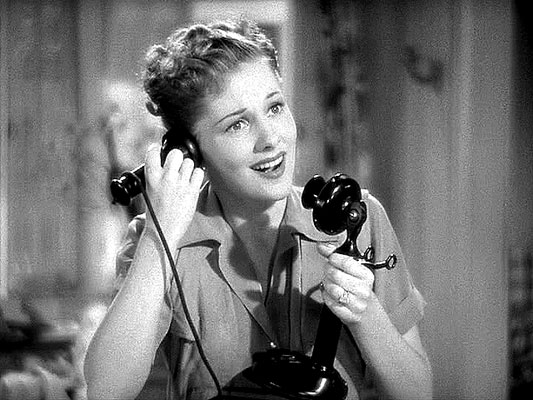
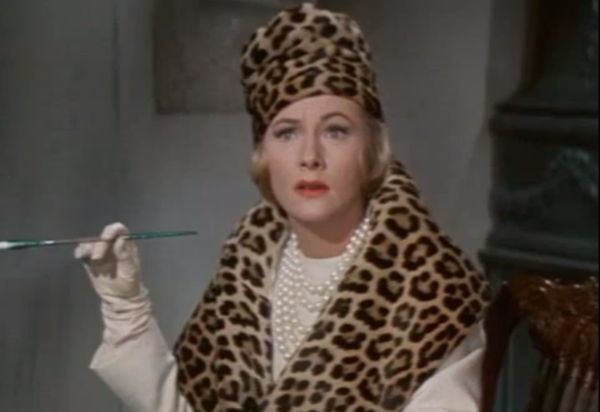
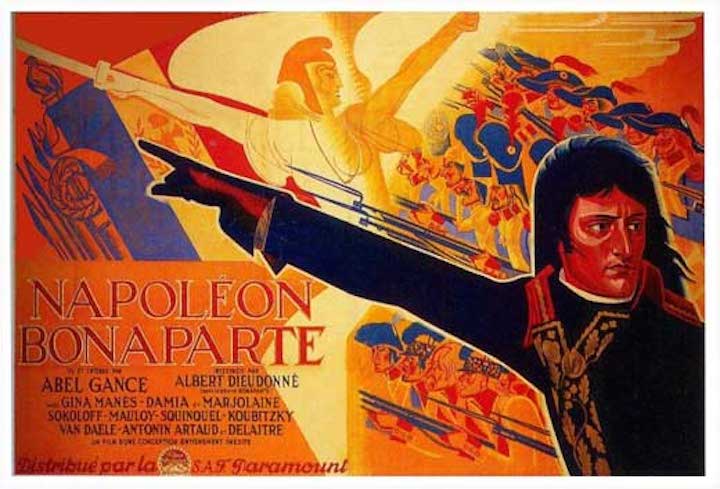
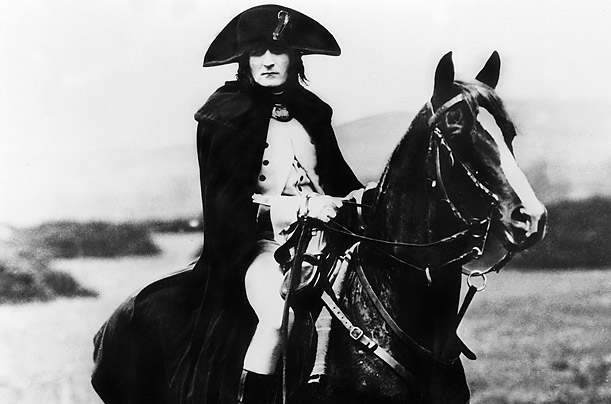
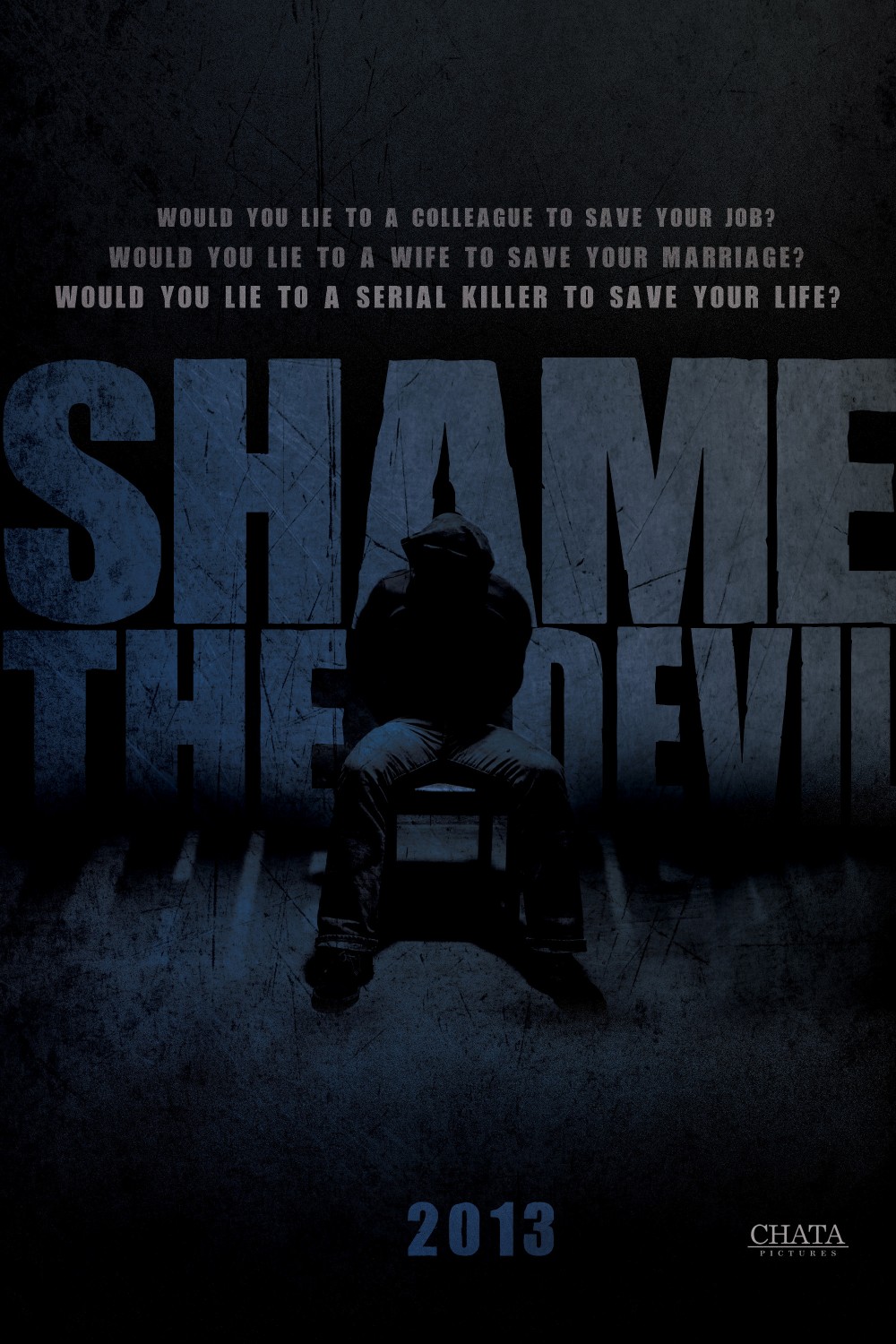
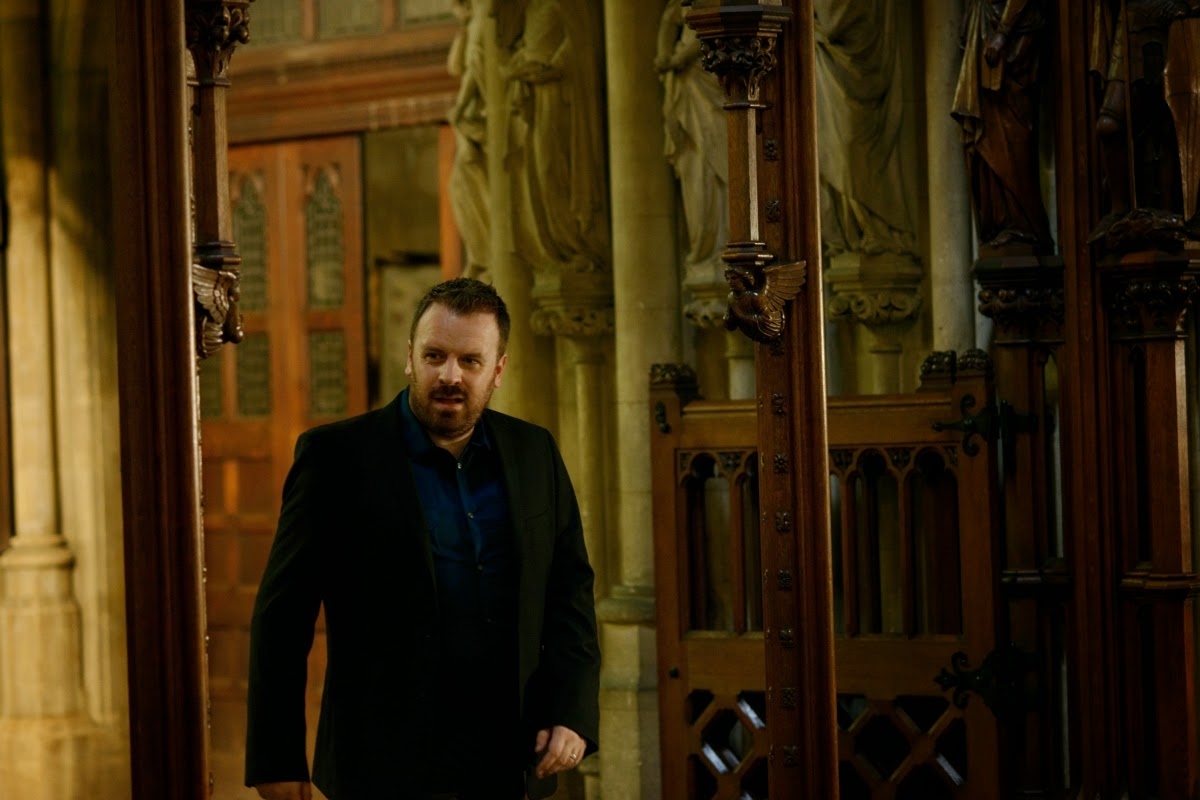
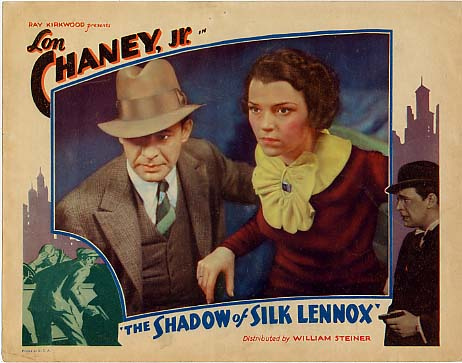


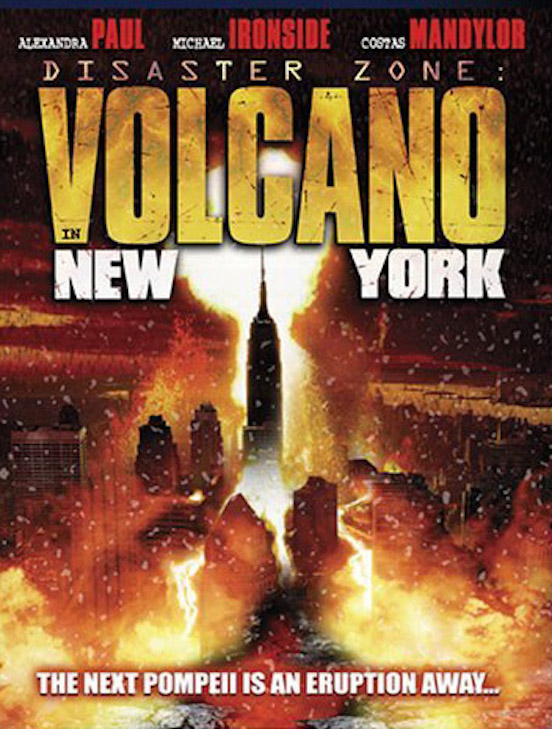

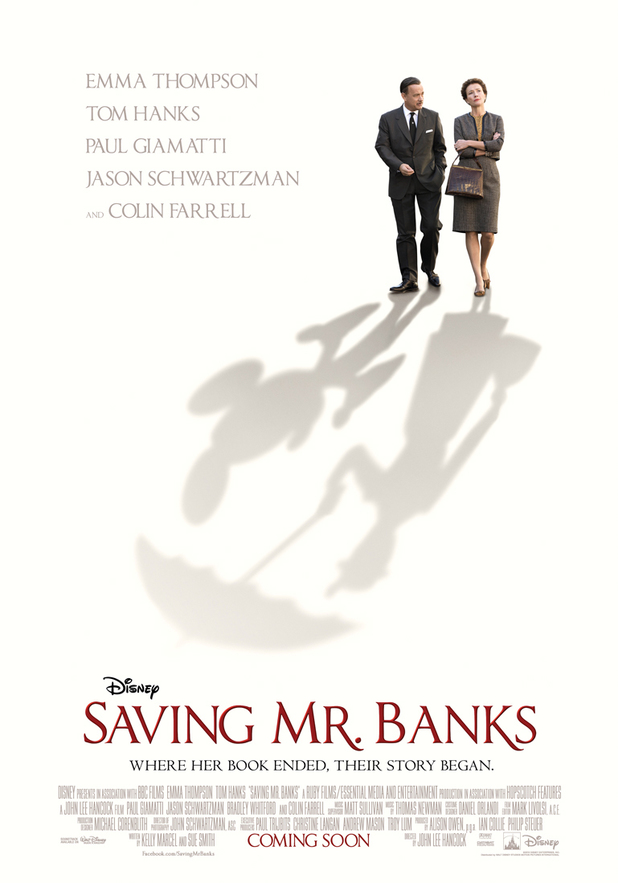
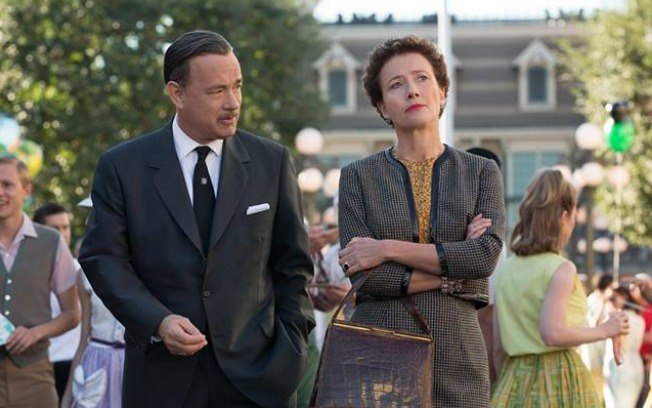


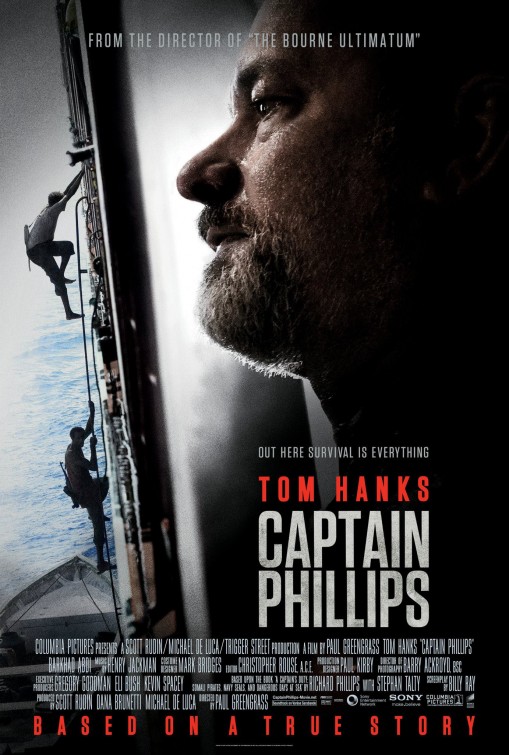

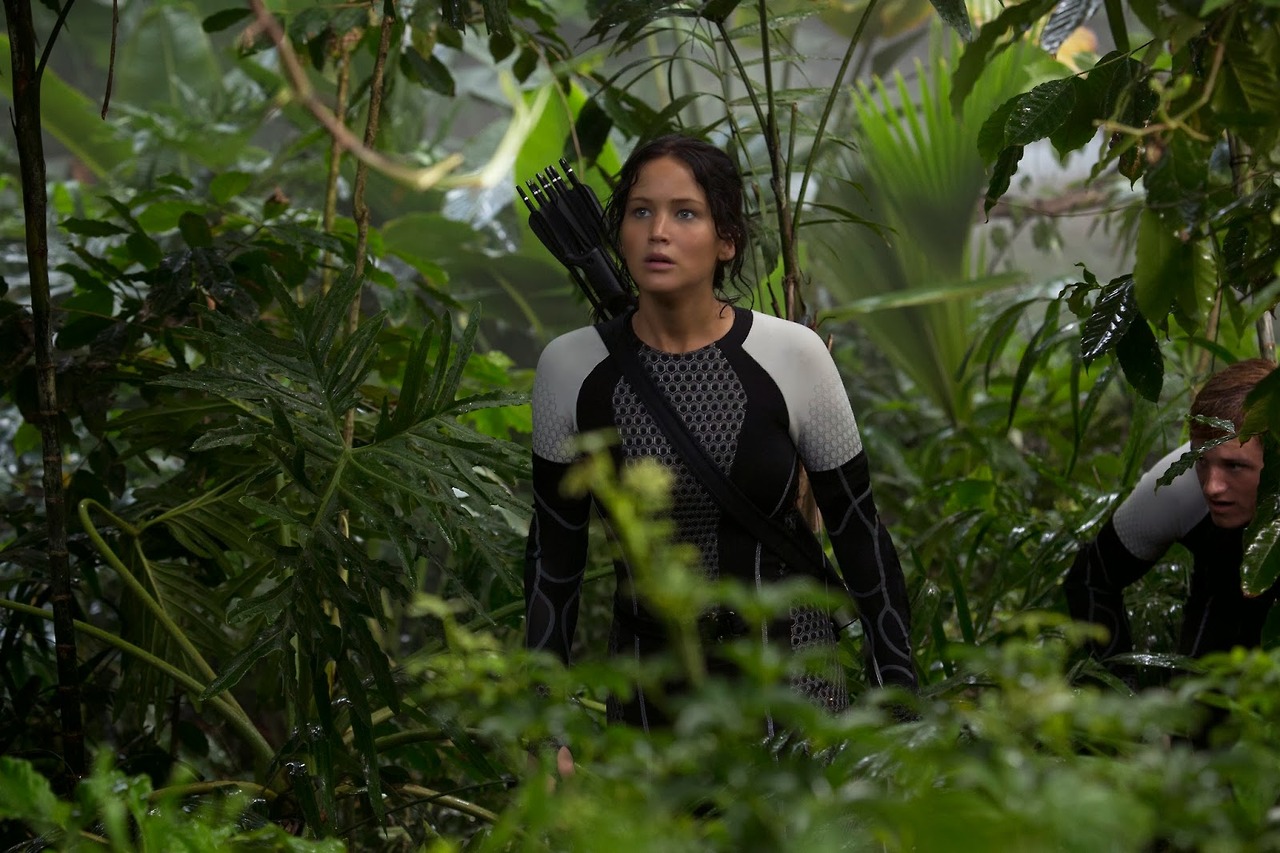


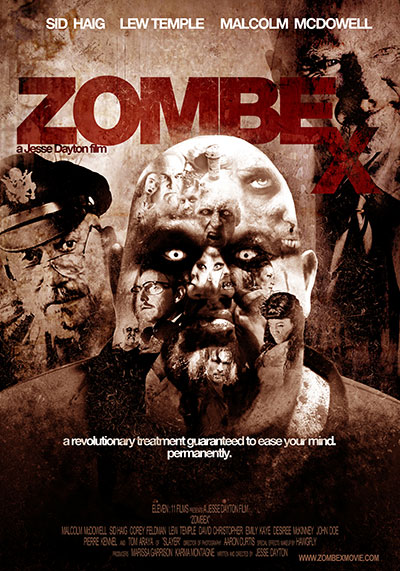
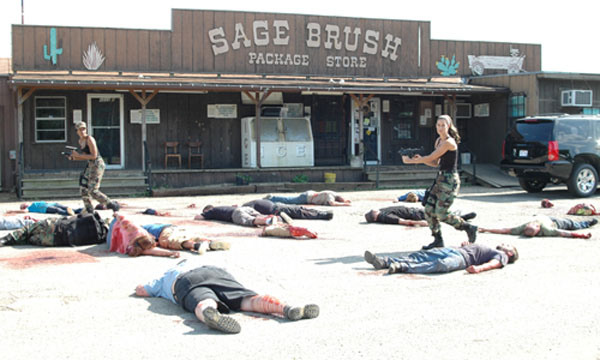
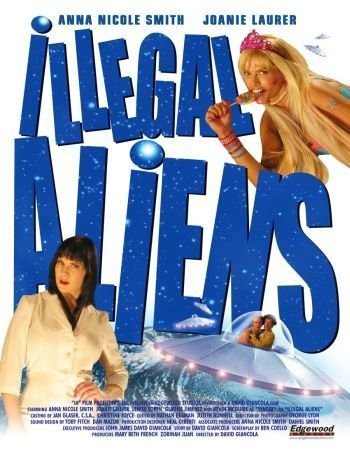

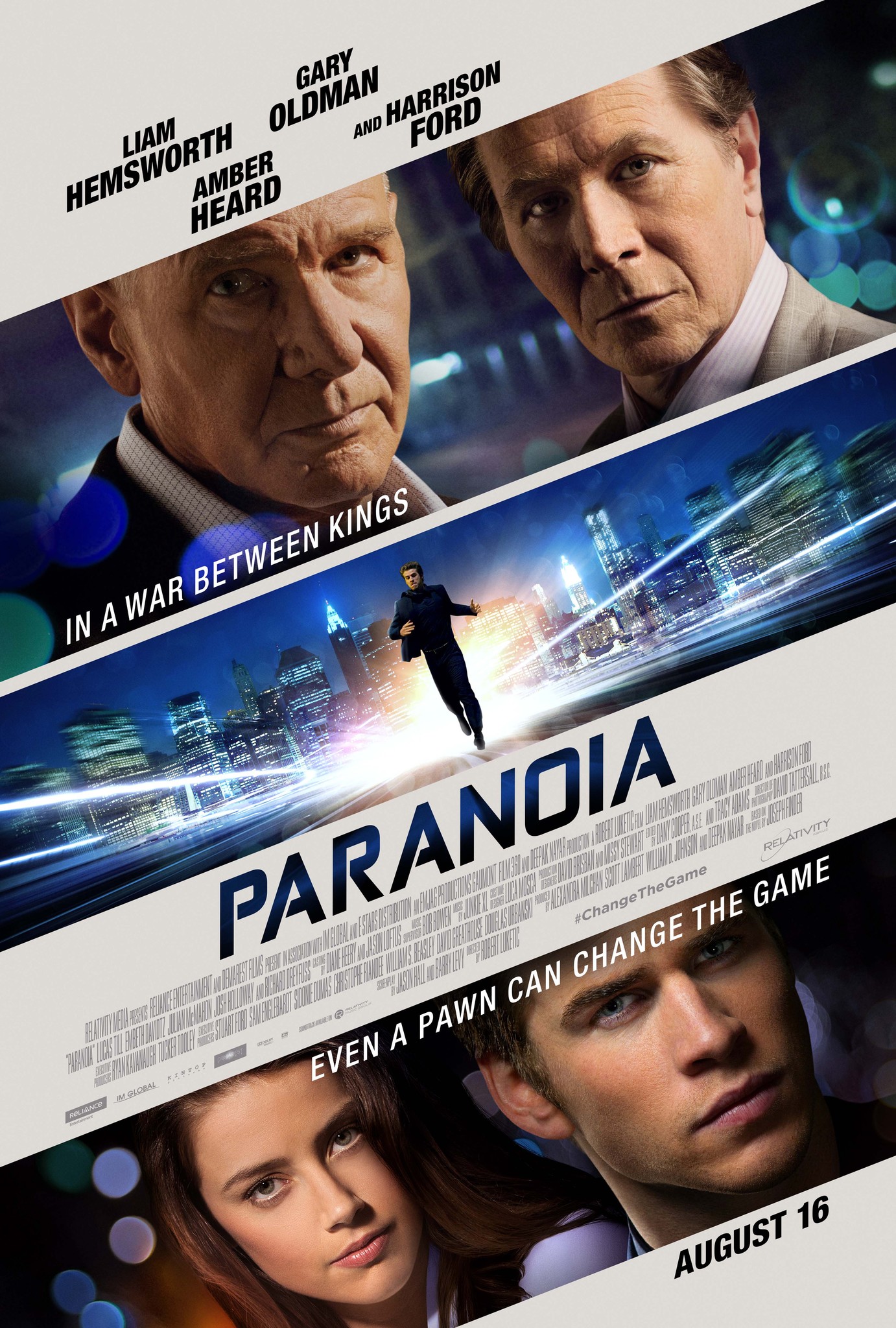



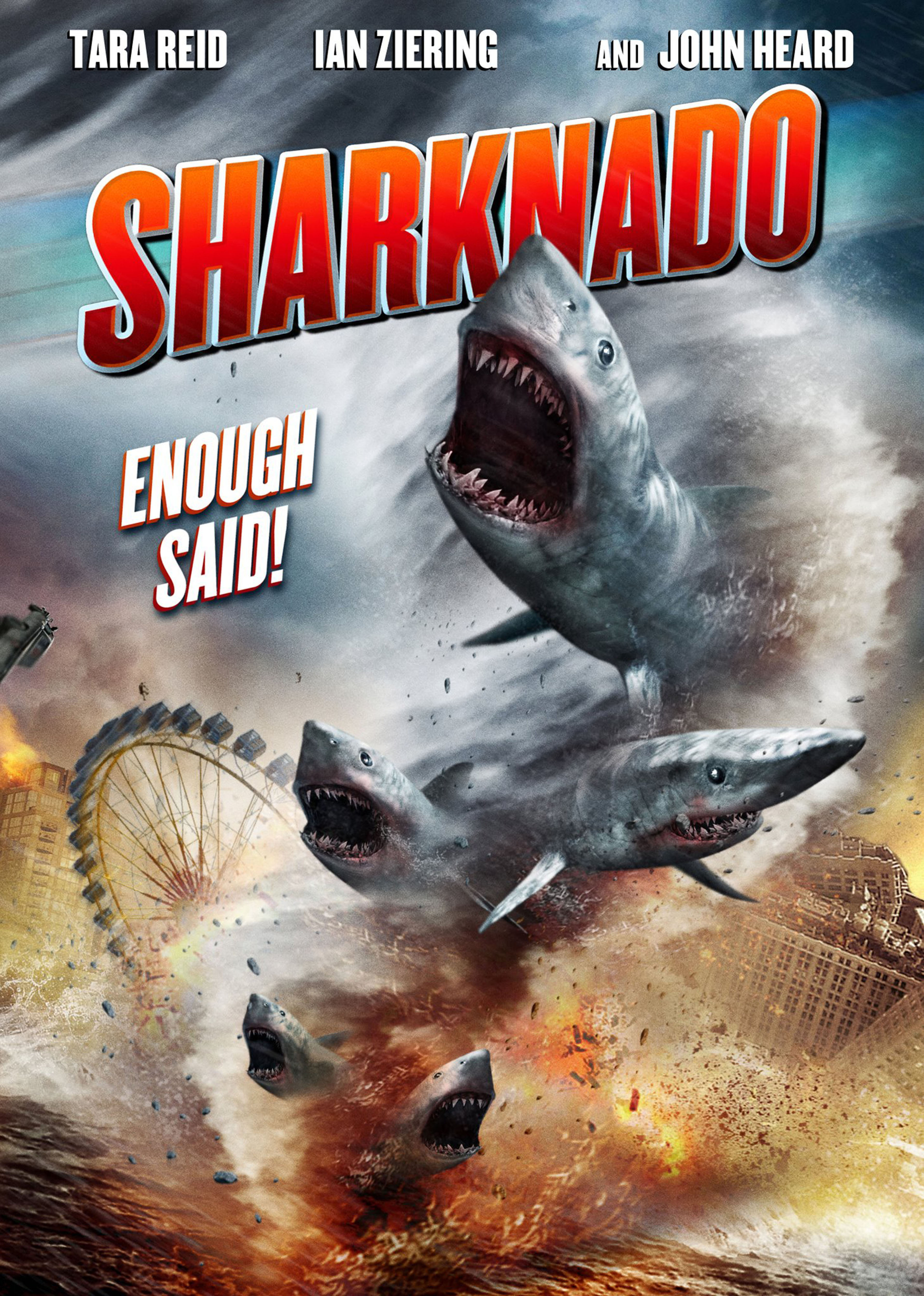
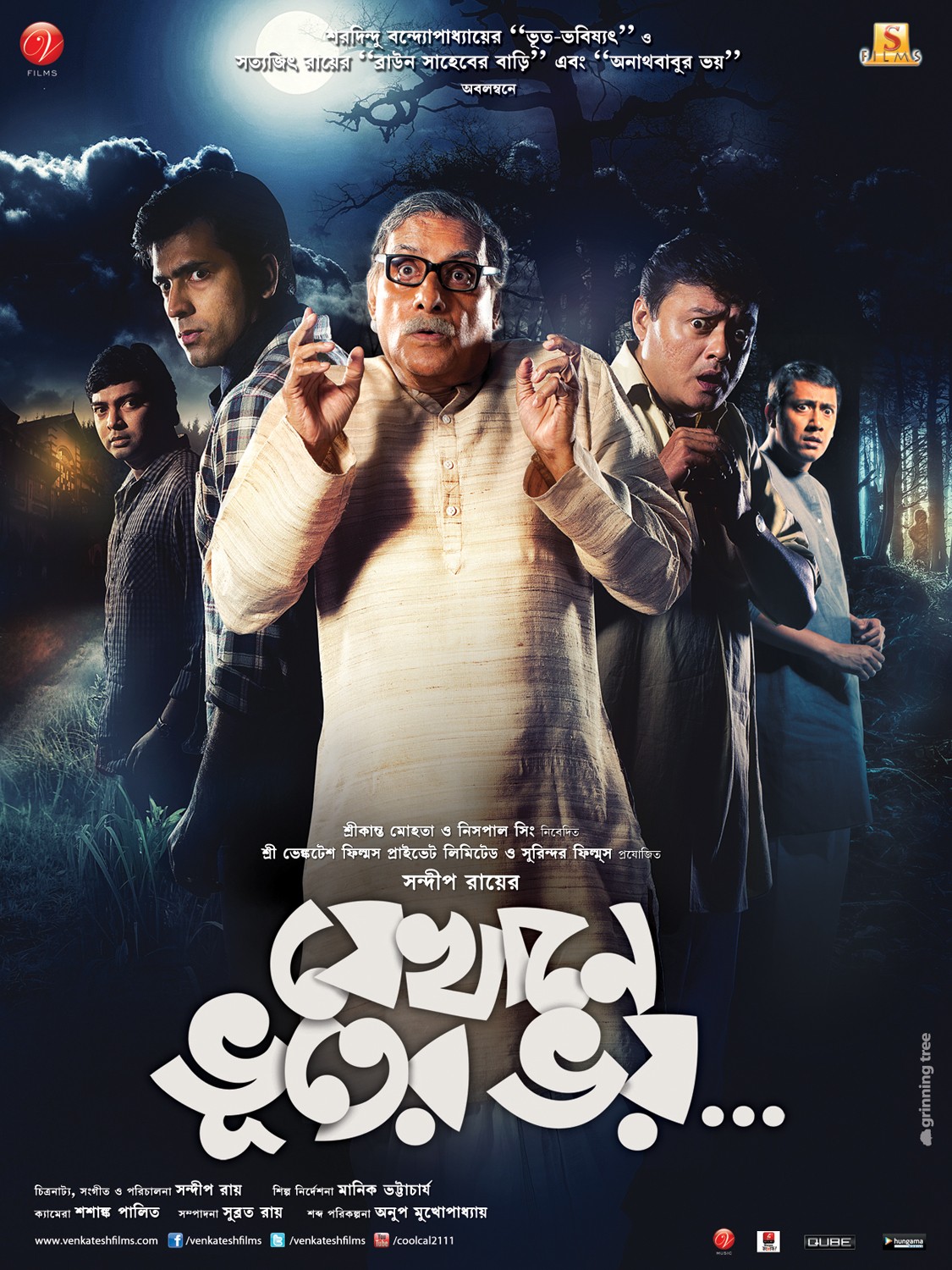


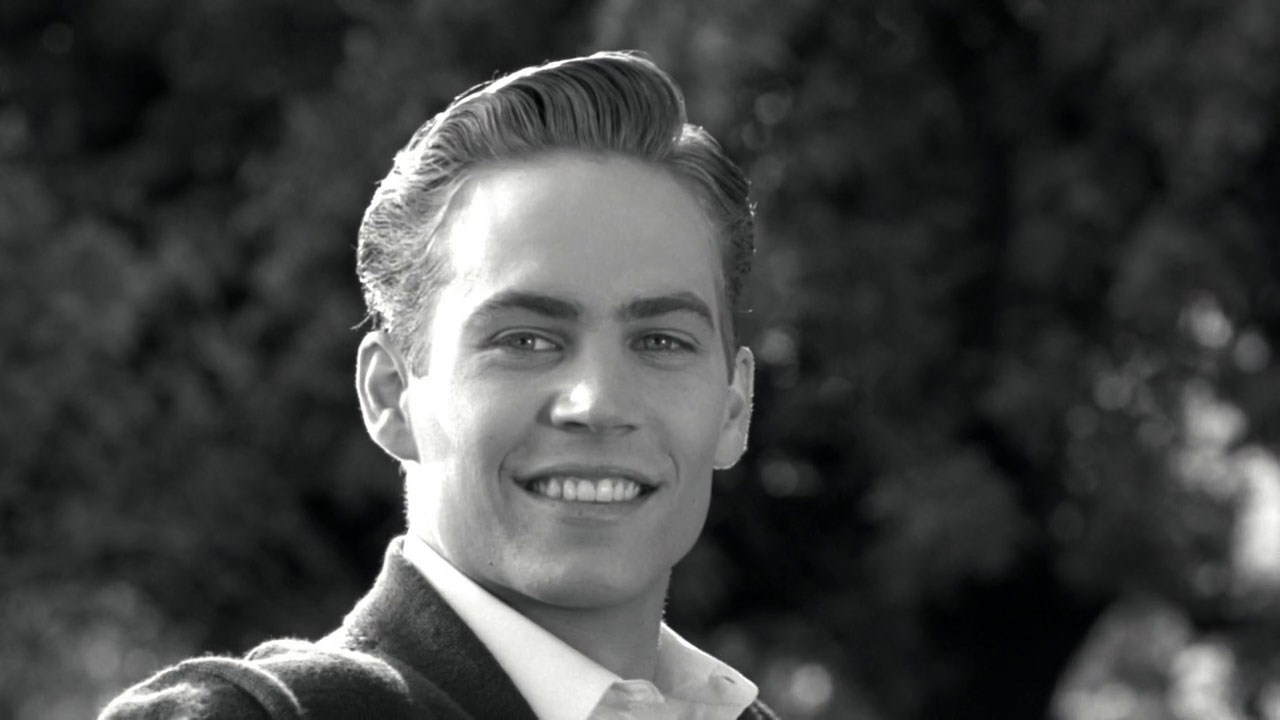



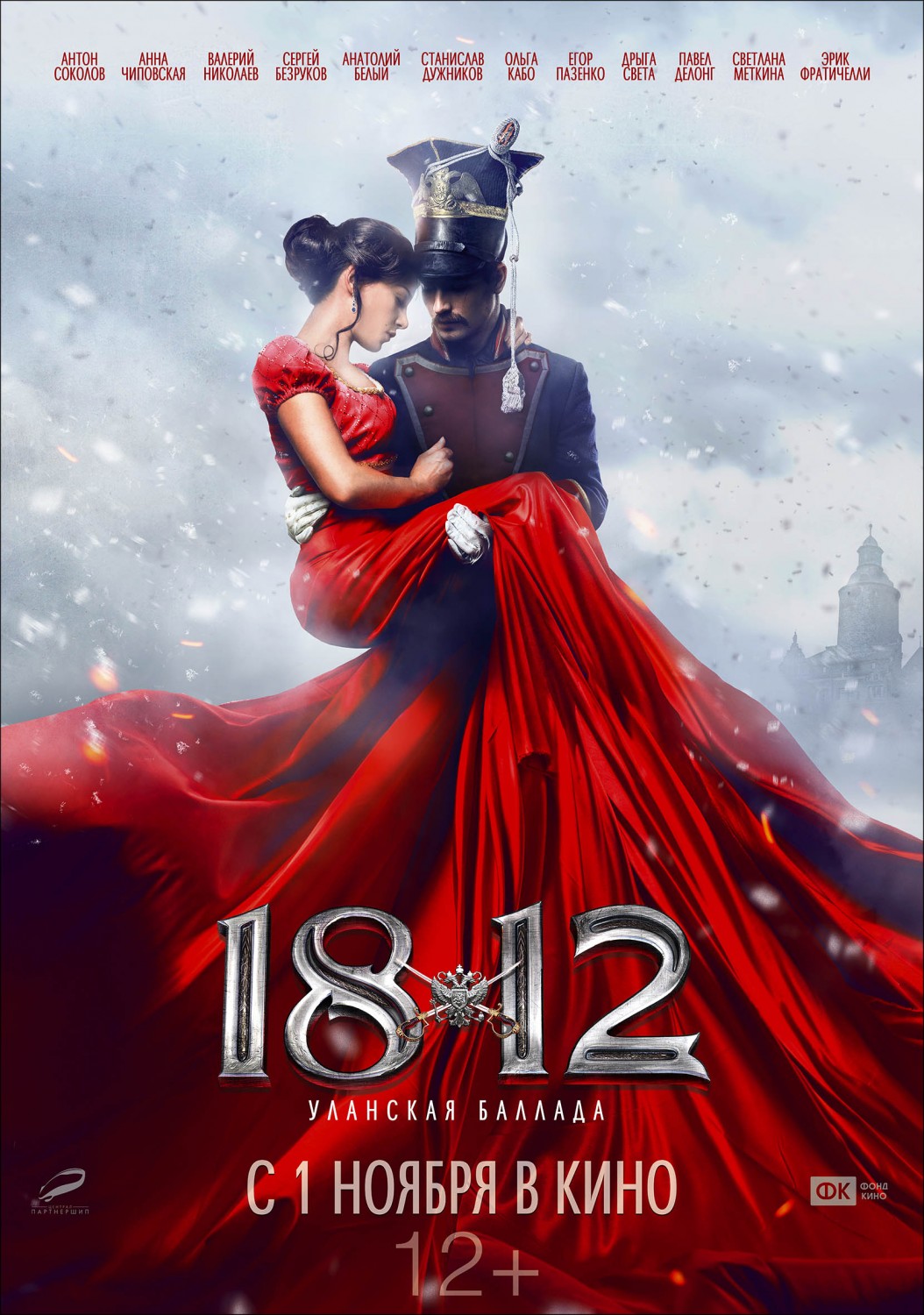
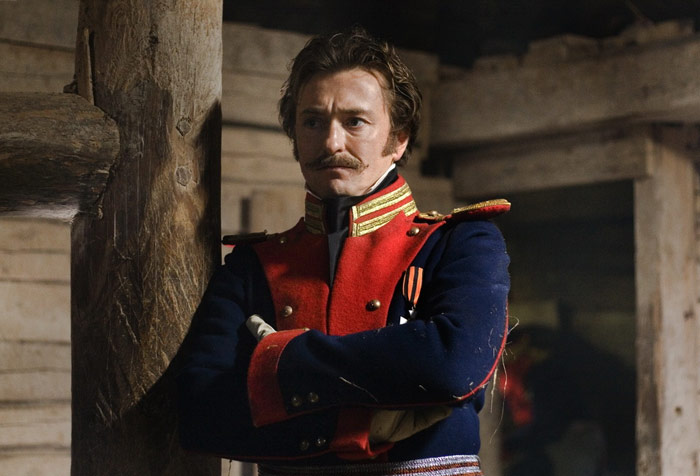



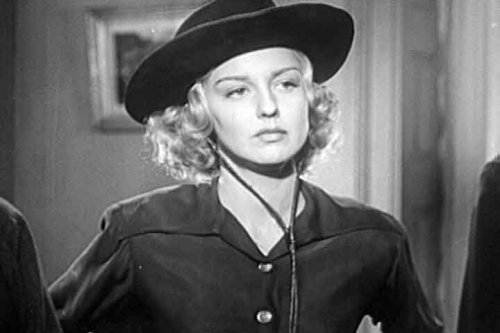




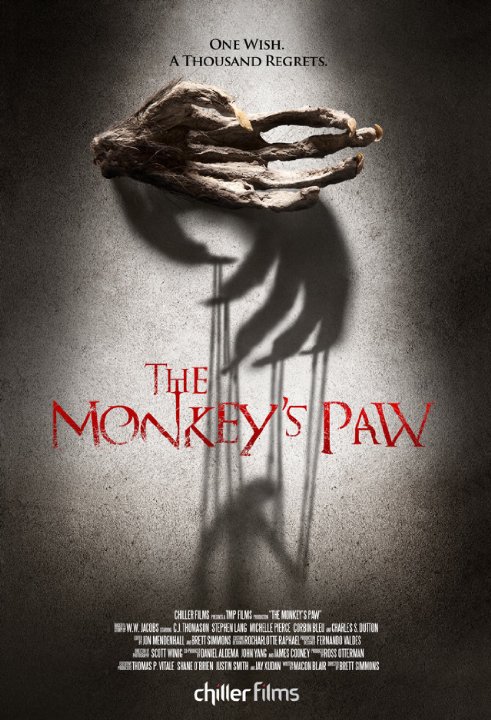
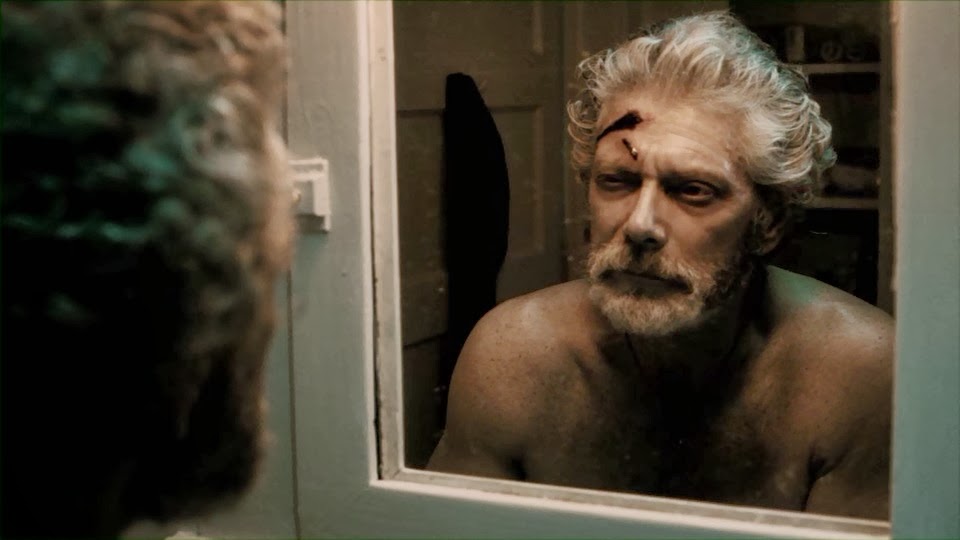

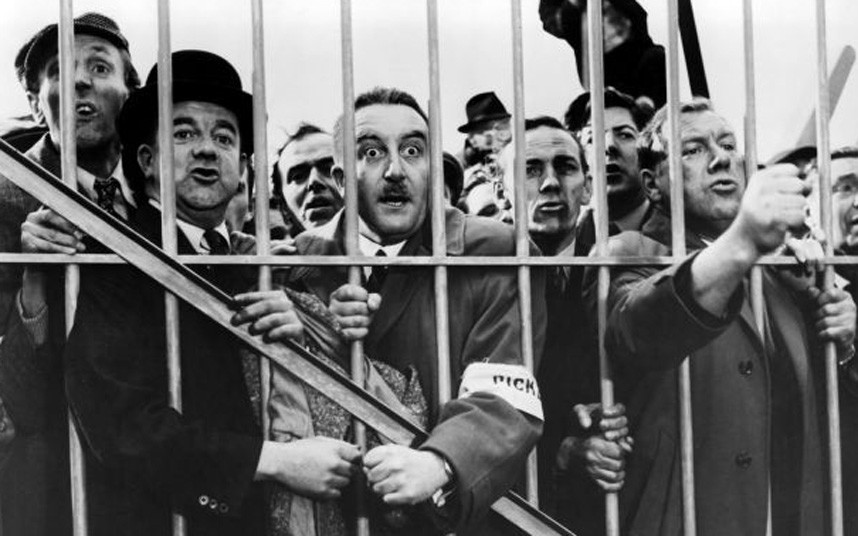


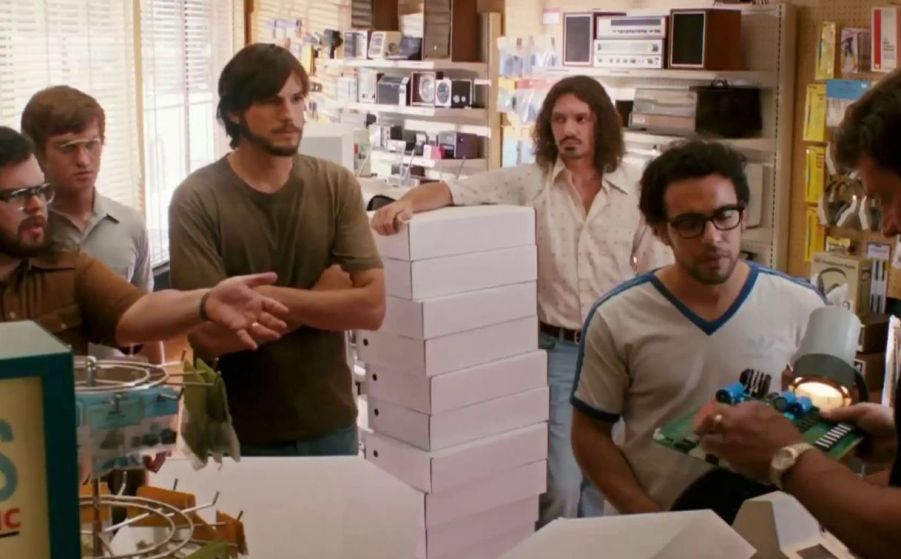










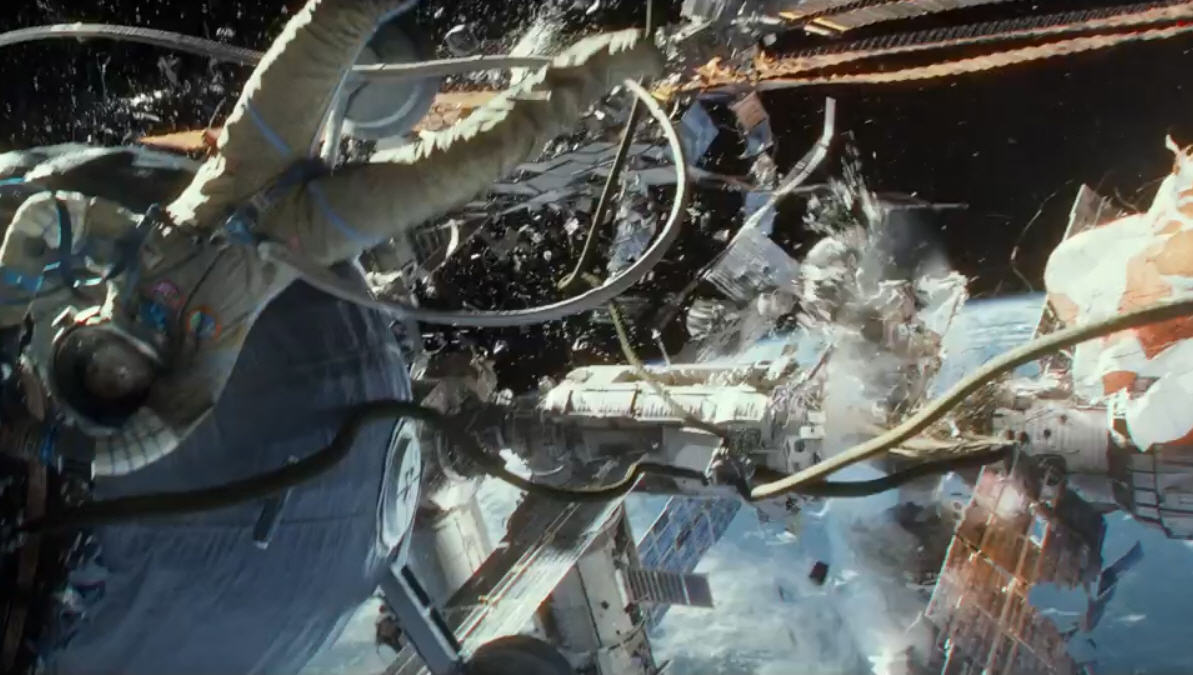


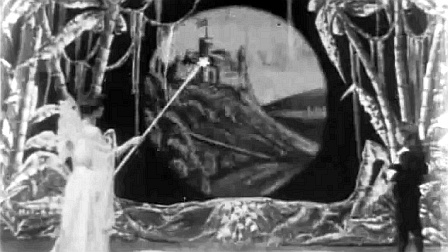
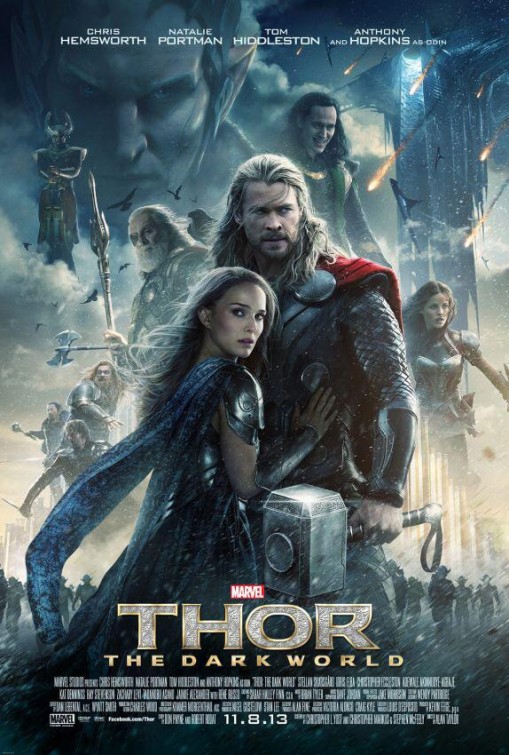
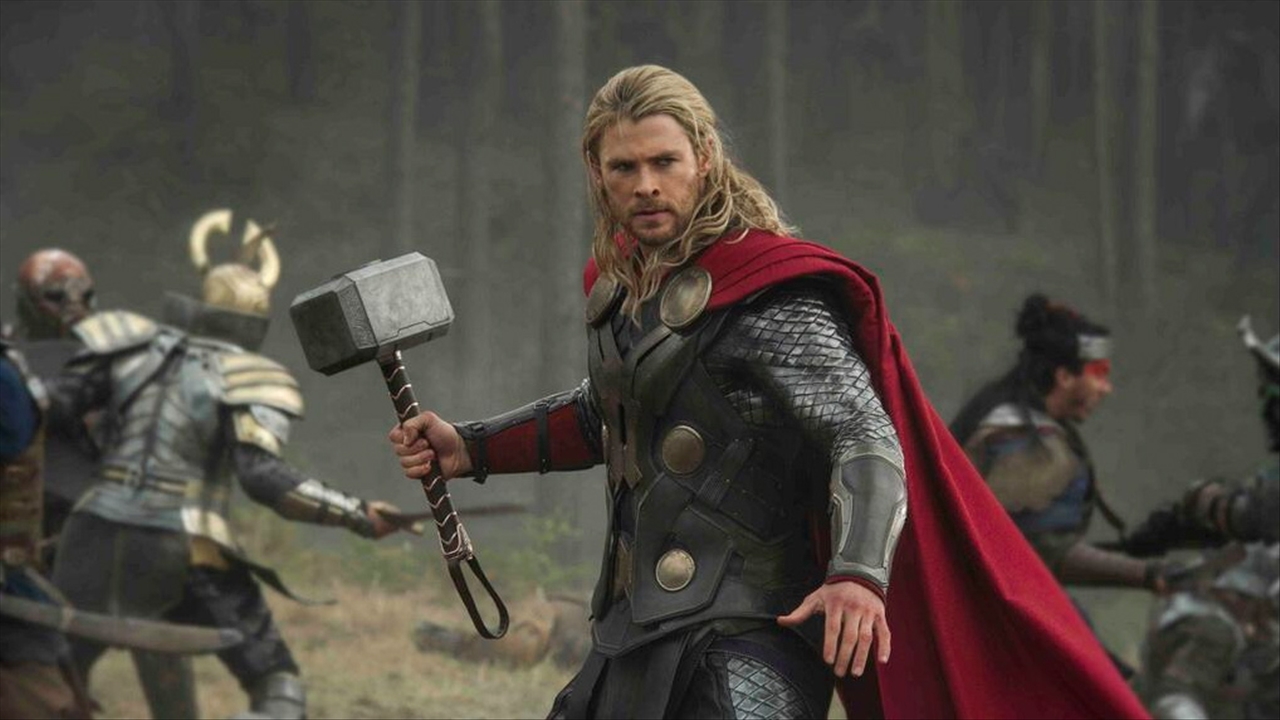
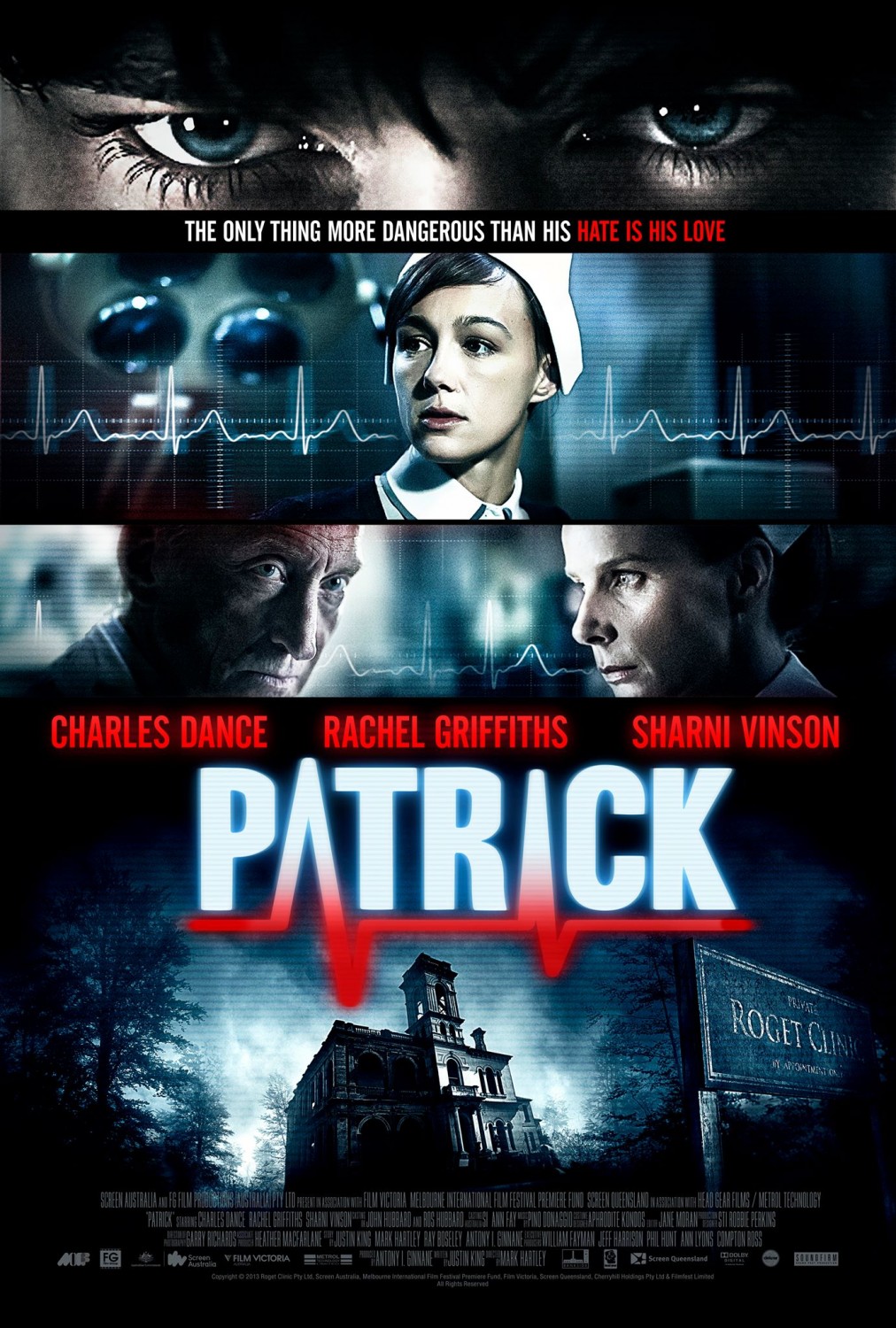
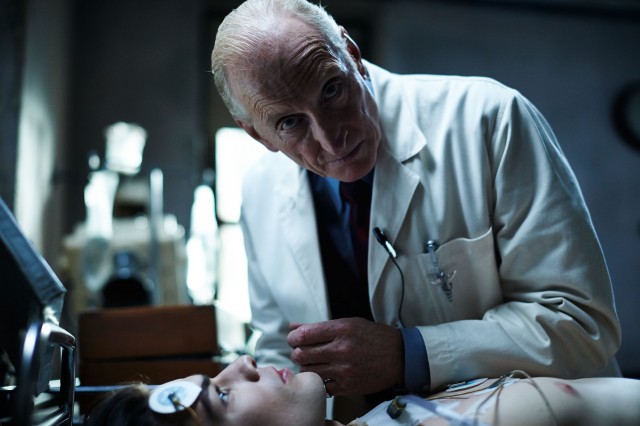
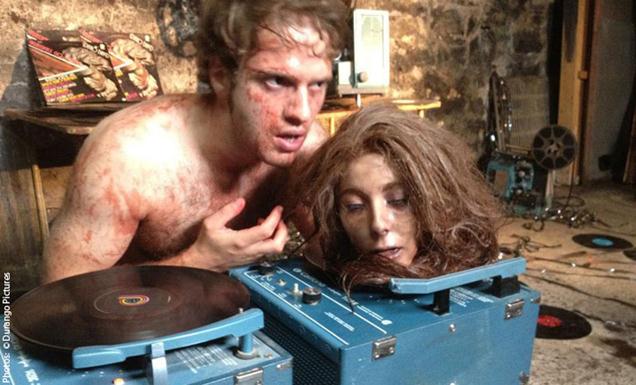

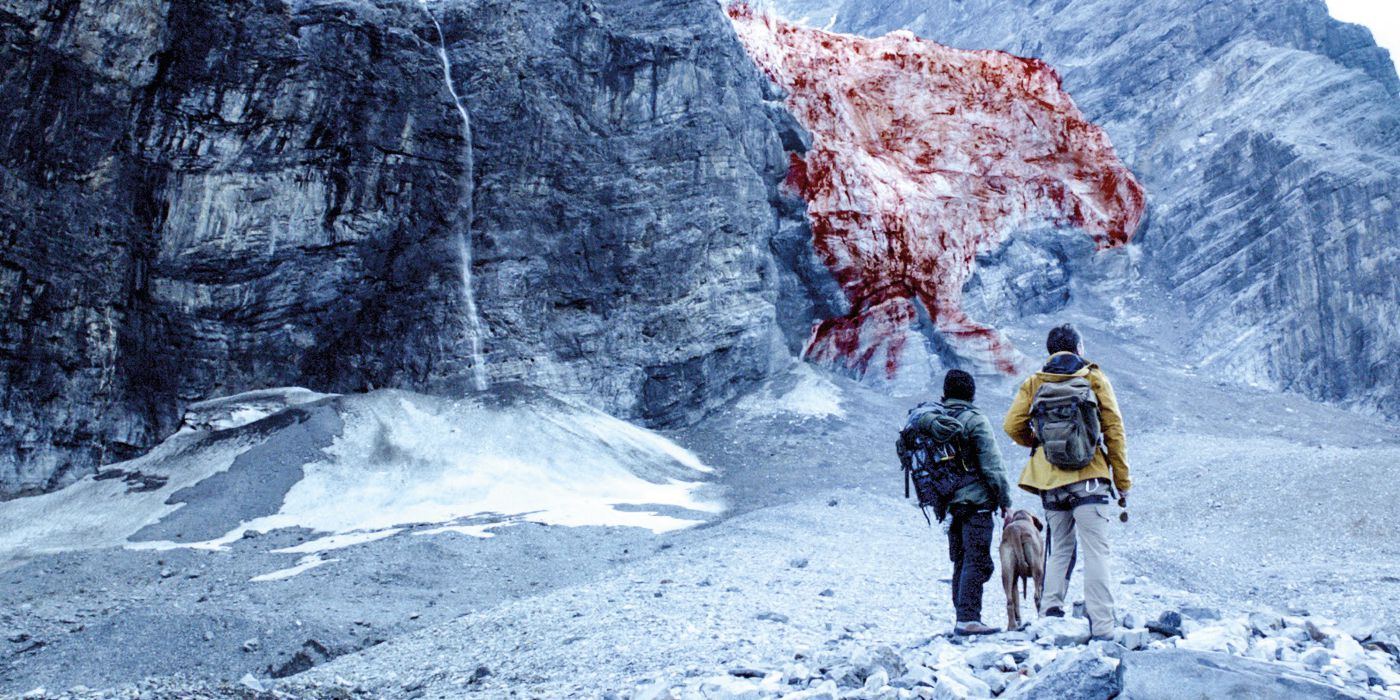

 thedullwoodexperiment