• 10 Reasons to Remember…
  • A Brief Word About…
  • About
  • For One Week Only
  • Happy Birthday
  • Monthly Roundup
  • Old-Time Crime
  • Other Posts
  • Poster of the Week
  • Question of the Week
  • Reviews
  • Trailers

thedullwoodexperiment

~ Viewing movies in a different light

thedullwoodexperiment

Tag Archives: Horror

Monthly Roundup – April 2016

30 Saturday Apr 2016

Posted by dullwood68 in Movies

≈ Leave a comment

Tags

Action, Adam Pally, Alison Brie, Amy Adams, Anneke Wills, Claire Forlani, Claude Alexander, Clive Donner, Comedy, Countdown (2016), Crime, Cruel Intentions 2, David Hemmings, Dolph Ziggler, Dougray Scott, Drama, Duke of Edinburgh scheme, George Archainbaud, Gig Young, Horror, Hunt the Man Down, Jo Maryman, Katharine Isabelle, Kenneth More, Larry Buchanan, Libby Hall, Love's Kitchen, Luchenboch Witch, Lynne Roberts, Manchester Prep, Mary Anderson, Mexico, Murder, Musical, Nudity, Public defender, Ray Brooks, Review, Robert Short, Robin Dunne, Romance, Romantic comedy, Scot Armstrong, Search Party, Seven witnesses, Sex, Some People, T.J. Miller, Texas, The Boot, The Naked Witch, Thomas Middleditch, Thriller, Wedding day, Willard Parker

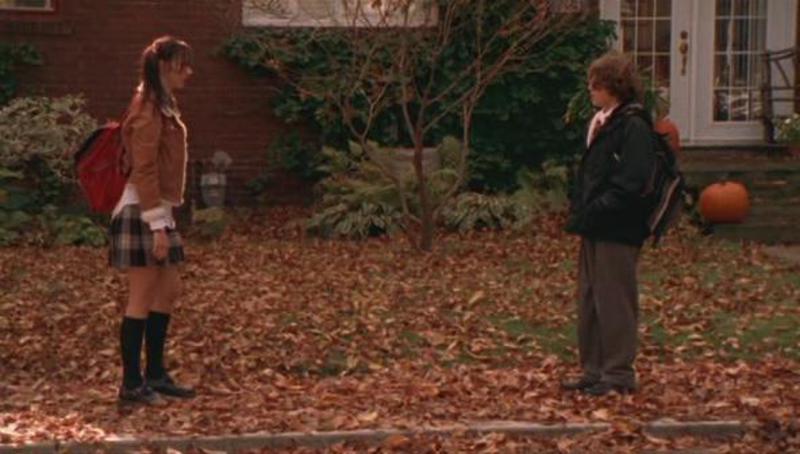
Cruel Intentions 2 (2000) / D: Roger Kumble / 87m

Cast: Robin Dunne, Amy Adams, Sarah Thompson, Keri Lynn Pratt, Barry Flatman, Mimi Rogers, David McIlwraith, Clement von Franckenstein, Jonathan Potts

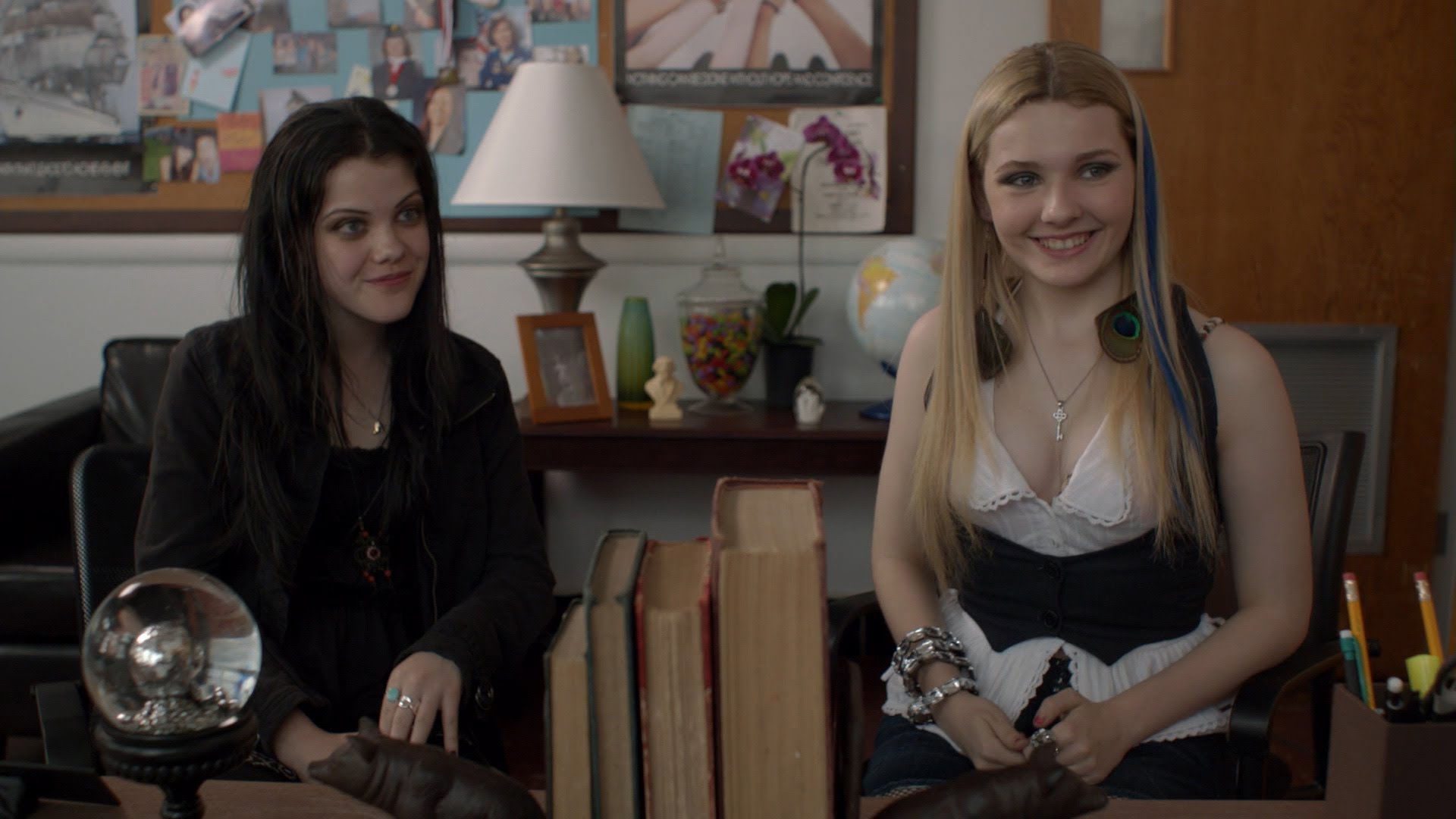
Cruel Intentions 2

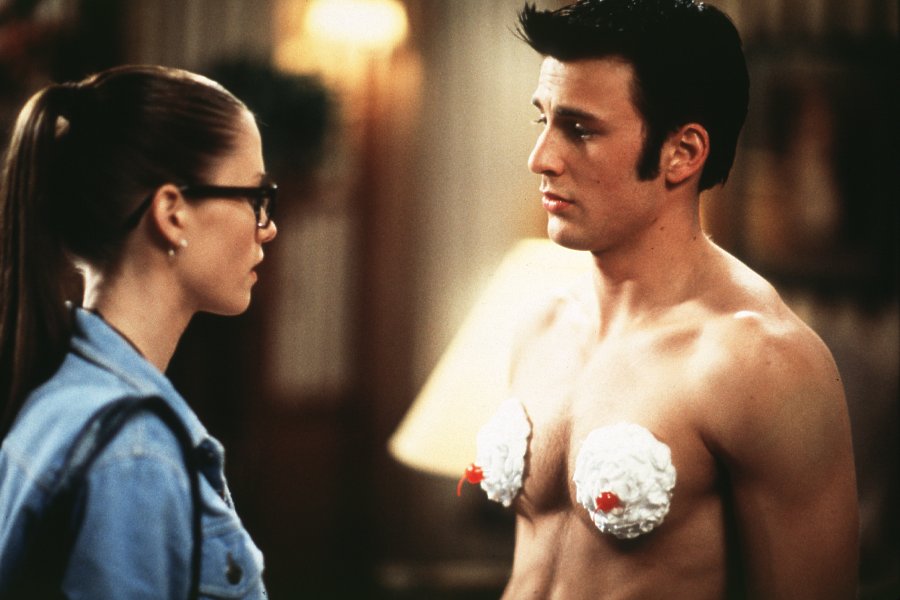
Rating: 5/10 – a young Sebastian Valmont (Dunne) transfers to a new school and encounters the Machiavellian Kathryn Merteuil (Adams), leading to a rivalry that will last the rest of their lives; a prequel to Kumble’s PYT version of Dangerous Liaisons, Cruel Intentions 2 is enjoyable on a guilty pleasure level, and is full of moments where the viewer will ask themselves, Did they just do/say that?, but it’s still not enough to hide the cracks in the narrative or the paucity of some of the performances.

Countdown (2016) / D: John Stockwell / 90m

Cast: Dolph Ziggler, Glenn “Kane” Jacobs, Katharine Isabelle, Josh Blacker, Alexander Kalugin, Michael Kopsa, Alan O’Silva

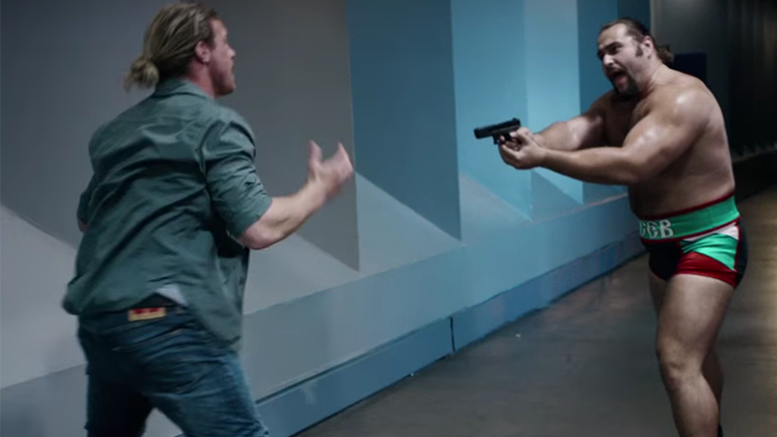
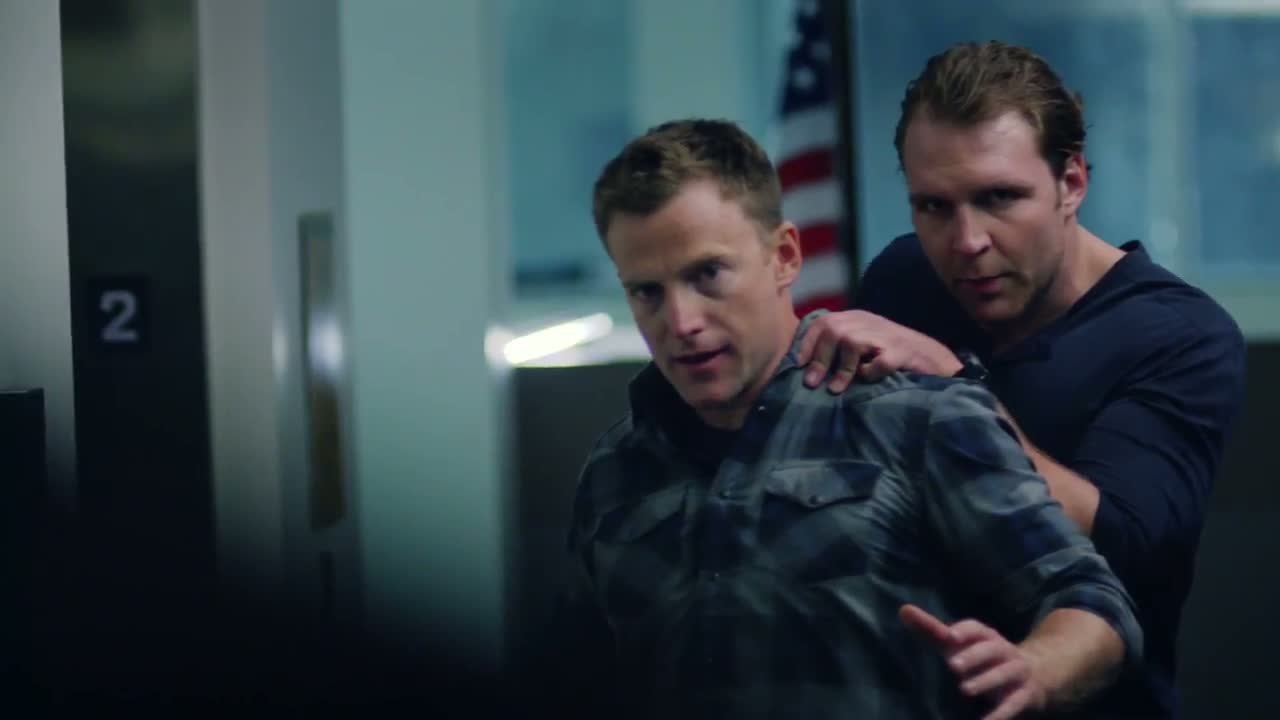
Countdown

Rating: 3/10 – when a disaffected Ukrainian straps a bomb to a young boy and then dies before revealing the boy’s whereabouts, it’s up to maverick cop Ray Fitzpatrick (Ziggler) to save the day – and whether his bosses like it or not; another WWE DTV movie that abandons crdibility from the word go – watch out for Fitzpatrick’s one-man storming of a Russian consulate – Countdown is hard-going rubbish that only has Cliff Hokanson’s crisp cinematography to recommend it.

Love’s Kitchen (2011) / D: James Hacking / 93m

Cast: Claire Forlani, Dougray Scott, Lee Boardman, Peter Bowles, Michelle Ryan, Matthew Clancy, Holly Gibbs, Simon Callow, Seretta Wilson, Cherie Lunghi, Caroline Langrishe, Gordon Ramsay

Love's Kitchen

Rating: 4/10 – following the tragic death of his wife, top chef Rob (Scott) loses his way until he takes over a small village pub, and with the help of food critic Kate (Forlani), attempts to regain the flair and the passion that made him such a good chef; a lightweight romantic comedy that breezes through its own running time as nonchalantly as possible, Love’s Kitchen is, in cooking terms, like a soufflé that hasn’t risen: still edible but nowhere near as enjoyable if it had turned out as planned.

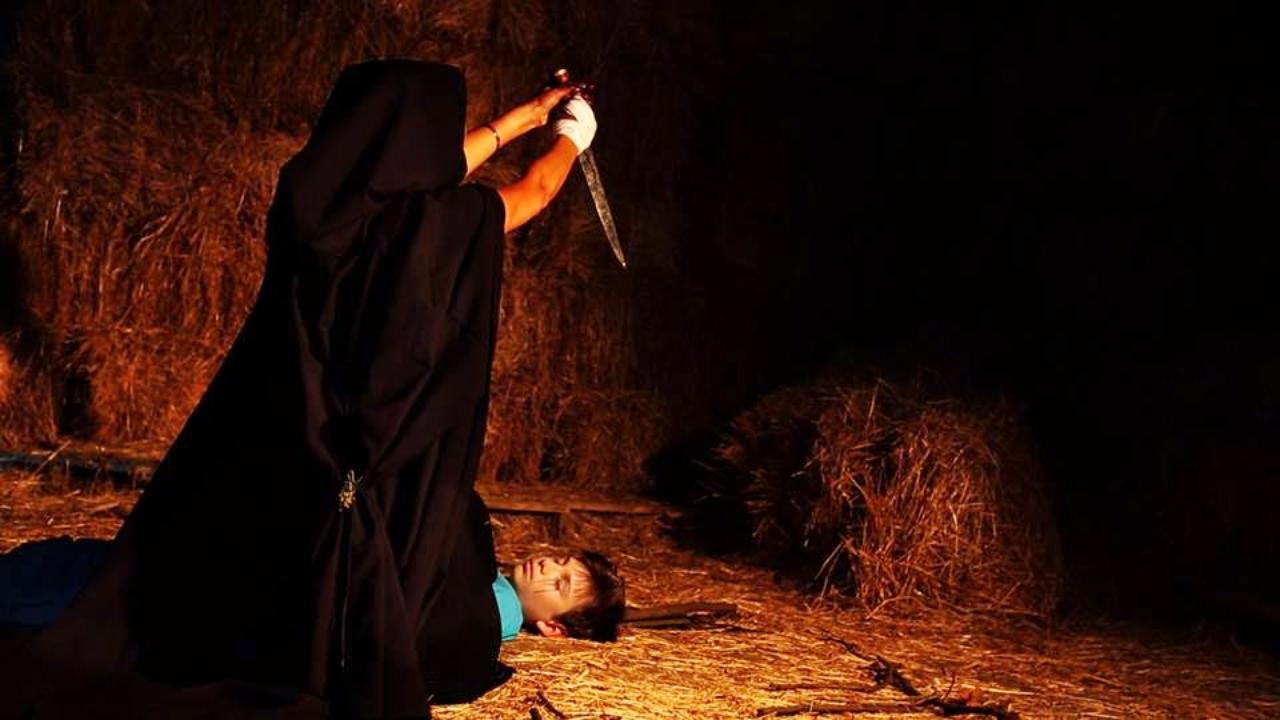
The Naked Witch (1964) / D: Larry Buchanan, Claude Alexander / 59m

Cast: Jo Maryman, Robert Short, Libby Hall

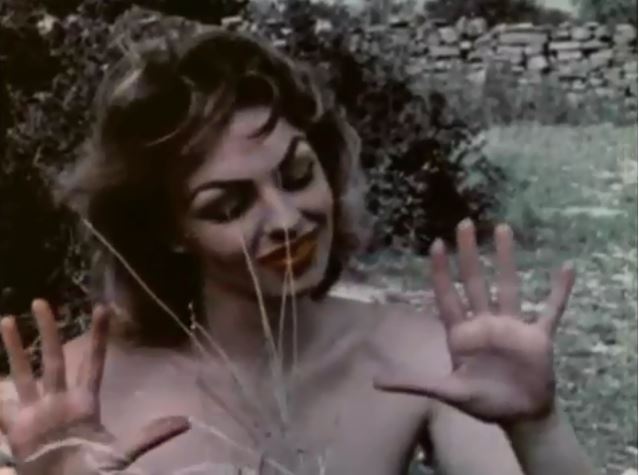
The Naked Witch

Rating: 2/10 – a student (Short) of German folklore arrives in a small Texas town and unwittingly awakens the ghost of a witch (Hall) bent on revenge on the descendants of those who put her death three hundred years before; Buchanan’s first low-budget exploitation movie is low on incident and big on padding – check out the ten-minute prologue – but does earn a point for a strange, hypnotic vibe that develops once the witch is resurrected.

Hunt the Man Down (1950) / D: George Archainbaud / 69m

aka Seven Witnesses

Cast: Gig Young, Lynne Roberts, Mary Anderson, Willard Parker, Carla Balenda, Gerald Mohr, James Anderson, John Kellogg, Harry Shannon, Cleo Moore, Christy Palmer

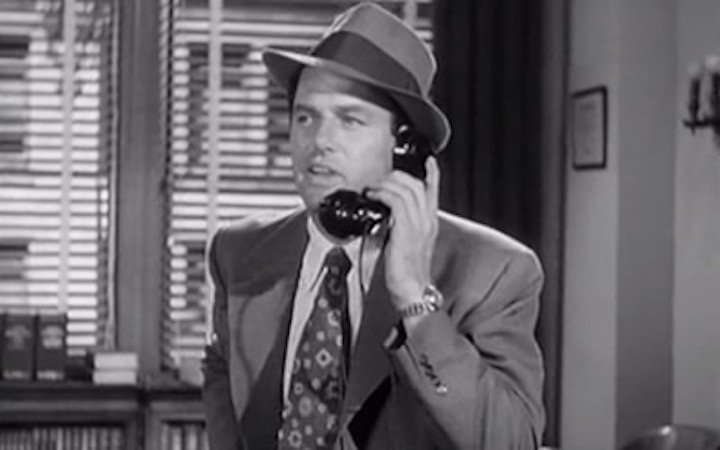
Hunt the Man Down

Rating: 6/10 – when a man (Anderson) is caught after twelve years on the run from a murder trial, his public defender (Young) investigates the original crime, and learns enough to believe that the man is probably innocent; a minor noir, Hunt the Man Down has plenty of double dealings in a plot that doesn’t always make sense but is enjoyable enough on its own terms.

Some People (1962) / D: Clive Donner / 93m

Cast: Kenneth More, Ray Brooks, Anneke Wills, David Andrews, Angela Douglas, David Hemmings, Timothy Nightingale, Frankie Dymon

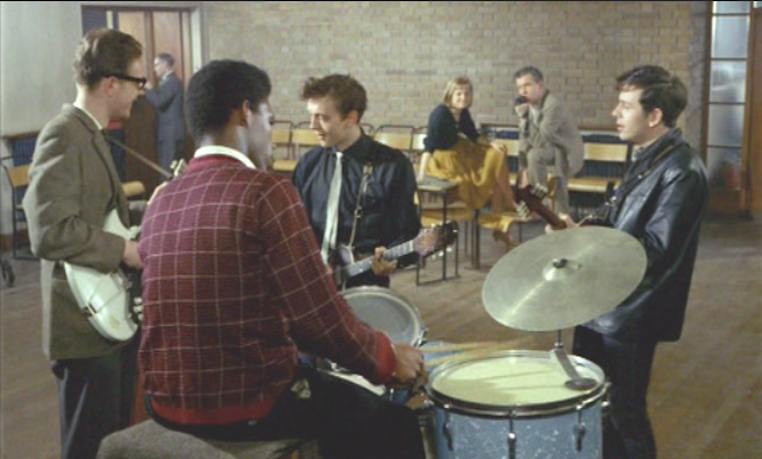
Some People

Rating: 7/10 – a group of teenagers aiming to start a band find an ally in a local choir master (More), but along the way have to contend with internal rivalries and the problems inherent in growing up; as much an historical record of the times – Bristol, England in the early Sixties – Some People features a slew of raw performances but is only occasionally as dramatic as the story requires, leaving the viewer to wonder what all the fuss is about.

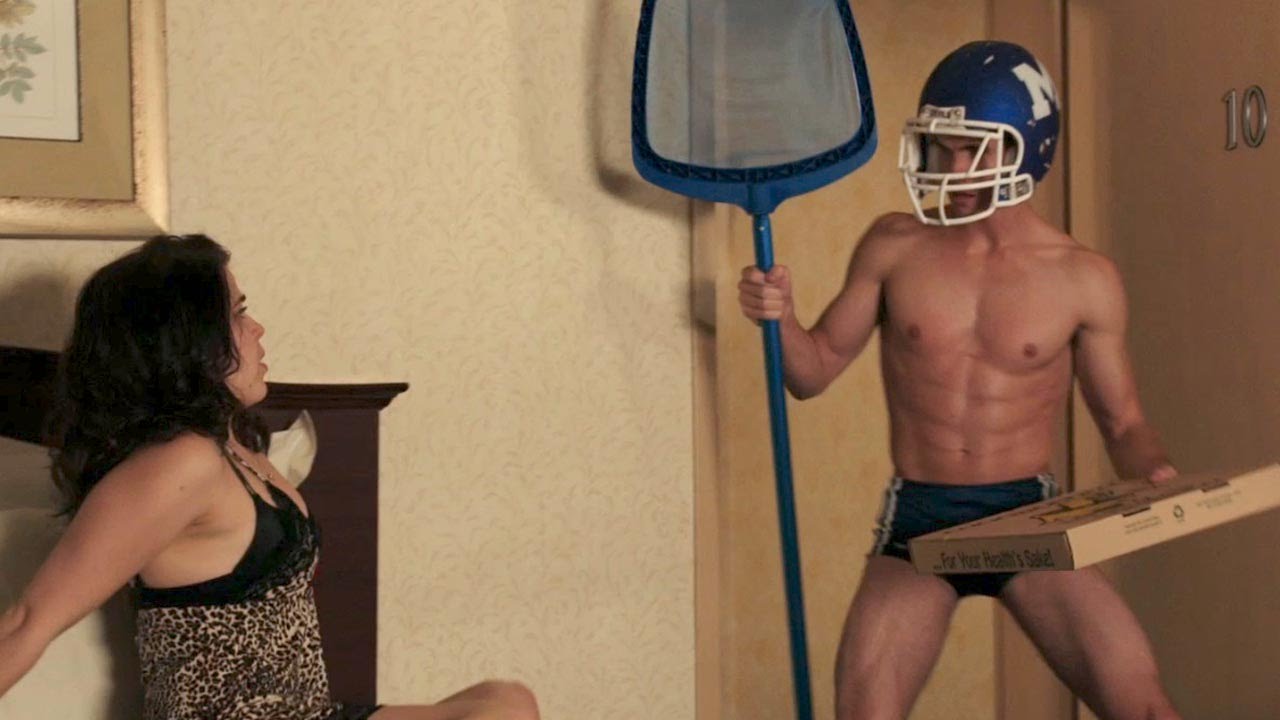
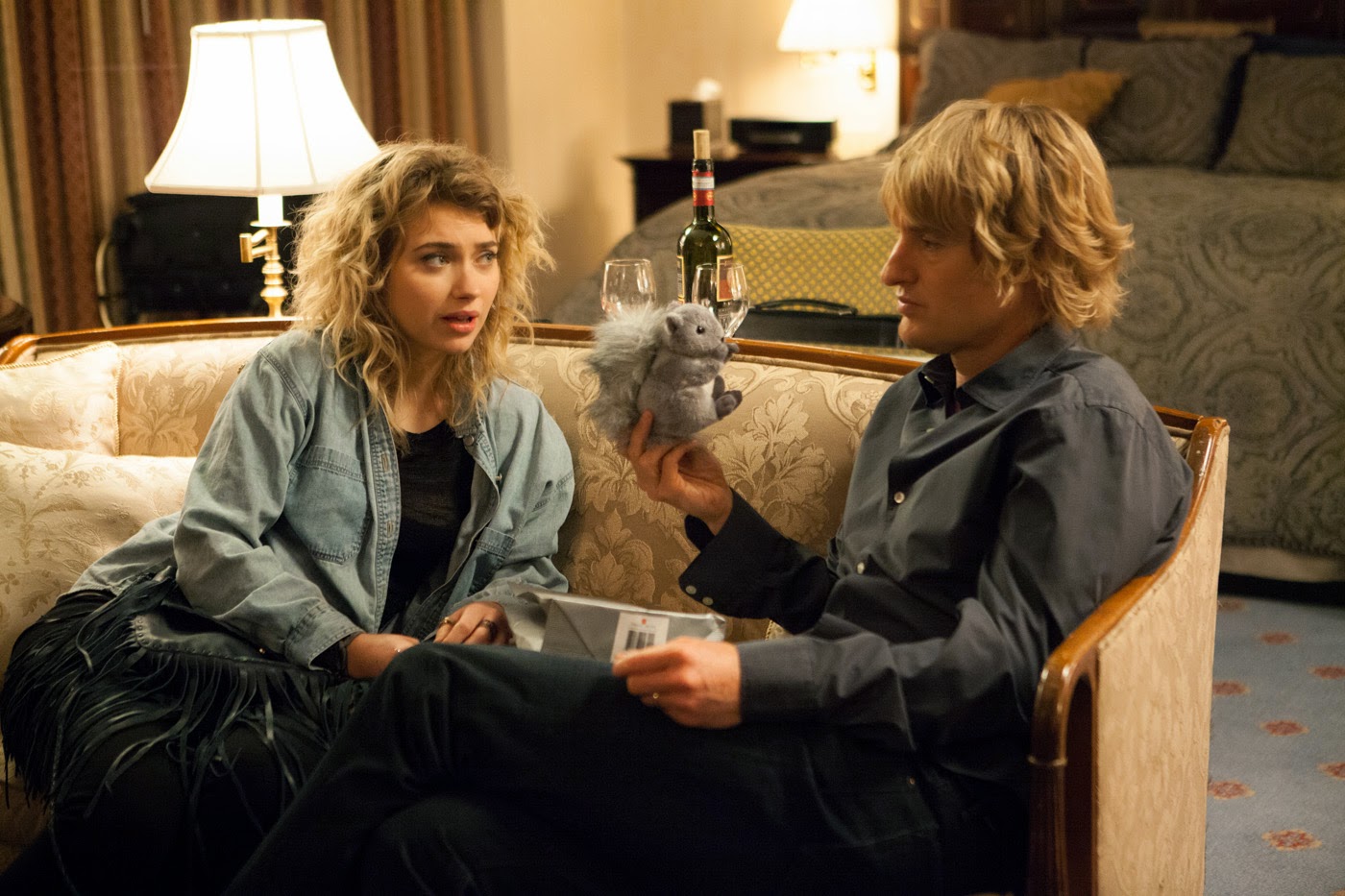
Search Party (2014) / D: Scot Armstrong / 93m

Cast: Adam Pally, T.J. Miller, Thomas Middleditch, Shannon Woodward, Alison Brie, J.B. Smoove, Octavio Gómez Berríos, Maurice Compte, Lance Reddick, Krysten Ritter, Jason Mantzoukas, Rosa Salazar, Jon Glaser

Search Party

Rating: 5/10 – when one of his best friends, Evan (Miller), ruins his wedding day, Nardo (Middleditch), follows his fianceé to Mexico in order to win her back, while Evan and his other best friend, Jason (Pally), end up heading across the border as well to help him out after he’s carjacked; a passable comedy that tries too hard one moment and then hits the comedic nail on the head the next, Search Party isn’t particularly memorable but if you’re in the mood for an easy watch, this will definitely do the trick.

Share this:

  • Click to share on X (Opens in new window) X
  • Click to share on Facebook (Opens in new window) Facebook
  • More
  • Click to print (Opens in new window) Print
  • Click to email a link to a friend (Opens in new window) Email
Like Loading...

Regression (2015)

28 Thursday Apr 2016

Posted by dullwood68 in Movies

≈ Leave a comment

Tags

1990, Alejandro Amenábar, David Dencik, David Thewlis, Drama, Emma Watson, Ethan Hawke, Hallucinations, Horror, Hypnosis, Minnesota, Regression therapy, Review, Ritual Satanic Abuse, Satanism, Thriller

Regression

D: Alejandro Amenábar / 106m

Cast: Ethan Hawke, Emma Watson, David Thewlis, Lothaire Bluteau, Dale Dickey, David Dencik, Devon Bostick, Aaron Ashmore, Peter MacNeill

Minnesota, 1990. Farmer John Gray (Dencik) confesses to molesting his seventeen year old daughter, Angela (Watson) – but there’s a catch: even though Angela has made an accusation, Gray can’t remember doing anything of the sort, and is confessing purely because Angela has never lied to him, so in his mind it must be true. Detective Bruce Kenner (Hawke) is assigned to the case, and while Gray languishes in prison awaiting a trial date, he begins to look into the matter. It’s not long though before Kenner begins to find that the case isn’t as straightforward as his boss, Chief Cleveland (O”Neill), would like.

With the help of Professor Kenneth Raines (Thewlis), Kenner learns through Raines’ use of regression therapy techniques that Gray wasn’t alone when his abuse of Angela was supposed to have happened. When the other person present is revealed to be a fellow police officer, George Nesbitt (Ashmore), that revelation opens up another can of worms altogether: that Nesbitt, along with an unwitting Gray, are members of a satanic cult. With the rest of the police force treating the idea of a satanic cult as a joke, and Gray’s family proving resentful of Kenner’s investigation, it’s not until he gets to meet Angela that Kenner begins to believe that there might actually be something in what her father has remembered.

Regression - scene2

Kenner remains sceptical but insists on keeping an open mind, and begins looking into the possibility that a cult is operating in the local area. A second meeting with Angela has him believing more and more, and even more so when he begins to have strange dreams, some where he appears to be involved in the blood sacrifice of a newborn baby (and which echoes what Angela has told him of her own experiences). Kenner becomes paranoid, and his relationships with those around him begin to deteriorate. When Nesbitt is released for lack of evidence, Kenner believes he has to risk everything in order to keep Angela safe, but if the cult is for real, will he be able to?

The period setting of Regression is deliberate. In the US in 1980, a book was published called Michelle Remembers, and it was written by Michelle Smith and her future husband Lawrence Pazder (who was then her psychiatrist). In it, Smith recounted – through Pazder’s use of hypnotherapy – alleged memories of what became known as Ritual Satanic Abuse (RSA). These memories related to abuse supposed to have been perpetrated by Michelle’s mother in the mid-Fifties when Michelle was five. The book proved to be a starting point for allegations of widespread satanic activity within the US (and further afield), and although skepticism of Smith and Pazder’s book was equally widespread, as the Eighties progressed, the idea of satanic cults prospered, and the book, and Pazder’s “expertise” on the subject, were used as a guide for prosecutors preparing cases against individuals accused of satanic practices.

Set against the backdrop of this developing fear and paranoia, Regression touches on several attendant topics – the (mis)use of regressive therapy, the impact of such allegations on closed communities, individual feelings of guilt and/or responsibility, the ease with which unsubstantiated rumour becomes accepted fact – but it does so in such an awkward, hamfisted way that any dramatic emphasis is reduced by the way in which Amenábar’s script fails to follow through on these topics. The end result is a movie that has a lot going on but little of it that makes consistent sense.

Regression - scene1

Worrying aspects crop up almost from the start, with a very clumsily inserted “clue” that Nesbitt is more involved than is initially apparent, and this is followed by the way in which Detective Kenner commits himself so unreservedly, leaving the viewer to wonder just what it is that drives him (a question the movie avoids answering). Raines’ involvement so soon into the investigation, and the way in which he’s allowed to take the lead on so many interviews is concerning in terms of likelihood (it doesn’t help that Raines is often unnecessarily aggressive as well), and a sequence where Kenner “sees” the events described to him by Angela is another cause for concern, as it comes across as a stylistic exercise rather than a character trait.

Kenner is the viewer’s guide through the events of the movie but he proves an unreliable guide, prone to making schoolboy errors in terms of the investigation, and behaving unprofessionally with Angela. The movie doesn’t give any real reason for the waywardness of his behaviour, and as the mystery deepens his growing paranoia (and belief) that the satanic cult is real causes him to behave so irrationally that the extent of it becomes unconvincing. With Gray already acting strangely, and with most of the local community seemingly in thrall to the cult that no one can identify, Amenábar’s decision to have Kenner become a victim as well becomes exasperating rather than effective in terms of the drama.

Regression - scene3

Viewers should be able to determine the movie’s outcome without too much trouble, but once they do, and once the movie reaches that point, the whole thing collapses in on itself and the last fifteen minutes feel like a compromise instead of a conclusion decided on from the start. Amenábar does his best, but even with the support of Hawke and Watson, he doesn’t appear to be fully in control of his own narrative or where it’s going. Scenes feel divorced from each other, and too often, characters act oddly because the script needs them to.

The performances are committed at least, with Hawke giving his all in yet another not-fully-realised horror thriller, and Watson putting Hermione Granger firmly behind her as the victim(?) whose safety becomes Kenner’s primary concern. Thewlis and his character are abandoned by Amenábar two thirds of the way through, while the rest of the supporting cast (save Dencik) do what they can in respect of filling in the blanks. In the end, Regression is a movie where the characters exist to service the plot, and at no point do any of them feel organic, leaving the cast to try and work out what’s the best approach for each one. It leads to a clash of acting styles in some scenes, and a lack of cohesion in others. Amenábar at least keeps things visually interesting, albeit in a dour, dark-hued way, and the sequences of satanic worship and sacrifice are well shot and edited together, but all in all this needed a tighter script and a better ending to be anywhere near successful.

Rating: 5/10 – though Regression is based around real events that occurred over a period of time, it never really offers a cohesive or credible story to match its general assumptions about what was happening at the time; not as scary or effective as it would like to be, the movie winds up playing it safe instead of giving the viewer any real food for thought.

Share this:

  • Click to share on X (Opens in new window) X
  • Click to share on Facebook (Opens in new window) Facebook
  • More
  • Click to print (Opens in new window) Print
  • Click to email a link to a friend (Opens in new window) Email
Like Loading...

What’s in a Name? – The Boy (2015) and The Boy (2016)

11 Monday Apr 2016

Posted by dullwood68 in Movies

≈ Leave a comment

Tags

Arson, Brahms, Clay McLeod Chapman, Craig William Macneill, David Morse, Doll, Drama, Horror, Jared Breeze, Lauren Cohan, Literary adaptation, Mountain View Motel, Rainn Wilson, Review, Rupert Evans, Thriller, William Brent Ball

With all the potential topics available to movie makers worldwide, and all the potential titles that could be used by movie makers, it does seem a little unfair on audiences when two movies are released relatively close to each other, and have the same title. Remakes are to be expected, but original movies? Surely, movie makers could check to see ahead of time if some other release is using the same title? And if so, to avoid any confusion, change theirs if they’re going to be second out of the gate? Well, with these two movies that obviously didn’t happen. But if anyone out there is reading this, and they have a movie coming out that has the same title as another recent release, please could you make it clear in the advertising that your movie isn’t the other one? Because that would definitely ensure that viewers don’t run the risk of being disappointed (as they would be in this instance).

The Boy 2015

The Boy (2015) / D: Craig William Macneill / 110m

Cast: David Morse, Jared Breeze, Rainn Wilson, Bill Sage, Mike Vogel, Zuleikha Robinson, Aiden Lovekamp, David Valencia, Sam Morse

A quiet motel, the Mountain View Lodge, is the setting for this adaptation of a section of a novel by Clay McLeod Chapman, a dark psychological thriller that deftly explores the mind of nine year old Ted Henley (Breeze), a boy with little to do other than clean the rooms and scoop up roadkill from outside the motel. Ted is a quiet child who misses his mother; she ran off with someone who stayed at the motel and is now living in Florida. His father, John (Morse), is a lonely, broken down man running a lonely, broken down motel, and both in their own way are still grieving the loss of Ted’s mother. John drinks too much, while Ted – who gets paid twenty-five cents for every roadkill he finds – begins to leave food on the main road so that animals will be attracted to it and run over. His aim is to amass enough money to leave and journey to Florida. And when his father mentions a deer being in the vicinity, Ted sees a chance to “make a killing”.

The Boy 2015 - scene1

His plan goes slightly awry. The deer is hit by a car that ends up in need of repair, and the driver suffers a bad head injury. The man, named Colby (Wilson), ends up staying while he recuperates and his car is fixed. As the only other person there, Ted starts to gravitate towards him, and they strike up a friendship of sorts. When a couple and their son arrive and need an overnight stay, Ted fixes their car so that it won’t start the next morning. While they hang around another day, Ted and the son play together, but Ted’s lack of social awareness makes their play awkward for the other boy. When the family leaves, Ted reverts back to spending time with Colby, and he learns that the man has recently lost his wife in a fire.

But Ted’s interest in Colby is matched by the local Sheriff’s interest in him as well. Colby’s story about his wife may not be the whole truth, and a decision that Ted makes has terrible consequences, but not as terrible as the consequences when attendees at a local prom book the motel for their post-prom celebrations and treat Ted badly.

The Boy 2015 - scene3

The Boy is often an uncomfortable viewing experience, but not for the reasons you may be thinking. Anyone watching the movie beyond its opening stretch will feel certain that what they’re watching is the slow accumulation of traits that will lead to Ted’s first foray into full-blown sociopathic behaviour. And for the most part, they’d be right. But while Ted is front and centre for most of the movie, Macneill pays close attention to the two fathers in Ted’s life during this time, and in doing so, also makes much of the atmosphere that inadvertently supports Ted’s inevitable “decline”.

John is unable to connect with his son, unable to realise just how much Ted is hurting over the loss of his mother. It’s likely he’s always been unable to connect with Ted; he mentions how time-consuming running the motel has always been. It’s therefore also likely that his father has been neglecting Ted for as long as Ted can remember (John inherited the motel from his father). With both parents absent from his life, one physically, the other emotionally, it’s no wonder that Ted has grown up with a different view on life than anyone else he knows (or meets). It’s also no wonder that he tries to strike up a relationship with Colby. Colby represents an opportunity for escape, but Colby has his own issues, issues that conflict with Ted’s needs. There is an inevitable confrontation, but while it’s a necessarily dramatic one, it pales before the conversation Colby has with John about what’s best for Ted. So much is said, and yet it’s what is left unsaid by the two men (and yet understood by them) that makes their conversation so important and so relevant. It’s the point in the movie when the viewer realises that Ted is lost forever.

The Boy 2015 - scene2

As Ted, Breeze gives an astonishing, mesmerising performance. The movie’s effectiveness rests almost solely on his young shoulders, but he’s more than up to the challenge, portraying Ted with an eerie, absent intensity that is more chilling to see than any number of masked slashers. There’s a moment where he clutches a rabbit to his chest, and the vacant look on his face is so disconcerting it’s hard to know if the rabbit is safe or not. Kudos then to Macneill for his direction of Breeze, a major plus that could have gone horribly wrong, and a testament to both their individual skills. Elsewhere, Macneill maintains a palpable sense of impending, unavoidable dread, using the Colombian locations to excellent effect and playing up the unremitting remoteness of Ted’s childhood.

But while the bulk of The Boy is chilling and engrossing, it’s in the last thirty minutes that it takes an unfortunate stumble. The prom party are deliberately antagonistic and unsympathetic, and treat Ted harshly. Their behaviour, coupled with his father’s final act of neglect, pushes Ted to take much more determined, and deliberate steps on his road to becoming a full-blown sociopath. Macneill lets the sequence get away from him, prolonging an audio aspect of things way beyond what’s necessary, and tying things up rather too neatly, thereby negating the complex narrative structure he and original author Chapman have constructed up til then.

Rating: 8/10 – as an examination of nascent evil, The Boy is unsettling in its portrait of a nine year old’s unhealthy fascination with death; with superb performances from Morse and Wilson, and especially Breeze, Macneill’s movie is one that will linger long in the mind, and prove difficult to shift.


The Boy

The Boy (2016) / D: William Brent Bell / 93m

Cast: Lauren Cohan, Rupert Evans, Jim Norton, Diana Hardcastle, James Russell, Ben Robson

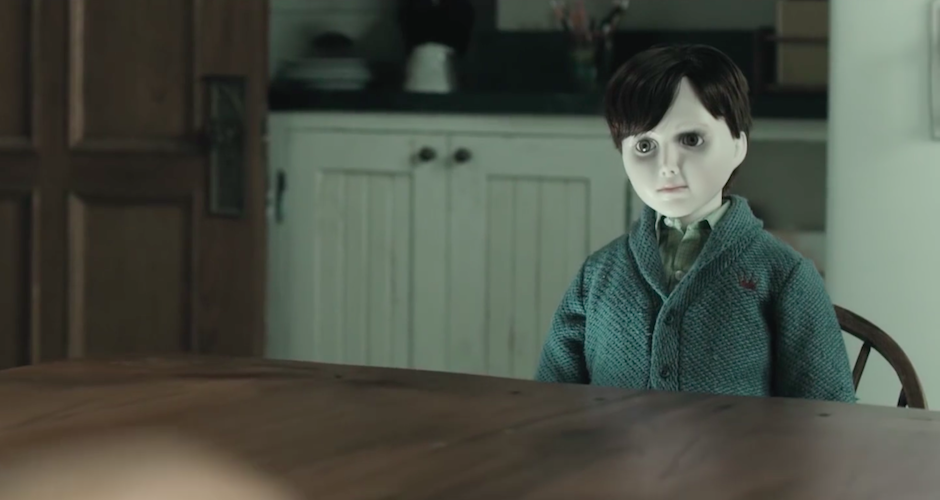
The boy in William Brent Bell’s inefficient chiller is actually a doll, and rather than have a fairly nondescript name like Ted Henley, goes by the unlikely moniker of Brahms Heelshire (pronounced Hillsher). Despite having perished in a fire twenty years ago, Brahms’ memory is kept alive by his parents (Norton, Hardcastle), who treat the doll as if Brahms were still alive. They “teach” him, play him music, read to him, set a place for him at meal times, and have set times when he “sleeps”. Into this bizarre situation comes American, Greta Evans (Cohan), to act as Brahms’ nanny while the Heelshires take their first trip away in twenty years. Before she’s even got halfway through the front door her shoes go missing, the first example of several mysterious occurrences that happen in the following days, and which lead her to believe that the doll is possessed by Brahms’ restless spirit.

The Boy - scene1

As you might expect, The Boy is a silly attempt at a horror movie, and one that stretches credibility as often as it possibly can. In contrast to its titular “rival”, this movie lacks subtlety, a coherent script, competent direction, and halfway decent performances. It’s the kind of movie that looks as if it was offered to Hammer but they turned it down because it needed too much work to make it, well, work. As it is, we’re treated to interminable shots of the doll staring back at the camera, Greta exploring the Heelshires’ house and finding herself trapped at one point in the attic, the promise of Greta’s abusive boyfriend turning up just to be killed, and a twist that undoes everything – however superficial – that the movie has built up until then.

The performances are serviceable, though Norton and Hardcastle bring a level of competence to their roles that the movie doesn’t deserve. Otherwise there’s very little to recommend The Boy, only that it’s mercifully forgettable.

Rating: 3/10 – despite a level of expectation that the movie has no intention of following through on, The Boy is neither scary nor terrifying, and for the most part settles for risible; Cohan is wasted, and Evans struggles as a character who has no clear reason for being there except to look confused – much like the unlucky viewer who settles down to watch this thinking they’re going to watch a movie about a nine year old sociopath.

Share this:

  • Click to share on X (Opens in new window) X
  • Click to share on Facebook (Opens in new window) Facebook
  • More
  • Click to print (Opens in new window) Print
  • Click to email a link to a friend (Opens in new window) Email
Like Loading...

Monthly Roundup – March 2016

31 Thursday Mar 2016

Posted by dullwood68 in Movies

≈ Leave a comment

Tags

Andy Mikita, Australia, Comedy, Cricket, Crime, Death of a Gentleman, Deathgasm, Devil worship, Disaster, Documentary, Drama, Ed Cowan, Edgar Ramirez, Ericson Core, Extreme Sports, FBI, Fred Durst, Horror, Ice Hockey, India, James Blake, Jarrod Kimber, Jason Bourque, Jeremy Sisto, Johnny Blank, Luke Bracey, Michael Shanks, Michelle MacLaren, Milo Cawthorne, Movies, Mr. Hockey: The Gordie Howe Story, Murder, Paul Johansson, Point Break (2015), Population / 436, Ray Winstone, Religion, Remake, Reviews, Robbery, Rockwell Falls, Sam Collins, Sci-fi, Sebastian Spence, Sports, Stonados, SyFy, Test match cricket, Twenty 20, Water spouts

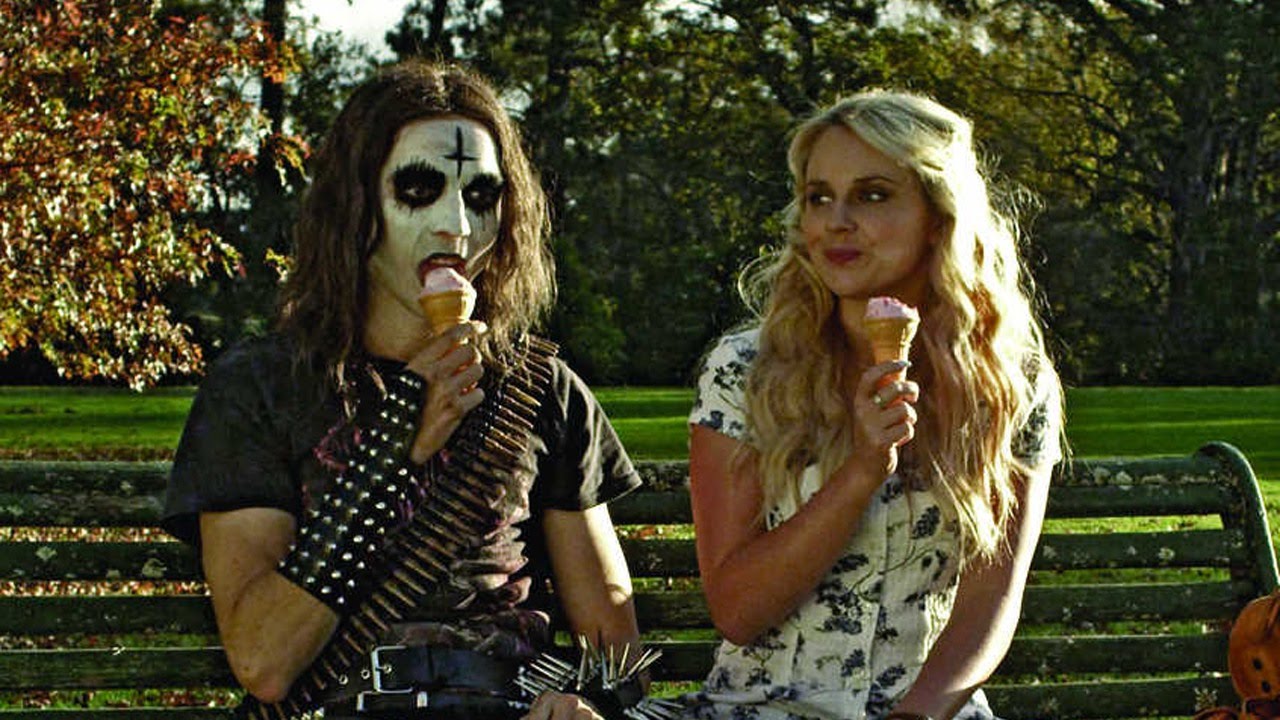
Deathgasm (2015) / D: Jason Lei Howden / 86m

Cast: Milo Cawthorne, James Blake, Kimberley Crossman, Sam Berkley, Daniel Cresswell, Delaney Tabron, Stephen Ure, Andrew Laing, Colin Moy, Jodie Rimmer

Deathgasm

Rating: 7/10 – when a teenage wannabe death metal band come into possession of sheet music that, when played, summons a demon called the Blind One, it’s up to them to stop both a zombie outbreak and the Blind One from destroying the world; raucous, rough around the edges, and with a liberal approach to gore, Deathgasm is a good-natured horror comedy that stumbles on occasion but, luckily, never loses sight of its simple brief: to be loud, dumb and lots of fun.

Mr. Hockey: The Gordie Howe Story (2013) / D: Andy Mikita / 87m

Cast: Michael Shanks, Kathleen Robertson, Dylan Playfair, Andrew Herr, Emma Grabinsky, Martin Cummins, Andrew Kavadas, Teach Grant, Ali Tataryn, Lochlyn Munro, Tom Anniko, Donnelly Rhodes, Erik J. Berg

HANDOUT PHOTO; ONE TIME USE ONLY; NO ARCHIVES; NOTFORRESALE Actor Michael Shanks as Gordie Howe is shown in a scene from the film "Mr.Hockey:The Gordie Howe Story," airing on CBC-TV on Sunday. THE CANADIAN PRESS/HO -CBC-Allen Fraser

Rating: 6/10 – the true story of ice hockey legend Gordie Howe who, after retiring in 1971, came back two years later and played not only with his two sons but in a new league altogether – and maintained his winning ways; looking like a strange hybrid of TV movie and abandoned big screen project, Mr. Hockey: The Gordie Howe Story does its best to avoid being a formulaic biopic, but is let down by the episodic nature of the script and a tendency to raise issues but not always follow them through.

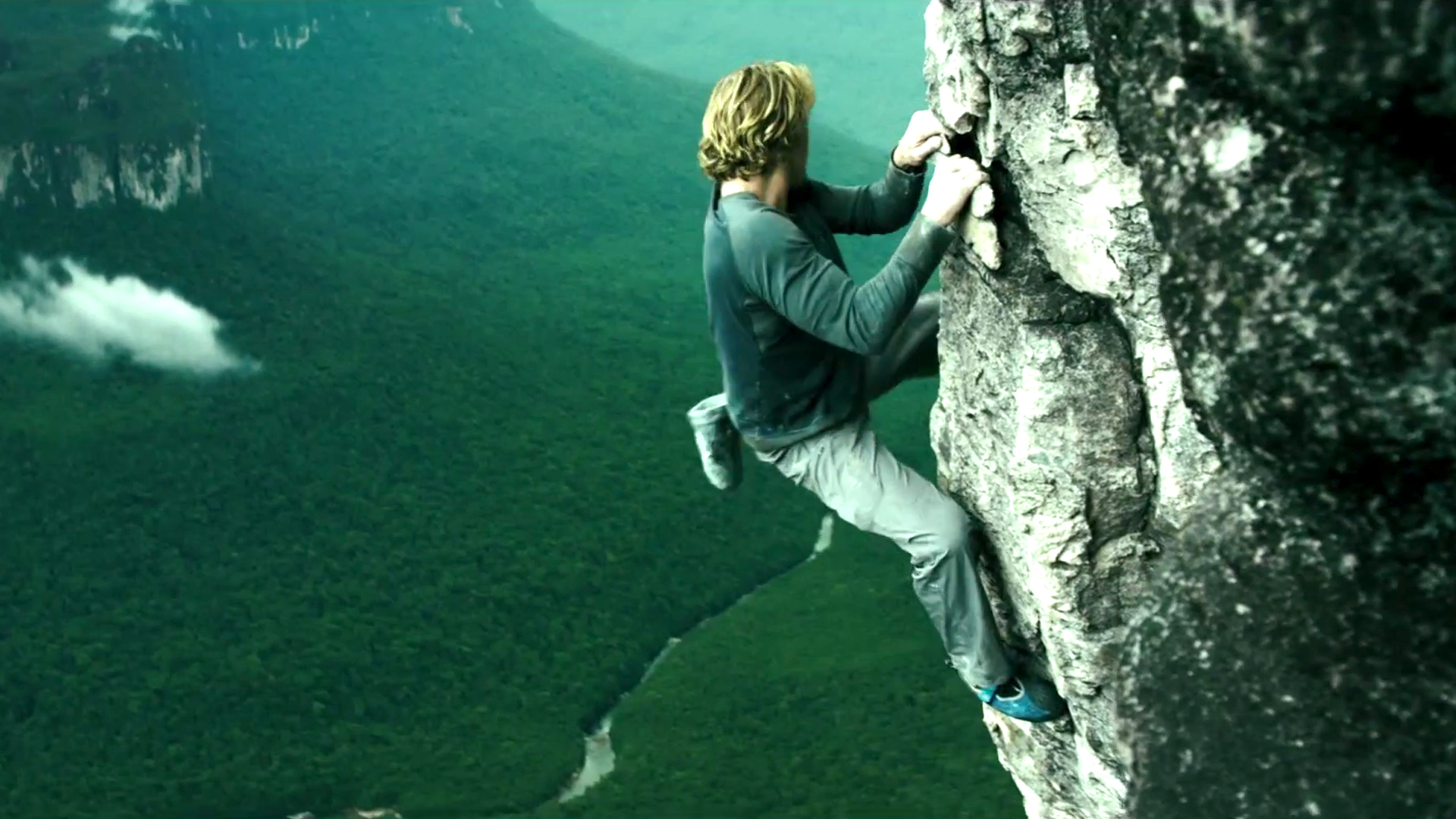
Point Break (2015) / D: Ericson Core / 114m

Cast: Edgar Ramirez, Luke Bracey, Ray Winstone, Teresa Palmer, Matias Varela, Clemens Schick, Tobias Santelmann, Delroy Lindo, Max Thieriot, Nikolai Kinski

Point Break

Rating: 4/10 – ex-extreme sportsman Johnny Utah joins the FBI and is given the opportunity to infiltrate a group of extreme sports fanatics who may or may not be responsible for a string of daring robberies; pretty to look at and featuring some great extreme sports sequences, Point Break is nonetheless a pointless remake with poor performances from all concerned, a woeful script, and lacks the edge Kathryn Bigelow brought to the original, leaving the viewer to wonder – yet again – why Hollywood insists on making so many dreadful remakes.

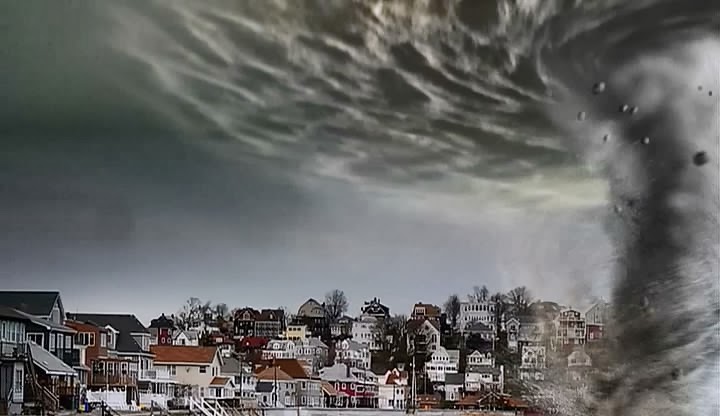
Stonados (2013) / D: Jason Bourque / 88m

Cast: Paul Johansson, Sebastian Spence, Miranda Frigon, Jessica McLeod, Dylan Schmid, William B. Davis, Grace Wolf, Thea Gill

Stonados

Rating: 3/10 – off the coast of Boston, freak water spouts appear and hurl large stone chunks in all directions, putting everyone in danger and hoping they don’t hit land and become… stonados!; made in the same year as Sharknado, this tries to take itself seriously, but without a sense of its own absurdity it stutters from one poorly staged “stonado” sequence to another while – ironically – being unable to shrug off a whole raft of ineffective, embarrassing performances.

Population / 436 (2006) / D: Michelle MacLaren / 88m

Cast: Jeremy Sisto, Fred Durst, Charlotte Sullivan, Peter Outerbridge, David Fox, Monica Parker, Frank Adamson, R.H. Thomson, Reva Timbers

Population 436

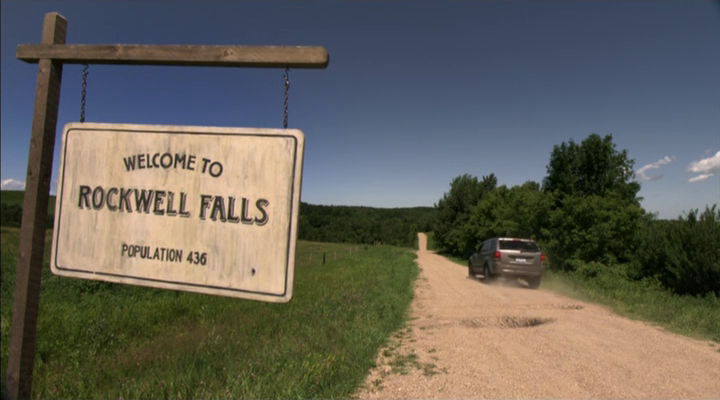
Rating: 6/10 – a census taker (Sisto) comes to the small town of Rockwell Falls and begins to suspect a terrible conspiracy, one that keeps the town’s population fixed at the same number; an uneasy, paranoid thriller with horror overtones, Population 436 features a good performance from Sisto and a well maintained sense of dread, but is held back from being entirely convincing by some awkward soap opera moments and a mangled reason for the town keeping its numbers to 436.

Death of a Gentleman (2015) / D: Sam Collins, Jarrod Kimber, Johnny Blank / 99m

With: Sam Collins, Jarrod Kimber, Ed Cowan, Giles Clarke, Narayanaswami Srinivasan, Lalit Modi, Gideon Haigh, Mark Nicholas, Chris Gayle

Death of a Gentleman

Rating: 8/10 – journalists Collins and Kimber set out to make a movie about their love of cricket and the challenges it faces, both commercially and culturally, and discover a scandal that threatens an end to test match cricket; not just for fans of “the gentleman’s game”, Death of a Gentleman is a quietly impressive documentary that sneaks up on the viewer and exposes the level of corruption at the very top of the game, revealing as it does the way in which the sport is being held to ransom by Srinivasan and a handful of others.

Share this:

  • Click to share on X (Opens in new window) X
  • Click to share on Facebook (Opens in new window) Facebook
  • More
  • Click to print (Opens in new window) Print
  • Click to email a link to a friend (Opens in new window) Email
Like Loading...

Trailers – Elstree 1976 (2015), The Nice Guys (2016) and Lights Out (2016)

30 Wednesday Mar 2016

Posted by dullwood68 in Movies

≈ Leave a comment

Tags

Action, Comedy, David F. Sandberg, Documentary, Elstree 1976, Horror, james Wan, Jon Spira, Lights Out, Previews, Russell Crowe, Ryan Gosling, Shane Black, Star Wars, The Nice Guys, Trailers

A big hit at the BFI London Film Festival last year, Elstree 1976 is a lovingly crafted ode to ten people who worked on a little movie called Star Wars, but who won’t necessarily be known to the wider public (well, Dave Prowse might argue about that). That none of them went on to find worldwide fame and fortune isn’t the point of Jon Spira’s documentary; rather it’s the communal joy that came out of working on a project that none of them could have known would have been so successful, and which has enriched their lives in ways they couldn’t have imagined (even if it didn’t feel like it at the time).


The latest movie from the mercurial mind of Shane Black, The Nice Guys is the kind of uproarious mismatched buddy movie that only Black can put together. The teaming of Russell Crowe and Ryan Gosling looks inspired, and the Seventies setting looks so vivid  it’s hard to believe it wasn’t filmed in 1978 and has been sitting on the shelf ever since. The plot concerns the apparent suicide of a fading porn star, but don’t be surprised if there are larger shenanigans afoot, along with lashings of stylised violence, visual gags galore, and whip-smart banter between the leads.


The latest chiller from producer James Wan, Lights Out takes writer/director David F. Sandberg’s short movie – just three minutes long – and expands it to feature length. Its tale of a supernatural entity stalking three generations of the same family may suffer from being extended from its original set up, but hopefully Sandberg has crafted a back story that will explain everything satisfactorily. Either way, expect plenty of scares, lots of spooky rooms for the scares to take place in, and an array of characters who keep turning the lights off when they know they really shouldn’t.

Share this:

  • Click to share on X (Opens in new window) X
  • Click to share on Facebook (Opens in new window) Facebook
  • More
  • Click to print (Opens in new window) Print
  • Click to email a link to a friend (Opens in new window) Email
Like Loading...

Oh! the Horror! – Little Dead Rotting Hood (2016) and The Inhabitants (2015)

25 Friday Mar 2016

Posted by dullwood68 in Movies

≈ Leave a comment

Tags

Bianca A. Santos, Den mother, Elise Couture Stone, Eric Balfour, Horror, Jared Cohn, Little Dead Rotting Hood, Michael Rasmussen, Michael Reed, Missing children, Review, Shawn Rasmussen, Stillwater, The Carriage House, The Inhabitants, Werewolves, Witchcraft

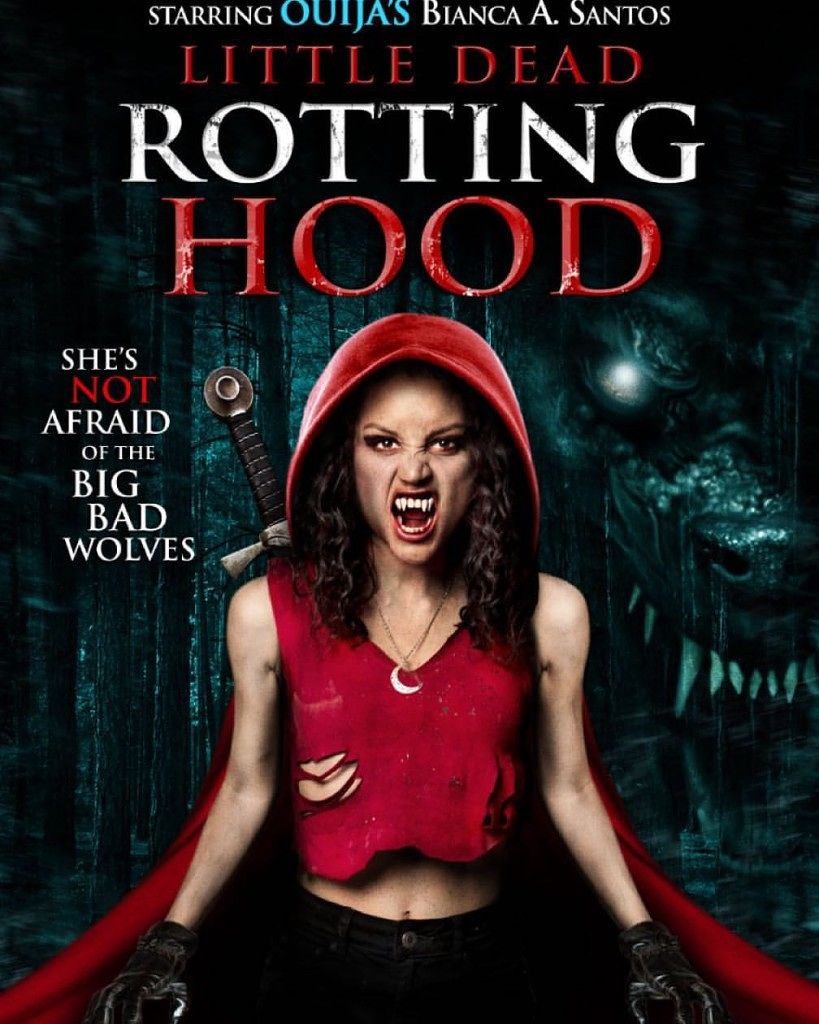
Little Dead Rotting Hood

Little Dead Rotting Hood (2016) / D: Jared Cohn / 88m

Cast: Eric Balfour, Bianca A. Santos, Romeo Miller, Patrick Muldoon, Heather Tom, Brendan Wayne, Marina Sirtis, Amy Argyle, Tony Ketcham

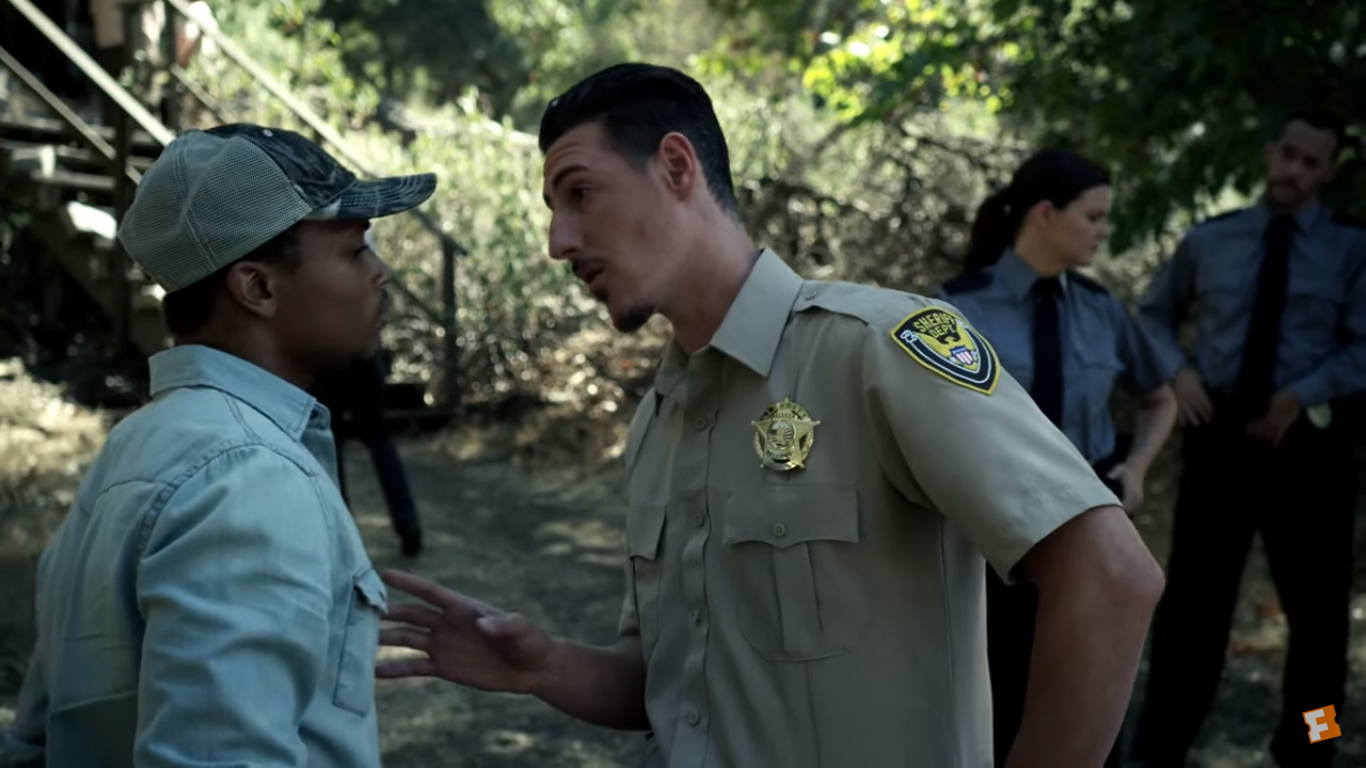
In the small town of Stillwater in the state of Backwoods USA, there’s a bit of a problem with wolves. It seems the hairy devils are attacking and killing the townsfolk, which according to State Officer Victoria (Tom) shouldn’t be happening… unless of course these wolves are some kind of genetic mutation (which would explain why they don’t hunt in a pack). But the problem is a much more serious one: these aren’t just any old wolves, even genetically mutated ones. No, they’re werewolves, and they have a den mother who wants to kill all the townspeople on the night of the autumn equinox (basically, in a few days’ time). Can town Sheriff Adam (Balfour), Deputy Henry (Muldoon) and the usual handful of eager locals/dialogue-free extras, including town weirdo Benson (Ketcham), bring these supernatural entities to heel and save the day?

LDRH - scene2

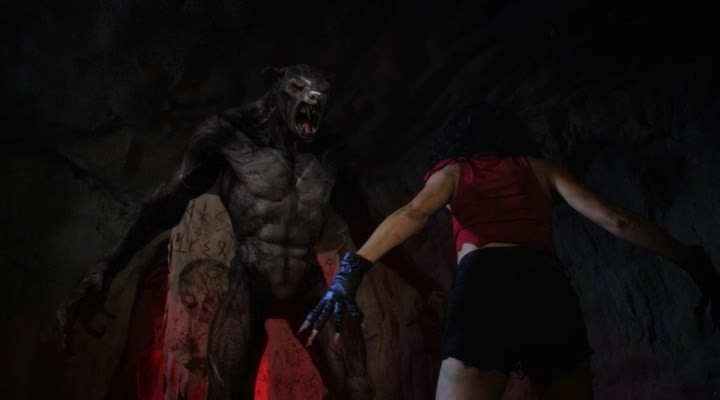
Not by themselves, no. As it turns out they need help from the Keeper of the Forest. And who’s that you ask. That’s Samantha (Santos), the granddaughter of the town’s other weirdo, Mrs Winfield (Sirtis) aka the Wolf Lady. You see, Samantha has inherited her grandmother’s supernatural abilities, albeit in very unfortunate circumstances: following a werewolf attack, Samantha died, but her grandmother used her powers to resurrect her. Now Samantha is able to kick werewolf butt and aid the Sheriff in his attempts to hunt down the werewolves that are running amok, and also track down their den mother.

Viewers expecting a fun time with Little Dead Rotting Hood would be advised to lower their expectations – and they probably will when they see “The Asylum Presents” show up during the movie’s opening credits. Small town werewolf movies have become reasonably popular in recent years, what with the likes of Late Phases (2014) and WolfCop (2014), but Little Dead Rotting Hood isn’t likely to join them in the public’s affection anytime soon. It’s clear that the title came first and screenwriter Gabriel Campisi was left to come up with a story to match it to, but as he hasn’t written a script since Alien Agenda: Endangered Species (1998), it soon becomes obvious the task was beyond him. When he can’t even decide if the werewolves can be killed by ordinary gunfire or not you know the movie’s in trouble (before we learn that they’re werewolves they can, afterwards they can’t).

LDRH - scene3

Things aren’t helped by the hiring of Jared Cohn in the director’s chair. Cohn gave us the incredibly stupid Buddy Hutchins (2015), and he’s on equal form here, stifling what little tension Campisi has managed to create by virtue of poor staging, failing to address the absurdities of the script (difficult as there are so many), and failing to encourage even one halfway decent performance from anyone. Balfour looks as if his agent said yes without consulting him in the first place, Santos looks baffled in the way that someone does when they’re not sure if they’re in the right place, and Sirtis gets off lightly by only appearing in a cameo role. Even the special effects reflect the bargain basement budget and lack of creativity, with Santos’ Little Dead Rotting Hood look reminiscent of the kind of “scary” make up worn by kids at Halloween.

Rating: 3/10 – one to avoid, Little Dead Rotting Hood pays lip service to the zombie aspect of its title, and squanders any attempt at being hokey fun by running away from the possibility whenever it seems likely to happen; basically a random selection of scenes that barely relate to each other, the movie is neither entertaining or rewarding, and seems only to have been made on some kind of dare.


The Inhabitants

The Inhabitants (2015) / D: The Rasmussen Brothers / 90m

Cast: Elise Couture Stone, Michael Reed, Judith Chaffee, Rebecca Whitehurst, India Pearl

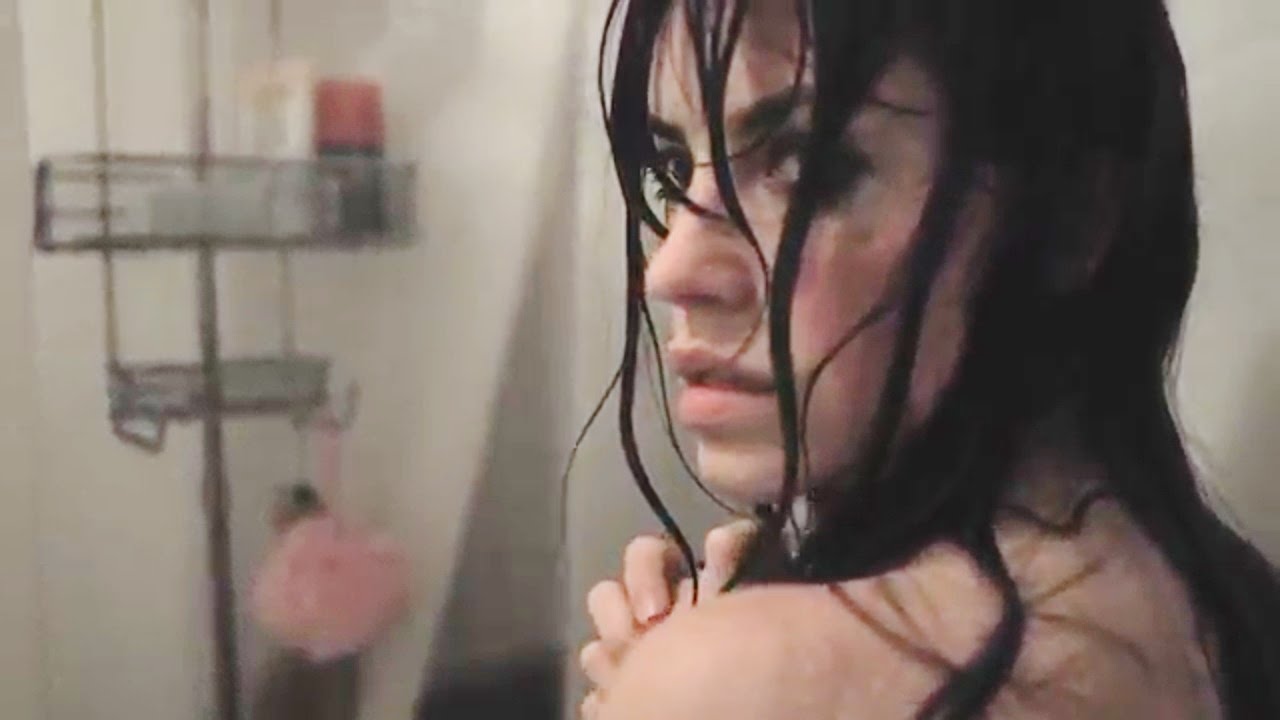
Jessica (Stone) and Dan (Reed) decide to buy a New England bed and breakfast, the isolated, three hundred and fifty year old Carriage House. Previously run by an elderly couple, the wife has become too infirm to run things by herself since the death of her husband, and her family are looking for a quick sale that includes all the fixtures and fittings. Jessica and Dan have plans to continue running the place as a bed and breakfast, and once they’ve moved in they set about fixing what needs fixing and upgrading what needs upgrading. But it isn’t long before they each begin to hear things – strange noises – and Ben discovers that one of the fuses relates to somewhere in the main house that he can’t track down.

TI -scene1

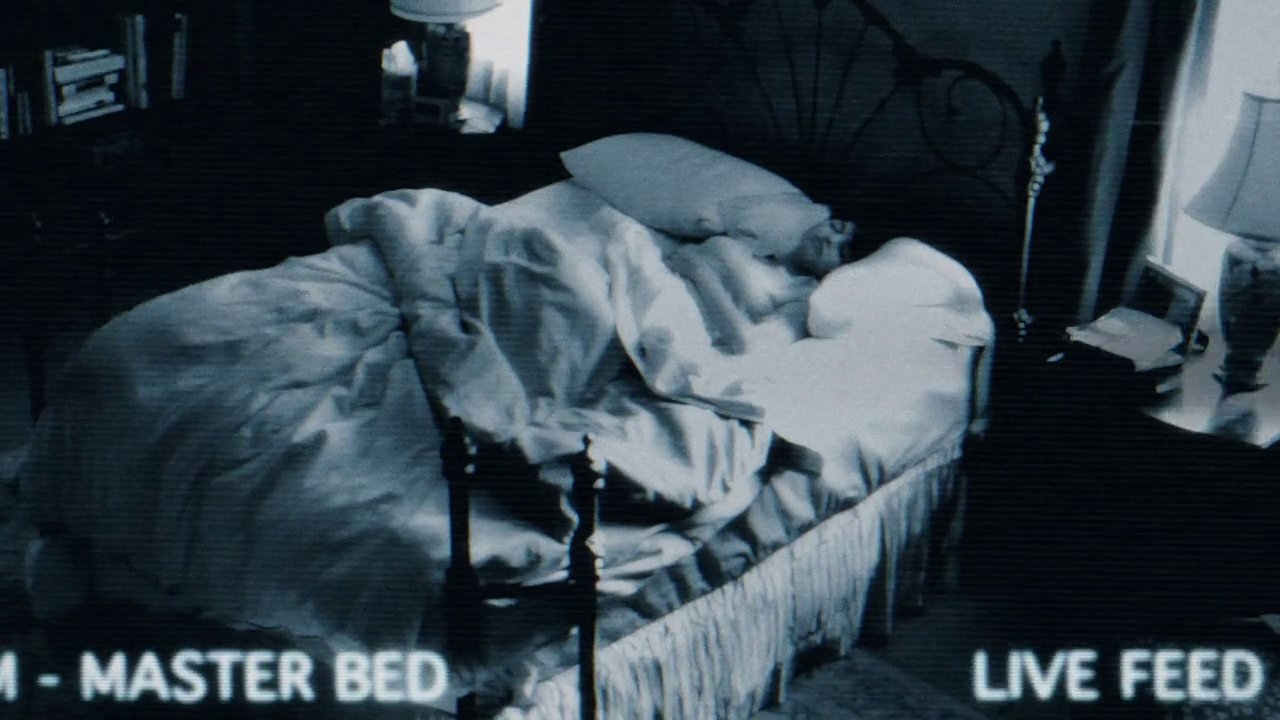
An encounter with some of the locals leads to Jessica finding out that the Carriage House was built in the 1600’s and was home to a midwife, Lydia Marsh (Pearl), who was charged with witchcraft when several children she nursed grew sick. After her death, a number of children went missing and were never seen again. Dan leaves on a business trip, and while he’s away Jessica has a supernatural encounter that leaves her distant and uncommunicative. Her newly-odd behaviour leads to Dan discovering which part of the house the mystery fuse relates to: an attic space that contains a bank of video screens and recorders. But his discovery that the previous owner was spying on his guests also reveals a greater secret, one that the house has been hiding for over three centuries.

When a movie poster boasts that the movie it’s supporting is “From the writers of John Carpenter’s The Ward” it’s likely to provoke one of two responses: first, “John Carpenter made a movie called The Ward?”, and second, “Is that really the best recommendation anyone could come up with? Have they seen The Ward?” Either response would be appropriate for this slow-moving, less than atmospheric chiller that ticks off the clichés as it navigates its way from its inauspicious beginning to its predictable resolution. With nothing new to keep the viewer interested, The Inhabitants is a dreary, tension-free affair that signposts its few scares and offers one of the most tired horror set ups there is: the house with a bad history (cue disappointment and yawning).

TI - scene2

In the hands of the Rasmussen Brothers, Michael and Shawn, the movie doesn’t even attempt to get us to like its central characters. Jessica and Dan lack a back story, and thanks to the vagaries of the script in its first third, we never get to know them as a couple. Once the house begins to exert its influence on Jessica, any potential development is abandoned in favour of Dan’s discovery of the surveillance system, and having her wander around the house in a trance. The movie also favours the type of dark, hollow-eyed make up (that we’ve now seen done to death) to make its spectres look chilling, a creative decision that doesn’t work thanks to that particular look being so prevalent in horror movies right now. By the end you won’t care what happens to either Jessica or Dan; instead you’ll be glad you can leave the Carriage House behind and never have to go back.

Rating: 4/10 – lacking in many departments, but let down most of all by its derivative nature, The Inhabitants is a so-so horror movie that barely feels as if it’s “alive”; and when a movie has to include the deaths of some minor characters in order to bring some energy to proceedings then you know it’s in trouble.

Share this:

  • Click to share on X (Opens in new window) X
  • Click to share on Facebook (Opens in new window) Facebook
  • More
  • Click to print (Opens in new window) Print
  • Click to email a link to a friend (Opens in new window) Email
Like Loading...

Pride and Prejudice and Zombies (2016)

13 Sunday Mar 2016

Posted by dullwood68 in Movies

≈ Leave a comment

Tags

Burr Steers, Drama, Elizabeth Bennet, Horror, Jane Austen, Lena Headey, Lily James, Literary adaptation, Mr. Darcy, Parody, Regency England, Review, Sam Riley, Seth Grahame-Smith, Thriller, Zombies

PAPAZ

D: Burr Steers / 102m

Cast: Lily James, Sam Riley, Matt Smith, Jack Huston, Bella Heathcote, Douglas Booth, Lena Headey, Sally Phillips, Charles Dance, Ellie Bamber, Millie Brady, Suki Waterhouse

From the 1814 Alternate Universe Almanac, 21 January:

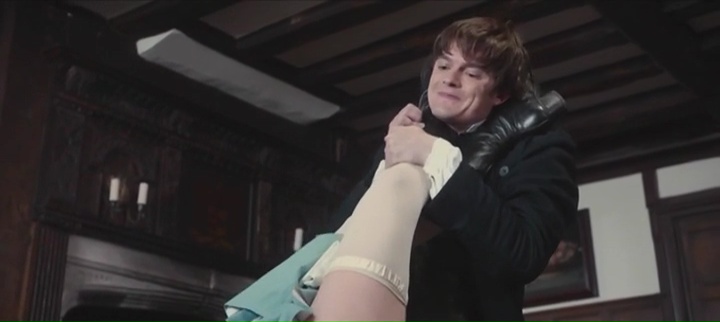
Revealed to a waiting world with all the fanfare that the firm of Butan, McKittrick, Oliver, Portman, Savitch, Shearmur & Thompson can muster, these kindly souls have enjoined us to a world that has no equal or predecessor in the annals of the flickering image. Miss Jane Austen’s latest novel, published to great acclaim last year, has been fashioned into a drab, humourless affair that strains the credulity of every right-thinking person in  the land, and which purports to imagine an England overrun by an army of the dead.

vlcsnap-00002

Preposterous you may say, and this author would heartily agree with you. Concocted with a clear disdain for the exquisite talent of Miss Austen, Mr. Burr Steers and Mr. Seth Grahame-Smith – both Americans, no doubt – have taken her sterling work and made a mockery of its literary merits by inserting strange creatures that resemble vampires, but with the exception that they seek flesh to eat rather than blood to drink. It is not uncommon to find examples of this kind of unabashed traducery made as low entertainment for the masses, but it is for the more discerning viewer of these “tragedies” to be of one voice with his equally appalled brethren and shout loudly, “No more! No more repellent travesties created to provide succour for the poor in spirit and the easily tempted! No more!”

A crueller distraction could no more be found than Pride and Prejudice and Zombies. The subtlety of Miss Austen’s prose is retained for the most part, but be not gladdened by this admission, for it is used in such a paltry way that readers familiar with Miss Austen’s work will be distraught at the way in which emphasis is abandoned in favour of recitation, and her characters speak as if they had not the wit to understand their own utterances. It is a folly to assume that Mr. Steers and Mr. Grahame-Smith have generated this debacle with any concern for the respect Miss Austen’s work has accrued since her debut some two years ago. While it can be said that the settings they have chosen give some degree of pleasure to the eye, as do the ladies chosen to portray the Bennet sisters, it is nevertheless an endeavour that lacks finesse, and proves of little consequence once experienced from beginning to end.

vlcsnap-00003

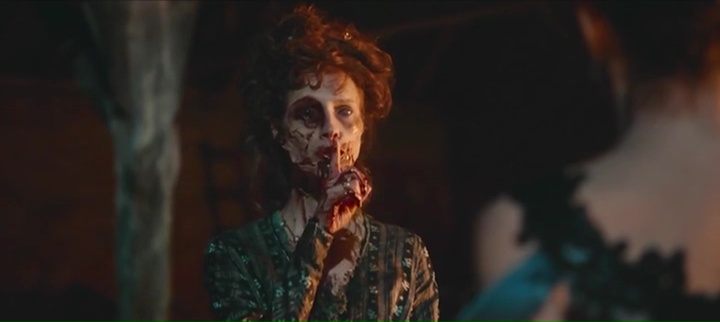
Be warned: the inclusion of “zombies” marks a low point in our nation’s proud literary and (short-lived) zoetropic history. What possible good can come of this exhibition’s existence it’s doubtful anyone will be able to determine, and this august periodical can see no reason for its existence beyond a scurrilous and repugnant attempt to separate the hoi polloi from what little earnings they make – earnings that would no doubt be put to better use in the purchase of potatoes for the nurturing of their families. For make no mistake, here is no nurturing of the mind or the finer senses to be gained from viewing Pride and Prejudice and Zombies. It is an ill-conceived distraction, filled with moments that are both violent and reprehensible, and which paint such a dismal alternative to the beauteous world we live in that one must question the motives of the men and women who have found this a suitable piece to put before the public.

There can be no doubt that the assembly called upon to inhabit the various roles Miss Austen went to great pains to construct – and with such great artistry – have little to offer in terms of imagination or grace. Special mention must go to the esteemed Mr. Dance, an actor of such renown that his presence here is difficult to fathom, surrounded as he is by artists who lack the graces God gave them to fully articulate the feelings and emotions that occupy our hearts and minds on each and every blessed day of our existence. That Miss Austen wrote of romantic involvement with such subtlety and perspicacity appears to have been put aside in favour of feeble declarations of ardour, declarations that carry the barest weight of conviction.

In conclusion, the efforts of Mr. Steers and Mr. Grahame-Smith have proved to be of such a disservice to those of us who champion the potential of the zoetropic arts that we would be forever indebted to them if they refrained from making any further assaults on our senses. Let us say again: “No more!”

vlcsnap-00001

Rating: 3/10 – a dire movie that plods along in search of a reason to exist (like its titular creatures perhaps), Pride and Prejudice and Zombies sounds like a great twist on an old classic, but in truth is uncomfortable to watch as a period piece, and as a horror movie; when the zombies have more personality – and evoke more sympathy – than your main characters, then you have a movie that’s in trouble in more ways than one, and this movie courts trouble like an aging Lothario looking to impress one young woman too many.

Share this:

  • Click to share on X (Opens in new window) X
  • Click to share on Facebook (Opens in new window) Facebook
  • More
  • Click to print (Opens in new window) Print
  • Click to email a link to a friend (Opens in new window) Email
Like Loading...

Goodnight Mommy (2014)

21 Sunday Feb 2016

Posted by dullwood68 in Movies

≈ Leave a comment

Tags

Drama, Elias Schwarz, Horror, Lukas Schwarz, Mother, Review, Severin Fiala, Susanne Wuest, Thriller, Twins, Veronika Franz

Goodnight Mommy

Original title: Ich seh ich seh

D: Veronika Franz, Severin Fiala / 100m

Cast: Lukas Schwarz, Elias Schwarz, Susanne Wuest, Hans Escher, Elfriede Schatz, Karl Purker

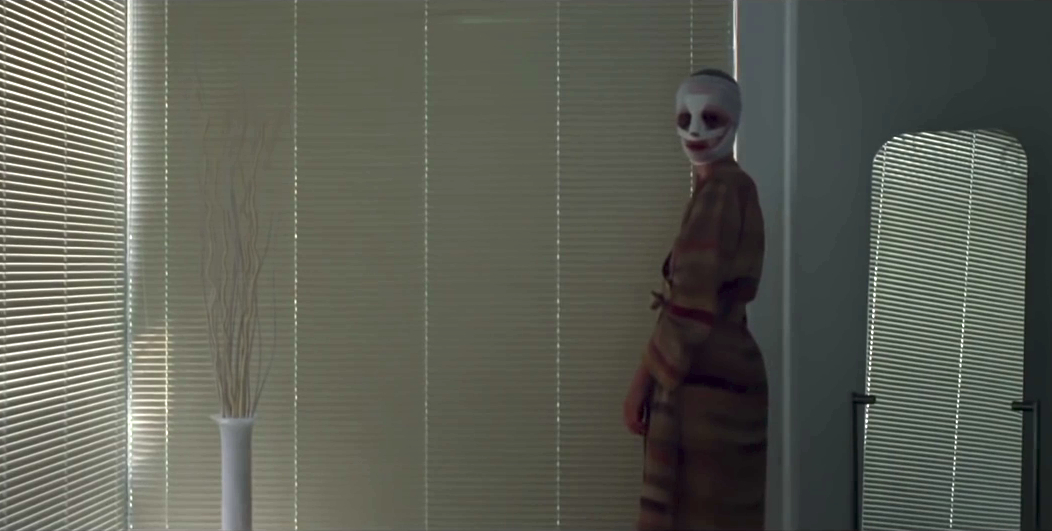
At an isolated lakeside property surrounded by woods and cornfields, two nine year old boys, twins, play freely while they await the return of their mother who has been in hospital following an accident. When she returns home they are dismayed to find she has had facial reconstructive surgery, and her features are hidden under a swathe of bandages. Her mood and attitude have changed and she’s no longer the kind-hearted mother they remember. She insists on imposing some strict house rules in order to aid her recovery, and because of a perceived slight, refuses to acknowledge the presence of one of the boys, Lukas.

Lukas and his brother, Elias, begin to feel uneasy around their mother, and soon they’ve convinced themselves that the woman who has come home from the hospital isn’t their mother at all but an imposter. When they rescue a cat and bring him home, it’s not long before they find him dead in the basement. Convinced their “mother” is responsible they begin to form a plan of resistance. As they ignore her wishes and behave inappropriately around her, she becomes less and less tolerant, to the point of locking them in their room. The boys challenge her more and more, even telling her they want their mother back. This leads to increased tension in the house, tension that is relieved for a short period when their “mother” is able to remove her bandages and she looks like her old self.

By now though, Elias and Lukas have convinced themselves completely that she is an imposter, and they take steps to prove their theory. When she wakes one morning she finds herself tied to her bed and her two sons determined to learn the truth – whatever the cost.

GM - scene2

Goodnight Mommy begins in a cornfield, with Lukas and Elias playing hide and seek amongst the rows. It’s the epitome of a carefree, spirited childhood, as we follow the two boys on their adventures and explorations of the local countryside. It’s almost idyllic, beautifully shot (on glorious 35mm) by DoP Martin Gschlacht, and with only a shot of the two boys disappearing into a disused tunnel to give any indication that their childhood is anything but unspoiled and bucolic. When they return to their brightly lit, glass-fronted home with its open-plan spaces and minimalist furniture, it seems as if the house is, for them, an extension of the world they play in outside. Excited to see their mother again, they rush to her bedroom, and in the moment it takes to acknowledge her appearance, their picturesque existence comes to an end.

What follows is less about innocence lost as innocence corrupted from within, as Elias and Lukas take increasingly disturbing steps in their quest to find the truth about their mother’s identity. With no one to correct them – their father and mother have separated as a result of the accident – and with their imaginations becoming ever more fervid and distressing, the twins create their own cauldron of oppression. When they take matters too far, and their methods in finding the truth become too harrowing, their dispassionate features and lack of compassion become even more frightening than the idea that their mother really is some kind of evil döppelganger.

GM - scene1

The movie toys with this idea, that there’s a matriarchal cuckoo in the nest, for quite some time, with the mother behaving oddly while her sons are out of sight and earshot, and thanks to some cleverly inserted dream sequences that are played out in the boys’ own psyches (one such sequence, involving a cockroach, will have some viewers wishing they were watching something altogether more wholesome). As the movie pulls the audience firmly in this direction, and litters the narrative with clues that something truly isn’t right with the mother, it distracts cleverly and persuasively from the real horror: that something truly isn’t right with the children.

By the time viewers work this out – and some may do so quite early on – it’s far too late, and the movie has sunk its claws in and won’t let go. Thanks to two superb performances from real-life twins Elias and Lukas Schwarz, the blandness of their appearance, and their downplayed facial expressions hide a growing menace that sits like a suffocating cloak around their shoulders. As they carry out newer and more emasculating “procedures” on their “mother”, the movie attains a level of intensity that proves hard to watch, and where the drama so far has been patiently heightened and maintained, it now becomes the kind of horror movie where to look away is no guarantee of relief. One mealtime sequence becomes so excruciating to watch, thanks to the children’s lack of foresight, that their casual, matter-of-fact response is even more horrifying.

GM - scene3

Matching the Schwarzes in the acting stakes is Wuest, whether she’s looking grim and monstrous behind her bandages, or later when she’s restored to her former good looks. When further doubt to her identity is added to the mix late on, Wuest still manages to tread the line of providing clarity while also maintaining the uncertainty of her character’s true nature. It’s a delicate balancing act, but one that she pulls off with aplomb. All three are helped immeasurably by the writing-directing team of Franz and Fiala. Their script, and the confident way in which they’ve developed it visually, is refreshingly spare, and yet it’s also possessed of a depth in terms of the characterisations and the psycho drama being enacted on screen that elevates the material to unexpected heights.

The movie is also paced to perfection, with scenes allowed to play out for maximum effect, and to enhance the sense of impending doom that permeates the narrative with every inevitable development. Franz and Fiala have worked hard to create a private world for the story to take place in, and interior worlds for the boys that feed off of and sustain that original private world. It all adds up to one of the most original and nerve-racking horror movies of recent years.

Rating: 9/10 – anchored by a trio of superb performances, and a script that doesn’t shy away from showing the consequences of imaginations left unchecked, Goodnight Mommy has a clammy, skin-crawling effect that’s hard to shake off; with striking imagery and a tremendous sound design to add to the movie’s sense of mounting terror, this is satisfying in ways you really shouldn’t want it to be.

Share this:

  • Click to share on X (Opens in new window) X
  • Click to share on Facebook (Opens in new window) Facebook
  • More
  • Click to print (Opens in new window) Print
  • Click to email a link to a friend (Opens in new window) Email
Like Loading...

Oh! the Horror! – Paranormal Activity: The Ghost Dimension (2015) and Sinister 2 (2015)

25 Monday Jan 2016

Posted by dullwood68 in Movies

≈ Leave a comment

Tags

Brit Shaw, Bughuul, Chris J. Murray, Ciarán Foy, Custody battle, Dan Gill, Demons, Drama, Ex-deputy So-and-So, Gregory Plotkin, Horror, Ivy George, James Ransone, Murder, Sequels, Shannyn Sossamon, The Midwives, Toby

Paranormal Activity The Ghost Dimension

Paranormal Activity: The Ghost Dimension (2015) / D: Gregory Plotkin / 88m

Cast: Chris J. Murray, Brit Shaw, Ivy George, Dan Gill, Olivia Taylor Dudley, Chloe Csengery, Jessica Tyler Brown, Don McManus, Michael Krawic, Hallie Foote

Promoted as the series’ entry that ties everything together and explains all that’s happened in the previous five movies, Paranormal Activity: The Ghost Dimension has arrived at a point where rounding off the convoluted storyline begun (quite simply) back in 2007 has ceased to be of any interest. It’s likely that most people, even fans, gave up after Paranormal Activity 3 (2011), as the producers attempted to make each instalment part of a bigger whole. This led to Katie Featherston’s character popping up in unlikely places to ensure some kind of continuity, and the slow but inevitable decline in both plausibility and scares.

But with this concluding entry, the makers have decided to ignore the events of Paranormal Activity 4 (2012) and Paranormal Activity: The Marked Ones (2014) and bring back the younger versions of Katie (Csengery) and Kristi (Brown) in a game of video charades. With a new couple, Ryan (Murray) and Emily (Shaw), who move in to a new home with their young daughter Leila (George), set up as prospective victims of the entity now known as Toby, the movie adds a semi-live-in nanny, Skyler (Dudley) and Ryan’s visiting brother Mike (Gill) to the mix, and once a box full of old video tapes and a video camera that looks like a parody of a boombox is found, begins to wrap things up very untidily indeed.

PATGD - scene2

As Ryan becomes obsessed with going through the tapes, strange things begin to happen in the house – strange, that is, if you haven’t seen the previous five movies (though perhaps the strangest thing is the Xmas tree, which keeps changing in size throughout – now that’s spooky). It soon becomes obvious that Leila is the focus for all this weird activity, and Ryan and Mike set up cameras around the house to film it all. It’s not long before we see a strange black figure coalescing in Leila’s room at night, or emanating from the upstairs ceiling. It’s aggressive, it’s trying to become fully formed, and it doesn’t register on every camera (this is meant to be unnerving, but serves only to make us watch even more static shots where nothing is happening). And amongst a whole slew of “explanations” for what’s happening, Ryan and Emily discover that the house they’re in has been built over the location of Katie and Micah’s house (from the first movie) that burnt down (which again is meant to be unnerving, but just seems like one “coincidence” too far).

Thanks to the familiarity and the structures of the previous movies, this (hopefully) final movie soon finds itself painted into a corner. Toby makes more progress toward human form in this movie than in all the others combined, which makes you wonder why it’s taken him this long. The scares still consist of things rushing at or past one of the cameras, and the slow build of tension that made the first movie so effective, has now become so devalued that instead of feeling anxious, the viewer is more likely to feel bored. And the characters still insist on carrying cameras around with them when the ectoplasm hits the fan, a problem none of the movies has been able to address with any confidence.

PATGD - scene1

If this is to be the last in the franchise – and there’s no reason it should be, given the final outcome – then it will qualify as the least in the series thanks to the tired nature of the narrative, and an unwillingness to do anything that might be innovative or surprising. And as if to confirm – if confirmation were needed – just how devoid of originality the movie is, the Ghost Dimension, so hyped up before the movie’s release, proves to be just… another… room.

Rating: 3/10 – unable even to sign off satisfactorily, Paranormal Activity: The Ghost Dimension sees the series grind to a creative halt amid a welter of dull scenes that rarely relate to each other let alone the rest of the franchise; with such a disregard for its own legacy, the series deserves to be laid to rest now, but if a seventh movie is on the cards, then it needs to ignore everything that’s gone before and come up with a brand new story entirely – because this one is broken beyond all repair.


Sinister 2

Sinister 2 (2015) / D: Ciarán Foy / 97m

Cast: James Ransone, Shannyn Sossamon, Robert Daniel Sloan, Dartanian Sloan, Lea Coco, Tate Ellington, John Beasley, Lucas Jade Zumann, Nicholas King

The original Sinister (2012) was a surprise, both in its inventive storyline and writer/director Scott Derrickson’s confidence with the material. Its principal villain, the demon Bughuul (King) – looking like a badly scarred Nick Cave – was kept largely in the shadows and his motives went largely unrevealed. It was a mostly effective mix of horror movie and mystery drama, and was bolstered by Ethan Hawke’s committed performance. But as with any horror movie that achieves even limited success at the box office, the inevitable sequel is here at last.

With Hawke’s character no longer around for the viewer to follow up with, we’re left with Ransone’s secondary, unnamed character as our guide to what follows. As the now ex-deputy (called So-and-So in the credits), he’s begun following the trail of killings related to Bughuul and is travelling around the US burning the buildings that these killings have taken place in, the idea being that Bughuul’s legacy can’t be continued in the same place by future inhabitants. At one such place he encounters Courtney (Sossamon), a mother with two sons, Dylan (R. Sloan) and Zach (D. Sloan), who is hiding from her abusive husband (Coco) pending a custody battle. Of course, the ex-deputy is already too late. Dylan is spending most nights in the basement watching snuff movies with the likes of Bughuul protégé Milo (Zumann) and his equally dead friends. Once Dylan has watched all the movies they have to offer, then he can make his own and become the latest in the long line of Bughuul’s victims.

Sinister 2 - scene1

The movie cheats a bit at the start by showing us a snuff movie that we’ll see the making of later on (and which turns out differently), and it delves perhaps too deeply into the origins of its villain, making him into a kind of globetrotting malevolent entity who can pop up anywhere, and in any culture. Thanks to the same judicious use of his appearance in the movie as the first one though, Bughuul remains as scary in appearance as he did before, but with the sense of threat firmly linked to Milo and the other children, his occasional appearances lack the intensity of the first movie.

The central plot – Dylan’s recruitment by Milo – is enhanced by the snuff movies he’s encouraged to watch. These are the movie’s grim highlights, their 16mm nature proving as effective as they did in part one. One, Fishing Trip, is perhaps the nastiest (and well made), though Sunday Service gives it a run for its money. But when the movie stops for us to see one of them, it serves also as a reminder that this is where the movie really works, not with its soap opera style romance between the ex-deputy and Courtney, nor the domestic violence dramatics once Courtney and the kids are back with daddy. These are necessary to pad out the running time and give us some breathing space between the moments of horror, but are equally those moments you wish the movie would get through more quickly.

Sinister 2 - scene2

The performances are average, with Ransone’s shy, reclusive nature soon becoming annoying, and Sossamon finally eschewing the ragged fringe look we’ve seen way too often. The brothers Sloan are okay, with Dartanian looking at times like a younger Ryan Lee, but Zumann gives such a mannered and off-putting portrayal as Milo that you wish he had less screen time (this is definitely not one of those movies where the children give easily the best performances).

In the end, Sinister 2 has a hard time justifying its existence beyond being an opportunistic cash-in on the back of an unexpected success (though some horror movie sequels have been made for even less exalted reasons). It doesn’t further the original story in any meaningful way, and has less to say about the nature of evil, something the original did with some degree of interest and flair. There are no prizes for guessing the outcome, nor that the last scene will feature a groan-inducing “scare”, and equally there’s very little chance that this will be a movie you’ll want to come back to, even if someone asks you to.

Rating: 5/10 – horror sequels such as Sinister 2 exist in a parallel world of movie making where it’s assumed that people want more of something that’s been successful, but really, that’s rarely the case; a largely by-the-numbers approach that will remind many viewers of horror sequels from the Nineties, this is a movie that never tries to be anything but a movie trying to be successful off the back of its predecessor.

Share this:

  • Click to share on X (Opens in new window) X
  • Click to share on Facebook (Opens in new window) Facebook
  • More
  • Click to print (Opens in new window) Print
  • Click to email a link to a friend (Opens in new window) Email
Like Loading...

Mini-Review: He Never Died (2015)

06 Wednesday Jan 2016

Posted by dullwood68 in Movies

≈ Leave a comment

Tags

Action, Bingo, Blood, Diner, Drama, Father/daughter relationship, Henry Rollins, Horror, Jane Greenhouse, Jason Krawczyk, Jordan Todosey, Kidnapping, Review, Steven Ogg, Thriller

He Never Died

D: Jason Krawczyk / 97m

Cast: Henry Rollins, Steven Ogg, Jane Greenhouse, Jordan Todosey, Booboo Stewart, James Cade, Dan Petronijevic, Don Francks

Jack (Rollins) is a loner. He lives in a run-down apartment building and spends most of his days sleeping. When he’s awake he’s uncommunicative and miserable. He goes to the same diner every day for the same thing (oatmeal), and is oblivious to the attempts by one of the waitresses, Cara (Greenhouse), to find out more about him. The only appointments he has are with a hospital intern, Jeremy (Stewart), who sells him unidentified items out of his car. Jack isn’t just world weary, he’s time weary.

He Never Died - scene1

When two thugs (Cade, Petronijevic) come to his apartment looking for Jeremy and threaten him, Jack dispenses with them even though he’s shot in the hand. And later that same night, he receives a call from his most recent wife asking him to pick up their daughter, Andrea (Todosey), before she gets too drunk to drive home. He finds her and takes her back to his apartment. Before long, Jack is taking Andrea to the diner, and to the place where he plays bingo two or three times a week. As they get to know each other – reluctantly on Jack’s part – his true nature begins to assert itself once the two thugs from the day before try to have him killed. From there, matters escalate. Andrea is kidnapped, Jack is revealed to have certain “skills” and one heck of a back story, and the shadowy presence of an old man continually leaves Jack spooked.

He Never Died is many things: a black comedy, a thriller, a horror movie, a relationship drama, and a movie with a core mystery whose reveal is at odds with one of the first things we learn about Jack. But this is okay, because even though these various story elements don’t always gel together into an effective whole, this is a movie that has Henry Rollins giving one of the most enjoyably deadpan, sardonic performances ever. While there are times when writer/director Krawczyk’s script drops the ball (and never finds out where it’s ended up), Rollins is the rock the movie is built on, and he doesn’t disappoint, playing Jack completely straight and with a no-nonsense attitude that reaps dividends from the start. This is a man who is seriously underwhelmed by everything; to say he doesn’t suffer anything gladly would be a massive understatement.

But while Rollins is impressive as Jack, and he plays him with a hard-edged nonchalance that’s strangely endearing (for the viewer), elsewhere there are performances and characters that don’t quite fit the bill. Ogg’s slimy club owner, Alex, is played at too manic a pitch to be anything but annoying, while Greenhouse’s smitten waitress is asked to suspend disbelief too often for comfort, and too easily. It’s left to Todosey to inject some fun into proceedings, as Andrea manoeuvres her way through the minefield of Jack’s reluctance to bond.

He Never Died - scene3

He Never Died is also a movie that, for a comedy-horror-thriller, is drenched in blood, whether it’s from one of the many goons who cross his path, or from Jack himself (there’s a scene with a pair of pliers that you won’t forget easily). The red stuff is all over the place here, but it’s relevant too, and thanks to Eric Billman’s often colour saturated cinematography, is memorable for its distribution and its lurid quality. But while Krawczyk pays his genre dues, it’s in terms of the movie’s humour that He Never Died works so well, with some whip-smart dialogue and a handful of killer one-liners (Andrea’s assertion that “vaginas are like coupon books for alcohol” is an instant classic).

Rating: 7/10 – while it struggles at times to be coherent and true to its main character’s origins, there’s much to enjoy in He Never Died; violent, profane and gloriously acerbic, it’s a movie that revels in its own cleverness, and wants its audience to have the anarchic ride of their lives, something it achieves with undisguised relish.

Share this:

  • Click to share on X (Opens in new window) X
  • Click to share on Facebook (Opens in new window) Facebook
  • More
  • Click to print (Opens in new window) Print
  • Click to email a link to a friend (Opens in new window) Email
Like Loading...

The Visit (2015)

03 Sunday Jan 2016

Posted by dullwood68 in Movies

≈ Leave a comment

Tags

Deanna Dunagan, Drama, Ed Oxenbould, Found footage, Grandchildren, Grandparents, Horror, Kathryn Hahn, M. Night Shyamalan, Olivia DeJonge, Peter McRobbie, Review, Thriller

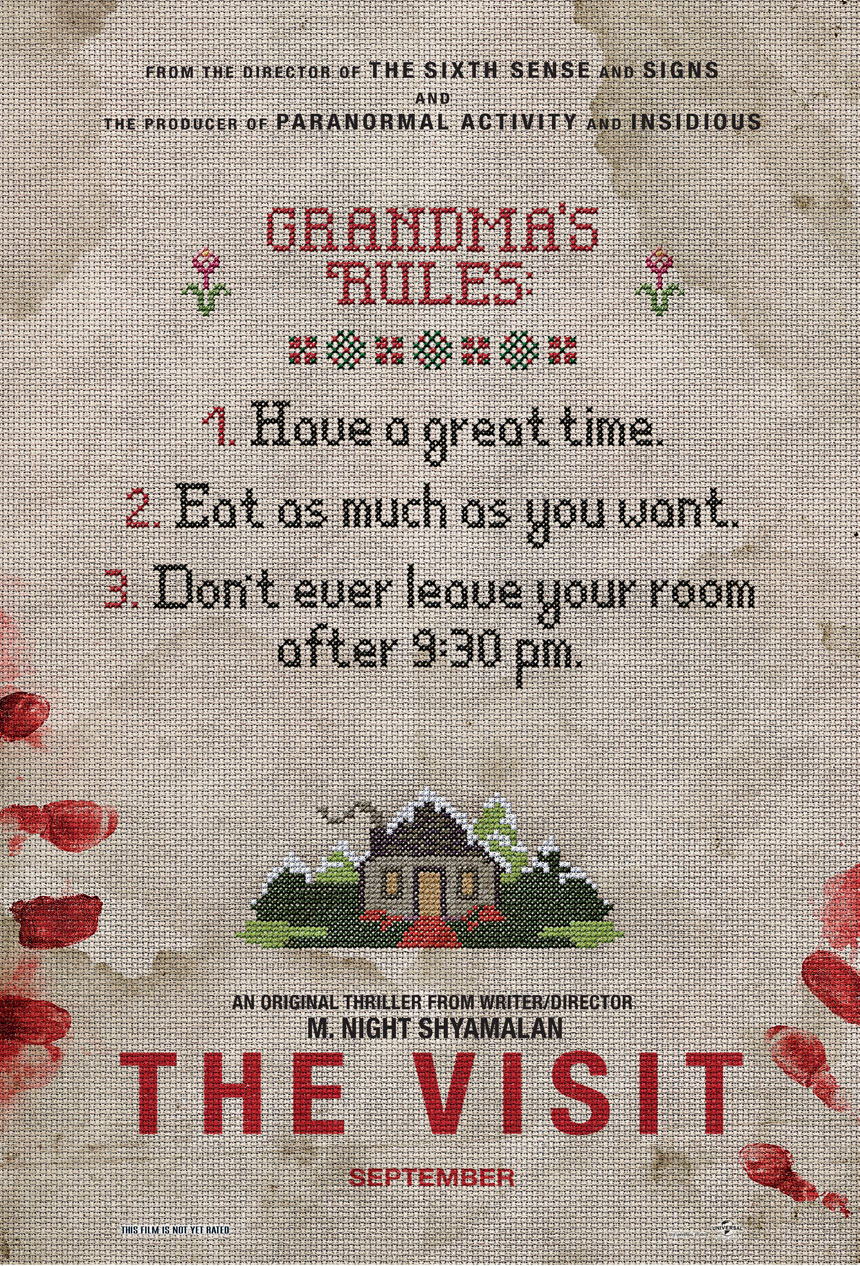
The Visit

D: M. Night Shyamalan / 94m

Cast: Olivia DeJonge, Ed Oxenbould, Deanna Dunagan, Peter McRobbie, Kathryn Hahn, Celia Keenan-Bolger

If you’re M. Night Shyamalan, and your career has become known more for the disappointing movies you’ve made rather than the global box office success of your third feature, then what do you do? Do you plug away at the kind of movies you like to make, where there’s a twist in the tail every time, or do you try something different? And what do you do if “different” still doesn’t work?

Well, if you are M. Night Shyamalan, then you keep coming back to the kind of movie that brought you international fame and fortune in the first place. You keep tweeking the idea to be sure, but in the end it’s the same mystery set up with a twist at the end designed to make viewers gasp, “Wow! I didn’t see that coming!” The only problem with that approach though, is that viewers will be expecting the twist and trying to work it out from the word go. The beauty of The Sixth Sense (1999) was that it was a movie with so little fanfare that when the truth about Bruce Willis’s character was revealed, audiences were properly surprised. But now, audiences are that much more savvy, and getting something past them like that is even more difficult.

The Visit - scene2

But Shyamalan is a trier, and he certainly doesn’t give up easily. And so we have The Visit, his latest venture as writer/director, and a movie that is two parts Tales from the Crypt and one part The Twilight Zone. The set up is pretty simple: single mom (Hahn) decides to send her two young children – Becca (DeJonge) and Tyler (Oxenbould) – to visit their grandparents for the first time. Mom is estranged from her parents, but feels it will be good for her kids to meet them and build a relationship with them. Becca decides to film the trip and their stay, both as a record of the occasion and as part of a larger school project.

When they arrive at their grandparents’ place, they find Nana (Dunagan) and Pop-Pop (McRobbie) to be a pleasant, welcoming couple. However, it’s not long before they begin to realise that Nana and Pop-Pop might have a few issues related to their age. Nana exhibits strange behaviour during the night, from wandering (apparently) aimlessly through the house to scratching at the wall outside their room – and without any clothes on either. But Pop-Pop explains that Nana isn’t too well, and Becca and Tyler sympathise and continue their stay – even after they play hide and seek under the house and find Nana under there with them and chasing them on all fours.

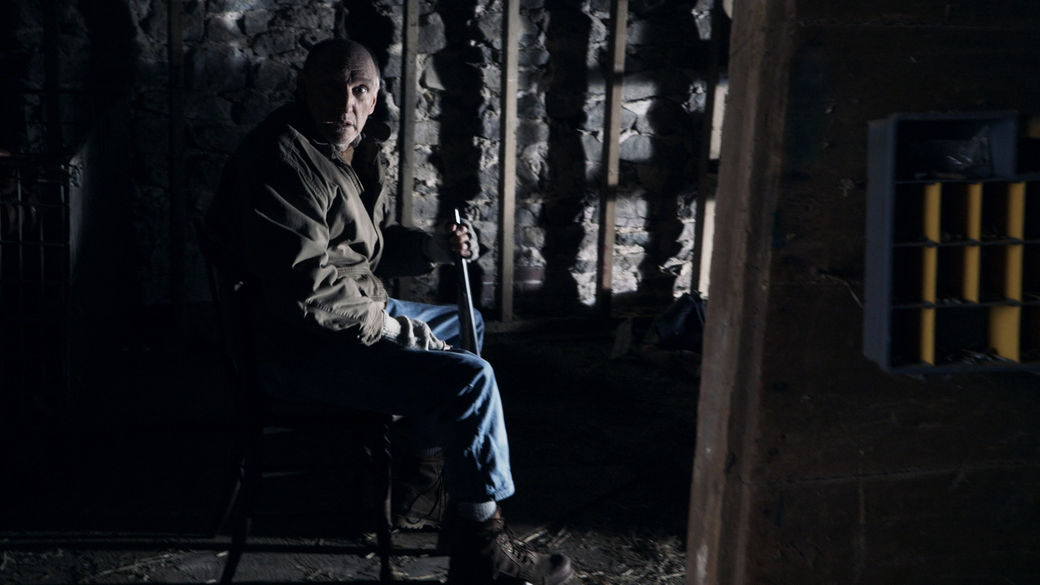
But Pop-Pop also exhibits some strange behaviour. He keeps going out to the shed each day and depositing a package there. Tyler investigates and finds that Pop-Pop has his own problems. And still the children continue their stay, even as they begin to suspect that good old Nana and Pop-Pop might not be in the best of mental and/or physical health. FaceTime calls with their mom don’t help, as she’s focused on the holiday she’s enjoying with her new man. But as the week of their stay progresses, events become more unnerving and both Becca and Tyler begin to look forward to going home, just as Nana and Pop-Pop begin to think it might be a good idea if they stayed longer.

The Visit - scene1

Let’s get the twist out of the way. It comes along with roughly fifteen minutes to go, and for seasoned veterans of this kind of movie, will have been guessed a long time before then. It’s not a particularly difficult twist to work out – Shyamalan provides enough clues – and when it comes it’s done in a suitably effective way. But while some viewers may feel it’s an unnecessary turn of events, advance knowledge actually doesn’t make the movie any less effective (as far as that goes). What it does do though is give Shyamalan the chance to ramp up the tension of the last ten minutes and inject some much needed energy.

The Visit lives or dies by how convincing the children’s reaction to their grandparents’ behaviour is. Today, with children being a lot more aware of the wider world around them, and of what is and isn’t right, being holed up with a couple of elderly people who exhibit bizarre behaviour that might lead to their being violent, doesn’t seem like something that two kids of Tyler and Becca’s intelligence would endure (even for their mom’s sake). But they do, and in reality we wouldn’t have a movie if they didn’t, but equally, in reality they would have been out of there the moment they saw Nana scratching at the walls in the all-together. Shyamalan is clever enough to invoke the sympathy card but when Becca surprises Pop-Pop “cleaning” his rifle, they still opt to wait out the week.

Suspension of disbelief is pretty much a standard requirement for horror thrillers, and The Visit requires it just as much as any other, similar movie. But here the basic set up is so banal, so bland, that when events become disturbing and threatening, Shyamalan can’t come up with a convincing reason for the kids to stay. And he’s not helped by the decision to use the found footage approach, which leads to several moments where suspension of disbelief is not only required but stretched to its limits (just how many times can a camera be dropped/left in exactly the right place to record things?).

The Visit - scene3

But while the movie’s more sinister elements aren’t entirely successful, with several references to Grimm’s Fairy Tales added to the mix, where Shyamalan does succeed is with his cast. DeJonge and Oxenbould are terrific as the children, siblings who fight and argue with each other all the time but who are clearly devoted to each other at the same time. Becca is a budding cineaste and talks about movie making as if she were an auteur; DeJonge captures the child’s need to feel and be treated like an adult with surprising precision. Tyler’s wannabe rapper feels like a way for him to deal with not having a father, and Oxenbould gives Tyler a wonderful braggadocio in these moments (even if his rapping is awful). As Nana and Pop-Pop, Dunagan and McRobbie don’t overplay their “issues” and prove remarkably effective at providing the chills beneath the sweetness of the couple’s exterior affability.

Made on a small budget but with a degree of creativity that makes the movie a lot more entertaining than some of Shyamalan’s other movies – The Happening (2008), The Last Airbender (2010) to name but two – The Visit still doesn’t quite mean a return to the early form Shyamalan showed with The Sixth Sense. But it’s a better found footage movie than most, tells its story with a refreshing lack of gimmicks, and might just be a sign that Shyamalan is turning the corner and starting to make good movies again.

Rating: 6/10 – not as eerie or as frightening as its writer/director may have wanted, The Visit is nevertheless a worthwhile entry in the found footage genre (even if it’s not technically “found” footage); good performances bolster a script that doesn’t fulfill its own potential, but most viewers will find the movie an okay watch that doesn’t insult them too much of the time, or deliberately.

Share this:

  • Click to share on X (Opens in new window) X
  • Click to share on Facebook (Opens in new window) Facebook
  • More
  • Click to print (Opens in new window) Print
  • Click to email a link to a friend (Opens in new window) Email
Like Loading...

Monthly Roundup – December 2015

31 Thursday Dec 2015

Posted by dullwood68 in Movies

≈ Leave a comment

Tags

Action, Barbara Nedeljakova, Ben Loyd-Holmes, Betrayal, Bruce Willis, Camping, Charlie Chan, CIA, Condor, Cynthia Rothrock, D.B. Sweeney, Drugs smuggling, Espionage, Extraction, FBI, Feds, Florida, Gina Carano, Horror, Jorge Montesi, Kellan Lutz, Mantan Moreland, Murder, Outside the Law, Patriarch Key, Phil Rosen, Reviews, Rupert Bryan, Sidney Toler, Steven C. Miller, The Hike, Thriller, Zara Phythian

The Hike (2011) / D: Rupert Bryan / 83m

Cast: Barbara Nedeljakova, Zara Phythian, Ben Loyd-Holmes, Lisa-Marie Long, Jemma Bolt, Stephanie Siadatan, Daniel Caren, Dominic Le Moignan, Shauna Macdonald, Tamer Hassan

The Hike

Rating: 2/10 – five female friends decide to take a trip into the woods only to find themselves at the mercy of three psychos; an unforgivably awful UK torture porn movie, The Hike doesn’t have the strength of its own convictions and features some truly abysmal “acting”.

Extraction (2015) / D: Steven C. Miller / 83m

Cast: Kellan Lutz, Bruce Willis, Gina Carano, D.B. Sweeney, Joshua Mikel, Steve Coulter, Dan Bilzerian, Lydia Hull

Extraction

Rating: 3/10 – when former CIA operative Leonard Turner (Willis) is abducted by terrorists, it’s down to his son (Lutz) to rescue him; Willis’s career continues in its downward spiral, but now he’s starting to take his co-stars with him, in an action movie that occasionally glances at credibility but then looks away in shame.

Charlie Chan in the Secret Service (1944) / D: Phil Rosen / 65m

aka Charlie Chan and the Secret Service

Cast: Sidney Toler, Mantan Moreland, Arthur Loft, Gwen Kenyon, Sarah Edwards, George J. Lewis, Marianne Quon, Benson Fong, Muni Seroff, Barry Bernard, Gene Roth, Eddy Chandler, Lelah Tyler

vlcsnap-00001

Rating: 6/10 – Charlie Chan investigates when an inventor is found dead and the plans of the top secret weapon he was working on go missing; the first Charlie Chan movie to be made by Monogram, this is still an efficient murder mystery with a few tricks up its sleeve.

Outside the Law (2002) / D: Jorge Montesi / 90m

Cast: Cynthia Rothrock, Seamus Devers, Jessica Stier, Jeff Wincott, Stephen Macht, Dan Lauria, Brad Greenquist, Don Harvey, Petra Wright, James Lew

Outside the Law

Rating: 3/10 – betrayed secret agent Julie Cosgrove (Rothrock) takes time out from being on the run to bust up a drug smuggling ring operating out of a sleepy Florida town; late vintage Rothrock sees the action star still uncomfortable when called upon to smile, but there’s little she can do to improve this plodding (and naturally implausible) thriller.

Share this:

  • Click to share on X (Opens in new window) X
  • Click to share on Facebook (Opens in new window) Facebook
  • More
  • Click to print (Opens in new window) Print
  • Click to email a link to a friend (Opens in new window) Email
Like Loading...

10 Alternative Xmas Movies

24 Thursday Dec 2015

Posted by dullwood68 in Movies

≈ Leave a comment

Tags

A Very Harold & Kumar 3D Christmas, Alternative, Bad Santa, Black Christmas (1974), Christmas, Christmas (2003), Christmas With the Kranks, Comedy, Die Hard, Drama, Horror, Less Than Zero, Movies, The Apartment, The Ice Harvest, The Nightmare Before Christmas, Thriller, Xmas, Yuletide

When it comes to Xmas movies, the chances of there being a happy ending, an appearance by Santa Claus, plentiul shots of snow-covered streets, Xmas trees bedecked with tinsel and baubles and surrounded by brightly wrapped presents, and people being selfless and loving to the point of nausea, are pretty high. But for those of us who like a little (or a lot) of humbug mixed in with our Xmas cheer, here are ten movies that take the idea of Xmas and turn it on its head with unabashed enthusiasm and delight.

1 – The Nightmare Before Christmas (1993) / D: Henry Selick / 76m

The Nightmare Before Christmas

Perhaps the most obvious title on the list, this animated classic is a sure-fire winner for mixing ghoulish elements with a traditional(-ish) Xmas narrative. Even the songs are wonderfully appropriate – Oogie Boogie’s Cab Calloway-inspired number is a highlight – and the stop-motion adds an extra layer of charm to the proceedings, making this one of the best movies about the Yuletide season ever made.

2 – Black Christmas (1974) / D: Bob Clark / 98m

Black Christmas

If The Nightmare Before Christmas has its dark side, then this Xmas horror is way beyond even that, with a chilling storyline that is still impressive over forty years (and dozens of imitators) later. Superbly crafted and with great performances from the likes of Olivia Hussey and Margot Kidder, the movie comes complete with an ending that is even more unsettling than what’s gone before.

3 – Christmas (2003) / D: Gregory King / 89m

Christmas (1)

This New Zealand movie set at Xmas – which occurs during their summer – shows the flip side of family get-togethers and just how demoralising and depressing they can be when the family that meets up is the definition of dysfunctional. Dignity and self-preservation are the order of the day in a movie that is at once desperately funny, often unbearably sad, but remains a strangely poignant tribute to dealing with emotional fragility.

4 – Bad Santa (2003) / D: Terry Zwigoff / 91m

Bad Santa

A tour-de-force performance from Billy Bob Thornton anchors this scathing look at a department store Santa whose foul-mouthed attitude and disregard for the feelings of others is slowly eroded over the Xmas period by the attention of a fat kid who just won’t leave him alone. Scurrilous isn’t the word, and your tolerance for crude language may well be stretched very early on, but it’s laugh-out-loud funny and with a surprisingly tender heart at its core.

5 – A Very Harold & Kumar 3D Christmas (2011) / D: Todd Strauss-Schulson / 90m

A VERY HAROLD & KUMAR 3D CHRISTMAS

It’s Xmas Eve and you’ve just burned down your father-in-law’s beloved Xmas tree – what do you do? Well if you’re Harold Lee (John Cho), you enlist the help of your best friend Kumar Patel (Kal Penn) in finding a replacement. Whether or not that proves to be a good idea depends on how high Kumar is, and how long Harold can put off joining him as their plan backfires at every turn. For a second sequel, this is much better than expected, and its unapologetic stoner humour makes it all the more enjoyable.

6 – Christmas With the Kranks (2004) / D: Joe Roth / 99m

Christmas With the Kranks

Adapted from the novel by John Grisham, Skipping Christmas, this is a Xmas movie that for its first half at least, is a tribute to the joys of saying “bah humbug” to the festive season. Tim Allen is the dad who jumps for joy at the chance of spending Xmas without having to splurge on decorations or lights or being festive. But when his Xmas-loving daughter announces she’s coming home, it’s panic time and this once curmudgeonly dad becomes – sadly – a Xmas convert.

7 – The Ice Harvest (2005) / D: Harold Ramis / 92m

The Ice Harvest

A darkly comic thriller set on Xmas Eve, this sees John Cusack’s shady lawyer and Billy Bob Thornton’s strip club owner embezzle $2m from the local mob, and then thanks to a series of mishaps, they begin to see their plans unravel with humorous consequences. A bit of an overlooked treat, this uses the backdrop of the Xmas period to show that goodwill to all men is a great phrase in theory but little else in practice.

8 – Less Than Zero (1987) / D: Marek Kanievska / 98m

Less Than Zero

The Eighties were a time of selfishness and greed, and this adaptation of the novel by Bret Easton Ellis perfectly encapsulates the extremes to which some people would go to to realise their “dreams”. With plenty of snow on display (just not the stuff that lies on the ground), and a selection of gaudy Xmas parties to highlight the hollowness at the heart of the lead character’s return home for the holidays, this is a movie that takes no prisoners in depicting the decadence of the holiday season.

9 – Die Hard (1988) / D: John McTiernan / 131m

Die Hard

Set in L.A. at Xmas, this franchise opener uses the Yuletide season as a cover for all sorts of mayhem and destruction, and pits Bruce Willis’ lone cop against Alan Rickman’s group of mercenaries. Sly nods to the season abound throughout, but it’s John McClane’s ability to survive everything that’s thrown at him that acts as a surprising metaphor for negotiating the ups and downs of a family Xmas and coming out the other side (relatively) intact.

10 – The Apartment (1960) / D: Billy Wilder / 125m

The Apartment

While it starts at Xmas and then moves into the New Year, Wilder’s acerbic take on the holiday season is littered with allusions to the darker side of Xmas, including suicide, alcoholism, and extra-marital affairs. That it retains a positive side as well is a tribute to the screenplay by Wilder and I.A.L. Diamond, whose storytelling abilities make the whole tawdry period more bearable thanks to the sympathy they imbue the main characters with.

Share this:

  • Click to share on X (Opens in new window) X
  • Click to share on Facebook (Opens in new window) Facebook
  • More
  • Click to print (Opens in new window) Print
  • Click to email a link to a friend (Opens in new window) Email
Like Loading...

Mini-Review: Krampus (2015)

13 Sunday Dec 2015

Posted by dullwood68 in Movies

≈ Leave a comment

Tags

Adam Scott, Allison Tolman, Comedy, David Koechner, Drama, Elves, Horror, Michael Dougherty, Review, Santa Claus, Toni Collette, Toys, Xmas, Yuletide

Krampus

D: Michael Dougherty / 98m

Cast: Adam Scott, Toni Collette, David Koechner, Allison Tolman, Conchata Ferrell, Emjay Anthony, Stefania LaVie Owen, Krista Stadler, Lolo Owen, Queenie Samuel, Maverick Flack

If Krampus is someone (or something) you’ve never heard of before now, then you’re probably not alone. He (or it) is a figure from Austro-Bavarian Alpine folklore, an anti-Santa who punishes those who’ve been wicked. Michael Dougherty’s movie isn’t the first to feature the creature – if you’re a completist you can check out Krampus (2012), Krampus: The Christmas Devil (2013), Krampus: The Reckoning (2015), and A Christmas Horror Story (2015) as well – but this latest incarnation is very different from all the rest in one particular respect: it’s less concerned with being a horror movie.

Of all the horror movies you’re likely to see in 2015, Krampus will always retain the distinction of being scare-free, relatively bloodless, and more interested in creating a mood it can’t fully sustain. It’s also keen to impress with its focus on the extended dysfunctional family that finds itself trapped in one home in the run-up to Xmas and besieged by the title character, his trusty elves, and a bag full of demonic toys. (These last elements sound great but hold that thought for a moment…)

Krampus - scene3

The set up is simple enough: pre-teen Max (Anthony) still believes in Santa Claus, but the dismal, selfish attitudes of his mother’s sister’s family leads him to tear up his usual letter to Saint Nick and cast it to the wind. For this, a terrible snowstorm sets in, the other residents in the street disappear, and Krampus turns up to carry everyone off to whatever underground realm he’s come from. In the process, the two families who have little liking for each other learn to come together and defend themselves against the supernatural force that’s determined to make them suffer for being “naughty, not nice”.

What follows is designed to wring more laughs than scares or shocks from the material, and while the movie throws in a couple of sequences that are designed to leave the viewer perched on the edge of their seat, the threat is undermined by the makers’ determination not to upset their audience with too much blood and gore, or strangely, by making Krampus himself about as threatening as having your nails buffed. What is effective is a sequence set in the loft space where several of Krampus’s demonic toys attack Scott, Collette and Tolman, and it’s this that remains the movie’s stand out scene. But even then, the toys are too reminiscent of the puppets created by Full Moon Features, so much so that it wouldn’t have been a surprise to see Jester or Pinhead pop up at some point.

Krampus - scene1

Elsewhere, Dougherty uses his cast to fairly good effect but makes several characters one-note or underwritten – Ferrell’s bitchy mother, Tolman’s perplexed-looking sister – while the budget keeps Krampus sidelined until the final fifteen minutes. His elves launch an attack on the house that seems more arbitrary than properly planned, and the inclusion of growing numbers of ugly snowmen in the house’s front yard is meant to be menacing but is more of a distraction. It all ends with the kind of narrative trickery that is more confusing than conclusive, and leaves the viewer scratching their head in bewilderment.

Rating: 5/10 – a valiant attempt to make a Xmas horror movie with a difference, Krampus lacks bite and a truly scary monster; needing a greater sense of peril to work properly, and less bickering between the characters, it’s a movie that runs out of steam far too quickly and never recovers from doing so.

Share this:

  • Click to share on X (Opens in new window) X
  • Click to share on Facebook (Opens in new window) Facebook
  • More
  • Click to print (Opens in new window) Print
  • Click to email a link to a friend (Opens in new window) Email
Like Loading...

Victor Frankenstein (2015)

09 Wednesday Dec 2015

Posted by dullwood68 in Movies

≈ 1 Comment

Tags

Andrew Scott, Body parts, Daniel Radcliffe, Drama, Frankenstein, Horror, Igor, James McAvoy, Jessica Findlay Brown, Life and death, Literary adaptation, Mary Shelley, Monster, Paul McGuigan, Review, Science, Thriller, Victorian London

Victor Frankenstein

D: Paul McGuigan / 110m

Cast: Daniel Radcliffe, James McAvoy, Jessica Findlay Brown, Andrew Scott, Freddie Fox, Callum Turner, Daniel Mays, Charles Dance, Mark Gatiss

And so we have the latest variation on Mary Shelley’s Frankenstein, or the Modern Prometheus, or as it perhaps should be known, Victor Frankenstein: A Funny Thing Happened on the Way to the Release Date…

When the first trailer was released back in August 2015, prospective viewers could have been forgiven for thinking that Victor Frankenstein was going to be a bit of a romp, a version where comedy was at the forefront, the bromance between Victor and Igor was going to carry the movie, and there was going to be lots of flashy special effects (and a monster). When the second trailer was released, the humour had been dialled back and the movie appeared to be a more serious take on the legend (albeit with a bromance between Victor and Igor and lots of flashy special effects – and a monster). Some prospective viewers may have sighed with relief; after all, if you’re going to make a Frankenstein movie that’s got humour in it, how on earth are you going to top Young Frankenstein (1974)?

VF - scene1

Thankfully, the makers seemed to have realised that the one-liners and the overt bromance weren’t as good an idea as they might have been, and the movie is a more serious proposition, but there are still echoes of both humour and bromance, mostly from McAvoy’s hyperactive performance and screenwriter Max Landis’s uncertainty as to what tone to take with the material. What we’re left with is a movie that tries to make two tortured individuals into an unofficial couple – they meet, they admire each other to bits, they fall out, they reunite and reconfirm their commitment to each other – while using Andrew Scott’s equally tortured, increasingly crazed police inspector as the religious foil for their scientific endeavours, and never quite reconciling the whole “benefit to mankind” approach that goads them on.

Victor is portrayed as a manic obsessive with a “history” that drives him on, and McAvoy, usually a sensitive actor, here can’t resist the urge to go for broke and just let rip. You half suspect that Victor’s taking drugs but it’s not that simple: it’s just his personality, and McAvoy parades around like he’s on display throughout, declaiming wildly and to little purpose. Radcliffe takes the quieter route, but his Igor is a dead weight in a movie that wants to celebrate Victor’s mania rather than his assistant’s good sense. As one half of a team that’s in danger of destroying itself and being forgotten by history, you can understand his willingness to spend more and more time with ex-circus aerialist Lorelei (Brown) (who only appears to like him when he’s not a hunchback or looking like Robert Smith from The Cure).

VF - scene2

On the visual side, Victor Frankenstein owes a lot to Guy Ritchie’s Sherlock Holmes movies, its late Victorian era setting full of background shots of building work going on and the streets teeming with the great and the downtrodden (and is further reinforced by the sudden appearance at the end of Gatiss as Victor’s new assistant). The climax is a suitably overwrought affair with plenty of explosions and destruction, and a monster that bears an unfortunate resemblance to both Dave Prowse’s incarnation in The Horror of Frankenstein (1970) and the Newborn from Alien: Resurrection (1997) (and why is it that mad scientists just can’t master putting a proper nose on their creation’s face?).

McGuigan doesn’t appear to have a firm grip on any of the movie, and there are moments of pure farce that undermine the intensity the makers are going for, such as Dance’s brief appearance as Victor’s father: there just to give Victor a slap and tell him he’s been a naughty boy. Still some humour then, but this time, unfortunate and unintentional, a bit like the movie as a whole.

Rating: 5/10 – another disappointing “adaptation” of Shelley’s tale, Victor Frankenstein is held back by weak plotting and a sense that there’s a different, perhaps better movie in there somewhere; McAvoy seems to be acting on his own recognisance, and the movie skips on providing any real horror from what Victor is bent on achieving, leaving it more anodyne than effective.

Share this:

  • Click to share on X (Opens in new window) X
  • Click to share on Facebook (Opens in new window) Facebook
  • More
  • Click to print (Opens in new window) Print
  • Click to email a link to a friend (Opens in new window) Email
Like Loading...

Monthly Roundup – November 2015

01 Tuesday Dec 2015

Posted by dullwood68 in Movies

≈ Leave a comment

Tags

A Close Call for Boston Blackie, Alien abduction, Blackmail, Boston Blackie, Brittany Allen, Chester Morris, Christmas Icetastrophe, Cory Monteith, Crime, Criminal, David Morse, Detective, Disaster, DJ, Drama, Emily Ratajkowski, Extraterrestrial, Flash freeze, Freddie Stroma, Friendships, Horror, Jennifer Spence, Jonathan Winfrey, Josh C. Waller, Lew Landers, Lynn Merrick, Max Joseph, McCanick, Meteor, Mike Vogel, Murder, Review, Sheriff, SyFy, The Vicious Brothers, Victor Webster, We Are Your Friends, Wes Bentley, Zac Efron

Extraterrestrial (2014) / D: The Vicious Brothers / 101m

Cast: Brittany Allen, Freddie Stroma, Melanie Papalia, Jesse Moss, Anja Savcic, Gil Bellows, Michael Ironside, Sean Rogerson, Emily Perkins

Extraterrestrial

Rating: 4/10 – Teens in a remote cabin discover a crash-landed UFO, and soon learn that this isn’t an isolated incident, and that aliens have been abducting people for some time; yet another tired, gloomy-looking sci-fi/horror that starts promisingly and soon runs out of steam, Extraterrestrial aims to be edgy but is compromised by a convoluted narrative and some frustratingly poor performances.

A Close Call for Boston Blackie (1946) / D: Lew Landers / 60m

aka Lady of Mystery

Cast: Chester Morris, Lynn Merrick, Richard Lane, Frank Sully, George E. Stone, Claire Carleton, Erik Rolf, Mark Roberts, Russell Hicks

A Close Call for Boston Blackie

Rating: 6/10 – Private detective Boston Blackie (Morris) becomes embroiled in a scam involving a missing baby and an old flame, and finds himself accused of murder; one of the better entries in the series, A Close Call for Boston Blackie sees Morris having a ball as Blackie and the movie as a whole is a lot of fun, the simple, fast-paced approach to the material making the whole thing enjoyable even if you’re not a fan.

Christmas Icetastrophe (2014) / D: Jonathan Winfrey / 87m

Cast: Victor Webster, Jennifer Spence, Richard Harmon, Tiera Skovbye, Mike Dopud, Johannah Newmarch, Andrew Francis, Ben Cotton, Boti Bliss

Christmas Icetastophe

Rating: 4/10 – A meteorite splits in two in the Earth’s atmosphere, and one half crashes to earth in the small mountain town of Lennox causing everything in the area to flash-freeze; another slice of sci-fi hokum from the SyFy channel, Christmas Icetastrophe narrowly avoids being complete rubbish thanks to some good location work and a sense of its own absurdity, but when all’s said and done, it’s still rubbish.

McCanick (2013) / D: Josh C. Waller / 96m

Cast: David Morse, Cory Monteith, Mike Vogel, Ciarán Hinds, Rachel Nichols, Trevor Morgan, Tracie Thoms, Aaron Yoo

McCanick

Rating: 6/10 – Veteran detective Eugene McCanick (Morse) goes after a small-time crook (Monteith), but not for the reason everyone around him thinks; a feature role for the ever-reliable Morse is set in psychological thriller territory and gives the actor plenty of room and time to play “disturbed”, but Waller’s sterile direction lets him and the movie down, and McCanick becomes disturbing for all the wrong reasons.

We Are Your Friends (2015) / D: Max Joseph / 96m

Cast: Zac Efron, Wes Bentley, Emily Ratajkowski, Jonny Weston, Shiloh Fernandez, Alex Schaffer, Jon Bernthal

We Are Your Friends

Rating: 6/10 – An aspiring DJ (Efron) finds the road to fame and fortune paved with obstacles: the friends who are unwittingly holding him back, the girl who can’t fully commit, and the mentor who may or may not help him fulfill his dream; a surprisingly aimless movie with little actual drama to sustain its running time, We Are Your Friends is too lightweight in its execution to make much of an impact, and as a result, never gets off the ground.

Share this:

  • Click to share on X (Opens in new window) X
  • Click to share on Facebook (Opens in new window) Facebook
  • More
  • Click to print (Opens in new window) Print
  • Click to email a link to a friend (Opens in new window) Email
Like Loading...

The Hallow (2015) and the Curse of “Good” Horror Movies

30 Monday Nov 2015

Posted by dullwood68 in Movies

≈ 1 Comment

Tags

Black goo, Bojana Novakovic, Changeling, Conservation, Corin Hardy, Drama, Faeries, Horror, Ireland, Irish folklore, Joseph Mawle, Review, Thriller, Tree felling

The Hallow

Original title: The Woods

D: Corin Hardy / 97m

Cast: Joseph Mawle, Bojana Novakovic, Michael McElhatton, Michael Smiley

Premiered at the Sundance Film Festival this year, The Hallow has garnered a great deal of positive buzz about it, with even some mainstream critics won over by its combination of rural Ireland setting and demonic creatures from Irish folklore (they’re a difficult bunch to please, mainstream critics; horror isn’t a genre they particularly care for). But while it’s always good to hear any horror movie get a positive response, when it comes from the mainstream it’s always worrying, as it raises expectations a little too high. The Babadook (2014) is a recent case in point, being a horror movie that William Friedkin avowed would “scare the hell out of you as it did me” (the movie is good, just not that good).

So is The Hallow in the same (presumed) league? When the movie was in production it certainly looked like it would be, and the initial response coming out of Sundance was encouraging, but now that the movie is available to a wider, more fan-based audience, it seems that our hopes have been cruelly dashed once again. For what begins as a creepy, atmospheric twist on the home invasion genre soon descends into the kind of aimless let’s-run-around-the-woods-in-circles-over-and-over-again scenario that we’ve seen countless times before. It’s not fun to watch, and once again it involves a female character having to make stupid mistakes in an attempt to generate tension. It doesn’t matter how many times we see this kind of thing, it always means one thing: the writers – in this case director Hardy and Felipe Marino – have run out of story ideas.

The Hallow - scene1

The set up here is a simple one: an English conservationist, Adam Hitchens (Mawle), moves with his family to Ireland where his job is to earmark trees in a forest for future felling. This angers not only the locals but ensures he earns the wrath of the faery creatures who live in the forest. In retaliation for his marking the trees with white X’s, they mount a terror campaign that involves breaking windows and skittering about just out of sight of the house where Adam lives. So far it’s a fairly standard set up, with Adam refusing to take notions of angry faery folk seriously, and falling back on unlikely scientific or rational explanations as the cause of all the strange happenings (the bird that’s had a few is a good one).

And of course, while Adam is busy ignoring the evidence that’s right in front of his eyes, and on the camera that he doesn’t refer back to after he’s snapped one of the snarling faeries, his increasingly beleaguered wife, Clare (Novakovic), is doing her best to hold it all together. This involves going along with Adam’s weak reassurances that faeries don’t exist and that he can deal with whatever is “out there”. And then there’s their child, Finn, the obvious target of the creatures, and continually placed in danger by his in-denial parents. (There’s a point where it becomes clear that if you mess with the faeries then they’ll come and swap your child for a changeling – which begs the question, what if you don’t have any children?) With the two main characters behaving like they’ve left their brains behind in England, The Hallow stutters through a middle third that sees them make one hare-brained mistake after another (seriously – who looks through a keyhole to see if the creature that’s been outside banging on the door has gone away?).

The Hallow - scene2

One critic has stated that the movie is “visually energized” and “dynamically paced”, and while it’s been very well shot by DoP Martijn van Broekhuizen – his use of low light levels is particularly good – the idea that it’s “dynamically paced” is stretching things. If there is any energy to the movie it’s sucked right out in the movie’s final third, as Clare’s attempts to flee with baby Finn fail, succeed, fail, possibly succeed, fail – you get the idea. At the same time, Adam, who’s fallen foul of an unfortunate poke in the eye (wonder where he got that from?) is in danger of becoming one of the faery folk, transforming as he is thanks to the demands of the script rather than any accepted piece of folklore. He joins Clare in wandering through the forest but he does it in a much cooler way, brandishing a flaming scythe, and waving it in a non-menacing way at any creature that hisses at him.

To be fair, the creatures/faeries/offspring of the Newborn from Alien: Resurrection (1997) (take your pick) are very well designed and executed by British SFX artist John Nolan, and are surprisingly effective despite being actors in suits backed up by a sparse use of CGI augmentation. Alas, Hardy chooses to make them only occasionally threatening, and even then in a way that won’t have audiences reaching for a cushion to hide behind. With their provenance limited to “well, it’s their forest, so you don’t mess with it”, the faeries’ physical appearance is left unexplained, and their actions are less persuasive, as Hardy chooses to strip any magical qualities they might have out of the script at the earliest opportunity. This leaves the notion of the changeling as the only supernatural aspect of the entire movie, and even then the reason for this occurring is dulled by the knowledge that the daughter of one of the villager’s was kidnapped by them, but no replacement was sent back.

The Hallow - scene3

Hardy has stated that he wanted to give the narrative “a more rational, scientific base than the traditional magic-based fable”, and to this end he introduces early on a black goo-like substance that has aggressive parasitic qualities. Whether this is produced by the faeries or works independently of them is never properly explained, but in either case it doesn’t bode well if you’re an animal or an unlucky conservationist, or just a viewer trying to work out why it’s there in the first place (except to set up a potential sequel, or an X-Files crossover). It’s an idea that ultimately isn’t given enough room to breathe, and like so many of the ideas Hardy populates the script with, is subsumed by the need to put Adam and Clare in as much peril as possible.

The main problem – and the “curse” alluded to in this post’s title – is that The Hallow, like a lot of modern horror movies that gain a degree of critical approval, tries hard to be different from the hundreds of other horror movies out there but still manages to make the same mistakes that all the rest do: it never manages to provide the audience with characters it can care about, it puts them in evermore ridiculous situations, has them behave irrationally (and run around in those ever decreasing circles), focuses more on the special effects, and abandons its own internal logic in favour of a semi-bravura showdown between the hero (or heroine) and the villain(s). It’s a shame that so few directors of horror movies understand what actually works, but every week we’re confronted with the evidence that supports this, whether it’s the latest franchise cash-in that just repeats the mistakes of its predecessors (and usually on a smaller budget), yet another serial killer/haunted house/paranormal activity variation, or something that has ideas above its station. But if one thing can be relied on, it’s that horror movie fans must be the most forgiving fans out there, because they keep on coming back for more, and that in itself is more scary than a whole host of horror pretenders.

Rating: 5/10 – bolstered by its visual style and location shooting, The Hallow looks the business but fails to deliver in terms of scares, thrills or credibility; a worthy effort, though a bit like the horror movie version of The Emperor’s New Clothes, and the first movie to show how easy it is to kick through the back seat of a car from the confined space of the boot.

Share this:

  • Click to share on X (Opens in new window) X
  • Click to share on Facebook (Opens in new window) Facebook
  • More
  • Click to print (Opens in new window) Print
  • Click to email a link to a friend (Opens in new window) Email
Like Loading...

Short Movies Volume 1

27 Friday Nov 2015

Posted by dullwood68 in Movies

≈ Leave a comment

Tags

Aliens, Andrea Jensen, Animation, Blue Sky, Brian Dietzen, Camera, Casino, Christmas Scrat-tastrophe, Dave Calub, David Mead, Devon Avery, Documentary, Erinn Hayes, Galen Chu, Gambling, History, Horror, Invasion, Is This Free?, Jack Hawkins, Lauris Beinerts, Matthew Kalish, Megan Prescott, Mike Thurmeier, One-Minute Time Machine, Ransom Riggs, Reviews, Romance, Ryder Bach, Salton Sea, Scrat, Short movies, Spaceship, The Accidental Sea, The Plan (2008), Time travel, Turn Around When Possible

The short movie is an oft-neglected aspect of movie viewing these days, with fewer outlets available to the makers of short movies, and certainly little chance of their efforts being seen in our local multiplexes (the exceptions to these are the animated shorts made to accompany the likes of Pixar’s movies, the occasional cash-in from Disney such as Frozen Fever (2015), and Blue Sky’s Scrat movies (see below). Otherwise it’s an internet platform such as Vimeo, YouTube (a particularly good place to find short movies, including the ones in this post), or brief exposure at a film festival. Even on DVD or Blu-ray, there’s a dearth of short movies on offer. In an attempt to bring some of the gems that are out there to a wider audience, here is the first in an ongoing series of posts that will focus on short movies. Who knows? You might find one that becomes a firm favourite – if you do, please let me know.

One-Minute Time Machine (2014) / D: Devon Avery / 6m

Cast: Brian Dietzen, Erinn Hayes

One-Minute Time Machine

Rating: 9/10 – A comedy about a young man who invents a time machine in order to impress the girl of his dreams, this brief but inventive short is like a sci-fi version of Groundhog Day, but with a humorous sting in the tale. The two leads are well chosen, with Dietzen (NCIS‘s Jimmy Palmer) playing the lovelorn geek to perfection, and Hayes proving to be an equally effective sparring partner. It does make up its own rules about time travel but that’s no bad thing, and Avery makes a virtue of the way in which he cuts between his two characters. A rewarding little movie that is well worth watching.

Turn Around When Possible (2014) / D: Dave Calub, David Mead / 7m

Cast: Megan Prescott, Holly Hoyland

Turn Around When Possible

Rating: 7/10 – Two young women trust their sat-nav too much in this British short that sees them lost in the forest and at the mercy of something strange lurking in the undergrowth. Just what is lurking in the undergrowth is very reminiscent of a creature you shouldn’t get wet or feed after midnight, and the acting is a little amateurish, but this is still an atmospheric, well-shot movie that also manages to provide viewers with a surprisingly ambiguous ending.

Is This Free? (2011) / D: Lauris Beinerts / 8m

Is This Free?

Cast: Jack Hawkins, Tarryn Meaker, Abdiel LeRoy, Cornelia Baumann, Julian Lamoral-Roberts, David Cullinane, Chloe Massey, Katie Goldfinch, Véronique Sevegrand

Rating: 8/10 – Observational comedy is the focus here as Hawkins’ Luka illustrates the various responses he gives to people who ask if the seat next to him is free. Ranging from the risible – woman agrees to pay £2 to avoid someone else getting the seat – to the awkwardly humorous – Luka allows someone to sit next to him on a bench but tells them they’re being watched – Beinerts makes the most of his central idea, and it’s put together with a great deal of heart. And of course Luka doesn’t get it all his own way, which helps the movie avoid being too clever for its own good.

The Plan (2008) / D: Matthew Kalish / 4m

Cast: Ryder Bach, Andrea Jensen

Plan, The

Rating: 8/10 – Mitch (Bach) is unhappy with his life and decides to ditch his job, his girlfriend, and travel to Las Vegas to bet everything’s he’s got on red. Along the way he meets a young woman (Jensen) who steals his camera, but proves to be an augur of a better future. Shot in black and white, and with a Fifties feel to it that adds to the movie’s overall charm, this is both romantic and transformative at the same time, and despite Kalish’s predilection for unnecessary camera angles.

The Accidental Sea (2011) / D: Ransom Riggs / 6m

Accidental Sea, The

Rating: 8/10 – The writer of the Miss Peregrine’s Home for Peculiar Children‘s trilogy provides a potted history of California’s Salton Sea, from its origins as a major engineering mistake to its heyday as a holiday destination before the sea became too salty to sustain the surrounding infrastructure. Of particular interest thanks to Riggs’ modern day footage, where the area looks like the aftermath of the end of the world, the only fault is the sudden appearance of an old man who’s been making art out of the area’s refuse, and who isn’t on screen for nearly long enough. Haunting and wistful, this is a documentary short that is visually arresting and endlessly fascinating.

Christmas Scrat-tastrophe (2015) / D: Mike Thurmeier, Galen Chu / 5m

Cast: Ray Romano, John Leguizamo, Denis Leary, Chris Wedge

Christmas Scrat-tastrophe

Rating: 9/10 – Scrat’s back, and this time his obsession with keeping his nut all to himself leads to his being aboard the spaceship we glimpsed in the first Ice Age movie. From there, Scrat heads off into space to play havoc with the planets and go for a space walk, with predictably disastrous effects. Unabashedly entertaining (and with a complete disregard for physics and astrodynamics), this is top-notch stuff that, unfortunately, serves as a reminder that Scrat’s solo adventures are still far more entertaining than the full-length movies he has a supporting turn in.

Share this:

  • Click to share on X (Opens in new window) X
  • Click to share on Facebook (Opens in new window) Facebook
  • More
  • Click to print (Opens in new window) Print
  • Click to email a link to a friend (Opens in new window) Email
Like Loading...

The Last Witch Hunter (2015)

02 Monday Nov 2015

Posted by dullwood68 in Movies

≈ 1 Comment

Tags

Breck Eisner, Curse, Drama, Elijah Wood, Fantasy, Horror, Immortal, Magic, Michael Caine, Review, Rose Leslie, Thriller, Vin Diesel, Witch Queen, Witches

Last Witch Hunter, The

D: Breck Eisner / 106m

Cast: Vin Diesel, Rose Leslie, Elijah Wood, Ólafur Darri Ólafsson, Michael Caine, Julie Engelbrecht, Joseph Gilgun, Isaach De Bankolé, Rena Owen

The fantasy-horror movie has been less than entertaining in recent years, what with Van Helsing (2004), the Underworld series (2003-2012), and I, Frankenstein (2014) showing just how it shouldn’t be done. And yet despite these weary efforts we now have The Last Witch Hunter, a movie that remains as jumbled and ineffectual as its genre predecessors. It’s a project that began life as a featured screenplay in the 2010 Blacklist, and was originally set to be directed by Timur Bekmambetov back in 2012. But those plans fell through, and with the project being championed by Vin Diesel (an avid fan of fantasy role playing games), it made it into production once its star was free after the interrupted filming of Furious 7 (2015).

If the movie proves anything, it’s that scripts on the Blacklist aren’t always filmed as written – the original script by Cory Goodman was rewritten by Dante Harper and Melissa Walack before Matt Sazama and Burk Sharpless finally ended up with the on-screen credit. Well, gentlemen, don’t be so proud, because if Goodman’s original script was really that good, then let’s make it clear: you guys went and ruined it.

It’s a movie that remains frustratingly remote from its audience throughout, and which fails to make its witchcraft-plunging-the-world-into-darkness storyline and plot even halfway exciting or dramatic. It’s a lot more serious than most, and not as po-faced as some of its competitors, but aside from one terrific joke involving a selfie, this is dour stuff that takes the end of the world as we know it and manages to make it about as threatening as flipping a pancake. And no matter how much Diesel glowers and frets, and no matter how much Ólafsson speaks of the world swallowed up by doom, we all know that whatever happens, Leslie is probably going to be the best bet for helping Kaulder – Diesel’s character – as he fights to discover who tried to kill his mentor and friend Father Dolan (Caine). (Oh, and we can be fairly certain that one character will prove to be less than they appear.)

Last Witch Hunter, The - scene

Fantasy movies have a tough time now, what with the likes of Game of Thrones showing just how it can, and should, be done, and Diesel’s pet project suffers in much the same way as others of its ilk have done: in trying to set their bizarre plots and outlandish characters against the recognisable backdrop of modern times, they then go and wilfully ignore that backdrop in favour of elaborate special effects sequences where anything goes, and where any carefully established grounding in the here and now is catapulted right out of the narrative. If you’re going to have a showdown between good and evil, don’t hide it away in dingy basements or abandoned churches, where the viewer can ogle the impressive art direction or set design, but have it right out in the open: make magic a shocking, but real part of our daily existence (part of the fun of Ghost Busters (1984) is that everyone in New York sees the Stay-Puft Man).

And then there’s the plot itself, which sees Diesel’s barbarian warrior and his pals take on the Witch Queen (Engelbrecht) in pre-medieval times, only for them to fall one by one until it’s left to Kaulder to save the day. But in doing so she curses him to immortality – and provides a handy way for her to be resurrected in the future. And therein lies the movie’s first problem: Kaulder isn’t the last witch hunter, he’s the only witch hunter. But put that aside and then we have another problem: why is it that it always takes so long for the villain of the piece to be able to make a comeback? Here it’s eight hundred years, during which time Kaulder has played policeman in the witch community, and everything is predictably hunky dory (it all has something to do with the Witch Queen’s heart, which apparently, can still beat long after she’s dead – obviously).

Last Witch Hunter, The - scene2

Tasked to “Remember your death” by Father Dolan in the form of a handy clue made while he was being killed, Kaulder can’t just cast his mind back and remember it for himself. Instead he has to enlist the aid of a witch, the conveniently to hand Chloe (Leslie) who has to concoct a potion that will allow him to re-experience that fateful moment. Only that just leads to the next problem: he didn’t die, so why all this rigmarole? Could it be that old screenwriter’s fallback, padding? Or is it just a poorly conceived idea that nobody could fix during shooting (or wanted to)? There’s lots more that doesn’t add up or make sense, and it all goes to reinforce the idea that when it comes to fantasy, as long as the movie looks good – and The Last Witch Hunter does look good – then the story and the dialogue can be as ridiculous as it wants.

With a sequel already in pre-production, and despite a lukewarm reception at the box office, it’s clear that this is an attempt by Diesel to kick-start another franchise he can head up. But while he may be committed to telling further tales as Kaulder, he might just find, based on this “opener”, that not everyone will be as willing to follow him on that particular journey as they are when he gets behind a muscle car and trades macho stares with Dwayne Johnson.

Rating: 5/10 – genre conventions abound in this absurdly watchable yet majorly disappointing piece of fantasy, that at least sees its star smile more in one movie than he’s done in five (and a bit) Fast & Furious outings; derivative and lacking in real purpose, The Last Witch Hunter has neither the style nor the wit to help itself stand out from an already dispiriting crowd.

Share this:

  • Click to share on X (Opens in new window) X
  • Click to share on Facebook (Opens in new window) Facebook
  • More
  • Click to print (Opens in new window) Print
  • Click to email a link to a friend (Opens in new window) Email
Like Loading...

Oh! the Horror! – Old 37 (2015) and Scouts Guide to the Zombie Apocalypse (2015)

01 Sunday Nov 2015

Posted by dullwood68 in Movies

≈ Leave a comment

Tags

Alan Smithee, Ambulance, Bill Moseley, Christopher Landon, Comedy, David Koechner, Epidemic, Gruesome murders, Horror, Joey Morgan, Kane Hodder, Lawrence of Alabia, Logan Miller, Murder, Olivia Alexander, Review, Sarah Dumont, Scouts, Thriller, Tye Sheridan, Zombies

Old 37

Old 37 (2015) / D: Alan Smithee / 80m

Cast: Kane Hodder, Bill Moseley, Caitlin Harris, Olivia Alexander, Brandi Cyrus, Margaret Keane Williams, Robert Bogue, Sascha Knopf, Jake Robinson, Devon Spence, Kenneth Simmons, Catherine Blades

Anyone who read my review of The Vatican Tapes (2015) will, hopefully, remember my comment that “watching contemporary horror movies is a pastime perfectly suited for the unabashed masochist”. Having now watched Old 37 in the same week, I feel I ought to count myself as one of those armchair hopefuls, and the trauma of having seen two dreadful horror movies just days apart is prompting me to rethink seeing any more of them in the foreseeable future.

By now you’ll have guessed that Old 37 is pretty bad, but that description is just skimming the surface of how awful it all is. One very big clue is the name of the credited director, Alan Smithee, the pseudonym directors use when they no longer want their names attached to the movies they’ve made (directors who’ve done this include Dennis Hopper, Arthur Hiller, Rick Rosenthal and Stuart Rosenberg, and it’s the regular name used by Michael Mann when his movies are edited for TV). Here, the unhappy director in question is Christian Winters, and it doesn’t take long for the viewer to realise he made exactly the right choice.

From its opening in 1977 with bogus paramedic Jimmy (Simmons) being watched by his two young sons, Darryl and Jon Roy, as he kills the female victim of a road accident and then licks the blood from one of her wounds, to its modern day setting and close look at the life of teen Amy and her “friends”, who like nothing more than getting themselves involved in road accidents where someone dies and they refuse to take any responsibility, Old 37 takes so many left turns and diversions in its attempt to tell a coherent story that most viewers will probably give up trying to follow the “narrative” quite early on. The script, by Paul Travers and Joe Landes (and based on a dream Travers had), is frankly, a hodgepodge of scenes that barely connect with each other, and which at times can have no other reason for being there other than to pad out the otherwise meagre running time.

Old 37 - scene

It’s too ludicrous in too many places, from the subplot involving Amy’s breast enlargement, where she appears to have the operation and leave the hospital on the same day (and in a tight-fitting top), to the adult Jon Roy (Hodder) wearing a mask over his lower face to hide a disfigurement, one that, when revealed, makes him look more goofy than horrific. One of the characters is burnt alive but makes a comeback later on, Amy’s mother proves to have an “inappropriate” boyfriend, the idea of “Old 37” is abandoned in favour of a revenge plot, and any attempts at credibility are suffocated at birth. The acting is atrocious, with special mention going to Moseley, who can’t inject menace into any of the threats Darryl makes, and Alexander as the acid-tongued Brooke, a role that grates from the moment the actress tries for bitchy but ends up as merely petulant.

Rating: 2/10 – with so many unforced errors in the script, and what remains proving the result of very poor judgment on the writers’ part, Old 37 is horrific for all the wrong reasons, and isn’t helped by some very poor performances; a waste of everyone’s time, and best avoided by anyone who’s even halfway considering watching this – no, really, avoid it.

Scouts Guide to the Zombie Apocalypse

Scouts Guide to the Zombie Apocalypse (2015) / D: Christopher Landon / 93m

Cast: Tye Sheridan, Logan Miller, Joey Morgan, Sarah Dumont, Halston Sage, David Koechner, Cloris Leachman, Lukas Gage, Niki Koss

With Old 37 reinforcing the idea that low budget horror movies should be avoided at all costs (but not all of them, of course), it’s with a great deal of relief that Scouts Guide to the Zombie Apocalypse shows just how good a low budget horror movie can be. The difference? Well, actually, there are several. Here, the story – simple as it is – makes sense most of the time, and what narrative inconsistencies there are, aren’t so bad that they hurt the movie or bring the viewer up short. The performances are solid, and there’s a great sense of camaraderie between Sheridan, Miller and Morgan (and Dumont as well) that gives the movie an emotional core that isn’t always found in such movies. And Landon doesn’t allow the absurdity of the storyline to overwhelm the dramatic elements, keeping the more fanciful or gross out moments sufficiently in check (the trampoline sequence is a great case in point).

By mixing absurdist humour with lashings of latex and well-integrated CGI gore, the script – by Carrie Evans, Emi Mochizuki, and Landon – strikes a delicate balance between the two, as well as including a handful of heartfelt moments to offset the seriousness of the group’s predicament. It’s this “human focus” that aids the movie tremendously, and keeps the viewer rooting for the scouts and their stripper – sorry, cocktail waitress – comrade. There’s also the ongoing fate of their scout leader, played by Koechner, a dogged, determined man for whom the real downside of being a zombie is that he has even less respect than when he was alive/human.

Scouts Guide to the Zombie Apocalypse - scene

While the quartet try to find the whereabouts of a secret party that Ben’s not-so secret crush (Sage) has gone to, the zombie hordes increase and in amongst the head blasting and the physical humour there are some nice visual flourishes, like the signpost that says Haddonfield is forty miles away, or the zombie whose T-shirt says YOLO. It’s little moments like these that add to the innate fun of the situation, and if you’re not amused by the idea of zombie cats (see above), then this really isn’t the movie for you.

The movie treads this fine line because between comedy and horror with relative ease (though some one-liners fall flat), and as the stakes increase for our merit badge warriors, the movie sees fit to put them increasingly in harms way, and to the point where you begin to suspect that one of them might not make it through either intact or alive. And when Augie (Morgan) reveals he’s put together a homemade bomb (“What are you, the Taliban?”), it’s at a point in the movie where a sacrifice wouldn’t be unexpected, and where the idea of only two of them getting out alive begins to hold some caché. Landon is good at this kind of narrative uncertainty, and gets the most out of both the script and the cast in these moments (though not forgetting that these kids are virgins, and when do virgins ever die in horror movies, 2000’s Cherry Falls aside, that is).

For sheer unadulterated, occasionally sophomoric humour, the movie is a clever twist on an old formula, and it gives its teen cast more than enough chances to shine, and each of them does. Sheridan is on winning form as the nerdy looking Ben, and Miller is suitably abrasive as the self-centred, selfie-obsessed Carter. But it’s Morgan as the dedicated scout Augie who steals the show, his often wide-eyed and wondering features perfectly suited for the outlandish exploits he and his fellow scouts find themselves involved in. And praise too for Dumont, who despite being garbed in cut-down shorts and bust-enhancing top, sidesteps any accusations of sexism by making her character, Denise, easily more ballsy than any of her male comrades.

Rating: 7/10 – a hugely enjoyable horror comedy that delivers pretty much throughout, Scouts Guide to the Zombie Apocalypse has enough charm and low budget panache to meet the needs of genre fans everywhere; packed with moments to make you smile and go “Wow!” (and often at the same time), this is one horror treat that deserves cult status and to be a big hit on home video.

Share this:

  • Click to share on X (Opens in new window) X
  • Click to share on Facebook (Opens in new window) Facebook
  • More
  • Click to print (Opens in new window) Print
  • Click to email a link to a friend (Opens in new window) Email
Like Loading...

The Vatican Tapes (2015)

27 Tuesday Oct 2015

Posted by dullwood68 in Movies

≈ Leave a comment

Tags

Djimon Hounsou, Dougray Scott, Drama, Exorcism, Horror, Mark Neveldine, Michael Peña, Olivia Taylor Dudley, Peter Andersson, Possession, Review, Thriller, Vatican

Vatican Tapes, The

D: Mark Neveldine / 91m

Olivia Taylor Dudley, Michael Peña, Dougray Scott, Peter Andersson, John Patrick Amedori, Kathleen Robinson, Djimon Hounsou, Michael Paré, Cas Anvar, Alex Sparrow

Watching contemporary horror movies is a pastime perfectly suited for the unabashed masochist, someone who will continuously, regularly put themselves through all kinds of cinematic detritus in the hope of finding that rare beast: the above average horror movie. It’s a calling, a passion if you like, and there are plenty of people who will settle down to watch ultra-low budget efforts such as Silverhide (2015) or franchise dregs like Hellraiser: Revelations (2011) in the certain knowledge that they’ll be wasting their time and afterwards, will be wondering why on earth they watched said travesty in the first place – what was I thinking?

While such perseverance might be commended (or just marvelled at), the fact is that ultra-low budget horror movies are generally rubbish, and franchise entries are a dreadful infringement on our time and patience. But there’s a third kind of horror movie that endures today despite its commitment to shocking dialogue and nonsensical plotting, to vague characterisations and unconvincing acting. It’s the kind of horror movie that paints itself in respectability by having well-known actors in key roles, and by splashing a little more cash than usual. These movies also manage to find their way to our cinema screens – they actually open – and they work as stand alone movies that may or may not develop into franchises. But – and this is the most important point to be made about these movies – they’re still rubbish, they’re just made by people who really should know better.

And after that cycnical preamble, we come to The Vatican Tapes, a movie so blind to its many irritating, mind-bending faults that it becomes a struggle to get through after the first few minutes, and where any efforts to improve on its tortured storyline and disastrous plotting have apparently been strangled at the preconception stage. It’s a movie that can’t decide whether it’s an exorcism tale, all about the rise of the Antichrist, or religious paranoia (though it tries to be all three at once). It’s the kind of movie experience that makes you want to do what one character does, and drive broken lightbulbs into your eyes so that you don’t have to watch any more.

Vatican Tapes, The - scene1

Going into a movie like this, there’s often the idea that because of the cast (who must know a good project when they see one, they’re all experienced actors, after all), the finished product will have an edge over the more bog-standard, predictable horror movies out there. And surely the producers wouldn’t have been able to attract such a cast with a dodgy script and a director with no clear idea of what he’s doing? Surely they wouldn’t have been able to do that, right? Wrong! Most actors go where the money or the work is, and sometimes all they can do is take the money, make the movie, and then pray that no one ever sees it.

Here we have Messrs Peña, Scott, Andersson and Hounsou all looking uncomfortable, embarrassed, and itching to get through their scenes as quickly as possible. Not one of them manages to attain any degree of credibility in their roles, and not one of them feels like they were cast in the right role. Of the four, Peña looks the most awkward, playing a priest, Father Lozano, who’s always in the wrong place at the right time, and who is the first to suspect that normally sweet-natured Angela (Dudley) is possessed by a demon. As the tortuous story continues, Peña hovers at the edge of group scenes with the air of a man hoping he could just take one more step to the left or right and then he’d be out of shot altogether. And Scott’s performance as a hard-nosed Army veteran and father of the possessed is staggeringly bad, with the scene where he describes his relationship with Angela’s mother rendered laughable thanks to the absurdity of the dialogue created by Michael C. Martin and Christopher Borelli, and Scott’s hamfisted attempt at sincerity.

The story itself doesn’t make any sense, and varies in intention from scene to scene. Angela becomes possessed but is it through cutting her finger, or the subsequent attack by a crow on a bus, or while she stays in a coma for forty days (one of the more spurious connections with Jesus the movie makes on Angela’s behalf)? Ultimately it doesn’t matter because once the exorcism – conducted by Vatican honcho Cardinal Bruun (Andersson) and abetted by Lozano – gets under way, the focus switches from casting out a pesky demon to battling for Angela’s soul against an incarnation of the Antichrist who just so happens to have possessed Bruun when he was twelve.

Vatican Tapes, The - scene2

By now, the absurdity of the story will have become so apparent, all the hapless viewer can do is continue watching just to see if the movie can become even more absurd – which it manages with ease (the Antichrist as media darling, anyone?). It doesn’t help that the movie’s director, Mark Neveldine, has less than a firm grasp on the “dramatics” of the story, and instead concentrates on the visuals. However he doesn’t bring anything new to proceedings, leaving the movie looking like an homage to all the other recent horror movies that have traded on bleached out vistas and a jagged editing style overlaid with an effects heavy soundtrack that deadens the atmosphere and soon becomes annoying. And it remains resolutely scare-free.

In a less conservative era, comedians would tell jokes that began “My wife’s so fat…” A modern day equivalent in this instance might begin with “This movie’s so bad…” and end with “it makes Nicolas Cage’s recent career choices look like worthy Oscar winners.” Or, “this movie’s so bad… it’s the only thing that can take my mind off of how fat my wife is.” It’s simply a terrible movie and unless you’re one of those unabashed masochists mentioned at the top of the review, should be avoided at all costs.

Rating: 2/10 – dire doesn’t even begin to describe just how ridiculously awful The Vatican Tapes is; it’s yet another horror movie made by people who have no clue what they’re doing and who just don’t seem to care if the audience likes it or not.

Share this:

  • Click to share on X (Opens in new window) X
  • Click to share on Facebook (Opens in new window) Facebook
  • More
  • Click to print (Opens in new window) Print
  • Click to email a link to a friend (Opens in new window) Email
Like Loading...

Crimson Peak (2015)

17 Saturday Oct 2015

Posted by dullwood68 in Movies

≈ 1 Comment

Tags

Allerdale Hall, Charlie Hunnam, Drama, Ghosts, Gothic romance, Guillermo del Toro, Horror, Jessica Chastain, Mia Wasikowska, Murder, Review, Thriller, Tom Hiddleston

Crimson Peak

D: Guillermo del Toro / 119m

Cast: Mia Wasikowska, Jessica Chastain, Tom Hiddleston, Charlie Hunnam, Jim Beaver, Burn Gorman, Leslie Hope, Doug Jones, Jonathan Hyde, Bruce Gray

When Edith Cushing (Wasikowska) is a young child her mother dies unexpectedly. After the funeral, Edith is visited by the ghost of her mother who warns her to “beware of Crimson Peak”. Fourteen years later, Edith is trying to establish herself as a writer. She has written a novel about ghosts but her intended publisher wants her to include a romance (though she feels this is unnecessary). Her father (Beaver), a self-made industrialist, is supportive of her efforts, and lets her type up her manuscript at his offices. There she meets Sir Thomas Sharpe, a visiting aristocrat from England, who is looking for financial backing for an invention of his that will aid in the mining of red clay at his home in Northumberland. But while Edith finds herself attracted to Thomas, her father takes a dislike to him and refuses to back him.

When a secret about Thomas is discovered it leads to the death of Edith’s father. Heartbroken, she turns to Thomas and his sister, Lady Lucille (Chastain) for support, and soon agrees to marry him. Together, they travel to England and the Sharpe family home, a towering gothic edifice called Allerdale Hall. The house is falling apart, and stands atop a clay mine that it is slowly sinking into. As she settles into her new life, Edith comes to discover that the house harbours secrets that neither Thomas nor Lucille want her to know about. Meanwhile, back in New York, Edith’s childhood friend Dr Alan McMichael (Hunnam), already suspicious of the way in which her father died, begins his own investigation.

Plagued by ghostly visions, Edith begins to unravel the secrets of Allerdale Hall, secrets that lead her to believe that Thomas’s mother was murdered there, and that there is some connection with his recent trips to places such as Edinburgh and Milan. The discovery of luggage engraved with the initials E.S. provides a further clue that links to the visions she has. At the same time she begins to fall ill, while McMichael learns the same secret that led to her father’s death and believing Edith to be in danger, he decides to leave for England.

Crimson Peak - scene

A project that del Toro has been looking to film since 2006, Crimson Peak arrives with a great deal of anticipation and hype preceeding it, and with the enviable status of being the only movie of its kind – a gothic romance with distinct horror overtones – to be released in 2015. It’s a movie that splits its narrative in two, and in the process ends up making the first part more effective than the second, which has the unfortunate effect of leaving viewers with the impression that del Toro and co-screenwriter Matthew Robbins had a firmer grasp of what they were trying to achieve with the scenes set in New York than they did with the ones at Allerdale Hall.

This leads to the movie lacking a sense of true development once we’re ensconced in the Sharpe ancestral family home. It should be the other way round but while del Toro and Robbins expand on the mystery behind Thomas and Lucille’s motives, it soon becomes apparent that the ghostly visions Edith experiences are less of a threat to her and more of a series of clues as to what has happened at the Hall in the past. With this in mind, it’s puzzling that del Toro has decided to make these apparitions as scary as possible, and in particular the spectral wraith that is Edith’s mother (played by the erstwhile Doug Jones), a depiction that seems at odds with her role as a guardian in death of her daughter’s safety – did she have to be so frightening?

But while the recreation of pre-1900 New York is achieved with considerable success, it’s not until we reach Allerdale Hall that del Toro reveals the true focus of the movie: making that towering creation feel like a living, breathing character in its own right. The Hall is a triumph of production and set design, and is endlessly fascinating in its construction, with darkness leeching from the walls and corridors that look like they’ve been carved out of the vertebrae and rib cages of dead whales. Everywhere you look there’s another interesting detail to take in, some new quirk of the architecture to observe, but so good is this attention to detail that it overwhelms the story, leaving Edith’s plight of secondary importance. And with a subterranean level thrown in for good measure, the house and its “personality” become far more interesting than the pallid-by-comparison storyline involving Edith and the conspiring Sharpes (though you might wonder where all the leaves that tumble continuously through the roof are coming from, as the house is shown to sit proudly alone at the top of a hill).

As a gothic romance, the movie is on better ground, with Thomas’s pursuit of Edith feeling more than expedient from the beginning, and as he becomes less and less sure of the path that he and Lucille have embarked upon, it becomes obvious that his true feelings will cause his doom. Hiddleston relays the torment and indecision that Thomas endures with a great deal of yearning for a chance to be free of his family burden, and makes the character more sympathetic than his initial actions would warrant. As the wounded and betrayed Edith, Wasikowska ensures her would-be author isn’t shown as too soft or easily dominated, but is still asked to rein in Edith’s assertiveness in moments where the script requires it. She and Hiddleston do well in making their characters’ relationship more credible than most, but despite their good work there’s just not enough passion on display to make their feelings for each other too convincing.

Crimson Peak - scene2

The same can’t be said for Chastain, an actress who it seems can turn her hand to any character in any genre. As the taciturn and tightly controlled Lucille she’s a riveting presence in any scene she’s in, even when she’s in the background. By the movie’s end she’s asked to abandon all the subtleties she’s imbued her performance with in favour of a more traditional approach required by the material. Before this, Chastain is quietly chilling, her manipulative, simmering-with-anger personality more compelling in its intensity than any of the house’s blood-slicked apparitions. (In comparison, Hunnam is the movie’s anodyne hero, and one who almost operates as an historical forerunner of Hallorann from Kubrick’s The Shining.)

By the time the mystery has been revealed and the machinations of the plot (loosely) explained and sewn up, the movie has descended into the kind of bloody, violent showdown that audiences will be expecting, but it isn’t the best showdown you’re ever likely to see, and it lacks vitality. Partly this is due to the pacing, and partly due to the editing, which never picks up the pace, and never seems likely to add any kind of punch to proceedings. It all leads to an oddly melancholy ending that befits a gothic romance, but not the thriller this movie has become. With so much effort having gone into the look and feel of the movie, viewers may well feel let down by this half-hearted denouement, and they’d be right to, but the movie retains a strange fascination even at the end, and one that lingers long after the closing credits.

Rating: 7/10 – not as chilling or impressive on the plot or storyline front as it is when it comes to how the movie looks, Crimson Peak falls short on delivering the chills and thrills it promises to provide; del Toro has made better movies, and will probably make better ones in the future, but for now this will have to serve as a reminder, however disappointing, that there’s no one else out there who can make this kind of movie and with this kind of ardour.

Share this:

  • Click to share on X (Opens in new window) X
  • Click to share on Facebook (Opens in new window) Facebook
  • More
  • Click to print (Opens in new window) Print
  • Click to email a link to a friend (Opens in new window) Email
Like Loading...

The Witch (2015)

15 Thursday Oct 2015

Posted by dullwood68 in Movies

≈ 2 Comments

Tags

Anya Taylor-Joy, Black Phillip, Drama, Folk tales, Harvey Scrimshaw, Horror, Kate Dickie, New England, Ralph Ineson, Review, Robert Eggers, The Devil, Witchcraft

Witch, The

D: Robert Eggers / 92m

Cast: Anya Taylor-Joy, Ralph Ineson, Kate Dickie, Harvey Scrimshaw, Ellie Grainger, Lucas Dawson, Bathsheba Garnett, Sarah Stephens

New England, 1630. Expelled from their newly settled community for religious differences, Puritans William (Ineson) and Katherine (Dickie) take themselves and their family – eldest daughter Thomasin (Taylor-Joy), eldest son Caleb (Scrimshaw), twins Mercy (Grainger) and Jonas (Dawson), and their newborn son Samuel – off into the wilderness where they make their new home. They build a dwelling, establish crops for food, and have goats for milk. All seems to be going well until one day when, in Thomasin’s care, Samuel disappears.

Katherine is devastated, and prays continuously. William and Caleb go into the surrounding forest to hunt for game, but have a strange encounter involving a rabbit that has an effect on Caleb. When they return, they find Katherine angry at their having gone, and Thomasin unable to control the unruly twins. Later, Mercy’s antagonistic nature annoys Thomasin so much that she threatens her younger sister by saying she – Thomasin – is a witch and will do terrible things to Mercy if she doesn’t do what she’s told; Mercy believes her completely.

Soon after, Caleb and Thomasin are in the forest when they become separated. Caleb meets a young woman (Stephens), while Thomasin searches in vain for him. She is found by William, but it isn’t until later that night that Caleb returns, naked and feverish. Katherine blames Thomasin for this, and Mercy reveals what Thomasin said to her about being a witch. Both Katherine and William believe Mercy at first, and confront Thomasin over it, but she manages to convince her father that she isn’t a witch, and that it is Mercy and Jonas who are in thrall to the Devil, and that they speak to him through one of their goats, Black Phillip.

Matters become worse when Katherine becomes afflicted by madness, and Thomasin and the twins are locked in the goat pen while William struggles to make sense of what’s happening. But the supernatural events that surround them begin to increase, and circumstances lead to Thomasin being the only person who can find of keeping herself at least from further harm.

Witch, The - scene

The Witch is one of those movies that comes along every once in a while, gains some media attention and gets some critical mass behind it, so that by the time it reaches a wider audience it’s seen as something to be admired and sought out at the earliest opportunity. And so it is proving here, with Robert Eggers’ debut feature having picked up a lot of traction from film festivals around the globe throughout 2015 (including Romania’s Dracula Film Festival). Usually, the hype that attaches itself to such a movie proves to be undeserved – or is at least just that: hype – but for once, here is a movie that lives up to its promise.

Based on folk tales, fairy tales and legends from the New England area, all of which Eggers grew up with, The Witch is a fabulous collision between faith and evil, loneliness and paranoia, that is being marketed as a horror movie, but which is a whole lot more. While there are very definite supernatural elements, and we see the witch of the title very early on, this isn’t just a horror movie, this is a powerful drama that sees one family fall apart under conditions of deprivation – the crops fail, the goats give blood instead of milk – loss, paranoia, mistrust, lies, pride, and arrogance. The true horror is seeing this otherwise contented family undone by the loss of a child and the subsequent emotions that develop, and which each member is unable to deal with. By placing them in the middle of a forest, with no close neighbours to help, and leaving them to deal with the isolation that all that brings, Eggers exposes the fragility of faith and the inherent strains brought about by personal sacrifice.

The supernatural elements are well handled, and for once there’s no attempt at allegory or making it seem as if it’s all coincidence, or that there’s a more rational explanation for everything. Here, there is a witch, and we see her clearly, and there’s no room for doubt that she is responsible for setting in motion the events that lead to the family’s downfall. Without any possible ambiguity to muddy things, the straightforward horror of the situation is allowed to take hold, and as mutual suspicion leads to paranoia and then to madness and death, the movie is pitiless in its observational nature, leaving the viewer to watch a series of scenes in the movie’s last twenty minutes that signpost an outcome that is inevitable, even if the way in which it all happens isn’t.

Eggers’ confidence in the material, which is often very dark and uncomfortable – the scene where Caleb revels in a kind of sexual ecstacy is a good case in point – is aided by a trio of superb performances from Taylor-Joy, Ineson, and Dickie. The casting of Ineson and Dickie is particularly important: their accents and English speech would have been the norm at that time, and they both have a clear grasp of the religious and moral underpinning that their characters rely so heavily on. But as all that certainty begins to crumble, both actors retain an honesty in their performances that make their eventual fates all the more affecting. Taylor-Joy is similarly impressive in a role that, if  the movie had been set somehow in modern times, would have reduced her to little more than the screaming virgin who gets chased through the woods. But Thomasin proves to be more than that, and there’s a scene where she confronts William over his behaviour that is compelling for the way in which the hypocrisy of William’s religious stance is exposed as a cruel sham (and which gives both actors the chance to highlight the true cause of the family’s problems).

The soundtrack is a big part of the movie’s effectiveness, with dissonant noises and choral sounds reaching their own kind of fever pitch, and serving to illustrate the weird nature of the events taking place, as well as being eerie in their own right. The score by Mark Korven is also highly evocative, and has an unsettling nature to it that is occasionally unnerving when allied to the visuals. Those visuals are expertly composed by Jarin Blaschke, and the dour, oppressive feel of the Canadian location where the movie was made, is evident in almost every exterior shot. And Louise Ford’s careful, measured editing style adds further lustre to a movie that, otherwise, could have lapsed into wilful obscurity in terms of the narrative and its intensions.

Rating: 8/10 – an unnerving examination of one family’s disintegration due to a lack of true faith in themselves, The Witch is a horror movie that works on several levels and has an embarrassment of riches, not least in its casting; Eggers’ confidence in the material and the way it holds together is compelling, and the whole thing is drenched in the kind of suffocating atmosphere that lingers long after the movie has ended.

Share this:

  • Click to share on X (Opens in new window) X
  • Click to share on Facebook (Opens in new window) Facebook
  • More
  • Click to print (Opens in new window) Print
  • Click to email a link to a friend (Opens in new window) Email
Like Loading...

Bone Tomahawk (2015)

12 Monday Oct 2015

Posted by dullwood68 in Movies

≈ 9 Comments

Tags

Broken leg, Cannibals, Drama, Horror, Humour, Kurt Russell, Matthew Fox, Opium, Patrick Wilson, Review, Richard Jenkins, S. Craig Zahler, Thriller, Troglodytes, Western

Bone Tomahawk

D: S. Craig Zahler / 132m

Cast: Kurt Russell, Patrick Wilson, Matthew Fox, Richard Jenkins, Lili Simmons, David Arquette, Kathryn Morris, Fred Melamed, Sean Young, Sid Haig, Evan Jonigkeit

The quiet town of Bright Hope finds itself host to thief and murderer Purvis (Arquette). With his behaviour proving suspicious to town deputy, Chicory (Jenkins), Purvis’s attempt to resist arrest by the sheriff, Franklin Hunt (Russell) leads to his being shot in the leg and put in jail. Later the same night, while being tended by the town’s medic, Samantha O”Dwyer (Simmons), and guarded by young deputy Nick (Jonigkeit), the jail is attacked and the trio are abducted.

When this is discovered the next morning, Hunt seeks advice from a local Indian scout as to who could have done such a thing, as a peculiarly shaped arrow was found at the scene. The scout is quick to tell Hunt that it’s the work of troglodytes, a flesh-eating “clan” that live in the nearby hills; he also tells Hunt he won’t go with him as any attempt to rescue the missing will be guaranteed to fail, and anyone who goes will die. Hunt has no choice but to go, as does Samantha’s husband, Arthur (Wilson), even though he recently broke his right leg and it’s still in a splint. John Brooder (Fox), the man who introduced the O’Dwyer’s to each other, feels obliged to go, and despite Hunt’s objections, Chicory insists on going as well.

The four set out alone into the nearby hills. They encounter a couple of Mexicans who prove to be scouts for a larger group of bandits. When the bandits attack one night, Brooder is injured, and O’Dwyer’s broken leg is further damaged. With no choice but to reset his leg, and leave him to recover – and if able to, follow them later – Hunt, Brooder and Chicory continue on. As they get nearer to the hills where the troglodytes are supposed to live, the trio begin to hear strange unearthly noises. Hunt is convinced these are warnings; the discovery of human and animal skulls near to a gulley serves as a further caution. When they’re ambushed by a group of troglodytes, Brooder suffers a more serious injury, while Hunt’s left arm is hit by an arrow, and Chicory recieves a nasty head wound. With Brooder too injured to continue, Hunt and Chicory make their way nearer to the cave that appears to be the troglodytes home. But they’re ambushed again and this time they’re captured and taken to the troglodytes’ cave. Meanwhile, O’Dwyer regains consciousness, and sets out to follow the others and  rescue his wife…

Bone Tomahawk - scene

A strange, mercurial hybrid of Western and Horror, Bone Tomahawk is a movie that consistently outdoes its low budget in terms of originality, unexpected twists and turns in the narrative, and a recurring sense of humour that often threatens to undermine the seriousness of the drama, but which actually works as an escape valve for the tension that first-time director Zahler seems able to pull together at will. At times, this isn’t a movie for the faint-hearted or the squeamish – Nick’s fate is particularly gruesome – but in amongst the sometimes extreme violence and the matter-of-fact tone that accompanies it, Zahler manages to explore themes of masculinity, comradeship, loss, self-sacrifice, and most surprisingly of all, manifest destiny.

From the outset, this is a Western that isn’t interested in telling a typical Western story, and although it bears a (very) basic resemblance to John Ford’s The Searchers (1956), it soon abandons any pretense at wanting to emulate that classic movie by taking a no-nonsense approach to the times, and the events that unfold. It also steers away from traditional Western motifs by having its quartet of lawful avengers put at a disadvantage right from the start, with O’Dwyer’s broken leg proving exactly the type of hindrance that’s likely to get them all killed. When they’re forced to leave him behind, not only does the size of their task increase, but also the likelihood of their ending up as buffet for the troglodytes increases too; they soldier on because they want to for each other, not because they have to for the abductees, which was how they set out.

By changing this kind of stance along the way, and by making their opponents so animalistic as to be unreasonable, Zahler avoids any sentimentality that might occur in a regular Western, and isn’t afraid to put his characters through the wringer, so much so that there are times when the viewer isn’t sure if any of the quartet will survive, or if they do, how intact they’ll be. With a rugged, inhospitable looking backdrop to the action (expertly rendered by DoP Benji Bakshi), the main characters’ confidence is slowly eroded by their surroundings and the troglodytes’ uncompromising ferocity, and this is where Zahler’s ability to ratchet up the tension is most prevalent – how are they going to get out of this alive? It’s an interesting question, as by the movie’s end it’s not about the survival of the fittest, but survival at any cost.

With so many weighty themes to incorporate, and with the violence and escalating tension proving so effective, it’s left to Jenkins’ daft, lovably clueless deputy to provide some much needed humour. There’s a lovely moment when he insists a travelling flea circus was operated by real live fleas, and he continually misunderstands things that have been said or done. Jenkins strikes just the right note of encroaching senility mixed with amiable foolishness and is a joy to watch as a result. Elsewhere, Russell’s flinty portrayal of Hunt will remind viewers of his turn as Wyatt Earp in Tombstone (1993), and his whiskers should by rights be given a movie of their own. It’s good to see him play a character who makes so many mistakes, and if he maintains a degree of unshakeable tenacity throughout, then the movie is all the better for it (even if it’s cruelly undermined by the troglodyte leader’s treatment of him).

Bone Tomahawk - scene2

As the equally tenacious O’Dwyer, Wilson is headstrong, determined and completely focused on the task ahead, even though O’Dwyer will suffer for it. As his captive wife, Simmons is appealing and vulnerable, and more resigned to her fate than anyone would surmise. Both give credible performances and are matched by Fox’s belligerent martinet Brooder, a man as out of place in the quartet as he is oddly appealing. With Arquette and Morris (as Hunt’s wife) offering strong support, the movie benefits from having assembled a fine cast who are all committed to telling the tale at hand, and their are fine turns from the likes of Haig and Melamed in minor roles that add to the richness of the characters.

With a low budget fixed in place, Zahler is forced to resort to some necessary sleight of hand in telling his story. The troglodytes’ cave is reduced to one static location that features little in the way of set dressing, and there’s a sense that the exterior scenes were all shot in the same place but from different angles to hide the repetition. There’s also a problem with the pace, as some scenes – notably those where Hunt et al travel to the hills – are flat and in need of tightening up. Otherwise, Zahler’s debut is a taut, gripping endeavour that breathes new life into a (mostly) moribund genre, and is a great way of announcing there’s a new director in town who’s definitely worth watching out for.

Rating: 8/10 – a surprise on so many levels, Bone Tomahawk is an uncompromising,  unapologetic movie that revels in its ability to subvert the Western genre, and gives us a tribe of inbred cannibals that easily surpasses the cartoon equivalents in the Wrong Turn series; with a great cast clearly relishing their roles, and assured writing and direction from Zahler, this is meaty stuff indeed, and a rare treat.

Share this:

  • Click to share on X (Opens in new window) X
  • Click to share on Facebook (Opens in new window) Facebook
  • More
  • Click to print (Opens in new window) Print
  • Click to email a link to a friend (Opens in new window) Email
Like Loading...

Hellions (2015)

08 Thursday Oct 2015

Posted by dullwood68 in Movies

≈ Leave a comment

Tags

Bruce McDonald, Children, Chloe Rose, Demons, Drama, Halloween, Home invasion, Horror, Pregnancy, Review, Robert Patrick, Rossif Sutherland, Thriller

Beauty, Power and Grace

D: Bruce McDonald / 82m

Cast: Chloe Rose, Robert Patrick, Rossif Sutherland, Rachel Wilson, Luke Bilyk, Peter DaCunha, Emir Hirad Mokhtarieh, Joe Silvaggio, Sydney Cross

Dora Vogel (Rose), is a seventeen-year-old who lives with her mother, Kate (Wilson), and younger brother Remi (DaCunha). She has a boyfriend, Jace (Bilyk), who she’s intending to go to a Halloween dance with, but the news that she’s four weeks’ pregnant gives her pause. Afraid to tell her mother who has high hopes for her, Dora decides to stay at home and not go to the dance, but she doesn’t tell Jace. When her mother and brother go out trick or treating, Dora discovers that being home alone isn’t as comforting as she’d hoped, not least because of the oddly costumed child that calls at her door. Deciding she will go to the dance, she gets dressed up but now two children call, and this time one of them places their hand on her stomach leaving a bloody handprint. Shortly after, Dora begins to experience painful stomach cramps and calls her physician, Doctor Gabe Henry (Sutherland), to come over.

The cramps subside but when they do there’s a further knock at the door. Angry, Dora throws the remainder of the candy into the children’s sack – and sees something else there that shocks and petrifies her. She calls the police and while she’s on the line to the police dispatcher the house is seemingly possessed by a violent storm that sees various items hurled around by a powerful wind. The line goes dead and in time the storm subsides, but now Dora can see that there are more and more children outside, all wearing odd costumes. The arrival of an injured Doctor Henry sees the nature of what is now a siege intensify, and he and Dora lock themselves in the basement. But the children show tenancity and find their way in; Dora escapes through the laundry chute but the doctor isn’t so lucky. Dora tries to escape the house, and in the kitchen she comes face to face with one of the children. In her efforts to escape, Dora throws whatever comes to hand at the child, with no effect, until a salt shaker hits the child and the salt causes it to dissolve.

Now outside, Dora finds the sky transformed thanks to a bloody full moon that saturates everything in an eerie reddish-pink colour. She hides in an outhouse where the voice of one of the children speaks to her in her mind. It tells her they want her baby, the baby that is now growing at an advanced rate. Scared and horrified, Dora is found by Officer Corman (Patrick). They prepare to leave but hear Doctor Henry’s voice calling to them from the house. They go in, but Henry’s survival proves to be a cruel joke, but it’s one that allows Corman to realise what’s happening, and just how much danger Dora is in…

Hellions - scene

In 2008, Bruce McDonald gave us one of the most cleverly assembled zombie movies of the last ten years in the deliciously quirky Pontypool. Since then he’s laboured mostly in television, with the occasional feature thrown in (his last, The Husband (2013), is well worth checking out). Returing to the horror genre, McDonald has done his best to make a movie that combines a creepy, single-location setting with a broader supernatural raison d’etre (the children are demons looking to swell their ranks with Dora’s unborn child). In bringing Pascal Trottier’s script to life, however, McDonald is unable to overcome the deficiencies of the script, and as the movie breasts the hour mark and descends into fever dream territory, the tightness of the script up til that point drifts off into a soup of elliptical imagery and random occurrences that seem designed to pad out the remainder of the movie instead of bringing it to a satisfactory conclusion.

The set up is simple and effective, and the children – decked out in sackcloth hoods, unnerving masks, and surprisingly sinister metalware – are menacing, freakish and nightmarish to look at. Part of their effectiveness lies in their costumes, corrupted versions of children’s characters such as Raggedy Ann and Pinocchio; there’s nothing innocent about these kids, or what they want. McDonald highlights this horror at every opportunity, and even the kid wearing a tin bucket on his head (the leader, appropriately named Buckethead in the credits) is uncomfortably menacing. The children are the movie’s best asset, and whenever they appear the horror of Dora’s situation is more apparent and more terrifying.

What is less successful is the lame attempt to explain that this isn’t the first time they’ve done this, as Patrick’s dogged officer recalls the same thing happening to his wife, and the legacy of Carrie (1976) is resurrected in a superfluous final “scare” that fans of the genre will see coming a mile off. Elsewhere, Halloween is used as a backdrop for the supernatural shenanigans, but there’s no clear connection between the occasion and the children’s actions, and the field of exploding pumpkins is a triumph of unconvincing CGI. As a home invasion movie, Hellions is on firmer ground, and Rose’s performance is the glue that knits all the disparate elements together, from her shocked gaze at learning she’s pregnant, to her annoyance with the first child to knock (“Good luck with puberty”), to the moment when her realisation that salt can kill the children offers her a brief respite from being scared out of her wits.

Although the script’s unevenness hurts the movie overall, there’s more than enough to keep the viewer interested, even if it does go off the rails in the last twenty minutes. Dora is a sympathetic heroine, and it’s not hard to root for her, even if at one point she’s incapable of navigating her way through several hanging bedsheets. The various violent encounters are well handled, and the movie is refreshingly free of the post-modern irony and self-awareness that’s blighted so many horror movies in recent years. And the movie may be the first of its kind to make the colour pink seem ominous and sickly at the same time.

Rating: 6/10 – making a virtue of its restricted setting and an intelligent performance from Rose, Hellions is an above average horror/thriller that features some truly scary demon children and intuitive direction from McDonald; spoiled by a dilution of the threat towards the end, and a lack of focus the longer it goes on, it’s still a movie worth catching up with, and another example of what its director can do on a limited budget.

Share this:

  • Click to share on X (Opens in new window) X
  • Click to share on Facebook (Opens in new window) Facebook
  • More
  • Click to print (Opens in new window) Print
  • Click to email a link to a friend (Opens in new window) Email
Like Loading...

Monthly Roundup – September 2015

30 Wednesday Sep 2015

Posted by dullwood68 in Movies

≈ Leave a comment

Tags

12 Rounds 3: Lockdown, Abigail Breslin, Action, Airlock, Alexander and the Terrible Horrible No Good Very Bad Day, Arizona, Axe to Grind, Baseball, Beverly Tyler, Birthday, Brian McGinn, Brighton, Cancer charity, Cattle rustling, Corrupt cops, Crime, Dean Ambrose, Debbie Rochon, Drama, Earl Bellamy, Ferrell Takes the Field, George Montgomery, Georgie Henley, Horror, Insurance fraud, Jennifer Garner, Jim Davis, Jim O'Connolly, John Carson, Josh Gad, Judith Viorst, Keoni Waxman, Literary adaptation, Matt Zettell, Mercenary, Michael Matzur, Michael Steppe, Miguel Arteta, Mira Sorvino, Movie role, Murder, Perfect Sisters, Peter Vaughan, Rob Margolies, Roger R. Cross, Romantic comedy, Sci-fi, Screenwriter, She Wants Me, Short movie, Silver mines, Smokescreen, Stanley M. Brooks, Stephen Reynolds, Steve Carell, Steven Seagal, The Boss, The Toughest Gun in Tombstone, True story, Vacuity, Vinnie Jones, Western, Will Ferrell, Wish, WWE, Yvonne Romain

Smokescreen (1964) / D: Jim O’Connolly / 70m

Cast: Peter Vaughan, John Carson, Yvonne Romain, Gerald Flood, Glynn Edwards, John Glyn-Jones, Penny Morrell, Barbara Hicks, Sam Kydd, Deryck Guyler

Rating: 7/10 – bowler-hatted insurance fraud investigator Roper (Vaughan) is called in to investigate when a heavily insured businessman’s car bursts into flames before going over a cliff – but was he in it?; a neat, unprepossessing British thriller, Smokescreen features an enjoyable performance from Vaughan, some stunning location photography, and a script that allows for plenty of ironic humour in amongst the drama.

Smokescreen

Alexander and the Terrible Horrible No Good Very Bad Day (2014) / D: Miguel Arteta / 81m

Cast: Steve Carell, Jennifer Garner, Ed Oxenbould, Dylan Minnette, Kerris Dorsey, Sidney Fullmer, Bella Thorne, Megan Mullally

Rating: 7/10 – when overlooked youngest child Alexander (Oxenbould) has the worst day ever, he wishes that his family could experience just a little of what he has to deal with – but when they do, things quickly escalate beyond anything that Alexander has ever faced; Judith Viorst’s novel gets a fun-filled adaptation that is amusing, clever, and visually inventive, but which lacks bite, and has surprisingly few characters to root for (that is, none).

Alexander etc

She Wants Me (2012) / D: Rob Margolies / 85m

Cast: Josh Gad, Kristen Ruhlin, Johnny Messner, Aaron Yoo, Hilary Duff, Melonie Diaz, Wayne Knight, Charlie Sheen

Rating: 6/10 – an ambitious though neurotic writer (Gad) working on his first screenplay faces a dilemma when the role written for his girlfriend (Ruhlin) grabs the attention of an A-list actress (Duff); a romantic comedy with few ambitions that struggles to make good comedy out of anxious indecision, She Wants Me is innocuous stuff that passes by in amiable fashion without ever really involving its audience.

She Wants Me

12 Rounds 3: Lockdown (2015) / D: Stephen Reynolds / 90m

Cast: Dean Ambrose, Roger R. Cross, Daniel Cudmore, Lochlyn Munro, Ty Olsson, Sarah Smyth, Rebecca Marshall, Kirby Morrow

Rating: 3/10 – an honest cop (Ambrose) finds himself trapped in a station house and hunted by several of his corrupt colleagues when he comes into possession of evidence that will see them put away for the rest of their lives; another depressing WWE Films action movie, 12 Rounds 3: Lockdown dispenses with the set up of the first two movies, and does its best to be yet another Die Hard rip-off, albeit one stifled by inept plotting, terrible dialogue and a performance by Ambrose that never gets started.

12 Rounds 3 Lockdown

Perfect Sisters (2014) / D: Stanley M. Brooks / 100m

Cast: Abigail Breslin, Georgie Henley, Mira Sorvino, James Russo, Rusty Schwimmer, Zoë Belkin, Jeffrey Ballard, Zak Santiago

Rating: 5/10 – two sisters (Breslin, Henley), fed up with the antics of their alcoholic mother (Sorvino) and her poor choice in boyfriends, decide the only way of improving their lives is to kill her; if it wasn’t based on a true story, Perfect Sisters would be dismissed as absurd nonsense with no basis in reality, but as it is it’s an uneven, tonally awkward movie that features average performances from its leads, but which does seem completely committed to drawing the viewer’s attention to Breslin’s cleavage at every opportunity.

Perfect Sisters

Ferrell Takes the Field (2015) / D: Brian McGinn / 49m

With: Will Ferrell

Rating: 5/10 – in support of a friend’s cancer charity, Will Ferrell takes to the baseball field to play all nine positions for ten major league teams at five separate pre-season games, and all in one day; if the charity had been the Reassure Will Ferrell He’s Still Funny Charity, then this would have made more sense because Ferrell Takes the Field is a mercifully brief documentary that sees the comedian attempt to appear relevant in an arena where he has no real talent, and where, when he gets it wrong, he’s quite rightly booed by fans, leaving viewers to wonder why on earth this idea was commissioned in the first place.

Ferrell Takes the Field

Axe to Grind (2015) / D: Matt Zettell / 81m

Cast: Debbie Rochon, Guy Torry, Matthew James Gulbranson, Paula Labaredas, Michelle Tomlinson, Dani Thompson, Adrian Quihuis, Tony von Halle

Rating: 2/10 – when the producer of her latest film tells aging actress Debbie Wilkins (Rochon) that her role has gone to another, younger actress, it sets her on a killing spree that sees her despatch the cast and crew, and anyone else who gets in her way; low-budget horror always runs the risk of being offensively stupid, and Axe to Grind is no exception, as it treats its audience with disdain while failing to appear as clever and entertaining as it thinks it is.

Axe to Grind

The Toughest Gun in Tombstone (1958) / D: Earl Bellamy / 72m

Cast: George Montgomery, Jim Davis, Beverly Tyler, Gerald Milton, Don Beddoe, Scotty Morrow, Harry Lauter

Rating: 6/10 – with outlaws running most of the nascent state of Arizona, the Governor assigns Matt Sloane (Montgomery) and a team of undercover officers to apprehend the gang involved with cattle rustling and silver thefts; a modest Western that tells its simple story plainly and with few frills, The Toughest Gun in Tombstone is acceptable fare that doesn’t exert itself too much, but is enjoyable nonetheless.

Toughest Gun in Tombstone, The

Absolution (2015) / D: Keoni Waxman / 91m

aka The Mercenary: Absolution

Cast: Steven Seagal, Byron Mann, Adina Stetcu, Vinnie Jones, Howard Dell, Josh Barnett, Maria Bata, Dominte Cosmin

Rating: 4/10 – mercenary John Alexander (Seagal) and his colleague Chi (Mann) find themselves battling both a criminal syndicate and their own corrupt boss when a contract killing proves to have larger ramifications; another mumbling, stand-in heavy performance from Seagal detracts from what is – for him – a better outing than of late, and thanks to Mann’s athleticism and Jones’ snarling villain, any scenes where Seagal doesn’t take part are actually halfway enjoyable.

Absolution

Vacuity (2012) / D: Michael Matzur / 14m

Cast: Michael Steppe

Rating: 6/10 – an astronaut, Alan Brahm (Steppe), stranded in an airlock while the space station he’s on begins to fall apart has a choice: either save his crew by jettisoning the airlock (but dooming himself), or save himself and get back to Earth (and dooming the crew) – which choice will he take?; as moral dilemmas go, the one facing Alan Brahm in Vacuity is, on the face of it, fairly cut and dried, but thanks to Matzur’s script and Steppe’s performance you’re never quite sure how things will play out, or even if either choice will be taken away from him, making this short movie a model of concisely focused drama.

Vacuity

Share this:

  • Click to share on X (Opens in new window) X
  • Click to share on Facebook (Opens in new window) Facebook
  • More
  • Click to print (Opens in new window) Print
  • Click to email a link to a friend (Opens in new window) Email
Like Loading...

Tremors 5: Bloodlines (2015)

28 Monday Sep 2015

Posted by dullwood68 in Movies

≈ 2 Comments

Tags

Ass Blasters, Burt Gummer, Cradle of Humankind, Don Michael Paul, Drama, Graboids, Horror, Jamie Kennedy, Michael Gross, Pearl Thusi, Review, Sequel, South Africa, Thriller, Wildlife reserve

Tremors 5 Bloodlines

D: Don Michael Paul / 99m

Cast: Michael Gross, Jamie Kennedy, Pearl Thusi, Daniel Janks, Ian Roberts, Zak Hendrikx, Nolitha Zulu, Rea Rangaka, Brandon Auret, Sello Sebotsane

After successfully hunting down and restricting Graboid outbreaks to the south-western United States, Burt Gummer (Gross) is restyling himself as a survivalist. He films his treks into the wilderness with the aid of a cameraman, but when his regular cameraman is replaced by bike-riding, smart-talking Travis Welker (Kennedy), Burt isn’t too pleased by his attitude or his suddenly showing up out of the blue. While Travis tries to tell Burt how he can improve his profile, they’re interrupted by the arrival of a South African called Erich Van Wyck (Janks). Van Wyck tells Burt there is a problem with Graboids in a wildlife reserve, and he wants him to travel there to help solve the problem. Naturally, Burt agrees, and Travis goes with him to document everything.

At the wildlife reserve, Van Wyck introduces them to their guide, Johan (Auret), and the facility’s doctor, Nandi Montabu (Thusi). An attack on an archaeological dig reveals the existence of a different form of Graboid, and while Burt tries to figure out how these particular creatures have come to exist and why they don’t behave in the same way as their American counterparts, the attacks become more frequent and claim more lives. The discovery of an egg leads to the realisation that somewhere there’s a nest, and if they’re allowed to hatch then the area will be overrun. But Burt’s plan to eradicate them is foiled by Van Wyck who reveals a different plan for the Graboids – one that has the potential to put a lot more people in danger, and not just in South Africa.

Tremors 5 Bloodlines - scene

Eleven years after we last saw Michael Gross as a member of the Gummer family, in the wonderfully left-field Tremors 4: The Legend Begins (2004) (where he played Burt’s ancestor, Hiram), the trigger-happy, gun-loving “survivalist” is back, and though as expected this fourth sequel to the 1990 original is severely let down by a lazy, focus-lite script, it’s good to see the man back again, and doing what he does best: blasting Graboids, because he can. It’s a good thing too, because without him the movie would be a complete disaster, with only some unexpectedly impressive creature designs to save the day. (Forget about the rest of the cast, who range from perpetually annoying – Kennedy, Auret – to mildly embarrassing – Thusi, Janks – to just plain woeful – the couple at the archaeological dig.)

Any film with a 5 in the title is always going to be a bit suspect when it comes to quality, but here, with the participation of series’ creators Brent Maddock and S.S. Wilson reduced to providing the storyline only, the finished script by Woodrow Truesmith, M.A. Deuce, and John Whelpley is a hodgepodge of dreary dialogue, lazy character motivation, clumsy nods to the other movies in the franchise, a blatant steal from Jurassic Park (1993), and a couple of moments of casual racism. It’s all put together in unconvincing style by Paul, who’s made a career (of sorts) out of directing rubbish sequels such as Lake Placid: The Final Chapter (2012), Jarhead 2: Field of Fire (2014), and the upcoming – God help us all – Kindergarten Cop 2 (2016). Between Paul and DoP Michael Swan, the movie looks like it was shot by someone with very bad Parkinson’s, and Vanick Moradian’s editing is so uneven it looks as if the footage used in the final cut was chosen at random.

It’s a shame, as the Tremors series has, by and large, been a source of surprising thrills and sometimes wicked humour, as well as introducing us to a monster that exists with a clear set of boundaries as to its behaviour. This movie abandons that idea, but in trying to expand the threat – flying Graboids anyone? – it merely reinforces how lazy it all is. And even though Gross is the icing on the cake in the previous movies, here he’s the icing, the cake, and the cake stand as well.

Rating: 3/10 – bottom of the barrel stuff that “ass blasts” over the series’ legacy, and doesn’t even have the courtesy to pretend to care, Tremors 5: Bloodlines is far and away the worst instalment yet, and should remain the last; dead in the water from the word go, this gets by on Gross’s professionalism and little else, while every frame serves as a reminder of just how good the original movie was.

Share this:

  • Click to share on X (Opens in new window) X
  • Click to share on Facebook (Opens in new window) Facebook
  • More
  • Click to print (Opens in new window) Print
  • Click to email a link to a friend (Opens in new window) Email
Like Loading...

Cooties (2014)

22 Tuesday Sep 2015

Posted by dullwood68 in Movies

≈ 1 Comment

Tags

4th grade, Alison Pill, Cary Murnion, Comedy, Drama, Elijah Wood, Fort Chicken, Horror, Infected meat, Jonathan Milott, Leigh Whannell, Pupils, Rainn Wilson, Review, Teachers, Virus, Zombies

Cooties

D: Jonathan Milott, Cary Murnion / 88m

Cast: Elijah Wood, Rainn Wilson, Alison Pill, Jack McBrayer, Leigh Whannell, Nasim Predad, Ian Brennan, Jorge Garcia, Cooper Roth, Miles Elliot, Morgan Lily, Sunny May Allison, Armani Jackson, Peter Kwong

Clint Hadson (Wood) is a would-be writer who finds himself back in his home town of Fort Chicken and making ends meet as a substitute teacher at the same elementary school he attended fifteen years ago. On his first day he finds the teachers are an odd mix, while the pupils in his class, particularly Patriot (Roth), are an unruly bunch who give him a hard time. Another of the pupils in his class, Shelly (Allison), is being bullied by Patriot but when he tugs at a ponytail and it comes off in his hand leaving a raw open wound where it was attached only seconds before, he finds himself being attacked by Shelly and having a chunk taken out of his cheek. Shelly runs off after the attack, while Clint takes Patriot to the nurse’s station.

Talking about it afterwards in the teachers’ lounge with Lucy McCormick (Pill), who was at school with Clint at the same time, they are oblivious to the situation that’s developing outside in the playground, as Shelly infects Patriot’s friend, Dink (Elliot), and he in turn begins infecting the other children. As the children’s behaviour turns savage, some of the teachers try to intervene but they’re quickly overwhelmed… and eaten. At the same time, PE teacher Wade Johnson (Wilson) – who’s shooting hoops in a corner of the playground – and the rest of the staff who are watching from the teachers’ lounge, begin to realise that what they’re seeing is an outbreak of zombie children.

Wade makes it back inside the school building, but the now ravenous pupils soon find their way in, and the remaining teaching staff hole up in the music room for safety; along the way they find Calvin (Jackson) who is unaffected. Wade is all for making a dash for his truck, while Clint thinks they should try and get help from the outside. But Lucy has a better idea: they should wait until 3pm when the parents arrive to pick up their children, and signal to them from the roof. But when the time comes only one parent arrives and she’s despatched as quickly as she arrived. Clint and the rest now head down to the hall where they find another unaffected child, Tamra (Lily). And when the hall is overrun, it’s the janitor, Mr Hatachi (Kwong), who comes to their rescue. Now barricaded in the basement, and with no choice but to find a way out, Clint and Wade come up with an idea between them that, if all goes well, will see them free of the school and its murderous pupils.

Cooties - scene

These days, zombie movies are a dime a dozen, and most are instantly forgettable, so any movie using them as the central protagonists really needs to bring something new and/or different to the table. And thanks to Leigh Whannell, creator of the Saw and Insidious franchises, Cooties certainly fits the bill, taking the (accepted) innocence of youth and destroying it with unrestrained malice. The idea of feral kids isn’t a new one, but here it’s taken to the extreme, with teachers being torn limb from limb, and entrails spread about with gory abandon. It’s a bloody exercise that’s reminiscent of the inmates taking over the asylum, but done here with a layer of crass humour to offset the blood spatters.

Be warned though: the movie isn’t as polished, or as funny as the trailer makes out, thanks largely to the script’s decision to keep the teachers moving from one breachable room to another, and by some poor choices when it comes to some of the characters’ quirks and foibles (Pedrad’s angry feminist practically accuses Clint of being a potential rapist without being properly introduced, while Tracy (McBrayer) talks about his partner’s lovely balls – his tennis partner that is). When the movie attempts to subvert the genre it’s on firmer ground, as when Whannell’s scientifically knowledgeable Doug announces he’s discovered the cause of the outbreak to be a virus, and has done so by rooting around in Clint’s vomit and “anal leakage”; when the rest of the staff voice their disgust he rebukes them by saying he wore gloves – and holds up his hands which are clearly glove-free.

Making children into zombies turns out to be a whole lot of fun by itself, and the young cast are clearly having fun with it all, especially Roth and Allison who are the Adam and Eve of the zombie outbreak. The kids aren’t funny at all (which is a relief), and their ferocity is well-gauged, leaving the humour to the adults, and in particular to Wilson, whose bullish PE teacher is ill-equipped to deal with the finer emotions such as love and trust, and who finds it impossible to say “dual rear wheels” (one of the movie’s funnier moments). There’s a great deal of physical humour too – Lucy whacking one of the kids with a plastic umbrella, Wade constructing a weapon out of a tennis ball launcher – as well as a couple of inspired visual gags. It all works intermittently, but still has enough energy and verve to see it through, despite the obvious low budget and presumably short shooting period.

The performances are engaging, with Wood evincing wide-eyed surprise at the sudden, horrific turn of events, while Wilson plays Wade as a stubborn jackass who comes good in the end, and Pill does perky and bubbly before having a Rambo moment that leaves Wilson, for once, upstaged and put in his place. Garcia is the pot-smoking school guard who can’t believe what he’s seeing from the safety of his van, and Kwong is the fierce Oriental janitor who wants to tell the story of the caterpillar and the frog (you have to wait until after the end credits to hear the end of the story). In the directors’ chairs, Milott and Murnion keep things moving but don’t always get the rhythm right, and some scenes are shot with a flatness of style that hurts the movie by virtue of standing out so easily.

Rating: 6/10 – enjoyable hokum that fans of the comedy-horror genre will lap up, Cooties still struggles to maintain a clear focus, and rarely feels as confident as it should do; that said, it is good fun, and has a winning approach that does let some level of disappointment to be overlooked, but in the end, the chase elements are wearying, and there’s not enough balance in the way the differing components are assembled.

Share this:

  • Click to share on X (Opens in new window) X
  • Click to share on Facebook (Opens in new window) Facebook
  • More
  • Click to print (Opens in new window) Print
  • Click to email a link to a friend (Opens in new window) Email
Like Loading...

Dark Was the Night (2014)

03 Thursday Sep 2015

Posted by dullwood68 in Movies

≈ Leave a comment

Tags

Bianca Kajlich, Creature, Drama, Hollywood Black List, Horror, Jack Heller, Kevin Durand, Lukas Haas, Maiden Woods, Review, Sheriff, The Trees, Thriller, Tyler Hisel, Wendigo

Dark Was the Night

D: Jack Heller / 98m

Cast: Kevin Durand, Lukas Haas, Bianca Kajlich, Nick Damici, Heath Freeman, Ethan Khusidman, Sabina Gadecki, Billy Paterson

The small town of Maiden Woods is a quiet, peaceful place where everyone knows everyone else, and whose sheriff is a man named Paul Shields (Durand). Grieving the loss of his young son Tim, Paul has split from his wife Susan (Kajlich) and their older son Adam (Khusidman) through his feelings of guilt (he was looking after Tim when he died). Estranged and lacking faith in himself, he’s called out to a farm by the owner, Ron (Paterson), who’s missing one of his horses. Certain that there’s nothing suspicious going on, he puts it down to Ron leaving a gate open. Back in town, Susan tries to get Paul to confront his feelings but he doesn’t want to, but he does agree to look after Adam for the night. While they have dinner, Adam sees something outside, but when Paul investigates he doesn’t find anything.

The next morning, Paul’s deputy, Donny Saunders (Haas) calls at Paul’s home and asks him if he’s been outside yet. Paul follows him out and finds a line of muddy hoof prints that circle his house and then head further into town, and then out into the woods where they disappear abruptly. The puzzling thing about them is that whatever animal made them, it was walking on two legs. While Paul starts to look into the matter, and does his best to reassure the worried townspeople, Donny hears about the local legend of a creature that lives in the nearby woods, and how it hunts by using the upper branches of trees as cover.

Paul has an encounter one night on the road with a dead deer. He hears something in amongst the trees, and rattled, gets back in his car only to find the deer has disappeared. He checks with the sheriff of a neighbouring county to see if there have been any animal attacks there recently. He learns that a logging crew were found dead not too long ago, and there have been a number of animal killings. Between them, Paul and Donny come to the conclusion that the logging company’s efforts have forced the legendary creature of the woods out of its natural habitat and it’s now trying to take over a new territory for itself, namely, Maiden Woods.

When a fierce snowstorm cuts off the town and the few remaining inhabitants who haven’t already evacuated, Paul decides to get everyone holed up in the church and to wait it out until morning when the storm has passed; then they can get help. But the creature proves unwilling to wait and launches an assault on the church and the fearful townsfolk inside…

Dark Was the Night - scene

Back in 2009, Tyler Hisel’s script The Trees was included in the annual Hollywood Black List, the list of the 100 best unproduced screenplays. Based loosely on real-life events that occurred in 1855 in Topsham, England, when the inhabitants woke to find freshly fallen snow and biped hoof prints tracing the landscape, Hisel’s script was eventually picked up for production in 2012, and though filming was completed in the same year, it remained unseen until a showing at the Screamfest Horror Film Festival in 2014. Such a delayed release usually speaks of either production problems or a lack of confidence in the final product. But either way, potential viewers who might be put off by such a delay would be doing themselves a disservice, because said final product is one of the better creature features out there and well worth seeing.

Part of the movie’s appeal is the performance by Durand, an actor usually employed to play bad guys. Here he gets a chance at playing the hero plagued both by self-doubt and being out of his depth. His reactions to the increasing weirdness in his town are flecked with small moments of subdued panic, and it’s this considered approach to both the character and the material that raises what would normally be a stock role into something much more subtle and much richer. Even when the narrative requires Paul to play the action hero, his taking charge plays better as a result of the work Durand has already put in, and instead of it feeling clichéd or forced, Paul’s heroism becomes a natural consequence of his dealing with his guilty feelings.

Having such a degree of depth in its main character, the movie has a grounding that makes the fantasy and horror elements feel more credible, even if the creature, when it’s finally revealed, is not as scary or convincing as it needs to be. It’s a shame as up until then the movie does a very good job of keeping it out of the spotlight, and the brief glimpses we do see of it are carefully chosen to good effect (and to meet the demands of the budget). The creature has its roots in Native American myths and legends, including that of the wendigo, and the concept of its being disturbed from its natural habitat is another of Hisel’s ideas that carries some extra weight (and adds some subtext about endangered species).

Thanks to Heller – who also directed the under-rated Enter Nowhere (2011) – the plot unfolds at a measured pace, with equal time given to the mystery of what’s happening in and around Maiden Woods, and the emotional problems that Paul is trying to deal with. As both storylines converge, Heller increases the tension through judicious use of close ups and sound effects, and manages the unenviable task of having his two leads come to the conclusion that there might be a supernatural answer to what’s happening by emphasising their own doubts and disbelief, even though everything tells them otherwise. It makes for one of the more convincing “it-must-be-a-monster” moments in creature feature history, and is one more example of the care and attention taken by Heller, his cast and crew.

Rating: 7/10 – much better than most other movies of the same ilk, Dark Was the Night is a minor gem that shouldn’t be missed; thanks to the efforts of all concerned this is a much more meticulous and rewarding experience than could be gleaned from at first glance, and proof that low budget horror doesn’t have to be witless or exploitative.

Share this:

  • Click to share on X (Opens in new window) X
  • Click to share on Facebook (Opens in new window) Facebook
  • More
  • Click to print (Opens in new window) Print
  • Click to email a link to a friend (Opens in new window) Email
Like Loading...

10 Reasons to Remember Wes Craven (1939-2015)

31 Monday Aug 2015

Posted by dullwood68 in Movies

≈ 1 Comment

Tags

A Nightmare on Elm Street, Career, Director, Freddy Kreuger, Ghostface, Horror, Scream, Wes Craven

Wes Craven (2 August 1939 – 30 August 2015)

An innovator in the horror genre, and the originator of two of the most successful horror franchises in recent movie history, Wes Craven’s career was dogged by a series of ups and downs that only the movie industry could come up with. A good example of this is Deadly Friend (1986). If you were to see this as your first Wes Craven movie, you would find  a movie that is hopelessly muddled in terms of tone and content, but which also contains clear signs that the director has a flair and a style that can’t be entirely hampered by what seems like a weak script but was actually heavy studio interference. If, however, your first experience is The Hills Have Eyes (1977) then you’ll be impressed by Craven’s brash, discomfiting approach to the material, and his aggressive visual style.

As his career developed, it seemed that for every good or well-intentioned movie he made there was an opposite, a movie that didn’t quite come off as well as it should have. Craven made twenty-two features (including Music of the Heart (1999), which bagged an Oscar nomination for Meryl Streep), three TV movies, directed a segment of the movie Paris, je t’aime (2006), and made a few forays into episodic television. But if his career stalled from time to time, or some projects appeared ill-advised, Craven was still a professional and often made more of a movie than would have been the case if he hadn’t been its director (one wonders how Superman IV: The Quest for Peace (1987) would have turned out if he hadn’t experienced difficulties with Christopher Reeve). And of course he’ll be forever remembered for creating two of modern horror’s most iconic characters, Freddy Kreuger and Ghostface – and that’s enough of an achievement right there: to have frightened the life out of two separate generations of moviegoers.

Last House on the Left, The

1 – The Last House on the Left (1972)

2 – The Hills Have Eyes (1977)

3 – A Nightmare on Elm Street (1984)

4 – The Serpent and the Rainbow (1988)

5 – The People Under the Stairs (1991)

6 – Wes Craven’s New Nightmare (1994)

7 – Scream (1996)

8 – Music of the Heart (1999)

9 – Red Eye (2005)

10 – Scre4m (2011)

Scream 4

Share this:

  • Click to share on X (Opens in new window) X
  • Click to share on Facebook (Opens in new window) Facebook
  • More
  • Click to print (Opens in new window) Print
  • Click to email a link to a friend (Opens in new window) Email
Like Loading...

Oh! the Horror! – Harbinger Down (2015) and Charlie’s Farm (2014)

20 Thursday Aug 2015

Posted by dullwood68 in Movies

≈ Leave a comment

Tags

Alec Gillis, Australia, Bering Sea, Bill Moseley, Camille Balsamo, Charlie's Farm, Chris Sun, Harbinger Down, Horror, Kane Hodder, Lance Henriksen, Murder, Nathan Jones, Reviews, Soviet space capsule, Tara Reid, Tardigrades, Thriller

Both movies under review here have something in common: they take an old school approach to special effects, forsaking CGI for practical make up and/or prosthetic effects. It’s an approach that had its heyday in the Eighties and early Nineties, but recently aficionados of this kind of “low-tech” way of movie making have made movies that celebrate all things rubbery, slimy and blood-drenched. Here are two such movies that employ rubber tubing and gruesome make up to splendidly gory effect.

Harbinger Down

Harbinger Down (2015) / D: Alec Gillis / 82m

Cast: Lance Henriksen, Camille Balsamo, Matt Winston, Reid Collums, Winston James Francis, Milla Bjorn, Giovonnie Samuels

On a crabbing trip to the Bering Sea, the ship Harbinger and its captain, Graff (Henriksen), play host to a group of research students looking into how global warming is affecting a pod of Beluga whales. Among the students is Graff’s granddaughter, Sadie (Balsamo). When she spots something in the ice, the crew haul it aboard. It turns out to be a Soviet space capsule with an astronaut remarkably well preserved inside. The capsule also contains tardigrades, micro-animals that can withstand extremes of temperature and the vacuum of space. Sadie does some tests on the tardigrades and discovers that they’ve been exposed to some sort of radiation and are now capable of mutating into any living form they come into contact with.

When the research group’s leader, Stephen (Winston) attempts to claim the capsule and its contents as space salvage, the astronaut’s disappearance further inflames his desire to receive the credit for its discovery. But as Sadie has surmised, the tardigrades are assimilating their new human hosts, and all thoughts of salvage rights and personal glory are abandoned when the first of them falls victim to the tardigrades’ capability for mutating. As one by one the research group and the crew fall victim to the creature that is growing on board the ship, loyalties are tested, secrets are revealed, and a desperate fight for survival ensues.

Harbinger Down - scene

When the makers of The Thing (2011) decided to overlay CGI effects on the already filmed practical effects that represented the titular organism, the company that created those practical effects, ADI, decided that they would provide audiences with the chance to see their original designs and effects in another movie altogether. The result is Harbinger Down, and while their efforts are to be applauded, the finished product isn’t as impressive or persuasive as they may have hoped. Part of the reason for this can be laid at the door of the budget (part of which was funded by Kickstarter contributions), but mostly it’s down to Alec Gillis’s poorly constructed screenplay and sloppy direction. He may be a whiz when it comes to creating suitably fantastic and icky creatures, but away from his usual environment, the cracks soon show and once they do, the movie never recovers.

Considering that this is strictly speaking a reworking of both the 1982 and 2011 versions of The Thing, and Gillis is such an aforementioned whiz at the creature side of things, it’s dismaying to report that this particular incarnation is saddled with some really awkward dialogue (of the George Lucas variety*), characters that scream deliberate stereotype, situations that lack any tension or drama, performances that give new meaning to the term “barely adequate”, and worst of all, creature effects that are often shot in half light or obscured by rapid editing, leaving them on nodding terms with the words “unimpressive” and “dull”. It’s a shallow exercise in showing viewers how it should be done, and as hubristic a movie as you’re likely to see all year.

Rating: 3/10 – with long stretches that challenge the viewer to remain interested, Harbinger Down improves when Henriksen is on screen but flounders everywhere else; some Kickstarter investors may want to think about asking for their money back before it’s too late.

Charlie's Farm

Charlie’s Farm (2014) / D: Chris Sun / 93m

Cast: Tara Reid, Nathan Jones, Allira Jaques, Bill Moseley, Kane Hodder, Dean Kirkright,  Sam Coward, Genna Chanelle Hayes, David Beamish, Trudi Ross, Robert J. Mussett

Four friends – couple Natasha (Reid) and Jason (Kirkright), and singles Mick aka Donkey (Coward) and Melanie (Jaques) – agree to take a trip into the Outback in search of Charlie’s Farm, the site of several gruesome murders that were carried out by the Wilsons (Moseley, Ross) over thirty years ago. Legend has it that even though the Wilsons were killed by the local townsfolk, their retarded son Charlie got away and hasn’t been seen since… and may be the cause of a recent spate of disappearances involving backpackers and people curious enough to visit the farm and check out its tarnished history. When the group need directions they ask in a local bar but are told in no uncertain terms not to go to Charlie’s farm; Jason, who wants to go more than anyone else, eventually talks to his friend Tony (Hodder) who tells him the same thing before telling him where they need to head to.

When they finally reach the farm they’re unsurprised to find it’s rundown and uninhabited. They’re joined by another couple, Alyssa (Hayes) and Gordon (Beamish). They all spend the night, which proves uneventful, though Melanie thinks she saw someone when she woke briefly, but she can’t be sure if she was dreaming or not. Planning to leave the next day, Jason suggests they all split up into twos and explore the surrounding farmland. Alyssa and Gordon investigate an old equipment shed, Mick and Melanie end up taking a dip in the river, while Jason and Natasha’s roaming takes them, eventually, to the same equipment shed. It’s Alyssa and Gordon who are the first to discover that the legend is real, and that Charlie (Jones) is still alive, only now he’s a seven-foot brute of a killing machine, and intent on picking everyone off one by one.

Charlie's Farm - scene

An Aussie slasher movie in the mould of Behind the Mask: The Rise of Leslie Vernon and Hatchet (both 2006, and both featuring Kane Hodder), Charlie’s Farm builds its basic premise from the ground up by introducing its main characters and the murderously insane Wilsons in the movie’s slow-paced first half, and then allows itself to cut loose with some brutally effective killings courtesy of Charlie and various sharp implements (though he’s not afraid to get his hands dirty either). But while those movies had a rude, somewhat grimy atmosphere about them, Chris Sun’s third feature is yet another example – sadly – of how imitation doesn’t yield the same results, and rather than providing solid entertainment, adds yet one more disappointment to the list of cheap and nasty horror movies that get released each year.

The movie isn’t helped by many of the same things that hamper Harbinger Down, namely some awful dialogue, performances that are barely adequate (Kirkright is the worst offender), and situations that lack tension or drama (or both). Sun’s script also goes off on too many tangents, such as the bed that Alyssa and Gordon argue about, Melanie’s being unaware of many things that everyone else knows about (“Who’s Charles Manson?”), and the clumsy, laughable way in which Hodder is shoehorned into proceedings, and just so he can try and box his way to defeating Charlie (yes, you read that right: by boxing). Thankfully, the killings are much better than the rest of the movie and are genuinely impressive, with one character having their jaw ripped off, while another suffers death by penis (not a phrase you see too often in any movie review, let alone a horror movie review).

Rating: 4/10 – derivative and long-winded during the first hour, Charlie’s Farm pulls out all the stops for its kill scenes, and shows what Sun can do when he’s not trying to present ordinary people in an extraordinary situation; however, it lacks an ending, and while nihilism in horror movies isn’t exactly unheard of, this particular example smacks of its writer/director running out of ideas at the eighty-five minute mark.

Share this:

  • Click to share on X (Opens in new window) X
  • Click to share on Facebook (Opens in new window) Facebook
  • More
  • Click to print (Opens in new window) Print
  • Click to email a link to a friend (Opens in new window) Email
Like Loading...

Monthly Roundup – July 2015

31 Friday Jul 2015

Posted by dullwood68 in Movies

≈ 1 Comment

Tags

1968, Adoption, Amanda Seyfried, Animation, Ari Sandel, Behind Office Doors, Bianca Rusu, Comedy, Daphne, Deportation, Designated Ugly Fat Friend, Drama, Fashion, Fred, Horror, KISS, KISS World, Kyle Balda, London, Mae Whitman, Mark Wahlberg, Mary Astor, Minions, Morocco, Paris á tout prix, Pierre Coffin, Reem Kherici, Reviews, Robbie Amell, Robert Ames, Rodrigo Gudiño, Romantic drama, Sandra Bullock, Scarlet Witch, Scarlett Overkill, Scooby-Doo! and KISS: Rock and Roll Mystery, Seth MacFarlane, Shaggy, Ted 2, The Demonology of Desire, The DUFF, The Mystery Gang, Thunderbuddies, Velma

Behind Office Doors (1931) / D: Melville W. Brown / 82m

Cast: Mary Astor, Robert Ames, Ricardo Cortez, Catherine Dale Owen, Kitty Kelly, Edna Murphy, Charles Sellon, William Morris

Rating: 6/10 – at a paper supply company, personal assistant Mary Linden (Astor) is in love with rising young salesman Jim Duneen (Ames), but has to watch from the sidelines as he  plans to marry a socialite (Owen), completely unaware of how she feels about him; a broadly entertaining drama that was probably as predictable to watch in 1931 as it is today, Behind Office Doors benefits from a good performance from the always watchable Astor, and a breezy approach to social affairs that – pre-Hays code – allows Astor to kiss Cortez without being introduced first.

Behind Office Doors

Minions (2015) / D: Pierre Coffin, Kyle Balda / 91m

Cast: Sandra Bullock, Jon Hamm, Michael Keaton, Allison Janney, Steve Coogan, Jennifer Saunders, Geoffrey Rush, Steve Carell, Pierre Coffin

Rating: 8/10 – the origin of the Minions takes us all the way back to the first stirrings of life on earth and then catapults the viewer to 1968 and the efforts of three intrepid Minions – Kevin, Stuart and Bob – to find a new evil master; as absurdist and mayhem-filled as the Despicable Me movies, Minions promotes the little yellow sidekicks to centre stage, and has all sorts of fun riffing on the Sixties, even though some of the voice talents are far from recognisable (Hamm, Keaton, Janney).

Minions

Paris á tout prix (2013) / D: Reem Kherici / 93m

aka Paris or Perish

Cast: Reem Kherici, Cécile Cassel, Tarek Boudali, Philippe Lacheau, Shirley Bousquet, Salim Kechiouche, Stéphane Rousseau

Rating: 7/10 – Moroccan-born fashion designer Maya (Kherici) finds herself in the running for a promotion but is deported back to Morocco when it’s discovered her visa has expired, leaving her with no choice but to pretend she’s off sick until she can find a way back to Paris and win her promotion; Kherici’s likeable, frothy comedy has its poignant moments too, and takes an affectionate stab at the fashion industry, but in the end, Paris á tout prix suffers by being too predictable and slow to get off the ground while using very broad brush strokes on the secondary characters.

Paris a tout prix

Ted 2 (2015) / D: Seth MacFarlane / 115m

Cast: Mark Wahlberg, Seth MacFarlane, Amanda Seyfried, Jessica Barth, Giovanni Ribisi, Morgan Freeman, Sam J. Jones, Patrick Warburton, Michael Dorn, John Slattery, John Carroll Lynch

Rating: 6/10 – when Ted (MacFarlane) marries his sweetheart Tami-Lynn (Barth) and they want to have children, their adoption application leads to Ted being declared to be property rather than a person, and his only chance of reversing the decision is to employ the services of eminent lawyer Patrick Meighan (Freeman); a sequel was always in the works and to his credit MacFarlane hasn’t strayed too far from the first movie’s formula, but it also makes Ted 2 seem more like a rehash than a genuine sequel, and while some of it is as outrageous as expected, there’s a little too much unnecessary plotting getting in the way of the jokes.

Ted 2

Scooby-Doo! and KISS: Rock and Roll Mystery (2015) / D: Spike Brandt, Tony Cervone / 79m

Cast: Frank Welker, Mindy Cohn, Grey Griffin, Matthew Lillard, Gene Simmons, Paul Stanley, Eric Singer, Tommy Thayer, Jennifer Carpenter, Garry Marshall, Penny Marshall, Doc McGhee, Jason Mewes, Pauley Perrette, Rachel Ramras, Darius Rucker, Kevin Smith

Rating: 5/10 – at the KISS World amusement park, the appearance of the Scarlet Witch and her search for a legendary rock leads to the Mystery Gang and KISS teaming up to unmask the Witch and save the park from closing; not the best of Scooby-Doo’s recent outings, Scooby-Doo! and KISS: Rock and Roll Mystery is overlong – an extended fantasy sequence soon becomes tedious – and doesn’t play to either group’s strengths, while the actual mystery is sadly, quite weak, all of which leaves the movie both disappointing and unrewarding (unless you’re a die hard KISS fan, in which case you’ll probably love it).

Scooby-Doo! and KISS

The Demonology of Desire (2007) / D: Rodrigo Gudiño / 22m

Cast: Bianca Rusu, Tudor Plopeanu, Jewelia Fisico

Rating: 6/10 – a teenage girl (Rusu) torments a younger boy (Plopeanu) who professes his love for her, and leads him into a nightmare of death and madness; regarded as art-core, The Demonology of Desire is less art and more waspish commentary on the futility of young love, but it does feature some strong visuals and a performance from Rusu that makes a virtue of some very poor line readings.

Demonology of Desire, The

The DUFF (2015) / D: Ari Sandel / 101m

Cast: Mae Whitman, Robbie Amell, Bella Thorne, Bianca A. Santos, Skyler Samuels, Romany Malco, Nick Eversman, Chris Wylde, Ken Jeong, Allison Janney

Rating: 5/10 – ordinary-looking Bianca (Whitman) discovers she’s her two best (attractive) friends’ DUFF (Designated Ugly Fat Friend), but finds her way through the necessary social adjustments thanks to best friend Wesley (Amell); pleasant enough, though featuring too many stretches where the audience is likely to lose interest, The DUFF is yet another Cinderella makeover movie that adds little to its old-time scenario.

DUFF, The

Share this:

  • Click to share on X (Opens in new window) X
  • Click to share on Facebook (Opens in new window) Facebook
  • More
  • Click to print (Opens in new window) Print
  • Click to email a link to a friend (Opens in new window) Email
Like Loading...

Oh! the Horror! – Lake Placid vs Anaconda (2015) and Sharknado 3: Oh Hell No! (2015)

25 Saturday Jul 2015

Posted by dullwood68 in Movies

≈ Leave a comment

Tags

A.B. Stone, Action, Anacondas, Anthony C. Ferrante, Black Lake, Cassie Scerbo, Clear Lake, Corin Nemec, Crocodiles, David Hasselhoff, Double bill, East Coast, Horror, Ian Ziering, Review, Sequels, Sharknado, Stephen Billington, Tara Reid, Thriller, Wexel Corporation, Yancy Butler

Lake Placid vs Anaconda

D: A.B. Stone / 91m

Cast: Corin Nemec, Yancy Butler, Stephen Billington, Skye Lourie, Oliver Walker, Ali Eagle, Annabel Wright, Laura Dale, Robert Englund

When the Wexel Corporation decides to create a hybrid anaconda/crocodile in order to increase their chances of procuring the rare properties of the Blood Orchid plant, their attempts to do so lead to both creatures being on the loose in and around Black Lake and Clear Lake. Fish and Wildlife ranger Will Tull (Nemec) and local sheriff Reba (Butler) team up to track and hunt them while at the same time trying to keep the news of the creatures’ escape quiet from the local residents.

Tull’s daughter, Bethany (Lourie), however, is at Clear Lake as part of her sorority pledge, and soon finds herself and her friends at the mercy of several crocodiles. While Tull and Reba try to find her, and fight off the attacks of the crocodiles, Wexel head Sarah Murdoch (Wright), along with hired muscle Beach (Billington) and two of his men, track the female anaconda who is due to lay her cross-fertilised eggs anytime soon. As the body count rises, the importance of finding the female anaconda before this happens becomes of paramount importance.

Lake Placid vs Anaconda - scene

For anyone who thought Lake Placid: The Final Chapter (2012) was really the final entry in the series, here’s yet another stab at the idea that ran out of steam in Lake Placid 2 (2007). If you’ve seen The Final Chapter, then as far as the crocodile parts of this movie go it’s very much business as usual, with Butler and England returning to provide a link with the previous instalment (and both looking as if they’ve regretted it). The inclusion of the anacondas from that particular series, along with the quest for the life-giving properties of the Blood Orchid, was probably felt to be a good enough idea to kickstart a new franchise – you can guess what happens in the final scene – but the whole teens in peril/let’s hunt predators in the woods set up is as dull and uninspired as it was before in both series.

Rookie director Stone is unable to make anything out of Berkeley Anderson’s patchwork script, and the performances range from perfunctory to embarrassing (Walker’s comedy deputy). Once again the special effects are of the sub-par CGI variety, with the requisite blood splatters looking even more fake than usual. The anacondas play second fiddle to the crocodiles, while the lacklustre Bulgarian locations give a clear indication of how far both series’ have fallen in terms of their production values. If, as seems likely, there’s to be another in the (joint) series, then it’s hard to imagine it could be any worse than this entry.

Rating: 3/10 – of only superficial interest, and one for the fans if no one else, Lake Placid vs Anaconda is an attempt at regenerating two flagging franchises that falls flat on its face within the first five minutes; that it’s terrible from start to finish is a given, but you have to see it to realise just how terrible it actually is.


Sharknado 3

D: Anthony C. Ferrante / 88m

Cast: Ian Ziering, Tara Reid, Cassie Scerbo, Frankie Muniz, Ryan Newman, David Hasselhoff, Bo Derek, Mark Cuban

In Washington D.C. to receive a Freedom medal from the President (Cuban), unlucky hero Fin Shepard (Ziering) finds himself dealing with yet another, more intense sharknado that causes an incredible amount of destruction, hundreds of deaths, and leads to Fin saving the President’s life. Worse still, a series of storms out in the Atlantic are converging on America’s east coast, and look set to generate the worst, most devastating sharknado of them all. With his ex-wife April (Reid) close to giving birth, and spending some time with her mother May (Derek) and daughter Claudia (Newman) at the Universal Studios theme park in Florida, Fin determines to get to her as quickly as possible, and make sure she’s safe.

With mini-sharknados popping up out of the blue on his journey south, Fin finds himself rescued from one such obstacle by his friend and partner in shark killing, Nova (Scerbo). She and a friend, Lucas (Muniz) have been trying to find a way of stopping the sharknados from happening ever again, but as they help Fin get to Florida, their vehicle is destroyed and they’re forced to fly there. After a crash landing, Fin and April are reunited, and together with Nova they come up with a plan to put paid to the approaching weather system, but their plan fails, leaving Fin with only one option: to ask for help from his father, a retired NASA Colonel (Hasselhoff). By using a space shuttle, their plan is to drop the main fuel tank into the eye of the storm, but when that idea proves ineffective, there’s only one thing left to do: use the supposedly defunct Star Wars programme from the Eighties…

Sharknado 3 - scene

The first Sharknado (2013) was awful, dreadful rubbish that seemed unaware of its failings or how terrible it was. The second – aptly titled Sharknado 2: The Second One (2014) – was much better as it tried to be ironic and aware of its own absurdity. With Sharknado 3: Oh Hell No!, the makers have upped their game considerably in terms of how insane it all is and by throwing away the rule book entirely (this is perhaps the only movie where you’ll hear the line, “There’s sharks… in space!”). The sharks literally pop up out of nowhere: inside buildings, on staircases, through windows, and memorably, in the President’s secure underground bunker. With no thought to logic or any consideration for providing some level of working coherence, the movie races through each preposterous scene in Thunder Levin’s script with all the intended mayhem of a five year old with ADHD.

It’s a movie that’s incredibly, ridiculously stupid… and yet, by going balls out in terms of how absurd it can be, the movie actually attains a degree of charm that the previous movies never managed. It’s also laugh out loud funny in a way that doesn’t alienate the viewer, or have them shaking their head and groaning in despair. Instead, the laughs come thick and fast because of all the preposterous antics going on, and it’s clear the makers have just decided to make the movie as bizarre and reckless as they possibly can. Returning cast members Ziering, Reid and Scerbo play it as straight as they can, while there’s a plethora of cameos – Jerry Springer, Chris Jericho, Jedward, Lou Ferrigno, Jackie Collins, and Ne-Yo to name but a few – that adds to the fun, and the low rent special effects show no signs of being improved upon. With the potential for yet another episode to come, it’s hard to think how much more barmy this series can get.

Rating: 4/10 – as each movie improves on the last, Sharknado 3: Oh Hell No! is (currently) the series’ zenith and nadir combined, and shows that its makers have a firmer grasp on what makes these movies so successful; still terrible though in many, many, many ways, by trading on its own idiocy the movie makes a virtue of being extremely silly and defiantly farcical.

Share this:

  • Click to share on X (Opens in new window) X
  • Click to share on Facebook (Opens in new window) Facebook
  • More
  • Click to print (Opens in new window) Print
  • Click to email a link to a friend (Opens in new window) Email
Like Loading...

Meet Me There (2014)

18 Saturday Jul 2015

Posted by dullwood68 in Movies

≈ Leave a comment

Tags

Drama, Dustin Runnels, Horror, Lex Lybrand, Lisa Friedrich, Micheal Foulk, Review, Sexual dysfunction, Sheol, Thriller

Meet Me There

D: Lex Lybrand / 93m

Cast: Lisa Friedrich, Micheal Foulk, Dustin Runnels, Jill Thompson, Megan Simon, Jack Jameson, John Gholson, David Laurence, Bob Swaffar

Ada (Friedrich) and Calvin (Foulk) are in a committed relationship but there’s a problem: Ada, despite wanting to, is unable to make love with Calvin. She tries to, but every time she does she becomes uncomfortable and stops. Calvin is understanding and makes no effort to pressure her, mainly because Ada has recurring flashbacks to scenes and images from her childhood, fragments of memory that appear to be affecting her ability to have sex, but which she is unable to decipher.

As these fragments are from Ada’s childhood – a childhood she has very little memory of – Calvin suggests that they visit her hometown of Sheol, Oklahoma in an attempt to find some answers. Ada agrees and they make the journey to where Ada grew up. Along the way, Calvin raises the point that Sheol is another name for Hell; Ada replies that it was. When they arrive, they stop at a gas station where two local men (Jameson, Gholson) challenge and intimidate Calvin, eventually running him off with the threat of being shot. He and Ada travel on to the road on which she lived, but when they get to where her home should be it’s no longer there; nor is there any evidence it was ever there.

Confused, Ada and Calvin go to Ada’s aunt Lindsay (Thompson). Aunt Lindsay proves to be unhelpful and aggressive, and Ada and Calvin seek help at the local church where they encounter the Reverend Woodward (Runnels). Woodward tells Calvin that people come to Sheol to die by their own hand, and it’s his job to help them through it. When Ada and Calvin leave the church they find their car has been set on fire. As they try to figure a way of leaving Sheol, they find themselves pursued through the woods by some of the townspeople. They manage to avoid them and head back to the church. Reverend Woodward agrees to show them a way out of town through the woods, but when they reach a stream, events take an unexpected turn for the worse…

Meet Me There - scene

Beginning with a prologue that sees two strangers meet an airport, then tracking their journey to a field outside Sheol, Meet Me There is an independent horror movie that – prologue over – takes its time in establishing its two central characters and building an eerie mood that, by the movie’s end, hangs like a pall over the material. It’s a confident approach by screenwriters Brandon Stroud and Destiny Talley, allowing the drama and the ever-growing sense of unease felt by Ada and Calvin to permeate each successive scene with increasing intensity. The script is also canny enough to take Ada’s haphazard memories and use them as a kind of McGuffin, with their importance eventually gaining less and less traction as the movie advances. Instead, the mystery of Sheol takes over, and the couple’s nightmare grows more pronounced.

By focusing on the mood of the piece, Stroud and Talley, along with multi-hyphenate Lybrand, have created a sombre and chilling tale of small town paranoia and appeasing sacrifice that is far more effective than its low budget origins would suggest. As Ada and Calvin’s initially hopeful journey to Sheol begins to give way to feelings of suspicion and terror, Lybrand and his writers do their best to ensure that Ada and Calvin’s reactions lie within the bounds of credibility, and that the actions of the townspeople never seem arbitrary but set within the parameters of the mystery that envelops them.

The imperilled couple are played with a large degree of understanding and skill by Friedrich and Foulk; not only are they believable as a couple, but their performances – which could so easily have sailed into the stratosphere named hysterical once they reached Sheol – remain considered and restrained in comparison to most other low budget horror movies where characters are chased through the woods or threatened with imminent death. Here, Ada and Calvin react and behave in a way that isn’t too stylised or removed from recognisable, understandable behaviour, and as they find themselves drawn ever deeper into the mystery of Sheol, both actors maintain the solid performances they’ve provided up ’til then.

They’re aided by Lybrand’s slightly off-kilter cinematography. Not exactly a new way of doing things, it’s still an effective way of highlighting the strangeness of Ada and Calvin’s situation and is used with careful attention to the scenes it’s used in. Otherwise the visual look of the movie doesn’t stray too far from a natural, straightforward approach that serves the majority of scenes well, and avoids any unnecessary frills. And with Lybrand serving as the movie’s editor, the movie is quite well assembled as well, though some shots are held for a little longer than is needed, especially those involving Runnels (best known as WWE wrestler Goldust).

A little less successful in terms of characterisation is the role of aunt Lindsay, well acted by Thompson, but so edgy and manic that her appearances threaten to undermine the carefully wrought suspense and low-key menace that otherwise makes the movie so quietly potent. Her facial appearance is also very distracting, and when she’s on screen the movie’s formidable mood is blunted. The sound too is mostly less than satisfying – it sounds as if everything was recorded with tin cans strapped to the front of the boom mic’s. But the sound isn’t a complete disaster as on occasion it adds to the overall mood, and on those occasions is ably supported and enhanced by Mark Daven’s creepy original score.

Rating: 7/10 – an above average entry in the low budget horror movie stakes, Meet Me There is an often intriguing movie that is held back from being more successful by a few budgetary constraints; that said, its strange disposition and increasingly doom-laden storyline has far more going for it than other movies of a similar ilk.

Share this:

  • Click to share on X (Opens in new window) X
  • Click to share on Facebook (Opens in new window) Facebook
  • More
  • Click to print (Opens in new window) Print
  • Click to email a link to a friend (Opens in new window) Email
Like Loading...

Stung (2015)

04 Saturday Jul 2015

Posted by dullwood68 in Movies

≈ 1 Comment

Tags

Benni Diez, Birthday party, Clifton Collins Jr, Drama, Horror, Jessica Cook, Killer wasps, Lance Henriksen, Matt O'Leary, Review, Thriller

Stung

D: Benni Diez / 87m

Cast: Matt O’Leary, Jessica Cook, Clifton Collins Jr, Lance Henriksen, Eve Slatner, Cecilia Pillado

Caterers Julia (Cook) and Paul (O’Leary) have been booked for a birthday celebration for Mrs Perch (Slatner) at her house in the country. It’s make or break for the business, and Julia, who’s taken over since her father’s recent death, is particularly on edge and wanting to make a good impression. When they arrive and get set up, everything seems to be going in their favour, although Paul finds himself bothered by a bigger than average wasp. When the guests have arrived and the party is in full swing, the fun turns to horror as a swarm of these swaps erupts from a hole in the ground and begins attacking the guests. To make matters worse, these wasps don’t just sting their victims – they use them as cocoons from which they emerge even bigger and more powerful.

Fighting their way through the panic, Paul and Julia, along with Mrs Perch, her hunchbacked son Sydney (Collins Jr), their maid Flora (Pillado), and the local mayor (Henriksen), make into the house where they hide in the kitchen. But Mrs Perch has already been stung, and soon transforms into a giant wasp. The rest escape but in doing so, Flora is killed, leaving the remaining foursome to barricade themselves in the cellar. Deciding that their only real hope of escape is for someone to get to their catering van and bring it nearer to the house, Paul leaves the basement and retrieves the keys he dropped earlier. While he does, it soon becomes clear that Sydney has been stung as well. As he begins to change, a wasp’s head emerges from his hunch. Paul runs back when he hears Julia and the mayor cry out in fear. He knocks out Sydney and the three of them try and make their escape through the house. But when the mayor is attacked by one of the wasps, Julia and Paul have no option but to find their own way out.

Eventually they get outside and head for their van but are attacked by the biggest wasp yet. It impales Paul through his left shoulder and though Julia manages to sever the wasp’s limb it knocks her unconscious. When she comes to, the first thing she becomes aware of is Paul’s screams, which are coming from the house…

Stung - scene

A German-made movie with all the hallmarks of a low-budget horror sensibility where the concept is key, Stung is another entry in the nature gone wild sub-genre that harks back to the days of Them! (1954) and Tarantula (1955). Skipping any reason for the wasps’ behaviour (or origin), the movie sets out its stall quite early on with its wasp attack on a bee: clearly, something bad is going to happen if this is anything to go by. With the characters of Paul (carefree, rule-bending), Julia (determined, anxious), and Sydney (creepy, unreliable) firmly established, the party gets under way and Adam Aresty’s script gets on with the gleeful task of slaughtering a raft of minor characters before settling down to a game of wasp and mouse in the house, with Henriksen’s macho cliché-spouting mayor coming into his own (and stealing the movie).

From here the movie loses some of its momentum, reducing the number of wasps that appear, and concentrating on Paul and Julia’s burgeoning romance, an example of character building that thankfully doesn’t feel forced, thanks to the script and the playing of O’Leary and Cook. But once Paul is injured, the movie picks up the pace and heads for a bravura finale that features a chase sequence that definitely hasn’t been seen before. And with a coda that sets up a potential sequel, as well as providing the movie’s best sight gag, Stung ends on an unexpected, satisfying high.

But while the movie is entertaining enough, and its splatter effects convincingly gloopy, there’s a budgetary struggle that it never quite overcomes. With so many wasps erupting from the ground, and so many guests to feed on, their dwindling numbers from then on (replaced by an Aliens-style mother for the most part), actually serves to reduce the tension. While outside, Paul is only attacked by one wasp when there should be dozens more at least. Inside the house it appears there’s only one or two of the creatures prowling around, and one of those is quite easily despatched. And the final twenty minutes, with Paul trapped in the house with “Mother”, jettisons the whole idea of the wasps attacking people to grow larger, and settles instead for a queen wasp pumping out larvae that then have to be ingested. It’s an unsettling development, in the sense that the movie now feels like an insect version of James Cameron’s classic.

That this doesn’t spoil the movie entirely is down to Aresty’s tart script and Diez’s straightforward direction. This isn’t a movie with very many frills, and it’s all the better for it, telling its story with a degree of modesty and style that blunts any concerns the viewer may have about its content or how absurd it may be (of course it’s absurd – it’s a giant killer wasp movie!). There’s humour there as well, carefully included but not allowed to take away from the seriousness of the situation, and as mentioned before, the characters are credibly written considering what they’re going through (and no one behaves like a self-serving coward). Thanks to all the care and attention given to the material throughout, Stung can be taken for exactly what it is: a low-budget horror movie that’s entertaining on its own terms, and well worth seeking out.

Rating: 7/10 – some narrative concerns midway through shouldn’t detract from the fact that Stung hits just the right note in mixing strong drama, horror and an acceptable level of humour; maybe not the midnight classic it was aiming for but still a better than average killer insect movie – and how many similar movies can you say that about?

Share this:

  • Click to share on X (Opens in new window) X
  • Click to share on Facebook (Opens in new window) Facebook
  • More
  • Click to print (Opens in new window) Print
  • Click to email a link to a friend (Opens in new window) Email
Like Loading...

Monthly Roundup – June 2015

30 Tuesday Jun 2015

Posted by dullwood68 in Movies

≈ 1 Comment

Tags

Action, Animation, Beyond the Reach, Black Samurai, Blood, Brian Cox, Bulldog Drummond Comes Back, Bulldog Drummond in Africa, Children of the Corn: Genesis, Chris Evans, Chyler Leigh, Crazy Sexy Cancer, Crime, Curse of the Witching Tree, Daphne, Documentary, Dolph Lundgren, Drama, Drunk Wedding, E.E. Clive, Echelon Conspiracy, Ed Burns, Espionage, Every Secret Thing, Faults, Forrest Tucker, Fred, Gambling, Green Dragon, Gunsmoke in Tucson, Horror, Human trafficking, Imogen Poots, Indie movie, Jennifer Aniston, Jeremy Irvine, John Barrymore, John Howard, Kris Carr, Leland Orser, Leticia Dolera, Louis King, Mark Stevens, Martin Sheen, Mary Elizabeth Winstead, Michael Douglas, Miguel Ferrer, Mojave Desert, Movies, Murder, Noboru Iguchi, Not Another Teen Movie, Owen Wilson, Pamela Springsteen, Paul Bethany, Peter Bogdanovich, Prague, Predator: Dark Ages, Reviews, Rhys Ifans, Riley Stearns, Scooby-Doo! and the Samurai Sword, Serial killer, Shaggy, Shane West, She's Funny That Way, Skin Trade, Sleepaway Camp 2: Unhappy Campers, Thailand, The Four-Faced Liar, The Night Flier, The Posthuman Project, The Reconstruction of William Zero, Thriller, Tony Jaa, uwantme2killhim?, Vampire, Velma, Ving Rhames, Witch's curse, Zombie Ass: The Toilet of the Dead, Zombies, [Rec]³ Génesis

This month, the roundup is bigger than usual thanks to spending three weeks in sunny France, in an area where the Internet was an occasional luxury rather than a constant presence. But in between drinking copious amounts of beer and wine, and sampling far too much cheese and local bread, there was quite a bit of movie watching going on. These are the movies I watched in a gite in the middle of the gorgeous Brittany countryside, almost all of them a reminder that when life is this good you can forgive quite a bit…

The Posthuman Project (2014) / D: Kyle Roberts / 93m

Cast: Kyle Whalen, Collin Place, Josh Bonzie, Lindsay Sawyer, Alexandra Harris, Jason Leyva, Rett Terrell, Will Schwab

Rating: 5/10 – a group of teens develop super powers thanks to a device created by the dastardly uncle of one of them, and must thwart his plan to use it for immoral profit; pretty much a low-budget, amateur version of The Fantastic Four, The Posthuman Project relies on its not inconsiderable charm to help the viewer get past its rough edges, but the acting and the dialogue leave an awful lot to be desired, sometimes too much so.
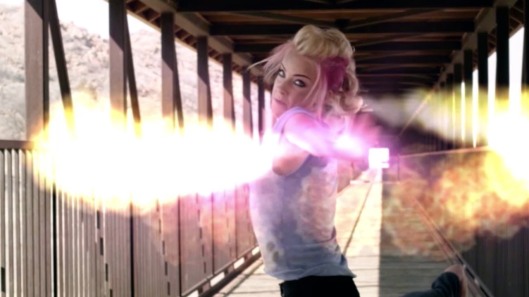
Posthuman Project, The

Predator: Dark Ages (2015) / D: James Bushe / 27m

Cast: Adrian Bouchet, Amed Hashimi, Sabine Crossen, Ben Loyd-Holmes, Jon Campling, Joe Egan, Philip Lane, Bryan Hands

Rating: 7/10 – a group of mercenaries led by Thomas (Bouchard) set off to hunt the mysterious creature killing people and animals in a nearby forest – and find something even more deadly than they expected; a fan-made short that adds a novel twist to the Predator saga, Predator: Dark Ages is a welcome distraction that confirms that, sometimes, the big studios don’t always have the right idea when it comes to their franchise characters.
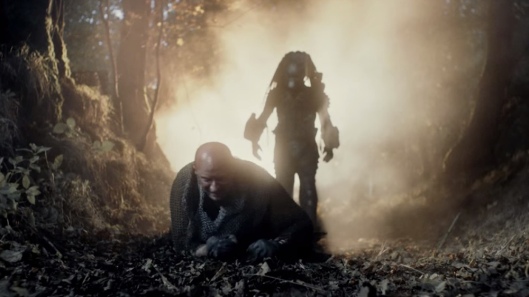
Predator Dark Ages

Drunk Wedding (2015) / D: Nick Weiss / 81m

Cast: Christian Cooke, Victoria Gold, Dan Gill, Anne Gregory, J.R. Ramirez, Nick P. Ross, Genevieve Jones, Diana Newton

Rating: 4/10 – when a couple decide to get married in Nicaragua, they and some of their friends are given hand-held cameras to film it all… with predictably awful, drunken, outrageous, and potentially life-altering effects; if your idea of comedy is seeing someone urinating on another person’s back, then Drunk Wedding is the movie for you, and despite its lowbrow modern day National Lampoon-style approach it still manages to hold the attention and is surprisingly enjoyable – if you don’t expect too much.
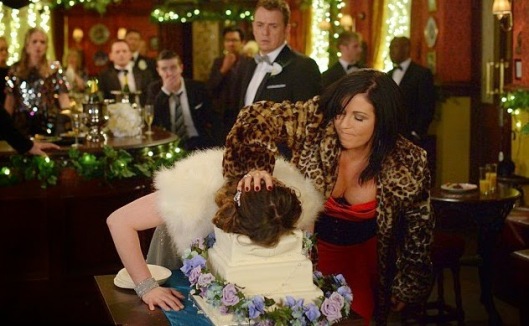
Drunk Wedding

Zombie Ass: The Toilet of the Dead (2011) / D: Noboru Iguchi / 85m

Original title: Zonbi asu

Cast: Arisa Nakamura, Mayu Sugano, Asana Mamoru, Yûki, Danny, Kentaro Kishi, Demo Tanaka

Rating: 5/10 – while on a trip to the woods, Megumi (Nakamura) and four older friends find themselves under attack from zombies who have emerged from the bowels of an outhouse – and only her martial arts skills can save them; a wild, wild ride from one of the masters of Japanese Shock Cinema, Zombie Ass: The Toilet of the Dead is equal parts raw, uncompromising, witless, and gross, but it’s also a movie that just can’t be taken at all seriously, and on that level it succeeds tremendously, providing enough WtF? moments to make it all worthwhile.
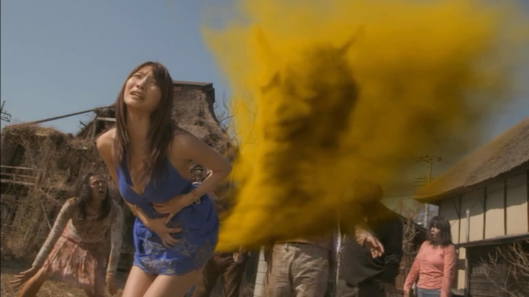
Zombie Ass

Faults (2014) / D: Riley Stearns / 89m

Cast: Leland Orser, Mary Elizabeth Winstead, Chris Ellis, Beth Grant, Jon Gries, Lance Reddick

Rating: 8/10 – down on his luck cult expert Ansel (Orser) sees a way out of debt and a chance to regain some self-respect when a couple (Ellis, Grant) ask him to abduct and de-programme their daughter (Winstead), but he soon finds himself out of his depth and facing up to some hard truths; a tour-de-force from the always excellent Orser – and with a solid supporting performance from Winstead – Faults is an unnerving look at a man on the verge of a nervous breakdown, and the ways in which his broken life have led him to a motel room where his own personal beliefs come under as much scrutiny as his captive’s.
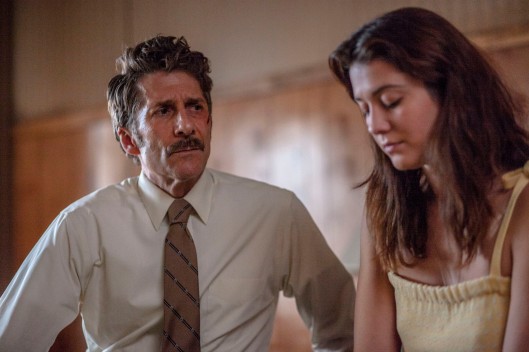
(l-r) Leland Orser and Mary Elizabeth Winstead stars in FAULTS. ©Snoot Entertainment. CR: Jack Zeman.

She’s Funny That Way (2014) / D: Peter Bogdanovich / 93m

Cast: Imogen Poots, Owen Wilson, Rhys Ifans, Jennifer Aniston, Will Forte, Kathryn Hahn, Illeana Douglas, Debi Mazar, Cybill Shepherd, Richard Lewis, Ahna O’Reilly, Joanna Lumley

Rating: 6/10 – theatre director Arnold Albertson has a secret: he gives prostitutes money in order that they can set up their own businesses, but when his latest “project”, aspiring actress Isabella Patterson (Poots) lands the starring role in his latest production, it all leads to the kind of deception and duplicity that will test the notion that the show must go on; a modern attempt at a screwball comedy, She’s Funny That Way doesn’t have the sheer energy that made movies such as His Girl Friday (1940) or  Bringing Up Baby (1938) so enjoyable, but Bogdanovich knows his stuff and keeps the movie entertaining for the most part, even if it doesn’t stay in the memory for too long afterwards.
She's Funny That Way

Curse of the Witching Tree (2015) / D: James Crow / 102m

Cast: Sarah Rose Denton, Lucy Clarvis, Lawrence Weller, Jon Campling, Caroline Boulton, Danielle Bux

Rating: 2/10 – divorcée Amber Thorson (Denton) moves into an old house with her two children (Clarvis, Weller) only for strange phenomena to start happening that’s connected to a witch’s curse, and which leaves them all at risk of supernatural forces; woeful in the extreme, Curse of the Witching Tree is amateurish nonsense that is badly directed, poorly acted, contains defiantly stilted dialogue, suffers from below-par photography, is tension-free throughout, and stands as an object lesson in how not to make a low-budget British horror movie.
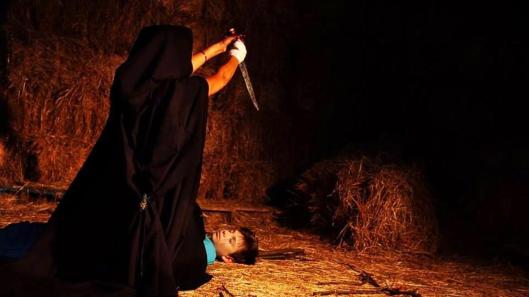
Curse of the Witching Tree

Bulldog Drummond Comes Back (1937) / D: Louis King / 64m

Cast: John Barrymore, John Howard, Louise Campbell, Reginald Denny, E.E. Clive, J. Carrol Naish, Helen Freeman

Rating: 5/10 – when dastardly villains Mikhail Valdin (Naish) and Irena Saldanis (Freeman) kidnap Phyllis Clavering (Campbell), the girlfriend of Captain Hugh Drummond (Howard), they send him on a merry chase where each clue he finds leads to another clue as to her whereabouts – but no nearer to finding her; the first of seven movies with Howard as the dashing sleuth created by H.C. “Sapper” McNeile, Bulldog Drummond Comes Back is as cheap and cheerful and antiquatedly entertaining as you might expect, and benefits enormously from a cast and crew who know exactly what they’re doing.
vlcsnap-00001

Every Secret Thing (2014) / D: Amy Berg / 93m

Cast: Diane Lane, Elizabeth Banks, Dakota Fanning, Danielle Macdonald, Nate Parker, Common

Rating: 7/10 – several years after two young girls are incarcerated for the murder of a younger child, their return to their hometown is marred by the disappearance of a little girl, and the belief that one or both of them is responsible; a stilted attempt at an indie film noir, Every Secret Thing features good performances – particularly from Macdonald – and focuses on the emotional effects a child abduction can have on everyone involved, but it never develops a sense of urgency, though its key revelation at the end carries a wallop that helps dismiss what will seem like a narrative impasse up until then.
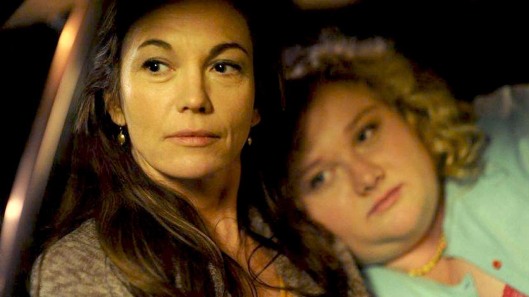
Every Secret Thing

Children of the Corn: Genesis (2011) / D: Joel Soisson / 80m

Cast: Kelen Coleman, Tim Rock, Billy Drago, Barbara Nedeljakova

Rating: 3/10 – a couple (Coleman, Rock) break down on a desert highway but manage to find shelter overnight with a old preacher (Drago) and his much younger, foreign bride (Nedeljakova), but soon find that what’s in the preacher’s barn is much more menacing than the old man himself; placing the action largely away from Gatlin, Nebraska may have seemed like a smart move but this tired, dreary, and just downright dull entry in the franchise shows just how bad things have gotten since the 1984 original, and just why Children of the Corn: Genesis should remain the last in the series to be made.

Children of the Corn Genesis

Skin Trade (2014) / D: Ekachai Uekrongtham / 96m

aka Battle Heat

Cast: Dolph Lundgren, Tony Jaa, Michael Jai White, Ron Perlman, Celina Jade, Peter Weller

Rating: 6/10 – when cop Nick Cassidy (Lundgren) is powerless to stop his wife and daughter being killed, he determines to go after the crime boss responsible, Viktor (Perlman), and destroy his human trafficking network, which means travelling to Thailand and teaming up with detective Tony Vitayakul (Jaa), who’s also out to put a stop to Viktor’s illegal behaviour; with its human trafficking backdrop giving it an unexpected depth, Skin Trade is not just a brainless, slam-bang action movie, but instead a very well-made (for its budget) revenge flick that features some great fight scenes – particularly one between Lundgren and Jaa – and uses its Thai locations to very good effect.
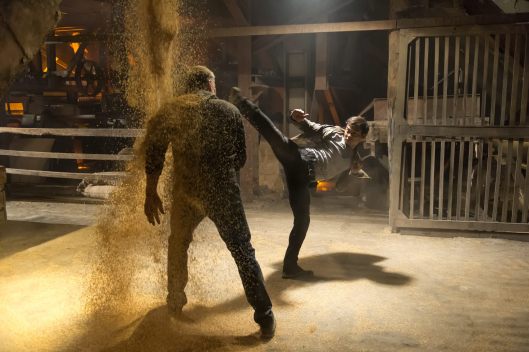
Skin Trade

The Reconstruction of William Zero (2014) / D: Dan Bush / 98m

Cast: Conal Byrne, Amy Seimetz, Scott Poythress, Lake Roberts, Melissa McBride, Tim Habeger

Rating: 6/10 – when the brother (Byrne) of a scientist (also Byrne) wakes from a coma, it’s not long before he begins to suspect that this identity may not be that of the scientist’s brother, and that he’s a pawn in a much bigger conspiracy, but the truth proves even stranger and more disturbing than he realised; a spare, almost antiseptic movie about notions of identity and individual consciousness, The Reconstruction of William Zero features terrific performances from Byrne, but lacks consistency of pace and sometimes feels as if Bush has taken his eye off the ball and taken a while to find it again, which leaves the movie often feeling flat and lifeless.
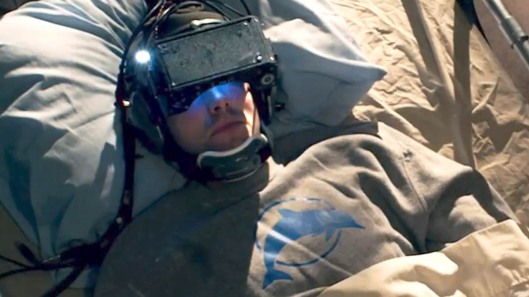
Reconstruction of William Zero, The

Not Another Teen Movie (2001) / D: Joel Gallen / 89m

aka Sex Academy

Cast: Chyler Leigh, Chris Evans, Jaime Pressly, Eric Christian Olsen, Randy Quaid, Mia Kirshner, Deon Richmond, Ed Lauter, Paul Gleason, Mr T, Molly Ringwald

Rating: 5/10 – at John Hughes High School, popular jock Jake Wyler (Evans) accepts a bet that he can’t take an ugly girl and transform her into the prom queen, but when he picks out Janey Briggs (Leigh), and begins to spend time with her, it makes him begin to question whether he should have made the bet in the first place; a predictably irreverent teen movie that parodies all those dreadful teen comedies from the Eighties, Not Another Teen Movie has more heart than most, and thanks to Mike Bender’s script contributions, is also quite funny in its knowing way, and gives viewers a chance to see the future Captain America back in the day when his skill as an actor wasn’t quite as honed as it is now.
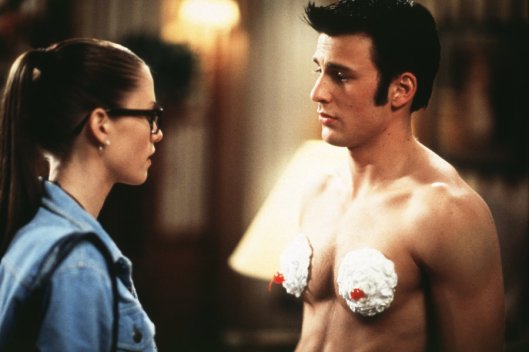
Not Another Teen Movie

Bloomington (2010) / D: Fernanda Cardoso / 83m

Cast: Allison McAtee, Sarah Stouffer, Katherine Ann McGregor, Ray Zupp, J. Blakemore, Erika Heidewald

Rating: 7/10 – former child actress Jackie (Stouffer) attends Bloomington college, and finds herself having an affair with one of the professors, Catherine (McAtee), until the offer of a comeback threatens to end their relationship before it’s fully begun; an intelligent, finely crafted romantic drama, Bloomington has two great central performances, and an emotional honesty that is only undermined by the clichéd nature of Jackie’s need to return to acting, and Cardoso’s over-reliance on silent longing as a sign of emotional upheaval.
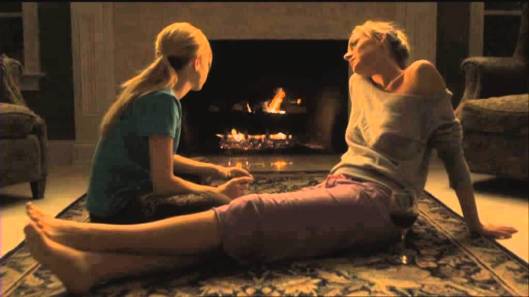
Bloomington

Sleepaway Camp 2: Unhappy Campers (1988) / D: Michael A. Simpson / 80m

Cast: Pamela Springsteen, Renée Estevez, Tony Higgins, Valerie Hartman, Brian Patrick Clarke, Walter Gotell

Rating: 5/10 – Angela Baker (Springsteen), having decimated most of the staff and children at Camp Arawak, and now judged to be safe around others, begins sending unruly teenagers “home” from Camp Rolling Hills – which in reality means killing them for any and all perceived infractions that Angela takes a dislike to; a much better sequel than expected, Sleepaway Camp 2: Unhappy Campers gets by on Springsteen’s preppy performance, some not-too-gory deaths, and Simpson’s confident touch behind the camera, as well as that dreadful musical interlude: The Happy Camper Song.
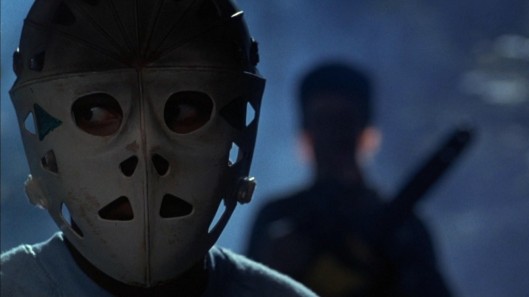
Sleepaway Camp 2

Gunsmoke in Tucson (1958) / D: Thomas Carr / 80m

Cast: Mark Stevens, Forrest Tucker, Gale Robbins, Vaughn Taylor, John Ward, Kevin Hagen, William Henry, Richard Reeves, John Cliff, Gail Kobe

Rating: 6/10 – brothers Jedediah (Stevens) and John (Tucker) are on opposite sides of the law, but when Jedediah becomes involved in a land dispute between cattle ranchers and farmers, his sense of right and wrong is put to the test, and he has to choose sides in the upcoming fight for the choicest plot of land; a robust, earnest Western, Gunsmoke in Tucson is a staid, respectable movie that doesn’t stray too far from its basic plot, and skimps on any psychological undertones in favour of a straight ahead anti-hero vs. the bad guys scenario that makes for a pleasant diversion.
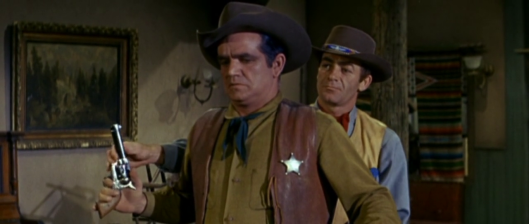
vlcsnap-00002

Beyond the Reach (2014) / D: Jean-Baptiste Léonetti / 91m

Cast: Michael Douglas, Jeremy Irvine, Ronny Cox, Hanna Mangan Lawrence

Rating: 6/10 – arrogant businessman Madec (Douglas) hires tracker Ben (Irvine) in order to bag some game out of season, but when he shoots and kills an old man by mistake, Madec refuses to accept responsibility for his actions and when Ben stands his ground over the issue, finds himself being hunted instead through the harsh Mojave Desert; an occasionally tense two hander that will do little for either actor’s career, Beyond the Reach ramps up the contrivance levels with each successive narrow escape that Ben makes, and with each missed shot that Madec makes, leading to the inevitable conclusion that this is one movie where credulity needs to be left at the door – an idea that is further enhanced by the movie’s risible conclusion.
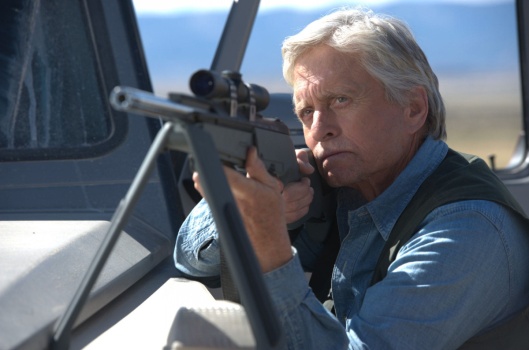
Email sent from: "Barnard, Linda"  lbarnard@thestar.ca  Subject: Beyond the Reach Date: 9 April, 2015 4:30:15 PM EDT   Jeremy Irvine and Michael Douglas star in Beyond The Reach Linda Barnard Movie Writer The Toronto Star thestar.com 416-869-4290

Blood (2012) / Nick Murphy / 92m

Cast: Paul Bettany, Mark Strong, Stephen Graham, Brian Cox, Ben Crompton, Naomi Battrick, Zoë Tapper, Adrian Edmondson

Rating: 5/10 – when a young girl is found murdered, the police, led by Joe Fairburn (Bethany) immediately set their sights on local child molester Jason Buleigh (Crompton), but when their prime suspect has to be let go for lack of evidence, Joe and his brother Chrissie (Graham) decide to take the law into their own hands, with terrible results; grim, visually depressing, and with a script that has more holes in it than a string vest, Blood has only its performances to recommend it, particularly those of Bethany, Graham and Cox, as well as the sense to know that its tale of a proud man’s downfall is always more interesting when you don’t know just how far they’ll fall.
Blood

Echelon Conspiracy (2009) / D: Greg Marcks / 102m

aka The Conspiracy; The Gift

Cast: Shane West, Ed Burns, Ving Rhames, Martin Sheen, Tamara Feldman, Jonathan Pryce, Sergey Gubanov, Todd Jensen

Rating: 3/10 – computer security tech Max Peterson is given a mysterious phone that helps him gain a small fortune, but in doing so he finds himself embroiled in a plot to ensure that the NSA’s super computer, Echelon, gains the upgrade it needs in order to spy on everyone globally; so bad on so many levels, Echelon Conspiracy wastes its (mostly) talented cast, flirts with credibility before running away from it at high speed, offers laughs in places where they shouldn’t be, and is the cinematic equivalent of a car crash.
Echelon Conspiracy

Crazy Sexy Cancer (2007) / D: Kris Carr / 90m

With: Kris Carr, Jackie Farry, Melissa Gonzalez, Brian Fassett, Aura Carr, Kenneth Carr, Leslie Carr, Oni Faida Lampley, Bhavagan Das

Rating: 7/10 – when aspiring actress Kris Carr was diagnosed with cancer, she decided to make a visual record of the process of dealing with it, and the various ways in which other cancer sufferers have done so, and supported by the cameraman/editor who became her husband, as well as family and friends; an uplifting, positive message for anyone dealing with cancer, or who knows someone who is, Crazy Sexy Cancer is the kind of documentary that doesn’t attempt to overdo the physical and emotional strain of being in such a situation, but which does nevertheless offer plenty of poignant moments in amongst the hospital visits, and shows Carr to be a determined, aggressive would-be survivor.

Crazy Sexy Cancer

The Night Flier (1997) / D: Mark Pavia / 94m

Cast: Miguel Ferrer, Julie Entwisle, Dan Monahan, Michael H. Moss, John Bennes, Beverly Skinner, Rob Wilds, Richard K. Olsen, Elizabeth McCormick

Rating: 7/10 – hard-nosed, disreputable reporter Richard Dees investigates a series of murders carried out at small airstrips that appear to be the work of a vampire, but his initial scepticism gives way to reluctant belief as he talks to witnesses, and sees the injuries the victims have sustained; a well-crafted movie that betrays its low budget and scrappy production design, The Night Flier is still one of the better Stephen King adaptations thanks to Pavia’s confident handling of the material, Ferrer’s see-if-I-care performance, and some impressively nasty effects work courtesy of the KNB Group.
Night Flier, The

Killer by Nature (2010) / D: Douglas S. Younglove / 90m

Cast: Ron Perlman, Armand Assante, Zachary Ray Sherman, Lin Shaye, Haley Hudson, Richard Riehle, Richard Portnow, Svetlana Efremova, Jason Hildebrandt

Rating: 3/10 – troubled by nightmares of murder and sleepwalking, teen Owen (Sherman) undergoes therapy with Dr Julian (Perlman), a therapist who believes that a person’s essential nature is handed down through bloodlines – a theory originated by convicted murderer Eugene Branch (Assante), and who is connected to Owen in a way that causes Owen to believe he might be the perpetrator of a series of murders that mimic Branch’s modus operandi; a thriller that can’t decide if it’s tepid or overwrought, and then settles for both (sometimes in the same scene), Killer by Nature is a humdinger of a bad movie, and proof positive that sometimes the old saying that “if you can, it doesn’t mean you should” relates to far too many movies for comfort – especially this farrago of awful performances, pseudo-intellectual posturing, and deathless direction.
Killer by Nature

Scooby-Doo! and the Samurai Sword (2009) / D: Christopher Berkeley / 75m

Cast: Frank Welker, Casey Kasem, Mindy Cohn, Grey DeLisle, Kelly Hu, Kevin Michael Richardson, Sab Shimono, Keone Young, Gedde Watanabe, George Takei, Brian Cox

Rating: 6/10 – on a trip to Japan, Scooby-Doo and the gang become involved in the search for a mystical sword, while trying to thwart the efforts of the ghost of the Black Samurai to beat them to it; a middling entry in the series that at least provides a different backdrop than the standard old dark house (or mine, or hotel, or funfair…), and which allows Shaggy and Scooby to be the heroes we all know they really are deep down, while displaying a pleasing awareness of Japanese culture.
Scooby-Doo! and the Samurai Sword

[Rec]³ Génesis (2012) / D: Paco Plaza / 80m

Cast: Leticia Dolera, Diego Martín, Ismael Martínez, Àlex Monner, Sr. B, Emilio Mencheta, David Ramírez, Miguel Ángel González

Rating: 7/10 – a young couple’s wedding day is disrupted for good when one of the guests takes a bite out of another one, leading to a frenzied free-for-all among the guests and a fight for survival for those not affected by whatever’s causing people to become zombies – including the bride and groom, who have become separated in the mêlée; half found footage, half professionally filmed, [Rec]³ Génesis acts as a prequel to the events of the first two movies but is let down by both the change in location, and the absence of Claudia Silva, as well as a sense that by going backwards in terms of the outbreak and its possible cause, the makers are treading water until an idea as to how to carry the story forward from [Rec]2 (2009) comes along.
Rec3 Genesis

uwantme2killhim? (2013) / D: Andrew Douglas / 92m

Cast: Jamie Blackley, Toby Regbo, Joanne Froggatt, Jaime Winstone, Liz White, Mark Womack, Louise Delamere, Stephanie Leonidas, Mingus Johnston

Rating: 7/10 – popular schoolboy Mark (Blackley) leads a secret life on the Internet, where he invests his time and emotions in relationships with people he’s never met, but when of those people ask him to stop their younger brother, John (Regbo), from being bullied, what follows sets Mark on a dangerous path to murder; based on a true story, and told with a glum sense of foreboding throughout, uwantme2killhim? is an engrossing (though slightly frustrating) recounting of one of the strangest cases of the last fifteen years, and features two very good performances from Blackley and Regbo, though they have to fight against a script that favours repetition over clarity, but which still manages to flesh out what must have been a very strange relationship between the two boys.
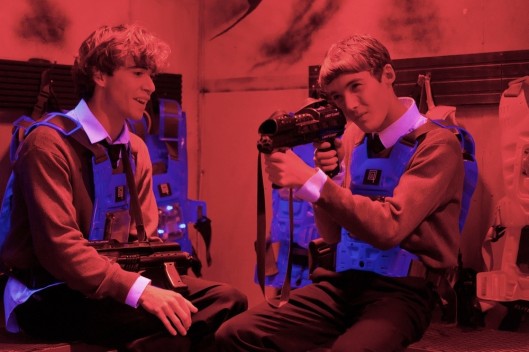
JAMIE BLACKLEY (Mark) (L) & TOBY REGBO (John) (R) in UWANTME2KILLHIM? (c) 2011 U Want M2K Ltd. Photo by Mark Tillie

Bulldog Drummond in Africa (1938) / D: Louis King / 58m

Cast: John Howard, Heather Angel, H.B. Warner, J. Carrol Naish, Reginald Denny, E.E. Clive, Anthony Quinn

Rating: 7/10 – on the very day that Drummond (Howard) is finally due to marry his long-suffering girlfriend Phyllis (Angel) he becomes embroiled in the kidnapping of his old friend Colonel Nielsen (Warner), and finds himself travelling to Morocco – with Phyllis, butler Tenny (Clive) and old pal Algy (Denny) in tow – in order to rescue him; the fourth in the series is perhaps the funniest, with Howard allowed to spread his comedic wings, and even the villain (played again by Naish) given some splendidly dry remarks to make in amongst the threats of death by hungry lion, and a bomb on Drummond’s plane.
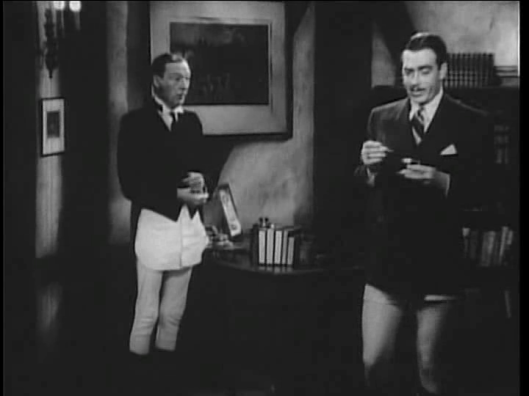
vlcsnap-00003

The Four-Faced Liar (2010) / D: Jacob Chase / 87m

Cast: Daniel Carlisle, Todd Kubrak, Emily Peck, Marja-Lewis Ryan, Liz Osborn

Rating: 8/10 – five friends – couples Greg (Carlisle) and Molly (Peck), Trip (Kubrak) and Chloe (Osborn), and single lesbian Bridget (Ryan) – experience various ups and downs in their relationships, especially when Trip has a one night stand, and Molly finds herself attracted to Bridget; a refreshingly honest look at what relationships mean to different individuals, and how they affect the people around them, The Four-Faced Liar is an effective, well-written drama that benefits from good performances all round, a soundtrack that supports the mood throughout, and Chase’s confident approach to Ryan’s script.
vlcsnap-00004

Share this:

  • Click to share on X (Opens in new window) X
  • Click to share on Facebook (Opens in new window) Facebook
  • More
  • Click to print (Opens in new window) Print
  • Click to email a link to a friend (Opens in new window) Email
Like Loading...

Insidious Chapter 3 (2015)

28 Sunday Jun 2015

Posted by dullwood68 in Movies

≈ Leave a comment

Tags

Angus Sampson, Dermot Mulroney, Drama, Elise Rainier, Horror, Leigh Whannell, Lin Shaye, Prequel, Review, Specs, Stefanie Scott, Supernatural, The Further, Thriller, Tucker

Insidious Chapter 3

D: Leigh Whannell / 97m

Cast: Lin Shaye, Dermot Mulroney, Stefanie Scott, Angus Sampson, Leigh Whannell, Michael Reid MacKay, Phyllis Applegate, Ele Keats

When single father Sean Brenner (Mulroney) and his teenage daughter, Quinn (Scott), move into a new apartment following the death of Quinn’s mother (Keats), the teenager’s desire to contact her mother leads her to visit retired medium Elise Rainier (Shaye). Reluctant to use her gift since becoming aware that each time she does she leaves herself open to attack from a murderous spirit – the bride in black – Elise agrees to try and contact Quinn’s mother, but another presence makes itself felt, one that scares Elise into warning Quinn to be careful about contacting her mother in the future.

Quinn begins to experience strange phenomena within the apartment, including knocking and loud footsteps from the apartment above. Cracks appear in the ceiling and walls of her room. Sean checks the upstairs apartment but it’s been empty for a while. Further disturbances occur, and Quinn is attacked, leading to both her legs being broken. Later, another attack witnessed by her father leads to her neck being injured. At this point, Sean reluctantly contacts Elise, who equally reluctantly agrees to try and help. Elise comes to the apartment and tries to contact the spirit persecuting Quinn – an entity who died in the building and is dubbed the Man Who Can’t Breathe – but is attacked by the bride in black instead. Shocked by this, Elise leaves, saying she can no longer help them.

As Quinn becomes more and more frightened by what’s happening to her, she persuades her father to contact a couple of paranormal investigators, Tucker (Sampson) and Specs (Whannell). They set up their equipment but are unprepared for the supernatural events that follow; as they pack up, Elise returns, having been reassured by a friend as to the strength of her gift. With Tucker and Specs in support, Elise travels back into the Further where she discovers Quinn, but in a faceless, limbless state: the half of Quinn’s soul that the entity has control of. Back in the apartment, Elise reveals that the battle for Quinn’s soul is down to Quinn herself. But Quinn is losing the battle, until Elise becomes aware of a presence that could tip the balance in the young girl’s favour…

3S7C3792.CR2

As any horror movie afficionado will tell you, three is rarely the charm when it comes to horror movie franchises. And Insidious Chapter 3 is no different in that respect, coming as it does after two previous entries that explored the effects of prolonged supernatural distress on the same family, the unlucky Lamberts. The decision here to make a prequel to those movies seems, at first look, to be a solid idea given the chance it takes to bring back Lin Shaye’s popular psychic. But as with any third entry, familiarity undercuts any chance of effective suspense or scares, a problem that Leigh Whannell’s script never overcomes.

The main problem is that we’ve all been here before, and though Whannell – taking over from James Wan in the director’s chair – is well-versed in the particular universe he and Wan have created, is still unable to bring anything new to the table (or the realm of the Further) that provides the required thrills and chills. The Man Who Can’t Breathe is an admittedly unsettling presence – at first – but then makes too many appearances to remain entirely scary. The appearance of the bride in black also lacks the fear factor of the previous instalments (as we know she can’t actually harm Elise), and she’s seen too much in close up to be truly startling. And the Further, once the realm of the scarily unexpected, is now the realm of the mildly alarming. But it’s the movie’s final shot that shows just how much the movie is its own insidious mix of narrative set up (for parts one and two) and self-reflexive homage, as a moment from the first movie is rehashed with a lot less style or potency.

But at least it’s not as dubiously shambolic as some prequels/sequels/later entries in a horror movie franchise. Whannell and co are really trying to scare their audience, and while any originality in doing so is quickly exhausted, at least there’s an effort involved here that most Part Threes never manage. The plot is fairly simple, a hook on which to hang a few uneasy moments that, unfortunately, never fully realise their potential, and though most viewers will see what few twists the narrative provides from a whole other dimension away, there’s enough serious intent here to offset any shortcomings. This doesn’t mean that the movie works per se, just that it doesn’t work as badly as may be expected.

Where the movie does do well is with the performances. Mulroney, making his horror debut – though a case could be made for Stoker (2013) – is surprisingly good as the beleaguered father who’s way out of his depth, but determined to save his daughter no matter what. Returning as the equally out of their depth paranormal investigators Tucker and Specs, Sampson and Whannell replay their enjoyable double act but as in the previous movies, without making them seem too much like complete buffoons. The one weak link is Scott, who never quite convinces as a teen in peril, and whose reactions to the events going on around her always feel like they’ve been lifted from the performance of another actress in a similar role. But it’s Shaye’s movie throughout, her portrayal of Elise given added depth thanks to the inclusion of nods to her deceased husband, and her ability to get across just how scary the Further really is (even if the time spent there in the movie doesn’t support her contention). She also gets a moment straight out of the Sigourney Weaver/Ripley School of Confrontational One-Liners, aimed at the bride in black and guaranteed to raise a smile.

If there is to be a fourth in the series then it’s difficult to see where the makers could go next. As the movie which brings together Elise and Tucker and Specs, Insidious Chapter 3 does its job with a certain amount of gusto and charm. But if the series is to move forward rather than, say, further back, or sideways, then a whole new approach is going to be required. Whether it will restore the intensity and the scares of the first movie, though, is another matter entirely.

Rating: 6/10 – with the scare quotient dialled down in favour of connecting to the previous (subsequent?) entries in the series, Insidious Chapter 3 is only occasionally scary, and only occasionally enthralling; helped greatly by the commitment of its cast and crew, this is one horror movie prequel that tries hard to avoid the pitfalls of its place in the franchise.

Share this:

  • Click to share on X (Opens in new window) X
  • Click to share on Facebook (Opens in new window) Facebook
  • More
  • Click to print (Opens in new window) Print
  • Click to email a link to a friend (Opens in new window) Email
Like Loading...

The Lazarus Effect (2015)

05 Friday Jun 2015

Posted by dullwood68 in Movies

≈ Leave a comment

Tags

David Gelb, Donald Glover, Drama, Evan Peters, Horror, Mark Duplass, Olivia Wilde, Reanimation, Review, Sarah Bolger, Science, Thriller

Lazarus Effect, The

D: David Gelb / 83m

Cast: Mark Duplass, Olivia Wilde, Evan Peters, Sarah Bolger, Donald Glover, Amy Aquino, Ray Wise

10 Reasons Why The Lazarus Effect Will Disappoint You:

1) It’s a Frankenstein variation that swaps injected chemicals for lightning bolts (not nearly as visually exciting).

2) Mark Duplass’ character, Frank, is supposed to be driven but instead comes across as petulant – Duplass is good at petulant but not at being a scientist.

3) Ray Wise pops in for a cameo as a corporate douchebag and takes all their research notes and computer drives – but it doesn’t stop them replicating their experiment.

4) They first revive a dog who turns out to have an aggression problem, but they don’t do anything about it, and still keep him around the lab.

5) Olivia Wilde is a fine actress with a great filmography, but she does herself no favours here with a performance that wishes it could be merely inadequate.

6) Aside from Frankenstein, it also borrows heavily from Carrie (1976) and Lucy (2014) but not in a good way, and not with any fresh ideas grafted on.

7) The reason for Zoe coming back with one hell of a mean streak is never explained, and no one even attempts to explain it.

8) What few “scares” there are in the movie are repetitively set up around the lights going out and then coming on again (boo!).

9) The script – by Luke Dawson and Jeremy Slater – wants the viewer to believe that Frank et al can work undetected in a lab overnight until it becomes convenient for the script to say that, actually, they have been watched the whole time… and Ray Wise’s corporate douchebag doesn’t show up.

10) You don’t care when Zoe starts killing off her colleagues; in fact, you feel a little bit envious that they’re out of the movie, but you’re still watching it.

And lastly, a message to studio executives everywhere: if a screenwriter can’t plug the many holes in his or her plot or storyline, then send them away until they can. And if they’re touting a horror script, don’t believe that any kind of weird shit will be scary when it’s translated to the big screen. It isn’t. And one last thing: don’t ever green light a sequel to this movie – ever.

Rating: 3/10 – once again an example of how worryingly bad some studio backed horror movies can be; The Lazarus Effect is silly, stupid, a waste of a good cast, and directed by Gelb in a way that screams “coincidence” given that his first (short) movie was called Lethargy (2002).

Share this:

  • Click to share on X (Opens in new window) X
  • Click to share on Facebook (Opens in new window) Facebook
  • More
  • Click to print (Opens in new window) Print
  • Click to email a link to a friend (Opens in new window) Email
Like Loading...

Mini-Review: Poltergeist (2015)

03 Wednesday Jun 2015

Posted by dullwood68 in Movies

≈ Leave a comment

Tags

Cemetery, Clowns, Drama, Gil Kenan, Horror, Jared Harris, Kyle Catlett, Paranormal activity, Remake, Review, Rosemarie DeWitt, Sam Rockwell

Poltergeist

D: Gil Kenan / 93m

Cast: Sam Rockwell, Rosemarie DeWitt, Jared Harris, Jane Adams, Kyle Catlett, Saxon Sharbino, Kennedi Clements, Susan Heyward, Nicholas Braun

The Bowens – recently laid-off Eric (Rockwell), aspiring writer Amy (DeWitt), teenage daughter Kendra (Sharbino), young son Griffin (Catlett), and youngest daughter Madison (Clements) – move into their new home on a quiet estate. It’s a new start for all of them, but Griffin, who’s a nervous child at the best of times, senses that there’s something “off” about the house. When he finds Madison talking to someone in her room – who isn’t there – it adds to his unease. Later that night he finds a box full of clown toys that makes him even more anxious, as it seems one of them just might be alive.

The next day sees even more strange phenomena happen throughout the house, phenomena that escalates once Eric and Amy have gone out for the evening to a dinner party. Kendra is attacked in the basement, Griffin is grabbed by the tree in their front yard, and Madison disappears through a portal that opens up in the back of her wardrobe. Eric and Amy arrive home in time to save Griffin but when they can’t find Madison – who can now only speak to them through the TV – they turn to a group of paranormal investigators led by Dr Brooke Powell (Adams) to help get their daughter back. When events escalate even further, and it becomes clear that there are spirits trying to use Madison to free themselves from their earthly prison, Powell asks for help from an unlikely source: her ex-husband and TV ghost hunter Carrigan Burke (Harris). With time running out, a rescue mission is attempted to try and bring back Madison before it’s too late, but while Carrigan, Eric and Amy argue about who should go, Griffin beats them to it…

Poltergeist - scene

Another week, another unwanted horror movie remake. As with all the other horror remakes we’ve been “treated” to in the past five or six years, Poltergeist fails to hit the mark it’s aiming for, and is about as scary as a loaf of bread. This version also can’t decide if it wants to be a straight-up remake, or a completely new reimagining, and because it can’t decide it ends up being an unwieldy, awkward mix of the two. And despite the more than capable cast, you don’t care about any of the characters, not even Madison. Part of the problem here is that in trying to be respectful of the original movie but not slavish to it, the makers have missed the whole reason why Tobe Hooper’s version was, partly, so good: it was fresh and we hadn’t seen anything like it before. This version is tired from the moment that Griffin walks in the door and starts looking around suspiciously. Uh-oh! Something’s up!

There’s no tension this time round either. When the tree outside Griffin’s room is first seen we know it’s supposed to be spooky and creepy and eerie and menacing, but in the hands of the usually talented Kenan – working from David Lindsay-Abaire’s by the numbers script – it’s just a tree blowing in the wind, again and again. It’s yet another example of how familiarity breeds disappointment. To make matters worse, the performances range from unexceptional (Sharbino, Adams) to disappointing (Rockwell, DeWitt) to annoying (Harris), and each attempt to add depth to the characters or story is left high and dry by not being followed through. All in all it’s a movie where just enough was done to get by.

Rating: 4/10 – good production values save this from being a complete dud, but as a horror movie that doesn’t provide any real scares it’s a far cry from effective; when there are movies of the calibre of It Follows (2014) out there showing how it should be done, it makes this Poltergeist look very redundant indeed.

Share this:

  • Click to share on X (Opens in new window) X
  • Click to share on Facebook (Opens in new window) Facebook
  • More
  • Click to print (Opens in new window) Print
  • Click to email a link to a friend (Opens in new window) Email
Like Loading...

Oh! the Horror! – Evangeline (2013) and The Black Dahlia Haunting (2012)

26 Tuesday May 2015

Posted by dullwood68 in Movies

≈ Leave a comment

Tags

1947, Brandon Slagle, Britt Griffith, Devanny Pinn, Drama, Elizabeth Short, Horror, Karen Lam, Kat de Lieva, Los Angeles, Mayumi Yoshida, Murder, Noah Dahl, Possession, Review, Richard Harmon, Serial killer, The Black Dahlia, True crime

Evangeline

D: Karen Lam / 83m

Cast: Kat de Lieva, Richard Harmon, Mayumi Yoshida, David Lewis, Kelvin Redvers, John Shaw, Nelson Leis, Dejan Loyola, Madison Smith, Anthony Shim

College student Evangeline Pullman (de Lieva) – known as Eva – shares a dorm room with fellow student Shannon (Yoshida). When they and another college friend attend a frat party, Eva comes to the attention of frat leader Michael Konner (Harmon). Meanwhile, Mr K (Lewis), a teacher at another school is abducting and murdering teenage girls and dumping their bodies in the nearby forest. One weekend, Eva finds herself alone at the college and runs into Konner. He takes her to his dad’s hunting lodge, where he drugs her. When she wakes, she ends up being chased by Konner and two of his friends (Loyola, Smith). They catch her and after savagely beating her, Eva is strangled and left for dead.

Eva is found by a couple of vagrants living in the forest, Billy (Redvers) and Jim (Shaw). They nurse her back to health, unaware that she is becoming possessed by a forest demon. When she’s threatened by Dee (Leis), another vagrant, she runs off and is picked up by Mr K. He takes her back into the forest, but his attempt to kill Eva leads to the demon taking full control of her and setting her on a course of revenge against Konner and his cronies.

Evangeline - scene

While Evangeline has a few good ideas dotted amongst its more risible moments, and Lam shows a certain amount of visual flair, this particular demonic revenge outing is hamstrung by gaping plot holes, trite dialogue, shallow characterisations, and amongst the supporting cast, some very poor performances. Viewers who are familiar with this type of horror movie will be frustrated by Lam’s decisions as a writer, and further dismayed by the way in which the scenes of Eva’s revenge are marred by a myriad of bizarre editing choices.

There’s an Eighties feel to the movie that leaves the viewer thinking of other, better movies from the period, and the obvious budgetary restraints make it seem as if the bulk of the movie was filmed in a variety of basement rooms. With no one – not even Eva – to sympathise with, the movie has less to offer than most and never really succeeds in getting across the horror of its main character’s troubles. There’s a curiously dispassionate tone used throughout, as if everything is being viewed from a safe distance, even when Eva is in peril or taking her revenge.

Rating: 3/10 – a few inspired moments aside, Evangeline fails to capitalise on its basic premise and takes too many narrative shortcuts in telling its story; with a hint of Japanese folklore to give credibility to the idea of a forest demon, the movie doesn’t make much of this approach either.

Black Dahlia Haunting, The

D: Brandon Slagle / 80m

Cast: Devanny Pinn, Britt Griffith, Noah Dahl, Alexis Iacono, Cleve Hall, Brandon Slagle, Jessica Cameron

Holly Jenson (Pinn) travels to Los Angeles in the wake of her step-brother, Tyler (Dahl), having killed their father and his mother. What makes the case unusual is that Tyler is blind. Currently under the care and supervision of Dr Brian Owen (Griffith), Tyler also draws pictures of a mysterious woman who Dr Owen recognises as Elizabeth Short, the Black Dahlia murder victim from 1947. Holly has to wait for the DA’s office to allow her to see Tyler, and while she does she finds herself wandering around LA until she loses her way. She asks a woman for directions, but the woman (Iacono) talks inaudibly to herself.

Tyler proves uncooperative and tells Holly to go. At her hotel room she takes a shower and is possessed by the spirit of Elizabeth Short (the woman she saw on the street). Holly is forced to visit a cave in the desert where Elizabeth’s killer (Hall) disposed of her clothes, her blood and the knives he used. Then she visits the home of Dr Owen and waits for him to arrive, now aware – as Tyler is as well – of the connection between the doctor and the Black Dahlia murder over sixty years before.

Black Dahlia Haunting, The - scene

By taking the real life murder of Elizabeth Short as the basis for its plot, The Black Dahlia Haunting makes a poor fist of squeezing out a revenge story, using muddled coincidences and ill thought out connections to shepherd the idea of Short reaching out from beyond the grave and gaining retribution through the murderous actions of two half-siblings. It’s a poor movie that proceeds at a pedestrian pace, features several scenes that don’t advance the plot or add depth to the characters, and feels like a short movie stretched beyond its limits.

It doesn’t help that the performances seem to have been crafted without the benefit of rehearsals, and that some lines of dialogue sound mannered and/or mis-emphasised. Pinn makes Holly unlikeable from the start, while Griffith is such a dull presence it seems as if the scenes he’s in go on far longer than any of the ones he isn’t in. As the vengeful spirit of Elizabeth Short, Iacono has the more varied role, and can be seen in flashbacks to 1947 talking with a young Norma Jean Baker (Cameron), or being tortured by her killer. But ultimately, these don’t add anything to the story, and merely pad out the already short running time. Writer/director Slagle – who gives himself a secondary role as a young man who finds one of the knives the killer used – strives for relevance but misses by a mile, and never overcomes the sheer implausibility of his screenplay.

Rating: 3/10 – a neat premise wasted by poor execution, The Black Dahlia Haunting has little to recommend it beyond its real life basis; anyone with a keen interest in Elizabeth Short and her tragic murder would do well to avoid this completely.

Share this:

  • Click to share on X (Opens in new window) X
  • Click to share on Facebook (Opens in new window) Facebook
  • More
  • Click to print (Opens in new window) Print
  • Click to email a link to a friend (Opens in new window) Email
Like Loading...

Maggie (2015)

09 Saturday May 2015

Posted by dullwood68 in Movies

≈ 3 Comments

Tags

Abigail Breslin, Arnold Schwarzenegger, Drama, Father/daughter relationship, Henry Hobson, Horror, Infection, Joely Richardson, Quarantine, Review, Zombie

Maggie

D: Henry Hobson / 95m

Cast: Arnold Schwarzenegger, Abigail Breslin, Joely Richardson, Douglas M. Griffin, J.D. Evermore, Rachel Whitman Groves, Jodie Moore, Bryce Romero, Raeden Greer

In the near future, a virulent disease has arisen that eventually turns its victims into zombies. When farmer Wade Vogel (Schwarzenegger) tracks down his runaway daughter, Maggie (Breslin), he finds her in a big city hospital where she’s been treated for a bite wound inflicted by one of the infected. At this point the rules are clear: in six to eight weeks, depending on how fast the infection spreads through Maggie’s body, she should be taken to a quarantine facility.

Wade takes her home, where Maggie finds that her stepmother, Caroline (Richardson), is preparing to send Maggie’s stepbrother and -sister off to stay with their aunt. Caroline is nervous around Maggie and is fearful as to how things will play out. Her fears begin to come true when Maggie has an accident and breaks a finger; Maggie’s reaction is to cut it off. With Wade doing his best to keep Maggie safe and protected, an encounter with two neighbours who have “turned” leads to the local police becoming aware of Maggie’s condition. When they remind Wade of his obligation to take her to a quarantine facility, Wade is blunt: if he doesn’t, he’ll resist any attempts they make to take her themselves.

A visit to the local doctor, Vern Kaplan (Moore), reveals the infection is spreading faster than expected, and that Maggie could “turn” at any time. She gets a visit from her friend, Allie (Greer), who convinces her to meet up with her old friends, including Trenton (Romero), who is also infected and waiting to be quarantined. They spend some time by themselves, and Maggie experiences a degree of happiness she hasn’t felt since being bitten. But when she traps and feeds on a fox, it proves too much for Caroline and she leaves. Wade stays with Maggie as she continues to get worse, though another visit from the police highlights just how little time they have left together. With Maggie struggling to fight against her new “craving”, Wade has to decide which decision to make: either take her to quarantine, or carry out a mercy killing.

Maggie - scene

While Maggie will no doubt arouse some curiosity due to the presence of Arnold Schwarzenegger in a horror movie – let’s not count End of Days (1999), which was more of an action thriller with supernatural overtones – it would be a mistake to so casually describe what is actually an effective, emotionally-charged drama as simply a horror movie. This isn’t George A. Romero country, where limbs are ripped off and entrails pulled out of stomachs, but rather a poignant, understated examination of parental devotion in a time of despair.

As the beleaguered father, Schwarzenegger displays a range of emotions and a sense of pathos that shows just how far he’s come as an actor, and his presence here soon becomes more than a piece of stunt casting designed to give the movie a better chance at the box office. He’s very, very good in a role that allows him to be both imposing and vulnerable at the same time, and in a way where those aspects aren’t contradictory. Here, Schwarzenegger exudes a weary resignation as a father trying to hold on to a few more precious days with his daughter, and praying for the best. He uses his features – normally so passive – to great effect, giving clear expression to Wade’s doubts and apprehensions throughout, and there are moments where you genuinely feel for the character and what he’s going through.

Breslin is equally as good as the affected Maggie, struggling with trying to remain normal, and holding on to memories of her mother and her pre-infection past. She portrays the character’s anguish and terror at what’s happened – and is happening – to her with such conviction that the tragedy of Maggie’s physical deterioration and path to “turning” is all too horrible to watch. There’s a scene toward the end of the movie where Wade has fallen asleep in a chair and Maggie kisses his head – and then lingers for an uncomfortably long time. Thanks to John Scott 3’s measured, insightful script and Breslin’s astute performance the viewer can’t be sure if Maggie’s kiss will lead to something more terrible, or will remain just a kiss.

The tone of the movie, with its slow, deliberate pace and desaturated visuals, reflects the grim nature of the narrative, and it’s sensitively handled by first-time director Hobson. He steers clear of making Maggie’s plight too melodramatic, or imbuing her relationship with her father with any unnecessary or forced sentimentality. The wider world around them is painted with a harsh realism, with its ruined city and fields of burning crops propelling clouds of smoke into the grey skies. With a sense of impending doom present from the outset, it would be easy to assume that Maggie is a gloomy, depressing experience, but again, Hobson avoids such a pitfall by obtaining two pitch perfect performances from his two leads, and by leavening the drama with flashes of humour and never losing sight of the fierce love Wade has for his daughter.

By making this the focal point of the movie, Maggie transcends its initial appearance as yet another zombie movie in a genre that’s been done to death in recent years, and proves rewarding for holding back on all the gore. Aside from the consequences of Maggie’s gradual physical decay, the make up effects are used sparingly and to greater effect, and help keep the spotlight on the emotional devastation wrought by Maggie’s condition.

Rating: 8/10 – there’s much to admire here, not the least of which is Schwarzenegger’s quietly authoritative performance and an overall approach that aims for realism (in a fantasy genre) and succeeds in its ambitions; while it may not be to all tastes, and its dour, sombre mood may put some people off, this is still well worth seeking out, and has a subtlety and power that most movies in the genre can only dream of.

Share this:

  • Click to share on X (Opens in new window) X
  • Click to share on Facebook (Opens in new window) Facebook
  • More
  • Click to print (Opens in new window) Print
  • Click to email a link to a friend (Opens in new window) Email
Like Loading...

Panic (1970)

30 Thursday Apr 2015

Posted by dullwood68 in Movies

≈ Leave a comment

Tags

Affair, Aldo Monti, Alma Delia Fuentes, Ana Martín, Anaesthetic, Anthology, Drama, Horror, Joaquín Cordero, José Gálvez, Julián Soler, Mexico, Review, Yellow fever

Panico

Original title: Pánico

D: Julián Soler / 85m

Cast: Ana Martín, Ofelia Guilmáin, Joaquín Cordero, José Gálvez, Susana Salvat, Alma Delia Fuentes, Aldo Monti, Carlos Ancira, Pilar Sen

In Panic, a young woman (Martín) flees from another woman (Guilmáin) who is dressed in pink and carrying a knife. At first, the young woman manages to avoid her by escaping into the woods, but the woman in pink pursues her. At one point the young woman thinks she’s evaded her but the woman in pink reappears. In between periods of running through the woods, the young woman has flashbacks to an earlier time when she was brutally attacked by five men. With three men trying to block her escape, the young woman is eventually caught up with by the woman in pink, and a struggle to the death ensues.

In Soledad, two men, Carlos (Cordero) and Abel (Gálvez) are in a village that has fallen victim to an outbreak of yellow fever. Having buried the last victim – who proves to be Abel’s wife (Salvat) – they get in their boat and head down river and away from the plague zone. When their boat capsizes and they find themselves stranded in the swamp, Carlos is unable to deal with the idea that they’ll most likely perish there. He begins to go mad, and in the process, reveals that he was having an affair with Abel’s wife. Distraught at what he’s done, and for betraying his friend’s trust, Carlos implores Abel to kill him. They fight, but in the struggle, Carlos stabs Abel, killing him instantly. Carlos buries his friend in a shallow grave, and as the loneliness and despair take over, he discovers that Abel isn’t as dead and buried as he should be… and that he wants revenge.

In Anguish, scientist and inventor Tiberius Hansen (Monti) has perfected a narcotic that can double as a powerful anaesthetic. Just a few drops will render a patient motionless and unable to feel pain for five hours, but they will be aware of everything that’s happening to them during that time. When an accident leads to his drinking some of his new discovery, Tiberius collapses. His wife, Melody (Fuentes) discovers him apparently dead in his laboratory; the doctor (Ancira) she calls examines Tiberius, and not finding a heartbeat or any other signs of life, pronounces him dead. With Tiberius having made it clear he didn’t want a wake, Melody and the doctor press ahead with the funeral, aiming to have Tiberius buried as soon as possible…

Panico - scene

The availability of Mexican horror anthologies is notoriously bad, with many gems of the genre proving as rare as the proverbial hen’s teeth, but Panic – available on DVD and via YouTube – has managed to buck the trend, and is well worth watching. Like many of its European counterparts, it’s a a mix of the weird, the unexpectedly poetic, and the bizarre.

This applies in the main to the first segment where the young woman is seen to have problems distinguishing fantasy from reality, both before and after she’s chased through the woods by the woman in pink and her murderous intentions. The young woman (who’s name we never learn) is seen cradling a doll before the woman in pink arrives on the scene, and the maternal way in which she’s so carefully holding the doll hints at the young woman’s “problems”. Several chase sequences later, the two women fight it out, and even though one emerges the winner, there’s a twist in the tale that is both unanticipated and satisfying. There’s a lot of cutting away to shots of the trees, a pool of brackish water that acts as a birthing metaphor, and a heavy reliance on Martín’s ability to look panicked like an animal caught in a car’s headlights. It’s a very straightforward segment, but powerfully shot, with no dialogue until the very end, and then in a scene reminiscent of the ending of Psycho (1960).

The longest of the three tales, and also the one most requiring its audience’s patience, Soledad is an entry that wouldn’t have gone amiss in a Tales from the Crypt-style portmanteau. With its two men trapped by circumstance, Abel’s frequent returns from the dead are handled superbly, but it’s the long, very slow build-up as they travel along the river that’s likely to sap the viewer’s will and have them reaching for the fast forward button. The tradition of very tight close ups is in operation here, with both men’s eyes so near to the camera you can almost count their eyelashes. These shots herald flashbacks to the two men kissing Abel’s wife, albeit with vastly differing results. Once they’re stranded, Cordero’s descent into madness is handled with the era’s usual dismissal of restraint, while Gálvez’ determined looks are put to good use – better use, perhaps – when he rises from the grave. Both men keep matters credible and there’s a fight (again in a pool of dirty water) that is a testament to Cordero’s commitment to the role as he’s dunked time and again. Here, Soler loses his grip on the pace from time to time, and Cordero’s performance borders on the annoying, but ultimately it’s worth it for Gálvez’ effortless turn as a man betrayed by his best friend.

In the last segment, Anguish, the protagonist’s desire to do good backfires on him with potentially life-threatening consequences as his family and his doctor do their best to speed up his funeral. This is the segment that finally introduces some consistent dark humour into proceedings, with its flashes of occasional wit and honesty. Hansen is a hoot as the man doomed to be buried alive unless either his wife can respond to his telepathic instructions, or the anaesthetic will wear off in time. Monti, reduced to providing a voice over for the most part, plays it straight, even when he’s railing against the unfairness of his situation. Fuentes matches him for sincerity, her pale features adequately representing the features of a woman who’s lost the love of her life (whatever the doctor intends). Mostly setbound, this segment is the most fully realised of the three, and remains the most entertaining, rounding off the movie in no small style, and with one last joke to tell.

Overall, Soler directs with a view to making the horror more subtle than usual, although the first tale is infused with weird imagery and close ups of a screaming Guilmáin. It’s a proto-slasher tale, and its rural, woodland setting is well shot and lit by DoP Gabriel Torres. The same can be said for the second tale, with its outdoor locations hinting at various menaces at every turn, and some impressive nightmare imagery. The last tale proceeds as expected, and Soler makes the most of scripter Ramón Obón’s layering of the humour, making Tiberius’s dilemma more amusing than horrific – not necessarily a good thing in a horror anthology – but the acting and the pace suit the story and that last joke should definitely raise a laugh.

Rating: 7/10 – with its over-extended middle segment, and low budget origins proving a handicap in certain scenes, Panic is still an enjoyable horror compilation; with a good sense of its limitations and strengths, the movie evokes ideas of loneliness, despair and resignation, adding some unexpected depth to each tale, and making them slightly above par for this sort of thing.

NOTE: There isn’t a trailer available for Panic.

Share this:

  • Click to share on X (Opens in new window) X
  • Click to share on Facebook (Opens in new window) Facebook
  • More
  • Click to print (Opens in new window) Print
  • Click to email a link to a friend (Opens in new window) Email
Like Loading...

A Girl Walks Home Alone at Night (2014)

23 Thursday Apr 2015

Posted by dullwood68 in Movies

≈ 2 Comments

Tags

Ana Lily Amirpour, Arash Marandi, Bad City, Drama, Drug addict, Drug dealer, Father/son relationship, Horror, Iran, Marshall Manesh, Review, Romance, Sheila Vand, Vampire

A Girl Walks Home Alone at Night

D: Ana Lily Amirpour / 101m

Cast: Sheila Vand, Arash Marandi, Marshall Manesh, Mozhan Marnò, Dominic Rains, Rome Shadanloo, Milad Eghbali

In the fictional Iranian town of Bad City, Arash (Marandi) lives with his cat and junkie father Hossein (Manesh). His most treasured possession is his car, but when his father’s dealer, Saeed (Rains) claims payment for some of the money owed him, Arash is forced to hand over the keys to his car. Saeed shows off the car to a local prostitute, Atti (Marnò), but is spooked by a cloaked figure he sees in the rear view mirror. Later that evening he meets a girl (Vand) on the street and takes her back to his apartment. When he makes his move, what happens next comes as quite a shock: she sprouts fangs and attacks him, biting him in the neck and killing him.

Outside, Arash has come to get his car back. The girl passes him as she leaves, and for a moment, there’s a connection. Arash goes up to Saeed’s apartment and finds his body. He takes Saeed’s stash of drugs and his money, and leaves. The next night, the girl menaces Hossein and a small boy (Eghbali) on the street but spares them both. Later that same night, Arash dresses up as Dracula to attend a party. There he runs into Shaydah, a young woman whose family he works for as a gardener. Wanting to make an impression he lets her have some drugs for free; in return she persuades to take a pill himself.

When it comes to making it back home, Arash finds it more difficult than he expected. While standing staring at a lamp-post, he’s spotted by the girl. They begin a conversation. When Arash takes her hand and realises how cold it is, he gives her a hug in a clumsy attempt at warming her up. Surprised by this unexpected show of kindness and sympathy, the girl takes Arash back to her apartment. They discover a shared love of music, and bond further. When Hossein questions Arash about his being out all night, he’s less than impressed when Arash can’t even tell his father the girl’s name.

The girl spends some time with Atti, then at Arash’s request, meets him at the nearby power plant. She tries to warn him off, telling him she’s done some very bad things, but Arash is dismissive of her claims. She walks off, leaving Arash confused and frustrated. When Hossein’s withdrawal symptoms cause an argument the next day, Arash snaps and throws him – and the cat – out and gives him some of Saeed’s drugs and money to get by with. Hossein visits Atti and makes her take heroin. The girl arrives and in a fit of rage, attacks Hossein, the consequences of which will lead Arash to make the toughest decision of his life.

A Girl Walks Home Alone at Night - scene

Shot in glorious black and white by Lyle Vincent, and with the town of Taft, California standing in (very effectively) for Iran, A Girl Walks Home Alone at Night is a small, almost perfectly formed horror movie that avoids genre clichés and provides its story with a rich visual backdrop. In making what could be described as the first Iranian vampire western (with Mexicali tinges), writer/director Amirpour has come up with a spellbinding tale of reluctant desire that resonates far strongly than it perhaps has a right to.

Bad City is the archetypal place where bad things happen to good people, but even worse things happen to bad people. The worst thing in Bad City is the girl, a pale music-loving, wide-eyed monster who preys on the people of Bad City with seeming impunity – with all the bodies that have been dumped in a ravine on the outskirts of town it seems she’s been pretty busy, and for a long while. Used to being alone, and reliant on music for access to long-buried emotions and feelings, the girl feeds when necessary, but has no compunction about doing it. When Arash’s attentions take her by surprise, the girl regains something she hasn’t had for such a long time: hope. Distrusting it at first she tries to sabotage her relationship with Arash before it’s properly begun. But his persistence renews and encourages that hope, and before long she too has to make a decision that will be the toughest she’s ever had to make.

Vand – despite having precious little dialogue to work with – gives a tremendous performance, her sallow features and piercing stare perfectly expressing her curiosity about, and yearning for, a normal life. She makes the girl’s need for Arash so completely understandable – even if there are some obvious obstacles that will prove difficult, if not impossible, to overcome. But while the girl’s wistful longing is touching to witness, Amirpour and Vand ensure that the character’s darker habits aren’t glossed over: the scene where she threatens the little boy with taking his eyes out of his skull is chilling for its raw viciousness.

Marandi plays Arash as a brooding though needy soul, his good looks and cool car no solution for the emptiness he feels eating away inside him. With his good looks and easy-going charm, Arash should have no problem dating women, but there’s something off about him, and they realise this. Marandi expresses Arash’s confusion and inner turmoil over this with quiet persuasion, and makes Arash as desperate for some form of human connection as the girl is. The scene they share at the power plant is one of the most affecting, most awkwardly romantic scenes of recent memory.

Amirpour – making her feature debut – lifts motifs and inspiration from a variety of disparate sources but melds them into one confidently assembled whole. The tone of the movie stumbles on occasion – a scene that sees Atti dancing with a balloon feels like it belongs in another movie entirely – but for each misstep, Amirpour redeems herself with a moment of striking imagery, such as the sight of the girl, her chador billowing out behind her like bat wings, riding a skateboard toward the camera. She also shows a confident use of form and content, framing her characters against often overwhelming and impersonal backgrounds, emphasising their emotional discomfort and the difficulty of breaking free of the chains that bind them. With an equally adept use of light against shadow, and a creative sense of when to glamourise the black and white images, Amirpour displays a skill that easily bodes well for any future endeavours.

Rating: 8/10 – with lush visuals and one of the best scores and soundtrack of recent years, A Girl Walks Home Alone at Night is a refreshingly original take on the vampire story; with a captivating performance from Vand and self-assured direction from Amirpour, it’s a movie that lingers in the memory long after its final image has faded from the screen.

Share this:

  • Click to share on X (Opens in new window) X
  • Click to share on Facebook (Opens in new window) Facebook
  • More
  • Click to print (Opens in new window) Print
  • Click to email a link to a friend (Opens in new window) Email
Like Loading...

29 February (2006)

05 Sunday Apr 2015

Posted by dullwood68 in Movies

≈ Leave a comment

Tags

Blood, Ghost, Horror, Ji-yeon, Jung Jong-hoon, K-Horror, Leap Year, Lim Ho, Murder, Park Eun-hye, Review, Ticket, Tollgate

29 February

Original title: 2 wol 29 il

aka The Curse of February 29th; February 29

D: Jung Jong-hoon / 90m

Cast: Park Eun-hye, Lim Ho, Lee Myung-jin, Lim Hyun-kyung, Kim Jae-man, Son Jung-bum

Ji-yeon (Park) works the late shift at a tollgate. It’s dull, unexciting work until the evening of February 27th. Just before her shift ends, the tollgate suffers an unexpected blackout. While Ji-yeon wonders what’s happening, a car comes up to her booth. She takes the ticket given to her by the driver, who quickly speeds off. Only then does Ji-yeon realise the ticket is covered in blood. The power comes back on and she goes home after being relieved by her friend Jong-sook (Lim Hyun-kyung). The next day Ji-yeon learns there was a murder at a nearby tollgate. Her friend jokes that it’s the curse of the tollgate, and tells her about an accident involving a prison bus that exploded and the female murderer who was supposed to have died in the fire. The story goes that her body was never found, and now every leap year, she comes back to claim more victims.

Ji-yeon is affected by the story, and has a nightmare in which she sees the woman’s burned face. She’s visited by the police officers (Lim Ho, Lee) who are looking into the murder, but she’s not able to tell them much. That night the tollgate suffers another blackout and the same car returns, again with a bloodstained ticket. The police, now dealing with two murders, become more involved, especially when they learn that the blood isn’t from the victims. Ji-yeon tells them the story of the female murderer, and though they’re not entirely convinced, they still look into it. When they show Ji-yeon a photo of the woman, she identifies her straight away as the woman she’s seen.

Having originally taken the night of the 29th off to celebrate Jong-sook’s birthday, Ji-yeon is horrified to learn that her friend has agreed to cover someone else’s shift that night. Ji-yeon rushes to the tollgate but is too late to stop Jong-sook from being murdered. With visions of the woman becoming more prevalent, and finding it difficult to sleep, Ji-yeon goes back to work accompanied by the police, who lie in wait for the car and its murderous occupant to return to the tollgate.

29 February - scene

Part of a series of four horror movies made and released in 2006 – the others being Hidden Floor, Dark Forest, and Roommates – this is a somewhat slight tale that might have played better as a short, and which never completely capitalises on its basic premise. Opening with a journalist’s visit to a mental hospital – where we first meet Ji-yeon as a patient – her story is told in flashback as we witness the events that have driven her to fear for her life. What unfolds is a familiar tale of haunting and murder that has much in common with other K-Horror (and even J-Horror) movies, but which doesn’t offer – at least at first – any reason for the ghostly murderer to be targeting Ji-yeon in the first place.

With the movie holding out for a more rational explanation of events nearer the end, the viewer is left with the feeling that the script, co-written by director Jung and Yoo Il-han, has been cobbled together with the idea of including as many unlikely scares and supernatural confrontations as it can manage without appearing too silly. That it manages to avoid this – though only just – is due to the relatively matter-of-fact approach Jung takes to the material, and the otherwise mundane way in which the plot unfolds. Ji-yeon becomes increasingly disturbed, the police remain baffled and confused, and the ghostly murderer pops up in all manner of places (see picture above) just to keep things from getting too staid. It’s not exactly a tired movie, just one that doesn’t try very hard.

Of course, horror movies by and large don’t have to make perfect sense, but it does help, especially when strange events are given what appears to be a rational explanation. And with the journalist’s interview with Ji-yeon having ended, the movie comes up with what it wants the audience to believe is the definitive spin on events. However, while it makes superficial sense, it’s so full of holes that even a viewer who’s only been paying partial attention will realise how daft it is. And then the movie trumps it’s own conclusions by adding on a twist that both supports and undermines both premises altogether (which is quite clever when you think about it).

The cast are proficient enough with Park keeping what could have been a more hysterical performance in check, and making Ji-yeon a more sympathetic character in the process (though when she’s required to look exhausted, instead she looks like she’s on drugs). Lim Ho as the senior Inspector who suffers an (initially) unexplained arm injury adds a layer of world-weariness to matters, while Lee plays the junior officer with a brash good nature that shows there is some comedy to be squeezed from the script. The rest of the cast don’t really make of a connection, with Kim’s journalist proving too vapid and Son’s hospital orderly too smug.

Jung, whose only feature to date this is, handles the supernatural elements well enough but the jump scares lack the visceral intensity to make them work as effectively as they should. And more could have been made of the tollgate location, but alas the camerawork is sluggish and there are too many occasions where it fails to take advantage of its surprisingly creepy vibe. With so little tension being created, Jung ploughs forward in the hope of the movie having an accumulative effect, but by the time it reaches its final confrontation, the movie doesn’t have enough left to get excited about.

Rating: 5/10 – serviceable, but too bland to be anywhere near terrifying, 29 February coasts along for much of its running time hoping to make an impression; that it doesn’t is due to a pallid script and an approach we’ve seen too many times before, making it one for K-Horror completists only.

TRAILER: There is a trailer for 29 February but it doesn’t have English subtitles. If anyone still wants to see it, it can be found here.

Share this:

  • Click to share on X (Opens in new window) X
  • Click to share on Facebook (Opens in new window) Facebook
  • More
  • Click to print (Opens in new window) Print
  • Click to email a link to a friend (Opens in new window) Email
Like Loading...

Oh! the Horror! – Backtrack (2014) and The Last House on Cemetery Lane (2015)

13 Friday Mar 2015

Posted by dullwood68 in Movies

≈ Leave a comment

Tags

Andrew Jones, Blind woman, Camping trip, Georgina Blackledge, Haunted house, Horror, Julian Glover, Lee Bane, Mark Drake, Murder, Nazis, Plumpton, Reincarnation, Revenge, Review, Rosie Akerman, Screenwriter, Sophie Barker, South Downs, Tom Sands, World War II

Backtrack

aka Nazi Vengeance

D: Tom Sands / 97m

Cast: Mark Drake, Sophie Barker, Rosie Akerman, Miles Jovian, Julian Glover

When Ralph (Drake) undergoes past life regression at the suggestion of his friend Claudia (Akerman), he has visions of Nazis in the small English village of Plumpton, and the deaths of an unknown woman and her three children. Confused and upset by this, Ralph manages to persuade his girlfriend, Andrea (Barker), along with Claudia and her boyfriend Lucas (Jovian), to go on a camping trip to the South Downs, and to investigate the area that Ralph saw glimpses of. Finding the village proves more difficult than expected, and while Ralph and Claudia explore further afield, Andrea and Lucas stay with the tents and continue the affair they’ve been having. While in the midst of having sex, an old man knocks Lucas unconscious and threatens Andrea with a shotgun. He ties up both of them and takes them to an old farm building where he tortures them before leaving to find Ralph and Claudia.

Ralph and Claudia return to the tents but don’t immediately realise that their partners have been abducted. Later they do, but by then it’s late and they decide to bed down for the night and go for help in the morning. The old man attempts to grab them but they manage to escape. Having got away, Claudia suggests that Ralph undergo further regression in an effort to find out more about what happened in Plumpton, and if it has any bearing on what’s happening to them now. Ralph learns he was one of the Nazis he saw before, and that he was responsible for the deaths of the woman and her children. He and Claudia seek shelter in a church but the old man is laying in wait for them; they too find themselves held captive with their partners in the old farm building and at the mercy of the old man’s thirst for revenge.

Backtrack - scene

Sometimes, when watching horror films – especially if you’ve seen way too many of them for your own good – there’s often a point where you know exactly what’s going to happen next, and how, and why. This is the feeling you get after the first five minutes of Backtrack, and the feeling persists throughout. For example, when Ralph and Claudia realise their other halves have been abducted, neither of them can make a call on their mobile phones (naturally). Or when Ralph realises he was a Nazi – something the viewer’s known all along. Or when Claudia tells Ralph to keep a Swiss Army knife in his pocket because, you know, it just might come in handy later on. But these examples of lazy storytelling aside, this is a movie that gets it wrong on so many levels it’s almost embarrassing.

While the basic idea of Backtrack is okay for this sort of thing – revenge-driven World War II survivor targets reincarnated souls who killed his family – the movie is defeated from the beginning by some really really really terrible dialogue (think Harrison Ford’s famous quote, “You can type this shit, but you can’t say it”, and you’ll find you’re not even close to how bad the dialogue is). Defeat comes as well through its cast’s complete inability to make the dialogue sound even remotely normal (even Glover, a classically trained actor, can’t do anything with it). And to make matters worse, the cast are uniformly awful, giving amateurish performances and exposing their lack of experience, and lack of knowledge of their craft in every scene.

Stepping away from the world of documentaries for which he’s best known, Sands does a ham-fisted job in every sense, and fails to inject any tension or drama into the proceedings, leaving the cast to fend for themselves and showing no sign that he’s recognised the absurdities of Mick Sands’ apparently first draft script (the old man stalks the two couples by tractor, one that must have the biggest muffler in the world attached to it, as it doesn’t make a sound). With basic attempts at framing and composition, and the feeling that a lot of shots were first takes, the look and feel of Backtrack is that of a movie that should have had a lot more attention paid to it at all stages of its production.

Rating: 1/10 – dire in every way possible, Backtrack is an object lesson in how not to make a low budget horror movie; if the choice is watching this or watching paint dry, then watch the paint – at least it’s got a more credible story arc.


Last House on Cemetery Lane, The

D: Andrew Jones / 81m

Cast: Lee Bane, Georgina Blackledge, Tessa Wood, Vivien Bridson

When screenwriter John Davies (Bane) rents a house for a couple of months in order to work on his latest screenplay, he finds there’s a sitting tenant up on the third floor: a blind old lady (Bridson) who never leaves her room. Annoyed at first because there was no mention of the old lady in the advertisement he saw, John is reassured by the estate agent (Wood) that it won’t interfere with his work. He spends a day or so visiting the nearby town and reminiscing on the visits he made to the area as a child. Then, one day, he meets a young woman, Cassie (Blackledge) in the garden. She apologises for being there, but John is unconcerned and, slightly smitten, tells her she can visit again if she wants to.

As his relationship with Cassie develops into something more romantic, John begins to have nightmares and experience strange phenomena. At night, a record player comes on and plays the same song each time. A doll in one of the bedrooms is found on the stairs, and a picture that hangs in the hallway ends up on the floor without being touched. He contacts the estate agent to see if the house has a history, but she says there’s nothing to tell. Cassie suggests using a ouija board, but John rejects the idea – at first. One night he uses one to find out if anything has happened in the past, and it tells him that there was a murder there. Convinced that the old lady must know what’s going on, he visits her, only to find that nothing is quite as it seems, and that his life is now in danger.

Cemetery Lane

With the look and feel of a short movie expanded to meet the needs of a full-length feature, The Last House on Cemetery Lane contains a lot of padding and a shortage of actual drama. The first twenty minutes contain enough off-putting moments to make even die-hard horror fans tune out from boredom, and though the introduction of the blind old lady adds a bit of mystery to proceedings, John’s walk through the nearest town, and then along the beach (accompanied on the soundtrack by a trenchant piece of AOR) seems almost like a test: if you can endure this, then the rest of the movie will be a piece of cake (or a walk on said beach). And even though writer/director Jones begins throwing the odd bit of supernatural phenomena into the mix, the movie finds itself focusing on John and Cassie’s relationship instead, subjecting the viewer to mildly interesting scenes where they get to know each other and trade inane lines of dialogue.

It’s not until John consults the ouija board that the movie begins to pick up pace and reminds itself as to why it’s here. The old lady’s revelations, though, prove less than original and lead to a violent showdown that borrows from Halloween (1978) for a key moment, and which lacks any real tension thanks to the clumsy way in which it’s shot and edited. And with a clear resolution to the tale, the script then undermines and ignores its own logic, both insulting itself and the patient viewer. With so much going on that lacks adequate attention from Jones, it’s left to Bane to carry the bulk of the movie, and while he’s worked with Jones on several previous occasions, even he can’t help the viewer along when the going becomes dull.

A haunted house mystery where the real mystery is why the movie was ever produced, Jones’ strives for atmosphere but misses it by a mile, and never develops his own tale beyond its mundane opening scene. There’s the germ of a good movie here, but Jones and his crew can’t quite get a grip on it.

Rating: 3/10 – only occasionally intriguing, The Last House on Cemetery Lane is a throwback to the kind of rural thrillers made in the Seventies, but without any energy or attempts at effective pacing; with a score that’s more irritating than eerie (not to mention too loud in places), any pleasure to be had will come from its brevity, and its brevity alone.

Share this:

  • Click to share on X (Opens in new window) X
  • Click to share on Facebook (Opens in new window) Facebook
  • More
  • Click to print (Opens in new window) Print
  • Click to email a link to a friend (Opens in new window) Email
Like Loading...

It Follows (2014)

05 Thursday Mar 2015

Posted by dullwood68 in Movies

≈ 3 Comments

Tags

Daniel Zovatto, David Robert Mitchell, Death, Disasterpeace, Drama, Entity, Horror, Keir Gilchrist, Maika Monroe, Review, Sex

It Follows

D: David Robert Mitchell / 100m

Cast: Maika Monroe, Keir Gilchrist, Daniel Zovatto, Olivia Luccardi, Lili Sepe, Jake Weary

Jay (Monroe) is nineteen and embarking on a new relationship with Hugh (Weary). At the cinema one night they play a game where they have to choose someone they can see that they’d like to change places with. Jay gets Hugh’s choice wrong, but when it’s his turn, Hugh points out a woman in a yellow dress that Jay can’t see; with Hugh visibly upset, they leave the cinema. On their next date, Jay and Hugh have sex in his car. Afterwards he drugs her. When she wakes, she’s tied to a wheelchair in a ruined building. Hugh tells her he’s sorry but he’s had no choice: he’s passed on to her a curse that means she will be stalked by an unknown entity until it catches her and kills her. Then it will go after him and then on down the line of everybody who’s ever been affected.

They both see a naked woman walking slowly but steadily toward them. Now that Jay has seen an example of how the entity may appear – to make matters worse, it might also appear as someone she knows – Hugh takes her back to his car and leaves her outside her house. Jay reports the incident to the police but they find no evidence of the naked woman, and Hugh has disappeared. When Jay goes back to school she sees an old woman in a hospital gown walking toward her across the grounds and then inside the building. Jay flees and tells her sister Kelly (Luccardi) and friend Paul (Gilchrist) about the curse and what it means. Along with another friend, Yara (Sepe), they agree to stay with her that night for support.

A smashed window in the kitchen leads to the entity gaining entry to Jay’s house. It tries to attack Jay but she escapes and flees to a nearby playground. Her sister and friends catch up with her, as does her neighbour, Greg (Zovatto), who’s seen Jay leave in a panic. He offers to help. Using his car to get there, they go to Hugh’s address but it’s abandoned. However, they find a clue that leads them to his real address. They confront him but he refuses to help, except to advise Jay that she should sleep with someone else to pass on the curse.

The group travel to Greg’s lake house but Jay is attacked there as well. Fleeing in Greg’s car she crashes it, ending up in hospital with her right arm in a cast. While there she sleeps with Greg (much to Paul’s disappointment as he has a crush on her). Days pass and the entity isn’t seen by either of them, until one night when Jay sees Greg break into his own house. She rushes across the street in time to see the entity kill Greg in the guise of his mother. She flees, but when she returns, Paul tells her he has a plan that might kill the entity once and for all.

It Follows - scene

Every now and then a horror movie comes along that critics praise to the skies as being the “new best thing” in horror. Recently it was The Babadook (2014). Now we have It Follows, a movie that brings us a new creature to fear. But where the Babadook made itself known through the pages of a book – Babadook is an anagram of a bad book (the clue’s there for anyone to see) – the implacable entity in It Follows makes itself known through sex. As the logical extension of all those slasher movies from the Seventies and Eighties where promiscuous teenagers made up the bulk of the killer’s victims, and the virgin was left to fend off and despatch said psycho, David Robert Mitchell’s second feature gives the sexually active no way out from their predicament.

It’s a great idea, one that should be filed under “careful what you wish for” perhaps, and the script cleverly introduces the idea that passing on the curse won’t make any difference, almost from the start. This makes the movie the most nihilistic horror movie in years, and it becomes an object lesson in how to maintain hope against all odds. Mitchell makes it clear: Jay and Hugh and anyone else they have sex with are – cue: ominous predatory silence – doomed. And yet we still root for Jay and her friends in their efforts to avoid the inevitable. Even when Paul says he has an idea of how to kill the entity, and despite all the evidence to the contrary, we still hold out hope that he’s right. For if he’s not, then aren’t we all – say it quietly now – doomed as well?

Having a supernatural creature in the role of sexually transmitted disease is a fine metaphor, and one that Mitchell has great deal of fun with. By allowing the creature to appear in any guise it chooses, the movie becomes a series of guessing games for the increasingly paranoid audience (forget the characters – half the time they’re not even looking). And although Mitchell shows a preference for having his entity appear as a nude or semi-nude woman, they’re sufficiently creepy, reanimated even, to add a chill when they’re first spotted (the director does redress the nudity issue though, with the sight of a naked man on the roof of Jay’s house – what he’s doing there specifically is a bit puzzling, however). And there’s an added resonance when it appears as a family member – eagle-eyed viewers will recognise its first appearance as Hugh’s mother when she turns up later in the movie. That said, being chased, however slowly, by your naked, corpse-like mother is wrong in all sorts of ways, and again, Mitchell shows he’s unafraid to pile on the psychological horror in his efforts to make the viewer uncomfortable.

With an ending that’s suitably ambiguous, and likely to annoy viewers who like a more clear-cut resolution to their movies, It Follows is a horror movie that does its best to offer something new and different, and by and large it succeeds. It doesn’t try to explain everything – like where and how the curse got started in the first place – and it doesn’t try to over-elaborate its basic plot. Instead it tells things plain and simple, and if the sight of Jay running away time after time seems too repetitive, then what else can she do? It will find her; all she can do is postpone the inevitable.

As the beleaguered Jay, Monroe gives a finely tuned performance that anchors the movie and gives it an emotional core for the viewer to connect with. Jay’s not as strong as you might expect the heroine of a horror movie to be, but Monroe gives her a tenacity that helps carry Jay through. Gilchrist has a slightly unenviable role as the lovelorn friend who gets passed over for the hot guy across the street, but he shades the character well, expressing Paul’s disappointment and pain with an economy of expression and attitude. Zovatto and Luccardi have little to do in comparison, and Sepe even less, but Weary makes Hugh appropriately anxious and frightened.

It Follows - scene2

The movie is bolstered by some of the finest camerawork – courtesy of Mike Gioulakis – in a horror movie since John Carpenter let Dean Cundey loose on the streets of Haddonfield. Mitchell’s use of space and distance, particularly the way in which he utilises the foreground in a shot, is remarkably reminiscent of Carpenter’s work, and as a homage, offers some superb moments that linger in the memory: Hugh’s car with the ruined building looming ominously behind it; the entity as a tall, cadaverous man appearing out of the shadows in Jay’s house; the vast space to the left of shot as Jay sits on a swing in the playground; seeing Yara appear on the beach when she’s already on a lilo offshore; Jay’s point of view when she sees Greg breaking into his own house; and in perhaps the most obvious visual nod to Halloween (1978), the entity having a sheet thrown over it so that Paul et al can see it.

There’s a terrific score as well by Disasterpeace that is as unsettling as the visuals, a dark electronic discordance that is sinister and harrowing at the same time. With all this, the movie proves as well-constructed and well delivered as you could hope for, and if there is to be a sequel – entirely likely given its critical and commercial reception – then let’s hope Mitchell is the one to see it through. In anyone else’s hands it’s likely to be a letdown.

Rating: 8/10 – a genuine surprise, It Follows is that rare beast: a horror movie that is fresh and surprising and creepy and keeps its scares and any gore to a minimum, choosing instead to focus on the terror inherent in its protagonists’ situation; beautifully shot and with a killer soundtrack, this is bold, compelling stuff, and a shot in the arm for a genre that seems to have one foot in the grave more often than not.

Share this:

  • Click to share on X (Opens in new window) X
  • Click to share on Facebook (Opens in new window) Facebook
  • More
  • Click to print (Opens in new window) Print
  • Click to email a link to a friend (Opens in new window) Email
Like Loading...

Late Phases (2014)

15 Sunday Feb 2015

Posted by dullwood68 in Movies

≈ 1 Comment

Tags

Adrián García Bogliano, Blind war veteran, Crescent Bay, Drama, Ethan Embry, Full moon, Horror, Lance Guest, Nick Damici, Review, Silver bullets, Tom Noonan, Werewolf

Late Phases

D: Adrián García Bogliano / 96m

Cast: Nick Damici, Ethan Embry, Lance Guest, Erin Cummings, Tom Noonan, Tina Louise, Rutanya Alda, Caitlin O’Heaney, Karen Lynn Gorney, Larry Fessenden, Dana Ashbrook

Blind Vietnam war veteran Ambrose McKinley (Damici) moves into a gated community called Crescent Bay with his dog Shadow. He has an antagonistic nature, and a poor relationship with his son, Will (Embry). He meets his neighbour, Delores (Gorney), but aims to pretty much keep himself to himself. That first night, Delores is attacked by someone or something; Ambrose hears the commotion and tries to work out what’s happening. Delores’s attacker then turns their attention to Ambrose. Shadow defends Ambrose and the attacker flees, leaving Shadow fatally wounded.

Ambrose is found the next day and the police arrive to investigate. He learns that this isn’t the first time someone in Crescent Bay has been attacked, and that the community is always finding its dogs killed by some animal. When it’s also mentioned that the attacks happen regularly each month (and around the time of the full moon), Ambrose begins to suspect that his and Delores’ attacker is a werewolf. He keeps his suspicions to himself but begins to plan and prepare for the next month’s full moon, aiming to kill the creature and put an end to all the attacks and dog killings.

He’s persuaded to attend the local Sunday church group, where he meets Father Roger (Noonan). He suspects the priest of being the werewolf as he talks about people’s dark sides and how he keeps his own dark side under control. Ambrose also runs afoul of the other Crescent Bay residents by using a shovel as a walking cane, and by his continued aggressive attitude. He has silver bullets made, and ensures he has several guns hidden about his property. But as the next full moon approaches, the person who is the werewolf realises what Ambrose is up to, and begins making their own preparations…

Late Phases - scene

With werewolf movies becoming more prevalent in recent years, Late Phases arrives with a modicum of expectation based around the involvement of Bogliano, an Argentinian director whose movies have a unique brand of intensity about them, and its fairly unusual setting, a gated retirement community. It’s a broadly entertaining movie that is confident enough to show its monster within the first fifteen minutes, but like so many other horror movies that start off promisingly, Eric Stolze’s script soon opts for implausibility instead of being more carefully thought out.

It’s a shame as the movie gets quite a few things right. The main character of Ambrose is a refreshing change from the usual screaming teen queen, his curt, uncompromising nature and abrupt manner maintained (almost) throughout. Damici proves a great choice for the role, his glowering features and sardonic scowl completely in tune with Ambrose’s determined animosity. He’s a practical man and he approaches the idea of a werewolf being on the loose in a practical manner, with no room for doubt or hesitation. He doesn’t try to convince anyone there’s a werewolf carrying out the attacks and he doesn’t try to enlist anyone’s aid on the night. He just gets on with it.

His talks with Father Roger combine musings on the duality of man with notions of honour and personal belief, and though they do include dialogue that is cliché driven, it’s good to see a horror movie take time out to examine pertinent themes, and in some depth (it’s also good to see Noonan back in a movie after several years on various TV shows and making shorts). Alas, the same can’t be said for Ambrose’s relationship with his son, which hinges on his inability to show emotion, and which has a predictable resolution. Damici and Embry manage to make these scenes more effective than as written, but they’re still pretty perfunctory.

Another plus is the decision not to use the “w” word. At one point, Ambrose asks the question “What do silver bullets make you think of?” The reply? “The Lone Ranger.” It’s a lovely moment, played completely straight, and underlines the confident nature of much of the script. However, this is a horror movie and certain illogicalities have to be adhered to (or so it seems). While pacing out steps in one of the rooms in his property, Ambrose turns on a couple of lamps – would a blind man need to do that? He finds a claw embedded in the wall of his new home (within about a minute of his going inside) – as an early warning of what’s to come it’s great, but wouldn’t a realtor (or someone) have spotted that long before he moved in? And the police are woefully inadequate in dealing with attacks that go back twenty-five years but are on the ball when some of Ambrose’s neighbours complain about his behaviour. (And let’s not mention the gate security guard who seems to work 24/7.)

The movie reveals the identity of the werewolf approximately two thirds in and while most viewers won’t be surprised by the revelation, they probably will be surprised by the fact that this werewolf can bite people and pass on the curse while in human form. This leads to a risible showdown between Ambrose and several werewolves that features possibly cinema’s first ever example of “were-fu”. It also reveals that werewolves are unable to move out of the way when a blind man points a gun at them, and have to stand in the line of fire for around twenty seconds bellowing before attacking Ambrose one at a time. And there’s a minor subplot involving a headstone that amounts to a bad joke when it’s finally brought into play.

Late Phases - scene2

There’s a transformation scene that’s not too bad given the budget, and a pleasing amount of gore to keep genre fans happy, and there’s an emphasis on keeping the special effects practical rather than enhanced by CGI that works in the movie’s favour, but while Bogliano adds some much needed energy to things in the two big setpieces that bookend the movie, there are still too many occasions where the viewer will be shaking their head and asking themselves, did I really just see or hear that? The rest of the cast provide adequate support, and there’s some effectively framed scenes and shots courtesy of DoP Ernesto Herrera. Wojciech Golczewski’s score can be a little intrusive at times, though it does provide some atmospheric support during the quieter scenes, and the movie thankfully avoids the temptation to set up a potential sequel.

Rating: 6/10 – with a bit more care and attention paid to the script, Bogliano’s first English language movie could have been a much more robust and compelling movie; as it is, Late Phases is worth seeking out as an attempt at doing something a little different within an already crowded genre.

Share this:

  • Click to share on X (Opens in new window) X
  • Click to share on Facebook (Opens in new window) Facebook
  • More
  • Click to print (Opens in new window) Print
  • Click to email a link to a friend (Opens in new window) Email
Like Loading...

Oh! the Horror! – The Remaining (2014) and Lemon Tree Passage (2013)

22 Thursday Jan 2015

Posted by dullwood68 in Movies

≈ Leave a comment

Tags

Alexa Vega, Apocalypse, Australia, Casey La Scala, David Campbell, Horror, Jessica Tovey, Lemon Tree Passage Road, New South Wales, Review, The Rapture, Urban legend, Wedding day

The horror movie double bill is an old staple of movie-going, from the days when Universal used to offer monster “mash-ups” of their favourite creatures (and which were often advertised as providing “twice the fright”), through to the radiation-derived monsters of the Fifties, to Hammer’s doubling up on their own brand of Gothic horror. These days, the horror movie double bill is largely forgotten in cinemas, and the good old days of the horror all-nighter is virtually a thing of the past (except at Halloween… sometimes). But thanks to the joys of DVD and Blu-ray, those days can be recreated at home (though as we’ll see from the movies below, not always so successfully). With that in mind, and with the faint whiff of nostalgia hanging in the air, welcome to the first in an ongoing series of reviews that will feature horror movie double bills.

Remaining, The

D: Casey La Scala / 88m

Cast: Johnny Pacar, Shaun Sipos, Bryan Dechart, Alexa Vega, Italia Ricci, Liz E. Morgan, John Pyper-Ferguson

It’s the wedding day of Skylar (Vega) and Dan (Dechart). The celebrations are in full swing when suddenly the sound of a loud trumpet is heard and several of the guests drop dead on the spot, including Skylar’s parents. Pandemonium ensues, along with what seems like an earthquake, as the ground ruptures and buildings collapse. The newly married couple, along with their friends Tommy (Pacar) and Jack (Sipos) go in search of Jack’s girlfriend Allison (Ricci), who left the reception earlier on. Skylar is convinced that what is happening is the Rapture, when God calls all pure souls to Heaven while those that remain begin to endure seven years of Tribulation.

A priest at a nearby church, Pastor Shay (Pyper-Ferguson), confirms Skylar’s belief but her friends question why he hasn’t been claimed. This leads to all of them, in their own ways, questioning their belief in God and their individual faith in Him. As they continue to search for Allison, Skylar is badly injured; when they find Allison, they all head for the nearest hospital to seek medical help for Skylar. Once there, it becomes clear that the Rapture is now claiming the lives of those who refute God’s existence, putting everyone at risk. And with that knowledge, each of the friends has a difficult choice to make in regard to their future.

Remaining, The - scene

The Rapture is proving to be a resilient modus operandi for horror movie makers at the moment, with The Remaining the latest in an unconnected series of movies that take this particular Biblical warning (from Revelations if you want to check it out) and seek to show the end of the world as spectacularly as they can. This movie is more apocalyptic than most and features winged demons who carry off certain members of the cast as required, along with collapsing buildings and the kind of devastation that causes insurance companies to go bust overnight. It’s turgid stuff, crammed with moments of po-faced seriousness, its characters stopping every five minutes to question their religious values and Christian beliefs. While there’s no doubt some people might stop to do this, the idea that it would be a group of young twenty-somethings is never quite convincing enough.
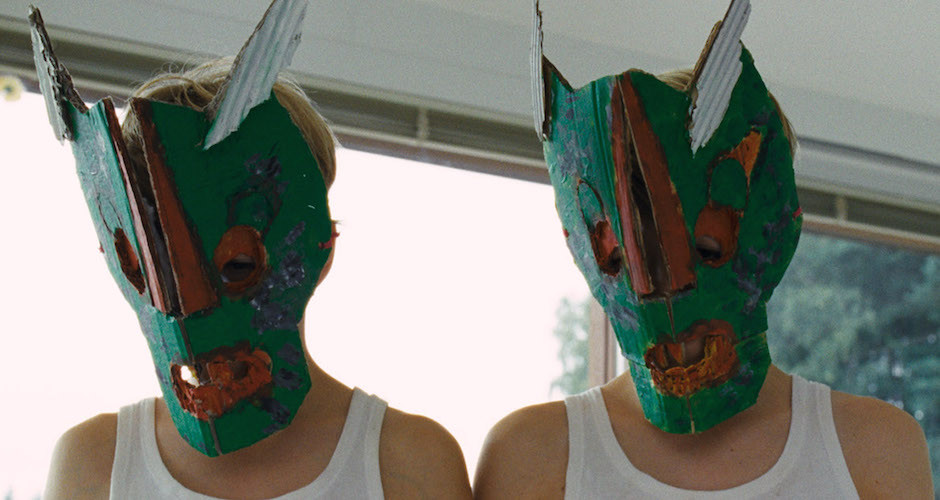
Forged out of a desire to see what it would be like to make a global version of Paranormal Activity, La Scala has created a movie that’s similar in scope and approach to Chronicle (2012), but with a cast that can’t match that movie’s group of actors for experience and intensity. The use of found footage interspersed with traditional camerawork is often annoying (though necessary), and the inclusion of overwrought scenes of peril – while often impressive given the movie’s budget – grab the attention but seem designed to add some much-needed eye candy to a movie that’s been filmed throughout in as bland and unexciting a style as possible. The movie ends with a scene that contradicts its own raison d’être, but does at least prohibit the idea of a sequel (so that’s one benefit of the world ending).

Rating: 5/10 – even for this particular horror sub-genre, The Remaining is a movie that often makes you wish you’d been taken by the Rapture right at the start; still, it does try its best, and while some viewers will quickly express their dissatisfaction at the friends’ behaviour, there’s enough here to warrant a look, and it’s nowhere near as bad as Left Behind (2014).

Lemon Tree Passage

D: David Campbell / 84m

Cast: Jessica Tovey, Nicholas Gunn, Pippa Black, Tim Phillipps, Andrew Ryan, Tim Pocock, Piera Forde

American backpackers Amelia (Black), Maya (Tovey), and her brother Toby (Pocock) meet Aussie mates Oscar (Ryan) and Geordie (Phillipps), and after spending an evening with them, are invited back to Oscar’s house, where he lives with his brother, Sam (Gunn). Geordie has told them the story of Lemon Tree Passage, a stretch of road nearby where the tale goes, if you drive fast enough you’ll see the ghost of a man who was killed there several years before. Deciding that it’ll be a good idea to see if the story is true, all five travel out to Lemon Tree Passage and put the legend to the test. On their first try they see a bright light that appears out of nowhere and follows them along the road before disappearing. When they try it again, but with Geordie left at the roadside at the spot where they first saw the light, things take a strange turn.
Geordie disappears, and the rest of the group begin to experience strange phenomena happening around their car. Maya begins to have strange visions of a young girl called Brianna (Forde) who may or may have not been killed in the woods that surround them. Supernatural events continue to occur, and Sam is drawn to the area as well, leading to a revelation and a confrontation that proves to have nothing to do with the ghost of Lemon Tree Passage, but which is far more dangerous.

Lemon Tree Passage - scene

Taking as its basic premise the real-life urban legend of the ghost of Lemon Tree Passage Road in New South Wales, Campbell’s debut feature soon abandons its spooky set up in favour of a more convoluted and awkwardly presented storyline involving a murdered teenager, possession, revenge from beyond the grave, a lot of aimless wandering in the woods, tepid scares, and ridiculous plot developments. The reason for all this is sound enough, but in the hands of Campbell and co-screenwriter Erica Brien, is extrapolated into a complicated mess that cries out for some well-judged simplicity. Lemon Tree Passage is yet another movie where strange things happen either out of context, or because the script can’t come up with anything else to help move the plot forward more effectively.

With a script that undermines itself at every turn, it’s unsurprising that the cast are unable to elevate the material, or do anything with it that will improve matters. There are a handful of deaths – though why they should be happening is never explained – and a couple of shocks that are signposted too eagerly to have any real impact; it all leaves the viewer suspecting that Campbell and Brien took the idea of the ghost, didn’t know how to take it further, and instead, came up with the revenge tale that’s seen here. As it is, Campbell shows some promise as a director, creating a creepy menace in parts, and of the cast, Tovey fares better than the rest (but not by much). There’s a good deal of padding in the movie’s final third as the story unravels, and Sam King’s cinematography is rarely atmospheric enough to make up for the script’s deficiencies.

Rating: 4/10 – a good idea that’s left by the wayside in favour of a confused, improbable plot, Lemon Tree Passage is a disappointing entry in the urban legend horror sub-genre; absurd and unnecessarily confusing, it struggles to make sense throughout and has too many WTF? moments for comfort.

Share this:

  • Click to share on X (Opens in new window) X
  • Click to share on Facebook (Opens in new window) Facebook
  • More
  • Click to print (Opens in new window) Print
  • Click to email a link to a friend (Opens in new window) Email
Like Loading...

The Whip and the Flesh (1963)

17 Saturday Jan 2015

Posted by dullwood68 in Movies

≈ Leave a comment

Tags

Christopher Lee, Dagger, Daliah Lavi, Drama, Horror, Italian movie, Kurt Menliff, Mario Bava, Murder, Review, Sado-masochism, Tony Kendall, Whipping

Whip and the Flesh, The

Original title: La frusta e il corpo

aka: Night Is the Phantom; What; The Whip and the Body

D: Mario Bava / 91m

Cast: Daliah Lavi, Christopher Lee, Tony Kendall, Ida Galli, Harriet Medin, Gustavo De Nardo, Luciano Pigozzi

Returning home after a period away due to his involvement in the death of a servant girl, Kurt Menliff (Lee) receives a less than warm welcome from his father, Count Menliff (De Nardo), his younger brother Cristiano (Kendall) and his wife Nevenka (Dali), nor from their servant Giorgia (Medin) whose daughter, Tania, was the servant girl who died. Despite this, Kurt intends to reclaim his title, as well as to rekindle the sadomasochistic relationship he had with Nevenka (they were originally to be married before the scandal with the servant girl forced Kurt to leave). One evening, while Nevenka takes a stroll on the beach, Kurt intercepts her. He whips her as a prelude to sex; afterwards, Nevenka realises she is still in love with him. When she doesn’t return from her walk on the beach, Cristiano instigates a search for her and she is found on the beach, but unconscious. Meanwhile, Kurt has returned to the castle unaware of what’s happening, but while in his room, is killed with the same dagger that Tania committed suicide with.

Following Kurt’s death, Nevenka begins to have visions of him. He visits her in her room and once more flogs her. She becomes ever more fearful, and ever more convinced that he’s alive. Then, the Count is found dead, killed by the same weapon as Kurt and Tania. Nevenka tells Cristiano that Kurt has come back from the dead and is seeking revenge on all of them. With the appearance of muddy footprints leading from Kurt’s tomb to inside the castle, and Nevenka’s increasingly unstable behaviour, the possibility that Kurt has returned from the grave becomes more certain, until Cristiano determines to open Kurt’s coffin.

Whip and the Flesh, The - scene

One of Bava’s most effective movies, The Whip and the Flesh has bags of atmosphere, a deceptively simple plot, great performances from all concerned (bearing in mind the melodrama inherent in the story), and a visual style that makes great use of half light and shadows. It’s also a deliberately paced movie that allows the horror to build to a crescendo, giving Bava the opportunity to create a fever dream that’s both delirious and oppressive.

Locating the action in and around a lonely castle on a cliff next to the sea, the script – by Ernesto Gastaldi, Ugo Guerra and Luciano Martino – adds a sense of isolation to proceedings that in turn makes each development in the story that much more forbidding and grim. It’s as if the characters were all trapped, doomed in a way to remain there until their fate is decided. Kurt’s death, so surprising both for how soon it occurs and because he’s played by Lee, the second lead, is unsettling because there is no human involvement in it (at least none that the audience sees). And even though his death is attributed to another character at the end, it makes better sense that this is another example of revenge from beyond the grave, and that Tania’s ghost is responsible. Unfortunately, the script doesn’t take this approach, but with Kurt’s death the movie does become a potent mix of ghost story, whodunnit and psychosexual drama.

Making Nevenka the focus of each strange event that follows gives Bava the chance to indulge in some creepy set pieces, such as Kurt’s first visit to Nevenka’s bedroom, a chilling, drawn out sequence that combines the sound of approaching footsteps, the ominous turn of a door handle, and the sight of muddy boots appearing out of the shadows. It’s a sequence that’s so moodily effective that it has the effect of putting the viewer on the edge of their seat, and just as anxious as Nevenka to see what’s going to happen next. What we see next is perhaps the movie’s most horrifying moment of all, as Kurt’s ghost stands by her bed, his figure in silhouette for a second or two before revealing he has a whip. On the page it may not sound so frightening, but in the movie it’s shocking, as much for the effect of seeing the whip revealed, but also for the implications that come with it. Just that sequence alone is a masterpiece of direction and editing.

With Bava so firmly in control of the material, it gives him the opportunity to coax some better than average performances from his cast. Lavi, an actress employed usually for her decorative appeal rather than her acting ability, here makes an indelible impression as a woman whose masochistic tendencies lead to fear and paranoia, and self-induced erotic imaginings. It’s a performance that’s more controlled than it appears, and anchors the movie to great effect. As the cold and sadistic Kurt, Lee imparts more in a look than some actors can convey in a five-minute monologue. Always an imposing presence, he commands attention in every scene he’s in, and though his appearance diminishes as the movie progresses, he leaves an indelible mark on the movie that adds to the cloying atmosphere of the movie’s final third (it’s sad that his lines, even in English, were dubbed by another actor). Kendall, making only his second movie, downplays the usual melodramatic heroics expected of his role, and makes Cristiano as wretched in his own way as all the other characters. And as his true love, Katia, Galli is not as vapid or as wishy-washy as virtuous love interests often prove to be, but makes the character sympathetic without being tiresome.

There are some flaws, though, with certain scenes feeling truncated or not fully developed. One such scene involves the discovery of the dagger in Katia’s room by Giorgia; it could have been a tense, dramatic moment that introduced an element of doubt about the character, but it’s over before it can go anywhere. And it’s never explained as to why the dagger is kept in a glass cage with Tania’s blood still on the blade. But these are minor caveats in a movie that makes great use of its castle setting, with its rooms and corridors proiving wonderfully creepy in the way that only old castles can be, and supported by a lush, romantic score courtesy of Carlo Rustichelli that shouldn’t complement the action but in a strange way, is entirely appropriate.

Rating: 8/10 – for many, Bava is a director who can do no wrong, and on this evidence they’re absolutely right; tense, unnerving and making no apologies in its depiction of what would have been ascribed as aberrant behaviour, The Whip and the Flesh is a stylish horror that remains as effective now as it was over fifty years ago.

Share this:

  • Click to share on X (Opens in new window) X
  • Click to share on Facebook (Opens in new window) Facebook
  • More
  • Click to print (Opens in new window) Print
  • Click to email a link to a friend (Opens in new window) Email
Like Loading...

The Woman in Black: Angel of Death (2014)

07 Wednesday Jan 2015

Posted by dullwood68 in Movies

≈ 1 Comment

Tags

Crythin Gifford, Drama, Eel Marsh House, Evacuees, Haunting, Helen McCrory, Horror, Jennet Humpfrye, Jeremy Irvine, Review, Sequel, Susan Hill, Thriller, Tom Harper, World War II

Woman in Black Angel of Death, The

D: Tom Harper / 98m

Cast: Phoebe Fox, Jeremy Irvine, Helen McCrory, Oaklee Prendergast, Adrian Rawlins, Ned Dennehy, Amelia Crouch, Amelia Pidgeon, Casper Allpress, Pip Pearce, Leilah de Meza, Jude Wright, Alfie Simmons, Leanne Best

London, 1941. The Blitz has caused the evacuation of several schoolchildren along with their headmistress, Jean Hogg (McCrory) and their teacher, Eve Parkins (Fox). As they take the train to their destination of Crythin Gifford, Eve shares a compartment with RAF pilot Harry Burnstow who is on his way to a new posting at a nearby airfield. Met by local air raid warden Dr Rhodes (Rawlins), he takes them through the now deserted village where the bus has a puncture. While it’s repaired, Eve encounters a blind man, Jacob (Dennehy) who warns her that she and the children will never escape “her”.

At Eel Marsh House, the two women and their charges settle in. Eve has a bad dream that leads to her seeing a woman dressed all in black (Best). The figure vanishes, but the next day, one of the children, Edward (Prendergast), who has been mute since the death of his parents in an air raid, is locked in the nursery by two other children, and sees the woman in black. Afterwards, Edward carries a tattered doll around with him. That night, one of the boys who locked him in the nursery is led from the house by the woman in black; the next morning he’s found dead.

Another sighting of the woman in black in a graveyard leads Eve to discover her identity and the sad history of her child, Nathaniel. With Eve becoming even more convinced that they are all in danger, she battles to convince Jean that they should all leave as soon as possible. An air raid sees the woman in black claim another victim, and with the aid of Harry, they head for the airfield where he’s based. While they wait for the morning to come, Edward is spirited away back to Eel Marsh House. Eve refuses to leave him behind and makes her way back to rescue him.

Woman in Black Angel of Death, The - scene

Set forty years after the events of The Woman in Black (2012), this unnecessary sequel fails to match the quality and all-round scariness of its predecessor, and thanks to a badly constructed screenplay by Jon Croker, almost reduces its titular character to making little more than a cameo appearance.

The success of the original always meant there would be a sequel, and with the decision to set the new story during World War II it seemed as if the makers had come up with an idea that would avoid the usual horror sequel inanity that most follow ups suffer from. Alas, the wartime setting is the only good idea the makers have come up with, and the rest of the movie is as turgid and predictable and run-of-the-mill as any other horror sequel.

With the woman in black’s story told in the first movie, its resurrection here feels like padding in a movie that repeats various shots and sequences in an attempt to promote a sense of menace that never really pays off. Eve has the same nightmare over and over, and while it replays with different outcomes (including a bone-wearying appearance from you-know-who on one occasion), and serves to provide Eve with a back story of her own, the script’s intention for it to be as scary as what’s happening in Eel Marsh House never pans out. Likewise, the oft-repeated shot looking upward at the hole in the ceiling above Edward’s bed – will we glimpse the woman in black there? – is played over and over and becomes tiresome in the extreme.

That a potential franchise has run out of steam so soon may not be surprising to some, but the strength of the original in comparison to this outing is too evident for any other analysis. As a main character, Eve is too blandly presented to have much of an impact, and the viewer has a tough time sympathising with her or her predicament, even when mad, blind Jacob has her temporarily imprisoned. The same goes for the character of Jean, the rationalist who denies the supernatural until it’s literally staring her in the face (and then is all nice and apologetic). Both Fox and McCrory are more than capable actresses, but even with their talents they’re unable to raise their performances above the level of perfunctory. Worse still is Harry, a character so unimaginatively drawn that Irvine is unable to add any colour or flesh him out to an extent that would make him more interesting.

As for Jennet Humpfrye herself, the movie places her firmly in the background, giving her less exposure and as a result, making her less menacing. As a supposedly single-minded, revenge-oriented character she’s remarkably relaxed in her efforts to kill the children placed so conveniently in her home (especially after forty years). And with the change in actress – Best taking over from Liz White – the look and design of the woman in black has been altered somewhat, with Jennet looking younger and less intimidating behind her veil. It’s a sign that not all’s well, that the movie’s primary source of scares and shocks is not as effectively rendered as before (and perhaps this is why we see so little of her, the makers realising how tame her appearance looks in comparison).

To make matters worse the interiors of Eel Marsh House are gloomily lit and make it difficult to see what’s going on when the action takes place at night, while the exteriors are equally bleak and forlorn. It’s all done for the sake of atmosphere but makes the movie an unappealing viewing experience nevertheless. Orchestrating it all, Harper forgets to imbue the movie with a sense of credible peril, and one jump scare aside, defaults on the terror as well. It all leads to an ending that is rushed and dramatically unsatisfactory, and reinforces the feeling that the makers could have done a whole lot better.

Rating: 4/10 – a movie that plays at being scary but doesn’t deliver, The Woman in Black: Angel of Death aims high but succeeds only in being mediocre; a poor effort by all concerned, and one that (hopefully) will discourage a further movie from being made.

Share this:

  • Click to share on X (Opens in new window) X
  • Click to share on Facebook (Opens in new window) Facebook
  • More
  • Click to print (Opens in new window) Print
  • Click to email a link to a friend (Opens in new window) Email
Like Loading...
← Older posts
Newer posts →

Blog Stats

  • 483,130 hits

Recent Posts

  • 10 Reasons to Remember Bibi Andersson (1935-2019)
  • Fantasia (1940)
  • Dances With Wolves (1990) – The Special Edition
  • Kiss of the Spider Woman (1985)
  • The Three Musketeers (1973)

Top Posts & Pages

  • Lost for Life (2013) - Another Look
    Lost for Life (2013) - Another Look
  • Lost for Life (2013)
    Lost for Life (2013)
  • The Monuments Men (2014)
    The Monuments Men (2014)
  • About
    About
  • Mini-Review: Knock Knock (2015)
    Mini-Review: Knock Knock (2015)
  • Irrational Man (2015)
    Irrational Man (2015)
  • A Brief Word About La La Land (2016)
    A Brief Word About La La Land (2016)
  • Goosebumps (2015)
    Goosebumps (2015)
  • Spotlight (2015)
    Spotlight (2015)
  • Batman (1943) - Chapter 14: The Executioner Strikes
    Batman (1943) - Chapter 14: The Executioner Strikes
Follow thedullwoodexperiment on WordPress.com

Blogs I Follow

  • Rubbish Talk
  • Film 4 Fan
  • Fast Film Reviews
  • The Film Blog
  • All Things Movies UK
  • Interpreting the Stars
  • Let's Go To The Movies
  • Movie Reviews 101
  • TMI News
  • Dan the Man's Movie Reviews
  • Film History
  • Jordan and Eddie (The Movie Guys)

Archives

  • April 2019 (13)
  • March 2019 (28)
  • February 2019 (28)
  • January 2019 (32)
  • December 2018 (28)
  • November 2018 (30)
  • October 2018 (29)
  • September 2018 (29)
  • August 2018 (29)
  • July 2018 (30)
  • June 2018 (28)
  • May 2018 (24)
  • April 2018 (21)
  • March 2018 (31)
  • February 2018 (25)
  • January 2018 (30)
  • December 2017 (30)
  • November 2017 (27)
  • October 2017 (27)
  • September 2017 (26)
  • August 2017 (32)
  • July 2017 (32)
  • June 2017 (30)
  • May 2017 (29)
  • April 2017 (29)
  • March 2017 (30)
  • February 2017 (27)
  • January 2017 (32)
  • December 2016 (30)
  • November 2016 (28)
  • October 2016 (30)
  • September 2016 (27)
  • August 2016 (30)
  • July 2016 (30)
  • June 2016 (31)
  • May 2016 (34)
  • April 2016 (30)
  • March 2016 (30)
  • February 2016 (28)
  • January 2016 (35)
  • December 2015 (34)
  • November 2015 (31)
  • October 2015 (31)
  • September 2015 (34)
  • August 2015 (31)
  • July 2015 (33)
  • June 2015 (12)
  • May 2015 (31)
  • April 2015 (32)
  • March 2015 (30)
  • February 2015 (37)
  • January 2015 (39)
  • December 2014 (34)
  • November 2014 (34)
  • October 2014 (36)
  • September 2014 (25)
  • August 2014 (29)
  • July 2014 (29)
  • June 2014 (28)
  • May 2014 (23)
  • April 2014 (21)
  • March 2014 (42)
  • February 2014 (38)
  • January 2014 (29)
  • December 2013 (28)
  • November 2013 (34)
  • October 2013 (4)

Create a free website or blog at WordPress.com.

Rubbish Talk

Film 4 Fan

A Movie Blog

Fast Film Reviews

The Film Blog

The official blog of everything in film

All Things Movies UK

Movie Reviews and Original Articles

Interpreting the Stars

Dave Examines Movies

Let's Go To The Movies

Film and Theatre Lover!

Movie Reviews 101

Daily Movie Reviews

TMI News

Latest weather, crime and breaking news

Dan the Man's Movie Reviews

All my aimless thoughts, ideas, and ramblings, all packed into one site!

Film History

Telling the story of film

Jordan and Eddie (The Movie Guys)

Movie Reviews & Ramblings from an Australian Based Film Fan

Privacy & Cookies: This site uses cookies. By continuing to use this website, you agree to their use.
To find out more, including how to control cookies, see here: Cookie Policy
  • Subscribe Subscribed
    • thedullwoodexperiment
    • Join 481 other subscribers
    • Already have a WordPress.com account? Log in now.
    • thedullwoodexperiment
    • Subscribe Subscribed
    • Sign up
    • Log in
    • Report this content
    • View site in Reader
    • Manage subscriptions
    • Collapse this bar
 

Loading Comments...
 

    %d