• 10 Reasons to Remember…
  • A Brief Word About…
  • About
  • For One Week Only
  • Happy Birthday
  • Monthly Roundup
  • Old-Time Crime
  • Other Posts
  • Poster of the Week
  • Question of the Week
  • Reviews
  • Trailers

thedullwoodexperiment

~ Viewing movies in a different light

thedullwoodexperiment

Tag Archives: Thriller

The Hitman’s Bodyguard (2017)

29 Tuesday Aug 2017

Posted by dullwood68 in Movies

≈ 2 Comments

Tags

Action, Amsterdam, Belarus, Comedy, Drama, Gary Oldman, Patrick Hughes, Review, Ryan Reynolds, Salma Hayek, Samuel L. Jackson, The Hague, Thriller

D: Patrick Hughes / 118m

Cast: Ryan Reynolds, Samuel L. Jackson, Gary Oldman, Salma Hayek, Elodie Yung, Joachim de Almeida, Tine Joustra, Sam Hazeldine, Richard E. Grant

There are several moments during The Hitman’s Bodyguard, Hollywood’s latest attempt at the mismatched buddy genre of action thrillers, when the movie’s humour seems to come on a little too strong, as if it’s fighting its way into the script and looking to be front and centre. More often than not it’s a moment of physical comedy, such as the extended scene where Ryan Reynolds’ triple-A rated protection agent, Michael Bryce, is sitting at an outdoor Amsterdam café complaining about the behaviour of Samuel L. Jackson’s veteran assassin, Darius Kincaid. While he vents, chaos erupts all around him, as everyone in the vicinity ducks for cover, and bullets fly indiscriminately. The barman cowers, Bryce keeps on complaining, and eventually a car plows through the tables behind him. On the surface, it’s a funny scene, with Reynolds’ deadpan expression the counterpoint for all the mayhem going on behind him. But watch it a second time and the humour isn’t there anymore. Now it’s a technically clever scene that relies entirely on Reynolds’ performance. Watch it a third time, and it’s a scene to be endured. Should a scene like that provoke such a response so quickly? If it’s really that funny, then the answer is No.

For much of the rest of the movie, the script’s attempts at levity only serve to highlight just how uneven the material truly is. The humour is largely forced, the action is perfunctory (a chase along the canals in Amsterdam should see Kincaid’s commandeered boat reduced to splinters, or the involvement of at least one Dutch police car), and the basic plot is ludicrous before it’s even begun: Gary Oldman’s brutal Belarussian dictator, Dukhovich, on trial at the Hague for being a brutal Belarussian dictator, can only be brought to justice by the testimony of Jackson’s veteran assassin. Cue a race against time from Manchester, England to said trial, with the usual hundreds of disposable bad guys trying to stop Bryce and Kincaid from getting there. Along the way, Bryce’s back story takes up more and more time but never becomes interesting enough to warrant it (he’s still sulking over the death of a client under his protection, though technically the circumstances mean It doesn’t count), while Kincaid is ratting on Dukhovich as a way of getting his wife, Sonia (Hayek), out of jail (yes, folks, he’s doing it for love, the old softie).
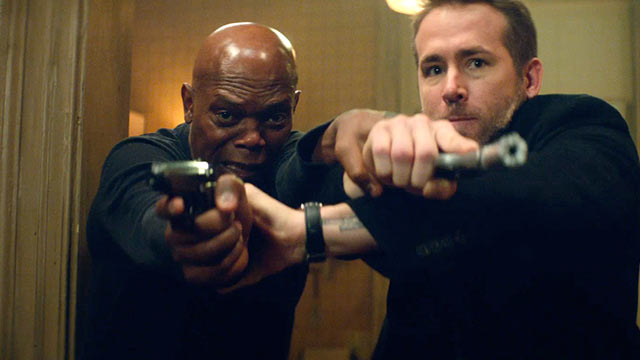
It all plays out predictably enough, with supporting characters straight out of Stock City, including Yung’s Interpol agent, Amelia Roussel, who just happens to be Bryce’s ex-girlfriend, and de Almeida’s shifty Interpol boss who may well be in cahoots with Dukhovich (what are the odds?). No matter how much Tom O’Connor’s script tries to instil proceedings with freshness and vitality, the banal nature of the material as a whole brings those attempts crashing down like Redwoods. In the director’s chair, Hughes, who made more out of The Expendables 3 (2014) than was required, has no option but to go with the flow and let his stars do the heavy lifting. As long as he can get them from A to B, Hughes’s work is done, and often before the end of a scene. Others, but particularly those that feature Hayek’s apoplectic performance as Sonia, don’t appear to have had Hughes’ involvement at all. (Sonia looks and sounds like a character brought in from another movie altogether.) By the time we reach the end and justice is done, it’s become possibly the most generic action movie of the year.

But what of the chemistry between Reynolds and Jackson? Surely that’s in the movie’s favour? Well, strangely enough, the pair work better when they’re apart. Reynolds’ lovelorn, soppy-headed protection agent is like a man-child dropped into a war zone, while Jackson – well, Jackson trots out the same hard-headed “motherfucker”-spouting character he’s been portraying ever since the word was invented. Cue angry stare, mad-as-hell stare, glary stare, and angry mad-as-hell glary stare, all of them trotted out at regular points in the movie, and almost as if they qualify as their own action beats. Jackson is seriously wasted here, and not in a good, been-to-Amsterdam-for-some-of-them-chocolate-brownies kind of way either. When they’re together, Reynolds and Jackson spar like an old married couple, an old tired married couple who can no longer stand each other. Oldman grabs his pay cheque with both hands and hams it up accordingly, while the rest of the cast do their best to get through all the absurdity and nonsense with their dignity intact.

All of this indolence and protracted inertia – Bryce and Kincaid have twenty-four hours to get to the Hague but it feels like they’re taking twice as long – allied to the kind of comedy that comes pre-marked as “strained” is all the more dispiriting when you realise that O’Connor’s script was another Black List screenplay, this time from 2011. But back then it didn’t have any comedy. Instead it was a straight drama. But a few weeks before filming began, a two-week rewrite meant less drama and more comedy. And now we have the end result: a poorly assembled collection of scenes that hint constantly at what might have been. Maybe one day the movie will be remade with its original format, but until then this is all we have. It’s just that overall, it’s not enough.

Rating: 4/10 – an idea that probably looked great on paper – Reynolds! Jackson! Comedy! Action! – The Hitman’s Bodyguard translates into something that never takes full advantage of its basic premise, and chugs along quite amiably without ever doing anything to reward the viewer for their patience; with a cast that should have known better, it’s a movie that quickly fades from the memory soon after it’s watched – so it gets something right at least.

Share this:

  • Click to share on X (Opens in new window) X
  • Click to share on Facebook (Opens in new window) Facebook
  • More
  • Click to print (Opens in new window) Print
  • Click to email a link to a friend (Opens in new window) Email
Like Loading...

The Circle (2017)

22 Tuesday Aug 2017

Posted by dullwood68 in Movies

≈ 2 Comments

Tags

Dave Eggers, Drama, Emma Watson, James Ponsoldt, John Boyega, Literary adaptation, Review, Sci-fi, SeeChange, Thriller, Tom Hanks

D: James Ponsoldt / 110m

Cast: Emma Watson, Tom Hanks, John Boyega, Karen Gillan, Patton Oswalt, Ellar Coltrane, Glenne Headly, Bill Paxton

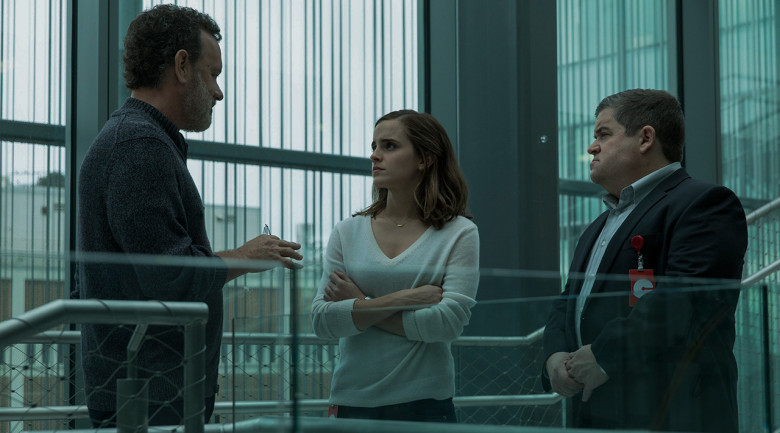
Imagine a device that could accurately record and predict your every emotion before you experienced it. Would you find that a boon or a hindrance to your everyday life? Now hold that thought, because there’s a better question: would you find such a device a boon or a hindrance while watching The Circle? (Actually it would be both: If you feel it would be a boon then you’re advocating knowing you’re going to be bored for an hour and fifty minutes, and you can deal with that appropriately, like watching something else; and if you feel it would be a hindrance then you’re advocating knowing you’re going to be bored, and you can also deal with that appropriately, like watching something else.)

The Circle is a high-tech company that’s looking to integrate every possible form of social interaction, be it personal, professional, legal, financial, medical, morally proscribed or otherwise, into a catch-all application that’s designed to promote and provide transparency in all aspects of daily life. In essence, The Circle is attempting to create a world where there are no secrets or lies, and all to make everyone’s lives easier and better and more fruitful. What could possibly be wrong with that? (Actually, quite a bit, but for the movie itself, that’s another issue.) It’s left to newbie Mae Holland (Watson) to discover the truth behind The Circle’s motives, but not before she becomes the face of The Circle, and accrues the kind of worldwide popularity afforded to rock stars, footballers and self-promoting celebrity wannabes… and all because of a midnight kayak trip that goes wrong.

It’s at this point in The Circle that director James Ponsoldt, along with co-writer and creator of the original novel, Dave Eggers, throw in the towel and quietly resign the audience to a series of even more ineffectual scenes than have gone before. Mae gets her job at The Circle with the usual ease of someone in the movies who can field a barrage of probing questions by umming and ahhing and giving uninspired answers. Once ensconced in Customer Experience she quickly blends in with all the other vanilla members of staff, and makes no impact whatsoever. She meets but doesn’t recognise disillusioned programmer Ty Lafitte (Boyega), whose True You application is now being misused by the company, and believes everything that co-founder Eamon Bailey (Hanks) says at his regular company-wide meetings (which are no more than mini-Expo’s for the company’s latest innovations). All around her, the clues are there as to The Circle’s true motives, and though she’s not exactly drinking the company Kool-Aid, she is allowing herself to be drawn further and further into its “evil machinations”.

But then comes that fateful midnight kayak trip and everything changes. Mae, who is to civil disobedience what Stephen Hawking is to breakdancing, steals a kayak, ventures out into a shipping lane surrounded by fog, and ends up being rescued by the Coast Guard. Without this out of character moment (which is never satisfactorily explained), the movie would have stalled altogether and even more viewers would have lapsed into comas. Mae thinks the publicity – the whole thing was captured on dozens of the company’s SeeChange cameras – will mean the end of her career. But Bailey has other ideas and enlists Mae to promote the company’s latest idea, that of a life led through total transparency. Mae wears a tiny video camera, allows the feed to be shared online, and only gradually begins to understand that The Circle is as dastardly in its aims as everyone else has guessed from the beginning. It’s not until the use of a new app leads to a tragedy that affects Mae directly that she decides to turn the tables on Bailey and… well… let’s just say it’s meant to be ironic and a case of just desserts being served, but it’s so underwhelming you might not believe she’s actually done it.

As dystopian thrillers go, The Circle operates on a level that, much like the Circlers who work for the company, requires the viewer to go along with whatever the movie comes up with, and not to raise any objections. However, Ponsoldt and Eggers have crafted a script that defies the viewer to make any connection with Mae, or Bailey, or her parents (an underused Headly and Paxton), or anyone else for that matter, and which is dramatically inert for much of its running time. It’s a movie in which very little happens, and when it does, it doesn’t have the impact required to lift the movie out of its self-imposed doldrums. It’s a thriller where the director appears to have forgotten to include any thrills, and a message movie where the message is spelt out in big bold letters for anyone watching who might be hard of understanding. It’s a spectacularly misjudged movie, baffling in its intentions, and uncomfortably, unalterably dull.

As well as being unable to elevate the material above the merely mundane, Ponsoldt is also unable to draw out even the hint of a good performance from anyone. Watson gives yet another performance that makes it seem as if she’s still astonished at how she’s been able to sustain a career beyond Harry Potter, while Hanks adopts a friendly uncle persona that is the whole of his portrayal (after this and A Hologram for the King (2016), perhaps he should stay away from any more adaptations of Eggers’ work). Boyega is wasted as the “mysterious” Lafitte (Bailey doesn’t know where he is, even with all his SeeChange cameras; which is a shame as he can be spotted at The Circle’s HQ wandering around quite openly), and several subplots waste the involvement of the likes of Oswalt, Gillan and Coltrane. While the movie clunks along in neutral, with occasional detours into first gear, it also manages to undermine the not inconsiderable talents of its composer, Danny Elfman, its DoP, Matthew Libatique, and its production designer, Gerald Sullivan. And when that’s the best achievement that a movie can make, then it’s definitely time to move on and watch something else.

Rating: 4/10 – boring, dull, uninspired, leaden, bland – take your pick as all of those could (and do) apply to The Circle, the latest in a long line of thrillers that have chosen high tech businesses as their preferred boogeyman; just when you think it’s going to get interesting, it doesn’t, and just when you think Mae will wake up and smell the bullshit, she doesn’t, leaving the movie to promise much, but deliver very, very little in the way of viewing satisfaction.

Share this:

  • Click to share on X (Opens in new window) X
  • Click to share on Facebook (Opens in new window) Facebook
  • More
  • Click to print (Opens in new window) Print
  • Click to email a link to a friend (Opens in new window) Email
Like Loading...

It Comes at Night (2017)

16 Wednesday Aug 2017

Posted by dullwood68 in Movies

≈ 1 Comment

Tags

Carmen Ejogo, Christopher Abbott, Drama, Horror, Joel Edgerton, Kelvin Harrison Jr, Review, Thriller, Trey Edward Shults

D: Trey Edward Shults / 91m

Cast: Joel Edgerton, Christopher Abbott, Carmen Ejogo, Kelvin Harrison Jr, Riley Keough, Griffin Robert Faulkner

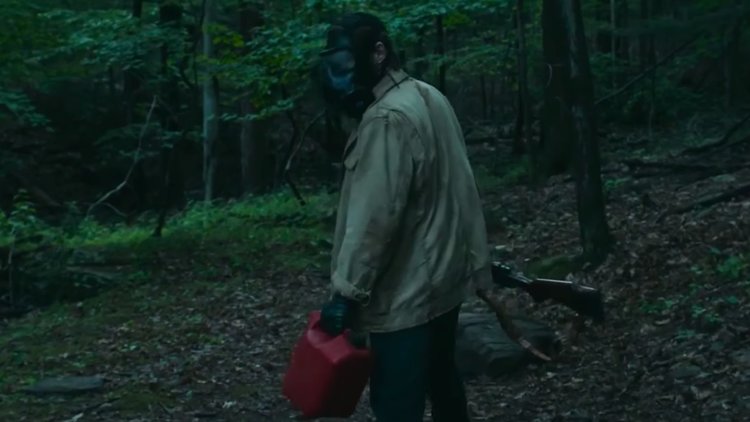
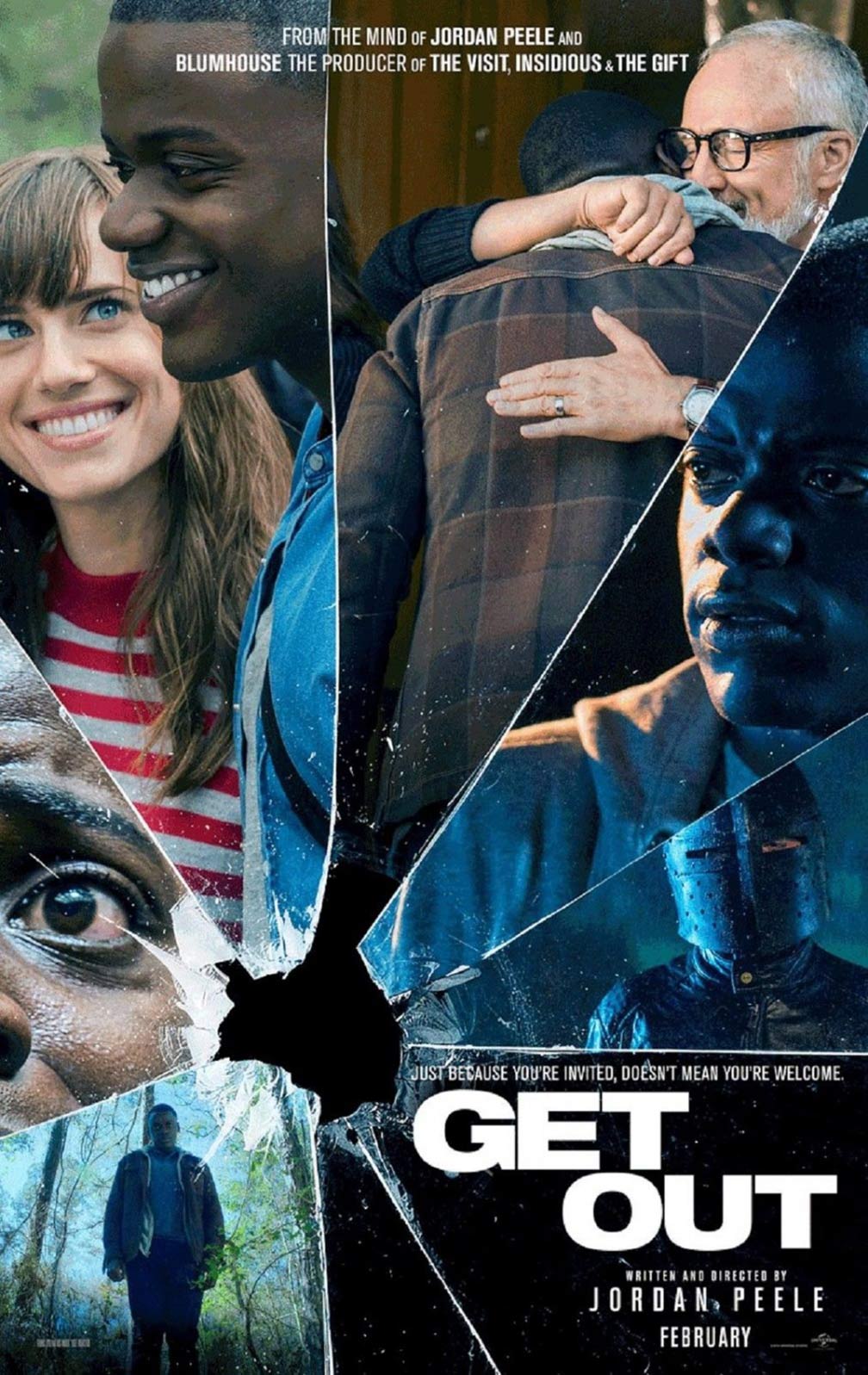
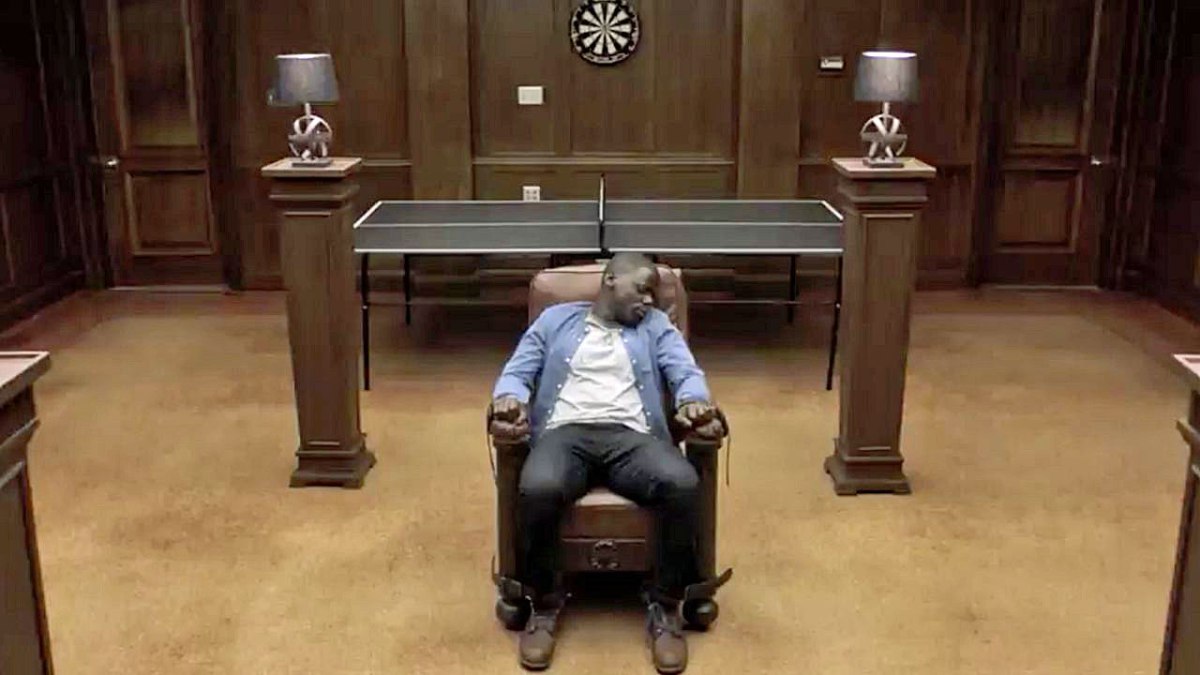
In recent years, low budget horror thrillers have had something of a resurgence, what with It Follows (2014), The Witch (2015), Split (2016), and Get Out (2017) all making an impact with audiences and critics alike. While there are still too many similar movies out there that lack the attention to detail or the originality of these particular examples, it’s heartening to see that some movie makers aren’t just content to rehash familiar stories and plots, and are willing to bringing something different to the table. In addition to the makers of the movies listed above, we now have to add the name of Trey Edward Shults. Making only his second feature, Shults has made a movie that is by turns eerie, unnerving and undeniably tense. It’s a post-apocalyptic thriller that slowly tightens the screws on its characters from the start, and makes no promises of a happy ending for any of them.

We discover things are bad right at the beginning, with Paul (Edgerton), his wife Sarah (Ejogo), and their teenage son, Travis (Harrison Jr), transporting an old man in a wheelbarrow to a clearing in the woods. The old man – who is Sarah’s father – is visibly ill. Paul shoots him, and he and Travis put the body in a shallow grave; they then burn it. The message is clear: anyone found to be contaminated by the disease that has ravaged the rest of the world, will be despatched in a similar fashion. They return to their home deep in the woods, where they barricade themselves inside. This is their life now, and Paul is determined to keep them from harm. That determination is put to the test the next night when they capture an intruder trying to break in. The man’s name is Will (Abbott), and he manages to convince Paul that he was only looking for food and water for himself and his wife, Kim (Keough), and young son Andrew (Faulkner). Satisfied that Will doesn’t have the disease, Paul agrees to travel with him to collect his wife and son.

With Will’s family in the house as well, Paul impresses on the newcomers the rules that have kept him and his family safe, in particular ensuring the only entrance door is kept secure at night. The two families begin to learn to trust each other, but there are odd moments where Travis wonders if the stories Will and Kim tell are entirely true. On an excursion into the woods, Travis’s dog, Stanley, runs off and doesn’t come back. That night, Travis wakes from a nightmare, and in turn, discovers that the entrance door is ajar. Having wakened his father and Will, they discover a badly wounded Stanley just inside the door. Tensions mount when Sarah suggests that a sleepwalking Andrew might have opened the door, while Will and Kim accuse Travis. Tensions mount even further when Travis learns that Andrew may be infected, and Paul decides to finds out for himself…

For much of It Comes at Night, the audience is only given enough to appreciate the immediate situation, and what it means for the two families concerned. There’s no extended scene where someone describes the outbreak of the disease and how it happened, or how quickly it spread, or how easily society fell apart in the wake of the spread. Instead, it’s enough to know that the world has become an entirely dangerous place, and that trust may have become the most precious commodity on the planet. It’s easy to see that Paul is doing his best to protect his family, and it’s clear that he’s given their situation a lot of thought, but it’s also obvious that he’s had to make other, more personal sacrifices along the way, and though much of the story’s focus is on Travis and how he perceives events happening around him, Edgerton’s quiet, brooding performance is the movie’s touchstone. He’s a man who’s dispensed with the idea of social niceties, and if killing means survival, then that’s what he’ll do. Edgerton brings all this to the character, and though he’s sometimes on the periphery of a scene, his presence is as accurate a monitor of the movie’s overall mood as you’d need.

And that mood is pretty intense for most of the movie as the audience waits for the inevitable disintegration of the uneasy combination of two families with differing agendas co-existing in the same claustrophobic property. A veritable maze of a place, the house is a distorting labyrinth that allows for various spy holes and hiding places, and which allows Travis to be the conduit through which the viewer gains a broader understanding of the dynamics of both families, as well as his own growing understanding of the fault lines developing between them. Travis has recurring nightmares relating to the disease, and it’s his fear that gives the audience a way into a scenario that could otherwise have been just a mood piece. There’s a grim inevitability to the way in which this new, insular “society” breaks down, and Shults makes good use of the dread that comes along with it. Will Paul be able to protect his family or will events determine otherwise? And are Travis’s nightmares a foretaste of what’s to come?

For most of the movie’s well-judged running time, Shults handles the character dynamics with confidence and a consistent use of sparse, realistic dialogue. He also ensures that the mottled colour scheme of the property and the surrounding woods adds a melancholy layer to proceedings that is both dispiriting and oppressive. This isn’t a movie that provides much in the way of humour, and though smiles are appropriate on a couple of occasions, what Shults does is to use these moments as a way of leavening the pervading sense of anxiety that he’s building, and to help soften some of the blows to come. Inevitably though, there are a couple of issues that hinder the movie from becoming a complete success. There’s an awkward moment involving Travis and Kim that could best be described as a “seduction scene”, but which isn’t developed any further, and the issue of who opened the entrance door is left unsolved, which feels like a clumsy misstep from a writer/director who for the most part, is in firm control of everything else. It’s a frustrating lapse, as well, because it leaves the viewer waiting to find out who did open it, and for some, it’s likely to occupy their thoughts for the last twenty-five minutes. Those issues aside, though, It Comes at Night is a movie that continues that recent run of effective horror thrillers with more than a dash of style.

Rating: 8/10 – a slowburn thriller with horror overtones, It Comes at Night is also a sombre, doleful survivalist drama that is well-paced, confidently handled by its writer/director, and features a terrific performance from Edgerton; with a palpable sense of impending doom to weigh the characters down, it’s a movie with nihilist leanings and very little intention of sending the viewer away in a happy mood, but in terms of what it wants to achieve, it has to be considered a definite success.

Share this:

  • Click to share on X (Opens in new window) X
  • Click to share on Facebook (Opens in new window) Facebook
  • More
  • Click to print (Opens in new window) Print
  • Click to email a link to a friend (Opens in new window) Email
Like Loading...

Overdrive (2017)

15 Tuesday Aug 2017

Posted by dullwood68 in Movies

≈ Leave a comment

Tags

Action, Ana de Armas, Antonio Negret, Car thieves, Freddie Thorp, French Riviera, Gaia Weiss, Review, Scott Eastwood, Thriller

D: Antonio Negret / 93m

Cast: Scott Eastwood, Freddie Thorp, Ana de Armas, Gaia Weiss, Simon Abkarian, Clemens Schick, Abraham Belaga, Kaaris

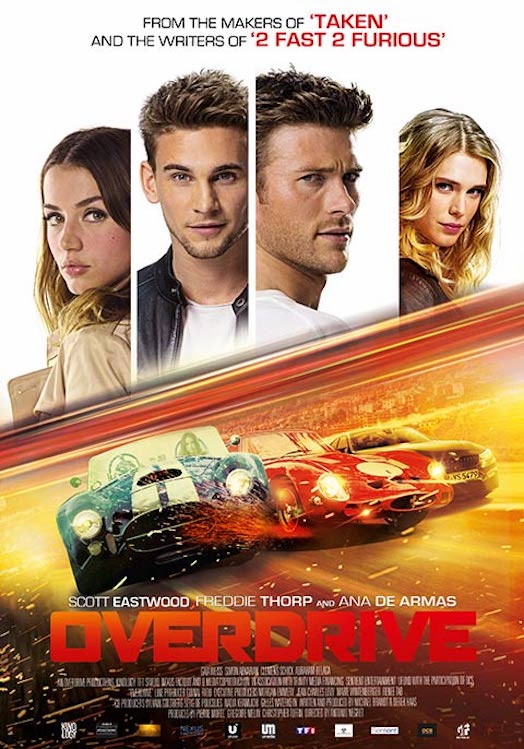
Every now and then – in the UK at least – a movie appears in cinemas that doesn’t seem to belong there. It will have the look and feel of a movie that should have gone direct to video, and it will have a number of second- or third-tier stars heading up the cast. It will be a generic, virtually simplistic genre piece whether it’s a horror movie, an action movie, or a comedy. And it will not attract glowing reviews or prove to be a box office success. In short, it will be the movie you go and see when you get to the cinema and the movie you really want to see has either already started, or sold out. Welcome to the world of the B-movie, the A-movie’s little brother (or second cousin if you want to be a little more dismissive). And on this occasion, welcome to the French Riviera, and a movie called Overdrive, a semi-glamorous action thriller with moments of humour that are often unintentional.

It’s a movie that borrows liberally and without embarrassment from a variety of other action movies, but in the main, viewers will spot references to the Transporter movies (which share this movie’s location), and The Fast and the Furious franchise. Is it as good as those other movies that it appropriates its DNA from? Well, that depends on the entry. Suffice it to say, it never looks in danger of overtaking even the worst of those movies (they know who they are), or giving audiences enough invention or “wow” moments to make it stand out from the crowd. A French/US co-production, the movie coasts along on a small wave of goodwill, and tells its simple tale in as convoluted a fashion as possible. One of the few things that is actually impressive about the movie? That it contains so many red herrings, false trails, and confusing twists and turns, and doesn’t trip itself up all of the time trying to keep them all up in the air.

It involves two half-brothers, Andrew and Garrett Foster (Eastwood, Thorp), who have travelled to the South of France in an effort to steal expensive, one of a kind cars and sell them on to big money collectors. They steal one such car, a 1937 Bugatti, only to learn that it’s owned by criminal bigwig Jacomo Morier (Abkarian). Facing certain death, the brothers manage to persuade Morier to make it up to him by their stealing another car, a 1962 Ferrari 250 GTO, from a “business” rival of Morier’s called Otto Klemp (Schick). Morier gives them a week to get him the car, a timescale that requires them to hire a crew of like-minded car thieves. Andrew’s girlfriend, Stephanie (de Armas), invites herself along for the ride, and just to ensure that Garrett isn’t left out, enlists the aid of her friend, Devin (Weiss), as well.

And so begins a less than complex game of bluff and double bluff that involves the step-brothers, their girlfriends, a group of anonymous drivers, two rival criminals and their gun-toting henchmen, a dozen or so classic cars, two Interpol agents on the Fosters’ trail, and Morier’s cousin, Laurent (Belaga), who may or may not be playing both sides (though it doesn’t really matter). It’s a standard heist movie, playing with misdirection as a recurring plot point, and making sure that everyone except Laurent looks well groomed and well dressed. In many ways, the look of the movie is its most important element, with Laurent Barès’ bright, sunshine-infused cinematography keeping things shiny and attractive, whether it’s the sheen glinting off the classic cars on display – they really are objects of mechanical beauty – or the sun-kissed hills and environs surrounding Marseille (where the movie takes place). Add a handful of car chases that zip and swing and gambol amid said surroundings and you have a pretty, if vacuous, movie that doesn’t have any huge ambitions, and just wants to be entertaining.

And despite all the silly plot twists and exaggerated storyline and depth-free characters and inane dialogue and desperate humour and join-the-dots direction, Overdrive is an enjoyable way to spend ninety-some minutes, partly because it really doesn’t try hard at all, and partly because it’s actually quite charming in a way that’s both undemanding and innocuous. This is the perfect movie to watch on a Saturday night with beer and pizza (if you’re a man), or Prosecco and pizza (if you’re a woman). It doesn’t require the viewer to think too much, it wears its heart on its sleeve in terms of the slightly underwhelming car chases (which are too concerned with ensuring no damage comes to the cars, especially the classic ones), and the soppy romantic interludes it foists on the characters and the audience at regular intervals. You could view it as a guilty pleasure, except that it’s not quite that bad. It’s not great, but it’s not entirely bad either.

As the step-brothers out of different mothers, Eastwood is the serious one looking to make a commitment to Stephanie and stop being a car thief, while Thorp is the happy-go-lucky thrill seeker who doesn’t need a plan (mostly). The pair have an easy-going chemistry that works well, which is more than can be said for their characters’ romantic entanglements. Eastwood and de Armas look like a couple who are still trying to work out if they like each other, while Thorp and Weiss behave like a couple who, weirdly, have never met. Abkarian and Schick are acceptable as rival villains, while Belaga is appropriately slimy as Laurent. Colombian-born Negret oversees things with the flair of someone who was included in a list of Latino Directors to Watch in 2007, and who has worked solidly in television ever since, while writers Michael Brandt and Derek Haas, who penned 2 Fast 2 Furious (2003), rehash old glories and invite viewers to play Spot the Homage nearly every eight-ten minutes. With the viewer distracted in such a way, it gives the movie a chance to make more of an impression than it has any right to.

Rating: 5/10 – already it seems we’re getting throwbacks to movies made in the late Nineties/early Noughties, and Overdrive is a prime example of a genre crying out for new ideas and then settling for the same old same old; breezy and forgettable, the movie roars through a series of minor skirmishes before settling into a predictable rhythm that culminates in a scene of vehicular slaughter that deserves a medal.

Share this:

  • Click to share on X (Opens in new window) X
  • Click to share on Facebook (Opens in new window) Facebook
  • More
  • Click to print (Opens in new window) Print
  • Click to email a link to a friend (Opens in new window) Email
Like Loading...

The Ghoul (2016)

14 Monday Aug 2017

Posted by dullwood68 in Movies

≈ Leave a comment

Tags

Alice Lowe, Drama, Gareth Tunley, Mental illness, Occult, Review, Thriller, Tom Meeten

D: Gareth Tunley / 82m

Cast: Tom Meeten, Dan Renton Skinner, Rufus Jones, Alice Lowe, Niamh Cusack, Geoffrey McGivern, James Eyres, Paul Kaye

It’s very, very difficult to keep one step ahead of audiences today, what with narrative twists and turns coming at us thick and fast in what feels like every other movie (so much so that we’re looking out for them all the time), and with the Internet being a boundless source of spoilers and inappropriate info. Any movie that tries to hoodwink its audience, or lead them down the path marked ‘astray’, will inevitably stand or fall by the quality of its deception, and the way in which viewers are misled. Show them one thing and then show them something else that brings the first thing into question and you have a mystery. Show them one thing and then another and then another and keep everything vague and unknowable – until the end – and you have a head scratcher.

A head scratcher is what The Ghoul presents us with early on. Chris (Meeten), a police detective, arrives at a quiet suburban house that has become a crime scene. His partner, Jim (Skinner), tells a disturbing, impossible story: a burglar, surprised by the owners, shoots both of them… and neither of them dies, not until he flees the scene. Chris is a taciturn individual, wrapped up in himself and his thoughts, thoughts that make him look in the direction of the lettings agent, Michael Coulson (Jones), who has been helpful in the early stages of their investigation. When they try to talk to him, they find that on one wall of his flat is a collage of notes and pictures that indicate he’s seeing a psychotherapist, Dr Fisher (Cusack). Chris decides to go undercover and try and find out about Coulson through his seeing Fisher. A friend of his, a forensics officer, Kathleen (Lowe), helps with his fictional pathology, and soon Chris is seeing Dr Fisher as well. And through his visits, he meets Coulson, and the two strike up an initially uneasy friendship. Soon they are both seeing another therapist, Dr Morland (McGivern), and Coulson starts behaving strangely, accusing Morland of having an alternative and sinister reason for treating them both. And soon, Coulson’s paranoia begins to show itself in Chris’s behaviour as well…

Up to a point, fans of psychological thrillers and intriguing mysteries will be kept enthralled by Gareth Tunley’s debut feature as writer/director. There’s not much precedent in British detective fiction or movies for a detective to go undercover as a patient needing psychotherapy in order to find out if a potential witness is also complicit in a crime. But it’s not until much later that Tunley reveals the reason why Chris does this and why the few people around him – Jim, Kathleen – don’t have any objections to the idea, or think it’s a strange way of tracking down a man who can help them with their enquiries. The average viewer may well find this approach to be dramatically unsound, but Tunley is more interested in making the viewer question Chris’s state of mind rather than his investigative methods (though both are linked). But then there’s that point mentioned at the beginning of this paragraph, and once the movie reaches that moment, it takes a turn that encourages bafflement and bewilderment, and quite deliberately.

At a session with Dr Fisher, Chris reveals that he sometimes daydreams about being a detective. In his head he’s created characters from people he knows, such as Kathleen, who in reality (or so it seems) is a teacher and not a forensics officer. It’s at this point that the movie mutates from being a dour, unconventional police procedural into an unsettling excursion into the mind of a man who may not be a police detective at all, and who may just be someone in need of help in dealing with manic depression or hallucinatory episodes or an inability to distinguish fantasy from reality. Chris also says he knows his daydreams aren’t real – but are they? That’s the question the movie wants the viewer to be asking themselves, and as it moves further and further into a world that offers few concrete answers, the movie becomes less of a thriller and more of an ominous horror movie.

Thanks to a non-linear narrative, and Tunley’s decision to include several moments where time and memory become disjointed, Chris’s investigation begins to unravel and fall apart. And so does Chris. He becomes more and more insular, saying less and less and bowing his head as if trying to hide. Soon the viewer will have to decide which narrative strand is the real one: Chris as a police officer, or Chris as an ordinary man suffering from depression (who thinks he’s a police officer). There are clues as to which strand is the correct one, and the inclusion of visual motifs such as a Klein bottle, and an ouroboros, provide strong evidence for what’s happening over all, but Tunley does his best to keep everything blurred and out of focus, both for Chris and the viewer. That he doesn’t succeed entirely is due to the number of aforementioned clues, several of which spell things out quite clearly, and a need to shoehorn Chris into the events of the last ten minutes where his fate is revealed and the tension is amped up considerably.

Tunley invokes a stylish mix of visuals, with avant-garde imagery jostling side by side with gothic expressionism and a dash of magical realism. It’s a heady concoction, prone to lapsing into the kind of fractured, portentous imagery that wouldn’t look out of place in a found-footage movie (where the camera is in the hands of someone who’s running with it). There’s also a subdued Twilight Zone kind of vibe to the material, with Chris heading for the kind of uncomfortable denouement that will see him revealed as a pawn in a much larger game. The character is played in a brooding, melancholic, and abstract manner by Meeten, a performance that is largely internalised, but which still allows Chris’s pain to reveal itself. Meeten is like a forlorn, lonely ghost, one that seeks the company of the living but then doesn’t know how to connect with them. Meeten’s performance is a massive plus for the movie, and Tunley exploits his star’s morbidly depressed approach to Chris in a way that reveals often contradictory mannerisms that help support both notions surrounding the truth of his situation. He’s ably supported by the likes of Lowe and McGivern, and there’s a bitter poignancy to Chris’s scenes with Kathleen that works extremely well in grounding the character’s otherwise wayward emotions and feelings.

Rating: 8/10 – though not a movie for everyone, and one that could be accused of creating an artificial mood throughout, The Ghoul is nevertheless an intriguing if overly bleak treatise on the nature of mental illness as a doorway to a different reality; Tunley directs with a confidence that allows the narrative to play out in its own way and time (much like Chris’s fate), and to keep the viewer from becoming too comfortable – much like Chris himself, who thanks to Meeten, remains an unlikely, yet memorable movie creation.

Share this:

  • Click to share on X (Opens in new window) X
  • Click to share on Facebook (Opens in new window) Facebook
  • More
  • Click to print (Opens in new window) Print
  • Click to email a link to a friend (Opens in new window) Email
Like Loading...

War for the Planet of the Apes (2017)

10 Thursday Aug 2017

Posted by dullwood68 in Movies

≈ 2 Comments

Tags

Alpha-Omega, Andy Serkis, Caesar, Drama, Karin Konoval, Matt Reeves, Review, Sequel, Steve Zahn, Thriller, Trilogy, Woody Harrelson

D: Matt Reeves / 140m

Cast: Andy Serkis, Woody Harrelson, Steve Zahn, Karin Konoval, Amiah Miller, Terry Notary, Ty Olsson, Michael Adamthwaite, Toby Kebbell, Gabriel Chavarria, Judy Greer

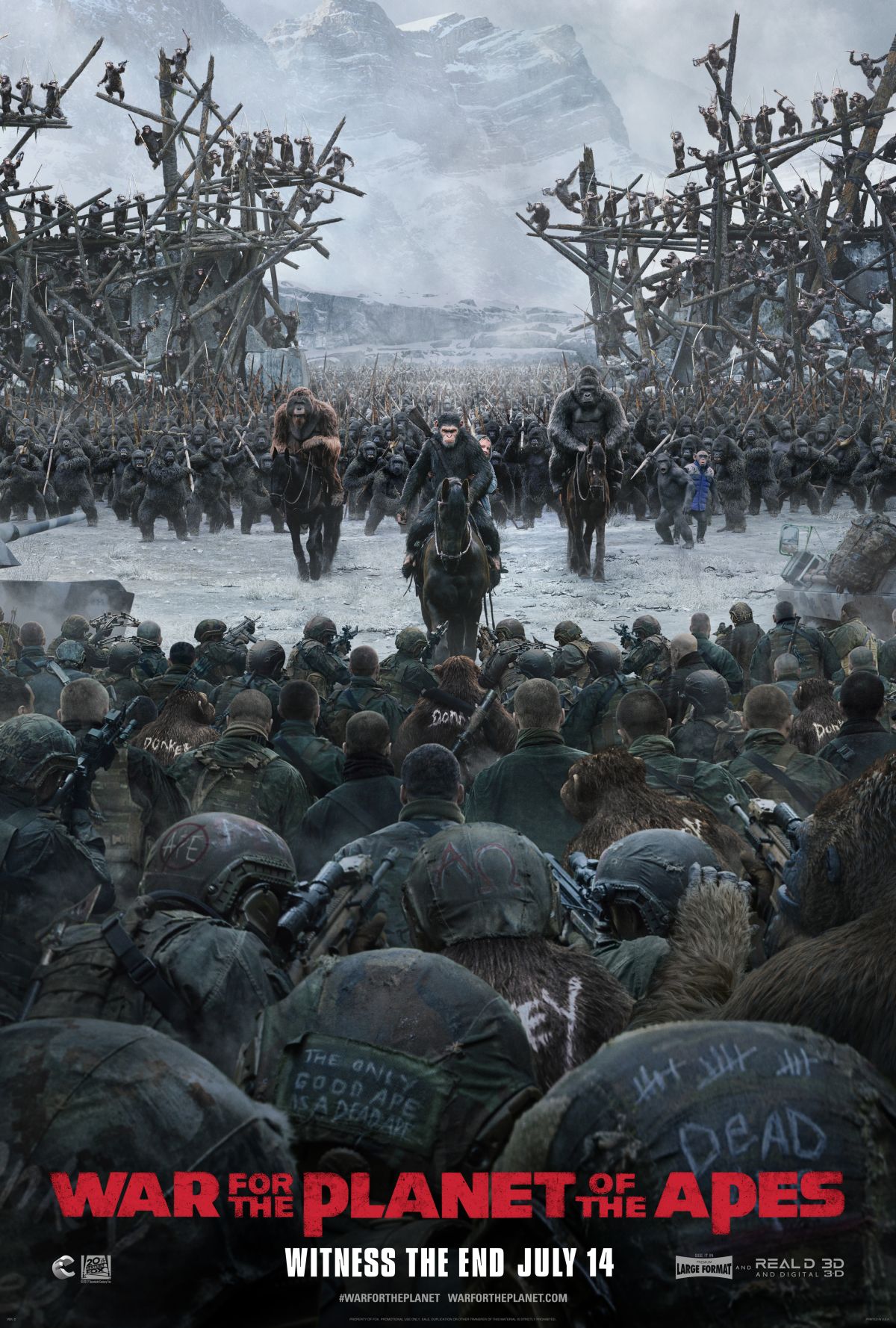
With so many franchise trilogies out there at the moment, and with so many of them failing to maintain a consistent level of quality across all three movies, what are the odds that a series based on a previous five-movie saga – which went from genre classic to tired afterthought – would prove to be the trilogy that bucked the trend and have the most impact? For such is the case thanks to War for the Planet of the Apes, the final entry in a trilogy that has been consistently impressive from start to finish, and which has raised the bar significantly in terms of motion capture performances.

The success of the series can be attributed to the seriousness, and the sense of purpose with which each entry has been approached. Rise of the Planet of the Apes (2011) introduced us to a world where the potential of apes superseding humans was a tantalising prospect. Dawn of the Planet of the Apes (2014) took us deeper into that world and showed how intolerance and distrust on both sides could be exploited by personal agendas. And in War for the Planet of the Apes we see the inevitable consequences that arise from attempting to avoid a future that has been predestined ever since Will Rodman created ALZ 112. The whole trilogy has been a triumph of storytelling and characterisation, and thanks to the efforts of everyone involved, has ended on such a high note that if Chernin Entertainment and 20th Century Fox do decide to continue the saga (as seems to be the plan) then they will have a massive job on their hands to equal or improve upon what’s gone before.

Since the events of Dawn… Caesar (Serkis) and his tribe have retreated further into California’s Muir Woods, but their hope for a peaceful, undisturbed existence is short-lived. A paramilitary group called Alpha-Omega has tracked them down. The group launches an attack on the apes’ home, but are repelled. Caesar spares the lives of four men, and tells them to report back to their leader, Colonel McCullough (Harrelson), that he hasn’t started this war, and he just wants his tribe to be left alone. Later, the soldiers return at night, and this time the apes suffer greater casualties than before. Caesar, determined to put an end to these endless skirmishes once and for all, decides to find the colonel and kill him. He intends to go alone, but his chief advisor, orang-utan Maurice (Konoval), gorilla Luca (Adamthwaite), and chimpanzee Rocket (Notary), all follow after him. Caesar allows them to accompany him, and while the rest of the tribe journey in search of a new home, the quartet travel to the “border” where the colonel has his base. Along the way, they encounter the daughter of a soldier, Nova (Miller), who cannot speak; Maurice insists that she continue on with them. Further on they meet Bad Ape (Zahn), a chimpanzee who helps them locate McCullough’s compound.

By this stage of the movie, many viewers may feel that they know what will happen next, and how, but one of the strengths of Mark Bomback and Matt Reeves’ script is its willingness to take the material into much darker territory than anyone might expect. To this end, Caesar undergoes both a crisis of faith and an apotheosis, and the moral certainties and imperatives that govern the actions and motives of both Caesar and McCullough are thrown into sharp relief by the similarities they exhibit. Although nominally the movie’s villain, and despite his resemblance to Colonel Kurtz from Apocalypse Now (1979), McCullough isn’t the cut-and-dried bad guy that he first appears to be. Driven by the same fears of species annihilation that occupy Caesar, McCullough has glimpsed humanity’s future and the sight has scared him badly. Operating out of fear and a desperate sense of protectionism, the colonel behaves in ways that are both understandable and reprehensible, and it’s this dichotomy that makes the character such a good adversary for Caesar.

For his part, Caesar is still trying to deal with the ramifications of his killing Koba (Kebbell), and what that might imply in terms of his ability to lead his tribe. This element of self-doubt, itself riffing off the precept that “ape shall not kill ape”, adds further depth to a character who has always challenged the assumption that the apes’ fate is pre-determined. As time has gone by and his goal of peaceful assimilation has been repeatedly derailed by human intransigence, Caesar has become all too aware that mutual annihilation may be the eventual outcome of the apes’ struggle with their human counterparts. He knows that killing McCullough is necessary but finds that it’s not as simple as he thought it would be, partly because of the nature of the colonel’s compound (where apes are used as slave labour), and partly because he can’t fully excuse some of his own behaviour (which he sees reflected in McCullough’s actions).

The movie also deals with issues of social exclusion, both ape and human, and has a political edge that adds further realism to what is essentially a fantasy-based parable of human folly on a grand scale. There are succinct parallels to modern-day events happening in the real world that make it seem as if Bomback and Reeves have a prophetic ability that the movie can capitalise on, while for those who want to explore the idea, there’s the possibility that the apes represent another tribe searching for a place to settle in peace. All this aside, War… is further strengthened by a tremendous central performance by Serkis as Caesar. It’s been mentioned elsewhere, but Serkis’s performance is so powerful and so emotionally layered that if he’s not nominated for any acting trophies come awards season, then maybe a boycott is in order. Without Serkis, there’s little doubt that the trilogy would not have been as impressive and as compelling as it is. We’ve watched the character evolve over the course of three increasingly remarkable movies, and Serkis’s equally remarkable achievement deserves appropriate recognition.

Rating: 9/10 – a superb example of how to end a trilogy by not deviating from the path originally set out in the first movie, and by not sanitising it in any way, War for the Planet of the Apes is intelligent, emotive and complex movie making that wears its confidence on its sleeve as a badge of merit; featuring breathtaking cinematography by Michael Seresin (who was for a long time the go-to DoP for Alan Parker), expertly choreographed action sequences, clever references to the original Planet of the Apes movies, and by turns, a charged, stirring and poignant score courtesy of Michael Giacchino, this is easily one of the best movies of 2017 – paws down.

Share this:

  • Click to share on X (Opens in new window) X
  • Click to share on Facebook (Opens in new window) Facebook
  • More
  • Click to print (Opens in new window) Print
  • Click to email a link to a friend (Opens in new window) Email
Like Loading...

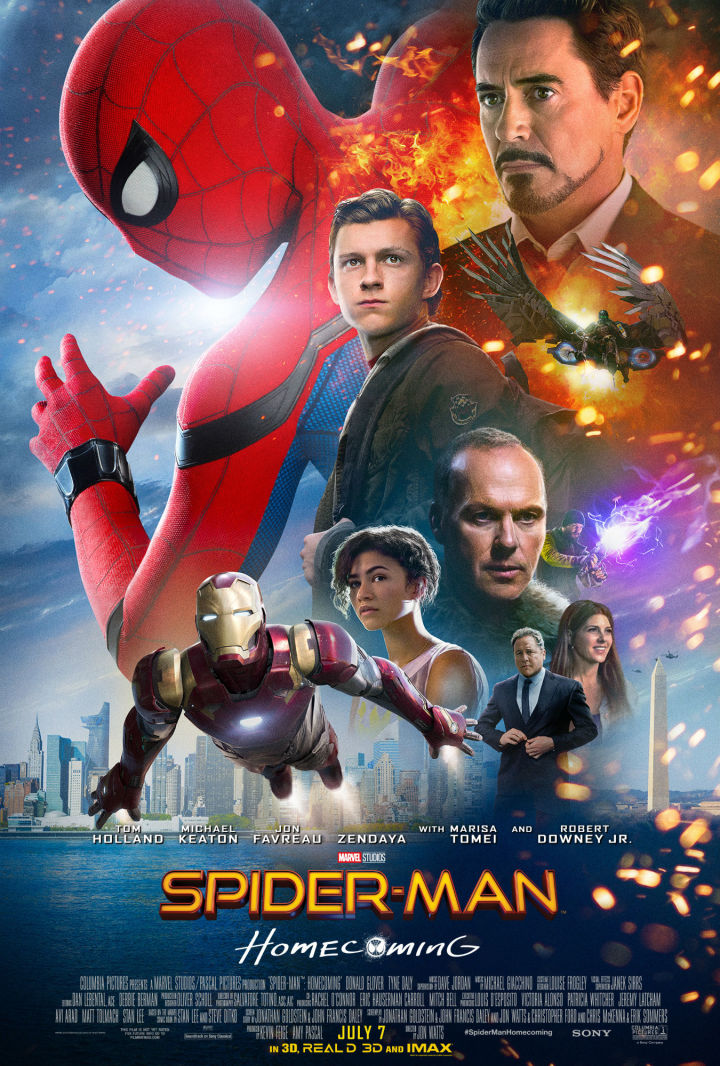
Spider-Man: Homecoming (2017)

07 Monday Aug 2017

Posted by dullwood68 in Movies

≈ 2 Comments

Tags

Action, Drama, High School, Iron Man, Jon Watts, Marvel Cinematic Universe, Michael Keaton, Review, Robert Downey Jr, Superhero, The Vulture, Thriller, Tom Holland

D: Jon Watts / 133m

Cast: Tom Holland, Michael Keaton, Robert Downey Jr, Marisa Tomei, Jon Favreau, Gwyneth Paltrow, Zendaya, Donald Glover, Jacob Batalon, Laura Harrier, Tony Revolori, Bokeem Woodbine, Michael Chernus, Logan Marshall-Green, Tyne Daly, Hannibal Buress, Jennifer Connelly

What must it have been like back at the tail end of 2014 and the start of 2015 if you were “in the know” at Sony Pictures and Marvel Studios, and were aware of what was about to happen to everyone’s favourite neighbourhood web-slinger? How exciting must that have been? If you were a fan of Spider-Man, just the anticipation that he might be coming to the Marvel Cinematic Universe was enough to send you into a giddy spell of mega proportions. And then to find out that not only was there going to be a new Spider-Man movie designed to bring him into the MCU, but that he was also going to make his first appearance in another movie within that Universe – well, it was like having Xmas every day (if you were a fan). And then to have that early appearance, in Captain America: Civil War (2016) no less, and for him to steal the movie – well, that was like having the best ice cream in the whole wide world, and with sprinkles on (but again, if you were a fan).

But what if you’re not a fan? What if the very idea of another Spider-Man reboot (the third in fifteen years) has all the attraction of a Liam Hemsworth movie? What if the idea of all that ice cream, with sprinkles on, holds no attraction at all? Well, if that’s the case then be assured: this is a Spider-Man movie that even non-fans can enjoy. And why? That’s the clever part. This is the first Spider-Man movie where the whole notion of “with great power comes great responsibility” is sidelined in favour of seeing Peter Parker struggle with the basics, and not some overwhelming sense of guilt over the death of his uncle, or his parents, or Mary Jane Watson (or even Norman Osborn). This is the first Spider-Man movie where the makers have done away with the more traditional origin story, and instead have got things started by accepting that we all know the story by now; so why bother? Why not just get on with it?

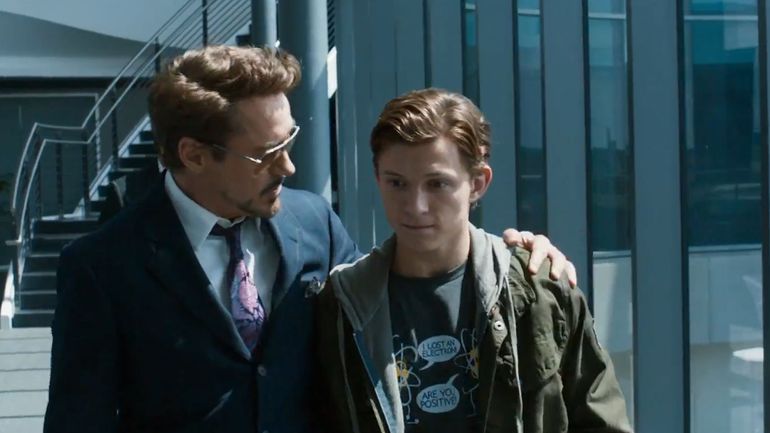
Which is exactly what happens, but cannily, not before a trip back to 2012 and the aftermath of the Battle of New York. There’s Chitauri technology all over the place, and salvage contractor Adrian Toombes (Keaton) has spotted a way of exploiting it in order to make a lot of money. But no sooner has he thought of it than he’s shut down by the US Department of Damage Control and forced to continue his plan to make weapons in secret. And before long, that plan is coming to fruition. Fast forward five years and high school student Peter Parker (Holland) still can’t believe he was involved in the airport scrap that took place in Berlin between Team Captain America and Team Iron Man. Still buzzing, Peter believes his involvement in that fight means he’s a member of the Avengers team, but Tony Stark (Downey Jr) has other ideas, and does his best to mentor Peter from a distance. But Peter is irrepressible (and naïve), and his determination to show Stark what he’s capable of inevitably backfires. When he inadvertently takes on some of the men that work for Toombes, it brings him to the attention of Toombes’ alter ego, The Vulture.

Peter decides it’s his mission to stop The Vulture from building and selling any more Chitauri-based weaponry, and one (future) classic scene where Peter and Toombes realise each other’s secret identities aside, the movie follows a predictable pattern before the inevitable superhero v supervillain showdown. But what makes the movie so charming and so enjoyable is both its backdrop and its setting: Peter’s first year in high school and all the trials and tribulations that follow in the wake of that teenage milestone. Already described as a superhero movie by way of John Hughes, Spider-Man’s first solo outing in the MCU paints a much more believable portrait of Peter Parker than we’ve seen in the previous five movies. By keeping Peter at the age he was when he developed his powers in the comics, Marvel have actually managed to breathe new life into the character and make him seem fresh and relevant, rather than  an angst-ridden science nerd with literally no friends. Here, Tom Holland’s incarnation is bright, overly enthusiastic, and immensely likeable (just like the movie). Holland perfectly captures the giddy sense of euphoria that comes from doing something so cool you want to shout from the rooftops about it – but know that you can’t. This is a Spider-Man who knows how to have fun (at last).

By focusing more on Peter’s attempts at fitting in, both in high school and in the wider world of superheroes, the script allows the audience to have a lot of fun at Peter’s expense. But then he is only fifteen, and he’s bound to make mistakes, whether from plain old exuberance or because he hasn’t built up his street smarts yet. Seeing him fail is more refreshing than expected, and a pivotal scene involving Stark and the loss of his Stark-created outfit highlights the true dilemma of being able to shoot webs and swing between tall buildings but not be able to talk to a girl. But again, it’s a happy dilemma because this is what the movie is all about: providing audiences with a surfeit of fun. Marvel know how to incorporate humour into their movies, but this may well be the first MCU movie that knows how to sustain that humour throughout, and round things off with the best end credits sting since Nick Fury first tried to recruit Tony Stark to some team he was trying to put together. This is a movie that is enjoyable and joyous at the same time, and proof that Marvel really do understand their characters better than anyone else (sorry Sony).

And for the first time since Loki we have a villain who has a credible motive for being the bad guy, and thanks to Keaton’s performance, he’s one we can have a degree of sympathy for. Toombes is about providing for and protecting his family, but though that’s an honourable sentiment, Keaton shows how that has become inexorably warped over the years, until his motives aren’t quite as clear-cut as when he began putting on the flying suit. Together, Holland and Keaton are terrific adversaries, and easily outshine the rest of the cast, who, to be fair, don’t stand out quite as well (though Batalon as Peter’s best friend, Ned, comes close). There’s the possibility of a romance for Peter with debate team captain, Liz (Harrier), that takes an unexpected turn, a series of action scenes that vary between broadly exciting and acceptable, competent direction from Watts that fares better away from said action scenes, a little too much moralising from Tony Stark, and a “get-to-know-your-suit” sequence which is possibly the movie’s true highlight. Smartly written – and by a team of six writers at that – this is the Spider-Man movie fans have been waiting for. Now, how about all you non-fans?

Rating: 8/10 – a giddy fun ride of a movie that can’t contain its own excitement about existing, Spider-Man: Homecoming adds another superhero to the MCU roster and does so with exuberance and no small amount of wit; you know Marvel have got a firm grip on things when the opening music cues reference the original Sixties animated series theme tune, and web-swinging in the suburbs brings its own measures of difficulty and danger.

Share this:

  • Click to share on X (Opens in new window) X
  • Click to share on Facebook (Opens in new window) Facebook
  • More
  • Click to print (Opens in new window) Print
  • Click to email a link to a friend (Opens in new window) Email
Like Loading...

The Wall (2017)

06 Sunday Aug 2017

Posted by dullwood68 in Movies

≈ 1 Comment

Tags

Aaron Taylor-Johnson, Doug Liman, Drama, Iraq, John Cena, Review, Sniper, Thriller

D: Doug Liman / 89m

Cast: Aaron Taylor-Johnson, John Cena, Laith Nakli

We’re back in Black List territory again with The Wall, another screenplay that has gained a reputation of quality thanks to its inclusion on said list. A first-time script by playwright Dwain Worrell, the story has two US Army soldiers – Staff Sergeant Shane Matthews (Cena), who is a sniper, and his spotter, Sergeant Allen Isaac (Taylor-Johnson) – on overwatch at a stretch of pipeline deep in the Iraqi desert in 2007. The team of contractors working on the pipeline have all been killed. Isaac thinks it’s the work of a highly skilled sniper, while Matthews isn’t so convinced. After twenty-two hours of waiting and watching, Matthews decides that it’s safe to come out of hiding and take a closer look. Closer inspection of the bodies reveals Isaac is right, but the knowledge comes too late; Matthews is shot and wounded. Isaac rushes to help him, but in the process he too is wounded, and he’s forced to take cover behind a flimsy wall built of bricks and mortar.

With Matthews lying prone out in the open, Isaac tries to radio for help but his antenna is busted. Soon, he receives a message over the duo’s comms system. At first it seems that the pair will be rescued, but Isaac is horrified to learn that the messenger is in fact an Iraqi sniper called Juba (Nakli), and the man responsible for the deaths of the pipeline workers, and his and Matthews’ injuries. What follows is a game of cat-and-mouse as Isaac tries to work out where exactly Juba is hidden, and how he can get himself and Matthews out of there alive. While he does, Juba engages him in conversation and tries to get inside Isaac’s head using information he’s gleaned from listening in on the duo’s chatter while they were on overwatch. In time, Isaac works out Juba’s location, but there are two problems: one, he needs a sniper rifle of his own to try and eliminate the Iraqi, and the only one available to him is out in the open alongside Matthews; and two, he needs to do so before the arrival of a rescue team Juba has tricked into coming…

Like any thriller that attempts to present audiences with a tough, uncompromising villain, The Wall stands or falls on just how tough and uncompromising said villain truly is. And at first it seems that Juba will fit the bill quite nicely. Shooting Matthews in the gut, and Isaac in the knee (deliberately), displays a sadistic quality that bodes well for any tension going forward, but it’s not long before the needs of the script ensure that this aspect is either played down, forgotten, or ignored in favour of the less than scintillating exchanges between Juba and Isaac that pepper around an hour of the movie’s running time. These exchanges range from being intriguing (why does Juba want to know about the scope that Isaac uses?) to existential (why is Isaac still in country?) to crushingly banal (who is the real terrorist?). The answer to all these questions are forthcoming but as these conversations continue, you begin to realise that by setting up the wait for the rescue team, Worrell hasn’t worked out just how to keep the interim period compelling enough to keep audiences interested in each step of the cat-and-mouse game that’s playing out.
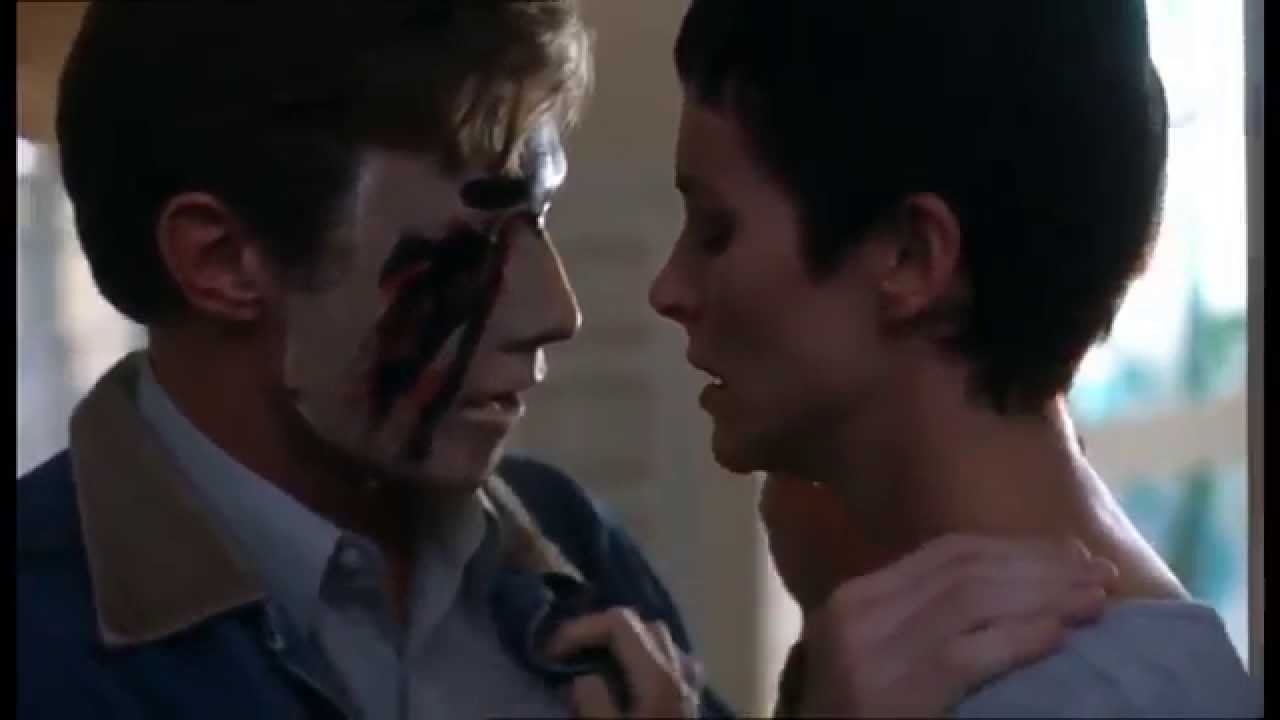
Inevitably there’s a terrible secret that Isaac has been hiding, but by the time we get to it, it doesn’t have the impact that Worrell and Liman are hoping for, partly because it’s yet another occasion where someone in a stressful situation has something terrible to reveal about themselves – and how many times have we witnessed that particular scenario? – and partly because by the time it is revealed we don’t really care because it’s an attempt to add depth to a character that didn’t need it in the first place. It’s enough for Isaac to be in peril from a hidden sniper; we don’t need to know if he’s suffering from guilt or PTSD or any lingering childhood traumas that might stop him from surviving this encounter. All we need to know is: is he going to be clever enough to find a way out of his predicament and take out Juba? For the most part the answer is yes, but there’s too much unnecessary banter getting in the way. Sometimes, movie makers can’t see that a simple set up such as this one doesn’t need to be anything more than what it is. What we want to see bravery and ingenuity and determination under pressure. What we don’t want to see is our lead character going through a crisis of confidence every ten minutes.

Messrs Liman and Worrell would probably claim that they’re just adding to the tension, but in reality they’re allowing it to ebb and flow (mostly ebb), whereas if they just concentrated on ratcheting up the tension continuously and making the situation as unbearable as possible for viewers to watch, then their movie would be improved tremendously. This is definitely not the case here, with long stretches where Isaac propels himself backwards and forwards along the wall to little effect, and moments where the screen goes dark while he takes a nap. And Liman and Worrell don’t seem to have realised the obvious flaw in their presentation of Juba’s skill as a sniper. When he ambushes Isaac he fires three shots; all three have specific targets: Isaac’s radio antenna, his water bottle, and his right knee. And yet, there are numerous point of view shots through Juba’s scope that shows he couldn’t possibly have achieved those hits thanks to how blurry the image is. And later, when Isaac is finally pushed into making his move, Juba’s accuracy deserts him. Tough? Maybe. Uncompromising? Sometimes. As deadly as his reputation would have it? Hmmm…

Despite huge problems with the narrative, The Wall does have its good points. Liman is a great visual stylist and he makes the most of the desert location. He also moves the camera around to good effect, and in conjunction with editor Julia Bloch, ensures the movie has a rhythm that offsets some of the slower sections and keeps everything flowing. He elicits a good performance from Taylor-Johnson who anchors the movie without quite making the viewer entirely sympathetic toward him (you never feel the urge to shout “Go on, get the sonofabitch!” or anything similar during his time behind the wall), and who at least makes Isaac’s unhappy emotional and physical state more credible than it may look. Cena doesn’t have a lot to do, but he’s becoming an actor for whom the perceived stigma of being a WWE Superstar no longer holds as much sway, and his is a solid portrayal. And Nakli uses his voice as a character all by itself and manages to display a convincing range of emotions without ever being seen. The movie as a whole is watchable despite its faults, but what it doesn’t do is draw you in completely and then leave you drained and breathless at the end.

Rating: 5/10 – lacking the consistency of tension that would have made it a more compelling and absorbing experience, The Wall never quite makes the most of its single setting and its minimal cast of characters; Liman manages to inject a degree of verve into proceedings, and the desert visuals are bleakly beautiful, but be warned, this is also a movie where the ending may leave you thinking, what the hell was the point of it all?

Share this:

  • Click to share on X (Opens in new window) X
  • Click to share on Facebook (Opens in new window) Facebook
  • More
  • Click to print (Opens in new window) Print
  • Click to email a link to a friend (Opens in new window) Email
Like Loading...

Monthly Roundup – July 2017

01 Tuesday Aug 2017

Posted by dullwood68 in Movies

≈ 2 Comments

Tags

47 Meters Down, Action, Alain Desrochers, Animation, Antonio Banderas, Ben Kingsley, Brian Fee, Cars 3, Claire Holt, Comedy, Crime, Cristela Alonzo, Daniel Brühl, Danny Glover, Day of the Mummy, Drama, Girls Trip, Horror, Jessica Chastain, Johannes Roberts, Johnny Tabor, Lesley Selander, Malcolm D. Lee, Mandy Moore, Matthew Goode, Niki Caro, Owen Wilson, Peggie Castle, Phil Daniels, Queen Latifah, Quincannon Frontier Scout, Regina Hall, Reviews, Robbery, Ronnie Thompson, Security, Sharks, The Hatton Garden Job, The Zookeeper's Wife, Thriller, Tony Martin, True story, Warsaw Zoo, Western, William McNamara

The Hatton Garden Job (2017) / D: Ronnie Thompson / 93m

Cast: Matthew Goode, Phil Daniels, Larry Lamb, Clive Russell, David Calder, Joely Richardson, Stephen Moyer, Mark Harris, Jack Doolan

Rating: 6/10 – a group of aging ex-cons decide to rob an underground safe deposit facility in London’s Hatton Garden, but find that too many interested parties want in on the job, and the proceeds; based on the actual robbery that occurred in April 2015, The Hatton Garden Job is a light-hearted, and often lightweight version of actual events, but gets by thanks to some winning performances, a sense that it’s all too, too implausible, and a broad sense of humour that suits the material well enough despite its low budget origins.

The Zookeeper’s Wife (2017) / D: Niki Caro / 126m

Cast: Jessica Chastain, Johan Heldenbergh, Daniel Brühl, Michael McElhatton, Timothy Radford, Val Maloku, Efrat Dor, Iddo Goldberg, Shira Haas

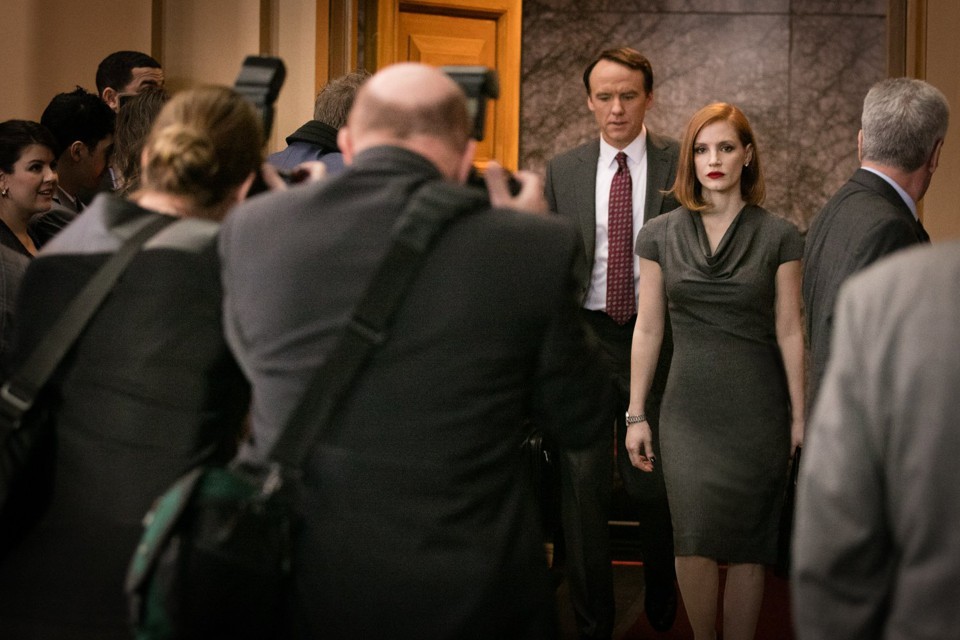
Rating: 4/10 – at the outbreak of World War II, the Warsaw Zoo, run by Antonina and Jan Zabinski (Chastain, Heldenbergh), is commandeered by the Nazis, but it becomes a hiding place for Jews, and an even more dangerous place without its animals; a true story undone by telling it across the whole course of the war, The Zookeeper’s Wife is a turgid, painfully dull movie that is only sporadically interesting and which wastes the talents of its cast by making their characters’ plight seem like its been lifted from an unsuccessful soap opera.

Day of the Mummy (2014) / D: Johnny Tabor / 77m

Cast: Danny Glover, William McNamara, Andrea Monier, Eric Young, Philip Marlatt, Michael Cortez, Brandon deSpain

Rating: 4/10 – an archaeological trip into the Egyptian desert in search of a lost tomb sees its members at the mercy of a mummy, while they try and find a sacred stone said to be worth millions; a found-footage movie that like most doesn’t know how to make the most of the format, Day of the Mummy stretches its audience’s patience at every turn, and literally reduces Glover’s role to the bottom left hand corner of the screen, something that could be construed as “video-phoning” in his performance.

Security (2017) / D: Alain Desrochers / 92m

Cast: Antonio Banderas, Ben Kingsley, Liam McIntyre, Gabriella Wright, Chad Lindberg, Cung Le, Katharine de la Rocha, Jiro Wang

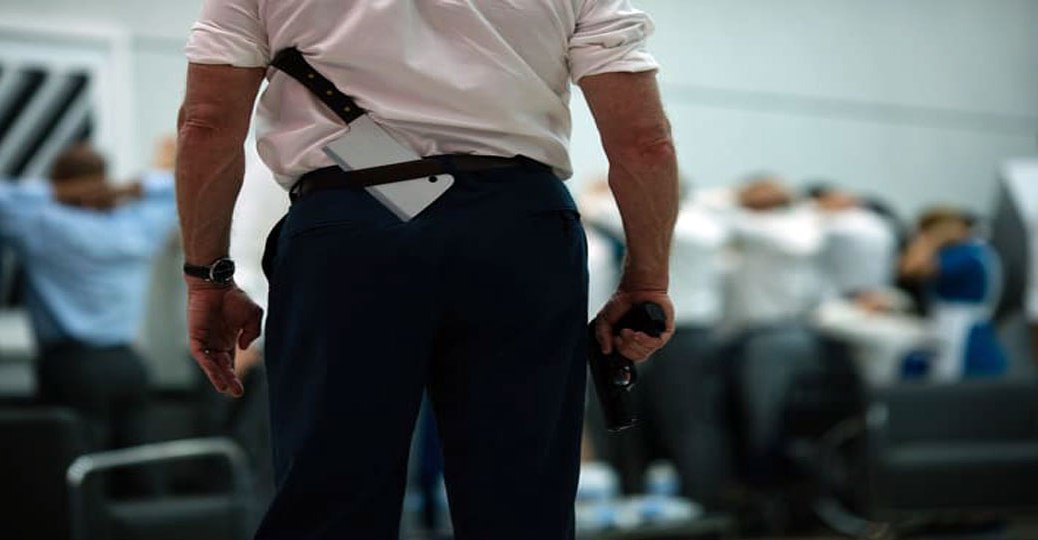
Rating: 5/10 – ex-Army veteran Eddie (Banderas) takes a night security job at a mall, and on his first night, finds himself fighting off a band of mercenaries hired to kill the teenage girl who’s taken refuge there; another Die Hard rip-off (when will they stop coming?), Security does have committed performances from Banderas and Kingsley as hero and villain respectively, but lacks sufficient invention to make this anything other than a pale echo of similar and better movies.

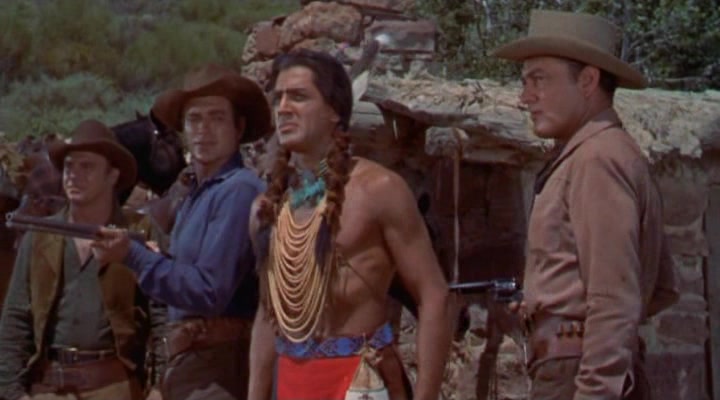
Quincannon, Frontier Scout (1956) / D: Lesley Selander / 84m

aka Frontier Scout

Cast: Tony Martin, Peggie Castle, John Bromfield, John Smith, Ron Randell, John Doucette, Morris Ankrum, Peter Mamakos, Edmund Hashim

Rating: 6/10 – when the Army discovers someone is selling rifles to the Indians, it’s down to experienced scout Quincannon (Martin) to get to the bottom of it all; while there’s nothing new here, thanks to Selander’s astute direction, Quincannon, Frontier Scout zips along at a decent pace and delivers on its basic premise, but not even Selander can mitigate for a pretty awful performance from Martin, a singer who really should have ignored his agent on this one.

Cars 3 (2017) / D: Brian Fee / 102m

Cast: Owen Wilson, Cristela Alonzo, Chris Cooper, Nathan Fillion, Larry the Cable Guy, Armie Hammer, Ray Magliozzi, Tony Shalhoub, Bonnie Hunt

Rating: 6/10 – Lightning McQueen’s days on the race track are numbered, but only he doesn’t get it, until racing for a new team begins to show him that there’s more to life than being Number One; Pixar redeem themselves somewhat after the complete and utter disaster that was Cars 2, but this is still tepid stuff that struggles to make the impact it needs, leaving Cars 3 looking nostalgic for the first movie, and trading on that movie’s glories to make itself look good.

Girls Trip (2017) / D: Malcolm D. Lee / 122m

Cast: Regina Hall, Queen Latifah, Jada Pinkett Smith, Tiffany Haddish, Mike Colter, Kate Walsh, Larenz Tate, Deborah Ayorinde

Rating: 6/10 – self-help guru Ryan (Hall) decides it’s time that she and her three best friends (Latifah, Smith, Haddish) should reconnect while in New Orleans for the annual Essence Festival, but having a good time proves more difficult than she, or they, could have ever imagined; yet another female-centric variation of The Hangover, Girls Trip wants to be raunchy and out there (the urination scene), but ends up instead as a warm and fuzzy ode to sisterhood that conforms to expectations, but is rescued by the committed performances of the “girls” themselves.

47 Meters Down (2017) / Johannes Roberts / 89m

Cast: Mandy Moore, Claire Holt, Matthew Modine, Chris Johnson, Yani Gellman, Santiago Segura

Rating: 6/10 – two sisters (Moore, Holt) on vacation in Mexico find themselves stranded in a shark cage at the titular depth, and they only have an hour to save themselves before their oxygen runs out; better than it sounds thanks to Roberts’ hand on the tiller, 47 Meters Down isn’t beyond making some silly mistakes (let’s have Modine’s captain recite the perils of nitrogen narcosis – twice), being too repetitive once on the sea bed, and building up tension only to allow it to dissipate to no great effect.

Share this:

  • Click to share on X (Opens in new window) X
  • Click to share on Facebook (Opens in new window) Facebook
  • More
  • Click to print (Opens in new window) Print
  • Click to email a link to a friend (Opens in new window) Email
Like Loading...

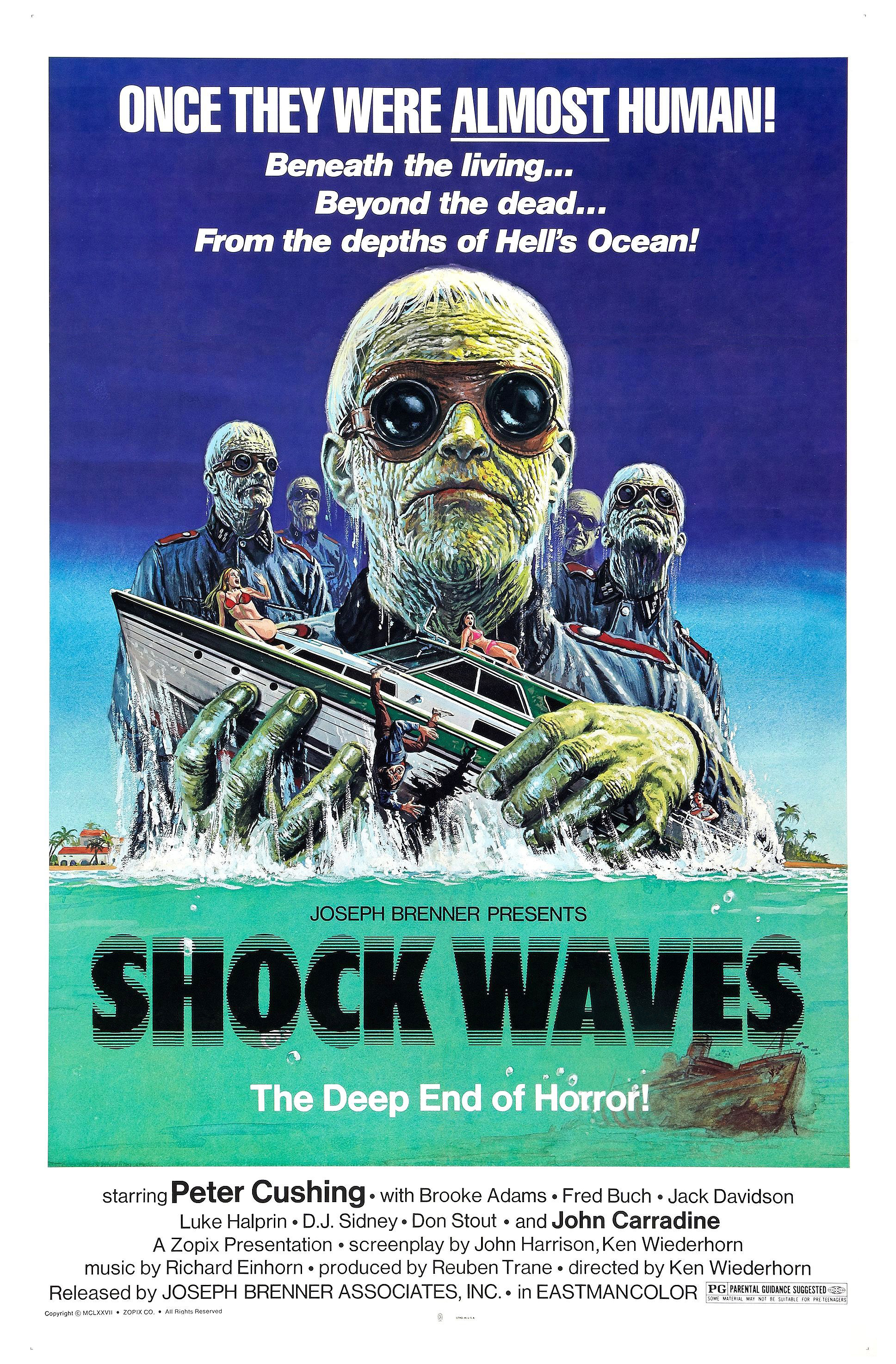
Shock Waves (1977)

31 Monday Jul 2017

Posted by dullwood68 in Movies

≈ Leave a comment

Tags

Brooke Adams, Catch Up movie, Death Corps, Drama, Horror, John Carradine, Ken Wiederhorn, Luke Halpin, Nazis, Peter Cushing, Review, Thriller, World War II, Zombies

aka Almost Human

D: Ken Wiederhorn / 85m

Cast: Peter Cushing, Brooke Adams, Luke Halpin, Fred Buch, Jack Davidson, D.J. Sidney, Don Stout, John Carradine

Horror movies in the Seventies went through a kind of sea change. By the middle of the decade, Hammer were on their last legs having exhausted their Dracula and Frankenstein franchises, and the big Hollywood studios had yet to embrace the genre as fully as they could have, content to leave it to low budget production companies such as Amicus and Roger Corman’s New World Pictures. In Europe, horror movies were more concerned with providing sleaze than monsters, and further afield there were sporadic releases that rarely made an impact beyond their own borders. Zombie movies were still few and far between despite the success of George A. Romero’s Night of the Living Dead (1968), and movies where the protagonists were zombie Nazis were even rarer, with only The Frozen Dead (1966) predating the eerie chills of Shock Waves.

The movie begins in typical fashion, with a group of strangers on a chartered boat that’s seen better days, just like its crusty old captain, Ben (Carradine). The rest of his crew amounts to Keith (Halpin), who seems to be there just to steer the boat, and Dobbs (Stout), the booze-living galley hand. The passengers are a mixed bunch as well, consisting of middle-aged couple Norman and Beverly (Davidson, Sidney), and younger couple Chuck and Rose (Buch, Adams). Norman is already complaining about the age of the boat and the cost of the trip, but when the sky turns crimson and the boat’s instruments don’t respond, he really has something to complain about. An night-time encounter with a mysterious freighter leads to the boat needing repairs, but in the morning, Ben has disappeared. Believing he’s headed towards a nearby island, everyone gets in a dinghy and heads for shore. They find Ben but he’s dead. They also find a hotel, long abandoned – or so they think. Instead they find themselves challenged by a German-sounding stranger (Cushing).

The stranger insists they leave immediately, and tells them of a boat they can use to get off the island. In the meantime, Dobbs is killed, and his body discovered by Rose. Seeking answers, the group confront the stranger, who tells them of a secret experiment that the Nazis carried out during World War II, an experiment to create a ruthless super-soldier. The result was a soldier not living and not dead, and too difficult to control. When the war ended, the stranger, an SS Commander, was charged with disposing of the super-soldiers under his command, and so he sunk their ship. But now they have returned, and will continue to kill everyone they encounter. As far as getting off the island is concerned, avoiding the Death Corps will be difficult enough, but as fear and terror take hold, those who remain alive begin to fight amongst themselves…

If it’s a gore-soaked, ripped-out entrails kind of zombie movie that you’re after, then be warned: Shock Waves is not the movie for you. In fact, this is possibly the first and only post-1968 zombie movie where not even a single drop of blood is spilt. Instead, director Wiederhorn (making his first feature), and co-writer John Kent Harrison concentrate on creating an unnerving, atmospheric chiller-thriller that does its best to be macabre rather than gory, and which largely succeeds in its aim. There’s something to be said for any horror movie that eschews blood and gore in its efforts to make viewers feel unnerved and uncomfortable, and though the movie suffers due to genre-standard scenes where the characters run from place to place without actually getting anywhere, the scenes that involve the implacable zombie Nazis have a certain frisson about them. At one point they emerge from the surf, one by one, and stand as if waiting for a signal only they can hear; it’s genuinely creepy.

Wiederhorn is to be congratulated on being so constrained, and relying on menace and a febrile atmosphere to accentuate the occasional shocks. He’s helped by the choice of location, which isn’t an island at all, but several sites in Florida, including an area of swampland that the characters are forced to take flight and stumble through time and again as they try and escape, but though all that running about quite aimlessly seems to be just a way of padding out the running time, like all swampland, it has an unpleasant, threatening vibe that slowly makes itself felt the longer everyone crashes around it. Wiederhorn and DoP Reuben Trane do well to create such a hostile, potentially deadly environment… and that’s without the zombies. Also, there are times, notably at the beginning when the sky turns red, that the movie feels like it’s heading into full-on Twilight Zone territory, and these moments add to the growing sense of unease that the movie promotes in its opening half hour.

But while there’s plenty of effective atmosphere to be had, the movie is less successful when it comes to its motley crew of characters. Cushing and Carradine are old hands at this sort of thing and manage their roles accordingly, while Adams, in her first leading role, has little to do but pose or swim in a bikini. Ex-Flipper star Halpin fares better as the nominal hero, but everyone else is saddled with the usual horror stereotypes: the long-suffering wife, the outwardly macho/inwardly cowardly adult jock, the self-important malcontent, and the booze-fuelled worrier. Once Ben is killed off the script disposes of the rest of the characters in predictable fashion (and order), without once attempting to make them more relatable. This, however, shouldn’t be much of a surprise, as creating likeable characters never seems to be a priority in horror movies, and Shock Waves is no different. But what is notable about it is that in the context of when it was released, it dared to be different in its approach and with its “monsters”. Many more zombie Nazi movies have followed in the years since, and some can be considered better movies overall, but with apologies to The Frozen Dead, this is the grandaddy of them all, and still as diverting and sinister as it was forty years ago.

Rating: 6/10 – if you can put aside the genre conventions and occasional dumb-ass decision-making, Shock Waves is a grim, intense horror movie that makes good use of its “bad guys” and has a palpable sense of disquiet about it; still more of a curio than a cult movie, it’s better than it looks but is hamstrung by poor production values and some very choppy editing. (29/31)

Share this:

  • Click to share on X (Opens in new window) X
  • Click to share on Facebook (Opens in new window) Facebook
  • More
  • Click to print (Opens in new window) Print
  • Click to email a link to a friend (Opens in new window) Email
Like Loading...

Out of the Furnace (2013)

22 Saturday Jul 2017

Posted by dullwood68 in Movies

≈ Leave a comment

Tags

Bare knuckle fights, Braddock, Casey Affleck, Catch Up movie, Christian Bale, Drama, Forest Whitaker, Ramapo Mountains, Review, Scott Cooper, Thriller, Woody Harrelson, Zoe Saldana

D: Scott Cooper / 116m

Cast: Christian Bale, Woody Harrelson, Casey Affleck, Forest Whitaker, Willem Dafoe, Zoe Saldana, Tom Bower, Sam Shepard

There is a song by Sparks called Talent Is an Asset. It’s a turn of a phrase to remember when watching Out of the Furnace, the second feature by Scott Cooper, because without its very talented cast, the movie would not be as good as it is, and it wouldn’t be as persuasive. Cooper has taken a spec script by Brad Inglesby (who receives a co-writing credit) – and which originally had Leonardo DiCaprio and Ridley Scott attached to it – and made a movie that alternately baffles and convinces with its plotting. It’s a movie that takes over half its running time to get to the meat of the story, and which throws in a couple of sub-plots for good measure in order to pad out said running time.

It’s a tale that begins inauspiciously, in the small town of Braddock, with steel mill worker Russell Baze (Bale) discovering that his younger brother, Iraq War veteran Rodney (Affleck), is in serious debt to local bar owner and small town criminal John Petty (Dafoe). Without telling Rodney, Russell begins paying off his debt, but an unexpected and tragic accident sees Russell sent to prison. In the meantime, Rodney returns to Iraq for another tour of duty, their terminally ill father dies, and Russell’s girlfriend, Lena (Saldana), takes up with the town sheriff, Wesley Barnes (Whitaker) without even telling him. When he eventually gets out, he soon discovers that Rodney, who is now back home for good, is taking part in illegal bare knuckle fights in order to pay off his debt to Petty. Russell challenges him to work at the steel mill instead but Rodney refuses.

Rodney compels Petty to set up one last fight, one with a big enough payout that he can clear his debt and start his life afresh. Against his better judgment, Petty arranges a fight through one of his criminal contacts, a vicious drug dealer from the Ramapo Mountains called Harlan DeGroat (Harrelson). After the fight, evidence points to DeGroat having killed Rodney and Petty, but the police are hampered by the uncooperative nature of the Ramapo community, and DeGroat never being in the same place twice. Russell decides he has to take the law into his own hands, and he goes looking for DeGroat, but has the same luck as the police. And then he hits on an idea that will bring DeGroat to him…

Out of the Furnace has two clear ambitions: to be a tough, uncompromising drama, and to provide a snapshot of rural communities along the Eastern Seaboard of America, and their daily struggles to keep their heads above water. For the most part, Cooper succeeds in making the movie tough and uncompromising, and there are several scenes that exert a morbid fascination in terms of the characters and their acceptance of the way Life makes their situations worse than they need to be. Rodney can’t see a better way out of his financial situation, and so gets regularly beaten and bruised and bloodied. Russell comes out of prison and makes only a half-hearted attempt to reconnect with Lena (an attempt that is shot down in flames in moments). And Lena rues the decision she made in leaving Russell but is in a position where she can’t back out anymore. All this makes everyone’s life that much harder, and their various predicaments are what drive the movie forward. And then Russell finds himself in another corner, the one where he feels compelled to seek revenge for what’s happened to his brother.

Decisions and consequences, then, but ones that aren’t handled that well by Cooper, and ones that follow a very prescribed pattern. A scene showing DeGroat making and injecting heroin is interspersed with shots of a SWAT team advancing on the house where DeGroat is supposed to live. Not one viewer should be surprised when the SWAT raid reveals DeGroat isn’t home and that he’s somewhere else. This scene and others play out as if we’ve never seen them before, and while familiarity can be used to a director’s advantage, here they’re just stepping stones on a path too many of us have witnessed before. Cooper also connects the dots for the viewer at almost every turn, and there’s too much unnecessary exposition propping up these scenes to make them anywhere near effective. As for the backdrop of the town’s misfortune, aside from a brief mention that the mill is expected to close, the precarious nature of people’s lives and the decline of Braddock’s infrastructure is glimpsed but receives no further exploration.

With the story following a familiar through line, and Cooper finding it difficult to make the action as urgent as it needs to be, it’s left to the cast to rescue things. Bale gives a magnetic performance as Russell, a man with a strong moral code that brooks no compromise, and he’s matched by Affleck’s tightly-wound portrayal of Rodney, an Iraq War veteran whose seen too much and uses bare knuckle fighting to punish himself for being a part of it all (an aspect of his character which is barely explored but is a more effective reason for his fighting than paying off a debt). Whitaker, Saldana, and Dafoe offer strong support, taking largely underwritten characters and fleshing them out to good effect, but it’s Harrelson who steals the movie, making DeGroat one of the scariest, and yet charismatic villains of recent years. There’s something about Harrelson playing a psychopath that always seems just right, and here the actor gives an hypnotic performance that chills and repulses at the same time. In assembling such a great cast, Cooper has been lucky in that the material has been given a massive boost thanks to their overall commitment; but if they hadn’t agreed to take part…

Rating: 5/10 – an ambitious, rural-based thriller that isn’t as muscular or compelling as its writer/director intended, Out of the Furnace suffers from a muddled structure and too many scenes that exist in isolation of each other; saved by a clutch of very good performances, it remains a movie that should have made more of its deprived-area backdrop and even more of its generic revenge-based denouement. (20/31)

Share this:

  • Click to share on X (Opens in new window) X
  • Click to share on Facebook (Opens in new window) Facebook
  • More
  • Click to print (Opens in new window) Print
  • Click to email a link to a friend (Opens in new window) Email
Like Loading...

Bruiser (2000)

18 Tuesday Jul 2017

Posted by dullwood68 in Movies

≈ Leave a comment

Tags

Catch Up movie, Drama, George A. Romero, Horror, Jason Flemyng, Leslie Hope, Mask, Murder, Peter Stormare, Review, Thriller

D: George A. Romero / 95m

Cast: Jason Flemyng, Peter Stormare, Leslie Hope, Nina Garbiras, Andrew Tarbet, Tom Atkins, Jonathan Higgins, Jeff Monahan, Marie V. Cruz, Beatriz Pizano

Henry Creedlow (Flemyng) is one of Life’s true put-upons. Married to a woman, Janine (Garbiras), who no longer loves him, Henry fares no better at work, where he’s a mid-level executive for a magazine called Bruiser. The magazine’s owner is a sleazy mini-despot called Miles Styles (Stormare). Styles chides and insults and derides his staff, and acts as if they’re all inconsequential in comparison to himself. Henry is friends with Miles’ wife, Rosemary (Hope), who works as a photographer at the magazine; she’s unhappy because she knows that Miles is sleeping around at every opportunity. What neither of them knows though is that Miles is having an affair with Janine. At a party at Miles’s house, Henry sees his wife in a compromising situation with Miles and he confronts her about it afterwards. Janine is dismissive of his feelings and berates him for being “nothing” and “a nobody”. The next morning, Henry discovers something terrible: his face is covered by a white mask similar to the one Rosemary made, only he can’t remove it.

The mask has a strange effect on Henry. At first he hides from their maid, Katie (Pizano), until he sees her stealing money from his wallet. When he confronts her it’s a different story from the night before, and later, when he overhears Janine arranging to meet Miles, he follows her to the Bruiser offices. Rosemary is also there and she catches Miles and Janine in the act. After she leaves, and while Miles chases after her, Henry deals with Janine in his own way. The police become involved, and it’s not long before they’re looking for Henry, who is righting all the wrongs that have been done to him in the past. Finally, the only one who’s left is Miles. At a company party that Henry has arranged, he stalks his boss while the police come ever closer to catching him.
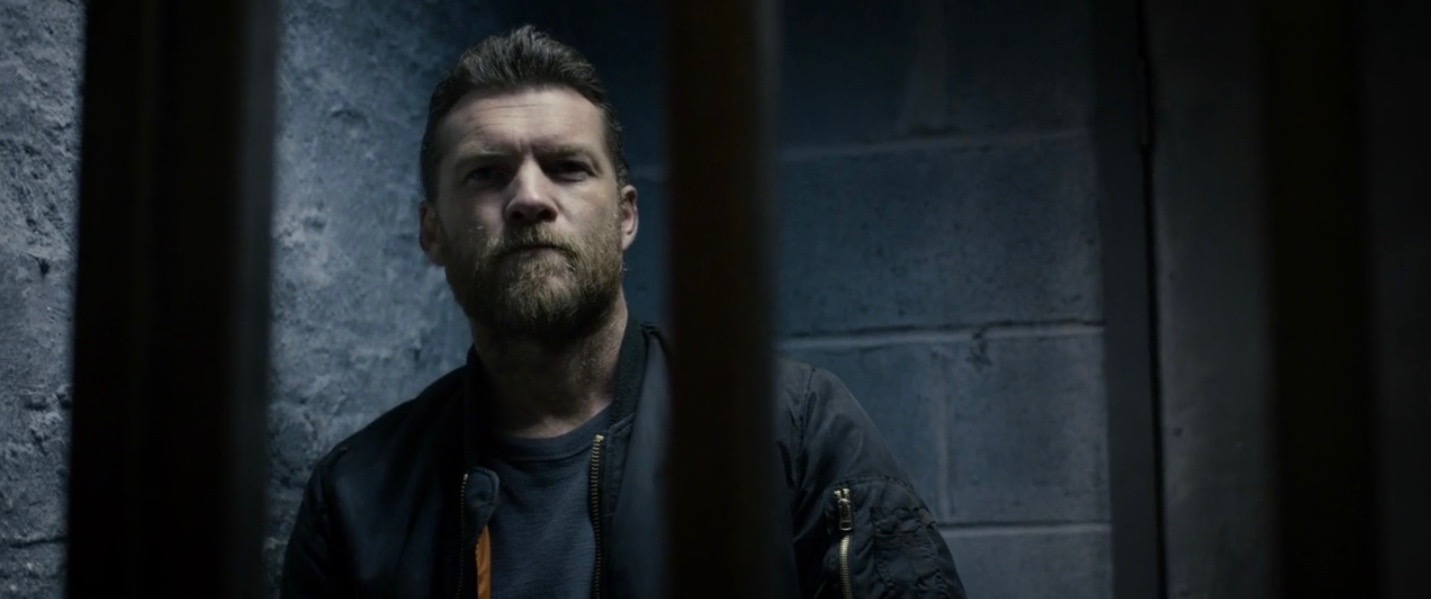
The movie that always slips past unnoticed whenever there’s any discussion of George A. Romero’s career, Bruiser was the last feature he made before returning exclusively to the world of zombies (with 2005’s Land of the Dead). It was also the first movie he made away from Pittsburgh. It’s certainly an odd movie, a French/Canadian/US co-production that’s a valiant attempt by Romero to do something out of the ordinary. That it doesn’t succeed entirely is perhaps not so surprising, as Romero’s ambition is stifled by budgetary constraints and an allegorical narrative that likely seems far more heavy-handed than he originally intended. Romero was well used to working with limited budgets – something which is sorely in evidence here – and Bruiser is one of those times when he was forced to work with some very strict, prescribed resources. But there are problems too with Romero’s script, and though he’s on top of the material, the plot takes several short cuts on its way to a less than satisfying conclusion.

The worm-has-turned scenario that Romero adopts lacks subtlety throughout, but as the movie progresses it becomes clear that Romero isn’t too concerned with how sophisticated his narrative is, or how it might be perceived. Henry’s aggrieved nature is the central focus here, and Romero signals this through a series of fantasy sequences where Henry imagines killing the people who upset him. These are the movie’s most extreme moments, designed to illustrate the depth of Henry’s pain at being ignored or belittled, and Romero stages them with gusto, hinting at the possibility that Henry has psychotic tendencies, a mental health problem that can’t be solved just by his being assertive or regaining his self-confidence. This gives the early scenes an edge as the viewer tries to work out just what it will be that will push Henry over the edge. And then comes that mask…

The mask is an amazing creation, and it proves eerie to look at no matter how many times we see it. But as an allegory, or a motif, for how Henry is regarded by his peers it’s a little too obvious, though still highly effective. Behind it, Flemyng is required to give a portrayal that’s mostly about body language – each time he angles his head he’s giving the viewer a very good idea of what he’s thinking or feeling – and his vocal performance, laced with a wicked, black humour, relays the various new emotions Henry is feeling with poise and precision. It’s a confident, nuanced performance, even when the script pushes things closer to melodrama than is required, and Flemyng, whose skill as an actor is often overlooked, keeps Henry from becoming just another revenge-happy psycho with a permanent axe to grind. Romero may occasionally let him down when it comes to some of the dialogue, but Flemyng avoids a few obvious bear traps and is consistently good throughout.

Less successful is Stormare’s over the top turn as Miles. Given free rein to chew the scenery and anything else in reach, Stormare is like a bull in a china shop, pushing the limits of his character’s hedonism in terms of words if not thankfully, deeds (the sight of him in what suspiciously look like spanks is another of the movie’s “highlights”). He’s like a pantomime villain, but one that you can’t take seriously, and Stormare at least is wise to this, and imbues Miles with a requisite lack of self-awareness. It’s a showy, breathless performance, but it does work well against Flemyng’s more measured portrayal. Sadly, Hope and Garbiras aren’t afforded quite so well rounded characters to play, with Hope stranded as Henry’s potential true love interest, and Garbiras stuck with being an admittedly very attractive, but dislikeable shrew.

As a thriller, the movie has its moments, and Romero still knows how to set up a compelling murder scene, but the setting for the movie’s conclusion, a Bacchanale party that features the band, The Misfits, gets away from him, and it’s undermined by some injudicious editing courtesy of Miume Jan Eramo. Better in terms of understanding what Romero is looking for is Adam Swica’s low-level camerawork which heightens Henry’s sense of displacement, and long-time collaborator Donald Rubinstein’s energetic, jazz-based score. In the end, Bruiser isn’t able to overcome many of the problems that hold it back from being an accomplished and entertaining diversion, but it’s also not as bad as its reputation might suggest.
Rating: 6/10 – a low-key yet mostly absorbing outing from a director who was never fully allowed to make the movies he wanted to make (and how he wanted to make them), Bruiser is a movie whose potential can be glimpsed throughout, even though it’s not been achieved fully; aided by a great performance from Flemyng, the movie does its best to provide a compelling narrative, but too many stumbles along the way make too much of a difference – unless you can forgive Romero for lacking the wherewithal to achieve greater things. (17/31)

Share this:

  • Click to share on X (Opens in new window) X
  • Click to share on Facebook (Opens in new window) Facebook
  • More
  • Click to print (Opens in new window) Print
  • Click to email a link to a friend (Opens in new window) Email
Like Loading...

Death in High Heels (1947)

17 Monday Jul 2017

Posted by dullwood68 in Movies

≈ Leave a comment

Tags

Catch Up movie, Christianna Brand, Crime, Don Stannard, Drama, Elsa Tee, Hammer Films, Leslie Tomlinson, Literary adaptation, Murder, Mystery, Review, Thriller, Veronica Rose

D: Lionel Tomlinson (as Tommy Tomlinson) / 48m

Cast: Don Stannard, Elsa Tee, Veronica Rose, Denise Anthony, Patricia Laffan, Diana Wong, Nora Gordon, Bill Hodge, Kenneth Warrington, Leslie Spurling

A cheap and cheerful murder mystery – told by the lead detective in flashback – Death in High Heels is a “quota quickie” designed by Hammer Films (who had been dormant as a production company since 1937) as a way of reviving the company name and helping to fill the gaps in cinema schedules. Made on a shoestring, its tale of murder in a Bond Street dress shop is a perfect example of the material that Hammer looked to release at the time, and though it seems unremarkable at first glance, acts as a snapshot of the period, and what could be done on a micro-budget.

As already mentioned, the movie is set (largely) in a dress shop and is narrated by Detective Charlesworth (Stannard) as he recounts a tale of murder, jealousy and ambition. The dress shop is called Christof’s, and it’s owned and run by a man named Frank Bevan (Warrington). He employs a staff of seven: two supervisors, Agnes Gregory (Rose) and Magda Doon (Laffan); a designer, Mr Cecil (Hodge); three dress models, Victoria (Tee), Aileen (Anthony), and Almond Blossom (Wong); and a cleaning lady, Mrs ‘Arris (Gordon). Eight very different people all together, but with seven of them all united about one thing: their dislike of Miss Gregory. Sharp-tongued and unfriendly, Miss Gregory has earned the enmity of everyone at one time or another. She has attached herself to Bevan though, and when Magda is put in line for a promotion ahead of her, Miss Gregory does her best to get the job instead. When Bevan changes his mind, and gives the job to Miss Gregory, Magda’s unexpected death (which follows soon after), leads to a murder investigation.
The cause of death is poisoning, and by an acid that was brought into the shop by Aileen and Victoria in order to clean a hat. Most of it was spilt on the floor and then cleared up by Mrs ‘Arris who was supposed to have left it in an envelope on a table. But the envelope disappears before Magda’s death, and no one will admit to taking it. Everyone is a suspect, but Charlesworth quickly deduces that Magda wasn’t the intended victim, it was Miss Gregory, the poison added to her lunch but eaten by her rival instead. As his investigation continues, Charlesworth learns that some of the staff have secrets that may or may not be reasons for trying to kill Miss Gregory, and as he sifts through a web of lies and deceit, two main suspects emerge… but did either one of them try to poison Miss Gregory?

The answer is nowhere near as obvious as you’d expect, though it’s not really the point of this fast-paced little thriller, which seeks instead to shine a light on post-War Britain and the social imperatives of the period. Bevan is the haughty self-made man who enjoys the prestige that goes with having titled clients and a shop in London’s exclusive Bond Street. Miss Gregory has ideas above her station as well, and behaves badly towards the others because she rides on Bevan’s coat-tails and presumes an intimacy with him that allows her to feel superior to everyone else. Aileen’s “young man” is “very grand” and it’s her ambition to be as grand as he is, even though she’s from a working class background, the same background as Mrs ‘Arris. Mr Cecil is something of an hysterical ninny, a man whose sense of self-worth is reinforced by his mother. Only Magda and Victoria seem comfortable in their own skin, as even Almond Blossom’s aloof nature seems to be a cover for an unfortunate prior experience with Bevan. All this is neatly laid out in the nineteen minutes before Magda’s death, and all this has a bearing on the nature of Charlesworth’s investigation.

Inevitably, the secrets the characters have been trying to hide are revealed, and just as inevitably they prove predictable and of no relevance to the murder. But Christianna Brand’s screenplay, adapted from her novel of the same name, makes good use of the distrust amongst the characters, and even if to contemporary eyes there doesn’t seem to be anything too striking about the inter-relationships and the society in microcosm approach to the staff and their foibles, nevertheless, someone watching this seventy years ago would have recognised much of the social dynamic on display. They would have felt comforted by it to some degree, and even now the movie has that ability to reassure the viewer as to its intentions. Familiar territory then, and all the better for it; and despite some awkward line readings, it holds the attention and balances its various storylines with ease.

Though the performances range from arch (Wong, Rose) to overtly theatrical (Laffan), there’s still the sense that everyone is familiar with the material and knows what to do. Stannard gives a carefree performance that is amusing and relaxed, while Tee is confident and direct, and in their brief scenes together, a good foil for his breezy attitude. Tomlinson, whose first feature this was, keeps the camera as agile as possible given the confines of the sets, and uses his previous experience as an editor to give the movie a sprightly feel that adds to the pleasant nature of the material as a whole. It’s not a movie that will rock anyone’s world (not that it was ever meant to), but as a calling card to the rest of the British movie industry that Hammer was back and here to stay, it has to be judged a success.

Rating: 6/10 – it’s too easy to be dismissive of a movie like Death in High Heels, and too easy to ignore its obvious virtues, but anyone willing to give the movie the benefit of the doubt will be pleasantly surprised by its jaunty nature and effective character building; the low budget and sparse production values do hinder things, and some unnecessary narrative leaps and bounds in the second half don’t help, but overall this is a solid, agreeable mystery that deserves a wider audience. (16/31)

NOTE: Unsurprisingly, there isn’t a trailer for Death in High Heels.

Share this:

  • Click to share on X (Opens in new window) X
  • Click to share on Facebook (Opens in new window) Facebook
  • More
  • Click to print (Opens in new window) Print
  • Click to email a link to a friend (Opens in new window) Email
Like Loading...

Simon Killer (2012)

12 Wednesday Jul 2017

Posted by dullwood68 in Movies

≈ Leave a comment

Tags

Antonio Campos, Brady Corbet, Catch Up movie, Constance Rousseau, Drama, La Pigalle, Mati Diop, Paris, Prostitute, Review, Thriller

D: Antonio Campos / 105m

Cast: Brady Corbet, Mati Diop, Constance Rousseau, Lila Salet, Solo, Michaël Abiteboul

There’s a particular sub-genre of dramas where the protagonist travels to another country in order to get away from some trauma or terrible circumstance that has affected them badly, or which they were responsible for. Such is the case with writer/director Antonio Campos’ third feature, Simon Killer. Here the protagonist is recent college graduate Simon (Corbet), who has come to Paris following the break up of his relationship with a girl called Michelle. At least, that’s what he tells people, and especially Victoria (Diop), a prostitute he begins a relationship with, and Marianne (Rousseau), another young woman he begins seeing when things with Victoria begin to go wrong. He tells them that Michelle was seeing another man, and he has come to Paris to do “nothing at all” in the wake of their break up. But there’s more to the story than Simon is willing to let on, and as the movie progresses, just how much of his story is true becomes more and more relevant.

What also becomes more and more relevant is why Simon’s story might not be true. There’s no one to back it up, and no other evidence to support his claims. As he wanders through the city he meets Marianne and her friend, Sophie (Salet). His French is passable, but is enough to keep him in their company for most of the evening. The next day, Simon is cajoled into visiting a sex club, where he meets Victoria. There’s a connection between them, so much so that Victoria tells him they can meet up outside of the club (though he’ll still have to pay to have sex with her). Following an altercation where Simon is assaulted, he turns to Victoria for help. She takes him home, and in the days that follow, they begin a relationship. Simon, however, soon runs out of money. At first he “borrows” money from Victoria, and then he comes up with the idea to blackmail some of her clients at the club.

Their first attempt doesn’t go as planned, so they target another client, René (Solo). And then one day, Simon runs into Marianne and he asks for her number. The second blackmail attempt is more successful than the first, but their first intended victim (Abiteboul) finds out where Victoria lives and he beats her up. Simon tends to her at first but soon turns his attention to Marianne. They start seeing each other, but with no money, Simon decides to blackmail René again, but when he calls him, repeatedly, each time there’s no answer. It’s only when Simon receives a call from René’s wife who tells him that René has gone missing, that he goes back to Victoria. When he tells her they need to leave Paris immediately, Victoria’s reaction isn’t what he was expecting. Unable to get her to understand the seriousness of their situation, Simon reacts in a way that has unforeseen consequences.

Much of Simon Killer is kept hidden and obscured from the viewer by Campos’ artistic decision to be as elliptical and as cryptic as possible. If you’re a fan of movies made as a kind of intelligence test – can you work out what’s going on and why, and explain it in twenty-five words or less? – then this is the movie for you. And while there is definitely a place for these kinds of movies, when the movie itself can’t or won’t explain itself then the test is more about endurance than intelligence. What is clear is that Simon is damaged, and likely in a way that means he should avoid having close physical and emotional relationships (Patricia Highsmith’s Tom Ripley is an obvious progenitor). An arch manipulator – he uses being assaulted as a means of eliciting sympathy from both Victoria and Marianne – Simon is unconcerned with the feelings of others, and he’s always a little off when he talks about his own; he’s the poor, put-upon victim trying just to get by, and seemingly always at the mercy of others.

As the nominally sociopathic Simon, Corbet is in first-class form, his performance the glue that holds the movie together, and which stops it from becoming entirely forgettable. For make no mistake, Simon Killer is not a movie that satisfies or works, even within its own narrow framework. True, it is stylish and colourful to look at, thanks to the impressive work of DoP Joe Anderson, and it has a powerful soundtrack that balances techno rock with a discordant, unsettling score by Saunder Juriaans and Danny Bensi. But it’s also distant and vague in its mood, and bleak in its outlook, using the backdrop of La Pigalle to overstate the sleazy, absentee-morality of most of the characters, and the seedy milieu in which most of it takes place. It’s also a movie that reliably frustrates the viewer by sending its main character off into the streets of Paris with no fixed destination to aim for, and providing only the back of their head as a viewpoint (Campos also includes several shots that are presented at crotch level; whether this has any real meaning is debatable). Why indie moviemakers feel this is an acceptable way of padding out their movies remains a mystery that may never be solved.

Another mystery involves the nature of his Stateside relationship with Michelle, which is addressed around the halfway mark via an e-mail from said character, but in such a way that it opens up a whole other conundrum that isn’t addressed by Campos, and which only serves to throw confusion into the mix as to Simon’s behaviour and the motives for that behaviour. Sure, he’s a borderline narcissist and sociopath, but something must be driving him. Alas, Campos either knows but doesn’t want to tell us or give us any clues, or he doesn’t know and doesn’t think it’s important. Either way, we can only guess at the true nature of Simon’s mental and emotional malaise. But only if we want to, though, because again, it’s only Corbet’s terrific performance that keeps the viewer anywhere near interested. Campos may be interested in focusing on making the movie a chilly, atmospheric thriller with a decidedly villainous central character – an odious one, even – but it’s not enough to make the movie as compelling or as enthralling as he might believe.

Rating: 5/10 – technically ambitious yet emotionally sterile thanks to the approach to the material by its writer/director, Simon Killer is beset with issues relating to pacing, tone and clarity; a laudable effort then on some levels, but as a whole, this is a movie that frustrates more than it rewards, and which is undermined by a reluctance to let its audience fully engage with its central character (not that you’d necessarily want to). (12/31)

Share this:

  • Click to share on X (Opens in new window) X
  • Click to share on Facebook (Opens in new window) Facebook
  • More
  • Click to print (Opens in new window) Print
  • Click to email a link to a friend (Opens in new window) Email
Like Loading...

The Human Centipede (First Sequence) (2009)

02 Sunday Jul 2017

Posted by dullwood68 in Movies

≈ 1 Comment

Tags

Akihiro Kitamura, Ashley C. Williams, Ashlynn Yennie, Dieter Laser, Drama, Germany, Horror, Review, Surgery, Thriller, Tom Six

D: Tom Six / 88m

Cast: Dieter Laser, Ashley C. Williams, Ashlynn Yennie, Akihiro Kitamura, Andreas Leupold, Peter Blankenstein

If you’ve ever thought that hype and horror go together like Tom Cruise and Scientology (in that they both support each other), then The Human Centipede (First Sequence) is a prime example of that particular maxim. Even its production, where the investors were kept in the dark about the nature of the “conjoining” writer/director Tom Six had in mind, added to the perception that here was a movie that was setting out deliberately to shock audiences and in the worst imaginable way possible. And soon, the hype took over, as word got out that Six’s movie would show people joined mouth-to-anus as part of a medical experiment carried out by the movie’s main character. And just that idea, that you would see three people joined together in such a way – with their mouths actually grafted onto someone else’s anus – was all the movie needed to attract a huge amount of attention. And outrage. Let’s not forget the inevitable outrage. Regarded by many as “sick” and “depraved”, the movie’s success was assured from the moment it’s raison d’être became known.

But more often than not, hype has a nasty way of proving itself to be unfounded. The greater the outrage, the less outrageous a movie usually is. The more critics charge a movie with being “disgusting” the less likely it is that it will be. And The Human Centipede (First Sequence) fits these requirements almost perfectly. It’s ostensibly a horror movie, it has a shocking central idea, and it makes no apologies for its existence. In short, it’s a success exactly because of the approbrium heaped upon it. But is it “sick”, “depraved”, or “disgusting”? The answer is an easy one: No.

What Six did was to take a crazy idea for a horror movie, pull together the funding needed to make it, and then give his project as much pre-release build-up as he could before unleashing it on a very suspecting world. And most everyone saw what he wanted them to see: a movie described as “sick”, “depraved”, and “disgusting” but which wasn’t. The movie that Six actually made was very much a standard monster movie with an opening section that riffed on slasher movies in an effort to lull audiences who weren’t aware of the movie’s content into thinking they were going to see yet another masked psycho feature. And so we’re introduced to Lindsay (Williams) and Jenny (Yennie), two Americans touring Europe who’ve reached Germany and find themselves stranded on a dark and lonely country road, and with no idea where they are (and surprise, surprise, they can’t get a phone signal). Instead of sticking to the road they head off into the woods, get even more lost, and bicker between themselves until they discover a house handily located in the middle of said woods. A safe haven at last. Or is it?

Of course, we all know the answer to that one, as the house is the home of the man we’ve seen right at the beginning of the movie aiming a sedative gun at a truck driver who’s defecating behind some bushes. One glass of water with a Rohypnol chaser (for Jenny), and a sedating injection (for Lindsay) later, and the man of the house, retired surgeon Dr Josef Heiter (Laser), has the girls cuffed to surgical gurneys in his basement and being prepped for an advanced procedure of his own design. But the truck driver has been a poor choice and has to go. And so, Japanese tourist Katsuro (Kitamura) finds himself abducted and taking the driver’s place. Lindsay makes an escape attempt, which in turn inspires Heiter’s admiration for her, and his decision to make her the middle part of his human centipede. The operation goes ahead, the three are joined together, and for a long while the movie forgets that it needs to expand on its basic premise and that seeing three people in what look like oversized nappies crawling around on the floor isn’t very enthralling. Thank God, then, that two cops (Leupold, Blankenstein) come looking for any missing tourists the doctor may be keeping hidden, and the movie can head for the finish line without any further delay.

If much of the previous paragraph sounds as if the movie isn’t being taken too seriously, then that’s because it isn’t. You only have to look at the image above to know that this is a movie that shouldn’t be taken seriously by anyone, and even less so as a horror movie. While it does include a number of traditional horror tropes – the mad doctor, the creature that never wanted to be born, the creature turning on its creator – The Human Centipede (First Sequence) never aspires to doing anything remotely meaningful with them, or provide any subtext beyond a risible connection with experiments carried out by the likes of Dr Josef Mengele during World War II. This leaves the movie looking and sounding rather flat once the human centipede is put together. Kitamura shouts a lot, Williams and Yennie groan and cry a lot, and Laser struts around like the ruler of a kingdom only he can see.

This is a movie where we’re supposed to be horrified at the sight of three people connected in a way that wouldn’t look too out of place in a porn movie. Does this make the movie “sick”, “depraved” or “disgusting”? (Spanish audiences didn’t think so; they found the movie funny, and laughed throughout screenings.) Ultimately, this is a minor horror movie elevated through hype into something that it’s not. Six should be congratulated for bringing his movie to a wider public awareness, but it’s also a movie that betrays its Seventies Euro-horror and Cronenbergian influences at every turn. And if you’re holding out for some gore-soaked thrills, you’ll be disappointed there as well: what little there is has been done before, and on too many occasions to make Six’s efforts stand out from the crowd. If it’s real body horror you’re after, then go see Brian Yuzna’s Society (1989). Now there’s a movie where mouth to anus really is just the beginning.

Rating: 4/10 – an uninspired horror movie that holds back from being as exploitative as it sounds, The Human Centipede (First Sequence) is a triumph of carefully planned marketing and narrative shortcomings; bolstered by Thomas Stefan’s antiseptic production design and Goof de Koning’s angular cinematography, the movie promises a lot that it never follows through on, and in the end is too reliant on the so-called “shock value” of its basic premise to be anywhere near as effective as it should be. (2/31)

Share this:

  • Click to share on X (Opens in new window) X
  • Click to share on Facebook (Opens in new window) Facebook
  • More
  • Click to print (Opens in new window) Print
  • Click to email a link to a friend (Opens in new window) Email
Like Loading...

A Field in England (2013)

01 Saturday Jul 2017

Posted by dullwood68 in Movies

≈ Leave a comment

Tags

Ben Wheatley, Catch Up movie, Drama, English Civil War, Hallucinations, Horror, Michael Smiley, Peter Ferdinando, Reece Shearsmith, Review, Richard Glover, Ryan Pope, Thriller

D: Ben Wheatley / 90m

Cast: Julian Barratt, Peter Ferdinando, Richard Glover, Ryan Pope, Reece Shearsmith, Michael Smiley

The British writer/director/editor Ben Wheatley has made six movies to date, all of which have been greeted warmly by critics, but less so by audiences. So what does this say about the movies Wheatley makes? Or the critics that review them so favourably? Or the audiences who aren’t as moved as the critics? Well, like any discerning director, Wheatley makes the movies he wants to make. He’s not singing or dancing to anyone else’s tune, and he’s never been just a director for hire. His movies are personal to him (and his co-writer/co-editor, and wife Amy Jump), and he brings his own unique visual aesthetic to them. Perhaps it’s this individuality of purpose that makes him so popular with the critics. But still, wider audiences haven’t taken to Wheatley’s movies, and he remains a movie maker with a great deal of critical caché but very little box office appeal.

Is this fair? Possibly not, but Wheatley’s distinctive approach to making movies isn’t always as welcoming as it could be. His fourth movie, A Field in England, is probably the best example of how his distinctive approach can get in the way of making a movie accessible, or even fundamentally appealing. Set during an English Civil War battle, the movie begins with Reece Shearsmith’s cowardly alchemist’s assistant, Whitehead, crashing through a hedge and cowering in fear from his pursuer, Commander Trower (Barratt). Rescued by a soldier named Cutler (Pope), the pair also encounter a couple of deserters, an alcoholic called Jacob (Ferdinando) and his witless companion, Friend (Glover). They decide to leave the battle and travel to an alehouse that Cutler tells them isn’t far away. They begin crossing a field that’s ringed by mushrooms, and Cutler forces Jacob and Friend to eat them. Things begin to a turn for the weird when the men seemingly haul an Irishman named O’Neill (Smiley) from out of the ground. He quickly assumes control of the group and convinces them that there is treasure buried in the field, and traumatises Whitehead into become a kind of human divining rod in order for them to know where to dig.

What follows is a series of events and episodes that may or may not be the result of the men ingesting the mushrooms, as hallucinations and psychotic breaks affect the whole group except for O’Neill (who may be real and then again he might not be; his provenance is doubtful). And this is the point where what occurs, and what follows, can’t be trusted. If you accept that Wheatley has sent his characters on a really strange trip, then you can go with the flow quite easily and just accept what you’re seeing without worrying about what it might all mean. But if you do need to know what it all means, then the rest of the movie is going to be problematic for you.

Wrongly or rightly, deliberately or accidentally, A Field in England is a movie that takes a huge stylistic and narrative gamble around the half hour mark and never looks back. It maintains a semblance of traditonal storytelling but filters it all through a succession of moments of bravura visual and sonic experimentation. At one point, while being chased by O’Neill, Whitehead shoves mushroom after mushroom into his mouth and Wheatley uses it as a cue to transport the viewer into Whitehead’s mind and expose them to the kaleidoscopic and fantastical visions that the character is experiencing. It’s a tremendous feat of editing, combining fractured and composite visuals with an overwhelming audio conflation of natural sound and music, and it’s far and away the standout moment… but, exceptional as it is, it’s also indicative of the way in which Wheatley and Jump have decided to treat the narrative, and the material as a whole.

As the movie progresses, and the characters experience vision after hallucination after extended fever dream, it becomes clear that the story, such as it is, has been abandoned in favour of transporting the viewer into a world where anything Wheatley and Jump can come up with is the new norm, and regardless of whether it makes sense or not. What makes this all the more frustrating is that the dialogue and the characterisations, which were so redolent during the movie’s first half hour, are also abandoned, and the characters – literally – all become pawns to be moved around the field at random, and until Wheatley can set up the final showdown between Whitehead and O’Neill (which ends with a line from Whitehead that has Eighties action movie cliché written all over it; not bad for a movie set during the English Civil War). In the end, the viewer has no choice but to go along with what’s happening, because Wheatley isn’t giving them a choice; and if it doesn’t make sense – which a lot of it doesn’t – then it’s too bad.

But where the movie scores highly is in its imaginative cinematography, courtesy of DoP Laurie Rose (who has lensed all of Wheatley’s movies). The crisp, pin-sharp black and white images are hugely immersive, and close ups are rendered in such a precise, detailed fashion that there are several moments where the urge to pause the movie and savour the image is irresistible. It’s a movie that’s staggeringly beautiful at times, and if it’s ever released in a 4K UHD version it would be an even more incredible viewing experience. Full marks too to sound designer Martin Pavey and composer Jim Williams for combining their work in a way that adds so much resonance to the images, and helps accentuate the profoundly disturbed states of mind of the characters once their real “journey” has begun. Without these elements – the imagery and the soundtrack – A Field in England would definitely suffer further, but thankfully they more than make up for the errant narrative and directorial choices that Wheatley has made.

Rating: 6/10 – impressive visuals and an equally impressive soundscape aren’t enough to stop A Field in England from being a disappointing, and frustrating viewing experience; loaded with style and directorial flourishes, it neglects its storyline in favour of these approaches, and leaves the movie struggling to retain any meaning, which makes it an exercise in style that overwhelms any substance it may have had in the beginning. (1/31)

Share this:

  • Click to share on X (Opens in new window) X
  • Click to share on Facebook (Opens in new window) Facebook
  • More
  • Click to print (Opens in new window) Print
  • Click to email a link to a friend (Opens in new window) Email
Like Loading...

Monthly Roundup – June 2017

30 Friday Jun 2017

Posted by dullwood68 in Movies

≈ 1 Comment

Tags

Attack of the Killer Donuts, Bakery, Barbara Kent, Before the Flood, Carole Lombard, CHIPS, Climate change, Comedy, Crime, Dax Shepard, Documentary, Dough, Drama, Fisher Stevens, Grief Street, High Voltage, Horror, Howard Higgin, Jerome Holder, John Goldschmidt, John Holland, Jonathan Pryce, Justin Ray, Kay Linaker, Kayla Compton, Leonardo DiCaprio, Michael Peña, Murder, Mystery, Ralph Morgan, Raymond Cannon, Reviews, Richard Thorpe, Scott Wheeler, The Outer Gate, Thriller, William Boyd

Attack of the Killer Donuts (2016) / D: Scott Wheeler / 85m

Cast: Justin Ray, Kayla Compton, Ben Heyman, Michael Swan, C. Thomas Howell, Fredrick Burns, Kassandra Voyagis, Chris De Christopher, Lauren Compton, Alison England, Michael Rene Walton

Rating: 3/10 – Johnny (Ray) works in a donut shop, while his mad scientist uncle (Swan) works in his basement lab cooking up a formula that – surprise! – will eventually turn donuts into flesh-hungry, bloodthirsty… donuts; bottom of the barrel stuff that aims for kitschy fun but misses by a mile, Attack of the Killer Donuts wears its sugar-coated heart on its sleeve, but is too awful in its execution to make up for its many, many, many faults, or the fact that it’s run out of steam before the first victim is put out of their misery (unlike the audience).

Before the Flood (2016) / D: Fisher Stevens / 96m

With: Leonardo DiCaprio, Alejandro González Iñárritu, Al Gore, Elon Musk, Barack Obama, John Kerry

Rating: 8/10 – actor and UN Messenger of Peace on Climate Change, Leonardo DiCaprio explores the ways in which the world is still refusing to acknowledge the effects of greenhouse gases and the need to switch to renewable energy; DiCaprio is a passionate environmental activist who has access to many of the “big players”, and his targeted globe-trotting highlights the natural disasters that are occurring all around us, all of which makes Before the Flood a worthy successor to Al Gore’s An Inconvenient Truth (2006), and an important, and sadly necessary, acknowledgment that we’re still not doing enough to turn things around and ensure our collective futures.

Dough (2015) / D: John Goldschmidt / 95m

Cast: Jonathan Pryce, Jerome Holder, Phil Davis, Ian Hart, Pauline Collins, Andrew Ellis, Malachi Kirby, Natasha Gordon, Melanie Freeman, Daniel Caltagirone, Andy de la Tour

Rating: 7/10 – an aging Jewish baker (Pryce) takes on an apprentice (Holder) whose second job as a drug dealer leads to the bakery’s sales going through the roof when an unexpected ingredient finds its way into the dough mix; a genial, inoffensive movie that features winning performances from Pryce and Holder, Davis as the kind of smarmy business developer who belongs in a pantomime, and a pleasant sense of its own shortcomings, Dough is a cross-cultural comedy drama that is amusing for the most part but which lacks the substance needed to make it more engaging.

Grief Street (1931) / D: Richard Thorpe / 64m

Cast: Barbara Kent, John Holland, Dorothy Christy, Crauford Kent, Lillian Rich, James P. Burtis, Larry Steers, Lloyd Whitlock

Rating: 5/10 – there are plenty of suspects, but just who did kill less than popular stage actor Alvin Merle (Kent), and why?; a locked room murder mystery where everyone with a motive is assembled Agatha Christie-style at the end to reveal the murderer, Grief Street is a brash, enjoyable whodunnit whose villain will be obvious to anyone who’s seen more than a handful of similarly plotted movies, but the movie more than makes up for this thanks to spirited performances from its cast, and Thorpe’s relaxed directing style.

The Outer Gate (1937) / D: Raymond Cannon / 63m

Cast: Ralph Morgan, Kay Linaker, Ben Alexander, Eddie Acuff, Charles Brokaw

Rating: 5/10 – when an up-and-coming employee (Alexander) is sent to prison for embezzlement, his employer (Morgan) is the first to believe in his guilt, but when the truth is revealed and he’s released from jail, the employee sets about getting his revenge; directed by Cannon in a crude, rudimentary way, The Outer Gate is nevertheless a movie that plays to the strengths of its gosh-you-won’t-believe-it screenplay, Morgan’s low-key, passive performance, and a surprisingly grim fatalism, all of which make it more intriguing than it appears to be on the face of things.

High Voltage (1929) / D: Howard Higgin / 63m

aka Wanted

Cast: William Boyd, Carole Lombard, Owen Moore, Phillips Smalley, Billy Bevan, Diane Ellis

Rating: 4/10 – when a bus load of passengers is stranded thanks to heavy snow, they take refuge in an abandoned church, only to find they’re not alone; a dialogue heavy drama made in the early days of the Talkies, High Voltage is a well acted if dreary experience that tries hard to make itself interesting but falls short thanks to its focus on (already) stereotypical characters and the period’s need for a neat, everything-wrapped-up-satisfactorily ending.

CHIPS (2017) / D: Dax Shepard / 101m

Cast: Michael Peña, Dax Shepard, Vincent D’Onofrio, Rosa Salazar, Jessica McNamee, Adam Brody, Isiah Whitlock Jr, Kristen Bell, Justin Chatwin

Rating: 4/10 – rookie motorcycle cop Jon Baker (Shepard) is teamed up with newly transferred Frank Poncharello (Peña) in the California Highway Patrol, and soon finds himself tracking down a bunch of dirty cops led by veteran Ray Kurtz (D’Onofrio); forty years on from its origin as a TV series, CHIPS is given a big screen reboot thanks to fanboy Shepard, but is only moderately successful in its efforts to drag the show kicking and screaming into the 21st century, leaving it completely dependent on how you feel about Shepherd and Peña as a comedy duo, and its less than inspired script.

Share this:

  • Click to share on X (Opens in new window) X
  • Click to share on Facebook (Opens in new window) Facebook
  • More
  • Click to print (Opens in new window) Print
  • Click to email a link to a friend (Opens in new window) Email
Like Loading...

Baby Driver (2017)

29 Thursday Jun 2017

Posted by dullwood68 in Movies

≈ 2 Comments

Tags

Action, Ansel Elgort, Atlanta, Crime, Drama, Edgar Wright, Jamie Foxx, Jon Hamm, Kevin Spacey, Lily James, Review, Romance, Thriller

D: Edgar Wright / 113m

Cast: Ansel Elgort, Kevin Spacey, Lily James, Jon Hamm, Jamie Foxx, Eiza González, Jon Bernthal, CJ Jones, Flea, Lanny Joon, Sky Ferreira, Paul Williams

There are very few times when directors manage to achieve fully the vision they have for their movies. Some have pet projects that they wait years to bring to the big screen, but when they do, they’re not always successful. Some movies have audiences wondering what on earth the director was thinking of, some can be filed under glorious failures, while others achieve the distinction of gaining a cult following. None of these apply to Edgar Wright’s Baby Driver, a movie that zooms onto our screens like a gust of fresh air designed to blow away all the horrendously bloated blockbuster movies that have been foisted on us so far this year.

Wright’s ode to fast cars, old-fashioned meet-cute romance and killer tunes is quite simply, a blast. If this is your kind of movie then you are going to have an amazing time. And if this isn’t your kind of movie… well, that’s a shame, as you’re missing an absolute treat. Wright has made a movie that is energetic, soulful, visually arresting, and chock full of great performances, from Spacey’s criminal mastermind to Foxx’s psycho with extra attitude. The story is a simple one: Baby (Elgort) owes Doc (Spacey) for trying to steal his car when Baby was younger. By being the driver on bank robberies that Doc has set up, Baby’s debt diminishes with each job. With one last job to go before the debt is fully paid, Baby meets waitress Debora (James), and suddenly he has a reason to move on with his life.

Baby takes a job as a pizza delivery driver (no one’s going to get a free pizza after thirty minutes if he’s delivering), and he begins to make plans for himself and Debora to leave Atlanta and hit the road, travelling to wherever it takes them. But Doc appears with another job, one that could see Baby earning a lot more money than before; he’s also aware of Baby’s relationship with Debora and makes it clear that he’s not giving Baby a choice in taking part or not. Doc has assembled Bats (Foxx), Buddy (Hamm) and his wife Darling (González) to carry out the robbery, with Baby as the driver. But in prepping the job, Baby begins to have second thoughts about going through with it. He tries to get away and hit the road with Debora, but he’s outwitted by Buddy and Bats, leaving him with only one choice: take part in the robbery or see Debora come to harm. And then the robbery goes horribly wrong…

From the start, Wright displays a flair and a confidence that elevates the material to greater heights than anyone could have expected. Expanding on an idea he had back in 1994 – and which he first explored in the 2003 video for Mint Royale’s Blue Song – Wright has written, constructed, and brought to life a movie that celebrates love, and a passion for music that is a form of love in itself. Baby suffers from tinnitus, a “hum in the drum”, and he uses music to drown it out. This gives Wright the chance to flood the soundtrack with an array of carefully and aptly chosen songs that punctuate and inform the mood at any given time. Some choices might seem counter-intuitive (Focus’s Hocus Pocus for a foot chase? The Damned’s Neat Neat Neat for a robbery getaway?) but they all work, adding to the clever visual and aural stylings that Wright employs throughout.

But while the soundtrack is the key to much of what is going on emotionally in the movie, it’s the look of it that clinches our involvement. Wright is supremely confident when it comes to placing and moving the camera, and some of the angles and shots that he conjures up are nothing short of breathtaking. An early scene where Baby waits outside a bank and is listening to Bellbottoms by Jon Spencer Blues Explosion offers the viewer a bravura expression of Baby’s love for music and the way it can motivate and uplift him. This is only Elgort’s eighth movie, but his performance is a far cry from his usual pouty roles in a variety of YA movies. The pout is still here but it’s reined in for the most part, and seeing `Baby “rock out” to various songs in the apartment he shares with his deaf foster father (Jones) shows an ease and a loosening of attitude that is a good sign for any future roles.

But Baby Driver isn’t just a visually arresting movie with a terrific soundtrack, it’s also a tender romance and a cracking thriller. The relationship between Baby and Debora could have been a little too saccharine in comparison to the more muscular action elements (of which there are plenty), but Wright is wise to this and keeps it all light and dreamy, a forever fairy tale approach that works well against the macho posturings of the crews Doc assembles. James and Elgort have an easy-going chemistry, and their scenes together are funny and sweet and engaging. On the other side of the fence, Foxx is brusque and confrontational as psycho-without-an-off-switch Bats, Bernthal is another crew member who picks on Baby to no avail, while Hamm goes from amiable robber to avenging killer once the final robbery goes wrong. These are all good performances but they’re topped by Spacey’s sinister yet urbane Doc, a character you actually want to see more of, but who Wright wisely uses sparingly.

The action scenes are all very well choreographed, with the first car chase at the beginning of the movie (and which features that manoeuvre from the trailer) proving to be one of the best action sequences you’re likely to see all year. Wright shows a tremendous sense of space and distance in these sequences, and the camerawork by DoP Bill Pope is magnificent, propelling the viewer along with Baby et al, and providing enough breathtaking moments for two movies. And even when Wright slows things down in order to advance the plot, there’s still a sense of energy waiting to be released, of power straining at the gate to be let loose. And with the next squeal of tyres there it is, and off we go again.

This isn’t a movie though where the characters are secondary to the action, or play second fiddle to a script that doesn’t make sense. It’s a fairly simple, straightforward movie that looks amazing but still manages to retain a heart and a soul thanks to its romantic elements, and to the way in which the characters interact with each other. There are moments of humour, too – how could there not be in a movie by Edgar Wright – and they fit right in with all the other elements, unforced, and keeping the tone from becoming too serious. Wright balances all these elements to perfection, and there aren’t any scenes that either feel extraneous or tonally at odds with the rest of the movie. All in all, a tremendous achievement, and one that at long last proves that mainstream moviemaking doesn’t have to be loud, brash, overly reliant on CGI, and devoid of a coherent story and plot. Hollywood – take notice.

Rating: 9/10 – the first bona fide all-round success of 2017, Baby Driver is a triumph of style, visuals, acting, directing, writing – hell, everything, and a movie to be savoured just as much for the things it doesn’t do as the things it does; and of course it has possibly the coolest soundtrack of the year as well, a feast for the ears that contains so many gems that you won’t be able to decide which one to hum as you leave the cinema.

Share this:

  • Click to share on X (Opens in new window) X
  • Click to share on Facebook (Opens in new window) Facebook
  • More
  • Click to print (Opens in new window) Print
  • Click to email a link to a friend (Opens in new window) Email
Like Loading...

12 Feet Deep (2016)

24 Saturday Jun 2017

Posted by dullwood68 in Movies

≈ Leave a comment

Tags

Alexandra Park, Diane Farr, Drama, Fibreglass cover, Matt Eskandari, Nora-Jane Noone, Review, Swimming pool, The Deep End, Thriller, Tobin Bell

Original title: The Deep End

aka 12 Feet Deep: Trapped Sisters

D: Matt Eskandari / 85m

Cast: Alexandra Park, Nora-Jane Noone, Diane Farr, Tobin Bell, Christian Kain Blackburn

Two sisters, Bree (Noone) and Jonna (Park), meet up after having been apart for three years. Their choice of venue is the local aqua centre. Bree is there first, and when Jonna arrives their shared history prompts a less than happy reunion. Attempting to patch things up, the sisters have a swim but they’re not in the water long before the manager (Bell) announces the pool is closing early for the bank holiday weekend. As they get ready to leave, Bree realises she’s lost her engagement ring. When Jonna spots it at the bottom of the pool, wedged in a grate, the two sisters both try to free it, but in the process Jonna’s hair becomes trapped in the grate. While Bree tries to help Jonna free herself, the manager activates the fibreglass cover and the women surface to find themselves trapped beneath it.

Now at this point in 12 Feet Deep, and with the bulk of the running time still to be played out, the average viewer may well be wondering where the movie will be going next. Obviously the sisters will attempt to find a way out of their predicament, and obviously the animosity borne out of their past history will push itself to the fore (and more than once), while Bree’s diabetes will also factor itself in (where would these stories be if one of the characters didn’t have some kind of medical condition that the situation would aggravate?). Perhaps the manager will remember something he’s forgotten, and return in time to save the day. Or maybe Bree’s fiancé, David (Blackburn), will start to worry when she doesn’t come home and trace her whereabouts back to the pool, and save the day himself. Or perhaps there’ll be an alternative development, something unexpected or unforeseen that will heighten the tension of the sisters’ misfortune.

In the end the route the movie takes is certainly an unexpected one. Jonna soon adopts a pessimistic “we’re both doomed” attitude while Bree tries to be more positive and problem solve her way out of their dilemma. She also manages to retrieve her ring and in the process discovers that the grate is loose. But she’s unable to free it completely. The only apparent hope they have of getting out is to use a piece of broken plastic to carve away at an opening in the cover, but this is likely to take them forever (or at least until the pool reopens). The sisters bicker and rake over painful childhood memories, and then the script – by director Eskandari and co-writer Michael Hultquist – reveals its trump card: the centre’s cleaner, Clara (Farr).

Or, rather, it reintroduces her. Clara has been seen earlier rifling through some of the other customers’ bags and stealing money from them. We’ve seen the manager catch her in the act, but instead of firing her on the spot, he laments the fact he’s just written a glowing reference to her parole officer, and then tells her to finish up her shift. It’s such a clumsy, unbelievable thing for him to have done that anyone paying attention would have wondered why we were ever introduced to her. But Eskandari and Hultquist have further plans for her. Duly finishing up her shift, Clara becomes aware of the sisters’ presence under the fibreglass cover and does what any self-respecting parolee would do: she keeps them trapped and coerces Bree into revealing the pin code for her bank card (Clara has financial problems that take precedence over any ambition to be a heroine).

From the moment it becomes obvious that Clara is going to make the sisters’ predicament even worse, the movie throws itself into a deep end of its own making, and presents the viewer with a succession of scenes that fail to make any dramatic sense whatsoever. The remainder of the movie is so poorly thought out that it never recovers from Clara’s reappearance and invidious behaviour. Any unease or trepidation as to how Bree and Jonna will eventually escape their potentially watery grave is abandoned in favour of a credibility-free exercise in cat-and-mouse theatrics that kills the movie’s ambition of being a nail-biting thriller absolutely and completely stone dead. Eskandari and Hultquist attempt to make Clara a disquieting and menacing figure, but fail to make the motivations for her actions even remotely convincing, and in doing so give Farr what may well be the most impossible acting challenge of 2016. That she navigates her tortured dialogue as well as she does is a tribute to her skill as an actress, and a blessing for the viewer; in the hands of some actresses Clara could have been the character equivalent of road kill.

As Jonna and Bree, Park and Noone also fare better than the script should have allowed them to, and though there’s no physical resemblance between them, they’re more than credible as sisters. As the movie progresses the childhood trauma that is the source of the animosity they share is revealed piece by piece, and Noone, whose job it is to reveal it, overcomes a great deal of awkward dialogue in order to do so effectively. It’s a heavily manufactured trauma that doesn’t add to the situation they find themselves in, and like much else in the movie, lacks any resonance or depth except that, against the odds, Noone and Park manage to give it. On the very meagre plus side, Byron Werner’s strategically astute cinematography is a plus that at least allows the movie to appear more gripping than it actually is, and Vincent Albo’s claustrophobic production design enhances the sisters’ physical quandary.

Rating: 3/10 – what could have been a tense, gripping examination of the plight of two women in a life-threatening situation is undermined by atrocious plotting, an incredibly weak justification for Clara’s behaviour, and too many scenes that should have been rewritten before shooting began; all these things make 12 Feet Deep a chore to watch, and massively disappointing, but the performances offer strong mitigation against the daft scenario, and they also provide occasional bouts of relief from the woeful material on hand.

Share this:

  • Click to share on X (Opens in new window) X
  • Click to share on Facebook (Opens in new window) Facebook
  • More
  • Click to print (Opens in new window) Print
  • Click to email a link to a friend (Opens in new window) Email
Like Loading...

Shimmer Lake (2017)

21 Wednesday Jun 2017

Posted by dullwood68 in Movies

≈ Leave a comment

Tags

Bank robbery, Benjamin Walker, Crime, Drama, John Michael Higgins, Murder, Mystery, Oren Uziel, Rainn Wilson, Review, Stephanie Sigman, Thriller, Wyatt Russell

D: Oren Uziel / 86m

Cast: Benjamin Walker, Rainn Wilson, Stephanie Sigman, John Michael Higgins, Wyatt Russell, Adam Pally, Mark Rendall, Rob Corddry, Ron Livingston, Angela Vint, Isobel Dove

A low-key yet bristling thriller, Shimmer Lake – another title that is atmospheric yet has little relation to the main plot of the movie – tells its story in reverse. And so we see Andy Sikes (Wilson) in the basement of his own home, and yet he’s clearly trying to avoid being discovered. Upstairs is his brother, Zeke (Walker), the town sheriff. Soon we realise that there’s been a bank robbery, and Andy is involved, along with two other men, Ed Burton (Russell) and Chris Morrow (Rendall). It transpires that Andy has  the money from the robbery, and Zeke is certain that he’s planning to meet up with Ed. He also has to contend with two FBI agents, Walker and Biltmore (Corddry, Livingston), whose approach to the investigation and the hunt for the three men appears less than serious. When they find the body of Judge Dawkins (Higgins), a wider conspiracy involving the death of Burton’s son begins to come to light. Later that night, having avoided being seen, Andy meets up with Ed’s wife, Steph (Sigman), but their meeting doesn’t go the way Andy had hoped.

The day before, Dawkins demands the return of an incriminating tape from Burton, Morrow’s role in the robbery is revealed, Steph deliberately injures herself before talking to Zeke and the FBI agents, and further details of the conspiracy are revealed. The day ends with the death of Dawkins and Andy coming into possession of the money. The previous day, Chris is lured out of hiding by Steph, and the two meet at a motel. Dawkins appears, anxious to secure the return of the tape. Steph has the money from the robbery and she makes Dawkins hide it until it’s safe. Andy hears that Zeke was shot during the robbery, and the FBI agents arrive in town. And on the day before that, all the various threads that have spun out along the ensuing days are shown their origins as we learn what happened during the robbery.

It’s easy to like the structure that first-time writer/director Oren Uziel has employed in telling his tale of small-town corruption, greed, and revenge, but while Christopher Nolan’s Memento (2000) is an obvious reference point, sadly – and despite the best of intentions – Shimmer Lake doesn’t match it for inventiveness, style, or sheer narrative trickery. Part of the issue is the pacing, with stretches of the movie feeling as if they’ve been played out beyond their natural length. The early scenes involving the FBI agents are tonally at odds with the rest of the movie, as if Uziel doesn’t trust their inclusion unless they’re cracking wise and providing fleeting moments of comedy. This makes them seem like idiots in a movie where everyone else is being resolutely serious. As the movie progresses and they appear less and less, it’s a minor blessing for the material that they do so, and the tone improves immensely.

But if there’s one main, altogether obvious, problem with Shimmer Lake, it’s the lack of any characters to sympathise with or root for. Zeke is a laconic, quietly thoughtful sheriff who lacks any charisma, and thanks to Walker’s laidback performance, often looks bored by having to mount an investigation in the first place. His deputy, Reed Ethington (Pally), is someone who manages to stay just this side of “dim-witted”, but it’s a close-run thing. Andy is shown initially as panicked, which might have provoked some sympathy, but as the movie reveals more and more of his past, we discover he’s a bit of an arrogant prick, and any sympathy dissipates. Chris is an obvious patsy, Steph is the Lady Macbeth character amongst it all, Ed is the “mastermind” who can’t tell an 8 when he sees it, and Dawkins is the devious bank manager whose private “foibles” act as a catalyst for the bank robbery itself (there’s a back story involving the death of Burton’s son, and this is ostensibly the reason for everything that happens, but Uziel refers to it as a motivator far too often for it to maintain any effectiveness).

What we’re left with is a thriller that spends too much time explaining itself, and not enough time posing a broader mystery than the one we can see in front of us. In telling a reverse-linear story, Uziel does well to hide the various inter-connections and relationships that drive the story backward (forward?), but by the time all is revealed, the viewer is unlikely to care too much, and a last-minute revelation (which is meant to be clever in a “ah-ha-you-didn’t-see-that-coming” kind of way), lacks the impact needed for audiences to say to themselves, “now it all makes sense”. Instead, Uziel presents us with a patchwork of moods, tones, dramatic elements, comedic soundbites, and an unconvincing milieu where Zeke and Reed are the only cops in town, and Andy’s daughter, Sally (Dove), can hear the phrase “fat, f*cking bastard” and then apply it to Reed within the very next minute.

Despite the talented cast, and Jarin Blaschke’s often brooding cinematography, what we have here, ultimately, is a movie whose clever approach doesn’t amount to much, and will in all likelihood, frustrate and annoy anyone who watches it. The test of a good reverse storyline is if it plays just as well – or better – if you watch from end to beginning (or beginning to end – you get the idea). Shimmer Lake is certainly a movie that tries its best, but there are few rewards here for the casual viewer, and for die-hard fans of this particular sub-genre of thrillers, too much will remain obvious no matter how much time Uziel has spent in obscuring things. Like so many thrillers with a clever central conceit that isn’t as rigorously applied as it needs to be, Shimmer Lake is more of a disappointment than a triumph.

Rating: 4/10 – what could have been a tense, nail-biting experience is reduced to that of a tepid, unfocused drama, and though Shimmer Lake takes some narrative risks, they’re not enough to make things any more rewarding; shallow at times, and with a casual disregard for any empathy that might be shown towards its characters, the movie is yet another feature that looks good on the surface but lacks the necessary substance underneath to keep audiences hooked until the end.

Share this:

  • Click to share on X (Opens in new window) X
  • Click to share on Facebook (Opens in new window) Facebook
  • More
  • Click to print (Opens in new window) Print
  • Click to email a link to a friend (Opens in new window) Email
Like Loading...

My Cousin Rachel (2017)

12 Monday Jun 2017

Posted by dullwood68 in Movies

≈ 1 Comment

Tags

Cornwall, Daphne du Maurier, Drama, Holliday Grainger, Iain Glen, Literary adaptation, Poison, Rachel Weisz, Remake, Review, Roger Michell, Romance, Sam Claflin, Thriller

D: Roger Michell / 106m

Cast: Rachel Weisz, Sam Claflin, Holliday Grainger, Iain Glen, Pierfrancesco Favino, Simon Russell Beale, Tim Barlow

Philip Ashley (Claflin) is a young man whose guardian, Ambrose Ashley, owns a large Cornish estate. When Ambrose travels to Italy, his letters home tell of a woman he’s met, their mutual cousin, Rachel (Weisz). They are married, but it’s not long before Ambrose falls ill. His letters become increasingly paranoid, with claims that Rachel is watching him closely and that he can trust no one, and so Philip travels to Italy and the villa where Ambrose is living. There he meets Rainaldi (Favino), a friend of Rachel’s who tells Philip that Ambrose has died of a brain tumour. Philip returns home without meeting Rachel, and once there, he inherits the estate. Blaming Rachel for Ambrose’s death (he doesn’t believe there was a brain tumour), he makes it clear that if they ever meet he will exact a punishment on her. Not long after, though, Rachel arrives at the estate, and despite his vengeful intentions, Philip finds himself fascinated by her.

A relationship begins to develop between them, a friendship at first, and one that is welcomed by his godfather, Nick Kendall (Glen). Philip soon becomes infatuated with Rachel, and reacts poorly to tales of her misbehaviour in Italy with Rainaldi. Goaded by such gossip, Philip ensures she has an allowance (which she spends too rapidly), and at an estate party, wears a pearl necklace that was his mother’s. Kendall is none too happy with this, but Rachel returns them without any fuss. With his twenty-fifth birthday approaching – when he can do whatever he likes with his inheritance – Philip has a transfer written whereby Rachel becomes the estate’s owner. In return he expects Rachel to marry him, but she denies him, and despite their friendship having become intimate. And then Philip falls ill, and the similarities between his illness and Ambrose’s leads him to suspect that Rachel is now poisoning him…

A late arrival in the remake stakes, My Cousin Rachel appears sixty-five years on from its predecessor, and offers several good reasons for the gap being longer. Based on the novel by Daphne du Maurier, Roger Michell’s adaptation is a heady exercise in turgid melodrama that does little with its “Did she? Didn’t she? Is she? Isn’t she?” storyline, and instead of concentrating on the thriller elements, turns to a one-sided romance for its focus. This means there are plenty of scenes where Claflin’s love-sick booby hovers over and around Weisz’s prideful widow, and with the worst kind of eager beaver-itis. That Philip goes from determined avenger to smitten teenager (even though he’s twenty-four) in the blink of an eye, should alert viewers that this isn’t going to be an engrossing Gothic-tinged chiller, but a romantic drama with all the fizzle of a sparkler reaching the end of its lifespan. Philip’s actions in pursuit of Rachel’s affections become more and more absurd the longer they go on, until they culminate in his climbing up to her bedroom window in order to bestow on her the family jewellery (and in the process  his own jewels). (Oh, and he climbs down again the next morning.)

In between all this uninspiring swooning, the movie remembers to include scenes that paint Rachel as some kind of predatory black widow (as well as Ambrose’s sad demise, her first husband was killed in a duel). This secondary plot (which should be the movie’s primary one), relies heavily on Ambrose having left hidden notes and letters in his clothing and books, and their being conveniently found just when Rachel’s potential perfidy needs a nudge in the right direction. Out of this, any ambiguity is brushed aside as Michell’s script lacks the panache to sow doubt in the mind of the viewer. And if you’re familiar with the novel or Henry Koster’s 1952 version, then you’ll already know the outcome, something that Michell fumbles badly thanks to a very, very clumsy piece of foreshadowing, and an equally clumsy denouement.

Against this, Weisz delivers an arresting performance that in many ways highlights the paucity of ideas and the lack of energy that the movie exhibits elsewhere. Weisz’s career can safely be described as eclectic, and in recent years she’s done some of her best work. As Rachel, Weisz is an hypnotic presence, her round, moon-faced features expressing vulnerability, pride, determination, gratitude and forbearance in equal measure. As the naïve Philip, Claflin has the harder task, and he doesn’t always succeed, but this is due more to the script than his portrayal, as the character is more callow than necessary, and he operates on a dramatic level that never allows the viewer to feel sorry for him. Grainger (as Kendall’s daughter) and Glen offer solid support, while there’s a terrific turn from Barlow as the estate’s chief overseer, Secombe. It’s all wrapped up in a bucolic haze that’s further enhanced by Mike Eley’s evocative cinematography and Alice Normington’s impressive production design.

Rating: 5/10 – a movie that could have been a whole lot better had its writer/director tried harder to make it more compelling, and more of a psychological thriller, My Cousin Rachel is undermined by its inability to seem more than a stifled piece of moviemaking; Weisz’s performance almost makes up for its obvious shortcomings, but if you have to see this then adjust your expectations accordingly.

Share this:

  • Click to share on X (Opens in new window) X
  • Click to share on Facebook (Opens in new window) Facebook
  • More
  • Click to print (Opens in new window) Print
  • Click to email a link to a friend (Opens in new window) Email
Like Loading...

Monthly Roundup – May 2017

01 Thursday Jun 2017

Posted by dullwood68 in Movies

≈ Leave a comment

Tags

Action, Aloha Scooby-Doo!, Animation, Arnaud Larrieu, Contract to Kill, Dapper Jack, Drama, Frank Welker, His Lordship Goes to Press, Jean-Marie Larrieu, June Clyde, Keoni Waxman, Love Is the Perfect Crime, Mathieu Amalric, Melvin Van Peebles, Mystery, Nicolas Cage, Review, Scooby-Doo! Shaggy's Showdown, Steven Seagal, The Mystery Gang, Thriller, Tim Maltby, True story, USS Indianapolis: Men of Courage, Warner Bros., Wiki Tiki

USS Indianapolis: Men of Courage (2016) / D: Mario Van Peebles / 130m

Cast: Nicolas Cage, Tom Sizemore, Matt Lanter, James Remar, Thomas Jane, Brian Presley, Yutaka Takeuchi, Johnny Wactor, Adam Scott Miller, Cody Walker, Weronika Rosati, Currie Graham

Rating: 4/10 – five days after it delivers the atomic weaponry that would be used against Japan, the USS Indianapolis is torpedoed and sunk, leaving around three hundred crewmen hundreds of miles from land and at the mercy of starvation, dehydration and worst of all, marauding sharks; the true story that gave rise to that monologue in Jaws (1975), USS Indianapolis: Men of Courage betrays its low budget and scaled back production values at almost every turn, and lacks the necessary intensity to make it work properly, though it does allow Cage the chance to give a slightly better performance than we’ve recently been used to.

His Lordship Goes to Press (1938) / D: Maclean Rogers / 80m

Cast: June Clyde, Hugh Williams, Leslie Perrins, Louise Hampton, Romney Brent, Aubrey Mallalieu

Rating: 4/10 – an American journalist (Clyde) travels to England to write a story about farming, and while she’s en route, insults an Earl (Williams) who decides to teach her a lesson, one that involves his posing as a farmer on his own estate; what could and should have been a light-hearted romantic comedy gets bogged by the mechanics of its plot, and two lead performances that aren’t as interesting to watch as those of the supporting cast, all of which, unfortunately, makes His Lordship Goes to Press easily forgettable.

Scooby-Doo! Shaggy’s Showdown (2017) / D: Matt Peters / 79m

Cast: Frank Welker, Grey Griffin, Matthew Lillard, Kate Micucci, Melissa Villasenor, Carlos Alazraqui, Gary Cole, Kari Wahlgren, Stephen Tobolowsky, Max Charles

Rating: 7/10 – the latest outing for the Mystery Gang sees them head out west to a small town haunted by the terrifying ghost of Dapper Jack – who just happens to be one of Shaggy’s ancestors; one of the better entries in Warner Bros. ongoing series, Scooby-Doo! Shaggy’s Showdown is sharp, funny, has an intriguing storyline, and throws in more suspects than usual, making it slightly more difficult than usual to spot the villain (though you might argue it’s the person who gave the go ahead for two songs to be included).

Love Is the Perfect Crime (2013) / D: Jean-Marie Larrieu, Arnaud Larrieu / 110m

Original title: L’amour est un crime parfait

Cast: Mathieu Amalric, Karin Viard, Maïwenn, Sara Forestier, Denis Podalydès

Rating: 7/10 – Marc (Amalric) is a literature professor at the University of Lausanne who first becomes embroiled in the disappearance of a student, and then finds himself falling in love with her stepmother (Maïwenn); Amalric’s arrogant but often childish professor is matched by Viard’s casual malevolence as his sister, and while Love Is the Perfect Crime plays out like a mystery (that’s actually quite easy to solve), it’s really a drama about one man’s initially unwitting, then complicit attempt at self-destruction, a storyline that offers much in the way of subdued Gallic charm.

Contract to Kill (2016) / D: Keoni Waxman / 90m

Cast: Steven Seagal, Russell Wong, Jemma Dallender, Mircea Drambareanu, Sergiu Costache, Ghassan Bouz, Andrei Stanciu

Rating: 3/10 – a Mexican drug cartel helps Arab terrorists smuggle weapons and personnel into America, but they don’t reckon on CIA/DEA agent John Harmon (Seagal) and his team interfering with their plans; Contract to Kill is a Steven Seagal movie, with all that that entails, including Seagal himself reciting dialogue as if he was reading it off the back of a cereal box, the same tired, poorly edited actions sequences we’ve seen a dozen times or more in the past, and a plot that makes no coherent sense no matter how closely you examine it.

Aloha Scooby-Doo! (2005) / D: Tim Maltby / 74m

Cast: Frank Welker, Casey Kasem, Mindy Cohn, Grey DeLisle, Ray Bumatai, Tia Carrere, Teri Garr, Mario Lopez, Adam West

Rating: 5/10 – when Daphne (DeLisle) gets the chance to be a clothes designer for a company based in Hawaii, inevitably the rest of the gang go with her – and find themselves investigating the mystery of the ghostly Wiki Tiki; not the best movie in the series (the villain is so obvious it’s almost insulting), Aloha Scooby-Doo! strives to have Daphne in a bikini as often as possible, struggles to make its central mystery interesting, features little Tiki monsters that are funny rather than scary, and direction by Maltby that makes you wonder how involved he was throughout.

Share this:

  • Click to share on X (Opens in new window) X
  • Click to share on Facebook (Opens in new window) Facebook
  • More
  • Click to print (Opens in new window) Print
  • Click to email a link to a friend (Opens in new window) Email
Like Loading...

Personal Shopper (2016)

24 Wednesday May 2017

Posted by dullwood68 in Movies

≈ Leave a comment

Tags

Drama, Ghost story, Kristen Stewart, Kyra, Lars Eidinger, Mystery, Olivier Assayas, Paris, Review, Texts, Thriller

D: Olivier Assayas / 105m

Cast: Kristen Srewart, Lars Eidinger, Sigrid Bouaziz, Anders Danielsen Lie, Ty Olwin, Nora von Waldstätten, Benjamin Biolay, Audrey Bonnet, Pascal Rambert

Maureen Carmichael (Stewart) is an American living in Paris whose twin brother, Lewis, has recently died of a heart attack, the result of a congenital defect that Maureen has as well. The pair made a pact when they were younger that if one of them died, the other would wait to receive a sign that the deceased had passed on to an afterlife. Maureen is committed to doing this, and she stays for a night in a chateau that her brother purchased before he died. She experiences strange phenomena while she’s there but isn’t sure it was Lewis that was causing it. She returns to the chateau again and this time she has a supernatural experience that is terrifying, but which doesn’t seem to involve her brother.

At a loss as to whether or not she should stop waiting for a sign from Lewis, Maureen focuses on her work as a personal shopper to a celebrity called Kyra (von Waldstätten). Maureen spends her time in exclusive boutiques, handpicking clothes and shoes and accessories so that Kyra always appears glamorous and ahead of the fashion game. In many ways it’s a thankless role, but it pays well enough for Maureen to continue waiting for Lewis to “get in touch”. One day, after dropping off some items for Kyra, Maureen receives the first in a series of mysterious text messages from an unknown sender. The texts tease her into thinking that she may be conversing with a ghost, or some kind of mischievous spirit, as the sender seems to know a lot about her and the trips she’s making.

The texts also prompt Maureen into doing something that Kyra has forbidden her to do: namely, wear the clothes and outfits that Maureen has chosen for her. One night, Maureen dresses up as Kyra, an act that is emotionally fulfilling but which also has unexpected ramifications. A visit to Kyra’s apartment reveals a shocking surprise, as does a rendezvous with her anonymous texter, all of which leave Maureen wondering if she knows anymore what is real and what isn’t.

Part ghost story, part thriller, part reflection of celebrity culture, and part exploration of the nature of grief, Personal Shopper is a movie that comes laden with purpose and promise, a Gallic hodge-podge of ideas and themes that sometimes mesh seamlessly together, but which also prove frustratingly obtuse when clarity would have been a better approach to take. The narrative moves awkwardly at times between its trio of storylines – Maureen searching for proof of her brother’s existence after death, Maureen co-opting Kyra’s identity for her own as an outlet for her grief, Maureen dealing with her phone stalker – but at least gives each storyline equal weight, and provides Kristen Stewart with her best role yet. It’s a movie that attempts to say much, and for the most part it does so with skill and determination, but any messages it wants to send – like it’s unknown texter – don’t always have the depth to match their weight.

In exploring the nature and the need of Maureen’s sense of loss, Assayas keeps the focus on Maureen’s belief in an afterlife, used as much as a reason for her to persist as to exist, and as a doleful foreshadowing of the scenes where she’s plagued by text by an unknown admirer. These two storylines blend well together, and Assayas is on firm ground when he plays up the supernatural possibility that Maureen is in touch with a spirit (albeit one that seems remarkably human still). He exploits Maureen’s naïve gullibility, and Stewart’s guileless performance anchors the character’s desperate need to believe that her brother isn’t just dead. But while the question of the mystery texter’s identity is rarely in doubt – the clues are there – Assayas does what so many other directors have done in recent years, and shows the texts on Maureen’s phone, often holding the shot while we wait for each bait and response. If these scenes are meant to provide some much needed tension, then Assayas has badly misjudged his own sense of what works and what doesn’t, as they only serve to derail the narrative and undermine the visual acuity of the rest of the movie.

Ironically, the storyline that doesn’t work so well is the one that concerns Maureen’s job as a personal shopper. Offering a jejune commentary on modern celebrity culture, Assayas predictably makes Kyra a “monster”, and Maureen just a cog in the machine that keeps it all going. Despite her reservations about the job, Maureen is keen to remind the people she buys or borrows clothes from that she is the same size and shape as her employer, but affects a “best not” approach when encouraged to try on any of Kyra’s outfits. When finally, at the urging of her mystery texter she tries on one of these outfits it leads to an expression of physical pleasure that is impactful by virtue of its being so unexpected. But having Maureen dress up as someone else and finding fulfillment isn’t something that resonates as much as perhaps Assayas intended. Instead it’s a moment where narrative conviction gives way to unnecessary dramatic licence.

The muddled question of which is Maureen’s dominant personality aside, Personal Shopper is also a mystery that operates on two levels, with the supernatural aspects handled well but losing importance as the movie progresses, and the identity of the texter taking centre stage by the movie’s midpoint but fizzling out once Maureen makes her shocking discovery. By dovetailing these two elements, Assayas does make the bulk of the movie intriguing (until he reveals the truth behind everything), and while as mentioned before, they’re the movie’s strongest components, this is largely due to the atmosphere that Assayas creates around them, rather than any intensity that might arise naturally out of the material. It’s the same for the thriller elements that come into play late on: on a technical level they’re handled extremely well, but they lack a connection to what’s gone before and remain adrift from the rest of the material as a result.

Stewart gives easily her best performance so far, inhabiting the twin worlds of Maureen’s passive/more passive existence with skill and intelligence. Hers is a powerful study of a woman whose connection to the real world is as remote as the probability that her brother will make contact with her. It’s a trenchant, incisive portrayal, and Assayas exploits Stewart’s commitment to the character every chance he gets, shooting in close up wherever possible and getting the actress to express every trace of Maureen’s internal confusion. It’s Stewart’s movie, and she takes full advantage of the opportunity given to her. But unfortunately she remains, like the audience, subject to the narrative whims of the material, and Assayas’ random allocation of depth and importance to the material as a whole. This is definitely a good movie, but lurking somewhere inside it, there’s a potentially great movie that, like Lewis, is just waiting to be heard from.

Rating: 7/10 – a movie that is likely to leave many viewers scratching their heads in their efforts to derive satisfaction from its messy screenplay, Personal Shopper is a case of a movie taking two steps forward and then one step back in its approach to the material; Assayas and Stewart work extremely well together, but the French auteur has fashioned better movies in the past, and even though he won the Best Director award at Cannes (tying with Cristian Mungiu), this is not the best example of what he can achieve.

Share this:

  • Click to share on X (Opens in new window) X
  • Click to share on Facebook (Opens in new window) Facebook
  • More
  • Click to print (Opens in new window) Print
  • Click to email a link to a friend (Opens in new window) Email
Like Loading...

Kidnap (2017)

21 Sunday May 2017

Posted by dullwood68 in Movies

≈ 1 Comment

Tags

Action, Car chase, Chris McGinn, Drama, Halle Berry, Kidnapping, Lew Temple, Luis Prieto, Review, Sage Correa, Thriller

D: Luis Prieto / 95m

Cast: Halle Berry, Sage Correa, Chris McGinn, Lew Temple

Karla Dyson (Berry) is separated from her husband, and has custody of their young son, Frankie (Correa). She works as a waitress in a diner, and is patient, courteous and respectful of even the most rude and obnoxious of customers. After a particularly horrendous shift where she’s the only waitress on duty, Karla is grateful to get out of work and take Frankie to a local park. There are rides and stalls and shows to see, and Frankie is keen to try them all, but Karla is on a budget, and so they end up watching one of the stage shows and eating ice cream. When Karla receives a call from her lawyer who tells her that her husband is suing for full custody of Frankie, two things happen in rapid succession: her phone runs out of charge, and her son goes missing. She searches the park, asks people if they’ve seen her son, and calls out his name. It’s only when she reaches the car park that she sees Frankie being bundled into a car by a woman (McGinn).

The car speeds off and in desperation, Karla gets in her own car and follows it. She loses her phone in the process, and in her attempt to keep the car in sight, is the cause of a couple of accidents. At first, the kidnapper’s car doesn’t try to outrun her, and even when it swerves off the freeway she still manages to catch up to it (it helps that the car is very distinctive, a green Eighties Mustang GT with no plates). The chase develops into a game of cat and mouse as the kidnapper tries to stop Karla from following her. But she perseveres, promising her son that she’ll never give up, even when it becomes clear that there are two kidnappers, a man (Temple) and a woman. Karla momentarily gains an advantage when she isolates the woman, but the man continues on, not stopping and eventually eluding her. When he’s involved in an accident and he’s forced to switch cars, Karla still keeps on his trail, and makes one last attempt to stop him before her car runs out of gas. He gets away though, only to return and try to kill her once and for all – and without Frankie in the car…

The abduction of a child is possibly the worst nightmare imaginable for most parents, and so you’d expect a thriller about exactly that scenario to be a tense, nerve-shredding experience that would give any parent the heebie-jeebies. After all, if it can happen to Halle Berry’s conscientious single mother, then it can happen to anyone, right? Well, probably not under these circumstances…

Sometimes the simplest of movie plots can mean the most rewarding of movies, and with its child in peril scenario plus mother in high-speed pursuit – Oh, wait, that’s only at the beginning, when the kidnappers are intent on getting out of the city and away from Karla’s dogged appearance in their rearview mirror. Once the city’s left behind, and there’s only the odd attempt to get Karla to stop following them, the movie settles into a predictable rhythm for the best part of an hour, and offers the viewer several shots of the kidnappers’ car being trailed by Karla’s red minivan across the highways and byways of the state of Louisiana, and all at a safe distance. These shots don’t add to the drama, they don’t add to the tension; in fact, they only serve as filler in a movie that could have easily got by without them. And it makes no sense that the kidnappers would let Karla follow them for so long (it’s a pursuit that seems to go on forever).

But this is nothing when compared with the crime against logic that the movie makes nearly all the way through: the whole car chase, with its occasional bursts of mayhem and damage and with its two distinctive vehicles not exactly difficult to spot, involves the police on just the one occasion. And even then it’s because Karla weaves her car from side to side as if drunk behind the wheel in order to attract the attention of a motorcycle cop (who is dispatched in one of the movie’s best stunts). The absence of police on the various roads the kidnappers and Karla travel on leads to something of a payoff, albeit an unfortunate one: arriving in a small town, Karla heads for the police station, only to find one lone deputy in attendance. Karla tells the deputy about the kidnapping, and the deputy responds by saying, “we can have a hundred cars out looking for them in an hour”. The irony is lost on Karla, but it won’t be lost on the viewer.

Of course, there’s a reason for Frankie’s abduction, and while some viewers might be forgiven for thinking it’s all to do with the husband and the custody battle, here it’s a little more unnerving, and offers clear parallels to abductions that happen in real life. It also allows Karla the chance for a showdown with the woman that ought to be more exciting than it actually is. But that’s the movie in a nutshell: it promises more than it can actually deliver, and it never fully exploits its simple premise. Plus it digs itself into several holes along the way, and comes up with ever more ridiculous solutions in order to keep the movie plugging away until Karla’s eventual arrival at the kidnappers’ home (e.g. the satnav that conveniently tells her she’s only a couple of miles away when she has to travel on foot).

Now, any movie where disbelief has to be suspended regularly in order for the action to continue, isn’t working to the best of its abilities. Knate Lee’s script has the feel of a screenplay that’s undergone revisions during shooting, and while this is entirely common within the industry, what it does mean is that the finished product has to work extra hard in order to remain as effective as originally planned. The sense here is that Lee had a number of set pieces in mind for the movie, but as for the stuff in between, well let’s just say it needed a lot more work. Karla’s motivation is obvious, but she makes a number of decisions that work against that motivation, and the script falls back on her determination to keep chasing the kidnappers long after she’s identified the Mustang and could have called it into the police, as a means of justifying those decisions.

Where the movie does score highly is with its action sequences, which are confidently handled by director Luis Prieto and expertly pieced together by editor Avi Youabian. Karla vs the man is a particular highlight, and there’s a stomach churning hit and run that stays in the memory (it really looks as if the stuntwoman got hurt), but while these sequences stop the movie from looking and sounding unappealing and dull, this is still, ultimately, a thriller that only thrills in fits and starts. Berry shows off her angry face to ever-decreasing effect, but does make Karla a sympathetic character for the viewer to cheer on, even if she’s not always the brightest mother on the planet. As the villains of the piece, McGinn and Temple are nasty enough without being unavoidably psychotic, and Correa is a cute if low-key presence (and even cuter in the real life footage of him as a baby and growing up that opens the movie).

Rating: 5/10 – a movie that could have been a lot worse, and should have been a lot better, Kidnap is a frustrating viewing experience because of all the risible moments that interfere with the simplicity of the basic idea; Berry is good value, the stunts elevate the material, Prieto exhibits a patience with the narrative that stands it all in good stead, but in the end, this is still less than the sum of its parts.

Share this:

  • Click to share on X (Opens in new window) X
  • Click to share on Facebook (Opens in new window) Facebook
  • More
  • Click to print (Opens in new window) Print
  • Click to email a link to a friend (Opens in new window) Email
Like Loading...

Iris (2016)

18 Thursday May 2017

Posted by dullwood68 in Movies

≈ Leave a comment

Tags

Charlotte Le Bon, Crime, Drama, Jalil Lespert, Kidnapping, Mechanic, Ransom, Review, Romain Duris, Thriller

aka In the Shadow of Iris

D: Jalil Lespert / 99m

Cast: Romain Duris, Charlotte Le Bon, JaliL Lespert, Camille Cottin, Adel Bencherif, Sophie Verbeeck, Hélène Barbry, Jalis Laleg

Maxim Lopez (Duris) is a car mechanic with an ex-wife, Nina (Verbeeck) and young son, Eli (Laleg). He is way behind on his mortgage payments and his work as a mechanic doesn’t bring in enough money to allow him to clear the debt anytime soon. He keeps promising Nina he’ll deal with it, but it’s unlikely he’ll ever be able to. Antoine Doriot (Lespert) is the owner of the bank that holds Maxim’s mortgage. He has an attractive wife, Iris (Barbry), and appears to have it all. But one day, after he and his wife have had lunch together, she disappears. Later on that day, Doriot receives a telephone call. The caller is a man, and he informs Doriot that Iris has been kidnapped. Unless Doriot pays €500,000 for her release, then she’ll be killed.

Despite being warned not to, Doriot contacts the police. Capitaines Nathalie Vasseur (Cottin) and Malek Ziani (Bencherif) are assigned to the case, and immediately suspect someone who holds a grudge against the bank. A list of people who have made complaints contains Maxim’s name. Before they can get around to speaking with him, a ransom drop is arranged at a railway station. Doriot is required to board a particular train but at the last moment he remains on the platform. Vasseur and Ziani continue to work their way through the list until they reach Maxim. They ask him what he was doing the afternoon Iris disappeared but he has an alibi that’s supported by his ex-wife.

The police decide that the kidnapping should be made public. What they don’t know is that by doing so, what seems to have been a straightforward kidnapping will turn into something far more dramatic and deadly. Unknown to them, Iris has faked her own abduction with the aid of Maxim, but when news of the kidnapping is released to the media, Maxim makes a discovery that turns everything he knows upside down, and puts both his life and his continued liberty at risk, and from an entirely unexpected source. Forced to put a plan of his own into action, Maxim must stay one step ahead of his adversary, and hope that everything will work out as Iris originally planned.

Originally planned as a US production, but eventually ending up in France – naturellement – Iris arrives with little fanfare and no shortage of problems in the script department, which is a surprise as the screenplay is by Andrew Bovell, whose credits include Strictly Ballroom (1992), Lantana (2001), and Edge of Darkness (2010). But it’s likely that Bovell’s script lost and gained things in translation, as this is very definitely a Gallic interpretation of what is otherwise a typical neo-noir. Once the police are introduced, the movie’s well constructed and intriguing beginning soon gives way under a welter of dramatic inconsistencies and dubious narrative decisions. There’s a good movie here somewhere, but under Lespert’s guidance, it only gets to shine on occasion, and remains an inconsistent, frustrating piece throughout.

Inevitably with a movie that stands or falls on the quality of its main “twist”, Iris relies on a piece of sleight-of-hand involving Iris herself that should immediately set viewers’ alarm bells ringing (it’s also the point where more experienced viewers will be nodding to themselves wisely and saying “Ah-ha!”). But the movie continues as if no one will have noticed what’s going on and then falls promptly on its sword by introducing Vasseur and Ziani. Ultimately it’s their involvement that ruins the whole tone of the movie, as their attempt at investigating Iris’s kidnapping proves to be both foolish and inane. The French may well be an idiosyncratic race, but it’s unlikely that their police detectives reveal intimate details of their sex lives when interviewing suspects (as they do with Doriot). And you’d certainly hope that if a kidnapper got in touch by mobile phone that they’d try to track him down by tracing his number – not here, though.

There are other instances of police stupidity on display including a dawn raid on Maxim’s workshop-cum-home where they haven’t bothered to check if he’s even there in the first place, and these instances take up too much of the movie’s running time. But even away from all that, things speed up and unravel at such a pace that there’s no time to wonder how all of it is happening, and without the principal characters – let’s leave the police out of all this – knowing about it. It all narrows down to Maxim and Doriot, and what each will do to get what they want. This leaves Iris as a pawn in both their games, but a pawn who has the capacity to ruin either one of them.

On the whole, Iris has the appearance of a thriller that’s been well thought out, but only to a point. Despite some appropriately moody camera work courtesy of Pierre-Yves Bastard, and a plaintive, melancholy score by ambient duo A Winged Victory for the Sullen, Lespert’s approach to the material remains scattershot and lacking in focus. Too many scenes seem to have been included at random, or for no appreciable reason, and too many dialogue scenes serve only to reinforce what’s already happened rather than to drive the story forward. The cast are often left stranded by the demands of the script, with Duris called upon to grimace his way through Maxim’s domestic crises (which have no bearing on anything else that happens), and Lespert himself prone to playing scenes where he stares off into space as if these moments will add depth to both the character (it doesn’t) and the scene (ditto).

The movie adds another couple of twists into the mix late on, but by then it’s too late, and most viewers will have worked out where it’s all going anyway. There’s also time for a fairly gratuitous and unnecessary sex scene, and the kind of denouement that aims for a combination of psychological integrity and emotional intensity, but instead falls well short of achieving both. The movie weaves various flashbacks into the narrative in an effort to explain certain things that have happened, but even with that clarity it doesn’t help the movie feel any less muddled or ill defined. As thrillers go it’s quite mundane, and plays out with a noticeable lack of energy – which could be forgiven if Lespert had opted for a more considered approach to the material.

Rating: 5/10 – despite a number of narrative and directorial flaws that hamper the flow of the movie, Iris takes its place amongst the movies that have aimed high, and without any clear sense of how those aims should play out; determinedly Gallic in tone but unable to offer anything new, it’s a movie that plays out favourably enough, but without being too memorable.

Share this:

  • Click to share on X (Opens in new window) X
  • Click to share on Facebook (Opens in new window) Facebook
  • More
  • Click to print (Opens in new window) Print
  • Click to email a link to a friend (Opens in new window) Email
Like Loading...

Alien: Covenant (2017)

12 Friday May 2017

Posted by dullwood68 in Movies

≈ Leave a comment

Tags

Billy Crudup, Danny McBride, Drama, Horror, Katherine Waterston, Michael Fassbender, Prequel, Review, Ridley Scott, Sci-fi, Sequel, Thriller, Xenomorph

D: Ridley Scott / 122m

Cast: Michael Fassbender, Katherine Waterston, Billy Crudup, Danny McBride, Demián Bichir, Carmen Ejogo, Jussie Smollett, Callie Hernandez, Amy Siemetz, Nathaniel Dean, Alexander England, Benjamin Rigby, Uli Latukefu, Tess Haubrich

When the Alien franchise was given a new lease of life with official prequel Prometheus (2012), audiences were teased with the idea that they would finally learn just where the series’ chief villain, the xenomorph, came from. Prometheus, though, raised far more questions than it provided answers, and while it introduced the Engineers and went some way to showing the xenomorph’s origins (though not the reasons for its creation), the intended link between this first prequel and the original Alien (1979) remained obscure, and still far from being revealed. With Alien: Covenant, audiences could be excused for believing that some of those unanswered questions would be addressed, and the connecting story expanded on. But with at least two further prequels (sequels to the prequels?) planned, and possibly a third, the message here is frustratingly clear: don’t expect to learn anything you didn’t already know.

After the cod-theological leanings of Prometheus, the latest in the saga opts instead for cod-philosophical leanings, and spends time musing on notions of creation and acknowledging one’s place in the scheme of things. But the movie – scripted by John Logan and Dante Harper from a story by Jack Paglen and Michael Green – isn’t interested in exploring these notions in relation to the human contingent of the story, but instead in relation to two androids: David and Walter (both Fassbender) who represent opposite ends of their creationist cycle. David is the prototype, while Walter is the later model built to surpass the limitations of the original. Together they talk about their creator’s expectations for them, and then their own. But while on the surface these musings appear in keeping with the wider story of the xenomorph’s creation (whatever that may be), they don’t add as much depth to the material as may have been intended. Instead, they provide a basis and a reason for a third act “reveal” that exists purely to set up the next installment.

Before then, we’re introduced to the latest group of dinner dates for the murderous xenomorph. Only this time it’s either a neomorph (“infant” version) or a protomorph (“adult” version), but either way it still behaves like its forebear(?), has acid for blood, screeches like a banshee, and kills anyone in its path. This time around, the movie’s motley band of victims is the crew of the colony ship Covenant. A group of terraformers en route to an Earth-like planet called Origae-6, their cargo consists of two thousand colonists all in cryo-sleep, and a thousand embryos all in cold storage. While the crew also enjoys their cryo-sleep (they’re seven-and-a-half years away from reaching their destination), Walter carries out a variety of assigned tasks and monitors the ship and its personnel. A blast of unexpected solar energy damages the ship, and Walter wakes up the crew – all except for the captain, whose cryo-pod refuses to open. Thanks to the damage to the ship’s systems, the captain burns to death in his cryo-pod, which leaves Oram (Crudup) in charge.

A distress signal picked up from a planet that apparently doesn’t exist on any celestial maps reveals a human origin, and prompts Oram to redirect the Covenant to check it out. With the planet appearing to support human life, and being only a few weeks’ to get to, the reservations of chief terraformer Daniels (Waterston) are acknowledged but unheeded. Leaving chief pilot Tennessee (McBride) and two other crewmembers on board, Oram, along with Daniels, Walter, and the rest of the crew descends to the planet’s surface. There they find an anomaly in the form of wheat, a crashed spaceship, danger in the form of spores that infect two of the crew, and an unexpected rescuer when said spores precipitate the deaths of more than the infected. With a massive magnetic storm hindering their return to the Covenant, Oram and the remaining crew must find a way to survive the deadly intentions of the protomorph, and a more sinister danger lurking in their midst.

Those who found themselves dissatisfied with the direction taken in Prometheus will be pleased with this return to the series’ more basic roots, but even though it’s a step in the right direction, the problem with the movie overall is that it doesn’t offer anything new, and it doesn’t come close to replicating the tension and sense of dread that made Alien such an impressive outing. It tries to, and the script is clearly designed and constructed to provide gory set pieces at regular intervals in honour of the series’ abiding commitment to shocking audiences with jolts of body horror, but for anyone who’s seen all the previous movies in the franchise, this is a retread of scenes and set ups that were far more effective the first time round. Likewise the introduction of the various characters as regular joes, a device used to very good effect in Alien, but which here is truncated in favour of getting on with the action. Inevitably this means that when the crew starts to be whittled down, it doesn’t have the same effect as in the past, and Waterston’s plucky terraformer aside, it’s difficult to care about anyone as well.

In many ways, Alien: Covenant is a stripped down series’ entry that concentrates more on reliving old glories than advancing the franchise’s intended long-form narrative. Whatever happens in Alien: Awakening (2019?), it’s to be hoped that it reverts to telling the story begun in Prometheus and which should eventually connect with Alien. Here there are still more questions to be answered, and there’s a suspicion that the writers are already painting themselves into a corner, and that the decision to make a handful of prequels instead of just one all-encompassing prequel is beginning to look more than a little unsound. This has all the hallmarks of a movie made in response to the negative reaction afforded Prometheus, and if so, you have to wonder what this movie would have been like if the reaction had been positive. More of the same? Further exploration of the Engineers and their motivations? More pseudo-religious theorising? Less rampaging alien attacks and gory killings? It looks as if we’ll never know.

With the characters reduced mostly to alien-bait, only Fassbender and Waterston make any impact, though it is good to see McBride playing it completely straight for once. Fassbender is a mercurial actor but he always seems to have a stillness about him that seeps through in all his performances. Here as both David and Walter, that stillness is used to tremendous effect, and whether he’s waxing lyrical about art and music as David, or looking concerned as Walter, Fassbender provides two endlessly fascinating portrayals for the price of one. Waterston is equally impressive in a role that will inevitably draw comparisons with Sigourney Weaver as Ripley, but Waterston is canny enough not to make Daniels as strong-willed as Ripley, nor as valorous. Though she’s the movie’s nominal heroine, Daniels retains a vulnerability that Ripley didn’t have at all, and Waterston is a winning presence, her last act heroism borne out of desperation rather than determination.

Third time around, Ridley Scott ensures the movie looks as beautiful and darkly realised as his other entries, but somehow fails to make the movie as tense and compelling as Alien, or as intellectually portentous as Prometheus. He does ensure that the movie rattles along at a fair old lick, but with the script providing a series of “greatest hits” moments for him to revisit, Scott’s involvement doesn’t always appear to be as purposeful as in the past. There are too many moments where the movie’s energy seems to flag, and the tension dissipates as a result, leaving the viewer to wonder, if a director’s cut should be released in the future, will it be shorter than the theatrical version? And not even he can avoid making the movie’s coda look uninspired and predictable, all of which begs the question, should someone else sit in the director’s chair for the rest of the prequels?

Rating: 6/10 – a fitful, occasionally impressive second prequel/first sequel, Alien: Covenant revisits the haunted house horror tropes that made the first movie so successful, but finds little inspiration to help it fulfill its intentions; another missed opportunity to make the series as momentous as it was nearly forty years ago, where the story goes from here remains to be seen, but in continuing Scott et al really need to remember that a satisfying mystery requires a satisfying answer, something that this entry seems to have forgotten about entirely.

Share this:

  • Click to share on X (Opens in new window) X
  • Click to share on Facebook (Opens in new window) Facebook
  • More
  • Click to print (Opens in new window) Print
  • Click to email a link to a friend (Opens in new window) Email
Like Loading...

The Hunter’s Prayer (2017)

09 Tuesday May 2017

Posted by dullwood68 in Movies

≈ 1 Comment

Tags

Action, Allen Leech, Assassin, Drama, For the Dogs, Jonathan Mostow, Kevin Wignall, Literary adaptation, Odeya Rush, Review, Sam Worthington, Thriller

D: Jonathan Mostow / 91m

Cast: Sam Worthington, Odeya Rush, Allen Leech, Martin Compston, Amy Landecker, Verónica Echegui

A couple enjoying a quiet evening at home. A man (Compston) lurking in their garden. When the couple’s housekeeper lets out their dog, the man comes out of hiding, shoots the housekeeper and then heads straight into the house. He shoots the wife, and then the husband. He listens for any sound that might indicate there is anyone else in the house. Soon he is pouring something flammable over the furniture, and then setting it alight. As he drives away, flames in the house can be seen through his car’s rear window. The man has remained impassive throughout, and hasn’t said a word.

It’s a classic opening for a thriller: a hit that serves two purposes. It gets the audience asking themselves, what is going on; and it acts as notice from the makers that their movie is going to be tough and uncompromising. Except that here it also prompts another response, one that the makers won’t want audiences to think about, and piggy-backs off of that first purpose. That response is: why has this man gone to all the trouble of burning the bodies? It’s a question that’s never answered, but it’s indicative of a script that gets its characters to do lots of weird things on lots of different occasions… and by doing so, it robs the movie of any validity. If you see The Hunter’s Prayer, watch carefully and you will see all sorts of odd things going on, and where some movies can make these moments part of the fabric of the narrative, here, in Jonathan Mostow’s first movie since Surrogates (2009), all they do is draw attention to the deficiencies of a screenplay that no one thought to read more carefully.

However, this being a thriller with a degree of ambition, those deficiencies are overlooked while the plot lumbers on in search of a reason to exist. Adapted by Paul Leyden from the novel, For the Dogs (2004) by Kevin Wignall, The Hunter’s Prayer (which isn’t referenced once during the whole movie) concerns itself with the couple’s daughter, Ella (Rush), and the assassin, Lucas (Worthington), who was meant to kill her. That’s right, meant to kill her. The turgid plot that this hinges on is as follows: Ella’s father stole £25m from English businessman-cum-crook Richard Addison (Leech), and Addison wanted Ella killed first but Lucas didn’t do it in time, so her father and stepmother were killed instead. Now Addison still wants Ella killed, and Lucas has taken it on himself to protect her from the man (whose name is Metzger) and anyone else who might be hired to make it three out of three. Makes sense? No, of course it doesn’t.

To be fair, the script does address this issue, but then it quickly ignores it, preferring to see Ella and Lucas pursued across Europe in a pale imitation of The Bourne Identity (2002), whose wintry, isolated feel it tries to emulate. As usual in these kinds of movies, the pair is found easily whenever the script calls for an action sequence, and whatever efforts Lucas makes to keep them safe always opens them up to the potential of being killed instead. At one point, Ella and Lucas are on a train; he’s been shot in the leg and he’s arranged for a friend, Dani (Echegui), to treat his wound while they’re on the train. She does so, persuades Ella to get off at the next stop, and then attempts to kill Lucas by giving him a drug overdose (did you know Lucas was a high-functioning addict whose drug of choice is supplied to him by Addison? Don’t worry, there’s more). Thank God that the script’s choices of adversaries for Lucas are as dumb as a box of spanners, otherwise he would have been dead within the first fifteen minutes.

Despite the occasional attempt to intercept and kill them, Ella and Lucas make it to England, where Lucas has a hideout that’s conveniently in the same city, Leeds, that Addison has his business HQ. By now, the movie has decided to be as reckless with its own (limited) internal logic as it wants to be, and it sends Ella off to kill Addison at his offices. You can guess how successful she is from the image above, and while Lucas goes cold turkey in a matter of hours, Ella is put in the care of FBI Special Agent Gina Banks (Landecker), who is in Addison’s employ (don’t ask. No, really, don’t). There’s some guff about the £25m being hidden in a bank account only Ella has access to, and then everyone shows up at Addison’s country estate for the final showdown, which handily involves just three security guards for Lucas to get past, and Addison’s young son popping up with a bow and arrow (again, don’t ask).

There’s a real sense as you’re watching The Hunter’s Prayer that it’s all being made up on the spot, and that the movie has been shot in sequence with everyone improvising everything from character motivation to dialogue. If true, it explains why there are so many little ironies dotted throughout, or as on one occasion, a giant irony when Addison decides to spare Lucas because he’s not worth it, but still intends to kill Ella as an example to others. There are more – a lot more – but they all go toward making the movie feel like a terrible waste of everyone’s time and effort. Worthington isn’t the world’s best actor, and there are moments where his “skills” are cruelly exposed, as in the scene where Lucas explains to Ella that he can’t kill her. His expressions are bad enough, but what he does with his hands? Wow. Just – wow.

The rest of the cast run Worthington a combined close second in the bad acting stakes, with Leech overdoing his smarmy crook routine, Landecker struggling to make her FBI agent look and sound convincing, and Rush labouring under the optimistic impression that Ella is more than just a tired plot device. By the movie’s end it’s only Compston who gets off lightly, and that’s because he has so little dialogue. Attempting to organise it all, Mostow does what he can but most dialogue scenes are flat and don’t build on anything that’s gone before – at least not in a meaningful way – and the movie plods from action sequence to action sequence with all the intensity of a skin care advert. Only the action sequences themselves prove diverting enough, with Mostow and editor Ken Blackwell atoning for the poor choices made elsewhere and making them genuinely thrilling.

Somewhat inevitably, The Hunter’s Prayer is another movie that has sat on the shelf waiting for a distributor brave enough to take it on and give it a belated release. Shot in 2014, it’s further evidence that some movies really should be cancelled at the pre-production stage. It’s hard to believe that Saban Films saw enough in this to release it three years on, and it’s even harder to believe that this will gain any kind of an audience outside of the merely curious, or fans of Sam Worthington. Forgettable and beyond second-rate, it’s a movie that should be avoided at all costs. Seriously, if it’s a choice between this and a rectal exam, choose the rectal exam. It’ll be a lot less painful and it’ll be over sooner.

Rating: 3/10 – the kind of movie that should win a Razzie Award, The Hunter’s Prayer undermines itself at every turn, and wastes more opportunities than most movies of its type; banal, derivative, trite, depressing – it’s all these things and more, and a movie that you can bet will not be one that anyone involved in it will be highlighting on their resumé.

Share this:

  • Click to share on X (Opens in new window) X
  • Click to share on Facebook (Opens in new window) Facebook
  • More
  • Click to print (Opens in new window) Print
  • Click to email a link to a friend (Opens in new window) Email
Like Loading...

Mini-Review: Unlocked (2017)

08 Monday May 2017

Posted by dullwood68 in Movies

≈ Leave a comment

Tags

Action, CIA, Drama, John Malkovich, London, MI5, Michael Douglas, Noomi Rapace, Orlando Bloom, Review, Terrorism, Thriller, Toni Collette

D: Michael Apted / 98m

Cast: Noomi Rapace, Orlando Bloom, Toni Collette, John Malkovich, Michael Douglas, Philip Brodie, Makram Khoury, Brian Caspe, Tosin Cole, Aymen Hamdouchi, Michael Epp

In 2008, Peter O’Brien’s script for Unlocked made it onto the Black List. In order to make it onto the Black List that year, a script had to receive a minimum of four “mentions”. These “mentions” were tabulated from the responses of around two hundred and fifty movie executives, each of whom had to nominate up to ten unproduced screenplays that were relevant to 2008. Unlocked received five mentions, and though that keeps it quite a ways down the list, the idea that it’s on the list in the first place gives the impression that the script has some merit, that if it were to be produced, and if it did make it to our screens, then it would be a worthwhile movie to watch.

Well, Unlocked has been produced (by seven collaborating production companies), it has made it to our screens, but it’s far from being a worthwhile movie to watch. It’s yet another generic, cliché-ridden action thriller where loyalties are betrayed every five minutes, where the hero (or in this case, the heroine) goes it alone to prove their innocence, where jumps in credibility and logic are allowed to happen without any thought as to how they might harm the narrative, and where Noomi Rapace continues to show why the role of Lisbeth Salander will always be the high point of her career. It’s a movie that starts off moderately well – Rapace’s interrogator is called on to interview the go-between for an imam who’s sympathetic to terrorism, and an associate looking to release a biological weapon in Central London – and which quickly abandons that early promise by failing to connect the dots in any menaningful way, and by offering Tired Thriller Set Up No 387 as the basis of the action.

Such is the tired nature of the whole endeavour, it shouldn’t come as any surprise that this is a movie that was shot over two years ago, and which makes it to our screens now purely as a mercy release, a way of allowing those seven production companies a chance to earn back their investments. And it’s yet another movie where the quality of the cast and crew should ensure some measure of critical acclaim, but despite everyone’s involvement, this fails to happen, and the measure of the movie can be found in Bloom’s risible performance, Apted’s uninterested direction, a principal villain who sticks out like a sore thumb, and the kind of twists and turns that we’ve all seen in other, sometimes much better movies.

It’s hard to explain from the finished product just why O’Brien’s script made the Black List. Maybe since then it’s suffered from a pronounced case of rewrite-itis, and any subtleties it once had have been removed. Whatever happened between then and now, none of it has helped Unlocked become anything more than a weary, lukewarm slice of hokum. Rapace plays her character with grim determination and little else, Collette adds another high-ranking spook to her resumé, Malkovich provides the humour (welcome but still out of place), and Douglas is Mr Exposition, a role it’s unlikely anyone could have made anything out of. It’s a disjointed mess, providing few thrills and laboured fight scenes, along with a misplaced sense of relevance (chemical weapons smuggled into Britain from Russia? Really?). Ultimately, once it’s seen, this is a movie that fades away at speed, and is soon forgotten.

Rating: 3/10 – a movie that struggles to make an impact, but when it does, does so in ways that induces groans instead of applause, Unlocked could be re-titled Unloved and it would mean absolutely no difference to anyone; with too many scenes that provoke laughter – and often not deliberately – this is yet another reminder that low-key, low-budget action movies deserve more care and attention than their makers are willing to provide.

Share this:

  • Click to share on X (Opens in new window) X
  • Click to share on Facebook (Opens in new window) Facebook
  • More
  • Click to print (Opens in new window) Print
  • Click to email a link to a friend (Opens in new window) Email
Like Loading...

Oh! the Horror! – Vengeance: A Love Story (2017) and Arsenal (2017)

29 Saturday Apr 2017

Posted by dullwood68 in Movies

≈ 1 Comment

Tags

Action, Adrian Grenier, Anna Hutchison, Brothers, Crime, Don Johnson, Drama, Johnathon Schaech, Johnny Martin, Joyce Carol Oates, Kidnapping, Literary adaptation, Nicolas Cage, Rape: A Love Story, Review, Steven C. Miller, Thriller

A Nicolas Cage double bill this time round, with two of his more recent movies offering him different roles, but both serving as reminders that when Cage is having a bad day on set, there’s really nothing quite like Cage having a bad day on set.

Vengeance: A Love Story (2017) / D: Johnny Martin / 99m

Cast: Nicolas Cage, Anna Hutchison, Talitha Bateman, Deborah Kara Unger, Don Johnson, Joshua Mikel, Rocco Nugent, Joe Ochterbeck, Carter Burch, Charlene Tilton

In Vengeance: A Love Story, Cage is Detective John Dromoor, a veteran Niagara Falls-based cop who meets a young woman, Teena (Hutchison), in a bar and takes a paternal liking to her. Teena is separated from her husband and has a young daughter, Bethie (Bateman). On their way home from a party at her husband’s, Teena and Bethie run into four men who proceed to drag them both into a nearby boathouse with the intention of raping Teena and, possibly, Bethie as well. Though Bethie manages to hide from them, it doesn’t stop her from being a witness to her mother being raped. The men leave Teena for dead, while Bethie comes out of hiding and gets help.

Dromoor is assigned to the case, but doesn’t recognise Teena when he arrives at the scene. But later, when her identity is revealed, Dromoor takes it upon himself to ensure that the four men are arrested and put in prison. Fate, however, has other plans: two of the men are brothers, and their mother (Tilton), protesting their innocence, hires a lawyer, Jay Kirkpatrick (Johnson), with a reputation for keeping violent criminals out of jail. When the trial begins and it begins to look as if Kirkpatrick’s winning streak will continue, Dromoor decides that, for justice to be truly served, he must go after the four men, and ensure they are punished.

Adapted from the novel, Rape: A Love Story by Joyce Carol Oates, the more commercially titled Vengeance: A Love Story sees Cage coast along in the role of Detective Dromoor, and look throughout as if the anti-depressants aren’t working. Maybe Cage is attempting to internalise his feelings but it’s hard to tell, as his expression rarely changes and he’s given the kind of dialogue that makes him sound like he’s half asleep. It’s also the kind of performance that could best be described as disconnected. Even when Dromoor’s playing judge, jury and executioner Cage still looks as if he wishes he were somewhere else.

For a while, Cage was set to direct, but scheduling conflicts saw him hand over the reins to Martin. As a director, Martin is a great stunt coordinator (his primary role within movies), and his previous experience has been in directing low budget horror movies. As a result, Vengeance: A Love Story, is a leaden effort that eschews any subtleties that might have been a part of the source material in favour of a by-the-numbers approach. It’s also tension-free, features a performance from Johnson that seems to be taking place in a vacuum, and makes its villains the kind of grinning idiots that should have gone out of movie fashion in the Eighties. All in all, it’s dispiriting stuff that reinforces the notion that, these days, Cage will commit to anything for a pay cheque.

Rating: 3/10 – not even an attempt at creating the moody, stifling atmosphere of a modern noir can help Vengeance: A Love Story gain any dramatic traction; a poorly realised adaptation of Oates’ novel and a blunt exercise in emotional distress, it’s a movie that’s best forgotten as soon as you’ve seen it.


Arsenal (2017) / D: Steven C. Miller / 92m

aka Southern Fury

Cast: Adrian Grenier, Johnathon Schaech, Nicolas Cage, John Cusack, Heather Johansen, Lydia Hull, William Mark McCullough, Christopher Coppola

In Arsenal, Cage is Eddie King, a low-life Southern mobster who snorts a lot of cocaine and gets involved with the lives of two brothers, JP (Grenier) and Mikey (Schaech). As kids, Mikey was always the one ot watch out for his younger brother, JP, but as adults the tables have turned. Mikey has been in trouble with the law, while JP has built up a local construction company; he’s also married with a young daughter. Mikey takes a loan of $10,000 from JP to help him start again, but Mikey’s idea is to use the money to buy cocaine and re-sell it at a profit. But Mikey’s home is raided, and the cocaine is stolen from him. He tracks down the two men who stole it, but is unable to get it back. Soon after, a chance encounter with Eddie King leads to Mikey being kidnapped by King and held to ransom.

Despite being told not to involve the police, JP enlists the help of old friend and local cop, Sal (Cusack). Between them the pair discover that King is the kidnapper they’re dealing with, though they have no immediate way of managing the situation other than to pay the ransom of $350,000. While JP gets the money together, Mikey makes an unsuccessful escape attempt, old alliances are put to the test, Eddie deals with some awkward family ties, and a clue leads to the location where Mikey is being held. Determined not to let his brother be killed, JP comes up with a plan to save Mikey and stop King once and for all.

As opposed to his almost invisible performance in Vengeance: A Love Story, here Cage aims for the opposite end of the spectrum and gives his most over-the-top performance since Bad Lieutenant (2009). With an ill-fitting (and frankly ridiculous looking) wig, bulbous nose, and semi-laughable moustache (that’s rarely in the same place twice), Cage goes full throttle in his efforts to make his character appear dangerous and/or psychotic. He may have aimed for bravura at first, but it isn’t long before he’s shouting his lines at high volume and appearing to be on the verge of having a stroke. It’s a one-note performance that makes Eddie look and sound like the ultimate spoilt child, and in terms of the movie, it undermines his role as the central villain.

However, against the likes of Grenier and Schaech (who are supposed to be brothers, but who don’t look or sound alike, and have little on-screen chemistry together), Cage at least is making an effort. Grenier looks confused a lot, as if the rest of the cast is working from a script he hasn’t seen, while Schaech tries for muscle-bound yet deep-down sensitive and only succeeds in looking like he’s unsure of what’s being asked of him as an actor. Cusack wanders in and out of the narrative, mutters a few lines each time, then disappears until the next time the script needs him to tell Grenier just how bad things are getting. The movie lacks a sense of urgency once Mikey is kidnapped, its action scenes are perfunctory, and an extended prologue goes to great lengths to show the deep, caring relationship between JP and Mikey when a short dialogue scene could have done it in half the time. All in all, it’s dispiriting stuff that reinforces the notion that, these days, Cage will commit to anything for a pay cheque.

Rating: 3/10 – predictable on every level, Arsenal is a dull excuse for an action thriller, and directed in a manner that suggests Miller knew there was little chance of a decent movie emerging from out of the banal nature of Jason Mosberg’s screenplay; Cusack, wearing a bandanna and shuffling around a lot, seems to be acknowledging a debt to Steven Seagal, while any fun to be had is in seeing how many times the movie can set up a promising scene only for it to turn out to be just as bad as the rest.

Share this:

  • Click to share on X (Opens in new window) X
  • Click to share on Facebook (Opens in new window) Facebook
  • More
  • Click to print (Opens in new window) Print
  • Click to email a link to a friend (Opens in new window) Email
Like Loading...

The Belko Experiment (2016)

25 Tuesday Apr 2017

Posted by dullwood68 in Movies

≈ 1 Comment

Tags

Adria Arjona, Belko Industries, Bogota, Drama, Greg McLean, Horror, John C. McGinley, John Gallagher Jr, Murder, Review, Thriller, Tony Goldwyn, Tracers

D: Greg McLean / 89m

Cast: John Gallagher Jr, Tony Goldwyn, Adria Arjona, John C. McGinley, Melonie Diaz, Owain Yeaman, Sean Gunn, Brent Sexton, Josh Brener, David Dastmalchian, David Del Rio, Rusty Schwimmer, Gail Bean, James Earl, Abraham Benrubi, Gregg Henry, Michael Rooker

On the outskirts of Bogotá, Colombia, Belko Industries has an office building where its mostly American, relocated staff, help other American companies set up in South America. The office building has been open for a year, and the eighty American staff that work there have what are called “trackers” implanted in the back of their heads in case of kidnappings. If any member of staff is kidnapped, these “trackers” will make them easy to find and rescue. One day, Mike Milch (Gallagher Jr), a Belko employee, arrives to find the local Colombians who work there are being sent home, and this is being overseen by a group of security guards Milch has never seen before. Inside the building, Evan (Earl), the building security guard, admits he doesn’t know what’s going on, and neither does anyone else, not even the COO, Barry Norris (Goldwyn).

While the staff talk over this strange development, new starter Dany Wilkins (Diaz) begins her first day, while Norris’s assistant, Leandra Jerez (Arjona), bemoans the unwanted attention of colleague Wendell Dukes (McGinley). Unwanted because he won’t take no for an answer, and also because she’s in a relationship with Milch. As the rest of the morning gets under way, a tannoy announcement heard throughout the building informs everyone that unless two people are killed in the next thirty minutes then more people will die as a consequence. No one takes the announcement too seriously, even when shutters come down that seal everyone inside the building (though the roof remains accessible). When no one is killed, four people die when the “trackers” in their heads explode.

Realising the danger from the “trackers”, Milch tries to remove his but the voice from the tannoy announcement starts a countdown to its being detonated. Milch stops, and the next time the voice gives instructions they’re even more chilling than the last: unless thirty people are killed in the next two hours, sixty people will be killed just as randomly as the previous four. From this, two distinct factions form amongst the employees: those who, like Milch, think no one should be killed (and an alternative solution found to their predicament), and those who, like Norris, think that thirty deaths is better than sixty. What follows pits employee against employee, and engenders a complete breakdown of morality and compassion.

Working from an old script by James Gunn, The Belko Experiment – to paraphrase the title of a Werner Herzog movie – could almost be called James Gunn, James Gunn, What Have Ye Done. While the basic premise is sound, here the “execution” is less than satisfactory, as the finished product lacks clarity, subtlety, and is only consistent in its lack of clarity and subtlety. If Gunn was attempting to write a straightforward schlock horror movie combining equally straightforward ideas regarding the erosion of social and moral restraints in a highly charged atmosphere, then in one sense that’s what he’s done. But if that is the case, and though much of that approach to the material is still in place, director Greg McLean’s interpretation still leaves a lot to be desired.

Following on from the dreadful outing that was The Darkness (2016), McLean makes only partial amends with this, focusing his efforts too quickly on getting to the kind of indiscriminate carnage that is the movie’s raison d’etre. Forget social commentary, forget a knowing critique of office politics, this is all about seeing how fast a group of (apparently) average people can descend into homicidal rage and leave rational thinking behind. On that basis alone the movie is more successful (the answer is quicker than you can say “exploding head”). But once all the niceties are done and dusted, and we get to know who’s going to be a hawk and who’s going to be a dove, then it’s on with the murky motivations and desperate attempts at credibility.

It’s always problematical when you have characters such as Milch proclaiming that no one should be killed, and then, by the movie’s end he’s on a par with psycho colleagues Norris and Dukes in terms of how many people he’s despatched. It’s not addressed because it doesn’t suit the needs of the movie, and yet if it had, it would have gone some way towards giving the movie some much needed depth. As it is, Milch takes to murdering his colleagues with as much gusto as he can manage, and any blurring of the lines that was intended on the part of the script is forsaken in favour of more killing. But with the body count rising, the movie feels rushed and even more implausible, and the problem of killing off the remaining seventy-six employees becomes more important than any moral considerations.

It could be argued that to expect any depth in a movie that’s only concerned with coming up with as many inventive deaths as it can in ninety minutes (death by tape dispenser anyone?), is something of a fool’s errand, but The Belko Experiment also lacks style and wastes its talented cast. Saddled with woefully underwritten characters who practically scream “stock!” every time they speak, the likes of Gallagher Jr, Goldwyn and Arjona get to mouth platitudes and banalities at every turn. Spare a thought for McGinley though; his character is so relentlessly one dimensional it’s amazing he doesn’t disappear when he turns to the side. There’s no one to care about – surprise, surprise – and as the movie progresses, the average viewer might feel justified in wanting to get inside the building and culling the employees themselves.

With its stock characters, muddled narrative, and laboured editing courtesy of Julia Wong, The Belko Experiment is unlikely to impress anyone but the most ardent gore fan. They’ll enjoy the numerous exploding heads, and one particularly impressive skull injury, but there’s really little else to recommend a movie that poses lots of questions at the beginning of the experiment, and then forgoes providing any answers. With a coda that attempts an explanation for what’s happened that’s as baffling as it is shallow, as well as shamelessly trying to set up a further movie, the movie should best be viewed as an old-style exploitation flick given a modern polish. However, that would be doing a disservice to old-style exploitation flicks.

Rating: 4/10 – insipid and unconvincing, The Belko Experiment is yet another nail in the coffin of Greg McLean’s directing career; it also acts as further proof that when successful writer/directors have old scripts to hand, they shouldn’t always be made into movies.

Share this:

  • Click to share on X (Opens in new window) X
  • Click to share on Facebook (Opens in new window) Facebook
  • More
  • Click to print (Opens in new window) Print
  • Click to email a link to a friend (Opens in new window) Email
Like Loading...

Unforgettable (2017)

24 Monday Apr 2017

Posted by dullwood68 in Movies

≈ Leave a comment

Tags

Denise Di Novi, Drama, Ex-wife, Geoff Stults, Katherine Heigl, Murder, Review, Rosario Dawson, Thriller

D: Denise Di Novi / 100m

Cast: Rosario Dawson, Katherine Heigl, Geoff Stults, Isabella Kai Rice, Cheryl Ladd, Whitney Cummings, Simon Kassianides, Robert Wisdom

Thankfully, it isn’t.

Rating: 4/10 – rescued from a lower rating thanks to Rosario Dawson’s committed performance, Unforgettable is an unfortunate choice of title for a movie that offers nothing new, or compelling, in its tale of a bonkers ex-wife (Heigl) who tries to frame her ex-husband’s new girlfriend (Dawson) for murder; with a script best described as dramatically inert, characters who might as well be cardboard cutouts for all the depth they have, and stolid, workmanlike direction from first-timer Di Novi (better known as a producer), this is a tepid thriller that telegraphs every single plot development from a mile away, and abandons any notion of credibility right from the very start.

Share this:

  • Click to share on X (Opens in new window) X
  • Click to share on Facebook (Opens in new window) Facebook
  • More
  • Click to print (Opens in new window) Print
  • Click to email a link to a friend (Opens in new window) Email
Like Loading...

Life (2017)

17 Monday Apr 2017

Posted by dullwood68 in Movies

≈ Leave a comment

Tags

Calvin, Daniel Espinosa, Drama, International Space Station, Jake Gyllenhaal, Mars, Rebecca Ferguson, Review, Ryan Reynolds, Sci-fi, Thriller

D: Daniel Espinosa / 104m

Cast: Jake Gyllenhaal, Rebecca Ferguson, Ryan Reynolds, Hiroyuki Sanada, Ariyon Bakare, Olga Dihovichnaya

It’s a good day on the International Space Station (ISS). A probe that has been collecting soil samples from the Mars surface is on its way back and is about to be intercepted by the team on board the ISS. The hope is that the soil samples will contain evidence of extraterrestrial life. The team – medical officer Dr David Jordan (Gyllenhaal), quarantine officer Dr Miranda North (Ferguson), systems engineer Rory “Roy” Adams (Reynolds), ISS pilot Sho Murakami (Sanada), biologist Hugh Derry (Bakare), and ISS commander Ekaterina Golovkina (Dihovichnaya) – are all excited at the prospect. They’re further excited when they discover a dormant cell in amongst the samples. Derry manages to revive it, and it’s not long before it grows into a multi-celled organism. Back on Earth, the news is received with even greater excitement, and the organism is given the name Calvin.

However, Calvin enters another period of dormancy. Derry elects to use a low-level electric shock to help re-stimulate it, but this approach has an unexpected result: Calvin attaches itself to Derry’s hand and begins to crush it. Derry manages to free himself, and while Calvin devours a lab rat, Adams rushes in to the quarantine area to rescue him. Derry gets out but Adams isn’t so lucky: Calvin attaches itself to his leg, leaving Jordan no option but to keep them both locked inside the quarantine area. Adams does his best to kill Calvin but the creature escapes into the vents. As it continues to grow it causes further problems for the crew, leading them to realise that it’s far more intelligent than they could ever have expected.

With their communication with Earth cut off, and an attempt to send Calvin into deep space failing, the ISS enters a decaying orbit, one that will see it burn up on re-entry to Earth’s atmosphere. Certain that Calvin would survive such an event, the crew have to come up with a plan that will see Calvin stopped from reaching Earth’s surface, while also ensuring their own safety, but further events dictate that this won’t be as easy as they’d hoped, and soon time is running out for everyone – both on the ISS and on Earth…

The first thing that anyone will tell you about Life is that it’s so obviously an Alien (1979) rip-off (and that’s supposed to make it a bad thing). And while it does share certain elements with that movie, it’s also a little unfair to damn the whole movie with such faint praise. With Ridley Scott poaching his own genre classic in Prometheus (2012), and no doubt the upcoming Alien: Covenant (2017) as well, accusing Life of being a rip-off isn’t exactly fair criticism. And if imitation really is the sincerest form of flattery, then Life has taken a pretty good template from which to tell its story. What screenwriters Rhett Reese and Paul Wernick have done is taken the bare bones of the Alien premise, and from that they’ve created an intense, thrill-ride of a movie that – if it has a real problem – only falls short when it focuses on the characters.

One aspect where the movie doesn’t emulate Alien is in the speed with which it puts the ISS crew in danger. There’s no leisurely build-up, no time to get to know anyone, and as a result, no one to care about. The characters express themselves solely through their roles on board the ISS, and when they do stop to express any philosophical or moral implications to the situation they’ve found themselves in, it all feels trite and under-developed. It’s all a bit Screenwriting 101: give the characters an inner life for the audience to connect with. But these interludes only serve to stall the movie and stop it from what it does best, which is ramp up the tension, exert as much pressure on the crew as possible, and reduce the odds of anyone surviving the longer the movie progresses.

To this end, director Daniel Espinosa and his editors, Mary Jo Markey and Frances Parker, have fashioned a series of encounters and showdowns between Calvin and the ISS crew that equate to good old-fashioned, edge-of-your-seat sequences designed to have audiences holding their breath as they wait to see what’s going to happen next. Life is like a rollercoaster ride, but an often grim, horrific rollercoaster ride, one that doesn’t let up (except for those pesky dialogue scenes), and which isn’t afraid to be nasty when it wants to be. Like the Nostromo before it, the ISS is a claustrophobic, up-is-down environment where Calvin could strike at any time. Espinosa lets the camera – operated with his usual aplomb by Seamus McGarvey – roam the corridors and remote areas of the ISS with an eerie stealth, emulating Calvin’s point of view or just setting up a scare that may or may not happen (you’ll never be too sure).

With the majority of the movie given over to these sequences, Life holds the attention and plays out its simple storyline with a great deal of confidence and a gripping visual style to it. The cast, however, are hampered by the script’s need for their characters to be introspective from time to time – too often, actually – and when they’re not debating whether Calvin should be feared or admired or both, they’re action figures floating around the ISS trying to survive. Gyllenhaal has a back-story that involves wanting to be completely alone, and which gives you a clue as to the eventual resolution, but it doesn’t resonate enough to feel important, just contrived. Ferguson is the tough decision-maker who won’t feel pity or remorse for killing another living creature, even if it is just trying to survive on its own terms, while Reynolds adds yet another semi-anarchic risk-taker to his resumé, a role he does well but which he could probably do in his sleep by now. Sanada and Bakare have their moments, and both actors are well-cast in their roles, bringing a much-needed sincerity to characters who could have been entirely forgettable. Which is almost the sad fate of Dihovichnaya, except that her encounter with Calvin is one of the movie’s more impressive set ups.

Fans of serious science fiction will find lots to annoy them, and though there are many occasions where disbelief is suspended too easily for the movie’s own good, Life isn’t going to be regarded as a modern classic like its genre forbear, but in terms of what it sets out to do – that is, entertain an audience – it succeeds for the most part, and its cheesy, forehead-slapping conclusion aside, is a lot more effective than most people will give it credit for. This isn’t a movie that will change your life, nor will it prompt anyone to become an astronaut and work on the ISS, but it is a solid piece of sci-fi entertainment, and in Calvin it has an alien life form that is one of the most well-conceived creatures ever seen on our screens; and it’s eerily beautiful too.

Rating: 7/10 – boasting superb production design and a vivid sense of impending doom, Life isn’t entirely successful, but it does more than enough to justify its existence (Alien clone or not); a popcorn movie for anyone seeking an undemanding hour and three quarters to kill, it’s unashamedly populist moviemaking and none the worse for being so.

Share this:

  • Click to share on X (Opens in new window) X
  • Click to share on Facebook (Opens in new window) Facebook
  • More
  • Click to print (Opens in new window) Print
  • Click to email a link to a friend (Opens in new window) Email
Like Loading...

The Fate of the Furious (2017)

12 Wednesday Apr 2017

Posted by dullwood68 in Movies

≈ 1 Comment

Tags

Action, Charlize Theron, Cuba, Drama, Dwayne Johnson, F. Gary Gray, Jason Statham, Kurt Russell, Michelle Rodriguez, Review, Sequel, Thriller, Vin Diesel

aka Fast & Furious 8

D: F. Gary Gray / 136m

Cast: Vin Diesel, Dwayne Johnson, Jason Statham, Michelle Rodriguez, Charlize Theron, Tyrese Gibson, Chris “Ludacris” Bridges, Nathalie Emmanuel, Scott Eastwood, Kurt Russell, Elsa Pataky, Helen Mirren, Kristofer Hivju

And so we come to episode eight in the ongoing Fast and Furious franchise, the series that just keeps on giving and giving… and giving and giving and giving and giving. This is a movie, one of several that we’ll see this year, that will do incredibly well at the international box office, and which will be hugely successful no matter what critics or bloggers or anyone and their auntie says about it. It’s a movie that exists in its own little cinematic bubble, oblivious to movie making trends, advances or developments. If you live in the UK, it’s the equivalent of those Ronseal adverts that state, “It does what it says on the tin”. And if you don’t live in the UK, then try this comparison: it’s like going to McDonalds and ordering a Big Mac, fries and a Coke. You know exactly what you’re getting, and it doesn’t matter if you’ve had that particular combo more times than you can remember, that’s also kind of the point. Here, familiarity breeds expectation, and the makers of the Fast and Furious movies know exactly how to satisfy that expectation.

All the familiar elements are here: exotic locations (Iceland, Cuba, New York?), Diesel being taciturn and glowering a lot (he even shouts a few times, which is new), Johnson looking like a poster boy for steroid abuse, Rodriguez glowering a lot like Diesel, Gibson acting unconscionably stupid, Bridges giving nerds a fairly good name for once, over-the-top action sequences that regularly and deliberately challenge the laws of physics, and cars, lots of shiny, sleek, expensive cars. Relative series newbies Russell, Emmanuel and Statham slot in neatly amidst the rest of the cast, while complete newbies Eastwood (good guy) and Theron (bad guy) add little and a lot respectively. Throw in some old faces from previous entries, and a storyline that’s been built on the back of the last two outings, and you have another patchy, under-developed crowd-pleaser that does enough to keep its audience interested while at the same time giving said audience very very very little that’s new. And it’s the opener for a closing trilogy of movies that will see the franchise come to an end in April 2021.

If there’s anything interesting about the movie, it’s the way in which it harkens back to earlier entries, and tries to incorporate the look and feel of those earlier movies. The opening sequence, set in Cuba, is a throwback to the approach and feel of the first and third movies, with its street-level, underground racing vibe, and beautiful hangers-on to some of the ugliest drivers ever seen on screen. There’s a car up for grabs, a sneering minor villain who thinks he can outwit Dominic Toretto (foolish man!), and some very impressive stunt driving. But it’s a measure of how far the series has come in terms of its tone and style, that this sequence – which starts off well – soon descends into the kind of ridiculous, credibility-free, and excessive action set-piece that the series has become known for. Seeing Toretto winning the race in a stripped-down junker, in reverse, and with the engine on fire no less, serves as an acknowledgement that while the series wants to honour its more scaled-back origins, it’s grown too big and excessive to be able to.

Much has been made of this movie’s main storyline – Toretto betrays his “family” – but as a plot device it’s one of the weaker ideas in the series, and all because we know that there’s no way it’s “for real”. As expected, there’s a reason for his “betrayal”, and while it’s played out with as much sincerity as returning scribe Chris Morgan can instil in his by-the-numbers screenplay, it shows a complete disregard for the character of Letty (Rodriguez) and the trials she’s endured since “dying” in part four (and especially in relation to a scene between Letty and Toretto early on in Cuba). Worse still, the whole thing leads to a scene involving Statham’s returning nemesis Deckard Shaw, and the complete reversal of his character from murderous psychopath to genial funster. It’s as if the makers have seen his performance in Spy (2015) and thought to themselves, how can we exploit this?

Character assassination apart, the movie follows the tried and tested formula of the previous three movies, and never deviates from its cookie-cutter approach. It’s no secret that the franchise thinks up its action sequences first and fits a story and plot around them later, but this time the obvious nature of such a design is even more noticeable than before. An attack on a Russian minister on the streets of New York occurs at the halfway mark, and includes the appropriation by über-villain Cipher (Theron) of any car in the area that has an on-board computer system. Why she has to activate all of them makes no sense, but it does lead to mass collisions and vehicles falling from multi-storey car parks and no end of unconvincing CGI. Far better? The scenes predceeding this where Toretto has to escape Cipher’s surveillance in order to put his own plans into action. Short, simple, and so much more effective.

One thing The Fate of the Furious does get right – finally – is its choice of villain. Stepping out of the shadows no one knew she inhabited, Cipher is played with chilling conviction by Theron, and if as seems likely, she’s going to be the villain for the last two movies as well, then her involvement could be the best thing about them – as it is here. With Statham’s character now reformed, the movie needed someone to be a real villain, and Theron comes through in spades. She’s icy, mad, and bad to the core. Theron shares most of her scenes with Diesel, and every time it’s a no contest: she acts him off the plane Cipher uses, and off the screen as well (which is a shame, as away from all his franchise movies, Pitch Black (2000) excepted, he can be a very good actor indeed).

But what about those action sequences? And what about that submarine smashing through the ice? And all those explosions? Everything we’ve seen in the various trailers? Well, they’re all as slickly produced and homogeneously exciting as those in previous entries, and they’re fine examples of modern day action heroics, but even so they remain curiously thrill-free. A prison riot does Statham and Johnson no favours thanks to having been shot in a jerky, shaky style that makes focusing on the various punches and kicks both actors dish out quite difficult to follow. It’s a sequence that could have benefitted from having a few more bone-crunching sound effects thrown in as well. The submarine sequence is reminiscent of the ending to Furious 6 (2013) (justly famous for its neverending runway), but is surprisingly restrained for all that, while the movie’s biggest explosion – naturally saved for last – also gives rise to the movie’s most ridiculous and risible moment.

But none of this matters. Not Helen Mirren’s awful Cockney accent, not Hivju’s distracting resemblance to a young James Cosmo, not even the sight of Johnson manhandling a torpedo as it races across the ice. The Fate of the Furious can do what it likes and audiences will lap it up regardless. Does this make it a bad movie? On the whole, yes, it does. But for all that, is it entertaining? Weirdly, yes, but in a subdued, stopgap kind of fashion, as if this entry in the series was a bridge between previous episodes and the ones to come, ones that will (hopefully) up the series’ game considerably. After eight movies the franchise has reached a kind of tipping point: the final two outings need to be much stronger and more focused on what they’re trying to do. The series hasn’t quite run out of mileage yet, but it’s running perilously close, and if the makers aren’t careful, the remaining movies will most likely be running on fumes.

Rating: 5/10 – fans will lap this up, but The Fate of the Furious, with its tangled ideas about family and betrayal, doesn’t add up to much, and relies too heavily on its action sequences to prop up its awkward script; the cast have to make do with the same character beats they’ve been given in previous movies, and franchise first-timer Gray isn’t allowed to do anything different with the formula, making this a movie generated and made by committee, and as a result, lacking a distinct identity to make it stand out from the rest of the series.

Share this:

  • Click to share on X (Opens in new window) X
  • Click to share on Facebook (Opens in new window) Facebook
  • More
  • Click to print (Opens in new window) Print
  • Click to email a link to a friend (Opens in new window) Email
Like Loading...

Mini-Review: Sleepless (2017)

11 Tuesday Apr 2017

Posted by dullwood68 in Movies

≈ Leave a comment

Tags

Action, Baran bo Odar, Corruption, Crime, Dermot Mulroney, Drama, Drugs, Internal Affairs, Jamie Foxx, Las Vegas, Michelle Monaghan, Review, Scoot McNairy, Thriller

D: Baran bo Odar / 95m

Cast: Jamie Foxx, Michelle Monaghan, Dermot Mulroney, Scoot McNairy, David Harbour, Tip ‘T.I.’ Harris, Gabrielle Union, Octavius J. Johnson, Tim Connolly

Vincent Downs (Foxx) is a crooked Las Vegas cop. Sean Cass (Harris) is his equally crooked partner. Together they steal twenty-five bundles of cocaine (though why they do this is a little fuzzy). Their use of department issue weapons gains the attention of Internal Affairs officer, Jennifer Bryant (Monaghan), who immediately suspects Downs of the theft. Convinced by her own intuition that he’s dirty, she brings her suspicions to her partner, Doug Dennison (Harbour), but he’s not convinced. Meanwhile, Downs – who has an ex-wife, Dena (Union) and teenage son Thomas (Johnson) – is trying to maintain a semblance of post-divorce family life when Thomas is abducted by local casino-cum-crime boss Stanley Rubino (Mulroney). The reason for this? Simple: the cocaine is his and he wants it back, or Thomas will pay for Downs’ actions.

Downs takes the cocaine to Rubino’s casino, but in one of those plot “twists” that never make sense, he hides twenty-three of the bundles in the casino, gives Rubino the other two and bargains for his son’s life, stating that he’ll hand over the rest when he knows his son is safe. Rubino agrees, but when Downs tries to retrieve the rest of the cocaine from its hiding place, he discovers that Bryant (who has been following him) has taken it, and in a move that would have her investigated by Internal Affairs as well, has hidden it elsewhere in the casino. But there’s a further wrinkle: the cocaine is owed to gangster Bobby Novak (McNairy), and he’s there to collect…

Nuit blanche. That’s the title of the French/Belgian/Luxembourgian co-production, released in 2011 that, in its English language guise, has become Sleepless. If it matters to you, Nuit blanche (aka Sleepless Night) has a score of 75 on Metacritic, while Sleepless has a score of 33. Which version would you rather see? (Don’t worry, it’s a rhetorical question.) Inevitably, Sleepless – a title that makes no sense without the word “night” attached to it – is professionally made, glamorous to look at, has Foxx and Monaghan working really hard to overcome the preposterousness of Andrea Berloff’s urgent-but-empty screenplay, and never once makes you care about Downs or his son’s predicament. It tries to, on several occasions, but thanks to a combination of Berloff’s writing and director Odar’s reliance on style over substance, it has a shallow, seen-it-all-before vibe that harms the movie more than it helps it, and which stops it from letting the audience in on the – sadly – warmed over intrigue.

Remakes of foreign language movies often suffer in comparison because there are more things that can be lost in translation than just the dialogue. Tone, the original movie’s rhythm, its location, its visual aesthetic, any subtexts – all these and more can be either abandoned or discarded in the process of “re-imagining” a movie for audiences who speak another language (though surely that’s what subtitles are for?). There may be an element of “we can do better” about these remakes, and though that certainly isn’t the case with Sleepless (and despite any intentions its makers may have had), this is still a bad idea that lets down audiences at every turn. Even its fight scenes, which see Foxx get pummelled regularly but to minimal effect even though he has a stab wound to deal with, don’t elicit enough reaction to be successful in themselves. And if an action thriller can’t get those scenes right…

Rating: 4/10 – lacklustre, and padded out with way too many establishing shots of Las Vegas itself (we know where we are, for Foxx’ sake), Sleepless is a run-of-the-mill effort that tries hard but doesn’t know how to deliver; an over-complicated script proves too much for the cast to deal with, and despite its relatively compact running time, you’ll be wishing for a quicker resolution than is actually on offer.

Share this:

  • Click to share on X (Opens in new window) X
  • Click to share on Facebook (Opens in new window) Facebook
  • More
  • Click to print (Opens in new window) Print
  • Click to email a link to a friend (Opens in new window) Email
Like Loading...

Hey Everyone, It’s Mike Mendez! – The Last Heist (2016) and Don’t Kill It (2016)

10 Monday Apr 2017

Posted by dullwood68 in Movies

≈ Leave a comment

Tags

Action, Bank robbery, Comedy, Demon Hunter, Dolph Lundgren, Drama, Henry Rollins, Horror, Kristina Klebe, Mike Mendez, Review, Thriller, Torrance Coombs, Windows Killer

2013 saw the relatively unheralded release of a low-budget creature feature called Big Ass Spider! It was silly but it was also huge fun, and it was obvious that the makers had a fondness for the material that kept things from being too silly, or derivative of other similar movies. Then in 2015, SyFy brought us the latest in their ongoing series of movies designed to make audiences want to pluck out their own eyes, or take psychotropic drugs, in an effort to forget what they’ve just seen. That movie was Lavalantula, a Sharknado-style offering that accentuated the comedy while still providing a fair few thrills along the way.

Both these movies were directed and edited by Mike Mendez, and if you’ve followed his career since his debut at Sundance, Killers (1996), then you’ll already know that even if he’s got the most risible of material to work with, somehow he still manages to elevate it beyond its limited expectations. He’s a director who’s able to take the most unlikeliest of projects and put a massive spin on them. This doesn’t make them into out-and-out classics, but it does make these movies far more bearable to watch than they have any right to be. So if you like low-budget features that are low on concept and even lower on potential, but are still enjoyable for a reason you can’t quite put your finger on, chances are it’s a Mike Mendez movie you’re watching.

The Last Heist (2016) / D: Mike Mendez / 84m

Cast: Henry Rollins, Torrance Coombs, Victoria Pratt, Michael Aaron Milligan, Mark Kelly, Kristina Klebe, John J. York, Mykel Shannon Jenkins, Camilla Jackson, Nick Principe, Ken Lyle, Courtney Compton, Fay DeWitt, John O’Brien

What are the odds? You’re the leader of a group of heavily-armed bank robbers intent on stealing something very valuable from the vault of a decommissioned bank, and you discover that one of the civilians in the building – and the very one who isn’t a hostage – is a serial killer who is equally intent on killing everyone and taking their eyes as trophies. How does something like that happen? Why does it happen? Because this is the main idea behind The Last Heist, a movie that mixes horror, crime and action all together in a hodgepodge of a script that seriously doesn’t know how to actually mix them all together in the first place. Give thanks to writer Guy Stevenson for managing to be so diligent in messing things up from the start.

But then give thanks to Mike Mendez for taking Stevenson’s messy script and injecting it with some much needed energy and directorial awareness. What he does that is so remarkable, is that he doesn’t try to fix the things that can’t be fixed. Take for example, the bank’s location. To get to it, you have to enter a security code that opens a gate, then walk through what looks like a loading area into a small square where the bank itself is located. But this doesn’t look like a bank; instead it looks like an old rundown supermarket that’s recently closed. There’s a sign above the door that is never clearly seen – probably because it doesn’t have the word bank in it. And inside the bank it’s no better. It looks equally rundown, and there are corridors in back and floors above that seem to go on for ever. Seriously, the vault feels like it’s miles away. But Mendez isn’t interested in trying to make things look correct. He’s got his sets and he uses them to his best advantage, but he’s not focused on them. He’s got other things to worry about.

Mainly, that’s the cast. Mendez wisely concentrates on the performances, and in particular on often small moments within the action that offer a surprising amount of depth, depth that was unlikely to have been in Stevenson’s script originally. Rollins, naturally, is the serial killer, who does what he does because God has told him to. When he claims his first victim inside the bank, the unfortunate Tracey (Klebe), he does so with a calmness of manner that is eerily unnerving. As she bleeds out, he recites a monologue about the darkness within everyone, and his gentle tone and sympathetic ministrations are at odds with the grisly nature of his trophy collecting. Both actors are good here, and the scene is unexpectedly moving as Tracey fights against dying until she doesn’t have any strength left to do so. There are other moments like these dotted throughout the movie, as Mendez lets the characters reveal different sides of themselves, and though not everyone benefits from this kind of attention, there’s enough introspection between the action beats to offer a different perspective on things.

That said though, Mendez is lumbered with a number of clumsy plot developments that either muddy the waters or seem out of place, especially one very late reveal that feels like it was tacked on during shooting. Elsewhere, and once the body count inside the bank mounts up, Rollins is allowed to do his thing with impunity, while outside, first cop on the scene, Detective Pascal (Pratt), has to contend with a couple of comedy cops who want to go in guns blazing, and who act like they’re both six year olds who should be on Ritalin. Mendez is very good at strengthening the humour in his movies, and there are examples of very dark comedy scattered about in The Last Heist, but on this occasion the cops’ juvenile behaviour is another problem he chooses to ignore. It’s frustrating when things like that happen, but overall the rest of the movie, despite its failings, still feels like it’s a better movie than it is, and Mendez makes it so through sheer determination and no small amount of directorial wizardry.

Rating: 4/10 – a movie where individual scenes often carry more weight than the movie as a whole, the script for The Last Heist takes huge liberties with logic and credibility (as this kind of movie often does), but is saved by having Mendez in the director’s chair; with better-than-average performances, and a sure-footed sense of its own failings, Mendez elevates the material through his commitment to the project and a never-say-awful approach that helps immensely.


Don’t Kill It (2016) / D: Mike Mendez / 84m

Cast: Dolph Lundgren, Kristina Klebe, Tony Bentley, James Chalke, Miles Doleac

If you go down to the woods today… you’ll be possessed by a demon who leap frogs from person to person every time his host body is killed. This is what happens to a hapless hunter and his dog, and soon the small town of Chicory Creek (yes, really) is overrun by murders of whole families. But, wait. Help is at hand in the form of Jebediah Woodley (yes, really) (Lundgren), a demon hunter who knows exactly what the town is up against and who offers his services to the town sheriff (Bentley) and hometown girl-turned-FBI agent, Evelyn Pierce (Klebe). Of course, he’s taken for an interfering nutcase and promptly locked up, but when the sheriff and Evelyn see for themselves what the demon can do, their disbelief evaporates in seconds and they’re soon asking what can be done. Jebediah’s answer? Capture the demon while it’s in a human host, have someone willing to take fast-acting poison, and then get that person to kill the demon’s host body. The demon goes into the person who’s on the brink of dying, and its spirit is released, making it easy to capture and imprison.

Simple, huh? Well, in a year where we were advised not to breathe, think twice or look twice, or even hang up, not killing a murderous, psychopathic demon seems like a less than reasonable request, and naturally it proves more difficult than even Jebediah expects. Hampered by his own experiences, Jebediah is the kind of certain-minded hero who rarely gets it right until Lady Luck smiles on him and a solution to the problem of the demon is arrived at. Until that happens, the script has him carry around a large, heavy-looking net gun in the hopes of capturing the demon, while he gets to know Agent Pierce. The script here is slightly more polished than the one for The Last Heist – it doesn’t try to be more than what it is, for starters – but it still has no time for logic or credibility (it’s a middling supernatural version of The Hidden (1987), for Dolph’s sake), and it sprints from scene to scene with all the unsightly haste of a starving man at an all-you-can-eat buffet.

Here, Mendez concentrates on the murders and making them as horrific as he can; and on the humour. Shotgun blasts and meat cleaver blows are shown with both clinical detachment and a surreal complicity made on the viewer’s behalf that leaves a nasty taste in the mouth. Mendez doesn’t shy away from showing the horror of these moments, and though the movie sheds “real” victims as it goes, those early scenes carry a surprising amount of intensity. He’s also able to draw out the comic absurdity of the situation, such as when the town pastor (Chalke) is exhorting Jebediah to leave his church. The pastor flings holy water at Jebediah from a small vial, but the amount that keeps coming out is way too much for the vial to hold. And when the pastor abjures Jebediah with the words, “The power of Christ compels you!”, our trusty hero replies, “I’m pretty sure that’s from The Exorcist“.

There are other moments where the humour rescues the drama, and stops the movie from being laudable merely for the impressive splatter effects, courtesy of special effects wizard Robert Kurtzman and his team. This time around, Mendez doesn’t concentrate as much on the performances, but instead he focuses on the pace and the rhythm of the movie, and in keeping the tone just this side of entirely ridiculous (even though it is). The result is a standard-narrative horror movie that belies its low-budget origins and bland location work to provide a more diverting and enjoyable Dolph Lundgren movie than most of us are used to. Lundgren himself is wryly amusing, and Klebe makes for a good foil for the aging action hero, but full marks must go to Tony Bentley, as the sheriff who leaves a major crime scene because he’s too scared and is never seen again. That’s a scene that shows Mendez’s skills as a director, and which is only marred by Klebe’s dialogue, which makes her sound desperate instead of authoritative. Again, Mendez overcomes several hurdles in his quest to make a better movie out of Don’t Kill It than it deserves, and he does so with style. He may not have the biggest budgets, or the casts he deserves, but Mendez is still able to overcome those problems thanks to his usual commitment and enthusiasm.

Rating: 4/10 – once again, Mendez’s involvement in a movie project means that it doesn’t turn out to be as bad as it could have done, and Don’t Kill It works far better than it has any right to; on the whole, still a bad movie, but flecked throughout with Mendez’s trademark attention to detail in one or two areas (and always to the movie’s benefit), and the occasional nod and a wink that says, “We know it’s bad, but hey, it could have been so much worse.”

Share this:

  • Click to share on X (Opens in new window) X
  • Click to share on Facebook (Opens in new window) Facebook
  • More
  • Click to print (Opens in new window) Print
  • Click to email a link to a friend (Opens in new window) Email
Like Loading...

Free Fire (2016)

04 Tuesday Apr 2017

Posted by dullwood68 in Movies

≈ 2 Comments

Tags

Action, Armie Hammer, Ben Wheatley, Brie Larson, Cillian Murphy, Drama, Guns, Jack Reynor, Review, Sharlto Copley, Shootout, Thriller, Warehouse

D: Ben Wheatley / 90m

Cast: Sharlto Copley, Armie Hammer, Brie Larson, Cillian Murphy, Jack Reynor, Michael Smiley, Sam Riley, Enzo Cilenti, Babou Ceesay, Noah Taylor, Patrick Bergin

It’s 1978 (not that it really matters), and at an abandoned warehouse in Boston, two groups come together to conclude an arms deal. Chris (Murphy) and Frank (Smiley), are members of the IRA, and they’re accompanied by two local career criminals, Bernie (Cilenti) and Stevo (Riley). They’re attempting to buy M-16’s from arms dealer Vernon (Copley) and his associate, Martin (Ceesay); they in turn have back-up in the form of Harry (Reynor) and Gordon (Taylor). Also present are facilitators Justine (Larson), who has brought the two groups together, and Ord (Hammer) who is there to ensure the deal goes through without any problems.

But as night follows day and action comedies demand conflict followed by murderous gunplay, the deal almost falls through when Vernon reveals a case containing AR-70’s and not the M-16’s Chris ordered. Ord helps pacify things and the deal goes ahead, with Chris accepting the guns and Vernon happy with his payment. But the inevitable fly in the ointment occurs when Stevo recognises Harry as the person who beat him up earlier over Stevo’s treatment of Harry’s seventeen year old cousin. Harry sees him and is incensed, and the deal is in jeopardy again. Chris tells Stevo to apologise, but though he does, he can’t resist bragging about what he did to Harry’s cousin. Harry responds by shooting Stevo in the shoulder, and the next moment everybody is shooting at each other, and fanning out across the warehouse.

What follows sees everybody shot and wounded in some way, but in particular it’s Martin who becomes everyone’s focus as he suffers a head wound that leaves him unconscious and lying next to the briefcase with the money inside it. Efforts are made to retrieve it on both sides, but it proves more difficult than anyone could have expected, and further injuries/wounds occur, leaving pretty much everyone struggling to stay alive – and when two further men turn up and shoot at them all, the whole situation goes from bad to worse to ridiculous.

The Closing Night Gala at last year’s London Film Festival, Free Fire is a movie that further cements writer/director Ben Wheatley’s reputation, but does so in a way that will have some viewers wondering what all the fuss is about. This doesn’t mean that Wheatley isn’t a talent to watch, or that his movies aren’t worth watching either, but Free Fire arrives in cinemas with a wealth of expectation behind it following its successfully received screenings at various festivals. Whether or not that level of expectation is warranted will depend on your acceptance of Wheatley being a movie maker with a distinctive visual style, and something to say. Because even though Free Fire is certainly distinctive, and directed with no small amount of flair by Wheatley, it’s not his most accomplished movie to date, and after the misfire that was High-Rise (2015), prompts the question, When will he make another movie that really confirms the talent we all know he has?

This isn’t to say that Free Fire is necessarily a bad movie, but it does appear to have been made with the intention of being entertaining, and it’s here that the movie gives cause for concern. For a director of Wheatley’s talent and rising stature, Free Fire feels too forced too often to be effective, or win over its audience. Some viewers, if they take the movie at face value, will find it enjoyable, but in a kind of loud, dumb fun kind of way. Wheatley, and his co-writer (and wife) Amy Jump, have gone for a crowd-pleasing black comedy action thriller that focuses heavily on the “fun” to be had from seeing a group of villainous individuals shoot each other, and which then sits back and watches them suffer even further.

This is where the notion that the movie is “fun” loses traction the longer the movie goes on. By letting all of its motley assortment of characters drag themselves around to less and less dramatic effect – Stevo’s demise is a particular example, a moment that makes no sense given his capacity thus far for survival – the problem of what to do with them all becomes increasingly more difficult for Wheatley to solve. In the end, he signposts the movie’s final scene, attempts to wrap it all up neatly, and confirms that any originality has been spent long before. For all its likeability, the movie hopes to beguile its audience into thinking that it’s fresh, sharp and funny, and though it does raise a smile quite often, this is more to do with the performances than Wheatley and Jump’s script.

Once the action and the shooting begins, some viewers will be left wondering who’s shooting and wounding who, and why co-writers Wheatley and Jump couldn’t have hired someone other than themselves to edit the movie. In the initial melee, it’s hard to work out just exactly what’s going on, and while it may serve to highlight the chaotic nature of the action, the spacing and the staging of the various protagonists isn’t made clear enough for viewers to accurately gauge where everyone is and how anyone can shoot anyone else. As a result, characters are hit – some more than once – and often it seems as if it’s the random choice of the screenplay. The effect this has is to distance the viewer from what’s happening – and to whom – and to reduce the characters to little more than that of ducks in a shooting gallery.

Thankfully, the cast know what they’re doing, from Copley’s quick to take offence arms dealer, to Hammer’s smooth-talking facilitator, to Riley’s drug-addled liability. As the lone female in the cast, Larson quickly becomes “one of the lads” as Justine has no option but to fight for her own survival just like everyone else. Strangely though, it’s Murphy’s IRA man who is the movie’s nominal hero, but the movie doesn’t do anything with this, and like its period setting, lacks any relevance to the action. But then relevance doesn’t appear to be in Wheatley’s remit. Instead, he wants to bludgeon us with a movie whose ambition is to be a wildly anarchic, blackly amusing thrill ride that will have audiences wincing and laughing in equal measure. He succeeds with the wincing, and occasionally with the laughing, but overall, this is dispiriting stuff from a director who can do so much more. Perhaps this is a movie Wheatley had to do in order to “get it out of his system”, and if so, then hopefully his next project will showcase his real talents as a movie maker.

Rating: 6/10 – on a basic level, Free Fire is a movie that will attract a lot of fans, and for some, reinforce their opinion of Wheatley’s skill as a director; however, even as a slice of depth-free entertainment, it fails to hit the mark fully, and stumbles too often in its execution to offer more than an occasionally diverting experience, leavened only by the occasional humorous twist, and an equally occasional sense of its own absurdity.

Share this:

  • Click to share on X (Opens in new window) X
  • Click to share on Facebook (Opens in new window) Facebook
  • More
  • Click to print (Opens in new window) Print
  • Click to email a link to a friend (Opens in new window) Email
Like Loading...

Prevenge (2016)

31 Friday Mar 2017

Posted by dullwood68 in Movies

≈ Leave a comment

Tags

Alice Lowe, Comedy, Drama, Foetus, Jo Hartley, Kate Dickie, Kayvan Novak, Murder, Pregnancy, Revenge, Review, Thriller

D: Alice Lowe / 88m

Cast: Alice Lowe, Jo Hartley, Kayvan Novak, Kate Dickie, Dan Renton Skinner, Tom Davis, Mike Wozniak, Tom Meeten, Gemma Whelan

In Alice Lowe’s feature debut as writer/director, the premise is simple: a pregnant woman is convinced her unborn foetus is compelling her to kill the people she holds responsible for the death of her partner. Angry and upset at being alone, Ruth (Lowe) targets each individual – inappropriate pet shop owner Mr Zabek (Skinner), repulsive Seventies DJ Dan (Davis), lonely corporate lawyer Ella (Dickie), anonymous victim  Zac (Meeten), apologetic rock climbing guide Tom (Novak), fitness fanatic Len (Whelan) – at the behest of her unborn child, and in the process finds being a mother-to-be more daunting (obviously) than she’d ever expected.

Made over a two week period while Lowe was actually pregnant, Prevenge is a movie that covers a lot of ground in its relatively short running time, and which isn’t just a standard revenge thriller tricked out with gory set pieces. It’s also a pitch black comedy, an uncompromising examination of an emotionally disturbed pregnant woman, and a mordaunt exercise in extreme pre-natal depression. Lowe has created a complex, flawed-yet-undeniably decent anti-heroine whose particular psychosis is both alarming and understandable at the same time. She has conversations with her unborn child that push the envelope of maternal paranoia. While most expectant mothers will worry that there might be something wrong with their baby, it’s safe to assume that they won’t be worried about the foetus talking to them and advocating a string of murders.

Throughout, Ruth is worried that her baby might not be normal. She misses a scan just in case it reveals something abnormal, an issue that Ruth’s midwife (Hartley) dismisses with the practised ease of someone who’s heard it all before. But of course, Ruth knows better. Cajoled and persuaded by the baby growing inside her to become a serial killer, Ruth knows that her baby is abnormal; she just doesn’t want anyone to know how much. When the midwife makes mention of letting Social Services know that Ruth is struggling with the pregnancy, Ruth is adamant that she doesn’t want them involved, that she doesn’t want her baby taken away from her. Despite her mixed feelings, Ruth’s maternal instinct to protect her offspring is as deep-rooted and profound as any other mother’s.

Lowe makes Ruth’s ambivalence a credible reaction to the idea that she’s being urged to revenge by a foetus, a “belief” that is clearly the result of a mental break that Ruth has experienced in the wake of her partner’s death. Lowe is also clever enough to avoid trying to introduce any notion of ambiguity to this fractured relationship – Ruth is mentally ill, and though is a movie with very definite horror overtones, any potential supernatural reason for the foetus’ speaking to her is never allowed any credence. Ruth is maddened by grief, then, and it’s this reason that provides her with both a defined character arc, and the necessary sympathy to help audiences identify with her.

In terms of Ruth’s victims, Lowe is also clever enough to make it a game of two halves. Mr Zabek, DJ Dan, and Ella are all horrible people in their own right. Mr Zabek is the slimy high priest of sexual innuendo, while DJ Dan is so crass and boorish that he can throw up into his Seventies afro wig and then think nothing of kissing Ruth full on the lips. Ella is unfeeling, dismissive of others, and generally insensitive. Each of them are so awful that when Ruth kills them the temptation is to cheer, and urge her on to the next victim. But when she arrives at Zac’s home – and makes Ruth the cuckoo in the nest, a neat twist on her own situation – Lowe finds that Zac’s flatmate, Josh (Wozniak), is a genuinely nice man, something she wasn’t expecting. His subsequent demise doesn’t sit well with Ruth, despite her baby’s withering disregard for both him and Ruth’s feelings.

From there on, Ruth’s commitment to avenging her partner’s death begins to falter. Her first contact with Tom (prior to despatching Zac) didn’t go the way she’d planned, and her next attempt fails also, so she moves on to Len, who puts up a fight (complete with boxing gloves). Her midwife, realising something is wrong, admonishes Ruth and tells her it’s got to stop. Returning to Tom again, Ruth finds his partner is expecting a child also, and her maternal instinct kicks in for this other mother-to-be: how fair would it be for Tom’s partner to be in the same situation as Ruth? The foetus is unconcerned, but before Ruth can go through with anything, her waters break and her whole world changes. Some viewers may think that this “second half” isn’t as effective as the gore and humour-soaked “first half”, but Lowe isn’t interested in simply repeating the early formula, and instead adds layers to both Ruth’s predicament and the movie’s overall sense of bitter regret.

But this is a comedy as well as a sustained and impressive look at pre-natal paranoia and psychosis. Lowe is an accomplished writer of naturalistic dialogue, but she’s also a winner when it comes to pithy one-liners (of anchovies: “They look like the eyelids of old men that have died”), and isn’t afraid to include some really bad puns, such as, “It’s a cutthroat world, you know”, after slitting Ella’s throat. There’s the aforementioned sexual innuendo of Mr Zabek (which often settles for the single entendre), and some of DJ Dan’s observations (“You’re not Olivia Newton-John. You’re more like Elton John”) are so cruelly insulting that you can’t help laughing at them, even though you shouldn’t. And Ruth herself, in her disjointed, socially awkward way, says things that only she could (mostly) get away with. It’s through the dialogue that Lowe builds her characters, fleshing them out and giving the cast much more to work with than it seems at first.

When it comes to the gore, the movie doesn’t hold back, with each death played out in the style of an Eighties British horror, and there’s a mundanity to each one that adds to the overall effectiveness (Ruth’s weapon of choice is a carving knife). Again, Lowe isn’t afraid to show how awful each murder is, nor how it affects Ruth the longer she continues. In the lead role, Lowe gives a terrific performance, one that’s brimming with quiet verve and sincerity, and is thoughtful and brave. When she applies make up for Halloween and takes to the streets, it’s easy to see just how disturbed she is thanks to the design she’s created (even though you can see it just as well by the look in Ruth’s eyes). Ruth is a wonderful creation, and Lowe does her justice, never striking a false note, and staying true to the character throughout. The movie could almost be a one-woman show, were it not for a battery of equally commendable performances from the likes of Hartley and Dickie, and if the men – for the most part – come off as douchebags and unreliable pricks, then it’s a small price to pay when a movie is this good and this rewarding.

Rating: 8/10 – a movie about a damaged soul that comes complete with plenty of heart and soul amidst all the carnage, Prevenge is uncompromising, poignant and hilarious, and a major feather in Lowe’s cap; marred only by some poor lighting choices made on too many occasions, and a final scene that goes against everything that’s gone before, it’s a movie that’s full of surprises and confidently assembled by its very talented writer/director/star.

Share this:

  • Click to share on X (Opens in new window) X
  • Click to share on Facebook (Opens in new window) Facebook
  • More
  • Click to print (Opens in new window) Print
  • Click to email a link to a friend (Opens in new window) Email
Like Loading...

The Lost City of Z (2016)

24 Friday Mar 2017

Posted by dullwood68 in Movies

≈ 1 Comment

Tags

Adventure, Charlie Hunnam, Drama, Explorer, Hidden civilisation, Historical drama, James Gray, Perceval Fawcett, Review, Robert Pattinson, Sienna Miller, South America, Thriller, Tom Holland, True story

D: James Gray / 141m

Cast: Charlie Hunnam, Robert Pattinson, Sienna Miller, Tom Holland, Edward Ashley, Angus Macfadyen, Ian McDiarmid, Harry Melling, Franco Nero

A throwback to the kind of big budget adventure stories made in the Seventies and Eighties, with location filming designed to heighten the events shown, The Lost City of Z concerns the efforts of military man turned explorer Perceval “Percy” Fawcett (Hunnam) to find a city he believes is hidden somewhere in the Amazonian jungle. Covering the years between 1905 and 1925, the movie introduces us to Fawcett the military man while he’s posted to Ireland, and finding it difficult to advance through the ranks thanks to what a senior officer refers to as, “an unfortunate choice in ancestors”. Good fortune arrives in the form of a secondment to the Royal Geographical Society, where he is asked to map an area of jungle on the Brazil-Bolivia border.

Fawcett accepts the commission, and finds himself in the company of fellow military men Henry Costin (Pattinson) and Arthur Manley (Ashley). While they carry out their task, Fawcett finds what he believes is evidence of an advanced civilisation that once existed within the jungle but which has remained, until now, undiscovered. When he returns to England, and presents his findings to the RGS, they and he are ridiculed, and the idea that the indigenous tribes are anything but “savages” is dismissed. Fawcett does, however, find an ally in RGS member James Murray (Macfadyen), who agrees to fund a further expedition in search of what Fawcett is calling “the lost city of Z”. And so in 1911, Fawcett, accompanied again by Costin and Manley, and with Murray in tow, returns to the Bolivian jungle.

The expedition, however, suffers a series of setbacks, from the loss of equipment to Murray’s inability to deal with the harsh, uncompromising environment. Forced to turn back despite Fawcett’s conviction that they are close to finding the lost city, the trio return home just as war in Europe breaks out. They find themselves fighting together in France, and during a push across the Somme in 1916, Fawcett falls victim to a chlorine gas attack and is temporarily blinded. Invalided out of the Army, Fawcett believes his exploring days are now behind him. That is, until his son, Jack (Holland), convinces him that they should travel together to Bolivia, and make one more effort to find the lost city. And so, in 1925, the pair set off into the jungle in an effort to prove once and for all that the fabled city and its ancient civilisation did exist.

Based on the book The Lost City of Z: A Tale of Deadly Obsession in the Amazon (2009) by David Grann, James Gray’s adaptation is sincere, meticulously researched, beautifully shot by Darius Khondji, engaging on a Boys’ Own adventure level, and yet, despite everyone’s best efforts, not as interesting to watch as it should be. The tale of Fawcett’s obsession should be strong, compelling stuff, but thanks to Gray’s adaptation covering such a long period of time, the movie suffers from being episodic, and as a result, feels hesitant in some scenes and overly confident in others. Gray handles the material well, but the narrative’s stop-start approach – something that Gray in both roles as screenwriter and director fails to find a solution for – means that it’s always difficult for the viewer to maintain interest in a story that, ultimately, isn’t going to lead anywhere.

If you already know the outcome of Fawcett’s third expedition to the Bolivian jungle, then this movie won’t necessarily be of interest. Having to wade through a succession of failures before this point, the movie does its best to make each disappointment and setback in Fawcett’s life part of a never-give-up, never-say-die attitude that drives the man forward, but the key word in Grann’s title – “obsession” – never really applies, and that’s partly due to Gray’s script, which never portrays Fawcett as passionate in his beliefs. It’s also due to Hunnam’s less-than-charismatic performance, one that will have viewers wondering why Costin and Manley stick with Fawcett for so long, and how he managed to attract backers for his second and third expeditions. Watching the movie, it gives the impression that the idea of a hidden civilisation in the Bolivian jungle is more enticing than the idea of Fawcett being the man to lead the search.

The expeditions themselves lack any tension, even when Fawcett and his companions encounter a tribe of cannibals, and though Gray shows an impressive capacity for framing the jungle scenes in such a way that they feel other-worldly, these sections of the movie go by without making as much of an impact as Gray was no doubt aiming for. There are also signposted moments that are straight out of Predictable Storytelling 101, such as when Fawcett holds a book up in front of his face and an arrow pierces it, stopping just inches away from hitting him. Or the moment where Murray demands an apology from Fawcett, and he agrees to do so, and then turns and apologises to Costin and Manley instead.

Also problematical is Fawcett’s relationship with his wife, Nina (Miller). She accepts his going to Bolivia in 1906, and is supportive of the trip. But when it comes time for the 1911 trip, Nina wants to go with him, and the pair have an awkward argument where Fawcett plays down her physical ability to make the journey there and back, and she argues that she has endured childbirth (twice by now) and if she can weather that particular experience then the jungle shouldn’t be any worse. Again, it’s an awkward exchange that feels out-of-place – and designed to give Miller something to do other than play the otherwise doting wife – and feels even more out-of-place when their oldest son, Jack, suggests a third trip and she agrees without so much as a murmur. Perhaps Gray felt the need to include a slice of proto-feminism amongst all the testosterone flying around, but if so, it’s not something that works.

By the time Fawcett and his eldest son get to Bolivia, viewers will probably be wondering how this is all going to pan out. Those in the know will find Gray’s choice of endings (technically, there are three) unlikely, overly poignant, and at odds with the tone of the movie thus far. That said, Gray does give Miller another chance to stand out from the overwhelmingly male cast, and while wish fulfilment is the order of the day, it sits uncomfortably with what we know of Fawcett and that last trip.

Overall, The Lost City of Z is a sterile drama that never hits any emotional highs and struggles to provide the audience with a sense of just how important Fawcett’s search for a hidden civilisation really was back in the Georgian era (or even if it was). There’s the usual degree of sexism sitting alongside the kind of blinkered attitudes that seem to define the period, and though Gray keeps the movie interesting on a visual level, with spectacular scenery and beautifully composed individual shots aplenty, it’s on a dramatic level that the movie fails to gain traction, becoming a succession of scenes that aim for a classic adventure feel, but which lack the depth to elevate it to such lofty heights. An adventure then, but one that offers scant reward for both its characters’ efforts, and the audience’s.

Rating: 6/10 – not as compelling or as rich in detail as viewers will need in order to gain maximum enjoyment from it, The Lost City of Z wastes its potential by making Fawcett’s “obsession” a strictly pedestrian affair; Gray delivers on the production side but can’t seem to work his magic on his own script or the cast, leaving the movie feeling like it’s always about to step up a gear while remaining steadfastly in neutral.

Share this:

  • Click to share on X (Opens in new window) X
  • Click to share on Facebook (Opens in new window) Facebook
  • More
  • Click to print (Opens in new window) Print
  • Click to email a link to a friend (Opens in new window) Email
Like Loading...

Land of Mine (2015)

23 Thursday Mar 2017

Posted by dullwood68 in Movies

≈ Leave a comment

Tags

Denmark, Drama, German soldiers, Joel Basman, Landmines, Louis Hofmann, Martin Zandvliet, Review, Roland Møller, Thriller, War

Original title: Under sandet

D: Martin Zandvliet / 97m

Cast: Roland Møller, Louis Hofmann, Joel Basman, Mikkel Boe Følsgaard, Mads Riisom, Oskar Bökelmann, Emil Belton, Oskar Belton, Leon Seidel

In the wake of World War II, German POWs were sent to various places along the Danish coast with a view to their being used to clear the beaches of landmines. The fact that they were expendable made them the perfect choice for the job, and the Danes had no compunction about putting them in harm’s way (though they did train them beforehand). It was a large-scale operation, using approximately two thousand Germans – most of them barely out of their teens – to clear approximately two million landmines. And the Danes were in a hurry.

This is the background to Martin Zandvliet’s sparse yet rigorous post-War drama, Land of Mine. The German soldiers co-opted for the task are young, inexperienced for the most part, and looking forward to going back home… until the Danes come calling in the form of Lt. Ebbe Jensen (Følsgaard). He teaches them the basics of how to disarm a landmine, and then sends fourteen of them off to the coast and into the care of Sgt Carl Rasmussen (Møller). Rasmussen’s antipathy toward them is soon evidenced by his lack of concern when food supplies aren’t delivered, and the Germans begin to scavenge for food, all of which leads to sickness amongst the men and the first fatality within the group.

Despite their initial fears, the Germans unite as a team, and their conscientious approach to their work begins to pay off. A natural leader emerges, Sebastian Schumann (Hofmann), and he and Rasmussen begin to forge a relationship based on mutual respect, a situation that catches the Danish sergeant by surprise. He softens his attitude toward the men, and even brings them food from the Danish army camp further inland. Eventually, he even removes the barricade on the men’s barracks that keeps them locked in at night. Another fatality occurs, an unforeseen event that serves to make one of the men, Helmut Morbach (Basman), question the likelihood of their ever returning home. It’s an unpopular idea, but when a further death has a profound effect on Rasmussen, his reaction only serves to reinforce Morbach’s paranoia, and the men are faced with the very real possibility that all their lives will be forfeited there on the beaches.

Despite its simple storyline and set up, Land of Mine is resolutely not a simplistic tale. There’s far too much going on than it appears at first glance, and Zandvliet (working from his own script) has forged a powerful, compelling portrait of commitment under pressure, both in the relationships between the men (including Rasmussen), and in the disabling of the landmines. Zandvliet shows that, even in the worst of circumstances, bonds can be formed between even the unlikeliest of adversaries. When we first meet Rasmussen he’s in a jeep watching a large group of German POWs trudging past him on the road. He assaults one of them, displaying a deep-rooted anger towards the German soldiers that doesn’t augur well for his future charges.

For their part, the German POWs who are selected to clear the beaches are too young to have seen any meaningful action during the war, and aren’t to be blamed for the decisions made by their elders. They all look ahead to the time when they’ll be back home in Germany and making their way, fruitfully, in the world. Even though the odds are against them (and nearly half of the two thousand Germans made to remove the mines were either killed or maimed for life), these young men still have the capacity to look forward to a better, brighter future. It’s this optimism in the face of grim experience that helps give the movie a positive spin, one that’s sorely needed to balance the inevitability of their dying. And once Rasmussen discovers he can respect them as people, and not just German soldiers, then that optimism flares brightly, and in contrast to the flare of the explosions that threaten them every day.

As well as hope and optimism, the movie dwells on camaraderie and the notion of friendship under fire, but to a lesser extent. It still manages to explore the nature of reliance on others in extreme circumstances (both emotionally and practically), but it does so in an understated manner that complements the restraint Zandvliet shows in handling the narrative. This isn’t a showy, flashy movie intent on making eye candy out of explosive situations. Rather, it’s a stringent, occasionally profound meditation on the human ability to find something worth saving or fighting for in the worst of situations. All of these men confront death each day, and all of these men find strength in having each other around them.

Land of Mine‘s introspective qualities are highlighted by the performances. Møller is the nominal “angry man”, ruled by his prejudices until he realises the Germans are just young men thrown into the war like cannon fodder – just like they are when they’re on the beaches. Møller adopts a stern, patrician gaze for most of his scenes, but when Rasmussen lets down his guard (in his scenes with Sebastian), the one-time career criminal turned actor shows that he has a natural talent for portraying a character’s inner workings and thoughts. Relaxing into the role with every scene, Møller is the one cast member who draws the eye throughout, and his transformation from “angry man” to unacknowledged friend and back again to “angry man” is convincing because he’s sincere and there’s an equally sincere sense of purpose in his approach to the role.

The rest of the cast are more than capable, and provide impressive support when needed, particularly Hofmann as the thoughtful, clever Sebastian, and Emil Belton as one of two brothers, Ernst, whose sadness at the loss of his sibling leads to both triumph and tragedy in the same scene. Zandvliet never compromises with the characters, and manages to make them all feel like fully rounded human beings, ones that you could imagine being stuck in such horrendous circumstances. They populate a beautiful stretch of the Danish coastline, locations that are historically authentic, and Camilla Hjelm’s bright, stately cinematography adds a lustre to the movie that makes it seem hyper-real in places, with the blinding white of the beaches reflecting back off the blue skies above in striking fashion. Between them, she and Zandvliet have crafted a visual aesthetic that belies the grim nature of the material, and which instinctively elevates the movie beyond that of yet another post-War drama where enemies learn to respect each other.

Rating: 9/10 – its nomination in the Best Foreign Language Film category at this year’s Oscars may have surprised some people, but Land of Mine was a worthy nominee, and it’s a movie that is well worth seeking out; bold, absorbing, and in places, delicately nuanced, this is a triumph of low-key yet resonant movie making, and full of neat directorial touches that confirm Zandvliet is a director who knows exactly what he’s doing.

Share this:

  • Click to share on X (Opens in new window) X
  • Click to share on Facebook (Opens in new window) Facebook
  • More
  • Click to print (Opens in new window) Print
  • Click to email a link to a friend (Opens in new window) Email
Like Loading...

Wolves at the Door (2016)

21 Tuesday Mar 2017

Posted by dullwood68 in Movies

≈ Leave a comment

Tags

1969, Drama, Elizabeth Henstridge, Horror, John R. Leonetti, Katie Cassidy, Manson Family, Tate murders, Thriller, True story

D: John R. Leonetti / 73m

Cast: Katie Cassidy, Elizabeth Henstridge, Adam Campbell, Miles Fisher, Lucas Adams, Spencer Daniels, Jane Kaczmarek, Chris Mulkey, Eric Ladin

Here on thedullwoodexperiment it’s often the case that a review will question why a movie was made in the first place. Sometimes it just seems incredible that no one – seriously, no one – saw how a movie was progressing during production and didn’t say anything along the lines of, “Hey guys, this isn’t really very good, shouldn’t we just call it quits and save ourselves the embarrassment?” With low-budget movies it’s a little more forgivable. Fewer resources and an inexperienced cast and crew should always be taken into consideration, even if the end result fails to meet any and all expectations; at least the movie makers have tried their best (and even if their best proves to be their worst). Good intentions can mean a lot.

But then there are movies that are made by established, world-renowned production companies such as New Line Cinema, and/or released by equally world-renowned distributors such as Warner Bros. These movies get a wider shot at audiences than those made by independents or first-timers, and have a wider chance of making their production costs back. But when you watch them, it’s like watching a movie where the least amount of thought and consideration has gone into them, from the script to the cinematography to the editing to the soundtrack to the acting to the directing to the whole tone of the thing. It’s like watching the movie version of a contractual obligation.

And so we have Wolves at the Door, the latest movie to fit the criteria listed above. Based on “true events”, the movie recounts what happened over two particular nights in Los Angeles in August 1969. First we witness the early morning home invasion of a couple (Kaczmarek, Mulkey) that results in the couple being frightened for their lives but suffering no actual physical harm. A detective (Ladin) tells them that there have been a lot of similar incidents recently, but that this is something different. Cue the next evening and four friends having dinner together. The quartet – eight months pregnant Sharon (Cassidy), and her friends, Jay (Fisher), and couple Abigail (Henstridge) and Wojciech (Campbell) – are commiserating over Abigail’s imminent trip to Boston. They head back to Sharon’s home, intending to continue their “commiserations”.

Another friend, Steven (Adams), is there too, but he’s spending more time with the property’s caretaker, William (Daniels), who lives in a separate building. When he parts company with William, Steven encounters a strange man and woman who stop him from leaving the estate. Meanwhile, Wojciech, upset by Abigail’s decision to move to Boston, decides to get some air. He too encounters the strangers. Inside, Jay settles on the sofa to watch TV while Sharon and Abigail begin to hear strange noises. At one point, they see a strange woman in the house. Though scared, they still attempt to find out why the woman is there, but soon they both realise that there’s more than just the one stranger, and that the four friends are all in danger.

If you made the effort you could watch Wolves at the Door without knowing anything about it; which would be a blessing of sorts. If you managed to avoid reading any reviews, or hearing any word of mouth reports, or even seeing the poster with its give-away tagline, then there’s a certain degree of intrigue that will attach itself to the viewing experience. You’d be asking yourself why is all this happening, and you’d also be waiting for the four friends to turn the table on their attackers and come out on top (after the requisite amount of violent reprisals and bloodshed). But this isn’t that kind of movie, and it’s that tagline that gives it all away. For yes, this isn’t based on “true events” in the sense that it takes something that happened and fashions a different story around those events. No, this is a movie that takes those events and purports to be a recreation of those events – mostly.

Putting aside the movie’s appropriation of the Tate murders for mild exploitation purposes, what is more distressing is the absence of any connection with the characters themselves, and especially as they’re based on real people. The movie leaves Sharon Tate and her friends with no discernible personalities, lets the cast behave like approximations of the people they’re portraying, and doesn’t even try to engage the audience’s sympathy for the terrible things that happen to them. The viewer can only watch, distant and uninvolved, as the Manson Family members terrorise and attack the four friends (and Steven), and keep their motives unexplained (until the movie’s coda). It could all be happening to any group of strangers, and again it’s odd that with the movie being based on “true events”, the producers have decided to adopt an approach that reduces the impact of real people being attacked and killed to that achieved by a below-average slasher movie.

It doesn’t help that Gary Dauberman’s script is uninterested in telling a coherent story in the first place. The story of the Tate murders is one that’s ripe for a powerful, impactful movie, but this plods along employing standard horror movie clichés and failing to provide any tension. Despite the short running time, there are still plenty of scenes that could be removed and not be missed thanks to Dauberman’s disjointed approach to structure, and the absence of any appreciable imagination. He also has a tin ear for dialogue, saddling the cast with the kind of lines that would defeat even the most inspired casting. In terms of the cast, Cassidy and Henstridge are the nominal stars, but they’re soon reduced to crying, hiding, running about and making stupid decisions without any regard for logic or credibility, while everyone else involved has to hope that their performances survive the arbitrary decisions made by director Leonetti and editor Ken Blackwell at the assembly stage.

As the director, John R. Leonetti reminds audiences why he’s better off in his regular day job as a cinematographer, but at the same time, leaves those same audiences perplexed by his encouraging the kind of dimly-lit, murky photography that leaves this movie looking so bland and unremarkable, and which adopts the same kind of predictable framing and shot construction that we’ve seen so many, many times before in the realm of low-budget horror. All of this adds up to a flat, generic, dull movie that someone should have pointed out wasn’t going to work however much everyone tried – because it doesn’t seem as if anyone was. So once again, audiences are left with a movie that doesn’t work, is beyond lacklustre, and which can’t even manage the energy to be at least partially interesting.

Rating: 2/10 – a movie that reinforces the idea that some projects are just exercises in going through the motions, Wolves at the Door takes a real life tragedy and makes it seem trivial in comparison; and as if that wasn’t bad enough, it’s just plain awful.

Share this:

  • Click to share on X (Opens in new window) X
  • Click to share on Facebook (Opens in new window) Facebook
  • More
  • Click to print (Opens in new window) Print
  • Click to email a link to a friend (Opens in new window) Email
Like Loading...

Get Out (2017)

17 Friday Mar 2017

Posted by dullwood68 in Movies

≈ 2 Comments

Tags

Allison Williams, Bradley Whitford, Catherine Keener, Daniel Kaluuya, Drama, Horror, Jordan Peele, Mystery, Paranoia, Racism, Review, Thriller

D: Jordan Peele / 104m

Cast: Daniel Kaluuya, Allison Williams, Catherine Keener, Bradley Whitford, Caleb Landry Jones, Marcus Henderson, Betty Gabriel, Lakeith Stanfield, Stephen Root, LilRel Howery

Chris Washington (Kaluuya) is a young, gifted photographer whose work is beginning to be noticed. He’s also black and in a relationship with Rose Armitage (Williams), who is white. Invited by her parents to come stay for the weekend, Chris is anxious about meeting them, fearing they might be uncomfortable with their daughter dating a black man. But Rose reassures him, and tells him that her parents haven’t a racist bone in either of their bodies, and if he could have, her father would have voted a third time for Barack Obama. They set off, but along the way their car collides with a deer, causing some damage but not enough to stop them from reaching Rose’s parents’ home. Once there, her parents – Missy (Keener) and Dean (Whitford) – greet them both warmly, but Chris is perplexed by the odd behaviour exhibited by the Armitages’ housekeeper and gardener, Georgina (Gabriel) and Walter (Henderson), who are both black.

Later that evening Chris meets Rose’s brother, Jeremy (Jones), whose behaviour is provocative and aggressive. He also continues to observe Georgina and Walter behaving strangely. When Missy persuades Chris into sitting with her, he finds that she’s hypnotising him, and he ends up in the Sunken Place, a limbo he can’t return from. At least, that’s what he believes, as he wakes the next morning, confused about what’s happened to him but finding his smoking habit is now cured. He also finds his mobile phone has been somehow disconnected from its charger. At an annual get together that the Armitages hold for their friends, Chris is surprised to see another black man arrive with a much older white woman. But the black man behaves just as oddly as Georgina and Walter, even going so far as to grab Chris and yell at him to “get out”. Chris voices his suspicions that there is something sinister going on, and Rose agrees to leave with him. But when Chris discovers evidence that makes him scared for his life, leaving proves to be far more difficult than he could have ever imagined.

Ever since its debut at the Sundance Festival back in January this year, Get Out has attracted a lot of attention for being a horror movie that takes a satirical look at contemporary racial attitudes in the good ole US of A. The movie certainly paints a satirical portrait of white liberal hubris that’s hard to ignore, but its basic premise – once it’s revealed – plants the movie firmly in paranoid thriller territory. So while there are some standard horror tropes on display, they take a firm backseat to the mystery that is carefully developed by first-time writer/director Jordan Peele, and which proves far more satisfying for its Twilight Zone stylings than for any horror trappings Get Out may be trying to appropriate.

This isn’t to say that the movie is unsure of just what kind of a movie it wants to be, far from it. It’s just that appearances can be deceiving, and Peele instills his tale of racial profiling and assimilation with so many genuinely unsettling moments that mistaking Get Out for a horror movie is only natural – and that’s without its ultra-violent, cathartic final fifteen minutes. But in terms of Peele’s acidulous look at the state of racism in modern day America, the movie is on much firmer ground. Chris’s fear that Rose’s parents won’t approve of him reflects the lingering sense of outrage over miscegenation that still resonates within the US. Despite all the advances made since the Civil Rights movement in the Sixties, Peele is saying these attitudes still prevail, subconsciously perhaps, but then that’s the point: they’ve never really gone away, and they never will. Whisper it if you must, but racism is endemic to the American psyche.

That’s a pretty blatant way of putting it, but Peele is much more subtle than that, and finds various clever ways of getting his message across. This allows the movie to flesh out its subplots – notions surrounding the nuclear family, self-determinism, and social acceptance – unencumbered by the need to be forthright or didactic. Peele is confident enough in his central narrative that he can give these subplots their due, while also playing around – successfully – with the movie’s tone. It starts off as a relationship drama, slightly anecdotal, but set up in such a way that Rose’s parents seem like just another liberal white couple with awkward yet good intentions. The introduction of Walter and Georgina and their odd behaviour allows the thriller elements to begin to take centre stage, and Peele handles the growing uncertainty of what’s really happening with a sureness of touch that’s surprising in someone making this kind of movie for the first time.

Following on, the movie descends into paranoid conspiracy territory, with Chris’s fears amplified by each successive clue he discovers, and with each one serving to reinforce his paranoia. And then we’re in full-on horror mode, as Peele pulls out all the stops to give the viewer a rousing, blood-soaked resolution. Peele displays complete control over the material, keeping each tonal shift feeling organic and unforced. And he keeps the irony spread throughout the movie, allowing it to show itself and act as a counterpoint to the serious nature of the overall material. But Peele’s comedic background won’t be denied either, and there are times when the movie is flat out funny. This is largely due to the inclusion of Chris’s friend Rod (Howery), a Transport Security Administration (TSA) officer who acts as the movie’s comic relief. Again, it’s a measure of Peele’s confidence in his material that he unites these disparate elements and makes them mesh together to such good effect.

But while there is much to recommend Get Out, Peele does drop the ball at times, with some scenes feeling unnecessary or out-of-place – the car-deer collision and its racist cop aftermath, a telephone conversation between Rose and Rod – and his command of the camera (one of this movie’s key strengths) failing him at key moments. But these don’t harm the movie insomuch as they draw attention to themselves when they occur, making for a handful of jarring moments that crop up here and there. At all other times, Peele and his crew, including DoP Toby Oliver, editor Gregory Plotkin, and production designer Rusty Smith, combine to make Get Out one of the boldest and most assured first feature’s for some time.

Peele is aided immeasurably too by his talented cast, with the UK’s Kaluuya giving a measured, yet nervy performance, perfectly displaying the disquiet Chris experiences and the misgivings Chris feels during his visit. As Rose, Williams is all sunny smiles and reassuring glances, though her character also possesses a wicked sense of humour. Keener and Whitford bring an understated menace to proceedings, but Jones is once more on barely restrained psycho duties, leaving Henderson and Gabriel to add real unease to their portrayals. And then there’s Howery, stealing the movie with a succession of one-liners, all of which lead up to a bona fide final line classic: “Man, I told you not to go in that house.”

Rating: 8/10 – a multi-faceted racial drama/horror/mystery hybrid with satirical overtones (and undertones as well), Get Out is one of the more polished and convincing thrillers you’re likely to see in 2017; well thought out, constructed and delivered, its writer/director deserves all the praise that’s been coming his way, and if he wants to give up his comedy day job and make more movies like this one, then that will be absolutely fine.

Share this:

  • Click to share on X (Opens in new window) X
  • Click to share on Facebook (Opens in new window) Facebook
  • More
  • Click to print (Opens in new window) Print
  • Click to email a link to a friend (Opens in new window) Email
Like Loading...

Trailers – Coco (2017), Baby Driver (2017) and Early Man (2018)

16 Thursday Mar 2017

Posted by dullwood68 in Movies

≈ Leave a comment

Tags

Aardman Studios, Animation, Ansel Elgort, Eddie Redmayne, Edgar Wright, Nick Park, Pixar, Previews, Thriller, Trailers

The second movie this year from Pixar (after Cars 3), Coco sees the creators of the Toy Story series make what is arguably their first fantasy movie, as twelve year old Miguel (Anthony Gonzalez) finds himself embroiled in a long-standing family mystery surrounding a ban on music. Miguel’s quest to solve this mystery, and how it connects to his musical idol Ernesto de la Cruz (Benjamin Bratt), leads Miguel into the fabled Land of the Dead. The trailer makes it clear that music is integral to the story in Coco, and the TV footage of de la Cruz is reminiscent of the newsreel footage from Up (2009), but once again it’s the quality of the animation that captures the attention: the end reveal is breathtaking. Pixar appear to have weathered the initial controversy surrounding their decision to try and trademark the term “Día de los Muertos”, and in doing so, have created a Pixar movie first: Miguel is their first central character of ethnic origin. In a way this could be a movie to savour, as it’s the last original story idea we’ll see from Pixar until March 2020. But if the story is locked in, then this could be the kind of uplifting, emotionally resonant tale that Pixar does so well when it’s not concentrating too much on banging out lacklustre sequels to existing favourites.


Edgar Wright may be the only director to turn down a gig at Marvel (he walked away from Ant-Man (2015) citing creative differences), but the downside of that decision for movie fans was his distinctive directing style being absent from our screens for four loooong years. But now he’s back, and with baby-faced Ansel Elgort as, well, the Baby Driver of the title. An action/crime/thriller about a getaway driver (yes, Elgort) looking to “retire” after meeting the girl of his dreams (Lily Collins), but reeled in for one last job by über-crime lord Kevin Spacey, the movie is replete with Wright’s trademark visual stylings (no static angles allowed here), and offbeat sense of humour (the Halloween argument). Anyone familiar with the video for Mint Royale’s Blue Song will already know how Baby Driver begins, but those who don’t will be in for a treat nevertheless. The trailer features some very impressive stunt driving, a great supporting cast that includes the likes of Jamie Foxx and Jon Hamm, and appropriately for a movie where the title character drives to the sounds of his own personal soundtrack, some really great tunes.


Aardman Studios are gloriously unique. They’re the only animation company who work with stop-motion clay animation techniques, and they regularly make crowd-pleasing movies that thrive on their own unique form of invention and wit. And if the teaser trailer for Early Man is anything to go by, then they’re onto another winner here as well. Even though we won’t see the finished product until January 2018, there’s already enough here to vouchsafe its tale of Dug (voiced by Eddie Redmayne) and his efforts to unite his tribe against rivals from the Bronze Age (yes, time travel is involved) in a confrontation that pre-dates European football by thousands and thousands of years. Dug is a classic Aardman creation, and will no doubt prove popular, but if one character is likely to stand out from all the rest, it has to be Dug’s trusty sidekick, Hognob the (early) pig. With this being Nick Park’s first solo venture as a director, and like Pixar’s Coco, Aardman’s last original story idea for some time to come, this is definitely one to look forward to (and hopefully treasure).

Share this:

  • Click to share on X (Opens in new window) X
  • Click to share on Facebook (Opens in new window) Facebook
  • More
  • Click to print (Opens in new window) Print
  • Click to email a link to a friend (Opens in new window) Email
Like Loading...

Miss Sloane (2016)

14 Tuesday Mar 2017

Posted by dullwood68 in Movies

≈ Leave a comment

Tags

Alison Pill, Corruption, Drama, Gugu Mbatha-Raw, Gun control, Jessica Chastain, John Lithgow, John Madden, Lobbying, Mark Strong, Politics, Review, Senate hearing, Thriller

D: John Madden / 132m

Cast: Jessica Chastain, Mark Strong, Gugu Mbatha-Raw, Alison Pill, Michael Stuhlbarg, Jake Lacy, John Lithgow, Sam Waterston, David Wilson Barnes, Al Mukadam, Douglas Smith, Chuck Shamata, Dylan Baker

At the beginning of Miss Sloane, the title character (Chastain) looks directly into camera and says the following: “Lobbying is about foresight. About anticipating your opponent’s moves and devising counter measures. The winner plots one step ahead of the opposition. And plays her trump card just after they play theirs. It’s about making sure you surprise them. And they don’t surprise you.” Chastain delivers this short speech with complete conviction and due gravitas. And in doing so, the movie puts the audience on notice: what follows may not be as true or as real as you believe.

The movie follows lobbyist Elizabeth Sloane into a senate hearing where she’s accused of authorising expenses for the Indonesian government, something which is illegal for a lobbyist to do. At first she refuses to answer the questions she’s asked, hiding behind her lawyer’s brief to “plead the Fifth”. But a more personal line of questioning leads to her abandoning this line of defence and taking the fight to the hearing. Afterwards, her lawyer (Barnes) keeps repeating “five years”, the term of imprisonment she’ll receive if she’s found guilty of perjury. But Elizabeth appears unperturbed.

The movie then travels back to roughly seven months before. Elizabeth is working for a law firm owned by George Dupont (Waterston). A representative of the National Rifle Association, Bob Sanford (Shamata), asks for her help in connecting with a broader female demographic ahead of an upcoming vote on a bill that would mean mandatory background checks on anyone looking to purchase a gun. The NRA sees it as an infringement on civil liberties, and wants to make sure that the bill, the Heaton-Harris Amendment, isn’t passed. Elizabeth laughs in Sanford’s face, and refuses to have anything to do with it. Later, Dupont makes it clear that if she doesn’t work on the NRA’s initiative then her position won’t be as assured as she thinks. That night she meets Rodolfo Schmidt (Strong), head of the law firm Peterson Wyatt, and the man in charge of the fight to get the Heaton-Harris Amendment passed. The next day, Elizabeth resigns, and takes several of her team with her to Peterson Wyatt, though one of her best colleagues, Jane Molloy (Pill), chooses to stay.

In order for the Amendment to have a chance of being successful, Elizabeth, her team, and the staff at Peterson Wyatt, including Esme Manucharian (Mbatha-Raw), have to persuade sixteen out of twenty-one uncommitted senators to vote their way. As they set about this seemingly huge task – Dupont and the NRA only need to persuade six – Elizabeth plays out various strategies in her efforts to secure the necessary votes. But it soon becomes obvious that she’ll cross almost any line in order to win, even if it means sacrificing colleagues or lying to them deliberately. With the tide turning in her favour, and Dupont becoming ever more determined to derail her progress, her old firm launches a smear campaign, one that leads to Elizabeth’s sitting before a senate hearing committee and having to answer for her actions.

From the off, Miss Sloane is a thriller that throws the viewer deep into the mire of political lobbying, and which expects them to keep up with everything that’s going on. It’s an intellectual minefield, with so many issues dependent on the appropriate (or inappropriate) use of legal and ethical considerations, that looking away for even a moment could mean the difference between knowing exactly what’s going on – difficult enough thanks to Jonathan Perera’s dauntingly detailed script – and what might be going on. If you’re ever unsure as to what is happening, and/or why, then it’s best to bear in mind that opening speech, and the lobbyist always being “one step ahead”. Do that, and most of the movie will make sense… eventually.

By preferring (or needing) to stay one step ahead at all times, Elizabeth inevitably becomes a character that the viewer can’t trust. But we can have faith in her, in her need to win, and her commitment to never being out-thought, outfoxed, or outmanoeuvred. For all her manipulations and outright deceptions, Elizabeth is consistent in her efforts to be the winner, and she makes no bones about her methods: if they get the win then that’s all that matters. Along the way this means there are some casualties, notably Mbatha-Raw’s Esme, who has a personal secret exposed in front of millions of TV viewers. Elizabeth would argue that the end justifies the means, but as she is drawn deeper and deeper into the fight to get the Amendment passed, she begins to learn that some lines, once crossed, can’t be re-crossed. And as the stakes are increased, and the senate hearing hoves into view, Elizabeth has no option but to reassess her approach to lobbying and the people she works with.

Bringing the character of Elizabeth Sloane to mesmerising life, Chastain gives, arguably, her best performance since Zero Dark Thirty (2012). Cool, controlling, yet undeniably complex in both her motivations and her need to win at all costs, Chastain portrays Elizabeth as a restless, rest-avoiding predator, always looking for the weak link in an opponent’s armour, and always ready to exploit that weak link. She’ll even use her own people if she feels it’s necessary, but she’s up front about it, and it’s this straight-shooting, unapologetic persona that Chastain exploits so well, making her unlikeable and yet still strangely admirable at the same time. Chastain is the star of the movie, unforgettable whether she’s trampling on other people’s feelings or struggling to contain her own. She’s not alone, though. As her “boss” (a term you soon feel is inadequate in describing anyone who employs her), Strong goes from marvelling at her successes to feeling increasingly worried that she’s going too far with her own, hidden agenda. As the cruelly exposed Esme, Mbatha-Raw is a perfect foil for Chastain’s ebullient performance, her wide-eyed naïvete and quiet strength making her the movie’s most sympathetic character. And there’s further impressive support from Stuhlbarg as Elizabeth’s main adversary at Dupont, Lithgow as the head of the senate committee, and Barnes as her exasperated lawyer.

Orchestrating all this is Madden, now free from depicting events at the Best Exotic Marigold Hotel, and displaying all the skills and directorial touches needed to shepherd Perera’s screenplay (a top five Black List script from 2015) through its varied twists and turns. Make no mistake, this is an intelligent, penetrating look at a world few of us have any conception of, and which is paced like a thriller, all of which makes Miss Sloane a much more compelling movie than expected. It’s also put together very skilfully by editor Alexander Berner, and he and Madden ensure that the many scenes that are taken up by immense amounts of exposition are as equally vital as those scenes where Elizabeth’s plans are achieving momentum, or are already in full swing. In the end, it’s a tale about personal redemption set against a dark backdrop of corruption and ethical malaise, and thanks to Chastain, is nothing less than exhilarating.

Rating: 8/10 – marred only by its predictable denouement, some by-the-numbers villainy from Dupont, and Elizabeth’s not-quite-credible overall gamble, Miss Sloane is still a political thriller with teeth, and replete with flashes of dark humour that leaven the serious tone; irresistible once it’s in full flow, this has unfortunately been overlooked by audiences – which is a shame given the pedigree of the cast, the skill of its director, and the sharpness of its script.

Share this:

  • Click to share on X (Opens in new window) X
  • Click to share on Facebook (Opens in new window) Facebook
  • More
  • Click to print (Opens in new window) Print
  • Click to email a link to a friend (Opens in new window) Email
Like Loading...

Oh! the Horror! – Train to Busan (2016) and XX (2017)

12 Sunday Mar 2017

Posted by dullwood68 in Movies

≈ Leave a comment

Tags

Annie Clark, Anthology, Christina Kirk, Don't Fall, Drama, Gong Yoo, Her Only Living Son, Horror, Jovanka Vuckovic, Karyn Kusama, Melanie Lynskey, Review, Roxanne Benjamin, South Korea, The Birthday Party, The Box, Thriller, Yeon Sang-ho, Zombies

Train to Busan (2016) / D: Yeon Sang-ho / 118m

aka Busanhaeng

Cast: Gong Yoo, Jung Yu-mi, Kim Su-an, Ma Dong-seok, Kim Eui-sung, Choi Woo-shik, Ahn So-hee, Choi Gwi-hwa, Jung Suk-yong, Ye Soo-jung, Park Myung-sin

Seok-woo (Gong) is a workaholic whose marriage has ended in divorce, and who neglects to spend time with his young daughter, Soo-an (Kim). When she insists he goes with her to Busan to visit her mother, he feels guilty enough to do it. They board the train in Seoul, but just before it departs a young woman gets on who proceeds to have convulsions. One of the train attendants goes to help her, but she’s attacked by the woman, and within moments both have become zombies. The pair attack the rest of the passengers in that section of the train. Seok-woo grabs his daughter, and heads as far down the train as he can, while behind them, more and more passengers become victims. Only the fact that the zombies seem unable to work out how to open the doors between compartments keeps the remaining unharmed travellers from suffering the same fate.

As the train journey continues it soon becomes clear that the zombie outbreak is spreading throughout South Korea. The train eventually stops at Daejeon, which appears deserted. But once they’ve got off the train, the passengers discover that they’re not as safe as they thought. Back on the train, they find themselves separated by several zombie infested compartments. One group, including Seok-woo, fight their way through to the other passengers, only to find the others – under the direction of paranoid businessman Yon-suk (Kim Eui-sung) – barring them from entering the safety of their compartment. When they finally do get in, they’re forced to quarantine themselves in another section. And then the zombies get in as well…

A major success in South Korea (being the first movie from there in 2016 to be seen by over ten million viewers), Train to Busan takes its zombie cues from movies such as 28 Days Later… (2002) and World War Z (2013). Here the afflicted are fast, rapacious, and all kitted out with special contact lenses. The difference between these and any other zombie is their inability to notice any of the living if the living don’t move, or if they’re all in the dark (Seok-woo and co’s efforts to unite with the other passengers relies on the train travelling through several tunnels). There’s a clear sense of peril as the train embarks on its journey, and director Yeon and writer Park Joo-suk do their utmost to ramp up the tension, killing off the cast with a determined frequency, until only a handful are left (though you’ll probably be able to guess just who quite early on).

There are attempts at underscoring it all with a degree of social commentary, but unless you’re familiar with South Korean life, much of it will pass you by. That said, what will be more comforting is the number of stereotypes on display in terms of the characters, from Ma’s tough-on-the-outside, soft-on-the-inside father-to-be, to Kim Eui-sung’s self-serving, Machiavellian businessman. The movie wastes no time on fleshing them out as characters, and instead, focuses on the action, which includes a spectacular train wreck, and several gripping on-board encounters between the unaffected and the (dis)affected. The cast, particularly Jung as Ma’s pregnant wife, and Gong, play their parts with conviction, and the entire mise en scene is given an eerie verisimilitude thanks to Lee Hyung-doek’s crisp, strangely homogensied cinematography.

Rating: 7/10 – an above average entry in the zombie sub-genre of horror movies, Train to Busan has lots of neat directorial flourishes, and isn’t afraid to acknowledge its influences (especially in the final scene); refreshingly direct, and making good use of its largely claustrophobic settings, the movie is solidly made and definitely worth spending two hours in its company.


XX (2017) / D: Jovanka Vuckovic, Annie Clark, Roxanne Benjamin, Karyn Kusama / 81m

Cast: Natalie Brown, Jonathan Watton, Peter DaCunha, Melanie Lynskey, Sheila Vand, Casey Adams, Breeda Wool, Angela Trimbur, Morgan Krantz, Christina Kirk, Kyle Allen, Mike Doyle

A portmanteau of four stories wrapped up in an interstitial animated tale, XX opens with Vuckovic’s The Box, in which a young boy, Danny (DaCunha), is allowed a peek inside the box a man on the subway says is a present, and thereafter refuses to eat. His parents (Brown, Watton) think it’s all just a phase, but then his sister starts refusing to eat as well, followed by the father. Come Xmas and all three are wasting away, but seem happy and resigned about it. Soon, the mother is riding the subway in the hope of finding the man with the box, and learning what was inside it. In Clark’s The Birthday Party, a mother (Lynskey) trying to organise her young daughter’s birthday party finds an obstacle to everything going well in the form of her recently dead husband. She tries to hide the body, but interruptions and other problems get in the way until she comes up with an ingenious, but risky, solution – if only no one looks too closely at the giant panda.

The third tale, Benjamin’s Don’t Fall, sees two couples on a trip to the desert. They find an ancient cave painting that depicts a demon. Later that night, one of them, Gretchen (Wool), is attacked. She turns into a murderous creature, and tries to kill her friends. In the final story, Kusama’s Her Only Living Son, Cora (Kirk) is a single mother who wants nothing to do with the father of her only son, Andy (Allen). But as he approaches eighteen, she begins to find that he’s not exactly the child she thinks he is, and that there are dark forces surrounding him, forces that have an agenda for him that she has either suppressed, or is completely unaware of.

XX is being promoted heavily thanks to its four female directors – five if you count Sofia Carrillo’s animated contributions – but it’s an approach that should have been avoided, because what may have sounded like a good gimmick in the planning stages, soon wears out any promise it held by the end of the first story. Now, that’s not to say that the four women behind the camera aren’t necessarily up to the challenge, it’s just that they’re unable to overcome the limitations inherent in the movie’s format. With each tale running under twenty minutes, they’re over before they’ve barely begun, and  the resulting lack of defined characters, predictable storylines, hurried plot developments, and quickly applied scares/gory moments means that there’s very little substance with which to engage the audience.

Benjamin’s tale suffers the most, having four characters that we never get a chance to even halfway care about before they’re being killed off. Elsewhere, credulity is stretched to breaking point by The Birthday Party‘s central conceit, and the parents in The Box not doing more to seek help for their son apart from making just one trip to the doctor’s. The various tales are also short on atmosphere, or a sense of dread, leaving each one to slip by without meeting many of the viewer’s expectations. It’s an admirable effort, but one that tumbles helplessly and expectedly into the pit of fruitless endeavours. The performances are mostly perfunctory (though Lynskey stands out from the crowd), and the look of each tale only occasionally rises above being bland and uninspired. The idea of women doing horror is a sound one, and shouldn’t be discouraged, but on this occasion, it doesn’t work as well as it could.

Rating: 4/10 – four talented directors, four underwhelming tales, one frustrating movie – XX is all this and more, an idea that needed stronger material than that shown; if there is to be an XX 2, then maybe the directors shouldn’t be the writers as well, and maybe the running time should be expanded on, allowing for a greater emphasis on characterisation, atmosphere and increasing tension.

Share this:

  • Click to share on X (Opens in new window) X
  • Click to share on Facebook (Opens in new window) Facebook
  • More
  • Click to print (Opens in new window) Print
  • Click to email a link to a friend (Opens in new window) Email
Like Loading...

A Cure for Wellness (2016)

10 Friday Mar 2017

Posted by dullwood68 in Movies

≈ 3 Comments

Tags

Celia Imrie, Cure, Dane DeHaan, Drama, Gore Verbinski, Jason Isaacs, Mia Goth, Mystery, Review, Swiss Alps, Thriller, Water

D: Gore Verbinski / 146m

Cast: Dane DeHaan, Jason Isaacs, Mia Goth, Ivo Nandi, Adrian Schiller, Celia Imrie, Harry Groener, Tomas Norström, Ashok Mandanna, Magnus Krepper, Peter Benedict

An early contender for Most Disappointing Movie of the Year, A Cure for Wellness held so much promise that it was perhaps inevitable that it wouldn’t hold up under close scrutiny. The return to live action moviemaking of Gore Verbinski after the less-than-stellar The Lone Ranger (2013), the movie looked like it could be many different things all at once, and while that’s not usually a good sign, Verbinski’s skill as a director meant that the movie had a better than average chance of being a success. And with no other feature in 2017 looking as if it could match the movie’s style and sense of mysterious intrigue, it seemed equally inevitable that, whatever reaction it received, it was destined for cult status.

While it’s a little early to be certain if A Cure for Wellness will achieve cult status, right now one thing that can be said is that if you make it all the way through to the end, then your own status as a tenacious, determined individual is assured. Put simply, the movie has a similar effect that a stay at the mysterious wellness centre has on its patients: it slowly drains the life out of anyone watching it, and they end up a dried out husk (it’s one of the movie’s more clumsy revelations: that patients at the spa are dying from dehydration). Verbinski has attempted to make a gothic mystery, but in doing so, has forgotten that if you’re going to put people in mortal jeopardy, then the mortal jeopardy has got to be very frightening indeed, and the nature of the mystery has got to be fully explained and not rendered unintelligible thanks to its being unintelligible in the first place.

The mystery itself is quite a simple one: what’s going on at a secluded spa in the Swiss Alps? But on the back of this, Verbinski and screenwriter Justin Haythe have fashioned a tepid melodrama that twists and turns in an effort to be intriguing, but which unfortunately, is more likely to leave viewers irretrievably puzzled instead of satisfied. As the viewer slowly learns the deep, dark, terrible history of the area, and how its legacy is still being felt two hundred years later, the movie hints at even darker, more disturbing things going on behind the spa’s public façade. And to help the viewer unravel the mystery, we have DeHaan’s venal financial consultant, a man we know almost from the start to be duplicitous and corrupt. He’s our anti-hero, unsympathetic for the most part, and someone we wouldn’t want to identify with in a million years. It seems, though, that DeHaan knows this, and he doesn’t try to make the character likeable, or misunderstood, or deserving of anything other than our immediate mistrust. But that’s at the beginning; sadly though, very little of that changes as the movie wearyingly moves on.

In making DeHaan’s character, Lockhart, so unappealing, the movie lacks a central figure for the audience to care about (even when he’s strapped into a dentist’s chair with a drill about to do something horrible to him; the audience won’t be cringing because he’s the one in the chair, but because they’re imagining themselves in the chair). Lockhart is the intended fall guy, the patsy, and for long periods – and this is a movie that delights in long periods – his fate seems assured. Sent to retrieve his firm’s AWOL CEO, Pembroke (Groener), Lockhart encounters obstacle after obstacle until he’s reassured he can see his boss later that day. But a car crash leaves him with a broken leg and no immediate way of leaving the spa. And when he finally sees Pembroke, the man is initially reluctant to leave, though he does eventually agree he should return (there’s some nonsense about an imminent business merger and financial irregularities to be pinned on the CEO, but it’s all irrelevant to the main plot and serves merely as a contrived way of getting Lockhart to Switzerland).

The best laid plans rule comes into play at this point, and Pembroke is supposed to have suffered a relapse and retracted his decision. Lockhart becomes intrigued by the spa’s history – aided by a conveniently interested and knowledgeable patient, Victoria Watkins (Imrie) – and begins to piece together its tortuous past. He also becomes intrigued by the presence of Hannah (Goth), the youngest patient there by at least thirty years, and in the words of the spa’s director, Dr Volmer (Isaacs), “a special case”. Lockhart begins to suspect that Volmer is conducting clandestine experiments on the so-called patients, and that the water everyone drinks is contributing to the ill health that they’re all experiencing. As he begins to piece together the truth of what is happening, and Hannah’s role in it all, he makes another, more startling discovery, and soon finds his own life is in serious jeopardy.

There’s a lot more to the movie than the previous two paragraphs can cover, and that’s part of the problem; it tries to be so many different things, and never settles on one thing for good. As the plot unfolds, stranger and stranger things occur and are witnessed, but not with any sense that said stranger things might be meaningful, or dangerous necessarily to Lockhart’s health. There’s a scene late on where Lockhart is trapped (barring his head) in what looks like a reconstituted iron lung. He’s roughly intubated and live eels flow down into his body. If this was a normal, reality-based incident, Lockhart would die from the experience; in the aftermath however, Verbinski has DeHaan play him like he’s experiencing time dilation, or has taken one too many downers. And then, just as suddenly, he’s over it, because the movie needs a rousing climax – not that it gets it; it gets perverse body horror instead – rather than its anti-hero staring into space until he dies.

A Cure for Wellness is a movie that its creators have made inaccessible and obscure in terms of its narrative, and the tangled history of the spa and what happened on its site two hundred years before. Some viewers will manage to work out what’s going on and why, but it won’t make any difference if they’re right or wrong. Verbinski and Haythe are less concerned with making it all appear real than they are in trying to instill a palpable sense of dread into the material. But with too many scenes outstaying their welcome, or failing to advance the plot in any way, what the viewer is left with is a movie that often looks stunning – Eve Stewart’s production design deserves every superlative you can think of – but which doesn’t know when to shut up shop and say “that’s enough already”. By the time it reaches its faux-Hammer finale, the movie has lost any intensity it may have had, and Verbinski’s handling of the last ten to fifteen minutes lacks the necessary impact to make it work properly. It’s less “Oh my God!” and more “Oh my, is that the time?”

On the performance side, DeHaan enters into the spirit of things with obvious commitment (and no small amount of personal discomfort in some scenes), but even though he brings a great deal of sincerity to his role, it doesn’t help the viewer connect with Lockhart in any meaningful way, and when he does suffer at the hands of Volmer or others, there’s no emotional investment there on the viewer’s part. As the probably devious Volmer, Isaacs is a calmer presence than DeHaan, his urbane manner contrasting with DeHaan’s more aggressive portrayal, but all that is thrown away by the demands of the finale’s Gothic excesses. And as the ethereal Hannah, Goth gets to act all mysterious and coy in a performance that matches the part, but which isn’t allowed to develop beyond Hannah’s being a very curious damsel in distress. All three make the movie more palatable thanks to their involvement, but ultimately all three are just pawns moved about in awkward ways by Verbinski’s unconvincing approach to the material.

Rating: 5/10 – bloated and stagnant for long stretches, A Cure for Wellness looks impressive from the outside, but is fatally hollow on the inside; part psychological drama, part horror, it’s a movie whose storyline never really gels or feels organic, and which relies too heavily on its visuals to be anywhere near as effective as the thriller it’s meant to be.

Share this:

  • Click to share on X (Opens in new window) X
  • Click to share on Facebook (Opens in new window) Facebook
  • More
  • Click to print (Opens in new window) Print
  • Click to email a link to a friend (Opens in new window) Email
Like Loading...

A Kind of Murder (2016)

05 Sunday Mar 2017

Posted by dullwood68 in Movies

≈ Leave a comment

Tags

Andy Goddard, Crime, Drama, Eddie Marsan, Jessica Biel, Literary adaptation, Murder, Patricia Highsmith, Patrick Wilson, Review, The Blunderer, Thriller, Vincent Kartheiser

kind_of_murder

D: Andy Goddard / 95m

Cast: Patrick Wilson, Jessica Biel, Vincent Kartheiser, Haley Bennett, Eddie Marsan, Radek Lord, Jon Osbeck, Christine Dye

New York City, the Sixties. Walter Stackhouse (Wilson) is a successful architect with a beautiful home and a beautiful wife, Clara (Biel). In his free time he writes short stories about crime and murder. On the outside he’s living the perfect life, but his marriage is strained. Clara has a history of mental instability, and is remote from him. At the same time, though, she’s jealous and possessive, accusing him of having an affair with a young woman, Ellie (Bennett), who attended a party they gave. When Clara is like this, Walter usually ends up in a local bar. It’s on one such occasion that he reads an article in a newspaper about the unsolved murder of a woman outside of New York at a rest stop called Harry’s Rainbow Grill.

Suspicion seems to rest on the woman’s husband, a bookstore owner called Kimmel, but he has an alibi. This isn’t enough for the detective investigating the case, Corby (Kartheiser), who is convinced Kimmel is the killer. While he tries to intimidate Kimmel into confessing, Walter becomes more and more fascinated with the murder, and like Corby, becomes convinced that Kimmel is guilty. He even goes so far to visit Kimmel at his bookstore. But at home, his marriage goes from bad to worse. Clara takes an overdose and ends up in hospital. When she comes home, her jealousy remains firmly in place, and she remains convinced that Walter is having an affair with Ellie. When she’s proved right, Walter tells her he’s going to divorce her; Clara retaliates by saying she’ll definitely kill herself if he does.

a-kind-of-murder-2016-1

Undeterred, Walter continues with his relationship with Ellie, but when Clara leaves suddenly to visit her sick mother upstate, he follows the bus she takes until it reaches Harry’s Rainbow Grill. But though she gets off the bus, Walter doesn’t see her, and he heads back to New York City. Later, Walter receives terrible news, news that causes Corby to link him to the murder of Kimmel’s wife, his relationship with Ellie to falter, and his business partnership to founder. With his honesty and integrity on the line, as well as his freedom, Walter must find a way of extricating himself from a situation that grows worse every day, and that could ultimately cost him his life.

An adaptation of Patricia Highsmith’s novel The Blunderer, A Kind of Murder is a good-looking movie in search of a leading character for the audience to identify and sympathise with. Walter’s plight should be one that has the viewer on the edge of their seat, but thanks to both the script and Wilson’s performance, he’s vanilla bland from start to finish, and the movie never really knows how to make his predicament more intriguing or exciting. Walter becomes interested in the murder of Kimmel’s wife because he’s beginning to have thoughts about killing Clara. As he believes Kimmel killed his wife, Walter is supposed to feel some kind of kinship with the bookstore owner, but it’s all psychologically unconvincing. Walter channels his feelings about Clara into his writing, something we see on more than one occasion, and so any idea that he and Kimmel are similar can be disregarded from the start.

BRR 11-29-14-5392.dng

What this leaves us with is a contrived relationship that never develops beyond an uneasy semi-alliance against Corby’s invasive and confrontational detective work. And there’s never any doubt as to whether or not Kimmel killed his wife, or if Walter’s situation will lead to his livelihood being compromised. As the movie progresses from potential whodunnit to unabashed thriller, Susan Boyd’s first-time script forgets to instil proceedings with any tension, as Walter’s predicament never sees him fully in jeopardy, or at risk of having his comfortable world taken away from him. And in conjunction with Boyd’s script, Wilson delivers what may well be one of his least successful performances ever. For an actor who can genre-hop with ease, and who at least doesn’t look out of place in a period drama, Wilson never connects with Walter and gives a wayward portrayal of a man whose calm, outward manner belies a compulsive, selfish individual hidden away on the inside.

It’s this duality that the movie tries hard to promote, with Walter and Kimmel meant to be two sides of the same coin, and Clara and Ellie both representing the best and worst of Walter’s relationships with women. But again, there’s nothing for the audience to connect with. Even when Clara spells out her intention to kill herself if Walter goes ahead with the divorce, and tells him everyone will blame him for not doing enough to help her, there’s nothing there to back up that claim. It carries the weight of an empty paper bag, and as such, loses any validity, so that when Walter receives his terrible news, it doesn’t have the impact that it should have. And this is the moment when the viewer should find themselves completely on Walter’s side… but probably won’t.

akindofmurder_clipdeath

As a thriller, A Kind of Murder stumbles along trying to match Highsmith’s elegant turn of phrase to its early Sixties setting, and only doing so on very rare occasions. It also dispenses with any attempt at providing back stories for any of the characters, leaving us in a void when it comes to understanding their current motivations. Clara is clearly mentally ill, and she’s clearly difficult to live with, so why Walter stays with her is a bit of a mystery (and a better one than if Kimmel killed his wife or not). And why Corby becomes so obsessed with Kimmel and bringing him to justice isn’t explained either. In the end, these are characters operating in a vacuum, occasionally bumping into each other but failing to make a proper connection.

And so it goes for the length of the movie. Wilson’s disappointing turn is matched by Biel’s monotone performance, Kartheiser’s unncessarily angry cop, and Bennett’s subdued turn as Walter’s girlfriend. Only Eddie Marsan deserves any praise, giving the kind of unexpected, yet nuanced performance that this kind of movie needs to be anywhere near successful. His brooding, snake-like approach to Kimmel is a master-class in big screen malevolence. Tying all this together is Goddard, known mostly for his TV work, but not stretching his abilities too far in bringing this tale to the big screen. However, he’s on firmer ground with the movie’s recreation of Sixties New York, with its colourful vibrancy and Mad Men-style glamour of the period, and all despite (or in spite of) the wintry backdrop. But for anyone expecting more substance with their style, this isn’t the place to be looking for it.

Rating: 5/10 – lacklustre in too many ways to even count, A Kind of Murder flatlines for most of its running time, and forgets to make itself interesting for the viewer; with so-so performances and a dull script, this is one thriller that can be given a wide berth unless you’re a fan of Marsan’s, or in an undemanding mood when it comes to choosing something to watch.

Share this:

  • Click to share on X (Opens in new window) X
  • Click to share on Facebook (Opens in new window) Facebook
  • More
  • Click to print (Opens in new window) Print
  • Click to email a link to a friend (Opens in new window) Email
Like Loading...

Logan (2017)

03 Friday Mar 2017

Posted by dullwood68 in Movies

≈ 2 Comments

Tags

Action, Adamantium, Boyd Holbrook, Caliban, Dafne Keen, Drama, Hugh Jackman, James Mangold, Marvel, Patrick Stewart, Professor X, Richard E. Grant, Road movie, Sequel, Stephen Merchant, Superheroes, Thriller, Transigen, Wolverine, X-23

logan-2017-poster

D: James Mangold / 137m

Cast: Hugh Jackman, Patrick Stewart, Dafne Keen, Boyd Holbrook, Stephen Merchant, Elizabeth Rodriguez, Richard E. Grant, Eriq LaSalle, Elise Neal, Quincy Fouse

It’s 2029, and mutants are pretty thin on the ground, with those that remain hiding from the rest of humanity, hoping to be overlooked. They’re almost extinct thanks to a virus created by the Transigen Project, led by Dr Zander Rice (Grant). More able than most to blend in, Logan aka Wolverine (Jackman), is working as a limo driver while also looking after – secretly – Professor Charles Xavier (Stewart), now in his nineties and suffering from senile dementia. Hidden away in Mexico, Logan is helped in this by another mutant, Caliban (Merchant). Xavier’s psychic abilities are now inherently dangerous; if he has a seizure it triggers a psychic attack that could mean the death of anyone around him. In one of his more lucid moments he talks of a mutant who will need Logan’s help, but Logan doesn’t want to know anything about it.

An encounter with a woman, Gabriela (Rodriguez) and a young girl, Laura (Keen), brings Logan and the mutant Xavier has been talking about together. Laura is a mutant, but with a difference: she was created in a Transigen lab, along with twenty-two other “children”. Bred to be weapons, the creation of a twenty-fourth mutant means Laura and all the other children are expendable. Gabriela has helped Laura and the other children escape, but now they need to rendezvous at a place called Eden in North Dakota. When Transigen come a-calling at Logan’s hideout – in the form of Donald Pierce (Holbrook) and his team of genetically enhanced Reavers – previous events dictate that Logan, Xavier and Laura make a run for it, and against Logan’s better judgment, they head for North Dakota. But Caliban is captured by Pierce and coerced into using his tracking abilities to find Logan and the girl.

logan-trailer-2-2

As the trio journey to Eden, Logan learns more about the activities of Transigen and their attempts to create mutants they can control, while Pierce comes close a couple of times to catching them. A chance encounter outside of Oklahoma City with a local family, the Munsons (LaSalle, Neal, Fouse) has unexpected consequences, as well as revealing the identity of X24, Transigen’s latest creation. Logan does eventually get Laura to Eden, which proves to be real and not the comic book-inspired destination that Logan has believed Gabriela made up. There the other children are planning to make a break for the Canadian border, and Laura plans to go with them. But Pierce, now accompanied by Dr Rice, is soon on their heels, and it will need Logan’s alter ego, the Wolverine, to ensure they reach safety instead of being captured and killed.

Fans of Logan/Wolverine have been clamouring to see the character that they’ve read and seen in the comics, brought to life in the same violent, berserker fashion that he’s portrayed on the page. A brief moment towards the end of X-Men: Apocalypse (2016) gave everyone a chance to see what that would look like, but it was just a moment, however well-received. Now, in his third solo outing, Logan’s rage has finally been given its due, and this is the ultra-violent/borderline sadistic outing that the fans have been waiting for. The tone is set right at the start, with a scene that pits Logan against a quartet of gangbangers. Blasted in the chest, he still gets up and proceeds to use his adamantium claws to slice, dice and eviscerate all four of them. But at the same time it’s clear that his healing powers aren’t as effective as they used to be, and though his trademark rage is still there, it appears that the use of his claws is as painful for him as it is for anyone on their receiving end.

patrick-stewart-hugh-jackman-logan-01-600x350

It’s this vulnerable side to Logan’s character, this curtailment of his powers, that makes Logan such an interesting movie to watch. Based very loosely on the comic book series Old Man Logan (2008-09), this version of Logan, older, even more pragmatic, yet weary of life and living, allows the viewer to look beyond the usual superhero movie traits, and into the mind of a character who’s seen and done too much and doesn’t care to keep living that kind of life. He wants to die, a concept that most – if not all – other superhero movies shy away from. But returning director James Mangold, who made The Wolverine (2013), and along with screenwriters Michael Green and Scott Frank, has made a road movie-cum-Western that adds surprisingly complex emotional layers to its basic storyline, and which doesn’t tiptoe around the issues it brings up. This is an unashamedly adult “superhero” movie, dealing with adult themes in an intelligent, adult way, and at no point does it short change the viewer by glossing over the emotional stakes set up within the narrative.

It’s the Wolverine movie that Hugh Jackman has been waiting to make since his first appearance in the role back in 2000. Still aloof, but weighed down by experiences we can only guess at, Logan is battered and scarred, his features weathered by time, and partly hidden beneath a salt and pepper beard that provides texture in terms of his age and weary resignation at being so old. This is a Logan who is continually in pain, the antithesis of the Logan we’re used to seeing, and it’s ironic that the source of his strength and invincibility (until now), his adamantium skeleton and claws, is the very thing that’s now killing him. There’s an inevitable layer of melancholy attached to this, but Mangold and Jackman make sure that Logan’s gruff demeanour is still in place, derailing any sentimentality that might have arisen otherwise. This isn’t as elegiac as its references to Shane (1953) make it sound; instead, it’s about that other staple narrative of the Old West, the passing of an era.

619315922

Jackman excels in what is easily his best performance in the role, and it’s good to see him finally playing Logan as something more than the cigar-chomping, Elvis-sideburned figure we’ve been used to. But if Jackman’s transformation into a much older Logan is disarming, then he’s more than matched by Stewart’s interpretation of Xavier’s mental disintegration. There are moments when Stewart’s bewildered, beseeching features are too painful to watch, and again it’s the irony of seeing a once proud and powerful man undermined by the very gift that made him stand out from the crowd that makes the movie so emotionally complex and rewarding. There are terrific supporting turns from Holbrook (give this man a leading role, for Pete’s sake), Grant, and Merchant, but inevitably it’s Keen who draws the viewer’s attention for her largely mute, refreshingly feral performance as Laura/X23, a character with a close connection to Logan, and someone you really don’t want to mess with when she furrows her brow.

If this really is Jackman’s swansong in the role then he couldn’t have picked a better storyline with which to hang up the claws and walk away from the X-Men franchise. By stripping back the narrative, and focusing on the relationships of the three main characters, Logan transcends its comic book origins to become a movie that is daring, quietly introspective when necessary, aggressively violent in a shocking, sometimes disturbing way, and able to take its basic set up – the road movie – and twist it far enough out of shape that it feels more nuanced and transgressive than on first impression. Mangold shapes the world around Logan with a keen eye for detail, and avoids doling out excessive sentimentality, keeping everything grounded and credible, despite the fantastic nature of the material. It’s an artistic triumph, and one that shows that Marvel superhero movies don’t have to follow the same template all the time, a message that Kevin Feige will hopefully take on board.

Rating: 9/10 – an intense, gritty, superbly realised and mature outing for its title character, Logan is perhaps the first “superhero” movie that wouldn’t feel out of place as a Best Film Oscar nominee (though it’s still unlikely to happen); gripping for long stretches, with the quieter moments proving just as engrossing as the action sequences (which are very well staged indeed, if a little hyper-edited), Mangold and Jackman’s determination to give the Wolverine a proper send-off is apparent from start to end.


Share this:

  • Click to share on X (Opens in new window) X
  • Click to share on Facebook (Opens in new window) Facebook
  • More
  • Click to print (Opens in new window) Print
  • Click to email a link to a friend (Opens in new window) Email
Like Loading...

Mini-Review: Blackway (2015)

28 Tuesday Feb 2017

Posted by dullwood68 in Movies

≈ Leave a comment

Tags

Alexander Ludwig, Anthony Hopkins, Crime, Daniel Alfredson, Drama, Enderby, Go With It, Julia Stiles, Literary adaptation, Ray Liotta, Review, Thriller

a4eb9f17e1a6a3cd39eedca150b5e57a

Original title: Go With Me

D: Daniel Alfredson / 90m

Cast: Anthony Hopkins, Julia Stiles, Alexander Ludwig, Ray Liotta, Steve Bacic, Lochlyn Munro, Hal Holbrook, Dale Wilson

Enderby, British Columbia. Lillian (Stiles) has returned to her hometown following the death of her mother. Working as a waitress in a bar she attracts the unwanted attention of Richard Blackway (Liotta), an ex-police constable turned local crime lord. One night he turns up at her house and frightens her so much that she goes to the local sheriff (Wilson). When he learns that Blackway is involved, the sheriff becomes uninterested in helping her, and tells Lillian to seek out a man named Scotty at one of the lumber companies. Instead of finding Scotty, Lillian is offered help by an old man called Lester (Hopkins), and a young man called Nate (Ludwig). Together they try and track down Blackway, beginning with a man Lester thinks will help them, Fitzgerald (Bacic).

But Fitzgerald is just as afraid of Blackway as the rest of the town. He does give them a lead on Blackway’s whereabouts, and the trio find themselves driving from place to place, either just missing him, or on one occasion, finding him but not where he’s alone. Along the way Nate has a fight with Blackway’s accountant, Murdoch (Munro), an incident at a hotel Blackway runs as a brothel leads to its being set on fire, and the trio reach a point of no return, travelling up into the mountains to an old logging camp where Blackway hides out when he needs to. But will they remain the hunters, or will Blackway turn the tables on them instead?

go-with-me-recensione

Post-Lisbeth Salander, Daniel Alfredson’s career hasn’t been as consistent as he perhaps would have liked. Work on the small screen took him back to his roots until Echoes of the Dead (2013) came along, but that movie couldn’t maintain its initial premise and made some questionable decisions before reaching its conclusion. In the same year as Blackway, Alfredson teamed up with Hopkins for Kidnapping Mr. Heineken, a lacklustre account of the true story that must have convinced the pair to work together again. And so we have Blackway, an austere thriller-cum-unspoken revenge drama that has more going for it than first meets the eye. The movie has a gloomy, penetrating atmosphere that perfectly suits the mood of the piece. Everyone in Enderby looks beaten down, defeated, all but Blackway, whose violent, malevolent nature leaves him as the only person in town enjoying himself.

Liotta revels in his evil nature, and he adds another psycho character to his resumé, infusing the title villain with all the rage and sadism he can muster. There’s a scene where Blackway has his hand around the neck of Fitzgerald’s daughter, squeezing it, and Liotta plays it as if he were playing with a doll. It’s disquieting, and uncomfortable to watch, and tells you everything you need to know about him. Against this we have Stiles’s heroine, unwilling to leave town, and at first, emotional and angry at being treated so horribly. But as the movie progresses, she too appears beaten down, saying less and less, until words become superfluous, until it becomes apparent where tracking down Blackway is going to take her; and her newfound allies. Hopkins is taciturn and determined, and gives one of his better performances of recent years, a proud man looking to redeem himself for something we can guess at, but which we never see confirmed. And there’s a lot that’s left unsaid in Blackway, adding to the austerity and the stripped back nature of the material, and making it far more absorbing and intriguing than it looks.

Rating: 6/10 – once you get past some of the more awkward elements in the script – Blackway never sends his men out to find Lester and co, their search for him seems just a little too easy at times – there’s much to admire about Blackway, and Alfredson keeps it agreeably low-key throughout; a mood piece as much as a thriller, it’s a movie that doesn’t deserve to be dismissed as just another DtV backwoods drama.

Share this:

  • Click to share on X (Opens in new window) X
  • Click to share on Facebook (Opens in new window) Facebook
  • More
  • Click to print (Opens in new window) Print
  • Click to email a link to a friend (Opens in new window) Email
Like Loading...

Imperium (2016)

22 Wednesday Feb 2017

Posted by dullwood68 in Movies

≈ 1 Comment

Tags

Daniel Radcliffe, Daniel Ragussis, Drama, FBI, Review, Terrorism, Thriller, Toni Collette, Tracy Letts, Undercover, White supremacy

imperium-poster

D: Daniel Ragussis / 109m

Cast: Daniel Radcliffe, Toni Collette, Tracy Letts, Sam Trammell, Nestor Carbonell, Chris Sullivan, Seth Numrich, Pawel Szajda, Devin Druid, Burn Gorman

At the start of Imperium, relatively inexperienced FBI agent Nate Foster (Radcliffe) helps foil a terrorist bombing on US soil. His intuitive interrogation skills attract the attention of senior agent Angela Zampano (Collette). When a truck illegally carrying quantities of Caesium-137 – a chemical used in radiation treatments – crashes and six of the manifested containers are found to be missing, the FBI immediately assume that the chemical has been appropriated by Muslim terrorists. However, Zampano believes that the perpetrators are much closer to home, specifically within the white supremacy movement. She approaches Nate and convinces him that he would be an ideal choice to go undercover and infiltrate said movement and discover the whereabouts of the Caesium-137.

Connecting with a group of neo-Nazis led by Vincent (Szajda), Nate quickly earns their trust, and sets about making himself useful to them. Through Vincent, Nate is introduced to Aryan Alliance leader Andrew Blackwell (Sullivan), and other members of the movement, including atypical supremacist Gerry Conway (Trammell) who espouses supremacy ideals but leads an otherwise quiet suburban life. In turn, Nate’s attendance at a Unity Conference allows him to meet Zampano’s main target, an ultra-right-wing radio talk show host called Dallas Wolf (Letts). Wolf has ties and contacts to most of the organisations within the white supremacy movement, and Zampano is certain that he will know of any “action” that any of them may be planning. Nate gives Wolf the impression that he can help him boost the circulation of his radio show, in exchange for knowledge of any imminent “action” that Wolf may be aware of.

maxresdefault

At a rally, a fight breaks out and Blackwell is injured. Nate helps him get away, and later receives an invitation to the Aryan Alliance’s new compound (which the FBI is unaware of). There he sees plans relating to the water network for Washington D.C., and fears that the Caesium-137 will be used to poison the water supply. Needing confirmation from Wolf, he pushes the talk show host, but Wolf refuses both the money offered to help expand his circulation, and to have anything further to do with Nate. At the same time, Blackwell is dismissed as a potential threat by the FBI. With his undercover work seemingly at an end, Nate makes one last visit to see Conway. Still “in character”, Nate relates how much he wants to make a difference to the world as it is now. And to his surprise, Conway reveals that he has the Caesium-137, and that Nate can make a difference to the world…

Imperium does two things that are dramatically unexpected: first, it makes it appear incredibly easy to infiltrate a white supremacist organisation, and second, it makes it appear equally incredibly easy to divert suspicion when an agent’s identity is called into question. There are two main occasions when it looks as if the game is up, and Daniel Radcliffe’s wide-eyed right-wing ingénue is in danger of being exposed, but apparently the trick is just to get angry, accuse others of duplicity or stupidity – or both, and treat the accusation with complete disdain. As for providing proof, don’t worry; due diligence isn’t exactly high on a white supremacist’s list of priorities. They may be paranoid, but they’re not stu- Oh, hang on. Sadly, it’s this unconvincing approach to the material that undermines much of director Daniel Ragussis’s screenplay, leaving the movie itself to struggle from scene to scene in maintaining the viewer’s interest.

imperium-2016

It’s not so much that Imperium is a bad movie per se, but it is a movie that never grabs the viewer’s attention completely, making it an exercise that’s more frustrating than engaging or compelling. Also, there are problems with the character of Nate that Ragussis never seems to find solutions for. His initial naïvete and inexperience in field work (let alone being undercover) – illustrated by his being told to keep his weapon holstered in the movie’s opening sting operation – is highlighted in almost every scene until he’s facing Vincent across a table in a diner and making out he’s a disgruntled ex-Marine who doesn’t know why he was in Iraq. Nate gives an assured, confident performance that is completely at odds with his real, somewhat nerdy personality. He’s Serpico in suspect Levi jeans, and has an answer for everything. And despite the occasional protest to an uninterested Zampano, that’s how he remains.

This leaves the movie lacking in tension, as Nate goes about his task of infiltrating the white supremacy movement catching lucky break after lucky break and fending off any concerns about his being less than “racially superior”. And even though he’s been chosen for his empathy for others, where you might think that would lead to a kind of Stockholm Syndrome scenario, instead Nate appears largely unaffected by the hatred he encounters, and emerges from his undercover work psychologically unscathed. It’s this lack of depth, or any consequences to his involvement with such ideologically extreme people, that hurts the movie the most, as the script moves him from scene to scene, gathering intel but never being affected by what he sees and hears. This leaves Radcliffe, normally more than capable of inhabiting a role, somewhat stranded and unable to pull together a cohesive performance.

Imperium (2016) - Toni Collette and Tracy Letts

Inevitably, and despite the idea of there being a deadly chemical out there that could be used in a dirty bomb with the potential to kill thousands, it’s not a threat that anyone watching Imperium could take seriously. The various white supremacy protagonists are shown to be less than organised, preferring to squabble among themselves rather than combine their efforts and really make a difference (for which we should all be grateful), and their lack of guile and sophistication makes them a less than worrying “villain”. Only Gerry seems to be properly motivated, but in a very real sense he comes across as a left-wing idea of how a white supremacist should talk and behave; then they’d be more approachable, a notion that doesn’t make any sense at all.

With such tonal and narrative problems at the heart of the movie’s premise, Ragussis has assembled a movie that only fitfully engages the viewer, and which doesn’t seem to know just how effectively white supremacist groups are operating currently in the US, and just how much of a threat they really are (again, on this showing, not very much at all). There’s a good, thought-provoking movie to be made from the issue, but this isn’t it, and though the likes of Collette, Letts and Druid as a young neo-Nazi rise above the material for the most part, spare a thought for Radcliffe, stuck with carrying the movie for most of the running time, and whose director couldn’t get him to stop looking so scared and wide-eyed in scenes where he had no need to look scared and wide-eyed.

Rating: 5/10 – not quite a disaster, but certainly not as impressive as you might expect, Imperium is a sluggish, uncertain, and poorly assembled movie that never does itself justice; hampered by a script that feels under-developed in large stretches, this is passable stuff that requires patience and forgiveness in order to reap the few rewards it has to offer.

Share this:

  • Click to share on X (Opens in new window) X
  • Click to share on Facebook (Opens in new window) Facebook
  • More
  • Click to print (Opens in new window) Print
  • Click to email a link to a friend (Opens in new window) Email
Like Loading...

John Wick: Chapter 2 (2017)

15 Wednesday Feb 2017

Posted by dullwood68 in Movies

≈ 1 Comment

Tags

Action, Chad Stahelski, Common, Drama, Ian McShane, Keanu Reeves, New York, Review, Riccardo Scamarcio, Rome, Sequel, The Continental, Thriller

john-wick-chapter-2-poster

D: Chad Stahelski / 122m

Cast: Keanu Reeves, Riccardo Scamarcio, Ian McShane, Common, Ruby Rose, Claudia Gerini, Laurence Fishburne, Lance Reddick, Franco Nero, Peter Serafinowicz, Peter Stormare, John Leguizamo, Bridget Moynahan

In the surprise movie of 2014, Keanu Reeves made a bit of a comeback playing a retired assassin called John Wick. Brutally coerced into giving up a peaceful life as a widower after his wife, Helen (Moynahan), died from cancer, Wick had his car stolen and his dog – a puppy! – killed (not to mention being beaten up himself). He came out of retirement, dished out some serious retribution – killing a total of seventy-seven people (mostly unfortunate henchmen) in the process – and headed off into the sunrise.

Well, that’s what we thought he was doing. But as this amped-up, mercilessly nihilistic sequel shows, here’s what John actually did next. First there’s the small matter of retrieving his car from the uncle (Stormare) of the Russian gangster who stole his car in the first place. One warehouse full of wrecked cars and dead or suffering henchmen later, John has got his vehicle back and has managed to get it home where it can be rebuilt in all its former glory by John’s friend and chop shop specialist, Aurelio (Leguizamo). Job done, he says hello to his new dog, and he even re-buries the weapons he disinterred in the first movie. But just as he’s finished that, and is ready to resume his retirement, fate comes calling in the form of sequel nemesis, Santino D’Antonio (Scamarcia).

john_wick_chapter_2_-_1

Santino wants John to honour a marker he has, the debt that John owes him for Santino’s help in John’s retirement. John refuses, but Santino is like a spoilt child who’s been told he can’t have his own way. As soon as he leaves he uses a rocket launcher to blow John’s house to smithereens (but don’t worry, this time John and the dog survive). Next stop for a seriously annoyed John is the Continental hotel, where assassins can meet, have a few drinks, rest up, and absolutely, positively not kill each other. Chided by hotel owner and mentor, Winston (McShane), for not accepting the marker, John meets with Santino and discovers that his target is Santino’s sister, Gianna (Gerini).

So, a less than happy John travels to Rome, meets up with Winston’s Italian counterpart, Julius (Nero), gets all kitted out – bulletproof suits are all the rage in Rome – and after wandering through a series of tunnels setting up an elaborate kill sequence for later, he finds Gianna. Her death ensues, and just as expected, John has to escape back through the tunnels while offing an astonishingly large amount of disposable henchmen (don’t they have a union?). On his tail is Santino’s right hand assassin, Ares (Rose), there to dispose of him as a “loose end”, and Cassian (Common), Gianna’s personal bodyguard, who has taken his employer’s death, well, personally. John avoids death several dozen times over, gets back to the Italian Continental, and manages to leave for New York with Julius’s help. But not before the scheming and deceitful Santino has taken out a contract on John’s life, a contract worth $7m to anyone who can do what no one else has even come close to doing: killing the Boogeyman himself.

12275-john-wick-chapter-two-featurette-training

There’s more to the story, but in actuality it doesn’t amount to much, peppered as it is with an extended sequence of multiple mayhems at a train station – John and Cassian casually shooting at each other over the heads of blissfully unaware travellers is both comical and disturbing in equal measure – a reunion for ex-Matrix co-stars Reeves and Laurence (“Don’t call me Larry”) Fishburne, and yet another extended shootout in a museum, which features a genuinely disorientating sequence in an exhibition wing full of mirrored hallways and rooms. It’s all impossibly loud and garish and there’s not even the hint of a policeman hoving into view at any moment (though we do get to see a returning Jimmy the patrolman ask John if he’s “working”).

But plausibility and noting the absence of any laws that don’t pertain to the life of an assassin aren’t exactly the movie’s main interest. John Wick: Chapter 2 has one mission statement and one mission statement only: to provide its audience with as many over the top, seriously insane fight sequences as it can squeeze into its two hour running time. There are moments when the movie is absolutely bat-shit crazy in its determination to make viewers exclaim “Holy f*ck!” at the positively insane levels of violence on display, whether it’s John taking out a motorcyclist with a car door, or dispatching another assassin with a pencil; it’s all designed to up the ante for modern day action thrillers, and put other like-minded movie makers on notice: this is what you have to surpass.

john-wick-chapter-2-movie-4k-on

Whether anyone else can or will match the violent excesses that John Wick can come up with is debatable – and that’s without the inevitable Chapter 3 to consider as well. Under the guidance of returning screenwriter Derek Kolstad and director Chad Stahelski, John Wick: Chapter 2 is a riot: bigger, bolder, more exhausting than its predecessor, and yet leavened by healthy doses of humour when it’s needed. It’s not to all tastes, and some viewers will be put off by the obvious “gun love” on display, not to mention the number of close up head shots that are sprayed (literally) throughout the movie. But this is a movie that’s unashamedly for fans of high body counts, sneering villains who’ll definitely get their come-uppance, brutal fight sequences, and beautifully art-directed and surreal backdrops for said sequences.

The world that John Wick and his contemporaries inhabit is not the same world that we inhabit (though it has its similarities, obviously). In it, a man can be shot in the stomach and still see off multiple attackers. But thanks to a script that’s much cleverer in its design and intent than most people are likely to give it credit for, this is a sequel that delivers on the promise of its predecessor, and adds a whole new level of shock and awe, while also expanding on the world it takes place in. It’s almost the perfect sequel, giving the returning audience more of what it liked first time round and much more besides. If there are criticisms to be made then they’ll relate to the suddenness of the airport sequences and how they’re edited together (clumsily in places), and the continuing idea that John Wick is a ghost, the boogeyman that no one sees coming, when everyone he meets says, “Ah, Mr Wick”.

It all ends on a promise, one that will have fans clamouring for the makers to hurry up, and naysayers burying their heads in their hands in despair. But again, this is a movie made for fans of the original, a demographic that has apparently grown since 2014. At time of writing, John Wick: Chapter 2 has already made half of what the first movie made overall, and in just four days of release. And whatever you might say about Reeves’ acting ability, or the absurdity of the shootouts and one man overcoming all odds, this is a movie that delivers a ridiculous amount of adrenalin-fuelled turmoil and does so with an enormous amount of chutzpah. There really isn’t anything else out there to touch it.

Rating: 9/10 – that rare beast, a superior sequel, John Wick: Chapter 2 opens up the throttle in the first frenzied fifteen minutes, and barely lets up for the next hour and forty-five minutes; simply put, it does what it says on the tin, and then pumps an extra shot in for good measure.

Share this:

  • Click to share on X (Opens in new window) X
  • Click to share on Facebook (Opens in new window) Facebook
  • More
  • Click to print (Opens in new window) Print
  • Click to email a link to a friend (Opens in new window) Email
Like Loading...
← Older posts
Newer posts →

Blog Stats

  • 486,871 hits

Recent Posts

  • 10 Reasons to Remember Bibi Andersson (1935-2019)
  • Fantasia (1940)
  • Dances With Wolves (1990) – The Special Edition
  • Kiss of the Spider Woman (1985)
  • The Three Musketeers (1973)

Top Posts & Pages

  • Lost for Life (2013) - Another Look
    Lost for Life (2013) - Another Look
  • Lost for Life (2013)
    Lost for Life (2013)
  • About
    About
  • Irrational Man (2015)
    Irrational Man (2015)
  • Spotlight (2015)
    Spotlight (2015)
  • The Better Angels (2014)
    The Better Angels (2014)
  • Pixels (2015)
    Pixels (2015)
  • Homefront (2013)
    Homefront (2013)
  • Mini-Review: Knock Knock (2015)
    Mini-Review: Knock Knock (2015)
  • The Rider (2017)
    The Rider (2017)
Follow thedullwoodexperiment on WordPress.com

Blogs I Follow

  • Rubbish Talk
  • Film 4 Fan
  • Fast Film Reviews
  • The Film Blog
  • All Things Movies UK
  • Interpreting the Stars
  • Let's Go To The Movies
  • Movie Reviews 101
  • TMI News
  • Dan the Man's Movie Reviews
  • Film History
  • Jordan and Eddie (The Movie Guys)

Archives

  • April 2019 (13)
  • March 2019 (28)
  • February 2019 (28)
  • January 2019 (32)
  • December 2018 (28)
  • November 2018 (30)
  • October 2018 (29)
  • September 2018 (29)
  • August 2018 (29)
  • July 2018 (30)
  • June 2018 (28)
  • May 2018 (24)
  • April 2018 (21)
  • March 2018 (31)
  • February 2018 (25)
  • January 2018 (30)
  • December 2017 (30)
  • November 2017 (27)
  • October 2017 (27)
  • September 2017 (26)
  • August 2017 (32)
  • July 2017 (32)
  • June 2017 (30)
  • May 2017 (29)
  • April 2017 (29)
  • March 2017 (30)
  • February 2017 (27)
  • January 2017 (32)
  • December 2016 (30)
  • November 2016 (28)
  • October 2016 (30)
  • September 2016 (27)
  • August 2016 (30)
  • July 2016 (30)
  • June 2016 (31)
  • May 2016 (34)
  • April 2016 (30)
  • March 2016 (30)
  • February 2016 (28)
  • January 2016 (35)
  • December 2015 (34)
  • November 2015 (31)
  • October 2015 (31)
  • September 2015 (34)
  • August 2015 (31)
  • July 2015 (33)
  • June 2015 (12)
  • May 2015 (31)
  • April 2015 (32)
  • March 2015 (30)
  • February 2015 (37)
  • January 2015 (39)
  • December 2014 (34)
  • November 2014 (34)
  • October 2014 (36)
  • September 2014 (25)
  • August 2014 (29)
  • July 2014 (29)
  • June 2014 (28)
  • May 2014 (23)
  • April 2014 (21)
  • March 2014 (42)
  • February 2014 (38)
  • January 2014 (29)
  • December 2013 (28)
  • November 2013 (34)
  • October 2013 (4)

Blog at WordPress.com.

Rubbish Talk

Film 4 Fan

A Movie Blog

Fast Film Reviews

The Film Blog

The official blog of everything in film

All Things Movies UK

Movie Reviews and Original Articles

Interpreting the Stars

Dave Examines Movies

Let's Go To The Movies

Film and Theatre Lover!

Movie Reviews 101

Daily Movie Reviews

TMI News

Latest weather, crime and breaking news

Dan the Man's Movie Reviews

All my aimless thoughts, ideas, and ramblings, all packed into one site!

Film History

Telling the story of film

Jordan and Eddie (The Movie Guys)

Movie Reviews & Ramblings from an Australian Based Film Fan

Privacy & Cookies: This site uses cookies. By continuing to use this website, you agree to their use.
To find out more, including how to control cookies, see here: Cookie Policy
  • Subscribe Subscribed
    • thedullwoodexperiment
    • Join 481 other subscribers
    • Already have a WordPress.com account? Log in now.
    • thedullwoodexperiment
    • Subscribe Subscribed
    • Sign up
    • Log in
    • Report this content
    • View site in Reader
    • Manage subscriptions
    • Collapse this bar
 

Loading Comments...
 

    %d