• 10 Reasons to Remember…
  • A Brief Word About…
  • About
  • For One Week Only
  • Happy Birthday
  • Monthly Roundup
  • Old-Time Crime
  • Other Posts
  • Poster of the Week
  • Question of the Week
  • Reviews
  • Trailers

thedullwoodexperiment

~ Viewing movies in a different light

thedullwoodexperiment

Tag Archives: True story

Loving (2016)

03 Friday Feb 2017

Posted by dullwood68 in Movies

≈ 1 Comment

Tags

ACLU, Anti-miscegenation laws, Drama, Jeff Nichols, Joel Edgerton, Marton Csokas, Nick Kroll, Racism, Review, Ruth Negga, Supreme Court, True story, Virginia
qpzm7ok

D: Jeff Nichols / 123m

Cast: Joel Edgerton, Ruth Negga, Marton Csokas, Nick Kroll, Terri Abney, Alano Miller, Sharon Blackwood, Bill Camp, David Jensen, Jon Bass, Michael Shannon

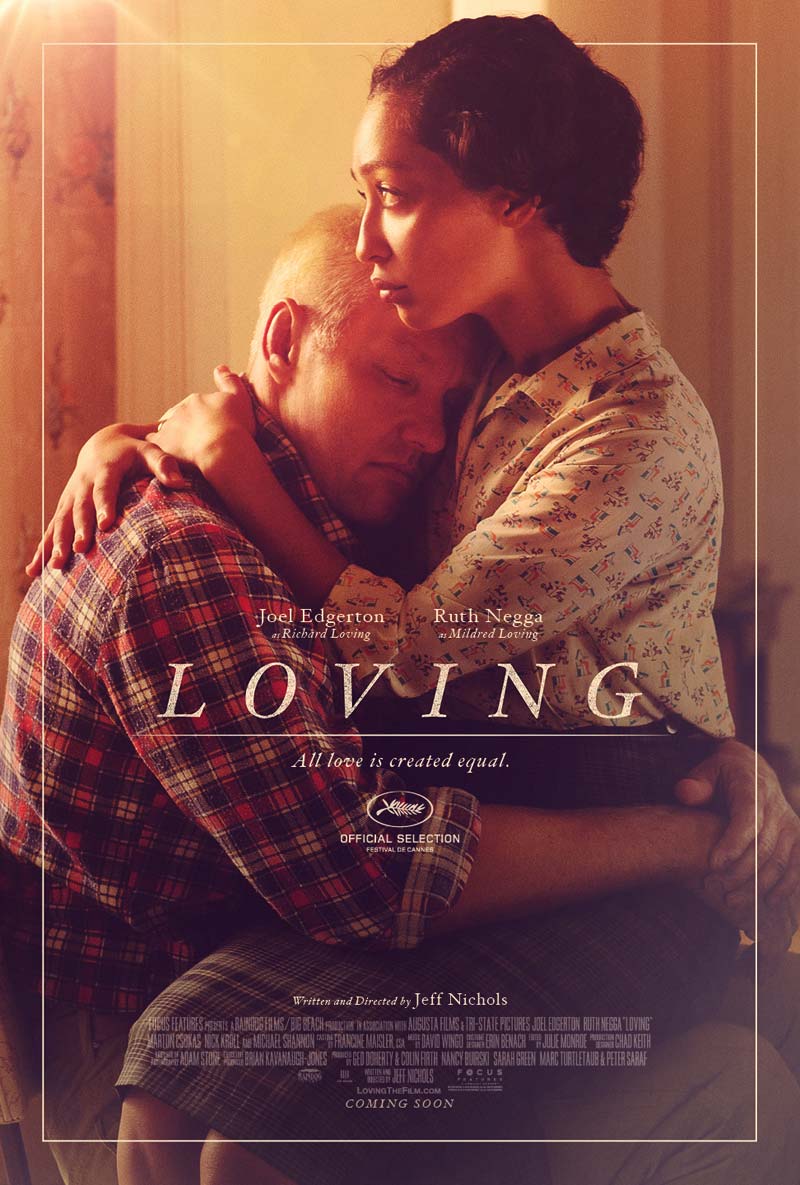
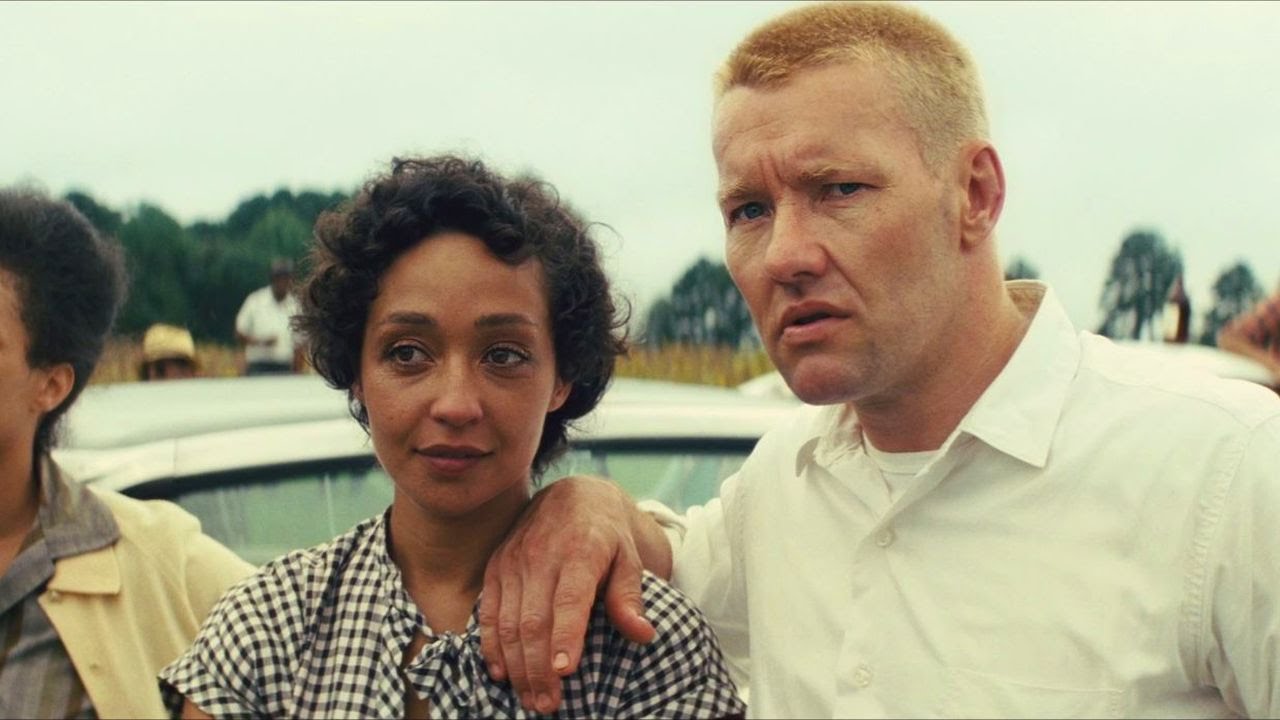
Caroline County, Virginia, 1958. Bricklayer Richard Loving has fallen in love with Mildred Jeter (Negga), and now she’s pregnant. Knowing that Virginia’s anti-miscegenation laws prohibit inter-racial marriage, they travel to Washington D.C. and get married there. They return to Caroline County and begin their married life in the home of Mildred’s parents. But news of their marriage has reached the wrong people; in a dawn raid carried out by the local sheriff (Csokas), Richard and Mildred are arrested and put in jail. Richard is allowed out on bail soon after, but Mildred is kept there until the following Monday. At their trial, and on the recommendation of their lawyer (Camp), they plead guilty and are both sentenced to one year in prison, which will be suspended if they leave Virginia and don’t return for twenty-five years. With no other choice available to them, they move to Washington and stay with one of Mildred’s friends.

Richard’s mother (Blackwood) is a midwife, and Mildred is determined that their first baby should be delivered by her. They sneak back to Caroline County and Mildred gives birth to a son, Sidney. But again, the sheriff arrives to arrest them. In court, the judge is on the point of sentencing them when their lawyer intervenes and assumes the blame for their having returned. They return to Washington, and in time, have two more children: another son, Donald, and a daughter, Peggy. But Mildred is unhappy that her children can’t grow up surrounded by trees and fields and a more simple country life. On the advice of her friend she writes to Robert F. Kennedy (at the time the Attorney General), explaining their situation. A little while later, Mildred receives a call from Bernard S. Cohen (Kroll), a lawyer working for the American Civil Liberties Union (ACLU), who has been passed their case and wants to meet with them. But their first meeting doesn’t go too well, mainly because he suggests they return to Caroline County and get re-arrested so Cohen can begin mounting a challenge through the courts.
maxresdefault

Circumstances however, dictate a return to Caroline County, and the Lovings rent an old farm house nearby where they’re unlikely to be noticed. Cohen is encouraged to keep working on their case, and with the aid of constitutional lawyer Phil Hirschkop (Bass), they keep appealing the verdicts given at Virginia state level, until they have an appearance before the Supreme Court, an appearance that will have a far-reaching effect on not just the Lovings, but the whole country.

Following quickly on the heels of his previous movie, Midnight Special (also 2016), writer/director Jeff Nichols has made a much quieter, less spectacular movie, but also one that speaks directly from the heart. Anyone expecting the usual courtroom pyrotechnics that such a story might provoke other movie makers to attempt will be either sorely disappointed or pleasantly surprised. There are only three courtroom scenes in the entire movie, and they’re all very brief. And aside from the dawn raid that sees the couple’s first arrest by Sheriff Brooks, there’s little in the way of full-blown drama or tension. What we have instead, is a movie that quite rightly focuses on the Lovings, and the various ways that their love for each other allows them to weather the legal and social ramifications of their fight to have their marriage recognised – and not just in the state of Virginia.

L_03449.jpg

Nichols has gone to great lengths to make this movie about the Lovings, and not the crusade that Cohen and Hirschkop went on to get the anti-miscegenation law changed, a law that had been born out of the South’s desire to maintain racial purity (Virginia’s argument was that it was unfair to bring mixed race children into the world; the state regarded them as bastards). This contentious stance, and the challenge to it would make for a great movie, but Nichols is more astute than that, and he’s recognised that it’s the Lovings themselves that are the important element here. In scene after scene we witness a couple whose commitment and reliance on each other is evident from a glance here, a touch there, and how strong they are because they’re a couple. It’s their love that shines through, time and again, and it’s all done so subtly and so delicately that the breadth and depth of it is sometimes surprising – and that makes it all the more extraordinary.

Nichols is helped by two very good choices for the roles of Richard and Matilda. Edgerton gives possibly his best performance as the buttoned-down, emotionally and intellectually restrained bricklayer whose involvement all along is tempered by a fatalistic attitude. Edgerton is hunched over and taciturn, weighed down (and yet unbowed) by the wider relevance of his situation. It’s a situation that he doesn’t trust fully, but because Matilda supports it, he supports it through supporting her. Edgerton displays all this by relaxing his features when needed, softening his mostly pinched facial muscles as signs of both acceptance and admration for Mildred’s patience and persistence; you know he’d rather settle for a quiet life in Washington, but he also recognises that it’s not the life he should be leading. For some viewers, it may seem that Edgerton is just brooding a lot and being monosyllabic, but there’s a depth and a profundity to his performance that is very impresssive indeed.

1466022807_loving_gallery9_joeledgerton_ruthnegga_jeffnichols-1830x1029

He’s matched by Negga, who gives one of the year’s most sublime performances. Best known perhaps for her TV work on shows such as Marvel’s Agents of S.H.I.E.L.D. and more recently, Preacher, Negga is a revelation here, not portraying Mildred but inhabiting her, and in the process, revealing aspects and nuances that play out through her expressions and her body language. Like her husband, Mildred has a pride and a sense of her own worth that won’t be taken from her, and it’s she who drives the story forward. Negga shows us the determination not to be told where she can or cannot live and bring up her children, and she does so with a quiet fierceness that is entirely credible. Just watching her as she tries to take in what “going to the Supreme Court” actually means, with the character’s naïvete and lack of education shining through, is a perfect example of Negga’s confidence in the role, as she combines vulnerability and tenacity to quite stunning effect. And if further proof were needed as just how good she is, watch Negga when Mildred gets the call from Cohen as to the Supreme Court’s verdict; it’s simply breathtaking, both for its emotional complexity and its simplicity, a conflation that few actresses are able to achieve no matter how much they try.

Nichols is also astute enough to make sure that Loving isn’t about miscegenation, or the racial, social and political turmoil of the time (though they’re acknowledged), but what marriage means for a couple who love each other so deeply. It’s no coincidence that the movie is most effective when a scene involves just Richard and Mildred, and the audience can see how important they are to each other. Nichols is to be congratulated for making a movie that is truly about a couple and not what happened to them; here, all that is of secondary importance. With tremendous, striking cinematography from regular DoP Adam Stone, and a quietly emotive yet affecting score by David Wingo, Nichols adopts a measured, deliberate approach to the Lovings’ story that makes the whole experience that much more thought-provoking and absorbing.

Rating: 9/10 – a simple, yet powerful movie about love and hope, and a couple whose faith and belief in each other was unshakeable, Loving is one of the better screen biographies of recent years, featuring two superb central performances, and a fidelity to the real Richard and Mildred Loving that is refreshing to witness; with few obvious fireworks to grab the attention, what the movie does instead to such good effect, is to introduce us to a couple who never sought the attention they received (except insofar as it helped their legal challenge), and who, while they were alive, were a shining example of love really, truly conquering all.


Share this:

  • Share on X (Opens in new window) X
  • Share on Facebook (Opens in new window) Facebook
  • More
  • Print (Opens in new window) Print
  • Email a link to a friend (Opens in new window) Email
Like Loading...

Jackie (2016)

30 Monday Jan 2017

Posted by dullwood68 in Movies

≈ 2 Comments

Tags

Billy Crudup, Biography, Drama, Funeral, Greta Gerwig, Historical drama, Interview, Jacqueline Bouvier Kennedy, Natalie Portman, Pablo Larraín, Peter Sarsgaard, President John F. Kennedy, Review, The White House, True story

14757631562jackie-movie-poster-natalie-portman

D: Pablo Larraín / 100m

Cast: Natalie Portman, Peter Sarsgaard, Billy Crudup, Greta Gerwig, John Hurt, Richard E. Grant, Caspar Phillipson, Beth Grant, John Carroll Lynch, Max Casella

A week after the assassination of President John F. Kennedy (Phillipson) in November 1963, his widow, Jacqueline Bouvier Kennedy (Portman) – otherwise known as Jackie – summoned the journalist Theodore H. White (Crudup) to her home at Hyannis Port. White had won the Pulitzer Prize for general non-fiction with his book The Making of the President, 1960, an account of the election that saw Kennedy win the Presidency. Jackie’s idea was for White to write an article that would be published in Life magazine, and which would show a correlation between her late husband’s administration and King Arthur’s court at Camelot. White agreed, and guided by Jackie’s suggestions, he wrote a thousand word essay that stressed the Camelot comparison.

This is the basis for Jackie, the latest movie to pick over the bones of Kennedy’s assassination and its wake. By using White’s “interview” with Jackie, the movie shows how Jackie dealt with the demands of suddenly becoming a former First Lady, balancing her public persona with her private feelings, arranging her husband’s funeral, and most important of all, protecting and promoting his legacy. It’s this that forms most of the narrative, as Jackie seeks to cement Kennedy’s place in history. Even riding in a hearse with brother-in-law Bobby Kennedy (Sarsgaard) (and this shortly after Kennedy’s body has been released from Parkland Hospital), Jackie is keen to make the point that nobody remembers James A. Garfield or William McKinley, both assassinated while in office, but they do remember Abraham Lincoln – and all because of his legacy as a President.

landscape-1480358441-image-04afa3ee-f8cc-4059-8c62-8208612a44bc

But her husband’s legacy isn’t the only thing she appears focused on. There’s also the matter of what she regards as “the truth”. She wants the American public to see the full horror of what she experienced on 22 November 1963; to this end she doesn’t change out of that famous pink Chanel suit she wore on the day when she’s given the opportunity, and even though it’s spattered with her husband’s blood. She keeps it on for the rest of the day – at Parkland Hospital, during Lyndon B. Johnson’s impromptu inauguration, at the airport in Washington (where she refuses to leave by the back of the plane so as to avoid the reporters), and finally in the White House, where she wanders the various rooms as if only now beginning to come to terms with the enormity of what happened earlier that day in Dallas, Texas.

In the days that follow, we see Jackie behave erratically but with some deep-rooted purpose that only she understands, tackling the issue of whether or not to walk behind the coffin, and what she’ll do once she leaves the White House. She confides in one of her retinue, Nancy Tuckerman (Gerwig), one of the few people who can raise her spirits and bring a smile to Jackie’s face, and a priest, Father Richard McSorley (Hurt), who offers her spiritual comfort. But she remains almost defiantly isolated, determined to continue in her own way, and against the wishes of the new administration when it matters.

maxresdefault

In focusing on Jackie in the hours and days following Kennedy’s assassination, the movie gives the viewer the opportunity to eavesdrop on the very private grief of a very public person, someone who put on a brave face for the cameras, but who also kept herself at a distance, despite wanting people to see “the truth”. It’s this dichotomy that makes Jackie the person endlessly fascinating to observe, and Jackie the movie somewhat disappointing in terms of the narrative. We see Jackie at various points, both in time and in place, throughout the movie. There are scenes in Dallas, in Washington, inside the White House, at Hyannis Port, but many of them feel like snippets of memory, connected discretely to each other by the random nature of Jackie’s thoughts and emotions. When she and White (known only as the Journalist, for some reason, in the credits) sit down to discuss the article, their conversation often goes off at a tangent, and Noah Oppenheim’s screenplay encourages this, as if it will give us a better understanding of Jackie in those four days between JFK’s death and his funeral. But it’s obvious: she’s trying to weather those four days as best she can until she can grieve properly, away from prying eyes.

With the script trying to add layers where they’re not needed, it’s left to Natalie Portman to save the movie from its all-too-clever design, and deliver a nigh-on faultless performance, burrowing under Jackie’s skin and finding the nerve centre of someone who was never entirely comfortable being in the public spotlight, but who instinctively knew the public’s perception of JFK as a great President – hence the parallel with Camelot – needed to be kindled as quickly as possible after his death, and that she was the only one who could do it. Portman portrays this single-mindedness with a quiet intensity, perfectly capturing Jackie’s “feisty” nature in private, and her more vulnerable, debutante persona in front of the cameras and/or reporters’ notebooks. There are moments in the movie when you could be forgiven for thinking that Jackie is “absent” from the room, or a conversation. But Portman’s portrayal is more subtle than that, and she gauges these “absences” with an acute awareness that a character’s stillness or silence often means more than is seen on the surface.

movie_jackie-2016

If there’s one problem with Portman’s magnificent performance, it’s that it overshadows everything else the movie attempts or gets right. Jackie, ultimately, stands or falls thanks to Portman’s efforts, because without her command of the character (and Jackie’s odd accent), the movie lacks little else to keep the audience’s attention from wandering. Making his first English language movie, Chilean director Larraín displays an aptitude for scenes of sombre regret, and along with Portman fleshes out Jackie’s character to impressive effect, but there still remains the feeling that Jackie (the person) has been assembled from random aspects of her personality that seem a good fit for the narrative rather than a true representation of what she was really like at the time. At best, this is an interpretation of Jacqueline Bouvier Kennedy; at worst it’s an impression.

On the technical side, Jackie flits between looking stunning, and looking bland depending on the requirements of the script, and the budget. The interiors of the White House, faithfully recreated in a studio outside Paris, France, are dazzling examples of what can be achieved when you have the talents of production designer Jean Rabasse, art director Halina Gebarowicz, and set decorator Véronique Melery on board. And yet, if you contrast these wonderful sets with the motorcade sequences, it’s like the difference between day and night, with the scenes in Dallas looking like they’ve been shot on a closed stretch of road and with only two cars available for filming. And despite the best efforts of cinematographer Stéphane Fontaine, the movie never overcomes these disparities. In contrast, Mica Levi’s tonal, somewhat sepulchral score is a good match for the material, and acts as an emotional undercurrent to Jackie’s grief and displacement.

Rating: 8/10 – fans of low budget independent dramas will enjoy Jackie for its slow, measured pace, refusal to explain everything that’s going on (with Jackie herself), and Portman’s exquisitely detailed performance; an attempt at an intimate portrayal of a very private person, the movie glides majestically along for most of its running time, and gives the impression of being more meanngful than it actually is, but it still has a lot to offer both the casual and the more interested viewer.

Share this:

  • Share on X (Opens in new window) X
  • Share on Facebook (Opens in new window) Facebook
  • More
  • Print (Opens in new window) Print
  • Email a link to a friend (Opens in new window) Email
Like Loading...

Patriots Day (2016)

22 Sunday Jan 2017

Posted by dullwood68 in Movies

≈ 2 Comments

Tags

Bombing, Boston Marathon, Boston Strong, Drama, J.K. Simmons, John Goodman, Kevin Bacon, Literary adaptation, Manhunt, Mark Wahlberg, Michelle Monaghan, Peter Berg, Review, Thriller, True story

328338id1_patriots-day_27x40_1sht-revise

D: Peter Berg / 133m

Cast: Mark Wahlberg, Kevin Bacon, John Goodman, J.K. Simmons, Michelle Monaghan, Alex Wolff, Themo Melikidze, James Colby, Michael Beach, Rachel Brosnahan, Christopher O’Shea, Jake Picking, Jimmy O. Yang, Vincent Curatola, Melissa Benoist, Khandi Alexander, Adam Trese, Dustin Tucker

At 2:48pm on 15 April 2013, the 117th annual Boston Marathon was taking place, and was proceeding as smoothly as in previous years. It was already nearly three hours since the winner had crossed the finish line, and the remainder of the runners – some 5,700 – were still to complete the course. A minute later, at 2:49pm, a bomb exploded in the crowd of onlookers near the finish line; approximately thirteen seconds after, a second bomb exploded one block further away. Between them, the blasts claimed the lives of three people, and injured hundreds of others, including sixteen people who lost limbs. It was a terrorist attack that no one saw coming, and such was the confusion at the time of the blasts that runners still crossed the finish line for another eight minutes.

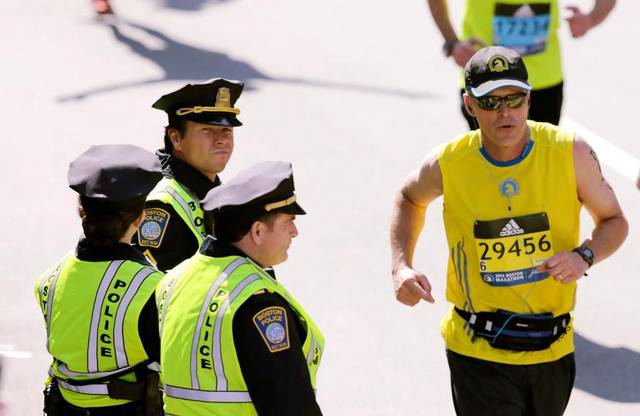
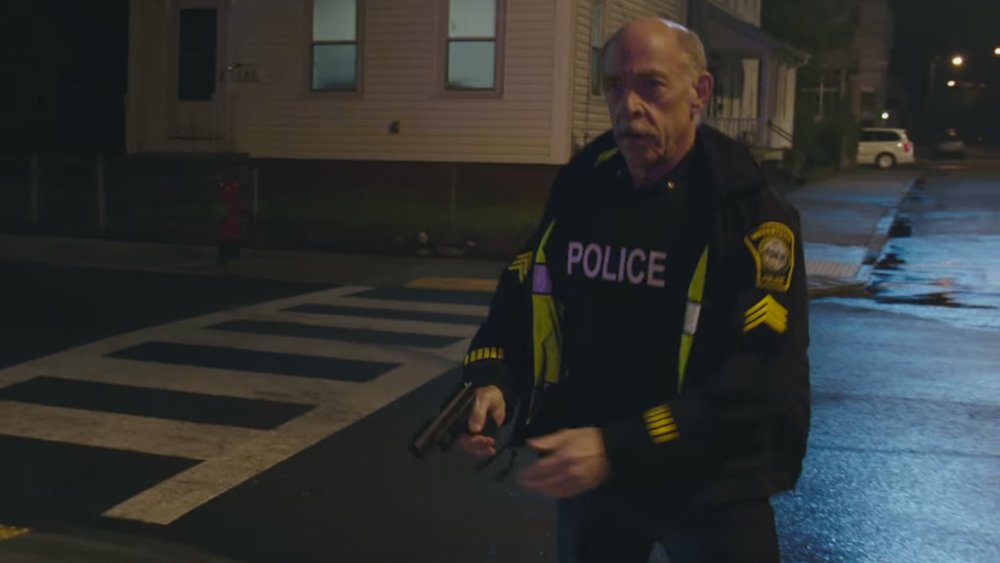
This is the core event of Patriots Day, a recreation of the bombings that occurred that fateful day, and the subsequent manhunt that took place over the next four days. It begins with Boston Police Department Sergeant Tommy Saunders (Wahlberg) and moves on to introduce a variety of individuals whose lives will be affected by the bombing and subsequent events. These include Tommy’s wife, Carol (Monaghan), Boston Police Commissioner Ed Davis (Goodman), young couple Jessica Kensky (Brosnahan) and Patrick Downes (O’Shea), Chinese student Dun Meng (Yang), MIT police officer Sean Collier (Picking), district of Watertown police Sergeant Jeffrey Pugliese (Simmons), Boston Police Superintendent Billy Evans (Colby), naturalised U.S. citizen Dzhokhar Tsarnaev (Wolff), his brother Tamerlan (Melikidze), and Tamerlan’s American-born wife, Katherine (Benoist).

film-patriots-day_bece

By the time the race starts we know that Tamerlan and Dzhokhar will be the people who place the bombs. And as the race begins, and we see them moving amongst the crowds, what has been a fairly straightforward, and somewhat leisurely approach to the events of 15 April 2013 begins to become something altogether more focused, and darker. When the bombs do go off – and we know they will – the explosions, and the devastation they cause, are still shocking. And it’s as this point that Patriots Day, which could have so easily been a tale of jingoistic heroism sprinkled with Hollywood-ised action beats, becomes something even richer and more surprising: a movie based on true events that incorporates an incredible level of detail, and better still, includes actual footage from the time. It’s this aspect of the movie, the mixture of real and realised that impresses the most, as it makes the verisimilitude that much more potent.

In adapting the book, Boston Strong by Casey Sherman and Dave Wedge, director Peter Berg has made his most accomplished and impactful movie to date. Reuniting with Mark Wahlberg for the third time after Lone Survivor (2013) and Deepwater Horizon (2016) – also true stories – Berg has finally crafted a movie that resonates on more than one level, and which doesn’t rely on the jingoistic heroism mentioned above. It does celebrate the way in which the residents of Boston came together in the wake of a terrorist attack, but Sergeant Pugliese’s incredibly brave confrontation with Tamerlan Tsarnaev aside, there aren’t any moments of gung ho courage, just an acknowledgment of how determined everyone – law enforcement and public alike – were in making sure the bombers were captured. It’s not often that a movie gives you a true sense of a community coming together in such a way, but this is definitely one of them, and it does so powerfully and succinctly.

040616_PATRIOTSDAY_KB_462.CR2

The various storylines are cleverly interwoven as well, with each character given a relevant amount of screen time, and their lives, even Wahlberg’s composite policeman, explored with a tremendous surety of touch. Admittedly, some of the investigators – Bacon’s overly experienced FBI agent Richard DesLauriers, Goodman’s shocked and angry Police Commissioner – fare less well in this respect due to the nature of their involvement, but otherwise, people such as Downes and Kensky, who had reached the finish line when the first bomb went off, are afforded due recognition because of what happened to them not only then but subsequently. The same is true of Steve Woolfenden (Tucker), who was injured and separated from his young son, Leo. Away from the injured, the fates of people such as Dun Meng and MIT police officer Sean Collier are played out with sincerity and a lack of sensationalism, or the kind of made-for-TV banality that offsets any strived-for veracity.

Once the manhunt is under way and an initial identification of the suspects has been made (one of the movie’s cleverest moments), the movie steps up a gear, and becomes intensely exciting. The scenes involving Dun and the Tsarnaevs are mini-masterclasses in how to keep an audience on the edge of their seat, and all this is achieved by precision editing (courtesy of Gabriel Fleming and Colby Parker Jr) and an emotional undercurrent that permeates the movie as a whole. Berg makes you care about the people in this movie, these people who experienced so much and came out the other side so much stronger (albeit not all of them). The same can be said of the shootout on Watertown’s Laurel Street, a literally explosive confrontation between the police and the Tsarnaevs that stands head and shoulders above most movie shootouts, and which again, thanks to Fleming and Parker Jr, leaves the viewer gasping at how insane it all was, and how frightening it must have been to be a part of it all.

1479137092479

Berg’s commitment to telling this story as honestly and passionately as possible, while not sensationalising it in any way, is the reason why it works so well, and why it deserves every possible accolade. He’s helped tremendously by a cast so committed to meeting his vision of the story that there’s not one performance that’s out of place or not operating in service of the material. Wahlberg, who always seems to feel more comfortable playing blue collar workers, puts in his best work since The Fighter (2010), while the likes of Goodman, Bacon, Monaghan and Simmons all deliver solid, credible supporting performances that enhance the narrative whenever they’re on screen. As the Tsarnaevs, Wolff and Melikidze are an impressive teaming, establishing both the bonds and the boundaries between the two brothers with almost nonchalant ease; it’s an adversarial relationship in many ways (as with so many brothers), but you never once question their commitment to their cause and each other. But if there has to be one actor or actress who stands out for any reason, then that is unquestionably Melissa Benoist, TV’s current Supergirl. Watch the scene where Katherine is interrogated by a nameless “spook”: it’s an exemplary display of a character’s doubt, fear, loathing, and blinkered self-assurance, and is as surprising for its conclusion as it is for the iciness of the scene as a whole.

The movie ends as most movies attempting to tell a true story often do: with an update on some of the people whose lives were affected on that terrible day in April 2013. And then it goes one step further, and you hear the voice of the real Patrick Downes, and then you see both him and Jessica Kensky as they talk about that day and what it’s meant to them since. You see officials such as Ed Davis and Richard DesLauriers, and as they talk about the notion of Boston Strong, the unifying concept that sprang up in the wake of the bombings, the idea that Boston and its people would not be intimidated by acts of terrorism – listening to them you understand just why Berg and his team were so determined not to make this an exercise in hyperbole or the cinematic equivalent of yellow journalism. Because if they had, then the movie’s final image – its message if you like – would have meant nothing. It would have lacked context, and it would have lacked the emotional jolt that the movie leaves you with. And what was that image? Ah, now that would be telling…

Rating: 9/10 – a superb retelling of the Boston Marathon bombings and the manhunt that followed over the next one hundred and five hours, Patriots Day is a movie devoid of frills, unnecessary plot devices, or political finger-pointing; a tribute to all those who survived the bombings, and the extraordinary levels of cooperation between a city and its law enforcement – a de facto curfew was in place following the shootout in Watertown – the movie focuses on telling its story matter-of-factly and audaciously, and by concentrating on the people who were caught up in it all, an approach that many other movies “based on real events” should try adopting as well.

Share this:

  • Share on X (Opens in new window) X
  • Share on Facebook (Opens in new window) Facebook
  • More
  • Print (Opens in new window) Print
  • Email a link to a friend (Opens in new window) Email
Like Loading...

Hidden Figures (2016)

21 Saturday Jan 2017

Posted by dullwood68 in Movies

≈ 3 Comments

Tags

1961, Drama, Friendship 7, Janelle Monáe, Jim Parsons, Kevin Costner, Kirsten Dunst, Literary adaptation, NASA, Octavia Spencer, Racism, Review, Taraji P. Henson, Theodore Melfi, True story

hidden_figures_ver2

D: Theodore Melfi / 126m

Cast: Taraji P. Henson, Octavia Spencer, Janelle Monáe, Kevin Costner, Kirsten Dunst, Jim Parsons, Mahershala Ali, Aldis Hodge, Glen Powell, Kimberly Quinn, Olek Krupa

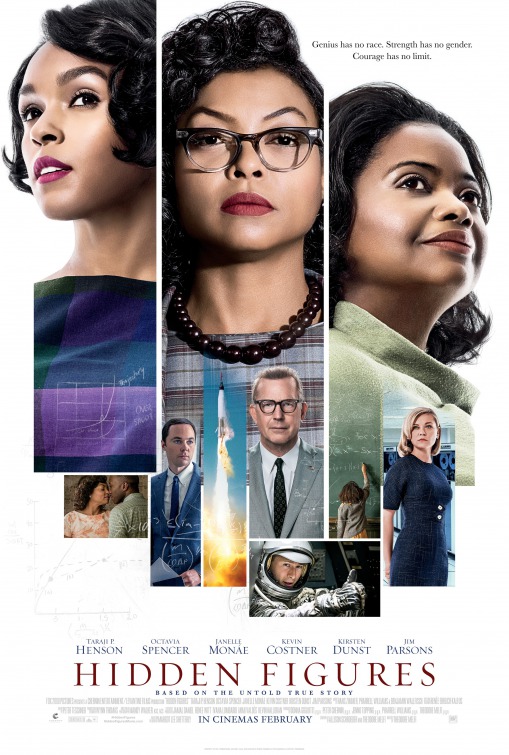
In 1961, the USA and the USSR were in a race to put a man into space. The Russians had managed to send up a mannequin and a dog on separate missions, while the Americans were struggling to stop their unmanned rockets from blowing up shortly after take-off. The team responsible for this string of non-fatal disasters was based at the NASA complex in Langley, Virginia. In fact, there were several teams working there, including a coloured section overseen by Vivian Mitchell (Dunst). Of the women that worked there, three were best friends: Katherine Goble (Henson), Dorothy Vaughan (Spencer), and Mary Jackson (Monáe). Each had their own specialty: Katherine was a maths genius, Dorothy was a more than competent supervisor (and latent programmer), while Mary was an engineer.

Despite their obvious capabilities, the institutionalised racism of the time ensures that each of them remains in a pool of temps to be drawn on as and when required. Dorothy is the de facto supervisor of the group, but isn’t officially recognised as such. Mary’s desire to be an engineer is hampered by her needing to take a specific engineering course – which is taught only at a non-segregated school. And Katherine’s intuitive knowledge of advanced mathematics is under-utilised on a regular basis. Things begin to change though, when Katherine is seconded to the Space Task Group, the team responsible for calculating the launch and landing coordinates for each rocket mission.

hf-gallery-04-gallery-image

Led by Al Harrison (Costner), the team is as inherently racist as an all-white male environment could be. Only Harrison seems able to look past the colour of Katherine’s skin, but he has too much on his plate to ensure that everyone else does. With her work constantly undermined by Harrison’s second-in-command, Paul Stafford (Parsons), and having to spend too much time checking other people’s calculations, Katherine struggles to make any headway in having her talents recognised. When the USSR succeeds in sending Yuri Gagarin into space (and bringing him back), the pressure is on to do the same with a US astronaut. With the arrival of an IBM mainframe computer that will process mathematical formulae and calculations much quicker than Harrison’s team of “computers”, Katherine faces an even bigger challenge: how to retain a human element amongst all the mathematics, and how to ensure that any future manned space flights remain as safe as humanly possible. It all leads to the first manned orbital flight, and making sure that astronaut John Glenn (Powell) returns home in one piece.

Those with a good memory for last year’s Oscars will remember the outcry over the Academy appearing to be racially biased against black and ethnic movie makers. Stars such as Will Smith boycotted the Oscar ceremony, while contention reigned over the nominations the Academy had made in the first place. A year later, and we have Hidden Figures, a movie almost designed to address the issue, and which should see itself gain a slew of nominations. However, the movie is the victim of felicitous timing, having gone into production a full year before last year’s Oscars. Nevertheless, it’s the kind of feelgood, inspiring, let’s-throw-a-light-on-a-little-known-aspect-of-recent-US-history movie that charms audiences and critics alike. And it doesn’t hurt that co-writer/director Theodore Melfi has assembled a great cast to do justice to his and Allison Schroeder’s screenplay, itself adapted from the book by Margot Lee Shetterley.

hidden-figures1

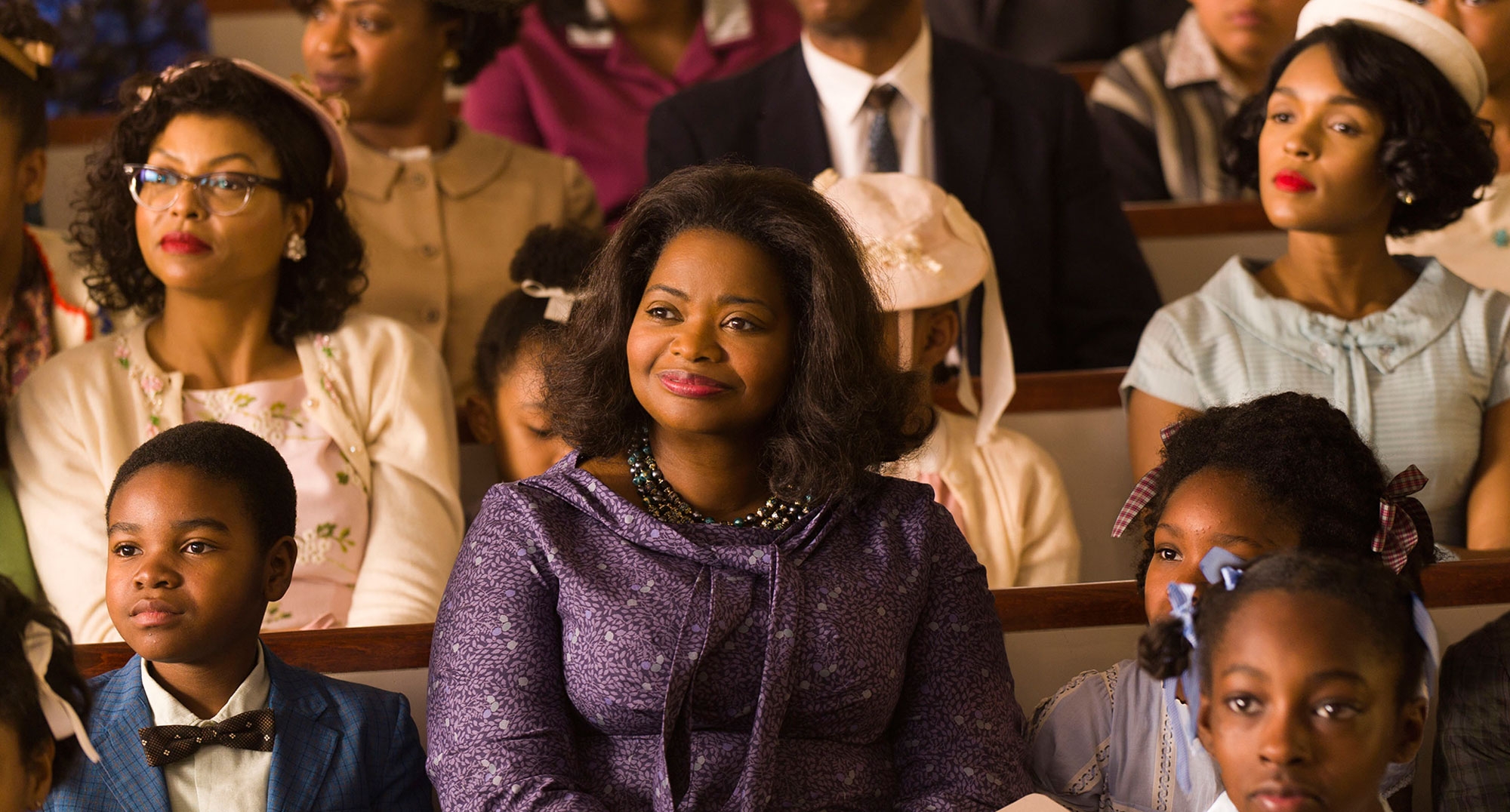
While Hidden Figures doesn’t necessarily stand or fall on its performances, having such a (mostly) seasoned cast pays off tremendously. Henson is terrific as Katherine, the unsung hero of the Friendship 7 mission who is more than just a maths genius, while Spencer and Monáe provide equal measures of grit and determination as Dorothy and Mary, guiding their real-life characters through the many professional, personal, and racial pitfalls the two women experienced at the time, and their inspirational, dedicated responses to each potential setback. Both actresses are equally as terrific as Henson, even if they have a little less to do in comparison, but as a trio they prove to be inspired casting. The same can be said for Costner, playing yet another (fictional) fair-minded, no-nonsense authority figure, but doing so with a great deal of charm and delivering his lines with the necessary amount of gravitas and persuasion. The only character who sticks out as unnecessarily stereotypical is Parsons as Katherine’s racist, jealous colleague, who constantly feels threatened by her presence and her abilities. Reduced to giving her glowering looks and blocking her attempts at personal recognition, Parsons’ performance does the actor no favours and will have many viewers thinking, “he’s just playing an evil version of Sheldon Cooper”.

As Mrs Mitchell, Dunst at least gets to see the error of her ways by the movie’s end, while there’s solid support from Ali and Hodge as Katherine’s love interest and Mary’s husband respectively. And there’s a mischievous turn from Powell as John Glenn, who won’t take off unless Katherine has checked the numbers. With so many enjoyable, and finely-tuned performances, the movie is free to explore the ways in which Johnson et al became so integral to the success of the Friendship 7 mission after so many failures. There’s subterfuge (on Dorothy’s part), legal wrangling (by Mary), and pure dogged persistence by Katherine. While it’s true that all three were in the right place at the right time, it’s still equally true that they took advantage of the chances given them, and made the most of those opportunities. In doing so, they forged a path for women (and not just black women) that is still being benefitted from today, and the movie is eager to highlight their achievements – which is as it should be.

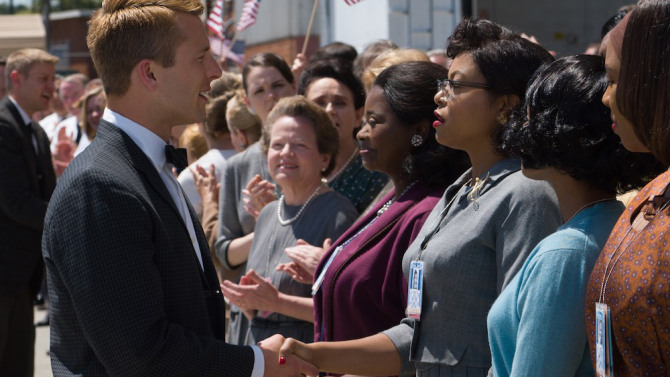
DF-04856_R2 - Katherine G. Johnson (Taraji P. Henson), flanked by fellow mathematicians Dorothy Vaughan (Octavia Spencer) and Mary Jackson (Janelle Monáe) meet the man they helped send into orbit, John Glenn (Glen Powell), in HIDDEN FIGURES. Photo Credit: Hopper Stone.

But though these achievements are rightly recognised and celebrated, and the tensions inherent in the efforts to put Glenn into orbit are confidently addressed and shown, it’s when the movie steps away from the base at Langley and tries to paint a wider picture of the period that it proves to be less successful in its efforts. There are references to the growing civil unrest in the country, and we get to spend time with the trio’s family and friends on various occasions, but Katherine’s romance with Colonel Jim Johnson (Ali) aside, much of these scenes and sequences feel like filler, particularly the political discussions between Mary and her husband, which seem like they’re prodding the movie in another direction, but which ultimately amount to nothing.

Otherwise though, Hidden Figures is a lovingly rendered tribute to three women who smashed through not one but two glass ceilings and contributed greatly to the US winning the space race and eventually landing on the Moon. That their contributions have taken so long to be recognised and honoured by the wider public is a travesty that the movie addresses with no small amount of style and grace. Melfi is to be congratulated for taking such an inspiring, untold tale and doing it full justice, and in the process, making one of the most enjoyable, inspiring and rewarding movies of recent years.

Rating: 8/10 – shining a light on an overlooked story from the early Sixties, Hidden Figures is a generous, captivating movie that plays equally well as both an historical drama and a comedy of manners; with a trio of memorable performances, and richly textured direction from Melfi, this is an object lesson in bringing history alive and making it completely accessible.

Share this:

  • Share on X (Opens in new window) X
  • Share on Facebook (Opens in new window) Facebook
  • More
  • Print (Opens in new window) Print
  • Email a link to a friend (Opens in new window) Email
Like Loading...

The Young Offenders (2016)

21 Saturday Jan 2017

Posted by dullwood68 in Movies

≈ 1 Comment

Tags

Alex Murphy, Bicycles, Chris Walley, Cocaine, Comedy, Cork, Drama, Fake Billy, Hilary Rose, Ireland, Peter Foott, Review, True story

the-young-offenders_poster_goldposter_com_7

D: Peter Foott / 83m

Cast: Alex Murphy, Chris Walley, Hilary Rose, Dominic MacHale, PJ Gallagher, Shane Casey, Pascal Scott, Michael Sands, Ciaran Bérmingham

It’s the summer of 2007 in Cork, and best friends Conor (Murphy) and Jock (Walley) are spending their time differently: Conor is helping out his mother, Mairead (Rose), where she works at a fish market, while Jock is busy stealing bicycles and masquerading – literally – as a local thug called Billy (Casey) (helpfully he’s known as Fake Billy). Conor’s father died when he was four, and Jock’s mother only a year ago. Conor’s mother is hard on him, and is always calling him a moron, while Jock’s dad (Sands) has taken to drinking to deal with his grief; both boys wish for better family lives but don’t know how to make things better.

The big news story of the summer is a shipwreck further west that has seen bales of cocaine washed up along the shoreline. With each one reckoned to be worth around seven million Euros, Jock decides they should travel down to where the wreck occurred, grab themselves a bale, and make themselves rich on the proceeds (though how they’ll do that they haven’t worked out yet). Jock steals a couple of bicycles, and off they go, unaware that one of the bicycles has been fitted with a GPS transmitter, the brain child of obsessive Garda officer, Sergeant Healy (MacHale). Healy is determined to catch Fake Billy, and will do everything in his power to do so, even if it means tracking him across half of southern Ireland.

original

On their way they manage to elude Healy, but once they get to the site of the wreck, Conor and Jock are dismayed to learn that all the bales have been recovered by the Garda. But their fortunes change when they discover a man (Gallagher) sleeping with what looks suspiciously like one of the bales. They take the bale, strap it to the back of Conor’s bicycle, but as they set off back to Cork, something unforeseen happens, something they don’t discover until they get back home. With their luck already going from bad to worse – Healy is still hot on their trail – the sleeping man manages to track them down, resulting in a standoff in Conor’s kitchen that involves the two friends, Mairead, Healy, real Billy, the sleeping man, a large quantity of flour, and a nail gun.

Apparently based on true events, The Young Offenders has charm, laughs aplenty, and a huge amount of heart – and two utterly beguiling performances courtesy of Murphy and Walley. It’s safe to say that you won’t see two more convincing portrayals of what the Irish call “eejits” than here, as Murphy and Walley reach new heights of comic stupidity as best friends Conor and Jock, two young lads who know nothing and seem content with their ignorance. At one point, Jock mentions their country’s forefathers, and Conor asks who he means. Jock’s response? “Eh, Saint Patrick, Saint Bridget… I don’t know…” Of course, the level (or depth) of their stupidity is due to the wonderfully acerbic dialogue that writer/director Peter Foott (making his feature debut) has created, but the two young actors bring both characters to life such a measure of deadpan delight, that you can’t be helped but won over by Conor and Jock’s naive self-belief and disingenuous approach to life.

With two such convincing and commendable performances at the movie’s centre, you could be forgiven for thinking that the supporting characters would be less engaging, but thanks again to Foott’s considered and surprisingly layered script, such is not the case. Mairead, ostensibly a mother in constant despair at the juvenile antics of her only son, proves to be a thoughtful and supportive parent who genuinely wants what’s best for him. A scene towards the end where she and Conor find the common ground that’s been between them all along, is both funny and poignant, and emotional as well. Rose is terrific as Conor’s mother, and her scenes with Murphy provide the heart and soul of the movie just as much as the friendship between Conor and Jock does; she’s also great when dishing out insults to Jock (who thinks she’s kidding): when she points out a sucker fish to him, she tells him that will be his nickname in prison.

screen-shot-2016-08-17-at-12-29-33

Elsewhere, the obsessive Sergeant Healy is played with fierce determination by MacHale, and while the role could have been entirely one-dimensional, the actor makes him both sympathetic and understandable, a man who views his position within the Garda as one that carries great civic responsibility (even if it is a little too tightly focused). As the sleeping man, Gallagher is a joy, resourceful and clever despite having a withered arm and a club foot, and permanently astonished at how things are turning out (the scene where he acquires the nail gun is beautifully played). And there’s a wonderfully absurd, poignant, and unexpectedly heartfelt sequence involving a farmer (Scott) who suffers from a combination of alcoholism and confusion. Conor and Jock want to do right by him when they realise what his problems are, and they spend the evening with him, leading Conor to remark that “that was the closest we’d all got to a normal night in”.

It’s these moments when Foott reveals the sadness and the emotional complexity behind the characters, and lets on that they’re not entirely the “eejits” they appear to be that gives the movie a resonance and a warmth that makes it all the more impressive. Foott isn’t solely interested in making us laugh, he also wants us to experience the truth of Conor and Jock’s lives away from the obvious camaraderie they have with each other, where pain and heartache linger, but where they themselves are determined to keep them when they’re together. They’re always dreaming of what their lives could be like – the opening scene sees Jock ask Conor what he’d do if he had a million Euros – and deep down they just want ordinary home lives. By the movie’s end, Conor is well on the way to having achieved that, while Foott is careful to ensure that there’s no obvious happy ending for Jock, merely the possibility of one.

young-offenders

In essence, The Young Offenders is a movie about friendship and dreams, and how the two can sometimes, if we’re lucky, go together hand in hand. Foott is a talent to watch, and translates his script to the screen with confidence and aplomb. He extracts wonderful performances from all concerned, and there’s not one moment that feels forced or out of place. The comedy is fresh, laugh out loud funny, and deftly played by all concerned, while there’s plenty of pathos and bittersweet emotion in amongst all the levity. The movie looks great as well thanks to Paddy Jordan’s crisp, sky-bright cinematography, and on the soundtrack, there’s the more than welcome inclusion of Where’s Me Jumper by Sultans of Ping E.C., a proto-punk song that fits in well as a way of seeing out the movie on a musical high.

Rating: 9/10 – a perfectly balanced mix of comedy and familial heartbreak, The Young Offenders is the kind of movie that makes you want to spend more time with its central characters, and as soon as possible; Foott is to be congratulated for making a movie that operates so effectively on so many unexpected levels, and for keeping the friendship between Conor and Jock entirely credible throughout, an achievement that boosts the movie’s entertainment value and at the same time, ensures that it’s a rewarding viewing.

Share this:

  • Share on X (Opens in new window) X
  • Share on Facebook (Opens in new window) Facebook
  • More
  • Print (Opens in new window) Print
  • Email a link to a friend (Opens in new window) Email
Like Loading...

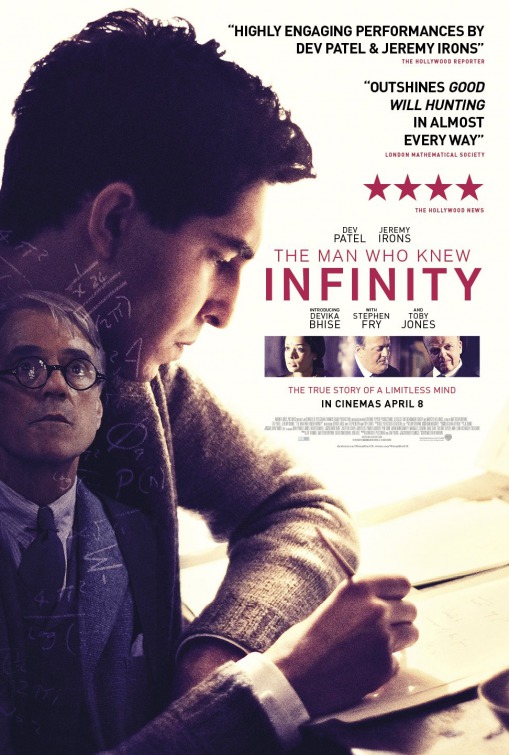
Mini-Review: The Man Who Knew Infinity (2015)

04 Wednesday Jan 2017

Posted by dullwood68 in Movies

≈ Leave a comment

Tags

Dev Patel, Drama, Jeremy Irons, Mathematics, Matthew Brown, Partitions, Proofs, Review, Srinivasa Ramanujan, Trinity College, True story, World War I

man_who_knew_infinity

D: Matthew Brown / 108m

Cast: Dev Patel, Jeremy Irons, Devika Bhise, Toby Jones, Jeremy Northam, Kevin McNally, Richard Johnson, Anthony Calf, Raghuvir Joshi, Stephen Fry

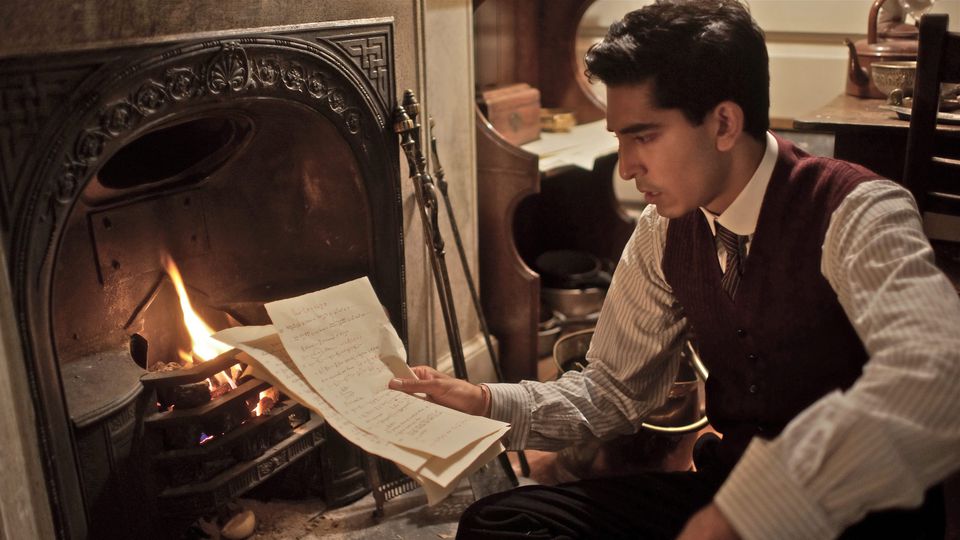
Madras, India, 1914. Humble clerk Srinivasa Ramanujan (Patel) has a special affinity for mathematics; he can see formulas in his head, and he can write them down without having to pause or check what he’s writing. Spurred on by his employer, he writes to the British mathematician, and professor at Trinity College, Cambridge, G.H. Hardy (Irons). Hardy is impressed enough to pay for Ramanujan’s passage to England, and with a promise of ensuring the young Indian’s work is published. Once at the college however, Ramanujan finds himself pressed to explain just how his formulas work. Hardy needs him to provide “proofs” – how he works things out – but at first it’s an alien concept that Ramanujan fights against.

Back in Madras, Ramanujan’s wife, Janaki (Bhise) is reliant on his letters for news of when she can travel to be with him. But his jealous mother, Narasimha (Joshi), hides his letters and confiscates hers. In England, his wife’s apparent silence adds to his further woes: experiencing institutionalised racism, the delays in being published, and the onset of tuberculosis. As he struggles to meet the demands that Hardy imposes, Ramanujan begins to feel despair at the thought that all his theories and formulas will die with him. It’s only when he and Hardy challenge another member of the faculty, Major MacMahon (McNally), over partitions, that his work begins to be recognised, and his position as a gifted mathematician is guaranteed.

960

A true story about a most remarkable man, The Man Who Knew Infinity is a fairly standard biopic that benefits greatly from the participation of Patel and Irons, both of whom give strong, inspiring performances, and from the work of production designer Luciana Arrighi Rajeevan, who recreates the period covering World War I with style and attention to detail. Beyond this, though, this is very much a standard tale of one remarkable man’s struggle to be heard and understood against an environment that appears unable to entertain original thought. There are many such stories throughout history, and many have been into serviceable movies, and while The Man Who Knew Infinity is certainly an interesting story, it’s too similar to many other stories to have much of an impact.

Partly this is due to the period of time over which the movie takes place – six years – which leaves the narrative necessarily fragmented. As a result, Ramanujan’s story feels incomplete, with too many scenes that are replays of earlier ones (Hardy’s insistence on proofs is played out on several occasions). The movie isn’t too subtle in depicting the racism of the time, doling out exactly the kind of scenes you’d expect to see in a movie such as this – Ramanujan is verbally abused, physically assaulted, and generally despised by the majority of the teaching staff – and there’s the classic movie moment where after a number of scenes where Ramanujan is prone to coughing fits, he finally coughs up blood into a handkerchief. Watching the movie, you can practically predict every beat of the narrative, and every advance in the material. But on a basic level it remains entirely watchable – just don’t expect too much from it.

Rating: 6/10 – an inspiring tale told with a minimum of passion, The Man Who Knew Infinity relies on a number of biopic clichés in telling its story, and in doing so, dulls the drama inherent in Ramanujan’s life; boasting two clever, intelligent central performances, and often glorious cinematography by Larry Smith, the movie feels as if it was aiming for more, but didn’t quite have the resources to achieve it – but at least it tried.

Share this:

  • Share on X (Opens in new window) X
  • Share on Facebook (Opens in new window) Facebook
  • More
  • Print (Opens in new window) Print
  • Email a link to a friend (Opens in new window) Email
Like Loading...

Southside With You (2016)

12 Monday Dec 2016

Posted by dullwood68 in Movies

≈ Leave a comment

Tags

Barack Obama, Do the Right Thing, Drama, Ernie Barnes, First date, Michelle Robinson, Parker Sawyers, Review, Richard Tanne, Romance, Tika Sumpter, True story

ckeh-dquyaaakue

D: Richard Tanne / 84m

Cast: Tika Sumpter, Parker Sawyers, Vanessa Bell Calloway, Phillip Edward Van Lear, Tom McElroy, Stephanie Monday

It’s 1989, and Michelle Robinson (Sumpter), a young lawyer with a firm in Chicago, is preparing to spend the afternoon with an associate who she’s mentoring. The young associate’s name is Barack Obama (Sawyers), and while Michelle’s parents (Calloway, Van Lear) tease her about it, she insists she’s not going on a date. When Barack arrives to pick her up, he’s late, there’s a hole in the passenger footwell of his car, and it’s clear that he smokes (which Michelle isn’t too keen on). And she learns that the community meeting he’s invited her to attend with him, isn’t until much later. Taking a further stand with Barack, she tells him they’re not on a date. He agrees (reluctantly), but adds that it won’t be a date until Michelle says so.

With time to kill, the pair attend an exhibition at a local arts centre. As they look at and voice their feelings about the artwork on display – by the artist Ernie Barnes – slowly but surely they begin to learn about each other. Michelle warms to Barack (though not too quickly), while he is obviously attracted to her. They talk about their backgrounds, make snap judgments about each other, and generally discover they have a liking for each other that Michelle, at least, is surprised by. From the arts centre, they go for a walk in the park, talk some more about their families, and in particular, Barack’s relationship with his mother and father.

southside-with-you-trailer-video-1

At the community meeting, Michelle witnesses Barack take on the role of confident, impassioned orator, as he takes up an issue that’s causing the community to feel disparaged. He encourages them to look at things from a different perspective. Afterwards, Michelle tells Barack how impressed she was – even if it did seem like a set up, what with her being there. Barack admits he may have hoped for such an outcome, but instead of taking him to task – as she would have done earlier in the day – Michelle appears to be okay with his minor subterfuge.

The two have dinner, and learn more about each other’s religious leanings, before attending a screening of Spike Lee’s Do the Right Thing. As they leave, Michelle is temporarily by herself, and she meets one of the partners at her law firm, Avery Goodman (McElroy), and his wife (Monday). When he asks her why one of the characters in the movie acted in the way that he did, she’s lost for an answer. When Barack reappears, he has an answer for Avery’s question. Avery is impressed, and suggests to Michelle that she ensure Barack’s time at the firm is beneficial. When they’re by themselves again, Michelle rounds on Barack and tells him why this should never have been a date: because of how it would look at the firm. Chastened, Barack takes Michelle home, but not before he makes one last stop…

southside-with-you-art-institute-scene-ernie-barnes-painting

It’s such an obvious conceit – show the first date between two famous people (and before they were famous) – that it’s somewhat surprising that it hasn’t been done before. A project begun by writer/director Richard Tanne back in 2007, Southside With You is a warm, big-hearted piece of romantic conjecture: what would that first date between Barack Obama and Michelle Robinson have been like? Would they have hit it off straight away, or would they have discovered a common enmity, a hurdle too big to overcome at the first attempt? The latter seems to be the case early on, what with Michelle’s refusing to classify their going out together as a “date”, while Barack’s oh-so-puppy-dog approach doesn’t appear to be gaining any traction either.

One of the things that makes this imagining of real life events so charming is its refusal to litter the script with presentiments of the future, those moments when (usually) dialogue hints at greater things to come. Even the one time that Michelle suggests Barack try his hand at politics, it’s all said and done with in a matter of seconds. The movie remains firmly in the here and now of 1989, never deviating from its carefully constructed sense of time and place, and keeping its two main characters anchored to their lives as they were then. This leads to a raft of information about the movie’s prospective lovebirds that most people won’t be aware of, such as Barack’s father dying at the relatively young age of forty-six, or that Michelle was living at home to help with her father, who has MS.

southside-with-you

Their verbal sparring, an often witty joust between two fiercely intelligent people certain (for the most part) about their place in the world, informs most of the movie’s running time, and makes for some spirited exchanges between the two. It’s here that the performances sparkle and come into their own, with Sumpter’s slightly waspish turn as Michelle slowly softening as the movie progresses. As she lowers her guard thanks to Barack’s easy-going presence, Michelle becomes more relaxed – and more likeable. It’s an impressive performance, subtly shaded for the most part, and hopefully will allow Sumpter the opportunity to take on more high profile roles in the future. But good as she is, it’s Sawyers’ performance as Barack “O-what-a” that holds the attention. Looking a good deal like the real Barack Obama, and sounding exactly like him, inflections and all, Sawyers inhabits the role with ease, avoiding any possible accusations of mimicry and providing viewers with a fully-rounded portrayal of a young man hoping to convince his “date” that that’s exactly what she is.

Tanne takes full advantage of his lead actors’ skill in their roles, and lets them do all the “hard” work, while he orchestrates things with deceptive ease. The time he’s spent writing and refining Southside With You has clearly paid off, and the simplicity of it all adds immeasurably to the movie’s charm and appeal. With a warmth to its cinematography – courtesy of Patrick Scola – and a winsome, winning score by Stephen James Taylor, the movie is a pleasure to watch from start to finish. The only question that remains is what Barack and Michelle think of the movie. They do have a copy…

Rating: 9/10 – with two standout performances from Sumpter and Sawyers, and a precision-tooled script, Southside With You entrances and beguiles in equal measure; a romantic drama with heart and soul, as well as humour, it’s the kind of low budget indie movie that wins heaps of praise, but is seen by very few – and in this case, that’s a crime, pure and simple.

Share this:

  • Share on X (Opens in new window) X
  • Share on Facebook (Opens in new window) Facebook
  • More
  • Print (Opens in new window) Print
  • Email a link to a friend (Opens in new window) Email
Like Loading...

The Birth of a Nation (2016)

11 Sunday Dec 2016

Posted by dullwood68 in Movies

≈ 1 Comment

Tags

1831, Armie Hammer, Drama, Historical drama, Jackie Earle Haley, Nat Turner, Nate Parker, Penelope Ann Miller, Rebellion, Review, Slavery, Southampton County, True story

birth_of_a_nation

D: Nate Parker / 120m

Cast: Nate Parker, Armie Hammer, Penelope Ann Miller, Jackie Earle Haley, Mark Boone Jr, Colman Domingo, Aunjanue Ellis, Dwight Henry, Aja Naomi King, Esther Scott, Roger Guenveur Smith, Gabrielle Union

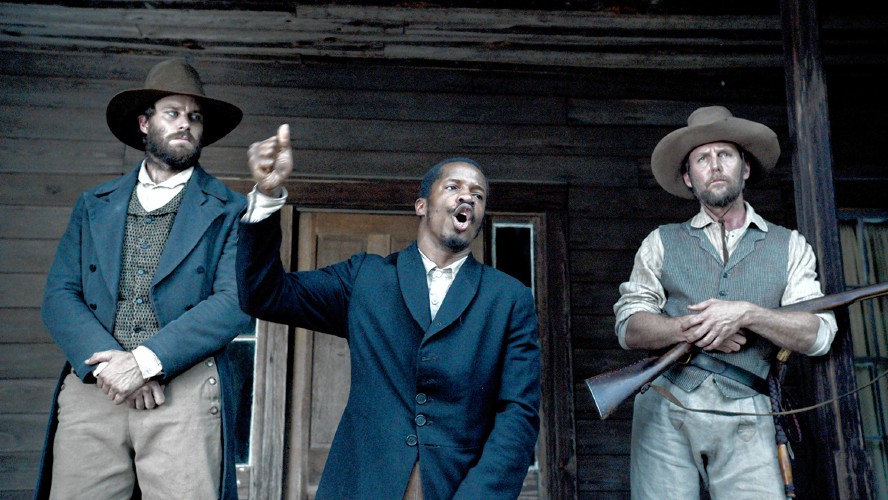
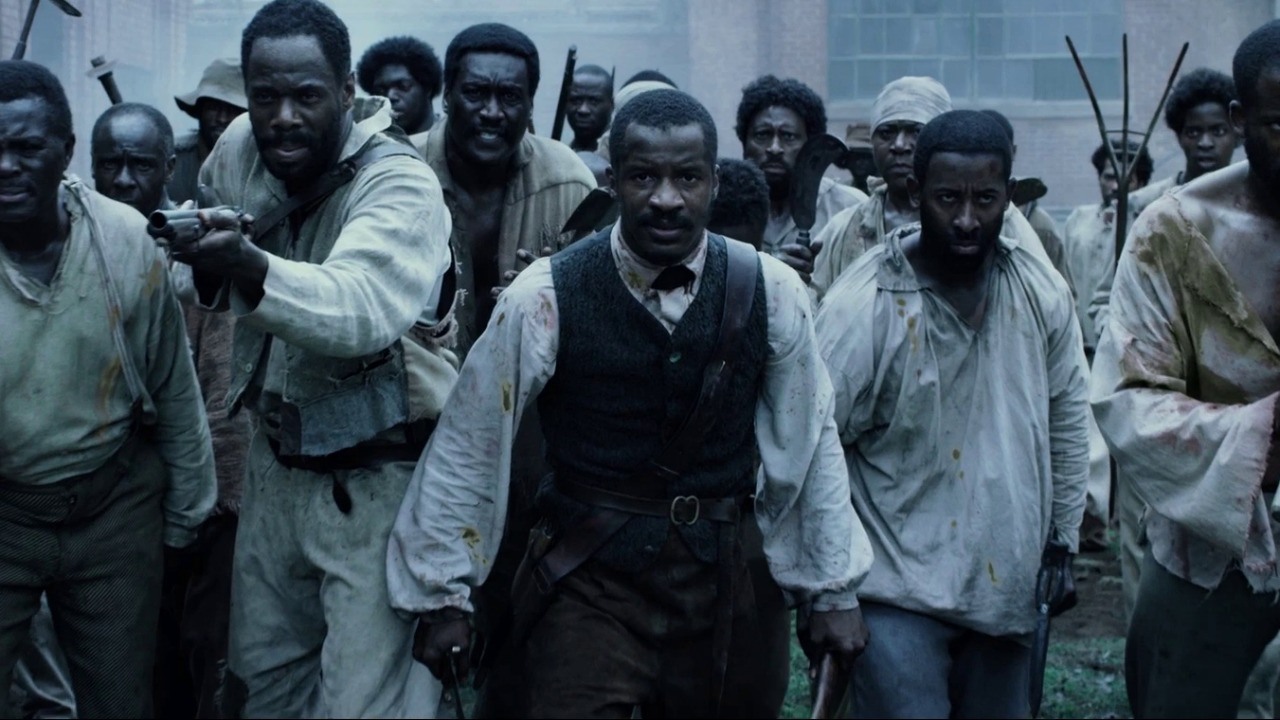
The Birth of a Nation reaches our screens trailing controversy and dismay by being an historical movie focusing on certain direct issues, but having to deal with other indirect issues as well (but more of these later). A retelling of the Southampton County, Virginia rebellion led by Nat Turner in 1831, in which a slave uprising started by Turner led to the deaths of around sixty-five white people – men, women and children – and over two hundred and fifty black people. Turner managed to recruit around seventy slaves and free men to his cause, but the rebellion was quashed after a couple of days. Turner avoided capture for over two months before he was discovered hiding in a field. He was convicted at trial and sentenced to be hanged.

Those are the bare bones of a tale that director/writer/actor Nate Parker has chosen to make into The Birth of a Nation. For anyone unaware of the Southampton County rebellion, this movie will likely prove illuminating on a basic level, but Parker has chosen to make his own version of the rebellion, ignoring certain facts and events in order to make a more dramatic movie (as if a rebellion wasn’t dramatic enough). So, this isn’t an historically accurate movie, it’s an interpretation of the events that took place in Southampton County up to and including the rebellion. It’s important to make this point, “up front” as it were, because in doing so, Parker has actually managed to make a movie that lacks the impact the rebellion must have had at the time.

34314359_max

We see Nat first as a child. He’s taken by his mother (Ellis) to a tribe of blacks living in the woods. They tell him that the birthmark he has means he’s destined to be a prophet. This sets the tone of the movie: that Nat will grow up into an adult whose destiny is to change… well, actually, we never know, because Parker never gets around to telling us. Of course, he’ll eventually fight for freedom and seek to overturn injustice, but as a young child he’s encouraged to read by his owner’s mother (Miller), and is treated with all appropriate fairness for the time and the place he’s a part of. Young Nat takes to the Bible, and from there we see him grow into a young man who is a credit to both himself and the family who remain his owners, and who are now embodied by his childhood friend, Samuel Turner (Hammer).

So for the best part of an hour, Nat is well respected and regarded by Samuel and everyone around him, and life is good, despite the obvious limitations such as needing a written pass to travel outside the grounds of the Turner estate, and being struck repeatedly for offering a kindness to a white woman. He gains a reputation as a preacher, persuades Samuel to purchase a young woman, Cherry (King), who later becomes his wife, and manages to avoid raising the ire of local slave catcher, Cobb (Haley). But although Nat is well aware of the position that he and his fellow slaves are in, and the various ways that things can go wrong for them all, he lacks any will to do anything about it.

It’s only when Nat is hired out as a preacher, and begins to see just how bad things are at other plantations, that he begins to rethink things. One particular incident, followed by the brutal assault of his wife by Cobb and his men, leads Nat to anger, and a desire for revenge against “the white man”. He gathers a number of other slaves, and they begin their rebellion by attacking Samuel and his household before heading to other parts of the county, killing indiscriminately as they go. It’s not long before they come face to face with Cobb and his men, and a fight to the death ensues. Nat manages to escape and goes into hiding.

FILM-HORNADAY

All this is pretty standard fare, with Parker portraying Turner as a man who turns his back on the society that’s treated him well enough until he begins to question that society more closely. Which actually makes the small matter of motivation a bit of a problem, because Parker the screenwriter doesn’t give Parker the actor anything to work with, other than a handful of Bible passages that he gets to deliver in an angry fashion, or, when he’s confronted by Cobb, as a defiant call to arms. Parker struggles in all departments to show us the anger and the passion behind Nat’s decision to rebel, or why he would descend so quickly and easily into violence. Yes, there’s the appalling treatment of slaves, yes, there’s the institutionalised racism of the times, and yes, there’s the personal injuries done to him and Cherry, but in Parker’s hands none of this adds up to Nat being the instigator of a rebellion. The change comes about too quickly, and as with many movies, this change appears to come about solely because the movie needs to move on.

Against other movies such as 12 Years a Slave (2013) or A House Divided: Denmark Vesey’s Rebellion (1982), The Birth of a Nation – a title that doesn’t mean anything in the context of what happens in the movie itself – is too restrained in its approach to be entirely effective. Aside from one very disturbing scene involving a slave being force fed, Parker keeps everything on an even dramatic keel, with plot and story developments coming along when required, and all played out in a way that keeps the viewer at a distance. The look and feel of the movie owes a lot to the style and structure of Roots (1977), but without that series’ attention to character, or its narrative drive. Here, by the time Nat gets around to starting his rebellion, the average viewer will be glad to have gotten through all the sub-par dramatics that have gone before, and will be looking forward to the movie gaining some forward momentum.

birththumb-1460743741317_1280w

Performance-wise, it’s Parker’s movie, with the likes of Hammer (subdued surliness), Boone Jr (straggle-haired insouciance), Miller (pained resignation), Haley (gnarly aggression), and King (unfaltering sweetness) reduced to minor roles, and having the barest amount of depth or characterisation to work with. But it’s also Parker’s movie in terms of direction, and here he’s found wanting. And like so many other directors working from their own scripts, he’s not able to find solutions to the problems that one provides for the other. There are jarring moments where continuity is derailed (one involving Samuel will have audiences shaking their heads in confusion), moments where the pace of the movie slows to a crawl, and moments where Parker’s inexperience as a director leaves the movie avoiding any complexity in the story he’s telling.

In the right hands, Nat Turner’s story could have been a powerful, impassioned examination of an event that had far-reaching effects on how slavery was regulated, and which could be said to have made things far worse for the slaves of the antebellum South. But for now we’ll have to make do with Nate Parker’s version of events, which strives to make a hero out of an ordinary man who advocated wholesale bloodshed as the drive for his rebellion, and who was found hiding in a hole covered by fence rails rather than nobly giving himself up as Parker shows here. And Parker, whose past has distracted too many people from focusing in the right direction, has made a movie that ultimately lacks cohesion, and in doing so, has possibly done a greater disservice to Turner’s legacy than anyone since those tumultuous days in Southampton County, Virginia.

Rating: 4/10 – a broad, uninspired approach to an important moment in black history, The Birth of a Nation lacks finesse, complexity, and energy; Parker’s attempts at multi-tasking do the movie no favours, and there’s a stale air of tiredness about the whole thing that transmits itself to the viewer, all of which makes the movie a bit of a chore to sit through.

Share this:

  • Share on X (Opens in new window) X
  • Share on Facebook (Opens in new window) Facebook
  • More
  • Print (Opens in new window) Print
  • Email a link to a friend (Opens in new window) Email
Like Loading...

Bleed for This (2016)

09 Friday Dec 2016

Posted by dullwood68 in Movies

≈ Leave a comment

Tags

Aaron Eckhart, Ben Younger, Boxing, Car accident, Ciarán Hinds, Drama, Halo, Miles Teller, Review, Sport, True story, Vinny Pazienza

bleed-for-this-poster

D: Ben Younger / 117m

Cast: Miles Teller, Aaron Eckhart, Katey Sagal, Ciarán Hinds, Ted Levine, Jordan Gelber, Amanda Clayton, Daniel Sauli, Peter Quillin, Jean Pierre Augustin, Edwin Rodriguez

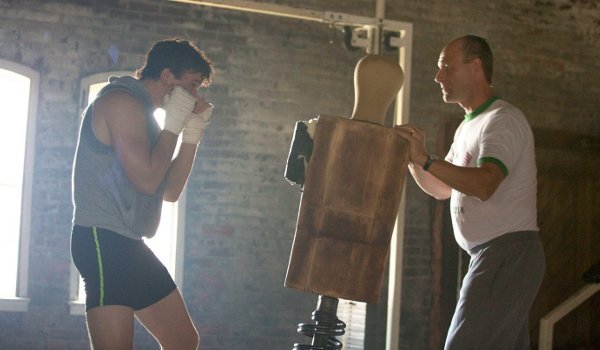
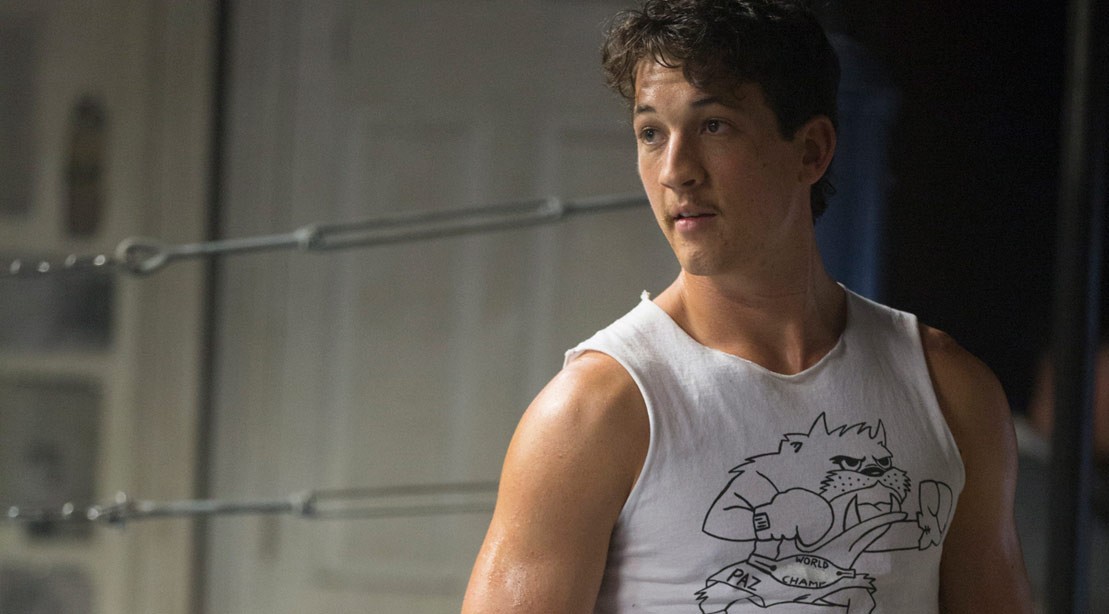
True stories from the world of sport always aim for the inspirational, to show an individual or a team face up to and defeat the odds (which are often stacked against them). There’s room for self-doubt, absolutely there is, and there’s room for the odd setback or stumble along the way to – usually – championship glory, the miracle comeback, or both. Bleed for This, the true story of boxer Vinny Pazienza (Teller), is a movie that includes a miracle comeback and championship glory. As such it should be a powerful, gripping feelgood story that grabs the audience’s attention and sympathies from the start, and then puts them through the same emotional wringer that the main character(s) went through. Well, the key phrase is “it should be”. Bleed for This, however, looks and sounds as if it doesn’t know what an emotional wringer is, let alone be able to put an audience through it.

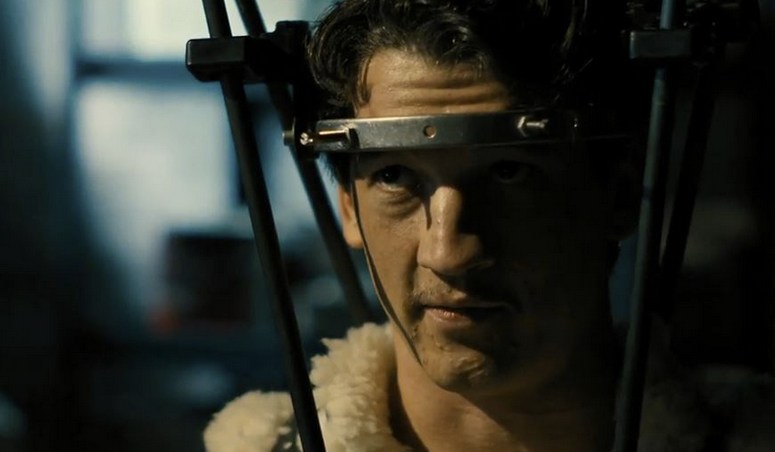
The problem here is that, prior to the car accident that saw Vinny Pazienza suffer a broken neck (which could have meant his not walking ever again, let alone boxing), and way before he decided he was going to ignore doctor’s orders and work out while still wearing the halo that allowed his neck to heal normally, the boxer’s life wasn’t one that warranted a movie being made about it. He’d had a relatively successful career early on as a lightweight, but fighting at junior welterweight he found himself on a title losing streak. He moved up to junior middleweight, and began winning again, culminating in winning WBA World Jr. Middleweight Championship against Gilbert Dele. But then came that fateful car accident, and four steel screws in his head.

bleed-for-this-pic5

Now, Pazienza’s life becomes interesting, now it becomes the kind of story that the movies would be interested in telling. And so, twenty-five years after that career-threatening injury, we have Bleed for This, the true(-ish) story of Vinny Pazienza’s recovery and return to the ring. It has all the hallmarks of a traditional tale of triumph over adversity, of how one man overcame tremendous physical trauma to continue doing the one thing that gives his life meaning. But as you watch the movie, as you see Vinny Pazienza’s story unfold, there’s one thing you’ll be asking yourself: namely, where’s the passion?

For, despite the drama and the incredible journey Pazienza took getting back into the ring, the movie version of that journey is about as exciting as watching the man train for two hours. Somewhere along the way, writer/director Ben Younger did something unforgivable: he forgot the passion. Sure there are times when Pazienza gets angry, but he’s also determined, sour, happy, uncertain, and resentful in equal measure. He experiences all the emotions you’d expect someone to experience in these circumstances, but the movie doesn’t allow any one of those emotions to have more screen time than the others, or to appear to have had any more effect on him. In essence, it’s all too neat.

bleed-for-this-film-miles-teller-the-new-terminator

Bleed for This is a movie that signposts a tremendous struggle ahead, as Pazienza begins working out in the basement of his parents’ home. Aided by his trainer, Kevin Rooney (Eckhart), Pazienza lifts weights, regains definition (and the small degree of self-respect the script allowed him to lose after the accident), and shocks everybody with his progress. At least, he would shock everybody, but Younger approaches this section of the movie as if it were nothing more than a necessary bridge between the Dele fight and the eventual showdown with Roberto Duran (which wasn’t his first fight after the accident, that was with Luis Santana). There’s roughly a year between the accident and the comeback fight, but you wouldn’t know it thanks to Younger. It feels like a much shorter period because Younger’s impatient to get Pazienza back in the ring, to get to that miracle moment he believes the audience is waiting for. He also can’t resist throwing in a bit of family drama, with Pazienza’s father (Hinds) suddenly revealing a sense of guilt for pushing his son too hard earlier in his career.

There are other times where the basic story gets padded out with superfluous moments that add little or nothing to the main narrative. It’s established from the very first shot of Rooney that he’s an alcoholic. But it keeps cropping up, and never goes anywhere; even when he’s arrested for attempted drunk driving, there’s no fallout or consequence to it. Where some movies would use this as an excuse to remove him from the corner for the big fight, thereby adding extra pressure on the fighter etc. etc., here it’s just padding, and flimsy, unnecessary padding at that. And then there’s the background machinations of fight promoters the Duva’s (Levine, Gelber), who are regularly accused of putting their interests ahead of Pazienza’s, as if the notion that they’re self-serving fight promoters has come completely out of left field (apologies for the mixed sports metaphor).

miles-teller-vinny-pazienza-bleed-for-this

But if that wasn’t enough, if the pedestrian plotting, and the stale characters, and the excessive padding, just weren’t enough to make the movie difficult enough to enjoy already, Younger executes the coup de grace by fumbling the fights themselves. A mess of choppy editing, awkward camera angles, tight close ups, and fragmented jabs and blows, the fights do all they can to hide the fact that Teller can’t box. Maybe he didn’t have enough prep time to look convincing, maybe he was hired for his acting ability and not his ability to throw a punch – either way, Teller isn’t going to be heralded for showing off his “skills” in the squared circle.

As for the performances, Teller is hampered by the restraint Younger shows in his script, and several of the more dramatic moments in the movie show Teller in a good light, but it’s in the sense that he’s realised he’s only going to get so many opportunities to really shine. Eckhart is stuck with the worst receding hairline since Richard Attenborough in 10 Rillington Place (1971), while Sagal and Hinds do their best with characters who are two steps removed from being Italian-American parental stereotypes.

There is a decent, emotionally gripping drama to be made from Vinny Pazienza’s comeback against the odds, but Bleed for This really isn’t it. It’s professionally made, and technically at least, doesn’t fault, but the way in which the story has been told is less than successful. Younger neutralises the drama that occurs outside the ring, and in doing so, fails to recognise that in this case, that’s where the drama ultimately lies. And by doing that he lets down his talented cast, the audience, and the man who went through all of it – and who now gets to see a movie about him that can’t focus on him properly, or present effectively the struggle he went through to be worthy of a movie about his life.

Rating: 5/10 – with Bleed for This lacking a cohesive screenplay and a real sense of its main character’s determination not to give up (which scares him because it’s too easy), this is one biopic that lets everyone down; it also lacks flair, and a sense of urgency, and only impresses thanks to Larkin Seiple’s gloomy, shadow-filled cinematography (a surprisingly good fit for the material), and a robust sound mix that at least makes the fight sequences feel more aggressive than we can actually make out.

Share this:

  • Share on X (Opens in new window) X
  • Share on Facebook (Opens in new window) Facebook
  • More
  • Print (Opens in new window) Print
  • Email a link to a friend (Opens in new window) Email
Like Loading...

Sully (2016)

04 Sunday Dec 2016

Posted by dullwood68 in Movies

≈ 3 Comments

Tags

Aaron Eckhart, Airbus A320, Bird strike, Chesley Sullenberger, Clint Eastwood, Flight 1549, Hudson River, Laura Linney, NTSB, Pilot, Tom Hanks, True story

cmizrmkukaas8-9

aka Sully: Miracle on the Hudson

D: Clint Eastwood / 96m

Cast: Tom Hanks, Aaron Eckhart, Laura Linney, Mike O’Malley, Jamey Sheridan, Anna Gunn, Holt McCallany, Ann Cusack, Molly Hagan, Jane Gabbert, Sam Huntington, Michael Rapaport

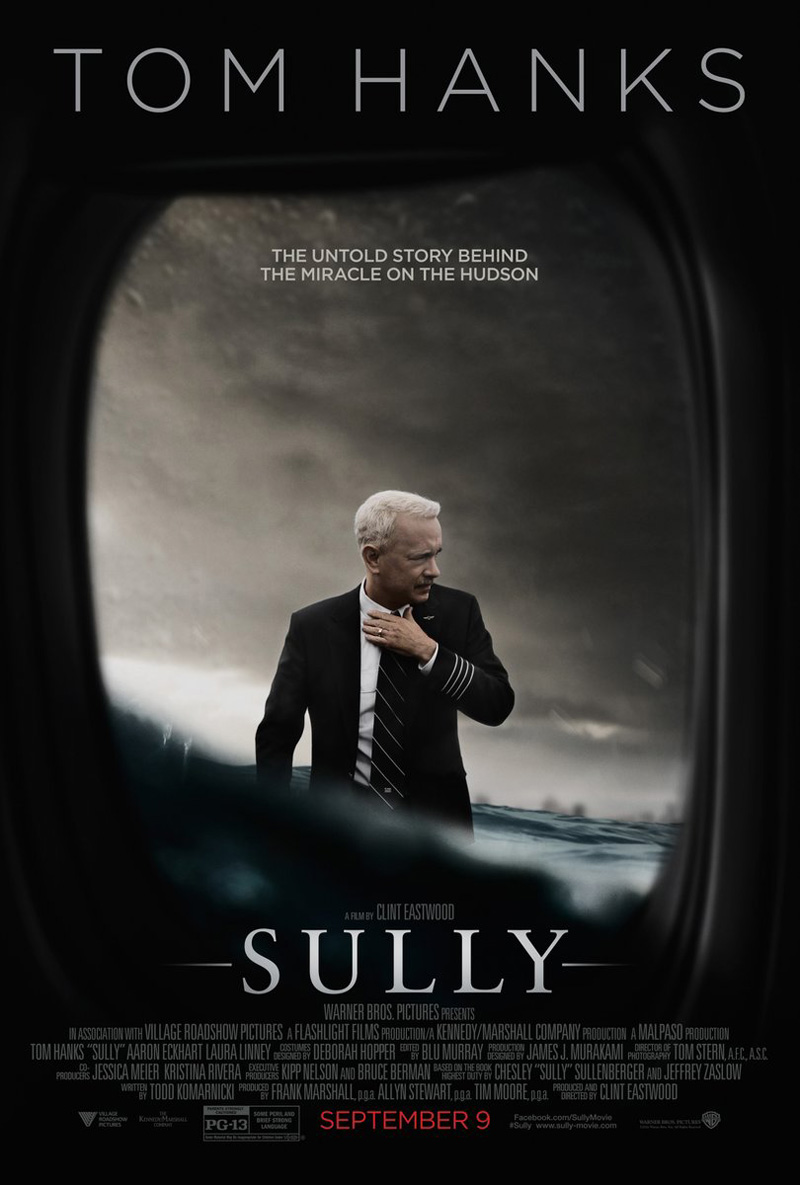
On 15 January 2009, US Airways Flight 1549 from LaGuardia, New York to Charlotte, North Carolina, suffered a catastrophic bird strike that left both engines disabled. It had been in the air for approximately three minutes, and its pilot, Captain Chesley Sullenberger (Hanks) had to make a decision: to turn back and attempt an emergency landing at either LaGuardia or nearby Teterboro Airport, or make a forced water landing on the Hudson River. Sullenberger was certain he wouldn’t make it back to either airport and so adopted the latter option. With one hundred and fifty-five people on board, it was a manoeuvre that could have ended in tragedy, but thanks to Sullenberger’s forty year-plus experience, he was able to land the plane safely. And with the emergency services and local commercial vessels quickly on the scene, the passengers and crew were rescued in under twenty-five minutes. Later, a representative of the National Transportation Safety Board (NTSB) said that it “has to go down [as] the most successful ditching in aviation history.”

Such an event was always likely to be transferred to the big screen, and in the hands of veteran director Clint Eastwood, the story of Chesley Sullenberger and Flight 1549 has been granted a sober re-telling that suits both the man and the nature of the landing. On the surface, Sully is a movie that seems far removed from the intensity and heightened emotion of the event itself, as much of what occurs is played out against a wintry visual patina in keeping with the time the forced landing took place. But like Sullenberger himself, Eastwood – in terms of directing – has over forty years’ experience behind him, and in bringing Todd Karmanicki’s script to the screen he adopts a straitlaced, measured approach to the material that avoids any possibility of sensationalism or unnecessary hyperbole.

usp-fp-0102r

This is important because while the story of Flight 1549 is one of heroism on an unprecedented level – as Sully himself says at one point: “Everything is unprecedented until it happens for the first time” – the forced water landing isn’t the focus of the movie, even though we see it from two different perspectives. The focus is Sullenberger himself, a self-contained, humble man who found himself questioning his actions in the wake of the forced landing. It may seem counter-intuitive to examine the mindset of a hero suffering doubts in the aftermath of the very act that defines them as a hero, but it’s what makes Sully a much more rewarding experience than you might expect.

This decision is aided immeasurably by Hanks’s performance as Sullenberger. Anyone who’s seen Captain Phillips (2013) should remember the final scene where Phillips is being tended to by a navy medic, and the shock of what he’s been through begins to hit home. It’s a bravura moment, with Hanks’ expression telling you everything you need to know about how he’s feeling. He does the same here, brilliantly revealing the tremendous doubts Sullenberger experiences immediately following the landing and later during the NTSB investigation. As he imagines what could have happened, such as the plane crashing into the centre of Manhattan, Hanks is completely convincing as a man whose instinctive response to impending disaster saved the lives of so many. As he struggles to accept his own role in the forced landing, and what it means not just for himself and everyone else aboard, but for a wider public for whom plane crashes in New York have a whole different meaning, Hanks ensures that Sullenberger’s humility and humanity remain to the fore throughout. This is a man who wouldn’t rest until he knew everyone on board was safe and alive.

thumbnail_24608

Hanks’ performance anchors the movie in a way that allows the script to explore the complex relationship between a man and his view of himself in exceptional circumstances. The actor adequately portrays the effect of the enormity of what happened on Sullenberger, and the lingering, pessimistic anxiety that threatened to undermine his self-confidence. For the purpose of the movie, that anxiety is allowed to overshadow his heroism, and through the one-sided machinations of the NTSB investigation, to be brought into question. But while Sullenberger’s heroism is never in any doubt, the NTSB investigation reveals a tactless insincerity about the nature of corporate responsibility, as it puts more faith in computer simulations that say the plane could have landed safely at LaGuardia, than the experience and knowledge of one of the best pilots around.

This is not the script or the movie’s finest hour. Demonising the Board and its representatives is the movie’s one truly sour note, a decision no doubt arrived at to offset a perceived lack of drama elsewhere. In these instances, there aren’t any bad guys, but Karmanicki ensures that the Board in this movie are emotionally hostile, professionally obtuse, and working to an unspecified agenda. It’s like watching a McCarthy hearing all over again, and Eastwood doesn’t make any attempt to downplay the Board members’ hostility to Sullenberger and his co-pilot, Jeff Skiles (Eckhart), until the error of the Board’s ways can be confirmed once and for all as both unrealistic and a poor narrative choice.

sully_imax_trailer

Hanks aside, this isn’t a movie where the performances are required to be more than perfunctory, although Linney as Sullenberger’s wife, Lorraine, is memorable thanks to the odd cadence of her portrayal and an underlying, yet unconfirmed, sense that all isn’t well in their marriage. As Skiles, Eckhart sports a moustache that seems to have been flown in from the Seventies, while the three-headed “monster” that is the Board (O’Malley, Sheridan and Gunn) is treated so unfairly – and so at odds with what really happened – that all three border on caricature, an unfortunate choice that doesn’t do the movie any dramatic favours.

The movie concludes with Sullenberger achieving a victory over the Board that allows for a moment of narrative grandstanding, and which is at odds with Sullenberger’s introspective nature. It also appears to offer a feelgood moment when the feelgood moment of the movie has already passed: the moment when it’s confirmed that everyone got off the plane and everyone has survived. But Eastwood uses these moments to highlight just how much of a big deal Sullenberger’s actions actually were. And why shouldn’t he be feted and applauded? To everyone outside the Board, he’s a bona fide hero, doubts and all. He’s an heroic individual, and the movies love those kind of characters (possibly) above all else. And they love them even more if they don’t automatically embrace that heroism.

Rating: 7/10 – memorable more for its examination of a man uncomfortable with the notion of being a hero than the actions that gained him that title, Sully is a muted drama that never quite “soars” in the way that audiences may expect, but which hits home in several unexpected ways instead; bolstered by a terrific, awards-worthy performance from Hanks, this is a quietly impressive movie that benefits from not embracing the standard tropes of the “hero” drama, and proves surprisingly rewarding as a result.

Share this:

  • Share on X (Opens in new window) X
  • Share on Facebook (Opens in new window) Facebook
  • More
  • Print (Opens in new window) Print
  • Email a link to a friend (Opens in new window) Email
Like Loading...

Snowden (2016)

27 Sunday Nov 2016

Posted by dullwood68 in Movies

≈ 3 Comments

Tags

CIA, Drama, Eavesdropping, Edward Snowden, Hong Kong, Joseph-Gordon-Levitt, Laura Poitras, Melissa Leo, NSA, Oliver Stone, Review, Rhys Ifans, Shailene Woodley, Thriller, Tom Wilkinson, True story, Whistleblower, Zachary Quinto

snowden-movie-2016-poster

D: Oliver Stone / 134m

Cast: Joseph Gordon-Levitt, Shailene Woodley, Rhys Ifans, Melissa Leo, Zachary Quinto, Tom Wilkinson, Joely Richardson, Timothy Olyphant, Ben Schnetzer, Scott Eastwood, Lakeith Stanfield, Logan Marshall-Green, Ben Chaplin, Nicolas Cage

By now, most of us have heard of Edward Joseph Snowden (Gordon-Levitt), the NSA whistleblower who revealed the extent of the US’s surveillance programme both at home and abroad. In June 2013, Snowden flew to Hong Kong to meet with documentary movie maker Laura Poitras (Leo), and Guardian journalists Glenn Greenwald (Quinto) and Ewen MacAskill (Wilkinson). There, at the Hotel Mira, Snowden explained his reasons for disclosing the documents he appropriated from NSA data banks, and why he felt that the extent of the US’s “eavesdropping” was both inappropriate and damaging to the integrity of the US and its intelligence-gathering agencies. Following the publication of the files Snowden provided, he was charged with offences under the 1917 Espionage Act*, and though he tried to reach South America via Russia and Cuba, his passport was revoked while he was en route to Russia, and he was forced to remain in the transit area of Moscow’s Sheremetyevo Airport. And Moscow – though not the airport – has been his home ever since.

Snowden’s story is one that seems tailor-made for an Oliver Stone movie. Anyone who’s seen his documentary series The Untold History of the United States (2012-13), or read the accompanying book, will know that Stone is largely unimpressed with the way in which his country has become a land run by self-serving neo-conservatives for whom “by any means necessary” is a proud motto. And while you could argue that this has been the status quo in America for a lot longer than the last fifty years, what is without doubt is the extent to which the intelligence agencies have abused their remits post-911 to eavesdrop not just on suspected terrorists but everyone. But with all this now out in the open, and Snowden’s place in history assured – and already explored in Laura Poitras’s excellent, Oscar-winning documentary CITIZENFOUR (2014) – what is there left for Stone to bring to the screen that hasn’t already been explored? Unfortunately, the answer is not much.

snowden_movie_review_002-1200x675-c

Watching Snowden is a somewhat dispiriting experience. Stone does what he does best over two and a quarter hours: exposing the clandestine activities of several branches of the US government, highlighting the insidious effects these activities are having on an individual’s human rights, and revealing how those same human rights aren’t even protected by the courts (who seem to be bypassed at every opportunity). But Stone’s usual passion and sense of outrage seems to be muted here. This is like watching a movie made by someone who’s intellectually aggrieved by what the NSA has been up to, but doesn’t quite feel the need to get emotional about it as well. This is Oliver Stone in restrained, almost reflective mode – and it doesn’t feel right.

What all this means is that Snowden feels like objective reportage for much of its running time, with scenes placed and set up to impart relevant information, allowing Stone and co-screenwriter Kieran Fitzgerald to give audiences all they need to know about Snowden himself and the secret world he was a part of. But it’s this matter-of-fact way in which Stone has decided to present both the man and that world that curtails any tension, and thereby lessens the drama. The scene where Snowden downloads a mass of files right from the heart of the NSA’s base in Hawaii, a scene that many directors could have made into a nerve-shredding exercise in trepidation and anxiety, lacks all those elements and plays out with a minimum of fuss and bother.

snowdenshailenejosephgordonlevitt

Watching as Snowden becomes increasingly aware of the extent of his country’s malfeasance – and the ways in which he’s unwittingly contributed to that malfeasance – Stone shows Snowden’s baffled disbelief, and his somewhat naïve demeanour, but there’s a distance between the viewer and the beleaguered whistleblower that stops any real sympathy or connection from forming. As Joseph Gordon-Levitt goes about the process of making Snowden’s initial commitment to the NSA appear noble and necessary, he can’t quite overcome a lack of personality that keeps the man from registering as more than a name most people will recognise, but few outside the US will truly care about. This is partly due to the script, which, instead of showing the man behind the name through his commitment to the truth, attempts to do so through his relationship with his girlfriend, Lindsay Mills (Woodley). Would that these scenes had more of an impact, but there’s a pedantic, going-through-the-motions feel to them that Stone can’t quite shake off. There are times where they also border on soap opera, as Mills’s frustration with Snowden’s work leads to several moments where she invokes the whole “it’s me or the job” ultimatum.

Elsewhere, the movie plods along, only occasionally engaging with the material in a way that appears earnest or committed, but doing enough to keep interested viewers interested, while not doing enough to keep viewers new to Snowden’s story on board for the duration. It’s not that Stone is doing anything particularly wrong – he still has a strong visual sense (bolstered by crisp, insistent cinematography from Anthony Dod Mantle), and the movie is expertly edited by Alex Marquez and Lee Percy – but somewhere along the way, any sense of urgency about the subject and its ramifications seems to have been lost. Perhaps it’s due to the time that’s passed since Snowden blew the whistle; in today’s need-to-know-now society is his story relevant anymore?

19543332_303

There are good performances all round, but mostly amongst the supporting turns, with Ifans a standout as Snowden’s mentor and über-spook Corbin O’Brien. Its also good to see Nicolas Cage, albeit in a minor role, deliver the kind of performance that we know he’s capable of. Spare a thought though for the trio of Leo, Quinto and Wilkinson, stranded in a hotel room in Hong Kong and not really given much to do except listen and look amazed/appalled/astounded as appropriate (it makes the scene where Greenwald barks orders at his editor (Richardson) all the more striking – and out of place). Woodley is hamstrung by a role that requires her to be unsupportive and selfish for the most part, and which is left hanging by a script that doesn’t explain why she’s now living with Snowden in Moscow. And as Snowden, Gordon-Levitt gives a diffident, constrained portrayal of a man who made a momentous personal and professional decision, and the actor carries the gravitas of that with aplomb. If only he didn’t sound like Keanu Reeves…

Rating: 6/10 – Stone adds another American life to his list of movie subjects, but in doing so seems more like a director for hire than the tirelessly challenging agent provocateur he usually is; what hampers Snowden is a sense that its story is no longer important, and that the movie is aware of this, which stops it from being the impassioned, thought-provoking movie it should be.


*The 1917 Espionage Act is a particularly apt (and predictable) piece of legislation for Snowden to be charged under. Such is the loose nature of the Act, if Snowden were to return to the US and be put on trial, he wouldn’t be able to use any information relating to the offence as evidence that he wasn’t guilty; because of the nature of the information he released, it would still be regarded as classified and therefore not admissible, and the jury wouldn’t be privy to it. And that’s without the cost of the defense itself: anywhere between $1 million and $3 million.

Share this:

  • Share on X (Opens in new window) X
  • Share on Facebook (Opens in new window) Facebook
  • More
  • Print (Opens in new window) Print
  • Email a link to a friend (Opens in new window) Email
Like Loading...

Trailers – Claire in Motion (2016), The Comedian (2016) and The Zookeeper’s Wife (2017)

25 Friday Nov 2016

Posted by dullwood68 in Movies

≈ Leave a comment

Tags

Betsy Brandt, Comedy, Drama, Jessica Chastain, Previews, Robert De Niro, Trailers, True story

In Claire in Motion, the titular character finds her orderly world turned upside down when her husband disappears. What follows – at least as far as the trailer goes – is a search that takes some unexpected twists and turns, and which further undermines Claire’s sense of her marriage and her life. Featuring a breakout performance from Breaking Bad‘s Betsy Brandt, Claire in Motion is the creation of writing and directing team Annie J. Howell and Lisa Robinson, and looks like a strong, compelling mix of mystery thriller and a woman’s emotional struggle to make sense of what’s happened, that takes a well-worn storyline and does something unexpected with it. Will the husband be missing out of choice, or will there be a more sinister reason for his disappearance? What looks certain is that the answer won’t be as straightforward as might be expected.


De Niro’s third movie of 2016 – after Dirty Grandpa and Hands of Stone – The Comedian sees him playing Jackie Burke, an aging comic who’s performance style is somewhat “confrontational”. A burgeoning relationship with Leslie Mann’s charity worker sets the character off on a journey of personal reassessment, but along the way he still finds time to be obnoxious and insulting – which isn’t surprising as his stand-up routines were written by Jeffrey Ross. The movie has had several ups and downs on its way to our screens (director Taylor Hackford was preceeded by Martin Scorsese, Sean Penn, and Mike Newell, while Mann was third choice after Kristen Wiig and Jennifer Aniston), so it remains to be seen if it can maintain a “straight face” away from the moments where Burke indulges in his penchant for derogatory remarks and non-PC attitude.


Based on a true tale of wartime heroism, The Zookeeper’s Wife tells the story of Antonina Zabinska and her husband Jan Zabinski (Jessica Chastain, Johan Heldenbergh) who not only saved hundreds of animals from the Warsaw Zoo – where they lived and worked – but also hundreds of people fleeing from Nazi persecution. It’s a movie with some arresting imagery (wild animals prowling the streets of ghetto-ised Warsaw), a script adapted from the book by Diane Ackerman (itself based on the unpublished diaries of Antonina Zabinska), and all overseen by Niki Caro, the director of Whale Rider (2002) and North Country (2005). It all looks promising enough then, and with Daniel Brühl’s Nazi officer no doubt making things difficult, it remains to be seen if the movie adopts a typically polished approach to the Zabinskis’ story, or aims to be more gritty and realistic.

Share this:

  • Share on X (Opens in new window) X
  • Share on Facebook (Opens in new window) Facebook
  • More
  • Print (Opens in new window) Print
  • Email a link to a friend (Opens in new window) Email
Like Loading...

Mike and Dave Need Wedding Dates (2016)

22 Tuesday Nov 2016

Posted by dullwood68 in Movies

≈ Leave a comment

Tags

Adam Devine, Anna Kendrick, Aubrey Plaza, Brothers, Comedy, Craigslist, Hawaii, Jake Szymanski, Review, True story, Wedding, Zac Efron

mike-dave-need-wedding-dates-poster

D: Jake Szymanski / 98m

Cast: Zac Efron, Anna Kendrick, Adam Devine, Aubrey Plaza, Stephen Root, Stephanie Faracy, Sugar Lyn Beard, Sam Richardson, Alice Wetterlund, Mary Holland, Kumail Nanjiani, Jake Johnson

The Stangle brothers – Mike (Devine) and Dave (Efron) – are party animals who consistently disrupt and ruin any and all family occasions. Their parents (Root, Faracy) are fed up with their antics and provide them with an ultimatum: for their sister, Jeanie’s (Beard) upcoming wedding in Hawaii, the brothers have to bring dates with them, dates who will stop them from trying to impress all the single women there and causing chaos in the process. For two young men in their twenties, finding “nice girls” proves to be a bit of a challenge. So what’s the obvious answer? Easy – put an advert on Craigslist offering an all-expenses-paid trip to Hawaii for the two lucky women who are suitable companions.

Unsurprisingly, the vetting process isn’t as speedy as the brothers would like, and it’s not until they go on The Wendy Williams Show that best friends and equally riotous party girls Alice (Kendrick) and Tatiana (Plaza) take an interest in the offer, and decide that they are the perfect candidates for the “job”. They meet Mike and Dave, pretend to be a hedge fund manager and teacher respectively, and find that their machinations have done the trick: they’re off to Hawaii.

mike-and-dave-need-wedding-dates-2

The brothers’ parents, and everyone else for that matter, are impressed with their choice of partners. But as the stay continues, Alice and Tatiana’s true characters begin to express themselves. Tatiana refuses to have anything to do with a clearly infatuated Mike, while Alice begins a tentative relationship with Dave. They do their best to have a good time, while Mike and Dave do their best to behave themselves. But an unscheduled quad biking trip through Jurassic Park country finds Jeanie the victim of Mike’s carelessness, and suffering facial injuries that threaten her wedding day. Add to the mix a conniving cousin (Wetterlund), a massage therapist (Nanjiani) with a very “personal” touch, a groom considered by the bride to be boring, and increasing divisions between Mike and Dave, and there’s very little chance that their sister’s wedding is going to go ahead as planned. Far from it, in fact…

By now we should be used to the idea that women can be just as non-PC and crude as their male counterparts, and it’s an idea that Mike and Dave Need Wedding Dates clings onto with all its might. In fact, it clings onto the idea as if it were the only idea it could have. Even when it becomes clear that Alice and Dave are falling in love – and therefore it’s only a matter of time before the same happens to Tatiana and Mike – the movie wants to have its cake and eat it by trying to convince the audience that any redemption will be short-lived. But we’ve all been here way too many times for such a clumsy notion to work, and by the movie’s end, Mike and Dave and Alice and Tatiana are no longer the rough diamonds we’ve been encouraged to cheer on from the start, but polished individuals with an improved sense of propriety, and heading for a life of domesticated bliss.

mike_and_dave

It’s a well-worn road to Damascus that these characters take, and that familiarity breeds an acceptance that the script, by Andrew Jay Cohen and Brendan O’Brien, won’t try to do anything different in its closing stages. With examples of gross-out humour proving unforthcoming, the movie falls back on a handful (literally, in one scene) of sex jokes, and a short sequence where Alice and Jeanie get high on E’s. Elsewhere, Devine yells and shouts and makes agonised faces, while Efron adopts a strained, perpexed expression throughout, as if he’s read the script, passed on it, and is completely amazed that he’s actually making the movie after all. And Kendrick does what Kendrick does, not best, but all the time: plays Alice in the same perky, quirky way she plays all her other roles, from Martha in Mr. Right (2015) to Dana in The Accountant (2016). (Is there no beginning to her talent as an actress?)

Thankfully, there’s respite from all the stillborn humour and desperate attempts to instill laughter, and it comes in the form of Aubrey Plaza. Plaza has an uncanny ability to appear bored and engaged at the same time, and this apparent displacement allows her to give a performance that keeps the viewer on their toes; you’re never sure just what she’s going to say or do next. All you can be sure of is that the combination of her expressions and the way she delivers her dialogue won’t be as telegraphed or predictable as that of her co-stars. Plaza isn’t afraid to take risks in her performances, and it’s this that makes her so interesting to watch.

thumbnail_24385

With the movie proving entirely lacklustre, and relying on the kind of contrived set ups so familiar from a dozen or more similar movies – it even references Wedding Crashers (2005), a movie that makes this movie look like it was put together by people who haven’t actually seen Wedding Crashers – all the viewer can do is hope that it’ll all be over sooner rather than later. In the director’s chair, Szymanski makes his feature debut after years of writing and directing video shorts with titles such as Bat Fight With Will Ferrell and Denise Richards’ Funbags (both 2009), and makes a decent enough fist of things but can’t make it all flow together in a way that would make it more palatable. And with the performances being so wayward – Efron seems to be in a different movie from everyone else (maybe he was still wishing he was), Wetterlund sets back the cause of credible lesbian performances by about a thousand years – it’s a movie that doesn’t even do justice to its Hawaiian locations.

Rating: 4/10 – despite being based on a true story (two brothers really did advertise for wedding dates on Craigslist), Mike and Dave Need Wedding Dates takes the basic idea and doesn’t come up with anything it can run with; unfunny for long stretches, the movie lurches from one dispiriting confrontation to another without ever stopping to think if what it’s doing is actually working – which it isn’t.

Share this:

  • Share on X (Opens in new window) X
  • Share on Facebook (Opens in new window) Facebook
  • More
  • Print (Opens in new window) Print
  • Email a link to a friend (Opens in new window) Email
Like Loading...

Mini-Review: Deepwater Horizon (2016)

21 Monday Nov 2016

Posted by dullwood68 in Movies

≈ 2 Comments

Tags

BP, Disaster, Drama, Gina Rodriguez, Gulf of Mexico, John Malkovich, Kate Hudson, Kurt Russell, Mark Wahlberg, Mike Williams, Oil rig, Peter Berg, Review, Thriller, True story

cpbdmd7wgaafqfs-1-jpg-large

D: Peter Berg / 107m

Cast: Mark Wahlberg, Kurt Russell, John Malkovich, Gina Rodriguez, Kate Hudson, Ethan Suplee, Dylan O’Brien

Arriving at the Deepwater Horizon oil rig site in the Gulf of Mexico to learn that certain safety checks haven’t been carried out, general operational supervisor “Mr Jimmy” Harrell (Russell) and chief electrical engineer Mike Williams (Wahlberg) find themselves at odds with BP executive Donald Vidrine (Malkovich) who is advocating that drilling continue despite the absence of these checks. With many more of the crew of the rig expressing their concerns, Vidrine pulls rank and the drilling resumes. Pressure begins to build in the pipeline, and further signs point to a dramatic, and likely, system failure. When it does, a massive blowout ensues, and the resulting explosion causes tremendous damage to the rig, threatening the lives of everyone on it.

As fires rage all around them, the workers’ attempt to evacuate the rig. Williams finds himself rescuing several of his colleagues, including “Mr Jimmy” who has been badly injured. With the Coast Guard racing to the rescue, and with no guarantee that the fires won’t cause the rig to sink, Williams et al must rely on their own ingenuity in order to get to safety, while the world looks on at what will become the worst environmental disaster in US history.

deepwater-horizon-mark

Watching Deepwater Horizon‘s first forty minutes, with its depictions of bubbling air pockets within the drill shaft, and the pipe itself shifting in protest against the pressure being exerted on it, it’s not hard to find a degree of anxiety about what’s going to happen creep up on you. It’s during this stretch that director Berg, aided by editors Gabriel Fleming and Colby Parker Jr, ratchets up the tension as he sets the scene for what we all know will be a nightmarish tale of survival. He also does a good job of introducing the main characters – along with principal supporting character, “Mr Jimmy”‘s moustache – and making us care about them. But once the oil hits the fan and fire takes a hold of the rig, the movie takes a strange left turn and becomes a standard men-in-peril movie where it’s hard to distinguish who’s doing what, where and how.

Inevitably, the movie regales us with moments of sacrifice, heroism and incredible fortitude, but it also features various stock elements, such as Hudson’s anxious wife stuck at home watching it all unfold on TV, and Malkovich’s suitably oleaginous BP executive looking sheepish as he gets in a lifeboat. While it’s easy to see why Berg has included these moments, it’s the way in which they help dissipate the tension established earlier on that proves problematical. It’s equally unhelpful that despite all the pyrotechnics and practical effects on display, Deepwater Horizon feels at times like an extreme, sea-based version of The Towering Inferno (1974). It makes for a distracting viewing experience (even if it wasn’t Berg’s intention). That said, the performances are uniformly good (though Malkovich’s accent is distracting), and the script manages to avoid too much foreshadowing (e.g. “I can’t wait to get home and see my newborn child”, from someone who’s clearly going to snuff it).

Rating: 7/10 – curiously uninvolving once things go from bad to staggeringly worse, Deepwater Horizon is a visually impressive retelling of an incident that BP would probably like to forget about completely; but spectacle without a human element to guide us through it is just that, spectacle, and the movie never finds an answer to the way in which it shifts down a gear after such an effective opening.

Share this:

  • Share on X (Opens in new window) X
  • Share on Facebook (Opens in new window) Facebook
  • More
  • Print (Opens in new window) Print
  • Email a link to a friend (Opens in new window) Email
Like Loading...

Mini-Review: The Late Bloomer (2016)

28 Friday Oct 2016

Posted by dullwood68 in Movies

≈ Leave a comment

Tags

Brittany Snow, Comedy, J.K. Simmons, Johnny Simmons, Kevin Pollak, Literary adaptation, Maria Bello, Puberty, Review, Romance, Sex, True story

the-late-bloomer-poster-2

D: Kevin Pollak / 94m

Cast: Johnny Simmons, Brittany Snow, Maria Bello, J.K. Simmons, Kumail Nanjiani, Beck Bennett, Paul Wesley, Blake Cooper, Jane Lynch, Sam Robards

Peter Newmans (Simmons) is essentially a sex therapist, but one with a difference: his job is to convince sexaholics that they should channel their sexual energy into other avenues, such a hobby or work. In essence he’s encouraging his patients to be as celibate as he is. Yes, that’s right, Peter is celibate, and has reached the age of thirty without ever having sex, or even a girlfriend. He’s attracted to his neighbour, would-be chef Michelle (Snow), but she’s already in a relationship, and anyway, he wouldn’t know what to say or do even if she wasn’t. Luckily, Fate steps in when Peter collapses and is rushed to hospital. There he’s told that he has a tumour that has been pressing on his pituitary gland, and this has been the cause of his asexuality. But once the tumour is removed, puberty is going to hit him like a ton of bricks.

And so it proves. Initial attempts by his friends, Rich (Nanjiani) and Luke (Bennett), to get Peter laid don’t work, and it’s not until he wakes up one morning with an erection that Peter finally gets to experience the pleasures of, to begin with, excessive masturbation. It also changes the way he views his work, and he begins to encourage his patients to fully embrace their sexual desires, a change that causes concern for his boss, Caroline (Lynch), who has Peter booked on several publicity spots (he’s written a book on how to avoid “unnecessary” sex). But when Michelle becomes single, Peter’s continued inability to properly express his feelings for it – now thanks to the hormones raging inside him – leads him to alienate her, and also Rich. With only his long-suffering parents (Bello, J.K. Simmons) to turn to, Peter has to find a way of becoming the responsible adult – the man – he would have become if he’d gone through puberty at the right time.

nebrrlpciijgfh_1_b

A comedy that wants to be raunchy and sweet at the same time, The Late Bloomer is based on the book, Man-Made: A Memoir of My Body by Ken Baker. So, in essence it’s a true story (Baker did suffer from the same kind of tumour that Peter does), but this is a movie where the approach and the way the material has been handled, will inevitably lead the viewer to wonder if Baker’s experiences have been fairly or even halfway accurately transferred to the screen. Because this is a movie that wavers throughout in its efforts to tell a coherent story. It wants to be a raunchy comedy for the most part, and there are laughs to be had, but this is at odds with the romantic aspects of the material, and the non-existent sympathy for Peter and his situation.

With the movie lacking a clear focus, scenes come and go without any connection to each other, and Simmons is left looking and sounding like a complete doofus. As the movie progresses it becomes clear that the screenplay (assembled by five – count ’em – five screenwriters) and the director are not in sync, and despite several efforts by the cast, are never likely to gel no matter how hard they try. This leaves the movie looking disjointed and poorly assembled. There’s a funny, rewarding, and charming movie to be made out of Baker’s memoir, but this isn’t it.

Rating: 4/10 – a movie that strives to be liked but stumbles at almost every turn in its efforts to do so, The Late Bloomer wastes a ton of potentially humorous situations by ditching subtlety at every opportunity; Pollak’s feature debut as a director, he might be better off choosing any future projects by making sure they have a more polished script, and a better sense of where they’re going (and how to get there).

Share this:

  • Share on X (Opens in new window) X
  • Share on Facebook (Opens in new window) Facebook
  • More
  • Print (Opens in new window) Print
  • Email a link to a friend (Opens in new window) Email
Like Loading...

Queen of Katwe (2016)

26 Wednesday Oct 2016

Posted by dullwood68 in Movies

≈ Leave a comment

Tags

Chess, David Oyelowo, Grandmaster, Katwe, Literary adaptation, Lupita Nyong'o, Madina Nalwanga, Mira Nair, Phiona Mutesi, True story, Uganda

qok

D: Mira Nair / 124m

Cast: Madina Nalwanga, David Oyelowo, Lupita Nyong’o, Martin Kabanza, Taryn Kyaze, Ronald Ssemaganda, Ethan Nazario Lubega, Nikita Waligwa, Edgar Kanyike, Esther Tebandeke

It may not be obvious at first glance but Disney like to make true stories into movies. Even better is if it’s an inspirational true story. Which is why their production of the true story of Phiona Mutesi isn’t as odd a project as it might seem at first glance. Based on the book, The Queen of Katwe: A Story of Life, Chess, and One Extraordinary Girl’s Dream of Becoming a Grandmaster by Tim Crothers, Mira Nair’s latest movie holds steady to the usual tenets stipulated by Disney when they make a true story into a movie, and the result is a polished but depth-free look at one young girl’s rise from the slums of Uganda to prominence within the world of African chess players.

Phiona (Nalwanga) lives with her mother, Harriet (Nyong’o), her older sister Night (Kyaze), and her two younger brothers, Brian (Kabanza) and Richard. They make a living from selling maize and sweetcorn on the streets of Katwe, one of eight slums in Kampala, Uganda. Early on, Night leaves home to live with her affluent boyfriend. As if her leaving wasn’t enough, Phiona realises that Brian isn’t spending much time selling maize and sweetcorn; instead he’s heading off to do something else. One day, Phiona follows him, and finds that he’s going to a project run by the Sports Outreach Institute, a Christian sports mission. Run by Robert Katende (Oyelowo), the children there are learning how to play chess. Phiona joins the group and it soon becomes obvious that she has a natural aptitude for the game.

queen-of-katwe-1

Robert encourages her, and when a local tournament is held, he enters some of the children, including Phiona and Brian. Phiona wins the tournament and she finds she has a degree of fame back in Katwe. Robert wants her to improve her game, but Harriet is suspicious of both chess and Robert’s assertion that Phiona can succeed as a future grandmaster. Initially reluctant to let Phiona follow her destiny, she eventually becomes supportive and proud of her youngest daughter. But Phiona’s increasing confidence leads to complacency and she loses another competition. What follows is a crisis of confidence that sees Phiona believe that the future within her grasp is no longer hers to achieve.

Queen of Katwe has several things going for it. One is the relative unfamiliarity of its location and its characters. Another is the quality of the performances. There’s also Nair’s attentive, confident direction. And there’s Sean Bobbitt’s rich, detailed, vibrant cinematography. All these elements come together and enhance the movie in ways that are entirely felicitous and sometimes unexpectedly profound. As Phiona’s story unfolds, the hardships and the setbacks she faces, while not exactly as grim-looking or -sounding as they probably were in real life, are given enough emphasis that when she and her family are evicted, the audience is likely to be concerned as to what they’ll do next, and where they will go. Their journey has become the viewer’s journey.

null

But Nair’s admirable direction, Nalwanga’s easy-going, likeable performance (allied to the more polished performances of Oyelowo and Nyong’o), the beautiful but desperate locations, and Bobbitt’s tremendous depictions of them, all of these wonderful components somehow lack the ability to offset the one major problem the movie has at its core: an over-reliance on predictability. Each development in the story is signposted with almost clockwork regularity, from Phiona’s first tournament loss, to Harriet’s eventual unconditional support for her daughter, to Robert’s decision in relation to a much longed for job opportunity. It’s as if the movie can’t help itself: it has to stick to formula, and it can’t be too imaginative.

What this leaves the viewer with is a further problem: how to adequately qualify their feelings about Phiona’s story, and how much of it is kept from being even more effective (and affecting) by this decision to keep things static. Whole scenes go by where their importance is tenuous to what follows, or indeed, to what’s gone before. It’s even more difficult to lay this weird displacement at the door of the screenwriter, William Wheeler. Wheeler has done a good job in making Phiona’s story both appealing and inspiring, but even when he strays too close to cliché and melodrama he’s still not strayed close enough for those two “bad guys” to have the kind of impact that slows a movie down or makes it seem like too much effort is required.

queen-katwe-movie-2016-reviews

In real terms, Queen of Katwe is a story we’ve seen too many times before, and because of this, it’s told in a way that is, at best, a comfortable one for the viewer, but also a desultory one for the movie. Phiona’s family dynamic offers nothing new, and nor does the way in which her story unfolds, from the unexpected success on the lower rungs of the Angolan chess ladder to the here-again-gone-again antics of Night. Even the section where Phiona doubts herself and becomes (somewhat) depressed is approached with a kind of bland decisiveness that adds little or no drama to what’s unfolding. Instead of feeling undue and unnecessary pressure, all it takes is a pep talk from Robert and she’s okay again – and the viewer will know in advance that this will be all she will need to start playing again.

There are many more moments like that one, and the movie is so reliant on them, it’s as if the makers decided to include as much movie shorthand as possible during Queen of Katwe‘s filming, and then they imbedded the idea even further during the editing process. It doesn’t make the movie unwatchable, or a bad movie that could have been better; rather it’s a movie that won’t surprise anyone, and it’s a movie that hits each emotional highpoint with all the skill and precision of someone pushing a dart into a bullseye from a foot away. It’s movie making by rote, and sadly, it lessens the impact of Phiona’s story, and her achievements – which can’t be right, can it?

Rating: 7/10 – a good movie that rescues outright victory from the jaws of averageness too often for its own good, Queen of Katwe has a lot that works but only in the context of its lack of narrative ambition; an odd movie then, one that can be liked and disliked in equal measure, and which will leave many viewers wondering if it’s as good as they think it is.

Share this:

  • Share on X (Opens in new window) X
  • Share on Facebook (Opens in new window) Facebook
  • More
  • Print (Opens in new window) Print
  • Email a link to a friend (Opens in new window) Email
Like Loading...

Trailers – Christine (2016), Nocturnal Animals (2016) and Annabelle 2 (2017)

15 Thursday Sep 2016

Posted by dullwood68 in Movies

≈ Leave a comment

Tags

Amy Adams, Annabelle 2, Antonio Campos, Christine, David F. Sandberg, Drama, Horror, Jake Gyllenhaal, Literary adaptation, Miranda Otto, Previews, Rebecca Hall, Suicide, Tom Ford, Trailers, True story, TV reporter

Thankfully, Christine is not an unwanted, unexpected remake of the 1983 John Carpenter movie about a haunted car, but instead the true life tale of a haunted woman, Christine Chubbuck. Chubbuck was a US TV news reporter working in Florida during the late Sixties, early Seventies. She battled depression and suicidal thoughts before killing herself live on TV in July 1974. In telling her story, director Antonio Campos and screenwriter Craig Shilowich have created a compelling, richly detailed account of Chubbuck’s life and struggle with her personal demons, and the movie features what many critics are already describing as a “career-best” performance from Rebecca Hall. From the trailer we can see that the era when Chubbuck was alive has been painstakingly recreated, and that the cinematography by Joe Anderson is an integral part of what makes the movie look and feel so fresh and nostalgic at the same time. A tragic tale, to be sure, but Christine seems keen to be true to Chubbuck’s awkward yet painfully endearing persona, and which also doesn’t appear to shrink from exploring the “issues” that led to her untimely death at the age of just twenty-nine.


Based on the novel Tony and Susan by Austin Wright, Nocturnal Animals is Tom Ford’s first movie since A Single Man (2009). A movie that features a narrative full of twists and turns, it sees Amy Adams’ art gallery owner apparently threatened by the existence of a novel written by her ex-husband (played by Jake Gyllenhaal). The novel reads like a revenge tale, a way of his getting back at her for something she did to him that was really terrible. She recognises herself in the story, and comes to believe that he’s written it deliberately to make her afraid that the story will come true. Adams, after her disappointing turns in the likes of Big Eyes (2014) and the less than stellar DC outings involving Superman, here gets to grip with a meaty, dramatic role that better suits her abilities than having to play second fiddle to a green screen. But it’s still, first and foremost, a Tom Ford movie: stylish, elliptical in places, and beautifully lensed by Seamus McGarvey, making it a feast for the senses as well as the intellect.


The inclusion here of the first, teaser trailer for a sequel to a spin-off movie that nobody really wanted, is, on the face of it, a little strange in itself (the original didn’t even merit inclusion in the Monthly Roundup it should have been a part of; yes, it’s that bad). But three things warrant giving the trailer for Annabelle 2 the equivalent of a hall pass: one, that’s Miranda Otto holding the cross, an actress who rarely makes bad movies; two, its director is David F. Sandberg, fresh from his success as the main creative force behind Lights Out (2016); and three, it keeps things commendably brief and doesn’t rely on a manufactured jump scare to get you, well… jumping out of your seat. These may not be enough to stop the movie from being as bad as its predecessor, but for the moment, this is one teaser trailer which understands that, when it comes to horror, less really is more.

Share this:

  • Share on X (Opens in new window) X
  • Share on Facebook (Opens in new window) Facebook
  • More
  • Print (Opens in new window) Print
  • Email a link to a friend (Opens in new window) Email
Like Loading...

Spaceman (2016)

23 Tuesday Aug 2016

Posted by dullwood68 in Movies

≈ Leave a comment

Tags

Baseball, Bill Lee, Brett Rapkin, Canada, Drama, Drugs, Ernie Hudson, Josh Duhamel, Literary adaptation, Pitcher, Review, Sport, True story, W. Earl Brown, Winter Ave Zoli

Spaceman

D: Brett Rapkin / 90m

Cast: Josh Duhamel, W. Earl Brown, Winter Ave Zoli, Ernie Hudson, Carlos Leal, Caroline Aaron, Claude Duhamel, Stefan Rollins, Wallace Langham

If you’ve heard of Bill Lee, one-time pitcher (and a left-handed pitcher at that) for the Boston Red Sox and the Montreal Expos, then chances are you also know about his drug-related background, his independence and need to challenge authority, plus his support for Maoist China, Greenpeace and school busing in Boston (amongst others). He was a well-known counterculture figure who appeared in an issue of the pro-marijuana magazine, High Times, and who once threatened to bite off the ear of an umpire in a 1975 World Series game. In later life, while still involved with baseball on a variety of levels, he was also asked to run for President of the United States on behalf of the Rhinoceros Party (his slogan: “No guns, no butter. Both can kill.”) If nothing else, Bill Lee has led an extraordinarily rich and eventful life.

Which makes Spaceman all the more confusing for focusing on the period that immediately follows the end of his professional career. Fired for one challenge to authority too many (walking out before a game in protest at the release of a fellow player), Lee (Duhamel) expects to get right back in the game, so confident is he that his unique skills as a pitcher will be more than enough to offset his off-the-pitch behaviour. But when the offers don’t come rolling in, Lee finds himself at a loss. His agent (and friend), Dick Dennis (Brown), keeps getting the runaround when he tries to contact the big league teams, and soon the message gets through: nobody wants him because everyone is tired of his shenanigans. He’s also thirty-six, and time isn’t on his side.

vlcsnap-00001

Lee’s also trying to do right by his three kids. He’s separated from his wife (Zoli) and can only have them over by arrangement. He’s as unorthodox a parent as he is a baseball player, but his relationships with his children are one of the few aspects of his life that he gets right. Otherwise, Lee smokes a lot of weed, drinks a lot of booze, and dreams of making it back into the Big Leagues. But the offers don’t come, his eventual divorce sees him deprived of any visitation rights, and to cap it all he receives an invitation to play for a Canadian seniors team. Intrigued and offended at the same time, Lee attends one of their matches, and helps them win. His need to play keeps him with the team for a while, until Dennis swings him a tryout for San Fran at their training facility in Phoenix. Lee motors all the way down there, only for the head coach (Langham) to dismiss him, and for Lee to learn that he won’t ever be taken back into the Big Leagues. A coaching offer comes along too, but the lure of playing sees him contemplating returning to Canada and resuming playing in the Seniors’ league.

Director Brett Rapkin has been here before. In 2003, he and fellow movie maker Josh Dixon joined Lee on a trip he was making to Cuba. The resulting footage made up the bulk of the documentary Spaceman: A Baseball Odyssey (2006). Ten years on and Rapkin’s decision to revisit Lee’s life (or at least a part of it) has led to his making a movie that starts off strong with Lee’s determination to stand up for his teammate, but then it settles into an amiable groove that is pleasant to watch but eventually becomes so placid that not even the scene where he loses his visitation rights scores any dramatic depth.

vlcsnap-00002

By focusing on a period when Lee wasn’t playing baseball, it seems that Rapkin (who also wrote the screenplay) has chosen to explore the nature of the man behind the legend. But when the man is the legend, there’s little room for any real exploration, and so we have several moments where Lee informs anyone who’ll listen that he needs to play baseball, several scenes where Lee mooches around at home in his Y-fronts, and even more scenes set in a bar where he squanders his time in playing the wounded, unappreciated hero. With the introduction of the Canadian seniors team, the movie does find something more interesting to focus on, but even then it continues to be more amiable than sharply detailed.

As the Spaceman, Duhamel makes up for his appearance in the dreadful Misconduct (2016) by infusing Lee with a great deal of charm and affability. The employment of a scruffy beard adds to the character, while his scenes with Zoli reveal the pain Lee is suffering at the collapse of his marriage (something that didn’t happen in real life). But on the whole, Duhamel has little to work with, and while he’s able to give a warm, occasionally disarming performance, he’s too confined by the conventional nature of the material and the flatly handled narrative. The supporting cast have even less to hang a performance on, with only Zoli making any kind of impression, playing Lee’s wife with a brittle dismay that seems all too appropriate.

vlcsnap-00003

While the movie as a whole is affectionate in its view of Lee and his anti-establishment outbursts, and his self-aggrandising, it does make an effort to remind viewers that for all his grandstanding he was an exceptional pitcher. At the San Fran tryouts, and before he’s sent on his way, Lee’s gift with a baseball is used to outclass an arrogant batsman, a scene that trades on an overly familiar scenario in sports movies while doing so with a valid sincerity (look closely at any shots of Lee pitching though and you’ll see that the shot has been reversed; Duhamel isn’t a leftie). Sadly, there are too few scenes of Lee doing what he did best, but thankfully, when there are they lift the movie out of the doldrums.

Rating: 5/10 – not a bad movie per se, but one that never aspires to be anything more than good-natured, Spaceman struggles to find any dramatic traction that might keep an audience from losing interest; ultimately, Rapkin’s debut feature shows him working at a purposely even keel and forgetting to add some highs and lows to give texture to his otherwise genial look at a baseball hero and his fall from the Big Leagues.

Share this:

  • Share on X (Opens in new window) X
  • Share on Facebook (Opens in new window) Facebook
  • More
  • Print (Opens in new window) Print
  • Email a link to a friend (Opens in new window) Email
Like Loading...

Trailers – Hacksaw Ridge (2016), Split (2017) and King Arthur: Legend of the Sword (2017)

11 Thursday Aug 2016

Posted by dullwood68 in Movies

≈ Leave a comment

Tags

Andrew Garfield, Charlie Hunnam, Desmond T. Doss, Fantasy, Guy Ritchie, Hacksaw Ridge, James McAvoy, King Arthur: Legend of the Sword, M. Night Shyamalan, Mel Gibson, Previews, Psychological thriller, Split, Trailers, True story, War

If you don’t know who Desmond T. Doss was, then prepare to be amazed. The trailer for Hacksaw Ridge introduces us to a man whose pacifist leanings led to his being the only non-weapons carrying member of the US Army during World War II, and who was awarded the Medal of Honor for his bravery and courage in rescuing over seventy-five men during the Battle of Okinawa. It’s an incredible tale, and judging from the trailer this could very well be in contention for a whole slew of awards once it goes on general release in November 2016. Advance word is overwhelmingly positive, and many people who’ve seen the movie already are praising its director, Mel Gibson – making his first movie behind the camera since Apocalypto (2006) – for the way in which he presents both the intensity and horror of the conflict on Okinawa, and Doss’s personal faith and its effect on the men around him. Andrew Garfield looks to have finally found a movie that allows him to step up to the mark in terms of his acting ability, and there’s advance word that Vince Vaughn (seen briefly here as a drill sergeant) gives his best performance yet in a movie. If all this early praise is to be believed, then this could prove to be one of the finest war movies ever made, and a reminder that Gibson, whatever his personal problems in recent years, is still a damn fine movie maker.


The latest from writer/director M. Night Shyamalan, Split looks like an attempt at making a disturbing psychological thriller based around the notion that a kidnapper with multiple personalities – 23, in fact – is doing so at the behest of the strongest, most fearful personality of the lot… the Beast. It remains to be seen if Shyamalan can pull off this particular storyline with anything like the degree of credibility it needs (and having James McAvoy playing the central character, Kevin(!), will certainly help his chances), or if the mechanics of the narrative will require McAvoy to shift personalities at too rapid a speed for things to remain plausible. This being Shyamalan, it’s hard to tell, but what can be discerned from Split‘s first trailer is that he’s going for a taut, gripping viewing experience, the kind he hasn’t really tried before, and one without any supernatural elements either. It’s easy to dismiss Shyamalan as a writer/director, but The Visit (2015) was a welcome semi-return to form, and he’s such a strong, distinctive, visually arresting director that it’s about time his skills as a writer were able to once again match those he has as a director.


At first sight, King Arthur: Legend of the Sword looks like a spirited romp through an alternative Arthurian timeline, one where the fabled King begins life as a child of the streets, but still ends up removing Excalibur from its stone and ruling a kingdom. And while there’s nothing remotely wrong with the idea of retelling the Arthur legend in such a way, what is obviously, clearly, undoubtedly, unquestionably and visibly wrong here is the way in which that idea has been executed. Guy Ritchie may be a very talented director, and he may have assembled a very talented cast – Charlie Hunnam, Jude Law, Eric Bana, Djimon Hounsou, Aidan Gillen, Astrid Bergès-Frisbey, and, erm, David Beckham – but the tone of the movie is plainly off by a country mile. Martial arts fight sequences, modern day humour, large-scale battle sequences straight out of the Peter Jackson Middle Earth Playbook, and a visual style that apes any number of other fantasy movies made in recent years; all these aspects and more make the movie feel derivative and lacking in originality. While it’s evidently been created with the intention of being one of 2017’s must-see tentpole movies, here’s a prediction: come next March we’ll all be asking the same question, “Why, Guy, why?”

Share this:

  • Share on X (Opens in new window) X
  • Share on Facebook (Opens in new window) Facebook
  • More
  • Print (Opens in new window) Print
  • Email a link to a friend (Opens in new window) Email
Like Loading...

Monthly Roundup – July 2016

31 Sunday Jul 2016

Posted by dullwood68 in Movies

≈ Leave a comment

Tags

Action, Apache War Smoke, Apaches, Australia, Bank robbers, Banshee Chapter, Ben Whishaw, Benjamin Walker, Blair Erickson, Brendan Gleeson, Cambodia, Chris Hemsworth, Cillian Murphy, Crawl, Daniel Zirilli, Drama, Gena Rowlands, George Shevtsov, Georgina Haig, Gilbert Roland, Glenda Farrell, Harold F. Kress, Herman Melville, Historical drama, Hitman, Home invasion, Horror, In the Heart of the Sea, James Garner, Katia Winter, Literary adaptation, Moby Dick, Nantucket, Nicholas Sparks, Nick Cassavetes, Numbers stations, Offshore Grounds, Online journalist, Paul China, Paul Holmes, Project MK Ultra, Rachel McAdams, Reviews, Robert Horton, Romance, Ron Howard, Ryan Gosling, Steven Seagal, Ted Levine, Thailand, The Asian Connection, The Essex, The Notebook, Thriller, Tom Holland, Tonto Valley Station, True love, True story, Wells Fargo, Western, Whales

Crawl (2011) / D: Paul China / 80m

Cast: George Shevtsov, Georgina Haig, Paul Holmes, Lauren Dillon, Catherine Miller, Bob Newman, Andy Barclay, Lynda Stoner

Crawl

Rating: 7/10 – a hitman (Shevtsov) hired by an unscrupulous bar owner (Holmes) winds up injured while trying to leave town, and ends up playing a deadly game of cat-and-mouse with a waitress (Haig) when he seeks refuge in her home; a slow-burn thriller that takes its time and relies on tension and atmosphere to keep the viewer hooked, Crawl often belies its low budget, and features terrific performances from Shevtsov (in a role written expressly for him) and Haig, but stops short of being completely effective thanks to some awkward narrative choices and first-timer China’s lack of experience as a director.

The Asian Connection (2016) / D: Daniel Zirilli / 91m

Cast: John Edward Lee, Pim Bubear, Steven Seagal, Sahajak Boonthanakit, Byron Gibson, Byron Bishop, Eoin O’Brien, Michael Jai White

The Asian Connection

Rating: 3/10 – career criminal Jack Elwell (Lee) meets the love of his life, Avalon (Bubear), and decides that robbing a bank is the way to a financially stable relationship, but unfortunately the money he steals belongs to crime boss Gan Sirankiri (Seagal), and soon Jack is being coerced into robbing more of Sirankiri’s banks when one of his men (Boonthanakit) threatens to expose him; what could have been a moderately entertaining action thriller is let down by some atrocious acting (and not just from Seagal), some equally atrocious camerawork, editing that looks like it was done with a hatchet, and the kind of direction that gives “point and shoot” a bad name, all of which leaves The Asian Connection looking like something to be avoided at all costs.

Banshee Chapter (2013) / D: Blair Erickson / 87m

Cast: Katia Winter, Ted Levine, Michael McMillian, Corey Moosa, Monique Candelaria, Jenny Gabrielle, Vivian Nesbitt, Chad Brummett, William Sterchi

Banshee Chapter

Rating: 3/10 – a journalist (Winter) looks into the disappearance of a friend, and discovers a secret world of government experiments that are linked to strange radio broadcasts and the discredited MK Ultra program from the Sixties; a paranoid thriller with supernatural overtones, Banshee Chapter tries extra hard to be unsettling and creepy – much of it takes place at night and has been shot using low light – but fails to make its story of any interest to anyone watching, which means that Winter and Levine put a lot of effort into their roles but are let down by the tortuous script and Erickson’s wayward direction.

In the Heart of the Sea (2015) / D: Ron Howard / 122m

Cast: Chris Hemsworth, Benjamin Walker, Cillian Murphy, Tom Holland, Ben Whishaw, Brendan Gleeson, Michelle Fairley, Paul Anderson, Frank Dillane, Joseph Mawle, Charlotte Riley

In the Heart of the Sea

Rating: 5/10 – the writer, Herman Melville (Whishaw), convinces retired sailor Tom Nickerson (Gleeson) to talk about his experiences as a young boy at sea, and in particular his time aboard the Essex, a whaling ship that encountered a creature Melville will call Moby Dick; based on the true story of the Essex, and the voyage that saw it sunk by an enormous whale, In the Heart of the Sea is technically well made but lacks anyone to care about, avoids providing a true sense of the enormity of what happened, sees Ron Howard directing on auto-pilot, and leaves Hemsworth and Walker struggling to make amends for characters who are paper-thin to the point of being caricatures (or worse still, carbon copies of Fletcher Christian and William Bligh from Mutiny on the Bounty).

The Notebook (2004) / D: Nick Cassavetes / 123m

Cast: Ryan Gosling, Rachel McAdams, James Garner, Gena Rowlands, Sam Shepard, David Thornton, Joan Allen, James Marsden

The Notebook

Rating: 7/10 – in the late Thirties, a young man, Noah (Gosling), sets his cap for the girl of his dreams, Allie (McAdams), and though they fall in love, social conventions keep them apart, while in the modern day their story is told by an old man (Garner) to a woman with dementia (Rowlands); handsomely mounted and told with a genuine feel for the central characters and their travails, Nicholas Sparks’ The Notebook is an old-fashioned romantic drama that could have been made in the time period it covers, and which is bolstered by the performances of its four stars, as well as Cassavetes’ (son of Rowlands) sure-footed direction, glorious cinematography by Robert Fraisse, and a sense of inevitable tragedy that permeates the narrative to very good effect indeed.

Apache War Smoke (1952) / D: Harold F. Kress / 67m

Cast: Gilbert Roland, Glenda Farrell, Robert Horton, Barbara Ruick, Gene Lockhart, Harry Morgan, Patricia Tiernan, Hank Worden, Myron Healey

Apache War Smoke

Rating: 6/10 – a stagecoach station finds itself under attack from angry Apaches after a white man kills several of their tribe – and the evidence points to the station agent’s father, a wanted outlaw (Roland), as the killer; a compact, fast-paced Western, Apache War Smoke zips by in low-budget style thanks to the efforts of two-time Oscar winner Kress – editing awards for How the West Was Won (1962) and The Towering Inferno (1974) – and a cast who enter willingly into the spirit of things, making this studio-made Western set in Tonto Valley Station(!) a surprising treat.

Share this:

  • Share on X (Opens in new window) X
  • Share on Facebook (Opens in new window) Facebook
  • More
  • Print (Opens in new window) Print
  • Email a link to a friend (Opens in new window) Email
Like Loading...

Elvis & Nixon (2016)

11 Monday Jul 2016

Posted by dullwood68 in Movies

≈ Leave a comment

Tags

21 December 1970, Alex Pettyfer, Colin Hanks, Comedy, Drama, Elvis Presley, Evan Peters, Federal Agent at Large, Johnny Knoxville, Kevin Spacey, Liza Johnson, Meeting, Michael Shannon, Review, Richard Nixon, The Oval Office, The White House, True story

Elvis & Nixon

D: Liza Johnson / 86m

Cast: Michael Shannon, Kevin Spacey, Alex Pettyfer, Johnny Knoxville, Colin Hanks, Evan Peters, Sky Ferreira, Tracy Letts, Tate Donovan, Ashley Benson

It’s one of those tales that has to be filed under Believe-It-Or-Not: when Richard Nixon (Spacey) met Elvis Presley (Shannon) in the White House on 21 December 1970. There’s no doubt that the meeting took place – one of the photographs taken that day is the most requested item in the US National Archives – but even so, if a conspiracy theorist came up to you and said Elvis met Nixon because he wanted to go undercover as an agent for the Bureau of Narcotics and Dangerous Drugs, you’d brush them off with a “Yeah, right,” and promptly move on with your life. But that is exactly what happened, and Liza Johnson’s bright and breezy movie looks at what might have occurred, and what might have been said, during that unexpected meeting (alas, Nixon didn’t start recording conversations in the Oval Office until some months after he met Elvis).

The Elvis Presley we meet at the movie’s beginning is an odd, troubled figure, unamused and made fearful by the revolution being played out on American streets by the youth of the day. To Elvis they’re all being misled, and to him, it’s the drugs that are leading them astray. What better way, thinks Elvis, to help his country and avoid a dire future, than to go to Washington and plead his case to become a Federal Agent at Large, an undercover role that would allow him to infiltrate the various organisations leading the so-called revolution. (And just in case you’re thinking, undercover? Is he mad?, then the answer is, probably. Or at least, very deluded. Very, very deluded.) And what better justification for his going undercover, than the fact that he already has various honorary law enforcement badges which have been given to him over the years (and which he seems to think is all the I.D. he needs wherever he goes – even the White House).

EAN - scene2

Elvis writes a letter to Nixon that he hand delivers to the North Gate of the White House. The letter reaches one of Nixon’s aides, Dwight Chapin (Peters), who in turn shows it to senior aide Egil “Bud” Krogh (Hanks). At first, Krogh is dismissive, until he realises the benefit to Nixon’s image that a meeting with Elvis might have; but Nixon is dismissive of the idea. It’s only when Elvis’s personal assistant, Jerry Schilling (Pettyfer), suggests that Krogh “let slip” to Nixon’s daughters that their father might be meeting Elvis, that Nixon is emotionally blackmailed into letting the meeting go ahead. And so, the stage is set for one of the most unlikely get-togethers in the history of US politics and entertainment.

With the movie firmly deciding that Elvis was acting like a fruitcake at the time, and with Shannon playing him like a man who thinks everybody else around him is on the same wavelength – even though it’s doubtful there is a wavelength in the first place – his odd mannerisms and apparent lack of social awareness make for an amusing yet also deeply sad interpretation of the man and his misguided sense of commitment. That he really felt he could go undercover is the clearest guide to how barmy his idea was, but Shannon makes it all seem plausible – to Elvis if no one else. And that so many other people went along with it makes it even more bizarre. But amidst all the extraordinary behaviour, Shannon wisely adds a sense of almost child-like innocence to his portayal of Elvis that helps offset the surface notion that The King has lost his marbles. However you view his “ambition”, what Shannon consolidates in his offbeat, whimsical performance is that Elvis believed in everything he said – completely and without equivocation.

EAN - scene3

Shannon is probably not everyone’s idea of Elvis Presley, and it’s true that even with a wig, sideburns, and Elvis’s trademark sunglasses the actor still looks nothing like him. But the same is true of Spacey, whose portrayal of the President stops short of being a caricature of the man, and even with the aid of a terrific make-up job, the actor is still recognisable as himself first and foremost. In the end though, it doesn’t matter because the performances of both men are so very good indeed. Separately – and the movie keeps them apart for nearly an hour – they bring to life their real-life characters with a mixture of vocal impersonation, physical posturing, and attention to detail. But when they finally meet, and Nixon’s obduracy gives way to an unforeseen liking for Elvis and his right-wing political views, the apparent differences between the two men fall away, and both actors enjoy the kind of verbal sparring that helps lift the movie over and above its slightly pedestrian beginnings.

Ultimately, Elvis & Nixon only works fully once Elvis actually meets Nixon, and the script by Joey Sagal (who has a memorable cameo as an Elvis impersonator), Hanala Sagal and Cary Elwes (yes, Westley himself) springs into life in a way that makes up for the meandering, inopportune approach taken up until then. Make no mistake, the movie is a lightweight, engaging, yet deliberately frothy concoction, and it’s made in such a way that it’s not meant to be taken too seriously. But there’s an awful lot of running around for no good reason as the movie makes this momentous meeting happen. A subplot involving Schilling’s need to fly home to meet his girlfriend’s father is entirely superfluous, which makes Pettyfer’s presence entirely superfluous as well, while Knoxville’s presence is pared to the minimum. Hanks and Peters fare better, portraying Krogh and Chapin as two guys just trying to do their best, and getting quite a lot of the laughs as a result (however, there’s a sting in the tail when a pre-post credits sequence informs the viewer that both men were jailed for their involvement in the Watergate scandal).

EAN - scene1

Whatever was discussed between Nixon and Elvis on that December day is unlikely to ever be revealed. And even if this particular version has it all wrong, it is reassuring to know that it doesn’t matter. This is a movie where you could almost apply the old adage, “Print the legend!”, and it wouldn’t make any difference. Johnson’s direction is assured if not outstanding but she does coax outstanding performances from her two leads, and if it weren’t for them, the movie wouldn’t be as enjoyable as it is.

Rating: 7/10 – taken with a very large pinch of salt, Elvis & Nixon can be enjoyed for the sugar-coated treat it is, and not as anything more serious; with good performances all round (and not just from Shannon and Spacey), and a pleasing sense of its own silliness, the movie may not linger in the memory once you’ve seen it, but it will delight and impress you while you watch it.

Share this:

  • Share on X (Opens in new window) X
  • Share on Facebook (Opens in new window) Facebook
  • More
  • Print (Opens in new window) Print
  • Email a link to a friend (Opens in new window) Email
Like Loading...

Whiskey Tango Foxtrot (2016)

03 Sunday Jul 2016

Posted by dullwood68 in Movies

≈ Leave a comment

Tags

Afghanistan, Alfred Molina, Billy Bob Thornton, Comedy, Drama, Glenn Ficarra, John Requa, Journalist, Kabul, Kim Barker, Literary adaptation, Margot Robbie, Martin Freeman, Review, Taliban, Tina Fey, True story, War

Whiskey Tango Foxtrot

D: Glenn Ficarra, John Requa / 112m

Cast: Tina Fey, Margot Robbie, Martin Freeman, Alfred Molina, Christopher Abbott, Billy Bob Thornton, Nicholas Braun, Stephen Peacocke, Sheila Vand, Evan Jonigkeit, Fahim Anwar, Josh Charles, Cherry Jones

If you’re a fan of Tina Fey, and have been waiting to see Whiskey Tango Foxtrot with some anticipation after seeing the trailer, be warned! This isn’t the out and out comedy with occasional dramatic moments that the trailer makes it out to be. Instead it’s the opposite, a drama with occasional comedic moments that fit awkwardly for the most part with the movie’s main focus, the true story of one woman journalist’s stay in Afghanistan and the experiences she had there.

Fey plays Kim Baker, the fictionalised version of Kim Barker (why the slight name change?). In 2004 and dissatisfied with the way her career in television news is going, she takes up the offer of an assignment reporting from Afghanistan. Taking a huge chance – she doesn’t know the language or the customs, and has never reported from a war zone before – Baker is assigned a driver/interpreter, Fahim (Abbott), and a personal bodyguard, Nic (Peacocke). She’s also grateful to find another female journalist there in the form of Tanya Vanderpoel (Robbie).

WTF - scene3

At first, Kim’s inexperience doesn’t do her any favours but she soon begins to gauge the lie of the land and the feelings of the US soldiers stationed there. Her status as a woman helps her gain access to news stories that other (male) journalists and reporters are unable to gather, and as time goes by, she earns the respect of her fellow journalists, Fahim, and even General Hollanek (Thornton), the head of the US forces. She also takes risks when she feels it necessary, such as leaving an armoured vehicle when the convoy she’s in is attacked and capturing the event on video. The only downside of her experience thus far is when she catches her boyfriend (Charles) with another woman during an unscheduled video call.

Her sudden availability has its upside, though. It allows her to manipulate local Afghan minister Ali Massoud Sadiq (Molina), into providing her with background intelligence, though Fahim warns her that she is becoming like the drug addicts he used to treat before the war: willing to do anything to get a story. She also develops a relationship with Scottish journalist Iain MacKelpie (Freeman); at first it’s only serious on his side, but Kim becomes attached to him, and their relationship deepens. As the two get to know each other, Iain tells her of an opportunity to interview a local warlord. The only drawback is his location: on the other side of a mountain pass that is closed due to heavy snow. While they wait for the snows to clear, Kim finds herself having to justify her continuing presence in Afghanistan, and travels to New York to state her case in person. There she discovers an unexpected rival for her “spot”, and also learns that Iain has been abducted for ransom…

WTF - scene1

Barker’s story – recounted in her book The Taliban Shuffle: Strange Days in Afghanistan and Pakistan – is remarkable for how “Pakistan and Afghanistan would ultimately become more all-consuming than any relationship [she] had ever had.” Sadly, Robert Carlock’s screenplay only manages to skirt round this attachment, preferring instead to imply an unrequited attraction between Kim and Fahim that can never be consummated, and an actual relationship with Iain that sees Fey look uncomfortable whenever she and Freeman end up in a clinch. This is one of many components that the movie never finds a satisfactory place for, and the result is an uneven, sporadically effecive piece that does occasional justice to Barker’s story, and Fey’s skills as an actress.

As with so many true stories adapted for the screen, the movie changes a lot, and in the process loses sight of what works best. Kim’s back story is predictably sketchy – why is she so miserable about her job?; how did she get to a point where the idea of covering a war in a far-off country became her best option? – and it’s jettisoned just as predictably once she arrives in Kabul. The movie continues in the same vein, offering brief soundbites in lieu of solid characterisations, and making only intermittent attempts to provide motivations for the actions of its principals (when it can be bothered to go beyond the superficial). By failing to provide any of its characters with any depth – Thornton’s General is so lightweight he’s practically gossamer-thin – it becomes hard to care about anyone, even Kim. Aside from a sincere yet unnecessary subplot involving a wounded soldier (Jonigkeit), Whiskey Tango Foxtrot rarely gives the viewer a reason to believe that any of Barker’s memoir has been adapted with a view to making it appear earnest or artless.

WTF - scene2

Fey’s obvious forté is comedy, and when the movie needs her to be, she’s very funny indeed. But she’s not quite so confident in the dramatic stretches, and it’s these moments that help undermine the movie further. Fey only comes across as comfortable in these situations if she can put a comedic spin on things, and the script lets her do this far too often for the audience to be comfortable as well. In support, Freeman puts in a good enough performance but isn’t given enough to do that’s memorable or fresh, while Robbie flits in and out of the narrative just enough for viewers to remember she’s there, and to remind Fey as Kim that in Afghanistan she’s gone from a solid six to a nine (so much for female solidarity in a male-dominated society). As for Molina, he plays Sadiq as a lecherous horny goat, a character two steps removed from a Carry On movie racial stereotype; it’s not quite a completely offensive portrayal, but both Molina and directors Ficarra and Requa should have known better.

Despite all this, the movie is amiable enough, and under Ficarra and Requa’s stewardship makes for an undemanding viewing experience. Like Fey they seem more at home when dealing with the more humorous aspects of Barker’s time in Afghanistan (Pakistan is left out of the equation entirely), though they redeem themselves in terms of the movie’s look. Along with DoP Xavier Grobet, the directing duo give the movie a rich visual style that offers crisp compositions at almost every turn, and a warm colour palette that refutes the idea of Afghanistan as a ravaged, war-blighted country lacking in beauty. At least they got that right.

Rating: 5/10 – an awkward mix of drama and comedy where neither comes out on top and where each ends up countering the other, Whiskey Tango Foxtrot isn’t as bad as it may seem, but it’s also not as good as it could have been; fans of Fey may be satisfied by her performance here, and she’s to be applauded for trying something outside her comfort zone, but there’s too many times when she doesn’t do the (admittedly) thin material any justice.

Share this:

  • Share on X (Opens in new window) X
  • Share on Facebook (Opens in new window) Facebook
  • More
  • Print (Opens in new window) Print
  • Email a link to a friend (Opens in new window) Email
Like Loading...

The Conjuring 2 (2016)

17 Friday Jun 2016

Posted by dullwood68 in Movies

≈ 1 Comment

Tags

Amityville, Demon nun, Drama, Ed Warren, Enfield, Frances O'Connor, Horror, james Wan, Lorraine Warren, Madison Wolfe, Paranormal activity, Patrick Wilson, Review, Sequel, The Hodgson Family, Thriller, True story, Valak, Vera Farmiga

The Conjuring 2

aka The Conjuring 2: The Enfield Case

D: James Wan / 134m

Cast: Patrick Wilson, Vera Farmiga, Frances O’Connor, Madison Wolfe, Lauren Esposito, Benjamin Haigh, Patrick McAuley, Simon McBurney, Maria Doyle Kennedy, Simon Delaney, Franka Potente, Bob Adrian

In the world of paranormal investigations, the plight of the Hodgson family, who resided in Enfield during the Seventies, is one of the most well-documented cases on record. Between 1977 and 1979, the family – single mother Peggy and her four children, Margaret (13), Janet (11), Johnny (10), and Billy (7) – were reported to have been plagued by poltergeist activity. Among the various investigators who looked into the case were Ed and Lorraine Warren. Their findings were that the activity was the result of “inhuman spirit phenomena”, and this despite a general consensus that the alleged poltergeist activity was a hoax perpetrated – largely – by Janet.

The Warrens were just two of many investigators who visited the Hodgson’s home during the late Seventies, but for the purposes of The Conjuring 2, their involvement has been beefed up to the point where lead investigator Maurice Grosse becomes a secondary character, left behind in the wake of the Warrens’ more experienced involvement with the paranormal. And in beefing up the Warrens’ involvement, the movie also connects the events that occurred in Enfield with events related to the Warrens’ investigation into the Amityville haunting.

TC2 - scene3

And this is where the movie starts, in Amityville, and where it introduces us to the movie’s principal villain, a demon nun intent on claiming Ed Warren’s life (Lorraine witnesses his death while in a trance). This early sequence serves as the set up for the ensuing events based in Enfield, and widens the scope of the Warrens’ investigation once they’ve been persuaded to look into the case. In the hands of director James Wan and his co-screenwriters, Carey and Chad Hayes, and David Leslie Johnson, this gives viewers a mix of “true” occurrences and fictional explanations that works well for the most part, but which relies heavily on the style of horror movie making established in recent years through the likes of the Insidious series, the first Conjuring movie, and its spin-off Annabelle (2014).

It’s a style of horror movie making that is fast becoming too predictable for its own good, but as one of its creators, Wan is better placed than most to squeeze more life out of it. The Conjuring 2, with its demon nun and shaky dramatics, is a better sequel than might have been expected, but it still contains too many moments that shatter the ilusion of heightened reality that the script carefully tries to maintain throughout. With its flooded basement, final act heroics, and expository trance sequences, the movie identifies more with its own place in the modern horror landscape than it does with the requirements of telling a good story. And one or two standout sequences aside, the movie is too heavily reliant on the template established through previous movies to be entirely effective.

TC2 - scene2

But that’s not to say that Wan doesn’t give it a good try. The opening sequence set in the house at Amityville is beautifully set up, with a reverse dolly shot that brings the viewer into the house via one of the two windows that are so iconic to the look of the property from the outside. A seance sees Lorraine (Farmiga) wandering the house and imitating/reliving the murders committed by a former occupant. It’s an effective collection of scenes but as they go on there’s a feeling that this is a sideshow, a gory hors d’oeuvre before the main course set in Enfield. The Warrens’ investigation into the events at Amityville made their names (and could have made for a movie all by itself), but we’re quickly moved on, and are introduced to the Hodgsons. Peggy (O’Connor) is an harrassed single mother struggling to keep her family afloat amid issues involving an absent husband, mounting money problems, and a house that looks in places like it’s suffered from fire damage (the set design is curious to say the least).

When Janet (Wolfe) begins to experience strange phenomena, Peggy is initially dismissive until she herself witnesses the same sort of thing. The police are called but can offer little help except as witnesses to the self-same phenomena, though this does lead to the Press taking up the story. Paranormal researcher Maurice Grosse (McBurney) begins his investigation while back in the States, Lorraine convinces Ed (Wilson) they should take a break from their own investigations (though in the end it doesn’t take much to convince Lorraine to change her mind). Once they arrive, Ed and Lorraine waste no time in contacting the spirit of the house’s previous owner, a man named Bill Wilkins (Adrian). Bill died in the house and it’s he who is responsible for all the paranormal goings-on. Unable to convince him to move on, Bill’s malicious behaviour begins to put everyone at risk. But when a video recording shows Janet causing damage that everyone had attributed to Bill Wilkins, Ed and Lorraine have no option but to leave as it throws too much doubt on the veracity of what’s happening. Until Ed has a breakthrough in relation to two recordings made of Bill talking through Janet…

TC2 - scene1

While The Conjuring 2 is handsomely mounted with a touch of Grand Guignol here and there to add to the visual gloominess, and Wan orchestrates proceedings with a confidence and deftness of touch that benefits and enhances the mood of the movie to good effect, it’s still let down by the vagaries inherent in the script and its decision to include as many of the recorded events as possible (though the script seems to be saying that these events aren’t dramatic enough on their own and they’re bolstered by the inclusion of extra phenomena such as the Crooked Man and dozens of crosses that turn upside down). Narrative leaps make the movie feel disjointed at times, particularly in the stretch before Ed and Lorraine arrive in Enfield, and there’s little investment in the characters or their development, with only Grosse given a poignant (and true) reason to believe in the paranormal.

The cast perform efficiently enough, with Wilson and Farmiga settled into their roles, and there’s excellent support from Wolfe and O’Connor (though her accent, like Esposito’s, does wander from scene to scene). Don Burgess’s cinematography is a bonus, providing the movie with a sense of compressed space that feels appropriately claustrophobic when characters are shot in close-up, and there’s a subtle, “insidious” score by Joseph Bishara that adds to the effectiveness of the supernatural events. But if there’s one grumble to be made above all others, it’s why Valak, the demon nun in question, had to look like Marilyn Manson.

Rating: 7/10 – a solid if predictable horror sequel, The Conjuring 2 lacks cohesion in its narrative, but makes up for it with some impressive visuals and its recreation of the era; unnerving for the most part and featuring a couple of effective jump scares, viewers should take its assertion of being from “the true case files of Ed and Lorraine Warren” with a huge pinch of salt, and view accordingly.

Share this:

  • Share on X (Opens in new window) X
  • Share on Facebook (Opens in new window) Facebook
  • More
  • Print (Opens in new window) Print
  • Email a link to a friend (Opens in new window) Email
Like Loading...

Essex Boys: Law of Survival (2015)

05 Sunday Jun 2016

Posted by dullwood68 in Movies

≈ Leave a comment

Tags

Chris Bell, Corruption, Crime, Drama, Essex, Jesse Birdsall, Mountie, Murder, Review, Ross Boatman, Steven M. Smith, The Rettendon murders, Thriller, True story

Essex Boys Law of Survival

D: Steven M. Smith / 91m

Cast: Chris Bell, Ross Boatman, Jesse Birdsall, Megan Lockhurst, Mark Sears, Abbie Steele, James Hodcroft, Jake Francis, Darren James King, Owen Clark, Dean Martin, Mark Arden, Carlton Leach

For anyone who doesn’t live in the county of Essex in the United Kingdom, the Rettendon murders, committed on 6 December 1995, probably won’t mean a thing. Three drug dealers – Tony Tucker, Patrick Tate and Craig Rolfe – were shot dead, executed, while they sat in a Range Rover down a small farm track. The subsequent police investigation yielded no suspects or evidence that could have led to a prosecution. It was only after the investigation was abandoned that further police enquiries led to the arrest of two men, Jack Whomes and Michael Steele, and they were eventually convicted of the murders. There is some doubt about their guilt due to the reliability of some of the evidence, but their sentence still stands.

In 1990, Essex Boys was released. It starred Sean Bean, Tom Wilkinson, and Charlie Creed-Miles, and was a fictionalised account of the murders and the events that led up to them. It’s not a great movie, but it gets most of the relevant facts right, and Bean is on splendid form as a psycho gangster. Then in 2007, Rise of the Footsoldier arrived, a violent, unimaginative movie that focused on ex-gangland enforcer Carlton Leach’s rise within the ranks of the criminal underworld, before it shoehorned in the murders at the end. (A sequel, Rise of the Footsoldier: Part 2 (2015), followed Leach in the wake of the murders.) Further movies have appeared since then, all attempting to gain some semblance of relevance by referencing the Rettendon murders, and using them as a means of exploring Essex’s criminal infrastructure – and each having the same effect: they’re all terrible.

EBLOS - scene3

And so, after Bonded by Blood (2010), The Fall of the Essex Boys (2013), Essex Boys: Retribution (2013), and a spurious documentary, Essex Boys: The Truth (2015), we have Essex Boys: Law of Survival, a sorry excuse for a movie that manages to reach a new low in British feature production. It’s an appalling movie that has only one positive aspect to it (more of which later), and which continually amazes in the way it maintains its completely shoddy visual style and amateurish presentation. Beginning with a voice over by Carlton Leach about the Rettendon murders, and the nature of crime (as he sees it), it sets the tone for the rest of the movie by making Leach sound as if he reads out loud to himself but doesn’t realise that full stops mean you can pause or take a breath.

Leach then disappears from the movie until he pops back up at the end with more words of wisdom. At this point we’re introduced to two rival gangs who want to beat the crap out of each other on an industrial estate, but won’t actually throw any punches until a handful of riot police get in between them. A very poorly choreographed fight sequence leads to another very poorly choreographed fight sequence – this time in a pub – and the death of one of the gang members. Two years pass. The police inspector who investigated the death, Franks (Boatman), is now a bit of a bigwig in criminal circles, and feared by pretty much everyone (even his boss won’t sanction him, despite knowing what he’s getting up to). One person who doesn’t really care is Danny (Bell). He’s making an effort to stay straight, and is helped in this by his girlfriend, Amy (Steele). But when the two of them witness Franks killing one of his “crew”, Amy is killed, and Danny is shot and left for dead.

Danny remains comatose for some time – the movie never really confirms just how long – but when he finally wakes up he has one thing on his mind: revenge on Franks for killing Amy. He seeks out an untraceable gun from a paranoid American called Gerrard (Clark), and begins targetting Franks’s men, and then Franks’s wife Judy (Lockhurst). Up until now the movie has been dreadful to watch, but it’s at this point that any semblance of credibility is thrown out of the window with the revelation that Judy is actually a Mountie – yes, a Canadian Mountie! – and has been sent undercover to become Franks’s wife and find out who the Canadian drug dealer is that’s supplying Franks with the product he’s distributing. It all leads to a showdown where Danny gets the chance to avenge Amy, and Judy gets her man (Arden). And then poor old Carlton comes back…

EBLOS - scene1

Watching Essex Boys: Law of Survival, the word that keeps springing to mind is: inept. The script by Christopher Jolley is replete with repetition, contains dialogue that’s never been spoken by anyone in real life, has no sense of the time period it’s trying to establish, and when it has Lockhurst admit that Judy has sex with Franks “but doesn’t enjoy it”, stomps on any hope that the viewer might have had that Jolley, director Smith, and the producers – who include the ever-dependably awful Paul Tanter and Simon Phillips (see Shame the Devil and He Who Dares) – had any intentions of making an even partially good movie. It’s not even clear that they care at all if the movie is bad or not. If they did, then they couldn’t possibly have thought that Judy’s admission, or any of the various scenes that give a bad name to screenwriting and directing, was anywhere near good enough to be included in the final cut.

The acting is atrocious, with the exception of Steele as Amy, the one bright spot in the whole movie. It’s her first feature role, and hopefully not her last, as she brings an innate sweetness to the role that thankfully offsets the harsher qualities of every other character. But she’s alone in being able to recite the dialogue convincingly, or as if English wasn’t most of the cast’s first language, and the emotional range on display ranges from teeth-clenchingly angry to teeth-clenchingly upset – and back again. Bell is particularly bad, displaying his anger at his girlfriend’s death and his own shooting by wandering around various back streets looking like he’s trying to solve a difficult maths problem in his head, instead of being on a vengeful killing spree.

EBLOS - scene2

The photography is alarming as well, with scenes inexpertly framed and blocked out, and odd camera angles used in almost every other shot, an effect that leaves the viewer wondering if Steadicam operator Matt Mitchell and the team of seven camera operators were all suffering from advanced Parkinsons during the shoot, or they were just putting the camera wherever they felt like it and hoping for the best. The editing is dreadful as a result; with so much ill-designed and shot footage to work with, editors Smith and Gareth Fient give up the ghost and play Connect Every Other Shot, a decision that makes continuity laughable – Danny appears in a scene with Gerrard where he has a cut lip and a head wound, and this is before we see the scene where he receives the selfsame injuries.

There are many other examples of how bad the movie is, but one that stands out is the movie’s final scene, a recreation of the Rettendon murders that wants to be an unexpected twist intended to have audiences gasping in shock and surprise, but which actually serves to show how ill-considered this whole venture has been all along. Let’s hope that with this awful farrago, we won’t have to endure yet another movie about the Rettendon murders, but if we do then we should also hope that it won’t be made on a micro-budget, feature a cast who can’t act (even veterans Boatman and Birdsall lack conviction), contain sound effects that don’t match the gunfire at any time, and have a script that has all the cohesion of a puff of smoke.

Rating: 1/10 – dire, just absolutely dire, and another nail in the coffin of low budget British crime dramas; Essex Boys: Law of Survival should be avoided at all costs, and even if you think the Rettendon murders are really fascinating, this is not the place to indulge that fascination, not when you could be doing something more useful, like knitting your own yoghurt, or counting the number of actual pixels in the movie Pixels (2015).

Share this:

  • Share on X (Opens in new window) X
  • Share on Facebook (Opens in new window) Facebook
  • More
  • Print (Opens in new window) Print
  • Email a link to a friend (Opens in new window) Email
Like Loading...

Monthly Roundup – May 2016

31 Tuesday May 2016

Posted by dullwood68 in Movies

≈ 2 Comments

Tags

Arkansas, Basil Dearden, Bedouin tribes, Biopic, Boaz Yakin, Carla Balenda, Cheerleaders, Chris White, Christine Nguyen, Crazy About Tiffany's, Crime, Damian Lewis, Documentary, Dog handler, Dominique Swain, Drama, Elliott Reid, Fantasy, Gertrude Bell, Googie Withers, History, Holly Golightly, Horror, Illegal arms, J.B. Priestley, James Franco, Jamie Brown, Jewellery, Jim Wynorski, John Clements, Jon Fabris, Josh Wiggins, Lauren Graham, Lawrence of Arabia, Matthew Miele, Max, Middle East, Mystery, Nicole Kidman, Prisoners, Queen of the Desert, Reviews, Robert Pattinson, Sharkansas Women's Prison Massacre, Stage play, Summer camp, The City, The Whip Hand, They Came to a City, Thomas Haden Church, Thriller, Tiffany's, Toxic waste, Traci Lords, True story, US Marines, Werner Herzog, William Cameron Menzies, Winnoga, Zombie Cheerleader Camp

Max (2015) / D: Boaz Yakin / 111m

Cast: Josh Wiggins, Thomas Haden Church, Lauren Graham, Luke Kleintank, Robbie Amell, Mia Xitlali, Dejon LaQuake, Jay Hernandez, Owen Harn

Max

Rating: 6/10 – after his handler is killed in Afghanistan, Max goes to stay with his handler’s family, and helps expose a plot to supply arms to a Mexican cartel; a feature that ticks every box in the “family movie” canon, Max is enjoyable enough but is also too lightweight to make much of a sustained impact, even though the cast enter wholly into the spirit of things.

They Came to a City (1944) / D: Basil Dearden / 78m

Cast: John Clements, Googie Withers, Raymond Huntley, Renee Gadd, A.E. Matthews, Mabel Terry-Lewis, Ada Reeve, Norman Shelley, Fanny Rowe, Ralph Michael, Brenda Bruce, J.B. Priestley

They Came to a City

Rating: 6/10 – nine individuals find themselves in unfamiliar terrain and on the outskirts of a vast city – and have to decide if they’re going to stay there; J.B. Priestley’s play is as close to a socialist tract as you could have got during World War II, and while They Came to a City betrays its stage origins and is relentlessly polemical, it has a stark, overbearing visual style that is actually quite effective.

Crazy About Tiffany’s (2016) / D: Matthew Miele / 86m

With: Jessica Alba, Katie Couric, Amy Fine-Collins, Fran Lebowitz, Baz Luhrmann, Sam Taylor-Johnson, Jennifer Tilly, Andrew & Andrew

Crazy About Tiffany's

Rating: 6/10 – a documentary charting the rise and rise of Tiffany’s, the jewellery store made even more famous by Truman Capote and Audrey Hepburn (who he despised in the role of Holly Golightly); a tremendously indulgent puff-piece for the company, Crazy About Tiffany’s is redeemed by some fascinating anecdotes, and the faint whiff of pretentiousness given off by most of its customers.

Queen of the Desert (2015) / D: Werner Herzog / 128m

Cast: Nicole Kidman, James Franco, Damian Lewis, Robert Pattinson, Jay Abdo, David Calder, Jenny Agutter, Holly Earl, Mark Lewis Jones, Christopher Fulford

Queen of the Desert

Rating: 5/10 – a biopic of the explorer and writer, Gertrude Bell (Kidman), and how she  won the trust of numerous Middle Eastern tribes at a time when British colonialism was  looked upon with distrust and contempt by those very same tribes; not one of Herzog’s best (or Kidman’s), Queen of the Desert suffers from being treated as history-lite by the script, and never quite being as courageous in its efforts as Miss Bell was in hers (and not to mention a disastrous turn by Pattinson as Lawrence of Arabia).

Zombie Cheerleader Camp (2007) / D: Jon Fabris / 85m

Cast: Jamie Brown, Chris White, Nicole Lewis, Jason Greene, Brandy Blackmon, Daniel Check, Terry Chandeline Nicole Westfall, Micah Shane Ballinger

Zombie Cheerleader Camp

Rating: 2/10 – when cheerleaders attend a summer training camp, they’re unaware that a squirrel exposed to toxic waste will be the catalyst that turns them and a group of horny males into flesh-eating zombies; all you need to know is that Zombie Cheerleader Camp was made at the extreme low budget end of movie making and features camera work that’s so bad it’s almost a challenge to find a well-framed shot anywhere in the movie (and then there’s the “acting”…)

Sharkansas Women’s Prison Massacre (2015) / D: Jim Wynorski / 84m

Cast: Dominique Swain, Traci Lords, Christine Nguyen, Cindy Lucas, Amy Holt, John Callahan, Corey Landis, Skye McDonald, Chris De Christopher

Sharkansas Women's Prison Massacre

Rating: 3/10 – fracking causes the release of an unspecified number of prehistoric sharks into the Arkansas waterways, and this jeopardises the escape of several women prisoners from a work detail; yes, Sharkansas (actually filmed in Florida) Women’s Prison Massacre is as bad as it sounds, and yes it is as cheesy as you’d expect, but it’s also one of the tamest and most annoying of all the recent shark-related movies we’ve had foisted upon us, and not even the talents of low budget movie maestro Wynorski can rescue this from the bottom of the barrel.

The Whip Hand (1951) / D: William Cameron Menzies / 82m

Cast: Carla Balenda, Elliott Reid, Edgar Barrier, Raymond Burr, Otto Waldis, Michael Steele, Lurene Tuttle, Peter Brocco, Lewis Martin, Frank Darien

The Whip Hand

Rating: 6/10 – a journalist (Reid) on vacation stumbles across a mystery involving a lake where the fish have all died, and a nearby ghost town where the remaining locals aren’t too friendly, and he finds himself prevented from leaving; a well-paced but forgettable effort from master production designer Menzies, The Whip Hand starts off well but soon ties itself inside out in trying to be a confident thriller, an ambition it fails to achieve thanks to untidy plotting and thin characterisations.

Share this:

  • Share on X (Opens in new window) X
  • Share on Facebook (Opens in new window) Facebook
  • More
  • Print (Opens in new window) Print
  • Email a link to a friend (Opens in new window) Email
Like Loading...

Race (2016)

30 Monday May 2016

Posted by dullwood68 in Movies

≈ Leave a comment

Tags

1936 Olympics, Athletics, Biography, Carice van Houten, Drama, Four gold medals, Germany, Jason Sudeikis, Jeremy Irons, Jesse Owens, Larry Snyder, Leni Riefenstahl, Nazis, Racism, Review, Stephan James, Stephen Hopkins, True story

Race

D: Stephen Hopkins / 134m

Cast: Stephan James, Jason Sudeikis, Jeremy Irons, Carice van Houten, Eli Goree, Shanice Banton, David Kross, Jonathan Higgins, Tony Curran, Barnaby Metschurat, Chantel Riley, William Hurt, Glynn Turman

Made with the support of Jesse Owens’ family, Race follows Owens as he enrols at Ohio State University in 1933, meets athletics coach Larry Snyder who teaches him how to be a better sprinter, and on through until his appearance at the 1936 Olympics, held in Berlin. It’s a powerful story, and Owens’ performance at the Games is legendary… which makes Race all the more surprising for how tame it is, and how unsure it is in what it wants to say.

As biopics go, it’s all standard stuff. We see Owens (James) as a young man saying goodbye to his sweetheart (and mother of his child), Ruth (Banton) before he heads off to Ohio State University. Once there, he encounters a predictable amount of systemic and endemic racism from pupils and staff alike, but concentrates on what he can do on the running track. Attracting the attention of athletics coach Larry Snyder (Sudeikis), Owens dispels any doubts about his abilities by matching the fastest recorded time in the 100 metre dash, and doing it as casually as if it were just “one of those things”. It’s not long before Snyder is talking about the 1936 Olympics, and Owens representing his country in Nazi Germany.

Race - scene3

Before then there’s the small matter of the 1935 Big Ten track meet in Ann Arbor, Michigan where Owens’ set three world records and tied a fourth in under an hour, his marriage to Ruth, and the political manoeuvrings that saw the US agree to compete in the 1936 Olympics once their envoy, construction magnate Avery Brundage (Irons), had negotiated terms with Dr Goebbels (Metschurat). With these things in place, Owens and the US team arrive in Berlin and begin preparations for the Games. Once they begin, it doesn’t take Owens long to disprove the Nazis’ idea of Aryan supremacy. He wins four gold medals: in the 100 metres, the 200 metres, the broad (long) jump, and the 4×100 metre relay (which was ironic as he replaced a Jewish runner who was dropped thanks to last-minute political expediency). History is made, and in the most bittersweet of circumstances.

Race covers all this, and more, but fails to make it interesting for the viewer, instead falling back on the kind of biopic clichés that were old back in the era Owens was breaking track records like they were nothing of importance. It also tries to cram in too much in the way of subplots, particularly in the way that Leni Riefenstahl (van Houten) goes about filming the Games, and often in defiance of Goebbels and his indifference to her efforts. Riefenstahl’s presence in the movie is surprising, as the movie could have worked well enough without her. Instead we’re treated to Riefenstahl acting as an unofficial interpreter/translator for Goebbels, and van Houten struggling to look intimidated when necessary. Riefenstahl keeps cropping up, and after a while you begin to wonder if she was as involved as the movie makes her out to be.

Race - scene2

The effect of all these subplots and extraneous storylines is to (almost) make Owens a secondary character in his own biopic. And one unfortunate romantic dalliance aside, Owens is given the kind of never-do-wrong attributes that hype the legend instead of portraying the man behind the legend. As Owens, James is confident enough, but doesn’t seem able to go beyond the script’s insistence on making Owens as unaffectedly noble as possible, and in some respects, operating in a vacuum that leaves him unaware of the political and racial maelstrom going on around him once he’s in Germany. This leads to an awkward scene where Snyder wanders around Berlin and just happens to see a group of Jews being rounded up at the end of a back street. There are other moments where the era’s ugly racism is pushed to the forefront, but strangely, there’s more of it on display in the US than there is in Berlin.

By failing to make the inherent drama of Owens’ participation, well… dramatic, the movie never fully engages the audience, or allows it to become emotionally invested in the man’s achievements (although the focus is rightly on the Olympics, his achievement at Ann Arbor carries more resonance). Left with little to identify with beyond the casual attempts at characterisation made by Joe Shrapnel and Anna Waterhouse’s banal script, the viewer has no choice but to sit back and hope that the movie remembers he or she is there at some point, but without any guarantees that this will happen.

Race - scene1

The cast do their best but the odds are stacked against them. Sudeikis dials down the comic charm he uses elsewhere but can do little with a role that requires him to take a back seat once Berlin rolls around, and which seems there to mainly provide Owens with motivational pep talks when he needs them. Irons is all capitalist swagger as the man who demanded superficial concessions from Nazi Germany in return for the US’s taking part in the Games, while as mentioned above, van Houten enjoys a bigger role as Riefenstahl than it’s likely she had historically. Of the rest of the cast, only Metschurat stands out as an icy, thuggish-looking Goebbels who wouldn’t look out of character if he was wearing braces and Doctor Martens boots.

Attempting to make a cohesive whole out of so many disparate strands, director Stephen Hopkins instead places a similar feel and importance on all of them, leading to a movie that moves seamlessly from one scene to the next without ever rising or falling in terms of the low-key drama, or tinkering with the tone of the movie. Hopkins has had a varied career, but while this isn’t his first biopic – he also made The Life and Death of Peter Sellers (2004) – this is his first “prestige” picture, and he falls back on the kind of easy choices that a first-timer might make, and in doing so, fails to charge the movie with the kind of energy that would draw in an audience and keep them glued to their seats.

Rating: 5/10 – not quite an also-ran, but near enough, Race plays liberally with the connotations of its title but is ultimately too lightweight in its execution to be a pointed, and poignant, reflection of the period it covers; Owens was an exceptional athlete, and while the movie does acknowledge this, what it doesn’t do is raise its own game to match that of its subject.

Share this:

  • Share on X (Opens in new window) X
  • Share on Facebook (Opens in new window) Facebook
  • More
  • Print (Opens in new window) Print
  • Email a link to a friend (Opens in new window) Email
Like Loading...

The Fencer (2015)

17 Tuesday May 2016

Posted by dullwood68 in Movies

≈ Leave a comment

Tags

Drama, Endel Nelis, Estonia, Fencing, Finland, Haapsalu, Hendrik Toompere Sr, Klaus Härö, Leningrad, Märt Avandi, Review, Soviet Union, Sports Club, Tournament, True story, Ursula Ratasepp, World War II

The Fencer

Original title: Miekkailija

D: Klaus Härö / 98m

Cast: Märt Avandi, Ursula Ratasepp, Hendrik Toompere Sr, Liisa Koppel, Joonas Koff, Ann-Lisett Rebane, Elbe Reiter, Egert Kadastu, Lembit Ulfsak, Kirill Käro

The Fencer begins with a brief – but necessary – history lesson: during World War II, Estonia was occupied by Nazi Germany; most of the men were conscripted into the German army. When Estonia was absorbed into the Soviet Union, it regarded all members of the German army as war criminals, regardless of any extenuating circumstances. In the years following the war, Estonians who were known to have been a part of the German forces were tracked down by the Soviets and imprisoned.

Against this backdrop, the movie tells the story of Endel Nelis (Avandi), an Estonian and former championship fencer who was himself drafted into the German army, and who is now trying to avoid capture by the Soviets. He arrives in the small Estonian town of Haapsalu to take up a position as a teacher. His arrival is greeted with disdain by the school principal (Toompere Sr), and Endel soon finds that one of his extra duties, running the sports club, is paid lip service to by the principal, and his initial attempt to get the club up and running is undermined accordingly. But when he decides to teach fencing as part of the sports club, he finds nearly all the students turning up for the first session.

TF - scene3

The principal is disconcerted by this show of enthusiasm, and mistrusts it, choosing instead to try and undermine its popularity at a parents meeting. While he alludes to dire consequences if the parents vote for the fencing to continue, the grandfather (Ulfsak) of one of the boys in the club, Jaan (Koff), encourages the rest of the parents to vote to keep it going. While all this is going on, Endel is visited by his best friend, Aleksei (Käro) who warns him that people are looking for him in Leningrad (where he’s come from). And Endel begins a tentative relationship with another teacher, Kadri (Ratasepp).

As time goes on, the children make enough progress that when one of them, Marta (Koppel), learns of a national fencing tournament to be held in Leningrad, and she wants Endel to enter them, it provides him with a diffcult decision: should he risk taking some of the students to Leningrad and being caught, or should he risk losing the faith the children have in him, and with it, witness the end of the club? (As if there’s any doubt as to what decision he’ll make.) Once at the tournament, the four pupils he’s chosen to compete – Marta, Jaan, Lea (Rebane), and Toomas (Kadastu) – show that the skills they’ve developed have a good chance of seeing them win the tournament outright. But the increased presence of armed guards throughout the building points to Endel’s chances of returning to Haapsalu as being even slimmer than he’d expected.

TF - scene1

Directed by Härö from a script by Anna Heinämaa, The Fencer is a melancholy rumination on individualism and patriotic duty, with Endel as the protagonist seeking the kind of quiet life that everyone on the run wishes for, yet rarely attains. It’s a stately, deliberately paced movie that still manages to be impactful and modestly gripping. It has a keen sense of the story it’s telling, and makes its points about the Soviet Union’s totalitarian approach to socialism with understated precision, preferring to acknowledge small instances of the system’s control rather than focus on the larger examples that most other movies fall back on. It paints a broad picture of the times, the early Fifties, but adds sufficient detail to be both impressive and insightful. (This is best evidenced in the scene with the parents’ meeting, where the principal’s officious and condescending nature is contrasted by what is effectively the “will of the people”. His attempt at intimidation almost works, but Heinämaa and Härö ramp up the tension through the slow awareness of the parents that they have more power than the principal wants them to realise.)

Endel’s relationship with the pupils is developed naturally and without resorting to the kind of sentimental clichés that a Hollywood version might fall back on without thinking. Jaan looks up to Endel because his father is missing, while even the majority of the other children look upon him as a father figure, someone they can trust. But it’s Endel’s trust in them, his belief that they can be good, if not great, fencers that buoys their affection for him, and provides the movie with a great deal of its heart and soul. Even though he confides in Kadri that he’s not good with kids, that he doesn’t know how to deal with them, Endel still has an instinctive feel for dealing with them that allows him to forge such great relationships with them (though he’s not exactly the kind of teacher who maintains boundaries; instead he appears to make it up as he goes along).

At its heart, The Fencer is about doing the right thing, and doing it for all the right reasons, even if it comes with a personal price attached. Endel turns down the chance of moving on and hiding out in Novosibirsk, and it’s here that you begin to get the sense that Endel is finished with running, that with the sports club he’s found a place where he belongs (not to mention the love of a good woman). Endel can be seen putting his life and its value in perspective, and when he makes his choice near the movie’s end, he can be applauded for being true to himself and no one else.

TF - scene2

As the beleaguered teacher, Avandi has a weary yet subtly engaged manner about him that is heartwarming and sympathetic. Endel is trying to do the best he can, and it’s easy for the viewer to root for him. Avandi’s sad, doleful features tell you more about how the character is feeling than any amount of exposition, and Härö takes every opportunity to focus on those features and weave a bit of acting magic. As the “villain” of the piece, Toompere Sr is a mean-spirited pedagogue stranded in a small town and seeking affirmation through adhering to the demands of the state. He’s a low man made even lower by his actions, but thanks to Toompere Sr he’s not a man to be hated (or even despised) but pitied instead; he’s as much a prisoner of fate as Endel is.

Once the movie arrives in Leningrad, and the tournament begins, Härö wisely drops the political and social elements for a solid, ever-so-slightly-gripping batch of fencing bouts that add a bit of zest to the pacing. The final bout is played out with élan, even if the outcome goes from being unpredictable to downright obvious halfway through, and the final coda provides a bittersweet ending that smacks of wish fulfillment on the makers’ part but at least gives the viewer the happy ending they’ve been hoping for.

Rating: 8/10 – a beautifully lensed movie that features a succinct, unpretentious yet absorbing screenplay, The Fencer can best be described as the kind of movie that sneaks up on you and takes you by surprise; it’s a quietly impressive movie that only falters when it tries to up the pace and be visually more dramatic, but this is a minor concern when weighed against the many, many, many things the movie gets right.

Share this:

  • Share on X (Opens in new window) X
  • Share on Facebook (Opens in new window) Facebook
  • More
  • Print (Opens in new window) Print
  • Email a link to a friend (Opens in new window) Email
Like Loading...

Trailers – Southside With You (2016), Bad Moms (2016), and Hunt for the Wilderpeople (2016)

07 Saturday May 2016

Posted by dullwood68 in Movies

≈ Leave a comment

Tags

Australia, Bad Moms, Barack Obama, Barry Crump, Comedy, Hunt for the Wilderpeople, Julian Dennison, Kathryn Hahn, Kristen Bell, Literary adaptation, Michelle Obama, Mila Kunis, Movies, Previews, Richard Tanne, Sam Neill, Southside With You, Taika Waititi, Trailers, True story

In Southside With You, writer/director Richard Tanne invites us to witness a very special first date: the one between Michelle Robinson (played by Tika Sumpter) and Barack Obama (played by Parker Sawyers). Taking place in the summer of 1989, it’s an epic date, taking in far more than the average dinner and a show, and the movie pitches this event at the level of an above average romantic comedy – but that’s not necessarily a bad thing. Sawyers looks particularly convincing as Obama, his tone of voice and physicality so reminiscent of a certain modern day President that it’s sometimes spooky to see, while Sumpter is equally convincing as the self-assured Michelle. The movie does look like it might be a little too “cute” in places, but there’s enough deprecating humour here to offset any charges that the movie is being overly winsome.


When your latest comedy stars Mila Kunis as an overworked, worn out, under-appreciated mom who decides to go on a bender in order to feel better about herself and her life, you’d better make sure that such a set up is at least halfway credible (Kunis as a mom is a bit of a stretch all by itself). Sadly, the trailer for Bad Moms – Kunis is joined by Kristen Bell and Kathryn Hahn to make up the titular trio – doesn’t give the potential viewer any such assurance. There are definitely laughs to be had but writers/directors Jon Lucas and Scott Moore have too much of a patchy track record – 21 & Over (2013), The Hangover (2009), and er, Four Christmases (2008) – to instil any confidence that we haven’t already seen the best bits from the movie in the trailer – and if that’s the case then the movie, and we the audience, are in a lot of trouble.


Playing like the surreal second cousin to Up (2009), Hunt for the Wilderpeople sees Julian Dennison’s troublesome youngster, Ricky Baker, the focus of a manhunt when he goes missing with his foster uncle Hector (played by Sam Neill). Adapted by writer/director Taika Waititi from the novel by Barry Crump, this is the kind of quirky, offbeat movie that offers a surfeit of genuine laughs to complement the heartfelt drama on display elsewhere. Having co-created the sublime What We Do in the Shadows (2014), Waititi is on his own here, but from the looks of the trailer has done a fantastic job in creating the kind of strange, off-kilter world that allows Ricky and Hector to bond without anyone voicing concerns about the difference in their ages or Hector’s less than friendly demeanour.

Share this:

  • Share on X (Opens in new window) X
  • Share on Facebook (Opens in new window) Facebook
  • More
  • Print (Opens in new window) Print
  • Email a link to a friend (Opens in new window) Email
Like Loading...

Trailers – Special Correspondents (2016), The Founder (2016) and Blood Father (2016)

26 Tuesday Apr 2016

Posted by dullwood68 in Movies

≈ 2 Comments

Tags

Comedy, Drama, McDonalds, Mel Gibson, Michael Keaton, Movies, Previews, Ricky Gervais, Thriller, Trailers, True story

Netflix adds another movie to its distribution roster with the latest from Ricky Gervais, a satirical look at at a journalist (played by Eric Bana) and his sound man (Gervais) who find themselves covering a civil war in Ecuador… from the safety of an apartment in New York. Adapted by Gervais from the 2009 French comedy Envoyés très spéciaux, the movie had its premiere at the Tribeca Film Festival and will be released worldwide on 29 April, but from the trailer it’s hard to tell if the movie is going to be as funny or as satirical as Gervais intended, and largely because the trailer’s pretty much a laugh-free zone. Gervais’s big screen projects haven’t exactly set the box office on fire in the past, and advance word isn’t very positive, so it’s likely that Special Correspondents will disappear just as “effectively” as Bana and Gervais’ characters do in the movie.


The true story of Ray Kroc’s acquistion of the McDonalds chain over the course of the late Fifties/early Sixties, The Founder looks to be a pull-no-punches examination of how Kroc outmanoeuvred the McDonald brothers (played by Nick Offerman and John Carroll Lynch), and gained control of what has become one of the world’s largest and most successful franchises. As Kroc, Michael Keaton has landed yet another role likely to reward him with a slew of awards nominations, while the recreation of the period looks to be spot on. This has the potential to be an unexpected hit at the box office, partly due to the nostalgia on offer, and partly because in the current US social and political climate, a tale of how the American dream was usurped and bent to someone else’s needs seems all too relevant.


Tough and moody, with a brutal streak running through it a mile wide, Mel Gibson’s latest foray in front of the cameras sees him playing an ex-con who’s forced to protect his estranged daughter (played by Erin Moriarty) from the drug dealers bent on killing her. Blood Father has an exploitation movie vibe to it, allied to strong visuals, as well as a pleasing sense that Gibson is playing a role more attuned to his work in the first two Lethal Weapon movies rather than the cartoon-oriented variations of the third and fourth. With an intriguing supporting cast on board – William H. Macy, Diego Luna, Elisabeth Röhm, Dale Dickey – this latest from the director of Mesrine Parts 1 & 2 (2008) could be another redeeming feature in Gibson’s post-meltdown career.

Share this:

  • Share on X (Opens in new window) X
  • Share on Facebook (Opens in new window) Facebook
  • More
  • Print (Opens in new window) Print
  • Email a link to a friend (Opens in new window) Email
Like Loading...

The Finest Hours (2016)

18 Monday Apr 2016

Posted by dullwood68 in Movies

≈ 4 Comments

Tags

1952, Ben Foster, Cape Cod, Casey Affleck, Chatham, Chris Pine, Coast Guard, Drama, Eric Bana, Holliday Grainger, Literary adaptation, Motor boat, Rescue, Review, SS Pendleton, True story

The Finest Hours

D: Craig Gillespie / 117m

Cast: Chris Pine, Casey Affleck, Ben Foster, Holliday Grainger, Eric Bana, John Ortiz, Kyle Gallner, John Magaro, Graham McTavish, Michael Raymond-James, Beau Knapp, Josh Stewart, Abraham Benrubi, Keiynon Lonsdale, Rachel Brosnahan

On 18 February 1952, the SS Pendleton, sailing from New Orleans to Boston, was one of two ships caught in a severe storm; both broke in two off the coast of Cape Cod, Massachusetts. The other unfortunate ship was the SS Fort Mercer. With thirty-three crew members aboard the still floating stern of the ship, the Coast Guard despatched a motor boat from nearby Chatham, though with only four crew on board. In rough seas and with no guarantee they would reach the ailing ship in time, the motor boat reached the Pendleton and was able to rescue all but one of the remaining crew. The rescue was widely regarded as one of the most daring rescues in the history of the United States Coast Guard. In 2009, the rescue was the subject of a book, The Finest Hours: The True Story of the U.S. Coast Guard’s Most Daring Sea Rescue by Michael J. Tougias and Casey Sherman.

If the brief account given above seems to indicate that The Finest Hours will be a gripping, edge-of-the-seat recounting of the that daring rescue mission, then potential viewers be warned: the movie doesn’t reach that level of excitement at any point in its running time. Instead the movie elects to be a very pedestrian retelling of the events on that fateful day, and initially, seems more concerned about covering the romance between motor boat skipper Bernie Webber (Pine) and his girlfriend, Miriam Pentinen (Grainger). We get to see how the two meet, and then there’s a protracted sequence where their engagement requires Bernie to speak to his commander, Daniel Cluff (Bana), for permission to wed (it’s a formality but Bernie treats it as if he’s asking Cluff  for something major).

TFH - scene3

In the midst of Bernie’s dithering, the SS Fort Mercer‘s plight is reported, but other coast guard stations are already dealing with it. It’s only when the Pendleton’s equal predicament comes to light that Bernie actually stops being a bit of a doormat and chooses to go out to the stricken vessel. Most everyone sees it as a reckless, even suicidal mission, and Bernie is joined by just two of his colleagues, Richard Livesey (Foster) and Andy Fitzgerald (Gallner), and by a seaman, Ervin Maske (Magaro), who just happens to be there when the Pendleton‘s plight is discovered. Each man knows that there’s a good chance they won’t make it to the ship, or even come back, but as Bernie says, “They say you gotta go out. They don’t say you gotta come back”. And with that reassuring quote, the four men take a motor boat out into heavy seas and fight their way over a stretch of treacherous water called the Bar. And from there, and without a compass to guide them, they attempt to find the Pendleton.

Even now it all seems highly dramatic, the kind of heroic true story that proves inspiring, and makes the viewer want to be a part of that rescue mission if it were at all possible. But the movie founders from this point on, and while the crew of the Pendleton, ostensibly led by engineer Ray Sybert (Affleck), struggle to keep the stern afloat until help arrives, Bernie and his crew are faced with a seemingly number of violent swells to overcome, and all of which are bested by Bernie – basically – accelerating over or through them. This repetition proves wearing, and robs the movie of any tension, because no matter how big the approaching waves are, Bernie just floors it, and any sense of peril is quickly and completely dismissed.

TFH - scene2

Meanwhile, Sybert has to contend with semi-mutinous crew member D.A. Brown (Raymond-James) and his insistence that they get off the Pendleton by using the lifeboats. In one of the movie’s better scenes, Sybert shows everyone why that isn’t such a good idea, but otherwise any tension is dissipated by Affleck’s restrained performance, and no concrete sense that anyone on the ship is in any real danger (which is disconcerting considering their situation). And this is the movie’s main problem: it doesn’t really know how to make all this frightening or gripping or challenging. Even during the rescue, a sequence which should have ramped up the tension to unbearable levels, the movie fails to capitalise on the situation and keep the viewer on the edge of their seat. Instead the movie acts as a kind of dramatic, clichéd tick box exercise.

The movie also marginalises all its characters with the exception of Miriam. While Bernie and his crew become mere figures on a boat who are focused on the seas ahead, everyone back at Chatham is kept either hanging round the coast guard radio, or eventually, in a risible sequence where the townsfolk gather their cars at the dock with their headlights on to guide poor Bernie home, asked to pull together and be part of the heroic effort themselves. This is partly down to Miriam, who makes an attempt to get the rescue mission called off because Bernie has decided to do the right thing. It’s an incredibly selfish thing to do, but the movie tries to make her look heroic rather than self-serving, and it never recovers from it. And once he is out there, and despite several dozen close ups, Pine’s Bernie could be just about anyone getting buckets of water thrown over them.

TFH - scene1

The Finest Hours also has an odd visual look about it, one that heightens the artificality of the CGI rendered waves and the Pendleton‘s exterior, particularly when the actual rescue is in progress. It’s at this point that the viewer will be unable to retain a sense of the scope and size of the mission itself, and will be trapped into thinking, “what a small tank they must have used”. And then, with the trip out to the stricken Pendleton having taken so long, the movie rushes the return trip, and the movie ends without ever establishing itself as a thrill-ride or a serious, dramatic tale of heroism on the high seas.

Partly this is due to the structure of the script, which pays too much attention to events playing out on land rather than at sea, and Gillespie’s watered-down direction (pun intended). As a result, the cast make little impact, with only Grainger standing out from the faceless crowd – Foster is one of several cast members who are completely wasted in their roles – and the movie lurches from one unconvincing scene to the next, devoid of any sense of unease, and ending up as stranded as the Pendleton is in the few hours left to it before it sinks completely.

Rating: 5/10 – only occasionally (and even then briefly) powerful, The Finest Hours does scant justice to its true story, and introduces too many fictional elements to make it work effectively; with a bland central performance from Pine, and without a strong-minded director at the helm, the movie disappoints more than it impresses and seems almost wilfully lacklustre.

Share this:

  • Share on X (Opens in new window) X
  • Share on Facebook (Opens in new window) Facebook
  • More
  • Print (Opens in new window) Print
  • Email a link to a friend (Opens in new window) Email
Like Loading...

Concussion (2015)

07 Thursday Apr 2016

Posted by dullwood68 in Movies

≈ Leave a comment

Tags

Albert Brooks, Alec Baldwin, Brain injury, Chronic Traumatic Encephalopathy, CTE, David Morse, Dr Bennet Omalu, Drama, Football players, Gugu Mbatha-Raw, Mike Webster, NFL, Pathologist, Pittsburgh Stealers, Review, Suicide, True story, Will Smith

Concussion

D: Peter Landesman / 123m

Cast: Will Smith, Alec Baldwin, Albert Brooks, Gugu Mbatha-Raw, David Morse, Arliss Howard, Adewale Akinnuoye-Agbaje, Paul Reiser, Luke Wilson, Stephen Moyer, Matthew Willig, Richard T. Jones, Hill Harper, Sara Lindsey, Mike O’Malley, Eddie Marsan

America’s National Football League, the NFL, until recently, would have had us believe that there is no correlation between severe head trauma and mental deterioration. It doesn’t take a genius to work out that if you’re hit in the head repeatedly over a long period of time, that it’s going to have a long-term effect; we’ve all seen too many punch-drunk boxers to disbelieve that one. But the NFL, despite apparently being aware of the dangers inherent in such a violent contact sport, did nothing about it. Players who developed mental health problems would often take their own lives, so overwhelming was their condition(s). And for years, no one outside the NFL knew anything about it.

And then in 2002, an unlikely “hero” appeared in the shape and form of Nigerian-born pathologist, Dr Bennet Omalu (Smith). While performing an autopsy on Pittsburgh Stealers legend Mike Webster, Omalu was unable to determine why Webster’s brain showed no signs of disease or damage, and yet his character and personality had changed to the extent that he was pulling out his own teeth and then supergluing them back in. Omalu conducted further research and tests on samples of Webster’s brain, and in doing so, discovered evidence of what he named CTE – Chronic Traumatic Encephalopathy. Omalu realised that CTE was caused by the repeated blows to the head that football players experienced in every game, and that this something that needed to be brought to the attention of both the NFL and the public.

Concussion - scene1

Omalu published his findings, and almost immediately the NFL began ridiculing his work and his theories (though within the medical profession it was regarded as an accurate representation of what was happening). Attacked on all sides, Omalu found an unexpected ally in the form of former Pittsburgh Stealers team doctor, Julian Bailes (Baldwin). He confirmed what Omalu was beginning to suspect: that the NFL were complicit in what was happening to a lot of former players. Omalu sought to open a dialogue with the NFL but they wanted nothing to do with him, and continued to criticise and rubbish his findings.

More former players died, usually from suicide. Omalu now had enough evidence to take to the NFL and prove his theory. But the NFL blindsided him, and when his boss (and friend), Dr Cyril Wecht (Brooks) was charged with multiple counts of fraud, Omalu was left with little room to manoeuvre. Unwilling to put his friends and colleagues in the line of fire, Omalu decided to quit and relocate to California with his wife, Prema (Mbatha-Raw). And then three years later, another ex-player killed himself, but this time, in such a way that not even the NFL could ignore. Now, Omalu had a chance to get his message across – but would the NFL listen?

Concussion - scene2

Concussion is a small movie with a big message to pass on. That it does so intermittently, and with very little passion attached to it, makes for an uneasy ride as Omalu continually points out the obvious, and is then ignored for his temerity as a foreign national to be someone who doesn’t follow the game, or know who half the local players are. Various justifications are made on the game’s ruling body’s behalf, but the real question – why would you place such highly-paid, professional athletes in such a potentially harmful environment, and not do something to alert them to the risks they’re taking? – is never really answered.

Partly it’s because the focus is squarely on Bennet Omalu and his relationships with medicine and science and his faith (Omalu meets his future wife at church, where he’s asked to take her in as a favour to the parish). With the NFL refusing to engage with the issue unless forced to, the movie has to surmise much of the league’s reasoning, and this leads to awkward, melodramatic moments such as when ex-player and league bigwig Dave Duerson (Akinnuoye-Agbaje) confronts Omalu and dishes up a large plate of hostility and bile. The movie also marginalises a lot of the minor characters, from Dr Ron Hamilton (Moyer), who helped Omalu get the recognition he needed from other doctors and medical personnel, to Omalu’s own wife, Prema, who, one personal tragedy aside, appears to be there to remind audiences just how good a man Omalu is.

Concussion - scene3

As the emabttled pathologist, Smith makes up for the soulless, joyless performance he gave in After Earth (2013) by making Omalu an earnest, justice-seeking missile of the truth. It is a better performance – by quite some margin – but it’s a relentlessly dour one as well, with Smith constantly frowning as if he’d lost something and couldn’t find it. Smith is a more than capable actor – see Ali (2001) if confirmation is needed – but here he’s let down by the movie’s pedestrian, made-for-home video tone, the connect-the-dots approach of the script, and Landesman’s unfocused direction. And there are too many scenes where the time to be passionate about the subject is given the equivalent of a hall pass.

The movie ends up being a lengthy one-sided examination of the head trauma issue as seen through the eyes of a moral evangelist – Omalu implores more than one person to “tell the truth”. But once Omalu has established that CTE exists and is a very real killer, the NFL’s intractability comes into play (no pun intended), and the audience is left waiting for a resolution that looks increasingly unlikely to happen. And yet, when it does, it lacks the impact required to have audiences cheering in their seats at seeing justice prevail. And as if to add to the dourness of Smith’s portrayal, the pre-end credits updates reveal the degree of inertia the issue has suffered since Omalu brought CTE to the public – and the NFL’s – attention.

Rating: 6/10 – anyone doubting the existence of CTE should look to Concussion‘s uncompromising approach to the subject and rethink accordingly; sadly though, as a movie, it lacks the crusading zeal that would have made the issue that much more exciting and/or gripping.

Share this:

  • Share on X (Opens in new window) X
  • Share on Facebook (Opens in new window) Facebook
  • More
  • Print (Opens in new window) Print
  • Email a link to a friend (Opens in new window) Email
Like Loading...

Free the Nipple (2014)

01 Friday Apr 2016

Posted by dullwood68 in Movies

≈ Leave a comment

Tags

Casey LeBow, Censorship, Drama, Girlrillaz, Lina Esco, Lola Kirke, Monique Coleman, Nipples, Protest, Public nudity, Review, Topless women, True story

Free the Nipple

D: Lina Esco / 79m

Cast: Lina Esco, Lola Kirke, Casey LeBow, Monique Coleman, Griffin Newman, Zach Grenier, Jen Ponton, Sarabeth Stroller, Janeane Garofalo

Originally filmed in 2012, Free the Nipple occupies a curious place in both movie history and the history of feminist activism. Made to highlight the lack of conformity in the US when it comes to a woman appearing topless in public – some states have legalised it, many more haven’t – the movie failed to attract a distributor, and it seemed it would never be released, even to the home market. In order to combat this, the movie’s director and star, Lina Esco, started the movement that can be seen in the movie itself, and with the real life campaign gaining enough publicity, Free the Nipple eventually secured a release date towards the end of 2014 (and is now available to own).

It must be an odd situation for a movie maker to find themselves in: in order to get their movie noticed, they’ve got to orchestrate the very movement their movie is depicting. Is it life imitating art, or art defining life? Either way, Esco should be congratulated for not giving up on her movie, because even though it’s an uneven mix of female empowerment, feminist polemic and relationship drama, the movie has a great deal of charm, and a great deal of low budget energy.

vlcsnap-00001

Esco plays With, a journalist whose friendship with Liv (Kirke) leads to her writing an article on Liv’s views that society discriminates against women by allowing men to go bare chested in public without being challenged, whereas if a woman does it she’s likely to be arrested for indecency. But With’s article is dismissed, and she loses her job. Liv is secretly pleased: now With can devote her energies full time to challenging the law over public nudity. But With is initially hesitant, not knowing where to begin, but she seeks help from her friend Orson (Newman), and her mentor Jim (Grenier), and soon she and Liv are interviewing women who are prepared to support their efforts in gaining attention to the issue, and being a part of an organisation that is dedicated to “free the nipple”.

Of course, there are obstacles along the way, financial ones and personal ones, and when Liv is arrested, but With refuses to give up, partly out of loyalty to the cause, partly out of guilt surrounding Liv’s arrest and subsequent detention pending bail. In-fighting in the group also takes its toll, but throughout all the drama and the setbacks and the struggle to organise a rally in Washington D.C. featuring a hundred thousand topless women, the issue of gender equality is maintained at the forefront of what With and Liv are trying to achieve.

As mentioned above, Free the Nipple has a great deal of charm, and its indie vibe is a welcome approach, but while it’s a likeable movie that has much to say about the issue of gender equality, not all the elements fit so well together. Too often, Hunter Richards’ script opts for downplaying the difficulties of kickstarting a politically motivated movement – With et al are always broke, unable to get permits, ignored by the media – but they always come through, and while the mechanisms that keep them going don’t have to be seen in detail, an acknowledgment as to how they’ve managed it would have made quite a difference. As it is, each crisis that comes along appears easily dealt with, leaving the inherent drama feeling trivial and under-developed.

vlcsnap-00003

There’s also something of a romantic subplot involving Liv’s obvious attraction to With. Esco the director serves up several lingering shots of Liv looking at With longingly, and even has Esco the actress returning said looks with a degree of emotional uncertainty from time to time, but the script offers no resolution or definitive outcome. It’s almost as if, with all the other gender issues the movie is doing its best to address, that the idea of a same sex relationship being added to the mix was perhaps one “issue” too many. It’s a shame, as the concept of love borne out of political activism isn’t one that cinema tackles very often.

The movie also downplays the contributions of the secondary characters, preferring to focus on With and Liv. As a result, most of these characters remain overshadowed throughout, with only LeBow (as the perpetually doubting Cali) and Grenier making much of an impact. Esco gives a spirited, invigorating performance, balancing With’s sense of injustice with her all too reasonable self-doubts, though With’s initial reluctance to go topless herself seems more of a clumsy storyline device than a real piece of character motivation. Kirke, meanwhile, cements her rising reputation as an actress to watch, with a portrayal of Liv that combines vulnerability, emotional longing, an impetuous nature, and enough quirky behaviour to make her immensely likeable at first meeting (even if she is a little naïve as well). And there are some lovely moments when Liv’s need to be a follower rather than a leader are expressed with just the right amount of insecurity and unspoken pliancy.

vlcsnap-00002

Elsewhere, the political elements hold sway, but while these are the movie’s main focus, sometimes it gets itself caught up in its own rhetoric. One minor character is heard to say that revolution isn’t the right word for what is happening; instead it should be an evolution. Unfortunately the script, and Esco’s direction, doesn’t make it clear if this is meant to be satirical or not, so the viewer is left with the uneasy feeling that the character is being serious. The movie also makes more of the movement’s “struggle” than it needs to. There are times when their cause is regarded – by its followers at least – as world-changing, even though most countries already have a relaxed approach to women going topless (legally or otherwise), and the which is worse argument, violence or sexual imagery, is trotted out as if it was the only argument needed to settle the debate (though to be fair, there’s very little debate involved; the Girlrillaz, as they’re dubbed, organise their rally quite easily in the end, and other groups in other countries follow suit, and there you have it).

For a movie that espouses the freedom to go topless in public, Free the Nipple does evidence some confusion over whether to show the “offending” objects or not. Early on, and at different times in the movie, women seen going about New York with their breasts exposed have them pixellated. It’s only when Kirke and Esco go topless later in the movie that the pixels are (mostly) abandoned for good. If there’s any kind of message here then it seems to have been lost in the editing stage because there doesn’t appear to be any reason for it. And while Esco the director eventually does as the title suggests, there’s lot of occasions where her framing and shot choices still leave any exposure struggling to be just that. This leaves the movie looking like somewhat of a tease in certain scenes (which Esco is unlikely to have intended), whereas if the viewer had been confronted with bare breasts from the start, their very matter-of-factness may well have achieved exactly what the movement wanted in the first place: for no one to be bothered by the sight of a free nipple.

Rating: 6/10 – though it struggles from time to time in telling its story with a clear sense of purpose, Free the Nipple is nevertheless an enjoyable, if disappointing, look at how distorted our view of the female form has become over the years; when it’s able to overcome its more zealous moments, the movie has some pertinent things to say about sexist attitudes in general, but they’re not always easy to find amongst all the distractions provided by the script.

Share this:

  • Share on X (Opens in new window) X
  • Share on Facebook (Opens in new window) Facebook
  • More
  • Print (Opens in new window) Print
  • Email a link to a friend (Opens in new window) Email
Like Loading...

Suffragette (2015)

26 Saturday Mar 2016

Posted by dullwood68 in Movies

≈ Leave a comment

Tags

Anne-Marie Duff, Ben Whishaw, Brendan Gleeson, Carey Mulligan, David Lloyd George, Derby Day, Drama, Emmeline Pankhurst, Equality, Helena Bonham Carter, Historical drama, Laundry worker, Meryl Streep, Panks, Review, Sarah Gavron, True story, Voting rights, Women's rights

Suffragette

D: Sarah Gavron / 106m

Cast: Carey Mulligan, Helena Bonham Carter, Anne-Marie Duff, Brendan Gleeson, Ben Whishaw, Romola Garai, Natalie Press, Geoff Bell, Samuel West, Finbar Lynch, Adrian Schiller, Meryl Streep

If you were to ask a hundred people, what was the Women’s Social and Political Union, and what was its purpose, most, if not all, wouldn’t be able to tell you. And yet the WSPU is perhaps one of the most important organisations in British history. Without its members and their tireless work, often in the face of police brutality and political intransigence, it’s very likely that women in the UK would not have been given the right to vote as early as they were (and even then it wasn’t until 1928). Suffragette, which looks at the Union’s activities in the run up to World War I, makes clear the level of sacrifice some of its members had to make in order to change the British political system for the better.

The struggle is seen through the eyes of laundry worker Maud Watts (Mulligan), wife of Sonny (Whishaw) and mother of their son, George. Maud is hardworking, has gained a certain degree of respect in the workplace, but at twenty-four has little future beyond what she’s already achieved. She appears to be accepting of her lot in life, but when a co-worker, Violet Miller (Duff), falls foul of their boss, Norman Taylor (Bell), Maud comes to her rescue and the two women strike up a friendship. Maud learns that Violet is a supporter of the women’s movement, and while she admires Violet’s courage and determination, she has no intention of becoming a suffragette.

Suffragette - scene2

An invitation to speak before then Chancellor of the Exchequer, David Lloyd George (Schiller), is arranged for Violet, but she is unable to speak. Maud stands in for her, and is invited to tell her story. Lloyd George is clearly sympathetic, but when an announcement is made some time later, the law remains unchanged. Caught up in the violent struggle that ensues, Maud is arrested. She is questioned by Inspector Arthur Steed (Gleeson), who has been tasked with rounding up the Union’s ringleaders, including its head, Emmeline Pankhurst (Streep). Maud denies being a suffragette, but when she’s released a week later, it’s obvious that people think she is. Sonny is upset by her involvement, and she promises to stay away from the WSPU and its members. But when a secret meeting, to be addressed by Emmeline Pankhurst is arranged, Maud can’t help but attend.

From there, along with Violet and a local pharmacist, Edith Ellyn (Carter), Maud becomes more and more involved in the WSPU and its plans. Unable to deal with her increasing involvement, Sonny kicks her out, and refuses to let her see George. In the meantime, she leaves the laundry as well, and devotes her time to the Union. She takes part in the destruction of postboxes and telephone lines, and other acts of civil disobedience. She’s arrested again, and Steed offers her a choice: inform on the Union’s activities, or face longer spells in jail. With the women under both suspicion and surveillance, and with Pankhurst exhorting them to increase their attacks on the establishment, Maud has to decide if her future resides with the WSPU.

Suffragette wears its heart on its sleeve right from the start. As a movie about the struggle of women to gain the right to vote it takes an earnest, pragmatic approach, and while it often strays from the truth in its efforts to shoehorn Maud into the events that did happen (particularly in the scenes set at Epsom on Derby Day, when Emily Wilding Davison was run down by the King’s horse), it also narrows its focus too much in its efforts to tell its story.

Suffragette - scene3

By choosing to tell the story of the WSPU’s struggle through the eyes of Maud, a neophyte in terms of the political landscape of the times, Abi Morgan’s script reduces the efforts and the sacrifices made by the real-life women of the time to the stuff of soap opera. From the disapproving looks of her neighbours as Maud walks home, to the reaction of Sonny after she goes back on her word, and even to the moment when she takes her long awaited “revenge” on Taylor for his bullying, rapacious behaviour, Maud’s journey from reluctant laundry worker to political activist is dealt with in such a clichéd, tick-box way that it robs the movie of any real drama. Indeed, the only time the movie achieves any kind of dramatic focus is when it opts to have Maud force-fed (something that happened to Davison forty-nine times; ironically, force-feeding was introduced after fellow suffragette Marion Wallace Dunlop was released from prison after being on hunger strike for ninety-one days).

With the politics of the time reduced to the simplest level possible, and the history of the struggle barely referred to, the movie operates in a kind of historical vacuum. And worst of all, it lacks passion. With everything that happens (and was happening at the time), Suffragette lacks a true sense of the anger and frustration that women must have felt back then. Morgan’s script shows the determination they had, but between that and Gavron’s emphasis on making sure that each scene moves on to the next as quickly as possible, any potential exploration of what women truly felt about their social and political situation back in the pre-War years is avoided. Instead, Maud is used as a kind of generic marker; if it happens to her then it happened to every woman, and that was very bad indeed (that sounds very simplistic, but then so is the movie).

Suffragette - scene1

On the performance side, Mulligan is dependable but is often asked to stand around observing while the likes of Duff and Carter do the heavy lifting. Gleeson does well as the Voice of Authority until a late script decision undoes all the good work he’s put in ’til then, Whishaw is the generally supportive husband who soon turns horrible simply because the movie needs him to, Garai is lost in a supporting role that keeps her on the edge of things throughout, Bell is once again called upon to be unconscionably malevolent, and Streep’s cameo lacks the gravitas it needs to be effective.

With radicalisation currently a hot topic, it would have been good to see Maud’s joining the WSPU in terms of indoctrination; after all, with their civil disobedience stretching to blowing up Lloyd George’s country home, it’s likely that they would have been described as terrorists if the word had existed in that context back then. But it’s an idea that’s never taken up, and like so many other areas where the movie could have gained some much needed depth, the need to keep it simple overrides all other considerations.

Rating: 5/10 – a so-so retelling of events leading up to 1914 and the outbreak of World War I (which really helped the suffragettes and their cause), Suffragette adopts a pedestrian approach to events of the time, and never comes alive in the way its makers probably intended; it’s ironic then, that in attempting to highlight the suffragettes’ fight for equality, the movie ends up portraying that fight in less than heroic terms.

Share this:

  • Share on X (Opens in new window) X
  • Share on Facebook (Opens in new window) Facebook
  • More
  • Print (Opens in new window) Print
  • Email a link to a friend (Opens in new window) Email
Like Loading...

Trailers – The Shallows (2016), All the Way (2016) and Too Late (2015)

23 Wednesday Mar 2016

Posted by dullwood68 in Movies

≈ Leave a comment

Tags

All the Way, Blake Lively, Bryan Cranston, Civil rights, Crime, Dennis Hauck, Great white shark, Jaume Collet-Serra, Jay Roach, John Hawkes, Lyndon B. Johnson, Previews, Racial equality, The Shallows, Thriller, Too Late, Trailers, True story

Forty-one years after we all thought it was safe to go back into the water, and despite movies such as the Jaws sequels, Open Water (2003), and The Reef (2010), it’s time to really crank up the terror and put Carcharodon carcharias back where he belongs: prowling the waters and looking for people to munch on. Or in this case, a person to munch on, as Blake Lively’s unfortunate surfer finds herself trapped two hundred yards from shore, injured, and with the least friendliest denizen of the deep idly swimming about between her and safety. Anthony Jaswinski’s screenplay was on the 2014 Blacklist, and has been picked up by Jaume Collet-Saura – Orphan (2009), Run All Night (2015) – so there’s every chance that this will have aquaphobics everywhere repeating “It’s only a movie” over and over.


American politics in the Sixties was dominated by one issue: racial equality. But what few people remember is that the Civil Rights Bill was passed during Lyndon B. Johnson’s time in office, and that he was more instrumental in getting the Bill through Congress than you’d expect. All the Way is an adaptation of the Tony award winning play by Robert Schenkkan that also starred Bryan Cranston as LBJ, and which reunites Cranston with his Trumbo (2015) director, Jay Roach. So, in essence another biopic set against the backdrop of turbulent political times in America. But with the prospect of a certain wild-haired businessman sitting in the White House in nine months’ time, this may well serve as a timely reminder that what a country really needs in a leader is the will to do what’s right, and not what his party thinks is right.


In Dennis Hauck’s first feature, John Hawkes is the world weary private eye tasked with finding a missing woman in this modern day film noir that consists of five “acts”, all of which have been filmed in a single take. What may seem like an awkward way of presenting a traditional kind of Hollywood movie looks to have been overcome by the cleverness of the script and the freshness of the direction, and the presence of a terrific cast, headed by one of current cinema’s best character actors. With the investigation taking a back seat to the effects on the characters involved, this should be quirky and rewarding, and prove to be one of those movies that rewards the lucky viewer who seeks it out.

Share this:

  • Share on X (Opens in new window) X
  • Share on Facebook (Opens in new window) Facebook
  • More
  • Print (Opens in new window) Print
  • Email a link to a friend (Opens in new window) Email
Like Loading...

Oddball (2015)

18 Friday Mar 2016

Posted by dullwood68 in Movies

≈ Leave a comment

Tags

Alan Tudyk, Chicken farmer, Coco Jack Gillies, Comedy, Drama, Foxes, Maremma, Middle Island, Penguins, Review, Sanctuary, Sarah Snook, Shane Jacobson, Stuart McDonald, True story, Warrnambool

Oddball

aka Oddball and the Penguins

D: Stuart McDonald / 95m

Cast: Shane Jacobson, Sarah Snook, Alan Tudyk, Coco Jack Gillies, Richard Davies, Terry Camilleri, Deborah Mailman, Stephen Kearney, Tegan Higginbotham, Frank Woodley, Dave Lawson

When it comes to family movies, Australian movie makers tend to imbue their releases with a wistful, heartwarming feel that is at odds with the kind of syrupy, sentimental and ultimately cloying approach of their US brethrens. Movies such as Babe (1995) and The Black Balloon (2008), while tonally different, are nevertheless terrific examples of the ways in which Australian movie makers approach these kinds of movies, and don’t underestimate their target audience. Make the kids happy – absolutely; but don’t forget to add stuff for the adults.

At first glance, Oddball looks as if it’s going to fit alongside Babe and The Black Balloon quite easily. Taking its cue from the true story of the efforts to save the dwindling little penguin population on Middle Island, a rocky outcrop off the coast of Australia’s Victoria State, the movie wastes no time in outlining the problem: the penguins are at the mercy of marauding foxes who have learned that they can cross from the mainland and wreak as much havoc as they like. With the penguins’ numbers decreasing rapidly, the island’s status as a sanctuary is in jeopardy.

Oddball - scene2

The sanctuary is overseen by dedicated conservationist Emily Marsh (Snook). Fearful of seeing the penguins’ eradicated once and for all, she is losing all hope of finding a solution. With the mating season approaching she needs the numbers to stay at ten or above; if the count at that time is anything less the sanctuary closes and she loses her job. But when her father, an eccentric chicken farmer nicknamed Swampy (Jacobson) rescues an injured penguin and takes it home with him to recuperate, the attentions of a fox leads to the revelation that his dog, Oddball, has a natural aptitude for protecting the penguins.

There’s a problem, though. Oddball is effectively under house arrest after his boisterous nature causes mayhem (and some considerable damage) in Warrnambool, the local town. Confined to his master’s chicken farm, Oddball’s presence on the island would be frowned upon, so Swampy elects to put his effectiveness to the test by himself and in secret. Oddball’s first night is a success, which leads Swampy to enlist the help of his granddaughter, Olivia (Gillies), in keeping his plan a secret from Emily. (You could ask why he really needs to do this but you’d still be waiting for an answer once the movie has ended.) With the decline in the penguin population halted, and Emily finding out anyway quite soon after, Oddball’s nightly watch continues.

Inevitably, things take a turn for the worse. A mystery saboteur incapacitates Oddball and releases a fox onto the island. The number of penguins left drops to nine. With little doubt that the saboteur will return the next night to wipe out the penguins completely, the discovery of an egg that will bring the count up to ten and save the sanctuary, makes it even more important that the saboteur is stopped.

Oddball - scene3

While Oddball, both the dog and the movie, are friendly and quite endearing in their own way, and while the penguins’ plight is affecting, the truth is that Oddball doesn’t really work. It’s a disappointing realisation to make, because all the elements are in place to ensure that it does work, but thanks to Stuart McDonald’s pedestrian direction and Peter Ivan’s depth-free script, the movie meanders through redundant scene after redundant scene offering little more than gorgeous shots of the Victoria coastline – beautifully framed and shot by DoP Damian Wyvill – and occasional bursts of humour that raise a smile (but none that linger). It’s a movie that quickly settles for doing just enough to get by.

Elsewhere, the movie relies on poorly realised and developed characters who interact with each other in ways that are entirely baffling. Chief amongst these is Tudyk’s awkwardly imported Yank, Bradley Slater, tasked with putting Warrnambool on the map tourist-wise and being Emily’s choice of partner (what happened to Olivia’s father is never mentioned, something else you might wonder about but will never get the answer to). Bradley is a source of amusement throughout, but of the kind that makes the viewer want to reach into the screen and slap him for behaving so idiotically. He’s afraid of Swampy for no apparent reason other than that Swampy doesn’t like him (and yes, you don’t find out why). And he behaves in a predictably cowardly fashion when a subplot involving a whale watching centre being built on the island if the sanctuary closes, puts him in a difficult situation with Emily. Tudyk is a talented actor, but here his sojourn Down Under hasn’t done him any favours.

Oddball - scene1

Luckily for Tudyk though, his character is a secondary one. Hogging most of the screen time and working through his entire repertoire of facial tics and bewildered expressions, Jacobson, who made such a great impression in Kenny (2006), plays the real life Swampy Marsh as if he were only occasionally united with his full faculties; a kindly, irresponsible old man who comes good by accident. The real Swampy Marsh has an associate producer credit on the movie, so it’s likely he wasn’t entirely upset with Jacobson’s portrayal of him, but there are moments when you have to wonder if McDonald was even on set when certain scenes were being filmed, so painfully “humorous” is Jacobson’s performance.

For much of its running time, Oddball is too reminiscent of the kind of Disney-backed teen movie that offers ninety minutes of saccharine-drenched “entertainment”, and which leaves the viewer feeling drained of any remaining will to live. It has little to say beyond its obvious ecological message, and spends most of its time being defiantly innocuous, while wasting its cast’s time and effort. With much of Australia’s recent output proving so lacklustre, Oddball can be seen as yet another project where the very attributes that make Australian movies so distinctive and so richly rewarding are abandoned in favour of an unnecessarily bland, “let’s please the international market” approach. By the movie’s end you could be forgiven for thinking that the penguins’ plight is a metaphor for Australian cinema itself – but not necessarily with a happy ending to look forward to.

Rating: 4/10 – seriously disappointing, Oddball is superficially amusing and enjoyable only if you leave any expectations behind at the door; beautiful to look at but otherwise an empty shell, the movie, like its penguins, never takes flight and remains resolutely grounded, both dramatically and comedically.

Share this:

  • Share on X (Opens in new window) X
  • Share on Facebook (Opens in new window) Facebook
  • More
  • Print (Opens in new window) Print
  • Email a link to a friend (Opens in new window) Email
Like Loading...

The Lady in the Van (2015)

28 Sunday Feb 2016

Posted by dullwood68 in Movies

≈ Leave a comment

Tags

Alan Bennett, Alex Jennings, Camden, Drama, Humour, Literary adaptation, Maggie Smith, Nicholas Hytner, Review, Road accident, True story

The Lady in the Van

D: Nicholas Hytner / 104m

Cast: Maggie Smith, Alex Jennings, Jim Broadbent, Frances de la Tour, Roger Allam, Deborah Findlay, Gwen Taylor, David Calder, Claire Foy, Cecilia Noble

If you lived in a certain road in Camden, London in the early Seventies, then you would have known about, and probably encountered, the lady in the van, otherwise known as Miss Shepherd (Smith). She lived in and out of her Bedford van, a dilapidated vehicle that she’d owned for years, and would park outside people’s properties as and when she decided, and for as long as she wished. She was cantankerous, eccentric, less than hygienic, and lived in fear of the police, from whom she was “on the run” following a road accident that occurred several years before and for which she blamed herself.

When the playwright Alan Bennett (Jennings) moved into that certain road, he too became aware of Miss Shepherd – along with all the other residents – and her appearance and lifestyle (for lack of a better word) intrigued him. He maintained a respectful distance though, and though he was generally polite to her, like everyone else he tried to have as little to do with her as possible. But as his time there went on, Bennett began to have more and more to do with her, until one day she mentioned that the solution to the problem of her parking outside people’s homes was off-road parking, in someone’s drive perhaps. Bennett later agreed that Miss Shepherd could park her van on his driveway.

TLITV - scene3

An arrangement that was supposed to last a few months, until Miss Shepherd got herself “sorted out” eventually lasted a lot longer: fifteen years. During that time, Bennett began to discover things about Miss Shepherd that indicated she was the victim of not just the road accident’s effect on her, but also a series of personal tragedies that happened before then. His understanding of her behaviour, and the ways in which he dealt with her suspicious attitudes, while gaining a degree of trust, took years to develop, but Bennett’s patient, attentive nature worked where few other people would have succeeded – even if she did drive him mad.

In adapting his own original work – a book and subsequent stage play performed in 1999 – Bennett has retained the charm and wit of his original dialogue, while keeping things fresh for today’s audiences. There’s a faint whiff of nostalgia that lingers in some of the scenes though, as Miss Shepherd’s continued presence in the road is tolerated with much more civility and resigned acceptance than would probably be the case today. Bennett’s neighbours range from the property-price conscious Rufus (Allam) and Pauline (Findlay), to the elegant widow of the composer Vaughan Williams (de la Tour), but all of them treat Miss Shepherd with a bemused affability once her van is on Bennett’s drive. She’s like the dotty (slightly smelly) old aunt that a lot of families have, and who is left to her own devices. It may well have been a different story behind the other residents’ curtains, but in public this is the face of a united community, and one that doesn’t entirely resent an outsider’s imposition on their way of life.

As for Bennett, his reactions to Miss Shepherd are viewed through the device of having two of him: the Alan Bennett who lives his life, and the Alan Bennett who writes about everything. The former is more timid but has to deal with Miss Shepherd on a daily basis; the latter is a clever construct that serves to highlight the former’s timidity while also driving him to make better decisions regarding himself (themselves?) and Miss Shepherd. (It’s a little like having an author challenge himself as to the veracity of the story he’s telling.) Bennett confers with himself on numerous occasions, and the effect is to see into Bennett’s mind at the time, and the contradictions that resided there, such as his dislike for Miss Shepherd having to battle with his concern for her as a human being.

THE LADY IN THE VAN

Once Miss Shepherd is established on Bennett’s drive, the movie begins to explore in richer detail the tragedies that befell her in her earlier life. As the evidence mounts up and we see a succession of betrayals and the impact they’ve had on her, we see just how Miss Shepherd has come to be living this unfortunate existence. These betrayals also help to explain her behaviour, including a strange aversion to music. And as the picture becomes clearer, it becomes almost impossible not to sympathise with her misfortune (even if her behaviour is still mostly the other side of obnoxious).

In portraying these reversals of fortune, Bennett also manages to relay the inner strength and determination that Miss Shepherd must have armoured herself with in order to survive. Her abrupt nature may push people away, but this also keeps her safe. It’s a terrible way to live, and Bennett makes it clear that he feels her attitude was unnecessary, but understandable as well. It’s this poignancy that pervades the movie’s second half and enriches it at the same time. With Hytner taking a measured, somewhat sedate approach to the narrative, Bennett’s tale becomes incredibly, unfathomably sad, until the extent of the tragedies Miss Shepherd has suffered is put into such sharp relief that it’s almost unbearable to watch.

TLITV - scene2

This being an Alan Bennett tale there’s still plenty of droll humour to enjoy, as well as Miss Shepherd’s more caustic comments, and the relationship between Bennett and himself – like an old married couple – is beautifully observed. As the wounded Miss Shepherd, Smith is superb, peeling back the layers of pain that she’s hid behind to reveal a woman whose dulled ambitions and stalled emotions have left her unable to live the life she so desperately needed. Smith played the role originally on stage, and you can sense how comfortable she is in the role, and how focused she is on showing the various contradictions that make up Miss Shepherd’s fractured personality. She’s matched by Jennings, who gives an equally impressive performance(s) as Bennett, capturing the writer’s fey manner, natural petulance, and eye for little details.

It’s an impressive movie over all, with only a couple of aspects proving problematical. Broadbent’s turn as an ex-policeman who knows about the road accident and uses it for his own selfish ends doesn’t seem likely, and his reason for doing so is never properly explained by the script. And there are brief cameos from the cast of Hytner’s movie of The History Boys (2006), which instead of being pleasing are often distracting and take the viewer out of the movie (oh, look it’s James Corden; oh, hang on, that’s Dominic Cooper). Otherwise, The Lady in the Van maintains a rewarding sense of a tale well told, and remains a fitting tribute to a woman whose acceptance of her way of life was life-affirming in ways we may never fully appreciate (though the movie does its best to help us along).

Rating: 8/10 – while it may feel slight and lacking in depth at first, The Lady in the Van soon proves itself to be a moving, insightful look at human perseverance and how someone can adapt to diminished opportunities when necessary; with dry, contemplative moments of comedy and a surfeit of winning moments, Bennett’s tale is a pleasure to witness, and an absorbing tribute to the life of one Margaret Fairchild.

Share this:

  • Share on X (Opens in new window) X
  • Share on Facebook (Opens in new window) Facebook
  • More
  • Print (Opens in new window) Print
  • Email a link to a friend (Opens in new window) Email
Like Loading...

Mini-Review: Freeheld (2015)

22 Monday Feb 2016

Posted by dullwood68 in Movies

≈ 1 Comment

Tags

Cancer, Civil partnerships, Drama, Ellen Page, Equality, Freeholders, Julianne Moore, Laurel Hester, Michael Shannon, New Jersey, Ocean County, Pension rights, Peter Sollett, Police, Review, True story

Freeheld

D: Peter Sollett / 103m

Cast: Julianne Moore, Ellen Page, Michael Shannon, Josh Charles, Steve Carell, Dennis Boutsikaris, William Sadler, Tom McGowan, Kevin O’Rourke, Luke Grimes, Gabriel Luna, Anthony DeSando, Skipp Sudduth, Mary Birdsong, Kelly Deadmon

When Forrest Gump memorably announced that “life [is] like a box of chocolates. You never know what you’re gonna get”, he probably wasn’t referring to Freeheld, a cliché-ridden recounting of the struggle endured by New Jersey police detective Laurel Hester (Moore) as she tried to get her pension benefits assigned to her same-sex partner, Stacie Andree (Page). Hester had an aggressive form of lung cancer that spread to her brain, and she wanted her pension paid to Stacie so that she would be able to remain in their home.

Freeheld - scene1

But a combination of political and gender prejudices decreed that Stacie would not be entitled to those benefits, even though the Ocean County board of freeholders assigned to make that decision had been recently empowered to do so by the state legislature. Instead they rejected Laurel’s claim and, if you believe this version of events, remained stubborn in their rejection of her claim for some time afterward, and in the face of mounting protests and media criticism.

Now, if you’ve read this far – or have already seen the movie – it won’t be much of a stretch to realise that Laurel got her wish and Stacie got her benefits. But it’s the way in which this story is told that is likely to anger viewers, more than the intransigence of the board. With its bland, TV-movie-of-the-week visual style, and numbingly rote storytelling, Freeheld has all the appeal of televised jury service (and where the case is a minor one). It ticks all the boxes as it wends its weary way to its foregone conclusion: Hester’s concealment of her lesbianism from her colleagues and police partner Dane Wells (Shannon); the way in which this concealment affects her relationship with Stacie; Wells’ disappointment when he finds out (that Laurel didn’t tell him ages ago); the discovery of a lump that “isn’t that serious”; the male police detective (played by Grimes) who’s also gay and can’t/won’t show his support; Stacie’s determination to believe that Laurel will beat her cancer; one of the board (Charles) acting as its moral conscience; and the discovery of information about the board that will help in getting them to overturn their decision.

Freeheld - scene3

Freeheld is a movie that lacks joy and passion, and thanks to uninspired direction from Sollett, it’s even hard to be outraged by the board’s spurious reasons for their decision. Even Moore isn’t as engaged in her character as you’d expect her to be (perhaps she realised early on there wasn’t a lot of depth there), and Page plays Stacie as either grouchy or permanently upset with no room in between. Shannon looks uncomfortable throughout, Charles looks like he’s trying to solve a difficult maths problem, Grimes wears a guilty-through-shame expression that should be a giveaway to his colleagues but isn’t, and there’s an irritating, over-the-top performance by Carell as a gay rights activist that both enlivens the movie and highlights how drab it is elsewhere.

Rating: 4/10 – despite the movie’s attempts to retell an important milestone in the struggle for equal rights, Freeheld is a lazy attempt to do so, and fails to convince in almost every department; for a better overview of Laurel Hester’s story, track down Freeheld (2007), an Oscar-winning documentary short that doesn’t deal in awkward sentimentality or by-the-numbers moralising.

Share this:

  • Share on X (Opens in new window) X
  • Share on Facebook (Opens in new window) Facebook
  • More
  • Print (Opens in new window) Print
  • Email a link to a friend (Opens in new window) Email
Like Loading...

The Program (2015)

12 Friday Feb 2016

Posted by dullwood68 in Movies

≈ 1 Comment

Tags

Ben Foster, Blood doping, Chris O'Dowd, Cycling, David Walsh, Drama, Dustin Hoffman, EPO, Floyd Landis, Jesse Plemons, Journalist, Lance Armstrong, Performance enhancing drugs, Review, Stephen Frears, Team Postal, Testicular cancer, The Sunday Times, Tour de France, True story

The Program

D: Stephen Frears / 103m

Cast: Ben Foster, Chris O’Dowd, Guillaume Canet, Jesse Plemons, Lee Pace, Denis Ménochet, Dustin Hoffman, Edward Hogg, Elaine Cassidy, Laura Donnelly, Peter Wight

In 1993, Irish sports journalist David Walsh (O’Dowd) met and interviewed Lance Armstrong (Foster) for the first time. Armstong was a newcomer to the Tour de France, and when asked by Walsh what he hoped to achieve, the young rider’s answer was, “to finish”. He did, but so far down the field that he made next to no impact on his rivals. Armstorng became aware that his stronger, faster adversaries were able to beat him because their blood was more richly oxygenated than his… and that there was a reason for this.

The reason was a banned substance called erythropoietin – EPO. It was administered by the advising doctor of the team winning all the Tour de France stages (and the tournament over all). Armstrong persuaded the team’s doctor, Michele Ferrari (Canet), to provide him with EPO as well. But before his “treatment” could make a distinct difference in his performance, Armstrong was diagnosed with stage three testicular cancer in October 1996. He underwent an intensive series of treatments that involved the removal of a diseased testicle, four cycles of chemotherapy, and surgery to remove several brain lesions. Amazingly, in February 1997, Armstrong was given the all clear. And he was determined to return to professional cycling.

The Program - scene3

But he had no team to come back to. Eventually he hooked up with the American Team Postal, and soon he was winning races, and impressively so. And two years later, in 1999, he won the Tour de France for the first in what would be seven consecutive years. But while everyone celebrated Armstrong’s tenacious comeback and fierce will to win, it was journalist David Walsh who suspected that something wasn’t quite right. How, he asked, had a middling rider with unimpressive riding times, and after an albeit short battle with cancer, returned to cycling only fitter, faster, and stronger, and been able to win the Tour de France so easily (he won by seven minutes and thirty-seven seconds)? And why wasn’t anyone else asking the question? And, more importantly, why wasn’t anyone asking the question when Armstrong kept winning year after year?

There are many reasons, as it happens, but the main one was that Armstrong became so successful, so famous as the face of cycling, that no one within the industry was able (or willing) to challenge him, even the officials in charge of the Cycling Federation. So powerful was he that when he tested positive for corticosteroids he was able to get his personal team to supply backdated prescriptions for cortisone as a treatment for saddle sores, and so avoid any charges of drug taking. Throughout his career, Armstrong was able to bluff and bully and wriggle his way out of any accusations of drug taking, blood doping or any other form of cheating. He became famous for avoiding the question of whether he’d taken drugs by saying he’d “never tested positive for performance enhancing drugs”.

As Armstrong did take EPO on many occasions, so The Program shows him doing it over and over as well. In fact it shows Armstrong shooting up or drawing off his own blood on several more occasions than is absoutely necessary. We know it’s endemic to the sport because we’re told this almost right away, and it loses its dramatic effectiveness very quickly. It’s a problem the movie suffers from throughout, a lack of dramatic effectiveness, and this in turn leads to the movie becoming perfunctory, and in places quite dull. It also makes the mistake of focusing too much on Armstrong – an obvious mistake, but one the makers should have avoided.

The Program - scene1

The problem with Armstrong as your main character is that no matter how much you try and shade his character with visits to a children’s cancer ward, or have him ride out  into the Texas desert to stare meaningfully at naturally occurring pools of water, he’s still the villain of the piece and the architect of his own downfall. And yes, sometimes that’s enough, but even David Walsh, in his book on which the movie is partly based, Seven Deadly Sins: My Pursuit of Lance Armstrong, couldn’t answer the one question that the average viewer is likely to be asking all the way through: just why did he do it? Because, without an answer, Armstrong just goes from ambitious cyclist to arrogant, self-serving bastard in the drop of a hat.

And once he’s there the script by John Hodge stops looking for answers and becomes a braodly faithful retelling of the facts as they transpired once Floyd Landis (Plemons) joined Team Postal and everything began to unravel. The complexities of Armstrong’s story are smoothed over and/or ignored, Walsh’s tenacity in the face of almost everyone in his profession treating him like a pariah is given short shrift, and the nature of cycling’s unspoken acceptance of the cheating going on under its nose – these are all passed over in favour of following Armstrong from one non-illuminating scene to another. Even Foster, normally a more than capable actor, can’t stop his performance from becoming tedious by the end; it’s almost as if even he’s recognised that he can’t make any more out of Lance’s character as written.

With the script continually taking a backward step when it should have been ploughing forward, and with no sense of outrage at what Armstrong did – and encouraged others to do – the movie lacks passion and feels remote from its subject matter. There are a number of people who played a large part in Walsh’s investigation into doping in cycling, and while they are represented, they’re also marginalised along with the very important knowledge they have about Armstrong’s activities. It was a very big thing when Armstrong admitted that he took performance enhancing drugs when asked by a doctor during his cancer treatment, but here it’s referenced and then ignored as if of little or no importance. And then there’s Armstrong’s appearance on The Oprah Winfrey Show, a move he thought would help him retain the public’s admiration for him, but which backfired on him spectacularly when Oprah wouldn’t accept that he was remorseful.

It’s when moments like these are not given their due place in proceedings that The Program stumbles and fails to achieve any relevance as a recounting of Armstrong’s career. He was a lot more manipulative and a lot less caring of others, even his closest confidantes, and he had no qualms about trying to ruin the lives of those he thought weren’t being “team players”. His antipathy towards Walsh, at least, is given some expression, particularly when his one of his colleagues stops him from travelling between Tour de France stages with them as they used to, a good example of how Lance got what Lance wanted. But otherwise, the movie manages only to keep Armstrong at a remove from others, and in consequence from the audience.

The Program - scene2

Unable to find a way around the sedate nature of the script, Frears is left with trying to coax good performances out of his cast, and make the cycling sequences exciting to watch. As mentioned above, Foster can only do so much, but he’s very good in the earlier, pre-cancer scenes, showing Armstrong’s determination and will to succeed to very good effect. O’Dowd has a limited number of scenes in which to make an impression, and two of those involve him answering a phone and acting surprised. As the doping Doctor Ferrari, Canet is the movie’s liveliest, most effusive character, but his appearance and his demeanour make him look like he’s stepped out of a Seventies porn movie. Pace struts and swaggers his way through as Armstrong’s lawyer, and Ménochet makes the most of playing Armstrong’s righ hand man on the team, Johan Bruyneel. Only Plemons makes any kind of an impact, as the morally confused farmboy who joins the team but finds himself cut adrift when he gets “caught” taking testosterone.

On a visual level the movie works better when it’s out of doors, and by and large it successfully recreates the buzz of the races, though it can be off-putting when you realise you’re watching archival footage instead of a re-enactment. Foster looks persuasive in these scenes (even if you’re pretty sure the other cyclists have been told to go slower), and there’s at least a sense that this isn’t “fun” but quite punishing in its own unique way. Inside however, and the movie seems cramped – sometimes stifled – as if Frears’ visual creativity had deserted him. But by the time you notice all this, you probably won’t care too much, what with all the other deficiencies on display.

Rating: 5/10 – a middling, disappointing examination of one man’s renunciation of professional ethics and personal morality, The Program rarely succeeds in raising any indignation at Armstrong’s attitude or behaviour; for a more fastidious, much more involving look at Armstrong’s fall from grace, you’d be far better off watching The Armstrong Lie (2013) than this pallid endeavour.

Share this:

  • Share on X (Opens in new window) X
  • Share on Facebook (Opens in new window) Facebook
  • More
  • Print (Opens in new window) Print
  • Email a link to a friend (Opens in new window) Email
Like Loading...

The Queen of Ireland (2015)

08 Monday Feb 2016

Posted by dullwood68 in Movies

≈ Leave a comment

Tags

Ballinrobe, Conor Horgan, Documentary, Drag queen, Homosexuality, Ireland, Marriage equality, Panti Bliss, Review, Rory O'Neill, RTE, True story

The Queen of Ireland

D: Conor Horgan / 82m

With: Rory O’Neill

Unless you’re a part of the Irish LGBT community, or have been to one of her shows in a number of cities worldwide, it’s unlikely that you’ll have heard of Panti Bliss, the drag queen alter ego of Rory O’Neill. And you may think that a documentary about her would focus on O’Neill’s life and his experiences of being a gay man in a country where homosexuality was only legalised in 1993. But there’s a bigger story here, and one that the makers of The Queen of Ireland couldn’t have foreseen would happen when they first began filming.

In January 2014, O’Neill appeared (as himself) on RTÉ’s The Saturday Night Show. He and the presenter discussed homphobia in Ireland and as part of his comments, O’Neill alleged that some individuals in Irish journalism were homophobic. This resulted in the TV station being threatened with legal action, and in order to avoid being taken to court, RTÉ paid compensation amounting to €85,000. And then on 1 February 2014, Panti appeared onstage at Dublin’s Abbey Theatre and made a Noble Call speech in response to RTÉ’s actions and about his own personal feelings as a homosexual man living in Ireland. As a result of this, Irish gay rights began to be discussed more openly and more seriously in the Irish government, and in May 2015 the country held the first referendum on same-sex marriages.

TQOI - scene1

What begins as a heartfelt and very charming introduction to an instantly likeable personality, with plenty of input from O’Neill’s family, friends and associates, would have been entirely acceptable if the movie’s focus hadn’t strayed any further than that. O’Neill is an engaging screen presence by himself, confident, self-deprecating, politically and culturally aware, and quite witty in his approach to the way in which being Panti has made his life so rewarding. And Panti is genuinely good company to spend time with, her outrageous look (“a big cartoon woman”) and friendly, approachable demeanour doing a lot to mollify any notions of prejudice. She’s funny, vivacious, passionate, and more confident than O’Neill is likely to be without the wig and makeup. We see some of her earlier incarnations, and there’s a definite progression in terms of Panti developing her cabaret style, and her character as a whole. It’s informative, enjoyable stuff, and if there’s only one problem with it all, it’s that we don’t get to see Panti onstage in all her glory for any real length of time.

But then there’s that TV interview, and the whole tone of the movie changes, as it becomes a probing examination of LGBT rights in Ireland, and how homophobia, and its endemic nature, comes to be challenged at the highest level. The movie also steps up a gear, and the issue of homosexuality comes to the fore, as O’Neill and Panti find themselves at the forefront of a cause that will lead to a major change in the rights of LGBT people in Ireland. Panti becomes an icon, the unofficial face of change, and through it all we see O’Neill maintain a quiet demeanour that reflects his determination to remain humble and unaffected by his sudden increase in fame and public awareness. He’s also very astute, and very aware of what the referendum will mean if it’s successful, and what it will mean if it isn’t.

TQOI - scene2

The nature of homophobia is perhaps best revealed in two short passages: the speech Panti gives at the Abbey Theatre (perhaps the best description of homophobia and its effects that you’ll ever hear), and a speech given in the Irish legislature attacking the way in which RTÉ failed to uphold its duties as the national broadcaster. These two speeches are supplemented by shots of emotive posters put up by groups opposing the idea of same-sex marriages, and the movie, without resorting to impassioned hysterical outbursts or relating extreme homophobic rhetoric, makes its point in a much more effective way, allowing the viewer to feel that they’re not being led by the nose into supporting Panti without appreciating both sides of the argument (something that Panti does very cleverly).

Throughout all this though we never lose sight of Panti the entertainer, and O’Neill the individual behind the public persona. It comes as a bit of a shock when, without warning, O’Neill reveals he was diagnosed as HIV+ in 1995, and the awkward effect it’s had since on his dating – just when do you let the other person know, and how much do you really hope it won’t make a difference? But O’Neill is self-assured – and self-aware – enough to ensure that being HIV+ doesn’t define him, and watching him ten years on he looks the picture of health.

After the referendum, O’Neill returns to his home town of Ballinrobe to make a one-off appearance as Panti (also her first appearance there). There are several touching moments with his family, in particular when Panti is getting ready in her parents’ bedroom, where as a young boy she used to watch her mother getting ready and putting on her makeup. It’s an unexpectedly affecting moment, and yet another example of how O’Neill has managed to stay grounded as an individual throughout all the ups and downs of his life so far. And it’s gratifying to see that despite thousands of public appearances and shows, Panti can still be nervous when faced with an audience of people she’s known since childhood.

TQOI - scene3

What makes The Queen of Ireland so rewarding is the way in which its director has assembled the footage from the various stages of O’Neill’s life, and made each period as interesting and informative as all the others. There’s not a dull, uninteresting moment in the whole movie, and O’Neill is someone the viewer can warm to right from the start. Whatever your views on LGBT rights, or homosexuality in general, this is a movie that promotes an honest, healthy attitude to both sides of the argument, and is to be commended for doing so unreservedly.

Rating: 9/10 – humorous, poignant and candid, The Queen of Ireland treats its central character and the political discourse of recent years in Ireland with a refreshing lack of bias (though it would be very difficult to take a disliking to Panti on any level); without losing sight of the man behind the makeup, Panti’s story is an uplifting one that speaks for itself and is well worth taking a look at.

Share this:

  • Share on X (Opens in new window) X
  • Share on Facebook (Opens in new window) Facebook
  • More
  • Print (Opens in new window) Print
  • Email a link to a friend (Opens in new window) Email
Like Loading...

Truth (2015)

02 Tuesday Feb 2016

Posted by dullwood68 in Movies

≈ Leave a comment

Tags

60 Minutes, Cate Blanchett, CBS, Dan Rather, Dennis Quaid, Drama, George W. Bush, James Vanderbilt, Literary adaptation, Mary Mapes, Preview, Review, Robert Redford, Texas Air National Guard, Topher Grace, True story

Truth

D: James Vanderbilt / 125m

Cast: Cate Blanchett, Robert Redford, Topher Grace, Dennis Quaid, Elisabeth Moss, Bruce Greenwood, Stacy Keach, Noni Hazlehurst, John Benjamin Hickey, David Lyons, Rachael Blake, Dermot Mulroney, Andrew McFarlane, Connor Burke

In 2004, Mary Mapes (Blanchett) was a producer at CBS’ flagship news programme, 60 Minutes. She worked with the legendary news anchor Dan Rather (Redford), and earlier that year she and her team had produced a news report on the abuse happening at Abu Ghraib (which later won a Peabody Award). Mapes was a highly regarded producer who had been at CBS for fifteen years; when she told her bosses that she wanted to investigate irregularities connected with then President George W. Bush’s service in the Texas Air National Guard during the early Seventies, she was given the go ahead to look into the matter and prepare a segment for broadcast.

Soon after, Mapes came into possession of documents – memos – that claimed to show Bush had failed to follow orders while in the ANG, and that efforts were made by his superiors to influence and improve his record. These documents were purportedly written by Bush’s commander, the late Jerry B. Killian. Mapes and her team set about trying to find witnesses who could corroborate the content of these memos, but were consistently rebuffed. At the same time they sought to have the documents examined for authenticity. But there were problems: the documents weren’t the originals, and their source wasn’t confirmed before the segment was aired on 8 September 2004. Mapes, even though the documents were copies of the originals, was convinced of their probity at least, and so was Rather. The segment was broadcast, and during it, Rather stated that “the material” had been authenticated.

Truth - scene1

But this wasn’t true, and soon criticism of the show’s claims were spreading far and wide, and focused primarily on the typography used in the memos and other anachronisms that seemed damning. CBS found themselves backtracking, and Mapes was disturbed to learn that the person who’d given her the documents, retired Lt. Col. Bill Burkett (Keach), had lied about where he got them from. With their provenance appearing unsavoury at the least, Mapes came under pressure from the head of CBS, Andrew Heyward (Greenwood), to limit the damage of these revelations, and to find conclusive proof that the memos were even written by Killian. Unable to, and with other accusations of poor journalism coming in thick and fast, Mapes and her team were suspended pending an internal investigation. With his own integrity tarnished by the criticisms, Rather made a public apology regarding the segment, and later, announced his retirement.

Adapted from Mapes’ book Truth and Duty: The Press, the President, and the Privilege of Power, writer/director James Vanderbilt’s debut feature is an awkward beast, telling its story with a great deal of enthusiasm for showing just how tarnished Bush’s ANG record was, but then failing to properly acknowledge just how badly Mapes and her team scored a classic own goal. You don’t have to be an expert in TV news journalism to realise that the whole issue of the memos – their authenticity, their provenance, what they appeared to say – was handled with an irresponsible disregard for true journalistic integrity. Anyone watching Truth, and that really does mean anyone, will be watching events unfold and wincing at just how readily Mapes and her team were willing to put their heads in a collective noose. They failed to do the one thing that any journalist or writer needs to do to make an accusation: have conclusive, incontrovertible proof that what they’re saying is true. And Mapes didn’t have that.

Truth - scene2

But again, the movie tries its best to avoid acknowledging what should be obvious to anyone watching. It still supports Mapes in her efforts to “get out from under” the storm of approbation and scathing criticism that rains down on her once the segment airs. And it tries to make her into a scapegoat for a much larger conspiracy, one that’s expressed with anguished contempt by her colleague, Mike Smith (Grace), but the whole idea lacks weight, despite the movie clinging to it unashamedly for the last thirty minutes. This may be how Mapes and her team felt at the time, but a judicious helmer would have excised it for being too incongruous and absurd a proposition (it’s also one of those embarrassing tantrums that people have when they haven’t got anyone else to blame but themselves).

All this leads to an inescapable, but strangely welcome conclusion: the movie you’re watching is about failure, a rare topic in American movies, but one that Vanderbilt at least tries to embrace, even if he doesn’t quite know what to do with it, hence the ambivalence towards Mapes and the schoolboy errors she makes. Rather makes his apology but is seen doing so on a variety of TV screens and monitors, rather than up close, thereby limiting the effect of his regret and the connection we can make to it; it’s almost inconsequential to what’s happening to Mapes at the time, as if the movie has to acknowledge it occurred but doesn’t want to lend it too much importance. It’s like when someone says to you, “Oh, by the way…” But Mapes is resolute in her convictions right up until the credits. In any other movie the audience would be applauding her for standing up for her beliefs, but instead you can’t help but wonder if she ever learnt anything of personal value from it all.
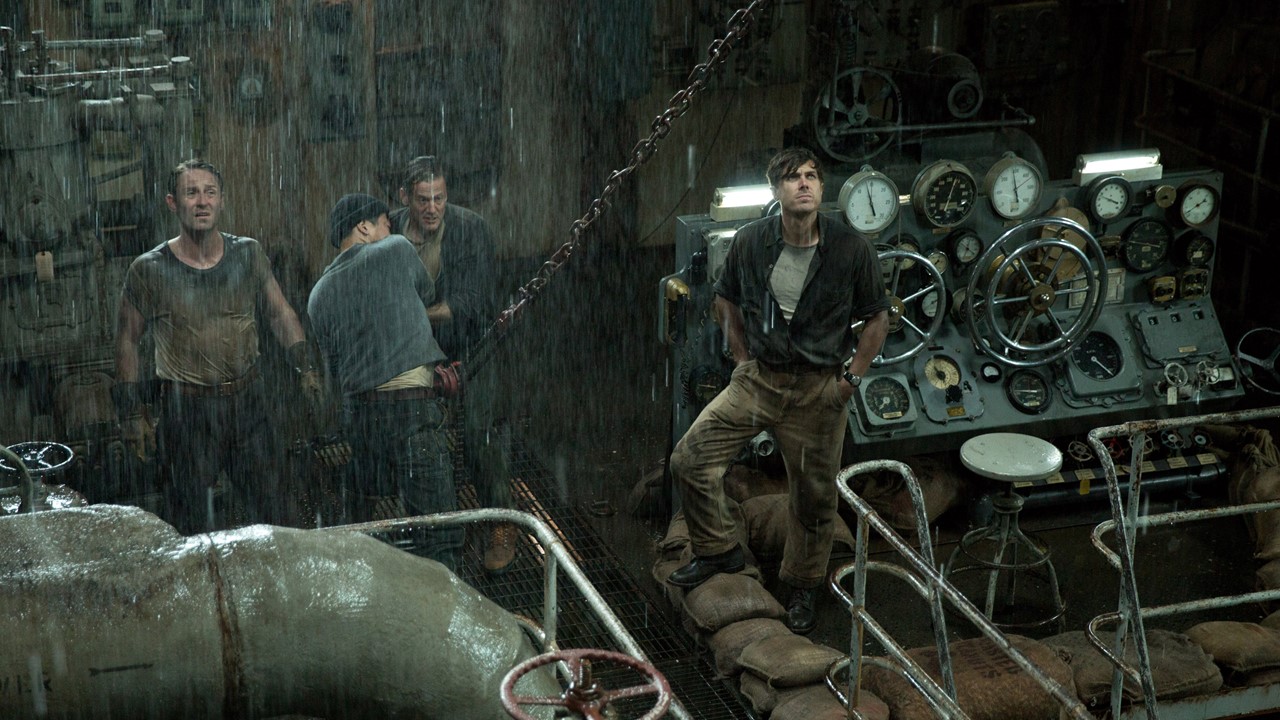
Truth - scene3

In the end we’re asked to have a tremendous amount of sympathy for Mapes and the way she’s treated, but it becomes increasingly difficult. Even Blanchett can’t make her entirely sympathetic, and while she gives a good performance, she’s hampered by the fact that she’s trying to elevate the position of someone who was the author of her own downfall. As Rather, Redford is a bit of a distraction, not because of how we see him after all these years, but because we have no idea if he’s portraying Rather with any degree of accuracy; there’s just not enough there for us to be sure. Further down the cast list, Grace essays yet another earnest young man role, while Quaid adds gravitas as the ex-military man on Mapes’ team. Moss rounds out Mapes’ (in)famous five, Greenwood is her angry, unsupportive boss, and Keach is the whistle blower who isn’t telling the whole truth. All give adequate performances but bow to Blanchett’s greater involvement and do their best not to get in the way when she’s in full flow (which is often).
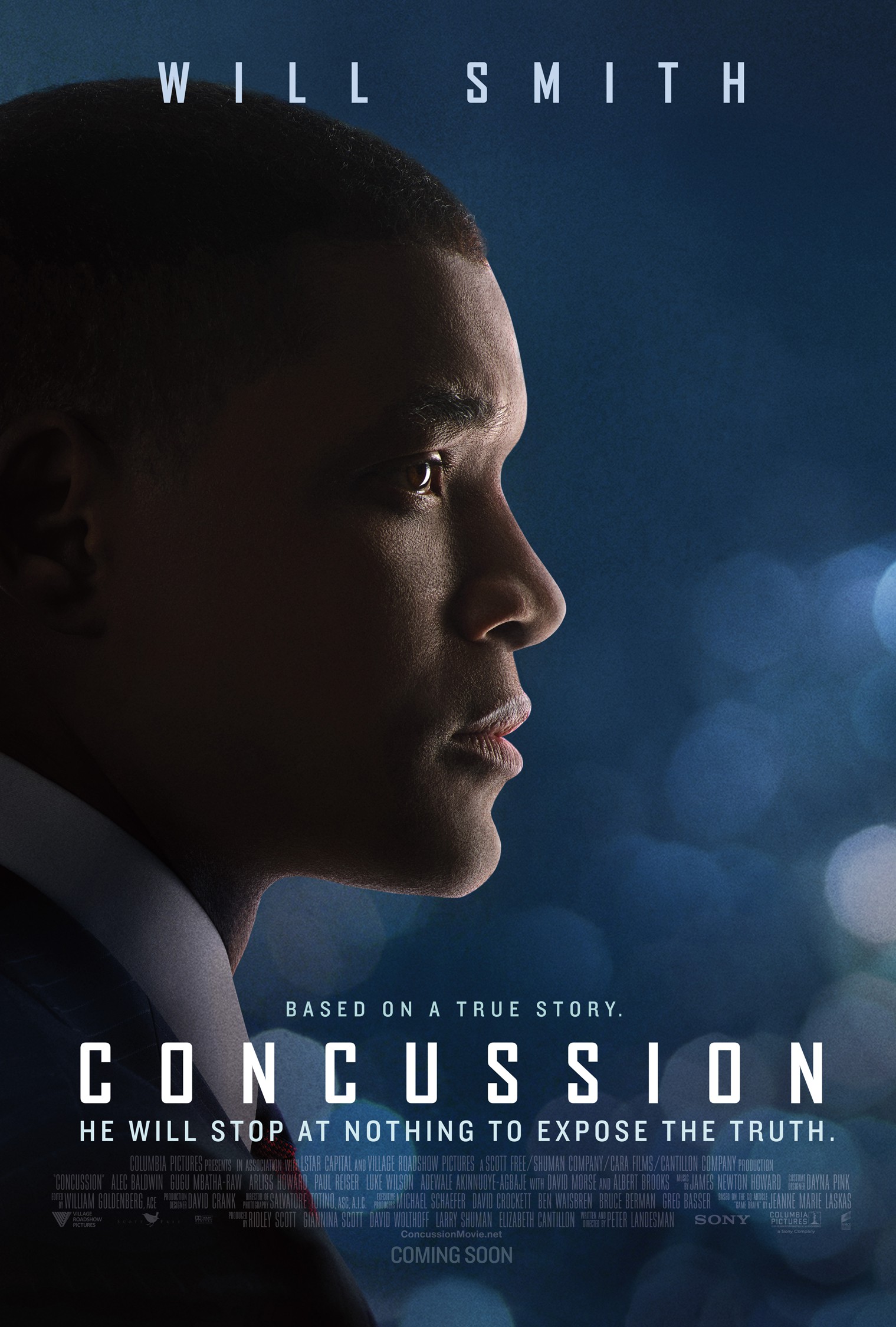
With half an eye trained on being a prestige, awards-gathering picture, Truth aims for solid and dependable, and for the most part achieves those aims, but lacks the passion that would have made all the difference to the material. Vanderbilt has the talent to make better, more focused movies, and he’s to be congratulated for attracting what is a top-notch cast for his first project, but too often they’re operating at the edge of the frame to be effective, and are given few chances to shine (except for Blanchett, that is). And Vanderbilt needs to interpret his material more, to let it breathe and grow beyond the obvious, as several scenes in Truth have the feel of filler instead of moments that advance the storyline. But these are forgivable errors for a first-time director to make, and though the movie isn’t entirely successful on its own merit, there’s just enough here to make the experience pleasant enough to hang around til the end.

Rating: 6/10 – flawed, and with a central character who loses the audience’s sympathy with each passing minute, Truth should be an engrossing exposé of journalistic persecution, but instead proves to be far stranger, less convincing affair; Blanchett does her best to hold it all together, but she’s defeated by the material and Mapes’ recurring ability to undermine herself without anyone else’s help.

Share this:

  • Share on X (Opens in new window) X
  • Share on Facebook (Opens in new window) Facebook
  • More
  • Print (Opens in new window) Print
  • Email a link to a friend (Opens in new window) Email
Like Loading...

Joy (2015)

01 Monday Feb 2016

Posted by dullwood68 in Movies

≈ 1 Comment

Tags

Bradley Cooper, Comedy, David O. Russell, Drama, Edgar Ramirez, Inventions, Jennifer Lawrence, Joy Mangano, QVC Channel, Review, Robert De Niro, The Miracle Mop, True story

Joy

D: David O. Russell / 124m

Cast: Jennifer Lawrence, Robert De Niro, Bradley Cooper, Edgar Ramirez, Diane Ladd, Virginia Madsen, Isabella Rossellini, Dascha Polanco, Elisabeth Röhm, Aundrea Gadsby, Gia Gadsby

At first glance, Joy looks like a traditional rags to riches story about a plucky young woman who overcomes several hurdles on her way to making her fortune. And for the most part this is exactly the kind of movie that Joy is. But it’s also a David O. Russell movie, and that means that the story can’t be told in a completely straightforward way. Instead we’re treated to occasional dream sequences that apparently hold a mirror up to Joy’s feelings at the time, a voiceover that comes and goes without adding too much to the overall presentation, and a lengthy stopover at the headquarters of the QVC Channel that amounts to a very generous piece of promotion.

By returning to the kind of small-town milieu he depicted so well in Silver Linings Playbook (2012), Russell has forgotten to include the one thing that made that movie so affecting and effective: interesting characters. Here, we have budding business matriarch Joy Mangano (Lawrence) whose struggle to get her Miracle Mop – the first self-wringing mop – both into production and into people’s homes is punctuated by several obstacles and problems, not the least of which is her business naïvete. That she overcomes all these problems is a given – this is based on a true story after all – but in the hands of Russell and his co-story writer Annie Mumolo, Joy’s tale lacks the kind of investment in the characters that’s needed for an audience to be cheering them on through adversity after adversity.

Joy - scene2

The problems begin almost immediately, with Joy’s grandmother Mimi (an almost unrecognisable Ladd), foreshadowing events with an upbeat voiceover that predicts Joy’s success as an adult because Mimi knows she’s destined for greatness. This is the restaurant equivalent of being told that a particular meal on the menu is going to be a feast for the tastebuds. If you’re already seated at your table (or in the back row of your local cinema), then you’re not going to disbelieve the person telling you all this, and with Joy we know in advance that Mimi’s predictions will come true. So it doesn’t need all this dreamy talk of predestination and making one’s dreams come true. And this is largely the role that Ladd has in the movie, to pop up every now and then when things go wrong and remind everyone that everything will be alright in the end. (But we know this already…)

We then have a considerable amount of time spent introducing the characters. There’s Joy, obviously, a divorced mother of two who spends most of her time clearing up after her reclusive mother, Terry (Madsen), and her father, Rudy (De Niro), who owns an auto repair shop. Her parents are divorced, but circumstances have them living in Joy’s house, Terry in her room, Rudy in the basement. There’s also Tony (Ramirez), Joy’s ex-husband, who also lives in the basement, and has his own dreams of being a singer (but this subplot is smothered at birth and dismissed thereafter). Adding to the mix is Joy’s petulant half-sister Peggy (Röhm), whose own struggle to be accepted fully by Rudy is another subplot that gets an early grave, and Joy’s childhood friend Jackie (Polanco), whose role is to support Joy at the expense of having any character of her own. All these characters interact with each other in ways that are mostly confrontational, but which add up to a series of poorly timed dramatic interludes, Russell filming these scenes as if they were rehearsals rather than the finished offering.

Joy - scene3

And then there’s Joy herself. Whatever really happened in Joy Mangano’s life as she fought to get her Miracle Mop into people’s homes (“It’s the only mop you’ll ever need to buy” is repeated like a mantra), it’s hard to believe that someone with so much flair and the kind of intelligence to come up with such a revolutionary invention could be so continuously undermined both by her family – though admittedly with her best interests at heart – and by such a large number of poor business decisions. And the movie eventually realises this at the end, but by then it’s too late. Despite several setbacks, including a declaration of bankruptcy that gets ignored like so many other briefly introduced subplots, Joy wins out in the end, as expected, but it’s the way in which she does that shows just how uninterested Russell is in portraying his central character in any kind of consistent light. Joy solves all her business problems by providing the kind of expertly constructed and detailed deconstruction of her opponent’s position that only exists in the movies, and which has them backing down immediately.

Russell’s uneven, and often ill-considered script is the one major flaw that stops Joy from being the thought-provoking, inspirational movie it no doubt wants to be in the first place. Thankfully it’s bolstered by an impressive performance from Lawrence even if she is fighting against the script’s often painful restrictions on her ability to connect with the audience. Alas, the same can’t be said for Cooper, who plays a senior buyer at QVC as if he were a Messiah of the airwaves. It’s an arch, uncomfortable to watch performance, and helps to mire the movie around the halfway mark, as Joy’s initial attempts to sell the Miracle Mop are given awkward free rein on TV, and the movie’s pace, not the sprightliest at the best of times, grinds to a clunking halt. De Niro has the look of an actor whose starting to realise his role isn’t going to be as big or as important to the story as he’d thought, Madsen channels an odd combination of deliberate shut-in and shy Southern belle supposedly to comic effect but soon becomes annoying, Ramirez is sidelined early on and hangs around in the background for two thirds of the movie, and Rossellini comes in halfway through and behaves like a low-rent mafiosi whose just suffered a minor stroke.

Joy - scene1

Along with American Hustle (2013), Russell seems to be foregoing content over style, but here it doesn’t work either. The wintry Long Island setting and bland interiors do little to improve the visual malaise that stalks the movie throughout, and there are too many occasions where the framing seems off-kilter, though whether this is deliberate or not is hard to tell, but it does have the effect of further distancing the viewer from the characters. Russell adds a few cinematic tricks to mix things up but they only serve to reinforce how ineffective the overall design is. With it already being too difficult to connect with Joy and her dysfunctional family, Russell’s directorial stance and ragged screenplay offer little help in getting any actual joy out of Joy.

Rating: 6/10 – lacking the necessary creative steam to get it through the hesitancies and inconsistencies of the script, Joy is a pedestrian tale of success borne out of personal tenacity; Lawrence elevates proceedings but even her sterling effort can’t save a movie that doesn’t know what kind of movie it wants to be, and which fumbles around for too long trying to find out.


//ws-eu.amazon-adsystem.com/widgets/q?ServiceVersion=20070822&OneJS=1&Operation=GetAdHtml&MarketPlace=GB&source=ss&ref=as_ss_li_til&ad_type=product_link&tracking_id=thedullwoodex-21&marketplace=amazon&region=GB&placement=B019FCY2WK&asins=B019FCY2WK&linkId=f213782d1476d6cc31466bf718695513&show_border=true&link_opens_in_new_window=true

Share this:

  • Share on X (Opens in new window) X
  • Share on Facebook (Opens in new window) Facebook
  • More
  • Print (Opens in new window) Print
  • Email a link to a friend (Opens in new window) Email
Like Loading...

The Big Short (2015)

22 Friday Jan 2016

Posted by dullwood68 in Movies

≈ 1 Comment

Tags

Adam McKay, Banking crisis, Brad Pitt, CDO's, Christian Bale, Drama, Fraud, Housing market, Review, Ryan Gosling, Steve Carell, Sub-prime mortgages, Triple A's, True story, Wall Street

The Big Short

D: Adam McKay / 130m

Cast: Christian Bale, Steve Carell, Ryan Gosling, Brad Pitt, John Magaro, Finn Wittrock, Marisa Tomei, Melissa Leo, Rafe Spall, Jeremy Strong, Hamish Linklater, Adepero Oduye, Byron Mann

It seems a little odd now that next year, 2017, will see the tenth anniversary of the collapse of the US housing market. Thanks to the greed of the Wall Street banks, in the US alone, eight million people lost their jobs and six million people lost their homes. It was a national scandal. But how did it all come about? Well, it’s fairly complicated, but The Big Short does a good job of explaining it all.
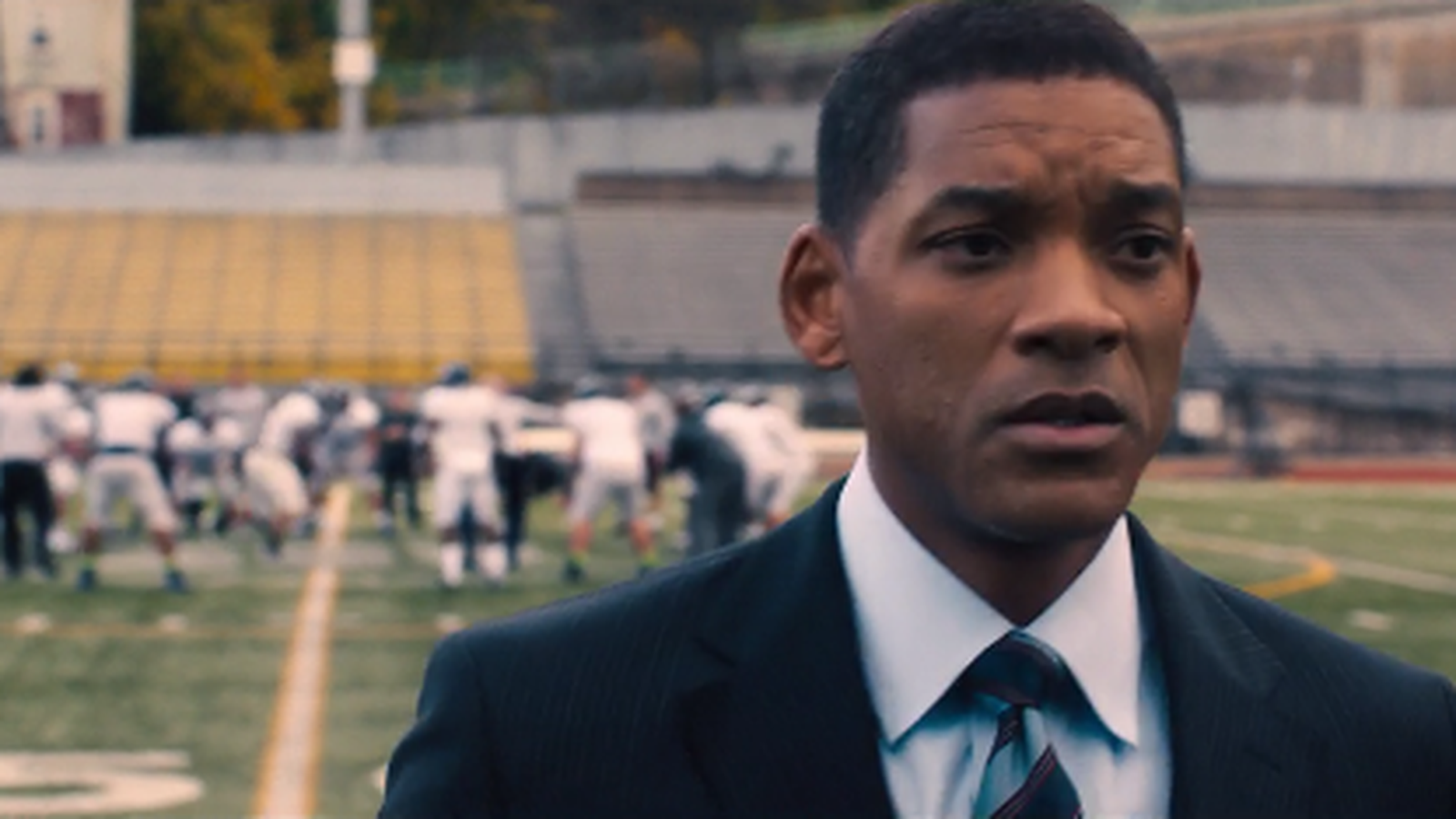
Adapted from the book by Michael Lewis, the movie looks at the people who first realised that the US housing market was a timebomb waiting to happen. It begins with a hedge fund manager, Dr Michael Burry (Bale). He had been analysing mortgage lending practices and discovered that mortgages were being sold at an alarming, and unchecked rate. With increasing defaults at the lower end of the market, a collapse was inevitable, and Burry predicted it would happen in 2007. Burry then approaches several of the big name banks, including Goldman Sachs, and persuades them to let him take out credit default swaps, an insurance against the collapse happening. If it does, they pay him a major return on his premiums.

The Big Short - scene2

Burry’s actions attract the attention of a trader at Goldman Sachs, Jared Vennett (Gosling). At first, like everyone else, Vennett thinks that Burry’s idea is completely ridiculous. But he does what Burry did and digs a little deeper, until he too sees the likelihood of the collapse happening. He attempts to do what Burry has done using his own funds but a misplaced phone call ends up putting him in touch with Mark Baum (Carell), another hedge fund manager. Baum and his small team begin to create their own credit default swaps.

In addition, two young investors, Charlie Geller (Magaro) and Jamie Shipley (Wittrock) hear about the default credit swaps, and with the aid of industry veteran Ben Rickert (Pitt), they too manage to raise their own swaps. Burry faces the ire of his bosses at the company where he works (who can’t see that the housing market could collapse – because it’s never happened before) because of the size of the premiums he’s paying, while Baum’s investigation into the pending collapse begins to show the enormous effect it will have on the public, as well as the financial system. The sheer size and scope of the fallout, they realise, won’t just affect the US economy, but the global economy as well.
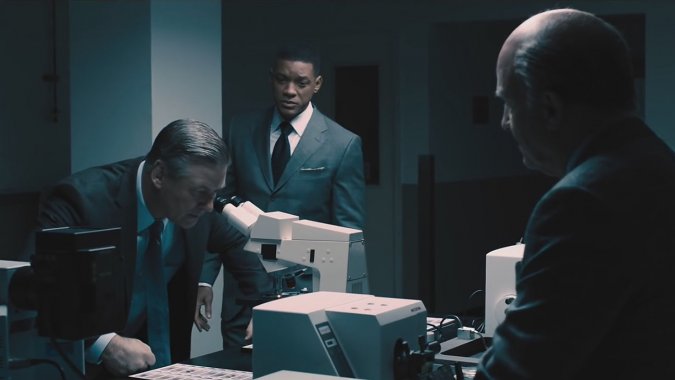
As Baum and his team look further into the reasons why the collapse will occur, they discover that the banks and mortgage lenders are complicit in keeping the status quo, preferring to get rich off of short term investments instead of long term ones. And they also discover the existence of CDO’s (collateralized debt obligations), groups of poor loans that are packaged together and given incorrect ratings in order that they can be sold on. These packages are essentially worthless but are being used to a) prop up the already wobbly housing market, and b) to further ensure quick, easy profits for the banks.
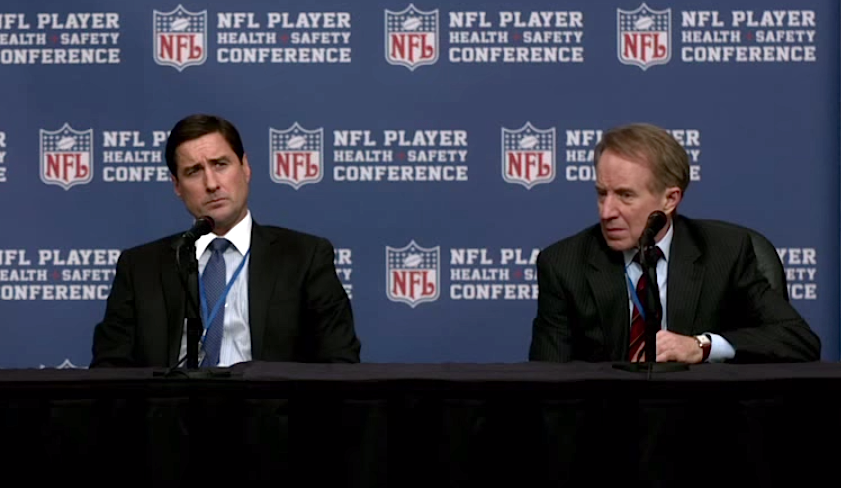
The Big Short - scene1

But it all proves to be too much and too late. In 2007 the markets defaulted and the collapse began in earnest. The ripple effect of foreclosure after foreclosure began to cripple the banks, and many closed for business, owing billions of dollars (the movie states that $5 trillion was lost in total). But – and here’s the irony – Burry, Baum, Vennett, Geller and Shipley all profited from the collapse. Their credit default swaps allowed them to make millions off of the back of everyone else’s misery. The movie acknowledges this around halfway through, and while up til then the viewer might be regarding these guys as the heroes of the story, by the end it’s doubtful you’ll see them in the same light. When Burry leaves his office once his company’s credit default swaps have been honoured you see the amount they’ve made written on a board: $2.69 billion.

By focusing on the people who warned the system what was going to happen, and who benefitted from it in the long run, The Big Short is able to show us what was happening on the inside, and how pervasive the fraud related to mortgage lending was. It’s a morality tale where no one gets off lightly. Geller and Shipley, once they realise the effect the collapse will have on ordinary people they try and warn their friends and families, but they’ve made no effort to warn anyone else during the whole time. Baum approaches one of the Ratings agencies, to see how they can justify giving approval ratings to the CDO’s, only to be told that if they didn’t the banks would take their business elsewhere; and yet Baum doesn’t warn anyone outside his own team about what this means. And Burry sits back in his office and watches it all unfold with the view that he’s just doing his job.

That the US financial institutions of the time were amoral in their approach to protecting their clients is something we’ve long been aware of, but the point The Big Short makes with absolute clarity is that everyone was too busy getting rich to even care. What makes matters worse is that the banks weren’t even worried; they knew that the government – the people, if you like – would have to bail them out if anything did go wrong. It’s this nasty, reprehensible lack of responsibility, and the extent of it, that really comes across, and even though Baum in particular bemoans the industry’s fraudulent activities, it still remains that few efforts were made to avoid the collapse when it was known about and accurately predicted.

The Big Short - scene3

As the movie’s anti-heroes, Bale is on nervous, Asperger’s-type form as Burry, supposedly with a glass eye (the left one), and working with absolute certainty that his projections are correct. Burry is a character that comes across as indifferent to anyone around him, and dismissive of others when challenged, but Bale makes him into a weary financial warrior, determined to make a profit for his investors at the expense of millions of ordinary non-investors. He’s likeable enough but some viewers may find him cold and distant. Carell plays Baum as the script – by McKay and Charles Randolph – has set him up: as the tale’s sole source of any conscience. With an unflattering wig perched on his head to add to his woes, Carell looks crestfallen and morose throughout, as if the weight of the (financial) world was all on his shoulders alone. It’s less of a performance than an extended mope-athon, and aside from a few moments of outrage, Baum looks and sounds like someone who’s got inside the cookie jar, has stuffed them all in his mouth, and only then discovered that he doesn’t like the flavour.

In support, Gosling sports a hideous hairstyle and struts around breaking the fourth wall with undisguised glee (as do several other characters), while Pitt buries himself beneath another odd wig and a scruffy beard. Magaro and Shipley adequately put across the eagerness and the excitement of being in on what could be termed an “industry secret”, and their scenes together are eloquent for how they go from earnest and enthusiastic to demoralised and dismayed. The rest of the cast do well with sometimes sketchily written characters, though Mann comes in towards the end as an investment manager that the banks use to create synthetic CDO’s (even worse than the real thing) and who is scarily unconcerned about the consequences of what he’s doing.

McKay – better known for his work with Will Ferrell – has made a movie that exposes the indolence and the greed at the heart of Wall Street during the last decade, and he’s done it with no small amount of style. When something complicated needs explaining, instead of getting one of the characters to explain it, the movie is effectively paused while a celebrity does so in terms that the average viewer can understand (which leads to the surreal moment when Selena Gomez explains what synthetic CDO’s are). With the intricacies of the financial jargon overcome, McKay looks to emphasise the human cost of the banks’ endeavours and does so with a pointed, judgmental approach that can be hugely effective.

The Big Short - scene4

The Big Short may not be everyone’s idea of a movie to crack open a few beers with, or indeed one that could be enjoyable, but there’s much to warrant giving it a try, and if you pay attention to what’s being said, there’s a lot to be understood about what went wrong in 2007 and why it was inevitable. As a cautionary tale it’s perhaps a little too late in the telling, but it does leave the viewer with one very clear warning right at the end: beware of “bespoke tranche opportunities”. They’re the new version of CDO’s and the banks are pushing them with all the gusto did in the past.

Rating: 8/10 – well focused on both the financial and human sides of the crisis, The Big Short is a scary look at a situation that nearly caused a global financial meltdown, and why it came about; fascinating and horrific on a continually WtF? level, the movie is at its best when its skewering the antipathy and the greed of the banks and their seemingly pathological determination to screw over everybody for the sake of a quick buck.

Share this:

  • Share on X (Opens in new window) X
  • Share on Facebook (Opens in new window) Facebook
  • More
  • Print (Opens in new window) Print
  • Email a link to a friend (Opens in new window) Email
Like Loading...

Steve Jobs (2015)

21 Thursday Jan 2016

Posted by dullwood68 in Movies

≈ Leave a comment

Tags

1984, 1988, 1998, Aaron Sorkin, Apple, Biography, Black cube, Computers, Computing, Danny Boyle, Drama, Father/daughter relationship, History, iMac, Jeff Daniels, Kate Winslet, Literary adaptation, Macintosh, Michael Fassbender, NeXT, Product launches, Review, Seth Rogen, True story

Steve Jobs

D: Danny Boyle / 122m

Cast: Michael Fassbender, Kate Winslet, Seth Rogen, Jeff Daniels, Michael Stuhlbarg, Katherine Waterston, Ripley Sobo, Makenzie Moss, Perla Haney-Jardine, Sarah Snook, John Ortiz

Steve Jobs – maverick genius, arrogant manipulator, or indifferent human being? In Danny Boyle’s latest movie we get to learn that the late founder and CEO of Apple was all three, which shouldn’t be a surprise as each description isn’t exclusive of itself. But where Aaron Sorkin’s script, adapted from Walter Isaacson’s book, impresses most is when we see Jobs being all three at the same time.

The structure of the movie allows us to see Jobs at three separate points in his life, and each time in the immediate lead up to a product launch. So in 1984 we see him trying to launch the Macintosh, Apple’s first new product in seven years since the Apple II. In 1988 he’s on his own, attempting to impress everyone with the NeXT computer, an item that is doomed to failure. And we end on a high note in 1998 with the launch of the first iMac and Jobs’ ensuring he would never be forgotten. It’s like a crazy rollercoaster ride, as the advances in computer innovation are revealed to be less important than marketing and design. As Jobs so aptly puts it, “They won’t know what they’re looking at or why they like it but they’ll know they want it”.

Steve Jobs - scene2

By telling Jobs’ story in three distinct episodes, Boyle and Sorkin, with the aid of a very talented cast, reveal how Jobs started with an idea and kept pursuing it for over fifteen years. That idea may have gone through some variations in all that time, but the movie paints a very convincing portrait of a man driven by the need to do things differently and in a way that’s at odds with everyone around him. In his pursuit of excellence in home computing, Jobs brooked very little compromise, and we see this in the meticulous nature of his product launches, where even the Exit signs have to be switched off so that the visual presentation can have the most impact. Jobs doesn’t compromise, and he doesn’t recognise the value and support of the people around him, including his old friend and co-creator of the Macintosh, Steve Wozniak (Rogen), and his long-suffering personal assistant Joanna Hoffman (Winslet).

Each launch brings its own set of issues and problems for Jobs to overcome, from the first Macintosh’s failure to say “hello”, to the NeXT computer’s lack of an operating system, to Wozniak’s public insistence that the iMac launch should include an acknowledgment of the work put in by the team who made Apple II so successful. Jobs refuses to accept that any of these will interfere with his plans for success, and he drives the people around him with a fierce determination that is both alienating and patronising. The movie keeps Jobs focused and uncompromising in his self-belief, right until the end, and as an anti-hero he fits the bill entirely.

But while the behind the scenes manoeuvrings that show how each phase of Jobs’ career were a necessary, evolutionary step (for him and his computers) all make for compelling viewing, the movie is less successful with its three act structure than it realises. Each section relies on a lot of repetition, as encounters and personal problems are examined each time, albeit from slightly different angles. Jobs’ condescending treatment of Wozniak is a case in point, as is his dismissive treatment of computer engineer Andy Hertzfeld (Stuhlbarg). And then there’s Lisa, the daughter he tried to deny having.

Film Title: Steve Jobs

Jobs’ relationship with Lisa is one of the bigger subplots in the movie, and as an attempt by Boyle and Sorkin to show the man’s more “human” side, it’s nevertheless quite clumsy and unconvincing in its execution. At the first launch, Lisa is five years old; up until she uses a Macintosh to draw a picture, Jobs is distant toward her, and to her mother, Chrisann (Waterston). But the picture changes his feelings about her, and in the other two acts we see the same sort of thing happen again, as Jobs begins to treat Lisa as a person and not a Court-confirmed inconvenience (Jobs was so arrogant that upon learning that a paternity test showed it was 94% certain he was Lisa’s father, he came up with an algorithm that counter-claimed that the 6% difference meant Chrisann could have slept with any one of twenty-eight million men and the result would have been the same). While it’s a creditable attempt to humanise Jobs, it’s these scenes that carry the least weight, and the least credibility. By the time Lisa is nineteen and on the verge of wanting nothing to do with him, all it takes is for Jobs to say he was “poorly made” and she forgives him just like that (as well as a hastily improvised bribe that promises she’ll have one of the first iPods).

More potent is the relationship Jobs has with John Sculley (Daniels), the CEO he poached from Pepsi to run Apple in the Eighties. It was Sculley who had Jobs ousted from Apple following the disastrous sales of the Macintosh, and Sorkin’s script soars whenever it focuses on the pair’s uneasy relationship. There’s a bravura scene where Jobs confronts Sculley over what he sees as the CEO’s betrayal of him, and Boyle intercuts with flashbacks that show the depth of Jobs’ own complicity, giving the audience a balanced view of what happened and why. Both Fassbender and Daniels are superb in these scenes, and the movie has a fire and an energy that it lacks elsewhere.

As expected, Boyle elicits strong performances from his cast, with Fassbender giving a superb performance as the empathy-lite Jobs, and Winslet stealing the movie out from under him as Joanna. Winslet is simply in a class of her own, adding subtlety and shading to a role that would otherwise have been quite bland. When she confronts Jobs over his treatment of Lisa before the ’98 launch, the pent-up emotions she releases are as liberating for the viewer as they are for Joanna. In support, Rogen shows fleeting glimpses of the actor he can be when he’s not channelling Seth Rogen, and Daniels is magnificent as Sculley.

Steve Jobs - scene1

Jobs is frequently challenged as to what he can actually do, and at one point he tells Wozniak that “musicians play their instruments. I play the orchestra”. With Jobs, Boyle shows himself to be a great conductor as well, but thanks to some uncomfortable narrative decisions borne out of Sorkin’s script, this isn’t as rewarding as some of his other movies, and his control over the material, while evident throughout, isn’t enough to overcome the movie’s built-in deficiencies. That said, and as with all of Boyle’s movies, it’s visually stimulating and in tandem with editor Elliot Graham, he maintains a pace and a rhythm that propel the viewer along effortlessly.

Rating: 7/10 – slickly, professionally made with Boyle firmly in charge and full of impressive performances, Jobs is nevertheless a movie that fails to do full justice to its central character; as a result Jobs the human being proves less interesting than Jobs the arrogant perfectionist, and any insights into the man that can be gleaned are at the expense of soap opera elements that, unfortunately, compromise his more acerbic nature.

Share this:

  • Share on X (Opens in new window) X
  • Share on Facebook (Opens in new window) Facebook
  • More
  • Print (Opens in new window) Print
  • Email a link to a friend (Opens in new window) Email
Like Loading...

Trumbo (2015)

19 Tuesday Jan 2016

Posted by dullwood68 in Movies

≈ Leave a comment

Tags

Bryan Cranston, Dalton Trumbo, Diane Lane, Drama, Exodus, Historical drama, Hollywood, HUAC, Jay Roach, Kirk Douglas, Oscar winner, Otto Preminger, Review, Roman Holiday, Screenwriter, Spartacus, The Blacklist, The Brave One, The Hollywood Ten, True story

Trumbo

D: Jay Roach / 124m

Cast: Bryan Cranston, Diane Lane, Elle Fanning, Helen Mirren, John Goodman, Michael Stuhlbarg, Louis C.K., David James Elliott, Roger Bart, Adewale Akinnuoye-Agbaje, Dean O’Gorman, Christian Berkel, Stephen Root, Alan Tudyk, John Getz

Anyone with a passing interest in the history of Hollywood will probably have heard of the Hollywood Ten, a group of screenwriters and directors who were cited for contempt of Congress for refusing to state their affiliation (if any) with the Communist Party. They stood up for their First Amendment rights only to find that the government wasn’t listening; as a result they were fined and given prison sentences ranging from six months to a year. Hollywood exacted a further penalty: none of the ten would be allowed to work in the industry and their names would be added to the Blacklist, a list of actors, writers, directors and other industry professionals who were regarded as communists and traitors to the American way of life.

This ignominious period in American political and entertainment history is the backdrop for Trumbo, a look at the life and experiences of one of the Hollywood Ten, and the ways in which he managed to subvert the Blacklist. Beginning in 1947, the movie charts the attempts by the Hollywood establishment to fall into line with the political manoeuvrings of people such as stockbroker and US Representative J. Parnell Thomas, and to not appear out of step with the paranoia of the time. Against this, screenwriter Dalton Trumbo (Cranston) tries to marshal his “comrades” in an effort to rebut the accusations made against them, and with the likes of Edward G. Robinson (Stuhlbarg) in support, prepares to defy Congress and to refuse to cooperate at the hearings.

Trumbo - scene3

The movie shows how some of the Ten, including Arlen Hird (Louis C.K.) – a character created to represent several of the original members – have their doubts about this course of action, but they are persuaded by Trumbo, and their time before Congress leads to the ruination of their careers. Matters are made worse when supporters such as Robinson give their names to the enquiry, and the extent of the Blacklist begins to be felt once their gaol terms are completed. Hird becomes ill, while Trumbo does his best to support him. Still needing to write, Trumbo writes a screenplay that he gives to his friend Ian McLellan Hunter (Tudyk) to sell to the studios. The script is bought by Paramount and the movie made from it, Roman Holiday (1953), goes on to win an Oscar for its screenplay.

The irony isn’t lost on Trumbo, and when he’s approached by King Brothers Productions, headed by Frank King (Goodman), to produce screenplays for them (under pseudonyms of course), he jumps at the chance. However, a combination of King’s demand for scripts and Trumbo’s own exhausting work ethic leads to an estrangement from the rest of his family: wife Cleo (Lane), eldest daughter Nikola (Fanning), son Chris, and youngest daughter Mitzi. He ropes them in to be his support team, delivering scripts and rewrites whenever needed and refusing to see that they have their own lives to lead. In time, they begin to rebel against his dictatorial attitude.

As rumours of Trumbo’s involvement with King Brothers begins to spread throughout Hollywood, efforts are made by columnist Hedda Hopper (Mirren) to expose him. The release of The Brave One (1956) with a script by Robert Rich (in reality Trumbo), adds fuel to the fire, especially when it too wins an Academy Award for its screenplay. With Trumbo’s profile becoming even more pronounced than it was before the Blacklist, he finds himself working for both Kirk Douglas (O’Gorman) (on Spartacus) and Otto Preminger (Berkel) (on Exodus). Both men are willing to ignore the Blacklist and give Trumbo screen credit, but not before they have to deal with the possibility of anti-Communist boycotts of their movies and widespread industry disapproval.

Trumbo - scene2

In recounting Trumbo’s story, Jay Roach’s movie plays very much like every other Hollywood biopic you’ve ever seen. It moves at a steady pace, ticks all the important boxes when recounting/explaining the motives of the House Committee on Un-American Activities, shows how deeply the Blacklist affected the lives of its victims, and recounts Trumbo’s subsequent attempts to remain gainfully employed in the town that had turned its back on him. In short, it sticks to a very traditional formula and rarely strays from it, even down to the idea that Trumbo would have befriended a black fellow inmate in prison (Akinnuoye-Agbaje) (an example of his pro-egalitarian approach to people and politics). It’s only when see him at home, bashing out screenplay after screenplay, that the movie offers us something different from the standard notion of a writer struggling to maintain his career. Here, Trumbo is shown to be a bit of a monster – indifferent to his wife, dismissive of his children, and so self-absorbed he can’t see the damage he’s doing.

But like a lot of things that happen in the movie, this self-absorption and bad behaviour is easily remedied, and then it’s on to the next hurdle. For this is what Trumbo the movie is comprised of: a series of hurdles for the writer to clear. Sometimes he does so with inches of room to spare, at other times he knocks them down on his way to the finish line, and occasionally he doesn’t even realise the hurdles are even there. And he does it all with wit and panache and a fondness for the odd bon mot. For someone dealing with the issues that Trumbo had to deal with – and his pseudonym dependency issues aside – his movie incarnation never really seems to be affected by what’s happening around him. Sure he’s outraged, and sure he’s angry at the injustice of it all, but all too often the movie makes it sound like it’s all just a big intellectual challenge for him, and one that he can easily outmanoeuvre.

As the screenwriter who did some of his best work in the bathtub, Cranston gives a rasping, eloquent portrayal of a man who never loses sight of his principles, even when everyone around him is either trying to deny they exist, or castigate him for having them. It’s an award-worthy performance but one that lives or dies on Cranston’s likeability in the role, and it’s good that he is very likeable. But then so is everyone else, even the “villains” like Mirren’s vicious Hedda Hopper; there’s no one you really take exception to. In this sense, John McNamara’s screenplay becomes all surface sheen and lightweight drama, with none of the varied emotions that must have been felt by all concerned at the time.

Trumbo - scene1

By arriving with an air of detachment (whether deliberate or not), and an ironic detachment at that, Roach has crafted a movie that is effortlessly watchable but which falls short of being compelling. We follow Trumbo on his journey from celebrated Hollywood screenwriter to… well, celebrated Hollywood screenwriter via a couple of detours, and though we know it probably was rough, that doesn’t come across. Still the performances are a large measure of the fun to be had (Mirren, Goodman and Stuhlbarg each bring their A-game), and the period setting gives Daniel Orlandi a chance to shine in the Costume Design department. One aspect that does work? The inclusion of archival footage from the HUAC hearings, a salient reminder that people like Ronald Reagan were quick to distance themselves from their friends and colleagues under the threat of censure. What times they were, and what a shame that Trumbo isn’t quite the movie to show us just how bad they were.

Rating: 7/10 – full of unrealised potential, Trumbo is an easy watch when it should have been more engrossing and, in terms of the political witch hunt that occurred at the time, able to invoke the viewer’s ire with ease; Cranston is on fine form and he heads a more than capable cast but this has to be filed under “missed opportunity”.

Share this:

  • Share on X (Opens in new window) X
  • Share on Facebook (Opens in new window) Facebook
  • More
  • Print (Opens in new window) Print
  • Email a link to a friend (Opens in new window) Email
Like Loading...

The Danish Girl (2015)

17 Sunday Jan 2016

Posted by dullwood68 in Movies

≈ Leave a comment

Tags

1926, Alicia Vikander, Amber Heard, Artists, Ben Whishaw, Copenhagen, Denmark, Drama, Eddie Redmayne, Einar Wegener, Gerda Wegener, Lili Elbe, Literary adaptation, Matthias Schoenaerts, Painting, Sex change, Tom Hooper, Transgender, True story

The Danish Girl

D: Tom Hooper / 119m

Cast: Eddie Redmayne, Alicia Vikander, Matthias Schoenaerts, Ben Whishaw, Sebastian Koch, Amber Heard, Adrian Schiller, Pip Torrens

Copenhagen, 1926. Einar Wegener (Redmayne) is a celebrated painter and husband to fellow painter Gerda (Vikander). They live in a big house by a canal and appear to be blissfully happy together, despite Gerda’s work being passed over by the local art dealer (Schiller), and despite not having had a child together in the six years they’ve been married. They are well regarded amongst their friends and contemporaries, including Ulla (Heard), a dancer who Gerda has agreed to paint a portrait of. One day Ulla is late for her sitting and Gerda asks Einar to take her place. He puts on stockings and shoes and covers himself with a dress; the effect of having the dress next to him reawakens old feelings from his childhood. When Ulla does arrive she’s delighted to see her “substitute” and tells Einar he should be known as Lili.

Later, Gerda discovers Einar is wearing one of her nightgowns under his clothes. She accepts this and the next morning while he sleeps she sketches him, giving him an androgynous look. When Einar refuses to attend an artist’s ball, Gerda prompts him to attend in disguise, as his “cousin” Lili. She intends it to be a game while Einar is secretly pleased to be able to dress as a woman. At the ball, Lili attracts the attention of Henrik (Whishaw) who engineers a situation where he kisses her. This initially confuses Einar but the urge to continue as Lili is stronger and he continues to see Henrik secretly.

TDG - scene1

When their relationship ends, Einar makes the decision to be Lili most of the time. Out of this, Gerda finds her muse, and her paintings of Lili begin to gain attention. When her work is noticed by art dealers in Paris, she takes the opportunity to go there, and succeeds in persuading Einar to come with her. It’s good timing, as Einar has been seeking treatment for what he believes is a condition that can be resolved, but most doctors believe he is either insane or perverted and want to see him committed. In Paris, Gerda contacts Einar’s childhood friend and art dealer Hans Axgil (Schoenaerts), but when she brings Hans back to their apartment, they find Lili there instead of Einar.

At this time Einar and Gerda hear about a German doctor who is interested in people like Einar who feel like they are a woman trapped inside a man’s body. The doctor, called Warnekros (Koch), is trying to pioneer the kind of surgery that will allow a man to become a woman, complete with female genitals. Einar agrees to undergo the procedures necessary as he feels this is his best chance of becoming the person he really is – Lili. Meanwhile, Gerda’s conflicting emotions about her husband lead her to skirt perilously close to having an affair with Hans.

At one point in The Danish Girl, Einar Wegener visits a Paris brothel and watches through a window as a young woman sensuously caresses herself. He mimics her movements, and in doing so, has an orgasm. It’s a telling moment, as Einar’s need to be a woman finds expression in a moment of heightened sexuality. It’s also the point at which the movie makes it clear to the audience that Einar’s condition isn’t the result of some mental incapacity, or a chemical imbalance. This is where Einar truly becomes Lili, even if he still has to dress as a man on certain occasions.

TDG - scene3

Lili’s story has been told in her own words in the book, Man into Woman: The First Sex Change, published in 1933, and drawn largely from the diary entries she wrote while undergoing her sex change procedure. The Danish Girl takes the book as a starting point and tells Lili’s story with a stately precision that both heightens the drama and allows room for Hooper to delve deeply into the relationship between Einar and Gerda and Lili herself. For this to work, the movie needed two actors capable of navigating the intricacies of gender confusion and emotional displacement, as Einar embarks on his all-consuming journey to become Lili, and Gerda tries to come to terms with losing the only man she’s ever loved. Fortunately, the movie has Redmayne and Vikander in it, and these two amazingly versatile actors keep the movie from being as dreary and confined as the movie’s backdrop (the movie is a triumph of muted colours and dull settings).

Redmayne is on superb form here, portraying Einar’s transformation from tormented man to blissfully happy woman with so much tenderness and understanding of the mixed emotions both Einar and Lili must have felt that it’s impossible to detect a false note anywhere in his performance. It’s hard to think of another actor who could have portrayed the two roles so effectively. And he’s matched by Vikander, an actress who goes from strength to strength in every movie she makes (even if it’s The Man from U.N.C.L.E.). She takes what could have been a secondary character and imbues her with a clear-sighted intelligence and emotional resilience that complements Redmayne’s performance and ensures that Gerda’s part in all this isn’t forgotten or given less importance. Their scenes together have such a charge that some of them leave the viewer on the edge of their seat, poised to see how their relationship will develop and how much their love for each other will see them through.

TDG - scene2

As mentioned above, Hooper directs in a stately manner he seems to have picked up from watching too many heritage movies, and while this doesn’t disadvantage the movie completely, it does lead to moments where the passage of time – on screen at least – seems slower than it actually is (the events here take place over four years, but you wouldn’t know it otherwise). Some viewers may find their patience tested on these occasions but this is a movie that draws you in with its performances and proves compelling because of them. Few movies take the time to examine in detail how their characters feel, and why, but The Danish Girl – thanks to Lucinda Coxon’s screenplay – does it throughout and with an honesty that uplifts what could have been an entirely depressing story. But then again, this is a movie about courage and determination against the odds, and at a time when transgender issues were only just beginning to be addressed by the medical community. And the movie tackles these issues with a tremendous amount of sympathy and compassion.

The movie has another distinguished, evocative score courtesy of Alexandre Desplat, and is beautifully framed and shot by Danny Cohen (though again, Hooper’s choice of muted colours remains an issue). And Melanie Oliver’s editing is another strength, her ability to utilise a combination of static shots and measured cutting helping to improve the visual style. Away from the main story, the movie drops the ball on only two occasions: with the subplot involving Gerda’s attraction to Hans, which is unnecessary and would seem more relevant if this were a soap opera; and Lili’s relationship with Henrik, which isn’t explored fully, and which adds confusion to the already confused state she’s in at the time (just what is their relationship about?). But these issues aside, the movie is the kind of intelligent, clearly defined movie making that doesn’t come along very often, and which does enormous justice to its central characters.

Rating: 8/10 – with a virtuoso performance from Redmayne, and an equally impressive turn from Vikander, The Danish Girl is a riveting true story about the recipient of the world’s first sex change operation; impressively mounted, and with an honesty that permeates every scene, this is a movie well worth investing the time with, and which rewards on almost every level.

Share this:

  • Share on X (Opens in new window) X
  • Share on Facebook (Opens in new window) Facebook
  • More
  • Print (Opens in new window) Print
  • Email a link to a friend (Opens in new window) Email
Like Loading...

Trailer – Elvis & Nixon (2016)

16 Saturday Jan 2016

Posted by dullwood68 in Movies

≈ Leave a comment

Tags

Elvis Presley, Kevin Spacey, Knuckles of steel, Michael Shannon, Preview, Richard Nixon, Steel claws of a tiger, Trailer, True story

In America, the most requested photograph held in the National Archives is the one that depicts then President Richard Nixon shaking hands with Elvis Presley. Using this iconic image, Elvis & Nixon seeks to tell the story of the meeting that took place between the two men on 21 December 1970. The circumstances were certainly bizarre – and have already been explored in the movie Elvis Meets Nixon (1997) – but it is true that Elvis went to the White House to seek Nixon’s approval to become what he termed a “Federal Agent at Large” for the Bureau of Narcotics and Dangerous Drugs. Nixon thought the meeting would help with his lack of popularity with younger voters. That two men could be so deluded is hard to believe but as they say sometimes, truth is stranger than fiction. The absurdities of the situation and the meeting seems to be well covered, and Spacey as Nixon is the kind of casting that should have happened long ago. Shannon as Elvis may prove to be a tougher sell though, as the actor has a very distinct screen presence, but he does seem to have nailed the craziness of Elvis’s delusion. However the movie turns out it’s definitely one to check out, and could be an outside contender come the awards season next year.

Share this:

  • Share on X (Opens in new window) X
  • Share on Facebook (Opens in new window) Facebook
  • More
  • Print (Opens in new window) Print
  • Email a link to a friend (Opens in new window) Email
Like Loading...

Kidnapping Mr. Heineken (2015)

10 Sunday Jan 2016

Posted by dullwood68 in Movies

≈ 1 Comment

Tags

1982/3, Alfred Heineken, Amsterdam, Anthony Hopkins, Daniel Alfredson, Drama, Jim Sturgess, Kidnapping, Ransom, Review, Ryan Kwanten, Sam Worthington, Thriller, True story

Kidnapping Mr. Heineken

aka Kidnapping Freddy Heineken

D: Daniel Alfredson / 95m

Cast: Jim Sturgess, Sam Worthington, Ryan Kwanten, Anthony Hopkins, Mark van Eeuwen, Thomas Cocquerel, Jemima West, David Dencik

In 1982, five friends working and living in Amsterdam  – Cor Van Hout (Sturgess), Willem Holleeder (Worthington), Jan ‘Cat’ Boellard (Kwanten), Frans ‘Spikes’ Meijer (van Eeuwen), and Martin ‘Brakes’ Erkamps (Cocquerel) – are struggling to keep their construction business from going under. They don’t have any appreciable capital so the banks won’t lend them any money. But Cor has an idea (a New Year’s resolution in fact): to do something big, something that will see them all become immensely rich. That idea leads to a plan, and the plan is to kidnap the owner and founder of the Heineken brewery empire, Alfred ‘Freddy’ Heineken (Hopkins).

Needing to pull off this coup quite quickly, the five men begin to plan their abduction and how they will keep the ransom – $35m – and avoid being caught. They begin to watch Heineken to learn his routine, and to figure out the best time to grab him. They also realise that in order to look like professional kidnappers they’ll need to have some money behind them. So they rob a bank, and get away with enough cash to bankroll the abduction. At a shed owned by Jan, they construct soundproof cells where they can keep Heineken (and Ab Doderer (Dencik), his driver), and which are hidden behind false panelling.

KMH - scene2

The kidnapping is successful and the five men wait for the ransom note to be found by the police. They hole up at Jan’s shed, taking it in turns to check on Heineken and Doderer, and to wait for the ransom to be paid. But time passes, and after three weeks they’ve heard nothing. Willem is all for sending the police evidence that they will harm Heineken if the ransom isn’t paid, but when it comes to it he can’t do it. Another demand leads to the police and Heineken’s company agreeing to pay the ransom money, and the group successfully attain it. They stash most of it in buried tubes out in the forest, but in the days ahead they become more fearful and paranoid that the police will soon be snapping at their heels, and their long-term friendships begin to fray at the seams.

True stories – in the movies at least – usually come with the disclaimer that certain scenes, characters and/or dialogue have been fictionalised or conflated or created for dramatic purposes. This we know, and it’s always the problem with telling a true story: just how much of what you’re seeing is really true. The answer, of course, is absolutely none of it. It doesn’t matter if its’s based on a true story, or has the backing and involvement of the people it concerns or portrays, every single movie that’s based on a true story, or real events – what you’re watching is never going to be exactly what happened. And while we all know this deep down, still we take for granted that what we’re seeing actually happened, as if the writer(s), director(s) and cast have a special way of recreating past events exactly as they happened.

KMH - scene1

Sadly for Kidnapping Mr. Heineken, if that were the case, then it might help obscure or erase the movie’s most fundamental problem: it’s not in the least bit convincing or dramatic enough to work. A belated English language remake of The Heineken Kidnapping (2011), the movie is a tired, tangled piece that features five men who don’t seem to have anything in common except they take to kidnapping with apparent ease, especially when it comes to abandoning their consciences (not one of them offers any objections to the idea). And there’s an incredible naïvete about their decision that’s never properly addressed; none of them have a criminal background but they take to being criminals as if it were the most natural, and easiest, thing in the world.

With the movie establishing an awkward tone from the start, the middle section does little to rescue things, as Heineken gets the chance to be belligerent and caustic to his kidnappers on a regular basis, and they all sit around wondering why the ransom hasn’t been paid. Five more glum-looking faces you’re unlikely to see for quite some time, as the movie – scripted by William Brookfield from the book by Peter R. de Vries – fails to add any tension to proceedings, even when Willem wants to get violent. It gives rise to an odd feeling, that neither Brookfield nor Alfredson have made any connection to the story, and are telling it out of some sense of obligation.

The same can be said of the cast. Sturgess, usually a sharp-minded presence on screen, here seems held back by the vagaries of the script, in particular with regard to Cor’s relationship with his girlfriend Sonia (West), which appears to be of minor importance during the abduction but assumes a disproportionate relevance in the movie’s final third. Worthington continues to make audiences wonder why he gets so much work, giving a performance that’s so stiff you expect him to seize up at any moment. And Kwanten, thanks to one of the scruffiest wigs seen in ages, will have viewers trying to work out who he is (in real life) rather than how good his performance is. But spare a thought for Hopkins, playing yet another supporting performance and having to go from assured patriarch to rambling mental patient in the space of a competently edited chase sequence.

KMH - scene3

The story of Alfred Heineken’s kidnapping was a major news story at the time – in Holland at least – and is notable still today for the ransom being the largest ever paid for an individual, and for the fact that some of the money has never been recovered. The movie cites this at the end, along with the fates of the main characters (two of which may come as a very big surprise). But by then you’ll be less than interested, and just as relieved as Heineken probably was at being rescued from it all.

Rating: 4/10 – plodding, uninspired and plain dull for long stretches, Kidnapping Mr. Heineken is a movie that lacks commitment from its cast and crew, and ambles along with all the urgency of a downhill racer missing his skis; broadly factual (ironically, de Vries, who was an advisor on the movie, subsequently refused to watch the movie, citing numerous discrepancies between the movie and what really happened), this is a movie that gives new meaning to the words defiantly turgid.

Share this:

  • Share on X (Opens in new window) X
  • Share on Facebook (Opens in new window) Facebook
  • More
  • Print (Opens in new window) Print
  • Email a link to a friend (Opens in new window) Email
Like Loading...

The Revenant (2015)

30 Wednesday Dec 2015

Posted by dullwood68 in Movies

≈ 1 Comment

Tags

1820's, Alejandro González Iñárritu, Arikara Indians, Bear attack, Buried alive, Domhnall Gleeson, Fort Kiowa, Fur trappers, Hugh Glass, Left for dead, Leonardo DiCaprio, Literary adaptation, Missouri river, Tom Hardy, True story, Will Poulter

The Revenant

D: Alejandro González Iñárritu / 156m

Cast: Leonardo DiCaprio, Tom Hardy, Domhnall Gleeson, Will Poulter, Forrest Goodluck,  Paul Anderson, Duane Howard, Kristoffer Joner, Brendan Fletcher, Lukas Haas, Grace Dove, Melaw Nakehk’o

If you had to guess what Alejandro González Iñárritu’s next movie would be after Birdman or (the Unexpected Virtue of Ignorance) (2014), then chances are you wouldn’t have picked this one, a Western shot on a grand scale and based on events that happened to the fur trapper and explorer Hugh Glass in 1823. And maybe you would have thought that it was too much of a challenge for the director to pull off. But for anyone who still has their doubts, let’s make it clear from the start: this is one of the must-see movies of 2015 (which makes it a shame that most people won’t see it until 2016).

Glass’s story is the stuff of legend. While working for a fur-trapping expedition along the Missouri river, he and his fellow trappers were ambushed by Arikara Indians, and forced to flee back to their base at Fort Kiowa. While out scouting for food for the remaining men, Glass encountered a grizzly bear and her two cubs. The bear attacked Glass and he was severely mauled and injured. He managed to kill the bear with the aid of two other trappers, John Fitzgerald and Jim Bridger. His wounds, however, were such that it was believed he would die from his injuries. Leaving behind Fitzgerald and Bridger to bury Glass when the time came, the rest of the expedition, led by General William Henry Ashley, made it back to the fort. But Fitzgerald and Bridger left Glass for dead, and made their way back to the fort as well where they lied about his fate.

The Revenant - scene1

As a feat of physical endurance, Glass’s “return from the dead” was astonishing. Despite a broken leg, festering wounds, and cuts to his back that left his ribs exposed, the explorer bravely crawled most of the way to the Cheyenne river where he fashioned a basic raft and drifted downstream to Fort Kiowa. In all he travelled over two hundred miles, and it took him six weeks. One of the main things that kept him going was finding Fitzgerald and Bridger and exacting his revenge (though in the end he spared both of them).

In telling this tale of survival against the odds, Iñárritu has taken the book by Michael Punke and opened up the story to include rival French trappers, a tribe of Arikara Indians led by a chief whose daughter has been abducted, and a son for Glass whose mixed heritage (his mother was a Pawnee) makes Fitzgerald uneasy (with predictably violent results). And for Fitzgerald there’s no forgiveness here, as Glass hunts him down with the intention of making him pay with his life for betraying Glass and leaving him to die.

Along the way, Iñárritu shows the hardships and terrors of life on the frontier, with its sub-zero temperatures and harsh terrain, and where men face death at every turn – from each other, from the Indians, and more importantly, from nature itself, which is uncompromising and unsympathetic to their needs. The director immerses the viewer in this terrifying yet beautiful and alluring environment, and each new scene adds to the spectacle Iñárritu has created. This is a richly textured, sometimes hyper-real environment that Iñárritu has constructed, and its silent majesty is often awe-inspiring.

The Revenant - scene3

There are numerous scenes that stand out in this way, from the opening tracking shot through a water-logged forest to the brutal (very brutal) attack on the trappers, and on to the bear attack – quite possibly one of the most impressive sequences in any movie of 2015. But Iñárritu isn’t finished. Once Glass disinters himself he has to traverse the very same harsh territory that he knows is likely to kill him for sure this time, and the various places he finds himself at, offer equal parts safety and danger. And you have to applaud the commitment of DiCaprio, who must have risked hypothermia on many occasions in order to get the shots his director wanted.

The Revenant is a bloody, raw, uncompromising movie that treats the inherent violence of the times as if it was just a part of daily life, something that went largely unacknowledged. Men are replaceable but the pelts they gather are not. When Fitzgerald and Bridger arrive back at the fort there’s no warm welcome, no sign that anyone’s pleased to see them; there’s a complete indifference. The inference is clear: you do what you have to do. But while survival is a key issue, this is at heart a revenge tale, and Iñárritu doesn’t hold back in showing Glass’s angry determination to survive, or the sacrifices he has to make in order to do so. Whether it’s allowing a surging river to channel him away from the approaching Arikara, or keeping warm overnight in the belly of a horse, Glass simply will not give up.

As the indefatigable Glass, DiCaprio gives one of his best performances. With limited dialogue, and relying on facial expressions and body language to impart his character’s feelings and emotions, this is a physical tour-de-force. There are times when DiCaprio isn’t even recognisable as DiCaprio, occasions where the demands of the script have him twisted and tormented in agony. It’s a magnificent portrayal, and superbly counter-balanced by Hardy’s performance as Fitzgerald. Fitzgerald is a survivor as well, a man who thinks of himself first and others second, whose sole motivation is to make it through in whichever way is needed. He’s an opportunist to be sure, but he’s also just as calculating as Glass. Both actors are astonishing in their roles, and their eventual showdown is a masterpiece of bloody threat and the will to survive.

The Revenant - scene2

The photography, by Oscar-winning DoP Emmanuel Lubezki, is stunning throughout, the landscapes and mountains and rivers captured with such penetrating exactness it’s almost like being in the movie yourself. It’s possibly the most beautifully realised and shot movie you’re likely to see for some time, and the decision to shoot with natural light has paid off handsomely. There’s also a beautiful, evocative score courtesy of Ryuichi Sakamoto, Bryce Dessner and Carsten Nicolai that adds to the richness of the material.

Rating: 9/10 – a tremendous, incredible piece of story telling – previously told in Man in the Wilderness (1971) with Richard Harris as Glass (albeit renamed) – The Revenant is a movie that is consistently impressive from start to finish, and which features stunning location photography and superb performances from all concerned; Iñárritu’s follow-up to Birdman or (the Unexpected Virtue of Ignorance) is intelligent, visceral, relentless movie making that packs an unexpected emotional punch, and is possibly the most impressively mounted movie of 2015.

Share this:

  • Share on X (Opens in new window) X
  • Share on Facebook (Opens in new window) Facebook
  • More
  • Print (Opens in new window) Print
  • Email a link to a friend (Opens in new window) Email
Like Loading...

Spotlight (2015)

29 Tuesday Dec 2015

Posted by dullwood68 in Movies

≈ 4 Comments

Tags

Boston Globe, Cardinal Law, Catholic Church, Drama, Investigation, Liev Schreiber, Mark Ruffalo, Michael Keaton, Priests, Rachel McAdams, Review, Sexual abuse, Stanley Tucci, Tom McCarthy, True story

Spotlight

D: Tom McCarthy / 128m

Cast: Mark Ruffalo, Michael Keaton, Rachel McAdams, Liev Schreiber, John Slattery, Brian d’Arcy James, Stanley Tucci, Billy Crudup, Jamey Sheridan, Paul Guilfoyle, Len Cariou, Neal Huff, Michael Cyril Creighton, Richard Jenkins

In 2001, the Boston Globe newspaper hired a new editor, Marty Baron (Schreiber). Baron noticed a column in the paper about a Catholic priest, John Geoghan, who was known to be a paedophile, and a lawyer, Mitchell Garabedian (Tucci) who claimed he had evidence that the Archbishop of Boston, Cardinal Law (Cariou), knew all about it and did nothing to stop Geoghan’s activities. Urging the paper’s Spotlight section – an investigative team made up of four people – to look more closely at the matter, Baron set in motion an investigation that would expand rapidly to reveal a far greater problem than one errant priest.

This is the story that Spotlight tells: the investigation into one priest’s predatory behaviour that revealed the systemic abuse of children over decades, and which had been covered up by the Catholic Church. It’s a tale of widespread abuse, and the political and legal corruption, and immorality, that goes with it. As the team – editor Walter “Robby” Robinson (Keaton), and reporters Mike Resendez (Ruffalo), Sacha Pfeiffer (McAdams), and Matt Carroll (James) – begin looking into the story they learn that the Globe was aware of some of the allegations being made as far back as 1996 following a similar case, but these were never followed up. They speak to the founder of a support group for people who have been abused by priests, Phil Saviano (Huff), who reveals that, based on what he’s been told, Goeghan is one of thirteen priests in the Boston area that have molested children over the years.

Spotlight - scene3

Shocked by this, the team divide their attention in different areas: Resendez contacts the lawyer, Garabedian, in order to find out what evidence he has; Pfeiffer meets with a victim, Joe Crawley (Creighton); and Carroll starts looking into the backgrounds of the priests Saviano has named. What emerges is a picture of abuse that appears to have been ignored or covered up by the Church, and which is still continuing. They also get in touch with an ex-priest, Richard Sipe (Jenkins), who worked at a “treatment centre” back in the Sixties. Since leaving the Church he’s made a thorough study of the “phenomena” of sexual abuse wihtin the priesthood, and in one particularly chilling telephone conversation with the Spotlight team he tells them his findings indicate that 6% of priests abuse children. Now the team has to rethink their strategy: based on Sipe’s findings, they’re no longer looking at thirteen priests in the Boston area, but ninety.

With the enormity of the problem now fully revealed, the team have to tread even more carefully, and refocus their investigation; it’s no longer enough to target Cardinal Law and his tacit allowance of the abuse. It’s now obvious that the abuse isn’t confined to Boston, it happens everywhere. The story becomes about how the Church itself allows this to happen and never disciplines its priests, preferring instead to move them around and still allowing them to have unsupervised access to children.

In the end, Spotlight broke the story in early 2002. It was the major news story of its day, and the movie recounts those days with a measured simplicity that avoids any potential hyperbole or grandstanding. Thanks to an intelligently constructed script by McCarthy and Josh Singer, the way in which the story unfolded is handled with a sensitivity and compassion for the victims that is offset by the Spotlight team’s increasing sense of disgust at the Church’s mistreatment of them. Each of the team is affected in their own way, showing just how pervasive the issue was, and without anyone realising. It’s a sobering realisation, that the abuse of children by a powerful organisation such as the Catholic Church – such a huge presence in so many people’s lives – can have such far-reaching consequences.

S_09159.CR2

Thanks again to the script, the legal and moral issues surrounding the cases are clearly laid out on both sides, and Mitchell Garabedian aside, the lawyers involved in out of court settlements fare badly, as they put ethical issues aside and justify their actions by virtue of “just doing their job”. As one of these lawyers, Billy Crudup has a small but crucial role that highlights just how much one section of the Boston legal system was prepared to look the other way. And the Cardinal’s spokesman, a wily operator called Joe Connelly (Guilfoyle), is on hand to show how the political machine tried to keep the Church from being exposed by attempting to make it seem that the revelations would be bad for the city.

It’s safe to say that the movie exposes a lot more than the hypocrisy of the city’s movers and shakers, and it does so in a low key dramatic manner that allows the horror of the situation to seep through as the movie progresses. McCarthy and his talented cast never let us forget just how awful the amount of abuse was, and through their pursuit of the truth we get to see levels of betrayal that most of us would be hard pressed to even consider let alone believe in. And when a necessary delay in printing the story leads to an angry outburst by Resendez, we can sympathise with him, because by then the audience wants the story to be told equally as much as he does.

In many ways, Spotlight‘s steady pace and determined approach is unexpectedly gripping. As each new development unfolds, the movie steps up a gear, until the viewer is completely enthralled and can’t look away. It doesn’t matter that you know the outcome in advance, this is one of those movies that is so well constructed that you can’t help but be drawn along with it. Helping McCarthy make such an impact is his cast. Keaton is the wise old newspaperman, determined not to let the story get away and the Church off the hook, and patient enough to wait for the right evidence to come along. Ruffalo is the cocksure reporter who feels too much too often, and who uses his anger and disgust at the abuse to fuel his work. By contrast, McAdams’ lone female is affected in small ways, as in the way in which the news will be hurtful to her devout grandmother. And James’ dogged researcher learns that the issue is much closer to home than he’d realised (and which leads to one of the movie’s rare moments of humour).

Spotlight - scene1

It’s a powerful movie about a powerful subject and although the naysayers will point to diffusions and imperfections in the story – this didn’t happen like that, that didn’t happen like they say it did – the truth is still clear: abuse happened and the Church covered it up. In 2002 alone, Spotlight ran a further 600 articles based on what they learned from victims. What the movie reminds us is that looking the other way can be even more uncomfortable than looking straight at something that’s too horrible to contemplate.

Rating: 9/10 – one of 2015’s best movies, Spotlight is tense, absorbing, horrifying, and a must-see, with superb performances and and one of the year’s best scripts; it’s already won a shedload of well-deserved awards, and as a movie that tackles a disturbing subject with tact and sensitivity, should gain even more further down the road – it’s that good.

Share this:

  • Share on X (Opens in new window) X
  • Share on Facebook (Opens in new window) Facebook
  • More
  • Print (Opens in new window) Print
  • Email a link to a friend (Opens in new window) Email
Like Loading...

A Walk in the Woods (2015)

18 Friday Dec 2015

Posted by dullwood68 in Movies

≈ Leave a comment

Tags

Appalachian Trail, Bill Bryson, Comedy, Drama, Emma Thompson, Hiking, Ken Kwapis, Literary adaptation, Mary Steenburgen, Nick Nolte, Review, Robert Redford, True story

A Walk in the Woods

D: Ken Kwapis / 104m

Cast: Robert Redford, Nick Nolte, Emma Thompson, Mary Steenburgen, Kristen Schaal, Nick Offerman, R. Keith Harris, Susan McPhail

It all starts with a verbal chastisement-cum-ambush on TV: celebrated author Bill Bryson (Redford) is being interviewed and distinctly not feeling the love. When asked if he has retired, Bryson responds by saying, “Writers don’t retire. We either drink ourselves to death or blow our brains out.” The interviewer is unimpressed: “What will it be for you?” Bryson is resigned: “After this interview, probably both.” But the interviewer has found the nub of Bryson’s dilemma as an author, namely what to write about next.

He’s no nearer finding an answer while attending a funeral. While taking a break from the rest of the mourners, he finds himself on part of the Appalachian Trail, a hiking trail that runs 2,200 miles from Springer Mountain in Georgia all the way to Mount Katahdin in Maine. Suddenly inspired, Bryson tells his wife, Catherine (Thompson), that he’s going to hike the entire trail, despite being unfit and too old. Catherine is horrified by the idea, and takes to leaving newspaper and internet clippings around for him to see, with headlines such as “Decomposed body found on trail” in an effort to dissuade him. Eventually she gets him to agree to hike with a companion. Bryson reaches out to several of his male friends but they all turn him down. It’s only when an old friend he hasn’t seen in years, Stephen Katz (Nolte) gets in touch and volunteers to go with him that the trip becomes a go.

A Walk in the Woods - scene3

There are reservations though (how could there not be?). Bryson and Katz always used to rub each other up the wrong way, and back when they were friends, Katz was an habitual womaniser and alcoholic. But he tells Bryson he’s in good shape and ready to go on the hike. When Bryson and Catherine meet him at the airport, Katz’s physical condition raises cause for concern but he assures them he’ll be fine. They set out on the trail from Springer Mountain and soon find it hard going, much more so than they expected. Along the way they meet a variety of people, including the ever-talkative, ever-opinionated Mary Ellen (Schaal), a woman named Beulah (McPhail) who Katz hits up for a date (unaware that she’s married), and motel owner Jeannie (Steenburgn), who develops a crush on Bryson. They have an encounter with bears, hike through heavy snow drifts, and manage to fall down onto a ledge that they can’t get back up from (until two other hikers come along and rescue them).

And… that’s about it. For most of its running time, A Walk in the Woods proves to be a light-hearted, lightweight walk on the wild side, as Bryson and Katz tramp their way along the trail like two men at the head of the hip transplant list. They reminisce, they argue, they bicker, they explore notions of personal regret, and they remain “nice” throughout. Even when they have the expected and entirely predictable falling out, the movie has made it to that point with so little drama attached to it that you could be forgiven for thinking it had all been written out of the story. And it serves to highlight the story’s one major problem: once they’re on the trail, all the excitement is given little or no attention, and any potential for drama is wasted.

A Walk in the Woods - scene2

Once on the trail, Bryson and Katz are amiable enough companions, amiable to suit their own needs, and amiable enough for the time to pass without undue hardship or hazards to slow them down (even when they do fall down onto that ledge). It’s a hike that has its fair share of incidents but none of them are dramatic enough to warrant more than a passing interest. There’s also a distinct lack of personal growth for both Bryson and Katz, even though the script by Michael Arndt and Bill Holderman tries hard to include this idea. What we’re left with is a series of mildly amusing anecdotes peppered with isolated, random musings on the fate of the surrounding wilderness (one of the few thematic aspects of the novel retained by the movie). It wouldn’t be so bad if it weren’t so anodyne and disturbingly bland in its execution.

If the movie has anything going for it, it’s the scenery, beautifully lensed by DoP John Bailey. Parts of the trail are absolutely stunning, and the cinematography picks them out and, occasionally, makes them seem hyperreal, as with the McAfee Knob overlook, a jutting piece of rock that allows for a panoramic view of Virginia’s Catawba Valley. Against this splendid backdrop, Bryson and Katz’s mythologising of their younger days pales into insignificance, and the longer the hike goes on, the less involving it becomes, until the viewer is left with the same level of interest as someone having to sit through an extended slideshow of the same journey.

A Walk in the Woods - scene1

As the OAP’s who can survive a serious fall without so much as a scratch between them, Redford and Nolte make for a comfortable double act, but there’s little that allows them to spark against each other. Thompson makes more of an impression in her limited supporting role than either actor does across the whole movie, while Steenburgen, Schaal and Offerman all make temporary forays into the limelight before being quickly forgotten. Overseeing all this is Kwapis, a director best known for his work on US TV shows such as The Office and Malcolm in the Middle. In actuality he doesn’t so much direct the movie as guide it by the arm from scene to scene so that no harm comes to it.

Rating: 5/10 – with Bryson’s trademark acerbic wit toned down, and his love of knowledge for knowledge’s sake given few occasions to shine, A Walk in the Woods is a passion-free project that ambles along like its two aging stars, and like them, doesn’t take too many risks; with as little ambition employed as possible, it’s still a pleasant enough movie to watch, but it’s not one that will encourage anyone to take up the same challenge that Bryson did.

Share this:

  • Share on X (Opens in new window) X
  • Share on Facebook (Opens in new window) Facebook
  • More
  • Print (Opens in new window) Print
  • Email a link to a friend (Opens in new window) Email
Like Loading...
← Older posts
Newer posts →

Blog Stats

  • 495,212 hits

Recent Posts

  • 10 Reasons to Remember Bibi Andersson (1935-2019)
  • Fantasia (1940)
  • Dances With Wolves (1990) – The Special Edition
  • Kiss of the Spider Woman (1985)
  • The Three Musketeers (1973)

Top Posts & Pages

  • The Red Balloon (1956)
    The Red Balloon (1956)
  • The White Orchid (2018)
    The White Orchid (2018)
  • Cardboard Boxer (2016)
    Cardboard Boxer (2016)
  • 10 Reasons to Remember Bruno Ganz (1941-2019)
    10 Reasons to Remember Bruno Ganz (1941-2019)
  • Don Jon (2013)
    Don Jon (2013)
  • Predestination (2014)
    Predestination (2014)
  • Sand Storm (2016)
    Sand Storm (2016)
  • Sorry to Bother You (2018)
    Sorry to Bother You (2018)
  • I Can't Think Straight (2008)
    I Can't Think Straight (2008)
  • 50 Movies to Look Forward to in 2015 - Part 2
    50 Movies to Look Forward to in 2015 - Part 2
Follow thedullwoodexperiment on WordPress.com

Blogs I Follow

  • Rubbish Talk
  • Film 4 Fan
  • Fast Film Reviews
  • The Film Blog
  • All Things Movies UK
  • Interpreting the Stars
  • Let's Go To The Movies
  • Movie Reviews 101
  • TMI News
  • Dan the Man's Movie Reviews
  • Film History
  • Jordan and Eddie (The Movie Guys)

Archives

  • April 2019 (13)
  • March 2019 (28)
  • February 2019 (28)
  • January 2019 (32)
  • December 2018 (28)
  • November 2018 (30)
  • October 2018 (29)
  • September 2018 (29)
  • August 2018 (29)
  • July 2018 (30)
  • June 2018 (28)
  • May 2018 (24)
  • April 2018 (21)
  • March 2018 (31)
  • February 2018 (25)
  • January 2018 (30)
  • December 2017 (30)
  • November 2017 (27)
  • October 2017 (27)
  • September 2017 (26)
  • August 2017 (32)
  • July 2017 (32)
  • June 2017 (30)
  • May 2017 (29)
  • April 2017 (29)
  • March 2017 (30)
  • February 2017 (27)
  • January 2017 (32)
  • December 2016 (30)
  • November 2016 (28)
  • October 2016 (30)
  • September 2016 (27)
  • August 2016 (30)
  • July 2016 (30)
  • June 2016 (31)
  • May 2016 (34)
  • April 2016 (30)
  • March 2016 (30)
  • February 2016 (28)
  • January 2016 (35)
  • December 2015 (34)
  • November 2015 (31)
  • October 2015 (31)
  • September 2015 (34)
  • August 2015 (31)
  • July 2015 (33)
  • June 2015 (12)
  • May 2015 (31)
  • April 2015 (32)
  • March 2015 (30)
  • February 2015 (37)
  • January 2015 (39)
  • December 2014 (34)
  • November 2014 (34)
  • October 2014 (36)
  • September 2014 (25)
  • August 2014 (29)
  • July 2014 (29)
  • June 2014 (28)
  • May 2014 (23)
  • April 2014 (21)
  • March 2014 (42)
  • February 2014 (38)
  • January 2014 (29)
  • December 2013 (28)
  • November 2013 (34)
  • October 2013 (4)

Blog at WordPress.com.

Rubbish Talk

Film 4 Fan

A Movie Blog

Fast Film Reviews

The Film Blog

The official blog of everything in film

All Things Movies UK

Movie Reviews and Original Articles

Interpreting the Stars

Dave Examines Movies

Let's Go To The Movies

Film and Theatre Lover!

Movie Reviews 101

Daily Movie Reviews

TMI News

Latest weather, crime and breaking news

Dan the Man's Movie Reviews

All my aimless thoughts, ideas, and ramblings, all packed into one site!

Film History

Telling the story of film

Jordan and Eddie (The Movie Guys)

Movie Reviews & Ramblings from an Australian Based Film Fan

Privacy & Cookies: This site uses cookies. By continuing to use this website, you agree to their use.
To find out more, including how to control cookies, see here: Cookie Policy
  • Subscribe Subscribed
    • thedullwoodexperiment
    • Join 481 other subscribers
    • Already have a WordPress.com account? Log in now.
    • thedullwoodexperiment
    • Subscribe Subscribed
    • Sign up
    • Log in
    • Report this content
    • View site in Reader
    • Manage subscriptions
    • Collapse this bar
 

Loading Comments...
 

    %d