• 10 Reasons to Remember…
  • A Brief Word About…
  • About
  • For One Week Only
  • Happy Birthday
  • Monthly Roundup
  • Old-Time Crime
  • Other Posts
  • Poster of the Week
  • Question of the Week
  • Reviews
  • Trailers

thedullwoodexperiment

~ Viewing movies in a different light

thedullwoodexperiment

Tag Archives: Action

Skiptrace (2016)

16 Friday Sep 2016

Posted by dullwood68 in Movies

≈ 1 Comment

Tags

Action, Bingbing Fan, China, Comedy, Con man, Crime, Drama, Drugs, Eric Tsang, Eve Torres, Hong Kong, Jackie Chan, Johnny Knoxville, Macau, Mongolia, Renny Harlin, Russia, The Matador, Thriller
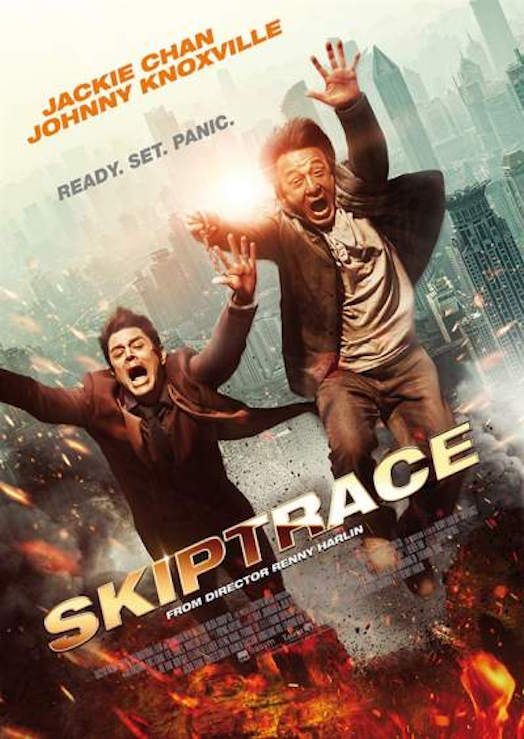
skiptrace

Original title: Jue di tao wang

D: Renny Harlin / 107m

Cast: Jackie Chan, Johnny Knoxville, Bingbing Fan, Eric Tsang, Eve Torres, Winston Chao, Youn Junghoon, Shi Shi, Michael Wong, Kuo Pin Chao

Here’s a question for you: when did you last enjoy – really enjoy – a Jackie Chan movie? Was it Dragon Blade (2015)? Or Chinese Zodiac (2012) perhaps. Or was it even further back? The Karate Kid (2010) maybe. If it’s been even further back, don’t worry, it’s likely you’re not on your own.

Back in 2012, Chan told reporters at the Cannes Film Festival that Chinese Zodiac was going to be his last action movie. He was getting too old, and he felt the world was “too violent”. And for a whole year it seemed that Chan was sticking to his word… and then he went and made Police Story: Lockdown (2013). So much for that, then. And now he’s back again with another action movie, Skiptrace, and this time, it’s… practically dead on arrival.

Let’s try another question: when did you last enjoy – really enjoy – a Renny Harlin movie? Was it The Legend of Hercules (2014) Or Devil’s Pass (2013)? Or something from the time when his name on a picture was reason enough to see it, say back in the Nineties. Unlike Chan, Harlin has never announced his “retirement” from action movies, and now he’s back with Skiptrace, and this time… well, you get the picture.

skiptrace-scene2

There are many, many, many movies that are made because somebody somewhere thought they would be a good idea. Movies like Skiptrace, which are made both for a domestic market (in this case, China and Hong Kong) and a wider, international market, show up each and every year. Some succeed in gaining that wider, international success the makers hope for – the Internal Affairs trilogy, for example – while the majority barely make an impact. In between are movies such as Skiptrace, with its bankable, internationally famous star; less bankable but still well-known co-star; even less bankable but still fairly well-known director-for-hire; country-hopping locations; uninspired action set-pieces; and a patience-testing script that has no intention of making any kind of sense at any point in the movie.

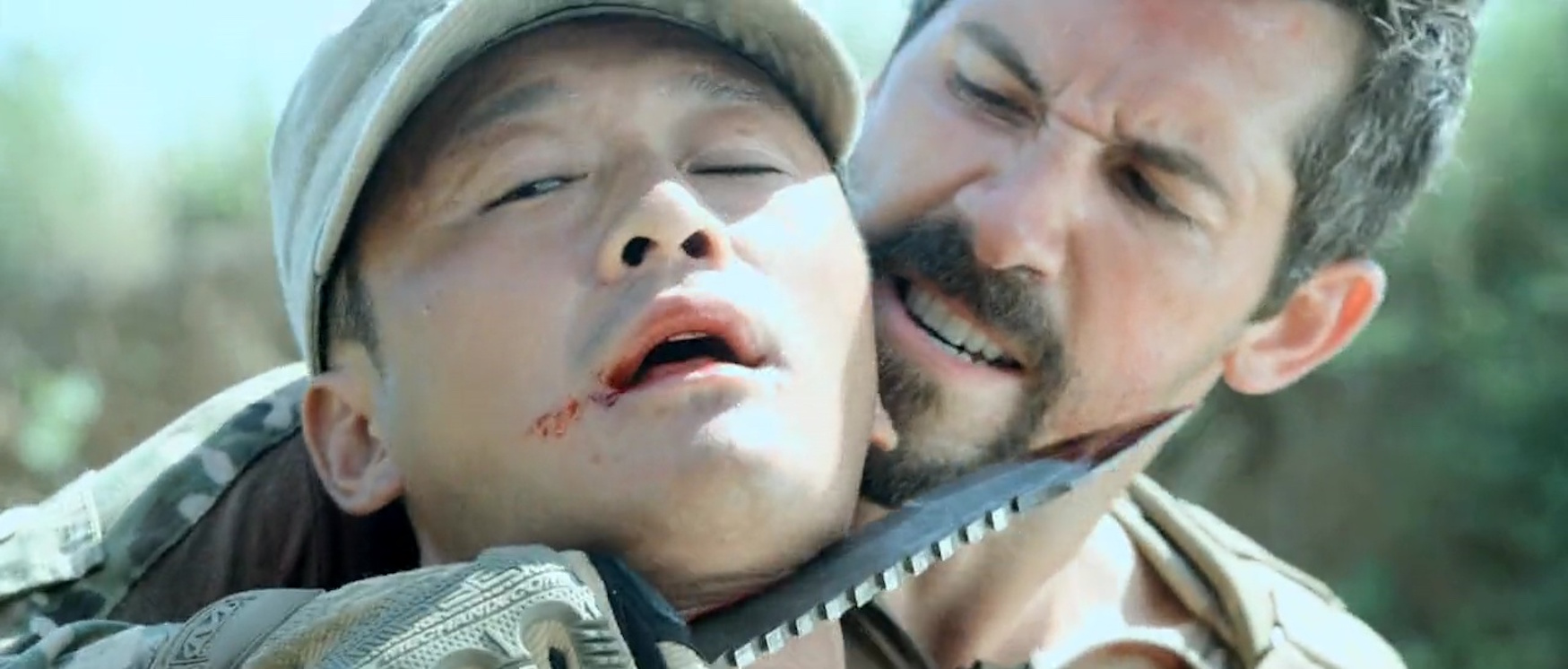
The plot, such as it is, has Chan’s dogged cop, Bennie Chan, still trying to avenge the death of his partner (Tsang) at the hands of criminal mastermind the Matador. Nine years have passed since that terrible event, and Bennie has spent the years since in trying to prove that high-profile businessman and philanthropist Victor Wong (Chao) is the Matador. Of course he’s been unsuccessful, and his latest attempt leads to the kind of property destruction that warrants his being told to take a month’s leave of absence. In the meantime, his deceased partner’s daughter, Samantha (Fan), has infiltrated Wong’s organisation in an attempt to find some evidence against him… but she’s drawn a blank too. It’s not until con man and gambler Connor Watts (Knoxville) turns up at a casino run by Wong and witnesses a murder that Bennie has a solid chance of bringing Wong to justice.
skiptrace-scene1

So far, so straightforward. But the script, already over-complicating things by having Bennie as Samantha’s guardian, introduces us to Connor by putting him in jeopardy in Russia thanks to an ill-advised relationship with a mobster’s daughter. A series of non-linear flashbacks to the previous twenty-four hours reveals Connor’s actions at the casino (including winning a large amount of money), his meeting Samantha, trying to avoid the Russian mobster’s goons (out to bring him back to Russia so he can be put in jeopardy), witnessing a murder in the process, and coming into possession of a mobile phone that will reveal the identity of the Matador. Too much already? Don’t worry, there’s more – much more.

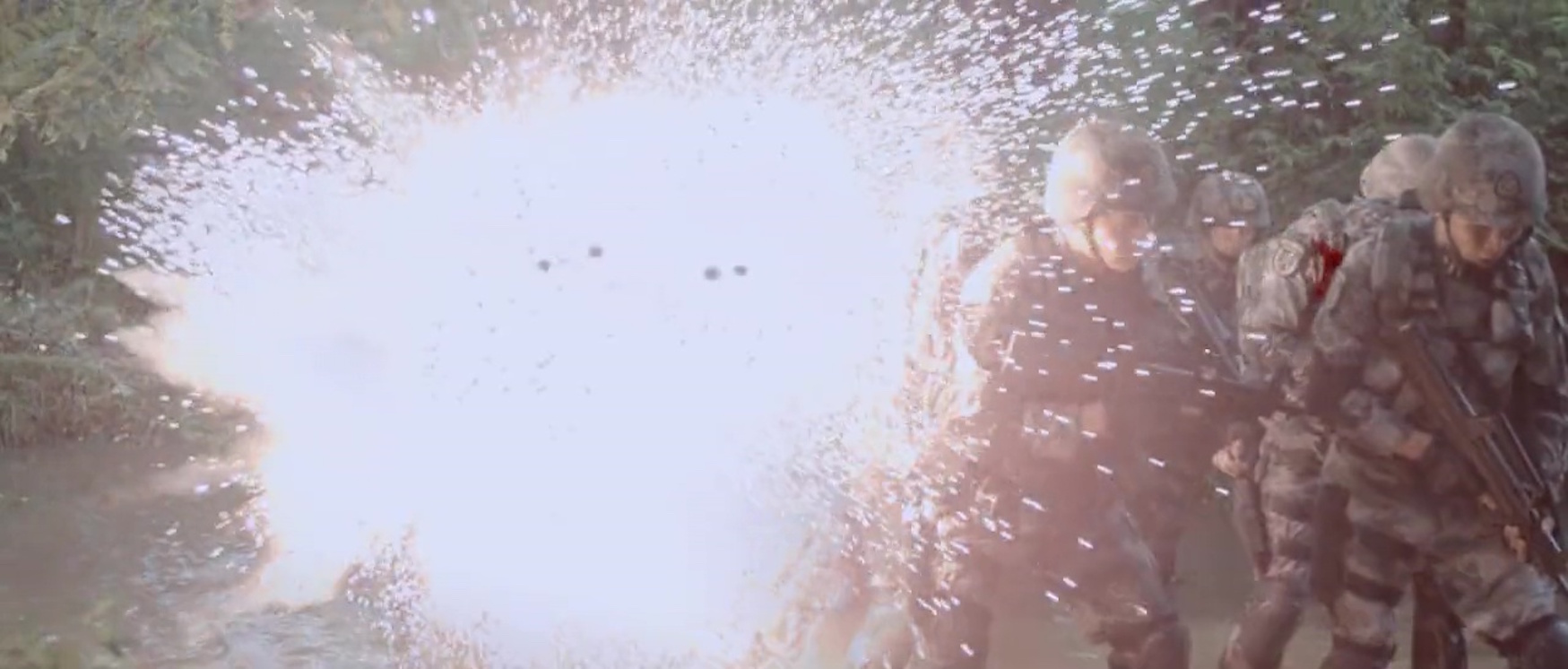
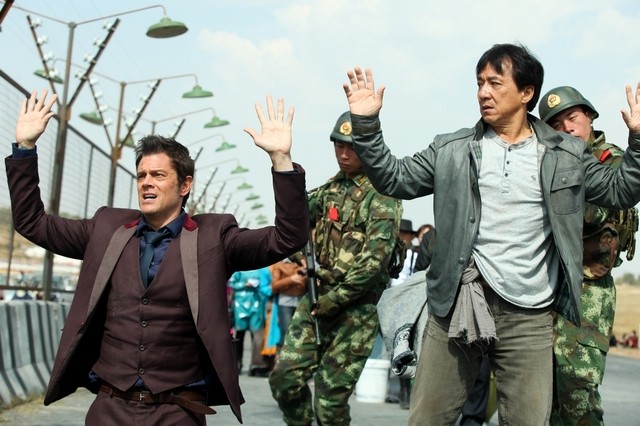
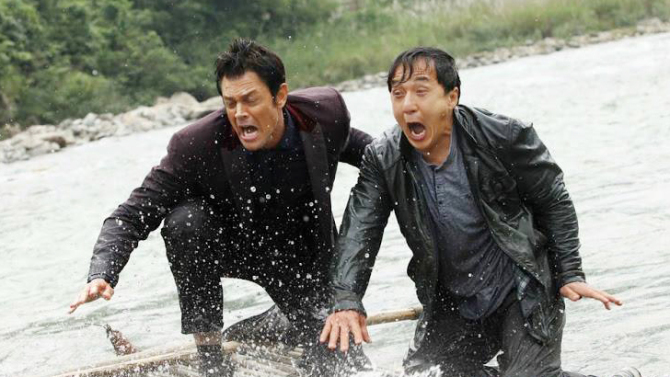
What follows is a tortuous road movie that sees Bennie and Connor eventually learn to respect and admire each other, and which takes in such locations/developments as the Russian bowling alley where Connor finds himself in peril, a train that both men jump from as soon as they hear the ticket inspector approaching, buying the slowest vehicle in Mongolia without ensuring it has enough petrol to get them anywhere, an encounter with a group of Mongolian tribespeople (more of which later), a game of bluff and double bluff at the Chinese border that sees them arrested, their opportune “rescue” by the Russian mobster’s goons, a whitewater raft ride, and eventually, a zipline escape from Wong’s men.

There’s more still, but it’s all too tiring, a series of desperate attempts by the screenplay – step forward writers Jay Longino and BenDavid Grabinski, whose first collaboration this is – to keep viewers from nodding off or asking themselves why they’re still watching after the first half an hour. If the events listed in the previous paragraph sound exciting, don’t be fooled: even handled by Harlin, not exactly a slouch when it comes to action movies, those sequences lack energy and are shot through with the kind of slapstick humour that Chan’s movies are famous for. And it needs to be said: Chan is getting on. His decision to “retire” back in 2012 should have been followed through, because in Skiptrace you can see just how slow he’s become. The speed and intricacy of his past fight scenes are absent here, with blows and parries signposted well in advance and Chan being given more than enough time to get into position for each.
skiptrace-scene3

And then there’s the encounter with the Mongolian tribespeople. It’s a standard sequence to begin with, a misunderstanding leading to Connor and then Bennie squaring up against the tribe’s best fighters. The misunderstanding is resolved and the tribespeople take to the pair as if they were long-lost relatives. A feast ensues, and after a few too many drinks, Bennie begins to sing a song. A young woman joins him, and soon everyone is singing along as well, word perfect and in perfect harmony. The song is Adele’s Rolling in the Deep, and it’s possibly the most bizarre moment you’ll ever see, and hear, in a Jackie Chan movie. It’s also the best example of how haphazardly the script has been assembled, with sequences obviously arrived at and decided on before a plot was actually dreamt up.

Like so many of these productions, the editing is the worst aspect of all, leaving the movie looking like a cinematic patchwork, with shots truncated and poorly framed, and the performances (such as they are) suffering as a consequence. Chan is his usual amiable self, unstretched by the material, while Knoxville’s comic relief portrayal of Connor serves as a reminder that when a script is this bad the actor doesn’t have a way of countering it. Elsewhere, the supporting cast do what they can with their underwritten roles, with only ex-WWE wrestler Torres standing out thanks to her impressive physicality. Harlin is a bland presence in the director’s chair, his regular visual flair absent from the mix. It’s hard to believe that this is the same man who directed Die Hard 2 (1990) and The Long Kiss Goodnight (1996). But then, it’s hard to think of anyone who could have made something even halfway decent from the material on offer.

Rating: 3/10 – not the finest moment in Chan’s career, Skiptrace is hard to sit through and barely acceptable as entertainment; with all the vitality of a contractual obligation, the movie crams in a surfeit of incidents that, ordinarily, would keep at least another two movies happy – but ultimately, it doesn’t have any idea of what to do with them.

Share this:

  • Click to share on X (Opens in new window) X
  • Click to share on Facebook (Opens in new window) Facebook
  • More
  • Click to print (Opens in new window) Print
  • Click to email a link to a friend (Opens in new window) Email
Like Loading...

Bastille Day (2016)

05 Monday Sep 2016

Posted by dullwood68 in Movies

≈ 5 Comments

Tags

Action, Bombing, Charlotte Le Bon, CIA, Crime, Drama, Idris Elba, James Watkins, José Garcia, Kelly Reilly, Paris, RAPID, Review, Richard Madden, Thriller

Bastille Day

D: James Watkins / 92m

Cast: Idris Elba, Richard Madden, Charlotte Le Bon, Kelly Reilly, José Garcia, Thierry Godard, Anatol Yusef

Meh (see also Mechanic: Resurrection).

Rating: 3/10 – uninspired, heavy-handed, preposterous, and as dead on arrival as the four victims of its fictional bombing, Bastille Day limps along from one turgid, barely credible scene to another with all the panache and style of a boxer who’s on the ropes and seeing double of everything; not even Elba’s stoic presence can save this Euro-mess of a movie, an action thriller that insults its audience at every turn, plays fast and loose with its own narrative, and which flags up every single plot development with all the subtlety of a punch in the face.

Share this:

  • Click to share on X (Opens in new window) X
  • Click to share on Facebook (Opens in new window) Facebook
  • More
  • Click to print (Opens in new window) Print
  • Click to email a link to a friend (Opens in new window) Email
Like Loading...

Mechanic: Resurrection (2016)

31 Wednesday Aug 2016

Posted by dullwood68 in Movies

≈ 4 Comments

Tags

Action, Arms dealers, Australia, Crime, Dennis Gansel, Drama, Hitman, Jason Statham, Jessica Alba, Malaysia, Michelle Yeoh, Review, Sequel, Thailand, Thriller, Tommy Lee Jones

Mechanic Resurrection

D: Dennis Gansel / 99m

Cast: Jason Statham, Jessica Alba, Tommy Lee Jones, Michelle Yeoh, Sam Hazeldine, John Cenatiempo, Toby Eddington, Femi Elufowoju Jr, Anteo Quintavalle

Meh.

Rating: 3/10 – a terrible sequel that lies dead on the screen, Mechanic: Resurrection features some of the worst green screen work ever (the opening fight in Buenos Aires), a plot that makes absolutely no sense at all, and performances from all concerned that border almost on perfunctory – if only they could have made that much effort; action movies don’t have to tie up every loose end or narrative loophole, but this has a script that just doesn’t know when to give up and go home, making it one of the worst experiences you’re likely to have at the cinema all year.

Share this:

  • Click to share on X (Opens in new window) X
  • Click to share on Facebook (Opens in new window) Facebook
  • More
  • Click to print (Opens in new window) Print
  • Click to email a link to a friend (Opens in new window) Email
Like Loading...

Blood Father (2016)

28 Sunday Aug 2016

Posted by dullwood68 in Movies

≈ Leave a comment

Tags

Action, Crime, Diego Luna, Drama, Erin Moriarty, Ex-con, Jean-François Richet, Literary adaptation, Mel Gibson, Michael Parks, New Mexico, Peter Craig, Thriller, William H. Macy

Blood Father

D: Jean-François Richet / 88m

Cast: Mel Gibson, Erin Moriarty, Diego Luna, Michael Parks, William H. Macy, Miguel Sandoval, Dale Dickey, Thomas Mann, Richard Cabral, Daniel Moncada, Ryan Dorsey, Raoul Trujillo

The recent career of Mel Gibson has seen him appear in one movie per year since 2010 (with the exception of 2015). While personal troubles have dogged him over the last ten years, and caused him no end of embarrassment – and given Ricky Gervais the opportunity to make one of the best jokes about an actor, ever – Gibson has tended to stick to the action genre that has stood him in such good stead in the past. Aside from his role in The Beaver (2011), Gibson’s choice of roles has seen him engage fitfully with the material on offer, and he’s been the villain in two action sequels that should have been much, much better: Machete Kills (2013) and The Expendables 3 (2014).

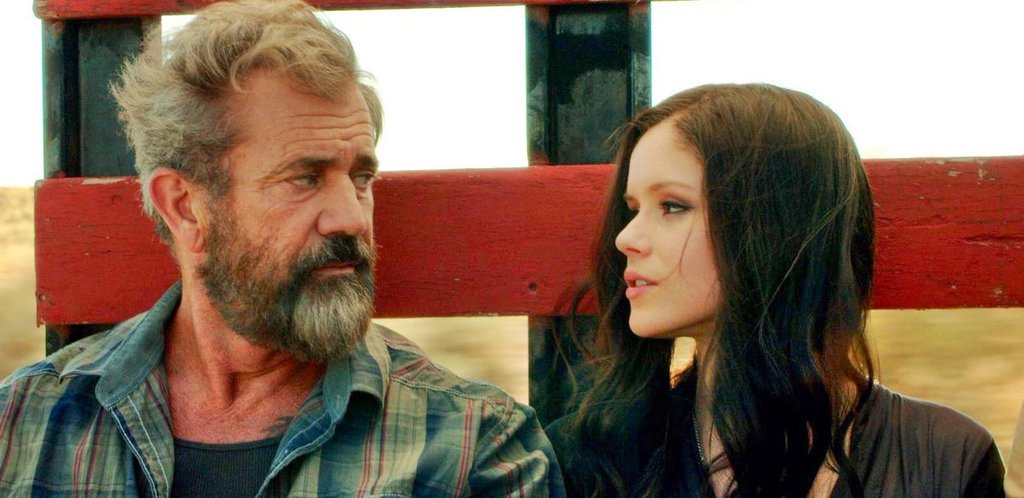
But now, with Blood Father, Gibson finally has a role he can really sink his teeth into, and the result is a performance that serves as a (much-needed) reminder of just how good an actor he really is. An adaptation of the novel by Peter Craig, and co-written by Craig and Andrea Berloff, the blood father of the title is an ex-con by the name of John Link. He’s been out of the joint for a year, and sober for two. He lives in a trailer outside a small town in New Mexico, and is a tattooist by trade. He’s also divorced, and has a seventeen year old daughter, Lydia (Moriarty). But Lydia has been missing for the last three years, ever since she ran away from the home she shared with her mother and her mother’s third husband. John has hopes of finding her one day, but without any clues as to her whereabouts, it’s unlikely he will.

Blood Father - scene3

It’s Lydia who finds him. Having gotten involved with a junior member of a Mexican cartel, Jonah Pincerna (Luna), Lydia finds herself in very deep trouble when Jonah raids the home of someone who’s been stealing from him. As a test of her loyalty he asks her to kill the woman there; Lydia ends up shooting Jonah instead. On the run, and with no one else she can call, Lydia contacts John and he arranges to meet her. He takes Lydia back to his trailer, but it’s not long before Jonah’s crew turn up looking for her. The ensuing gunfight prompts John to leave and take Lydia with him, and to find out more about Jonah and his connections. After a lucky escape from the police, John discovers that the cartel have sent a hitman (Trujillo) to kill Lydia.

A reunion with an old army buddy, Preacher (Parks), goes awry when he attempts to claim the missing persons reward money put up when Lydia ran away. She and John manage to get away, and at a motel they change their appearances, John shedding his beard and Lydia dyeing her hair blonde. While John travels to a nearby penitentiary to visit an old friend, Arturo Rios (Sandoval), who has concrete information about Jonah, Lydia is persuaded to take herself to a public place by John’s sponsor, Kirby (Macy), and trust no one. But it’s a set up, and Lydia is abducted. Her abductors contact John, and a rendezvous in the desert is arranged, but it’s a rendezvous that is likely to end in both of them being dead…

Blood Father - scene2

Fans of Mel Gibson the actor will be glad to see that his performance in Blood Father is very definitely a return to form. Ostracised and pilloried for the racist remarks he’s made in the past, Gibson seemed to be getting by on the goodwill of others – Jodie Foster, Robert Rodriguez, Sylvester Stallone etc. – and while he’s still a highly watchable actor in his own right, there was always a feeling over the last few years that Gibson wasn’t trying too hard, that the work he was taking on couldn’t have been challenging for him, and so he wouldn’t rise to the challenge. Here, though, Gibson has found a role that is not only challenging, but inspiring, rewarding, and above all, one of the best fits for his skills as an actor.

Inevitably, there’s more than a smidgeon of Martin Riggs lurking inside the character’s DNA. Witness John’s response to the arrival of Jonah’s henchmen and the gunfight that follows: he’s dismissive of them, and once they open fire and he has to deal with them he gives angry voice to the variety of ways that their appearance will lead to his breaking parole. He’s pissed off, he’s mostly unconcerned by their firepower, and he can’t wait around for the police – the sensible thing to do – because he’s convinced they won’t believe a word he says. Playing John with a fatalism that speaks volumes for the character’s mindset, Gibson gives one of the best performances of his entire career, and proves as mesmeric an actor as he was back in the late Eighties, early Nineties. As he scowls and growls his way through the movie, Gibson also imbues John with a subtle vulnerability that adds depth to the character and makes his need to reconnect with Lydia entirely credible.

Blood Father - scene1

Thanks to the combination of Gibson’s performance, Craig and Berloff’s astringent screenplay, and Richet’s sharp, purposeful direction, Blood Father is more than just a standard action drama punctuated by brief, kinetic bursts of violence. It has an off-centre sense of humour, is sure-footed enough to keep John and Lydia’s relationship free from sentiment, makes very good use indeed of its stunning New Mexico locations (beautifully lensed by DoP Robert Gantz), and above all, maintains a level of tension that many other so-called thrillers fail to achieve for even a fraction of the movie’s running time. As a return to form, Gibson couldn’t have picked a better vehicle or character, and the movie is proof positive that he’s still as mercurial an actor as ever, and that when the right role comes along, he’s nigh-on untouchable.

Rating: 8/10 – with deft supporting turns from the likes of Sandoval and Macy allied to Moriarty’s low-key, sympathetic portrayal of Lydia, Blood Father is more than just a vigorous action thriller; despite its awkward title, the movie explores themes of loss and regret, hope and sacrifice, that elevate the narrative beyond its basic, conventional set-up and make it one of the more astute “relationship dramas” out there.

Share this:

  • Click to share on X (Opens in new window) X
  • Click to share on Facebook (Opens in new window) Facebook
  • More
  • Click to print (Opens in new window) Print
  • Click to email a link to a friend (Opens in new window) Email
Like Loading...

Suicide Squad (2016)

21 Sunday Aug 2016

Posted by dullwood68 in Movies

≈ 5 Comments

Tags

Action, Adewale Akinnuoye-Agbaje, Amanda Waller, Arkham Asylum, Belle Reve, Captain Boomerang, David Ayer, DC Universe, Deadshot, Drama, El Diablo, Enchantress, Harley Quinn, Jai Courtney, Jared Leto, Jay Hernandez, Joel Kinnaman, Killer Croc, Margot Robbie, Midway City, Review, Rick Flag, Task Force X, The Joker, Villains, Viola Davis, Warner Bros., Will Smith

Suicide Squad

D: David Ayer / 123m

Cast: Will Smith, Jared Leto, Margot Robbie, Joel Kinnaman, Viola Davis, Jai Courtney, Jay Hernandez, Adewale Akinnuoye-Agbaje, Cara Delevingne, Karen Fukuhara, Scott Eastwood, Adam Beach, Ike Barinholtz, David Harbour, Common, Alain Chanoine, Ben Affleck, Ezra Miller

At the beginning of 2016, DC Comics fans had two movies to look forward to in the coming year: Batman v Superman: Dawn of Justice, and Suicide Squad. Anticipation for both these movies was almost stratospherically high. But Batman v Superman proved to be a messy affair that lacked coherence and couldn’t even give audiences a rousing showdown between the Caped Crusader and the Man of Steel. Critically pounded, and causing a division between fans that in some quarters got way too heated, the movie fell short of making a billion dollars at the box office, and was judged a disappointment. Earlier this month, an extended cut of the film was released on home video, and though the extra footage tidied up a few things left adrift in the theatrical cut, the general consensus was that the additional thirty minutes didn’t make it a better movie.

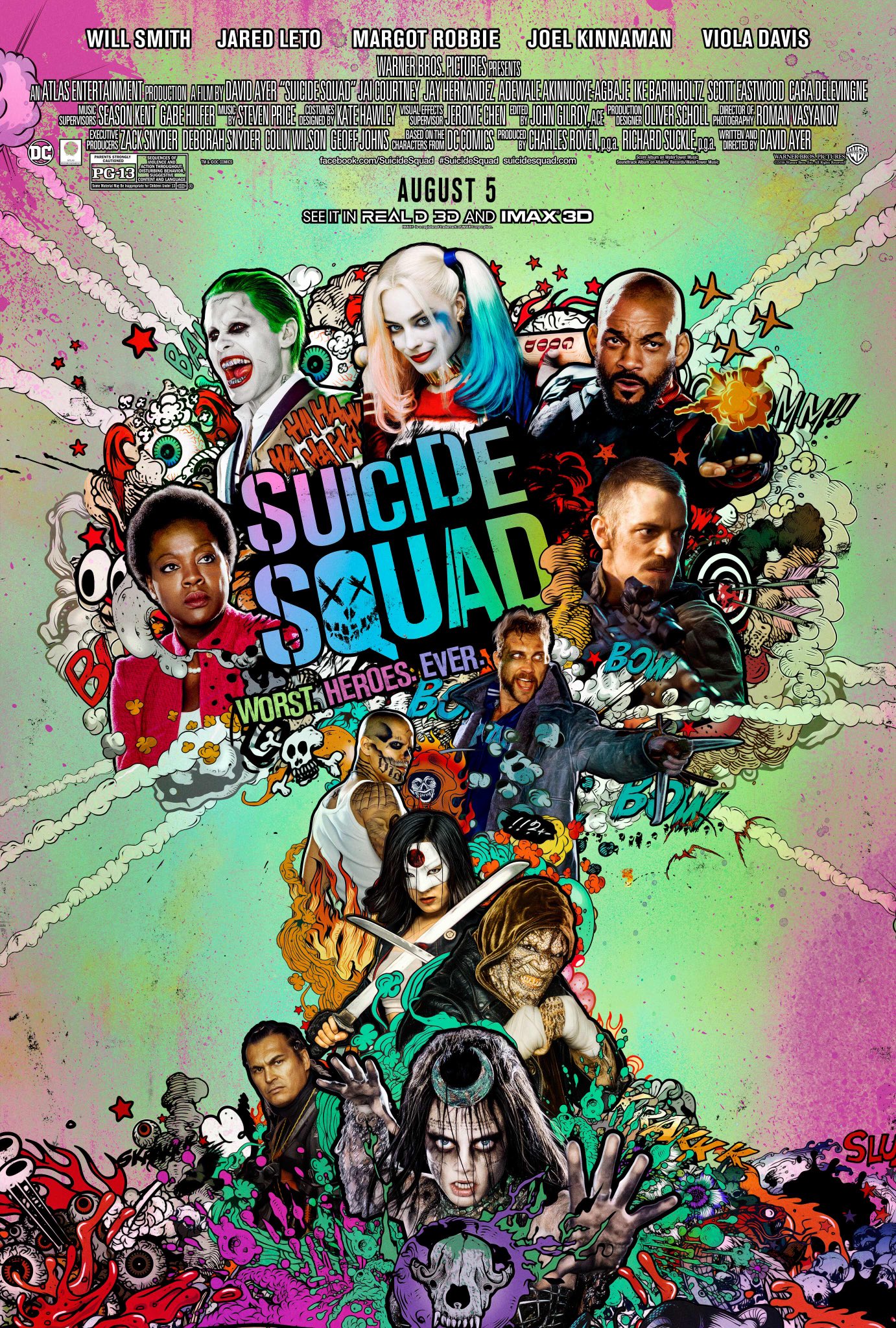
Fans quickly turned their attention to Suicide Squad to save the day, and the hype began all over again. In development since 2009, the movie arrives now with all the fanfare of a Second Coming. Promoted and advertised and pushed for all it’s worth (IMAX screenings feature a new, Suicide Squad-inspired countdown that’s a nice but unnecessary gimmick), this was Warner Bros.’ chance to prove that they were listening when critics and fans alike said Batman v Superman was too dark and sombre. Director David Ayer promised there would be humour, and the tone would be lighter. Has he delivered? Predictably, the answer is yes and no.

Suicide Squad - scene1

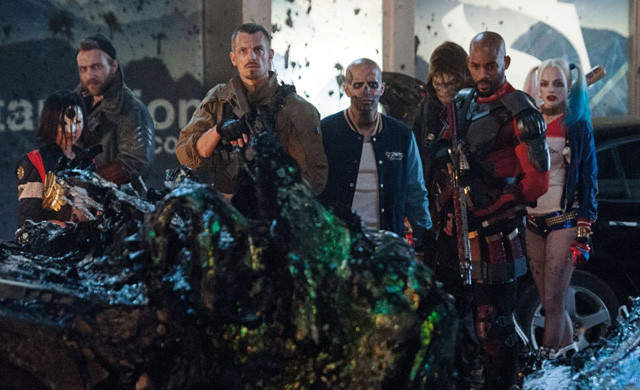
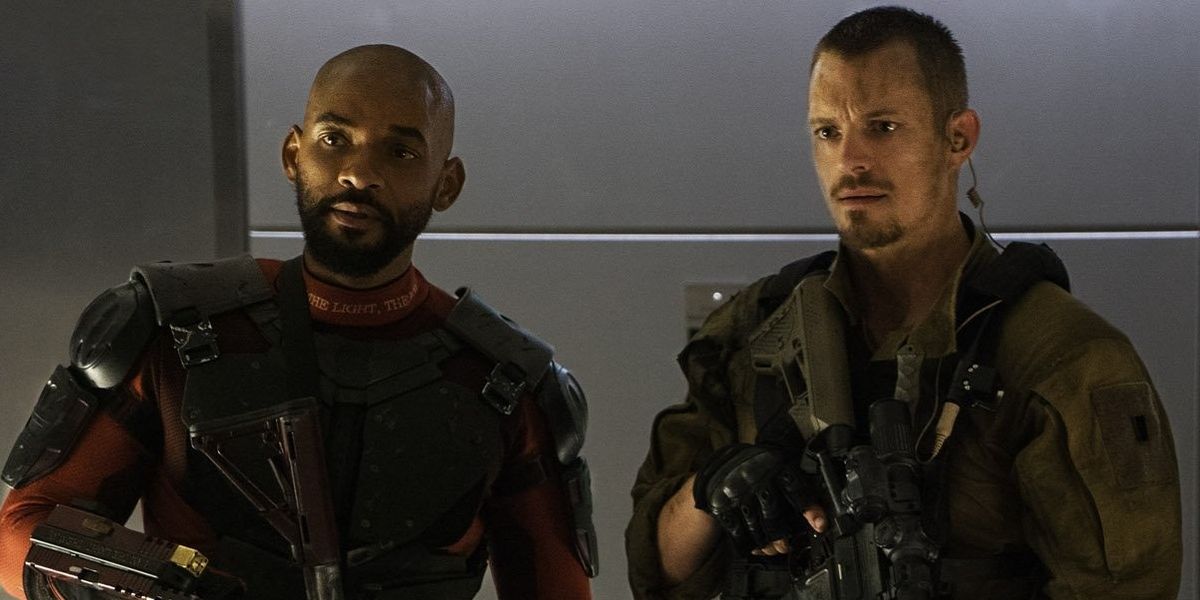
Suicide Squad is, first and foremost, just as messy as it’s DC Extended Universe predecessor. Its plotting is murky and frustratingly lacking in detail, character motivations vary wildly (sometimes in the same scene), there’s the usual over-reliance on a surfeit of destruction-porn, and no one to root for or care about, even though the script does try its best to make Deadshot (Smith) and El Diablo (Hernandez) at least halfway sympathetic. What fun there is to be had can be found in the opening twenty minutes as we’re introduced to each member of the squad, from the assassin who never misses with a gun, Deadshot, to meta-humans such as Killer Croc (Akinnuoye-Agbaje) and El Diablo, wicked witch Enchantress (Delevingne) and her human host June Moone (also Delevingne), thief extraordinaire Captain Boomerang (Courtney), and brain-fried Daddy’s Lil Monster, Harley Quinn (Robbie). Watching these characters interact with and defy authority at every turn gives hope to the direction the movie is heading in, but that hope is short-lived.

Assembled by government spook Amanda Waller (Davis), the squad is a fail-safe option if someone were to come along with Superman’s abilities and use them for evil. With explosive devices implanted in their necks to stop them absconding, the squad, led by Colonel Rick Flag (Kinnaman), are tasked with a mission in Midway City when Enchantress and her brother Incubus (Chanoine) begin building a machine that will destroy all other weapons on the planet and – well, this is one of those plot points that sounds great but is actually quite lame and badly thought out. With Flag and the squad further augmented by expert swordswoman Katana (Fukuhara), escape specialist Slipknot (Beach), and two teams of soldiers, they venture into the randomly destroyed city in search of a High Value Target to rescue. But Waller and Flag have been less than honest about the mission, and the squad must decide if working together is a more appropriate way forward than going their own ways.

Suicide Squad - scene2

It’s clear from the start that Suicide Squad wants to be edgy and smart, caustic and irreverent, and provide a great time for its audience. But as the movie progresses, and once the introductions are over, it soon becomes clear that these so-called supervillains are going to be trapped by the demands of a script that wants to show that, deep down, they’re all really good guys at heart. As a result, this leads to a watering down of the original concept – Worst.Heroes.Ever. – that should be revised to read Best.Antiheroes.Ever. Yes, they’re largely antisocial, and yes they have their issues with authority, and yes they haven’t got a problem with killing people (mostly), but by the end they’ve all bonded and are like one big happy dysfunctional family. It’s enough to tug at the heart strings.

And then there’s the Joker (Leto). Much has been made of Leto’s insistence on staying in character for the duration of the shoot – Smith has quipped that he didn’t meet Leto until after filming was completed – and the Joker’s heavily tattooed look. But it’s all immaterial as Leto is on screen for around fifteen to twenty minutes in total, in a subplot that sees him try to rescue Harley Quinn from being part of the squad. With the Joker reduced to a supporting role it’s hard to qualify Leto’s performance. Yes it’s mannered, heavily so, and completely different from any previous interpretations, but the script depicts him as a lunatic gangster figure rather than the Clown Prince of Chaos. The character has room for development, then, but right now his need to rescue Quinn keeps him working to a standard plotline and any antic diversions seem forced.

Suicide Squad - scene3

In what is fast becoming the one area in which Warner Bros. seems unable to act on the recommendations of others, Suicide Squad ramps up the destruction on offer, with endless gunfights and property devastation the order of the day. It’s all accompanied by one of recent cinema’s more overwhelming and intrusive scores (courtesy of Steven Price), a blaring cacophony of dramatic musical cues and declamatory passages that reinforce just how much the movie is like being hit repeatedly over the head (and by Harley Quinn’s mallet at that). Ayer can’t stop things from getting too overwrought in the movie’s final half hour, and inevitably any subtlety is made to hide in the shadows where it can’t interfere with anything.

Against all this the cast do their best, with Smith atoning for some recent poor choices by making Deadshot likeable and charismatic. Robbie has the most fun, and is the most fun to watch, but after a while the chirpy attitude and cheesy wisecracks begin to grate, and Ayer does away with any development the character has made as if it never happened, leaving her no different from how she was at the start. Davis essays the real villain of the piece, but once that particular “surprise” is established the character stops being interesting, as does her motivation, and she’s wisely sidelined. Kinnaman does stolid with ease but fails to make Flag memorable, while Hernandez makes El Diablo a surprisingly well-rounded character, less of a supervillain, and more Hulk-like in terms of his anger issues.

The movie is further hampered by Ayer’s insistence on giving the movie a noir feel instead of a comic book feel, and John Gilroy’s haphazard, wayward approach to the editing. Other odd moments/decisions stand out: Deadshot looking like a pimp when he’s out with his daughter; Enchantress swaying like a woman trying to keep up an invisible hula hoop; several flashbacks that slow the movie’s rhythm; a scene where El Diablo reveals a tragic consequence to his ability that feels out of place; and an origin story for Quinn that involves falling into a chemical vat for the sake of it.

Rating: 5/10 – slightly better than Batman v Superman: Dawn of Justice (but only slightly), Suicide Squad still has enough problems to stop it from becoming the first DC Extended Universe movie to overcome the series’ usual pitfalls; shedding its claim to being edgy and different with every minute that passes, the movie is further proof that Warner Bros. and DC need to work harder on their game plan, and that copying Marvel isn’t necessarily the right idea.

Share this:

  • Click to share on X (Opens in new window) X
  • Click to share on Facebook (Opens in new window) Facebook
  • More
  • Click to print (Opens in new window) Print
  • Click to email a link to a friend (Opens in new window) Email
Like Loading...

Jason Bourne (2016)

20 Saturday Aug 2016

Posted by dullwood68 in Movies

≈ 1 Comment

Tags

Action, Alicia Vikander, Asset, Athens, Berlin, Black ops, CIA, Drama, Iron Hand, Las Vegas, London, Matt Damon, Paul Greengrass, Review, Sequel, Thriller, Tommy Lee Jones, Vincent Cassel

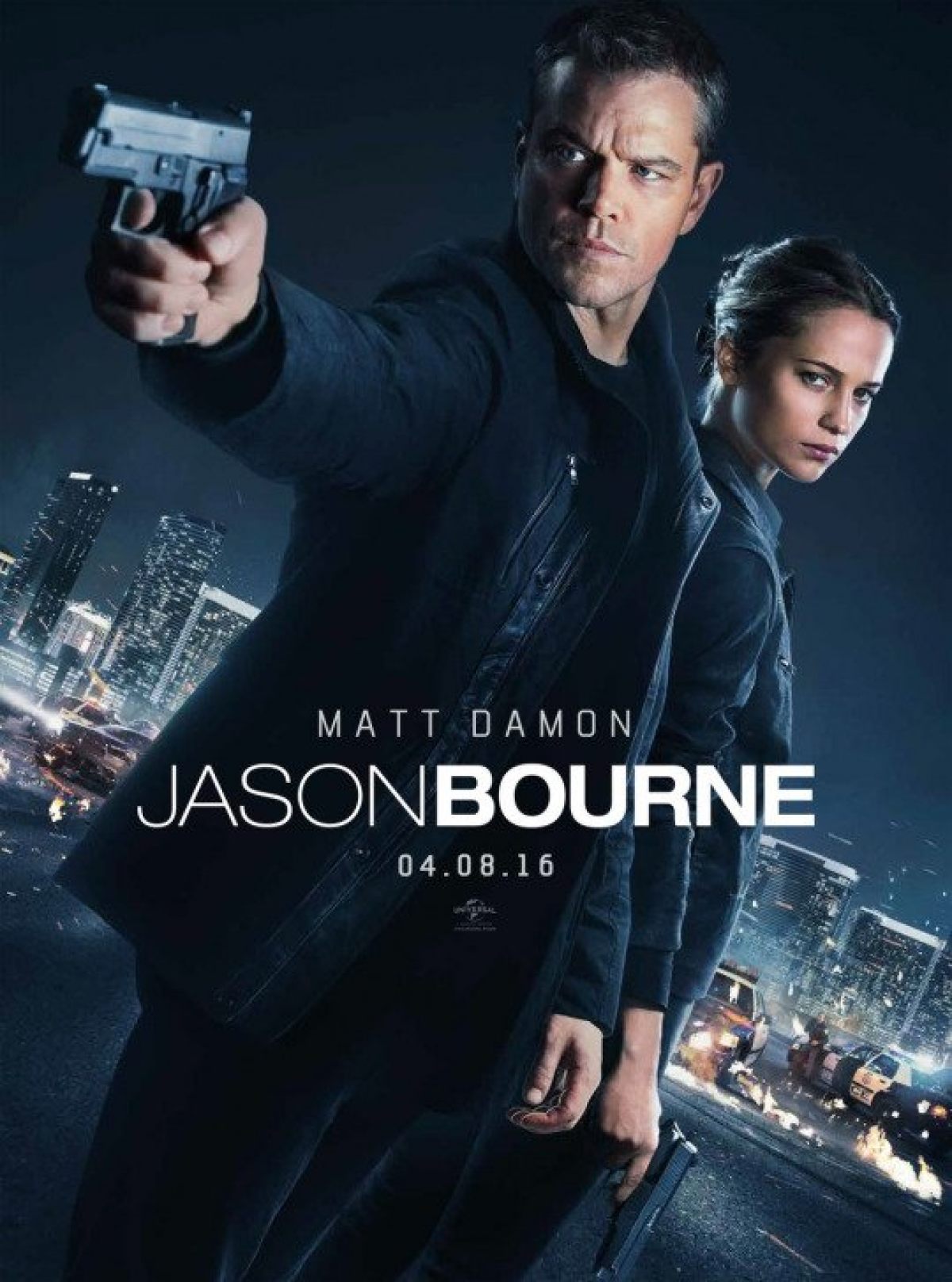
Jason Bourne

D: Paul Greengrass / 123m

Cast: Matt Damon, Tommy Lee Jones, Alicia Vikander, Vincent Cassel, Julia Stiles, Riz Ahmed, Ato Essandoh, Scott Shepherd, Bill Camp, Vinzenz Kiefer, Stephen Kunken, Gregg Henry

The original Bourne movie trilogy was smart, inventive, thrilling, and a massive boost for the ailing spy genre. It made an action hero of Matt Damon, featured action sequences that were fresh and exciting, and had an emotionally complex through-line that bolstered the already intense plotting. At the end of The Bourne Ultimatum, David Webb had gained the answers to questions that had plagued him ever since he’d been saved from a watery grave by the crew of a fishing boat.

Except… he hasn’t, not really. The closing lines from The Bourne Ultimatum – “I remember. I remember everything.” – are repeated here at the movie’s beginning, and are followed by a montage of scenes from the original trilogy (as far as this movie is concerned, The Bourne Legacy (2012) never happened). But in amongst these memories are flashes of scenes we haven’t seen before. And when Jason Bourne snaps out of his reverie, we find him in the back of a truck and heading for an illegal fight ground in Greece. Clearly the years since he took down Treadstone and Blackbriar haven’t been good to him: despite his fighting prowess he still looks lost. And the bad dreams, or reveries, he’s experiencing aren’t helping. For someone who “remembers everything”, he’s having some of the most spectacularly disturbing and disorienting dreams ever. And he can’t make sense of them, especially the ones that involve his father, Richard Webb (Henry).

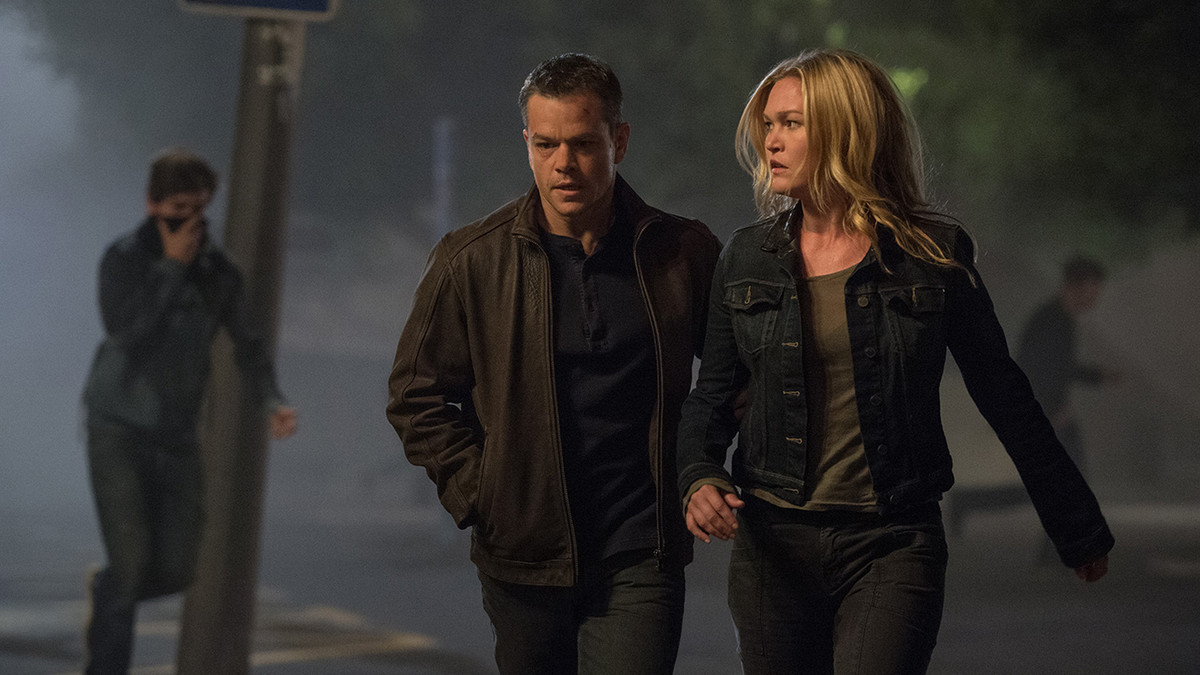
Jason Bourne - scene1

Help comes in the familiar but unexpected form of ex-CIA analyst Nicky Parsons (Stiles). Having hacked into the CIA mainframe, she’s done so with the aim of helping Bourne learn more about his past, and has discovered that his father had a greater role in the Treadstone programme than Bourne has been led to believe. But in hacking the CIA, Nicky has become a target and her contacting Bourne in Athens leads to his getting “back in the game”. With CIA operatives on their trail, as well as an Asset (Cassel), Bourne gains access to the information Nicky hacked, and once he becomes aware of his father’s involvement, he finds his enrolment in the Treadstone program wasn’t as clear cut as he thought. But as before, his reappearance has senior members of the CIA, including Director Robert Dewey (Jones), unwilling to let Bourne expose their Black Ops programs. Using a combination of the Asset and the head of the Cyber Crimes Division, Heather Lee (Vikander), to track down Bourne and eliminate him once and for all, Dewey plots to keep the CIA’s secrets as hidden as ever.

Fans of the Bourne Trilogy are generally dismissive of The Bourne Legacy, the Jeremy Renner starring addition to the series that failed to add anything new to the mix, and which felt like an uninspired retread of everything that had gone before. Matt Damon famously turned down the chance to cameo in Legacy, and made it clear that he wouldn’t return to the franchise unless Paul Greengrass was back on board as well. Well, Damon got his wish, and Greengrass is back as the movie’s director. But perhaps Damon should have made another stipulation: that Greengrass didn’t write the script.

Jason Bourne has many of the same attributes that The Bourne Supremacy and The Bourne Ultimatum share. There’s the generous use of “shaky cam”, Christopher Rouse’s exemplary editing, excellent location work, and a series of intense and very well-staged action sequences (one of the series major strengths). But there’s one aspect that’s missing this time round, and aside from Greengrass’s muscular directorial style, it’s perhaps the series’ most important component: the contribution of Tony Gilroy. As screenwriter of the first two movies, and co-screenwriter of the third (though his input was drastically reduced), as well as Legacy‘s writer/director, Gilroy helped guide the series from its inauspicious beginnings to a position of critical and commercial success worldwide. His scripts had intelligence, depth and subtlety, and his villains were drawn with a vividness and care that made them worthy adversaries.

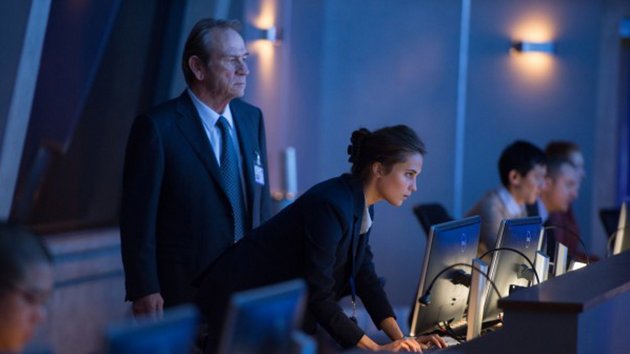
Jason Bourne - scene3

But without Gilroy (no doubt a casualty of The Bourne Legacy‘s poor reception), Jason Bourne proves just as disappointing as its unacknowledged predecessor. Nearly ten years on from the events of Ultimatum, Bourne is still an emotional mess, haunted by memory fragments that cause him pain and regret. He looks awful, and Damon plays him like a man besieged. For a man who found all the answers he needed, Bourne looks even more tormented than when he was in the dark. The movie never really attempts to explain why this is the case, preferring instead to give audiences a tortured Bourne without expanding on his back story. As a result, his decision to jump back in, prompted by some spurious nonsense involving his father, seems perfunctory instead of necessary.

With Bourne himself treated in such a cavalier fashion – he’s really just a one-man wrecking crew here – the other characters fare just as badly. Dewey is a stock villain, one step removed from twirling an invisible moustache and muttering “mwah-ha-ha!” whenever the script has him do something nefarious. Jones has no chance with the role, and there are times when his awareness of this comes through loud and clear; just watch his scenes with Vikander, and ask yourself if he looks committed. Cassel’s Asset is fuelled by revenge for the torture he suffered through Bourne’s exposure of the Blackbriar program, but as the character spends an inordinate amount of time running around chasing Bourne without actually catching him, his anger (and his back story) gets shoved to the side. And then there’s Heather Lee, the Cyber Crimes head who acts as this movie’s Pamela Landy. There’s supposed to be some mystery as to which side she’s on (she helps Bourne in various ways while pushing a separate CIA agenda), but thanks to Greengrass’s less than subtle direction, Vikander never looks anything other than extremely distrustful.

Film Title: Jason Bourne

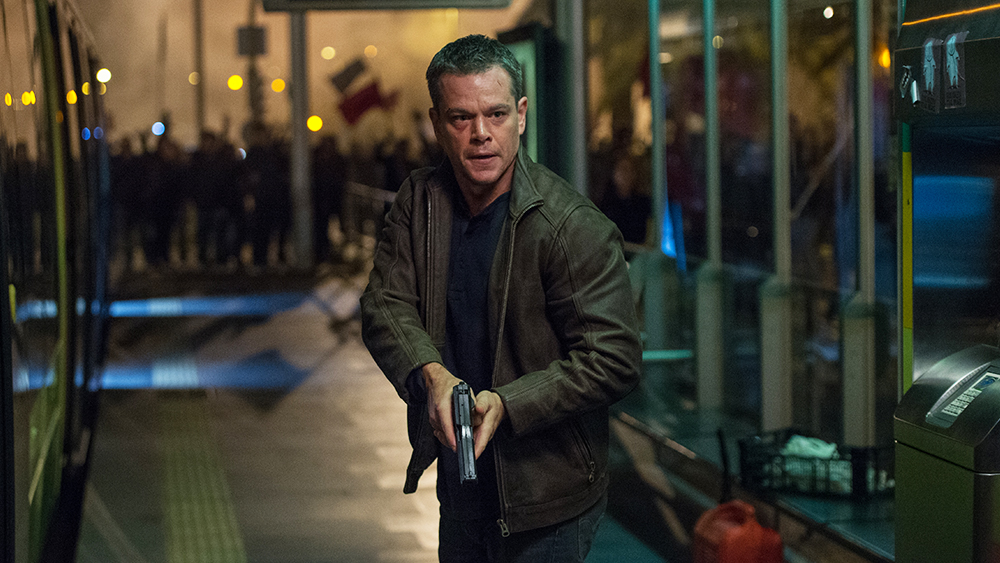
And then there’s the small but important matter of how Bourne gets about. From Greece he travels to Berlin, then to London. He does so on his own, without any help from anyone, and manages to elude detection at every turn (a facet of the series that was usually, and very cleverly explained away – but not here). And yet when he travels from London to Las Vegas he does so by commercial aircraft, and though he receives assistance from Lee in getting through US Customs, it still begs the question how UK Customs didn’t flag him up in the first place. (Also, it seems that outside of Athens and Las Vegas there’s not the CCTV infrastructure to allow the CIA to track Bourne efficiently anywhere else.) And stop and think about this: in Las Vegas, at an expo for a communications platform that Dewey wants to appropriate – don’t ask – Bourne picks up various conveniently placed bugging devices that he uses to get to Dewey, all of which begs the question, what plan did he have originally (as he couldn’t have known they were there beforehand)?

Gaping plot holes like these only add to the realisation that Jason Bourne is a less than rewarding, less than necessary sequel to four previous movies (three of which had already told the story effectively and with impressive style), that throws in a handful of rousing action sequences, makes Bourne indestructible, has a subplot involving a communications platform – actually, still don’t ask – and features some of the blandest characters in the whole series. Greengrass is a mercurial director, with a great visual style, but he’s not as good a screenwriter as he might think, and along with Rouse, he makes things too simplistic for the movie’s own good. The end result? A movie that only takes off when it’s throwing punches or chasing SWAT vehicles.

Rating: 5/10 – a missed opportunity to enhance and expand on the series, Jason Bourne trades on nostalgia instead of bringing something new to the franchise; Bourne looks tired throughout, as does Jones, and by the movie’s end the viewer will feel exactly the same way.

Share this:

  • Click to share on X (Opens in new window) X
  • Click to share on Facebook (Opens in new window) Facebook
  • More
  • Click to print (Opens in new window) Print
  • Click to email a link to a friend (Opens in new window) Email
Like Loading...

I Am Wrath (2016)

12 Friday Aug 2016

Posted by dullwood68 in Movies

≈ Leave a comment

Tags

Action, Amanda Schull, Christopher Meloni, Chuck Russell, Corruption, Crime, Drama, John Travolta, Murder, Rebecca De Mornay, Revenge, Review, Sam Trammell, Thriller

I Am Wrath

D: Chuck Russell / 91m

Cast: John Travolta, Christopher Meloni, Amanda Schull, Sam Trammell, Patrick St. Esprit, Rebecca De Mornay, Asante Jones, Paul Sloan, Luis Da Silva Jr, Robert Forte Shannon III, James Logan

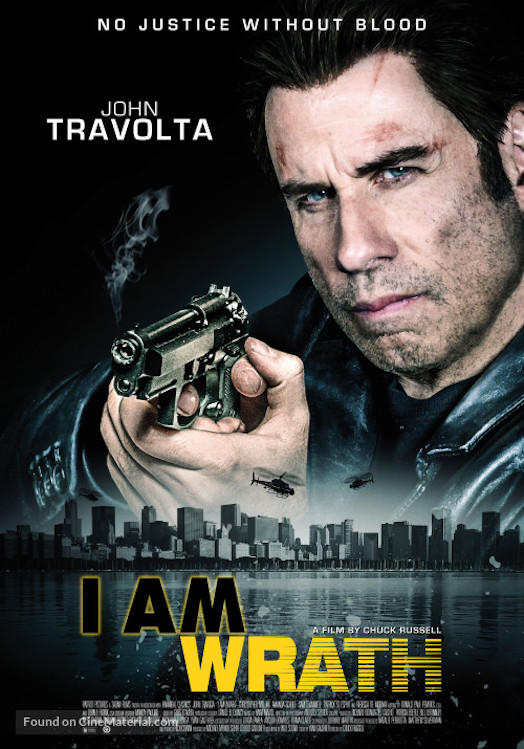
You’re an ex-Black Ops veteran turned law-abiding car engineer about to work for Honda (probably). You come home from a job interview and meet up with your wife who’s working on an independent review of a proposed water pipeline that’s being backed by the state governor. Both of you are approached by a shady looking guy who wants help paying his parking ticket. You warn him off but he gets offended. The next thing you know, you’ve been hit over the head and are on the floor, then the shady looking guy pulls out a gun and shoots your wife. She dies instantly. Thanks to your knowledge of cars, you recognise the sound of the car engine the shady looking guy and his two accomplices drive off in. Later, at the police station, the detectives assigned to your wife’s murder are sympathetic and helpful. Even later, those same detectives tell you they’ve got someone who may have been involved. At a line-up, you pick out the shady looking guy thanks to the distinctive fly tattoo he has near his right eye. And right then and there, the rug gets pulled out from under you: the detectives don’t have enough evidence to arrest him. The shady looking guy goes free. Now what do you do?

IAW - scene1

Well, if you’re John Travolta, and the movie you’re starring in is called I Am Wrath, then you tool up and go after the man who killed your wife, and his two accomplices. But what is it that prompts you to do this? Is it a profound sense of justice needing to be done? Is it anger and a need for revenge? Is it because you’re fed up with leading a “normal” life and you want to get back to killing bad guys? Or is it because a Bible the priest at your wife’s funeral gave you, lands open at a particular place (Jeremiah 6:11 to be precise) after you’ve thrown it to the floor? And is it because the phrase “But I am full of the wrath of the LORD, and I cannot hold it in” is featured there, and it seems like God’s giving you permission to go out and kill some people? Well, praise the Lord. Seems he doesn’t mind people committing murder after all.

This is exactly how Travolta’s character, called Stanley Hill (and since when did Travolta ever look like a Stanley?), comes to make the momentous decision to take the law into his own hands and seek vengeance on shady looking guy and his pals. If you’re in any doubt as to how good or bad this movie is at this point, then rest assured the scene with the Bible is as far from cinematic gold as it’s possible to get. Travolta hurls the good book to the floor. It lands cover side down and open at the aforementioned passage. Travolta looks over at it. He gets up, a look of consternation on his face. As he approaches the Bible he begins to look as if he already knows what he’s going to read when he picks it up. And once he does, there’s no doubt: it’s a sign! And he knew it was a sign! Stanley has been given a sign from God (even though he’s not a praying man)! Say Hallelujah everyone!

IAW - scene3

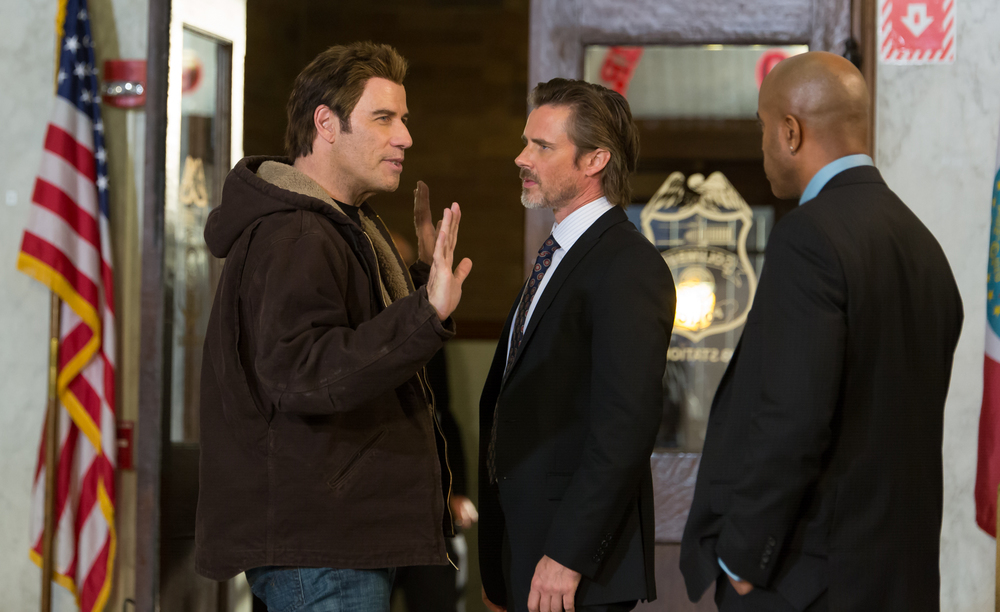
Unfortunately for I Am Wrath, any further religious overtones or connotations are abandoned with undue haste. Save an artless confessional scene much later on, the script and direction steer well clear of any religious undertones and concentrate on Travolta – aided by Meloni as his pal from their Black Ops days – and his mission to avenge his wife’s death. Along the way he discovers a conspiracy that involves the police, a local crime lord, and – shock! horror! – the state governor. What could have been an intriguing, finely balanced exercise in the nature of faith versus morality, instead becomes yet another tired actioner where one man and his friend take on a whole bunch of bad guys, break every law going in the process, and are cheered as heroes for “taking out the trash” (quite literally at one point).

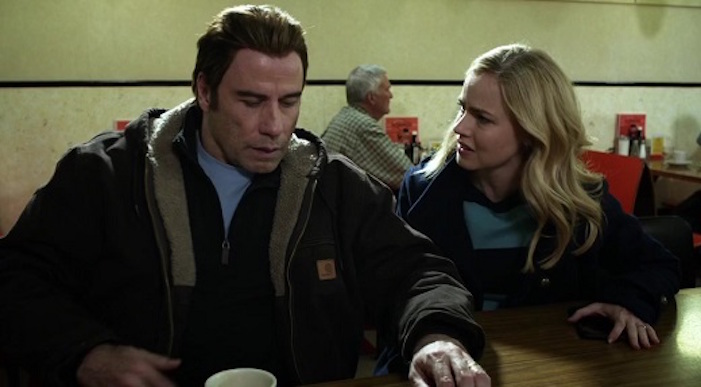
First optioned as a vehicle for Nicolas Cage back in 2012, and with William Friedkin set to direct, the project derailed six months later. Watching this finished result, it’s hard not to see why, as it’s difficult to tell if Paul Sloan’s script – he also plays crime lord Lemi – is the same now as it was then, free from any revisions or amendments. It’s a screenplay that signposts everything so far in advance, that even the most naïve or inexperienced of viewers would have no trouble predicting each step or move made by the characters before they happen. From Travolta reassuring his daughter (Schull) that the drive-by shooting that nearly killed her will be the only time she’s put in danger (yeah, right!), to the police (Trammell, Jones) being in the pocket of both the crime lord and the governor, to the epilogue that apparently sees Travolta at the mercy of a “surprise” (not really) gunman, I Am Wrath diligently avoids doing anything that might be construed as original or different.

IAW - scene2

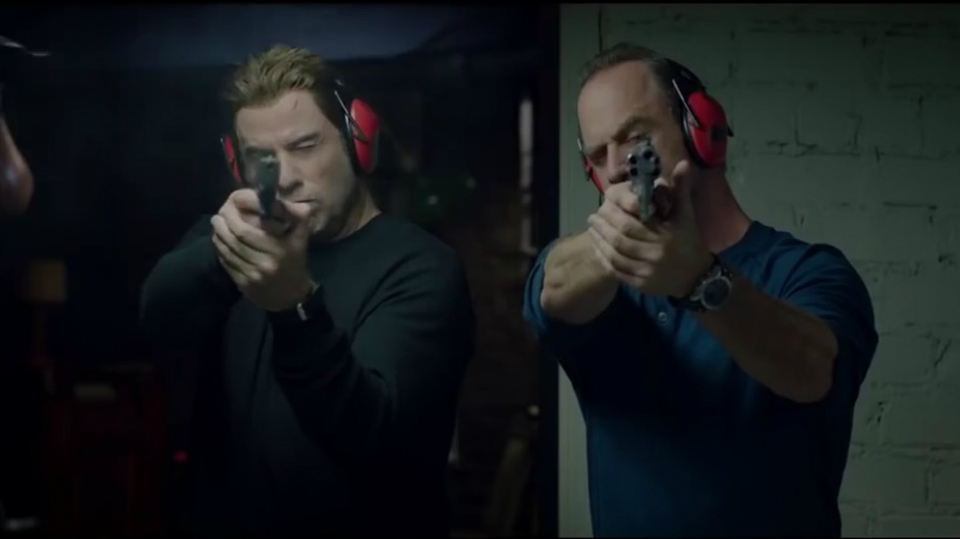
Those with fond memories of The Blob (1988), or The Mask (1994), might be encouraged by the presence of Chuck Russell in the director’s chair, but any hopes that  the fourteen year hiatus since The Scorpion King (2002) has left him pumped and raring to go should be abandoned from the start. It’s clear that Russell is just a director for hire, and his bland, uninspired approach to the material reflects this idea all too well. He’s unable to motivate his cast either, with Travolta going through the motions, Meloni playing the sidekick with a (much needed) sense of humour, Schull reduced to creating a character out of whatever reaction she’s required to have from scene to scene, St. Esprit oozing venom like it’s expected of him whatever the circumstances, Trammell and Jones playing detectives who don’t have an ounce of depth between them, and Sloan snarling away at everyone in lieu of providing a proper characterisation. It’s all as bad as it looks, dispiriting too, and without even a sense of its own absurdity to redeem matters.

Rating: 3/10 – another nail in the coffin of Travolta’s career, I Am Wrath is disjointed, mediocre, passionless, and calamitous in equal measure, with lacklustre direction, a weak script, perfunctory performances, and woeful continuity (look for Travolta’s disappearing/reappearing forehead contusions); when movies look and sound this stale, you have to wonder what could possibly have motivated everyone to have taken part, the answer to which would probably make for a better movie than this one could ever be.

Share this:

  • Click to share on X (Opens in new window) X
  • Click to share on Facebook (Opens in new window) Facebook
  • More
  • Click to print (Opens in new window) Print
  • Click to email a link to a friend (Opens in new window) Email
Like Loading...

Stranger on Horseback (1955)

09 Tuesday Aug 2016

Posted by dullwood68 in Movies

≈ Leave a comment

Tags

Action, Bannerman, Circuit judge, Drama, Jacques Tourneur, Joel McCrea, John Carradine, John McIntire, Kevin McCarthy, Literary adaptation, Louis L'Amour, Miroslava, Murder, Review, Romance, Trial, Western

Stranger on Horseback

D: Jacques Tourneur / 66m

Cast: Joel McCrea, Miroslava, John McIntire, John Carradine, Kevin McCarthy, Nancy Gates, Emile Meyer, Robert Cornthwaite, Jaclynne Greene, Walter Baldwin, Emmett Lynn, Roy Roberts

Like each decade before it, the Fifties saw Hollywood and the independent studios make low budget Western after low budget Western. Trying to wade through them now is like trying to read a library of books that have no title pages: it’s difficult to tell if any one Western is better or worse than any other. But Stranger on Horseback (a title that’s not entirely accurate), is one low budget Western that deserves a closer look, and perhaps, over sixty years after it was made, a reassessment.

Adapted from the story by Louis L’Amour, the Stranger in question is actually circuit judge Richard Thorne (McCrea). Arriving in a small town on a routine visit, he soon learns that there has been a murder recently, but that the man responsible hasn’t been arrested. When he asks why, he discovers that the town is owned and run by Josiah Bannerman (McIntire), and that the man who committed the killing is Bannerman’s son, Tom (McCarthy). Despite several warnings from the town sheriff, Nat Bell (Meyer), and Bannerman’s legal counsel, Colonel Buck Streeter (Carradine), that Josiah won’t allow it, Thorne voices his determination to ensure that Tom Bannerman is arrested and committed for trial.

SOH - scene1

News of this development reaches Josiah, and he charges Tom with persuading Thorne to accept his hospitality. Tom’s presence in town leads, unsurprisingly, to his arrest, with Thorne being aided by Bell. With Streeter manoeuvring himself into place as the trial prosecutor, and less than veiled threats made by Josiah’s men as to the likelihood of a trial taking place, an uneasy stalemate exists while Tom languishes in jail. In the meantime, Thorne begins to piece together the events surrounding the murder, while also making an impact on Tom’s cousin, Amy Lee (Miroslava). Her attentions lead to Thorne meeting Josiah, and the last chance of a peaceful outcome in regard to Tom going to trial. Realising that there’s no chance of a trial – fair or otherwise – taking place in town, Thorne decides to spirit Tom away during the night and make for the nearest town, Cottonwood. But his ruse is quickly discovered, and Josiah and his men rush to head them off before Thorne and Bell can get Tom, along with two witnesses to the shooting, to the safety of the nearby town.

For a low budget Western that runs a somewhat paltry sixty-six minutes, Stranger on Horseback is definitely deserving of a much better level of recognition amongst modern day audiences. Directed by the hugely talented Tourneur, this was one of a number of Westerns he made in the Forties and Fifties, and his second with McCrea as the lead. One of Tourneur’s strengths as a director was his ability to draw out strong performances from his casts, and then ally them to a palpable sense of mood. In doing so he made his movies stand out by virtue of their credibility and an often surprising emotional depth. Stranger on Horseback is no exception, with McCrea perfectly cast as the tough, no-nonsense judge whose reputation means he doesn’t have to carry a gun unless absolutely necessary. McCrea made a lot of Westerns in the Fifties, but this is easily one of his best, his performance far more subtle and measured than the material might seem to deserve. In tandem with Tourneur’s assured direction, McCrea makes Thorne the kind of hero whose integrity and law-abiding nature is never in question.

SOH - scene2

But it’s not just McCrea who puts in a great performance. This is a movie with a glut of them. As Thorne’s love interest, Amy Lee, Miroslava gives an insightful portrayal of a woman torn between loyalty to her family and the chance of freedom that an unexpected romance gives her (a subplot involving Amy Lee’s impending marriage to the town banker (Cornthwaite) is handled with a sobering disinterest on her part and a tired resignation on his). (Sadly, this was Miroslava’s penultimate movie before she committed suicide aged just thirty, and from her role here it seems certain that her skills as an actress, her ability to find a sympathetic core to the characters she played, would have led to even better performances over time.)

As the proud land baron Josiah Bannerman, McIntire is a terrific adversary for McCrea, his egoism a perfect counterpoint for Thorne’s rectitude. McIntire was a great character actor, often quietly giving memorable performances in the background of bigger movies, and although his presence here requires a degree of repetition in terms of relaying the same threats over and over, he nevertheless imbues Josiah with a sincerity of intent and action that overcomes an awkward last-minute reversal of purpose. And then there’s the wonderful John Carradine, cadaverously charming as ever as the smooth-tongued, lizard-like Colonel Streeter. His scenes with McCrea are a testament to his talent as an actor, his delivery and equanimity in the part a perfect example of what can be done with a supporting role if you have the skill and the encouragement of your director. It’s also a performance that foreshadows his role as Major Cassius Starbuckle in The Man Who Shot Liberty Valance (1962); both portrayals are hugely enjoyable, and both highlight just how good Carradine was when given a halfway decent script to work from.

SOH - scene3

Further down the cast list, McCarthy is appropriately callow as Tom Bannerman, while there’s a beautifully judged performance from Meyer as the sheriff who finds newfound courage thanks to Thorne’s arrival (Meyer is one of those actors whose face is so familiar, you’d swear you’ve seen him in more movies than he’s actually appeared in). Tourneur brings out the best in everyone, and in doing so, elevates the very basic plot and storylines in Herb Meadow and Dan Martin’s screenplay, making it a richer and more rewarding experience than anyone could have predicted.

While the movie is a great, unsung example of low budget Western movie making, unfortunately there is one issue it can’t presently overcome. Existing copies of the movie have become so degraded that the gorgeous Arizona locations – filmed in Ansco-color – are now a riot of over-exposed colours and blurred details. It’s so bad that when we first see McCrea riding into town it looks as if he doesn’t have a face. This is a movie in desperate need of restoration. Let’s hope a pristine copy surfaces at some point, and the movie can be seen as it was meant to be.

Rating: 8/10 – a superior Western thanks to the involvement of Tourneur, Stranger on Horseback is a richly rewarding movie with some outstanding performances to further add to its stature; with only a rushed conclusion to keep it from being a complete and utter classic, this is still a prime example of a low budget Western that shouldn’t be dismissed or ignored purely because of its provenance.

Share this:

  • Click to share on X (Opens in new window) X
  • Click to share on Facebook (Opens in new window) Facebook
  • More
  • Click to print (Opens in new window) Print
  • Click to email a link to a friend (Opens in new window) Email
Like Loading...

Edge of Winter (2016)

08 Monday Aug 2016

Posted by dullwood68 in Movies

≈ Leave a comment

Tags

Action, Drama, Father/son relationships, Joel Kinnaman, Percy Hynes White, Rachelle Lefevre, Review, Rob Connolly, Thriller, Tom Holland

Edge of Winter

D: Rob Connolly / 89m

Cast: Joel Kinnaman, Percy Hynes White, Tom Holland, Rachelle Lefevre, Rossif Sutherland, Shiloh Fernandez, Shaun Benson

Set in the (very) snowy Canadian wilderness, Edge of Winter begins with an awkward meeting between Elliot Baker (Kinnaman), his ex-wife, Karen (Lefevre), their two sons, Bradley (Holland) and Caleb (White), and Karen’s new husband, Ted (Benson). The reason for the meeting is due to Karen and Ted heading off on a cruise holiday and needing Elliot to look after the boys. Everyone looks and feels uncomfortable, and it’s clear from Karen’s behaviour that Elliot isn’t exactly her first choice, but he is the boys’ father.

We never learn the reason why Elliot and Karen’s marriage ended, other than that the boys were “more mature” than their father. But his nervous attitude and eagerness for their visit to go well serves as a signal that all is not well with Elliot himself, and that it’s unlikely he’ll get his wish. Of the boys, Bradley is the more withdrawn and unhappy at having to spend time with his father. He’s a teenager and probably remembers more about the breakup of his parents’ marriage than he’d like (though how long they’ve been divorced is something else we never learn). On the other hand, Caleb, who is a few years younger, is more open to the idea.

EOW - scene1

The boys’ discovery of Elliot’s hunting rifle should be the opportunity for him to lay down some boundaries, but instead he offers to take them where they can learn to shoot. On the trip, Elliot lets his sons know just how important their visit is to him, and even goes so far as to confiscate Bradley’s mobile phone so that it doesn’t become a hindrance to their all getting on. When they arrive at the place where they can learn to shoot, Bradley’s first experience of firing a rifle concludes with his being embarrassed and refusing to carry on. Caleb is more enthusiastic, and he does well. When it comes time to leave, Elliot lets Bradley drive, but an argument between the brothers leads to their car skidding off the road and into a ditch. Unable to get the car free, the trio are forced to spend the night there. And while they wait, Elliot learns something that has a tremendous effect on him.

The next morning, and with Elliot claiming that it’s too far for them to walk back to the highway, they head off to reach a cabin by a lake that Elliot says is near enough for them to get to. When they get there, both Bradley and Caleb begin to wonder just how long their father is planning to stay there before trying to get home. Elliot himself is less than forthcoming, and the sudden arrival of two fishermen leads to the realisation that their father may not even want to get back home, and that maybe what he really wants is for the three of them to stay at the cabin indefinitely…

EOW - scene2

From the very first moment we see Elliot – dealing with a debt problem on the telephone – we know that all is not well with him. He looks pale and uncertain about things, anxious and agitated in a way that speaks volumes about his character right from the off. Whether this is the way the script describes him, or a decision made by Kinnaman in terms of his portrayal, or the way that first-time feature director Connolly advised the actor to portray Elliot, his agitated state works as a clumsy kind of cinematic shorthand: this is a man on the edge. But aside from having money problems, we never learn very much about Elliot, or the reasons for his being so anxious. Instead we’re left with a poorly constructed portrait of a man trying to connect with his sons who doesn’t understand the difference between appropriate and inappropriate, and who has no cognisance of the harm he’s doing in trying to bond with them.
As a result, Elliot’s behaviour stretches the viewer’s patience. With little or no back story to fill in the gaps, he becomes the movie’s weakest link, called upon to propel the narrative forward by virtue of some equally weak plotting. The arrival of the fishermen inevitably leads the movie into confirmed thriller territory, but it’s at the expense of what little credibility has been achieved so far. Elliot’s determination to keep his sons with him becomes increasingly preposterous (just how deluded is he to believe that hiding out at the cabin indefinitely is a good idea?), and his efforts to “keep them safe” are as equally preposterous on both a dramatic and a conceivable level.

EOW - scene3

The movie isn’t helped by the pedestrian pace adopted throughout. Connolly, along with editor Greg Ng, fails to realise that this isn’t an indie character study (even though there are elements of this buried in the script), but a slowburn thriller that should be highlighting the horror inherent in its basic storyline: that the biggest threat to the two boys’ safety is their own father. Instead it downplays any terror in favour of clumsy interactions between the characters, developments in the plot that defy rational explanation (the burning of the cabin, for one), and a reveal that begs the question, how could Elliot have done this without anyone else knowing? There’s no sense of urgency to help make the final twenty minutes more exciting than the rest of the movie, and no sense that the boys are in any real danger. Instead, the script (by Connolly and Kyle Mann) lumbers through an unconvincing series of confrontations and encounters until ending on a whimper rather than a bang.

Rating: 4/10 – with its cast able to provide only adequate performances thanks to the under-developed script, Edge of Winter is a disappointing and unrewarding experience; not even the beautiful Canadian locations can compensate for a movie that consistently avoids meeting its audience’s expectations, and which wastes too much time in achieving very little of merit.

Share this:

  • Click to share on X (Opens in new window) X
  • Click to share on Facebook (Opens in new window) Facebook
  • More
  • Click to print (Opens in new window) Print
  • Click to email a link to a friend (Opens in new window) Email
Like Loading...

Sharknado: The 4th Awakens (2016)

07 Sunday Aug 2016

Posted by dullwood68 in Movies

≈ Leave a comment

Tags

Action, Anthony C. Ferrante, Astro X, David Hasselhoff, Drama, Ian Ziering, Masiela Lusha, Niagara Falls, Nukenado, Review, Sequel, Sharks, SyFy, Tara Reid, The Asylum, Thriller, Tommy Davidson, Tornados

Sharknado 4

D: Anthony C. Ferrante / 85m

Cast: Ian Ziering, Tara Reid, Masiela Lusha, Tommy Davidson, Cody Linley, Ryan Newman, Imani Hakim, David Hasselhoff, Cheryl Tiegs, Gary Busey, Christopher Shone, Nicholas Shone

The title says it all. In fact, it says too much, because in hitching their bandwagon to that of Star Wars, and unleashing a torrent – a veritable Forcenado, if you like – of bad in-jokes and awkwardly added references to their own franchise, the producers of the Sharknado series have pretty much indicated that their confidence isn’t as high as it was this time last year, when Sharknado 3: Oh Hell No! proved surprisingly enjoyable. Judging by the look of the movie, there was a much smaller budget available this time, despite the series’ growing success, and the calibre of familiar faces making cameo appearances couldn’t be maintained either.

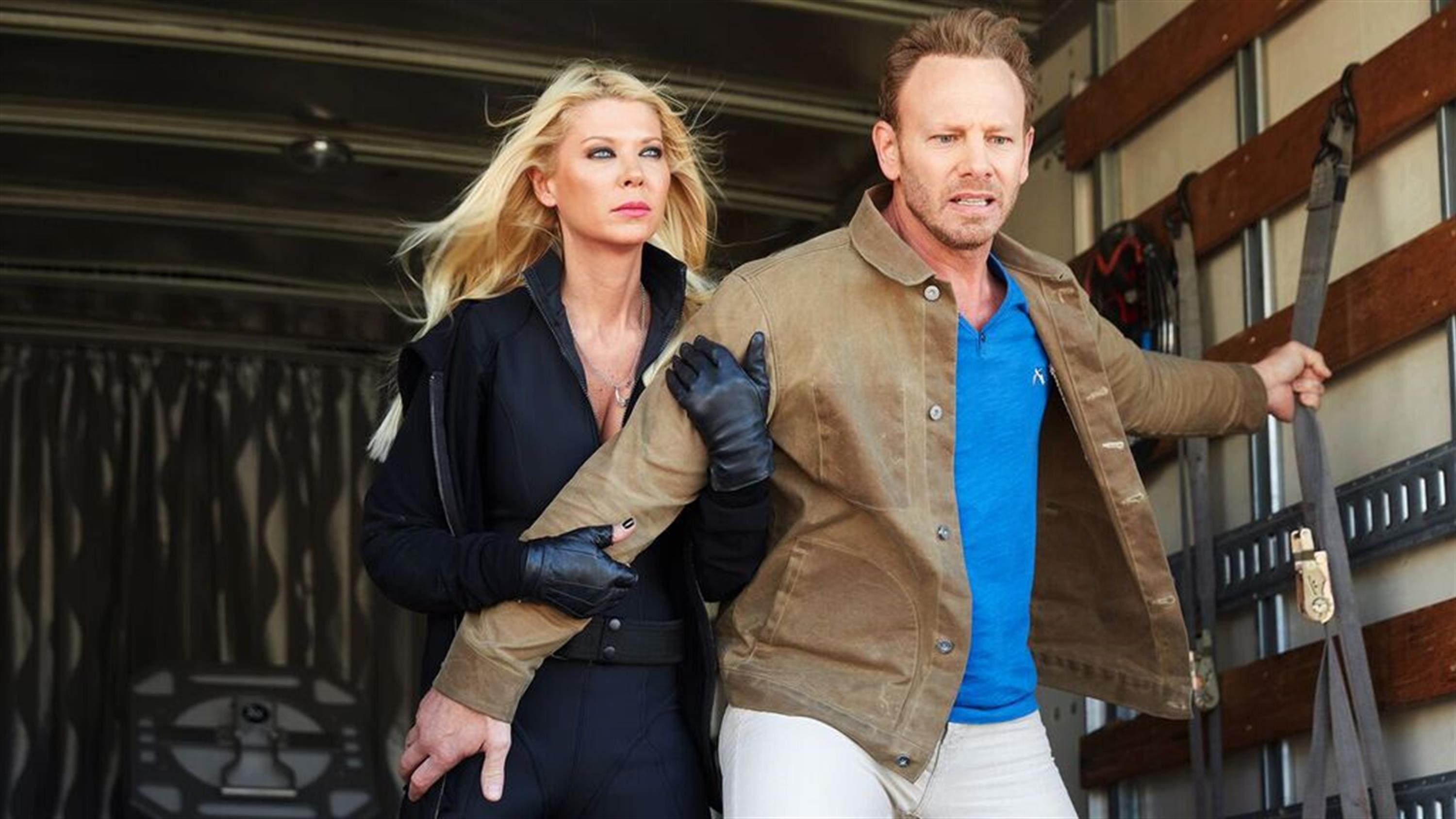
But Star Wars isn’t the only movie to be given the subtlety-free tribute treatment. There’s also Pirates of the Caribbean, The Texas Chain Saw Massacre, and Twister (“It’s a cownado!”) to name but a few. This leaves the already fragmented plot, what there is of it, feeling like it was made up as filming went along, with returning screenwriter Thunder Levin handing out new script pages each day. As the series’ put-upon hero, Fin Shepard (Ziering), aided by the same core group as in number three, is called upon to battle a variety of shark-infested tornados when a high-tech defense system designed to stop them from forming in the first place, goes wrong. Cue a trio of sharknados, all of which mutate thanks to whatever blatantly ridiculous idea Levin had that day. As a result we have a sandnado, an oilnado, a firenado, a bouldernado, a lightningnado, the aforementioned cownado, a hailnado (a hailmarynado might have been more appropriate), a lavanado, and to top them all, a nukenado.

SHARKNADO: THE 4TH AWAKENS -- Pictured: (l-r) Ian Ziering as Fin Shepard, Masiela Lusha as Gemini -- (Photo by: Tyler Golden/Syfy)

Part of the series’ appeal – at least until now – has been its self-awareness, and the audience’s knowledge that the makers aren’t taking any of it seriously at all. The series’ humour has been an asset in this respect, but here it’s so tired, and conveyed with such a lack of energy that the one-liners which would previously have raised at least a smile, now induce groans instead. To paraphrase the tagline from Alien, In Sharknado: The 4th Awakens, no one can hear you sigh. Even the celebrity cameos, usually the source of much of the series’ merriment, aren’t able to raise the stakes, and there’s precious little fun to be had when the likes of Alexandra Paul and Gena Lee Nolin are drafted in (for a Baywatch-themed skit with Hasselhoff), only for them to be summarily eaten moments later (now if they’d managed to get Donald Trump…).

For many though, the main source of amusement will come from the so-bad-they’re-terrible special effects. Sharknado: The 4th Awakens reaches new heights (or should that be lows) in low-budget special effects, with some of the worst CGI ever committed to the small screen. The tornados themselves give new meaning to the word “appalling”, while any attempt at combining two separate film elements always looks like the worst kind of cut and splice effect, with backgrounds looking a different colour to what’s intended, and any of the cast unlucky enough to be in the foreground often highlighted by a soft white outline. While none of the Sharknado movies will ever be known for their use of cutting edge computer wizardry, the lack of attention to detail, and a “that’ll do” attitude harm the movie even more than usual.

ST4A - scene2

And if the movie’s less than half-hearted approach to special effects hurts it, spare a thought for the acting – if it can be called that. Out of everyone, Ziering can be considered lucky: he’s got the most physical role, he has no choice but to play it seriously, and even though he knows it’s all as daft as a box of frogs, all he has to do is keep a straight face when he says his lines. As Fin’s supposedly dead wife, April, Reid also keeps a straight face throughout but instead of making the best of things she looks like she’s wondering when her character is really going to be killed off and she can get out of making these movies each year (it doesn’t help that Reid isn’t the best of actresses and uses the same expression for any and all feelings or emotions).

Further down the cast list we have Lusha as Gemini, a character that’s new to the series but who helps Fin in his endeavours (though exactly what her relationship is to Fin is never explained). She’s a replacement for the part of Nova, played in previous instalments by Cassie Scerbo, and while she attacks the role with relish, she’s too intent on making everything she does overly dramatic; as a result she offers a one-note performance that does her no favours. As Fin’s kids, Linley, Newman and the Shone twins are adequate but have little to do; Hakim’s character, though the latest member of the Shepard family (son Matt’s wife), also has little to do but run around after everyone else; Hasselhoff is in the same boat; Davidson tries to inject some much needed energy into his role as the tycoon behind the high-tech defense system, and succeeds largely because he makes more of an effort than anyone else; and then there’s Gary Busey, on board as April’s father and a mad scientist-type, who literally recites the majority of his lines standing up behind a table. It looks like he did all his work in under thirty minutes, or possibly twenty.

SHARKNADO: THE 4TH AWAKENS -- Pictured: Ian Ziering as Fin Shepard -- (Photo by: Tyler Golden/Syfy)

In charge once again is Ferrante, directing with all the flair and excitement of a man who can see any chance of a better career ebbing away with every entry in the series (and the movie ends on a set up for Part 5 – lucky guy). In conjunction with returning DoP Laura Beth Love, Ferrante drops any pretence at knowing how to frame a shot or a scene, or how to give direction to a cast who can only muster the enthusiasm to pick up their paycheck. It makes for an often embarrassing collection of stitched together moments that barely add up to a fully-fledged movie.

Rating: 2/10 – for a series that was improving – however gradually – with each successive entry, Sharknado: The 4th Awakens is a massive backward step, and easily the worst entry to date; shoddy in almost every department, with just Chris Ridenhour and Christopher Cano’s driving score to recommend it, the makers have got to go a long way to justify any further adventures for the unlucky Fin and his family.

Share this:

  • Click to share on X (Opens in new window) X
  • Click to share on Facebook (Opens in new window) Facebook
  • More
  • Click to print (Opens in new window) Print
  • Click to email a link to a friend (Opens in new window) Email
Like Loading...

Ghost of the China Sea (1958)

03 Wednesday Aug 2016

Posted by dullwood68 in Movies

≈ Leave a comment

Tags

Action, Charles B. Griffith, David Brian, Drama, Fred F. Sears, Ilima, Invasion, Japanese army, Jonathan Haze, Lynette Bernay, Norman Wright, Plantation, Review, The Philippines, USS Frankenstein, War, World War II

Ghost of the China Sea

D: Fred F. Sears / 79m

Cast: David Brian, Lynette Bernay, Jonathan Haze, Norman Wright, Harry Chang, Gene Bergman, Mel Prestidge

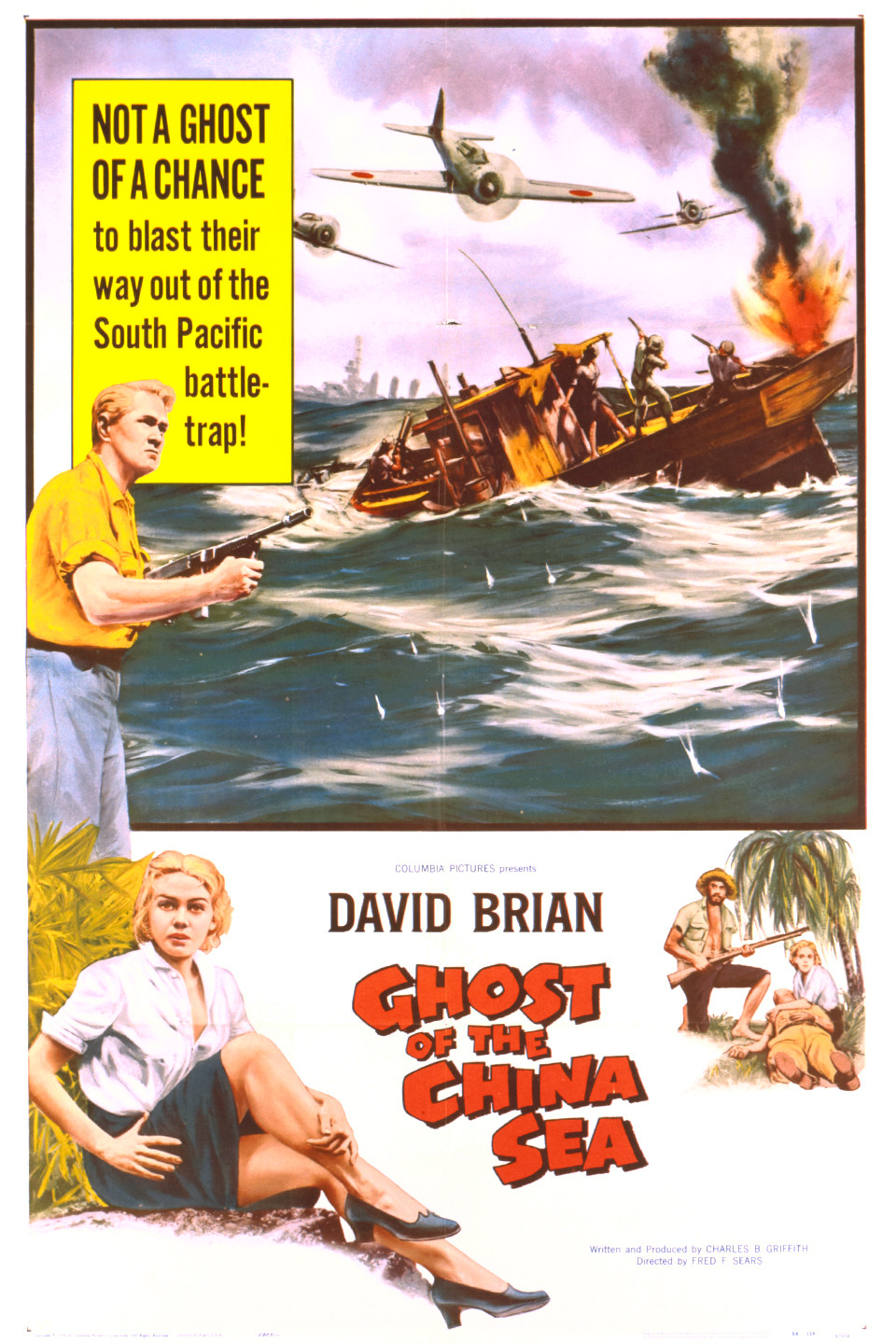
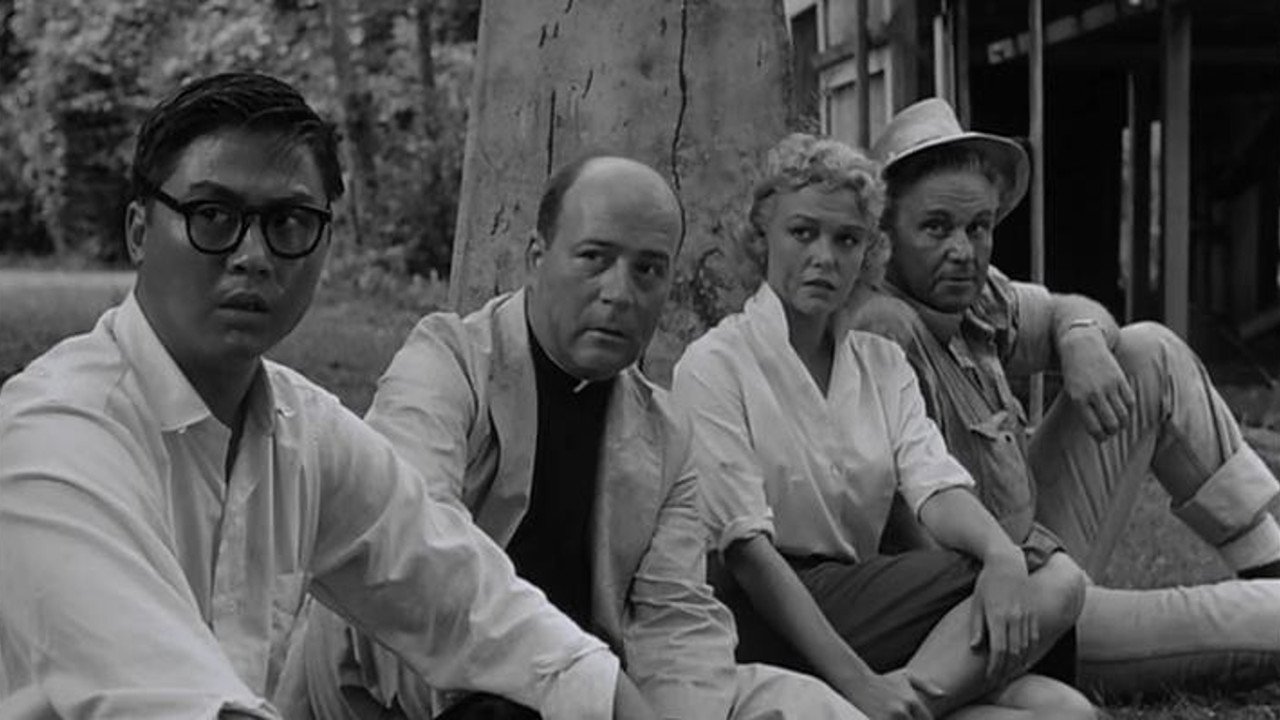
Set in the Philippines during World War II, Ghost of the China Sea is an amiable, if mostly forgettable drama about a group of civilians trying to escape the clutches of the approaching Japanese army. Trapped on an island that has begun to be invaded, and led by rough, tough ex-military man Martin French (Brian), the group – plantation owner Justine (Bernay), pacifist Reverend Darby Edwards (Wright), and plantation bookkeeper Himo Matsumo (Chang) – head for the nearby coast in the hope of finding a boat they can use to find safety on one of the other, numerous islands that make up the Philippines. Along the way they encounter Larry Peters (Haze), a seaman who has become lost on the island, but who saves them when they’re captured by the Japanese.

They help him find his ship, the Ilima, a broken-down vessel that barely qualifies as a navy ship, and which Peters refers to as the “USS Frankenstein”. They set off but soon need supplies, and discover that the Americans are being overrun and destroying any fuel and ammo dumps before moving on. Managing to get what they need, and still being pursued by the Japanese, French and co add a trio of Filipino resistance fighters to their group, and make way again. Along the way, French is challenged by Justine over his dismissive, arrogant attitude towards the others, and as the group is whittled down over time, French comes to realise that he can’t do everything by himself.

GOTCS - scene

Produced and scripted by Charles B. Griffith – better known as the screenwriter of such B-movie classics as Attack of the Crab Monsters (1957), The Little Shop of Horrors (1960), and Death Race 2000 (1975) – and shot in Hawaii, Ghost of the China Sea is as ordinary and unremarkable a wartime drama as you’re ever likely to see. Like many similarly themed movies made in the Fifties, it tells a simple story, populates it with stock characters from the period – the stoic hero, the independent-minded heroine who still needs protecting and/or saving, the comic relief – and puts them all into situations where nothing too unexpected or exciting happens. Griffith himself was unhappy with how the movie turned out, but even so, and despite several reservations that could be mentioned about the movie, it’s still worth watching if you’re interested.

A lot of what makes it worth watching is due to the efforts of its director. This was Sears’ final movie, and the last of five movies to be released following his death in November 1957 (as you can imagine, he had a very busy career). What Sears does best here is to focus on the characters and what few internal struggles they have to contend with. French is all about getting the job done, but has decided that in order to do that he has to shut off from those around him. This makes him practically unlikeable, but thanks to Sears (and Brian), French’s slow reveal as a man of hidden feeling is both believable and a relief. Also, Sears takes Wright’s pacifist reverend and makes his dilemma more heartfelt than perfunctory, and while it’s tempting to view the moment when he has to make a choice (personal integrity vs necessity) as entirely predictable, it’s an affecting moment nevertheless.

Rating: 5/10 – not as corny or pedestrian as it might seem at first glance, Ghost of the China Sea is mildly diverting stuff that benefits greatly from Sears’ direction; unloved perhaps by its writer/producer, it’s a movie that deserves a little better attention than it’s received over the years.

NOTE: Sadly, there’s no trailer available.

Share this:

  • Click to share on X (Opens in new window) X
  • Click to share on Facebook (Opens in new window) Facebook
  • More
  • Click to print (Opens in new window) Print
  • Click to email a link to a friend (Opens in new window) Email
Like Loading...

Star Trek Beyond (2016)

02 Tuesday Aug 2016

Posted by dullwood68 in Movies

≈ 4 Comments

Tags

Action, Bones McCoy, Chris Pine, Drama, Federation, Idris Elba, James T. Kirk, Justin Lin, Karl Urban, Krall, Review, Sci-fi, Scotty, Sequel, Simon Pegg, Spock, Uhura, USS Enterprise, USS Franklin, Yorktown, Zachary Quinto, Zoe Saldana

Star Trek Beyond

D: Justin Lin / 122m

Cast: Chris Pine, Zachary Quinto, Karl Urban, Zoe Saldana, Simon Pegg, John Cho, Anton Yelchin, Idris Elba, Sofia Boutella, Joe Taslim, Lydia Wilson, Deep Roy, Shohreh Aghdashloo

It’s unfortunate, given the response to Star Trek: Into Darkness (2013), that the latest instalment in the JJ Abrams’ revamped movie franchise opens with über-Captain James T. Kirk (Pine) lamenting his time in space as part of the Enterprise’s five year mission. After nine hundred and sixty-six days, Kirk is, frankly, bored, and as he puts it, “wondering what it is we are trying to accomplish”. It’s like a listening to a man who’s treading water in the ocean, far from land, and hoping a shark comes along to break the monotony. Harking after further adventure, Kirk sounds petulant rather than unhappy. But if it’s a challenge he’s after, then he need wait no further, because once the Enterprise has docked at the Federation’s new super-duper starbase, the Yorktown (a nod to the Enterprise’s original name in the original series’ pilot), an alien craft seeking help arrives and propels Kirk and his long-suffering crew into just the kind of adventure that he craves.

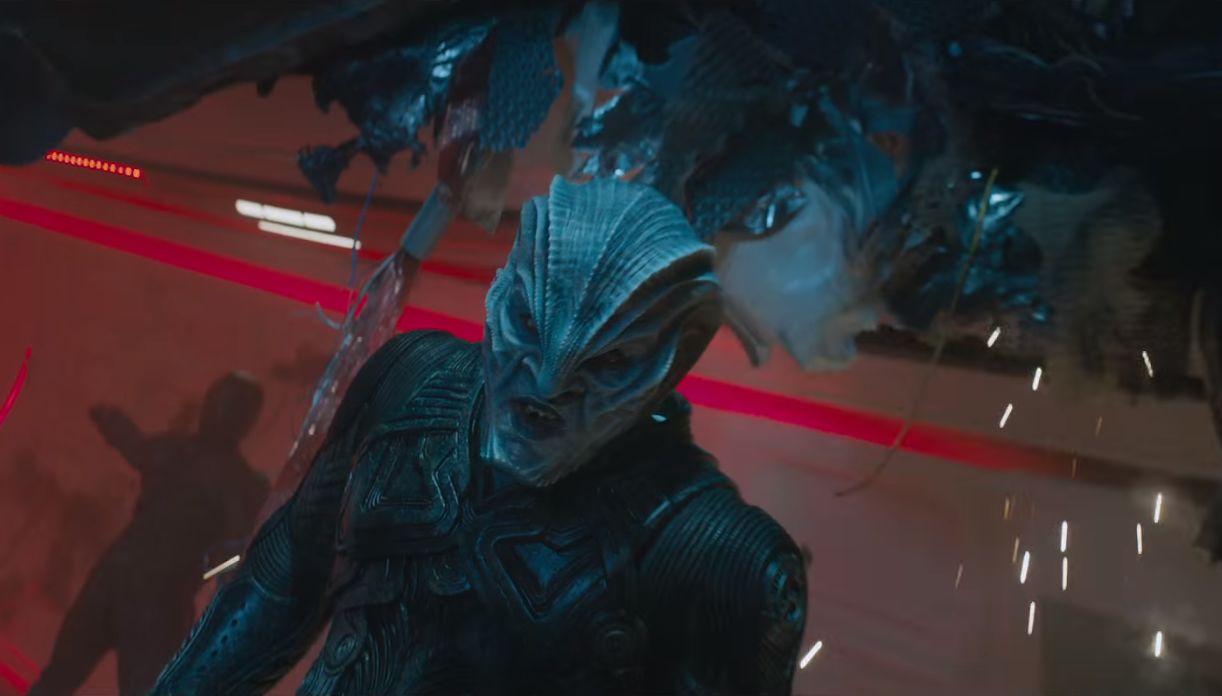
Told that an alien menace headed by someone called Krall (Elba) is responsible for the abduction and imprisonment of her crew, Kalara (Wilson), leads Kirk and co to the planet where her crew are being held. Orbiting the planet, the Enterprise suffers a devastating attack, and the main saucer is forced into a crash landing – but not before Krall and his men have invaded the starship and made it clear they’re after an artifact – the Abronath – that is on board, and not before the crew have been either captured by Krall or gotten away by means of the Enterprise’s escape pods. Spock and Bones escape together, as do Kirk and Chekov, while Scotty gets clear by himself. Down on the planet, Scotty meets Jaylah (Boutella), a scavenger whose people were captured and imprisoned by Krall in the past. She takes him to what she calls her ship, and Scotty is amazed to find it’s the remains of the USS Franklin, a ship long considered to have been lost.

STB - scene2

Meanwhile, Spock has been injured, and Bones is doing his best to keep him alive. Sulu and Uhura have been captured, and Kirk and Chekov head for the downed Enterprise to see if they can make it operational again. Krall appears to be one step ahead of everyone, and his motive for gaining the Abronath is revealed to be part of a plan of revenge on the Federation. Aided by Jaylah, the crew of the Enterprise come together to fight back against Krall’s homicidal intentions, and in the process, find some very unique ways of taking the fight to him.

When Paramount announced that they were rebooting the original Star Trek franchise and had given the project to JJ Abrams, it seemed like a risky proposition, what with William Shatner et al having become so completely associated with the roles of Kirk and Spock and Bones etc, that it was hard to imagine anyone else portraying them. But Abrams was more than up to the task, and even managed to come up with a plot device that allowed his “new crew” to have their own adventures independently of the original movie series’ timeline. Quinto was a great choice for Spock, Pine had the cocksure audacity of a younger Kirk down pat, and Urban was possibly a better (if underused) Bones than DeForest Kelley. Only the lack of a convincing villain stopped Star Trek (2009) from being a complete triumph. And then Star Trek: Into Darkness tried to be too clever for its own good with its “He’s not Khan/Okay, he is Khan” shenanigans, and overwrought plotting.
STB - scene1

Perhaps realising that going “darker” on the first sequel works only on other sci-fi franchises, the producers have decided with this third outing to go lighter and make Star Trek Beyond more like an episode of the original series; or to be more accurate (or cynical – you decide) a retread of Star Trek: Generations (1994). The script, by Simon Pegg and Doug Jung (who appears briefly as Sulu’s husband, a gender acknowledgment that carries no weight whatsoever in the grand scheme of things), coasts along for the most part, and does what the original series always did so well: focuses on the relationships between Kirk, Spock and Bones, gives Scotty a chance to shine when something needs fixing (which happened pretty much every week), adds an alien collaborator to help the crew overcome the villain, throws in said villain and ensures they have a grudge against everyone else, and sidelines Uhura at every opportunity (though she is involved, by reference, in one of the movie’s funniest scenes). A tried and tested formula, to be sure, and one that on this occasion makes for an enjoyable if underwhelming experience.

But while enjoyable is good – and in a loud, dumb, fun kind of way the movie is enjoyable – there’s something missing that stops it from becoming a Star Trek movie that makes you want to go back and view it again because you had such a great experience watching it the first time. Partly because Krall is yet another weak villain, partly because there are too many occasions when the solution to a problem is to “couple the doohickey to the whatchamacallit and transverse the first number you thought of” (and who knew Kirk was so familiar with the properties of FM radio frequencies?), and partly because any plot development that relies on the presence of a fully functioning motor bike on the bridge of a downed starship, is stretching credibility to snapping point. (There are other moments where the viewer’s jaw is in danger of hitting the floor, but to reveal them all would take too long.)

STB - scene3

In the director’s chair, Fast & Furious alumni Lin makes a decent enough fist of things but doesn’t manage to provide audiences with anything really memorable to go away with. It’s a turbo-charged experience, to be sure, and Lin, along with his editing team (Greg D’Auria, Dylan Highsmith, Kelly Matsumoto and Steven Sprung) ensures that the movie zips along at an exciting pace. The visuals are as crisp and vibrant as you would expect, and even though there’s an over-reliance on CGI, this is to be expected: it’s a science fiction movie, for Pete’s sake; how else is it going to look? The cast enter into the spirit of things, though Elba struggles with his dialogue thanks to the kind of alien mask that looks great but probably isn’t that functional; and there’s a touching moment where Spock looks at a picture from the past (that he can’t possibly have).

All in all, Star Trek Beyond is a movie that falls under the heading of “honourable mention”. It’s not going to be at the top of anyone’s list of all-time favourite Star Trek movies, but it won’t be anywhere near the bottom, like Star Trek V: The Final Frontier (1989). It zips along like a young child eager to show off the neat-looking toy it’s just found, but as any parent will tell you, even neat-looking toys can lose their attraction quickly and without warning.

Rating: 6/10 – a middling, superficially diverting entry in the Star Trek canon, Star Trek Beyond is nothing new or special, and only occasionally rises to meet the demands of franchise (and genre) expectations; more a case of “boldly going where everyone has been before” than anything else, the movie is yet another reminder that the odd-numbered entries in the series are the ones that don’t always work.

Share this:

  • Click to share on X (Opens in new window) X
  • Click to share on Facebook (Opens in new window) Facebook
  • More
  • Click to print (Opens in new window) Print
  • Click to email a link to a friend (Opens in new window) Email
Like Loading...

Batman: The Killing Joke (2016)

02 Tuesday Aug 2016

Posted by dullwood68 in Movies

≈ Leave a comment

Tags

Action, Alan Moore, Animation, Barbara Gordon, Batgirl, Batman, Brian Bolland, Bruce Wayne, Commissioner Gordon, Crime, DC Universe, Drama, Graphic novel, Kevin Conroy, Mark Hamill, Ray Wise, Review, Tara Strong, The Joker, The Killing Joke, Thriller, Warner Bros.

Batman The Killing Joke

D: Sam Liu / 76m

Cast: Kevin Conroy, Mark Hamill, Tara Strong, Ray Wise, John DiMaggio, Robin Atkin Downes, Maury Sterling, Anna Vocino

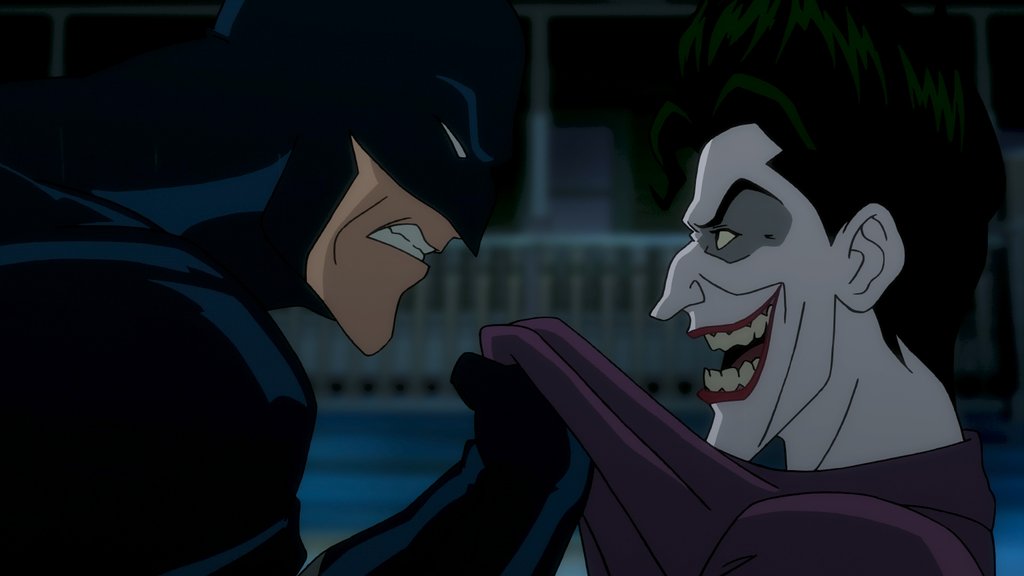
The latest in Warner Bros. series of direct-to-video animated movies to feature the Caped Crusader, Batman: The Killing Joke is a movie Harvey Dent would appreciate as it compromises two separate stories that are welded together to make a full-length feature. Fans will have their own feelings about which one of the two stories is the more effective, but taken on its own merits, the movie does have some distinctive moments that warrant more than a cursory acknowledgment.

The first “half” concerns Barbara Gordon, aka Batgirl (Strong). As an occasional “partner” to Batman, Batgirl still feels the need to prove herself. The opportunity arises when she helps Batman in stopping a group of criminals led by Paris Franz (Sterling), escaping after a robbery. Franz gets away, but in the process he becomes obsessed with Batgirl, and when his plans to take over his father’s criminal empire begin to come to fruition, he drags her into it. This leads to Batgirl putting herself increasingly at risk, a situation that Batman is unhappy about. He tells her not to continue her involvement, but instead she rounds on him. Matters take an unexpected turn, and their relationship becomes even more strained. Later, Batman is lured into a trap by Franz, prompting Batgirl to go to his aid, and in doing so, she learns a valuable lesson – one that leads to her making a life-changing decision.

BTKJ - scene2

This storyline is more reminiscent of previous Batman outings, both tonally and visually, with compact, multi-angled scenes that remind viewers of Batman’s comic book origins, and which serve as dramatic enhancements of the narrative. The animation here is a key component, serving to reassure returning viewers to the series, and maintaining a style that Warner Bros. have made their own. But the storyline itself isn’t as impressive, or as well thought out. Batgirl is made to look too dependent on Batman’s sanctioning her actions, and there’s a hint of a daughter seeking approval from her father that is terribly at odds with the “unexpected turn” that alters their relationship (this moment in the movie has been widely reported and talked about elsewhere, and caused a fair degree of controversy). It’s a brave move on  Warner Bros.’ part, but while there is some justification for it happening, it’s the way in which the movie fails to properly address it afterwards that spoils things, preferring instead to finish on an action sequence.

But as one door closes – as they say – another door opens, and the meat of the movie is thrust front and centre. The Killing Joke is a justly celebrated graphic novel by Alan Moore and Brian Bolland that was first published in 1988. An adaptation has been anticipated ever since Mark Hamill announced his willingness to play the Joker in a movie of The Killing Joke back in 2011. Now that it’s here, fans can relax somewhat, but not entirely, as there are elements in this “half” that don’t work as well as they should.

It begins with Batman being called to a crime scene that could only have been the work of the Joker. But the Joker is being held at Arkham Asylum – or at least, that’s what everybody thinks. When Batman pays his arch-enemy a visit, he discovers that the Joker has escaped and left a decoy in his place. Meanwhile, the Joker has bought an old, rundown amusement park as part of his plan to hurt Batman and those he cares about. To this end, he shoots Barbara Gordon and abducts her father (Wise). Invited to the amusement park’s reopening, Batman rescues Commissioner Gordon and goes after the Joker – but not before Gordon insists that Batman brings him in “by the book”.

BTKJ - scene3

The Killing Joke is primarily about the Joker, his origin and the psychology that he shares with Batman. But while the movie embraces this idea, and does its best to reflect the graphic novel’s content, it’s not as successful in exploring the notion of Batman and the Joker being two sides of the same coin, or brothers cut from the same emotionally disturbed cloth. Aside from a surprise musical interlude sung by the Joker (I’m Looney), the emphasis rests firmly on setting up the inevitable confrontation between the Dark Knight and the Clown Prince of Crime. In between all this, we get to see the Joker’s origin story, a tale designed to provide the character with a degree of built-in sympathy, and which leads to the conclusion that we’re all “only one bad day away from being him”. It’s a neat idea, but fatally at odds with the fact that Batman has chosen to fight crime, while the Joker actively embraces it. Yes, both characters are psychologically disturbed, but in ways that are more different than similar.

With the psychological content failing to make as much of an impact as it needed to, there’s also the matter of what happens to Barbara Gordon. Again, much has been made of this elsewhere, and there is an implication that the Joker is responsible for much more than just shooting her, but it’s at odds with the character and his history, and while this is an animated Batman movie that is trying hard to be more adult in its themes and approach, it’s unlikely that the producers would have allowed this interpretation to be included deliberately (and producer Bruce Timm has confirmed this). Clumsy writing seems to be the culprit here, rather than an attempt at pushing any boundaries.

BTKJ - scene1

And then there’s the animation. While it’s a perfect fit for the first “half” and the preceeding entries in the series, here it fails to recreate Brian Bolland’s intense artistic vision with anything approaching the effect he conceived. There are enough iconic images retained from the source to keep fans happy but overall it would have been better to have made The Killing Joke as a true stand-alone movie, with maybe a bigger budget, and a visual style that reflects the graphic novel. There are too many moments where the Joker looks cartoonish rather than scary, and too many moments where the sparse visual details on offer leave the viewer with too little to look at. In the end, it all helps to devalue the impact of the story, and makes the movie look a little under-developed.

But there are still plenty of good things to be savoured, from the re-casting of Conroy and Hamill, to the energy expressed in the action sequences (which are all expertly designed and choreographed), the decision to explore darker and more disturbing material (even if it doesn’t always work out), and returning director Sam Liu’s confident direction. Fans of the series will be delighted to see the references to this story made in Batman: Under the Red Hood (2010) expanded on here, and the future of Batgirl is foreshadowed in an epilogue that, again, should please fans of the character.

Rating: 6/10 – too many bad decisions at a creative level scupper what could have been – potentially – the best animated Batman movie ever, but unfortunately Batman: The Killing Joke remains a slightly above average entry in the series; it’s great to have Hamill back in the fold, though, and his usual exemplary work as the Joker is highlighted by an impressively told joke at the movie’s end, a moment of class that the movie is sometimes sorely in need of elsewhere.

Share this:

  • Click to share on X (Opens in new window) X
  • Click to share on Facebook (Opens in new window) Facebook
  • More
  • Click to print (Opens in new window) Print
  • Click to email a link to a friend (Opens in new window) Email
Like Loading...

Monthly Roundup – July 2016

31 Sunday Jul 2016

Posted by dullwood68 in Movies

≈ Leave a comment

Tags

Action, Apache War Smoke, Apaches, Australia, Bank robbers, Banshee Chapter, Ben Whishaw, Benjamin Walker, Blair Erickson, Brendan Gleeson, Cambodia, Chris Hemsworth, Cillian Murphy, Crawl, Daniel Zirilli, Drama, Gena Rowlands, George Shevtsov, Georgina Haig, Gilbert Roland, Glenda Farrell, Harold F. Kress, Herman Melville, Historical drama, Hitman, Home invasion, Horror, In the Heart of the Sea, James Garner, Katia Winter, Literary adaptation, Moby Dick, Nantucket, Nicholas Sparks, Nick Cassavetes, Numbers stations, Offshore Grounds, Online journalist, Paul China, Paul Holmes, Project MK Ultra, Rachel McAdams, Reviews, Robert Horton, Romance, Ron Howard, Ryan Gosling, Steven Seagal, Ted Levine, Thailand, The Asian Connection, The Essex, The Notebook, Thriller, Tom Holland, Tonto Valley Station, True love, True story, Wells Fargo, Western, Whales

Crawl (2011) / D: Paul China / 80m

Cast: George Shevtsov, Georgina Haig, Paul Holmes, Lauren Dillon, Catherine Miller, Bob Newman, Andy Barclay, Lynda Stoner

Crawl

Rating: 7/10 – a hitman (Shevtsov) hired by an unscrupulous bar owner (Holmes) winds up injured while trying to leave town, and ends up playing a deadly game of cat-and-mouse with a waitress (Haig) when he seeks refuge in her home; a slow-burn thriller that takes its time and relies on tension and atmosphere to keep the viewer hooked, Crawl often belies its low budget, and features terrific performances from Shevtsov (in a role written expressly for him) and Haig, but stops short of being completely effective thanks to some awkward narrative choices and first-timer China’s lack of experience as a director.

The Asian Connection (2016) / D: Daniel Zirilli / 91m

Cast: John Edward Lee, Pim Bubear, Steven Seagal, Sahajak Boonthanakit, Byron Gibson, Byron Bishop, Eoin O’Brien, Michael Jai White

The Asian Connection

Rating: 3/10 – career criminal Jack Elwell (Lee) meets the love of his life, Avalon (Bubear), and decides that robbing a bank is the way to a financially stable relationship, but unfortunately the money he steals belongs to crime boss Gan Sirankiri (Seagal), and soon Jack is being coerced into robbing more of Sirankiri’s banks when one of his men (Boonthanakit) threatens to expose him; what could have been a moderately entertaining action thriller is let down by some atrocious acting (and not just from Seagal), some equally atrocious camerawork, editing that looks like it was done with a hatchet, and the kind of direction that gives “point and shoot” a bad name, all of which leaves The Asian Connection looking like something to be avoided at all costs.

Banshee Chapter (2013) / D: Blair Erickson / 87m

Cast: Katia Winter, Ted Levine, Michael McMillian, Corey Moosa, Monique Candelaria, Jenny Gabrielle, Vivian Nesbitt, Chad Brummett, William Sterchi

Banshee Chapter

Rating: 3/10 – a journalist (Winter) looks into the disappearance of a friend, and discovers a secret world of government experiments that are linked to strange radio broadcasts and the discredited MK Ultra program from the Sixties; a paranoid thriller with supernatural overtones, Banshee Chapter tries extra hard to be unsettling and creepy – much of it takes place at night and has been shot using low light – but fails to make its story of any interest to anyone watching, which means that Winter and Levine put a lot of effort into their roles but are let down by the tortuous script and Erickson’s wayward direction.

In the Heart of the Sea (2015) / D: Ron Howard / 122m

Cast: Chris Hemsworth, Benjamin Walker, Cillian Murphy, Tom Holland, Ben Whishaw, Brendan Gleeson, Michelle Fairley, Paul Anderson, Frank Dillane, Joseph Mawle, Charlotte Riley

In the Heart of the Sea

Rating: 5/10 – the writer, Herman Melville (Whishaw), convinces retired sailor Tom Nickerson (Gleeson) to talk about his experiences as a young boy at sea, and in particular his time aboard the Essex, a whaling ship that encountered a creature Melville will call Moby Dick; based on the true story of the Essex, and the voyage that saw it sunk by an enormous whale, In the Heart of the Sea is technically well made but lacks anyone to care about, avoids providing a true sense of the enormity of what happened, sees Ron Howard directing on auto-pilot, and leaves Hemsworth and Walker struggling to make amends for characters who are paper-thin to the point of being caricatures (or worse still, carbon copies of Fletcher Christian and William Bligh from Mutiny on the Bounty).

The Notebook (2004) / D: Nick Cassavetes / 123m

Cast: Ryan Gosling, Rachel McAdams, James Garner, Gena Rowlands, Sam Shepard, David Thornton, Joan Allen, James Marsden

The Notebook

Rating: 7/10 – in the late Thirties, a young man, Noah (Gosling), sets his cap for the girl of his dreams, Allie (McAdams), and though they fall in love, social conventions keep them apart, while in the modern day their story is told by an old man (Garner) to a woman with dementia (Rowlands); handsomely mounted and told with a genuine feel for the central characters and their travails, Nicholas Sparks’ The Notebook is an old-fashioned romantic drama that could have been made in the time period it covers, and which is bolstered by the performances of its four stars, as well as Cassavetes’ (son of Rowlands) sure-footed direction, glorious cinematography by Robert Fraisse, and a sense of inevitable tragedy that permeates the narrative to very good effect indeed.

Apache War Smoke (1952) / D: Harold F. Kress / 67m

Cast: Gilbert Roland, Glenda Farrell, Robert Horton, Barbara Ruick, Gene Lockhart, Harry Morgan, Patricia Tiernan, Hank Worden, Myron Healey

Apache War Smoke

Rating: 6/10 – a stagecoach station finds itself under attack from angry Apaches after a white man kills several of their tribe – and the evidence points to the station agent’s father, a wanted outlaw (Roland), as the killer; a compact, fast-paced Western, Apache War Smoke zips by in low-budget style thanks to the efforts of two-time Oscar winner Kress – editing awards for How the West Was Won (1962) and The Towering Inferno (1974) – and a cast who enter willingly into the spirit of things, making this studio-made Western set in Tonto Valley Station(!) a surprising treat.

Share this:

  • Click to share on X (Opens in new window) X
  • Click to share on Facebook (Opens in new window) Facebook
  • More
  • Click to print (Opens in new window) Print
  • Click to email a link to a friend (Opens in new window) Email
Like Loading...

Angel of Death (2009)

25 Monday Jul 2016

Posted by dullwood68 in Movies

≈ Leave a comment

Tags

Action, Assassin, Brain injury, Crime, Drama, Jake Abel, Justin Huen, Lucy Lawless, Paul Etheredge, Review, Stuntwoman, Thriller, Vail Bloom, Web series, Zoë Bell

Angel of Death

D: Paul Etheredge / 77m

Cast:  Zoë Bell, Jake Abel, Vail Bloom, Justin Huen, Doug Jones, Lucy Lawless, Brian Poth, Ingrid Rogers, John Serge, Lucy Lawless

The career of Zoë Bell is one you could charitably and fairly say is all due to the influence and intervention of one Quentin Tarantino. If he hadn’t picked her to a) be Uma Thurman’s stunt double in both Kill Bill movies, and b) to do the “ship’s mast” stunt in Death Proof (2007), then it’s unlikely she would have the acting career that has followed in the wake of those movies (prior to Death Proof, her only big screen appearance – believe it or not – was in Billy Elliot (2000). A short stint on Lost (2008) followed, but Angel of Death was the first movie to put Bell front and centre.

Except that Angel of Death was originally a web series, ten episodes that aired on Crackle in March 2009 and which ran eight to ten minutes per episode. The series had limited success (a second season was considered but has yet to be made), but it provided Bell with a showcase for her obvious physical talents, while at the same time highlighting her limitations with dialogue and characterisation. For every kick-ass moment where she punches and kicks people in the face, there’s another that sees her mangle her lines as if the effort of disguising her New Zealand accent is too difficult when combined with speaking like an American.

AOD - scene2

However distracting Bell’s limitations may be though, Angel of Death provides the stuntwoman-turned-actress with a platform on which she can showcase her tremendous physical presence. Bell plays Eve, an assassin working for shadowy fixer Graham (Poth). The pair are partners in both their professional and private lives, and there’s an edge to their relationship that has more to do with Eve’s unwillingness to be treated like an employee rather than an equal. A straightforward hit is initially successful, but goes wrong when Eve finds herself facing two unexpected bodyguards and their charge, the target’s teenage daughter. Eve dispatches all three, but not before one of the bodyguards manages to stab her in the head (leaving the blade in her skull).

How you react to the sight of Bell with a knife sticking out of her head will set the tone for the rest of the movie. Keep a straight face, and you’ll find yourself accepting the movie’s more perverse developments with an ease that will probably surprise you. Laugh, and you’ll find yourself deriding those selfsame developments with the same amount of ease. And if that image isn’t enough to sway matters one way or the other, then the later image of Doug Jones’ mob-related Dr Rankin pulling it out without benefit of anaesthetic or proper surgical procedure, will decide things once and for all (clue: your ribs should be aching).

AOD - scene3

But to paraphrase Peter Parker’s Uncle Ben: with great cranial relief, comes great responsibility, because Eve begins to have disturbing visions of the teenage girl she killed. Worse yet, these visions have the effect of causing her to go after the people involved in hiring her. This leads her to Arthur Max (Serge), an underworld fixer in the same vein as Graham but with less of a conscience. Eve takes the first of several beatings before she manages to kill him. This brings her to the attention of Max’s boss, the young but suitably psychopathic Cameron Downes (Abel). Downes is the son of an ailing crime boss, and has designs on inheriting the business sooner than his father may have planned. He’s a nasty piece of work whose weapon of choice is a cutthroat razor.

With Eve trusting no one, everyone is out to find her, including Graham, Cameron, the FBI, and a former colleague, Franklin (Huen), who winds up working for Cameron’s duplicitous sister, Regina (Bloom). With Eve’s hallucinations having an increasingly deleterious effect, she soon finds herself face-to-face with a bloodthirsty Cameron, but with the odds stacked massively against her. (You can guess the outcome, especially given a second season was mooted.)

Amongst all the bone-cracking fight scenes, the script by Ed Brubaker makes random attempts to give Eve and Graham’s relationship a sense of poignancy, and gives Huen a chance to humanise his character – even though he’s supposed to be a hitman (who instead comes across as a bit of a whinger). Etheredge directs things with an eye for making Eve’s world a low-budget film noir (the action seems to take place in and around the seedy tenement building in which Eve lives), but beyond the visual look of the movie he has no control over the actors or the vagaries of Brubaker’s credibility-lite screenplay.

AOD - scene1

But this is an action movie first and foremost, and Etheredge does know where to put the camera during the numerous fight sequences. Alas, and despite Bell being her own stuntwoman for these sequences, these scenes are perfunctory and Ron Yuan’s fight choreography isn’t particularly thrilling, leaving them looking and feeling brutal, but without the emotional connection to Eve that would have you willing her on when things aren’t going her way. The episodic nature of the material doesn’t help either, or the way in which Eve recovers from each bout as if it’s never happened (really, she has powers of recovery that would embarrass the Wolverine).

But in the end, none of this is Bell’s fault. Brubaker’s script is a mess, Etheredge’s direction is cumbersome at best and lazy at worst, and the cast go about their performances as if each of them were appearing in a completely different movie. There’s a short, filmed-in-a-day performance by Lawless that is meant to provide some comic relief, but by the time she appears, there’s been too much comedy elsewhere for her ex-hooker character to register as anything more than a cameo for Bell’s benefit (Bell was Lawless’ stunt double on Xena – Warrior Princess). Bell does her best, and she’s surprisingly watchable, but only seems comfortable when she’s kicking ass, and not trying to approximate the kind of PTSD her character is suffering from.

Rating: 4/10 – Bell is the star attraction here, but like so many low-budget action thrillers, Angel of Death is strong on mood but weak on plausibiity; there’s some unnecessary comic strip transitions between episodes, some equally unnecessary attempts at providing depth, and a nagging sense that no one really felt there would be a second season.

Share this:

  • Click to share on X (Opens in new window) X
  • Click to share on Facebook (Opens in new window) Facebook
  • More
  • Click to print (Opens in new window) Print
  • Click to email a link to a friend (Opens in new window) Email
Like Loading...

Trailers – xXx: Return of Xander Cage (2017), Hands of Stone (2016) and In a Valley of Violence (2016)

22 Friday Jul 2016

Posted by dullwood68 in Movies

≈ Leave a comment

Tags

Action, Biopic, Ethan Hawke, Hands of Stone, In a Valley of Violence, Movies, Previews, Ray Arcel, Robert De Niro, Roberto Duran, Sequel, Ti West, Trailers, Vin Diesel, Western, xXx: Return of Xander Cage

In the trailer for xXx: Return of Xander Cage, one thing stands out: that pretty much all the action beats we see, involve, or are performed by, everyone with the exception of Vin Diesel (aside from one leg swipe and an elbow to the neck). So straight away this seems less of a movie about the return of Xander Cage, and more of a movie where the star of the Fast & Furious franchise reinvigorates another, minor franchise by inserting his character into a storyline Cage didn’t originally feature in. If that’s so, then Diesel and director D.J. Caruso have an uphill battle on their hands to make Cage a still-relevant action hero at a time when Jason Bourne is back on our screens, and the best action movies are being made by a little outfit called Marvel. But if this really is a brand new outing designed and written specifically for Cage, and is intended to restart the franchise with Diesel firmly in place this time, then on first glance, it’s not looking too good. And it’ll be interesting to see where Tony Jaa fits into the scrapping order (first Paul Walker, now Diesel – who’s next? Michelle Rodriguez?). Let’s hope the two have a thumping good fight scene together, and one that doesn’t rely on the kind of editing that makes you wonder if their stunt doubles should be sharing top billing.


Real violence is on display in Hands of Stone, the story of boxer Roberto Durán’s rise from the poverty-stricken streets of Guarare in Panama, to glory in the ring, and two historic fights with Sugar Ray Leonard. The trailer makes it look as if Durán’s story is being told from the perspective of legendary trainer Ray Arcel, so it may be that the movie carries a degree of objectivity in its approach, and isn’t out to simply lionise Durán’s achievements. The boxer had his demons, and though the trailer touches on these, it’s hard to tell how much time will be spent on the man outside the ring instead of or rather than, the man inside it. Ramirez seems an obvious choice to play Durán (and he may be hoping to erase moviegoers’ memories of his performance in the Point Break remake), but he’s not an actor who’s really proven himself to date. De Niro has proven himself (many times) but the trailer doesn’t make it look as if he’s really trying, so let’s hope he’s more engaged than he’s been in recent years. And let’s hope the fight sequences are more Raging Bull (1980) than Grudge Match (2013).


Ti West is an indie movie maker in the best sense: he writes and directs his own movies, and he has a intriguing visual style that means you’re never sure where he’s going to take you next. Sometimes, as in The Sacrament (2013), he can surprise you just by getting the camera to turn a corner; other times, as in The Innkeepers (2011), he can surprise you by not surprising you (you’ll have to see the movie to know what that’s like). In a Valley of Violence has been on West’s to-do list for some time, and now that the first trailer is here we can see that it’s been well worth the wait. There are few trailers that can adequately instill a sense of foreboding from its assembly of clips, but this is one of those trailers. The lone stranger in town isn’t exactly a new twist on the Western genre, but under West’s stewardship, this looks like meaty, thrilling stuff indeed. With a great cast that includes Ethan Hawke, John Travolta (let’s hope it’s the kind of role he can do real justice to), James Ransone, Karen Gillan and indie favourite Larry Fessenden, this should be a rousing treat come the end of the year.

Share this:

  • Click to share on X (Opens in new window) X
  • Click to share on Facebook (Opens in new window) Facebook
  • More
  • Click to print (Opens in new window) Print
  • Click to email a link to a friend (Opens in new window) Email
Like Loading...

Criminal (2016)

12 Tuesday Jul 2016

Posted by dullwood68 in Movies

≈ 1 Comment

Tags

Action, Ariel Vroman, CIA, Drama, Gal Gadot, Gary Oldman, Jordi Mollà, Kevin Costner, Memory transplant, Review, Ryan Reynolds, Sci-fi, Sociopath, The Dutchman, Thriller, Tommy Lee Jones, Wormhole program

Criminal

D: Ariel Vromen / 108m

Cast: Kevin Costner, Gary Oldman, Tommy Lee Jones, Gal Gadot, Ryan Reynolds, Alice Eve, Michael Pitt, Jordi Mollà, Antje Traue, Amaury Nolasco, Scott Adkins, Lara Decaro

Emotionless career criminal and sociopath Jericho Stewart (Costner) has a motto: “You hurt me… I hurt you worse.” It’s tempting to rephrase said motto so that it reflects Criminal‘s effect on its audience: “You trust the movie… and it gets worse.” For the movie is an unappealing mix of action movie, paranoid thriller and sentimental drama, and it tries to be all these things at once, with varied results.

It begins with London-based CIA agent Bill Pope (Reynolds) being followed by a bunch of bad guys led by Elsa Mueller (Traue). He has a holdall full of money, but he manages to hide it. When he’s tricked into making an “escape” to a cement works, he finds himself under fire and eventually captured by terrorist nutjob Xavier Heimdahl (Mollà). Heimdahl (he’s Spanish but his Scandinavian surname elicits no comment from anyone) wants a flash drive that’s also in the holdall; on it is a wormhole program that will give him complete access and control over the US’s weapons and defence system. But Bill keeps schtum and is beaten to death.

But this is the movies and being dead doesn’t always mean being dead. In Criminal, the twist is that Bill’s memories can be accessed and transferred into the mind of another person; in theory, that is. Pioneer scientist Dr Mahal Franks (Jones) has been trying to get permission for human trial for five years, but with the CIA’s London overseer, Quaker Wells (Oldman), desperate to find the program’s creator, a hacker called Jan Stroop aka The Dutchman (Pitt) before he can sell it to the highest bidder (which was Bill before he was killed), he sees no option but to allow Franks to test his theory that transference of memories is possible in humans. But there’s a catch (isn’t there always?).

Criminal - scene2

Franks’ best candidate to receive Bill’s memories is the aforementioned emotionless career criminal and sociopath Jericho Stewart. Currently in prison, he’s dragged from his cell in the US and shoved on a plane to the UK where Franks operates on him. When he comes to, Wells conveniently fills him in on what’s at stake and his part in it all, but Jericho pretends he doesn’t have any of Bill’s memories. Thinking he’s of no further use, Wells instructs two of his men to take Jericho out into the British countryside somewhere and kill him. But Jericho has other ideas, ideas that centre around a holdall full of money…

Criminal is a movie that offers three storylines for the price of one, and while each one would have made a respectable enough impact as a single movie, Douglas Cook and David Weisberg’s script gets so carried away with itself that the storylines tend to trip each other up and get entangled. Storyline one is a standard world-in-peril scenario that gives Gary Oldman the chance to run around and shout a lot about how much peril the world is in, while storyline two concerns Jericho Stewart’s coming to terms with having Bill’s feelings and emotions, two things he’s had no previous use for. And then there’s storyline three, the (very) unlikely relationship that develops between Jericho and Bill’s wife, Jill (Gadot).

Criminal - scene3

It’s this last storyline that’s the most problematic, and not just because on their first meeting, Jericho uses duct tape to tie Jill to her bed before making off with her jewellery. No, it’s the alacrity with which she lets him stay the night when he returns the next time, albeit wounded and showing clear signs that her husband is in his head somewhere. And while Jan Stroop demonstrates his control over the US’s weapons and defence system by firing a nuclear warhead from a submarine in the atlantic, Jericho and Jill (now there’s a name for a spin-off TV series) share chicken and waffles with her daughter, Emma (Decaro). This is the point in the movie where storylines two and three ride roughshod over storyline one – it literally grinds to a halt – and any pretense of Criminal being an action thriller is forgotten.

The movie rights itself, though – thankfully – and Jericho is soon back to letting out his inner rage, and on one singular occasion, in a way that’s uncomfortably, misogynistically non-PC (and he gloats about it too). Unfortunately it’s a moment that not even Costner can rescue, which is a shame as he’s just about the only consistently good thing in the whole movie. From his first appearance as a fuzzy-wigged prisoner in chains, all animal instincts and snarling antagonism – when he’s shot with a tranquiliser dart he merely grunts and says, “You’re gonna need another one” – Costner gives a terrific performance that holds the movie together; when he’s on screen you can’t take your eyes off him, and when he isn’t, you can’t wait until he’s back. As Jericho begins to deal with the onslaught of Bill’s memories and feelings, Costner articulates the pain he feels with conviction and sincerity – and this despite having to deal with some truly lame dialogue.

Criminal - scene1

Elsewhere, Oldman and Jones pop up at various points to push along the basic plot to its unsurprising conclusion, Reynolds contributes what amounts to an extended cameo that anyone could have played, Eve is completely wasted in a role that amounts to approximately five minutes of screen time and a handful of lines, Mollà never gets a grip on his character’s motivations, Pitt has the same problem, Adkins has a supporting role that doesn’t require him to go up against anyone (not even Costner), and Gadot struggles with a role that most actresses would have had trouble with.

Doing his best to make all this fit together in a halfway credible sense is Vromen, whose last movie was the gripping character study The Iceman (2013). He does his best, and the action sequences, despite offering little in the way of original thrills and spills, have a kinetic energy to them that ensures they stand out from the often plodding nature of the rest of the movie… but it’s the generic nature of the thriller elements that defeats him. Danny Rafic’s editing tries to make the movie feel more vigorous than it actually is, and there’s an appropriately dramatic score by Keith Power and Brian Tyler that provides a degree of ad hoc excitement but like so much of the movie, never fully encapsulates the sense of imminent peril Oldman continually shouts about.

Rating: 5/10 – another high-concept idea gets a lukewarm treatment, leaving Criminal feeling undercooked and dragging its heels when it should be embracing its race against time plotting; fans of Costner won’t be disappointed but otherwise this is an action/thriller/sci-fi/drama hybrid that lets its cast, and the audience, down way too often for its own good.

Share this:

  • Click to share on X (Opens in new window) X
  • Click to share on Facebook (Opens in new window) Facebook
  • More
  • Click to print (Opens in new window) Print
  • Click to email a link to a friend (Opens in new window) Email
Like Loading...

Code of Honor (2016)

07 Thursday Jul 2016

Posted by dullwood68 in Movies

≈ Leave a comment

Tags

Action, Craig Sheffer, Drama, Gangs, Helena Mattsson, Louis Mandylor, Michael Winnick, Steven Seagal, Stripper, Thriller, Vigilante

Code of Honor

D: Michael Winnick / 107m

Cast: Steven Seagal, Craig Sheffer, Louis Mandylor, Helena Mattsson, Griff Furst, James Russo, Michael Flynn, Rafael Petardi, R.D. Call

You can say what you like about Steven Seagal – good or bad – but it doesn’t really matter. He’ll continue to make movies like Code of Honor, he’ll continue to wave his hands in the air in a vaguely threatening manner during fight scenes, and he’ll absolutely positively not change the way he mangles the few lines of dialogue he gets to spout from movie to movie. After forty-seven features (yes, forty-seven!), one short and one TV series, the slowest moving action hero in movie history has become the very embodiment of cinematic mediocrity. And yet… and yet… there’s something about him that keeps audiences coming back for more. Is it the possibility that he’ll surprise us all with a measured, affecting performance amidst all the gunplay and martial arts? Maybe. Or is it simply to see if he can put in an even worse performance than the last movie? Again, maybe.

There’s a third possibility: what if Seagal hasn’t found his “groove” yet? What if there’s a role out there that will allow the sixty-four old to impress us all, and erase the memories of the dozens of leaden performances he’s given since debuting in Above the Law (1988)? And what if that’s what draws in audiences time after time? An unrequited hope in the man himself? Well, if that is the case, then Code of Honor isn’t the movie to change anything. The guilty pleasures inherent in a Seagal movie are all here: those flapping hands, the poorly edited fight scenes that always fail to make him look good (and only halfway competent, despite his real-life prowess), the squinting, the drawn-out, laconic line delivery, and of course, the laidback hands clasped together  and looking bored approach to every character since Chef Casey Ryback.

COH - scene1

The plot is only slightly unusual this time. Seagal is a vigilante ex-US Army Colonel cutting a swathe through the criminal gangs in Salt Lake City after his wife and child are killed in a gang-related shooting. While the local cops, headed up by Mandylor’s frustrated homicide detective, mill about like extras getting in the way, rogue fed Sheffer goes after Seagal and does an equally good job of offing loads of bad guys along the way – and with katana knives at that; who knew they were standard issue FBI weapons these days? Add a pretty stripper (Mattsson) to the mix as a witness who hasn’t actually witnessed anything, and a bonkers twist that doesn’t make sense at all, and you have a movie that wants to be different but doesn’t have the wherewithal to make it happen.

Seagal is as bad as ever, but Sheffer matches him, giving the kind of dreadful performance that begs the label “career-killer”; A River Runs Through It (1992) seems like it was an eternity ago now. To make matters worse, the pair are coerced into a scene that rips off the confrontation between De Niro and Pacino in Heat (1995). (It’s a bold if unforgivable move, and Mann fans would be well within their rights for fast forwarding that particular moment.) Writer/director Winnick flirts with the idea of making a fast-paced, gritty thriller, but lets himself down by coming up with a script that flails about in search of credibility at every turn. With an abundance of, and over-reliance on, CGI blood splatter, and Robert A. Ferretti’s editing proving more distracting than fluid, Code of Honor wastes what few ideas it does have by surrendering to the inevitable: it’s a Steven Seagal movie, and if he’s not making any effort, why should anyone else?

Rating: 3/10 – good intentions aside, this is very much a generic Seagal movie, with little to say for itself, or the means in which to do so; plodding and cruelly exposed by the absurdities of Winnick’s script (and direction), Code of Honor can’t even be called another nail in the coffin of Seagal’s career – because by now there must be very little left of the actual coffin with all the other nails in it.

Share this:

  • Click to share on X (Opens in new window) X
  • Click to share on Facebook (Opens in new window) Facebook
  • More
  • Click to print (Opens in new window) Print
  • Click to email a link to a friend (Opens in new window) Email
Like Loading...

Independence Day: Resurgence (2016)

04 Monday Jul 2016

Posted by dullwood68 in Movies

≈ 2 Comments

Tags

Action, Aliens, Bill Pullman, Drama, Invasion, Jeff Goldblum, Jessie T. Usher, Judd Hirsch, Liam Hemsworth, Maika Monroe, Review, Roland Emmerich, Sela Ward, Sequel, Spaceships, Thriller, Twenty years, William Fichtner

Independence Day Resurgence

D: Roland Emmerich / 120m

Cast: Liam Hemsworth, Jeff Goldblum, Jessie T. Usher, Bill Pullman, Maika Monroe, Sela Ward, William Fichtner, Judd Hirsch, Brent Spiner, Travis Tope, Charlotte Gainsbourg, Angelababy, Deobia Oparei, Nicolas Wright, Patrick St. Esprit, Chin Han, Vivica A. Fox

The tagline says it all: “We had twenty years to prepare.” And after all the waiting, this is the sequel we get, a bloated, lumbering, obscenely stupid movie that takes its predecessor’s legacy and repeatedly takes a dump on it. It’s a movie that insults the audience’s intelligence, and patience, at almost every turn in its efforts to tell the kind of half-baked story that should have been abandoned at the earliest stage possible. It took five people to pen the screenplay, two of them Emmerich and his long-time producing partner Dean Devlin, and it shows in the way that no two scenes run together seamlessly or with any sense of on-going purpose. Make no mistake about it: Independence Day: Resurgence is not worth your time.

The signs are there early on. Ex-President Whitmore (Pullman) is having dreams that anticipate the aliens returning. Once awake he’s plagued by a vision of an image he takes to be another of the aliens’ spaceships. Meanwhile, in Africa, a tribal warlord Dikembe Umbutu (Oparei), is visited by David Levinson (Goldblum), but there’s no reason given for Levinson’s being there. When Umbutu takes him to the site of a crashed alien spaceship they discover that it’s been sending out a distress call. Uh oh, we all know what that means!

IDR - scene1

Cue the Moon-based planetary defence systems coming under apparent attack from a giant sphere that appears out of some kind of black hole. Taking the approach that it’s safer to shoot first then ask questions later, current US President Lanford (Ward) orders its destruction. Maverick pilot Jake Morrison (Hemsworth), though grounded for saving a weapon from destroying the moon base (don’t ask), “borrows” a spaceship and heads for Africa to pick up Levinson so that he can take a look at the wreckage of the sphere (again, don’t ask). Umbutu tags along, as does Dr Catherine Marceaux (Gainsbourg), Umbutu’s shrink-cum-alien researcher, and a cowardly auditor, Floyd Rosenberg (Wright), who’s followng Levinson around for no other reason than the script has put him there. (Is it bizarre enough yet?)

Other characters are added to the mix. There’s ex-President Whitmore’s daughter, Patricia (Monroe), an ex-fighter pilot now working as part of President Lanford’s entourage. There’s Dylan Hiller (Usher), the son of Steven Hiller, the hero of the first movie who has died in a training exercise; he’s in a relationship with Patricia. Then there’s Dr Brakish Okun (Spiner). He’s been in a coma for the last twenty years since his “close encounter” with one of the aliens. Once the distress call goes out, he wakes up, older certainly, but suffering none of the side effects of being in a coma for such a long time (there’s certainly no muscle atrophy). Falling into line are General Adams (Fichtner), the military leader of the US forces, Dylan’s mother, Jasmine (Fox), who works in a hospital, and Jake’s co-pilot/gunner Charlie Miller (Tope), who acts as a comic alternative to Jake’s more serious demeanour. Oh, and let’s not forget Julius Levinson (Hirsch), David’s father, another character from the first movie who’s shoehorned into this one to add even more familiarity to the proceedings (and who miraculously survives what should be the world’s most destructive tsunami). (And that’s all without even mentioning the giant sphere that proves to have the personality of a stuffy doctor’s receptionist – still not bizarre enough?)

IDR - scene2

All these characters flit in and out of the narrative, adding little beyond their required presence at various points, and only occasionally making an impact. Even Levinson is sidelined by events, while Whitmore fills the role of this movie’s Russell Casse, and President Lanford proves expendable in a sequence that comes and goes without making audiences feel anything other than apathy. Even the movie’s principal hero, Jake, is cruelly underwritten, leaving Hemsworth in the unenviable position of playing a role that highlights his shortcomings as an actor. With the likes of Monroe, Usher and Fichtner reduced to the status of bit part players, the movie ignores its cast for the most part and concentrates on providing more spectacle than you can shake a giant spaceship at.

It’s while Emmerich piles on the destruction that the tagline for Gareth Edwards’ reboot of Godzilla (2014) springs to mind: “Size does matter.” For as the director gets carried away crashing an enormous spaceship into the North Atlantic, and displacing Singapore only as long as it takes to float it halfway around the world and drop it on London, the message comes across loud and clear, that this movie is better because it’s bigger, both in scope and special effects. But it’s all soulless and uninvolving, populated by whizz-bang dogfights and lacklustre retreads of moments from Indepedence Day that only serve to remind viewers just how enjoyable that movie was, and still is.

IDR - scene3

And where Independence Day kept its laughs to a minimum, its bloated but thankfully shorter sequel adds humour and silliness by the bucket load, largely whenever Okun or Floyd is on screen, and in the plethora of one-liners sprinkled throughout the script. This may have seemed like a good idea at the time but this reliance on making the audience laugh undercuts the seriousness of the situation, leaving the movie feeling uneven and, sometimes, crass in its efforts to entertain instead of having us on the edge of our seats. The world is about to end, but that’s okay, here comes Brent Spiner with another less-than-pithy wisecrack.

That this is so woeful proves the old adage, penned by William Goldman, that in Hollywood, “nobody knows anything”. If they did, then Messrs Emmerich and Devlin wouldn’t have transferred such a dreadful script to the screen and attempted to pass it off as a worthy successor to the movie that made both their names. Where Amy Schumer appeared in a movie called Trainwreck (2015), it wouldn’t be inappropriate for this farrago to be re-titled Spaceshipwreck – it’s a far more apt description.

Rating: 3/10 – without a doubt the worst – so far – of this year’s summer blockbusters, Independence Day: Resurgence lacks apppreciable thrills, appreciable drama, appreciable tension or emotion, and any clear idea of the story it wants to tell; frustrating on so many levels, it’s a movie that consistently defies belief, and does the one thing the viewer will be praying it won’t do: set things up for another sequel.

Share this:

  • Click to share on X (Opens in new window) X
  • Click to share on Facebook (Opens in new window) Facebook
  • More
  • Click to print (Opens in new window) Print
  • Click to email a link to a friend (Opens in new window) Email
Like Loading...

Monthly Roundup – June 2016

30 Thursday Jun 2016

Posted by dullwood68 in Movies

≈ Leave a comment

Tags

A Certain Justice, A Place to Go, Action, Al Pacino, Ann Sheridan, Anne Heywood, Antoine Bardou-Jacquet, Bascom Affair, Baseball, Basil Dearden, Bernard Lee, Bethnal Green, Cecil Parker, Cochise, Crime, Cung Le, D. Ross Lederman, David Gordon Green, Dennis O'Keefe, Dolph Lundgren, Drama, Ethan Hawke, Freddie Francis, Frieda Inescort, George Sherman, Giorgio Serafini, Heather Angel, Holly Hunter, Jack Elam, James Coyne, Jay Silverheels, Jeff Chandler, John Lund, Johnny Simmons, Literary adaptation, Manglehorn, Mike Sarne, Monument Valley, Moon landing, Moonwalkers, Mystery, Noah Buschel, Norman Foster, Paul Cavanagh, Paul Giamatti, Peter van Eyck, Relationships, Reviews, Rita Tushingham, Robbery, Robert Keith, Ron Perlman, Rupert Grint, Sci-fi, Shadows on the Stairs, Susan Cabot, The Battle at Apache Pass, The Brain, The Phenom, Thriller, Vinnie Jones, Western, Whodunnit, Woman on the Run

Manglehorn (2014) / D: David Gordon Green / 97m

Cast: Al Pacino, Holly Hunter, Harmony Korine, Chris Messina, Skylar Gasper

Manglehorn

Rating: 5/10 – in the wake of a failed romance that has left him heartbroken, locksmith A.J. Manglehorn (Pacino) decides to try again with bank teller Dawn (Hunter), but his personality puts obstacles in his way; despite the obvious talent involved, Manglehorn is a chore to sit through, as the character himself – as Dawn discovers – isn’t someone you want to spend too much time with.

The Brain (1962) / D: Freddie Francis / 83m

Cast: Anne Heywood, Peter van Eyck, Cecil Parker, Bernard Lee, Jeremy Spenser, Maxine Audley, Ellen Schwiers, Siegfried Lowitz, Hans Nielsen, Jack MacGowran, Miles Malleson, George A. Cooper

The Brain

Rating: 5/10 – a fatal plane crash sees a millionaire businessman’s brain kept alive by pioneering scientists, one of whom (van Eyck) finds himself searching for the person who caused the plane crash when the businessman’s brain communicates with him; an erratic sci-fi thriller that gets bogged down whenever it concentrates on the murder suspects, this adaptation of Curt Siodmak’s novel Donovan’s Brain has a great cast and a terrific premise, but is let down by Francis’ pedestrian direction and a style that wants to evoke film noir but can’t because the script hasn’t been written that way.

A Certain Justice (2014) / D: James Coyne, Giorgio Serafini / 96m

aka Puncture Wounds

Cast: Cung Le, Dolph Lundgren, Vinnie Jones, Briana Evigan, Gianni Capaldi, James C. Burns, Robert LaSardo, Jonathan Kowalsky, Sean O’Bryan, Eddie Rouse

A Certain Justice

Rating: 4/10 – Iraq veteran John Nguyen (Le) returns home and becomes embroiled in a fight against big-time drug dealer Hollis (Lundgren) when he saves a hooker (Evigan) from the violent attentions of Hollis’ men; as a showcase for Le, A Certain Justice works well enough, but this is still a muddled actioner that cuts narrative corners more often than it doesn’t, and sees Lundgren adopting a wig and ponytail that makes him look like an aging hippie instead of a menacing crime boss.

Woman on the Run (1950) / D: Norman Foster / 77m

Cast: Ann Sheridan, Dennis O’Keefe, Robert Keith, John Qualen, Frank Jenks, Ross Elliott, J. Farrell MacDonald, Victor Sen Yung, Steven Geray

Woman on the Run.jpg

Rating: 7/10 – when store window designer Frank Johnson (Elliott) witnesses a gangland execution he goes on the run, leaving his estranged wife (Sheridan), the police, and a persistent reporter (O’Keefe) trying to track him down before the killer does; a cleverly written film noir based on Sylvia Tate’s original story, Woman on the Run may have a misleading title but it features hard-boiled dialogue, bruised relationships, and atmospheric location work, all of which means the movie is an under-rated gem and deserves a wider audience.

The Battle at Apache Pass (1952) / D: George Sherman / 82m

Cast: John Lund, Jeff Chandler, Susan Cabot, Bruce Cowling, Beverly Tyler, Richard Egan, Jay Silverheels, John Hudson, Jack Elam, Regis Toomey

The Battle at Apache Pass

Rating: 6/10 – peace on the frontier with the Apache nation is threatened by the divisive tactics of Indian Affairs agent Neil Baylor (Cowling) and unsanctioned raids by Geronimo (Silverheels); based around two historical events – the Bascom Affair in 1861, and the title encounter in 1862 – The Battle at Apache Pass is an enjoyable Western featuring good location work in Monument Valley, beautiful photography, and Chandler (as Cochise) and Silverheels reprising their roles from Broken Arrow (1950).

The Phenom (2016) / D: Noah Buschel / 88m

Cast: Johnny Simmons, Ethan Hawke, Paul Giamatti, Sophie Kennedy Clark, Yul Vazquez, Louisa Krause, Paul Adelstein, Elizabeth Marvel, Marin Ireland

The Phenom

Rating: 5/10 – Hopper Gibson (Simmons) is a talented pitcher who has a shot at the big leagues but suffers a crisis of confidence, one that threatens his future; well acted but dour and uninviting, The Phenom plods along in such a low-key manner that some viewers may well decide they don’t care enough if Hopper overcomes his slump, and may also decide to watch something else instead.

A Place to Go (1964) / D: Basil Dearden / 86m

Cast: Rita Tushingham, Mike Sarne, Bernard Lee, Doris Hare, Barbara Ferris, John Slater, David Andrews, William Marlowe, Michael Wynne, Roy Kinnear

A Place to Go

Rating: 5/10 – an ambitious young man who wants to get away from Bethnal Green gets involved with a local racketeer (Slater) and a young woman (Tushingham) at the same time, and much to the consternation of his parents (Lee, Hare); a slice of life, East London style, this kitchen sink drama is enjoyable enough but is hampered by a dreadful performance by Sarne and some weak plotting, but still has enough to recommend it, particularly the (deliberately) sad sight of Lee’s character trying to impress as an escapologist.

Shadows on the Stairs (1941) / D: D. Ross Lederman / 64m

Cast: Frieda Inescort, Paul Cavanagh, Heather Angel, Bruce Lester, Miles Mander, Lumsden Hare, Turhan Bey, Charles Irwin, Phyllis Barry, Mary Field

Shadows on the Stairs

Rating: 4/10 – a killer strikes in a boarding house where everyone comes under suspicion; a leaden whodunnit shot in a pedestrian style, Shadows on the Stairs is typical of the period with its mix of drama, comic relief in the form of Hare and Irwin as bumbling policemen, romantic triangles, and occasional flashes of social comment, but it all adds up to a movie that betrays its stage origins at every turn.

Moonwalkers (2015) / D: Antoine Bardou-Jacquet / 107m

Cast: Rupert Grint, Ron Perlman, Robert Sheehan, Stephen Campbell-Moore, Tom Audenaert, Jay Benedict, James Cosmo, Eric Lampaert, Kevin Bishop, Erika Sainte

Moonwalkers

Rating: 4/10 – in 1969, the US military sends unstable CIA agent Kidman (Perlman) to London to contact Stanley Kubrick with an offer to film a mock moon landing (in case the real mission goes wrong) – but he ends up working with a would-be rock band manager (Grint) instead; uneven and often groan-inducing, Moonwalkers takes a great idea and tramples all over it with a mix of psychedelia, undercooked comedy and inappropriate violence, leaving just a few knowing nods and winks in relation to the period to provide anything of interest.

Share this:

  • Click to share on X (Opens in new window) X
  • Click to share on Facebook (Opens in new window) Facebook
  • More
  • Click to print (Opens in new window) Print
  • Click to email a link to a friend (Opens in new window) Email
Like Loading...

Trailers – American Pastoral (2016), The 9th Life of Louis Drax (2016) and Keeping Up With the Joneses (2016)

30 Thursday Jun 2016

Posted by dullwood68 in Movies

≈ Leave a comment

Tags

Aaron Paul, Action, Alexandre Aja, Comedy, Drama, Ewan McGregor, Gal Gadot, Greg Mottola, Isla Fisher, Jamie Dornan, Jennifer Connelly, Jon Hamm, Literary adaptation, Liz Jensen, Mystery, Philip Roth, Previews, Sarah Gadon, Supernatural, Thriller, Trailers, Zach Galifianakis

For his feature debut as a director, Ewan McGregor could have (probably) chosen any project he wanted, but not one to shirk a challenge, the actor has decided to film Philip Roth’s Pulitzer Prize-winning novel (it’s been in development for over a decade, and Jennifer Connelly is the only person still on board from back then). So, no pressure there, then. But the trailer reveals, albeit in a disjointed fashion, that McGregor appears to have found a way of coherently presenting the various social and political upheavals of the period (the Sixties), and without sacrificing any of the personal or emotional effects these events have on the characters involved. With David Strathairn cast as Roth’s alter ego Nathan Zuckerman, and a supporting cast that also includes Molly Parker and Peter Riegert, McGregor has found himself in very good company indeed, and if his direction, allied with John Romano’s screenplay, is as good as it looks (and thanks to DoP Martin Ruhe it looks beautiful indeed), then this could be a strong Oscar contender come next February.


In The 9th Life of Louis Drax (it’s never Johnny Smith anymore, is it?), a young boy’s fall from a cliff and subsequent coma opens up a mystery that will involve his parents (Sarah Gadon, Aaron Paul) and his doctor (Jamie Dornan). Liz Jensen’s 2004 novel was due to be adapted by Anthony Minghella before his untimely death in 2008, but now it’s been adapted for the screen by his son Max, and with the formidable talent of Alexandre Aja in the director’s chair. The trailer is sufficiently twist-y enough for clues to Louis’s “condition” to be given in one second and then overturned in another, and the movie’s success is likely to depend on how well the mystery is maintained before answers have to be revealed. The cast also features the likes of Oliver Platt, the ubiquitous Molly Parker, and Barbara Hershey, and seems to have got a firm hold on the supernatural thriller aspects of the story, so this should be as satisfying – hopefully – as it looks.


Whatever you want to say or think about Keeping Up With the Joneses, there’s little doubt that this mix of action and comedy about a suburban couple (Zach Galifianakis, Isla Fisher) who discover that their new neighbours (Jon Hamm, Gal Gadot) are international spies, is exactly the kind of moderately high concept idea that the Hollywood studios love to put their money behind. The trailer offers perhaps too many laughs (and hopefully not all the best ones), while downplaying the inevitable action sequences, but whatever the finished product gives us, let’s hope that director Greg Mottola’s quirky sense of humour is front and centre, and the chemistry between each couple adds to the fun to be had. If not we’ll just have to chalk it up to a good idea gone bad, or to put it another way, a movie that you switch off from once it’s started.

Share this:

  • Click to share on X (Opens in new window) X
  • Click to share on Facebook (Opens in new window) Facebook
  • More
  • Click to print (Opens in new window) Print
  • Click to email a link to a friend (Opens in new window) Email
Like Loading...

The Nice Guys (2016)

26 Sunday Jun 2016

Posted by dullwood68 in Movies

≈ 1 Comment

Tags

Action, Angourie Rice, Car industry, Comedy, Drama, Kim Basinger, Murder, Porn movie, Porn star, Review, Russell Crowe, Ryan Gosling, Shane Black, The Seventies, Thriller

The Nice Guys

D: Shane Black / 116m

Cast: Russell Crowe, Ryan Gosling, Angourie Rice, Matt Bomer, Margaret Qualley, Yaya DaCosta, Keith David, Beau Knapp, Lois Smith, Murielle Telio, Gil Gerard, Daisy Tahan, Kim Basinger

Amidst all the super-hype surrounding the likes of Batman v Superman: Dawn of Justice and Captain America: Civil War, one movie stood out as a becaon of hope amongst all the spandex and super-destruction on offer in 2016. That movie was… Finding Dory. But after Pixar’s latest, there was another movie that looked like it could rescue the average movie goer from having to endure even more superhero shenanigans. And that movie was… Everybody Wants Some!! And then, after Richard Linklater’s latest, there was yet another movie that had the potential to offer a respite from the Marvel and DC Universes. (Drum roll please.) The Nice Guys!

Audiences needed this movie. Audiences needed it because it promised to be hyper-violent, occasionally crass (perhaps even borderline obscene), blackly funny, unapologetically profane (and profanely unapologetic), a twisted caper, beautifully acted, and fantastically written and directed by its creator, Shane Black. It was the anti-superhero movie that would remind us all that you could have a two-hour movie that didn’t rely on mega-destruction and angsty men in tights. And Shane Black, the genius who wrote Lethal Weapon (1987), The Last Boy Scout (1991), and Kiss Kiss Bang Bang (2005), he would be our saviour.

But…

TNG - scene3

Somewhere along the line, somewhere during the movie’s production, and at some point when someone really should have been paying attention, Black fumbled the ball. Not in a horrible, dying-seconds-of-the-match, the-other-team-scores-and-wins-as-a-result kind of way, but with the story, the movie’s reason for being, the set up if you will. Because the movie has a ton of promise. It has all the ingredients: it’s set in the Seventies, a decade that’s almost over-ripe for satirizing; it co-stars Russell freaking Crowe and Ryan freaking Gosling as two opposing private eyes who work together when they realise their cases are linked; it has action and stunts aplenty; it’s unfalteringly funny, with wisecracks, one-liners and visual gags sprinkled liberally through the script; and it “introduces” Kim Basinger. (Which is interesting/distracting. If you remember, Basinger played a prostitute “cut” to look like Veronica Lake in L.A. Confidential (1994). Here she looks like she’s been “cut” to look like her younger self.)

But what it doesn’t have is a coherent, or interesting plot. Somehow, Black has managed to take two of the biggest industries in America during the Seventies, the porn industry and the automobile industry, and contrive to mix them together so that neither one is interesting anymore. And then he throws in some unnecessary political scandal-mongering, and you realise it won’t get any better. (You could argue that that’s an achievement all by itself, but you’d be missing the point.) So contrived is the plot that every time Crowe and Gosling stumble over another clue and head off to make things worse, it doesn’t make any difference: anyone watching is just being carried along for the ride – and you don’t care where they (and you) end up.

TNG - scene2

So, The Nice Guys isn’t quite the triumph we were hoping for. It also makes you think of Kiss Kiss Bang Bang more than once as it drags itself along looking for an interesting enough plot to hook itself up to. Gosling is the new Robert Downey Jr, while Crowe is the new Val Kilmer (minus the gay characterisation). There are parties to attend, villains stalking the heroes, and a female character who appears to be dead but might not be. Black changes much more than he repeats, but the echoes are there, and they’re enough to make you wonder if The Nice Guys was conceived as a companion piece to Kiss Kiss Bang Bang, or if Black was thinking, “Well, it worked last time…”

However, the movie does have Crowe and Gosling as its trump card(s). Whoever thought that they’d make a great double act should be given the keys to Tinsel Town, because it is an inspired piece of casting. Crowe’s gruff, no-nonsense character we’ve seen before, but here he distills it down to its pure essence and then adds a thin layer of impish humour to boost it back up. He’s ostensibly the straight man, but thanks to Black, Crowe gets to deliver some of the movie’s drier, more acid-tinged humour, and sometimes with just a look. It’s been a while since Crowe had a role he could do real justice to, but Jackson Healy is it, and he grabs the opportunity with both hands (he looks more relaxed than we’ve seen him for a long while, as well).

TNG - scene1

If Crowe is the straight man then Gosling is definitely the funny man. He’s not known for his comedy roles, but as the cowardly, avaricious Holland March, Gosling judges his performance perfectly, squealing and flinching at the drop of a hat, and generally embarrassing his young daughter, Holly (a terrific performance by Rice). Watching him react to the several physical liberties that March is prone to during the movie is immensely rewarding, and again, thanks to Black’s way with clever dialogue, makes March’s innate stupidity more endearing than annoying (he refers to Hitler at one point as a “munich” because he had one ball). Like Crowe, Gosling looks entirely comfortable in his role, and the enjoyment both are having transfers itself to the viewer.

1977 is recreated with a great sense of fun – watch out for the billboards advertising that year’s Jaws 2 and Airport ’77 – and the movie opens with a reminder that the Hollywood sign didn’t always look so good back then; it also serves as an indication of the level of corruption that our “nice guys” will be getting involved with. The movie is given a level of off-kilter glamour thanks to the prowess of DoP Philippe Rousselot, and alongside John Ottman and David Buckley’s original score there’s a veritable hit parade of Seventies music to get down and groove to. Now, what was it all about again…?

Rating: 7/10 – despite letting itself down plot-wise, The Nice Guys should still be seen by anyone with an interest in clever storytelling and finely crafted dialogue; Black is still an inventive, ingenious writer/director, and there’s still much to enjoy from start to finish, but this is one movie that tries hard – sometimes too hard – to make itself more intriguing and engrossing than it actually is.

Share this:

  • Click to share on X (Opens in new window) X
  • Click to share on Facebook (Opens in new window) Facebook
  • More
  • Click to print (Opens in new window) Print
  • Click to email a link to a friend (Opens in new window) Email
Like Loading...

Central Intelligence (2016)

24 Friday Jun 2016

Posted by dullwood68 in Movies

≈ 2 Comments

Tags

Aaron Paul, Action, Amy Ryan, Black Badger, CIA, Comedy, Drama, Dwayne Johnson, High school reunion, Jason Bateman, Kevin Hart, Rawson Marshall Thurber, Review, Satellite codes

Central Intelligence

D: Rawson Marshall Thurber / 114m

Cast: Dwayne Johnson, Kevin Hart, Amy Ryan, Danielle Nicolet, Jason Bateman, Aaron Paul, Ryan Hansen, Tim Griffin, Timothy John Smith, Thomas Kretschmann

An action comedy that doesn’t take itself, or its raison d’etre, seriously, Central Intelligence is the kind of buddy movie that lives or dies depending on the chemistry between its two leads. It’s a relief then that the pairing of Dwayne Johnson and Kevin Hart – this decade’s answer to Arnold Schwarzenegger and Danny DeVito perhaps – works so well, and the pair are able to riff off on one another with an ease that belies the fact that this is their first movie together.

It all begins twenty years ago at a high school rally that sees put-upon fat kid Robbie Weirdicht grabbed from the school showers and sent sprawling across the floor of the gymnasium where everyone is gathered. While everyone else laughs, only Calvin Joyner, the most popular kid in school, helps Robbie to cover up. Robbie runs away and is never seen again. Fast forward twenty years and the class of 1996 is preparing to attend their high school reunion. Calvin (Hart) is now an accountant whose initial promise seems to have petered out: he’s just been passed up for promotion. He’s married to his childhood sweetheart, Maggie (Nicolet), but they don’t have any kids and she’s more successful than he is. Then, out of the blue, Calvin recieves a friend request on Facebook from someone called Bob Stone (Johnson). Stone persuades Calvin to meet him for a drink, and when they do, Calvin is amazed that Bob is actually Robbie, and that Robbie has changed so completely from the fat kid he remembers from school.

CI - scene2

The pair end up back at Calvin’s home, where Bob asks him to look at his payroll account as there’s a problem with it. But the account is actually a list of bids for an unknown item at an auction due to finish the next night. Bob stays over, but the morning brings a surprise visit by the CIA in the form of Agent Harris (Ryan) and her fellow agents, Mitchell (Griffin) and Cooper (Smith). They’re after Bob who, it transpires, is a CIA agent who is apparently wanted for the theft of spy sateliite codes and the murder of his partner. Bob has left, however, and only catches up with Calvin later at his office. A firefight with the CIA ensues and the pair narrowly escape. Bob explains he’s trying to find the location where the codes will be bought, and needs Calvin’s accounting skills to help him do so. Calvin balks at the idea however, and takes off at the first opportunity.

Pressure from the CIA is brought to bear on Calvin and he’s forced to give up Bob’s whereabouts. But with Bob in custody and being interrogated “the hard way”, Calvin has a change of heart and helps him escape. They use another high school alumni, Trevor (Bateman), to help them find the location of the buy, and head off to Boston to crash the meeting, and discover just who the buyer is and if he’s a shadowy figure called the Black Badger, also the man responsible for the death of Bob’s partner, Phil (Paul)…

CI - scene1

From the above synopsis you can guess that Central Intelligence doesn’t have exactly the greatest of scripts, but that wouldn’t be entirely true. Yes, it has several painful moments where the basic plot rebounds against the constraints of credibility, and the storyline surrounding Calvin and Maggie’s relationship takes the movie off into odd areas that slow the movie down and feel like padding, but overall it’s a movie that provides solid laughs, both visual (Bob’s dislocated finger) and verbal (“And you’re still shorter than my cat” – Trevor to Calvin). For once, Hart doesn’t overdo his usual schtick and delivers his best performance for a while, making Calvin’s eventual, committed, partnership with Bob more believable than expected. Meanwhile, Johnson reminds viewers just how good he can be in a comedy role, playing Bob as an over-exuberant man-child whose enthusiasm for pretty much everything is expressed through a variety of gushing excitement and childlike wonder.

Indeed, it’s the inspired pairing of Johnson and Hart that makes Central Intelligence work as well as it does. Unlike, say, Hart’s pairing with Ice Cube in the Ride Along movies, here he displays a genuine chemistry with the former WWE Superstar that makes watching the movie far more enjoyable than it appears at first glance. And while, as mentioned above, Hart employs his trademark cowardly, fast-talking movie persona on several occasions but perhaps in deference to Johnson’s cleverer, less in-your-face approach, refrains from going as over the top as he’s done in the likes of Get Hard (2015). This makes for one of his better performances, and in his scenes with Johnson you can see and feel him upping his game, something he hasn’t done since co-starring with Stallone and De Niro in Grudge Match (2013).

CI - scene3

Without Johnson and Hart’s sterling performances, however, Central Intelligence would be even more derivative and lightweight than it looks, thanks to its piecemeal plotting, obvious villain, and low-key action sequences (they’re well choreographed but aren’t that memorable when all’s said and done). There’s an awkward subplot involving bullying that is resolved in typically inappropriate fashion, and the secondary characters are practically cardboard cutouts, leaving the likes of Ryan and Bateman little else to do but recite their lines and hope for the best once the movie’s cut together. Thurber, whose last movie was the wickedly smart and under-appreciated We’re the Millers (2013) makes light work of a screenplay that could have been filed under “fluffy nonsense” and no one would have complained, and shows an aptitude for the buddy movie – and showing these characters in a good light in particular – that hopefully will keep him retained if a sequel is ever greenlit (which is likely).

Rating: 6/10 – there’s plenty of silly fun to be had in Central Intelligence, but while it’s amusing enough, it doesn’t excuse the waywardness or clumsiness of the script; Hart and Johnson make a great double act (though Johnson proves to be the better comic actor), and there’s enough merit to the action scenes to keep genre fans happy, all of which adds up to a surprisingly entertaining viewing experience – if you don’t expect too much.

Share this:

  • Click to share on X (Opens in new window) X
  • Click to share on Facebook (Opens in new window) Facebook
  • More
  • Click to print (Opens in new window) Print
  • Click to email a link to a friend (Opens in new window) Email
Like Loading...

Momentum (2015)

22 Wednesday Jun 2016

Posted by dullwood68 in Movies

≈ 3 Comments

Tags

Action, Cape Town, Diamonds, Drama, Flash drive, James Purefoy, Morgan Freeman, Olga Kurylenko, Review, Stephen S. Campanelli, Thriller

Momentum

D: Stephen S. Campanelli / 96m

Cast: Olga Kurylenko, James Purefoy, Morgan Freeman, Lee-Anne Summers, Colin Moss, Brendan Murray, Hlomla Dandala, Greg Kriek, Shelley Nicole

On the face of it, Momentum looks like another generic action movie with its central protagonist on the run from a team of highly skilled assassins who are after something the central protagonist has in their possession. And so it goes: Momentum is exactly that kind of movie. But while it certainly follows a very worn and well-trod path, there’s also enough here to warrant more than a cursory glance or viewing, because even though it could be accused of being derivative and occasionally unappealing, it has an energy and a clear sense of purpose that elevates the material and makes it a more enjoyable experience than expected.

It begins with a very odd sight: four bank robbers dressed like extras from a G.I. Joe movie breaking into a vault while bank staff and customers alike cower in fear of being shot by the usual robber with a hair trigger. The robbers steal a fair amount of diamonds and, in amongst them is a flash drive. As they’re about to leave, the robber with a hair trigger gets mouthy with the gang’s leader and winds up dead for his trouble – but not before he’s unmasked the leader who turns out to be a woman. Said woman is Alex (Kurylenko), and she’s been persuaded to take part by co-robber, Kevin (Moss). Later, at a hotel, Kevin’s idea of extra insurance re: selling the diamonds leads to the arrival of Mr Washington (Purefoy) and his team of mercenaries, who want the drive. While Alex hides under the bed, Kevin is killed. She manages to escape, and with the drive, but Washington is soon hot on her trail.

Momentum - scene1

She makes it to the home of third robber, Ray (Murray). While she’s there, Alex contacts Kevin’s wife, Penny (Summers) to warn her that her life is in danger from Washington and his men but Penny is dismissive thanks to previous animosity between her and Alex. This doesn’t stop Alex from heading for Penny’s home when Washington learns her address. There she takes out two of Washington’s men, and tracks them to their hideout in an abandoned factory. For a while she has the upper hand, but is outsmarted by Washington and captured. Washington begins to torture Alex for the whereabouts of the drive, until he realises that Alex is a lot more than she seems, and changes his approach. This leads to Washington obtaining the drive – or so he believes – at the airport, but Alex has other ideas.

It should be noted from the outset that Momentum has plot holes the size of Table Mountain (seen briefly in an aerial shot of Cape Town, where the movie takes place). The biggest and most obvious plot hole concerns the flash drive itself. As the movie’s version of Hitchcock’s favoured McGuffin, the flash drive contains evidence of a plot to destabilise the US by a crooked senator (Freeman). Why it happens to be in a safety deposit box in the vault of a Cape Town bank is a question the movie never gets anywhere near answering. And where Alex gets her incendiary devices from – one pops up out of nowhere – is another mystery you might as well forget about chasing an answer for. This is an action thriller that concentrates on its various action sequences and only occasionally remembers it has a (basic) plot to refer to.

Momentum - scene2

But within that framework there’s much to enjoy, from Kurylenko’s tough-as-nails Alex, a woman with a very specific past that, along with the movie’s denouement, is designed to enable further adventures, to Purefoy’s debonair assassin, a winsome, laidback, much needed performance that offsets the rest of the movie’s defiantly grim proceedings. Both actors are well-cast, and the nature of both characters is brought splendidly to the fore, despite the sometimes banal dialogue they have to recite thanks to screenwriters Adam Marcus and Debra Sullivan. As adversaries, they make a good team.

There’s also the not-so-small matter of the action sequences, which often belie the movie’s budget, and which are confidently and expertly staged. Kurylenko acquits herself well in these scenes, and there’s a sense that the makers were looking for a harder edge than usual, as Alex’s way of dealing with Washington’s team is often uncompromisingly brutal. That said, the movie baulks at putting Alex in too much physical danger, even when Washington has her leg in a vice and is determined to torture the whereabouts of the drive out of her. Elsewhere, the movie’s treatment of its secondary female characters – Penny, Kevin’s insurance policy Jessica – leaves something to be desired, as well as a couple of instances where children are threatened for no other reason than that they can be.

Momentum - scene3

There are a couple of twists and turns, and the script takes time out to provide Alex with a back story that explains her particular skill set, but the emphasis is on moving things along as quickly as possible. This does lead to a number of risible moments where convenience is the order of the day, and coincidence rears its head to poor effect, but by and large Momentum concentrates on being a thrill ride, and in that respect it succeeds with aplomb. There isn’t a stand out sequence as such, but taken as a whole, the movie works in a better fashion than expected, its narrative proving a mix of standard action tropes and waspish humour that is enjoyable and mostly rewarding. Campanelli, making his feature debut after a successful career as a camera operator on movies as diverse as The Exorcism of Emily Rose (2005) and J. Edgar (2011), handles the visuals well and finds creative ways of using space, and depth of field, in the action scenes. Wisely, perhaps, he leaves Kurylenko and Purefoy to do their own thing, though Freeman (who shot his scenes over two days) looks uncomfortable trying to create a villain out of nothing.

Rating: 6/10 – clumsy in places and lacking cohesion, Momentum is on firmer ground when it lets Kurylenko and Purefoy play cat-and-mouse amidst all the violence, and said violence is taking up much of the running time; a guilty pleasure perhaps, but one that at least knows where its faults lie, and which doesn’t worry too much about them.
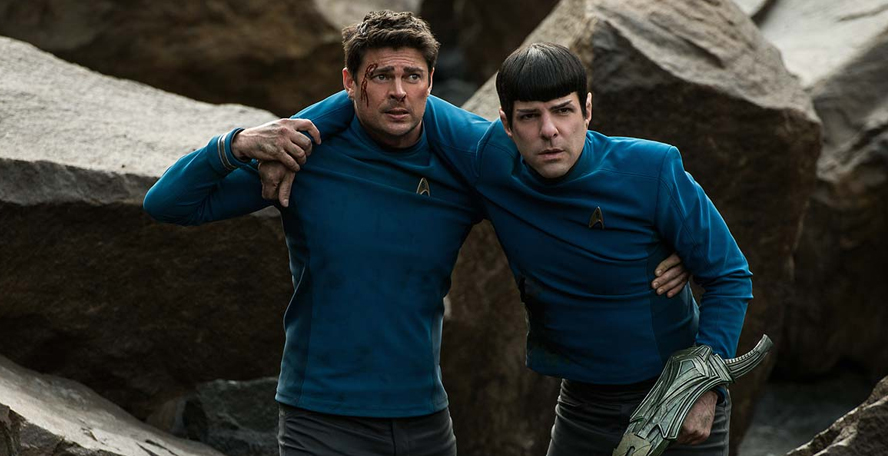
Share this:

  • Click to share on X (Opens in new window) X
  • Click to share on Facebook (Opens in new window) Facebook
  • More
  • Click to print (Opens in new window) Print
  • Click to email a link to a friend (Opens in new window) Email
Like Loading...

Gods of Egypt (2016)

12 Sunday Jun 2016

Posted by dullwood68 in Movies

≈ Leave a comment

Tags

Action, Adventure, Alex Proyas, Brenton Thwaites, Drama, Egypt, Elodie Yung, Fantasy, Geoffrey Rush, Gerard Butler, Gods, Horus, Nikolaj Coster-Waldau, Osiris, Ra, Review, Set, Sphinx

Gods of Egypt

D: Alex Proyas / 127m

Cast: Nikolaj Coster-Waldau, Brenton Thwaites, Gerard Butler, Elodie Yung, Rufus Sewell, Chadwick Boseman, Courtney Eaton, Geoffrey Rush, Bryan Brown, Emma Booth

Gods of Egypt starts by reinventing Egyptian history. Overly sincere narration informs us that Osiris (Brown) ruled over the populous and bountiful Nile area, while his brother Set (Butler) was given dominion over the barren, desert areas at the far edges of Osiris’ kingdom. Time passes, until Osiris decides to abdicate his throne in favour of his son, Horus (Coster-Waldau). At the crowning ceremony, Set arrives and promptly kills Osiris, blinds Horus by taking out his eyes, and usurps the kingdom. He also sets about killing all the other gods and collecting their individual powers.

A year passes. Set has enslaved the people of Egypt and has put them to building monuments in his name, including one that reaches high into the sky, a tower so great that Ra (Rush), Set’s father, will be able to see it in his heavenly orbit. A slave girl, Zaya (Eaton), convinces her beloved, a thief called Bek (Thwaites), that only Horus can save everyone, but he will need his eyes back. Horus’ eyes are kept in Set’s vaults, and Zaya’s position in the home of master builder Urshu (Sewell) means that she has access to the vaults’ plans and can ensure that Bek avoids any booby traps in his search for the eyes. He retrieves one, but is unable to find the other. In their subsequent escape from Urshu’s home, Zaya is struck by an arrow and dies. Bek continues on to the home of Horus where he bargains for Zaya’s return from the land of the dead in exchange for Horus’ other eye. The god agrees to help him find it.

GOE - scene1

Naturally, Set becomes aware of what Horus is doing. He sends assassins, and even himself, to halt their journey to the Egyptian capital and the procurement of Horus’ other eye. But luck is on Bek and Horus’ side, and aided along the way by Hathor (Yung), the goddess of love, and Thoth (Boseman), the god of wisdom, they reach the capital and Horus does battle with Set. With Set having unleashed the world-devouring creature Apep, Horus and Bek must find Horus’ eye, and a way to defeat Set and save Egypt from complete annihilation.

Students of Egyptian history will be shaking their heads in dismay at such a (brief) description of the events that occur in Gods of Egypt. But if they were to actually sit down and watch the movie, that head shaking would quickly turn into uncontrolled apoplexy. As revisionist fantasies go, Gods of Egypt is tawdry stuff, and heavily reliant on spectacle provided by CGI and poor script decisions. The gods can transform into armoured, winged variations of themselves in order to do battle with one another, but this is nothing to the way in which the characters speak an awful mix of cod-literal pseudo-intellectual exposition, and apparently heartfelt twaddle. With deathless lines of dialogue such as “I don’t want to die, I want to live! I want to live down on earth, amongst the lands I have conquered!” (spoken by Set), it’s no wonder that the script, by Matt Sazama and Burk Sharpless – who also co-wrote Dracula Untold (2014) and The Last Witch Hunter (2015), and whose next project is Power Rangers (2017) – contains enough wince-inducing moments to stun a sphinx.

GOE - scene3

Ostensibly an adventure story, the movie packs in the usual amount of over-the-top action setpieces that seem de rigeuer in modern fantasy movies, and in doing so, sacrifices credibility at every turn, and on certain occasions, any coherence it’s built up along the way (which isn’t much). Characters behave erratically, leaving the audience to wonder if Sazama and Sharpless assembled their final script from the scattered pages of previous drafts, and the journey Bek and Horus embark on seems to take in every possible physical environment – from desert to swamp to mountain – available to the screenwriters’ imagination. The movie is a big, sprawling epic, eager to please with each new bout of CGI-rendered spectacle, and yet it’s spectacularly hollow, a crowd-pleasing exercise that lacks subtlety, depth and narrative stability (which begs the question, just which kind of audience is it looking for?).

The cast are lost amid all the surface glamour and overbearing special effects. Coster-Waldau is particularly adrift, varying the level of his performance from scene to scene and never quite managing to find a through line for Horus that doesn’t smack of constantly changing improvisation. He also has trouble giving weight to his dialogue, making Horus sound plaintive and reticent rather than angry and defiant. Thwaites is stuck with the awkward task of motivating Horus and his fellow gods to take up against Set, and providing most of the movie’s humour. That he only succeeds intermittently shouldn’t be much of a surprise, as again the script doesn’t support him in either endeavour, and often leaves him hanging high and dry. And then there’s Butler, chewing the scenery with all the energy of an actor working out a contractual obligation and not caring how bad he is.

GOE - scene2

The rest of the cast struggle manfully to maintain a semblance of interest in their characters with only Yung and Boseman injecting any passion into their roles. They’re not helped by the absence of Proyas in the director’s chair. Anyone who’s seen The Crow (1994), Dark City (1998), and I, Robot (2004), will be wondering what’s happened to the idiosyncratic and daring director whose visual ingenuity and flair marked him out as a talent to watch out for. Here, Proyas’ talent is squandered in a maelstrom of pixels and perfunctory plotting that does his reputation no favours, and makes his previous movie, the nonsensical Knowing (2009), look like a masterpiece in comparison. Proyas isn’t connected with another project as yet, but let’s hope he finds one that’s worthy of his talent and commitment.

Rating: 4/10 – overcooked and belligerent in its approach, Gods of Egypt looks good but remains resolutely superficial from beginning to end; an adventure movie that goes through the motions and proves hard to engage with, it trades plausibility for spectacle at every turn, and is entirely forgettable.

Share this:

  • Click to share on X (Opens in new window) X
  • Click to share on Facebook (Opens in new window) Facebook
  • More
  • Click to print (Opens in new window) Print
  • Click to email a link to a friend (Opens in new window) Email
Like Loading...

Wolf Warrior (2015)

11 Saturday Jun 2016

Posted by dullwood68 in Movies

≈ Leave a comment

Tags

Action, Army manoeuvres, China, Drama, Jing Wu, Mercenaries, Nan Yu, Revenge, Review, Scott Adkins, Sniper, Thriller

Wolf Warrior

Original title: Zhan lang

D: Jing Wu / 90m

Cast: Jing Wu, Nan Yu, Scott Adkins, Dahong Ni, Xiao Zhou, Qiang Ma, Zhaoqi Shi, Zibin Fang, Sen Wang, Tengyuan Liu, Yongda Zhang, Xiaolong Zhuang, Yi Zhao, Zi Liang

Action movies, when executed properly, can provide some of the most exhilarating movie moments it’s possible to experience. From John McClane’s exhortation to “take this under advisement, jerkweed” before dumping a chair load of C4 down a lift shaft in Die Hard (1988), to the spectacular destruction of the White House in Independence Day (1996), and the lobby shootout in The Matrix (1999), the movies have given us the kind of goosebump-inducing, jaw-dropping moments that make us want to go back to them time and again, so impressive are they.

But the flipside of this is the number of action movies that fail to deliver even the barest hint of one of these moments. There’s more of them, of course, and they often fall back on tried and trusted elements: running gunfire that never hits anyone, pyrotechnics rather than proper explosions, poorly orchestrated hand-to-hand combat (the kind of heavily edited sequences that end up looking as if they’ve had frames cut here and there), a scenario that sees one lone hero fend off an army of soldiers/mercenaries/thugs, a sneering villain who meets a nasty end (if the script is clever enough), a romantic interest who may or may not be abducted by the sneering villain, and/or a daring rescue mission that means certain death if anyone attempts it – usually against a heavily fortified hideout. (There are plenty of other, similar elements, but you get the general idea.)

vlcsnap-00001

It’s easy to take some comfort from all this familiarity; after all, action movies are often the cinematic equivalent of socially sanctioned vigilantism, even if there’s a police officer involved (a la Dirty Harry Callahan). After policemen, action movies like to employ members of the military as their protagonists, ex-soldiers home on leave in their troubled hometown, or maverick individuals who have trouble following orders. Again, it’s comforting; these characters know how to handle themselves, they know how to comfortably beat up a minor bad guy (and several of his buddies), and their grit and detemination will allow them to overcome all kinds of injuries and take down the sneering villain.

All of which makes watching Wolf Warrior such a pleasant, though unremarkable experience. Many of the basic action movie tropes are here, from Jing Wu’s stoic yet romantically cocky sniper Leng Feng, to the top brass (Yu, Zhou) forced to watch events unfold from a command room, and the leader of a group of mercenaries (Adkins) whose resourcefulness proves no match for the hero (and who is reduced to, yes, sneering). Leng also overcomes several injuries sustained throughout the movie, including a gunshot wound to the left shoulder that he promptly ignores. It’s all entirely predictable stuff, competently shot and edited, but offering little in the way of reward for the viewer.

vlcsnap-00002

It’s comforting, though, because this is a Chinese action movie, but it has the look and feel of an American low budget action movie but with a few extra dollars spent on it. Its basic plot – sniper kills drug dealer, drug dealer’s brother hires mercenaries to kill sniper – is very basic indeed, but the screenplay (by Wu and three others) wanders away from it so often and so consistently, the average viewer could be forgiven for thinking the basic plot, if the makers had stuck to it exclusively, would have led to the movie lasting maybe fifty minutes tops. And there are several narrative decisions and developments that imply the script was made up as the production progressed, from the inclusion of a scene where Leng and his fellow wolf warriors (they’re an elite Chinese army outfit) fend off a pack of badly CGI-rendered wolves, to the idea that trying to kill Feng would best be achieved while he’s on manoeuvres and surrounded by dozens of fellow soldiers (the mercenaries are only five in number).

The mix of action movie tropes and Chinese movie making sensibilities leads to Wolf Warrior having its fair share of comedy moments too. Wu can’t resist making Leng the kind of chirpy, up for a laugh character who would usually end up as cannon fodder at some point in other action movies, and while he can be serious when required, it’s a strange sight to see him holding back on grinning when Leng steps on a mine. He also spends as much time as possible flirting with his superior (Nan Yu), which of course is reciprocated so that they can ride off together at the end (there’s no sunset, but it’s implied). And Leng’s maverick anti-authority tendencies, the subject of an enquiry at the beginning, are soon applauded once the mercenaries are defeated and the drug dealer’s brother is apprehended at the border.

vlcsnap-00003

In the director’s chair, Wu proves to be an erratic presence, strangely confident when focusing on scenes that don’t involve any action, and unable to muster any tension or excitement in the scenes that do. Fans of both Wu and Adkins will be waiting for their final showdown with a fair degree of anticipation, but that anticipation is soon dispatched by the fight’s pedestrian moves and awkward wire work (it’s over too quickly as well). Adkins, whose presence in low budget action movies is often the best thing about them, is saddled with some dreadful dialogue, but he still manages to inject his character with enough venom to make his appearance fairly memorable, while Wu and his fellow cast members play up their stereotypical roles in such a way that the words ‘by rote’ spring to mind.

All this makes it sound as if Wolf Warrior is one to avoid, but while it’s certainly not a good movie, it does have a certain charm that redeems it somewhat. The Chinese setting is different, even if the overall mise-en-scene is overly familiar, and there are times when the absurdity of it all is more than capable of bringing a smile to the viewer’s face. Aside from several patriotic nods to the sanctity of the Republic of China, the movie doesn’t take itself too seriously and its running time keeps things lean and (occasionally) mean. Fans of Asian cinema might want to check it out, but if they do, they’d do well to keep their expectations in check.

Rating: 5/10 – the usual vagaries of Chinese movie making – story developments that don’t make complete sense, less than consistent characterisations, narrative inconsistencies, haphazard editing – are all present and correct in Wolf Warrior, but can’t completely derail what is basically an inoffensive, painless viewing experience; the kind of movie that’s perfectly suited to an evening’s viewing with pizza and beers, it’s an action thriller that doesn’t try too hard and should be approached accordingly.

Share this:

  • Click to share on X (Opens in new window) X
  • Click to share on Facebook (Opens in new window) Facebook
  • More
  • Click to print (Opens in new window) Print
  • Click to email a link to a friend (Opens in new window) Email
Like Loading...

The Scorch Trials (2015)

04 Saturday Jun 2016

Posted by dullwood68 in Movies

≈ Leave a comment

Tags

Action, Cranks, Drama, Dylan O'Brien, Gladers, Immunes, James Dashner, Kaya Scodelario, Literary adaptation, Patricia Clarkson, Review, Sci-fi, Sequel, The Flare, The Right Arm, The Scorch, Thriller, WCKD, Wes Ball

The Scorch Trials

D: Wes Ball / 132m

Cast: Dylan O’Brien, Kaya Scodelario, Ki Hong Lee, Thomas Brodie-Sangster, Dexter Darden, Alexander Flores, Jacob Lofland, Rosa Salazar, Giancarlo Esposito, Aiden Gillen, Patricia Clarkson, Barry Pepper, Lili Taylor, Alan Tudyk

Following on immediately from the events of The Maze Runner (2014), The Scorch Trials begins with Thomas (O’Brien) and his fellow Gladers – Teresa (Scodelario), Minho (Lee), Newt (Brodie-Sangster), Frypan (Darden), and Winston (Flores) – having escaped the maze and finding sanctuary in a facility run by Mr Janson (Gillen). All seems to be well, and Janson refutes any connection to WCKD, the organisation that’s behind the maze and the reason for its existence. But strange things are going on in the facility; each night selected Immunes from other mazes are chosen to be taken to a place of safety, far away from WCKD’s clutches. And Teresa is separated from the group. When Thomas tries to see her he’s prevented from doing so.

Help comes in the form of Aris, one of the first survivors to be brought to the facility. He shows Thomas proof that Janson is lying about the Immunes being safe, and that he works for WCKD. Rescuing Teresa from some kind of medical procedure, Thomas and the rest of the Gladers, and Aris, escape from the facility and find themselves in the hostile environment of the Scorch. There they encounter Cranks, people infected by the Flare, the disease that has brought worldwide destruction to the planet. Thomas and the rest head north to a range of nearby mountains where they hope to meet up with a resistance group called The Right Arm.

TST - scene3

Circumstances find them taking shelter from a thunderstorm, where they meet Brenda (Salazar) and her surrogate father, Jorge (Esposito). Their hideout is discovered by WCKD forces led by Janson. In the resulting firefight, Thomas and Brenda find themselves separated from everyone else, but they manage to escape. At a nearby night club run by the duplicitous Marcus (Tudyk), the pair fall foul of a powerful narcotic but are saved by Jorge and the others. Marcus is forced to reveal the location of The Right Arm’s location in the mountains, and the group travels there quickly. But when they reach the Right Arm’s camp – led by Vince (Pepper) – Thomas is dismayed to discover that one of his friends has contacted WCKD, and more of their forces are on their way.

Where The Maze Runner was a surprising, tightly structured introduction to the world of the Flare and the young people known as Immunes, The Scorch Trials alas suffers very definitely from Middle Movie Syndrome. It tries hard to be as dramatic and as intense as its predecessor but the narrative is against it from the start. This is a movie that gives sporadic clues as to the larger back story, and even seems on the cusp of revealing some really important information about Thomas and his time working for WCKD, but ultimately it holds back from doing so, leaving any revelations for the final movie, The Death Cure, now due in January 2018 thanks to Dylan O’Brien’s on-set injuries suffered back in March of this year.

TST - scene1

With the plot put largely on hold until then, The Scorch Trials becomes one long chase movie, with Thomas once again acting as unofficial leader of the Immunes, and Clarkson returning as WCKD head Dr Ava Paige. Character development is also put on hold, and the introduction of new antagonists such as Janson and Brenda is done in such a perfunctory way that it becomes impressive that both Gillen and Salazar are able to inject anything of note into their performances. And with Thomas front and centre throughout, O’Brien’s co-stars are left wth little to do but stand around while he agonises over his past, and monopolises the action scenes.

But where the plot struggles to make itself felt, the movie does impress with said action scenes, and several of the encounters with the Cranks are filmed with a sweat-inducing energy that makes what are essentially zombie attacks that much more inventive. It’s difficult enough to come up with a new look for any flesh-eaters, but the makeup and visual effects departments have done a great job here, and those that Thomas et al encounter in a ruined shopping mall are a terrific addition to the canon. It’s worth bearing in mind that this is still an adaptation of a YA novel, and the movie should be congratulated for keeping the darkness that is inherent in James Dashner’s novel (even if certain changes have been made in terms of the story).

TST - scene2

More troublesome is the night club sequence which slows down the movie in its attempt to remind viewers that Thomas has a shared past with WCKD (it also seems to have been included to further remind viewers that when it comes to narcotics they should Just Say No). T.S. Nowlin’s script hits an awkward stretch at this point, almost as if it couldn’t find a way forward unless Thomas found himself in even more jeopardy than before. And the subsequent “interrogation” of Marcus by Jorge sees the kind of strong-arm tactics used that doesn’t sit well with the idea that this is being carried out by one of the “good” guys (there’s only a token objection made to Jorge’s methods of information gathering).

Away from troubling notions of the means justifying the ends, the movie lacks a suitable hook for the audience to cling on to. With the movie’s raison d’etre being to set up the final movie (no two-parter, thankfully), returning director Wes Ball can do little except keep things ticking over until next time. That he does this with a certain amount of conviction is evident enough, but it doesn’t help with a number of scenes that prove listless and ineffective, and there’s too much repetition as the characters move from one new introduction to yet another. This also leaves new cast members such as Pepper and Lili Taylor failing to make an impact, an oversight that points once more to the problems of trying to cram so much into a movie that runs for over two hours and lacks an overall focus.

Rating: 6/10 – although it moves (for the most part) with alacrity, The Scorch Trials isn’t as rewarding as The Maze Runner, and tries its best to make up for this by putting all its efforts into making its action scenes as thrilling as possible; in between times though, some viewers may be wondering why so much has been included and why so very little of it builds upon what’s gone before.

Share this:

  • Click to share on X (Opens in new window) X
  • Click to share on Facebook (Opens in new window) Facebook
  • More
  • Click to print (Opens in new window) Print
  • Click to email a link to a friend (Opens in new window) Email
Like Loading...

The Do-Over (2016)

02 Thursday Jun 2016

Posted by dullwood68 in Movies

≈ Leave a comment

Tags

Action, Adam Sandler, Cancer cure, Comedy, David Spade, Drama, High school reunion, Kathryn Hahn, Murder, Netflix, Paula Patton, Puerto Rico, Review, Save & Pay, Steven Brill

The Do-Over

D: Steven Brill / 108m

Cast: Adam Sandler, David Spade, Paula Patton, Kathryn Hahn, Nick Swardson, Matt Walsh, Renée Taylor, Sean Astin, Natasha Leggero, Luis Guzmán, Catherine Bell, Jackie Sandler, Michael Chiklis, Torsten Voges, Stan Ellsworth

The second movie in Adam Sandler’s six picture deal with Netflix, The Do-Over arrives with probably very little anticipation on anyone’s part except for those die-hard Sandler fans who’ve been helping keep him one of the most well-paid stars in Hollywood (still). But in a strange twist of fate, The Do-Over isn’t as bad as it looks. It’s bad, but considering some of Sandler’s other, more recent movies, it isn’t that bad. (There are all different levels of bad, and Sandler’s probably made at least one movie for each level, but this isn’t quite as low down as some of the others.)

The movie introduces us first of all to Charlie (Spade). He’s dressed conservatively, looks like the kind of guy who’d struggle to be recognised in a selfie, and he’s at a high school reunion watching his wife (Leggero) getting pawed by another man (Astin) on the dancefloor. He might as well have ‘Loser’ tattooed on his forehead. Enter Max (Sandler), perhaps Charlie’s only real friend from their high school days. As they swap stories about their lives since then, it seems Max has exceeded expectations and joined the FBI, while Charlie manages a bank inside a Save & Pay. It isn’t long before Max is encouraging Charlie to change his life and do what he really wants to do, but Charlie lacks the guts to do so. But a trip out to sea on Max’s boat sees Charlie forced to do exactly that, as Max has faked their deaths and they both have new identities: Charlie is Dr Ronald Fischman, and Max is Butch Rider.

TDO - scene2

The chance discovery of the key to a safety deposit box leads them to Puerto Rico and a luxury villa that the real Fischman and Rider own. But their new, idyllic existence is brought to an end by the appearance of a hired assassin, the Gymnast (Voges), who tries to kill them. Max gets them both away and in the process reveals that he’s not an FBI agent but exactly what their high school guidance counsellor always said he’d be: a morgue attendant. He wanted to change his life as well, and when the two men arrived at the morgue he took the opportunity to switch their identities. But now it’s clear that Fischman and Rider were involved in something dangerous, and using Fischman’s widow, Heather (Patton), as a source of information, they start to delve into the pair’s recent past, but in doing so, Charlie learns that even now, Max is hiding things from him.
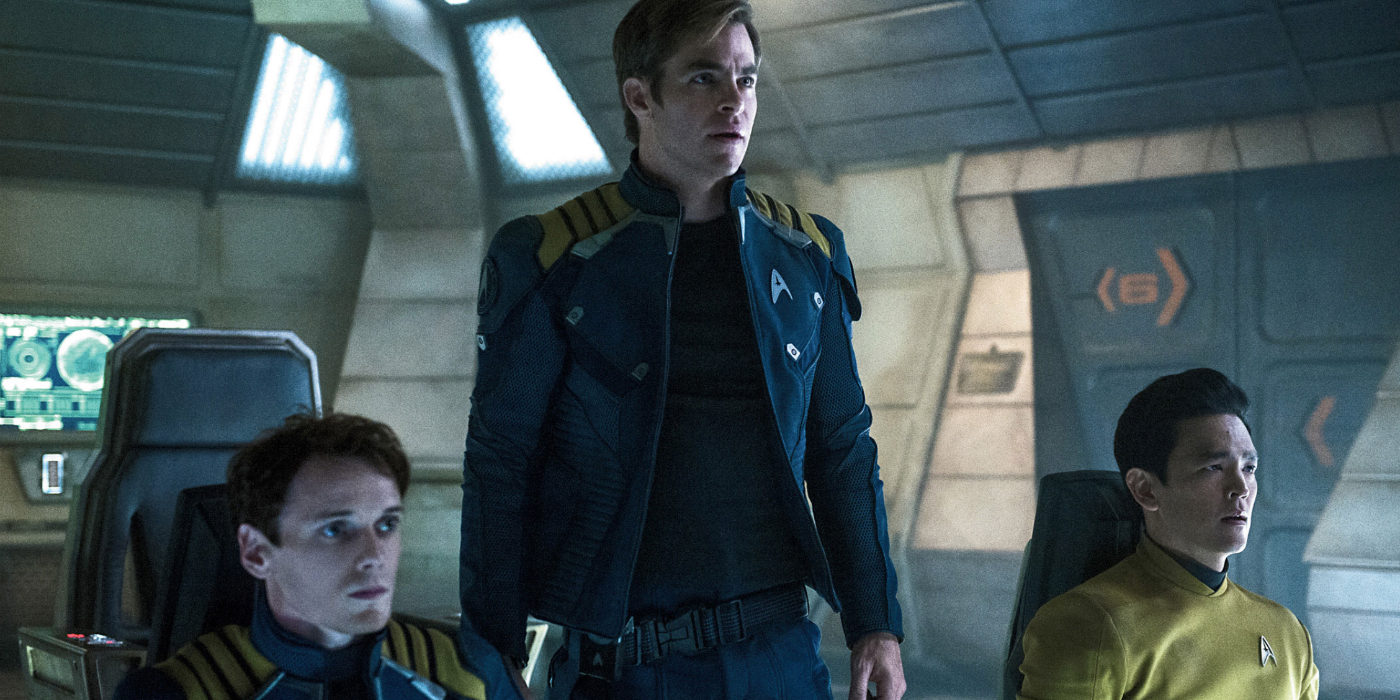
If you’ve read the above synopsis and thought, ‘Okay, that doesn’t sound so bad’, then that’s because it isn’t. There’s more – obviously – and a lot of it is on the same dramatic level. Naturally, this being an Adam Sandler/David Spade buddy movie, there’s a fair bit of humour thrown into the mix, as well as brief moments of romance, and even some neat, uncontrived action beats. But all these elements, well intentioned as they are, remain flat and uninvolving, and despite several attempts at the kind of wacky, minor league offensive material Sandler is known for, The Do-Over consists of one largely unmemorable scene after another, and features Sandler doing what he does best: playing the same character he’s played for over thirty years now.

TDO - scene1

If anyone has to ask, after all this time, why is Adam Sandler still so popular, and why has Netflix decided to enter into a six-picture deal with him, then this movie contains the answer. It’s a quintessential Sandler movie: defiantly silly, with a series of unrelated scenes given a sprinkling of narrative cohesion to help them through; laughs based on personal abuse; visual gags at the expense of one or more of the characters; glamorous location work; and the same just-making-the-required-effort performance from Sandler that he gives in pretty much all his movies. Some may decry these aspects of his work, but Sandler knows exactly what he’s doing: he’s giving his fans what they want, and what they’ve come to expect. And it’s why his movies always make a profit, even the likes of Jack and Jill (2011) and That’s My Boy (2012).

So all that remains is to ask the question, where does The Do-Over fit in with the rest of Sandler’s movies? Well, it’s certainly not as bad as the ones mentioned in the previous paragraph, but it’s also nowhere near as good as, say, The Wedding Planner (1998 – so long ago now), or 50 First Dates (2004). It’s averagely entertaining, largely forgettable, and the script by Kevin Barnett and Chris Pappas doesn’t strive too hard in terms of the basic plot, but it does have moments where the ennui lifts and the shade of a better movie can be glimpsed. Most of these moments involve Spade, who makes Charlie quite endearing at times, and there’s a surprisingly well choreographed fight sequence between Patton and Hahn that’s funny and bruising. As mentioned before, Sandler coasts along but often looks disinterested. Unless he manages to fit in another movie for Netflix, Sandler isn’t due back on our screens until next year in Noah Baumbach’s Yeh Din Ka Kissa, a movie that also features Emma Thompson, Ben Stiller, Dustin Hoffman, and Candice Bergen. Just how he fares in such company will be interesting to see.

TDO - scene3

Frequent collaborator Brill keeps things moving at a decent pace, and the Puerto Rican locations are exploited to the full by DoP Dean Semler, yet the movie still manages to shift awkwardly between the tonal demands of the narrative, mixing comedy, drama and thriller elements to muddled effect often in the same scene (Max’s “torture” by the Gymnast is a perfect example). And for once, there aren’t the usual round of cameos from the likes of Rob Schneider et al, a minor blessing in a movie that at least doesn’t outstay its welcome.

Rating: 5/10 – amiable enough while it’s playing, The Do-Over is the kind of comedy that fades from the memory soon after it’s seen; if you don’t expect too much going in then you might be pleasantly surprised, otherwise it’s yet another Adam Sandler movie that it’s hard to get too excited about.

Share this:

  • Click to share on X (Opens in new window) X
  • Click to share on Facebook (Opens in new window) Facebook
  • More
  • Click to print (Opens in new window) Print
  • Click to email a link to a friend (Opens in new window) Email
Like Loading...

Grimsby (2016)

28 Saturday May 2016

Posted by dullwood68 in Movies

≈ 1 Comment

Tags

Action, Airborne virus, Assassination, Brothers, Chile, Comedy, Drama, Ian McShane, Isla Fisher, Louis Leterrier, Mark Strong, Penélope Cruz, Rebel Wilson, Review, Sacha Baron Cohen, Spy, World Cup Finals

Grimsby

aka The Brothers Grimsby

D: Louis Leterrier / 83m

Cast: Sacha Baron Cohen, Mark Strong, Penélope Cruz, Isla Fisher, Ian McShane, Rebel Wilson, Barkhad Abdi, Gabourey Sidibe, Scott Adkins, Annabelle Wallis, Johnny Vegas, Ricky Tomlinson

Grimsby - scene1

Just avoid. This is a movie whose “comic” highlight is its lead characters hiding in an elephant’s vagina while it’s being penetrated by another elephant – and then the other elephant ejaculates. Fans of Baron Cohen will probably enjoy this but anyone else will be wondering how on earth this was ever made, and if they manage to get through to the end, they’ll also be wondering how they can get eighty-three minutes of their lives back.

Rating: 3/10 – yet another example of gross-out humour being more important than properly constructed comedy, Baron Cohen’s latest offering is so bad you hope he’s never allowed to make another movie of his own ever again; wasting the talents of a good cast (spare a thought for Penélope Cruz, appearing in this and Zoolander 2 in the same year), and giving new meaning to the word ‘puerile’, Grimsby is competently made but embarrassing at almost every turn.

Share this:

  • Click to share on X (Opens in new window) X
  • Click to share on Facebook (Opens in new window) Facebook
  • More
  • Click to print (Opens in new window) Print
  • Click to email a link to a friend (Opens in new window) Email
Like Loading...

X-Men: Apocalypse (2016)

22 Sunday May 2016

Posted by dullwood68 in Movies

≈ 3 Comments

Tags

Action, Angel, Apocalypse, Beast, Bryan Singer, Cyclops, Drama, Evan Peters, Havok, James McAvoy, Jean Grey, Jennifer Lawrence, Kodi Smit-McPhee, Magneto, Marvel, Michael Fassbender, Mutants, Mystique, Nicholas Hoult, Nightcrawler, Oscar Isaac, Professor Xavier, Psylocke, Quicksilver, Review, Rose Byrne, School for Gifted Children, Sci-fi, Sequel, Storm, Superheroes, Thriller, X-Men

X-Men Apocalypse

D: Bryan Singer / 144m

Cast: James McAvoy, Michael Fassbender, Jennifer Lawrence, Oscar Isaac, Nicholas Hoult, Rose Byrne, Evan Peters, Sophie Turner, Tye Sheridan, Kodi Smit-McPhee, Lucas Till, Olivia Munn, Ben Hardy, Alexandra Shipp, Josh Helman, Ally Sheedy

It’s okay.

Rating: 6/10 – an average sequel that offers a muddled storyline complete with yet more disaster porn, the best thing you can say about X-Men: Apocalypse is that it’s competently made; without a strong emotional core to help the audience care about the characters, or a real sense of impending apocalypse to make the stakes all the more gripping, this is a sequel that fails to build on the good work achieved in the previous two instalments.

Share this:

  • Click to share on X (Opens in new window) X
  • Click to share on Facebook (Opens in new window) Facebook
  • More
  • Click to print (Opens in new window) Print
  • Click to email a link to a friend (Opens in new window) Email
Like Loading...

Triple 9 (2016)

21 Saturday May 2016

Posted by dullwood68 in Movies

≈ 1 Comment

Tags

2010 Black List, Action, Anthony Mackie, Casey Affleck, Chiwetel Ejiofor, Crime, Drama, Gal Gadot, Gold robbery, John Hillcoat, Kate Winslet, Murder, Review, Robbery, Russian mob, Thriller, Woody Harrelson

Triple 9

D: John Hillcoat / 115m

Cast: Casey Affleck, Chiwetel Ejiofor, Anthony Mackie, Woody Harrelson, Kate Winslet, Aaron Paul, Gal Gadot, Norman Reedus, Teresa Palmer, Clifton Collins Jr, Michael Kenneth Williams, Michelle Ang

Another script liberated from the Black List (this time from 2010), Triple 9 reaches us after having been optioned back in 2012 and with John Hillcoat firmly attached to the director’s chair. Back then, Shia LaBeouf was in place to play the lead, and Nick Cave was providing the score. But funding proved to be an issue and the movie languished in development hell until 2014 when financing was found and distribution rights were secured as well. Before then, LaBeouf left the project and was replaced by Charlie Hunnam, who in turn was replaced by Casey Affleck. During pre-production, casting choices also included Cate Blanchett and Christoph Waltz in the roles eventually taken by Kate Winslet and Woody Harrelson. And Nick Cave left as well, to be replaced by Atticus Ross.

All this is mentioned because Triple 9 is a movie that could and should have been better than the finished product. Whether or not it would have been with the talent proposed above we’ll never know, but upon consideration it’s unlikely it could have been any less disappointing. For a crime/action/drama/thriller with a top-notch cast and a director whose previous movies include The Proposition (2005) and The Road (2009), Triple 9 never really gets to grips with its own storyline, or makes the relationships between the characters at all convincing.

Triple 9 - scene3

The plot revolves around the efforts of a Russian mobster’s wife, Irina Vlaslov (Winslet), to free her husband from prison. In order to achieve this she hires a group of men consisting of three criminals – Michael (Ejiofor), Russell (Reedus) and his brother Gabe (Paul) – and two corrupt cops – Marcus (Mackie) and Franco (Collins Jr) – to steal a safety deposit box from a bank vault. This they do, but Irina refuses to pay them because what was supposed to be in the box isn’t there, and instead she insists that they have to take on another mission: the theft of data about her husband from a government storage facility.

In order to do this successfully, Marcus suggests they employ a triple nine scenario, an officer down situation that would see all other available officers sent to that incident’s location. He chooses his new partner, Chris (Affleck), to be the fall guy for their plan, and he begins to set things in motion. Using a local gang member as a patsy, Marcus arranges for Chris to be at an abandoned housing project on the day of the theft, but his plan doesn’t work in the way he’d hoped: a triple nine call does go out over the air but it isn’t Chris who is the officer down. Meanwhile, Michael and Franco retrieve the data from the storage facility, but what follows is a series of double crosses as everyone involved in the theft acts in their own, often murderous, interests.

Triple 9 - scene2

By the time these double crosses occur, the average viewer may well be wondering if they’re going to have anyone to root for. Certainly, Matt Cook’s well-regarded script seems hell-bent on eliminating as many of its lead characters as it can, and it may come as a surprise to discover just who is still standing come the movie’s finale, but with most of said characters getting what they deserve, each demise carries with it an increasing sense of ennui. It’s simply too difficult to care about any of them, whether it’s Ejiofor’s earnest gang leader, or Harrelson’s rule-bending detective. There’s not enough investment in any of the characters for an audience to identify with them or feel sympathetic towards them. Even Chris, with his arrogant sense of right and wrong, comes across as the kind of guy you’d avoid having a drink with.
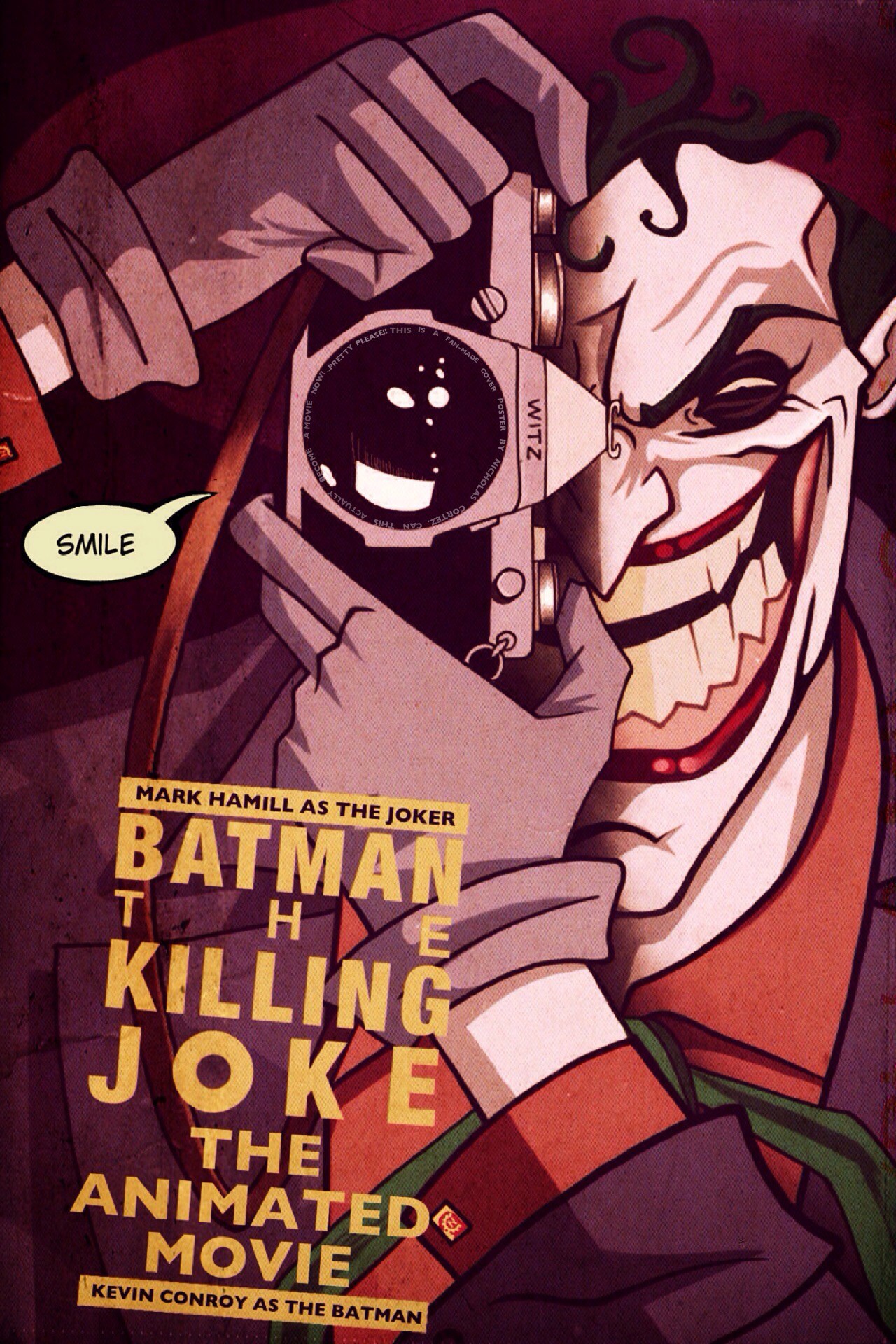
There’s also the issue of the various sub-plots that are threaded throughout the movie, from Michael’s attempts to secure custody of his son – he just happens to have had a relationship with Irina’s sister, Elena (Gadot) – to Detective Allen’s (Harrelson) investigation into the bank robbery. While these and other sub-plots link together, they do so haphazardly and often without any sense that they’re always operating in the same milieu as the main plot or storylines. And it doesn’t help that, ultimately, the data in the storage facility (and the release of Irina’s husband) is treated like a McGuffin, used to drive the story forward but having no relevance over all.

Triple 9 - scene1

With the script and the drama proving too unwieldy and convoluted – the lengths Marcus goes to in setting up Chris being shot take up too much of the running time and seem unnecessarily complex – the characters are reduced to loosely sketched mannequins, moving around and reacting to things as the whims of the script dictate. The final half hour should have most viewers scratching their heads in amusement at the clumsy way in which Cook tries to wind things up neatly and with a bow on top. Instead of providing the audience with a satisfying and thrilling ending, the movie fizzles out and ends with a whimper and not a bang. It’s a movie that starts off promisingly with a well-staged bank robbery and getaway chase, and ends with an unlikely (and dramatically inert) confrontation in a car park.

Thankfully it’s not all doom and gloom, though that’s definitely the world the characters’ inhabit. Against the odds there are good performances to be had, with Ejiofor and Mackie giving their characters a far better grounding than the script allows them, while Winslet exudes icy menace with almost every glance. Affleck and Harrelson work well together, and there’s sterling support from Paul as the gang member who develops a conscience when confronted with the reality of the triple nine scenario. Fighting against the material, Hillcoat does manage to imbue proceedings with a nervous energy, even if he’s not able to be consistent, and the action sequences, even if they are reminiscent of Heat (1995), are still rousing enough to impress. And finally, there’s Nicolas Karakatsanis’ superb cinematography, which adds a febrile intensity to Hillcoat’s nervous energy, making the movie a pleasure to watch for its visuals if not its story.

Rating: 5/10 – with precious little back story for any of the characters, and a sense that Cook’s screenplay needed another pass, Triple 9 is a hard movie to get to grips with; stubbornly lacking in focus, it unfolds with all the inevitability of a tragedy but without the emotional content that would make it all the more rewarding.

Share this:

  • Click to share on X (Opens in new window) X
  • Click to share on Facebook (Opens in new window) Facebook
  • More
  • Click to print (Opens in new window) Print
  • Click to email a link to a friend (Opens in new window) Email
Like Loading...

For One Week Only: Unnecessary Sequels – 1. Kindergarten Cop (2016)

09 Monday May 2016

Posted by dullwood68 in Movies

≈ Leave a comment

Tags

Action, Aleks Paunovic, Bill Bellamy, Comedy, Darla Taylor, Dolph Lundgren, Don Michael Paul, FBI, Flash drive, For One Week Only, Kindergarten Cop 2, Review, Sequels, Undercover, Witness Protection Program

Introduction

Sequels have been with us since the Silent Era, specifically since The Fall of a Nation (1916), a follow-up to D.W. Griffith’s The Birth of a Nation (1915). Written and directed by Thomas Dixon Jr, it contained much the same contentious and controversial material as its predecessor, but was dismissed by at least one critic as a “preposterous” picture (so even then sequels had a bad rap). The idea of making a sequel to a successful movie never really caught on, but the idea of movie series did, and in the Thirties and Forties, studios such as Universal churned out movie after movie featuring the same characters (often played by the same stars but not always), and adhered to the idea of recycling long before it became fashionable in the Nineties. It wasn’t until the Seventies, and the advent of movies such as The Godfather Part II (1974) and French Connection II (1975), that the studios began to realise that the relatively humble sequel could be a money maker. In the Eighties, independent movie makers jumped on the band wagon also, giving us franchises we never asked for (usually in the horror genre) and unwanted cash-ins that held equal zero enticement. But the makers of these movies knew one thing above else: if you make a sequel to a movie that’s been even halfway successful, and make it as cheaply as possible (okay, that’s two things), then people will pay to see it, either at the cinema or in their own homes.

Sometimes though, a sequel comes along that just leaves the average moviegoer stunned by its existence. This kind of sequel – the sequel you never imagined would be made… ever – usually pops up out of nowhere, unheralded, and with no reason to exist other than that a producer, somewhere, somehow, managed to get financing for it, and people to work on it, and actors to star in it. And with all the effort that goes into the making of a movie, all the time and talent and hard work, how does this particular movie, with all its shortcomings and failures there for all to see, actually get to be as bad as it is? Because that’s the main, major problem with sequels: they pretty much suck big time. Or if they don’t suck big time then they manage to disappoint in other ways, such as retelling the same story as the first movie, or going darker, or refusing to develop the characters, or repeating the same tonal problems that existed the first time around (hello, Batman v Superman: Dawn of Justice). Sequels come with the least level of expectation, and the most sense of a disaster waiting to be viewed. So to illustrate this point, For One Week Only will present seven of the most unnecessary sequels yet made, sequels that were/are so bad that a third movie hasn’t been contemplated or made yet.

Kindergarten Cop 2 (2016) / D: Don Michael Paul / 100m

KC2

Cast: Dolph Lundgren, Darla Taylor, Bill Bellamy, Aleks Paunovic, Michael P. Northey, Sarah Strange, Josiah Black, Raphael Alejandro, Dean Petriw, Abbie Magnuson, Tyreah Herbert, Oscar Hartley, Valencia Budijanto, William Budijanto

Twenty-six years. Not the longest period between an original and its sequel – that honour goes to Bambi (1942) and its DTV sequel Bambi II (2006), with a gap of sixty-four years – nevertheless Kindergarten Cop 2 arrives with only a minimum of enthusiasm to recommend it, and quite a lot to make any unsuspecting viewer run for the hills (even the ones with eyes). This is the kind of sequel that’s basically a retread of the original movie, with minor changes made, and no attempt to improve on things. If anything, the original Kindergarten Cop (1990) is a work of genius when compared to this drab retelling, what with Lundgren’s lumbering approach to the material (every time he smiles it seems as if the effort’s hurting him), and Paul’s absentee landlord version of directing helping to hold the movie back.

Kindergarten Cop 2

This time around, Lundgren’s FBI agent is on the hunt for a flash drive that contains a copy of details of everyone in the Witness Protection Program. It’s been hidden in a school, and it’s up to Agent Reed (Lundgren) to go undercover and locate it while masquerading as a kindergarten teacher, and trying to keep one step ahead of Russian villain Zogu (Paunovic), who wants it so he can track down the ex-girlfriend who’s going to testify against him in an upcoming trial. The whole thing is plotted so lazily that you don’t need any familiarity with the first movie to work out just what’s going to happen. Even the minor subplot involving one of the kids having an abusive parent plays out exactly as you’d expect, even though the dynamic is changed (it’s resolved by a pep talk rather than a beating).
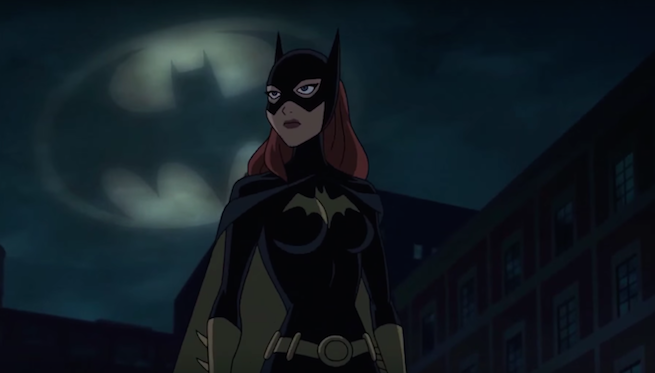
Kindergarten Cop 2:1

The humour is as bland and uninspiring as expected, and the movie dials back on the original’s more brutal approach to violence. Scenes come and go without any sense of connection to each other, and some characters appear to exist in a vacuum; even Reed’s relationship with his partner, Agent Sanders (Bellamy), appears to be more of a convenience arranged by the screenplay than something borne out of two men working together over a period of years. Reed’s love interest with fellow kindergarten teacher, Olivia (Taylor), is as manufactured and hard to believe in as anything else, and the moment when school principal, Miss Sinclaire (Strange), lets rip with a baseball bat – while intended to be funny – merely reaffirms how lazy (and lousy) it all is. And to add insult to injury (the viewer’s), there’s no prizes for guessing when Reed gets to say, “Class dismissed”.

Rating: 3/10 – professionally made but only just, Kindergarten Cop 2 scrapes all kinds of layers from the bottom of the barrel – and some that no one knew were there until now; leaden and tedious, it’s a movie that drags itself along like a wounded animal that’s unaware of just how badly injured it is, but is in dire need of euthanasia.

Share this:

  • Click to share on X (Opens in new window) X
  • Click to share on Facebook (Opens in new window) Facebook
  • More
  • Click to print (Opens in new window) Print
  • Click to email a link to a friend (Opens in new window) Email
Like Loading...

Captain America: Civil War (2016)

04 Wednesday May 2016

Posted by dullwood68 in Movies

≈ 3 Comments

Tags

Action, Ant-Man, Anthony Russo, Black Panther, Black Widow, Bucky Barnes, Chris Evans, Colonel Zemo, Drama, Elizabeth Olsen, Falcon, Hawkeye, Iron Man, Jeremy Renner, Joe Russo, Marvel Cinematic Universe, Paul Bettany, Paul Rudd, Review, Robert Downey Jr, Scarlet Witch, Scarlett Johansson, Sebastian Stan, Sokovia Accords, Spider-Man, Superheroes, The Avengers, Thriller, Tom Holland, Vision, War Machine, William Hurt, Winter Soldier

Captain America Civil War

D: Anthony Russo, Joe Russo / 147m

Cast: Chris Evans, Robert Downey Jr, Scarlett Johansson, Sebastian Stan, Anthony Mackie, Don Cheadle, Jeremy Renner, Chadwick Boseman, Paul Bettany, Elizabeth Olsen, Paul Rudd, Emily VanCamp, Tom Holland, Daniel Brühl, Frank Grillo, William Hurt, Martin Freeman, Marisa Tomei, John Kani, John Slattery, Hope Davis, Alfre Woodard

And so begins Phase 3 of the Marvel Cinematic Universe. Though the Marvel formula is pretty well established now, and is beginning to show through a little too often for comfort – Avengers: Age of Ultron (2015) disappoints more and more with repeated viewings, Ant-Man (2015) was fun but too married to the formula for its own good – the company that should finally give us the Spider-Man movie a lot of people have been waiting for, has cannily begun the process of dismantling and rebuilding the work it carried out in Phases 1 and 2. Having introduced us to the more well-known Marvel superheroes – Iron Man, Thor, the Hulk, Captain America etc. – over the next few years we’re going to meet several newer additions to the roster, so that by the time we get to Avengers: Infinity War Part II (2019), the Avengers will hopefully be comprised of a different set of superheroes.

With that in mind, there’s a lot that needs to happen before then, and while Captain America: Civil War looks as if it’s the first step in getting there, and while it’s still the best Marvel movie this side of Guardians of the Galaxy (2014), Marvel are still playing it safe in terms of the characters – contrary to what you may have heard, all the main players survive in this movie – but they are trying to make things grittier and more true to life in relation to the characters’ relationships and feelings. Hence we have a falling out between Tony Stark (Downey Jr) and Steve Rogers (Evans) over whether or not the Avengers should be “policed” following the destructive events in Sokovia. Tony believes that their actions in the past have caused too much death and suffering (even though they’ve saved the world twice), while Steve feels that it shouldn’t be left up to anyone else but the Avengers as to where they go and who they stand up to; what if they’re not asked to go somewhere they should be?

CACW - scene2

It all leads to the various core Avengers – except for an absent Thor and Bruce Banner – taking sides over the issue, and for each side to bring in back up when it’s clear that a showdown is inevitable. Meanwhile, as if things aren’t bad enough, Steve’s old friend and Winter Soldier, Bucky Barnes (Stan) is still on the run and apparently responsible for the bombing of a United Nations building that has taken the life of T’Chaka (Kani), the king of African nation Wakanda. His son, T’Challa (Boseman), swears to have his revenge on Barnes, and with Steve unwilling to give up on his friend, the battle lines are even more fiercely drawn. (T’Challa is one of the new characters, aka Black Panther, and will have his own movie in 2018.)

What it all boils down to is whether or not the Avengers should be autonomous or inducted into the world’s police force and used accordingly. There are good reasons on both sides for inclusion or exclusion but the interesting thing about the arguments put forward is that Tony’s are emotionally driven by his feelings of guilt over the numerous deaths that occurred in Sokovia, while Steve’s are still rooted in his past. Having fought against Hitler and Hydra both in World War II, Steve knows one thing for sure: if there’s evil to be faced and defeated, then you just do it. It’s a simple idea, but for Steve a very powerful one. And though the movie does its best to keep the narrative focused on this divisive idea, there’s a spanner in the works.

CACW - scene1

The “spanner” is this movie’s principal villain, Colonel Helmut Zemo (Brühl), who is operating in the background and using Barnes’ past to cause maximum distrust between Tony and Steve. He’s doing so for personal reasons, and credible ones at that, and they have a bearing on the division that threatens the future of the Avengers. Zemo may not be trying to destroy the world like Loki or Ultron, but it’s good to see a villain causing so much harm all by himself and without an army of aliens or robots to help him. Brühl puts in a good performance, and its one whose quiet determination isn’t overwhelmed by all the sturm und drang going on around him. But Zemo is also the device by which the Avengers reach their own accord, an uneasy truce if you like, but one that introduces a further interesting dynamic for future movies.

As for the other characters, and with so many to include, the script by Christopher Markus and Stephen McFeely rightly concentrates on the falling out between Tony and Steve, while doing its best to address and develop issues surrounding everyone else. There’s the tentative romance brewing between Vision (Bettany) and Scarlet Witch (Olsen) that has them on opposite sides (as well as Vision’s understanding of the Infinity Stone in his forehead), the return of General Thaddeus Ross (Hurt) as the man charged with bringing the Avengers into line, the various drawbacks encountered by Falcon (Mackie) and War Machine (Cheadle) as the sidekicks of Captain America and Iron Man respectively, Black Widow’s (Johansson) kick-ass yet conciliatory occupation of the middle ground when necessary, the return of Hawkeye (Renner) to make up the numbers on Cap’s side, and the return also of Scott Lang aka Ant-Man (Rudd) who provides much of the comedy that makes the airport confrontation so much fun.

As mentioned before, we’re introduced to one of Phase 3’s newer characters, Black Panther. Originally meant to have a much smaller role in Captain America: Civil War, Boseman’s portrayal is extremely good, and bodes well for his solo outing. The character’s place in the MCU is assured thanks to the way in which the script integrates his own personal mission of revenge into Tony’s attempts to achieve regulation of the Avengers. Neither a part of the Avengers or against them, Black Panther is a neutral figure in terms of the differences affecting them, and acts as a buffer for the audience by following his own path.

CACW - scene3

And then there’s the little matter of finally seeing Peter Parker aka Spider-Man in a Marvel movie – at last. With all due respect to Sam Raimi and Tobey Maguire, and Marc Webb and Andrew Garfield, in the space of roughly half an hour, the Russo brothers and the writers have given us the best Spidey yet seen on the big screen. Holland is terrific as the garrulous super-teen, nervous and perplexed in his meeting with Tony Stark, unabashedly starstruck in his set-to with Captain America et al. It’s an absolute joy to see him portrayed in this fashion, and for fans who stay to (almost) the very end, the caveat “Soider-Man will return” (a la James Bond) will be a welcome sight.

With this movie, Marvel has begun the next Phase of its assault on our hearts and minds and disposable incomes in such an enjoyable way that even though it’s not a movie that takes any real risks with either its characters or the storyline, it’s still a marked improvement on recent outings. The humour is there, the action/fight scenes are as inventive and thrilling as ever, and (some of) the characters are allowed to develop further, thereby consolidating our affection for them. It’s a huge juggling act, but here the writers and the Russo brothers have made such a good job of things that there are only minor gripes to be had, and those aren’t really worth mentioning. Where Guardians of the Galaxy raised the bar considerably for the MCU, Captain America: Civil War has just vaulted over it with accomplished ease.
Rating: 9/10 – while many may regard this as just Avengers 2.5, there’s more to Captain America: Civil War than meets the eye, and Marvel can be rightly proud of what they’ve achieved; as a stand-alone movie it works incredibly well, and as a part of the wider MCU it’s even more effective, being more tightly scripted and more efficiently directed than any other superhero movies out there at the moment – and yes, that does mean Batman v Superman: Dawn of Justice (2016).

Share this:

  • Click to share on X (Opens in new window) X
  • Click to share on Facebook (Opens in new window) Facebook
  • More
  • Click to print (Opens in new window) Print
  • Click to email a link to a friend (Opens in new window) Email
Like Loading...

Short Movies Volume 3

01 Sunday May 2016

Posted by dullwood68 in Movies

≈ Leave a comment

Tags

40 years, Action, Alien virus, Ammo, Antonio Fargas, Best friends, Blooming, Coming out, Drama, Ex-boyfriend, Harrison J. Bahe, Holly Valance, Jamie Dornan, Jane LA, Jason Biggs, Jenny Mollen, Julie Benz, Kat Coiro, Kidnapping Caitlynn, Lesbianism, LGBT, Max Landis, Reviews, Sammi Pechman, Sci-fi, Shanae Styles, Short movies, X Returns, Zena Grey

The short movie is an oft-neglected aspect of movie viewing these days, with fewer outlets available to the makers of short movies, and certainly little chance of their efforts being seen in our local multiplexes (the exceptions to these are the animated shorts made to accompany the likes of Pixar’s movies, the occasional cash-in from Disney such as Frozen Fever (2015), and Blue Sky’s Scrat movies). Otherwise it’s an internet platform such as Vimeo, YouTube (a particularly good place to find short movies, including the ones in this post), or brief exposure at a film festival. Even on DVD or Blu-ray, there’s a dearth of short movies on offer. In an attempt to bring some of the gems that are out there to a wider audience, here’s another in an ongoing series of posts that focus on short movies. Who knows? You might find one that becomes a firm favourite – if you do, please let me know.

Jane LA (2014) / D: Max Landis / 12m

Cast: Zena Grey, Russell Henson, Maggie Levin, Hadrian Belove, Anna DeHaan, Max Landis

Jane LA

Rating: 7/10 – A documentary movie maker (Landis) films a young woman, Jane (Grey), who believes that by setting off a bomb in a crowded public place, she’ll bring people closer together (as well as making an artistic statement). With talking head soundbites from some of the people that know her, Jane’s story is played out in a wistful, semi-serious way that keeps the viewer guessing as to whether or not she’s completely serious, or (to be unkind) completely deluded. Landis plays with our perceptions of other people’s truths, while Grey makes Jane lovable and scary at the same time, leading to a final shot that is both haunting and unnerving.

Blooming (2013) / D: Harrison J. Bahe / 10m

Cast: Shanae Styles, Sammi Pechman

Blooming (1)

Rating: 6/10 – A young woman reveals her sexuality to her best friend… with unexpected results. Though entirely predictable, this is the kind of wish fulfillment tale that stands or falls on the quality of its dialogue and performances, and Bahe’s stripped down narrative is no exception. With an earnest performance from Styles as the young woman afraid to tell her best friend that she’s a lesbian, Blooming does enough to avoid being easily dismissed, but for some viewers, Bahe’s simple approach may be too flat in its presentation.

Kidnapping Caitlynn (2009) / D: Kat Coiro (as Katherine Cunningham-Eves) / 10m

Cast: Jenny Mollen, Jason Biggs, Julie Benz, Rhys Coiro

Kidnapping Caitlynn

Rating: 7/10 – Daniel (Coiro) and Emily (Mollen) have split up, but this doesn’t stop Emily from trying to get some of her things back from their house, and despite the locks having been changed. Dragging her new beau Max (Biggs) with her, Emily’s “retrieval” of her things leads to Daniel’s new girlfriend, Caitlynn (Benz) being abducted with everything else. A bright little comedy, Kidnapping Caitlynn is endearing and engaging thanks to assured performances from Mollen and Biggs, and features some great one-liners to show just how deluded Emily is in the way she deals with her break-up.

X Returns (2009) / D: Ammo / 10m

Cast: Jamie Dornan, Holly Valance, Antonio Fargas

X Returns

Rating: 5/10 – In the wake of Apollo 11’s return to Earth in 1969, a marine (Dornan) is infected by an alien virus and kept in quarantine for forty years before being freed by a woman (Valance) who works in the facility where he’s being kept. With its lack of back story to explain what’s going on and why (particularly the woman’s actions and just why the marine has spent so long in quarantine – and without aging), X Returns should best be viewed as an attempt to drum up interest in making a full-length feature out of Agent X’s plight. It also has an X-Files vibe about it, and is worth seeing for Fargas’s quietly menacing portrayal of a government spook. If you’re a fan of Dornan’s though, be prepared for disappointment: he’s barely in it.

Share this:

  • Click to share on X (Opens in new window) X
  • Click to share on Facebook (Opens in new window) Facebook
  • More
  • Click to print (Opens in new window) Print
  • Click to email a link to a friend (Opens in new window) Email
Like Loading...

Monthly Roundup – April 2016

30 Saturday Apr 2016

Posted by dullwood68 in Movies

≈ Leave a comment

Tags

Action, Adam Pally, Alison Brie, Amy Adams, Anneke Wills, Claire Forlani, Claude Alexander, Clive Donner, Comedy, Countdown (2016), Crime, Cruel Intentions 2, David Hemmings, Dolph Ziggler, Dougray Scott, Drama, Duke of Edinburgh scheme, George Archainbaud, Gig Young, Horror, Hunt the Man Down, Jo Maryman, Katharine Isabelle, Kenneth More, Larry Buchanan, Libby Hall, Love's Kitchen, Luchenboch Witch, Lynne Roberts, Manchester Prep, Mary Anderson, Mexico, Murder, Musical, Nudity, Public defender, Ray Brooks, Review, Robert Short, Robin Dunne, Romance, Romantic comedy, Scot Armstrong, Search Party, Seven witnesses, Sex, Some People, T.J. Miller, Texas, The Boot, The Naked Witch, Thomas Middleditch, Thriller, Wedding day, Willard Parker

Cruel Intentions 2 (2000) / D: Roger Kumble / 87m

Cast: Robin Dunne, Amy Adams, Sarah Thompson, Keri Lynn Pratt, Barry Flatman, Mimi Rogers, David McIlwraith, Clement von Franckenstein, Jonathan Potts

Cruel Intentions 2

Rating: 5/10 – a young Sebastian Valmont (Dunne) transfers to a new school and encounters the Machiavellian Kathryn Merteuil (Adams), leading to a rivalry that will last the rest of their lives; a prequel to Kumble’s PYT version of Dangerous Liaisons, Cruel Intentions 2 is enjoyable on a guilty pleasure level, and is full of moments where the viewer will ask themselves, Did they just do/say that?, but it’s still not enough to hide the cracks in the narrative or the paucity of some of the performances.

Countdown (2016) / D: John Stockwell / 90m

Cast: Dolph Ziggler, Glenn “Kane” Jacobs, Katharine Isabelle, Josh Blacker, Alexander Kalugin, Michael Kopsa, Alan O’Silva

Countdown

Rating: 3/10 – when a disaffected Ukrainian straps a bomb to a young boy and then dies before revealing the boy’s whereabouts, it’s up to maverick cop Ray Fitzpatrick (Ziggler) to save the day – and whether his bosses like it or not; another WWE DTV movie that abandons crdibility from the word go – watch out for Fitzpatrick’s one-man storming of a Russian consulate – Countdown is hard-going rubbish that only has Cliff Hokanson’s crisp cinematography to recommend it.

Love’s Kitchen (2011) / D: James Hacking / 93m

Cast: Claire Forlani, Dougray Scott, Lee Boardman, Peter Bowles, Michelle Ryan, Matthew Clancy, Holly Gibbs, Simon Callow, Seretta Wilson, Cherie Lunghi, Caroline Langrishe, Gordon Ramsay

Love's Kitchen

Rating: 4/10 – following the tragic death of his wife, top chef Rob (Scott) loses his way until he takes over a small village pub, and with the help of food critic Kate (Forlani), attempts to regain the flair and the passion that made him such a good chef; a lightweight romantic comedy that breezes through its own running time as nonchalantly as possible, Love’s Kitchen is, in cooking terms, like a soufflé that hasn’t risen: still edible but nowhere near as enjoyable if it had turned out as planned.

The Naked Witch (1964) / D: Larry Buchanan, Claude Alexander / 59m

Cast: Jo Maryman, Robert Short, Libby Hall

The Naked Witch

Rating: 2/10 – a student (Short) of German folklore arrives in a small Texas town and unwittingly awakens the ghost of a witch (Hall) bent on revenge on the descendants of those who put her death three hundred years before; Buchanan’s first low-budget exploitation movie is low on incident and big on padding – check out the ten-minute prologue – but does earn a point for a strange, hypnotic vibe that develops once the witch is resurrected.

Hunt the Man Down (1950) / D: George Archainbaud / 69m

aka Seven Witnesses

Cast: Gig Young, Lynne Roberts, Mary Anderson, Willard Parker, Carla Balenda, Gerald Mohr, James Anderson, John Kellogg, Harry Shannon, Cleo Moore, Christy Palmer

Hunt the Man Down

Rating: 6/10 – when a man (Anderson) is caught after twelve years on the run from a murder trial, his public defender (Young) investigates the original crime, and learns enough to believe that the man is probably innocent; a minor noir, Hunt the Man Down has plenty of double dealings in a plot that doesn’t always make sense but is enjoyable enough on its own terms.

Some People (1962) / D: Clive Donner / 93m

Cast: Kenneth More, Ray Brooks, Anneke Wills, David Andrews, Angela Douglas, David Hemmings, Timothy Nightingale, Frankie Dymon

Some People

Rating: 7/10 – a group of teenagers aiming to start a band find an ally in a local choir master (More), but along the way have to contend with internal rivalries and the problems inherent in growing up; as much an historical record of the times – Bristol, England in the early Sixties – Some People features a slew of raw performances but is only occasionally as dramatic as the story requires, leaving the viewer to wonder what all the fuss is about.

Search Party (2014) / D: Scot Armstrong / 93m

Cast: Adam Pally, T.J. Miller, Thomas Middleditch, Shannon Woodward, Alison Brie, J.B. Smoove, Octavio Gómez Berríos, Maurice Compte, Lance Reddick, Krysten Ritter, Jason Mantzoukas, Rosa Salazar, Jon Glaser

Search Party

Rating: 5/10 – when one of his best friends, Evan (Miller), ruins his wedding day, Nardo (Middleditch), follows his fianceé to Mexico in order to win her back, while Evan and his other best friend, Jason (Pally), end up heading across the border as well to help him out after he’s carjacked; a passable comedy that tries too hard one moment and then hits the comedic nail on the head the next, Search Party isn’t particularly memorable but if you’re in the mood for an easy watch, this will definitely do the trick.

Share this:

  • Click to share on X (Opens in new window) X
  • Click to share on Facebook (Opens in new window) Facebook
  • More
  • Click to print (Opens in new window) Print
  • Click to email a link to a friend (Opens in new window) Email
Like Loading...

Mr. Right (2015)

29 Friday Apr 2016

Posted by dullwood68 in Movies

≈ 2 Comments

Tags

Action, Anna Kendrick, Clown nose, Comedy, Crime mystery, Drama, Hitman, James Ransone, Murder, Paco Cabezas, Romance, Sam Rockwell, Thriller, Tim Roth

Mr Right

D: Paco Cabezas / 95m

Cast: Sam Rockwell, Anna Kendrick, Tim Roth, James Ransone, Anson Mount, Dennis Eklund, RZA, Katie Nehra

There were two movies released in 2015 with the title Mr. Right… and this isn’t the other one (which, to clarify, stars Columbus Short and Erica Tazel, and doesn’t have a screenplay by Max Landis). This one is definitely the wackier of the two, a broad mix of comedy, action and romance that exists in the same universe as American Ultra (2015), and which allows Sam Rockwell to do what he does best and ooze more charm than any leading man has a right to.

The set up is a simple one. Martha (Kendrick) dumps her boyfriend when she finds out he’s seeing someone else. Depressed and turning to alcohol for comfort she lacks the confidence to believe that she’ll ever find that elusive Mr. Right. But a chance encounter in a convenience store leads to her going on an impulsive date with a guy (Rockwell) whose name she doesn’t even find out (and not until much later). Their relationship soon blossoms into a romance that is surprising to both of them, even when the guy makes apparently flippant remarks about killing people. It’s only when Martha actually sees him kill someone that she returns to believing there isn’t one man on the planet who’s right for her.

Mr Right - scene2

Now the guy is a hitman (as you may have suspected). But he’s kind of reformed. He still kills people, but in a neat moral turnaround, he kills the ones who hire him (and tells them that murder is wrong before he does). Martha’s guy is also being tracked by his former mentor, Hopper (Roth), who is pretending to be an FBI agent. Hopper’s bosses want Martha’s guy dead, but they may have to wait in line, as the man Martha sees him kill is connected to a Mafia family, and they now want him dead as well. With her new beau being shot at and attacked by what appears to be all-comers, Martha has a decision to make: does she walk away and settle for someone half as interesting and special, or does she take a chance on love?

(Well, we all know the answer to that one, don’t we?)

There are two reasons to watch Mr. Right, and they’re the script by Max Landis, and the performance by Sam Rockwell. Landis is making quite the reputation for himself, and with scripts for this, American Ultra, Chronicle (2012) and errr… Victor Frankenstein (2015) under his belt, he’s certainly a writer to watch, and while the basic conceit of a hitman who kills the people who hire him is a novel one, where Landis scores highly is with the romantic portions of the movie. As Rockwell’s off-centre hitman and Kendrick’s semi-doofus pet store worker get to know each other and fall hopelessly in love, Landis provides both actors with the kind of snappy, winning dialogue that makes each scene they share a pleasure to watch. Where else are you going to find lines such as, “That’s a lot of condoms. You’ve got enough to choke a goat”, or “And Martha Agatha, it’s just a double menopause punch in the… it’s brutal”?

Mr Right - scene1

With Landis making the most of the romantic aspect of the movie, and creating such a winning relationship, it’s almost a shame that the murderous actions of Roth’s determined ex-colleague and Ransone’s duplicitous Mafia scion, Von, have to take over for the obligatory action-packed second half. It’s a stroke of genius then that Landis introduces the character of Steve (RZA), ostensibly a disposable gun for hire who proves to be a match for Mr. Right and earns his respect. It’s a funny, unexpected role, and RZA plays it perfectly. But this is Rockwell’s movie, and as the titular anti-hero he brings his A game, infusing his character with a joie de vivre that is both infectious and  charming in equal measure. He brings so much to the role of Mr. Right that it’s almost impossible to keep up with everything he’s doing in any given scene. It’s the kind of portrayal that won’t win any awards but is breathtaking in its effortless simplicity – and completely makes up for his sleepwalking turn in Poltergeist (2015).

With Rockwell firing on all cylinders and fully engaged with the material, it’s good to see Kendrick having fun as well as Martha. It’s not a role that’s any kind of a stretch for her, but she’s funny and adorable, and a great foil for Rockwell (and despite the obvious difference in their ages). Roth shows off his comic chops as well, imbuing Hopper with a studied insouciance that pays dividends throughout (look out for an early scene as he accurately predicts the fates of a group of guns for hire as they try to take down Mr. Right in a hotel). Less satisfactory however are the performances of Ransone and Eklund as the Mafia heavyweights who pick the wrong assassin to off their in-charge brother (Mount). Whenever they’re on screen, caricature and enforced stupidity aren’t far away, and their characters are almost cartoon-like. It’s hard to tell if the root cause is Landis’s screenplay, Cabezas’ direction, or the actors’ performances. Maybe it’s a combination of all three, but whatever the reason, they’re the movie’s only real disappointment.

Mr Right - scene3

In the end, Mr. Right is lightweight, enjoyable stuff that doesn’t require too much thought but still manages to entertain consistently and with a fair degree of brio. Cabezas’ last outing was the less than stellar Rage (2014) with Nicolas Cage, and like Rockwell with Poltergeist, he’s on better form here, showing a confidence in his handling of what is effectively a genre mash-up that yields sterling results, and stops the movie from straying in any one direction at the expense of the others. He’s ably supported by DoP Daniel Aranyó, who finds some unusual angles to make the action sequences more invigorating, and an exuberant score by Aaron Zigman.

Rating: 8/10 – there’s so much to enjoy in Mr. Right that it’s tempting to watch it again straight after seeing it for the first time; with an on-form turn from Rockwell and a great script by Landis, the movie is a minor outing that rewards above its weight and will keep you smiling throughout, even when it’s being patently absurd.

Share this:

  • Click to share on X (Opens in new window) X
  • Click to share on Facebook (Opens in new window) Facebook
  • More
  • Click to print (Opens in new window) Print
  • Click to email a link to a friend (Opens in new window) Email
Like Loading...

Ride Along 2 (2016)

23 Saturday Apr 2016

Posted by dullwood68 in Movies

≈ 2 Comments

Tags

Action, Atlanta, Benjamin Bratt, Comedy, Crime, Drugs, Ice Cube, Ken Jeong, Kevin Hart, Miami, Olivia Munn, Review, Sequel, Tim Story

Ride Along 2

D: Tim Story / 102m

Cast: Ice Cube, Kevin Hart, Ken Jeong, Benjamin Bratt, Olivia Munn, Tika Sumpter, Bruce McGill, Michael Rose, Sherri Shepherd, Tyrese Gibson

Overheard at a cinema in Boise, Idaho (or somewhere like that – you get the idea):

Assistant: Hi, how can I help you today?

Customer: Hi. I’d like two tickets for Ride Along 2, please.

Ride Along 2

Assistant: Two tickets? Why?

Customer: I’m sorry?

Assistant: Why do you want two tickets? Don’t you like the person you’ve come with?

Customer: I beg your pardon.

RA2 - scene2

Assistant: Look, it’s no skin off my nose, but wouldn’t you rather see something else? Like Norm of the North perhaps?

Customer: No, we’d like to see Ride Along 2. We like Kevin Hart. He’s funny.

Assistant: He is, yes. But unfortunately the movie isn’t.

Customer: Well, that’s your opinion. Now, can I have two tickets to see Ride Along 2? Please.

Assistant: Well, okay, I guess you’re old enough to know what you’re doing.

RA2 - scene3

Customer: You know, you’re being very rude. I don’t think I’ve ever been so insulted before.

Assistant: Let’s not get ahead of ourselves, shall we? Wait until you’ve seen the movie, then decide, huh?

Rating: 3/10 – a dire sequel that recreates several of the first movie’s so-called “funniest moments”, Ride Along 2 proves that recycling isn’t as good for the environment (and particularly a cinema screen) as we’ve all been told; formulaic in the extreme, and low on real laughs, this is the kind of movie that studios make when they can’t think of anything that’s better/more original/more entertaining to make.

Share this:

  • Click to share on X (Opens in new window) X
  • Click to share on Facebook (Opens in new window) Facebook
  • More
  • Click to print (Opens in new window) Print
  • Click to email a link to a friend (Opens in new window) Email
Like Loading...

The Trust (2016)

22 Friday Apr 2016

Posted by dullwood68 in Movies

≈ Leave a comment

Tags

Action, Alex Brewer, Benjamin Brewer, Crime, Drama, Drug dealers, Drugs, Elijah Wood, Hidden vault, Jerry Lewis, Las Vegas, LVPD, Nicolas Cage, Review, Robbery, Sky Ferreira, Thriller

The Trust

D: Alex Brewer, Benjamin Brewer / 93m

Cast: Nicolas Cage, Elijah Wood, Sky Ferreira, Ethan Suplee, Eric Heister, Kenna James, Keston John, Steven Williams, Jerry Lewis

When you’re watching The Trust, the latest no-brainer, substance-lite thriller starring Nicolas Cage, spare a thought for Jerry Lewis (yes, the Jerry Lewis). Urged by Cage to appear as his on-screen dad, Lewis appears in three scenes and amasses roughly a minute of screen time. What, you may be asking, was the point? In fairness, Lewis is ninety, so he may have worked to his potential, but it’s the kind of unkind cameo that will either have audiences, a) wondering if it’s really him, or b) asking themselves, isn’t he dead? The answers (already established) are yes it is, and no he’s not. The better question is, was he so bored that he didn’t have something, anything, better to do?

As it turns out, Lewis gets off lightly, sharing his scenes with Cage and Wood, while the two lead actors get to spar with each other for almost the rest of the movie. Cage is Jim Stone, an evidence technician for the Las Vegas Police Department, stifled by his bosses lack of vision when it comes to his ideas for gathering evidence more efficiently, and treated like a nuisance caller who makes the mistake of giving his name every time. Also working as an evidence technician for the LVPD is Wood’s character, David Waters. Waters is good at his job but he’s too fond of a joke, and smoking weed, to be as uptight as Stone; he’s coasting along, none too ambitious but clearly lacking the wherewithal to make his life better.

The Trust - scene2

At an auction of property seized by the LVPD, Stone is shown one clever way that drugs have been transported. Looking through the paperwork that went with the bust, Stone spots an anomaly: the guy who was caught was a low-level criminal and yet his $200,000 bail was paid quickly and without fuss. Wondering why someone so inconsequential would have that kind of support, Stone begins to follow him to see who he’s affiliated with. What Stone discovers is a hidden vault located in back of a laundry. But what is actually in the vault? Stone, along with Waters’ help, determines to find out.

Viewers of The Trust – should anyone take such an ill-advised step – will find themselves unsurprised at the dearth of reasonable ideas, the lack of credibility, and the complete absence of tension or drama. They’ll be equally unsurprised at the way in which the narrative unfolds with all the urgency of someone with crippling arthritis trying to navigate a particularly steep set of stairs. In the hands of its directors, the movie stumbles around looking for reasons to keep Stone and Waters together, while ignoring the plain and simple fact that despite the “best” efforts of Cage and Wood, the movie can’t come up with any reason they would ever team up in the first place. It’s the elephant in the room: why would Waters go along with Stone’s plan when there’s so much they don’t know, and so much that could go wrong?

The Trust - scene3

But hey, this is the movies, and people do the funniest things in the movies, like purchase expensive drilling equipment from a German manufacturer because it’ll be harder to trace (really?), or let a hostage make a phone call during the middle of a heist (that won’t come back to haunt anyone, surely?). It’s a truism that the cleverer the concept the sillier the execution, and The Trust is no different in its attention to making things look and sound absurd. From the now traditional discussion where one person outlines their criminal plan to another in a public place (a Vegas casino bar on this occasion), to Stone and Waters being able to just drop their day job and concentrate on breaking into the vault, the script by co-director Benjamin Brewer and Adam Hirsch cuts narrative corners as if it’s de rigeuer for this sort of movie, and never once gives the viewer the sense that this is all happening in a world anyone could recognise.

And it’s yet another movie that features a performance from Nicolas Cage that has little to offer other than the actor’s trademark tics and quirky line deliveries. It seems incredible that you have to go back to 2013 to find a Cage performance worthy of his talent, but that’s how long it’s been (it was a banner year for Cage, with roles in Joe, The Frozen Ground, and The Croods all reminding us of just how good he can be). Here he looks tired, not quite going through the motions but perilously close to it, his mannerisms and reactions just a touch off from what they would be if he were fully engaged with the material. It’s a shame to see Cage at such a remove from what he can achieve as an actor; perhaps his upcoming turn in Oliver Stone’s Snowden will help turn things around.

The Trust - scene1

Playing opposite him, Wood does his best but may now be wishing that original choice Jack Huston had been able to play Waters. It’s the “anxious partner” role, the doubting Thomas who sees the potential for disaster at every turn, and who’s proved right (and suffers for it). Since playing a certain Hobbit back at the turn of the century, Wood’s career has been a varied one, but mostly played out in shorts and TV shows. Here he’s competent enough, but like Cage he can’t wrestle anything from the script that will allow him to improve on what he’s been given to work with. As a result, it’s to Wood’s chagrin perhaps that, on occasion, he looks like he’s lost.

Rating: 4/10 – with the narrative proving only occasionally interesting or absorbing, and with the actual vault break-in taking up far too much of the running time, The Trust is more laborious than it needs to be; tedious then, and a waste of both Cage and Wood, and punctuated by unnecessary bursts of violence, it’s a movie that never settles for, or decides on, a consistent tone to help tell its story.

Share this:

  • Click to share on X (Opens in new window) X
  • Click to share on Facebook (Opens in new window) Facebook
  • More
  • Click to print (Opens in new window) Print
  • Click to email a link to a friend (Opens in new window) Email
Like Loading...

The Huntsman: Winter’s War (2016)

05 Tuesday Apr 2016

Posted by dullwood68 in Movies

≈ 1 Comment

Tags

Action, Cedric Nicolas-Troyan, Charlize Theron, Chris Hemsworth, Drama, Dwarves, Emily Blunt, Fantasy, Goblins, Ice Queen, Jessica Chastain, Magic, Mirror, Nick Frost, Prequel, Review, Rob Brydon, Sequel, Sorcery

The Huntsman Winter's War

D: Cedric Nicolas-Troyan / 114m

Cast: Chris Hemsworth, Charlize Theron, Emily Blunt, Jessica Chastain, Nick Frost, Rob Brydon, Sam Claflin, Sheridan Smith, Alexandra Roach, Sope Dirisu

Once upon a time there were two sisters. One, Ravenna (Theron), lusted for power, and used her dark magic to take over kingdoms and rule them with an iron fist. The other, Freya (Blunt), had yet to find the magic gift she possessed, but Ravenna assured her the day would come when her power would assert itself. And then Freya fell pregnant, and had a baby. But then a tragedy occurred and her baby died in a fire, apparently caused by her baby’s father, her one true love. Her powers exerted themselves then, and Freya’s gift was to be able to control ice in all its forms. She exerted her revenge on her one true love, then left Ravenna’s care to make a kingdom for herself in the North. She became known as the Ice Queen, and she was feared by all.

Her pain found expression in a strange way. She would order the children from the villages in her kingdom to be rounded and trained as warriors for her growing army. All these children had to do was swear allegiance to her and foreswear any notion of love. In return she would give their lives meaning in their service to her. But love will out, and two children grew up to love each other, despite Freya’s law. Eric (Hemsworth) and Sarah (Chastain) made plans to leave Freya’s stronghold and their roles as huntsmen. But Freya learned of their plans and saw to it that they didn’t come to fruition. Eric saw Sarah killed, and he was knocked unconscious and thrown into the river to die.

THWW - scene3

But Eric survived. Time passed. Seven years, during which time he helped Snow White rid her kingdom of the villainous Ravenna. But now a new threat is in place. Ravenna’s mirror, a source of very powerful magic, has been stolen, and Eric is tasked with finding it and taking it to a sanctuary where it can be made safe. He agrees to the task, and is joined by two dwarves, Nion (Frost) and Gryff (Brydon). Soon they discover that Freya is trying to find the mirror as well. They seek help from two female dwarves, Mrs Bronwyn (Smith) and Doreena (Roach), and journey into a hidden forest inhabited by goblins to take back the mirror. But once they do they find themselves caught in a trap of Freya’s devising, leading to the mirror’s capture, and only one course of action left to them: to follow the Ice Queen back to her stronghold and destroy her and the mirror once and for all.

Snow White and the Huntsman (2012) was an unexpected success, trading on Theron’s evil hearted queen and Kristen Stewart’s take on Snow White as a fantasy version of Joan of Arc. It had an impressive budget – $170 million – and made back nearly $400 million at the international box office. A sequel was always on the cards, it was just a matter of when. But here’s the rub: The Huntsman: Winter’s War isn’t just a sequel, it’s also a prequel. In it we see the Huntsman’s back story, his childhood years as a trainee in Freya’s huntsman army and his eventual love affair with Sarah, whom he marries in secret. When she dies, fate spares his life and the movie skims over the events of its predecessor with a single line of narrated dialogue (courtesy of Liam Neeson).

THWW - scene1

Then we’re fully in sequel mode, as Sam Claflin’s earnest prince convinces Eric to look for the mirror. And Freya, who has been adding nearby kingdoms to her own over the past seven years, gets wind of the mirror and its magical properties. A race against time, then, to see who reaches the mirror first. Alas, no, not really. Instead, after an eventful and encouraging first half hour, the movie settles down into fantasy adventure mode, with humour provided by Frost and Brydon. Freya’s threat is put on the back burner and Eric is confronted with a figure from his past who provides complications for his quest. It’s all serviceable enough, and despite everyone’s best efforts, all entirely forgettable.

The problem lies both with the script by Evan Spiliotopoulos and Craig Mazin, and Nicolas-Troyan’s direction. The script lumbers from one unconnected scene to the next, straining the audience’s patience thanks to semi-amusing quips and snide remarks courtesy of Brydon, cowardly assertions from Frost, an drab, wearing performance from Chastain, and Hemsworth’s assumption that a big grin can pass for acting when he so desires (sorry, Chris, it doesn’t). Ravenna remains the primary adversary, despite being off screen for two thirds of the movie, and Freya’s delusional take on love and its inability to offer true contentment is recounted so often it’s as if the makers weren’t sure an audience would grasp the idea the first time around.

THWW - scene2

But if the movie’s storyline and plotting are a cause for alarm, spare a thought for Nicolas-Troyan, bumped up from second unit director on the first movie, and a poor second choice after Frank Darabont, who was attached to the project for some time before he dropped out. He’s not so bad when it comes to the action sequences, but in between times, when the characters have to display their feelings, or the script calls for another bout of humorous insults (which are pretty much all of Brydon’s lines), his lack of experience shines through. Too many scenes fall flat or fail to make much of an impact, and the cast are left to inject whatever energy they can, but with the script and their director seemingly working against them, it’s an uphill struggle for all of them.

This being a big budget fantasy movie, however, it does score highly for its production design, its costumes, and its special effects (though an encounter with a goblin isn’t as effective as it should be, thanks to its looking like an angry ape with a liking for bling). The ice effects are cleverly done, and there’s a pleasing sense of a real world lurking behind all the CGI, while James Newton Howard contributes a suitably stirring score to help prop things up when it all gets a little too silly (which is most of the middle section). And of course, the makers can’t help themselves at the end, and leave a way open for a further (full-fledged) sequel. But if anyone really cares by that stage, then the movie will have truly worked its magic.

Rating: 5/10 – a superficially appealing prequel/sequel, The Huntsman: Winter’s War isn’t the most memorable of fantasy movies, and chances are, viewers will have forgotten most of its content a short while after seeing it; it’s not a bad movie per se, but then it’s not a good movie either, and sometimes, that’s the worst anyone can say about any movie.

Share this:

  • Click to share on X (Opens in new window) X
  • Click to share on Facebook (Opens in new window) Facebook
  • More
  • Click to print (Opens in new window) Print
  • Click to email a link to a friend (Opens in new window) Email
Like Loading...

Trailers – Elstree 1976 (2015), The Nice Guys (2016) and Lights Out (2016)

30 Wednesday Mar 2016

Posted by dullwood68 in Movies

≈ Leave a comment

Tags

Action, Comedy, David F. Sandberg, Documentary, Elstree 1976, Horror, james Wan, Jon Spira, Lights Out, Previews, Russell Crowe, Ryan Gosling, Shane Black, Star Wars, The Nice Guys, Trailers

A big hit at the BFI London Film Festival last year, Elstree 1976 is a lovingly crafted ode to ten people who worked on a little movie called Star Wars, but who won’t necessarily be known to the wider public (well, Dave Prowse might argue about that). That none of them went on to find worldwide fame and fortune isn’t the point of Jon Spira’s documentary; rather it’s the communal joy that came out of working on a project that none of them could have known would have been so successful, and which has enriched their lives in ways they couldn’t have imagined (even if it didn’t feel like it at the time).


The latest movie from the mercurial mind of Shane Black, The Nice Guys is the kind of uproarious mismatched buddy movie that only Black can put together. The teaming of Russell Crowe and Ryan Gosling looks inspired, and the Seventies setting looks so vivid  it’s hard to believe it wasn’t filmed in 1978 and has been sitting on the shelf ever since. The plot concerns the apparent suicide of a fading porn star, but don’t be surprised if there are larger shenanigans afoot, along with lashings of stylised violence, visual gags galore, and whip-smart banter between the leads.


The latest chiller from producer James Wan, Lights Out takes writer/director David F. Sandberg’s short movie – just three minutes long – and expands it to feature length. Its tale of a supernatural entity stalking three generations of the same family may suffer from being extended from its original set up, but hopefully Sandberg has crafted a back story that will explain everything satisfactorily. Either way, expect plenty of scares, lots of spooky rooms for the scares to take place in, and an array of characters who keep turning the lights off when they know they really shouldn’t.

Share this:

  • Click to share on X (Opens in new window) X
  • Click to share on Facebook (Opens in new window) Facebook
  • More
  • Click to print (Opens in new window) Print
  • Click to email a link to a friend (Opens in new window) Email
Like Loading...

Showdown in Manila (2016)

28 Monday Mar 2016

Posted by dullwood68 in Movies

≈ 2 Comments

Tags

Action, Alexander Nevsky, Cary-Hiroyuki Tagawa, Casper Van Dien, Crime, Cynthia Rothrock, Don 'The Dragon' Wilson, Drama, Manila, Mark Dacascos, Philippines, Review, Thriller, Tia Carrere

Showdown in Manila

D: Mark Dacascos / 86m

Cast: Alexander Nevsky, Casper Van Dien, Cary Hiroyuki-Tagawa, Tia Carrere, Matthias Hues, Don ‘The Dragon’ Wilson, Cynthia Rothrock, Olivier Gruner, Dmitriy Dyuzhev, Maria Bravikova, Iza Calzado, Jake Macapalga, Hazel Faith Dela Cruz, Mark Dacascos

There’s a saying that if it walks like a duck, sounds like a duck, and looks like a duck then it must be a duck. But if the ‘it’ in question walks like Arnold Schwarzenegger, sounds like Arnold Schwarzenegger, and looks like Arnold Schwarzenegger (in certain circumstances) then it must be Alexander Nevsky. The Russian-born former body builder turned actor/writer/producer has modelled his acting style so closely on that of the former Governor of California that if make up was judiciously applied in the right places they could pass for brothers (or maybe even twins – sorry, Danny DeVito).

In Showdown in Manila, this is most apparent during the extended showdown that happens not in Manila but in the jungle. Here Nevsky adopts Schwarzenegger’s trademark stance from his Eighties heyday, fires off rounds one-handed, and turns his whole body to face a new opponent. Nevsky also sounds like Schwarzenegger, his phrasing and accent often completely the same. If it isn’t intentional then it’s an incredible feat of unconscious mimicry.

vlcsnap-00003

But Nevsky’s troublesome performance aside, the movie has several other distractions for the viewer to contend with. Following a botched mission to apprehend local crime kingpin the Wraith (Tagawa), Nevsky’s character, Violent Crimes Unit detective Nick Peyton, takes the rap for his team being wiped out and leaves the force. It’s a strange reaction for such a tough guy, and if it’s intended to provide the character with a degree of debilitating guilt (or any kind of guilt), then it’s soon abandoned. Instead, we fast forward two years. Now we’re introduced to vacationing FBI agent Matthew Wells (Dacascos) and his wife (Carrere). Spotting the Wraith at the hotel where they’re staying, Wells engages his men in a fight but ends up being killed by the Wraith himself.

As a witness, Mrs Wells is soon targeted by the Wraith, but a VCU agent (Calzado) has the bright idea of putting her in the safe hands of Nick (now a private eye) and his partner, sex addict Charlie Benz (Van Dien). At this point, viewers might want to hit the pause button and ask themselves, he’s a private eye? With a sex addict partner? And he’s the first choice to protect the chief witness in a murder investigation? Against an untouchable crime boss? Am I hearing this properly? Well, yes. But things get even more incredible. Mrs Wells then hires Nick and Charlie to track down the Wraith and bring him to her alive.

Cue a series of scenes where Nick and Charlie intimidate various low-level criminals about the whereabouts of the Wraith and his principal henchman, Dorn (Hues) (and which also feature Charlie letching at almost every female he meets/sees/catches a brief glimpse of). Eventually they apprehend Dorn and they learn about the Wraith’s jungle hideout. Nick contacts his old captain at the VCU (Macapalga), but instead of passing on the information, he asks for help, and that help proves to be his “old team”.

vlcsnap-00004

It’s at this point that fans of Eighties/Nineties action flicks will smile appreciatively at the introduction of Messrs, Rothrock, Gruner, and Wilson. Together with Dyuzhev, they join Nick and Charlie on a raid on the Wraith’s hideout that involves lots of shooting (at unidentified targets), and get to show off their trademark moves. It’s a lengthy sequence, choppily edited and lacking exactly the kind of thrills that low budget Eighties action movies lacked. There’s a less than satisfying coda to wrap things up, and the moment where full effect of Nevsky’s “impersonation” of Schwarzenegger is cemented for all to see.

Unsurprisingly, Showdown in Manila isn’t the best example of the dozens of Philippine-based actioners that are made each year for the international market. Even with the presence of Rockroth, Gruner and Wilson, the movie slips into first gear early on and never manages to reach second, settling instead for an even rhythm that robs the action sequences of any excitement, but which also highlights the paucity of Nevsky’s story idea. The script, by Craig Hamann, who co-wrote Quentin Tarantino’s very first, uncompleted movie, My Best Friend’s Birthday (1987), takes the usual continuity short cuts in connecting the dots of Nick’s search for the Wraith, and the distractions mentioned above include a foot chase that couldn’t have been pitched at a faster pace if Nevsky and Hues had been using zimmer frames, Dacascos orchestrating the best fight sequence for himself, and Tagawa’s disinterested performance.

vlcsnap-00001

Alas, Tagawa isn’t the only one. Van Dien, employed to provide a degree of comedy via Charlie’s sex addiction, looks bored and resigned for most of the time, while Hues merely looks smug for no reason at all. Nevsky is as wooden as you’d expect, Carrere does crazed, vengeance-seeking widow as if her life depended on it, and the inclusion of Rothrock, Gruner and Wilson is brief enough that they avoid having to make too much of an effort and in doing so remind viewers why they never won any acting awards back in the day. And Dacascos does a perfunctory job behind the camera, but doesn’t engage enough with his cast to make a difference.

Rating: 4/10 – forgettable and unrewarding, Showdown in Manila acts as a showcase for Nevsky, but the actor/writer/producer lacks the necessary screen presence to make that much of an impact; once again, a low budget actioner that never overcomes or exceeds its limitations, despite having more potential to do so than most.

Share this:

  • Click to share on X (Opens in new window) X
  • Click to share on Facebook (Opens in new window) Facebook
  • More
  • Click to print (Opens in new window) Print
  • Click to email a link to a friend (Opens in new window) Email
Like Loading...

London Has Fallen (2016)

04 Friday Mar 2016

Posted by dullwood68 in Movies

≈ 1 Comment

Tags

Aaron Eckhart, Action, Alon Moni Aboutboul, Angela Bassett, Babak Najafi, Drama, Funeral, Gerard Butler, Heads of state, Morgan Freeman, Revenge, Review, Sequel, Terrorism, Thriller

London Has Fallen

D: Babak Najafi / 99m

Cast: Gerard Butler, Aaron Eckhart, Morgan Freeman, Angela Bassett, Alon Moni Aboutboul, Robert Forster, Jackie Earle Haley, Melissa Leo, Radha Mitchell, Sean O’Bryan, Charlotte Riley, Colin Salmon, Waleed Zuaiter

Three years have passed since the events of Olympus Has Fallen. Benjamin Asher (Eckhart) is in his second term of office as the US President, and Mike Banning (Butler) is still his most trusted Secret Service agent. Mike and his wife, Leah (Mitchell), are expecting their first child, and this newly approaching responsibility has prompted Mike to consider resigning from the Secret Service. But before he can make a final decision, the unexpected death of the British Prime Minister means a state funeral and the attendance of around forty heads of state from around the globe, including Asher.

In London, their arrival at the funeral triggers a series of terrorist attacks on some of the various heads of state: a barge explosion on the Thames that kills the French President, bombs going off at either end of Chelsea Bridge where the Japanese Prime Minister is held up in traffic, a further explosion at the Houses of Parliament where the Italian Prime Minister is canoodling with his latest girlfriend, and gunfire outside Buckingham Palace where the German Chancellor is mowed down. A firefight between the Secret Service and heavily armed terrorists ends with Asher, Banning, and Secret Service director Lynne Jacobs (Bassett) escaping by car and then by helicopter. But soon their helicopter is shot down, and Asher and Banning have to find safety before they’re found by the terrorists.

London Has Fallen - scene3

They find temporary sanctuary at an MI6 safe house, along the way learning that the main target of the attacks is Asher himself, and that he’s wanted alive so that he can be executed, live on the Net, for everyone in the world to see. At the safe house they also discover the reason why: two years before, Asher ordered a drone strike on a notorious arms dealer, Aamir Barkawi (Aboutboul). Barkawi survived, as did his son Kamran (Zuaiter), but his daughter was killed in the blast. This is his revenge. Aided by MI6 agent Jacquelin Marshall (Riley), Asher and Banning also discover that someone is aiding Barkawi by providing access to the British security systems.

With the safe house compromised, Asher and Banning escape but they’re ambushed, and Asher is taken. Banning learns the terrorists’ location at the same time the US and British security services do, and together with an SAS unit, he makes a last ditch effort to rescue Asher and put an end to Barkawi’s plan.

Olympus Has Fallen was a surprising success back in 2013, a thick-eared, jingoistic action movie that took its premise seriously and wasn’t afraid of being occasionally brutal and uncompromising (Banning’s interrogation technique). That it was also hugely absurd and as dumb as a bag of nails didn’t seem to hurt its performance at the box office, and it was helped immensely by Butler’s no-nonsense attitude in the role of Banning. Here he’s similarly resolute, only cracking a smile when discussing being a parent, or delivering occasional wisecracks as and when the script requires him to. And the rest of the returning cast all retain that poker-faced sincerity, pulling horrified faces when needed and looking shocked the rest of the time (except for Freeman, who remains passive pretty much throughout).

London Has Fallen - scene1

The narrative is predicatably inane, the kind of illogical mix of coincidence and haphazard plotting that sees perfectly orchestrated attacks occur in a matter of minutes, but which would have had to rely on the alignment of too many variables to ever work in reality (and yes, of course this isn’t reality, it’s escapism, but even escapism can keep a foothold in the real world). There’s a degree of fun to be had in seeing so many iconic London landmarks blown up or strafed by bullets or suffering incidental damage due to car chases, but it’s all strangely unimpressive. The first movie was made for $70m, but this time round it feels as if the budget was lower, and as a result, the CGI employed looks rougher and less convincing. And the action sequences have that speeded-up, over-edited approach that makes everything happen in a blur, and robs them of any impact.

London Has Fallen crams a lot into its relatively short running time, but most of it is to little effect. Once London has “fallen” the movie doesn’t really know what to do, and resorts to having Asher and Banning running around and killing bad guys at every turn. Barkawi is a better villain than Olympus‘s Korean antagonist, his personal vendetta a better reason for events than any political ideology, but his son Kamran is soon reduced from being his sister’s avenger to just another thug spouting anti-Western sentiments. Back home, Leah’s expecting a baby is meant to show that Banning isn’t all dour looks and grim forebodings (at one point he even suggests their baby has a Kevlar mattress), but with no likelihood of any threat being aimed in their direction, and with Banning being practically indestructible, all talk of his getting back safely to be a dad is redundant. And the subplot involving the mole? You’ll know who it is the moment they appear on screen.

The change of location means a further devaluing of the premise, as the series charges around London (and Romania) with all the subtlety of a Pamplona bull, and the city’s iconic landscape gives way to a series of nondescript back alleys and buildings that have all the character of slum dwellings. You can see the movie getting cheaper and cheaper as it progresses, and by the end you could be forgiven for thinking you were watching a DTV movie made entirely in Romania (something with Steven Seagal in it perhaps). And the freshness and creativity of the first movie’s action scenes is abandoned in favour of an abundance of hallway shootouts where Banning seeks cover behind every available nook and cranny, while the bad guys stand out in the open so they can be more easily despatched.

London Has Fallen - scene2

Replacing Frederik Bond in the director’s chair, Najafi makes a half-decent fist of things, but he doesn’t bring anything memorable or enticing to the movie, shooting it in a flat, perfunctory way that keeps things from getting too exciting or involving. But with a script that never tries to be anything more than simplistic or pedestrian, Najafi was unlikely to be able to elevate the material, and the result is a movie that stalls far too often on its way to its inevitably dreary conclusion. Scenes rarely connect one to the next, and the movie’s one attempt at tragedy is ruined by the predictable outcome attached to the phrase, “Yes, I’ll be a godmother”.

If there is to be a third movie – and it’s possible, Asher still has two years in office to see out – then it’s to be hoped that a better story can be found than this one to suit the needs of the series. Butler continues to be the main draw, dishing out punishment with a viciousness that few action heroes indulge in, and he also dishes out a handful of one liners with the appropriate acknowledgment of how corny/risible/absurd they are in the given circumstances. Eckhart has only to keep up and get punched repeatedly when captured, while Freeman dons his Mantle of Gravitas with all the enthusiasm of an actor given nothing to do that’s different from before. Forster, Leo, O’Bryan and Haley all get occasional lines of dialogue, and the British contingent, led by Salmon as a befuddled Chief Inspector(!), has its ineptitude made plain until Riley’s appearance as a smart, methodical, and cynical MI6 agent.

As action sequels go, London Has Fallen isn’t going to set the box office alight, and it isn’t going to impress many viewers with its uninspired plotting, featherweight storylines and blink-and-you’ll-miss-it direction from Najafi. With most of its final forty minutes shot at night, it’s also one of the murkiest, most visually unrewarding movies made in recent years, and by the time Butler as Banning is making googly-eyes at his son, audiences will have been moved to lethargy. All of which makes the final shot, where Banning decides whether or not to resign, one that carries a tremendous amount of hope with it – and not that he stays in the service.

Rating: 5/10 – not so bad that it should be avoided, and not so good that it should be applauded, London Has Fallen sets its stall out early on and doesn’t deviate from its intention of being as thick-eared as its predecessor; laughable in places – especially to anyone who lives in London – but determined to ignore how absurd it is, the movie lumbers through the motions and never shows any sign that it wants to be any better than it is.

Share this:

  • Click to share on X (Opens in new window) X
  • Click to share on Facebook (Opens in new window) Facebook
  • More
  • Click to print (Opens in new window) Print
  • Click to email a link to a friend (Opens in new window) Email
Like Loading...

Monthly Roundup – February 2016

29 Monday Feb 2016

Posted by dullwood68 in Movies

≈ Leave a comment

Tags

5th birthday, Action, Adam Sandler, Andy Samberg, Animation, Athletics, Batman, Batman: Bad Blood, Batwing, Batwoman, Benson Fong, Bruce Wayne, Charlie Chan, Crime, Detective, Dracula, Drama, Fast Girls, Genndy Tartakovsky, Hotel Transylvania 2, Jason O'Mara, Jay Oliva, Kevin James, Lenora Crichlow, Lily James, Mantan Moreland, Morena Baccarin, Murder, Mystery, Nightwing, Noel Clarke, Phil Karlson, Radium, Regan Hall, Relay team, Review, Robin, Sean Maher, Selena Gomez, Sequel, Shanghai, Sidney Toler, Sports, Steve Buscemi, Stuart Allan, The Heretic, Thriller, Yvonne Strahovski

Batman: Bad Blood (2016) / D: Jay Oliva / 72m

Cast: Jason O’Mara, Yvonne Strahovski, Stuart Allan, Sean Maher, Morena Baccarin, Gaius Charles, James Garrett, Ernie Hudson, Robin Atkin Downes, Travis Willingham, Geoff Pierson

Batman Bad Blood

Rating: 7/10 – when Batman (O’Mara) is missing believed dead after an encounter with  The Heretic (Willingham), it falls to Nightwing (Maher), Robin (Allan) and newcomer Batwoman (Strahovski) to discover if he really is dead, or if his disappearance is part of a bigger plot; continuing Warner Bros. impressive streak of animated Batman movies, Batman: Bad Blood is as moody and psychologically sombre as its live action counterparts, even if some of its characters behave like children in their attempts to get along.

The Shanghai Cobra (1945) / Phil Karlson / 64m

Cast: Sidney Toler, Mantan Moreland, Benson Fong, James Cardwell, Joan Barclay, Addison Richards, Arthur Loft

The Shanghai Cobra

Rating: 5/10 – the Oriental detective is tasked with finding the murderer of several bank employees, but the mystery turns out to be connected to an old case Chan was involved in years before in Shanghai; another conveyor belt Monogram/Charlie Chan movie, The Shanghai Cobra is hardly distracting, or distinguishable from any of its Forties brethren, but it’s entertaining enough in its way, and Toler still seems to be enjoying himself in the role (which is no mean feat).

Fast Girls (2012) / D: Regan Hall / 91m

Cast: Lenora Crichlow, Lily James, Lorraine Burroughs, Noel Clarke, Lashana Lynch, Dominique Tipper, Rupert Graves, Philip Davis, Bradley James, Emma Fielding

Fast Girls

Rating: 3/10 – Olympics wannabe sprinter Shania Andrews (Crichlow) makes it onto the UK team but finds her progress hampered by a rivalry with fellow athlete Lisa Temple (James), as well as personal problems of her own; for Fast Girls, writer and star Noel Clarke has fashioned a cliché-strewn drama that lacks cohesion between scenes and is laden with unconvincing dialogue, not to mention the paper-thin plotting and some extremely wayward performances.

Hotel Transylvania 2 (2015) / D: Genndy Tartakovsky / 89m

Cast: Adam Sandler, Andy Samberg, Selena Gomez, Kevin James, Steve Buscemi, David Spade, Keegan-Michael Key, Asher Blinkoff, Fran Drescher, Molly Shannon, Megan Mullally, Nick Offerman, Dana Carvey, Rob Riggle, Mel Brooks

Hotel Transylvania 2

Rating: 6/10 – Count Dracula (Sandler) has a grandchild – but will the little sprog turn out to be fully human, or will he sprout fangs and make his grandfather eternally happy?; a serviceable sequel, Hotel Transylvania 2 lacks momentum in the first hour and then pulls it together to provide a fun conclusion, which makes it okay for children, but adults will probably be wishing they were watching the first movie instead.

Share this:

  • Click to share on X (Opens in new window) X
  • Click to share on Facebook (Opens in new window) Facebook
  • More
  • Click to print (Opens in new window) Print
  • Click to email a link to a friend (Opens in new window) Email
Like Loading...

The Condemned 2 (2015)

20 Saturday Feb 2016

Posted by dullwood68 in Movies

≈ 1 Comment

Tags

Action, Drama, Drones, Eric Roberts, Explosions, Gambling, New Mexico, Randy Orton, Review, Roel Reiné, Sequel, Steven Michael Quezada, Thriller

The Condemned 2

D: Roel Reiné / 90m

Cast: Randy Orton, Eric Roberts, Wes Studi, Steven Michael Quezada, Bill Stinchcomb, Alex Knight, Dylan Kenin, Michael Sheets, Morse Bicknell

The world of The Most Dangerous Game gets another hackneyed, played out already diversion in the form of The Condemned 2, yet another WWE Films exercise in low budget stupidity. You can imagine the meeting where such a movie is discussed and agreed: men in sharp suits sitting around asking themselves which WWE superstar they should employ in their latest cheaply produced action thriller, and which already expired concept should they put him in. And though Randy Orton has already paid his dues in 12 Rounds: Reloaded (2013), someone clearly felt that one embarrassing WWE movie on his CV wasn’t enough.

But what further movie to shoehorn him into? And then someone had the idea, the creative challenge that would make all the difference, and that would show a solid commitment to enhancing Orton’s onscreen career: a sequel to a movie made eight years before, and which had an actual budget and a degree of in-built credibility with its casting of “Stone Cold” Steve Austin and Vinnie Jones. Yes, someone said, let’s make a sequel to The Condemned (2007).

But then someone else must have interrupted all the cheering and the backslapping and the hearty congratulations for solving such a weighty issue. And that person must have said, “hang on, before we get carried away, we haven’t got the same kind of money to make a sequel that we did the original”. And everyone would have nodded their heads in agreement, acknowledging that the studio’s run of action movies over the last five years had underperformed spectacularly, and that as a result, budgets had been trimmed to within an inch of a WWE Diva’s waistline. So what to do? Come up with another idea?

TC2 - scene3

The answer was clearly no. The answer was to scale back the production values of the original – obviously – and scale down the size of the original’s plot. Instead of a nationally televised manhunt taking place on a remote island, and Jones’s twisted psycho hellbent on killing Austin’s noble hero, how about a twisted psycho putting pressure on the team of an ex-bail bondsman to take part in hunting him through the dusty arroyos of New Mexico? Cue more nods of agreement, a phone call to Orton’s agent, the drafting of a production schedule, and hey presto! one more movie out of the starting (Lions)gate.

As quickly and as cheaply made as The Condemned 2 is though, it’s still a masterpiece in comparison to some of WWE Films’ other releases – Knucklehead (2010), and Leprechaun: Origins (2014), yes, we’re talking about you guys. But it does push the boundaries of credibility from the very start, as Orton and his team of heavily armed bail bondsmen infiltrate the hideout of a very bad man indeed (played by Studi), who’s worth a million if they bring him in alive. After much gunplay and a standoff between Orton and Studi, Orton kills the very bad man and is subsequently convicted of involuntary manslaughter (but he’s given a two year suspended sentence, so that’s okay). But Orton quits the bail business and decides he’s having nothing more to do with guns or criminals or running around in the middle of the night chasing bounties.

Of course, that’s what he thinks. In the meantime, Studi’s second in command, a shifty-looking sleazebag called Raul (Quezada) has set up a bizarre gambling casino in an abandoned industrial plant, where high rollers can bet on the outcome of the latest game in town: hunting the ex-bail bondsman. Having coerced/threatened/blackmailed his team to try and kill Orton, Raul encourages his bloodthirsty clientele to bet heavily on each encounter. But Orton proves unsurprisingly difficult to kill (note to WWE execs: how about that for a movie title?). As he struggles to get to the bottom of why his friends suddenly have murderous intentions toward him, Orton looks perplexed and confused, and often seems to have forgotten he has lines of dialogue. In comparison, while Orton underacts, Quezada takes up the shortfall and overacts like a ramped-up kid with ADHD.

TC2 - scene2

Soon though, Orton finds out what’s going on thanks to one of his team showing some balls, and aided by his father (played by Roberts) and another of his team that he convinces to help him, Orton heads for Raul’s casino-cum-hideout, and against a backdrop of several dozen explosions, comes face-to-face with his nemesis. Yes, it’s not exactly Shakespeare, and nor should it be, but aside from its use of a drone as a way of Raul keeping track of what’s happening with Orton, there’s very very very little that either makes sense or shows any sign of an inventive approach to the material or the narrative. The script is credited to Alan B. McElroy, and if that name rings any kind of a bell, then it’ll be because he wrote Wrong Turn (2003), The Marine (2006), and way back, Halloween 4: The Return of Michael Myers (1988). (You should now have a pretty good idea just how bad the script is.)

Thankfully though, McElroy’s script has been put in the hands of low-budget action movie specialist Roel Reiné, whose recent career has seen him wrestle equally unwieldy storylines and plots to life, and often for WWE Films. One thing Reiné is good at is injecting energy into often tired screenplays. He’s also adept at boosting them by virtue of a visual style that allows for unexpected camera angles during fight scenes, and particularly here, some stunning overhead (drone-PoV) shots that look amazing, and show off the New Mexico landscape to impressive effect. They’re not enough to outweigh the dreary predictability of the script, or the muted performances of the cast (Quezada’s aside – he really needed a moustache to play with to complete the portrayal), but they do add rare moments of sunshine in an otherwise gloomy offering.

TC2 - scene1

There are more WWE movies waiting in the pipeline to be released on an unsuspecting audience, and while there’s no sign that any of them will be better than The Condemned 2, one thing can be taken for granted: they’ll follow WWE Films existing template for making these kinds of movies: take one WWE superstar, add a few fight scenes and a handful of explosions, throw in a psychotic bad guy, and combine all these elements into a less than compelling whole, and on the stingiest budget possible. Next up? Dolph Ziggler and Kane in Countdown (2016). Now how can anyone pass that up?

Rating: 4/10 – there are worse WWE-backed movies out there, but this still takes some explaining in terms of its stitched-together script and performances that make no effort to connect with each other; not even strictly a sequel to the original, The Condemned 2 ambles awkwardly to its pyrotechnic-heavy conclusion, and provides further evidence that rather than enhancing its superstars’ careers, these kind of outings seem more of a punishment than a reward for their work in the ring.

Share this:

  • Click to share on X (Opens in new window) X
  • Click to share on Facebook (Opens in new window) Facebook
  • More
  • Click to print (Opens in new window) Print
  • Click to email a link to a friend (Opens in new window) Email
Like Loading...

Deadpool (2016)

17 Wednesday Feb 2016

Posted by dullwood68 in Movies

≈ 2 Comments

Tags

Action, Ajax, Angel Dust, Colossus, Comedy, Drama, Ed Skrein, Fantasy, Marvel, Morena Baccarin, Mutants, Negasonic Teenage Warhead, Origin story, Ryan Reynolds, Superhero, T.J. Miller, Tim Miller, Violence, Wade Wilson

Deadpool

D: Tim Miller / 108m

Cast: Ryan Reynolds, Morena Baccarin, Ed Skrein, T.J. Miller, Gina Carano, Brianna Hildebrand, Leslie Uggams, Karan Soni, Jed Rees, Stefan Kapicic

Scabrous. Loud. Violent. Poignant. Sarcastic. Silly. Sophomoric. Raunchy. Confident. Sharp. Astute. Uncompromising. Thrilling. Audacious. Genre-defining. Sweet. Provocative. Homicidal. Brutal. Funny. Clever. Slick. Ingenious. Irreverent. Bold. Arresting. Forceful. Romantic. Cool. Bad-ass. Ribald. Biting. Shocking. Unapologetic. Intense. Frenetic. Demented. Gross. Lunatic. Crass. Superb.

You can use any of the above words to describe Deadpool, and they would all be appropriate. Deadpool is the kind of movie that attracts accolades by the inevitable bucket load, its twisted, hyper-real take on the superhero genre at odds with the more predictable, family-friendly approach favoured by Marvel et al. In fact, this is so far beyond anything you’ll have seen since Robert Downey Jr kitted himself out as Iron Man back in 2008 that it’s practically a reinvention of the superhero genre. The jokes are still there, and the sense that there’s one more quip just waiting around the corner is still prevalent, and there’s the usual over the top, physics-defying action sequences, but here it’s all about the tone. And the tone says: fuck ’em if they can’t take a joke.

Deadpool - scene3

Forget Marvel’s small screen successes with Daredevil and Jessica Jones, this is really, really adult stuff, with nudity, anal sex, deliberate on-screen amputations, lascivious one-liners, graphic violence, so many innuendos they could choke a wolverine, and enough off-colour material to offend just about everyone. It really is that kind of movie, a riotous panoply of bad taste, copious use of the F-word, visceral action, and pin-sharp humour. And thanks to the efforts of its director, star and writers, it all adds up to the best superhero movie since X2 (2003) (and minus the downbeat ending).

Of course, we’ve seen Ryan Reynolds as Wade Wilson before, in the poorly devised and executed X-Men Origins: Wolverine (2009). Unforgivably presented with his mouth sewn shut, the self-styled Merc With a Mouth was little more than an obstacle put in the way of the movie’s hero towards the end. But now we have a movie that does him full justice, and in the process, blows away any lingering cobwebs from previous incarnations, and raises the bar for what superhero movies can be.

That said, the basic plot and storyline isn’t the most original, and nor does it have to be, because it’s what the script does with it that makes it all so memorable, along with Reynolds’ relaxed, committed performance. Having found love with Vanessa (Baccarin), a prostitute who shares Wilson’s sense of humour and somewhat jaundiced outlook on the world, our principled mercenary learns he has terminal cancer. But he’s offered a chance: a secret experimental procedure that will both cure his cancer and make him virtually indestructible at the same time. With nothing to lose he takes up the offer, but Wilson finds himself at the mercy of super-soldier Ajax (Skrein) and his sidekick Angel Dust (Carano). Several tortuous procedures later and the dormant mutant genes in Wilson’s system have been awoken, but in doing so they’ve left him looking hideous (“like a testicle with teeth”).

Deadpool - scene2

One spectacular building explosion and subsequent collapse later, and Wilson decides to go after Ajax, who has boasted he can fix his appearance (“like an avocado had sex with an older, more disgusting avocado”). It all leads to a huge showdown at a salvage yard between Deadpool, X-Men Colossus (Kapacic) and Negasonic Teenage Warhead (Hildebrand), and Ajax, Angel Dust and their expendable goons. Oh, and Deadpool has to save Vanessa, who’s been kidnapped by Ajax (what else is a movie girlfriend for?).

There’s a whole lot more and it’s all as entertaining and enjoyable as you could have hoped for. Kudos should be given to 20th Century Fox for giving Deadpool a second chance – they made X-Men Origins: Wolverine – and for letting the movie develop in such a way that the character from the comics hasn’t had his reprobate behaviour curtailed. Of course, much of the credit is due to Reynolds and the way in which he stuck by the character over the last seven years. This may well be the role for which he will always be remembered, but if so, it’s unlikely the actor will have any qualms about it. His own deadpan sense of humour shines through, and his casual delivery of Wilson/Deadpool’s dialogue only adds to the overall effect (in fact, some lines are dispensed with so casually you’ll be wondering if you heard them properly).

But in amongst the genre-bending violence – the opening freeway assault is one of the most slickly produced and wince-inducing action sequences ever seen, purely for what happens to some of Ajax’s men – what makes Deadpool even more impressive is the romance between Wilson and Vanessa. As the besotted, sexually adventurous couple, Reynolds and Baccarin imbue their characters’ relationship with an unexpected and plaintive depth; when Wilson is diagnosed with cancer the script ensures it’s not just him that’s affected by the news. Baccarin is a good foil for Reynolds, and their scenes together exude a warmth that’s been missing from other superhero romances.

Deadpool - scene1

With moments where Deadpool breaks the fourth wall with gleeful abandon, to others where the movie pushes its luck in being scurrilous, the movie freewheels and pirouettes through its standard plotting with complete abandon. Reynolds’ Deadpool look (“like Freddy Krueger face-fucked a topographical map of Utah”) actually makes him look amazingly like Ted Danson after an horrific skin peel, while Hildebrand’s teen mutant is a cross between Teddy Munster and any number of Goth princesses. The only “look” that doesn’t quite work is Colossus’ CGI gaze, his lack of pupils making him look a little creepy, as well as a little backward.

All in all this is a tremendous romp, and one that breathes new life into what is fast becoming a moribund genre. Whether or not it prompts other superhero franchises to up their game (though not in the same direction; that would be a big mistake) remains to be seen, but it’s very likely that right now studio executives throughout Hollywood and beyond are looking at existing projects and wondering if they can (as Mark Watney might put it) “Deadpool the shit out of them”. Let’s hope wiser heads prevail, because otherwise, we’re in for a shedload of movies that will fall well short of what is a very impressive mark.

Rating: 9/10 – there’s often talk about superhero movies remaining true to the source material, but Deadpool embraces this idea with relish and comes up trumps as a result; exciting, profane, whip-smart and just plain FUN, this is a movie you can watch over and over again and never tire of.

Share this:

  • Click to share on X (Opens in new window) X
  • Click to share on Facebook (Opens in new window) Facebook
  • More
  • Click to print (Opens in new window) Print
  • Click to email a link to a friend (Opens in new window) Email
Like Loading...

Trailer – Mr. Right (2015)

17 Wednesday Feb 2016

Posted by dullwood68 in Movies

≈ Leave a comment

Tags

Action, Anna Kendrick, Comedy, Hitman, Preview, Romance, Sam Rockwell, Tim Roth, Trailer

The kind of “edgy” romantic comedy that we all know is going to be both mushy and appealingly sentimental at heart, Mr. Right is the latest from the pen of Max Landis – Chronicle (2012), American Ultra (2015), and, uh, Victor Frankenstein (2015) – and brings together Sam Rockwell (the title character) and Anna Kendrick in a tale that promises lots of comedy and some well-choreographed fight scenes. Rockwell is the hitman who’s developed a moral code (he kills the people who hire him instead of the intended victims) and who meets Kendrick’s Martha, a young woman whose last relationship ended badly. Their romance is hopefully the heart of the movie, but there’s bound to be plenty of action as Mr. Right finds himself being hunted down by his employers. With a supporting cast that includes Tim Roth, RZA, James Ransone and Michael Eklund, the only concern is the director, Paco Cabezas, whose last movie was the less than inspiring Rage (2014) starring Nicolas Cage. But festival audiences have taken to the movie so perhaps this will prove as entertaining and endearing as its makers intended.

Share this:

  • Click to share on X (Opens in new window) X
  • Click to share on Facebook (Opens in new window) Facebook
  • More
  • Click to print (Opens in new window) Print
  • Click to email a link to a friend (Opens in new window) Email
Like Loading...

Trailer – Term Life (2016)

27 Wednesday Jan 2016

Posted by dullwood68 in Movies

≈ Leave a comment

Tags

Action, Comedy, Hailee Steinfeld, Preview, Trailer, Vince Vaughn

This may be unfair, and God knows there’s no real reason it should be getting any more exposure than it already has, but spare a thought for the people who put together the trailer for Term Life, the latest from Vince Vaughn, an actor who now wants to impose his tired, fast-talking idiot schtick on an action movie. This must have been a real challenge to assemble because this movie looks like it’d drain the life from you with every single minute of its running time (and do it deliberately). If this has anything going for it, the trailer fails to showcase it, and watching it gives the very real sense that the company responsible for the trailer must have been banging their heads against the wall trying to make the movie look less disappointing than the finished product’s likely to be. And when the trailer for your new movie makes it look this bad – even after a bunch of guys (presumably) have worked their asses off to make it look halfway decent – maybe it’s time to cancel any plans you had for promoting it, and just move on to the next project. If you’re still in any doubt about how bad this movie could be, then check out the trailer. And if after seeing it you think it’s not bad, or it’s a movie you’re now looking forward to, then drop me a line – I’d love to hear your reasons.

Share this:

  • Click to share on X (Opens in new window) X
  • Click to share on Facebook (Opens in new window) Facebook
  • More
  • Click to print (Opens in new window) Print
  • Click to email a link to a friend (Opens in new window) Email
Like Loading...

Trailer – Suicide Squad (2016)

22 Friday Jan 2016

Posted by dullwood68 in Movies

≈ Leave a comment

Tags

Action, DC, Preview, Suicide Squad, Superheroes, Trailer

The latest trailer for Suicide Squad wouldn’t normally be a candidate for inclusion on thedullwoodexperiment – after all, the first one wasn’t. But someone, somewhere had the inspired idea that this trailer should be accompanied by, and edited to fit the rhythms of, Queen’s Bohemian Rhapsody. And in a very strange way, it absolutely, positively works. Even if the movie proves to be lacklustre and disappointing, it will at least have this trailer to remind people of what could have been, and is a fitting testament to the idea that sometimes, trailers are a lot better than the finished product.

Share this:

  • Click to share on X (Opens in new window) X
  • Click to share on Facebook (Opens in new window) Facebook
  • More
  • Click to print (Opens in new window) Print
  • Click to email a link to a friend (Opens in new window) Email
Like Loading...

Mini-Review: He Never Died (2015)

06 Wednesday Jan 2016

Posted by dullwood68 in Movies

≈ Leave a comment

Tags

Action, Bingo, Blood, Diner, Drama, Father/daughter relationship, Henry Rollins, Horror, Jane Greenhouse, Jason Krawczyk, Jordan Todosey, Kidnapping, Review, Steven Ogg, Thriller

He Never Died

D: Jason Krawczyk / 97m

Cast: Henry Rollins, Steven Ogg, Jane Greenhouse, Jordan Todosey, Booboo Stewart, James Cade, Dan Petronijevic, Don Francks

Jack (Rollins) is a loner. He lives in a run-down apartment building and spends most of his days sleeping. When he’s awake he’s uncommunicative and miserable. He goes to the same diner every day for the same thing (oatmeal), and is oblivious to the attempts by one of the waitresses, Cara (Greenhouse), to find out more about him. The only appointments he has are with a hospital intern, Jeremy (Stewart), who sells him unidentified items out of his car. Jack isn’t just world weary, he’s time weary.
He Never Died - scene1

When two thugs (Cade, Petronijevic) come to his apartment looking for Jeremy and threaten him, Jack dispenses with them even though he’s shot in the hand. And later that same night, he receives a call from his most recent wife asking him to pick up their daughter, Andrea (Todosey), before she gets too drunk to drive home. He finds her and takes her back to his apartment. Before long, Jack is taking Andrea to the diner, and to the place where he plays bingo two or three times a week. As they get to know each other – reluctantly on Jack’s part – his true nature begins to assert itself once the two thugs from the day before try to have him killed. From there, matters escalate. Andrea is kidnapped, Jack is revealed to have certain “skills” and one heck of a back story, and the shadowy presence of an old man continually leaves Jack spooked.

He Never Died is many things: a black comedy, a thriller, a horror movie, a relationship drama, and a movie with a core mystery whose reveal is at odds with one of the first things we learn about Jack. But this is okay, because even though these various story elements don’t always gel together into an effective whole, this is a movie that has Henry Rollins giving one of the most enjoyably deadpan, sardonic performances ever. While there are times when writer/director Krawczyk’s script drops the ball (and never finds out where it’s ended up), Rollins is the rock the movie is built on, and he doesn’t disappoint, playing Jack completely straight and with a no-nonsense attitude that reaps dividends from the start. This is a man who is seriously underwhelmed by everything; to say he doesn’t suffer anything gladly would be a massive understatement.

But while Rollins is impressive as Jack, and he plays him with a hard-edged nonchalance that’s strangely endearing (for the viewer), elsewhere there are performances and characters that don’t quite fit the bill. Ogg’s slimy club owner, Alex, is played at too manic a pitch to be anything but annoying, while Greenhouse’s smitten waitress is asked to suspend disbelief too often for comfort, and too easily. It’s left to Todosey to inject some fun into proceedings, as Andrea manoeuvres her way through the minefield of Jack’s reluctance to bond.

He Never Died - scene3

He Never Died is also a movie that, for a comedy-horror-thriller, is drenched in blood, whether it’s from one of the many goons who cross his path, or from Jack himself (there’s a scene with a pair of pliers that you won’t forget easily). The red stuff is all over the place here, but it’s relevant too, and thanks to Eric Billman’s often colour saturated cinematography, is memorable for its distribution and its lurid quality. But while Krawczyk pays his genre dues, it’s in terms of the movie’s humour that He Never Died works so well, with some whip-smart dialogue and a handful of killer one-liners (Andrea’s assertion that “vaginas are like coupon books for alcohol” is an instant classic).

Rating: 7/10 – while it struggles at times to be coherent and true to its main character’s origins, there’s much to enjoy in He Never Died; violent, profane and gloriously acerbic, it’s a movie that revels in its own cleverness, and wants its audience to have the anarchic ride of their lives, something it achieves with undisguised relish.

Share this:

  • Click to share on X (Opens in new window) X
  • Click to share on Facebook (Opens in new window) Facebook
  • More
  • Click to print (Opens in new window) Print
  • Click to email a link to a friend (Opens in new window) Email
Like Loading...

Monthly Roundup – December 2015

31 Thursday Dec 2015

Posted by dullwood68 in Movies

≈ Leave a comment

Tags

Action, Barbara Nedeljakova, Ben Loyd-Holmes, Betrayal, Bruce Willis, Camping, Charlie Chan, CIA, Condor, Cynthia Rothrock, D.B. Sweeney, Drugs smuggling, Espionage, Extraction, FBI, Feds, Florida, Gina Carano, Horror, Jorge Montesi, Kellan Lutz, Mantan Moreland, Murder, Outside the Law, Patriarch Key, Phil Rosen, Reviews, Rupert Bryan, Sidney Toler, Steven C. Miller, The Hike, Thriller, Zara Phythian

The Hike (2011) / D: Rupert Bryan / 83m

Cast: Barbara Nedeljakova, Zara Phythian, Ben Loyd-Holmes, Lisa-Marie Long, Jemma Bolt, Stephanie Siadatan, Daniel Caren, Dominic Le Moignan, Shauna Macdonald, Tamer Hassan

The Hike

Rating: 2/10 – five female friends decide to take a trip into the woods only to find themselves at the mercy of three psychos; an unforgivably awful UK torture porn movie, The Hike doesn’t have the strength of its own convictions and features some truly abysmal “acting”.

Extraction (2015) / D: Steven C. Miller / 83m

Cast: Kellan Lutz, Bruce Willis, Gina Carano, D.B. Sweeney, Joshua Mikel, Steve Coulter, Dan Bilzerian, Lydia Hull

Extraction

Rating: 3/10 – when former CIA operative Leonard Turner (Willis) is abducted by terrorists, it’s down to his son (Lutz) to rescue him; Willis’s career continues in its downward spiral, but now he’s starting to take his co-stars with him, in an action movie that occasionally glances at credibility but then looks away in shame.

Charlie Chan in the Secret Service (1944) / D: Phil Rosen / 65m

aka Charlie Chan and the Secret Service

Cast: Sidney Toler, Mantan Moreland, Arthur Loft, Gwen Kenyon, Sarah Edwards, George J. Lewis, Marianne Quon, Benson Fong, Muni Seroff, Barry Bernard, Gene Roth, Eddy Chandler, Lelah Tyler

vlcsnap-00001

Rating: 6/10 – Charlie Chan investigates when an inventor is found dead and the plans of the top secret weapon he was working on go missing; the first Charlie Chan movie to be made by Monogram, this is still an efficient murder mystery with a few tricks up its sleeve.

Outside the Law (2002) / D: Jorge Montesi / 90m

Cast: Cynthia Rothrock, Seamus Devers, Jessica Stier, Jeff Wincott, Stephen Macht, Dan Lauria, Brad Greenquist, Don Harvey, Petra Wright, James Lew

Outside the Law

Rating: 3/10 – betrayed secret agent Julie Cosgrove (Rothrock) takes time out from being on the run to bust up a drug smuggling ring operating out of a sleepy Florida town; late vintage Rothrock sees the action star still uncomfortable when called upon to smile, but there’s little she can do to improve this plodding (and naturally implausible) thriller.

Share this:

  • Click to share on X (Opens in new window) X
  • Click to share on Facebook (Opens in new window) Facebook
  • More
  • Click to print (Opens in new window) Print
  • Click to email a link to a friend (Opens in new window) Email
Like Loading...
← Older posts
Newer posts →

Blog Stats

  • 486,005 hits

Recent Posts

  • 10 Reasons to Remember Bibi Andersson (1935-2019)
  • Fantasia (1940)
  • Dances With Wolves (1990) – The Special Edition
  • Kiss of the Spider Woman (1985)
  • The Three Musketeers (1973)

Top Posts & Pages

  • Lost for Life (2013) - Another Look
    Lost for Life (2013) - Another Look
  • Cardboard Boxer (2016)
    Cardboard Boxer (2016)
  • Lion (2016)
    Lion (2016)
  • BFI London Film Festival 2015
    BFI London Film Festival 2015
  • Lost for Life (2013)
    Lost for Life (2013)
  • Exposed (2016)
    Exposed (2016)
  • Pixels (2015)
    Pixels (2015)
  • Mini-Review: Good Kill (2014)
    Mini-Review: Good Kill (2014)
  • Big Eyes (2014)
    Big Eyes (2014)
  • Speak (2004)
    Speak (2004)
Follow thedullwoodexperiment on WordPress.com

Blogs I Follow

  • Rubbish Talk
  • Film 4 Fan
  • Fast Film Reviews
  • The Film Blog
  • All Things Movies UK
  • Interpreting the Stars
  • Let's Go To The Movies
  • Movie Reviews 101
  • TMI News
  • Dan the Man's Movie Reviews
  • Film History
  • Jordan and Eddie (The Movie Guys)

Archives

  • April 2019 (13)
  • March 2019 (28)
  • February 2019 (28)
  • January 2019 (32)
  • December 2018 (28)
  • November 2018 (30)
  • October 2018 (29)
  • September 2018 (29)
  • August 2018 (29)
  • July 2018 (30)
  • June 2018 (28)
  • May 2018 (24)
  • April 2018 (21)
  • March 2018 (31)
  • February 2018 (25)
  • January 2018 (30)
  • December 2017 (30)
  • November 2017 (27)
  • October 2017 (27)
  • September 2017 (26)
  • August 2017 (32)
  • July 2017 (32)
  • June 2017 (30)
  • May 2017 (29)
  • April 2017 (29)
  • March 2017 (30)
  • February 2017 (27)
  • January 2017 (32)
  • December 2016 (30)
  • November 2016 (28)
  • October 2016 (30)
  • September 2016 (27)
  • August 2016 (30)
  • July 2016 (30)
  • June 2016 (31)
  • May 2016 (34)
  • April 2016 (30)
  • March 2016 (30)
  • February 2016 (28)
  • January 2016 (35)
  • December 2015 (34)
  • November 2015 (31)
  • October 2015 (31)
  • September 2015 (34)
  • August 2015 (31)
  • July 2015 (33)
  • June 2015 (12)
  • May 2015 (31)
  • April 2015 (32)
  • March 2015 (30)
  • February 2015 (37)
  • January 2015 (39)
  • December 2014 (34)
  • November 2014 (34)
  • October 2014 (36)
  • September 2014 (25)
  • August 2014 (29)
  • July 2014 (29)
  • June 2014 (28)
  • May 2014 (23)
  • April 2014 (21)
  • March 2014 (42)
  • February 2014 (38)
  • January 2014 (29)
  • December 2013 (28)
  • November 2013 (34)
  • October 2013 (4)

Blog at WordPress.com.

Rubbish Talk

Film 4 Fan

A Movie Blog

Fast Film Reviews

The Film Blog

The official blog of everything in film

All Things Movies UK

Movie Reviews and Original Articles

Interpreting the Stars

Dave Examines Movies

Let's Go To The Movies

Film and Theatre Lover!

Movie Reviews 101

Daily Movie Reviews

TMI News

Latest weather, crime and breaking news

Dan the Man's Movie Reviews

All my aimless thoughts, ideas, and ramblings, all packed into one site!

Film History

Telling the story of film

Jordan and Eddie (The Movie Guys)

Movie Reviews & Ramblings from an Australian Based Film Fan

Privacy & Cookies: This site uses cookies. By continuing to use this website, you agree to their use.
To find out more, including how to control cookies, see here: Cookie Policy
  • Subscribe Subscribed
    • thedullwoodexperiment
    • Join 481 other subscribers
    • Already have a WordPress.com account? Log in now.
    • thedullwoodexperiment
    • Subscribe Subscribed
    • Sign up
    • Log in
    • Report this content
    • View site in Reader
    • Manage subscriptions
    • Collapse this bar
 

Loading Comments...
 

    %d