• 10 Reasons to Remember…
  • A Brief Word About…
  • About
  • For One Week Only
  • Happy Birthday
  • Monthly Roundup
  • Old-Time Crime
  • Other Posts
  • Poster of the Week
  • Question of the Week
  • Reviews
  • Trailers

thedullwoodexperiment

~ Viewing movies in a different light

thedullwoodexperiment

Tag Archives: Literary adaptation

Trailers – Southside With You (2016), Bad Moms (2016), and Hunt for the Wilderpeople (2016)

07 Saturday May 2016

Posted by dullwood68 in Movies

≈ Leave a comment

Tags

Australia, Bad Moms, Barack Obama, Barry Crump, Comedy, Hunt for the Wilderpeople, Julian Dennison, Kathryn Hahn, Kristen Bell, Literary adaptation, Michelle Obama, Mila Kunis, Movies, Previews, Richard Tanne, Sam Neill, Southside With You, Taika Waititi, Trailers, True story

In Southside With You, writer/director Richard Tanne invites us to witness a very special first date: the one between Michelle Robinson (played by Tika Sumpter) and Barack Obama (played by Parker Sawyers). Taking place in the summer of 1989, it’s an epic date, taking in far more than the average dinner and a show, and the movie pitches this event at the level of an above average romantic comedy – but that’s not necessarily a bad thing. Sawyers looks particularly convincing as Obama, his tone of voice and physicality so reminiscent of a certain modern day President that it’s sometimes spooky to see, while Sumpter is equally convincing as the self-assured Michelle. The movie does look like it might be a little too “cute” in places, but there’s enough deprecating humour here to offset any charges that the movie is being overly winsome.


When your latest comedy stars Mila Kunis as an overworked, worn out, under-appreciated mom who decides to go on a bender in order to feel better about herself and her life, you’d better make sure that such a set up is at least halfway credible (Kunis as a mom is a bit of a stretch all by itself). Sadly, the trailer for Bad Moms – Kunis is joined by Kristen Bell and Kathryn Hahn to make up the titular trio – doesn’t give the potential viewer any such assurance. There are definitely laughs to be had but writers/directors Jon Lucas and Scott Moore have too much of a patchy track record – 21 & Over (2013), The Hangover (2009), and er, Four Christmases (2008) – to instil any confidence that we haven’t already seen the best bits from the movie in the trailer – and if that’s the case then the movie, and we the audience, are in a lot of trouble.


Playing like the surreal second cousin to Up (2009), Hunt for the Wilderpeople sees Julian Dennison’s troublesome youngster, Ricky Baker, the focus of a manhunt when he goes missing with his foster uncle Hector (played by Sam Neill). Adapted by writer/director Taika Waititi from the novel by Barry Crump, this is the kind of quirky, offbeat movie that offers a surfeit of genuine laughs to complement the heartfelt drama on display elsewhere. Having co-created the sublime What We Do in the Shadows (2014), Waititi is on his own here, but from the looks of the trailer has done a fantastic job in creating the kind of strange, off-kilter world that allows Ricky and Hector to bond without anyone voicing concerns about the difference in their ages or Hector’s less than friendly demeanour.

Share this:

  • Share on X (Opens in new window) X
  • Share on Facebook (Opens in new window) Facebook
  • More
  • Print (Opens in new window) Print
  • Email a link to a friend (Opens in new window) Email
Like Loading...

The Lady in the Car With Glasses and a Gun (2015)

24 Sunday Apr 2016

Posted by dullwood68 in Movies

≈ Leave a comment

Tags

Benjamin Biolay, Drama, Elio Germano, France, Freya Mavor, Joann Sfar, Literary adaptation, Mystery, Sébastien Japrisot, Secretary, Stacy Martin, Thriller, Thunderbird

The Lady in the Car

Original title: La dame dans l’auto avec des lunettes et un fusil

D: Joann Sfar / 95m

Cast: Freya Mavor, Benjamin Biolay, Elio Germano, Stacy Martin, Thierry Hancisse, Alexandre von Sivers, Olivier Bonjour

Mousy secretary Dany (Mavor) works for businessman Michel Caravaille (Biolay). She has undeveloped fantasies about their relationship becoming something more than just employer and employee, but Michel is clearly uninterested. When he tells her he needs a report typed up urgently, she tells him it will take her all night. As he needs it first thing in the morning he tells her she can do the work at his home. After a quick stop at her home for some things, they arrive at Michel’s home where she is given a room to work in, and meets his wife, Anita (Martin).

The next day, and with the report completed, Michel asks Dany to drive himself and Anita to the airport, and then take the car, a magnificent Thunderbird, back to his home. Dany drops them off but decides that, with the weekend ahead of her, no one will know if she drives the car out to the coast (she’s never seen the sea), and as long as she gets the car back before Michel and Anita return. But as she makes her way through the French countryside, Dany finds herself meeting people who say they’ve seen, and talked to her, earlier on. This angers Dany, especially when the staff at a gas station are more concerned with her having been there before than in paying credence to the attack that was made on her in the toilets, and despite her receiving an injury that she didn’t have “before”.

TLITC - scene2

At a hotel Dany finds again that she’s recognised by the staff. She also meets an Italian who calls himself Georges (Germano). Dany allows herself to be seduced by Georges, but the next day she finds he has stolen the Thunderbird. Desperate to get the car back she enlists the aid of a truck driver and his friends on the CB network to find out where Georges has got to. But when she tracks him down to a seaside town, events take an even more disturbing turn, and Dany discovers that she’s now connected to a murder.

Adapted from the novel by Sébastien Japrisot, Joann Sfar’s third feature is a twisty, Gallic thriller that looks cool, plays it cool, but becomes quite heated in the last quarter of an hour, as its tricksy, mysterious narrative unravels thanks to one massive mistake made early on in the movie’s construction. It’s not hard to work out what’s happening, or who’s responsible, but the why is kept under wraps until quite near the end. By the time all is revealed though, Dany’s journey from subdued, submissive secretary to not quite defenceless stooge-in-the-making has taken one too many “unexpected” turns for it all to work properly or credibly.

Which is a shame, as for much of its running time, The Lady in the Car With Glasses and a Gun is an entertaining mystery movie, sometimes feeling a little surreal, sometimes a little like experiencing a mild hallucinogen, but always keeping the audience a little off-kilter. This helps the viewer identify more closely with Dany and her escalating problems, as the script by Patrick Godeau and Gilles Marchand does its best to retain a semblance of “normality” while putting its heroine through the emotional wringer. Each successive encounter with someone who’s already met her leaves Dany questioning what’s going on but this isn’t some Twilight Zone fantasy that she’s experiencing; instead it’s a much more sinister world she finds herself dealing with, and as the script keeps Dany on the back foot, it strives to keep the viewer in suspense at the same time.

TLITC - scene1

That it doesn’t fully succeed is due to the somewhat generic nature of the mystery itself. It’s unlikely that Dany is going mad, and to be fair, the movie doesn’t take that tack, but in putting her in situations where things aren’t as clearcut or as straightforward as they should be, Sfar and the screenwriters portray a secondary world where nothing is obvious, and expectations should be abandoned. Once Dany veers off the main road back to Michel’s home and heads for the seaside, it’s almost as if she’s entered some kind of alternate reality, a dream world perhaps, and the movie tries hard to maintain that illusion for as long as possible. And until Dany meets Georges, it succeeds quite well in creating that kind of atmosphere.

In a lot of mystery thrillers, the introduction of a man who is sympathetic to the heroine’s troubles, and wants to help out, usually leads to a romance between them that’s borne out of tackling those troubles. And at first it seems as if Georges is there to fulfill that role, but even though they end up in bed together, the audience will already know that Georges isn’t to be trusted (Germano’s performance practically screams “con man”). By removing this small amount of hope, the audience begins to understand that this movie may be more nihilistic than they expected. And as Dany gets further and further into trouble, so it proves.

TLITC - scene3

Sfar is a competent director, certainly able to elicit strong performances from his cast – Mavor, perhaps best known as Mini from the TV series Skins (2011-12) is very good indeed as Dany – but the movie’s tone is wayward, and the ending feels rushed, as if the movie had to come in at a certain running time and a less hurried denouement would have ruined things. He’s also never quite sure as a director with where to place the camera, leaving the movie looking and feeling a little awkward in its presentation of certain scenes, such as Dany’s romantic fantasies, and when he feels the need to vary the camera angles when Dany’s in the car. And he fumbles the revelation of what’s been happening (and why), leaving the viewer unsure if he/she heard right, or if there’s something more to be added. As it is, the revelation is unnecessarily complicated, and relies too much on coincidence to work effectively, a problem Sfar doesn’t have the experience to solve.

But as already mentioned, the movie does look cool, thanks to Manuel Dacosse’s sterling cinematography. The movie has an autumnal, melancholy feel to it that Dacosse highlights through the use of some unfussy yet effective lighting, and a subdued colour palette. And it’s a movie that gets progressively darker in terms of light and shade as Dany’s problems worsen. This makes the movie intriguing to watch on a visual level, and helps make up for some of the failings elsewhere. But all in all, it’s a movie where style and substance aren’t on an equal footing.

Rating: 6/10 – while there’s much to admire in The Lady in the Car With Glasses and a Gun, it’s narrative isn’t rewarding enough to overcome the pitfalls it finds itself creating; Mavor has the look of a troubled innocent, and is the glue that holds the movie together, but her performance alone isn’t enough to overcome the movie’s various narrative problems.

Share this:

  • Share on X (Opens in new window) X
  • Share on Facebook (Opens in new window) Facebook
  • More
  • Print (Opens in new window) Print
  • Email a link to a friend (Opens in new window) Email
Like Loading...

The Finest Hours (2016)

18 Monday Apr 2016

Posted by dullwood68 in Movies

≈ 4 Comments

Tags

1952, Ben Foster, Cape Cod, Casey Affleck, Chatham, Chris Pine, Coast Guard, Drama, Eric Bana, Holliday Grainger, Literary adaptation, Motor boat, Rescue, Review, SS Pendleton, True story

The Finest Hours

D: Craig Gillespie / 117m

Cast: Chris Pine, Casey Affleck, Ben Foster, Holliday Grainger, Eric Bana, John Ortiz, Kyle Gallner, John Magaro, Graham McTavish, Michael Raymond-James, Beau Knapp, Josh Stewart, Abraham Benrubi, Keiynon Lonsdale, Rachel Brosnahan

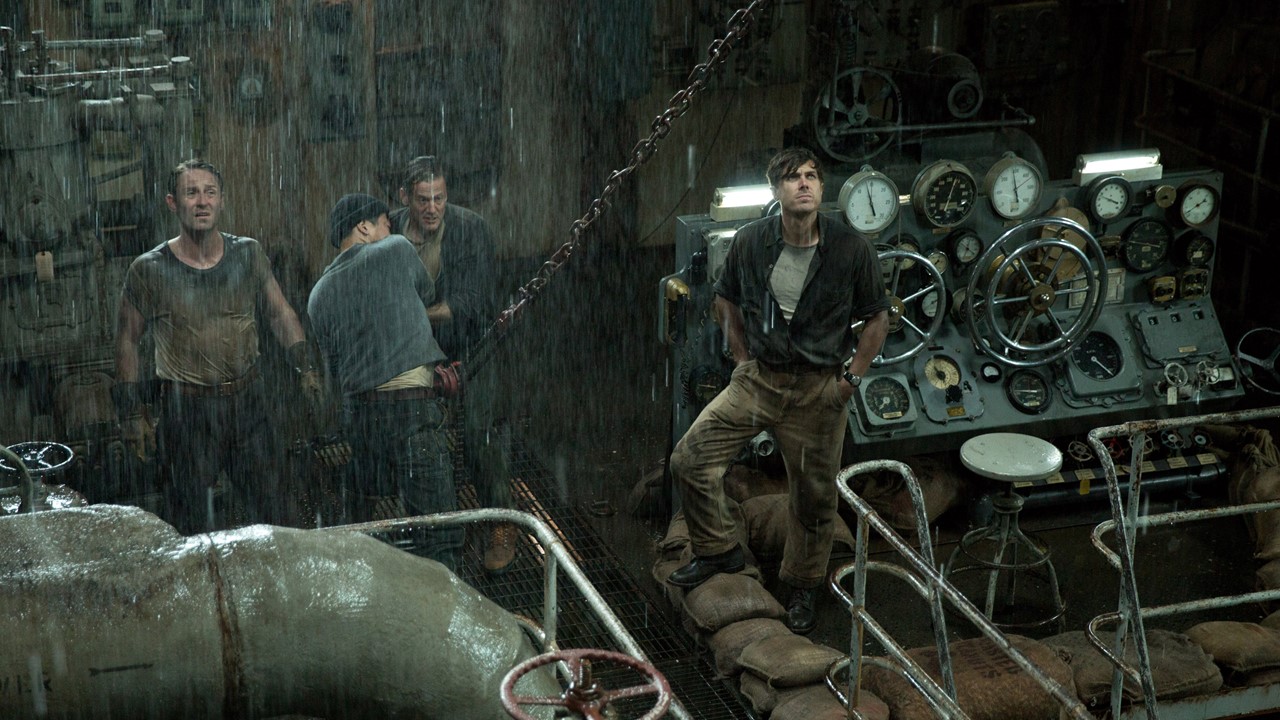
On 18 February 1952, the SS Pendleton, sailing from New Orleans to Boston, was one of two ships caught in a severe storm; both broke in two off the coast of Cape Cod, Massachusetts. The other unfortunate ship was the SS Fort Mercer. With thirty-three crew members aboard the still floating stern of the ship, the Coast Guard despatched a motor boat from nearby Chatham, though with only four crew on board. In rough seas and with no guarantee they would reach the ailing ship in time, the motor boat reached the Pendleton and was able to rescue all but one of the remaining crew. The rescue was widely regarded as one of the most daring rescues in the history of the United States Coast Guard. In 2009, the rescue was the subject of a book, The Finest Hours: The True Story of the U.S. Coast Guard’s Most Daring Sea Rescue by Michael J. Tougias and Casey Sherman.

If the brief account given above seems to indicate that The Finest Hours will be a gripping, edge-of-the-seat recounting of the that daring rescue mission, then potential viewers be warned: the movie doesn’t reach that level of excitement at any point in its running time. Instead the movie elects to be a very pedestrian retelling of the events on that fateful day, and initially, seems more concerned about covering the romance between motor boat skipper Bernie Webber (Pine) and his girlfriend, Miriam Pentinen (Grainger). We get to see how the two meet, and then there’s a protracted sequence where their engagement requires Bernie to speak to his commander, Daniel Cluff (Bana), for permission to wed (it’s a formality but Bernie treats it as if he’s asking Cluff  for something major).

TFH - scene3

In the midst of Bernie’s dithering, the SS Fort Mercer‘s plight is reported, but other coast guard stations are already dealing with it. It’s only when the Pendleton’s equal predicament comes to light that Bernie actually stops being a bit of a doormat and chooses to go out to the stricken vessel. Most everyone sees it as a reckless, even suicidal mission, and Bernie is joined by just two of his colleagues, Richard Livesey (Foster) and Andy Fitzgerald (Gallner), and by a seaman, Ervin Maske (Magaro), who just happens to be there when the Pendleton‘s plight is discovered. Each man knows that there’s a good chance they won’t make it to the ship, or even come back, but as Bernie says, “They say you gotta go out. They don’t say you gotta come back”. And with that reassuring quote, the four men take a motor boat out into heavy seas and fight their way over a stretch of treacherous water called the Bar. And from there, and without a compass to guide them, they attempt to find the Pendleton.

Even now it all seems highly dramatic, the kind of heroic true story that proves inspiring, and makes the viewer want to be a part of that rescue mission if it were at all possible. But the movie founders from this point on, and while the crew of the Pendleton, ostensibly led by engineer Ray Sybert (Affleck), struggle to keep the stern afloat until help arrives, Bernie and his crew are faced with a seemingly number of violent swells to overcome, and all of which are bested by Bernie – basically – accelerating over or through them. This repetition proves wearing, and robs the movie of any tension, because no matter how big the approaching waves are, Bernie just floors it, and any sense of peril is quickly and completely dismissed.

TFH - scene2

Meanwhile, Sybert has to contend with semi-mutinous crew member D.A. Brown (Raymond-James) and his insistence that they get off the Pendleton by using the lifeboats. In one of the movie’s better scenes, Sybert shows everyone why that isn’t such a good idea, but otherwise any tension is dissipated by Affleck’s restrained performance, and no concrete sense that anyone on the ship is in any real danger (which is disconcerting considering their situation). And this is the movie’s main problem: it doesn’t really know how to make all this frightening or gripping or challenging. Even during the rescue, a sequence which should have ramped up the tension to unbearable levels, the movie fails to capitalise on the situation and keep the viewer on the edge of their seat. Instead the movie acts as a kind of dramatic, clichéd tick box exercise.

The movie also marginalises all its characters with the exception of Miriam. While Bernie and his crew become mere figures on a boat who are focused on the seas ahead, everyone back at Chatham is kept either hanging round the coast guard radio, or eventually, in a risible sequence where the townsfolk gather their cars at the dock with their headlights on to guide poor Bernie home, asked to pull together and be part of the heroic effort themselves. This is partly down to Miriam, who makes an attempt to get the rescue mission called off because Bernie has decided to do the right thing. It’s an incredibly selfish thing to do, but the movie tries to make her look heroic rather than self-serving, and it never recovers from it. And once he is out there, and despite several dozen close ups, Pine’s Bernie could be just about anyone getting buckets of water thrown over them.

TFH - scene1

The Finest Hours also has an odd visual look about it, one that heightens the artificality of the CGI rendered waves and the Pendleton‘s exterior, particularly when the actual rescue is in progress. It’s at this point that the viewer will be unable to retain a sense of the scope and size of the mission itself, and will be trapped into thinking, “what a small tank they must have used”. And then, with the trip out to the stricken Pendleton having taken so long, the movie rushes the return trip, and the movie ends without ever establishing itself as a thrill-ride or a serious, dramatic tale of heroism on the high seas.

Partly this is due to the structure of the script, which pays too much attention to events playing out on land rather than at sea, and Gillespie’s watered-down direction (pun intended). As a result, the cast make little impact, with only Grainger standing out from the faceless crowd – Foster is one of several cast members who are completely wasted in their roles – and the movie lurches from one unconvincing scene to the next, devoid of any sense of unease, and ending up as stranded as the Pendleton is in the few hours left to it before it sinks completely.

Rating: 5/10 – only occasionally (and even then briefly) powerful, The Finest Hours does scant justice to its true story, and introduces too many fictional elements to make it work effectively; with a bland central performance from Pine, and without a strong-minded director at the helm, the movie disappoints more than it impresses and seems almost wilfully lacklustre.

Share this:

  • Share on X (Opens in new window) X
  • Share on Facebook (Opens in new window) Facebook
  • More
  • Print (Opens in new window) Print
  • Email a link to a friend (Opens in new window) Email
Like Loading...

The 5th Wave (2016)

13 Wednesday Apr 2016

Posted by dullwood68 in Movies

≈ Leave a comment

Tags

Alex Roe, Alien invasion, Aliens, Chloë Grace Moretz, Drama, J Blakeson, Liev Schreiber, Literary adaptation, Maria Bello, Nick Robinson, Review, Rick Yancey, Sci-fi, Thriller, Wright Patterson Air Force Base, YA novel

The 5th Wave

D: J Blakeson / 112m

Cast: Chloë Grace Moretz, Nick Robinson, Alex Roe, Liev Schreiber, Maria Bello, Ron Livingston, Maggie Siff, Zackary Arthur, Maika Monroe, Tony Revolori, Talitha Bateman, Cade Canon Ball, Alex MacNicoll, Nadji Jeter, Gabriela Lopez

It’s actually hard to know where to start with The 5th Wave. (It’s equally hard to know where to finish as well.) Yet another adaptation of the first in a trilogy of YA novels – this time by Rick Yancey – the movie has so many problems, and so many flaws it’s almost embarrassing. Up front and centre there’s Chloë Grace Moretz, an actress whose career has evolved – somehow – out of calling a bunch of goons “c*nts”, and who lacks the wherewithal to cry properly when her character’s father dies (look closely and you’ll find that Moretz’s face is not the definition of “tear-streaked”). Moretz just isn’t convincing enough as Cassie, the nominal heroine of the novels and the movie, and every time she’s asked to show some emotion it’s like there’s a war of attrition going on in her head, as she struggles to work out which facial expression will fit the bill. Often she settles for confused, or confused and angry, almost like they’re default modes for acting.

The 5th Wave - scene2

Then there’s the supporting cast, a mix of relative newcomers and veterans who all should have known better and sought employment elsewhere. On the veterans side there’s Liev Schreiber and Maria Bello, two very good, accomplished actors who are more than capable of giving award-winning performances (and they have). But here it’s a very different story (much like this adaptation of Yancey’s novel). Schreiber, playing a US military commander, looks bored and sounds bored throughout, as if he’s committed to the movie before reading the script and is now regretting the decision completely. Bello, on the other hand, at least has the luxury of being almost unrecognisable as another member of the military, but even she can’t bring anything resembling an effective portrayal to a role that requires her to jab her co-stars with a needle gun or spit out her lines as if they were poisonous.

On the relative newcomers side, it’s disheartening to see the likes of Revolori, excellent as the bellboy in The Grand Budapest Hotel (2014), and Monroe, also excellent as the heroine of It Follows (2014), reduced to making ends meet by playing characters who are either unmemorable (Revolori) or stereotypically superficial (Monroe – the tough as nails female who doesn’t take shit from anyone). If this is the best movie they could get to work on in 2015 then they need to seriously rethink who’s representing them. As the two male leads, Robinson (as Cassie’s high school crush, Ben) opts for sulky and remote, while Roe (as Evan, who helps Cassie when she’s injured) aims for a combination of Theo James and Ansel Elgort from the Divergent series, and misses them both by a mile.

The 5th Wave - scene3

The look of the movie is also a problem. At the beginning, as Cassie provides an overview of the alien invasion and the various waves that have occurred so far, there’s a definite feel of money being well-spent, and the movie has an exciting buzz about it. But once that section is over, and Cassie, her father (Livingston), and her younger brother Sam (Arthur), arrive at the refugee camp it all becomes very generic in terms of both the art direction and the cinematography. And by the movie’s end, the cast are consigned to running around empty underground corridors in a volley of scenes that could be taking place in any post-apocalyptic low-budget sci-fi movie.

All this can be laid firmly at the door of the script, a mishmash of YA tropes and sci-fi melodrama that’s been cobbled together by three writers, all of whom should have been able to do a better job than this. Susannah Grant wrote the script for Erin Brockovich (2000) and was nominated for an Oscar, while Jeff Pinkner has an envious track record on TV shows such as Lost and Fringe. And then there’s Akiva Goldsman, an Oscar winner for A Beautiful Mind (2001), and a recent participant in YA adaptations with the script for Insurgent (2015). But when all three can’t stop a movie from sounding like it was written by a trio of people who believe caricature and cliché are the best options, then the movie is pretty much abandoning all hope and waving a surrender flag.

The 5th Wave - scene1

But all this pales in comparison to the flaccid direction foisted on the movie by Blakeson. Making only his second feature after The Disappearance of Alice Creed (2009), Blakeson has trouble making any of it sound or look convincing, from the tepid romance between Cassie and Evan, to the video game sequences where Ben and his squad try and hunt down the aliens – possibly the worst example of the movie’s haphazard approach to editing – whatever the requirement, Blakeson finds some way to spoil it or prevent it from reaching its full potential. When you can’t even find a way of making Liev Schreiber look menacing, or inject any excitement into the destruction of a major air force base then you’ve got real problems. Maybe there’s a budgetary explanation for some of this but in the main, nothing works as well as it should.

Rating: 3/10 – its opening salvo of disaster aside, The 5th Wave works best as a cautionary tale to other makers of dystopian YA movies, in that they should avoid replicating this movie’s mistakes and do exactly the opposite of what it does here; limp and unappealing, with yet another inexplicable lead role for Moretz, it’s a movie that redefines the term “lacklustre” and has hopefully done enough to dissuade any sequels from being made.

Share this:

  • Share on X (Opens in new window) X
  • Share on Facebook (Opens in new window) Facebook
  • More
  • Print (Opens in new window) Print
  • Email a link to a friend (Opens in new window) Email
Like Loading...

What’s in a Name? – The Boy (2015) and The Boy (2016)

11 Monday Apr 2016

Posted by dullwood68 in Movies

≈ Leave a comment

Tags

Arson, Brahms, Clay McLeod Chapman, Craig William Macneill, David Morse, Doll, Drama, Horror, Jared Breeze, Lauren Cohan, Literary adaptation, Mountain View Motel, Rainn Wilson, Review, Rupert Evans, Thriller, William Brent Ball

With all the potential topics available to movie makers worldwide, and all the potential titles that could be used by movie makers, it does seem a little unfair on audiences when two movies are released relatively close to each other, and have the same title. Remakes are to be expected, but original movies? Surely, movie makers could check to see ahead of time if some other release is using the same title? And if so, to avoid any confusion, change theirs if they’re going to be second out of the gate? Well, with these two movies that obviously didn’t happen. But if anyone out there is reading this, and they have a movie coming out that has the same title as another recent release, please could you make it clear in the advertising that your movie isn’t the other one? Because that would definitely ensure that viewers don’t run the risk of being disappointed (as they would be in this instance).

The Boy 2015

The Boy (2015) / D: Craig William Macneill / 110m

Cast: David Morse, Jared Breeze, Rainn Wilson, Bill Sage, Mike Vogel, Zuleikha Robinson, Aiden Lovekamp, David Valencia, Sam Morse

A quiet motel, the Mountain View Lodge, is the setting for this adaptation of a section of a novel by Clay McLeod Chapman, a dark psychological thriller that deftly explores the mind of nine year old Ted Henley (Breeze), a boy with little to do other than clean the rooms and scoop up roadkill from outside the motel. Ted is a quiet child who misses his mother; she ran off with someone who stayed at the motel and is now living in Florida. His father, John (Morse), is a lonely, broken down man running a lonely, broken down motel, and both in their own way are still grieving the loss of Ted’s mother. John drinks too much, while Ted – who gets paid twenty-five cents for every roadkill he finds – begins to leave food on the main road so that animals will be attracted to it and run over. His aim is to amass enough money to leave and journey to Florida. And when his father mentions a deer being in the vicinity, Ted sees a chance to “make a killing”.

The Boy 2015 - scene1

His plan goes slightly awry. The deer is hit by a car that ends up in need of repair, and the driver suffers a bad head injury. The man, named Colby (Wilson), ends up staying while he recuperates and his car is fixed. As the only other person there, Ted starts to gravitate towards him, and they strike up a friendship of sorts. When a couple and their son arrive and need an overnight stay, Ted fixes their car so that it won’t start the next morning. While they hang around another day, Ted and the son play together, but Ted’s lack of social awareness makes their play awkward for the other boy. When the family leaves, Ted reverts back to spending time with Colby, and he learns that the man has recently lost his wife in a fire.

But Ted’s interest in Colby is matched by the local Sheriff’s interest in him as well. Colby’s story about his wife may not be the whole truth, and a decision that Ted makes has terrible consequences, but not as terrible as the consequences when attendees at a local prom book the motel for their post-prom celebrations and treat Ted badly.

The Boy 2015 - scene3

The Boy is often an uncomfortable viewing experience, but not for the reasons you may be thinking. Anyone watching the movie beyond its opening stretch will feel certain that what they’re watching is the slow accumulation of traits that will lead to Ted’s first foray into full-blown sociopathic behaviour. And for the most part, they’d be right. But while Ted is front and centre for most of the movie, Macneill pays close attention to the two fathers in Ted’s life during this time, and in doing so, also makes much of the atmosphere that inadvertently supports Ted’s inevitable “decline”.

John is unable to connect with his son, unable to realise just how much Ted is hurting over the loss of his mother. It’s likely he’s always been unable to connect with Ted; he mentions how time-consuming running the motel has always been. It’s therefore also likely that his father has been neglecting Ted for as long as Ted can remember (John inherited the motel from his father). With both parents absent from his life, one physically, the other emotionally, it’s no wonder that Ted has grown up with a different view on life than anyone else he knows (or meets). It’s also no wonder that he tries to strike up a relationship with Colby. Colby represents an opportunity for escape, but Colby has his own issues, issues that conflict with Ted’s needs. There is an inevitable confrontation, but while it’s a necessarily dramatic one, it pales before the conversation Colby has with John about what’s best for Ted. So much is said, and yet it’s what is left unsaid by the two men (and yet understood by them) that makes their conversation so important and so relevant. It’s the point in the movie when the viewer realises that Ted is lost forever.

The Boy 2015 - scene2

As Ted, Breeze gives an astonishing, mesmerising performance. The movie’s effectiveness rests almost solely on his young shoulders, but he’s more than up to the challenge, portraying Ted with an eerie, absent intensity that is more chilling to see than any number of masked slashers. There’s a moment where he clutches a rabbit to his chest, and the vacant look on his face is so disconcerting it’s hard to know if the rabbit is safe or not. Kudos then to Macneill for his direction of Breeze, a major plus that could have gone horribly wrong, and a testament to both their individual skills. Elsewhere, Macneill maintains a palpable sense of impending, unavoidable dread, using the Colombian locations to excellent effect and playing up the unremitting remoteness of Ted’s childhood.

But while the bulk of The Boy is chilling and engrossing, it’s in the last thirty minutes that it takes an unfortunate stumble. The prom party are deliberately antagonistic and unsympathetic, and treat Ted harshly. Their behaviour, coupled with his father’s final act of neglect, pushes Ted to take much more determined, and deliberate steps on his road to becoming a full-blown sociopath. Macneill lets the sequence get away from him, prolonging an audio aspect of things way beyond what’s necessary, and tying things up rather too neatly, thereby negating the complex narrative structure he and original author Chapman have constructed up til then.

Rating: 8/10 – as an examination of nascent evil, The Boy is unsettling in its portrait of a nine year old’s unhealthy fascination with death; with superb performances from Morse and Wilson, and especially Breeze, Macneill’s movie is one that will linger long in the mind, and prove difficult to shift.


The Boy

The Boy (2016) / D: William Brent Bell / 93m

Cast: Lauren Cohan, Rupert Evans, Jim Norton, Diana Hardcastle, James Russell, Ben Robson

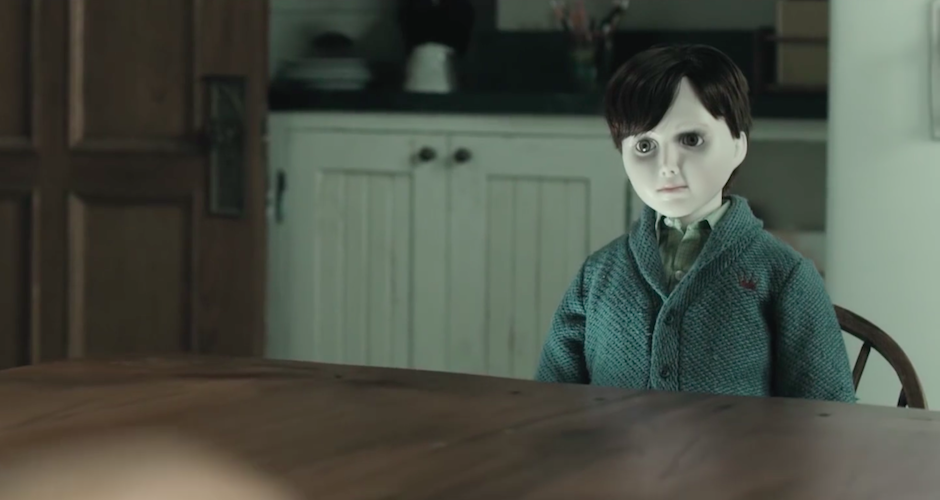
The boy in William Brent Bell’s inefficient chiller is actually a doll, and rather than have a fairly nondescript name like Ted Henley, goes by the unlikely moniker of Brahms Heelshire (pronounced Hillsher). Despite having perished in a fire twenty years ago, Brahms’ memory is kept alive by his parents (Norton, Hardcastle), who treat the doll as if Brahms were still alive. They “teach” him, play him music, read to him, set a place for him at meal times, and have set times when he “sleeps”. Into this bizarre situation comes American, Greta Evans (Cohan), to act as Brahms’ nanny while the Heelshires take their first trip away in twenty years. Before she’s even got halfway through the front door her shoes go missing, the first example of several mysterious occurrences that happen in the following days, and which lead her to believe that the doll is possessed by Brahms’ restless spirit.

The Boy - scene1

As you might expect, The Boy is a silly attempt at a horror movie, and one that stretches credibility as often as it possibly can. In contrast to its titular “rival”, this movie lacks subtlety, a coherent script, competent direction, and halfway decent performances. It’s the kind of movie that looks as if it was offered to Hammer but they turned it down because it needed too much work to make it, well, work. As it is, we’re treated to interminable shots of the doll staring back at the camera, Greta exploring the Heelshires’ house and finding herself trapped at one point in the attic, the promise of Greta’s abusive boyfriend turning up just to be killed, and a twist that undoes everything – however superficial – that the movie has built up until then.

The performances are serviceable, though Norton and Hardcastle bring a level of competence to their roles that the movie doesn’t deserve. Otherwise there’s very little to recommend The Boy, only that it’s mercifully forgettable.

Rating: 3/10 – despite a level of expectation that the movie has no intention of following through on, The Boy is neither scary nor terrifying, and for the most part settles for risible; Cohan is wasted, and Evans struggles as a character who has no clear reason for being there except to look confused – much like the unlucky viewer who settles down to watch this thinking they’re going to watch a movie about a nine year old sociopath.

Share this:

  • Share on X (Opens in new window) X
  • Share on Facebook (Opens in new window) Facebook
  • More
  • Print (Opens in new window) Print
  • Email a link to a friend (Opens in new window) Email
Like Loading...

Trailers – Our Kind of Traitor (2016), The Family Fang (2015) and The BFG (2016)

11 Monday Apr 2016

Posted by dullwood68 in Movies

≈ Leave a comment

Tags

Comedy, Ewan McGregor, Fantasy, Jason Bateman, John le Carré, Literary adaptation, Our Kind of Traitor, Previews, Roald Dahl, Steven Spielberg, The BFG, The Family Fang, Thriller, Trailers

John le Carré has always been a good source for the movies. His stories are both entertaining and complex, and his characters, often as complex and deceptively drawn as le Carré’s plotting, are the kind that actors can have a veritable field day with. Our Kind of Traitor, with its criminal Russian oligarch seeking to defect to the West, is, on the page, a terrific blend of cat-and-mouse political manoeuvring and heightened thrills. By making his main character a naïve teacher (played here by Ewan McGregor), le Carré draws the reader/viewer in by using their lack of experience to muddy the waters further in terms of what’s going on. With luck, the more than competent cast, along with screenwriter Hossein Amini and director Susanna White, can pull off yet another movie adaptation of a le Carré novel that’s both compelling and engrossing, and the cinematic equivalent of a page-turner (just like its source).


Making his second directorial feature – after Bad Words (2013) – Jason Bateman brings yet another dysfunctional group to the big screen, The Family Fang. It’s also yet another indie comedy, with quirky characters and even quirkier situations, but this appears to have a better pedigree than most, being an adaptation of the novel by Kevin Wilson – though the script is courtesy of David Lindsay-Abaire, whose last screenplay was for Poltergeist (2015) (not a great recommendation when you think about it). Hopefully, the top-notch cast, including Bateman himself, Christopher Walken, Josh Pais, Kathryn Hahn, Michael Chernus, and Nicole Kidman (in a performance that will hopefully remind us just how good she can be after a slew of recent, underwhelming performances), have brought their A-game to the material, and this will be one movie that proves to be both memorable and funny in equal measure.


It’s directed by Steven Spielberg. It’s a children’s fantasy from the extraordinary mind of Roald Dahl. It’s The BFG. And it looks – on the evidence of the trailer – a lot like Pan (2015). But again, this is Spielberg at work here, and when it comes to spinning magic on the big screen, he’s in a league of his own. The BFG also features the final screenplay written by the late Melissa Mathison, whose last collaboration with Spielberg was a little movie called E.T. – The Extra-Terrestrial (1982). And with recent Oscar-winner Mark Rylance playing the titular giant – his amazing voice tips you off before you even see the BFG’s face – it all looks to be in very good hands, even if – and this is just an instant reaction to seeing them – the other giants, Fleshlumpeater et al., all look like early character designs from Warcraft (2016).

Share this:

  • Share on X (Opens in new window) X
  • Share on Facebook (Opens in new window) Facebook
  • More
  • Print (Opens in new window) Print
  • Email a link to a friend (Opens in new window) Email
Like Loading...

Notes on a Scandal (2006)

04 Monday Apr 2016

Posted by dullwood68 in Movies

≈ Leave a comment

Tags

Affair, Bill Nighy, Cate Blanchett, Drama, Judi Dench, Lesbian, Literary adaptation, Patrick Marber, Review, Richard Eyre, St George's School, Student/teacher relationship, Zoë Heller

Notes on a Scandal

D: Richard Eyre / 92m

Cast: Judi Dench, Cate Blanchett, Bill Nighy, Philip Davis, Andrew Simpson, Michael Maloney, Juno Temple, Max Lewis, Joanna Scanlan, Tom Georgeson, Julia McKenzie

Adapted by Patrick Marber from the novel by Zoë Heller, Notes on a Scandal should be sought out for three reasons: the acting masterclasses given by Judi Dench and Cate Blanchett, a superb, unsettling score by Philip Glass, and the script itself, a beautifully constructed piece that delves into some very dark corners indeed, and which still allows itself the luxury of including a mordaunt sense of humour.

The story centres around two outwardly very different teachers in a London comprehensive school, St George’s. Dench is Barbara Covett, a history teacher who is approaching retirement. She’s never married, doesn’t have a significant other, is respected but not liked by the other teachers, and adopts a disdainful air that keeps everyone at a distance. Blanchett is Sheba Hart, a much younger art teacher who lacks Barbara’s experience and thick skin. She’s married to an older man, Richard (Nighy), and has two children, Polly (Temple) and Ben (Lewis). Sheba is the kind of teacher who often finds themselves out of their depth, and it’s on one such occasion that Barbara comes to her rescue.

Grateful to her, Sheba begins a friendship with Barbara that sees the older woman visiting Sheba’s home more and more often. Sheba effectively becomes Barbara’s protegé, although there is still a wide gulf between them, stemming mostly from Barbara’s dislike of Sheba’s middle-class lifestyle. One evening, Barbara waits for Sheba to attend a school drama performance, but Sheba is late. Barbara goes in search of her, and discovers Sheba having sex with a pupil, Steven Connolly (Simpson). Shocked, and feeling betrayed, Barbara confronts Sheba. The younger woman pleads with Barbara not to tell anyone. To Sheba’s surprise, Barbara has no intention of telling anyone – because they’re friends (though Barbara does insist Sheba end the affair immediately). Barbara sees her chance to become closer to Sheba, or destroy her if Sheba doesn’t agree to spending more time with her.

NOAS - scene3

But Steven won’t be put off by Sheba’s pleas to stop the affair. He continues to see her, and Sheba allows their relationship to continue (though she keeps this a secret from Barbara). But it’s not long before Barbara discovers Sheba’s duplicity, and when she attempts to blackmail Sheba into spending time with her – to be with her at the expense of spending time with her family – Sheba has no choice but to put her family first. Angry and spiteful, Barbara seizes an opportunity presented to her by another teacher, Brian Bangs (Davis), and it’s not long before Steven’s mother is at Sheba’s house and the whole affair is revealed.

Richard leaves Sheba in order to have time to think about their relationship, and unable to face being in their home without him, asks Barbara if she can stay with her for a few days. Barbara quite naturally agrees, but a chance discovery leads to Sheba finding out the true extent of what their friendship means to Barbara, and how their relationship has been manipulated by Barbara from the beginning. With the future of her marriage looking uncertain, and facing jail because Steven is only fifteen, Sheba has no option but to confront Barbara over what the older woman has done.

NOAS - scene1

Simply put, Notes on a Scandal is gripping stuff. Patrick Marber’s script hustles and bustles with undisguised hostility towards its two central characters, revealing their darkest traits and baser instincts with a scalpel-like precision that flays their more self-serving attributes to the metaphorical bone. Both Barbara and Sheba have their secrets, and both struggle to keep them hidden, but Marber won’t allow them any such luxury. As they interact with each other, lying and obscuring the truth about themselves, Barbara and Sheba become more and more unlikeable as the movie continues. Barbara’s domineering, manipulative demeanour is barely hidden at times, but she covers it well enough to fool Sheba, whose self-centred moral nihilism means she can’t see when someone has seen through her own carefully constructed façade.

The two women become involved in a one-sided battle, one-sided because Sheba doesn’t realise that Barbara wants nothing less than complete capitulation, and on her terms alone. Sheba is to be the sacrifice to Barbara’s vanity, another in a (conceivably) long line of hand maidens to Barbara’s idea of friendship. (The viewer may deduce that Barbara is a lesbian because of her intentions toward Sheba, but Marber’s script is too clever for that; instead, Barbara is more asexual than sexual, and is horrified at the suggestion – made by Sheba late on in the movie – that her motives lie in that direction.) Sheba, however, is very definitely a sexual creature, one who defines herself and her existence by the way in which she is found attractive and desired (once, after they’ve had sex, Steven tells Sheba she is “fit”, and Sheba positively glows under the praise). Both women are confused about love, Barbara seeing it as a kind of managed companionship, and Sheba as a validation of her sexual appeal. These confusions amount to huge fault lines in both their personalities, and when they eventually clash, the end result is force majeure.

NOAS - scene2

As noted above, this is a movie that features two very impressive performances, and there’s not even a hair’s breadth between them in terms of how good they are. Dench is icy and abrupt as Barbara, calculating and insidious, a woman used to being respected (and feared even) and getting her own way. Dench doesn’t shy away from examining Barbara’s less savoury characteristics, using Marber’s script to highlight the way in which she expects everyone around her to fit in with her ideas and prejudices. Dench is also good at portraying Barbara’s emotional sterility through a succession of expertly judged expressions, all testifying to the void in both her heart and her feelings.

Blanchett has what feels like the more compelling, emotionally wrought role, but Sheba is a pleasure seeker, and can only justify her actions in ways that are meant to elicit sympathy for what she sees as her unexciting lifestyle. It’s interesting that she was one of Richard’s students when they first met (though she was twenty and not fifteen when he seduced her – or she seduced him; which it is we’re not told), and she does use this as an attempt to excuse her behaviour and the affair, but Richard quite rightly decries this, leaving Sheba unable to gain any sympathy or acceptance for what she’s done. Blanchett embraces the complex neediness that infuses Sheba’s personality and doesn’t shy away from portraying the character’s selfish obsessions and somewhat childish naïvete. Like Barbara, Sheba is used to getting what she wants; the only real difference between them is that Barbara has grown used to being on her own, whereas it’s a situation that scares Sheba unreasonably.

Acting as an extra layer of emotional intensity, Philip Glass’s insistent, urgent score ramps up the tension as the story unfolds. It acts as an unseen musical narrator, underscoring (if that’s an appropriate analogy) the drama as it heads towards a necessarily downbeat ending. Coordinating this and the performances of Dench and Blanchett, director Richard Eyre, along with DoP Chris Menges, uses his theatrical flair to keep the movie both visually and dramatically exciting, and he teases every nuance and vicious piece of brinkmanship out of Marber’s acerbic screenplay. With great supporting turns from Nighy, Davis and Simpson, as well as some equally adept editing by John Bloom and Antonia Van Drimmelen, this is an exceptionally well crafted movie that still stands out ten years after it was released.

Rating: 9/10 – with human frailty and arrogance brought to uncomfortable life by two of today’s finest actresses, Notes on a Scandal has enough positive attributes for two movies; richly detailed and endlessly fascinating, it’s a movie whose value is unlikely to deteriorate or become degraded by repeat viewings, and which remains a remarkable convergence of talent.

Share this:

  • Share on X (Opens in new window) X
  • Share on Facebook (Opens in new window) Facebook
  • More
  • Print (Opens in new window) Print
  • Email a link to a friend (Opens in new window) Email
Like Loading...

Allegiant (2016)

03 Sunday Apr 2016

Posted by dullwood68 in Movies

≈ 1 Comment

Tags

Ansel Elgort, Bureau of Genetic Welfare, Chicago, Divergent Series, Drama, Jeff Daniels, Literary adaptation, Miles Teller, Naomi Watts, Providence, Review, Robert Schwentke, Sci-fi, Sequel, Shailene Woodley, Theo James, Thriller, Veronica Roth

Allegiant

D: Robert Schwentke / 120m

Cast: Shailene Woodley, Theo James, Naomi Watts, Octavia Spencer, Jeff Daniels, Zoë Kravitz, Ansel Elgort, Miles Teller, Keiynan Lonsdale, Daniel Dae Kim, Maggie Q, Bill Skarsgård, Jonny Weston, Ray Stevenson, Mekhi Phifer, Ashley Judd

And so Jeanine is dead, killed by Four’s mother, Evelyn (Watts). Everything’s okay and peace has been restored. Except that Evelyn is making sure it comes at a further price: everyone who was on Erudite’s side has to be put on trial and their “crimes” answered for. This means executions on a wide scale, and although Tris (Woodley) has disowned her brother, Caleb (Elgort), he faces the same fate. With the message from outside Chicago still indicating that there are more answers to be found outside the city than in, Tris and Four (James) opt to breach the wall and go in search of those answers. Four decides to help Caleb escape, and the trio are joined by Christina (Kravitz), Tori (Maggie Q), and Peter (Teller). Despite an attempt to stop them by Evelyn’s lieutenant, Edgar (Weston), they climb over the wall and down to the other side.

There they find a toxic wasteland, where the earth is a scorch blasted red. Having been followed by Edgar, the group are relieved when they reach a force field that opens to reveal an armed force. This group protects Tris and her friends from Edgar, and with his threat neutralised, they take Tris and company to their base far out in the wasteland, the so-called Bureau of Genetic Welfare, where Tris in particular is welcomed by the Bureau’s director, David (Daniels). With Tris being the fruit of an experiment to right a wrong perpetrated long ago, David is keen to run tests on her, while keeping Four and the others occupied and away from her as much as possible. But Four is quick to suspect that David isn’t as honest as he makes out, but Tris doesn’t see it.

Allegiant - scene2

Meanwhile, back in Chicago, Johanna (Spencer) has formed a group she calls Allegiant, and who are at odds with Evelyn’s way of running things. Another war of attrition is about to take place between the two factions, and though Tris wants David to intervene – after all, he has been monitoring Chicago for a long time because of the experiment – but instead of doing so, he sends Peter back with a nerve gas that will render everyone who comes into contact with it, unable to remember anything that happened to them before they were exposed. And while David takes Tris to meet the Council who ultimately decide everyone’s fate, Four discovers what the gas has been used for in the wasteland. And when Tris finally becomes aware of David’s duplicity, she and Four, along with Christina and Caleb, return to Chicago to stop Evelyn from using the gas on Allegiant.

Three movies in and the Divergent series is showing serious signs that it’s running out of ideas. Allegiant is superficially entertaining, but in comparison with parts one and two, it lacks anything fresh to entertain either fans or newcomers. It’s also the first time that the series gives up on Tris as an independent, strong-minded female, and instead hands over leadership duties to Four – which wouldn’t be such a bad idea if he wasn’t written as a bit of a pompous told-you-so kind of character. (Throughout the series, Four has been the gloomiest character of them all, unable to smile or express his feelings about anything without a frown.) And with Tris relegated to a secondary role, there’s only Daniels left to pick up the slack, as everyone else (James excepted) is afforded only enough screen time to either provide any relevant exposition, or keep the plot ticking over (Spencer and Watts are wasted, while Judd is brought back yet again to add some more of her character’s turgid back story).

Allegiant - scene1

The problem with the movie is twofold: one, it’s the first half of the third book in the series, and as such, doesn’t have a credible ending, just another narrowly avoided cliffhanger that leaves things open for part four (or should that be part three-point-five?); and two, the action seems more than usually contrived once Tris et al leave Chicago. The wasteland is less than threatening, and the Bureau is predictably shiny on the surface (and in David’s “office”), while the barracks Four and Christina are assigned to are remarkably similar to those inhabited by Dauntless in the first movie. It’s all brightly lit and commendably shot by esteemed DoP Florian Ballhaus (returning from Insurgent (2015) and already hired for the next instalment), but it’s becoming hard to care what happens to anyone.

At its heart, the Divergent series is about DNA profiling and the perils that can follow on from it. It’s a concept that’s been there in the first two movies, but which hasn’t been addressed directly. But now that it has, and through the medium of video no less, the truth behind the use of Chicago as a test ground, and the true meaning of being Divergent, all sounds quite dull and unexciting. The movie fails to make Tris’s nature important to its own story, and instead opts for being yet another race-against-time thriller, abandoning the ethical and moral debate it wants to engage in and relying on tried and trusted action movie clichés to wind up its narrative.

Allegiant - scene3

It’s no surprise that the movie has underperformed at the box office (leading to the final movie, Ascendant, due next year, having its budget cut), because even though Tris makes it out of Chicago, once she does, the movie doesn’t know what to do with her, and for a character as intriguing and interesting as Tris, that’s a terrible decision to make on any level. And it doesn’t help that your central villain is ultimately a harried bureaucrat, a futuristic pen-pusher if you will. That’s another stumble, and especially bad after having Kate Winslet fill the villain’s shoes for the first two movies. It all adds up to a movie that coasts on the success of its predecessors, and feels and looks like a stopgap before the real conclusion in part four.

Rating: 5/10 – another series instalment that will have newcomers wondering what all the fuss has been about, Allegiant is a movie that has little to offer in terms of its characters’ development, or in terms of expanding the wider narrative; Woodley – this series’ biggest asset – is sidelined for much of the movie, and though James is a competent enough actor, he doesn’t have his co-star’s presence on screen, which makes large chunks of the movie something of a chore to sit through.

Share this:

  • Share on X (Opens in new window) X
  • Share on Facebook (Opens in new window) Facebook
  • More
  • Print (Opens in new window) Print
  • Email a link to a friend (Opens in new window) Email
Like Loading...

Z for Zachariah (2015)

29 Tuesday Mar 2016

Posted by dullwood68 in Movies

≈ Leave a comment

Tags

Chiwetel Ejiofor, Chris Pine, Contamination, Craig Zobel, Drama, Literary adaptation, Margot Robbie, Radiation, Review, Valley

Z for Zachariah

D: Craig Zobel / 98m

Cast: Chiwetel Ejiofor, Margot Robbie, Chris Pine

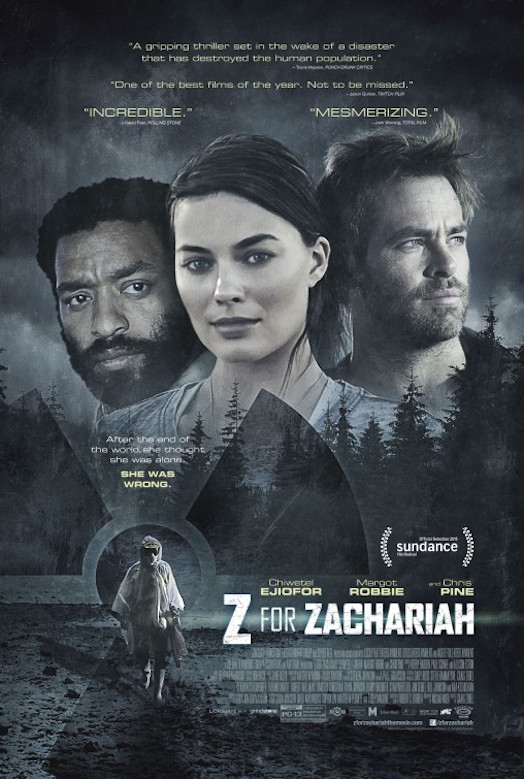
In an abandoned town, a young woman (Robbie) scavenges for food and other supplies. She wears home made protective clothing that protects her from the air. Once she has what she needs she heads out of town and into the nearby hills. Once she’s reached a certain distance she removes the protective clothing and continues on into a valley where it appears the air isn’t contaminated. She’s met by her dog, and together they reach her home, a farm where they live by themselves. There’s no electricity or gas, no working generator, but at least the weather is good, and the young woman has plenty of food.

It’s a lonely existence, but one borne out of necessity. The world has suffered a catastrophe, and the young woman, whose name is Ann, is a survivor, trapped/saved by the valley she lives in, which somehow acts as a natural barrier against whatever has happened. She’s already survived a hard winter where she nearly ran out of food, but she’s better prepared now, and is growing vegetables, tending chickens, and keeping a cow. She is becoming used to being alone, but still longs for human company.

ZFZ - scene1

One day her unspoken wish is answered. She discovers a man (Ejiofor), dressed in an anti-radiation suit, on the road near her home. He has a portable Geiger counter and is taking readings. When he realises that the area is unaffected he removes his suit. When Ann moves closer she finds him gone from the road and bathing at the base of a nearby waterfall. She implores him to get out, quickly, as the water is contaminated. Back at the farmhouse his sickness threatens his life, but thanks to drugs he has in his possession, Ann is able to save him from dying. The man, whose name is John, recuperates slowly, but he helps Ann as much as he can and even comes up with a plan to get the tractor going again. Ann and John begin to rely on each other, and as they do they become closer, forming a bond of mutual reliance and affection. And then they discover that there’s somebody else in the valley as well…

Those familiar with Robert C. O’Brien’s novel will know that there are only two characters in Z for Zachariah, and that the novel concerns itself with themes of science versus nature, and the clash of identities between Ann and John. But in Nissar Modi’s adaptation these themes are missing, and the viewer is left with themes of sexual jealousy and remorse, and John’s need to control the people around him (even if it’s just Ann). With the introduction of Caleb (Pine), Modi not only changes the nature of the struggle between Ann and John, he also changes irrevocably the tone of the movie and makes it less intriguing to watch.

What begins as a clever survivalist movie soon develops into a relationship drama where two people, who previously thought they were the only ones alive in their part of the world, adapt to coexisting again. It’s this section of the movie, where it’s just Ann and John and their relationship takes hold that offers the most rewards. As portrayed by Robbie, Ann is a gauche, likeable character who has a simple sincerity about her. It’s a good contrast to John’s anguished, bitter personality, and Ejiofor shows us the man’s deep-rooted insecurities slowly but surely, until the viewer is forced to realise that he’s not quite the “good man” that Ann believes he is. Pitted against her God-fearing background – her father built and preached in the nearby church – John treads carefully enough, but still leaves enough clues that he’s not fully to be trusted.

ZFZ - scene3

And it would have been great to see that dynamic play out with just the two characters, with Ann perhaps coming to terms with living with a man she’s attracted to but can’t trust. But again Modi doesn’t want to do that. Instead he introduces Caleb and makes the movie about sexual desire, a ménage à trois, with both John and Caleb circling each other and looking for ways to impress Ann. But where Caleb is supportive and charming, John reacts boorishly, and it’s at this stage of the movie where it becomes uncomfortably like a soap opera, and where the script struggles to maintain a clarity of purpose. At one point tells Ann that he’s okay with her being attracted to Caleb, that it’s okay if they want to “go and be white people together”. This remark is said in an almost offhand manner by John, but it’s indicative of the way in which the script suddenly lacks purpose. It’s a casual, racist comment, and should be powerful in its own way for being voiced by someone who’s black, but the script leaves it hanging, and never goes back to it.

With the last third hamstrung by needing to be more dramatic, the good work of the first hour is left behind. Pine is appropriately charismatic but as Caleb worms his way into Ann’s affections, the combination of the script, Pine’s performance, and Zobel’s now wayward direction, makes the whole thing seem implausible. All three elements fail to make a cohesive whole, and while the trio toil away at harnessing the energy of the waterfall to provide power for the generator, the viewer is left to watch things develop in such a way that the inevitable confrontation between John and Caleb lacks any bite, and the movie tries to end on a note of ambiguity that doesn’t really hold up.

ZFZ - scene2

Robbie, who is definitely an actress to watch at the moment, is very good as Ann, capturing the character’s innate trusting nature and revealing the pain she feels when that trust is abused. Ejiofor is equally good but John is a flawed character in more ways than one, and the script is less than subtle when it comes to revealing his motivations, leaving the actor to make the most of some very clumsy dialogue and direction. Along with Pine, Ejiofor seems to have been left to figure things out for himself in the final third, and Zobel’s influence wanes on the material the longer the movie goes on. By the end it’s almost as if the cast have directed themselves, but it’s at odds with what Zobel’s done up til then, and it shows.

Narrative and character disappointments aside, the movie at least looks absolutely beautiful, the New Zealand backdrops shot with an exquisite eye by Tim Orr, who did some equally impressive work on The World Made Straight (2015). It’s the one aspect of the movie that’s consistent throughout, and in conjunction with Robbie’s performance, makes the movie worth seeing, but both have to work hard to offset the slow pace made at the beginning, and the tired resolution at the end.

Rating: 6/10 – a movie that never quite gels into a satisfying whole, Z for Zachariah still has enough going for it to warrant a look; with all due respect to Pine, perhaps it’s also one to watch up until the actor makes his appearance – then you’ll have seen the best of it.

Share this:

  • Share on X (Opens in new window) X
  • Share on Facebook (Opens in new window) Facebook
  • More
  • Print (Opens in new window) Print
  • Email a link to a friend (Opens in new window) Email
Like Loading...

Kill Your Friends (2015)

14 Monday Mar 2016

Posted by dullwood68 in Movies

≈ Leave a comment

Tags

Black comedy, Blackmail, Craig Roberts, Drama, Drugs, Ed Skrein, Georgia King, James Corden, John Niven, Junkie XL, Literary adaptation, Murder, Music industry, Nicholas Hoult, Owen Harris, Review, Unigram

Kill Your Friends

D: Owen Harris / 103m

Cast: Nicholas Hoult, Craig Roberts, Georgia King, Joseph Mawle, Edward Hogg, Tom Riley, Jim Piddock, James Corden, Ed Skrein, Rosanna Arquette, Moritz Bleibtreu, Dustin Demri-Burns, Osy Ikhile, Ella Smith

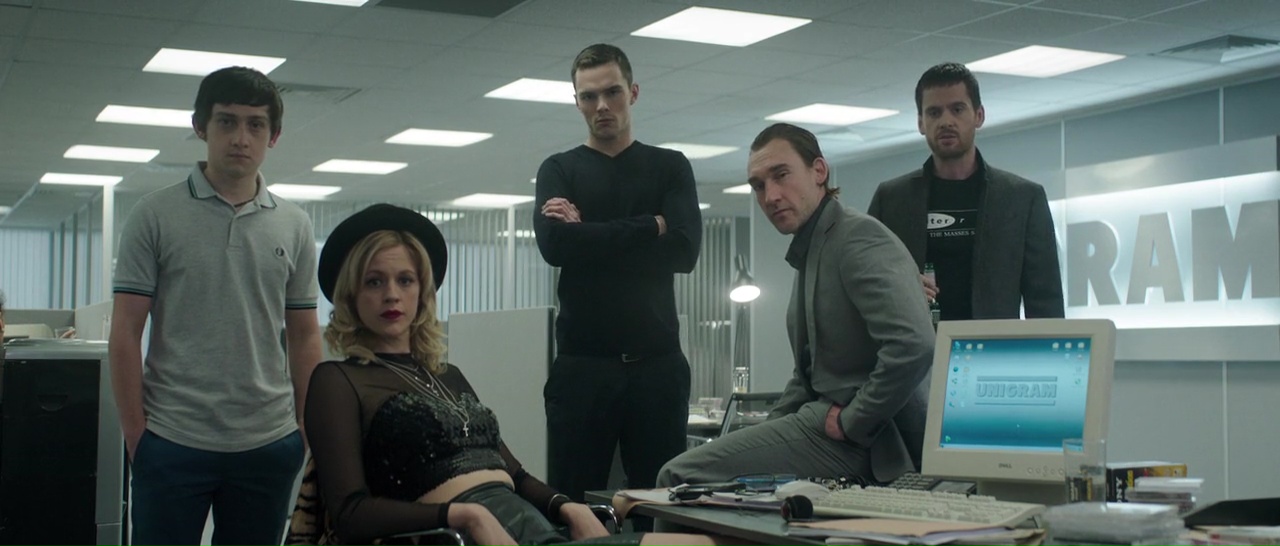
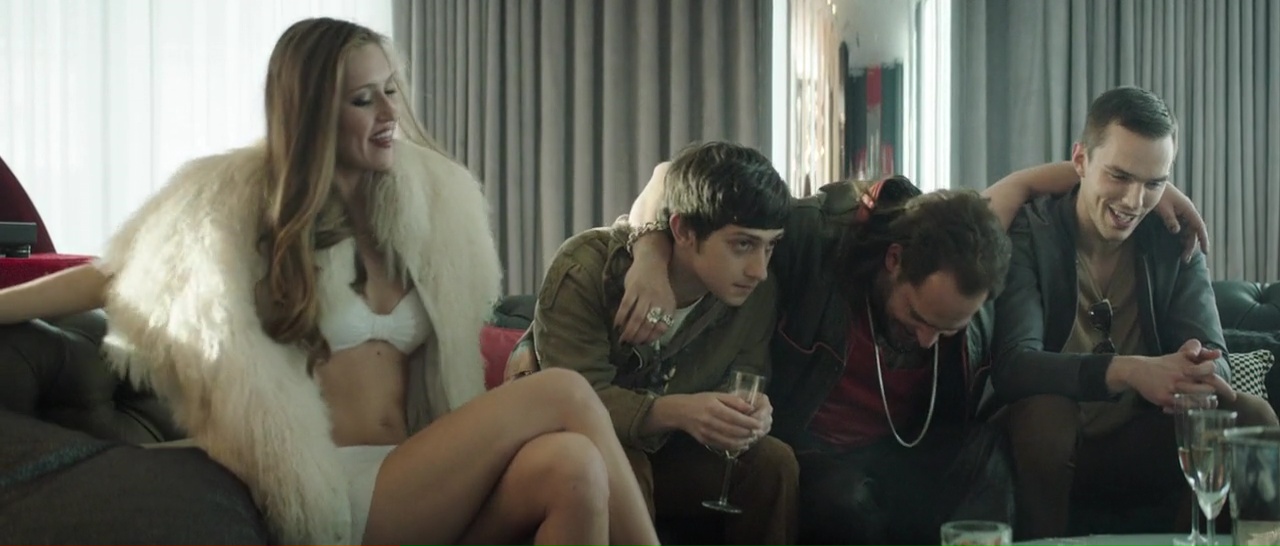
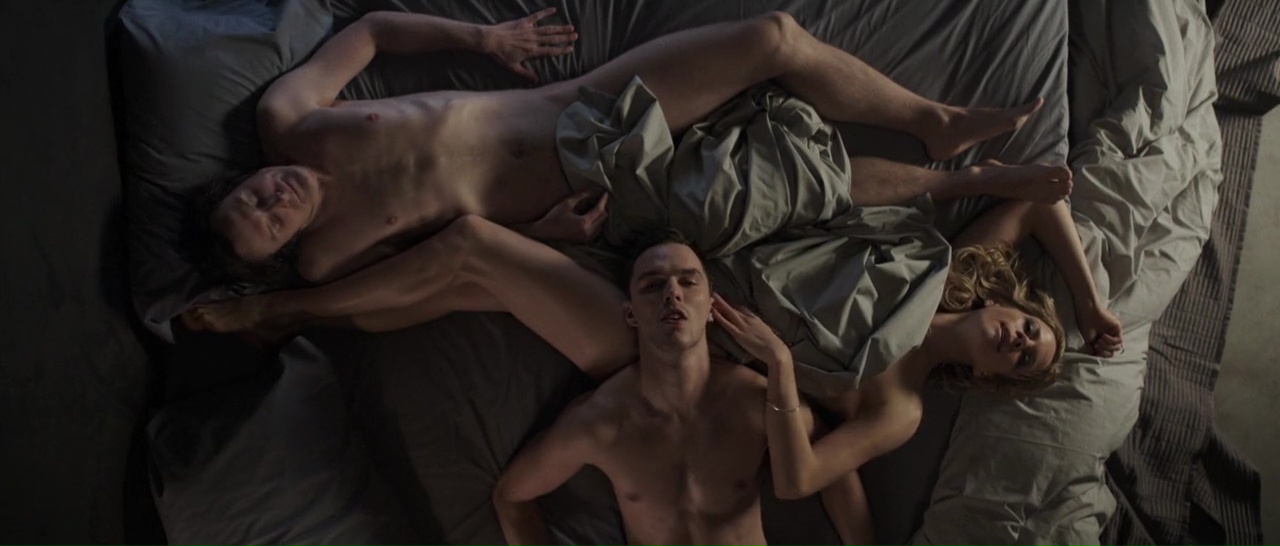
For a movie that’s set in 1997 and focuses on an ambitious A&R man, Kill Your Friends actually has little to do with the music of the time (except when it comes to its soundtrack), and instead creates its own musicians and bands for the audience to groove to. It’s a curious thing to experience, that such a movie would choose to ignore the music that was around at the time, especially when there was so many good records out there. ’97 was the year that The Verve gave us their Bitter Sweet Symphony, Chumbawamba were Tubthumping, Natalie Imbruglia was Torn, and Elton John reworked Candle in the Wind in tribute to Diana, Princess of Wales. But Kill Your Friends operates in a bubble of its own making, restricting itself to a narrow musical world where the deal is all important and not the music, and the means absolutely justifies the end.

That the world of the A&R man is a cutthroat world where everyone is out to succeed at the expense of everyone else shouldn’t come as any surprise, but the movie is often grindingly obvious in its approach to this idea, and the level to which it takes this idea is often glaringly excessive. The movie’s anti-hero, Steven Stelfox (Hoult), is determined to get to the top and he’s not too worried how he gets there. When we first meet him he’s in the company of fellow A&R man Waters (Corden), snorting cocaine and mixing drug-fuelled cocktails in an attempt to render his colleague either dead or too far gone to function. (Sadly for Steven, Waters’ ability to ingest hard drugs and still come to work the next day is quite impressive.)

vlcsnap-00005

With record deals to be made and hits to be manufactured, Steven takes a young talent scout called Darren (Roberts) under his wing, and starts to teach him how to get ahead in the music business. But Steven’s idea of “teaching” consists of constant reminders that no one knows anything (as in the movie industry?), and to misquote Sparks, that “talent isn’t an asset”. When an old friend of Steven’s, Rent (Skrein), introduces him to the girl band he’s managing, it’s no surprise that they’re four tuneless, talentless wannabes, manufactured into producing a “surprise” number one record. It’s at moments like these that the satire slaps the viewer in the face and yells, “Did you see what we did there? Did you?” If the movie wasn’t so tiresome and cynical, the viewer wouldn’t be either.

As Steven connives and manipulates and eventually murders his way to the top, the movie does its best to get the audience to root for him, but it’s not actually possible. Despite Hoult’s best efforts to make him likeable, Steven is a crude caricature of a man, his better qualities stifled to the point of non-existence and lacking any kind of moral attributes – however deeply buried – for the viewer to latch onto. He’s an ambitious, soulless, predatory, evil-minded bastard, a lower-tier monster who doesn’t deserve to make it to the top, or gain our attention. There’s a moment when he’s talking to a band in a club and they’re asking him what will happen if they sign with his record company. For around thirty seconds Steven regales them with the various ways in which he and his company will abuse and mistreat them, and then spit them out when they’re no longer viable. It’s meant to be funny and disturbingly honest all at the same time, but instead it’s another heavy-handed example of what we already know: that in the music industry you should always beware: because you’re swimming with sharks. (And, predictably, it’s all a dream sequence.)

vlcsnap-00004

With the movie lacking subtlety or appreciable flair throughout, there’s little beyond the traditional topics of sex and drugs and work envy to get excited about. Owen Harris’s direction consists of throwing the characters into sharp relief, such as when Steven’s PA, the equally ambitious Rebecca (King), blackmails him into helping her reach the top. It’s not exactly a surprise – this movie doesn’t do surprises – and most viewers will have been waiting for her to drop the faithful servant routine, but as one of the few characters we can have some sympathy for (at least to start with), her transformation into calculating co-conspirator smacks of laziness on the part of John Niven (here adapting his own novel).

With so much amoral, yet banal behaviour going on, it’s amazing then that the movie retains as much energy as it does, claiming the viewer’s undivided attention from time to time (often in its club scenes) and using said energy to push the rest of the scenes through in a kind of bizarre version of cinematic life support. There are also sporadic moments of humour, but none memorable enough to help the movie overall, and certainly not enough to help erase the memory of Edward Hogg’s dumb-as-a-bag-of-nails policeman, a character so brain-curdlingly simplistic in his creation that he’s not even of the rank of caricature.

vlcsnap-00006

But what of the music itself? As created by Junkie XL (aka Tom Holkenborg), the original songs are the movie’s best feature, an apropos mix of Nineties indie vitality and modern day stylings, anthemic when necessary, and completely free of any relevance to the story or the plot. You could take each tune and play it in a club or music venue and attract people’s attention. It’s the same here, and leads the viewer to wonder if there’s a cut of the movie where every scene takes place in a club or at a concert. But anyone paying attention will appreciate the dichotomy of what the movie is saying, that the music isn’t important, that it’s the last element of the deal that’s taken into consideration, but thanks to Mr Holkenborg and his “killer” tunes, it’s a boast that Kill Your Friends gets spectacularly wrong.

Rating: 4/10 – if you’re going to make a movie about the cutthroat nature of the music industry, then it’s important that your characters are at least halfway relatable – a point that Kill Your Friends ignores deliberately – otherwise it will look and sound like the naïve fantasy of a teenager; with thematic nods to American Psycho (2000) that are awkward and misjudged, this is a movie that skimps on the pleasantries and drags the viewer through a mire of its own choosing, and without ever offering said viewer any reward for the experience.

Share this:

  • Share on X (Opens in new window) X
  • Share on Facebook (Opens in new window) Facebook
  • More
  • Print (Opens in new window) Print
  • Email a link to a friend (Opens in new window) Email
Like Loading...

Pride and Prejudice and Zombies (2016)

13 Sunday Mar 2016

Posted by dullwood68 in Movies

≈ Leave a comment

Tags

Burr Steers, Drama, Elizabeth Bennet, Horror, Jane Austen, Lena Headey, Lily James, Literary adaptation, Mr. Darcy, Parody, Regency England, Review, Sam Riley, Seth Grahame-Smith, Thriller, Zombies

PAPAZ

D: Burr Steers / 102m

Cast: Lily James, Sam Riley, Matt Smith, Jack Huston, Bella Heathcote, Douglas Booth, Lena Headey, Sally Phillips, Charles Dance, Ellie Bamber, Millie Brady, Suki Waterhouse

From the 1814 Alternate Universe Almanac, 21 January:

Revealed to a waiting world with all the fanfare that the firm of Butan, McKittrick, Oliver, Portman, Savitch, Shearmur & Thompson can muster, these kindly souls have enjoined us to a world that has no equal or predecessor in the annals of the flickering image. Miss Jane Austen’s latest novel, published to great acclaim last year, has been fashioned into a drab, humourless affair that strains the credulity of every right-thinking person in  the land, and which purports to imagine an England overrun by an army of the dead.

vlcsnap-00002

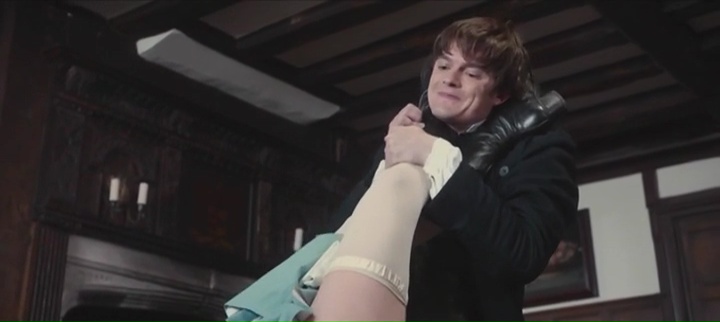
Preposterous you may say, and this author would heartily agree with you. Concocted with a clear disdain for the exquisite talent of Miss Austen, Mr. Burr Steers and Mr. Seth Grahame-Smith – both Americans, no doubt – have taken her sterling work and made a mockery of its literary merits by inserting strange creatures that resemble vampires, but with the exception that they seek flesh to eat rather than blood to drink. It is not uncommon to find examples of this kind of unabashed traducery made as low entertainment for the masses, but it is for the more discerning viewer of these “tragedies” to be of one voice with his equally appalled brethren and shout loudly, “No more! No more repellent travesties created to provide succour for the poor in spirit and the easily tempted! No more!”

A crueller distraction could no more be found than Pride and Prejudice and Zombies. The subtlety of Miss Austen’s prose is retained for the most part, but be not gladdened by this admission, for it is used in such a paltry way that readers familiar with Miss Austen’s work will be distraught at the way in which emphasis is abandoned in favour of recitation, and her characters speak as if they had not the wit to understand their own utterances. It is a folly to assume that Mr. Steers and Mr. Grahame-Smith have generated this debacle with any concern for the respect Miss Austen’s work has accrued since her debut some two years ago. While it can be said that the settings they have chosen give some degree of pleasure to the eye, as do the ladies chosen to portray the Bennet sisters, it is nevertheless an endeavour that lacks finesse, and proves of little consequence once experienced from beginning to end.

vlcsnap-00003

Be warned: the inclusion of “zombies” marks a low point in our nation’s proud literary and (short-lived) zoetropic history. What possible good can come of this exhibition’s existence it’s doubtful anyone will be able to determine, and this august periodical can see no reason for its existence beyond a scurrilous and repugnant attempt to separate the hoi polloi from what little earnings they make – earnings that would no doubt be put to better use in the purchase of potatoes for the nurturing of their families. For make no mistake, here is no nurturing of the mind or the finer senses to be gained from viewing Pride and Prejudice and Zombies. It is an ill-conceived distraction, filled with moments that are both violent and reprehensible, and which paint such a dismal alternative to the beauteous world we live in that one must question the motives of the men and women who have found this a suitable piece to put before the public.

There can be no doubt that the assembly called upon to inhabit the various roles Miss Austen went to great pains to construct – and with such great artistry – have little to offer in terms of imagination or grace. Special mention must go to the esteemed Mr. Dance, an actor of such renown that his presence here is difficult to fathom, surrounded as he is by artists who lack the graces God gave them to fully articulate the feelings and emotions that occupy our hearts and minds on each and every blessed day of our existence. That Miss Austen wrote of romantic involvement with such subtlety and perspicacity appears to have been put aside in favour of feeble declarations of ardour, declarations that carry the barest weight of conviction.

In conclusion, the efforts of Mr. Steers and Mr. Grahame-Smith have proved to be of such a disservice to those of us who champion the potential of the zoetropic arts that we would be forever indebted to them if they refrained from making any further assaults on our senses. Let us say again: “No more!”

vlcsnap-00001

Rating: 3/10 – a dire movie that plods along in search of a reason to exist (like its titular creatures perhaps), Pride and Prejudice and Zombies sounds like a great twist on an old classic, but in truth is uncomfortable to watch as a period piece, and as a horror movie; when the zombies have more personality – and evoke more sympathy – than your main characters, then you have a movie that’s in trouble in more ways than one, and this movie courts trouble like an aging Lothario looking to impress one young woman too many.

Share this:

  • Share on X (Opens in new window) X
  • Share on Facebook (Opens in new window) Facebook
  • More
  • Print (Opens in new window) Print
  • Email a link to a friend (Opens in new window) Email
Like Loading...

Lost and Delirious (2001)

09 Wednesday Mar 2016

Posted by dullwood68 in Movies

≈ 3 Comments

Tags

Boarding school, Drama, Falcon, Jessica Paré, Léa Pool, Lesbianism, Literary adaptation, Love, Mischa Barton, Piper Perabo, Prejudice, Relationships, Review, Susan Swan

Lost and Delirious

D: Léa Pool / 103m

Cast: Piper Perabo, Jessica Paré, Mischa Barton, Jackie Burroughs, Mimi Kuzyk, Graham Greene, Emily VanCamp, Amy Stewart, Caroline Dhavernas, Luke Kirby

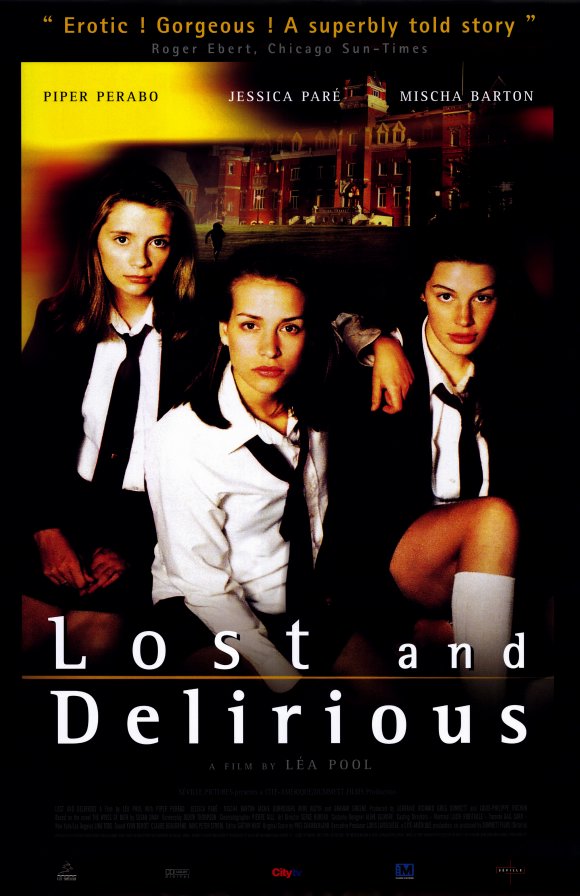
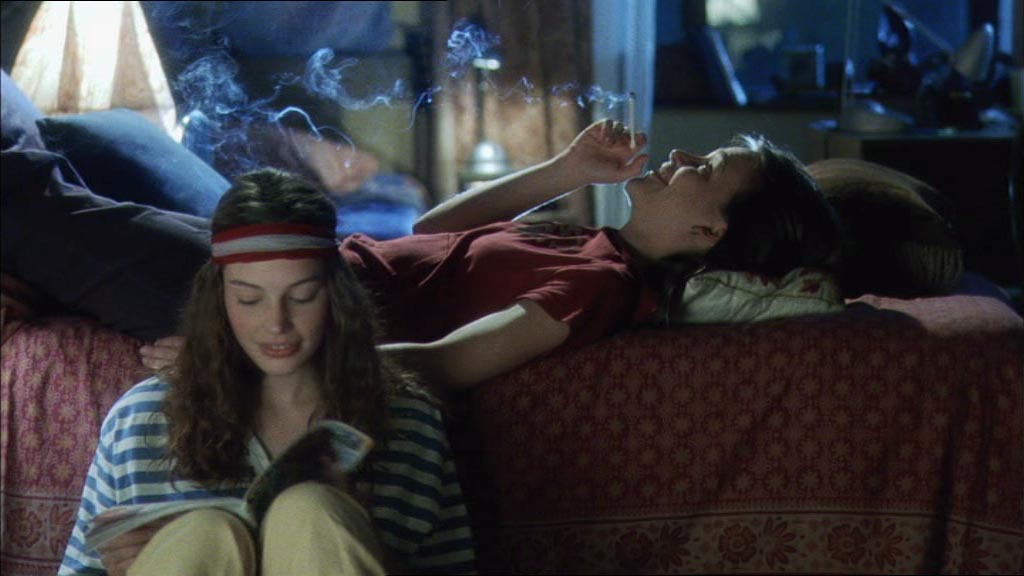
A female-only boarding school. A new pupil still mourning her recently deceased mother. Two roommates who seem especially close. An atmosphere of prejudice and privilege. The attentions of a teenage boy from another, nearby school. Peer pressure. Love rejected and dismissed. An injured falcon. High emotions left unchecked and leading to tragedy. All these and more form the meat of Lost and Delirious, a movie that comes very close to capturing the urgency and intensity of first love, and the spiralling madness that follows in the wake of that first love being rejected out of self-preservation.

The movie opens with the arrival of fourteen year old Mary (Barton) at a semi-remote all-girls boarding school somewhere in Ontario, Canada. She’s shy and hesitant, so obviously a naïf that she might as well have it written across her forehead. Fortunately, the headmistress, Miss Vaughn (Burroughs), places her with Paulie (Perabo) and Tori (Paré), two older girls who take her under their combined protection and help her adjust to being away from home. It isn’t long though before Paulie and Tori’s relationship becomes much clearer: they’re lovers, but only Mary knows.

Of the two, Paulie is the more rebellious, challenging authority at (almost) every turn, and behaving with a reckless abandon. Tori is more studious, less willing to antagonise the teachers in the way that Paulie does, and their differences seem to have brought them closer together. As time goes by they drop any pretence around Mary that they’re not a couple, and she becomes a confidant to their affair. But as with all breathless (and secret) love affairs in such an environment, exposure isn’t too far away, and one morning Tori’s younger sister, Allison (VanCamp), with some of her friends burst into their room and find Tori and Paulie naked in Tori’s bed.

LAD - scene3

It proves a turning point for their relationship. Tori is unwilling to admit her feelings, or that she and Paulie are more than friends, and she tells her sister very forcefully that she isn’t a lesbian, and that she didn’t even know Paulie had got into her bed with her the night before. Allison accepts Tori’s explanation and agrees not to mention it to anyone, and especially their father who Tori knows is staunchly homophobic. Her withdrawal from Paulie though has the effect of driving Paulie to ever more extreme actions, including declaring her love for Tori in front of the other students. Embarrassed and afraid of being disowned by her family, Tori maintains her rejection of Paulie, and ever more desperate to win her back, the increasingly disturbed Paulie resorts to her most extreme actions yet.

Fans of all-girl boarding school stories will no doubt be expecting some melo- to go with their drama, and while Lost and Delirious certainly has its moments it’s a much better example of the genre that starts off quietly, taking care to establish its trio of leading characters and affording time to provide a (mostly) convincing backdrop for the action that unfolds. Adapted by Judith Thompson from the novel by Susan Swan, the movie’s isolated locale and sense of modulated behaviours is given potent expression through Mary’s initial feelings of abandonment by her newly remarried father. Seeing her wide-eyed dismay at the enormity of both the school and the task of fitting in that lies ahead of her, Mary’s story is likely to be the movie’s focus, the classic tale of the young girl who seeks acceptance but is rebuffed at every turn. But instead Mary is the young girl who finds herself caught up in someone else’s story, and learns a heartfelt lesson because of it.

By subverting our expectations in this way, the movie shows it’s not afraid to take risks, even if those risks incur some narrative wobbles later on. As Paulie and Tori’s relationship becomes the movie’s true focus, and Mary becomes their “accomplice”, the screenplay becomes playful and carefree, celebrating the girls’ love for each other, and paying no heed to any possible downfall that may be around the corner. It’s during this period that Lost and Delirious is at its most tolerant, placing Paulie and Tori in a perfect bubble of acceptance and indulging itself in their happiness. But from the moment that Allison bursts into their room and shatters that perfect bubble of acceptance, there’s nowhere else their relationship can go but downhill, and with terrible consequences.

LAD - scene2

But again, the movie wrong foots the viewer. Instead of Paulie and Tori finding sufficient strength from their relationship to allow them to overcome any prejudice or homophobic resentment towards them, Tori folds under the pressure of family ties and the loss of the life she’s used to. On the surface it seems a cowardly, awful thing to do, to deny your love for someone, but Tori is a product of her privileged background and she has no more choice in the matter than Paulie does in how she reacts. Torn by her sense of duty to her father and her feelings for Paulie, it’s the insidious nature of a “traditional” upbringing that is the villain, and Tori doesn’t have the strength to fight against it.

So it’s left to Paulie to fight against the injustice of losing the one person she loves with all her being. But she’s a tragic figure with a tragic future waiting just ahead for her. The script does nothing to allay our fears on this matter, letting Paulie’s unhappiness shred any remaining inhibitions or emotional restraints until the only outcome that’s possible is one that will have repercussions for all that witness it. As this event draws ever closer, and Paulie’s actions become ever more desperate, it becomes all the more awful to see her floundering in her search for a way to ease the pain she’s feeling.

LAD - scene1

As Paulie, Perabo is excellent, putting in the kind of performance that is both affecting and heart-rending at the same time. This came after Coyote Ugly (2000), and while that movie brought Perabo to everyone’s attention, this is the movie that should have cemented her reputation. As it is, it’s possibly her very finest role, one that’s tinged with melancholy, vulnerability, despair, longing, fearlessness, and above all, the joy that only true love can bring. It’s a fierce, impassioned performance, poignant and sincere, and the movie exploits it at every opportunity. Paré is somewhat sidelined by Tori’s self-imposed split from Paulie, but she does a good job in showing the pain Tori herself feels at giving up her own true love. She’s also asked to deny her love for Paulie once or twice too often for narrative comfort, which some viewers may find distracting as well as repetitive. But like Perabo, Paré is equally good at displaying the elation of first love, and their early scenes together are full of the exuberance that comes with loving unconditionally.

Tying all this together neatly and with a studied panache, Pool illustrates the various pressures and required conformities of single sex school life with a greater attention to detail than is at first apparent (this is definitely a movie that delivers more from a second viewing). She focuses on the girls’ emotions to very good effect, and shows a confident grasp of the sexual politics inherent in such an environment, while also displaying a keen eye (and ear) for the other exigencies that come with it. If she has slightly more trouble explaining how Paulie can be consistently rude to Miss Vaughn and her teachers, or that her increasingly disturbed behaviour can go equally unchallenged, then it’s a small price to pay for the quality achieved elsewhere.

Rating: 8/10 – a modest coming-of-age drama that succeeds in elevating itself by virtue of a superb central performance and careful attention to detail, Lost and Delirious is deserving of being “rediscovered” by a wider audience; with an emotional thrust that is both honest and credible, it’s a movie that resonates long after its tragic yet powerful ending.

Share this:

  • Share on X (Opens in new window) X
  • Share on Facebook (Opens in new window) Facebook
  • More
  • Print (Opens in new window) Print
  • Email a link to a friend (Opens in new window) Email
Like Loading...

The Lady in the Van (2015)

28 Sunday Feb 2016

Posted by dullwood68 in Movies

≈ Leave a comment

Tags

Alan Bennett, Alex Jennings, Camden, Drama, Humour, Literary adaptation, Maggie Smith, Nicholas Hytner, Review, Road accident, True story

The Lady in the Van

D: Nicholas Hytner / 104m

Cast: Maggie Smith, Alex Jennings, Jim Broadbent, Frances de la Tour, Roger Allam, Deborah Findlay, Gwen Taylor, David Calder, Claire Foy, Cecilia Noble

If you lived in a certain road in Camden, London in the early Seventies, then you would have known about, and probably encountered, the lady in the van, otherwise known as Miss Shepherd (Smith). She lived in and out of her Bedford van, a dilapidated vehicle that she’d owned for years, and would park outside people’s properties as and when she decided, and for as long as she wished. She was cantankerous, eccentric, less than hygienic, and lived in fear of the police, from whom she was “on the run” following a road accident that occurred several years before and for which she blamed herself.

When the playwright Alan Bennett (Jennings) moved into that certain road, he too became aware of Miss Shepherd – along with all the other residents – and her appearance and lifestyle (for lack of a better word) intrigued him. He maintained a respectful distance though, and though he was generally polite to her, like everyone else he tried to have as little to do with her as possible. But as his time there went on, Bennett began to have more and more to do with her, until one day she mentioned that the solution to the problem of her parking outside people’s homes was off-road parking, in someone’s drive perhaps. Bennett later agreed that Miss Shepherd could park her van on his driveway.

TLITV - scene3

An arrangement that was supposed to last a few months, until Miss Shepherd got herself “sorted out” eventually lasted a lot longer: fifteen years. During that time, Bennett began to discover things about Miss Shepherd that indicated she was the victim of not just the road accident’s effect on her, but also a series of personal tragedies that happened before then. His understanding of her behaviour, and the ways in which he dealt with her suspicious attitudes, while gaining a degree of trust, took years to develop, but Bennett’s patient, attentive nature worked where few other people would have succeeded – even if she did drive him mad.

In adapting his own original work – a book and subsequent stage play performed in 1999 – Bennett has retained the charm and wit of his original dialogue, while keeping things fresh for today’s audiences. There’s a faint whiff of nostalgia that lingers in some of the scenes though, as Miss Shepherd’s continued presence in the road is tolerated with much more civility and resigned acceptance than would probably be the case today. Bennett’s neighbours range from the property-price conscious Rufus (Allam) and Pauline (Findlay), to the elegant widow of the composer Vaughan Williams (de la Tour), but all of them treat Miss Shepherd with a bemused affability once her van is on Bennett’s drive. She’s like the dotty (slightly smelly) old aunt that a lot of families have, and who is left to her own devices. It may well have been a different story behind the other residents’ curtains, but in public this is the face of a united community, and one that doesn’t entirely resent an outsider’s imposition on their way of life.

As for Bennett, his reactions to Miss Shepherd are viewed through the device of having two of him: the Alan Bennett who lives his life, and the Alan Bennett who writes about everything. The former is more timid but has to deal with Miss Shepherd on a daily basis; the latter is a clever construct that serves to highlight the former’s timidity while also driving him to make better decisions regarding himself (themselves?) and Miss Shepherd. (It’s a little like having an author challenge himself as to the veracity of the story he’s telling.) Bennett confers with himself on numerous occasions, and the effect is to see into Bennett’s mind at the time, and the contradictions that resided there, such as his dislike for Miss Shepherd having to battle with his concern for her as a human being.

THE LADY IN THE VAN

Once Miss Shepherd is established on Bennett’s drive, the movie begins to explore in richer detail the tragedies that befell her in her earlier life. As the evidence mounts up and we see a succession of betrayals and the impact they’ve had on her, we see just how Miss Shepherd has come to be living this unfortunate existence. These betrayals also help to explain her behaviour, including a strange aversion to music. And as the picture becomes clearer, it becomes almost impossible not to sympathise with her misfortune (even if her behaviour is still mostly the other side of obnoxious).

In portraying these reversals of fortune, Bennett also manages to relay the inner strength and determination that Miss Shepherd must have armoured herself with in order to survive. Her abrupt nature may push people away, but this also keeps her safe. It’s a terrible way to live, and Bennett makes it clear that he feels her attitude was unnecessary, but understandable as well. It’s this poignancy that pervades the movie’s second half and enriches it at the same time. With Hytner taking a measured, somewhat sedate approach to the narrative, Bennett’s tale becomes incredibly, unfathomably sad, until the extent of the tragedies Miss Shepherd has suffered is put into such sharp relief that it’s almost unbearable to watch.

TLITV - scene2

This being an Alan Bennett tale there’s still plenty of droll humour to enjoy, as well as Miss Shepherd’s more caustic comments, and the relationship between Bennett and himself – like an old married couple – is beautifully observed. As the wounded Miss Shepherd, Smith is superb, peeling back the layers of pain that she’s hid behind to reveal a woman whose dulled ambitions and stalled emotions have left her unable to live the life she so desperately needed. Smith played the role originally on stage, and you can sense how comfortable she is in the role, and how focused she is on showing the various contradictions that make up Miss Shepherd’s fractured personality. She’s matched by Jennings, who gives an equally impressive performance(s) as Bennett, capturing the writer’s fey manner, natural petulance, and eye for little details.

It’s an impressive movie over all, with only a couple of aspects proving problematical. Broadbent’s turn as an ex-policeman who knows about the road accident and uses it for his own selfish ends doesn’t seem likely, and his reason for doing so is never properly explained by the script. And there are brief cameos from the cast of Hytner’s movie of The History Boys (2006), which instead of being pleasing are often distracting and take the viewer out of the movie (oh, look it’s James Corden; oh, hang on, that’s Dominic Cooper). Otherwise, The Lady in the Van maintains a rewarding sense of a tale well told, and remains a fitting tribute to a woman whose acceptance of her way of life was life-affirming in ways we may never fully appreciate (though the movie does its best to help us along).

Rating: 8/10 – while it may feel slight and lacking in depth at first, The Lady in the Van soon proves itself to be a moving, insightful look at human perseverance and how someone can adapt to diminished opportunities when necessary; with dry, contemplative moments of comedy and a surfeit of winning moments, Bennett’s tale is a pleasure to witness, and an absorbing tribute to the life of one Margaret Fairchild.

Share this:

  • Share on X (Opens in new window) X
  • Share on Facebook (Opens in new window) Facebook
  • More
  • Print (Opens in new window) Print
  • Email a link to a friend (Opens in new window) Email
Like Loading...

Room (2015)

13 Saturday Feb 2016

Posted by dullwood68 in Movies

≈ Leave a comment

Tags

Abduction, Brie Larson, Drama, Emma Donoghue, Escape, Jack, Jacob Tremblay, Joan Allen, Lenny Abrahamson, Literary adaptation, Ma, Old Nick, Review, Sean Bridgers

Room

D: Lenny Abrahamson / 118m

Cast: Brie Larson, Jacob Tremblay, Sean Bridgers, Joan Allen, Tom McCamus, William H. Macy, Amanda Brugel

Ma (Larson) and Jack (Tremblay) live in what they refer to as Room, literally a single room environment that they haven’t been outside of since Ma was abducted and brought there seven years before, and Jack’s birth five years ago. Everything in Room is functional or adapted to be functional. There’s a TV but Ma has told Jack that the people and places and things he sees there aren’t real, and that there isn’t any outside world, only space. This doesn’t quite explain the visits of Old Nick (Bridgers) who brings supplies and ensures the power stays on, but as a constant in their lives, Jack doesn’t question his appearances, or why he has to sleep in the closet when Old Nick pays Ma “special attention”.

The door to Room is always locked; Old Nick uses a combination keypad to get in and out, and Ma doesn’t know the code. With Jack now five years old, and of an age where he can begin to understand the concept of a larger world outside Room – even if he doesn’t believe it can be true – Ma decides it’s time for them to leave and begin to lead a normal life. One night when Old Nick pays them a visit she arranges for Jack to appear sick. Old Nick refuses to do anything more than bring more painkillers the next night. But Ma persuades Jack to play dead and be wrapped up in a rug – her idea is that Old Nick will take Jack’s body somewhere to bury it; when he stops his truck at a road junction, Jack is to jump out and run to the first person he sees and ask for help.

Room - scene1

Old Nick is fooled by Ma’s assertion that Jack has died, and takes out the rug with Jack inside it. In the back of Old Nick’s truck, Jack frees himself from the rug, and after a few missed opportunities, jumps from the truck. Old Nick chases him but they encounter a man walking his dog. Seeing that something is wrong, the man challenges Old Nick who throws Jack to the ground and speeds off in his truck. The police are called, and a supportive officer (Brugel) manages to work out from what Jack tells her, just where Ma is. The two are reunited, and at last they can begin to build a new life for themselves.

Without spoiling anything for anyone who hasn’t seen Room yet, it’s a movie of two unequal parts, both in running time and in content. For the first forty-five minutes (approximately), we’re sequestered in Room with Ma and Jack, stuck like they are within four unforgiving walls. But while you might be expected to feel confined or claustrophobic, it’s rarely the case because Ma and Jack don’t see it that way – Jack because he’s never known anything else, and Ma because she’s adapted after seven years to her environment. Neither feels trapped (or at least Ma never gives any indication that she does), and neither appears unhappy with their lot. They have each other, and live in a world that, Old Nick aside, is theirs alone. For Jack it’s a normal life given the parameters Ma has made for him, and for Ma it’s the only life she can have because she wants to protect Jack.

Once Jack and Ma are free of Room, and free to go wherever they wish (once the media has lost interest in them at least), they find themselves confined in a different environment, Ma’s childhood home, now inhabited by her mother, Nancy (Allen) and her new partner, Leo (McCamus) (her father, Robert (Macy) lives abroad, though he returns when he learns Ma – whose real name is Joy – has been rescued). The remaining hour and a quarter finds Joy and Jack finding their way in this new world. There are clever moments of adjustment, such as Jack learning to navigate stairs, but Joy retreats from everyone. And while this may seem like an unexpected turn of events – that Joy should have the most trouble adapting to being back in the “real world” – it’s actually entirely predictable.

Room - scene2

This lessens the drama of the second part, as we watch Jack assimilate slowly but surely, and with much more inner confidence than his mother. While Joy becomes dissociative and withdrawn, Jack begins to blossom, aided by his grandmother and Leo (and a very cute dog called Seamus). In fact, it’s the way in which Jack adapts so quickly to his new life that causes the movie to lose some of the dramatic intensity it’s built up until that point. And with Joy missing for a while, the movie has little choice but to show just how Jack’s bonding with Leo and his grandmother is replacing his formerly rock-solid relationship with his mother. It’s a natural progression, perhaps – Jack makes his first friend during this period as well – but given the vigour and the power of the movie’s first part, it also feels like a bit of a letdown. Just how easily can Jack and Joy be separated from each other? As it turns out, quite easily.

Room has been adapted by Emma Donoghue from her novel of the same name, but what works on the page doesn’t translate so well to the screen. Jack provides random smatterings of narration to explain his feelings, but while these interior monologues work in the novel, here they’re another example of insecurities built in to the script. Far more effective is Jack’s wide-eyed astonishment at seeing an impossibly vast sky as he lies in the back of Old Nick’s truck. Inside Room we’re seeing this insular world almost entirely from Jack’s perspective, and thanks to the strength of the material, and Abrahamson’s masterly direction, these scenes have a depth and a profundity that the outside world lacks. Once we’re out of Room the movie loses its way and never recovers the compelling aspect that propels those first forty-five minutes.

Room - scene3

Thankfully, the two central performances, despite being hamstrung by the change in narrative direction, are uniformly superb. Larson is possibly the finest actress in her age group working today, and here she’s simply breathtaking, finding aspects and nuances of her character that aren’t always apparent from the script, and making Joy’s eventual struggle with “normality” less formulaic than it is as written. Matching her is Tremblay, giving the kind of honest, uninhibited performance that only a child actor can give. He provides such an intelligent, forthright portrayal that the viewer can only look on in wonder at how effortlessly he does it all. Just watch his reactions to being asked questions by the police officer: they’re a mini-masterclass in conflicting emotions forcing themselves past overwhelming shock.

In the director’s chair, Abrahamson (thankfully not calling himself Leonard anymore) excels at portraying the insular world of Room, and maintains an uneasy tension throughout these scenes and Jack’s escape. And with the aid of Danny Cohen’s exemplary camerawork, he allows the viewer to prowl in and around Room as if they were living there too. But once the movie settles down at Nancy’s home, his confidence and control over the material lessens and leads to several scenes lacking any kind of resonance at all. And as a result, newcomers to the story such as Allen and McCamus are left largely to fend for themselves. It’s clear that Abrahamson and Donoghue have forged a good working partnership, but it’s also clear that they couldn’t recognise or overcome the deficiencies that so hurt the movie’s second act. In the end, the relationship the viewer has built up with Ma and Jack in their captivity is ruined by their freedom, and in essence, that’s too much of a price to pay when that relationship has been so immediate and so powerful.

Rating: 7/10 – let down by an injudicious approach to its second part, Room wastes the tremendous amount of goodwill it acquires during the first part, and becomes a movie that sinks under the weight of its own capitulation; however, it does boast two hugely impressive performances from Larson and Tremblay, and an opening forty-five minutes that are among the most remarkable of any movie in recent years – so see it just for them.

Share this:

  • Share on X (Opens in new window) X
  • Share on Facebook (Opens in new window) Facebook
  • More
  • Print (Opens in new window) Print
  • Email a link to a friend (Opens in new window) Email
Like Loading...

Truth (2015)

02 Tuesday Feb 2016

Posted by dullwood68 in Movies

≈ Leave a comment

Tags

60 Minutes, Cate Blanchett, CBS, Dan Rather, Dennis Quaid, Drama, George W. Bush, James Vanderbilt, Literary adaptation, Mary Mapes, Preview, Review, Robert Redford, Texas Air National Guard, Topher Grace, True story

Truth

D: James Vanderbilt / 125m

Cast: Cate Blanchett, Robert Redford, Topher Grace, Dennis Quaid, Elisabeth Moss, Bruce Greenwood, Stacy Keach, Noni Hazlehurst, John Benjamin Hickey, David Lyons, Rachael Blake, Dermot Mulroney, Andrew McFarlane, Connor Burke

In 2004, Mary Mapes (Blanchett) was a producer at CBS’ flagship news programme, 60 Minutes. She worked with the legendary news anchor Dan Rather (Redford), and earlier that year she and her team had produced a news report on the abuse happening at Abu Ghraib (which later won a Peabody Award). Mapes was a highly regarded producer who had been at CBS for fifteen years; when she told her bosses that she wanted to investigate irregularities connected with then President George W. Bush’s service in the Texas Air National Guard during the early Seventies, she was given the go ahead to look into the matter and prepare a segment for broadcast.

Soon after, Mapes came into possession of documents – memos – that claimed to show Bush had failed to follow orders while in the ANG, and that efforts were made by his superiors to influence and improve his record. These documents were purportedly written by Bush’s commander, the late Jerry B. Killian. Mapes and her team set about trying to find witnesses who could corroborate the content of these memos, but were consistently rebuffed. At the same time they sought to have the documents examined for authenticity. But there were problems: the documents weren’t the originals, and their source wasn’t confirmed before the segment was aired on 8 September 2004. Mapes, even though the documents were copies of the originals, was convinced of their probity at least, and so was Rather. The segment was broadcast, and during it, Rather stated that “the material” had been authenticated.

Truth - scene1

But this wasn’t true, and soon criticism of the show’s claims were spreading far and wide, and focused primarily on the typography used in the memos and other anachronisms that seemed damning. CBS found themselves backtracking, and Mapes was disturbed to learn that the person who’d given her the documents, retired Lt. Col. Bill Burkett (Keach), had lied about where he got them from. With their provenance appearing unsavoury at the least, Mapes came under pressure from the head of CBS, Andrew Heyward (Greenwood), to limit the damage of these revelations, and to find conclusive proof that the memos were even written by Killian. Unable to, and with other accusations of poor journalism coming in thick and fast, Mapes and her team were suspended pending an internal investigation. With his own integrity tarnished by the criticisms, Rather made a public apology regarding the segment, and later, announced his retirement.

Adapted from Mapes’ book Truth and Duty: The Press, the President, and the Privilege of Power, writer/director James Vanderbilt’s debut feature is an awkward beast, telling its story with a great deal of enthusiasm for showing just how tarnished Bush’s ANG record was, but then failing to properly acknowledge just how badly Mapes and her team scored a classic own goal. You don’t have to be an expert in TV news journalism to realise that the whole issue of the memos – their authenticity, their provenance, what they appeared to say – was handled with an irresponsible disregard for true journalistic integrity. Anyone watching Truth, and that really does mean anyone, will be watching events unfold and wincing at just how readily Mapes and her team were willing to put their heads in a collective noose. They failed to do the one thing that any journalist or writer needs to do to make an accusation: have conclusive, incontrovertible proof that what they’re saying is true. And Mapes didn’t have that.

Truth - scene2

But again, the movie tries its best to avoid acknowledging what should be obvious to anyone watching. It still supports Mapes in her efforts to “get out from under” the storm of approbation and scathing criticism that rains down on her once the segment airs. And it tries to make her into a scapegoat for a much larger conspiracy, one that’s expressed with anguished contempt by her colleague, Mike Smith (Grace), but the whole idea lacks weight, despite the movie clinging to it unashamedly for the last thirty minutes. This may be how Mapes and her team felt at the time, but a judicious helmer would have excised it for being too incongruous and absurd a proposition (it’s also one of those embarrassing tantrums that people have when they haven’t got anyone else to blame but themselves).

All this leads to an inescapable, but strangely welcome conclusion: the movie you’re watching is about failure, a rare topic in American movies, but one that Vanderbilt at least tries to embrace, even if he doesn’t quite know what to do with it, hence the ambivalence towards Mapes and the schoolboy errors she makes. Rather makes his apology but is seen doing so on a variety of TV screens and monitors, rather than up close, thereby limiting the effect of his regret and the connection we can make to it; it’s almost inconsequential to what’s happening to Mapes at the time, as if the movie has to acknowledge it occurred but doesn’t want to lend it too much importance. It’s like when someone says to you, “Oh, by the way…” But Mapes is resolute in her convictions right up until the credits. In any other movie the audience would be applauding her for standing up for her beliefs, but instead you can’t help but wonder if she ever learnt anything of personal value from it all.

Truth - scene3

In the end we’re asked to have a tremendous amount of sympathy for Mapes and the way she’s treated, but it becomes increasingly difficult. Even Blanchett can’t make her entirely sympathetic, and while she gives a good performance, she’s hampered by the fact that she’s trying to elevate the position of someone who was the author of her own downfall. As Rather, Redford is a bit of a distraction, not because of how we see him after all these years, but because we have no idea if he’s portraying Rather with any degree of accuracy; there’s just not enough there for us to be sure. Further down the cast list, Grace essays yet another earnest young man role, while Quaid adds gravitas as the ex-military man on Mapes’ team. Moss rounds out Mapes’ (in)famous five, Greenwood is her angry, unsupportive boss, and Keach is the whistle blower who isn’t telling the whole truth. All give adequate performances but bow to Blanchett’s greater involvement and do their best not to get in the way when she’s in full flow (which is often).

With half an eye trained on being a prestige, awards-gathering picture, Truth aims for solid and dependable, and for the most part achieves those aims, but lacks the passion that would have made all the difference to the material. Vanderbilt has the talent to make better, more focused movies, and he’s to be congratulated for attracting what is a top-notch cast for his first project, but too often they’re operating at the edge of the frame to be effective, and are given few chances to shine (except for Blanchett, that is). And Vanderbilt needs to interpret his material more, to let it breathe and grow beyond the obvious, as several scenes in Truth have the feel of filler instead of moments that advance the storyline. But these are forgivable errors for a first-time director to make, and though the movie isn’t entirely successful on its own merit, there’s just enough here to make the experience pleasant enough to hang around til the end.

Rating: 6/10 – flawed, and with a central character who loses the audience’s sympathy with each passing minute, Truth should be an engrossing exposé of journalistic persecution, but instead proves to be far stranger, less convincing affair; Blanchett does her best to hold it all together, but she’s defeated by the material and Mapes’ recurring ability to undermine herself without anyone else’s help.

Share this:

  • Share on X (Opens in new window) X
  • Share on Facebook (Opens in new window) Facebook
  • More
  • Print (Opens in new window) Print
  • Email a link to a friend (Opens in new window) Email
Like Loading...

Monthly Roundup – January 2016

31 Sunday Jan 2016

Posted by dullwood68 in Movies

≈ Leave a comment

Tags

Acting, Affair, Antonia Scalari, BP, China, Cholera, Comedy, Documentary, Drama, Drugs, Edward Norton, Floodtide, Freebasing, Giulio Marchetti, Giuseppina, Gordon Jackson, Historical drama, Italy, Jack Lambert, James Hill, John Curran, John Laurie, Literary adaptation, Marina Zenovich, Naomi Watts, Oscar winner, Petrol station, Richard Pryor, Richard Pryor: Omit the Logic, Romance, Rona Anderson, Ship design, Shipyard, Short movie, Stand up comedy, The Clyde, W. Somerset Maugham

Richard Pryor: Omit the Logic (2013) / D: Marina Zenovich / 83m

With: Richard Pryor, Jennifer Lee, Rashon Khan, Thom Mount, Whoopi Goldberg, Bob Newhart, Patricia von Heitman, David Banks, Skip Brittenham, Paul Schrader, Stan Shaw, Robin Williams, David Steinberg, Rocco Urbisci, Lily Tomlin

Richard Pryor Omit the Logic

Rating: 6/10 – a look back over the life and career of Richard Pryor featuring comments from the people who lived and worked with him; if you’re familiar with Pryor and his work then Richard Pryor: Omit the Logic won’t provide you with anything new, but its concise, straightforward approach is effective enough, even if there’s an accompanying lack of depth to the way the material has been assembled.

Floodtide (1949) / D: Frederick Wilson / 90m

Cast: Gordon Jackson, Rona Anderson, John Laurie, Jack Lambert, James Logan, Janet Brown, Elizabeth Sellars, Gordon McLeod, Ian McLean, Archie Duncan

Floodtide

Rating: 7/10 – an eager to succeed shipyard worker (Jackson) earns both the respect of the shipyard owner (Lambert) and the love of his daughter (Anderson, who Jackson married in real life), as he climbs the ladder from metal worker to ship designer; the kind of cottage industry movie that Britain made in abundance in the late Forties/early Fifties, Floodtide has a great deal of charm, and an easygoing approach to its slightly fairytale narrative.

Giuseppina (1960) / D: James Hill / 32m

Cast: Antonia Scalari, Giulio Marchetti

Giuseppina

Rating: 9/10 – on a slow, sunny day at an Italian roadside garage, young Giuseppina (Scalari) finds that life isn’t quite as boring as she thinks; an Oscar-winning short, Giuseppina is a total delight, with minimal dialogue, some beautifully observed caricatures for customers, and a simple, unaffected approach that pays enormous dividends, and makes for an entirely rewarding experience.

The Painted Veil (2006) / D: John Curran / 125m

Cast: Naomi Watts, Edward Norton, Liev Schreiber, Toby Jones, Diana Rigg, Anthony Chau-Sang Wong

The Painted Veil

Rating: 7/10 – bacteriologist Walter Fane (Norton) takes his wife Kitty (Watts) to China as punishment for an affair, but in combatting an outbreak of cholera, discovers that she has qualities he has overlooked; previously made in 1934 with Greta Garbo, The Painted Veil (adapted from the novel by W. Somerset Maugham) is a moderately absorbing, moderately effective romantic drama that never quite takes off, but does feature some beautiful location photography courtesy of Stuart Dryburgh.

Share this:

  • Share on X (Opens in new window) X
  • Share on Facebook (Opens in new window) Facebook
  • More
  • Print (Opens in new window) Print
  • Email a link to a friend (Opens in new window) Email
Like Loading...

Steve Jobs (2015)

21 Thursday Jan 2016

Posted by dullwood68 in Movies

≈ Leave a comment

Tags

1984, 1988, 1998, Aaron Sorkin, Apple, Biography, Black cube, Computers, Computing, Danny Boyle, Drama, Father/daughter relationship, History, iMac, Jeff Daniels, Kate Winslet, Literary adaptation, Macintosh, Michael Fassbender, NeXT, Product launches, Review, Seth Rogen, True story

Steve Jobs

D: Danny Boyle / 122m

Cast: Michael Fassbender, Kate Winslet, Seth Rogen, Jeff Daniels, Michael Stuhlbarg, Katherine Waterston, Ripley Sobo, Makenzie Moss, Perla Haney-Jardine, Sarah Snook, John Ortiz

Steve Jobs – maverick genius, arrogant manipulator, or indifferent human being? In Danny Boyle’s latest movie we get to learn that the late founder and CEO of Apple was all three, which shouldn’t be a surprise as each description isn’t exclusive of itself. But where Aaron Sorkin’s script, adapted from Walter Isaacson’s book, impresses most is when we see Jobs being all three at the same time.

The structure of the movie allows us to see Jobs at three separate points in his life, and each time in the immediate lead up to a product launch. So in 1984 we see him trying to launch the Macintosh, Apple’s first new product in seven years since the Apple II. In 1988 he’s on his own, attempting to impress everyone with the NeXT computer, an item that is doomed to failure. And we end on a high note in 1998 with the launch of the first iMac and Jobs’ ensuring he would never be forgotten. It’s like a crazy rollercoaster ride, as the advances in computer innovation are revealed to be less important than marketing and design. As Jobs so aptly puts it, “They won’t know what they’re looking at or why they like it but they’ll know they want it”.

Steve Jobs - scene2

By telling Jobs’ story in three distinct episodes, Boyle and Sorkin, with the aid of a very talented cast, reveal how Jobs started with an idea and kept pursuing it for over fifteen years. That idea may have gone through some variations in all that time, but the movie paints a very convincing portrait of a man driven by the need to do things differently and in a way that’s at odds with everyone around him. In his pursuit of excellence in home computing, Jobs brooked very little compromise, and we see this in the meticulous nature of his product launches, where even the Exit signs have to be switched off so that the visual presentation can have the most impact. Jobs doesn’t compromise, and he doesn’t recognise the value and support of the people around him, including his old friend and co-creator of the Macintosh, Steve Wozniak (Rogen), and his long-suffering personal assistant Joanna Hoffman (Winslet).

Each launch brings its own set of issues and problems for Jobs to overcome, from the first Macintosh’s failure to say “hello”, to the NeXT computer’s lack of an operating system, to Wozniak’s public insistence that the iMac launch should include an acknowledgment of the work put in by the team who made Apple II so successful. Jobs refuses to accept that any of these will interfere with his plans for success, and he drives the people around him with a fierce determination that is both alienating and patronising. The movie keeps Jobs focused and uncompromising in his self-belief, right until the end, and as an anti-hero he fits the bill entirely.

But while the behind the scenes manoeuvrings that show how each phase of Jobs’ career were a necessary, evolutionary step (for him and his computers) all make for compelling viewing, the movie is less successful with its three act structure than it realises. Each section relies on a lot of repetition, as encounters and personal problems are examined each time, albeit from slightly different angles. Jobs’ condescending treatment of Wozniak is a case in point, as is his dismissive treatment of computer engineer Andy Hertzfeld (Stuhlbarg). And then there’s Lisa, the daughter he tried to deny having.

Film Title: Steve Jobs

Jobs’ relationship with Lisa is one of the bigger subplots in the movie, and as an attempt by Boyle and Sorkin to show the man’s more “human” side, it’s nevertheless quite clumsy and unconvincing in its execution. At the first launch, Lisa is five years old; up until she uses a Macintosh to draw a picture, Jobs is distant toward her, and to her mother, Chrisann (Waterston). But the picture changes his feelings about her, and in the other two acts we see the same sort of thing happen again, as Jobs begins to treat Lisa as a person and not a Court-confirmed inconvenience (Jobs was so arrogant that upon learning that a paternity test showed it was 94% certain he was Lisa’s father, he came up with an algorithm that counter-claimed that the 6% difference meant Chrisann could have slept with any one of twenty-eight million men and the result would have been the same). While it’s a creditable attempt to humanise Jobs, it’s these scenes that carry the least weight, and the least credibility. By the time Lisa is nineteen and on the verge of wanting nothing to do with him, all it takes is for Jobs to say he was “poorly made” and she forgives him just like that (as well as a hastily improvised bribe that promises she’ll have one of the first iPods).

More potent is the relationship Jobs has with John Sculley (Daniels), the CEO he poached from Pepsi to run Apple in the Eighties. It was Sculley who had Jobs ousted from Apple following the disastrous sales of the Macintosh, and Sorkin’s script soars whenever it focuses on the pair’s uneasy relationship. There’s a bravura scene where Jobs confronts Sculley over what he sees as the CEO’s betrayal of him, and Boyle intercuts with flashbacks that show the depth of Jobs’ own complicity, giving the audience a balanced view of what happened and why. Both Fassbender and Daniels are superb in these scenes, and the movie has a fire and an energy that it lacks elsewhere.

As expected, Boyle elicits strong performances from his cast, with Fassbender giving a superb performance as the empathy-lite Jobs, and Winslet stealing the movie out from under him as Joanna. Winslet is simply in a class of her own, adding subtlety and shading to a role that would otherwise have been quite bland. When she confronts Jobs over his treatment of Lisa before the ’98 launch, the pent-up emotions she releases are as liberating for the viewer as they are for Joanna. In support, Rogen shows fleeting glimpses of the actor he can be when he’s not channelling Seth Rogen, and Daniels is magnificent as Sculley.

Steve Jobs - scene1

Jobs is frequently challenged as to what he can actually do, and at one point he tells Wozniak that “musicians play their instruments. I play the orchestra”. With Jobs, Boyle shows himself to be a great conductor as well, but thanks to some uncomfortable narrative decisions borne out of Sorkin’s script, this isn’t as rewarding as some of his other movies, and his control over the material, while evident throughout, isn’t enough to overcome the movie’s built-in deficiencies. That said, and as with all of Boyle’s movies, it’s visually stimulating and in tandem with editor Elliot Graham, he maintains a pace and a rhythm that propel the viewer along effortlessly.

Rating: 7/10 – slickly, professionally made with Boyle firmly in charge and full of impressive performances, Jobs is nevertheless a movie that fails to do full justice to its central character; as a result Jobs the human being proves less interesting than Jobs the arrogant perfectionist, and any insights into the man that can be gleaned are at the expense of soap opera elements that, unfortunately, compromise his more acerbic nature.

Share this:

  • Share on X (Opens in new window) X
  • Share on Facebook (Opens in new window) Facebook
  • More
  • Print (Opens in new window) Print
  • Email a link to a friend (Opens in new window) Email
Like Loading...

Brooklyn (2015)

18 Monday Jan 2016

Posted by dullwood68 in Movies

≈ Leave a comment

Tags

1952, Colm Tóibín, Domhnall Gleeson, Drama, Emory Cohen, Enniscorthy, Ireland, John Crowley, Julie Walters, Literary adaptation, New York, Review, Romance, Saoirse Ronan, The Fifties

Brooklyn

D: John Crowley / 111m

Cast: Saoirse Ronan, Emory Cohen, Domhnall Gleeson, Jim Broadbent, Julie Walters, Jane Brennan, Brid Brennan, Jessica Paré, Fiona Glascott, Emily Bett Rickards, Eve Macklin, Nora-Jane Noone, Michael Zegen, Eva Birthistle, Eileen O’Higgins

Adapted from the novel by Colm Tóibín, Brooklyn is the tale of a young Irish girl, Eilis (pronounced A-lish) (Ronan) who, in 1952, travels from the small town where she’s lived all her life, to the Big Apple, and specifically the borough of Brooklyn. It’s a chance for her to make a future for herself, to escape the narrow confines of rural Irish life. She’s supported by the local Catholic diocese, in the form of Father Flood (Broadbent), and goes to live in a boardinghouse run by God-fearing, opinionated Mrs Keogh (Walters). With a job in a department store lined up for her as well, Eilis has all she needs to do well.

But she misses home, and her widowed mother (Jane Brennan) and well-liked sister, Rose (Glascott). She writes to Rose a lot to try and combat her feelings of homesickness, and at first, finds it hard to fit in with the other young women at Mrs Keogh’s. As she struggles to find her place in this overwhelming new world, she meets a young Italian boy, Tony Fiorello (Cohen), at a dance. He’s sweet, good-natured, and has a winning smile. Eilis likes him straight away, and they begin seeing each other. He meets her when she gets out of her evening bookkeeping course; they go to the movies together and to other dances; and they go to Coney Island where Eilis learns the tricky etiquette behind wearing a bathing suit.

Saoirse Ronan in Brooklyn

Their relationship makes Eilis more confident and self-assured. She helps out at the local shelter at Xmas time, providing food for the homeless Irish. She gains the respect and approval of her supervisor (Paré) at the department store, and she sails through her first year at night school, earning Father Flood’s admiration. And then Tony tells her he loves her. At first she doesn’t know how to respond to this, and Tony believes she doesn’t love him back, but Eilis overcomes her fears and admits she loves him too (though she’s still a little uncomfortable about it). Unexpected, tragic news comes from home, and Eilis feels compelled to go back. Tony urges her to marry him before she goes, afraid that if they don’t have such a strong tie to bind them, Eilis will never come back. They tie the knot and Eilis returns to her home town of Enniscorthy.

Though she agrees to stay until after the wedding of her close friend, Nancy (O’Higgins), Eilis’s return is viewed by many in the town as a permanent one. She lands a job at a local firm doing their books for them, and attracts the attention of Jim Farrell (Gleeson), a young man who’s regarded as a bit of a catch. Eilis and Jim begin spending time with each other, and she begins to feel conflicted over her marriage to Tony; she leaves his letters to unopened in a drawer in her room. With the weight of local expectations pressing down on her, will Eilis stay in Enniscorthy, or will she return to Brooklyn and her husband?

If you’ve already seen Brooklyn, then you’ll already know that the summary above covers most of the main points in the movie, and that Eilis’s journey from smalltown girl to big city woman isn’t without its fair share of ups and downs. But you’ll also be aware – hopefully – that these ups and downs lack a certain dramatic impact. It’s not that Eilis’s story is short of incident, far from it, but what incidents there are just don’t have any weight behind them, making the movie feel under-developed. Despite being adapted from Tóibín’s novel by Nick Hornby, this is one screenplay that doesn’t do the source material justice.

Brooklyn - scene2

Having said that, it’s likely any subsequent adaptation would have the same problem that Hornby had: much of what transpires is only moderately dramatic, and it’s very difficult to see how the material could be strengthened without harming the observant nature of the narrative. In essence, we’re invited to watch how Eilis Lacey deals with the various problems and positives that come along in her life, but we’re not really asked to participate in them, or to become involved with her. It’s like hearing about someone from someone else: you only get the flavour of a person and their life, and not the detail.

Part of the problem is that nothing really happens, certainly not enough for Eilis to feel as emotionally burdened as she does for a lot of the time. And the script never really puts Eilis in a place where she has to make any really important decisions. Yes, she agrees to marry Tony, yes, she has to make a choice between staying in Enniscorthy or going back to Brooklyn, but that’s it. Even the notion that she might fall for Jim Farrell and stay becomes unlikely as soon as the viewer realises that all they do is go for walks on the beach together, and Eilis isn’t showing the slightest romantic interest in him. Iin a movie lasting nearly two hours, there should be more drama than that, and as romantic love triangles go it’s bland and unconvincing.

Despite all this, the movie still has plenty of things going for it, not the least of which is Ronan’s performance as Eilis. Ronan is a gifted actress, and while she’s not given too much heavy lifting to do, she still impresses as the awkward young girl who grows to adulthood in a foreign land. Her oval features are used to good effect as Eilis becomes more self-assured, and her faltering grasp on love allows Ronan to display a guarded excitement that is entirely appropriate to the character. She’s ably supported by Cohen and Gleeson as the men in her life, though Gleeson has a hard time making Farrell seem more than just a puppy dog waiting for Eilis to play with him. Walters provides a good deal of the comedy, and Broadbent is a capable substitute figure for Eilis’s father.

Brooklyn - scene1

Behind the camera, Crowley, who has yet to make a movie that fully realises its potential – his last was Closed Circuit (2013) – does a great job in recreating the period, and with DoP Yves Bélanger, keeps the camera focused on Ronan’s face, all the better to catch her slowly dawning self-awareness and confidence. Bélanger also keeps the movie looking rich and inviting while Eilis is in Brooklyn, and naturally beautiful when she’s in Ireland. But with the material lacking bite, there’s only so much he and Crowley can do to keep the audience involved and following along in Eilis’s wake. Things aren’t helped either by an intrusive score by Michael Brook that doesn’t so much amplify what little drama there is, as try and become it.

Rating: 7/10 – though it tells its story plainly and with few attempts made to elevate the drama, Brooklyn is the kind of movie that would suit on a wintry Sunday afternoon in front of the fire; that it never really achieves any great dramatic heights is a shame, but it’s nevertheless an enjoyable watch if you don’t expect too much from it.

Share this:

  • Share on X (Opens in new window) X
  • Share on Facebook (Opens in new window) Facebook
  • More
  • Print (Opens in new window) Print
  • Email a link to a friend (Opens in new window) Email
Like Loading...

The Danish Girl (2015)

17 Sunday Jan 2016

Posted by dullwood68 in Movies

≈ Leave a comment

Tags

1926, Alicia Vikander, Amber Heard, Artists, Ben Whishaw, Copenhagen, Denmark, Drama, Eddie Redmayne, Einar Wegener, Gerda Wegener, Lili Elbe, Literary adaptation, Matthias Schoenaerts, Painting, Sex change, Tom Hooper, Transgender, True story

The Danish Girl

D: Tom Hooper / 119m

Cast: Eddie Redmayne, Alicia Vikander, Matthias Schoenaerts, Ben Whishaw, Sebastian Koch, Amber Heard, Adrian Schiller, Pip Torrens

Copenhagen, 1926. Einar Wegener (Redmayne) is a celebrated painter and husband to fellow painter Gerda (Vikander). They live in a big house by a canal and appear to be blissfully happy together, despite Gerda’s work being passed over by the local art dealer (Schiller), and despite not having had a child together in the six years they’ve been married. They are well regarded amongst their friends and contemporaries, including Ulla (Heard), a dancer who Gerda has agreed to paint a portrait of. One day Ulla is late for her sitting and Gerda asks Einar to take her place. He puts on stockings and shoes and covers himself with a dress; the effect of having the dress next to him reawakens old feelings from his childhood. When Ulla does arrive she’s delighted to see her “substitute” and tells Einar he should be known as Lili.

Later, Gerda discovers Einar is wearing one of her nightgowns under his clothes. She accepts this and the next morning while he sleeps she sketches him, giving him an androgynous look. When Einar refuses to attend an artist’s ball, Gerda prompts him to attend in disguise, as his “cousin” Lili. She intends it to be a game while Einar is secretly pleased to be able to dress as a woman. At the ball, Lili attracts the attention of Henrik (Whishaw) who engineers a situation where he kisses her. This initially confuses Einar but the urge to continue as Lili is stronger and he continues to see Henrik secretly.

TDG - scene1

When their relationship ends, Einar makes the decision to be Lili most of the time. Out of this, Gerda finds her muse, and her paintings of Lili begin to gain attention. When her work is noticed by art dealers in Paris, she takes the opportunity to go there, and succeeds in persuading Einar to come with her. It’s good timing, as Einar has been seeking treatment for what he believes is a condition that can be resolved, but most doctors believe he is either insane or perverted and want to see him committed. In Paris, Gerda contacts Einar’s childhood friend and art dealer Hans Axgil (Schoenaerts), but when she brings Hans back to their apartment, they find Lili there instead of Einar.

At this time Einar and Gerda hear about a German doctor who is interested in people like Einar who feel like they are a woman trapped inside a man’s body. The doctor, called Warnekros (Koch), is trying to pioneer the kind of surgery that will allow a man to become a woman, complete with female genitals. Einar agrees to undergo the procedures necessary as he feels this is his best chance of becoming the person he really is – Lili. Meanwhile, Gerda’s conflicting emotions about her husband lead her to skirt perilously close to having an affair with Hans.

At one point in The Danish Girl, Einar Wegener visits a Paris brothel and watches through a window as a young woman sensuously caresses herself. He mimics her movements, and in doing so, has an orgasm. It’s a telling moment, as Einar’s need to be a woman finds expression in a moment of heightened sexuality. It’s also the point at which the movie makes it clear to the audience that Einar’s condition isn’t the result of some mental incapacity, or a chemical imbalance. This is where Einar truly becomes Lili, even if he still has to dress as a man on certain occasions.

TDG - scene3

Lili’s story has been told in her own words in the book, Man into Woman: The First Sex Change, published in 1933, and drawn largely from the diary entries she wrote while undergoing her sex change procedure. The Danish Girl takes the book as a starting point and tells Lili’s story with a stately precision that both heightens the drama and allows room for Hooper to delve deeply into the relationship between Einar and Gerda and Lili herself. For this to work, the movie needed two actors capable of navigating the intricacies of gender confusion and emotional displacement, as Einar embarks on his all-consuming journey to become Lili, and Gerda tries to come to terms with losing the only man she’s ever loved. Fortunately, the movie has Redmayne and Vikander in it, and these two amazingly versatile actors keep the movie from being as dreary and confined as the movie’s backdrop (the movie is a triumph of muted colours and dull settings).

Redmayne is on superb form here, portraying Einar’s transformation from tormented man to blissfully happy woman with so much tenderness and understanding of the mixed emotions both Einar and Lili must have felt that it’s impossible to detect a false note anywhere in his performance. It’s hard to think of another actor who could have portrayed the two roles so effectively. And he’s matched by Vikander, an actress who goes from strength to strength in every movie she makes (even if it’s The Man from U.N.C.L.E.). She takes what could have been a secondary character and imbues her with a clear-sighted intelligence and emotional resilience that complements Redmayne’s performance and ensures that Gerda’s part in all this isn’t forgotten or given less importance. Their scenes together have such a charge that some of them leave the viewer on the edge of their seat, poised to see how their relationship will develop and how much their love for each other will see them through.

TDG - scene2

As mentioned above, Hooper directs in a stately manner he seems to have picked up from watching too many heritage movies, and while this doesn’t disadvantage the movie completely, it does lead to moments where the passage of time – on screen at least – seems slower than it actually is (the events here take place over four years, but you wouldn’t know it otherwise). Some viewers may find their patience tested on these occasions but this is a movie that draws you in with its performances and proves compelling because of them. Few movies take the time to examine in detail how their characters feel, and why, but The Danish Girl – thanks to Lucinda Coxon’s screenplay – does it throughout and with an honesty that uplifts what could have been an entirely depressing story. But then again, this is a movie about courage and determination against the odds, and at a time when transgender issues were only just beginning to be addressed by the medical community. And the movie tackles these issues with a tremendous amount of sympathy and compassion.

The movie has another distinguished, evocative score courtesy of Alexandre Desplat, and is beautifully framed and shot by Danny Cohen (though again, Hooper’s choice of muted colours remains an issue). And Melanie Oliver’s editing is another strength, her ability to utilise a combination of static shots and measured cutting helping to improve the visual style. Away from the main story, the movie drops the ball on only two occasions: with the subplot involving Gerda’s attraction to Hans, which is unnecessary and would seem more relevant if this were a soap opera; and Lili’s relationship with Henrik, which isn’t explored fully, and which adds confusion to the already confused state she’s in at the time (just what is their relationship about?). But these issues aside, the movie is the kind of intelligent, clearly defined movie making that doesn’t come along very often, and which does enormous justice to its central characters.

Rating: 8/10 – with a virtuoso performance from Redmayne, and an equally impressive turn from Vikander, The Danish Girl is a riveting true story about the recipient of the world’s first sex change operation; impressively mounted, and with an honesty that permeates every scene, this is a movie well worth investing the time with, and which rewards on almost every level.

Share this:

  • Share on X (Opens in new window) X
  • Share on Facebook (Opens in new window) Facebook
  • More
  • Print (Opens in new window) Print
  • Email a link to a friend (Opens in new window) Email
Like Loading...

45 Years (2015)

12 Tuesday Jan 2016

Posted by dullwood68 in Movies

≈ 4 Comments

Tags

Andrew Haigh, Anniversary party, Charlotte Rampling, David Constantine, Drama, Glacier, In Another Country, Literary adaptation, Marriage, Norfolk, Review, Switzerland, Tom Courtenay, Wedding anniversary

45 Years

D: Andrew Haigh / 95m

Cast: Charlotte Rampling, Tom Courtenay, Geraldine James, Dolly Wells, David Sibley

Geoff and Kate Mercer (Courtenay, Rampling) are near to celebrating forty-five years of married life with a big party. As their party planner remarks, it’s an odd year to celebrate, but it’s because their fortieth had to be cancelled thanks to Geoff needing a heart bypass. They live outside a small village in Norfolk with their dog Max and appear to have a tranquil, reclusive existence.

On the Monday before the party, Geoff receives a letter from Switzerland that contains a surprise. Back in 1962, Geoff and his then girlfriend, Katya, were hiking through the Swiss Alps when she fell into a crevasse. Now, with the snowline having retreated due to global warming, Katya’s body has been found embedded in a glacier. The news startles Geoff, and unnerves Kate, especially when it occurs to her that it seems odd that Geoff would have been contacted. When he tells her that on occasion during their trip he and Katya pretended to be married to get a hotel room, and because of this he’s regarded as her next of kin, it further unnerves Kate.

45 Years - scene3

As the week progresses and Kate spends her time organising the party, she begins to realise that Geoff is spending his time reliving memories of his time with Katya. There arre questions she wants to ask him but is afraid to. When she discovers that Geoff has been going up into the loft and looking at old slides, she also discovers something that proves shocking. Kate becomes distant from Geoff, and angry with him for what she sees as a betrayal of their own relationship, that he should want to spend so much time thinking about a woman he knew before he and Kate even met.

With the party looming ever nearer, Kate confronts Geoff over his behaviour but she can’t quite bring herself to fully explain her feelings. All she wants is for Geoff to make it look like he wants to be there. But even with his assurance that he does want to be there, and he does love her, on the day, Kate is wracked with unresolved emotions as the celebration of their life together gets under way.

Adapted from the short story In Another Country by British author David Constantine, 45 Years is a subtle, intelligent movie about perceived betrayal and the jealousy resulting from it that features tremendous performances from both Rampling and Courtenay, and confident, assured direction from Andrew Haigh. It’s a movie that relies heavily on the stillness of contemplation to explore the surprisingly strong emotions felt by its central character, Kate, and it quietly and effectively makes those emotions resonate with a power that is equally unexpected for their intensity.

45 Years - scene1

Haigh, who also wrote the screenplay, postions Kate and Geoff at a point where their contentment with each other is so ingrained that it brooks no question – from us at least. But when the letter from Switzerland arrives and we see their quite different reactions to it – Geoff retreats into a world of memory and introspection, Kate sees a challenge to the comfort she’s found in their marriage – that contentment is sure to be disrupted. But where some movies might explore the ways in which both characters are affected by this kind of news, Haigh does something a little unusual: he makes Geoff a silent mourner who talks about Katya in generalities, and brings Kate’s fears and concerns to the fore.

Kate is governed by an irrational but entirely understandable need to know that Katya isn’t Geoff’s great lost love, the woman he has missed for all these years, and also that their marriage hasn’t been a case of Geoff settling for second best. She wants to know that she matters, that Geoff loves her more than he did Katya, that their marriage hasn’t been one of convenience on Geoff’s part. But she cannot find the courage to ask the question directly or with any conviction that she wants to know the answer. And by doing so she makes her situation all the worse, as her assumptions and worries about her place in Geoff’s life are amplified by her insecurities.

As Kate, Rampling is simply incredible. She gives an impressive, astonishing performance, one of contained desperation, as Kate appears to allow herself to give in to the emotions she feels in the wake of the letter’s arrival. In several scenes and shots Rampling’s features are a mask behind which you can see a swirling cauldron of emotional confusion and dismay. There’s a scene where she plays the piano, and in her playing there’s a release of emotion that is so terrible for its restrained violence; as she hits the keys each note is like a plea for exculpation of her feelings. And at the party, as Kate and Geoff dance together in what should be a joyous moment for them both – a recreation of the first dance at their wedding – Rampling’s body language tells the viewer everything they need to know about how Kate is dealing with it all.

45 Years - scene2

By contrast, Courtenay is required to remain – comparatively – in the shadows. Geoff’s behaviour at the news of Katya’s discovery is largely poignant, an inadequate response given his age and his physical infirmity. Geoff looks frail throughout, and there’s always the possibility the news will prove too much for him, but Haigh is canny enough to make Geoff stronger than he seems, at least emotionally, and there’s a handsome payoff for this at the party. Courtenay is a terrific match for Rampling, his naturally far-off gaze used to good effect as someone remembering another time in their life when they were happy. When he recounts the circumstances of Katya’s death, it’s with a heartfelt sense of acknowledgment for the happiness of that time in his life. For the viewer, it’s clear that Geoff doesn’t feel his relationship with Kate is of lesser importance. Oh that Kate could feel the same way.

45 Years excels at portraying the way in which someone can so easily and quickly feel that the relationship they’ve invested so much time in can feel so false (even if it’s probably not the case; though the movie doesn’t commit itself either way). Haigh shows complete control over the material and the narrative, even in the scenes where Kate is wandering aimlessly about a nearby town and her uncertainty is clear by the random directions she takes. The action is also beautifully framed and shot by DoP Lol Crawley, and the movie revels in its autumnal colour scheme (a perfect metaphor for the characters’ time of life and expectations). It’s a rich, sometimes lyrical movie that rewards in scene after scene, and features two actors at the top of their game. And it all ends with a final shot that is devastating for the way in which it leaves the viewer to decide how, or even if, Geoff and Kate continue their marriage.

Rating: 9/10 – a moving, emotionally astute portrait of a marriage plunged into crisis by the insecurities of one partner, 45 Years is a poignant look at how easy a long-term relationship can be undermined by simple suspicion; Rampling once again shows why she’s still one of the best actresses working today, and Haigh cements his position as one of Britain’s brightest directing talents.

Share this:

  • Share on X (Opens in new window) X
  • Share on Facebook (Opens in new window) Facebook
  • More
  • Print (Opens in new window) Print
  • Email a link to a friend (Opens in new window) Email
Like Loading...

The Revenant (2015)

30 Wednesday Dec 2015

Posted by dullwood68 in Movies

≈ 1 Comment

Tags

1820's, Alejandro González Iñárritu, Arikara Indians, Bear attack, Buried alive, Domhnall Gleeson, Fort Kiowa, Fur trappers, Hugh Glass, Left for dead, Leonardo DiCaprio, Literary adaptation, Missouri river, Tom Hardy, True story, Will Poulter

The Revenant

D: Alejandro González Iñárritu / 156m

Cast: Leonardo DiCaprio, Tom Hardy, Domhnall Gleeson, Will Poulter, Forrest Goodluck,  Paul Anderson, Duane Howard, Kristoffer Joner, Brendan Fletcher, Lukas Haas, Grace Dove, Melaw Nakehk’o

If you had to guess what Alejandro González Iñárritu’s next movie would be after Birdman or (the Unexpected Virtue of Ignorance) (2014), then chances are you wouldn’t have picked this one, a Western shot on a grand scale and based on events that happened to the fur trapper and explorer Hugh Glass in 1823. And maybe you would have thought that it was too much of a challenge for the director to pull off. But for anyone who still has their doubts, let’s make it clear from the start: this is one of the must-see movies of 2015 (which makes it a shame that most people won’t see it until 2016).

Glass’s story is the stuff of legend. While working for a fur-trapping expedition along the Missouri river, he and his fellow trappers were ambushed by Arikara Indians, and forced to flee back to their base at Fort Kiowa. While out scouting for food for the remaining men, Glass encountered a grizzly bear and her two cubs. The bear attacked Glass and he was severely mauled and injured. He managed to kill the bear with the aid of two other trappers, John Fitzgerald and Jim Bridger. His wounds, however, were such that it was believed he would die from his injuries. Leaving behind Fitzgerald and Bridger to bury Glass when the time came, the rest of the expedition, led by General William Henry Ashley, made it back to the fort. But Fitzgerald and Bridger left Glass for dead, and made their way back to the fort as well where they lied about his fate.

The Revenant - scene1

As a feat of physical endurance, Glass’s “return from the dead” was astonishing. Despite a broken leg, festering wounds, and cuts to his back that left his ribs exposed, the explorer bravely crawled most of the way to the Cheyenne river where he fashioned a basic raft and drifted downstream to Fort Kiowa. In all he travelled over two hundred miles, and it took him six weeks. One of the main things that kept him going was finding Fitzgerald and Bridger and exacting his revenge (though in the end he spared both of them).

In telling this tale of survival against the odds, Iñárritu has taken the book by Michael Punke and opened up the story to include rival French trappers, a tribe of Arikara Indians led by a chief whose daughter has been abducted, and a son for Glass whose mixed heritage (his mother was a Pawnee) makes Fitzgerald uneasy (with predictably violent results). And for Fitzgerald there’s no forgiveness here, as Glass hunts him down with the intention of making him pay with his life for betraying Glass and leaving him to die.

Along the way, Iñárritu shows the hardships and terrors of life on the frontier, with its sub-zero temperatures and harsh terrain, and where men face death at every turn – from each other, from the Indians, and more importantly, from nature itself, which is uncompromising and unsympathetic to their needs. The director immerses the viewer in this terrifying yet beautiful and alluring environment, and each new scene adds to the spectacle Iñárritu has created. This is a richly textured, sometimes hyper-real environment that Iñárritu has constructed, and its silent majesty is often awe-inspiring.

The Revenant - scene3

There are numerous scenes that stand out in this way, from the opening tracking shot through a water-logged forest to the brutal (very brutal) attack on the trappers, and on to the bear attack – quite possibly one of the most impressive sequences in any movie of 2015. But Iñárritu isn’t finished. Once Glass disinters himself he has to traverse the very same harsh territory that he knows is likely to kill him for sure this time, and the various places he finds himself at, offer equal parts safety and danger. And you have to applaud the commitment of DiCaprio, who must have risked hypothermia on many occasions in order to get the shots his director wanted.

The Revenant is a bloody, raw, uncompromising movie that treats the inherent violence of the times as if it was just a part of daily life, something that went largely unacknowledged. Men are replaceable but the pelts they gather are not. When Fitzgerald and Bridger arrive back at the fort there’s no warm welcome, no sign that anyone’s pleased to see them; there’s a complete indifference. The inference is clear: you do what you have to do. But while survival is a key issue, this is at heart a revenge tale, and Iñárritu doesn’t hold back in showing Glass’s angry determination to survive, or the sacrifices he has to make in order to do so. Whether it’s allowing a surging river to channel him away from the approaching Arikara, or keeping warm overnight in the belly of a horse, Glass simply will not give up.

As the indefatigable Glass, DiCaprio gives one of his best performances. With limited dialogue, and relying on facial expressions and body language to impart his character’s feelings and emotions, this is a physical tour-de-force. There are times when DiCaprio isn’t even recognisable as DiCaprio, occasions where the demands of the script have him twisted and tormented in agony. It’s a magnificent portrayal, and superbly counter-balanced by Hardy’s performance as Fitzgerald. Fitzgerald is a survivor as well, a man who thinks of himself first and others second, whose sole motivation is to make it through in whichever way is needed. He’s an opportunist to be sure, but he’s also just as calculating as Glass. Both actors are astonishing in their roles, and their eventual showdown is a masterpiece of bloody threat and the will to survive.

The Revenant - scene2

The photography, by Oscar-winning DoP Emmanuel Lubezki, is stunning throughout, the landscapes and mountains and rivers captured with such penetrating exactness it’s almost like being in the movie yourself. It’s possibly the most beautifully realised and shot movie you’re likely to see for some time, and the decision to shoot with natural light has paid off handsomely. There’s also a beautiful, evocative score courtesy of Ryuichi Sakamoto, Bryce Dessner and Carsten Nicolai that adds to the richness of the material.

Rating: 9/10 – a tremendous, incredible piece of story telling – previously told in Man in the Wilderness (1971) with Richard Harris as Glass (albeit renamed) – The Revenant is a movie that is consistently impressive from start to finish, and which features stunning location photography and superb performances from all concerned; Iñárritu’s follow-up to Birdman or (the Unexpected Virtue of Ignorance) is intelligent, visceral, relentless movie making that packs an unexpected emotional punch, and is possibly the most impressively mounted movie of 2015.

Share this:

  • Share on X (Opens in new window) X
  • Share on Facebook (Opens in new window) Facebook
  • More
  • Print (Opens in new window) Print
  • Email a link to a friend (Opens in new window) Email
Like Loading...

Sunset Song (2015)

27 Sunday Dec 2015

Posted by dullwood68 in Movies

≈ Leave a comment

Tags

Agyness Deyn, Blawearie, Drama, Farming, Kevin Guthrie, Lewis Grassic Gibbon, Literary adaptation, Peter Mullan, Review, Scotland, Terence Davies, World War I

Sunset Song poster

D: Terence Davies / 135m

Cast: Agyness Deyn, Peter Mullan, Kevin Guthrie, Jack Greenlees, Daniela Nardini, Ian Pirie, Douglas Rankine

Terence Davies is not one of the UK’s most prolific movie makers, but he is one who is highly regarded and he’s been justly lauded over the years for movies such as Distant Voices, Still Lives (1988) and The House of Mirth (2000). He’s a director who chooses his projects with great care, and he invests a lot of time and effort in getting things right. Sunset Song, an adaptation of the classic novel by Lewis Grassic Gibbon, has taken fifteen years to reach our screens, and shows Davies focusing on the lives of a small farming family on the eve of World War I.

The main character is Chris Guthrie (Deyn), the eldest daughter of John (Mullan) and Jean (Nardini). She has her work on the farm to occupy her, but she has few plans for her own future, despite being well educated and with an innate sense of the world around her (even if she hasn’t travelled far enough to see it). Her father is a hard, pitiless man who controls the farm and his family with a harshness that tips over into brutality when he feels it necessary. As well as Chris, he has a son, Will, and two younger children, Dod and Alec. John and Will clash continually, and Chris tries to act as peacekeeper but her father’s attitude makes it difficult.

Sunset Song - scene1

When Jean discovers she is pregnant again, it proves too much for her, and the action she takes to avoid childbirth leads to Dod and Alec being sent to live with their aunt and uncle. Tensions and tempers flare up as John and Will clash ever more violently, and so much acrimony arises that Will makes the decision to emigrate to South America. Left on her own with her father, Chris has no choice but to fill both her brother’s and her mother’s shoes, and run the household as well as look after parts of the farm. She and her father have an uneasy relationship, and it’s made harder when he suffers a stroke that leaves him bedridden. Subsequently she finds herself in charge of the farm, and with a difficult decision to make: sell up or manage the farm herself.

She chooses the latter, and with help from some of her neighbours and old friends of her father’s, Chris finds she has a natural flair for farm management, and she comes to realise just how much she loves the life she leads. Wooed by a young farmer called Ewan Tavendale (Guthrie), Chris eventually marries him and they have a son. But World War I arrives and Ewan goes off to fight in France. Chris waits anxiously for his return but when he does he’s a changed man: violent, angry and aggressive. Fearing the consequences for their marriage if he’s the same when the war ends, Chris is left with yet another difficult decision to make.

If you’re adapting a classic novel then it makes sense to stick closely to the novel’s structure and themes, and with Sunset Song, Davies has done exactly that. The farm, Blawearie, is surrounded by rolling hills and (in summer at least) some very beautiful meadowland, but it’s an old farm, with few modern appliances or signs of mechanical progress to show that John is moving forward with the times. Chris and Will can see the value of these modernisations but their father is something of a grim traditionalist, holding out against the inevitability of change. It’s his way of staying in control, even if ultimately, it’s to his, and the farm’s, detriment.

Sunset Song - scene2

With themes of change firmly embedded in the script and foregrounding the relationships between Chris, Will, and their father, Davies is free to explore the role of women in such small communities – Chris is independent and speaks her own mind, not a commonplace for the period – as well as the way in which these small communities unite in times of need, and often in a way that is now anathema to modern ways of thinking; despite his often appalling behaviour, John is still highly regarded by his peers, and where he might be shunned today, back then he’s still a man to be respected, and helped when required.

But while the tone and the subject matter and the characters are all handled with skill and seemingly effortless dexterity, somehow Davies has managed to make Sunset Song somehow lacking, as if the story, by itself, should be enough to carry the viewer along quite comfortably. Instead, the narrative meanders at times as it tries to paint a broader picture of the small world it’s focused on. The events that occur on Blawearie Farm, while undeniably dramatic, also suffer from over-familiarity. The blinkered, brutal father figure is one we’ve seen time and again (and with Mullan in the role as well), and the character of Chris is the intelligent, brave, compassionate daughter who acts as a counterpoint to her father’s belligerence. A classic tale complete with classic characters is here transposed into a classic tale with all-too predictable character arcs.

To be fair it’s not entirely Davies’ fault. The problems are inherent in the story and the narrative, as each step of Chris’s journey to maturity and independence are threatened at every turn, and her resilience and resourcefulness is challenged each time. Davies never really finds a way to overcome these over-familiarities, and we’re left with a movie that is sumptuous to look at, and beautifully framed and realised as only Davies can devise, but also a movie that doesn’t allow itself to connect with the audience, preferring instead to tell its story at a distance. There’s never any real emotional investment made in the characters, or their trials and tribulations, and without that investment, many scenes lack the intensity needed to draw the audience in.

Sunset Song - scene3

Nevertheless, Sunset Song is still a good movie, but one that could have made more of an impact on viewers. Davies is at times a visually astonishing director, and there are several shots in the movie that are simply superb in terms of light and colour and shade and composition. His cast are uniformly excellent, with Deyn grabbing all the plaudits as Chris, giving a complex, striking performance as a young woman on the verge of achieving whatever she wants, but still retaining the insecurity that comes with being in such a momentous position. Mullan could probably play his type of role in his sleep by now, but there are few actors who can take such an objectionable character and make him recognisably, understandably human. The scenes between the two of them, though lacking the emotional charge that’s sorely needed, are still fascinating to watch for the ways in which both actors spar with each other.

There’s certainly room for this type of “heritage” movie in amongst all the over-hyped productions out there, and Davies is a movie maker we should all cherish for his ability to bring recent periods in history to life with such precision and attention to detail, but with Sunset Song he’s made a movie that only goes part way to achieving the classic status of its source novel.

Rating: 8/10 – a bracing depiction of early 20th Century Scottish farming life with terrific performances and Davies creating a fully recognisable world, Sunset Song – while missing a fair degree of passion in its telling – is still a movie with considerable merit; achingly beautiful in places, and a joy to watch if you appreciate measured, thoughtful movie making, Davies’ latest may be a tad disappointing but it’s still head and shoulders above the majority of movies out there at the moment.

Share this:

  • Share on X (Opens in new window) X
  • Share on Facebook (Opens in new window) Facebook
  • More
  • Print (Opens in new window) Print
  • Email a link to a friend (Opens in new window) Email
Like Loading...

A Walk in the Woods (2015)

18 Friday Dec 2015

Posted by dullwood68 in Movies

≈ Leave a comment

Tags

Appalachian Trail, Bill Bryson, Comedy, Drama, Emma Thompson, Hiking, Ken Kwapis, Literary adaptation, Mary Steenburgen, Nick Nolte, Review, Robert Redford, True story

A Walk in the Woods

D: Ken Kwapis / 104m

Cast: Robert Redford, Nick Nolte, Emma Thompson, Mary Steenburgen, Kristen Schaal, Nick Offerman, R. Keith Harris, Susan McPhail

It all starts with a verbal chastisement-cum-ambush on TV: celebrated author Bill Bryson (Redford) is being interviewed and distinctly not feeling the love. When asked if he has retired, Bryson responds by saying, “Writers don’t retire. We either drink ourselves to death or blow our brains out.” The interviewer is unimpressed: “What will it be for you?” Bryson is resigned: “After this interview, probably both.” But the interviewer has found the nub of Bryson’s dilemma as an author, namely what to write about next.

He’s no nearer finding an answer while attending a funeral. While taking a break from the rest of the mourners, he finds himself on part of the Appalachian Trail, a hiking trail that runs 2,200 miles from Springer Mountain in Georgia all the way to Mount Katahdin in Maine. Suddenly inspired, Bryson tells his wife, Catherine (Thompson), that he’s going to hike the entire trail, despite being unfit and too old. Catherine is horrified by the idea, and takes to leaving newspaper and internet clippings around for him to see, with headlines such as “Decomposed body found on trail” in an effort to dissuade him. Eventually she gets him to agree to hike with a companion. Bryson reaches out to several of his male friends but they all turn him down. It’s only when an old friend he hasn’t seen in years, Stephen Katz (Nolte) gets in touch and volunteers to go with him that the trip becomes a go.

A Walk in the Woods - scene3

There are reservations though (how could there not be?). Bryson and Katz always used to rub each other up the wrong way, and back when they were friends, Katz was an habitual womaniser and alcoholic. But he tells Bryson he’s in good shape and ready to go on the hike. When Bryson and Catherine meet him at the airport, Katz’s physical condition raises cause for concern but he assures them he’ll be fine. They set out on the trail from Springer Mountain and soon find it hard going, much more so than they expected. Along the way they meet a variety of people, including the ever-talkative, ever-opinionated Mary Ellen (Schaal), a woman named Beulah (McPhail) who Katz hits up for a date (unaware that she’s married), and motel owner Jeannie (Steenburgn), who develops a crush on Bryson. They have an encounter with bears, hike through heavy snow drifts, and manage to fall down onto a ledge that they can’t get back up from (until two other hikers come along and rescue them).

And… that’s about it. For most of its running time, A Walk in the Woods proves to be a light-hearted, lightweight walk on the wild side, as Bryson and Katz tramp their way along the trail like two men at the head of the hip transplant list. They reminisce, they argue, they bicker, they explore notions of personal regret, and they remain “nice” throughout. Even when they have the expected and entirely predictable falling out, the movie has made it to that point with so little drama attached to it that you could be forgiven for thinking it had all been written out of the story. And it serves to highlight the story’s one major problem: once they’re on the trail, all the excitement is given little or no attention, and any potential for drama is wasted.

A Walk in the Woods - scene2

Once on the trail, Bryson and Katz are amiable enough companions, amiable to suit their own needs, and amiable enough for the time to pass without undue hardship or hazards to slow them down (even when they do fall down onto that ledge). It’s a hike that has its fair share of incidents but none of them are dramatic enough to warrant more than a passing interest. There’s also a distinct lack of personal growth for both Bryson and Katz, even though the script by Michael Arndt and Bill Holderman tries hard to include this idea. What we’re left with is a series of mildly amusing anecdotes peppered with isolated, random musings on the fate of the surrounding wilderness (one of the few thematic aspects of the novel retained by the movie). It wouldn’t be so bad if it weren’t so anodyne and disturbingly bland in its execution.

If the movie has anything going for it, it’s the scenery, beautifully lensed by DoP John Bailey. Parts of the trail are absolutely stunning, and the cinematography picks them out and, occasionally, makes them seem hyperreal, as with the McAfee Knob overlook, a jutting piece of rock that allows for a panoramic view of Virginia’s Catawba Valley. Against this splendid backdrop, Bryson and Katz’s mythologising of their younger days pales into insignificance, and the longer the hike goes on, the less involving it becomes, until the viewer is left with the same level of interest as someone having to sit through an extended slideshow of the same journey.

A Walk in the Woods - scene1

As the OAP’s who can survive a serious fall without so much as a scratch between them, Redford and Nolte make for a comfortable double act, but there’s little that allows them to spark against each other. Thompson makes more of an impression in her limited supporting role than either actor does across the whole movie, while Steenburgen, Schaal and Offerman all make temporary forays into the limelight before being quickly forgotten. Overseeing all this is Kwapis, a director best known for his work on US TV shows such as The Office and Malcolm in the Middle. In actuality he doesn’t so much direct the movie as guide it by the arm from scene to scene so that no harm comes to it.

Rating: 5/10 – with Bryson’s trademark acerbic wit toned down, and his love of knowledge for knowledge’s sake given few occasions to shine, A Walk in the Woods is a passion-free project that ambles along like its two aging stars, and like them, doesn’t take too many risks; with as little ambition employed as possible, it’s still a pleasant enough movie to watch, but it’s not one that will encourage anyone to take up the same challenge that Bryson did.

Share this:

  • Share on X (Opens in new window) X
  • Share on Facebook (Opens in new window) Facebook
  • More
  • Print (Opens in new window) Print
  • Email a link to a friend (Opens in new window) Email
Like Loading...

Victor Frankenstein (2015)

09 Wednesday Dec 2015

Posted by dullwood68 in Movies

≈ 1 Comment

Tags

Andrew Scott, Body parts, Daniel Radcliffe, Drama, Frankenstein, Horror, Igor, James McAvoy, Jessica Findlay Brown, Life and death, Literary adaptation, Mary Shelley, Monster, Paul McGuigan, Review, Science, Thriller, Victorian London

Victor Frankenstein

D: Paul McGuigan / 110m

Cast: Daniel Radcliffe, James McAvoy, Jessica Findlay Brown, Andrew Scott, Freddie Fox, Callum Turner, Daniel Mays, Charles Dance, Mark Gatiss

And so we have the latest variation on Mary Shelley’s Frankenstein, or the Modern Prometheus, or as it perhaps should be known, Victor Frankenstein: A Funny Thing Happened on the Way to the Release Date…

When the first trailer was released back in August 2015, prospective viewers could have been forgiven for thinking that Victor Frankenstein was going to be a bit of a romp, a version where comedy was at the forefront, the bromance between Victor and Igor was going to carry the movie, and there was going to be lots of flashy special effects (and a monster). When the second trailer was released, the humour had been dialled back and the movie appeared to be a more serious take on the legend (albeit with a bromance between Victor and Igor and lots of flashy special effects – and a monster). Some prospective viewers may have sighed with relief; after all, if you’re going to make a Frankenstein movie that’s got humour in it, how on earth are you going to top Young Frankenstein (1974)?

VF - scene1

Thankfully, the makers seemed to have realised that the one-liners and the overt bromance weren’t as good an idea as they might have been, and the movie is a more serious proposition, but there are still echoes of both humour and bromance, mostly from McAvoy’s hyperactive performance and screenwriter Max Landis’s uncertainty as to what tone to take with the material. What we’re left with is a movie that tries to make two tortured individuals into an unofficial couple – they meet, they admire each other to bits, they fall out, they reunite and reconfirm their commitment to each other – while using Andrew Scott’s equally tortured, increasingly crazed police inspector as the religious foil for their scientific endeavours, and never quite reconciling the whole “benefit to mankind” approach that goads them on.

Victor is portrayed as a manic obsessive with a “history” that drives him on, and McAvoy, usually a sensitive actor, here can’t resist the urge to go for broke and just let rip. You half suspect that Victor’s taking drugs but it’s not that simple: it’s just his personality, and McAvoy parades around like he’s on display throughout, declaiming wildly and to little purpose. Radcliffe takes the quieter route, but his Igor is a dead weight in a movie that wants to celebrate Victor’s mania rather than his assistant’s good sense. As one half of a team that’s in danger of destroying itself and being forgotten by history, you can understand his willingness to spend more and more time with ex-circus aerialist Lorelei (Brown) (who only appears to like him when he’s not a hunchback or looking like Robert Smith from The Cure).

VF - scene2

On the visual side, Victor Frankenstein owes a lot to Guy Ritchie’s Sherlock Holmes movies, its late Victorian era setting full of background shots of building work going on and the streets teeming with the great and the downtrodden (and is further reinforced by the sudden appearance at the end of Gatiss as Victor’s new assistant). The climax is a suitably overwrought affair with plenty of explosions and destruction, and a monster that bears an unfortunate resemblance to both Dave Prowse’s incarnation in The Horror of Frankenstein (1970) and the Newborn from Alien: Resurrection (1997) (and why is it that mad scientists just can’t master putting a proper nose on their creation’s face?).

McGuigan doesn’t appear to have a firm grip on any of the movie, and there are moments of pure farce that undermine the intensity the makers are going for, such as Dance’s brief appearance as Victor’s father: there just to give Victor a slap and tell him he’s been a naughty boy. Still some humour then, but this time, unfortunate and unintentional, a bit like the movie as a whole.

Rating: 5/10 – another disappointing “adaptation” of Shelley’s tale, Victor Frankenstein is held back by weak plotting and a sense that there’s a different, perhaps better movie in there somewhere; McAvoy seems to be acting on his own recognisance, and the movie skips on providing any real horror from what Victor is bent on achieving, leaving it more anodyne than effective.

Share this:

  • Share on X (Opens in new window) X
  • Share on Facebook (Opens in new window) Facebook
  • More
  • Print (Opens in new window) Print
  • Email a link to a friend (Opens in new window) Email
Like Loading...

I Smile Back (2015)

23 Monday Nov 2015

Posted by dullwood68 in Movies

≈ Leave a comment

Tags

Adam Salky, Addiction, Alcoholism, Chris Sarandon, Depression, Drama, Drugs, Josh Charles, Literary adaptation, Mental illness, Rehab, Review, Sarah Silverman

I Smile Back

D: Adam Salky / 85m

Cast: Sarah Silverman, Josh Charles, Thomas Sadoski, Skylar Gaertner, Shayne Coleman, Mia Barron, Terry Kinney, Chris Sarandon

When we first meet Laney Brooks (Silverman), she’s in her bathroom, looking out the window at her husband Bruce (Charles) and their two young children, Eli (Gaertner) and Janey (Coleman), as they all shoot hoops. But she’s not actually seeing them. Her gaze is too distant, too removed from what’s going on outside. Instead she’s remembering recent events in her life: taking her kids to school, getting Chinese at a local restaurant, a dinner party with their friends Donny (Sadowski) and Susan (Barron), the unexpected arrival of a dog called Bingo… and then she snorts cocaine before taking a bath.

Faced with this kind of introduction to a character, some viewers may feel that they don’t want to spend any more time with them and will decide to go watch something else, something more light-hearted perhaps. But they would be missing out on one of the most impressive performances by an actress in the whole of 2015.

As I Smile Back progresses we come to realise that Laney has a heck of a lot more problems than just taking cocaine. She drinks to excess, pops pills like they’re sweets, and is cheating on Bruce with Donny. As well as struggling with being a wife, she struggles with being a mother, being overly fearful for Eli in particular, while proving unable to manage something as simple as bringing her school I.D. badge with her when she drops the kids off. She’s always a second or two behind everyone else, always a little distracted, always a little “vacant”.

vlcsnap-00001

It’s at around this point in Adam Salky’s take on the novel by Amy Koppelman (who also co-scripted with Paige Dylan) that the viewer begins to realise that Laney is suffering from depression and has mental health problems; the irresponsible behaviour is merely a sign of her inability to cope with every day life and its responsibilities. The average viewer will also realise that the movie can now only go in one of two ways: either Laney will hit rock bottom, get help, and get better, or she’ll spiral out of control until tragedy strikes. But Koppelman’s story takes a third way, one in which Laney has every opportunity to avoid ruining the rest of her life, but the question is: will she?

Thanks to the aforementioned impressive performance by Silverman, the answer to that question is not as simple as expected. There are some formulaic twists and turns to the story that most viewers will see coming, but on the whole, Laney is a character to root for, even when her self-destructive behaviour would have most people walking the other way. Silverman is incredibly good as a woman weighed down by the trauma of being abandoned by her father when she was nine, and whose inability to deal with the subsequent issues that have grown up around that event has led to the addictive behaviour that dictates her daily life. She has a loving husband, two great kids (though the movie hints that Eli may end up emulating his mother when he’s older), and an outwardly envious lifestyle. But for Laney, everything comes to an end; why not her marriage and all that goes with it?

vlcsnap-00002

After she drinks and takes too many drugs one night, Laney has a spell in rehab, and the movie starts to give her a chance, though there’s a noticeable distance now between her and Bruce that doesn’t bode well for the future. She talks about her father, and the fact that even though she knows where he lives, she hasn’t contacted him in thirty years (and vice versa). It becomes a challenge, to visit her father, and when she does Laney discovers that seeing him wasn’t such a great idea. From then on, things begin to spiral out of control again.

Let’s say it again: Silverman is magnificent as the self-torturing Laney. It’s the kind of dark, messy role that comediennes seem to be able to pull off without any problem at all, and Silverman gives a breathtakingly honest portrayal of a woman whose feelings are so raw, and yet who can’t connect with her emotions. And if you thought that this wouldn’t be an uncomfortable movie to watch because of Silverman’s presence, then there’s a scene involving a stuffed toy that shows just how committed the actress was to the role.

vlcsnap-00003

But, sadly, Silverman’s performance isn’t matched by Salky’s direction. The movie suffers from an icy tone that matches the wintry New York state locations, and Salky never fleshes out the characters around Laney, leaving Bruce to look and sound like a self-important grump with no amount of sympathy for Laney’s problems, while Sarandon as Laney’s father can only do limp regret in his brief scenes. The camera spends quite a lot of time observing Laney, and only gets in close when she’s really hurting or in trouble. Otherwise there’s a detachment going on that hampers the viewer from connecting with Laney, and stops any sympathy for her from becoming full-blown. It’s as if Salky has decided that, despite the obvious emotional traumas that Laney experiences, his movie is going to be more of an intellectual exercise, an examination of a character as they descend through their own personal hell. It’s not an approach that works, and detracts from the limited “enjoyment” the movie has to offer.

The script too has its faults, not least in the way that it avoids providing a convincing explanation for Laney’s mental illness/depression, and instead shows her popping pills, snorting coke, and gulping wine over and over, as if we won’t be aware of how addictive her behaviour is unless we keep seeing it. Eli’s problems are introduced but no attempt is made to resolve them, and her affair with Donny (which has so much dramatic potential) is dropped without a backward glance. Also, the scenes at the rehab centre are too short and too lacking in depth for them to be anything other than a bridge between two sets of aberrant behaviours, and the advice and comfort given by Laney’s psychiatrist (Kinney) is banal to the point of, well, extreme banality. But the final scene in the movie is thematically perfect, and ties in neatly with Laney’s problems, albeit to heartbreaking effect.

Rating: 7/10 – if it wasn’t for Silverman’s superb, and often harrowing, performance then I Smile Back wouldn’t be an attractive prospect, thanks to Salky’s distant feel for the material, and the repetitive nature of Laney’s behaviour built in to the script; but Silverman is superb, and her performance holds the movie together in a way that should be rewarded come Oscar time, but which will probably be ignored in favour of more mainstream, multiplex-friendly portayals – and that really is depressing.

Share this:

  • Share on X (Opens in new window) X
  • Share on Facebook (Opens in new window) Facebook
  • More
  • Print (Opens in new window) Print
  • Email a link to a friend (Opens in new window) Email
Like Loading...

The Hunger Games: Mockingjay Part 2 (2015)

20 Friday Nov 2015

Posted by dullwood68 in Movies

≈ Leave a comment

Tags

District 13, Donald Sutherland, Drama, Francis Lawrence, Jennifer Lawrence, Josh Hutcherson, Julianne Moore, Katniss Everdeen, Liam Hemsworth, Literary adaptation, Panem, Philip Seymour Hoffman, President Snow, Review, Sci-fi, Sequel, Suzanne Collins, The Capitol, Thriller, Woody Harrelson

Mockingjay Part 2

D: Francis Lawrence / 137m

Cast: Jennifer Lawrence, Josh Hutcherson, Liam Hemsworth, Donald Sutherland, Julianne Moore, Woody Harrelson, Philip Seymour Hoffman, Willow Shields, Sam Claflin, Elizabeth Banks, Mahershala Ali, Jena Malone, Jeffrey Wright, Natalie Dormer, Evan Ross, Elden Henson, Wes Chatham, Michelle Forbes, Patina Miller, Stanley Tucci

Picking up after Peeta’s failed attempt to kill Katniss, the final instalment in The Hunger Games series begins with a problem for both the makers and the audience to consider: should the movie launch straight into the rebels’ expected attack on the Capitol, or should it hold back and spend some time reiterating the relationships between Katniss and Peeta and Gale, and begin to explore the similar machinations of President Snow and his potential successor, Alma Coin? The answer is the latter, and while this decision allows for further layers to be added to Katniss’s ever-present self-doubt (and sets up the ending), it also has the effect of reminding the viewer that we’ve been here before – and in each of the three previous movies.

One of the series’ strengths has always been the way in which Katniss appears to be a stranger to herself while everyone around her finds her actions entirely predictable. It’s an idea that continues here, with the Mockingjay being used at every turn, even when she acts independently. But it’s in danger of becoming as unwieldy a plot device as the idea that President Snow has a camera in every home in Panem (as well as in every shop, and on every street corner… you get the idea). We get it. And if the decision to split Mockingjay the novel into two parts was so that the final movie could be all about the rebels’ final push on the Capitol, then why are we still going over old ground?

Mockingjay Part 2 - scene1

To be fair, it’s the price the movie makes for being faithful to Suzanne Collins’ source material. But what it also does is to make The Hunger Games: Mockingjay Part 2 longer than it needed to be, and curiously sapped of urgency once Katniss et al begin their progress toward the Capitol. There are too many scenes where characters stop to muse on their individual plights, and Peeta tries to sort out if his memories are real or lies constructed by his torturers in the Capitol. At first glance it’s all meaningful, and yet another indication of how careful the makers have been in grounding the action, but do you know what? It’s Part Four – we already care about these characters. All we want now is for Katniss to come face to face with President Snow, and for the promise of all those booby traps we’ve seen in the trailer to give us a thrilling, rousing, edge-of-the-seat kick-ass end to everything.

What we’re looking for is the kind of series’ ending we got with Harry Potter and the Deathly Hallows Part 2 (2011), but the action sequences, though expertly staged and choreographed – and which winnow out the surplus characters – just… don’t… bring it. It’s a strange awareness to have, to realise that the best action scenes have all appeared in the earlier movies, but there it is: even the underground fight against the Capitol Mutts suffers from over-familiarity as Katniss shows off the same bow skills we’ve seen before from Legolas and Hawkeye. And as mentioned before, there’s a distinct lack of urgency to it all, as the movie’s rhythm is maintained at such a steady pace that even when Katniss and her comrades are out-running a booby-trap at full pelt, you can sense the editing team of Alan Edward Bell and Mark Yoshikawa making sure it’s not shown at too full a pelt or their hard work elsewhere might be jeopardised.

Mockingjay Part 2 - scene2

And yet, somehow – somehow – the movie overcomes these drawbacks and proves to be a fitting end to the saga. It’s still an intelligent, and intelligently made, movie, and the effort in maintaining the good work achieved in the previous movies is clear to see, with returning director Lawrence once again steering things to tremendous effect. He’s aided by a returning cast who all clearly want to be there, and who are committed to ending the series as best they can. And for the most part, they succeed. Lawrence doesn’t put a foot wrong as Katniss, miring her in doubt and misplaced guilt, and keeping her insecurities to the fore in a performance that becomes all the more impressive for having been sustained across four movies. Hutcherson impresses the most (four words I didn’t think I’d ever write), his PTSD Peeta being a difficult role to pull off, but he makes short work of it, and in doing so, makes Peeta the most sympathetic character in the whole series.

Completing the “romantic threesome” is Hemsworth as Gale. Four movies in and he’s still the series’ one weak link, an actor so stiff he could throw himself at the enemy instead of shooting them, and still score a death. (Now if Sam Claflin had played Gale, then the often tepid romance with Katniss might have been more compelling.) Sutherland continues to play Snow with effortless malice; without his silky venom to play against, the rebellion would have appeared less than necessary. As his rival for power, Moore strikes a more strident note as Coin, and as Coin’s true nature becomes more and more clear, the actress withstands the temptation to become the series’ answer to Cruella de Ville (the clue’s in the hair).

Mockingjay Part 2 - scene3

Further down the cast list, Harrelson is sidelined early on; the late, great Philip Seymour Hoffman has a few scenes that hint at a bigger, if obviously curtailed role; Claflin brings his trademark smirk to playing Finnick Odair, as well as a much needed sense of fun; Banks hangs around on the periphery of things as Effie; and Tucci is shoehorned in as Caesar Flickerman in a TV segment that goes against an earlier scene where Snow (very severely) chastises an underling. Everyone is present and correct, and director Lawrence coaxes good performances from everyone, making it incredibly easy for the audience to continue rooting for their favourite characters.

Whatever your feelings about The Hunger Games franchise – and there are plenty of nay-sayers out there – this has been one of the most surprisingly intelligent and well produced projects of the last ten years. Jennifer Lawrence has proved to be an inspired choice as Katniss Everdeen, and the world of the Districts has been so convincingly constructed that the plight of their inhabitants has been echoed by events taking place in the real world even now. And even though Suzanne Collins originally wrote her novels for the YA market, these are remarkably adult movies, with a strong sense of moral culpability and responsibility. A triumph then, and when all is said and done, one that few of us could have seen coming.

Rating: 8/10 – narrative hiccoughs aside, The Hunger Games: Mockingjay Part 2 is still head and shoulders above any other dystopian YA sci-fi series out there, and is a great showcase for what can be achieved if the intention is not to soft pedal any serious themes inherent in the material; thrilling (just) and chock-full of great performances, this is a fitting swansong to a series that has surprised and entertained audiences for four years and this despite getting increasingly bleaker as it’s gone along.

Share this:

  • Share on X (Opens in new window) X
  • Share on Facebook (Opens in new window) Facebook
  • More
  • Print (Opens in new window) Print
  • Email a link to a friend (Opens in new window) Email
Like Loading...

Monthly Roundup – October 2015

01 Sunday Nov 2015

Posted by dullwood68 in Movies

≈ Leave a comment

Tags

AnnaLynne McCord, Blackmail, Charlie Chan, Crime, Detective, Donald Sutherland, Drama, Gambling, George Eads, Gold bullion, Gutshot Straight, Justin Steele, Las Vegas, Lesley-Anne Down, Literary adaptation, Mantan Moreland, Michael Crichton, Murder, Radio station, Reviews, Robbery, Sean Connery, Sidney Toler, Stephen Lang, Steven Seagal, The First Great Train Robbery, The Scarlet Clue, Thriller, Victorian England, Vinnie Jones

It’s been a pretty quiet month, so only a few movies make the roundup.

The First Great Train Robbery (1979) / D: Michael Crichton / 110m

Cast: Sean Connery, Donald Sutherland, Lesley-Anne Down, Alan Webb, Malcolm Terris, Robert Lang, Michael Elphick, Wayne Sleep, Pamela Salem, Gabrielle Lloyd

Rating: 7/10 – in Victorian England, master criminal Pierce (Connery) recruits a motley gang of criminals (including Sutherland’s dandy pickpocket) to pull off an audacious heist: the robbery of gold bullion from a moving train; Crichton adapts his own novel with wit and style, and even though he finds himself hampered by budgetary restrictions, still manages to make The First Great Train Robbery an enjoyable, if predictable, diversion.

First Great Train Robbery, The

The Scarlet Clue (1945) / D: Phil Rosen / 65m

Cast: Sidney Toler, Mantan Moreland, Ben Carter, Benson Fong, Virginia Brissac, Robert Homans, Jack Norton, I. Stanford Jolley, Janet Shaw

Rating: 5/10 – murder and espionage are the order of the day for Charlie Chan (Toler) as he investigates criminal goings-on in a building that houses both a radio station and a science laboratory (which are, of course, connected); not one of the Oriental detective’s better outings but still possessed of an admirable energy, The Scarlet Clue has a meandering script but it’s offset by good performances (though Toler does look tired) and better-than-average injections of humour.

Scarlet Clue, The

Gutshot Straight (2014) / D: Justin Steele / 89m

aka: Gutshot

Cast: George Eads, AnnaLynne McCord, Stephen Lang, Ted Levine, Steven Seagal, Vinnie Jones, Tia Carrere, Fiona Dourif

Rating: 4/10 – when Las Vegas-based gambler Jack (Eads) meets fellow gambler Duffy (Lang) he finds himself entangled in a web of murder and deceit centred around Duffy’s wife, May (McCord); boasting a half-decent performance by Seagal, this vanity project for Eads signposts its clunky plot developments with all the finesse of a punch to the face, and never finds a way of overcoming its star’s shortcomings as an actor.

Gutshot Straight

Share this:

  • Share on X (Opens in new window) X
  • Share on Facebook (Opens in new window) Facebook
  • More
  • Print (Opens in new window) Print
  • Email a link to a friend (Opens in new window) Email
Like Loading...

Carol (2015)

16 Friday Oct 2015

Posted by dullwood68 in Movies

≈ Leave a comment

Tags

1950's, Cate Blanchett, Custody battle, Drama, Kyle Chandler, Lesbianism, Literary adaptation, Love, Patricia Highsmith, Review, Road trip, Rooney Mara, The Price of Salt, Todd Haynes

Carol

D: Todd Haynes / 118m

Cast: Cate Blanchett, Rooney Mara, Kyle Chandler, Sarah Paulson, Jake Lacy, Nik Pajic, John Magaro, Cory Michael Smith, Carrie Brownstein

Therese (pronounced Ter-rez) Belivet (Mara) is young, has a devoted boyfriend, Richard (Lacy), works in a department store, but is unsure of her future. One day a female customer in the store engages her in conversation, and even though the customer makes mention of being married with a young child, it’s clear to Therese that there’s a mutual attraction. When the woman leaves her gloves behind, Therese goes to the effort of finding the woman’s address and sending them to her. This act of kindness leads to the woman, whose name is Carol Aird (Blanchett), inviting Therese to lunch. They meet, and a friendship begins, one that starts to cause problems between Therese and Richard, as she begins to lose interest in a planned trip to Europe with him, and spends more time with Carol.

Unbeknownst to Therese, Carol and her husband, Harge (Chandler) have separated due to his awareness that his wife has had an affair with her best friend, Abby (Paulson). Willing to overlook this “indiscretion” if she stays with him, Harge warns her that if she doesn’t then he’ll seek sole custody of their little girl, Rindy. With Xmas approaching, he takes Rindy to his parents for the holiday period; Carol decides to invite Therese to come stay with her. Although nothing happens, Harge returns home unexpectedly and sees them together. Fearing that Carol is embarking on another lesbian relationship, he files for divorce and sole custody of Rindy. Unable to see her child until the custody hearing, which will take two or three months to happen, Carol invites Therese on a road trip, where they can spend some time together, and where Harge can’t find them.

They stay in a succession of motel rooms, at first staying in separate rooms. At one particular motel they stay in the Presidential suite; the next morning, Therese gets to talking with a travelling salesman called Tommy (Smith). Although he tries to sell them something from his sales kit, he has no joy, though Therese wishes him well in the future. At the next motel, she and Carol finally make love. But a telegram Carol receives the next morning reveals Harge’s awareness of where she is, and the fact that she and Therese are now lovers. Unable to risk the now serious possibility of losing the custody hearing, Carol decides she has to return home to face Harge, and sends Abby in her place to see Therese gets home safely. But for both women, returning to their old lives proves unsatisfactory…

Carol - scene

There’s a moment in Todd Haynes’ beautifully crafted Carol, an adaptation of Patricia Highsmith’s novel The Price of Salt, when it looks certain that the title character and Therese will make love for the first time. It’s a moment that the movie is clearly heading toward, and it’s a moment that audiences will be expecting, but Haynes, along with screenwriter Patricia Nagy, holds off from that first time and maintains the sense of anticipation that both characters (and viewers) must be feeling. For the audience, it’s also a moment – among many others – that shows just how much control Haynes has over both the material and its emotional centre, and how finely calibrated it all is, for Carol is without a doubt, one of 2015’s finest movies.

Of course, with previous projects such as Far from Heaven (2002) and the TV version of Mildred Pierce (2011), Haynes has already shown an affinity for what used to be termed “women’s pictures”, but here his immersion in a time – the 1950’s – when lesbianism was still something to be kept hidden, and where male attitudes towards the issue were still highly aggressive, feels also like a snapshot of an era where female empowerment was beginning to gain the upper hand, despite the so-called Lavender Scare that was prevalent at the time. Through Carol’s determination not to be defined by her sexuality, we get to see an example of what, in historical terms, was a turning of the tide, and also a love story that is simply that: a love story.

This simplicity is at the heart of Haynes’ confident handling of the story, and it shows in every scene, with every look and every gesture, and in the way that he brings Carol and Therese together within the frame – these moments where they’re “close but not touching” are so charged with pent-up emotion and increasing desire that the idea that they might be kept apart by Harge’s machinations becomes intolerable. These scenes are so expertly handled, with repressed longing so forcefully expressed, that the viewer is swept along with the characters’ desire to live freely and without sanction. Haynes makes great use of the era’s sense of propriety, using it as a touchstone against which Carol and Therese’s affair can be measured in both intensity and necessity. Therese quizzes Richard about same sex relationships but he has no point of reference, and has no understanding of why they occur; he loves her unequivocally but can’t see that two women – or two men for that matter – might feel the same way about each other as he does about Therese. It’s another of those moments where the audience can see just how difficult it was to live a life outside the (perceived) norm.

With the historical and social background of the story firmly in place, and with Nagy’s script making it clear that lesbians were expected to pretend to be happy in heterosexual relationships or face the social consequences, the movie paints an honest portrait of two women, both of whom gain increased confidence in themselves through their relationship, who come together at a point in both their lives where they’re looking for a way to find future happiness. That they find it in each other, if only briefly, and with such passion, gives value to the idea that any relationship is worth pursuing or fighting for. And even though Carol leaves Therese to fight for custody of her child, it’s not the end of their affair, but rather an interruption (albeit for Therese an unexpected one), and even though the younger woman is upset by it, her feelings remain, and though the movie tries for an air of ambiguity in its final scene, viewers won’t be fooled at where Carol and Therese’s relationship is likely to find itself.

Carol -scene3

The difference in ages might feel like it should be an issue but it’s left unexplored, and with good reason: it doesn’t matter. Love is love, and though an argument could be made that Therese is looking for a guide or a mentor first and foremost, it’s not the role Carol adopts in their relationship. As the “older woman”, Blanchett gives yet another astonishing, awards-worthy performance, striking the right balance between heartfelt longing for an honest life and acknowledging the difficulties that longing entails. Her brittle, striking features show the pain of Carol’s situation without too much need of more overt playing, but in those moments when overt emotion is required, Carol’s fears and hopes are etched indelibly on those striking features. It’s a magnificent performance, sincere, heartbreaking at times, and riveting.

She’s matched by Mara, whose portrayal of the unmoored, ingenuous Therese is so finely tuned that watching her blossom, however slowly, into a stronger, more confident young woman is like watching a flower grow out of the shadows to its full height. There are moments where the camera focuses on her smooth, unlined features and the only expression is there in the eyes, but Mara uses this approach to such good effect that the viewer is never in doubt as to what Therese is thinking or feeling. And as the movie progresses, Mara subtly shifts the weight of Therese’s longing for love so that it becomes a part of her, and not the whole, leaving her a character as strong in her own right as Carol is in hers.

With two such commanding performances, it would be a shame if the supporting cast were overshadowed, but Chandler, in what is superficially the “villain” role, brings out Harge’s pain and sense of loss over Carol with such force that his actions are less stereotypical than expected and driven more by his own deep love for her. In the same way that society says Carol can’t have Therese (in public at least), it also says that Harge can’t have Carol because of her “sexual impropriety”. Both characters are in danger of losing what they want most, and both are suffering as a result. Chandler is unexpectedly moving in the role, and his scenes with Blanchett are so emotionally charged it’s like an intense version of force majeure. Meanwhile, Paulson comes late to matters as Abby, but gives a brief but potent performance as Carol’s longtime friend, confidant and ex-lover, filling in the gaps of Therese’s knowledge about Carol, and providing further context for Carol’s emotional and sexual desires.

Carol - scene2

It’s all beautifully filmed by Edward Lachman, with lots of bright primary colours mixed in with rich earthy tones, making the period seem so alive as to be almost intoxicating, and acting as a dynamic background to the impassioned nature of Carol and Therese’s relationship. There’s some equally impressive attention to historical detail, and Haynes makes the era come alive as a result; this is a fully realised world, even if it does appear at first to be bathed in nostalgia (the scenes in the department store appear right out of a Fifities child’s fantasy of what such a store should look like), but in many ways it was a simpler time, and the script reflects this with aplomb. And the whole thing is embraced by a smoothly nonchalant yet spirited score by Carter Burwell that complements the on-screen proceedings with well orchestrated brio.

Rating: 9/10 – a firm contender for Movie of the Year, Carol is a masterpiece of mood and repressed emotional yearning, with two outstanding performances, and a director on the absolute top of his form; a model of period movie making, and rewarding in every department you can possibly think of, this is a movie that should go to the top of everyone’s must-see list.

Share this:

  • Share on X (Opens in new window) X
  • Share on Facebook (Opens in new window) Facebook
  • More
  • Print (Opens in new window) Print
  • Email a link to a friend (Opens in new window) Email
Like Loading...

The Martian (2015)

14 Wednesday Oct 2015

Posted by dullwood68 in Movies

≈ 1 Comment

Tags

Andy Weir, Ares III, Chiwetel Ejiofor, Drama, Hermes, Jeff Daniels, Jessica Chastain, Kristen Wiig, Literary adaptation, Mark Watney, Mars, Matt Damon, NASA, Pathfinder, Potato crop, Review, Ridley Scott, Sci-fi, Thriller

Martian, The

D: Ridley Scott / 144m

Cast: Matt Damon, Chiwetel Ejiofor, Jessica Chastain, Jeff Daniels, Kristen Wiig, Michael Peña, Sean Bean, Kate Mara, Sebastian Stan, Aksel Hennie, Benedict Wong, Mackenzie Davis, Donald Glover

On Mars to explore the terrain and collect samples, the crew of the spaceship Hermes, headed by Commander Melissa Lewis (Chastain), have established a habitat station (the Hab) that allows them to check their samples before sending the results back to NASA. It’s also a living space for them. When a fierce storm approaches more quickly than expected, and some of the team are caught outside, botanist Mark Watney (Damon) is struck by debris and catapulted out of sight. With little option but to abandon the habitat centre and return to the Hermes, Lewis makes the decision to leave Mars even though she wants to find Watney. When NASA learns what’s happened, its director, Teddy Sanders (Daniels), holds a press conference that details the mission’s current status, and Watney’s unfortunate death.

But Sanders’ declaration proves to be wrong. Watney is still alive, though when he wakes after the storm has passed, he has a piece of antenna sticking out of his torso. He makes it back to the habitat station where he removes the antenna and staples shut the wound. He then starts to work out how long he can survive on the rations left in the Hab, but quickly realises that he doesn’t anywhere near enough to sustain him until a rescue mission can reach him. Drawing on his knowledge as a botanist, Watney decides to use the Hab’s resources (including his and the crew’s waste), and the Martian soil to grow potatoes. Meanwhile, back at NASA, mission director Vincent Kapoor (Ejiofor) is alerted to the fact that there is unexpected movement occurring on Mars, and soon it becomes apparent to everyone that Watney is alive.

Watney travels to where the Pathfinder probe lies abandoned and manages to get it to transmit images back to Earth. He and NASA come up with a means of communicating with each other (even if it is a bit slow due to the distance between them), and soon Watney is able to establish a more stable comms link. With NASA determined to rescue Watney, they finally decide to tell his crewmates that he’s alive. They’re all pleased but angry as well for being left out of the loop. But disaster strikes, when an airlock decompression at the Hab destroys the potato crop, leaving Watney with only enough rations for around 200 days, and a rocket supply drop arranged by NASA malfunctions and blows up before it even leaves Earth’s atmosphere. With time running out, NASA must find a way of getting to Watney before his food runs out, and he has to find a way of making his food last as long as possible.

Martian, The - scene

An adaptation of the bestseller by Andy Weir, The Martian is something of a return to form for Ridley Scott, with the septuagenarian director making his most accessible and expertly constructed movie for some time. This is largely due to Drew Goddard’s assured, though not entirely flawless screenplay, which juggles successfully not only the hard science that keeps Watney alive (and making it relatable to the average viewer), but a myriad cast of characters, all of whom had the potential to become stereotypes. But Scott keeps all this in check and presents us with a sci-fi thriller that feels fresher than most recent outings (despite some obvious antecedents), and which features an impressive central performance from Matt Damon that helps ground the movie immeasurably.

So good, in fact, is Damon as the embattled astronaut of the title, that sometimes the events happening on Earth come as a bit of an intrusion. Yes, it’s good to see the effort being put in to rescue one man (even though you could argue that the cost of doing so would be too prohibitive for even the most caring of space agencies to consider), but these scenes too often feel like second cousins to those in Apollo 13 (1995), and Ejiofor’s character also feels like a close relative to his character from 2012 (2009). With this element of the narrative ticking several expected boxes, even down to the plucky, rule-bending astrodynamicist (Glover) who comes up with a plan to save Watney that no one else has thought of, it’s thanks to Goddard’s understanding of the necessity for these scenes, and Scott’s accomplished direction, they’re intrusion becomes less worrisome, and as Watney’s continued survival comes closer and closer to connecting with his rescue, the viewer can root for both camps.

But with so much happening back on Earth (and with such a large ensemble cast to cater to), the script doesn’t put Watney in as much jeopardy as Weir’s novel does. Part of the fun of reading the novel was that Weir consistently came up with ways to put Watney in danger, and he consistently made it seem as if Mars itself was conspiring to make Watney pay for being there. But here the suspense is lessened in favour of Watney’s unflagging determination to survive, which is admirable in itself, but there needs to be more in the way of peril, even if we can all guess the outcome. Harking back to Apollo 13, it was the way in which problems continued to mount on that mission that heightened the drama, and the way in which each problem was overcome that made it all the more engrossing and exciting. Here, Watney’s methodical, never-say-die attitude ensures that each setback is dealt with matter-of-factly and in double-quick time (and usually by virtue of a montage). By taking some of the natural tension of the situation away, the gravity of Watney’s dilemma is lessened when it should have had us on the edge of our seats.

But Damon holds it all together, making Watney a pleasure to spend time with, and be sympathetic of. The little dance and shouts of joy he makes when he discovers he can talk to NASA is a small moment of inspiration, especially when he looks round to check if anyone has seen him. And Damon is equally good at expressing the character’s somewhat arrogant sense of humour and keeping the viewer on his side, even with lines such as “They say once you grow crops somewhere, you have officially colonised it. So technically, I colonised Mars. In your face, Neil Armstrong!” There are few actors audiences would want to spend an entire movie with, alone, but Damon is one of them, and he keeps the viewer focused on what is essentially one man’s battle for survival against (almost) impossible odds.

Martian, The - scene2

He’s supported by a great ensemble cast headed up by the ever reliable Ejiofor, with Wiig playing serious for once, and Daniels giving Sanders a sardonic air that fits well with his job as director of NASA. Chastain and Peña grab most of the limelight from Mara, Stan and Hennie as Watney’s fellow astronauts, and The Martian marks one of the few occasions when Sean Bean’s character in a movie doesn’t get killed (he’s also part of a great joke involving The Lord of the Rings). As you’d expect from a movie directed by Ridley Scott, it all looks incredible, with Jordan standing in for Mars, Arthur Max’s expressive production design, and very impressive cinematography from Dariusz Wolski (Scott’s go-to DoP for his last few movies). And on the music front, anyone expecting to hear David Bowie’s Life on Mars? at some point will find that Scott has gone for Starman instead, and there’s the completely unexpected use of ABBA’s Dancing Queen, which should feel out of place but is surprisingly apt for the point at which it’s used.

Rating: 8/10 – good sci-fi these days is rare (as anyone who’s seen Prometheus (2012) should know – sorry, Ridley), but The Martian is that rare beast, and is intelligent enough overall to overcome a few narrative concerns; with Damon in commanding form, and the drama of the situation sufficiently gripping, being stranded on another planet has never seemed so tempting.

Share this:

  • Share on X (Opens in new window) X
  • Share on Facebook (Opens in new window) Facebook
  • More
  • Print (Opens in new window) Print
  • Email a link to a friend (Opens in new window) Email
Like Loading...

The Walk (2015)

14 Wednesday Oct 2015

Posted by dullwood68 in Movies

≈ 1 Comment

Tags

Ben Kingsley, Charlotte Le Bon, Drama, High wire, James Badge Dale, Joseph-Gordon-Levitt, Literary adaptation, Philippe Petit, Review, Robert Zemeckis, Tightrope, True story, Twin Towers, World Trade Center

Walk, The

D: Robert Zemeckis / 123m

Cast: Joseph Gordon-Levitt, Ben Kingsley, Charlotte Le Bon, James Badge Dale, Clément Sibony, César Domboy, Steve Valentine, Ben Schwartz, Benedict Samuel

1973. Philippe Petit (Gordon-Levitt) is a street entertainer in Paris, France, who includes some wire work in his act, usually strung between two trees and without the benefit of having a permit. One day he accepts a gobstopper from a young girl in his audience, but when he bites into it, it causes a painful problem that he goes straight to the dentist with. While in the waiting-room he sees a magazine article on New York’s Twin Towers. Straightaway, Petit knows what he has to do: he has to learn the intricacies of high wire work, and from the acknowledged master, Papa Rudy (Kingsley), in order that he can fulfil his dream of walking between the Twin Towers on just a length of cable. Rudy agrees to teach him. Aided by his girlfriend, Annie (Le Bon), and mutual friend, Jean-Louis (Sibony), Petit determines to travel to New York and carry out his dream.

Once there, Petit enlists the aid of further “accomplices”, such as J.P. (Dale) and Barry Greenhouse (Valentine), who works in the South Tower. Several visits to the site are made in an effort to discover the best time for stringing the cable between the two buildings, and more importantly, when Petit should make the crossing. Petit, though, steps on a nail and injures his right foot, but won’t hear of cancelling or postponing the high wire walk (which has been set for 6 August 1974, and is called The Coup). Aided by Jean-Francois (aka Jeff) (Domboy) and two others recruited by J.P., Petit forges ahead with his plan and they manage to sneak all the relevant equipment into both buildings. But on the night of the 5th, with Petit planning to commence his walk across “the Void” at 6am, the presence of a night guard, and some unexpected problems with the cable and the lines used to stop it from wobbling, throw the endeavour off schedule. Eventually, with Jeff to help him, and Jean-Louis on the other tower, and with Annie, J.P. and Barry watching from the street, Petit takes his first steps out onto the wire…

Walk, The - scene

James Marsh’s documentary on Philippe Petit, Man on Wire (2008), won the Best Documentary Feature Oscar in 2009, as well as a whole raft of other awards from around the world. The one criticism that can be levelled against what is otherwise a very good examination of Petit’s particular brand of “artistic madness”, is that there’s no footage of Petit walking between the Twin Towers. In the hands of Robert Zemeckis, The Walk seeks to remedy this by putting the audience up there with Petit, and by showing just how dangerous it was. However, the key phrase here is “seeks to remedy”, as by and large, Zemeckis takes his cue from Petit himself and dismisses any attempt to instil any fear or heart-pounding terror into the walk itself. While it may well be true that Petit was confident of his abilities, and that the walk – or walks: he traversed the wire several times – was easier than he’d expected, but once he’s out there, the tension that Zemeckis and co-screenwriter Christopher Browne have so successfully created in the movie’s third act (of four) swiftly evaporates.

The movie takes an odd approach to the material, and feels schizophrenic as a result, with a first half that concentrates, in a very old-fashioned Hollywood way, on Petit as a young man just starting out as a street performer, before becoming inspired to walk between the towers. It has the look and feel of a regular biography, with key moments ticked off against a list, and with any potential spontaneity halted before it’s given a chance to start (there’s even a scene where Petit and Annie are getting to know each other by romantic candlelight). And if truth be told, these scenes aren’t even that interesting, delaying as they do the central focus of the movie, namely that walk. Petit shows off his arrogance, Annie melts under his charm too quickly, and things happen with a convenience and disregard for clarity that it’s easier just to go along with it all and wait for the movie to pick up by itself.

Which it does once Petit and friends start “casing the joint” and begin installing the equipment they need. This stretch of the movie contains the most tension and is easily the most compelling, as obstacles need to be overcome and the Coup becomes in danger of being cancelled indefinitely. As the fiercely determined Petit, Gordon-Levitt holds it all together, and if his accent slips from time to time, it’s not the end of the world. He channels Petit’s passion for high wire work with aplomb, even if the character – as written – isn’t as socially aloof or as difficult to work with as Man on Wire revealed. Gordon-Levitt also proves to be a proficient high wire walker, having spent time learning how to do it for real. It’s this level of commitment that helps the movie overcome the weakness inherent in the narrative, the one that doesn’t allow the other characters to be as fleshed out as Petit.

Annie (Charlotte Le Bon) and Philippe Petit (Joseph Gordon-Levitt) in TriStar Pictures' THE WALK.

While people like Le Bon, Valentine, and Dale left to stand on the sidewalk and stare at proceedings through binoculars, it’s left to Gordon-Levitt and Domboy to ratchet up the tension, especially Domboy, whose character Jeff, is terrified of heights. Kingsley floats in and out of the narrative and acts purely as a mine of information or encouraging mentor. But while the main performances, however truncated by the need to fit as much in as possible, are comfortably undemanding of the cast, don’t let them die.

Another issue is the unconvincing CGI work carried out once Petit and Jeff are on the roof of the South Tower. The backdrops are impressively detailed, but it’s not enough to allow them to look any better. They stand out against their surroundings, and unfortunately, it’s distracting, as well as a shock to see that an innovator like Zemeckis can’t overcome the lighting issues that have caused this effect. And even more unfortunately, when the camera swings or pans its way over and around Petit’s head when he’s on the wire, there’s no real sense of depth to the image, no sense that this is a very long way down (or somewhere very high up). Petit’s own storytelling image, the emphasis he puts on the danger, and the awkward position it puts him in with the authorities is nicely handled but it’s all too little, too late. And the decision to have Petit holding forth on his exploits from the top of the Statue of Liberty may have semed like a good idea at the time, but in actuality it’s off-putting and makes for dramatically turgid viewing.

The movie does benefit from a classy, contemporary score by the ever reliable Alan Silvestri, while the movie – on the ground, at least – offers some superb visuals courtesy of Dariusz Wolski. If the movie tries to include too much of Petit’s history for its own good, then the end result is a little uneven, and still very ragged in places, but overall the movie does have its charms, and some viewers may yet find themselves overcome by some of the aerial shots

Rating: 6/10 – too uneven and too much like a soap opera in the first half, The Walk treads the Hollywood line once too often to create a movie no one will be able to remember even when they’re buying it; a disappointment then (even in IMAX 3D), and not as gripping as it should have been, it’s still a much more attractive proposition than most movies that are out at the moment.

Share this:

  • Share on X (Opens in new window) X
  • Share on Facebook (Opens in new window) Facebook
  • More
  • Print (Opens in new window) Print
  • Email a link to a friend (Opens in new window) Email
Like Loading...

Paper Towns (2015)

09 Friday Oct 2015

Posted by dullwood68 in Movies

≈ Leave a comment

Tags

Agloe, Austin Abrams, Cara Delevingne, Disappearance, Drama, Jake Schreier, John Green, Justice Smith, Literary adaptation, Mystery, Nat Wolff, Orlando, Prom, Review, Road trip, Romance, Teenagers

Paper Towns

D: Jake Schreier / 109m

Cast: Nat Wolff, Cara Delevingne, Austin Abrams, Justice Smith, Halston Sage, Jaz Sinclair, Cara Buono

Ever since Margo Roth Spiegelman (Delevingne) moved in across the street from Quentin “Q” Jacobsen (Wolff) when they were kids, Quentin has looked on her as his one true love. But even though they grew up together as friends, and spent a great deal of time together, they’ve drifted apart and no longer even acknowledge each other in high school. All that changes however when, one night, Margo comes in through Q’s bedroom window and asks to borrow a car. She tells him that she has nine things she needs to do that night (some of which are illegal), and she needs his help. Reluctant at first, Q agrees to help her, and they take his mother’s car and head to the nearest Costco.

There they pick up various supplies including duct tape, a lot of Saran wrap, and a raw catfish. Margo explains that she’s out to get revenge on her boyfriend and her close friends; her boyfriend has been cheating on her with one of her friends, and at least one more friend knew it was happening and didn’t say anything. As the night progresses, and they play prank after prank, it becomes more and more like the times they spent together as kids, and Q finds his attraction for Margo rekindled. The next day though there’s no sign of Margo; a few more days pass before it becomes clear that Margo has disappeared.

Q is certain that Margo has left for a reason and that she wants to be found. He bribes her younger sister to look for clues in her bedroom. A Walt Whitman quote leads Q to finding a note with an address on it. With his friends Radar (Smith) and Ben (Abrams), he goes there and finds an abandoned store but they don’t find another clue. The next day, Q is approached by Lacey (Sage), one of Margo’s friends who is concerned about what’s happened to her. When the boys go back to the abandoned store she follows them there, and the four of them discover an atlas with a page torn out, a page that indicates Margo has gone to a small town in upstate New York called Agloe.

Q decides to throw caution to the wind and travel to Agloe. His friends, and Lacey, all agree to go with him, but only as long as they can get back in time for the upcoming prom. Radar’s girlfriend, Angela (Sinclair), comes along with them. Along the way they have a near-miss with a cow that sees their car spin off the road. Stranded for the night, Ben and Lacey develop a fondness for each other, while Radar and Angela pre-empt the plans they have for after the prom. The next day, with the car repaired, they finally make it to Agloe, but what they find there isn’t exactly what Q expected…

Paper Towns - scene

A teen romance where the romance is potentially illusory, and a teen drama where the drama is assembled through the filter of a mystery, Paper Towns is a heartfelt ode to teenage longing and seizing the moment. It features several moments where it seems the narrative is being forced along by contrivance and crude coincidence, but the movie has the presence of mind to excuse itself by a trick of the very same narrative. This is to do with the clues Margo has left behind, and the way in which Q responds to them, but as they are the crux of the matter – even more so than Q and Margo’s relationship – it’s hard to imagine the movie working out in any other way, faithful as it is to the structure and tone of John Green’s novel.

However, what is difficult to pin down successfully in the novel is also difficult to pin down in the movie. Q’s commitment/devotion/attachment to Margo is never quite believable, despite Wolff’s compelling performance, and hinges on that one night of prankdom that in itself seems unlikely. Some viewers might not be too concerned by Margo’s appearance in Q’s room after so long, but it’s hard to believe that after so long “apart” that she would rekindle their friendship, and then make it so memorable for Q before disappearing. And Q’s disappointment only lasts until it becomes clear that Margo has run away, but instead of feeling taken advantage of, he becomes certain she wants him to find her. All of which begs the question, is Q just lovesick, or a stalker in training?

Michael H. Weber and Scott Neustadter’s adaptation does its best to portray Q’s search for Margo as the grand romantic gesture it appears to be, but the script never manages to make his obsession credible or based on anything but an intellectual challenge (can he find her from the clues she’s left behind?). As a result, and again despite Wolff’s engaging portrayal, Q comes across as a loyal puppy dog willing to do whatever he believes his mistress wants him to do. So wedded to the idea of his being with Margo does Q become that a more appropriate liaison with Lacey is quickly nipped in the bud by pairing her off with Ben, a relationship that would be more credible in a Revenge of the Nerds movie.

In the end the movie’s central concept is that we – or more particularly Q – should live for the moment, and create our own dreams instead of following someone else’s, and while this is a tenet that’s worth taking to heart, here it follows in the footsteps of too many other teen dramas to be either relevant or anything other than jaded. But thanks to its gifted cast, and a sense of fun that is more appealing than the drama that occupies centre stage, the movie is by no means a chore to watch, and features warm, soothing cinematography by David Lanzenberg, and a charming score by Son Lux. Schreier’s direction is unobtrusive for the most part, and with the help of Wolff and Delevingne he imbues the scenes between Q and Margo with a sense of unspoken yet mutual affection that is entirely touching.

Rating: 7/10 – in many respects a missed opportunity, Paper Towns has a superficial fascination that draws in the viewer but will leave them feeling less than fully satisfied by the movie’s end; competently made but missing that vital spark needed to make the material sing, it has another delightful performance from Wolff, and gives Delevingne the chance to shine in what is the movie’s most important, and unexpectedly fascinating, supporting role.

Share this:

  • Share on X (Opens in new window) X
  • Share on Facebook (Opens in new window) Facebook
  • More
  • Print (Opens in new window) Print
  • Email a link to a friend (Opens in new window) Email
Like Loading...

Macbeth (2015)

06 Tuesday Oct 2015

Posted by dullwood68 in Movies

≈ 1 Comment

Tags

Banquo, Drama, Elizabeth Debicki, Justin Kurzel, Lady Macbeth, Literary adaptation, Macduff, Madness, Marion Cotillard, Michael Fassbender, Murder, Paddy Considine, Prophecy, Regicide, Review, Scotland, Sean Harris, Shakespeare, Three Witches

Macbeth

D: Justin Kurzel / 113m

Cast: Michael Fassbender, Marion Cotillard, Paddy Considine, Sean Harris, David Thewlis, Jack Reynor, Elizabeth Debicki

With Scotland ruled by King Duncan (Thewlis), his throne comes under threat from a Scottish lord seeking to overthrow him. Duncan’s depleted army is led by Macbeth (Fassbender), the Thane of Glamis, and thanks to his savagery and skill on the battlefield, Duncan’s forces win the fight and rout the opposition. On the fringes of the battle, Macbeth sees three women who stand watching him. When he approaches them, along with his trusted servant Banquo (Considine), they prophesy his rise to become Thane of Cawdor as well as Glamis, and his future role as King. They also tell Banquo that his offspring will provide a line of kings to come.

Soon after, Macbeth receives word that Duncan has awarded him the title of Thane of Cawdor (as predicted), and that the King wishes to spend the night at Macbeth’s home. News sent by Macbeth to his wife (Cotillard) of the day’s strange events prompts her to plot Duncan’s death so that her husband can ascend to the throne, though Macbeth is in need of her persuasion to even consider the idea. But when Duncan proclaims his successor will be Malcolm (Reynor), Macbeth sees no option but to go ahead with his wife’s plan. He kills Duncan, but Malcolm flees for his life, allowing Macbeth to blame him for Duncan’s death.

Macbeth is crowned king but he frets over the prophecy’s assertion that Banquo is the head of a line of future kings. Unwilling to see his reign usurped by Banquo’s inheritors, he charges two men to kill him and his son. Banquo is killed but his son escapes. At a feast later that night, Macbeth sees the murdered Banquo amongst the guests, and becomes maddened by the sight of him. Lady Macbeth does her best to calm him, but the actions of Macduff (Harris), who leaves in disgust at the new king’s erratic behaviour, lead Macbeth to have his family – his wife (Debicki) and three children – apprehended and put to death. Macduff has already left for England, and when he hears of his family’s fate, determines to have his revenge on Macbeth, and joins the army Malcolm has assembled to take back the crown. But while they plan their assault, Macbeth relies on his belief that “no man of woman born” can ever harm him, and is invincible. Lady Macbeth, though, seeing how much her husband’s mind has deteriorated begins to see that their futures have become heavily fore-shortened.

Macbeth - scene

In a year that has seen any number of disappointing big-budget, action-stuffed, plot-lite, spectacle-driven adventure movies, it’s a pleasure to finally watch a movie that is the whole package – the real deal, if you like – and doesn’t pander in any way to any one particular audience demographic; in short, Macbeth is simply stunning. Thanks to a concise, yet exacting adaptation of Shakespeare’s play by Todd Louiso, Jacob Koskoff and Michael Lesslie, and Justin Kurzel’s robust, instinctive direction, this is a movie that sizzles with energy and fire and passion, and grips from its opening, dreamlike battle, shot and edited to perfection as Macbeth becomes aware of the three witches watching from the battle’s edge and the fighting rages around him. It’s a virtuoso sequence, visually arresting and exotically violent, and gives the audience a firm idea of the approach that Kurzel is taking with the material.

Indelible image follows indelible image as the wilds of Scotland are photographed to highlight both their inherent beauty and the eeriness that can be sensed within them, while the interiors, hemming in the passions that motivate Macbeth and his manipulative wife, act as a melting pot for the murderous intentions and descent into madness that erodes the new king’s grip on his throne. Rarely has a movie used its locations to such striking effect, with mist-shrouded hills and candle-strewn rooms becoming just as fervid and foreboding as each other. Kurzel’s eye for a powerful, arresting image is maintained throughout, whether it’s a church emerging from out of the highland mist, or the overhead shot of the King’s throne (almost lost in the emptiness of the great hall it resides in). Kurzel’s innovative style reaches its zenith in the way he presents the moment when “Birnam Wood doth come to Dunsinane”, a blazing wall of flame that reflects the ferocity of the attack and the intensity of Macduff’s thirst for revenge.

But while the movie is often a thing of beauty (and cruelly so), it’s the depth and richness of the performances that stands out most. Fassbender is a tightly coiled Macbeth, his conscience unravelling with ever increasing speed as his attempts to thwart the prophecy drive him to ever more desperate measures. Fassbender plays him at first as a reluctant conspirator, reliant on his wife to persuade him that killing Duncan is the “right” thing to do, but once he becomes King his sense of regal propriety gives way to paranoia and madness and prideful arrogance. These are aspects of Macbeth’s character that could easily be overplayed by the wrong actor but Fassbender is more than up to the challenge; when he tells Lady Macbeth his mind is full of scorpions, the smile he offers her is chilling in its murderous intent, and all the more effective for being fleeting and unexpected.

Matching Fassbender for intensity and the intelligence of their portrayal is Cotillard. The French actress is superb here, her cold-hearted determination and rejection of moral rectitude as unnerving as it is coolly self-justified. The scene where she realises she’s lost control of Macbeth and can do nothing to prevent his madness consuming him (and her) is magnificently handled, the character’s sudden awareness that everything is about to crumble around her, and that she’s misjudged her husband’s actions, is affecting and credibly realised. And later, Cotillard provides what is perhaps the movie’s best scene, as she delivers the “Out, damned spot” soliloquy with such an emotional wallop that it’s almost uncomfortable to watch (it’s also possibly the best single scene in any movie this year).

Macbeth - scene2

Of the rest of the cast, Considine is quietly commanding as Banquo, his taciturn visage used to best effect when placed among the unsuspecting guests at the feast, and Harris’s Macduff swirls with uncontrolled hostility, as maddened in his own way as Macbeth. Thewlis is an avuncular Duncan, Debicki and Reynor minor presences due to the adaptation’s focus on the key characters, and there are smaller roles for the likes of Maurice Roëves and David Hayman. The violence is stylised, though not as bloody as you might expect, and the make up team have done a great job adding various scars and cuts where needed (and excel themselves with Macduff’s broken nose). The costumes are functional rather than ornate – though Duncan sports what looks like a scarf made by a favoured child – and it’s photographed with rigorous style and impressive use of filters by Adam Arkapaw, Kurzel’s cinematographer on Snowtown (2011). There’s also a terrifically mournful, plaintive score supplied by Jed Kurzel that acts as a character in its own right, and underscores the tragedy of events with such conviction that it’s ultimately haunting.

Rating: 9/10 – easily the best Shakespeare adaptation in a very long time, Macbeth is a triumph of casting, directing, scripting, filming, and every other aspect required to make this one of the films of the year; an oft-told tale given a new lease of life through its presentation of the title character enduring a semi-lucid fever dream of grandeur, madness and inevitable tragedy, this is a tour-de-force of modern movie making and not to be missed.

Share this:

  • Share on X (Opens in new window) X
  • Share on Facebook (Opens in new window) Facebook
  • More
  • Print (Opens in new window) Print
  • Email a link to a friend (Opens in new window) Email
Like Loading...

Olivia Twist (2014)

04 Sunday Oct 2015

Posted by dullwood68 in Movies

≈ Leave a comment

Tags

Adoption, Arno Hazebroek, British Youth Film Academy, Charles Dickens, Drama, Ellie Mahyoub, Fagin, James Francis, Literary adaptation, Oliver Twist, Review, Robbery, Stealing, Stoke-on-Trent

Olivia Twist

D: Arno Hazebroek / 74m

Cast: Ellie Mahyoub, James Francis, Martin Alcock, Junior Daws, Angela Fleming, Teague Davis, Kimberley Windsor, Matthew Mellalieu, Darren Smallridge, Chris Salisbury, Rachel Grainger, Armani Katija

A young, heavily pregnant woman collapses outside her house. She later dies in childbirth, but her child, a daughter, survives. The daughter is adopted by the Twists, and is raised by them in Stoke-on-Trent. The marriage is cut short by Mrs Twist’s death and Olivia is left in the care of her father, Barry (Smallridge), but their relationship has become a distant one. At school it’s little better, though she does have a close friend, Dick (Davis) and they support each other against a group of bullies. When Olivia punches one of them for saying nasty things about her mother, she is meant to see the headmistress, Miss Corney (Windsor), but she ducks out of school and heads home instead. There, an unexpected discovery makes her leave home for good.

She wanders aimlessly and spends the night in a barn. The next day she comes across a group of youths who are mugging an old man (Salisbury). The police arrive and Olivia runs off; when the coast is clear she encounters a young man who introduces himself as Jack Dawkins (Francis). He takes her under his wing and tells her there’s a place she can go where she’ll be looked after, run by a man called Fagin (Alcock) who looks after waifs and strays. At Fagin’s it soon becomes clear that the other teenagers there are part of a gang of pickpockets and thieves, and that Fagin runs things. In return for looking after her, Olivia is expected to become a part of the gang but she’s resistant to the idea. When a criminal acquaintance of Fagin’s, Bill Sykes (Daws), is looking for a small child to help rob a house, Olivia’s slight frame makes her the ideal candidate. But when she gets inside the house, she’s knocked unconsciousness before she can let Sykes in.

Much later, Olivia wakes to find herself in a nice bed and still at the house, which is owned by Mrs Maylie (Grainger). With the aid of an Afghani girl called Aziza (Katija), Mrs Maylie explains that Olivia is safe there for as long as she wants to be. Meanwhile, Sykes is worried that Olivia may have talked about his and Fagin’s “business dealings”; they hatch a plan to get her back in their clutches. They get a message to her that’s apparently from Jack, and she agrees to meet “him”. With a riot going on in the city, Fagin and Sykes reckon the police will be too busy to worry about them, but when the pub that Fagin operates out of is raided, Olivia is given a chance to escape her captors for good.

Olivia Twist - scene

Since 2006, the British Youth Film Academy has allowed students to work on (and appear in) some seventeen movies and two television series, and in the process gain the experience necessary for these students to go on and work in the industry. It’s a great initiative, and t’s equally good to see that there’s a structured, sustainable annual programme where budding movie makers can learn skills in a variety of departments, decide on which area they want to concentrate on, and build a career for themselves. In the past, the BYFA has made quite a few movies based on the works of a certain William Shakespeare, but this is their first attempt at adapting Charles Dickens, and while the attempt is to be applauded, the final result is less heartening.

By updating Dickens’ tale to the modern day, and playing it against a background of social and industrial unrest, Olivia Twist seeks to ground itself, and make it sound and feel more relevant to contemporary audiences. On the face of it, it’s a solid idea, and rich with possibilities, but thanks to budgetary constraints and the random nature of director/writer Arno Hazebroek’s screenplay, the movie never really feels relevant or too up-to-date. At one point, Jack Dawkins uses a huge dollop of irony to praise the less-than-attractive area of Stoke-on-Trent that he and Olivia find themselves in, but this is less a comment on the grim functionality of industrial buildings than a clumsy reminder that this is a movie about fateful circumstances and where they can lead you. Stoke-on-Trent is clearly meant to be as much a character as any of the human ones, but a couple of references like Jack’s isn’t enough to elevate the decaying environment to better effect.

The dialogue is another, huge, problem. It’s a curiously uneven, patchwork combination of prose from Dickens’ novel, less obviously archaic forms of speech, and odd snatches of modern day vernacular. This leads to various members of the cast having difficulty sounding confident about what they’re saying, and the meaning of some lines is lost altogether as they sprint through them (and finish with a sense of relief). Unfortunately, this also leads to the drama inherent in the story often losing traction, and there’s an air of some scenes having been included purely to connect one scene to the next as a formality rather than in any organic way.

As a consequence the performances vary wildly in quality, with Mahyoub given the unenviable task of looking worried/perturbed/annoyed/miserable/scared depending on what scene she’s in, and the awkward requirement of reciting the novel’s most famous line at an entirely unconvincing moment in the school cafeteria. Francis fares better than most, and injects a much needed sense of humour into his portrayal of the Artful Dodger figure, while Alcock plays Fagin as an avuncular gang leader who doesn’t quite seem to have the smarts necessary to run such an outfit. Of the rest of the cast, Fleming is perhaps the only member who navigates her role and the dialogue without sounding arch or false. It’s noticeable that other members of the cast look decidedly uncomfortable throughout, and the attendant awkwardness borne out of Hazebroek’s approach to the material only confirms that this is a movie that would have benefitted from more time, more money, and more attention to detail.

Olivia Twist - scene2

It’s a dour movie as well, with a depressing visual style that is no doubt meant to highlight/complement the idea that Olivia’s journey and circumstances are less than desirable. The drabness of the locations used doesn’t help either, though the daytime interiors have a brightness to them that feels like the lighting was designed to compensate for the exteriors (and yet this in its way proves distracting). And yet, with all this detracting from the overall experience, and proving frustrating to watch, the movie does have a certain appeal, and one that allows the viewer to keep watching even though they might be wondering why. The relationship between Olivia and Jack is unexpectedly sweet and believable, and there’s a wonderful transformation at the end that sees Fagin in a jail cell morph from human being to Victorian illustration. It’s moments and flourishes like these that show just how good the movie could have been, and bodes well for future adaptations, but only if more care and attention is made in the process.

Rating: 4/10 – disappointing on so many levels but with an obvious intention to be as good as possible with limited resources, Olivia Twist stumbles and falls far more often than it runs unimpeded; however, it’s still a movie that shouldn’t be overlooked or disparaged too much as this is a first-time effort for most of the crew and within the constraints imposed upon them, they’ve not disgraced themselves.

Share this:

  • Share on X (Opens in new window) X
  • Share on Facebook (Opens in new window) Facebook
  • More
  • Print (Opens in new window) Print
  • Email a link to a friend (Opens in new window) Email
Like Loading...

Monthly Roundup – September 2015

30 Wednesday Sep 2015

Posted by dullwood68 in Movies

≈ Leave a comment

Tags

12 Rounds 3: Lockdown, Abigail Breslin, Action, Airlock, Alexander and the Terrible Horrible No Good Very Bad Day, Arizona, Axe to Grind, Baseball, Beverly Tyler, Birthday, Brian McGinn, Brighton, Cancer charity, Cattle rustling, Corrupt cops, Crime, Dean Ambrose, Debbie Rochon, Drama, Earl Bellamy, Ferrell Takes the Field, George Montgomery, Georgie Henley, Horror, Insurance fraud, Jennifer Garner, Jim Davis, Jim O'Connolly, John Carson, Josh Gad, Judith Viorst, Keoni Waxman, Literary adaptation, Matt Zettell, Mercenary, Michael Matzur, Michael Steppe, Miguel Arteta, Mira Sorvino, Movie role, Murder, Perfect Sisters, Peter Vaughan, Rob Margolies, Roger R. Cross, Romantic comedy, Sci-fi, Screenwriter, She Wants Me, Short movie, Silver mines, Smokescreen, Stanley M. Brooks, Stephen Reynolds, Steve Carell, Steven Seagal, The Boss, The Toughest Gun in Tombstone, True story, Vacuity, Vinnie Jones, Western, Will Ferrell, Wish, WWE, Yvonne Romain

Smokescreen (1964) / D: Jim O’Connolly / 70m

Cast: Peter Vaughan, John Carson, Yvonne Romain, Gerald Flood, Glynn Edwards, John Glyn-Jones, Penny Morrell, Barbara Hicks, Sam Kydd, Deryck Guyler

Rating: 7/10 – bowler-hatted insurance fraud investigator Roper (Vaughan) is called in to investigate when a heavily insured businessman’s car bursts into flames before going over a cliff – but was he in it?; a neat, unprepossessing British thriller, Smokescreen features an enjoyable performance from Vaughan, some stunning location photography, and a script that allows for plenty of ironic humour in amongst the drama.

Smokescreen

Alexander and the Terrible Horrible No Good Very Bad Day (2014) / D: Miguel Arteta / 81m

Cast: Steve Carell, Jennifer Garner, Ed Oxenbould, Dylan Minnette, Kerris Dorsey, Sidney Fullmer, Bella Thorne, Megan Mullally

Rating: 7/10 – when overlooked youngest child Alexander (Oxenbould) has the worst day ever, he wishes that his family could experience just a little of what he has to deal with – but when they do, things quickly escalate beyond anything that Alexander has ever faced; Judith Viorst’s novel gets a fun-filled adaptation that is amusing, clever, and visually inventive, but which lacks bite, and has surprisingly few characters to root for (that is, none).

Alexander etc

She Wants Me (2012) / D: Rob Margolies / 85m

Cast: Josh Gad, Kristen Ruhlin, Johnny Messner, Aaron Yoo, Hilary Duff, Melonie Diaz, Wayne Knight, Charlie Sheen

Rating: 6/10 – an ambitious though neurotic writer (Gad) working on his first screenplay faces a dilemma when the role written for his girlfriend (Ruhlin) grabs the attention of an A-list actress (Duff); a romantic comedy with few ambitions that struggles to make good comedy out of anxious indecision, She Wants Me is innocuous stuff that passes by in amiable fashion without ever really involving its audience.

She Wants Me

12 Rounds 3: Lockdown (2015) / D: Stephen Reynolds / 90m

Cast: Dean Ambrose, Roger R. Cross, Daniel Cudmore, Lochlyn Munro, Ty Olsson, Sarah Smyth, Rebecca Marshall, Kirby Morrow

Rating: 3/10 – an honest cop (Ambrose) finds himself trapped in a station house and hunted by several of his corrupt colleagues when he comes into possession of evidence that will see them put away for the rest of their lives; another depressing WWE Films action movie, 12 Rounds 3: Lockdown dispenses with the set up of the first two movies, and does its best to be yet another Die Hard rip-off, albeit one stifled by inept plotting, terrible dialogue and a performance by Ambrose that never gets started.

12 Rounds 3 Lockdown

Perfect Sisters (2014) / D: Stanley M. Brooks / 100m

Cast: Abigail Breslin, Georgie Henley, Mira Sorvino, James Russo, Rusty Schwimmer, Zoë Belkin, Jeffrey Ballard, Zak Santiago

Rating: 5/10 – two sisters (Breslin, Henley), fed up with the antics of their alcoholic mother (Sorvino) and her poor choice in boyfriends, decide the only way of improving their lives is to kill her; if it wasn’t based on a true story, Perfect Sisters would be dismissed as absurd nonsense with no basis in reality, but as it is it’s an uneven, tonally awkward movie that features average performances from its leads, but which does seem completely committed to drawing the viewer’s attention to Breslin’s cleavage at every opportunity.

Perfect Sisters

Ferrell Takes the Field (2015) / D: Brian McGinn / 49m

With: Will Ferrell

Rating: 5/10 – in support of a friend’s cancer charity, Will Ferrell takes to the baseball field to play all nine positions for ten major league teams at five separate pre-season games, and all in one day; if the charity had been the Reassure Will Ferrell He’s Still Funny Charity, then this would have made more sense because Ferrell Takes the Field is a mercifully brief documentary that sees the comedian attempt to appear relevant in an arena where he has no real talent, and where, when he gets it wrong, he’s quite rightly booed by fans, leaving viewers to wonder why on earth this idea was commissioned in the first place.

Ferrell Takes the Field

Axe to Grind (2015) / D: Matt Zettell / 81m

Cast: Debbie Rochon, Guy Torry, Matthew James Gulbranson, Paula Labaredas, Michelle Tomlinson, Dani Thompson, Adrian Quihuis, Tony von Halle

Rating: 2/10 – when the producer of her latest film tells aging actress Debbie Wilkins (Rochon) that her role has gone to another, younger actress, it sets her on a killing spree that sees her despatch the cast and crew, and anyone else who gets in her way; low-budget horror always runs the risk of being offensively stupid, and Axe to Grind is no exception, as it treats its audience with disdain while failing to appear as clever and entertaining as it thinks it is.

Axe to Grind

The Toughest Gun in Tombstone (1958) / D: Earl Bellamy / 72m

Cast: George Montgomery, Jim Davis, Beverly Tyler, Gerald Milton, Don Beddoe, Scotty Morrow, Harry Lauter

Rating: 6/10 – with outlaws running most of the nascent state of Arizona, the Governor assigns Matt Sloane (Montgomery) and a team of undercover officers to apprehend the gang involved with cattle rustling and silver thefts; a modest Western that tells its simple story plainly and with few frills, The Toughest Gun in Tombstone is acceptable fare that doesn’t exert itself too much, but is enjoyable nonetheless.

Toughest Gun in Tombstone, The

Absolution (2015) / D: Keoni Waxman / 91m

aka The Mercenary: Absolution

Cast: Steven Seagal, Byron Mann, Adina Stetcu, Vinnie Jones, Howard Dell, Josh Barnett, Maria Bata, Dominte Cosmin

Rating: 4/10 – mercenary John Alexander (Seagal) and his colleague Chi (Mann) find themselves battling both a criminal syndicate and their own corrupt boss when a contract killing proves to have larger ramifications; another mumbling, stand-in heavy performance from Seagal detracts from what is – for him – a better outing than of late, and thanks to Mann’s athleticism and Jones’ snarling villain, any scenes where Seagal doesn’t take part are actually halfway enjoyable.

Absolution

Vacuity (2012) / D: Michael Matzur / 14m

Cast: Michael Steppe

Rating: 6/10 – an astronaut, Alan Brahm (Steppe), stranded in an airlock while the space station he’s on begins to fall apart has a choice: either save his crew by jettisoning the airlock (but dooming himself), or save himself and get back to Earth (and dooming the crew) – which choice will he take?; as moral dilemmas go, the one facing Alan Brahm in Vacuity is, on the face of it, fairly cut and dried, but thanks to Matzur’s script and Steppe’s performance you’re never quite sure how things will play out, or even if either choice will be taken away from him, making this short movie a model of concisely focused drama.

Vacuity

Share this:

  • Share on X (Opens in new window) X
  • Share on Facebook (Opens in new window) Facebook
  • More
  • Print (Opens in new window) Print
  • Email a link to a friend (Opens in new window) Email
Like Loading...

Pay the Ghost (2015)

19 Saturday Sep 2015

Posted by dullwood68 in Movies

≈ Leave a comment

Tags

Child abduction, Children, Curse, Drama, Halloween, Literary adaptation, Nicolas Cage, Review, Sarah Wayne Callies, Supernatural, Thriller, Uli Edel

Pay the Ghost

D: Uli Edel / 94m

Cast: Nicolas Cage, Sarah Wayne Callies, Lyriq Bent, Jack Fulton, Veronica Ferres, Susannah Hoffmann, Lauren Beatty, Stephen McHattie

It’s Halloween, and newly tenured professor Mike Lawford (Cage) arrives home just in time to take his young son Charlie (Fulton) to a nearby Halloween carnival. Charlie is a little nervous as the night before he saw something outside his bedroom window, and at the carnival he sees a large vulture circling overhead, though Mike doesn’t. When they queue up to get ice cream, Charlie asks his dad if they can “pay the ghost”, and in seconds he’s disappeared. Mike searches frantically for him but there’s no trace of Charlie, only the pirate hat he was wearing as part of his Halloween costume. The police are called, and the lead detective, Reynolds (Bent) assures Mike that these things usually resolve themselves within twenty-four hours.

A year later, with three days to go before Halloween, Mike and his wife Kristen (Callies) have separated, and Charlie is still missing. Mike pesters Detective Reynolds, accusing him of not trying hard enough, while also putting up flyers detailing Charlie’s disappearance. When he begins to hear Charlie’s voice, he initially doubts his senses, but when he sees him on a bus and chases after it, it leads him to an abandoned warehouse that’s become home to a group of vagrants. On the outside of the building the phrase “pay the ghost” has been painted. Mike asks if anyone knows what it means, and a blind man (McHattie) shows him a wall covered with the phrase; however he has little more to offer.

Mike tries to convince Kristen that Charlie might be trying to communicate with them from wherever he’s been taken. He discovers that a child who went missing on the Halloween before Charlie’s disappearance also said the same thing to her father. Kristen refuses to believe him until she has her own supernatural encounter. Together, Charlie’s parents begin to look into the number of child disappearances that have occurred on Halloween; a disturbing pattern emerges, one that leads them to believe that this has been happening for a very long time. They dig deeper, and find that the abductions are related to a tragedy that happened over three hundred years before.

Pay the Ghost - scene

For fans of Nicolas Cage, it’s been a rough few years since his lauded turn in Kick-Ass (2010). Since then, only Joe (2013) has shown audiences what Cage can do when he’s fully engaged with a project. Otherwise, the movies he’s chosen to star in have been so lacking in quality they could only have been taken on as a way of paying off his mortgage. Anyone who’s sat through the likes of Seeking Justice (2011), Rage (2014), and/or Left Behind (2014) will have wondered what’s happened to an actor who won an Oscar for one of the most powerful portrayals of an alcoholic ever committed to celluloid. With each new movie, his loyal fans must hope that this will be the one to change his dwindling fortunes and prove he still has what it takes.

Alas, Pay the Ghost isn’t the one. Here Cage doesn’t so much phone in his performance as fax it over an intermittent connection. Trying to maintain a semblance of commitment to the material, Cage goes through the motions with all the intensity of someone who can’t wait to move on to the next project. At one point, after Kristen has made it clear she blames Mike for losing Charlie, Cage is required to fall to the floor and begin crying. It should be an uncomfortable moment of parental grief, but instead it’s uncomfortable because Cage can’t sell the emotion (or any tears). In comparison with Callies, who at least makes an effort to be traumatised by Charlie’s disappearance, Cage sleepwalks through their scenes together, only showing any passion when called upon to share his growing suspicions about Charlie’s abduction.

To be fair to Cage, he isn’t helped by the material, a hodgepodge of supernatural thriller clichés stitched together by screenwriter Dan Gay and adapted from the novella by Tim Lebbon. Fans of the genre will have fun spotting the references to other, similar movies, while the makers of the Insidious franchise will have good cause to wonder if Edel and co. haven’t made an unofficial companion movie to that particular series (Hoffmann’s medium is certainly no match for Lin Shaye’s Elise Rainier). You know a movie hasn’t got a clue when the supernatural entity at the heart of everything is able to organise all kinds of mischief at the drop of a hat – including killing someone by spontaneous combustion – but fails to put Cage off his stride at any point (yes, he’s the hero, but really, shouldn’t he be put in danger at least once during the movie?).

Further incongruities occur throughout, with Bent’s credulous detective used to poor effect and removed from the movie once he experiences his own supernatural awakening. Fulton spends most of the movie in a pirate costume, and sporting an eye patch applied with black make up that makes him look like a reject from a KISS audition. The evil entity has evolved from a curse made centuries before but its modern day raison d’être is arbitrary and convenient at the same time, reinforcing the idea that the makers have adopted a kitchen sink approach to its behaviour (just why Charlie has been chosen is one of the many questions the movie fails to even ask let alone explain).

In charge of all this, Edel never shows he has a grip on the material, and several scenes seem under-rehearsed or sloppily staged. Even the de rigeuer scares are heavily signposted and too reminiscent of similar ones from the Insidious series, while the final showdown between Mike and the entity takes place on a gantry that’s surrounded by some of the worst visual effects seen for some time. It’s almost as if everyone concerned just wanted to do enough to get the movie made and then move on.

Rating: 3/10 – Cage has made few worse movies, but Pay the Ghost comes pretty close to being at the top of the list; derivative, uninspired, dull, laughable, ridiculous, awful – it’s all these things and more, and serves as yet another unfortunate nail in the coffin of Cage’s career.

Share this:

  • Share on X (Opens in new window) X
  • Share on Facebook (Opens in new window) Facebook
  • More
  • Print (Opens in new window) Print
  • Email a link to a friend (Opens in new window) Email
Like Loading...

The Curse of Downers Grove (2015)

19 Saturday Sep 2015

Posted by dullwood68 in Movies

≈ Leave a comment

Tags

Bella Heathcote, Bret Easton Ellis, Curse, Derick Martini, Downers Grove, Drama, Graduation, Kevin Zegers, Literary adaptation, Lucas Till, Review, Thriller

Curse of Downers Grove, The

D: Derick Martini / 89m

Cast: Bella Heathcote, Lucas Till, Kevin Zegers, Penelope Mitchell, Martin Spanjers, Mark L. Young, Zane Holtz, Helen Slater, Tom Arnold

In the small town of Downers Grove, an annual series of deaths involving high school seniors has led to the belief that there is a curse on the town, though no one can explain why it’s happening. Each death has a rational explanation but the fact that it’s always a senior and it always happens in the week before graduation has entrenched the belief even further.

Chrissie Swanson (Heathcote) is a senior who doesn’t believe in the curse, though her best friend Tracy (Mitchell) does. As graduation approaches, Chrissie’s single mother Diane (Slater) goes away on a trip with her new boyfriend, leaving Chrissie and her younger brother, David (Spanjers) to their own devices. Tracy keeps wondering who will be this year’s victim, even suggesting it might be Chrissie. When they get invited to a party by local college quarterback Chuck (Zegers), his obvious attraction to Chrissie leads to his assaulting her, and in her efforts to get away from him she gouges out his right eye.

With his future as a star quarterback in ruins, Chuck begins to harass and intimidate Chrissie, letting her know how much he plans to make her life a misery. Chrissie begins seeing a mechanic called Bobby (Till), while unbeknownst to her, Tracy and David have invited pretty much everyone to the house for a party. As Chuck’s harassment begins to escalate, Chrissie goes to the police but when they learn that Chuck’s father (Arnold) is an ex-cop they close ranks and refuse to help her. David is beaten up and has his right hand badly broken. Bobby confronts Chuck and his cronies but he too is beaten up.

On the day of the party, Chrissie decides that she can no longer try to deal with Chuck on a normal level, and his insistence on their being together (even though she blinded him) isn’t going to be deterred by her obvious dislike of him. And when Chuck and his cronies invade the party, firing guns and scaring off everyone, Chrissie, David, and Bobby all make a stand to end things once and for all.

Curse of Downers Grove, The - scene

With its misleading title, and the involvement of author Bret Easton Ellis as co-screenwriter (with director Martini), The Curse of Downers Grove looks to all intents and purposes to be a small town horror movie with mystery elements. However, it’s really a small town thriller with one of the most ridiculous plots yet devised for the screen. In fact, as each development unfolds it becomes clear that the more absurd the idea, the more determined Ellis and Martini are to forge ahead with it. This is likely to leave the viewer scratching or shaking their head in disbelief for much of its running time.

There are so many things wrong with the plot and basic storyline that it’s hard to know where to start. The curse – introduced at the beginning in a gory black and white flashback – is practically abandoned as soon as we meet Chrissie and Tracy, and as the movie stumbles on, it becomes less and less important, until it’s rudely shoehorned back into the movie at the end in a vain attempt to provide some kind of shocking conclusion (which it isn’t). Occasional references are used to remind the viewer that what’s happening could all be leading up to the curse taking effect, but the focus is clearly on Chuck’s war of attrition and psychotic tendencies, and the script makes no attempt to connect the two.

Worse still is the issue of Chuck’s right eye. He doesn’t go to hospital, he just goes home and tries to patch things up himself. And then his dad comes in and instead of being shocked or concerned or sympathetic, is angry at his son for what happened and for ruining his future career in football, and attempts to beat him. The police aren’t called (remember, Chuck’s dad is an ex-cop), Chrissie isn’t arrested or questioned, and everyone gets on with their lives as if it had happened to somebody else in another town. Until Chuck goes all psycho…

From then on, the movie spirals downhill out of control and appears unconcerned as to how stupid or ridiculous it’s becoming. It’s the kind of movie where characters suddenly announce that their father taught them how to shoot when they were younger, and maybe it’s time they get out his old rifle, just before the inevitable showdown. It’s a movie where Chrissie’s creepy neighbour and childhood friend, Ian (Young), behaves even more alarmingly than Chuck does but somehow manages to avoid any suspicion that he might be up to no good. And it’s a movie where Chuck suddenly starts walking around with a bandage taped over his right eye and no one bats an eyelid (pun very much intended).

The lack of attention in the script leaves the cast high and dry. Heathcote has an alarming lack of facial expressions, making it difficult to work out what she’s feeling unless she says it out loud, and Till adds another showroom dummy role to his resumé. Zegers offers a one-note performance that struggles to be credible on any level, Mitchell pouts a lot to little effect, Spanjers is an unconvincing teenager (he was twenty-six when the movie was made), Slater plays the lovestruck middle-aged mom to surprisingly good effect before being written out for the rest of the movie, and Arnold is completely and totally wasted as Chuck’s dad (whose angry motivation is as nonsensical as his son’s psychopathy).

In all, it’s a disaster of a movie that could have been a lot more effective, and potentially creepy, than it is here. Martini – whose first feature, Lymelife (2008), is a well-polished gem of a movie, and well worth seeing – makes such a bad fist of things you begin to wonder if his heart was really in it. Scenes take place that are so desultory that again, it makes the viewer wonder if the cast were looking at their watches to see if the day’s shoot was almost over. Add to this the fact that the movie was shot nearly two and a half years ago, and is only now getting a release, and you have all the hallmarks of a movie that’s dead in the water but doesn’t know it.

Rating: 3/10 – one step up from being abysmal, but only just, The Curse of Downers Grove is an object lesson in how not to make a scary thriller; tedious, muddled, and disappointing throughout, this should be avoided like a bad case of the runs.

Share this:

  • Share on X (Opens in new window) X
  • Share on Facebook (Opens in new window) Facebook
  • More
  • Print (Opens in new window) Print
  • Email a link to a friend (Opens in new window) Email
Like Loading...

Me and Earl and the Dying Girl (2015)

07 Monday Sep 2015

Posted by dullwood68 in Movies

≈ Leave a comment

Tags

Alfonso Gomez-Rejon, Comedy, Drama, Friendship, Gabriel Mann, Home movies, Hospice, Jesse Andrews, Leukaemia, Literary adaptation, Olivia Cooke, Relationships, Review, RJ Cyler

Me and Earl and the Dying Girl

D: Alfonso Gomez-Rejon / 105m

Cast: Gabriel Mann, Olivia Cooke, RJ Cyler, Connie Britton, Nick Offerman, Molly Shannon, Jon Bernthal, Katherine C. Hughes

Aloof and self-conscious, Greg Gaines (Mann) is a senior at Pittsburgh’s Schenley High School. He keeps himself to himself and avoids the standard drawbacks of high school life by belonging to all the various cliques rather than just the one; for Greg this means no one gets on his case, and his life remains unblemished by involvement with anyone other than his best friend, Earl (Cyler). Together, they make home movies based on the pictures they like, but they give them all alternative titles, such as Sockwork Orange and My Dinner With Andre the Giant.

Greg’s carefree, reclusive life is thrown into turmoil when his mother (Britton) announces that a fellow student of his, Rachel Kushner (Cooke) has been diagnosed with leukaemia, and his mother wants him to spend time with her, and be her friend. Greg visits Rachel and he confesses the reason why he’s there, and asks her to go along with his mother’s idea so that he won’t need to bother her after this one visit. But Greg’s quirky, unorthodox way of looking at things amuses Rachel, and they agree to keep meeting up.

Earl convinces Greg to show Rachel the movies they’ve made, and she finds them entertaining. As Rachel’s condition worsens, so Greg finds himself spending more time with her, and supporting her through her illness. When he and Earl are found making another movie by Madison (Hughes), the girl Greg has a crush on, she tells them they should make a movie for Rachel. Meanwhile, Rachel convinces Greg to apply for a local college; he gets accepted but his grades begin to suffer because of all the time he spends with Rachel. But when she decides to stop having chemotherapy, her decision causes Greg to become angry with her; they argue, and unable to vent his anger on Rachel, he takes out his frustration on Earl, which leads to their friendship ending. And to make matters worse, his failing grades mean he loses his college place.

Some time later, Madison informs Greg that Rachel has been admitted to a hospice. She also asks him to be her date for the upcoming prom. Greg agrees, but on the night, he gets his limo driver to take him somewhere else instead…

Me and Earl and the Dying Girl - scene

A hit at this year’s Sundance Film Festival, where it won both the Grand Jury Prize and the Audience Award, Me and Earl and the Dying Girl arrives at cinemas trailing a heap of advance praise, and with raised expectations. An adaptation from his own novel by Jesse Andrews, it’s a bittersweet coming-of-age/disease-of-the-week movie that is intelligently crafted, beautifully acted, and put together so effectively that it constantly surprises and entertains in equal measure.

Where many teen-related movies trade in clichés and broad stereotypes, Me and Earl and the Dying Girl avoids such drawbacks by keeping them far enough in the background that they register, but not with any cause for concern that they’ll ever undermine the good work Andrews’ script has built up. There’s a recognisable milieu here, to be sure, but it’s one that’s skewed and twisted through the unhappy state of Greg’s perception. He doesn’t want to get involved with Rachel and her illness, but to his surprise he finds that she likes him, and this emboldens him to turn away from his usual selfish, rootless behaviour. Blossoming from the attention that Rachel gives him, Greg comes to depend on her approval, and he has the idea that this is reciprocated. But when Rachel stops taking her meds, and he falls out with Earl, he learns a valuable lesson: that friendship is more complicated than he’s ever considered.

As Greg navigates his way through the choppy waters of teen angst and self-imposed reclusivity, Rachel’s bravery in facing her mortality is used in sharp contrast to highlight Greg’s lack of empathy. He finds a purpose in befriending Rachel but it’s at the expense of his carefully arranged lifestyle, and her determination has the effect of threatening to eliminate the new emotions and feelings he’s begun to experience. Torn between his need for these feelings, and the safety provided by his usual reticence, Greg has to face up to the uncomfortable fact that, in Rachel, he’s found someone he cares about as much, if not more so, than himself. This leads to him being noticed in school, something he’s studiously avoided, but by being forced out into the open he benefits in ways he would never have imagined, and especially when Madison asks him to be her prom date.

That Greg slowly matures over the course of the movie is a given, but thanks to Andrews’ confident, eloquent script, his journey is less one of self-discovery than selfless acceptance that some friendships or relationships will cause pain more often than not, but it doesn’t mean they’re not worth it. Rachel learns to accept her fate, and in the end she embraces it with a fierce disregard for the fear she has about dying. She’s almost heroic in a way that teenagers can’t generally manage, and it’s a tribute to the script and Cooke’s performance that even when Rachel is sad and afraid it’s heart-wrenching to see someone finding hidden sources of courage that will also weaken her further.

Me and Earl and the Dying Girl - scene2

If Greg and Rachel’s friendship forms the core of the movie’s focus, then Greg’s friendship with Earl is its foundation, their relationship bordering on the kind of geeky mutual reliance that allows two outsiders to bond without any formal acknowledgment of their dependence on each other. Mann and Cyler have an ease about them that translates well in their scenes together, and the way they covertly emphasise the regard they have for each other is touching. Both young actors are excellent, teasing out the subtle nuances of their characters and looking entirely credible throughout.

With all three leads on superb form, they’re more than ably supported by the likes of Offerman and Britton, and there’s a great, unexpected cameo from Hugh Jackman that highlights the offbeat nature of the humour – Greg’s penchant for pillows, for instance. But while there are plenty of funny moments, this is still first and foremost a drama, and Gomez-Rejon’s self-assured direction teases out themes of alienation and personal courage, self-pity and despair with precision and skill, guiding the characters through their travails with a fondness for them that is evidenced by the clarity with which their thoughts and feelings are portrayed.

It’s a movie that’s also been wonderfully shot, with Chung-hoon Chung’s photography framed to perfection and lit with such confidence that every scene has the look and feel of a still shot. The movie further benefits from a cleverly muted score by Brian Eno that plays along in the background for the most part, and acts as an indirect reflection of the movie’s moods, accentuating some and downplaying others, its quirky nature almost like a character in itself. The movie is stylish, thoughtful, acutely aware of the message it wants to impart, and effortlessly affecting.

Rating: 9/10 – this year’s indie movie to beat, Me and Earl and the Dying Girl is the kind of multi-layered drama that rewards the viewer in so many ways it’s like taking part in a feast; imaginative and delightful, it’s a movie that actually has something to say, and does it eloquently and with commanding ease.

Share this:

  • Share on X (Opens in new window) X
  • Share on Facebook (Opens in new window) Facebook
  • More
  • Print (Opens in new window) Print
  • Email a link to a friend (Opens in new window) Email
Like Loading...

Ask Me Anything (2014)

06 Sunday Sep 2015

Posted by dullwood68 in Movies

≈ 2 Comments

Tags

Allison Burnett, Blogging, Britt Robertson, Christian Slater, Drama, Gap year, Justin Long, Literary adaptation, Martin Sheen, Relationships, Review, Robert Patrick, Romance, Sex, Undiscovered Gyrl

Ask Me Anything

D: Allison Burnett / 99m

Cast: Britt Robertson, Christian Slater, Molly Hagan, Justin Long, Robert Patrick, Martin Sheen, Kimberly Williams-Paisley, Andy Buckley, Max Carver, Zuleikha Robinson, Sharon Omi, Gina Mantegna, Max Hoffman

When Katie Kampenfelt (Robertson) decides to take a gap year before attending college, her high school careers advisor (Omi) suggests she starts to keep a diary or a blog. Katie chooses to write a blog detailing her life and sexual experiences, but more importantly, to tell the truth (though in order to do this she changes her name and the names and places of everyone and everywhere else that she describes). In it she talks about her life, and in particular her relationship with an older man, Dan Gallo (Long). She sees Dan as often as she can but no one knows about him, not her mother, Caroline (Hagan), stepfather Mark (Buckley), or her father Doug (Patrick), and especially not her boyfriend Rory (Carver) (or Dan’s girlfriend, Martine).

But when Dan moves nearer to his work it makes it more difficult for them to see each other, and their relationship begins to unravel. Katie finds a job in a bookstore run by Glen Warburg (Sheen) and continues to try and contact Dan, but to no avail. She spends time with her best friend, Jade (Mantegna), and finds her blog is developing a loyal following. But just as things seem to be going well – Dan’s reticence aside – Mark reveals that Glen has an unsavoury past, and Katie is forced to quit her job. A week or so later, though, she receives a call from Paul Spooner (Slater), a local hedge fund manager looking for a nanny for his newborn son. Katie meets his wife, Maggie (Williams-Paisley), and is hired on the spot.

Soon after, Katie manages to contact Dan and persuades him to see her. She meets him at his new home, but her happiness at seeing him again is ruined by her realising that their in Martine’s home, and Dan has moved in with her; he also tells her that he and Martine are engaged. Furious, she leaves. When she gets home, Rory is there wanting to know where she’s been. He’s angry with her and challenges her assertion she was at the cinema, and when she tells him she was with Dan, Rory assaults her before being thrown out. With Rory out of the picture, she begins to develop an attraction for Paul, and they end up having sex. But like Dan he has no intention of making their affair more permanent, and Katie begins to face the probability that she will always be let down by the men she’s attracted to. And then she finds out she’s pregnant…

Ask Me Anything - scene

On the surface, Ask Me Anything is yet another coming-of-age teen drama that sees its central character encounter all sorts of emotional and social obstacles on the way to becoming a more grounded (and rounded) individual. It’s a scenario we’ve seen countless times before, and while this movie steers close to many of the genre’s staple ingredients, there’s a subtler, more mysterious thread running beneath Katie’s exploits that creates a completely different vibe than is present in other, similar movies.

In adapting his novel Undiscovered Gyrl, Burnett has fashioned an unexpectedly compelling tale that begins as brightly and humorously as you’d expect, but as the narrative progresses, it takes on a darker hue, and cracks begin to appear, and not just in Katie’s various romantic relationships, but in her story as well. Central to this is her relationship with her father, and the way in which she chooses older men for sexual partners as a way of pleasing an idea of him that she’s had since childhood. Once a sports writer but now an angry alcoholic – he refers to Caroline as “the witch” – Doug reminds Katie at one point that he was her hero when she was younger. Tellingly, Katie doesn’t remember this, and can’t work out why. Astute viewers at this point will be thinking that Katie was abused by her father (she has flashbacks to her childhood, but only when she’s on the point of orgasm), but Burnett is canny enough to sow seeds of doubt, and the viewer is never quite sure until late on what really happened.

Katie has only one positive relationship with a male in the movie, and it’s with manic depressive Joel Seidler (Hoffman), who she knew in school and who contacts her out of the blue. Joel becomes her confidant, but because he’s near to her own age, she feels safe with him, and while he offers her good advice throughout, Katie continues to continue down the self-destructive path she’s chosen for herself. As her problems increase and she finds herself struggling to cope, Burnett has Katie floundering so much that the viewer can see just how easy it’s been for her to end up like this, but at the same time he restricts the amount of sympathy the audience can feel for her: like many teens who think they have a handle on the world, Katie’s problems are a result of Katie’s ill-informed choices and decisions.

With so much that’s hidden from plain view, the audience is taken on a journey where what they learn about Katie and her life increasingly comes to be tainted by a sense that all is not what it seems. It’s a very clever trick by Burnett, and the movie’s coda serves as a beautiful payoff of what’s gone before (there’s a big clue near the beginning, but you’ll need to be sharp to spot it). And it’s here that the movie’s true message comes through, with an indelible flourish that is as audacious as it is sincere.

Burnett is blessed with a cast that ably skewers the conventions of the genre while maintaining them at the same time. Robertson confirms the promise shown in The Family Tree (2011) and in TV’s Under the Dome, and provides a confident performance that easily encompasses Katie’s contradictions and insecurities. As the men in Katie’s sex life, Long and Carver are given interesting character arcs, but Slater is hamstrung by Paul’s being a stereotypical middle-aged seducer. Hagan and Patrick are solid in support, while Sheen is the kindly grandfather figure who’s straight out of wish fulfilment central.

Rating: 8/10 – deceptive and quietly affecting, Ask Me Anything steals up on its unsuspecting audience and delivers one hell of a sucker punch at the end, but it’s one that will have you saying “Bravo!” rather than “What the hell?”; clever, intelligent, and rewarding, Burnett’s movie is an underrated gem that deserves a wider audience.

Share this:

  • Share on X (Opens in new window) X
  • Share on Facebook (Opens in new window) Facebook
  • More
  • Print (Opens in new window) Print
  • Email a link to a friend (Opens in new window) Email
Like Loading...

True Story (2015)

05 Saturday Sep 2015

Posted by dullwood68 in Movies

≈ Leave a comment

Tags

Christian Longo, Drama, Felicity Jones, James Franco, Jonah Hill, Literary adaptation, Mike Finkel, Murder, New York Times, Review, Rupert Goold, Trial, True story

True Story

D: Rupert Goold / 99m

Cast: Jonah Hill, James Franco, Felicity Jones, Robert John Burke, Ethan Suplee, Gretchen Mol, Maria Dizzia, Byron Jennings

A journalist with the New York Times, Mike Finkel (Hill) hands in an assignment that looks at the African slave trade. It becomes the cover story for the New York Times Magazine, but later it’s discovered that Finkel hasn’t been entirely honest about his research and has created a composite character for the story’s focus. Finkel is subsequently fired and returns to his home in Montana where he lives with his wife Jill (Jones). At around the same time, the discovered bodies of a woman and her three children has led authorities to Mexico where they arrest a man who claims to be Mike Finkel. His real name, though, is Christian Longo (Franco), and he’s accused of having killed his family.

When Finkel becomes aware that Longo claimed to be him, he becomes intrigued. He begins to look into the case, and travels to see Longo in prison. At their first meeting, Longo tells Finkel he’s admired his writing for a long time. They also strike a bargain: in return for Longo’s story, Finkel will teach him to write and he won’t discuss what they talk about until after Longo’s trial. Soon after, Finkel receives a lengthy letter in which Longo describes the events that led up to his wife and children’s murders – but it stops short of going further.

Over the next few months as the two men continue to meet, Longo intimates that he didn’t kill his family, and Finkel begins to believe he may be innocent, even though Longo avoids giving any definitive statement on the matter, and refers to a mysterious “someone” he needs to protect. He tells Finkel he’ll plead Not Guilty at his arraignment, and the journalist begins to believe that there must be another answer to the question of who murdered Longo’s wife and children. But at the arraignment, Longo pleads Not Guilty to the murders of two of his children, and Guilty to the murder of his wife and other child. Feeling betrayed, Finkel confronts him, but Longo hides behind the idea that he’s protecting someone.

As the trial approaches, Finkel – who has been busy turning his and Longo’s correspondence into a book – now begins to doubt the veracity of Longo’s claims, but though he’s approached by one of the detectives who arrested Longo, Greg Ganley (Burke) and asked to provide evidence for the prosecution, he refuses. The trial takes place and the prosecution puts forward a convincing case for Longo’s guilt. But then the defence begins its case, and Longo is called to the stand…

True Story - scene

At one point in True Story, Christian Longo tells Mike Finkel that “sometimes the truth isn’t believable. But that doesn’t mean that it’s not true.” It’s a fine idea, and the movie trades on Longo’s assertion for most of its running time, leading the audience down various dead ends and blind alleys in an attempt to keep the mystery of what really happened to Longo’s family from being revealed too soon. There’s always a degree of fun to be had from a character who is deliberately elliptical, or who hides behind a wall of half-clues and misdirection, but while Franco’s cold-eyed, hooded expressions suit the character’s manipulative nature, the movie isn’t so convincing that anyone would think Finkel could be easily duped. In fact, the way in which their scenes are set up and choreographed, it should have been obvious that Longo was trying to influence Finkel’s thinking, and by doing so, gain an acquittal at his trial.

But as many people say, hindsight is a wonderful thing, but it is something that the movie can’t quite avoid dealing with. As a fairly straightforward retelling of a relationship between two narcissistic, prideful individuals, the movie wisely avoids coming down on the side of one character over the other, but at the same time, Finkel’s credulity is incredibly worrying; he is a seasoned journalist after all, even if he has made an almighty, career-shredding error of judgment. Hill plays him as a kind of eager puppy dog, wanting to be liked and willing to believe in anything that will help him get back on top. He also shows the desperation Finkel feels when the book deal is jeopardised, or when he begins to suspect that Longo is probably guilty – he needs Longo to be innocent so that he won’t look like he’s been fooled.

As the potential murderer of his entire family, Franco keeps Longo self-contained and aloof, meeting Finkel partway but never revealing anything of real substance. He uses a blank expression to convey all the audience needs to know about him, and acts with his eyes for the most part, conveying hurt and innocence and sadness, but failing to show any regret for his family’s demise, or anger at being arrested. (Again, it’s worrying that Finkel never picked up on any of this.) Both actors play well against each other, with Hill slightly edging it by virtue of his being more emotive. As Jill, Jones – in a somewhat underwritten role – is given a remarkable scene in which she’s able to confront Longo and show her contempt for him, but it smacks too much of writer’s licence, and as a result, interrupts the movie’s flow. Elsewhere she’s required to look concerned and irritable by turns, and her participation becomes yet another example of a very talented actress being shamefully underused.

Making his feature debut, Goold steps up from directing British TV dramas to make a solid, if restrained movie that tries its best to examine issues of trust and falsehood, as well as public perception, but ultimately it shies away from looking at them in any depth. Goold is better with his cast, even when his screenplay – co-written with David Kajganich – has them repeating conversations and scenes, and emphasising over and over the “mystery” that Longo implies has happened. There’s also an attempt at some basic psychology that doesn’t come off too well, and it’s a humourless piece for the most part, with only a few ironic statements to leaven the drama.

Rating: 7/10 – absorbing for the most part, True Story tries to be direct and complex at the same time, but the two approaches don’t mix, leaving the audience with a story that leaks vitality and energy as it progresses; Hill and Franco are good value, and Longo’s testimony is a highlight, but there are too many questions left unanswered for it to be entirely successful.

Share this:

  • Share on X (Opens in new window) X
  • Share on Facebook (Opens in new window) Facebook
  • More
  • Print (Opens in new window) Print
  • Email a link to a friend (Opens in new window) Email
Like Loading...

To Sir, With Love (1967)

04 Friday Sep 2015

Posted by dullwood68 in Movies

≈ 1 Comment

Tags

Christian Roberts, Drama, E.R. Braithwaite, East End, James Clavell, Judy Geeson, Literary adaptation, London, Lulu, Music, North Quay Secondary School, Review, Sidney Poitier, Teaching

To Sir, With Love

D: James Clavell / 105m

Cast: Sidney Poitier, Christian Roberts, Judy Geeson, Suzy Kendall, Lulu, Faith Brook, Patricia Routledge, Geoffrey Bayldon, Chris Chittell, Adrienne Posta, Edward Burnham, Anthony Villaroel, Rita Webb, Ann Bell

Having qualified as an engineer, British Guyana-born Mark Thackeray (Poitier) finds himself getting nowhere with job applications in his chosen field. Needing to make ends meet while he continues to look for an engineering post, he takes a position as a teacher at North Quay Secondary School in London’s tough East End. On his first day he’s warned that the children in his class will be unruly and will challenge his authority, and that their behaviour caused their previous teacher to resign. Further advised that they’re pupils that other schools have given up on, Thackeray begins to realise the task ahead of him.

The other teachers prove to be right. Led by Bert Denham (Roberts) and Pamela Dare (Geeson), the pupils in Thackeray’s class show a lack of interest, swear constantly, and are openly hostile and disrespectful. He retains a calm composure, however, and despite the pupils’ best efforts, manages to keep an uneasy control over them… until one morning when he arrives to discover that they’ve put a sanitary towel in the classroom grate and set it alight. Disgusted by this he tells the boys to get out and then rounds on the girls, lambasting them for their “sluttish” behaviour. Later, in the staff room, he rebukes himself for losing his temper, and for being so easily provoked by a bunch of “kids”. It’s then that he realises where he’s been going wrong.

He returns to the class and informs them that as they are all leaving school at the end of the term, and are going out into the world, he will now treat them as adults, and expect them to behave accordingly. The pupils, particularly the girls, are soon won over by this, and it’s not long before the boys are too; only Denham resists. He arranges an outing for them to the British History Museum and finds them all well-dressed and looking clean and tidy. The trip is a success, but things take a more serious turn when one of the class is bullied during a gym lesson. He suffers an injury and the rest of the boys round on the teacher; Potter (Chittell) picks up a piece of wood and threatens him with it. Thackeray is called to intervene, and manages to defuse the situation, but when he tells Potter that he should apologise for his actions, he begins to lose the respect he’s worked so hard to establish, and things begin to how they were when he first arrived.

To Sir, With Love - scene

Adapted by Clavell from E.R. Braithwaite’s semi-autobiographical 1959 novel, To Sir, With Love opens with Thackeray journeying to his new teaching post through London’s East End. These brief establishing shots plus a comic bus ride are used to show the kind of area he’s venturing into, a tough, run down borough where post-War renovations have yet to happen on the scale required. It’s a trenchant observation, and serves to illustrate the movie’s central message, one that will be more explicitly referred to later on. It could even be said that Thackeray is akin to Daniel entering the lion’s den, and such is the welcome from his fellow teachers, especially the cynical Weston (Bayldon), that his time at North Quay may turn out to be even less favourable.

And so we meet the pupils, and their rowdiness and lack of respect is explained away by virtue of their coming from broken or abusive homes (or both), and by the way in which they feel they’ve been let down by the adults around them. As they search for their own identities and place in the world, they make the same mistake that every confused or angry teenager makes: that soon they too will be adults and will have to face the same challenges every other adult has to deal with. It’s an obvious point, and the movie makes it very succinctly in a scene where Thackeray insists they all treat each other with respect. For the pupils to be treated this way is a revelation to them, and they begin to see advantages to their new behaviour, advantages that help them deal with each other and make sense of what’s expected of them. In essence, they can be whomever they want, and do whatever they want; all they have to do is believe in themselves (and this is the message our first sight of Thackeray travelling through the East End sets up for us: here’s a man of determination who has made something of himself).

By concentrating on Thackeray’s empowerment of his pupils, the social aspects of Braithwaite’s story are pushed to the background, and receive only occasional mentions – the girl who can’t come to school because her mother has just given birth and needs help at home, the boy whose mother dies but whose bi-racial background means the other pupils can’t be seen to take some flowers to his home – and this leaves the drama of the piece feeling slightly muted, as if Clavell has recognised the importance of including such issues but doesn’t feel comfortable in criticising them too loudly. The same is true of Pamela Dare’s obvious attraction for Thackeray, a strand that leads nowhere in dramatic terms but which does lead to a scene at the end where racial and social concerns, and awkward convention, are ignored in favour of a feelgood moment that doesn’t feel realistic at all.

To Sir, With Love - scene2

One area where the movie is successful is in its musical interludes, which give Lulu (making her movie debut) the kind of promotional boost that’s worth its weight in gold – her rendition of the title song stayed at Number 1 in the US pop charts for five weeks. As well as the songs there’s the inevitable moving and grooving that, viewed nearly fifty years later, looks embarrassing, but which also retains a charming naïvete. And it’s this naïvete that, ultimately, makes the movie work as well as it does, and has allowed it to remain such a firm favourite after all these years. It sets itself up as a searing indictment of the British class and education systems, but then changes tack as soon as it can to become an inspirational tract for the young and disaffected. From then on there are no problems that can’t be overcome, and no situations that won’t turn out for the best. It’s not real life, it’s a cannily produced and played wish fulfilment tale that steals up on its audience and leaves a warm, enjoyable glow in its wake.

Of course, the movie relies heavily on the presence of Poitier, his every feeling and emotion writ large on his surprisingly expressive face, and he’s quickly embedded as the movie’s heart and soul, leading the audience from scene to scene and showdown to showdown with such good nature and patience that his outburst over the burning sanitary towel is a welcome relief. Roberts is a sneering, dismissive Denham, all squared shoulders and challenging smirk. Geeson manages the impressive feat of being knowingly attractive and yet sexually reticent at the same time, as the script effectively neuters her to avoid any unpleasant complaints that it’s encouraging or supporting miscegenation. And there’s a raft of familiar British character actors in smaller roles that adds to the movie’s cosy, reassuring nature.

Clavell, an Australian who made his name writing big fat bestselling novels such as Tai-Pan and Shogun, directs with a firm understanding of what he wants from his own script, and doesn’t stray too far from its remit. He plays down the humour that arises in the classroom, making it seem more natural and less rehearsed, and wisely shoots Poitier in close up as often as he can. But he does dampen down the drama a little too often, leaving some scenes feeling under-developed, while others are focused on to the point where their importance feels forced. Thankfully, he’s aided by crisp, well-framed photography courtesy of Paul Beeson, and a fine, unintrusive score by Ron Grainer (who also composed the theme tune for Doctor Who).

Rating: 7/10 – well-loved and optimistic, To Sir, With Love has stood the test of time thanks to its effective performances and inherent charm; as a snapshot of a bygone era it’s not quite the social document it appears to be, but it has a freshness that hasn’t faded, and a winning feel to it that offsets the lack of depth.

The following trailer is from America, and is a priceless example of the way in which British movies were marketed at the time, and features a voice over that has to be heard to be believed.

Share this:

  • Share on X (Opens in new window) X
  • Share on Facebook (Opens in new window) Facebook
  • More
  • Print (Opens in new window) Print
  • Email a link to a friend (Opens in new window) Email
Like Loading...

Far from the Madding Crowd (2015)

30 Sunday Aug 2015

Posted by dullwood68 in Movies

≈ Leave a comment

Tags

1870, Carey Mulligan, Dorset, Drama, Historical drama, Literary adaptation, Matthias Schoenaerts, Michael Sheen, Review, Romance, Thomas Hardy, Thomas Vinterberg, Tom Sturridge, Weatherbury

Far from the Madding Crowd

D: Thomas Vinterberg / 119m

Cast: Carey Mulligan, Matthias Schoenaerts, Michael Sheen, Tom Sturridge, Juno Temple, Jessica Barden, Hilton McRae, Bradley Hall

1870. Bathsheba Everdene (Mulligan) shelling out on her aunt’s farm in Dorset. Her aunt’s neighbour, Gabriel Oak (Schoenaerts), is a shepherd with a hundred acres and two hundred sheep. One day he proposes marriage to Bathsheba but she rejects his offer, telling him that she is too independent for him and he would never be able to tame her. Soon after, Gabriel’s sheep are all killed when his sheepdog herds them over a cliff; unable to keep his farm going he is forced to sell up and move on. Bathsheba is sorry to see him go, but her sadness is by the news that she has inherited her uncle’s estate in Weatherbury.

Determined to run the estate herself, Bathsheba brooks no nonsense from her staff. Now a wandering worker for hire, Gabriel learns of a position as shepherd on the estate. When he arrives there he and Bathsheba are both pleased to see each other again, but she insists on the proper formalities now that she is his employer. When her efforts attract the attention of her neighbour, William Boldwood (Sheen), he too proposes marriage as Gabriel did. Bathsheba turns him down as well, and when she and Gabriel discuss the matter, his dislike for the way she treated Boldwood leads to her telling him to leave. But a problem with the sheep gives her no choice but to rehire him.

Some time later, Bathsheba is walking the grounds of her estate one night when she unexpectedly meets ex-soldier Francis Troy (Sturridge). He tells her she’s beautiful, but although she’s pleasantly surprised she tells him to leave. When she finds Troy helping with the harvest the next morning, she again tells him to leave, but before he does he manages to persuade her to meet him the next day. When she does, he proposes to her, and this time she accepts. They marry – against Gabriel’s advice – and Troy’s rapacious nature reveals itself. He milks the estate for money and treats Bathsheba like she’s his property. But his past comes back to haunt him in the form of Fanny Robbin (Temple), a young woman he was betrothed to but who went to the wrong church on their wedding day. She tells him she’s carrying his child; he agrees to meet her the next day but she doesn’t show up. Later, her discovered corpse is taken to Weatherbury (because she was a servant there). When Troy sees the body he tells Bathsheba she is nothing to him, and he leaves. He swims out to sea and Bathsheba is informed of his drowning. With the estate’s fortunes in jeopardy because of Troy’s gambling, Bathsheba is once more offered support from William Boldwood…

Carey Mulligan as "Bathsheba" and Matthias Schoenaerts as "Gabriel" in FAR FROM THE MADDING CROWD. Photos by Alex Bailey.  © 2014 Twentieth Century Fox Film Corporation All Rights Reserved

Leaving aside any comparison with John Schlesinger’s 1967 version, Far from the Madding Crowd is a hard movie to enjoy, determined as it is to play down the passion inherent in Thomas Hardy’s novel, and the social proprieties of the period. Thanks to the adaptation and screenplay by David Nicholls, and Thomas Vinterberg’s pedestrian direction, the movie fails to ignite at any point, preferring instead to tread safely along, ticking off the novel’s high points like a classroom exercise. This leaves the unlucky viewer wondering if and when the pace will pick up, or the buttoned-down emotions will ever be released in a way that can be recognised or acknowledged.

For this is a movie that trades on lingering looks and silent expressions. Bathsheba and Gabriel do little else but show their attraction for each other by looking pointedly and often at each other (God forbid anyone should display their feelings – William Boldwood excepted). So much is left unspoken there are moments that wouldn’t feel out of place in a silent movie. No doubt this is to allow Mulligan and Schoenaerts to “act” but instead it drags the movie along, and leaves both of them somewhat stranded, as the audience waits patiently for their expected romance to finally come to fruition (once Troy and Boldwood are dispensed with).

There’s also the sense that somewhere along the way – the editing stage, probably – the decision was taken to fit the movie to a two-hour running time, because this is a movie that feels hurried and disjointed at the same time. Some scenes feel truncated, while others feel as if they’re missing the one that should have come before. It’s an odd feeling, and never really goes away, even though the movie becomes more interesting once Bathsheba is married and it holds the attention a little better. Presented in this fashion, though, leads to the movie feeling like the edited version of a mini-series. (If there’s a Director’s Cut on the horizon, then a three-hour version wouldn’t come as a surprise.)

Against this, the performances are solid if unspectacular, though Sheen is a standout as the troubled yet hopeful Boldwood, the scene where he reveals his feelings about Bathsheba to Gabriel a small masterclass in making more from stilted dialogue than would seem possible. Mulligan convinces as a free spirit (though not as a woman instantly lovestruck by the romantic attentions of a soldier), while Schoenaerts gives such a laid-back performance it’s tempting to have his pulse checked from time to time. As the dashing Troy, Sturridge acts with his top lip to the fore, and delivers his lines as if he was reading from The Young Rogue’s Guide to Eligible Damsels. And Temple is wasted as Fanny, reduced to a few scenes and given little more to do than pop in and out of the narrative as required.

What saves the movie is Charlotte Bruus Christensen’s luminous landscape photography, allied to some richly detailed interiors, and a recreation of the period that feels exactly as it would have been. Beyond that, Craig Armstrong’s score is used sparingly and with surprising acuity, the few emotional scenes left free of music so as to focus the viewer’s attention on the scene itself, and not manipulate them into feeling the “correct” emotion. It’s a rare feat, but it works well here (unlike the scenes themselves).

Rating: 5/10 – sluggish and only fleetingly engaging, Far from the Madding Crowd looks and feels like a movie that deserves a better, more considered approach; while hitting its mark sporadically may account for some of the kinder reviews out there, this is still a major disappointment from Vinterberg, and if you’re a fan of Hardy, a letdown as well.

Share this:

  • Share on X (Opens in new window) X
  • Share on Facebook (Opens in new window) Facebook
  • More
  • Print (Opens in new window) Print
  • Email a link to a friend (Opens in new window) Email
Like Loading...

Monthly Roundup – August 2015

23 Sunday Aug 2015

Posted by dullwood68 in Movies

≈ 1 Comment

Tags

A Capella, Action, Anna Kendrick, Arnold Schwarzenegger, Bank robbers, Barden Bellas, Bloody Mary 3D, Brighton Mob, Cathryn Michon, Charlie Vaughn, Christian J. Hearn, Comedy, Crime, David Arquette, David Siegel, Derek Jameson, Documentary, Elizabeth Banks, James Cameron, Jamie Lee Curtis, Jaqueline Siegel, Lauren Greenfield, Lavalantula, Literary adaptation, Los Angeles, Max Day, Mike Mendez, Movies, Muffin Top: A Love Story, Musical, Nia Peeples, Pitch Perfect 2, Ray James, Real estate, Rebel Wilson, Reviews, Sci-fi, Self esteem, Spiders, Steve Guttenberg, Terrorists, Thriller, Tom Arnold, True Lies, Undercover cop, Veronica Ricci, Versailles, Volcanoes, Weight loss

True Lies (1994) / D: James Cameron / 141m

Cast: Arnold Schwarzenegger, Jamie Lee Curtis, Tom Arnold, Tia Carrere, Bill Paxton, Art Malik, Eliza Dushku, Grant Heslov, Charlton Heston

Rating: 8/10 – spy Harry Tasker (Schwarzenegger) must track down and thwart the plans of jihadists to detonate nuclear bombs on US soil – and keep it all secret from his unsuspecting wife (Curtis); even now, True Lies remains tremendous fun, even if it does get bogged down by its middle act domestic dramatics, and Cameron directs with his usual attention to detail and aptitude for kinetic energy.

True Lies

The Queen of Versailles (2012) / D: Lauren Greenfield / 100m

With: Jaqueline Siegel, David Siegel, Richard Siegel, Marissa Gaspay, Victoria Siegel, Wendy Ponce

Rating: 7/10 – a look at the lives of self-made millionaire David Siegel and his wife Jaqueline, as their lives go from riches to rags thanks to the economic crisis in 2008; “how the other half lived” might be an appropriate subtitle for The Queen of Versailles, and the ways in which the Siegels try to deal with their reversal of fortune will bring a wry smile to viewers who aren’t millionaires, but ultimately this is a story about a couple for whom hardship means not being able to build their dream home: an enormous mansion that defies both taste and propriety.

Queen of Versailles, The

Brighton Mob (2015) / D: Christian J. Hearn / 79m

Cast: Ray James, Max Day, Philip Montelli Poole, Stephen Forrest, Nick Moon, George Webster, Reuben Liburd, Amy Maynard

Rating: 2/10 – an inexperienced young policeman (James) is given the job of infiltrating a gang suspected of carrying out bank robberies across the South of England; a low-budget, amateurish effort, Brighton Mob features dreadful dialogue, awful acting, and the kind of direction that seems to have been carried out by someone who’s not actually watching any of the dailies.

Brighton Mob

Muffin Top: A Love Story (2014) / D: Cathryn Michon / 97m

Cast: Cathryn Michon, Diedrich Bader, Melissa Peterman, David Arquette, Marissa Jaret Winokur, Haylie Duff, Marcia Wallace, Gary Anthony Williams

Rating: 7/10 – when Suzanne (Michon) learns that her husband (Bader) is having an affair and wants a divorce, she goes on a voyage of personal discovery; with several pertinent (if obvious) points to make about self-esteem and body image, Muffin Top: A Love Story is a gently comedic, engaging movie that features an endearing performance from Michon, and doesn’t overdo its theme of female empowerment.

Muffin Top A Love Story

Lavalantula (2015) / D: Mike Mendez / 80m

Cast: Steve Guttenberg, Nia Peeples, Patrick Renna, Noah Hunt, Michael Winslow, Marion Ramsey, Leslie Easterbrook, Ralph Garman, Diana Hopper, Zac Goodspeed, Danny Woodburn, Time Winters

Rating: 4/10 – when volcanic activity strikes Los Angeles, it brings with it giant fire-breathing spiders, and only action movie hero Colton West (Guttenberg) can save the day; taking its cue from the Sharknado series’ combination of low-budget special effects and broad self-referential humour, Lavalantula is enjoyable enough if you just go with it, and benefits from having Mendez – who gave us the superior Big Ass Spider! (2013) – in the director’s chair.

Lavalantula

Pitch Perfect 2 (2015) / D: Elizabeth Banks / 115m

Cast: Anna Kendrick, Rebel Wilson, Hailee Steinfeld, Brittany Snow, Skylar Astin, Adam DeVine, Katey Sagal, Anna Camp, Ben Platt, Alexis Knapp, Hana Mae Lee, Ester Dean, Chrissie Fit, Birgitte Hjort Sørensen, Flula Borg, John Michael Higgins, Elizabeth Banks

Rating: 6/10 – after a show goes disastrously, embarrassingly wrong, the Barden Bellas are banned from competing in the US, but it doesn’t stop them from taking part in the World A Capella Championships and going up against the dominating Das Sound Machine; a predictable sequel that offers nothing new (other than a great cameo by Snoop Dogg), Pitch Perfect 2 will satisfy fans of the original but newcomers might wonder what all the fuss is about.

Pitch Perfect 2

Bloody Mary 3D (2011) / D: Charlie Vaughn / 77m

Cast: Veronica Ricci, Derek Jameson, Alena Savostikova, Bear Badeaux, Shannon Bobo, Michael Simon, Natalie Pero, Ryan Barry McCarthy, Shawn C. Phillips, Shay Golden

Rating: 2/10 – the ghost of Mary Worth (Ricci) targets the makers of a music video when her name is invoked and she finds the reincarnation of the man who killed her is the video’s star; dire in the extreme, Bloody Mary 3D is the kind of low budget horror movie that gives low budget horror movies a bad name, and criminally, takes too much time out to showcase Jameson’s limited talents as a singer (and the 3D is awful as well).

Bloody Mary 3D

Share this:

  • Share on X (Opens in new window) X
  • Share on Facebook (Opens in new window) Facebook
  • More
  • Print (Opens in new window) Print
  • Email a link to a friend (Opens in new window) Email
Like Loading...

For One Week Only: Australian Cinema – Part IV

23 Sunday Aug 2015

Posted by dullwood68 in Movies

≈ Leave a comment

Tags

"Crocodile" Dundee, Aborigines, Australian cinema, Australian New Wave, Fred Schepisi, Jimmy Governor, John Gorton, Literary adaptation, Outback gothic, Ozploitation, The Chant of Jimmie Blacksmith, Tommy Lewis, True story

Australian Cinema Part IV – 1971-1990

With Australian cinema firmly in the doldrums, it took John Gorton, the Prime Minister from 1968-1971 to come to its rescue. He implemented a raft of government sponsored schemes designed to support cinema and the arts, and this was continued by his successor, Gough Whitlam. With funding and training now widely available, Australian movies began to appear in ever greater numbers, and two distinct forms of movie making emerged in the Seventies, the Australian New Wave and Ozploitation.

The New Wave (also known as the Australian Film Revival, Australian Film Renaissance, or New Australian Cinema) introduced a more direct, volatile approach to movie making, with themes of violence and sexuality brought more to the fore than they had previously. New Wave directors often made movies that were tough and uncompromising, with the Australian landscape featuring as an integral part of contemporary features. The era saw the start of several impressive careers, both behind the camera – directors Peter Weir, Bruce Beresford, George Miller, John Duigan, and DoP John Seale – and in front of it – Judy Davis, Jack Thompson, Bryan Brown, Sam Neill, Nicole Kidman.

Australian movies began to be regarded highly abroad as well as at home. Walkabout (1971) premiered at the Cannes Film Festival. The Adventures of Barry McKenzie (1972) was the first movie to achieve over A$1,000,000 at the Australian box office. Production was booming suddenly, and some movies proved bulletproof; such was the scarcity of homegrown content in the Sixties that this resurgence also brought back audiences in droves. The New Wave revitalised and democratised the industry, leading to startling, indisputably Australian movies being made such as The Cars That Ate Paris (1974) and Sunday Too Far Away (1975). The so-called Ozploitation movement also saw highly individual movies being released, movies such as Alvin Purple (1973) and Inn of the Damned (1975). And there was a further sub-genre of Australian movies dubbed “outback gothic”, where survival in harsh situations or locations were a vital element of the plot or story. And Australia’s first animated movie was released: Marco Polo Jr. Versus the Red Dragon (1972). It seemed at last that there was something for everyone, both at home and abroad.

Australian movie makers also began looking to their own history and began to make forays into the darker moments of its colonial past. Though it wasn’t based on a true story (though it certainly felt like it), Picnic at Hanging Rock (1975) explored class and social distinctions of the era it depicted through the prism of a girls’ school. Eliza Fraser (1976), though ostensibly a bawdy romp, still had some pertinent things to say about early colonialism and the hardships involved. But one of the most powerful movies to be made during the Seventies, and one that explored themes of Aboriginal exploitation, was the industry’s first determined effort to fully address the issue of the country’s indigenous racism.

The Chant of Jimmie Blacksmith Quad

The Chant of Jimmie Blacksmith (1978) / D: Fred Schepisi / 120m

Cast: Tommy Lewis, Freddy Reynolds, Ray Barrett, Jack Thompson, Angela Punch McGregor, Steve Dodd, Peter Carroll, Ruth Cracknell, Don Crosby, Tim Robertson, Elizabeth Alexander, Peter Sumner

Half-white, half-Australian Jimmie Blacksmith (Lewis) is raised by a benevolent minister, Reverend Neville (Thompson) and his wife. Neville’s belief is that he can foster positive social ambitions in Jimmie by teaching him Christian values and by providing him with an entry into the wider, white society. Jimmie is a hard worker, conscientious and respectful, but this is due to his upbringing with the Nevilles. At the first job he takes on, building fences on a farm, the owner fails to pay Jimmie and his Aboriginal half-brother Mort (Reynolds) the agreed wage, and when Jimmie challenges this he’s then sacked. The same happens to him at the next farm he works at. By this point, Jimmie is beginning to understand that not all whites are like the Nevilles.

Jimmie finds work as a policeman. He accepts the role of law enforcer with equanimity, and has no trouble administering the law when it comes to Aboriginals. But matters change when he witnesses a flagrant abuse of the law he believes in, an abuse that shows him there will always be one rule for whites and no rules for others. Appalled, he leaves the police force and eventually finds work on a sheep ranch owned by a Mr Newby (Crosby). Here he sends for Gilda (McGregor), a woman he met at one of the farms and who has agreed to marry him. When she arrives she is heavily pregnant, but when the baby is born it’s obvious that Jimmie isn’t the father. Newby’s family are less than sympathetic, and take every opportunity to make snide remarks about “his child”. Jimmie makes the best of it, but when a well-meaning acquaintance of the Newby’s suggests that Gilda should take her baby and leave Jimmie, and he’s let go without any pay, the steady tide of oppression that he’s encountered since leaving the Nevilles leads to a shocking, violent outburst that leaves Jimmie, Mort, his uncle Tabidgi (Dodd), and Gilda on the run from the police.

Chant of Jimmie Blacksmith, The - scene

Adapted from the novel by Thomas Keneally, itself based on the true story of Jimmy Governor, The Chant of Jimmie Blacksmith is like an unexpected slap across the face, a shocking moment that is made all the worse by the surprise factor. The same can be said about the movie, one that the viewer goes into thinking they know what to expect, but then finds themselves reeling from the ferocity of emotion, violent or otherwise, that they experience. It’s an impressive, extraordinary movie that can still do that nearly forty years after it was first released, and a testament to the vision of Schepisi, and the lead performance of Lewis.

Watching the movie today its bleak and uncompromising nature really is that startling for modern viewers unused to having outrage displayed in such frank and brutal terms, from the casual verbal racism of the whites to the inverse scorn of the Aborigines who feel Jimmie is losing his heritage by associating too closely with whites. In a brave but necessary move, writer/director Schepisi paints a portrait of a time and a society where sympathy and consideration for Australia’s indigenous people was considered anathema, but offers no judgement on either sides feelings or beliefs. With Jimmie’s increasing disillusionment and anger at the attitude of his white employers and the larger, endemic disdain for his race, Schepisi’s uncompromising treatment of the material leaves the audience facing a dilemma: are Jimmie’s actions defensible given his treatment by the whites, or are they too extreme for extenuating circumstances to be taken into consideration or provide mitigation? Whatever your opinion, Schepisi doesn’t make it easy, and nor should he.

It’s refreshing too that the movie doesn’t try to be relevant to the Seventies, or invite the viewer to search for a subtext. This is entirely about the times, and the hardship of life in Australia in the early twentieth century if you weren’t white: it doesn’t need to be about anything else. And Jimmie, as a character, is refreshingly free from the type of psychological interpretation that would no doubt be employed if the movie were to be made today. Lewis is completely convincing in the title role, Jimmie’s sense of belonging to two cultures but without knowing which he should commit to, rendered with such detail and commitment that it’s hard to believe that Lewis had never acted before. It’s an amazing achievement, and with Schepisi, he reinforces the idea that Jimmie can be sympathised with or detested in equal measure.

With the movie proving so intense, it definitely can’t be regarded as entertainment, but it is thought-provoking, consistently tough-minded and hard-hearted, and avoids any undue sentimentality, settling for a discomforting nihilism that suits the mood of the times, and underpins Jimmie’s struggle to fit in. Schepisi left Australia for Hollywood after this, citing the struggles he had to endure to get the movie made, but he’s yet to make another movie on a par with this one. Lewis continued to make movies, but he never played a lead role again. Perhaps it’s fitting for both men as it’s hard to see how either could top The Chant of Jimmie Blacksmith for sheer gritty realism and power.

The movie also benefits from measured performances from Thompson, Barrett and McGregor, while there are minor roles for Bryan Brown, John Jarratt, and Arthur Dignam, and surprisingly, Lauren Hutton. It’s shot in a dour, unflattering way by Ian Baker that enhances and embraces the material, but still leaves room to showcase Australia’s natural beauty. And the score by Bruce Smeaton is similarly enriching, adding an emotive layer to the proceedings that complements the bleak narrative.

Rating: 9/10 – desolate and austere in its approach but all the more potent for it, The Chant of Jimmie Blacksmith is the kind of tough, relentlessly savage movie that is rarely this confident or emotionally draining; all credit to Schepisi for refusing to water down the febrile nature of the story, or the tragic consequences that arise from one man’s refusal to be treated so arrogantly.


The late Seventies and early Eighties saw a rise in the number of movies that looked at classical stories from Australian literature and history, movies such as My Brilliant Career (1979) and Breaker Morant (1980). International acclaim had been building steadily across the Seventies, with Peter Finch becoming the first Australian actor to win an Oscar (albeit posthumously) for Network (1976), and the Eighties saw Australian movies consolidate and expand on that success. The focus was more on dramatic stories rather than comedies, and several prestige movies garnered awards from around the world. At home, The Man from Snowy River (1982) proved to be such a well-received movie that it was regarded as the best Australian movie of all time (though not for long).

In 1986, a movie arrived that was a comedy, that had been cleverly constructed for international audiences, contained adventure and romance, told a delightful fish out of water story, and made an international star out of its creator, Paul Hogan. The movie was “Crocodile” Dundee, and when it was released in the US (in September ’86), it achieved the distinction of being the second highest grossing movie of the year (losing out to Top Gun). At the time, Hogan stated that he was “planning for it to be Australia’s first proper movie… a real, general public, successful, entertaining movie”. Some may have felt that Hogan was being unfair, but the movie’s success did lead to a sea change in the way that Australian movie makers approached those stories that were essentially Australian in terms of subject matter and cultural reference. As the Eighties drew to a close, and with the industry still enjoying its renaissance, “Crocodile” Dundee‘s example would lead to an even richer period of Australian movie making, and an even stronger presence abroad.

Share this:

  • Share on X (Opens in new window) X
  • Share on Facebook (Opens in new window) Facebook
  • More
  • Print (Opens in new window) Print
  • Email a link to a friend (Opens in new window) Email
Like Loading...

For One Week Only: Australian Cinema – Part II

18 Tuesday Aug 2015

Posted by dullwood68 in Movies

≈ Leave a comment

Tags

1921-1940, American movies, Australian cinema, Beaumont Smith, Convicts, Eva Novak, For One Week Only, For the Term of His Natural Life, George Fisher, Historical drama, Literary adaptation, Marcus Clarke, Murder, Norman Dawn, Raymond Longford, Review, Romance

Australian Cinema Part II – 1921-1940

At the beginning of the 1920’s, the Australian movie industry was facing new challenges following the aftermath of World War I. Back in 1912, production companies had merged to form the Australasian Films and Union Theaters, a body which effectively controlled which movies were shown and where. However, it soon became apparent to distributors that there was a decreasing market for Australian movies, a belief that was exacerbated by the relatively cheap cost of importing, say, American movies that had already recouped their budgets in their home market. With local movies being passed over in favour of these imports, the industry began to dwindle. By 1923 this meant that 94% of all movies shown in Australia were American imports.

Movies did continue to be made though, and directors such as Raymond Longford and Beaumont Smith maintained their own standards against the influx of American product. Longford made several well-received movies during the early Twenties, including The Blue Mountains Mystery (1921) and The Dinkum Bloke (1923), but with the death of Lottie Lyell in 1925 his career began to flounder and he never regained the status he’d had in the 1910’s. Beaumont Smith made comedies, quickly and cheaply produced, and this practice earned him the nickname “One Shot Beau”. He too made several movies during the early Twenties, including While the Billy Boils (1921) and The Digger Earl (1924), but like Longford his career began to flounder and he retired officially in 1925 thanks to dwindling profits.

With the US continuing to dominate the market, especially in terms of the emerging “talkies”, Australian movie production maintained a reasonable level but not every movie was as successfully received as they had been in the past. New movie makers arrived on the scene, writer/directors such as Norman Dawn and Paulette McDonagh, and though they too faced an uphill battle to make an impact (or a profit) with their movies, nevertheless they succeeded. Dawn made one of the most impressive Australian movies of the late Twenties, the historical drama For the Term of His Natural Life (1927), yet another movie that showed Australia was just as capable as Hollywood of producing intelligent and compelling movies.
For the Term of His Natural Life

For the Term of His Natural Life (1927) / D: Norman Dawn / 102m

Cast: George Fisher, Eva Novak, Dunstan Webb, Jessica Harcourt, Arthur McLaglen, Katherine Dawn, Gerald Kay Souper, Marion Marcus Clarke, Arthur Tauchert, Mayne Lynton, Compton Coutts

1827, England. A row between Sir Richard Devine and his wife Ellinor (Clarke) leads to the revelation that their son, also Richard (Fisher), is illegitimate and the result of a brief affair with Lord Bellasis. Sir Richard banishes his son, while at the same time Lord Bellasis has an argument with his son, known as John Rex (also Fisher) that leads to John killing his father. Richard chances upon the body but is discovered by some of Lord Bellasis’s men. Accused of his murder, but thinking that Sir Richard has committed it, he remains silent (and helps to keep his mother’s shame from being exposed as well). He gives his name as Rufus Dawes and allows himself to be tried and sentenced to life imprisonment in a penal colony in Australia.

On the voyage a mutiny is organised by none other than John Rex, with the aid of his fiancée, Sarah Purfoy (Harcourt). Purfoy is travelling as nurse to the daughter of the new governor, Major Vickers (Souper) and his wife (Dawn). Rufus overhears the plans for the mutiny and alerts the crew. The mutiny is foiled but the mutineers guess that Rufus informed on them, and they have their revenge by claiming he was the leader. When the ship reaches Macquarie Harbour, Rufus is left in isolation on a nearby island.

Six years pass. The governor’s daughter, Sylvia (Novak) has grown into a beautiful young woman, and has attracted the attention of Captain Frere (Webb). Frere was in command of the penal ship that brought them all to Australia; his distrust of the convicts has made him cruel and merciless. His arrival at the harbour is to inform Major Vickers that he is to decamp to Port Arthur, along with all the convicts. This coincides with Rufus’s decision to end his life by jumping off a high cliff on his island; however, he survives. Meanwhile, Vickers travels with the prisoners on one ship while his wife and daughter, accompanied by Frere, travel on a second ship. This ship is hijacked by Rex and the trio are left on a beach, witjhout supplies, to fend for themselves. Rufus is washed ashore and sets about trying to return them all to the governor. He builds a makeshift boat and they set off, but not before Sylvia’s mother succumbs to a fever. It’s all too much for the young woman, and by the time they’re rescued, Sylvia also has a fever, but one that robs her of the memories of what has happened. Frere takes advantage of this and has Rufus re-imprisoned, and takes the credit for their being alive.

Years pass. Frere and Sylvia are due to be married, while Rex has been apprehended and is to be tried and expected to hang. Purfoy reappears and blackmails Frere into getting his sentence reduced. At the trial Rufus is called to testify, but when it becomes clear that Sylvia doesn’t recognise him, his accusations against Frere go unheeded. With his life spared, Rex plans another escape and asks Rufus to go with him. Rufus declines the offer but asks Rex to take a letter home to his mother. The escape plan is a success, and with Purefoy’s help, Rex gets to Sydney, whereupon he reads Rufus’s letter and discover the truth about their relationship. Realising that this is the reason why they look so much alike, Rex determines to go to England and impersonate Rufus and live his life in the way he’s always wanted…
For the Term of His Natural Life - scene

Based on the novel by Marcus Clarke, and previously adapted for the screen in 1908 and 1911, For the Term of His Natural Life is the most expensive Australian silent movie ever made, and also one of the most gripping. Its tale of doppelgängers, murder, mutinies, dangerous convicts, a scheming captain, a young woman in peril, the twin burdens of shame and regret – all combine to make a movie that grips from beginning to end, and it’s a movie that’s so well filmed for the time that it makes some modern day movies look amateurish in comparison.

The budget aside, Dawn’s adaptation aims high and rarely falls short, capturing the agony and despair of the convicts’ lives and the conditions they’re forced to live in. In this sense the movie doesn’t pull any punches, and as a record of the period it’s remarkably faithful, with the makers’ decision to film in the actual locations depicted adding to the credibility of the outdoor scenes (the Inca, an old sailing ship, was renovated and used for the scenes in Sydney harbour). With such an effort made to make the background as realistic as possible, and with exact copies of contemporary clothing made as well, Dawn’s grounding of the narrative pays off in dividends. It’s like looking through a window into the past.

Dawn is aided immeasurably by his cast, with Fisher a standout as the anguished Rufus and the malicious Rex. The viewer is never in any doubt as to which character is on screen, and even though there are few scenes where the two characters interact, it’s a testament to the efforts of DoP’s Len Roos, John William Trerise and Bert Cross that when they do it’s as seamlessly as possible. Of the two characters, Rufus is the more sympathetic (as you’d expect), but Fisher makes sure Rex’s dastardly behaviour isn’t entirely objectionable. It’s a delicate process, but you only have to look to the scene where his relationship to Rufus is revealed to see the desperate need to be accepted that has driven Rex onwards.

Novak is exquisitely lovely as Sylvia, and displays her character’s amnesia with aplomb, keeping her expressions natural and free from hysteria (or the declamatory style of acting that still afflicted some silent movies of the era). As the cowardly, villainous Frere, Webb is eminently hissable, while Harcourt, formerly a fashion model, is entirely convincing as Purfoy, using her feminine wiles to good effect as she charms and entices a variety of the male characters into doing what she wants. In smaller roles, The Sentimental Bloke‘s Tauchert pops up as a prison warden, while Dawn’s wife, Katherine has a touching death scene as Sylvia’s mother (she was also the movie’s editor).

There’s enough here to make a mini-series, but Dawn apportions the appropriate time needed for each scene and development of the storyline, so that no scene outstays its welcome or feels truncated. There’s a natural rhythm and flow to the narrative, and Dawn handles the crises and lulls with equal attention and commitment. In fact, so confident is he with the material that, when it’s over, you don’t realise just how quickly it’s all happened… and how rewarding it’s all been.

Rating: 9/10 – some very minor quibbles aside – such as Coutts eyeball-rolling performance, or an unnecessary reference to a secondary character’s claims of cannibalism – For the Term of His Natural Life is an exciting, character-driven historical drama that succeeds by virtue of its cast and crew’s commitment to the overall tale; one to be seen both for its confident, considered approach and its exacting take on both the material and the period evoked.

Movies such as For the Term of His Natural Life weren’t common however, and as the Twenties drew to a close, movie production resumed a more familiar pattern of homegrown comedies such as the Dad and Dave series along with turgid dramas such as Tiger Island (1930). It was in 1930 that exhibitor F.W. Thring established Efftee Studios in Melbourne, a production company that made the first Australian talkies, movies such as Diggers (1931), The Haunted Barn (1931), and the generally well received remake of The Sentimental Bloke (1932). But with the Australian government refusing to implement quotas for Australian movies it was difficult for any studio or production company to make a profit, and in 1935 Thring was forced to cease making movies; it was estimated he lost A$75,000 of his own money.

Another movie company, Cinesound Productions was more successful, making seventeen features between 1932 and 1940. Cinesound based their productions on the American model and promoted them well enough that each feature either broke even or made a profit. But while other movies continued to be made independently – e.g. In the Wake of the Bounty (1933), which introduced the world to Errol Flynn – the decline that had begun in the Twenties continued unabated. As fewer movies were made each year, and were less and less profitable, the Australian movie industry was dealt a further blow when the UK decided that Australian movies would no longer be included in the local movie quota, thus causing the loss of a previously guaranteed market.

In the Wake of the Bounty

As the Thirties drew to a close with World War II looming on the horizon, the industry began to implement a kind of self-imposed shutdown, recognising that feature length movies would prove too costly to make in the new economic climate. But the future was already uncertain, and though the War did have an impact on movie production, a break was perhaps just what the industry needed.

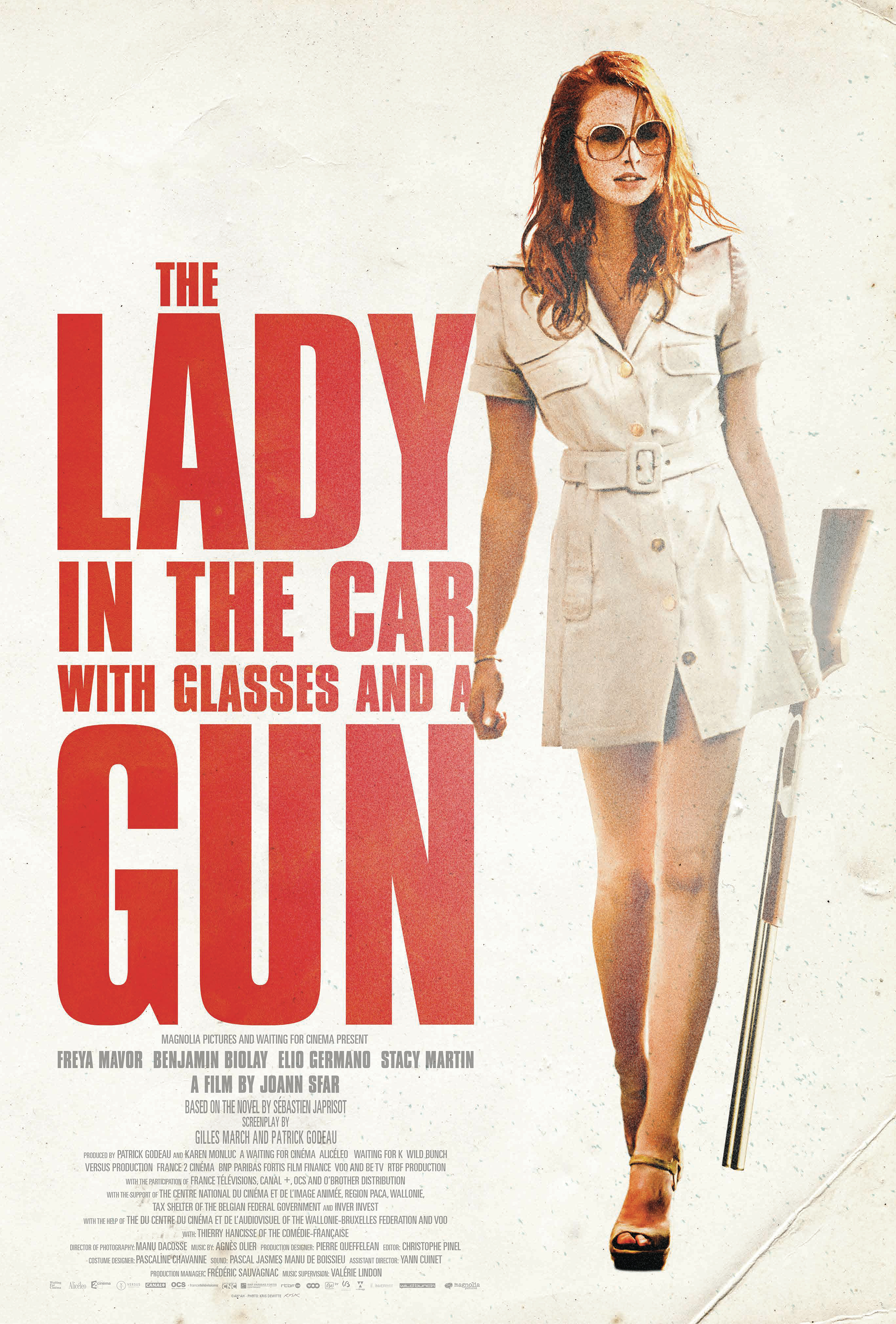
Share this:

  • Share on X (Opens in new window) X
  • Share on Facebook (Opens in new window) Facebook
  • More
  • Print (Opens in new window) Print
  • Email a link to a friend (Opens in new window) Email
Like Loading...

Dark Places (2015)

02 Sunday Aug 2015

Posted by dullwood68 in Movies

≈ Leave a comment

Tags

1985, Charlize Theron, Chloë Grace Moretz, Christina Hendricks, Corey Stoll, Crime, Drama, Gilles Paquet-Brenner, Gillian Flynn, Kansas, Literary adaptation, Murder, Nicholas Hoult, Review, Satanism, The Kill Club

Dark Places

D: Gilles Paquet-Brenner / 113m

Cast: Charlize Theron, Nicholas Hoult, Christina Hendricks, Tye Sheridan, Chloë Grace Moretz, Corey Stoll, Sterling Jerins, Sean Bridgers, Andrea Roth, Shannon Kook, Drea de Matteo

In 1985, in a small rural community in Kansas, a single mother and two of her daughters are all killed one night at their farmhouse; later, the surviving daughter, Libby (Jerins), tells the police her brother Ben (Sheridan) did it. After his arrest and during his trial, Ben offers no defence and he’s sent to prison for the rest of his life.

In 2015, the adult Libby (Theron) is down on her luck and counting on her minor celebrity status to keep her afloat. When she’s contacted by Lyle Wirth (Hoult) with the offer of $500 for a speaking engagement, she arranges to meet with him first. Lyle tells her he belongs to a group called The Kill Club, an organisation of volunteers who look into old unsolved murders, or cases where they believe an innocent person has been put in jail. She attends one of their meetings and finds that several members believe Ben didn’t commit the murders, and Libby finds herself challenged over her version of events that night. Angry at first, Libby agrees to help the group look into the  case, and begins her own investigation alongside theirs.

Lyle convinces her to visit her brother, something she’s never done. Ben (Stoll) is happy to see her, but Libby’s resentment of him means the visit goes badly. Back in her hometown she tries to find her father, Runner (Bridgers), who abandoned them when she was much younger. She also looks into the possibility of Ben having been part of a Satanic cult at the time, and why a young girl named Krissi Cates is relevant to what happened. As she learns more and more, she discovers Ben had a girlfriend called Diondra (Moretz). With Lyle’s help, Libby begins to put all the pieces together, and finds that what she believed happened all those years ago is far more complicated than she could ever imagined – and the repercussions of those events are still being played out in the present.

Dark Places - scene

Adapted from the novel by Gillian Flynn, author of Gone Girl, Dark Places is a murder mystery where what appears to be a simple, unexplainable crime proves to be something a lot more complicated and strange, and with a bewildering set of coincidences that make up the solution to the murders. Paquet-Brenner’s adaptation keeps the narrative skipping backwards and forwards between 1985 and 2015, showing us the events that led to the murders in 1985, and linking these scenes to the discoveries Libby makes in the present. As the story gradually unfolds, and we see the drama that played out in the past, we gain a greater understanding of the whys and hows that govern the actions of Libby and those people who were involved.

It’s a delicate balancing act at times, with the structure dictating that there be some degree of repetition throughout, as what we see in the past is explained in the future. Thankfully, Paquet-Brenner avoids such a hazard by making each new discovery as confusing as the last, and by throwing in so many suspects it almost seems as if the entire community could have done it. As Libby’s investigation leads to some unsavoury truths and revelations, the director makes it clear that her memories of that night have always been tainted, but to what degree she and the audience have to find out for themselves.

The dark places of the title are the ones we go to in our minds when we contemplate issues of murder and perceived guilt. The movie explores these avenues via the adult Libby’s increasingly fractured certainty that Ben killed his mother and sisters. And while the script plants a very big clue early on as to what really happened, it’s more concerned with the various ways in which we, through Libby, justify our actions and sense of culpability. Libby is tormented by having not been able to do anything to stop Ben, but as his innocence becomes more and more likely, her own assertions (the ones that have carried her through all these years) begin to crumble and she’s faced with the daunting prospect that her testimony condemned her brother to prison for the rest of his life.

But it proves not to be so simple. Ben has his own reasons for staying quiet, and so we, like Libby, have to seek answers in those dark places mentioned already. Thanks to a tight, focused script, and a clutch of telling performances, the movie shifts and turns with every passing minute, making it more and more difficult to work out what actually happened. Theron is impressive as the outwardly angry but internally uncomfortable Libby, her strained features and abrasive attitude in keeping with a survivor who only has her celebrity to keep her going; without it she’d be aimless (another reason why she agrees to help the Kill Club). As Lyle, Hoult brings a determined optimism to the role that offsets and complements Libby’s antagonistic approach, while Hendricks stands out as the harried mother struggling to keep her home and family together in the face of impending financial ruin. With more than able support from the likes of Sheridan, Moretz and de Matteo as the older Krissi, Dark Places succeeds in making each character credible, even when they’re sometimes asked to behave in ways that don’t make sense until the final reveal.

To add to the effectiveness of the script, the acting and Paquet-Brenner’s solid, unshowy direction, the movie is filmed in a gloomy, downlit style by DoP Barry Ackroyd, his compositions and framing illustrating proceedings with confidence and giving scenes an eerie quality that makes it seem that there’s other, stranger stuff we should know about happening just out of frame. With a running time that allows more than sufficient time to detailing events in both time periods, and a score by Gregory Tripi that subtly adds a level of foreboding to the material, Dark Places is an intelligent thriller that holds the attention and makes for avid viewing.

Rating: 8/10 – riveting in a sombre, calculated way, Dark Places maintains its gloomy, oppressive mise en scene to good effect throughout, and makes its audience work hard to solve the mystery; a better than average adaptation that showcases another fine performance from Theron, and flits between the past and the present with assured clarity and focus.

Share this:

  • Share on X (Opens in new window) X
  • Share on Facebook (Opens in new window) Facebook
  • More
  • Print (Opens in new window) Print
  • Email a link to a friend (Opens in new window) Email
Like Loading...

Fifty Shades of Grey (2015)

21 Tuesday Jul 2015

Posted by dullwood68 in Movies

≈ 1 Comment

Tags

Anastasia Steele, BDSM, Bondage, Christian Grey, Dakota Johnson, Dominant, Drama, E.L. James, Jamie Dornan, Literary adaptation, Review, Sam Taylor-Johnson, Sex, Submissive

Fifty Shades of Grey

D: Sam Taylor-Johnson / 125m

Cast: Dakota Johnson, Jamie Dornan, Jennifer Ehle, Eloise Mumford, Victor Rasuk, Luke Grimes, Marcia Gay Harden, Rita Ora, Max Martini, Callum Keith Rennie

Ten things that Fifty Shades of Grey has taught us:

1 – When you’re a successful multi-millionaire businessman (at age 27), you can attend board meetings and never have to say a word.

2 – When you’re a dowdy English Lit. student, you can be awkward and behave embarrassingly, and still attract a successful multi-millionaire businessman (who’s 27).

3 – When a successful multi-millionaire businessman that you met the day before, turns up at your place of work and asks for help in buying rope and cable ties and other restraints, it doesn’t need to be a cause for alarm.

4 – When a roommate asks about your “secret relationship”, it’s perfectly okay to ignore her concerns and carry on seeing the successful multi-millionaire businessman cable tie buyer.

5 – When a successful multi-millionaire businessman tells you he doesn’t share his bed with anyone, it’s not necessarily an indication that you’ll have problems in the relationship.

6 – When a successful multi-millionaire businessman wants you to sign a contract that means you can’t say anything about your relationship with him, it doesn’t mean that he wants to control your life, or pressure you into letting him flog you on a regular basis.

7 – When a successful multi-millionaire businessman shows you his Red Room, full of whips and chains and suspension equipment, there’s no need to run a mile as he’s just showing you his hobby room.

8 – When you visit your mother and the successful multi-millionaire businessman you’re unofficially having a relationship with, turns up out of the blue and pouts a lot, the correct response is to shrug off his obvious neediness and be flattered.

9 – When negotiating a contract with a successful multi-millionaire businessman it’s always best to read the small print, that way avoiding any possibility of his hand touching any part of your internal anatomy.

10 – When a successful multi-millionaire businessman ties you to a bed and blindfolds you, moaning uncontrollably before he’s even done anything will always enhance the experience.

DAKOTA JOHNSON as Anastasia Steele and JAMIE DORNAN as Christian Grey in "Fifty Shades of Grey".

Rating: 3/10 – dire on so many levels, with redundant characters in redundant situations and scenarios spouting repetitive, redundant dialogue, Fifty Shades of Grey only has a sleek visual look and some judicious editing to recommend it; with sex scenes that have all the eroticism of a home improvements show, and with its leads struggling to make either of their characters appear sympathetic or credible, this is one fantasy world that should be avoided at all costs.

Share this:

  • Share on X (Opens in new window) X
  • Share on Facebook (Opens in new window) Facebook
  • More
  • Print (Opens in new window) Print
  • Email a link to a friend (Opens in new window) Email
Like Loading...

Mini-Review: The Face of an Angel (2014)

20 Monday Jul 2015

Posted by dullwood68 in Movies

≈ Leave a comment

Tags

Amanda Knox, Angel Face, Barbie Latza Nadeau, Carla Delevingne, Crime, Daniel Brühl, Drama, Fame, Journalism, Kate Beckinsale, Literary adaptation, Michael Winterbottom, Murder, Publicity, Review, Siena, Valerio Mastandrea

Face of an Angel, The

D: Michael Winterbottom / 100m

Cast: Daniel Brühl, Kate Beckinsale, Valerio Mastandrea, Cara Delevingne, Corrado Invernizzi, John Hopkins, Genevieve Gaunt

Thomas (Brühl) is a documentary filmmaker who becomes interested in making a movie about the media circus surrounding the trial for murder of student Jessica Fuller (Gaunt), who, with her boyfriend, is accused of killing her roommate. He meets journalist Simone Ford (Beckinsale), and she provides him with the background material he needs in relation to the murder and the people involved. As Thomas begins to look into the case he finds himself focusing on the ways in which the spotlight has caught Jessica in its gaze, and how the media have lost sight of the victim. He determines to make his movie about this (perceived) injustice, and begins to interview the various players.

In doing so, Thomas meets a young English student, Melanie (Delevingne). She helps him with introductions within the community that Jessica is part of, but by this stage he’s already finding it difficult to write his script, and his frustration has led to him drinking heavily and taking drugs. When Thomas is introduced to Francesco (Invernizzi), who appears to know too much about the murder, and who Thomas believes is involved, it leads him to try and solve the mystery of the murder, and what exactly happened to Jessica’s roommate. But Thomas finds himself increasingly adrift in the town where the trial is taking place, and begins to have trouble sifting reality from fantasy, as his drink and drug use causes him to become desperate to find the truth.

Face of an Angel, The - scene

Michael Winterbottom’s career has always been an interesting and very often challenging one. He’s a director who’s unafraid to take risks – 9 Songs (2004), The Killer Inside Me (2010) – and his ability to genre hop and still maintain an impressive track record of movies, is unimpeachable. However, he does sometimes trip up, and for every 24 Hour Party People (2002) there’s a Genova (2008), and sadly, despite the movie’s real-life background and inspiration – Barbie Latza Nadeau’s book Angel Face – The Face of an Angel falls into the latter category.

While it’s refocused look at the Amanda Knox trial gives the movie a sense of immediacy, it’s overwhelmed by the decision to make Thomas’s gradual emotional and intellectual disintegration more important than the story he’s looking into. The movie’s initial examination of the machinations and narrow-sighted approach of the media soon gives way to Thomas’s increasingly fevered, personal investigation, and the possibility that Francesco is the real killer. Alas, by doing so, Winterbottom and writer Paul Viragh commit the same sin they’re seeking to expose at the beginning, and lose sight of the victim as well. What doesn’t help is that Thomas, despite Brühl’s best efforts, is charmless and unlikeable, and this makes it difficult for the audience to engage or sympathise with him. Beckinsale is underused, while Delevingne delivers a fresh, natural performance as Melanie.

Rating: 4/10 – unbearably arch at times, with the character of Thomas continually placed in situations where he’s clearly out of his depth, The Face of an Angel is an unnecessarily glum, and surprisingly tedious, outing from the usually reliable Winterbottom; the location photography is a much-needed bonus, and the basic idea is sound, but in its execution, the movie strays too far from its own agenda.

Share this:

  • Share on X (Opens in new window) X
  • Share on Facebook (Opens in new window) Facebook
  • More
  • Print (Opens in new window) Print
  • Email a link to a friend (Opens in new window) Email
Like Loading...

Trailer – The Finest Hours (2016)

14 Tuesday Jul 2015

Posted by dullwood68 in Movies

≈ Leave a comment

Tags

1952, Casey Affleck, Chris Pine, Craig Gillespie, Literary adaptation, Preview, SS Mercer, SS Pendleton, Trailer, True story

The Finest Hours is based on a true story, and is set in 1952, when a nor’easter off the New England coast tore two oil tankers – the SS Mercer and the SS Pendleton – in half. The ensuing rescue mission took place in some of the most extreme sea weather ever experienced, and was fraught with danger. The cast includes Casey Affleck, Chris Pine, Eric Bana, Ben Foster, and fresh from The Riot Club (2014), Holliday Grainger, and the cinematographer is Javier Aguirresarobe, whose work on movies such as The Road (2009), A Better Life (2011) and Blue Jasmine (2013), is a strong indication that this may well be one of the most strikingly shot dramas of 2016. But what is clear from the trailer is that this is one movie that might just eclipse The Perfect Storm (2000) for storm-drenched action.

Share this:

  • Share on X (Opens in new window) X
  • Share on Facebook (Opens in new window) Facebook
  • More
  • Print (Opens in new window) Print
  • Email a link to a friend (Opens in new window) Email
Like Loading...

Nancy Drew… Reporter (1939)

13 Monday Jul 2015

Posted by dullwood68 in Movies

≈ Leave a comment

Tags

Bonita Granville, Crime, Drama, Frankie Thomas, John Litel, Literary adaptation, Murder, Mystery, Nancy Drew, Review, Series, Thriller, William Clemens

Nancy Drew... Reporter

D: William Clemens / 68m

Cast: Bonita Granville, John Litel, Frankie Thomas, Dickie Jones, Mary Lee, Larry Williams, Betty Amann, Jack Perry, Thomas E. Jackson, Olin Howland, Sheila Bromley

When she takes part in a newspaper contest, headstrong Nancy Drew (Granville) doesn’t like the assignment she’s given, so instead she swipes another reporter’s assignment: to cover the inquest of a woman, Kate Lambert, who was recently found dead. At the inquest, it’s revealed that Mrs Lambert was poisoned by a photographic chemical, and suspicion falls on her companion, Eula Denning (Amann). Protesting her innocence, and stating that whoever killed Mrs Lambert would have left fingerprints on the tin the poison came in, Eula is still remanded in custody for trial.

Also at the inquest is a man with a cauliflower ear (Perry) who hits Nancy’s bumper as he leaves the courthouse. She follows him to the Lambert house where he tries to gain entry, but Nancy and a guard stop him. She tells her father, well-known and respected lawyer Carson Drew (Litel), all about it but he warns her to leave well alone. Instead, Nancy gains the help of her neighbour, Ted Nickerson (Thomas) and together they visit Eula in jail. She tells them the tin must still be in the house and gives them a clue as to where to find it. At the Lambert house, Ted distracts the guard while Nancy sneaks inside and finds the tin. But the man is also there, and tries to grab the tin but Nancy gets away from him. She takes the tin to the police station, but before she can hand it over, the man’s girlfriend (Bromley) steals it from her.

Nancy discovers that the man is a boxer, Soxie Anthens, and she also discovers the gym where he trains. She and Ted go there and further learn that Soxie’s girlfriend is called Miss Lucas. They track her down to the Beldenburg Hotel, where they also find out that she’s gone to the Mandarin Cafe. Nancy and Ted head over there, and find Soxie’s girlfriend in the company of Miles Lambert (Williams), the son of the murdered woman. Alerting Soxie to their being together, he causes a scene when he arrives at the cafe. During the altercation, Nancy learns enough about the tin and the murder to set a trap for the killer.

Nancy Drew... Reporter - scene

The second of four movies made in 1938-9 by Warner Bros. and based on the character created by Edward Stratemeyer, Nancy Drew… Reporter is a fast-paced comedy whodunnit that has time to pause for a musical interlude, and adds two young “whippersnappers” in the form of Ted’s younger sister Mary (Lee) and her friend in mischief Killer Parkins (Jones) to the mix as often as it can. It has a certain degree of innocent charm, and is largely inoffensive, but beneath the irreproachable content of the plot and storyline, the movie is surprisingly subversive.

When Nancy steals the reporter’s assignment, she later justifies her actions by stating that a good reporter should always do what it takes to get the story. It’s the best example of the lying and manipulation that Nancy displays throughout the movie in her efforts to catch the killer. She hoodwinks Ted on more than one occasion, traps her father into defending Eula thanks to a fait accompli, and blatantly lies in order to get the newspaper to print a fraudulent headline in order to flush out the killer. In her quest to uncover the truth it seems that Nancy will bend or break the rules in whatever way she needs in order to do so. And it’s noticeable that she rarely – if ever – apologises.

With its heroine proving almost as devious and deceitful as the bad guys, the movie carries on as if it hadn’t noticed at all that Nancy was so duplicitous, and of course, she wins the newspaper contest (though, to be fair, she declines the cash prize, but accepts the accompanying medal). There’s too much of this ironic counterpoint for the movie to be an entirely comfortable watch, with its moral compass being so broadly compromised. Of course, Nancy isn’t the only character in the movies to behave in such a way, but this is a character who was intended to encourage young girls to read more; what message are they meant to be getting when Nancy behaves as if the usual rules don’t apply to her?

Away from the dubious character of Nancy, there’s the small matter of the plot, which is very basic to say the least, and which advertises the villains straight away at the inquest. Usually, the killer is revealed in the final reel, but here anyone will be able to work out their identity well in advance, and this helps to dilute whatever drama or tension is inherent in the plot. In fact, there are times when the plot is so lightweight it’s almost gossamer thin. But the cast are entertaining to watch, with Granville and Thomas proving a good pairing, while Litel is kept firmly in the background, aside from an uncomfortable moment when he carries Granville off to bed and sings an awkward lullaby to her while also tucking her in.

Series’ director Clemens maintains a loose feel throughout and gives his cast enough room to indulge themselves when appropriate, and this happy-go-lucky approach makes the movie seem smarter and more energetic than it actually is, and despite the best efforts of screenwriter Kenneth Gamet. A mention too for editor Frank DeWar whose skill in the cutting room means the movie contains very little fat, and has a freshness to it even now, over seventy-five years since its release.

Rating: 6/10 – allowing for its (probably) unintentionally crafty heroine, Nancy Drew… Reporter is still an interesting, if flawed, take on the teen sleuth genre; bolstered by good performances, though with a mystery that even a blind person could work out, the movie is nevertheless a minor treat for fans of this type of movie, and of Granville in particular.

Share this:

  • Share on X (Opens in new window) X
  • Share on Facebook (Opens in new window) Facebook
  • More
  • Print (Opens in new window) Print
  • Email a link to a friend (Opens in new window) Email
Like Loading...

Mr. Holmes (2015)

07 Tuesday Jul 2015

Posted by dullwood68 in Movies

≈ Leave a comment

Tags

A Slight Trick of the Mind, Bees, Bill Condon, Glass harmonica, Grey glove, Historical drama, Ian McKellen, Japan, Laura Linney, Literary adaptation, Milo Porter, Mystery, Prickly ash, Review, Royal jelly, Sherlock Holmes, Sussex

Mr. Holmes

D: Bill Condon / 104m

Cast: Ian McKellen, Laura Linney, Milo Porter, Hiroyuki Sanada, Hattie Morahan, Patrick Kennedy, Roger Allam, Frances de la Tour, Philip Davis, John Sessions

In 1947, Sherlock Holmes (McKellen), now 93, lives in a Sussex farmhouse, and is looked after by his housekeeper, Mrs Munro (Linney), and her young son, Roger (Porter). He keeps bees and uses royal jelly as a means of improving his memory, which has deteriorated in recent years. A recent trip to Japan in search of supplies of prickly ash, a plant also known for improving the memory, has been undertaken with a view to ensuring that Holmes can complete one last project before he becomes unable to: to write a true account of his last case as a detective. Unhappy with the way Dr Watson portrayed those events, Holmes is struggling to remember the details of the case. Urged on by the interest shown by Roger, Holmes renews his efforts to pin them down.

His recollections take him back thirty years, after Watson has gotten married and their partnership has dissolved. He’s visited by Thomas Kelmot (Kennedy), a man worried about the behaviour of his wife, Ann (Morahan). Following two miscarriages, Ann Kelmot has become withdrawn; her husband has advised her to take up a musical hobby but now that has become an obsession, and even though he has forbade her from continuing her lessons with glass harmonica teacher, Madame Schirmer (de la Tour), he has discovered Ann is still visiting her. He suspects the music teacher of some kind of plot and wants Holmes to investigate.

Back in the present, Holmes takes Roger under his wing in and introduces him to his apiary. Roger persists in asking about Holmes’ last case; his enthusiasm prompts Holmes to make more of an effort to remember Ann Kelmot, including following her to Madame Schirmer’s and from there to various places before he approaches her in a public garden. Their conversation becomes confrontational but Holmes reveals the depth of his knowledge about her situation, and the effect the two miscarriages has had on her.

Mrs Munro, meanwhile, informs Holmes that she is planning to move to Portsmouth and work in a hotel; it will mean taking Roger with her. Roger doesn’t want to go, but when Holmes suffers a collapse shortly after, they are forced to stay. While he remains bedridden on the advice of his doctor (Allam), Roger takes care of the bees. He also finds a grey glove in Holmes’ study, a memento from the case of Ann Kelmot that Holmes can’t remember keeping or having. As Holmes remembers more about the case he also recalls the event that led to his retirement as a detective, and the reasons behind Watson’s subsequent involvement. But his remembrance of the past is put into perspective when he finds Roger has been stung by dozens of bees, and the boy’s life is hanging in the balance…

Mr. Holmes - scene

Dealing with themes of sadness and loss and regret, Mr. Holmes presents us with a portrait of a master detective beset by echoes from his past. It’s a richly detailed depiction of times long past, anchored by a superb performance from McKellen, and redolent of a bygone age, with its frock coats and steam trains and pre-suffrage gender politics. Expertly marshalled by Condon – reunited with McKellen for the first time since they collaborated on Gods and Monsters (1998) – the movie is a flawless recreation of two periods in English history that still exert a strong fascination: the post-Victorian era and the years immediately following the cessation of World War II. There’s also Holmes’ trip to Japan and the sight of the devastation wrought on Hiroshima. The historical trappings carry so much weight it’s almost as if the audience has been transported back with Holmes and are experiencing things themselves.

With the period detail proving so effective, it’s the twin mysteries on offer – what really happened during Holmes’ last case, and what is causing the deaths of his beloved bees – that unfortunately stop the movie from becoming even more memorable (an ironic outcome for a movie that deals with the loss and despair in losing one’s own memory). The story of Ann Kelmot has all the initial hallmarks of a classic Holmes tale, with its anxious husband and a heroine seemingly under the influence of a scheming criminal. But the truth, when Holmes finally remembers it, is far more prosaic than that, and while presented with some emotional impact, still doesn’t seem as devastating as Holmes makes out. Maybe it’s seeing it from the perspective of an old man trying to make sense of things that remain just out of reach that leaves the viewer with a sense of detachment: if Holmes can’t access those recollections and connect with them, how are we to do so?

But the movie, even with its handful of slightly underdeveloped storylines, has several aces up its sleeve that mitigate and make up for the paucity of the plot and the general structure. These are the performances from McKellen, Linney, Porter and Morahan. As already mentioned, McKellen is superb as Holmes, fragile, distressed, playful, curmudgeonly, afraid – tuning his portrayal of the master detective to such a fine degree that it’s both an acting and organic masterclass; he’s believable and convincing throughout, particularly when he’s trying to downplay the public misconceptions about him that are thanks to Watson’s writings. As Holmes’ housekeeper, Linney adopts a country dialect with precision and aplomb, and imbues Mrs Munro with a stoic dignity that stops her from expressing her misgivings about the relationship between Holmes and her son. As Roger, Porter gives another of those naturalistic, not-even-trying performances that it seems most child actors can produce at the drop of a hat; his scenes with McKellen are affecting and perfectly modulated. And as the focus of Holmes’ disturbed memories, Morahan is quietly magnificent as the troubled Ann Kelmot, her tear-rimmed eyes a more than adequate depiction of the turmoil her character has fallen prey to.

The movie has an often stately, measured pace, and some viewers may find the early scenes a little hard going, but once Holmes begins to remember events following the arrival of Thomas Kelmot at Baker Street, Condon increases the rate at which things begin to happen, until the final thirty minutes are as engrossing as any modern day thriller. With Martin Childs’ meticulous production design being augmented by often beautiful cinematography from Tobias A. Schliessler, and a delicately evocative score courtesy of Carter Burwell, there’s so much to enjoy here that audiences who stay the course will be rewarded by a movie that quietly steals up behind them and warms their hearts.

Rating: 8/10 – modest in intention and design, Mr. Holmes is a small-scale triumph of historical veracity and emotional honesty, focusing as it does on the melancholic suffering of a man for whom his intellect, now foundering, defined him; full of deceptively powerful performances, this is one historical drama that resonates long after it’s ended.

Share this:

  • Share on X (Opens in new window) X
  • Share on Facebook (Opens in new window) Facebook
  • More
  • Print (Opens in new window) Print
  • Email a link to a friend (Opens in new window) Email
Like Loading...
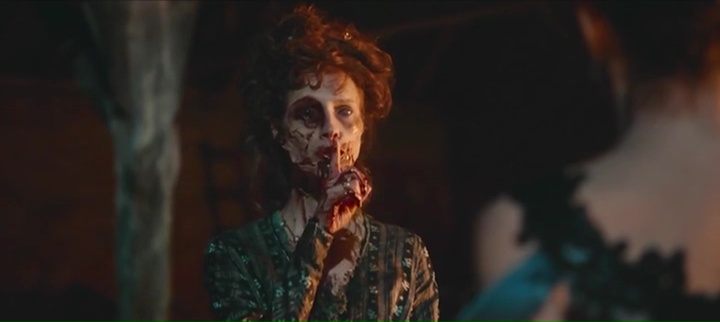
← Older posts
Newer posts →

Blog Stats

  • 495,441 hits

Recent Posts

  • 10 Reasons to Remember Bibi Andersson (1935-2019)
  • Fantasia (1940)
  • Dances With Wolves (1990) – The Special Edition
  • Kiss of the Spider Woman (1985)
  • The Three Musketeers (1973)

Top Posts & Pages

  • The White Orchid (2018)
    The White Orchid (2018)
  • Cold Lunch (2008)
    Cold Lunch (2008)
  • Speak (2004)
    Speak (2004)
  • George and the Dragon (2004)
    George and the Dragon (2004)
  • Mr. Peabody & Sherman (2014)
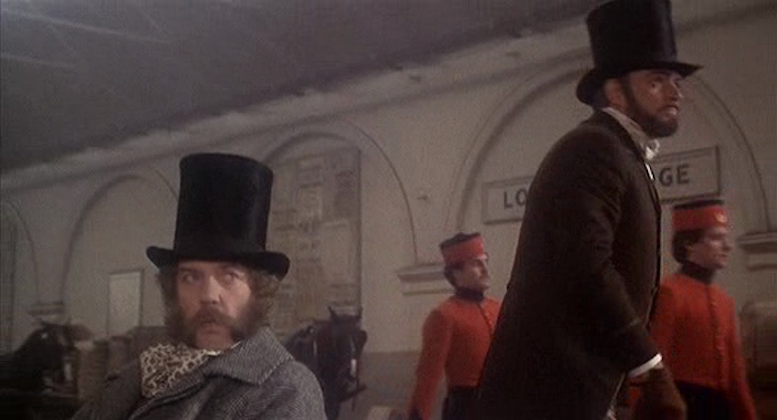
    Mr. Peabody & Sherman (2014)
  • The Rewrite (2014)
    The Rewrite (2014)
  • Oculus (2013)
    Oculus (2013)
  • Assault on Wall Street (2013)
    Assault on Wall Street (2013)
  • Concussion (2013)
    Concussion (2013)
  • 10 Reasons to Remember Maureen O'Hara (1920-2015)
    10 Reasons to Remember Maureen O'Hara (1920-2015)
Follow thedullwoodexperiment on WordPress.com

Blogs I Follow

  • Rubbish Talk
  • Film 4 Fan
  • Fast Film Reviews
  • The Film Blog
  • All Things Movies UK
  • Interpreting the Stars
  • Let's Go To The Movies
  • Movie Reviews 101
  • TMI News
  • Dan the Man's Movie Reviews
  • Film History
  • Jordan and Eddie (The Movie Guys)

Archives

  • April 2019 (13)
  • March 2019 (28)
  • February 2019 (28)
  • January 2019 (32)
  • December 2018 (28)
  • November 2018 (30)
  • October 2018 (29)
  • September 2018 (29)
  • August 2018 (29)
  • July 2018 (30)
  • June 2018 (28)
  • May 2018 (24)
  • April 2018 (21)
  • March 2018 (31)
  • February 2018 (25)
  • January 2018 (30)
  • December 2017 (30)
  • November 2017 (27)
  • October 2017 (27)
  • September 2017 (26)
  • August 2017 (32)
  • July 2017 (32)
  • June 2017 (30)
  • May 2017 (29)
  • April 2017 (29)
  • March 2017 (30)
  • February 2017 (27)
  • January 2017 (32)
  • December 2016 (30)
  • November 2016 (28)
  • October 2016 (30)
  • September 2016 (27)
  • August 2016 (30)
  • July 2016 (30)
  • June 2016 (31)
  • May 2016 (34)
  • April 2016 (30)
  • March 2016 (30)
  • February 2016 (28)
  • January 2016 (35)
  • December 2015 (34)
  • November 2015 (31)
  • October 2015 (31)
  • September 2015 (34)
  • August 2015 (31)
  • July 2015 (33)
  • June 2015 (12)
  • May 2015 (31)
  • April 2015 (32)
  • March 2015 (30)
  • February 2015 (37)
  • January 2015 (39)
  • December 2014 (34)
  • November 2014 (34)
  • October 2014 (36)
  • September 2014 (25)
  • August 2014 (29)
  • July 2014 (29)
  • June 2014 (28)
  • May 2014 (23)
  • April 2014 (21)
  • March 2014 (42)
  • February 2014 (38)
  • January 2014 (29)
  • December 2013 (28)
  • November 2013 (34)
  • October 2013 (4)

Create a free website or blog at WordPress.com.

Rubbish Talk

Film 4 Fan

A Movie Blog

Fast Film Reviews

The Film Blog

The official blog of everything in film

All Things Movies UK

Movie Reviews and Original Articles

Interpreting the Stars

Dave Examines Movies

Let's Go To The Movies

Film and Theatre Lover!

Movie Reviews 101

Daily Movie Reviews

TMI News

Latest weather, crime and breaking news

Dan the Man's Movie Reviews

All my aimless thoughts, ideas, and ramblings, all packed into one site!

Film History

Telling the story of film

Jordan and Eddie (The Movie Guys)

Movie Reviews & Ramblings from an Australian Based Film Fan

Privacy & Cookies: This site uses cookies. By continuing to use this website, you agree to their use.
To find out more, including how to control cookies, see here: Cookie Policy
  • Subscribe Subscribed
    • thedullwoodexperiment
    • Join 481 other subscribers
    • Already have a WordPress.com account? Log in now.
    • thedullwoodexperiment
    • Subscribe Subscribed
    • Sign up
    • Log in
    • Report this content
    • View site in Reader
    • Manage subscriptions
    • Collapse this bar
 

Loading Comments...
 

    %d