• 10 Reasons to Remember…
  • A Brief Word About…
  • About
  • For One Week Only
  • Happy Birthday
  • Monthly Roundup
  • Old-Time Crime
  • Other Posts
  • Poster of the Week
  • Question of the Week
  • Reviews
  • Trailers

thedullwoodexperiment

~ Viewing movies in a different light

thedullwoodexperiment

Tag Archives: Murder

Death in High Heels (1947)

17 Monday Jul 2017

Posted by dullwood68 in Movies

≈ Leave a comment

Tags

Catch Up movie, Christianna Brand, Crime, Don Stannard, Drama, Elsa Tee, Hammer Films, Leslie Tomlinson, Literary adaptation, Murder, Mystery, Review, Thriller, Veronica Rose

D: Lionel Tomlinson (as Tommy Tomlinson) / 48m

Cast: Don Stannard, Elsa Tee, Veronica Rose, Denise Anthony, Patricia Laffan, Diana Wong, Nora Gordon, Bill Hodge, Kenneth Warrington, Leslie Spurling

A cheap and cheerful murder mystery – told by the lead detective in flashback – Death in High Heels is a “quota quickie” designed by Hammer Films (who had been dormant as a production company since 1937) as a way of reviving the company name and helping to fill the gaps in cinema schedules. Made on a shoestring, its tale of murder in a Bond Street dress shop is a perfect example of the material that Hammer looked to release at the time, and though it seems unremarkable at first glance, acts as a snapshot of the period, and what could be done on a micro-budget.

As already mentioned, the movie is set (largely) in a dress shop and is narrated by Detective Charlesworth (Stannard) as he recounts a tale of murder, jealousy and ambition. The dress shop is called Christof’s, and it’s owned and run by a man named Frank Bevan (Warrington). He employs a staff of seven: two supervisors, Agnes Gregory (Rose) and Magda Doon (Laffan); a designer, Mr Cecil (Hodge); three dress models, Victoria (Tee), Aileen (Anthony), and Almond Blossom (Wong); and a cleaning lady, Mrs ‘Arris (Gordon). Eight very different people all together, but with seven of them all united about one thing: their dislike of Miss Gregory. Sharp-tongued and unfriendly, Miss Gregory has earned the enmity of everyone at one time or another. She has attached herself to Bevan though, and when Magda is put in line for a promotion ahead of her, Miss Gregory does her best to get the job instead. When Bevan changes his mind, and gives the job to Miss Gregory, Magda’s unexpected death (which follows soon after), leads to a murder investigation.

The cause of death is poisoning, and by an acid that was brought into the shop by Aileen and Victoria in order to clean a hat. Most of it was spilt on the floor and then cleared up by Mrs ‘Arris who was supposed to have left it in an envelope on a table. But the envelope disappears before Magda’s death, and no one will admit to taking it. Everyone is a suspect, but Charlesworth quickly deduces that Magda wasn’t the intended victim, it was Miss Gregory, the poison added to her lunch but eaten by her rival instead. As his investigation continues, Charlesworth learns that some of the staff have secrets that may or may not be reasons for trying to kill Miss Gregory, and as he sifts through a web of lies and deceit, two main suspects emerge… but did either one of them try to poison Miss Gregory?

The answer is nowhere near as obvious as you’d expect, though it’s not really the point of this fast-paced little thriller, which seeks instead to shine a light on post-War Britain and the social imperatives of the period. Bevan is the haughty self-made man who enjoys the prestige that goes with having titled clients and a shop in London’s exclusive Bond Street. Miss Gregory has ideas above her station as well, and behaves badly towards the others because she rides on Bevan’s coat-tails and presumes an intimacy with him that allows her to feel superior to everyone else. Aileen’s “young man” is “very grand” and it’s her ambition to be as grand as he is, even though she’s from a working class background, the same background as Mrs ‘Arris. Mr Cecil is something of an hysterical ninny, a man whose sense of self-worth is reinforced by his mother. Only Magda and Victoria seem comfortable in their own skin, as even Almond Blossom’s aloof nature seems to be a cover for an unfortunate prior experience with Bevan. All this is neatly laid out in the nineteen minutes before Magda’s death, and all this has a bearing on the nature of Charlesworth’s investigation.
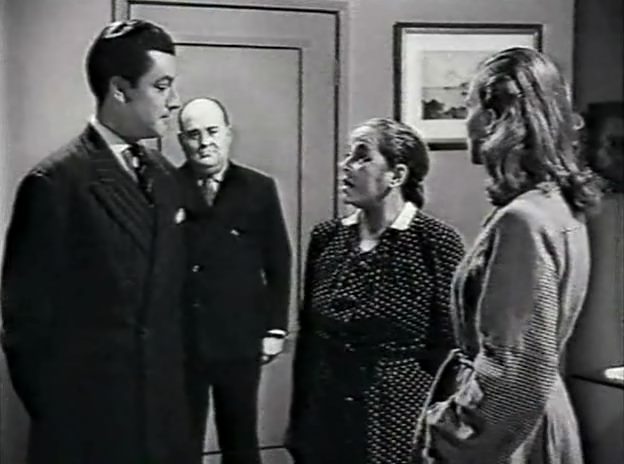
Inevitably, the secrets the characters have been trying to hide are revealed, and just as inevitably they prove predictable and of no relevance to the murder. But Christianna Brand’s screenplay, adapted from her novel of the same name, makes good use of the distrust amongst the characters, and even if to contemporary eyes there doesn’t seem to be anything too striking about the inter-relationships and the society in microcosm approach to the staff and their foibles, nevertheless, someone watching this seventy years ago would have recognised much of the social dynamic on display. They would have felt comforted by it to some degree, and even now the movie has that ability to reassure the viewer as to its intentions. Familiar territory then, and all the better for it; and despite some awkward line readings, it holds the attention and balances its various storylines with ease.

Though the performances range from arch (Wong, Rose) to overtly theatrical (Laffan), there’s still the sense that everyone is familiar with the material and knows what to do. Stannard gives a carefree performance that is amusing and relaxed, while Tee is confident and direct, and in their brief scenes together, a good foil for his breezy attitude. Tomlinson, whose first feature this was, keeps the camera as agile as possible given the confines of the sets, and uses his previous experience as an editor to give the movie a sprightly feel that adds to the pleasant nature of the material as a whole. It’s not a movie that will rock anyone’s world (not that it was ever meant to), but as a calling card to the rest of the British movie industry that Hammer was back and here to stay, it has to be judged a success.

Rating: 6/10 – it’s too easy to be dismissive of a movie like Death in High Heels, and too easy to ignore its obvious virtues, but anyone willing to give the movie the benefit of the doubt will be pleasantly surprised by its jaunty nature and effective character building; the low budget and sparse production values do hinder things, and some unnecessary narrative leaps and bounds in the second half don’t help, but overall this is a solid, agreeable mystery that deserves a wider audience. (16/31)

NOTE: Unsurprisingly, there isn’t a trailer for Death in High Heels.

Share this:

  • Click to share on X (Opens in new window) X
  • Click to share on Facebook (Opens in new window) Facebook
  • More
  • Click to print (Opens in new window) Print
  • Click to email a link to a friend (Opens in new window) Email
Like Loading...

Multiple Maniacs (1970)

03 Monday Jul 2017

Posted by dullwood68 in Movies

≈ 1 Comment

Tags

Baltimore, Catch Up movie, Comedy, Crime, David Lochary, Divine, Drama, John Waters, Mary Vivian Pearce, Mink Stole, Murder, Review, The Cavalcade of Perversion

D: John Waters / 96m

Cast: Divine, David Lochary, Mary Vivian Pearce, Mink Stole, Cookie Mueller, Edith Massey, Rick Morrow, Howard Gruber, Paul Swift, Susan Lowe, George Figgs

Some movies that garner a reputation for being “obscene” or “perverted” upon release generally don’t have a long shelf life, and soon fade not into obscurity exactly, but rely on gaining a cult following to ensure they’re still watched and talked about. And any such movie certainly won’t expect to be critically lauded, or attain cult status amongst those who’ve seen it unless it has something that no one other movie can offer, and John Waters’ Multiple Maniacs has that something: the amazing, human tornado of strident perversion called Divine.

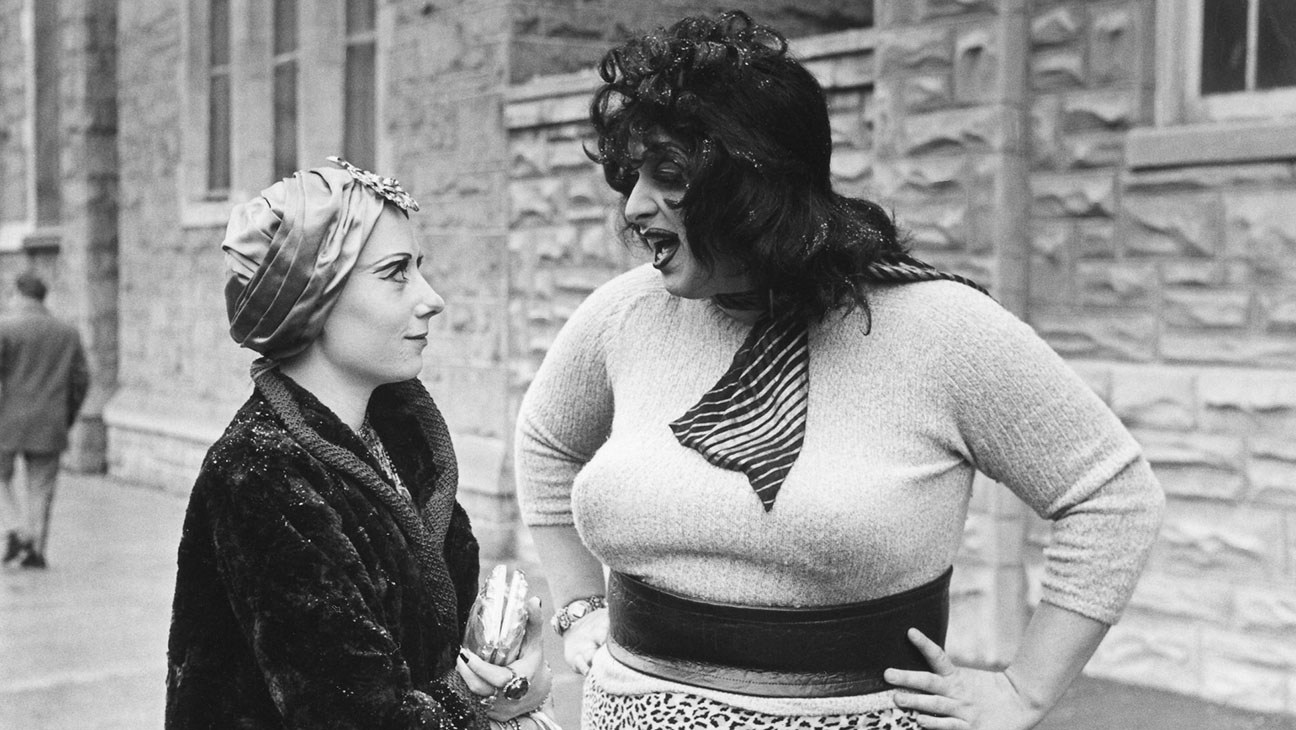
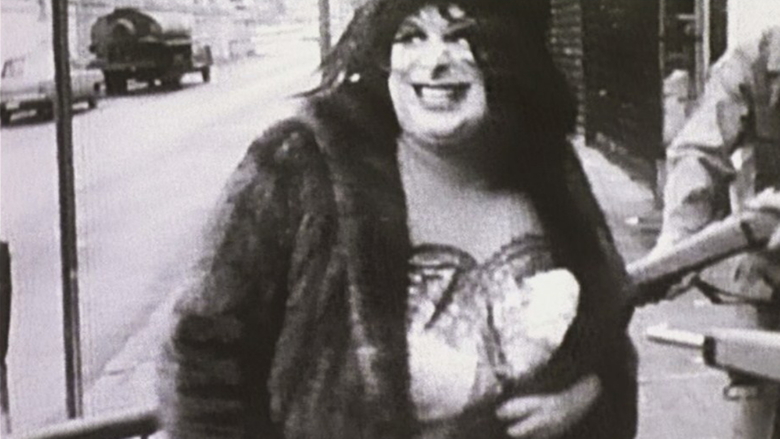
Waters’ early work – this is his second feature – is synonymous with the rise of Harris Glenn Milstead as the merciless, murderous-minded, savagely anti-establishment grotesquerie known as Divine. This is a movie that puts itself out there as being counter-culture entertainment, a bargain basement, shot-on-16mm trash bag of arch religious references, austere social commentary, and documentary-like footage. It doesn’t look or feel like a standard issue movie because Waters has deliberately chosen to shoot it in such a diffuse, non-professional way that it often looks like a collection of outtakes strung together for convenience rather than a truly finished product where everything was shot as planned and nobody forgot their lines in the middle of a scene (which happens here a lot). There’s also a lot of guerrilla moviemaking, as outdoor scene after outdoor scene reveals a member of the public looking on in confusion and/or horror at what they’re witnessing (Divine in various states of undress and challenging middle class perceptions of good taste).

Beneath all the amateur hour shenanigans and louche bravado of its characters though, Waters’ ode to unrestrained perversion is touchingly conservative in its approach, and nowhere near as bizarre as it wants you to believe. Part of the appeal of Waters’ movies in the early Seventies is their deliberate inversion of public, social and moral standards, and the ways in which Waters’ gleefully attempted to subvert the cultural values of the time. Waters was only twenty-four when he made Multiple Maniacs, but it feels like a movie made by a rebellious teenager taking pot shots at his parents (the religious elements) and the passive determinism of the denizens of his home town of Baltimore. It’s no wonder Waters wants to shake things up and challenge the status quo; he’s a young man still working out his issues from growing up.

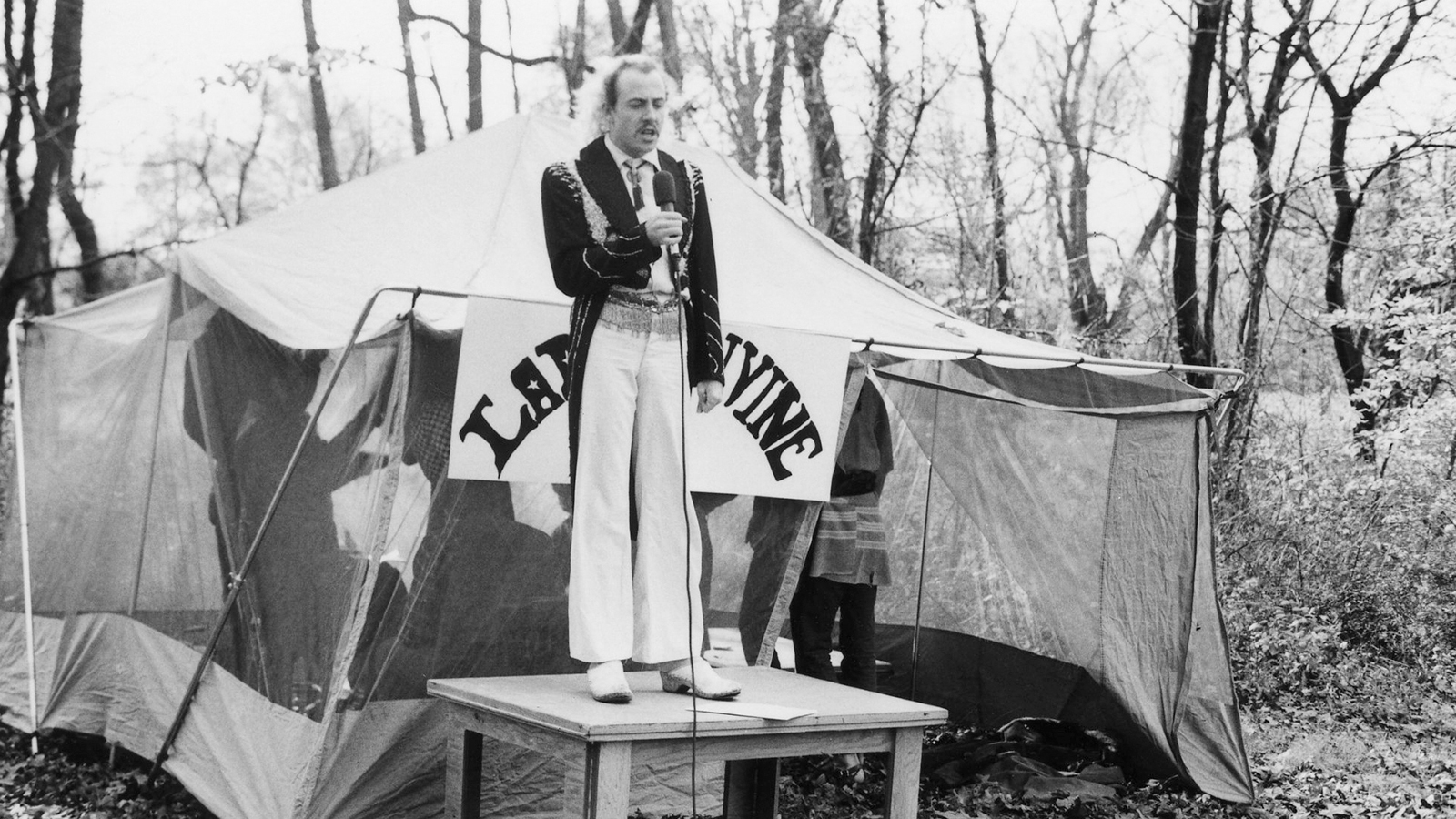
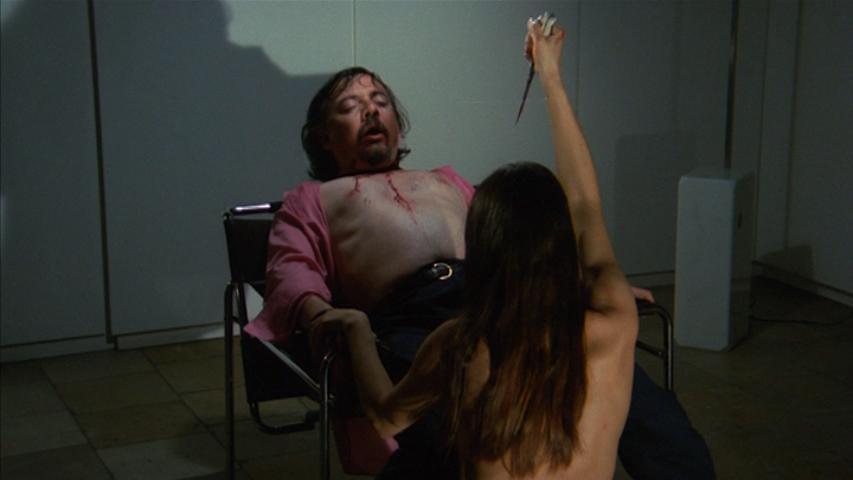
In Multiple Maniacs, this kind of celluloid psychotherapy finds its best and truest expression in the form of Lady Divine (Divine, naturally) and her Cavalcade of Perversion, the travelling freak show she fronts as a way of making money (by robbing the poor fools who are persuaded to see the show), and espousing her contempt for society. Lady Divine surrounds herself with “assorted sluts, fags, dykes and pimps” because they share her disdain for more traditional adult roles. They’re the protesters and the dissenters, acolytes who share her (and Waters’) disapproval at the way society treats the disenfranchised and the socially excluded. Lady Divine would kill them all if she could, but Waters’ Catholic upbringing precludes such extreme measures, and though his transgressive alter ego does kill on a handful of occasions, and even feasts on the entrails of one of her victims, when she’s finally consumed by a murderous mania, the most violent act she commits is to take a sledgehammer to a car.

The movie’s more violent excesses are leavened by unintentional moments of levity, such as when Lady Divine attempts to stab her new friend, the Religious Whore (Stole), and begins her attack by stabbing the air above the character’s head, an obvious concession to the fact that Divine is wielding a real knife and doesn’t want to hurt his co-star. And towards the end, when Lady Divine is chasing dozens of people through the streets of Baltimore, her terrifying creature moment is undermined by the number of faces that are displaying laughter instead of terror. But through it all, Waters makes no apologies for the excesses he portrays, and he burns any religious bridges he may have had access to by juxtaposing Christ and the Stations of the Cross with Lady Divine being anally pleasured by a rosary-wielding Mink Stole. It’s profane and it’s crass but it’s still just Waters railing against the formalities and restrictions imposed by organised religion.

When Waters isn’t expressing his dissatisfaction with contemporary morality, he’s holding up a mirror to contemporary issues as well, with mentions of the murder of Sharon Tate – Lady Divine tortures her boyfriend, Mr David (the splendid David Lochary), with the possibility he was involved in her murder – and various references to the war in Vietnam. And he’s surprisingly waspish when it comes to notions of the nuclear family, with Lady Divine doting on her somewhat promiscuous daughter, Cookie (Mueller), while submitting to the attentions of glue-sniffing rapists, Miss Stole and her beads, and a giant lobster (Lobstora) that appears out of nowhere and sets her on the road to sexually-induced hysterical violence. And the idea that Mr David could be seeing another woman, Bonnie (Pearce), whips her into a hypocritical frenzy (and allows Waters’ favourite Edith Massey to provide her first mangled performance in one of his movies).

The dialogue is suitably terse and aggressive, as befits a group of characters who are angry at themselves and the wider world, and though the performances are what you’d have to charitably regard as “authentically naïve”, there’s a rude energy to it all that more than makes up for the deficiencies of shooting on such a low budget. Waters opts for some uncomfortable close ups to highlight the pains and suffering felt by his characters, and doesn’t always worry if those images are distorted or out of focus (one gets the feeling a lot of scenes and shots were the first, and only, take). This adds to the documentary tone the movie adopts and exploits from time to time, and shows that Waters was very much aware of the concept of cinema verité when he was putting his movie together. All of which makes Multiple Maniacs a more heartfelt and poignant movie than may be expected, and shows that, despite all the attempts at shocking its audience, the movie is as much an ode to treating people of all walks of life fairly as it is about exposing the social injustices that stop this from happening. This leaves John Waters looking very much like a social reformer – and who would have thought that?

Rating: 8/10 – a trial by fire for anyone unfamiliar with Waters’ early work, Multiple Maniacs nevertheless works on many levels and is unremittingly earnest in its exposure of small-minded hypocrisy amongst middle-class America and its apologists; for all the sturm und drang on display though, it’s a tract that preaches acceptance but only insofar as you conform to the way society expects you to behave – and if you don’t, then society will call out the National Guard. (3/31)

Share this:

  • Click to share on X (Opens in new window) X
  • Click to share on Facebook (Opens in new window) Facebook
  • More
  • Click to print (Opens in new window) Print
  • Click to email a link to a friend (Opens in new window) Email
Like Loading...

Monthly Roundup – June 2017

30 Friday Jun 2017

Posted by dullwood68 in Movies

≈ 1 Comment

Tags

Attack of the Killer Donuts, Bakery, Barbara Kent, Before the Flood, Carole Lombard, CHIPS, Climate change, Comedy, Crime, Dax Shepard, Documentary, Dough, Drama, Fisher Stevens, Grief Street, High Voltage, Horror, Howard Higgin, Jerome Holder, John Goldschmidt, John Holland, Jonathan Pryce, Justin Ray, Kay Linaker, Kayla Compton, Leonardo DiCaprio, Michael Peña, Murder, Mystery, Ralph Morgan, Raymond Cannon, Reviews, Richard Thorpe, Scott Wheeler, The Outer Gate, Thriller, William Boyd

Attack of the Killer Donuts (2016) / D: Scott Wheeler / 85m

Cast: Justin Ray, Kayla Compton, Ben Heyman, Michael Swan, C. Thomas Howell, Fredrick Burns, Kassandra Voyagis, Chris De Christopher, Lauren Compton, Alison England, Michael Rene Walton

Rating: 3/10 – Johnny (Ray) works in a donut shop, while his mad scientist uncle (Swan) works in his basement lab cooking up a formula that – surprise! – will eventually turn donuts into flesh-hungry, bloodthirsty… donuts; bottom of the barrel stuff that aims for kitschy fun but misses by a mile, Attack of the Killer Donuts wears its sugar-coated heart on its sleeve, but is too awful in its execution to make up for its many, many, many faults, or the fact that it’s run out of steam before the first victim is put out of their misery (unlike the audience).

Before the Flood (2016) / D: Fisher Stevens / 96m

With: Leonardo DiCaprio, Alejandro González Iñárritu, Al Gore, Elon Musk, Barack Obama, John Kerry

Rating: 8/10 – actor and UN Messenger of Peace on Climate Change, Leonardo DiCaprio explores the ways in which the world is still refusing to acknowledge the effects of greenhouse gases and the need to switch to renewable energy; DiCaprio is a passionate environmental activist who has access to many of the “big players”, and his targeted globe-trotting highlights the natural disasters that are occurring all around us, all of which makes Before the Flood a worthy successor to Al Gore’s An Inconvenient Truth (2006), and an important, and sadly necessary, acknowledgment that we’re still not doing enough to turn things around and ensure our collective futures.

Dough (2015) / D: John Goldschmidt / 95m

Cast: Jonathan Pryce, Jerome Holder, Phil Davis, Ian Hart, Pauline Collins, Andrew Ellis, Malachi Kirby, Natasha Gordon, Melanie Freeman, Daniel Caltagirone, Andy de la Tour

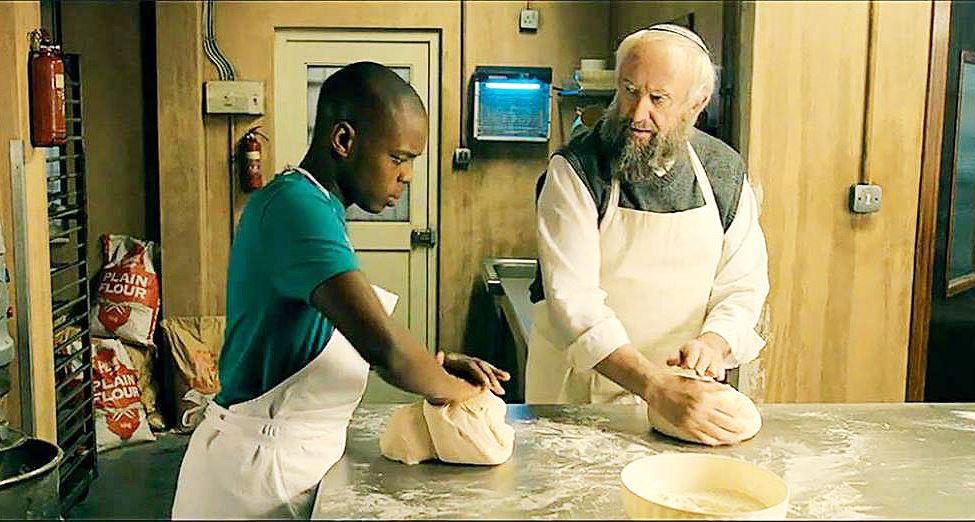
Rating: 7/10 – an aging Jewish baker (Pryce) takes on an apprentice (Holder) whose second job as a drug dealer leads to the bakery’s sales going through the roof when an unexpected ingredient finds its way into the dough mix; a genial, inoffensive movie that features winning performances from Pryce and Holder, Davis as the kind of smarmy business developer who belongs in a pantomime, and a pleasant sense of its own shortcomings, Dough is a cross-cultural comedy drama that is amusing for the most part but which lacks the substance needed to make it more engaging.

Grief Street (1931) / D: Richard Thorpe / 64m

Cast: Barbara Kent, John Holland, Dorothy Christy, Crauford Kent, Lillian Rich, James P. Burtis, Larry Steers, Lloyd Whitlock

Rating: 5/10 – there are plenty of suspects, but just who did kill less than popular stage actor Alvin Merle (Kent), and why?; a locked room murder mystery where everyone with a motive is assembled Agatha Christie-style at the end to reveal the murderer, Grief Street is a brash, enjoyable whodunnit whose villain will be obvious to anyone who’s seen more than a handful of similarly plotted movies, but the movie more than makes up for this thanks to spirited performances from its cast, and Thorpe’s relaxed directing style.

The Outer Gate (1937) / D: Raymond Cannon / 63m

Cast: Ralph Morgan, Kay Linaker, Ben Alexander, Eddie Acuff, Charles Brokaw

Rating: 5/10 – when an up-and-coming employee (Alexander) is sent to prison for embezzlement, his employer (Morgan) is the first to believe in his guilt, but when the truth is revealed and he’s released from jail, the employee sets about getting his revenge; directed by Cannon in a crude, rudimentary way, The Outer Gate is nevertheless a movie that plays to the strengths of its gosh-you-won’t-believe-it screenplay, Morgan’s low-key, passive performance, and a surprisingly grim fatalism, all of which make it more intriguing than it appears to be on the face of things.

High Voltage (1929) / D: Howard Higgin / 63m

aka Wanted

Cast: William Boyd, Carole Lombard, Owen Moore, Phillips Smalley, Billy Bevan, Diane Ellis

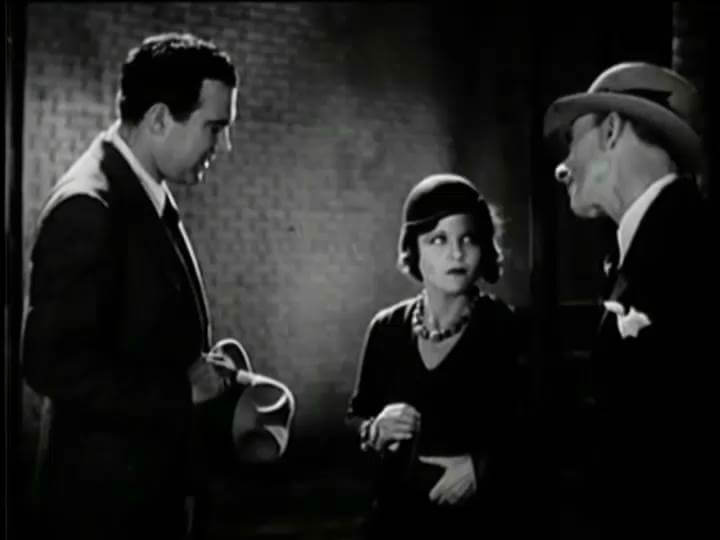
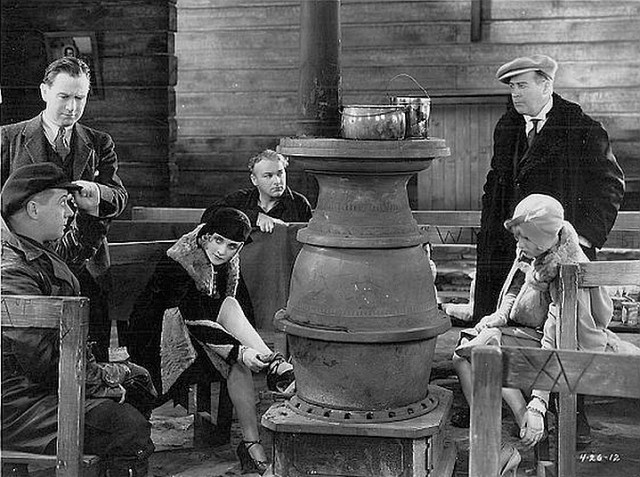
Rating: 4/10 – when a bus load of passengers is stranded thanks to heavy snow, they take refuge in an abandoned church, only to find they’re not alone; a dialogue heavy drama made in the early days of the Talkies, High Voltage is a well acted if dreary experience that tries hard to make itself interesting but falls short thanks to its focus on (already) stereotypical characters and the period’s need for a neat, everything-wrapped-up-satisfactorily ending.

CHIPS (2017) / D: Dax Shepard / 101m

Cast: Michael Peña, Dax Shepard, Vincent D’Onofrio, Rosa Salazar, Jessica McNamee, Adam Brody, Isiah Whitlock Jr, Kristen Bell, Justin Chatwin

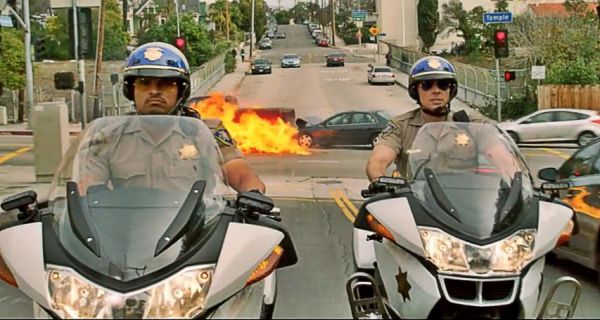
Rating: 4/10 – rookie motorcycle cop Jon Baker (Shepard) is teamed up with newly transferred Frank Poncharello (Peña) in the California Highway Patrol, and soon finds himself tracking down a bunch of dirty cops led by veteran Ray Kurtz (D’Onofrio); forty years on from its origin as a TV series, CHIPS is given a big screen reboot thanks to fanboy Shepard, but is only moderately successful in its efforts to drag the show kicking and screaming into the 21st century, leaving it completely dependent on how you feel about Shepherd and Peña as a comedy duo, and its less than inspired script.

Share this:

  • Click to share on X (Opens in new window) X
  • Click to share on Facebook (Opens in new window) Facebook
  • More
  • Click to print (Opens in new window) Print
  • Click to email a link to a friend (Opens in new window) Email
Like Loading...

Motive for Revenge (1935)

23 Friday Jun 2017

Posted by dullwood68 in Movies

≈ Leave a comment

Tags

Burt P. Lynwood, Crime, Donald Cook, Doris Lloyd, Drama, Edwin Maxwell, Irene Hervey, Murder, Mystery, Review

D: Burt P. Lynwood / 60m

Cast: Donald Cook, Irene Hervey, Doris Lloyd, Edwin Maxwell, Le Strange Millman, Russell Simpson, John Kelly, Edwin Argus, Billy West, Wheeler Oakman, Fern Emmett

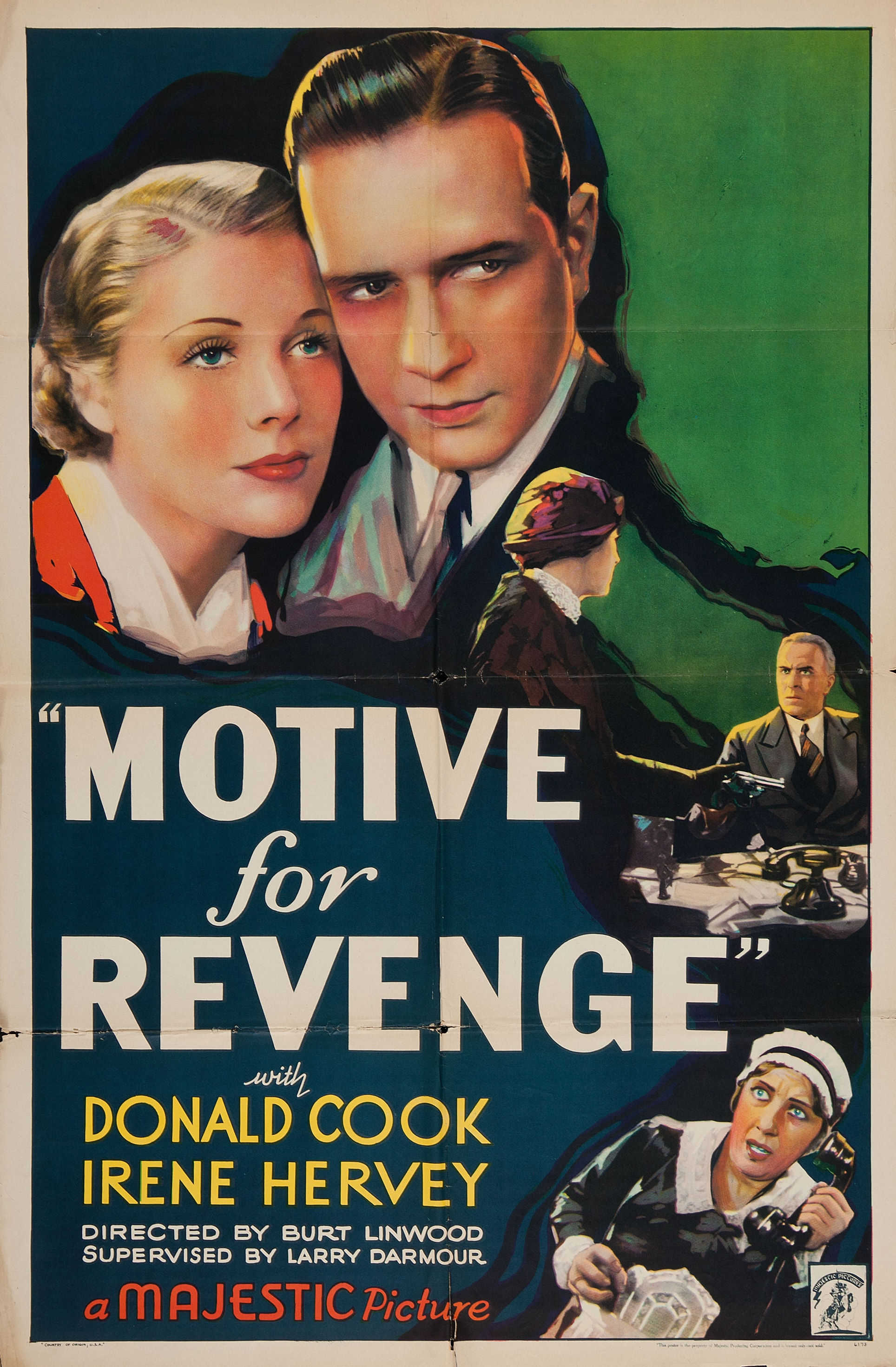
During the Thirties, crime dramas were a staple ingredient of the moviegoer’s diet, with studios falling over themselves to supply a waiting public with as much product as they could possibly want (and then a lot more besides). Of course, these crime dramas ranged in terms of the production values afforded them, the quality of their scripts, the skill of their directors, and the abilities of their casts. At the independent end of the ladder, these kinds of movies were made fast, cheaply, and with no further ambition than to get into cinemas as quickly as possible, and make as much money as possible before settling into obscurity. Often they were entirely forgettable, with plots and storylines and characters that blended into one, and the kind of resolutely upbeat endings that look and feel entirely cheesy and unrealistic to modern viewers.

Motive for Revenge is exactly that kind of crime drama. Made on a shoestring budget by Majestic Pictures, the movie suffers from an absurd, mind-boggling screenplay that makes you wonder if writer Stuart Anthony was on some serious medication when he wrote it, the kind of absentee direction from Lynwood that could imply he wasn’t even on set during the shoot, and enough woeful acting from its cast to make the viewer wince every few minutes (or sooner, depending on your tolerance). The movie crams a lot into its short running time, but hardly any of it makes any sense, and even more of it will have the average viewer shaking their head in disbelief. Viewers familiar with this type of movie, however, should derive some measure of appreciation for the efforts of all involved in putting this movie together. Because, against all the odds – or maybe in spite of them – Motive for Revenge is much more enjoyable than it seems.

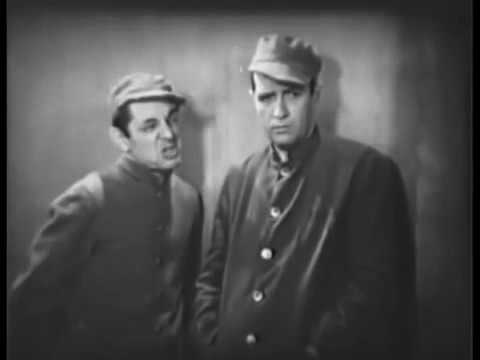
Again, the screenplay is mind-boggling. Barry Webster (Cook) is a bank teller who decides to rob his own bank in order to provide a luxury lifestyle for his wife, Muriel (Hervey). He does this because his mother-in-law (Lloyd) keeps making nasty comments about his lack of money and ambition. Unable to tell his mother-in-law to take a hike, he steals enough money to go on a spending spree with his wife before he’s caught and sentenced to seven years in jail. At first, Muriel tells Barry she’ll wait for him, but it’s not long before a fellow inmate is showing him a newspaper headline announcing her impending divorce from Barry. Then she marries jealous businessman, William King (Maxwell). It’s not a happy marriage, but it’s too late to back out. Meanwhile, Barry falls in with the wrong crowd in jail and when he’s released he uses them to plot his revenge against his ex-wife and her new husband. He goes to their home, and during a confrontation in which all three have guns in their hands, King is killed. Barry goes into hiding, Muriel attempts to take the blame for her husband’s death, and the movie gets sillier and sillier (except for a pretty good speedboat chase that’s marred by some awkward looking model work at the end).

There’s a lot more to it, but despite all its shortcomings, and faults that practically leap off the screen in their efforts to draw attention to themselves, the movie has a certain energy and presence about itself. Yes, the direction is awful, and yes, there’s enough wooden acting going on to give the viewer secondary splinters, but even with all this, the movie has a rough charm that makes up for all its failures. The early scenes zip by at a fair old lick as it sets up the movie’s second half and the murder mystery – just who did shoot William King? (You’ll never guess) – that will become the focus of the remainder of the movie. But along the way the characters all behave strangely, with some motivations and decisions made seemingly at whim, or out of the blue (you get the sense that Anthony was making it all up with no idea of how to piece it all together). And yet with all that, the movie retains a strange, almost hypnotic appeal. You have to keep watching just to see how silly it can get.

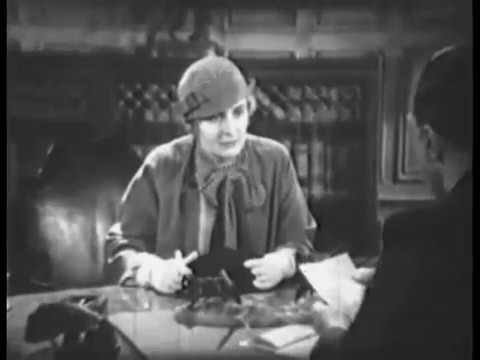
On that level, it doesn’t disappoint. Cook and Hervey act like a married couple who spend most of their time avoiding each other, while Maxwell, as the paranoid, controlling second husband, adopts a perma-scowl throughout and chews on his lines as if he didn’t like the taste of them. There’s solid, unspectacular, but also deathless support from the wonderfully named Millman as a District Attorney who won’t look further than Muriel for the killer, and there are “comic” interludes featuring Kelly and Argus as the cops’ answer to Dumb and Dumber. These interludes aren’t as funny as some of the more unintentional comic moments in the movie, especially if they involve Cook having to walk and talk at the same time, but they do break up the otherwise po-faced narrative. With the benefit of over eighty years of hindsight, Motive for Revenge is easily the kind of movie that will be overlooked by casual viewers, and dismissed by afficionados of this sort of thing. But that would be unfair, as the movie – and quite perversely – has a way of worming its way under your defences and making an impact. You won’t necessarily want to see it a second time, but as an example of a movie that shouldn’t make any kind of an impact at all, it’s well worth seeking out.

Rating: 3/10 – unashamedly bad, Motive for Revenge is not a minor gem or in need of critical reappraisal, but a good old-fashioned Thirties crime drama that is strangely entertaining, and despite its seemingly best efforts to appear otherwise; a movie where looking past the obvious brings its own unexpected reward, it’s a rare occasion where a movie somehow manages to transcend its low-budget origins and decides, in the words of Madonna, to “strike a pose and let’s get to it”.

NOTE: There is currently no trailer available for Motive for Revenge.

Share this:

  • Click to share on X (Opens in new window) X
  • Click to share on Facebook (Opens in new window) Facebook
  • More
  • Click to print (Opens in new window) Print
  • Click to email a link to a friend (Opens in new window) Email
Like Loading...

Shimmer Lake (2017)

21 Wednesday Jun 2017

Posted by dullwood68 in Movies

≈ Leave a comment

Tags

Bank robbery, Benjamin Walker, Crime, Drama, John Michael Higgins, Murder, Mystery, Oren Uziel, Rainn Wilson, Review, Stephanie Sigman, Thriller, Wyatt Russell

D: Oren Uziel / 86m

Cast: Benjamin Walker, Rainn Wilson, Stephanie Sigman, John Michael Higgins, Wyatt Russell, Adam Pally, Mark Rendall, Rob Corddry, Ron Livingston, Angela Vint, Isobel Dove

A low-key yet bristling thriller, Shimmer Lake – another title that is atmospheric yet has little relation to the main plot of the movie – tells its story in reverse. And so we see Andy Sikes (Wilson) in the basement of his own home, and yet he’s clearly trying to avoid being discovered. Upstairs is his brother, Zeke (Walker), the town sheriff. Soon we realise that there’s been a bank robbery, and Andy is involved, along with two other men, Ed Burton (Russell) and Chris Morrow (Rendall). It transpires that Andy has  the money from the robbery, and Zeke is certain that he’s planning to meet up with Ed. He also has to contend with two FBI agents, Walker and Biltmore (Corddry, Livingston), whose approach to the investigation and the hunt for the three men appears less than serious. When they find the body of Judge Dawkins (Higgins), a wider conspiracy involving the death of Burton’s son begins to come to light. Later that night, having avoided being seen, Andy meets up with Ed’s wife, Steph (Sigman), but their meeting doesn’t go the way Andy had hoped.

The day before, Dawkins demands the return of an incriminating tape from Burton, Morrow’s role in the robbery is revealed, Steph deliberately injures herself before talking to Zeke and the FBI agents, and further details of the conspiracy are revealed. The day ends with the death of Dawkins and Andy coming into possession of the money. The previous day, Chris is lured out of hiding by Steph, and the two meet at a motel. Dawkins appears, anxious to secure the return of the tape. Steph has the money from the robbery and she makes Dawkins hide it until it’s safe. Andy hears that Zeke was shot during the robbery, and the FBI agents arrive in town. And on the day before that, all the various threads that have spun out along the ensuing days are shown their origins as we learn what happened during the robbery.

It’s easy to like the structure that first-time writer/director Oren Uziel has employed in telling his tale of small-town corruption, greed, and revenge, but while Christopher Nolan’s Memento (2000) is an obvious reference point, sadly – and despite the best of intentions – Shimmer Lake doesn’t match it for inventiveness, style, or sheer narrative trickery. Part of the issue is the pacing, with stretches of the movie feeling as if they’ve been played out beyond their natural length. The early scenes involving the FBI agents are tonally at odds with the rest of the movie, as if Uziel doesn’t trust their inclusion unless they’re cracking wise and providing fleeting moments of comedy. This makes them seem like idiots in a movie where everyone else is being resolutely serious. As the movie progresses and they appear less and less, it’s a minor blessing for the material that they do so, and the tone improves immensely.

But if there’s one main, altogether obvious, problem with Shimmer Lake, it’s the lack of any characters to sympathise with or root for. Zeke is a laconic, quietly thoughtful sheriff who lacks any charisma, and thanks to Walker’s laidback performance, often looks bored by having to mount an investigation in the first place. His deputy, Reed Ethington (Pally), is someone who manages to stay just this side of “dim-witted”, but it’s a close-run thing. Andy is shown initially as panicked, which might have provoked some sympathy, but as the movie reveals more and more of his past, we discover he’s a bit of an arrogant prick, and any sympathy dissipates. Chris is an obvious patsy, Steph is the Lady Macbeth character amongst it all, Ed is the “mastermind” who can’t tell an 8 when he sees it, and Dawkins is the devious bank manager whose private “foibles” act as a catalyst for the bank robbery itself (there’s a back story involving the death of Burton’s son, and this is ostensibly the reason for everything that happens, but Uziel refers to it as a motivator far too often for it to maintain any effectiveness).

What we’re left with is a thriller that spends too much time explaining itself, and not enough time posing a broader mystery than the one we can see in front of us. In telling a reverse-linear story, Uziel does well to hide the various inter-connections and relationships that drive the story backward (forward?), but by the time all is revealed, the viewer is unlikely to care too much, and a last-minute revelation (which is meant to be clever in a “ah-ha-you-didn’t-see-that-coming” kind of way), lacks the impact needed for audiences to say to themselves, “now it all makes sense”. Instead, Uziel presents us with a patchwork of moods, tones, dramatic elements, comedic soundbites, and an unconvincing milieu where Zeke and Reed are the only cops in town, and Andy’s daughter, Sally (Dove), can hear the phrase “fat, f*cking bastard” and then apply it to Reed within the very next minute.

Despite the talented cast, and Jarin Blaschke’s often brooding cinematography, what we have here, ultimately, is a movie whose clever approach doesn’t amount to much, and will in all likelihood, frustrate and annoy anyone who watches it. The test of a good reverse storyline is if it plays just as well – or better – if you watch from end to beginning (or beginning to end – you get the idea). Shimmer Lake is certainly a movie that tries its best, but there are few rewards here for the casual viewer, and for die-hard fans of this particular sub-genre of thrillers, too much will remain obvious no matter how much time Uziel has spent in obscuring things. Like so many thrillers with a clever central conceit that isn’t as rigorously applied as it needs to be, Shimmer Lake is more of a disappointment than a triumph.

Rating: 4/10 – what could have been a tense, nail-biting experience is reduced to that of a tepid, unfocused drama, and though Shimmer Lake takes some narrative risks, they’re not enough to make things any more rewarding; shallow at times, and with a casual disregard for any empathy that might be shown towards its characters, the movie is yet another feature that looks good on the surface but lacks the necessary substance underneath to keep audiences hooked until the end.

Share this:

  • Click to share on X (Opens in new window) X
  • Click to share on Facebook (Opens in new window) Facebook
  • More
  • Click to print (Opens in new window) Print
  • Click to email a link to a friend (Opens in new window) Email
Like Loading...

Spotlight on a Murderer (1961)

18 Sunday Jun 2017

Posted by dullwood68 in Movies

≈ Leave a comment

Tags

Dany Saval, Drama, France, Georges Franju, Inheritance, Jean-Louis Trintignant, Marianne Koch, Murder, Mystery, Pascale Audret, Pierre Brasseur, Review

D: Georges Franju / 92m

Original title: Pleins feux sur l’assassin

Cast: Pierre Brasseur, Pascale Audret, Marianne Koch, Jean-Louis Trintignant, Dany Saval, Jean Babilée, Georges Rollin, Jean Ozenne, Philippe Leroy, Gérard Buhr, Maryse Martin

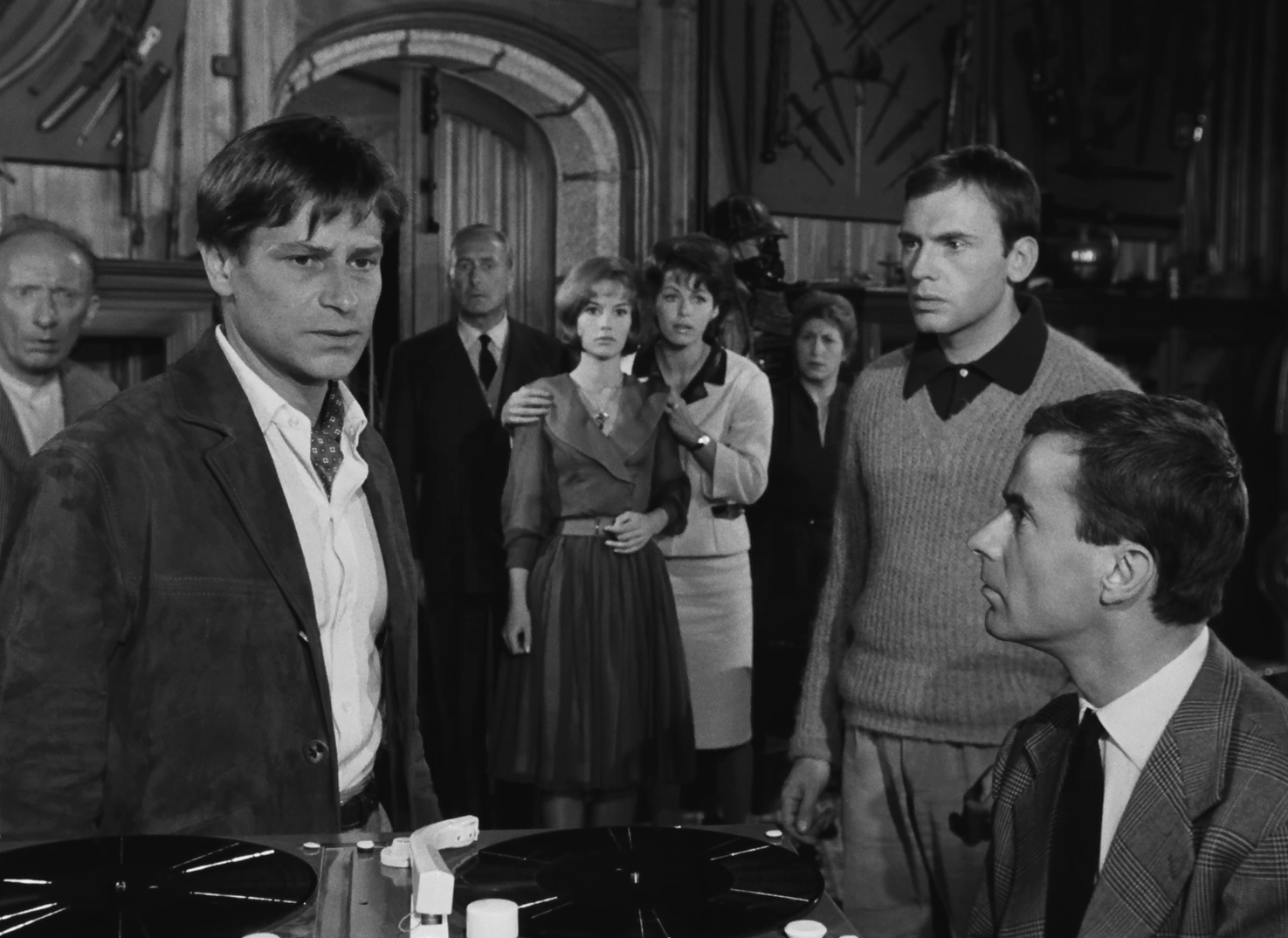
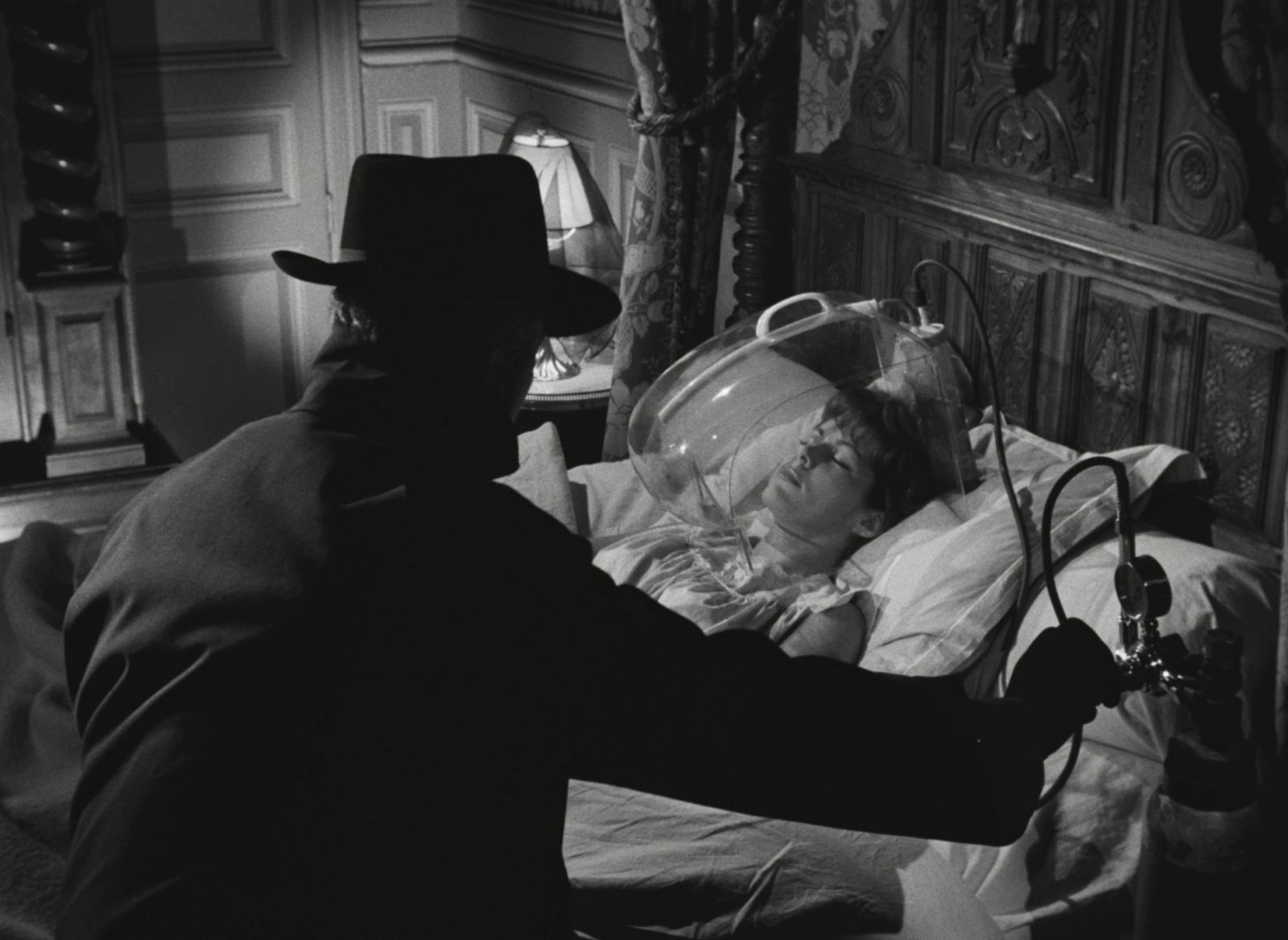
Comte de Kerloguen (Brasseur) is dying. He knows it, his housekeeper knows it, his lawyer knows it, even his stable hand knows it. But the rest of his family don’t. So when the fateful moment arrives, the Comte does what all good patriarchs do: he hides himself away in a secret room in the family chateau, a place that nobody knows about and where his body is unlikely to ever be found. When his lawyer assembles the family to inform them of the Comte’s disappearance, he has odd news for them. While the Comte can be declared legally dead, his actual disappearance means that his estate can’t be divided amongst his family for another five years. And until that time, the family are fiancially responsible for the upkeep of the chateau.

Naturally, this doesn’t sit too well with most of the family, but as most of them don’t have the wherewithal to maintain the chateau, when Micheline (Saval), the girlfriend of youngest son Jean-Marie (Trintignant) suggests they make the chateau a tourist attraction and charge people to visit the place, the idea is adopted tout suite. But as the plan goes ahead and amongst other things, the building has a speaker system installed, a series of unfortunate “accidents” sees death take the lives of some of the family, until it becomes clear that one of them is determined to be the sole beneficiary of the Comte’s  estate in five years’ time.

The third feature from director Georges Franju, who had made the creepy Eyes Without a Face the year before, Spotlight on a Murderer reunites Franju with thriller writers Pierre Boileau and Thomas Narcejac in their tried and trusted tale of a family being riven from within when greed prompts one of them to dispatch the others in order to be the sole claimant of their wealthy antecedent’s estate. The key phrase here is “tried and trusted”, as this is a movie that does its best to employ a sinister vibe once the deaths begin to mount up, and all to direct attention away from the flaccid nature of the plot. Said vibe is employed to good effect, but the material itself is riddled with longueurs, and the pacing is awkward, with some scenes ending abruptly as if the team of Boileau-Narcejac haven’t thought them through fully, or don’t have so much to say.

It’s a problem, too, that the storyline, even for 1961, is “old hat”, with the script attempting to emulate or outshine previous old dark house mysteries. But thanks to a tepid script and Franju’s erratic commitment to the narrative, the movie lacks the necessary inventiveness to place it over and above the myriad of similar features. There’s only one moment that manages to overcome the indifference of the rest of the material, and that’s when the chateau’s speaker system picks up someone moving through the rooms. At first, there are only three people in the control room, and all three wonder the same thing: where is everyone else? And within a minute, everyone appears with them, leaving the audience in a quandary: if everyone is there, then it can’t be the murderer, can it? Or maybe, just maybe, the Comte isn’t as dead as we’ve all thought? Viewers who are paying attention will know the answer to this quandary, but for a brief couple of scenes the movie steps up a gear and becomes a real mystery thriller, complete with an atmosphere of dread.

The characters suffer too, being archetypes painted with broad brush strokes, from Koch’s earthy cousin, Edwige, to Audret’s easily exploited paranoiac, Jeanne. On occasion we get to learn a little bit more abut them all, but it’s never enough to help the viewer sympathise with them for more than a few minutes. The various deaths – aside from one – lack the impact needed to tighten the tension, and the whodunnit aspect of the tale generally takes a back seat to the trials and tribulations of the main characters. A blatant visual sleight-of-hand endeavours to wrong foot the viewer but again, does so only if the audience isn’t paying attention.

Spotlight on a Murderer wasn’t as well received as Eyes Without a Face, and it’s easy to see why. Regarded as a minor Franju movie by critics at the time, the movie has picked up its supporters over the years, but it remains a curio in terms of its gloomy mise en scene, and its place in the director’s career. There’s also the matter of Maurice Jarre’s less than inspired score, which tries to prop up the periods where the camera tries to make the chateau look menacing and/or atmospheric. The cast are competent enough, with Saval’s wild child girlfriend proving one of the movie’s few stellar accomplishments, while Franju sees fit to embrace rather than reject the scene where the murderer is apprehended (and which, amazingly, includes two moments of physical slapstick along the way). All in all, it’s a movie that proceeds in fits and starts and never really settles into a convincing groove – which is a shame, as there is clearly the potential there to make a movie that resonates and inspires dread to a much better degree.

Rating: 5/10 – despite the pedigree of its director, writers and cast, Spotlight on a Murderer is only a mildly successful thriller that squanders a lot of its running time with soap opera elements that feel out of place, and which don’t advance the plot in any meaningful way; proof again that even the most highly regarded of movie makers don’t always get it right.

NOTE: Alas, there isn’t an available trailer for Spotlight on a Murderer.

Share this:

  • Click to share on X (Opens in new window) X
  • Click to share on Facebook (Opens in new window) Facebook
  • More
  • Click to print (Opens in new window) Print
  • Click to email a link to a friend (Opens in new window) Email
Like Loading...

The Belko Experiment (2016)

25 Tuesday Apr 2017

Posted by dullwood68 in Movies

≈ 1 Comment

Tags

Adria Arjona, Belko Industries, Bogota, Drama, Greg McLean, Horror, John C. McGinley, John Gallagher Jr, Murder, Review, Thriller, Tony Goldwyn, Tracers

D: Greg McLean / 89m

Cast: John Gallagher Jr, Tony Goldwyn, Adria Arjona, John C. McGinley, Melonie Diaz, Owain Yeaman, Sean Gunn, Brent Sexton, Josh Brener, David Dastmalchian, David Del Rio, Rusty Schwimmer, Gail Bean, James Earl, Abraham Benrubi, Gregg Henry, Michael Rooker

On the outskirts of Bogotá, Colombia, Belko Industries has an office building where its mostly American, relocated staff, help other American companies set up in South America. The office building has been open for a year, and the eighty American staff that work there have what are called “trackers” implanted in the back of their heads in case of kidnappings. If any member of staff is kidnapped, these “trackers” will make them easy to find and rescue. One day, Mike Milch (Gallagher Jr), a Belko employee, arrives to find the local Colombians who work there are being sent home, and this is being overseen by a group of security guards Milch has never seen before. Inside the building, Evan (Earl), the building security guard, admits he doesn’t know what’s going on, and neither does anyone else, not even the COO, Barry Norris (Goldwyn).

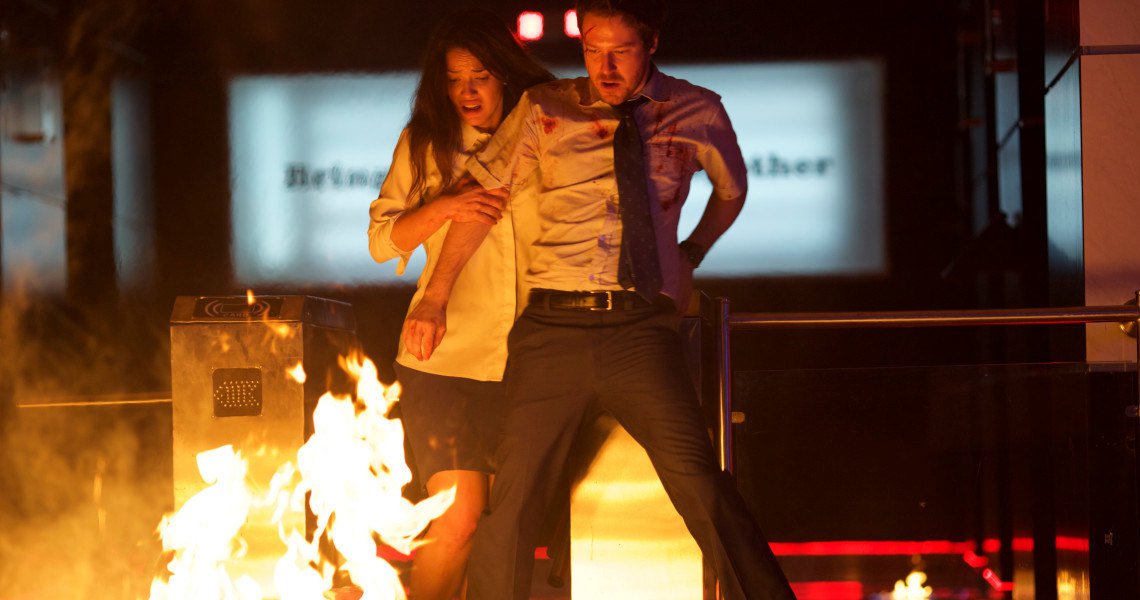
While the staff talk over this strange development, new starter Dany Wilkins (Diaz) begins her first day, while Norris’s assistant, Leandra Jerez (Arjona), bemoans the unwanted attention of colleague Wendell Dukes (McGinley). Unwanted because he won’t take no for an answer, and also because she’s in a relationship with Milch. As the rest of the morning gets under way, a tannoy announcement heard throughout the building informs everyone that unless two people are killed in the next thirty minutes then more people will die as a consequence. No one takes the announcement too seriously, even when shutters come down that seal everyone inside the building (though the roof remains accessible). When no one is killed, four people die when the “trackers” in their heads explode.

Realising the danger from the “trackers”, Milch tries to remove his but the voice from the tannoy announcement starts a countdown to its being detonated. Milch stops, and the next time the voice gives instructions they’re even more chilling than the last: unless thirty people are killed in the next two hours, sixty people will be killed just as randomly as the previous four. From this, two distinct factions form amongst the employees: those who, like Milch, think no one should be killed (and an alternative solution found to their predicament), and those who, like Norris, think that thirty deaths is better than sixty. What follows pits employee against employee, and engenders a complete breakdown of morality and compassion.

Working from an old script by James Gunn, The Belko Experiment – to paraphrase the title of a Werner Herzog movie – could almost be called James Gunn, James Gunn, What Have Ye Done. While the basic premise is sound, here the “execution” is less than satisfactory, as the finished product lacks clarity, subtlety, and is only consistent in its lack of clarity and subtlety. If Gunn was attempting to write a straightforward schlock horror movie combining equally straightforward ideas regarding the erosion of social and moral restraints in a highly charged atmosphere, then in one sense that’s what he’s done. But if that is the case, and though much of that approach to the material is still in place, director Greg McLean’s interpretation still leaves a lot to be desired.

Following on from the dreadful outing that was The Darkness (2016), McLean makes only partial amends with this, focusing his efforts too quickly on getting to the kind of indiscriminate carnage that is the movie’s raison d’etre. Forget social commentary, forget a knowing critique of office politics, this is all about seeing how fast a group of (apparently) average people can descend into homicidal rage and leave rational thinking behind. On that basis alone the movie is more successful (the answer is quicker than you can say “exploding head”). But once all the niceties are done and dusted, and we get to know who’s going to be a hawk and who’s going to be a dove, then it’s on with the murky motivations and desperate attempts at credibility.

It’s always problematical when you have characters such as Milch proclaiming that no one should be killed, and then, by the movie’s end he’s on a par with psycho colleagues Norris and Dukes in terms of how many people he’s despatched. It’s not addressed because it doesn’t suit the needs of the movie, and yet if it had, it would have gone some way towards giving the movie some much needed depth. As it is, Milch takes to murdering his colleagues with as much gusto as he can manage, and any blurring of the lines that was intended on the part of the script is forsaken in favour of more killing. But with the body count rising, the movie feels rushed and even more implausible, and the problem of killing off the remaining seventy-six employees becomes more important than any moral considerations.

It could be argued that to expect any depth in a movie that’s only concerned with coming up with as many inventive deaths as it can in ninety minutes (death by tape dispenser anyone?), is something of a fool’s errand, but The Belko Experiment also lacks style and wastes its talented cast. Saddled with woefully underwritten characters who practically scream “stock!” every time they speak, the likes of Gallagher Jr, Goldwyn and Arjona get to mouth platitudes and banalities at every turn. Spare a thought for McGinley though; his character is so relentlessly one dimensional it’s amazing he doesn’t disappear when he turns to the side. There’s no one to care about – surprise, surprise – and as the movie progresses, the average viewer might feel justified in wanting to get inside the building and culling the employees themselves.

With its stock characters, muddled narrative, and laboured editing courtesy of Julia Wong, The Belko Experiment is unlikely to impress anyone but the most ardent gore fan. They’ll enjoy the numerous exploding heads, and one particularly impressive skull injury, but there’s really little else to recommend a movie that poses lots of questions at the beginning of the experiment, and then forgoes providing any answers. With a coda that attempts an explanation for what’s happened that’s as baffling as it is shallow, as well as shamelessly trying to set up a further movie, the movie should best be viewed as an old-style exploitation flick given a modern polish. However, that would be doing a disservice to old-style exploitation flicks.

Rating: 4/10 – insipid and unconvincing, The Belko Experiment is yet another nail in the coffin of Greg McLean’s directing career; it also acts as further proof that when successful writer/directors have old scripts to hand, they shouldn’t always be made into movies.

Share this:

  • Click to share on X (Opens in new window) X
  • Click to share on Facebook (Opens in new window) Facebook
  • More
  • Click to print (Opens in new window) Print
  • Click to email a link to a friend (Opens in new window) Email
Like Loading...

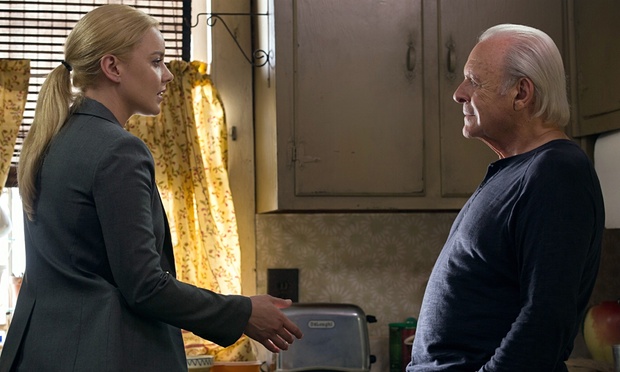
Unforgettable (2017)

24 Monday Apr 2017

Posted by dullwood68 in Movies

≈ Leave a comment

Tags

Denise Di Novi, Drama, Ex-wife, Geoff Stults, Katherine Heigl, Murder, Review, Rosario Dawson, Thriller

D: Denise Di Novi / 100m

Cast: Rosario Dawson, Katherine Heigl, Geoff Stults, Isabella Kai Rice, Cheryl Ladd, Whitney Cummings, Simon Kassianides, Robert Wisdom

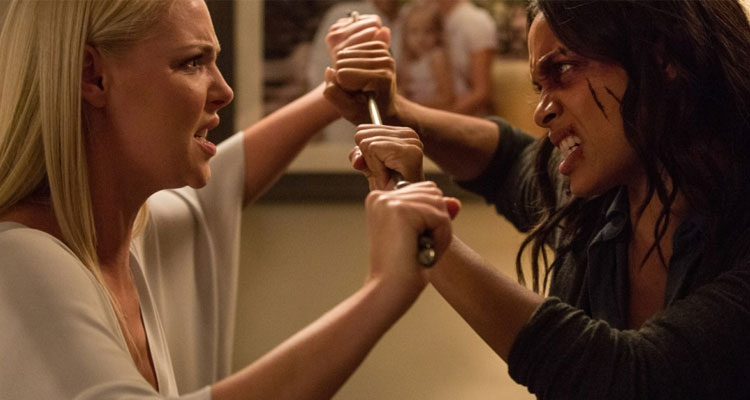
Thankfully, it isn’t.

Rating: 4/10 – rescued from a lower rating thanks to Rosario Dawson’s committed performance, Unforgettable is an unfortunate choice of title for a movie that offers nothing new, or compelling, in its tale of a bonkers ex-wife (Heigl) who tries to frame her ex-husband’s new girlfriend (Dawson) for murder; with a script best described as dramatically inert, characters who might as well be cardboard cutouts for all the depth they have, and stolid, workmanlike direction from first-timer Di Novi (better known as a producer), this is a tepid thriller that telegraphs every single plot development from a mile away, and abandons any notion of credibility right from the very start.

Share this:

  • Click to share on X (Opens in new window) X
  • Click to share on Facebook (Opens in new window) Facebook
  • More
  • Click to print (Opens in new window) Print
  • Click to email a link to a friend (Opens in new window) Email
Like Loading...

Prevenge (2016)

31 Friday Mar 2017

Posted by dullwood68 in Movies

≈ Leave a comment

Tags

Alice Lowe, Comedy, Drama, Foetus, Jo Hartley, Kate Dickie, Kayvan Novak, Murder, Pregnancy, Revenge, Review, Thriller

D: Alice Lowe / 88m

Cast: Alice Lowe, Jo Hartley, Kayvan Novak, Kate Dickie, Dan Renton Skinner, Tom Davis, Mike Wozniak, Tom Meeten, Gemma Whelan

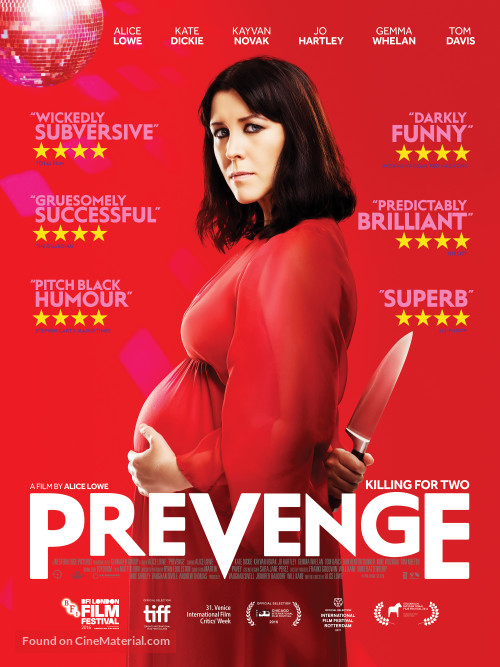
In Alice Lowe’s feature debut as writer/director, the premise is simple: a pregnant woman is convinced her unborn foetus is compelling her to kill the people she holds responsible for the death of her partner. Angry and upset at being alone, Ruth (Lowe) targets each individual – inappropriate pet shop owner Mr Zabek (Skinner), repulsive Seventies DJ Dan (Davis), lonely corporate lawyer Ella (Dickie), anonymous victim  Zac (Meeten), apologetic rock climbing guide Tom (Novak), fitness fanatic Len (Whelan) – at the behest of her unborn child, and in the process finds being a mother-to-be more daunting (obviously) than she’d ever expected.

Made over a two week period while Lowe was actually pregnant, Prevenge is a movie that covers a lot of ground in its relatively short running time, and which isn’t just a standard revenge thriller tricked out with gory set pieces. It’s also a pitch black comedy, an uncompromising examination of an emotionally disturbed pregnant woman, and a mordaunt exercise in extreme pre-natal depression. Lowe has created a complex, flawed-yet-undeniably decent anti-heroine whose particular psychosis is both alarming and understandable at the same time. She has conversations with her unborn child that push the envelope of maternal paranoia. While most expectant mothers will worry that there might be something wrong with their baby, it’s safe to assume that they won’t be worried about the foetus talking to them and advocating a string of murders.

Throughout, Ruth is worried that her baby might not be normal. She misses a scan just in case it reveals something abnormal, an issue that Ruth’s midwife (Hartley) dismisses with the practised ease of someone who’s heard it all before. But of course, Ruth knows better. Cajoled and persuaded by the baby growing inside her to become a serial killer, Ruth knows that her baby is abnormal; she just doesn’t want anyone to know how much. When the midwife makes mention of letting Social Services know that Ruth is struggling with the pregnancy, Ruth is adamant that she doesn’t want them involved, that she doesn’t want her baby taken away from her. Despite her mixed feelings, Ruth’s maternal instinct to protect her offspring is as deep-rooted and profound as any other mother’s.

Lowe makes Ruth’s ambivalence a credible reaction to the idea that she’s being urged to revenge by a foetus, a “belief” that is clearly the result of a mental break that Ruth has experienced in the wake of her partner’s death. Lowe is also clever enough to avoid trying to introduce any notion of ambiguity to this fractured relationship – Ruth is mentally ill, and though is a movie with very definite horror overtones, any potential supernatural reason for the foetus’ speaking to her is never allowed any credence. Ruth is maddened by grief, then, and it’s this reason that provides her with both a defined character arc, and the necessary sympathy to help audiences identify with her.

In terms of Ruth’s victims, Lowe is also clever enough to make it a game of two halves. Mr Zabek, DJ Dan, and Ella are all horrible people in their own right. Mr Zabek is the slimy high priest of sexual innuendo, while DJ Dan is so crass and boorish that he can throw up into his Seventies afro wig and then think nothing of kissing Ruth full on the lips. Ella is unfeeling, dismissive of others, and generally insensitive. Each of them are so awful that when Ruth kills them the temptation is to cheer, and urge her on to the next victim. But when she arrives at Zac’s home – and makes Ruth the cuckoo in the nest, a neat twist on her own situation – Lowe finds that Zac’s flatmate, Josh (Wozniak), is a genuinely nice man, something she wasn’t expecting. His subsequent demise doesn’t sit well with Ruth, despite her baby’s withering disregard for both him and Ruth’s feelings.

From there on, Ruth’s commitment to avenging her partner’s death begins to falter. Her first contact with Tom (prior to despatching Zac) didn’t go the way she’d planned, and her next attempt fails also, so she moves on to Len, who puts up a fight (complete with boxing gloves). Her midwife, realising something is wrong, admonishes Ruth and tells her it’s got to stop. Returning to Tom again, Ruth finds his partner is expecting a child also, and her maternal instinct kicks in for this other mother-to-be: how fair would it be for Tom’s partner to be in the same situation as Ruth? The foetus is unconcerned, but before Ruth can go through with anything, her waters break and her whole world changes. Some viewers may think that this “second half” isn’t as effective as the gore and humour-soaked “first half”, but Lowe isn’t interested in simply repeating the early formula, and instead adds layers to both Ruth’s predicament and the movie’s overall sense of bitter regret.

But this is a comedy as well as a sustained and impressive look at pre-natal paranoia and psychosis. Lowe is an accomplished writer of naturalistic dialogue, but she’s also a winner when it comes to pithy one-liners (of anchovies: “They look like the eyelids of old men that have died”), and isn’t afraid to include some really bad puns, such as, “It’s a cutthroat world, you know”, after slitting Ella’s throat. There’s the aforementioned sexual innuendo of Mr Zabek (which often settles for the single entendre), and some of DJ Dan’s observations (“You’re not Olivia Newton-John. You’re more like Elton John”) are so cruelly insulting that you can’t help laughing at them, even though you shouldn’t. And Ruth herself, in her disjointed, socially awkward way, says things that only she could (mostly) get away with. It’s through the dialogue that Lowe builds her characters, fleshing them out and giving the cast much more to work with than it seems at first.

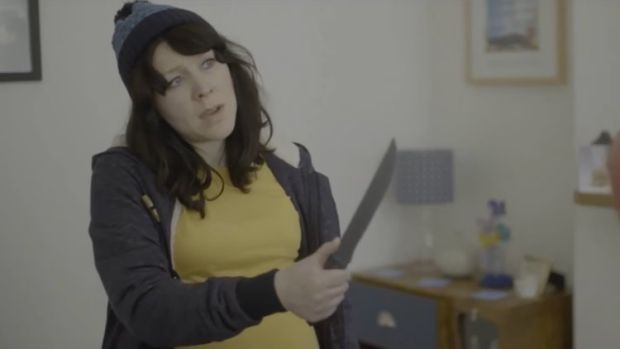
When it comes to the gore, the movie doesn’t hold back, with each death played out in the style of an Eighties British horror, and there’s a mundanity to each one that adds to the overall effectiveness (Ruth’s weapon of choice is a carving knife). Again, Lowe isn’t afraid to show how awful each murder is, nor how it affects Ruth the longer she continues. In the lead role, Lowe gives a terrific performance, one that’s brimming with quiet verve and sincerity, and is thoughtful and brave. When she applies make up for Halloween and takes to the streets, it’s easy to see just how disturbed she is thanks to the design she’s created (even though you can see it just as well by the look in Ruth’s eyes). Ruth is a wonderful creation, and Lowe does her justice, never striking a false note, and staying true to the character throughout. The movie could almost be a one-woman show, were it not for a battery of equally commendable performances from the likes of Hartley and Dickie, and if the men – for the most part – come off as douchebags and unreliable pricks, then it’s a small price to pay when a movie is this good and this rewarding.

Rating: 8/10 – a movie about a damaged soul that comes complete with plenty of heart and soul amidst all the carnage, Prevenge is uncompromising, poignant and hilarious, and a major feather in Lowe’s cap; marred only by some poor lighting choices made on too many occasions, and a final scene that goes against everything that’s gone before, it’s a movie that’s full of surprises and confidently assembled by its very talented writer/director/star.

Share this:

  • Click to share on X (Opens in new window) X
  • Click to share on Facebook (Opens in new window) Facebook
  • More
  • Click to print (Opens in new window) Print
  • Click to email a link to a friend (Opens in new window) Email
Like Loading...

A Kind of Murder (2016)

05 Sunday Mar 2017

Posted by dullwood68 in Movies

≈ Leave a comment

Tags

Andy Goddard, Crime, Drama, Eddie Marsan, Jessica Biel, Literary adaptation, Murder, Patricia Highsmith, Patrick Wilson, Review, The Blunderer, Thriller, Vincent Kartheiser

kind_of_murder

D: Andy Goddard / 95m

Cast: Patrick Wilson, Jessica Biel, Vincent Kartheiser, Haley Bennett, Eddie Marsan, Radek Lord, Jon Osbeck, Christine Dye

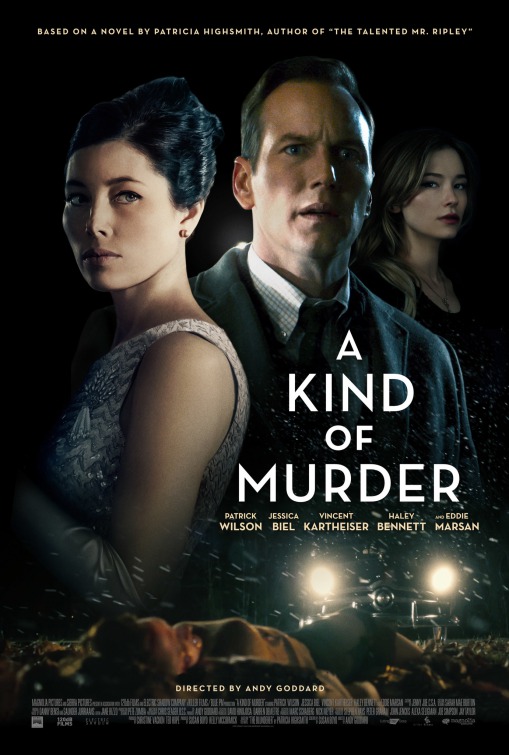
New York City, the Sixties. Walter Stackhouse (Wilson) is a successful architect with a beautiful home and a beautiful wife, Clara (Biel). In his free time he writes short stories about crime and murder. On the outside he’s living the perfect life, but his marriage is strained. Clara has a history of mental instability, and is remote from him. At the same time, though, she’s jealous and possessive, accusing him of having an affair with a young woman, Ellie (Bennett), who attended a party they gave. When Clara is like this, Walter usually ends up in a local bar. It’s on one such occasion that he reads an article in a newspaper about the unsolved murder of a woman outside of New York at a rest stop called Harry’s Rainbow Grill.

Suspicion seems to rest on the woman’s husband, a bookstore owner called Kimmel, but he has an alibi. This isn’t enough for the detective investigating the case, Corby (Kartheiser), who is convinced Kimmel is the killer. While he tries to intimidate Kimmel into confessing, Walter becomes more and more fascinated with the murder, and like Corby, becomes convinced that Kimmel is guilty. He even goes so far to visit Kimmel at his bookstore. But at home, his marriage goes from bad to worse. Clara takes an overdose and ends up in hospital. When she comes home, her jealousy remains firmly in place, and she remains convinced that Walter is having an affair with Ellie. When she’s proved right, Walter tells her he’s going to divorce her; Clara retaliates by saying she’ll definitely kill herself if he does.

a-kind-of-murder-2016-1

Undeterred, Walter continues with his relationship with Ellie, but when Clara leaves suddenly to visit her sick mother upstate, he follows the bus she takes until it reaches Harry’s Rainbow Grill. But though she gets off the bus, Walter doesn’t see her, and he heads back to New York City. Later, Walter receives terrible news, news that causes Corby to link him to the murder of Kimmel’s wife, his relationship with Ellie to falter, and his business partnership to founder. With his honesty and integrity on the line, as well as his freedom, Walter must find a way of extricating himself from a situation that grows worse every day, and that could ultimately cost him his life.

An adaptation of Patricia Highsmith’s novel The Blunderer, A Kind of Murder is a good-looking movie in search of a leading character for the audience to identify and sympathise with. Walter’s plight should be one that has the viewer on the edge of their seat, but thanks to both the script and Wilson’s performance, he’s vanilla bland from start to finish, and the movie never really knows how to make his predicament more intriguing or exciting. Walter becomes interested in the murder of Kimmel’s wife because he’s beginning to have thoughts about killing Clara. As he believes Kimmel killed his wife, Walter is supposed to feel some kind of kinship with the bookstore owner, but it’s all psychologically unconvincing. Walter channels his feelings about Clara into his writing, something we see on more than one occasion, and so any idea that he and Kimmel are similar can be disregarded from the start.

BRR 11-29-14-5392.dng

What this leaves us with is a contrived relationship that never develops beyond an uneasy semi-alliance against Corby’s invasive and confrontational detective work. And there’s never any doubt as to whether or not Kimmel killed his wife, or if Walter’s situation will lead to his livelihood being compromised. As the movie progresses from potential whodunnit to unabashed thriller, Susan Boyd’s first-time script forgets to instil proceedings with any tension, as Walter’s predicament never sees him fully in jeopardy, or at risk of having his comfortable world taken away from him. And in conjunction with Boyd’s script, Wilson delivers what may well be one of his least successful performances ever. For an actor who can genre-hop with ease, and who at least doesn’t look out of place in a period drama, Wilson never connects with Walter and gives a wayward portrayal of a man whose calm, outward manner belies a compulsive, selfish individual hidden away on the inside.

It’s this duality that the movie tries hard to promote, with Walter and Kimmel meant to be two sides of the same coin, and Clara and Ellie both representing the best and worst of Walter’s relationships with women. But again, there’s nothing for the audience to connect with. Even when Clara spells out her intention to kill herself if Walter goes ahead with the divorce, and tells him everyone will blame him for not doing enough to help her, there’s nothing there to back up that claim. It carries the weight of an empty paper bag, and as such, loses any validity, so that when Walter receives his terrible news, it doesn’t have the impact that it should have. And this is the moment when the viewer should find themselves completely on Walter’s side… but probably won’t.

akindofmurder_clipdeath

As a thriller, A Kind of Murder stumbles along trying to match Highsmith’s elegant turn of phrase to its early Sixties setting, and only doing so on very rare occasions. It also dispenses with any attempt at providing back stories for any of the characters, leaving us in a void when it comes to understanding their current motivations. Clara is clearly mentally ill, and she’s clearly difficult to live with, so why Walter stays with her is a bit of a mystery (and a better one than if Kimmel killed his wife or not). And why Corby becomes so obsessed with Kimmel and bringing him to justice isn’t explained either. In the end, these are characters operating in a vacuum, occasionally bumping into each other but failing to make a proper connection.

And so it goes for the length of the movie. Wilson’s disappointing turn is matched by Biel’s monotone performance, Kartheiser’s unncessarily angry cop, and Bennett’s subdued turn as Walter’s girlfriend. Only Eddie Marsan deserves any praise, giving the kind of unexpected, yet nuanced performance that this kind of movie needs to be anywhere near successful. His brooding, snake-like approach to Kimmel is a master-class in big screen malevolence. Tying all this together is Goddard, known mostly for his TV work, but not stretching his abilities too far in bringing this tale to the big screen. However, he’s on firmer ground with the movie’s recreation of Sixties New York, with its colourful vibrancy and Mad Men-style glamour of the period, and all despite (or in spite of) the wintry backdrop. But for anyone expecting more substance with their style, this isn’t the place to be looking for it.

Rating: 5/10 – lacklustre in too many ways to even count, A Kind of Murder flatlines for most of its running time, and forgets to make itself interesting for the viewer; with so-so performances and a dull script, this is one thriller that can be given a wide berth unless you’re a fan of Marsan’s, or in an undemanding mood when it comes to choosing something to watch.

Share this:

  • Click to share on X (Opens in new window) X
  • Click to share on Facebook (Opens in new window) Facebook
  • More
  • Click to print (Opens in new window) Print
  • Click to email a link to a friend (Opens in new window) Email
Like Loading...

Monthly Roundup – December 2016

31 Saturday Dec 2016

Posted by dullwood68 in Movies

≈ 2 Comments

Tags

50's sci-fi movie, A Perfect Man, Action, Alice Through the Looking Glass, Ana Girardot, Barry Sonnenfeld, Cameron Mitchell, Cat, Cell, Chandler Riggs, Christopher Walken, Comedy, David Tomlinson, Devil's Crag, Diana Dors, Drama, Edward Kemmer, Eliminators (2016), Flight to Mars, Frances O'Connor, Giant from the Unknown, Hard Target 2, Horror, Hostile takeover, Is Your Honeymoon Really Necessary, James Bobin, James Nunn, Jennifer Garner, John Cusack, Johnny Depp, Kevin Spacey, Lesley Selander, Literary adaptation, Marguerite Chapman, Mars, Maurice Elvey, Mercy (2014), Mia Wasikowska, Murder, Myanmar, Nine Lives, Peter Cornwell, Pierre Niney, Reviews, Rhona Mitra, Richard E. Cunha, Robert Knepper, Roel Reiné, Sally Fraser, Samuel L. Jackson, Scott Adkins, Sequel, Shirley Knight, Stephen King, The Mad Hatter, The Red Queen, Thriller, Tod Williams, Vargas, Wade Barrett, Wonderland, WWE Films, Yann Gozlan

Cell (2016) / D: Tod Williams / 98m

Cast: John Cusack, Samuel L. Jackson, Isabelle Fuhrman, Clark Sarullo, Ethan Andrew Casto, Owen Teague, Stacy Keach, Joshua Mikel

cell_2

Rating: 4/10 – a mysterious cell phone signal turns people into crazed, zombie-like creatures, but one man (Cusack) is determined to find his son while society disintegrates around him; a Stephen King adaptation (and co-scripted by him), Cell is another reminder that his work rarely translates well to the screen, and this is no exception, being dramatically incoherent, a waste of its talented cast, and lumbered with an ending that makes absolutely no sense at all.

A Perfect Man (2015) / D: Yann Gozlan / 104m

Original title: Un homme idéal

Cast: Pierre Niney, Ana Girardot, André Marcon, Valéria Cavalli, Thibault Vinçon, Marc Barbé, Sacha Mijovic

a_perfect_man_still

Rating: 7/10 – aspiring author Mathieu Vasseur (Niney) isn’t getting anywhere until he finds an unpublished novel and claims it as his own, a move that leads to fame, fortune, blackmail, and ultimately, murder; a clever, twisty thriller that benefits from a splendidly nervous, anxious performance from Niney, A Perfect Man may have many familiar elements, but it’s a movie with a great deal of style, and it holds the attention in such a way that there are times when you won’t realise you’re holding your breath.

Is Your Honeymoon Really Necessary (1953) / D: Maurice Elvey / 80m

Cast: David Tomlinson, Diana Dors, Bonar Colleano, Sidney James, Diana Decker, Audrey Freeman, MacDonald Parke

aa56833cc4842c8ff89eb399e9116e7d

Rating: 5/10 – returning to the UK with his new bride (Decker), US soldier Laurie Vining (Colleano) is horrified to learn that he may still be married to his first wife, glamour girl Candy (Dors), a situation that leads to his desperately trying to avoid his new bride – or anyone else – from finding out; a bedroom farce based on a successful stage play, Is Your Honeymoon Really Necessary has dated somewhat, but for fans of the cast and this type of Fifties UK comedy, there’s much to enjoy, from the frantic mugging of Colleano and Tomlinson, Elvey’s efficient direction, and a surprisingly nuanced performance from Dors.

Eliminators (2016) / D: James Nunn / 94m

Cast: Scott Adkins, Wade Barrett, Daniel Caltagirone, James Cosmo, Ty Glaser, Olivia Mace, Lily Ann Stubbs

eliminators-2016-movie-free-download-720p-bluray-4

Rating: 3/10 – when a home invasion means his Witness Protection identity is compromised, ex-Federal Agent Martin Parker (Adkins) finds himself the target of a hitman (Barrett) and forced to go on the run; a WWE Films production shot on location in and around London, Eliminators is a bog-standard actioner that stretches credulity, invites disbelief, and warrants avoidance as it does its best to cram in as many dull action scenes as it can in ninety minutes, and serves as yet another reminder that being a WWE superstar doesn’t mean you can act.

Giant from the Unknown (1958) / D: Richard E. Cunha / 77m

aka The Diablo Giant; Giant from Devil’s Crag; Giant from Diablo Point

Cast: Edward Kemmer, Sally Fraser, Bob Steele, Morris Ankrum, Buddy Baer, Jolene Brand, Gary Crutcher, Billy Dix

giantfromtheunknown-throw-jpg-html

Rating: 4/10 – animal mutilations and murder plague a small town – and that’s before a giant Spanish conquistador is released from suspended animation by a lightning bolt, and threatens both the town’s inhabitants and the research team trying to ascertain if the legend about him is true; not the best example of a Fifties “creature feature”, Giant from the Unknown takes so long to get going that it’s nearly over before it’s begun, features a raft of irritating performances, and is so flatly directed by Cunha that once the Giant is awakened, you can’t help but pray that he’s the first victim.

Alice Through the Looking Glass (2016) / D: James Bobin / 113m

Cast: Mia Wasikowska, Johnny Depp, Anne Hathaway, Helena Bonham Carter, Sacha Baron Cohen, Rhys Ifans, Matt Lucas, Lindsay Duncan, Leo Bill, Ed Speelers, Geraldine James, Andrew Scott, Alan Rickman, Stephen Fry, Michael Sheen, Barbara Windsor, Timothy Spall, Matt Vogel, Paul Whitehouse

alice-through-the-looking-glass-tv-spot

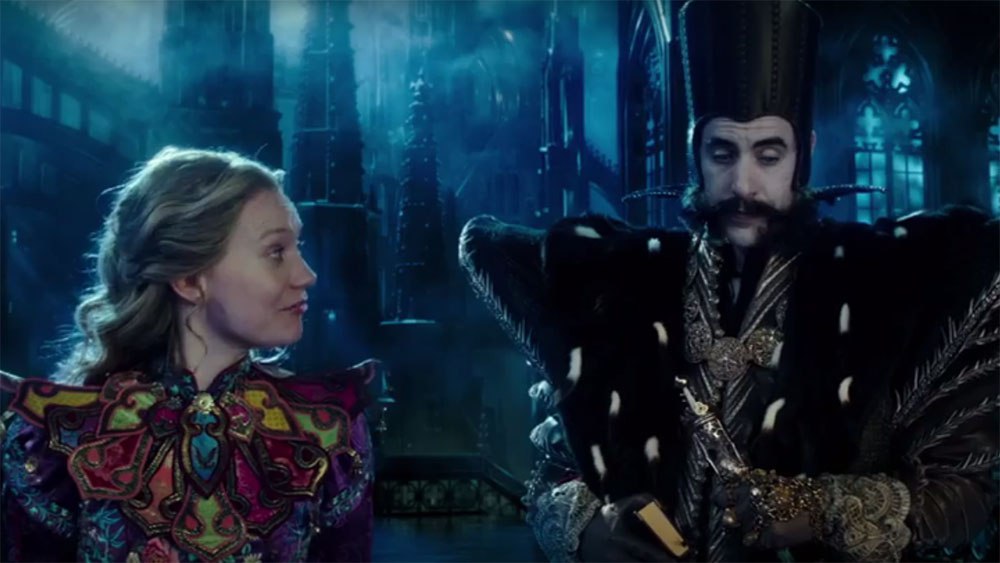
Rating: 5/10 – Alice (Wasikowska) returns to Wonderland to save the Mad Hatter (Depp) from suicidal depression(!) and the attentions of Time (Cohen) and the Red Queen (Carter) who are working in tandem and holding the Hatter’s family hostage for no convincing reason you can think of; another sequel no one asked for (and nowhere near as successful as its predecessor), Alice Through the Looking Glass is ravishing to look at, boasts some fine visual effects, and a great performance by Cohen, but everything else is a mess: bloated, derivative, witless, and with yet another wasteful performance from Depp (who clearly can’t be bothered).

Hard Target 2 (2016) / D: Roel Reiné / 104m

Cast: Scott Adkins, Robert Knepper, Rhona Mitra, Temuera Morrison, Ann Truong, Adam Saunders, Jamie Timony, Peter Hardy

hrdtrgt_8

Rating: 4/10 – ex-MMA fighter Wes Baylor (Adkins) finds himself in Myanmar with one simple objective: reach the Thai border while he’s pursued by a motley group of “hunters” who are out to kill him; a movie that definitely comes under the heading of “another sequel no one asked for”, Hard Target 2 is betrayed by its low budget origins, a script that lurches from one unmemorable action scene to another, and Knepper’s one-note portrayal of the villain.

Nine Lives (2016) / D: Barry Sonnenfeld / 87m

Cast: Kevin Spacey, Jennifer Garner, Christopher Walken, Robbie Amell, Malina Weissman, Cheryl Hines, Mark Consuelos, Talitha Bateman

nine-lives-film-kevin-spacey

Rating: 3/10 – businessman Tom Brand (Spacey) has no time for his wife (Garner) and daughter (Weissman), so what better way for him to learn the value of family (and some humility in the process) than by stranding his mind in the body of a cat?; the kind of inane, superficial comedy that Hollywood churns out with mindless regularity, Nine Lives gives Garfield 2 (2006) a run for its money in the stupid stakes, and hammers another nail into the coffin of Barry Sonnenfeld’s once-glorious career.

Flight to Mars (1951) / D: Lesley Selander / 72m

Cast: Marguerite Chapman, Cameron Mitchell, Arthur Franz, Virginia Huston, John Litel, Morris Ankrum, Richard Gaines, Lucille Barkley, Robert Barrat

alita-flight-to-mars-1951-_129993-fli_1363015116

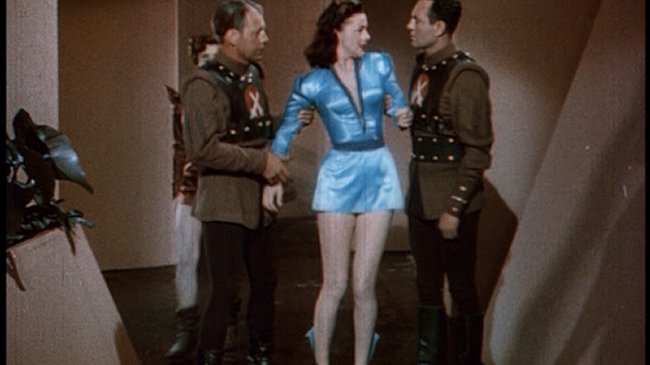
Rating: 5/10 – the first manned flight to Mars gets there safely only to learn that the planet is inhabited, and by a human-like race that may or may not have an ulterior motive for helping them return to Earth; early-Fifties sci-fi hokum that throws in a tepid romance and some very, very short skirts for the female cast, Flight to Mars retains an odd charm – perhaps because of its naïve approach – that helps alleviate some of the more daffy moments the script insists on doling out.

Mercy (2014) / D: Peter Cornwell / 79m

Cast: Frances O’Connor, Shirley Knight, Chandler Riggs, Joel Courtney, Mark Duplass, Dylan McDermott, Amanda Walsh, Hana Hayes, Pepper Binkley

mercy-horror-movie-news-3

Rating: 4/10 – after a spell in a nursing home, Grandma Mercy (Knight) comes home to be looked after by her family – daughter Rebecca (O’Connor) and grandsons George (Riggs) and Buddy (Courtney) – but soon exhibits strange behaviour, behaviour that includes warning George that a supernatural force is coming to get him; adapted from the short story Gramma by Stephen King (yes, him again), Mercy aims for creepy and menacing, yet succeeds instead in being confused and uninspired, and with laboured direction and performances, a situation that devotees of King adaptations will appreciate, having been there many times before.

Share this:

  • Click to share on X (Opens in new window) X
  • Click to share on Facebook (Opens in new window) Facebook
  • More
  • Click to print (Opens in new window) Print
  • Click to email a link to a friend (Opens in new window) Email
Like Loading...

Nocturnal Animals (2016)

16 Wednesday Nov 2016

Posted by dullwood68 in Movies

≈ 4 Comments

Tags

Aaron Taylor-Johnson, Amy Adams, Art gallery, Drama, Ex-husband, Isla Fisher, Jake Gyllenhaal, Literary adaptation, Michael Shannon, Murder, Novel, Review, Thriller, Tom Ford

nocturnal-animals-new-poster

D: Tom Ford / 117m

Cast: Amy Adams, Jake Gyllenhaal, Michael Shannon, Aaron Taylor-Johnson, Isla Fisher, Ellie Bamber, Armie Hammer, Karl Glusman, Robert Aramayo, Laura Linney, Andrea Riseborough, Michael Sheen, India Menuez, Graham Beckel, Jena Malone

Back in 2009, Tom Ford, once the creative director at Gucci between 1994 and 2004, made a movie called A Single Man. He produced it, he wrote it, and he directed it. In the process, he ensured Colin Firth received his first Oscar nomination as the single man of the title, a grief-stricken English professor who finds it difficult to deal with the death of his partner. It won a shedload of awards, and Ford was heralded as an exciting new voice in contemporary cinema. But even in amongst the sterling notices, reviewers and critics were largely in agreement: Firth’s performance saved the movie from being an empty exercise in style over content. Now, seven years later, he’s back with another adaptation, this time swapping Christopher Isherwood’s work for that of Austin Wright, and his novel, Tony and Susan. Should be good, eh?

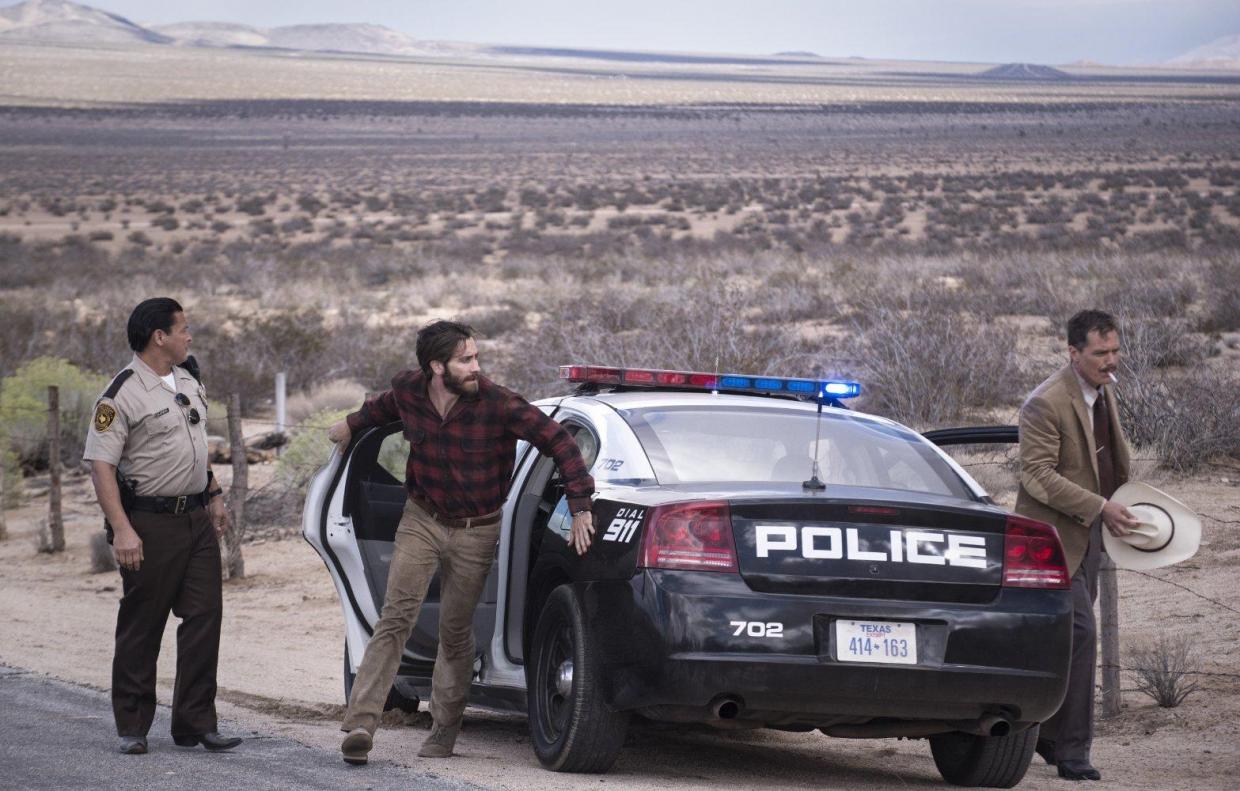
Well, actually, no. This is a movie that can be admired for several reasons. For instance, there’s Seamus McGarvey’s often exquisite cinematography, whether he’s using the lens to amplify the sterile environments lead character Susan (Adams) spends her life inhabiting, or the tactile desert locations where the novel within the movie takes place. And then there’s Abel Korzeniowski’s string-driven score, which adds a delicious sense of impending doom to both storylines. But despite these solid, unassailable elements, what Ford attempts with the twin narratives doesn’t pan out quite as well.

nocturnal-animals

With its performance art opening sequence, Nocturnal Animals wants to keep the viewer wrong-footed, and it wants to keep its secrets all to itself. As you’re confronted by several large, ultra-wobbly ladies who are gyrating in the nude, Ford has already placed the viewer on the back foot. What you’re seeing, he seems to be saying, will be explained; just not right away. And this is how the tone of the movie is set from the beginning: you’ll see a lot of things that won’t immediately make sense, but in time they will… except for the things Ford has no intention of making clear. So, the naked ladies are part of an art exhibition at the gallery Susan owns. But Susan doesn’t seem to be too impressed by this particular exhibit. She appears to be elsewhere, caught up in her own thoughts. But again – already – Ford isn’t about to tell you what those thoughts are, or what they’ll mean (if anything) going forward.

We soon learn that Susan is on her second marriage, to a diffident, disconnected lump of a man called Hutton (Hammer). It’s obvious he doesn’t love her anymore, and he’s likely having an affair, but Susan doesn’t seem interested either way. She makes an effort toward they’re going away together but Hutton is too busy, and Susan is too lethargic to insist or get him to clarify the dates they can go. And while the viewer wonders if this is going to be yet another mannered, “arthouse” examination of a marriage break up with plenty of wistful stares into the distance by the wife, while the husband is unable to talk in meaningful sentences, Ford changes tack and introduces Susan’s ex-husband, Edward (Gyllenhaal).

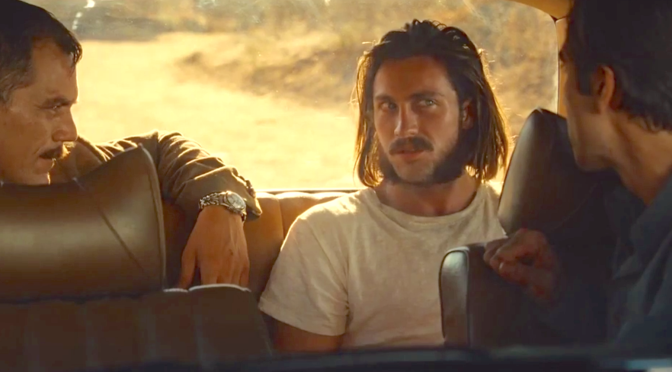
But not in person. No, instead, Edward is introduced to us through a novel he’s written, and one that he’s dedicated to Susan. Surprised – but more importantly so that the movie can proceed in a viable fashion, intrigued – Susan begins to read it. It’s not what she expects, though. But let’s think about that. What was she expecting? And why? Because, as we later discover, Susan had no faith in Edward’s abilities as a writer. So why does she even read it? Curiosity? To reinforce her opinion about his talent (or lack of it)? Because she’s bored? (At home, Susan doesn’t appear to do very much apart from drink the occasional glass of wine.) Actually, it doesn’t matter, as it’s one of the things Ford isn’t going to take the time to explain.

noct

The story is a brutal one. Tony Hastings (Gyllenhaal) is travelling through the desert with his wife, Laura (Fisher), and daughter India (Bamber). Run off the road by a trio of men led by the would-be charming Ray (Taylor-Johnson), the family is threatened and verbally abused until chance sees Ray and one of his cohorts take the Hastings’ car – with Laura and India in it – and drive off, leaving Tony at the mercy of remaining “drunk baby” Lou (Glasman). Tony is made to drive after them, but it soon becomes obvious that Lou is just stringing him along, and Lou eventually makes Tony stop the car and get out; and then he drives off. Ray makes it back to the highway and hitches a ride to the nearest town. There he meets Detective Bobby Andes (Shannon) who agrees to go back out into the desert and check for the whereabouts of Tony’s family. They find them, both dead, but no sign of Ray and his buddies.

At this point, viewers should notice one of two things: that the character of Bobby Andes is at once more interesting and vital than anyone else in the movie (even Taylor-Johnson, who’s menacing and feral in equal measure), and secondly, that Edward’s novel, while intended to act as an emotional counterpoint to Susan’s life up until then, does get less involving and more straightforward as it continues. This allows two other, distinct things to happen: one) for Susan to begin to rethink her tidily tucked away feelings toward Edward, and two) for Ford to indulge in the kind of macho Western-style movie making once epitomised by the likes of Nicholas Ray and Budd Boetticher. But by then it’s all too late. Tony’s story can only have one outcome (which it does in such a contrived way you can hardly credit Ford the director agreeing with Ford the writer that it’s even partway acceptable dramatically), and the resolution to Susan’s immediate tale hints at a new beginning that she won’t be able to grasp.

nocturnal-animals-2016-michael-shannon-aaron-taylor-johnson-jake-gyllenhaal2

Throughout, Ford places great stock on having Adams stare off into space and think deep thoughts about her past with Edward and her present with Hutton, but it’s largely to little or no effect. Part of the problem is that Susan isn’t particularly likeable. In her time with Edward we witness what a horrible person she is beneath the surface veneer of respectability that she’s gained by being a gallery owner. This leaves her storyline feeling (and looking) like a succession of still-life paintings waiting to be given three-dimensional expression. But this isn’t on Ford’s agenda; more shots of Adams staring into space most definitely are though. Adams is a fine actress – see Arrival (2016) if you’re not sure – but here she’s wasted in a role that requires her to internalise her character’s feelings… and then leave them there. The actress is called upon to make so little of her role it’s almost insulting; why hire someone who’s capable of doing so much more than you’ll let them?

Fortunately, Shannon and Taylor-Johnson are on hand to breathe distinct and recognisable life into their respective roles, elevating the material through sheer force of skill, and making it difficult to look away from either of them, even if they’re in a scene together. Gyllenhaal, though, is a cypher, playing two roles and being made to appear as more of a supporting actor than someone given second billing and the responsibility of portraying two important characters. There are times when Gyllenhaal can only shine when the material challenges him in such a way that he has no choice but to commit himself wholly to the part. Movies such as Enemy (2013) and Nightcrawler (2014) show this, but here Ford makes the character of Tony a bystander in his own story, while Edward’s contribution to Susan’s tale is limited by the decision to focus on that particular story from Susan’s entirely subjective point of view (you can’t trust her memories).

Ultimately, Ford makes the mistake of believing that his adaptation carries the necessary weight and complexity to make each narrative work both against and for each other. And this leads to the viewer being unable to connect with any of the characters, or feel able to show any sympathy towards them (only Shannon’s ailing cop elicits any credible feeling in the audience). It’s as if Ford has decided he wants to make a movie where the idea of leading a self-contained life (Susan’s) is preferable to one where hazards and risks (Tony’s) are more likely to happen. Either way, the one-time Gucci guru has made something that plays to its strengths as the new Tom Ford movie, but which lacks a clear identity all of its own.

Rating: 5/10 – too much smoke and too many mirrors means Nocturnal Animals isn’t as effective as its writer/director would like you to believe – or as persuasive; it goes without saying that the movie has a tremendous visual sense, but it’s a shame that a similar level of effort wasn’t afforded the script or the characters.

Share this:

  • Click to share on X (Opens in new window) X
  • Click to share on Facebook (Opens in new window) Facebook
  • More
  • Click to print (Opens in new window) Print
  • Click to email a link to a friend (Opens in new window) Email
Like Loading...

The Girl on the Train (2016)

07 Monday Nov 2016

Posted by dullwood68 in Movies

≈ 1 Comment

Tags

Alcoholism, Drama, Emily Blunt, Haley Bennett, Justin Theroux, Literary adaptation, Luke Evans, Murder, Paula Hawkins, Rebecca Ferguson, Review, Tate Taylor, Thriller

girl_on_the_train_ver3

D:Tate Taylor / 112m

Cast: Emily Blunt, Haley Bennett, Rebecca Ferguson, Justin Theroux, Luke Evans, Edgar Ramírez, Laura Prepon, Allison Janney, Darren Goldstein, Lisa Kudrow

Whenever a novel becomes an unexpectedly massive success – such as Paula Hawkins’ The Girl on the Train did in 2015 – then a movie adaptation is sure to follow. But what happens when the source material isn’t strong enough to support a movie version? What do the makers of such a movie do to combat this? The answer, when you watch the movie version of The Girl on the Train, becomes obvious quite quickly: they don’t do anything, they merely transcribe events and characters to the screen and do nothing to circumvent the problems in the novel. Oh – and they do so in the hope that no one will notice.

From the beginning of The Girl on the Train we have a clumsy voice over that introduces us to Rachel Watson, a thirty-two year old woman who rides the train to and from work every day, and who seems to have created a fantasy world built around another woman (Bennett) that she sees most days from the train. The woman in question piques Rachel’s interest, as she lives a few doors away from where Rachel’s ex-husband Tom (Theroux) lives with his new wife, Anna (Ferguson), and their baby daughter, Evie. Believing this woman to have a perfect marriage (but having no real reason to believe this at all), Rachel is shocked one morning to see her kissing a man who isn’t her husband.

e51d4c20-6bb1-0134-cdc5-0aec1efe63a9

Rachel is so disturbed by this that she decides to confront the woman. But Rachel is an alcoholic, and though she makes the attempt, she suffers a blackout and wakes the next morning with cuts and bruises and blood on her clothes – but no memory of how any of it happened. Things get worse when a detective (Janney) visits Rachel and asks her if she knows the woman, whose name is Megan. Megan has gone missing, and because Rachel was spotted in the area where Megan was last seen, the detective wonders if Rachel is involved in Megan’s disappearance in some way. Able to stall the detective’s questions, Rachel then makes a fateful decision.

Anyone who has read the book will know that Rachel’s decision is to involve herself in the life of Megan’s husband, Scott (Evans). And the movie follows this route as well – how could it not? – but as with the novel, the movie has the same problem: her decision makes no sense at all. It’s obvious from Rachel’s behaviour – when she’s not fantasizing about a complete stranger, she’s stalking her ex-husband – that she’s got what you’d politely call “issues”, but the only reason the movie has for this behaviour is the fact that Rachel is an alcoholic. It was a contributing factor in her divorce from Tom, and it leads to a couple of minor revelations later on, but it ends up being a catch-all for anything she does that seems a bit manic or ill-advised. The novel tries to make her appear vulnerable; here she just seems desperate.

But as her involvement with Scott is passed off as trying to help (and punish Megan if she stops being missing), Rachel abandons all sense of decency and respect for the ordeal Scott is going through, and pushes her own agenda, which is to find Megan’s abductor or killer – and hope that it isn’t her. This leads to a couple of major revelations, and a final denouement that will have female audiences cheering, and male audiences shaking their heads at the reverse misogyny on display. In essence, the problems in the novel have become the problems in the movie.

girlontrainhaleybennett650

The main problem audiences will have is a lack of someone to even remotely care about. Despite a powerful and from time to time, deeply moving performance by Blunt, The Girl on the Train operates in an emotional vacuum. The trials and tribulations of the various characters are often on display, but it’s like watching a trio of strong-minded women who’ve all decided to give up on being independent, and who can only define themselves through their relationships with men. Rachel is the ex-wife who can’t deal with the fact that her marriage is over, Megan is the wife who needs affairs to feel some kind of connection with herself, and Anna is the ex-lover turned second wife whose chief function is being the mother of Tom’s child. Viewers may find themselves put off by the relentless undermining these characters experience, and the various ways the movie reinforces the ways in which said characters were undermined in the novel.

But beyond all the ersatz feminism, there remains the problem of the central mystery. Megan’s disappearance becomes a murder enquiry when her body is discovered in some nearby woods. But though Rachel wonders if she did kill Megan during her blackout, the likelihood of that actually having happened is so small it’s on a virtually sub-atomic level. So that leaves Anna, a character so gloriously one-dimensional that Ferguson’s talents as an actress are wasted; her husband Tom, whose outward calm and sincerity masks a need to control his environment; and tortured husband Scott, whose wild, angry outbursts could be a smokescreen for something much darker. And those are the only suspects, as the man Megan is seen kissing is her shrink, Dr Kamal Abdic (Ramírez), and despite the screenplay’s ham-fisted attempt to put him in the frame, he’s the classic red herring. This then makes it easy to work out who killed Megan, and also why.

gallery4-5717c33a14c70-1

For a thriller based on the novel “that shocked the world” – really? – The Girl on the Train is a bit of a damp squib, only showing signs of life when focusing on Blunt’s portrayal of Rachel. Blunt brings some much needed craft to her performance, ensuring that while everyone around her aims for competent, she’s proving capable of giving a layered, compassionate performance that elevates the material whenever her alcoholism is mentioned, or she’s on screen. In contrast, Taylor, who failed to find the motivation to make The Help (2011) as compelling as it should have been, leaves the viewer with the feeling he’s only semi-engaged with the project, and as a result, none of it resonates in the way that it should. It all leaves the movie looking and sounding like an uninspired echo of the original novel – and a less than engaging one at that.

Rating: 5/10 – slickly, professionally made, but as hollow as an Easter egg, The Girl on the Train delivers low rent thrills and annoying plot developments as it unfolds the mystery of Megan Hipwell’s disappearance; the non-linear approach of the novel is retained, and used to good effect, but this is still one literary adaptation that should have been more enticing and rewarding than it actually is.

Share this:

  • Click to share on X (Opens in new window) X
  • Click to share on Facebook (Opens in new window) Facebook
  • More
  • Click to print (Opens in new window) Print
  • Click to email a link to a friend (Opens in new window) Email
Like Loading...

Mini-Review: Jack Reacher: Never Go Back (2016)

06 Sunday Nov 2016

Posted by dullwood68 in Movies

≈ 1 Comment

Tags

Action, Cobie Smulders, Conspiracy, Danika Yarosh, Drama, Edward Zwick, Father/daughter relationship, Lee Child, Literary adaptation, Murder, New Orleans, Sequel, Thriller, Tom Cruise, US Military

cqlurvqumaatri2

D: Edward Zwick / 118m

Cast: Tom Cruise, Cobie Smulders, Aldis Hodge, Danika Yarosh, Patrick Heusinger, Holt McCallany, Austin Hébert, Robert Knepper, Madalyn Horcher, Robert Catrini

After helping the US Military apprehend a crooked sheriff – it doesn’t matter why – Jack Reacher (Cruise) begins flirting by telephone with his contact, Major Susan Turner (Smulders). When he arrives back at his old military HQ to meet her for the first time, Reacher finds she’s been arrested on suspicion of treason. It’s all to do with an investigation she was overseeing in Afghanistan, and which involves the murder of two soldiers out there. Reacher is instantly suspicious himself, but when Turner’s attorney winds up murdered, he finds himself framed for the killing, and with only one option going forward: break Turner and himself out of military prison and go on the run while also trying to solve the conspiracy surrounding Turner’s arrest.

While all this is going on, Reacher also learns that he may have a daughter. Her name is Samantha (Yarosh), she’s fifteen years old, and she becomes involved when the mercenary assassin (Heusinger) charged with tracking down Reacher and Turner links her to her possible father. With the guilty party looking like defence contractor, Parasource, the trio travel to New Orleans and try to find the company’s middle man in Afghanistan, Daniel Prudhomme (Hébert). Frightened and in hiding, Prudhomme is eventually found, and what he tells them reveals a puzzling conspiracy involving the illegal smuggling of weaponry owned by Parasource itself, the rewards of which are outweighed by the potential worth of government contracts.

1774

Jack Reacher (2012) made just enough money (if $218,340,595 can be considered “just enough”) to allow Jack Reacher: Never Go Back to be made. Making this only the second time that Cruise has reprised a character role, the movie again dispenses with any intention of following the sequence of Lee Child’s novels, and plumps for a more recent effort. Given that it provides Reacher with a potential daughter, you can see why Never Go Back was so attractive to the producers, including Cruise himself: let’s show the action man can be a big softie as well (though, actually, not too much of a big softie). But in the end, all this means is that the viewer is subjected to dozens of close ups of Cruise manipulating his facial expressions as if with strings, and a handful of awkward father-daughter moments that are played by rote. You can guess the outcome of this particular “mystery” from a mile away, but the movie goes through the motions with it, and never once makes it seem that Reacher and Samantha could achieve a really meaningful relationship.

This leaves the conspiracy story to lead the rest of the movie, but sadly, the movie never springs to life with it, leaving everything feeling flat and unnecessarily bland. Part of the problem is that you don’t really care what happens to anyone, even Samantha, and the mechanics of the villain’s deadly plot never catch on in the way that the writers and producers and Edward Zwick would like. None of it seems relevant, and all of it is coated with a thin layer of effort. Cruise looks determined, but often it’s difficult to work out if he’s in character or just trying to get through the filming stage. Smulders at least tries to inject some passion into things, but she’s held back by a script that actively ignores her character’s role in the military whenever it can, and at one point sidelines her as a babysitter to Samantha. It all makes the viewer “glad” that sexism can rear its ugly head in a movie, and if it’s supported by Tom Cruise then it’s all the better, and perhaps, even acceptable.

Rating: 5/10 – a sequel that lacks the bite of its predecessor, Jack Reacher: Never Go Back could also be called Jack Reacher: Never Knowingly Exciting; professionally done but a little too generic in its approach and presentation, it’s a movie that never strays out of its comfort zone, not even by accident.

Share this:

  • Click to share on X (Opens in new window) X
  • Click to share on Facebook (Opens in new window) Facebook
  • More
  • Click to print (Opens in new window) Print
  • Click to email a link to a friend (Opens in new window) Email
Like Loading...

The Library Suicides (2016)

01 Tuesday Nov 2016

Posted by dullwood68 in Movies

≈ Leave a comment

Tags

Catrin Stewart, Drama, Dyfan Dwyfor, Euros Lyn, Fflur Dafydd, Literary adaptation, Murder, National Library of Wales, Review, Ryland Teifi, Suicide, Thriller, Twins, Wales, Y Llyfrgell

the-library-suicides-poster

Original title: Y Llyfrgell

D: Euros Lyn / 87m

Cast: Catrin Stewart, Dyfan Dwyfor, Ryland Teifi, Sharon Morgan, Carwyn Glyn

Twins Ana and Nan (Stewart) both work in the archive section of the National Library of Wales in Aberystwyth. Their mother, Elena (Morgan), is a famous author who has raised her daughters by herself. Ana is the creative, more outgoing twin, while Nan is the dependable, more introverted one. Their lives are orderly, well-managed and maintained, and their work appears to be all they have outside of their relationship with their mother. But all that changes when Elena commits suicide by jumping from a second story window at their home. With Ana and Nan both present in her dying moments, Elena says that “it was Eben”.

Eben (Teifi) was once a student of Elena’s who in the time since her death, has been granted access to her papers, and is intending to write her biography. The papers are kept at the National Library, in a vault room below ground. Late one afternoon he arrives at the Library to begin work on the biography. He’s shown in by security guard Dan (Dwyfor). Soon the Library closes, and once all the other visitors have left, Ana and Nan begin to carry out a plan they’ve hatched to kill Eben for causing the death of their mother.

screen-shot-2016-11-01-at-13-16-31

Along with Dan, there’s another guard called Glyn (Glyn). The twins offer them both coffee laced with crushed sleeping tablets. Glyn succumbs, but Dan rejects the offer. Ana tempts him with alcohol (also laced with crushed sleeping tablets) but he only drinks enough to pass out for a short while. While both men are “out of action”, the twins confront Eben in the vault room. They pull guns on him, tie his hands together, put a noose around his neck, and make him stand on a chair. But as they pull away the chair, Dan – who has woken up and has seen what’s happening on a security monitor – cuts the power to the building. The lights go out, there’s a crash followed by a gunshot, and in the moments that follow, both Ana and Nan become aware that their plan for revenge isn’t going to go as well as they’d planned…

The Library Suicides is a bit of a rarity. It’s a Welsh thriller where the entire cast speak Welsh throughout (there’s the odd English phrase or word, but it still leaves the cast speaking Welsh for ninety-nine percent of the running time), and it’s largely set in the actual National Library of Wales in Aberystwyth. There’s also something of a mystery to be solved, as the circumstances surrounding Elena’s death aren’t as clear-cut as they seem, and in particular, Eben’s involvement – if any – in what happened that day. As Ana and Nan put their plan into action, Eben’s behaviour, allied with some unexpected interventions by Dan, ensure that Ana and Nan have to improvise quite a bit, and in doing so, learn more about their mother than they suspected could be true.

screen-shot-2016-11-01-at-13-20-19

Adapted from the novel by Fflur Dafydd (who also provides the screenplay), The Library Suicides is a smart, intriguing psychological thriller that makes good use of its unique location – it’s like a maze in there – and manages to keep the viewer guessing for most of its relatively short running time before it conforms to thriller conventions and reveals all. Before then, though, it throws in a few deft twists and turns, and keeps its focus firmly on Ana and Nan as they try to contain the fallout from Dan’s cutting off the power, and also contain their own feelings as they both learn about and reveal things about their mother.

In the hands of experienced director Euros Lyn – better known for his TV work on shows such as Daredevil, Broadchurch and Doctor Who – The Library Suicides is a dour but imaginative thriller that features a terrific dual performance from Stewart (who is herself a twin in real life), an ominous score courtesy of Dru Masters, and sterling cinematography from Dan Stafford Clark that captures the chilly atmosphere of the Library and the claustrophobic nature of the material as the characters become more and more trapped by the decisions they’re forced to make. One of the main reasons for how good the movie is lies at the door of Stewart, who at first makes it very difficult for the viewer to tell Ana from Nan and vice versa, but as the movie progresses, slowly but surely, she expertly defines both twins’ individual psychology, and in the process, gives two awards-worthy performances.

screen-shot-2016-11-01-at-13-19-03

The mystery surrounding Elena’s death, and the meaning behind the phrase, “it was Eben”, is slowly but surely revealed as the movie progresses, and the deep, dark secret lurking behind it all (while it will be obvious to some viewers) is handled with care throughout. Lyn resists the temptation to make more out of it than there is, making it all more low-key than a lot of other movies would feel comfortable with. By doing so, Lyn ensures the viewer is more attentive and more invested than in a lot of other, similar thrillers out there, and he sprinkles some misdirection here and there to keep audiences on their toes.

This being a modern day thriller, there’s blood to be spilled, and though the physical demands of the production are entirely evident on the screen, it’s often the movie’s subtext that has the advantage of making more of an impact as the movie progresses. The movie is as much about redacted memory and the suppression of feelings than it is about revenge for an undisclosed crime, and Dafydd’s script keeps sight of all this even when said blood is being spilled. In particular it’s what the twins remember that carries emotional and dramatic weight, and again, both Lyn and Stewart are more than up to the challenge of revealing just enough to keep viewers enthralled and wanting to see what happens next. In the end it’s only a last-minute reveal that proves unnecessary, and while it may be clever in the context of what’s gone before, it does the narrative no favours and seems tacked on for effect – which it doesn’t need to do.

Rating: 8/10 – deliberately paced, and with the look and feel of a “Nordic noir”, The Library Suicides is a movie that gives its characters solid reasons for what they do, and never short changes them or the audience as a result; Stewart’s performances are compelling, and Lyn’s direction expertly juggles the visual demands of those performances, while also negotiating the spaces within the National Library with vigour and aplomb, making this one night shift that’s hard to forget.

Share this:

  • Click to share on X (Opens in new window) X
  • Click to share on Facebook (Opens in new window) Facebook
  • More
  • Click to print (Opens in new window) Print
  • Click to email a link to a friend (Opens in new window) Email
Like Loading...

The Whole Truth (2016)

22 Saturday Oct 2016

Posted by dullwood68 in Movies

≈ 2 Comments

Tags

Courtney Hunt, Crime, Drama, Gugu Mbatha-Raw, Jim Belushi, Keanu Reeves, Louisiana, Murder, Renée Zellweger, Review, Thriller, Trial

the-whole-truth-2016-movie-poster

D: Courtney Hunt / 93m

Cast: Keanu Reeves, Renée Zellweger, Gugu Mbatha-Raw, Gabriel Basso, Jim Belushi, Jim Klock, Ritchie Montgomery, Christopher Berry, Nicole Barré, Sean Bridgers, Mattie Liptak

In a small Louisiana town, young Mike Lassiter (Basso) is arrested for the murder of his father, Boone (Belushi). Having confessed to the crime, Mike says nothing more, even to his lawyer, Richard Ramsey (Reeves). Obviously this makes it hard for Ramsey to mount a defence, but as a friend of the family, and someone that Boone helped become a lawyer, he has inside knowledge about Boone that the jury won’t be aware of. With his client staying quiet, Ramsey’s only choice is to malign Boone’s reputation as a good father to Mike and loving husband to Loretta (Zellweger).

As the trial begins, Ramsey is joined by a junior lawyer, Janelle Brady (Mbatha-Raw). Together they begin to piece together a defence based on Boone’s abusive behaviour towards Mike and Loretta, while the prosecution – led by Leblanc (Klock) – reinforces the details surrounding the murder and Mike’s subsequent confession. The case seems hopeless until Ramsey calls Loretta to the witness stand, where she confirms just how abusive her husband could be. But as the trial continues, Janelle becomes suspicious about what might have really happened; she comes to believe that Mike is taking the fall for his mother. There’s no evidence to support this, however, and when Mike takes the stand and delivers a bombshell that no one could have prepared for, his testimony takes the trial in a direction that no one could have prepared for either.

the-whole-truth-2015-movie-header1

With an introductory voice over by Reeves that sets the tone for the whole movie (he sounds bored and uninterested), The Whole Truth is one of those courtroom dramas where secrets are revealed every so often in an effort to keep the audience guessing as to what’s happened, or is happening, and which should add up to a last-minute revelation that will have said audience saying to themselves, “Wow! I never saw that coming!” Except, in reality, The Whole Truth opts for secrets that have no impact on the movie’s ending, and which are pretty much forgotten about once they’ve been revealed.

You don’t have to have seen hundreds of courtroom dramas to know that ninety-nine per cent of the time, if the defendant has confessed to the crime (but isn’t saying why they did it), then the chances of them actually being guilty are greatly reduced. And while it would be unfair to reveal if this is the case here, let’s just say that there is a formula here that’s being adhered to, and said formula shouldn’t spring too many surprises on anyone familiar with the genre. And thanks to screenwriter Nicholas Kazan (known here as Raphael Jackson, and perhaps wisely), the movie plods along from one unexciting revelation to another in a dour effort to appear exciting. It’s all so sloppily written that, from Ramsey’s “knowing” voice over to both his and Leblanc’s inability to cross-examine witnesses, The Whole Truth acts more as an educational movie about how not to make a courtroom drama than the effective thriller it wants to be.

reevesbar640

Kazan’s script is one of the main offenders, but it’s not alone in handicapping the movie at every turn. Since coming to people’s attention with her well-received debut, Frozen River (2008), director Courtney Hunt has only worked on five TV episodes before taking on the challenge of molding this movie into something that isn’t the cinematic definition of “generic”. That she never gets to grips with the material, and films everything in a bland, TV-movie-of-the-week style, is evident throughout, and the look of the movie – all washed-out and looking as if bright colours were a no-no – further undermines any attempts the movie might make to stand out from the crowd. It’s as if cinematographer Jules O’Loughlin was instructed not to make the movie look attractive.

And then, somewhat inevitably, there’s the cast. Keanu Reeves has the kind of career that fluctuates between godawful and cautiously optimistic with almost absurd regularity. John Wick (2014) was a reminder that when he’s asked to play taciturn and given minimal dialogue, he’s playing to his strengths as an actor. But then he also appears in movies such as Man of Tai Chi (2013 – and which he directed), and Knock Knock (2015), and you’re reminded that he’s only good with certain material. Here he struggles as usual with both his character and his character’s dialogue, with his occasional voice overs further underscoring how often he looks and sounds removed from the movies he makes. He makes for an unconvincing trial lawyer as well, and The Whole Truth teeters on the edge of disaster every time Ramsey gets up to question a witness.

thumbnail_24946

Making her return to acting after a six-year hiatus, Renée Zellweger is, as many people have already pointed out, hard to recognise as Loretta. Even when she speaks you could still be forgiven for thinking she’s someone else, and this proves to be something of a distraction whenever she’s on screen. Why she picked this movie to make her comeback is a mystery that’s more intriguing than the central mystery around who killed Boone, and though she has second billing, Loretta is more of a supporting role than a lead. She’s not asked to do too much, and when Loretta takes the stand, Zellweger treats us to a glimpse of what she’s capable of, but otherwise it’s a performance that dozens of other actresses could have given. Mbatha-Raw is underused as well, her character the inexperienced, somewhat naïve ingenue who gets her one chance to shine in court before being relegated back to the sidelines.

With the performances unable to lift the movie out of its self-imposed narrative doldrums, and Hunt apparently unable to make much out of the material, The Whole Truth proves to be hugely disappointing, and resoundingly flat. There’s no impetus, no energy in the courtroom scenes, and by the end it’s difficult to care who did what, why or how. Courtroom dramas succeed or fail on the quality of the secrets that are revealed during a trial, and the odds against the defence lawyer winning, but here there’s so much apathy on display that any impact is curtailed before any such secrets are fully revealed. This may be a courtroom drama per se, but someone really should have pointed out that the drama was, in legal terms, misrepresented.

Rating: 4/10 – originally set to star Daniel Craig as Ramsey, The Whole Truth is a movie that wouldn’t have turned out any better even if he hadn’t dropped out just days before production was due to begin; clumsy and dull, the movie is like drudge work for the eyes and ears, and never once feels like it’s going to step up a gear and become even slightly interesting.

Share this:

  • Click to share on X (Opens in new window) X
  • Click to share on Facebook (Opens in new window) Facebook
  • More
  • Click to print (Opens in new window) Print
  • Click to email a link to a friend (Opens in new window) Email
Like Loading...

Mini-Review: The Greasy Strangler (2016)

12 Wednesday Oct 2016

Posted by dullwood68 in Movies

≈ Leave a comment

Tags

Big Brayden, Big Ronnie, Comedy, Disco, Drama, Elizabeth De Razzo, Horror, Jim Hosking, Michael St. Michaels, Murder, Sky Elobar, Thriller

the-greasy-strangler

D: Jim Hosking / 93m

Cast: Michael St. Michaels, Sky Elobar, Elizabeth De Razzo, Gil Gex, Joe David Walters, Abdoulaye NGom, Sam Dissanayake, Holland MacFallister, Mel Kohl

Big Ronnie (St. Michaels), an ex-disco entrepreneur back in the Seventies, lives with his middle-aged son, Big Brayden (Elobar). When they’re not bickering, they run a tour guide business where they show unsuspecting tourists various sites “supposedly” connected to the heyday of disco. Big Ronnie likes his food cooked in a lot of oil and grease, the oilier and greasier the better, because when he’s not chiding Big Brayden, or ripping off tourists, he’s the Greasy Strangler, a maniacal killer who has claimed several victims so far and whom the police are no nearer catching than when he started.

Big Ronnie and Big Brayden’s relationship is shaken up by the appearance of Janet (De Razzo). Much to Big Ronnie’s displeasure, Janet takes a shine to Big Brayden, and they begin dating. This makes Big Ronnie so angry that he claims more victims, including friends such as Oinker (Walters). Big Brayden begins to have his suspicions about the Greasy Strangler’s identity, and when Big Ronnie behaves “all smooth” and persuades Janet to be his girlfriend, the stage is set for a showdown between father and son, killer and self-appointed vigilante, that will (inevitably) change their lives forever – but not necessarily in a way that either could have foreseen.

tgs-scene

Already being hailed as a cult favourite, and having a level of critical approval that most low-budget, indie horrors would themselves kill for, The Greasy Strangler is a funny, awful, side-splitting, appalling, blackly comic, dreadful movie that works very well in stretches but makes too much use of verbal and visual repetition to pad out its running time. Depending on your tolerance, conversations involving the phrase “bullshit artist” may prove to be annoying, as might seeing over and over again, Big Ronnie getting cleaned up in a car wash after a bout of killing as the Greasy Strangler. Co-writer/director Jim Hosking appears to be striving for some kind of banality here, a further example of the monotonous lives that Big Ronnie and Big Brayden live – they do little beyond the tours, eating together, and arguing – but it’s a device that soon wears out its welcome.

Alternatively, the movie is on firmer ground when it’s trying to be shocking and distasteful. Prosthetic penises and exploding eyeballs are the order of the day, and there’s a pleasing, sleazy Eighties vibe to it all (the special effects reflect the quality of the period). It’s also very funny in a “you shouldn’t really be laughing” kind of way, particularly in the ongoing war of attrition that makes for the relationship between Big Ronnie and Big Brayden; dysfunctional doesn’t even cover it. St. Michaels and Elobar are both excellent, pushing a number of physical and emotional boundaries in the script’s pursuit of ever more alienating content. Love ’em or want to get as far away from ’em as possible, Big Ronnie and Big Brayden are characters you won’t forget in a hurry, and the movie is on very firm ground when they’re on screen together.

Rating: 7/10 – a breath of welcome bad air in a year where few movies have dared to be different, The Greasy Strangler doesn’t always overcome its low-budget origins, but it does have a number of moments where the viewer will be thinking “No way“; bold in both tone and content, the movie never tries to be likeable or elicit sympathy for its lead characters, meaning it is what it is, and it’s entirely unapologetic about everything it depicts, which in this genre, is exactly what it should be doing.

Share this:

  • Click to share on X (Opens in new window) X
  • Click to share on Facebook (Opens in new window) Facebook
  • More
  • Click to print (Opens in new window) Print
  • Click to email a link to a friend (Opens in new window) Email
Like Loading...

Welcome to the World of High Concept/Low Return – Don’t Breathe (2016) and The Shallows (2016)

18 Sunday Sep 2016

Posted by dullwood68 in Movies

≈ 1 Comment

Tags

Action, Blake Lively, Blind man, Drama, Dylan Minnette, Fede Alvarez, Home invasion, Horror, Jane Levy, Jaume Collet-Serra, Medical student, Mexico, Murder, Review, Robbery, Seagull, Shark, Stephen Lang, Surfing, Thriller

dont-breathe

Don’t Breathe (2016) / D: Fede Alvarez / 89m

Cast: Jane Levy, Dylan Minnette, Stephen Lang, Daniel Zovatto, Franciska Töröcsik

You can hear the pitch even now: “What if these thieves tried to steal a lot of money from someone, and that someone was blind and he trapped them in his house and turned the tables on them?” A grateful production executive greenlights the project in seconds, and sometime later, the finished project is hitting screens with all the fanfare required of an original thriller (Don’t Breathe is being advertised and touted as a horror movie. It’s not; but more of that later.)

However, the grateful production executive clearly abdicated any responsibility for the project once he gave it the go-ahead. If he hadn’t, then maybe he could have insisted that the basic storyline, the marginally interesting characters, and the increasingly silly narrative be better developed before filming began. Sadly, it wasn’t, and the intriguing pitch that started everything off goes nowhere fast before throwing itself head first into the Comedy Zone in its last twenty minutes.

Every year the critics – and audiences – latch on to a movie they believe is a cut above the rest when it comes to other thrillers/horror movies/comedies etc. Don’t Breathe is one such movie, but as it does so little to justify its elevated importance, it’s tempting to wonder if the critics – and audiences – have seen a completely different cut of the movie; and if they have, why aren’t we allowed to see it? The basic premise is somewhat intriguing – three delinquents, Rocky, Alex and Money (Levy, Minnette, Zovatto), decide to go for broke on their next robbery/home invasion, but come up against a blind man whose resourcefulness (and unnerving ability to be in the wrong place at the right time) puts them in a life or (mostly) death situation.

dont-breathe-scene

Alvarez is a rising star in the horror firmament, and his remake of Evil Dead (2013) was better than expected. But here he’s in classic thriller territory, with a group of “innocents” being pursued by a relentless killer (Lang’s preternatural blind man), and finding themselves pushed beyond their limits. And though Alvarez is undoubtedly talented, here it’s obvious that he doesn’t have any answers when a script breaks its own rules – repeatedly. The blind man is referred to as an Army veteran, and because he’s played by Lang, we know he’s going to be a hard man to beat. But where a blind person’s other senses are often enhanced, here they come and go on a whim and a prayer. One minute he can hear extremely well, enough to pinpoint someone’s position in a ventilation system, the next he can’t hear a heavily wounded Minnette sneak up on him.

The problem with Don’t Breathe is that it wants to be a thrill ride with bloody (but non-horror) moments, but it forgets to add the thrills. A string of attempts to escape the house are repeatedly set up for Rocky and Alex to fail (Money exits stage left early on), and the plot’s major “twist” seems at first to be “great”, but it’s more of a way to keep the plot from collapsing in on itself (and pad out what would otherwise be a pretty meagre running time). In the end, the script, by Alvarez and Rodo Sayagues, runs out of steam and values unfortunate laughs over the muted tension it’s achieved earlier on. And as for the coda, well, let’s just say that clumsy is as clumsy does, and the end of the movie is very, very clumsy indeed.

Rating: 5/10 – with no one to care about or root for, Don’t Breathe becomes an exercise in soulless thriller tropes that let’s down the viewer continually once the blind man makes his presence felt; notwithstanding an eerie sequence in the basement when the lights go out, and some excellent production design, the movie will have long-standing fans of the sub-genre yawning at the absurdity and hamfisted nature of it all.


the-shallows

The Shallows (2016) / D: Jaume Collet-Serra / 86m

Cast: Blake Lively, Óscar Jaenada, Angelo José Lozano Corzo, José Manuel Trujillo Salas, Brett Cullen, Sedona Legge, Diego Espejel

As with Don’t Breathe, you can hear the pitch just as clearly: “What if a surfer, a lone woman even, gets trapped on a rock two hundred yards from land, but can’t get there because there’s a huge great shark stopping her?” And once again, a grateful production executive greenlights the project in seconds, and sometime later, the finished project is hitting screens with all the fanfare required of an original thriller. And yet…

The problem with The Shallows, however, is that, like Don’t Breathe, you don’t get a chance to really care about the main character, Nancy (Lively). We get to spend an awful lot of time with her, and while her predicament is scary enough on its own, it isn’t really enough in general terms for it all to work as well and as harmoniously as it would like. We get some back story – Nancy’s making a pilgrimage to the beach her mother, who has died recently, fell in love with twenty-five years before – but it’s very perfunctory and serves to pad out the script at the movie’s beginning. Then we have an extended section that shows just how good a surfer Blake Lively’s stunt double is, before Nancy’s leg gets chomped on and she makes it to the rock (along with an injured seagull).

And then the movie does something unforgivable: it makes Nancy’s predicament boring to watch. As if realising that having its heroine stranded on a rock with nowhere to go isn’t quite as cinematic as it hoped, the movie brings in a drunken Mexican (and brings back two surfers from earlier on), and serves them up to the shark as a way of re-engaging the audience’s interest (the drunkard’s death is particularly nonsensical, and any viewer who doesn’t hang their head in despair at the way in which he goes to his death, should give up now if they think it makes any sense whatsoever). Then it’s full speed ahead to the final showdown, Nancy vs shark, and the kind of over the top outcome that provokes laughter instead of relief.

the-shallows-scene

After a string of uneven yet mostly effective thrillers starring Liam Neeson – Unknown (2011), Non-Stop (2014), Run All Night (2015) – Collet-Serra seems unable to do anything positive with Anthony Jaswinski’s tension-free script. From the decision to shoot most of the movie against a green screen (making most shots and scenes look false and oddly lit), to failing to address issues of continuity (how do the two surfers fail to see the drunkard’s remains on the beach when they come back?), Collet-Serra allows the fractured narrative to play out with barely an attempt at tightening things up, or avoiding treating the viewer like a numpty (sure, you can “stitch” a bite wound with just a couple of pieces of jewellery and not bleed out – no problem).

As the injured yet resourceful Nancy, Lively is a good enough actress that she can overcome some of the more bizarre decisions her character makes – resetting a seagull’s dislocated wing, anyone? – but for most of the time she’s either yelling in pain or shouting for help. Some of the earlier scenes are geared around showing off her figure, and there’s a particularly gratuitous surfboard-cam cleavage shot that adds nothing to the sequence it appears in, but as the movie progresses she keeps covered up and her predicament is kept to the fore – until the end when she’s required to strip back down to her bikini. We may be in the twenty-first century but in certain regards, it seems, the times they aren’t a-changin’ (or are ever likely to).

Rating: 4/10 – a thriller that plays out by the odd numbers alone, The Shallows does everything it can to fall short of expectations and commitment; with its unhappy use of CGI, and an overbearing score courtesy of Marco Beltrami, it’s a movie that brings apathy and indifference to the table in ever increasing portions.

Share this:

  • Click to share on X (Opens in new window) X
  • Click to share on Facebook (Opens in new window) Facebook
  • More
  • Click to print (Opens in new window) Print
  • Click to email a link to a friend (Opens in new window) Email
Like Loading...

Monthly Roundup – August 2016

03 Saturday Sep 2016

Posted by dullwood68 in Movies

≈ Leave a comment

Tags

A Perfect Day, Aid workers, Animation, Benicio Del Toro, Blue Sky, Curt Siodmak, Denis Leary, Drama, Espionage, EVP, Fedja Stukan, Fernando León de Aranoa, Galen T. Chu, Harrison Gilbertson, Haunt, Haunted house, Horror, Ice Age: Collision Course, Ione Skye, Jacki Weaver, Jean Byron, John Leguizamo, Ken Hughes, King Donovan, Liana Liberato, Little Red Monkey, Mac Carter, Mélanie Thierry, Meteorite, Mike Thurmeier, Morello Curse, Murder, Nuclear scientists, Olga Kurylenko, Queen Latifah, Ray Romano, Review, Richard Carlson, Richard Conte, Rona Anderson, Russell Napier, Sci-fi, Scrat, Simon Pegg, Spaceship, Sylva Langova, The Balkans, The Fifties, The Magnetic Monster, Thriller, Tim Robbins

The Magnetic Monster (1953) / D: Curt Siodmak / 76m

Cast: Richard Carlson, King Donovan, Jean Byron, Harry Ellerbe, Leo Britt, Leonard Mudie, Byron Foulger, Michael Fox

The Magnetic Monster

Rating: 6/10 – a sample of selenium, bombarded with alpha waves, becomes a lethal danger to mankind as it develops exponentially – and only the A-Men from the Office of Scientific Investigation can stop it; an exposition heavy sci-fi thriller that takes time out for (stranger) domestic interludes involving Carlson and Bryan, The Magnetic Monster packs a lot in to its relatively short running time and is unexpectedly entertaining for all its techno-speak and overly serious demeanour.

Haunt (2014) / D: Mac Carter / 86m

Cast: Harrison Gilbertson, Liana Liberato, Ione Skye, Jacki Weaver, Brian Wimmer, Danielle Chuchran, Ella Harris, Carl Hadra

Haunt

Rating: 3/10 – a family move into a house where tragedy struck the previous owners, and the son (Gilbertson), along with abused neighbour Sam (Liberato), discovers that the place is haunted by a vengeful spectre; muddled, confused and scare-free, Haunt aims for unsettling and frightening but misses by a mile thanks to weak plotting, a jumbled storyline, stock characters, absentee direction, and an overbearing score (and that’s without mentioning the performances, particularly Weaver’s – which is dreadful).

Ice Age: Collision Course (2016) / D: Mike Thurmeier, Galen T. Chu / 94m

Cast: Ray Romano, John Leguizamo, Denis Leary, Queen Latifah, Simon Pegg, Keke Palmer, Adam Devine, Wanda Sykes, Seann William Scott, Josh Peck, Jennifer Lopez, Jesse Tyler Ferguson, Jessie J, Nick Offerman, Chris Wedge

Ice Age Collision Course

Rating: 5/10 – while Scrat does his best to keep his acorn safe aboard a spaceship, his actions lead to a massive meteorite heading for Earth, which in turn leads to Manny (Romano) and the usual gang having to formulate a plan to avoid the extinction of them all; while the series can still manage to sprinkle a handful of inspired visual gags throughout each entry (and this is no different), the law of diminishing returns is having a savage effect on the storylines, with this outing proving less than inspired, and leaving the characters teetering on the edge of becoming their own caricatures.

Little Red Monkey (1955) / D: Ken Hughes / 71m

aka The Case of the Red Monkey

Cast: Richard Conte, Rona Anderson, Russell Napier, Sylva Langova, Colin Gordon, Donald Bisset, John King-Kelly, Bernard Rebel, Arnold Marlé, John Horsley

Little Red Monkey

Rating: 7/10 – when several nuclear scientists are murdered, and the culprit appears to be a little red monkey, Scotland Yard and a visiting US State Department agent have to make sure that defecting Professor Leon Dushenko (Marlé) doesn’t end up dead as well; an agreeable, fast-paced thriller, Little Red Monkey mixes international espionage, early Cold War paranoia, romance, and intrigue to good effect, and thanks to the script by Hughes and James Eastwood, has a discreet Hitchcockian vibe that benefits it tremendously.

A Perfect Day (2015) / D: Fernando León de Aranoa / 106m

Cast: Benicio Del Toro, Tim Robbins, Olga Kurylenko, Mélanie Thierry, Fedja Stukan, Eldar Residovic, Sergi López

A Perfect Day

Rating: 7/10 – a group of aid workers in the war-torn Balkans try to have a dead body removed from a well that provides drinking water, and are met by every type of obstruction possible – bureaucratic, cultural, and just plain bizarre; A Perfect Day‘s very good cast can’t mitigate against the episodic nature of the story, or de Aranoa’s offhand treatment of some of the minor characters, but otherwise this is a pointed, unsentimental look at the quieter horrors that war can throw up, and when it wants to be, uses black humour as a trenchant counterpoint to all the tragedy.

Share this:

  • Click to share on X (Opens in new window) X
  • Click to share on Facebook (Opens in new window) Facebook
  • More
  • Click to print (Opens in new window) Print
  • Click to email a link to a friend (Opens in new window) Email
Like Loading...

I Am Wrath (2016)

12 Friday Aug 2016

Posted by dullwood68 in Movies

≈ Leave a comment

Tags

Action, Amanda Schull, Christopher Meloni, Chuck Russell, Corruption, Crime, Drama, John Travolta, Murder, Rebecca De Mornay, Revenge, Review, Sam Trammell, Thriller

I Am Wrath

D: Chuck Russell / 91m

Cast: John Travolta, Christopher Meloni, Amanda Schull, Sam Trammell, Patrick St. Esprit, Rebecca De Mornay, Asante Jones, Paul Sloan, Luis Da Silva Jr, Robert Forte Shannon III, James Logan

You’re an ex-Black Ops veteran turned law-abiding car engineer about to work for Honda (probably). You come home from a job interview and meet up with your wife who’s working on an independent review of a proposed water pipeline that’s being backed by the state governor. Both of you are approached by a shady looking guy who wants help paying his parking ticket. You warn him off but he gets offended. The next thing you know, you’ve been hit over the head and are on the floor, then the shady looking guy pulls out a gun and shoots your wife. She dies instantly. Thanks to your knowledge of cars, you recognise the sound of the car engine the shady looking guy and his two accomplices drive off in. Later, at the police station, the detectives assigned to your wife’s murder are sympathetic and helpful. Even later, those same detectives tell you they’ve got someone who may have been involved. At a line-up, you pick out the shady looking guy thanks to the distinctive fly tattoo he has near his right eye. And right then and there, the rug gets pulled out from under you: the detectives don’t have enough evidence to arrest him. The shady looking guy goes free. Now what do you do?

IAW - scene1

Well, if you’re John Travolta, and the movie you’re starring in is called I Am Wrath, then you tool up and go after the man who killed your wife, and his two accomplices. But what is it that prompts you to do this? Is it a profound sense of justice needing to be done? Is it anger and a need for revenge? Is it because you’re fed up with leading a “normal” life and you want to get back to killing bad guys? Or is it because a Bible the priest at your wife’s funeral gave you, lands open at a particular place (Jeremiah 6:11 to be precise) after you’ve thrown it to the floor? And is it because the phrase “But I am full of the wrath of the LORD, and I cannot hold it in” is featured there, and it seems like God’s giving you permission to go out and kill some people? Well, praise the Lord. Seems he doesn’t mind people committing murder after all.

This is exactly how Travolta’s character, called Stanley Hill (and since when did Travolta ever look like a Stanley?), comes to make the momentous decision to take the law into his own hands and seek vengeance on shady looking guy and his pals. If you’re in any doubt as to how good or bad this movie is at this point, then rest assured the scene with the Bible is as far from cinematic gold as it’s possible to get. Travolta hurls the good book to the floor. It lands cover side down and open at the aforementioned passage. Travolta looks over at it. He gets up, a look of consternation on his face. As he approaches the Bible he begins to look as if he already knows what he’s going to read when he picks it up. And once he does, there’s no doubt: it’s a sign! And he knew it was a sign! Stanley has been given a sign from God (even though he’s not a praying man)! Say Hallelujah everyone!

IAW - scene3

Unfortunately for I Am Wrath, any further religious overtones or connotations are abandoned with undue haste. Save an artless confessional scene much later on, the script and direction steer well clear of any religious undertones and concentrate on Travolta – aided by Meloni as his pal from their Black Ops days – and his mission to avenge his wife’s death. Along the way he discovers a conspiracy that involves the police, a local crime lord, and – shock! horror! – the state governor. What could have been an intriguing, finely balanced exercise in the nature of faith versus morality, instead becomes yet another tired actioner where one man and his friend take on a whole bunch of bad guys, break every law going in the process, and are cheered as heroes for “taking out the trash” (quite literally at one point).

First optioned as a vehicle for Nicolas Cage back in 2012, and with William Friedkin set to direct, the project derailed six months later. Watching this finished result, it’s hard not to see why, as it’s difficult to tell if Paul Sloan’s script – he also plays crime lord Lemi – is the same now as it was then, free from any revisions or amendments. It’s a screenplay that signposts everything so far in advance, that even the most naïve or inexperienced of viewers would have no trouble predicting each step or move made by the characters before they happen. From Travolta reassuring his daughter (Schull) that the drive-by shooting that nearly killed her will be the only time she’s put in danger (yeah, right!), to the police (Trammell, Jones) being in the pocket of both the crime lord and the governor, to the epilogue that apparently sees Travolta at the mercy of a “surprise” (not really) gunman, I Am Wrath diligently avoids doing anything that might be construed as original or different.

IAW - scene2

Those with fond memories of The Blob (1988), or The Mask (1994), might be encouraged by the presence of Chuck Russell in the director’s chair, but any hopes that  the fourteen year hiatus since The Scorpion King (2002) has left him pumped and raring to go should be abandoned from the start. It’s clear that Russell is just a director for hire, and his bland, uninspired approach to the material reflects this idea all too well. He’s unable to motivate his cast either, with Travolta going through the motions, Meloni playing the sidekick with a (much needed) sense of humour, Schull reduced to creating a character out of whatever reaction she’s required to have from scene to scene, St. Esprit oozing venom like it’s expected of him whatever the circumstances, Trammell and Jones playing detectives who don’t have an ounce of depth between them, and Sloan snarling away at everyone in lieu of providing a proper characterisation. It’s all as bad as it looks, dispiriting too, and without even a sense of its own absurdity to redeem matters.

Rating: 3/10 – another nail in the coffin of Travolta’s career, I Am Wrath is disjointed, mediocre, passionless, and calamitous in equal measure, with lacklustre direction, a weak script, perfunctory performances, and woeful continuity (look for Travolta’s disappearing/reappearing forehead contusions); when movies look and sound this stale, you have to wonder what could possibly have motivated everyone to have taken part, the answer to which would probably make for a better movie than this one could ever be.

Share this:

  • Click to share on X (Opens in new window) X
  • Click to share on Facebook (Opens in new window) Facebook
  • More
  • Click to print (Opens in new window) Print
  • Click to email a link to a friend (Opens in new window) Email
Like Loading...

Stranger on Horseback (1955)

09 Tuesday Aug 2016

Posted by dullwood68 in Movies

≈ Leave a comment

Tags

Action, Bannerman, Circuit judge, Drama, Jacques Tourneur, Joel McCrea, John Carradine, John McIntire, Kevin McCarthy, Literary adaptation, Louis L'Amour, Miroslava, Murder, Review, Romance, Trial, Western

Stranger on Horseback

D: Jacques Tourneur / 66m

Cast: Joel McCrea, Miroslava, John McIntire, John Carradine, Kevin McCarthy, Nancy Gates, Emile Meyer, Robert Cornthwaite, Jaclynne Greene, Walter Baldwin, Emmett Lynn, Roy Roberts

Like each decade before it, the Fifties saw Hollywood and the independent studios make low budget Western after low budget Western. Trying to wade through them now is like trying to read a library of books that have no title pages: it’s difficult to tell if any one Western is better or worse than any other. But Stranger on Horseback (a title that’s not entirely accurate), is one low budget Western that deserves a closer look, and perhaps, over sixty years after it was made, a reassessment.

Adapted from the story by Louis L’Amour, the Stranger in question is actually circuit judge Richard Thorne (McCrea). Arriving in a small town on a routine visit, he soon learns that there has been a murder recently, but that the man responsible hasn’t been arrested. When he asks why, he discovers that the town is owned and run by Josiah Bannerman (McIntire), and that the man who committed the killing is Bannerman’s son, Tom (McCarthy). Despite several warnings from the town sheriff, Nat Bell (Meyer), and Bannerman’s legal counsel, Colonel Buck Streeter (Carradine), that Josiah won’t allow it, Thorne voices his determination to ensure that Tom Bannerman is arrested and committed for trial.

SOH - scene1

News of this development reaches Josiah, and he charges Tom with persuading Thorne to accept his hospitality. Tom’s presence in town leads, unsurprisingly, to his arrest, with Thorne being aided by Bell. With Streeter manoeuvring himself into place as the trial prosecutor, and less than veiled threats made by Josiah’s men as to the likelihood of a trial taking place, an uneasy stalemate exists while Tom languishes in jail. In the meantime, Thorne begins to piece together the events surrounding the murder, while also making an impact on Tom’s cousin, Amy Lee (Miroslava). Her attentions lead to Thorne meeting Josiah, and the last chance of a peaceful outcome in regard to Tom going to trial. Realising that there’s no chance of a trial – fair or otherwise – taking place in town, Thorne decides to spirit Tom away during the night and make for the nearest town, Cottonwood. But his ruse is quickly discovered, and Josiah and his men rush to head them off before Thorne and Bell can get Tom, along with two witnesses to the shooting, to the safety of the nearby town.

For a low budget Western that runs a somewhat paltry sixty-six minutes, Stranger on Horseback is definitely deserving of a much better level of recognition amongst modern day audiences. Directed by the hugely talented Tourneur, this was one of a number of Westerns he made in the Forties and Fifties, and his second with McCrea as the lead. One of Tourneur’s strengths as a director was his ability to draw out strong performances from his casts, and then ally them to a palpable sense of mood. In doing so he made his movies stand out by virtue of their credibility and an often surprising emotional depth. Stranger on Horseback is no exception, with McCrea perfectly cast as the tough, no-nonsense judge whose reputation means he doesn’t have to carry a gun unless absolutely necessary. McCrea made a lot of Westerns in the Fifties, but this is easily one of his best, his performance far more subtle and measured than the material might seem to deserve. In tandem with Tourneur’s assured direction, McCrea makes Thorne the kind of hero whose integrity and law-abiding nature is never in question.

SOH - scene2

But it’s not just McCrea who puts in a great performance. This is a movie with a glut of them. As Thorne’s love interest, Amy Lee, Miroslava gives an insightful portrayal of a woman torn between loyalty to her family and the chance of freedom that an unexpected romance gives her (a subplot involving Amy Lee’s impending marriage to the town banker (Cornthwaite) is handled with a sobering disinterest on her part and a tired resignation on his). (Sadly, this was Miroslava’s penultimate movie before she committed suicide aged just thirty, and from her role here it seems certain that her skills as an actress, her ability to find a sympathetic core to the characters she played, would have led to even better performances over time.)

As the proud land baron Josiah Bannerman, McIntire is a terrific adversary for McCrea, his egoism a perfect counterpoint for Thorne’s rectitude. McIntire was a great character actor, often quietly giving memorable performances in the background of bigger movies, and although his presence here requires a degree of repetition in terms of relaying the same threats over and over, he nevertheless imbues Josiah with a sincerity of intent and action that overcomes an awkward last-minute reversal of purpose. And then there’s the wonderful John Carradine, cadaverously charming as ever as the smooth-tongued, lizard-like Colonel Streeter. His scenes with McCrea are a testament to his talent as an actor, his delivery and equanimity in the part a perfect example of what can be done with a supporting role if you have the skill and the encouragement of your director. It’s also a performance that foreshadows his role as Major Cassius Starbuckle in The Man Who Shot Liberty Valance (1962); both portrayals are hugely enjoyable, and both highlight just how good Carradine was when given a halfway decent script to work from.

SOH - scene3

Further down the cast list, McCarthy is appropriately callow as Tom Bannerman, while there’s a beautifully judged performance from Meyer as the sheriff who finds newfound courage thanks to Thorne’s arrival (Meyer is one of those actors whose face is so familiar, you’d swear you’ve seen him in more movies than he’s actually appeared in). Tourneur brings out the best in everyone, and in doing so, elevates the very basic plot and storylines in Herb Meadow and Dan Martin’s screenplay, making it a richer and more rewarding experience than anyone could have predicted.

While the movie is a great, unsung example of low budget Western movie making, unfortunately there is one issue it can’t presently overcome. Existing copies of the movie have become so degraded that the gorgeous Arizona locations – filmed in Ansco-color – are now a riot of over-exposed colours and blurred details. It’s so bad that when we first see McCrea riding into town it looks as if he doesn’t have a face. This is a movie in desperate need of restoration. Let’s hope a pristine copy surfaces at some point, and the movie can be seen as it was meant to be.

Rating: 8/10 – a superior Western thanks to the involvement of Tourneur, Stranger on Horseback is a richly rewarding movie with some outstanding performances to further add to its stature; with only a rushed conclusion to keep it from being a complete and utter classic, this is still a prime example of a low budget Western that shouldn’t be dismissed or ignored purely because of its provenance.

Share this:

  • Click to share on X (Opens in new window) X
  • Click to share on Facebook (Opens in new window) Facebook
  • More
  • Click to print (Opens in new window) Print
  • Click to email a link to a friend (Opens in new window) Email
Like Loading...

A Conspiracy of Faith (2016)

16 Saturday Jul 2016

Posted by dullwood68 in Movies

≈ Leave a comment

Tags

Abduction, Children, Crime, Department Q, Drama, Fares Fares, Hans Petter Moland, Jakob Ulrik Lohmann, Jehovah's Witnesses, Jussi Adler-Olsen, Literary adaptation, Message in a bottle, Murder, Nikolaj Lie Kaas, Pål Sverre Hagen, Review, Thriller

A Conspiracy of Faith

Original title: Flaskepost fra P

D: Hans Petter Moland / 112m

Cast: Nikolaj Lie Kaas, Fares Fares, Pål Sverre Hagen, Jakob Ulrik Lohmann, Amanda Collin, Johanne Louise Schmidt, Jakob Oftebro, Signe Anastassia Mannov, Søren Pilmark, Olivia Terpet Gammelgaard, Jasper Møller Friis

The third in the series of Department Q adaptations – from the novels of Jussi Adler-Olsen – sees the discovery of, literally, a message in a bottle being forwarded to said department in the hope that they can deduce if it’s some kind of prank or if the message is for real. With the head of Department Q, Carl Mørck (Kaas), still on sick leave following the events of the previous instalment, The Absent One (2014), his partner, Assad (Fares), and their assistant, Rose (Schmidt), begin to tease out the puzzle of the message, faded and corrupted as it is after being in the water for eight years. When Mørck does return to work he makes an important point: that there have been only two children reported missing in Sweden in the last ten years.

A name in the message – Poul – leads the team to looking at schools in the general area where the message was washed ashore. They discover that around seven years ago a boy named Poul and his brother Trygve were removed from a school by their parents, and were apparently sent to live with a relative. But when Mørck and Assad manage to track down Trygve he eventually tells them an entirely different story: that of being abducted by a man who ransomed the two boys, and who killed Poul. What also becomes clear is that the man who has done this was known to Trygve’s parents, and they said nothing at the time. Meanwhile, the man in question, known as Johannes (Hagen) and posing as a minister, meets with a couple, Elias (Lohmann) and Rakel (Collin), and their two children, Magdalena (Gammelgaard) and Samuel (Friis). Later, Johannes abducts the two children but is spotted doing so. Mørck and Assad are informed by a local police officer, Lisa (Mannov), and the three of them visit Elias and Rakel.

ACOF - scene3

At first, Elias is defiant, and doesn’t want their help, but when Johannes demands Elias bring him the ransom, Mørck insists the police mount a large-scale operation designed to catch Johannes when he collects the money. With Elias tasked with taking a train until being given further instructions, when those instructions involve throwing the money off the train at a certain point, the anxious father does something no one could have expected: he jumps from the train. But in doing so, his attempt at confronting Johannes himself goes awry, and the hunted soon becomes the hunter as he learns of Mørck’s involvement, and decides to target the detective – and anyone who gets in his way.

Three movies in and this adaptation of Jussi Adler-Olsen’s novel is still uniquely Scandinavian, and is still as gripping as its predecessors. This is a series that trades on the bleakness at the heart of its central character’s soul, so it’s fitting that A Conspiracy of Faith should challenge Mørck’s insistence that having faith in any kind of deity is “stupid” – even Assad is derided by his partner’s intransigence on the matter. But as anyone who’s been following the series since it began with The Keeper of Lost Causes (2013) can attest, Mørck does have faith, it’s just that it’s been damaged by the terrible things that have happened to him over the years. He’s out of touch with people and his surroundings – at the beginning of the movie, Assad finds Mørck dressed and ready to return to work but sitting motionless in his apartment as if he’s waiting for something to give him purpose. The message does this, but the nature of the case, and the realisation that the parents of previously abducted children kept quiet about what had happened and made up lies about it, merely serves to reinforce his view that religion has no place in the real world.

ACOF - scene2

By the movie’s end, Mørck may have had a revelation of his own, and he may have discovered a way to accept a degree of faith for himself, but the viewer will have to make up their own mind about that. Returning screenwriter Nikolaj Arcel is too clever to make such a consequence of Mørck’s involvement in the case so literal, but the clues are there, and it will be interesting to see where this takes the character in the next, and final, movie. With Mørck being so adamant about religion and worship, it’s good to see Assad take him to task over his own faith, and the way in which Mørck is disrespectful of him. Again, three movies in and Assad is a far cry from the slightly under-developed character he was in the first movie. Here his intelligence and leaps of, well – faith, help propel the investigation, and for much of the movie he’s the one in charge, not Mørck. It’s good to see that Assad has become such an integral part of the series, and not just the average sidekick who might get the odd moment to shine if the script allows it.

Both Kaas and Fares know their roles so well by now that they pick up where they left off without missing a beat. Returning minor characters Rose and Marcus Jacobsen (Pilmark) provide further links with the previous movies and are welcome aspects of the series’ continuity, while the various newcomers all do extremely well, from Lohmann’s prideful father, to Oftebro’s pretty boy police officer, and all the way to Hagen’s impressive turn as the murderous Johannes. Hagen is perhaps the series’ best adversary for Mørck and Assad, his passive face and physical stillness providing a keen counterpoint to the urgency that they bring to their roles, as inevitably, they encounter a race against time.

ACOF - scene1

The story does skim over the motivations of characters such as Elias, and the central sequence involving the train and the ransom drop looks too much like it’s been visually inspired by the climax of Mission: Impossible (1996) – without the helicopter in a tunnel, naturally – but these are minor issues in a movie that has a solid emotional base beneath all the thriller elements, and a movie that further confirms the producers decision to make four movies altogether was the right one (though they could adapt the other three Department Q novels Adler-Olsen has written – if they wanted to). Stepping into the director’s chair for the first time, Moland has made a fine job of seamlessly integrating this movie into the series as a whole, and along with DoP John Andreas Andersen and editors Olivier Bugge Coutté and Nicolaj Monberg, has retained the series’ beautifully dour visual style and narrative rhythms. With one more movie to go, let’s hope the producers can maintain the quality of the series so far, and bow out on a continuing high.

Rating: 8/10 – there’s much to admire (and enjoy) here, from some truly mordaunt humour to the creepy behavioural tics that Hagen brings to his role, but overall this is another fine instalment from a series that really, really needs a wider audience; by maintaining its focus on its lead character, and the problems that plague him, A Conspiracy of Faith avoids comparisons with any other crime thrillers out there, and confirms its place in modern cinema as a second sequel that works equally as well as the original.

Share this:

  • Click to share on X (Opens in new window) X
  • Click to share on Facebook (Opens in new window) Facebook
  • More
  • Click to print (Opens in new window) Print
  • Click to email a link to a friend (Opens in new window) Email
Like Loading...

The Nice Guys (2016)

26 Sunday Jun 2016

Posted by dullwood68 in Movies

≈ 1 Comment

Tags

Action, Angourie Rice, Car industry, Comedy, Drama, Kim Basinger, Murder, Porn movie, Porn star, Review, Russell Crowe, Ryan Gosling, Shane Black, The Seventies, Thriller

The Nice Guys

D: Shane Black / 116m

Cast: Russell Crowe, Ryan Gosling, Angourie Rice, Matt Bomer, Margaret Qualley, Yaya DaCosta, Keith David, Beau Knapp, Lois Smith, Murielle Telio, Gil Gerard, Daisy Tahan, Kim Basinger

Amidst all the super-hype surrounding the likes of Batman v Superman: Dawn of Justice and Captain America: Civil War, one movie stood out as a becaon of hope amongst all the spandex and super-destruction on offer in 2016. That movie was… Finding Dory. But after Pixar’s latest, there was another movie that looked like it could rescue the average movie goer from having to endure even more superhero shenanigans. And that movie was… Everybody Wants Some!! And then, after Richard Linklater’s latest, there was yet another movie that had the potential to offer a respite from the Marvel and DC Universes. (Drum roll please.) The Nice Guys!

Audiences needed this movie. Audiences needed it because it promised to be hyper-violent, occasionally crass (perhaps even borderline obscene), blackly funny, unapologetically profane (and profanely unapologetic), a twisted caper, beautifully acted, and fantastically written and directed by its creator, Shane Black. It was the anti-superhero movie that would remind us all that you could have a two-hour movie that didn’t rely on mega-destruction and angsty men in tights. And Shane Black, the genius who wrote Lethal Weapon (1987), The Last Boy Scout (1991), and Kiss Kiss Bang Bang (2005), he would be our saviour.

But…

TNG - scene3

Somewhere along the line, somewhere during the movie’s production, and at some point when someone really should have been paying attention, Black fumbled the ball. Not in a horrible, dying-seconds-of-the-match, the-other-team-scores-and-wins-as-a-result kind of way, but with the story, the movie’s reason for being, the set up if you will. Because the movie has a ton of promise. It has all the ingredients: it’s set in the Seventies, a decade that’s almost over-ripe for satirizing; it co-stars Russell freaking Crowe and Ryan freaking Gosling as two opposing private eyes who work together when they realise their cases are linked; it has action and stunts aplenty; it’s unfalteringly funny, with wisecracks, one-liners and visual gags sprinkled liberally through the script; and it “introduces” Kim Basinger. (Which is interesting/distracting. If you remember, Basinger played a prostitute “cut” to look like Veronica Lake in L.A. Confidential (1994). Here she looks like she’s been “cut” to look like her younger self.)

But what it doesn’t have is a coherent, or interesting plot. Somehow, Black has managed to take two of the biggest industries in America during the Seventies, the porn industry and the automobile industry, and contrive to mix them together so that neither one is interesting anymore. And then he throws in some unnecessary political scandal-mongering, and you realise it won’t get any better. (You could argue that that’s an achievement all by itself, but you’d be missing the point.) So contrived is the plot that every time Crowe and Gosling stumble over another clue and head off to make things worse, it doesn’t make any difference: anyone watching is just being carried along for the ride – and you don’t care where they (and you) end up.

TNG - scene2

So, The Nice Guys isn’t quite the triumph we were hoping for. It also makes you think of Kiss Kiss Bang Bang more than once as it drags itself along looking for an interesting enough plot to hook itself up to. Gosling is the new Robert Downey Jr, while Crowe is the new Val Kilmer (minus the gay characterisation). There are parties to attend, villains stalking the heroes, and a female character who appears to be dead but might not be. Black changes much more than he repeats, but the echoes are there, and they’re enough to make you wonder if The Nice Guys was conceived as a companion piece to Kiss Kiss Bang Bang, or if Black was thinking, “Well, it worked last time…”

However, the movie does have Crowe and Gosling as its trump card(s). Whoever thought that they’d make a great double act should be given the keys to Tinsel Town, because it is an inspired piece of casting. Crowe’s gruff, no-nonsense character we’ve seen before, but here he distills it down to its pure essence and then adds a thin layer of impish humour to boost it back up. He’s ostensibly the straight man, but thanks to Black, Crowe gets to deliver some of the movie’s drier, more acid-tinged humour, and sometimes with just a look. It’s been a while since Crowe had a role he could do real justice to, but Jackson Healy is it, and he grabs the opportunity with both hands (he looks more relaxed than we’ve seen him for a long while, as well).

TNG - scene1

If Crowe is the straight man then Gosling is definitely the funny man. He’s not known for his comedy roles, but as the cowardly, avaricious Holland March, Gosling judges his performance perfectly, squealing and flinching at the drop of a hat, and generally embarrassing his young daughter, Holly (a terrific performance by Rice). Watching him react to the several physical liberties that March is prone to during the movie is immensely rewarding, and again, thanks to Black’s way with clever dialogue, makes March’s innate stupidity more endearing than annoying (he refers to Hitler at one point as a “munich” because he had one ball). Like Crowe, Gosling looks entirely comfortable in his role, and the enjoyment both are having transfers itself to the viewer.

1977 is recreated with a great sense of fun – watch out for the billboards advertising that year’s Jaws 2 and Airport ’77 – and the movie opens with a reminder that the Hollywood sign didn’t always look so good back then; it also serves as an indication of the level of corruption that our “nice guys” will be getting involved with. The movie is given a level of off-kilter glamour thanks to the prowess of DoP Philippe Rousselot, and alongside John Ottman and David Buckley’s original score there’s a veritable hit parade of Seventies music to get down and groove to. Now, what was it all about again…?

Rating: 7/10 – despite letting itself down plot-wise, The Nice Guys should still be seen by anyone with an interest in clever storytelling and finely crafted dialogue; Black is still an inventive, ingenious writer/director, and there’s still much to enjoy from start to finish, but this is one movie that tries hard – sometimes too hard – to make itself more intriguing and engrossing than it actually is.

Share this:

  • Click to share on X (Opens in new window) X
  • Click to share on Facebook (Opens in new window) Facebook
  • More
  • Click to print (Opens in new window) Print
  • Click to email a link to a friend (Opens in new window) Email
Like Loading...

Essex Boys: Law of Survival (2015)

05 Sunday Jun 2016

Posted by dullwood68 in Movies

≈ Leave a comment

Tags

Chris Bell, Corruption, Crime, Drama, Essex, Jesse Birdsall, Mountie, Murder, Review, Ross Boatman, Steven M. Smith, The Rettendon murders, Thriller, True story

Essex Boys Law of Survival

D: Steven M. Smith / 91m

Cast: Chris Bell, Ross Boatman, Jesse Birdsall, Megan Lockhurst, Mark Sears, Abbie Steele, James Hodcroft, Jake Francis, Darren James King, Owen Clark, Dean Martin, Mark Arden, Carlton Leach

For anyone who doesn’t live in the county of Essex in the United Kingdom, the Rettendon murders, committed on 6 December 1995, probably won’t mean a thing. Three drug dealers – Tony Tucker, Patrick Tate and Craig Rolfe – were shot dead, executed, while they sat in a Range Rover down a small farm track. The subsequent police investigation yielded no suspects or evidence that could have led to a prosecution. It was only after the investigation was abandoned that further police enquiries led to the arrest of two men, Jack Whomes and Michael Steele, and they were eventually convicted of the murders. There is some doubt about their guilt due to the reliability of some of the evidence, but their sentence still stands.

In 1990, Essex Boys was released. It starred Sean Bean, Tom Wilkinson, and Charlie Creed-Miles, and was a fictionalised account of the murders and the events that led up to them. It’s not a great movie, but it gets most of the relevant facts right, and Bean is on splendid form as a psycho gangster. Then in 2007, Rise of the Footsoldier arrived, a violent, unimaginative movie that focused on ex-gangland enforcer Carlton Leach’s rise within the ranks of the criminal underworld, before it shoehorned in the murders at the end. (A sequel, Rise of the Footsoldier: Part 2 (2015), followed Leach in the wake of the murders.) Further movies have appeared since then, all attempting to gain some semblance of relevance by referencing the Rettendon murders, and using them as a means of exploring Essex’s criminal infrastructure – and each having the same effect: they’re all terrible.

EBLOS - scene3

And so, after Bonded by Blood (2010), The Fall of the Essex Boys (2013), Essex Boys: Retribution (2013), and a spurious documentary, Essex Boys: The Truth (2015), we have Essex Boys: Law of Survival, a sorry excuse for a movie that manages to reach a new low in British feature production. It’s an appalling movie that has only one positive aspect to it (more of which later), and which continually amazes in the way it maintains its completely shoddy visual style and amateurish presentation. Beginning with a voice over by Carlton Leach about the Rettendon murders, and the nature of crime (as he sees it), it sets the tone for the rest of the movie by making Leach sound as if he reads out loud to himself but doesn’t realise that full stops mean you can pause or take a breath.

Leach then disappears from the movie until he pops back up at the end with more words of wisdom. At this point we’re introduced to two rival gangs who want to beat the crap out of each other on an industrial estate, but won’t actually throw any punches until a handful of riot police get in between them. A very poorly choreographed fight sequence leads to another very poorly choreographed fight sequence – this time in a pub – and the death of one of the gang members. Two years pass. The police inspector who investigated the death, Franks (Boatman), is now a bit of a bigwig in criminal circles, and feared by pretty much everyone (even his boss won’t sanction him, despite knowing what he’s getting up to). One person who doesn’t really care is Danny (Bell). He’s making an effort to stay straight, and is helped in this by his girlfriend, Amy (Steele). But when the two of them witness Franks killing one of his “crew”, Amy is killed, and Danny is shot and left for dead.

Danny remains comatose for some time – the movie never really confirms just how long – but when he finally wakes up he has one thing on his mind: revenge on Franks for killing Amy. He seeks out an untraceable gun from a paranoid American called Gerrard (Clark), and begins targetting Franks’s men, and then Franks’s wife Judy (Lockhurst). Up until now the movie has been dreadful to watch, but it’s at this point that any semblance of credibility is thrown out of the window with the revelation that Judy is actually a Mountie – yes, a Canadian Mountie! – and has been sent undercover to become Franks’s wife and find out who the Canadian drug dealer is that’s supplying Franks with the product he’s distributing. It all leads to a showdown where Danny gets the chance to avenge Amy, and Judy gets her man (Arden). And then poor old Carlton comes back…

EBLOS - scene1

Watching Essex Boys: Law of Survival, the word that keeps springing to mind is: inept. The script by Christopher Jolley is replete with repetition, contains dialogue that’s never been spoken by anyone in real life, has no sense of the time period it’s trying to establish, and when it has Lockhurst admit that Judy has sex with Franks “but doesn’t enjoy it”, stomps on any hope that the viewer might have had that Jolley, director Smith, and the producers – who include the ever-dependably awful Paul Tanter and Simon Phillips (see Shame the Devil and He Who Dares) – had any intentions of making an even partially good movie. It’s not even clear that they care at all if the movie is bad or not. If they did, then they couldn’t possibly have thought that Judy’s admission, or any of the various scenes that give a bad name to screenwriting and directing, was anywhere near good enough to be included in the final cut.

The acting is atrocious, with the exception of Steele as Amy, the one bright spot in the whole movie. It’s her first feature role, and hopefully not her last, as she brings an innate sweetness to the role that thankfully offsets the harsher qualities of every other character. But she’s alone in being able to recite the dialogue convincingly, or as if English wasn’t most of the cast’s first language, and the emotional range on display ranges from teeth-clenchingly angry to teeth-clenchingly upset – and back again. Bell is particularly bad, displaying his anger at his girlfriend’s death and his own shooting by wandering around various back streets looking like he’s trying to solve a difficult maths problem in his head, instead of being on a vengeful killing spree.

EBLOS - scene2

The photography is alarming as well, with scenes inexpertly framed and blocked out, and odd camera angles used in almost every other shot, an effect that leaves the viewer wondering if Steadicam operator Matt Mitchell and the team of seven camera operators were all suffering from advanced Parkinsons during the shoot, or they were just putting the camera wherever they felt like it and hoping for the best. The editing is dreadful as a result; with so much ill-designed and shot footage to work with, editors Smith and Gareth Fient give up the ghost and play Connect Every Other Shot, a decision that makes continuity laughable – Danny appears in a scene with Gerrard where he has a cut lip and a head wound, and this is before we see the scene where he receives the selfsame injuries.

There are many other examples of how bad the movie is, but one that stands out is the movie’s final scene, a recreation of the Rettendon murders that wants to be an unexpected twist intended to have audiences gasping in shock and surprise, but which actually serves to show how ill-considered this whole venture has been all along. Let’s hope that with this awful farrago, we won’t have to endure yet another movie about the Rettendon murders, but if we do then we should also hope that it won’t be made on a micro-budget, feature a cast who can’t act (even veterans Boatman and Birdsall lack conviction), contain sound effects that don’t match the gunfire at any time, and have a script that has all the cohesion of a puff of smoke.

Rating: 1/10 – dire, just absolutely dire, and another nail in the coffin of low budget British crime dramas; Essex Boys: Law of Survival should be avoided at all costs, and even if you think the Rettendon murders are really fascinating, this is not the place to indulge that fascination, not when you could be doing something more useful, like knitting your own yoghurt, or counting the number of actual pixels in the movie Pixels (2015).

Share this:

  • Click to share on X (Opens in new window) X
  • Click to share on Facebook (Opens in new window) Facebook
  • More
  • Click to print (Opens in new window) Print
  • Click to email a link to a friend (Opens in new window) Email
Like Loading...

The Do-Over (2016)

02 Thursday Jun 2016

Posted by dullwood68 in Movies

≈ Leave a comment

Tags

Action, Adam Sandler, Cancer cure, Comedy, David Spade, Drama, High school reunion, Kathryn Hahn, Murder, Netflix, Paula Patton, Puerto Rico, Review, Save & Pay, Steven Brill

The Do-Over

D: Steven Brill / 108m

Cast: Adam Sandler, David Spade, Paula Patton, Kathryn Hahn, Nick Swardson, Matt Walsh, Renée Taylor, Sean Astin, Natasha Leggero, Luis Guzmán, Catherine Bell, Jackie Sandler, Michael Chiklis, Torsten Voges, Stan Ellsworth

The second movie in Adam Sandler’s six picture deal with Netflix, The Do-Over arrives with probably very little anticipation on anyone’s part except for those die-hard Sandler fans who’ve been helping keep him one of the most well-paid stars in Hollywood (still). But in a strange twist of fate, The Do-Over isn’t as bad as it looks. It’s bad, but considering some of Sandler’s other, more recent movies, it isn’t that bad. (There are all different levels of bad, and Sandler’s probably made at least one movie for each level, but this isn’t quite as low down as some of the others.)

The movie introduces us first of all to Charlie (Spade). He’s dressed conservatively, looks like the kind of guy who’d struggle to be recognised in a selfie, and he’s at a high school reunion watching his wife (Leggero) getting pawed by another man (Astin) on the dancefloor. He might as well have ‘Loser’ tattooed on his forehead. Enter Max (Sandler), perhaps Charlie’s only real friend from their high school days. As they swap stories about their lives since then, it seems Max has exceeded expectations and joined the FBI, while Charlie manages a bank inside a Save & Pay. It isn’t long before Max is encouraging Charlie to change his life and do what he really wants to do, but Charlie lacks the guts to do so. But a trip out to sea on Max’s boat sees Charlie forced to do exactly that, as Max has faked their deaths and they both have new identities: Charlie is Dr Ronald Fischman, and Max is Butch Rider.

TDO - scene2

The chance discovery of the key to a safety deposit box leads them to Puerto Rico and a luxury villa that the real Fischman and Rider own. But their new, idyllic existence is brought to an end by the appearance of a hired assassin, the Gymnast (Voges), who tries to kill them. Max gets them both away and in the process reveals that he’s not an FBI agent but exactly what their high school guidance counsellor always said he’d be: a morgue attendant. He wanted to change his life as well, and when the two men arrived at the morgue he took the opportunity to switch their identities. But now it’s clear that Fischman and Rider were involved in something dangerous, and using Fischman’s widow, Heather (Patton), as a source of information, they start to delve into the pair’s recent past, but in doing so, Charlie learns that even now, Max is hiding things from him.

If you’ve read the above synopsis and thought, ‘Okay, that doesn’t sound so bad’, then that’s because it isn’t. There’s more – obviously – and a lot of it is on the same dramatic level. Naturally, this being an Adam Sandler/David Spade buddy movie, there’s a fair bit of humour thrown into the mix, as well as brief moments of romance, and even some neat, uncontrived action beats. But all these elements, well intentioned as they are, remain flat and uninvolving, and despite several attempts at the kind of wacky, minor league offensive material Sandler is known for, The Do-Over consists of one largely unmemorable scene after another, and features Sandler doing what he does best: playing the same character he’s played for over thirty years now.

TDO - scene1

If anyone has to ask, after all this time, why is Adam Sandler still so popular, and why has Netflix decided to enter into a six-picture deal with him, then this movie contains the answer. It’s a quintessential Sandler movie: defiantly silly, with a series of unrelated scenes given a sprinkling of narrative cohesion to help them through; laughs based on personal abuse; visual gags at the expense of one or more of the characters; glamorous location work; and the same just-making-the-required-effort performance from Sandler that he gives in pretty much all his movies. Some may decry these aspects of his work, but Sandler knows exactly what he’s doing: he’s giving his fans what they want, and what they’ve come to expect. And it’s why his movies always make a profit, even the likes of Jack and Jill (2011) and That’s My Boy (2012).

So all that remains is to ask the question, where does The Do-Over fit in with the rest of Sandler’s movies? Well, it’s certainly not as bad as the ones mentioned in the previous paragraph, but it’s also nowhere near as good as, say, The Wedding Planner (1998 – so long ago now), or 50 First Dates (2004). It’s averagely entertaining, largely forgettable, and the script by Kevin Barnett and Chris Pappas doesn’t strive too hard in terms of the basic plot, but it does have moments where the ennui lifts and the shade of a better movie can be glimpsed. Most of these moments involve Spade, who makes Charlie quite endearing at times, and there’s a surprisingly well choreographed fight sequence between Patton and Hahn that’s funny and bruising. As mentioned before, Sandler coasts along but often looks disinterested. Unless he manages to fit in another movie for Netflix, Sandler isn’t due back on our screens until next year in Noah Baumbach’s Yeh Din Ka Kissa, a movie that also features Emma Thompson, Ben Stiller, Dustin Hoffman, and Candice Bergen. Just how he fares in such company will be interesting to see.

TDO - scene3

Frequent collaborator Brill keeps things moving at a decent pace, and the Puerto Rican locations are exploited to the full by DoP Dean Semler, yet the movie still manages to shift awkwardly between the tonal demands of the narrative, mixing comedy, drama and thriller elements to muddled effect often in the same scene (Max’s “torture” by the Gymnast is a perfect example). And for once, there aren’t the usual round of cameos from the likes of Rob Schneider et al, a minor blessing in a movie that at least doesn’t outstay its welcome.

Rating: 5/10 – amiable enough while it’s playing, The Do-Over is the kind of comedy that fades from the memory soon after it’s seen; if you don’t expect too much going in then you might be pleasantly surprised, otherwise it’s yet another Adam Sandler movie that it’s hard to get too excited about.

Share this:

  • Click to share on X (Opens in new window) X
  • Click to share on Facebook (Opens in new window) Facebook
  • More
  • Click to print (Opens in new window) Print
  • Click to email a link to a friend (Opens in new window) Email
Like Loading...

Triple 9 (2016)

21 Saturday May 2016

Posted by dullwood68 in Movies

≈ 1 Comment

Tags

2010 Black List, Action, Anthony Mackie, Casey Affleck, Chiwetel Ejiofor, Crime, Drama, Gal Gadot, Gold robbery, John Hillcoat, Kate Winslet, Murder, Review, Robbery, Russian mob, Thriller, Woody Harrelson

Triple 9

D: John Hillcoat / 115m

Cast: Casey Affleck, Chiwetel Ejiofor, Anthony Mackie, Woody Harrelson, Kate Winslet, Aaron Paul, Gal Gadot, Norman Reedus, Teresa Palmer, Clifton Collins Jr, Michael Kenneth Williams, Michelle Ang

Another script liberated from the Black List (this time from 2010), Triple 9 reaches us after having been optioned back in 2012 and with John Hillcoat firmly attached to the director’s chair. Back then, Shia LaBeouf was in place to play the lead, and Nick Cave was providing the score. But funding proved to be an issue and the movie languished in development hell until 2014 when financing was found and distribution rights were secured as well. Before then, LaBeouf left the project and was replaced by Charlie Hunnam, who in turn was replaced by Casey Affleck. During pre-production, casting choices also included Cate Blanchett and Christoph Waltz in the roles eventually taken by Kate Winslet and Woody Harrelson. And Nick Cave left as well, to be replaced by Atticus Ross.

All this is mentioned because Triple 9 is a movie that could and should have been better than the finished product. Whether or not it would have been with the talent proposed above we’ll never know, but upon consideration it’s unlikely it could have been any less disappointing. For a crime/action/drama/thriller with a top-notch cast and a director whose previous movies include The Proposition (2005) and The Road (2009), Triple 9 never really gets to grips with its own storyline, or makes the relationships between the characters at all convincing.

Triple 9 - scene3

The plot revolves around the efforts of a Russian mobster’s wife, Irina Vlaslov (Winslet), to free her husband from prison. In order to achieve this she hires a group of men consisting of three criminals – Michael (Ejiofor), Russell (Reedus) and his brother Gabe (Paul) – and two corrupt cops – Marcus (Mackie) and Franco (Collins Jr) – to steal a safety deposit box from a bank vault. This they do, but Irina refuses to pay them because what was supposed to be in the box isn’t there, and instead she insists that they have to take on another mission: the theft of data about her husband from a government storage facility.

In order to do this successfully, Marcus suggests they employ a triple nine scenario, an officer down situation that would see all other available officers sent to that incident’s location. He chooses his new partner, Chris (Affleck), to be the fall guy for their plan, and he begins to set things in motion. Using a local gang member as a patsy, Marcus arranges for Chris to be at an abandoned housing project on the day of the theft, but his plan doesn’t work in the way he’d hoped: a triple nine call does go out over the air but it isn’t Chris who is the officer down. Meanwhile, Michael and Franco retrieve the data from the storage facility, but what follows is a series of double crosses as everyone involved in the theft acts in their own, often murderous, interests.

Triple 9 - scene2

By the time these double crosses occur, the average viewer may well be wondering if they’re going to have anyone to root for. Certainly, Matt Cook’s well-regarded script seems hell-bent on eliminating as many of its lead characters as it can, and it may come as a surprise to discover just who is still standing come the movie’s finale, but with most of said characters getting what they deserve, each demise carries with it an increasing sense of ennui. It’s simply too difficult to care about any of them, whether it’s Ejiofor’s earnest gang leader, or Harrelson’s rule-bending detective. There’s not enough investment in any of the characters for an audience to identify with them or feel sympathetic towards them. Even Chris, with his arrogant sense of right and wrong, comes across as the kind of guy you’d avoid having a drink with.

There’s also the issue of the various sub-plots that are threaded throughout the movie, from Michael’s attempts to secure custody of his son – he just happens to have had a relationship with Irina’s sister, Elena (Gadot) – to Detective Allen’s (Harrelson) investigation into the bank robbery. While these and other sub-plots link together, they do so haphazardly and often without any sense that they’re always operating in the same milieu as the main plot or storylines. And it doesn’t help that, ultimately, the data in the storage facility (and the release of Irina’s husband) is treated like a McGuffin, used to drive the story forward but having no relevance over all.

Triple 9 - scene1

With the script and the drama proving too unwieldy and convoluted – the lengths Marcus goes to in setting up Chris being shot take up too much of the running time and seem unnecessarily complex – the characters are reduced to loosely sketched mannequins, moving around and reacting to things as the whims of the script dictate. The final half hour should have most viewers scratching their heads in amusement at the clumsy way in which Cook tries to wind things up neatly and with a bow on top. Instead of providing the audience with a satisfying and thrilling ending, the movie fizzles out and ends with a whimper and not a bang. It’s a movie that starts off promisingly with a well-staged bank robbery and getaway chase, and ends with an unlikely (and dramatically inert) confrontation in a car park.

Thankfully it’s not all doom and gloom, though that’s definitely the world the characters’ inhabit. Against the odds there are good performances to be had, with Ejiofor and Mackie giving their characters a far better grounding than the script allows them, while Winslet exudes icy menace with almost every glance. Affleck and Harrelson work well together, and there’s sterling support from Paul as the gang member who develops a conscience when confronted with the reality of the triple nine scenario. Fighting against the material, Hillcoat does manage to imbue proceedings with a nervous energy, even if he’s not able to be consistent, and the action sequences, even if they are reminiscent of Heat (1995), are still rousing enough to impress. And finally, there’s Nicolas Karakatsanis’ superb cinematography, which adds a febrile intensity to Hillcoat’s nervous energy, making the movie a pleasure to watch for its visuals if not its story.

Rating: 5/10 – with precious little back story for any of the characters, and a sense that Cook’s screenplay needed another pass, Triple 9 is a hard movie to get to grips with; stubbornly lacking in focus, it unfolds with all the inevitability of a tragedy but without the emotional content that would make it all the more rewarding.

Share this:

  • Click to share on X (Opens in new window) X
  • Click to share on Facebook (Opens in new window) Facebook
  • More
  • Click to print (Opens in new window) Print
  • Click to email a link to a friend (Opens in new window) Email
Like Loading...

Zoolander 2 (2016)

19 Thursday May 2016

Posted by dullwood68 in Movies

≈ 2 Comments

Tags

Ben Stiller, Blue Steel, Cameos, Comedy, Fashion, Fashion designers, Father/son relationship, Justin Bieber, Models, Murder, Owen Wilson, Penélope Cruz, Review, Rome, Sequel, Will Ferrell

Zoolander 2

D: Ben Stiller / 102m

Cast: Ben Stiller, Owen Wilson, Will Ferrell, Penélope Cruz, Kristen Wiig, Kyle Mooney, Justin Theroux, Cyrus Arnold, Benedict Cumberbatch, Nathan Lee Graham, Billy Zane

Zero

Originality

Or

Laughs

Applied,

Now

Don’t

Ever

Repeat!

2 (for the money)

Z2 - scene

Rating: 3/10 – Stiller and co re-team for another crack at making idiot male model Derek Zoolander funny – and still miss the boat, the dock, hell, the whole damn harbour; the above photo says it all, as Zoolander 2 strikes out by repeating much of the same material the original trotted out, and (using just the one example) by thinking that “jokes” such as Susan Boyle giving the finger to a bunch of paparazzi is equal to side-splitting hilarity.

Share this:

  • Click to share on X (Opens in new window) X
  • Click to share on Facebook (Opens in new window) Facebook
  • More
  • Click to print (Opens in new window) Print
  • Click to email a link to a friend (Opens in new window) Email
Like Loading...

Monthly Roundup – April 2016

30 Saturday Apr 2016

Posted by dullwood68 in Movies

≈ Leave a comment

Tags

Action, Adam Pally, Alison Brie, Amy Adams, Anneke Wills, Claire Forlani, Claude Alexander, Clive Donner, Comedy, Countdown (2016), Crime, Cruel Intentions 2, David Hemmings, Dolph Ziggler, Dougray Scott, Drama, Duke of Edinburgh scheme, George Archainbaud, Gig Young, Horror, Hunt the Man Down, Jo Maryman, Katharine Isabelle, Kenneth More, Larry Buchanan, Libby Hall, Love's Kitchen, Luchenboch Witch, Lynne Roberts, Manchester Prep, Mary Anderson, Mexico, Murder, Musical, Nudity, Public defender, Ray Brooks, Review, Robert Short, Robin Dunne, Romance, Romantic comedy, Scot Armstrong, Search Party, Seven witnesses, Sex, Some People, T.J. Miller, Texas, The Boot, The Naked Witch, Thomas Middleditch, Thriller, Wedding day, Willard Parker

Cruel Intentions 2 (2000) / D: Roger Kumble / 87m

Cast: Robin Dunne, Amy Adams, Sarah Thompson, Keri Lynn Pratt, Barry Flatman, Mimi Rogers, David McIlwraith, Clement von Franckenstein, Jonathan Potts

Cruel Intentions 2

Rating: 5/10 – a young Sebastian Valmont (Dunne) transfers to a new school and encounters the Machiavellian Kathryn Merteuil (Adams), leading to a rivalry that will last the rest of their lives; a prequel to Kumble’s PYT version of Dangerous Liaisons, Cruel Intentions 2 is enjoyable on a guilty pleasure level, and is full of moments where the viewer will ask themselves, Did they just do/say that?, but it’s still not enough to hide the cracks in the narrative or the paucity of some of the performances.

Countdown (2016) / D: John Stockwell / 90m

Cast: Dolph Ziggler, Glenn “Kane” Jacobs, Katharine Isabelle, Josh Blacker, Alexander Kalugin, Michael Kopsa, Alan O’Silva

Countdown

Rating: 3/10 – when a disaffected Ukrainian straps a bomb to a young boy and then dies before revealing the boy’s whereabouts, it’s up to maverick cop Ray Fitzpatrick (Ziggler) to save the day – and whether his bosses like it or not; another WWE DTV movie that abandons crdibility from the word go – watch out for Fitzpatrick’s one-man storming of a Russian consulate – Countdown is hard-going rubbish that only has Cliff Hokanson’s crisp cinematography to recommend it.

Love’s Kitchen (2011) / D: James Hacking / 93m

Cast: Claire Forlani, Dougray Scott, Lee Boardman, Peter Bowles, Michelle Ryan, Matthew Clancy, Holly Gibbs, Simon Callow, Seretta Wilson, Cherie Lunghi, Caroline Langrishe, Gordon Ramsay

Love's Kitchen

Rating: 4/10 – following the tragic death of his wife, top chef Rob (Scott) loses his way until he takes over a small village pub, and with the help of food critic Kate (Forlani), attempts to regain the flair and the passion that made him such a good chef; a lightweight romantic comedy that breezes through its own running time as nonchalantly as possible, Love’s Kitchen is, in cooking terms, like a soufflé that hasn’t risen: still edible but nowhere near as enjoyable if it had turned out as planned.

The Naked Witch (1964) / D: Larry Buchanan, Claude Alexander / 59m

Cast: Jo Maryman, Robert Short, Libby Hall

The Naked Witch

Rating: 2/10 – a student (Short) of German folklore arrives in a small Texas town and unwittingly awakens the ghost of a witch (Hall) bent on revenge on the descendants of those who put her death three hundred years before; Buchanan’s first low-budget exploitation movie is low on incident and big on padding – check out the ten-minute prologue – but does earn a point for a strange, hypnotic vibe that develops once the witch is resurrected.

Hunt the Man Down (1950) / D: George Archainbaud / 69m

aka Seven Witnesses

Cast: Gig Young, Lynne Roberts, Mary Anderson, Willard Parker, Carla Balenda, Gerald Mohr, James Anderson, John Kellogg, Harry Shannon, Cleo Moore, Christy Palmer

Hunt the Man Down

Rating: 6/10 – when a man (Anderson) is caught after twelve years on the run from a murder trial, his public defender (Young) investigates the original crime, and learns enough to believe that the man is probably innocent; a minor noir, Hunt the Man Down has plenty of double dealings in a plot that doesn’t always make sense but is enjoyable enough on its own terms.

Some People (1962) / D: Clive Donner / 93m

Cast: Kenneth More, Ray Brooks, Anneke Wills, David Andrews, Angela Douglas, David Hemmings, Timothy Nightingale, Frankie Dymon

Some People

Rating: 7/10 – a group of teenagers aiming to start a band find an ally in a local choir master (More), but along the way have to contend with internal rivalries and the problems inherent in growing up; as much an historical record of the times – Bristol, England in the early Sixties – Some People features a slew of raw performances but is only occasionally as dramatic as the story requires, leaving the viewer to wonder what all the fuss is about.

Search Party (2014) / D: Scot Armstrong / 93m

Cast: Adam Pally, T.J. Miller, Thomas Middleditch, Shannon Woodward, Alison Brie, J.B. Smoove, Octavio Gómez Berríos, Maurice Compte, Lance Reddick, Krysten Ritter, Jason Mantzoukas, Rosa Salazar, Jon Glaser

Search Party

Rating: 5/10 – when one of his best friends, Evan (Miller), ruins his wedding day, Nardo (Middleditch), follows his fianceé to Mexico in order to win her back, while Evan and his other best friend, Jason (Pally), end up heading across the border as well to help him out after he’s carjacked; a passable comedy that tries too hard one moment and then hits the comedic nail on the head the next, Search Party isn’t particularly memorable but if you’re in the mood for an easy watch, this will definitely do the trick.

Share this:

  • Click to share on X (Opens in new window) X
  • Click to share on Facebook (Opens in new window) Facebook
  • More
  • Click to print (Opens in new window) Print
  • Click to email a link to a friend (Opens in new window) Email
Like Loading...

Mr. Right (2015)

29 Friday Apr 2016

Posted by dullwood68 in Movies

≈ 2 Comments

Tags

Action, Anna Kendrick, Clown nose, Comedy, Crime mystery, Drama, Hitman, James Ransone, Murder, Paco Cabezas, Romance, Sam Rockwell, Thriller, Tim Roth

Mr Right

D: Paco Cabezas / 95m

Cast: Sam Rockwell, Anna Kendrick, Tim Roth, James Ransone, Anson Mount, Dennis Eklund, RZA, Katie Nehra

There were two movies released in 2015 with the title Mr. Right… and this isn’t the other one (which, to clarify, stars Columbus Short and Erica Tazel, and doesn’t have a screenplay by Max Landis). This one is definitely the wackier of the two, a broad mix of comedy, action and romance that exists in the same universe as American Ultra (2015), and which allows Sam Rockwell to do what he does best and ooze more charm than any leading man has a right to.

The set up is a simple one. Martha (Kendrick) dumps her boyfriend when she finds out he’s seeing someone else. Depressed and turning to alcohol for comfort she lacks the confidence to believe that she’ll ever find that elusive Mr. Right. But a chance encounter in a convenience store leads to her going on an impulsive date with a guy (Rockwell) whose name she doesn’t even find out (and not until much later). Their relationship soon blossoms into a romance that is surprising to both of them, even when the guy makes apparently flippant remarks about killing people. It’s only when Martha actually sees him kill someone that she returns to believing there isn’t one man on the planet who’s right for her.

Mr Right - scene2

Now the guy is a hitman (as you may have suspected). But he’s kind of reformed. He still kills people, but in a neat moral turnaround, he kills the ones who hire him (and tells them that murder is wrong before he does). Martha’s guy is also being tracked by his former mentor, Hopper (Roth), who is pretending to be an FBI agent. Hopper’s bosses want Martha’s guy dead, but they may have to wait in line, as the man Martha sees him kill is connected to a Mafia family, and they now want him dead as well. With her new beau being shot at and attacked by what appears to be all-comers, Martha has a decision to make: does she walk away and settle for someone half as interesting and special, or does she take a chance on love?

(Well, we all know the answer to that one, don’t we?)

There are two reasons to watch Mr. Right, and they’re the script by Max Landis, and the performance by Sam Rockwell. Landis is making quite the reputation for himself, and with scripts for this, American Ultra, Chronicle (2012) and errr… Victor Frankenstein (2015) under his belt, he’s certainly a writer to watch, and while the basic conceit of a hitman who kills the people who hire him is a novel one, where Landis scores highly is with the romantic portions of the movie. As Rockwell’s off-centre hitman and Kendrick’s semi-doofus pet store worker get to know each other and fall hopelessly in love, Landis provides both actors with the kind of snappy, winning dialogue that makes each scene they share a pleasure to watch. Where else are you going to find lines such as, “That’s a lot of condoms. You’ve got enough to choke a goat”, or “And Martha Agatha, it’s just a double menopause punch in the… it’s brutal”?

Mr Right - scene1

With Landis making the most of the romantic aspect of the movie, and creating such a winning relationship, it’s almost a shame that the murderous actions of Roth’s determined ex-colleague and Ransone’s duplicitous Mafia scion, Von, have to take over for the obligatory action-packed second half. It’s a stroke of genius then that Landis introduces the character of Steve (RZA), ostensibly a disposable gun for hire who proves to be a match for Mr. Right and earns his respect. It’s a funny, unexpected role, and RZA plays it perfectly. But this is Rockwell’s movie, and as the titular anti-hero he brings his A game, infusing his character with a joie de vivre that is both infectious and  charming in equal measure. He brings so much to the role of Mr. Right that it’s almost impossible to keep up with everything he’s doing in any given scene. It’s the kind of portrayal that won’t win any awards but is breathtaking in its effortless simplicity – and completely makes up for his sleepwalking turn in Poltergeist (2015).

With Rockwell firing on all cylinders and fully engaged with the material, it’s good to see Kendrick having fun as well as Martha. It’s not a role that’s any kind of a stretch for her, but she’s funny and adorable, and a great foil for Rockwell (and despite the obvious difference in their ages). Roth shows off his comic chops as well, imbuing Hopper with a studied insouciance that pays dividends throughout (look out for an early scene as he accurately predicts the fates of a group of guns for hire as they try to take down Mr. Right in a hotel). Less satisfactory however are the performances of Ransone and Eklund as the Mafia heavyweights who pick the wrong assassin to off their in-charge brother (Mount). Whenever they’re on screen, caricature and enforced stupidity aren’t far away, and their characters are almost cartoon-like. It’s hard to tell if the root cause is Landis’s screenplay, Cabezas’ direction, or the actors’ performances. Maybe it’s a combination of all three, but whatever the reason, they’re the movie’s only real disappointment.

Mr Right - scene3

In the end, Mr. Right is lightweight, enjoyable stuff that doesn’t require too much thought but still manages to entertain consistently and with a fair degree of brio. Cabezas’ last outing was the less than stellar Rage (2014) with Nicolas Cage, and like Rockwell with Poltergeist, he’s on better form here, showing a confidence in his handling of what is effectively a genre mash-up that yields sterling results, and stops the movie from straying in any one direction at the expense of the others. He’s ably supported by DoP Daniel Aranyó, who finds some unusual angles to make the action sequences more invigorating, and an exuberant score by Aaron Zigman.

Rating: 8/10 – there’s so much to enjoy in Mr. Right that it’s tempting to watch it again straight after seeing it for the first time; with an on-form turn from Rockwell and a great script by Landis, the movie is a minor outing that rewards above its weight and will keep you smiling throughout, even when it’s being patently absurd.

Share this:

  • Click to share on X (Opens in new window) X
  • Click to share on Facebook (Opens in new window) Facebook
  • More
  • Click to print (Opens in new window) Print
  • Click to email a link to a friend (Opens in new window) Email
Like Loading...

Exposed (2016)

02 Saturday Apr 2016

Posted by dullwood68 in Movies

≈ 5 Comments

Tags

Ana de Armas, Angels, Christopher McDonald, Crime, Daughter of God, Declan Dale, Drama, Gee Malik Linton, Keanu Reeves, Lionsgate, Melody London, Mira Sorvino, Murder, Pregnancy, Review, Thriller

Exposed

aka Daughter of God; Wisdom

D: Declan Dale / 102m

Cast: Ana de Armas, Keanu Reeves, Christopher McDonald, Mira Sorvino, Big Daddy Kane, Venus Ariel, Gabriel Vargas, Melissa Linton, Michael Rispoli

Hands up anyone who’s heard of Declan Dale. Maybe you’ve seen his last movie. Well, actually, you couldn’t have because Declan Dale doesn’t exist, he’s the pseudonym of writer/director Gee Malik Linton, Exposed‘s director when it was called Daughter of God, and when it didn’t try to be two movies at the same time. Thanks to the intervention of distributor Lionsgate – who thought they were getting a gritty police drama starring Keanu Reeves – Linton’s stark, character-driven bi-lingual drama focusing on child abuse and violence towards women was emasculated, and the movie became a sluggish crime thriller instead (just watch the trailer below to see how determined Lionsgate were to make Exposed seem like an exciting, must-see thriller).

The result is astonishingly bad. In its current form, Exposed has the potential of being one of the year’s worst movies, a terrible disaster brought about, not by one of the production companies involved, but by a distributor who thought it knew better. In downplaying Isabel’s story in favour of Galban’s glum search for his partner’s killer, the less than competent folks at Lionsgate have made a potentially absorbing, surrealist drama into a muddled snoozefest that clumps along like an amputee getting used to a badly fitting prosthesis. Again, the result is astonishingly bad – really, seriously, completely, astonishingly, bad.

It’s hard to believe, but the movie’s editor, Melody London, has a great track record. She’s worked with Jim Jarmusch on movies such as Down by Law (1986) and Mystery Train (1989), and contributed greatly to the success of documentaries such as Going Upriver: The Long War of John Kerry (2004) and Apache 8 (2011). With that in mind, it’s hard to understand just how wretchedly Exposed has been stitched together, and just how deluded the “good” folks at Lionsgate were when they came to giving London their feedback on how to “improve” the movie’s chances at the box office. Because ultimately that was Lionsgate’s fear: that Linton’s original version, Daughter of God, would fail to make a dent at the box office. They were actively saying to Linton, this movie will sink without trace unless we intervene.

Exposed - scene1

Well, hubris is a wonderful thing – except when it’s unfounded. Exposed has been released in eight countries at time of writing, and while exact figures aren’t available, the movie appears to have made only $205,703 worldwide (it made just $122 in the UK, while US returns haven’t even been revealed). If anyone at Lionsgate is still trying to say they did the right thing, then any production companies planning to let them distribute their latest feature, should turn around and run as far away as possible in the opposite direction.

So just how bad is Exposed? It’s astonishingly bad (but we’ve established that). Why is it so bad? Here are just three examples (there could have been more but this review has to end at some point): Detective Galban (Reeves) is allowed to investigate the death of his partner, Cullen, even though he’s still grieving over the loss of his wife; when it becomes clear that his partner was corrupt, Galban is warned off the investigation by his boss, Lieutenant Galway (McDonald), in order to avoid Cullen’s wife, Janine (Sorvino), losing out on his pension rights; and when Janine is informed that her husband’s death isn’t going to be investigated, she’s incensed – until the next scene where she attempts to seduce Galban while also admitting that Cullen was as crooked as everyone said.

What investigation there is – Janine insists her husband’s murderer is caught – depends on photos found on a camera at the murder scene. In them, there are several Latinos, including Manuel de La Cruz (Vargas) and his sister-in-law, Isabel (de Armas). Manuel seems to be focus of Cullen’s surveillance, and when the other people in the pictures start turning up dead, the main suspect in their deaths, and Cullen’s, is local crime boss Jonathan “Black” Jones (Kane). He denies any involvement but Galban is convinced he’s guilty. All Galban really knows for sure is that the girl in the photos is probably the key to everything. But Galban is such a terrible detective that he can’t even track her down, even though it should be easy.

Exposed - scene3

Meanwhile, Isabel has problems of her own. On the night that Cullen was killed (and on the same subway platform) she has a vision: an albino man who walks on air above the tracks. With her husband away in Iraq, and living with her devout in-laws, Isabel’s faith is challenged when she begins seeing another strange being. She comes to believe that God has a plan for her, and that these beings she’s seeing are angels. But when her husband is killed and she later discovers that she’s pregnant, her in-laws disown her, despite her saying it’s a miracle (her husband was in Iraq for over a year). Ostracised, she turns her attention to a little girl, Elisa (Ariel), who appears to be suffering abuse at the hands of her father. This leads to a tragedy that reveals the reason for her pregnancy, and explains much of what happened the night that Cullen died.

In essence, there are two very different stories here, and they clash with each other at every turn. Galban’s investigation goes nowhere, partly because he’s apparently useless at his job (at one point he whinges that “nobody’s talking”), and partly because the revised storyline doesn’t know what to do with him. Reeves is a producer on the movie; one would have thought he would have more input into how the character is presented, but it’s soon obvious he either didn’t have as much clout as you’d expect, or he realised early on that, once Lionsgate got their hands on the movie, it was all over bar the crying. Either way, Reeves gives one of the most lethargic, barely involved performances of his career. For everyone who thought he’d turned his career slump around with John Wick (2014), think again. This and Knock Knock (2015) are clear indicators that John Wick was an unexpected blip on the radar.

Exposed - scene2

de Armas has the better, more developed role, and she’s very effective in an emotionally confused, gamine kind of way, but as Isabel’s story takes her to some very dark places indeed, the actress’s performance is undervalued by the arbitrary twists and turns of Lionsgate’s re-edit. There are moments when the power of Linton’s original cut is able to shine through, notably in the sequences with the angels, and later as we realise just how fragile Isabel’s grip on reality really is. But there are long stretches where her story sits there like a stalled car, and as with Galban’s story, this version of her story doesn’t always know how to move forward without looking and feeling clumsy (and which it never comes close to overcoming).

At least there is some closure to Isabel’s story, even if it is rushed and overly melodramatic. Other characters come and go without the viewer even realising, and there’s a confrontation between Manuel and “Black” Jones that comes out of nowhere and then returns there as soon as it’s done. But by the time this encounter pops up the average viewer will be checking their watch and wondering just how longer this farrago has got to go. There are just so many wretchedly glum and dispiriting scenes that have come before, suspended moments that lack resonance or emotion, for anyone to really care how it all turns out. And when it finally does, the only reaction left to the viewer who’s got that far is relief.

Rating: 3/10 – a spectacular misfire of a movie, Exposed is so bad that William Goldman’s classic quote, “In Hollywood, nobody knows anything”, should have the qualifier, “especially Lionsgate” added to it; let’s hope that Linton’s original cut eventually sees the light of day, and this dull, leaden, dreary mess can be consigned to the cinematic landfill where it belongs.

Share this:

  • Click to share on X (Opens in new window) X
  • Click to share on Facebook (Opens in new window) Facebook
  • More
  • Click to print (Opens in new window) Print
  • Click to email a link to a friend (Opens in new window) Email
Like Loading...

Monthly Roundup – March 2016

31 Thursday Mar 2016

Posted by dullwood68 in Movies

≈ Leave a comment

Tags

Andy Mikita, Australia, Comedy, Cricket, Crime, Death of a Gentleman, Deathgasm, Devil worship, Disaster, Documentary, Drama, Ed Cowan, Edgar Ramirez, Ericson Core, Extreme Sports, FBI, Fred Durst, Horror, Ice Hockey, India, James Blake, Jarrod Kimber, Jason Bourque, Jeremy Sisto, Johnny Blank, Luke Bracey, Michael Shanks, Michelle MacLaren, Milo Cawthorne, Movies, Mr. Hockey: The Gordie Howe Story, Murder, Paul Johansson, Point Break (2015), Population / 436, Ray Winstone, Religion, Remake, Reviews, Robbery, Rockwell Falls, Sam Collins, Sci-fi, Sebastian Spence, Sports, Stonados, SyFy, Test match cricket, Twenty 20, Water spouts

Deathgasm (2015) / D: Jason Lei Howden / 86m

Cast: Milo Cawthorne, James Blake, Kimberley Crossman, Sam Berkley, Daniel Cresswell, Delaney Tabron, Stephen Ure, Andrew Laing, Colin Moy, Jodie Rimmer

Deathgasm

Rating: 7/10 – when a teenage wannabe death metal band come into possession of sheet music that, when played, summons a demon called the Blind One, it’s up to them to stop both a zombie outbreak and the Blind One from destroying the world; raucous, rough around the edges, and with a liberal approach to gore, Deathgasm is a good-natured horror comedy that stumbles on occasion but, luckily, never loses sight of its simple brief: to be loud, dumb and lots of fun.

Mr. Hockey: The Gordie Howe Story (2013) / D: Andy Mikita / 87m

Cast: Michael Shanks, Kathleen Robertson, Dylan Playfair, Andrew Herr, Emma Grabinsky, Martin Cummins, Andrew Kavadas, Teach Grant, Ali Tataryn, Lochlyn Munro, Tom Anniko, Donnelly Rhodes, Erik J. Berg

HANDOUT PHOTO; ONE TIME USE ONLY; NO ARCHIVES; NOTFORRESALE Actor Michael Shanks as Gordie Howe is shown in a scene from the film "Mr.Hockey:The Gordie Howe Story," airing on CBC-TV on Sunday. THE CANADIAN PRESS/HO -CBC-Allen Fraser

Rating: 6/10 – the true story of ice hockey legend Gordie Howe who, after retiring in 1971, came back two years later and played not only with his two sons but in a new league altogether – and maintained his winning ways; looking like a strange hybrid of TV movie and abandoned big screen project, Mr. Hockey: The Gordie Howe Story does its best to avoid being a formulaic biopic, but is let down by the episodic nature of the script and a tendency to raise issues but not always follow them through.

Point Break (2015) / D: Ericson Core / 114m

Cast: Edgar Ramirez, Luke Bracey, Ray Winstone, Teresa Palmer, Matias Varela, Clemens Schick, Tobias Santelmann, Delroy Lindo, Max Thieriot, Nikolai Kinski

Point Break

Rating: 4/10 – ex-extreme sportsman Johnny Utah joins the FBI and is given the opportunity to infiltrate a group of extreme sports fanatics who may or may not be responsible for a string of daring robberies; pretty to look at and featuring some great extreme sports sequences, Point Break is nonetheless a pointless remake with poor performances from all concerned, a woeful script, and lacks the edge Kathryn Bigelow brought to the original, leaving the viewer to wonder – yet again – why Hollywood insists on making so many dreadful remakes.

Stonados (2013) / D: Jason Bourque / 88m

Cast: Paul Johansson, Sebastian Spence, Miranda Frigon, Jessica McLeod, Dylan Schmid, William B. Davis, Grace Wolf, Thea Gill

Stonados

Rating: 3/10 – off the coast of Boston, freak water spouts appear and hurl large stone chunks in all directions, putting everyone in danger and hoping they don’t hit land and become… stonados!; made in the same year as Sharknado, this tries to take itself seriously, but without a sense of its own absurdity it stutters from one poorly staged “stonado” sequence to another while – ironically – being unable to shrug off a whole raft of ineffective, embarrassing performances.

Population / 436 (2006) / D: Michelle MacLaren / 88m

Cast: Jeremy Sisto, Fred Durst, Charlotte Sullivan, Peter Outerbridge, David Fox, Monica Parker, Frank Adamson, R.H. Thomson, Reva Timbers

Population 436

Rating: 6/10 – a census taker (Sisto) comes to the small town of Rockwell Falls and begins to suspect a terrible conspiracy, one that keeps the town’s population fixed at the same number; an uneasy, paranoid thriller with horror overtones, Population 436 features a good performance from Sisto and a well maintained sense of dread, but is held back from being entirely convincing by some awkward soap opera moments and a mangled reason for the town keeping its numbers to 436.

Death of a Gentleman (2015) / D: Sam Collins, Jarrod Kimber, Johnny Blank / 99m

With: Sam Collins, Jarrod Kimber, Ed Cowan, Giles Clarke, Narayanaswami Srinivasan, Lalit Modi, Gideon Haigh, Mark Nicholas, Chris Gayle

Death of a Gentleman

Rating: 8/10 – journalists Collins and Kimber set out to make a movie about their love of cricket and the challenges it faces, both commercially and culturally, and discover a scandal that threatens an end to test match cricket; not just for fans of “the gentleman’s game”, Death of a Gentleman is a quietly impressive documentary that sneaks up on the viewer and exposes the level of corruption at the very top of the game, revealing as it does the way in which the sport is being held to ransom by Srinivasan and a handful of others.

Share this:

  • Click to share on X (Opens in new window) X
  • Click to share on Facebook (Opens in new window) Facebook
  • More
  • Click to print (Opens in new window) Print
  • Click to email a link to a friend (Opens in new window) Email
Like Loading...

Irrational Man (2015)

20 Sunday Mar 2016

Posted by dullwood68 in Movies

≈ 5 Comments

Tags

Comedy, Drama, Emma Stone, Existentialism, Joaquin Phoenix, Murder, Philosophy, Relationships, Review, Romance, Romantic comedy, Woody Allen

Irrational Man

D: Woody Allen / 95m

Cast: Joaquin Phoenix, Emma Stone, Parker Posey, Jamie Blackley, Betsy Aidem, Ethan Phillips, Sophie von Haselberg, Kate McGonigle, Tom Kemp

In the Seventies, Eighties and Nineties, Woody Allen’s annual offering to a grateful movie-going public was something to look forward to. With the turn of the century though, the cracks began to show, and the triple threat of Match Point (2005), Scoop (2006) and Cassandra’s Dream (2007) seemed to indicate that Allen had lost his story telling mojo. Since then he’s managed to regain some of that mojo but the last decade has been patchy at best. When he’s on top form, as with Blue Jasmine (2013), there’s no one who can touch him. But he’s just as likely to release something as oddly unrewarding as You Will Meet a Tall Dark Stranger (2010).

Irrational Man, Allen’s latest, is a movie that at first glance looks to be one of his on-form releases. A romantic comedy of philosophical manners, Allen introduces us to Abe Lucas (Phoenix), a philosophy professor who comes to teach at Braylin College in Rhode Island. Abe is a troubled soul, weighed down by despair and the kind of melancholy that won’t let him be happy or find joy in the world. He also has a reputation as a womaniser and an alcoholic, but these are overlooked because of the high regard in which he’s held and the caché the college gains by having him there.

IM - scene1

Despite his depressed airs and less than sunny disposition, Abe still manages to attract the attention of two very different women: fellow professor, Rita Richards (Posey), who is unhappy in her marriage and looking for a lover, and philosophy student Jill Pollard (Stone), who is attracted to Abe’s intellect and wants to help him out of the existential crisis he’s experiencing. At first, Abe resists both women’s approaches, and continues to live a bland, unfulfilling existence, refuting their beliefs that they can help him and refusing to accept that there is an answer to his particular personal crisis.

Both women persist in their attentions, with Jill having the better fortune. She begins spending more and more time with Abe, listening to his pessimistic outlook on life and love, and refusing to believe that he’s entirely right. But she’s still not able to gain any real headway… until the day they overhear a woman in a coffee shop complaining about the judge (Kemp) who’s unfairly dealing with her custody battle. Abe is suddenly galvanised into helping the woman with her predicament. His solution: to kill the judge in question. Once the decision is made, Abe finds his whole attitude has changed. He enjoys life again, appears happy and relaxed, and sleeps with Rita. With Jill agreeing in principle that the judge is too mean to live, he sets about concocting the perfect murder.

IM - scene3

Boosted by this newfound purpose, his relationship with Jill deepens, so much so that she splits from her boyfriend, Roy (Blackley). Caught up in Abe’s more positive outlook, she comes to believe that she loves him, and does her best to persuade him that he loves her. As they grow closer, Abe’s scheme to murder the judge is successful, and he and Jill celebrate the man’s demise (though Jill retains her initial discomfort about doing so). But when Jill begins to suspect that Abe really has committed murder, her suspicions, as well as the police arresting an innocent man, lead her to make a fateful decision.

Taking Irrational Man at face value, Allen appears to have constructed a romantic comedy that has a few telling things to say about the nature of free will and moral choices. But beneath the movie’s attractive sheen – the Rhode Island locations are given added lustre thanks to DoP Darius Khondji – Allen’s philosophical insights prove less than convincing, and the justification Abe gives for his actions come across as self-serving rather than fully thought out reasons made from the moral high ground. Along with such telling remarks as “So much of philosophy is just verbal masturbation”, and “Anxiety is the dizziness of freedom”, the movie looks and sounds like it knows what it’s saying, but when Jill challenges Abe’s assertions later on, the hollow nature of his reasoning becomes clear and the viewer is faced with the idea that Allen may not be as en point as he himself would like.

As a result, concerns over Abe’s philosophical stance remain throughout the movie, and Allen never really addresses the contradictions that arise through the narrative’s insistence on making murder into some kind of aphrodisiac for the soul and mind. But while this is problematical at best, the movie suffers even more thanks to the tired mechanics employed to bring Abe and Jill together. Their relationship has the feel of an intellectual exercise rather than the organic outcome of their proximity in the classroom. Jill’s upbeat demeanour and determination to make Abe “happier” borders on obsession, while her change of heart later on is as abrupt as it is convenient for the narrative. Stone does her best but she’s continually hampered by Allen’s insistence on making Jill a paragon of positivity, a decision that doesn’t give the actress much room for manoeuvring.

IM - scene2

Phoenix fares slightly better by virtue of having the lion’s share of the screen time, but like Jill, Abe is the kind of character who only exists in the movies and as such is more annoying than sympathetic. Allen doesn’t even allow the character (or Phoenix) to display any self-doubt once he decices to kill the judge, and as with Jill’s change of heart, Abe’s road-to-Damascus moment seems forced. Phoenix also appears to be having more fun as the depressed Abe than he is as the energised Abe, something that seems counter-intuitive but on occasion does at least allow the material to feel more natural.

With Allen preferring to show how witty he can be at the expense of various philosophers’, the romance between Abe and Jill takes a back seat, and the other characters, Posey’s desperately lovelorn Rita aside, fade into the background (and often during a scene). A subplot involving Jill’s boyfriend proves distracting and underdeveloped, and a further subplot addressing Rita’s dissatisfaction with her marriage seems included to give the character some measure of depth (or Posey something more to do than look bored and/or frustrated). Ultimately it’s hard to care for anyone in Irrational Man, and that includes Abe and Jill, a couple who look and sound too much like an approximation of a couple than the real thing. All in all, the movie struggles to address the issues it raises and lacks the finesse Allen has brought to other, more successful projects.

Rating: 5/10 – mildly diverting, and superficially amusing, Irrational Man should be filed under Minor Allen; while not entirely unrewarding, the movie isn’t particularly inviting either, and anyone thinking of watching it should do so only if they’re Allen completists or fans of Phoenix or Stone.

Share this:

  • Click to share on X (Opens in new window) X
  • Click to share on Facebook (Opens in new window) Facebook
  • More
  • Click to print (Opens in new window) Print
  • Click to email a link to a friend (Opens in new window) Email
Like Loading...

Kill Your Friends (2015)

14 Monday Mar 2016

Posted by dullwood68 in Movies

≈ Leave a comment

Tags

Black comedy, Blackmail, Craig Roberts, Drama, Drugs, Ed Skrein, Georgia King, James Corden, John Niven, Junkie XL, Literary adaptation, Murder, Music industry, Nicholas Hoult, Owen Harris, Review, Unigram

Kill Your Friends

D: Owen Harris / 103m

Cast: Nicholas Hoult, Craig Roberts, Georgia King, Joseph Mawle, Edward Hogg, Tom Riley, Jim Piddock, James Corden, Ed Skrein, Rosanna Arquette, Moritz Bleibtreu, Dustin Demri-Burns, Osy Ikhile, Ella Smith

For a movie that’s set in 1997 and focuses on an ambitious A&R man, Kill Your Friends actually has little to do with the music of the time (except when it comes to its soundtrack), and instead creates its own musicians and bands for the audience to groove to. It’s a curious thing to experience, that such a movie would choose to ignore the music that was around at the time, especially when there was so many good records out there. ’97 was the year that The Verve gave us their Bitter Sweet Symphony, Chumbawamba were Tubthumping, Natalie Imbruglia was Torn, and Elton John reworked Candle in the Wind in tribute to Diana, Princess of Wales. But Kill Your Friends operates in a bubble of its own making, restricting itself to a narrow musical world where the deal is all important and not the music, and the means absolutely justifies the end.

That the world of the A&R man is a cutthroat world where everyone is out to succeed at the expense of everyone else shouldn’t come as any surprise, but the movie is often grindingly obvious in its approach to this idea, and the level to which it takes this idea is often glaringly excessive. The movie’s anti-hero, Steven Stelfox (Hoult), is determined to get to the top and he’s not too worried how he gets there. When we first meet him he’s in the company of fellow A&R man Waters (Corden), snorting cocaine and mixing drug-fuelled cocktails in an attempt to render his colleague either dead or too far gone to function. (Sadly for Steven, Waters’ ability to ingest hard drugs and still come to work the next day is quite impressive.)

vlcsnap-00005

With record deals to be made and hits to be manufactured, Steven takes a young talent scout called Darren (Roberts) under his wing, and starts to teach him how to get ahead in the music business. But Steven’s idea of “teaching” consists of constant reminders that no one knows anything (as in the movie industry?), and to misquote Sparks, that “talent isn’t an asset”. When an old friend of Steven’s, Rent (Skrein), introduces him to the girl band he’s managing, it’s no surprise that they’re four tuneless, talentless wannabes, manufactured into producing a “surprise” number one record. It’s at moments like these that the satire slaps the viewer in the face and yells, “Did you see what we did there? Did you?” If the movie wasn’t so tiresome and cynical, the viewer wouldn’t be either.

As Steven connives and manipulates and eventually murders his way to the top, the movie does its best to get the audience to root for him, but it’s not actually possible. Despite Hoult’s best efforts to make him likeable, Steven is a crude caricature of a man, his better qualities stifled to the point of non-existence and lacking any kind of moral attributes – however deeply buried – for the viewer to latch onto. He’s an ambitious, soulless, predatory, evil-minded bastard, a lower-tier monster who doesn’t deserve to make it to the top, or gain our attention. There’s a moment when he’s talking to a band in a club and they’re asking him what will happen if they sign with his record company. For around thirty seconds Steven regales them with the various ways in which he and his company will abuse and mistreat them, and then spit them out when they’re no longer viable. It’s meant to be funny and disturbingly honest all at the same time, but instead it’s another heavy-handed example of what we already know: that in the music industry you should always beware: because you’re swimming with sharks. (And, predictably, it’s all a dream sequence.)

vlcsnap-00004

With the movie lacking subtlety or appreciable flair throughout, there’s little beyond the traditional topics of sex and drugs and work envy to get excited about. Owen Harris’s direction consists of throwing the characters into sharp relief, such as when Steven’s PA, the equally ambitious Rebecca (King), blackmails him into helping her reach the top. It’s not exactly a surprise – this movie doesn’t do surprises – and most viewers will have been waiting for her to drop the faithful servant routine, but as one of the few characters we can have some sympathy for (at least to start with), her transformation into calculating co-conspirator smacks of laziness on the part of John Niven (here adapting his own novel).

With so much amoral, yet banal behaviour going on, it’s amazing then that the movie retains as much energy as it does, claiming the viewer’s undivided attention from time to time (often in its club scenes) and using said energy to push the rest of the scenes through in a kind of bizarre version of cinematic life support. There are also sporadic moments of humour, but none memorable enough to help the movie overall, and certainly not enough to help erase the memory of Edward Hogg’s dumb-as-a-bag-of-nails policeman, a character so brain-curdlingly simplistic in his creation that he’s not even of the rank of caricature.

vlcsnap-00006

But what of the music itself? As created by Junkie XL (aka Tom Holkenborg), the original songs are the movie’s best feature, an apropos mix of Nineties indie vitality and modern day stylings, anthemic when necessary, and completely free of any relevance to the story or the plot. You could take each tune and play it in a club or music venue and attract people’s attention. It’s the same here, and leads the viewer to wonder if there’s a cut of the movie where every scene takes place in a club or at a concert. But anyone paying attention will appreciate the dichotomy of what the movie is saying, that the music isn’t important, that it’s the last element of the deal that’s taken into consideration, but thanks to Mr Holkenborg and his “killer” tunes, it’s a boast that Kill Your Friends gets spectacularly wrong.

Rating: 4/10 – if you’re going to make a movie about the cutthroat nature of the music industry, then it’s important that your characters are at least halfway relatable – a point that Kill Your Friends ignores deliberately – otherwise it will look and sound like the naïve fantasy of a teenager; with thematic nods to American Psycho (2000) that are awkward and misjudged, this is a movie that skimps on the pleasantries and drags the viewer through a mire of its own choosing, and without ever offering said viewer any reward for the experience.

Share this:

  • Click to share on X (Opens in new window) X
  • Click to share on Facebook (Opens in new window) Facebook
  • More
  • Click to print (Opens in new window) Print
  • Click to email a link to a friend (Opens in new window) Email
Like Loading...

Crack-Up (1946)

10 Thursday Mar 2016

Posted by dullwood68 in Movies

≈ Leave a comment

Tags

Art, Claire Trevor, Crime, Drama, Fraud, Herbert Marshall, Irving Reis, Murder, Museum, Mystery, Pat O'Brien, Ray Collins, Review, RKO, Thriller, Train crash, X-rays

Crack-Up

D: Irving Reis / 93m

Cast: Pat O’Brien, Claire Trevor, Herbert Marshall, Ray Collins, Wallace Ford, Dean Harens, Damian O’Flynn, Erskine Sanford, Mary Ware

Suggested by the wonderfully titled short story, Madman’s Holiday by Fredric Brown, Crack-Up is, on face value, yet another cheap throwaway movie made by RKO in the post-war years, and of little interest to anyone who isn’t a fan of Pat O’Brien, Claire Trevor or Herbert Marshall. But look more closely and you’ll find a neat little thriller, still modest by the standards of the day, but with an approach to the material that makes it a fascinating piece to watch.

O’Brien is noted art critic and curator George Steele. When the movie begins we see him desperately trying to break into a museum late one evening. He appears drunk and he’s violent towards the policeman who tries to stop him. Once inside the museum the policeman manages to knock him unconscious. When he comes to he’s surrounded by Barton and some of the other museum trustees, as well as Terry, a visiting Englishman called Traybin (Marshall), and a police lieutenant called Cochrane (Ford). When Steele starts talking about being involved in a train crash earlier, it’s Cochrane who breaks the bad news: there hasn’t been a train crash (and his mother isn’t in the hospital). Certain there has been a crash, Steele allows himself to be pacified by one of the trustees, Dr Lowell (Collins). Lowell asks Steele if he can remember anything before the so-called crash, and though his mind is obviously disturbed, Steele recounts events from earlier in the day.

Crack-Up - scene1

He gives a lecture at the museum, and is particularly interested in debunking the idea that art and culture are the exclusive properties of the rich and prosperous. He wants to see art made more available to the general public, an idea that worries the museum’s director, Barton (Sanford). When Steele goes further, and voices his plan to allow the public to see paintings being x-rayed so as to see how some artists have painted over an existing work, Barton is incensed and tells Steele he will do his best to block the idea and ensure it never happens.

Unperturbed by Barton’s waspish attitude, Steele hooks up with an old flame, Terry Cordell (Trevor) and they go for a drink together. Steele receives a call that tells him his mother is sick in hospital. He heads straight for the train station where he boards the first available train north. But as the train approaches one of its stops, Steele sees another train that he’s convinced will crash headlong into his. The other train gets nearer and nearer, and beyond that Steele can’t remember anything else, and certainly not breaking into the museum. With Traybin intervening to stop Cochrane from arresting Steele for assaulting the policeman, and with the trustees all wanting the whole affair being kept out of the press, Steele is allowed to go home.

Crack-Up - scene2

But you can’t keep a confused art critic down and soon Steele is determined to find out what happened to him. He makes the same journey by train and learns enough to know that there’s something suspicious going on at the museum, and that it has something to do with a painting by Gainsborough that was recently lost at sea. With Terry’s aid he begins to piece together the fragments of a conspiracy that brings together the museum, a collection of old masters, and his own unwitting involvement.

There’s something undeniably charming about Crack-Up, with its murky lighting and frazzled hero, its well-oiled narrative and pleasing performances. For modern audiences it’ll prove too familiar perhaps, but if viewed with the eyes and ears of a contemporary viewer, there’s a lot that won’t seem as predictable or commonplace as it would do today. And a large part of the movie’s charm is the freshness the script – by John Paxton, Ben Bengal and Ray Spencer – brings to its central mystery: did George Steele experience a train crash, and if he didn’t, then why does he think he did? And as the story unfolds there are enough twists and turns to keep things lighhhearted and playful.

This is largely due to Irving Reis’s exemplary direction. Reis was a director who by 1946 had made a number of low budget thrillers including three featuring The Falcon. But while the projects he worked on were largely prosaic and uninspiring, Reis himself didn’t see it that way, and he worked hard to elevate the material he had to work with. This can be evidenced by the way in which Crack-Up is structured – there are breaks in the narrative where the viewer could convince him- or herself that they’ve missed something (just as Steele does) – and the way in which Steele is never able to fully convince himself that his sanity is as secure as he’d like it to be (he’s not quite the tortured hero of other film noirs, but his insecurity is a definite plus).

Crack-Up - scene3

Reis is aided by strong performances from O’Brien and Trevor, with the latter given the chance to be more than just a piece of attractive window dressing to pose beside the lead actor. While O’Brien is steadfast and determined (while remaining unsure deep down), Trevor is angry and tenacious, refusing to believe her man is of unsound mind, and willing to support him no matter what. It’s a tough, unwavering performance, and Trevor, who was always an actress capable of far more than she was usually asked to provide, here makes Terry the equal of any of the male characters, and someone who the audience can identify with and be sympathetic towards. As the urbane Traybin, Marshall plays to type and uses his sleepy-eyed features to good effect, drawling his way through the material with a casual deference that balances O’Brien’s gruffer, more aggressive portrayal.

For fans of the genre (and the era) there are cameos from the likes of Edward Gargan (an arcade cop), Eddie Parks (a drunk in the same arcade), and Gertrude Astor (a nagging wife), and there’s an above average score by Leigh Harline that includes a couple of unsettling motifs that are used during some of the more intense sequences. It all builds to a satisfactory climax, with the villain – and their accomplice – proving not quite as obvious as usual (though, again, fans of the genre may think otherwise). It all adds up to a surprisingly rewarding film noir, and a movie well worth checking out if you get the opportunity.

Rating: 7/10 – an unassuming, modest little thriller that features a robust script, adroit performances, and assured, confident direction, Crack-Up is a movie that goes some way to proving that not all post-war mysteries were derivative and/or bland; not just for fans, this is a welcome addition to the genre that doesn’t settle for being second best or tired and predictable.

NOTE: Alas, no trailer for Crack-Up is available.

Share this:

  • Click to share on X (Opens in new window) X
  • Click to share on Facebook (Opens in new window) Facebook
  • More
  • Click to print (Opens in new window) Print
  • Click to email a link to a friend (Opens in new window) Email
Like Loading...

Monthly Roundup – February 2016

29 Monday Feb 2016

Posted by dullwood68 in Movies

≈ Leave a comment

Tags

5th birthday, Action, Adam Sandler, Andy Samberg, Animation, Athletics, Batman, Batman: Bad Blood, Batwing, Batwoman, Benson Fong, Bruce Wayne, Charlie Chan, Crime, Detective, Dracula, Drama, Fast Girls, Genndy Tartakovsky, Hotel Transylvania 2, Jason O'Mara, Jay Oliva, Kevin James, Lenora Crichlow, Lily James, Mantan Moreland, Morena Baccarin, Murder, Mystery, Nightwing, Noel Clarke, Phil Karlson, Radium, Regan Hall, Relay team, Review, Robin, Sean Maher, Selena Gomez, Sequel, Shanghai, Sidney Toler, Sports, Steve Buscemi, Stuart Allan, The Heretic, Thriller, Yvonne Strahovski

Batman: Bad Blood (2016) / D: Jay Oliva / 72m

Cast: Jason O’Mara, Yvonne Strahovski, Stuart Allan, Sean Maher, Morena Baccarin, Gaius Charles, James Garrett, Ernie Hudson, Robin Atkin Downes, Travis Willingham, Geoff Pierson

Batman Bad Blood

Rating: 7/10 – when Batman (O’Mara) is missing believed dead after an encounter with  The Heretic (Willingham), it falls to Nightwing (Maher), Robin (Allan) and newcomer Batwoman (Strahovski) to discover if he really is dead, or if his disappearance is part of a bigger plot; continuing Warner Bros. impressive streak of animated Batman movies, Batman: Bad Blood is as moody and psychologically sombre as its live action counterparts, even if some of its characters behave like children in their attempts to get along.

The Shanghai Cobra (1945) / Phil Karlson / 64m

Cast: Sidney Toler, Mantan Moreland, Benson Fong, James Cardwell, Joan Barclay, Addison Richards, Arthur Loft

The Shanghai Cobra

Rating: 5/10 – the Oriental detective is tasked with finding the murderer of several bank employees, but the mystery turns out to be connected to an old case Chan was involved in years before in Shanghai; another conveyor belt Monogram/Charlie Chan movie, The Shanghai Cobra is hardly distracting, or distinguishable from any of its Forties brethren, but it’s entertaining enough in its way, and Toler still seems to be enjoying himself in the role (which is no mean feat).

Fast Girls (2012) / D: Regan Hall / 91m

Cast: Lenora Crichlow, Lily James, Lorraine Burroughs, Noel Clarke, Lashana Lynch, Dominique Tipper, Rupert Graves, Philip Davis, Bradley James, Emma Fielding

Fast Girls

Rating: 3/10 – Olympics wannabe sprinter Shania Andrews (Crichlow) makes it onto the UK team but finds her progress hampered by a rivalry with fellow athlete Lisa Temple (James), as well as personal problems of her own; for Fast Girls, writer and star Noel Clarke has fashioned a cliché-strewn drama that lacks cohesion between scenes and is laden with unconvincing dialogue, not to mention the paper-thin plotting and some extremely wayward performances.

Hotel Transylvania 2 (2015) / D: Genndy Tartakovsky / 89m

Cast: Adam Sandler, Andy Samberg, Selena Gomez, Kevin James, Steve Buscemi, David Spade, Keegan-Michael Key, Asher Blinkoff, Fran Drescher, Molly Shannon, Megan Mullally, Nick Offerman, Dana Carvey, Rob Riggle, Mel Brooks

Hotel Transylvania 2

Rating: 6/10 – Count Dracula (Sandler) has a grandchild – but will the little sprog turn out to be fully human, or will he sprout fangs and make his grandfather eternally happy?; a serviceable sequel, Hotel Transylvania 2 lacks momentum in the first hour and then pulls it together to provide a fun conclusion, which makes it okay for children, but adults will probably be wishing they were watching the first movie instead.

Share this:

  • Click to share on X (Opens in new window) X
  • Click to share on Facebook (Opens in new window) Facebook
  • More
  • Click to print (Opens in new window) Print
  • Click to email a link to a friend (Opens in new window) Email
Like Loading...

She Killed in Ecstacy (1971)

19 Friday Feb 2016

Posted by dullwood68 in Movies

≈ Leave a comment

Tags

Drama, Ewa Strömberg, Fred Williams, Howard Vernon, Jesús Franco, Medical committee, Murder, Paul Muller, Revenge, Review, Seduction, Sie tötete in Ekstase, Soledad Miranda, Suicide

She Killed in Ecstacy

Original title: Sie tötete in Ekstase

D: Jesús Franco (as Frank Hollmann) / 80m

Cast: Soledad Miranda (as Susann Korda), Fred Williams, Paul Muller, Howard Vernon, Ewa Strömberg, Horst Tappert, Jesús Franco

In a career that began with the documentary short El árbol de España (1957), Jesús Franco (better known as Jess) made over two hundred movies. He was a fiercely independent movie maker who worked quickly and never went over-budget. This allowed him to make the movies he wanted to make, and though the general conception is that he made a lot of awful exploitation movies from the late Sixties until his death in 2013 – his last movie was Revenge of the Alligator Ladies (2013) – there are those who would claim Franco as an auteur. It’s true he wrote and directed a lot of his movies, and was also a cinematographer, an editor, a composer, and sometimes an actor, and his movies are recognisable for their visual aesthetic (an ethereal picture postcard quality), but Franco’s style is often his own worst enemy. When watching his movies, there’s a distinct feeling that what happens doesn’t matter, that as long as the appropriate atmosphere is created – a kind of heightened reality – then everything else is of secondary importance. This can lead to many of his movies proving difficult to watch, and sometimes they’re like an endurance test.

Fortunately, She Killed in Ecstacy is one of his more well-known and accessible movies. It’s also got a more straighforward plot than usual, as the wife (Miranda) of a disgraced doctor (Williams), sets out to punish the board members who have rejected her husband’s work – something to do with human foetuses and growth hormones – and banned him from medical practice for life. The doctor, plagued by the accusations made by the board, and driven to despair, kills himself. His wife becomes an avenging angel, and one by one, she aims to have her revenge.

SKIE - scene2

But being a Franco movie, she does so using sex. She seduces the first member of the board (Franco regular Howard Vernon) in his hotel room before killing and then emasculating him. She leaves a note warning the other three that they too will suffer a similar fate, and this is found by another board member (played by Franco himself). He warns his colleagues and even tells them that a woman was involved. However, this doesn’t stop the doctor’s wife from pursuing her revenge. Next, she seduces and murders the female member of the board (Strömberg), suffocating her with a plastic cushion while in the throes of passion. She leaves a further note.

The last member of the board (Muller) goes to the police with his fears and tells the investigating officer (Tappert) of his suspicion that the murders are linked to the doctor’s disgrace. The officer is unconcerned and dismissive. And sure enough the board member finds himself being pursued by the doctor’s wife, trailed and followed through a series of encounters that lead to a third seduction and his murder at the wife’s hands. This now leaves one remaining board member. Can the doctor’s wife complete her mission before the police find and stop her?

Shot in a spare, otherworldly style by Franco in his choice of locations, all isolated and with extraneous people removed – the board members’ hotel is devoid of any staff – She Killed in Ecstacy is one of those movies that exerts a strange fascination. Its basic revenge plot is bolstered by some odd narrative diversions, such as the doctor’s corpse laid out in bed for his wife to have conversations with, and the initial meeting between the doctor’s wife and the female board member where the wife is reading a John le Carré novel in English. Strange quirks and decisions like these add a further element of the unusual to what is already in some respects a strange movie (such as the doctor’s work on human embryos having, apparently, been conducted in his lounge at home).

SKIE - scene4

But the strangeness of Franco’s narrative fits perfectly with his approach to the material, keeping the viewer slightly off-balance, and highlighting the increasingly disturbed actions of the doctor’s wife. Until her untimely death in 1970, Miranda had become one of Franco’s muses, and their work together showcases both her skills as an actress, and Franco’s as a director; for some reason they brought out the best in each other. Here, the actress gives a terrific performance that shows the character’s pain and suffering, as well as the effects her violent activity begin to have on her. It’s not quite the sort of depth of character that you’d expect from a Franco movie, but it’s there nonetheless, and it elevates the movie out of its standard low-budget formula.

But there are still plenty of Franco’s trademark idiosyncracies for fans to revel in. His use of the zoom lens at odd, inexplicable moments is there, as is his shooting through glass or other translucent materials (the plastic cushion). At one point, Miranda positions a wine glass directly in front of the camera (and appears to break the fourth wall while doing so), so as to obscure her seduction of the female doctor. These are just a couple of the things that Franco litters his movies with, and while some viewers may find them off-putting and annoying, once you’ve seen a few of Franco’s movies, they become less intrusive.

SKIE - scene3

Miranda’s performance aside, the rest of the cast indulge in varying degrees of histrionics, with Muller coming closest to the usual kind of performance you’d expect. Even Franco, not always the best cast member in his movies, displays a coolness of character that is broadly effective, and Tappert’s unhurried, almost frivolous portrayal works as close to comic relief as you’re likely to get. But in the end, these are bonuses, as the performances aren’t the main attraction of a Franco movie. It’s the man himself, and discovering what new perpsective on his somewhat perverse world view is going to be explored on each particular occasion that makes viewing his movies so worthwhile in the end.

Rating: 7/10 – in usual terms this is no masterpiece, but amongst Franco’s work this is easily one of his best, a brooding, provocative revenge movie that proves unexpectedly rewarding; as an entry level movie to Franco’s ouevre, She Killed in Ecstacy is a great place to start, and better still, works well on its own.

Share this:

  • Click to share on X (Opens in new window) X
  • Click to share on Facebook (Opens in new window) Facebook
  • More
  • Click to print (Opens in new window) Print
  • Click to email a link to a friend (Opens in new window) Email
Like Loading...

Secret in Their Eyes (2015)

11 Thursday Feb 2016

Posted by dullwood68 in Movies

≈ 2 Comments

Tags

Alfred Molina, Billy Ray, Chiwetel Ejiofor, Crime, Drama, El secreto de sus ojos, Julia Roberts, Murder, Nicole Kidman, Remake, Revenge, Review, Thirteen years, Thriller

Secret in Their Eyes

D: Billy Ray / 111m

Cast: Chiwetel Ejiofor, Nicole Kidman, Julia Roberts, Dean Norris, Michael Kelly, Joe Cole, Alfred Molina, Zoe Graham

Remakes of foreign language movies are never easy. Not everything translates as well in another language, and some of the idiosyncracies or nuances of the original movie will be lost in the process. But that’s not to say that foreign language movies shouldn’t be remade in English, or that movie makers shouldn’t try to put their own stamp on an existing idea/concept/storyline, just that if they do, we shouldn’t be too surprised if the end result isn’t as compelling or as satisfying as the original.

Such is the case with Secret in Their Eyes, the English language remake of El secreto de sus ojos (2009), an Argentinian thriller that was a bit of a surprise when it was released, and which garnered critical acclaim around the world. It’s a gripping, very stylishly realised movie, and easily one of the best movies of that particular year, a fact supported by its taking home the Oscar for Best Foreign Language Film. With that version being so successful, the question that needs to be asked is: do we need this one as well?

SITE - scene3

The answer is not really, no. It was always going to be a difficult challenge, but when it was announced that the writer of Captain Phillips (2013), Billy Ray, was going to write and direct the movie, and the services of Messrs Ejiofor, Kidman and Roberts had been secured for the trio of lead roles, you could have been forgiven for thinking that this was one remake that couldn’t go wrong. But right from the start there’s a sense that something’s not quite right, that whatever magic made the original such a breath of fresh air is missing, and that what follows is likely to be more disappointing than rewarding.

And so it proves. The basic plotting and structure are retained but where the original wove its connected stories over a distance of twenty-five years, Ray reduces it to thirteen (perhaps to avoid having to cast two sets of actors in the lead roles). He also retains the cutting back and forth between the two time periods, as Ejiofor’s obsessed FBI Counter-Terrorism expert Ray Kasten investigates the death of his friend and colleague Jess Cobb’s daughter (Graham). While Jess (Roberts) is overwhelmed by grief, Karsten determines to bring her daughter’s killer to justice, but soon finds himself in hot water when his main suspect, Marzin (Cole), is connected to a surveillance operation he’s a part of, and none of his superiors, including DA Martin Morales (Molina), want to know anything about his potential involvement in a murder.

While Kasten battles political expediency, he finds an ally in newly appointed Assistant DA Claire Sloan (Kidman). Together they try to build a strong enough case against Marzin, but their efforts go unrewarded. Thirteen years later, and with Marzin having gone to ground in the meantime, Kasten stumbles across new evidence that points to Marzin’s whereabouts. He gets back in touch with Claire (now the DA, having succeeded Morales) and Jess, and vows that this time they’ll get Marzin. Claire is hesitant and unconvinced, while Jess seems unimpressed and unwilling to help. Kasten presses on, but as before his plans go awry, and catching Marzin proves as difficult as it was thirteen years before.

SITE - scene1

By retaining the twin storylines and having them run side by side as the movie unfolds, Ray strives to keep the audience guessing as to the eventual outcome of both, but in the process he robs the material of any pace, and makes some scenes appear out of context to what’s gone before. Others seem to have sprung out of thin air, with certain relationship developments – a lukewarm romance between Kasten and Claire being the main culprit – stuttering in and out of life. It’s as if certain editorial choices were made in the cutting room, and the structure was the ultimate loser. It also makes for several frustrating moments when the viewer has to stop and remind themselves of where they (and the movie) are.

And unfortunately, Ray isn’t anywhere near as good a director as he is a writer. Too many scenes lack the appropriate energy, and his use of the camera doesn’t always show a knack for effective framing, leading to some shots where his cast are marginalised unnecessarily at the expense of the broader composition. He and the audience should be grateful then that, despite all these bars to their doing so, Ejiofor and Roberts both come up with terrific performances (Kidman is good but as with so many of her performances in recent years, she somehow manages to fall just shy of impressing completely). Kasten’s dogged, guilt-charged determination gives Ejiofor the chance to flex his acting muscles to highly charged effect, while Roberts steals every scene she’s in as the detached, grief-stricken mother who is a shadow of her former self; her de-glammed features display Jess’s sorrow so perfectly it’s heartbreaking to look at her.

But these are two unexpected positives in a movie that steadfastly refuses to provide its audience with anything other than a concerted diet of perfunctory plot and character developments, and which also asks said audience to take several leaps of faith in terms of the narrative and how it plays out (at one point, Kasten and Claire make a deduction – which Ray clumsily illustrates – that they can’t possibly have arrived at in the way that they do). And the end, which should be quietly powerful, as well as disturbing, lacks the necessary heightened emotion to provide the payoff the movie so badly needs by this point.

SITE_030515_182.CR2

Thanks to an ill-considered approach to the material, Ray’s adaptation lacks appeal and falls flat far too often to be excusable. As remakes of foreign language movies go it’s not up there with the best, but rather occupies a place much lower down the table, and serves as an object lesson in how not to compensate for the loss of nuance and subtlety present in the original. Some movies, as we all know – and studio executives should know by now – deserve not to be remade, and this is as good an example as any that El secreto de sus ojos should have been one of them.

Rating: 4/10 – laborious, and lacking in too many departments to be anywhere near as effective as it needs to be, Secret in Their Eyes may well be too much of a chore for some viewers to watch all the way through; however this would be doing a disservice to Ejiofor and Roberts, but their performances aside, there’s really very little to recommend this particularly unnecessary remake.

Share this:

  • Click to share on X (Opens in new window) X
  • Click to share on Facebook (Opens in new window) Facebook
  • More
  • Click to print (Opens in new window) Print
  • Click to email a link to a friend (Opens in new window) Email
Like Loading...

Misconduct (2016)

06 Saturday Feb 2016

Posted by dullwood68 in Movies

≈ 4 Comments

Tags

Al Pacino, Alice Eve, Anthony Hopkins, Blackmail, Crime, Drama, Fraud, Josh Duhamel, Lawsuits, Legal drama, Malin Akerman, Manhunt, Murder, Review, Shintaro Shimasawa, Thriller

Misconduct

D: Shintaro Shimasawa / 106m

Cast: Josh Duhamel, Alice Eve, Anthony Hopkins, Al Pacino, Malin Akerman, Byung-hun Lee, Julia Stiles, Glen Powell, Marcus Lyle Brown

Released as a Lionsgate Premiere (rough translation: not good enough to be shown in cinemas), Misconduct is an early contender for Worst Movie of 2016. It’s ostensibly a thriller but veers off in so many different directions in an effort to be interesting that in the end it’s just a jumbled mess. There’s not even the germ of a good idea here, the script by Simon Boyes and Adam Mason resorting to cliché after cliché and line after line of awful dialogue in its efforts to appear somehow less than the sum of its parts (or the parts of its sum even).

It’s a movie where everybody is up to no good. Sadly, the audience knows this right from the start, so any “revelations” or twists and turns have the effect of inducing a headache rather than any surprises. The storyline tries to be convoluted in an attempt to mystify anyone unfortunate enough to watch Misconduct, and the basic plot – Hopkins’ pharmaceutical CO is accused of deliberately falsifying bad test results – struggles even to be relevant within the movie’s own structure. Once a badly attached blackmail plot is added to the mix, it gives the movie carte blanche to be as stupid as it wants, a move it takes full advantage of.

Misconduct - scene3

As well as the blackmail plot – instigated by Hopkins’ unbalanced girlfriend (played by Akerman) and involving Duhamel’s ambitious attorney – Misconduct features a dire attempt at adding depth to two of the characters’ lives, Duhamel and his moody, depressed wife Eve, by having them recovering from the loss of a child during pregnancy. Why this subplot is even present is a mystery the movie never answers, along with the presence of Lee as a corporate-sponsored assassin who for some inexplicable reason is dying from some unstated disease (again you have to ask yourself why any of this has been included).

There’s more, but as the movie continues piling absurdity on top of absurdity, the unlucky viewer will find themselves wondering if this is intended more as a parody than a thriller, and will be laughing accordingly, but if it is then no one informed the cast, who struggle through scene after scene with resolutely straight faces and a grim determination to get through it all and reach the end with a degree of integrity still intact. Duhamel is a capable actor, but here he’s as wooden as a fence post and spends most of his screen time looking petulant, or as if there’s a bad smell under his nose (there is, and it’s coming from the script). Matching him for petulance, and using staring off into space a lot as a character trait, Eve gives probably the worst performance of her career so far, as she tries to distance herself from everyone and everything connected with the movie.

Misconduct - scene2

Akerman is a poor femme fatale, her attempt to seduce Duhamel having all the allure of a drunken one-night stand with someone you hope doesn’t give you their number the next morning. As mentioned above, Lee is the assassin who’s close to death, and he sleepwalks through his role making supposedly “deep” comments and trying to appear above it all by refusing to acknowledge that this is one acting gig his agent should be apologising for profusely. And then there’s Stiles, an actress who really should be given better roles than the one she has here, a Kidnap and Response expert who gets to shout at Hopkins a lot and look suitably badass (and that’s basically it).

You get the picture: Misconduct has its fair share of bad performances to match its bad script and wayward direction – Shimasawa, making his first feature, gives an approximation of what a director should be doing – but then there’s Hopkins and Pacino, two Oscar winners now content (like De Niro) to throw away their talent and make terrible movie after terrible movie. Hopkins has the larger amount of screen time, but phones in his performance, and falls back on the kind of aloof, manipulative, all-knowing characterisation he’s played way too often in recent years. When you’ve got Hopkins in a movie and he’s playing a powerful businessman you just know in advance that he’s not going to be putting much effort in, and that’s exactly the case here. Amazingly though, Pacino is worse, his law firm boss coming across as a pale imitation of his role in The Devil’s Advocate (1997). He’s also upstaged by his own hair, which in one scene, looks like the worst comb-back in history. Why either of them took on their roles is the one abiding mystery the movie cannot solve.

Misconduct - scene1

From starting out as a legal thriller – you get the idea the movie might just be about bringing Hopkins’ fraudulent CO to justice, and the hunt for the evidence to prove his negligence – it soon descends into a welter of murder and violence and betrayal on all sides, as the script decides it needs to be more punchy than in its earlier scenes. It leads to one of the movie’s more absurd scenes where Duhamel, having gouged his stomach escaping from the police, buys some glue in a convenience store and uses it to close his wound. And of course, he then runs around as if it had never happened. Lazy, lazy, lazy.

There is an attempt at providing a central murder mystery to keep the audience intrigued, but regular viewers of this kind of movie will spot the culprit from a mile off. But this is in keeping with the movie’s inability to come up with anything new or unpredictable, and again, regular viewers of this kind of star-happy dross will have resigned themselves to the movie’s inevitable outcome(s) long before they reach the end. The makers probably didn’t intend the title Misconduct to be so relevant to its own content and execution, but in one respect they can be applauded: they made sure the movie certainly lived up to it.

Rating: 3/10 – with only its standard, by-the-numbers production effort propping it up in the ratings stakes, Misconduct is a woeful, massively disappointing movie that falls down each and every time it tries to be interesting; with awful dialogue and some truly atrocious performances, it’s a movie that defies explanation as to its existence, and ranks as one of the worst “corporate/legal thrillers” in recent memory.

Share this:

  • Click to share on X (Opens in new window) X
  • Click to share on Facebook (Opens in new window) Facebook
  • More
  • Click to print (Opens in new window) Print
  • Click to email a link to a friend (Opens in new window) Email
Like Loading...

Aaaaaaaah! (2015)

05 Friday Feb 2016

Posted by dullwood68 in Movies

≈ Leave a comment

Tags

Aggressive behaviour, Alpha male, Ape-like behaviour, Apes, Comedy, Dismemberment, Drama, Lucy Honigman, Murder, Noel Fielding, Primates, Robert Fripp, Sex, Steve Oram, Tom Meeten, Toyah Willcox

Aaaaaaaah!

D: Steve Oram / 79m

Cast: Steve Oram, Lucy Honigman, Toyah Willcox, Tom Meeten, Sean Reynard, Julian Rhind-Tutt, Julian Barratt, Holli Dempsey, Noel Fielding

If you’re familiar with Steve Oram, then you’ll know that he’s an actor/comedian who has popped up in a wide variety of UK TV comedies – Tittybangbang (2006-07), Heading Out (2013) and a slew of others – and that he was also responsible for the quirky Sightseers (2012). He’s always provided a somewhat skewed approach to the material he’s created himself, often coming up with characters who seem removed from daily life, and who don’t always see things in the same way that “normal” folk do. But with Aaaaaaaah!, he’s taken that removal and come up with something that’s both original and challenging.

What Oram has done is base Aaaaaaaah! on a simple premise: what if Man had involved in terms of walking upright and creating a civilisation we can all recognise, but in the process, retained the behaviours, instincts and language of the primates we’ve “evolved” from? The result is fascinating to watch, but it needs to be said at the outset: this is not a movie that everyone will either “get” or like. It’s absurdist, has obviously been shot on a very low budget, doesn’t really contain any jokes (though it is very funny), and features a game cast who are asked to behave in ways that you won’t have seen in a Planet of the Apes movie.

A - scene1

The first scene acts as a kind of litmus test for the rest of the movie, and many viewers may well decide that if what happens is an indication of what’s to come, then they’ll be better off watching something else. We see two men – Smith (Oram) and Keith (Meeten) – making their way through a wooded area until they come to a stop by a fallen tree. There they pause, and while Smith sits on the fallen tree, Keith wordlessly massages Smith’s thighs. Then Smith takes a framed picture out of a pocket and begins crying. Keith clears a space on the ground and Smith gently places the picture there. While Smith continues to cry, Keith unzips his fly and urinates on the picture. Once he’s done, Smith urinates on it as well, but before he zips back up, Keith dabs away any remaining urine from the end of Smith’s penis (and in close up).

If you’re put off by this, and do decide to stop and watch something else, then you’ll already be missing the point, and you’ll be missing out on a movie that really does provide the viewer with something they won’t have seen before. Keith’s actions are completely in keeping with grooming in male primate groups, and this is what the movie is about, seeing our notions of civilised behaviour undermined by the rudimentary behaviour of our primate ancestors. From Smith and Keith we move on to meet Denise (Honigman), her mother Barabara (Willcox), older brother Og (Reynard), and Ryan (Rhind-Tutt), who has ousted Denise’s father Jupiter (Barratt) as the household’s alpha male (Jupiter now sleeps against the fence at the side of the house). Here we get to see how this family lives and copes with each other, both in terms of human ambition – we first see Ryan trying to set up a new flatscreen TV – and primate-based emotions.

An argument over food between Ryan and Barabara leads to a one-sided food fight, and Denise leaves the house. She meets Helen (Dempsey) in a park and they decide to go and do some shoplifting. Caught by the manager and his deputy (Fielding), they only escape thanks to an injudicious desire for sex on Fielding’s part. Back home, a party is in full swing, one that’s soon attended by Smith and Keith. Smith marks his territory and mates with Denise before taking her with him when he leaves. This angers Og who tells Ryan later the next day. Together they track down Smith and Denise (and Keith) and there is a violent showdown that sees Keith stabbed by Og. Smith takes his revenge on both men and returns to Denise’s home, where he discovers Jupiter’s presence and welcomes him back into the house. Which doesn’t prove to be the best of ideas…

Aaaaaaaah!

For anyone willing to go with the flow and the strange depth of Oram’s research, Aaaaaaaah! is a heady mix of animal hysterics, vicious behaviour, cruel sight gags, highly attuned emotions such as jealousy and anger, and all couched in the kind of visual stylings that are reminiscent of British short comedies made in the Seventies (and which also had little or no dialogue). Oram has made a clever, stinging comedy that is also unexpectedly witty and engaging, full of pathos, and which doesn’t short change the viewer in terms of its storyline. If some of the behaviours displayed in the movie seem a little too extreme, or even weird, then again, Oram has done his homework, and there’s nothing that doesn’t happen in the same or similar way amongst our primate cousins.

The cast are all put through their paces, the demands of Oram’s script leading to darker moments that include physical and sexual abuse, murder, and unacceptable cruelty to humans (though Oram does stop at having any of his cast flinging faeces around). What’s illuminating is that none of this is unusual amongst apes, but appears absolutely horrifying when carried out by humans (it really is a different world). Honigman fares best, but spare a thought for a game Willcox, who really does get the worst of the food fight scene (though you might think that what touches Rhind-Tutt’s forehead while he’s passed out is worse).

A - scene3

To add to the sense of disorientation that viewers are likely to feel, Oram has employed a ragged, disjointed style of filming that offers odd angles and off-kilter framing, and has overlaid it with an unsettling score provided largely by Robert Fripp of King Crimson (and also Willcox’s husband). It all adds to a bravura piece of movie making that is more of a triumph than perhaps anyone had a right to expect – and that may just include its creator.

Rating: 8/10 – not for all tastes, and likely to alienate more viewers than are likely to be embraced in its inherently savage bosom, Aaaaaaaah! is a slice of natural history gone horribly wrong; subversive and strange, and at times very uncomfortable to watch, this is still incredibly funny amidst all the “madness” and chaos, and easily one of the more inventive movies made in recent years.

Share this:

  • Click to share on X (Opens in new window) X
  • Click to share on Facebook (Opens in new window) Facebook
  • More
  • Click to print (Opens in new window) Print
  • Click to email a link to a friend (Opens in new window) Email
Like Loading...

Oh! the Horror! – Paranormal Activity: The Ghost Dimension (2015) and Sinister 2 (2015)

25 Monday Jan 2016

Posted by dullwood68 in Movies

≈ Leave a comment

Tags

Brit Shaw, Bughuul, Chris J. Murray, Ciarán Foy, Custody battle, Dan Gill, Demons, Drama, Ex-deputy So-and-So, Gregory Plotkin, Horror, Ivy George, James Ransone, Murder, Sequels, Shannyn Sossamon, The Midwives, Toby

Paranormal Activity The Ghost Dimension

Paranormal Activity: The Ghost Dimension (2015) / D: Gregory Plotkin / 88m

Cast: Chris J. Murray, Brit Shaw, Ivy George, Dan Gill, Olivia Taylor Dudley, Chloe Csengery, Jessica Tyler Brown, Don McManus, Michael Krawic, Hallie Foote

Promoted as the series’ entry that ties everything together and explains all that’s happened in the previous five movies, Paranormal Activity: The Ghost Dimension has arrived at a point where rounding off the convoluted storyline begun (quite simply) back in 2007 has ceased to be of any interest. It’s likely that most people, even fans, gave up after Paranormal Activity 3 (2011), as the producers attempted to make each instalment part of a bigger whole. This led to Katie Featherston’s character popping up in unlikely places to ensure some kind of continuity, and the slow but inevitable decline in both plausibility and scares.

But with this concluding entry, the makers have decided to ignore the events of Paranormal Activity 4 (2012) and Paranormal Activity: The Marked Ones (2014) and bring back the younger versions of Katie (Csengery) and Kristi (Brown) in a game of video charades. With a new couple, Ryan (Murray) and Emily (Shaw), who move in to a new home with their young daughter Leila (George), set up as prospective victims of the entity now known as Toby, the movie adds a semi-live-in nanny, Skyler (Dudley) and Ryan’s visiting brother Mike (Gill) to the mix, and once a box full of old video tapes and a video camera that looks like a parody of a boombox is found, begins to wrap things up very untidily indeed.

PATGD - scene2

As Ryan becomes obsessed with going through the tapes, strange things begin to happen in the house – strange, that is, if you haven’t seen the previous five movies (though perhaps the strangest thing is the Xmas tree, which keeps changing in size throughout – now that’s spooky). It soon becomes obvious that Leila is the focus for all this weird activity, and Ryan and Mike set up cameras around the house to film it all. It’s not long before we see a strange black figure coalescing in Leila’s room at night, or emanating from the upstairs ceiling. It’s aggressive, it’s trying to become fully formed, and it doesn’t register on every camera (this is meant to be unnerving, but serves only to make us watch even more static shots where nothing is happening). And amongst a whole slew of “explanations” for what’s happening, Ryan and Emily discover that the house they’re in has been built over the location of Katie and Micah’s house (from the first movie) that burnt down (which again is meant to be unnerving, but just seems like one “coincidence” too far).

Thanks to the familiarity and the structures of the previous movies, this (hopefully) final movie soon finds itself painted into a corner. Toby makes more progress toward human form in this movie than in all the others combined, which makes you wonder why it’s taken him this long. The scares still consist of things rushing at or past one of the cameras, and the slow build of tension that made the first movie so effective, has now become so devalued that instead of feeling anxious, the viewer is more likely to feel bored. And the characters still insist on carrying cameras around with them when the ectoplasm hits the fan, a problem none of the movies has been able to address with any confidence.

PATGD - scene1

If this is to be the last in the franchise – and there’s no reason it should be, given the final outcome – then it will qualify as the least in the series thanks to the tired nature of the narrative, and an unwillingness to do anything that might be innovative or surprising. And as if to confirm – if confirmation were needed – just how devoid of originality the movie is, the Ghost Dimension, so hyped up before the movie’s release, proves to be just… another… room.

Rating: 3/10 – unable even to sign off satisfactorily, Paranormal Activity: The Ghost Dimension sees the series grind to a creative halt amid a welter of dull scenes that rarely relate to each other let alone the rest of the franchise; with such a disregard for its own legacy, the series deserves to be laid to rest now, but if a seventh movie is on the cards, then it needs to ignore everything that’s gone before and come up with a brand new story entirely – because this one is broken beyond all repair.


Sinister 2

Sinister 2 (2015) / D: Ciarán Foy / 97m

Cast: James Ransone, Shannyn Sossamon, Robert Daniel Sloan, Dartanian Sloan, Lea Coco, Tate Ellington, John Beasley, Lucas Jade Zumann, Nicholas King

The original Sinister (2012) was a surprise, both in its inventive storyline and writer/director Scott Derrickson’s confidence with the material. Its principal villain, the demon Bughuul (King) – looking like a badly scarred Nick Cave – was kept largely in the shadows and his motives went largely unrevealed. It was a mostly effective mix of horror movie and mystery drama, and was bolstered by Ethan Hawke’s committed performance. But as with any horror movie that achieves even limited success at the box office, the inevitable sequel is here at last.

With Hawke’s character no longer around for the viewer to follow up with, we’re left with Ransone’s secondary, unnamed character as our guide to what follows. As the now ex-deputy (called So-and-So in the credits), he’s begun following the trail of killings related to Bughuul and is travelling around the US burning the buildings that these killings have taken place in, the idea being that Bughuul’s legacy can’t be continued in the same place by future inhabitants. At one such place he encounters Courtney (Sossamon), a mother with two sons, Dylan (R. Sloan) and Zach (D. Sloan), who is hiding from her abusive husband (Coco) pending a custody battle. Of course, the ex-deputy is already too late. Dylan is spending most nights in the basement watching snuff movies with the likes of Bughuul protégé Milo (Zumann) and his equally dead friends. Once Dylan has watched all the movies they have to offer, then he can make his own and become the latest in the long line of Bughuul’s victims.

Sinister 2 - scene1

The movie cheats a bit at the start by showing us a snuff movie that we’ll see the making of later on (and which turns out differently), and it delves perhaps too deeply into the origins of its villain, making him into a kind of globetrotting malevolent entity who can pop up anywhere, and in any culture. Thanks to the same judicious use of his appearance in the movie as the first one though, Bughuul remains as scary in appearance as he did before, but with the sense of threat firmly linked to Milo and the other children, his occasional appearances lack the intensity of the first movie.

The central plot – Dylan’s recruitment by Milo – is enhanced by the snuff movies he’s encouraged to watch. These are the movie’s grim highlights, their 16mm nature proving as effective as they did in part one. One, Fishing Trip, is perhaps the nastiest (and well made), though Sunday Service gives it a run for its money. But when the movie stops for us to see one of them, it serves also as a reminder that this is where the movie really works, not with its soap opera style romance between the ex-deputy and Courtney, nor the domestic violence dramatics once Courtney and the kids are back with daddy. These are necessary to pad out the running time and give us some breathing space between the moments of horror, but are equally those moments you wish the movie would get through more quickly.

Sinister 2 - scene2

The performances are average, with Ransone’s shy, reclusive nature soon becoming annoying, and Sossamon finally eschewing the ragged fringe look we’ve seen way too often. The brothers Sloan are okay, with Dartanian looking at times like a younger Ryan Lee, but Zumann gives such a mannered and off-putting portrayal as Milo that you wish he had less screen time (this is definitely not one of those movies where the children give easily the best performances).

In the end, Sinister 2 has a hard time justifying its existence beyond being an opportunistic cash-in on the back of an unexpected success (though some horror movie sequels have been made for even less exalted reasons). It doesn’t further the original story in any meaningful way, and has less to say about the nature of evil, something the original did with some degree of interest and flair. There are no prizes for guessing the outcome, nor that the last scene will feature a groan-inducing “scare”, and equally there’s very little chance that this will be a movie you’ll want to come back to, even if someone asks you to.

Rating: 5/10 – horror sequels such as Sinister 2 exist in a parallel world of movie making where it’s assumed that people want more of something that’s been successful, but really, that’s rarely the case; a largely by-the-numbers approach that will remind many viewers of horror sequels from the Nineties, this is a movie that never tries to be anything but a movie trying to be successful off the back of its predecessor.

Share this:

  • Click to share on X (Opens in new window) X
  • Click to share on Facebook (Opens in new window) Facebook
  • More
  • Click to print (Opens in new window) Print
  • Click to email a link to a friend (Opens in new window) Email
Like Loading...

Solace (2015)

11 Monday Jan 2016

Posted by dullwood68 in Movies

≈ 1 Comment

Tags

Abbie Cornish, Afonso Poyart, Anthony Hopkins, Colin Farrell, Drama, FBI, Jeffrey Dean Morgan, Murder, Psychics, Review, Serial killer, Terminal illnesses, Thriller, Visions

Solace

D: Afonso Poyart / 101m

Cast: Anthony Hopkins, Jeffrey Dean Morgan, Abbie Cornish, Colin Farrell, Xander Berkeley, Marley Shelton, Janine Turner, Kenny Johnson, Sharon Lawrence

Solace is one of those movies. You know, a movie that dares you not to laugh at the absurdity of it all. It’s a movie that acknowledges the idea of credibility and then tramples all over it with big hob-nailed boots on. It’s so consistently bad that there’s no getting over just how awful it is. And it just goes to show that, sometimes, actors definitely go for the pay cheque rather than the artistic challenge (not that there is one here, unless you count keeping a straight face when the movie gets really silly).

But in amongst all the terrible dialogue and horrible acting, there are lessons to be learnt from Sean Bailey and Ted Griffin’s script, lessons that could prove invaluable if you’ve a mind to write your own serial killer thriller. Here are ten pointers toward making that movie a success.

1 – Always give your central protagonist – here Hopkins’ psychic John Clancy – a heartrending backstory that will have no relevance at all until the final scene, when you can reveal a dark secret that sheds new light on the character and his/her motivations (but which will be redundant in terms of the drama).

Solace - scene3

2 – If your central character is a psychic it’s important to keep moving the goalposts in terms of what triggers his/her visions. Start off with being touched by others, then move on to have them be practically all-seeing all by themselves.

3 – If your villain is another psychic with advanced “powers”, don’t forget to make sure that, in the end, he/she is no match for your central character, and can be easily defeated, despite having a talent for seeing every outcome of every situation ahead of time.

4 – If you have to involve the police or Federal authorities, then make sure that those characters are at odds with each other in terms of their beliefs; one should be totally behind your psychic hero, while the other should doubt their abilities, and say so more than once.

Solace - scene2

5 – If you have an agent or policeman who doubts the psychic’s abilities then you should definitely include a scene where their history is laid bare with as much detail as possible, and which should be upsetting for them to hear. (This will ensure that the audience is completely impressed with the psychic’s powers.)

6 – It’s very important that your villain should be able to kill on more than one occasion and never leave any DNA or other forensic evidence at any of the crime scenes. This will make him/her seem invincible/uncatchable until it’s time for them to be defeated with ease by the psychic hero.

7 – Always ensure your psychic hero gets to upstage their police partners by making educated guesses that they can pass off as benefits of their psychic abilities. This will be important when the narrative takes a wrong turn or gets bogged down by its own implausibilities.

Solace - scene1

8 – When deciding on the killer’s motivations, it’s always best to make them sound like they’re acting with the best of (misguided) intentions. But always be sure to translate those motivations into the kind of dialogue that even the most talented actor couldn’t make convincing.

9 – Never ever insult your audience by including a scene where the psychic refuses to help the authorities because of past traumas. Everyone knows they’ll take the case, and everyone knows their reason for doing so is completely irrelevant (if it’s mentioned at all).

10 – Be sure to include several “psychic montages” that comprise shots and short clips from the rest of the movie interspersed with other, abstract images that have no relevance to the story at all (but which look pretty or ominous). Feel free also to include shots that feature the characters but which don’t actually occur anywhere else in the movie; get away with this by saying these shots are “interpretive”.

Oh, and if you can, get Anthony Hopkins to play your psychic hero. He doesn’t seem to mind what roles he takes on these days.

Rating: 3/10 – originally shot in 2013 and shelved by Warner Bros until it was picked up for distribution by troubled Relativity Media, Solace is a dreadful thriller that deserves to be locked up and never seen again; the cast are wasted, the direction is ham-fisted, and the script refuses to make any sense whatsoever, leaving the viewer with only one option – and you don’t have to be psychic to work out what that is.

Share this:

  • Click to share on X (Opens in new window) X
  • Click to share on Facebook (Opens in new window) Facebook
  • More
  • Click to print (Opens in new window) Print
  • Click to email a link to a friend (Opens in new window) Email
Like Loading...

Monthly Roundup – December 2015

31 Thursday Dec 2015

Posted by dullwood68 in Movies

≈ Leave a comment

Tags

Action, Barbara Nedeljakova, Ben Loyd-Holmes, Betrayal, Bruce Willis, Camping, Charlie Chan, CIA, Condor, Cynthia Rothrock, D.B. Sweeney, Drugs smuggling, Espionage, Extraction, FBI, Feds, Florida, Gina Carano, Horror, Jorge Montesi, Kellan Lutz, Mantan Moreland, Murder, Outside the Law, Patriarch Key, Phil Rosen, Reviews, Rupert Bryan, Sidney Toler, Steven C. Miller, The Hike, Thriller, Zara Phythian

The Hike (2011) / D: Rupert Bryan / 83m

Cast: Barbara Nedeljakova, Zara Phythian, Ben Loyd-Holmes, Lisa-Marie Long, Jemma Bolt, Stephanie Siadatan, Daniel Caren, Dominic Le Moignan, Shauna Macdonald, Tamer Hassan

The Hike

Rating: 2/10 – five female friends decide to take a trip into the woods only to find themselves at the mercy of three psychos; an unforgivably awful UK torture porn movie, The Hike doesn’t have the strength of its own convictions and features some truly abysmal “acting”.

Extraction (2015) / D: Steven C. Miller / 83m

Cast: Kellan Lutz, Bruce Willis, Gina Carano, D.B. Sweeney, Joshua Mikel, Steve Coulter, Dan Bilzerian, Lydia Hull

Extraction

Rating: 3/10 – when former CIA operative Leonard Turner (Willis) is abducted by terrorists, it’s down to his son (Lutz) to rescue him; Willis’s career continues in its downward spiral, but now he’s starting to take his co-stars with him, in an action movie that occasionally glances at credibility but then looks away in shame.

Charlie Chan in the Secret Service (1944) / D: Phil Rosen / 65m

aka Charlie Chan and the Secret Service

Cast: Sidney Toler, Mantan Moreland, Arthur Loft, Gwen Kenyon, Sarah Edwards, George J. Lewis, Marianne Quon, Benson Fong, Muni Seroff, Barry Bernard, Gene Roth, Eddy Chandler, Lelah Tyler

vlcsnap-00001

Rating: 6/10 – Charlie Chan investigates when an inventor is found dead and the plans of the top secret weapon he was working on go missing; the first Charlie Chan movie to be made by Monogram, this is still an efficient murder mystery with a few tricks up its sleeve.

Outside the Law (2002) / D: Jorge Montesi / 90m

Cast: Cynthia Rothrock, Seamus Devers, Jessica Stier, Jeff Wincott, Stephen Macht, Dan Lauria, Brad Greenquist, Don Harvey, Petra Wright, James Lew

Outside the Law

Rating: 3/10 – betrayed secret agent Julie Cosgrove (Rothrock) takes time out from being on the run to bust up a drug smuggling ring operating out of a sleepy Florida town; late vintage Rothrock sees the action star still uncomfortable when called upon to smile, but there’s little she can do to improve this plodding (and naturally implausible) thriller.

Share this:

  • Click to share on X (Opens in new window) X
  • Click to share on Facebook (Opens in new window) Facebook
  • More
  • Click to print (Opens in new window) Print
  • Click to email a link to a friend (Opens in new window) Email
Like Loading...

Monthly Roundup – November 2015

01 Tuesday Dec 2015

Posted by dullwood68 in Movies

≈ Leave a comment

Tags

A Close Call for Boston Blackie, Alien abduction, Blackmail, Boston Blackie, Brittany Allen, Chester Morris, Christmas Icetastrophe, Cory Monteith, Crime, Criminal, David Morse, Detective, Disaster, DJ, Drama, Emily Ratajkowski, Extraterrestrial, Flash freeze, Freddie Stroma, Friendships, Horror, Jennifer Spence, Jonathan Winfrey, Josh C. Waller, Lew Landers, Lynn Merrick, Max Joseph, McCanick, Meteor, Mike Vogel, Murder, Review, Sheriff, SyFy, The Vicious Brothers, Victor Webster, We Are Your Friends, Wes Bentley, Zac Efron

Extraterrestrial (2014) / D: The Vicious Brothers / 101m

Cast: Brittany Allen, Freddie Stroma, Melanie Papalia, Jesse Moss, Anja Savcic, Gil Bellows, Michael Ironside, Sean Rogerson, Emily Perkins

Extraterrestrial

Rating: 4/10 – Teens in a remote cabin discover a crash-landed UFO, and soon learn that this isn’t an isolated incident, and that aliens have been abducting people for some time; yet another tired, gloomy-looking sci-fi/horror that starts promisingly and soon runs out of steam, Extraterrestrial aims to be edgy but is compromised by a convoluted narrative and some frustratingly poor performances.

A Close Call for Boston Blackie (1946) / D: Lew Landers / 60m

aka Lady of Mystery

Cast: Chester Morris, Lynn Merrick, Richard Lane, Frank Sully, George E. Stone, Claire Carleton, Erik Rolf, Mark Roberts, Russell Hicks

A Close Call for Boston Blackie

Rating: 6/10 – Private detective Boston Blackie (Morris) becomes embroiled in a scam involving a missing baby and an old flame, and finds himself accused of murder; one of the better entries in the series, A Close Call for Boston Blackie sees Morris having a ball as Blackie and the movie as a whole is a lot of fun, the simple, fast-paced approach to the material making the whole thing enjoyable even if you’re not a fan.

Christmas Icetastrophe (2014) / D: Jonathan Winfrey / 87m

Cast: Victor Webster, Jennifer Spence, Richard Harmon, Tiera Skovbye, Mike Dopud, Johannah Newmarch, Andrew Francis, Ben Cotton, Boti Bliss

Christmas Icetastophe

Rating: 4/10 – A meteorite splits in two in the Earth’s atmosphere, and one half crashes to earth in the small mountain town of Lennox causing everything in the area to flash-freeze; another slice of sci-fi hokum from the SyFy channel, Christmas Icetastrophe narrowly avoids being complete rubbish thanks to some good location work and a sense of its own absurdity, but when all’s said and done, it’s still rubbish.

McCanick (2013) / D: Josh C. Waller / 96m

Cast: David Morse, Cory Monteith, Mike Vogel, Ciarán Hinds, Rachel Nichols, Trevor Morgan, Tracie Thoms, Aaron Yoo

McCanick

Rating: 6/10 – Veteran detective Eugene McCanick (Morse) goes after a small-time crook (Monteith), but not for the reason everyone around him thinks; a feature role for the ever-reliable Morse is set in psychological thriller territory and gives the actor plenty of room and time to play “disturbed”, but Waller’s sterile direction lets him and the movie down, and McCanick becomes disturbing for all the wrong reasons.

We Are Your Friends (2015) / D: Max Joseph / 96m

Cast: Zac Efron, Wes Bentley, Emily Ratajkowski, Jonny Weston, Shiloh Fernandez, Alex Schaffer, Jon Bernthal

We Are Your Friends

Rating: 6/10 – An aspiring DJ (Efron) finds the road to fame and fortune paved with obstacles: the friends who are unwittingly holding him back, the girl who can’t fully commit, and the mentor who may or may not help him fulfill his dream; a surprisingly aimless movie with little actual drama to sustain its running time, We Are Your Friends is too lightweight in its execution to make much of an impact, and as a result, never gets off the ground.

Share this:

  • Click to share on X (Opens in new window) X
  • Click to share on Facebook (Opens in new window) Facebook
  • More
  • Click to print (Opens in new window) Print
  • Click to email a link to a friend (Opens in new window) Email
Like Loading...

Monthly Roundup – October 2015

01 Sunday Nov 2015

Posted by dullwood68 in Movies

≈ Leave a comment

Tags

AnnaLynne McCord, Blackmail, Charlie Chan, Crime, Detective, Donald Sutherland, Drama, Gambling, George Eads, Gold bullion, Gutshot Straight, Justin Steele, Las Vegas, Lesley-Anne Down, Literary adaptation, Mantan Moreland, Michael Crichton, Murder, Radio station, Reviews, Robbery, Sean Connery, Sidney Toler, Stephen Lang, Steven Seagal, The First Great Train Robbery, The Scarlet Clue, Thriller, Victorian England, Vinnie Jones

It’s been a pretty quiet month, so only a few movies make the roundup.

The First Great Train Robbery (1979) / D: Michael Crichton / 110m

Cast: Sean Connery, Donald Sutherland, Lesley-Anne Down, Alan Webb, Malcolm Terris, Robert Lang, Michael Elphick, Wayne Sleep, Pamela Salem, Gabrielle Lloyd

Rating: 7/10 – in Victorian England, master criminal Pierce (Connery) recruits a motley gang of criminals (including Sutherland’s dandy pickpocket) to pull off an audacious heist: the robbery of gold bullion from a moving train; Crichton adapts his own novel with wit and style, and even though he finds himself hampered by budgetary restrictions, still manages to make The First Great Train Robbery an enjoyable, if predictable, diversion.

First Great Train Robbery, The

The Scarlet Clue (1945) / D: Phil Rosen / 65m

Cast: Sidney Toler, Mantan Moreland, Ben Carter, Benson Fong, Virginia Brissac, Robert Homans, Jack Norton, I. Stanford Jolley, Janet Shaw

Rating: 5/10 – murder and espionage are the order of the day for Charlie Chan (Toler) as he investigates criminal goings-on in a building that houses both a radio station and a science laboratory (which are, of course, connected); not one of the Oriental detective’s better outings but still possessed of an admirable energy, The Scarlet Clue has a meandering script but it’s offset by good performances (though Toler does look tired) and better-than-average injections of humour.

Scarlet Clue, The

Gutshot Straight (2014) / D: Justin Steele / 89m

aka: Gutshot

Cast: George Eads, AnnaLynne McCord, Stephen Lang, Ted Levine, Steven Seagal, Vinnie Jones, Tia Carrere, Fiona Dourif

Rating: 4/10 – when Las Vegas-based gambler Jack (Eads) meets fellow gambler Duffy (Lang) he finds himself entangled in a web of murder and deceit centred around Duffy’s wife, May (McCord); boasting a half-decent performance by Seagal, this vanity project for Eads signposts its clunky plot developments with all the finesse of a punch to the face, and never finds a way of overcoming its star’s shortcomings as an actor.

Gutshot Straight

Share this:

  • Click to share on X (Opens in new window) X
  • Click to share on Facebook (Opens in new window) Facebook
  • More
  • Click to print (Opens in new window) Print
  • Click to email a link to a friend (Opens in new window) Email
Like Loading...

Oh! the Horror! – Old 37 (2015) and Scouts Guide to the Zombie Apocalypse (2015)

01 Sunday Nov 2015

Posted by dullwood68 in Movies

≈ Leave a comment

Tags

Alan Smithee, Ambulance, Bill Moseley, Christopher Landon, Comedy, David Koechner, Epidemic, Gruesome murders, Horror, Joey Morgan, Kane Hodder, Lawrence of Alabia, Logan Miller, Murder, Olivia Alexander, Review, Sarah Dumont, Scouts, Thriller, Tye Sheridan, Zombies

Old 37

Old 37 (2015) / D: Alan Smithee / 80m

Cast: Kane Hodder, Bill Moseley, Caitlin Harris, Olivia Alexander, Brandi Cyrus, Margaret Keane Williams, Robert Bogue, Sascha Knopf, Jake Robinson, Devon Spence, Kenneth Simmons, Catherine Blades

Anyone who read my review of The Vatican Tapes (2015) will, hopefully, remember my comment that “watching contemporary horror movies is a pastime perfectly suited for the unabashed masochist”. Having now watched Old 37 in the same week, I feel I ought to count myself as one of those armchair hopefuls, and the trauma of having seen two dreadful horror movies just days apart is prompting me to rethink seeing any more of them in the foreseeable future.

By now you’ll have guessed that Old 37 is pretty bad, but that description is just skimming the surface of how awful it all is. One very big clue is the name of the credited director, Alan Smithee, the pseudonym directors use when they no longer want their names attached to the movies they’ve made (directors who’ve done this include Dennis Hopper, Arthur Hiller, Rick Rosenthal and Stuart Rosenberg, and it’s the regular name used by Michael Mann when his movies are edited for TV). Here, the unhappy director in question is Christian Winters, and it doesn’t take long for the viewer to realise he made exactly the right choice.

From its opening in 1977 with bogus paramedic Jimmy (Simmons) being watched by his two young sons, Darryl and Jon Roy, as he kills the female victim of a road accident and then licks the blood from one of her wounds, to its modern day setting and close look at the life of teen Amy and her “friends”, who like nothing more than getting themselves involved in road accidents where someone dies and they refuse to take any responsibility, Old 37 takes so many left turns and diversions in its attempt to tell a coherent story that most viewers will probably give up trying to follow the “narrative” quite early on. The script, by Paul Travers and Joe Landes (and based on a dream Travers had), is frankly, a hodgepodge of scenes that barely connect with each other, and which at times can have no other reason for being there other than to pad out the otherwise meagre running time.

Old 37 - scene

It’s too ludicrous in too many places, from the subplot involving Amy’s breast enlargement, where she appears to have the operation and leave the hospital on the same day (and in a tight-fitting top), to the adult Jon Roy (Hodder) wearing a mask over his lower face to hide a disfigurement, one that, when revealed, makes him look more goofy than horrific. One of the characters is burnt alive but makes a comeback later on, Amy’s mother proves to have an “inappropriate” boyfriend, the idea of “Old 37” is abandoned in favour of a revenge plot, and any attempts at credibility are suffocated at birth. The acting is atrocious, with special mention going to Moseley, who can’t inject menace into any of the threats Darryl makes, and Alexander as the acid-tongued Brooke, a role that grates from the moment the actress tries for bitchy but ends up as merely petulant.

Rating: 2/10 – with so many unforced errors in the script, and what remains proving the result of very poor judgment on the writers’ part, Old 37 is horrific for all the wrong reasons, and isn’t helped by some very poor performances; a waste of everyone’s time, and best avoided by anyone who’s even halfway considering watching this – no, really, avoid it.

Scouts Guide to the Zombie Apocalypse

Scouts Guide to the Zombie Apocalypse (2015) / D: Christopher Landon / 93m

Cast: Tye Sheridan, Logan Miller, Joey Morgan, Sarah Dumont, Halston Sage, David Koechner, Cloris Leachman, Lukas Gage, Niki Koss

With Old 37 reinforcing the idea that low budget horror movies should be avoided at all costs (but not all of them, of course), it’s with a great deal of relief that Scouts Guide to the Zombie Apocalypse shows just how good a low budget horror movie can be. The difference? Well, actually, there are several. Here, the story – simple as it is – makes sense most of the time, and what narrative inconsistencies there are, aren’t so bad that they hurt the movie or bring the viewer up short. The performances are solid, and there’s a great sense of camaraderie between Sheridan, Miller and Morgan (and Dumont as well) that gives the movie an emotional core that isn’t always found in such movies. And Landon doesn’t allow the absurdity of the storyline to overwhelm the dramatic elements, keeping the more fanciful or gross out moments sufficiently in check (the trampoline sequence is a great case in point).

By mixing absurdist humour with lashings of latex and well-integrated CGI gore, the script – by Carrie Evans, Emi Mochizuki, and Landon – strikes a delicate balance between the two, as well as including a handful of heartfelt moments to offset the seriousness of the group’s predicament. It’s this “human focus” that aids the movie tremendously, and keeps the viewer rooting for the scouts and their stripper – sorry, cocktail waitress – comrade. There’s also the ongoing fate of their scout leader, played by Koechner, a dogged, determined man for whom the real downside of being a zombie is that he has even less respect than when he was alive/human.

Scouts Guide to the Zombie Apocalypse - scene

While the quartet try to find the whereabouts of a secret party that Ben’s not-so secret crush (Sage) has gone to, the zombie hordes increase and in amongst the head blasting and the physical humour there are some nice visual flourishes, like the signpost that says Haddonfield is forty miles away, or the zombie whose T-shirt says YOLO. It’s little moments like these that add to the innate fun of the situation, and if you’re not amused by the idea of zombie cats (see above), then this really isn’t the movie for you.

The movie treads this fine line because between comedy and horror with relative ease (though some one-liners fall flat), and as the stakes increase for our merit badge warriors, the movie sees fit to put them increasingly in harms way, and to the point where you begin to suspect that one of them might not make it through either intact or alive. And when Augie (Morgan) reveals he’s put together a homemade bomb (“What are you, the Taliban?”), it’s at a point in the movie where a sacrifice wouldn’t be unexpected, and where the idea of only two of them getting out alive begins to hold some caché. Landon is good at this kind of narrative uncertainty, and gets the most out of both the script and the cast in these moments (though not forgetting that these kids are virgins, and when do virgins ever die in horror movies, 2000’s Cherry Falls aside, that is).

For sheer unadulterated, occasionally sophomoric humour, the movie is a clever twist on an old formula, and it gives its teen cast more than enough chances to shine, and each of them does. Sheridan is on winning form as the nerdy looking Ben, and Miller is suitably abrasive as the self-centred, selfie-obsessed Carter. But it’s Morgan as the dedicated scout Augie who steals the show, his often wide-eyed and wondering features perfectly suited for the outlandish exploits he and his fellow scouts find themselves involved in. And praise too for Dumont, who despite being garbed in cut-down shorts and bust-enhancing top, sidesteps any accusations of sexism by making her character, Denise, easily more ballsy than any of her male comrades.

Rating: 7/10 – a hugely enjoyable horror comedy that delivers pretty much throughout, Scouts Guide to the Zombie Apocalypse has enough charm and low budget panache to meet the needs of genre fans everywhere; packed with moments to make you smile and go “Wow!” (and often at the same time), this is one horror treat that deserves cult status and to be a big hit on home video.

Share this:

  • Click to share on X (Opens in new window) X
  • Click to share on Facebook (Opens in new window) Facebook
  • More
  • Click to print (Opens in new window) Print
  • Click to email a link to a friend (Opens in new window) Email
Like Loading...

Lost for Life (2013) – Another Look

25 Sunday Oct 2015

Posted by dullwood68 in Movies

≈ 25 Comments

Tags

Abuse, Brian Lee Draper, Documentary, Jacob Ind, Joshua Rofé, Josiah Ivy, Life sentences, Murder, Review, Sean Taylor, Torey Adamczik, Update

Lost for Life

On 7 August 2014 I posted a review of the documentary, Lost for Life. It was a movie that I’d discovered by accident, but it looked interesting, and the subject matter – a look at five teen killers and whether they should be forgiven for their homicidal actions – was certainly compelling. I watched the movie and found it both horrific and uplifting in equal measure.

Over time, Lost for Life has become thedullwoodexperiment‘s most viewed post. It’s also the post I’ve had the most feedback about. A lot of that feedback has concerned Jacob Ind (see picture below), whose story makes up the second part of the movie. Along with his brother Charles, Jacob was regularly abused by his mother and stepfather, both physically and emotionally, and he had nursed ideas of killing them for two or three years before they were murdered. His defenders state that his actions were the result of the abuse he’d suffered, but what helps to muddy the waters for anyone paying even the slightest attention to Jacob’s case, is his decision to persuade a classmate, Gabrial Adams to kill his parents for him (and for $2,000 Jacob didn’t have). A loner, Adams botched the job, and Jacob took over from him, successfully shooting and killing Pamela and Kermode Jordan.

In my review, I said that there was “something not quite right about his responses and the moments when he closes his eyes – which happen quite a lot – it’s as if he’s reliving the memories of killing his mother and stepfather”. Having watched the movie again, I still have that same feeling, that Jacob is so divorced from the concepts of personal responsibility and guilt that it’s all a puzzle to him – and one he has no interest in trying to decipher. Looking further into all the surrounding arguments I found a quote made by Jacob after the killings: “I thought that when they were gone, my whole world was going to be better. I thought all the weight was going to be off my shoulders, all the misery would be gone. But it wasn’t, and I said, ‘Man, I screwed up.'” Reading this, it’s not hard to think that Jacob’s only regret is that he didn’t get away with it.

Jacob Ind

The person I most felt sorry for was Josiah Ivy (see picture below), an abused teenager whose level of disconnection from those around him prompted him to kill two strangers “just to see what it felt like”. Josiah suffered abuse as a child, but where Jacob Ind looks unfazed and unconcerned by his crime, Josiah looks adrift in his own mind, a victim of mental ill health who’ll never quite manage to acclimatise to society (even if by some miracle he’s ever allowed out). Josiah, like Jacob and co-murderers Brian Lee Draper and Torey Adamczik, has an awareness of the magnitude of what he’s done, but it seems so overwhelming to him he doesn’t know how to properly express himself.

Josiah Ivy

Of course, the question of individual responsibility is one the movie tackles throughout, and whether or not the teen killers in question were cognisant of what they were doing at the time. Some commentators argue that teenage minds aren’t as sharply defined in their thinking as an adult’s, but to me that’s a specious argument; everyone learns from an early age that it’s wrong to kill someone, but it’s an awareness that means nothing when placed up against a greater driver: that person’s level of self-interest. Aside from the final story involving ex-gang member Sean Taylor, whose random firing of a gun led to the death of a rival gang member, these are all stories of teens who deliberately set out to kill someone: random strangers, a friend, family members. You could argue that the victims were “convenient”, such was their murderers’ feelings about them at the time, and such was the brutality levelled at them. The question isn’t whether or not we should feel sorry for them – clearly the answer is No – nor is it whether they should be given a second chance as adults. The real question is how can we stop these types of killings from happening again.

Murder in any form is abhorrent, but what Joshua Rofé’s thought-provoking movie also does is to make the viewer doubt whether or not murder is ever so clear-cut. By focusing on three such horrific cases – Taylor’s story acts as a necessary rebuttal to the idea that rehabilitation is a waste of time – the movie broaches the possibility that murder can be understood and forgiven, even murders as heinous as the ones recorded here. This is true, but it’s down to the individual to decide, and is a brave choice to make with such an emotive issue. This is why the participation of Jennifer Bishop-Jenkins and Sharletta Evans is so important: without them (and Taylor) the movie would be unremittingly bleak, and wouldn’t fairly reflect the ways in which the human spirit can overcome the darkness that often blights people’s lives (it’s all about personal empowerment, but that’s a whole different movie).

At this moment in time, Draper, Adamczik, Ind and Ivy are all still in prison, and all still living out their very steep sentences. Ind’s accomplice, Gabrial Adams committed suicide in prison in March 2014, while the families of the victims still struggle to come to terms with what happened to their loved ones, and why. But again, the why is the easy bit: it’s because Draper, Adamczik, Ind and Ivy all wanted to do what they did. For the underlying reasons that drove them to murder, well, those are things we’re never likely to know for definite – but it would be fascinating if we did.

Brian Lee Draper

Share this:

  • Click to share on X (Opens in new window) X
  • Click to share on Facebook (Opens in new window) Facebook
  • More
  • Click to print (Opens in new window) Print
  • Click to email a link to a friend (Opens in new window) Email
Like Loading...

Desierto (2015)

19 Monday Oct 2015

Posted by dullwood68 in Movies

≈ Leave a comment

Tags

Alondra Hidalgo, Border crossing, Drama, Gael García Bernal, Illegal immigrants, Jeffrey Dean Morgan, Jonás Cuarón, Murder, Racism, Review, Sniper, Survival, Thriller

Desierto

D: Jonás Cuarón / 94m

Cast: Gael García Bernal, Jeffrey Dean Morgan, Alondra Hidalgo, Diego Cataño, Marco Pérez, Lew Temple

In Jonás Cuarón’s second feature Desierto, we’re quickly introduced to a group of Mexicans who are being smuggled across the border into the US. They’re in the back of a truck, and amongst them is Moises, played by Gael García Bernal. When the truck breaks down on the edge of a vast salt flat, Moises is the only one who can pronounce the truck beyond repair. Faced with the problem of how to get these “illegals” to their expected destination, two of the “guides” decide to go the rest of the way on foot. This involves trekking across some rugged countryside, but one of the guides is in more of a hurry than the other, and soon there are two groups making the journey, the ones who can keep up with the main guide’s fast pace, and the few laggers who are encouraged by the other.

The distance that develops between them comes in handy when the first group are targeted by loony self-styled border guard and all-round racist psycho Sam, played by Jeffrey Dean Morgan. One by one he picks them off with his sniper’s rifle, and leaves them dead in a clearing, men and women. It’s all the same to Sam, and is one area where he does believe in equal opportunity. Watching this massacre transpire, Moises and the rest of the second group, which includes Adela, played by Alondra Hidalgo, soon flee the scene, but not without tipping off Sam as to their presence. Helped by his close companion and canine buddy Tracker – who he’s apparently trained to sniff out and savage illegal immigrants – Sam hunts down the remaining illegals until only Moises remains to stand against him. Which of course he does.

Desierto - scene

Wearing its confused heart on its sleeve from the outset, Desierto wants to be a taut, hard-edged thriller: brutal, unapologetic and bad-ass. But therein lies Desierto‘s problem, because at its core it’s really a wannabe bad-ass movie that lacks conviction, and steals as much as it can from as many other variations on Irving Pichel and Ernest B. Schoesdack’s The Most Dangerous Game (1932) as it can. Now, a little plagiarism (or homage, as Hollywood likes to call it) can go a long way, but when that plagiarism is used to so little effect, then it makes for such a dispiriting experience that the viewer could be forgiven for taking out their own sniper rifle and blasting away at the screen just to get a buzz on. As a thriller it’s a non-starter, thanks to Cuarón’s flat, uninspired direction, and the lack of investment made by the script in any of the characters (the responsibility of Cuarón again and co-scribe Mateo Garcia).

Moises, Adela, even Sam – all are relieved of any kind of back story. We don’t know why any of the Mexicans are travelling across the border in the first place, and without this information, without knowing what their hopes or dreams or ambitions are once they reach the US, it’s nigh on impossible to care about them. Even as you watch the massacre, you’ll be more aware of how the camera has been placed than whether or not the the life of the person being shot and killed is worth your sympathy (yes, it’s a cleverly staged and “executed” massacre, and also rather well edited – so that’s okay then).

And equally we know nothing about Sam, a man of whom you could say he’s a cartridge short of a full magazine, or to border control what Bill Clinton was to same sex marriages. He’s a cipher, a boogeyman for the Mexicans to run from (and over the course of the movie that’s all they do), as he moans and complains to his acrobatic dog about the Hell he’s living in. It makes you want to yell at him, “Well if it’s that bad, sell all your guns and move to Florida!” Instead he continues to act like an avenging angel, but one with no clear conception of why he’s behaving the way he does, and so becomes a character who’s too far-fetched even to boo or hiss.

Desierto - scene2

Cuarón began writing the script around 2006, and then took time off from it to help his father make a little movie called Gravity (2013). He’s on record as saying that the problem of illegal immigrants (and not just those crossing the US-Mexico border) was always intended to be a part of the story, but watching the movie it seems clear that somewhere along the way that particular subtext got lost in translation, and in such a way that it never really appears at all. And Cuarón has also stated that he didn’t invest in any back stories because he didn’t feel they were necessary, and that viewers could – and should – have the choice to make up their own minds about things like motivation and personal choice. It seems very much as though Cuarón had several ideas for the movie, and what it was about, but somehow forgot to follow through on any of them.

In the end, and despite some stunning cinematography by Damian Garcia, Desierto is muddled and insubstantial. The performances are average, with only Morgan trying to do anything to salvage the mess he’s found himself in, and there’s an air of “that’ll do” about scenes that doesn’t help either. Fans of this kind of movie will be dismayed, while casual viewers may well wonder how on earth Desierto managed to win the FIPRESCI Prize for Special Presentations at this year’s Toronto International Film Festival.

Rating: 4/10 – it looks good, and there’s a germ of a good idea here, but Desierto is a misfire that never recovers from its writer/director’s indecision as to what kind of a movie it should be; file under “I coulda been a contender”.

Share this:

  • Click to share on X (Opens in new window) X
  • Click to share on Facebook (Opens in new window) Facebook
  • More
  • Click to print (Opens in new window) Print
  • Click to email a link to a friend (Opens in new window) Email
Like Loading...

Crimson Peak (2015)

17 Saturday Oct 2015

Posted by dullwood68 in Movies

≈ 1 Comment

Tags

Allerdale Hall, Charlie Hunnam, Drama, Ghosts, Gothic romance, Guillermo del Toro, Horror, Jessica Chastain, Mia Wasikowska, Murder, Review, Thriller, Tom Hiddleston

Crimson Peak

D: Guillermo del Toro / 119m

Cast: Mia Wasikowska, Jessica Chastain, Tom Hiddleston, Charlie Hunnam, Jim Beaver, Burn Gorman, Leslie Hope, Doug Jones, Jonathan Hyde, Bruce Gray

When Edith Cushing (Wasikowska) is a young child her mother dies unexpectedly. After the funeral, Edith is visited by the ghost of her mother who warns her to “beware of Crimson Peak”. Fourteen years later, Edith is trying to establish herself as a writer. She has written a novel about ghosts but her intended publisher wants her to include a romance (though she feels this is unnecessary). Her father (Beaver), a self-made industrialist, is supportive of her efforts, and lets her type up her manuscript at his offices. There she meets Sir Thomas Sharpe, a visiting aristocrat from England, who is looking for financial backing for an invention of his that will aid in the mining of red clay at his home in Northumberland. But while Edith finds herself attracted to Thomas, her father takes a dislike to him and refuses to back him.

When a secret about Thomas is discovered it leads to the death of Edith’s father. Heartbroken, she turns to Thomas and his sister, Lady Lucille (Chastain) for support, and soon agrees to marry him. Together, they travel to England and the Sharpe family home, a towering gothic edifice called Allerdale Hall. The house is falling apart, and stands atop a clay mine that it is slowly sinking into. As she settles into her new life, Edith comes to discover that the house harbours secrets that neither Thomas nor Lucille want her to know about. Meanwhile, back in New York, Edith’s childhood friend Dr Alan McMichael (Hunnam), already suspicious of the way in which her father died, begins his own investigation.

Plagued by ghostly visions, Edith begins to unravel the secrets of Allerdale Hall, secrets that lead her to believe that Thomas’s mother was murdered there, and that there is some connection with his recent trips to places such as Edinburgh and Milan. The discovery of luggage engraved with the initials E.S. provides a further clue that links to the visions she has. At the same time she begins to fall ill, while McMichael learns the same secret that led to her father’s death and believing Edith to be in danger, he decides to leave for England.

Crimson Peak - scene

A project that del Toro has been looking to film since 2006, Crimson Peak arrives with a great deal of anticipation and hype preceeding it, and with the enviable status of being the only movie of its kind – a gothic romance with distinct horror overtones – to be released in 2015. It’s a movie that splits its narrative in two, and in the process ends up making the first part more effective than the second, which has the unfortunate effect of leaving viewers with the impression that del Toro and co-screenwriter Matthew Robbins had a firmer grasp of what they were trying to achieve with the scenes set in New York than they did with the ones at Allerdale Hall.

This leads to the movie lacking a sense of true development once we’re ensconced in the Sharpe ancestral family home. It should be the other way round but while del Toro and Robbins expand on the mystery behind Thomas and Lucille’s motives, it soon becomes apparent that the ghostly visions Edith experiences are less of a threat to her and more of a series of clues as to what has happened at the Hall in the past. With this in mind, it’s puzzling that del Toro has decided to make these apparitions as scary as possible, and in particular the spectral wraith that is Edith’s mother (played by the erstwhile Doug Jones), a depiction that seems at odds with her role as a guardian in death of her daughter’s safety – did she have to be so frightening?

But while the recreation of pre-1900 New York is achieved with considerable success, it’s not until we reach Allerdale Hall that del Toro reveals the true focus of the movie: making that towering creation feel like a living, breathing character in its own right. The Hall is a triumph of production and set design, and is endlessly fascinating in its construction, with darkness leeching from the walls and corridors that look like they’ve been carved out of the vertebrae and rib cages of dead whales. Everywhere you look there’s another interesting detail to take in, some new quirk of the architecture to observe, but so good is this attention to detail that it overwhelms the story, leaving Edith’s plight of secondary importance. And with a subterranean level thrown in for good measure, the house and its “personality” become far more interesting than the pallid-by-comparison storyline involving Edith and the conspiring Sharpes (though you might wonder where all the leaves that tumble continuously through the roof are coming from, as the house is shown to sit proudly alone at the top of a hill).

As a gothic romance, the movie is on better ground, with Thomas’s pursuit of Edith feeling more than expedient from the beginning, and as he becomes less and less sure of the path that he and Lucille have embarked upon, it becomes obvious that his true feelings will cause his doom. Hiddleston relays the torment and indecision that Thomas endures with a great deal of yearning for a chance to be free of his family burden, and makes the character more sympathetic than his initial actions would warrant. As the wounded and betrayed Edith, Wasikowska ensures her would-be author isn’t shown as too soft or easily dominated, but is still asked to rein in Edith’s assertiveness in moments where the script requires it. She and Hiddleston do well in making their characters’ relationship more credible than most, but despite their good work there’s just not enough passion on display to make their feelings for each other too convincing.

Crimson Peak - scene2

The same can’t be said for Chastain, an actress who it seems can turn her hand to any character in any genre. As the taciturn and tightly controlled Lucille she’s a riveting presence in any scene she’s in, even when she’s in the background. By the movie’s end she’s asked to abandon all the subtleties she’s imbued her performance with in favour of a more traditional approach required by the material. Before this, Chastain is quietly chilling, her manipulative, simmering-with-anger personality more compelling in its intensity than any of the house’s blood-slicked apparitions. (In comparison, Hunnam is the movie’s anodyne hero, and one who almost operates as an historical forerunner of Hallorann from Kubrick’s The Shining.)

By the time the mystery has been revealed and the machinations of the plot (loosely) explained and sewn up, the movie has descended into the kind of bloody, violent showdown that audiences will be expecting, but it isn’t the best showdown you’re ever likely to see, and it lacks vitality. Partly this is due to the pacing, and partly due to the editing, which never picks up the pace, and never seems likely to add any kind of punch to proceedings. It all leads to an oddly melancholy ending that befits a gothic romance, but not the thriller this movie has become. With so much effort having gone into the look and feel of the movie, viewers may well feel let down by this half-hearted denouement, and they’d be right to, but the movie retains a strange fascination even at the end, and one that lingers long after the closing credits.

Rating: 7/10 – not as chilling or impressive on the plot or storyline front as it is when it comes to how the movie looks, Crimson Peak falls short on delivering the chills and thrills it promises to provide; del Toro has made better movies, and will probably make better ones in the future, but for now this will have to serve as a reminder, however disappointing, that there’s no one else out there who can make this kind of movie and with this kind of ardour.

Share this:

  • Click to share on X (Opens in new window) X
  • Click to share on Facebook (Opens in new window) Facebook
  • More
  • Click to print (Opens in new window) Print
  • Click to email a link to a friend (Opens in new window) Email
Like Loading...

Macbeth (2015)

06 Tuesday Oct 2015

Posted by dullwood68 in Movies

≈ 1 Comment

Tags

Banquo, Drama, Elizabeth Debicki, Justin Kurzel, Lady Macbeth, Literary adaptation, Macduff, Madness, Marion Cotillard, Michael Fassbender, Murder, Paddy Considine, Prophecy, Regicide, Review, Scotland, Sean Harris, Shakespeare, Three Witches

Macbeth

D: Justin Kurzel / 113m

Cast: Michael Fassbender, Marion Cotillard, Paddy Considine, Sean Harris, David Thewlis, Jack Reynor, Elizabeth Debicki

With Scotland ruled by King Duncan (Thewlis), his throne comes under threat from a Scottish lord seeking to overthrow him. Duncan’s depleted army is led by Macbeth (Fassbender), the Thane of Glamis, and thanks to his savagery and skill on the battlefield, Duncan’s forces win the fight and rout the opposition. On the fringes of the battle, Macbeth sees three women who stand watching him. When he approaches them, along with his trusted servant Banquo (Considine), they prophesy his rise to become Thane of Cawdor as well as Glamis, and his future role as King. They also tell Banquo that his offspring will provide a line of kings to come.

Soon after, Macbeth receives word that Duncan has awarded him the title of Thane of Cawdor (as predicted), and that the King wishes to spend the night at Macbeth’s home. News sent by Macbeth to his wife (Cotillard) of the day’s strange events prompts her to plot Duncan’s death so that her husband can ascend to the throne, though Macbeth is in need of her persuasion to even consider the idea. But when Duncan proclaims his successor will be Malcolm (Reynor), Macbeth sees no option but to go ahead with his wife’s plan. He kills Duncan, but Malcolm flees for his life, allowing Macbeth to blame him for Duncan’s death.

Macbeth is crowned king but he frets over the prophecy’s assertion that Banquo is the head of a line of future kings. Unwilling to see his reign usurped by Banquo’s inheritors, he charges two men to kill him and his son. Banquo is killed but his son escapes. At a feast later that night, Macbeth sees the murdered Banquo amongst the guests, and becomes maddened by the sight of him. Lady Macbeth does her best to calm him, but the actions of Macduff (Harris), who leaves in disgust at the new king’s erratic behaviour, lead Macbeth to have his family – his wife (Debicki) and three children – apprehended and put to death. Macduff has already left for England, and when he hears of his family’s fate, determines to have his revenge on Macbeth, and joins the army Malcolm has assembled to take back the crown. But while they plan their assault, Macbeth relies on his belief that “no man of woman born” can ever harm him, and is invincible. Lady Macbeth, though, seeing how much her husband’s mind has deteriorated begins to see that their futures have become heavily fore-shortened.

Macbeth - scene

In a year that has seen any number of disappointing big-budget, action-stuffed, plot-lite, spectacle-driven adventure movies, it’s a pleasure to finally watch a movie that is the whole package – the real deal, if you like – and doesn’t pander in any way to any one particular audience demographic; in short, Macbeth is simply stunning. Thanks to a concise, yet exacting adaptation of Shakespeare’s play by Todd Louiso, Jacob Koskoff and Michael Lesslie, and Justin Kurzel’s robust, instinctive direction, this is a movie that sizzles with energy and fire and passion, and grips from its opening, dreamlike battle, shot and edited to perfection as Macbeth becomes aware of the three witches watching from the battle’s edge and the fighting rages around him. It’s a virtuoso sequence, visually arresting and exotically violent, and gives the audience a firm idea of the approach that Kurzel is taking with the material.

Indelible image follows indelible image as the wilds of Scotland are photographed to highlight both their inherent beauty and the eeriness that can be sensed within them, while the interiors, hemming in the passions that motivate Macbeth and his manipulative wife, act as a melting pot for the murderous intentions and descent into madness that erodes the new king’s grip on his throne. Rarely has a movie used its locations to such striking effect, with mist-shrouded hills and candle-strewn rooms becoming just as fervid and foreboding as each other. Kurzel’s eye for a powerful, arresting image is maintained throughout, whether it’s a church emerging from out of the highland mist, or the overhead shot of the King’s throne (almost lost in the emptiness of the great hall it resides in). Kurzel’s innovative style reaches its zenith in the way he presents the moment when “Birnam Wood doth come to Dunsinane”, a blazing wall of flame that reflects the ferocity of the attack and the intensity of Macduff’s thirst for revenge.

But while the movie is often a thing of beauty (and cruelly so), it’s the depth and richness of the performances that stands out most. Fassbender is a tightly coiled Macbeth, his conscience unravelling with ever increasing speed as his attempts to thwart the prophecy drive him to ever more desperate measures. Fassbender plays him at first as a reluctant conspirator, reliant on his wife to persuade him that killing Duncan is the “right” thing to do, but once he becomes King his sense of regal propriety gives way to paranoia and madness and prideful arrogance. These are aspects of Macbeth’s character that could easily be overplayed by the wrong actor but Fassbender is more than up to the challenge; when he tells Lady Macbeth his mind is full of scorpions, the smile he offers her is chilling in its murderous intent, and all the more effective for being fleeting and unexpected.

Matching Fassbender for intensity and the intelligence of their portrayal is Cotillard. The French actress is superb here, her cold-hearted determination and rejection of moral rectitude as unnerving as it is coolly self-justified. The scene where she realises she’s lost control of Macbeth and can do nothing to prevent his madness consuming him (and her) is magnificently handled, the character’s sudden awareness that everything is about to crumble around her, and that she’s misjudged her husband’s actions, is affecting and credibly realised. And later, Cotillard provides what is perhaps the movie’s best scene, as she delivers the “Out, damned spot” soliloquy with such an emotional wallop that it’s almost uncomfortable to watch (it’s also possibly the best single scene in any movie this year).

Macbeth - scene2

Of the rest of the cast, Considine is quietly commanding as Banquo, his taciturn visage used to best effect when placed among the unsuspecting guests at the feast, and Harris’s Macduff swirls with uncontrolled hostility, as maddened in his own way as Macbeth. Thewlis is an avuncular Duncan, Debicki and Reynor minor presences due to the adaptation’s focus on the key characters, and there are smaller roles for the likes of Maurice Roëves and David Hayman. The violence is stylised, though not as bloody as you might expect, and the make up team have done a great job adding various scars and cuts where needed (and excel themselves with Macduff’s broken nose). The costumes are functional rather than ornate – though Duncan sports what looks like a scarf made by a favoured child – and it’s photographed with rigorous style and impressive use of filters by Adam Arkapaw, Kurzel’s cinematographer on Snowtown (2011). There’s also a terrifically mournful, plaintive score supplied by Jed Kurzel that acts as a character in its own right, and underscores the tragedy of events with such conviction that it’s ultimately haunting.

Rating: 9/10 – easily the best Shakespeare adaptation in a very long time, Macbeth is a triumph of casting, directing, scripting, filming, and every other aspect required to make this one of the films of the year; an oft-told tale given a new lease of life through its presentation of the title character enduring a semi-lucid fever dream of grandeur, madness and inevitable tragedy, this is a tour-de-force of modern movie making and not to be missed.

Share this:

  • Click to share on X (Opens in new window) X
  • Click to share on Facebook (Opens in new window) Facebook
  • More
  • Click to print (Opens in new window) Print
  • Click to email a link to a friend (Opens in new window) Email
Like Loading...

The Secret Bride (1934)

02 Friday Oct 2015

Posted by dullwood68 in Movies

≈ Leave a comment

Tags

Barbara Stanwyck, Bribery, Corruption, Crime, District attorney, Drama, Glenda Farrell, Governor, Grant Mitchell, Marriage, Murder, Review, Thriller, Warren William, William Dieterle

Secret Bride, The

aka Concealment

D: William Dieterle / 64m

Cast: Barbara Stanwyck, Warren William, Glenda Farrell, Grant Mitchell, Arthur Byron, Henry O’Neill, Douglass Dumbrille, Russell Hicks

Ambitious state Attorney General Robert Sheldon (William) and Ruth Vincent (Stanwyck), the daughter of the state governor (Byron), are head over heels in love and decide to get married without telling anyone. But before they can announce it, an investigator working out of Sheldon’s office, Breeden (Dumbrille), discovers evidence that implicates the Governor in a potential bribery scandal. Breeden’s evidence comes courtesy of Willis Martin (Mitchell), the private secretary to J.F. Holdstock (Hicks) who deposited money from his boss into the Governor’s private bank account. With no credible business reason for these deposits to have been made, it looks very much as if the Governor was accepting money from Holdstock, a convicted embezzler, whom he’d pardoned.

Sheldon is obliged to investigate this claim and bring it before a legislative body. He tells Ruth about it and they decide to keep their marriage a secret for fear of Sheldon being accused of having a conflict of interest. Their first course of action is to speak to Holdstock but they learn he’s committed suicide, and later they find an incriminating letter amongst Holdstock’s papers. That night, Breeden visits Martin’s apartment, and it becomes clear that the investigator is working his own angle. Later, at Sheldon’s offices, his secretary, Hazel Normandie (Farrell), leaves to meet Breeden outside the building. As he comes toward her, he is shot and killed. Ruth has seen everything from Sheldon’s inner office, and knows Hazel wasn’t the shooter, but keeps quiet to protect her marriage and Sheldon’s enquiries.

Hazel is arrested and charged with Breeden’s murder. Meanwhile, the legislature is becoming suspicious of the Governor and Sheldon, believing them to be withholding evidence surrounding Holdstock’s death from them. With Hazel’s trial for murder fast approaching, Ruth takes a desperate chance and visits Martin in his apartment. She learns that Holdstock’s death wasn’t suicide, and that her father’s main political supporter, Jim Lansdale (O’Neill), is more involved than even she, or her father, suspects.

Secret Bride, The - scene

Based on the play by Leonard Ide, The Secret Bride is, on face value, the kind of mystery thriller that Warner Bros. seemed to churn out on a weekly basis throughout the early Thirties, but a closer look reveals a movie with more going on than meets the  eye. Its construction will be familiar to anyone who’s seen similar movies from the era, and the playing is as heartfelt and melodramatic as the script demands, but it’s a movie that plays well on a number of different levels, and uses its bribery and corruption storyline to make several cogent and pertinent observations on the politics of the time.

That it does so is a testament to the professionalism of the cast and crew, and in particular, Dieterle and Stanwyck. Dieterle made the movie because he was contractually obliged to; in addition he thought the script – by Tom Buckingham, F. Hugh Herbert and Mary McCall Jr – was weak. Stanwyck was in a similar position, and wanted out of her contract as soon as possible; after this she made just one more movie for Warner Bros. before returning to the studio in 1941 for Frank Capra’s Meet John Doe. With its director and star both less than enamoured of the project, it still remains an object lesson in how to mount a tightly-focused and entertaining little drama, and make it a better feature than expected. That it only played in a small number of theatres when it was released is discouraging, and perhaps reflects Warner Bros. own concerns over its commercial viability.

But it is a great little movie, with several directorial flourishes that make up for some of the more (deliberately) pedestrian scenes (Breeden’s death is a perfect case in point, shot from a high vantage point with rain falling and the horrified presence of Hazel Normandie to give it an emotional impact). Dieterle’s preference for low camera angles is a feature of the movie’s look, as is the way in which the camera is allowed to move in close when characters are panicked or anguished or frightened. A lot of this is also due to the presence of the great Ernest Haller behind the camera, and he even manages to make the movie’s static set-ups visually interesting, while Owen Marks’ assured cutting and editing provides the movie with its fast-paced rhythm.

Along with Stanwyck, William and the rest of the cast, Dieterle also teases out some of the script’s obvious subtexts, and explores them thoroughly. While the absence of trust in politics is pushed to the fore, the notion that such an absence is sometimes necessary is also given expression in the Governor’s resignation to his probable fate, as if his treatment by the press and his colleagues is to be accepted as par for the course. Sheldon and Ruth’s keeping quiet about their marriage is cleverly shown as a way of protecting themselves from associated harm and their selfish actions (while allowed to be put aside later on in the movie) go unpunished, adding to the idea that deception and falsity in politics is okay, whether it’s for the “greater good” or not.

As the embattled and battling couple, Stanwyck and William make a great team, sparking off each other in their scenes together. Stanwyck could always be called upon to be glamorous and alluring, but here she’s a muted heroine, her wardrobe reflecting Ruth’s single-mindedness and inner fortitude. William, often the charming rogue, is equally restrained, drawing the viewer in by showing the doubts Sheldon has as the mystery surrounding Holdstock’s death and his father-in-law’s involvement becomes less and less clear-cut. And they’re provided with efficient and formidable support from the likes of Dumbrille (unprincipled co-worker), Farrell (wise-cracking but vulnerable secretary), O’Neill (smoothly objectionable political fixer), Mitchell (devious and scared private secretary), and Byron (principled but naïve career politician). It’s an enviable cast, and everyone is on fine form, creating solid performances and characterisations, and adding to the pleasure to be had from watching the movie in the first place.

Secret Bride, The - scene2

It’s true that the scenario is unremarkable, and the outcome entirely predictable, but then what movie from the period was ever any different? What makes this movie stand out is the attention paid to the characters, and the way in which Dieterle – against his better judgement perhaps – took what he believed to be an unpromising script, and made it as absorbing and compelling (and more so) than many other movies made in the same vein. And that’s to be rightly applauded.

Rating: 8/10 – an unappreciated gem deserving of critical reappraisal, The Secret Bride overcomes its potboiler preconceptions to provide a hour and four minutes of substantial entertainment; Stanwyck and William are on great form, and the whole mystery of the Governor’s innocence is played out with such a convincing touch of ambivalence that it helps the material immensely, and leaves the viewer wondering for quite some time, if he really is as guilty as it seems.

Share this:

  • Click to share on X (Opens in new window) X
  • Click to share on Facebook (Opens in new window) Facebook
  • More
  • Click to print (Opens in new window) Print
  • Click to email a link to a friend (Opens in new window) Email
Like Loading...
← Older posts
Newer posts →

Blog Stats

  • 455,967 hits

Recent Posts

  • 10 Reasons to Remember Bibi Andersson (1935-2019)
  • Fantasia (1940)
  • Dances With Wolves (1990) – The Special Edition
  • Kiss of the Spider Woman (1985)
  • The Three Musketeers (1973)

Top Posts & Pages

  • Manon des Sources (1986)
    Manon des Sources (1986)
  • Lost for Life (2013)
    Lost for Life (2013)
  • Cardboard Boxer (2016)
    Cardboard Boxer (2016)
  • Lost for Life (2013) - Another Look
    Lost for Life (2013) - Another Look
  • The Mule (2014)
    The Mule (2014)
  • The Book Thief (2013)
    The Book Thief (2013)
  • Irrational Man (2015)
    Irrational Man (2015)
  • Speak (2004)
    Speak (2004)
  • A (Not So) Brief Word About the Oscars 2019
    A (Not So) Brief Word About the Oscars 2019
  • Dick Figures: The Movie (2013)
    Dick Figures: The Movie (2013)
Follow thedullwoodexperiment on WordPress.com

Blogs I Follow

  • Rubbish Talk
  • Film 4 Fan
  • Fast Film Reviews
  • The Film Blog
  • All Things Movies UK
  • Interpreting the Stars
  • Let's Go To The Movies
  • Movie Reviews 101
  • TMI News
  • Dan the Man's Movie Reviews
  • Film History
  • Jordan and Eddie (The Movie Guys)

Archives

  • April 2019 (13)
  • March 2019 (28)
  • February 2019 (28)
  • January 2019 (32)
  • December 2018 (28)
  • November 2018 (30)
  • October 2018 (29)
  • September 2018 (29)
  • August 2018 (29)
  • July 2018 (30)
  • June 2018 (28)
  • May 2018 (24)
  • April 2018 (21)
  • March 2018 (31)
  • February 2018 (25)
  • January 2018 (30)
  • December 2017 (30)
  • November 2017 (27)
  • October 2017 (27)
  • September 2017 (26)
  • August 2017 (32)
  • July 2017 (32)
  • June 2017 (30)
  • May 2017 (29)
  • April 2017 (29)
  • March 2017 (30)
  • February 2017 (27)
  • January 2017 (32)
  • December 2016 (30)
  • November 2016 (28)
  • October 2016 (30)
  • September 2016 (27)
  • August 2016 (30)
  • July 2016 (30)
  • June 2016 (31)
  • May 2016 (34)
  • April 2016 (30)
  • March 2016 (30)
  • February 2016 (28)
  • January 2016 (35)
  • December 2015 (34)
  • November 2015 (31)
  • October 2015 (31)
  • September 2015 (34)
  • August 2015 (31)
  • July 2015 (33)
  • June 2015 (12)
  • May 2015 (31)
  • April 2015 (32)
  • March 2015 (30)
  • February 2015 (37)
  • January 2015 (39)
  • December 2014 (34)
  • November 2014 (34)
  • October 2014 (36)
  • September 2014 (25)
  • August 2014 (29)
  • July 2014 (29)
  • June 2014 (28)
  • May 2014 (23)
  • April 2014 (21)
  • March 2014 (42)
  • February 2014 (38)
  • January 2014 (29)
  • December 2013 (28)
  • November 2013 (34)
  • October 2013 (4)

Blog at WordPress.com.

Rubbish Talk

Film 4 Fan

A Movie Blog

Fast Film Reviews

The Film Blog

The official blog of everything in film

All Things Movies UK

Movie Reviews and Original Articles

Interpreting the Stars

Dave Examines Movies

Let's Go To The Movies

Film and Theatre Lover!

Movie Reviews 101

Daily Movie Reviews

TMI News

Latest weather, crime and breaking news

Dan the Man's Movie Reviews

All my aimless thoughts, ideas, and ramblings, all packed into one site!

Film History

Telling the story of film

Jordan and Eddie (The Movie Guys)

Movie Reviews & Ramblings from an Australian Based Film Fan

Privacy & Cookies: This site uses cookies. By continuing to use this website, you agree to their use.
To find out more, including how to control cookies, see here: Cookie Policy
  • Subscribe Subscribed
    • thedullwoodexperiment
    • Join 481 other subscribers
    • Already have a WordPress.com account? Log in now.
    • thedullwoodexperiment
    • Subscribe Subscribed
    • Sign up
    • Log in
    • Report this content
    • View site in Reader
    • Manage subscriptions
    • Collapse this bar
 

Loading Comments...
 

    %d