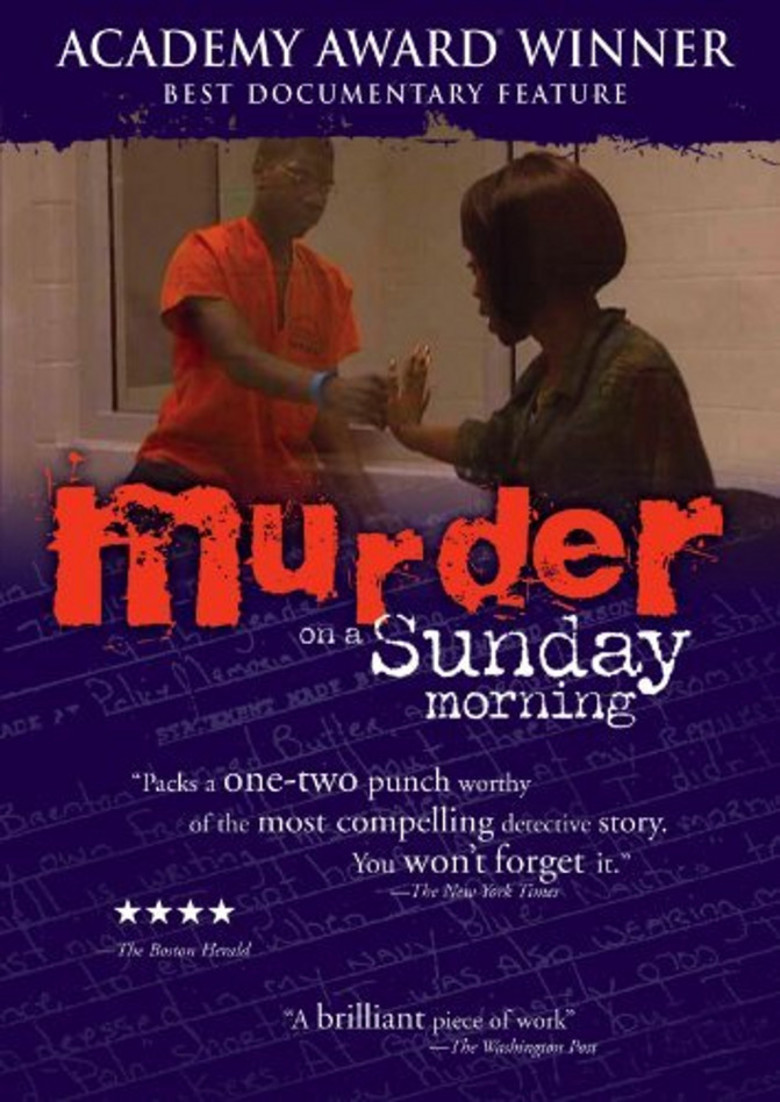
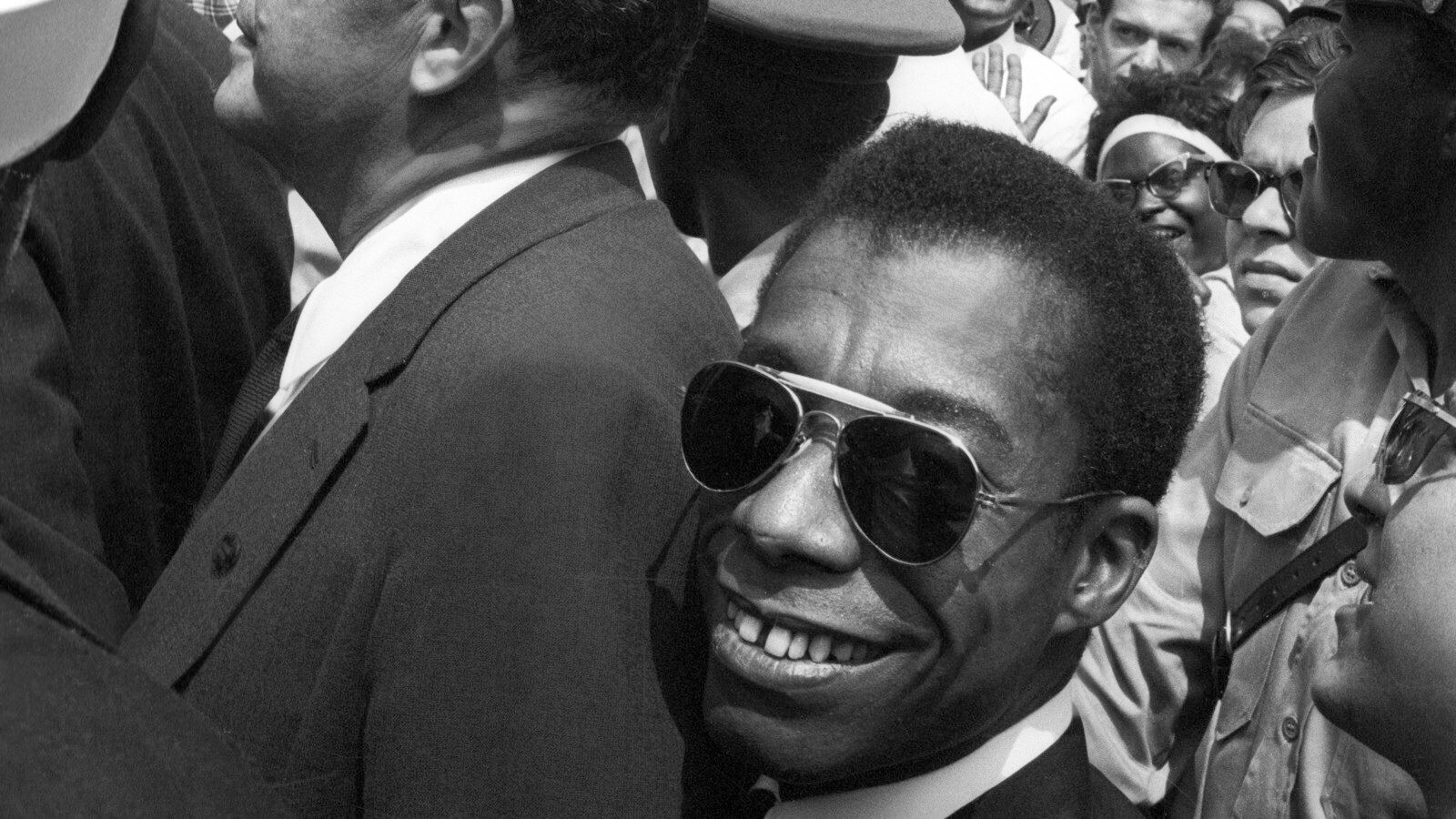
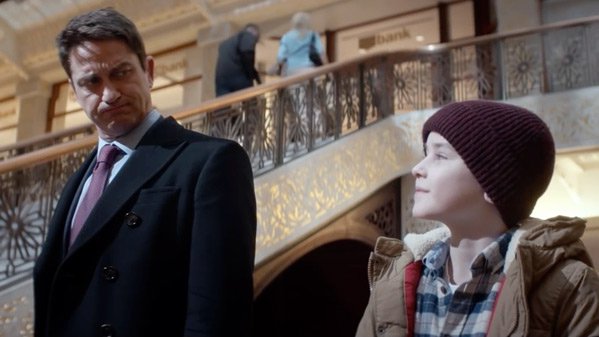
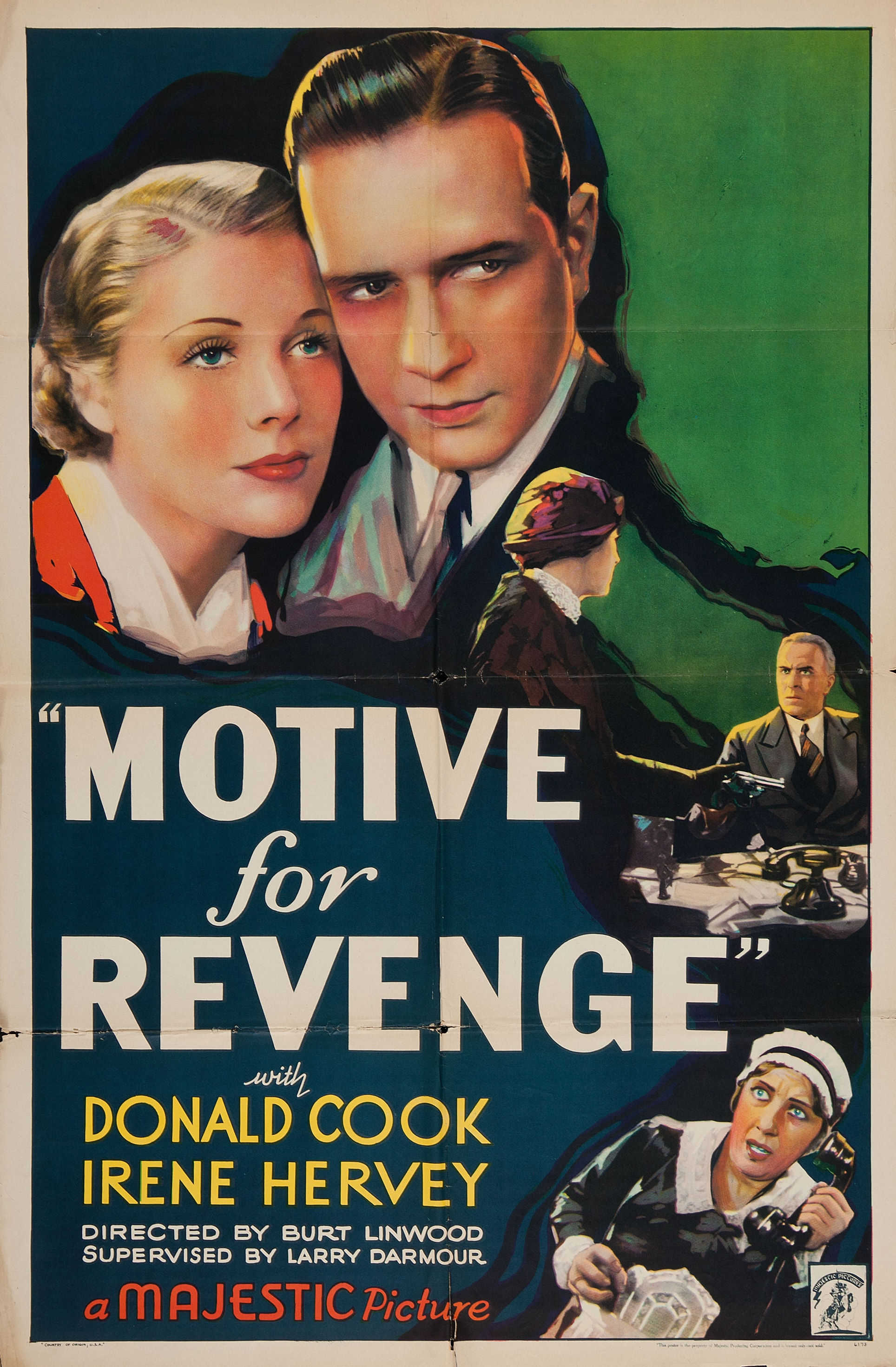
Murder on a Sunday Morning (2001)

Tags

, , , , , , , , , ,

Original title: Un coupable idéal

D: Jean-Xavier de Lestrade / 111m

With Patrick McGuinness, Ann Finnell, James Williams, Michael Glover, Dwayne Darnell, Brenton Butler, Melissa Butler, James Stephens

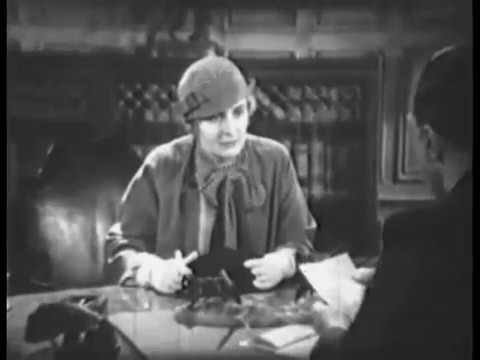
On May 7th 2000, outside a Ramada Inn in Jacksonville, Florida, a vacationing couple, James and Mary Ann Stephens, were accosted by a black man with a gun. Within seconds he had shot Mary Ann Stephens in the face, killing her instantly. He ran off with her bag, which contained her purse (which had around $1200 inside it), and other items. The murder took place at approximately 7:30 in the morning. A description of the assailant was broadcast to police vehicles in the area, with the warning that he was likely to be armed and dangerous. Around two and a half hours later, fifteen-year-old Brenton Butler was stopped by two officers in a police cruiser; he was on his way to a local Blockbuster Video store to drop off a job application. He was taken to the Ramada Inn where James Stephens identified him as the man who had killed his wife. Butler was duly arrested, and during his questioning by the detectives assigned to the case, he signed a confession. The case went to trial later on in 2000.

An open and shut case, yes? Certainly the Jacksonville Sheriff’s Department thought so. Thanks to James Stephens and the certainty he showed in identifying Butler as the killer, the police looked no further than the teenager they had in custody. Not so surprising you might say. And you’d wouldn’t necessarily be wrong. But Murder on a Sunday Morning highlights the dreadful way in which the detectives on the case, James Williams and Dwayne Darnell, along with a colleague, Michael Glover, did nothing to properly investigate the case, but did all they could to coerce Butler into making a confession (which, in reality, he never did). As a miscarriage of justice, it’s frightening. As a cautionary tale about the perils of “swift justice” it’s also alarming. As a vindication of “the best legal system in the world” (a direct quote from the trial judge, Wendell Waddell III), it’s on shakier ground. This is a case that should never have gone to trial. The police knew they didn’t have a case, the State Attorney knew they didn’t have a case, but the trial went ahead anyway.
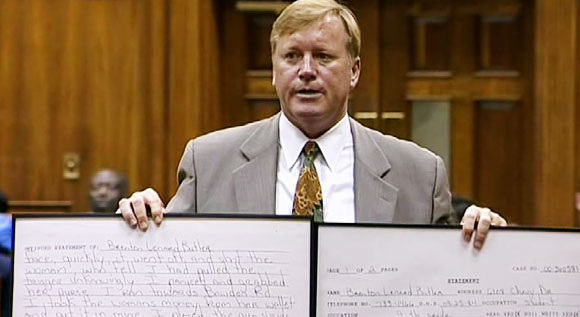
Thank heavens then, for Patrick McGuinness and Ann Finnell, two lawyers appointed by the Public Defenders Office to represent Butler at trial. It didn’t take them long to realise that the prosecution’s case was flimsy, and it didn’t take them long to work out a strategy for Butler’s defence that would be effective in exposing the police investigation for what it really was: non-existent. And thanks to Jean-Xavier de Lestrade’s excellent documentary, we can see how McGuinness and Finnell took on the prosecution’s case and dismantled it piece by piece. de Lestrade and his French crew were there from the time McGuinness and Finnell were appointed, all the way through the pre-trial period as they made their own enquiries, and then at the trial itself, recording the key exchanges that highlighted the police’s laissez faire attitude and their unwillingness to mount a proper investigation.

The movie adopts a straightforward, linear approach that allows the viewer to become increasingly involved with the case and the trial, and with Butler’s family as they try to come to terms with the enormity of what’s happened to their son. The courtroom scenes are mesmerising. McGuinness is like a quietly spoken pitbull, prodding and poking at the detectives and getting them to admit to their own inadequacies as police officers. Away from the courtroom, the chain-smoking McGuinness reveals his disdain for the detectives, and points out that if he has no respect for a police officer then he won’t address him by his rank; McGuinness wants that officer to be annoyed, to become antagonistic perhaps, because then they’ll trip themselves up and make his job that much easier. He doesn’t have to worry, or put so much effort in. Williams and Darnell and Glover – they do all the work for him. Their complacency is his best weapon.
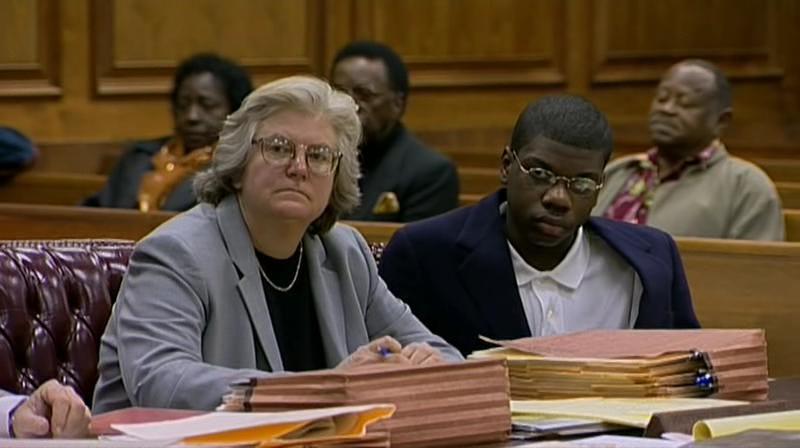
As well as its linear approach, the movie is free from any frills or unnecessary embellishments, and it’s this plain and simple way of addressing the material that makes Murder on a Sunday Morning such a compelling documentary. When the story is this good, you don’t need to make it overly dramatic or accentuate certain points to be effective, and de Lestrade is wise enough to let the story tell itself. As the depth and breadth of the police’s ineptitude is revealed, the viewer is likely to be shaking their head in disbelief and wondering how on earth Butler’s arrest and subsequent trial could have been allowed to happen in the first place. But de Lestrade and his team show you exactly how it happened, and why (hey, let’s make sure this murder doesn’t affect the number of tourists that visit each year), and they also ensure that nothing is either lost in translation or through Ragnar Van Leyden and Pascal Vernier’s rigorous editing. Each point that the defence raises in opposition to the prosecution’s case is recorded precisely and with as much impact as possible.

By the time the trial reaches its conclusion and the jury retires to consider its verdict, the movie has delivered a crushing blow to anyone who may have believed in law enforcement officers as fair-minded, dedicated, and professional (at least in the Jacksonville Sheriff’s Department). In exposing the failings of a murder investigation, and the officers who put more effort into railroading a fifteen-year-old into confessing to a crime he didn’t commit than they did looking for someone else who actually fitted the description James Stephens gave them originally, the movie proves compelling, gripping and powerful. And when the trial is over and the verdict is in, the movie has one more ace up its sleeve, a postscript that provides further evidence of the incompetence of the police.

Rating: 9/10 – sincere and expertly assembled, Murder on a Sunday Morning is absorbing, meticulous, moving, and profoundly shocking (count how many times Michael Glover lies under oath); the level of access that de Lestrade and his team had throughout the time that McGuinness and Finnell were involved is phenomenal, and even though this is a case that can be looked up on the Internet in seconds, it manages to keep you guessing as to what the verdict will be – and that’s no mean feat in today’s media-saturated society. (9/31)

One Eight Seven (1997)

Tags

, , , , , , , , , ,

aka 187

D: Kevin Reynolds / 119m

Cast: Samuel L. Jackson, John Heard, Kelly Rowan, Clifton Collins Jr (as Clifton Gonzalez Gonzalez), Tony Plana, Karina Arroyave, Lobo Sebastian, Jack Kehler, Jonah Rooney, Demetrius Navarro, Richard Riehle

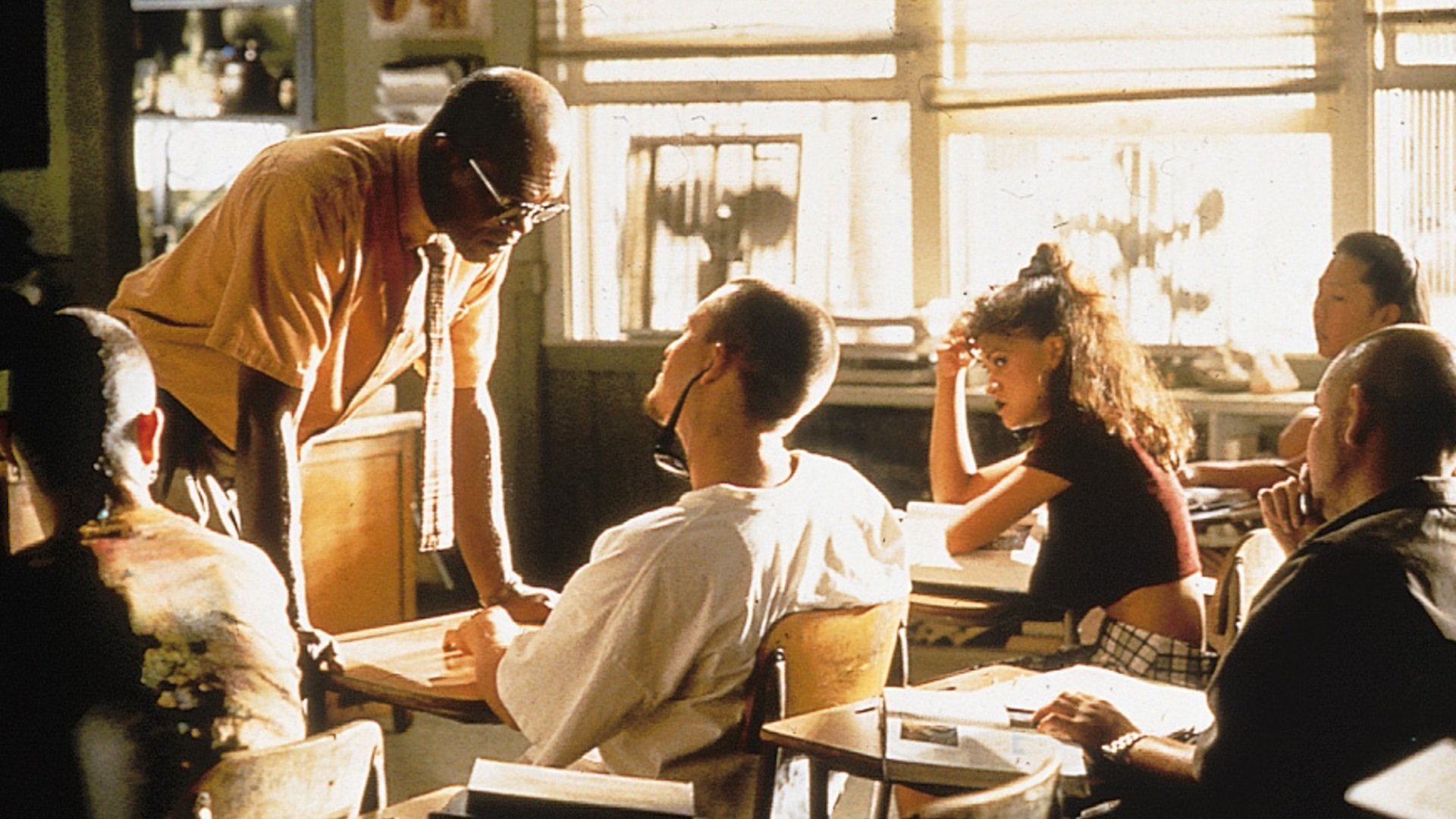
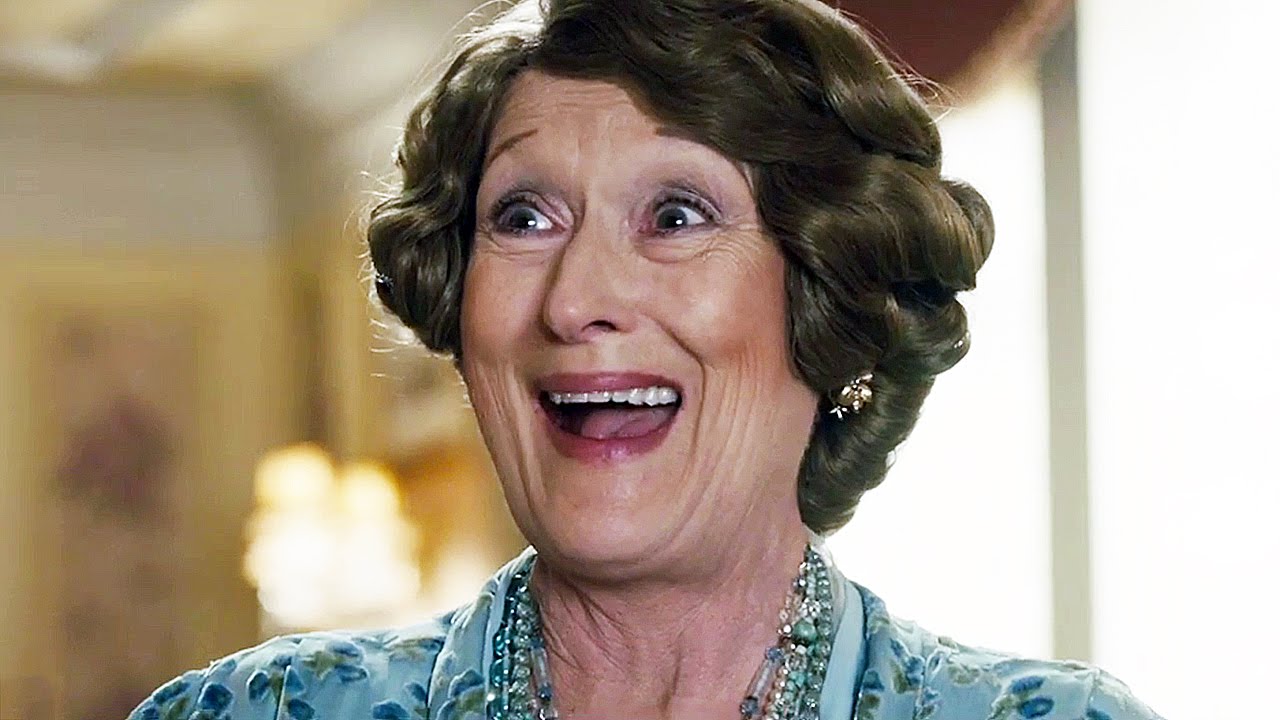
If you were a regular moviegoer in the mid- to late-Nineties then you’ll remember there was a spate of inspirational movies that revolved around teachers going into difficult schools and classrooms and making an impact on the lives of their – up ’til then at least – rowdy and supposedly unreachable pupils. In 1995 we had both Dangerous Minds with Michelle Pfeiffer, and Mr. Holland’s Opus with Richard Dreyfuss. 1997 also saw Good Will Hunting, with Robin Williams mentoring Matt Damon’s maths prodigy. And 1999 gave us Music of the Heart with Meryl Streep. All of these movies had one thing in common: they pitted a committed individual against both institutional and cultural apathy within the US education system. But in amongst all those valiant portrayals and feelgood endings, one movie took an opposite stance. (Can you guess which one?)

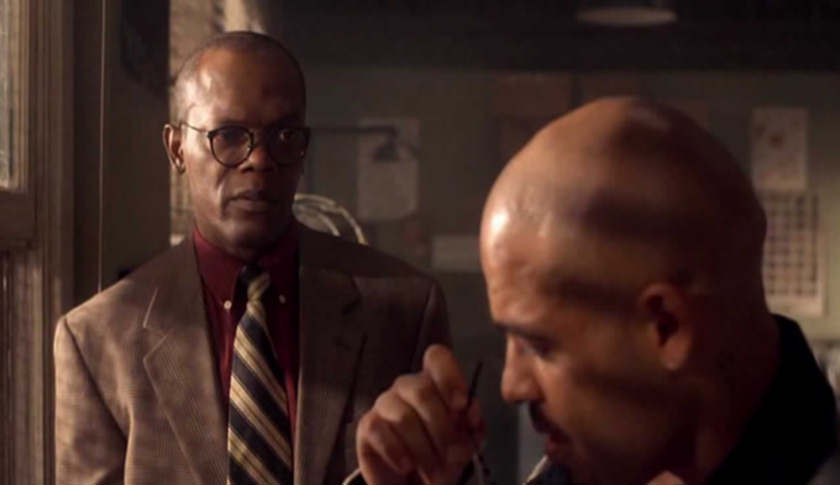
Trevor Garfield (Jackson) is a science teacher working at a Brooklyn high school. One of the students in his class stabs him repeatedly with a shiv after being given a failing grade. Fifteen months later, and Garfield is living in the San Fernando Valley area of Los Angeles, and working as a substitute teacher. He gets a call to sub at John Quincy Adams High School for four days. Day one is something of a disaster. He starts off in the wrong classroom, and when he’s in the right one he finds himself having to deal with a disrespectful student called Benny Chacón (Sebastian). Benny is the leader of a local Chicano gang that go by the name K.O.S. (Kappin’ Off Suckers). When another teacher, Ellen Henry (Rowan), tells Garfield that Benny has threatened her in the past, Garfield is sympathetic but doesn’t have any answers for her.

Garfield’s time at the school is extended, and Benny disappears. Garfield and Ellen start seeing each other, and things seem to be settling down until Garfield’s watch is stolen during a class. Knowing that the new leader of K.O.S., César Sanchez (Collins Jr), is responsible, he reports it to the school principal (Plana). The principal appears more concerned with avoiding any potential law suits than investigating or backing up Garfield’s claim, and Garfield has to take matters into his own hands in order to get his watch back. This sets in motion a war of attrition between Garfield and Sanchez that is brought to a halt when Sanchez is attacked one night and one of his fingers is cut off. Knowing that Garfield is responsible but unable to prove it to the police, it’s only a matter of time before Sanchez decides to get even with Garfield. However their home invasion-cum-execution plan doesn’t go exactly the way they planned…

At the end of One Eight Seven, a caption advises the viewer that “a teacher wrote this movie”. If it’s meant to convey a truthfulness to the events depicted in the movie then it misses that particular mark by a wide, country mile. There’s little about this movie that makes any sense, and even less that appears credible. Narrative problems begin to make themselves known in the opening scenes, with Jackson’s earnest and more than a little worried Garfield talking to a superior, Walter (Riehle), about the death threat he’s received from a student. Walter behaves like an ass, and refuses to take the threat seriously. It’s an unlikely scene, and while it’s there to make a point that will  become more relevant later on, it’s astonishingly clumsy. And it’s the first moment where the movie takes the viewer by the hand and lays everything out for them as if their ability to grasp the criticism that the schools system is managed by incompetent administrators is beyond them.

From then on, Scott Yagemann’s screenplay does its best to tick all the boxes relating to school-based clichés, and even throws in the talented student who lacks confidence/is bullied or abused (or both) (Arroyave), and who Garfield takes under his wing (he also agrees to tutor her at his home unsupervised, something that no teacher in his or her right mind would contemplate; more cynically, it’s an excuse for Arroyave to be shown naked). Equally problematic is the relationship that develops between Garfield and Ellen. On the one hand it’s yet another mixed race semi-romance that won’t go anywhere (they’re only allowed to kiss in this movie), and on the other, Ellen is there solely as the Voice of Reason, the one character who will remind audiences that vigilantism is a bad thing, and all while the movie promotes the opposite.

Because at its core, One Eight Seven isn’t about the schools system being in crisis, or how teachers are increasingly under threats of violence from alienated pupils. Instead it’s a movie taking a very provocative and very conservative stance. It’s saying, if you’re a teacher and you can’t get through to certain pupils because they aren’t responding to your teaching methods, then it’s okay to maim or kill them (the movie does try to make it seem as if Garfield’s innocent of harming Benny and Sanchez, but it’s too obvious that he’s not). It’s hard to believe that this is a recommendation being made by a former teacher (Yagemann worked for over seven years in the Los Angeles public schools system), but even if you dismiss it as a form of artistic licence, it still leaves a nasty taste in the mouth, and one that director Kevin Reynolds seems unaware of. Though not exactly known for making “message movies”, Reynolds still seems way out of his depth here, and the movie lacks consistency, with many scenes failing to engage the viewer or advance the plot.

For the most part the performances are adequate, with Jackson building up to the kind of vocal pyrotechnics that are expected of him even more these days, and Heard underused as usual as a fellow teacher who takes a concealed firearm to work (this isn’t challenged either; is Yagemann saying this is normal, or even okay?). Rowan has little to do beyond acting as a bundle of nerves, Plana is only required to behave obsequiously in a couple of scenes, and Arroyave is the Dangerous Minds alumni with a bigger, yet cruelly underwritten role. Only Collins Jr, for whom this was a break-out role and a break-out movie, injects any real passion or commitment into his portrayal, and his is the one performance that offers anything more than what seems to have been in the script.

Rating: 4/10 – flawed, and taking a reactionary stance that it tries to be ambivalent about, One Eight Seven crosses a line early on and never looks back to see if it should have crossed it in the first place; uninspired and leaden for long stretches, it’s a movie with an unpalatable message, and no idea (or intention) of providing a balanced viewpoint that might allow the audience to entertain any doubts about the issues under discussion. (8/31)

Fading Gigolo (2013)

Tags

, , , , , , , , , ,

D: John Turturro / 90m

Cast: John Turturro, Woody Allen, Vanessa Paradis, Liev Schreiber, Sharon Stone, Sofía Vergara, Tonya Pinkins, Bob Balaban

Question: when is a Woody Allen movie not quite a Woody Allen movie? Answer: when it’s written and directed by John Turturro… who’s had help from Woody Allen in assembling the script. A broad romantic comedy with a large helping of sympathy for its characters, Turturro’s fifth outing in the director’s chair is an engaging, likeable movie that has all the hallmarks of a Woody Allen movie, but then tweaks them in varied and surprising ways.

It begins with Turturro’s character, Fioravante, helping his friend, Murray (Allen), with the closure of his bookstore. Looking for a new business opportunity, Murray reveals that his dermatologist, Dr Parker (Stone), revealed to him during an appointment that she and a girlfriend of hers, Robbie (Vergara), are looking to engage in a ménage à trois. As Dr Parker is willing to pay for the experience, Murray suggests that Fioravante is the man they need, but he’s initially resistant to the idea. Eventually, Murray convinces his friend to take the “job” and contacts Dr Parker. She decides to meet Fioravante on her own to see if he will be suitable. He passes the test and soon, Dr Parker is recommending his services to some of her friends, while Murray is drumming up clients in his own fashion.

Fioravante’s success as an escort leads to an unexpected encounter. Through Murray, Fioravante meets the widow of a Hassidic Jew, Avigal (Paradis). They begin a tentative relationship that attracts the attention of Dovi, who works for Shomrim, a neighbourhood patrol. He has been in love with Avigal since they were teenagers, and he begins to follow her when she leaves the neighbourhood. While Fioravante and Avigal spend more and more time together, Dr Parker finally decides the time is right for the planned threesome to go ahead. But just at the point that Fioravante realises that he’s in love with Avigal, Dovi grabs Murray off the street and takes him to face a Rabbinic court. His involvement with Avigal is questioned, and it takes an unexpected intervention to resolve matters once and for all.

From the very beginning, Fading Gigolo is a genial, simple, romantic comedy drama that does what it does with equanimity, and which never tries to go beyond its basic remit. It’s this self-awareness that helps the movie immensely, and while the characters are largely stereotypical and written in broad brush strokes, Turturro’s direction encourages his talented cast to portray them with small, idiosyncratic details that help enhance the material as a whole. Turturro, both as director and actor, is generous with his cast, and his lack of selfishness in front of the camera is reflected in his largesse behind it.  Turturro also encourages his cast to underplay their emotions and provide more subtle character beats than would be expected (Stone in particular is good as a confident professional whose vulnerability is revealed during her first meeting with Fioravante). There’s a lot going on below the surface a lot of the time, and more is relayed to the viewer by the characters’ expressions than by the dialogue.

This allows the viewer to respond to the material to a much greater degree than might be expected. As a result, the movie gains increasing credibility as a romantic drama, and the cast respond accordingly. As it slips off its comedic mantle in favour of dealing properly with the emotional and relationship issues that have arisen, Turturro ensures each development is accorded the relevant amount of sincerity and pathos (except for Balaban’s appearance as Murray’s lawyer at the Rabbinic court, a turn that is resolutely out of place, and is the one major lapse in Turturro’s direction). The emerging friendship between Fioravante and Avigal is treated with a tenderness and a subtlety that mirrors the mutual uncertainty that both are feeling, and Paradis perfectly expresses the sadness and the hope that Avigal feels as both a widow and a woman. In comparison, Turturro keeps his performance reined in, barely moving, and keeping his dialogue to a minimum, and yet still expressing his character’s anxieties and sense of anticipation. The outcome of their relationship is never in doubt – such is the entirely foreseeable nature of the screenplay – but when it comes it, it’s a brief and affecting moment that in a very succinct fashion, highlights exactly why the outcome is what it is.

Allen’s participation is unusual in that he rarely appears in other people’s movies these days – the last time was in Alfonso Arau’s Picking Up the Pieces (2000), which also featured Stone – but what isn’t a surprise is that he plays yet another minor variation on the neurotic Jewish intellectual-cum-nebbish he’s been playing for over fifty years. He does infuse the role with a desperate, greedy quality we haven’t seen before, but otherwise it’s business as usual. Fortunately, Allen’s presence doesn’t overwhelm things, and his supporting role is integrated effectively into the main storyline. Again, there are many similarities between this movie and others that Allen has made over the years, enough perhaps to make him feel comfortable in taking on the part. But though his involvement in the script has been confirmed by Turturro, this isn’t a movie that anyone could say Allen directed. Turturro has his own style, and he approaches the characters in a very different way from the way that Allen does. And faced with such a predictable plot to begin with, that Turturro does overcome it is a sign of the actor’s confidence in being a director.

Rating: 7/10 – funny and dramatic in equal measure, Fading Gigolo never loses sight of what’s important and at the heart of its tale: how much we want to connect, and how much we’re willing to give of ourselves in order to make that connection; Turturro makes it all look relatively easy, and does so by remembering that every character (even Murray) is looking for love in some form or other, and that even if it’s provided by an escort, it can still be fulfilling and/or the right choice. (7/31)

The Ballad of Jack and Rose (2005)

Tags

, , , , , , , , , ,

D: Rebecca Miller / 107m

Cast: Daniel Day-Lewis, Camilla Belle, Catherine Keener, Ryan McDonald, Paul Dano, Jason Lee, Beau Bridges, Jena Malone, Susannah Thompson

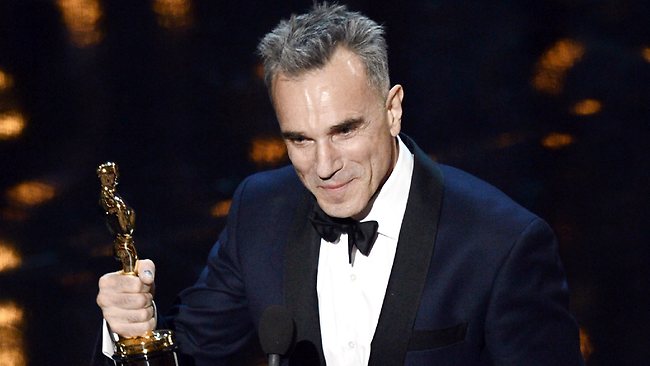
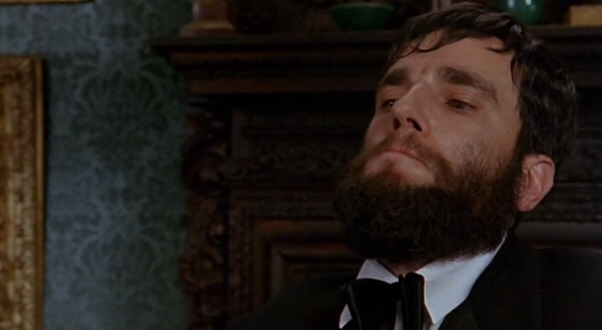
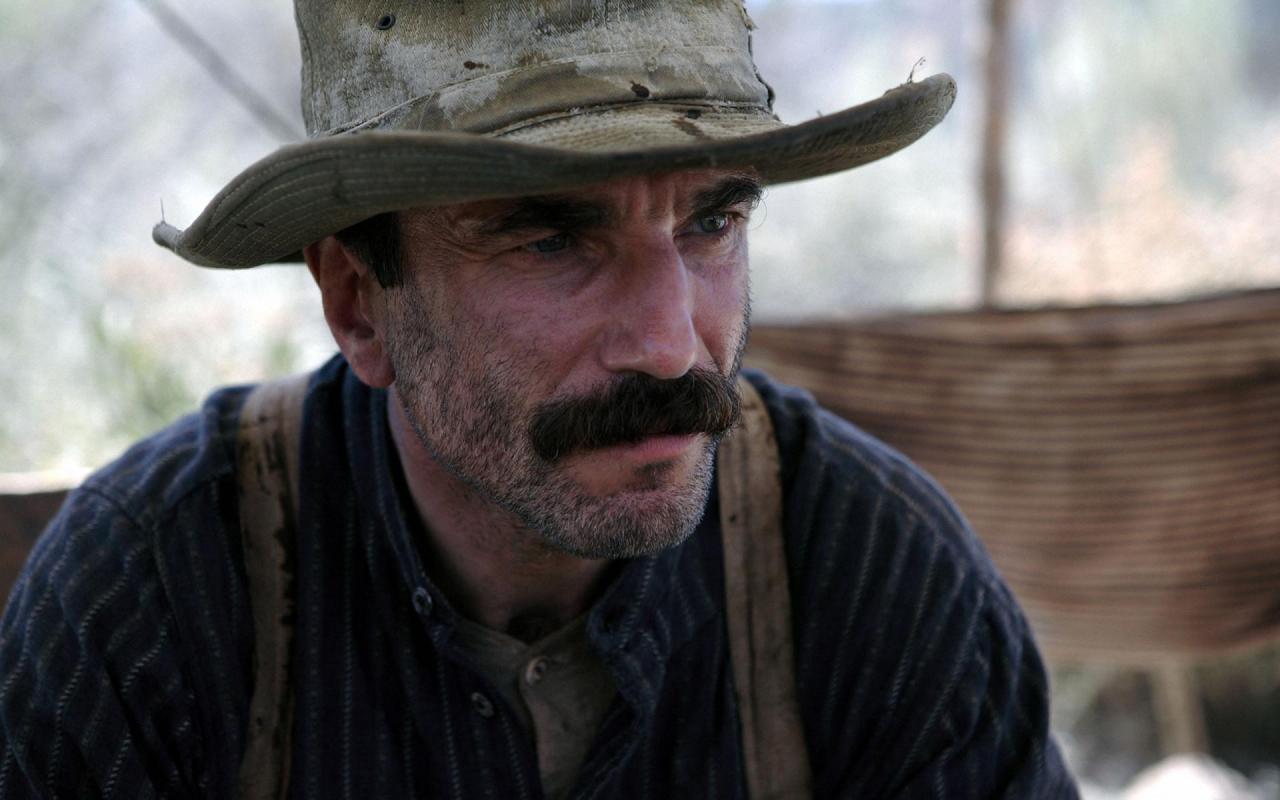
When Daniel Day-Lewis announced his retirement from acting recently, it’s likely that many of us felt the need to revisit one of his movies and remind ourselves of what a prodigious acting talent he possesses. That being said, it’s unlikely that anyone decided to watch The Ballad of Jack and Rose, a somewhat dour, slow-paced drama that he made between Gangs of New York (2002) and There Will Be Blood (2007). It’s a movie that benefits from Day-Lewis’s usual commitment to his roles, but aside from a grating Scottish-US accent and obvious weight loss late on, his role as Jack is perhaps his most low-key performance to date.

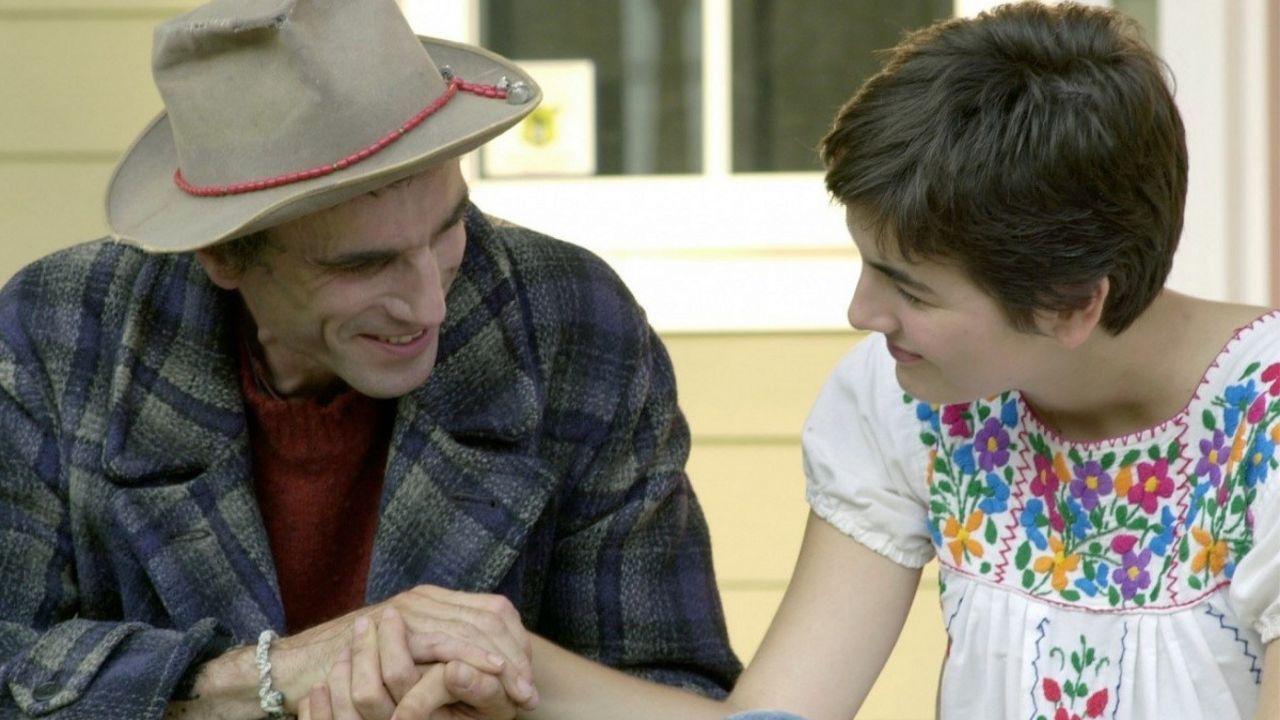
The movie is set in 1986 on an island off the East Coast of America (actually Prince Edward Island). Jack (Day-Lewis) is an environmentalist who first came to the island in 1967 when it was home to a hippie commune. Now, only Jack and his teenage daughter, Rose (Belle) live at the commune, which is largely rundown. Jack has a heart problem, and is trying to prepare Belle so that she can move on from the island and begin living her adult life. But Belle is resistant to the idea, and tells Jack that when he dies she will commit suicide because she doesn’t want to live without him. Looking for another way of getting Belle to interact with the wider world, Jack arranges for the woman he sees on the mainland, Kathleen (Keener), to come live on the island with them, and to bring her two children, Rodney (McDonald) and Thaddius (Dano), with her.

Their arrival upsets Belle immensely, and she withdraws from Jack while finding a friend in Rodney. Jack has a mission of his own to deal with, though, in the form of property developer Marty Rance (Bridges), who is building several houses on an adjoining part of the island. Jack is adamant that one of the houses is being built on government protected wetland, and he does his best to halt the building work. Meanwhile, the adjustments that everyone is having to make are beginning to cause friction. Rose’s feelings become murderous towards Kathleen while she also tries to get Rodney to sleep with her. He rebuffs her, and though Rose doesn’t like him, she turns to Thaddius. When Jack realises what she’s done he becomes angry with her, and tells Thaddius he has to leave the next day. But that night, an incident happens that causes Jack to rethink things in relation to Kathleen’s presence on the island, and following a further incident, his relationship with Belle.

For many, The Ballad of Jack and Rose will be about the performances rather than the story, with particular attention paid to Day-Lewis and Belle’s easy chemistry. After so many roles where Day-Lewis has been required to access his more macho side, seeing him here in a more vulnerable and sympathetic role acts as a reminder of both his range and his skill as an actor. Jack is a man of conviction who lacks self-doubt in the decisions he makes. And if Rose ever questions one of his decisions, his reply is the same: “new chapter”. He refers to the arrival of Kathleen and her sons as an experiment, but this is a sop to Rose’s animosity towards the idea, and he expects everything to go well without really thinking through the potential consequences. Day-Lewis portrays Jack’s oblique, trusting nature with a quiet yet detached authority that’s in keeping with the character’s attitude to those around him. He’s an instigator and a promoter but aside from Rose, he keeps himself aloof from other people. Even with Kathleen there’s a detachment that refuses to take her feelings about being on the island into consideration.

As Rose, Belle excels as Jack’s conflicted, emotionally inexperienced daughter whose need for his attention has grown into something unhealthy. Early on there are hints that Rose has inappropriate feelings for her father, but thanks to Belle’s ability to mask her character’s feelings whenever Rose is challenged about her behaviour, any suspicions remain fleeting. Her attraction for Rodney arises out of sexual jealousy, and her subsequent liaison with Thaddius is borne out of need and Rose’s capricious nature. Rose is very similar to her father in that she has assimilated his lack of foresight, and inability to consider any negative consequences for his actions. As such, she operates with no regard for other people’s feelings, and if she wants to punish him, even her father’s. As Rodney says to Rose at one point, “You’re innocent. Innocent people are just dangerous.” Belle’s portrayal of Rose as an emotionally stunted young woman whose development has stalled thanks to living in virtual isolation with her father is earnest and sagacious; it’s a shame her career hasn’t been more successful.

Other than McDonald’s sympathetic turn as Rodney, the rest of the performances aren’t as well crafted as those of Day-Lewis and Belle, but that’s due to Miller’s script and the ways in which she loses interest in them, picks them up, and then forgets all about them again. Miller’s script loses its focus from time to time, and as a result, it’s not as gripping in places as it might have been, and some of the arguments between Jack and Rose sound like the petulant exchanges you’d expect from teenagers. In the end, Miller resolves everything a little too neatly and in doing so requires Jack to make a complete volte face, something that Day-Lewis manages somehow to make convincing – even though in dramatic terms it isn’t. These and other aspects of the script’s construction stop the movie from being as compelling as it should be, and allied with Miller’s erratic framing, make this a movie experience that only partially succeeds in its somewhat limited ambitions.

Rating: 6/10 – if The Ballad of Jack and Rose had remained a two-hander throughout then it might have been able to offer better rewards for its audience, but as it is, it falls short of being entirely involving; too many distractions rob the movie of any lasting impact, leaving Day-Lewis and Belle’s contributions and Ellen Kuras’ splendid cinematography to save the day. (6/31)
CBGB (2013)

Tags

, , , , , , , , , , , , ,

D: Randall Miller / 101m

Cast: Alan Rickman, Malin Akerman, Justin Bartha, Richard de Klerk, Johnny Galecki, Kyle Gallner, Ashley Greene, Rupert Grint, Estelle Harris, Taylor Hawkins, Ryan Hurst, Stana Katic, Donal Logue, Joel David Moore, Ahna O’Reilly, Freddy Rodriguez, Mickey Sumner, Bradley Whitford, Josh Zuckerman

When a movie begins by telling its audience that punk began, not in the UK, but in a basement in New York in 1975, then you can be sure that the story you’re about to be told isn’t going to be too concerned with getting all the details absolutely correct. Admittedly, that’s the prerequisite of any movie portraying real events, but when it takes the time and effort to make such a statement (and such a questionable one at that), then it does tend to make the viewer question the validity of anything else that’s depicted. (That said, if you pay attention to the closing credits there’s an acknowledgment relating to Iggy Pop that’s more than a little relevant to any notions of fidelity to the truth.)

There’s a saying that, “If you remember the 60s, then you weren’t really there”. In truth you could substitute “the 60’s” for “CBGB’s” and the saying would retain the same meaning. And with the screenplay by director Randall Miller and Jody Savin not having been based on an article or a book or a memoir, how factual it all is becomes very much the issue. Because as a remembrance of (mostly) good times past, CBGB is a massive disappointment. This should have been a celebration of a period when underground music was making a bigger and bigger impact on the wider music industry, and helping to shape the future for emerging artists. Instead it quickly defaults into telling a piecemeal tale where CBGB’s owner, Hilly Kristal (Rickman), continuously mismanages the club to the point of near-bankruptcy, scenes revisit the same issues time and time again, characters pop in and out of the narrative with little reference as to why they’re there, and the viewer gets to play Spot the Famous Band Before They Were Famous. And that’s about it.

As an evocation of the late Seventies/early Eighties, CBGB rarely strays far enough away from its Bowery location to give any indication of the musical and cultural changes that were going on elsewhere, and relies on newspaper articles being read out to provide any sense that the club is having any greater impact than at a local level. As a result, the movie maintains an insular and largely passive tone that makes even the more dramatic events – a New York shakedown, band The Dead Boys crashing their tour bus – feel bland and uninteresting to watch. Part of the issue is with Kristal himself, who is portrayed as a man travelling the path of least resistance, and who seems passively intent on ruining the most successful business he’s ever had (when we meet him he’s in bankruptcy court for the second time). While his business partner, Merv (Logue), and daughter Lisa (Greene), continually berate him for ignoring the basics of owning a club (like paying the rent), Kristal floats above it all, oblivious to the risks to the club and focusing on the bands coming through his doors looking for a stage on which to express themselves.

With the main storyline – how did Kristal manage to keep the club open for so long? – failing to provide anything meaningful for the viewer to connect with, it falls to the music to add some flair and excitement to proceedings. However, despite the level of talent that appeared at the club over the years, and despite some very obvious choices – Television, Talking Heads, Blondie, Ramones, The Police – the musical interludes lack for energy, even when Justin Bartha throws himself around as Dead Boys’ singer Stiv Bators. When even the music that’s meant to be celebrated can’t make a difference to things then it’s time to close the club (or shutdown the movie) and send everyone home.

Thanks to the script the performances have no option but to range from adequate to perfunctory. Rickman is on good form in terms of expressing Kristal’s blasé attitude, but it ends up being the whole performance. Everyone else is a secondary character, with Logue, Greene and Hawkins (as Iggy Pop) faring best, and the rest contributing what are mostly extended cameos. Rodriguez is the junkie Kristal gives a kitchen job to, Grint looks out of place as Dead Boys’ bassist Cheetah Chrome (who really cameos as a cab driver), Harris is Kristal’s mother who when told Stiv Bators has been known to jerk off into Hilly’s Chili remarks that she’s “had worse in her mouth”, and Akerman is so stiff as Debbie Harry you’d be happy for the real thing to step in and take over (and despite Harry being seventy-two). When you have such a great cast and they’re given so little to work with, it definitely qualifies as a waste.

As alluded to above, the fault lies squarely with Miller and Savin’s script, and Miller’s direction. With the screenplay lacking purpose, and much of the dialogue sounding like the co-writers’ did a first pass and kept to what they’d written, there are too many occasions where what’s being said seems trivial and/or unlikely given the circumstances on screen. Miller seems unable to inject any verve or energy into proceedings, and the movie trails along in a functional, pedestrian way that saps what little vigour the movie does possess. By the movie’s end it’s hard to work out what the motive was behind making it, but if it was in tribute to Hilly Kristal and his championing of the underground music scene, then it’s unfortunate that his influence is best exemplified by an end credits sequence that shows real-life footage from the 2002 Rock and Roll Hall of Fame Induction Ceremony. Here we get to see Talking Heads accepting their award and inviting Kristal up on stage with them, and then thanking him for his support. Sadly, it’s the most poignant and moving moment in the whole movie.

Rating: 4/10 – lacking a clear purpose and repeating itself too often, CBGB at least has a killer soundtrack to fall back on – and thank heavens for that; less a biopic than a slow trawl through a defining era in the history of rock music, the movie spends too much time trying to define the iconic nature of the club, and in doing so, fails to portray adequately its influence on the wider music scene. (5/31)
The Bumblebee Flies Anyway (1999)

Tags

, , , , , , , , , , ,

D: Martin Duffy / 96m

Cast: Elijah Wood, Janeane Garofalo, Roger Rees, Joe Perrino, George Gore II, Rachael Leigh Cook, Jeffrey Force, Oni Faida Lampley

In pretty much every actor’s filmography there’s usually at least one movie that hardly anyone ever sees, and slips past audiences like a whisper in the night. These movies are often ones that have been made quickly and cheaply, with mid-range stars either on their way up the Ladder of Stardom, or heading back down it. Sometimes they’re movies that have been made for an international market, with said mid-range stars heading up a European or African or Far Eastern cast, and sometimes only appearing for maybe a third of the movie’s running time. And sometimes, those mid-range stars have taken part as a favour to the director, or a producer, or someone else attached to the project. In essence, they’re jobbing gigs, a somewhat easy payday for the actor(s) concerned, and one that they’ll look back on only if pressed.

It’s hard to determine if there really is a market for these kinds of movies. There are enough of them out there to prove that people are willing to invest in them, but often it’s hard to determine who is the target audience (aside from any fans of the stars that appear in them). And one such movie is The Bumblebee Flies Anyway, a feature that appeared at the Deauville Film Festival in September 1999, opened briefly in the US in January 2000, and hasn’t been seen in cinemas anywhere in the world since. If you’re one of the few people who saw it way back then, then you probably already know the reason why it had such a limited exposure. And that’s because it’s bad, so very, very bad.

Adapted from the novel of the same name by Robert Cormier, The Bumblebee Flies Anyway has all the appeal of the kind of car crash it opens with (or actually, that it doesn’t open with; there isn’t the budget to stage a proper car crash). Poorly staged and leaden-footed throughout, the movie is achingly stilted, with careless attempts at characterisations, and a set up that nearly disappears under the weight of its own inconsequence. This is an adaptation that makes less and less sense the longer it goes on, and Jennifer Sarja’s screenplay sacrifices dramatic tension in favour of soap opera theatrics at nearly every opportunity, while also leaving the cast stranded on a desert island of inane dialogue. (This is Sarja’s only credited screenplay, and it’s not difficult to work out why.)

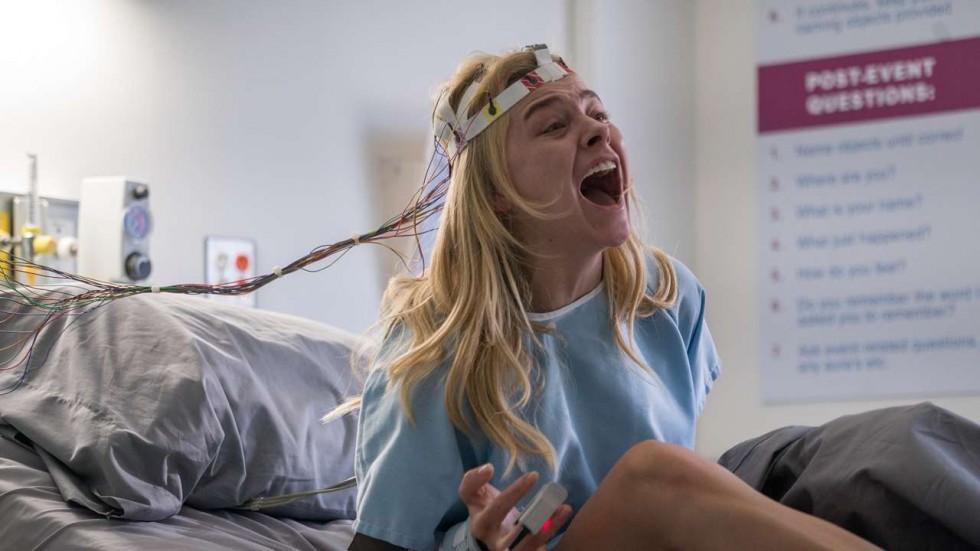
The story itself is puzzlingly obscure, with Elijah Wood’s car crash amnesiac, Barney Snow (no, really) taking part in a medical experiment designed to help him deal with his involvement in the crash and move on with his life. But he’s receiving his treatment in a medical facility for terminal cancer patients, all of whom are teenagers or younger (well, all actually means three). Barney is kept on medication (or “the merchandise” as he keeps calling it for no apparent reason), and is sedated every now and again and taken to a basement room where he undergoes some form of regressive hypnotherapy (which he doesn’t know about). Meanwhile he makes friends with bone cancer sufferer Mazzo (Perrino), kidney cancer victim Billy (Gore II), and undisclosed cancer patient Allie (Force). The movie tries to present their respective illnesses with as much poignancy as it can, particularly Mazzo’s, but does so in a way that makes Billy and Allie look like poster boys for cancer remission. As Mazzo gets worse and worse, he receives a visit from his twin sister, Cassie (Cook). Concerned about her brother she naturally turns to Barney for comfort and they begin a tentative romance (well, what else are they likely to do?).

But Barney has his own problems. He has a memory of the car crash and a woman stepping out in front of his car that just won’t go away. He thinks the woman is his mother but he can’t remember her name. When he does he persuades Billy to help him locate her address, and gets Cassie to drive him there. The visit doesn’t go as planned, and subsequent treatments by Barney’s doctors, Harriman (Garofalo) and Croft (Rees), cause further memories to surface, and in them, Barney learns about the basement room and the inherent contradiction that exists at the heart of his treatment. Soon he has a difficult choice to make, one that will have far-reaching consequences whichever way he decides. But before then he makes another difficult choice, and this time it’s one with the potential to affect everyone around him.

Everything about Barney’s predicament and the so-called medical facility that he resides at is so ridiculous it’s hard to take any of it seriously. Garofalo’s caring doctor advises Barney not to get attached to Mazzo et al, but he finds himself drawn into their worlds almost against his will, and not caring about them doesn’t become an option. None of it however, is compelling or dramatic enough to make the unsuspecting viewer care about any of them, and the cast find themselves endlessly bogged down in scenes that should be affecting but which are so flatly directed by Duffy that they inspire ennui instead. Indeed, the combination of Duffy’s pedestrian direction and Sarja’s lumbering screenplay leaves Wood and his co-stars struggling to inject any purpose into their performances, and any meaningful exchanges between the characters are undermined before they’ve even begun. It all leads to a rooftop “showdown” that is laughable instead of sincere, and insufferably trite instead of emotionally haunting. Not the best outcome for a movie that already has enough strikes against it to warrant an enquiry into just how it received a showing at Deauville in the first place.

Rating: 3/10 – a perfect example of why some movies get the barest of releases, The Bumblebee Flies Anyway is dramatically inert from start to finish and offers proof (if any were needed) that the presence of a “name” actor is no guarantee of quality; shoddy in every department, and with platitudes masquerading as dialogue, it’s not even fascinating in an “oh no they didn’t” kind of way (which might at least make it halfway bearable to watch). (4/31)

Multiple Maniacs (1970)

Tags

, , , , , , , , , , , ,

D: John Waters / 96m

Cast: Divine, David Lochary, Mary Vivian Pearce, Mink Stole, Cookie Mueller, Edith Massey, Rick Morrow, Howard Gruber, Paul Swift, Susan Lowe, George Figgs

Some movies that garner a reputation for being “obscene” or “perverted” upon release generally don’t have a long shelf life, and soon fade not into obscurity exactly, but rely on gaining a cult following to ensure they’re still watched and talked about. And any such movie certainly won’t expect to be critically lauded, or attain cult status amongst those who’ve seen it unless it has something that no one other movie can offer, and John Waters’ Multiple Maniacs has that something: the amazing, human tornado of strident perversion called Divine.

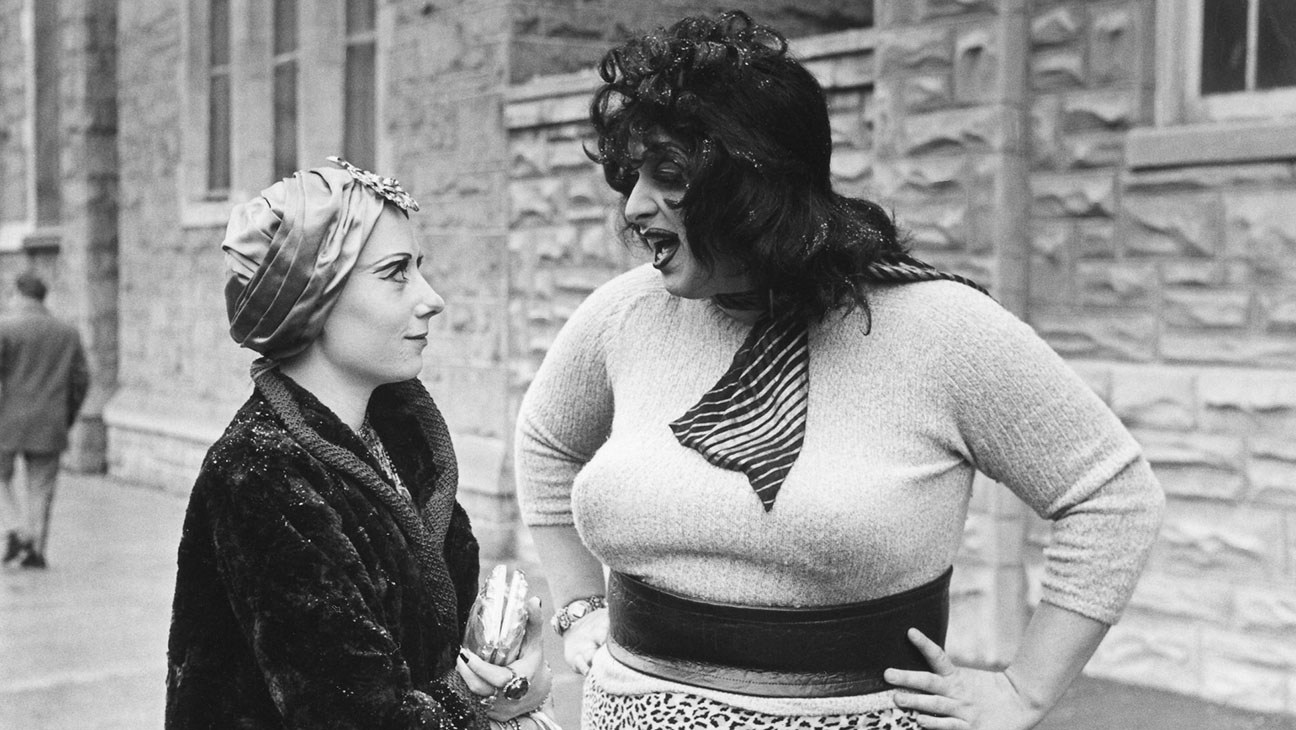
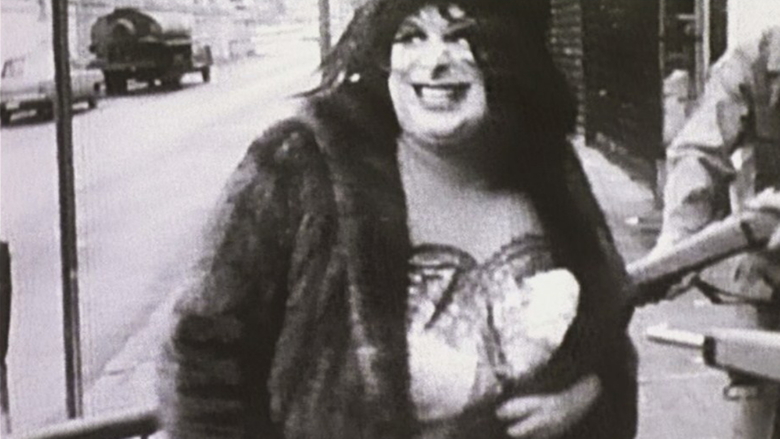
Waters’ early work – this is his second feature – is synonymous with the rise of Harris Glenn Milstead as the merciless, murderous-minded, savagely anti-establishment grotesquerie known as Divine. This is a movie that puts itself out there as being counter-culture entertainment, a bargain basement, shot-on-16mm trash bag of arch religious references, austere social commentary, and documentary-like footage. It doesn’t look or feel like a standard issue movie because Waters has deliberately chosen to shoot it in such a diffuse, non-professional way that it often looks like a collection of outtakes strung together for convenience rather than a truly finished product where everything was shot as planned and nobody forgot their lines in the middle of a scene (which happens here a lot). There’s also a lot of guerrilla moviemaking, as outdoor scene after outdoor scene reveals a member of the public looking on in confusion and/or horror at what they’re witnessing (Divine in various states of undress and challenging middle class perceptions of good taste).

Beneath all the amateur hour shenanigans and louche bravado of its characters though, Waters’ ode to unrestrained perversion is touchingly conservative in its approach, and nowhere near as bizarre as it wants you to believe. Part of the appeal of Waters’ movies in the early Seventies is their deliberate inversion of public, social and moral standards, and the ways in which Waters’ gleefully attempted to subvert the cultural values of the time. Waters was only twenty-four when he made Multiple Maniacs, but it feels like a movie made by a rebellious teenager taking pot shots at his parents (the religious elements) and the passive determinism of the denizens of his home town of Baltimore. It’s no wonder Waters wants to shake things up and challenge the status quo; he’s a young man still working out his issues from growing up.

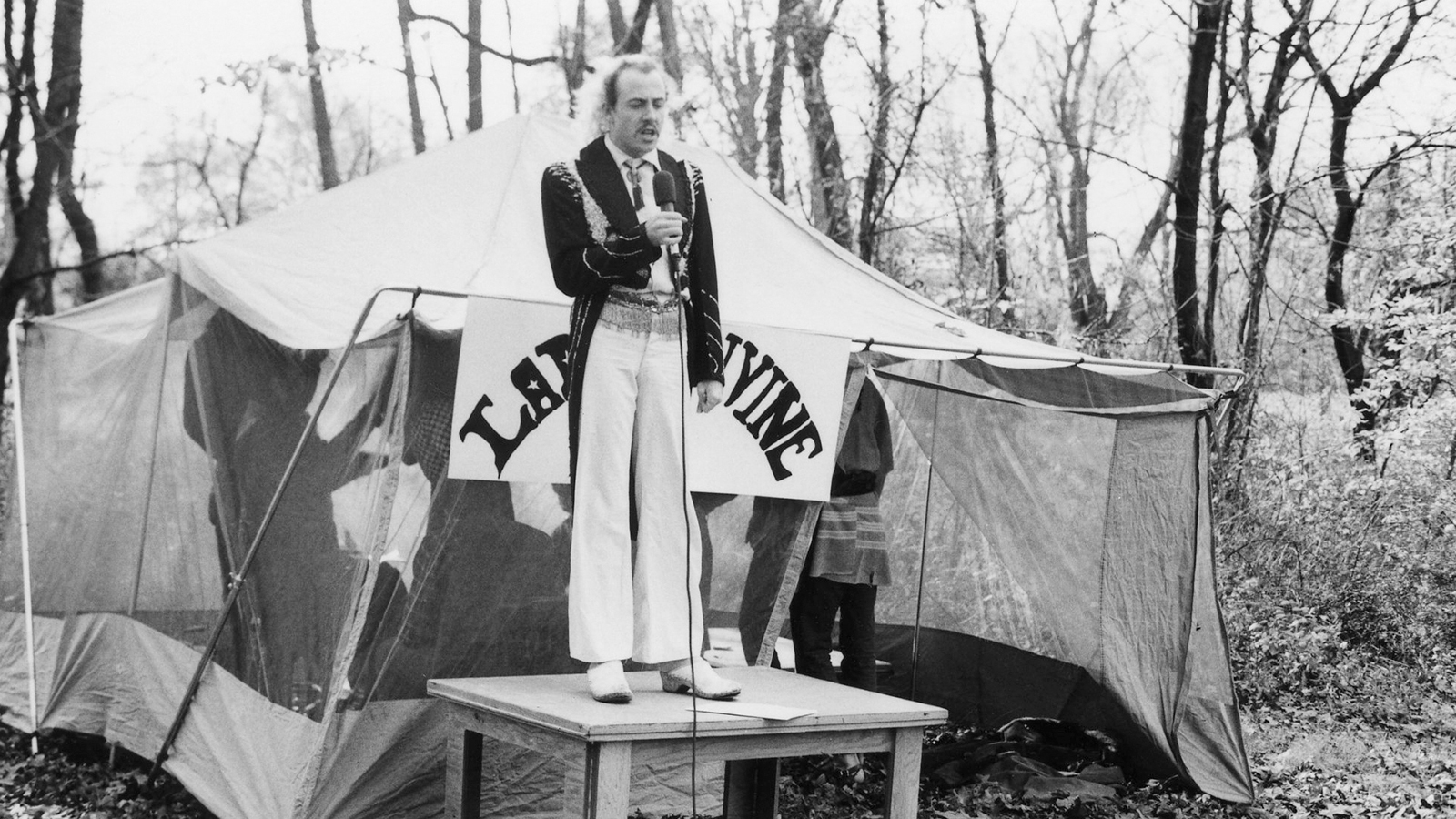
In Multiple Maniacs, this kind of celluloid psychotherapy finds its best and truest expression in the form of Lady Divine (Divine, naturally) and her Cavalcade of Perversion, the travelling freak show she fronts as a way of making money (by robbing the poor fools who are persuaded to see the show), and espousing her contempt for society. Lady Divine surrounds herself with “assorted sluts, fags, dykes and pimps” because they share her disdain for more traditional adult roles. They’re the protesters and the dissenters, acolytes who share her (and Waters’) disapproval at the way society treats the disenfranchised and the socially excluded. Lady Divine would kill them all if she could, but Waters’ Catholic upbringing precludes such extreme measures, and though his transgressive alter ego does kill on a handful of occasions, and even feasts on the entrails of one of her victims, when she’s finally consumed by a murderous mania, the most violent act she commits is to take a sledgehammer to a car.

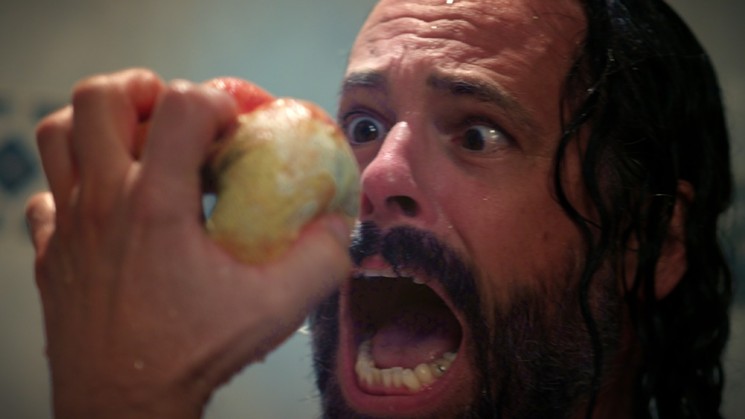
The movie’s more violent excesses are leavened by unintentional moments of levity, such as when Lady Divine attempts to stab her new friend, the Religious Whore (Stole), and begins her attack by stabbing the air above the character’s head, an obvious concession to the fact that Divine is wielding a real knife and doesn’t want to hurt his co-star. And towards the end, when Lady Divine is chasing dozens of people through the streets of Baltimore, her terrifying creature moment is undermined by the number of faces that are displaying laughter instead of terror. But through it all, Waters makes no apologies for the excesses he portrays, and he burns any religious bridges he may have had access to by juxtaposing Christ and the Stations of the Cross with Lady Divine being anally pleasured by a rosary-wielding Mink Stole. It’s profane and it’s crass but it’s still just Waters railing against the formalities and restrictions imposed by organised religion.

When Waters isn’t expressing his dissatisfaction with contemporary morality, he’s holding up a mirror to contemporary issues as well, with mentions of the murder of Sharon Tate – Lady Divine tortures her boyfriend, Mr David (the splendid David Lochary), with the possibility he was involved in her murder – and various references to the war in Vietnam. And he’s surprisingly waspish when it comes to notions of the nuclear family, with Lady Divine doting on her somewhat promiscuous daughter, Cookie (Mueller), while submitting to the attentions of glue-sniffing rapists, Miss Stole and her beads, and a giant lobster (Lobstora) that appears out of nowhere and sets her on the road to sexually-induced hysterical violence. And the idea that Mr David could be seeing another woman, Bonnie (Pearce), whips her into a hypocritical frenzy (and allows Waters’ favourite Edith Massey to provide her first mangled performance in one of his movies).

The dialogue is suitably terse and aggressive, as befits a group of characters who are angry at themselves and the wider world, and though the performances are what you’d have to charitably regard as “authentically naïve”, there’s a rude energy to it all that more than makes up for the deficiencies of shooting on such a low budget. Waters opts for some uncomfortable close ups to highlight the pains and suffering felt by his characters, and doesn’t always worry if those images are distorted or out of focus (one gets the feeling a lot of scenes and shots were the first, and only, take). This adds to the documentary tone the movie adopts and exploits from time to time, and shows that Waters was very much aware of the concept of cinema verité when he was putting his movie together. All of which makes Multiple Maniacs a more heartfelt and poignant movie than may be expected, and shows that, despite all the attempts at shocking its audience, the movie is as much an ode to treating people of all walks of life fairly as it is about exposing the social injustices that stop this from happening. This leaves John Waters looking very much like a social reformer – and who would have thought that?

Rating: 8/10 – a trial by fire for anyone unfamiliar with Waters’ early work, Multiple Maniacs nevertheless works on many levels and is unremittingly earnest in its exposure of small-minded hypocrisy amongst middle-class America and its apologists; for all the sturm und drang on display though, it’s a tract that preaches acceptance but only insofar as you conform to the way society expects you to behave – and if you don’t, then society will call out the National Guard. (3/31)

The Human Centipede (First Sequence) (2009)
Tags

, , , , , , , , , ,

D: Tom Six / 88m

Cast: Dieter Laser, Ashley C. Williams, Ashlynn Yennie, Akihiro Kitamura, Andreas Leupold, Peter Blankenstein

If you’ve ever thought that hype and horror go together like Tom Cruise and Scientology (in that they both support each other), then The Human Centipede (First Sequence) is a prime example of that particular maxim. Even its production, where the investors were kept in the dark about the nature of the “conjoining” writer/director Tom Six had in mind, added to the perception that here was a movie that was setting out deliberately to shock audiences and in the worst imaginable way possible. And soon, the hype took over, as word got out that Six’s movie would show people joined mouth-to-anus as part of a medical experiment carried out by the movie’s main character. And just that idea, that you would see three people joined together in such a way – with their mouths actually grafted onto someone else’s anus – was all the movie needed to attract a huge amount of attention. And outrage. Let’s not forget the inevitable outrage. Regarded by many as “sick” and “depraved”, the movie’s success was assured from the moment it’s raison d’être became known.

But more often than not, hype has a nasty way of proving itself to be unfounded. The greater the outrage, the less outrageous a movie usually is. The more critics charge a movie with being “disgusting” the less likely it is that it will be. And The Human Centipede (First Sequence) fits these requirements almost perfectly. It’s ostensibly a horror movie, it has a shocking central idea, and it makes no apologies for its existence. In short, it’s a success exactly because of the approbrium heaped upon it. But is it “sick”, “depraved”, or “disgusting”? The answer is an easy one: No.

What Six did was to take a crazy idea for a horror movie, pull together the funding needed to make it, and then give his project as much pre-release build-up as he could before unleashing it on a very suspecting world. And most everyone saw what he wanted them to see: a movie described as “sick”, “depraved”, and “disgusting” but which wasn’t. The movie that Six actually made was very much a standard monster movie with an opening section that riffed on slasher movies in an effort to lull audiences who weren’t aware of the movie’s content into thinking they were going to see yet another masked psycho feature. And so we’re introduced to Lindsay (Williams) and Jenny (Yennie), two Americans touring Europe who’ve reached Germany and find themselves stranded on a dark and lonely country road, and with no idea where they are (and surprise, surprise, they can’t get a phone signal). Instead of sticking to the road they head off into the woods, get even more lost, and bicker between themselves until they discover a house handily located in the middle of said woods. A safe haven at last. Or is it?

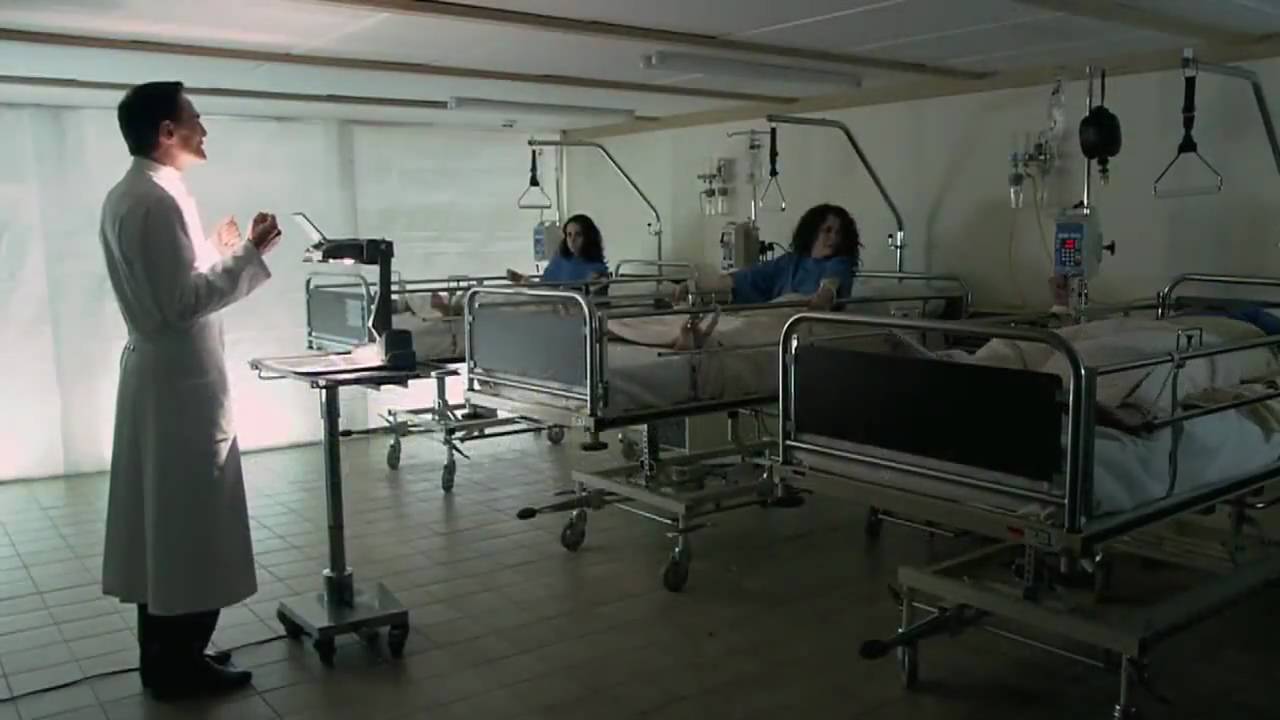
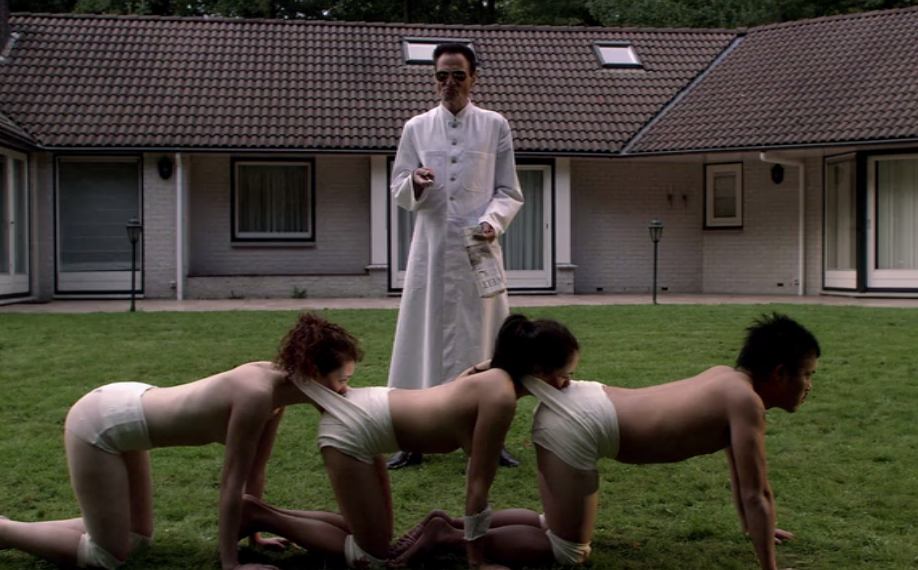
Of course, we all know the answer to that one, as the house is the home of the man we’ve seen right at the beginning of the movie aiming a sedative gun at a truck driver who’s defecating behind some bushes. One glass of water with a Rohypnol chaser (for Jenny), and a sedating injection (for Lindsay) later, and the man of the house, retired surgeon Dr Josef Heiter (Laser), has the girls cuffed to surgical gurneys in his basement and being prepped for an advanced procedure of his own design. But the truck driver has been a poor choice and has to go. And so, Japanese tourist Katsuro (Kitamura) finds himself abducted and taking the driver’s place. Lindsay makes an escape attempt, which in turn inspires Heiter’s admiration for her, and his decision to make her the middle part of his human centipede. The operation goes ahead, the three are joined together, and for a long while the movie forgets that it needs to expand on its basic premise and that seeing three people in what look like oversized nappies crawling around on the floor isn’t very enthralling. Thank God, then, that two cops (Leupold, Blankenstein) come looking for any missing tourists the doctor may be keeping hidden, and the movie can head for the finish line without any further delay.

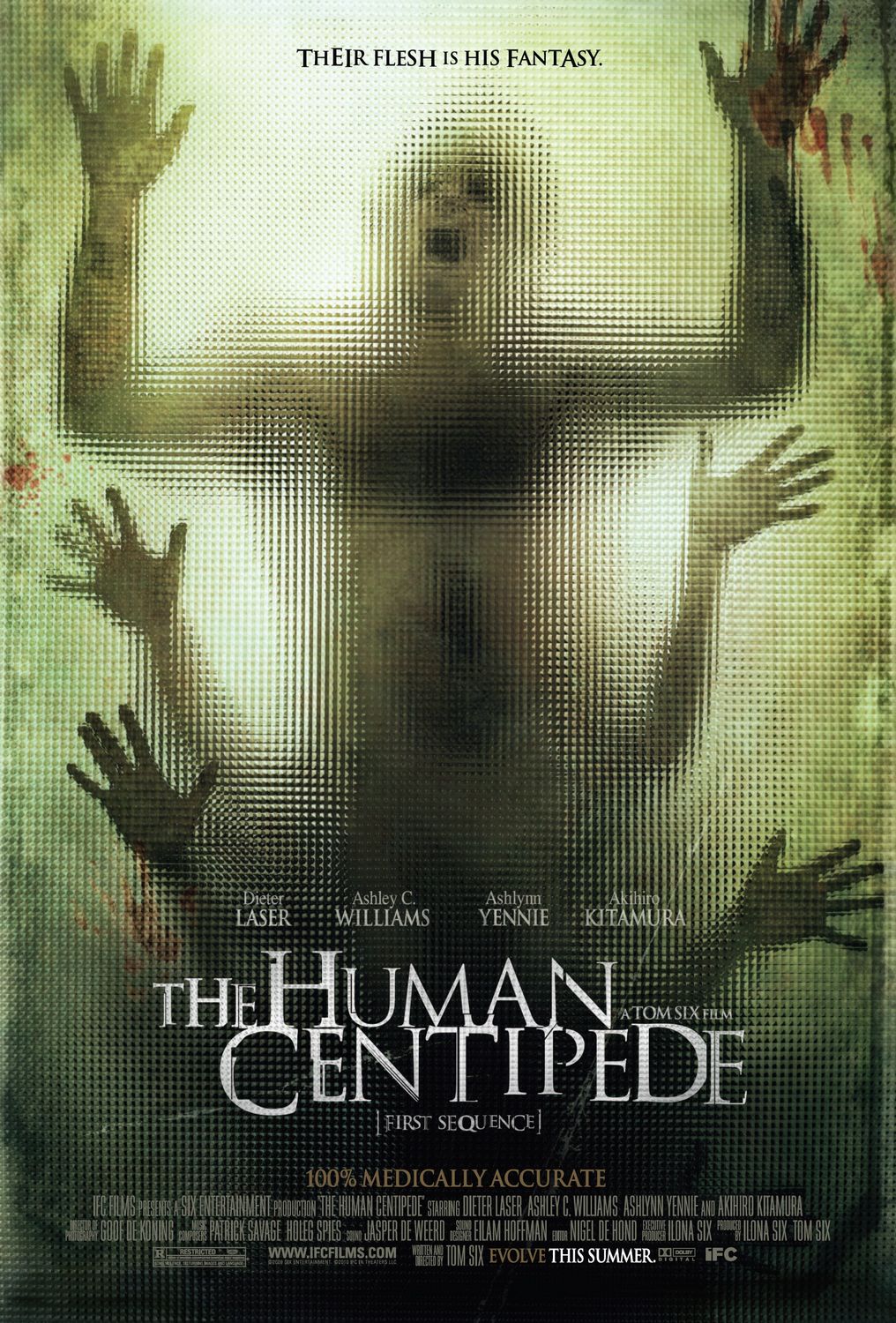
If much of the previous paragraph sounds as if the movie isn’t being taken too seriously, then that’s because it isn’t. You only have to look at the image above to know that this is a movie that shouldn’t be taken seriously by anyone, and even less so as a horror movie. While it does include a number of traditional horror tropes – the mad doctor, the creature that never wanted to be born, the creature turning on its creator – The Human Centipede (First Sequence) never aspires to doing anything remotely meaningful with them, or provide any subtext beyond a risible connection with experiments carried out by the likes of Dr Josef Mengele during World War II. This leaves the movie looking and sounding rather flat once the human centipede is put together. Kitamura shouts a lot, Williams and Yennie groan and cry a lot, and Laser struts around like the ruler of a kingdom only he can see.

This is a movie where we’re supposed to be horrified at the sight of three people connected in a way that wouldn’t look too out of place in a porn movie. Does this make the movie “sick”, “depraved” or “disgusting”? (Spanish audiences didn’t think so; they found the movie funny, and laughed throughout screenings.) Ultimately, this is a minor horror movie elevated through hype into something that it’s not. Six should be congratulated for bringing his movie to a wider public awareness, but it’s also a movie that betrays its Seventies Euro-horror and Cronenbergian influences at every turn. And if you’re holding out for some gore-soaked thrills, you’ll be disappointed there as well: what little there is has been done before, and on too many occasions to make Six’s efforts stand out from the crowd. If it’s real body horror you’re after, then go see Brian Yuzna’s Society (1989). Now there’s a movie where mouth to anus really is just the beginning.

Rating: 4/10 – an uninspired horror movie that holds back from being as exploitative as it sounds, The Human Centipede (First Sequence) is a triumph of carefully planned marketing and narrative shortcomings; bolstered by Thomas Stefan’s antiseptic production design and Goof de Koning’s angular cinematography, the movie promises a lot that it never follows through on, and in the end is too reliant on the so-called “shock value” of its basic premise to be anywhere near as effective as it should be. (2/31)

A Field in England (2013)

Tags

, , , , , , , , , , , ,

D: Ben Wheatley / 90m

Cast: Julian Barratt, Peter Ferdinando, Richard Glover, Ryan Pope, Reece Shearsmith, Michael Smiley

The British writer/director/editor Ben Wheatley has made six movies to date, all of which have been greeted warmly by critics, but less so by audiences. So what does this say about the movies Wheatley makes? Or the critics that review them so favourably? Or the audiences who aren’t as moved as the critics? Well, like any discerning director, Wheatley makes the movies he wants to make. He’s not singing or dancing to anyone else’s tune, and he’s never been just a director for hire. His movies are personal to him (and his co-writer/co-editor, and wife Amy Jump), and he brings his own unique visual aesthetic to them. Perhaps it’s this individuality of purpose that makes him so popular with the critics. But still, wider audiences haven’t taken to Wheatley’s movies, and he remains a movie maker with a great deal of critical caché but very little box office appeal.

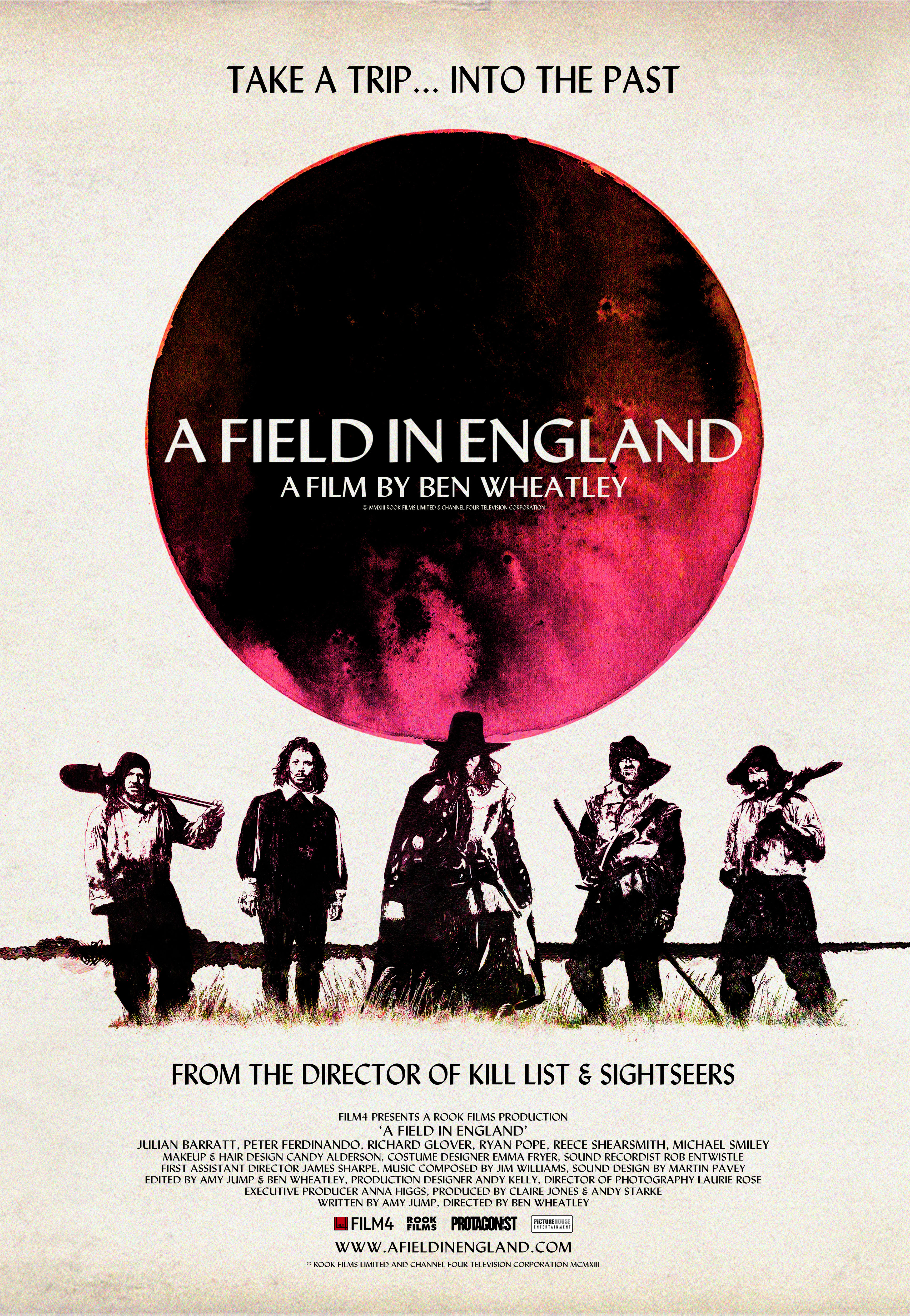
Is this fair? Possibly not, but Wheatley’s distinctive approach to making movies isn’t always as welcoming as it could be. His fourth movie, A Field in England, is probably the best example of how his distinctive approach can get in the way of making a movie accessible, or even fundamentally appealing. Set during an English Civil War battle, the movie begins with Reece Shearsmith’s cowardly alchemist’s assistant, Whitehead, crashing through a hedge and cowering in fear from his pursuer, Commander Trower (Barratt). Rescued by a soldier named Cutler (Pope), the pair also encounter a couple of deserters, an alcoholic called Jacob (Ferdinando) and his witless companion, Friend (Glover). They decide to leave the battle and travel to an alehouse that Cutler tells them isn’t far away. They begin crossing a field that’s ringed by mushrooms, and Cutler forces Jacob and Friend to eat them. Things begin to a turn for the weird when the men seemingly haul an Irishman named O’Neill (Smiley) from out of the ground. He quickly assumes control of the group and convinces them that there is treasure buried in the field, and traumatises Whitehead into become a kind of human divining rod in order for them to know where to dig.

What follows is a series of events and episodes that may or may not be the result of the men ingesting the mushrooms, as hallucinations and psychotic breaks affect the whole group except for O’Neill (who may be real and then again he might not be; his provenance is doubtful). And this is the point where what occurs, and what follows, can’t be trusted. If you accept that Wheatley has sent his characters on a really strange trip, then you can go with the flow quite easily and just accept what you’re seeing without worrying about what it might all mean. But if you do need to know what it all means, then the rest of the movie is going to be problematic for you.

Wrongly or rightly, deliberately or accidentally, A Field in England is a movie that takes a huge stylistic and narrative gamble around the half hour mark and never looks back. It maintains a semblance of traditonal storytelling but filters it all through a succession of moments of bravura visual and sonic experimentation. At one point, while being chased by O’Neill, Whitehead shoves mushroom after mushroom into his mouth and Wheatley uses it as a cue to transport the viewer into Whitehead’s mind and expose them to the kaleidoscopic and fantastical visions that the character is experiencing. It’s a tremendous feat of editing, combining fractured and composite visuals with an overwhelming audio conflation of natural sound and music, and it’s far and away the standout moment… but, exceptional as it is, it’s also indicative of the way in which Wheatley and Jump have decided to treat the narrative, and the material as a whole.

As the movie progresses, and the characters experience vision after hallucination after extended fever dream, it becomes clear that the story, such as it is, has been abandoned in favour of transporting the viewer into a world where anything Wheatley and Jump can come up with is the new norm, and regardless of whether it makes sense or not. What makes this all the more frustrating is that the dialogue and the characterisations, which were so redolent during the movie’s first half hour, are also abandoned, and the characters – literally – all become pawns to be moved around the field at random, and until Wheatley can set up the final showdown between Whitehead and O’Neill (which ends with a line from Whitehead that has Eighties action movie cliché written all over it; not bad for a movie set during the English Civil War). In the end, the viewer has no choice but to go along with what’s happening, because Wheatley isn’t giving them a choice; and if it doesn’t make sense – which a lot of it doesn’t – then it’s too bad.

But where the movie scores highly is in its imaginative cinematography, courtesy of DoP Laurie Rose (who has lensed all of Wheatley’s movies). The crisp, pin-sharp black and white images are hugely immersive, and close ups are rendered in such a precise, detailed fashion that there are several moments where the urge to pause the movie and savour the image is irresistible. It’s a movie that’s staggeringly beautiful at times, and if it’s ever released in a 4K UHD version it would be an even more incredible viewing experience. Full marks too to sound designer Martin Pavey and composer Jim Williams for combining their work in a way that adds so much resonance to the images, and helps accentuate the profoundly disturbed states of mind of the characters once their real “journey” has begun. Without these elements – the imagery and the soundtrack – A Field in England would definitely suffer further, but thankfully they more than make up for the errant narrative and directorial choices that Wheatley has made.

Rating: 6/10 – impressive visuals and an equally impressive soundscape aren’t enough to stop A Field in England from being a disappointing, and frustrating viewing experience; loaded with style and directorial flourishes, it neglects its storyline in favour of these approaches, and leaves the movie struggling to retain any meaning, which makes it an exercise in style that overwhelms any substance it may have had in the beginning. (1/31)

July Is Catch Up Month

Tags

, ,

Sometimes there just aren’t enough hours in the day to watch all the movies you want to see (worse still, sometimes there aren’t enough days in the week). That means missing or putting off seeing some movies that you really want to see, but you just can’t find the time to watch them. Over time it’s like having a Bucket List of movies to catch up on, and the more time goes by the less eager you are to watch them. And after a bit more time goes by, those movies become the ones you know, in your heart of hearts, you’re probably never going to watch.

Some of these movies might be mainstream blockbusters, movies that have been hyped to the hills and it’s taken an incredible amount of will power to avoid. Some might be awards winners, movies that have attracted huge dollops of critical acclaim, and appear regularly on end of year top 10 lists. Some might be movies that have been on a must-see list at one time or another, but then have slipped off the list when the reviews came out and everybody said those movies were rubbish. And then there are the movies that everyone says you should watch – irrespective of how good they are – but which you put aside for exactly that same reason.

Like everyone else, I have such a Bucket List, and I add to it each and every year. Some of the movies I didn’t see in 2016: Warcraft: The Beginning, The BFG, War Dogs, The Neon Demon, and Paterson. Will I watch them eventually? I hope so, but I make no promises either. All of which leads me to July 2017, a month that will see me make a concerted effort to scratch thirty-one movies off my self-imposed Bucket List. Do I know which movies will be removed from the list? Uh-uh, not even in the slightest. Will it be fun to find out? Absolutely. Will they all prove to have been worth the wait? Now there’s a question…

Monthly Roundup – June 2017

Tags

, , , , , , , , , , , , , , , , , , , , , , , , , , , , , , , , , , , ,

Attack of the Killer Donuts (2016) / D: Scott Wheeler / 85m

Cast: Justin Ray, Kayla Compton, Ben Heyman, Michael Swan, C. Thomas Howell, Fredrick Burns, Kassandra Voyagis, Chris De Christopher, Lauren Compton, Alison England, Michael Rene Walton

Rating: 3/10 – Johnny (Ray) works in a donut shop, while his mad scientist uncle (Swan) works in his basement lab cooking up a formula that – surprise! – will eventually turn donuts into flesh-hungry, bloodthirsty… donuts; bottom of the barrel stuff that aims for kitschy fun but misses by a mile, Attack of the Killer Donuts wears its sugar-coated heart on its sleeve, but is too awful in its execution to make up for its many, many, many faults, or the fact that it’s run out of steam before the first victim is put out of their misery (unlike the audience).

Before the Flood (2016) / D: Fisher Stevens / 96m

With: Leonardo DiCaprio, Alejandro González Iñárritu, Al Gore, Elon Musk, Barack Obama, John Kerry

Rating: 8/10 – actor and UN Messenger of Peace on Climate Change, Leonardo DiCaprio explores the ways in which the world is still refusing to acknowledge the effects of greenhouse gases and the need to switch to renewable energy; DiCaprio is a passionate environmental activist who has access to many of the “big players”, and his targeted globe-trotting highlights the natural disasters that are occurring all around us, all of which makes Before the Flood a worthy successor to Al Gore’s An Inconvenient Truth (2006), and an important, and sadly necessary, acknowledgment that we’re still not doing enough to turn things around and ensure our collective futures.

Dough (2015) / D: John Goldschmidt / 95m

Cast: Jonathan Pryce, Jerome Holder, Phil Davis, Ian Hart, Pauline Collins, Andrew Ellis, Malachi Kirby, Natasha Gordon, Melanie Freeman, Daniel Caltagirone, Andy de la Tour

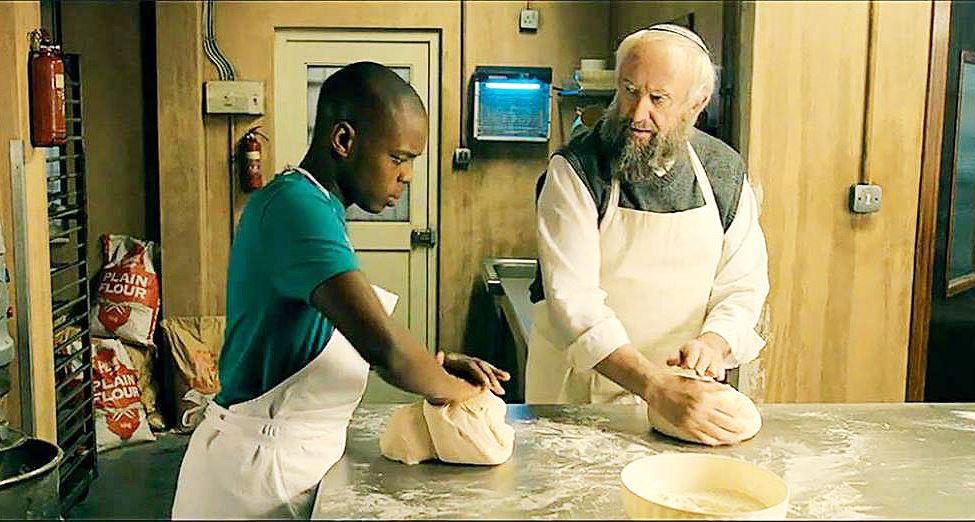
Rating: 7/10 – an aging Jewish baker (Pryce) takes on an apprentice (Holder) whose second job as a drug dealer leads to the bakery’s sales going through the roof when an unexpected ingredient finds its way into the dough mix; a genial, inoffensive movie that features winning performances from Pryce and Holder, Davis as the kind of smarmy business developer who belongs in a pantomime, and a pleasant sense of its own shortcomings, Dough is a cross-cultural comedy drama that is amusing for the most part but which lacks the substance needed to make it more engaging.

Grief Street (1931) / D: Richard Thorpe / 64m

Cast: Barbara Kent, John Holland, Dorothy Christy, Crauford Kent, Lillian Rich, James P. Burtis, Larry Steers, Lloyd Whitlock

Rating: 5/10 – there are plenty of suspects, but just who did kill less than popular stage actor Alvin Merle (Kent), and why?; a locked room murder mystery where everyone with a motive is assembled Agatha Christie-style at the end to reveal the murderer, Grief Street is a brash, enjoyable whodunnit whose villain will be obvious to anyone who’s seen more than a handful of similarly plotted movies, but the movie more than makes up for this thanks to spirited performances from its cast, and Thorpe’s relaxed directing style.

The Outer Gate (1937) / D: Raymond Cannon / 63m

Cast: Ralph Morgan, Kay Linaker, Ben Alexander, Eddie Acuff, Charles Brokaw

Rating: 5/10 – when an up-and-coming employee (Alexander) is sent to prison for embezzlement, his employer (Morgan) is the first to believe in his guilt, but when the truth is revealed and he’s released from jail, the employee sets about getting his revenge; directed by Cannon in a crude, rudimentary way, The Outer Gate is nevertheless a movie that plays to the strengths of its gosh-you-won’t-believe-it screenplay, Morgan’s low-key, passive performance, and a surprisingly grim fatalism, all of which make it more intriguing than it appears to be on the face of things.

High Voltage (1929) / D: Howard Higgin / 63m

aka Wanted

Cast: William Boyd, Carole Lombard, Owen Moore, Phillips Smalley, Billy Bevan, Diane Ellis

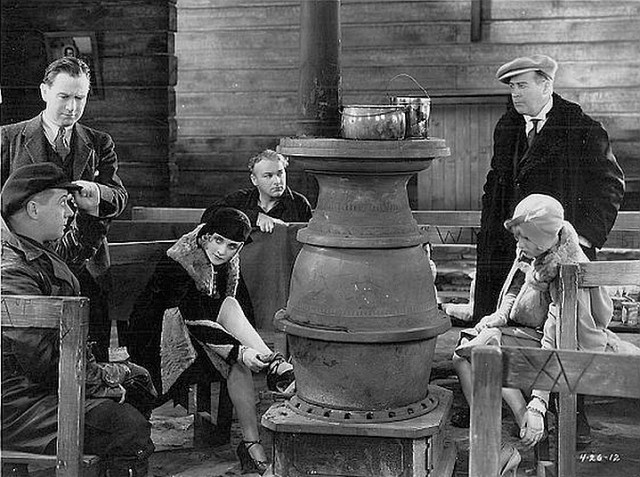
Rating: 4/10 – when a bus load of passengers is stranded thanks to heavy snow, they take refuge in an abandoned church, only to find they’re not alone; a dialogue heavy drama made in the early days of the Talkies, High Voltage is a well acted if dreary experience that tries hard to make itself interesting but falls short thanks to its focus on (already) stereotypical characters and the period’s need for a neat, everything-wrapped-up-satisfactorily ending.

CHIPS (2017) / D: Dax Shepard / 101m

Cast: Michael Peña, Dax Shepard, Vincent D’Onofrio, Rosa Salazar, Jessica McNamee, Adam Brody, Isiah Whitlock Jr, Kristen Bell, Justin Chatwin

Rating: 4/10 – rookie motorcycle cop Jon Baker (Shepard) is teamed up with newly transferred Frank Poncharello (Peña) in the California Highway Patrol, and soon finds himself tracking down a bunch of dirty cops led by veteran Ray Kurtz (D’Onofrio); forty years on from its origin as a TV series, CHIPS is given a big screen reboot thanks to fanboy Shepard, but is only moderately successful in its efforts to drag the show kicking and screaming into the 21st century, leaving it completely dependent on how you feel about Shepherd and Peña as a comedy duo, and its less than inspired script.

Baby Driver (2017)

Tags

, , , , , , , , , , , ,

D: Edgar Wright / 113m

Cast: Ansel Elgort, Kevin Spacey, Lily James, Jon Hamm, Jamie Foxx, Eiza González, Jon Bernthal, CJ Jones, Flea, Lanny Joon, Sky Ferreira, Paul Williams

There are very few times when directors manage to achieve fully the vision they have for their movies. Some have pet projects that they wait years to bring to the big screen, but when they do, they’re not always successful. Some movies have audiences wondering what on earth the director was thinking of, some can be filed under glorious failures, while others achieve the distinction of gaining a cult following. None of these apply to Edgar Wright’s Baby Driver, a movie that zooms onto our screens like a gust of fresh air designed to blow away all the horrendously bloated blockbuster movies that have been foisted on us so far this year.

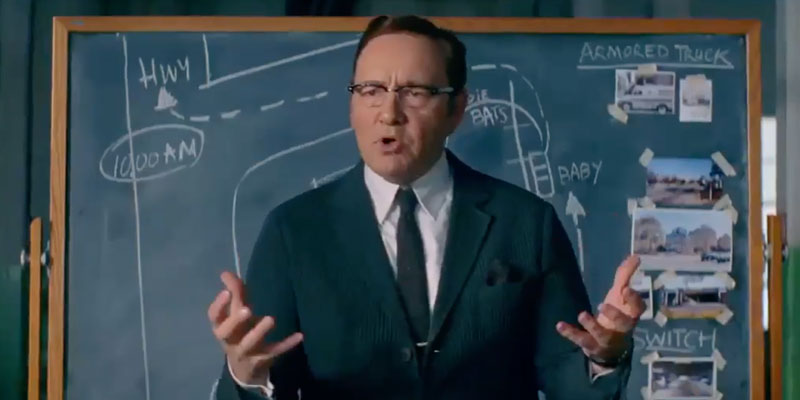
Wright’s ode to fast cars, old-fashioned meet-cute romance and killer tunes is quite simply, a blast. If this is your kind of movie then you are going to have an amazing time. And if this isn’t your kind of movie… well, that’s a shame, as you’re missing an absolute treat. Wright has made a movie that is energetic, soulful, visually arresting, and chock full of great performances, from Spacey’s criminal mastermind to Foxx’s psycho with extra attitude. The story is a simple one: Baby (Elgort) owes Doc (Spacey) for trying to steal his car when Baby was younger. By being the driver on bank robberies that Doc has set up, Baby’s debt diminishes with each job. With one last job to go before the debt is fully paid, Baby meets waitress Debora (James), and suddenly he has a reason to move on with his life.

Baby takes a job as a pizza delivery driver (no one’s going to get a free pizza after thirty minutes if he’s delivering), and he begins to make plans for himself and Debora to leave Atlanta and hit the road, travelling to wherever it takes them. But Doc appears with another job, one that could see Baby earning a lot more money than before; he’s also aware of Baby’s relationship with Debora and makes it clear that he’s not giving Baby a choice in taking part or not. Doc has assembled Bats (Foxx), Buddy (Hamm) and his wife Darling (González) to carry out the robbery, with Baby as the driver. But in prepping the job, Baby begins to have second thoughts about going through with it. He tries to get away and hit the road with Debora, but he’s outwitted by Buddy and Bats, leaving him with only one choice: take part in the robbery or see Debora come to harm. And then the robbery goes horribly wrong…

From the start, Wright displays a flair and a confidence that elevates the material to greater heights than anyone could have expected. Expanding on an idea he had back in 1994 – and which he first explored in the 2003 video for Mint Royale’s Blue Song – Wright has written, constructed, and brought to life a movie that celebrates love, and a passion for music that is a form of love in itself. Baby suffers from tinnitus, a “hum in the drum”, and he uses music to drown it out. This gives Wright the chance to flood the soundtrack with an array of carefully and aptly chosen songs that punctuate and inform the mood at any given time. Some choices might seem counter-intuitive (Focus’s Hocus Pocus for a foot chase? The Damned’s Neat Neat Neat for a robbery getaway?) but they all work, adding to the clever visual and aural stylings that Wright employs throughout.

But while the soundtrack is the key to much of what is going on emotionally in the movie, it’s the look of it that clinches our involvement. Wright is supremely confident when it comes to placing and moving the camera, and some of the angles and shots that he conjures up are nothing short of breathtaking. An early scene where Baby waits outside a bank and is listening to Bellbottoms by Jon Spencer Blues Explosion offers the viewer a bravura expression of Baby’s love for music and the way it can motivate and uplift him. This is only Elgort’s eighth movie, but his performance is a far cry from his usual pouty roles in a variety of YA movies. The pout is still here but it’s reined in for the most part, and seeing `Baby “rock out” to various songs in the apartment he shares with his deaf foster father (Jones) shows an ease and a loosening of attitude that is a good sign for any future roles.

But Baby Driver isn’t just a visually arresting movie with a terrific soundtrack, it’s also a tender romance and a cracking thriller. The relationship between Baby and Debora could have been a little too saccharine in comparison to the more muscular action elements (of which there are plenty), but Wright is wise to this and keeps it all light and dreamy, a forever fairy tale approach that works well against the macho posturings of the crews Doc assembles. James and Elgort have an easy-going chemistry, and their scenes together are funny and sweet and engaging. On the other side of the fence, Foxx is brusque and confrontational as psycho-without-an-off-switch Bats, Bernthal is another crew member who picks on Baby to no avail, while Hamm goes from amiable robber to avenging killer once the final robbery goes wrong. These are all good performances but they’re topped by Spacey’s sinister yet urbane Doc, a character you actually want to see more of, but who Wright wisely uses sparingly.

The action scenes are all very well choreographed, with the first car chase at the beginning of the movie (and which features that manoeuvre from the trailer) proving to be one of the best action sequences you’re likely to see all year. Wright shows a tremendous sense of space and distance in these sequences, and the camerawork by DoP Bill Pope is magnificent, propelling the viewer along with Baby et al, and providing enough breathtaking moments for two movies. And even when Wright slows things down in order to advance the plot, there’s still a sense of energy waiting to be released, of power straining at the gate to be let loose. And with the next squeal of tyres there it is, and off we go again.

This isn’t a movie though where the characters are secondary to the action, or play second fiddle to a script that doesn’t make sense. It’s a fairly simple, straightforward movie that looks amazing but still manages to retain a heart and a soul thanks to its romantic elements, and to the way in which the characters interact with each other. There are moments of humour, too – how could there not be in a movie by Edgar Wright – and they fit right in with all the other elements, unforced, and keeping the tone from becoming too serious. Wright balances all these elements to perfection, and there aren’t any scenes that either feel extraneous or tonally at odds with the rest of the movie. All in all, a tremendous achievement, and one that at long last proves that mainstream moviemaking doesn’t have to be loud, brash, overly reliant on CGI, and devoid of a coherent story and plot. Hollywood – take notice.

Rating: 9/10 – the first bona fide all-round success of 2017, Baby Driver is a triumph of style, visuals, acting, directing, writing – hell, everything, and a movie to be savoured just as much for the things it doesn’t do as the things it does; and of course it has possibly the coolest soundtrack of the year as well, a feast for the ears that contains so many gems that you won’t be able to decide which one to hum as you leave the cinema.

Baywatch (2017)

Tags

, , , , , , , ,

D: Seth Gordon / 116m

Cast: Dwayne Johnson, Zac Efron, Priyanka Chopra, Alexandra Daddario, Kelly Rohrbach, Ilfenesh Hadera, Jon Bass, Yahya Abdul-Mateen II, Hannibal Buress, Rob Huebel, David Hasselhoff, Pamela Anderson

Drivel.

Rating: 2/10 – drivel; just drivel.

10 Reasons to Remember Michael Nyqvist (1960-2017)

Tags

, , , , , ,

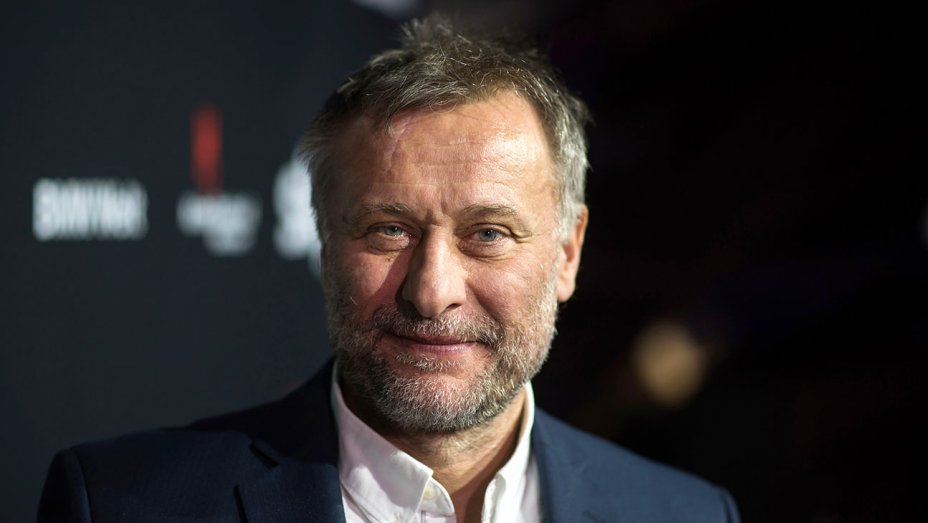
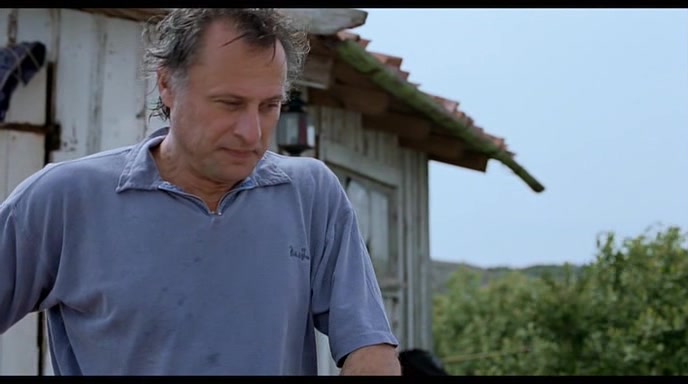
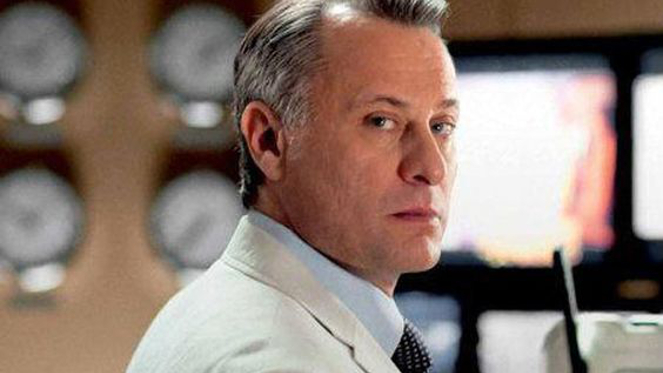
Michael Nyqvist (8 November 1960 – 27 June 2017)

Although he was born in Sweden, Michael Nyqvist’s interest in acting began when he was a teenager living as an exchange student in Omaha, Nebraska. He made several stage appearances while he was a senior in high school, but on his return to Sweden he was accepted into ballet school; he gave it up though after a year. When he was twenty-four he was accepted into the Malmö Theatre Academy, and his career as an actor began in earnest. But for a long while he appeared solely on the stage before he made his first appearance on screen in a TV movie called Kamraterna (1982) (as The Model). However, it wasn’t until the mid-Nineties that Nyqvist began to get regular work as an on-screen actor, and it wasn’t until he appeared in Lukas Moodysson’s Together (2000) that he really made an impression on audiences and critics.

From then on, Nyqvist made a number of Swedish movies that traded on his ability to portray fierce yet vulnerable male characters, and with a great deal of sincerity and intelligence. But it was his role as the journalist Mikael Blomkvist in the Millennium TrilogyThe Girl With the Dragon Tattoo (2009), The Girl Who Played With Fire (2009), and The Girl Who Kicked the Hornet’s Nest (2009) – that brought him to the attention of international audiences, and in particular, Hollywood’s casting agents. Two years later and he was making his English language debut in the sadly less than enthralling Abduction (2011). From there he combined working in Hollywood with working in Sweden, and maintained an integrity in his work that guaranteed good performances, even if the material he was working with wasn’t quite up to the standard required. Regarded unfairly perhaps as a “serious” actor, Nyqvist was always able to find the light and shade in most of the characters he played, and he was always a magnetic presence when on screen. In short, he was one of that select band of actors who always improved a movie they appeared in, and you could count on him to deliver a thoughtful, considered performance whatever the genre. For that, he will be sorely missed, and even more so for dying at such a relatively young age.

1 – Together (2000)

2 – The Guy in the Grave Next Door (2002)

3 – As It Is in Heaven (2004)

4 – Suddenly (2006)

5 – The Black Pimpernel (2007)

6 – The Girl With the Dragon Tattoo (2009)

7 – Mission Impossible: Ghost Protocol (2011)

8 – My So-Called Father (2014)

9 – John Wick (2014)

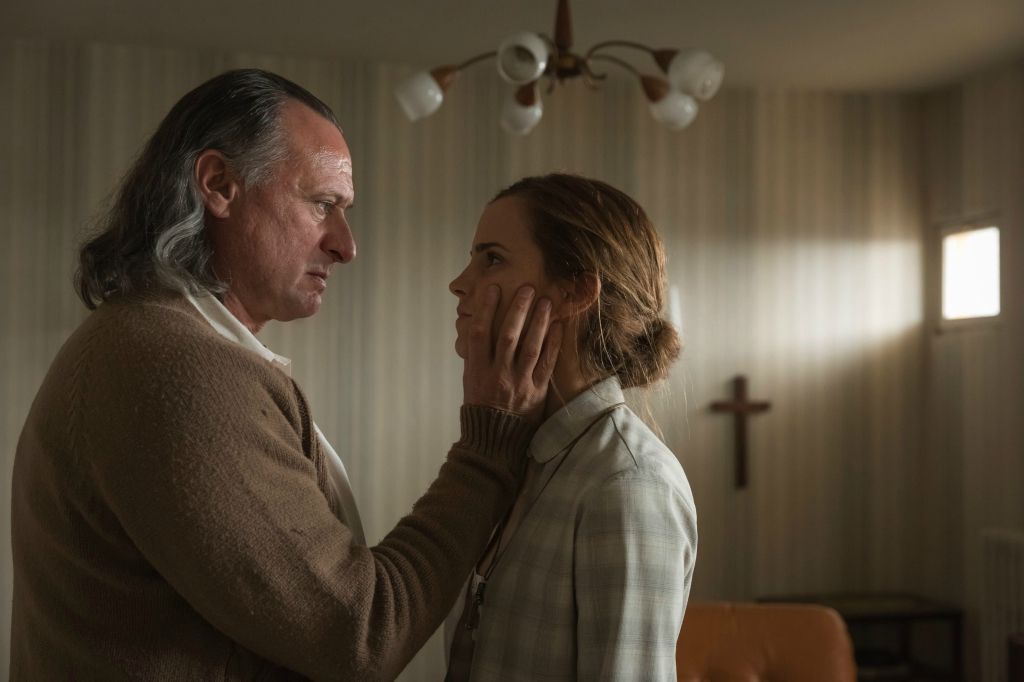
10 – The Colony (2015)

Trailers – Bronx Gothic (2017), Stronger (2017) and The Hippopotamus (2017)

Tags

, , , , , , , , , , , , , , ,

If you’ve seen the New York-based writer, performer and choreographer Okwui Okpokwasili then you’ll be aware of just how magnetic a stage presence she is, and how impressive is her ability to manipulate her frame in such a way as to give full expression to an incredible range of feelings and desires and emotions. In 2014, Okpokwasili performed her one-woman dance piece, Bronx Gothic, where she used a series of letters sent between two young girls in the Bronx – and her remarkable body – to illustrate how little one of them knew about her body, and how they were able to connect with each other. It was a tour-de-force performance, and is now the subject of Andrew Rossi’s latest documentary. Rossi, who also made Page One: Inside the New York Times (2011) and The First Monday in May (2016), goes behind the scenes of Bronx Gothic and examines the way in which Okpokwasili conceived and created the piece, and how she used elements from her own life in the process. This may not attract a particularly wide audience base, but it promises to be one of the more original and impressively mounted documentaries of 2017. And with Okpokwasili being such an incredible performer to watch, any chance to see her is absolutely worth taking.


Following on the heels (no pun intended) of Peter Berg’s gripping Patriots Day (2016), Stronger tells the smaller scale story of one of the victims of the 2013 Boston Marathon bombing. Jeff Bauman (played by Jake Gyllenhaal) was caught in the first blast and lost both his legs. The movie, based on the book of the same name written by Bauman and Bret Witter, charts Bauman’s recovery and readjustment to life in the wake of the tragedy, and how his rehabilitation affected him, and his relationship with his girlfriend, Erin Hurley (played by Tatiana Maslany). Without trying to denigrate or undermine Bauman’s efforts to learn how to walk again, and overcome the emotional trauma he experienced, the trailer for Stronger hints at the movie being a straightforward re-telling of Bauman’s struggle, and the trailer’s content seems to include all the clichés you’d expect, right down to the moment where Bauman cries, “I showed up for you!” Let’s hope then that director David Gordon Green has a tighter grip on the material than is evident from the trailer, and that Bauman’s story is given a better handling than what we’ve seen so far.


When he’s not appearing on television or in the movies, Stephen Fry is also a well regarded writer with a string of successful books to his name. The Hippopotamus was his second novel to be published, and if you’ve read it then you’ll know that it’s ripe for a big screen adaptation (or a small screen mini-series). And at last that big screen adaptation is here, and for once, with the perfect choice for its lead character, disgraced poet Ted Wallace, in the form of Roger Allam. Allam’s crumpled features and unimpressed demeanour are a terrific combination for the part, and from the trailer it’s clear that the actor has the measure of the role and is also enjoying himself immensely. Whether or not the script will allow him to be the singular focus of Fry’s typically erudite comedy of manners remains to be seen, but if so then this could be the movie that provides a well-earned boost to Allam’s career. Let’s hope then, that Fry’s eccentric yet amusing novel has been given the adaptation it deserves.

I Am Not Your Negro (2016)

Tags

, , , , , , , , , , ,

D: Raoul Peck / 93m

With: Samuel L. Jackson, James Baldwin (archive footage)

In 1957, the writer, visionary, poet and humanist James Baldwin returned to the US having spent the last nine years living in Paris, France. He was thirty-three. Soon he was at the forefront of the Civil Rights movement, and was touring the South giving lectures on his views on racial inequality. In six short years he had become such a well known supporter of the movement that his writings and speeches on the matter were listened to with respect on both sides of the debate. His views on the Civil Rights movement, and his ability to see the issue from both sides, arose out of his seeing first hand the effects of integration, along with his relationships with the leading players of the time. In 1979, Baldwin committed to write a book about America based on the lives of his three friends, Medgar Evers, Martin Luther King Jr, and Malcolm X. He wrote just thirty pages of notes before abandoning the project, which he’d entitled Remember This House. It’s these notes, and a collection of interviews and speeches given by Baldwin over the years, as well as contemporary footage and clips from the movies, that have been brought together to form I Am Not Your Negro.

Baldwin was a natural thinker and orator, precise in his arguments and astute in his observations, and there are many moments in the movie where those attributes are given their due. An appearance on The Dick Cavett Show in 1968 sees Baldwin express his concerns for the future of the US (while an entirely uncomfortable Cavett looks as if he can’t wait for the interview to be over). It’s a short excerpt, but it shows just how much consideration Baldwin had given to the idea that things were improving for the black man in America, something that clearly worried him. His answer is far from comforting, and in many ways, is a foreshadowing of events to come, such as the Rodney King incident, or the Black Panthers. The movie expressly and explicitly reveals Baldwin’s thoughts on these matters, and particularly the way in which he felt that politics and the media were attempting to reassure the American public that progress was being made, when in truth it was stalled, held up at a point when progress could and should have been made. He was an optimist, but a realist too, and as a result his views could appear pessimistic, but Baldwin would have denied this. He’s telling his truth as he sees it, and he wants everyone to make up their own minds about the necessity for racial violence and intolerance.

Baldwin’s observations are supported by archival footage that goes back to the pre-War era, where his disdain for actors such as Mantan Moreland and Stepin Fetchit – who essayed stereotypical black characters in movies in the Thirties and Forties – helped to enforce his beliefs about America’s racist, institutional characteristics, and the difficulty of getting an entire culture to change its way of thinking. The movie sees Baldwin chipping away at that sort of intransigence, asking uncomfortable questions, making uncomfortable statements (he refers to Gary Cooper and Doris Day as “two of the most grotesque appeals to innocence the world has ever seen”), and challenging the average white man to ask himself why he feels so threatened by the presence of the black man.

But the main focus is on the lives of his friends, three martyrs to the cause who died for their beliefs, and who in their different ways, were committed to overthrowing the institutional racism that permeated the US during the first half of the 20th century (and long before), and which they sought to eradicate through their efforts. Their methods were different, their personalities were different, but their goal was the same, and Baldwin is their chronicler, a self-confessed witness to a time when change seemed inevitable, and where Evers’ activism, King Jr’s passive ministrations, and Malcolm X’s angry dissention caused such waves amongst the white establishment that their deaths seemed almost inevitable. Baldwin’s anguish at each man’s death is relayed through his thoughts at the time, and they are poignant, studied and powerful, brief meditations on the nature of loss and the repercussions that followed. But through it all, Baldwin’s composure and his awareness of the continuing struggle ensures he has no time to be maudlin.

In assembling the various strands needed to paint such a vivid portrait of a man and his times, director Raoul Peck has succeeded in drawing together these various strands in such a judicious way that they both highlight and underline the points Baldwin makes, and reaffirm just how acute his intellect was. He was a thoughtful and thought-provoking commentator on a period of civil upheaval that is still being dissected even today, and Peck has chosen fittingly in terms of Baldwin’s presence in front of the cameras. There must have been occasions when Baldwin was more loquacious than subdued, but if he was, Peck hasn’t included those moments, and the man’s measured, heedful expressions of dismay and apprehension are given their due, and backed by archival footage that is both relevant and, on occasion, deliberately shocking. The movie paints a portrait of a time when the hopes of millions of black Americans were routinely sabotaged by the efforts of a white majority savagely defending itself from censure, and its condemnation of those tactics is absolute. And still it celebrates the resilience of the men and women who fought to improve their place and their standing in America.

Baldwin’s off-camera musings and thoughts are more than adequately expressed by Samuel L. Jackson, and it’s a measure of Jackson’s skill as a voice actor that he’s not always recognisable as Samuel L. Jackson. He doesn’t attempt to sound like Baldwin, but he does offer a knowing detachment when reciting Baldwin’s comments about himself. These comments are often full of self-doubt and muted reflection, something that gives the audience the sense that no matter how eloquent he might have been in print or on camera, Baldwin was as readily unsure of himself as anyone else might be. One thing the movie isn’t though, is unsure of itself, and it moves confidently between Baldwin’s observations on America’s tolerance for racial lassitude, and a broader history of the struggle for civil rights. It makes a number of salient points, acts as a primer for the issues involved, and serves as a reminder that the fight for equality still goes on today, and is just as important as ever.

Rating: 9/10 – a powerful and emotive subject as seen through the eyes of one of its most shrewd and capable observers, I Am Not Your Negro is an expertly assembled chronicle of a period in recent American history whose ramifications are still being felt today; succinct and incisive, Baldwin’s prose and oratory act as an entry point for a topic that can be explored in so many different ways, but what can’t be ignored is how much of what he says and reveals seems so obvious now to those of us looking back.

A Family Man (2016)

Tags

, , , , , , , , , , , ,

Original title: The Headhunter’s Calling

D: Mark Williams / 108m

Cast: Gerard Butler, Gretchen Mol, Alison Brie, Anupam Kher, Max Jenkins, Alfred Molina, Willem Dafoe, Mimi Kuzyk, Dustin Milligan, Julia Butters, Dwain Murphy, Ethan MacIver Wright

Dane Jensen (Butler) is a tough, no-nonsense headhunter who uses a mixture of insider knowledge, sharp practice and carefully orchestrated bullying to get the sales figures he needs; everyone he successfully finds employment for earns his company, Blackridge Recruiting, a five-figure sum. His boss and mentor, Ed Blackridge (Dafoe), informs Dane and his main rival, Lynn Vogel (Brie), that he’s taking a step back from running the company, and his successor will depend on which one of them is the more successful in the forthcoming financial quarter. Dane is the better headhunter, and heading into the quarter has no doubts that he will take Ed’s place.

But while Ed is all-conquering at work, at home it’s a different matter. His wife Elise (Mol), would like Dane to be home more, as would his kids, Ryan (Jenkins), Lauren (Butters), and Nathan (Wright). But Dane is committed more to his work than he is to his family, and he continually makes excuses for getting home late and/or missing events in his children’s lives. The only promises he can’t seem to break or those that he makes to his clients, such as engineer Lou Wheeler (Molina). However, Dane’s outlook on life and his commitment to Blackridge begins to derail when Ryan is diagnosed with ALL (Acute Lymphoblastic Leukemia). Faced with losing Ryan if his treatment fails, Dane spends more and more time with his son but to the detriment of the sales target he needs to reach to step into Ed’s position. As he struggles to come to terms with his son’s illness and his declining fortunes at work, Dane has to decide which is more important: his family, or providing for them.

If you decide to watch A Family Man, then be prepared to enter a world where lots of things happen that don’t happen in the real world. Now, of course, A Family Man isn’t based on a true story (not that it would matter), and it’s not a movie that’s set in a far-off fantasy world where dragons lurk over the next hillside, or wizards in pointy hats loiter in the local tavern. But its story does take place in an alternate reality, one that looks and feels just like the real world, but it’s also one that gives itself away from time to time as being wholly imaginary. It’s on these occasions that the movie, and Bill Dubuque’s saccharine-drenched screenplay, give the game away, and as a result, any suspension of disbelief disappears in an instant. And it’s a shame, as the movie didn’t need to be created in this fashion, and if the makers had excised all the otherworld trappings, then it might have stood a better chance than it does in its current form.

It’s a familiar story, told with a smattering of charm and a large amount of pontificating. Dane is the classic absent husband, too hooked up on the importance and the power he has at work to notice his home life slipping away from him. There’s always one more phone call to take, one more employer to call and cajole into taking on a client, one less occasion to spend with his wife and kids. He tries to justify his behaviour, his absenteeism, by spouting that he’s doing it for his family, as if they should be grateful that he’s becoming less and less of a presence in their lives. But the script isn’t satisfied with just having Dane dressed up in Hugo Boss and seeing life with blinkers on. He has conversations with Elise where he wonders about the bigger questions in life: is there more to everything than work (yes), how do you know if you’re happy (you just know), and why should it take forty minutes to ejaculate (ah, you’re too stressed?). It’s okay that Dane’s not just a lean, mean recruiting machine, but the script’s idea to make him seem more rounded as a character is laughable and obtuse.

But with the arrival of Ryan’s cancer, the movie abandons any attempt at investigating Dane’s interior life, and instead, takes us on a journey into the alternate reality already mentioned above. This is a world where a child’s desire to be an architect when they grow up leads to Dane and Ryan visiting five famous Chicago landmarks, and Dane being able to recite facts about each one with confidence and precision. Dane appears able to skip work whenever he needs to in order to make these trips, and the hospital where Ryan is being treated seems remarkably unconcerned about them (one of Ryan’s main symptoms is generalised weakness and fatigue; wouldn’t these trips be detrimental?). A phone call between Dane and Lou sees Lou try to act as Dane’s counsellor when he doesn’t even know him. And then there’s Ryan’s doctor, an oncologist (Kher), whose bedside manner includes kissing Ryan’s hand at one point (yeah, that probably happens all the time).

There are further examples as the movie grinds mercilessly towards the kind of sugar-coated resolution that is meant to extract copious amounts of tears from its audience, but which in reality (yes, the real reality), is likely to encourage groans and unforced laughter. It’s all topped off by an unlikely last-minute piece of character reversal that only happens in the movies, and which even the most forgiving of viewers will find ludicrous/ridiculous/silly (delete as appropriate). Through it all, Butler at least plays it straight, even when the absurdity of some scenes seems written in letters forty feet high, and he’s backed by Mol whose role as Elise is undermined by the character’s yo-yoing back and forth between castigating Dane and supporting him. Dafoe’s role is nothing more than a recurring cameo, Brie is wasted, Molina has perhaps the movie’s best moment – in a bathroom, and the rest of the cast orbit around Butler until told what to do. Directing for the first time, Williams lacks the necessary experience to overcome or iron out the script’s inherent problems, and there are too many times where his direction brings out the commonplace rather than anything that might raise the material above the level of acceptable.

Rating: 4/10 – adequately done, A Family Man won’t stick around in the memory, but while you’re watching it, it will make an impact, albeit an unfortunate one; laden with too many moments and scenes that are hellbent on manipulating its audience’s emotions, the movie has all the hallmarks of a glossy disease-of-the-week TV movie, but with a bigger budget, a better known cast, and more time to drag out its increasingly implausible narrative.

12 Feet Deep (2016)

Tags

, , , , , , , , , ,

Original title: The Deep End

aka 12 Feet Deep: Trapped Sisters

D: Matt Eskandari / 85m

Cast: Alexandra Park, Nora-Jane Noone, Diane Farr, Tobin Bell, Christian Kain Blackburn

Two sisters, Bree (Noone) and Jonna (Park), meet up after having been apart for three years. Their choice of venue is the local aqua centre. Bree is there first, and when Jonna arrives their shared history prompts a less than happy reunion. Attempting to patch things up, the sisters have a swim but they’re not in the water long before the manager (Bell) announces the pool is closing early for the bank holiday weekend. As they get ready to leave, Bree realises she’s lost her engagement ring. When Jonna spots it at the bottom of the pool, wedged in a grate, the two sisters both try to free it, but in the process Jonna’s hair becomes trapped in the grate. While Bree tries to help Jonna free herself, the manager activates the fibreglass cover and the women surface to find themselves trapped beneath it.

Now at this point in 12 Feet Deep, and with the bulk of the running time still to be played out, the average viewer may well be wondering where the movie will be going next. Obviously the sisters will attempt to find a way out of their predicament, and obviously the animosity borne out of their past history will push itself to the fore (and more than once), while Bree’s diabetes will also factor itself in (where would these stories be if one of the characters didn’t have some kind of medical condition that the situation would aggravate?). Perhaps the manager will remember something he’s forgotten, and return in time to save the day. Or maybe Bree’s fiancé, David (Blackburn), will start to worry when she doesn’t come home and trace her whereabouts back to the pool, and save the day himself. Or perhaps there’ll be an alternative development, something unexpected or unforeseen that will heighten the tension of the sisters’ misfortune.

In the end the route the movie takes is certainly an unexpected one. Jonna soon adopts a pessimistic “we’re both doomed” attitude while Bree tries to be more positive and problem solve her way out of their dilemma. She also manages to retrieve her ring and in the process discovers that the grate is loose. But she’s unable to free it completely. The only apparent hope they have of getting out is to use a piece of broken plastic to carve away at an opening in the cover, but this is likely to take them forever (or at least until the pool reopens). The sisters bicker and rake over painful childhood memories, and then the script – by director Eskandari and co-writer Michael Hultquist – reveals its trump card: the centre’s cleaner, Clara (Farr).

Or, rather, it reintroduces her. Clara has been seen earlier rifling through some of the other customers’ bags and stealing money from them. We’ve seen the manager catch her in the act, but instead of firing her on the spot, he laments the fact he’s just written a glowing reference to her parole officer, and then tells her to finish up her shift. It’s such a clumsy, unbelievable thing for him to have done that anyone paying attention would have wondered why we were ever introduced to her. But Eskandari and Hultquist have further plans for her. Duly finishing up her shift, Clara becomes aware of the sisters’ presence under the fibreglass cover and does what any self-respecting parolee would do: she keeps them trapped and coerces Bree into revealing the pin code for her bank card (Clara has financial problems that take precedence over any ambition to be a heroine).

From the moment it becomes obvious that Clara is going to make the sisters’ predicament even worse, the movie throws itself into a deep end of its own making, and presents the viewer with a succession of scenes that fail to make any dramatic sense whatsoever. The remainder of the movie is so poorly thought out that it never recovers from Clara’s reappearance and invidious behaviour. Any unease or trepidation as to how Bree and Jonna will eventually escape their potentially watery grave is abandoned in favour of a credibility-free exercise in cat-and-mouse theatrics that kills the movie’s ambition of being a nail-biting thriller absolutely and completely stone dead. Eskandari and Hultquist attempt to make Clara a disquieting and menacing figure, but fail to make the motivations for her actions even remotely convincing, and in doing so give Farr what may well be the most impossible acting challenge of 2016. That she navigates her tortured dialogue as well as she does is a tribute to her skill as an actress, and a blessing for the viewer; in the hands of some actresses Clara could have been the character equivalent of road kill.

As Jonna and Bree, Park and Noone also fare better than the script should have allowed them to, and though there’s no physical resemblance between them, they’re more than credible as sisters. As the movie progresses the childhood trauma that is the source of the animosity they share is revealed piece by piece, and Noone, whose job it is to reveal it, overcomes a great deal of awkward dialogue in order to do so effectively. It’s a heavily manufactured trauma that doesn’t add to the situation they find themselves in, and like much else in the movie, lacks any resonance or depth except that, against the odds, Noone and Park manage to give it. On the very meagre plus side, Byron Werner’s strategically astute cinematography is a plus that at least allows the movie to appear more gripping than it actually is, and Vincent Albo’s claustrophobic production design enhances the sisters’ physical quandary.

Rating: 3/10 – what could have been a tense, gripping examination of the plight of two women in a life-threatening situation is undermined by atrocious plotting, an incredibly weak justification for Clara’s behaviour, and too many scenes that should have been rewritten before shooting began; all these things make 12 Feet Deep a chore to watch, and massively disappointing, but the performances offer strong mitigation against the daft scenario, and they also provide occasional bouts of relief from the woeful material on hand.

Motive for Revenge (1935)

Tags

, , , , , , , , ,

D: Burt P. Lynwood / 60m

Cast: Donald Cook, Irene Hervey, Doris Lloyd, Edwin Maxwell, Le Strange Millman, Russell Simpson, John Kelly, Edwin Argus, Billy West, Wheeler Oakman, Fern Emmett

During the Thirties, crime dramas were a staple ingredient of the moviegoer’s diet, with studios falling over themselves to supply a waiting public with as much product as they could possibly want (and then a lot more besides). Of course, these crime dramas ranged in terms of the production values afforded them, the quality of their scripts, the skill of their directors, and the abilities of their casts. At the independent end of the ladder, these kinds of movies were made fast, cheaply, and with no further ambition than to get into cinemas as quickly as possible, and make as much money as possible before settling into obscurity. Often they were entirely forgettable, with plots and storylines and characters that blended into one, and the kind of resolutely upbeat endings that look and feel entirely cheesy and unrealistic to modern viewers.

Motive for Revenge is exactly that kind of crime drama. Made on a shoestring budget by Majestic Pictures, the movie suffers from an absurd, mind-boggling screenplay that makes you wonder if writer Stuart Anthony was on some serious medication when he wrote it, the kind of absentee direction from Lynwood that could imply he wasn’t even on set during the shoot, and enough woeful acting from its cast to make the viewer wince every few minutes (or sooner, depending on your tolerance). The movie crams a lot into its short running time, but hardly any of it makes any sense, and even more of it will have the average viewer shaking their head in disbelief. Viewers familiar with this type of movie, however, should derive some measure of appreciation for the efforts of all involved in putting this movie together. Because, against all the odds – or maybe in spite of them – Motive for Revenge is much more enjoyable than it seems.

Again, the screenplay is mind-boggling. Barry Webster (Cook) is a bank teller who decides to rob his own bank in order to provide a luxury lifestyle for his wife, Muriel (Hervey). He does this because his mother-in-law (Lloyd) keeps making nasty comments about his lack of money and ambition. Unable to tell his mother-in-law to take a hike, he steals enough money to go on a spending spree with his wife before he’s caught and sentenced to seven years in jail. At first, Muriel tells Barry she’ll wait for him, but it’s not long before a fellow inmate is showing him a newspaper headline announcing her impending divorce from Barry. Then she marries jealous businessman, William King (Maxwell). It’s not a happy marriage, but it’s too late to back out. Meanwhile, Barry falls in with the wrong crowd in jail and when he’s released he uses them to plot his revenge against his ex-wife and her new husband. He goes to their home, and during a confrontation in which all three have guns in their hands, King is killed. Barry goes into hiding, Muriel attempts to take the blame for her husband’s death, and the movie gets sillier and sillier (except for a pretty good speedboat chase that’s marred by some awkward looking model work at the end).

There’s a lot more to it, but despite all its shortcomings, and faults that practically leap off the screen in their efforts to draw attention to themselves, the movie has a certain energy and presence about itself. Yes, the direction is awful, and yes, there’s enough wooden acting going on to give the viewer secondary splinters, but even with all this, the movie has a rough charm that makes up for all its failures. The early scenes zip by at a fair old lick as it sets up the movie’s second half and the murder mystery – just who did shoot William King? (You’ll never guess) – that will become the focus of the remainder of the movie. But along the way the characters all behave strangely, with some motivations and decisions made seemingly at whim, or out of the blue (you get the sense that Anthony was making it all up with no idea of how to piece it all together). And yet with all that, the movie retains a strange, almost hypnotic appeal. You have to keep watching just to see how silly it can get.

On that level, it doesn’t disappoint. Cook and Hervey act like a married couple who spend most of their time avoiding each other, while Maxwell, as the paranoid, controlling second husband, adopts a perma-scowl throughout and chews on his lines as if he didn’t like the taste of them. There’s solid, unspectacular, but also deathless support from the wonderfully named Millman as a District Attorney who won’t look further than Muriel for the killer, and there are “comic” interludes featuring Kelly and Argus as the cops’ answer to Dumb and Dumber. These interludes aren’t as funny as some of the more unintentional comic moments in the movie, especially if they involve Cook having to walk and talk at the same time, but they do break up the otherwise po-faced narrative. With the benefit of over eighty years of hindsight, Motive for Revenge is easily the kind of movie that will be overlooked by casual viewers, and dismissed by afficionados of this sort of thing. But that would be unfair, as the movie – and quite perversely – has a way of worming its way under your defences and making an impact. You won’t necessarily want to see it a second time, but as an example of a movie that shouldn’t make any kind of an impact at all, it’s well worth seeking out.

Rating: 3/10 – unashamedly bad, Motive for Revenge is not a minor gem or in need of critical reappraisal, but a good old-fashioned Thirties crime drama that is strangely entertaining, and despite its seemingly best efforts to appear otherwise; a movie where looking past the obvious brings its own unexpected reward, it’s a rare occasion where a movie somehow manages to transcend its low-budget origins and decides, in the words of Madonna, to “strike a pose and let’s get to it”.

NOTE: There is currently no trailer available for Motive for Revenge.

Question of the Week – 23 June 2017

Tags

, , , ,

Meryl Streep and Bruce Campbell both celebrate their birthdays today, which prompts the obvious question:

Why haven’t they co-starred in a movie yet?

Ash vs Florence Foster Jenkins perhaps? Or maybe a remake of Death Becomes Her (1992) with Streep reprising her role, and Campbell taking over from Bruce Willis? Whatever the idea or the combination, someone, somewhere, get these two together in a movie – now, before it’s too late…

Shimmer Lake (2017)

Tags

, , , , , , , , , , , ,

D: Oren Uziel / 86m

Cast: Benjamin Walker, Rainn Wilson, Stephanie Sigman, John Michael Higgins, Wyatt Russell, Adam Pally, Mark Rendall, Rob Corddry, Ron Livingston, Angela Vint, Isobel Dove

A low-key yet bristling thriller, Shimmer Lake – another title that is atmospheric yet has little relation to the main plot of the movie – tells its story in reverse. And so we see Andy Sikes (Wilson) in the basement of his own home, and yet he’s clearly trying to avoid being discovered. Upstairs is his brother, Zeke (Walker), the town sheriff. Soon we realise that there’s been a bank robbery, and Andy is involved, along with two other men, Ed Burton (Russell) and Chris Morrow (Rendall). It transpires that Andy has  the money from the robbery, and Zeke is certain that he’s planning to meet up with Ed. He also has to contend with two FBI agents, Walker and Biltmore (Corddry, Livingston), whose approach to the investigation and the hunt for the three men appears less than serious. When they find the body of Judge Dawkins (Higgins), a wider conspiracy involving the death of Burton’s son begins to come to light. Later that night, having avoided being seen, Andy meets up with Ed’s wife, Steph (Sigman), but their meeting doesn’t go the way Andy had hoped.

The day before, Dawkins demands the return of an incriminating tape from Burton, Morrow’s role in the robbery is revealed, Steph deliberately injures herself before talking to Zeke and the FBI agents, and further details of the conspiracy are revealed. The day ends with the death of Dawkins and Andy coming into possession of the money. The previous day, Chris is lured out of hiding by Steph, and the two meet at a motel. Dawkins appears, anxious to secure the return of the tape. Steph has the money from the robbery and she makes Dawkins hide it until it’s safe. Andy hears that Zeke was shot during the robbery, and the FBI agents arrive in town. And on the day before that, all the various threads that have spun out along the ensuing days are shown their origins as we learn what happened during the robbery.

It’s easy to like the structure that first-time writer/director Oren Uziel has employed in telling his tale of small-town corruption, greed, and revenge, but while Christopher Nolan’s Memento (2000) is an obvious reference point, sadly – and despite the best of intentions – Shimmer Lake doesn’t match it for inventiveness, style, or sheer narrative trickery. Part of the issue is the pacing, with stretches of the movie feeling as if they’ve been played out beyond their natural length. The early scenes involving the FBI agents are tonally at odds with the rest of the movie, as if Uziel doesn’t trust their inclusion unless they’re cracking wise and providing fleeting moments of comedy. This makes them seem like idiots in a movie where everyone else is being resolutely serious. As the movie progresses and they appear less and less, it’s a minor blessing for the material that they do so, and the tone improves immensely.

But if there’s one main, altogether obvious, problem with Shimmer Lake, it’s the lack of any characters to sympathise with or root for. Zeke is a laconic, quietly thoughtful sheriff who lacks any charisma, and thanks to Walker’s laidback performance, often looks bored by having to mount an investigation in the first place. His deputy, Reed Ethington (Pally), is someone who manages to stay just this side of “dim-witted”, but it’s a close-run thing. Andy is shown initially as panicked, which might have provoked some sympathy, but as the movie reveals more and more of his past, we discover he’s a bit of an arrogant prick, and any sympathy dissipates. Chris is an obvious patsy, Steph is the Lady Macbeth character amongst it all, Ed is the “mastermind” who can’t tell an 8 when he sees it, and Dawkins is the devious bank manager whose private “foibles” act as a catalyst for the bank robbery itself (there’s a back story involving the death of Burton’s son, and this is ostensibly the reason for everything that happens, but Uziel refers to it as a motivator far too often for it to maintain any effectiveness).

What we’re left with is a thriller that spends too much time explaining itself, and not enough time posing a broader mystery than the one we can see in front of us. In telling a reverse-linear story, Uziel does well to hide the various inter-connections and relationships that drive the story backward (forward?), but by the time all is revealed, the viewer is unlikely to care too much, and a last-minute revelation (which is meant to be clever in a “ah-ha-you-didn’t-see-that-coming” kind of way), lacks the impact needed for audiences to say to themselves, “now it all makes sense”. Instead, Uziel presents us with a patchwork of moods, tones, dramatic elements, comedic soundbites, and an unconvincing milieu where Zeke and Reed are the only cops in town, and Andy’s daughter, Sally (Dove), can hear the phrase “fat, f*cking bastard” and then apply it to Reed within the very next minute.

Despite the talented cast, and Jarin Blaschke’s often brooding cinematography, what we have here, ultimately, is a movie whose clever approach doesn’t amount to much, and will in all likelihood, frustrate and annoy anyone who watches it. The test of a good reverse storyline is if it plays just as well – or better – if you watch from end to beginning (or beginning to end – you get the idea). Shimmer Lake is certainly a movie that tries its best, but there are few rewards here for the casual viewer, and for die-hard fans of this particular sub-genre of thrillers, too much will remain obvious no matter how much time Uziel has spent in obscuring things. Like so many thrillers with a clever central conceit that isn’t as rigorously applied as it needs to be, Shimmer Lake is more of a disappointment than a triumph.

Rating: 4/10 – what could have been a tense, nail-biting experience is reduced to that of a tepid, unfocused drama, and though Shimmer Lake takes some narrative risks, they’re not enough to make things any more rewarding; shallow at times, and with a casual disregard for any empathy that might be shown towards its characters, the movie is yet another feature that looks good on the surface but lacks the necessary substance underneath to keep audiences hooked until the end.

A Brief Word About Daniel Day-Lewis

Tags

, , , , , , ,

The sudden, and unexpected, announcement that Daniel Day-Lewis is to retire from acting has definitely come as a shock, and though there will be many who will hope he changes his mind at some point in the future, it’s unlikely that will be the case. Day-Lewis has always maintained a strict control over his career, and it’s also unlikely that he will have made this decision lightly. Whatever his reasons (which at the moment remain personal), the loss of such a highly talented actor at such a relatively young age – he’s 60 – will no doubt be heavily discussed and analysed over the coming days and weeks. But what we can rely on, and indisputably so, is the body of work he’s left us with.

With Paul Thomas Anderson’s 50’s-set fashion drama, Phantom Thread, still to come at the end of 2017, the only person to win the Best Actor Oscar three times – for My Left Foot (1989), There Will Be Blood (2007), and Lincoln (2012) – will have made just twenty-one movie appearances, from his first, uncredited role as a child vandal in Sunday Bloody Sunday (1971), all the way to Anderson’s latest. It’s an incredibly impressive body of work, and one that highlights Day-Lewis’s versatility and commitment to his craft. Famed for staying in character for the duration of shooting a movie, his approach to inhabiting a character was to immerse himself as much as possible into the world that character was a part of, whether his role was that of an adopted Indian tracker called Hawkeye in The Last of the Mohicans (1992), the wrongly imprisoned Gerry Conlon in In the Name of the Father (1993), or the vicious gang leader Bill the Butcher in Gangs of New York (2002).

Arguably the finest actor of his generation, Day-Lewis’s absence from our screens – albeit something that we’ve become used to over the last thirty years as he’s pursued other interests between projects – may potentially rob us of even greater performances. But the movies and the appearances he does leave us with will remain exceptional examples of his skills as an actor, and his willingness to give everything of himself to a role.

Spotlight on a Murderer (1961)

Tags

, , , , , , , , , , ,

D: Georges Franju / 92m

Original title: Pleins feux sur l’assassin

Cast: Pierre Brasseur, Pascale Audret, Marianne Koch, Jean-Louis Trintignant, Dany Saval, Jean Babilée, Georges Rollin, Jean Ozenne, Philippe Leroy, Gérard Buhr, Maryse Martin

Comte de Kerloguen (Brasseur) is dying. He knows it, his housekeeper knows it, his lawyer knows it, even his stable hand knows it. But the rest of his family don’t. So when the fateful moment arrives, the Comte does what all good patriarchs do: he hides himself away in a secret room in the family chateau, a place that nobody knows about and where his body is unlikely to ever be found. When his lawyer assembles the family to inform them of the Comte’s disappearance, he has odd news for them. While the Comte can be declared legally dead, his actual disappearance means that his estate can’t be divided amongst his family for another five years. And until that time, the family are fiancially responsible for the upkeep of the chateau.

Naturally, this doesn’t sit too well with most of the family, but as most of them don’t have the wherewithal to maintain the chateau, when Micheline (Saval), the girlfriend of youngest son Jean-Marie (Trintignant) suggests they make the chateau a tourist attraction and charge people to visit the place, the idea is adopted tout suite. But as the plan goes ahead and amongst other things, the building has a speaker system installed, a series of unfortunate “accidents” sees death take the lives of some of the family, until it becomes clear that one of them is determined to be the sole beneficiary of the Comte’s  estate in five years’ time.

The third feature from director Georges Franju, who had made the creepy Eyes Without a Face the year before, Spotlight on a Murderer reunites Franju with thriller writers Pierre Boileau and Thomas Narcejac in their tried and trusted tale of a family being riven from within when greed prompts one of them to dispatch the others in order to be the sole claimant of their wealthy antecedent’s estate. The key phrase here is “tried and trusted”, as this is a movie that does its best to employ a sinister vibe once the deaths begin to mount up, and all to direct attention away from the flaccid nature of the plot. Said vibe is employed to good effect, but the material itself is riddled with longueurs, and the pacing is awkward, with some scenes ending abruptly as if the team of Boileau-Narcejac haven’t thought them through fully, or don’t have so much to say.

It’s a problem, too, that the storyline, even for 1961, is “old hat”, with the script attempting to emulate or outshine previous old dark house mysteries. But thanks to a tepid script and Franju’s erratic commitment to the narrative, the movie lacks the necessary inventiveness to place it over and above the myriad of similar features. There’s only one moment that manages to overcome the indifference of the rest of the material, and that’s when the chateau’s speaker system picks up someone moving through the rooms. At first, there are only three people in the control room, and all three wonder the same thing: where is everyone else? And within a minute, everyone appears with them, leaving the audience in a quandary: if everyone is there, then it can’t be the murderer, can it? Or maybe, just maybe, the Comte isn’t as dead as we’ve all thought? Viewers who are paying attention will know the answer to this quandary, but for a brief couple of scenes the movie steps up a gear and becomes a real mystery thriller, complete with an atmosphere of dread.

The characters suffer too, being archetypes painted with broad brush strokes, from Koch’s earthy cousin, Edwige, to Audret’s easily exploited paranoiac, Jeanne. On occasion we get to learn a little bit more abut them all, but it’s never enough to help the viewer sympathise with them for more than a few minutes. The various deaths – aside from one – lack the impact needed to tighten the tension, and the whodunnit aspect of the tale generally takes a back seat to the trials and tribulations of the main characters. A blatant visual sleight-of-hand endeavours to wrong foot the viewer but again, does so only if the audience isn’t paying attention.

Spotlight on a Murderer wasn’t as well received as Eyes Without a Face, and it’s easy to see why. Regarded as a minor Franju movie by critics at the time, the movie has picked up its supporters over the years, but it remains a curio in terms of its gloomy mise en scene, and its place in the director’s career. There’s also the matter of Maurice Jarre’s less than inspired score, which tries to prop up the periods where the camera tries to make the chateau look menacing and/or atmospheric. The cast are competent enough, with Saval’s wild child girlfriend proving one of the movie’s few stellar accomplishments, while Franju sees fit to embrace rather than reject the scene where the murderer is apprehended (and which, amazingly, includes two moments of physical slapstick along the way). All in all, it’s a movie that proceeds in fits and starts and never really settles into a convincing groove – which is a shame, as there is clearly the potential there to make a movie that resonates and inspires dread to a much better degree.

Rating: 5/10 – despite the pedigree of its director, writers and cast, Spotlight on a Murderer is only a mildly successful thriller that squanders a lot of its running time with soap opera elements that feel out of place, and which don’t advance the plot in any meaningful way; proof again that even the most highly regarded of movie makers don’t always get it right.

NOTE: Alas, there isn’t an available trailer for Spotlight on a Murderer.

A Brief Word About the 2017 Blockbuster Season

Tags

, , , , ,

Okay, it’s well and truly here, the 2017 Blockbuster Season, the time when the big studios release their tentpole summer movies in the hopes of bagging massive box office returns, and if they’re lucky, some long overdue critical approval. The movies that have been given the biggest push through trailers and promotional tie-ins and targeted social media outlets. The movies with the biggest budgets and the biggest stars. And the movies that roundly and soundly let us down. Each. And. Every. Year.

If you begin with Logan (released back in March), and if you treat it as a blockbuster, then the following movies all fall into the same category: big movies given big releases after big advertising spends have been pretty much exhausted. And those movies are: Kong: Skull Island, Beauty and the Beast, Power Rangers, Ghost in the Shell, The Fate of the Furious, Guardians of the Galaxy Vol. 2, King Arthur: Legend of the Sword, Alien: Covenant, Pirates of the Caribbean: Dead Men Tell No Tales, Baywatch, Wonder Woman, and The Mummy. Not one of these movies is an original. They’re either a reboot, a remake or a sequel. Most of them have made a shed load of money already, and two of them have made over $1 billion. But can anyone say, hand on heart, that any of these movies have been so good that the anticipation built up by the studios was entirely justified? I don’t think so. To put it bluntly, none of them were that good.

So, still to come we have: Transformers: The Last Knight, Despicable Me 3, Spider-Man: Homecoming, War for the Planet of the Apes, Cars 3, Dunkirk, The Dark Tower, Valerian and the City of a Thousand Planets, and Kingsman: The Golden Circle. More heavy doses of fantasy and action, and another round of movies that we’ll all hope will be better than we think they’ll be. But how is it that we always fall for this “false advertising”? How is it that we always fall for the same build-ups and the same claims that Movie X will be amazing/fantastic/mind-blowing/the best thing sliced bread? Are we that numb to the continual failings of the big studios to provide audiences with movies that they can actually engage with on an emotional and intellectual level? And can we not just say No to over-hyped movies and their dire content? The people that make these movies are all highly regarded and all highly talented, but they make the same mediocre/rubbish/moronic (I’m talking about you, Baywatch) movies over and over. And we all rush to see them (and before you say, “yes, and so do you”, my excuse is that I’ll watch anything – I’m a movie addict).

This is a concern that I’ve raised before on thedullwoodexperiment, and I have no doubt that I’ll be raising it again in the future (probably next year). But before I do, think about it like this: the big studios tell us that their summer blockbuster movies help subsidise the smaller, more intimate movies that they also make. But even with that, aren’t we entitled to spend our money on seeing a tentpole movie that really does move us – and not to ennui?

Table 19 (2017)

Tags

, , , , , , , , , , , , ,

D: Jeffrey Blitz / 87m

Cast: Anna Kendrick, Lisa Kudrow, Craig Robinson, Stephen Merchant, June Squibb, Tony Revolori, Wyatt Russell, Amanda Crew, Thomas Cocquerel, Margo Martindale

Eloise McGarry (Kendrick) is in a difficult place: with her best friend Francie’s wedding fast approaching, her boyfriend (and Francie’s brother) Teddy (Russell) dumps her, but she still receives an invitation to the wedding. She decides to attend but at the reception, finds that she’s been allocated a seat at Table 19, the furthest table away from the bride and groom’s. There she meets Bina and Jerry Kepp (Kudrow, Robinson), diner owners who know the groom’s father; Jo Flanagan (Squibb), who was Francie’s first nanny; Renzo (Revolori), whose parents are acquaintances of the groom’s family; and Walter (Merchant), a cousin of Francie’s father. Together they are the Randoms, the people who don’t fit in with any of the other tables. And as Jerry points out, it’s the table nearest the toilets.

As the reception gets under way, Eloise and Teddy argue over her being there, Renzo reveals that his parents have pushed him into going in order to meet a girl, Walter reveals a criminal past, Jo reflects on the good times she had as Francie’s nanny, and Bina and Jerry’s marriage shows signs of being under strain. As they learn more and more about each other they begin to find common ground, and band together when it’s clear that no one else at the reception will miss them or engage with them. A stranger (Cocquerel) makes a brief but telling connection with Eloise, Jo persuades most of the group to take medical marijuana with her, Bina surprises Jerry with the real reason why she agreed to attend the wedding, Renzo makes increasingly inappropriate overtures to one of the younger female guests, and Walter throws caution to the wind and comes out of the shell his family have imposed on him. By the end of the night, all their lives will have changed, and mostly for the better, with Eloise making a very big decision, and her actions emboldening everyone else who was assigned to Table 19.

On the face of it, Table 19 has all the hallmarks of an amiable comedy of manners that opts for easy laughs and doesn’t try too hard to entertain its audience. And on the face of it, that’s entirely true. For the most part, the movie is entirely predictable, plays it safe in terms of characterisations and its by-the-numbers storyline, and offers little in the way of wit or sophistication. Viewers who like this sort of thing will be able to guess who Eloise ends up with right from the start, and there are several scenes that exist just to provide unnecessary exposition instead of pushing the various subplots forward. Some of the movie is also unbearably trite, and there are moments where director Jeffrey Blitz – making only his second feature after Rocket Science (2007) – seems unable to combat the curious sense of inertia that settles over the movie and halts its momentum.

But buried amongst all the familiar rom-com tomfoolery and wacky behaviour of Kendrick et al, there’s a relationship drama unfolding that perhaps should be the focus of an entirely separate movie. When we first meet Bina and Jerry they’re sitting in adjacent booths in their diner, and with their backs to each other. They bicker about attending the wedding, and conclude their bickering by giving each other the finger. It’s amusing (to a point), but an early indication of the disparity that’s grown to the fore in their marriage. Jerry is supremely confident about most things, while Bina is subdued and quick to challenge Jerry’s assertions. As the evening draws on, we see how unhappy Bina is, and how oblivious Jerry is to her unhappiness. At one stage he tells her he hasn’t changed, as if it was a badge of pride. But Bina’s argument is much more succinct: if he believes he hasn’t, then why is she so unhappy? The only real dramatic element in a movie that tries hard to make a virtue of being twee and genially subversive at the same time, Bina and Jerry’s fractured marriage is also the only element that is likely to engage the audience and offer any real reward or satisfaction. As the couple-at-odds, Kudrow and Robinson deliver confident and touching performances, and their scenes together are absorbing for being so different from the rest of the movie (which is a good thing). It’s a pleasure to see two actors who are known more for their appearances in comic roles, commit so completely to examining the interior lives of two supporting characters, and achieve so much in the process. Simply put, they make the viewer care about both of them.

Blitz has written the screenplay based on a story he’s collaborated on with the Duplass brothers, Jay and Mark. This is likely the reason that Bina and Jerry’s story has such resonance, as the dialogue between the two regularly steps outside the range of a mid-budget, mainstream romantic comedy. It’s a shame then that their story has to rub shoulders with the rest of the movie, and take a back seat to the trials and tribulations experienced by Eloise, and the rest. The good news is that the ensemble cast has been well chosen, with all six Table 19-ers (except Kendrick) triumphing over the screenplay’s stock situations and tired characterisations. And the movie does at least have its visual moments thanks to Ben Richardson’s skillful cinematography and Timothy David O’Brien’s clever production design, which takes a modern day wedding reception and keeps it looking like a throwback to the Eighties. But these are plusses in a movie that otherwise contents itself with being only occasionally effective.

Rating: 5/10 – worth watching for the dynamic between Bina and Jerry alone, Table 19 is let down by its generic rom-com approach and laboured sense of humour; a sharper, more detailed script would have benefited the movie greatly, but as it stands, it’s yet another wasted opportunity released to audiences who will have seen this sort of thing too many times for comfort.

Rakka (2017)

Tags

, , , , , , , ,

D: Neill Blomkamp / 22m

Cast: Sigourney Weaver, Eugene Khumbanyiwa, Robert Hobbs, Carly Pope, Brandon Auret

In the future, aliens have invaded Earth and set about destroying our world and making it into a facsimile of their own, with giant engines spewing methane into our atmosphere and humans being used as de facto incubators for the aliens themselves. The human resistance is sporadic but determined to fight back with whatever resources it can muster. In Texas in 2020, a small group of resistance fighters led by Jasper (Weaver), hatch a plan that involves the use of helmets called brain barriers that reduce the influence the aliens can have over humans. Enlisting the aid of a bombmaker called Nosh (Auret), Jasper hopes to use the brain barriers and an item made by Nosh to take the fight to the aliens and maybe turn the tide against them.

While Jasper and a handful of her team carry out their mission, a man called Amir (Khumbanyiwa) is tended to by a woman called Sarah. Amir has been rescued from the aliens, but he’s been operated on and his skull is a bio-mechanical fusing of human and alien materials. His condition appears to offer a view into the future, and Sarah attempts to get Amir to tell her what he can see, but though he has visions relating to Jasper’s mission, he’s unable to tell her the outcome he’s privy to.

With District 9 (2009), Neill Blomkamp’s career, previously consisting of shorts, got an impressive boost, and his future as a director seemed assured. But Elysium (2013) and Chappie (2015) didn’t fare so well with audiences and critics alike, and Blomkamp’s long-gestating Alien project found itself cancelled when Ridley Scott decided to reboot the original franchise. Faced with setback after setback and unable to get any projects green-lit with the studios, Blomkamp decided to take matters into his own hands and create his own production company, Oats Studios. With a remit that involves producing a number of short movies that are hoped will go viral and be successful enough to raise enough money for full-length movies to be made, Oats Studios is a brave step for the director, but perhaps a necessary one. By starting out small – returning to his own beginnings perhaps – Blomkamp will be able to retain overall control of any productions made under the Oats Studios banner. And if his distinct visual and narrative style is allowed to flourish under these conditions then it’s possible that he could be responsible for other moviemakers following suit and making their own movies without having to go cap in hand to the major studios.

But as a calling card for his new production company, Rakka isn’t necessarily the best choice to entice further viewers or converts to Blomkamp’s cause. Shot both formally and experimentally – which gives the movie a slightly schizophrenic feel – Rakka is yet another dystopian slice of science fiction that riffs on both District 9 and Chappie through its gritty, effects-heavy visual style and deliberately disjointed editing. Making the most of an obviously low budget, Blomkamp pays close attention to creating a familiar mise en scene for his story to unfold in front of, but forgets to provide as much detail for the characters or the overall storyline. This leads to some scenes appearing out of sync with others, as if the limitations of the budget meant that Blomkamp had to make too many concessions in order to meet the requirements of the running time, and the script suffered as a result. It’s clear that this is a taster for a longer movie, and if it’s ever made it would, hopefully, delve more into the workings of our invaded world, and provide audiences with a clearer picture of what’s happening. But Blomkamp has taken a risk by leaving so much unanswered, and by hoping that he’s done enough to encourage enough interest to get a full-length version made in the future. Too often it’s the substance that suffers in a short movie, and while Rakka is a visually enthralling experience, the alien invasion storyline isn’t as immediately compelling as it could have been.

Rating: 5/10 – though Blomkamp should be applauded for taking his moviemaking career into his own hands, Rakka sees the director revisiting past glories to a much lesser effect; hopefully, other Oats Studios releases will veer away from the recurrent themes and imagery of Blomkamp’s movies so far, and if they’re to be successful, concentrate instead on creating much more original content.

There’s no official trailer for Rakka, but the movie can be seen here:

Norman: The Moderate Rise and Tragic Fall of a New York Fixer (2016)

Tags

, , , , , , , , , , ,

D: Joseph Cedar / 118m

Cast: Richard Gere, Lior Ashkenazi, Michael Sheen, Charlotte Gainsbourg, Dan Stevens, Steve Buscemi, Harris Yulin, Yehuda Almagor, Neta Riskin, Hank Azaria, Scott Shepherd, Josh Charles, Isaach De Bankolé

Norman Oppenheimer (Gere) is an aging, low-level fixer, a facilitator who wants to help people succeed in business, but who doesn’t have the necessary contacts to make things happen or to avoid being looked on with suspicion, or being dismissed out of hand. When he approaches a young investment banker, Bill Kavish (Stevens), with a deal that could make Kavish’s boss, Jo Wilf (Yulin), a fortune, he’s given the brush off. With the deal involving Israeli tax write-offs, Norman turns his attention to rising Israeli politician, Micha Eshel (Ashkenazi), who is in New York for a brief visit. He “bumps into” Eshel outside a men’s clothing store where Eshel is admiring a pair of shoes. Norman buys Eshel the shoes – as a gift – and persuades him to to join Norman at a party he’s going to that night at the home of Wilf’s main rival, Arthur Taub (Charles). But Eshel doesn’t go, and Norman’s plan to get the two men together (and involve Taub in the deal for the Israeli tax write-offs) falls apart.

Three years later, Norman is still committed to helping people achieve great success in their lives, when Eshel returns to New York as the new Israeli Prime Minister. At a reception, Norman and Eshel are reunited, and Eshel welcomes him into his inner circle as a close friend. But any further access becomes difficult, with Eshel’s chief advisor, Duby (Almagor), ensuring Norman’s calls go unanswered. Meanwhile, the synagogue that Norman is affiliated with is threatened with being sold off unless $14 million can be raised to save it. Norman takes it on himself to do so, and when Eshel asks for Norman’s help in getting his son into Harvard, he sees a way of turning the favour into a chance to save the synagogue. But his plan doesn’t work out, and Norman begins to weave a web of lies and half-truths in an effort to keep his relationship with Eshel, and the synagogue, alive in the eyes of everyone around him. But when he talks to a special Israeli investigator (Gainsbourg) on a train, and innocently mentions his connection with Eshel – and those shoes – it puts in motion a series of events that Norman couldn’t have predicted, and which leaves him having to make a decision that will have far-reaching consequences for everyone he’s involved with – and most of all, for Norman himself.

In recent years you could be forgiven for wondering if Richard Gere had given up on Hollywood altogether, and had decided to make only low budget movies for the rest of his career. The Second Best Exotic Marigold Hotel (2015), his first mainstream movie since Chicago (2002), reminded us that he could still pull off the kind of matinee idol role he essayed so successfully in the Eighties and Nineties, but it was a surprise to see him in something so pleasantly superficial. Now, after several trips to the indie well, Gere has found a role that suits him as the character actor he prefers to be known as, and which offers him the chance to give his best performance in years. As the indefatigably persistent Norman Oppenheimer, Gere the matinee idol is buried beneath a camel hair coat, flat cap, unflattering hairstyle, and dangling ear buds. There are times when Gere doesn’t even look like Gere, so complete is his transformation. He gives a fascinating portrayal of a man whose entire life is predicated around helping others, of arranging meetings between remarkable men while steadfastly remaining in the background.

This does make Joseph Cedar’s follow up to his Oscar-nominated Footnote (2011) (which also starred Ashkenazi) a little difficult to get to grips with at first, as Norman’s self-effacing personality threatens to overwhelm the narrative. He’s a nice guy, but he’s still not someone you’d want hanging around in your life all the time – which is exactly what he would do. And even though Norman’s motives are entirely genuine and full of good intentions, there’s something about his demeanour that keeps the players he tries to associate with from embracing him entirely (the analogy that would best describe him is the one where he’s the kid who’s chosen last by his classmates to be on someone’s team). We also learn very little about Norman, about his life or his beginnings, how he came to be a fixer. We never see him at home either; instead he retreats to the synagogue when he needs to take a break. And he seems to be financially independent as we never see him receive any money from anyone. He’s a mystery to the viewer, and more so to the characters he interacts with, who never quite manage to interpret his actions as anything other than self-serving.

Cedar’s impressively detailed script gains momentum as the story unfolds, with Norman in the midst of a web of his own making and finding himself trapped at its centre. But Norman never gives up, and though the solution he arrives at is detrimental to himself he doesn’t hesitate to do what he must. And everything he does is for someone else’s benefit; and he doesn’t care if people aren’t appreciative. It’s not the point. Cedar surrounds Norman with a cadre of (mostly) unlikeable contacts and movers and shakers and allows them to manipulate Norman for their own ends, while Norman continues being Norman and sticking to his guns. As the movie progresses, it becomes easier and easier to understand him, and to appreciate what he’s doing, even if the why is missing. In many ways, it’s better that Norman’s motivations remain hidden, as it somehow makes the resolution to his story all the more satisfying.

Gere is surrounded by a talented cast, some of whom appear whenever necessary – Gainsbourg, Stevens, Yulin – and some, like Ashkenazi, whose involvement is absolutely essential to the success of Cedar’s movie. The Israeli-born actor gives a terrific performance as a politician whose moral compass is gradually pulled askew in the name of political expediency. Cedar gifts the actor with a tremendous monologue about the nature of compromise, and Ashkenazi delivers it with scathing wit and undeniable rancour. It’s a stand out moment, and shows that Cedar isn’t going to fall back on standard tropes for his characters, even when they’re engaged in somewhat predictable political manoeuvrings. He’s also constructed a screenplay that is humorous and darkly comic, flecked with delicious subtleties that add to the screenplay’s already impressive nature, and which makes much of the dialogue unexpectedly tart and/or subversive. With Cedar also employing a split screen effect that affords an unexpected emotional weight when it’s used, Norman is a movie that is full of surprises, and definitely worth seeking out.

Rating: 8/10 – the kind of intelligent, well thought out, and observant movie that rarely gets the attention it deserves, Norman: The Moderate Rise and Tragic Fall of a New York Fixer is quite simply a joy to watch, and very easy to recommend; with Gere on such good form, and Cedar in full control of the various elements that make up his entertaining screenplay, the movie may tread some well-worn paths on it’s way to the end, but this shouldn’t put off anyone from seeing it.

The Mummy (2017)

Tags

, , , , , , , , , , , ,

D: Alex Kurtzman / 110m

Cast: Tom Cruise, Annabelle Wallis, Sofia Boutella, Russell Crowe, Jake Johnson, Courtney B. Vance, Marwan Kenzari

The first in Universal’s Dark Universe series of movies featuring all the old horror villains from the Thirties and Forties – Dracula Untold (2014) can be ignored – The Mummy arrives with all the hoopla and advertising overkill of a movie designed to put as many bums on seats in its first week before audiences realise just how much they’ve been duped into thinking it might be any good. There were clues in the trailers, but nothing as bad as the finished product, a dispiriting mishmash of better ideas already well executed elsewhere, and lesser ideas propped up by a script that needed three screenwriters to work on it. If this is an example of what we can “look forward” to, then it would be best if Universal gave up now and saved us all the pain and anguish of further entries.

The main problem with The Mummy is that it’s clearly not a horror movie, and it’s just as obvious that at no point have Universal ever considered making it into one. Rebooting those movies from seventy, eighty years ago isn’t such a bad idea, but at least those outings for Dracula and Frankenstein’s Monster and the Wolf Man were meant to be horror movies. This is a bloodless, scare-free action adventure movie that pays lip service to its series tagline “Welcome to a world of gods and monsters”, and relies on big CGI-enhanced action set pieces to provide what little entertainment it can muster. Somehow, the big studios have decided that these big set pieces are what audiences want, but that’s just wishful thinking. What audiences want are stories that make sense, characters they can relate to or sympathise with, moments that make them sit up and take notice, or any combination of all three. What audiences don’t want is to be force fed the same tired, formulaic rubbish over and over.

The Mummy arrives at a point in the year where the annual blockbuster season is well under way, but there’s very little chance that this is going to be as successful as Universal may have hoped. The presence of Tom Cruise (in another franchise role) would normally help sell a movie, but here he’s playing the same kind of cocky, rule-breaking maverick that he’s been playing for the last thirty years. As a result, his character, a US army sergeant called Nick Morton with a sideline in stealing antiquities, looks and feels tired right from the start, and Cruise is unable to inject more than a basic energy into his performance. He’s not helped by the script, which requires him to look puzzled, confused, bewildered and all the way back to puzzled with each and every scene once Sofia Boutella’s evil Egyptian princess, Ahmanet, is freed from her ancient prison.

Away from the action and the garbled storyline, it falls to Crowe’s role as Dr Henry Jekyll, head of the Prestigium (“We recognize, examine, contain, destroy.”), to provide a link to any future Dark Universe movies. But instead of keeping Dr Jekyll in the forefront, and Mr Hyde under wraps until a potential solo movie, The Mummy takes a detour around the halfway mark and reveals Hyde in all his ashen-faced, grumpy glory, and with a horrible Cockney accent to boot. It’s a prime example of the makers not knowing how to maintain a consistent tone. There’s much more that doesn’t make sense, or feels as if it wasn’t fully explored or worked out ahead of shooting, but the movie doesn’t concern itself with telling a coherent story, or treating its audience with respect. This is a big, dumb action movie with mild horror moments that are about as scary as watching Sesame Street. The next in the series is meant to be Bride of Frankenstein (2019), with Bill Condon in the director’s chair. Let’s hope – if the movie goes ahead as planned – that he has better luck than Alex Kurtzman in creating a world where gods and monsters really do have an impact that goes beyond massive indifference, or exacting criticism.

Rating: 3/10 – meh, meh, meh; the movie equivalent of oxygen – colourless and odourless – The Mummy is yet another abject blockbuster lacking a heart, a soul, and a sense of its own stupidity, and is a waste of its cast and crew’s time and effort – with the same going for its audience as well.

My Cousin Rachel (2017)

Tags

, , , , , , , , , , , , ,

D: Roger Michell / 106m

Cast: Rachel Weisz, Sam Claflin, Holliday Grainger, Iain Glen, Pierfrancesco Favino, Simon Russell Beale, Tim Barlow

Philip Ashley (Claflin) is a young man whose guardian, Ambrose Ashley, owns a large Cornish estate. When Ambrose travels to Italy, his letters home tell of a woman he’s met, their mutual cousin, Rachel (Weisz). They are married, but it’s not long before Ambrose falls ill. His letters become increasingly paranoid, with claims that Rachel is watching him closely and that he can trust no one, and so Philip travels to Italy and the villa where Ambrose is living. There he meets Rainaldi (Favino), a friend of Rachel’s who tells Philip that Ambrose has died of a brain tumour. Philip returns home without meeting Rachel, and once there, he inherits the estate. Blaming Rachel for Ambrose’s death (he doesn’t believe there was a brain tumour), he makes it clear that if they ever meet he will exact a punishment on her. Not long after, though, Rachel arrives at the estate, and despite his vengeful intentions, Philip finds himself fascinated by her.

A relationship begins to develop between them, a friendship at first, and one that is welcomed by his godfather, Nick Kendall (Glen). Philip soon becomes infatuated with Rachel, and reacts poorly to tales of her misbehaviour in Italy with Rainaldi. Goaded by such gossip, Philip ensures she has an allowance (which she spends too rapidly), and at an estate party, wears a pearl necklace that was his mother’s. Kendall is none too happy with this, but Rachel returns them without any fuss. With his twenty-fifth birthday approaching – when he can do whatever he likes with his inheritance – Philip has a transfer written whereby Rachel becomes the estate’s owner. In return he expects Rachel to marry him, but she denies him, and despite their friendship having become intimate. And then Philip falls ill, and the similarities between his illness and Ambrose’s leads him to suspect that Rachel is now poisoning him…

A late arrival in the remake stakes, My Cousin Rachel appears sixty-five years on from its predecessor, and offers several good reasons for the gap being longer. Based on the novel by Daphne du Maurier, Roger Michell’s adaptation is a heady exercise in turgid melodrama that does little with its “Did she? Didn’t she? Is she? Isn’t she?” storyline, and instead of concentrating on the thriller elements, turns to a one-sided romance for its focus. This means there are plenty of scenes where Claflin’s love-sick booby hovers over and around Weisz’s prideful widow, and with the worst kind of eager beaver-itis. That Philip goes from determined avenger to smitten teenager (even though he’s twenty-four) in the blink of an eye, should alert viewers that this isn’t going to be an engrossing Gothic-tinged chiller, but a romantic drama with all the fizzle of a sparkler reaching the end of its lifespan. Philip’s actions in pursuit of Rachel’s affections become more and more absurd the longer they go on, until they culminate in his climbing up to her bedroom window in order to bestow on her the family jewellery (and in the process  his own jewels). (Oh, and he climbs down again the next morning.)

In between all this uninspiring swooning, the movie remembers to include scenes that paint Rachel as some kind of predatory black widow (as well as Ambrose’s sad demise, her first husband was killed in a duel). This secondary plot (which should be the movie’s primary one), relies heavily on Ambrose having left hidden notes and letters in his clothing and books, and their being conveniently found just when Rachel’s potential perfidy needs a nudge in the right direction. Out of this, any ambiguity is brushed aside as Michell’s script lacks the panache to sow doubt in the mind of the viewer. And if you’re familiar with the novel or Henry Koster’s 1952 version, then you’ll already know the outcome, something that Michell fumbles badly thanks to a very, very clumsy piece of foreshadowing, and an equally clumsy denouement.

Against this, Weisz delivers an arresting performance that in many ways highlights the paucity of ideas and the lack of energy that the movie exhibits elsewhere. Weisz’s career can safely be described as eclectic, and in recent years she’s done some of her best work. As Rachel, Weisz is an hypnotic presence, her round, moon-faced features expressing vulnerability, pride, determination, gratitude and forbearance in equal measure. As the naïve Philip, Claflin has the harder task, and he doesn’t always succeed, but this is due more to the script than his portrayal, as the character is more callow than necessary, and he operates on a dramatic level that never allows the viewer to feel sorry for him. Grainger (as Kendall’s daughter) and Glen offer solid support, while there’s a terrific turn from Barlow as the estate’s chief overseer, Secombe. It’s all wrapped up in a bucolic haze that’s further enhanced by Mike Eley’s evocative cinematography and Alice Normington’s impressive production design.

Rating: 5/10 – a movie that could have been a whole lot better had its writer/director tried harder to make it more compelling, and more of a psychological thriller, My Cousin Rachel is undermined by its inability to seem more than a stifled piece of moviemaking; Weisz’s performance almost makes up for its obvious shortcomings, but if you have to see this then adjust your expectations accordingly.

Win It All (2017)

Tags

, , , , , , , , ,

D: Jake Swanberg / 89m

Cast: Jake Johnson, Aislinn Derbez, Joe Lo Truglio, Keegan-Michael Key, Nicky Excitement, Kris Swanberg, Jude Swanberg, Steve Berg, Arthur Agee, José Antonio García

Eddie Garrett (Johnson) is a compulsive gambler. He supports his addiction by working at odd jobs such as parking cars at a sports stadium. He’s in his thirties, isn’t in a relationship, and has no ambition beyond having enough money to bet at his local casino each night. One day an acquaintance of his called Michael (García) makes him a proposition: if Eddie can look after a bag for him while Michael spends time in gaol, there’ll be $10,000 for him when Michael gets out. The only proviso is that Eddie doesn’t look in the bag. Believing himself entirely able to look after the bag, Eddie accepts, but it’s not long before he looks inside it and discovers it contains a lot of money. Eddie convinces himself that it’s okay to take $500 from the bag and use it to gamble. He does so, and he wins over $2,000.

While he’s out celebrating his good fortune, Eddie meets a nurse called Eva (Derbez) and they hit it off. But while they tentatively begin a relationship, Eddie’s gambling addiction leads to him losing the money he’s won, and then using even more of Michael’s money until he’s lost over $21,000. At this point, Eddie decides to turn things around. He goes to work for his brother, Ron (Lo Truglio), at his landscaping business, starts attending GA meetings under the supervision of his sponsor, Gene (Key), and stays away from gambling. He and Eva grow closer and closer, but just as it looks as if everything is going to be okay, Michael calls to say he’s going to be released early. With no other way of recouping the money he’s lost, Eddie takes the rest of Michael’s money and gambles on winning big at a high stakes game…

The directorial career of Joe Swanberg is one that has been consistently entertaining and enjoyable, from early low-budget features such as Hannah Takes the Stairs (2007), and Uncle Kent (2011), through to more polished outings such as Drinking Buddies (2013) and Digging for Fire (2015). The common component in those last two movies and Win It All is Jake Johnson, an actor for whom Swanberg’s off centre, idiosyncratic style of moviemaking (albeit heading toward a more mainstream vibe with each release) seems a perfect match for the actor’s ability to play the careworn, loveable loser with humanity and disarming depth. Such is the case here, with Johnson and Swanberg’s collaboration on the screenplay giving the movie a rough charm that belies the darker themes of addiction and personal dysfunction. Eddie is a classic indie loser: he’s a good person with everyone except himself, and he can’t always understand why Life treats him so badly.

With Eddie being such a recognisable character, it’s not a surprise to learn that the movie as a whole is predictable, although it’s a benign predictability that actually serves the movie well. Win It All is awash with honesty and charm, and it tells its familiar story with a great deal of sincerity. Swanberg has a way of exploring well worn themes with a fresh eye, and with Johnson’s input has made a movie that speaks of redemption in terms of doing what is best and not necessarily what is right. It’s a refreshing angle, and it isn’t delivered in a preachy, patronising manner, but instead it arises naturally out of the situations that Eddie finds himself in. Johnson is ably supported by Derbez and Lo Truglio while Key contributes yet another terrific supporting turn as Eddie’s credulous sponsor. Swanberg and Johnson cram a lot in, but it’s all delivered at a considered, effective pace that suits the narrative well… until the end, that is, which is rushed and feels out of sorts with what’s gone before. But then, just as you think the story is over, a mid-credits scene flips the ending on its head and reveals that the price of redemption is much higher than Eddie, or the viewer, could have expected.

Rating: 8/10 – a winning look at the efforts of a gambling addict trying to go straight, Win It All has plenty to lure in the viewer and reward them for their attention; the movie makes a virtue of its simple plot and flawed central character – and the milieu he inhabits – allowing the material to shine in often unexpected but very, very enjoyable ways.

Brain on Fire (2016)

Tags

, , , , , , , , , , , ,

D: Gerard Barrett / 89m

Cast: Chloë Grace Moretz, Thomas Mann, Richard Armitage, Carrie-Anne Moss, Jenny Slate, Tyler Perry, Navid Negahban, Robert Moloney, Vincent Gale, Janet Kidder, Alex Zahara, Jenn McLean-Angus

Susannah Cahalan (Moretz) is a young reporter working at the New York Post. Life for Susannah is good: she’s working at her dream job, she still has the love of her divorced parents, Tom (Armitage) and Rhona (Moss), and she’s in a relationship with budding musician Stephen (Mann). At the Post, her boss, Richard (Perry), is encouraging and acknowledges her good work, while one of her colleagues, Margo (Slate), has become a firm friend. But one day, while celebrating her birthday with her parents, their respective new partners, and Stephen, Susannah experiences a dissociative moment where she’s unable to focus on what’s being said or whether she should be responding. The moment passes without anyone noticing, and Susannah forgets about it, thinking it’s just a one-off.

But it happens again. And again. And again. Soon, Susannah is experiencing these dissociative moments five or six times a day, but she doesn’t mention them to anyone. She does mention bites on her arm that she thinks are caused by bed bugs, but when anyone else looks at her arm, they don’t see anything there. One night, while she’s with Stephen, Susannah has a fit, but while he gets her to hospital, the tests they carry out don’t reveal anything wrong. She sees a doctor (Gale) who has further tests carried out, but when they come back normal as well, his diagnosis is that Susannah is drinking too much and her symptoms are those of alcohol withdrawal. Tom and Rhona aren’t impressed by this, and they take turns in looking after Susannah at their respective homes. But Susannah’s beahviour worsens and she becomes paranoid and delusional. Another fit ensures a longer stay in hospital, where her condition worsens. As she edges into a semi-catatonic state, the hospital staff admit they have no idea what’s causing Susannah’s illness. It’s only the last-minute attendance of physician Dr Najjar (Negahban) that offers Susannah a chance at regaining her life, and finding a solution – and a cure – to the illness that’s crippling her.

The disease that was eventually diagnosed as causing the dissociative moments, the hallucinations, the manic outbursts, the paranoia and the semi-catatonia, was anti-NMDA receptor encephalitis. It was also a disease that had only been identified a mere three years before Susannah Cahalan was diagnosed as having it. Her subsequent memoir, Brain on Fire: My Month of Madness (2012), told her story from the viewpoint of when she woke up after having been in hospital after a month and couldn’t remember anything that she’d done, or had happened, during that period. Gerard Barrett’s adaptation of Cahalan’s book eschews that approach for a more linear, traditional way of presenting her story. It’s not an entirely surprising direction for the movie to take, but it does mean that many of the standard tropes associated with good old-fashioned disease-of-the-week TV movies are all present and correct.

It also means that the viewer has to contend with an ill-advised and unalterably trite opening voice over that has Susannah forewarn them that something is going to go terribly, terribly wrong (as if we couldn’t have already worked that one out for ourselves), and a succession of scenes that reinforce the idea that Susannah is leading a wonderful life. But when Susannah begins “zoning out” she doesn’t say anything to anyone, and attempts to carry on as if her “zoning out” is a minor inconvenience. But then the disease pulls the rug out from under her: an assignment that she believes she’s written on a Thursday for inclusion in the Post on Saturday, is rubbished by her boss on the ensuing Monday – the day he’s received it. Watching Brain on Fire, this is the point at which many viewers will be saying to themselves, Why doesn’t she say anything? Sure, she goes to the doctor but when that proves inconclusive of anything and her illness begins to worsen, her behaviour is written off as either an alcohol problem or potentially psychiatric in nature.

That the various medical professionals who examine Susannah fail to diagnose her condition properly, makes for another staple of this kind of movie, but while it’s a familiar presentation, what makes it particularly invidious on this occasion is a caveat that the movie avoids providing. Anti-NMDA receptor encephalitis was only identified three years before Susannah was affected by it, and the number of patients who had been diagnosed up until then was relatively small. This allows for Dr Najjar’s actions to appear almost miraculous in relation to the rapid decline that Susannah experiences (in her book if not in the movie; here her illness and its development is allowed to take place over what seems far longer than a month). Again, this is tried and tested stuff, as predictable as it is anodyne, and Barrett makes sure the audience knows just how terrible it all is by having Moretz looking spaced out and/or wasted at every opportunity.

Susannah herself is given short shrift by Barrett’s script, with too much emphasis on the illness instead of the character. This leaves Moretz adrift for much of the movie, looking vacuous for the most part, and never ensuring that the audience really cares about Susannah and her plight. As she stumbles through her life, effectively dismantling it from the inside out as she goes, Susannah (as portrayed by Moretz) is a helpless witness to what’s happening, and where this should offer some poignancy or even outright sympathy, it never quite pays off as it should. The viewer can readily acknowledge that what’s happening to Susannah is terrible, but beyond that it’s difficult to maintain any empathy for her. Moretz struggles with a number of scenes where she’s under the influence of her illness and either self-diagnosing – “I’m bipolar; I have multiple personality disorder” – or attempting to deal with it on her own. By the time Susannah is in a semi-catatonic state, the audience could be excused for breathing a sigh of relief: now we’re getting somewhere…

The characters around Susannah are mostly stereotypical, with Stephen’s initial self-absorption giving way to his staying resolutely at her bedside, while Tom agonises over her situation at every turn and Rhona acts calmly yet decisively and keeps it all together. Her doctors are either blasé or baffled, Margo is the concerned friend who makes just the one visit to her in the hospital, and her boss, Richard, behaves in a manner that stretches credulity as when Susannah botches an important interview and he doesn’t fire her. Throughout all this, these characters remain cyphers, given just enough to do to avoid being bystanders to it all, but at the same time, not having any depth that would prompt a connection with the audience.

Barrett’s script lacks the edge or the energy to make Susannah’s story compelling enough for more than a cursory investment by the viewer, and there are several stretches – mostly where Susannah wanders the streets of New York in an apparent daze – where the editing needed to be more judicious. As a director, Barrett doesn’t seem to know how to build on the story to make it more affecting and effective, and there are times when the movie’s pace founders and becomes less measured than at other times. All in all, the movie fails to engage properly with its audience, and though it’s a valiant attempt by Barrett et al to tell a fascinating story, there’s not enough attention to detail, and not enough in place to make this stand out from the crowd.

Rating: 5/10 – with its less than gripping plot and inconsistent narrative, Brain on Fire is persistent in its efforts to bring its audience on board, though its under-developed script makes it hard to pull that off; Moretz’s strained performance, the movie’s pedestrian tone, and its preponderance of fugue moments, all serve to make this a potentially intriguing movie that never quite makes the most of its incredible real life story.

Top 10 True Crime Movies at the International Box Office

Tags

, , , , , , , , , , , , , ,

In a very real sense we’re all fascinated by crime, and the behaviour of criminals. We all like to think that we wouldn’t do anything like the things we see in our movies and on television, but as that’s very likely the thinking that every criminal starts out with, it’s not so surprising then that there are all kinds of thoughts and plans and counter measures in place to offset this leaning, but there will always be those for whom the regular rules won’t apply – and they’ll tell you that if you’re unlucky. Thankfully, history is full of criminal activities, and many of them have been adapted for the big screen. And some have been very successful indeed. So, here they are: the Top 10 True Crime Movies at the International Box Office.

10 – Zodiac (2007) – $84,785,914

During the late 1960’s and early 1970’s, a serial killer operated in the San Francisco Bay area. The unsolved murders he was responsible for, and the manhunt for him, are the movie’s prime focus, with director David Fincher offering a clinical yet thrilling exercise in true crime that grips from its opening scene, and which never lets go. The recreation of the period, and the events that occurred back then, is played out on an almost forensic level, and Zodiac‘s amazing cast – which includes Jake Gyllenhaal, Robert Downey Jr, and Mark Ruffalo – all give career-defining performances. Gripping despite the absence of a cathartic ending – the Zodiac killer was never caught – this is still a bold and uncompromising movie that remains as impressive now as it was on its original release.

9 – Pain & Gain (2013) – $86,175,291

Body building, kidnapping, blackmail, and torture – three of those things seem like natural bedfellows, but in the mid-1990’s all four elements came together when a Sun Gym employee Daniel Lugo (Mark Wahlberg) recruited Adrian Doorbal (Anthony Mackie) and Paul Doyle (Dwayne Johnson) in a plot to kidnap and extort a ransom from local Florida businessman Victor Kershaw (Tony Shalhoub). It was a plan almost doomed to end in disaster, and Michael Bay’s uneven, and superficially appealing black comedy benefits from good performances, and a sense of its own violent absurdity. Not a hit with the critics, Bay and Wahlberg’s names nevetheless helped Pain & Gain in its success, and if it’s a movie neither mentions very often, then this quote by Ed Harris’s detective perfectly sums it all up: “Unfortunately, this is a true story.”

8 – Black Mass (2015) – $99,775,678

The first of three movies on the list that star Johnny Depp in the lead role, Black Mass charts the criminal life and career of South Boston mobster James “Whitey” Bulger. His association with the FBI remains an incredible example of real life mutual dependency and manipulation, with both sides certain they were “in control” of the other. As the reptilian Bulger, Depp has the look and gaze of a velociraptor, and his performance is probably his best in a very long time, but ultimately the movie suffers from poor pacing and too many unresolved subplots. There’s terrific support from Joel Edgerton, Jesse Plemons, and Peter Sarsgaard, and the soundtrack supports the tone and the mood of the movie with aplomb, but again, this is a movie where a lot happens but not all of it matters or has any impact.

7 – Gangster Squad (2013) – $105,200,903

A heavily fictionalised account of the LAPD’s attempts to neutralise crime czar Mickey Cohen, Gangster Squad plays fast and loose with the truth in an effort to be as slick and entertaining as possible. Terrific period detail and a great cast can’t compensate for the movie’s many shortcomings, or the emerging feeling that it’s the violent action sequences that mattered most when the movie was being put together. Still, it’s these same sequences that provide Gangster Squad with the crude energy that makes it acceptable on a visceral level, but if it’s well rounded characters, a coherent plot, or credible dialogue you’re looking for, then this isn’t the movie for you’re looking for.

6 – Changeling (2008) – $113,020,256

The 1928 Wineville Chicken Coop case may not be one of the more widely known criminal cases of the twentieth century, but in the hands of director Clint Eastwood it becomes a fascinating, and thought-provoking drama about police intransigence and the determined efforts of a mother (Angelina Jolie) to convince the authorities that the boy returned to her after her son has been abducted, isn’t really her son. Jolie gives a fearless performance, but while the movie is generally compelling in a “what happens next?” sense, as a whole Eastwood’s decision to dial down the inherent melodrama of the case leads to the movie feeling lacklustre and pedestrian.

5 – Donnie Brasco (1997) – $124,909,762

The second movie on the list to feature Johnny Depp examines the career of Joseph Pistone, an undercover FBI agent. During the 1970’s, Pistone infiltrated the Mafia Bonnano crime family, an assignment that led to the convictions of over one hundred Mafia members. Depp is superb in the title role, but he’s edged out – just – by Al Pacino’s portrayal of Benjamin “Lefty” Ruggiero, the low-level soldier Pistone uses as a way to gain acceptance by the crime family. Both actors challenge each other in their scenes together, and they’re ably supported by the likes of Michael Madsen and Bruno Kirby. With a terrific script by Paul Attanasio and scalpel-like direction from Mike Newell, Donnie Brasco offers ethical and moral dilemmas, friendships borne out of necessary deceit, and a trawl through the criminal underworld that is both attractive and repulsive – and unapologetically so.

4 – Public Enemies (2009) – $214,104,620

Depp 3.0 sees him as notorious Depression-era bank robber John Dillinger, otherwise regarded as Public Enemy No. 1. Michael Mann’s ode to a more lawless, bygone era, plays somewhat as a Western, with Depp as the bad guy and Christian Bale as the good guy, FBI agent Melvin Purvis. Mann’s trademark visual aesthetic is on display as expected, and often to breathtaking effect, and the supporting cast includes the likes of Giovanni Ribisi, Carey Mulligan, Channing Tatum, and Lili Taylor. It’s a movie that has as many detractors as it does supporters, but what can be said with confidence is that it features one of Depp’s very best performances, an impressive level of period detail, and a handful of superbly choreographed action sequences.

3 – American Gangster (2007) – $266,465,037

The life of Frank Lucas (Denzel Washington) and how he became a North Carolina crime lord through his efforts smuggling heroin into the US from Vietnam during the 1970’s, is told in a very heavily fictionalised way that also includes his nemesis, task force detective Richie Roberts (Russell Crowe). Directed by Ridley Scott, American Gangster is a pungent, gritty examination of the dark side of the American dream, and while the real Frank Lucas was nothing like the way he’s portrayed by Washington, the movie has him take charge of his criminal empire in bold, vicious strokes that highlight the menace beneath the suave exterior. It does drag in places as the script attempts to cram in as much as it can, but this is still an absorbing, meticulously constructed movie that rewards far more than it disappoints.

2 – Catch Me If You Can (2002) – $352,114,312

Crime comes in various forms and is committed by people from all walks of life – as evidenced by Catch Me If You Can, essentially a caper movie about real life conman Frank Abagnale Jr (Leonardo DiCaprio). It’s hard not to sympathise with Abagnale as he leads a life, and several lifestyles, that are far removed from his humble beginnings in New York state. In the hands of Steven Spielberg the movie offers a virtual kaleidoscope of funny, sweet-natured moments that are entertaining and delightfully assembled, making this a movie that celebrates Abagnale’s quick-witted charm and ebullient nature, and which rarely complicates matters by criticising his actions or behaviour. Tom Hanks is excellent as the FBI bank fraud agent charged with catching Abagnale, and there’s fine support from Christopher Walken as Frank’s father. Not necessarily one of Spielberg’s best, but definitely one of his most enjoyable movies, and a more than pleasant way to spend nearly two-and-a-half hours.

1 – The Wolf of Wall Street (2013) – $392,000,694

DiCaprio again, as Jordan Belfort, the corrupt stockbroker whose excessive lifestyle, paid for by insider trading, brought him to the attention of the FBI (them again!), and precipitated his arrest and subsequent imprisonment. Directed by Martin Scorsese, The Wolf of Wall Street is possibly the moviemaker’s most exuberant and freewheeling movie ever, with an ever-increasing number of directorial flourishes being brought into play, and a sense of overriding fun that becomes contagious the longer the movie continues. However, it’s celebration of the hedonistic times Belfort thrived on (and benefitted from) becomes wearing after a while, and too much repetition threatens to harm the movie’s pace irreparably. DiCaprio is on fine form, and the likes of Margot Robbie and Jonah Hill flesh out their slightly underwritten characters to good effect. Scorsese’s most successful movie at the box office isn’t necessarily his best, but it’s a lot better when it’s not focusing on the excess.

Before I Fall (2017)

Tags

, , , , , , , , , ,

D: Ry Russo-Young / 99m

Cast: Zoey Deutch, Halston Sage, Logan Miller, Kian Lawley, Elena Kampouris, Cynthy Wu, Medalion Rahimi, Erica Tremblay, Liv Hewson, Diego Boneta, Jennifer Beals

It’s Cupid’s Day (12 February), a day for romantic gestures, red roses, and if you’re high schooler Samantha Kingston (Deutch), the perfect time to lose your virginity with your boyfriend, Rob (Lawley). As her day begins, Samantha is teased about this by her three best friends, Lindsay (Sage), Ally (Wu), and Elody (Rahimi), but she’s comfortable with their comments and single entendres. One of her classes is interrupted by the arrival of flower girls, students going from classroom to classroom and distributing roses for the lucky students who have an admirer (known or unknown), and while Rob has sent her some, she receives another that she believes has come from Kent (Miller), someone she’s known since they were children. Later, Kent invites her to a party he’s having that night. At the party, Rob drinks too much to be of use sexually, while the arrival of Juliet (Kampouris), an outsider that Samantha and her friends have bullied for some time, leads to an altercation and Juliet running off into the surrounding woods. The four friends leave soon after, but as they travel home in Lindsay’s car, it hits something in the road and crashes, killing them all.

But Samantha wakes up and it’s Cupid’s Day again. She can remember what happened, but when she meets up with her friends again, they’re all doing and saying the same things they did the day before. Samantha relives the day knowing that something isn’t right, but while some incidents and events happen differently, the end result is the same and Samantha finds herself waking up on Cupid’s Day. This continues over and over, with Samantha finding different ways of dealing with each same day. As she does so, she discovers things about Lindsay that she didn’t know, and about Juliet, and begins to understand much of what was going on in her life, but which she’d either ignored or wasn’t aware of. But with each change she makes there are consequences, some emotional, some moral, some unexpected. In time she begins to realise that the true benefit of having so many days in which she can experience her life over and over again, is the ability it brings to live a perfect day, and to use it to put right so many of the things that would otherwise remain unalterably wrong.

Before I Fall is based on the young adult novel of the same name by Lauren Oliver, and while it certainly paints an interesting portrait of the group dynamic surrounding Samantha and her friends, on its wider, broader themes of bullying, peer pressure, socially approved acceptance, and emotional confusion, Maria Maggenti’s screenplay lacks the focus needed to make the movie as compelling as it could have been. The opportunity to provide viewers with a powerfully realised exploration of teenage redemption as seen through the eyes of Samantha and the cruel circumstances of her death, is undermined by the determinedly soap opera elements of the plot, and the stereotypical natures of the characters.

Samantha is revealed to be the conscience of her little clique, while Lindsay is the overbearing queen bitch that the other three defer to, and Ally and Elody are the “other two”, the less rounded but nevertheless essential characters needed to make Samantha and Lindsay more important in comparison. With these stock incarnations established, and the movie’s opening twenty minutes devoted to the kind of socially exclusive banter and posturing that quickly grows tiresome if you’re not a member of the group itself, the movie heads for Kent’s party and an awkwardly staged – and edited – hazing of Juliet that you can’t help but feel wouldn’t have happened because Juliet would never have gone there in the first place. It disarms the movie in moments, and brings the viewer out of what up until then, had been an acceptable small town milieu with recognisable small town behaviours. But without it, a major part of Samantha’s coming to terms with her own attitudes and prejudices would go amiss, and her Road to Damascus would take a lot longer to travel along. It’s a compromise, but it’s also dramatically unsound.

The tone of the movie varies too, with domestic scenes at Samantha’s home taking centre stage just as further explorations of her friends and their interactions seem likely to reap better dividends, and then again when the plot decrees that of course Samantha’s relationship with Rob is inappropriate and it shifts her attention to Kent. There isn’t always a through line to connect all these disparate elements though, and while there is a piecemeal, episodic approach to the material that’s no doubt derived from its Groundhog Day-style structure, what connections there are, are often left hanging in order for the action to move from one scene to the next. By the time of Samantha’s last day, the day when she makes everything right, the movie has corrected this imbalance, but it’s too late. However it all turns out, whatever sympathy or support the viewer may have had for Samantha and her efforts will have evaporated long before then (like so many of the movie’s subplots).

What also evaporates very early on is any attempt at providing the plot and the characters with any depth. Maggenti’s script references Sisyphus (a clumsy metaphor for Samantha’s plight) and the Butterfly Effect (an inane metaphor for… what exactly?), but otherwise keeps things simple and simplistic in equal measure. Even the blatant promotion of the mantra Be Yourself (here reworked as Become Who You Are) has all the resonance of a greetings card homily. Meaning and purpose are bandied about with abandon, but neither land with conviction on either the script or the characters, and when pressed into action, feel contrived and pedantic.

The performances are serviceable, with Deutch given the kind of voice over dialogue that even the likes of Meryl Streep or Julianne Moore would struggle with, and only Kampouris makes any real impression, and that’s thanks to possibly the most unflattering blonde wig seen in many a year, and the strident nature of her portrayal. Otherwise it’s business as usual in a teen drama, with the problems of a bunch of well off kids put into sharp relief by the banality of their issues, and their persistent bullying of one of their classmates proof that they’re as shallow as their own gene pools.

Russo-Young’s direction is as wayward as the script, and they seem to be a perfect match for each other, but though the director lacks the wherewithal to make a better movie out of Maggenti’s ill-focused screenplay, she is at least able to relay a sense of the painful ennui that must come eventually from reliving the same day over and over. Thematically, she doesn’t have as tight a control on things as the viewer would like, and this shows in the pacing too, as scenes that should have a directness and a sharpness of intent are allowed to go on for too long, and jeopardise the viewer’s patience and/or interest. It’s all topped off by a slightly trippy score courtesy of Adam Taylor that, much like the movie overall, is intermittently successful at adding to the mood, and sometimes, is overly intrusive.

Rating: 5/10 – to borrow a phrase from sellers everywhere, “Buyer beware!”, because Before I Fall never lives up to its promise, and never focuses long enough on what it needs to in order to be more effective; a drama attempting to be something much more than it is, it’s a project that – like so many others – needed a much better script before it was allowed into production, and which works best if you go into it with absolutely no expectations at all.

A Brief Word About Peter Sallis (1921-2017)

Tags

, , , , ,

Peter Sallis (1 February 1921 – 2 June 2017)

While Peter Sallis will probably be best remembered for his portrayal of Clegg in the long-running British TV series Last of the Summer Wine (he was the only cast member to appear in all 295 episodes), for many he will always be known as the voice of the not-quite-so-brilliant inventor Wallace in Aardman’s wonderful series of shorts – A Grand Day Out (1989), The Wrong Trousers (1993), A Close Shave (1995), and A Matter of Loaf and Death (2008) – and the movie, Wallace & Gromit in the Curse of the Were-Rabbit (2005). His voice could be mellifluous, mournful, mischievous or gleeful, and he was a respected character actor who could always be relied upon to flesh out a role beyond sometimes obvious limitations. Like many actors of his generation, he acted with a commitment and a relish that is rarely seen today, and which add to the many reasons why his career was so rewarding. A true gentleman, he’ll be sorely missed… but thanks to his work on the small screen, never forgotten.

The Sense of an Ending (2017)

Tags

, , , , , , , , ,

D: Ritesh Batra / 108m

Cast: Jim Broadbent, Charlotte Rampling, Harriet Walter, Michelle Dockery, Matthew Goode, Emily Mortimer, James Wilby, Edward Holcroft, Billy Howle, Freya Mavor, Joe Alwyn, Peter Wight, Hilton McRae

In Ritesh Batra’s first movie since The Lunchbox (2013), Jim Broadbent’s elderly divorcé, Tony Webster, receives a solicitor’s letter telling him that he has been left something in the will of a woman he knew back in the Sixties. The woman was Susan Ford (Mortimer), the mother of Tony’s first love, Veronica (Mavor). At first, Tony is puzzled by the news, and he’s further puzzled when he discovers that the “something” is the diary of a schoolfriend, Adrian Finn (Alwyn). This prompts Tony to reflect back on his life as a university student, and his relationship with Veronica. But getting hold of Adrian’s diary proves more difficult than he expects; it’s in Veronica’s hands and she’s not passing it on to her solicitors’.

Tony seeks advice from his ex-wife, Margaret (Walter), who is also in the legal profession. Margaret, though, can’t understand why getting hold of the diary means so much to Tony, so he attempts to tell her the story of how he and Veronica met, and the beginning of his friendship with Adrian. As he recounts that period of his life, Tony remembers times and events that he had largely forgotten, and he begins to suspect that things were happening that he wasn’t fully aware of. Eventually he persuades Veronica’s solicitors to ask her to contact him, and they arrange to meet. Tony is expectant that he’ll finally receive the diary, but Veronica is distant and tells him that she’s burnt it. After the meeting, Tony follows Veronica but is unable to find out where she lives.

Tony’s memories of his student days continue to plague him, forcing him to remember a letter he wrote when Veronica stopped seeing him and began seeing Adrian instead. The events that followed his sending the letter make Tony view himself in a bad light, but then another attempt to follow Veronica reveals a circumstance that takes him by surprise. In time, this circumstance shows that his understanding of the events of his school days is not only flawed, but has informed the majority of his adult life, something that means Tony has to face up to the idea that he’s lived a life that could have been very much different.

An adaptation of Julian Barnes’ 2011 Man Booker Prize-winning novel, The Sense of an Ending is the kind of low-key, measured drama that offers big rewards provided that you can get past its slow, deceptively pedestrian approach. This is a movie that relies on teasing out the emotional undercurrents of its story, and doing so in a well considered, thoughtful manner that makes each revelation and divulgence of motive more affecting than you might suspect. Barnes’ novel concerned itself with notions of memory and ageing, and while both those aspects are present here, there are others that are equally potent. Adapted by Nick Payne, the movie seeks to explore the ways in which the actions of our youth inform our behaviour as adults, and the ways in which the consequences of those actions can lead to repressed feelings and the slow accumulation of guilt.

At the beginning of the movie, Tony has no understanding of the events that surrounded him as a student, other than how they affected him at the time. However, Tony’s involvement, when looked at closely, was entirely minimal, and as the movie progresses and we see more of those events unfold, what emerges is a portrait of a man trying to attach meaning to a period of his life where he was in many ways a supporting character in the drama of everyone else’s lives. It’s instructive that as an adult Tony’s life is lived somewhat on the fringes as well. He’s divorced though still in touch with his ex-wife, has a daughter whose pregnancy brings them only slightly more together (he attends a pre-natal class with her), and owns a business that sells classic Leica cameras (in a very small shop). It’s not clear that he has any appreciable “life” beyond these things, and his general demeanour is dismissive. He may not be living in the past – until the solicitor’s letter arrives that is – but he’s not exactly living in the present either.

As the past exerts a fearsome pull on Tony, his memories begin to have a profound effect on him, leading him to question what he remembers and what actually happened. Veronica is pre-disposed not to help him, and as her story is revealed you can understand why. But Tony’s determination to solve the mystery of his youth and reconstruct his younger self from the tangle of his memories at least proves cathartic, and by the movie’s end he’s more settled than perhaps he’s ever been. As we follow Tony on his journey of self-rediscovery, we’re guided along the way by another terrific performance from the ever-reliable Broadbent, whose initially perplexed expressions speak of credible bemusement. But soon these give way to expressions of doubt and regret, as the full enormity of what happened all those years ago begins to unravel and Tony’s foundations as an adult begin to crumble. Broadbent allows the audience to see the tragic trajectory of Tony’s life, and the hollow man he’s become, and still he maintains a sympathy for the character that’s not entirely deserved.

Carrying the majority of the movie, Broadbent is simply magnificent in a role that is heartfelt, honest and sincere. He’s also at the top of a very impressive cast, with Rampling excelling as usual as Veronica, a woman who has no time for broad introspection or revisiting a past that is painful to her if not to Tony. The rest of the cast provide sterling support, with special mentions going to Howle as the younger Tony, and Mortimer as Veronica’s mother. Even the likes of Goode and Holcroft (as Tony’s teacher and Veronica’s brother respectively) make an impact despite being given less to do than others, and Alwyn – in only his second movie after Billy Lynn’s Long Halftime Walk (2016) – handles Finn’s philosophical musings with both humour and subtlety.

The contrasts between the past and the present are handled well by Batra and his talented production crew, with Tony’s student days presented in a warm, nostalgic glow that could be considered rose-tinted were it not for the tragic elements at the heart of it all. The present day is much more airy and coolly defined, with sharper colours and rigid edges used to define the emotional trap waiting for Tony to walk into it. Batra displays a confidence with the material that keeps it all feeling genuine and without guile, and as the narrative builds toward its inevitable (and only semi-signposted) revelation, his skill at revealing the various complexities of Tony’s student days becomes more and more evident. And by the time Tony’s daughter has given birth and he’s accepted his life for what it can be rather than what it is, the movie has provided rich dividends for the viewer willing to look beyond its superficially mundane surface.

Rating: 8/10 – something of a mood piece, but bolstered by assured direction, a weighty and compelling script, and skilled performances from its cast, The Sense of an Ending is an engaging and thought-provoking movie that makes a virtue of its earnest and somewhat melancholy narrative; a prime example of a literary adaptation that takes the virtues of its source material and adds a smattering of cinematic probity to the mix, it’s a plaintive, absorbing investigation into the nature of elusive recall and the relationship between memory and remembrance.

Trailers – Murder on the Orient Express (2017), Logan Lucky (2017) and The Founders (2016)

Tags

, , , , , , , , , , ,

As remakes go, Murder on the Orient Express has its work cut out for it – or does it? When it was first made in 1974 with an all-star cast that included John Gielgud, Lauren Bacall, Ingrid Bergman, Sean Connery, and Albert Finney as Hercule Poirot, its labyrinthine plot – adapted from the novel by Agatha Christie – required a cool head to keep up with it all, and to follow the various strands of its complex narrative. And the solution to it all still ranks as one of Christie’s more ingenious and surprising resolutions. So, with that in mind, perhaps it’s best that over forty years have passed between the original and this new version, directed by Kenneth Branagh, and featuring Branagh himself as the Belgian detective. Another strong point for the movie is that Branagh is working from a screenplay by Michael Green, who has provided scripts for two other highly anticipated movies this year, Logan and Blade Runner 2049. With a starry cast that doesn’t quite match the A-listers of 1974, this version still has enough acting firepower to ensure that audiences are kept on the edge of their seat – unless they’re focused entirely on the humongous moustache that Branagh sports as Poirot.


When Steven Soderbergh announced his retirement from directing movies after making Behind the Candelabra (2013), it was regarded as a definite loss. An idiosyncratic moviemaker with a great deal of smarts and an enviable career (few directors could release movies as disparate as Erin Brockovich and Traffic in the same year), Soderbergh’s retirement always seemed to be less of a retirement and more of a break. And so it proves – hurrah! – as he returns with a spirited caper movie that features a great cast (including some newcomer called Daniel Craig), the kind of convoluted plot that won’t be as straightforward as it looks, and Soderbergh’s bold, feast-for-the-eyes cinematography. The script is by another newcomer, Rebecca Blunt, but from the trailer it looks as if Soderbergh has allied himself with the kind of tale that suits his eye for the ridiculous and his talent as a storyteller. If Soderbergh brings his A-game, this could well be one of the funniest, and most enjoyable movies of 2017 – and it could make a star out of this Craig guy.


If you’ve never heard of Shirley Spork, Marilynn Smith, Louise Suggs, or Marlene Bauer Vossler, it’s not so surprising. They were pioneers in a sport that didn’t encourage female players, and they helped to legitimise women’s involvement in that sport. In 1950, they and nine other women players formed the LPGA, the Ladies Professional Golf Association, an achievement that The Founders covers through a mixture of contemporary footage and interviews with the four surviving founder members. It’s an inspiring tale, and shines a light on yet another example of the institutional sexism that permeated sporting life in the US, where women were deemed unable to play as well as their male counterparts. It’s the first feature-length documentary for its directors, Charlene Fisk and Carrie Schrader, but in telling the story behind the founding of the LPGA, they’ve hit on a piece of recent history that has a wider relevance even today.

Wonder Woman (2017)

Tags

, , , , , , , , , , , , , , , ,

D: Patty Jenkins / 141m

Cast: Gal Gadot, Chris Pine, Connie Nielsen, Robin Wright, Danny Huston, David Thewlis, Saïd Taghmaoui, Ewen Bremner, Eugene Brave Rock, Lucy Davis, Elena Anaya, Lilly Aspell

On the hidden island of Themyscira live the Amazons, a fierce warrior tribe of women whose presence in the world has been kept from the rest of mankind by the wishes of Zeus. The only child on the island is Diana (Aspell), the daughter of Queen Hippolyta (Nielsen). Diana is precocious, challenging, disobedient, and determined to become a warrior like the rest of the Amazons, but her mother forbids it. Hippolyta’s sister, Antiope (Wright), trains Diana in secret, though, and she grows into a young woman (Gadot) to be reckoned with: the quickest, most agile, most determined Amazon of them all. With her fighting skills honed under the stewardship of Antiope, Diana finds she lacks a clear purpose in life, until one day the shield keeping the island hidden is penetrated by a plane that crashes into the sea. Diana rescues the lone pilot, Steve Trevor (Pine), who tells the Amazons of “a war to end to all wars”, and who provides all the reason Diana needs to leave the island and seek her destiny (once she leaves she can never return).

The pair travel to London where Trevor alerts the British High Command – led by Sir Patrick Morgan (Thewlis) – to a plot by Germany’s General Ludendorff (Huston) to end the War by use of the most deadliest form of mustard gas yet created. Forced to go it alone, Trevor recruits three old friends – would-be actor Sameer (Taghmaoui), sharpshooter Charlie (Bremner), smuggler the Chief (Brave Rock) – and with Diana, travels to the Belgian Front, where Ludendorff and his chief scientist, Dr Maru (Anaya), are in the process of preparing their new weapon to be used for the first (and they hope, last) time in the War. But Diana has no intention of letting them succeed in their plan, and convinced that Ludendorff is the modern incarnation of Ares, the disgraced God of War, she takes the fight to the Germans, and in the process learns something about herself that has been hidden from her all her life…

The question everyone is asking is an easy one to answer. The question is, is Wonder Woman the best DC Extended Universe movie to date? And the easy answer is Yes, it is. But that’s like saying, if I have one leg shorter than the other, and I have an operation to correct this, will I be better able to walk? Again, the answer is Yes, of course. And so it goes with Wonder Woman, a movie that provides a sharp upturn in quality in relation to its predecessors – Man of Steel (2013), Batman v Superman: Dawn of Justice (2016), Suicide Squad (2016) – but which still embraces many of the issues and problems that have plagued those same DCEU productions.

It’s yet another movie where the tone is so earnest and so po-faced that when the script does make an attempt at humour, it’s the same as when Garland Greene says of Billy Bedlam in Con Air (1997): “he’s so angry moments of levity actually cause him pain; gives him headaches. Happiness, for that gentleman, hurts.” The humour is there, tucked away in odd places, but it never feels like an integral part of the overall tone and feel of the movie. It’s as if Allan Heinberg’s script was accused of being too heavy, and was charged with including moments of levity as a direct consequence. What this means in practice is that the movie rarely feels comfortable when it’s tasked with being funny, and seems to breathe a sigh of relief when it can move on and concentrate on providing audiences with an industrious trek through the land of superhero clichés.

As an origin story, it’s akin to the first Thor movie, in that it introduces us to a realm built on myth and legend, and after a suitable period, hijacks the central character and thrusts them into the “real” world, with all its problems and rewards. Themyscira is a first for the DC Extended Universe, a beautifully realised paradise that features sun-dappled buildings, verdant fields, and the healthy glow of bronze and gold. Its relentlessly blue skies stretch as far as the eye can see, and the azure waters of the sea are dazzling. But once the island of Themyscira is left behind, the movie defaults to the muted colour palette and downplayed visual aesthetic that governs all the movies in the DC Extended Universe. Whether we’re in London or the battle-torn Belgian countryside, the movie does its best to be all gloomy backdrop and sombre foreground. It all fits in with the earnest, dramatic nature of the material, but as a visual statement it’s less than satisfying and helps to drain some of the life from the movie as a whole.

Where the movie does score more highly is in its attention to the horrors of life on the Western Front, and the effects of warfare on the local populace. But even that acknowledgment is over quickly so as to facilitate the next action sequence (which unfortunately features the kind of jerky CGI gymnastics from Wonder Woman that you’d be forgiven for thinking wouldn’t be attempted anymore in a movie costing $149 million and released in 2017). There are other nods to the horrors of war – Charlie’s PTSD, musings on the terrible things that man can inflict on his fellow man – but while it’s good to see them addressed – however briefly – it’s as near to depth as the movie gets, and they seem shoehorned into the main storyline rather than arising naturally from it. Diana’s obsession with hunting down Ares also gives rise to further arguments about the nature of war and man’s predilection towards it, but these are largely spurious and serve only to weigh down a final showdown between Diana and Ares that quickly descends into yet another dispiriting bout of disaster porn theatrics.

As the 5000 year old Amazon princess, Gadot builds on her appearance in Batman v Superman: Dawn of Justice, and proves that the praise she received in that movie wasn’t just a result of her standing out against its poor structure, lacklustre script, and wayward direction. There are some roles that can only be played by certain actors or actresses, and Gadot owns the part in a way that the likes of Sandra Bullock, Catherine Zeta-Jones, and Beyoncé Knowles – all considered for the role in the past – would find incredibly difficult to match or improve upon. Elsewhere, Gadot isn’t the most convincing of actresses, but here she gives a compelling, intuitive performance that stretches her skills as an actress but does so in a way that marks her out – in the DC Extended Universe at least – as the character to look out for. She’s ably supported by Pine who reins in his usual cocky charm; Huston as yet another less than memorable villain; Thewlis as the politician who may or may not be all that he seems; and Wright as Diana’s strong-willed aunt. However, if anyone in the supporting cast has to be picked out, it’s Bremner, who injects some much needed energy into his scenes and who makes Charlie possibly the most well rounded character in the whole movie.

Much has been made of Patty Jenkins being the first female director of a superhero movie featuring a female character as its lead, and Jenkins does do a decent enough job of pushing against the narrow confines of a DC superhero movie. But though she does manage to incorporate some elements of feminism into the story, there aren’t enough to make the movie into something more relevant than it is, and it’s curiously flimsy as an example of female empowerment. This is still, and despite the presence of Wonder Woman herself, a Boys’ Own adventure that could have featured any number of superheroes as its lead protagonist. It gets full marks for its period setting (something that was avoided for a long time before production finally began), but the movie takes too long in getting its audience from London to the Front, takes too much time in attempting to flesh out characters that don’t need fleshing out, and provides enough exposition to deaden the senses more effectively than Dr Maru’s poison gas. A small-scale triumph, then, and a definite improvement on the movies already mentioned above, but there’s still a long way to go before DC and Warner Bros. overcome the same problems they seem incapable – at present – of recognising and prevailing over.

Rating: 6/10 – a movie that starts out strongly (much in the way that Suicide Squad did), Wonder Woman seems set on delivering on the promise it showed in its trailers, and the advance word from preview screenings, but it soon falters and falls prey to the apparently carved-in-stone requirements of the DC Extended Universe; bold and confident in places, yet haphazard and stumbling in others, it’s a movie that surprises more than it dismays, but when it does dismay the effect is, unfortunately, far more noticeable, and has far more repercussions.

Monthly Roundup – May 2017

Tags

, , , , , , , , , , , , , , , , , , , , , , , , , ,

USS Indianapolis: Men of Courage (2016) / D: Mario Van Peebles / 130m

Cast: Nicolas Cage, Tom Sizemore, Matt Lanter, James Remar, Thomas Jane, Brian Presley, Yutaka Takeuchi, Johnny Wactor, Adam Scott Miller, Cody Walker, Weronika Rosati, Currie Graham

Rating: 4/10 – five days after it delivers the atomic weaponry that would be used against Japan, the USS Indianapolis is torpedoed and sunk, leaving around three hundred crewmen hundreds of miles from land and at the mercy of starvation, dehydration and worst of all, marauding sharks; the true story that gave rise to that monologue in Jaws (1975), USS Indianapolis: Men of Courage betrays its low budget and scaled back production values at almost every turn, and lacks the necessary intensity to make it work properly, though it does allow Cage the chance to give a slightly better performance than we’ve recently been used to.

His Lordship Goes to Press (1938) / D: Maclean Rogers / 80m

Cast: June Clyde, Hugh Williams, Leslie Perrins, Louise Hampton, Romney Brent, Aubrey Mallalieu

Rating: 4/10 – an American journalist (Clyde) travels to England to write a story about farming, and while she’s en route, insults an Earl (Williams) who decides to teach her a lesson, one that involves his posing as a farmer on his own estate; what could and should have been a light-hearted romantic comedy gets bogged by the mechanics of its plot, and two lead performances that aren’t as interesting to watch as those of the supporting cast, all of which, unfortunately, makes His Lordship Goes to Press easily forgettable.

Scooby-Doo! Shaggy’s Showdown (2017) / D: Matt Peters / 79m

Cast: Frank Welker, Grey Griffin, Matthew Lillard, Kate Micucci, Melissa Villasenor, Carlos Alazraqui, Gary Cole, Kari Wahlgren, Stephen Tobolowsky, Max Charles

Rating: 7/10 – the latest outing for the Mystery Gang sees them head out west to a small town haunted by the terrifying ghost of Dapper Jack – who just happens to be one of Shaggy’s ancestors; one of the better entries in Warner Bros. ongoing series, Scooby-Doo! Shaggy’s Showdown is sharp, funny, has an intriguing storyline, and throws in more suspects than usual, making it slightly more difficult than usual to spot the villain (though you might argue it’s the person who gave the go ahead for two songs to be included).

Love Is the Perfect Crime (2013) / D: Jean-Marie Larrieu, Arnaud Larrieu / 110m

Original title: L’amour est un crime parfait

Cast: Mathieu Amalric, Karin Viard, Maïwenn, Sara Forestier, Denis Podalydès

Rating: 7/10 – Marc (Amalric) is a literature professor at the University of Lausanne who first becomes embroiled in the disappearance of a student, and then finds himself falling in love with her stepmother (Maïwenn); Amalric’s arrogant but often childish professor is matched by Viard’s casual malevolence as his sister, and while Love Is the Perfect Crime plays out like a mystery (that’s actually quite easy to solve), it’s really a drama about one man’s initially unwitting, then complicit attempt at self-destruction, a storyline that offers much in the way of subdued Gallic charm.

Contract to Kill (2016) / D: Keoni Waxman / 90m

Cast: Steven Seagal, Russell Wong, Jemma Dallender, Mircea Drambareanu, Sergiu Costache, Ghassan Bouz, Andrei Stanciu

Rating: 3/10 – a Mexican drug cartel helps Arab terrorists smuggle weapons and personnel into America, but they don’t reckon on CIA/DEA agent John Harmon (Seagal) and his team interfering with their plans; Contract to Kill is a Steven Seagal movie, with all that that entails, including Seagal himself reciting dialogue as if he was reading it off the back of a cereal box, the same tired, poorly edited actions sequences we’ve seen a dozen times or more in the past, and a plot that makes no coherent sense no matter how closely you examine it.

Aloha Scooby-Doo! (2005) / D: Tim Maltby / 74m

Cast: Frank Welker, Casey Kasem, Mindy Cohn, Grey DeLisle, Ray Bumatai, Tia Carrere, Teri Garr, Mario Lopez, Adam West

Rating: 5/10 – when Daphne (DeLisle) gets the chance to be a clothes designer for a company based in Hawaii, inevitably the rest of the gang go with her – and find themselves investigating the mystery of the ghostly Wiki Tiki; not the best movie in the series (the villain is so obvious it’s almost insulting), Aloha Scooby-Doo! strives to have Daphne in a bikini as often as possible, struggles to make its central mystery interesting, features little Tiki monsters that are funny rather than scary, and direction by Maltby that makes you wonder how involved he was throughout.

The Immortal Life of Henrietta Lacks (2017)

Tags

, , , , , , , , , , ,

D: George C. Wolfe / 93m

Cast: Oprah Winfrey, Rose Byrne, Renée Elise Goldsberry, Reg E. Cathey, Courtney B. Vance, Rocky Carroll, Leslie Uggams, Reed Birney, John Douglas Thompson, Adriane Lenox, Roger Robinson, John Beasley, Peter Gerety, Gabriel Ebert, John Benjamin Hickey, Ruben Santiago-Hudson, Byron Jennings

Without the HeLa immortal cell line, it’s unlikely that many solutions to many medical conditions would have been arrived at as quickly as they have. A breakthrough in medical research, the cancer cells taken from then thirty-year-old Henrietta Lacks during the summer of 1951, have meant literally the difference between life and death for people all over the world. In the years since their discovery, it’s estimated that scientists have grown around twenty tons of Henrietta’s cells, and there have been approximately eleven thousand patents registered that involve HeLa cells. But even though Henrietta’s cells have contributed greatly to the advancement of medical research, the method of their attainment has been the cause of much debate about US medical ethics in the 1950’s, and the treatment of patients during that time. Put simply, Henrietta Lacks’s cells were taken from her by the staff at Johns Hopkins without her permission, or her being aware that it was happening.

Revelations surrounding the source of the HeLa immortal cell line arose during the 1970’s when Henrietta’s family were asked to provide blood samples in order to help researchers replace a batch of contaminated cells. A dinner table conversation in 1975 made the family aware that her cells were still being used. However, Henrietta’s family didn’t pursue the matter, and although Henrietta’s contribution to medical science began to be recognised more and more during the 1990’s, it wasn’t until Rebecca Skloot, a freelance science writer who’d already written two articles about HeLa in 2000 and 2001, approached the family through daughter Deborah Lacks with a view to writing a book about it all.

And so we have the movie version of Skloot’s multi-award-winning non-fiction book, The Immortal Life of Henrietta Lacks. In gestation since the book’s publication in 2010, the movie arrives courtesy of HBO and Oprah Winfrey (who plays Deborah), and seeks to examine the medical, ethical, moral and human dilemmas surrounding the harvesting of a person’s cells without their consent. And though these issues are raised at various times during the movie, it soon becomes obvious that these aren’t going to be the issues the movie focuses on. Instead, the focus is on Rebecca Skloot (Byrne) herself, and Deborah Lacks, a woman whose personal demons dictate a high level of erratic, and sometimes paranoid, behaviour.

What also becomes obvious is that in adapting Skloot’s book, screenwriters Peter Landesman, Alexander Woo, and director George C. Wolfe, have bitten off quite a bit more than they can chew. As the central character, Skloot deservedly takes centre stage, but we never really get to know too much about her other than that she’s using her own money to fund all her research into learning about Henrietta and what happened both to her, and to her family. Skloot’s motivation for pursuing the story remains unanswered (though the question is asked), and she’s often reduced to being a bystander, an observer on the periphery of everything. But then the script will bring her to the forefront, leaving the viewer to wonder just how important she is to what is happening on screen.

Byrne plays Skloot, at first, as an awkward, nervously grinning, seemingly out-of-her-depth journalist hooked on a great idea for a book but unsure if she can make it work when Henrietta’s family don’t exactly welcome her with open arms. She perseveres though (as does Byrne), but it’s all to too little effect; Skloot remains a cypher throughout, a stable character that everyone else can use as either a sounding board or an emotional punchbag. There are times when Byrne seems to be a little bit behind everyone else, as if she’s always running to catch up, and while her performance is adequate, there’s a feeling that the script has subordinated her character in order to give the movie’s first-billed star more room to impress.

As Deborah Lacks, Winfrey gives an impressive, emotive portrayal that serves as a reminder that when she’s engaged fully with a role, she’s a very fine actress indeed. Ironically though, her performance is so strong, and so compelling, that it dominates the rest of the movie entirely, and upsets the movie’s otherwise sedentary nature whenever Winfrey appears. It’s hard to tell if this has been a deliberate move on the part of Wolfe and his co-screenwriters, or the actress herself. Either way, the movie becomes more intense and more dramatic whenever she’s on screen, and then becomes quieter whenever she isn’t. Only Cathey as Deborah’s older brother Zakariyya matches her for intensity, and that’s largely because Zakariyya has acute anger issues that threaten to flare up at any moment.

There are further problems that centre around the movie’s focus, with too many subplots and minor storylines brought into play only to be left unexplored, and too many supporting characters given only a scene or two to make an impact. Wolfe and co. have attempted to cram in as much information, incident and development as they can but it all proves detrimental in telling a coherent and cohesive story. There’s outrage too, but instead of being directed at the way in which Henrietta was, and has been exploited all these years, it’s all to do with Deborah’s younger sister, Elsie, who was committed to the appallingly named Hospital for the Negro Insane when she was just eleven years old. And while this subplot works better than many others, it’s more about Deborah than it is Henrietta.

All in all, The Immortal Life of Henrietta Lacks is less about the unwitting donor of the HeLa immortal cell line than it is about her immediate family, and the journalist who felt compelled to reveal her story to a wider audience. Somewhere during the movie’s production the focus was allowed to shift away from Henrietta, and in letting that happen, the movie manages to do her a massive disservice. Perhaps it’s ironic, but in reducing Henrietta’s involvement in a movie about the most significant thing that ever happened to her, to that of a supporting role, the makers have continued to keep a woman of tremendous influence back in the shadows where she’s already spent too long.

Rating: 5/10 – a movie that never manages to work out which story it wants to tell at any given time, The Immortal Life of Henrietta Lacks flits from subplot to minor storyline in an effort to cram in as much as possible, but all to no avail; more of a tribute to the tenacity of Deborah Lacks in wanting to learn more about her mother than a tribute to Henrietta herself, it’s a patchwork piece where the sum of its parts doesn’t add up to a purposeful whole.

Pirates of the Caribbean: Dead Men Tell No Tales (2017)

Tags

, , , , , , , , , , , , , ,

aka Pirates of the Caribbean: Salazar’s Revenge

D: Joachim Rønning, Espen Sandberg / 129m

Cast: Johnny Depp, Javier Bardem, Geoffrey Rush, Brenton Thwaites, Kaya Scodelario, Kevin McNally, Golshifteh Farahani, David Wenham, Stephen Graham, Angus Barnett, Martin Klebba, Adam Brown, Giles New, Lewis McGowan, Orlando Bloom, Paul McCartney

Six years after Pirates of the Caribbean: On Stranger Tides appeared to have brought the franchise to an end, Disney and Jerry Bruckheimer have resurrected Captain Jack Sparrow for one more round of hijinks on the high seas. This movie and a potential sixth in the series were being planned even before On Stranger Tides was released, but production delays and script problems kept Dead Men Tell No Tales from our screens until now. It’s debatable that anyone outside of the cast and crew and studio bosses were enthusiastic about the idea of a fifth movie, and it’s doubtful that even die-hard fans were expecting too much from it, but the series has made a lot of money since it began back in 2003 – over $3.7 billion before this installment – so perhaps another entry shouldn’t be too much of a surprise.

Dead Men Tell No Tales harks back to the simpler, more effective pleasures found in the series’ first movie, Curse of the Black Pearl, and attempts to forget the bloated excesses of the previous two installments by imitating much of what made that movie so successful. However, this approach hasn’t meant a return to form, but instead has stopped the rot. You can argue that this is a better movie than On Stranger Tides, and you wouldn’t be wrong, but both as a stand-alone entry and the continuation of a series that provides links to its predecessors in an ongoing game of Guess-the-Reference, number five in the series is still found wanting.

For a start, there’s the plot, a mish-mash of ideas that are borne out of the idea that hidden somewhere at sea is the Trident of Poseidon, and that this is the cure for all the curses of the sea. At the start of the movie, a young Henry Turner (McGowan) confronts his father, Will (Bloom), and tells him of his plan to find the Trident and free him from his fate as the Flying Dutchman. Will believes the Trident can’t be found, but Henry is determined. Nine years later, Henry is now a young man (Thwaites), and still searching for the Trident, as is astronomer Carina Smyth (Scodelario). She has a book that gives clues to the Trident’s whereabouts, but has been condemned by the British as a witch. Henry, meanwhile, has encountered the ghost of Captain Salazar (Bardem) who is seeking revenge on Captain Jack Sparrow for his supernatural existence. On the island of St Martin, Henry, Carina and Jack all come together and make sail for the unmarked island that can’t be navigated to, closely followed by Salazar and interested party Barbossa (Rush).

There’s more – much more – and therein lies one of the movie’s biggest problems: it takes what should be a fairly straightforward idea and twists it so far out of shape that every attempt to straighten it out merely serves to make it less and less, and less, straightforward. The plot becomes buried under layer after layer of unnecessary twists and turns and double crosses and “clever” subterfuges. The characters’ individual storylines become convoluted and unwieldy, with one relationship forged out of nothing, and as for any character development, that’s been ignored in favour of getting everyone from point A to point B with a minimum of effort or fuss. For a movie that was delayed partly because of script problems, it makes you wonder just how bad scribe Jeff Nathanson’s original screenplay really was (or if Johnny Depp’s widely credited contributions are to blame instead).

Another problem lies with the character of Jack Sparrow himself. Five movies in and it’s clear that the character has run out of steam both dramatically and comedically. He’s a pale shadow of his former self, no longer as witty as he once was, or retaining the skewed moral compass he once had, and halfway to being a lampoon. And for the most part Depp is going through the motions, offering brief glimpses of the portrayal that made such an impact fourteen years ago, but unable to rekindle the past glories that came with that portrayal. The usual grinning and grimacing are there but that’s the point: it’s exactly the same grinning and grimacing we’ve already seen four times before. When your main character becomes more and more of a caricature with every outing, then it’s time to really shake things up and do something different.

But doing something different – anything different – isn’t part of the movie’s agenda. Instead, newcomers Rønning and Sandberg cleave to the look and feel of the first movie, but are hamstrung by having little in the way of dramatic meat to work with, and a preponderance of comedic moments that are self-referential and which largely fall flat. Yes, there are moments where you’ll smile and maybe chuckle to yourself, but outright laughs are as rare as someone in Salazar’s crew having a complete body. The various action set pieces offer the occasional frisson, but again there’s very little that holds the attention or seems fresh by design or in execution. A bank heist early on plays like a low-budget version of the vault robbery from Fast Five (2011), while the finale steals its set up from the parting of the Red Sea in The Ten Commandments (1956).

On the acting front, returnees Rush, McNally, Klebba, Graham, Barnett, New, and Bloom do what they need to do within the confines of the script, while newcomers Bardem, Thwaites, Scodelario, Farahani (as a thinly disguised version of Naomie Harris’s Calypso), and Wenham face exactly the same problem. When an actor of the calibre of Javier Bardem can’t manage to make a character such as Salazar even occasionally memorable then there’s definitely something wrong going on. And just when you thought there wasn’t a rock star who could give a worse performance than Keith Richards in a Pirates movie, up pops Paul McCartney as Jack’s Uncle Jack, an appearance that makes you pray he doesn’t pop up again.

In essence, this is a movie (and a fourth sequel to boot) that atones for the appalling nature of its immediate predecessor, but which in doing so, defaults to being predictable and safe. This makes it a movie that offers few rewards for its fans, and even fewer rewards for anyone coming to the franchise for the first time. A post credits scene sets up a sixth movie which looks set to bring back another character from the series’ past, but if it does, then it will have to be a vast improvement on this entry, and perhaps require a complete rethink of a franchise that has gone astray and which shows no immediate signs of finding its way back.

Rating: 4/10 – impressive CGI and beautiful locations are about the best things in Pirates of the Caribbean: Dead Men Tell No Tales, but even they aren’t good enough to rescue a movie that opts for mediocre as a first choice, and is only fitfully entertaining; a tiptoe in the right direction for the franchise but still an underwhelming experience for anyone who remembers the glory days of the first Pirates of the Caribbean movie.

Oh! the Horror! – The Windmill Massacre (2016) and The Void (2016)

Tags

, , , , , , , , , ,

The Windmill Massacre (2016) / D: Nick Jongerius / 85m

Cast: Charlotte Beaumont, Bart Klever, Patrick Baladi, Noah Taylor, Fiona Hampton, Adam Thomas Wright, Tanroh Ishida, Ben Batt, Kenan Raven, Derek Howard

A motley crew of tourists, some of whom are running to escape their past. A sightseeing trip to several of Holland’s windmills. A tour bus that breaks down close to a windmill that isn’t on any map. A woman (Beaumont) who witnesses the murder of one of the day trippers. A movie that treads such a familiar and uninspiring path that it might as well have been marked, Cliché Road.

The serial killer with a supernatural raison d’etre is such a staple now of the horror genre that any new wrinkle on such a well established theme has to really go the extra mile to be effective. Alas, The Windmill Massacre only has its location to help differentiate it from all the other serial killer horror movies out there. And when you can’t even come up with a coherent origin story for your supernatural killer – here it comes in two parts and the makers haven’t realised that they don’t make a convincing whole – then your movie is at a disadvantage before it’s even begun.

Having such a disparate set of characters doesn’t help either. There’s Beaumont’s Aussie nanny, on the run after killing her abusive father (Howard); Baladi’s uptight dad taking his haemophiliac son (Wright) on an impromptu term-time holiday; Taylor’s coke-snorting art historian; Ishida’s innocuous yet resourceful Japanese student; Hampton’s ambitious French photographer; and Batt’s Marine fleeing from an incident with a Dutch prostitute. They’re rounded off by tour guide Abe (Klever), whose attitude ranges from nonchalant to incredibly nonchalant. If the viewer manages to connect with any of them then that says more about the viewer, because all are stock characters who don’t inspire any sympathy.

To be fair the movie does attempt to provide a slightly different motive for its burn victim villain – he’s there to claim the lives of sinners – but in the end it doesn’t matter what his motivation is, as long as he rids the unlucky viewer of the characters’ company and in as timely a manner as possible. This leads to a series of deaths that attempt to pay homage to the kill sprees found in Eighties horror movies but which only manage to do so in a derivative, obligatory fashion; and there’s a twist that won’t surprise anyone. Some of the cast try too hard, some barely register, and director Nick Jongerius can’t inject enough energy into proceedings to make a difference. There are a couple of loose ends that aren’t tied up, but the average viewer won’t care, as long as they don’t have to make the same trip again.

Rating: 3/10 – yet another horror movie that creates a set of rules to govern its villain’s behavour and demise – and then ignores them all in order to set up a potential sequel, The Windmill Massacre is tiresome, and subordinate to ideas better used elsewhere; it just goes to show that low-budget European horror can be just as bad as its US cousin, and just as predictable.


The Void (2016) / D: Jeremy Gillespie, Steven Kostanski / 90m

Cast: Aaron Poole, Kenneth Welsh, Daniel Fathers, Kathleen Munroe, Ellen Wong, Mik Byskov, Art Hindle, Stephanie Belding, James Millington, Evan Stern, Grace Munro

A lonely backwoods road. A deputy dozing in a patrol car. A man who stumbles out of the woods covered in blood. A rush to the nearest hospital even though the man isn’t wounded.

And let’s stop right there. Whatever you might be looking for in watching The Void, be advised that a story which makes sense will not be forthcoming. From the outset, The Void is a movie that, thanks to writers and directors Jeremy Gillespie and Steven Kostanski, opts for keeping its audience (and its characters) firmly in the dark (or the void, if you prefer). It has no sense of its own internal logic – such as it is – and plays fast and loose with motivation, coherence, and dramatic licence. Stupid things are done by pretty much all the characters, and there’s enough lug-headed dialogue going around to crunch open a portal to another dimension – Oh, hang on a moment, that’s what’s happening here, isn’t it?

This is a movie that seems to have a strange kinship with The Fast and the Furious franchise (bear with this). In that series, each movie is constructed by coming up with the OTT setpieces first and the plot and storylines second. Here it seems as if the creature effects and their place in the screenplay were devised first of all, and then a plot bolted on later. That plot makes no sense, and whenever the movie seems like it’s going to explain exactly what’s going on it finds a way to avoid doing so. Even when the chief villain starts spouting pseudo-intellectual gibberish in his efforts to explain things it soon becomes obvious that he’s just spouting any old drivel that sounds esoteric. Somewhere in there is the notion that physical metamorphosis can be brought about through ritual and the intervention of beings older than time, but that’s the best the movie can do to justify the events that are taking place.

What can be discerned is that there is a cult operating in and around the kind of backwoods community where the local deputy is as much a doofus as he is a potential hero; that everyone in the hospital where the deputy and the man from the woods end up will die; that the creatures people “evolve” into will be low-lit and obscured by careful framing and ultra-careful editing; and that all this will happen in the kind of isolation that only occurs in low-budget horror movies. The movie trades on its retro-Eighties gore effects and sub-Lovecraftian tone but these can’t compensate for some truly awful performances (particularly from Poole), character motivations so dire they’re wince-inducing, and a number of plot “developments” that prompt the characters into putting their lives in danger over and over and over again. In many ways this is an ill considered project that lacks the zest and ideas needed to make it a breakout movie – which seems to have been the aim.

Rating: 3/10 – horror movies don’t have to make complete sense (though it would be nice if they tried), and The Void adheres to that idea with apparent relish; with no explanation offered for anything that happens, it’s a movie that tries hard to be effective on a visceral level but which ultimately fails to be anything more than yet another dumb horror that mistakes enthusiasm for quality.

Aftermath (2017)

Tags

, , , , , , , , , ,

D: Elliott Lester / 92m

Cast: Arnold Schwarzenegger, Scoot McNairy, Maggie Grace, Judah Nelson, Hannah Ware, Glenn Morshower, Mariana Klaveno, Martin Donovan, Jason McCune, Christopher Darga, Larry Sullivan, Kevin Zegers, Danielle Sherrick, Lewis Pullman

Based on a true story, that of the Überlingen mid-air collision which occurred on 1 July 2002, Aftermath examines the lives of two men affected by the tragedy. One is Roman Melnik (Schwarzenegger), a construction worker whose wife and pregnant teenage daughter (Sherrick) are aboard Flight AX112, and the other is Jacob “Jake” Bonanos (McNairy), the air traffic controller on duty when the collision happened. When Flight AX 112 and Flight DH616 collide, causing the deaths of two hundred and seventy-one people, both men’s lives are changed forever.

Roman is consumed by shock and anger and disbelief. He can’t understand how it happened, and some part of him still clings to the idea that his wife and daughter somehow survived the collision. He poses as a volunteer at the crash site, but in a cruel trick of fate, he finds the body of his daughter. Further subsumed by grief he waits for an apology from someone – anyone – from the airline companies involved, but is treated dismissively, and the compensation he’s offered is insulting. Of all the relatives of the victims, only Roman refuses to sign an agreement that effectively lets the airlines off the hook. Following his family’s funerals, he retreats from the world and remains at home.

While Roman is consumed by grief, Jake is consumed by guilt. Even though the circumstances of the crash were beyond his control, Jake hides away with his family – wife Christina (Grace) and young son Samuel (Nelson) – but even though they are supportive, his inability to deal with his feelings and the knowledge that so many people died “on his watch” causes his marriage to falter. When his bosses advise him to start afresh with a new identity somewhere else – for his own good – Jake takes the deal and begins a new life as a travel agent, Pat Dealbert. Meanwhile, Roman receives a visit from a journalist, Tessa Gorbett (Ware), who intends to write a book about the collision. She leaves copies of articles she’s written on previous plane crashes as evidence of her sincerity, and it leads Roman to become aware of Jake’s existence and his role in the tragedy. Soon, Roman blames Jake for everything.

A year passes, a year during which Roman gets by doing odd jobs as a carpenter, and Jake has settled into his new life. One day, Roman is contacted by Tessa who tells him her book is ready to be published. He asks her if she can find out Jake’s whereabouts; initially she refuses but eventually she agrees to tell him Jake’s new name and job, but not his address. Nevertheless, Roman manages to find out where he lives, and travels there to confront him. Unbeknownst to Roman, Jake is spending the evening with his wife and son, a situation that leads to further tragedy…

From the outset, Elliott Lester’s approach to the script by Javier Gullón is to provide audiences with the gloomiest, bleakest movie he can manage. Even before the crash, where Schwarzenegger’s gruff but friendly Roman is over the moon at being reunited with his wife and daughter, the visuals are uniformly subdued. Colours are muted, the lighting makes indoor scenes look as if a thunderstorm is coming, and even the costumes have the air of having been chosen deliberately for their nondescript appearance. And of course, Mark D. Todd’s original score is appropriately cheerless and troubling. But while this is a movie about grief and guilt and the way both emotions can eat away at a person, Lester has made a parlous mistake in terms of the way the movie looks. Grief and guilt are sombre topics, and can contribute to some seriously affecting drama, but do we really need everything to look and sound so dreary?

Because everything about Aftermath is dreary. It’s as if the movie is afraid that audiences will abandon it for want of trying, as if its focus on the mental anguish of two men connected by a terrible tragedy can’t be presented in any other way. But that’s not true, and Lester and his cast and crew have opted for the dour, oppressive leanings that are on show in the finished product. It’s as if someone, somewhere decreed that movies about negative emotions or tragedies or bad luck stories didn’t deserve to be produced in any other fashion. So, where does this leave Aftermath? The answer is simple: it makes it a proficient movie with two good central performances that never overcomes the style in which it was made.

Which is a shame as those two central performances – from Schwarzenegger and McNairy – are pretty much all that stand between Aftermath and a shorter shelf life. Since his retirement from politics, the former Governor of California has made a number of action movies (as expected), but in amongst them are a couple of low budget dramas that have required him to considerably up his game acting-wise and concentrate on character instead of fitting in amidst all the spectacle. Maggie (2015) showed he was more than up to the task, and now Aftermath shows that it wasn’t just a flash in the pan. There are still the occasional verbal mishaps – thanks to his accent more than anything else – but otherwise this is a quietly authoritative performance from Schwarzenegger that showcases an emotional range that’s improved since his appearance in Maggie and which makes him (now) the go-to guy for grieving father roles.

He’s ably supported by McNairy, an actor whose career keeps him popping up in all kinds of features and always to the movie’s advantage. Here he’s nervous, afraid, despairing and contrite – sometimes in the same scene – and on such good form that you’re never sure what he’s going to do next. The storyline plays out in much the same way that the real life story did, but what doesn’t work so well on screen is the antipathy toward Jake that Gullón’s script prompts the audience to feel. He’s not a bad man, but between the script, and Lester’s decision to present Jake as weak-willed where Roman is strong-minded, what should have been an even-handed look at how two men badly affected by a terrible tragedy regain the meaning in their lives, pivots more toward the real life outcome of their meeting, and seeing Roman getting “justice” for his family. Sadly, this isn’t the movie’s best scene, thanks to some very clumsy framing and editing, and the final coda – while not exactly unexpected – doesn’t match the tone of the rest of the movie. It’s a safe choice with which to end the movie, but, like a lot of other scenes, it’s not as effective as Lester probably hoped.

Rating: 6/10 – a real life tragedy given a visual drubbing, Aftermath takes a spartan approach to its subject matter, and only does it the barest of favours; away from its real life source material, the movie offers fine work from its two leads, a never say cut-and-dried stance that’s abandoned fifteen minutes from the end to the detriment of the movie as a whole, and the sense that a bit more time with both characters would have benefitted the movie greatly.

Becoming Bond (2017)

Tags

, , , , , , , , , , ,

D: Josh Greenbaum / 92m

With: George Lazenby

Cast: Josh Lawson, Kassandra Clementi, Jane Seymour, Jeff Garlin, Jake Johnson, Dana Carvey, Adamo Palladino, Sofia Mattsson, Landon Ashworth, Jonathan Slavin

George Lazenby will be known forever as the man who played James Bond once, and then refused to play him again. It’s a story that’s been told over and over again, and which gets another airing in Becoming Bond, an affectionate documentary-cum-reenactment of Lazenby’s life up to, including, and just past his time as 007. But this time the story is told by Lazenby himself, and even though you still might consider him to be incredibly foolish for abandoning the role, at least here you get a better, more convincing set of reasons for his having done so.

Lazenby recounts his early life as a child, talking to camera and occasionally prompted by director Greenbaum. His early life in Australia isn’t short of drama. At the age of three he was left with half a kidney, and his doctors advised his mother that he’d probably only live until he was twelve (maybe thirteen). Growing up he got into all kinds of mischief, from “stealing” his uncle’s car to bringing a snake to school. He recounts his first sexual experience (“I thought I’d blown my penis apart”), his failure to graduate from school, and his first job as a mechanic. From there, Lazenby (Lawson) becomes a car salesman, and he meets Belinda (Clementi), his first true love. He pursues her (despite the antipathy of her parents), but their relationship is severed when she goes to England to study.

But Lazenby is nothing if not persistent. When he doesn’t hear from Belinda he travels to England and tracks her down. But there’s no reconciliation, and soon Lazenby finds himself broke and in need of a job. He returns to being a car salesman, and hears from  Belinda who wants their relationship to be platonic. However, this doesn’t hold for long, and the pair marry. Around this time, Lazenby is talent-spotted as a male model, and he begins to do photo-shoots and appear in adverts. As he becomes more and more in demand though, a photo-shoot in Spain leads to his making a huge mistake. A few years pass and Lazenby is introduced to an agent, Maggie Abbott (Seymour). A short while after that, and Maggie is calling him about a movie role she thinks he’ll be perfect for: James Bond.

What follows is largely well known, but Lazenby provides more than enough detail to keep fans of On Her Majesty’s Secret Service (1969) – and James Bond in general – happy in perpetuity. From Lazenby’s attempts to get to see casting director Dyson Lovell (Slavin) to his first meetings with director Peter Hunt (Palladino) and producer Harry Saltzman (Garlin), the making of the first Bond movie not to star Sean Connery is told with candour and charm by Lazenby, and the aftermath with sincerity and a certain amount of ruefulness. Lazenby is an avuncular screen presence, always ready to laugh at the antics of his younger self, but also willing to admit the mistakes he made and the harm they may have caused others.

The movie puts Lazenby front and centre, adopting a talking head approach that keeps the focus on the ex-model while his past is played out on screen in a lightweight, genial fashion that relies heavily on Josh Lawson’s amiable good looks and an overall tone that says, “hey, don’t take all this so seriously”. The recreations of Lazenby’s youth and early adulthood – he was twenty-nine when he played Bond, the youngest person to do so – are played out in a variety of styles and against a variety of poorly realised backgrounds, but it’s all so unremittingly charming that it doesn’t matter. It couldn’t look and feel more quaint if it was all shot in jerky black and white and everyone moved as if they were speed walking.

It’s clear from the start that Greenbaum and his crew are fans of Lazenby, and are relishing the opportunity to have their hero tell his life story, but if there’s a consequence to all that then it’s the lack of follow up comments or questioning when something happens that paints Lazenby in a negative light. Greenbaum seems content to let Lazenby tell his story unedited and unchallenged, and while there’s nothing to suggest that James Bond Version 2.0 isn’t telling the truth about his life and times, there are moments where it’s obvious that some degree of dramatic licence has been invoked. And while these moments are usually at the behest of the humour, there are other times when the more serious elements seem to get a free pass (particularly in relation to Belinda). It’s almost as if Greenbaum didn’t want to pry too closely in case Lazenby called to a halt to the whole thing.

But while a little more depth would have made the material resonate a little more, there’s no denying that Lazenby is an agreeable, pleasant companion to spend ninety minutes with, and that by focusing largely on his pre-Bond years, he has the chance to tell a variety of anecdotes which are both amusing and which are kept in context with the rest of his life. Whether he’s the face of Big Fry chocolate, or a stubbornly bearded star abandoning his image as a suave, globe-trotting spy, Lazenby is true to himself, and even if you think his decision to leave Bond behind was misguided, by the movie’s end you have a better understanding of his reasons for doing so. You still might disagree with his decision but it’s not as arbitrary or as ill considered as people thought at the time.

While Lazenby is an amusing, often self-deprecating “host”, and the re-enactments of his life are heavily stylised and redolent of a long-forgotten era (though the makers should have realised that in England a car’s steering wheel is on the right), there is still a sense that Becoming Bond is lacking in something vital. It’s amusing, it’s bright and attractively shot by John W. Rutland, it’s a nice blend of whimsy and historical faction, and it’s unrelentingly pleasant. And though it may seem churlish to criticise a movie for being pleasant – or even inoffensive, which it is – when Lazenby gets to the point where to say more might leave him wide open to complaints of narcissism (and there are many such moments), or insensitivity, then he’s allowed to stay quiet. But then this is as much an homage to the one-time James Bond as it is a chance for that same man to relive former glories. But even though Lazenby seems to have dealt with his past, there’s still the nagging sense that if he had it all to do again, then Lazenby himself would be in the record books for making the most Bond movies, and not Roger Moore.

Rating: 7/10 – neither a confession nor an exposé, Becoming Bond is instead a cheerful, engaging movie that – to paraphrase William Shakespeare – comes to praise Lazenby, not to bury him; he’s led an eventful life, certainly, and much of it is recounted here, but while it’s entertaining enough, Greenbaum seems too willing to let things pass for any objectivity to come into play.

Buster’s Mal Heart (2016)

Tags

, , , , , , , , ,

D: Sarah Adina Smith / 98m

Cast: Rami Malek, DJ Qualls, Kate Lyn Sheil, Mark Kelly, Sukha Belle Potter, Lin Shaye, Sandra Ellis Lafferty, Nicholas Pryor, Toby Huss, Bruce Bundy

The eponymous Buster (Malek) is a vagrant who breaks into empty vacation homes in a remote mountain community, and who stays in each property for as long as he wishes. The authorities, led by a local deputy named Winston (Huss), have been trying to catch him for some time but Buster is wily and elusive. Buster has also gained his name thanks to his regular calls to radio stations where he rants and raves about the upcoming “Inversion”, an impending celestial event that will have a serious impact on everyone on Earth. But Buster’s real name is Jonah, and the events that have brought him to this place and time in his life are shown in flashback.

A night concierge at a less than busy hotel, Jonah is married to Marty (Sheil), and has a young daughter, Roxy (Potter). He doesn’t like working nights as he can’t always sleep during the day, but staffing problems at the hotel prohibit Jonah from changing to days; also his duties are dull and repetitive, and add to the overwhelming ennui that he’s begun to feel. When a stranger (Qualls) tries to get a room for the night but has no I.D. or other way of confirming his identity, the man’s talk of being free and able to do whatever he wants strikes a chord in Jonah, and he agrees to let him stay for just the one night. The man tells Jonah about the Inversion, an event that will coincide with the expected chaos of Y2K, and his impassioned speech has a profound effect on Jonah, who finds an unexpected succour in the idea.

The man returns the next night, and against Jonah’s better judgment, he allows him to stay until the morning. This leads to a tragedy that affects Jonah greatly, and causes him to abandon his life and take to the mountains where in time he becomes Buster. He stays one step ahead of the authorities, until one day the owners of the house he’s hiding out in arrive home unexpectedly, forcing him to deal with their presence and the attentions of a neighbour who comes calling one afternoon. Soon Buster is on the run, and cornered in a cave in the mountains…

The first thing to realise about Buster’s Mal Heart, the second feature from Sarah Adina Smith, is that the Inversion is the movie’s idea of a McGuffin: it never happens, it’s assigned too much importance by the stranger and Jonah/Buster, and it acts as a catalyst for certain events that Jonah becomes involved with. As a plot device it’s fairly simplistic, and as a way of providing or assigning motivation to the characters, it’s undermined by a plot development that Smith throws in towards the end of Jonah’s story. But what it does do that’s quite important is that it allows the movie to retain an air of mystery that, without it, would leave the movie looking and feeling a lot less mysterious and a lot more straightforward than it appears.

Smith introduces us to Buster from the start, then switches back to when he was Jonah, and in an attempt to make the movie seem more elliptical, shows him as another version of Buster but one stranded in a rowboat on the ocean. Smith then interweaves all three stories in an effort to explore the notion of a fractured, possibly irredeemable psyche, and the ways in which it tries to circumvent the overwhelming feelings brought on by a terrible tragedy. It’s powerful, humane stuff, made all the more powerful by Smith’s languorous, dream-like direction, and Malek’s emotive yet disconnected performances. The movie attempts to show that even when someone tries to beat an emotional retreat from the world, they’re still tied to it, no matter how hard they try and break away. Jonah becomes Buster out of necessity and lives a life of housebreaking and reclusivity. But in a moment that resonates deeply, Buster watches a news story about a message in a bottle that has washed up on a beach and been found. It’s a message his ocean-stranded alter ego created and sent out into the world – a lifeline, perhaps – and it precipitates an end to Buster’s life of crime.

This of course begs the question, is either of Jonah’s new identities “real”, or are they just avatars that his mind has come up with to help him deal with his agony and despair. Smith offers no easy answers (as befits a mystery), but can’t help but litter her screenplay with clues as to the likelihood that Jonah is experiencing a psychic split, or conversely, that it’s all a waking dream. It’s left to the viewer to make up their own minds, but in reality, the movie doesn’t need too close an inspection for it to reveal its secrets. Smith is an original, visually competent director, but in attempting to make Jonah’s journey more compelling, she makes the mistake of assigning depth to sections of the movie that don’t deserve them. In the end, Jonah’s breakdown is only that: a breakdown, and no matter much Smith tricks it out with cinematic sleights-of-hand, it’s not a puzzle that needs too much investigation to solve.

As Jonah, Malek’s constrained performance perfectly fits the bewilderment the character is experiencing in his daily life, while as Buster his wild man of the mountains appearance reflects the anguish that Jonah must be feeling. Malek is also on form as the version of Jonah who finds himself “all at sea”, a handy metaphor for how the character must be feeling overall. Some viewers may find all this too obvious for their liking, but what can’t be denied is that Smith, along with cinematographer Shaheen Seth, has created a number of milieus for Jonah to inhabit, and while they all spring from the same grounding in reality, they also serve as a jumping off point for the more surreal elements in Smith’s screenplay.

The ending is unsurprisingly designed to make viewers question their assumptions, but it’s one last parlour trick that is likely to evoke frustration rather than admiration. By doing so, Smith allows for yet one more outcome of Jonah’s breakdown, but though it ties in neatly with the notion that what we’ve witnessed is an allegory based on the story of Jonah and the whale, it’s not as effective as it first seems. Still, Smith is to be congratulated for creating a tale that is confidently handled for the most part, and which requires its audience to contemplate whether or not Jonah’s tri-lateral existence is a boon or a hindrance when it comes to reconfiguring his damaged psyche.

Rating: 7/10 – a somewhat dour narrative benefits greatly from Smith’s ambitious directing style and Malek’s propitious performance, making Buster’s Mal Heart an intriguing movie to watch but not necessarily one to revisit; the cinematography, editing (also by Smith), and soundtrack all add lustre to the movie’s tone and point of view, and though it all seems unnecessarily tricky, there’s heart and warmth here too, even if it’s in short supply.

Personal Shopper (2016)

Tags

, , , , , , , , , ,

D: Olivier Assayas / 105m

Cast: Kristen Srewart, Lars Eidinger, Sigrid Bouaziz, Anders Danielsen Lie, Ty Olwin, Nora von Waldstätten, Benjamin Biolay, Audrey Bonnet, Pascal Rambert

Maureen Carmichael (Stewart) is an American living in Paris whose twin brother, Lewis, has recently died of a heart attack, the result of a congenital defect that Maureen has as well. The pair made a pact when they were younger that if one of them died, the other would wait to receive a sign that the deceased had passed on to an afterlife. Maureen is committed to doing this, and she stays for a night in a chateau that her brother purchased before he died. She experiences strange phenomena while she’s there but isn’t sure it was Lewis that was causing it. She returns to the chateau again and this time she has a supernatural experience that is terrifying, but which doesn’t seem to involve her brother.

At a loss as to whether or not she should stop waiting for a sign from Lewis, Maureen focuses on her work as a personal shopper to a celebrity called Kyra (von Waldstätten). Maureen spends her time in exclusive boutiques, handpicking clothes and shoes and accessories so that Kyra always appears glamorous and ahead of the fashion game. In many ways it’s a thankless role, but it pays well enough for Maureen to continue waiting for Lewis to “get in touch”. One day, after dropping off some items for Kyra, Maureen receives the first in a series of mysterious text messages from an unknown sender. The texts tease her into thinking that she may be conversing with a ghost, or some kind of mischievous spirit, as the sender seems to know a lot about her and the trips she’s making.

The texts also prompt Maureen into doing something that Kyra has forbidden her to do: namely, wear the clothes and outfits that Maureen has chosen for her. One night, Maureen dresses up as Kyra, an act that is emotionally fulfilling but which also has unexpected ramifications. A visit to Kyra’s apartment reveals a shocking surprise, as does a rendezvous with her anonymous texter, all of which leave Maureen wondering if she knows anymore what is real and what isn’t.

Part ghost story, part thriller, part reflection of celebrity culture, and part exploration of the nature of grief, Personal Shopper is a movie that comes laden with purpose and promise, a Gallic hodge-podge of ideas and themes that sometimes mesh seamlessly together, but which also prove frustratingly obtuse when clarity would have been a better approach to take. The narrative moves awkwardly at times between its trio of storylines – Maureen searching for proof of her brother’s existence after death, Maureen co-opting Kyra’s identity for her own as an outlet for her grief, Maureen dealing with her phone stalker – but at least gives each storyline equal weight, and provides Kristen Stewart with her best role yet. It’s a movie that attempts to say much, and for the most part it does so with skill and determination, but any messages it wants to send – like it’s unknown texter – don’t always have the depth to match their weight.

In exploring the nature and the need of Maureen’s sense of loss, Assayas keeps the focus on Maureen’s belief in an afterlife, used as much as a reason for her to persist as to exist, and as a doleful foreshadowing of the scenes where she’s plagued by text by an unknown admirer. These two storylines blend well together, and Assayas is on firm ground when he plays up the supernatural possibility that Maureen is in touch with a spirit (albeit one that seems remarkably human still). He exploits Maureen’s naïve gullibility, and Stewart’s guileless performance anchors the character’s desperate need to believe that her brother isn’t just dead. But while the question of the mystery texter’s identity is rarely in doubt – the clues are there – Assayas does what so many other directors have done in recent years, and shows the texts on Maureen’s phone, often holding the shot while we wait for each bait and response. If these scenes are meant to provide some much needed tension, then Assayas has badly misjudged his own sense of what works and what doesn’t, as they only serve to derail the narrative and undermine the visual acuity of the rest of the movie.

Ironically, the storyline that doesn’t work so well is the one that concerns Maureen’s job as a personal shopper. Offering a jejune commentary on modern celebrity culture, Assayas predictably makes Kyra a “monster”, and Maureen just a cog in the machine that keeps it all going. Despite her reservations about the job, Maureen is keen to remind the people she buys or borrows clothes from that she is the same size and shape as her employer, but affects a “best not” approach when encouraged to try on any of Kyra’s outfits. When finally, at the urging of her mystery texter she tries on one of these outfits it leads to an expression of physical pleasure that is impactful by virtue of its being so unexpected. But having Maureen dress up as someone else and finding fulfillment isn’t something that resonates as much as perhaps Assayas intended. Instead it’s a moment where narrative conviction gives way to unnecessary dramatic licence.

The muddled question of which is Maureen’s dominant personality aside, Personal Shopper is also a mystery that operates on two levels, with the supernatural aspects handled well but losing importance as the movie progresses, and the identity of the texter taking centre stage by the movie’s midpoint but fizzling out once Maureen makes her shocking discovery. By dovetailing these two elements, Assayas does make the bulk of the movie intriguing (until he reveals the truth behind everything), and while as mentioned before, they’re the movie’s strongest components, this is largely due to the atmosphere that Assayas creates around them, rather than any intensity that might arise naturally out of the material. It’s the same for the thriller elements that come into play late on: on a technical level they’re handled extremely well, but they lack a connection to what’s gone before and remain adrift from the rest of the material as a result.

Stewart gives easily her best performance so far, inhabiting the twin worlds of Maureen’s passive/more passive existence with skill and intelligence. Hers is a powerful study of a woman whose connection to the real world is as remote as the probability that her brother will make contact with her. It’s a trenchant, incisive portrayal, and Assayas exploits Stewart’s commitment to the character every chance he gets, shooting in close up wherever possible and getting the actress to express every trace of Maureen’s internal confusion. It’s Stewart’s movie, and she takes full advantage of the opportunity given to her. But unfortunately she remains, like the audience, subject to the narrative whims of the material, and Assayas’ random allocation of depth and importance to the material as a whole. This is definitely a good movie, but lurking somewhere inside it, there’s a potentially great movie that, like Lewis, is just waiting to be heard from.

Rating: 7/10 – a movie that is likely to leave many viewers scratching their heads in their efforts to derive satisfaction from its messy screenplay, Personal Shopper is a case of a movie taking two steps forward and then one step back in its approach to the material; Assayas and Stewart work extremely well together, but the French auteur has fashioned better movies in the past, and even though he won the Best Director award at Cannes (tying with Cristian Mungiu), this is not the best example of what he can achieve.

10 Reasons to Remember Roger Moore (1927-2017)

Tags

, , , , , ,

Roger Moore (14 October 1927 – 23 May 2017)

Looking back over Roger Moore’s career, it’s tempting to wonder just how it would have continued if the role of a certain British spy hadn’t come along in 1972. Up until then, Moore’s movie career had been occasional and not very successful, with early try-outs with MGM and Warner Bros. doing little to further his career. As he said himself, “At MGM, RGM (Roger George Moore) was NBG (no bloody good).” In the early Sixties he made a couple of movies in Italy, but by then he’d already made important in-roads in the format that would stand him in good stead throughout the rest of the decade. Television gave Moore true recognition with featured roles in series such as Ivanhoe (1958-9), The Alaskans (1959-60), and Maverick (1959-61). But it was the role he played between 1962 and 1969, that of Leslie Charteris’s suave, sophisticated anti-hero, Simon Templar, in The Saint, that brought him international attention.

The early Seventies saw Moore team up with Tony Curtis for The Persuaders! (1971-72), and then Cubby Broccoli came calling with the offer to play James Bond. At this point, Moore’s career went into overdrive, and he became a worldwide star. His interpretation of Bond has had its detractors over the years, but there has always been the sense that the producers of the series adapted the role to suit Moore’s abilities rather than the other way round. He remained in the role for twelve years and made seven appearances, and though each entry was successful there was a recognisable falling off of quality, and sometimes, Moore looked tired. In between saving the world, Moore made a number of action movies during the Seventies that cemented his position as an international star and celebrity, and if some of those movies attracted controversy (such as the trio he made in South Africa), Moore stayed clear of all the fuss and bother and he remained popular in the eyes of the public.

Post-Bond, Moore’s movie career never maintained the heights he’d achieved throughout the Seventies and early Eighties, but by then he was in his sixties and it was perhaps inevitable that he would take on less work. The early Nineties saw him appear in a number of less than remarkable comedies, but he also began his tenure as a UNICEF Goodwill Ambassador, work that was rewarded by his receiving a knighthood in 2003. In the last ten years his career had gravitated to voice roles, and he made increasingly fewer public appearances. Moore was a charming man with an awareness of his limitations as an actor, and he was always quick to agree when anyone brought this up. The British satirical show Spitting Image (1988-91) included Moore in their roster of recurring puppets. In it, the writers had Moore respond to a director’s call for “more emotion” by raising an eyebrow. Such was Moore’s lack of ego that he expanded on this, saying that as Bond he’d had three expressions: “right eyebrow raised, left eyebrow raised, and eyebrows crossed when grabbed by Jaws”. Just for his personality and his sense of fun alone he’ll be missed, but as an actor who never really took things too seriously but still managed to entertain millions of moviegoers, he’ll be missed even more.

1 – Gold of the Seven Saints (1961)

2 – The Man Who Haunted Himself (1970)

3 – Live and Let Die (1973)

4 – Shout at the Devil (1976)

5 – Sherlock Holmes in New York (1976)

6 – The Spy Who Loved Me (1977)

7 – The Wild Geese (1978)

8 – The Sea Wolves (1980)

9 – The Cannonball Run (1981)

10 – For Your Eyes Only (1981)

Whisky Galore! (2016)

Tags

, , , , , , , , , , , , , ,

D: Gillies MacKinnon / 98m

Cast: Gregor Fisher, Eddie Izzard, Sean Biggerstaff, Kevin Guthrie, Ellie Kendrick, Naomi Battrick, Michael Nardone, James Cosmo, Fenella Woolgar, Brian Pettifer, Iain Robertson, Anne Louise Ross

During World War II, on the remote Scottish island of Todday, a terrible thing happens to the residents: they run out of whisky. With rationing in force, and the chances of the island being resupplied looking far from likely, the inhabitants – well, mostly the men – soon fall into despair. Forced to make do with tea, their spirits appear broken, with even the arrival home of Sergeant Odd (Biggerstaff), and the prospect of a wedding between postmaster’s daughter Catriona Macroon (Kendrick) and teacher George Campbell (Guthrie), failing to interest them.

Salvation arrives in the form of an unexpected shipwreck, when the SS Cabinet runs aground a short way from shore. The crew manage to get off the stranded vessel and head for Todday; as they do so, they let on to some of the islanders who have come out to help them, that their cargo included fifty thousand cases of whisky bound for America. News of this windfall reaches the rest of the island and plans are put in motion immediately to recover as many cases as possible before the ship sinks for good. But the small matter of it being the Sabbath day means the islanders have to wait twenty-four hours before they can put their rescue plan into operation.

During this time, Catriona’s sister, Peggy (Battrick) renews her acquaintance with Sergeant Odd and romance quickly blossoms; her father learns that the SS Cabinet was carrying other valuable cargo that must be retrieved; Home Guard leader, Captain Waggett (Izzard), determines that he should prevent any looting; and George Campbell does battle with his strict Calvinist mother (Ross) over her refusal to acknowledge his impending marriage to Catriona. And a mysterious man called Brown (Nardone) takes an interest in the wreck that arouses suspicion of his motives for being on the island. The whisky is saved (and with it the island), and all that remains is for the islanders to find as many hiding places as they can for it, while Captain Waggett makes it his personal mission to find those many hiding places and confiscate all the whisky…

The first reaction upon hearing that someone has gone ahead and produced a remake of a movie that is a bona fide classic – and a bona fide Ealing classic at that – may well be one of complete and utter disbelief. Such news may also provoke feelings of horror and revulsion; after all these years (and the original was released in 1949), to do so may well be thought of as tantamount to sacrilege, or at the very least, just plain unnecessary. The Coen brothers tried the same thing with their version of The Ladykillers (2004), and now it’s generally regarded as one of their poorer efforts. But at least that remake had a touch of the bizarre about it, a sensibility that was far removed from that of Ealing Studios when they made the 1955 original. Here, there’s nothing out of the ordinary to make the movie stand out, and despite the makers’ intention to make a “modern interpretation” of Alexander Mackendrick’s masterful comedy, they hew too closely to the style of the original for that to be true.

What this all amounts to is a movie that is a pale shadow of its former incarnation, and a project that should have remained in the development hell that it was rescued from a few years ago. In the hands of director MacKinnon and screenwriter Peter McDougall, this “modern interpretation” lacks all the requisite energy needed to engage with an audience, and much like last year’s other reboot of an English comedy classic, the execrable Dad’s Army, fails at the one thing it should be doing above all else: making its audience laugh. Like the island without its whisky, the movie is a dry, barren experience where the most that any unlucky and/or unprepared viewer can hope for is a wry smile or a short chuckle. The humour should be built into the storyline, but you have to search long and hard for it, and after a while the feeling takes hold that you’re searching in vain.

It’s a strange realisation to make. It’s not as if the cast isn’t already well versed in the art of making people laugh. Fisher is better known as Rab C. Nesbitt, the alcoholic Glaswegian and self-confessed “sensitive big bastard”. But as Macroon the island postmaster, Fisher is restrained by a role that requires him to be avuncular and quietly persevering, while all around him get to explore a wider range of emotions and character arcs. It’s as if the producers’ cast him in the role without any real appreciation of his skills as a comic actor. Instead of being at the fore, he’s too often reduced to playing second fiddle or fading into the background. And then there’s Eddie Izzard, a comedian who can take the most mundane of topics and reduce audiences to tears with his inspired musings on said topics. But if you didn’t know about his career, and how good he is as a stand-up comedian, then seeing Izzard in this would prompt most people to ask, what’s so special about him? And they would be right, because in this, Izzard just isn’t funny. Instead he’s set adrift in a sea of humdrum material and there’s no sign of land to spur him on.

In the end it’s McDougall’s bland, pedestrian script that lets him down, allied with MacKinnon’s inability to instill any energy into the proceedings. This leaves Whisky Galore! relying unhealthily on some unexpected delights, chief of which is Fenella Woolgar’s terrific performance as Captain Waggett’s wife, Dolly. Dolly is a woman whose understanding of the islanders exceeds her husband’s, and who offers up the kind of observations that only someone who retreats often into her own world could come up with. But alas, Woolgar isn’t on screen very often, and the movie plods along in neutral for much of its running time, so much so that it becomes an endurance exercise: can you make it to the end without losing the will to watch? It’s a close one, but this really isn’t a movie to start watching when you’re really tired and sleep is the better option.

Perhaps remakes shouldn’t be attempted unless something really new or different can be brought to the project, something that’s able to stop audiences from reflecting on the strengths of an older, more well regarded movie and judging the newer version accordingly. However, this definitely isn’t one of those occasions, and though there’s a clear improvement afforded by seeing some truly beautiful Scottish scenery in colour, it’s not enough to overcome the movie’s deficiencies in pretty much every other department. When the movie you’re remaking is an acknowledged classic, and you don’t employ your A-game, then this is the likely result: a movie that could stand as the dictionary definition of tedious.

Rating: 3/10 – whatever ambitions its makers had for it, Whisky Galore! lacks the wherewithal to achieve them, and the entire cast (bar the delightful Woolgar) look as if they’d rather be doing anything else, anywhere else; woeful in the way that only modern British comedies can be, this is a remake that serves no other purpose than to remind viewers just how good the 1949 version is.

Kidnap (2017)

Tags

, , , , , , , , , ,

D: Luis Prieto / 95m

Cast: Halle Berry, Sage Correa, Chris McGinn, Lew Temple

Karla Dyson (Berry) is separated from her husband, and has custody of their young son, Frankie (Correa). She works as a waitress in a diner, and is patient, courteous and respectful of even the most rude and obnoxious of customers. After a particularly horrendous shift where she’s the only waitress on duty, Karla is grateful to get out of work and take Frankie to a local park. There are rides and stalls and shows to see, and Frankie is keen to try them all, but Karla is on a budget, and so they end up watching one of the stage shows and eating ice cream. When Karla receives a call from her lawyer who tells her that her husband is suing for full custody of Frankie, two things happen in rapid succession: her phone runs out of charge, and her son goes missing. She searches the park, asks people if they’ve seen her son, and calls out his name. It’s only when she reaches the car park that she sees Frankie being bundled into a car by a woman (McGinn).

The car speeds off and in desperation, Karla gets in her own car and follows it. She loses her phone in the process, and in her attempt to keep the car in sight, is the cause of a couple of accidents. At first, the kidnapper’s car doesn’t try to outrun her, and even when it swerves off the freeway she still manages to catch up to it (it helps that the car is very distinctive, a green Eighties Mustang GT with no plates). The chase develops into a game of cat and mouse as the kidnapper tries to stop Karla from following her. But she perseveres, promising her son that she’ll never give up, even when it becomes clear that there are two kidnappers, a man (Temple) and a woman. Karla momentarily gains an advantage when she isolates the woman, but the man continues on, not stopping and eventually eluding her. When he’s involved in an accident and he’s forced to switch cars, Karla still keeps on his trail, and makes one last attempt to stop him before her car runs out of gas. He gets away though, only to return and try to kill her once and for all – and without Frankie in the car…

The abduction of a child is possibly the worst nightmare imaginable for most parents, and so you’d expect a thriller about exactly that scenario to be a tense, nerve-shredding experience that would give any parent the heebie-jeebies. After all, if it can happen to Halle Berry’s conscientious single mother, then it can happen to anyone, right? Well, probably not under these circumstances…

Sometimes the simplest of movie plots can mean the most rewarding of movies, and with its child in peril scenario plus mother in high-speed pursuit – Oh, wait, that’s only at the beginning, when the kidnappers are intent on getting out of the city and away from Karla’s dogged appearance in their rearview mirror. Once the city’s left behind, and there’s only the odd attempt to get Karla to stop following them, the movie settles into a predictable rhythm for the best part of an hour, and offers the viewer several shots of the kidnappers’ car being trailed by Karla’s red minivan across the highways and byways of the state of Louisiana, and all at a safe distance. These shots don’t add to the drama, they don’t add to the tension; in fact, they only serve as filler in a movie that could have easily got by without them. And it makes no sense that the kidnappers would let Karla follow them for so long (it’s a pursuit that seems to go on forever).

But this is nothing when compared with the crime against logic that the movie makes nearly all the way through: the whole car chase, with its occasional bursts of mayhem and damage and with its two distinctive vehicles not exactly difficult to spot, involves the police on just the one occasion. And even then it’s because Karla weaves her car from side to side as if drunk behind the wheel in order to attract the attention of a motorcycle cop (who is dispatched in one of the movie’s best stunts). The absence of police on the various roads the kidnappers and Karla travel on leads to something of a payoff, albeit an unfortunate one: arriving in a small town, Karla heads for the police station, only to find one lone deputy in attendance. Karla tells the deputy about the kidnapping, and the deputy responds by saying, “we can have a hundred cars out looking for them in an hour”. The irony is lost on Karla, but it won’t be lost on the viewer.

Of course, there’s a reason for Frankie’s abduction, and while some viewers might be forgiven for thinking it’s all to do with the husband and the custody battle, here it’s a little more unnerving, and offers clear parallels to abductions that happen in real life. It also allows Karla the chance for a showdown with the woman that ought to be more exciting than it actually is. But that’s the movie in a nutshell: it promises more than it can actually deliver, and it never fully exploits its simple premise. Plus it digs itself into several holes along the way, and comes up with ever more ridiculous solutions in order to keep the movie plugging away until Karla’s eventual arrival at the kidnappers’ home (e.g. the satnav that conveniently tells her she’s only a couple of miles away when she has to travel on foot).

Now, any movie where disbelief has to be suspended regularly in order for the action to continue, isn’t working to the best of its abilities. Knate Lee’s script has the feel of a screenplay that’s undergone revisions during shooting, and while this is entirely common within the industry, what it does mean is that the finished product has to work extra hard in order to remain as effective as originally planned. The sense here is that Lee had a number of set pieces in mind for the movie, but as for the stuff in between, well let’s just say it needed a lot more work. Karla’s motivation is obvious, but she makes a number of decisions that work against that motivation, and the script falls back on her determination to keep chasing the kidnappers long after she’s identified the Mustang and could have called it into the police, as a means of justifying those decisions.

Where the movie does score highly is with its action sequences, which are confidently handled by director Luis Prieto and expertly pieced together by editor Avi Youabian. Karla vs the man is a particular highlight, and there’s a stomach churning hit and run that stays in the memory (it really looks as if the stuntwoman got hurt), but while these sequences stop the movie from looking and sounding unappealing and dull, this is still, ultimately, a thriller that only thrills in fits and starts. Berry shows off her angry face to ever-decreasing effect, but does make Karla a sympathetic character for the viewer to cheer on, even if she’s not always the brightest mother on the planet. As the villains of the piece, McGinn and Temple are nasty enough without being unavoidably psychotic, and Correa is a cute if low-key presence (and even cuter in the real life footage of him as a baby and growing up that opens the movie).

Rating: 5/10 – a movie that could have been a lot worse, and should have been a lot better, Kidnap is a frustrating viewing experience because of all the risible moments that interfere with the simplicity of the basic idea; Berry is good value, the stunts elevate the material, Prieto exhibits a patience with the narrative that stands it all in good stead, but in the end, this is still less than the sum of its parts.

Mini-Review: Wilson (2017)

Tags

, , , , , , , , , ,

D: Craig Johnson / 94m

Cast: Woody Harrelson, Laura Dern, Judy Greer, Isabella Amara, Cheryl Hines, Margo Martindale, David Warshofsky, Brett Gelman, Mary Lynn Rajskub

Wilson (Harrelson) is a loner with a strong misanthropic streak. He’s dissatisfied by most aspects of modern day living, and feels that communication isn’t what it used to be, that people are too insular. In an effort to combat this he’ll often approach people that are on their own, and try to strike up a conversation with them (and to their obvious consternation and confusion). In the wake of his father’s death, Wilson gets in contact with his estranged wife, Pippi (Dern), and against her better judgment they take the first steps towards being a couple again. During this time, Pippi tells Wilson something that gives his life a renewed purpose: he has a daughter somewhere.

Wilson soon tracks her down. Her name is Claire (Amara), she’s seventeen-years-old, and she’s a little overwhelmed when Wilson and Pippi suddenly turn up out of the blue. They try to spend time with Claire, but it’s difficult as they want to keep Claire’s adoptive parents in the dark about it all. Eventually the three of them embark on a trip to visit Pippi’s sister, Polly (Hines), and her family. The visit doesn’t go so well, and Polly works out that Claire’s parents don’t know where she is. The police are called, and Wilson is arrested on a charge of kidnapping. He winds up in prison for nearly three years. When he gets out, he finds that people are still as insular as ever, and that his life is about to take a turn for the better – probably.

Adapted by Daniel Clowes from his own graphic novel of the same name, Wilson was meant to be director Alexander Payne’s next project after Nebraska (2013), and with that knowledge in mind it’s tempting to wonder what the movie would have been like if he’d stayed on board. It’s not that Wilson is a bad movie, but it is one that can’t quite decide whether it wants to be a relationship drama, a bittersweet comedy, or something else entirely. What it is in the end, is a movie that flits back and forth between drama and comedy, and in the process fails to do adequate justice to either of them. The drama lies somewhere in the relationship between Wilson and Pippi, and the longer we see them together the easier it is to understand why she left him in the first place. Wilson bemoans how little people communicate, but doesn’t understand that the way he does it, it isn’t always appropriate.

The comedy is almost exclusively laid at the feet of Wilson himself, with said inappropriate behaviour causing all sorts of (mostly humorous) problems. But sometimes he sounds as if he’s being belligerent instead of caustic, as if between them Clowes and director Johnson have lost something of the character’s tone in translation. Harrelson gives a good performance, offering an interpretation of Wilson that ranges from manic to brash to insensitive to contemplative and all the way back to manic. Dern is also good as Pippi, a woman with “a past” that she’s trying to overcome. There are hints that Pippi has an addictive personality, and Dern reveals this added layer to good effect throughout. But the movie as a whole doesn’t make Wilson as sympathetic a character as it needs to, and the fallout from this is that Wilson the movie becomes an exercise in watching boorish behaviour being rewarded through a series of unlikely reversals and setbacks.

Rating: 6/10 – a mixed bag approach to the material – much of it lifted wholesale from Clowes’ graphic novel – means the narrative plods along in places and gives Wilson a patchwork feel that it never overcomes; the kind of movie that may well find itself ripe for reappraisal in ten years’ time, right now it’s an unconvincing look at one man’s studied ignorance of others, and his inability to recognise his own shortcomings.