• 10 Reasons to Remember…
  • A Brief Word About…
  • About
  • For One Week Only
  • Happy Birthday
  • Monthly Roundup
  • Old-Time Crime
  • Other Posts
  • Poster of the Week
  • Question of the Week
  • Reviews
  • Trailers

thedullwoodexperiment

~ Viewing movies in a different light

thedullwoodexperiment

Tag Archives: Literary adaptation

The Absent One (2014)

06 Monday Jul 2015

Posted by dullwood68 in Movies

≈ 1 Comment

Tags

Boarding school, Cold cases, Conspiracy, Crime, David Dencik, Denmark, Department Q, Drama, Fares Fares, Jussi Adler-Olsen, Literary adaptation, Mikkel Nørgaard, Murder, Nikolaj Lie Kaas, Pilou Asbæk, Review, Sequel, Thriller
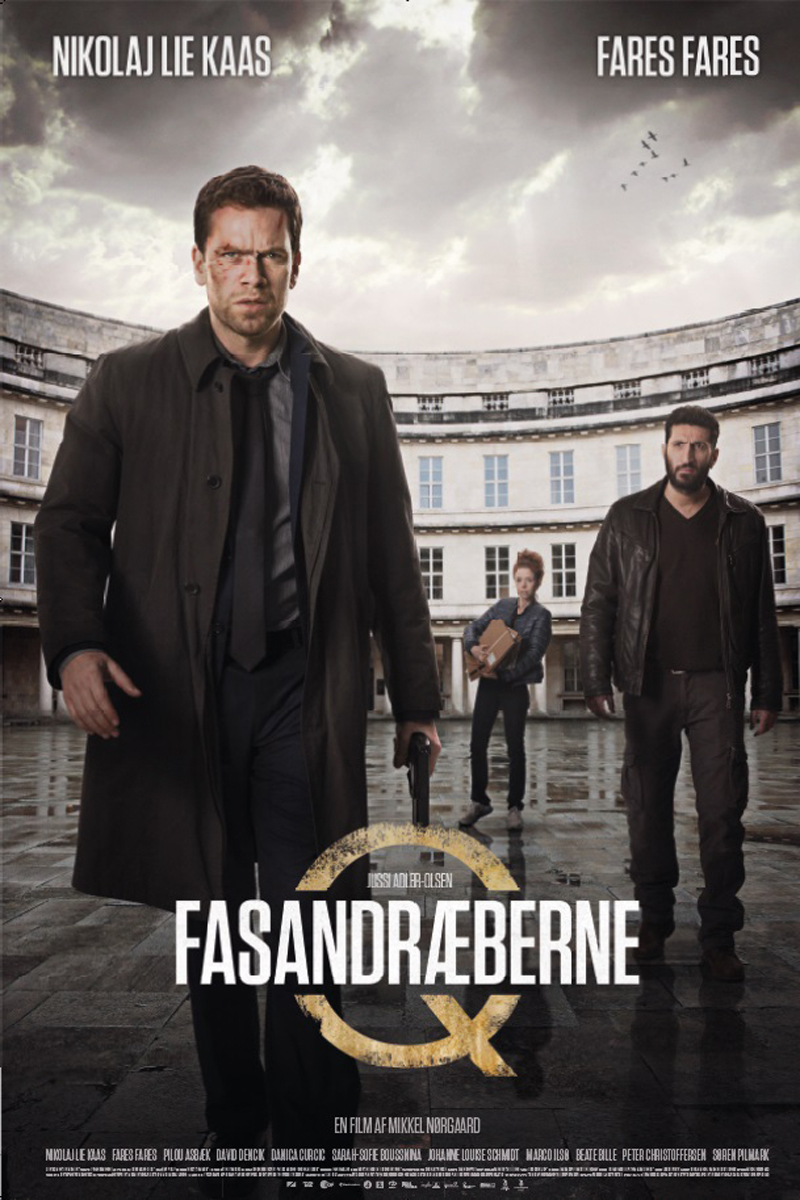
Fasandraeberne

Original title: Fasandræberne

D: Mikkel Nørgaard / 119m

Cast Nikolaj Lie Kaas, Fares Fares, Pilou Asbæk, David Dencik, Sarah-Sofie Boussnina, Danica Curcic, Nikolaj Groth, Søren Pilmark, Beate Bille, Marco Ilsø, Philip Stilling, Kristian Høgh Jeppesen, Johanne Louise Schmidt, Hans Henrik Clemensen, Peter Christoffersen, Katrine Rosenthal

At a police awards ceremony, cold case investigator Carl Mørck (Kaas) is accosted by a retired policeman who begs him to look into the case of his two children who were both killed in 1994. Mørck refuses, and later the man commits suicide, prompting Mørck, supported by his partner Assad (Fares) to look into the case. They learn that the siblings both attended the same boarding school, and that there was a call to the police – made by a young woman – alerting them to the crime. With this as their only clue, Mørck and Assad visit the school where they learn that the young woman was probably Kimmie Lassen (Boussnina); but unfortunately for them she hasn’t been seen in twenty years.

Learning also that Kimmie’s friends at the time included now reputable businessmen Ditlev Pram (Asbæk) and Ulrik Dybbøl (Dencik), and that the man who confessed to the crime, Bjarne Thøgersen (Jeppesen), was represented by the best criminal lawyer in Denmark, Bent Krum (Clemensen), and only served three years in prison, Mørck and Assad sense a conspiracy. They visit Thøgersen who alerts Pram to the new interest in the deaths. Pram hires a man named Albjerg (Christofferson) to look for Kimmie, while Mørck endeavours to find her first. But an older Kimmie (Curcic) is also a very wary Kimmie, and with the help of her friend, Tine (Rosenthal), she manages to stay one step ahead of everyone when she becomes aware that people are looking for her. But Albjerg tracks her down, and though she gets away, she also has a run in with Mørck that leaves him bruised and battered.

Meanwhile, Pram and Dybbøl use their political contacts to put pressure on senior police in an effort to get Mørck and Assad taken off the case. Furious, Mørck confronts his immediate boss (Pilmark) and makes enough of a case from the evidence that he’s amassed to show that it should be pursued further, and that Kimmie Lassen holds the key to what happened twenty years ago. When she is finally caught by the police, it seems that Pram and Dybbøl’s arrest is only a matter of time. But Kimmie has other ideas: she escapes and goes after them herself, as much to kill them first, and as much again to make up for her involvement in the deaths of the young brother and sister.
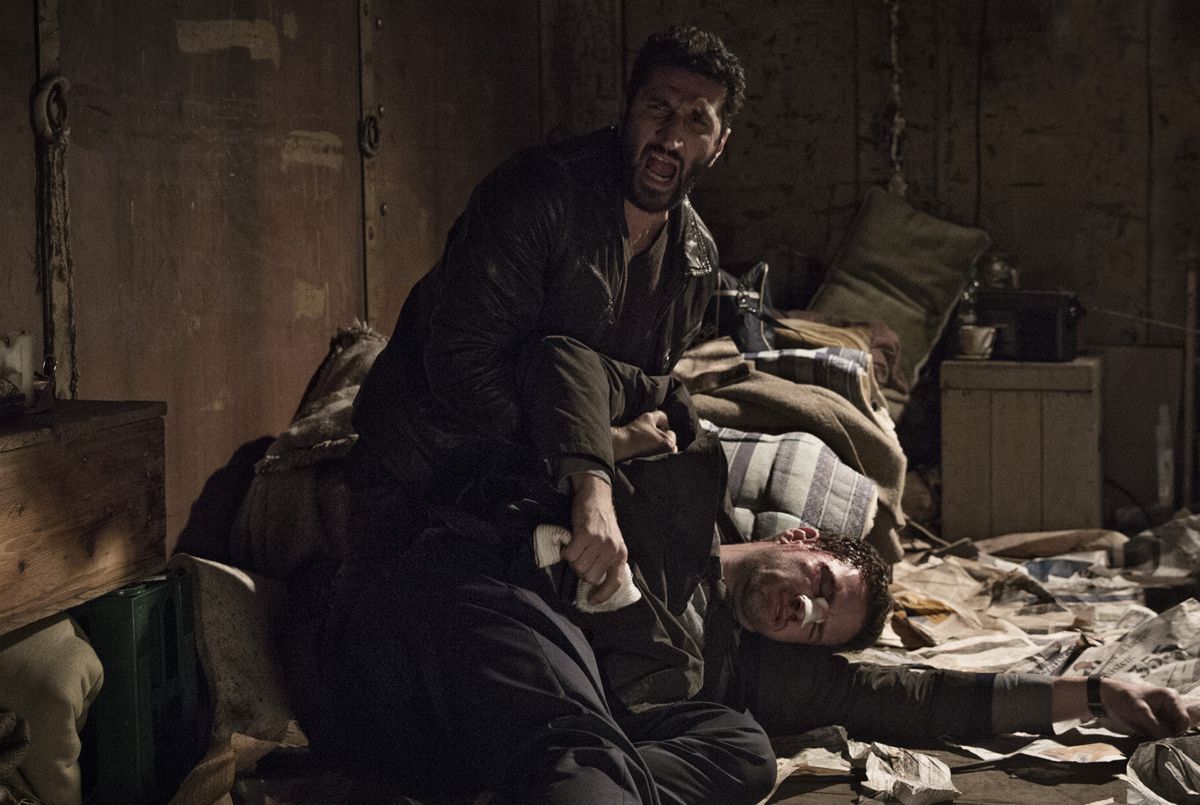
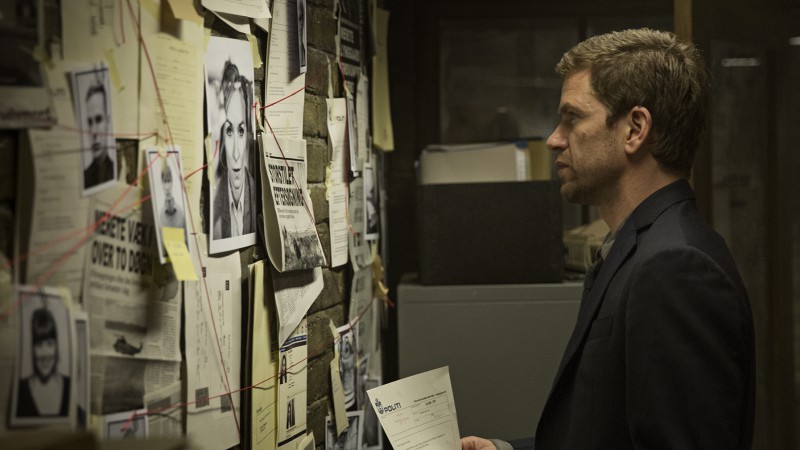
Fasandraeberne - scene

As much a riveting crime thriller as its predecessor, The Keeper of Lost Causes (2013), The Absent One is another triumphal adaptation of a novel by Jussi Adler-Olsen. With almost everyone involved in the first movie returning to make this one, the movie is like a seamless addition to what is an ongoing series. The tone, the feel, the pace, and the sensibility of The Absent One is such that anyone who has seen The Keeper of Lost Causes can slip into the series’ bleak, gloomy mise en scene with ease, sure in the knowledge that what follows will be of an equally high standard, and equally as satisfying (if not more so).

There are several reasons for this, not least the taut, gripping screenplay by Nikolaj Arcel and his writing partner Rasmus Heisterberg. In distilling Adler-Olsen’s novel they’ve kept the focus on the ripple effect the murders have had over the years, as well as Mørck’s inability to let something go once he’s got a grip on it. The detective’s persistence and dogged nature – which are pretty much all he has to keep him going – is beautifully expressed through Kaas’s beleaguered performance. This is a man who keeps his pain externalised to stop it from eating away at him inside, but the payoff is a lack of compassion and sympathy for others; he only takes on the case in the first place because he can’t deal with the guilt of refusing the retired policeman. Kaas gives a wonderfully fractured portrayal of Mørck, growing further into the character and inhabiting him completely.

Ably supported by Fares, whose Assad is never a foil for Mørck, Kaas heads up a cast that never puts a foot wrong, even in the smaller roles. The script supports them all the way, assembling the pieces of the plot with skill and precision, letting the viewer glimpse the events of twenty years ago without spoiling the true nature of the killings, and allowing the mystery surrounding those killings to remain in place almost until the very end. It’s a bold, confident approach, and allows the tension inherent in the story to build to a quietly devastating denouement (and which puts Mørck through the ringer once more – but then he probably wouldn’t have it any other way).

Retaining his place in the director’s chair, Nørgaard keeps things tightly focused and highlights the psychological toll felt by Kimmie over the course of twenty years (she has a terrible secret of her own that, when revealed, is the most upsetting thing seen in either movie). It’s to Nørgaard’s credit that Kimmie’s humanity is never downplayed,  and in the hands of Curcic, she’s a character so far removed from her younger self (also extremely well played by Boussnina) that the sadness of her situation is almost palpable. (In a better world, she and Mørck would make for an interesting couple.)

While the villains of the piece aren’t as effectively drawn, their callous natures are given plenty of screen time, as well as the slow disintegration of their self-confidence and eventual hubris. Asbæk and Dencik are appropriately cold and uncaring in their roles, revealing the innate hostility towards others that privilege has bestowed on them, and providing strong counterpoints to Mørck’s own disdain for others. It’s all reflected in the somber, unforgiving violence and shadowy dangers that permeate the movie and which help to make it such a rewarding (if slightly downbeat) experience.

Rating: 9/10 – a sequel that is as equally good as its forerunner, The Absent One is a dark, atmospheric thriller that is as uncompromising as it is compelling; with two further movies in the pipeline, let’s hope that the makers can maintain the quality shown so far.
Share this:

  • Share on X (Opens in new window) X
  • Share on Facebook (Opens in new window) Facebook
  • More
  • Print (Opens in new window) Print
  • Email a link to a friend (Opens in new window) Email
Like Loading...

Home (2015)

22 Friday May 2015

Posted by dullwood68 in Movies

≈ Leave a comment

Tags

Adam Rex, Animation, Boov, Comedy, Drama, Dreamworks, Gorg, Invasion, Jennifer Lopez, Jim Parsons, Literary adaptation, Review, Rihanna, Sci-fi, Steve Martin, The True Meaning of Smekday, Tim Johnson

Home

D: Tim Johnson / 94m

Cast: Jim Parsons, Rihanna, Steve Martin, Jennifer Lopez, Matt Jones, Brian Stepanek

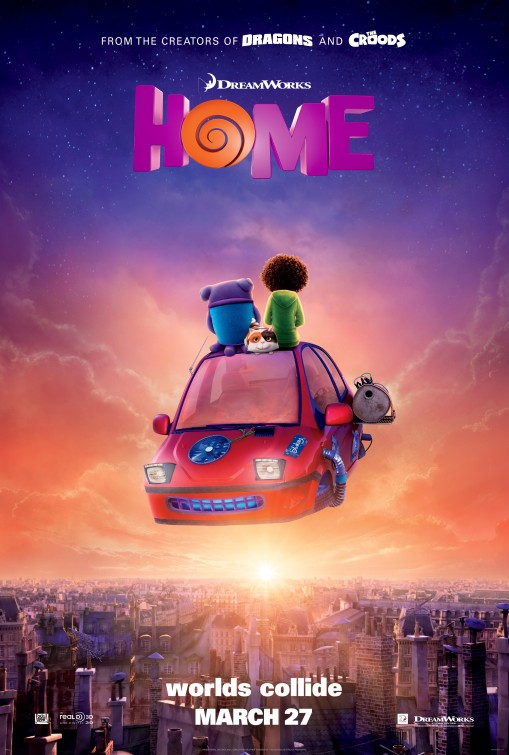
Fleeing from their sworn enemy the Gorg, the Boov race – led by Captain Smek (Martin) – arrive on Earth and begin to colonise it, sequestering the human population in various locations around the globe. The Boov are otherwise a peaceful race, and believe they are doing Earth a favour by inhabiting it. One of them, Oh (Parsons), decides to invite everyone to a party at his apartment, but when he sends out his electronic invitation he doesn’t realise that it will be picked up by the Gorg as well. When Captain Smek learns of this, Oh is forced to go on the run.

In a convenience store, Oh runs into Tip (Rihanna) and her cat Pig. Tip is on her own after her mother, Lucy (Lopez), was taken away. She hates the Boov, but when Oh transforms her mother’s car into one that can fly, and he agrees to help her find her mother, she lets him come with her. They fly to Paris to the Boov Command Centre where they learn that Lucy is in Australia. Evading the Boov, they then find themselves under attack from a Gorg ship. They manage to bring it down but their car is damaged in the process. The Gorg ship proves to be a drone, and Oh is able to use a chip from it to get their car going again.

Once in Australia, Tip and Oh discover that the Boov are evacuating to their mothership. Tip wants to find her mother but Oh insists they leave with the rest of the Boov before the Gorg destroy them all. Tip refuses and continues her search for Lucy, while Oh begins to realise that he has to do something to stop the Gorg from killing everyone, Boov and human alike. On the Boov mothership he uses the chip from the drone to place their mothership at a distance from the newly arrived Gorg mothership. This leads to Captain Smek being dismissed from his position as Boov leader, and the honour is given to Oh.

Tip and Lucy are finally reunited, but there’s still the problem of the Gorg mothership which has entered Earth’s atmosphere and is preparing to land outside the Australian camp. Oh has only a short time to find a solution that will save them all, but he finds the answer in the most unlikeliest of places…

Home - scene

Now fully committed to making computer animated movies – their last traditional animated movie was Sinbad: Legend of the Seven Seas (2003) – Dreamworks now finds itself, perhaps like Pixar, in a very strange position. Each animated movie it releases comes under a great deal of scrutiny, and Home is no different, with the movie being accused of failing to live up to the standards set by the likes of How to Train Your Dragon (2010) or Kung Fu Panda (2008). It’s an invidious position to be in, and in the case of Home, more than a little unfair.

Certainly, the movie’s message that we’re all the same under the skin (even if it is purple) is a well-worn theme in cinema, but here it’s not as hammered home as some other movies, and it’s approach to racial diversity – Tip is the first non-Caucasian lead in an animated movie – as well as its integration of the Boov, who adopt most human lifestyles, is all cleverly done. If it all seems predictable and safe, then that’s because it is. There’s nothing inherently wrong with that though, because the movie does it all with a tremendous amount of verve and eye-popping visual splendour, and is consistently funny throughout, thanks to Tom J. Astle and Matt Ember’s astute adaptation of Adam Rex’s kid-lit novel The True Meaning of Smekday.

Fizzing with a day-glo colour scheme that makes almost every scene glisten and zing, Home creates one of the sweetest on screen relationships seen for some time, as Oh and Tip become friends and realise how strong their bond is. Parsons is excellent as Oh, his vocal tics and mannerisms – some lifted, admittedly, from The Big Bang Theory – a perfect match for the continually puzzled yet curious little Boov, and Rihanna is just as effective as Tip, matching her co-star for emotional expression and displaying a range that may come as a surprise to some viewers. Martin almost steals the show with his turn as the cowardly Captain Smek, the character’s pompous vanity perfectly expressed in every scene he’s in, and while it may not be the most layered performance, it doesn’t have to be. With less screen time, Lopez doesn’t quite register as strongly as Lucy, but again, the relationship between Tip and Oh is the main focus, and not Tip and her mother.

Ably directed by Johnson, Home sets out its stall quickly and efficiently and provides enough entertainment for adults and kids alike. It isn’t a serious movie by any standard, and relies on the charm of its lead characters for most of its running time, but Oh and Tip are delightfully animated and voiced, and make for a great screen partnership. The Boov are a delight as well, the way their bodies change shade or colour depending on how they feel being one of the movie’s small pleasures. The movie doesn’t try too hard and does a lot with its small-scale story and plot, and proves endlessly visually inventive. It’s a fun, popcorn movie, the kind of animated distraction we could all use from time to time… and what’s wrong with that?

Rating: 8/10 – with a bucket load of charm and a refreshingly straightforward approach to its storyline, Home is a movie that rewards the viewer from start to finish; fun with a capital F and proof it were needed that Dreamworks is still making good choices when it comes to its animated movies.

Share this:

  • Share on X (Opens in new window) X
  • Share on Facebook (Opens in new window) Facebook
  • More
  • Print (Opens in new window) Print
  • Email a link to a friend (Opens in new window) Email
Like Loading...

Mini-Review: Mortdecai (2015)

11 Monday May 2015

Posted by dullwood68 in Movies

≈ Leave a comment

Tags

Action, Art heist, Comedy, Crime, David Koepp, Ewan McGregor, Gwyneth Paltrow, Johnny Depp, Literary adaptation, Moustache, Murder, Paul Bettany, Review

Mortdecai

D: David Koepp / 107m

Cast: Johnny Depp, Gwyneth Paltrow, Ewan McGregor, Paul Bettany, Olivia Munn, Jonny Pasvolsky, Michael Culkin, Ulrich Thomsen, Jeff Goldblum, Michael Byrne, Paul Whitehouse

When an art restorer is killed and the painting she was working on stolen, Inspector Alistair Martland (McGregor) is put in charge of the investigation. He brings on board crooked art dealer Charlie Mortdecai (Depp) to help recover the painting which is a Goya. Mortdecai has potentially ruinous debts, and though agreeing to help, he plans to sell the painting when he finds it. While he begins the search, his wife Johanna (Paltrow) decides to look for it herself. She visits a duke (Byrne) who tells her it was stolen by a friend of his during the war, and that on the back of the painting are codes that will lead to a hidden stash of Nazi gold.

With criminal Emil Strago (Pasvolsky) also after the painting to help fund his terrorist activities, and the involvement of Russian mobster Romanov (Thomsen), Mortdecai, aided by his faithful manservant Jock Strapp (Bettany), eventually discovers the location of the painting and attempts to steal it back from the man who has it, American dealer Milton Krampf (Goldblum). Strago, in cahoots with Cramp’s daughter Georgina (Munn), manages to get the painting himself, but when he tries to find the codes, he inadvertently destroys it. But Johanna reveals that the painting was a fake, and that she knows the location of the real one.

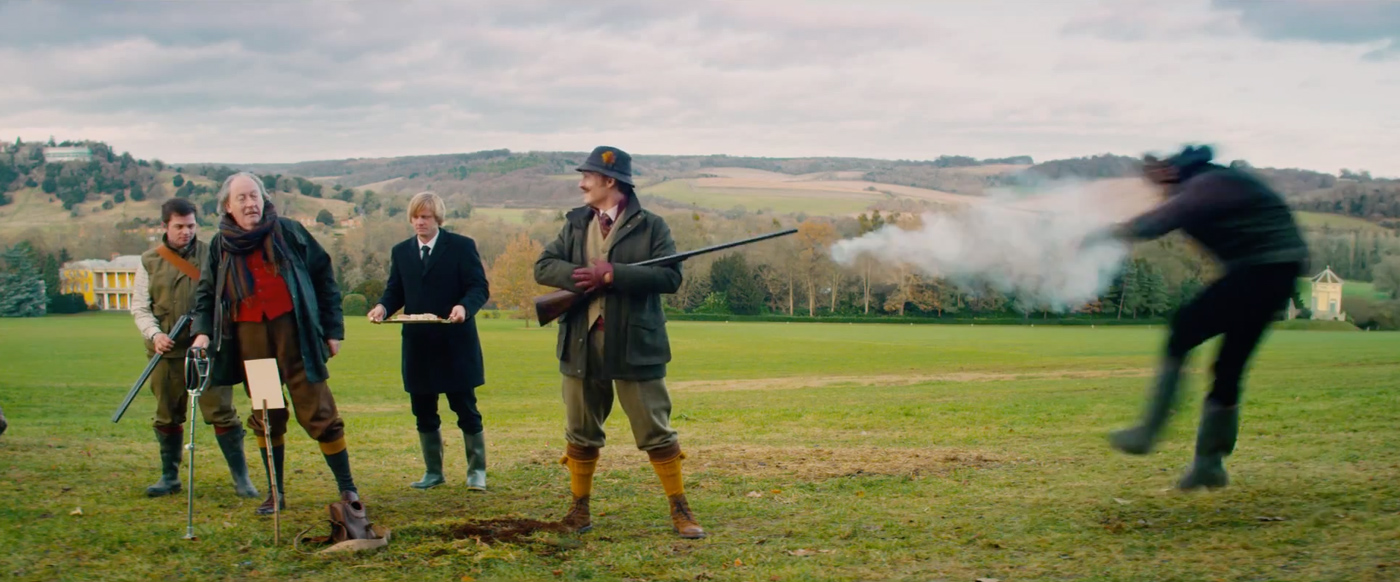
Mortdecai - scene

Recent movies starring Johnny Depp have proved to be mostly disappointing, and Mortdecai continues that streak, lacking cohesion, credible characters, and worst of all, sufficient laughs to offset the movie’s other faults, such as Depp’s own performance. For anyone with even a passing knowledge of British comedy from the Fifties and Sixties, Mortdecai will be the movie where Depp does his best Terry-Thomas impersonation, even down to the gap in his upper teeth. It’s hard to say if Depp is being affectionate or paying tribute, but either way his overly mannered performance is so distracting it ultimately becomes off-putting (not to mention annoying).

Thanks to Eric Aronson’s trying-too-hard screenplay (adapted from the novel by Kyril Bonfiglioli), the movie struggles on almost every level except for cinematography and costume design, and makes a hash of its absurdist situations, refusing to acknowledge that less is more and that caper movies should be fun and not a trial to sit through. Koepp is a better writer than he is a director, and he plays around with the pace of the movie throughout, making some stretches play out inordinately while letting his cast direct themselves. The twists and turns of the plot are too predictable for anyone to care about, and the action scenes too pedestrian. With running gags the order of the day, the humour soon becomes tiresome as well. There’s a decent movie to be made from Bonfiglioli’s Mortdecai novels, but sadly, this isn’t it.

Rating: 3/10 – not as clever or funny as its makers will have intended, Mortdecai is yet another movie where no one realised early on just how many mistakes were being made; lacking subtlety, wit or charm, the movie is like a smörgåsbord of bad ideas all pulled together in the wrong place at the wrong time and in the wrong way.

Share this:

  • Share on X (Opens in new window) X
  • Share on Facebook (Opens in new window) Facebook
  • More
  • Print (Opens in new window) Print
  • Email a link to a friend (Opens in new window) Email
Like Loading...

The Prize Winner of Defiance, Ohio (2005)

07 Thursday May 2015

Posted by dullwood68 in Movies

≈ 1 Comment

Tags

1950's, Affadaisies, Comedy, Contests, Drama, Jane Anderson, Julianne Moore, Laura Dern, Literary adaptation, Prizes, Review, Terry "Tuff" Ryan, True story, Woody Harrelson

Prize Winner of Defiance, Ohio, The

D: Jane Anderson / 95m

Cast: Julianne Moore, Woody Harrelson, Trevor Morgan, Ellary Porterfield, Laura Dern, Simon Reynolds, Martin Doyle, David Gardner

In the Fifties, hard-working mother of twelve, Evelyn Ryan (Moore) is a champion contester, winning prizes ranging from a couple of dollars to bicycles to washing machines, and sometimes, larger cash prizes. But with her husband Kelly (Harrelson) drinking away his wages, these prizes often serve as ways to prevent or avoid financial hardship from overwhelming the family entirely.

Raising ten kids, Evelyn often has to find creative ways of managing their finances, and while some of her wins help keep things going, she finds Kelly’s self-loathing and violent outbursts always stop them from having to stave off creditors such as the milkman, Ray (Reynolds) and the bank. Their family life is a mix of minor crises – one of her sons is arrested for theft, their car breaks down when Evelyn and daughter Tuff (Porterfield) take a trip – and major ones – Kelly remortgages their home without telling anyone, Evelyn suffers a fall and cuts her wrists on broken glass.

As the children grow up and begin to leave home, in the Sixties, Evelyn is contacted by Dortha Schaefer (Dern), a fellow contester who invites her to join a select group of women called the Affadaisies. All are contest winners several times over and all live similar lives of domestic drudgery enlivened by their successes. Her first trip to meet the group (where the car breaks down), leads to her being late home, and scares Kelly into thinking that Evelyn has left him. The ensuing confrontation sees Evelyn standing her ground for the first time.

But when she discovers that Kelly hasn’t repaid the mortgage he took out without her knowing, Evelyn has to fall back on winning a major contest sponsored by Dr Pepper. If she can win, then it will mean their being able to keep their home, and the family, together.

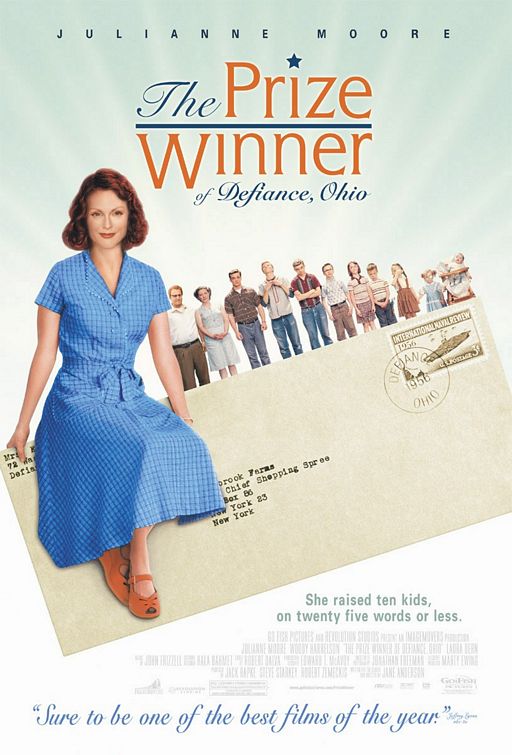
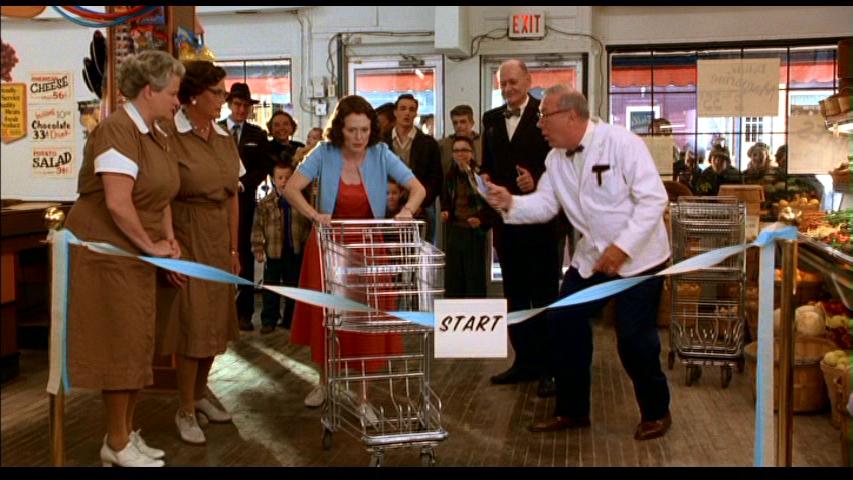
Prize Winner of Defiance, Ohio, The - scene

An adaptation of the memoir by Terry “Tuff” Ryan, and with a screenplay by her, The Prize Winner of Defiance, Ohio is an overly saccharine but enjoyable distraction from the usual dramatics of real life stories, and features yet another effortless performance from Moore. On the surface, Evelyn is a recognisable fixture of the Fifties: the outwardly downtrodden housewife who’s a lot more clued-in than people think. Moore had already portrayed a more dramatic version of the role in Todd Haynes’ Far from Heaven (2002), but here she accentuates the nicer, more even-tempered qualities of her character, while retaining an inner steeliness that is more than a match for the violent paroxysms displayed by Harrelson’s Kelly.

As befitting an actress of Moore’s stature and skill, Evelyn Ryan isn’t just a perma-grinned caricature of a Fifties housewife, and nor is she written that way, but Anderson’s only-just-dialled-down-from-day-glo approach to the material often gets in the way, making Evelyn seem impossibly irrepressible despite endless provocation. But Moore shows the character’s strength and determination to keep her family together, and the willingness to make sacrifices to achieve that aim, in such a way that the viewer can only admire Evelyn and the efforts she goes to to ensure everyone is cared for and supported. She’s selfless beyond the call of duty, and Moore inhabits the role in such a way that you never question her motives or her view of the world around her.

Against this, Harrelson has his work cut out for him, as Kelly does appear – initially at least – to be the very embodiment of an emasculated man, his deep-rooted anger at the way his life has turned out eating him from within and spilling out in booze-fuelled rages. But Harrelson shows how hard Kelly is trying to be better, even if he can’t quite achieve it with any consistency, and the scene where Evelyn returns home from visiting the Affadaisies, and Kelly is mad with panic, shows a man who is terrified of being left alone with his demons. In a separate scene we learn the reason for his frustration and anger, and when it’s revealed, the level of Harrelson’s empathy for the character becomes apparent. Always hovering in the background, afraid and uncertain as to how to engage with his children, Kelly is the alcoholic elephant in the room, and Harrelson imbues him with a desperate, overwhelming neediness that makes him surprisingly sympathetic.

Covering over ten years, the movie does tend towards the repetitive in terms of its depiction of Evelyn’s success with contests, presenting as it does a parade of problems that are resolved by the acquisition of an appropriately helpful item (and culminating in the Dr Pepper contest), but there’s enough incident in-between times to make up for the feeling that it’s all been done before, and will be again. The sexual politics of the time are held up for scrutiny, with Doyle’s oily bank manager downplaying Evelyn’s role in financial matters, and Gardner’s blatantly unhelpful priest who exhorts her to “try a little harder” in her marriage.

Away from the performances, it’s the recreation of the Fifties and the early Sixties (in many ways a simpler time for the average American family) that most impresses, with Edward T. McAvoy’s production design, matched by Clive Thomasson’s set decoration, providing the movie with a look and a sheen that DoP Jonathan Freeman exploits at every opportunity. And Terry Ryan’s script is often at its most enjoyable when reprising Evelyn’s abilities at coming up with winning slogans and rhymes, their hokey cleverness a perfect summation of Evelyn’s own outlook on life: cheery, slightly folksy, and always optimistic.

Rating: 8/10 – some may find Evelyn Ryan’s unremittingly cheerful attitude to life a little too much to stomach, but to do so would be to miss the point of Moore’s performance and Terry Ryan’s reminiscences of her mother: that she viewed life as an adventure, whatever the circumstances; as such, The Prize Winner of Defiance, Ohio scores heavily and brightly as a tribute to a woman whose unwavering attitude can – and should be – looked upon as inspiration for us all.

Share this:

  • Share on X (Opens in new window) X
  • Share on Facebook (Opens in new window) Facebook
  • More
  • Print (Opens in new window) Print
  • Email a link to a friend (Opens in new window) Email
Like Loading...

Child 44 (2015)

04 Monday May 2015

Posted by dullwood68 in Movies

≈ Leave a comment

Tags

Daniel Espinosa, Drama, Gary Oldman, Joel Kinnaman, Leo Demidov, Literary adaptation, Moscow, Murder, Noomi Rapace, Review, Rostov, Serial killer, Soviet Union, Thriller, Tom Hardy, Tom Rob Smith

Child 44

D: Daniel Espinosa / 137m

Cast: Tom Hardy, Noomi Rapace, Gary Oldman, Joel Kinnaman, Paddy Considine, Fares Fares, Vincent Cassel, Jason Clarke, Nikolaj Lie Kaas, Tara Fitzgerald, Sam Spruell, Charles Dance

In post-war Soviet Russia, Leo Demidov (Hardy) is a respected officer in the Secret Police. Along with wartime comrades Vasili Nikitin (Kinnaman) and Alexei Andreyev (Fares) he investigates crimes against the state. When a suspect, Anatoly Brodsky (Clarke) goes on the run, their pursuit takes them to a farm where Brodsky has taken refuge. Against Leo’s wishes, Vasili kills the farmer’s wife and his young son; this drives a wedge between the two men.

A short while later, Andreyev’s young son is found dead by some railroad tracks. Though it’s clear that he has been murdered, thanks to Stalin’s edict that there shall be “no murder in paradise”, Leo is commanded by his superior, Major Kuzmin (Cassel), to tell Andreyev that the death was accidental. The idea doesn’t sit well with Leo but he goes ahead with it. When another child is murdered, Leo learns that there have been even more, similar cases. At the same time, he is tasked with investigating another suspected enemy of the state: his wife, Raisa (Rapace). She works in a school, and is friendly with one of the teachers, Ivan Sukov (Kaas). When his investigation reveals nothing incriminating about Raisa, his report is used as an excuse to strip Leo of his job and his home.

Leo is sent to Rostov to work under the command of General Mikhail Nesterov (Oldman). There, the discovery of another child’s body leads Leo to believe that the killer is responsible for over forty murders and is using the railway line between Rostov and Moscow as a means of hiding his crimes. Convincing Nesterov of his theory, Leo, aided by Raisa, returns to Moscow to seek help from Andreyev and gain access to files that will provide further information. But Vasili, who has been promoted to Leo’s old post, learns of his being in Moscow and tries to track him down and arrest him. Leo and Raisa manage to get out of Moscow and make their way back to Rostov. Now knowing that this is where the killer lives and works, Leo tries to find him on his own, but he has to work completely outside the law to do so.

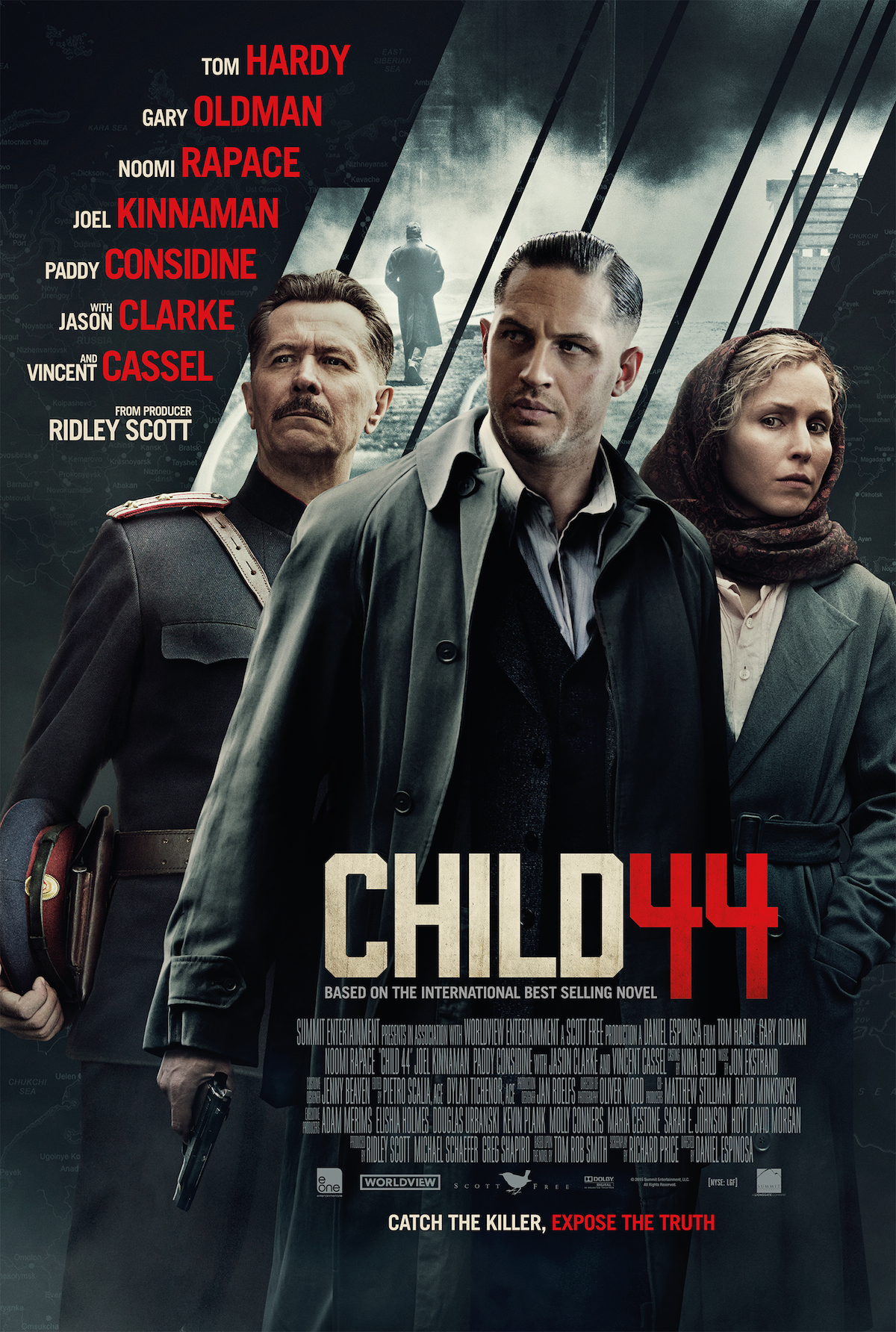
Child 44 - scene

Based on the novel by Tom Rob Smith, Child 44 looks, on the surface, to be the kind of quality literary adaptation that offers outstanding performances, first-rate direction, a gripping script, and all of it culminating in a rewarding cinematic experience. Alas, this isn’t that kind of movie.

Instead, Child 44 is one of the most lethargic, dullest thrillers in recent years. It’s hard to say just what is right about the movie, cloaked as it is in a thick layer of cod-Russian accents and the kind of amateur thesping expected from a movie with a much smaller budget.

That such a talented cast appears so ill-at-ease is thanks largely to a script by Richard Price that leaves them high and dry in terms of conviction, and rarely links two scenes with any sense that they’re connected. The movie opens with two scenes that show Leo and Vasili growing up and during the war. Anyone who’s read the novel will know the importance of this, but thanks to Price it has as much relevance later on as its clichéd outcome requires (which isn’t much). There are other moments and aspects of the novel that are included and then ignored, such as Raisa’s initial fear of Leo when they first met, and these go some way to making the movie feel uncoordinated and ill-considered.

And the movie feels rushed once Leo has to look into Raisa’s activities, as if the strain of adapting so much wieldy material became too much and Price had to jettison any subtlety in favour of just ploughing ahead with the thriller side of things. The end result is a movie that plods along avoiding any attempt to re-engage with its audience. As such, it becomes a chore, and the average viewer will be regretting the lengthy running time.

As mentioned above, the cast can do little with what they’re given. Hardy – usually a reliably  hard-working actor – here fails to get to grips with the character of Leo, and gives a drab, uninspired performance that runs out of steam before even a quarter of the movie is over. Raoace, who really should be picking her roles with more perspicacity, is left on the sidelines too much and only ever registers when taking part in a fight scene. Oldman appears halfway through, has a handful of scenes and then disappears until the end; Kinnaman plays Vasili as a one-note sociopath (and looks increasingly like a young Keith Carradine); and Considine is saddled with the role of the killer, but never looks comfortable when trying to make him seem pitiable.

Perhaps it’s as much Espinosa’s fault as the script’s, as the director never seems to have s firm grip on the material, and shoots several scenes with a peculiarly uninvolved approach that makes them seem as if they’ve been included for the sake of it. Under his wing, the movie lacks any real thrills, and the race to track down the killer is hampered by too many longeuers to be entirely effective. And when you have a cast of this quality, not getting the best out of them is practically criminal.

Rating: 4/10 – with its superficial recreation of Soviet Russia, and cruelly dispassionate approach to the material, Child 44 never convinces; when a movie adaptation is this disappointing it’s a sure sign that everyone was having a very long off day.

Share this:

  • Share on X (Opens in new window) X
  • Share on Facebook (Opens in new window) Facebook
  • More
  • Print (Opens in new window) Print
  • Email a link to a friend (Opens in new window) Email
Like Loading...

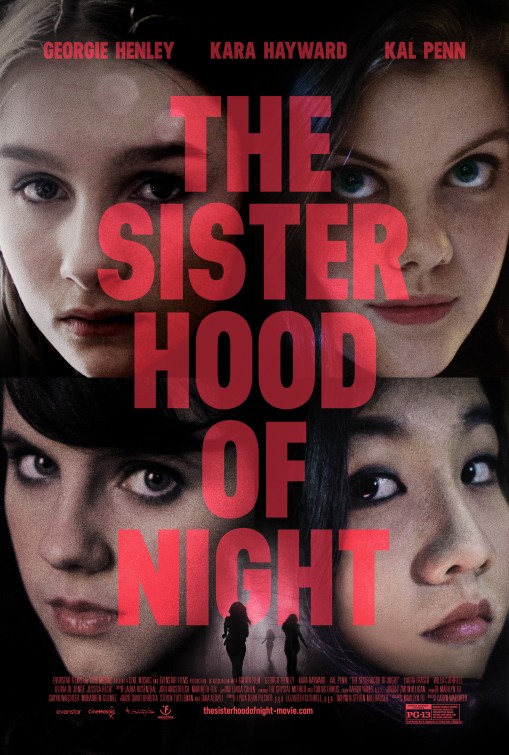
The Sisterhood of Night (2014)

02 Saturday May 2015

Posted by dullwood68 in Movies

≈ 1 Comment

Tags

Caryn Waechter, Cult, Drama, Georgie Henley, Guidance counsellor, High School, Kal Penn, Kara Hayward, Kingston, Laura Fraser, Literary adaptation, Review, Secret society, Sisterhood, Steven Millhauser

Sisterhood of Night, The

D: Caryn Waechter / 103m

Cast: Georgie Henley, Kara Hayward, Kal Penn, Laura Fraser, Olivia DeJonge, Willa Cuthrell, Jessica Hecht, Gary Wilmes, Louis Changchien, Morgan Turner, Evan Kuzma

Following a feud between teenage classmates Mary Warren (Henley) and Emily Parris (Hayward) that lands both of them in the office of guidance counsellor Gordy Gambhir (Penn), Mary – whose private texts have been published online via Emily’s blog – decides to go offline and take a vow of virtual silence. She also decides to create a sisterhood, a group that girls can join that doesn’t rely on sharing things online but with each other. Her first recruits are Catherine (Cuthrell) and Lavinia (DeJonge). At night, they sneak out to the woods and have their meetings. Above all, they swear to maintain the secrecy of what they’re doing.

As time passes, awareness of the sisterhood grows and membership becomes an ambition for many of Mary’s peers, but only she chooses who to invite into the group. One person left out is Emily, who becomes jealous of Mary’s influence on her friends, and who struggles to fit in at school. One night she follows a new member into the woods and witnesses one of the meetings. Later that night, Emily posts an update on her blog telling everyone that the girls in the sisterhood chanted dirty words, undressed and touched each other, and cut Emily’s hand before doing the same to her. With the sisterhood refusing to reveal the nature of their meetings, Emily’s claims are allowed to go unchallenged, and soon her blog becomes very popular on the Internet, attracting hundreds of followers. It also attracts other schoolmates who claim they have been abused by the sisterhood as well.

As more and more claims are made about the sisterhood, the girls’ parents become more and more aware of what’s going on, and so too does the media. The press has a field day speculating on whether or not the sisterhood is a cult, or if it brainwashes its members, or if it worships the devil, but Mary and the rest hold fast and keep to their vow of silence. Emily’s blog continues to grow in stature, and becomes a place where people who have been abused can talk about what’s happened to them. At the same time, Emily and two of her friends decide to target Lavinia, believing that put under enough pressure she will reveal the secrets of the sisterhood. Meanwhile, Mary’s budding relationship with Jeff (Kuzma) founders over her silence, and upset by this she ends up one night at Gambhir’s; matters are made worse by their being seen by Emily’s mother (Hecht). As tensions mount in the community, Mary comes under pressure from Catherine and Lavinia to come clean, while Emily has second thoughts about the plan to make Lavinia reveal the sisterhood’s secrets.

Sisterhood of Night, The - scene

There’s a moment in The Sisterhood of Night where approachable guidance counsellor Gordy, tasked with trying to find out what the sisterhood is all about, attempts to talk to Mary in his office. She’s unresponsive, so he gets up and goes to talk to the school principal (Gilmes), who just happens to be outside. Also outside – conveniently – is Emily. Mary remarks that Emily’s hand must hurt where she slipped on some rocks; Emily responds by recounting what she saw up until the point where a) the script doesn’t want to go because it wants to retain the mystery of what did happen, or b) the point at which Emily will have to make things up to appear credible. It’s a fine line that the script – by Marilyn Fu, and adapted from a short story by Steven Millhauser – comes close to crossing time and again, but the audience knows that Emily is lying about what she saw, despite all this prevarication. In the same way that we know (without being told explicitly) that the sisterhood aren’t devil worshippers or cult members, we know that there is a solid reason for Mary’s starting the group (though what that is remains a secret until the end).

In making a movie about secrets that prompt lies and deception, Fu and first-time feature director Waechter have fashioned a modern-day version of the Salem witch trials, with accusations flying thick and fast and hysteria gripping hold of the Kingston community. But there’s a fly in the ointment, and it’s a big one: the paucity of adult involvement. While Mary and Emily and their mutual supporters are given much of the screen time, the adults fare so badly it’s almost as if they and their motivations were an after thought. Lavinia’s mother, Rose (Fraser), acts distraught and unable to cope from the moment she learns of her daughter’s involvement in the sisterhood. Gordy allows himself to be put in an inappropriate situation when Mary stays the night, but makes only one phone call to let anyone know (and thus cover himself). Emily’s mother is the small-town Christian busybody who accuses first and doesn’t even bother to ask questions later, and who behaves like a less shrill version of Veronica Cartwright’s character in The Witches of Eastwick (1987). And the police barely get a look in, despite the nature of the accusations being made by the press and everyone else. This approach makes the movie appear lopsided in its focus, and it never manages it right itself.

This is also a movie where the kids run rings round everyone else, and while this might make for an intriguing reflection on modern society and the nuclear family, and the teenagers who believe they can reject any notion of personal responsibility, it makes for an awkward, uncomfortable movie that is rescued by a clutch of intuitive, resonant performances. Leaving behind – way behind – her best-known role as Lucy Pevensie in the Narnia movies, Henley is authoritative and deceptively alluring. She makes Mary the provocative, intimidating centre of the movie, beguiling and caustic, and never lets the character become too affected or pretentious. It’s a strong, effortless portrayal, and she holds the audience’s attention throughout. As her primary adversary, Hayward makes Emily a more three-dimensional character than expected, fleshing out the awkward adolescent feelings Emily is trying to deal with, and making her more sympathetic than she appears at the movie’s start. With equally strong support from Cuthrell and DeJonge, the movie benefits from all four young actresses’ approach to the material, and they help guide the movie through some of its more overly melodramatic moments.

While the movie is largely uneven, and strains credibility at times, it does have a sense of small-town paranoia that is effectively rendered, and the casually cruel behaviour of teenage girls is adequately presented (if not delved into too deeply). Waechter displays a knack for making the meetings in the woods as creepy as rumour and gossip would have them, and she’s equally adept at teasing odd nuances out of the characters’ behaviour, especially when Emily attends a radio station and comes face to face with some of the victims of real abuse who’ve responded to her blog. Zak Mulligan’s photography unfortunately paints a drab portrait of Kingston and its surroundings, while some scenes feel truncated thanks to Aaron Yanes’ assembly of the material. There’s also a voice over provided by a minor character that comes and goes without any consistency.

Rating: 6/10 – without sufficient depth or clarity applied to the story and characters, The Sisterhood of Night comes across as being a mystery about something the audience won’t ultimately care about; when the reason comes though, it’s beautifully told, and more than makes up for some of the vicissitudes that have gone before.

Share this:

  • Share on X (Opens in new window) X
  • Share on Facebook (Opens in new window) Facebook
  • More
  • Print (Opens in new window) Print
  • Email a link to a friend (Opens in new window) Email
Like Loading...

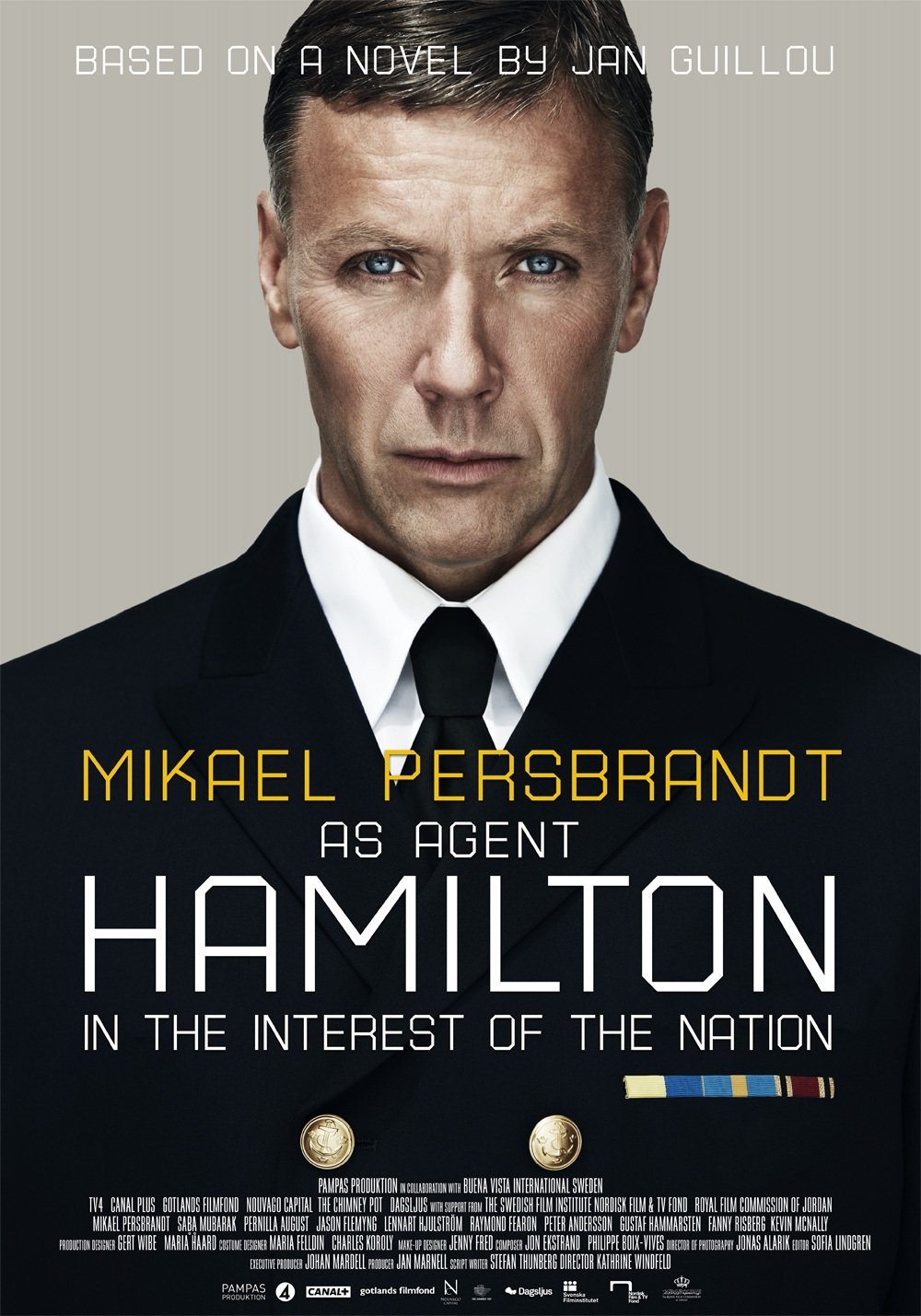
Hamilton: In the Interest of the Nation (2012)

26 Sunday Apr 2015

Posted by dullwood68 in Movies

≈ Leave a comment

Tags

Action, Arms, Assassination, Drama, Guided missiles, Horn of Africa, Jan Guillou, Jason Flemyng, Kathrine Windfeld, Literary adaptation, Mikael Persbrandt, Pernilla August, Review, Saba Mubarak, Sectragon, Sweden, Thriller

Hamilton

Original title: Hamilton: I nationens intresse

D: Kathrine Windfeld / 109m

Cast: Mikael Persbrandt, Saba Mubarak, Pernilla August, Jason Flemyng, Lennart Hjulström, Aleksandr Nosik, Ray Fearon, Peter Andersson, Gustaf Hammarsten, Dan Ekborg, David Dencik, Leo Gregory, Fanny Risberg, Liv Mjönes, Kevin McNally

Posing as a member of a Russian mafia gang, Swedish intelligence officer Carl Hamilton (Persbrandt) is present at an arms deal between the Russian gang and a group of terrorists; the arms in question are Swedish guided missiles. Before the deal can be completed, both sides are ambushed by another group, who make off with the missiles. Making it to safety, Hamilton returns to Stockholm. There he resumes his relationship with a doctor, Maria (Risberg). He wants to settle down with her but an accident happens which prevents them from doing so.

In the meantime, in Ethiopia, a contractor, Martin Lagerbäck (Hammarsten) working for the Swedish company North Fors is kidnapped by fellow employee Benjamin Lee (Fearon). Lee’s reason for doing so is because Lagerbäck is the key to a conspiracy involving North Fors, their security company Sectragon, and the planned assassination of several African politicians using the guided missiles. When the Swedish government learns of Lagerbäck’s abduction, the Prime Minister (August) tasks Sectragon with his and Lee’s retrieval, and elects Hamilton to go along as an observer.

Though both men are rescued, Hamilton becomes suspicious of the intentions of Sectragon’s security chief, Hart (Flemyng). He decides to hijack an incoming helicopter and takes both men with him. Returning to Sweden via Amman in Jordan, and with the help of local PLO operative, Mouna (Mubarak), Hamilton thwarts Hart’s plans to recapture Lee and Lagerbäck. Back in Sweden it soon transpires that North Fors has a mole inside the government and that they are planning to assassinate a visiting Ethiopian politician, along with the Prime Minister. Lee is abducted by Hart, giving Hamilton very little time in which to track them both down and stop North Fors from carrying out their plan to foment war in the Horn of Africa.

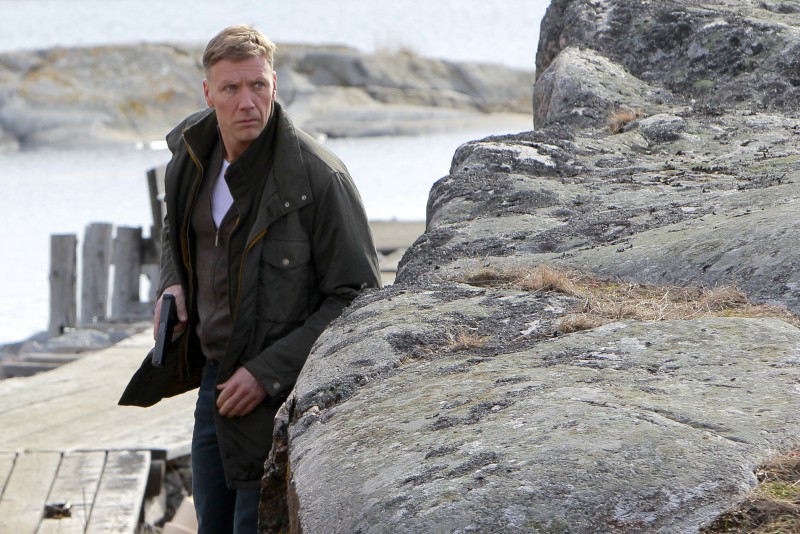
Hamilton - scene

Not particularly well known for producing spy thrillers, Sweden is nevertheless very good at producing flawed heroes who are weighed down by angst and debilitating introspection. The same is true here of Carl Hamilton, the creation of author Jan Guillou and the subject of eleven novels so far (this is adapted from the third in the series). With his melancholy features and acerbic outlook, Hamilton is as far removed from James Bond – an obvious comparison to make – as Bond is from, say, Derek Flint. Persbrandt is a good choice, his imposing physique and steely gaze making him ideal for the role, and he’s as adept at the close quarter fighting as he is when either romancing Risberg or being quietly compassionate with Mubarak.

With the character arriving fully formed from the outset – a refreshing change from the usual approach taken at the beginning of a potential franchise (an oddly titled sequel, Agent Hamilton: But Not If It Concerns Your Daughter was also released in 2012) – the movie throws the viewer into the thick of things and only occasionally pauses to give them time to work out what’s going on. Alas, when the viewer is granted pause for reflection, they may well wonder what is going on a little too often for comfort. There are several moments when belief isn’t so much suspended as overlooked. Lee’s abduction of Lagerbäck refuses to make sense however you look at it, and why Hamilton has to keep making trips to the Middle East is never explained either. It’s either a case of lazy plotting, or perhaps worse, a script that’s been bowdlerised during production. Either way, this is a movie where a lot happens… because.

That’s not to say that it isn’t entertaining, because for the most part, it is. The globe-trotting aspects keep the movie looking fresh, and the location work, particularly in Jordan, is often spectacular. Orchestrating it all, Windfeld (who sadly passed away in February of this year) injects an energy into the action scenes that gives the movie a boost whenever they happen, and she shows a confidence that helps paper over the cracks created by the script. She’s good too with her cast, eliciting strong performances from Mubarak and August (you can believe in her world-weary prime minister implicitly), and even reining in most of Flemyng’s idiosyncrasies as an actor. The mix of English and Swedish actors proves fruitful, though McNally’s scenes as the head of Sectragon look to have been filmed in a day, and not by Windfeld; they stand out like a sore thumb: poorly shot and with McNally doing a tired impression of a corporate sleaze bag.

There’s little subtlety involved in the political machinations as well, with Dencik’s slimy government mole proving not too dissimilar to his role in Serena (2014). The subplot involving Hamilton’s girlfriend Maria is played out in the background, and proves more interesting in the end than the main plot itself, as a journalist (Mjönes) gets involved and Hamilton’s career is put in greater jeopardy than it is from Hart. The resolution to this subplot, however, is given short shrift in terms of dramatics, and its effect on Hamilton goes largely by the by, aside from a predictably angst-ridden conversation between Hamilton and his boss, DG (Hjulström). It’s another reminder that Hamilton, while very good at his job, just wants to get out and lead a “normal” life with Maria. But as with all spies who are too good at their job, it’s never going to happen, and Hamilton soon heads back to cracking skulls and saving the world.

Rating: 7/10 – doing just enough to win over its audience, and providing a pleasant enough diversion, Hamilton: In the Interest of the Nation is an often over-cautious attempt at making a spy thriller; with a good central performance from Persbrandt and decisive direction from Windfeld, though, it’s an interesting take on a genre that’s been reinventing itself in recent years, and well worth a look.

Share this:

  • Share on X (Opens in new window) X
  • Share on Facebook (Opens in new window) Facebook
  • More
  • Print (Opens in new window) Print
  • Email a link to a friend (Opens in new window) Email
Like Loading...

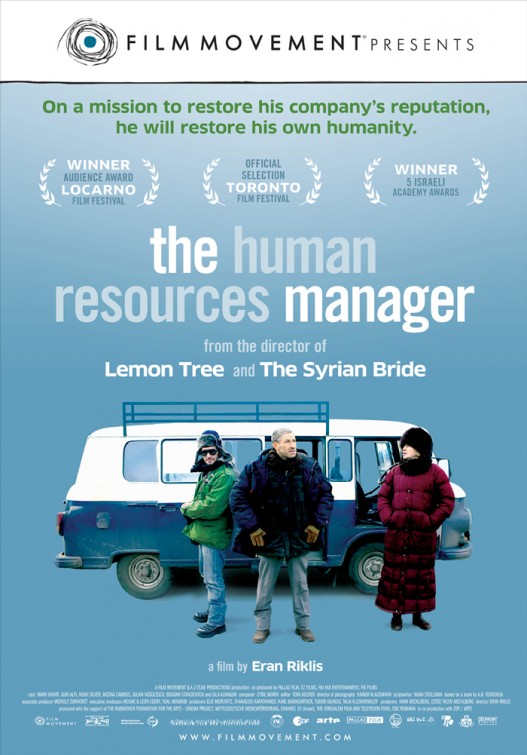
The Human Resources Manager (2010)

14 Tuesday Apr 2015

Posted by dullwood68 in Movies

≈ Leave a comment

Tags

A Woman in Jerusalem, Burial, Drama, Eran Riklis, Guri Alfi, Immigrant, Industrial bakery, Israel, Literary adaptation, Mark Ivanir, Noah Silver, Review, Romania, The Weasel, Yulia Petracke

Human Resources Manager, The

D: Eran Riklis / 99m

Cast: Mark Ivanir, Guri Alfi, Noah Silver, Rosina Kambus, Julian Negulesco, Bogdan E. Stanoevitch, Irina Petrescu, Gila Almagor, Reymonde Amsallem, Roni Karen, Papil Panduru

When an employee at a prestigious bakery in Jerusalem is killed, and her body goes unclaimed for some weeks, it leads to a public relations crisis for the company. With a newspaper article being prepared that will criticise the bakery, its owner, known as the Widow (Almagor), gives the job of defusing the matter to the human resources manager (Ivanir). He discovers that the employee was a Romanian immigrant called Yulia who had been living in Jerusalem for some time, but whose family is back in her home country. He also learns that she had been let go a month before by her supervisor, and believes that this absolves the bakery of any blame for her body going unclaimed.

However, the journalist writing the article, known as the Weasel (Alfi), publishes the article anyway. And instead of fighting any claim of negligence, the Widow decides to admit blame and pay compensation to the family; she also gives the job of escorting the body back to Romania and representing the company at the funeral to the HR manager. With his home life proving difficult to negotiate – he’s divorced and has a young daughter (Karen) he doesn’t spend enough time with – the prospect of being away for a few days isn’t ideal, but he doesn’t have a choice.

At the Widow’s request, the Weasel goes with him, which adds to his problems. And once he gets to Romania, the HR manager finds that bureaucracy and local customs place further obstacles in the way of arranging the funeral. First, Yulia’s ex-husband (Stanoevitch) can’t sign the burial form because he’s no longer family. A search for their son (Silver) reveals a wild child at odds with everyone, but who is too young to sign the form either. This leaves his grandmother (Petrescu), but she lives in a remote village that is a couple of days’ journey away. Borrowing the van used by the Israeli consul (Kambus), the HR Manager, accompanied by the Weasel, the Vice Consul (Negulesco), the son, and a driver (Panduru), make their way to the grandmother’s village. But the onset of a storm forces them to take shelter in a military barracks, where both the van breaks down, and the HR manager becomes ill…

Human Resources Manager, The - scene

A downbeat, yet curiously, almost accidentally uplifting adaptation of A.B. Yehoshua’s novel A Woman in Jerusalem, The Human Resources Manager is a strange beast, part black comedy, part tortuous road trip, and part voyage of discovery. These elements, fused together as they are here, work in ways that often come as a surprise, and it makes for rewarding viewing, as the HR manager finds a new lease of life from taking care of the dead.

As the HR manager learns to loosen up and out his own troubles behind him – a previous posting that went horribly wrong, his divorce, the Widow’s lack of confidence in him – he also learns how to deal with the problems of others, particularly the son, whom he eventually bonds with. It’s all done gradually and with a great deal of sympathy and warmth toward the character of the HR manager, and avoids any grand emotional gestures, preferring to keep things on an even level and without a great deal of show. This approach doesn’t undermine the characters’ experiences on their travels, but serves to keep matters realistic, and is remarkably naturalistic as well.

The movie has its quirks. No one is called by name, only by description: the son, the Vice Consul, the grandmother etc., and it makes for an everyman feel. The only person who has a name is the dead woman, Yulia. And while this may point to some notion of the movie playing with stereotypes, such is not the case. Yes, it makes for a kind of shorthand when characters are introduced, but the absence of names never becomes an issue. The same is true of Romania, obviously the country the HR manager travels to, but never named in the movie. It adds to the idea that this is a story that could happen to anyone, anywhere.

In the title role, Ivanir is a great choice, his stoic features and resigned looks fitting the character perfectly. His early frustration at being given such a job is played with just the right degree of self-absorption and rancour. As the movie develops and the HR manager becomes more involved with Yulia’s family, Ivanir portrays his new-found determination and purpose with credibility and a refreshing lack of artifice. By letting go of his life back in Israel, or at least the things he believes are important to him, and by learning that he tries to exercise too much control, he frees himself from the yoke he’s placed around his own neck. It’s an impressive, consistent performance that anchors the movie and gives the viewer someone to connect with (and root for).

The supporting characters are all fleshed out to good effect, with Silver as the angry, petulant, aggressive son, and Kambus as the waspish Consul standing out from the crowd. There’s often stunning location photography courtesy of DoP Rainer Klausmann, and the movie is edited with precision by Tova Asher. In the director’s chair, Riklis organises and orchestrates the script by Noah Stollman in such a way that each scene adds something more to the story, and enriches it as a whole. He’s also good at bringing out the less obvious emotions in a scene and rendering them accordingly, letting the story unfold in a way that keeps the viewer guessing what’s going to happen next. It all adds up to a movie that is as poignant as it is efficiently dramatic.

Rating: 8/10 – with a terrific central performance by Ivanir, The Human Resources Manager takes its time and tells its story with honesty and subdued passion; not as morbid as it may seem, this carries a warmth and a heart that makes it a lot more enjoyable than you’d imagine.

Share this:

  • Share on X (Opens in new window) X
  • Share on Facebook (Opens in new window) Facebook
  • More
  • Print (Opens in new window) Print
  • Email a link to a friend (Opens in new window) Email
Like Loading...

Virginity (1937)

13 Monday Apr 2015

Posted by dullwood68 in Movies

≈ 1 Comment

Tags

Buffet, Composer, Czechoslovakia, Dowry, Drama, Illness, Ladislav Bohác, Lída Baarová, Literary adaptation, Marie Majerová, Otakar Vávra, Review, Romance, The Counsel, Zdenek Stepánek

Virginity

Original title: Panenství

D: Otakar Vávra / 82m

Cast: Lída Baarová, Ladislav Bohác, Zdenek Stepánek, Jaroslav Prucha, Adina Mandlová, Bozena Sustrová, Bedřich Veverka, Jaroslava Skorkovská, Frantisek Kreuzmann

Hana (Baarová) lives with her parents (Skorkovská, Kreuzmann) and helps out in their grocery store. Her mother is hard-working while her father is a drunkard. One day, he tries to kiss Hana; her mother walks in on them and sees what’s happening, but instead of berating her husband, she tells Hana to get out. Luckily, Hana finds work at a café run by Josef Nevostrý (Stepánek). He’s attracted to her and finds ways to promote her; this causes some animosity amongst the other female staff but otherwise she gets on well with everybody. One day she meets a regular customer called Paul (Bohác), a composer; there’s an instant attraction between the two of them.

Soon, Hana comes to the attention of another regular customer, the Counsel (Prucha). An old man, he entices her with gifts, first a ring, which Hana accepts, and then a bracelet. But her relationship with Paul has grown stronger, and Hana refuses the Counsel’s offer of the bracelet. Undeterred, he tells Hana she can collect it from his apartment at any time. Meanwhile, Paul, who is sick, is determined to finish his latest classical work, but the effort takes too much of a toll. He becomes too ill, and is advised that he should spend time recuperating in the mountains. However, the cost of such a trip is expensive, and not even his doctor (Veverka) can afford to lend him the money to go.

Fearing that Paul will get worse, or even die, Hana goes to the Counsel’s apartment, but she can’t go through with her plan to allow the old man to seduce her and then get the money she needs for Paul. There is a scuffle and the old man suffers a stroke. Hana flees the building. Later, Paul comes to the café and tells Hana that his doctor has lent him the money to go to the mountains. Knowing this to be untrue, Hana makes a fateful decision: to marry Nevostrý and use the dowry to pay for Paul’s trip…

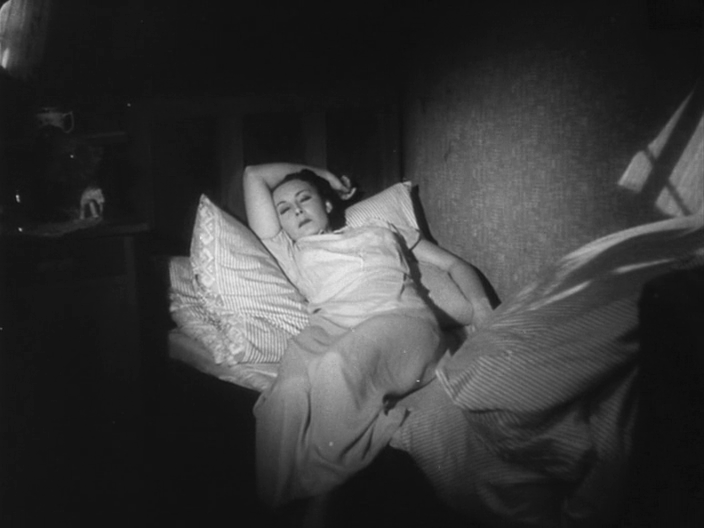
Virginity - scene

Adapted from the novel by Czech writer Marie Majerová (and with a screenplay co-written by her, Frantisek Cáp, A.J. Urban and the director), Virginity is a sombre yet engrossing tale of one woman’s refusal to be used, or taken advantage of, by the predatory men that surround her. Thanks to a great performance by Baarová, and sympathetic direction by Vávra, the movie avoids any sense that it’s an early soap opera by making each of the characters more fully rounded than usual, and by doing its best not to appear predictable – which it is for the most part (though not when it matters).

By making Hana a young woman whose awareness of the world, and what goes on in it, makes her less naïve than usual also makes for an interesting central character who seems to side-step problems with ease, but who doesn’t quite have the complete confidence that should come with that ability. Some things, like her successive promotions at the café, orchestrated by her quietly lovesick boss, she takes quick and decisive advantage of while remaining oblivious to his attentions. Even though her female colleagues are less than enamoured of her rise through the ranks, Hana’s mix of sincerity and good intentions stops her from being disliked, and there’s a strong sense of the female solidarity that keeps all the women from being exploited, either at work or in their love lives. With the female characters refusing to be objectified, or to let the men around them feel they can be bought with trinkets, the movie has a proto-feminist feel that few movies of the Thirties – wherever they were made – can boast.

Issues of feminism aside, it’s the seedy backdrop that draws the attention. The Counsel is an old-style lecher, leering and manipulative, his intentions as clear as if he’d written them on the café window. Prucha plays him as a sly old fox, certain of his “charm” and even more certain that his gifts will bring him what he wants. Despite his soft-spoken manner and patrician bearing, he’s the worst type of predator: the one who knows his ploy will work… in time. In contrast, Nevostrý is motivated by passion and love, but his own attentions toward Hana are equally as disturbing as the Counsel’s. His approach is to reward her and make her grateful to him, to make her feel obliged when he finally reveals his feelings for her (though his scheme is undermined by Hana’s need for the dowry). It’s a clever conceit, that the man who professes love for Hana is the most conniving in pursuing her.

As her true love, however, Bohác’s agonised composer is a less than desirable mate, his wild stares and manic grinning proving too distracting from the moment he appears. (In truth his portrayal is reminiscent of any Twenties performance by Conrad Veldt, and distractingly so.) It’s to Baarovás credit that she makes Hana’s love for Paul so convincing, her early infatuation played with such sweet earnestness that the viewer is swept along by the budding romance in the same way the character is. As Paul’s condition worsens, Baarová shows Hana’s fear and apprehension with such a degree of sympathy that when she makes the journey to the Counsel’s apartment and begins to have second thoughts as she climbs the stairs, it’s the most dramatic moment in the movie. And when she is preparing to be married to Nevostrý, with her workmates fussing around her, the look on her face tells you all you need to know about how Hana is feeling at that moment. It’s an impressive performance, and all the more so for the risqué – for 1937 – scene where Hana expresses her frustration at being parted from Paul: she stands in front of a mirror in her room and runs her hands down over her breasts, her arousal so plainly written in her features that it’s almost embarrassing to watch. (Interesting Historical Footnote: when she made this movie Baarová was living in Berlin, and was the mistress of Josef Goebbels. Yes, that Josef Goebbels.)

Director Vávra does a fine job of keeping things from becoming too sensational, or mawkish, and handles the social and sexual politics of the time and the story with understated finesse. He draws out fine performances from his cast – Bohác aside – and gets to the heart of a scene with a minimum of fuss or any attempt to draw attention to himself as the director. As a result, the movie has a fresh, unhurried feel to it that makes it entirely believable from start to finish.

Rating: 8/10 – a minor classic from Czechoslovakia that boasts a handful of terrific performances and clever direction, Virginity never lets it characters – or the audience – down; Baarová is a pleasure to watch, so good in the role of Hana that this is one of those occasions where it’s hard to imagine anyone else in the role.

NOTE: No trailer available.

Share this:

  • Share on X (Opens in new window) X
  • Share on Facebook (Opens in new window) Facebook
  • More
  • Print (Opens in new window) Print
  • Email a link to a friend (Opens in new window) Email
Like Loading...

Xala (1975)

10 Friday Apr 2015

Posted by dullwood68 in Movies

≈ Leave a comment

Tags

Chamber of Commerce, Comedy, Corruption, Drama, Impotence, Literary adaptation, Marabout, Ousmane Sembene, Politics, Review, Senegal, Seune Samb, Thierno Leye, Third marriage, Younouss Seye

Xala

aka The Curse

D: Ousmane Sembene / 123m

Cast: Thierno Leye, Seune Samb, Younouss Seye, Myriam Niang, Fatim Diagne, Mustapha Ture, Iliamane Sagna, Dieynaba Niang

With independence from France finally achieved, the white administrators of the Senegalese Chamber of Commerce are ousted from their offices by a group of local businessmen (who promptly accept hefty bribes from the French so that true power resides with them, “behind-the-scenes”). One businessman, El Hadji Abou Kader Beye (Leye) is preparing to marry for a third time. His first wife, Adja (Samb), and his second, Oumi (Seye) are both unhappy with his decision, as his new bride is much younger than them. But on the night of the wedding, El Hadji finds he cannot get an erection and the marriage remains unconsummated.

The beleaguered businessman confides in the President of the Chamber of Commerce who recommends he visit a marabout (a local witchdoctor). But despite the marabout’s advice, El Hadji remains impotent. Oumi visits him and invites him to her home that evening with the promise of sex; during her visit El Hadji starts to wonder if his impotency is a curse – a xala – placed on him by his second wife. Leaving his office his driver (Sagna) advises El Hadji to visit his marabout. A cure is effected but El Hadji finds his new wife has her period; he visits Oumi as arranged and he has sex with her instead. Meanwhile, El Hadji’s colleagues begin to discover that he’s running up debts he’s unable to repay, and that he’s been selling rice on the black market to maintain his social and economic standing.

His store comes under scrutiny from one of his buyers. With no stock in it, El Hadji has to reassure and cajole the man into accepting that all will be well and soon. A summons from the President of the Chamber of Commerce interrupts them. At the meeting, El Hadji is advised to go and visit his bank director. When he does so, he’s told that any further advances he needs will be dependent on his clearing his existing debts. But it’s at a further Chamber of Commerce meeting that El Hadji finds his future  as both a member and a businessman in jeopardy, and he still has no idea who placed the xala on him to begin with, or why.

Xala - scene

There’s a French proverb that goes, plus ça change, plus c’est la même chose. It means, the more things change, the more they stay the same. This is the theme at the heart of Sembene’s scathing look at contemporary politics in Senegal during the Seventies (and as adapted from his own novel of the same name). Xala is unapologetic  in its attempts to expose the continuing corruption that plagues the country, whoever is in power, and it paints a powerful portrait of the ways in which that corruption affects the poor and the disadvantaged. Viewed now after forty years, and with much more known about the ways in which Colonial Africa overthrew its European masters, only to prove even more ruinous in its inability to govern itself, the movie is a candid snapshot of the times.

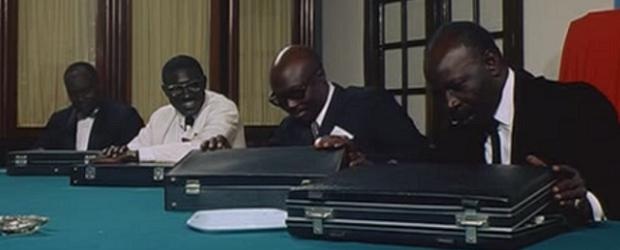
Sembene tells the audience everything they need to know about the political backdrop to the movie in the opening scenes where the local businessmen take over the Chamber of Commerce with all the pomp and circumstance of men acting with a moral certainty. The white administrators are rudely dispensed with, but are soon back, with briefcases full of money, one for each of the men who are supposed to be “better” than they are. With the bribes accepted eagerly, one of them hangs around as the President’s “advisor”, hovering in the background like a political fixer of old. The old corrupt system is dead, long live the new corrupt system. And once Sembene has established that indeed, things will remain the same, he focuses on El Hadji as an example of the greed and selfishness that were – and are – endemic in African politics.

The businessman’s lifestyle, or at least the lifestyles of his two wives, along with the cost of marrying a third, soon proves to be his undoing. Such is El Hadji’s need to be seen to be ascending the social and political ladder, it results in his risking everything to arrive and stay there. Like so many African leaders in the post-Colonial era, the temptation to appropriate resources for himself – and at the expense of the people – is shown as an extension of his usual business practice, a refinement if you will of sharp practice. The only difference between Xala and real life is that Sembene doesn’t let El Hadji off the hook, and his comeuppance is both well-deserved and horrible at the same time.

Although there is a great deal of drama to be had from El Hadji’s shady wheeling and dealing, it doesn’t come along until well after the halfway mark. Until then, the movie follows a recognisably European comic scenario, with the new groom afflicted by a bout of impotence that sees him berated by his new mother-in-law, and encouraged to approach his new wife on all fours with a fetish in his mouth that makes him look like some kind of dentally challenged vampire (it’s all part of a “cure”). There’s good fun to be had from the way in which this serious businessman, now in a position of power, will yield to the most bizarre of behaviours in order to regain his potency, and how he’ll let his first two wives dominate him. Sembene also pokes fun at El Hadji’s increasing “Europeanisation” through his wearing of Western clothing beneath more traditional robes, and his pretentious assertion that he only drinks bottled water (and which is used to fill his car’s radiator at one point).

Sembene also casts a judicious eye on El Hadji’s surroundings, spending time with those less fortunate than his main character, and speaking up for the rights of the disenfranchised and the disabled. As this storyline becomes more and more important to the narrative, Sembene more closely examines the ways in which this abandoned section of Senegalese society should have more of a voice than it does. Their ultimate effect on the fate of El Hadji is introduced with great skill by Sembene and leads to one of the most terrible of movie endings, but one that retains a redemptive feel, both for them and for El Hadji.

Xala - scene2

The movie has a washed-out colour scheme that may well be due to the film stock available for Sembene to use, but even so it makes for an effective reflection on the murky practices of El Hadji and the Chamber of Commerce (and their puppet masters). The soundtrack is filtered through the bustle of street life, and the occasional bursts of music enliven what is a mostly sombre tale. Sembene shows a complete confidence in the material throughout, and if he slips up occasionally in his attempts to make El Hadji as emotionally impotent as he is physically, then he can be forgiven for trying to add another layer to the character’s problems.

Rating: 8/10 – forthright and critical in its depiction of post-Colonial political corruption, and with a compelling comic sensibility, Xala tells it’s story simply and with a sense of righteous indignity; there are times when it seems as if we’re watching a documentary, but Sembene directs with compassion and no small amount of skill.

Share this:

  • Share on X (Opens in new window) X
  • Share on Facebook (Opens in new window) Facebook
  • More
  • Print (Opens in new window) Print
  • Email a link to a friend (Opens in new window) Email
Like Loading...

Planeta bur (1962)

08 Wednesday Apr 2015

Posted by dullwood68 in Movies

≈ 1 Comment

Tags

Drama, Georgi Zhzhyonov, John, Literary adaptation, Pavel Klushantsev, Review, Robot, Sci-fi, Sirius, Soviet Union, Spaceships, Vega, Venus, Vladimir Yemelyanov

Planeta bur

aka Planeta Burg; Planet of Storms; Planet of Tempests; Storm Planet

D: Pavel Klushantsev / 78m

Cast: Vladimir Yevelyanov, Georgi Zhzhyonov, Gennadi Vernov, Yuriy Sarantsev, Georgiy Teykh, Kyunna Ignatova

Three spaceships from the Soviet Union – Vega, Sirius and Capella – are approaching Venus when one of them, Capella, is struck by a meteorite and destroyed. The mission requires two of the ships to land on Venus while the remaining ship stays in orbit. But Capella’s replacement, Arcturus, will take four months to reach Venus, a situation the cosmonauts on board Sirius – Ilya (Yemelyanov), Aleksey (Zhzhyonov) and Roman (Vernov) – find unacceptable. They hatch a plan to land on Venus using a glider and one of the ships, but it means someone having to stay in orbit and monitor their progress on the planet. This falls to Masha (Ignatova), a Vega crew member. In the end, it’s her fellow crew members, Scherba (Sarantsev) and Dr Kern (Teykh), along with Kern’s robot John, who make the trip in the glider. However, when they land, all communication with them is lost.

The Sirius crew land in their ship to look for them. They encounter a strange, rocky environment that is perpetually shrouded in mist. They identify their colleagues’ location and set out in a hover car to find them, but not before Aleksey is almost killed by a carnivorous plant-like creature. Realising that Venus holds more dangers than they’d expected, they proceed with caution. Meanwhile, Scherba and Kern have encountered another danger, lizard-like creatures that walk upright. Fighting them off they soon find another problem: with their spacesuits torn in places, they’ve become susceptible to the air on Venus and are getting sick. They hole up in a cave and wait for their colleagues to find them.

Locking onto their position, Ilya, Aleksey and Roman find themselves under attack, this time from a creature resembling a pterodactyl (they’ve already encountered what appears to be a brontosaurus). Their hover car is damaged and ends up at the bottom of a lake. With communication lost with everyone on the surface, Masha has to decide whether or not she should mount her own rescue mission or wait for Arcturus to arrive. With time running out, the hover car is rescued from the lake and Ilya and his two colleagues get closer to finding their comrades. But not before Scherba, Kern and John have to deal with the lava flow from a nearby volcano. And all the while an ethereal female voice can be heard both in the distance and incredibly close by…

Planeta bur - scene

Viewed now, over fifty years on, Planeta bur is less of a curio than you might expect. While it’s not very prescient in terms of future science, and retains a quaint approach to some of its technology – Masha records her thoughts about making her rescue mission on a reel-to-reel tape recorder – there’s more than enough going on to keep the viewer interested, even if there are some unfortunately comic moments.

The trick is to put aside what we know now about Venus, and just go with the flow. After a stodgy opening period where the characters are introduced and the dilemma of landing on Venus is discussed and then decided on, the meat of the movie is introduced and we get to see the rugged, inhospitable landscape that represents the planet’s surface, as well as some very unpleasant inhabitants. It’s like a science fiction movie crossed with a disaster epic, as the cosmonauts encounter danger after danger, from man-eating plants to mini-Godzilla-like creatures to sudden volcanic eruptions. And though the pace is unhurried, there’s still enough tension built up between the various scenes of peril to keep the viewer interested and engaged.

In between these scenes there’s also time for the characters to wax philosophical about the origins of life on Venus and Earth – maybe we’re all descended from Martians – and the importance of the mission to the people back home in the Soviet Union (there’s even a short sequence where Masha envisions a parade with appropriately cheering masses in attendance). These interludes add a layer of intellectual gravitas to what is essentially an adventure, and is matched by the serious, intense nature of the cast and their performances. Yemelyanov looks like he’s lost the ability to smile, while Zhzhyonov’s eagerness to land on Venus makes him appear reckless. As the sole female on the mission, Ignatova looks concerned, worried and fearful throughout, and Teykh goes the opposite way ands affects a disinterested, unemotional stance that befits his reserved character.

The special effects employed range from the casually simple, such as the space suits, to the impressively clever, such as the hover car (which really looks like it’s floating a good foot off the ground). The locations, though feeling restricted, are used to very good effect, and there’s an otherworldly feel to them that adds a level of eeriness to proceedings. Klushantsev orchestrates the various alien encounters without overdoing it in terms of increasing the pace or making it look as if the cosmonauts are in any real danger, but their encounters are effective enough and shot with a good deal of style (if a little restrained at the same time). While some of the creatures remind the viewer of the budgetary constraints, again there’s a quaintness to it all that makes up for any shortcomings.

Concluding with a couple of revolutionary sounding songs extolling the virtues of both Earth and Venus, the movie has a satisfactory ending that hints at a possible sequel (but which sadly never happened). What did sadly happen is that American International Pictures got hold of the movie and re-edited it twice to make two vastly inferior “new” versions: Voyage to the Prehistoric Planet (1965), with Basil Rathbone added to the mix, and Voyage to the Planet of Prehistoric Women (1968), directed by Peter Bogdanovich and with Mamie Van Doren added instead. Neither movie has much to recommend it, and should be avoided at all costs.

Rating: 7/10 – a little clunky in places, but thankfully free of too much ideology or Soviet propaganda, Planeta bur is a serious sci-fi movie that has much to say about the idea of space exploration; entertaining throughout, and as an entry movie into the career of the under-appreciated Klushantsev, definitely a good place to start.

Trailer: Sadly, there doesn’t seem to be a trailer for Planeta bur available.

Share this:

  • Share on X (Opens in new window) X
  • Share on Facebook (Opens in new window) Facebook
  • More
  • Print (Opens in new window) Print
  • Email a link to a friend (Opens in new window) Email
Like Loading...

Insurgent (2015)

08 Wednesday Apr 2015

Posted by dullwood68 in Movies

≈ 1 Comment

Tags

Abnegation, Action, Amity, Ansel Elgort, Candor, Dauntless, Drama, Erudite, Kate Winslet, Literary adaptation, Naomi Watts, Review, Robert Schwentke, Sci-fi, Sequel, Shailene Woodley, Theo James, Thriller, Veronica Roth

Insurgent

D: Robert Schwentke / 119m

Cast: Shailene Woodley, Theo James, Kate Winslet, Ansel Elgort, Miles Teller, Naomi Watts, Octavia Spencer, Jai Courtney, Mekhi Phifer, Zoë Kravitz, Maggie Q, Daniel Dae Kim, Jonny Weston, Ashley Judd, Ray Stevenson, Tony Goldwyn, Janet McTeer

In the aftermath of the attack on Abnegation, a search reveals a box that contains all the faction symbols. It’s taken to Erudite where Jeanine (Winslet) reveals it holds a message from the city’s elders, but only a Divergent can open it; this leads Jeanine to order that all Divergents are rounded up. Meanwhile, Tris (Woodley), Four (James), Caleb (Elgort) and Peter (Teller) are hiding out in Amity, under the protection of their leader Johanna (Spencer). Tris is all for returning to Erudite and killing Jeanine but Four warns against acting so hastily: they need to be a stronger force before they can attack the ruling faction.

Matters are brought to a head when Dauntless leader Max (Phifer) arrives to look for any Divergents. Peter reveals their presence but Tris, Four and Caleb manage to escape on a train that takes them into Factionless territory. There they meet Evelyn (Watts), the Factionless leader who, it turns out, is Four’s mother. She advocates a coalition between Factionless and the remainder of Dauntless. The next day, Tris, Four and Caleb leave to visit Candor, where the remainder of Dauntless have taken refuge. On the way, Caleb tells Tris he can’t go with them and they part. In Candor, their leader, Jack (Dae Kim) arranges a trial to determine the truth of Four’s insistence that Jeanine is lying to the other factions. A raid by Max and Eric (Courtney) leads to Tris being tested and found to be 100% Divergent. The raid is unsuccessful though and Tris is rescued by Four and Candor. At Erudite, Peter tells Jeanine the best way in which she can trap Tris. With the lives of all in Candor at risk because of Tris’s presence there, she determines to turn herself in.

At Erudite, Tris is apprehended and taken in front of Jeanine. She explains about the box and has Tris hooked up to it. In order to open it, Tris has to pass each Faction test, something none of the other Divergents abducted by Jeanine has managed. With Caleb having rejoined Erudite, and Peter also on their side, Tris can only hope that whatever message the box holds, that she will survive the ordeal long enough to learn what it is, and what it means for the city.

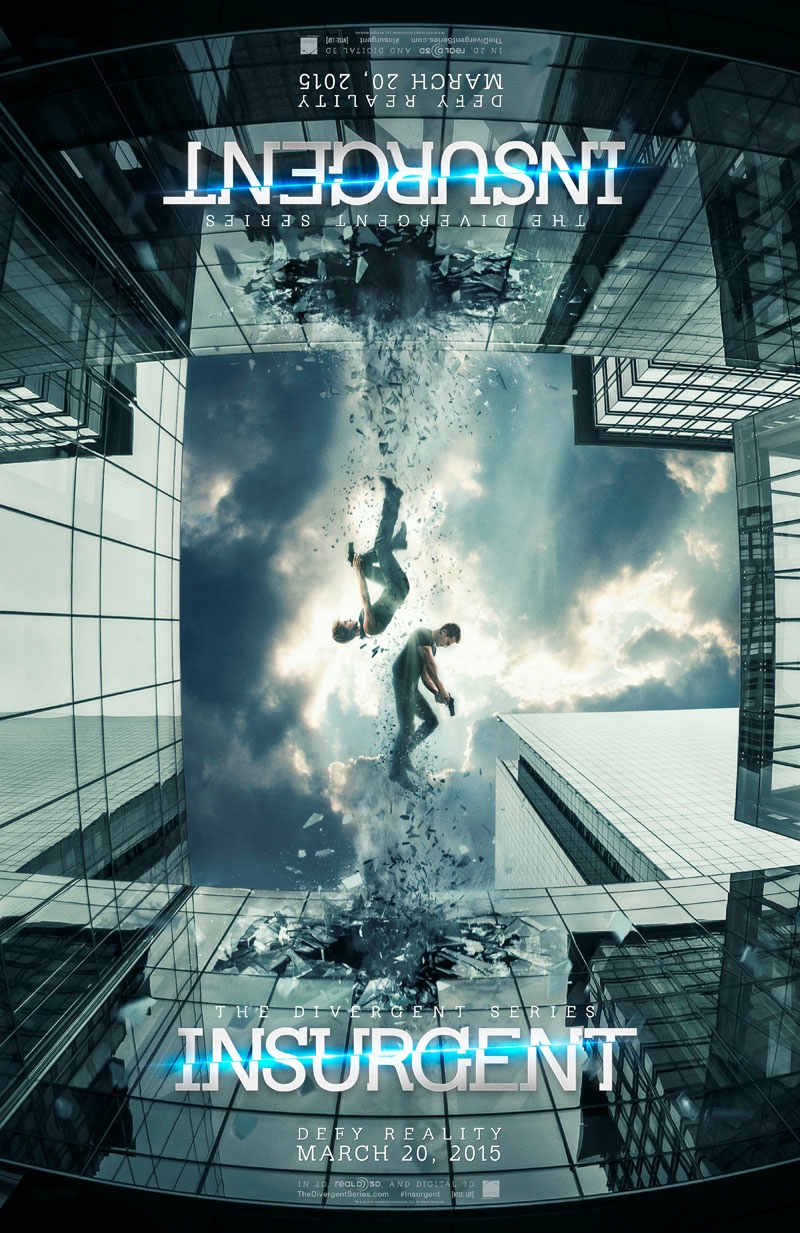
Insurgent - scene

After the prolonged set up and introduction of each Faction and the world they support that made up most of Divergent (2014), you’d think Insurgent would be less reliant on large chunks of awkward exposition. But it’s not the case, as this instalment introduces new characters and broadens the original’s scope. This leads to more explanations for everyone’s behaviour and more occasions where the not-exactly-complicated story has to be explained every step of the way (as if the audience wouldn’t be able to keep up). Which is a shame, as this time around, Tris’s newfound place in her world is much more interesting and exciting to be a part of.

Weighed down by the expectations that come with cinema’s version of “middle child syndrome” (and even though Allegiant will be released in two parts – damn you Harry Potter!), Insurgent gets a lot right. It ups the action content, makes the heroes more heroic, the villains more villainous, and ends with the news that we’ve all been waiting to hear: next time we go outside the wall. The movie couldn’t be more designed to please its audience, both existing and new. And that’s another factor that makes the movie work: you don’t have to have seen Divergent to work out what’s going on. Such is the care that’s been taken with the adaptation of the book, that even though there are huge chunks that are missing (including whole storylines), it’s a tribute to screenwriters Brian Duffield, Akiva Goldsman and Mark Bomback that this is a well constructed, and surprisingly streamlined version that holds its own and isn’t reliant on the first movie.

It also moves the characters forward in unexpected ways. Tris is hell-bent on killing Jeanine which isn’t the usual approach in a YA movie (you’d never expect to hear Katniss Everdeen sound so vehement about President Snow as Tris is about Jeanine). It’s refreshing to see someone be that blunt and not harbour any deep-seated guilt or reservations about the rights or wrongs of such a thing; Tris is resigned and more importantly, she can’t wait to do it. As for her love interest, the taciturn Four, we get to see him deal with a greater authority than Eric or Max, or even his dad: his mother, presumed dead all these years and as determined to get Jeanine almost as much as Tris. While he wrestles with his emotional scars, Tris gets down to the task of taking out Jeanine; it’s like he’s not even supporting her anymore.

Of course, true love overcomes any dispute or disagreement and Tris and Four leave their differences behind when it comes to overthrowing Erudite, and although the message in the box is one that only readers of the novel will have seen coming, it’s still a treat to see it revealed in such a dramatic, world-upsetting way. It’s yet another way in which new director Schwentke keeps things interesting and the viewer on their toes. He makes judicious use of the new cast members, with even Watts (who has Big Villain written all over her) required to keep it simple and not detract from the main storyline, that of Tris learning to forgive herself for the deaths of her parents and the turncoat Will. Woodley, still the best thing in both movies, shades her emotions with ease and presents a version of Tris that is still learning but who’s also streets ahead of her rebellious companions (but then she is Divergent).

The rest of the cast offer and provide excellent support, with special mention going to Courtney, Spencer, Watts and Teller, though Elgort is still stuck with possibly the blandest character in the whole series, and suffers as a result; he just can’t make him interesting. Winslet is icy and controlling and strangely attractive because of all that, and steals each scene she’s in. The final scene robs us of a major character and is a great way to end this movie and set up some of the dramatics of the next, but it also feels like a bit of a cheap shot at the audience’s expense. What, do we ask, does that mean for Tris and Four and all the rest? Well, to find out, tune in next year!

Rating: 7/10 – better than Divergent, and better assembled, Insurgent shows the franchise gaining in confidence and moving ahead in the right direction; not without its flaws – Peter is still an annoyingly underwritten character – the movie packs a lot in and, on the whole, makes it all work with a great deal of panache.

Share this:

  • Share on X (Opens in new window) X
  • Share on Facebook (Opens in new window) Facebook
  • More
  • Print (Opens in new window) Print
  • Email a link to a friend (Opens in new window) Email
Like Loading...

The Keeper of Lost Causes (2013)

06 Monday Apr 2015

Posted by dullwood68 in Movies

≈ 3 Comments

Tags

Assad, Carl Mørck, Cold cases, Crime, Denmark, Department Q, Drama, Fares Fares, Jussi Adler-Olsen, Literary adaptation, Mikkel Nørgaard, Nicolaj Lie Kaas, Police, Review, Sonja Richter, Thriller

Keeper of Lost Causes, The

Original title: Kvinden i buret

aka The Woman in the Cage

D: Mikkel Nørgaard / 97m

Cast: Nikolaj Lie Kaas, Fares Fares, Sonja Richter, Peter Plaugborg, Søren Pilmark, Mikkel Boe Følsgaard, Troels Lyby

Following a police raid that leaves his partner, Hardy (Lyby) paralysed and another officer dead, detective Carl Mørck (Kaas) is transferred out of homicide and into Department Q, which deals exclusively with cold cases. His brief, along with his assistant, Assad (Fares), is to review the cases, submit a brief report and then close them. The first case he looks at concerns the apparent suicide of politician Merete Lynggaard (Richter) five years ago. Something about the case doesn’t make sense to Mørck and he reopens the investigation. He looks through the witness statements and finds that one statement wasn’t included in the final report: that Merete’s brother, Uffe (Følsgaard), who was with her on the ferry she is supposed to have jumped overboard from, was seen with a man in a raincoat.

Since Merete’s suicide, Uffe has resided in a home. Mørck and Assad visit him but his condition – brain damage from a car accident when he and Merete were children – prevents him from being of any help. A conversation with one of Merete’s colleagues reveals her liaison with a man at a conference shortly before she killed herself. Mørck gets hold of the list of attendees and photos that were taken at the conference. Suspecting that Uffe might recognise one of the men at the conference, they show him the various photos that show Merete and one of the male delegates. Uffe does recognise one of them, a man named Daniel Hale. With a solid lead to work with, Mørck’s investigation is brought up short by his boss, Marcus (Pilmark) following a complaint by the manager of the home and the original investigating officer. Unable to let things go, Mørck continues his investigation and travels to Sweden to speak to Hale.

When he and Assad get there, they discover that Hale died a few months after Merete’s suicide. They also discover that the man who attended the conference and was recognised by Uffe isn’t Daniel Hale. Learning that the man is likely to be a friend of Hale’s known as Lasse, the pair return to Denmark only to be suspended from duty. But again, Mørck can’t let things drop, and their investigation leads to an isolated farmhouse and a revelation involving the car accident that left Uffe in his current condition.

Keeper of Lost Causes, The - scene

The first of four movies adapted from Danish author Jussi Adler-Olsen’s Department Q novels – The Absent One (2014), A Conspiracy of Faith (2015), and The Purity of Vengeance (TBC) complete the quartet – The Keeper of Lost Causes is an efficient, gripping thriller that introduces possibly one of the dourest police detectives in recent cinema history. At one point, Assad remarks that he’s never seen Mørck smile. Mørck’s response? “My wife left me. My colleague’s dead, and my best friend’s a cripple … I don’t have a lot to smile about.” It’s a pithy, succinct summation of Mørck’s character, and while it seems in keeping with the recent trend in Scandinavian crime fiction and movies, the combination of Mørck’s gloomy outlook on life and Kaas’s glum demeanour raise this particular movie into the above average category.

With the central character so firmly established in the opening fifteen minutes, the movie is then free to concentrate on the mystery surrounding Merete’s apparent suicide. But as Mørck begins to piece together the clues that point to something more sinister, the script by Nikolaj Arcel takes a parallel line and shows the viewer what happened that day on the ferry. It’s a bold move, as the mystery elements inherent in the story are jettisoned in favour of a more cross-linear approach where the events of five years before run concurrently with the progress of Mørck’s investigation. This leaves the viewer with an entirely different type of crime drama than seems in play from the beginning, and while the villain of the piece enters the story quite late in the day, their appearance and the reason for their behaviour is cleverly revealed (even if what they actually do isn’t properly explained or feels credible).

The plot and various storylines play out with a surprising attention to detail, and Arcel’s adaptation does a good job of downplaying any implausibilities such as Mørck’s boss Marcus ignoring the progress he’s made in disputing the suicide theory. This aside, the movie is a solid, methodically paced crime drama that works best by keeping it simple, and Nørgaard’s unfussy, yet expressive direction is best exemplified by two moments of unexpected lyricism relating to Merete’s childhood. He’s good with the cast as well, eliciting strong, confident performances from all concerned. Kaas’s downbeat yet focused portrayal of Mørck is one of the things that makes the movie work so well; he’s completely credible as the impatient, disrespectful and arrogant ex-homicide detective who finds a new home in Department Q. And he’s matched for dedication and immersion in the role by Fares as Assad. Fares, who is Lebanese, spent two months learning Danish for the movie, but you wouldn’t know it. Assad is the sidekick role, but Fares brings a determination and an intelligence to the role that a lot of seasoned actors would have skirted past on their way to a more stereotypical portrayal.

Shot by DoP Eric Kress with an emphasis on dark, shadowy interiors and overcast, cloudy exteriors, the movie is recognisably part of the recent Nordic Noir genre that has spawned a myriad of similar tales both on the big screen and television. But thanks to a clever script, a director on top of his game, and a cast that brings credibility to (almost) every scene, The Keeper of Lost Causes is a terrific first movie in the series. If this outing is anything to go by, then the remaining three movies will definitely be ones to watch.

Rating: 8/10 – a well-paced, intelligent, and above all, absorbing crime thriller, The Keeper of Lost Causes is a testament to good story telling; quietly ambitious, the movie is a terrific example of how to maintain suspense without undermining either the plot or the characters.

Share this:

  • Share on X (Opens in new window) X
  • Share on Facebook (Opens in new window) Facebook
  • More
  • Print (Opens in new window) Print
  • Email a link to a friend (Opens in new window) Email
Like Loading...

Wetlands (2013)

02 Thursday Apr 2015

Posted by dullwood68 in Movies

≈ Leave a comment

Tags

Anal fissure, Carla Juri, Charlotte Roche, Christoph Letkowski, Comedy, David Wnendt, Drama, Haemorrhoids, Literary adaptation, Marien Kruse, Meret Becker, Mother/daughter relationship, Personal hygiene, Review

Wetlands

Original title: Feuchtgebiete

D: David Wnendt / 109m

Cast: Carla Juri, Christoph Letkowski, Marien Kruse, Meret Becker, Axel Milberg, Peri Baumeister, Edgar Selge, Clara Wunsch, Ludger Bökelmann, Bernardo Arias Porras

Helen (Juri) is a rebellious teenager whose mother (Becker) and father (Milberg) are divorced; she wants nothing more than for them to get back together. Thanks to her controlling mother’s obsession with cleanliness when Helen was growing up, Helen has developed an opposite fascination with hygiene. This has led to her suffering from haemorrhoids and having an obsessive interest in her own bodily fluids, in particular those generated by and from her vagina. She gravitates to unclean toilets and wears her underwear for days at a time. She doesn’t have a boyfriend, and uses vegetables to masturbate with. She constantly challenges those around her, and affects a disinterested, yet provocative demeanour.

She does have a friend, Corinna (Kruse), but otherwise Helen doesn’t gravitate to any of her peers (though she does have a variety of sexual encounters). She reflects on her childhood and her mother’s abusive behaviour, but most of all she muses on her personal hygiene. However, when a burst of shaving results in her sustaining a cut to her anus, it creates an anal fissure that leads to her ending up in hospital and having an operation to remove part of her anus. Recovering in her hospital room, and attended by male nurse Robin (Letkowski), Helen is told she cannot leave until she has a bowel movement. Finding herself attracted to Robin, and using the situation to try and reunite her parents, Helen delays her release, but her childhood memories keep intruding, and it leads her to a clearer understanding of the trauma that she has been suppressing, and which has propelled her into being the person she is.

Robin becomes her confidante, and though he’s in an off-again-still-off-again relationship with teaching student Valery (Baumeister), he’s still hopeful that they’ll get back together. Valery does her best to speed up Helen’s recovery, but lacks the deviousness that Helen brings to the situation. And as the time for her leaving does approach, the likelihood of Helen’s parents being reunited seems remote.

Wetlands - scene

Those viewers whose gag reflex isn’t particularly good would do well to steer clear of Wetlands, as it’s a movie unafraid to go where practically every other movie fears to tread. In terms of body horror, this is a movie that even David Cronenberg might pass on, but David Wnendt’s adaptation – co-written with Claus Falkenburg – of Charlotte Roche’s novel is by turns comic, darkly dramatic, surreal, choc-full of squeamish moments, and occasionally bizarre. It’s a smorgasbord of cruelty, nudity, self-abuse, dysfunction, psychotropic nightmares, and casual sex, but it’s also possessed of a warm-hearted centre and is boosted by a raw, fearless performance by Juri that pushes more than a few boundaries to one side – and then comes back and tramples on them.

Vigorous and unnerving, Wetlands is a visceral trawl through the mind and life of a young woman for whom “normal” means rubbing her haemorrhoids on dirty toilet seats and making her own tampons (which she swaps with Corrina). Helen’s sense of propriety is so far out of whack that it’s amazing she has anyone close to her: she has no fear and no appreciation for the feelings of others, and alienates almost everyone in her path. That she remains likeable at all given all this is a testament to the script and Juri’s performance, which is often breathtaking. Juri inhabits the character of Helen with such gusto and disabling charm that the viewer can’t help but be drawn into her world – no matter how luridly disgusting it may be from time to time – and with her cheeky grin and unruly curls, she keeps Helen sympathetic throughout, even during the scene where she coldly berates Corinna for being pregnant. There’s a wealth of unexpected pathos beneath Helen’s ebullient, manipulative, mocking persona, and Juri keeps it all there, just close to the surface, threatening to succumb to it on several occasions but reining it in at the last second.

Helen’s combative relationship with her mother is agonisingly rendered by Juri and Becker, while the sad dependency she feels toward her father is reflected in the quiet, unforced performance of Milberg. Less fulfilling or convincing however is Helen’s relationship with Robin, which seems included as a way of giving Helen a chance at a quieter, more “normal” life. He also seems too much of a nice guy to fall for Helen’s ruinous antics, and Letkowski’s ingenuous portrayal never strays far from being bland and a trifle tame, leaving the viewer wondering what Helen sees in him. Also less convincing is Helen’s consultant, the patronising and insensitive Dr Notz (Selge); he’s the nearest the movie comes to having an authority figure to challenge but the character is too much of a cartoon to be effective as anything else.

With its clutch of spirited performances, Wetlands fares well when it focuses on the dysfunctions and disappointments of family life, and the ways in which people see the nuances of their life as defining them – there’s a great fantasy scene where Helen’s mother is dying and her last thought is about whether or not she’s wearing clean underwear, and which leads to a priceless moment straight out of Invasion of the Body Snatchers (1978). It’s also a highly stylised, visually inventive movie that offers a dizzying variety of close ups, point of view shots, flashbacks, and tightly edited scenes and sequences (thanks to Andreas Wodraschke). There’s even an animated sequence near the beginning that sets the tone of much of the fantasy/nightmare elements. All are well-staged and coordinated by Wdendt who shows a keen feel for the material and a determination not to pull any punches when it comes to Helen’s physical and sexual bravado.

By making Helen such an uncompromising character, it’s down to the viewer to decide just how far they want to go with her on her journey, but aside from all the notions of mental illness, sexual ethics and social acceptance, the movie is a surprisingly warm and nurturing experience, its gross-out moments (including the surprise ingredient in a pizza that should have take away sales plummeting) not as randomly added to the storyline as it appears.

Rating: 7/10 – not as morbid or deliberately confrontational as it may seem, Wetlands is all about love and acceptance, and the trials one young woman goes through to attain those; not without its flaws, the movie is still a mesmerising, emotional roller coaster ride, and not for the faint-hearted.

Share this:

  • Share on X (Opens in new window) X
  • Share on Facebook (Opens in new window) Facebook
  • More
  • Print (Opens in new window) Print
  • Email a link to a friend (Opens in new window) Email
Like Loading...

You’re Not You (2014)

27 Friday Mar 2015

Posted by dullwood68 in Movies

≈ Leave a comment

Tags

ALS, Caregiver, Classical pianist, Drama, Emmy Rossum, George C. Wolfe, Hilary Swank, Josh Duhamel, Literary adaptation, Michelle Wildgen, Relationships, Review

You're Not You

D: George C. Wolfe / 102m

Cast: Hilary Swank, Emmy Rossum, Josh Duhamel, Stephanie Beatriz, Jason Ritter, Julian McMahon, Frances Fisher, Marcia Gay Harden, Ali Larter, Andrea Savage, Loretta Devine, Ernie Hudson, Ed Begley Jr

Kate (Swank) is a successful classical pianist who begins to experience muscle spasms in her hands that affect her playing. Eighteen months later, Kate has been diagnosed with Amyotrophic Lateral Sclerosis (ALS) and needs daily personal care. With her regular caregiver having left, Kate is being looked after by her husband, Evan (Duhamel), but he works full-time and is unable to look after her during the day. Kate makes arrangements to interview a replacement caregiver. The first interviewee is Bec (Rossum), a college student who, despite her lack of experience, makes enough of an impression on Kate to be hired. And despite a first day that goes less than smoothly, and against Evan’s objections, Kate determines that Bec should continue as her caregiver.

While Bec and Kate get used to each other and develop a bond, they also learn that Evan has had a short affair with one of the women in his office. It leads to Kate feeling that she’s holding Evan back; she tries to get Bec to take her to an assisted living facility but Bec refuses to go through with the visit and instead they go to Evan’s office where Kate tells him she wants a divorce. Meanwhile, Bec has relationship problems of her own: she’s been sleeping with one of her tutors, Liam (MacMahon), but while she wants to end things, he doesn’t. And she’s attracted the interest of a young man named Wil (Ritter), who she believes is too nice for her.

Kate and Bec meet another couple where the wife has ALS, Marilyn (Devine) and John (Hudson). Their positive attitude and obvious love for each other give Kate the boost she needs to deal with her illness more effectively and she becomes more outgoing; she even allows Evan to express his feelings and regrets to her. At Xmas, Bec’s parents pay a visit, but a heated conversation between Bec and her mother (Harden) has Kate feeling that she’s holding Bec back from living her own life. Consequently, she fires Bec and arranges for her mother, Gwen (Fisher) to look after her. When Kate’s breathing becomes so bad she ends up hospitalised, Gwen wants her to be put on a ventilator but it’s revealed that Kate has given Bec authority to make any medical decisions relating to treatment or care. Knowing that being on a ventilator isn’t what Kate wants, and against Gwen and Evan’s wishes, she takes Kate home…

You're Not You - scene

Adapted from the novel by Michelle Wildgen, You’re Not You provides pretty much everything you could ever want from a movie trying its very best to make having a debilitating disease seem not so bad. This type of movie – or indeed any type of movie where the protagonist faces a difficult personal battle – always strives to “accentuate the positive”, making the illness/life changing event/seemingly insurmountable problem/horrible setback the trigger that allows the affected character to display resilience and fortitude in the face of such a terrible obstacle. It’s wish fulfilment on an adversarial basis, where triumph of the will trumps, if only temporarily, the problem that can’t be beaten (or which will require a high level of personal sacrifice). And so it proves, with Swank’s ALS sufferer fighting her husband’s selfishness, her dwindling social status, her own growing physical disablement, and a script that coats everything with the rosy glow of female empowerment.

This is a movie that ticks all the boxes. Main character shows stubborn attitude to dealing with illness? Check. Secondary main character shows increased ability to deal with own issues as a result of spending time with main character? Check. Family and friends of main character show complete lack of understanding re: issue main character is dealing with? Check. Main character has “dark moment” where suicide seems like an attractive option? Check. These and more pop up throughout the movie, making it seem like a “greatest hits” disease movie, rather than the heartfelt drama it wants to be.

What doesn’t help as well is that we never really get to know Kate as a person. Sure, she’s an accomplished pianist, and sure she’s bright and funny in the way that accomplished people are, and sure she appears to have reconciled herself to the eventual outcome having ALS dictates, but all this has happened before Bec comes on the scene. Swank is an accomplished actress but even she struggles to make Kate more than a cypher to hang an illness on. And when her speech necessarily worsens, Kate – and Swank – becomes even less of a presence in the movie. Thanks to Jordan Roberts and Shana Feste’s superficial screenplay, there’s no real depth that allows Swank to adequately portray anything like the absolute terror someone must feel as their body slowly but surely shuts down. All we’re left with is a selection of expressions that show patient acceptance or occasional, brief disappointment.

Rossum fares better, but that’s because she has more screen time (and not because Bec’s problems are any more interesting than Kate’s), while Duhamel flits in and out of the narrative as the penitent Evan, looking sheepish and lost for the most part, and blander than a beige throw rug. The rest of the cast come and go without making much of an impact, and as we head toward the inevitable outcome, emotions rise to a level where heartstrings are plucked to predictable effect but still without any depth behind them. Wolfe – making only his second feature – adopts a slightly diffident, low key approach to the material that keeps the audience from getting too involved, and which stops the movie from being as dramatic as it should be. Ultimately, it’s a movie that flirts with the tragedy of Kate’s dilemma without fully embracing it.

Rating: 5/10 – too derivative of every other “disease of the week” movie, You’re Not You struggles to attain any dramatic traction, and wastes the talents of its star; a so-so attempt that is likely to leave viewers wondering how patient they have to be before they’ll be able to connect with the storyline.

Share this:

  • Share on X (Opens in new window) X
  • Share on Facebook (Opens in new window) Facebook
  • More
  • Print (Opens in new window) Print
  • Email a link to a friend (Opens in new window) Email
Like Loading...

The Homesman (2014)

25 Wednesday Mar 2015

Posted by dullwood68 in Movies

≈ 1 Comment

Tags

1850's, Action, Drama, Hilary Swank, History, John Lithgow, Literary adaptation, Madness, Mary Bee Cuddy, Meryl Streep, Nebraska Territory, Review, Tommy Lee Jones, Western

Homesman, The

D: Tommy Lee Jones / 122m

Cast: Tommy Lee Jones, Hilary Swank, Grace Gummer, Miranda Otto, Sonja Richter, Jo Harvey Allen, Barry Corbin, David Dencik, William Fichtner, Evan Jones, Caroline Lagerfelt, John Lithgow, Tim Blake Nelson, Jesse Plemons, James Spader, Hailee Steinfeld, Meryl Streep

In the Nebraska Territory in the 1850’s, three women – Arabella Sours (Gummer), Theoline Belknap (Otto), and Gro Svendsen (Richter) – fall victim to madness after enduring various hardships. Their pastor, Reverend Dowd (Lithgow), calls upon one of their husbands to take them to Hebron, Iowa where there is a church that will take care of them. With one refusing to do it at all, and the other two proving less than ideal, spinster and homesteader Mary Bee Cuddy (Swank) accepts the task, hoping that the “adventure” will help with her own feelings of isolation and depression.

Buddy encounters George Briggs (Jones), and saves him from being hanged for using another man’s home. She persuades him to accompany her and promises him $300 if they make it to Hebron. Briggs agrees but makes for surly company, and challenges Cuddy at every opportunity. However, they come to a mutual understanding, and Briggs’ experience proves invaluable when problems arise, such as one of the women wandering off and being found by a man (Nelson) who wants her for his own, and when they find themselves being watched by Indians.

However, when they find the desecrated grave of an eleven year old girl, Cuddy elects to restore it while Briggs continues on with the women. But Cuddy loses her way and finds herself back at the child’s grave. When she finally catches up with Briggs, she suggests to him that they should marry, but he rejects her offer, telling her – like som many other men before him – that she is too plain and too bossy. Later, she comes to him naked and they have sex. The next morning, Briggs makes a terrible discovery, one that changes the whole nature of the trek to Hebron.

Homesman, The - scene

Achingly stark yet beautiful at the same time, Jones’ adaptation of the novel by Glendon Swarthout, The Homesman, is a melancholic, richly detailed portrait of the hardships of frontier life in the 1850’s, and the different ways in which loneliness can affect even the strongest and most determined of people. Through the journey that Cuddy, Briggs and the three women make, the movie delves into notions of longing, despair, loss and, more curiously, faith (though to a lesser degree than the others). It’s a confident, expertly constructed and devised movie, and it features a handful of strong, finely detailed performances – from Jones, Swank, Streep and Lithgow – and also features some stunning photography courtesy of Rodrigo Prieto, but ultimately it’s a movie that plays too much to convention.

Part of the problem lies in the relationship between Briggs and Cuddy, two people for whom loneliness has become their lives. But where Briggs is comfortable in being alone, Cuddy isn’t, and strives to match herself with someone (at the beginning of the movie it’s another homesteader (Evan Jones), but her desperation is alienating). When she and Briggs meet it’s inevitable that she will offer him the same proposal of marriage it seems she’s made to everyone else. That Briggs will refuse her is another inevitability, and one that robs the moment of any dramatic tension; it also makes Cuddy’s willingness to strip naked and sleep with him too desperate (that Briggs would agree to this approach is unsurprising). What follows is robbed of any potency by Jones’ not allowing any build up to it – it’s presented so matter-of-factly that it makes Cuddy’s importance to the narrative seem irrelevant.

And so the focus remains on Briggs, a curmudgeonly old fox who lacks several degrees of decency, and who develops an unlikely sense of responsibility to the three madwomen (and purely, it seems, because they’ll follow him wherever he goes, a development that’s never really explained). He’s otherwise a selfish, mean-spirited man with no measure of social conscience, but who seems to gain said social conscience without a second thought, and who tries to echo Cuddy’s desperate need to fit in and be accepted by making a similar (uncomfortable) proposal to Steinfeld’s waitress. In Jones’s hands, he’s meant to be a sympathetic character overall, but his personality and way with others is too wayward to afford consistency, and Briggs’ initial roguishness gives way to behaving in whichever way the script needs him to.

With Jones the actor hamstrung by Jones the co-writer – along with Kieran Fitzgerald and Wesley A. Oliver – it’s left to Jones the director to save the day. If there’s one aspect that he’s very, very good at, it’s in the look of his movies. As in The Three Burials of Melquiades Estrada (2005), Jones’ mastery of the frame is simply superb, each shot crafted with a care and attention to light and shade and detail that is consistently impressive. His use of perspective is also finely attuned, the various landscape shots peppered throughout the movie displaying a level of natural beauty married to the width and depth of the image that is often breathtaking. And it’s no different in medium or close up shots: Jones displays such a sure knowledge of what’s he doing and how he’s presenting it that each scene has a rare quality to it, one that few other directors would be able to reproduce.

The movie moves along at a measured pace that gives the cast adequate time to make an impression, and which shows Jones to be generous when sharing the screen with someone else. He gives supporting actors such as Spader, Fichtner and Steinfeld plenty of room to impress, and stands well back to let them do their thing. Though the script gives them little to do except stare off into the distance, Gummer, Otto and Richter, are effective as the three women driven mad by circumstance and hardship (particularly Richter, who has a chilling and very disturbing scene with a sowing needle). They don’t quite achieve the prominence the story allows them at the beginning, but all three characters are convincingly portrayed throughout.

There are casual nods to the sexism of the times, and the grim nature of trying to survive in what was an often harsh, unforgiving environment is well depicted. The final twenty minutes serve more as a coda than a final act, and some viewers may feel this section is a little off-centre as a result, as the three madwomen arrive at their destination and Streep’s affable pastor’s wife takes centre stage (her performance is a reminder, if any were needed, of just how good an actress she is). And the final scene itself ends the movie on an awkward, offhand note that smacks of contrivance rather than a satisfying end to the story.

Rating: 7/10 – absorbing if uneven, The Homesman scores highly because of Jones’ ability as a director and his often glorious use of the camera; with its story often straying off into some unwanted dead ends, this journey is only occasionally involving, and only occasionally matches the commitment made by its cast.

Share this:

  • Share on X (Opens in new window) X
  • Share on Facebook (Opens in new window) Facebook
  • More
  • Print (Opens in new window) Print
  • Email a link to a friend (Opens in new window) Email
Like Loading...

Cymbeline (2014)

18 Wednesday Mar 2015

Posted by dullwood68 in Movies

≈ Leave a comment

Tags

Anton Yelchin, Biker gang, Crime, Dakota Johnson, Delroy Lindo, Drama, Ed Harris, Ethan Hawke, Iachimo, Imogen, John Leguizamo, Literary adaptation, Michael Almereyda, Milla Jovovich, Mistaken identity, Murder, Penn Badgley, Posthumus, Review, Shakespeare, Thriller

Cymbeline

D: Michael Almereyda / 98m

Cast: Ethan Hawke, Ed Harris, Milla Jovovich, John Leguizamo, Penn Badgley, Dakota Johnson, Anton Yelchin, Peter Gerety, Kevin Corrigan, Vondie Curtis-Hall, Delroy Lindo, James Ransone, Spencer Treat Clark, Harley Ware, Bill Pullman

Imogen (Johnson) and Posthumus (Badgley) are young lovers who have married in secret and exchanged gifts of a ring (for Posthumus) and a bracelet (for Imogen). Their marriage is not to the liking of Imogen’s father, biker king Cymbeline (Harris). He banishes Posthumus, and so paves the way for his second wife, the Queen (Jovovich) to advance her own son, Cloten (Yelchin) as Imogen’s husband, in an attempt to secure control of the biker gang when Cymbeline is dead. Aided by his servant, Pisanio (Leguizamo), Posthumus goes to stay with his friend Philario (Ransone). There he meets Iachomo (Hawke) who wagers that he can seduce Imogen to prove that she isn’t as virtuous as Posthumus believes. The wager accepted, Iachomo visits Imogen and when a direct assault on her virtue backfires, he portrays it as a test of her commitment to Posthumus – which she accepts. Before he leaves he asks her to look after an item for him overnight, which she also agrees to.

The item is a chest, one that Iachomo has hidden himself inside. While Imogen sleeps he climbs out of the chest and puts together evidence that he has slept with her. He takes this evidence back to Posthumus who, enraged by Imogen’s seeming duplicity, sends two letters: one to Imogen asking her to meet him at Milford Haven, the other to Pisanio asking him to take her there and when they arrive, to kill her. Pisanio, however, is unable to carry out his order and shows Imogen his letter. He has her disguise herself as a boy and tells her to travel on to Milford Haven; he also gives her what he believes to be a remedy for travel sickness that he has taken from the Queen, but which is a potion that will mimic death.

Meanwhile, Cloten discovers Posthumus’ plan to meet Imogen and heads to Milford Haven himself with the intention of killing Posthumus and bringing Imogen back to marry him. Imogen has reached the town already and fallen in with Belarius (Lindo) and his two “sons” Guiderius (Clark) and Arviragus (Ware). She tells them her name is Fidele. While they are out hunting, they encounter Cloten who insults and then threatens Guiderius, who in turn kills him and then beheads him. Imogen, feeling unwell, takes the remedy and becomes as dead. Belarius decides to bury her with Cloten’s body; when she wakes she believes Cloten to be Posthumus as he is wearing similar clothes. With both she and Posthumus believing themselves lost to each other, an impending war between Cymbeline’s gang and the Rome police – to whom they pay a tribute – proves to be the unlikely cause of their reconciliation.

Cymbeline - scene

In adapting the play by William Shakespeare, writer/director Almereyda has done two things very well, and two things not so well. The first is to employ an incredibly talented cast, all of whom are able to take Shakespeare’s lines and make them sound as natural as modern day speech, fully understandable and with clear purpose in their meaning. The likes of Hawke – reuniting with Almereyda for the first time since Hamlet (2000) – Harris, Leguizamo and Lindo provide convincing interpretations of the prose and help the casual viewer through some of the more confusing aspects of the plot (mistaken identities are key here). The second is to condense the play’s final third into a more manageable “wrapping up” of things, even if it all feels rushed and at the expense of the movie’s previously more measured pace.

But where Almereyda gets those things absolutely right, where he gets it absolutely wrong proves too damaging for the movie to recover from. The first is to set the action in a modern day setting, mostly Brooklyn, and to flavour the movie as if it were a version of Shakespeare meets Sons of Anarchy. This backdrop, given that it should enhance the drama – the Queen persuades Cymbeline to back out of his arrangement with the Rome police in the hope that war between them will see him dead – instead seems ponderous and ill-considered, more of a budgetary consideration than a narrative one. It leads to some incongruous moments, such as Cloten pushing a motorbike along a gravel road, Imogen choosing her nom-de-plume thanks to a T-shirt worn by Guiderius, and Posthumus getting about on a skateboard. While some of these tweaks may have appeared sound in the pre-production phase, on screen they’re not as effective as was probably hoped for.

The second problem is with Almereyda’s direction itself. The movie plods along from scene to scene with little energy or flair displayed, and struggles to provide any momentum to take the audience with it. There’s a signal lack of connection between scenes that makes for a stop/start experience, the narrative appearing jumbled and ill at ease with itself, like a story that needs more cohesion. With so many subplots and supporting characters, Cymbeline looks and feels like a movie that can’t quite get a grip on what it’s trying to say, or even how to say it. Again, if it weren’t for the very talented cast, the movie would founder even more, and the audience would be left adrift, waiting – unsuccessfully – for Almereyda to place his authority on the material and make it work with more style and verve.

Generally regarded as one of Shakespeare’s weaker plays (written at a time when he seemed to be bored with them), Cymbeline is a strange choice for a movie adaptation, its tale of thwarted lovers and political machinations proving not quite as amenable to the translation as might be expected. It also looks very much as if it were shot too quickly – some of the set ups look rushed or improvised. Still, it’s a brave choice by Almereyda, but if he has any plans to adapt any more of Shakespeare’s works, he might be better off securing a bigger budget, and concentrating on the script rather than directing. After all, “the play’s the thing…”

Rating: 5/10 – a dour, unimpressive adaptation, Cymbeline is rescued by a set of strong performances and an astute conflation of the plot; not as engrossing as it should have been, but not as awful as the early scenes seem to indicate.

Share this:

  • Share on X (Opens in new window) X
  • Share on Facebook (Opens in new window) Facebook
  • More
  • Print (Opens in new window) Print
  • Email a link to a friend (Opens in new window) Email
Like Loading...

Unbroken (2014)

26 Thursday Feb 2015

Posted by dullwood68 in Movies

≈ 1 Comment

Tags

1936 Olympics, Angelina Jolie, Athlete, Domhnall Gleeson, Jack O'Connell, Japan, Literary adaptation, Louis Zamperini, Miyavi, Mutsuhito "Bird" Watanabe, P.O.W. camp, Review, World War II

Unbroken

D: Angelina Jolie / 137m

Cast: Jack O’Connell, Domhnall Gleeson, Miyavi, Garrett Hedlund, Finn Wittrock, Jai Courtney, Luke Treadaway, C.J. Valleroy

As a young child, Louis “Louie” Zamperini (Valleroy) is always getting into trouble, whether it’s through stealing or drinking. He’s also bullied at school because of his Italian roots. One day he’s caught looking up women’s dresses from beneath the bleachers at a track meet. He makes a run for it which is witnessed by his older brother, Pete. Realising how fast Louie can run, Pete decides to train him to be a runner. Louie earns a name for himself and as a young man (O’Connell) is chosen to represent the US at the 1936 Olympics in Berlin. He does well and sets a record for running the final lap of the 5000 metre race.

In 1943, Louie is a bombardier in the United States Army Air Force, stationed in the Pacific. On a search and rescue mission, his plane crashes into the ocean, leaving himself and two of his crew, Phil (Gleeson) and Mac (Wittrock), adrift in two inflatable rafts. Fighting off starvation and the attention of marauding sharks, they survive as a trio until the thirty-third day when Mac dies. On the forty-seventh day Louie and Phil are rescued by a Japanese military ship. Now prisoners of war they’re initially interrogated for information about the Allies and then transferred to separate P.O.W. camps. Louie ends up at a camp in Tokyo that is overseen by Corporal Mutsuhito “Bird” Watanabe (Miyavi). Watanabe makes a point of mistreating Louie, partly because of his fame as an Olympian, and partly out of jealousy.

Louis is given the opportunity to make a radio broadcast that will be heard in the US. He’s able to reassure his family that he’s alive, but when he’s asked to make a second broadcast that’s critical of the US, he refuses. Sent back to the camp, Watanabe makes all the other prisoners line up and punch Louie in the face as a punishment for not making the broadcast. Two years pass. Watanabe is promoted and leaves the camp, much to Louie’s relief. But when the camp is damaged in a bombing raid by US planes, the prisoners are moved to another camp where it transpires that Watanabe is in charge. Watanabe’s mistreatment of Louie continues, until one day when Louie’s resilience and inner strength lead to Watanabe being embarrassed in front of his men and the rest of the P.O.W.s.

Unbroken - scene

Adapted from the book Unbroken: A World War II Story of Survival, Resilience, and Redemption by Laura Hillenbrand, Angelina Jolie’s directorial debut is a sincere yet curiously dull affair that never quite engages the viewer, despite its obviously worthy subject matter. Zamperini’s plight was horrendous and yet this is a surprisingly sanitised version of events, with only Watanabe’s bouts of cruelty giving the movie any edge (it’s a strange movie that makes the viewer want to see more abuse in order to make it more involving).

This is partly to do with the script – a combination of drafts and rewrites carried out by William Nicholson, Richard LaGravenese and Joel and Ethan Coen – and the directorial decisions made by Jolie. The script does a good job in reflecting Louie’s life as a child, and it’s these early scenes that have the greatest impact, with their nostalgic appreciation for an earlier, more innocent time. Jolie paints these scenes in a rosy hue and quickly establishes a mood for the movie that the audience can appreciate as being straightforward and unfussy. But once Louie is adrift on the ocean it’s where things begin to unravel, and the movie loses traction. The drama begins to leak out of the movie just as it should start to be truly engrossing, and nothing Jolie does from then on ever comes close to retrieving it.

Once Louie arrives at the P.O.W. camp and encounters Watanabe, Unbroken settles into a predictable series of abusive moments that give O’Connell repeated chances to adequately display Louie’s agony and suffering, and Miyavi the chance to impart a degree of homoerotic self-loathing. There’s a surprising lack of tension to these scenes, and Jolie’s direction of them seems to be carried out at a distance, as if her respect for the material is stopping her from taking any risks. As a result, the audience becomes more of a spectator than a participant and the movie becomes unrewarding.

The movie isn’t helped either by some annoying inconsistencies. After spending forty-seven days adrift at sea, Louie and Phil’s physical deterioration is persuasively shown in a scene where they’re made to strip naked (Gleeson looks really awful). And yet it’s all undone by their carefully groomed facial hair – or lack of it – and equal lack of sunburn. It all contributes to the idea that what Jolie is going for is war-lite, a diffusion of the horrors that really happened, and while this isn’t a bad idea per se – we don’t always need to see just how bad things actually were – here it’s as if she’s taken basic notions of heroism and courage and made them more about stoicism and acceptance.

Unfortunately as well, Jolie fails to raise her cast’s performances above the level of satisfactory, with only Miyavi making any impression, his bland mask of a face hiding a dangerous sadism that seems to pain him as much as it pleases him. In contrast, O’Connell’s rise to international stardom takes a stumble. It’s not his fault, he’s just not given much to work with other than “look worried, look despairing, and grimace in pain”. With these constraints in place, he looks stranded at times, as if he knows he should be giving more but has been instructed not to.

Despite all this, there are some good things about the movie, not the least of which is Alexandre Desplat’s emotive, intimate score, and Roger Deakins’ Oscar nominated cinematography. The former is one of the composer’s best works in recent years and lifts the movie out of the doldrums with ease, and unobtrusively as well. Deakins is a master of lighting and mood, and he has an instinctive way of placing the camera, which helps Jolie’s pedestrian approach tremendously. Together, these two elements give the movie a boost it would have missed out on altogether.

Rating: 5/10 – lacking passion and drive, Unbroken is a dull, ponderous affair that is a less than rewarding experience for the viewer; as a tribute to Louis Zamperini’s fortitude and spirit, it could certainly have been more dramatic, but as a (very) low-key examination of one man’s will to survive it fares slightly better.

Share this:

  • Share on X (Opens in new window) X
  • Share on Facebook (Opens in new window) Facebook
  • More
  • Print (Opens in new window) Print
  • Email a link to a friend (Opens in new window) Email
Like Loading...

The Theory of Everything (2014)

05 Thursday Feb 2015

Posted by dullwood68 in Movies

≈ 1 Comment

Tags

A Brief History of Time, Biography, David Thewlis, Drama, Eddie Redmayne, Felicity Jones, James Marsh, Jane Hawking, Literary adaptation, Motor neurone disease, Physics, Review, Stephen Hawking, Time, True story

Theory of Everything, The

D: James Marsh / 123m

Cast: Eddie Redmayne, Felicity Jones, Charlie Cox, Simon McBurney, Emily Watson, David Thewlis, Maxine Peake, Harry Lloyd

Cambridge, 1963. Stephen Hawking (Redmayne) is an astrophysics student with a brilliant mind and a bright future. At a party he meets Jane Wilde (Jones), who is studying Spanish Romantic poetry. As their romance blossoms so too does Stephen’s clumsiness and lack of coordination. A bad fall leads to a diagnosis of motor neurone disease and a prognosis that gives him only two more years to live. Stephen hides himself away, even from Jane, but she refuses to give up on him. Despite reservations from both their families, the pair marry and soon have their first child.

Stephen achieves his doctorate but his illness is progressing rapidly. He becomes reliant on a wheelchair for getting about and his speech deteriorates. He and Jane have a second child, and the burden on her becomes plain, but her sense of loyalty and commitment stop her from seeking help. At her mother’s suggestion she joins a local choir. Jane and the choir master, Jonathan (Cox) become friends and he begins to help her at home, looking after the children and Stephen as well. Their relationship becomes more serious; when Stephen and Jane have a third child, Jane’s mother asks if the baby is Jonathan’s. He overhears this and while he admits he has feelings for her – and she for him – he decides to stay away for a while. Stephen, however, persuades him to continue helping his family.

An invitation for Stephen to attend a concert in Bordeaux allows Jane and Jonathan to take the children camping there as well. While at the concert, Stephen becomes unwell and is taken to hospital. There a doctor advises Jane that Stephen will need a tracheotomy and that, as a result he’ll never speak again; she tells them to go ahead. Before they return to England, she and Jonathan agree not to see each other any more. Back home, Jane hires a helper, Elaine (Peake), who works with Stephen as a personal assistant. He also receives a computer which has a built-in voice synthesizer that allows him to communicate with people. It also spurs him to write a book, A Brief History of Time. When he’s invited to America to accept an award he tells Jane that he’ll be taking Elaine with him, and not her. Their marriage effectively over, Jane and Jonathan reconnect, while Stephen’s worldwide fame increases, culminating in his meeting the Queen.

Theory of Everything, The - scene2

Anyone preparing to see The Theory of Everything and expecting to be overwhelmed by long stretches involving discussions related to quantum physics and black hole information paradoxes will be both relieved and pleasantly surprised. For this isn’t a biography of Stephen Hawking the noted physicist, but Stephen Hawking the individual. Eschewing his work in favour of his home life, the movie shows how his illness proved unable to diminish his spirit. As the disease that threatens his life leaves him more and more cut off from the world around him, Stephen’s determination and will to survive rises to the fore. It’s gladdening to see his personality and character still able to shine through, the spark of his mental state undimmed. Once he’s overcome his initial bout of self-pity and he marries Jane, there’s not one moment where he even comes close to contemplating giving in. And when his relationship with Elaine leads to the dissolution of his marriage, the emotion and the regret are all there in his eyes.

Stephen’s courage by itself would make for an uplifting, inspirational story, but what makes the movie even more effective is its detailing of the struggles undertaken – willingly it must be said – by his wife, Jane. As Stephen becomes increasingly disabled, the strain she feels grows and grows, and while her devotion to him is admirable, it’s clear that her need for a normal life is becoming more and more important to her. She snatches brief moments of happiness with Jonathan, a widower looking for someone to ease his own sense of loss; they’re kindred spirits, but Jane’s sense of propriety keeps them apart. This is the other tragedy the movie portrays so well: the emotional despair that comes with realising you have no more left to give, and that it’s only a solemn commitment to someone you once loved that keeps you from leaving.

Based on Jane Wilde Hawking’s memoir Travelling to Infinity: My Life with Stephen, the movie is an emotional roller coaster ride, charting the rise and fall of their relationship over thirty years. It’s a movie that’s expertly crafted by Marsh and features an incisive, sharply defined script by Anthony McCarten. Together, they’ve created a movie that throws a spotlight onto one of the most poignant and touching of relationships and shows how mutual affection and reliance aren’t always enough. Using a surprising lightness of touch that complements the underlying humour displayed by Stephen throughout, Marsh directs with passion and perspicacity, getting to the heart of each scene with ease and coaxing tremendous performances from his two leads. It’s also a tremendous movie to look at, with Benoît Delhomme’s photography proving almost sumptuous at times, beautifully lit and offering compositions that are lush and redolent of the time in which they’re set.

But of course the main draw – or draws, if you prefer – are the performances by Redmayne and Jones. Redmayne is nothing short of excellent as Stephen, whether portraying the gauche young man with a bright future ahead of him, or the crippled, contorted genius his illness failed to stop him becoming. Redmayne’s performance is all the more impressive for having been shot out of sequence, challenging the actor to keep track of Stephen’s physical decline and adapt it to the production schedule. Even toward the end of the movie, when he’s unable to communicate except with his eyes, Redmayne ensures every feeling and every emotion is clearly written in his gaze. It’s a towering achievement, impressive both physically and for its humanity.

But in many ways, this is Jones’s movie, the actress proving mesmerising to watch, her performance one of such singular intensity and skill that it’s almost impossible to believe she’s acting, so completely does she inhabit Jane’s character and personality. Her scenes with Cox are a masterclass of understated longing and repressed emotion – when Jane declares she has feelings for Jonathan it’s such a heartbreaking moment and so powerfully realised that the viewer can only marvel at the depths being plumbed to realise such a moment in so compelling a fashion. But what Jones does best is to externalise each little instant where Jane’s love for Stephen is eroded just that little bit more, and just a little bit more, until she’s forced to admit that she did love him once. The audience can see that moment coming, and the inevitability of it, but when it does come, Jones makes it almost unbearable to watch.

Theory of Everything, The - scene3

There’s more than able support from the likes of Thewlis as Stephen’s college professor, McBurney as his father, and Watson as Jane’s mother, while Cox’s diffident manner as Jonathan is so appealing it’s no wonder Jane falls in love with him (they’re still together today). The Cambridge locations are well chosen and there’s a tremendously evocative score by Jóhann Jóhannsson that is like a musical equation (if such a thing exists). And if anyone’s not sure, yes that is the real Stephen Hawking’s synthesised voice used in the final half hour, relied upon as the makers couldn’t reproduce its unique sound.

Rating: 9/10 – a superb biography of two people in a marriage where nothing is assured except the slow deterioration of their love for each other, The Theory of Everything is one of the most remarkable movies of 2014; with two justly lauded performances at its forefront, it’s a movie that dispenses its main protagonist’s passion for science in bite-size pieces and keeps the focus rightly on his successes and failures as “just another” fallible human being.

Share this:

  • Share on X (Opens in new window) X
  • Share on Facebook (Opens in new window) Facebook
  • More
  • Print (Opens in new window) Print
  • Email a link to a friend (Opens in new window) Email
Like Loading...

Mini-Review: The Calling (2014)

23 Friday Jan 2015

Posted by dullwood68 in Movies

≈ Leave a comment

Tags

Canada, Crime, Donald Sutherland, Drama, Ellen Burstyn, Fort Dundas, Gil Bellows, Jason Stone, Literary adaptation, Murder, Religion, Review, Serial killer, Susan Sarandon, Thriller, Topher Grace

Calling, The

D: Jason Stone / 108m

Cast: Susan Sarandon, Gil Bellows, Ellen Burstyn, Topher Grace, Christopher Heyerdahl, Donald Sutherland, Kristin Booth, Ella Ballentine, Jane Moffat

Asked to look in on an old woman as a courtesy, Fort Dundas police inspector Hazel Micallef (Sarandon) finds the woman has been murdered, her throat cut and her mouth manipulated to make it look like she’s screaming. With help from fellow detective Ray Green (Bellows) she begins to investigate the murder but when another victim is discovered in similar circumstances, she begins to suspect a serial killer is responsible. She asks for help on the case and is sent Ben Wingate (Grace), an officer from Toronto; he’s a bit wet behind the ears but eager to help.

As previous victims are identified, Hazel discovers a religious aspect to the murders. She consults with Father Price (Sutherland) who tells her of a biblical portent that relates to the belief in the resurrection of the dead through the sacrifice of twelve willing individuals. Further murders occur but clues lead to a man named Simon (Heyerdahl); they also show the trail he appears to be taking across the country and the way in which he chooses his victims. Armed with this knowledge, Hazel takes a risk and sends Wingate to the home of Simon’s next intended victim…

Calling, The - scene

Pitched somewhere between Fargo (1996) and Se7en (1995), The Calling is a serial killer movie that, like many others before it, takes a biblical angle and makes it sound preposterous. It’s always difficult to provide a religious-minded serial killer with an entirely plausible reason for their actions, but this movie, with its otherwise cleverly constructed script by Scott Abramovitch (based on Inger Ash Wolfe’s novel), has a hard time making Simon’s motive credible, and fares even less well when it comes to the sacrificial elements – why does his victims have to be killed so horribly? It’s all too confusing and muddled to work properly and hampers a movie that goes about its business with a moody, unrelenting seriousness.

There’s a sterling performance from Sarandon as a detective with a drink problem, but even she can’t avoid comparisons with Frances McDormand in Fargo – though her level of world-weariness is more pronounced. Bellows and Grace offer solid support, as does Burstyn as Hazel’s over-protective mother, but it’s Heyerdahl who makes the most impact, his portrayal of Simon both unnerving and chilling in its quiet intensity. One scene with the daughter of a waitress is so unsettling it’ll stay with you long after the rest of the movie has faded from your memory. Stone directs with the eagerness of someone making their first feature (which he is), but reigns in the desire to show off and throw in everything including the kitchen sink. He has a pleasingly straightforward approach to framing and composition, and isn’t afraid to embrace some of the more awkward plot developments (basically, anything involving Sutherland). It’s a confident outing for Stone, but sadly, it only gets him so far.
Rating: 5/10 – an interesting premise that’s let down by its own explanation, The Calling is left feeling overcooked and underwhelming; fans of this sort of thing will see the final scene coming from a mile off, while anyone else will have lost any initial enthusiasm once Hazel consults with Father Price.

Share this:

  • Share on X (Opens in new window) X
  • Share on Facebook (Opens in new window) Facebook
  • More
  • Print (Opens in new window) Print
  • Email a link to a friend (Opens in new window) Email
Like Loading...

Wild (2014)

22 Thursday Jan 2015

Posted by dullwood68 in Movies

≈ 1 Comment

Tags

1100 miles, Cheryl Strayed, Drama, Hiking, Jean-Marc Vallée, Laura Dern, Literary adaptation, Pacific Crest Trail, Reese Witherspoon, Review, True story

Wild

D: Jean-Marc Vallée / 115m

Cast: Reese Witherspoon, Laura Dern, Thomas Sadoski, Keene McRae, Michiel Huisman, W. Earl Brown, Gaby Hoffmann, Kevin Rankin, Brian Van Holt, Cliff De Young, Mo McRae

While resting at the top of a hill and seeing to an injured toe, Cheryl Strayed (Witherspoon) sees one of her boots tumble to the bottom of the hill. Angry at this unfortunate event, she picks up her other boot and throws it after the first one. From there we flashback to her arrival at a motel and her preparations for the beginning of the 1,100 mile walk that is the Pacific Crest Trail. Setting out alone as a way of healing herself following the end of her marriage to Paul (Sadoski), the death of her mother, Bobbi (Dern), and years of promiscuous, drug-related behaviour, Cheryl’s pack is too heavy, and she needs a ride to the start of the trail, which she finds at a gas station. Once on the trail she begins to relive memories of her childhood, her mother, and her adult life, all jumbled together in a way that confuses her or makes her sad.

Along the trail she meets a variety of people, all of whom help her in some way, either by passing on good advice – fellow hiker Greg (Rankin) – by helping to lighten her pack – Ed (De Young) – or by giving her food – Frank (Brown) and Annette (Hoag). As she tries to make sense of her memories, and the events that have led her to walking the trail, Cheryl becomes more and more proficient at hiking, and more and more aware of how much her life has seemed to lack control. She remembers precious times with her mother, a free spirit who remained positive despite an abusive marriage. And she begins to remember the illness that caused her mother’s death and the effects it had on her, and her brother, Leif (Keene McRae).

The hike throws up some obstacles and encounters that Cheryl has to overcome. A detour due to heavy snowfall proves to be just as awkward as the actual trail, while an encounter with two hunters leads to an uncomfortably tense confrontation with one of them, and the loss of her boots leads to her walking fifty miles in sandals wrapped in duct tape. The hike also throws up emotional problems surrounding the period after her mother’s death, and her marriage, as well as the events that led to her deciding to walk the trail in the hope of putting her life back together.

Wild - scene

At first glance, Wild is a collection of disjointed, disconnected, randomly assembled scenes that fail to resonate with each other, and which appear to have been put together by someone whose idea of editing is to chuck each scene up in the air, see where they all land, and then connect them by virtue of which one is closest to another. But to presume that is to miss out on the virtues of one the best edited movies of 2014 – or any year – and which creates its own rhythm, a steady rise and fall that takes each stretch of the trail and cleverly complements Cheryl’s progress on the journey with the progress she makes in dealing with the issues that have brought her there.

It’s a breathtaking accomplishment, with Cheryl the touchstone connecting it all, as her initially frayed and jumbled thoughts gradually straighten themselves out and she – along with the audience – begins to understand the motives and emotions that saw her life crumble and shatter and become self-destructive. As she comes to terms with all the emotional baggage she’s carrying with her (and on top of her “monster” of a rucksack), Cheryl gains an inner strength she’s never had before, and an inner resolve that will ensure she reaches the end of the trail, and a new beginning. In the hands of screenwriter Nick Hornby, this is powerful stuff, with few punches pulled and fewer trite explanations given for Cheryl’s behaviour after Bobbi’s death.

Witherspoon is on fine form here, portraying Cheryl in a way that’s moving and sensitive throughout, imbuing pre- and post-hike Cheryl with two distinct personalities, the first of which is best summed up as unwittingly hostile in her scenes with Bobbi, and self-deprecating in her scenes with Jonathan (Huisman), who she has a one night stand with at the end of the trail (it’s almost like she’s giving herself a reward). As well as an impressive emotional performance, Witherspoon also puts in a tremendous physical performance, making it seem as if she really has walked 1,100 miles in search of the answers to Cheryl’s problems. Witherspoon is a seriously underrated actress, despite her Oscar win for Walk the Line (2004), but here she shows just how effective she can be, juggling grief, sorrow, pain, frustration, regret and anger with a studied intelligence that is quite remarkable.

Making Wild after the success of Dallas Buyers Club (2013), Vallée takes the linear narrative rulebook and throws it out of the window, creating a rich, evocative tapestry of scenes that dovetail and flex around each other with a precision and accuracy that few other directors would attempt, let alone succeed in pulling off. It’s virtuoso stuff, ambitious and bold in its construction, and it makes watching the movie like putting together a jigsaw puzzle: at times frustrating because some of the pieces won’t fit, but when they finally do, everything is that much clearer and precise. Vallée also draws a superb performance from Dern, another actress who has become underrated in recent years, but who plays Bobbi with passion, subtlety and a sound understanding of her failings as a wife and a mother.

The Pacific Coast Trail itself is beautifully filmed by Yves Bélanger, the California, Oregon and Washington locations providing a vivid background to Cheryl Strayed’s trek, and as mentioned before, the whole thing is edited with incredible exactitude by John Mac McMurphy and Martin Pensa. Vallée orchestrates everything with skill, and a visual dexterity that makes Cheryl’s journey so mesmerising to watch.

Rating: 8/10 – Witherspoon and Dern are superb, and the construction of the movie, and its visual splendour, make Wild a fantastic achievement; heartfelt, and demanding of the viewer’s close attention, it’s a movie that weaves its hypnotic spell in scene after scene and proves completely rewarding.

Share this:

  • Share on X (Opens in new window) X
  • Share on Facebook (Opens in new window) Facebook
  • More
  • Print (Opens in new window) Print
  • Email a link to a friend (Opens in new window) Email
Like Loading...

The White Haired Witch of Lunar Kingdom (2014)

17 Saturday Jan 2015

Posted by dullwood68 in Movies

≈ Leave a comment

Tags

China, Chuan-Shan, Drama, Fan Bingbing, Fort Luna, Huang Xiaoming, Jacob Cheung Chi-Leung, Jade Rakshasa, Literary adaptation, Martial arts, Review, Vincent Zhao, Wudang, Wuxia

White Haired Witch of Lunar Kingdom, The

Original title: Báifà mónǚ zhuàn zhī míngyuè tiānguó

D: Jacob Cheung Chi-Leung / 104m

Cast: Fan Bingbing, Huang Xiaoming, Vincent Zhao, Wang Xuebing, Ni Dahong, Tong Yao, Shera Lee, Cecilia Yip, Yan Yikuan

China, 1620. The Ming dynasty is drawing to a close and corruption is rife in the Imperial Palace. Zhuo Yihang (Xiaoming) is appointed leader of the Wudang clan and travels to the Imperial Palace to pay tribute to the Emperor and present him with two red pills as a sign of his fealty. On his way, he discovers a cave where he encounters a mysterious young woman without a name (Bingbing). He tells her that when next they meet he will have a name for her. At the same time, the Chuan-Shan army, led by General Jin (Zhao) are busy suppressing the peasants, most of whom are starving. When the Emperor dies, supposedly poisoned by the red pills, his heir is too young to rule, leaving his chief advisor, Wei Zhongxian (Dahong) in control.

Following the new Emperor’s coronation, a team of specially trained soldiers called the Secret Squad are sent to capture a notorious bandit called Jade Raksasha (Bingbing) who, with her gang, is based at a hilltop fortress called Fort Luna. The fortress is also the target of Huang Taiji (Yikuan) who knows its strategic importance; he needs to capture it before he can march on the Palace. At Chuan-Shan the Governor discovers that several dozen of his people have died from typhoid. Jade and her sister, Coral (Lee) attack the Governor (who also happens to be Yihang’s grandfather) and warn him not to continuing oppressing his people, but in the meleé, Jin takes adsvnatage of the situation and kills him, blaming it on Jade. Coral is captured though Jade rescues her with the help of Yihang. At Fort Luna, the typhoid takes hold but Yihang finds a cure. He also realises that Jade is the young woman he met in the cave;  true to his word he gives her a name: Lian Nishang (Silk Fairy).

With the aid of three masters from the Wudang clan, the Secret Squad infiltrate Fort Luna and demand Yihang returns with them to face charges of poisoning the previous Emperor. To avoid unnecessary bloodshed he agrees but not before he’s promised Lian that he’ll return one day, and that she need have no fear because she is his woman. At the Palace, Yihang is persuaded to help Zhongxian by taking the head of a rebel leader to his army as an example of what will happen if they side with Jin. The Wudang masters are outraged and refuse to acknowledge him any more. Word reaches Lian of what Yihang is doing, and that when he returns to the Palace he is to marry Zhongxian’s daughter Tingting (Yao). She goes to the Palace and confronts him but Yihang rebuffs her. The Palace guards try to capture her while she deals with the shock of Yihang’s betrayal and her hair turns white, but Tingting intervenes and she and Yihang are allowed to leave.

When they return to Fort Luna, Lian’s illness is such that she needs a special remedy from the Infernal Cave; Yihang makes the attempt to get it. He proves successful, but with Huang Taiji’s army fast approaching, a deal is made with General Jin’s forces, without anyone realising that Jin has already made a deal with Taiji and is set to betray them.

vlcsnap-00002

The fourth big screen adaptation for Liang Yusheng’s wuxia novel, Baifa Monü Zhuan – the previous three are Story of the White-haired Demon Girl (1959), White Hair Devil Lady (1980), and The Bride With White Hair (1993) – The White Haired Witch of Lunar Kingdom is a flat, mostly perfunctory retelling of the classic story, and a movie that struggles to make its central romance as compelling as it should be. Partly, the problem is that Bingbing and Xiaoming, while obviously a lovely couple, lack the kind of chemistry that would make their characters’ passion for each other so believable. As it is, they circle round each other like predators rather than ardent lovers, and their initial meeting in the cave appears redundant when placed next to Lian’s usual daily routine of rescuing abused peasants and beating up Chuan-Shan soldiers.

The convoluted politics of the time are another barrier to the average viewer’s enjoyment of the movie, with alliances and political bartering leading to various changes of allegiance and casually arranged alliances. It’s not a complicated set up, but it does feel forced at times, as if the makers felt they needed to add several twists and turns to keep things fresh (Yihang’s betrothal to Tingting is one such “twist”, and one that makes no sense at all). The fact that five screenwriters worked on the script isn’t exactly a good sign, and once the basic premise is set up, the movie’s middle section slows things down interminably as all the various elements are either sidelined in favour of the aforementioned underwhelming romance or are played out at a pace that promotes an unfortunate ennui in the viewer.

With the plot and storylines proving so dreary and lacklustre, Chi-Leung is unable to boost things to a level where continued interest is guaranteed, or the performances rise above the bland or uninspired level they operate at throughout. Bingbing and Xiaoming’s lack of chemistry aside, they deliver portrayals that lack consistency and depth, while Zhao as the villainous Jin is more of a double-dealing bureaucrat than a brutal general, and can’t even manage a decent condescending sneer when needed. Of the rest of the cast, perhaps the best performance comes from Yao as Tingting; she plays the part with just the right combination of apparent fragility and heartbreaking misfortune.

As for the action scenes they’re effectively choreographed, but rely too much on CGI and old-fashioned wire work to be truly spectacular. Some Western viewers may be upset by the treatment that a number of horses are subjected to in these scenes, and there are moments where the movie is unexpectedly gory (though there’s nothing that’s too disturbing). With the usual amount of panoramic vistas and sweeping camerawork mixed in with appropriately dust-blown peasant holdings, the look of the movie benefits from Lin Guohua’s often exquisite photography, and the overall recreation of 17th Century China is one of the few areas where the movie, thankfully, gets it right.

Rating: 5/10 – irritating and humdrum, The White Haired Witch of Lunar Kingdom is a movie where only “just enough” is done to keep the audience interested; somewhere between well-mounted and tedious, it aims for epic but achieves only a fraction of that, and never feels like it’s going to amount to much more than being an also-ran in the history of wuxia movies.

Share this:

  • Share on X (Opens in new window) X
  • Share on Facebook (Opens in new window) Facebook
  • More
  • Print (Opens in new window) Print
  • Email a link to a friend (Opens in new window) Email
Like Loading...

Still Alice (2014)

05 Monday Jan 2015

Posted by dullwood68 in Movies

≈ Leave a comment

Tags

Alec Baldwin, Alzheimers, Drama, Early onset Alzheimers, Julianne Moore, Kate Bosworth, Kristen Stewart, Lisa Genova, Literary adaptation, Memory loss, Review, Richard Glatzer, Wash Westmoreland

Still Alice

D: Richard Glatzer, Wash Westmoreland / 101m

Cast: Julianne Moore, Alec Baldwin, Kristen Stewart, Kate Bosworth, Hunter Parrish, Shane McRae, Stephen Kunken

Alice Howland (Moore) is a respected linguistics professor at Columbia University. She has a loving husband, John (Baldwin), and three grown up children, Anna (Bosworth), Tom (Parrish), and Lydia (Stewart). Shortly after her fiftieth birthday she gives a lecture and forgets the word ‘lexicon’. She brushes it off but when she’s out running one day she reaches the campus and for one disorientating moment she has no idea where she is. She begins to see a neurologist (Kunken) and undergoes various tests. When it comes, the diagnosis is a shock: she has early onset Alzheimers. Further tests also reveal that it’s familial, and her children are at risk of carrying the recessive gene that causes it.

As expected, the news is a blow to Alice’s family, but she is determined to fight the disease for as long as she can. Her children have different reactions: Anna is tested and is positive; she and her husband, Charlie (McRae), are trying for a baby via an infertility clinic and need to know. Tom tests negative, while Lydia, who is a budding actress living on the West Coast and a bit of a free spirit, decides not to find out. But they and their father all do their best to support Alice as she comes to terms with what her life will become.

But the illness is aggressive, and Alice’s initial coping mechanisms of using her mobile phone to record information, and setting herself little memory tests, lose their effectiveness, and she begins to forget even more. Her awareness of the speed at which her illness is affecting her, leads Alice to record a video message advising her future self to commit suicide by taking a bottle of pills. One day, while she and John are at their beach house, she forgets where the bathroom is and wets herself. As she begins to forget more and more, she receives an invitation to speak at an Alzheimers convention. There she gives a moving description of the ways in which the disease is affecting her but also the ways in which she deals with it.

Alice’s deteriorating mental abilities become more and more obvious. When Lydia performs at a local theatre, Alice forgets her name when they meet up afterwards. And she becomes anxious when John receives an offer to work at the Mayo Clinic, which will mean moving. And then Alice discovers the video message she made earlier…

Still Alice - scene

Adapted from the novel by Lisa Genova, Still Alice is a gloomy, yet also affecting look at the debilitating effects of Alzheimers on an intelligent, academically respected individual, and her immediate family. It’s a straightforward, no frills movie that aims to pull no punches regarding the debilitating aspects of the disease, but can’t quite stop itself from trying to salvage a degree of personal triumph out of Alice’s dilemma. In fact, Still Alice tries so hard to make Alice’s fight against Alzheimers laudatory that it almost misses the tragedy that goes with it hand in hand.

In telling Alice’s story, writer/directors Gratzer and Westmoreland have resorted to charting the gradual effects of the disease by signposting them with often clumsy simplicity. First Alice forgets a word in a lecture, next she forgets where she is, then she forgets someone’s name and their address in a test. As each lapse in memory and example of cognitive impairment is trotted out, their presence in the narrative seems to be crying out, “See? She’s getting worse!”, as if the viewer couldn’t work that out for themselves. And when she’s told that her form of Alzheimers, matched by her intelligence and mental acuity, means that the disease will have a more rapid effect on her, it’s almost like kicking someone when they’re down; not only is Alice already unlucky to be suffering at so young an age, but because she’s so smart it’s another point against her.

This kind of unnecessary melodrama hurts the middle third of the movie so much that it’s only thanks to Moore’s superb performance that it remains so affecting and watchable. Even when the script piles on the pain and anguish she remains utterly believable, painting a sincere, credible portrait of a woman losing her sense of herself, and portraying the terrible ramifications of having her personality destroyed from within. The scene where Alice can’t find the bathroom is a powerful example, as the camera stays with her at waist height as she rushes through the house. When she stops the camera focuses on her face and the evident torment she’s experiencing. The viewer knows exactly what’s happening, from the shame and distress Alice is feeling to the moment where the inevitable happens, and when the camera pans back to reveal the stain down the front of her jogging bottoms it’s nowhere near as effective as the acting masterclass that Moore has honoured us with. Simply put, Moore is astonishing, and when the disease has robbed Alice of nearly all cognisance of the world around her, and her eyes are dulled by incomprehension, it’s heartbreaking.

Sadly, Moore is the best thing in a movie that fails to paint convincing portraits of Alice’s family and resorts to their providing implausible levels of support throughout. Not once does any one of them lose their temper, or voice their own distress at what’s happening to her, or display any hesitation in doing what they can. Even when John is offered the job at the Mayo Clinic and Alice states her reluctance of doing so, the scene is set for the kind of antagonism that must surely happen in these situations. But instead, John swallows his disappointment in seconds and the moment passes. It’s an uncomfortable moment because it feels so false, and Baldwin doesn’t pull it off (for once though, we see another character looking as lost as Alice is). But Baldwin isn’t alone. Each of the supporting cast has their “uncomfortable moment”, Stewart early on when Alice and Lydia have one of those awkward mother-daughter conversations about careers that seems to have been cribbed from a thousand and one other similar mother-daughter conversations in the movies, and which leaves Stewart struggling to make her supposedly independent-minded character sound anything other than petulant. In contrast, Bosworth is the waspish eldest daughter, saddled with lines that are largely derogatory of others and with no obvious reason for her being that way. And Parrish is sidelined pretty much throughout as Alice’s son, allowed only a brief moment to shine (but not say much) at the Alzheimers convention.

With Moore’s formidable performance taken out of the equation, Still Alice skirts perilously close to formulaic disease-of-the-week TV movie status. It’s a movie that wants to say something profound about the way in which a disease as awful as Alzheimers can be managed – albeit in its early stages – and while Alice’s address to the conference is genuinely moving, it relies too heavily on her normal mental capability to be completely persuasive. With other dramatic flaws that weigh the movie down, Glatzer and Westmoreland’s efforts remain lumbering and inconsequential. The movie is also curiously bland to watch, with too many neutral colours in the background, and Alice aside, too many characters who evince emotion with restraint. There’s also a mawkish score by Ilan Eshkeri that only occasionally matches the action for poignancy.

Rating: 6/10 – gaining two points because of the sheer brilliance and sensitivity of Moore’s performance, Still Alice is gripping stuff when Moore is onscreen but turgid and lacking validity when she isn’t; if it wasn’t for her this would be one movie that could be so easily forgotten, and without any attendant grief.

Share this:

  • Share on X (Opens in new window) X
  • Share on Facebook (Opens in new window) Facebook
  • More
  • Print (Opens in new window) Print
  • Email a link to a friend (Opens in new window) Email
Like Loading...

Mini-Review: Left Behind (2014)

02 Friday Jan 2015

Posted by dullwood68 in Movies

≈ 1 Comment

Tags

Cassi Thomson, Chad Michael Murray, Drama, Lea Thompson, Literary adaptation, Nicky Whelan, Nicolas Cage, Pilot, Review, The Rapture, Thriller, Transatlantic flight, Vic Armstrong

Left Behind

D: Vic Armstrong / 110m

Cast: Nicolas Cage, Chad Michael Murray, Cassi Thomson, Nicky Whelan, Jordin Sparks, Lea Thompson, Martin Klebba, Gary Grubbs, Alec Rayme, Georgina Rawlings

Rayford Steele (Cage) is a transatlantic pilot planning an affair with stewardess Hattie Durham (Whelan) when they reach London. Caught off guard by his daughter, Chloe (Thomson), coming to see him at the airport, he sidesteps her suspicions while at the same time reassuring her that his relationship with Chloe’s mother, Irene (Thompson) is all okay, and despite her recently becoming a Christian believer. Chloe goes home but has a dispute with her mother over her Christian beliefs, and she takes her younger brother to the mall. While there, he vanishes into thin air, leaving only his clothing behind. At the same time, on Rayford’s flight, all the children and some of the adults – including his co-pilot – disappear in the same way.

It soon becomes apparent that this is a worldwide event. In the air, a collision with another flight leaves Rayford’s fuel line damaged. He makes the decision to turn back to New York but with the radio down he can’t alert anyone. Meanwhile, Chloe discovers her mother has disappeared also, and her local pastor can only tell her it’s God’s will. Believing her father to be dead as well, she decides to kill herself. With the help of a passenger, journalist Buck Williams (Murray), Rayford manages to call Chloe on her mobile phone; he tells her he’s running out of fuel and needs to land as an emergency… but the airport’s aren’t an option.

Left Behind - scene

Yes folks, it’s the Rapture again, all tricked out with the barest of explanations and tagged onto an airplane disaster scenario that even Airplane! (1980) couldn’t spoof as well as Left Behind does. It’s absurdist stuff, chock-full of crushingly awful dialogue, wooden performances, absentee direction from famed stunt coordinator Armstrong, special effects that are one step up from those in a SyFy movie, and further proof (if any were needed) that Cage will commit to anything these days, no matter how bad it is.

To be fair, the movie’s first half hour isn’t so bad, as each character is introduced, and the basic premise is set up. But once Cage and co are in the air, it’s full speed ahead to Disasterville. When Chloe’s brother, and others, disappear at the mall, looting starts up right away (obviously this is a natural response to hundreds of people just vanishing). On the flight, one woman whose daughter has disappeared, pulls out a GUN and accuses the other passengers of being in cahoots with her ex-husband, who’s obviously trying to snatch her. And Chloe decides to climb to the top of a suspension bridge to kill herself – but really so that Buck’s mobile call will reach her (the networks are predictably scrambled). There are other faux pas made by Paul Lalonde and Jerry Patus’s dreadful script, and no attempt is made to justify any of them.

Rating: 2/10 – appalling stuff, and incredibly insulting to Christians (its target audience), Left Behind is a travesty of Biblical proportions; inept on pretty much every level, the prospect of two further movies to come will make viewers pray that a real Rapture comes around before they do.

Share this:

  • Share on X (Opens in new window) X
  • Share on Facebook (Opens in new window) Facebook
  • More
  • Print (Opens in new window) Print
  • Email a link to a friend (Opens in new window) Email
Like Loading...

Poster of the Week – The Rules of Attraction (2002)

29 Monday Dec 2014

Posted by dullwood68 in Movies

≈ Leave a comment

Tags

Bret Easton Ellis, Literary adaptation, Movie poster, Poster of the week, Roger Avary

Rules of Attraction, The

The Rules of Attraction (2002)

You’re adapting a novel by Bret Easton Ellis, you’ve got a cast that includes some of the hottest young actors around, and you want to make sure that the movie is advertised as effectively as possible – what do you do? Well, the answer’s obvious: you fill your poster with images of stuffed toys engaging in various sexual activities and positions.

This kind of exploitative approach is usually reserved for exploitation movies but The Rules of Attraction was a low-budget ($4m) indie movie that featured well-known stars, a director who helped Quentin Tarantino come up with the story for Pulp Fiction (1994), and was an adaptation of a novel that had already garnered a fair degree of notoriety. With all that going for it, the decision to have fourteen pairs of rutting toys on the poster must have seemed like one of the best, most transgressive, and cool, ideas ever.

And it is. It’s arguably one of the most arresting posters ever created, so much so in fact that it was banned in the US and replaced by the poster below.

Rules of Attraction, The2

Much better, eh? So this was the poster that US audiences saw at theatres, while Canada and the UK were deemed able to deal with the audacious nature of – gasp! – toys giving each other a good seeing to. (It’s always a strange thing that the US has such a hard time dealing with sex but seems okay with all kinds of violence.) And in its own way, the poster being banned worked a treat, giving the movie an added boost at the box office.

Of itself, the poster is a humorous mix of fluffy indiscretions in a range of bright colours against a pale green background that at first seems off-putting but actually works when it shouldn’t. And its tag line is more subtle than expected, reflecting both the toys’ antics and some of the character motivations in the movie. (It’s a shame about the quotes, though – definitely not reflections of the finished movie.)

Agree? Disagree? Feel free to let me know.

NOTE: This is the last Poster of the Week for a while, as it makes way for a new format that will begin next week. To everyone who has taken an interest in the various posters I’ve looked at over the last six months, thank you very much, and I look forward to renewing this strand later in 2015.

Share this:

  • Share on X (Opens in new window) X
  • Share on Facebook (Opens in new window) Facebook
  • More
  • Print (Opens in new window) Print
  • Email a link to a friend (Opens in new window) Email
Like Loading...

The Drop (2014)

29 Monday Dec 2014

Posted by dullwood68 in Movies

≈ Leave a comment

Tags

Chechen mob, Dennis Lehane, Drama, James Gandolfini, Literary adaptation, Matthias Schoenaerts, Michaël R. Roskam, Murder, Noomi Rapace, Review, Robbery, Thriller, Tom Hardy

Drop, The

D: Michaël R. Roskam / 106m

Cast: Tom Hardy, Noomi Rapace, James Gandolfini, Matthias Schoenaerts, John Ortiz, Elizabeth Rodriguez, Michael Aronov, Ann Dowd, James Frecheville, Tobias Segal

Cousin Marv’s is a bar managed by Marv (Gandolfini). It serves as a “drop bar” for money owed to the Chechen mob (who own the bar). Helping Marv is long-time friend Bob Saginowski (Hardy), a quiet, brooding man who appears somewhat slow-witted. While on his way home one day, Bob discovers an injured dog that’s been dumped in a trash can. As he rescues it, Nadia (Rapace), whose trash can it is, sees him and though wary of Bob at first, helps him with the dog.

The bar is robbed one night by two masked gunmen. They get away with just the money from the till, but it’s the Chechen mob’s money, and Marv will need to get it back. Meanwhile, a local hoodlum, Eric Deeds (Schoenaerts) begins following Bob around. Eventually he visits Bob at his home and tells him he’s the dog’s owner and can prove it, but he makes only veiled threats about going to the police if Bob causes any trouble over it. Deeds is suspected of killing a man named Richie Whelan ten years before, and has a reputation for being unpredictable and violent. It also turns out that he and Nadia (whom Bob is slowly getting closer to) were in a relationship once.

Later on, Bob and Marv find a trash bag that contains the severed arm of one of the gunmen and the money they stole. Bob disposes of the arm, cleans the money of the blood on it, and gives it to the Chechen mob’s enforcer Chovka (Aronov). In return, Chovka tells Bob and Marv that the bar will be the “drop bar” on the upcoming Super Bowl night.

Deeds tells Bob that he wants $10,000 or he’ll go to the police about the dog. He arranges to meet Bob at his home to collect the money but he doesn’t show. Instead he goes to Nadia’s house and tells her they’ll be going away together that night; Nadia is too intimidated to do otherwise. That night, the night of the Super Bowl, they go to the bar where it becomes clear to Bob that Eric is looking to steal the money being dropped off for the mob.

Drop, The - scene

Adapted by Dennis Lehane from his short story, Animal Rescue, The Drop is a quietly impressive, deliberately paced crime drama that features strong performances from its four leads, intelligent direction, and a slow build up in tension that benefits the movie greatly. There’s not a lot that’s new here, but The Drop is a movie where there’s just enough misdirection and plot-tweaking to keep the audience guessing at what’s going to happen next.

A big part of this is due to the character of Bob, as mentioned above, a quiet, brooding man who leads a simple life but lacks certain social skills (his budding romance with Nadia is awkward yet sweet, and proceeds at a hesitant pace that suits them both). As the movie progresses it’s revealed that he and Marv were part of a crew before the Chechens came along, and thanks to Lehane’s well-constructed screenplay and Hardy’s compelling performance, the viewer begins to get a sense that there’s more to Bob than meets the eye. In his dealings with Deeds, Bob is taciturn and compliant but there’s a definite hint of repressed menace there; part of the energy of these scenes is derived from waiting to see if Bob will respond with violence or not.

The threat of violence is palpable throughout, and when it does happen it has an almost cathartic effect, releasing the tension so effectively constructed by Lehane and director Roskam. This is a movie where so much is on the line, and so much is dependent on people doing what’s expected of them that it becomes unnerving when things come to a head. But through it all, Bob treats each new development in such a matter-of-fact way it’s like he’s just an observer. He’s the rock around which the movie is built, and in a role that would defeat a lot of actors, Hardy brings a subtlety and a quiet grace to the role.

In support, Gandolfini reminds us of just how gifted an actor he was, imbuing Marv with a melancholic bitterness that reflects his dismay at being ousted by the Chechens. He’s a man who hasn’t been able to move on, forced to live with his sister (Dowd), and always harking back to the days when he had respect in the neighbourhood. It’s an intense performance, full of the brio we’ve come to expect from Gandolfini, and as his last released movie, a fitting end to his career. As Nadia, Rapace is, somewhat predictably, reduced to playing the girlfriend who becomes a pawn in the game that Deeds plays with Bob. It’s a role that needs a bit more depth given to it in the screenplay, but Rapace uses her curious looks to good effect, and her scenes with Hardy are refreshingly appealing. It falls to Schoenaerts to provide the main thread of menace, and he does so by making Deeds unpleasant to watch at all times, his eyes showing a lack of amenity and concern for others that is often disturbing. It could have been a much showier performance, but Schoenaerts gets it just right, keeping the viewer on edge throughout.

All this is orchestrated with aplomb by director Roskam making his English language debut after the success of Bullhead (2011). He’s a director with a clear, precise style of movie making, and he frames his scenes with a refreshing lack of artifice, keeping things simple and without recourse to odd camera angles or visual trickery. He’s aided in this by DoP Nicholas Karakatsanis and editor Christopher Tellefsen; together the trio’s efforts make for a surprisingly low-key but effective viewing experience. Roskam also keeps the various sub-plots, particularly the one involving the murder of Richie Whelan, as relevant as they need to be, and as potent.

Rating: 8/10 – a riveting crime drama that sports four terrific performances, The Drop is a confident, compelling movie that offsets familiarity with attention to detail; a slow burn movie that yields a plethora of riches and features a killer pay-off line.

Share this:

  • Share on X (Opens in new window) X
  • Share on Facebook (Opens in new window) Facebook
  • More
  • Print (Opens in new window) Print
  • Email a link to a friend (Opens in new window) Email
Like Loading...

A Christmas Carol (1910)

25 Thursday Dec 2014

Posted by dullwood68 in Movies

≈ 1 Comment

Tags

Charles Dickens, Charles Ogle, Christmas, Drama, Ghost, J. Searle Dawley, Jacob Marley, Literary adaptation, Marc McDermott, Review, Scrooge

Christmas Carol, A (1910)

D: J. Searle Dawley, Charles Kent, Ashley Miller / 11m

Cast: Marc McDermott, Charles Ogle, William Bechtel, Viola Dana, Carey Lee, Shirley Mason

Ebenezer Scrooge (McDermott) is a businessman with no time for pleasantries or charitable endeavours. He rebuffs three men looking for aid, and when paid a visit by his nephew Fred (Bechtel), spurns him also. Later, Scrooge arrives at his home and sees the face of his deceased partner, Jacob Marley, on the door knocker. Marley visits Scrooge in his bedroom, warning him of the arrival of a ghost who will show Scrooge the error of his ways.

The ghost appears and shows Scrooge scenes from his youth, including his time at boarding school, working at Fezzywig’s, and his relationship with a young woman whom he rejects. Then the ghost shows him a scene from the present, at the home of Scrooge’s assistant, Bob Cratchit (Ogle), where a party is under full swing and everyone is enjoying themselves.

Then the ghost shows him scenes from the future. Scrooge sees himself die, followed by his headstone, which reads, “Ebenezer Scrooge – he lived and died without a friend”. He also sees his nephew’s fianceé reject him for want of money. Scrooge attempts to help his nephew but of course it’s only a vision.

The next morning, Scrooge awakes to find himself alive and with sufficient motivation to put things right in his life. He makes a donation to the charity fund, makes Fred his partner (thus ensuring his future marriage), and visits the Cratchits accompanied by his nephew and his fianceé and a huge goose for their dinner.

Christmas Carol, A (1910) - scene

If the above synopsis seems a little too detailed given our familiarity with A Christmas Carol, it’s intended to show just how much of Dickens’ classic tale can be crammed into such a short running time – and still prove effective (even with a few minor adjustments). This version – there’s an earlier adaptation from 1901 but it’s no longer complete – is a marvel of economy, getting to the heart of the story with a minimum of fuss and a maximum of style.

Made by the quaintly named Edison Manufacturing Company, and one of dozens of literary adaptations they released around the time, A Christmas Carol is a great example of how silent cinema condensed often complex novels and plays into one-reel wonders. Using the audience’s awareness of the tale, A Christmas Carol dispenses with title cards and focuses instead on getting the story across by making the visual content as clear and precise as possible (a restored version from 2010 contains title cards but they add little to the movie other than to confirm what we already know). There’s never any doubt as to what’s happening, even when some aspects have been altered to suit the running time. A good example is Scrooge seeing himself die, a much better way of discovering his fate than learning of it by overhearing the conversations of others (and being more difficult to film).

With a variety of different sets, and quite a big cast, the movie appears to have benefited from a larger budget than usual, and under the auspices of Dawley (assisted by Kent and Miller) proves engrossing to watch. As the highlights of the story are ticked off one by one, the movie becomes more and more enjoyable to watch, its depictions of past, present and future presented with an artistry and a skill that even modern audiences can appreciate. As the mean-spirited old miser, McDermott – at the time only twenty-nine years old – plays Scrooge with a great deal of verve, making his transformation from pinchfist to philanthropist with sincerity and conviction. It’s a performance that tones down the usual elaborate theatrical flourishes of the time, and is more measured and realistic.

The special effects employed to show the various scenes from Scrooge’s life – double exposures for the most part – are well done, and the scene where Marley sits opposite Scrooge (prompting him to pass his hand through him) is one of the better examples, and may well have appeared astonishing at the time. Scrooge’s reactions to these images, and the timing of them, are also well realised, adding to the overall effectiveness of the movie, and reinforcing the effect these visions are having on Scrooge’s character.

It’s always interesting to look back and see how movie makers adapted novels in the early silent era, particularly in terms of what they leave out or add in. Here there’s no Tiny Tim and only one ghost to represent the usual three spirits, while the addition of Fred’s less than supportive fianceé is a subtle reflection on the loss of romance in Scrooge’s life. But again, with such a familiar story, these are minor changes that don’t detract in any way, and show Dawley and co working with a greater degree of finesse than might be expected. It all helps to make this version of A Christmas Carol a joy to watch, and a fine example of silent era, one-reel movie making.

Rating: 8/10 – far more subtle and expressive than some of its more expanded successors, A Christmas Carol is a well-conceived and executed version of a classic Christmas tale; “God bless us, everyone!” indeed for such a masterful adaptation.

Share this:

  • Share on X (Opens in new window) X
  • Share on Facebook (Opens in new window) Facebook
  • More
  • Print (Opens in new window) Print
  • Email a link to a friend (Opens in new window) Email
Like Loading...

The Fault in Our Stars (2014)

24 Wednesday Dec 2014

Posted by dullwood68 in Movies

≈ 2 Comments

Tags

Amsterdam, Ansel Elgort, Cancer, Drama, John Green, Josh Boone, Laura Dern, Literary adaptation, Review, Romance, Shailene Woodley, Willem Dafoe

Fault in Our Stars, The

D: Josh Boone / 126m

Cast: Shailene Woodley, Ansel Elgort, Laura Dern, Sam Trammell, Nat Wolff, Willem Dafoe, Lotte Verbeek, Ana Dela Cruz, Mike Birbiglia

Teenager Hazel Grace Lancaster (Woodley) is suffering from stage 4 thyroid cancer; she is on oxygen 24/7. While attending a support group she meets Augustus ‘Gus’ Waters (Elgort), who is in remission after losing his right leg to osteosarcoma. Gus and Hazel hit it off and soon they’re hanging out together and swapping life stories. At one point, Hazel tells Gus about her favourite book, “An Imperial Affliction”, a story about a young girl suffering from leukaemia. Gus reads it and is surprised to find the novel ends in mid-sentence; like Hazel he wants to know what happened next. Hazel tells him she’s written to the author on several occasions but he’s never replied to her.

A few days later, Gus announces he’s found the book’s author and has had an e-mail from him. Hazel is amazed and follows this up; she too receives a reply, one that includes an invitation to visit him in Amsterdam, where he lives. Hazel is overjoyed and tells her mother, Frannie (Dern), but the financial reality is that her parents aren’t able to afford the trip. Gus comes to the rescue when he arranges for the Genies (a make-a-wish organisation) to cover the costs. Hazel, Gus and Frannie travel to Amsterdam and the two teenagers meet the novel’s author, Peter Van Houten (Dafoe). However, their excitement is soon tempered by Van Houten’s behaviour towards them, which is boorish and rude. When they leave, Hazel is angry and upset, but they are followed by Van Houten’s personal assistant, Lidewij (Verbeek) who takes them to the Anne Frank museum. There, Gus and Hazel share their first kiss. With their relationship deepening, everything is looking positive, but before they return home, one of them has some bad news…

Fault in Our Stars, The - scene

A teen version of Love Story (1970), but with less angst and more of a sweet-natured approach, The Fault in Our Stars is a movie with so many good intentions it’s almost overwhelming. First there’s Gus’s unremitting refusal to be anything other than upbeat, a reasonable enough reaction given what he’s gone through personally, but there are times when you wonder if anyone would be like that. Then there’s Hazel’s determination to ignore the limitations her cancer is putting on her, as in the scene where she doggedly climbs to the top floor of Anne Frank’s house, her breathing getting more and more laboured as she ascends. These are two incredibly determined individuals, aware of their circumstances but doing their best (Gus, especially) not to let it interfere with their daily lives and their burgeoning relationship.

This leaves the movie feeling for the most part like a teen romance with “issues”, and ones that threaten to overwhelm the narrative at times. As cancer sufferers, both Hazel and Gus are plucky “survivors”, both of them putting on a brave face while unable to stop doubt and fear from eating away at them on the inside. While the issue of cancer is never very far away – Hazel wears a cannula in her nose for pretty much the entire movie – at the outset it’s treated more as an inconvenience than a life-threatening condition (which it is for both of them). This allows the movie to avoid being too heavy-handed or depressing, but leads to the suspicion that what we’re seeing is two young people who are so well adjusted to the vagaries of their respective diseases that the chance for real drama is going to be avoided as well.

That this doesn’t prove to be the case is, naturally, to be expected, but the movie takes a long time in getting there, and its continual positivity begins to wear as it progresses, with Hazel suffering the kind of occasional setback that happens, is shrugged off, and appears to have no toll associated with it at all. If this is a relatively true depiction of dealing with cancer, then full marks to those dealing with it on a daily basis, but in terms of the movie it’s like a tick-box exercise. Leaving notions of personal courage aside, what The Fault in Our Stars is telling us is, don’t let any disease stop you from living as full a life as possible.

While this is entirely commendable, what it isn’t is fodder for a movie that wants to be as “relevant” as The Fault in Our Stars wants (or tries) to be. If the movie is about anything it’s about the need for reassurance where very little can be given, and in circumstances where each day has be taken as it comes. Hazel and Gus’s meeting with Van Houten highlights this perfectly, his refusal to answer their questions or validate their concerns is the one moment in the movie where their attitudes around cancer are challenged. It’s an abrupt change in both pace and tone, and one that the movie badly needs as it staves off full saccharine overload. The repercussions from the meeting help the narrative immensely in the movie’s final third, and there’s a rewarding pay off at the end that would have seemed false otherwise.

As the embattled teens, Woodley and Elgort are a good match, clearly enjoying their roles and shading them more effectively than the script by Scott Neustadter and Michael H. Weber actually allows. Woodley is as good as you’d expect, investing Hazel with a strained insecurity that keeps her apart from others, including at times her parents. Elgort has the more outgoing role, and while he’s occasionally annoying he makes up for it by balancing Gus’s good nature with an underlying pathos. As Hazel’s mother, Dern does concerned and protective with ease, Wolff cements his reputation as a young actor to watch as fellow cancer victim Isaac, and Dafoe gives the movie a much needed shot in the arm as the truculent Van Houten.

Fault in Our Stars, The - scene2

The movie has humour aplenty in its opening scenes, and its gradual descent into full-fledged drama is handled with consistent surety by director Josh Boone, keeping a tight grip on the script’s more overly sentimental moments and grounding the emotional content without recourse to too much melodrama. The movie is lensed to good effect by Ben Richardson, and there’s a low-key score from Mike Mogis and Nate Walcott that underpins the various elements in an unfussy, often touching way.

Rating: 7/10 – bolstered by good performances and confident direction, The Fault in Our Stars avoids movie-of-the-week mediocrity by approaching John Green’s original novel with an appreciation for its attempt to do something a little different; funny and affecting in equal measure, fans of the book won’t be disappointed, while newcomers should be won over nevertheless.

Share this:

  • Share on X (Opens in new window) X
  • Share on Facebook (Opens in new window) Facebook
  • More
  • Print (Opens in new window) Print
  • Email a link to a friend (Opens in new window) Email
Like Loading...

The Hobbit: The Battle of the Five Armies (2014)

23 Tuesday Dec 2014

Posted by dullwood68 in Movies

≈ 1 Comment

Tags

Bard the Bowman, Bilbo Baggins, Cate Blanchett, Erebor, Galadriel, Gandalf, Ian McKellen, J.R.R. Tolkien, Legolas, Literary adaptation, Martin Freeman, Middle Earth, Orlando Bloom, Peter Jackson, Richard Armitage, Sauron, Smaug, Thorin Oakenshield

Hobbit The Battle of the Five Armies, The

D: Peter Jackson / 144m

Cast: Ian McKellen, Martin Freeman, Richard Armitage, Orlando Bloom, Evangeline Lilly, Ken Stott, Lee Pace, Luke Evans, Aidan Turner, Dean O’Gorman, Graham McTavish, Cate Blanchett, Hugo Weaving, Christopher Lee, Sylvester McCoy, Stephen Fry, Ryan Gage, Billy Connolly, James Nesbitt, Ian Holm, John Bell, Mikael Persbrandt, Manu Bennett, John Tui, Benedict Cumberbatch

Angered by the attempt to kill him, Smaug (Cumberbatch) leaves the Lonely Mountain and the dwarf city of Erebor to wreak his vengeance on Laketown and its people. As he lays fiery waste to the doomed town, Bard the Bowman (Evans) seeks a way to defeat the dragon. With the aid of his son, Bain (Bell), Bard succeeds, but the town is in ruins. With winter fast approaching the inhabitants of Laketown look to Erebor and the promise made by Thorin (Armitage) when he was aided by Bard. But Thorin is in the grip of dragon sickness, his mind fixed on protecting the gold in the mountain, and he refuses to give the people of Laketown shelter; instead they are forced to take refuge in the ruined town of Dale.

Inside Erebor, Thorin’s madness worsens with the absence of the Arkenstone, the jewel that ensures his position as king of the dwarves. It transpires that Bilbo (Freeman) was able to take the jewel during his encounter with Smaug, but he fears giving it to Thorin. Meanwhile, the woodland elves, led by Thranduil (Pace), arrive in Dale with supplies for the humans and with the intention of reclaiming some jewels that are owed to him by Thorin’s forebears. Bard attempts to reason with Thorin but the dwarf leader refuses to yield. With an army of Orcs led by Azog the Defiler (Bennett) almost upon them, Gandalf (McKellen) arrives in time to provide support for the human-elf alliance.

Bilbo sneaks out of Erebor and gives the Arkenstone to Thranduil. One last attempt is made to avoid bloodshed but Thorin is adamant he will have war. With the arrival of a dwarf army led by Thorin’s cousin Dain (Connolly), a battle between the dwarves and the elves begins but is interrupted by the arrival of Azog’s forces. The dwarves and the elves and the humans all join forces against the orcs, while in Erebor, Thorin is on the brink of being completely subsumed by madness. And to make matters worse, Legolas (Bloom) and Tauriel (Lilly) discover that there is a second army of orcs heading for Erebor as well.

Hobbit The Battle of the Five Armies, The - scene

And so, in true George Lucas/Star Wars fashion, we come to the end of the journey – in the middle of it. Heralded as the “defining chapter” this is the movie that Jackson needed to get right above all the other Hobbit movies. Everything has been a prelude to this, the linking chapter in a six film series that has come to define fantasy movie-making on an epic, unprecedented scale, while always retaining a true sense of what’s most important: the characters. Whatever your thoughts on the idea that two movies would have been better than three, what can’t be disputed is the care and attention that Jackson and co-scripters Fran Walsh and Philippa Boyens (with additional input from Guillermo del Toro) have taken in their efforts to bring Tolkien’s short novel to the screen.

Dispensing with the traditional prologue that shows previous events, The Battle of the Five Armies picks up directly after The Desolation of Smaug and throws us into one of the trilogy’s most exciting action sequences, as the dragon vents its wrath on the unfortunate Laketown. It’s a bravura piece of movie making, each burst and eruption of flame so convincingly rendered it’s hard to believe that most of the action has been created in a computer. With Smaug’s death it’s full speed ahead to the climactic battle that involves dwarfs, men, elves, orcs and eagles. It’s a fast-paced, often relentless movie, tilting headlong from one skirmish to another, barely pausing for breath, and yet able to maintain an emotional intensity that other fantasy movies can’t even begin to come near. It also shows Jackson near the height of his directorial powers – that honour goes to The Lord of the Rings: The Return of the King (2003) – firmly in command of the material and assembling it all in a way that looks far too easy.

Jackson’s decision to make The Battle of the Five Armies the shortest of the Hobbit movies is a wise one, making it a more immediate, thrilling experience, but still with that depth of emotion that we’ve come to know and expect from each trip to Middle Earth. The relationship between Bilbo and Thorin is this movie’s finest flourish, so adroitly handled and acted by Freeman and Armitage that their scenes together are capable of making the viewer hold their breath. The added romance between Tauriel and Kili (Turner) is perhaps more perfunctory but is still touching enough to warrant its inclusion. In truth, the whole cast excel, with McKellen, Armitage and Evans the standouts in a movie with more than its fair share of superb performances. It’s been said before, but Jackson has created such a vivid world that even when he introduces creatures that very closely resemble the worms from Tremors (1990), they still feel a part of Middle Earth. This attention to detail, this “world building”, is what separates these movies from all the rest. And of course, there’s the action, inventive, compelling, and wonderfully choreographed for maximum effect. It’s impressive stuff – as you’d expect – and full of horror, humour, seamless CGI (unless, for some reason, it involves Radagast the Brown), and stirring feats of physicality (Legolas vs Bolg). But best of all, and after all has been said and done, and the battle is over, Jackson treats us to a wordless scene between Bilbo and Gandalf that is perfect in its simplicity.

With an ending that blends effortlessly with the beginning of The Lord of the Rings: The Fellowship of the Ring (2001), the movie also doesn’t outstay its welcome, but mostly because this isn’t the end of an era, but the opening chapter in a much grander tale. As such its shorter running time is to be applauded; though don’t be fooled, the movie packs so much in it’s a masterclass of concise plotting and scripting. Some fans may still complain about the treatment of certain characters – Beorn (Persbrandt) has even less to do here than before – and the similarities between the Battle of the Pelennor Fields and this one are self-apparent, but all in all, Jackson’s adaptation of The Hobbit has been a success. To those who say The Hobbit trilogy is less dramatic or satisfying than The Lord of the Rings trilogy, it should be mentioned that they are very different “beasts”, one originally intended as a children’s novel, its follow-up more for older audiences. What Jackson has done is to keep the essential ingredients of the novels and expanded the material around them to make one long story albeit in two sections and with sixty years between them. It’s still a staggering achievement and worthy of as much high praise as can be doled out.

The same can also be said for the movie’s crew, including director of photography Andrew Lesnie, production designer Dan Hennah, and composer Howard Shore (and not forgetting the sterling work of second unit director Andy Serkis). These and the thousands of other people who have worked on the movies deserve some kind of reward for their efforts.

Rating: 9/10 – a rip-roaring, spectacular action movie to wind up the trilogy, The Hobbit: The Battle of the Five Armies is guaranteed to put a smile on the face of fans, and reassure those doubters that Jackson had made a mistake by manipulating the novel into three movies; but take heart anyone who thinks they’ve seen the last of all things Middle Earth, there’s still an extended edition of the movie to come.

Share this:

  • Share on X (Opens in new window) X
  • Share on Facebook (Opens in new window) Facebook
  • More
  • Print (Opens in new window) Print
  • Email a link to a friend (Opens in new window) Email
Like Loading...

The Maze Runner (2014)

20 Saturday Dec 2014

Posted by dullwood68 in Movies

≈ Leave a comment

Tags

Action, Drama, Dylan O'Brien, Grievers, James Dashner, Literary adaptation, Review, Sci-fi, The glade, Thomas Brodie-Sangster, Thriller, Wes Ball, Will Poulter

Maze Runner, The

D: Wes Ball / 113m

Cast: Dylan O’Brien, Aml Ameen, Ki Hong Lee, Blake Cooper, Thomas Brodie-Sangster, Will Poulter, Kaya Scodelario, Dexter Darden, Chris Sheffield, Patricia Clarkson

Thomas (O’Brien) wakes in a rapidly ascending elevator that deposits him in a glade inhabited by other boys of a similar age to himself. He has no idea why he’s there, and he can’t remember anything that happened before waking. Scared, he attempts to run but soon discovers the glade is surrounded on all sides by a huge wall. The group’s leader, Alby (Ameen) explains their situation: no one knows why they’re there, a new member arrives each month with supplies, and the wall opens each day to reveal a maze that may or may not provide a way out of the glade altogether.

Thomas is given a job to do like everyone else, but he keeps looking to the maze and has thoughts of escaping. He wants to be a maze runner, someone who goes into the maze each day and maps its twists and turns. When one of the group, Ben (Sheffield), is stung by a creature known as a Griever (and which lives in the maze), he becomes violent and attacks Thomas. With no cure available, he’s forced into the maze at sunset; in effect it’s a death sentence as no runner still in the maze when it closes at the end of the day has ever returned.

Alby decides to enter the maze the next day and find out what happened to Ben. He enters with lead runner Minho (Lee) but they don’t reappear until just as the wall closes, and Alby is injured, having been stung by a Griever. Thomas rushes in to help them and the wall closes behind him, leaving the three of them trapped. Night falls and they find themselves hunted by a Griever, a huge spider-like creature. Thomas succeeds in killing it, and they return to the glade. While Alby remains unconscious, the elevator returns. In it is a girl, Teresa (Scodelario); she carries a note that states “She’s the last one ever.”

Another glader, Gally (Poulter) calls for Thomas to be punished as he’s brought danger to the group. But Newt (Brodie-Sangster), Alby’s second-in-command sees merit in Thomas’s actions and makes him a runner. The next day Thomas, Minho and some of the other boys go into the maze where they discover the corpse of the Griever contains an electronic device with a display showing the number 7. Minho explains that the maze consists of different sections and when the Griever attacked them, number 7 was open. With this knowledge, Minho believes they can use the device to help them escape the maze. A further trip inside the maze reveals a sewer opening that leads to the outside but time runs out before it can be opened and they return to the glade where Teresa is now awake. She and Thomas share brief memories of their lives before the glade, and she reveals she has two syringes. They use one on Alby and he recovers. And then the wall opens and Grievers come spilling out…

THE MAZE RUNNER

Along with superhero movies, and Paranormal Activity-style shockers, the current trend for dystopian teen sci-fi seems unlikely to abate any time soon, and with The Maze Runner another (potentially) long-running movie series is born – a sequel, Maze Runner: Scorch Trials, will be with us in 2015, and as of 2016 there will be three further novels that could be adapted. On the one hand, Hollywood’s commitment to literary adaptations is to be applauded, but on the other, is yet another foray into a world where specially chosen teens are the central protagonists really what audiences are looking for?

Well, as it turns out, the answer is yes, and particularly in the case of The Maze Runner. Outperforming its two main rivals, Divergent and The Giver at this year’s box office, the movie has garnered a strong following allied with mostly positive reviews. With the future of the franchise seemingly secured, the question still remains: is this a story compelling enough to warrant our commitment over the next few years?

Predictably, the answer is yes and no. Where The Maze Runner scores highly is in its look and feel, a mix of the pastoral and the mechanical that keeps the movie visually interesting throughout. It’s a combination that works most effectively when the Grievers invade the glade, their rapacious presence exposing the frailty of the society the boys have built up. It’s also highly transgressive, the lurking threat made all too real, despite what the boys believe they know already. As a set piece, it’s incredibly effective, and solidifies the danger the boys face in trying to escape.

And the movie needs the Grievers because without them, this would be The Lord of the Flies without the angst or the grim brutality. There’s also problems with the basic set up, as the script asks us to accept that a group of teenage boys, stranded in a glade for up to three years, will all agree to cooperate with each other and create a benevolent social order. It’s an unlikely, and not entirely convincing conceit, and one that is compounded by the need for the wall to open at all. While there is a reason for the boys to have access to the maze, viewers may be wondering why that’s the case if the boys have established such a utopian existence. That something is going on outside the glade is obvious, but even when the why for everything is (partially) revealed at the movie’s end it still doesn’t make sense.

With the plot suffering from a case of constructus awkwardus, The Maze Runner also isn’t helped by its perfunctory characterisations – Thomas is the rebel, Alby the patrician leader, Gally the blinkered thug, Teresa the aloof female – and some trite dialogue (“Be careful. Don’t die.”). But the maze itself is an impressive creation, and the movie picks up every time the boys venture inside it, its crushing walls and huge metal plates that can trap and isolate working like a device dreamt up by a crazed Heath Robinson.

The cast provide serviceable performances, held back as they are by the lack of fully rounded characters, and even Poulter can’t do much with his role, leaving it difficult to root for anyone in particular. Clarkson pops up in a role that’s similar to those played elsewhere by the likes of Meryl Streep, Julianne Moore and Kate Winslet, but isn’t given enough to make more than a fleeting impact. Behind the camera, Ball directs competently enough but without displaying too much in the way of flair, and relies heavily on Enrique Chediak’s cinematography and Marc Fisichella’s production design.

Rating: 6/10 – unable to overcome the shortcomings of the source material (or in some cases, even address them), The Maze Runner falls short of reaching its full potential; uneven but visually arresting, it’s dystopian sci-fi with plenty of ideas but none that resonate too far beyond the movie’s own environs.

Share this:

  • Share on X (Opens in new window) X
  • Share on Facebook (Opens in new window) Facebook
  • More
  • Print (Opens in new window) Print
  • Email a link to a friend (Opens in new window) Email
Like Loading...

The Giver (2014)

07 Sunday Dec 2014

Posted by dullwood68 in Movies

≈ 3 Comments

Tags

Brenton Thwaites, Community, Drama, Jeff Bridges, Katie Holmes, Literary adaptation, Lois Lowry, Meryl Streep, Phillip Noyce, Review, Sci-fi, The Ruin

Giver, The

D: Phillip Noyce / 97m

Cast: Brenton Thwaites, Jeff Bridges, Meryl Streep, Alexander Skarsgård, Katie Holmes, Odeya Rush, Cameron Monaghan, Taylor Swift, Emma Tremblay

In the future, an event known as the Ruin has left the remains of North American society living in communities with rigid rules and hierarchies, and with no memory of the past. The stronger emotions such as love and fear have been quelled, leaving the world a literally grey, colourless place. On their eighteenth birthdays, friends Jonas (Thwaites), Fiona (Rush) and Asher (Monaghan), attend a ceremony that determines their roles as adults in the community. Fiona is given the role of Nurturer, working with newborns in the Nurturing Centre, while Asher is chosen to be a drone pilot. Jonas, however, is initially passed over, until the Chief Elder (Streep) decrees that he will become the next Receiver of Memories.

The next day, Jonas begins his training with an old man who is the current Receiver (Bridges). The old man – the Giver – explains that he is the repository of all the memories of the past, from even before the Ruin, and this knowledge is used by the Elders to provide them with advice and guidance. Meanwhile, Jonas’s father (Skarsgård), a doctor at the Nurturing Centre, has brought home a sickly infant called Gabriel in the hope that more personal care can improve his health.

Jonas’s training continues and slowly the emotions that emerge lead to Jonas beginning to see colours instead of the grey. As Jonas starts to share his newfound experiences with Fiona and Asher, his increasingly erratic behaviour (by community standards) begins to attract the attention of the Chief Elder. She becomes worried that Jonas’ training won’t be successful, and stresses this to the Giver. To make matters more complicated, Jonas discovers that Gabriel has the same birthmark that he does, and that this means Gabriel will grow up to be a Receiver.

However, the next stage of Jonas’ training sees him learn about warfare and death, and he comes to realise that the community practices selective euthanasia as a way of maintaining the status quo, and of weeding out any infants who are too weak or sickly. When he learns this, he wants nothing more to do with being a Receiver, but then Gabriel is returned to the hospital to be “released”. Unable to let Gabriel be killed, Jonas has no option but to rescue the infant, and head for the boundary between the community and the rest of the world. If he can get them both safely across the boundary, then they will both be safe, and the community will undergo the very change the Elders are most frightened of.

Giver, The - scene

While very similar in its set up to Divergent (2014), The Giver – based on the young adult novel by Lois Lowry – is lacking in many of the areas that made that particular movie so surprisingly effective. Even though the script is a largely faithful adaptation by screenwriters Michael Mitnick and Robert B. Weide, The Giver suffers from having a bland central character in Jonas, a social structure that clearly hasn’t done away with the emotions it abhors, and chief amongst a myriad of other problems, doesn’t even attempt to make any sense.

This is an adaptation where the faults of the original novel have been translated directly onto the screen, and where the novel’s flawed logic has been allowed to dictate events that should have been tightened up dramatically, and which should have seen the characters given a lot more to do than behave as nothing more than genre stereotypes. Good science fiction that depicts a future society – especially one born out of the ruins of an older social structure – always links back to that previous structure in ways that resonate and make an audience either blink in recognition or baulk in horror at the mistakes being repeated. All The Giver does is say, Here’s the community, here’s the set up, no one sees colours, nobody understands the concept of death, parents aren’t really parents, and there’s a whole other world out there but no one’s allowed to see it. And then: just accept it.

But even if the audience were to accept the world of The Giver, even if disbelief could be suspended, it would have to be suspended with pretty much every single scene. There are too many occasions where the viewer’s credulity is stretched to breaking point. Throughout, Jonas behaves as if he’s forgotten the community is littered with surveillance cameras, choosing to carry out his small rebellions while being watched continually. And then, the extent of what he’s been doing is only discovered once he’s chosen to flee with Gabriel (wasn’t anyone watching up ’til then? If not, why not?). It’s also clear that infants such as Gabriel aren’t allowed to stay with families they’re not assigned to, so why is Jonas’s father allowed to bring him home (other than to suit the needs of the story)? And why, in a society that is apparently crime-free and has never been the subject of attack from any other survivors of the Ruin, does it have a security force, or fighter drones to patrol its airspace? These and many more questions remain unanswered, but perhaps the biggest question of all is one reserved for the extended sequence that occurs once Jonas and Gabriel have fled the community and are on their way to the boundary: namely, when were pyramids built in North America?

With the material proving so shoddy and conflicted, audiences are likely to fall back on the performances for comfort but even here they’ll be disappointed. Thwaites seems a good choice for Jonas but within the first ten minutes it becomes obvious that the few demands of the role aren’t going to be met. He’s adequate, but in the way that allows some actors to appear to be giving a more competent performance than they really are. Surprisingly, he’s matched by Streep. Here, the three-time Oscar winner dons an unflattering wig and adopts the air of someone who’s signed on without realising just how bad the script is. As the Giver, Bridges – for whom this has been something of a pet project over the years – brings a gravelly voice and the occasional flash of emotion to his role, but even he can’t inject any life into proceedings, leaving his scenes with Thwaites as near to lifeless as you can get without needing to call an ambulance. (And spare a thought for Holmes, required to do little more than frown a lot and remind Jonas to be more precise in his speech; what a stretch.)

In the hands of veteran Noyce, The Giver has that Hollywood sheen that keeps things looking interesting even when they’re not, and with editor Barry Alexander Brown, manages to keep things moving, especially during a difficult final third that sees the script ramp up the awkwardness and the clumsiness of proceedings to such a point that some viewers may give up out of mounting frustration. It is a handsomely mounted production however (once the grey gives way to full colour), and Marco Beltrami’s score adds a much needed fillip to the overall blandness, but these are minor successes in a movie that remains sluggish and uninspired.

Rating: 4/10 – an unsuccessful adaptation that tests the patience of its audience, and which raises too many questions it has no intention of answering, The Giver is yet another teen vision of a future dystopian society that offers complacency of ideas over originality of thought; dull and meandering, this is one future tale that rarely warrants the attention it’s seeking.

Share this:

  • Share on X (Opens in new window) X
  • Share on Facebook (Opens in new window) Facebook
  • More
  • Print (Opens in new window) Print
  • Email a link to a friend (Opens in new window) Email
Like Loading...

The Hunger Games: Mockingjay Part 1 (2014)

28 Friday Nov 2014

Posted by dullwood68 in Movies

≈ 1 Comment

Tags

Action, District 13, Donald Sutherland, Drama, Francis Lawrence, Jennifer Lawrence, Josh Hutcherson, Julianne Moore, Katniss Everdeen, Liam Hemsworth, Literary adaptation, Mockingjay, Panem, Philip Seymour Hoffman, President Snow, Review, Sci-fi, Suzanne Collins, Woody Harrelson

Hunger Games Mockingjay Part 1, The

D: Francis Lawrence / 123m

Cast: Jennifer Lawrence, Josh Hutcherson, Liam Hemsworth, Woody Harrelson, Julianne Moore, Philip Seymour Hoffman, Donald Sutherland, Elizabeth Banks, Sam Claflin, Jeffrey Wright, Mahershala Ali, Willow Shields, Natalie Dormer, Stanley Tucci

Having been rescued from the Quarter Quell Hunger Games, Katniss Everdeen (Lawrence), Finnick Odair (Claflin), and Beetee (Wright) find themselves in the underground fortress that is the new District 13, and which has been built beneath the ruins of the old District 13. While Finnick despairs the loss of his lover, Annie Cresta, and Beetee sets about helping the district leaders with their plans to take the fight to the Capitol, Katniss is asked to become the Mockingjay, the symbol of the resistance. She refuses, blaming the District 13 leaders – headed by President Alma Coin (Moore) and ex-gamemaker Plutarch Heavensbee (Hoffman) – for not trying to save Peeta Mellark (Hutcherson), Annie, and Johanna Mason who are all prisoners in the Capitol.

Heavensbee decides it would be better to convince Katniss another way, and he arranges for her to visit the ruins of District 12. There she sees the devastation and the remains of her people and is visibly shocked by what’s happened. She agrees to become the Mockingjay but on the condition that the captured Victors are rescued and granted full pardons. Coin agrees and Katniss becomes a part of the rebel propaganda campaign, appearing in videos that are broadcast across the districts and eventually, into the Capitol. These videos lead to uprisings in some of the other districts, including the destruction of the dam that provides the bulk of the Capitol’s electrical power.

An attack on District 13 follows but the underground fortress isn’t breached. Coin sends a team led by security chief Boggs (Ali) and Gale (Hemsworth) to rescue the captured Victors. They find their way in with ease, helped immeasurably by Beetee’s jamming of the Capitol’s security signals. But when Beetee’s transmissions are interrupted, and President Snow himself reveals his awareness of the rescue attempt, the safety of Gale and Boggs and the rest of the team hangs in the balance.

Hunger Games Mockingjay Part 1, The - scene

It’s a rare movie in any franchise that opens with two scenes showing characters in utter despair, but The Hunger Games: Mockingjay Part 1 is so confident in its set up, and what it needs to do in this necessarily darker episode, that these two scenes act both as a brief summation of where the story has been and where it is now. It’s also exposition given added weight by an emotional heft that exposition generally doesn’t carry, and gives notice that the writers – Danny Strong and Peter Craig – aren’t going to take the easy route in adapting the first part of Suzanne Collins’ final book in the Hunger Games trilogy.

In fact, this is an even more carefully assembled, and thought out, screenplay than the one that made The Hunger Games: Catching Fire (2013) so effective. Here, the political machinations are more exposed, the betrayals and compromises crueller than ever, and Katniss’ sense of being alone (even with Prim (Shields) and her mother, and Gale to support her) heightened even more. It’s a movie that looks at the loss of hope and the suspension of faith, and emphasises the way in which personal sacrifice almost always comes at a cost. It’s a bleaker, more anxiety-ridden movie, and in being true to the original source, furthers the series’ own integrity.

The introduction of President Snow’s District 13 counterpart, Alma Coin, is handled incredibly well, with Moore proving an excellent choice in the role. Fans of the book will know where the narrative takes President Coin, but for now the script provides very subtle clues as to the nature of that direction, and Moore gives a clever, finely tuned performance that provides a perfect foil for Sutherland’s spider-like turn as the malevolent Panem president. (It’s a shame that the best verbal sparring is reserved for Snow and Katniss – seeing Coin and Snow exchanging words would be an intense and fascinating encounter.) Moore isn’t on screen a lot but when she is, Coin is an enticingly vivid presence.

But the focus is, of course, on Katniss, and the way in which she deals with this new direction in her life. Lawrence is an intelligent, perceptive actress and she handles the demands of the role – again – with a fierce determination that matches the character and the journey she’s making. Katniss may not be the most emotionally stable young woman you’re ever likely to meet, but she has an inner strength that Lawrence brings to the fore with accomplished ease. Watching her reaction to the horrors of a devastated District 12 shows just why it’s now so difficult to imagine anyone else in the role, so completely does she inhabit the part.

The rest of the characters share varying amounts of screen time, with Gale having a larger part to play this time round, and Effie Trinket (Banks) also benefitting from an expanded role (that wasn’t in the novel; Banks’ previous performances convinced Collins the character needed to be more involved in the final two movies). A newly sober Haymitch (Harrelson) proves less effective as a character, but the actor rises to the challenge of providing the same (required) turn in each movie. Heavensbee reveals himself to be a clever, thoughtful manipulator, and Hoffman has fun with the role, a genial smirk never too far from his features. The relationship between Katniss and Prim continues in the same fashion as before, with their mother still given a background role, and Katniss’ affection for Gale is barely mentioned, leaving her (presumed) love for Peeta to take centre stage. This dynamic, always in doubt during the previous two movies, begins to coalesce into something more tangible here, and leads to one of the most heart-rending, and shocking, scenes in the series so far.
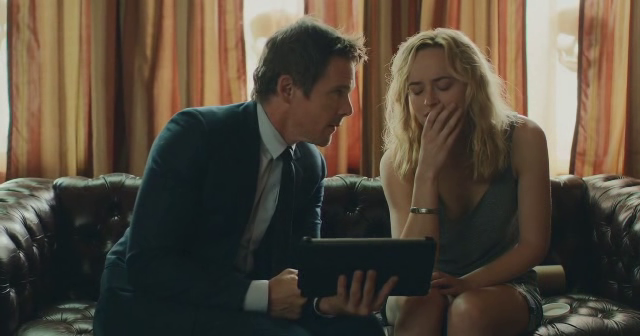
Returning to the director’s chair, Lawrence continues to be a wise choice for the hot seat, and keeps the focus on the characters and their relationships to each other, emphasising the emotional ups and downs that Katniss has to overcome, and the difficult path she has to take as the rebels’ figurehead. Lawrence also keeps the action on point, each sequence plotted and designed for maximum effect, and he brings the other featured districts to life with a well thought out economy. There’s another stirring score courtesy of James Newton Howard, and Jo Willems’ photography maintains the visual style of the previous movie while adding a grittier sheen to things.

Rating: 9/10 – with one more movie to go, The Hunger Games: Mockingjay Part 1 is a memorable, thrilling addition to the series, and perfectly sets up Part 2; with a handful of superb performances, and a director firmly in control of the material, this instalment stands as a perfect example of how to make a bridging chapter relevant and exciting in equal measure.

Share this:

  • Share on X (Opens in new window) X
  • Share on Facebook (Opens in new window) Facebook
  • More
  • Print (Opens in new window) Print
  • Email a link to a friend (Opens in new window) Email
Like Loading...

A Most Wanted Man (2014)

27 Thursday Nov 2014

Posted by dullwood68 in Movies

≈ Leave a comment

Tags

Anton Corbijn, Daniel Brühl, Drama, Espionage, Hamburg, John le Carré, Literary adaptation, Nina Hoss, Philip Seymour Hoffman, Rachel McAdams, Review, Terrorism, Thriller, Willem Dafoe

Most Wanted Man, A

D: Anton Corbijn / 122m

Cast: Philip Seymour Hoffman, Rachel McAdams, Willem Dafoe, Grigoriy Dobrygin, Nina Hoss, Robin Wright, Homayoun Ershadi, Daniel Brühl, Mehdi Dehbi, Rainer Bock

Chechnyan refugee Issa Karpov (Dobrygin) arrives in Hamburg illegally. Spied on CCTV by the German intelligence network, Karpov is of particular interest to the team led by Günther Bachmann (Hoffman). With their specific focus on the Muslim community, Karpov’s appearance raises questions, especially as the Russians believe he could be an extremist bent on committing a terrorist attack. With another German intelligence agency led by Dieter Mohr (Bock) wanting to arrest Karpov immediately, Bachmann gains seventy-two hours in which to identify Karpov’s motives. At the same time, Bachmann is also looking into the financial dealings of local Muslim philanthropist Dr Abdullah (Ershadi), suspecting him of siphoning charity donations to terrorist organisations.

However, Karpov has come to claim an inheritance. He enlists the help of immigration lawyer Annabel Richter (McAdams), asking her to make contact with banker Tommy Brue (Dafoe). Karpov’s inheritance is held at Brue’s bank, and while Brue needs proof of Karpov’s identity and his claim, Bachmann recruits Brue as part of a plan that has wider implications than whether or not the Chechnyan is in Hamburg for suspicious reasons. With Brue on board, Bachmann begins to piece together more and more information relating to Karpov’s past and his reasons for being there. When Richter begins to feel she and Karpov are being watched she manages to get him to a safe house, but Bachmann abducts her, and persuades her to help him in getting Karpov’s money to him.

In the meantime, US diplomatic attache Martha Sullivan (Wright), ostensibly an observer, helps Bachmann with his investigation, and uses her position to keep Mohr off Bachmann’s back. With Brue and Richter both on board, Bachmann’s wider plan to entrap Dr Abdullah begins to come together. Karpov, unaware of what’s happening, or that he’s been under constant surveillance, is persuaded to sign over his inheritance. But when Abdullah presents a list of charities to receive funds from Karpov’s unwanted legacy, and it doesn’t contain the name of the charity that Bachmann and his team suspect is being used by Abdullah to divert monies to terrorists, it looks as if all their intelligence gathering and surveillance work has been for nothing.

Most Wanted Man, A - scene

A sharply detailed look at the behind the scenes work needed to apprehend or “turn” a terrorist suspect, A Most Wanted Man is a dour triumph that succeeds because Andrew Bovell’s measured and skilful adaptation of the novel by John le Carré takes its time introducing and maintaining the various subterfuges that pepper the narrative. This is an espionage thriller that eschews gunplay and car chases, and instead focuses on the mind games used in manipulating people into “keeping the world safe”.

A Most Wanted Man is an absorbing, slow burn movie that takes a somewhat familiar plot – does a person of interest have good or bad motives? – and thanks to a commanding central performance from Hoffman, Bovell’s polished script, and Corbijn’s exacting direction, is as sure-footed in its design and execution as any other le Carré adaptation (it does seem that the author’s works lend themselves well to being adapted for the screen). Holding it all together is another superb performance from Hoffman, his German accent making him sound completely different, and his somewhat slovenly appearance belying the intellect that keeps him several steps ahead of his quarry (and often, his team). This was Hoffman’s last lead role before his death, and as an unexpected swan song, shows once again why he was one of the finest actors of his generation. There’s not one moment where the artifice slips and the viewer becomes aware that they’re watching an actor – Hoffman inhabits the role so completely, it wouldn’t surprise anyone if they bumped into Günther Bachmann in real life.

Hoffman is ably supported by his co-stars, particularly McAdams who takes a largely conventional role and gives it a depth that is surprising for the character (but not for the actress). Dafoe is equally good as the compromised banker, Brue, and Hoss’ fatalistic second-in-command adds a layer of melancholy to the movie that reflects the sombre approach to the material. As the tortured, subdued refugee, Dobrygin is terrific in his English language debut, mournful and emotionally reticent, but with a deep-rooted sincerity that fits the character perfectly. But while the main cast all excel, spare a thought for Brühl, whose character is reduced to contributing the odd line and who stays firmly in the background.

With the political background given due relevance, and the inner workings of German intelligence – whether correctly detailed or not – explored in surprising detail, A Most Wanted Man remains a captivating, quietly meticulous thriller that benefits from an austere, gloomy production design by Sebastian Krawinkel that in turn is matched by Sabine Engelberg’s precisely detailed art direction. Keeping all these elements in tune, and creating a wholly believable milieu, Corbijn – whose previous feature The American (2010) was not as disciplined as his efforts here – makes it easy for the viewer to understand what’s going on at each twist and turn, and ratchets up the tension with a confidence that some more experienced directors never attain no matter how many movies they make. In the end, it all hinges on a signature, the kind of moment that few thrillers rely on, but here, Corbijn has the viewer on the edge of their seat and holding their breath. And then with victory assured, he and Le Carré pull off something so unexpected that the viewer’s breath is taken away altogether. It’s an audacious feat, and all the more impressive in the way it’s carried out.

Rating: 8/10 – with an eerily compelling score by Herbert Grönemeyer, the only negative that can be said about A Most Wanted Man is that, even with le Carré’s source material at its heart, some parts of the story and plotting are predictable; that said, it’s still a complex, engrossing thriller featuring effortless performances and is an intelligent, thought-provoking piece that rewards throughout.

Share this:

  • Share on X (Opens in new window) X
  • Share on Facebook (Opens in new window) Facebook
  • More
  • Print (Opens in new window) Print
  • Email a link to a friend (Opens in new window) Email
Like Loading...

The Sin of Nora Moran (1933)

25 Tuesday Nov 2014

Posted by dullwood68 in Movies

≈ Leave a comment

Tags

Abuse, Alan Dinehart, Circus, District attorney, Drama, Execution, Governor, Literary adaptation, Love affair, Murder, Paul Cavanagh, Phil Goldstone, Review, W. Maxwell Goodhue, Zita Johann

Sin of Nora Moran, The

D: Phil Goldstone / 65m

Cast: Zita Johann, Paul Cavanagh, Alan Dinehart, Claire Du Brey, John Miljan, Henry B. Walthall, Sarah Padden, Cora Sue Collins, Aggie Herring, Otis Harlan

Edith Crawford (Du Brey), the wife of a state governor, goes to visit her brother John Grant (Dinehart), the District Attorney. She shows him several letters that prove her husband, Dick (Cavanagh) has been having an affair. She wants to know the woman’s name, but her brother tries to reassure her there could be other explanations for the letters, but then he lets slip that he knew what was going on. Pushed to reveal the woman’s name he hands his sister a newspaper cutting that reports the imminent execution of a woman named Nora Moran (Johann). At first, Edith doesn’t see the connection, but then her brother begins to explain.

He tells her of an orphaned child called Nora (Collins) who is adopted by an elderly but loving couple, the Morans (Herring, Harlan). When Nora is twenty-one the Morans are both killed in a car crash. Using her inheritance, Nora determines to be a dancer and seek her fame and fortune in the theatre. But she encounters disappointment after disappointment, until, almost broke, she gets a job working in a circus as the assistant for lion wrestler, Paulino (Miljan). Paulino proves to be a sexually abusive boss; with the aid of one of her co-workers, Mrs Watts (Padden), Nora flees the circus and heads to New York where she finds work in a nightclub. There she meets Dick Crawford, and their romance begins.

Grant becomes aware of his brother-in-law’s affair and pays the lovers a visit at Dick’s country hideaway. He confronts the pair; Nora pretends to have “known” several men during her time at the circus. This causes Dick to leave, and after she assures Grant she won’t hang around anymore, he leaves too. Later, Nora telephones Grant and asks him to return to the hideaway, where she shows him the dead body of a man, a man she has murdered. Fearing a scandal, Grant helps Nora dispose of the body, and she leaves town. Later, Nora is arrested for the man’s murder, and at her trial, and with Nora refusing to give any evidence to save herself, she is sentenced to be electrocuted.

Sin of Nora Moran, The - scene

A somewhat surreal, non-linear drama, The Sin of Nora Moran is a strange, visually inventive movie that resists easy categorisation – it has elements of murder, mystery, romance, redemption and sacrifice – and gives Johann her best role by far. It’s also a far cry from the more usual romantic dramas of the period, and doesn’t shy away from showing the terrors of pre-execution incarceration.

Dark and brooding, this adaptation of W. Maxwell Goodhue’s story Burnt Offering, features a narrative that begins in the office of the District Attorney and then flits about from place to place – and from time to time – in its efforts to tell a very plain tale and infuse it with some flair. At one point, Grant makes Dick look at Nora in her coffin; it’s a fantasy sequence but unsettling all the same for not being signposted. Or there’s the shot of Nora’s head being encased in imaginary flames (a none-too blatant example of how badly she’s being treated, as well as being indicative of her expected post-mortem destination). With imagery such as this, the  movie has a vivid, sometimes hallucinatory quality that perfectly complements the more melodramatic twists and turns of the script.

Full credit for this must go to the director, as well as the screenplay by Frances Hyland that, together, forge a significantly darker tragedy than perhaps even audiences of the time might have expected. Faced with the man she loves being exposed as a love cheat in the press, and his reputation tarnished irrevocably, Nora does what every lovestruck young woman would do: she keeps quiet, and by doing so, keeps him safe. The theme of self-sacrifice is given probably its best expression when Grant’s intrusion leads to Nora’ almost immediate, and selfless, decision to withdraw from Dick’s life; she believes with all her heart that his reputation and character mustn’t be sullied. (Of course, these days, Dick would probably be left to fend for himself, and would probably be asked to do whatever fun things someone could come up with.)

With all the symbolism on display, and no end of metaphors for those viewers who aren’t quite up to speed on the visual clues, The Sin of Nora Moran features several broad acting performances from the likes of Dinehart and Miljan, while sadly confirming what contemporary audiences must have known all along: that Cavanagh was an actor with the range of a large piece of wood. As the titular heroine, Johann gives an assured, sympathetic performance as the young woman looking for some fleeting happiness to make her life all the more worthwhile.

Rating: 7/10 – shot in an unfussy yet often severe style by DoP Ira H. Morgan, and with a suitably intense score by an uncredited Heinz Roemheld, The Sin of Nora Moran is a cautionary tale of love gone awry that is often enthralling, and visually arresting; Johann shines in the title role, and the expected sentimentality is given short shrift thanks to the script’s determined sobriety.

Share this:

  • Share on X (Opens in new window) X
  • Share on Facebook (Opens in new window) Facebook
  • More
  • Print (Opens in new window) Print
  • Email a link to a friend (Opens in new window) Email
Like Loading...

Phoenix (2014)

02 Sunday Nov 2014

Posted by dullwood68 in Movies

≈ 1 Comment

Tags

Christian Petzold, Concentration camp, Drama, Germany, Literary adaptation, Marriage, Nina Hoss, Reconstructive surgery, Relationships, Review, Ronald Zehrfeld, World War II

Phoenix

D: Christian Petzold / 98m

Cast: Nina Hoss, Ronald Zehrfeld, Nina Kunzendorf, Michael Maertens, Imogen Kogge

Nelly (Hoss) is a former nightclub singer who was interned in a concentration camp during World War II and subsequently disfigured.  At the war’s end she undergoes reconstructive surgery that makes her look as close as possible to her real self.  The resemblance is striking but there are enough differences that she could be mistaken for someone else.  Nelly recovers from her surgery with the help of fellow survivor, Lene (Kunzendorf).  When Nelly is better, Lene wants both of them to emigrate to Israel, but Nelly has other ideas: she wants to return to Berlin and find her husband, Johnny (Zehrfeld).

Her search takes her to the Phoenix club, where she finds Johnny, but there is no happy reunion.  When he sees her, Johnny doesn’t recognise her, but he does see the resemblance and comes up with a plan to claim Nelly’s inheritance.  After a period in which he will teach her to “be” Nelly, he will present her to their families and friends, and pass her off as his wife.  Nelly goes along with the plan.  She keeps quiet about her identity in the hope that Johnny will one day recognise her, but those hopes are cruelly dashed when Lene learns that Johnny was the person who deposed her to the authorities and which led to her being taken to the concentration camp (and then divorced her the day after).

Upset by this news, Nelly becomes ambivalent towards Johnny and begins to question his plan and its chances of succeeding.  She drops hints about her true identity but he doesn’t pick up on them.  She challenges him and makes things more difficult for him when he tries to tell her about their past, questioning what he tells her.  She also changes the way she is asked to dress and behave, subtly altering the balance of power in their relationship.  As the time approaches when Nelly is due to “return”, she must make the decision to either reveal the truth, or go along with the deception.

Phoenix - scene

A mordant, austere tale about one woman’s attempt to reconstruct her life and reconnect with her past, but under unexpected conditions, Phoenix is the sixth collaboration between Petzold and Hoss, and a great example of contemporary German cinema.

Adapted by Petzold from the novel Return from the Ashes by Hubert Monteilhet, Phoenix is a quietly gripping examination of memory and identity, and the ways in which each can undermine the other.  From the movie’s beginning, with Nelly about to undergo the surgery she hopes will give her her life back, it’s clear that she has lost more than just her looks.  She’s lost her sense of self, and by looking as much as possible as she did – and not differently as recommended by her surgeon – she has faith that this will restore her.  But what is really missing is the self-confidence she had before she was interned, and even looking as she did, she’s still hesitant and unsure of herself.

When it comes to actually rebuilding her life with Johnny she doesn’t find it easy, her emotional fragility keeping her subdued and unwilling to jeopardise the duplicitous scheme her ex-husband has come up with.  Being able to do the “role” justice begins to change matters, Nelly slowly gaining in confidence until she is as much in control of Johnny’s scheme as he is – if not more so.  The power play that develops between them adds tension and a deeper emotional complexity than up til now, and as Nelly begins to assert herself – and not the impostor version she’s adopted – her sense of pride develops as well.  The final scene shows just how far Nelly has come, and it’s a rewarding moment both for her and for the viewer (if not for Johnny).

With Nelly finding that Johnny’s memories of their marriage lack any residual warmth or fondness, she also has to come to terms with the idea that her view of their marriage may not be as truthful as she believed.  As she struggles to maintain that wilting perspective, the moment when she puts it all behind her and decides to move forward is put off until the very end, leaving the movie balanced on a cinematic precipice.  Mean-spirited it may be, but whether or not Nelly and Johnny do go back to each other after all their plotting, is largely irrelevant.  That Nelly now has a choice in the decision is what matters, and by the look on Johnny’s face at the end, it’s not a choice he’s looking forward to her making.

As the uncertain, deceptively enigmatic Nelly, Hoss puts in a superb performance, perfectly capturing the various fears, worries and concerns of a person playing a part and slowly learning how empowering it can be.  Hoss is one of the best actresses working in movies today, and she gives a measured, quietly authoritative performance that shows her complete command of the character and her (somewhat skewed) behaviour.  It’s a fantastic achievement, outwardly clinical in that detached manner people expect from German actors, but ruinously emotional underneath, emoting often with just her eyes, her expressionless face hiding the inner turmoil Nelly feels inside.  It’s an acting masterclass, the kind of role that would go to Nicole Kidman if there was an English language remake (though let’s hope there isn’t).

Phoenix Ronald Zehrfeld Nina Hoss

With his lead actress having such firm control over the main character, Petzold is free to highlight the emotional and psychological aspects of his script, keeping “Nelly” hidden away for most of the movie, even when the war is over and she’s forced to hide behind the surgery she’s had.  Petzold (with Hoss’s help of course) brings Nelly to life with painstaking attention to the more poignant aspects of her tale, most notably in a scene where by dressing as she once did Nelly hopes to reignite a spark in Johnny’s heart, that even though he doesn’t feel toward her as he did before the War, that he might do so now, even though she’s different.  It’s an incredibly touching, hopeful moment, beautifully and sensitively acted by Hoss and Zehrfeld, and on its own, one of the most powerful scenes you’re likely to see all year.
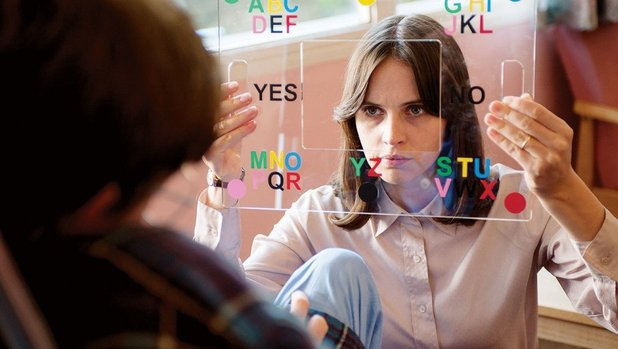
The post-war period is effectively replicated and photographed (by Hans Fromm), and there’s a simple but equally effective score by Stefan Will (who has worked on all bar one of Petzold’s movies).  It all adds up to a quietly engrossing tale that makes a virtue of keeping its main characters’ emotions hidden close under the surface, and by making Nelly’s struggle to unite her past and future all the more enthralling.

Rating: 8/10 – at first glance, Phoenix looks gloomy and uninviting, but Petzold is an astute director and the movie is far more passionate than it seems; with another outstanding performance from Hoss, this is a movie that exceeds expectations and does so with honesty and tremendous skill from its makers.

Share this:

  • Share on X (Opens in new window) X
  • Share on Facebook (Opens in new window) Facebook
  • More
  • Print (Opens in new window) Print
  • Email a link to a friend (Opens in new window) Email
Like Loading...

A Good Marriage (2014)

29 Wednesday Oct 2014

Posted by dullwood68 in Movies

≈ Leave a comment

Tags

Anthony LaPaglia, Beadie, Drama, Joan Allen, Literary adaptation, Marriage, Murder, Peter Askin, Review, Serial killer, Stephen King, Stephen Lang, Thriller

Good Marriage, A

D: Peter Askin / 101m

Cast: Joan Allen, Anthony LaPaglia, Stephen Lang, Cara Buono, Kristen Connolly, Theo Stockman

Darcy and Bob Anderson (Allen, LaPaglia) are the perfect couple: loving, considerate, still attracted to each other, and with two bright, well-adjusted children, Petra (Connolly) and Donnie (Stockman). Everyone says what a good marriage they have. On their twenty-fifth wedding anniversary, Bob gives Darcy a pair of earrings that represent her birth sign of Pisces. Darcy is delighted by them.  In return she offers to purchase a coin that avid collector Bob has been looking for but he tells her he’d rather wait for it to turn up in some change.  Both happy in their affection for each other, their lives continue as normal, with Darcy running a mail order business that sells rare coins, and Bob working as an accountant who often has to travel away.

In the news is a serial killer called Beadie who has just claimed his tenth victim, a woman named Marjorie Duvall.  Beadie kidnaps and tortures his victims before killing them and dumping their bodies; later he sends any I.D. cards they had to the police with a note taunting them for not being able to catch him.

One night, while Bob is away on a trip, the TV remote won’t work and Darcy goes out to the garage where the spare batteries are kept.  While looking for them she dislodges a box under a bench.  She sees some magazines inside the box and pulls them out, as some of them are ones she’s been looking for.  She also finds an S&M magazine that shows pictures of women being bound and humiliated.  And at the very back underneath the bench is a hole in the wall that contains a box that Petra made for Bob when she was younger – a box that contains Marjorie Duvall’s I.D.

Shocked and horrified, Darcy can’t believe what she’s found.  She Googles Beadie and his killings, and becomes completely convinced that Bob is Beadie when she sees a picture of Marjorie Duvall wearing the same earrings Bob got her for their anniversary. And then Bob comes home early from his trip, and the truth about Beadie is revealed. But now Darcy has an even bigger dilemma…

Good Marriage, A - scene

Adapted by King from his novella of the same name (and which can be found in his short story collection Full Dark, No Stars), A Good Marriage is a slow-burn thriller that lights the blue touch paper very early on but which, sadly, never really bursts into flame at any point.  As with the original novella, King focuses on the little details and inherent rhythms of the Andersons’ life together, leaving the thriller elements to (almost) fend for themselves.  They’re only brought in when King needs to drive the story forwards, but otherwise they seem of secondary importance, whereas the relationship between Darcy and Bob takes centre stage.  To some degree this is entirely necessary, but it also stops the movie from being as dramatic as it could have been.

Part of the problem with A Good Marriage is Darcy’s reaction – and subsequent actions – when Bob arrives home and she learns all about Beadie.  For some viewers it will appear unconvincing and contrived (it will help if you’ve read the novella), while others will find it completely unbelievable.  Even if the viewer gives Darcy some considerable leeway for her behaviour, it still hurts the movie to see her behaving in the way that she does.  Even Allen, an actress with more smarts than most, can’t quite pull it off, and the movie’s middle section slows down even further, making a movie that is already moving at a slow, steady pace now almost glacial.

While the audience waits for things to pick up, and Beadie to claim another victim, King and director Askin throw in an unexpected twist that turns the movie on its head and proves to be A Good Marriage‘s standout, bravura moment, a quintessential King literary moment made uncomfortable flesh, and which is reminiscent of that scene in Hitchcock’s Torn Curtain (1966).  With that moment out of the way, it’s time to properly introduce Lang’s supporting character, a retired detective who thinks he knows who Beadie is, and have him provide quite a bit of extraneous exposition.  It all leads to a final scene that – on screen at least – appears entirely superfluous and adds nothing to what’s gone before.

As Darcy and Bob, Allen and LaPaglia at least share a degree of chemistry, and their early scenes together are well played and playful at the same time.  As the movie darkens, Allen becomes more distant as Darcy, while if anything, LaPaglia takes the opposite approach and makes Bob seem like he’s permanently on a cheerful streak.  If this sounds awkward to watch, and difficult to believe, then it is, but King is too clever a writer to make it appear too incredible, and it suits the mood of the movie as the viewer waits to see what’s going to happen next.  Both stars put in good performances on the whole, though it must be said, Allen – who doesn’t always look like herself from certain angles – has the harder job, and she doesn’t always nail it in the way she would normally.

The supporting cast aren’t given much to do – this would work well as a two-hander on stage – and Lang’s detective aside, are interchangeable in terms of their importance to the story.  Buono’s saucy neighbour is a potential victim for all of a minute, while Connolly and Stockman fail to make much of an impact, and are sidelined at the halfway mark.  Askin, along with DoP Frank G. DeMarco keeps things visually subdued as befits the material, and while the pace of the movie is kept deliberately slow, Colleen Sharp’s astute editing makes each scene, individually at least, interesting to watch.  However, the score, by Saunder Juriaans and Danny Bensi is too generic to add much to the proceedings.

Rating: 5/10 – while it’s very faithful to the original novella, A Good Marriage still isn’t the best example of a Stephen King adaptation, even if it is penned by the man himself; some parts are extraneous, while others are meant to increase the tension but fail to do so making the movie – on the whole – a bit of a disappointment.

Share this:

  • Share on X (Opens in new window) X
  • Share on Facebook (Opens in new window) Facebook
  • More
  • Print (Opens in new window) Print
  • Email a link to a friend (Opens in new window) Email
Like Loading...

Serena (2014)

26 Sunday Oct 2014

Posted by dullwood68 in Movies

≈ 4 Comments

Tags

Bradley Cooper, Depression era, Drama, Jennifer Lawrence, Literary adaptation, Logging company, North Carolina, Review, Rhys Ifans, Romantic drama, Susanne Bier, Timber, Toby Jones

Serena

D: Susanne Bier / 109m

Cast: Bradley Cooper, Jennifer Lawrence, Toby Jones, Rhys Ifans, David Dencik, Sam Reid, Ana Ularu, Sean Harris, Kim Bodnia

1929, North Carolina.  George Pemberton (Cooper) owns a timber company that is in need of further investment to stave off closure.  With the Depression having made his own outside investments worthless as collateral for a loan, George is left to find other means of securing his company’s future.  He has land in Brazil that he could sell but the land has been purchased with a view to being the apex of his timber empire; he needs his current operation in North Carolina to be successful in order for him to be able to make the land in Brazil an even bigger success.

While at a rare formal event with his sister, George spots a young woman (Lawrence) he’s immediately attracted to.  His sister informs him that the young woman’s name is Serena Shaw, but he should be careful about entering into a relationship with her.  Serena has a troubled history: her family perished in a fire that only she managed to escape from, and the experience has had a traumatic effect on her.  George ignores his sister’s warning, introduces himself to Serena, and they embark on a whirlwind romance that sees her become Mrs Pemberton.

They arrive at the small town of Waynesville, where George has his base of operations and he introduces Serena to some of his men, including his business partner Buchanan (Dencik), who takes an immediate dislike to her.  Serena takes an active role in the timber business and further alienates Buchanan while winning the respect of her husband’s workers, particularly Galloway (Ifans), who acts a a foreman when he’s not going on hunting trips with George.  Soon, Serena falls pregnant, but while the couple’s personal happiness increases every day, cracks begin to appear when Serena learns that George already has a child, the result of a brief affair with the daughter of one of his workers, Rachel (Ularu).  Against Serena’s wishes, George supports Rachel and his son, and gives her a job.

Meanwhile, Buchanan has gone behind George’s back and has been negotiating a sale of the business with rival interests that include the sheriff, McDowell (Jones).  George rejects their offer, and while he tries to keep the business afloat, his support for Rachel and his son leads Serena to make a terrible decision that will have far-reaching consequences for all of them.

Serena - scene

Filmed in 2012 with the Czech Republic standing in for North Carolina, Serena is (almost) the kind of romantic drama that Hollywood used to churn out by the dozen in the Thirties and Forties, where the determined but naïve young wife comes to live on her new husband’s plantation/ranch/estate, earns the respect of everyone around her, and then falls in love with another man just as she discovers her husband isn’t the man she thought he was.  Except here she doesn’t fall in love with another man, instead she develops homicidal tendencies toward his illegitimate son and the child’s mother.  It’s a twist on the standard plotting, to be sure, but in the hands of screenwriter Christopher Kyle and director Bier, Serena proves to be a bit of an endurance test, rather than an enjoyable throwback to old movie formulas.

Adapted from the novel by Ron Rash, Serena is a stilted exercise in period drama that never really gets off the ground, despite the pedigree of both its director and its cast, and some impressive location photography.  It’s a muddled movie that never feels like it’s being allowed to breathe properly, or fully explore the issues and motivations of its central characters.  George is meant to be a strong empire builder, the kind of land baron whose ruthlessness will win out against any challenge.  In reality, George is too soft; he doesn’t have the edge needed to fend off the likes of Sheriff McDowell, or manage his affairs – either personal or business – with the kind of remorseless determination you might expect.  In short, George is a straw man just waiting to be knocked down by one of his opponents.

This leaves Serena as the more dominant character, both in their relationship and in the movie as a whole.  Her troubled past gives rise to a need to assert herself, to be in control.  But when things begin to spiral out of her control, and she seeks to reassert that control, she quickly “loses it” completely, and with barely a backward acknowledgment of her previously normal behaviour.  We’re in Lady Macbeth territory here, and while Lawrence is a very talented actress, even she can’t pull off the major shift required in Serena’s “development” as a character.  In fact, the bloom is barely faded from her marriage to George before hints as to the eventual outcome of their union are signposted, and while these hints are to be expected, they’re often too clumsily inserted into the narrative to be entirely effective.

As a result, the third teaming of Cooper and Lawrence remains unconvincing, with their relationship only occasionally having any resonance, and the vagaries of their characters making their scenes together often feel disjointed and missing some unifying element – it’s as if they’re each reading from a different draft of the script.  As the movie descends into rampant melodrama – there’s a fire, a race against time, a character becomes a single-minded killer – Serena lets scenes go by without any consideration for how incongruous they are, or how lacking in real emotion.  Often, it’s like watching a rehearsal, where hitting the mark is more important than delivering a performance.  The rest of the cast perform adequately enough – Ifans, though, is miscast – but even they can’t salvage things.

SERENA_D11-2819.CR2

Bier has made some very good movies in the past – Love Is All You Need (2012), After the Wedding (2006) – but here she fumbles the material completely, and leaves the viewer adrift on a sea of tangled motivations, uninspiring developments, and tension-free dramatics.  The movie lacks a spark, something to make it more interesting and more urgent than it actually is, but instead it plods along and never grabs the viewer’s attention.  By the end, when the tragedy is complete, it’s not just the tragedy relating to the characters that’s arrived at, but the tragedy for the viewer who’s made it all the way through and received so little reward.

Rating: 4/10 – disappointing on so many levels, Serena is hampered by a lack of dramatic focus and a script that remains turgid throughout; when even actors of the calibre of Lawrence, Cooper and Jones can’t rescue things, then it’s time to up camp and move on.

Share this:

  • Share on X (Opens in new window) X
  • Share on Facebook (Opens in new window) Facebook
  • More
  • Print (Opens in new window) Print
  • Email a link to a friend (Opens in new window) Email
Like Loading...

Gone Girl (2014)

09 Thursday Oct 2014

Posted by dullwood68 in Movies

≈ 1 Comment

Tags

Amazing Amy, Ben Affleck, David Fincher, Drama, Gillian Flynn, Literary adaptation, Marital problems, Murder, Neil Patrick Harris, Relationships, Review, Rosamund Pike, Thriller, Unhappy marriage

Gone Girl

D: David Fincher / 149m

Cast: Ben Affleck, Rosamund Pike, Neil Patrick Harris, Tyler Perry, Carrie Coon, Kim Dickens, Patrick Fugit, David Clennon, Lisa Banes, Missi Pyle, Emily Ratajkowski, Casey Wilson, Lola Kirke, Boyd Holbrook, Sela Ward, Scoot McNairy

One morning in July, Nick Dunne (Affleck) comes home to find signs of a violent struggle and his wife, Amy (Pike), missing.  He calls the police and when they arrive, Detective Boney (Dickens) and Officer Gilpin (Fugit), soon find further evidence that something bad has happened.  Soon, Amy’s face is everywhere, and while it’s assumed at first that she’s been abducted, Nick’s behaviour doesn’t ring true and he becomes a suspect in what may be his wife’s death.  With evidence building up against him, Nick and his sister Margo (Coon) try to figure out what’s going on, but they’re stumped at every turn.  It’s only when they make a startling discovery in a woodshed on Margo’s property that they begin to realise what’s really happening.

At this point in the movie, as well as in Gillian Flynn’s original novel, there is a major plot twist, and both incarnations of the story begin to move in a new direction, opening out what is a fairly claustrophobic small-town mystery into something that strains credulity and begins to founder under the weight of its attempts to be cleverer than it needs to be.  There are many, many problems with the plot against Nick Dunne, not least Nick’s conveniently inappropriate responses in front of the police and the media, but also the introduction of Amy’s diary.  This offers a disjointed view of Nick and Amy’s marriage that’s meant to put doubts in the minds of the audience as to Nick’s innocence, but which has its effectiveness rendered null and void by the aforementioned plot twist.

It’s not unusual to watch a thriller and find yourself questioning the logic of what’s happening, but with Gone Girl it’s a constant process.  There’s little doubt that Flynn’s tale of marital discord has a degree of cultural relevancy, and her examination of the hidden duplicities and feelings within a marriage is sharper than expected, but ultimately, what we’re talking about here is an above averagely presented potboiler that marries trenchant observations on the media and modern marriage with more traditional thriller elements, and which muddles its way through to an ending which can be seen as either depressingly nihilistic or just desserts for a character – Nick – who has been outclassed from the beginning (though it seems at first glance that it’s all happening because the person doing it all really holds a grudge).

Gone Girl - scene

What happens in the movie’s second half, as Nick attempts to regain control of his life, and defend himself from the police and the media, is confidently arranged and presented by Fincher, but with what the audience knows is happening elsewhere, the movie maintains its measured, effective pacing but at the expense of the tension that’s been built up before.  It’s not the movie’s fault; it is, after all a very faithful adaptation by Flynn of her own novel, and Fincher seems happy to go along with the twists and turns and her reliance on dramatic licence to steer her characters through.  The weaknesses that plague the second half of the novel are present in the movie, and have the same effect: they make everything too unbelievable, and lead to a denouement that will either have audiences who haven’t read the novel shaking their heads in disbelief and asking, “Is that it?”, or audiences who have read the novel shaking their heads in disbelief and asking, “Is that still it?”

So – is Gone Girl then a bad movie?  The answer is very definitely No.  In Fincher’s hands, Gone Girl overcomes it’s cod-psychological thriller origins to become a dark, unsettling movie that picks at the conventional notions of love and marriage and finds murky, troubled waters flowing just below the surface.  As an examination of how two people can fall out of love with each other so easily, and be so ready to hurt each other in the process, the movie scores on all counts.  Nick and Amy, once so right for each other, are now adversaries, both looking to come out on top.  It’s an unfair fight; after all, if Nick was a box-cutter, he’d be the last one you’d use to open up something (he’s just not that sharp).  But Amy is sharp, smart as a whip in fact.  She’s Amazing Amy, the ultimate version of herself that her parents created when she was a little girl, a prodigy who always excels, who always ends up the winner, just because she’s Amazing Amy.  (Amy has always been in competition with her literary alter-ego, but the movie only mentions it in passing, while the novel explores the idea in greater, and more rewarding, depth.  It’s important to take in, though.)

Fincher excels at fleshing out the characters.  Nick is smug and stupid and reckless and self-satisfied and callow and foolish, and he has no idea how idiotically he behaves.  He’s like Bambi in a hunter’s sights, a prize just waiting to be claimed.  Affleck gives perhaps his best performance in years, earning our initial sympathy then dashing it to the ground in one superbly orchestrated scene that pulls the rug out from under the audience with undisguised pleasure.  Nick is twitchy, nervous, anxious, panicky – all the things you’d expect when someone is increasingly viewed as having killed their wife, but Affleck never puts a foot – or an inappropriate grin – wrong, imbuing Nick with an easy-to-warm-to naïveté that hardens as the movie plays out, his nervous energy transformed into a need for redemption in the public’s eye.  As mentioned before, Nick is a frustratingly obtuse character, but Affleck makes it a positive.  Even when Nick is doing or saying something witless, like posing with a woman for a selfie, it’s witless because it’s part of his nature, his way of dealing with people.  He’s like a puppy: he just wants to be loved.

Gone Girl - scene2

Conversely, Amy has always been loved, her parents’ books about her excelling alter-ego having made her treasured by default.  But that affection comes with an expectation that everyone around Amy will feel the same way about her, and if she’s in a relationship then it’s all or nothing, her way or no way.  Pike is a revelation here: as we learn more and more about Amy, she reveals more and more of the fractured person Amy really is.  It’s a role that would test any actress, but Pike – who probably wasn’t most people’s first choice for the part – claims the role as her own and pulls off a devastating performance.  She’s an actress who shows everything with her eyes; watch those and you’ll know everything her character is thinking and feeling, and some things you might not want to know.  She complements Affleck’s performance superbly, and she even manages to make some of Flynn’s more tortured dialogue sound appropriate and convincing.

In support, Dickens is excellent as the detective who never feels entirely satisfied with the way things keep happening, her experience telling her that there’s more going on than meets the eye.  As one of Amy’s old boyfriends, Desi Collings, Harris is awkwardly emotional and manipulative at the same time, the kind of creepy paramour most women would run a mile from.  Coon offers solid support as Nick’s sister but the role is  stereotypically rendered: she believes in him no matter what, even when he does something really stupid.  And Perry – as Nick’s lawyer, Tanner Bolt – has fun with a role that could have done with a bit more bluster, and he provides some much needed levity from the seriousness of the situation.

Marshalling the production into something much greater than its origins, though, is Fincher, a director able to elevate any material he’s given – save Alien³ (1992) – and make it riveting to watch.  In hand with cinematographer Jeff Cronenweth, Fincher makes Gone Girl an impressively visual experience, with shots and images that linger in the memory, and never so cleverly as with Nick and Amy’s home, a large, airy property that serves to highlight how far apart from each other they actually are.  Fincher also takes the more outlandish aspects of Flynn’s story and makes them more credible (though even he’s powerless to override the flimsy psychology that underpins the ending), and he makes the audience want to know what happens next, even if it might be obvious.  With two commanding central performances as well, Gone Girl cements Fincher’s reputation even further, and if at some point down the road Flynn decides to revisit Nick and Amy’s marriage, there shouldn’t be any question as to who should direct the movie version.

While it may divide some audiences – especially those who like their endings to be unequivocal (although this is, in its way) – Gone Girl is nonetheless superior movie-making, and should be regarded as such.  Fincher shows a complete understanding of the characters and their motivations, and delivers one of the most unexpectedly energised movies of the year.  It’s a thriller, yes, but at its heart it’s a movie about the expectations of love and the slow decay of a relationship, where passion turns to pain and love turns to hate.  And it’s relentless.
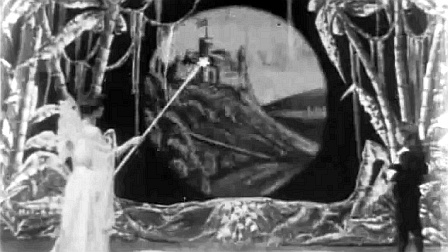
Rating: 8/10 – the script’s deficiencies knock this one down a point, but this is still very impressive stuff indeed; a taut, engrossing thriller that impresses with every scene, Gone Girl is that rare movie that grips the audience despite its faults and becomes a movie that everyone will want to talk about afterwards.

Share this:

  • Share on X (Opens in new window) X
  • Share on Facebook (Opens in new window) Facebook
  • More
  • Print (Opens in new window) Print
  • Email a link to a friend (Opens in new window) Email
Like Loading...

Horns (2013)

07 Tuesday Oct 2014

Posted by dullwood68 in Movies

≈ Leave a comment

Tags

Alexandre Aja, Black comedy, Daniel Radcliffe, Drama, Fantasy, Horror, Ig Parrish, Joe Anderson, Joe Hill, Juno Temple, Literary adaptation, Max Minghella, Murder, Review, Snakes, Thriller, Whodunnit

Horns

D: Alexandre Aja / 120m

Cast: Daniel Radcliffe, Max Minghella, Joe Anderson, Juno Temple, Kelli Garner, James Remar, Kathleen Quinlan, David Morse, Heather Graham

Ig Perrish (Radcliffe) has earned the enmity of the small town he lives in.  His longtime girlfriend, Merrin Williams (Temple) has been brutally killed in nearby woods, and everyone thinks Ig killed her.  With the townsfolk threatening him at every turn, and news crews following him wherever he goes, Ig protests his innocence but is continually ignored.  Even his friends and family suspect or believe he did it; only his best friend, Lee (Minghella), a lawyer, believes he’s innocent.

When a candlelit vigil is held at the place where Merrin was murdered, a drunken Ig rages against a God who could allow her to die.  The next morning he awakes to find two tiny horns growing out of his forehead.  Horrified, he goes to his doctor where he becomes aware of a startling side effect that the horns have brought with them: the people he encounters are compelled to tell him their darkest thoughts and desires once they’ve seen the horns.  He also learns that he can persuade them to act on these desires.  Using this ability he begins to visit people who knew Merrin in the hope of finding clues as to her killer’s identity – or even find them in person.  Everyone reveals something about themselves that is otherwise hidden except for Lee who doesn’t see any horns at all.

Ig suffers a setback when he learns a witness has come forward to say that they saw him leave a diner with Merrin on the night she was killed.  Ig knows this isn’t true, but at first he can’t think how to make the witness withdraw their statement.  The arrival of a bed of snakes that he can control solves the issue but brings him no nearer to finding Merrin’s killer.  It’s only when he confronts his brother, Terry (Anderson), that he begins to discover what exactly happened that night, including a fateful meeting at the diner that he had with Merrin, and which he’d forgotten.

As the clues mount up and Ig gets nearer the truth, an unexpected revelation leads to an attempt on his life.  Surviving the attempt, Ig sets a trap for the killer, and in the process, learns the tragic truth about his beloved Merrin.

Horns -scene

There’s a moment in Horns when Ig suggests that a couple of TV news reporters should “beat the shit out of each other” with an exclusive interview as the prize for the winner.  What follows is a free-for-all brawl between news teams that is both funny and ferocious at the same time.  It’s a perfect example of the tone of the movie, a delightfully perverse adaptation of Joe Hill’s novel that offers a mix of very dark humour and fantasy alongside a very traditional whodunnit.  It’s a bold, audacious movie, encompassing romantic drama, horror, broad comedy, and childhood flashbacks to often dizzying effect.  It’s also a great deal of fun.

Under the auspices of Aja, Horns is never less than riveting, its structure so cleverly constructed by screenwriter Keith Bunin that a few minor plot stumbles aside – the presence of the snakes (never properly explained), the killer’s apparent amnesia when confronted a second time by Ig – the movie grabs the attention from the outset, thrusting the viewer into Ig’s predicament with economy and style.  Its greatest trick is not to make Ig instantly likeable, and while it’s no stretch to believe he’s entirely innocent, his behaviour is self-destructive and aggressive, leaving just that sliver of doubt that maybe, just maybe, he might have killed Merrin.  And with a major motive introduced two thirds in, the movie still manages to throws doubts at the viewer with deliberate glee.

Radcliffe – building a quietly diverse and impressive career for himself post-Hogwarts – is the movie’s trump card, giving a well-rounded, nuanced performance that requires a lot from him as an actor.  He’s more than up to the task though, and is simply mesmerising throughout, justifying entirely the decision to cast him.  It’s a rich, deceptively detailed portrayal, much more resonant than we’re used to in what is ultimately a horror fantasy.  There’s a scene towards the end where Ig reads a letter written to him by Merrin.  The pain and anguish Radcliffe evinces, along with Temple’s perfect reading of the letter, makes the scene achingly sad to watch (and also the movie’s standout moment).

The supporting cast offer sterling support, from Garner’s turn as Ig’s would-be girlfriend Glenna, to Morse as Merrin’s heartbroken father.  If there’s a weak link it’s Minghella, an actor whose features lend themselves well to looking perturbed or querulous, but who regularly struggles to persuade audiences when more convincing emotions are required.  Temple continues to impress, her role in flashback as Merrin giving her another chance to shine (along with Radcliffe, she’s carving out a very interesting career for herself), and there’s a pivotal role for the underused Graham that reminds the viewer – however briefly – just how good she is.

The fantasy elements are effective, with a final transformation for Ig that is impressively handled, and the striking British Columbia locations are lensed to subtly remarkable effect by DoP (and David Lynch alumni) Frederick Elmes.  Aja keeps the focus on Ig and Merrin, the true heart of the movie, and holds back on the bloodshed to a level that, while it may annoy some horror fans, is in keeping with the overall tone of the movie (that said, he can’t resist including one splatter moment).  With a denouement that ups the pace and provides a satisfying conclusion to events, Horns succeeds on so many levels that it’s a very jaded viewer who will be disappointed by what the movie has to offer.

Rating: 8/10 – an above average fantasy thriller with dark comedic overtones, Horns is another daring outing from the very talented Aja; with a deep well of emotion for it to draw on, the movie succeeds in marrying a variety of disparate elements into a rewarding and gratifying whole.

Share this:

  • Share on X (Opens in new window) X
  • Share on Facebook (Opens in new window) Facebook
  • More
  • Print (Opens in new window) Print
  • Email a link to a friend (Opens in new window) Email
Like Loading...

A Walk Among the Tombstones (2014)

06 Monday Oct 2014

Posted by dullwood68 in Movies

≈ Leave a comment

Tags

Crime, Dan Stevens, David Harbour, DEA, Drama, Kidnapping, Lawrence Block, Liam Neeson, Literary adaptation, Matt Scudder, Murder, Ransom, Review, Scott Frank, Thriller

Walk Among the Tombstones, A

D: Scott Frank / 114m

Cast: Liam Neeson, Dan Stevens, David Harbour, Boyd Holbrook, Brian ‘Astro’ Bradley, Ólafur Darri Ólafsson, Adam David Thompson, Mark Consuelos, Sebastian Roché

New York, 1991.  Matt Scudder (Neeson) is a cop with a drink problem.  When armed robbers hold up the bar he’s in, he chases them outside and shoots all three of them, fatally.

Eight years later, Scudder is an unlicensed private detective, still working in New York, and a recovering alcoholic.  When a fellow AA member, Peter (Holbrook) tells him his brother, Kenny (Stevens) wants to offer him a job, Scudder isn’t really interested at first, but he decides to see what the job is about.  Kenny offers him $20,000 to find the men who kidnapped and killed his wife.  Kenny’s reluctance to involve the police tips off Scudder that he’s a drug dealer, and he declines the offer.  When Scudder returns to his apartment later, he finds Kenny waiting for him.  Kenny tells him about the kidnapping, and how he was left to find his wife dismembered in the trunk of a car.  He also leaves a tape recording the kidnappers made of them torturing his wife.  Scudder decides to take the case.

Sensing that Kenny’s wife may not have been the kidnappers first victim, Scudder visits the library to go through the newspaper records.  He strikes up a conversation with a young boy, TJ (Bradley), and together they discover two other murder victims where abduction and subsequent dismemberment have occurred.  Scudder visits the cemetery where the second victim’s body was discovered, and talks to one of the groundskeepers, Jonas (Ólafsson).  Jonas behaves suspiciously, and when he leaves work, Scudder follows him to his apartment.  While there he discovers that the partner of the second victim lives in the building opposite.  Beginning to see a connection, Scudder goes up onto the roof of Jonas’s building and finds a shed that contains evidence of Jonas’ involvement in her kidnapping and murder.  When Jonas returns, he gives Scudder a name – Ray – then jumps off the roof to his death.

Later, Scudder learns that the first victim was a DEA agent, and that the kidnappers may be rogue or ex-DEA agents themselves, as the second victim and Kenny’s wife were both linked to drug dealers.  When they kidnap a fourth victim, the daughter of a Russian drug dealer, Yuri (Roché), he calls on Kenny and Scudder’s help.  Scudder negotiates a ransom drop in the same cemetery where he met Jonas, but the drop goes badly, and the kidnappers get away… with TJ hiding in their van.

Walk Among the Tombstones, A - scene

Adapted from the tenth book in the series of Matt Scudder novels written by Lawrence Block, A Walk Among the Tombstones is a grim, atmospheric crime thriller that features a brooding, melancholy performance from Neeson, and suitably gloomy New York locations.  It’s a look at the darker, seedier side of Life that is impressively realised by writer/director Frank, and draws the viewer in from its opening shootout (which has tragic consequences), to its blood-soaked denouement in the basement of the kidnappers’ house.  Brief moments of levity do occur but they’re few and far between in a movie that anchors itself so effectively in the underbelly of criminal life that some viewers may be put off by its downbeat, distressing approach to the source material.

Carrying the movie like a well-worn overcoat is Neeson, his battered visage telling the audience all they need to know about Scudder and the kind of life he’s lived.  The scenes where he’s attending various AA meetings, while appearing as no more than standard character development, are instead chances for Neeson to show a more reflective, considered approach to the character.  These add subtly to the overall performance, grounding Scudder while the other characters aren’t quite so well fleshed out.  Neeson is a strong, credible actor, and when he’s the focus of a movie (as he is here), then the audience will follow him anywhere, even in something as nonsensical as Non-Stop (2014).

And it helps, because while A Walk Among the Tombstones is determinedly dour, this is a movie that does itself no favours when addressing its bad guys and what they do.  It’s dark, edgy stuff, and made all the more potent by the performances of Harbour and Thompson, who make Ray and his accomplice Albert two of the nastiest villains seen for a while, with the more garrulous Harbour making some truly horrifying dialogue sound even worse by virtue of Ray’s emotional and moral detachment.  These guys are evil, pure and simple, and as the black heart of the movie, are incredibly effective and completely justify Jonas’s decision to jump off the roof.

With a strong, capable hero and two loathsome villains in place, it’s disappointing that the remaining characters don’t quite resonate as much.  As Kenny, Stevens is oddly distant, his anger at his wife’s murder coming across as what’s expected of him rather than a real emotion (even after he’s gone through what happened).  TJ is the annoying would-be sidekick with a poignant back story that threatens to derail the movie – isn’t it enough that Scudder is looking to personally redeem himself, without the added responsibility of a homeless child as well (and one who, when hospitalised, isn’t handed over to social services)?  That said, Bradley does have a screen presence, and he makes the most of a potentially irritating character.

Morally complex it may be, and with drug dealers painted more sympathetically than usual, nevertheless the movie is a crime thriller, and as it ramps up the violence towards the end, the slow deliberate pace of the first half is ramped up as well, and gives the audience another chance to see Neeson in action hero mode (watch though for the table that breaks before it’s landed on).  There’s a satisfying conclusion, and if another Matt Scudder movie doesn’t get made, Frank’s polished, considered outing will stand on its own as an above average entry in the private eye genre.

Rating: 8/10 – stronger and more powerful than the average crime flick, this benefits from a committed turn by Neeson and has a funereal approach that works far better than perhaps it should; confident, absorbing and persuasive, A Walk Among the Tombstones is stirring stuff and shouldn’t be missed.


Share this:

  • Share on X (Opens in new window) X
  • Share on Facebook (Opens in new window) Facebook
  • More
  • Print (Opens in new window) Print
  • Email a link to a friend (Opens in new window) Email
Like Loading...

Before I Go to Sleep (2014)

05 Friday Sep 2014

Posted by dullwood68 in Movies

≈ Leave a comment

Tags

Amnesia, Assault, Colin Firth, Drama, Literary adaptation, Mark Strong, Nicole Kidman, Review, Rowan Joffe, S.J. Watson novel, Thriller

J2730_BeforeIGoToSleep_OneSheet_31F.indd

D: Rowan Joffe / 92m

Cast: Nicole Kidman, Colin Firth, Mark Strong, Anne-Marie Duff, Adam Levy, Dean-Charles Chapman

Christine Lucas (Kidman) wakes up each morning with no knowledge of who she is, and no memory of her life since her early Twenties.  Her husband, Ben (Firth), tells her she was in an accident ten years before and she is suffering from a form of retrograde amnesia: when she goes to sleep each night, her memory of that day is wiped clean and she remembers nothing about her situation.  To help her, Ben has put up pictures of their life together, and has left lists of items and instructions to help her get through the day while he’s at work.

After Ben heads off, the phone rings.  A man at the other end identifies himself as Dr Nasch (Strong).  He tells Christine he’s been treating her for a while and that she should go and look for a camera hidden in a wardrobe in the bedroom.  Nasch has persuaded Christine to use the camera as a kind of video diary, an aide-memoire that she can use each day to help her remember things.  The last entry shows Christine looking visibly upset and cutting the recording short when Ben returns home.

Two weeks before: Dr Nasch begins treating Christine and gives her the camera, advising her not to tell Ben about it.  She begins to make daily recordings, and in the process she learns things that don’t make sense: her accident proves to be a near-fatal assault by an unknown attacker; she and Ben have a dead son; and a friend of hers called Claire (Duff) has been trying to get in contact with her (though Ben tells her he doesn’t recall anyone by that name).  As Christine begins to piece together the mystery of the assault and the past ten years, she begins to suspect that someone, either Ben or Dr Nasch, is hiding the truth from her, and that she may be in danger.

Before I Go to Sleep - scene

Adapted from the novel by S.J. Watson, Before I Go to Sleep is a hard movie to really like.  It’s competently directed by Joffe, ably performed by its cast, and wrong foots the audience on at least two occasions with considerable shrewdness.  But it lacks any real tension, and despite the best efforts of all concerned, has a too-familiar feel to it that robs the movie of any lasting effect.  Christine’s predicament and the limitations of her memory, while intriguing, are too easily overcome; it’s hard to believe that no one’s come up with the idea of a video camera before now.  And for the purposes of the plot, Dr Nasch’s insistence on keeping Ben in the dark, while highly suspicious by itself, seems more of a contrivance than something reasonably developed to aid in Christine’s treatment.

Once Christine begins to unravel the mystery of the assault, the clues come thick and fast, and while the movie as adapted by Joffe may think it’s being very clever, it only succeeds in making it easy for its heroine to learn the truth.  It also loses a large amount of credibility when Christine agrees to meet Claire at Greenwich, but is later revealed to not even know the address of where she lives.  It’s in the mid-section that Joffe trots out a series of twists and turns that threaten to sink the movie’s credibility, but he manages to hold it all together until the arrival of the more generic confrontation that, alas, soon descends from tense showdown to tiresome violent retread.

Later, as the plot begins to unravel further, and the truth about the assault becomes clearer, what has been a fitfully absorbing psychological thriller becomes yet another damsel in distress movie with Christine forced to face off against the man who assaulted her all those years ago.  With such a predictable denouement, the movie adds an extended coda that seeks to give full closure to everything Christine has discovered (it also provides an emotional resonance that’s lacking elsewhere), but while it’s an effective scene in and of itself, it comes too late to save matters overall.

There’s also the issue of the movie’s look.  Joffe, along with director of photography Ben Davis, has chosen to film in muted colours, and with the dimmest lighting design seen for some time.  As a consequence, the movie is drab and depressing to look at, its dour interiors sucking the life out of proceedings and proving an obstacle to the performances, the cast struggling to stand out against the morose and dreary surroundings.  Even when Christine meets Claire at Greenwich, the colour mix is toned down so that the natural greens and browns seem as subdued as the rest of the palette.  As a reflection of Christine’s mental state, it comes across as pretty heavy handed, while also keeping the audience at a distance from the action.

Kidman plays Christine as a fragile, easily disturbed, yet strangely trusting woman who shows only few signs of being the strong, confident person she was before the assault (it’s only her memory that’s affected, not her personality), and while she’s as capable as ever – only Julianne Moore can show dawning, horrified realisation as well as Kidman can – she’s hemmed in by the character’s limitations (even an actress of Kidman’s calibre can do shock and surprise only so many times in a movie without it becoming repetitive).  In support, Firth gets to play angry and resentful in between being supportive and creepy, while Strong does what he can with a character who, ultimately, is there for exposition purposes more than anything else.

There are obvious connections that viewers will associate with Memento (2000), but Before I Go to Sleep lacks that movie’s inventiveness and if they were programmed as a double bill, Joffe’s would definitely be the second feature.  With obvious nods to movies such as Groundhog Day (1993) and Shattered (1991), this tries hard to be a riveting thriller but ends up looking and sounding too mundane to make any lasting impression.

Rating: 5/10 – disappointing and routine for most of its running time, Before I Go to Sleep could have done with more pace and more intensity; with few surprises, and even fewer moments to make an audience gasp, this is one thriller that doesn’t fully live up to expectations.

Share this:

  • Share on X (Opens in new window) X
  • Share on Facebook (Opens in new window) Facebook
  • More
  • Print (Opens in new window) Print
  • Email a link to a friend (Opens in new window) Email
Like Loading...

Sleepy Hollow (1999)

30 Saturday Aug 2014

Posted by dullwood68 in Movies

≈ 1 Comment

Tags

Christina Ricci, Christopher Walken, Hammer homage, Headless horseman, Ichabod Crane, Johnny Depp, Literary adaptation, Michael Gambon, Review, Tim Burton, Washington Irving, Witchcraft

Sleepy Hollow

D: Tim Burton / 105m

Cast: Johnny Depp, Christina Ricci, Miranda Richardson, Michael Gambon, Casper Van Dien, Jeffrey Jones, Richard Griffiths, Ian McDiarmid, Michael Gough, Christopher Walken, Marc Pickering, Lisa Marie, Steven Waddington, Claire Skinner, Christopher Lee, Martin Landau

New York State, 1799.  Young policeman Ichabod Crane (Depp), viewed as an embarrassment by his superiors due to his interest in unorthodox investigation techniques such as fingerprinting and forensic testing, is dispatched upstate to the small hamlet of Sleepy Hollow to investigate a spate of murders where the victims have been found headless.  When he arrives he finds the town’s elders, led by Baltus Van Tassel (Gambon), have no doubt as to the murderer’s identity: a vengeful spirit known as the Headless Horseman (Walken).

A disbelieving Crane begins his investigation.  He learns that one of the victims was pregnant at the time of her death and that there is a link between them all to a will made by the first victim, Peter Van Garrett (Landau).  Further slayings take place, though Crane continues to believe the killer is made of flesh and blood.  It’s not until he witnesses the death of Magistrate Phillipse (Griffiths) that he realises that the Headless Horseman is real.

During all this Crane becomes infatuated with Van Tassel’s daughter, Katrina (Ricci).  Along with the son of one of the victims, Young Masbath (Pickering), she helps him find the Horseman’s grave; the skull is missing, convincing Crane that someone is using it to control the Horseman.  Crane deduces that “someone” is Van Tassel as before Van Garrett changed his will, he stood to inherit Van Garrett’s fortune.  Katrina, however, burns the evidence and renounces her feelings for Crane.  Though, when Crane is wounded by the Horseman in a fight, she tends him until he is better.

Things escalate when the town’s notary, Hardenbrook (Gough) takes his own life.  A town meeting is held in the church, during which both Dr Lancaster (McDiarmid) and the Reverend Steenwyck (Jones) are killed, before Van Tassel is claimed by the Horseman.  With Crane’s chief suspect murdered, he begins finally to piece together the identity of the person who is really controlling the Horseman, and the reasons why they have employed him in such a fashion.

Sleepy Hollow - scene

Justly celebrated at the time of its release for its remarkably effective on screen beheadings, Sleepy Hollow was something of a return to form for Burton, who hadn’t directed a movie since the less-than-well received Mars Attacks! (1996).  Although he wasn’t originally scheduled to direct the movie – that was meant to be creature effects designer Kevin Yagher, who also constructed the story with screenwriter Andrew Kevin Walker – this is recognisably a Tim Burton movie right from the start, and his tribute to Hammer movies.  With its muted colour palette, and grim rural setting, Sleepy Hollow is not perhaps the most attractive looking movie you’ll ever see, but it definitely suits the action, its steely blues and ghostly greys adding greatly to the often stifling atmosphere.  There’s a real sense of foreboding about the hamlet and its surroundings, and the movie uses Rick Heinrichs’ excellent production design to impressive effect.  And then there’s the Tree of the Dead, a superbly realised gateway to Hell that is almost a character all by itself.

If the screenplay ultimately is a pretty convoluted concoction, with the motivations of the Horseman’s controller proving to be unnecessarily tangled, there’s still tremendous fun to be had from a movie that invokes the spirit of 60’s Hammer movies with such obvious affection, and includes roles for horror icons Christopher Lee and Michael Gough (who was persuaded to come out of retirement for the movie).  The movie’s mix of horror, humour, action and romance is intoxicating, and is helped by a clutch of performances that embrace the proceedings with gusto.  Depp anchors the movie with a slightly prissy interpretation of Ichabod Crane that gives rise to much of the humour, while Ricci is more quietly proficient as Katrina, her role more in keeping with the independent heroine who still requires saving in the final reel.  Gambon does nervous and guilty with aplomb, while Griffiths is a (brief) standout as the petrified Magistrate. And Walken, with his piercing blue eyes and sharply pointed teeth, impresses as the Hessian horseman, all snarling rage and bloodthirsty intensity.  In smaller roles, Richardson, Jones, McDiarmid and Van Dien all have their moments, but it’s a measure of their collective abilities that they aren’t all lost in the mix.

There’s a lot packed into Sleepy Hollow, from the various well-mounted and staged killings (Van Tassel’s is a striking example), to the back story involving Crane’s mother (Lisa Marie), to the elements of witchcraft that underpin the Horseman’s return, to a thrilling three-way battle between Crane, Bram Von Brunt (Van Dien) and the Horseman (Ray Park, fresh from filming his role as Darth Maul in Star Wars Episode I: The Phantom Menace (1999) and as equally menacing here), but under Burton’s expert guidance, all these disparate components come together to make a richly rewarding whole.  The movie takes the more fantastical aspects of the story and grounds them effectively, and if there’s a few too many occasions where things are glossed over or rushed through in order to get to the Horseman’s next appearance, then overall it doesn’t hurt the movie’s drive.  With its fiery windmill confrontation and stagecoach chase climax, the movie ends on a thrilling note, and provides a suitably horrible fate for both the Horseman and his controller.

Rating: 8/10 – a stylish exercise in period horror, Sleepy Hollow has yet to be equalled or bettered, and features one of the most memorable villains in recent movie history; with its excellent production design and convincing special effects, Burton’s homage to the horror movies of his youth is both memorable and exciting.

Share this:

  • Share on X (Opens in new window) X
  • Share on Facebook (Opens in new window) Facebook
  • More
  • Print (Opens in new window) Print
  • Email a link to a friend (Opens in new window) Email
Like Loading...

My Top 10 Movies – Part Six

25 Saturday Jan 2014

Posted by dullwood68 in Movies

≈ Leave a comment

Tags

Elijah Wood, Frodo Baggins, Gandalf, Gollum, Helm's Deep, Hobbits, Ian McKellen, J.R.R. Tolkien, Literary adaptation, Middle Earth, New Zealand, Peter Jackson, Ralph Bakshi, Review, Sam Gamgee, Sauron, Sean Astin, The Hobbit, The Lord of the Rings, The Silmarillion, Viggo Mortensen

The Lord of the Rings (2001-2003)

Lord of the Rings Trilogy, The

D: Peter Jackson / 558 mins

Cast: Elijah Wood, Ian McKellen, Viggo Mortensen, Sean Astin, Billy Boyd, Dominic Monaghan, Orlando Bloom, John Rhys-Davies, Sean Bean, Liv Tyler, Christopher Lee, Cate Blanchett, Hugo Weaving, Andy Serkis, Karl Urban, John Noble, David Wenham, Miranda Otto, Bernard Hill, Brad Dourif, Ian Holm

I know, I know, this is a bit of a cheat, three movies for the price of one and all that, but how can you possibly separate the greatest trilogy ever made?

There have been enough superlatives heaped on Peter Jackson’s finest hour(s), and while I’m tempted to add to the pile, I’m going to restrain myself and keep to the personal aspect that makes these movies mean so much to me.  And besides, everyone already knows how brilliant they are (sorry, couldn’t help it).

My first encounter with J.R.R. Tolkien wasn’t via The Lord of the Rings or even The Hobbit.  It was through a friend of mine who was into fantasy art; at his home one day he showed me a picture he’d drawn of a wizard (you can guess which one).  He told me the wizard was one of the main characters in a book he’d read.  He handed me a battered copy of The Hobbit and advised me that if I was going to read it I ought to be prepared for it to be a bit child-oriented.  And me, being a 14-year-old with ideas of being older in my outlook, declined his kind offer and went home instead with the first issue of a new sci-fi magazine called Starburst.

A year later, Ralph Bakshi’s version of The Lord of the Rings was released but I didn’t see it.  My friend the artist did and he thought it was quite good but he also mentioned it wasn’t the whole story.  I thought, “what’s the point of that?” (not knowing then of Bakshi’s plan to finish the tale in a second movie).

And then, in 1981, two things happened that brought me into the fold, so to speak.  My girlfriend at the time was reading The Lord of the Rings and would spend whole evenings working through it; she thought it was “the best book” she’d ever read.  She asked me to read it but I was still hesitant (I was working my way through Dickens at the time and fantasy fiction wasn’t high on my (slightly pretentious) list of genres to  read).  And then on March 8 (a Sunday) the BBC began broadcasting a radio adaptation of Tolkien’s novel in thirty minute episodes that had me glued to my stereo every Sunday for the next twenty-five weeks.  I read the book in between episodes, keeping up with the adaptation.  By the time the broadcasts ended on 30 August I was a Tolkien fanatic.  Now I read The Hobbit, and The Silmarillion.  I raved about the books to anyone who might listen, and later tracked down Bakshi’s movie on video (not as bad as I thought it was going to be; the live-action based animation is actually quite visually arresting).

I re-read the books, revisited the radio adaptation when it was re-broadcast in hour-long episodes in 1982, and generally looked upon the whole mythology that Tolkien had created as being one of the most incredible literary works I’d (eventually) come across.

Lord of the Rings Trilogy, The - scene

When it became clear in the late Nineties that a large-budget adaptation of The Lord of the Rings was being planned, with Peter Jackson at the helm, I felt a mixture of anticipation and trepidation.  First of all, it was going to be a live action adaptation, and even though Jackson’s Heavenly Creatures (1994) had proved he could direct something with a bit more depth than say, Braindead (1992), I still had my doubts.  As the scope of the project became known, the more I wondered if, and how, Jackson was going to pull it off.  And over three movies!

Now, thirteen years on, and with Jackson giving us The Hobbit as well, we all know I needn’t have worried.  The Fellowship of the Ring was like the best Xmas present anyone could have.  Its mix of the intimate and the grandeur of Middle Earth, and the level of detail, along with the sheer excitement of the action sequences made for one of the most rewarding cinematic experiences of my whole movie-going life.  In the first two weeks of its release in the UK I saw the movie three times.  When The Two Towers was released a year later, I was itching to see it, especially after watching Fellowship‘s extended version the day before (Jackson’s idea to give us longer versions of each movie on home video was a stroke of genius).  I came out of seeing The Two Towers overwhelmed and buoyed up by the emotional depth that infused the movie, and by the sheer spectacle of the Battle of Helm’s Deep (I couldn’t see how the Battle of the Pelennor Fields could be any better or more exciting; what did I know?).  The following year passed too slowly, waiting for The Return of the King to be released.  When it finally did, I can remember hearing the opening music and feeling a shiver run through me.  Please, Mr Jackson, please, I remember thinking, please have got this right.  And did he.  The Return of the King was an incredible achievement, a massive undertaking in its own right, and the culmination of a saga that had built to this monumental, emotionally-charged conclusion with barely a (hobbit) foot out of step along the way.  (And to those people who feel the movie should have ended with the coronation of Aragorn, the movies have always been about the characters and their journeys; to not see them make their farewells and re-take up their lives would have been a disservice to both them and the audience.)

The Lord of the Rings trilogy remains a phenomenal achievement, with stand-out performances – who can forget Gollum’s schizophrenic argument with himself in The Two Towers? – stunning location photography; a script that never lost sight of the emotional cores of its characters; confident, breathtaking direction from Peter Jackson; special effects that served the story and didn’t overwhelm things; and most of all, the creation of a wholly believable world where all this could happen.  But again, it’s the emotional element that makes the trilogy work, that keeps all of us who fell in love with the movies coming back time and time again, to revisit Middle Earth in all its glory and grandeur.  For many years, a friend and myself would take a day out to watch the extended versions right through, revelling in being able to spend time again with old friends such as Samwise Gamgee and Gimli, son of Glóin.  This trend has (sadly) lapsed in the last few years, but as an added memory to the original, wonderful experience of seeing the trilogy unfold over three magical Xmas’s, it’s easily the next best thing.  Going back to Middle Earth is, in its own way, a little bit like going back home after a long journey away…and what would Frodo and Sam say to that?

Rating: 9/10 – a stupendously impressive piece of filmmaking, bold, inventive, gripping, and with an emotional intensity few fantasy movies ever manage; just as there is only One Ring, Jackson’s enduring achievement means there is only One Trilogy.

Share this:

  • Share on X (Opens in new window) X
  • Share on Facebook (Opens in new window) Facebook
  • More
  • Print (Opens in new window) Print
  • Email a link to a friend (Opens in new window) Email
Like Loading...

The Hobbit: The Desolation of Smaug (2013)

23 Monday Dec 2013

Posted by dullwood68 in Movies

≈ 1 Comment

Tags

Benedict Cumberbatch, Bilbo Baggins, Evangeline Lilly, Ian McKellen, J.R.R. Tolkien, Legolas, Literary adaptation, Martin Freeman, Orlando Bloom, Review, Smaug, The Hobbit, The Lord of the Rings

Hobbit The Desolation of Smaug, The

D: Peter Jackson / 161m

Cast: Martin Freeman, Ian McKellen, Richard Armitage, Ken Stott, Benedict Cumberbatch, Orlando Bloom, Evangeline Lilly, Lee Pace, Luke Evans, Stephen Fry, Sylvester McCoy

The Hobbit: An Unexpected Journey (2012) was, in some ways, a difficult movie to appreciate.  As the beginning of what is effectively now a six-film series, the difference in tone and approach threw some viewers who were expecting a match for The Lord of the Rings (2001-3).  Jackson and co-scriptwriters Fran Walsh and Philippa Boyens, and Guillermo del Toro, took the more humorous elements of Tolkien’s novel and weaved them into the story with accomplished ease.  They made several key decisions with the characterisations of the dwarves that left audiences unsure if the comedic aspects were appropriate or in keeping with the overall tone of the trilogy (not to mention the darker trilogy that follows it).  What seemed to be forgotten in the rush to criticise the movie was that it was the first of three: making any kind of criticism at this early stage was actually irrelevant.  As the first two Lord of the Rings movies were largely ignored at the Oscars, only for the third to be so heavily rewarded, so we should wait until all three parts of The Hobbit are released.  Then we can make a proper decision.

What is clear is that with The Hobbit: The Desolation of Smaug, Jackson has hit his stride, and as a result, the trilogy has hit its stride as well.  The exposition of the first movie is largely dismissed with, and the introduction of new characters such as Thranduil (Pace) and Tauriel (Lilly) is handled concisely and with greater attention than before.  There is an even greater focus on action, with the barrel-rolling sequence a highlight, and a greater sense that this movie’s events fit in with, or more appropriately foreshadow, the events of The Lord of the Rings.

Having survived the attack by orcs at the end of the first movie, Bilbo (Freeman), Thorin (Armitage) and the rest of the dwarves set off into Mirkwood where spiders – and not just any spiders – inhabit the forest.  Meanwhile, Gandalf (McKellen) heads off to Dol Guldur to face the rising power of the Necromancer (Cumberbatch).  The dwarf company, or überfellowship, make it out of Mirkwood only to find themselves captured by elves.  With Bilbo’s help, they escape, and are pursued by orcs, Tauriel – who has developed a bit of a crush on dwarf Kili (Adrian Turner) – and Thranduil’s son Legolas (Bloom).  At Dol Guldur, Gandalf meets up with Radagast the Brown (McCoy) and finds that the Necromancer is preparing an orc army to march against the lands of the west.    The dwarves evade the orcs with the help of Bard the Bowman (Evans).  Bard lives in Lake-town, and he takes Thorin and his band there where they can both tend to Kili, who has been hit by a poisoned orc arrow, and plan the next step of their journey to the Lonely Mountain.  The orcs attack again but not before Thorin has left; Bard helps the dwarves that have been left behind and Tauriel and Legolas join the fray as well.  Bilbo finds the way into the Lonely Mountain where he encounters the dragon Smaug (Cumberbatch), and despite their best attempts the dwarves fail to kill him.  Enraged, Smaug breaks free of the mountain and heads to Lake-town to wreak his revenge.

The movie ends there, rather abruptly too, with only Bilbo’s anguished “What have we done?” to see out proceedings.  As might be expected there has been a large amount of criticism of the movie ending this way, but watching The Desolation of Smaug, and with Smaug’s entrance occurring around the two-hour mark, anyone even half aware of the movie’s running time would have known a resolution to the problem of Smaug was always going to be unlikely.  And it means that The Hobbit: The Battle of the Five Armies (2014) is going to have one hell of a start.

Hobbit The Desolation of Smaug, The - scene

The ending aside, the movie does still suffer from “middle child syndrome”, with too many storylines set up to be resolved in the next one, and the running time feeling a little too long.  Gandalf is sidelined for much of the movie (fairly reflecting the novel), while some of the dwarves are given very little to do indeed – anyone know something specific that Ori or Bifor did?  Radagast gets a cameo this time round (and repeats his bird under the hat trick), Azog (Manu Bennett) cedes his quest for Thorin’s head to Bolg (Lawrence Makoare), and the worst kept secret in town: the identity of the Necromancer, is revealed at last.  Oh, and there’s the weird matter of Legolas sporting contact lenses; it makes him look slightly alien rather than Elvish.

These minor quibbles aside, The Desolation of Smaug is a terrific addition to the complete saga, thrilling, intense, spectacular to look at with even more beautiful New Zealand scenery to devour, a continued line of humour that complements the increasing sombre tone (Legolas’ dismay at seeing a picture of Gloin’s son), the introduction of Lilly as Tauriel (this trilogy’s Arwen), Jackson’s complete mastery of both the material and the visual language needed to present it, a cast that more than matches him for commitment and artistry, and of course, the mighty Smaug, without doubt the most realistic, most impressive dragon ever imagined.  Voiced by Cumberbatch, Smaug is the movie’s highlight: an arrogant, vain, greedy, vicious, preening monster who trades verbal barbs with Bilbo in the movie’s best scenes.  Both Freeman and Cumberbatch are on superb form here, adding layers to their performances that bring out all the subtleties of the dialogue, and keeping the audience riveted as they spar back and forth.

With another year to go before the trilogy’s conclusion, The Hobbit: The Desolation of Smaug is a more than satisfying instalment that works well and impresses on a regular basis.  There’s little doubt that Jackson and co are firing on all cylinders, and if the purists out there are still complaining about the increasing lack of fidelity to the original novel then they’re missing the point: this is an adaptation, and a wonderful one at that.

Rating: 9/10 – a rousing blend of action and spectacle that moves at breakneck pace, The Hobbit: The Desolation of Smaug rarely disappoints; event cinema that we see too little of these days and absolutely best seen in 48hfr on an IMAX screen.

Share this:

  • Share on X (Opens in new window) X
  • Share on Facebook (Opens in new window) Facebook
  • More
  • Print (Opens in new window) Print
  • Email a link to a friend (Opens in new window) Email
Like Loading...

The Monkey’s Paw (2013)

23 Saturday Nov 2013

Posted by dullwood68 in Movies

≈ Leave a comment

Tags

Brett Simmons, C.J. Thomason, Drama, Horror, Literary adaptation, Murders, Review, Stephen Lang, Three wishes, W.R. Jacobs

Monkey's Paw, The

D: Brett Simmons / 92m

Cast: C.J. Thomason, Stephen Lang, Michelle Pierce, Corbin Bleu, Daniel Hugh Kelly, Charles S. Dutton, Tauvia Dawn, Andy Favreau, Grayson Berry, Sabrina Gennarino

A modern-day adaptation of W.R. Jacobs’ classic horror tale, The Monkey’s Paw begins promisingly with a well-staged, condensed version of the original tale as seen through the eyes of Gillespie (Kelly) as a child. Years later, Gillespie is working as a supervisor at a factory. Also working there are pals Jake (Thomason) and Cobb (Lang). A mistake with an order gets Gillespie fired. Later that night, Jake and Cobb run into Gillespie at a local bar. He tells them about the monkey’s paw, and how it grants three wishes to whomever owns it; once the wishes are used, it can move on to another owner. Jake takes hold of the paw and makes a wish: that a car in the parking lot should be his. When Jake and Cobb leave, they look at the car and find the keys are in it. With Jake driving they go for a spin along some of the back roads. Swerving to avoid an alligator in the road, Jake loses control of the car and hits a tree; the impact sends Cobb through the windshield, killing him. In a panic, Jake wishes his friend was alive, then when it doesn’t work straight away, he flees the scene. After he’s gone, Cobb comes back to “life”.

So far, so good. Some real thought has been put into the set up, and the car crash is effectively staged. Cobb returns to “life” with some facial scarring, but otherwise, apart from some jerky movements, looks pretty normal. Jake throws away the paw in an abandoned building, and after a day or two brooding about what’s happened, tries to get on with his life. Until Cobb shows up, demanding that Jake use his third wish to bring Cobb and his estranged young son together again. Jake sees that Cobb’s return has made him dangerous and he refuses to do so. At this point, Cobb begins targeting the people Jake knows, including their boss Kevin (Favreau), his wife (and Jake’s ex-girlfriend Olivia (Pearce), Gillespie, and Jake’s brother and sister-in-law (Berry, Gennarino).

Monkey's Paw, The - scene

At this point, the movie starts to lose its way, opting for a Friday the 13th/slasher style approach as Cobb picks off Jake’s friends and family one by one. The previous slow-build of tension is left behind as Jake struggles to deal with what’s happening while at the same time trying to get back with Olivia. Motivations and logic are put aside as Cobb goes on an undetected killing spree, where the police, led by Detective Margolis (Dutton) are so far behind they might as well not be involved. Cobb kills with impunity time and again and seems able to vanish at will in-between times. Eventually, Jake retrieves the paw and there is a showdown at the home of Cobb’s estranged son.

The extended premise of The Monkey’s Paw, that those we bring back from the dead may want more from their new life than they could have had before, is an interesting one that could have been explored a lot further. Lang brings an initial pathos to his role, but it’s quickly put aside so he can become the script’s required psycho. (A mention here for how Cobb looks as the movie continues; aside from the facial scarring, he also shows more and more decay, courtesy of special makeup effects artist Emily Burka.  It’s an intriguing look, which, if the movie had taken place over a longer period, would have added another layer to the character’s mental and physical decline.) Jake goes from cocky to desperate in the time to takes for Cobb to crash through the windscreen, and although Thomason – back in familiar territory after Simmons’ Husk (2011) – struggles to maintain a grip on the character as the movie goes on, he’s still a likeable presence on screen.

The script, by Macon Blair, as noted before has some interesting aspects in its first half hour, and if The Monkey’s Paw had retained this psychological approach, it may have turned out better. As it is, the movie suffers by lurching from one (admittedly) well-executed kill scene to the next, leaving the viewer in unnecessarily unoriginal waters and hoping for a better resolution (which doesn’t come). Simmons shows occasional flashes of creativity that bolster the script (the kill scenes), but ultimately he can’t get around the lack of imagination the script settles for.

Rating: 6/10 – there’s a better movie here than might have been expected but it’s severely let down by it’s need to fit in with an already overcrowded market; psychological horror movies are few and far between these days – this could have been one of them.

Share this:

  • Share on X (Opens in new window) X
  • Share on Facebook (Opens in new window) Facebook
  • More
  • Print (Opens in new window) Print
  • Email a link to a friend (Opens in new window) Email
Like Loading...

Freaky Deaky (2012)

10 Sunday Nov 2013

Posted by dullwood68 in Movies

≈ Leave a comment

Tags

$50 million, Billy Burke, Black comedy, Bombs, Charles Matthau, Christian Slater, Crime, Drama, Elmore Leonard, Literary adaptation, Michael Jai White, Review

Freaky Deaky

D: Charles Matthau / 90m

Cast: Billy Burke, Michael Jai White, Christian Slater, Breanne Rocano, Crispin Glover, Sabina Gadecki, Roger Bart, Andy Dick, Bill Duke, Gloria Hendry

When bomb squad detective Chris Mankowski (Burke) transfers to Sex Crimes he meets Greta (Gadecki) who reports she was raped by multi-millionaire pothead Woody Ricks (Glover). Ricks’ arrest leads to strings being pulled and Mankowski being suspended. Determined not to let Ricks get away with it, Mankowski agrees to help Greta get some financial compensation from Ricks. Meanwhile, two 60’s radicals, Robin (Rocano) and Skip (Slater), convinced that Ricks gave testimony that led to their being imprisoned, plot to relieve him of the $50 million he’s just inherited. To do this they  plan a bombing campaign that will frighten him into paying up. In the middle of all this is Donnell (White), Ricks’s bodyguard-cum-personal assistant. He ends up as the go-between for all parties, while trying to defraud his boss of the $50 million himself.

An adaptation of the novel by Elmore Leonard (his personal favourite, apparently), Freaky Deaky – as adapted by writer/director Matthau – has an air of listlessness that it doesn’t quite shrug off, despite some good casting, and a neat line in Leonard’s trademark dialogue. On the page, Leonard’s plots fairly zing and fizz with an energy born from Leonard’s sparse prose. Here, that energy is missing from a movie that fails to generate more than a Chinese burn of excitement. The result is that Freaky Deaky plods from scene to scene without really drawing its audience in, which is a shame as the structure is sound, and as mentioned above, the cast are well-matched to their roles (Slater continues his mini-renaissance with a well-judged take on a mild-manic bomb maker) and there’s some great visual gags (Ricks’s car in the driveway, Ricks trying to put on his pants).

Freaky Deaky

Of the rest of the cast, Burke is saddled with a good guy role that lacks shading, while Glover almost steals the show as the permanently drug- and alcohol-addled Ricks, all vacant stares and poor co-ordination. I say almost because White just beats Glover into second place, playing a seen-it-all ex-con dealing with each successive twist and turn of the plot with weary resignation and some of the best, drollest dialogue on offer. But while the male cast fare well, the same can’t be said of Rocano and Gadeski.  As Robin, Rocano sails perilously close at times to coming across as merely a one-note revenge-seeker, while Gadeski does her best to avoid being just eye candy. It’s not their fault, just the way the script has been written.

Matthau has been quiet since 2005’s rom-com Her Minor Thing, and while he’s to be congratulated for persevering through Freaky Deaky‘s troubled production – its original cast, including Matt Dillon, Brendan Fraser and Katie Cassidy, were replaced by Burke et al in 2011 – the end result is a disappointment. There’s no flow to the scenes, and it’s obvious the budget was an issue, but even with all the obstacles in the movie’s way, it deserved better. There are few really good adaptations of Elmore Leonard’s work out there, and sadly this isn’t one of them.

Rating: 5/10 – not as impressive as it could have been given its cast, but helped immeasurably by them, Freaky Deaky serves as a reminder that adapting a well-written, well-received book isn’t as easy as it looks; one for Leonard completists only.

Share this:

  • Share on X (Opens in new window) X
  • Share on Facebook (Opens in new window) Facebook
  • More
  • Print (Opens in new window) Print
  • Email a link to a friend (Opens in new window) Email
Like Loading...

Jack and the Beanstalk (1902)

05 Tuesday Nov 2013

Posted by dullwood68 in Movies

≈ Leave a comment

Tags

Drama, Edwin Stanton Porter, Fairy godmother, Fairy tale, Giant, Golden eggs, Jack and the Beanstalk, Literary adaptation, Magic beans, Pantomime cow, Review, Silent film, Thomas White

D: Edwin Porter / 10m

Cast: Thomas White

The first screen adaptation of the British fairy tale, Jack and the Beanstalk is a charming retelling presented in nine scenes and one tableau.  There is a pantomime cow that Jack (White) sells for the magic beans – at one point it butts the farmer selling it – his mother’s disappointment at Jack’s trade, the growing of the beanstalk, Jack’s ascent, his encounter with the giant (actually a tall man in comparison to Jack), his descent, and the hacking of the beanstalk thus causing the giant’s demise.

Jack and the Beanstalk - scene

For its time, Jack and the Beanstalk must have been quite impressive.  Films were rarely this long, and the idea of a developed narrative was some years away.  There were other adaptations of literary stories but this one is superior in many ways, not least because of its length, and despite its painted backdrops and stage bound production.  The special effects are similar to those imagined and developed by Georges Méliès – not unusual as Porter had been pirating his work for some time – and while the giant isn’t as fearsome as perhaps he should have been, Porter still manages to instil a real sense of menace when Jack hides from him.  There’s also a nice element of dubious morality, as this adaptation shies away from any condemnation of Jack for stealing the golden eggs and causing the giant’s death; in effect he gets away with it, and all with help from some kind of approving fairy godmother.

Many of the techniques used in Jack and the Beanstalk were still being perfected, and as a glimpse back to a time when cinema was finding its feet and beginning to realise its potential as more than just a passing fancy, an “opium for the masses”, this movie is invaluable at showing just how advanced movies had become in such a short space of time.

Rating: 8/10 – far more than an historical curio, this is an entertaining and instructive movie that still resonates today as a simple tale – for the most part – simply told.

Share this:

  • Share on X (Opens in new window) X
  • Share on Facebook (Opens in new window) Facebook
  • More
  • Print (Opens in new window) Print
  • Email a link to a friend (Opens in new window) Email
Like Loading...
Newer posts →

Blog Stats

  • 495,448 hits

Recent Posts

  • 10 Reasons to Remember Bibi Andersson (1935-2019)
  • Fantasia (1940)
  • Dances With Wolves (1990) – The Special Edition
  • Kiss of the Spider Woman (1985)
  • The Three Musketeers (1973)

Top Posts & Pages

  • The White Orchid (2018)
    The White Orchid (2018)
  • Cold Lunch (2008)
    Cold Lunch (2008)
  • Speak (2004)
    Speak (2004)
  • Mr. Peabody & Sherman (2014)
    Mr. Peabody & Sherman (2014)
  • The Rewrite (2014)
    The Rewrite (2014)
  • Oculus (2013)
    Oculus (2013)
  • George and the Dragon (2004)
    George and the Dragon (2004)
  • Wild Card (2015)
    Wild Card (2015)
  • About
    About
  • Assault on Wall Street (2013)
    Assault on Wall Street (2013)
Follow thedullwoodexperiment on WordPress.com

Blogs I Follow

  • Rubbish Talk
  • Film 4 Fan
  • Fast Film Reviews
  • The Film Blog
  • All Things Movies UK
  • Interpreting the Stars
  • Let's Go To The Movies
  • Movie Reviews 101
  • TMI News
  • Dan the Man's Movie Reviews
  • Film History
  • Jordan and Eddie (The Movie Guys)

Archives

  • April 2019 (13)
  • March 2019 (28)
  • February 2019 (28)
  • January 2019 (32)
  • December 2018 (28)
  • November 2018 (30)
  • October 2018 (29)
  • September 2018 (29)
  • August 2018 (29)
  • July 2018 (30)
  • June 2018 (28)
  • May 2018 (24)
  • April 2018 (21)
  • March 2018 (31)
  • February 2018 (25)
  • January 2018 (30)
  • December 2017 (30)
  • November 2017 (27)
  • October 2017 (27)
  • September 2017 (26)
  • August 2017 (32)
  • July 2017 (32)
  • June 2017 (30)
  • May 2017 (29)
  • April 2017 (29)
  • March 2017 (30)
  • February 2017 (27)
  • January 2017 (32)
  • December 2016 (30)
  • November 2016 (28)
  • October 2016 (30)
  • September 2016 (27)
  • August 2016 (30)
  • July 2016 (30)
  • June 2016 (31)
  • May 2016 (34)
  • April 2016 (30)
  • March 2016 (30)
  • February 2016 (28)
  • January 2016 (35)
  • December 2015 (34)
  • November 2015 (31)
  • October 2015 (31)
  • September 2015 (34)
  • August 2015 (31)
  • July 2015 (33)
  • June 2015 (12)
  • May 2015 (31)
  • April 2015 (32)
  • March 2015 (30)
  • February 2015 (37)
  • January 2015 (39)
  • December 2014 (34)
  • November 2014 (34)
  • October 2014 (36)
  • September 2014 (25)
  • August 2014 (29)
  • July 2014 (29)
  • June 2014 (28)
  • May 2014 (23)
  • April 2014 (21)
  • March 2014 (42)
  • February 2014 (38)
  • January 2014 (29)
  • December 2013 (28)
  • November 2013 (34)
  • October 2013 (4)

Create a free website or blog at WordPress.com.

Rubbish Talk

Film 4 Fan

A Movie Blog

Fast Film Reviews

The Film Blog

The official blog of everything in film

All Things Movies UK

Movie Reviews and Original Articles

Interpreting the Stars

Dave Examines Movies

Let's Go To The Movies

Film and Theatre Lover!

Movie Reviews 101

Daily Movie Reviews

TMI News

Latest weather, crime and breaking news

Dan the Man's Movie Reviews

All my aimless thoughts, ideas, and ramblings, all packed into one site!

Film History

Telling the story of film

Jordan and Eddie (The Movie Guys)

Movie Reviews & Ramblings from an Australian Based Film Fan

Privacy & Cookies: This site uses cookies. By continuing to use this website, you agree to their use.
To find out more, including how to control cookies, see here: Cookie Policy
  • Subscribe Subscribed
    • thedullwoodexperiment
    • Join 481 other subscribers
    • Already have a WordPress.com account? Log in now.
    • thedullwoodexperiment
    • Subscribe Subscribed
    • Sign up
    • Log in
    • Report this content
    • View site in Reader
    • Manage subscriptions
    • Collapse this bar
 

Loading Comments...
 

    %d