• 10 Reasons to Remember…
  • A Brief Word About…
  • About
  • For One Week Only
  • Happy Birthday
  • Monthly Roundup
  • Old-Time Crime
  • Other Posts
  • Poster of the Week
  • Question of the Week
  • Reviews
  • Trailers

thedullwoodexperiment

~ Viewing movies in a different light

thedullwoodexperiment

Tag Archives: Action

American Assassin (2017)

05 Thursday Oct 2017

Posted by dullwood68 in Movies

≈ 1 Comment

Tags

Action, Drama, Dylan O'Brien, Literary adaptation, Michael Cuesta, Michael Keaton, Mitch Rapp, Nuclear bomb, Revenge, Review, Sanaa Lathan, Shiva Negar, Taylor Kitsch, Thriller
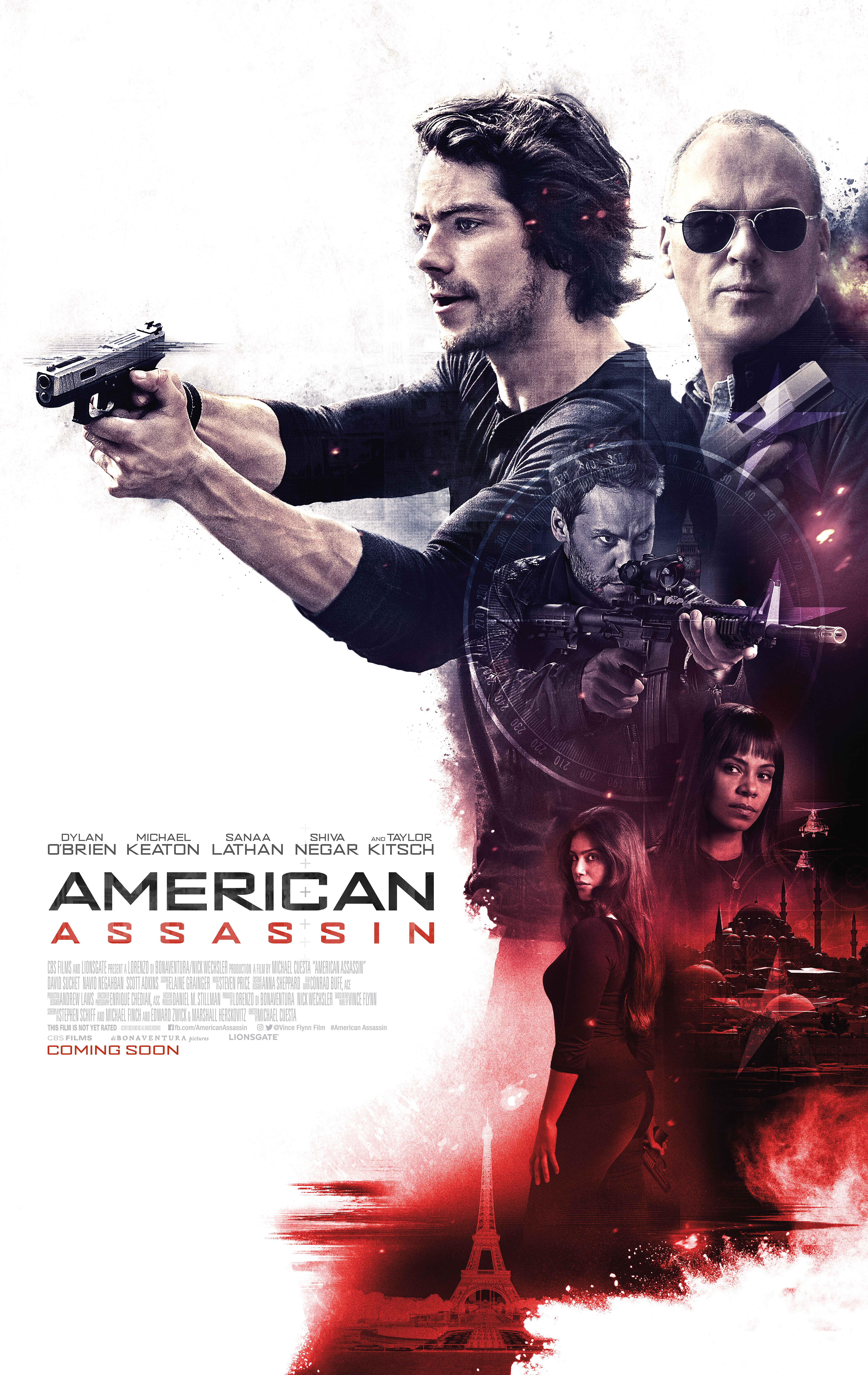
D: Michael Cuesta / 112m

Cast: Dylan O’Brien, Michael Keaton, Sanaa Lathan, Shiva Negar, Taylor Kitsch, David Suchet, Scott Adkins, Joseph Long, Mohammad Bakri, Navid Negahban, Khalid Laith, Vladimir Friedman, Charlotte Vega

It doesn’t take long – or much – to work out that American Assassin wants to be the first in a new spy/action series. After all, it’s an origin story, and the main character, Mitch Rapp (O’Brien), is in his early twenties at this point, so the potential is there for several more movies to be adapted from the novels by Vince Flynn, and made into the kind of slick, glossily produced, but largely pedestrian movie that’s been put together here. Depending on your patience or your level of appreciation for Rapp and his personal mission to rid the world of terrorists – particuarly Muslim ones – this will either have you urging him on, or wondering what makes him so special. However, what is certain, is that Mitch’s origin story leaves a lot to be desired.

What sets Mitch off on his pesonal mission happens on a beach in Ibiza. Having just proposed to his girlfriend, Katrina (Vega), Mitch is getting them drinks to celebrate when, from out of nowhere and with no warning at all, the beach is overrun by terrorists who start shooting randomly at everyone, including Mitch himself, who gets wounded, and (of course) Katrina, who is killed right in front of him. Fast forward eighteen months, and Mitch is now on the trail of the terrorist responsible for the beach attack. He’s managed to persuade said terrorist that they share the same aims and gotten himself a personal invitation to meet up in person. But just as he’s face to face with his arch-nemesis, a team of US Special Forces ops take out the terrorist and his men, and leave taking Mitch with them. He’s taken to a CIA safe house where he spends thirty days being debriefed, and impressing CIA Deputy Director Irene Kennedy (Lathan). She wants him for a black ops team called Orion, because “he tests off the chart” for what they need.

Without wishing to use this site’s favourite I-word, what follows could be predicted by just about anyone, even someone who’s never seen this kind of movie before (or any kind of revenge flick). Mitch is revealed to have authority issues, and he clashes with his trainer/handler Stan Hurley (Keaton), while also getting on the nerves of the rest of his team, and in particular, those of Victor (Adkins), his main rival for the position of Alpha Male. But Irene keeps on vouching for him, even when Mitch makes it clear he’s not a team player, and even when Stan correctly deduces that he’s driven by revenge and not by any patriotic duty (which is apparently preferable, as revenge is regarded as something that gets in the way of being a fully competent operative). Sent on the trail of some missing weapons grade plutonium that may or may not be about to fall into the hands of a trio of Iranian hardliners, Mitch disobeys orders on a mission in Istanbul, but is fortunate enough to retrieve vital information in the process.

This sets the pattern for the rest of the movie, as Stan tries to focus Mitch’s energies in the right direction, while Mitch continues acting impulsively and without the slightest idea of what he’s going to do next until he makes it up on the spot. He’s kind of an anti-hero, using the resources of the CIA to wage his own war on terror, while being told that his approach and attitude isn’t the best. This leads to a fair bit of confusion on the script’s part, as Irene and Stan (mostly Stan) keep telling him that his motives are wrong. But without them, Mitch wouldn’t have the skill set that he has, and he wouldn’t “test off the chart”. Apparently, he’s a natural, the kind of operative that the CIA prays comes along every so often, but at the same time they want to reign him in and make him fit their approach and attitude. And they wonder why it doesn’t work…
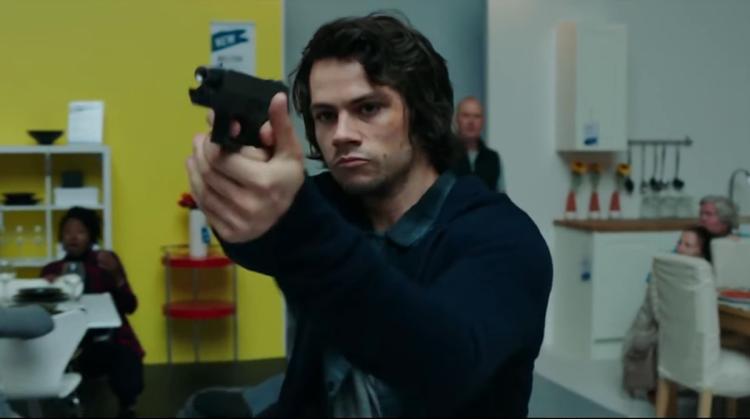
In the end, the movie can’t help but try and have its cake and eat it, as Mitch swings into action single-handedly at every turn, ignoring Stan’s orders and advice, and getting by on sheer exuberance and luck. O’Brien gives an intense performance as Mitch, but aside from a growing respect for Stan that fits the standard template for this kind of movie, there’s no character arc as such because he goes from delighted fiancé to revenge-fuelled assassin in the space of those eighteen months we never get to see. What we’re left with is a dour, singularly remote character that the viewer can’t connect with, and whose only emotional trait is anger. Other than that, Mitch is pretty much a stiff with a variety of weapons. As his mentor, Keaton continues a run of performances that prove he’s an actor who can make more out of a character than is on the page, and whose work ethic is almost second to none. Whenever he’s on screen, the movie picks up, and his energy helps carry the movie forward when at times it’s in danger of stalling.

Elsewhere, Lathan’s CIA Deputy Director remains a bland interpretation of an even blander role, while Negar grabs some of the limelight as an Iranian agent who’s part of the team when they get to Rome. The main villain is a renegade Orion operative called Ghost (Kitsch) who has his own revenge issues, but like a lot of self-absorbed bad guys he’s prone to too much monologuing and being lenient when it’s absolutely not in his best interest. The script’s nuclear bomb McGuffin feels old hat, and it all leads to an unfortunate bout of ruinous CGI involving the US Navy’s Sixth Fleet that requires such a major suspension of disbelief that only unintentional laughter can be regarded as the correct response to it. Trying to keep all this feeling fresh and exciting, but being undermined by the tired scenarios on display, Cuesta – whose pedigree includes stints on TV’s Six Feet Under, Dexter and Homeland – does what he can, and there are flashes of what he could have achieved, but they’re not enough to lift the material out of its self-imposed doldrums. By the end of the movie, you’ll either be optimistically looking forward to another outing for Mitch and his authority issues, or you might be agreeing with Tina Turner and saying, “We don’t need another hero”.

Rating: 5/10 – a broad spectrum action thriller that’s at least professionally made, American Assassin is the result of the work of four screenwriters (including Edward Zwick when he was attached to direct as well) who, between them, couldn’t make the material memorable enough; formulaic and predictable at every turn, it’s not a bad movie per se, just one that doesn’t have the necessary impact to help it rise above the bar set by the likes of James Bond or Jason Bourne.

Share this:

  • Click to share on X (Opens in new window) X
  • Click to share on Facebook (Opens in new window) Facebook
  • More
  • Click to print (Opens in new window) Print
  • Click to email a link to a friend (Opens in new window) Email
Like Loading...

Kingsman: The Golden Circle (2017)

20 Wednesday Sep 2017

Posted by dullwood68 in Movies

≈ 1 Comment

Tags

Action, Comedy, Drama, Drugs, Galahad, Halle Berry, Julianne Moore, Kingsman, Mark Strong, Matthew Vaughn, Merlin, Pedro Pascal, Poppyland, Review, Sequel, Statesman, Taron Egerton

D: Matthew Vaughn / 141m

Cast: Colin Firth, Julianne Moore, Taron Egerton, Mark Strong, Halle Berry, Pedro Pascal, Edward Holcroft, Hanna Alström, Bruce Greenwood, Emily Watson, Elton John, Channing Tatum, Jeff Bridges, Poppy Delevingne, Sophie Cookson, Michael Gambon

When Kingsman: The Secret Service hit our screens back in 2014, its anarchic sense of fun and willingness to push the boundaries of good taste (exploding heads, anyone?) made it stand out from the crowd, and introduced us to Colin Firth the action hero. It was smart, it was savvy, it was funny, and its action sequences, especially that astounding sequence set in a Kentucky church, showed that well choreographed fight scenes could still impress and leave jaws dropped everywhere. A sequel may have been in some initial doubt – writer/director Vaughn wasn’t sure the first movie would be successful enough to warrant a second outing – but now it’s here, and it’s a very mixed bag indeed.

As a sequel, Kingsman: The Golden Circle adheres to the formula for a follow-up to an unexpectedly successful movie in that it goes bigger, brings back its original stars and gives them less to do, references its predecessor in some ways that are good and some ways that aren’t, introduces a group of new characters that the audience aren’t allowed to connect with, and extends the running time unnecessarily. It’s as if Vaughn and returning co-screenwriter Jane Goldman have heard the phrase, “Give ’em what they want, and then give ’em more” and taken it to heart. But there are too many elements that clash with each other, and the movie never maintains a consistent tone. Also, that anarchic sense of fun that the first movie carried off so well, here feels awkward and somewhat laboured, and we have yet another villain with a goofy personality who’s just plain misunderstood (Moore’s over-achieving cartel boss wants to be recognised for her “business acumen”).
Of course, any sequel that seeks to revive a character who appeared to be killed in the first movie, has to tread carefully in how it brings them back; this may be a world far removed from our own reality, but even in fantasy land, death means dead and gone. Vaughn and Goldman have come up with an ingenious idea that makes sense within the confines of the world that Kingsman operates within, but the fact that in terms of the plot a year has passed and Harry (Firth) is still suffering from amnesia and the Kingsmen haven’t been told he’s alive, is just one of the larger plot holes that pepper the script and make you think that while Vaughn has been reported as saying that “writing this was the hardest thing I’ve ever done”, it soon becomes obvious that he needed to try a bit harder. Perhaps the biggest question that goes unanswered, is why villain of the piece Poppy Adams (Moore) takes out the Kingsmen in the first place. Without even a throwaway line to clear up the matter, viewers could be forgiven for thinking that it was important to the plot, and it is, but only as a way of introducing their American cousins, the Statesmen.
Cue a lot of cool new gadgets, the presence of franchise newbies Tatum, Berry, Pascal, and Bridges (seemingly the only people who work for Statesman – until the end, that is), a side trip to the Glastonbury Music Festival that actually includes a scene where Eggsy (Egerton) asks his girlfriend, Tilde (Alström), if she’s okay with him having sex with another woman (Delevingne), the sorry spectacle of Elton John having been persuaded to send up his image from the Seventies and encased in ever more ridiculous stage outfits (he’s been kidnapped by Poppy – of course), a physics defying stunt involving a cable car that at least has the benefit of a terrific one-liner as its pay-off, Harry being cured of his retrograde amnesia but still seeing butterflies (don’t ask), Poppy’s robot attack dogs Bennie and Jet (geddit?), and several plot threads that are left dangling like so much silly string.

There’s more, a lot more, but if there’s one area where the movie lets itself, and the audience, down, it’s with a disastrous sub-plot involving the US President (Greenwood) and his so-called “war on drugs”. Poppy’s plan is to infect the millions of addicts who use her drugs with a deadly chemical that will kill them. Unless the President agrees to her demand to make all drugs legal, then she’ll withhold the antidote. Publicly, the President appears to agree to her terms, but privately he has no intention of saving anyone, reasoning that if all the drug addicts in the world are dead, then illegal drugs will become a thing of the past because there’ll be no one around to take them. There is a twisted sense of logic there – barely – and it could have been made to sound semi-plausible, but the President’s flippant, couldn’t-care-less attitude seems more of a rebuke to the current real-life incumbent than any properly considered character design. And leading on from the President’s decision, the movie opts to provide audiences with the unsettling and seriously off-kilter sight of thousands of victims of Poppy’s plan being herded into cages and stacked on top of each other within the confines of a US football stadium (is there a message here?).

This time around the comedy is muted in favour of a more serious approach, but it’s as haphazardly sewn into the fabric of the movie as everything else. The action sequences, particularly an opening display of vehicular mayhem on the streets of London, and the final showdown at Poppyland, have been shot and edited with a view to making the fight choreography flow as quickly as possible within the frame, but as a result, details are lost and much of what can be seen seems to involve as much posing as it does fighting. Against all this, the performances are adequate, though Strong and Berry are on better form than the rest, while there are odd instances – a bar fight that echoes the original’s pub brawl, but with Harry coming off worst; Merlin singing Take Me Home, Country Roads by John Denver at a crucial moment – where the viewer can see glimpses of what might have been, but overall there aren’t enough to warrant a better appreciation of a movie that’s slackly directed, confuses sentiment for depth in its treatment of the relationship between Harry and Eggsy, and which doesn’t try hard enough to match the style and energy of its predecessor.

Rating: 5/10 – with the prospect of a third movie just over the horizon, Kingsman: The Golden Circle is the point where the service should hang up its tailoring shingle and head off into early retirement; a disappointing sequel that shows a flare for inconsistency throughout, it offers shallow pleasures for those who want that sort of thing, but will prove a more difficult experience for those expecting a repeat of the giddy heights of the first movie.

Share this:

  • Click to share on X (Opens in new window) X
  • Click to share on Facebook (Opens in new window) Facebook
  • More
  • Click to print (Opens in new window) Print
  • Click to email a link to a friend (Opens in new window) Email
Like Loading...

Monthly Roundup – August 2017

31 Thursday Aug 2017

Posted by dullwood68 in Movies

≈ Leave a comment

Tags

Action, Argentina, Bad Santa 2, Baires, Bela Lugosi, Benjamín Vicuña, Billy Bob Thornton, Charlie Chan, Comedy, Daniel de la Vega, Darth Vader, David Prowse, Disappearance, Documentary, Drugs, Germán Palacios, Hamilton MacFadden, Honolulu, Horror, I Am Your Father, Jean-Pierre Melville, Julieta Cardinali, Kathy Bates, Marcelo Páez Cubells, Marcos Cabotá, Mark Waters, Mexico, Mystery, New York, Pierre Grasset, Reviews, Roland Winters, Sally Eilers, Sequel, The Black Camel, The Feathered Serpent, The Green Cross Code Man, Thriller, Toni Basterd, Tony Cox, Two Men in Manhattan, White Coffin, William Beaudine

The Feathered Serpent (1948) / D: William Beaudine / 61m

Cast: Roland Winters, Keye Luke, Mantan Moreland, Victor Sen Yung, Carol Forman, Robert Livingston, Nils Asther, Beverly Jons, Martin Garralaga

Rating: 4/10 – while on vacation in Mexico, Charlie Chan finds himself drawn into a mystery involving murder and the search for an ancient Aztec temple; the penultimate Charlie Chan movie, The Feathered Serpent is as disappointing as the rest of the entries made by Monogram, but does at least see the return of Luke as Number One Son after eleven years, though even this can’t mitigate for the tired, recycled script (originally a Three Mesquiteers outing), and performances that aim for perfunctory – and almost achieve it.

The Black Camel (1931) / D: Hamilton MacFadden / 71m

Cast: Warner Oland, Sally Eilers, Bela Lugosi, Dorothy Revier, Victor Varconi, Murray Kinnell, William Post Jr, Robert Young, Violet Dunn, Otto Yamaoka, Dwight Frye

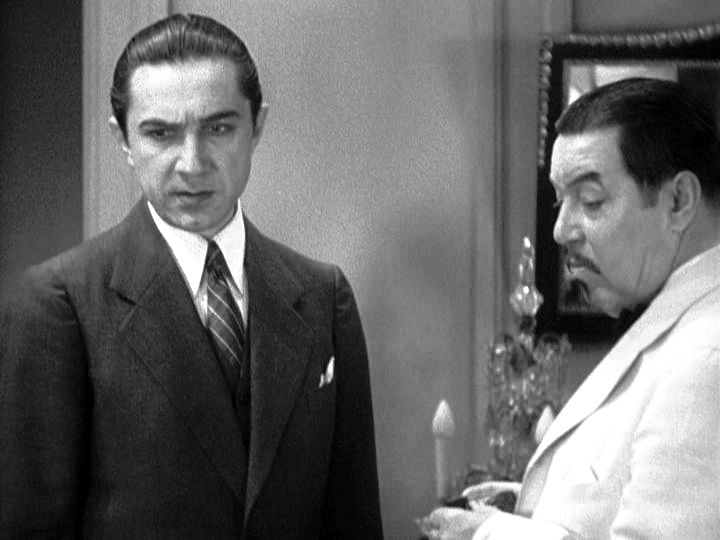
Rating: 6/10 – Charlie Chan investigates when an actress is found murdered, and discovers that her death relates to another murder that occurred three years previously; the second Charlie Chan movie proper, The Black Camel keeps the Oriental detective in Honolulu (where creator Earl Derr Biggers based him), and at the forefront of a murder mystery that has more twists and turns and suspects than usual, and which proves an enjoyable outing thanks to good supporting turns by Kinnell and Young (making his debut and irrepressible as ever), and a more relaxed performance by Lugosi than most people will be used to.

I Am Your Father (2015) / D: Toni Basterd, Marcos Cabotá / 82m

Narrator: Colm Meaney

With: David Prowse, Marcos Cabotá, Gary Kurtz, Robert Watts, Marcus Hearn, Jonathan Rigby, Robert Prowse, James Prowse

Rating: 7/10 – Spanish movie maker Marcos Cabotá hits on an idea to tell the story of the man behind the mask of Darth Vader, and to restage Vader’s death scene with Prowse finally acting the part as he’s always felt he should have done; a likeable documentary, I Am Your Father is a tribute to Prowse’s continued commitment to the role of Darth Vader, and along the way paints Lucasfilm in a very poor light for mistreating him during shooting of Episodes V and VI, and blackballing Prowse since 1983 (over his “revealing” Vader’s death in Return of the Jedi), but the movie is let down by a haphazard structure, and not being able to show the re-shot scene (no doubt thanks to Lucasfilm).

White Coffin (2016) / D: Daniel de la Vega / 71m

Original title: Ataúd Blanco: El Juego Diabólico

Cast: Julieta Cardinali, Eleonora Wexler, Rafael Ferro, Damián Dreizik, Fiorela Duranda, Verónica Intile

Rating: 5/10 – when a young girl (Duranda) is kidnapped by a mysterious cult, her mother (Cardinali) discovers that not even death is an obstacle to getting her back; five features in and Argentinian horror maestro de la Vega still can’t assemble a coherent script to accompany his homages to Seventies Euro horror, making White Coffin a frustrating viewing experience that offers too many moments of unrealised potential, and leaves its cast adrift in terms of meaningful or sympathetic characterisations.

Bad Santa 2 (2016) / D: Mark Waters / 92m

Cast: Billy Bob Thornton, Kathy Bates, Tony Cox, Christina Hendricks, Brett Kelly, Ryan Hansen, Jenny Zigrino, Jeff Skowron, Mike Starr, Octavia Spencer

Rating: 6/10 – against his better judgment, alcoholic ex-criminal Willie (Thornton) teams up with his old friend Marcus (Cox) to steal two million dollars from a charity at Xmas time, which means donning a Santa suit once more; more defiantly scurrilous and offensive than the original, Bad Santa 2 benefits from Thornton’s ambivalent attitude as Willie, a plethora of cruel yet hilarious one-liners, and a great turn by Bates as Willie’s mother, but it also fails to pull together a decent plot, contains too many scenes that fall flat, and can’t quite replicate the energy of its predecessor.

Baires (2015) / D: Marcelo Páez Cubells / 82m

Cast: Germán Palacios, Benjamín Vicuña, Sabrina Garciarena, Juana Viale, Carlos Belloso

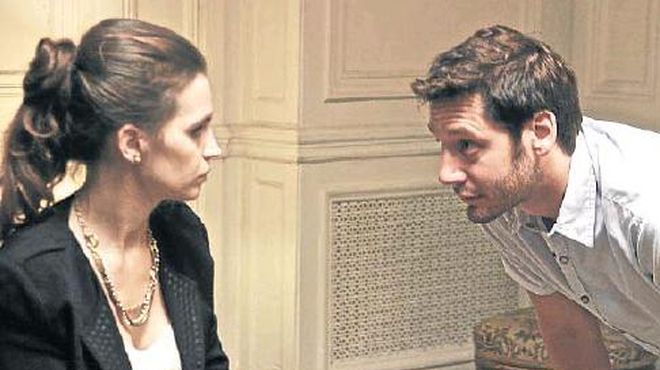
Rating: 4/10 – gullible Spanish tourist Mateo (Vicuña) parties with the wrong crowd in Buenos Aires and finds his girlfriend, Trini (Garciarena), threatened with a sticky end unless he transports drugs back to Spain; a thick-ear thriller Argentinian-style, Baires is mercifully short but dreary in its set up and cumbersome in its “thump a villain every five minutes” approach to tracking down the chief villain(s), all of which leaves little room for sympathetic characters, a credible narrative, or anything more than flat-pack direction from Cubells.

Two Men in Manhattan (1959) / D: Jean-Pierre Melville / 84m

Original title: Deux hommes dans Manhattan

Cast: Pierre Grasset, Jean-Pierre Melville, Christiane Eudes, Ginger Hall, Glenda Leigh, Colette Fleury, Monique Hennessy, Jean Darcante, Jerry Mengo, Jean Lara

Rating: 6/10 – when the French UN delegate disappears in New York, the job of tracking him down is given to a reporter (Melville), and a photographer (Grasset) who has his own agenda; practically dismissed by French critics on its first release, Melville’s ode to New York and film noir, Two Men in Manhattan is a nimble yet forgettable movie that prompted the writer/director to move away from the Nouvelle Vague movement he’d helped to create, leaving this as an enjoyable if predictable drama that could have done without Melville’s awkward presence in front of the cameras.

Share this:

  • Click to share on X (Opens in new window) X
  • Click to share on Facebook (Opens in new window) Facebook
  • More
  • Click to print (Opens in new window) Print
  • Click to email a link to a friend (Opens in new window) Email
Like Loading...

The Hitman’s Bodyguard (2017)

29 Tuesday Aug 2017

Posted by dullwood68 in Movies

≈ 2 Comments

Tags

Action, Amsterdam, Belarus, Comedy, Drama, Gary Oldman, Patrick Hughes, Review, Ryan Reynolds, Salma Hayek, Samuel L. Jackson, The Hague, Thriller

D: Patrick Hughes / 118m

Cast: Ryan Reynolds, Samuel L. Jackson, Gary Oldman, Salma Hayek, Elodie Yung, Joachim de Almeida, Tine Joustra, Sam Hazeldine, Richard E. Grant

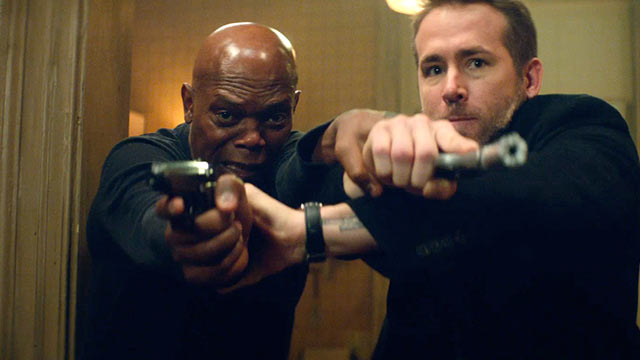
There are several moments during The Hitman’s Bodyguard, Hollywood’s latest attempt at the mismatched buddy genre of action thrillers, when the movie’s humour seems to come on a little too strong, as if it’s fighting its way into the script and looking to be front and centre. More often than not it’s a moment of physical comedy, such as the extended scene where Ryan Reynolds’ triple-A rated protection agent, Michael Bryce, is sitting at an outdoor Amsterdam café complaining about the behaviour of Samuel L. Jackson’s veteran assassin, Darius Kincaid. While he vents, chaos erupts all around him, as everyone in the vicinity ducks for cover, and bullets fly indiscriminately. The barman cowers, Bryce keeps on complaining, and eventually a car plows through the tables behind him. On the surface, it’s a funny scene, with Reynolds’ deadpan expression the counterpoint for all the mayhem going on behind him. But watch it a second time and the humour isn’t there anymore. Now it’s a technically clever scene that relies entirely on Reynolds’ performance. Watch it a third time, and it’s a scene to be endured. Should a scene like that provoke such a response so quickly? If it’s really that funny, then the answer is No.

For much of the rest of the movie, the script’s attempts at levity only serve to highlight just how uneven the material truly is. The humour is largely forced, the action is perfunctory (a chase along the canals in Amsterdam should see Kincaid’s commandeered boat reduced to splinters, or the involvement of at least one Dutch police car), and the basic plot is ludicrous before it’s even begun: Gary Oldman’s brutal Belarussian dictator, Dukhovich, on trial at the Hague for being a brutal Belarussian dictator, can only be brought to justice by the testimony of Jackson’s veteran assassin. Cue a race against time from Manchester, England to said trial, with the usual hundreds of disposable bad guys trying to stop Bryce and Kincaid from getting there. Along the way, Bryce’s back story takes up more and more time but never becomes interesting enough to warrant it (he’s still sulking over the death of a client under his protection, though technically the circumstances mean It doesn’t count), while Kincaid is ratting on Dukhovich as a way of getting his wife, Sonia (Hayek), out of jail (yes, folks, he’s doing it for love, the old softie).

It all plays out predictably enough, with supporting characters straight out of Stock City, including Yung’s Interpol agent, Amelia Roussel, who just happens to be Bryce’s ex-girlfriend, and de Almeida’s shifty Interpol boss who may well be in cahoots with Dukhovich (what are the odds?). No matter how much Tom O’Connor’s script tries to instil proceedings with freshness and vitality, the banal nature of the material as a whole brings those attempts crashing down like Redwoods. In the director’s chair, Hughes, who made more out of The Expendables 3 (2014) than was required, has no option but to go with the flow and let his stars do the heavy lifting. As long as he can get them from A to B, Hughes’s work is done, and often before the end of a scene. Others, but particularly those that feature Hayek’s apoplectic performance as Sonia, don’t appear to have had Hughes’ involvement at all. (Sonia looks and sounds like a character brought in from another movie altogether.) By the time we reach the end and justice is done, it’s become possibly the most generic action movie of the year.
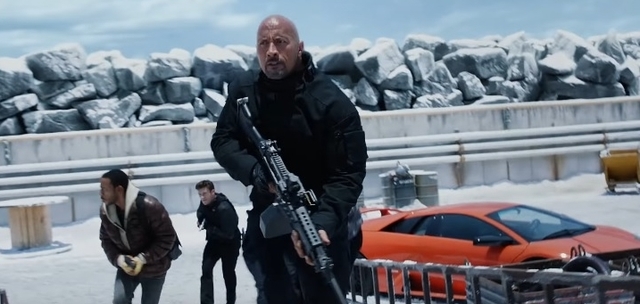
But what of the chemistry between Reynolds and Jackson? Surely that’s in the movie’s favour? Well, strangely enough, the pair work better when they’re apart. Reynolds’ lovelorn, soppy-headed protection agent is like a man-child dropped into a war zone, while Jackson – well, Jackson trots out the same hard-headed “motherfucker”-spouting character he’s been portraying ever since the word was invented. Cue angry stare, mad-as-hell stare, glary stare, and angry mad-as-hell glary stare, all of them trotted out at regular points in the movie, and almost as if they qualify as their own action beats. Jackson is seriously wasted here, and not in a good, been-to-Amsterdam-for-some-of-them-chocolate-brownies kind of way either. When they’re together, Reynolds and Jackson spar like an old married couple, an old tired married couple who can no longer stand each other. Oldman grabs his pay cheque with both hands and hams it up accordingly, while the rest of the cast do their best to get through all the absurdity and nonsense with their dignity intact.

All of this indolence and protracted inertia – Bryce and Kincaid have twenty-four hours to get to the Hague but it feels like they’re taking twice as long – allied to the kind of comedy that comes pre-marked as “strained” is all the more dispiriting when you realise that O’Connor’s script was another Black List screenplay, this time from 2011. But back then it didn’t have any comedy. Instead it was a straight drama. But a few weeks before filming began, a two-week rewrite meant less drama and more comedy. And now we have the end result: a poorly assembled collection of scenes that hint constantly at what might have been. Maybe one day the movie will be remade with its original format, but until then this is all we have. It’s just that overall, it’s not enough.
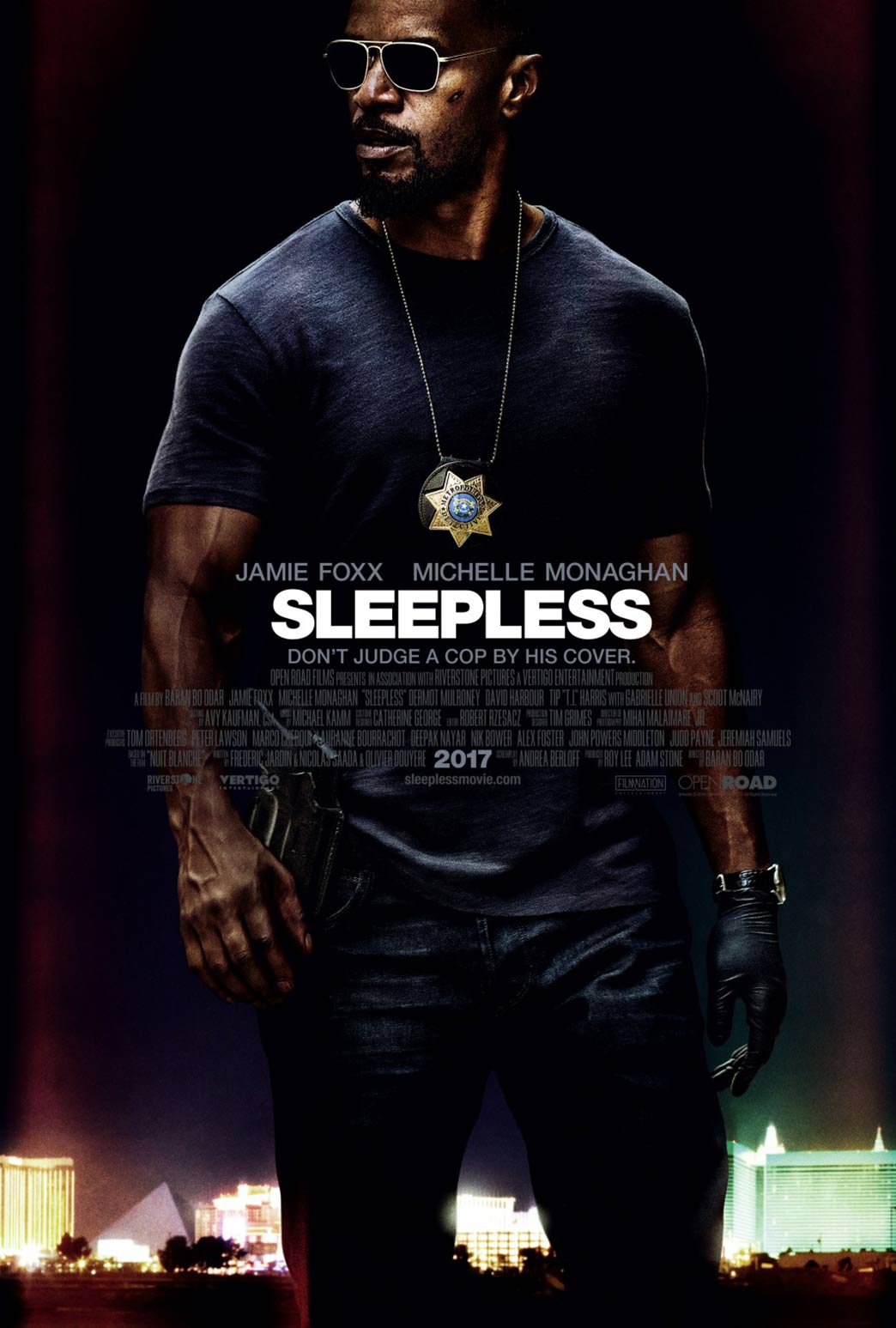
Rating: 4/10 – an idea that probably looked great on paper – Reynolds! Jackson! Comedy! Action! – The Hitman’s Bodyguard translates into something that never takes full advantage of its basic premise, and chugs along quite amiably without ever doing anything to reward the viewer for their patience; with a cast that should have known better, it’s a movie that quickly fades from the memory soon after it’s watched – so it gets something right at least.

Share this:

  • Click to share on X (Opens in new window) X
  • Click to share on Facebook (Opens in new window) Facebook
  • More
  • Click to print (Opens in new window) Print
  • Click to email a link to a friend (Opens in new window) Email
Like Loading...

Overdrive (2017)

15 Tuesday Aug 2017

Posted by dullwood68 in Movies

≈ Leave a comment

Tags

Action, Ana de Armas, Antonio Negret, Car thieves, Freddie Thorp, French Riviera, Gaia Weiss, Review, Scott Eastwood, Thriller

D: Antonio Negret / 93m

Cast: Scott Eastwood, Freddie Thorp, Ana de Armas, Gaia Weiss, Simon Abkarian, Clemens Schick, Abraham Belaga, Kaaris

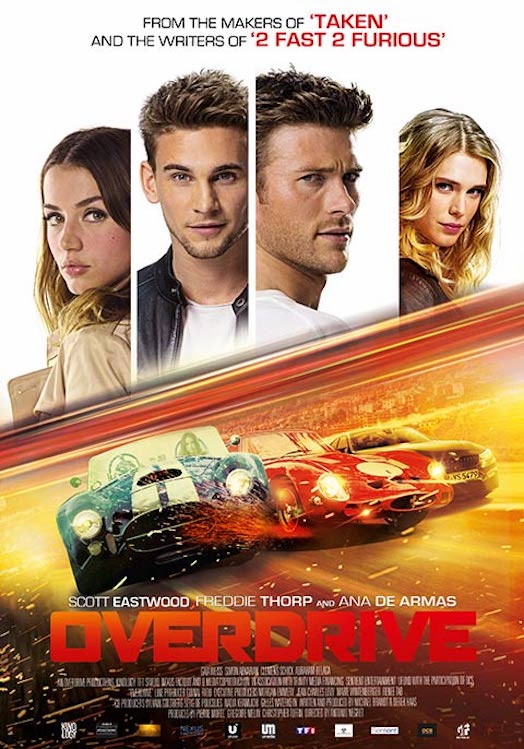
Every now and then – in the UK at least – a movie appears in cinemas that doesn’t seem to belong there. It will have the look and feel of a movie that should have gone direct to video, and it will have a number of second- or third-tier stars heading up the cast. It will be a generic, virtually simplistic genre piece whether it’s a horror movie, an action movie, or a comedy. And it will not attract glowing reviews or prove to be a box office success. In short, it will be the movie you go and see when you get to the cinema and the movie you really want to see has either already started, or sold out. Welcome to the world of the B-movie, the A-movie’s little brother (or second cousin if you want to be a little more dismissive). And on this occasion, welcome to the French Riviera, and a movie called Overdrive, a semi-glamorous action thriller with moments of humour that are often unintentional.

It’s a movie that borrows liberally and without embarrassment from a variety of other action movies, but in the main, viewers will spot references to the Transporter movies (which share this movie’s location), and The Fast and the Furious franchise. Is it as good as those other movies that it appropriates its DNA from? Well, that depends on the entry. Suffice it to say, it never looks in danger of overtaking even the worst of those movies (they know who they are), or giving audiences enough invention or “wow” moments to make it stand out from the crowd. A French/US co-production, the movie coasts along on a small wave of goodwill, and tells its simple tale in as convoluted a fashion as possible. One of the few things that is actually impressive about the movie? That it contains so many red herrings, false trails, and confusing twists and turns, and doesn’t trip itself up all of the time trying to keep them all up in the air.

It involves two half-brothers, Andrew and Garrett Foster (Eastwood, Thorp), who have travelled to the South of France in an effort to steal expensive, one of a kind cars and sell them on to big money collectors. They steal one such car, a 1937 Bugatti, only to learn that it’s owned by criminal bigwig Jacomo Morier (Abkarian). Facing certain death, the brothers manage to persuade Morier to make it up to him by their stealing another car, a 1962 Ferrari 250 GTO, from a “business” rival of Morier’s called Otto Klemp (Schick). Morier gives them a week to get him the car, a timescale that requires them to hire a crew of like-minded car thieves. Andrew’s girlfriend, Stephanie (de Armas), invites herself along for the ride, and just to ensure that Garrett isn’t left out, enlists the aid of her friend, Devin (Weiss), as well.

And so begins a less than complex game of bluff and double bluff that involves the step-brothers, their girlfriends, a group of anonymous drivers, two rival criminals and their gun-toting henchmen, a dozen or so classic cars, two Interpol agents on the Fosters’ trail, and Morier’s cousin, Laurent (Belaga), who may or may not be playing both sides (though it doesn’t really matter). It’s a standard heist movie, playing with misdirection as a recurring plot point, and making sure that everyone except Laurent looks well groomed and well dressed. In many ways, the look of the movie is its most important element, with Laurent Barès’ bright, sunshine-infused cinematography keeping things shiny and attractive, whether it’s the sheen glinting off the classic cars on display – they really are objects of mechanical beauty – or the sun-kissed hills and environs surrounding Marseille (where the movie takes place). Add a handful of car chases that zip and swing and gambol amid said surroundings and you have a pretty, if vacuous, movie that doesn’t have any huge ambitions, and just wants to be entertaining.

And despite all the silly plot twists and exaggerated storyline and depth-free characters and inane dialogue and desperate humour and join-the-dots direction, Overdrive is an enjoyable way to spend ninety-some minutes, partly because it really doesn’t try hard at all, and partly because it’s actually quite charming in a way that’s both undemanding and innocuous. This is the perfect movie to watch on a Saturday night with beer and pizza (if you’re a man), or Prosecco and pizza (if you’re a woman). It doesn’t require the viewer to think too much, it wears its heart on its sleeve in terms of the slightly underwhelming car chases (which are too concerned with ensuring no damage comes to the cars, especially the classic ones), and the soppy romantic interludes it foists on the characters and the audience at regular intervals. You could view it as a guilty pleasure, except that it’s not quite that bad. It’s not great, but it’s not entirely bad either.

As the step-brothers out of different mothers, Eastwood is the serious one looking to make a commitment to Stephanie and stop being a car thief, while Thorp is the happy-go-lucky thrill seeker who doesn’t need a plan (mostly). The pair have an easy-going chemistry that works well, which is more than can be said for their characters’ romantic entanglements. Eastwood and de Armas look like a couple who are still trying to work out if they like each other, while Thorp and Weiss behave like a couple who, weirdly, have never met. Abkarian and Schick are acceptable as rival villains, while Belaga is appropriately slimy as Laurent. Colombian-born Negret oversees things with the flair of someone who was included in a list of Latino Directors to Watch in 2007, and who has worked solidly in television ever since, while writers Michael Brandt and Derek Haas, who penned 2 Fast 2 Furious (2003), rehash old glories and invite viewers to play Spot the Homage nearly every eight-ten minutes. With the viewer distracted in such a way, it gives the movie a chance to make more of an impression than it has any right to.

Rating: 5/10 – already it seems we’re getting throwbacks to movies made in the late Nineties/early Noughties, and Overdrive is a prime example of a genre crying out for new ideas and then settling for the same old same old; breezy and forgettable, the movie roars through a series of minor skirmishes before settling into a predictable rhythm that culminates in a scene of vehicular slaughter that deserves a medal.

Share this:

  • Click to share on X (Opens in new window) X
  • Click to share on Facebook (Opens in new window) Facebook
  • More
  • Click to print (Opens in new window) Print
  • Click to email a link to a friend (Opens in new window) Email
Like Loading...

Valerian and the City of a Thousand Planets (2017)

08 Tuesday Aug 2017

Posted by dullwood68 in Movies

≈ 1 Comment

Tags

Action, Alpha, Cara Delevingne, Clive Owen, Dane DeHaan, Drama, Ethan Hawke, Fantasy, Luc Besson, Review, Rihanna, Sci-fi

D: Luc Besson / 137m

Cast: Dane DeHaan, Cara Delevingne, Clive Owen, Rihanna, Ethan Hawke, Herbie Hancock, Kris Wu, Sam Spruell, Alain Chabat, John Goodman, Elizabeth Debicki, Rutger Hauer

There’s a phrase, “Beware of Greeks bearing gifts”, that needs an update. It should now read, “Beware of French movie directors making vanity projects”. A project that’s been on his mind to make since The Fifth Element (1997), Luc Besson’s Valerian and the City of a Thousand Planets arrives trailing a cosmos-worth of hype and anticipation, but somehow manages to land with a massive, resounding thud. This is a movie that looks continuously busy, but at the same time it feels like it’s leaden and ponderous. It’s another loud barrage of a sci-fi movie driven by mounds of uninteresting exposition, and supported by empty visuals that look amazing but offer as much refreshment as an empty bottle of water. It’s a mess, and one that never lets up in its efforts to impress you with its meticulously detailed sets and costumes, and its tired characterisations. There’s a love story too, between two charismatic military operatives, Valerian (DeHaan) and Laureline (Delevingne), that offers occasional and all too brief periods of respite from the CGI onslaught, and which feels as organic as the pixelated backgrounds it plays in front of. And there’s a villain, one so obvious that they might as well stomp around yelling, “I’m the bad guy!” (in case the viewer isn’t sure).

There’s more, lots more, lots and lots and lots of it, with Besson aiming to include a veritable kitchen sink’s worth of alien species, high-tech weaponry, dazzling backdrops, vibrant colours, impressive make up designs, and specious action scenes. There’s a story in there too – somewhere – but it’s overwhelmed by the movie’s need to keep moving from one breakneck-paced scene to another. There are long stretches where the viewer might find themselves wondering if they’ve transitioned into watching the video game version of Valerian… and other stretches where they might also be wondering if Besson actually knows what’s supposed to happen next. Too often, things happen for no better reason than that Besson wants them to, and the pacing seems relentless, as the writer/director flings his lead characters into danger after danger, but without once actually putting them in danger.

The cast suffer almost as often and as much as the viewer. As the titular hero, DeHaan tackles the role with enthusiasm and a fair degree of commitment, but is hampered by Besson’s decision to make Valerian look and sound like a high school kid on his first day at an entry-level job. DeHaan is a talented actor but fantasy sci-fi is not his forte, and he rarely seems comfortable with all the running and leaping about and firing guns. Delevingne, meanwhile, appears to be far more in tune with Besson’s ambitions for the movie, and her knowing, unimpressed demeanour works well for the character, and acts as a subtle commentary on the movie as a whole. But too often, Laureline has to play second fiddle to Valerian, an unhappy circumstance that gives rise to the idea that in the 28th century, sexism still hasn’t been consigned to the dustbin of history.

There’s a great supporting cast, too, used to occasional good effect, but too often required to stand around waiting for the next clunking shift in the storyline to get them moving again. Owen’s character is an angry clown in a self-consciously big hat, Rihanna is a shapeshifting cabaret artist whose admittedly enjoyable stage routine still stops the movie dead in its tracks, Hawke (as Jolly the Pimp no less!) seems to be acting in another movie altogether, while Hauer gets off lightly with a Presidential address at the start of the movie that has all the hallmarks of being a favour to the director. Only Spruell as an harassed general seems to have grasped Besson’s intentions for his character, and as a result, his appearances are a godsend.

In case you’re wondering if there’s anything remotely good about Valerian and the City of a Thousand Planets, then rest assured there is, but unfortunately it’s all packed into the first fifteen to twenty minutes. Here we see the International Space Station grow in size as several countries from Earth send representatives in space vehicles that attach themselves to the station. As time goes by, alien life-forms also visit the station, and the same welcoming rituals are observed: a handshake, a bemused smile/grimace from the human in charge, and a succession of impressively realised aliens who seemed equally bemused by the idea of said handshake. As more and more ships arrive and attach themselves, the space station becomes – ta-da! – Alpha, the city of a thousand planets. It’s a terrific idea, well executed, and bodes well for the rest of the movie. Things look even better when the narrative shifts to the planet Mül, and we’re introduced to the race that live there, a peaceful, pearl-cultivating civilisation that becomes central to the plot later on (as expected), and which is apparently wiped out by events happening nearby in space. But with that prologue out of the way, we’re thrust thirty years on and forced to put up with the romantic aspirations of Valerian, and the machinations of a plot that serves as a second cousin retread of Besson’s earlier work on The Fifth Element (watch that movie now and you’ll see how inter-connected they are).

When a director announces that they’re finally going to make a long-cherished project, and one that they’ve delayed making due to the limitations of existing technology, it should be a cause for celebration. After all, it wouldn’t be wrong to believe that as they have such a passion for the project, that they’d make every effort to ensure the finished product was a vast cut above their other movies, the pinnacle of their career perhaps. But somewhere along the way, Besson has settled for making a movie that is plodding and uninspired. Scenes and characters come and go without making the slightest impact, and Besson makes the same basic error that so many other fantasy/sci-fi directors make: they mistake a distinct visual style for substance. This leaves Valerian… feeling like it’s only half the movie Besson envisaged, and with a generic genre score by the usually reliable Alexandre Desplat to add to the misery, this is a strong contender for Most Disappointing Movie of 2017.

Rating: 4/10 – technical wizardry aside, Valerian and the City of a Thousand Planets is an unabashed dud, content to make as little effort as possible, and trading on its writer/director’s past glories; with its €197 million budget making it the most expensive European and independent movie ever made, it’s a shame that all that money has been used to such undemanding and underwhelming effect.

Share this:

  • Click to share on X (Opens in new window) X
  • Click to share on Facebook (Opens in new window) Facebook
  • More
  • Click to print (Opens in new window) Print
  • Click to email a link to a friend (Opens in new window) Email
Like Loading...

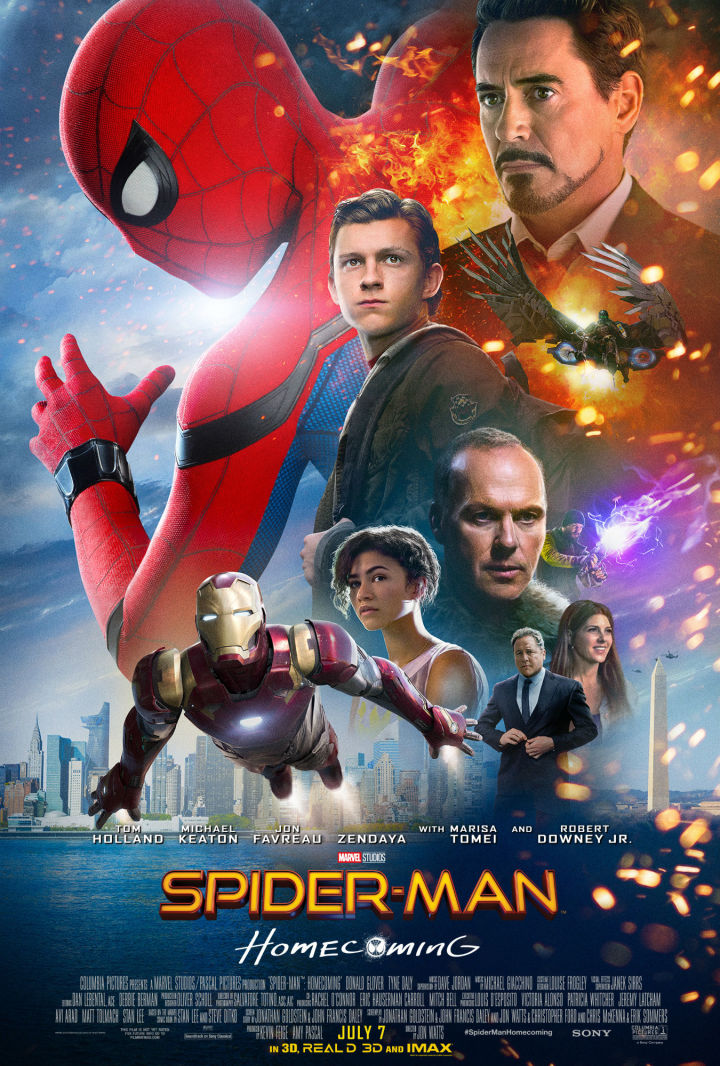
Spider-Man: Homecoming (2017)

07 Monday Aug 2017

Posted by dullwood68 in Movies

≈ 2 Comments

Tags

Action, Drama, High School, Iron Man, Jon Watts, Marvel Cinematic Universe, Michael Keaton, Review, Robert Downey Jr, Superhero, The Vulture, Thriller, Tom Holland

D: Jon Watts / 133m

Cast: Tom Holland, Michael Keaton, Robert Downey Jr, Marisa Tomei, Jon Favreau, Gwyneth Paltrow, Zendaya, Donald Glover, Jacob Batalon, Laura Harrier, Tony Revolori, Bokeem Woodbine, Michael Chernus, Logan Marshall-Green, Tyne Daly, Hannibal Buress, Jennifer Connelly

What must it have been like back at the tail end of 2014 and the start of 2015 if you were “in the know” at Sony Pictures and Marvel Studios, and were aware of what was about to happen to everyone’s favourite neighbourhood web-slinger? How exciting must that have been? If you were a fan of Spider-Man, just the anticipation that he might be coming to the Marvel Cinematic Universe was enough to send you into a giddy spell of mega proportions. And then to find out that not only was there going to be a new Spider-Man movie designed to bring him into the MCU, but that he was also going to make his first appearance in another movie within that Universe – well, it was like having Xmas every day (if you were a fan). And then to have that early appearance, in Captain America: Civil War (2016) no less, and for him to steal the movie – well, that was like having the best ice cream in the whole wide world, and with sprinkles on (but again, if you were a fan).

But what if you’re not a fan? What if the very idea of another Spider-Man reboot (the third in fifteen years) has all the attraction of a Liam Hemsworth movie? What if the idea of all that ice cream, with sprinkles on, holds no attraction at all? Well, if that’s the case then be assured: this is a Spider-Man movie that even non-fans can enjoy. And why? That’s the clever part. This is the first Spider-Man movie where the whole notion of “with great power comes great responsibility” is sidelined in favour of seeing Peter Parker struggle with the basics, and not some overwhelming sense of guilt over the death of his uncle, or his parents, or Mary Jane Watson (or even Norman Osborn). This is the first Spider-Man movie where the makers have done away with the more traditional origin story, and instead have got things started by accepting that we all know the story by now; so why bother? Why not just get on with it?

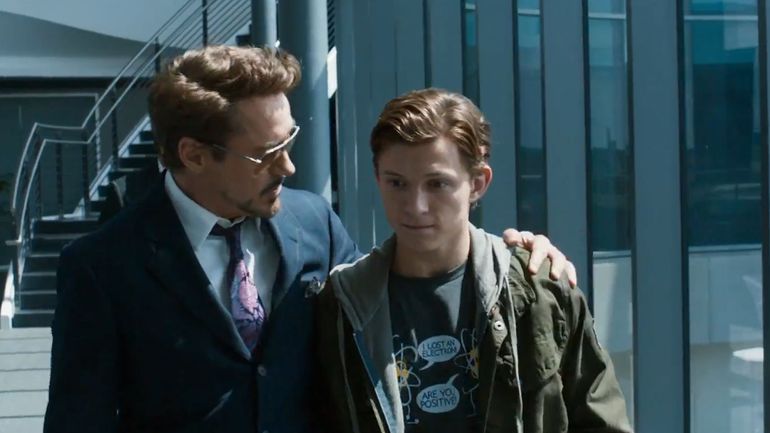
Which is exactly what happens, but cannily, not before a trip back to 2012 and the aftermath of the Battle of New York. There’s Chitauri technology all over the place, and salvage contractor Adrian Toombes (Keaton) has spotted a way of exploiting it in order to make a lot of money. But no sooner has he thought of it than he’s shut down by the US Department of Damage Control and forced to continue his plan to make weapons in secret. And before long, that plan is coming to fruition. Fast forward five years and high school student Peter Parker (Holland) still can’t believe he was involved in the airport scrap that took place in Berlin between Team Captain America and Team Iron Man. Still buzzing, Peter believes his involvement in that fight means he’s a member of the Avengers team, but Tony Stark (Downey Jr) has other ideas, and does his best to mentor Peter from a distance. But Peter is irrepressible (and naïve), and his determination to show Stark what he’s capable of inevitably backfires. When he inadvertently takes on some of the men that work for Toombes, it brings him to the attention of Toombes’ alter ego, The Vulture.

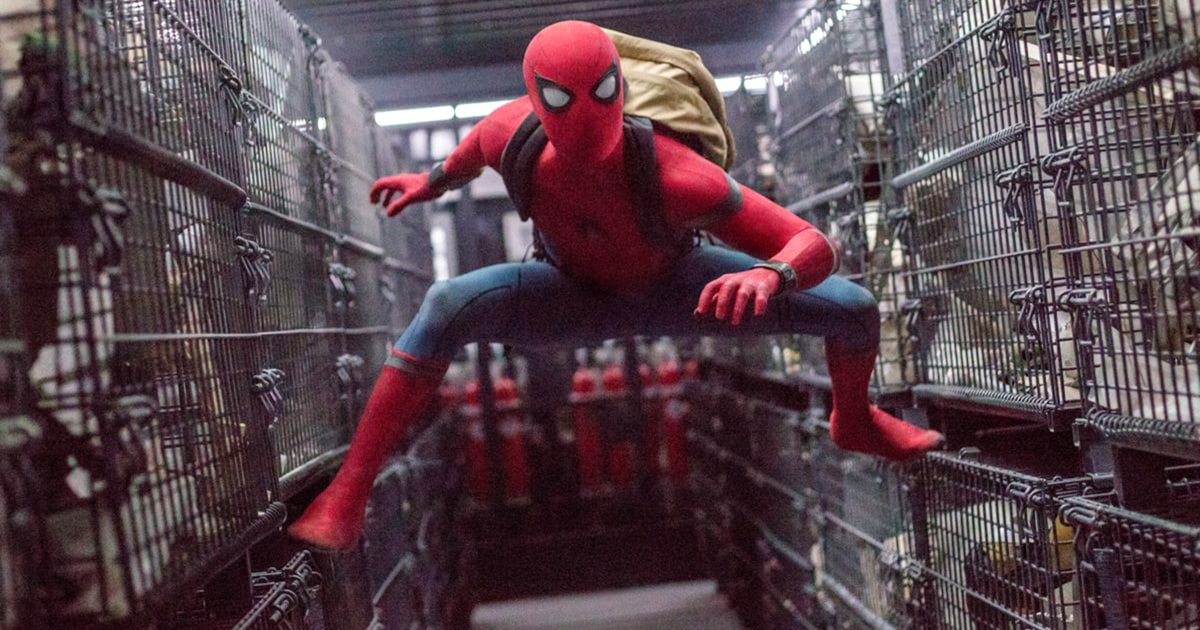
Peter decides it’s his mission to stop The Vulture from building and selling any more Chitauri-based weaponry, and one (future) classic scene where Peter and Toombes realise each other’s secret identities aside, the movie follows a predictable pattern before the inevitable superhero v supervillain showdown. But what makes the movie so charming and so enjoyable is both its backdrop and its setting: Peter’s first year in high school and all the trials and tribulations that follow in the wake of that teenage milestone. Already described as a superhero movie by way of John Hughes, Spider-Man’s first solo outing in the MCU paints a much more believable portrait of Peter Parker than we’ve seen in the previous five movies. By keeping Peter at the age he was when he developed his powers in the comics, Marvel have actually managed to breathe new life into the character and make him seem fresh and relevant, rather than  an angst-ridden science nerd with literally no friends. Here, Tom Holland’s incarnation is bright, overly enthusiastic, and immensely likeable (just like the movie). Holland perfectly captures the giddy sense of euphoria that comes from doing something so cool you want to shout from the rooftops about it – but know that you can’t. This is a Spider-Man who knows how to have fun (at last).

By focusing more on Peter’s attempts at fitting in, both in high school and in the wider world of superheroes, the script allows the audience to have a lot of fun at Peter’s expense. But then he is only fifteen, and he’s bound to make mistakes, whether from plain old exuberance or because he hasn’t built up his street smarts yet. Seeing him fail is more refreshing than expected, and a pivotal scene involving Stark and the loss of his Stark-created outfit highlights the true dilemma of being able to shoot webs and swing between tall buildings but not be able to talk to a girl. But again, it’s a happy dilemma because this is what the movie is all about: providing audiences with a surfeit of fun. Marvel know how to incorporate humour into their movies, but this may well be the first MCU movie that knows how to sustain that humour throughout, and round things off with the best end credits sting since Nick Fury first tried to recruit Tony Stark to some team he was trying to put together. This is a movie that is enjoyable and joyous at the same time, and proof that Marvel really do understand their characters better than anyone else (sorry Sony).

And for the first time since Loki we have a villain who has a credible motive for being the bad guy, and thanks to Keaton’s performance, he’s one we can have a degree of sympathy for. Toombes is about providing for and protecting his family, but though that’s an honourable sentiment, Keaton shows how that has become inexorably warped over the years, until his motives aren’t quite as clear-cut as when he began putting on the flying suit. Together, Holland and Keaton are terrific adversaries, and easily outshine the rest of the cast, who, to be fair, don’t stand out quite as well (though Batalon as Peter’s best friend, Ned, comes close). There’s the possibility of a romance for Peter with debate team captain, Liz (Harrier), that takes an unexpected turn, a series of action scenes that vary between broadly exciting and acceptable, competent direction from Watts that fares better away from said action scenes, a little too much moralising from Tony Stark, and a “get-to-know-your-suit” sequence which is possibly the movie’s true highlight. Smartly written – and by a team of six writers at that – this is the Spider-Man movie fans have been waiting for. Now, how about all you non-fans?

Rating: 8/10 – a giddy fun ride of a movie that can’t contain its own excitement about existing, Spider-Man: Homecoming adds another superhero to the MCU roster and does so with exuberance and no small amount of wit; you know Marvel have got a firm grip on things when the opening music cues reference the original Sixties animated series theme tune, and web-swinging in the suburbs brings its own measures of difficulty and danger.

Share this:

  • Click to share on X (Opens in new window) X
  • Click to share on Facebook (Opens in new window) Facebook
  • More
  • Click to print (Opens in new window) Print
  • Click to email a link to a friend (Opens in new window) Email
Like Loading...

Monthly Roundup – July 2017

01 Tuesday Aug 2017

Posted by dullwood68 in Movies

≈ 2 Comments

Tags

47 Meters Down, Action, Alain Desrochers, Animation, Antonio Banderas, Ben Kingsley, Brian Fee, Cars 3, Claire Holt, Comedy, Crime, Cristela Alonzo, Daniel Brühl, Danny Glover, Day of the Mummy, Drama, Girls Trip, Horror, Jessica Chastain, Johannes Roberts, Johnny Tabor, Lesley Selander, Malcolm D. Lee, Mandy Moore, Matthew Goode, Niki Caro, Owen Wilson, Peggie Castle, Phil Daniels, Queen Latifah, Quincannon Frontier Scout, Regina Hall, Reviews, Robbery, Ronnie Thompson, Security, Sharks, The Hatton Garden Job, The Zookeeper's Wife, Thriller, Tony Martin, True story, Warsaw Zoo, Western, William McNamara

The Hatton Garden Job (2017) / D: Ronnie Thompson / 93m

Cast: Matthew Goode, Phil Daniels, Larry Lamb, Clive Russell, David Calder, Joely Richardson, Stephen Moyer, Mark Harris, Jack Doolan

Rating: 6/10 – a group of aging ex-cons decide to rob an underground safe deposit facility in London’s Hatton Garden, but find that too many interested parties want in on the job, and the proceeds; based on the actual robbery that occurred in April 2015, The Hatton Garden Job is a light-hearted, and often lightweight version of actual events, but gets by thanks to some winning performances, a sense that it’s all too, too implausible, and a broad sense of humour that suits the material well enough despite its low budget origins.

The Zookeeper’s Wife (2017) / D: Niki Caro / 126m

Cast: Jessica Chastain, Johan Heldenbergh, Daniel Brühl, Michael McElhatton, Timothy Radford, Val Maloku, Efrat Dor, Iddo Goldberg, Shira Haas

Rating: 4/10 – at the outbreak of World War II, the Warsaw Zoo, run by Antonina and Jan Zabinski (Chastain, Heldenbergh), is commandeered by the Nazis, but it becomes a hiding place for Jews, and an even more dangerous place without its animals; a true story undone by telling it across the whole course of the war, The Zookeeper’s Wife is a turgid, painfully dull movie that is only sporadically interesting and which wastes the talents of its cast by making their characters’ plight seem like its been lifted from an unsuccessful soap opera.

Day of the Mummy (2014) / D: Johnny Tabor / 77m

Cast: Danny Glover, William McNamara, Andrea Monier, Eric Young, Philip Marlatt, Michael Cortez, Brandon deSpain

Rating: 4/10 – an archaeological trip into the Egyptian desert in search of a lost tomb sees its members at the mercy of a mummy, while they try and find a sacred stone said to be worth millions; a found-footage movie that like most doesn’t know how to make the most of the format, Day of the Mummy stretches its audience’s patience at every turn, and literally reduces Glover’s role to the bottom left hand corner of the screen, something that could be construed as “video-phoning” in his performance.

Security (2017) / D: Alain Desrochers / 92m

Cast: Antonio Banderas, Ben Kingsley, Liam McIntyre, Gabriella Wright, Chad Lindberg, Cung Le, Katharine de la Rocha, Jiro Wang

Rating: 5/10 – ex-Army veteran Eddie (Banderas) takes a night security job at a mall, and on his first night, finds himself fighting off a band of mercenaries hired to kill the teenage girl who’s taken refuge there; another Die Hard rip-off (when will they stop coming?), Security does have committed performances from Banderas and Kingsley as hero and villain respectively, but lacks sufficient invention to make this anything other than a pale echo of similar and better movies.

Quincannon, Frontier Scout (1956) / D: Lesley Selander / 84m

aka Frontier Scout

Cast: Tony Martin, Peggie Castle, John Bromfield, John Smith, Ron Randell, John Doucette, Morris Ankrum, Peter Mamakos, Edmund Hashim

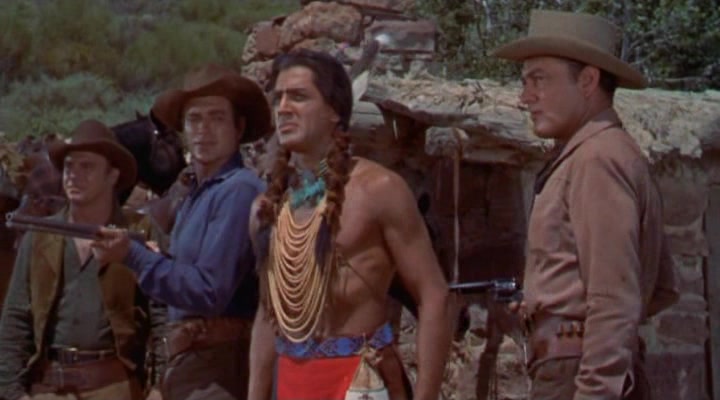
Rating: 6/10 – when the Army discovers someone is selling rifles to the Indians, it’s down to experienced scout Quincannon (Martin) to get to the bottom of it all; while there’s nothing new here, thanks to Selander’s astute direction, Quincannon, Frontier Scout zips along at a decent pace and delivers on its basic premise, but not even Selander can mitigate for a pretty awful performance from Martin, a singer who really should have ignored his agent on this one.

Cars 3 (2017) / D: Brian Fee / 102m

Cast: Owen Wilson, Cristela Alonzo, Chris Cooper, Nathan Fillion, Larry the Cable Guy, Armie Hammer, Ray Magliozzi, Tony Shalhoub, Bonnie Hunt

Rating: 6/10 – Lightning McQueen’s days on the race track are numbered, but only he doesn’t get it, until racing for a new team begins to show him that there’s more to life than being Number One; Pixar redeem themselves somewhat after the complete and utter disaster that was Cars 2, but this is still tepid stuff that struggles to make the impact it needs, leaving Cars 3 looking nostalgic for the first movie, and trading on that movie’s glories to make itself look good.

Girls Trip (2017) / D: Malcolm D. Lee / 122m

Cast: Regina Hall, Queen Latifah, Jada Pinkett Smith, Tiffany Haddish, Mike Colter, Kate Walsh, Larenz Tate, Deborah Ayorinde

Rating: 6/10 – self-help guru Ryan (Hall) decides it’s time that she and her three best friends (Latifah, Smith, Haddish) should reconnect while in New Orleans for the annual Essence Festival, but having a good time proves more difficult than she, or they, could have ever imagined; yet another female-centric variation of The Hangover, Girls Trip wants to be raunchy and out there (the urination scene), but ends up instead as a warm and fuzzy ode to sisterhood that conforms to expectations, but is rescued by the committed performances of the “girls” themselves.

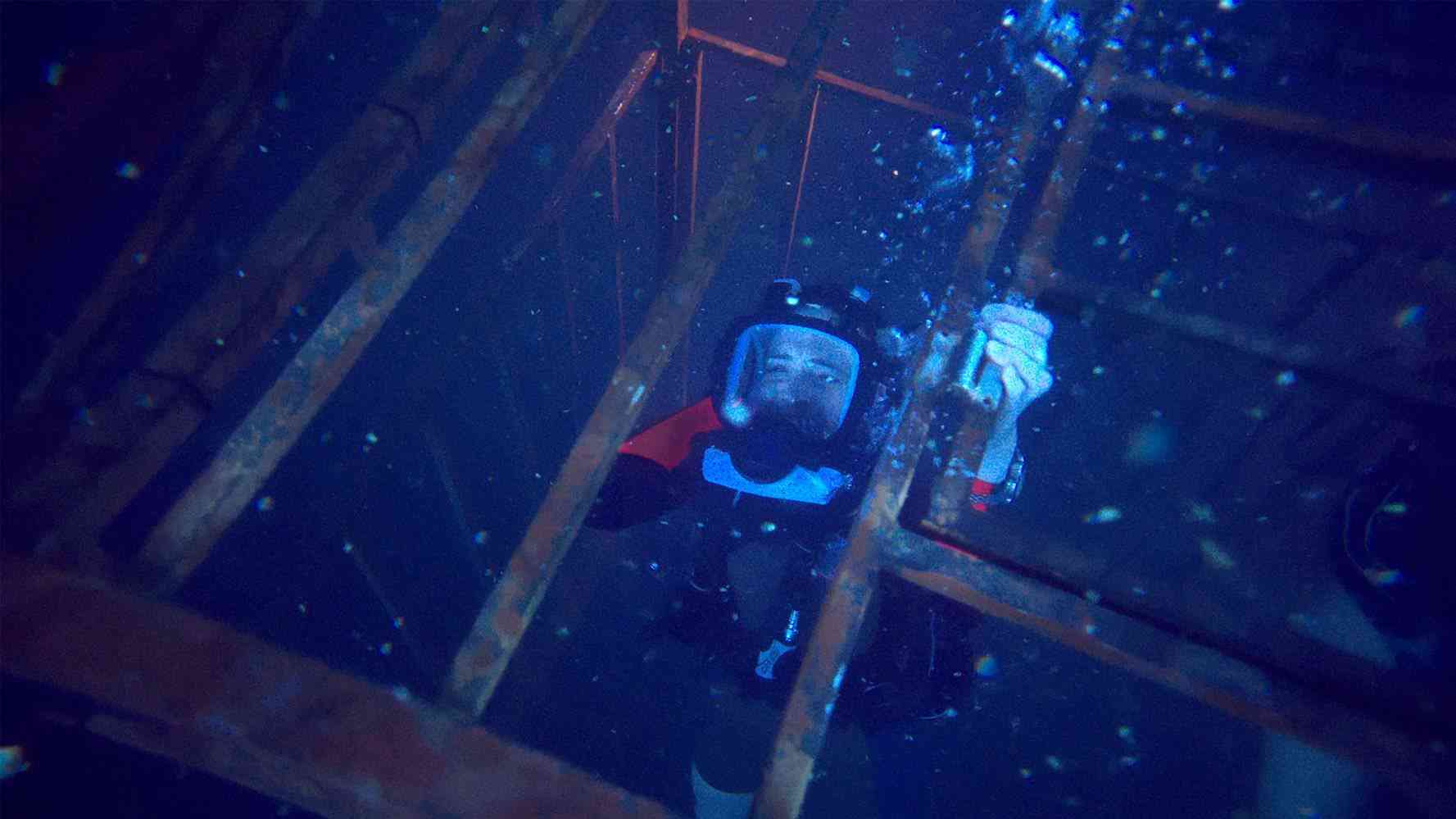
47 Meters Down (2017) / Johannes Roberts / 89m

Cast: Mandy Moore, Claire Holt, Matthew Modine, Chris Johnson, Yani Gellman, Santiago Segura

Rating: 6/10 – two sisters (Moore, Holt) on vacation in Mexico find themselves stranded in a shark cage at the titular depth, and they only have an hour to save themselves before their oxygen runs out; better than it sounds thanks to Roberts’ hand on the tiller, 47 Meters Down isn’t beyond making some silly mistakes (let’s have Modine’s captain recite the perils of nitrogen narcosis – twice), being too repetitive once on the sea bed, and building up tension only to allow it to dissipate to no great effect.

Share this:

  • Click to share on X (Opens in new window) X
  • Click to share on Facebook (Opens in new window) Facebook
  • More
  • Click to print (Opens in new window) Print
  • Click to email a link to a friend (Opens in new window) Email
Like Loading...

Baby Driver (2017)

29 Thursday Jun 2017

Posted by dullwood68 in Movies

≈ 2 Comments

Tags

Action, Ansel Elgort, Atlanta, Crime, Drama, Edgar Wright, Jamie Foxx, Jon Hamm, Kevin Spacey, Lily James, Review, Romance, Thriller

D: Edgar Wright / 113m

Cast: Ansel Elgort, Kevin Spacey, Lily James, Jon Hamm, Jamie Foxx, Eiza González, Jon Bernthal, CJ Jones, Flea, Lanny Joon, Sky Ferreira, Paul Williams

There are very few times when directors manage to achieve fully the vision they have for their movies. Some have pet projects that they wait years to bring to the big screen, but when they do, they’re not always successful. Some movies have audiences wondering what on earth the director was thinking of, some can be filed under glorious failures, while others achieve the distinction of gaining a cult following. None of these apply to Edgar Wright’s Baby Driver, a movie that zooms onto our screens like a gust of fresh air designed to blow away all the horrendously bloated blockbuster movies that have been foisted on us so far this year.

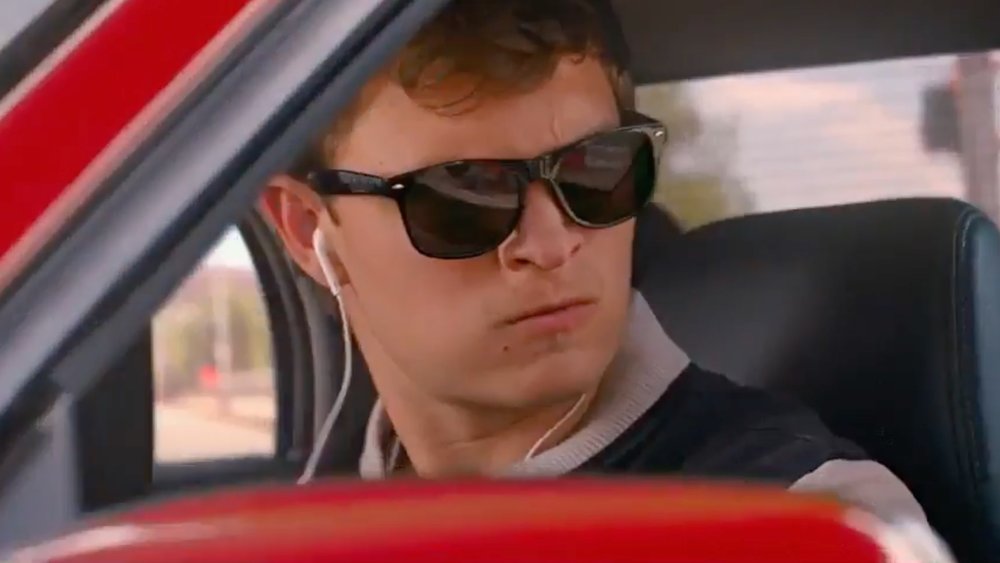
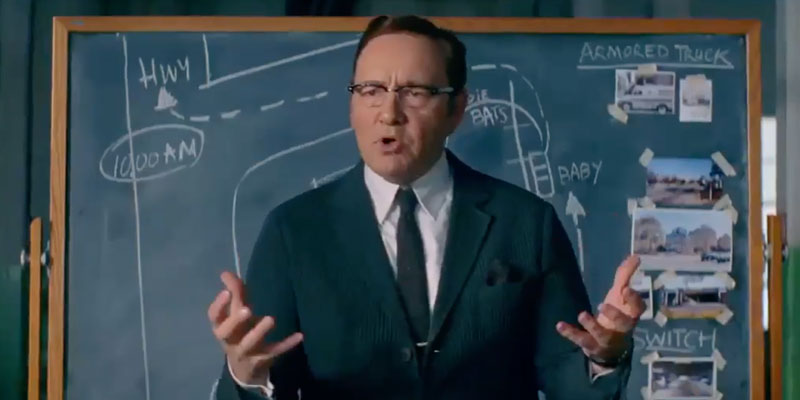
Wright’s ode to fast cars, old-fashioned meet-cute romance and killer tunes is quite simply, a blast. If this is your kind of movie then you are going to have an amazing time. And if this isn’t your kind of movie… well, that’s a shame, as you’re missing an absolute treat. Wright has made a movie that is energetic, soulful, visually arresting, and chock full of great performances, from Spacey’s criminal mastermind to Foxx’s psycho with extra attitude. The story is a simple one: Baby (Elgort) owes Doc (Spacey) for trying to steal his car when Baby was younger. By being the driver on bank robberies that Doc has set up, Baby’s debt diminishes with each job. With one last job to go before the debt is fully paid, Baby meets waitress Debora (James), and suddenly he has a reason to move on with his life.

Baby takes a job as a pizza delivery driver (no one’s going to get a free pizza after thirty minutes if he’s delivering), and he begins to make plans for himself and Debora to leave Atlanta and hit the road, travelling to wherever it takes them. But Doc appears with another job, one that could see Baby earning a lot more money than before; he’s also aware of Baby’s relationship with Debora and makes it clear that he’s not giving Baby a choice in taking part or not. Doc has assembled Bats (Foxx), Buddy (Hamm) and his wife Darling (González) to carry out the robbery, with Baby as the driver. But in prepping the job, Baby begins to have second thoughts about going through with it. He tries to get away and hit the road with Debora, but he’s outwitted by Buddy and Bats, leaving him with only one choice: take part in the robbery or see Debora come to harm. And then the robbery goes horribly wrong…

From the start, Wright displays a flair and a confidence that elevates the material to greater heights than anyone could have expected. Expanding on an idea he had back in 1994 – and which he first explored in the 2003 video for Mint Royale’s Blue Song – Wright has written, constructed, and brought to life a movie that celebrates love, and a passion for music that is a form of love in itself. Baby suffers from tinnitus, a “hum in the drum”, and he uses music to drown it out. This gives Wright the chance to flood the soundtrack with an array of carefully and aptly chosen songs that punctuate and inform the mood at any given time. Some choices might seem counter-intuitive (Focus’s Hocus Pocus for a foot chase? The Damned’s Neat Neat Neat for a robbery getaway?) but they all work, adding to the clever visual and aural stylings that Wright employs throughout.

But while the soundtrack is the key to much of what is going on emotionally in the movie, it’s the look of it that clinches our involvement. Wright is supremely confident when it comes to placing and moving the camera, and some of the angles and shots that he conjures up are nothing short of breathtaking. An early scene where Baby waits outside a bank and is listening to Bellbottoms by Jon Spencer Blues Explosion offers the viewer a bravura expression of Baby’s love for music and the way it can motivate and uplift him. This is only Elgort’s eighth movie, but his performance is a far cry from his usual pouty roles in a variety of YA movies. The pout is still here but it’s reined in for the most part, and seeing `Baby “rock out” to various songs in the apartment he shares with his deaf foster father (Jones) shows an ease and a loosening of attitude that is a good sign for any future roles.

But Baby Driver isn’t just a visually arresting movie with a terrific soundtrack, it’s also a tender romance and a cracking thriller. The relationship between Baby and Debora could have been a little too saccharine in comparison to the more muscular action elements (of which there are plenty), but Wright is wise to this and keeps it all light and dreamy, a forever fairy tale approach that works well against the macho posturings of the crews Doc assembles. James and Elgort have an easy-going chemistry, and their scenes together are funny and sweet and engaging. On the other side of the fence, Foxx is brusque and confrontational as psycho-without-an-off-switch Bats, Bernthal is another crew member who picks on Baby to no avail, while Hamm goes from amiable robber to avenging killer once the final robbery goes wrong. These are all good performances but they’re topped by Spacey’s sinister yet urbane Doc, a character you actually want to see more of, but who Wright wisely uses sparingly.

The action scenes are all very well choreographed, with the first car chase at the beginning of the movie (and which features that manoeuvre from the trailer) proving to be one of the best action sequences you’re likely to see all year. Wright shows a tremendous sense of space and distance in these sequences, and the camerawork by DoP Bill Pope is magnificent, propelling the viewer along with Baby et al, and providing enough breathtaking moments for two movies. And even when Wright slows things down in order to advance the plot, there’s still a sense of energy waiting to be released, of power straining at the gate to be let loose. And with the next squeal of tyres there it is, and off we go again.

This isn’t a movie though where the characters are secondary to the action, or play second fiddle to a script that doesn’t make sense. It’s a fairly simple, straightforward movie that looks amazing but still manages to retain a heart and a soul thanks to its romantic elements, and to the way in which the characters interact with each other. There are moments of humour, too – how could there not be in a movie by Edgar Wright – and they fit right in with all the other elements, unforced, and keeping the tone from becoming too serious. Wright balances all these elements to perfection, and there aren’t any scenes that either feel extraneous or tonally at odds with the rest of the movie. All in all, a tremendous achievement, and one that at long last proves that mainstream moviemaking doesn’t have to be loud, brash, overly reliant on CGI, and devoid of a coherent story and plot. Hollywood – take notice.

Rating: 9/10 – the first bona fide all-round success of 2017, Baby Driver is a triumph of style, visuals, acting, directing, writing – hell, everything, and a movie to be savoured just as much for the things it doesn’t do as the things it does; and of course it has possibly the coolest soundtrack of the year as well, a feast for the ears that contains so many gems that you won’t be able to decide which one to hum as you leave the cinema.

Share this:

  • Click to share on X (Opens in new window) X
  • Click to share on Facebook (Opens in new window) Facebook
  • More
  • Click to print (Opens in new window) Print
  • Click to email a link to a friend (Opens in new window) Email
Like Loading...

Rakka (2017)

15 Thursday Jun 2017

Posted by dullwood68 in Movies

≈ Leave a comment

Tags

Action, Aliens, Brain barriers, Drama, Neill Blomkamp, Oats Studios, Review, Sci-fi, Sigourney Weaver

D: Neill Blomkamp / 22m

Cast: Sigourney Weaver, Eugene Khumbanyiwa, Robert Hobbs, Carly Pope, Brandon Auret

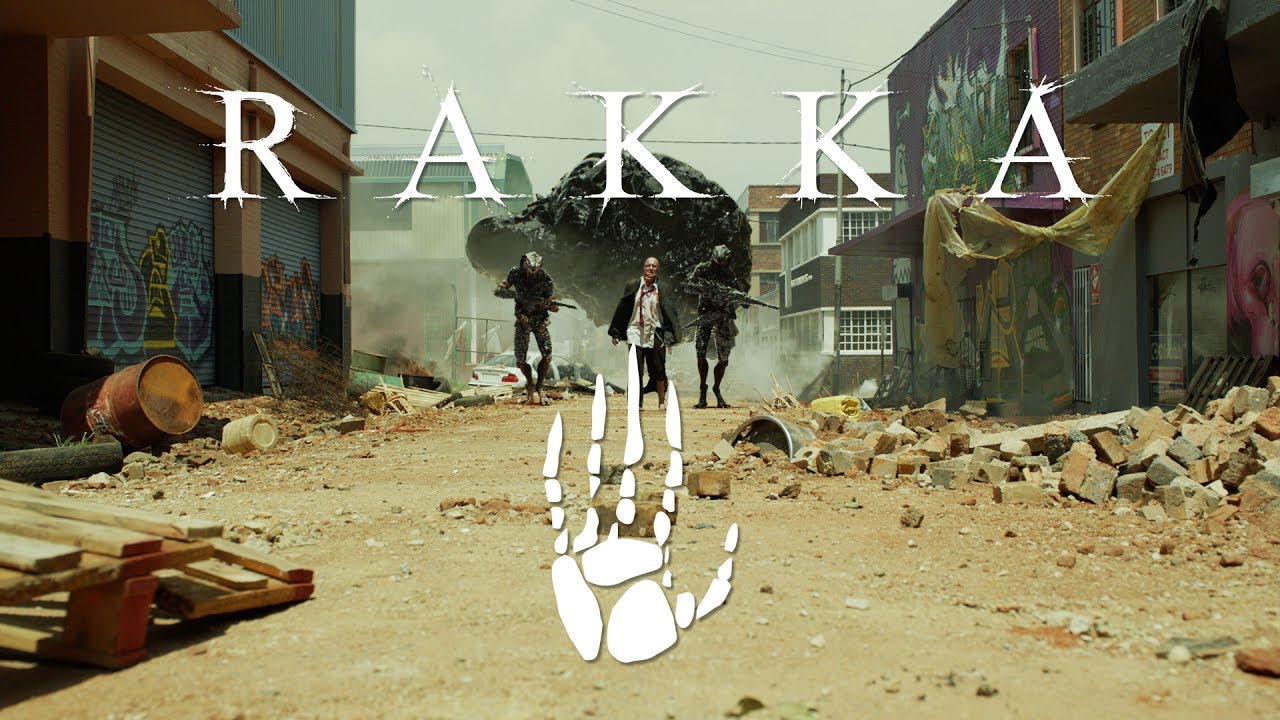
In the future, aliens have invaded Earth and set about destroying our world and making it into a facsimile of their own, with giant engines spewing methane into our atmosphere and humans being used as de facto incubators for the aliens themselves. The human resistance is sporadic but determined to fight back with whatever resources it can muster. In Texas in 2020, a small group of resistance fighters led by Jasper (Weaver), hatch a plan that involves the use of helmets called brain barriers that reduce the influence the aliens can have over humans. Enlisting the aid of a bombmaker called Nosh (Auret), Jasper hopes to use the brain barriers and an item made by Nosh to take the fight to the aliens and maybe turn the tide against them.

While Jasper and a handful of her team carry out their mission, a man called Amir (Khumbanyiwa) is tended to by a woman called Sarah. Amir has been rescued from the aliens, but he’s been operated on and his skull is a bio-mechanical fusing of human and alien materials. His condition appears to offer a view into the future, and Sarah attempts to get Amir to tell her what he can see, but though he has visions relating to Jasper’s mission, he’s unable to tell her the outcome he’s privy to.

With District 9 (2009), Neill Blomkamp’s career, previously consisting of shorts, got an impressive boost, and his future as a director seemed assured. But Elysium (2013) and Chappie (2015) didn’t fare so well with audiences and critics alike, and Blomkamp’s long-gestating Alien project found itself cancelled when Ridley Scott decided to reboot the original franchise. Faced with setback after setback and unable to get any projects green-lit with the studios, Blomkamp decided to take matters into his own hands and create his own production company, Oats Studios. With a remit that involves producing a number of short movies that are hoped will go viral and be successful enough to raise enough money for full-length movies to be made, Oats Studios is a brave step for the director, but perhaps a necessary one. By starting out small – returning to his own beginnings perhaps – Blomkamp will be able to retain overall control of any productions made under the Oats Studios banner. And if his distinct visual and narrative style is allowed to flourish under these conditions then it’s possible that he could be responsible for other moviemakers following suit and making their own movies without having to go cap in hand to the major studios.

But as a calling card for his new production company, Rakka isn’t necessarily the best choice to entice further viewers or converts to Blomkamp’s cause. Shot both formally and experimentally – which gives the movie a slightly schizophrenic feel – Rakka is yet another dystopian slice of science fiction that riffs on both District 9 and Chappie through its gritty, effects-heavy visual style and deliberately disjointed editing. Making the most of an obviously low budget, Blomkamp pays close attention to creating a familiar mise en scene for his story to unfold in front of, but forgets to provide as much detail for the characters or the overall storyline. This leads to some scenes appearing out of sync with others, as if the limitations of the budget meant that Blomkamp had to make too many concessions in order to meet the requirements of the running time, and the script suffered as a result. It’s clear that this is a taster for a longer movie, and if it’s ever made it would, hopefully, delve more into the workings of our invaded world, and provide audiences with a clearer picture of what’s happening. But Blomkamp has taken a risk by leaving so much unanswered, and by hoping that he’s done enough to encourage enough interest to get a full-length version made in the future. Too often it’s the substance that suffers in a short movie, and while Rakka is a visually enthralling experience, the alien invasion storyline isn’t as immediately compelling as it could have been.

Rating: 5/10 – though Blomkamp should be applauded for taking his moviemaking career into his own hands, Rakka sees the director revisiting past glories to a much lesser effect; hopefully, other Oats Studios releases will veer away from the recurrent themes and imagery of Blomkamp’s movies so far, and if they’re to be successful, concentrate instead on creating much more original content.

There’s no official trailer for Rakka, but the movie can be seen here:

Share this:

  • Click to share on X (Opens in new window) X
  • Click to share on Facebook (Opens in new window) Facebook
  • More
  • Click to print (Opens in new window) Print
  • Click to email a link to a friend (Opens in new window) Email
Like Loading...

The Mummy (2017)

13 Tuesday Jun 2017

Posted by dullwood68 in Movies

≈ 1 Comment

Tags

Action, Adventure, Alex Kurtzman, Annabelle Wallis, Dark Universe, Drama, Jake Johnson, Reboot, Review, Russell Crowe, Sofia Boutella, Tom Cruise, Universal

D: Alex Kurtzman / 110m

Cast: Tom Cruise, Annabelle Wallis, Sofia Boutella, Russell Crowe, Jake Johnson, Courtney B. Vance, Marwan Kenzari

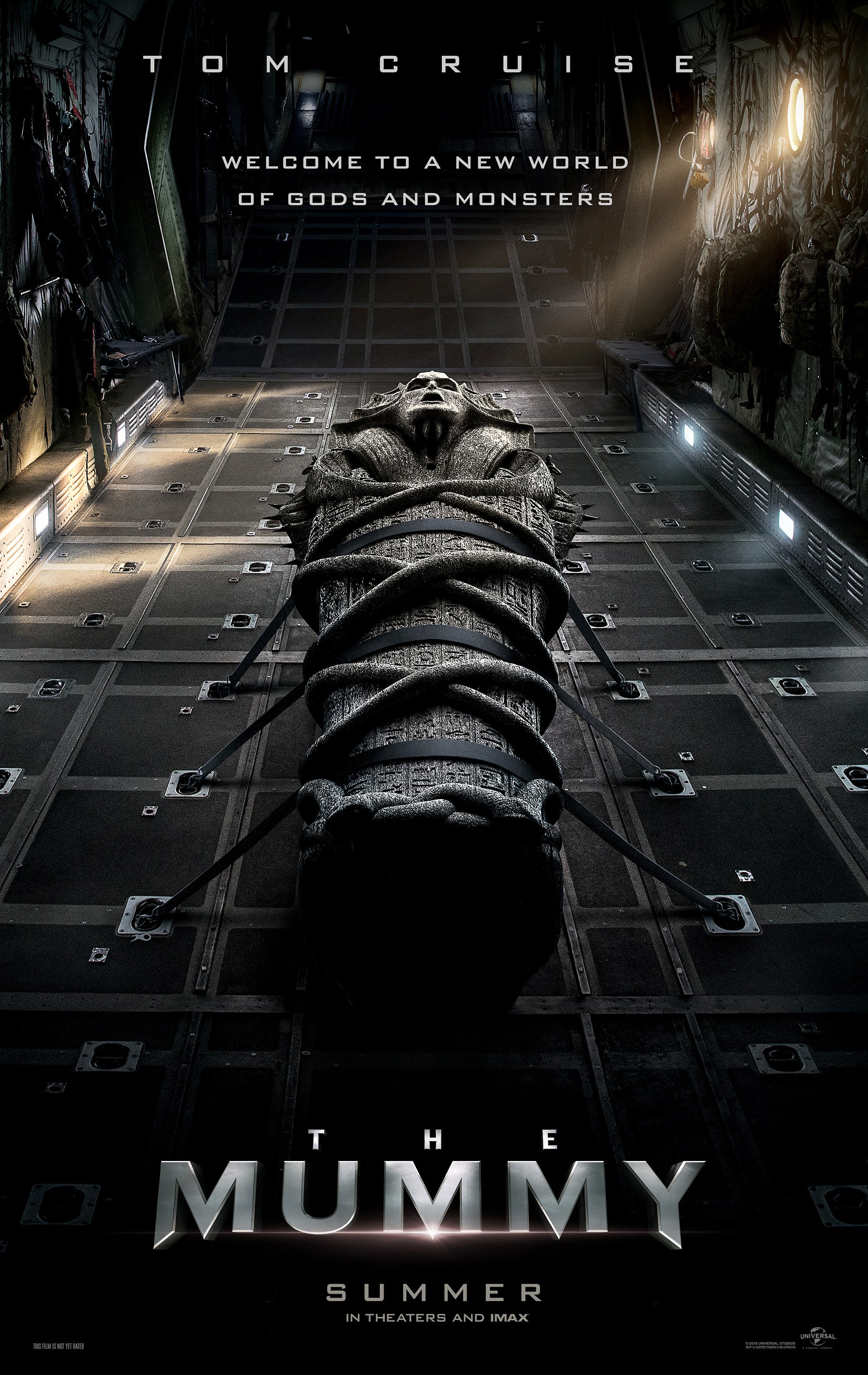
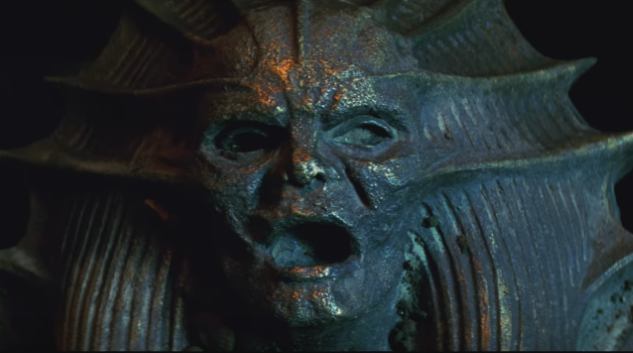
The first in Universal’s Dark Universe series of movies featuring all the old horror villains from the Thirties and Forties – Dracula Untold (2014) can be ignored – The Mummy arrives with all the hoopla and advertising overkill of a movie designed to put as many bums on seats in its first week before audiences realise just how much they’ve been duped into thinking it might be any good. There were clues in the trailers, but nothing as bad as the finished product, a dispiriting mishmash of better ideas already well executed elsewhere, and lesser ideas propped up by a script that needed three screenwriters to work on it. If this is an example of what we can “look forward” to, then it would be best if Universal gave up now and saved us all the pain and anguish of further entries.

The main problem with The Mummy is that it’s clearly not a horror movie, and it’s just as obvious that at no point have Universal ever considered making it into one. Rebooting those movies from seventy, eighty years ago isn’t such a bad idea, but at least those outings for Dracula and Frankenstein’s Monster and the Wolf Man were meant to be horror movies. This is a bloodless, scare-free action adventure movie that pays lip service to its series tagline “Welcome to a world of gods and monsters”, and relies on big CGI-enhanced action set pieces to provide what little entertainment it can muster. Somehow, the big studios have decided that these big set pieces are what audiences want, but that’s just wishful thinking. What audiences want are stories that make sense, characters they can relate to or sympathise with, moments that make them sit up and take notice, or any combination of all three. What audiences don’t want is to be force fed the same tired, formulaic rubbish over and over.

The Mummy arrives at a point in the year where the annual blockbuster season is well under way, but there’s very little chance that this is going to be as successful as Universal may have hoped. The presence of Tom Cruise (in another franchise role) would normally help sell a movie, but here he’s playing the same kind of cocky, rule-breaking maverick that he’s been playing for the last thirty years. As a result, his character, a US army sergeant called Nick Morton with a sideline in stealing antiquities, looks and feels tired right from the start, and Cruise is unable to inject more than a basic energy into his performance. He’s not helped by the script, which requires him to look puzzled, confused, bewildered and all the way back to puzzled with each and every scene once Sofia Boutella’s evil Egyptian princess, Ahmanet, is freed from her ancient prison.

Away from the action and the garbled storyline, it falls to Crowe’s role as Dr Henry Jekyll, head of the Prestigium (“We recognize, examine, contain, destroy.”), to provide a link to any future Dark Universe movies. But instead of keeping Dr Jekyll in the forefront, and Mr Hyde under wraps until a potential solo movie, The Mummy takes a detour around the halfway mark and reveals Hyde in all his ashen-faced, grumpy glory, and with a horrible Cockney accent to boot. It’s a prime example of the makers not knowing how to maintain a consistent tone. There’s much more that doesn’t make sense, or feels as if it wasn’t fully explored or worked out ahead of shooting, but the movie doesn’t concern itself with telling a coherent story, or treating its audience with respect. This is a big, dumb action movie with mild horror moments that are about as scary as watching Sesame Street. The next in the series is meant to be Bride of Frankenstein (2019), with Bill Condon in the director’s chair. Let’s hope – if the movie goes ahead as planned – that he has better luck than Alex Kurtzman in creating a world where gods and monsters really do have an impact that goes beyond massive indifference, or exacting criticism.

Rating: 3/10 – meh, meh, meh; the movie equivalent of oxygen – colourless and odourless – The Mummy is yet another abject blockbuster lacking a heart, a soul, and a sense of its own stupidity, and is a waste of its cast and crew’s time and effort – with the same going for its audience as well.

Share this:

  • Click to share on X (Opens in new window) X
  • Click to share on Facebook (Opens in new window) Facebook
  • More
  • Click to print (Opens in new window) Print
  • Click to email a link to a friend (Opens in new window) Email
Like Loading...

Wonder Woman (2017)

02 Friday Jun 2017

Posted by dullwood68 in Movies

≈ 1 Comment

Tags

Action, Amazons, Ares, Chris Pine, Connie Nielsen, Danny Huston, David Thewlis, DC Extended Universe, Drama, Fantasy, Gal Gadot, Patty Jenkins, Review, Robin Wright, Superhero, Themyscira, World War I

D: Patty Jenkins / 141m

Cast: Gal Gadot, Chris Pine, Connie Nielsen, Robin Wright, Danny Huston, David Thewlis, Saïd Taghmaoui, Ewen Bremner, Eugene Brave Rock, Lucy Davis, Elena Anaya, Lilly Aspell

On the hidden island of Themyscira live the Amazons, a fierce warrior tribe of women whose presence in the world has been kept from the rest of mankind by the wishes of Zeus. The only child on the island is Diana (Aspell), the daughter of Queen Hippolyta (Nielsen). Diana is precocious, challenging, disobedient, and determined to become a warrior like the rest of the Amazons, but her mother forbids it. Hippolyta’s sister, Antiope (Wright), trains Diana in secret, though, and she grows into a young woman (Gadot) to be reckoned with: the quickest, most agile, most determined Amazon of them all. With her fighting skills honed under the stewardship of Antiope, Diana finds she lacks a clear purpose in life, until one day the shield keeping the island hidden is penetrated by a plane that crashes into the sea. Diana rescues the lone pilot, Steve Trevor (Pine), who tells the Amazons of “a war to end to all wars”, and who provides all the reason Diana needs to leave the island and seek her destiny (once she leaves she can never return).

The pair travel to London where Trevor alerts the British High Command – led by Sir Patrick Morgan (Thewlis) – to a plot by Germany’s General Ludendorff (Huston) to end the War by use of the most deadliest form of mustard gas yet created. Forced to go it alone, Trevor recruits three old friends – would-be actor Sameer (Taghmaoui), sharpshooter Charlie (Bremner), smuggler the Chief (Brave Rock) – and with Diana, travels to the Belgian Front, where Ludendorff and his chief scientist, Dr Maru (Anaya), are in the process of preparing their new weapon to be used for the first (and they hope, last) time in the War. But Diana has no intention of letting them succeed in their plan, and convinced that Ludendorff is the modern incarnation of Ares, the disgraced God of War, she takes the fight to the Germans, and in the process learns something about herself that has been hidden from her all her life…

The question everyone is asking is an easy one to answer. The question is, is Wonder Woman the best DC Extended Universe movie to date? And the easy answer is Yes, it is. But that’s like saying, if I have one leg shorter than the other, and I have an operation to correct this, will I be better able to walk? Again, the answer is Yes, of course. And so it goes with Wonder Woman, a movie that provides a sharp upturn in quality in relation to its predecessors – Man of Steel (2013), Batman v Superman: Dawn of Justice (2016), Suicide Squad (2016) – but which still embraces many of the issues and problems that have plagued those same DCEU productions.

It’s yet another movie where the tone is so earnest and so po-faced that when the script does make an attempt at humour, it’s the same as when Garland Greene says of Billy Bedlam in Con Air (1997): “he’s so angry moments of levity actually cause him pain; gives him headaches. Happiness, for that gentleman, hurts.” The humour is there, tucked away in odd places, but it never feels like an integral part of the overall tone and feel of the movie. It’s as if Allan Heinberg’s script was accused of being too heavy, and was charged with including moments of levity as a direct consequence. What this means in practice is that the movie rarely feels comfortable when it’s tasked with being funny, and seems to breathe a sigh of relief when it can move on and concentrate on providing audiences with an industrious trek through the land of superhero clichés.

As an origin story, it’s akin to the first Thor movie, in that it introduces us to a realm built on myth and legend, and after a suitable period, hijacks the central character and thrusts them into the “real” world, with all its problems and rewards. Themyscira is a first for the DC Extended Universe, a beautifully realised paradise that features sun-dappled buildings, verdant fields, and the healthy glow of bronze and gold. Its relentlessly blue skies stretch as far as the eye can see, and the azure waters of the sea are dazzling. But once the island of Themyscira is left behind, the movie defaults to the muted colour palette and downplayed visual aesthetic that governs all the movies in the DC Extended Universe. Whether we’re in London or the battle-torn Belgian countryside, the movie does its best to be all gloomy backdrop and sombre foreground. It all fits in with the earnest, dramatic nature of the material, but as a visual statement it’s less than satisfying and helps to drain some of the life from the movie as a whole.

Where the movie does score more highly is in its attention to the horrors of life on the Western Front, and the effects of warfare on the local populace. But even that acknowledgment is over quickly so as to facilitate the next action sequence (which unfortunately features the kind of jerky CGI gymnastics from Wonder Woman that you’d be forgiven for thinking wouldn’t be attempted anymore in a movie costing $149 million and released in 2017). There are other nods to the horrors of war – Charlie’s PTSD, musings on the terrible things that man can inflict on his fellow man – but while it’s good to see them addressed – however briefly – it’s as near to depth as the movie gets, and they seem shoehorned into the main storyline rather than arising naturally from it. Diana’s obsession with hunting down Ares also gives rise to further arguments about the nature of war and man’s predilection towards it, but these are largely spurious and serve only to weigh down a final showdown between Diana and Ares that quickly descends into yet another dispiriting bout of disaster porn theatrics.

As the 5000 year old Amazon princess, Gadot builds on her appearance in Batman v Superman: Dawn of Justice, and proves that the praise she received in that movie wasn’t just a result of her standing out against its poor structure, lacklustre script, and wayward direction. There are some roles that can only be played by certain actors or actresses, and Gadot owns the part in a way that the likes of Sandra Bullock, Catherine Zeta-Jones, and Beyoncé Knowles – all considered for the role in the past – would find incredibly difficult to match or improve upon. Elsewhere, Gadot isn’t the most convincing of actresses, but here she gives a compelling, intuitive performance that stretches her skills as an actress but does so in a way that marks her out – in the DC Extended Universe at least – as the character to look out for. She’s ably supported by Pine who reins in his usual cocky charm; Huston as yet another less than memorable villain; Thewlis as the politician who may or may not be all that he seems; and Wright as Diana’s strong-willed aunt. However, if anyone in the supporting cast has to be picked out, it’s Bremner, who injects some much needed energy into his scenes and who makes Charlie possibly the most well rounded character in the whole movie.

Much has been made of Patty Jenkins being the first female director of a superhero movie featuring a female character as its lead, and Jenkins does do a decent enough job of pushing against the narrow confines of a DC superhero movie. But though she does manage to incorporate some elements of feminism into the story, there aren’t enough to make the movie into something more relevant than it is, and it’s curiously flimsy as an example of female empowerment. This is still, and despite the presence of Wonder Woman herself, a Boys’ Own adventure that could have featured any number of superheroes as its lead protagonist. It gets full marks for its period setting (something that was avoided for a long time before production finally began), but the movie takes too long in getting its audience from London to the Front, takes too much time in attempting to flesh out characters that don’t need fleshing out, and provides enough exposition to deaden the senses more effectively than Dr Maru’s poison gas. A small-scale triumph, then, and a definite improvement on the movies already mentioned above, but there’s still a long way to go before DC and Warner Bros. overcome the same problems they seem incapable – at present – of recognising and prevailing over.

Rating: 6/10 – a movie that starts out strongly (much in the way that Suicide Squad did), Wonder Woman seems set on delivering on the promise it showed in its trailers, and the advance word from preview screenings, but it soon falters and falls prey to the apparently carved-in-stone requirements of the DC Extended Universe; bold and confident in places, yet haphazard and stumbling in others, it’s a movie that surprises more than it dismays, but when it does dismay the effect is, unfortunately, far more noticeable, and has far more repercussions.

Share this:

  • Click to share on X (Opens in new window) X
  • Click to share on Facebook (Opens in new window) Facebook
  • More
  • Click to print (Opens in new window) Print
  • Click to email a link to a friend (Opens in new window) Email
Like Loading...

Monthly Roundup – May 2017

01 Thursday Jun 2017

Posted by dullwood68 in Movies

≈ Leave a comment

Tags

Action, Aloha Scooby-Doo!, Animation, Arnaud Larrieu, Contract to Kill, Dapper Jack, Drama, Frank Welker, His Lordship Goes to Press, Jean-Marie Larrieu, June Clyde, Keoni Waxman, Love Is the Perfect Crime, Mathieu Amalric, Melvin Van Peebles, Mystery, Nicolas Cage, Review, Scooby-Doo! Shaggy's Showdown, Steven Seagal, The Mystery Gang, Thriller, Tim Maltby, True story, USS Indianapolis: Men of Courage, Warner Bros., Wiki Tiki

USS Indianapolis: Men of Courage (2016) / D: Mario Van Peebles / 130m

Cast: Nicolas Cage, Tom Sizemore, Matt Lanter, James Remar, Thomas Jane, Brian Presley, Yutaka Takeuchi, Johnny Wactor, Adam Scott Miller, Cody Walker, Weronika Rosati, Currie Graham

Rating: 4/10 – five days after it delivers the atomic weaponry that would be used against Japan, the USS Indianapolis is torpedoed and sunk, leaving around three hundred crewmen hundreds of miles from land and at the mercy of starvation, dehydration and worst of all, marauding sharks; the true story that gave rise to that monologue in Jaws (1975), USS Indianapolis: Men of Courage betrays its low budget and scaled back production values at almost every turn, and lacks the necessary intensity to make it work properly, though it does allow Cage the chance to give a slightly better performance than we’ve recently been used to.

His Lordship Goes to Press (1938) / D: Maclean Rogers / 80m

Cast: June Clyde, Hugh Williams, Leslie Perrins, Louise Hampton, Romney Brent, Aubrey Mallalieu

Rating: 4/10 – an American journalist (Clyde) travels to England to write a story about farming, and while she’s en route, insults an Earl (Williams) who decides to teach her a lesson, one that involves his posing as a farmer on his own estate; what could and should have been a light-hearted romantic comedy gets bogged by the mechanics of its plot, and two lead performances that aren’t as interesting to watch as those of the supporting cast, all of which, unfortunately, makes His Lordship Goes to Press easily forgettable.

Scooby-Doo! Shaggy’s Showdown (2017) / D: Matt Peters / 79m

Cast: Frank Welker, Grey Griffin, Matthew Lillard, Kate Micucci, Melissa Villasenor, Carlos Alazraqui, Gary Cole, Kari Wahlgren, Stephen Tobolowsky, Max Charles

Rating: 7/10 – the latest outing for the Mystery Gang sees them head out west to a small town haunted by the terrifying ghost of Dapper Jack – who just happens to be one of Shaggy’s ancestors; one of the better entries in Warner Bros. ongoing series, Scooby-Doo! Shaggy’s Showdown is sharp, funny, has an intriguing storyline, and throws in more suspects than usual, making it slightly more difficult than usual to spot the villain (though you might argue it’s the person who gave the go ahead for two songs to be included).

Love Is the Perfect Crime (2013) / D: Jean-Marie Larrieu, Arnaud Larrieu / 110m

Original title: L’amour est un crime parfait

Cast: Mathieu Amalric, Karin Viard, Maïwenn, Sara Forestier, Denis Podalydès

Rating: 7/10 – Marc (Amalric) is a literature professor at the University of Lausanne who first becomes embroiled in the disappearance of a student, and then finds himself falling in love with her stepmother (Maïwenn); Amalric’s arrogant but often childish professor is matched by Viard’s casual malevolence as his sister, and while Love Is the Perfect Crime plays out like a mystery (that’s actually quite easy to solve), it’s really a drama about one man’s initially unwitting, then complicit attempt at self-destruction, a storyline that offers much in the way of subdued Gallic charm.

Contract to Kill (2016) / D: Keoni Waxman / 90m

Cast: Steven Seagal, Russell Wong, Jemma Dallender, Mircea Drambareanu, Sergiu Costache, Ghassan Bouz, Andrei Stanciu

Rating: 3/10 – a Mexican drug cartel helps Arab terrorists smuggle weapons and personnel into America, but they don’t reckon on CIA/DEA agent John Harmon (Seagal) and his team interfering with their plans; Contract to Kill is a Steven Seagal movie, with all that that entails, including Seagal himself reciting dialogue as if he was reading it off the back of a cereal box, the same tired, poorly edited actions sequences we’ve seen a dozen times or more in the past, and a plot that makes no coherent sense no matter how closely you examine it.

Aloha Scooby-Doo! (2005) / D: Tim Maltby / 74m

Cast: Frank Welker, Casey Kasem, Mindy Cohn, Grey DeLisle, Ray Bumatai, Tia Carrere, Teri Garr, Mario Lopez, Adam West

Rating: 5/10 – when Daphne (DeLisle) gets the chance to be a clothes designer for a company based in Hawaii, inevitably the rest of the gang go with her – and find themselves investigating the mystery of the ghostly Wiki Tiki; not the best movie in the series (the villain is so obvious it’s almost insulting), Aloha Scooby-Doo! strives to have Daphne in a bikini as often as possible, struggles to make its central mystery interesting, features little Tiki monsters that are funny rather than scary, and direction by Maltby that makes you wonder how involved he was throughout.

Share this:

  • Click to share on X (Opens in new window) X
  • Click to share on Facebook (Opens in new window) Facebook
  • More
  • Click to print (Opens in new window) Print
  • Click to email a link to a friend (Opens in new window) Email
Like Loading...

Pirates of the Caribbean: Dead Men Tell No Tales (2017)

30 Tuesday May 2017

Posted by dullwood68 in Movies

≈ Leave a comment

Tags

Action, Black Pearl, Brenton Thwaites, Comedy, Curse, Drama, Fantasy, Geoffrey Rush, Javier Bardem, Joachim Rønning, Johnny Depp, Kaya Scodelario, Review, Sequel, Trident of Poseidon

aka Pirates of the Caribbean: Salazar’s Revenge

D: Joachim Rønning, Espen Sandberg / 129m

Cast: Johnny Depp, Javier Bardem, Geoffrey Rush, Brenton Thwaites, Kaya Scodelario, Kevin McNally, Golshifteh Farahani, David Wenham, Stephen Graham, Angus Barnett, Martin Klebba, Adam Brown, Giles New, Lewis McGowan, Orlando Bloom, Paul McCartney

Six years after Pirates of the Caribbean: On Stranger Tides appeared to have brought the franchise to an end, Disney and Jerry Bruckheimer have resurrected Captain Jack Sparrow for one more round of hijinks on the high seas. This movie and a potential sixth in the series were being planned even before On Stranger Tides was released, but production delays and script problems kept Dead Men Tell No Tales from our screens until now. It’s debatable that anyone outside of the cast and crew and studio bosses were enthusiastic about the idea of a fifth movie, and it’s doubtful that even die-hard fans were expecting too much from it, but the series has made a lot of money since it began back in 2003 – over $3.7 billion before this installment – so perhaps another entry shouldn’t be too much of a surprise.

Dead Men Tell No Tales harks back to the simpler, more effective pleasures found in the series’ first movie, Curse of the Black Pearl, and attempts to forget the bloated excesses of the previous two installments by imitating much of what made that movie so successful. However, this approach hasn’t meant a return to form, but instead has stopped the rot. You can argue that this is a better movie than On Stranger Tides, and you wouldn’t be wrong, but both as a stand-alone entry and the continuation of a series that provides links to its predecessors in an ongoing game of Guess-the-Reference, number five in the series is still found wanting.

For a start, there’s the plot, a mish-mash of ideas that are borne out of the idea that hidden somewhere at sea is the Trident of Poseidon, and that this is the cure for all the curses of the sea. At the start of the movie, a young Henry Turner (McGowan) confronts his father, Will (Bloom), and tells him of his plan to find the Trident and free him from his fate as the Flying Dutchman. Will believes the Trident can’t be found, but Henry is determined. Nine years later, Henry is now a young man (Thwaites), and still searching for the Trident, as is astronomer Carina Smyth (Scodelario). She has a book that gives clues to the Trident’s whereabouts, but has been condemned by the British as a witch. Henry, meanwhile, has encountered the ghost of Captain Salazar (Bardem) who is seeking revenge on Captain Jack Sparrow for his supernatural existence. On the island of St Martin, Henry, Carina and Jack all come together and make sail for the unmarked island that can’t be navigated to, closely followed by Salazar and interested party Barbossa (Rush).

There’s more – much more – and therein lies one of the movie’s biggest problems: it takes what should be a fairly straightforward idea and twists it so far out of shape that every attempt to straighten it out merely serves to make it less and less, and less, straightforward. The plot becomes buried under layer after layer of unnecessary twists and turns and double crosses and “clever” subterfuges. The characters’ individual storylines become convoluted and unwieldy, with one relationship forged out of nothing, and as for any character development, that’s been ignored in favour of getting everyone from point A to point B with a minimum of effort or fuss. For a movie that was delayed partly because of script problems, it makes you wonder just how bad scribe Jeff Nathanson’s original screenplay really was (or if Johnny Depp’s widely credited contributions are to blame instead).

Another problem lies with the character of Jack Sparrow himself. Five movies in and it’s clear that the character has run out of steam both dramatically and comedically. He’s a pale shadow of his former self, no longer as witty as he once was, or retaining the skewed moral compass he once had, and halfway to being a lampoon. And for the most part Depp is going through the motions, offering brief glimpses of the portrayal that made such an impact fourteen years ago, but unable to rekindle the past glories that came with that portrayal. The usual grinning and grimacing are there but that’s the point: it’s exactly the same grinning and grimacing we’ve already seen four times before. When your main character becomes more and more of a caricature with every outing, then it’s time to really shake things up and do something different.

But doing something different – anything different – isn’t part of the movie’s agenda. Instead, newcomers Rønning and Sandberg cleave to the look and feel of the first movie, but are hamstrung by having little in the way of dramatic meat to work with, and a preponderance of comedic moments that are self-referential and which largely fall flat. Yes, there are moments where you’ll smile and maybe chuckle to yourself, but outright laughs are as rare as someone in Salazar’s crew having a complete body. The various action set pieces offer the occasional frisson, but again there’s very little that holds the attention or seems fresh by design or in execution. A bank heist early on plays like a low-budget version of the vault robbery from Fast Five (2011), while the finale steals its set up from the parting of the Red Sea in The Ten Commandments (1956).

On the acting front, returnees Rush, McNally, Klebba, Graham, Barnett, New, and Bloom do what they need to do within the confines of the script, while newcomers Bardem, Thwaites, Scodelario, Farahani (as a thinly disguised version of Naomie Harris’s Calypso), and Wenham face exactly the same problem. When an actor of the calibre of Javier Bardem can’t manage to make a character such as Salazar even occasionally memorable then there’s definitely something wrong going on. And just when you thought there wasn’t a rock star who could give a worse performance than Keith Richards in a Pirates movie, up pops Paul McCartney as Jack’s Uncle Jack, an appearance that makes you pray he doesn’t pop up again.

In essence, this is a movie (and a fourth sequel to boot) that atones for the appalling nature of its immediate predecessor, but which in doing so, defaults to being predictable and safe. This makes it a movie that offers few rewards for its fans, and even fewer rewards for anyone coming to the franchise for the first time. A post credits scene sets up a sixth movie which looks set to bring back another character from the series’ past, but if it does, then it will have to be a vast improvement on this entry, and perhaps require a complete rethink of a franchise that has gone astray and which shows no immediate signs of finding its way back.

Rating: 4/10 – impressive CGI and beautiful locations are about the best things in Pirates of the Caribbean: Dead Men Tell No Tales, but even they aren’t good enough to rescue a movie that opts for mediocre as a first choice, and is only fitfully entertaining; a tiptoe in the right direction for the franchise but still an underwhelming experience for anyone who remembers the glory days of the first Pirates of the Caribbean movie.

Share this:

  • Click to share on X (Opens in new window) X
  • Click to share on Facebook (Opens in new window) Facebook
  • More
  • Click to print (Opens in new window) Print
  • Click to email a link to a friend (Opens in new window) Email
Like Loading...

Kidnap (2017)

21 Sunday May 2017

Posted by dullwood68 in Movies

≈ 1 Comment

Tags

Action, Car chase, Chris McGinn, Drama, Halle Berry, Kidnapping, Lew Temple, Luis Prieto, Review, Sage Correa, Thriller

D: Luis Prieto / 95m

Cast: Halle Berry, Sage Correa, Chris McGinn, Lew Temple

Karla Dyson (Berry) is separated from her husband, and has custody of their young son, Frankie (Correa). She works as a waitress in a diner, and is patient, courteous and respectful of even the most rude and obnoxious of customers. After a particularly horrendous shift where she’s the only waitress on duty, Karla is grateful to get out of work and take Frankie to a local park. There are rides and stalls and shows to see, and Frankie is keen to try them all, but Karla is on a budget, and so they end up watching one of the stage shows and eating ice cream. When Karla receives a call from her lawyer who tells her that her husband is suing for full custody of Frankie, two things happen in rapid succession: her phone runs out of charge, and her son goes missing. She searches the park, asks people if they’ve seen her son, and calls out his name. It’s only when she reaches the car park that she sees Frankie being bundled into a car by a woman (McGinn).

The car speeds off and in desperation, Karla gets in her own car and follows it. She loses her phone in the process, and in her attempt to keep the car in sight, is the cause of a couple of accidents. At first, the kidnapper’s car doesn’t try to outrun her, and even when it swerves off the freeway she still manages to catch up to it (it helps that the car is very distinctive, a green Eighties Mustang GT with no plates). The chase develops into a game of cat and mouse as the kidnapper tries to stop Karla from following her. But she perseveres, promising her son that she’ll never give up, even when it becomes clear that there are two kidnappers, a man (Temple) and a woman. Karla momentarily gains an advantage when she isolates the woman, but the man continues on, not stopping and eventually eluding her. When he’s involved in an accident and he’s forced to switch cars, Karla still keeps on his trail, and makes one last attempt to stop him before her car runs out of gas. He gets away though, only to return and try to kill her once and for all – and without Frankie in the car…

The abduction of a child is possibly the worst nightmare imaginable for most parents, and so you’d expect a thriller about exactly that scenario to be a tense, nerve-shredding experience that would give any parent the heebie-jeebies. After all, if it can happen to Halle Berry’s conscientious single mother, then it can happen to anyone, right? Well, probably not under these circumstances…

Sometimes the simplest of movie plots can mean the most rewarding of movies, and with its child in peril scenario plus mother in high-speed pursuit – Oh, wait, that’s only at the beginning, when the kidnappers are intent on getting out of the city and away from Karla’s dogged appearance in their rearview mirror. Once the city’s left behind, and there’s only the odd attempt to get Karla to stop following them, the movie settles into a predictable rhythm for the best part of an hour, and offers the viewer several shots of the kidnappers’ car being trailed by Karla’s red minivan across the highways and byways of the state of Louisiana, and all at a safe distance. These shots don’t add to the drama, they don’t add to the tension; in fact, they only serve as filler in a movie that could have easily got by without them. And it makes no sense that the kidnappers would let Karla follow them for so long (it’s a pursuit that seems to go on forever).

But this is nothing when compared with the crime against logic that the movie makes nearly all the way through: the whole car chase, with its occasional bursts of mayhem and damage and with its two distinctive vehicles not exactly difficult to spot, involves the police on just the one occasion. And even then it’s because Karla weaves her car from side to side as if drunk behind the wheel in order to attract the attention of a motorcycle cop (who is dispatched in one of the movie’s best stunts). The absence of police on the various roads the kidnappers and Karla travel on leads to something of a payoff, albeit an unfortunate one: arriving in a small town, Karla heads for the police station, only to find one lone deputy in attendance. Karla tells the deputy about the kidnapping, and the deputy responds by saying, “we can have a hundred cars out looking for them in an hour”. The irony is lost on Karla, but it won’t be lost on the viewer.

Of course, there’s a reason for Frankie’s abduction, and while some viewers might be forgiven for thinking it’s all to do with the husband and the custody battle, here it’s a little more unnerving, and offers clear parallels to abductions that happen in real life. It also allows Karla the chance for a showdown with the woman that ought to be more exciting than it actually is. But that’s the movie in a nutshell: it promises more than it can actually deliver, and it never fully exploits its simple premise. Plus it digs itself into several holes along the way, and comes up with ever more ridiculous solutions in order to keep the movie plugging away until Karla’s eventual arrival at the kidnappers’ home (e.g. the satnav that conveniently tells her she’s only a couple of miles away when she has to travel on foot).

Now, any movie where disbelief has to be suspended regularly in order for the action to continue, isn’t working to the best of its abilities. Knate Lee’s script has the feel of a screenplay that’s undergone revisions during shooting, and while this is entirely common within the industry, what it does mean is that the finished product has to work extra hard in order to remain as effective as originally planned. The sense here is that Lee had a number of set pieces in mind for the movie, but as for the stuff in between, well let’s just say it needed a lot more work. Karla’s motivation is obvious, but she makes a number of decisions that work against that motivation, and the script falls back on her determination to keep chasing the kidnappers long after she’s identified the Mustang and could have called it into the police, as a means of justifying those decisions.

Where the movie does score highly is with its action sequences, which are confidently handled by director Luis Prieto and expertly pieced together by editor Avi Youabian. Karla vs the man is a particular highlight, and there’s a stomach churning hit and run that stays in the memory (it really looks as if the stuntwoman got hurt), but while these sequences stop the movie from looking and sounding unappealing and dull, this is still, ultimately, a thriller that only thrills in fits and starts. Berry shows off her angry face to ever-decreasing effect, but does make Karla a sympathetic character for the viewer to cheer on, even if she’s not always the brightest mother on the planet. As the villains of the piece, McGinn and Temple are nasty enough without being unavoidably psychotic, and Correa is a cute if low-key presence (and even cuter in the real life footage of him as a baby and growing up that opens the movie).

Rating: 5/10 – a movie that could have been a lot worse, and should have been a lot better, Kidnap is a frustrating viewing experience because of all the risible moments that interfere with the simplicity of the basic idea; Berry is good value, the stunts elevate the material, Prieto exhibits a patience with the narrative that stands it all in good stead, but in the end, this is still less than the sum of its parts.

Share this:

  • Click to share on X (Opens in new window) X
  • Click to share on Facebook (Opens in new window) Facebook
  • More
  • Click to print (Opens in new window) Print
  • Click to email a link to a friend (Opens in new window) Email
Like Loading...

King Arthur: Legend of the Sword (2017)

10 Wednesday May 2017

Posted by dullwood68 in Movies

≈ 2 Comments

Tags

Action, Astrid Bergès-Frisbey, Camelot, Charlie Hunnam, Djimon Hounsou, Drama, Eric Bana, Excalibur, Fantasy, Guy Ritchie, Jude Law, Londinium, Review

D: Guy Ritchie / 126m

Cast: Charlie Hunnam, Astrid Bergès-Frisbey, Jude Law, Djimon Hounsou, Eric Bana, Aidan Gillen, Freddie Fox, Craig McGinlay, Tom Wu, Kingsley Ben-Adir, Neil Maskell, Annabelle Wallis, Geoff Bell, Poppy Delevingne, Bleu Landau, Peter Ferdinando, Mikael Persbrandt, Michael McElhatton

The tagline for King Arthur: Legend of the Sword is a simple yet effective one: “from nothing comes a king”. But to quote William Shakespeare (and with the most sincerest of apologies), a better tagline would be, “nothing will come of nothing”. In fact, there are several famous Shakespeare quotes that are apposite for Guy Ritchie’s latest outing, so in an effort to provide a unique review for a movie that offers nothing that is in the remotest sense “unique”, here are some of the Bard’s most well known pieces of dialogue, and their relevance to King Arthur: Legend of the Sword.

“Now is the winter of our discontent” (Richard III) – strictly speaking, it’s spring right now, but the sentiment remains the same whatever the season. Ritchie, along with co-screenwriters Joby Harold and Lionel Wigram (his producing partner), offers audiences a King Arthur re-style that lurches from one CGI-heavy action sequence to another, all of which are edited in such a way as to remove every last ounce of excitement from every single one of them.

“Lord, what fools these mortals be!” (A Midsummer Night’s Dream) – it’s hard to work out just who fits this quote more, Warner Bros. for asking Ritchie to make this movie, or Ritchie for accepting the challenge. Perhaps it should be a joint award, as the end result stretches credibility at every turn, appears as if it was collated from a dozen different scripts, and ensures its cast of characters remain as one-dimensional as possible in order to match the quality of the narrative. This leads to Hunnam et al all struggling to give decent performances, and all looking uncomfortable throughout.

“We have seen better days” (Timon of Athens) – each year brings us a fantasy movie that attempts to bring us something out of the ordinary, something we haven’t seen before, and King Arthur: Legend of the Sword certainly has aspirations in that department, but instead it ends up looking and sounding like an uninspired retread/mash up of The Lord of the Rings (with bigger elephants), Game of Thrones (without the style), and weirdly, In the Name of the King: A Dungeon Siege Tale (2007) (skip the better days angle on this one).

“Some are born great, some achieve greatness, and some have greatness thrust upon them” (Twelfth Night) – this is the central conceit that infuses the character of Arthur, but once again we have to put up with a character denying his destiny for half the movie before taking up the mantle that he’s been due all along, and then finally going out and kicking some ass. It’s a tired character arc that’s been done so often it’s lost any kind of dramatic weight, and now feels obligatory, as if every character faced with this kind of choice has to be humble and committed to self-denial. If the movie had really wanted to bring us something out of the ordinary, Arthur would have found out he was the rightful King, grabbed up Excalibur, left Londinium, and killed evil uncle Vortigern (Law) at the first opportunity (and shaved at least half an hour off the movie’s two hour running time).

“All that glisters is not gold” (The Merchant of Venice) – the presence of Ritchie behind the camera, and with such a talented cast in front of it, just goes to show that you can’t judge a movie by its intentions. If you saw the first trailer and thought, “Hmm, this looks great!” then a) the makers of that particular trailer got off lightly, and b) there’s not much anyone can do for you. This is a movie that delights in showing off its various boxes of tricks, but as so often happens in these cases (where ambition should have been strangled at birth), once the tricks have been showcased, it becomes obvious that there wasn’t any substance behind them at all. And this is what this movie wants you to forget: that it’s made up of various boxes of tricks and very little else.

“Misery acquaints a man with strange bedfellows” (The Tempest) – watching King Arthur: Legend of the Sword is an often painful, dispiriting way to spend a couple of hours, but it’s also one that should have no problem in uniting audiences in expressing their general displeasure at what they’ve witnessed. They say that watching movies at the cinema qualifies as a communal experience. It’s such a shame then that so many people are going to be disappointed by a movie that flails around looking for a cohesive story to tell, and which does so without any attempt at providing wit or panache to help it along.

“But, for my own part, it was Greek to me” (Julius Caesar) – in this reimagining of the Arthurian legend (complete with a Camelot that isn’t mentioned by name, only title caption), the once and future king is an East End brothel owner long before there were actual East End brothel owners, and long before anyone added the word “mate” to the end of a sentence. Ritchie and his screenwriter chums may believe this adds a certain piquancy to the dialogue, but instead it feels more out of place than organic, and on occasion, forced. It’s a verbal affectation that does the movie no favours and soon becomes distracting instead of part and parcel of the movie’s overall tone (as intended).

“It is a tale told by an idiot, full of sound and fury, signifying nothing” (Macbeth) – while Ritchie is by no means an idiot (libel lawyers take heed), this is still a movie that assaults the senses at every opportunity, and which never keeps still. This is a movie for people who can’t bear to see a shot last more than five seconds, who can’t watch an action sequence unless it’s cut into non-sequential chunks, and who like their soundtrack pumped up as much as the movie hopes they are already. The action lacks intensity (though it strives repeatedly to attain the intensity it needs in order to be halfway effective), and the spectacle soon becomes mind-numbing in its repetitiveness. And the occasional quiet moments? Just filler, until the next action sequence comes along.

Rating: 3/10 – you’ll laugh (unintentionally but often), you’ll cry (at the cumulative absurdity/lack of ideas on display), you’ll want to believe that somewhere, in an alternate reality perhaps, that Ritchie has made a masterpiece; alas, a terrible plot and central narrative counter any such notions, and King Arthur: Legend of the Sword reaches us adrift on a shoddy raft of its own making, taking on water with every swell, and capable only of letting off distress flare after distress flare.

Share this:

  • Click to share on X (Opens in new window) X
  • Click to share on Facebook (Opens in new window) Facebook
  • More
  • Click to print (Opens in new window) Print
  • Click to email a link to a friend (Opens in new window) Email
Like Loading...

The Hunter’s Prayer (2017)

09 Tuesday May 2017

Posted by dullwood68 in Movies

≈ 1 Comment

Tags

Action, Allen Leech, Assassin, Drama, For the Dogs, Jonathan Mostow, Kevin Wignall, Literary adaptation, Odeya Rush, Review, Sam Worthington, Thriller

D: Jonathan Mostow / 91m

Cast: Sam Worthington, Odeya Rush, Allen Leech, Martin Compston, Amy Landecker, Verónica Echegui

A couple enjoying a quiet evening at home. A man (Compston) lurking in their garden. When the couple’s housekeeper lets out their dog, the man comes out of hiding, shoots the housekeeper and then heads straight into the house. He shoots the wife, and then the husband. He listens for any sound that might indicate there is anyone else in the house. Soon he is pouring something flammable over the furniture, and then setting it alight. As he drives away, flames in the house can be seen through his car’s rear window. The man has remained impassive throughout, and hasn’t said a word.

It’s a classic opening for a thriller: a hit that serves two purposes. It gets the audience asking themselves, what is going on; and it acts as notice from the makers that their movie is going to be tough and uncompromising. Except that here it also prompts another response, one that the makers won’t want audiences to think about, and piggy-backs off of that first purpose. That response is: why has this man gone to all the trouble of burning the bodies? It’s a question that’s never answered, but it’s indicative of a script that gets its characters to do lots of weird things on lots of different occasions… and by doing so, it robs the movie of any validity. If you see The Hunter’s Prayer, watch carefully and you will see all sorts of odd things going on, and where some movies can make these moments part of the fabric of the narrative, here, in Jonathan Mostow’s first movie since Surrogates (2009), all they do is draw attention to the deficiencies of a screenplay that no one thought to read more carefully.

However, this being a thriller with a degree of ambition, those deficiencies are overlooked while the plot lumbers on in search of a reason to exist. Adapted by Paul Leyden from the novel, For the Dogs (2004) by Kevin Wignall, The Hunter’s Prayer (which isn’t referenced once during the whole movie) concerns itself with the couple’s daughter, Ella (Rush), and the assassin, Lucas (Worthington), who was meant to kill her. That’s right, meant to kill her. The turgid plot that this hinges on is as follows: Ella’s father stole £25m from English businessman-cum-crook Richard Addison (Leech), and Addison wanted Ella killed first but Lucas didn’t do it in time, so her father and stepmother were killed instead. Now Addison still wants Ella killed, and Lucas has taken it on himself to protect her from the man (whose name is Metzger) and anyone else who might be hired to make it three out of three. Makes sense? No, of course it doesn’t.

To be fair, the script does address this issue, but then it quickly ignores it, preferring to see Ella and Lucas pursued across Europe in a pale imitation of The Bourne Identity (2002), whose wintry, isolated feel it tries to emulate. As usual in these kinds of movies, the pair is found easily whenever the script calls for an action sequence, and whatever efforts Lucas makes to keep them safe always opens them up to the potential of being killed instead. At one point, Ella and Lucas are on a train; he’s been shot in the leg and he’s arranged for a friend, Dani (Echegui), to treat his wound while they’re on the train. She does so, persuades Ella to get off at the next stop, and then attempts to kill Lucas by giving him a drug overdose (did you know Lucas was a high-functioning addict whose drug of choice is supplied to him by Addison? Don’t worry, there’s more). Thank God that the script’s choices of adversaries for Lucas are as dumb as a box of spanners, otherwise he would have been dead within the first fifteen minutes.

Despite the occasional attempt to intercept and kill them, Ella and Lucas make it to England, where Lucas has a hideout that’s conveniently in the same city, Leeds, that Addison has his business HQ. By now, the movie has decided to be as reckless with its own (limited) internal logic as it wants to be, and it sends Ella off to kill Addison at his offices. You can guess how successful she is from the image above, and while Lucas goes cold turkey in a matter of hours, Ella is put in the care of FBI Special Agent Gina Banks (Landecker), who is in Addison’s employ (don’t ask. No, really, don’t). There’s some guff about the £25m being hidden in a bank account only Ella has access to, and then everyone shows up at Addison’s country estate for the final showdown, which handily involves just three security guards for Lucas to get past, and Addison’s young son popping up with a bow and arrow (again, don’t ask).

There’s a real sense as you’re watching The Hunter’s Prayer that it’s all being made up on the spot, and that the movie has been shot in sequence with everyone improvising everything from character motivation to dialogue. If true, it explains why there are so many little ironies dotted throughout, or as on one occasion, a giant irony when Addison decides to spare Lucas because he’s not worth it, but still intends to kill Ella as an example to others. There are more – a lot more – but they all go toward making the movie feel like a terrible waste of everyone’s time and effort. Worthington isn’t the world’s best actor, and there are moments where his “skills” are cruelly exposed, as in the scene where Lucas explains to Ella that he can’t kill her. His expressions are bad enough, but what he does with his hands? Wow. Just – wow.

The rest of the cast run Worthington a combined close second in the bad acting stakes, with Leech overdoing his smarmy crook routine, Landecker struggling to make her FBI agent look and sound convincing, and Rush labouring under the optimistic impression that Ella is more than just a tired plot device. By the movie’s end it’s only Compston who gets off lightly, and that’s because he has so little dialogue. Attempting to organise it all, Mostow does what he can but most dialogue scenes are flat and don’t build on anything that’s gone before – at least not in a meaningful way – and the movie plods from action sequence to action sequence with all the intensity of a skin care advert. Only the action sequences themselves prove diverting enough, with Mostow and editor Ken Blackwell atoning for the poor choices made elsewhere and making them genuinely thrilling.

Somewhat inevitably, The Hunter’s Prayer is another movie that has sat on the shelf waiting for a distributor brave enough to take it on and give it a belated release. Shot in 2014, it’s further evidence that some movies really should be cancelled at the pre-production stage. It’s hard to believe that Saban Films saw enough in this to release it three years on, and it’s even harder to believe that this will gain any kind of an audience outside of the merely curious, or fans of Sam Worthington. Forgettable and beyond second-rate, it’s a movie that should be avoided at all costs. Seriously, if it’s a choice between this and a rectal exam, choose the rectal exam. It’ll be a lot less painful and it’ll be over sooner.

Rating: 3/10 – the kind of movie that should win a Razzie Award, The Hunter’s Prayer undermines itself at every turn, and wastes more opportunities than most movies of its type; banal, derivative, trite, depressing – it’s all these things and more, and a movie that you can bet will not be one that anyone involved in it will be highlighting on their resumé.

Share this:

  • Click to share on X (Opens in new window) X
  • Click to share on Facebook (Opens in new window) Facebook
  • More
  • Click to print (Opens in new window) Print
  • Click to email a link to a friend (Opens in new window) Email
Like Loading...

Mini-Review: Unlocked (2017)

08 Monday May 2017

Posted by dullwood68 in Movies

≈ Leave a comment

Tags

Action, CIA, Drama, John Malkovich, London, MI5, Michael Douglas, Noomi Rapace, Orlando Bloom, Review, Terrorism, Thriller, Toni Collette

D: Michael Apted / 98m

Cast: Noomi Rapace, Orlando Bloom, Toni Collette, John Malkovich, Michael Douglas, Philip Brodie, Makram Khoury, Brian Caspe, Tosin Cole, Aymen Hamdouchi, Michael Epp

In 2008, Peter O’Brien’s script for Unlocked made it onto the Black List. In order to make it onto the Black List that year, a script had to receive a minimum of four “mentions”. These “mentions” were tabulated from the responses of around two hundred and fifty movie executives, each of whom had to nominate up to ten unproduced screenplays that were relevant to 2008. Unlocked received five mentions, and though that keeps it quite a ways down the list, the idea that it’s on the list in the first place gives the impression that the script has some merit, that if it were to be produced, and if it did make it to our screens, then it would be a worthwhile movie to watch.

Well, Unlocked has been produced (by seven collaborating production companies), it has made it to our screens, but it’s far from being a worthwhile movie to watch. It’s yet another generic, cliché-ridden action thriller where loyalties are betrayed every five minutes, where the hero (or in this case, the heroine) goes it alone to prove their innocence, where jumps in credibility and logic are allowed to happen without any thought as to how they might harm the narrative, and where Noomi Rapace continues to show why the role of Lisbeth Salander will always be the high point of her career. It’s a movie that starts off moderately well – Rapace’s interrogator is called on to interview the go-between for an imam who’s sympathetic to terrorism, and an associate looking to release a biological weapon in Central London – and which quickly abandons that early promise by failing to connect the dots in any menaningful way, and by offering Tired Thriller Set Up No 387 as the basis of the action.

Such is the tired nature of the whole endeavour, it shouldn’t come as any surprise that this is a movie that was shot over two years ago, and which makes it to our screens now purely as a mercy release, a way of allowing those seven production companies a chance to earn back their investments. And it’s yet another movie where the quality of the cast and crew should ensure some measure of critical acclaim, but despite everyone’s involvement, this fails to happen, and the measure of the movie can be found in Bloom’s risible performance, Apted’s uninterested direction, a principal villain who sticks out like a sore thumb, and the kind of twists and turns that we’ve all seen in other, sometimes much better movies.

It’s hard to explain from the finished product just why O’Brien’s script made the Black List. Maybe since then it’s suffered from a pronounced case of rewrite-itis, and any subtleties it once had have been removed. Whatever happened between then and now, none of it has helped Unlocked become anything more than a weary, lukewarm slice of hokum. Rapace plays her character with grim determination and little else, Collette adds another high-ranking spook to her resumé, Malkovich provides the humour (welcome but still out of place), and Douglas is Mr Exposition, a role it’s unlikely anyone could have made anything out of. It’s a disjointed mess, providing few thrills and laboured fight scenes, along with a misplaced sense of relevance (chemical weapons smuggled into Britain from Russia? Really?). Ultimately, once it’s seen, this is a movie that fades away at speed, and is soon forgotten.

Rating: 3/10 – a movie that struggles to make an impact, but when it does, does so in ways that induces groans instead of applause, Unlocked could be re-titled Unloved and it would mean absolutely no difference to anyone; with too many scenes that provoke laughter – and often not deliberately – this is yet another reminder that low-key, low-budget action movies deserve more care and attention than their makers are willing to provide.

Share this:

  • Click to share on X (Opens in new window) X
  • Click to share on Facebook (Opens in new window) Facebook
  • More
  • Click to print (Opens in new window) Print
  • Click to email a link to a friend (Opens in new window) Email
Like Loading...

Monthly Roundup – April 2017

30 Sunday Apr 2017

Posted by dullwood68 in Movies

≈ Leave a comment

Tags

A Street Cat Named Bob, Aaron Eckhart, Action, Andy Mitton, Annette O'Toole, Anybody's Nightmare, Biography, Bob the Cat, Brad Peyton, Charles Barton, Chinook, Clark Freeman, Comedy, Crime, Crime Doctor, Dakota Johnson, Delayed Action, Documentary, Drama, Edward Dryhurst, Fifty Shades Darker, Gibb McLaughlin, Horror, Incarnate, Island of Doomed Men, James Foley, James Nunn, Jamie Dornan, Jason Bateman, Jesse Holland, John Harlow, Josh Gordon, Julie Suedo, June Thorburn, Kirby Dick, Kirby Grant, Literary adaptation, Luke Treadaway, Michael Gordon, Michael Powell, Mike Mizanin, Office Christmas Party, Patricia Routledge, Peter Lorre, Possession, Reviews, Robert Ayres, Roger Spottiswoode, Silent movie, The Claydon Treasure Mystery, The Marine 5: Battleground, The Night of the Party, The Woman from China, This Film Is Not Yet Rated, Tristram Powell, True story, Warner Baxter, We Go On, Will Speck, William Beaudine, WWE Films, Yukon Vengeance

Fifty Shades Darker (2017) / D: James Foley / 118m

Cast: Dakota Johnson, Jamie Dornan, Eric Johnson, Marcia Gay Harden, Eloise Mumford, Bella Heathcote, Rita Ora, Luke Grimes, Victor Rasuk, Max Martini, Kim Basinger

Rating: 4/10 – Christian Grey (Dornan) successfully woos back Anastasia Steele (Johnson), tries to go “straight” in the bedroom, and then narrowly avoids an attempt on his life – and that’s it for Round Two; flashy and trashy at the same time, Fifty Shades Darker continues the series’ commitment to providing two hours of inane, tedium-inducing material each time, and by never going as far as it might in the sexual activity department, making this yet another slickly produced teaser for the real thing.

A Street Cat Named Bob (2016) / D: Roger Spottiswoode / 103m

Cast: Luke Treadaway, Ruta Gedmintas, Joanne Froggatt, Anthony Head, Darren Evans, Beth Goddard, Ruth Sheen, Caroline Goodall, Bob the Cat

Rating: 7/10 – a recovering drug addict and talented busker, James Bowen (Treadaway), adopts a cat he calls Bob and in doing so finds a reason to stay off drugs and rebuild his life – with unexpected results; though A Street Cat Named Bob charts a particularly diffcult period in the life of the real James Bowen, the movie avoids being too depressing by emphasising the bond between Bob and his musician “owner”, and by resolutely aiming for feelgood, something at which it succeeds with a great deal of charm, and thanks to an endearing performance from Treadaway.

The Woman from China (1930) / D: Edward Dryhurst / 82m

Cast: Julie Suedo, Gibb McLaughlin, Frances Cuyler, Tony Wylde, Kiyoshi Takase

Rating: 7/10 – a Chinese criminal, Chung-Li (McLaughlin), kidnaps the girlfriend (Cuyler) of a ship’s lieutenant (Wylde) in order to satisfy his lust for her, but doesn’t reckon on one of his accomplices (Suedo) having feelings of her own for the same ship’s lieutenant; a late in the day silent movie, The Woman from China is a British production that has a Dickensian feel to it, narrowly avoids stereotyping its villain (very narrowly), and thanks to Dryhurst’s talent as a writer as well as a director, remains a well crafted thriller that is ripe for rediscovery.

We Go On (2016) / D: Jesse Holland, Andy Mitton / 85m

Cast: Annette O’Toole, Clark Freeman, Giovanna Zacarías, Jay Dunn, Laura Heisler, John Glover

Rating: 5/10 – Miles (Freeman) is terrified of dying and wants incontrovertible proof of life after death, so he offers a reward to anyone who can provide it, but the responses he gets aren’t exactly what he was expecting; a paranoid chiller that doesn’t quite have the focus it needs to be interesting throughout, We Go On nevertheless contains some really creepy moments, and a fiercely maternal performance from O’Toole that elevates the material whenever she’s on screen, but overall it falls short in too many areas, and particularly the way in which it’s been assembled, which leaves it feeling haphazard and hastily stitched together.

Yukon Vengeance (1954) / D: William Beaudine / 68m

Cast: Kirby Grant, Chinook, Monte Hale, Mary Ellen Kay, Henry Kulky, Carol Thurston, Parke McGregor, Fred Gabourie

Rating: 4/10 – when a lumber company’s wages keep being stolen while en route to the nearest town, Canadian Mountie Rod Webb (Grant) and his faithful sidekick Chinook are sent to investigate; a remake of Wilderness Mail (1935), Yukon Vengeance is also the last in a series of ten movies Grant and Chinook made together between 1949 and 1954, and is pleasant enough if you go in not expecting too much, but it’s hampered by poor performances from Hale and Kay, uninterested direction from Beaudine (usually much more reliable), and material that offers no surprises whatsoever (though that shouldn’t be a surprise either).

This Film Is Not Yet Rated (2006) / D: Kirby Dick / 98m

With: Kirby Dick, Kimberly Peirce, Matt Stone, John Waters, Kevin Smith, Maria Bello, Wayne Kramer, David Ansen, Mary Harron, Allison Anders

Rating: 6/10 – moviemaker Kirby Dick decides to try and find out just what goes on behind the secretive doors of the Motion Picture Association of America, and hires a private investigator to do so, while also eliciting the opinions of moviemakers who have had run-ins with the MPAA; Dick adopts a partisan approach to the material, but in the end, This Film Is Not Yet Rated doesn’t discover anything that viewers couldn’t have worked out for themselves without seeing it, and wastes a lot of time with Dick’s choice of private investigator as they sit outside the MPAA offices and take down car number plates for very little return (both investigative and cinematic).

The Claydon Treasure Mystery (1938) / D: H. Manning Haynes / 64m

Cast: John Stuart, Garry Marsh, Annie Esmond, Campbell Gullan, Evelyn Ankers, Aubrey Mallalieu, Finlay Currie, Joss Ambler, Richard Parry, Vernon Harris, John Laurie

Rating: 5/10 – following a disappearance and a murder, crime writer Peter Kerrigan (Stuart) becomes involved in a centuries old mystery at a country house, while attempting to work out just who is willing to kill to benefit from said mystery; what could have been a nimble little murder mystery is let down by Haynes’ solemn direction, and too much repetition in the script, but The Claydon Treasure Mystery does feature a handful of entertaining performances and a clever solution to the mystery.

Delayed Action (1954) / D: John Harlow / 58m

Cast: Robert Ayres, June Thorburn, Alan Wheatley, Bruce Seton, Michael Balfour

Rating: 5/10 – a suicidal man (Ayres) agrees to play the part of a businessman to meet the crooked demands of another (Wheatley), and forfeit his life at the end of the agreement, but doesn’t reckon on having a reason to live – a woman (Thorburn) – when the time comes; a sprightly little crime drama, Delayed Action never really convinces the viewer that Ayres’ character would agree so readily to the offer made to him, and Ayres himself is a less than convincing actor in the role, but the short running time helps, and Wheatley’s arrogant, preening master criminal is the movie’s trump card.

The Night of the Party (1935) / D: Michael Powell / 61m

aka The Murder Party

Cast: Malcolm Keen, Jane Baxter, Ian Hunter, Leslie Banks, Viola Keats, Ernest Thesiger, Jane Millican, W. Graham Brown, Muriel Aked

Rating: 5/10 – at a dinner party, hated newspaper proprietor Lord Studholme (Keen) is murdered, but which one of the many guests – all of whom had reason to kill him – actually did the deed, and why?; Powell was still finding his feet as a director when he made The Night of the Party, and though much of it looks like a filmed stage play (which it was), it’s exactly the movie’s staginess that robs it of a lot of energy, and stops it from becoming as involving and engaging as other movies of its ilk, and that’s despite some very enjoyable performances indeed.

Office Christmas Party (2016) / D: Josh Gordon, Will Speck / 105m

Cast: Jason Bateman, Olivia Munn, T.J. Miller, Jennifer Aniston, Kate McKinnon, Courtney B. Vance, Jillian Bell, Rob Corddry, Vanessa Bayer, Randall Park

Rating: 5/10 – with their office being threatened with closure, manager Clay (Miller) and several of his staff decide to throw a massive Xmas party in the hope that it will help secure a contract with businessman Walter Davis (Vance) and so save everyone’s jobs; only fitfully amusing, Office Christmas Party probably sounded great as an idea, but in practice it strays too far from the original concept, and has its cast going firmly through the motions in their efforts to raise a laugh, although McKinnon (once again) stands out as an HR manager who makes being uptight the funniest thing in the whole misguided mess of a movie.

The Marine 5: Battleground (2017) / D: James Nunn / 91m

Cast: Mike Mizanin, Anna Van Hooft, Nathan Mitchell, Bo Dallas, Curtis Axel, Heath Slater, Naomi, Sandy Robson

Rating: 4/10 – now a paramedic, Jake Carter (Mizanin) finds himself trapped in an underground car park and fending off a motorcycle gang who are trying to kill the injured man (Mitchell) who has just killed their leader; five movies in and WWE Films have used a low budget/low return formula to ensure that The Marine 5: Battleground remains a dreary, leaden-paced “action” movie that features a lot more WWE Superstars than usual, more glaring plot holes than you can shove the Big Show through, and proof if any were needed that playing hyper-realised athletes every week isn’t a good training ground for acting in the movies, no matter how hard WWE tries to make it seem otherwise.

Incarnate (2016) / D: Brad Peyton / 91m

Cast: Aaron Eckhart, Carice van Houten, Catalina Sandino Moreno, David Mazouz, Keir O’Donnell, Matt Nable, Emily Jackson, Tomas Arana

Rating: 4/10 – a scientist-cum-paranormal investigator (Eckhart) can induce himself into the minds of people possessed by demons and cast them out, but he comes up against a stronger adversary than any he’s encountered before: the demon that took the lives of his wife and son; a neat twist on a standard possession/exorcism movie, Incarnate suffers from the kind of muddled plotting, heavyhanded sermonising, and stereotypical characterisations that hamper all these variations on a horror movie theme, and in doing so, marks itself out as another nail in the coffin of Eckhart’s mainstream career, and a movie that lacks substance, style, wit, and credibility.

Crime Doctor (1943) / D: Michael Gordon / 66m

Cast: Warner Baxter, Margaret Lindsay, John Litel, Ray Collins, Harold Huber, Don Costello, Leon Ames, Dorothy Tree

Rating: 7/10 – a man (Baxter) found unconscious at the side of the road wakes with no memory of his past, but over time builds a new life for himself as a leading criminal psychologist – until his own criminal past comes calling; the first in the Crime Doctor series is a solid, suspenseful movie bolstered by strong performances, a surprisingly detailed script, and good production values, making it an above average thriller and hugely enjoyable to watch.

Island of Doomed Men (1940) / D: Charles Barton / 68m

Cast: Peter Lorre, Rochelle Hudson, Robert Wilcox, Don Beddoe, George E. Stone, Kenneth MacDonald, Charles Middleton

Rating: 6/10 – a Government agent (Wilcox) allows himself to be arrested and imprisoned in an effort to make it to an island owned by sadistic diamond mine owner Stephen Danel (Lorre), and then expose Danel’s use of ex-cons and parolees as slave labour; a seedy, florid atmosphere is encouraged and exploited by Barton as Island of Doomed Men allows Lorre to give one of his more self-contained yet intense performances, and which also shows that some Production Code-era movies could still be “exciting” for reasons that only modern day audiences would appreciate – probably.

Anybody’s Nightmare (2001) / D: Tristram Powell / 97m

Cast: Patricia Routledge, Georgina Sutcliffe, Thomas Arnold, Nicola Redmond, David Calder, Malcolm Sinclair, William Armstrong, Rashid Karapiet, Louisa Milwood-Haigh, Scott Baker

Rating: 5/10 – the true story of Sheila Bowler (Routledge) who in the early Nineties was arrested, tried and convicted of the death of her late husband’s aunt (despite a clear lack of evidence), and who spent the next four years fighting to have her conviction overturned; a miscarriage of justice story bolstered by Routledge’s dignified, sterling performance, Anybody’s Nightmare betrays its British TV movie origins too often for comfort, features some truly disastrous acting (step forward Thomas Arnold and Louisa Milwood-Haigh), but does make each twist and turn of Bowler’s legal case as shocking as possible, and in the end, proves once again that truth really is stranger than fiction.

Share this:

  • Click to share on X (Opens in new window) X
  • Click to share on Facebook (Opens in new window) Facebook
  • More
  • Click to print (Opens in new window) Print
  • Click to email a link to a friend (Opens in new window) Email
Like Loading...

Oh! the Horror! – Vengeance: A Love Story (2017) and Arsenal (2017)

29 Saturday Apr 2017

Posted by dullwood68 in Movies

≈ 1 Comment

Tags

Action, Adrian Grenier, Anna Hutchison, Brothers, Crime, Don Johnson, Drama, Johnathon Schaech, Johnny Martin, Joyce Carol Oates, Kidnapping, Literary adaptation, Nicolas Cage, Rape: A Love Story, Review, Steven C. Miller, Thriller

A Nicolas Cage double bill this time round, with two of his more recent movies offering him different roles, but both serving as reminders that when Cage is having a bad day on set, there’s really nothing quite like Cage having a bad day on set.

Vengeance: A Love Story (2017) / D: Johnny Martin / 99m

Cast: Nicolas Cage, Anna Hutchison, Talitha Bateman, Deborah Kara Unger, Don Johnson, Joshua Mikel, Rocco Nugent, Joe Ochterbeck, Carter Burch, Charlene Tilton

In Vengeance: A Love Story, Cage is Detective John Dromoor, a veteran Niagara Falls-based cop who meets a young woman, Teena (Hutchison), in a bar and takes a paternal liking to her. Teena is separated from her husband and has a young daughter, Bethie (Bateman). On their way home from a party at her husband’s, Teena and Bethie run into four men who proceed to drag them both into a nearby boathouse with the intention of raping Teena and, possibly, Bethie as well. Though Bethie manages to hide from them, it doesn’t stop her from being a witness to her mother being raped. The men leave Teena for dead, while Bethie comes out of hiding and gets help.

Dromoor is assigned to the case, but doesn’t recognise Teena when he arrives at the scene. But later, when her identity is revealed, Dromoor takes it upon himself to ensure that the four men are arrested and put in prison. Fate, however, has other plans: two of the men are brothers, and their mother (Tilton), protesting their innocence, hires a lawyer, Jay Kirkpatrick (Johnson), with a reputation for keeping violent criminals out of jail. When the trial begins and it begins to look as if Kirkpatrick’s winning streak will continue, Dromoor decides that, for justice to be truly served, he must go after the four men, and ensure they are punished.

Adapted from the novel, Rape: A Love Story by Joyce Carol Oates, the more commercially titled Vengeance: A Love Story sees Cage coast along in the role of Detective Dromoor, and look throughout as if the anti-depressants aren’t working. Maybe Cage is attempting to internalise his feelings but it’s hard to tell, as his expression rarely changes and he’s given the kind of dialogue that makes him sound like he’s half asleep. It’s also the kind of performance that could best be described as disconnected. Even when Dromoor’s playing judge, jury and executioner Cage still looks as if he wishes he were somewhere else.

For a while, Cage was set to direct, but scheduling conflicts saw him hand over the reins to Martin. As a director, Martin is a great stunt coordinator (his primary role within movies), and his previous experience has been in directing low budget horror movies. As a result, Vengeance: A Love Story, is a leaden effort that eschews any subtleties that might have been a part of the source material in favour of a by-the-numbers approach. It’s also tension-free, features a performance from Johnson that seems to be taking place in a vacuum, and makes its villains the kind of grinning idiots that should have gone out of movie fashion in the Eighties. All in all, it’s dispiriting stuff that reinforces the notion that, these days, Cage will commit to anything for a pay cheque.

Rating: 3/10 – not even an attempt at creating the moody, stifling atmosphere of a modern noir can help Vengeance: A Love Story gain any dramatic traction; a poorly realised adaptation of Oates’ novel and a blunt exercise in emotional distress, it’s a movie that’s best forgotten as soon as you’ve seen it.


Arsenal (2017) / D: Steven C. Miller / 92m

aka Southern Fury

Cast: Adrian Grenier, Johnathon Schaech, Nicolas Cage, John Cusack, Heather Johansen, Lydia Hull, William Mark McCullough, Christopher Coppola

In Arsenal, Cage is Eddie King, a low-life Southern mobster who snorts a lot of cocaine and gets involved with the lives of two brothers, JP (Grenier) and Mikey (Schaech). As kids, Mikey was always the one ot watch out for his younger brother, JP, but as adults the tables have turned. Mikey has been in trouble with the law, while JP has built up a local construction company; he’s also married with a young daughter. Mikey takes a loan of $10,000 from JP to help him start again, but Mikey’s idea is to use the money to buy cocaine and re-sell it at a profit. But Mikey’s home is raided, and the cocaine is stolen from him. He tracks down the two men who stole it, but is unable to get it back. Soon after, a chance encounter with Eddie King leads to Mikey being kidnapped by King and held to ransom.

Despite being told not to involve the police, JP enlists the help of old friend and local cop, Sal (Cusack). Between them the pair discover that King is the kidnapper they’re dealing with, though they have no immediate way of managing the situation other than to pay the ransom of $350,000. While JP gets the money together, Mikey makes an unsuccessful escape attempt, old alliances are put to the test, Eddie deals with some awkward family ties, and a clue leads to the location where Mikey is being held. Determined not to let his brother be killed, JP comes up with a plan to save Mikey and stop King once and for all.

As opposed to his almost invisible performance in Vengeance: A Love Story, here Cage aims for the opposite end of the spectrum and gives his most over-the-top performance since Bad Lieutenant (2009). With an ill-fitting (and frankly ridiculous looking) wig, bulbous nose, and semi-laughable moustache (that’s rarely in the same place twice), Cage goes full throttle in his efforts to make his character appear dangerous and/or psychotic. He may have aimed for bravura at first, but it isn’t long before he’s shouting his lines at high volume and appearing to be on the verge of having a stroke. It’s a one-note performance that makes Eddie look and sound like the ultimate spoilt child, and in terms of the movie, it undermines his role as the central villain.

However, against the likes of Grenier and Schaech (who are supposed to be brothers, but who don’t look or sound alike, and have little on-screen chemistry together), Cage at least is making an effort. Grenier looks confused a lot, as if the rest of the cast is working from a script he hasn’t seen, while Schaech tries for muscle-bound yet deep-down sensitive and only succeeds in looking like he’s unsure of what’s being asked of him as an actor. Cusack wanders in and out of the narrative, mutters a few lines each time, then disappears until the next time the script needs him to tell Grenier just how bad things are getting. The movie lacks a sense of urgency once Mikey is kidnapped, its action scenes are perfunctory, and an extended prologue goes to great lengths to show the deep, caring relationship between JP and Mikey when a short dialogue scene could have done it in half the time. All in all, it’s dispiriting stuff that reinforces the notion that, these days, Cage will commit to anything for a pay cheque.

Rating: 3/10 – predictable on every level, Arsenal is a dull excuse for an action thriller, and directed in a manner that suggests Miller knew there was little chance of a decent movie emerging from out of the banal nature of Jason Mosberg’s screenplay; Cusack, wearing a bandanna and shuffling around a lot, seems to be acknowledging a debt to Steven Seagal, while any fun to be had is in seeing how many times the movie can set up a promising scene only for it to turn out to be just as bad as the rest.

Share this:

  • Click to share on X (Opens in new window) X
  • Click to share on Facebook (Opens in new window) Facebook
  • More
  • Click to print (Opens in new window) Print
  • Click to email a link to a friend (Opens in new window) Email
Like Loading...

Guardians of the Galaxy Vol. 2 (2017)

28 Friday Apr 2017

Posted by dullwood68 in Movies

≈ 1 Comment

Tags

Action, Bradley Cooper, Chris Pratt, Dave Bautista, Drama, Ego, James Gunn, Marvel, Michael Rooker, Review, Sci-fi, Sequel, Star Lord, The Sovereign, Vin Diesel, Zoe Saldana

D: James Gunn / 136m

Cast: Chris Pratt, Zoe Saldana, Dave Bautista, Bradley Cooper, Vin Diesel, Michael Rooker, Karen Gillan, Kurt Russell, Pom Klementieff, Elizabeth Debicki, Chris Sullivan, Sean Gunn, Tommy Flanagan, Laura Haddock

At the end of Guardians of the Galaxy (2014), there was a reference to the identity of Peter Quill/Star Lord’s father. It wasn’t particularly complimentary, but it did give some idea of where a sequel might be headed if the movie was successful (which it ever so slightly was). Three months on from the events of the first movie, Guardians of the Galaxy Vol. 2 begins with our heroes working for the Sovereign, a race led by Ayesha (Debicki). Charged with protecting some valuable batteries, the Guardians complete their mission but manage to earn the Sovereign’s enmity when it’s discovered that Rocket (Cooper) has stolen some of the batteries himself. Attacked by hundreds of Sovereign drone ships, the Guardians’ spaceship suffers a lot of damage before it can make a light speed jump to safety – and before the drone ships are all destroyed by another mysterious craft.

The Guardians crash land on a nearby planet and the mysterious craft lands also. The owner of the craft reveals himself as Peter’s father, called Ego (Russell), and that he’s been searching for Peter (Pratt) for years. It also transpires that Peter was abducted from Earth by Ravager Yondu Udonta (Rooker) at Ego’s request (though why Yondu kept charge of Peter goes unexplained). Now reunited, Ego suggests they travel to his home planet so that he can be “the father he should have been”. While Peter, Gamora (Saldana), and Drax (Bautista) agree to journey with him, Rocket and Baby Groot (Diesel) stay behind to repair their ship and look after Nebula (Gillan), Gamora’s sister and the payment they received from the Sovereign for their work. However, Ayesha has hired Yondu with the mission of retrieving the stolen batteries and capturing the Guardians.

On Ego’s home planet, Peter and his father begin to bond, but Gamora senses that something isn’t right. Ego’s attendant, an empath called Mantis (Klementieff), appears anxious over Peter’s being there but remains silent. Meanwhile, Yondu has been the victim of a mutiny, and some of his crew, led by self-proclaimed Taserface (Sullivan) and aided by Nebula, have taken over the ship. Nebula takes a ship and heads for Ego’s planet intent on killing Gamora, while Rocket, Baby Groot and Yondu find they need to work together to avoid being killed. Soon, everyone, including another drone armada sent by Ayesha, is heading for Ego’s planet, and the fate of the Guardians and hundreds of other far-flung planets hangs in the balance…

The surprise success of Guardians of the Galaxy three years ago was a shot in the arm for the Marvel Cinematic Universe, proving to audiences becoming accustomed to a regular diet of superhero theatrics, that there was more to said Universe than egotists in tin suits, enhanced super soldiers, and feuding demi-gods. By making a movie that had nothing to do with anyone else in the MCU, Marvel showed a confidence in their original material, and in the movie’s writer/director, that could so easily have backfired on them. That it didn’t must lie squarely on the creative shoulders of James Gunn, the man who took a motley crew of ne’er-do-wells and made them loved the world over. It wasn’t long before there was talk of the Guardians appearing in Avengers: Infinity War (2018), but a sequel was already in place. So – what to do with them in the meantime?

The answer is…not very much at all. Guardians of the Galaxy Vol. 2 falls into the category of uninspired Marvel sequel, a placement it shares with Iron Man 2 (2010), Thor: The Dark World (2013), and Avengers: Age of Ultron (2015) (only the Captain America sequels have avoided falling into this category). While it’s true that there’s much to enjoy this time around, and the first movie’s freewheeling sense of fun and adventure is firmly in place, the fact is that this is a two and a quarter hour movie that runs out of steam – dramatically at least – at around the hour and a quarter mark. By that time, the three main storylines – Peter finds his father, Yondu makes amends for breaking the Ravager code, Gamora and Nebula come to terms with their hatred of each other – have all reached a point where there’s nowhere further for them to go, and James Gunn’s script lurches into an extended series of showdowns and signposted revelations that offer little in the way of character or plot development.

On this occasion, and with only one post-credits scene designed to set up the already announced Guardians of the Galaxy Vol. 3, it’s clear that this is Marvel’s first true filler movie, designed and made to capitalise on the success of the original, and to fill a gap in the release schedule. Fortunately though, and again thanks to the involvement of Gunn and his returning cast, this is a filler movie that replicates much of the first movie’s highly enjoyable charm and visual quirkiness. From the opening credits sequence that sees Baby Groot dancing to ELO’s Mr. Blue Sky while his fellow Guardians take on a multi-tentacled inter-dimensional monster in the background, Gunn’s novel approach to the material proves (again) to be one of the movie’s MVP’s, and is only bested by the sequence later in the movie when Yondu and Rocket take back control of Yondu’s ship. (However, Ego’s home planet looks like it was designed by My Little Pony on an acid trip.)

But while there’s a heck of a lot going on visually, it’s down in the story department that the movie shows signs of wear and tear. The emphasis on family ties is made over and over again as old enemies become bosom buddies in order to give the movie a happy, feelgood vibe, and the ranks of the Guardians are swelled temporarily (this is personal redemption achieved easily and without the slightest challenge). The characters remain much the same too, with Peter and Gamora still at odds over their attraction for each other, and Rocket retaining his knack for deliberately saying things that will antagonise others. Drax is even more insensitive than before, Nebula is still consumed with rage against her father, Thanos, and Baby Groot – well, he’s still just as cute (if not more so). Of the newcomers, Gunn doesn’t seem entirely sure of how to use Mantis, Ayesha is akin to a spoilt little princess, while Ego’s “purpose” isn’t fully explored, and makes Russell work extra hard in getting the idea across to audiences.

With much of the movie underperforming in this way, it’s fortunate that Gunn has retained the irreverent sense of humour present in the first movie, and there are some very funny moments indeed, from Rocket being described as a “trash panda”, to an out of leftfield reference to Mary Poppins, and the pay-off to the first post-credits scene. Elsewhere, Sylvester Stallone pops up in a role that’s intended to be expanded on in future outings, Russell is given the same younger version treatment Michael Douglas received in Ant-Man (2015), the Awesome Mix Tape Vol. 2 is exactly that, and the space battles are bewildering in terms of what’s happening and to whom. But with all that, this is still hugely enjoyable stuff, lavishly produced and glossy from start to finish, and designed to please the fans first and foremost. On that level it will probably succeed, but it won’t change the fact that this is not quite the triumphant sequel that many will be expecting – or hearing about.

Rating: 6/10 – with much of the movie feeling flat and ponderous in terms of the drama, and the characters no further forward in terms of their development, Guardians of the Galaxy Vol. 2 gets by on its often inspired humour, and the chemistry that unites its cast; a safe bet for the most part, with enough inventiveness and charm to make it look and sound better than it is, it’s a solid enough movie, but in automobile terms, it doesn’t have too much going on under the hood.

Share this:

  • Click to share on X (Opens in new window) X
  • Click to share on Facebook (Opens in new window) Facebook
  • More
  • Click to print (Opens in new window) Print
  • Click to email a link to a friend (Opens in new window) Email
Like Loading...

Trailers – Detroit (2017), The Hitman’s Bodyguard (2017) and Atomic Blonde (2017)

16 Sunday Apr 2017

Posted by dullwood68 in Movies

≈ Leave a comment

Tags

12th Street riot, Action, Charlize Theron, Comedy, Drama, James McAvoy, Kathryn Bigelow, Previews, Ryan Reynolds, Samuel L. Jackson, Trailers, True story

It’s been five years since the directing/writing team of Kathryn Bigelow and Mark Boal brought us Zero Dark Thirty – and it’s about time they had something new for us. Thankfully, the trailer for Detroit looks as if they’re not going to let us down. A stinging, emotive, and visceral look at the 12th Street riot that occurred in July 1967 following events that took place at the Algiers Motel, the movie has already come under fire for not including any black women in its main cast. It’s a little early to tell if this is a deliberate piece of revisionism, but what is clear from the glimpses of violence seen in the trailer is that Bigelow has captured the atmosphere and the grim inevitability of a situation that quickly spiralled out of control and left three men dead, and nine others brutally injured. Bigelow has also assembled a great cast, including John Boyega as a security guard who gets caught up in the riot, Jack Reynor, John Krasinski, Anthony Mackie, and in what could be the role that catapults him to well-deserved stardom, Will Poulter as one of the three cops who ended up on trial for murder. One of the must-see movies of 2017, Detroit has all the potential to be an impassioned and excoriating feature that will leave audiences stunned and impressed in equal measure when it’s released in August.


Samuel L. Jackson is the hitman. Ryan Reynolds is the bodyguard. Gary Oldman is the dictator both men team up to defeat. The tone of the movie? Well, you only have to see the poster for The Hitman’s Bodyguard to work that one out: a parody of The Bodyguard (1992) with Reynolds subbing for Kevin Costner, and Jackson for Whitney Houston. The trailer drives the idea home with what is obviously a deliberate lack of subtlety, and though Tom O’Connor’s screenplay was included in the 2011 Black List of unproduced scripts, this looks likely to be an action comedy that is big on action set-pieces, but short on actual laughs (though Reynolds’ comment that Jackson’s character has ruined the word “motherfucker” has an ironic touch to it that bodes well). However it turns out, and the trailer’s mix of shouty humour, action beats and Roadrunner/Wile E. Coyote-style stuntwork doesn’t seem to say “instant classic”, this could still be the kind of dumb “Saturday-night-with-beers-and-a-pizza” movie that gains a loyal fanbase, and becomes a bona fide guilty pleasure in years to come.


After the success of John Wick (2014), it was perhaps inevitable that there would be a distaff version of that movie (literally) hitting our screens. And so we have Atomic Blonde, an adaptation of Antony Johnston’s graphic novel The Coldest City (the movie’s original title), and starring Charlize Theron as an MI6 agent tasked with retrieving a list of double agents being smuggled into the West prior to the fall of the Berlin Wall. The John Wick connection is cemented by David Leitch being in the director’s chair, and the trailer showcases a scene that has Theron taking out a roomful of assailants in much the same style as Wick. Whether there will be too many similarities between the two movies remains to be seen, and if there are it may hurt Atomic Blonde‘s chances with the critics, but if its sense of humour is as acerbic as its action sequences are full-on kinetic, then the movie has a chance of connecting with a wider, more appreciative audience. The presence of Sofia Boutella as a French operative Theron’s character “makes contact with”, plus James McAvoy as her operational ally in Berlin, and John Goodman as a less than friendly CIA agent, adds lustre to the movie, and the trailer can’t help but give potential audiences the impression that this may well turn out to be a very, very fun ride indeed.

Share this:

  • Click to share on X (Opens in new window) X
  • Click to share on Facebook (Opens in new window) Facebook
  • More
  • Click to print (Opens in new window) Print
  • Click to email a link to a friend (Opens in new window) Email
Like Loading...

The Warriors Gate (2016)

13 Thursday Apr 2017

Posted by dullwood68 in Movies

≈ Leave a comment

Tags

Action, Ancient China, Black Knight, Dave Bautista, Drama, Fantasy, Mark Chao, Martial arts, Matthias Hoene, Ni Ni, Princess, Time travel, Uriah Shelton

D: Matthias Hoene / 107m

Cast: Uriah Shelton, Mark Chao, Ni Ni, Dave Bautista, Sienna Guillory, Francis Chun-Yu Ng, Zha Ka, Dakota Daulby, Luke Mac Davis

Jack Bronson (Shelton) is a teenager whose online gaming avatar, the Black Knight, is a complete badass, winning fantasy encounter after fantasy encounter. Away from his computer, however, he’s not quite so powerful or dominating. His life has its fair share of problems: his mother, Annie (Guillory), is a realtor who hasn’t sold a property in months (which means money is fast becoming an issue), and at school he’s being bullied by an older teen called Travis (Daulby). Jack does have a job, at least, even if it doesn’t pay an awful lot, but his boss likes him, enough to give Jack a gift: a large wooden, ornamental box. Jack takes it home and keeps it in his room. That first night, Jack wakes to find a sword at his throat, and an ancient Chinese warrior (Chao) asking if he’s the Black Knight. Even though he’s clearly not the fierce warrior the stranger is looking for, Jack is still given a task: to protect the Princess Su Lin (Ni) from harm.

The Princess is left in Jack’s care – but not before her bodyguard disappears back to their world via the box. The Princess is used to getting her own way, and it’s not long before she has Jack take her to the local mall so that she can learn how to blend in. But it’s also not long before mercenaries from the Princess’s world come for her, and despite Jack’s best efforts (which aren’t that great anyway), she’s taken back to her world. Jack follows, and finds himself in the company of the bodyguard, whose name is Zhoo. Soon, Jack learns that the Princess is the target of a murderous warlord called Arun the Cruel (Bautista). Arun plans to wed Su Lin, and once they’re married, kill her and assume the role of Emperor. Zhoo’s mission is to rescue her and kill the warlord. With the occasional aid of a wizard (Ng), and Jack himself, Zhoo sets off for the Imperial Palace.

Along the way they encounter danger in the form of three tree nymphs with a taste for human flesh, a number of Arun’s men, and having to cross a large lake despite Zhoo being unable to swim. Once at the Imperial Palace, their attempt to rescue the Princess is stalled, and they find themselves imprisoned. It’s only when a butterfly appears at their cell window that Zhoo is certain that his plan (which he’s making up as he goes along) will actually work.

If nothing else, The Warriors Gate proves that with great publicity comes greater accusations of racism. Zhang Yimou’s bloated melodrama The Great Wall (2016) came in for heaps of criticism for having an Occidental hero coming to China’s rescue when faced with hordes of rampaging dragons. Here, Matthias Hoene’s tiresome fantasy swaps Matt Damon’s Irish mercenary for Uriah Shelton’s whiny teenager as a Chinese dynasty comes under threat from a surly warlord who’s massively into face painting. And yet The Warriors Gate is just as guilty of cultural whitewashing as its more expensively mounted compatriot. More so, perhaps. How galling must it be for Chinese audiences to see their heritage, their culture, and their fierce warrior history ignored in favour of making the hero a – let’s say it again – whiny teenager.

Bad as this approach is, The Warriors Gate has far more things wrong with it than there are good. A pale imitation of the far more entertaining The Forbidden Kingdom (2008), Hoene’s follow-up to the low-concept, low return Cockneys vs Zombies (2012) sees him take a script by Luc Besson and Robert Mark Kamen (who really should have known better) and turn it into a bland, functional, and entirely unremarkable teen fantasy movie that feels like it was made in the Nineties and has only recently secured a big screen release. With its bizarre set up, fortune cookie philosophising, bland time travel theatrics, agonising moments of teen humour, bullying subplot, cultural indifference to Chinese history, off-putting tonal shifts (sometimes in the same scene), and forgettable characters, the movie struggles hard to work on any level… and then struggles some more.

It’s a movie that steals from other, better movies too, and in doing so, only serves to highlight just how derivative and unoriginal it all is. Jack’s lack of self-confidence is such a staple of teen heroes and heroines these days that it’s a wonder any of them get out of bed in the first place. Naturally he has a skill that will enable him to defeat the bad guy, but the script can’t decide if it’s inside him all along or is something that he’ll need to learn. In the end, the movie settles for Jack being shown one single, semi-meditative pose and it’s all he needs to be the warrior Zhoo has been looking for. Inside of him all along, or a simple technique easily learned – either way Jack steps up and never looks back. And of course, everyone says they always believed in him (and yet Zhoo doubts him repeatedly).

There’s also the small issue of the reason Jack follows the kidnapped Princess into her world: he’s horny, has never been kissed, and fancies Su Lin like mad. (His hormones made him do it!) Even when he’s fully aware of what’s at stake if Arun’s plan succeeds, Jack is still thinking with his ‘nads, and though it’s unreasonable to assume he’s trying to help for more noble reasons, the movie keeps him firmly in place as a teenager with only one thing on his mind: getting the girl. With this level of ambition, it’s no wonder Jack is a character who screams “superficial!” when compared with his Chinese assistants – sorry, enablers. Unsurprisingly, Su Lin is attracted to Jack, but their romance has all the emotional clout of a Hallmark movie of the week.

The script sabotages itself too often for comfort. Arun the Cruel is revealed to be a pretty fair despot on the whole, and possessed of a sly line in humour. Bautista gets the tone right fortunately, but can’t do anything with the silly-sounding dialogue he’s lumbered with. As the Princess, Ni is allowed to be haughty for all of five minutes before falling for Jack’s, err, charms, while Chao has the dour straight man role and as a result, sometimes fades into the background. Ng is clearly enjoying his turn as a comedy wizard, while Guillory gets the thankless role of worried mother. The cast as a whole are hampered by having to deal with perfunctory characterisations and finding themselves unsupported by Hoene and the script. The fight sequences have a certain panache, but when the final showdown between hero and villain takes place, it’s too little too late (and no one ever explains why the Princess is hanging by her wrists the whole time).

Rating: 4/10 – sloppy writing and an uninspired vibe make The Warriors Gate (yes, there’s no apostrophe) a disappointing entry in the teen fantasy stakes; acceptable only if you don’t care enough to be insulted, the movie can best be summed up by stealing a paraphrased line from the New York Times movie critic A.O. Scott: it sets a very low bar for itself, and then trips over it repeatedly.

Share this:

  • Click to share on X (Opens in new window) X
  • Click to share on Facebook (Opens in new window) Facebook
  • More
  • Click to print (Opens in new window) Print
  • Click to email a link to a friend (Opens in new window) Email
Like Loading...

The Fate of the Furious (2017)

12 Wednesday Apr 2017

Posted by dullwood68 in Movies

≈ 1 Comment

Tags

Action, Charlize Theron, Cuba, Drama, Dwayne Johnson, F. Gary Gray, Jason Statham, Kurt Russell, Michelle Rodriguez, Review, Sequel, Thriller, Vin Diesel

aka Fast & Furious 8

D: F. Gary Gray / 136m

Cast: Vin Diesel, Dwayne Johnson, Jason Statham, Michelle Rodriguez, Charlize Theron, Tyrese Gibson, Chris “Ludacris” Bridges, Nathalie Emmanuel, Scott Eastwood, Kurt Russell, Elsa Pataky, Helen Mirren, Kristofer Hivju

And so we come to episode eight in the ongoing Fast and Furious franchise, the series that just keeps on giving and giving… and giving and giving and giving and giving. This is a movie, one of several that we’ll see this year, that will do incredibly well at the international box office, and which will be hugely successful no matter what critics or bloggers or anyone and their auntie says about it. It’s a movie that exists in its own little cinematic bubble, oblivious to movie making trends, advances or developments. If you live in the UK, it’s the equivalent of those Ronseal adverts that state, “It does what it says on the tin”. And if you don’t live in the UK, then try this comparison: it’s like going to McDonalds and ordering a Big Mac, fries and a Coke. You know exactly what you’re getting, and it doesn’t matter if you’ve had that particular combo more times than you can remember, that’s also kind of the point. Here, familiarity breeds expectation, and the makers of the Fast and Furious movies know exactly how to satisfy that expectation.

All the familiar elements are here: exotic locations (Iceland, Cuba, New York?), Diesel being taciturn and glowering a lot (he even shouts a few times, which is new), Johnson looking like a poster boy for steroid abuse, Rodriguez glowering a lot like Diesel, Gibson acting unconscionably stupid, Bridges giving nerds a fairly good name for once, over-the-top action sequences that regularly and deliberately challenge the laws of physics, and cars, lots of shiny, sleek, expensive cars. Relative series newbies Russell, Emmanuel and Statham slot in neatly amidst the rest of the cast, while complete newbies Eastwood (good guy) and Theron (bad guy) add little and a lot respectively. Throw in some old faces from previous entries, and a storyline that’s been built on the back of the last two outings, and you have another patchy, under-developed crowd-pleaser that does enough to keep its audience interested while at the same time giving said audience very very very little that’s new. And it’s the opener for a closing trilogy of movies that will see the franchise come to an end in April 2021.

If there’s anything interesting about the movie, it’s the way in which it harkens back to earlier entries, and tries to incorporate the look and feel of those earlier movies. The opening sequence, set in Cuba, is a throwback to the approach and feel of the first and third movies, with its street-level, underground racing vibe, and beautiful hangers-on to some of the ugliest drivers ever seen on screen. There’s a car up for grabs, a sneering minor villain who thinks he can outwit Dominic Toretto (foolish man!), and some very impressive stunt driving. But it’s a measure of how far the series has come in terms of its tone and style, that this sequence – which starts off well – soon descends into the kind of ridiculous, credibility-free, and excessive action set-piece that the series has become known for. Seeing Toretto winning the race in a stripped-down junker, in reverse, and with the engine on fire no less, serves as an acknowledgement that while the series wants to honour its more scaled-back origins, it’s grown too big and excessive to be able to.

Much has been made of this movie’s main storyline – Toretto betrays his “family” – but as a plot device it’s one of the weaker ideas in the series, and all because we know that there’s no way it’s “for real”. As expected, there’s a reason for his “betrayal”, and while it’s played out with as much sincerity as returning scribe Chris Morgan can instil in his by-the-numbers screenplay, it shows a complete disregard for the character of Letty (Rodriguez) and the trials she’s endured since “dying” in part four (and especially in relation to a scene between Letty and Toretto early on in Cuba). Worse still, the whole thing leads to a scene involving Statham’s returning nemesis Deckard Shaw, and the complete reversal of his character from murderous psychopath to genial funster. It’s as if the makers have seen his performance in Spy (2015) and thought to themselves, how can we exploit this?

Character assassination apart, the movie follows the tried and tested formula of the previous three movies, and never deviates from its cookie-cutter approach. It’s no secret that the franchise thinks up its action sequences first and fits a story and plot around them later, but this time the obvious nature of such a design is even more noticeable than before. An attack on a Russian minister on the streets of New York occurs at the halfway mark, and includes the appropriation by über-villain Cipher (Theron) of any car in the area that has an on-board computer system. Why she has to activate all of them makes no sense, but it does lead to mass collisions and vehicles falling from multi-storey car parks and no end of unconvincing CGI. Far better? The scenes predceeding this where Toretto has to escape Cipher’s surveillance in order to put his own plans into action. Short, simple, and so much more effective.

One thing The Fate of the Furious does get right – finally – is its choice of villain. Stepping out of the shadows no one knew she inhabited, Cipher is played with chilling conviction by Theron, and if as seems likely, she’s going to be the villain for the last two movies as well, then her involvement could be the best thing about them – as it is here. With Statham’s character now reformed, the movie needed someone to be a real villain, and Theron comes through in spades. She’s icy, mad, and bad to the core. Theron shares most of her scenes with Diesel, and every time it’s a no contest: she acts him off the plane Cipher uses, and off the screen as well (which is a shame, as away from all his franchise movies, Pitch Black (2000) excepted, he can be a very good actor indeed).

But what about those action sequences? And what about that submarine smashing through the ice? And all those explosions? Everything we’ve seen in the various trailers? Well, they’re all as slickly produced and homogeneously exciting as those in previous entries, and they’re fine examples of modern day action heroics, but even so they remain curiously thrill-free. A prison riot does Statham and Johnson no favours thanks to having been shot in a jerky, shaky style that makes focusing on the various punches and kicks both actors dish out quite difficult to follow. It’s a sequence that could have benefitted from having a few more bone-crunching sound effects thrown in as well. The submarine sequence is reminiscent of the ending to Furious 6 (2013) (justly famous for its neverending runway), but is surprisingly restrained for all that, while the movie’s biggest explosion – naturally saved for last – also gives rise to the movie’s most ridiculous and risible moment.

But none of this matters. Not Helen Mirren’s awful Cockney accent, not Hivju’s distracting resemblance to a young James Cosmo, not even the sight of Johnson manhandling a torpedo as it races across the ice. The Fate of the Furious can do what it likes and audiences will lap it up regardless. Does this make it a bad movie? On the whole, yes, it does. But for all that, is it entertaining? Weirdly, yes, but in a subdued, stopgap kind of fashion, as if this entry in the series was a bridge between previous episodes and the ones to come, ones that will (hopefully) up the series’ game considerably. After eight movies the franchise has reached a kind of tipping point: the final two outings need to be much stronger and more focused on what they’re trying to do. The series hasn’t quite run out of mileage yet, but it’s running perilously close, and if the makers aren’t careful, the remaining movies will most likely be running on fumes.

Rating: 5/10 – fans will lap this up, but The Fate of the Furious, with its tangled ideas about family and betrayal, doesn’t add up to much, and relies too heavily on its action sequences to prop up its awkward script; the cast have to make do with the same character beats they’ve been given in previous movies, and franchise first-timer Gray isn’t allowed to do anything different with the formula, making this a movie generated and made by committee, and as a result, lacking a distinct identity to make it stand out from the rest of the series.

Share this:

  • Click to share on X (Opens in new window) X
  • Click to share on Facebook (Opens in new window) Facebook
  • More
  • Click to print (Opens in new window) Print
  • Click to email a link to a friend (Opens in new window) Email
Like Loading...

Mini-Review: Sleepless (2017)

11 Tuesday Apr 2017

Posted by dullwood68 in Movies

≈ Leave a comment

Tags

Action, Baran bo Odar, Corruption, Crime, Dermot Mulroney, Drama, Drugs, Internal Affairs, Jamie Foxx, Las Vegas, Michelle Monaghan, Review, Scoot McNairy, Thriller

D: Baran bo Odar / 95m

Cast: Jamie Foxx, Michelle Monaghan, Dermot Mulroney, Scoot McNairy, David Harbour, Tip ‘T.I.’ Harris, Gabrielle Union, Octavius J. Johnson, Tim Connolly

Vincent Downs (Foxx) is a crooked Las Vegas cop. Sean Cass (Harris) is his equally crooked partner. Together they steal twenty-five bundles of cocaine (though why they do this is a little fuzzy). Their use of department issue weapons gains the attention of Internal Affairs officer, Jennifer Bryant (Monaghan), who immediately suspects Downs of the theft. Convinced by her own intuition that he’s dirty, she brings her suspicions to her partner, Doug Dennison (Harbour), but he’s not convinced. Meanwhile, Downs – who has an ex-wife, Dena (Union) and teenage son Thomas (Johnson) – is trying to maintain a semblance of post-divorce family life when Thomas is abducted by local casino-cum-crime boss Stanley Rubino (Mulroney). The reason for this? Simple: the cocaine is his and he wants it back, or Thomas will pay for Downs’ actions.

Downs takes the cocaine to Rubino’s casino, but in one of those plot “twists” that never make sense, he hides twenty-three of the bundles in the casino, gives Rubino the other two and bargains for his son’s life, stating that he’ll hand over the rest when he knows his son is safe. Rubino agrees, but when Downs tries to retrieve the rest of the cocaine from its hiding place, he discovers that Bryant (who has been following him) has taken it, and in a move that would have her investigated by Internal Affairs as well, has hidden it elsewhere in the casino. But there’s a further wrinkle: the cocaine is owed to gangster Bobby Novak (McNairy), and he’s there to collect…

Nuit blanche. That’s the title of the French/Belgian/Luxembourgian co-production, released in 2011 that, in its English language guise, has become Sleepless. If it matters to you, Nuit blanche (aka Sleepless Night) has a score of 75 on Metacritic, while Sleepless has a score of 33. Which version would you rather see? (Don’t worry, it’s a rhetorical question.) Inevitably, Sleepless – a title that makes no sense without the word “night” attached to it – is professionally made, glamorous to look at, has Foxx and Monaghan working really hard to overcome the preposterousness of Andrea Berloff’s urgent-but-empty screenplay, and never once makes you care about Downs or his son’s predicament. It tries to, on several occasions, but thanks to a combination of Berloff’s writing and director Odar’s reliance on style over substance, it has a shallow, seen-it-all-before vibe that harms the movie more than it helps it, and which stops it from letting the audience in on the – sadly – warmed over intrigue.

Remakes of foreign language movies often suffer in comparison because there are more things that can be lost in translation than just the dialogue. Tone, the original movie’s rhythm, its location, its visual aesthetic, any subtexts – all these and more can be either abandoned or discarded in the process of “re-imagining” a movie for audiences who speak another language (though surely that’s what subtitles are for?). There may be an element of “we can do better” about these remakes, and though that certainly isn’t the case with Sleepless (and despite any intentions its makers may have had), this is still a bad idea that lets down audiences at every turn. Even its fight scenes, which see Foxx get pummelled regularly but to minimal effect even though he has a stab wound to deal with, don’t elicit enough reaction to be successful in themselves. And if an action thriller can’t get those scenes right…

Rating: 4/10 – lacklustre, and padded out with way too many establishing shots of Las Vegas itself (we know where we are, for Foxx’ sake), Sleepless is a run-of-the-mill effort that tries hard but doesn’t know how to deliver; an over-complicated script proves too much for the cast to deal with, and despite its relatively compact running time, you’ll be wishing for a quicker resolution than is actually on offer.

Share this:

  • Click to share on X (Opens in new window) X
  • Click to share on Facebook (Opens in new window) Facebook
  • More
  • Click to print (Opens in new window) Print
  • Click to email a link to a friend (Opens in new window) Email
Like Loading...

Hey Everyone, It’s Mike Mendez! – The Last Heist (2016) and Don’t Kill It (2016)

10 Monday Apr 2017

Posted by dullwood68 in Movies

≈ Leave a comment

Tags

Action, Bank robbery, Comedy, Demon Hunter, Dolph Lundgren, Drama, Henry Rollins, Horror, Kristina Klebe, Mike Mendez, Review, Thriller, Torrance Coombs, Windows Killer

2013 saw the relatively unheralded release of a low-budget creature feature called Big Ass Spider! It was silly but it was also huge fun, and it was obvious that the makers had a fondness for the material that kept things from being too silly, or derivative of other similar movies. Then in 2015, SyFy brought us the latest in their ongoing series of movies designed to make audiences want to pluck out their own eyes, or take psychotropic drugs, in an effort to forget what they’ve just seen. That movie was Lavalantula, a Sharknado-style offering that accentuated the comedy while still providing a fair few thrills along the way.

Both these movies were directed and edited by Mike Mendez, and if you’ve followed his career since his debut at Sundance, Killers (1996), then you’ll already know that even if he’s got the most risible of material to work with, somehow he still manages to elevate it beyond its limited expectations. He’s a director who’s able to take the most unlikeliest of projects and put a massive spin on them. This doesn’t make them into out-and-out classics, but it does make these movies far more bearable to watch than they have any right to be. So if you like low-budget features that are low on concept and even lower on potential, but are still enjoyable for a reason you can’t quite put your finger on, chances are it’s a Mike Mendez movie you’re watching.

The Last Heist (2016) / D: Mike Mendez / 84m

Cast: Henry Rollins, Torrance Coombs, Victoria Pratt, Michael Aaron Milligan, Mark Kelly, Kristina Klebe, John J. York, Mykel Shannon Jenkins, Camilla Jackson, Nick Principe, Ken Lyle, Courtney Compton, Fay DeWitt, John O’Brien

What are the odds? You’re the leader of a group of heavily-armed bank robbers intent on stealing something very valuable from the vault of a decommissioned bank, and you discover that one of the civilians in the building – and the very one who isn’t a hostage – is a serial killer who is equally intent on killing everyone and taking their eyes as trophies. How does something like that happen? Why does it happen? Because this is the main idea behind The Last Heist, a movie that mixes horror, crime and action all together in a hodgepodge of a script that seriously doesn’t know how to actually mix them all together in the first place. Give thanks to writer Guy Stevenson for managing to be so diligent in messing things up from the start.

But then give thanks to Mike Mendez for taking Stevenson’s messy script and injecting it with some much needed energy and directorial awareness. What he does that is so remarkable, is that he doesn’t try to fix the things that can’t be fixed. Take for example, the bank’s location. To get to it, you have to enter a security code that opens a gate, then walk through what looks like a loading area into a small square where the bank itself is located. But this doesn’t look like a bank; instead it looks like an old rundown supermarket that’s recently closed. There’s a sign above the door that is never clearly seen – probably because it doesn’t have the word bank in it. And inside the bank it’s no better. It looks equally rundown, and there are corridors in back and floors above that seem to go on for ever. Seriously, the vault feels like it’s miles away. But Mendez isn’t interested in trying to make things look correct. He’s got his sets and he uses them to his best advantage, but he’s not focused on them. He’s got other things to worry about.

Mainly, that’s the cast. Mendez wisely concentrates on the performances, and in particular on often small moments within the action that offer a surprising amount of depth, depth that was unlikely to have been in Stevenson’s script originally. Rollins, naturally, is the serial killer, who does what he does because God has told him to. When he claims his first victim inside the bank, the unfortunate Tracey (Klebe), he does so with a calmness of manner that is eerily unnerving. As she bleeds out, he recites a monologue about the darkness within everyone, and his gentle tone and sympathetic ministrations are at odds with the grisly nature of his trophy collecting. Both actors are good here, and the scene is unexpectedly moving as Tracey fights against dying until she doesn’t have any strength left to do so. There are other moments like these dotted throughout the movie, as Mendez lets the characters reveal different sides of themselves, and though not everyone benefits from this kind of attention, there’s enough introspection between the action beats to offer a different perspective on things.

That said though, Mendez is lumbered with a number of clumsy plot developments that either muddy the waters or seem out of place, especially one very late reveal that feels like it was tacked on during shooting. Elsewhere, and once the body count inside the bank mounts up, Rollins is allowed to do his thing with impunity, while outside, first cop on the scene, Detective Pascal (Pratt), has to contend with a couple of comedy cops who want to go in guns blazing, and who act like they’re both six year olds who should be on Ritalin. Mendez is very good at strengthening the humour in his movies, and there are examples of very dark comedy scattered about in The Last Heist, but on this occasion the cops’ juvenile behaviour is another problem he chooses to ignore. It’s frustrating when things like that happen, but overall the rest of the movie, despite its failings, still feels like it’s a better movie than it is, and Mendez makes it so through sheer determination and no small amount of directorial wizardry.

Rating: 4/10 – a movie where individual scenes often carry more weight than the movie as a whole, the script for The Last Heist takes huge liberties with logic and credibility (as this kind of movie often does), but is saved by having Mendez in the director’s chair; with better-than-average performances, and a sure-footed sense of its own failings, Mendez elevates the material through his commitment to the project and a never-say-awful approach that helps immensely.


Don’t Kill It (2016) / D: Mike Mendez / 84m

Cast: Dolph Lundgren, Kristina Klebe, Tony Bentley, James Chalke, Miles Doleac

If you go down to the woods today… you’ll be possessed by a demon who leap frogs from person to person every time his host body is killed. This is what happens to a hapless hunter and his dog, and soon the small town of Chicory Creek (yes, really) is overrun by murders of whole families. But, wait. Help is at hand in the form of Jebediah Woodley (yes, really) (Lundgren), a demon hunter who knows exactly what the town is up against and who offers his services to the town sheriff (Bentley) and hometown girl-turned-FBI agent, Evelyn Pierce (Klebe). Of course, he’s taken for an interfering nutcase and promptly locked up, but when the sheriff and Evelyn see for themselves what the demon can do, their disbelief evaporates in seconds and they’re soon asking what can be done. Jebediah’s answer? Capture the demon while it’s in a human host, have someone willing to take fast-acting poison, and then get that person to kill the demon’s host body. The demon goes into the person who’s on the brink of dying, and its spirit is released, making it easy to capture and imprison.

Simple, huh? Well, in a year where we were advised not to breathe, think twice or look twice, or even hang up, not killing a murderous, psychopathic demon seems like a less than reasonable request, and naturally it proves more difficult than even Jebediah expects. Hampered by his own experiences, Jebediah is the kind of certain-minded hero who rarely gets it right until Lady Luck smiles on him and a solution to the problem of the demon is arrived at. Until that happens, the script has him carry around a large, heavy-looking net gun in the hopes of capturing the demon, while he gets to know Agent Pierce. The script here is slightly more polished than the one for The Last Heist – it doesn’t try to be more than what it is, for starters – but it still has no time for logic or credibility (it’s a middling supernatural version of The Hidden (1987), for Dolph’s sake), and it sprints from scene to scene with all the unsightly haste of a starving man at an all-you-can-eat buffet.

Here, Mendez concentrates on the murders and making them as horrific as he can; and on the humour. Shotgun blasts and meat cleaver blows are shown with both clinical detachment and a surreal complicity made on the viewer’s behalf that leaves a nasty taste in the mouth. Mendez doesn’t shy away from showing the horror of these moments, and though the movie sheds “real” victims as it goes, those early scenes carry a surprising amount of intensity. He’s also able to draw out the comic absurdity of the situation, such as when the town pastor (Chalke) is exhorting Jebediah to leave his church. The pastor flings holy water at Jebediah from a small vial, but the amount that keeps coming out is way too much for the vial to hold. And when the pastor abjures Jebediah with the words, “The power of Christ compels you!”, our trusty hero replies, “I’m pretty sure that’s from The Exorcist“.

There are other moments where the humour rescues the drama, and stops the movie from being laudable merely for the impressive splatter effects, courtesy of special effects wizard Robert Kurtzman and his team. This time around, Mendez doesn’t concentrate as much on the performances, but instead he focuses on the pace and the rhythm of the movie, and in keeping the tone just this side of entirely ridiculous (even though it is). The result is a standard-narrative horror movie that belies its low-budget origins and bland location work to provide a more diverting and enjoyable Dolph Lundgren movie than most of us are used to. Lundgren himself is wryly amusing, and Klebe makes for a good foil for the aging action hero, but full marks must go to Tony Bentley, as the sheriff who leaves a major crime scene because he’s too scared and is never seen again. That’s a scene that shows Mendez’s skills as a director, and which is only marred by Klebe’s dialogue, which makes her sound desperate instead of authoritative. Again, Mendez overcomes several hurdles in his quest to make a better movie out of Don’t Kill It than it deserves, and he does so with style. He may not have the biggest budgets, or the casts he deserves, but Mendez is still able to overcome those problems thanks to his usual commitment and enthusiasm.

Rating: 4/10 – once again, Mendez’s involvement in a movie project means that it doesn’t turn out to be as bad as it could have done, and Don’t Kill It works far better than it has any right to; on the whole, still a bad movie, but flecked throughout with Mendez’s trademark attention to detail in one or two areas (and always to the movie’s benefit), and the occasional nod and a wink that says, “We know it’s bad, but hey, it could have been so much worse.”

Share this:

  • Click to share on X (Opens in new window) X
  • Click to share on Facebook (Opens in new window) Facebook
  • More
  • Click to print (Opens in new window) Print
  • Click to email a link to a friend (Opens in new window) Email
Like Loading...

True Memoirs of an International Assassin (2016)

08 Saturday Apr 2017

Posted by dullwood68 in Movies

≈ Leave a comment

Tags

Action, Andy Garcia, Assassination, Comedy, Drama, Jeff Wadlow, Kevin James, Kim Coates, Review, Revolution, The Ghost, Venezuela, Zulay Henao

D: Jeff Wadlow / 98m

Cast: Kevin James, Andy Garcia, Kim Coates, Zulay Henao, Maurice Compte, Andrew Howard, Yul Vazquez, Leonard Earl Howze, Rob Riggle, P.J. Byrne, Kelen Coleman, Katie Couric

Sometimes you just want to sit down and watch a movie and not have to think about it. Sometimes all you need is a movie that you don’t expect much from, or a movie that you’re pretty sure isn’t going to live up to any expectations you may or may not have, and just be that movie, the one that you can watch without waiting for this moment or that moment to happen. A movie that, when it’s over, you can say, “Okay, that did the trick, I needed that.” A movie that can be as awful as it likes, and it doesn’t make any difference. All it needs to do is keep you occupied – mostly – for an hour and a half (or maybe more) and maybe help you tick the box marked “Seen it”.

A perfect candidate for this kind of movie is True Memoirs of an International Assassin, the latest “comedy” from Netflix. After The Ridiculous 6 (2015) and Special Correspondents (2016), you might think that Netflix would have wanted to reconsider their comedy projects, but True Memoirs… shoots down that idea within the first fifteen minutes, the period in which the movie is at its funniest. Would-be writer Sam Larson (James) is putting the finishing touches to his latest book. We see his lead character, Mason Carver  (also James), fight off a horde of bad guys until he’s faced by one carrying an RPG. Deciding that an RPG is a little over the top, Sam has trouble coming up with an alternative. While he thinks about it, we see Mason and the (ex-)RPG carrier waiting around for the solution so that they can continue. They look like two actors on a set waiting for the next set up, or new script pages. It’s funny, and anyone watching the movie should remember this sequence well, because once it’s over, that’s as funny as the movie gets.

They say that comedy is harder than straight drama, and watching True Memoirs… is like trying to watch a comedy that has taken that particular maxim to heart and is doing everything it can to prove the saying right. Rejected by seemingly every publisher under the sun, Sam’s ambitions are kept alive by the unexpected appearance of an online publishing rep called Kylie (Coleman). She takes his manuscript, makes one very important change to the title, and the next thing he knows, Sam has a runaway bestseller on his hands. That change? It’s in the movie’s title: Sam’s book was originally called Memoirs of an International Assassin. Though his book is a work of fiction, Sam does his research, and he’s helped by his friend and ex-Mossad analyst, Amos (Rifkin) (can everyone say “lazy plotting”?). A story about a real assassin who was around in the Eighties and was called the Ghost, has found its way into Sam’s book, and now it’s non-fiction status and level of detail has people thinking Sam is actually the Ghost.

Now, if you’re watching this on Netflix – and chances are more people will see it there than will buy it on DVD or Blu-ray – then this is the point at which you should pause the movie and think very hard about that last sentence. People think Sam is really the Ghost. Later on this month (the 26th to be exact), Kevin James will be forty-two years old (and looks it). In order for Sam to be the Ghost he would have had to have been a pre-teen when he began his life as an international assassin. But nobody – seriously, nobody – brings this up. Not Andy Garcia’s Venezuelan freedom fighter, not his second-in-command, Juan (Compte), not even bumbling CIA field agents Cleveland (Howze) and Cobb (Riggle). Can everyone say “stupid plotting”?

Sam is kidnapped by Garcia’s El Toro and threatened with a horrible death unless he agrees to kill the Venezuelan President, Miguel Cueto (Coates). Through a further series of encounters too tedious to recount here, Sam is also tasked with killing a Russian criminal called Anton Masovich (Howard). Aided by DEA agent, Rosa Bolivar (Henao), Sam manages to avoid getting killed long enough to put a plan of sorts into action, one that involves bugging the President, and supporting El Toro’s revolution. By this stage, the screenplay – by director Wadlow and Jeff Morris – is intent on piling on huge levels of exposition onto huge levels of exposition as it does its best to make what should be a simple enough premise into something much more unwieldy and irksome. It’s a scenario that abandons simplicity almost from the beginning, and never looks back (it may actually be frightened to).

Fans of brain-dead comedies will no doubt enjoy True Memoirs… but for everyone else, the endless machinations that keep Sam ahead of everyone else will soon become tiresome, and the decreasing attempts at making the viewer laugh will become horribly apparent. By the movie’s end, discerning viewers will be wondering if they’ve really just wasted ninety-eight minutes of their life on this farrago, while even those viewers who were looking for the kind of distraction mentioned in the first paragraph will be shaking their heads in despair. When you end up hoping for something to come along to distract you from the distraction you’re already experiencing, then it’s time to choose your distractions more carefully.

Forced to carry the weight of the movie on his shoulders, James struggles to remain cheerful throughout, and soon gives in to the script’s requirement that he repeat over and over that he’s not the Ghost, while behaving like a petulant coward (and looking for a way out of his contract). James has a proscribed gift for physical comedy, but here he’s not given the chance to highlight that gift. Instead he’s pressed more into action hero mode, acquitting himself well in a series of fight scenes that are well choreographed and surprisingly invigorating. At all other times he plays the same physically awkward, bumbling, slightly desperate character he pretty much always plays. It makes you think that if True Memoirs… was written with James in mind, then he needs to avoid these kind of scripts in the future.

Orchestrating it all is Wadlow, a writer/director who for some reason was allowed to give us Kick-Ass 2 (2013). The same stumbling approach to the material that marred that movie is repeated here, with unexplained tonal shifts thrown in for good measure, and the cast encouraged to play their roles as clichéd stereotypes, or even stereotypical clichés. Garcia is wasted in his role (and that’s not a drug reference), Compte and Vazquez are allowed to pop up every now and then and add little to the overall narrative, Henao is tasked with being earnest while the camera focuses elsewhere, and Coates is in a different movie altogether as the Venezuelan President whose real name is Mike, and who doesn’t want the job anymore. Such is the variety and the standard of the performances, it’s obvious that Wadlow gave everyone carte blanche to do what they wanted. It would have been best if they’d all said no to the script (and a working holiday in the Dominican Republic), and just stayed at home. And if they needed to, watched something distracting.

Rating: 3/10 – while comedy is definitely harder to pull off than drama, there’s no argument when the comedy doesn’t even try that hard to beat the odds; a prime example of less is less, True Memoirs of an International Assassin is an embarrassing hodge-podge of stock situations and characters that reinforces the idea that when it comes to movies, Netflix are really good at making television shows.

Share this:

  • Click to share on X (Opens in new window) X
  • Click to share on Facebook (Opens in new window) Facebook
  • More
  • Click to print (Opens in new window) Print
  • Click to email a link to a friend (Opens in new window) Email
Like Loading...

Free Fire (2016)

04 Tuesday Apr 2017

Posted by dullwood68 in Movies

≈ 2 Comments

Tags

Action, Armie Hammer, Ben Wheatley, Brie Larson, Cillian Murphy, Drama, Guns, Jack Reynor, Review, Sharlto Copley, Shootout, Thriller, Warehouse

D: Ben Wheatley / 90m

Cast: Sharlto Copley, Armie Hammer, Brie Larson, Cillian Murphy, Jack Reynor, Michael Smiley, Sam Riley, Enzo Cilenti, Babou Ceesay, Noah Taylor, Patrick Bergin

It’s 1978 (not that it really matters), and at an abandoned warehouse in Boston, two groups come together to conclude an arms deal. Chris (Murphy) and Frank (Smiley), are members of the IRA, and they’re accompanied by two local career criminals, Bernie (Cilenti) and Stevo (Riley). They’re attempting to buy M-16’s from arms dealer Vernon (Copley) and his associate, Martin (Ceesay); they in turn have back-up in the form of Harry (Reynor) and Gordon (Taylor). Also present are facilitators Justine (Larson), who has brought the two groups together, and Ord (Hammer) who is there to ensure the deal goes through without any problems.

But as night follows day and action comedies demand conflict followed by murderous gunplay, the deal almost falls through when Vernon reveals a case containing AR-70’s and not the M-16’s Chris ordered. Ord helps pacify things and the deal goes ahead, with Chris accepting the guns and Vernon happy with his payment. But the inevitable fly in the ointment occurs when Stevo recognises Harry as the person who beat him up earlier over Stevo’s treatment of Harry’s seventeen year old cousin. Harry sees him and is incensed, and the deal is in jeopardy again. Chris tells Stevo to apologise, but though he does, he can’t resist bragging about what he did to Harry’s cousin. Harry responds by shooting Stevo in the shoulder, and the next moment everybody is shooting at each other, and fanning out across the warehouse.

What follows sees everybody shot and wounded in some way, but in particular it’s Martin who becomes everyone’s focus as he suffers a head wound that leaves him unconscious and lying next to the briefcase with the money inside it. Efforts are made to retrieve it on both sides, but it proves more difficult than anyone could have expected, and further injuries/wounds occur, leaving pretty much everyone struggling to stay alive – and when two further men turn up and shoot at them all, the whole situation goes from bad to worse to ridiculous.

The Closing Night Gala at last year’s London Film Festival, Free Fire is a movie that further cements writer/director Ben Wheatley’s reputation, but does so in a way that will have some viewers wondering what all the fuss is about. This doesn’t mean that Wheatley isn’t a talent to watch, or that his movies aren’t worth watching either, but Free Fire arrives in cinemas with a wealth of expectation behind it following its successfully received screenings at various festivals. Whether or not that level of expectation is warranted will depend on your acceptance of Wheatley being a movie maker with a distinctive visual style, and something to say. Because even though Free Fire is certainly distinctive, and directed with no small amount of flair by Wheatley, it’s not his most accomplished movie to date, and after the misfire that was High-Rise (2015), prompts the question, When will he make another movie that really confirms the talent we all know he has?

This isn’t to say that Free Fire is necessarily a bad movie, but it does appear to have been made with the intention of being entertaining, and it’s here that the movie gives cause for concern. For a director of Wheatley’s talent and rising stature, Free Fire feels too forced too often to be effective, or win over its audience. Some viewers, if they take the movie at face value, will find it enjoyable, but in a kind of loud, dumb fun kind of way. Wheatley, and his co-writer (and wife) Amy Jump, have gone for a crowd-pleasing black comedy action thriller that focuses heavily on the “fun” to be had from seeing a group of villainous individuals shoot each other, and which then sits back and watches them suffer even further.

This is where the notion that the movie is “fun” loses traction the longer the movie goes on. By letting all of its motley assortment of characters drag themselves around to less and less dramatic effect – Stevo’s demise is a particular example, a moment that makes no sense given his capacity thus far for survival – the problem of what to do with them all becomes increasingly more difficult for Wheatley to solve. In the end, he signposts the movie’s final scene, attempts to wrap it all up neatly, and confirms that any originality has been spent long before. For all its likeability, the movie hopes to beguile its audience into thinking that it’s fresh, sharp and funny, and though it does raise a smile quite often, this is more to do with the performances than Wheatley and Jump’s script.

Once the action and the shooting begins, some viewers will be left wondering who’s shooting and wounding who, and why co-writers Wheatley and Jump couldn’t have hired someone other than themselves to edit the movie. In the initial melee, it’s hard to work out just exactly what’s going on, and while it may serve to highlight the chaotic nature of the action, the spacing and the staging of the various protagonists isn’t made clear enough for viewers to accurately gauge where everyone is and how anyone can shoot anyone else. As a result, characters are hit – some more than once – and often it seems as if it’s the random choice of the screenplay. The effect this has is to distance the viewer from what’s happening – and to whom – and to reduce the characters to little more than that of ducks in a shooting gallery.

Thankfully, the cast know what they’re doing, from Copley’s quick to take offence arms dealer, to Hammer’s smooth-talking facilitator, to Riley’s drug-addled liability. As the lone female in the cast, Larson quickly becomes “one of the lads” as Justine has no option but to fight for her own survival just like everyone else. Strangely though, it’s Murphy’s IRA man who is the movie’s nominal hero, but the movie doesn’t do anything with this, and like its period setting, lacks any relevance to the action. But then relevance doesn’t appear to be in Wheatley’s remit. Instead, he wants to bludgeon us with a movie whose ambition is to be a wildly anarchic, blackly amusing thrill ride that will have audiences wincing and laughing in equal measure. He succeeds with the wincing, and occasionally with the laughing, but overall, this is dispiriting stuff from a director who can do so much more. Perhaps this is a movie Wheatley had to do in order to “get it out of his system”, and if so, then hopefully his next project will showcase his real talents as a movie maker.

Rating: 6/10 – on a basic level, Free Fire is a movie that will attract a lot of fans, and for some, reinforce their opinion of Wheatley’s skill as a director; however, even as a slice of depth-free entertainment, it fails to hit the mark fully, and stumbles too often in its execution to offer more than an occasionally diverting experience, leavened only by the occasional humorous twist, and an equally occasional sense of its own absurdity.

Share this:

  • Click to share on X (Opens in new window) X
  • Click to share on Facebook (Opens in new window) Facebook
  • More
  • Click to print (Opens in new window) Print
  • Click to email a link to a friend (Opens in new window) Email
Like Loading...

Mini-Review: Ghost in the Shell (2017)

03 Monday Apr 2017

Posted by dullwood68 in Movies

≈ Leave a comment

Tags

Action, Drama, Hanka, Juliette Binoche, Live action adaptation, Pilou Asbæk, Rupert Sanders, Scarlett Johansson, Sci-fi, Section 9, Takeshi Kitano

D: Rupert Sanders / 107m

Cast: Scarlett Johansson, Pilou Asbæk, Takeshi Kitano, Juliette Binoche, Michael Pitt, Peter Ferdinando, Anamaria Marinca, Chin Han, Kaori Momoi

While watching Ghost in the Shell, the latest animation to live action remake to reach our screens, it’s not too long before the question, Why? pops up. As in, why has this movie been made in the first place? Visually stunning but emotionally stagnant, this close proximity adaptation of the manga original (released in 1995) looks impressive, but soon reveals a heart that is as non-existent as its lead character’s. This is a sleek, shiny, superficial movie that in some ways has a very apt title: the movie is a ghost in its own shell, offering little in the way of a coherent or cohesive meaningful subtext about what it means to be synthetic of body and yet human of mind. This makes it very difficult to sympathise with Scarlett Johansson’s Major, despite her frowning a lot of the time as if she’s trying to work out a particularly difficult Sudoku puzzle.

Although this is a very faithful adaptation of Mamoru Oshii’s groundbreaking anime, somewhere along the way, the essence of Oshii’s work has been jettisoned in favour of a standard, by-the-numbers approach that keeps its characters firmly entrenched in a kind of personality-free limbo, and which struggles to provide equally standard motivations for their actions. Major’s dilemma: are the glitches she experiences part of a past that has been suppressed (for nefarious reasons), or merely issues with her current programming, is played out in such a way that there’s no emotional payoff or impact when – surprise! – the extent of those nefarious reasons are revealed.

Part of the problem here is the amount of time that’s passed since the original Ghost in the Shell was released. Twenty-two years on and the issues it raises around notions of self-identity and cyber-assisted body enhancement have become too commonplace in cinema for this incarnation to contain any resonance. With nothing new to offer, or even follow up on, the movie lacks the relevancy it could have had if it had been made twenty years ago. Instead, it makes a few spurious attempts at looking and sounding significant, and opts for a bland, uninspired standpoint that ensures the movie takes no real risks with the material (aside from the equally spurious idea that Johansson’s casting was a case of “whitewashing”).

With the script – credited to Jamie Moss, William Wheeler and Ehren Kruger – showing signs of ennui thanks to its long gestation process (the project was first announced in 2008), and Sanders unable to overcome the problems that hold it back from allowing its audience to engage with it, Ghost in the Shell ultimately – and ironically given how impressive it looks – suffers from a lack of vision that does it more harm than good. As a result, the cast are often left stranded by the banal nature of the material. Johansson tries her best, but is hamstrung by having to look deadly serious all the time, while Asbæk and Binoche have thankless secondary roles; only Kitano has the measure of his character, and he plays the head of Section 9 perfectly. In the end, the movie is only effective in its many well-choreographed action scenes, but even they’re not enough to offset the tedium that makes up the rest of its running time.

Rating: 6/10 – anyone looking for a live action anime with depth and something to say about the ethics of melding humans and machines should look elsewhere, as Ghost in the Shell has little to say about either; a remake that lacks purpose and drive, it’s a movie that disappoints on many levels, and which makes the cardinal sin of not being very interesting.

Share this:

  • Click to share on X (Opens in new window) X
  • Click to share on Facebook (Opens in new window) Facebook
  • More
  • Click to print (Opens in new window) Print
  • Click to email a link to a friend (Opens in new window) Email
Like Loading...

Monthly Roundup – March 2017

01 Saturday Apr 2017

Posted by dullwood68 in Movies

≈ 1 Comment

Tags

Action, Adventure, Alistair Sim, Anthony Hopkins, Ben Kingsley, Bette Davis, Brie Larson, Charlie Day, Collide, Comedy, Crime, Documentary, Dougray Scott, Drama, Eran Creevy, Eugenio Ercolani, Felicity Jones, Fist Fight, Gordon Harker, Guiliano Emanuele, Horror, I.T., Ice Cube, Inspector Hornleigh Goes to It, Inspector Hornleigh on Holiday, James Cagney, James Frecheville, Jimmy the Gent, John Moore, Jordan Vogt-Roberts, Kong: Skull Island, Michael Curtiz, Mystery, Nicholas Hoult, Omega Rising: Remembering Joe D'Amato, Pierce Brosnan, Review, Richie Keen, Samuel L. Jackson, Steve Barker, The Rezort, Tom Hiddleston, Walter Forde, Zombies

Fist Fight (2017) / D: Richie Keen / 91m

Cast: Ice Cube, Charlie Day, Tracy Morgan, Jillian Bell, Dean Norris, Christina Hendricks, Kumail Nanjiani, Dennis Haysbert, JoAnna Garcia Swisher, Alexa Nisenson

Rating: 3/10 – meh; lame on levels you wouldn’t have thought possible (Bell’s character wants to have sex with a pupil – and doesn’t think it’s wrong), Fist Fight is a virtually laugh-free exercise that wastes the time of everyone concerned, and its unsuspecting audience.

I.T. (2016) / D: John Moore / 95m

Cast: Pierce Brosnan, James Frecheville, Anna Friel, Stefanie Scott, Michael Nyqvist

Rating: 3/10 – meh; lame on levels you wouldn’t have thought possible (Brosnan’s character is a tech mogul who doesn’t know the first thing about the tech he’s promoting), I.T. is a virtually tension-free exercise that wastes the time of everyone concerned, and its unsuspecting audience.

Collide (2016) / D: Eran Creevy / 99m

Cast: Nicholas Hoult, Felicity Jones, Anthony Hopkins, Ben Kingsley, Marwan Kenzari, Aleksandar Jovanovic, Christian Rubeck, Erdal Yildiz, Clemens Schick, Johnny Palmiero

Rating: 6/10 – Hoult’s backpacker finds himself mixed up with rival gangsters Hopkins and Kingsley, and using his driving skills to stay one step ahead of both of them; the focus is squarely on the action, which is a good thing, as Collide‘s plot is as all over the place as the various cars Hoult throws about on German autobahns, but when it’s bad it’s Hopkins intoning “I’m the destroyer of worlds” bad.

Jimmy the Gent (1934) / D: Michael Curtiz / 67m

Cast: James Cagney, Bette Davis, Allen Jenkins, Alan Dinehart, Alice White, Arthur Hohl, Mayo Methot

Rating: 7/10 – in an effort to woo back his former secretary (Davis), Cagney’s brash racketeer attempts to put a classier spin on his finding “lost” heirs business, and finds himself mellowing when a case challenges his compromised ethics; worth watching just for the pairing of Cagney and Davis, Jimmy the Gent is a typically fast-paced, razor sharp romantic comedy that may seem predictable nowadays but is nevertheless a minor gem that is effortlessly entertaining.

Kong: Skull Island (2017) / D: Jordan Vogt-Roberts / 118m

Cast: Tom Hiddleston, Samuel L. Jackson, Brie Larson, John Goodman, John C. Reilly, Thomas Mann, Corey Hawkins, Toby Kebbell, Tian Jing, John Ortiz, Jason Mitchell, Shea Whigham, Richard Jenkins, Terry Notary

Rating: 5/10 – an expedition to a mysterious island in the Pacific yields dangers galore for its participants – Jackson’s crazed Army Colonel, Hiddleston’s ex-SAS captain, Larson’s anti-war photographer, Goodman’s duplicitous government official et al – not the least of which is an angry hundred-foot gorilla called Kong; while Kong: Skull Island may be visually arresting, and its action sequences pleasingly vivid, the lack of a decent plot and characters with any kind of inner life makes the movie yet another franchise-building letdown.

The Rezort (2015) / D: Steve Barker / 93m

Cast: Dougray Scott, Jessica De Gouw, Martin McCann, Elen Rhys, Claire Goose, Jassa Ahluwalia, Lawrence Walker

Rating: 4/10 – after a viral outbreak that turned its victims into flesh-hungry zombies is contained, an island resort opens that offers survivors the chance to hunt down and exterminate zombies with little or no risk of harm – but the resort is targeted from the inside and a group of holiday makers find themselves becoming the hunted; a strong idea that runs out of steam by the halfway mark, The Rezort leaves its cast stranded with a standard “run from this place to the next and look desperate” approach that drains the movie of any tension and makes it all look as generic as the next zombie movie.

Inspector Hornleigh on Holiday (1939) / D: Walter Forde / 90m

Cast: Gordon Harker, Alistair Sim, Linden Travers, Wally Patch, Edward Chapman, Philip Leaver, Kynaston Reeves

Rating: 7/10 – a seaside holiday for Inspector Hornleigh (Harker) and his trusty sidekick, Sergeant Bingham (Sim), leads inevitably to a murder case involving an inheritance and a criminal outfit who target their victims with the unwitting aid of döppelgangers; the second of three movies featuring Harker’s irascible policeman and Sim’s less-than-sharp second-in-command, Inspector Hornleigh on Holiday is a simple, easy-going, undemanding bit of fun that manages to combine drama and comedy to good effect, and which still holds up nearly eighty years later.

Inspector Hornleigh Gets on It (1941) / D: Walter Forde / 87m

aka Mail Train

Cast: Gordon Harker, Alistair Sim, Phyllis Calvert, Edward Chapman, Charles Oliver, Raymond Huntley, Percy Walsh, David Horne

Rating: 7/10 – despite being sidelined from regular detective work through a stint investigating thefts at an army barracks, Hornleigh and Bingham find themselves on the trail of Fifth Columnists; the last in the short-lived series, Inspector Hornleigh Goes to It is as sprightly and entertaining as the previous two instalments, and allows Huntley to make this priceless observation: “One of them’s tall, bald, looks intelligent but isn’t. The other’s short, sour-faced, doesn’t look intelligent but is.”

Omega Rising: Remembering Joe D’Amato (2017) / D: Eugenio Ercolani, Guiliano Emanuele / 69m

With: Joe D’Amato (archive footage), Luigi Montefiori, Michele Soavi, Claudio Fragasso, Rossella Drudi, Antonio Tentori, Carlo Maria Cordio, Mark Thompson-Ashworth

Rating: 3/10 – Aristide Massaccesi (aka Joe D’Amato)’s career in movies is assessed by some of the people who worked with him closely when he first started out; at sixty-nine minutes, Omega Rising: Remembering Joe D’Amato is a documentary that feels like it lasts twice as long, thanks to Ercolani and Emanuele’s decision to let their interviewees ramble on at length (and usually about themselves instead of D’Amato), and a random assortment of clips that don’t always illustrate what’s being talked about.

Share this:

  • Click to share on X (Opens in new window) X
  • Click to share on Facebook (Opens in new window) Facebook
  • More
  • Click to print (Opens in new window) Print
  • Click to email a link to a friend (Opens in new window) Email
Like Loading...

In a Valley of Violence (2016)

27 Monday Mar 2017

Posted by dullwood68 in Movies

≈ 2 Comments

Tags

Action, Denton, Drama, Ethan Hawke, Gunfight, James Ransone, John Travolta, Review, Taissa Farmiga, Ti West, Western

D: Ti West / 104m

Cast: Ethan Hawke, John Travolta, Taissa Farmiga, James Ransone, Karen Gillan, Toby Huss, Tommy Nohilly, Larry Fessenden, Burn Gorman

These days, Westerns come and go infrequently, but largely seem to be a cause for (minor) celebration. A genre that had its heyday in the Fifties and Sixties, the Western was a simple beast, telling classic tales of good versus evil (white hats versus black hats, cowboys versus Indians), until they got darker, more symbolic, and infused with heavy psychological importance. In the last twenty years, the Western has lain relatively dormant. But for some movie makers, the Western is a genre that’s ripe for re-evaluation and examination. Ti West, who has made his name on the back of a run of horror thrillers, is one such movie maker. And so, we have In a Valley of Violence, his “tribute” to the Western genre.

It begins with a recognisable Western encounter. A lone rider (Hawke) comes upon a priest (Gorman), who’s stranded thanks to a lame mule. He’s looking to get to the nearest town, Denton, but needs help. He pulls a gun on the lone rider, but it has no effect whatsoever; the man doesn’t appear worried in the slightest. The next thing the priest knows, the man’s dog has him by his gun arm, and the tables have been turned in an instant. The man doesn’t kill him, though. Instead, he takes the priest’s water and the bullets from his gun, and lets him live. He rides off, heading for Mexico, and at first, he’s intending to avoid Denton, but when he sees what kind of a detour he’d need to make to avoid it, he decides passing through is the better option. As long as he doesn’t draw any attention to himself…

Ten minutes in and already we’re in classic Western territory (almost as classic as its New Mexico setting). We’ve got the tactiturn, quick-witted loner (whose name we later discover is Paul), and we have a supporting character in the priest that you can be sure will make another appearance later on. And then there’s Denton, a town that, according to the priest, is “run by sinners”. As Paul heads into town, the viewer could almost be asking themselves, “What could possibly go wrong?” The answer is as obvious as the scar on the side of Paul’s face: everything.

And at first, it looks as if West is going to honour all the staples of a Western movie. The loner rides into town, and within minutes is being challenged by the town bully, a loudmouth by the name of Gilly Martin (Ransone). A showdown is on the cards, as Gilly goads the stranger in town into a gunfight. But here’s where West wrong foots the audience, and instead of a classic gunfight in the middle of the street, Gilly’s efforts to call out Paul meet with quiet dismissal. Until Gilly realises that Paul’s dog is across the street and makes a threatening move towards it. It’s too much for Paul: he comes out, water bowl for the dog in hand, throws it at Gilly, and when he catches it, Paul punches him once in the face and lays him out. Not a shot fired, not even a gun drawn out of a holster. The lead-up is stretched out, but the fight is short, and the outcome is funny as all hell. We’re in classic Western territory all right, but somewhere along the way, West has taken his audience down a different trail, and though quite a lot of what follows cleaves to the staples mentioned above, it’s clear that West is going to put his own spin on things.

But therein lies the problem with the movie as a whole: it’s a classic Western that’s been bent out of shape, and though it looks like a Western, and it sounds like a Western (even down to Jeff Grace’s Morricone-inspired score), it’s only a Western in terms of its starting-off point. Once Paul throws that bowl, we’re in a whole different kind of Western altogether, and a lot of it doesn’t fit together. There’s a lot of sly humour here, and while it would be unfair to pin the blame for the movie’s unevenness on the humour alone, it does contribute greatly to the sense that West, while he definitely wanted to make a Western, didn’t quite know what kind of Western he wanted to make. As a result, bullets do fly, and revenge is placed firmly on the table as a motivating force for the violence, but there are other elements – sibling rivalry, public confidence in the town marshal (Travolta), bravery and cowardice co-existing at the same time in most of the characters, lead-footed moments of irony – that are part of the material, and which serve to either slow down the movie, or make it seem ragged and unfocused.

The other problem is with the characters themselves, archetypes that are also twisted out of shape. At one pivotal point in the narrative, Paul is ambushed by Gilly and his men. West can’t decide from one moment to the next if Paul should be angry, upset, fearful for his life, pleading, or stubborn in the face of imminent death, and so has him be all of these things. Hawke’s a great actor, but even he can’t pull off all that. When we meet the marshal, we find he has a wooden leg and is of a temperament to let his son get a beating from a stranger (yes, Gilly is his son), and not pursue it because he knows what his son is like. The wooden leg proves to be incidental, while the decision to send Paul on his way, proves to be an awkward way of allowing the revenge angle to be introduced. Gilly himself is vainglorious and stupid, and vacillates between the two, sometimes in the same scene. As a result, Ransone has a hard time keeping him even remotely credible as a character. Farmiga is the sixteen-year-old whose husband has left her(!) and wants to leave town (but won’t do it unless a man takes her with him), while Gillan (as her sister) gets to screech a lot at Ransone, and generally behave like a spoilt brat. While many Westerns play up the stereotypes of the genre, usually it’s a welcome gambit – a movie shorthand, if you will – but here, the impression given is that West wasn’t too interested in having his characters interact or behave in a way that the audience could identify or sympathise with.

Visually, West does provide enough cues and familiar set ups to make his Western look and feel authentic, and the town of Denton is cleverly realised, from its boarded up church and empty saloon, to the absence of its townsfolk or any thriving businesses. It’s a ghost town in the making, and what better way to help it on its way than to bring in a lone stranger to kill most of the people who still remain there? Of course, being a Western there’s plenty of violence, and West doesn’t skimp on making it impactful and severe, with Fessenden and Ransone in particular suffering quite nastily at Hawke’s hands (and cutthroat razor, and boot). But again, there’s that humour to soften the blow, but it’s not as successful in that respect as West has probably intended. Instead the two elements sit together unhappily, with neither elevating the other.

Something of a vanity project for West, the movie does work for the most part, but there are too many occasions where the awkward mix of styles and elements derails the narrative, and brings everything up short. This leads to the movie having an awkward rhythm as well, with some scenes extended beyond their ability to be effective, or to advance the various storylines. Hawke is a great choice for the lead role, while Travolta appears to be having more fun than he’s had on a movie set in years. There’s enough to admire here without feeling that West has done his audience a disservice, but there’s also enough here to leave said audience also feeling that he hasn’t quite done enough for them either.

Rating: 6/10 – ambitious but ultimately disappointing given West’s track record so far, In a Valley of Violence never really reconciles itself as to what kind of Western it wants to be; Hawke and Travolta make for appealing adversaries, and there’s a sense that if West had adopted a more straightforward approach, this could have been the classic modern Western he was (perhaps) aiming for.

Share this:

  • Click to share on X (Opens in new window) X
  • Click to share on Facebook (Opens in new window) Facebook
  • More
  • Click to print (Opens in new window) Print
  • Click to email a link to a friend (Opens in new window) Email
Like Loading...

The Great Wall (2016)

07 Tuesday Mar 2017

Posted by dullwood68 in Movies

≈ 2 Comments

Tags

Action, Andy Lau, Archer, Bianliang, Black powder, China, Drama, Fantasy, Matt Damon, Nameless Order, Pedro Pascal, Review, Tao Tei, Tian Jing, Willem Dafoe, Yimou Zhang

D: Yimou Zhang / 103m

Cast: Matt Damon, Pedro Pascal, Tian Jing, Willem Dafoe, Andy Lau, Hanyu Zhang, Lu Han, Kenny Lin, Eddie Peng, Xuan Huang, Ryan Zheng, Karry Wang, Cheney Chen, Pilou Asbæk

On paper it must have sounded like a great idea. A US/China co-production directed by Yimou Zhang and starring Matt Damon, and telling one of the legends behind the creation of the Great Wall of China: that it was built to stop a species of monster called the Tao Tei from over-running the country. On paper it promised Zhang’s visionary skill as a director, Damon’s solid acting presence, and some of the most exciting battle scenes this side of The Lord of the Rings trilogy. It would also be the most expensive movie in Chinese history, costing $135 million.

But somewhere along the way, what everyone – the production companies and the producers, Zhang and Damon, anyone else involved – forgot was that the movie was going to need a decent script. Or maybe they were aware it needed a decent script but decided to make do with the one they had (or maybe working with more than one hundred on-set translators didn’t help). However it was, The Great Wall reaches us with its goal to entertain its audience undermined almost from the word go. And it never recovers, offering lazy characterisations, even lazier motivations for its characters, plotting that goes beyond ridiculous, and the kind of moments that are meant to be, well, meaningful but just look and sound awkward. It’s only the well-mounted action sequences that provide any fun, but by the end, any credibility they’ve given the movie has run dry as well. So step forward Max Brooks, Edward Zwick and Marshall Herskovitz who came up with the story, and Carlo Bernard, Doug Miro and Tony Gilroy who actually wrote the script. Give them all a hearty round of applause – and let that be the only acknowledgment they get for coming up with this farrago.

Now obviously, The Great Wall is a fantasy movie, and none of it ever happened for real, but that doesn’t mean that it can’t be grounded as far as possible within its own fantastical world. Matt Damon and Pedro Pascal as mercenaries trying to steal black powder (gunpowder) from the Chinese? Okay, that one’s possible. The Great Wall built to stop a horde of monsters from over-running the country (and by extension, the world)? Ahh, hang on a minute. No, that’s not going to work. There are problems with that idea straight away, and these are problems the movie ignores, as if by ignoring them no one will stop and say, ahhh, hang on a minute… The problem lies with those pesky, awkward timescales, the ones the movie itself comes up with. Seventeen hundred years to build. Okay, but the Tao Tei attack every sixty years, and again according to the movie, have been doing so for two thousand years. So the obvious question is: how is it that the Tao Tei haven’t over-run the country already? There’s thousands upon thousands of the ugly creatures (which must mean their Queen is kept very busy).

To be fair, the movie does try to provide an answer to this conundrum, by mentioning that the Tao Tei are evolving with each sixty year cycle, and becoming more and more intelligent. But then it shoots itself in the foot – again – by giving Damon’s character, William, a large chunk of magnetised rock (don’t ask; really, don’t). Magnets apparently have the ability to literally put the creatures to sleep, something the Chinese are aware of but which they’ve never put to the test. Cue a mission to capture one of the creatures. Once secured, the creature is then whisked off to the capital city of Bianliang where the magnet is removed far enough for the creature to wake up and transmit its location telepathically to its Queen (oh, yes, they’re telepathic as well). And just at the same moment, the Chinese, led by Commander Lin (Jing) and Strategist Wang (Lau) discover that the Tao Tei have been digging a massive tunnel through the Wall and are heading for Bianliang (and no one has noticed this, or spotted them heading for the capital; no, really, no one).

If after all this, you’re not convinced that The Great Wall has a really duff script then you’ll really have to see it for yourself. What was probably meant to be an effective melding of Western and Eastern movie making, or at the very least a Chinese tale adapted for a wider international audience, in the end becomes a collection of cinematic clichés, desultory character beats, and an ending that’s so rushed you get the feeling that maybe you’ve missed something (one minute the tunnel is discovered, the next, everyone’s climbing onto unstable hot-air balloons to reach Bianliang before the Tao Tei get there). It’s a movie that doesn’t seem to trust itself with any depth or nuance, as if audiences wouldn’t appreciate their inclusion. In its aim to be as entertaining as possible, it appears to have shed anything that might be thought-provoking, original, or ambitious.

During the movie’s production there was a lot of criticism surrounding Damon’s casting (as if no one realised this was an international co-production). Accusations of the movie using a white saviour narrative prevailed for a long while, and on watching the movie, it’s not hard to see why such accusations were made. Whether they’re well-founded or not will be down to the individual viewer, but as the Chinese have been fending off the Tao Tei for centuries, and only defeat them once Damon’s character turns up – well, you do the math. There’s also the inevitable attraction between Damon’s early medieval archer and Jing’s initially wary (but intrigued) commander. Their relationship remains entirely platonic throughout, with admiring glances appearing here and there, but the idea of an actual romance is firmly kept in its place. This may be an international co-production made for modern audiences, but let’s not get several centuries ahead of ourselves.

In the end, this is an American production that takes an ostensibly Chinese story (it was actually dreamed up by Legendary Entertainment CEO Thomas Tull and World War Z author Max Brooks), makes it on Chinese soil with a largely Chinese cast and crew, appropriates a Chinese national monument, and then jettisons anything that makes it truly, identifiably Chinese. (There’s also a corollary with World War Z as the Tao Tei climb up and over each other in their efforts to scale the Wall.) Should the Chinese feel insulted by this? That’s a difficult one to answer, their having been involved in this almost from the beginning, but if the white saviour narrative does apply then this is arguably one of  the most racially condescending movies made in a very long while.

But inevitably, with all the talent involved, there are some things that the movie gets right, it’s just that there aren’t enough of them to make up for when it goes wrong. The movie is often beautiful to look at, with a dazzling array of colours for the Chinese to wear and be seen against, and the overall production design by John Myhre is equally dazzling. The Wall’s defences are impressive too, with one unexpected, built-in feature proving particularly effective against the Tao Tei (though frustratingly it’s only used once). And one character’s death prompts a beautiful display of sky lanterns against the backdrop of the night sky. But as already mentioned, these aspects don’t make up for the clumsy, substance-free elements that are thrust centre-stage, from those awkward timescales, some truly awful dialogue, a subplot involving Dafoe’s captive mercenary and his plan to steal the black powder, and the inclusion of a young soldier who proves his bravery when everyone (except William) doubts him.

Rating: 4/10 – as dumb as dumb can be, The Great Wall is a terrible mis-step by Zhang, and by everyone else involved; big on spectacle but short on invention and lacking any internal logic, it’s a movie built out of nothing and unsurprisingly, is well on course to lose a lot of money for the studios who made it.

Share this:

  • Click to share on X (Opens in new window) X
  • Click to share on Facebook (Opens in new window) Facebook
  • More
  • Click to print (Opens in new window) Print
  • Click to email a link to a friend (Opens in new window) Email
Like Loading...

Logan (2017)

03 Friday Mar 2017

Posted by dullwood68 in Movies

≈ 2 Comments

Tags

Action, Adamantium, Boyd Holbrook, Caliban, Dafne Keen, Drama, Hugh Jackman, James Mangold, Marvel, Patrick Stewart, Professor X, Richard E. Grant, Road movie, Sequel, Stephen Merchant, Superheroes, Thriller, Transigen, Wolverine, X-23

logan-2017-poster

D: James Mangold / 137m

Cast: Hugh Jackman, Patrick Stewart, Dafne Keen, Boyd Holbrook, Stephen Merchant, Elizabeth Rodriguez, Richard E. Grant, Eriq LaSalle, Elise Neal, Quincy Fouse

It’s 2029, and mutants are pretty thin on the ground, with those that remain hiding from the rest of humanity, hoping to be overlooked. They’re almost extinct thanks to a virus created by the Transigen Project, led by Dr Zander Rice (Grant). More able than most to blend in, Logan aka Wolverine (Jackman), is working as a limo driver while also looking after – secretly – Professor Charles Xavier (Stewart), now in his nineties and suffering from senile dementia. Hidden away in Mexico, Logan is helped in this by another mutant, Caliban (Merchant). Xavier’s psychic abilities are now inherently dangerous; if he has a seizure it triggers a psychic attack that could mean the death of anyone around him. In one of his more lucid moments he talks of a mutant who will need Logan’s help, but Logan doesn’t want to know anything about it.

An encounter with a woman, Gabriela (Rodriguez) and a young girl, Laura (Keen), brings Logan and the mutant Xavier has been talking about together. Laura is a mutant, but with a difference: she was created in a Transigen lab, along with twenty-two other “children”. Bred to be weapons, the creation of a twenty-fourth mutant means Laura and all the other children are expendable. Gabriela has helped Laura and the other children escape, but now they need to rendezvous at a place called Eden in North Dakota. When Transigen come a-calling at Logan’s hideout – in the form of Donald Pierce (Holbrook) and his team of genetically enhanced Reavers – previous events dictate that Logan, Xavier and Laura make a run for it, and against Logan’s better judgment, they head for North Dakota. But Caliban is captured by Pierce and coerced into using his tracking abilities to find Logan and the girl.

logan-trailer-2-2

As the trio journey to Eden, Logan learns more about the activities of Transigen and their attempts to create mutants they can control, while Pierce comes close a couple of times to catching them. A chance encounter outside of Oklahoma City with a local family, the Munsons (LaSalle, Neal, Fouse) has unexpected consequences, as well as revealing the identity of X24, Transigen’s latest creation. Logan does eventually get Laura to Eden, which proves to be real and not the comic book-inspired destination that Logan has believed Gabriela made up. There the other children are planning to make a break for the Canadian border, and Laura plans to go with them. But Pierce, now accompanied by Dr Rice, is soon on their heels, and it will need Logan’s alter ego, the Wolverine, to ensure they reach safety instead of being captured and killed.

Fans of Logan/Wolverine have been clamouring to see the character that they’ve read and seen in the comics, brought to life in the same violent, berserker fashion that he’s portrayed on the page. A brief moment towards the end of X-Men: Apocalypse (2016) gave everyone a chance to see what that would look like, but it was just a moment, however well-received. Now, in his third solo outing, Logan’s rage has finally been given its due, and this is the ultra-violent/borderline sadistic outing that the fans have been waiting for. The tone is set right at the start, with a scene that pits Logan against a quartet of gangbangers. Blasted in the chest, he still gets up and proceeds to use his adamantium claws to slice, dice and eviscerate all four of them. But at the same time it’s clear that his healing powers aren’t as effective as they used to be, and though his trademark rage is still there, it appears that the use of his claws is as painful for him as it is for anyone on their receiving end.

patrick-stewart-hugh-jackman-logan-01-600x350

It’s this vulnerable side to Logan’s character, this curtailment of his powers, that makes Logan such an interesting movie to watch. Based very loosely on the comic book series Old Man Logan (2008-09), this version of Logan, older, even more pragmatic, yet weary of life and living, allows the viewer to look beyond the usual superhero movie traits, and into the mind of a character who’s seen and done too much and doesn’t care to keep living that kind of life. He wants to die, a concept that most – if not all – other superhero movies shy away from. But returning director James Mangold, who made The Wolverine (2013), and along with screenwriters Michael Green and Scott Frank, has made a road movie-cum-Western that adds surprisingly complex emotional layers to its basic storyline, and which doesn’t tiptoe around the issues it brings up. This is an unashamedly adult “superhero” movie, dealing with adult themes in an intelligent, adult way, and at no point does it short change the viewer by glossing over the emotional stakes set up within the narrative.

It’s the Wolverine movie that Hugh Jackman has been waiting to make since his first appearance in the role back in 2000. Still aloof, but weighed down by experiences we can only guess at, Logan is battered and scarred, his features weathered by time, and partly hidden beneath a salt and pepper beard that provides texture in terms of his age and weary resignation at being so old. This is a Logan who is continually in pain, the antithesis of the Logan we’re used to seeing, and it’s ironic that the source of his strength and invincibility (until now), his adamantium skeleton and claws, is the very thing that’s now killing him. There’s an inevitable layer of melancholy attached to this, but Mangold and Jackman make sure that Logan’s gruff demeanour is still in place, derailing any sentimentality that might have arisen otherwise. This isn’t as elegiac as its references to Shane (1953) make it sound; instead, it’s about that other staple narrative of the Old West, the passing of an era.

619315922

Jackman excels in what is easily his best performance in the role, and it’s good to see him finally playing Logan as something more than the cigar-chomping, Elvis-sideburned figure we’ve been used to. But if Jackman’s transformation into a much older Logan is disarming, then he’s more than matched by Stewart’s interpretation of Xavier’s mental disintegration. There are moments when Stewart’s bewildered, beseeching features are too painful to watch, and again it’s the irony of seeing a once proud and powerful man undermined by the very gift that made him stand out from the crowd that makes the movie so emotionally complex and rewarding. There are terrific supporting turns from Holbrook (give this man a leading role, for Pete’s sake), Grant, and Merchant, but inevitably it’s Keen who draws the viewer’s attention for her largely mute, refreshingly feral performance as Laura/X23, a character with a close connection to Logan, and someone you really don’t want to mess with when she furrows her brow.

If this really is Jackman’s swansong in the role then he couldn’t have picked a better storyline with which to hang up the claws and walk away from the X-Men franchise. By stripping back the narrative, and focusing on the relationships of the three main characters, Logan transcends its comic book origins to become a movie that is daring, quietly introspective when necessary, aggressively violent in a shocking, sometimes disturbing way, and able to take its basic set up – the road movie – and twist it far enough out of shape that it feels more nuanced and transgressive than on first impression. Mangold shapes the world around Logan with a keen eye for detail, and avoids doling out excessive sentimentality, keeping everything grounded and credible, despite the fantastic nature of the material. It’s an artistic triumph, and one that shows that Marvel superhero movies don’t have to follow the same template all the time, a message that Kevin Feige will hopefully take on board.

Rating: 9/10 – an intense, gritty, superbly realised and mature outing for its title character, Logan is perhaps the first “superhero” movie that wouldn’t feel out of place as a Best Film Oscar nominee (though it’s still unlikely to happen); gripping for long stretches, with the quieter moments proving just as engrossing as the action sequences (which are very well staged indeed, if a little hyper-edited), Mangold and Jackman’s determination to give the Wolverine a proper send-off is apparent from start to end.


Share this:

  • Click to share on X (Opens in new window) X
  • Click to share on Facebook (Opens in new window) Facebook
  • More
  • Click to print (Opens in new window) Print
  • Click to email a link to a friend (Opens in new window) Email
Like Loading...

The LEGO Batman Movie (2017)

24 Friday Feb 2017

Posted by dullwood68 in Movies

≈ 1 Comment

Tags

Action, Alfred, Animation, Batman, Chris McKay, Comedy, Drama, Lego, Michael Cera, Ralph Fiennes, Review, Robin, Rosario Dawson, The Joker, The Phantom Zone, Will Arnett, Zach Galifianakis

cym_yo1w8aqqn_z

D: Chris McKay / 104m

Cast: Will Arnett, Zach Galifianakis, Michael Cera, Rosario Dawson, Ralph Fiennes, Hector Elizondo, Jenny Slate, Channing Tatum, Jason Mantzoukas, Conan O’Brien, Doug Benson, Billy Dee Williams, Zoë Kravitz, Kate Micucci, Riki Lindhome, Eddie Izzard, Seth Green, Jemaine Clement, Ellie Kemper, Jonah Hill, Adam Devine, Mariah Carey

A black screen. And then… “Black. All important movies start with a black screen. And music. Edgy, scary music that would make a parent or studio executive nervous. And logos. Really long and dramatic logos. Warner Bros. Why not Warner Brothers? I dunno. DC. The house that Batman built. Yeah, what Superman? Come at me bro. I’m your kryptonite. Hmm, not sure what RatPac does but that logo is macho. I dig it. Okay, get yourself ready for some… reading. If you wanna make the world a better place, take a look at yourself and make a change. Hoooo. [attributed to Michael Jackson] No, I said that. Batman is very wise. I also have huge pecs and a nine pack. Yeah, I’ve got an extra ab. Now lets start the movie.” …and that’s just the first couple of minutes.

After the success of The LEGO Movie (2014), it was inevitable that a spin-off movie featuring the Caped Crusader would eventually hit our screens. Above all the other superheroes in that movie, it was Batman (Arnett), and his wonderfully egotistical repartee that grabbed the audience’s attention (“Bruce Wayne? Uh… who’s that? Sounds like a cool guy”). Now, he’s back, and this time he faces his biggest challenge. No, not the Joker (Galifianakis), or Catwoman (Kravitz), or Scarecrow (Mantzoukas), but… accepting he’s part of a family.

thelegobatman_trailer4

After foiling another of the Joker’s dastardly plans to destroy Gotham, and flatly denying the Joker’s assertion that he is Batman’s greatest enemy, the (brick)Bat heads back to the Batcave and a lonely evening at Wayne Manor (now on Wayne Island). The next night, at a gala to celebrate the retirement of Commissioner Gordon (Elizondo), his successor, his daughter Barbara (Dawson), announces that she intends to restructure Gotham’s police force to function without Batman’s help. The Joker turns up unexpectedly with all the other Gotham villains, and surrenders. Batman is immediately suspicious that the Joker is up to something, and aware that his arch-rival Superman (Tatum) banished General Zod to the Phantom Zone, decides this is what should happen to the Joker.

Before he can acquire Superman’s Phantom Zone Projector (PZP from now on), Batman is reminded by his butler, Alfred (Fiennes), that while he was at the gala, he inadvertently adopted an orphan (“My name is Richard Grayson. The other kids call me Dick.” “Well, children can be cruel.”). Batman allows “Dick” to help him and his young ward takes on the superhero identity, Robin. Together they steal the PZP from Superman’s Fortress of Solitude, and visit Arkham Asylum where they use it on the Joker. The new Commissioner reacts badly to this, and she has both Batman and Robin locked up. But Harley Quinn (Slate), the one villain who didn’t surrender, steals the PZP and uses it to free the Joker. In turn he uses it to free all the villains trapped in the Phantom Zone, a group that includes Lord Voldemort (Izzard), the Daleks, and the Eye of Sauron (Clement) (but strangely, not General Zod).

lego-batman-sdcc-1_9b94b532939c45c0b268d9d8bde646ea

With Gotham once again facing terrible ruin and destruction, Commissioner Gordon (or Babs as Batman calls her) realises she needs Batman and Robin’s help, and the three of them team up with Alfred to take on all the super-villains now loose in Gotham. Attacked on all sides, the quartet manage to see off the Eye of Sauron (and an embarrassed Kraken) before making it to Wayne Island and a showdown with the Joker. But Batman can’t risk losing the three people who now mean the most to him, and so he tricks them, and faces the Joker alone. But his plan quickly backfires on him, and the Caped Crusader finds himself in the Phantom Zone, while his new “family” do their utmost to try and save him…

The LEGO Batman Movie, like its predecessor, crams an awful lot into its running time, but although the plot thickens at a fast pace, and the jokes come even thicker and faster (a second viewing is practically unavoidable if you want to “get” all the in-jokes and references to previous Batman movies and comics), but thanks to a script by Seth Grahame-Smith, Chris McKenna, Erik Sommers, Jared Stern and John Whittington that defies the idea that “too many cooks spoil the broth”, the storyline is easy to follow, and the main subplot involving Batman not going it alone is stressed over and over (in fact, a little too much). It also provides one of the best Batman/Joker story arcs seen for quite some time, as the Joker’s need to be hated by Batman casts their adversarial relationship in the light of an unrequited bromance.

the-lego-batman-movie-villains-harley-quinn-231392

But while the script adds layers that you wouldn’t necessarily expect to find in a semi-sequel animated movie, it certainly doesn’t skimp on the comedy, and like The LEGO Movie, it’s a riot of visual gags, verbal one-liners, and sit-com moments that all gel together into a splendidly anarchic whole. It also takes as many opportunities as it can to poke fun at previous Batman movies – at one point, Alfred chides Batman’s behaviour as something he’s seen “in 2016 and 2012 and 2008 and 2005 and 1997 and 1995 and 1992 and 1989 and that weird one in 1966 (cue LEGO versions of Batman’s previous big screen outings; well, except for that weird one) – while taking a few sideswipes at other superhero movies. If anything, there’s a greater success rate here than in 2014, and the writing team should be congratulated for making this feel as fresh and as appealing as its forerunner.

Of course, the cast have a lot to do with it as well, with Arnett now in a position to lay claim to the title of Best Batman Voice Artist Ever. Whether he’s being arrogantly charming, obtuse, horrified by Robin’s liking for disco music, or struggling to say the word “sorry”, Arnett’s performance is immensely entertaining, and it’s clear the actor is having a blast. This is reflected in the performances of the rest of the cast, with Galifianakis, Cera, Fiennes, and Slate all on top form, while Dawson is unfortunately stuck with being the straight (wo)man to Arnett’s comic embellishments. The movie looks wonderful as well, with the LEGO sets combining beautifully with the CGI elements, and there’s a level of inspired visual invention that you can only get from an animated movie. If there’s one criticism to be made in this respect, it’s that some of the super-villains – the Daleks, the Gremlins, and the Kraken in particular – don’t look as good as most of the others do. But when a movie is otherwise as visually and comedically ingenious as this is, then what’s a few dodgy character designs between super-villains?

Rating: 8/10 – in amongst all the vivid action and the crunching noise, The LEGO Batman Movie is a good-natured, entertaining… movie that doesn’t waste a frame or the chance to put a smile on its audience’s faces; better by far than its live action brethren, it does more with the character in one outing than ever before, and does so in a way that’s still respectful of the source material, even though said material is being pulled around and twisted out of shape in the pursuit of gags, gags, and more gags.

Share this:

  • Click to share on X (Opens in new window) X
  • Click to share on Facebook (Opens in new window) Facebook
  • More
  • Click to print (Opens in new window) Print
  • Click to email a link to a friend (Opens in new window) Email
Like Loading...

John Wick: Chapter 2 (2017)

15 Wednesday Feb 2017

Posted by dullwood68 in Movies

≈ 1 Comment

Tags

Action, Chad Stahelski, Common, Drama, Ian McShane, Keanu Reeves, New York, Review, Riccardo Scamarcio, Rome, Sequel, The Continental, Thriller

john-wick-chapter-2-poster

D: Chad Stahelski / 122m

Cast: Keanu Reeves, Riccardo Scamarcio, Ian McShane, Common, Ruby Rose, Claudia Gerini, Laurence Fishburne, Lance Reddick, Franco Nero, Peter Serafinowicz, Peter Stormare, John Leguizamo, Bridget Moynahan

In the surprise movie of 2014, Keanu Reeves made a bit of a comeback playing a retired assassin called John Wick. Brutally coerced into giving up a peaceful life as a widower after his wife, Helen (Moynahan), died from cancer, Wick had his car stolen and his dog – a puppy! – killed (not to mention being beaten up himself). He came out of retirement, dished out some serious retribution – killing a total of seventy-seven people (mostly unfortunate henchmen) in the process – and headed off into the sunrise.

Well, that’s what we thought he was doing. But as this amped-up, mercilessly nihilistic sequel shows, here’s what John actually did next. First there’s the small matter of retrieving his car from the uncle (Stormare) of the Russian gangster who stole his car in the first place. One warehouse full of wrecked cars and dead or suffering henchmen later, John has got his vehicle back and has managed to get it home where it can be rebuilt in all its former glory by John’s friend and chop shop specialist, Aurelio (Leguizamo). Job done, he says hello to his new dog, and he even re-buries the weapons he disinterred in the first movie. But just as he’s finished that, and is ready to resume his retirement, fate comes calling in the form of sequel nemesis, Santino D’Antonio (Scamarcia).

john_wick_chapter_2_-_1

Santino wants John to honour a marker he has, the debt that John owes him for Santino’s help in John’s retirement. John refuses, but Santino is like a spoilt child who’s been told he can’t have his own way. As soon as he leaves he uses a rocket launcher to blow John’s house to smithereens (but don’t worry, this time John and the dog survive). Next stop for a seriously annoyed John is the Continental hotel, where assassins can meet, have a few drinks, rest up, and absolutely, positively not kill each other. Chided by hotel owner and mentor, Winston (McShane), for not accepting the marker, John meets with Santino and discovers that his target is Santino’s sister, Gianna (Gerini).

So, a less than happy John travels to Rome, meets up with Winston’s Italian counterpart, Julius (Nero), gets all kitted out – bulletproof suits are all the rage in Rome – and after wandering through a series of tunnels setting up an elaborate kill sequence for later, he finds Gianna. Her death ensues, and just as expected, John has to escape back through the tunnels while offing an astonishingly large amount of disposable henchmen (don’t they have a union?). On his tail is Santino’s right hand assassin, Ares (Rose), there to dispose of him as a “loose end”, and Cassian (Common), Gianna’s personal bodyguard, who has taken his employer’s death, well, personally. John avoids death several dozen times over, gets back to the Italian Continental, and manages to leave for New York with Julius’s help. But not before the scheming and deceitful Santino has taken out a contract on John’s life, a contract worth $7m to anyone who can do what no one else has even come close to doing: killing the Boogeyman himself.

12275-john-wick-chapter-two-featurette-training

There’s more to the story, but in actuality it doesn’t amount to much, peppered as it is with an extended sequence of multiple mayhems at a train station – John and Cassian casually shooting at each other over the heads of blissfully unaware travellers is both comical and disturbing in equal measure – a reunion for ex-Matrix co-stars Reeves and Laurence (“Don’t call me Larry”) Fishburne, and yet another extended shootout in a museum, which features a genuinely disorientating sequence in an exhibition wing full of mirrored hallways and rooms. It’s all impossibly loud and garish and there’s not even the hint of a policeman hoving into view at any moment (though we do get to see a returning Jimmy the patrolman ask John if he’s “working”).

But plausibility and noting the absence of any laws that don’t pertain to the life of an assassin aren’t exactly the movie’s main interest. John Wick: Chapter 2 has one mission statement and one mission statement only: to provide its audience with as many over the top, seriously insane fight sequences as it can squeeze into its two hour running time. There are moments when the movie is absolutely bat-shit crazy in its determination to make viewers exclaim “Holy f*ck!” at the positively insane levels of violence on display, whether it’s John taking out a motorcyclist with a car door, or dispatching another assassin with a pencil; it’s all designed to up the ante for modern day action thrillers, and put other like-minded movie makers on notice: this is what you have to surpass.

john-wick-chapter-2-movie-4k-on

Whether anyone else can or will match the violent excesses that John Wick can come up with is debatable – and that’s without the inevitable Chapter 3 to consider as well. Under the guidance of returning screenwriter Derek Kolstad and director Chad Stahelski, John Wick: Chapter 2 is a riot: bigger, bolder, more exhausting than its predecessor, and yet leavened by healthy doses of humour when it’s needed. It’s not to all tastes, and some viewers will be put off by the obvious “gun love” on display, not to mention the number of close up head shots that are sprayed (literally) throughout the movie. But this is a movie that’s unashamedly for fans of high body counts, sneering villains who’ll definitely get their come-uppance, brutal fight sequences, and beautifully art-directed and surreal backdrops for said sequences.

The world that John Wick and his contemporaries inhabit is not the same world that we inhabit (though it has its similarities, obviously). In it, a man can be shot in the stomach and still see off multiple attackers. But thanks to a script that’s much cleverer in its design and intent than most people are likely to give it credit for, this is a sequel that delivers on the promise of its predecessor, and adds a whole new level of shock and awe, while also expanding on the world it takes place in. It’s almost the perfect sequel, giving the returning audience more of what it liked first time round and much more besides. If there are criticisms to be made then they’ll relate to the suddenness of the airport sequences and how they’re edited together (clumsily in places), and the continuing idea that John Wick is a ghost, the boogeyman that no one sees coming, when everyone he meets says, “Ah, Mr Wick”.

It all ends on a promise, one that will have fans clamouring for the makers to hurry up, and naysayers burying their heads in their hands in despair. But again, this is a movie made for fans of the original, a demographic that has apparently grown since 2014. At time of writing, John Wick: Chapter 2 has already made half of what the first movie made overall, and in just four days of release. And whatever you might say about Reeves’ acting ability, or the absurdity of the shootouts and one man overcoming all odds, this is a movie that delivers a ridiculous amount of adrenalin-fuelled turmoil and does so with an enormous amount of chutzpah. There really isn’t anything else out there to touch it.

Rating: 9/10 – that rare beast, a superior sequel, John Wick: Chapter 2 opens up the throttle in the first frenzied fifteen minutes, and barely lets up for the next hour and forty-five minutes; simply put, it does what it says on the tin, and then pumps an extra shot in for good measure.

Share this:

  • Click to share on X (Opens in new window) X
  • Click to share on Facebook (Opens in new window) Facebook
  • More
  • Click to print (Opens in new window) Print
  • Click to email a link to a friend (Opens in new window) Email
Like Loading...

Monthly Roundup – January 2017

31 Tuesday Jan 2017

Posted by dullwood68 in Movies

≈ 3 Comments

Tags

Action, Animation, Ariel Schulman, Auli'i Cravalho, Chester Morris, Chris Wedge, Chris Williams, D.J. Caruso, Dave Franco, David Yates, Disney, Don Hall, Donnie Yen, Dwayne Johnson, Eddie Redmayne, Emma Roberts, Fantastic Beasts and Where to Find Them, George Sherman, Gerry O'Hara, Guy Hamilton, Heart of a Dog, Henry Joost, Horror, Howard Lovecraft and the Frozen Kingdom, Ian McShane, J.K. Rowling, January 2017, John Musker, Laurie Anderson, Lolabelle, Lucas Till, Moana, Monster Trucks, Monthly roundup, Movies, Nerve (2016), Oliver Reed, Rat terrier, Ray Enright, Reviews, Richard Conte, Ron Clements, Sean Patrick O'Reilly, The Party's Over, The Pleasure Girls, The Sixties, The Sleeping City, Tomorrow at Seven, Vin Diesel, xXx: Return of Xander Cage

Nerve (2016) / D: Henry Joost, Ariel Schulman / 96m

Cast: Dave Franco, Emma Roberts, Emily Meade, Miles Heizer, Juliette Lewis, Kimiko Glenn, Marc John Jefferies, Colson Baker, Brian Marc

maxresdefault

Rating: 6/10 – an online game of Truth or Dare quickly escalates into something more dangerous than expected when Vee (Roberts) decides to escape her comfort zone and take on the game’s challenges; less than subtle criticisms of the Internet and social media can’t hide the fact that this kind of scenario – teens (mostly) take risks to become “cool” in the eyes of the world – lacks immediacy and a real sense that its characters are in any actual danger, leaving Nerve to flirt with its ideas but never really take them out on a first date.

Fantastic Beasts and Where to Find Them (2016) / D: David Yates / 133m

Cast: Eddie Redmayne, Katherine Waterston, Dan Fogler, Colin Farrell, Alison Sudol, Samantha Morton, Ezra Miller, Faith Wood-Blagrove, Jenn Murray, Jon Voight, Ronan Raftery, Josh Cowdery, Ron Perlman, Carmen Ejogo

maxresdefault-1

Rating: 5/10 – in New York in 1926, young wizard, Newt Scamander (Redmayne), arrives with a case full of fantastic beasts (what else?) and finds himself in the midst of an evil plot to boost Warner Bros.’ take at the box office; despite being written by J.K. Rowling, Fantastic Beasts... is littered with characters we never get to know, clumsy demarcations between the wizarding world and that of the Muggles (or No-Maj’s as they’re known here), features another tedious series of destruction-porn episodes, and fosters the overwhelming sense that, despite protestations to the contrary, this is a franchise cash-in and nothing more.

Moana (2016) / D: Ron Clements, John Musker, Don Hall, Chris Williams / 107m

Cast: Auli’i Cravalho, Dwayne Johnson, Rachel House, Temuera Morrison, Jemaine Clement, Nicole Scherzinger, Alan Tudyk

36190303mauiandmoana-1280-1479767753823_large

Rating: 6/10 – when a curse threatens the island she lives on, chief’s daughter Moana (Cravalho) goes in search of the one person who can put things right: the cause of the curse, demi-god Maui (Johnson); following on from the delightful (and fresh) Zootopia (2016), it’s shocking to see just how lightweight Moana is in comparison, with little depth to the characters, and a plot so flimsy it’s almost see-through, all of which leaves the movie’s stunning animation as the only thing that makes an impact.

The Party’s Over (1965) / D: Guy Hamilton / 94m

Cast: Oliver Reed, Clifford David, Ann Lynn, Katherine Woodville, Louise Sorel, Mike Pratt, Maurice Browning, Jonathan Burn, Roddy Maude-Roxby, Annette Robertson, Alison Seebohm, Eddie Albert

cache_2432985076

Rating: 7/10 – an American businessman (David) comes to London to persuade his fiancée (Lynn) to return home and get married, but he finds himself battling against her friends (led by Reed’s anti-Establishment poser), and her sudden disappearance; seen today, The Party’s Over has all the hallmarks of a Sixties curio, but at the time it pushed quite a few boundaries, and fell foul of the British censors, forcing Hamilton to remove his name from the credits – but not before he’d made a fascinating and striking movie that’s only let down by a handful of weak performances and an ending that matches them.

The Sleeping City (1950) / D: George Sherman / 85m

Cast: Richard Conte, Coleen Gray, Richard Taber, John Alexander, Peggy Dow, Alex Nicol

image-w384

Rating: 6/10 – the murder of a doctor at New York’s Bellevue Hospital prompts the police to place three undercover officers there in an attempt to flush out the killer; beginning with an awkward endorsement of the Bellevue staff by Conte (whose inability to read from cue cards is obvious), The Sleeping City soon settles into its film noir trappings but while it’s diverting enough, it doesn’t know what to do with Conte’s lead detective, or how to make its central plot more interesting than it is.

Heart of a Dog (2015) / D: Laurie Anderson / 75m

With: Laurie Anderson

hoad_stills_05_lolaconcert

Rating: 8/10 – a tone poem, an essay, a treatise on the unconditional love a dog has for its owner, and a wider examination of grief and loss allied to the events of 9/11 – this isn’t just about Laurie Anderson’s relationship with her beloved rat terrier, Lolabelle, but about the various ways that love and loss can affect us; at its core, Heart of a Dog is not a documentary, but a collage of distressed film stock, abstract sound and sound effects, Anderson’s performance persona, visual memories, heartfelt imagery and reminiscences, poetic reality, and Anderson’s own unique view of the world and the essential poetic nature of it all, all of which combines to provide the viewer with one of the most intriguing and thought-provoking movies of recent years.

Tomorrow at Seven (1933) / D: Ray Enright / 62m

Cast: Chester Morris, Vivienne Osborne, Frank McHugh, Allen Jenkins, Henry Stephenson, Grant Mitchell, Charles Middleton, Oscar Apfel, Virginia Howell

tomorrowatseven

Rating: 7/10 – the Black Ace is a master criminal/murderer who predicts the time he’ll kill each of his victims, and he never fails, but crime writer Neil Broderick (Morris) is on his trail, and with the help of Black Ace expert, Thornton Drake (Stephenson), is determined to catch him; an old dark house mystery that features light relief (or major annoyance – take your pick) from the double act of McHugh and Jenkins as two of the stupidest cops on the force, Tomorrow at Seven does a good job of playing cat and mouse with the audience, but with so few suspects on display, the identity of the Black Ace is, sadly, all too obvious.

The Pleasure Girls (1965) / D: Gerry O’Hara / 88m

Cast: Ian McShane, Francesca Annis, Mark Eden, Klaus Kinski, Anneke Wills, Tony Tanner, Rosemary Nicols, Suzanna Leigh, Colleen Fitzpatrick, Carol Cleveland

the-pleasure-girls-images-b1253ff6-802d-4e22-a998-7d660e9305d

Rating: 6/10 – Sally (Annis) comes to London to be a model, and soon falls in with a like-minded group of young women looking to find their way in the world – and have a lot of fun at the same time, even though it doesn’t always work out like that; though the focus is in on Sally, her friends, and the various relationships they form, The Pleasure Girls makes more of an impact thanks to its male cast, with McShane, Eden and Kinski (very good) all standing out thanks to strong characterisations and having less soap opera-style dialogue than that of the female cast, and O’Hara’s direction appearing to wander whenever two or more of the girls are on screen.

Monster Trucks (2016) / D: Chris Wedge / 105m

Cast: Lucas Till, Jane Levy, Thomas Lennon, Barry Pepper, Rob Lowe, Holt McCallany, Amy Ryan, Danny Glover, Frank Whaley

monster-trucks

Rating: 7/10 – an oil-drilling operation leads to the release of three “monsters” that live deep underground, but while the oil company captures two of the creatures, the third ends up befriending high school senior, Tripp (Till), who in turn helps it to avoid being captured as well; an innocuous throwback to the kind of fantasy movies made for kids in the Eighties, Monster Trucks is a lot of fun if you let yourself just go with it, and though its message of tolerance and understanding of “foreigners” seems at odds with current notions of US nationalism, it’s still a message we can all stand to hear one more time.

Howard Lovecraft and the Frozen Kingdom (2016) / D: Sean Patrick O’Reilly / 83m

Cast: Kiefer O’Reilly, Sean Patrick O’Reilly, Jane Curtin, Ron Perlman, Christopher Plummer, Alison Wandzura, Tyler Nicol, Doug Bradley

howard-lovecraft-5

Rating: 5/10 – young Howard Lovecraft (Kiefer O’Reilly) finds himself transported to a strange kingdom of ice which is inhabited by equally strange creatures, and where he finds himself searching for both a way back, and a way to reassure his father (Nicol) (who’s locked up in an asylum) that his ravings about other worlds and said creatures are all true; a curious blend of children’s animation and H.P. Lovecraft’s Cthulhu mythos, Howard Lovecraft and the Frozen Kingdom is quite straightforward in its approach, but is let down by poor production values, an animation style that makes it look like a video game from the Nineties, and a script that juggles motivations and dialogue like a one-handed man in a chainsaw-catching competition.

xXx: Return of Xander Cage (2017) / D: D.J. Caruso / 107m

Cast: Vin Diesel, Donnie Yen, Deepika Padukone, Toni Collette, Ruby Rose, Kris Wu, Tony Jaa, Nina Dobrev, Rory McCann, Michael Bisping, Samuel L. Jackson

xxx-the-return-of-xander-cage-vin-diesel-donnie-yen

Rating: 4/10 – the world is in peril from yet another technological McGuffin, and it’s up to extreme sports enthusiast/secret agent Xander Cage (Diesel) to save the day; with Diesel unable to get The Last Witch Hunter (2015) off the ground as another franchise earner, it’s no surprise that he’s returned to a character he left behind fifteen years ago, but this is as uninspired and as predictable as you’d expect, and only Yen’s (always) impressive physicality makes any kind of an impact.

Share this:

  • Click to share on X (Opens in new window) X
  • Click to share on Facebook (Opens in new window) Facebook
  • More
  • Click to print (Opens in new window) Print
  • Click to email a link to a friend (Opens in new window) Email
Like Loading...

Mini-Review: Underworld: Blood Wars (2016)

22 Sunday Jan 2017

Posted by dullwood68 in Movies

≈ Leave a comment

Tags

Action, Anna Foerster, Charles Dance, Drama, Fantasy, Kate Beckinsale, Lara Pulver, Lycans, Review, Selene, Sequel, Theo James, Thriller, Tobias Menzies, Vampires

beckinsale-underworld-blood-wars-poster-2016

D: Anna Foerster / 91m

Cast: Kate Beckinsale, Theo James, Tobias Menzies, Lara Pulver, Charles Dance, James Faulkner, Peter Andersson, Clementine Nicholson, Bradley James, Daisy Head, Oliver Stark

Seconds out… round five! Yes, four years after the resoundingly awful Underworld: Awakening (2012), the world is treated to yet another unwanted, unneeded, unnecessary, and unwatchable Underworld movie. Nothing has changed. The Vampires and the Lycans are still at war with each other (though the Lycans appear to have the upper hand), Selene is still an outcast from her fellow bloodsuckers for killing Victor way, way back in Underworld (2003), blood is still the most important commodity on both sides, Kate Beckinsale still looks great in skin-tight black leather, and the plot makes about as much sense as building a dam from ten packs of waffles. It’s complete and utter tosh, and you get the sense that no one was really taking this seriously; not one person.

What plot there is concerns the Lycans reducing Vampire numbers by the coven load, thanks to the inspired leadership of Marius (Menzies), who appears to be a kind of enhanced werewolf. On the Vampire side, Elder Thomas (Dance) is supported by Vampire Council member Semira (Pulver) in bringing Selene (Beckinsale) back into the fold in order for her to use her unique skills in fending off/killing the Lycans. Selene relcutantly accepts but is soon betrayed by the scheming Semira, and flees to the Nordic Coven, where a Lycan attack led by Marius leaves her dead beneath the ice. With Semira further emboldened by news of Selene’s death, she allows the Lycans access to the Eastern Coven, and soon the place is overrun by werewolves. With only Thomas’s son David (James) to lead them – which is handy as he’s the true heir to the Vampire leadership – the Vampires are in danger of being wiped out once and for all…

maxresdefault-1-1475940193986_large

By now, any movies in the Underworld franchise that find a release (and Alexander Corvinus help us, there’s another one in the works), are purely for the fans only. They will make a certain amount of money – so far Blood Wars has made over $75 million, more than double its production budget – and they’ll gain a respectable (new) lease of life on home video. For the makers, it’s a win-win situation, and to some degree, it’s the same for the fans. Kate Beckinsale as Selene + warring Vampires and Lycans + shoddy CGI effects + incomprehensible storylines and dialogue + the same steel blue lighting effects in each movie + poorly edited action sequences = the franchise that good taste can’t kill.

Like the Resident Evil series, which also foists a movie on us every few years, the Underworld movies feature a strong-minded, invincible heroine, and the merest interest in logic or credibility. As long as there’s a fight scene every ten minutes, and the villains are appropriately nasty and conniving and amoral, then nothing else is really needed. Well, except for an establishing shot to set up the next instalment, that is. That these movies continue to attract the likes of Beckinsale and Dance is possibly the only thing that’s impressive about them, but not even Beckinsale can do anything with lines such as, “There is no beginning, there is no end. There is only the coming.” That’ll be Underworld: Dead Poor then.

Rating: 3/10 – the first truly “meh” movie of 2017, Underworld: Blood Wars has all the attraction of root canal work and a rectal exam put together; unfailingly predictable, and trite on almost every level, the directorial debut of TV helmer Foerster readily shows that the producers are firmly in charge and there’s no room for originality – at all.

Share this:

  • Click to share on X (Opens in new window) X
  • Click to share on Facebook (Opens in new window) Facebook
  • More
  • Click to print (Opens in new window) Print
  • Click to email a link to a friend (Opens in new window) Email
Like Loading...

Assassin’s Creed (2016)

07 Saturday Jan 2017

Posted by dullwood68 in Movies

≈ 1 Comment

Tags

Abstergo, Action, Aguilar de Nerha, Apple of Eden, Drama, Jeremy Irons, Justin Kurzel, Knights Templar, Marion Cotillard, Michael Fassbender, Review, The Animus, Ubisoft, Video game

asscreedposter

D: Justin Kurzel / 115m

Cast: Michael Fassbender, Marion Cotillard, Jeremy Irons, Brendan Gleeson, Charlotte Rampling, Michael Kenneth Williams, Denis Ménochet, Ariane Labed, Khalid Abdalla, Essie Davis, Matias Varela, Callum Turner, Carlos Bardem, Javier Gutiérrez, Hovik Keuchkerian

Another video game adaptation, more raised expectations (after all, it’s been something of a passion project for Michael Fassbender, so it should be good – or better than the rest, at least), the usual hype surrounding these sort of things, and what are we left with? A genre defining moment that sees, at last, a video game adaptation delivering on everything it promises, or yet another failed opportunity to prove that video game adaptations can work, even if it’s due solely to the people involved? Well, with Assassin’s Creed, Ubisoft’s wildly successful video game series, the answer is: a bit of both.

First off, if you’re a gamer, then chances are you’ll enjoy the movie for the same reasons you like the game. It retains the parkour chases from the games, keeps an historical backdrop for the game elements to take place in, includes but doesn’t expand on the Bleeding Effect, makes continually good use of the hidden blades set in bracers on the assassin’s arms, and focuses on the eternal battle between the Assassin’s Creed and the Knights Templar (though this time for the Apple of Eden and not the Pieces of Eden). In short, much of the movie will be familiar to anyone who’s played at least one of the games.

assassins-gallery-gallery-image

Secondly though, if you’re not a gamer, and this is all new to you, then you might find yourself less impressed by all of the above, and more concerned as to why many of the narrative elements don’t make any sense whatsoever. Take the manner in which Callum Lynch (Fassbender) is co-opted by Abstergo Industries into their genetic memory programme: about to be executed for murder, he’s strapped down and about to be given a lethal injection. He blacks out and when he comes to he’s in Abstergo’s complex outside Madrid. Dramatic, eh? Well, not really. We all know Lynch can’t be killed off so early in the movie, so why all the Death Row stuff? Why have him on Death Row at all? We see him running away from the Knights Templar when he’s a young boy; why not have him captured after being on the run (albeit for thirty years – which begs the further question: why did Abstergo take so long)? If you can think of a really good reason for any of this, please let director Justin Kurzel and his screenwriters, Michael Lesslie, Adam Cooper and Bill Collage know, so they can maybe put together Assassin’s Creed – The Recut.

Obscure narrative decisions aside (let’s not even think about the woolly-minded inclusion of Lynch’s dad as an old man (Gleeson), a subplot that hints of excised scenes that might have explained it all a bit more), Assassin’s Creed is a video game adaptation that makes the same basic mistakes that every other unsuccessful video game adaptation makes: it lacks emotion and characters we can care about. Despite the best efforts of all concerned, Callum is just another stereotype whose aptitude for violence (in the pursuit of peace, no less) is exploited to the fullest time and time again. As for Cotillard’s character, the outwardly concerned and considerate scientist, Dr Sofia Rikkin, her attempts at showing sympathy for Lynch’s predicament remain unconvincing throughout, as if it was the only trait the screenwriters could come up with, so often is it trotted out. And if there’s a badly hidden riddle that the movie fails to address, it’s why employ an actress of Cotillard’s calibre, and then give her a supporting role with so little to do?

landscape-1463061625-assassins-creed-movie-animus

As frustrating as much of the movie is, Assassin’s Creed does impress with its action scenes, though even then there are caveats. These scenes are carved up into tiny bite-sized pieces – scraps, if you like – by the kind of rapid-fire editing that obscures what’s going on and who’s doing exactly what to whom, and makes it all too difficult to follow. There’s a tremendous amount of athleticism on display here, and Fassbender is a part of some of it, but overall his stunt double is put through his paces as Lynch’s Spanish ancestor, Aguilar de Nerha, hurtles over rooftops and engages in plenty of Dark Ages fisticuffs. It’s all done at breakneck speed but exciting as these sequences are – and they are – the editing gets in the way. The sequences are certainly kinetic, but with editor Christopher Tellefsen determined to make everything go by in a blur, and Kurzel apparently happy with the way these fight sequences look, what should be impressive, awe-inspiring and crowd-pleasing stuff lacks the true impetus that would elevate them to a point where every viewer is saying to themselves, “Good God, wow!” Instead you can applaud the effort that’s gone into assembling them, but that’s as far as it goes.

In between the action sequences, Kurzel and his cast get bogged down by endless reams of exposition, while subplots build quietly in the background. Fassbender does what he can but this isn’t one of his best performances, largely because the script gives him very little to be getting on with (though to be fair it’s the action that’s important, not the characters). Irons is an unsurprising bad guy, Rampling and Gleeson are brought in for five minutes apiece, and the likes of Williams, Ménochet and Davis have to make do with roles that are even more underwritten than the main ones. Only Labed makes a real impression, as Maria, one of Aguilar’s fellow assassins; against the odds she stands out where everyone else seems to fade into Andy Nicholson’s murky production design.

assassins-creed-movie

If all this makes it sound as if Assassin’s Creed is an awful movie that deserves to be avoided, then that’s not strictly true. It’s just that with all the talent involved, this particular video game adaptation stood a good chance of bucking the trend and actually working on its own merits. That it doesn’t is an indication – as if it were needed – that video games are incredibly difficult to adapt for the big screen, and it’s likely they always will be. But if you go into this with an open mind and don’t expect too much from it, there’s a lot to enjoy; it’s just that what’s on display isn’t as exciting or as fresh and rewarding as its makers will have intended.

Rating: 5/10 – another missed opportunity, Assassin’s Creed adds itself to the ever growing pile of video game adaptations that have fallen way short of matching the success of their original incarnations; having set things up for a sequel, the makers will have to find a better way than this to bring audiences back for another rousing adventure in history, and retain the services of Kurzel, Fassbender and Cotillard.

Share this:

  • Click to share on X (Opens in new window) X
  • Click to share on Facebook (Opens in new window) Facebook
  • More
  • Click to print (Opens in new window) Print
  • Click to email a link to a friend (Opens in new window) Email
Like Loading...

Monthly Roundup – December 2016

31 Saturday Dec 2016

Posted by dullwood68 in Movies

≈ 2 Comments

Tags

50's sci-fi movie, A Perfect Man, Action, Alice Through the Looking Glass, Ana Girardot, Barry Sonnenfeld, Cameron Mitchell, Cat, Cell, Chandler Riggs, Christopher Walken, Comedy, David Tomlinson, Devil's Crag, Diana Dors, Drama, Edward Kemmer, Eliminators (2016), Flight to Mars, Frances O'Connor, Giant from the Unknown, Hard Target 2, Horror, Hostile takeover, Is Your Honeymoon Really Necessary, James Bobin, James Nunn, Jennifer Garner, John Cusack, Johnny Depp, Kevin Spacey, Lesley Selander, Literary adaptation, Marguerite Chapman, Mars, Maurice Elvey, Mercy (2014), Mia Wasikowska, Murder, Myanmar, Nine Lives, Peter Cornwell, Pierre Niney, Reviews, Rhona Mitra, Richard E. Cunha, Robert Knepper, Roel Reiné, Sally Fraser, Samuel L. Jackson, Scott Adkins, Sequel, Shirley Knight, Stephen King, The Mad Hatter, The Red Queen, Thriller, Tod Williams, Vargas, Wade Barrett, Wonderland, WWE Films, Yann Gozlan

Cell (2016) / D: Tod Williams / 98m

Cast: John Cusack, Samuel L. Jackson, Isabelle Fuhrman, Clark Sarullo, Ethan Andrew Casto, Owen Teague, Stacy Keach, Joshua Mikel

cell_2

Rating: 4/10 – a mysterious cell phone signal turns people into crazed, zombie-like creatures, but one man (Cusack) is determined to find his son while society disintegrates around him; a Stephen King adaptation (and co-scripted by him), Cell is another reminder that his work rarely translates well to the screen, and this is no exception, being dramatically incoherent, a waste of its talented cast, and lumbered with an ending that makes absolutely no sense at all.

A Perfect Man (2015) / D: Yann Gozlan / 104m

Original title: Un homme idéal

Cast: Pierre Niney, Ana Girardot, André Marcon, Valéria Cavalli, Thibault Vinçon, Marc Barbé, Sacha Mijovic

a_perfect_man_still

Rating: 7/10 – aspiring author Mathieu Vasseur (Niney) isn’t getting anywhere until he finds an unpublished novel and claims it as his own, a move that leads to fame, fortune, blackmail, and ultimately, murder; a clever, twisty thriller that benefits from a splendidly nervous, anxious performance from Niney, A Perfect Man may have many familiar elements, but it’s a movie with a great deal of style, and it holds the attention in such a way that there are times when you won’t realise you’re holding your breath.

Is Your Honeymoon Really Necessary (1953) / D: Maurice Elvey / 80m

Cast: David Tomlinson, Diana Dors, Bonar Colleano, Sidney James, Diana Decker, Audrey Freeman, MacDonald Parke

aa56833cc4842c8ff89eb399e9116e7d

Rating: 5/10 – returning to the UK with his new bride (Decker), US soldier Laurie Vining (Colleano) is horrified to learn that he may still be married to his first wife, glamour girl Candy (Dors), a situation that leads to his desperately trying to avoid his new bride – or anyone else – from finding out; a bedroom farce based on a successful stage play, Is Your Honeymoon Really Necessary has dated somewhat, but for fans of the cast and this type of Fifties UK comedy, there’s much to enjoy, from the frantic mugging of Colleano and Tomlinson, Elvey’s efficient direction, and a surprisingly nuanced performance from Dors.

Eliminators (2016) / D: James Nunn / 94m

Cast: Scott Adkins, Wade Barrett, Daniel Caltagirone, James Cosmo, Ty Glaser, Olivia Mace, Lily Ann Stubbs

eliminators-2016-movie-free-download-720p-bluray-4

Rating: 3/10 – when a home invasion means his Witness Protection identity is compromised, ex-Federal Agent Martin Parker (Adkins) finds himself the target of a hitman (Barrett) and forced to go on the run; a WWE Films production shot on location in and around London, Eliminators is a bog-standard actioner that stretches credulity, invites disbelief, and warrants avoidance as it does its best to cram in as many dull action scenes as it can in ninety minutes, and serves as yet another reminder that being a WWE superstar doesn’t mean you can act.

Giant from the Unknown (1958) / D: Richard E. Cunha / 77m

aka The Diablo Giant; Giant from Devil’s Crag; Giant from Diablo Point

Cast: Edward Kemmer, Sally Fraser, Bob Steele, Morris Ankrum, Buddy Baer, Jolene Brand, Gary Crutcher, Billy Dix

giantfromtheunknown-throw-jpg-html

Rating: 4/10 – animal mutilations and murder plague a small town – and that’s before a giant Spanish conquistador is released from suspended animation by a lightning bolt, and threatens both the town’s inhabitants and the research team trying to ascertain if the legend about him is true; not the best example of a Fifties “creature feature”, Giant from the Unknown takes so long to get going that it’s nearly over before it’s begun, features a raft of irritating performances, and is so flatly directed by Cunha that once the Giant is awakened, you can’t help but pray that he’s the first victim.

Alice Through the Looking Glass (2016) / D: James Bobin / 113m

Cast: Mia Wasikowska, Johnny Depp, Anne Hathaway, Helena Bonham Carter, Sacha Baron Cohen, Rhys Ifans, Matt Lucas, Lindsay Duncan, Leo Bill, Ed Speelers, Geraldine James, Andrew Scott, Alan Rickman, Stephen Fry, Michael Sheen, Barbara Windsor, Timothy Spall, Matt Vogel, Paul Whitehouse

alice-through-the-looking-glass-tv-spot

Rating: 5/10 – Alice (Wasikowska) returns to Wonderland to save the Mad Hatter (Depp) from suicidal depression(!) and the attentions of Time (Cohen) and the Red Queen (Carter) who are working in tandem and holding the Hatter’s family hostage for no convincing reason you can think of; another sequel no one asked for (and nowhere near as successful as its predecessor), Alice Through the Looking Glass is ravishing to look at, boasts some fine visual effects, and a great performance by Cohen, but everything else is a mess: bloated, derivative, witless, and with yet another wasteful performance from Depp (who clearly can’t be bothered).

Hard Target 2 (2016) / D: Roel Reiné / 104m

Cast: Scott Adkins, Robert Knepper, Rhona Mitra, Temuera Morrison, Ann Truong, Adam Saunders, Jamie Timony, Peter Hardy

hrdtrgt_8

Rating: 4/10 – ex-MMA fighter Wes Baylor (Adkins) finds himself in Myanmar with one simple objective: reach the Thai border while he’s pursued by a motley group of “hunters” who are out to kill him; a movie that definitely comes under the heading of “another sequel no one asked for”, Hard Target 2 is betrayed by its low budget origins, a script that lurches from one unmemorable action scene to another, and Knepper’s one-note portrayal of the villain.

Nine Lives (2016) / D: Barry Sonnenfeld / 87m

Cast: Kevin Spacey, Jennifer Garner, Christopher Walken, Robbie Amell, Malina Weissman, Cheryl Hines, Mark Consuelos, Talitha Bateman

nine-lives-film-kevin-spacey

Rating: 3/10 – businessman Tom Brand (Spacey) has no time for his wife (Garner) and daughter (Weissman), so what better way for him to learn the value of family (and some humility in the process) than by stranding his mind in the body of a cat?; the kind of inane, superficial comedy that Hollywood churns out with mindless regularity, Nine Lives gives Garfield 2 (2006) a run for its money in the stupid stakes, and hammers another nail into the coffin of Barry Sonnenfeld’s once-glorious career.

Flight to Mars (1951) / D: Lesley Selander / 72m

Cast: Marguerite Chapman, Cameron Mitchell, Arthur Franz, Virginia Huston, John Litel, Morris Ankrum, Richard Gaines, Lucille Barkley, Robert Barrat

alita-flight-to-mars-1951-_129993-fli_1363015116

Rating: 5/10 – the first manned flight to Mars gets there safely only to learn that the planet is inhabited, and by a human-like race that may or may not have an ulterior motive for helping them return to Earth; early-Fifties sci-fi hokum that throws in a tepid romance and some very, very short skirts for the female cast, Flight to Mars retains an odd charm – perhaps because of its naïve approach – that helps alleviate some of the more daffy moments the script insists on doling out.

Mercy (2014) / D: Peter Cornwell / 79m

Cast: Frances O’Connor, Shirley Knight, Chandler Riggs, Joel Courtney, Mark Duplass, Dylan McDermott, Amanda Walsh, Hana Hayes, Pepper Binkley

mercy-horror-movie-news-3

Rating: 4/10 – after a spell in a nursing home, Grandma Mercy (Knight) comes home to be looked after by her family – daughter Rebecca (O’Connor) and grandsons George (Riggs) and Buddy (Courtney) – but soon exhibits strange behaviour, behaviour that includes warning George that a supernatural force is coming to get him; adapted from the short story Gramma by Stephen King (yes, him again), Mercy aims for creepy and menacing, yet succeeds instead in being confused and uninspired, and with laboured direction and performances, a situation that devotees of King adaptations will appreciate, having been there many times before.

Share this:

  • Click to share on X (Opens in new window) X
  • Click to share on Facebook (Opens in new window) Facebook
  • More
  • Click to print (Opens in new window) Print
  • Click to email a link to a friend (Opens in new window) Email
Like Loading...

Allied (2016)

16 Friday Dec 2016

Posted by dullwood68 in Movies

≈ 1 Comment

Tags

Action, Brad Pitt, Drama, French Morocco, Jared Harris, Marion Cotillard, Review, Robert Zemeckis, Spy, Thriller, World War II

alliedposter

D: Robert Zemeckis / 124m

Cast: Brad Pitt, Marion Cotillard, Jared Harris, Simon McBurney, Lizzy Caplan, Daniel Betts, Camille Cottin, August Diehl, Matthew Goode, Thierry Frémont, Anton Lesser

French Morocco, 1940. Max Vatan (Pitt), a Canadian officer attached to the British army, is on a mission to assassinate a Nazi ambassador. He rendezvous’s with a French resistance fighter called Marianne Beauséjour (Cotillard). Posing as a married couple, they obtain an invitation to a party that will be attended by the ambassador and several other high-ranking Nazi officials. In the meantime, their posing as a married couple begins to awaken in each of them feelings for the other. When the mission is over, Max and Marianne realise they have fallen in love; he asks her to come to London  so they can marry. After a few months waiting for the red tape to be worked through, Marianne is allowed to join Max, and when she does she reveals that she’s expecting their child.

With their child, a girl, born during an air raid, Max and Marianne’s life begins to settle down into a more sedate existence. With Max rumoured to be in the running for a promotion, he’s called in one day by his superior officer, Frank Heslop (Harris). Frank introduces him to an S.O.E. operative (McBurney) who wastes no time in telling Max that they suspect Marianne is a German spy. Max refuses to believe it, but he’s charged with aiding the S.O.E. in their investigation. He has to receive a telephone call later that night, write down the details of the call and leave them where Marianne will see them, and then wait forty-eight hours until the S.O.E. will know one way or the other if the details have been transmitted to Germany. And there’s a further catch: if Marianne is revealed to be a German spy, then Max has to be the one to kill her.

screen-shot-2016-08-12-at-9-10-35-am

Despite being told not to, the next day Max decides to launch his own investigation. Aiming to prove Marianne’s innocence, he tracks down a British officer (Goode) who knew her before Max did. But the officer is unable to help him. At a party they’re hosting that night, Max sees Marianne talking to an old man (Lesser) he doesn’t recognise; the man turns out to be a jeweller, but Max’s suspicions are increased. With time running out, Max has no option but to travel to Occupied France and seek out the one man he’s certain can tell him if Marianne is who she says she is, a resistance fighter named Paul Delamare (Frémont). He finds the man in gaol, and learns something about Marianne that will answer the question of her guilt or innocence once and for all.

Some directors – many, in fact – have careers that initially show a lot of promise, are very successful once they’ve made four or five movies and have become internationally well-known, but then find their later projects failing to attract both the same audience levels and continuing critical acclaim. Robert Zemeckis is just such a director. Used Cars (1980) is a great, largely unsung comedy that features one of Kurt Russell’s best performances. The Back to the Future trilogy cemented his place in movie history, and Forrest Gump (1994) reinforced his stature as a mainstream director. But since then, and with the possible exception of Cast Away (2000), Zemeckis’ output – including three excursions into the world of performance motion capture – has been less than stellar, and The Walk (2015), a movie that looked as if it could arrest the slow decline in Zemeckis’ career, proved not to be up to the task.

allied-e14604399752361

And sadly, with Allied, Zemeckis has still to reverse that decline. Working from a tired, ineffective screenplay by perennial under-performer Steven Knight, Zemeckis has tried to make an old-fashioned romantic drama that harks back to classic wartime movies such as Casablanca (1942), while also presenting said drama with a more modern visual sheen. The mix, though, doesn’t aid a movie that is difficult to engage with, and which never does enough to make you care about either Max or Marianne. With no one to root for, Knight’s screenplay becomes a matter of pushing the basic storyline through to an incredibly unsatisfactory ending, one that will have audiences shaking their heads in disbelief (though there are plenty of other occasions where they’ll be doing this as well). And Zemeckis, a director whose visual acuity shouldn’t be in doubt, doesn’t seem able to enhance the narrative in any meaningful way, leaving Don Burgess’s cinematography to look and feel as tired as everything else – which is an incredible thing to realise, as Burgess is Zemeckis’ usual DoP, and has lensed non-Zemeckis movies such as Enchanted (2007) and The Book of Eli (2010).

Against this surprisingly dour visual backdrop, Pitt and Cotillard are left “holding the bag” as they try to inject a sense of immediacy into proceedings, and also try to convince the audience that they’re involved in a great love affair. Thanks to Knight’s script, though, neither star has a chance, as they’re hampered by some awful dialogue – “There’s a thing called the soul. I’ve looked into her soul.” – and the kind of motivations that don’t sound credible once they’ve been said out loud. Cotillard fares better than Pitt, but that’s only because she has less to do. Left stranded by virtue of having to carry the movie’s second half on his own, Pitt looks pained and unhappy, and though this could be attributed to his character’s state of mind, it always seems more likely that it’s a reflection of the star’s awareness that the movie isn’t turning out as well as it should.

ALLIED

The rest of the cast pop in and out of the narrative, often for one or two scenes, and fail to make any impact. Harris is the kind of gruff, good-natured senior officer we’d all like to think existed at the Ministry of Defense, McBurney plays an historical predecessor of the role he portrayed in Mission Impossible: Rogue Nation (2015), and Caplan is tucked away at the back of a few scenes as Max’s (apparently) openly lesbian sister, Bridget. While some of these characters are important in terms of moving the story forward, none of them have any depth, and again, thanks to Knight’s tortuous way with dialogue, none of them sound convincing (check out the dialogue Harris is stuck with in the movie’s denouement).

With Zemeckis bringing very little to the project other than his name and an occasional flash of the visual style that he’s most famous for, it’s difficult to work out what attracted him to the project, and very seriously, why he completed it. Coming so soon after The Walk, perhaps he didn’t have as much prep time as he’s used to. Perhaps the initial concept became altered and irretrievably lost during production, leaving Zemeckis stuck with seeing it through. Perhaps he did, genuinely feel that this was a project that he could make an entertaining, thrilling, exciting movie out of. Whatever the reason for his participation, this leaden, dreary, unappealing movie is the result, and it does the man and his career no favours at all.

Rating: 5/10 – yet to recoup its $85 million budget at the international box office, Allied is a movie that tests its audience’s patience, and gives it very little to care about; a dismal experience overall, and a reminder that the combination of a big name director and big name stars doesn’t always guarantee good value or an entertaining couple of hours.

Share this:

  • Click to share on X (Opens in new window) X
  • Click to share on Facebook (Opens in new window) Facebook
  • More
  • Click to print (Opens in new window) Print
  • Click to email a link to a friend (Opens in new window) Email
Like Loading...

Rogue One (2016)

15 Thursday Dec 2016

Posted by dullwood68 in Movies

≈ 3 Comments

Tags

Action, Adventure, Alan Tudyk, Ben Mendelsohn, Darth Vader, Death Star, Diego Luna, Felicity Jones, Gareth Edwards, Jyn Erso, Prequel, Rebel Alliance, Review, Sci-fi, Star Wars

rogueone_onesheeta

aka Rogue One: A Star Wars Story

D: Gareth Edwards / 133m

Cast: Felicity Jones, Diego Luna, Alan Tudyk, Donnie Yen, Wen Jiang, Ben Mendelsohn, Forest Whitaker, Riz Ahmed, Mads Mikkelsen, Jimmy Smits, Alistair Petrie, Genevieve O’Reilly, James Earl Jones

Rogue One is like the bride at a wedding: it’s got something old – an implied storyline from Star Wars Episode IV: A New Hope; something new – characters we haven’t seen before; something borrowed – the plot of Star Wars Episode VI: Return of the Jedi; and something blue – Donnie Yen’s contact lenses. It also has a hard time deciding what kind of Star Wars movie it wants to be, whether it’s closer in spirit to Episode IV, or thanks to the technology employed, nearer to the look and feel of Episode I. With no clear decision made, the movie ends up being neither; instead it equates itself as an awkward mix of the two, where the perceived low tech of Episode IV clashes with the confused storytelling of Episode I. Make no mistake, this is a Star Wars movie, but it’s an amalgam of moods and irregular narrative necessities that stop it from becoming as impressive as it wants to be.

We’re in trouble right from the start, with a prologue that introduces us to Death Star designer and loving father Galen Erso (Mikkelsen). Having helped the Empire to begin building their big, bad planet killer, Erso has somehow managed to get away with his wife, Lyra, and young daughter Jyn, and avoid detection on a remote, largely uninhabitable planet. But big, bad Empire honcho Orson Krennic (Mendelsohn) has found him, and plans to take Galen back with him to help finish building the Death Star. Soon, Lyra is dead, Jyn is hiding in a hole in the ground, and Galen is whisked off to continue in his task of facilitating the Empire’s desire to commit repeated intergalactic genocide. Later, Jyn is discovered by half-human, half-tin man Saw Gerrera (Whitaker), and taken under his resistance fighter wing.

star-wars-rogue-one-970x539

There are several things wrong with this sequence, and they’re indicative of the problems the rest of the movie has to try and cope with (and largely unsuccessfully). First there’s the matter of the Death Star itself, which is still being built at this point, and which needs Galen’s presence in order to be completed. This begs the question, is the Death Star being built bit by bit as Galen comes up with the design bit by bit, or has he designed it all but there’s no one else who can understand what his design entails? And then Lyra, who has initially fled with Jyn, leaves her daughter, faces down Krennic with a blaster, and is killed for her trouble by his guards, making her death entirely pointless. Jyn sees all this and runs and hides in the aforementioned hole in the ground that is camouflaged by a large, fake rock. And while Krennic’s guards look for her, and are right next to where she’s hiding, we witness Jyn peering out through a gap in the “rock” – a gap that allows us to see her eyes and nose, and which even blind Jedi disciple, Chirrut Îmwe (Yen), could have spotted. But she remains there until Gerrera arrives to save her – even though there’s no reason for him to know she’s there in the first place.

There are more illogical steps throughout, and as it progresses the movie becomes more and more confusing, and narratively complex, as the plans for the Death Star require the Rebel Alliance – in the form of Cassian Andor (Luna), his robot sidekick, K-2SO (Tudyk), Îmwe and his friend, Baze Malbus (Jiang), and later, Empire pilot turned rebel Bodhi Rook (Ahmed), and not to mention a now adult Jyn – to trek here, there and seemingly everywhere in their efforts to track down a copy of its plans, and so enable the rebels to have something to do in Episode IV (when they’re not playing second fiddle to a farm boy, a scoundrel, an old man and a Wookiee, not to mention the wheezy guy in the black helmet who pops up here a couple of times).

33059df6-ac1d-4919-93f6-c15def5a6a0a-640-360

In the process of this search, mistrust between characters is overcome, an old villain (not Vader) makes a semi-welcome return (you might be excited until you get a closer look at him), battles are fought, lives are lost and/or sacrificed, stormtroopers are dispatched by the bucket load, good triumphs over evil, and the whole unconvincing mishmash of ideas dovetails nicely into the beginning of Episode IV. There are a couple of standout moments: Vader taking his red lightsabre to a corridor full of unlucky rebels, Îmwe’s martial arts takedown of a dozen or so stormtroopers (it’s always good to see Yen in action), and though they’re sometimes blatant (though also necessary) in their placement, there are plenty of riffs and pre-echoes of events in Episode IV to keep the fans happy.

Ultimately it’ll be the fans who will take this installment of the re-ongoing Star Wars franchise to their hearts, but for newcomers to the saga, or even those who are keen to see what all the more recent fuss is about, this will be a bit of a struggle. Part of the problem is that no matter what obstacles are put in the way of Jyn and the rebels, we all know the outcome. With a pre-ordained conclusion ahead of us, it’s also difficult to care about any of the characters, despite the best efforts of a cast who aren’t exactly lightweights. But Luna is too earnest; Jones runs him a close second; Tudyk contributes yet another robot-with-attitude performance (why do robots have to have an attitude?); Yen and Jiang make for a great, if underused, team; Mendelsohn vacillates between scowling menace and angry outbursts in a fruitless search for something to make Krennic more interesting as a villain; Whitaker and Mikkelsen both lack for screen time and never overcome their minor character status; Ahmed does wide-eyed and shell-shocked for too long; and the great James Earl Jones is brought in for a scene where, unfortunately, Vader’s dialogue only serves to muddy the waters of what’s happening even more than they’re muddied already.

rogue-one

With the script – by Chris Weitz and Tony Gilroy – moving safely from one join-the-dots scene to the next, and providing little in the way of depth, Rogue One has to fall back on its visuals, and in that respect, the movie holds a little potency. There’s still no one shot that will invoke awe or a sense of wonder (like the Star Destroyer taking up more and more room at the top of the screen at the beginning of Episode IV), and while there’s plenty of beautiful moments to take in, even the Death Star at one point emerging from hyperspace, there aren’t quite enough to make this installment stand out from the rest.

As a so-called stand alone movie, Rogue One doesn’t fit the bill, as it’s too busy reminding everyone of its connection to the series’ opener, and as an additional entry to the franchise timeline, it’s further entrenched in the overall story arc. In charge of it all, Gareth Edwards does a great job of arranging all the elements (even if he can’t overcome the clumsiness that comes with them), and he ensures that the movie hits the required number of beats on time and to its best advantage, but this is still Star Wars-by-numbers, a functional if unnecessary addition to the series, and if it doesn’t tarnish the legacy of the overall franchise, it still doesn’t quite add anything to it either.

Rating: 7/10 – superficially entertaining with its blockbuster mentality and slick, professional appearance, Rogue One lacks the heart and charm of the original trilogy, and plays out its tale efficiently and with any emotion firmly kept in check; a movie then that mimics the series’ best values without appreciating or embracing them fully, and which should leave the impartial viewer feeling more than a little let down by it all.

Share this:

  • Click to share on X (Opens in new window) X
  • Click to share on Facebook (Opens in new window) Facebook
  • More
  • Click to print (Opens in new window) Print
  • Click to email a link to a friend (Opens in new window) Email
Like Loading...

Mini-Review: Blind Woman’s Curse (1970)

07 Wednesday Dec 2016

Posted by dullwood68 in Movies

≈ Leave a comment

Tags

Action, Drama, Hoki Tokuda, Japan, Kaidan nobori ryû, Meiko Kaji, Revenge, Review, Teruo Ishii, Yakuza

SONY DSC

Original title: Hîchirimen bâkuto – nôbarydu takahadâ

aka Black Cat’s Revenge; Strange Tales of Dragon Tattoo; The Tattooed Swordswoman

D: Teruo Ishii / 85m

Cast: Meiko Kaji, Hoki Tokuda, Makoto Satô, Hideo Sunazuka, Shirô Ôtsuji, Tôru Abe, Yoshi Katô, Yôko Takagi, Tatsumi Hijikata

Akemi (Kaji) is the head of the notorious Tachibana gang. During an attack on a rival gang, she kills the gang’s leader and inadvertently injures his sister. A spell in prison sees Akemi bond with five of her fellow inmates and they all have part of a larger dragon tattoo inked onto their backs. Three years later, and Akemi is head of the Tachibana clan again but she has determined to go straight. This doesn’t sit well with some of her followers, particularly Tatsu (Ôtsuji), who plots with a rival yakuza gang leader, Dobashi (Abe), to have her overthrown. Tatsu ensures that two of the Tachibana clan are killed by Dobashi’s men so as to incite war between the two gangs, but Akemi is forebearing and doesn’t rise to the bait.

Shortly after, Dobashi is approached by a blind woman, Aiko (Tokuda), who offers him her services as a swordswoman. Impressed by her skill with a blade, Dobashi accepts. But before he can devise the next stage of his plot against Akemi, one of her friends from prison is found murdered, and with her tattoo removed from her back. A note attached to the body promises further violence and makes it clear that Akemi is the ultimate target. Matters between the two gangs escalate, including the murder of Akemi’s uncle (Katô) and the kidnapping of his daughter, Chie (Takagi). With the aid of a wandering fighter-for-hire called Tani (Satô), Akemi eventually decides to face Dobashi head on, but finds herself facing the blind woman instead.

6499-original

Blind Woman’s Curse is a weird concoction, combining as it does a vengeful blind woman, warring yakuza gangs, an eye-rolling, wild-haired hunchback, an opium den full of topless female addicts, gory violence, references to William Tell, a curse involving a black cat, an underwater torture sequence, a hint of the supernatural, and a third gang leader who wears a bowler hat and a loose, buttock-revealing red loincloth. There’s rarely a dull moment, or a shot that doesn’t make the viewer sit up and take notice, but even with all this going on, there’s a nagging feeling that all these elements don’t quite add up to a satisfying whole. As the movie progresses, the various plot strands sometimes tie themselves up in so many knots that they need the aid of a samurai blade to solve things. By the time Tani and Chie escape the underwater torture devised for them by Dobashi, and do so miraculously and without explanation, it’s clear that the movie – scripted by director Ishii with Chûsei Sone – is in a hurry to reach a conclusion, and if the movie’s internal logic needs to be sacrificed, then so be it.

And yet, the bizarre combination of elements does work for the most part, and the movie does have its fair share of entertaining set-pieces – the opening slow-motion, rain-soaked battle between Akemi’s men and a rival gang is a good example. It’s all shot with a mix of painterly formality and tense immediacy by Shigeru Kitaizumi, and for once, the editing (by Osamu Inoue) doesn’t hamper the flow and rhythm of the movie in the way that a lot of similar Japanese movies of this ilk are affected. Ishii, better known for the ten-movie Abashiri Prison series, brings out the usual themes of honour and regret, and makes Akemi a more solemn character than might be expected. He also keeps any humour to a minimum, choosing instead to focus on the  theme of revenge. It all adds up to a better-than-average outing within the genre, and well worth seeking out.

Rating: 7/10 – Ishii’s take on yakuza versus yakuza is an intense, often thrilling example of Japanese movie making gone berserk; Blind Woman’s Curse throws in everything but the kitchen sink, and in the process proves largely rewarding, even if it does go off at a tangent too many times for its own good.

Share this:

  • Click to share on X (Opens in new window) X
  • Click to share on Facebook (Opens in new window) Facebook
  • More
  • Click to print (Opens in new window) Print
  • Click to email a link to a friend (Opens in new window) Email
Like Loading...

Monthly Roundup – November 2016

01 Thursday Dec 2016

Posted by dullwood68 in Movies

≈ 1 Comment

Tags

Action, Adam Schindler, All'ultimo sangue, Andrew Stanton, Animation, Annalise Basso, Attack of the Lederhosen Zombies, Beth Riesgraf, Bury Them Deep, Colin Firth, Comedy, Craig Hill, Dominik Hartl, Drama, Elizabeth Reaser, Ellen DeGeneres, Ettore Manni, Felicity Jones, Finding Dory, Fort Osage, Gabriela Marcinková, Home invasion, Horror, Inferno (2016), Laurie Calvert, Lesley Selander, Literary adaptation, Mike Flanagan, Ouija: Origin of Evil, Paolo Moffa, Patrick Dempsey, Plague virus, Prequel, Renée Zellweger, Rod Cameron, Romance, Romantic comedy, Ron Howard, Rory Culkin, Sequel, Sharon Maguire, Shut In, Ski-ing, Thriller, Tom Hanks, Western

Bury Them Deep (1968) / D: Paolo Moffa (as John Byrd) / 109m

Original title: All’ultimo sangue

Cast: Craig Hill, Ettore Manni, Giovanni Cianfriglia (as Ken Wood), José Greci, Francesco Santovetti, Luciano Doria, Pino Patti (as Giuseppe Sorrentino), Ruggero Salvadori

4807-2

Rating: 5/10 – when an Army payroll is stolen by notorious outlaw Billy Gun (Cianfriglia), expert tracker Clive Norton (Hill) is hired to get it back, but in the process he finds himself up against a variety of obstacles, not the least of which is Billy’s brother, El Chaleco (Manni); an average Spaghetti Western given a much needed dose of energy thanks to Manni’s muscular, spirited performance as the conniving El Chaleco, Bury Them Deep rarely rises above its perfunctory level, and despite cramming in several lengthy action sequences.

Ouija: Origin of Evil (2016) / D: Mike Flanagan / 99m

Cast: Elizabeth Reaser, Annalise Basso, Lulu Wilson, Henry Thomas, Parker Mack

ouija-origin-of-evil

Rating: 6/10 – it’s 1965, and the Zander family – single mother Alice (Reaser) and her two daughters, Lina (Basso) and Doris (Wilson) – become imperilled by an evil spirit thanks to the misguided use of a ouija board; a prequel to the events seen in Ouija (2014), this does nothing new in terms of scares and special effects, but thanks to the involvement of Flanagan, at least gives you characters you can actually relate to and care about, and which is a rare and valuable thing indeed.

Finding Dory (2016) / D: Andrew Stanton, Angus MacLane / 97m

Cast: Ellen DeGeneres, Albert Brooks, Ed O’Neill, Kaitlin Olson, Hayden Rolence, Ty Burrell, Diane Keaton, Eugene Levy, Sloane Murray, Idris Elba, Dominic West, Bob Peterson, Kate McKinnon, Bill Hader, Sigourney Weaver

3083866-dory

Rating: 7/10 – Dory the blue tang fish (DeGeneres) starts having flashbacks to when she was younger and lived with her parents, and these in turn prompt her to try and find them, much to the continuing consternation of clown fish Marlin (Brooks) and his more positive son Nemo (Rolence); a sequel to one of Pixar’s most cherished movies, and one of this year’s most anticipated releases, Finding Dory lacks the original movie’s winning charm, and settles instead for being a guilty pleasure retread of Finding Nemo, while being saved from a lower score thanks to DeGeneres wonderful, and still inspired, vocal performance.

Bridget Jones’s Baby (2016) / D: Sharon Maguire / 123m

Cast: Renée Zellweger, Colin Firth, Patrick Dempsey, Sarah Solemani, Gemma Jones, Jim Broadbent, Emma Thompson, Neil Pearson, Joanna Scanlan, Kate O’Flynn, Celia Imrie, Ed Sheeran

160628142149-bridget-jones-baby-large-169

Rating: 7/10 – at the dreadfully old age of forty-three, Bridget (Zellweger) feels like love is passing her by, until two one night stands – with old flame Mark Darcy (Firth) and new beau Jack Qwant (Dempsey) – lead to her being pregnant but unsure as to which one of them is the father; a welcome return for Bridget, and with much of the pizzazz and feelgood humour of the first movie, but the whole “who’s the father?” storyline is a poor conceit to hang a whole movie on, and it shows, leaving standout moments such as Bridget miming to House of Pain’s Jump Around, as a much better reason for splurging on this latest installment.

Shut In (2015) / D: Adam Schindler / 90m

aka Deadly Home; Intruders

Cast: Beth Riesgraf, Rory Culkin, Martin Starr, Jack Kesy, Joshua Mikel, Leticia Jiminez, Timothy T. McKinney

shut-in

Rating: 5/10 – when Anna (Riesgraf), who’s agoraphobic, doesn’t attend her recently deceased brother’s funeral, the three men who arrive at her home to rob her soon find that Anna has a dark secret that will endanger them all; a brave attempt to do something different in the home invasion genre, Shut In nevertheless remains an intriguing idea that never coalesces into a completely successful whole, but does feature a terrific performance from Riesgraf.

Inferno (2016) / D: Ron Howard / 121m

Cast: Tom Hanks, Felicity Jones, Omar Sy, Irrfan Khan, Sidse Babett Knudsen, Ben Foster, Ana Ularu, Ida Darvish

inferno-teaser-trailer-tom-hanks-felicity-jones

Rating: 6/10 – despite suffering from short term memory loss, symbologist Robert Langdon must endure a race against time in order to stop the release of a deadly toxin that will wipe out billions of people; another year, another Dan Brown adaptation, but this time it’s an adaptation that’s at least bearable, thanks to Tom Elkins’ and Daniel P. Hanley’s editing skills, an enjoyable, knowing performance from Khan, and a script that doesn’t hang around getting bogged down by endless exposition, which, considering Brown’s reliance on it in his novels, is a massive step forward should The Lost Symbol or any further novels be adapted for the screen.

Attack of the Lederhosen Zombies (2016) / D: Dominik Hartl / 77m

Cast: Laurie Calvert, Gabriela Marcinková, Oscar Dyekjær Giese, Margarete Tiesel, Karl Fischer, Patricia Aulitzky, Kari Rakkola

attack-of-the-lederhosen-zombies-patient-zero

Rating: 5/10 – a formula for producing snow proves extremely harmful if ingested, and soon the guests at a remote mountain top ski resort are knee deep in zombies, both human and animal; similar in tone to the Dead Snow movies, Attack of the Lederhosen Zombies combines daft humour with gross-out gore and flying body parts a-plenty, but as usual with this type of movie, it pays lip service to cohesive plotting, or credible characters, and focuses instead on providing a series of inventive zombie kills – which is pretty much the only aspect it gets right.

Fort Osage (1952) / D: Lesley Selander / 72m

Cast: Rod Cameron, Jane Nigh, Morris Ankrum, Douglas Kennedy, John Ridgely

movie-photo-original-8x10fort-osage-1951-rod-cameron-2

Rating: 6/10 – homesteaders looking to head west through Indian country are exploited by a crooked businessman (Ankrum) and have their lives put at risk by his decision to cheat said Indians out of the rewards of a peace treaty, leaving would-be wagonmaster Tom Clay (Cameron) to get the bottom of all the corruption; an enjoyable way to spend seventy-two minutes thanks to Selander’s typically intuitive direction, Cameron’s no-nonsense approach to dialogue, and the joy of watching so many standard Western tropes being trotted out and given such a good airing.

Share this:

  • Click to share on X (Opens in new window) X
  • Click to share on Facebook (Opens in new window) Facebook
  • More
  • Click to print (Opens in new window) Print
  • Click to email a link to a friend (Opens in new window) Email
Like Loading...

The Accountant (2016)

11 Friday Nov 2016

Posted by dullwood68 in Movies

≈ 1 Comment

Tags

Action, Anna Kendrick, Autism, Ben Affleck, Cynthia Addai-Robinson, Drama, Gavin O'Connor, J.K. Simmons, John Lithgow, Jon Bernthal, Living Robotics, Review, Thriller, Treasury

theaccountantgross

D: Gavin O’Connor / 128m

Cast: Ben Affleck, Anna Kendrick, J.K. Simmons, Jon Bernthal, Cynthia Addai-Robinson, John Lithgow, Jeffrey Tambor, Jean Smart, Andy Umberger, Robert C. Treveiler

To all intents and purposes, Christian Wolff (Affleck) is a public certified accountant who also happens to have high-functioning autism. He’s occasionally blunt to the point of rudeness, has trouble interacting with other people in certain situations, does his best to fit in, lives alone in a spartan apartment, and is the man to go to if you’re a big time criminal organisation and you want your “books” to look whiter than white. Over time he’s attracted the attention of the US Treasury Department, and in particular, soon-to-be-retired agent Ray King (Simmons), who wants to track Wolff down before he goes. To this end, he coerces Treasury analyst Marybeth Medina (Addai-Robinson) into helping him.

Meanwhile, Wolff is hired by a legitimate company, Living Robotics, to audit their accounts in full as one of their own analysts, Dana Cummings (Kendrick), has spotted what appears to be a huge, unaccounted loss. The company is owned by Lamar Blackburn (Lithgow), and it makes high-end prosthetic limbs. Wolff soon goes to work and it doesn’t take him long to identify just how much money has been stolen from the company – over $61m. But the apparent suicide of one of the company’s senior executives (and a lifelong friend of Blackburn’s) brings Wolff’s investigation to an abrupt halt. But Wolff is unable to leave it at that and intends to find out if the senior executive was responsible.

ben-affleck-accountant

There follows an attempt on his life which he foils, and he learns that Dana is being targeted as well. He gets to her in time and going against his usual “mission parameters” he determines to keep her safe. In the meantime, Medina has managed to put a name to the face of the “Accountant” and has tracked him to where he lives, but with Wolff having gone to ground after the attempts on his and Dana’s lives, the Treasury Department is no nearer to catching him. Holed up in a fancy hotel, he and Dana develop a friendship, while Wolff figures out that Living Robotics hasn’t been stolen from, but that they’re operating a scam designed to inflate their share price when the company goes public. Now that he knows what’s been going on and why, Wolff decides to pay Lamar Blackburn a home visit… but Blackburn has a small, private army, led by The Assassin (Bernthal), in place to ensure that Wolff doesn’t get to “finish the job” he started.

On the surface, The Accountant is a slightly above average Hollywood action thriller with a good cast and good production values. Its decision to make its central character suffer from autism – even if it’s at the high end of the range – is different, and for the most part, works thanks to Affleck’s studied, and muted, performance (the script does, however, have to keep reminding itself that Wolff is indeed autistic, and should show some ritual behaviour from time to time).  Also for the most part, it makes the usual unexplained narrative leaps that compromise the logic and flow of the story, and has many of its characters doing things in ways that are consistently at odds with their usual behaviour.

accountant-2

It’s also a movie that contains a number of scenes that are so redundant or unnecessary (and sometimes both) that you begin to wonder if a Director’s Cut due to be released on Blu-ray and DVD in six months’ time has been released to cinemas instead. When King coerces Medina into helping him track down Wolff, he does it by virtue of her having lied on her Treasury application form; she helps him or he’ll see that she’s prosecuted (forget that he appears to be the only one who’s vetted her properly since she applied). As the scene plays out, the viewer can only sit back and ask themselves, couldn’t he have just asked for her help, or used his seniority to get her working on the case? Wouldn’t that have been simpler? Of course it would, but the scene is there nevertheless, and the way it pans out it just doesn’t work.

Elsewhere, Wolff and Dana hit it off way too quickly, not only because her life is in danger and he’s yet another assassin who’s too good deep down to “walk away”, but because it’s an attempt to remind us that Wolff can connect when he tries, and the script seems to be saying, look, give the guy a break, he’s never had a girlfriend before. It’s the wrong kind of break, though, because Wolff gets close to Anna Kendrick in full on perky, quirky mode, the actress using all her standard comic traits and reactions in a role that is yet another too easy variation on the role she usually plays almost everywhere else. In their scenes together, Affleck doesn’t even have to try too hard: he’s inhabiting the role, she’s channelling the ghost of every eager-to-please young actress from the Sixties.

ben-affleck-accountant-images

And then there’s the moment, around two thirds in, where the movie decides to grind to a halt and spend around ten minutes detailing a back story involving King that nearly kills the movie’s momentum. And then there’s the final showdown between Wolff and the Assassin, which veers off into left field territory – unless you’ve been paying attention – and ends on an emotional note you won’t have seen coming. All of which adds up to a movie which is, appropriately or not, somewhat schizophrenic in places, or perhaps put more plainly, deliberately uneven.

In the end, The Accountant is yet another example of action movie making that only takes risks with its central character, and only when it doesn’t get in the way of his being an extremely talented assassin. The scenes where we witness Wolff grow from easily agitated pre-teen to kick-ass teenager thanks to his tough-as-nails father are weirdly compelling (when they shouldn’t be), and the action sequences are imaginative and well choreographed for the most part, even if they also lack the necessary “wow” factor that should have viewers hoping for more. By the end it’s clear that the producers are hoping that further on down the line there’ll be more adventures for Christian Wolff as he goes about writing other wrongs with his pocket protector and his high-calibre arsenal.

Rating: 7/10 – worth seeing for another committed performance from Affleck that elevates the otherwise pedestrian nature of the material on offer, The Accountant does its best to be more than a standard Hollywood action thriller, but can’t quite pull it off; with O’Connor handling things well from behind the camera, but without injecting too much pizzazz into proceedings, the movie ends up being exactly the kind of Saturday night choice that goes perfectly with pizza and beer.

Share this:

  • Click to share on X (Opens in new window) X
  • Click to share on Facebook (Opens in new window) Facebook
  • More
  • Click to print (Opens in new window) Print
  • Click to email a link to a friend (Opens in new window) Email
Like Loading...

Mini-Review: Jack Reacher: Never Go Back (2016)

06 Sunday Nov 2016

Posted by dullwood68 in Movies

≈ 1 Comment

Tags

Action, Cobie Smulders, Conspiracy, Danika Yarosh, Drama, Edward Zwick, Father/daughter relationship, Lee Child, Literary adaptation, Murder, New Orleans, Sequel, Thriller, Tom Cruise, US Military

cqlurvqumaatri2

D: Edward Zwick / 118m

Cast: Tom Cruise, Cobie Smulders, Aldis Hodge, Danika Yarosh, Patrick Heusinger, Holt McCallany, Austin Hébert, Robert Knepper, Madalyn Horcher, Robert Catrini

After helping the US Military apprehend a crooked sheriff – it doesn’t matter why – Jack Reacher (Cruise) begins flirting by telephone with his contact, Major Susan Turner (Smulders). When he arrives back at his old military HQ to meet her for the first time, Reacher finds she’s been arrested on suspicion of treason. It’s all to do with an investigation she was overseeing in Afghanistan, and which involves the murder of two soldiers out there. Reacher is instantly suspicious himself, but when Turner’s attorney winds up murdered, he finds himself framed for the killing, and with only one option going forward: break Turner and himself out of military prison and go on the run while also trying to solve the conspiracy surrounding Turner’s arrest.

While all this is going on, Reacher also learns that he may have a daughter. Her name is Samantha (Yarosh), she’s fifteen years old, and she becomes involved when the mercenary assassin (Heusinger) charged with tracking down Reacher and Turner links her to her possible father. With the guilty party looking like defence contractor, Parasource, the trio travel to New Orleans and try to find the company’s middle man in Afghanistan, Daniel Prudhomme (Hébert). Frightened and in hiding, Prudhomme is eventually found, and what he tells them reveals a puzzling conspiracy involving the illegal smuggling of weaponry owned by Parasource itself, the rewards of which are outweighed by the potential worth of government contracts.

1774

Jack Reacher (2012) made just enough money (if $218,340,595 can be considered “just enough”) to allow Jack Reacher: Never Go Back to be made. Making this only the second time that Cruise has reprised a character role, the movie again dispenses with any intention of following the sequence of Lee Child’s novels, and plumps for a more recent effort. Given that it provides Reacher with a potential daughter, you can see why Never Go Back was so attractive to the producers, including Cruise himself: let’s show the action man can be a big softie as well (though, actually, not too much of a big softie). But in the end, all this means is that the viewer is subjected to dozens of close ups of Cruise manipulating his facial expressions as if with strings, and a handful of awkward father-daughter moments that are played by rote. You can guess the outcome of this particular “mystery” from a mile away, but the movie goes through the motions with it, and never once makes it seem that Reacher and Samantha could achieve a really meaningful relationship.

This leaves the conspiracy story to lead the rest of the movie, but sadly, the movie never springs to life with it, leaving everything feeling flat and unnecessarily bland. Part of the problem is that you don’t really care what happens to anyone, even Samantha, and the mechanics of the villain’s deadly plot never catch on in the way that the writers and producers and Edward Zwick would like. None of it seems relevant, and all of it is coated with a thin layer of effort. Cruise looks determined, but often it’s difficult to work out if he’s in character or just trying to get through the filming stage. Smulders at least tries to inject some passion into things, but she’s held back by a script that actively ignores her character’s role in the military whenever it can, and at one point sidelines her as a babysitter to Samantha. It all makes the viewer “glad” that sexism can rear its ugly head in a movie, and if it’s supported by Tom Cruise then it’s all the better, and perhaps, even acceptable.

Rating: 5/10 – a sequel that lacks the bite of its predecessor, Jack Reacher: Never Go Back could also be called Jack Reacher: Never Knowingly Exciting; professionally done but a little too generic in its approach and presentation, it’s a movie that never strays out of its comfort zone, not even by accident.

Share this:

  • Click to share on X (Opens in new window) X
  • Click to share on Facebook (Opens in new window) Facebook
  • More
  • Click to print (Opens in new window) Print
  • Click to email a link to a friend (Opens in new window) Email
Like Loading...

Monthly Roundup – October 2016

31 Monday Oct 2016

Posted by dullwood68 in Movies

≈ 1 Comment

Tags

400 Days, Action, Africa, Alexander Skarsgård, Christoph Waltz, Crime, David Yates, Documentary, End of a Gun, Greg Kwedar, Historical drama, John Dower, Johnny Simmons, Keoni Waxman, Louis Theroux, Malin Buska, Margot Robbie, Matt Osterman, Michael Nyqvist, Mika Kaurismäki, Monthly roundup, My Scientology Movie, Queen Kristina of Sweden, Reviews, Samuel L. Jackson, Sarah Gadon, Sci-fi, Steven Seagal, The Girl King, The Legend of Tarzan, Thriller, Transpecos

The Legend of Tarzan / D: David Yates / 110m

Cast: Alexander Skarsgård, Samuel L. Jackson, Margot Robbie, Christoph Waltz, Djimon Hounsou, Jim Broadbent, Simon Russell Beale, Ben Chaplin

the-legend-of-tarzan-movie-review

Rating: 3/10 – “meh”; woeful only just about covers how bad this movie is, from the wooden performances, to the haphazard scripting, to Yates’s casual engagement with the material, and all the way to the creaky use of CGI to simulate the African backgrounds – at no point does The Legend of Tarzan ever feel as if it has any intention of putting any real effort into things.

400 Days (2015) / D: Matt Osterman / 91m

Cast: Brandon Routh, Dane Cook, Caity Lotz, Ben Feldman, Tom Cavanagh, Grant Bowler, Dominic Bogart, Fernanda Romero, Sally Pressman, Mark Steger

400-days-movie-review

Rating: 4/10 – four astronauts are locked inside a chamber designed to simulate the timescale of a planned mission, and the psychological effects of such a journey, but as the simulation nears its finish, the quartet find that things aren’t entirely what they seem; a mystery thriller that doesn’t need its sci-fi trappings (and where the mystery is unengaging), 400 Days plays out like an old Outer Limits episode but without the succinctness that show could provide, all of which leaves the viewer trying hard to make sense of what’s going on, and trying equally hard to decide whether or not they should be bothered about it all.

The Girl King (2015) / D: Mika Kaurismäki / 106m

Cast: Malin Buska, Sarah Gadon, Michael Nyqvist, Lucas Bryant, Laura Birn, Hippolyte Girardot, Peter Lohmeyer, François Arnaud, Patrick Bauchau

girl-king2

Rating: 5/10 – the story of Queen Kristina of Sweden (Buska), who in the ten years she ruled her country, did her best to bring enlightenment and peace for everyone, and who fought against her advisors’ insistence that she marry and secure her throne for the future; reminiscent of the Euro-pudding movies so prevalent in the late Seventies and throughout the Eighties, The Girl King lacks a coherent shooting style that isn’t helped by Hans Funck’s scattershot approach to the editing, but it does keep things admirably simple (if not too simple at times), and remains unexpectedly watchable thanks to Kaurismäki’s determined effort to convert Kristina’s reign (and her presumed lesbianism) into historical soap opera.

My Scientology Movie (2015) / D: John Dower / 99m

With: Louis Theroux, Marty Rathbun, Marc Headley, Tom De Vocht, Jeff Hawkins, Andrew Perez, Rob Alter

tumblr_o0t34k4rij1qzle40o1_1280

Rating: 7/10 – Louis Theroux, intrepid (and annoying) documentarian turns his attention onto Scientology, and attempts to understand why the organisation is so litigious and defensive about its practices; Theroux teams up with ex-Scientology bigwig Marty Rathbun to learn about what goes on behind the scenes, but succeeds largely in having childish spats with one of the organisation’s “security” team (very funny indeed), while organising a filmed representation of a meeting where Scientology leader David Miscavage threw a major tantrum, all of which leaves My Scientology Movie feeling arid for long stretches and not quite as illuminating as Theroux might have hoped.

Transpecos (2016) / D: Greg Kwedar / 86m

Cast: Johnny Simmons, Gabriel Luna, Clifton Collins Jr, Julio Oscar Mechoso

thumbnail_24647

Rating: 5/10 – three Border Patrol guards find themselves in trouble with a Mexican cartel when they stop the wrong car at a checkpoint, and learn that one of them is in even deeper trouble than anyone knew; Transpecos makes good use of its New Mexico locations, and the opening twenty minutes point towards the movie being a tense, tightly constructed thriller, but sadly it soon degenerates into an unconvincing, meandering collection of scenes that are often dramatically inert, and which stretch the narrative in a variety of ineffective ways that it can’t recover from.

End of a Gun (2016) / D: Keoni Waxman / 87m

Cast: Steven Seagal, Florin Piersic Jr, Jade Ewen, Ovidiu Nicolescu, Jonathan Rosenthal, Alexandre Nguyen, Claudiu Bleont

138

Rating: 4/10 – retired DEA agent-cum-“ghost” Michael Decker (Seagal) rescues a stripper (Ewen) from her abusive boyfriend (by killing him) and finds himself helping her steal €2m of the man’s money – which doesn’t go down well with his drug czar boss; another Romanian-shot quickie from Seagal that keeps his stunt double, his running double, and his walking double in gainful employment, End of a Gun is made bearable thanks to a good performance from Piersic Jr, and Waxman’s ingenuity when shooting low-budget shootouts, but otherwise it’s business as usual, which is to say, pretty awful (and the less said about ex-Sugababes member Ewen, the better).

Share this:

  • Click to share on X (Opens in new window) X
  • Click to share on Facebook (Opens in new window) Facebook
  • More
  • Click to print (Opens in new window) Print
  • Click to email a link to a friend (Opens in new window) Email
Like Loading...

Doctor Strange (2016)

25 Tuesday Oct 2016

Posted by dullwood68 in Movies

≈ 3 Comments

Tags

Action, Astral plane, Baron Mordo, Benedict Cumberbatch, Chiwetel Ejiofor, Cloak of Levitation, Drama, Fantasy, Mads Mikkelsen, Magic, Marvel, Marvel Cinematic Universe, Rachel McAdams, Review, Scott Derrickson, Sorcerer Supreme, The Ancient One, Tilda Swinton

doctor-strange-2016-poster-impossibilities

D: Scott Derrickson / 115m

Cast: Benedict Cumberbatch, Chiwetel Ejiofor, Rachel McAdams, Tilda Swinton, Mads Mikkelsen, Benedict Wong, Michael Stuhlbarg, Benjamin Bratt, Scott Adkins

Stephen Strange (Cumberbatch) is a gifted neurosurgeon. He’s also an arrogant pain in the ass. His ego is on a par with Tony Stark’s, and he enjoys reminding people just how good he is. But one rainy evening, Strange’s car ends up in the river and his hands are so badly damaged that he’ll never be able to operate again. Angry and full of self-pity, Strange learns of a man who suffered a severed spine and was paralysed from the chest down, but who somehow managed to walk again. Strange tracks the man (Bratt) down, and is told of a monastery in Kathmandu, Nepal, where he learned how to walk again. Strange travels there and meets The Ancient One (Swinton), a mystic who teaches him that their plane of existence is one of many, and that Strange must let go of everything he thinks he knows in order to achieve “enlightenment”.

Strange proves to be an eager and willing (if still slightly sceptical) pupil. He learns how to cast spells, how to travel from one place to another by visualising it in his mind and creating a portal through which to get there, and the existence of a former pupil, Master Kaecilius (Mikkelsen), who believes he can gain immortality by helping a creature from the Dark Dimension, Dormammu, take over the Earth. As Strange’s powers grow, Kaecilius begins attacking the three sanctums that help keep Dormammu and his like from entering our world. Aided by another Master, Baron Mordo (Ejiofor), Strange attempts to stop Kaecilius from bringing about the end of the world; he also receives help from an unlikely source: the Cloak of Levitation, which chooses Strange as its master.

13-120647-marvel_debuts_doctor_strange_teaser_trailer

But the London sanctum falls to Kaecilius’s onslaught, and he moves on to attack the sanctum in Hong Kong. Strange and Mordo arrive too late to avoid its destruction and the arrival of Dormammu in our world, but Strange has an idea that will counter-act all the death and destruction that has followed in Dormammu’s wake. If he fails, however, it will mean the end of all life on Earth…

Another Marvel movie, another origin story. But Stephen Strange has always been the odd character out in the Marvel Universe (cinematic or otherwise), a humbled physician redeemed by the power of magic and able to deal with the kind of villains that would give the likes of Iron Man and Captain America more than a run for their money. (Not that Strange is in any immediate danger here; Kaecilius isn’t exactly the most threatening villain Marvel has come up with, but he is good at running a lot.) With Phase Three of the Marvel Cinematic Universe now under way, this gives Marvel the opportunity to add fresh characters to the roster, and take their ongoing series of movies in a new direction.

But is it any good? Well, predictably, the answer is Yes – for the most part. The standard Marvel formula is firmly in place, although there is less humour to be had this time round, and while the template is tweaked here and there, most viewers will be reassured that the House of Spidey hasn’t strayed too far from the formula that has made their movies so successful in the past. What is different, and markedly so, is the visual style adopted for the movie. Away from all the mind-bending, Inception-style graphics, Doctor Strange is both darker in tone and look. Even the hospital where Strange works isn’t as brightly lit as you might expect. But it’s not a gloomy movie over all, it’s just that for once, Marvel have realised that – scenes involving the Cloak of Levitation aside, and Strange’s “borrowing” habits in the library – this needs to be a serious piece above all.

doctor-strange-movie-image-gallery

Strange’s arrogance, and then his anger, in the beginning gives Cumberbatch the opportunity to play unlikeable with an unexpected fierceness. One scene in particular with McAdams as Strange’s one-time significant other, Christine Palmer, sees the actor deliver cruel lines of dialogue in a way that hasn’t been done before in a Marvel movie (he’s the hero and he’s being delberately objectionable). Even when he begins to accept that magic really does exist, he’s still an egotist, making snarky, caustic comments, but thanks to the script – by Derrickson, Jon Spaihts, and C. Robert Cargill – he’s also on a journey of self-discovery, and this comes across more and more effectively as the movie progresses.

With the main character in good hands (Cumberbatch inhabits the role with his customary panache, and even slips in an Alan Rickman tribute for those paying attention), it’s a shame that the rest are painted in such broad strokes. Baron Mordo, Strange’s arch-nemesis in the comics, is here very much a secondary character whose time will come in a later movie, while The Ancient One, despite being well-played by Swinton, is burdened with some astonishingly po-faced dialogue (“I spent so many years peering through time… looking for you.”) that you start to wonder if the half-smile Swinton adopts at times is in acknowledgment of how daft some of her lines truly are. As mentioned before, Mikkelsen’s master-turned-bad is not one of Marvel’s best villains, while McAdams is sidelined for much of the movie, though at least she’s not there as a damsel in need of being rescued.

null

The visuals are, unsurprisingly, stunning. The folding of cityscapes and the weird monstrosities glimpsed in the Dark Dimension are both equally impressive, but there is one sequence which stands head and shoulders above all the others: when Strange reverses the destruction of the Hong Kong sanctum. If anyone wants a clue as to why Marvel is more successful at the box office, and critically, than DC, then it’s this particular sequence that should be watched for one of the answers. Both DC and Marvel have been guilty of going down the destruction-porn road before, and audiences have begun to voice their dislike of these big, CGI-driven demolition extravaganzas. But here, we don’t see the destruction of the Hong Kong sanctum, just the aftermath, and then, in a complete stroke of genius, we see the destruction in reverse – and it’s so much more effective for being shown in this way. Clearly, someone at Marvel is listening.

Where Stephen Strange will fit into the wider Marvel Cinematic Universe remains to be seen (though a pre-end credits scene points him in one particular direction), and he won’t be back in another solo outing for some time, but as an introduction to a character with so much more to be explored, Doctor Strange has to be considered a success. Like most of Marvel’s output in the last eight years, though, it does have its fair share of pitfalls, and it does stumble at times in trying to simplify the more esoteric aspects of playing with magic, but overall this is an exciting, well-crafted, rewarding, and enjoyable first outing for the future Sorcerer Supreme.

Rating: 8/10 – superb spectacle can’t compensate for some poor decisions when it comes to the secondary characters, or the tangled logic surrounding Kaecilius’ need to bring Dormammu into this world, but these are minor gripes in a movie that takes a challenging character and does him justice from start to finish; by doing more than enough with the formula to make it more interesting, Doctor Strange becomes a movie that contradicts the claim that Marvel are just churning out the same movie over and over again.

Share this:

  • Click to share on X (Opens in new window) X
  • Click to share on Facebook (Opens in new window) Facebook
  • More
  • Click to print (Opens in new window) Print
  • Click to email a link to a friend (Opens in new window) Email
Like Loading...

War on Everyone (2016)

18 Tuesday Oct 2016

Posted by dullwood68 in Movies

≈ Leave a comment

Tags

Action, Alexander Skarsgård, Comedy, Corrupt cops, Crime, Drama, John Michael McDonagh, Michael Peña, New Mexico, Review, Tessa Thompson, Theo James, Thriller

war-on-everyone

D: John Michael McDonagh / 98m

Cast: Michael Peña, Alexander Skarsgård, Theo James, Tessa Thompson, Malcolm Barrett, Caleb Landry Jones, Stephanie Sigman, David Wilmot, Paul Reiser

Do you like your cops as corrupt as the criminals they arrest/steal from? Do you like to see cops misuse their position and betray your trust in them at every turn? And do you like them to have so little regard for your (or anyone else’s) dignity or safety that they’d hit a mime with their car just to see if he yells in pain? Well, if you only answered yes to that last question, then War on Everyone is the movie for you. It’s a buddy cop movie where the cops in question, Detectives Bob Bolaño (Peña) and Terry Monroe (Skarsgård), will do everything they possibly can to screw over everyone they meet, be it their long-suffering boss, Lt. Stanton (Reiser), or one of their stoolpigeons, Reggie (Barrett), or just about anyone operating on the wrong side of the law (like them).

When news reaches them that a big heist is being planned, naturally Bob and Terry want to know all about it so they can grab the money once the robbers have done all the hard work. But the man planning the heist is a shadowy figure they’ve not encountered before, and the details are equally shadowy; all they have are the men who’ll be involved but not the location or where the money is to be taken. With Reggie managing to get himself the getaway driver’s job, Bob and Terry think they’ve got it all worked out: follow Reggie, grab the cash at the earliest opportunity, and head off to somewhere foreign with no extradition arrangement with the US. But of course, nothing goes to plan, and Bob and Terry find themselves up against a British aristocrat called “Lord” James Mangan (James), the mastermind behind the heist, and someone who doesn’t take kindly to their efforts to hijack the robbery and take most of the money.

woe-scene1

After the relatively sombre and restrained The Guard (2011) and Calvary (2014), writer/director John Michael McDonagh has decided to cut loose – and quite a bit – with this tale of two ultra-corrupt cops that’s set in New Mexico, is bolstered by the inclusion of Glen Campbell on the soundtrack, and which has a very gritty Seventies vibe to it. War on Everyone is also extremely funny in places, as you’d expect from McDonagh, and there are a plethora of laugh-out-loud moments to keep the audience happy and the script from seeming too formulaic. McDonagh is great at creating a world for his dysfunctional characters to inhabit, and the bright, airy spaces of New Mexico are used to good effect to create a surprisingly natural background for the absurdities that unfold in the foreground.

The plot, such as it is, is acceptable without pushing any boundaries or bringing anything new to the table, and McDonagh is keen to highlight the fact that he knows this, and that the audience should just go along with it. It’s Bob and Terry who are the movie’s real focus, even though their relationship – built as ever on mutual trust and respect while everyone else (bar Bob’s family) is fair game – is one we’re meant to enjoy for its verbal jousting and the pair’s unspoken dependence on each other. Only when it seems that Bob has run out of luck do we see how much Terry depends on him as both a partner and a friend. But in keeping with the characters’ macho exteriors, it’s a necessarily brief glance – and then back to the action.

woe-scene2

With McDonagh having established the bond that unites these two latter-day Robin Hoods (only difference: they don’t give to the poor), he adds subplots and secondary characters to flesh out the drama, but in the process and with the exception of Landry Jones’ twitchy portrayal of Mangan’s right hand man, Birdwell, never quite manages to make them as memorable as they need to be. Despite sending Mangan (literally) on an acid trip that’s designed more to show off some fancy camera moves and elaborate staging than to look into the mind of the character, the villain is essentially colourless and in the end, easily dealt with. Likewise, Terry’s love interest, Jackie (Thompson), who he places under his own personal protection and who he promptly falls in love with. Jackie’s a sweet enough character, and as a counterpoint to all the cynicism on display elsewhere she fits the bill, but McDonagh doesn’t develop her in any way, and she remains a frustrating caricature: the girl who needs to be rescued.

As the two felons with badges, Peña and Skarsgård make a great team. Peña is the erudite, well-read partner who can quote from the Greek classics, and who realises that they can’t keep doing what they’re doing indefinitely (it doesn’t help that he looks a little like a Latino version of the British movie critic Mark Kermode). Skarsgård brings the muscle, folding in on himself a lot of the time and accentuating his forehead, as if he’s about to use it as a battering ram. He’s the more dangerous of the two, unpredictable, and Skarsgård projects just the right amount of bottled-up menace that the role requires. Together the two stars are a joy to watch, and McDonagh ensures that their camaraderie is entirely believable, even when he takes them out of their New Mexico comfort zone and sends them off to Iceland to track down an absconded Reggie.

woe-scene3

Making his first feature away from Ireland, McDonagh shows a confidence in his decision that isn’t supported by the way he handles the material, and on this occasion McDonagh the director doesn’t know quite what to do to combat the problems inherent in McDonagh the writer’s screenplay. But the movie is an enjoyable one for the most part, provided the viewer keeps their expectations to a minimum; then they might be pleasantly surprised by Bob and Terry’s antics, and also more invested in how things turn out. One area where the movie can’t be faulted is in its cinematography, courtesy of the very talented Bobby Bukowski, whose previous movies include Rosewater (2014) and The Iceman (2012). Thanks to his efforts, War on Everyone is often beautiful to look at, and he keeps the camera moving in ways that are often very inventive – and often without the viewer realising it.

Rating: 7/10 – at times a raucous, freewheeling movie with plenty of buzz about it, War on Everyone can’t sustain it’s initial set up for very long, and McDonagh’s script loses its freshness around the halfway mark; good performances from Peña and Skarsgård help things immeasurably, but this has to go down as a missed opportunity from McDonagh, but not so bad that his next movie won’t be as highly anticipated as this one was.

Share this:

  • Click to share on X (Opens in new window) X
  • Click to share on Facebook (Opens in new window) Facebook
  • More
  • Click to print (Opens in new window) Print
  • Click to email a link to a friend (Opens in new window) Email
Like Loading...

Monthly Roundup – September 2016

30 Friday Sep 2016

Posted by dullwood68 in Movies

≈ 3 Comments

Tags

Action, Andrew Asper, Antoine Fuqua, Ben-Hur, Chris Pratt, Denzel Washington, Drama, Elizabeth Mitchell, Fantasy, Florence Foster Jenkins, Frank Grillo, George Montgomery, Ghostbusters (2016), Glenn R. Miller, Historical drama, Horror, Hugh Grant, Ione Butler, Jack Huston, James DeMonaco, Kristen Wiig, Melissa McCarthy, Meryl Streep, Paul Feig, Review, Richard Boone, Robbers' Roost, Sidney Salkow, Stephen Frears, The Magnificent Seven (2016), The Purge: Election Year, Thriller, Timur Bekmambetov, Toby Kebbell, Western, Zoombies

The Purge: Election Year (2016) / D: James DeMonaco / 109m

Cast: Frank Grillo, Elizabeth Mitchell, Mykelti Williamson, Joseph Julian Soria, Betty Gabriel, Terry Serpico, Edwin Hodge, Kyle Secor

the-purge-election-year

Rating: 6/10 – several years after the events in The Purge: Anarchy (2014), ex-cop Leo Barnes (Grillo) is now head of security for Presidential candidate Senator Charlie Roan (Mitchell) – whose anti-Purge stance has made her a significant target come the latest Purge night; more of the same from writer/director DeMonaco, with the villainous Founding Fathers coming in for more grief thanks to the series’ need to avoid repeating itself, but without it actually finding a solution to the problem, all of which leads to The Purge: Election Year sounding good on paper, but proving instead that it’s an idea that’s already running out of steam.

Ben-Hur (2016) / D: Timur Bekmambetov / 125m

Cast: Jack Huston, Toby Kebbell, Rodrigo Santoro, Nazanin Boniadi, Ayelet Zurer, Pilou Asbæk, Morgan Freeman, Sofia Black-D’Elia

ben-hur

Rating: 3/10 – meh; a waste of time, money, resources, the cast, the crew, and another unwanted remake which ruins the one thing it should have moved Heaven and Earth to ensure it got right: yes, the chariot race, a sequence that’s assembled and edited so badly that you won’t have any idea what happens to Messala (Kebbell) other than that he loses.

Robbers’ Roost (1955) / D: Sidney Salkow / 83m

Cast: George Montgomery, Richard Boone, Sylvia Findley, Bruce Bennett, Peter Graves, Tony Romano, Warren Stevens

robbers-roost

Rating: 6/10 – revenge is on the mind of cowboy Jim Wall (Montgomery) as he tries to track down the killers of his wife, some of whom he suspects may be part of a notorious gang of cattle rustlers led by Hank Hays (Boone); an average Western bolstered by a strong cast, Robbers’ Roost is rough and tough and bristling with repressed macho energy, all of which is channelled – eventually – into a less than exciting showdown, and an about-face by Hays that undermines both the character, and Boone’s enjoyable portrayal of him.

Florence Foster Jenkins (2016) / D: Stephen Frears / 111m

Cast: Meryl Streep, Hugh Grant, Simon Helberg, Rebecca Ferguson, Nina Arianda, Stanley Townsend, Allan Corduner, Christian McKay, David Haig, John Sessions, Brid Brennan

florence-foster-jenkins

Rating: 7/10 – the true story of musically misguided socialite Florence Foster Jenkins (Streep) as she determines to bring her less than gifted voice to the unsuspecting ears of the public; as light and fluffy as a soufflé (and as enjoyable), Florence Foster Jenkins tries to be serious from time to time, but nothing can detract from Florence’s whimsical nature or the script’s determination to be nicer than nice, even when it needs to be a tad dramatic, such as when Florence’s husband (a terrific Hugh Grant) is shown to be having an affair, or Florence faces jeers rather than cheers from her audience.

The Magnificent Seven (2016) / D: Antoine Fuqua / 133m

Cast: Denzel Washington, Chris Pratt, Ethan Hawke, Vincent D’Onofrio, Byung-hun Lee, Manuel Garcia-Rulfo, Martin Sensmeier, Peter Sarsgaard, Haley Bennett, Luke Grimes, Matt Bomer

the-magnificent-seven

Rating: 4/10 – a land-grabbing, thieving, murdering businessman (Sarsgaard) plays nasty with the small town of Rose Creek and threatens to ruin them all, leaving them with only one choice: to hire a band of mercenaries who’ll save the town and defeat the evil land baron; leaden and uninspired, Fuqua’s remake features characters you don’t care about, a huge body count that quickly becomes tedious to watch, and a cast that move about like they’re wading in treacle searching for some much needed motivation (not that they’re likely to find any, as it’s something the script isn’t interested in exploring in any real depth).

Zoombies (2016) / D: Glenn R. Miller / 87m

Cast: Ione Butler, Andrew Asper, LaLa Nestor, Kim Nielsen, Marcus Anderson, Brianna Joy Chomer, Ivan Djurovic, Aaron Groben, Kaiwi Lyman-Mersereau

zoombies

Rating: 3/10 – somehow monkeys become infected with a virus that brings on zombie-like symptoms, and before you can shout “No, don’t open the door!”, they’re loose in the grounds of a massive zoo just days before it opens to the public; rubbish on a bargain basement level, Zoombies is lame in so many ways you’d need more time than the movie plays for to go through it all – and that’s if you can at least stomach the movie’s incessant inanity, and it’s seriously worst-ever gorilla suit.

Ghostbusters (2016) / D: Paul Feig / 116m

Cast: Melissa McCarthy, Kristen Wiig, Leslie Jones, Kate McKinnon, Chris Hemsworth, Neil Casey, Michael Kenneth Williams, Matt Walsh, Andy Garcia, Cecily Strong, Ed Begley Jr, Charles Dance

ghostbusters

Rating: 3/10 – more meh; a perfect example of just how out of tune some movie makers are when it comes to remakes, Ghostbusters is so lame it makes Ghostbusters II (1989) look like a masterpiece of comic horror fantasy, and labours consistently under the impression that if you put four comediennes together in the same room, instant hilarity will be the result – an idea that this farrago lays to rest speedily thanks to Feig and Katie Dippold’s creatively moribund screenplay (and let’s try to forget the awful cameos from Murray, Weaver, Ackroyd, and Hudson).

Share this:

  • Click to share on X (Opens in new window) X
  • Click to share on Facebook (Opens in new window) Facebook
  • More
  • Click to print (Opens in new window) Print
  • Click to email a link to a friend (Opens in new window) Email
Like Loading...

Welcome to the World of High Concept/Low Return – Don’t Breathe (2016) and The Shallows (2016)

18 Sunday Sep 2016

Posted by dullwood68 in Movies

≈ 1 Comment

Tags

Action, Blake Lively, Blind man, Drama, Dylan Minnette, Fede Alvarez, Home invasion, Horror, Jane Levy, Jaume Collet-Serra, Medical student, Mexico, Murder, Review, Robbery, Seagull, Shark, Stephen Lang, Surfing, Thriller

dont-breathe

Don’t Breathe (2016) / D: Fede Alvarez / 89m

Cast: Jane Levy, Dylan Minnette, Stephen Lang, Daniel Zovatto, Franciska Töröcsik

You can hear the pitch even now: “What if these thieves tried to steal a lot of money from someone, and that someone was blind and he trapped them in his house and turned the tables on them?” A grateful production executive greenlights the project in seconds, and sometime later, the finished project is hitting screens with all the fanfare required of an original thriller (Don’t Breathe is being advertised and touted as a horror movie. It’s not; but more of that later.)

However, the grateful production executive clearly abdicated any responsibility for the project once he gave it the go-ahead. If he hadn’t, then maybe he could have insisted that the basic storyline, the marginally interesting characters, and the increasingly silly narrative be better developed before filming began. Sadly, it wasn’t, and the intriguing pitch that started everything off goes nowhere fast before throwing itself head first into the Comedy Zone in its last twenty minutes.

Every year the critics – and audiences – latch on to a movie they believe is a cut above the rest when it comes to other thrillers/horror movies/comedies etc. Don’t Breathe is one such movie, but as it does so little to justify its elevated importance, it’s tempting to wonder if the critics – and audiences – have seen a completely different cut of the movie; and if they have, why aren’t we allowed to see it? The basic premise is somewhat intriguing – three delinquents, Rocky, Alex and Money (Levy, Minnette, Zovatto), decide to go for broke on their next robbery/home invasion, but come up against a blind man whose resourcefulness (and unnerving ability to be in the wrong place at the right time) puts them in a life or (mostly) death situation.

dont-breathe-scene

Alvarez is a rising star in the horror firmament, and his remake of Evil Dead (2013) was better than expected. But here he’s in classic thriller territory, with a group of “innocents” being pursued by a relentless killer (Lang’s preternatural blind man), and finding themselves pushed beyond their limits. And though Alvarez is undoubtedly talented, here it’s obvious that he doesn’t have any answers when a script breaks its own rules – repeatedly. The blind man is referred to as an Army veteran, and because he’s played by Lang, we know he’s going to be a hard man to beat. But where a blind person’s other senses are often enhanced, here they come and go on a whim and a prayer. One minute he can hear extremely well, enough to pinpoint someone’s position in a ventilation system, the next he can’t hear a heavily wounded Minnette sneak up on him.

The problem with Don’t Breathe is that it wants to be a thrill ride with bloody (but non-horror) moments, but it forgets to add the thrills. A string of attempts to escape the house are repeatedly set up for Rocky and Alex to fail (Money exits stage left early on), and the plot’s major “twist” seems at first to be “great”, but it’s more of a way to keep the plot from collapsing in on itself (and pad out what would otherwise be a pretty meagre running time). In the end, the script, by Alvarez and Rodo Sayagues, runs out of steam and values unfortunate laughs over the muted tension it’s achieved earlier on. And as for the coda, well, let’s just say that clumsy is as clumsy does, and the end of the movie is very, very clumsy indeed.

Rating: 5/10 – with no one to care about or root for, Don’t Breathe becomes an exercise in soulless thriller tropes that let’s down the viewer continually once the blind man makes his presence felt; notwithstanding an eerie sequence in the basement when the lights go out, and some excellent production design, the movie will have long-standing fans of the sub-genre yawning at the absurdity and hamfisted nature of it all.


the-shallows

The Shallows (2016) / D: Jaume Collet-Serra / 86m

Cast: Blake Lively, Óscar Jaenada, Angelo José Lozano Corzo, José Manuel Trujillo Salas, Brett Cullen, Sedona Legge, Diego Espejel

As with Don’t Breathe, you can hear the pitch just as clearly: “What if a surfer, a lone woman even, gets trapped on a rock two hundred yards from land, but can’t get there because there’s a huge great shark stopping her?” And once again, a grateful production executive greenlights the project in seconds, and sometime later, the finished project is hitting screens with all the fanfare required of an original thriller. And yet…

The problem with The Shallows, however, is that, like Don’t Breathe, you don’t get a chance to really care about the main character, Nancy (Lively). We get to spend an awful lot of time with her, and while her predicament is scary enough on its own, it isn’t really enough in general terms for it all to work as well and as harmoniously as it would like. We get some back story – Nancy’s making a pilgrimage to the beach her mother, who has died recently, fell in love with twenty-five years before – but it’s very perfunctory and serves to pad out the script at the movie’s beginning. Then we have an extended section that shows just how good a surfer Blake Lively’s stunt double is, before Nancy’s leg gets chomped on and she makes it to the rock (along with an injured seagull).

And then the movie does something unforgivable: it makes Nancy’s predicament boring to watch. As if realising that having its heroine stranded on a rock with nowhere to go isn’t quite as cinematic as it hoped, the movie brings in a drunken Mexican (and brings back two surfers from earlier on), and serves them up to the shark as a way of re-engaging the audience’s interest (the drunkard’s death is particularly nonsensical, and any viewer who doesn’t hang their head in despair at the way in which he goes to his death, should give up now if they think it makes any sense whatsoever). Then it’s full speed ahead to the final showdown, Nancy vs shark, and the kind of over the top outcome that provokes laughter instead of relief.

the-shallows-scene

After a string of uneven yet mostly effective thrillers starring Liam Neeson – Unknown (2011), Non-Stop (2014), Run All Night (2015) – Collet-Serra seems unable to do anything positive with Anthony Jaswinski’s tension-free script. From the decision to shoot most of the movie against a green screen (making most shots and scenes look false and oddly lit), to failing to address issues of continuity (how do the two surfers fail to see the drunkard’s remains on the beach when they come back?), Collet-Serra allows the fractured narrative to play out with barely an attempt at tightening things up, or avoiding treating the viewer like a numpty (sure, you can “stitch” a bite wound with just a couple of pieces of jewellery and not bleed out – no problem).

As the injured yet resourceful Nancy, Lively is a good enough actress that she can overcome some of the more bizarre decisions her character makes – resetting a seagull’s dislocated wing, anyone? – but for most of the time she’s either yelling in pain or shouting for help. Some of the earlier scenes are geared around showing off her figure, and there’s a particularly gratuitous surfboard-cam cleavage shot that adds nothing to the sequence it appears in, but as the movie progresses she keeps covered up and her predicament is kept to the fore – until the end when she’s required to strip back down to her bikini. We may be in the twenty-first century but in certain regards, it seems, the times they aren’t a-changin’ (or are ever likely to).

Rating: 4/10 – a thriller that plays out by the odd numbers alone, The Shallows does everything it can to fall short of expectations and commitment; with its unhappy use of CGI, and an overbearing score courtesy of Marco Beltrami, it’s a movie that brings apathy and indifference to the table in ever increasing portions.

Share this:

  • Click to share on X (Opens in new window) X
  • Click to share on Facebook (Opens in new window) Facebook
  • More
  • Click to print (Opens in new window) Print
  • Click to email a link to a friend (Opens in new window) Email
Like Loading...
← Older posts
Newer posts →

Blog Stats

  • 487,097 hits

Recent Posts

  • 10 Reasons to Remember Bibi Andersson (1935-2019)
  • Fantasia (1940)
  • Dances With Wolves (1990) – The Special Edition
  • Kiss of the Spider Woman (1985)
  • The Three Musketeers (1973)

Top Posts & Pages

  • Lost for Life (2013) - Another Look
    Lost for Life (2013) - Another Look
  • Lost for Life (2013)
    Lost for Life (2013)
  • About
    About
  • Irrational Man (2015)
    Irrational Man (2015)
  • The Monuments Men (2014)
    The Monuments Men (2014)
  • Pixels (2015)
    Pixels (2015)
  • Green Book (2018)
    Green Book (2018)
  • Exposed (2016)
    Exposed (2016)
  • Cardboard Boxer (2016)
    Cardboard Boxer (2016)
  • The Rider (2017)
    The Rider (2017)
Follow thedullwoodexperiment on WordPress.com

Blogs I Follow

  • Rubbish Talk
  • Film 4 Fan
  • Fast Film Reviews
  • The Film Blog
  • All Things Movies UK
  • Interpreting the Stars
  • Let's Go To The Movies
  • Movie Reviews 101
  • TMI News
  • Dan the Man's Movie Reviews
  • Film History
  • Jordan and Eddie (The Movie Guys)

Archives

  • April 2019 (13)
  • March 2019 (28)
  • February 2019 (28)
  • January 2019 (32)
  • December 2018 (28)
  • November 2018 (30)
  • October 2018 (29)
  • September 2018 (29)
  • August 2018 (29)
  • July 2018 (30)
  • June 2018 (28)
  • May 2018 (24)
  • April 2018 (21)
  • March 2018 (31)
  • February 2018 (25)
  • January 2018 (30)
  • December 2017 (30)
  • November 2017 (27)
  • October 2017 (27)
  • September 2017 (26)
  • August 2017 (32)
  • July 2017 (32)
  • June 2017 (30)
  • May 2017 (29)
  • April 2017 (29)
  • March 2017 (30)
  • February 2017 (27)
  • January 2017 (32)
  • December 2016 (30)
  • November 2016 (28)
  • October 2016 (30)
  • September 2016 (27)
  • August 2016 (30)
  • July 2016 (30)
  • June 2016 (31)
  • May 2016 (34)
  • April 2016 (30)
  • March 2016 (30)
  • February 2016 (28)
  • January 2016 (35)
  • December 2015 (34)
  • November 2015 (31)
  • October 2015 (31)
  • September 2015 (34)
  • August 2015 (31)
  • July 2015 (33)
  • June 2015 (12)
  • May 2015 (31)
  • April 2015 (32)
  • March 2015 (30)
  • February 2015 (37)
  • January 2015 (39)
  • December 2014 (34)
  • November 2014 (34)
  • October 2014 (36)
  • September 2014 (25)
  • August 2014 (29)
  • July 2014 (29)
  • June 2014 (28)
  • May 2014 (23)
  • April 2014 (21)
  • March 2014 (42)
  • February 2014 (38)
  • January 2014 (29)
  • December 2013 (28)
  • November 2013 (34)
  • October 2013 (4)

Create a free website or blog at WordPress.com.

Rubbish Talk

Film 4 Fan

A Movie Blog

Fast Film Reviews

The Film Blog

The official blog of everything in film

All Things Movies UK

Movie Reviews and Original Articles

Interpreting the Stars

Dave Examines Movies

Let's Go To The Movies

Film and Theatre Lover!

Movie Reviews 101

Daily Movie Reviews

TMI News

Latest weather, crime and breaking news

Dan the Man's Movie Reviews

All my aimless thoughts, ideas, and ramblings, all packed into one site!

Film History

Telling the story of film

Jordan and Eddie (The Movie Guys)

Movie Reviews & Ramblings from an Australian Based Film Fan

Privacy & Cookies: This site uses cookies. By continuing to use this website, you agree to their use.
To find out more, including how to control cookies, see here: Cookie Policy
  • Subscribe Subscribed
    • thedullwoodexperiment
    • Join 481 other subscribers
    • Already have a WordPress.com account? Log in now.
    • thedullwoodexperiment
    • Subscribe Subscribed
    • Sign up
    • Log in
    • Report this content
    • View site in Reader
    • Manage subscriptions
    • Collapse this bar
 

Loading Comments...
 

    %d