• 10 Reasons to Remember…
  • A Brief Word About…
  • About
  • For One Week Only
  • Happy Birthday
  • Monthly Roundup
  • Old-Time Crime
  • Other Posts
  • Poster of the Week
  • Question of the Week
  • Reviews
  • Trailers

thedullwoodexperiment

~ Viewing movies in a different light

thedullwoodexperiment

Tag Archives: Comedy

Where There’s a Prank, There’s a Pay Off: Spider (2007) and Family Values (2011)

12 Saturday Nov 2016

Posted by dullwood68 in Movies

≈ Leave a comment

Tags

Alan Lovell, Australia, Black comedy, Comedy, David Michôd, Drama, Matthew Jenkin, Mirrah Foulkes, Nash Edgerton, Pranks, Reviews, Rubber spider, Ryan Johnson, Short movies

Here are two Australian short movies that not only play with the idea that karma isn’t something to mess with, but which also adopt a darkly comic approach to the stories they’re telling.

Spider (2007) / D: Nash Edgerton / 9m

hqdefault-2

Cast: Nash Edgerton, Mirrah Foulkes, Chum Ehelepola, Bruno Xavier, David Michôd, Sebastian Dickins, Tony Lynch, Joel Edgerton, Ashley Fairfield

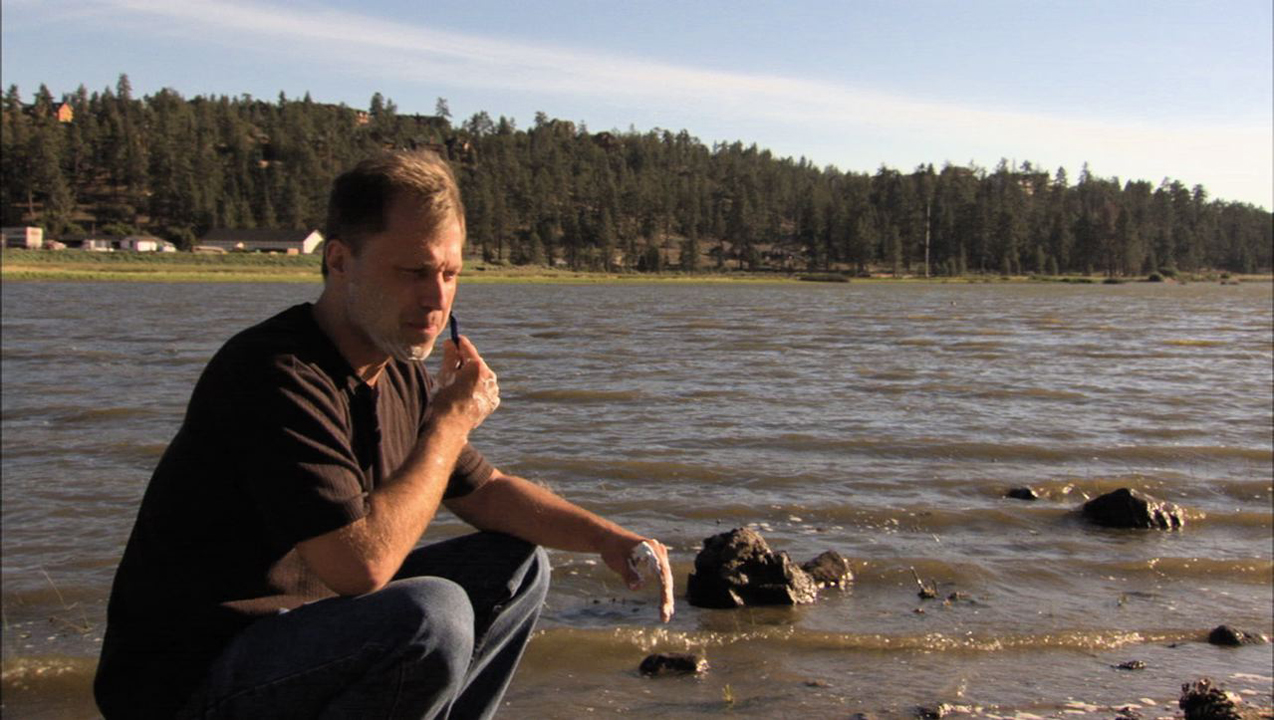
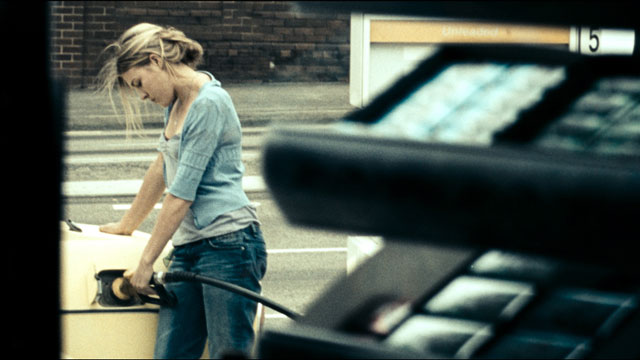
In Spider, we soon learn that Jack (Edgerton) has done something to make Jill (Foulkes) really mad at him. As they drive around Sydney, Jack tries to make things right but Jill is resistant. When they reach a filling station, Jack takes the opportunity to go into the shop and buy Jill some things by way of an apology. But he can’t resist playing yet one more prank on her, and hides a rubber spider in the car where she’ll eventually find it. They drive off, and Jack’s purchase of chocolates begins to have an effect: Jill starts talking to him again (much to her personal disappointment).

But when she discovers the spider and freaks out, she nearly crashes the car. With the car brought to a halt, Jill gets out of the car in a hurry; Jack tries to placate her by saying the spider isn’t real, and by throwing it at her (not the smartest move). Jill jumps back and is immediately hit by another car, and badly injured. Overwhelmed by guilt, and fearful of what she might tell the police when she’s able to, Jack hovers around the paramedics when they arrive, and finds himself an unwitting victim of karma.
spider-nash-edgerton

There isn’t much of a story to Spider, but then there doesn’t need to be. It’s a self-contained short movie that’s concentrating as much on the dark humour of the piece, as well as the grim inevitability of the outcome of Jack’s pranking. Working with future helmer David Michôd – Animal Kingdom (2010), The Rover (2014) – director Edgerton fashions a script that the viewer is certain will lead to disaster, and he keeps the viewer waiting for that disaster to happen. And yet when it does, Edgerton is clever enough to delay the moment – and not just once – giving the viewer just enough time to wonder if the consequences of Jack’s prank will come from a different direction.

Edgerton is also wise enough to know that his main characters should be drawn in broad strokes and that any further depth isn’t required. This is a movie where Jack and Jill are merely conduits for the story’s blackly comic denouement. That both will suffer as the result of Jack’s stupidity is a given, and while what happens to Jill could be described as unnecessarily nasty, what happens to Jack tempers that by being appropriately cruel. Edgerton judges the tone perfectly, and is aided by his and Luke Doolan’s careful, purposeful editing.

Rating: 8/10 – not the first short movie made by Edgerton, Spider is nevertheless one of his more well-constructed offerings, and one that bears repeat viewings; with one of the more impressive person versus car collisions to recommend it as well, this is a movie that packs a lot into its short running time and to considerably good effect.

Spider can be viewed on YouTube here: 

Family Values (2011) / D: Matthew Jenkin / 7m

482369293

Cast: Alan Lovell, Ryan Jackson, Oliver Leimbach, Zoe Carides

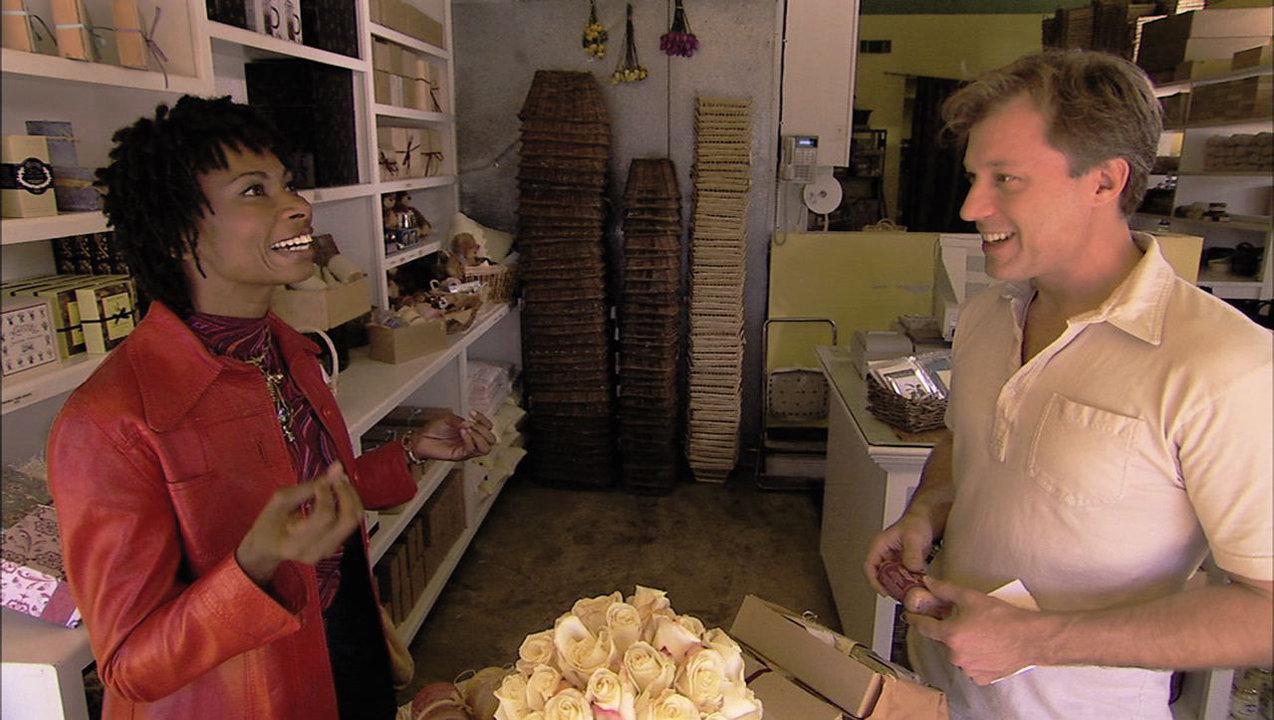
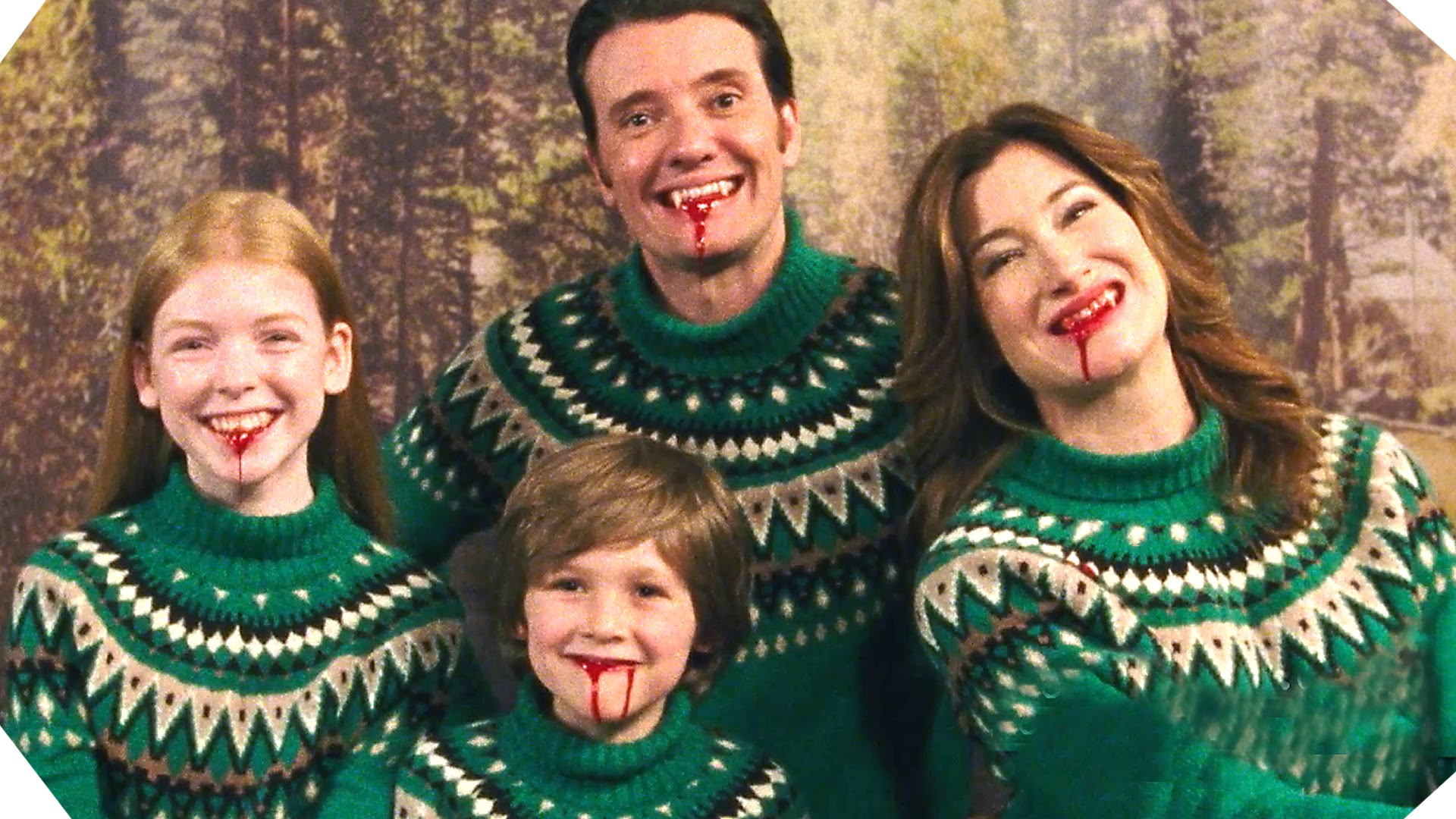
In Family Values, a father (Lovell) who decides his two sons need to be taught a bit of a lesson, coerces his eldest son, Tom (Johnson), into helping him convince his youngest son, Jack (Leimbach), that he – the father – has suddenly passed away. The father hopes this will teach him to be more respectful and visit more often (by making Jack feel guilty). But when Jack arrives and hears the “sad news”, his reaction is unexpected: he’s pleased his father is dead, and especially as he’d changed his will and left the family business to Jack. Tom is horrified by this news, having spent the last ten years building it up to where it is today, and making it a success.

In a fit of rage he causes his father to “wake up”, and when he does, their father reveals he’s played a trick on both of them. Further enraged, Tom smothers his father with a pillow, and kills him. Both sons are horrified at what’s happened, and at how quickly and easily things have gotten out of hand. And then their mother (Carides) comes home, and at first, it’s very hard to convince her that the news of her husband’s death hasn’t been exaggerated, or is part of a prank. But when they do finally convince her…

family-values-2

Like Spider, Family Values doesn’t really have much of a story, but then it doesn’t need to have one. A straightforward tale of misfiring pranks where no one comes off any better than anyone else (well… mostly), it revolves around a situation that spirals out of control quickly and with unexpected consequences. As such it’s a tightly constructed and controlled movie that wants to have a lot of fun at its characters’ expense, while also providing solid entertainment for the viewer. Writer/director Jenkin skirts close to making a farce out of it all, but manages to rein in the obvious temptation to let his cast go over the top, and in doing so makes the heightened absurdity of the situation more credible (if still highly unlikely).

He also makes the most of his single location, moving the camera round the room to good effect, though by the time the mother arrives home, the room looks to have become too crowded, what with the actors, the camera crew, the director and anyone else involved apparently getting in each other’s way and forcing cinematographers Bradley J. Conomy and Max Seager into some awkward camera positions. This upsets the visual rhythm the movie has established up until then, and it’s unfortunate that it disrupts the flow, but Jenkin rescues the situation – and the framing – before it threatens to ruin things at the end. And as with Spider, it’s the instigator who ends up on the receiving end when his prank backfires, although here it isn’t quite as physically shocking as what happens to Jack – thankfully.

Rating: 7/10 – Jenkin is a movie maker who consistently tries to entertain his audiences as simply and easily as possible, and Family Values is no different in that respect from his other movies; smart and amusing, there’s much to enjoy here, and for once, the shallow nature of the relationships doesn’t detract from the fun to be had.

Family Values can be viewed on YouTube here: 

Share this:

  • Share on X (Opens in new window) X
  • Share on Facebook (Opens in new window) Facebook
  • More
  • Print (Opens in new window) Print
  • Email a link to a friend (Opens in new window) Email
Like Loading...

Mini-Review: The Late Bloomer (2016)

28 Friday Oct 2016

Posted by dullwood68 in Movies

≈ Leave a comment

Tags

Brittany Snow, Comedy, J.K. Simmons, Johnny Simmons, Kevin Pollak, Literary adaptation, Maria Bello, Puberty, Review, Romance, Sex, True story

the-late-bloomer-poster-2

D: Kevin Pollak / 94m

Cast: Johnny Simmons, Brittany Snow, Maria Bello, J.K. Simmons, Kumail Nanjiani, Beck Bennett, Paul Wesley, Blake Cooper, Jane Lynch, Sam Robards

Peter Newmans (Simmons) is essentially a sex therapist, but one with a difference: his job is to convince sexaholics that they should channel their sexual energy into other avenues, such a hobby or work. In essence he’s encouraging his patients to be as celibate as he is. Yes, that’s right, Peter is celibate, and has reached the age of thirty without ever having sex, or even a girlfriend. He’s attracted to his neighbour, would-be chef Michelle (Snow), but she’s already in a relationship, and anyway, he wouldn’t know what to say or do even if she wasn’t. Luckily, Fate steps in when Peter collapses and is rushed to hospital. There he’s told that he has a tumour that has been pressing on his pituitary gland, and this has been the cause of his asexuality. But once the tumour is removed, puberty is going to hit him like a ton of bricks.

And so it proves. Initial attempts by his friends, Rich (Nanjiani) and Luke (Bennett), to get Peter laid don’t work, and it’s not until he wakes up one morning with an erection that Peter finally gets to experience the pleasures of, to begin with, excessive masturbation. It also changes the way he views his work, and he begins to encourage his patients to fully embrace their sexual desires, a change that causes concern for his boss, Caroline (Lynch), who has Peter booked on several publicity spots (he’s written a book on how to avoid “unnecessary” sex). But when Michelle becomes single, Peter’s continued inability to properly express his feelings for it – now thanks to the hormones raging inside him – leads him to alienate her, and also Rich. With only his long-suffering parents (Bello, J.K. Simmons) to turn to, Peter has to find a way of becoming the responsible adult – the man – he would have become if he’d gone through puberty at the right time.

nebrrlpciijgfh_1_b

A comedy that wants to be raunchy and sweet at the same time, The Late Bloomer is based on the book, Man-Made: A Memoir of My Body by Ken Baker. So, in essence it’s a true story (Baker did suffer from the same kind of tumour that Peter does), but this is a movie where the approach and the way the material has been handled, will inevitably lead the viewer to wonder if Baker’s experiences have been fairly or even halfway accurately transferred to the screen. Because this is a movie that wavers throughout in its efforts to tell a coherent story. It wants to be a raunchy comedy for the most part, and there are laughs to be had, but this is at odds with the romantic aspects of the material, and the non-existent sympathy for Peter and his situation.

With the movie lacking a clear focus, scenes come and go without any connection to each other, and Simmons is left looking and sounding like a complete doofus. As the movie progresses it becomes clear that the screenplay (assembled by five – count ’em – five screenwriters) and the director are not in sync, and despite several efforts by the cast, are never likely to gel no matter how hard they try. This leaves the movie looking disjointed and poorly assembled. There’s a funny, rewarding, and charming movie to be made out of Baker’s memoir, but this isn’t it.

Rating: 4/10 – a movie that strives to be liked but stumbles at almost every turn in its efforts to do so, The Late Bloomer wastes a ton of potentially humorous situations by ditching subtlety at every opportunity; Pollak’s feature debut as a director, he might be better off choosing any future projects by making sure they have a more polished script, and a better sense of where they’re going (and how to get there).

Share this:

  • Share on X (Opens in new window) X
  • Share on Facebook (Opens in new window) Facebook
  • More
  • Print (Opens in new window) Print
  • Email a link to a friend (Opens in new window) Email
Like Loading...

Mini-Review: Mascots (2016)

19 Wednesday Oct 2016

Posted by dullwood68 in Movies

≈ 1 Comment

Tags

Alvin the Armadillo, Chris O'Dowd, Christopher Guest, Comedy, Corky St Clair, Jack the Plumber, Jane Lynch, Jim Piddock, Netflix, Parker Posey, Review, Sid the Hedgehog, The Fist, Tom Bennett

mascots

D: Christopher Guest / 94m

Cast: Carrie Aizley, Sarah Baker, Bob Balaban, Ed Begley Jr, Tom Bennett, Jennifer Coolidge, Kerry Godliman, Matt Griesser, Christopher Guest, John Michael Higgins, Michael Hitchcock, Don Lake, Jane Lynch, Christopher Moynihan, Chris O’Dowd, Jim Piddock, Parker Posey, Harry Shearer, Fred Willard, Zach Woods, Susan Yeagley

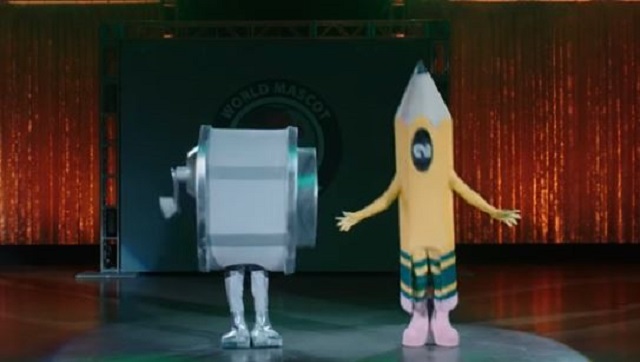
Sports mascots from around the globe gather to take part in the 8th World Mascot Association Championships, though strangely, we only get to meet competitors from the US, Canada, and the UK. There’s Mike and Mindy (Woods, Baker), teachers at Rhea Perlman Middle School; Cindi Babineaux (Posey), a former dance student; Owen Golly (pronounced “jolly”) Jr (Bennett), a third generation mascot; Tommy ‘Zook’ Zucarello (O’Dowd), a hockey mascot with a penchant for drugs and sexual misconduct; and Phil Mayhew (Moynihan), a real estate appraisor.

We meet them in the days leading up to the Championship, watch them deal with various problems related to being a mascot, and the pressures of being in such a low-profile tournament. Alongside them we get to meet the judges (Lynch, Lake, Begley Jr), the Championship organiser (Hitchcock), and a handful of interested parties, including Owen’s father (Piddock), Cindi’s sister, Laci (Yeagley), and Phil’s coach (Willard). As the big day approaches, each of the contestants faces a crisis that could mean the difference between winning and losing.

mascots

If that brief synopsis of Mascots seems a little tired, and a little uninspired, then that’s because it’s an adequate representation of the movie itself. This is the fifth movie of its type from Guest, and it has the look and feel of an idea that has been put aside in the past because it just doesn’t match up to the quality of its predecessors. There’s the same set up as before, with brief character introductions giving way to even briefer journeys to the main venue, followed by a series of obstacles that the contestants need to overcome before the big day. Along the way there are the usual monologues or discussions to camera that reveal character flaws or embarrassing histories, wedded to documentary style footage that shows the same characters behaving badly or with few social skills.

As a result, the situations and the jokes feel forced and the humour dries up very quickly in any given scene. And many of those same scenes are superfluous and dull, failing to advance the basic storyline, and feeling more extraneous than relevant. That said, the cast do the best they can, but some are more fortunate than others, with Bennett and Moynihan coming off best, while the likes of Willard, Lynch and Hitchcock play the same old characters they always play. Guest, though, actually does play a character he’s played before: Corky St Clair from Waiting for Guffman (1996). It all adds up to a fitfully amusing movie that never manages to gather any momentum, and remains unrewarding except for a couple of the mascot performances.

Rating: 5/10 – a bit of a struggle to get through, Mascots is another Netflix movie that promises more than it can deliver; time for Guest et al to hang up the mockumentary approach and find a new way to lampoon the people whose niche pursuits have provided us with so much hilarity in the past.

Share this:

  • Share on X (Opens in new window) X
  • Share on Facebook (Opens in new window) Facebook
  • More
  • Print (Opens in new window) Print
  • Email a link to a friend (Opens in new window) Email
Like Loading...

War on Everyone (2016)

18 Tuesday Oct 2016

Posted by dullwood68 in Movies

≈ Leave a comment

Tags

Action, Alexander Skarsgård, Comedy, Corrupt cops, Crime, Drama, John Michael McDonagh, Michael Peña, New Mexico, Review, Tessa Thompson, Theo James, Thriller

war-on-everyone

D: John Michael McDonagh / 98m

Cast: Michael Peña, Alexander Skarsgård, Theo James, Tessa Thompson, Malcolm Barrett, Caleb Landry Jones, Stephanie Sigman, David Wilmot, Paul Reiser

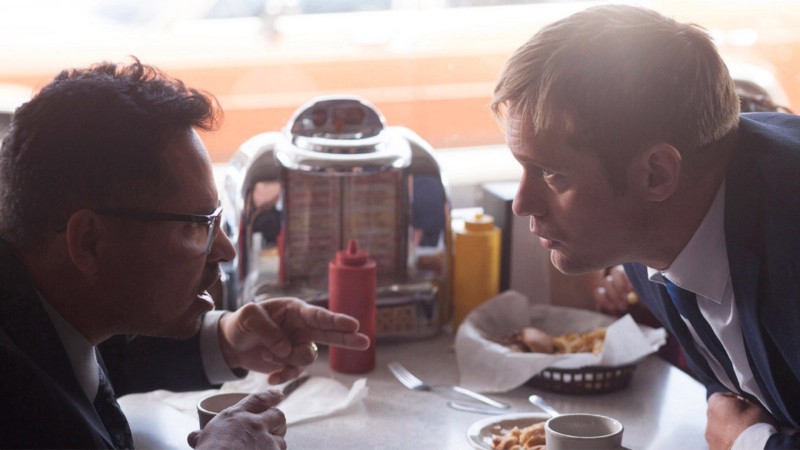
Do you like your cops as corrupt as the criminals they arrest/steal from? Do you like to see cops misuse their position and betray your trust in them at every turn? And do you like them to have so little regard for your (or anyone else’s) dignity or safety that they’d hit a mime with their car just to see if he yells in pain? Well, if you only answered yes to that last question, then War on Everyone is the movie for you. It’s a buddy cop movie where the cops in question, Detectives Bob Bolaño (Peña) and Terry Monroe (Skarsgård), will do everything they possibly can to screw over everyone they meet, be it their long-suffering boss, Lt. Stanton (Reiser), or one of their stoolpigeons, Reggie (Barrett), or just about anyone operating on the wrong side of the law (like them).

When news reaches them that a big heist is being planned, naturally Bob and Terry want to know all about it so they can grab the money once the robbers have done all the hard work. But the man planning the heist is a shadowy figure they’ve not encountered before, and the details are equally shadowy; all they have are the men who’ll be involved but not the location or where the money is to be taken. With Reggie managing to get himself the getaway driver’s job, Bob and Terry think they’ve got it all worked out: follow Reggie, grab the cash at the earliest opportunity, and head off to somewhere foreign with no extradition arrangement with the US. But of course, nothing goes to plan, and Bob and Terry find themselves up against a British aristocrat called “Lord” James Mangan (James), the mastermind behind the heist, and someone who doesn’t take kindly to their efforts to hijack the robbery and take most of the money.

woe-scene1

After the relatively sombre and restrained The Guard (2011) and Calvary (2014), writer/director John Michael McDonagh has decided to cut loose – and quite a bit – with this tale of two ultra-corrupt cops that’s set in New Mexico, is bolstered by the inclusion of Glen Campbell on the soundtrack, and which has a very gritty Seventies vibe to it. War on Everyone is also extremely funny in places, as you’d expect from McDonagh, and there are a plethora of laugh-out-loud moments to keep the audience happy and the script from seeming too formulaic. McDonagh is great at creating a world for his dysfunctional characters to inhabit, and the bright, airy spaces of New Mexico are used to good effect to create a surprisingly natural background for the absurdities that unfold in the foreground.

The plot, such as it is, is acceptable without pushing any boundaries or bringing anything new to the table, and McDonagh is keen to highlight the fact that he knows this, and that the audience should just go along with it. It’s Bob and Terry who are the movie’s real focus, even though their relationship – built as ever on mutual trust and respect while everyone else (bar Bob’s family) is fair game – is one we’re meant to enjoy for its verbal jousting and the pair’s unspoken dependence on each other. Only when it seems that Bob has run out of luck do we see how much Terry depends on him as both a partner and a friend. But in keeping with the characters’ macho exteriors, it’s a necessarily brief glance – and then back to the action.

woe-scene2

With McDonagh having established the bond that unites these two latter-day Robin Hoods (only difference: they don’t give to the poor), he adds subplots and secondary characters to flesh out the drama, but in the process and with the exception of Landry Jones’ twitchy portrayal of Mangan’s right hand man, Birdwell, never quite manages to make them as memorable as they need to be. Despite sending Mangan (literally) on an acid trip that’s designed more to show off some fancy camera moves and elaborate staging than to look into the mind of the character, the villain is essentially colourless and in the end, easily dealt with. Likewise, Terry’s love interest, Jackie (Thompson), who he places under his own personal protection and who he promptly falls in love with. Jackie’s a sweet enough character, and as a counterpoint to all the cynicism on display elsewhere she fits the bill, but McDonagh doesn’t develop her in any way, and she remains a frustrating caricature: the girl who needs to be rescued.

As the two felons with badges, Peña and Skarsgård make a great team. Peña is the erudite, well-read partner who can quote from the Greek classics, and who realises that they can’t keep doing what they’re doing indefinitely (it doesn’t help that he looks a little like a Latino version of the British movie critic Mark Kermode). Skarsgård brings the muscle, folding in on himself a lot of the time and accentuating his forehead, as if he’s about to use it as a battering ram. He’s the more dangerous of the two, unpredictable, and Skarsgård projects just the right amount of bottled-up menace that the role requires. Together the two stars are a joy to watch, and McDonagh ensures that their camaraderie is entirely believable, even when he takes them out of their New Mexico comfort zone and sends them off to Iceland to track down an absconded Reggie.

woe-scene3

Making his first feature away from Ireland, McDonagh shows a confidence in his decision that isn’t supported by the way he handles the material, and on this occasion McDonagh the director doesn’t know quite what to do to combat the problems inherent in McDonagh the writer’s screenplay. But the movie is an enjoyable one for the most part, provided the viewer keeps their expectations to a minimum; then they might be pleasantly surprised by Bob and Terry’s antics, and also more invested in how things turn out. One area where the movie can’t be faulted is in its cinematography, courtesy of the very talented Bobby Bukowski, whose previous movies include Rosewater (2014) and The Iceman (2012). Thanks to his efforts, War on Everyone is often beautiful to look at, and he keeps the camera moving in ways that are often very inventive – and often without the viewer realising it.

Rating: 7/10 – at times a raucous, freewheeling movie with plenty of buzz about it, War on Everyone can’t sustain it’s initial set up for very long, and McDonagh’s script loses its freshness around the halfway mark; good performances from Peña and Skarsgård help things immeasurably, but this has to go down as a missed opportunity from McDonagh, but not so bad that his next movie won’t be as highly anticipated as this one was.

Share this:

  • Share on X (Opens in new window) X
  • Share on Facebook (Opens in new window) Facebook
  • More
  • Print (Opens in new window) Print
  • Email a link to a friend (Opens in new window) Email
Like Loading...

Mini-Review: The Greasy Strangler (2016)

12 Wednesday Oct 2016

Posted by dullwood68 in Movies

≈ Leave a comment

Tags

Big Brayden, Big Ronnie, Comedy, Disco, Drama, Elizabeth De Razzo, Horror, Jim Hosking, Michael St. Michaels, Murder, Sky Elobar, Thriller

the-greasy-strangler

D: Jim Hosking / 93m

Cast: Michael St. Michaels, Sky Elobar, Elizabeth De Razzo, Gil Gex, Joe David Walters, Abdoulaye NGom, Sam Dissanayake, Holland MacFallister, Mel Kohl

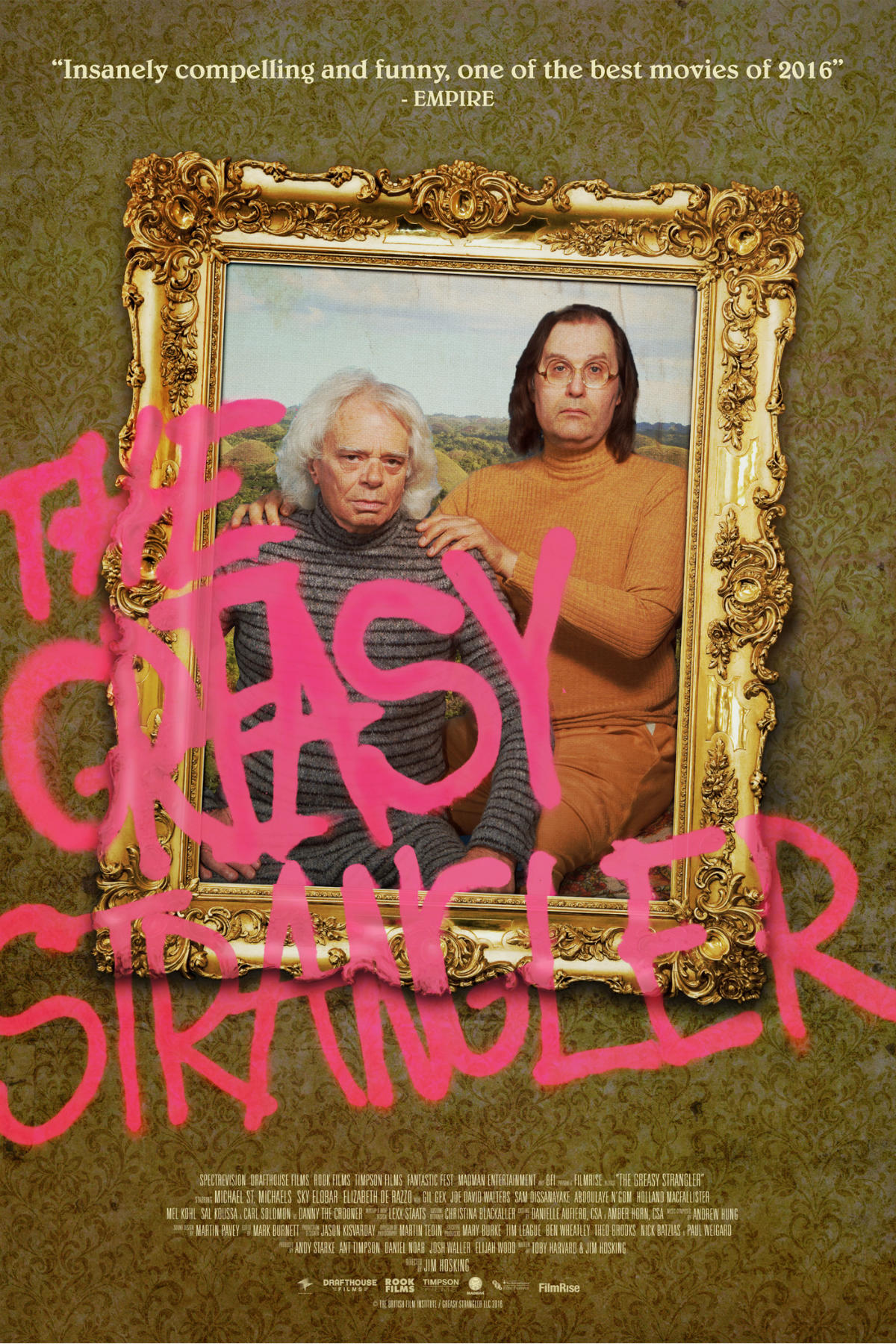
Big Ronnie (St. Michaels), an ex-disco entrepreneur back in the Seventies, lives with his middle-aged son, Big Brayden (Elobar). When they’re not bickering, they run a tour guide business where they show unsuspecting tourists various sites “supposedly” connected to the heyday of disco. Big Ronnie likes his food cooked in a lot of oil and grease, the oilier and greasier the better, because when he’s not chiding Big Brayden, or ripping off tourists, he’s the Greasy Strangler, a maniacal killer who has claimed several victims so far and whom the police are no nearer catching than when he started.

Big Ronnie and Big Brayden’s relationship is shaken up by the appearance of Janet (De Razzo). Much to Big Ronnie’s displeasure, Janet takes a shine to Big Brayden, and they begin dating. This makes Big Ronnie so angry that he claims more victims, including friends such as Oinker (Walters). Big Brayden begins to have his suspicions about the Greasy Strangler’s identity, and when Big Ronnie behaves “all smooth” and persuades Janet to be his girlfriend, the stage is set for a showdown between father and son, killer and self-appointed vigilante, that will (inevitably) change their lives forever – but not necessarily in a way that either could have foreseen.

tgs-scene

Already being hailed as a cult favourite, and having a level of critical approval that most low-budget, indie horrors would themselves kill for, The Greasy Strangler is a funny, awful, side-splitting, appalling, blackly comic, dreadful movie that works very well in stretches but makes too much use of verbal and visual repetition to pad out its running time. Depending on your tolerance, conversations involving the phrase “bullshit artist” may prove to be annoying, as might seeing over and over again, Big Ronnie getting cleaned up in a car wash after a bout of killing as the Greasy Strangler. Co-writer/director Jim Hosking appears to be striving for some kind of banality here, a further example of the monotonous lives that Big Ronnie and Big Brayden live – they do little beyond the tours, eating together, and arguing – but it’s a device that soon wears out its welcome.

Alternatively, the movie is on firmer ground when it’s trying to be shocking and distasteful. Prosthetic penises and exploding eyeballs are the order of the day, and there’s a pleasing, sleazy Eighties vibe to it all (the special effects reflect the quality of the period). It’s also very funny in a “you shouldn’t really be laughing” kind of way, particularly in the ongoing war of attrition that makes for the relationship between Big Ronnie and Big Brayden; dysfunctional doesn’t even cover it. St. Michaels and Elobar are both excellent, pushing a number of physical and emotional boundaries in the script’s pursuit of ever more alienating content. Love ’em or want to get as far away from ’em as possible, Big Ronnie and Big Brayden are characters you won’t forget in a hurry, and the movie is on very firm ground when they’re on screen together.

Rating: 7/10 – a breath of welcome bad air in a year where few movies have dared to be different, The Greasy Strangler doesn’t always overcome its low-budget origins, but it does have a number of moments where the viewer will be thinking “No way“; bold in both tone and content, the movie never tries to be likeable or elicit sympathy for its lead characters, meaning it is what it is, and it’s entirely unapologetic about everything it depicts, which in this genre, is exactly what it should be doing.

Share this:

  • Share on X (Opens in new window) X
  • Share on Facebook (Opens in new window) Facebook
  • More
  • Print (Opens in new window) Print
  • Email a link to a friend (Opens in new window) Email
Like Loading...

Hunt for the Wilderpeople (2016)

06 Thursday Oct 2016

Posted by dullwood68 in Movies

≈ 3 Comments

Tags

Barry Crump, Child services, Comedy, Drama, Julian Dennison, Literary adaptation, New Zealand, Rachel House, Review, Rima Te Wiata, Sam Neill, Taika Waititi, The Bush, Wild Pork and Watercress

hunt-for-the-wilderpeople

D: Taika Waititi / 101m

Cast: Sam Neill, Julian Dennison, Rima Te Wiata, Rachel House, Tioreore Ngatai-Melbourne, Oscar Kightley, Stan Walker, Mike Minogue, Cohen Holloway, Rhys Darby

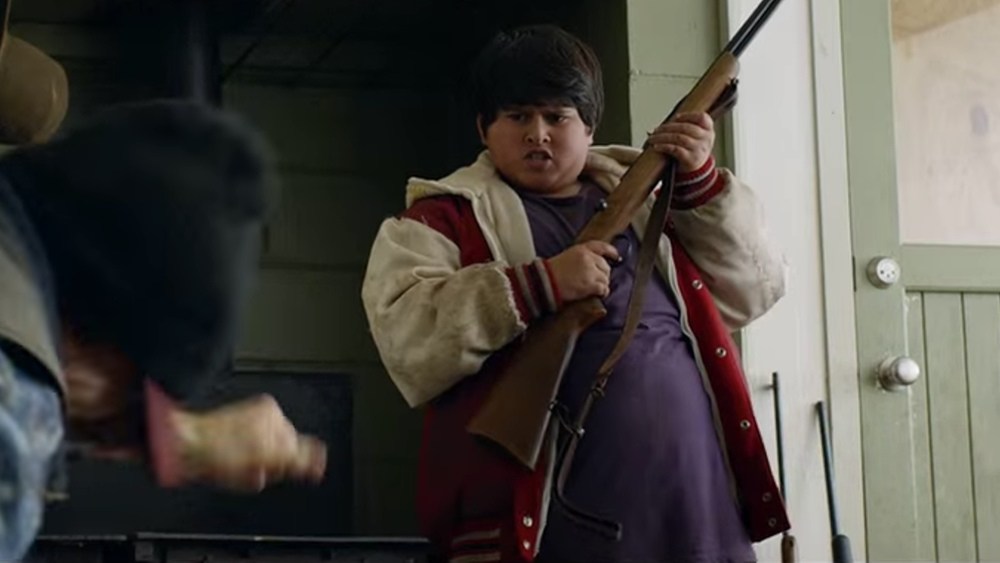
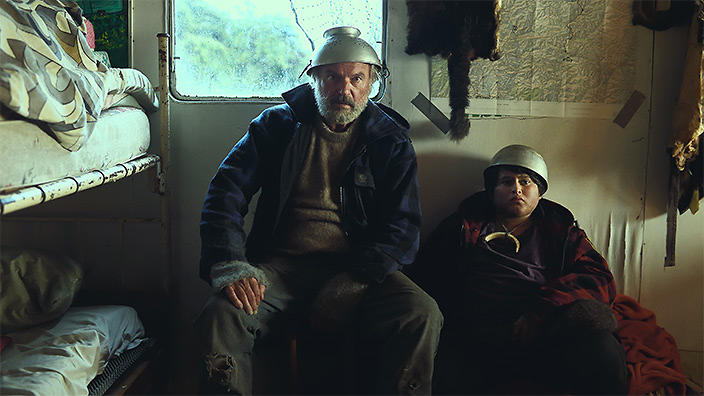
Ricky Baker (Dennison) is a problem child. He’s in the care system, and has a reputation for disobedience, stealing, spitting, running away, throwing rocks, kicking stuff, defacing stuff, burning stuff, loitering, and graffiti-ing (and that’s just the stuff Child Services knows about). In short, he’s a real bad egg. But he’s been given one last chance: to be looked after by Bella Faulkner (Te Wiata) and her grouchy husband Hec (Neill) on their farm. Bella is endlessly upbeat despite a tendency for inappropriate comments (“Whoo! You’re a big fella. Who ate the guy who ate all the pies, eh?”), but her heart’s in the right place and she more than compensates for Hec’s less than welcoming behaviour. Ricky runs away the first night, but doesn’t get very far, and soon he’s running away each night – but he’s always back in time for breakfast.

Responding to Bella’s ministrations, Ricky soon settles in and begins to take an interest in the farm and Hec’s role. Hec teaches Ricky to shoot, and they begin to form a bond. When Ricky’s birthday comes around, the Faulkners get him a dog, which he names Tupac. But tragedy strikes, and Ricky is required to go back into the care system. Refusing to go he heads off into the Bush, and determines to remain in hiding. Hec soon finds him, and they begin the return journey home when Hec breaks his ankle. Forced to stay in the Bush while his ankle heals, six weeks pass, during which Child Services, in the form of would-be Agatha Trunchbull, Paula Hall (House), and the police, search for the missing pair. An encounter at a lodge with a trio of hunters who are looking for Ricky and Hec leads to Hec being regarded as a pervert, and Ricky having been kidnapped.

hftw-scene1

Ricky and Hec go on the run, and decide to hole up in the Bush until the search for them peters out. They survive by catching or foraging for food, use the “Knack” – a kind of semi-mystical knowledge that allows them to avoid being found and to survive in the wilderness – and slowly and surely learn to trust and respect and depend on each other. But the search for them continues unabated, thanks to Paula Hall’s determination that “no child is left behind”, and the occasional help afforded them by strangers such as young girl Kahu (Ngatai-Melbourne), and raving conspiracy theorist Psycho Sam (Darby). But inevitably the pair are tracked down and it only remains to be seen if they go out with a bang or a whimper.

An adaptation of the novel Wild Pork and Watercress by Barry Crump, Hunt for the Wilderpeople is one of the most enjoyable and endearing movies you’re likely to see all year. It has charm by the bucket load, an irresistible central character in Ricky Baker, is peppered with some of the funniest dialogue heard in a very loooong time, and features some absolutely stunning New Zealand scenery. And because it all takes place in New Zealand there’s a fantastic Lord of the Rings joke to round things off. It’s a movie that, thanks to the efforts of writer/director Taika Waititi, provides enough comic indulgence for two movies.

hftw-scene3

It features a quartet of wonderfully bizarre and idiosyncratic performances as well, from Neill’s wonderfully arch turn as a man with all the parental skills of a confirmed malcontent, to Te Wiata’s brief but heartfelt portrayal of a woman for whom the act of caring compensates greatly for the one regret she’s ever had in life, to House’s grotesque Child Services agent, a loud, over-earnest, bullying monster of a woman who won’t be beaten by Ricky at any cost, as evidenced by this brilliant exchange:

Ricky Baker: I’ll never stop running!
Paula: Yeah, and I’ll never stop chasing you – I’m relentless, I’m like the Terminator.
Ricky Baker: I’m more like the Terminator than you!
Paula: I said it first, you’re more like Sarah Connor, and in the first movie too, before she could do chinups.

But when all’s said and done, this is Dennison’s movie. He owns the role of Ricky Baker as if he’s played it all his life, from the constant gangsta/thug life referrals, all the way to the petulant disregard for others he uses as a shield against getting hurt. Dennison is nothing short of superb here, soaking up Waititi’s fluid direction and relaying with disarming simplicity the problems of being in a care system that doesn’t actually care about him. He’s also a great physical comedian, using his size in unexpected ways to draw out several moments of equally unexpected humour. And his timing isn’t too bad, either. Witness the scene where he tries to cajole Hec into looking for a Russian bride online: when Hec looks at him with disdain, Ricky’s deadpan “Too soon?” is served up to perfection.

hftw-scene2

In amongst the humour, Waititi is wise enough to keep the sermonising about the importance of family ties, and just what makes a family, to a minimum, and the demonisation of Child Services via the character of Paula is kept from becoming too silly or ridiculous thanks to Waititi’s assured handling of his own script, and House’s confident awareness of the character’s narrative limitations. She’s a cartoon figure in many respects, and in some ways the Yosemite Sam to Ricky’s Bugs Bunny, but not drawn or portrayed too broadly to be completely obnoxious or hateful. (There’s a sad back story there, no doubt, and one that would be good to know more about.) The relationship between Ricky and Hec is allowed to develop naturally, and is helped by the passage of time. Neill and Dennison work very well together, and the early scenes where they clash adds poignancy later on when it becomes clear to both of them just how much they need each other.

As mentioned before, the whole thing plays out against the backdrop of some spectacular New Zealand scenery – the opening credits sequence as the camera skims the treetops of the Bush sets the tone for the movie’s overall look and feel – and DoP Lachlan Milne captures the rugged beauty of the Bush itself and the surrounding terrain with clarity and precision; it’s a visually splendid movie to watch. And to cap it all off, the soundtrack, with its mix of original compositions and well-chosen songs – Nina Simone’s version of Sinnerman is put to particularly good use – adds an extra layer of finesse to a movie that already has more than enough finesse already.

Rating: 9/10 – a feel-good movie that doesn’t even have to try too hard to make its audience laugh or cry, Hunt for the Wilderpeople is beautifully observed, beautifully constructed, and effortlessly satisfying; Waititi is to be congratulated for taking material that could have been treated with far less care than is shown here and making it feel special, and for making a movie about a fat kid and his grumpy “uncle” that is nothing short of “majestical”.

Share this:

  • Share on X (Opens in new window) X
  • Share on Facebook (Opens in new window) Facebook
  • More
  • Print (Opens in new window) Print
  • Email a link to a friend (Opens in new window) Email
Like Loading...

The Lunchbox (2013)

02 Sunday Oct 2016

Posted by dullwood68 in Movies

≈ 1 Comment

Tags

Comedy, Dabba, Dabbawala, Drama, Irrfan Khan, Mumbai, Nawazuddin Siddiqui, Nimrat Kaur, Review, Ritesh Batra, Romance

the-lunchbox

Original title: Dabba

D: Ritesh Batra / 104m

Cast: Irrfan Khan, Nimrat Kaur, Nawazuddin Siddiqui, Lillete Dubey, Nakul Vaid, Bharti Achrekar, Yashvi Puneet Nagar, Denzil Smith, Shruti Bapna

In Mumbai, a dabbawala is literally “one who carries a box”. A dabbawala is part of a delivery system that allows workers who don’t want to eat at a food stand or a restaurant, to have hot, home-cooked food for lunch. The lunchboxes are collected from the worker’s home in the morning, delivered in time for their lunch break, and then returned to the worker’s home by the evening. This service first started in 1890, and has grown to the point where anywhere between 175,000 and 200,000 lunchboxes are delivered every day, and incredibly, it’s estimated that dabbawalas make less than one mistake in every six million deliveries.

It’s this amazing service that forms the backdrop and set up for The Lunchbox, a wonderfully complex, and still very simple, May-December romance that develops between soon-to-retire claims actuary Saajan Fernandes (Khan) and housewife Ila (Kaur). Saajan is a widower, well-regarded in the workplace but somewhat withdrawn from his colleagues. He doesn’t socialise outside of work, and he appears to be resigned to remaining alone. Ila has a husband, Rajeev (Vaid) who is distant from her, and from their young child, Yashvi (Nagar). Ila wants Rajeev to play more of an active part in their marriage; some nights he comes home and doesn’t say a word. Ila’s aunty (Achrekar), who lives in the flat above them, suggests that Ila make delicious lunches for Rajeev, in order to help rekindle the romance they used to have.

the-lunchbox-scene2

But instead of Rajeev receiving the first of these lunches, it’s Saajan who gets to discover just how good a cook Ila is. When she realises that her husband hasn’t been receiving the lunches, she leaves a note in the next one, advising the person who is getting them, about the mistake. Saajan is amused by this, but he’s even more enamoured by the quality of Ila’s cooking. He replies to her note, and so begins a correspondence that both keep to themselves, and which enables both of them to feel that there is more to life than the boundaries that seem to keep them hemmed in. As their relationship begins to deepen, Saajan has to cope with the irritating interruptions and attention of his successor, Shaikh (Siddiqui), while Ila has to cope with her father’s long-term illness, and the effect it’s having on her mother (Dubey), and the realisation that Rajeev is having an affair.

The first, and so far, only feature from Mumbai-born Ritesh Batra, The Lunchbox is so deceptively simple, and so elegantly complex, that it’s difficult to work out which of these two aspects is the more effective. Ostensibly a romantic drama with comedic overtones, the movie resists the temptation to be acceptably superficial, and instead, lays the groundwork for perceptive ruminations on growing old in modern India, and what it means to accept the role in life you believe you’ve been given. Through Saajan’s listless acceptance of his fate as a widower with no future in retirement, the movie casts an observant eye over what it is to become inured to a certain way of life, and to regard change as unobtainable. Saajan believes his fate is unavoidable, and in believing so, can do nothing about it.

Ila wants her husband back from wherever it is that his mind is taking him. She at least believes she can change things back to how they were, and has yet to resign herself to a stale marriage of convenience. But Rajeev’s continued indifference, and Ila’s eventual discovery of his infidelity, both serve to leave her feeling trapped and unable to make a better life for herself and Yashvi. Thankfully, Saajan’s enjoyment of her food, and his willingness to engage with her via the notes they send each other, allows her to feel that there is hope for the future, whether she leaves Rajeev and goes to live in Bhutan with Yashvi and Saajan (as he suggests at one point), or even if it’s just her and her daughter.

the-lunchbox-scene1

For Saajan, things are made more complicated by his age and his position in the workplace. After thirty-five exemplary years in the same job, he’s retiring out of some sense of commitment to the memory of his late wife. Closed off from everyone, including himself from time to time, Saajan has resigned himself to a life of anonymity and seclusion, and in a place, Nashik, for which he has little actual enthusiasm. It’s only through the persistence of his successor, the garrulous and irritating Shaikh, and Ila’s notes, that Saajan begins to come out of his shell. He becomes more outgoing, less gloomy, and he tolerates Shaikh’s ebullient behaviour, even when he joins Saajan for lunch and the older man finds himself sharing with the younger man – and is surprised to find he’s happy to do so.

Saajan and Ila’s relationship develops to the point where the audience is practically praying that they’ll meet and properly fall in love, and not rely on the kind of epistolary romance that suits a novel but not necessarily a movie (unless that movie is Whit Stillman’s Love & Friendship). But the course of true love is never known to run smoothly, and despite their obvious need for each other, Saajan’s awareness of the age difference between them leads him to snatch defeat from the jaws of victory. An arranged meeting doesn’t go as planned, and their romance suffers as a result, leaving both parties to decide if what they had was even tangible. Decisions are made, and though they seem immutable, Batra’s clever script allows for optimism in the face of dramatic certainty.

the-lunchbox-scene3

Batra is helped immensely by his two leads. Khan is a perceptive, dignified actor, and he brings those qualities to bear on a role that requires him to reveal more and more about Saajan as the movie progresses. With his gaze registering bemused astonishment with every mouthful and smell of Ila’s cooking, Khan is a delight to watch, and he handles the disappointments and self-imposed barriers to living that Saajan endures with an emotional clarity that is an acting masterclass all by itself. Kaur is equally impressive. Whether Ila is trading quips or recipe tips with her aunty, or whether she’s coming to terms with the likelihood of a loveless marriage for years to come, the actress displays a range and an understanding of her character’s situation that is breathtaking to watch. Both actors are superb here, so much so that it’s very difficult to envisage anyone else in either role.

With Batra proving to be as good a screenwriter as he is a director, The Lunchbox is in very good hands throughout. He makes a background character out of the city of Mumbai, and the hustle and bustle of its streets and trains and buses – all constant reminders that life goes on around us, vibrant and compulsive, even if we choose to step back from it – is used to potent effect, as Saajan in particular experiences its highs and lows. Batra is aided by sterling work from DoP Michael Simmonds, and the movie’s slow, lyrical pace is courtesy of editor John F. Lyons. Scenes play out sometimes at such a stately pace that it’s hard to believe it’s all been agreed in advance, and that so many quiet moments could have such a cumulative, and remarkable effect. But the pace and the tone of the movie are aspects that have been achieved with a great deal of skill, and they serve the material with undisguised aplomb.

Rating: 9/10 – a beautifully observed, beautifully constructed movie that takes two trapped souls and sets them free by virtue of their finding in each other a kindred spirit, The Lunchbox is touching, affecting, stylish, and endlessly gracious in its delivery; a sparkling romantic drama that pays dividends from the very start, and which never short changes either its characters or its audience, it’s a movie that delights with ease, and lingers in the memory long after it’s over.

Share this:

  • Share on X (Opens in new window) X
  • Share on Facebook (Opens in new window) Facebook
  • More
  • Print (Opens in new window) Print
  • Email a link to a friend (Opens in new window) Email
Like Loading...

Me Before You (2016)

29 Thursday Sep 2016

Posted by dullwood68 in Movies

≈ Leave a comment

Tags

Charles Dance, Comedy, Drama, Emilia Clarke, Euthanasia, Janet McTeer, Jojo Moyes, Literary adaptation, Quadriplegia, Review, Romance, Sam Claflin, Thea Sharrock

me-before-you

D: Thea Sharrock / 110m

Cast: Emilia Clarke, Sam Claflin, Janet McTeer, Charles Dance, Matthew Lewis, Brendan Coyle, Samantha Spiro, Jenna Coleman, Stephen Peacocke, Vanessa Kirby, Ben Lloyd-Hughes, Joanna Lumley

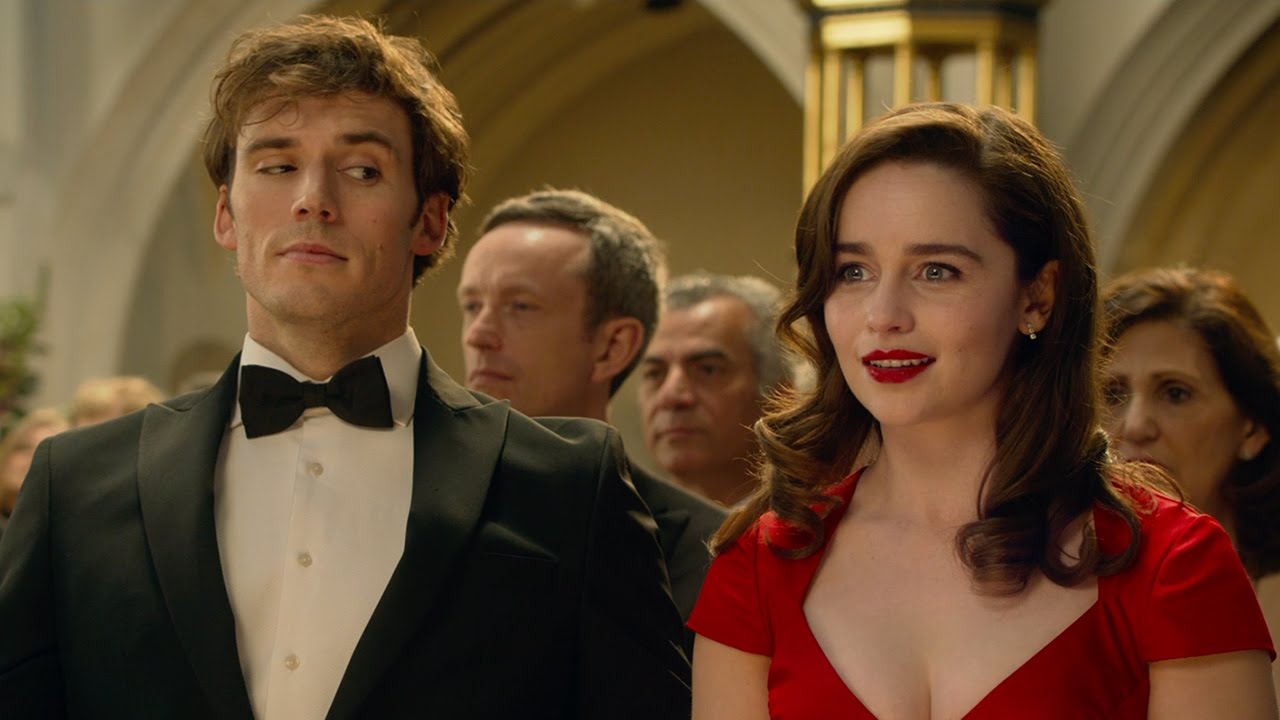
Will Traynor (Claflin) is young, smart, successful, and thanks to an accident involving a motorbike, a quadriplegic. Louisa Clark (Clarke) is also young, but while she’s smart enough and able bodied, she’s reached her mid-twenties without having travelled or worked anywhere except in the local cafe. Will is financially well off and can afford the best care available; he also has doting parents (McTeer, Dance) who don’t want him to limit himself because of his disability. Louisa, nicknamed Lou by everyone who knows her, lacks ambition, and has a fitness-obsessed boyfriend, Patrick (Lewis), who treats her like a member of his (non-existent) fan club. Will wants to die, and has agreed to give his parents six months before he does. Lou wants a life but doesn’t know how to go about claiming one.

Lou loses her job at the cafe. Will needs a live-in carer. Lou applies for the job despite having no previous experience. Will’s mother hires her anyway, surmising that Lou’s madcap personality can bring Will out of his bitter moods. At first it doesn’t work. But as time goes on, Lou and Will establish a friendship that sees both of them venture out of their shells, and begin to engage/re-engage with the wider world. Lou introduces Will to her family. They go on outings together. Patrick suspects that Lou has stronger feelings for Will than she’ll readily admit. Patrick is right. After Will suffers a recurring bout of pneumonia, Lou persuades Will to take a holiday to Mauritius. She goes with him, as does Will’s personal care-giver, Nathan (Peacocke). The night before they’re due to return, Lou tells Will she loves him. But Will has devastating news for her…

mby-scene3

On the surface, Me Before You – adapted by Jojo Moyes from her novel of the same name – is a brisk romantic drama with comedic elements that is designed to tug at the heartstrings of viewers susceptible to this kind of thing, and leave them blubbing into their Kleenex by the movie’s end. And on a superficial level, the movie does this very well indeed, and is quite charming as it does so. But there’s a lot more going on in Me Before You than meets the eye; a lot more. The only question to ask is: how much of it is deliberate?

First there’s Lou, a bubbly, positive bundle of energy who pulls faces a lot when she’s nervous, and whose eyebrows appear to have (literally) wandered in from a documentary on endangered insects. She also has the worst fashion sense this side of anyone in either Zoolander movie. But she’s cute and she’s lovable, and she’s like an adorable puppy; she just wants to be liked sooooo much. But it’s not until she rounds on Will for being rude to her (for the umpteenth time) that their relationship truly begins. He stops behaving like an arse, she starts to like him. And romance begins to make itself felt, even if it’s only one-sided at first.

And secondly, there’s Will, a once-energetic, care-free young man who had the world at his feet, the admiration of his friends and colleagues, and a beautiful girlfriend (Kirby). He loses all that, and more besides. He loses the will to live, and he shuts himself away. He does his best to alienate the people around him, while refusing to show anyone just how much pain he’s in. When Lou chastises him for his behaviour it makes him rethink his approach, and the way he feels.

mby-scene1

But that’s the wicked attitude that sits at the heart of the movie. Moyes, aided by director Sharrock and the twin efforts of Clarke and Claflin, brings these two lonely characters together and gives them an unrealistic chance at happiness. We’re told at the beginning that Will’s condition is irreversible, and we’re told his intentions soon after. And through Lou’s efforts at bringing Will out of his shell, the audience is persuaded to believe that there is hope – for Will, for Lou, for both of them as a couple. But it’s a false hope, and one that the movie focuses on for a large part of its running time. As each shared experience brings Lou and Will closer and closer to each other, the audience is encouraged to believe that there will be a glorious Happy Ever After.

But anyone who has been paying attention will know that true love doesn’t conquer all, and that in the real world, fairy tale romances have a nasty habit of folding under the pressure of expectations (it doesn’t help that Moyes has also written a sequel, helpfully entitled Me After You). And so it proves here, as the kind of wonderful romance that only happens in the movies is derailed by narrative considerations it cannot avoid. It’s like a kick in the teeth, and the average viewer could be forgiven for thinking that the movie has stopped being a positive message about overcoming the restrictions of a truncated lifestyle, and has become a glowing advert for euthanasia.

mby-scene2

But strangely, such narrative concerns do little to hinder the movie’s charm and likeability. Despite the darkness at the heart of the story, Lou and Will’s burgeoning love affair is one that tugs at the heartstrings and proves impossible not to root for. Moyes is clever enough to make their relationship credible enough amid all of Lou’s self-doubt and Will’s hatred of his condition, and she and first-time director Sharrock are aided immensely by the performances of Clarke and Claflin. Both actors have the measure of both their characters and the drama that underlies the surface fluffiness of their romance. Clarke’s surprisingly malleable features express joy and sadness and confusion and worry with undeniable charm, while Claflin expresses more with a look than some actors manage with their whole body and a lengthy monologue.

Me Before You isn’t a perfect rom-dram – or rom-com – though it has the best elements of both, and it sometimes goes out of its way to paint an idealised picture of Will’s condition that is at odds with its own narrative agenda, but for all that it’s a warm-hearted, often very funny movie that is engaging, affecting and hugely enjoyable despite the last-minute change into movie-of-the-week melodramatics. And if it all looks a little too sleek and shiny in terms of its overall look, then chalk that one up to DoP Remi Adefarasin – he makes it all look like the fairy tale it so nearly is.

Rating: 8/10 – amiable and smart enough to overcome the necessity of its downbeat ending, Me Before You is entertaining, and full of light, lovely touches that should bring a smile to lovers of this type of movie; Clarke and Claflin are well-cast, and there’s good support from veterans McTeer and Dance, but it’s Moyes who earns the plaudits by retaining the structure and difficult denouement of her novel.

Share this:

  • Share on X (Opens in new window) X
  • Share on Facebook (Opens in new window) Facebook
  • More
  • Print (Opens in new window) Print
  • Email a link to a friend (Opens in new window) Email
Like Loading...

The Meddler (2015)

17 Saturday Sep 2016

Posted by dullwood68 in Movies

≈ Leave a comment

Tags

Bereavement, Comedy, Drama, J.K. Simmons, Lorene Scafaria, Mother/daughter relationship, Relationships, Review, Romance, Rose Byrne, Susan Sarandon, Widow

the-meddler

D: Lorene Scafaria / 103m

Cast: Susan Sarandon, Rose Byrne, J.K. Simmons, Jerrod Carmichael, Cecily Strong, Lucy Punch, Michael McKean, Jason Ritter, Jo Jordan

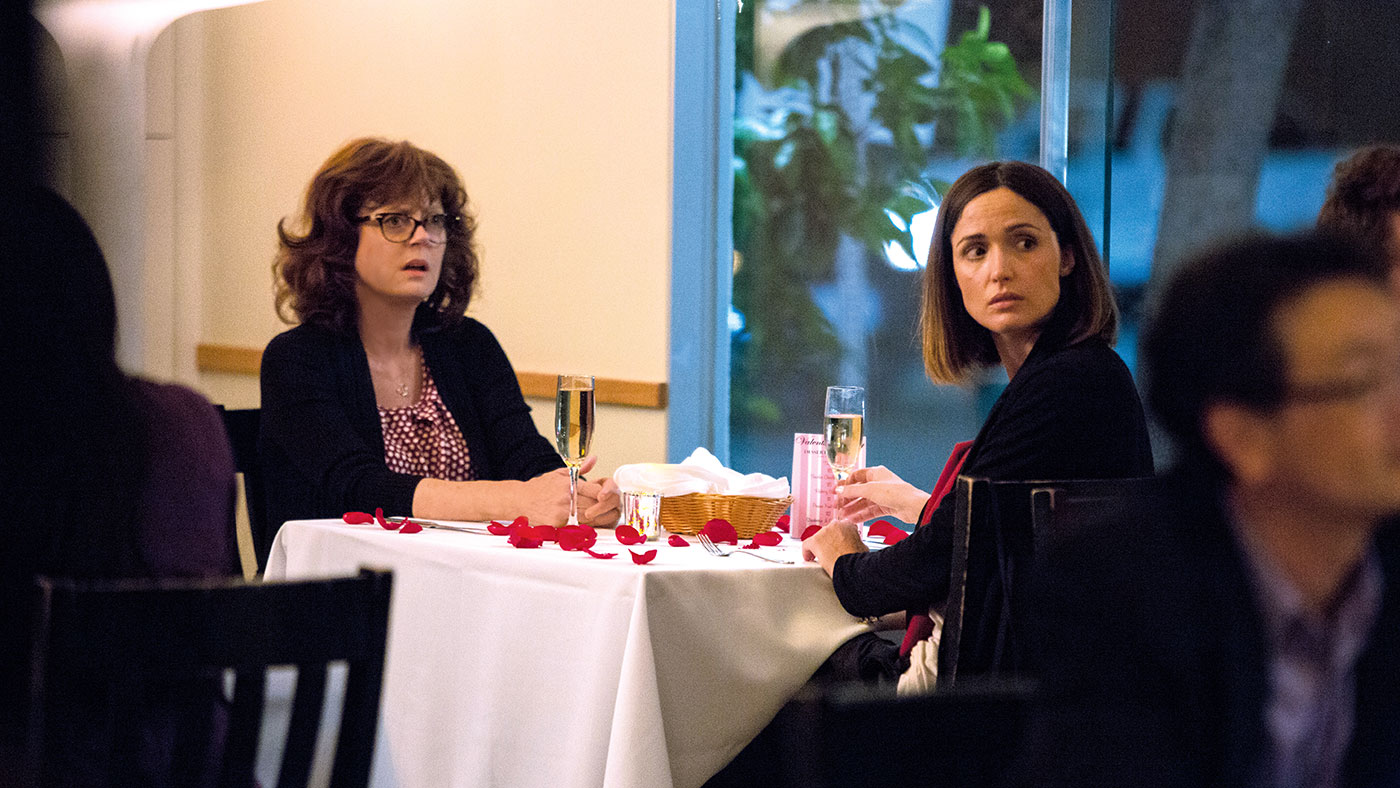
Marnie Minervini (Sarandon) is recently widowed. She has a daughter, Lori (Byrne), who lives and works in Los Angeles in the TV industry. At a loss as to what to do with her time, and despite being financially comfortable thanks to her late husband Joe’s foresight, Marnie chooses to focus her attention on Lori. But Marnie has no idea that her attentions are overbearing, and she ignores Lori’s protests that she’s trying too hard to involve herself in her daughter’s life. When Lori gets an plus-one invitation to a friend’s baby shower, Marnie invites herself along. Lori doesn’t show but Marnie is a hit with her daughter’s friends, and soon she’s spending more and more time with them, particularly Jillian (Strong), who reveals her wish to be married but who can’t afford it.

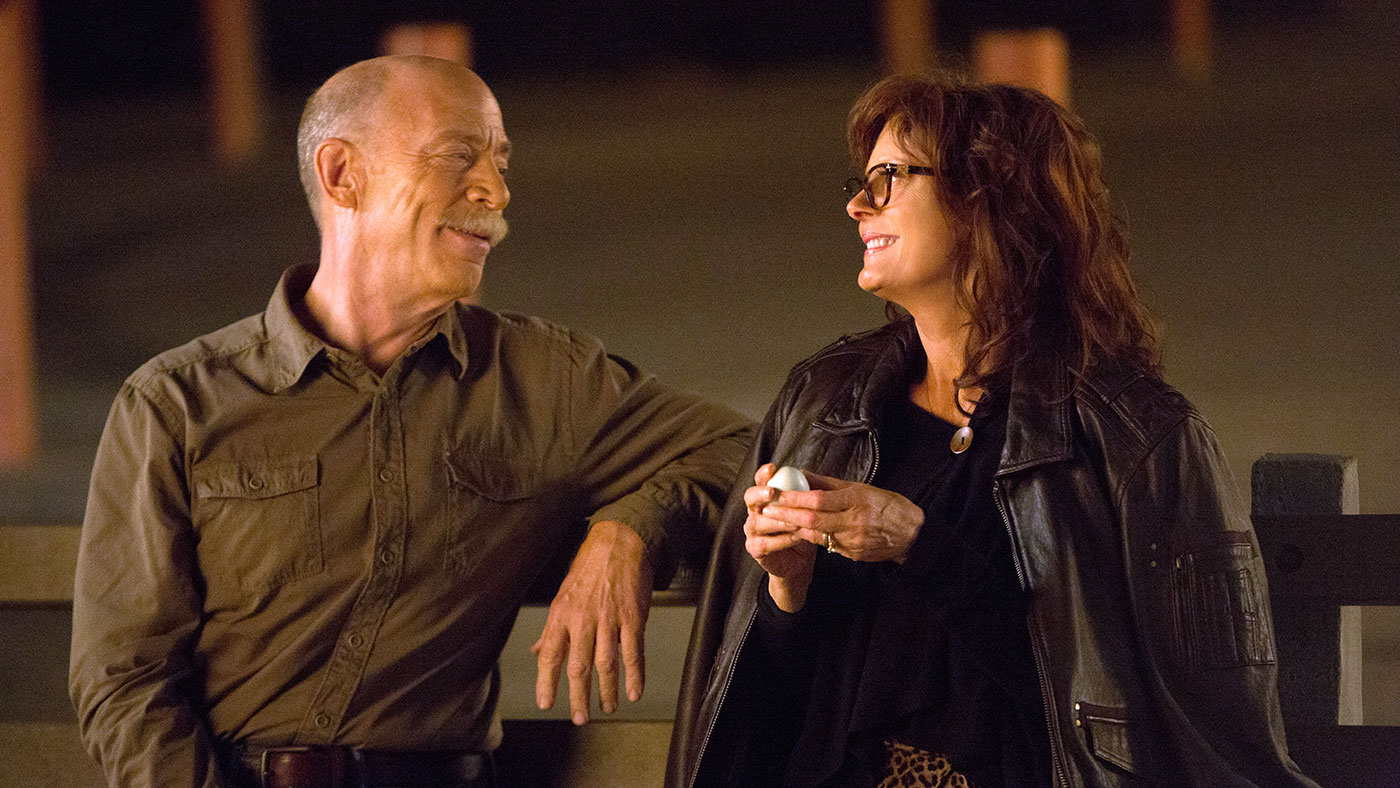
Marnie persuades Jillian to let her pay for the wedding, and soon she and Jillian’s friends (and Lori’s) are planning all the details, including the bridal outfit. Meanwhile, Lori announces that she’s going to New York for a while. The pilot she’s working on is being filmed there, and it makes sense for her to be there if any problems arise. Marnie throws herself into helping others, from the Genius at an Apple store, Freddy (Carmichael), to an elderly lady (Jordan) at the hospital where she volunteers. She even meets a retired policeman called Zipper (Simmons) when she inadvertently wanders into the background of a movie that’s being shot, and is mistaken for an extra.

the-meddler-scene1

A trip to New York to visit Lori and Joe’s family goes awry, and Marnie returns to Los Angeles chastened and beginning to realise just how much her grief has been channelled into helping others at the expense of herself. She spends more time with Zipper, and comes to Lori’s aid when she has an emergency. Jillian’s wedding goes off without a hitch, and Marnie is given a special mention for her help in organising it all. But Marnie still has to make a decision about whether or not she wants to continue as she is – constantly occupied yet unhappy – or begin a new stage in her life, one that will see her still helping others but not out of personal necessity.

While it’s an apt description of Marnie’s character (for the most part), The Meddler is only so apt when it applies to Marnie’s relationship with her daughter. Away from this, it’s not quite so appropriate, as Marnie’s actions are more altruistic than interfering. This leads to a curious fracturing of the narrative, as the scenes where Marnie uses her financial good fortune, and in the case of the old lady in the hospital her compassion, carry a less distinctive dramatic weight than in those where she spars with Lori for her daughter’s attention. It’s hard to determine if writer/director Scafaria, here following up her feature debut Seeking a Friend for the End of the World (2012), intended it this way, or if it was something that was decided on in post-production.

the-meddler-scene3

What emerges is a movie that is able to examine an aging woman’s experience of grief and the twofold way in which she assimilates and deals with it. On the one hand, her relationship with Lori suffers because Marnie isn’t able to tell her daughter just how much she’s still hurting from the loss of the man who was so important to both of them. Instead she tries to protect and control Lori’s life to the extent that she’ll be kept perfectly safe – and Marnie won’t need to worry about losing her as well. That her actions are having precisely that very effect is the irony that compounds the situation, and stops things from being resolved between them. Scafaria makes a clever decision in their early scenes by playing up the humour inherent in the idea of an overbearing mother (at one point Lori suggests her mother take up a hobby; Marnie’s reply? “Maybe you could be my hobby!”). But the humour is gradually eroded and left behind in favour of exchanges that highlight the pain both women are suffering, and the additional pain their discord is causing each other.

Scafaria has created an emotionally complex, unfailingly brave character in Marnie Minervini, and she’s been blessed with the involvement of Sarandon in the role. The actress inhabits the part so completely, and with such ease, that it becomes a quiet masterclass in screen acting. Sarandon’s performance is so subtle, and so shaded, that often it seems she isn’t doing anything at all. And yet, every expression, every gaze, and every physical movement is in service to the character’s emotions, and her struggle to make sense of her continuing grief. To some degree we’re used to Sarandon giving impressive performances, but here she excels in a role that isn’t flashy, isn’t contrived, and isn’t weighted down by unnecessary layers. Sarandon doesn’t even attempt to make Marnie sympathetic beyond the fact of her being a widow; any sympathy Marnie receives from the viewer is earned through Sarandon’s careful attention to the character and the lessons she learns along the way.

the-meddler-scene2

If there’s one criticism that could be levelled at the movie, it’s that Sarandon’s performance is so good that it eclipses those of the rest of the cast. By comparison, Byrne and Simmons et al fall just that little bit short of impressing as much. It’s not their fault, nor is it Scafaria’s – Sarandon is just that good – but it does make the movie feel a little uneven, as if the secondary characters, while important to the overall story, lack the necessary colour to make them stand out. In any other movie it probably wouldn’t be a problem, but here it detracts from the effectiveness of the various relationships.

Elsewhere there’s still much to admire, from the storyline involving the old lady in the hospital who keeps using a hand to make circles in the air, and which is given a poignant resolution; to the brief scene with Joe’s relatives where a very important clue as to the depth of Marnie’s grief is revealed; and Zipper’s owning chickens, which leads to the line, “Turns out, for the optimal combination of happiness and productivity… All roads lead to Dolly [Parton].” These are all minor moments in the overall fabric of the movie, but their understated nature is perfectly in tune with the gentle, good-natured approach Scafaria brings to the material. It’s a simple story, told simply and well, and at no point is the viewer left on the outside looking in. The humour is there, the drama is there, and the pathos is there, and it’s all impeccably put together by its writer/director in conjunction with its editor, Kayla Emter.

Rating: 8/10 – movies like The Meddler come along maybe once or twice a year, and often go overlooked, which is a shame, as Scafaria’s heartfelt tale of unaddressed grief is moving, life-affirming and overwhelmingly positive in its outlook; Sarandon is magnificent, Scafaria directs her own script with skill and clarity, and the movie offers a slew of rewards for anyone lucky enough to see it.

Share this:

  • Share on X (Opens in new window) X
  • Share on Facebook (Opens in new window) Facebook
  • More
  • Print (Opens in new window) Print
  • Email a link to a friend (Opens in new window) Email
Like Loading...

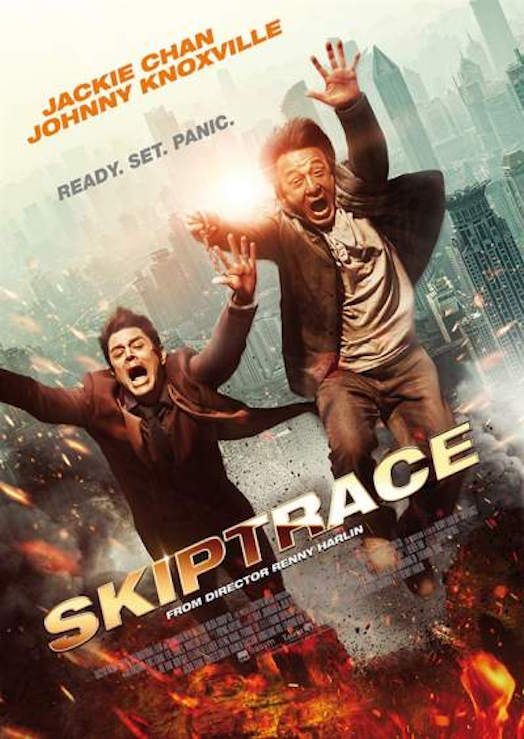
Skiptrace (2016)

16 Friday Sep 2016

Posted by dullwood68 in Movies

≈ 1 Comment

Tags

Action, Bingbing Fan, China, Comedy, Con man, Crime, Drama, Drugs, Eric Tsang, Eve Torres, Hong Kong, Jackie Chan, Johnny Knoxville, Macau, Mongolia, Renny Harlin, Russia, The Matador, Thriller

skiptrace

Original title: Jue di tao wang

D: Renny Harlin / 107m

Cast: Jackie Chan, Johnny Knoxville, Bingbing Fan, Eric Tsang, Eve Torres, Winston Chao, Youn Junghoon, Shi Shi, Michael Wong, Kuo Pin Chao

Here’s a question for you: when did you last enjoy – really enjoy – a Jackie Chan movie? Was it Dragon Blade (2015)? Or Chinese Zodiac (2012) perhaps. Or was it even further back? The Karate Kid (2010) maybe. If it’s been even further back, don’t worry, it’s likely you’re not on your own.

Back in 2012, Chan told reporters at the Cannes Film Festival that Chinese Zodiac was going to be his last action movie. He was getting too old, and he felt the world was “too violent”. And for a whole year it seemed that Chan was sticking to his word… and then he went and made Police Story: Lockdown (2013). So much for that, then. And now he’s back again with another action movie, Skiptrace, and this time, it’s… practically dead on arrival.

Let’s try another question: when did you last enjoy – really enjoy – a Renny Harlin movie? Was it The Legend of Hercules (2014) Or Devil’s Pass (2013)? Or something from the time when his name on a picture was reason enough to see it, say back in the Nineties. Unlike Chan, Harlin has never announced his “retirement” from action movies, and now he’s back with Skiptrace, and this time… well, you get the picture.

skiptrace-scene2

There are many, many, many movies that are made because somebody somewhere thought they would be a good idea. Movies like Skiptrace, which are made both for a domestic market (in this case, China and Hong Kong) and a wider, international market, show up each and every year. Some succeed in gaining that wider, international success the makers hope for – the Internal Affairs trilogy, for example – while the majority barely make an impact. In between are movies such as Skiptrace, with its bankable, internationally famous star; less bankable but still well-known co-star; even less bankable but still fairly well-known director-for-hire; country-hopping locations; uninspired action set-pieces; and a patience-testing script that has no intention of making any kind of sense at any point in the movie.

The plot, such as it is, has Chan’s dogged cop, Bennie Chan, still trying to avenge the death of his partner (Tsang) at the hands of criminal mastermind the Matador. Nine years have passed since that terrible event, and Bennie has spent the years since in trying to prove that high-profile businessman and philanthropist Victor Wong (Chao) is the Matador. Of course he’s been unsuccessful, and his latest attempt leads to the kind of property destruction that warrants his being told to take a month’s leave of absence. In the meantime, his deceased partner’s daughter, Samantha (Fan), has infiltrated Wong’s organisation in an attempt to find some evidence against him… but she’s drawn a blank too. It’s not until con man and gambler Connor Watts (Knoxville) turns up at a casino run by Wong and witnesses a murder that Bennie has a solid chance of bringing Wong to justice.

skiptrace-scene1

So far, so straightforward. But the script, already over-complicating things by having Bennie as Samantha’s guardian, introduces us to Connor by putting him in jeopardy in Russia thanks to an ill-advised relationship with a mobster’s daughter. A series of non-linear flashbacks to the previous twenty-four hours reveals Connor’s actions at the casino (including winning a large amount of money), his meeting Samantha, trying to avoid the Russian mobster’s goons (out to bring him back to Russia so he can be put in jeopardy), witnessing a murder in the process, and coming into possession of a mobile phone that will reveal the identity of the Matador. Too much already? Don’t worry, there’s more – much more.

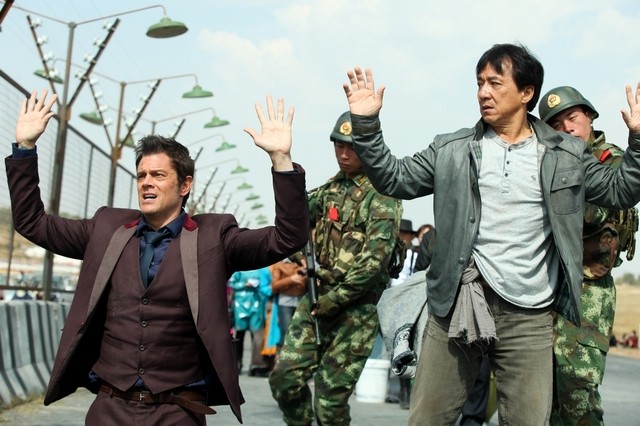
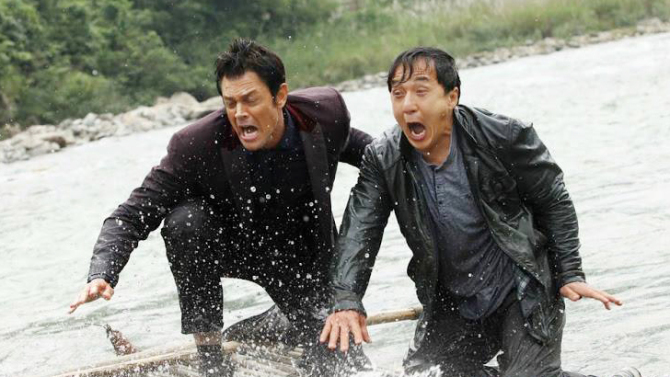
What follows is a tortuous road movie that sees Bennie and Connor eventually learn to respect and admire each other, and which takes in such locations/developments as the Russian bowling alley where Connor finds himself in peril, a train that both men jump from as soon as they hear the ticket inspector approaching, buying the slowest vehicle in Mongolia without ensuring it has enough petrol to get them anywhere, an encounter with a group of Mongolian tribespeople (more of which later), a game of bluff and double bluff at the Chinese border that sees them arrested, their opportune “rescue” by the Russian mobster’s goons, a whitewater raft ride, and eventually, a zipline escape from Wong’s men.

There’s more still, but it’s all too tiring, a series of desperate attempts by the screenplay – step forward writers Jay Longino and BenDavid Grabinski, whose first collaboration this is – to keep viewers from nodding off or asking themselves why they’re still watching after the first half an hour. If the events listed in the previous paragraph sound exciting, don’t be fooled: even handled by Harlin, not exactly a slouch when it comes to action movies, those sequences lack energy and are shot through with the kind of slapstick humour that Chan’s movies are famous for. And it needs to be said: Chan is getting on. His decision to “retire” back in 2012 should have been followed through, because in Skiptrace you can see just how slow he’s become. The speed and intricacy of his past fight scenes are absent here, with blows and parries signposted well in advance and Chan being given more than enough time to get into position for each.

skiptrace-scene3

And then there’s the encounter with the Mongolian tribespeople. It’s a standard sequence to begin with, a misunderstanding leading to Connor and then Bennie squaring up against the tribe’s best fighters. The misunderstanding is resolved and the tribespeople take to the pair as if they were long-lost relatives. A feast ensues, and after a few too many drinks, Bennie begins to sing a song. A young woman joins him, and soon everyone is singing along as well, word perfect and in perfect harmony. The song is Adele’s Rolling in the Deep, and it’s possibly the most bizarre moment you’ll ever see, and hear, in a Jackie Chan movie. It’s also the best example of how haphazardly the script has been assembled, with sequences obviously arrived at and decided on before a plot was actually dreamt up.

Like so many of these productions, the editing is the worst aspect of all, leaving the movie looking like a cinematic patchwork, with shots truncated and poorly framed, and the performances (such as they are) suffering as a consequence. Chan is his usual amiable self, unstretched by the material, while Knoxville’s comic relief portrayal of Connor serves as a reminder that when a script is this bad the actor doesn’t have a way of countering it. Elsewhere, the supporting cast do what they can with their underwritten roles, with only ex-WWE wrestler Torres standing out thanks to her impressive physicality. Harlin is a bland presence in the director’s chair, his regular visual flair absent from the mix. It’s hard to believe that this is the same man who directed Die Hard 2 (1990) and The Long Kiss Goodnight (1996). But then, it’s hard to think of anyone who could have made something even halfway decent from the material on offer.

Rating: 3/10 – not the finest moment in Chan’s career, Skiptrace is hard to sit through and barely acceptable as entertainment; with all the vitality of a contractual obligation, the movie crams in a surfeit of incidents that, ordinarily, would keep at least another two movies happy – but ultimately, it doesn’t have any idea of what to do with them.

Share this:

  • Share on X (Opens in new window) X
  • Share on Facebook (Opens in new window) Facebook
  • More
  • Print (Opens in new window) Print
  • Email a link to a friend (Opens in new window) Email
Like Loading...

Mini-Review: Café Society (2016)

14 Wednesday Sep 2016

Posted by dullwood68 in Movies

≈ 1 Comment

Tags

Blake Lively, Comedy, Crime, Drama, Hollywood, Jesse Eisenberg, Kristen Stewart, Love, New York, Review, Romance, Steve Carell, The Thirties, Woody Allen

cafe-society

D: Woody Allen / 96m

Cast: Jesse Eisenberg, Kristen Stewart, Steve Carell, Blake Lively, Jeannie Berlin, Ken Stott, Corey Stoll, Sari Lennick, Stephen Kunken, Parker Posey, Paul Schneider, Anna Camp, Sheryl Lee

In the Thirties, naïve young Bobby Dorfman (Eisenberg) leaves the safety of his parents’ (Berlin, Stott) home in the Bronx to move to Hollywood and start a new life. Taken under the wing of his uncle, super-agent Phil Stern (Carell), Bobby is shown around town by Stern’s secretary, Vonnie (Stewart). He quickly falls in love with her, despite her having a boyfriend, and they spend a lot of time together. But when the man in Vonnie’s life reneges on a promise to leave his wife for her, she allows herself to be wooed by Bobby, and in time he asks her to marry him and go with him to New York (he’s bored by the shallowness of Hollywood and its denizens).

But Vonnie’s “boyfriend” finally leaves his wife and she chooses to marry him instead of Bobby. Heartbroken, and hardened by the experience, Bobby returns to New York where he goes to work with his older brother, Ben (Stoll), running a nightclub called Le Tropical. Ben has criminal ties, but keeps Bobby clear of any involvement. Eventually, Bobby meets and marries a recent divorceé, Veronica (Lively). They have a child, and the club becomes a focal point for the famous, the infamous, and everyone in between. Now settled firmly into the roles of husband, father and successful businessman, Bobby’s world is turned upside down when Vonnie pays a visit to Le Tropical with her husband, and it becomes clear that they still have feelings for each other.

cafe-society-scene

Woody Allen’s latest, annual, offering is an outwardly frivolous affair that touches on many of the tropes that have kept his movie career going for nearly fifty years. There’s the relationship between an older man and a (much) younger woman; love denied; philosophical enquiries into the natures of life, love and art; class merits and social acceptance; ambition; and all wrapped up in a slightly more jaundiced approach than is usual. Beneath the glamour and the glitzy lifestyles on display in both Hollywood and New York, Allen makes it clear that happiness is much harder to find than it appears. It also appears to be much more of a commodity, as Bobby’s offer of a romantic life in New York is spurned for a superficial one in Hollywood.

Allen once again assembles a great cast with Eisenberg as yet another on-screen substitute for The Man Himself, and Stewart putting in her best performance in quite some time as the (not really) conflicted Vonnie. But it’s the supporting characters who steal the show, in particular Bobby’s aunt Evelyn (Lennick) and her pacifist husband, Leonard (Kunken). Their problem with an abusive neighbour provides a much needed break from the predictable nature of the central romance, while Stoll’s droll gangster is worthy of a movie of his own. It’s this imbalance that hurts the movie at times, as the romance between Vonnie and Bobby, though given due emphasis by Allen’s screenplay, isn’t as compelling as you’d expect. It’s the distractions from the main storyline that work better as a result, and while Allen peppers things with his trademark wit (“First a murderer, and now a Christian!”), it’s not enough to offset the familiarity of a romance seen too often before.

Rating: 7/10 – Vittorio Storaro’s gorgeous cinematography is Café Society‘s biggest draw, along with its cast, but this is ultimately a Woody Allen movie that sees him revisiting familiar ground to sporadically good effect; enjoyable enough then, but there’s a sense that Allen’s once-a-year workload is still providing similar returns with each new movie.

Share this:

  • Share on X (Opens in new window) X
  • Share on Facebook (Opens in new window) Facebook
  • More
  • Print (Opens in new window) Print
  • Email a link to a friend (Opens in new window) Email
Like Loading...

Zoom (2015)

11 Sunday Sep 2016

Posted by dullwood68 in Movies

≈ 1 Comment

Tags

Alison Pill, Animation, Brazil, Breast enlargement, Canada, Comedy, Drama, Drugs, Gael García Bernal, Love dolls, Mariana Ximenes, Movie director, Pedro Morelli, Review, Sex, Tyler Labine, Writing

zoom

D: Pedro Morelli / 93m

Cast: Gael García Bernal, Alison Pill, Mariana Ximenes, Tyler Labine, Don McKellar, Claudia Ohana, Michael Eklund, Jennifer Irwin, Jason Priestley, Clé Bennett

A worker in a factory that produces state of the art love dolls. A movie director trying to make an artistic masterpiece. A model who discovers she has a talent for writing. Three people who aren’t connected. Or are they?

That’s the question you’ll be asking yourself if you watch Zoom, a freewheeling, energetic look at three lives that may or may not be intertwined, and one of which is presented in the same rotoscopic animation style as A Scanner Darkly (2006). Unafraid to take chances with its narrative, the movie invites the viewer along on a cleverly structured, and constructed, meta-ride that rewards them over and over again as the movie progresses. It’s a likeable, good-natured movie that appears to veer off in unlikely directions in an effort to be “different”. But this veering off is a major part of the movie’s charm, and while some twists and turns may seem frivolous, they all add to the huge amount of fun that can be had from Matt Hansen’s lively screenplay.

zoom-scene3

It certainly begins in an unexpected fashion, with two workers at a love doll factory, Emma (Pill) and Bob (Labine), having sex surrounded by the fruits of their labours. It’s both funny and disconcerting to see Emma and Bob being “watched” while they copulate, but it’s done in such a matter-of-fact way that the disconcerting aspect soon goes away (even if the love dolls’ voyeuristic perspective doesn’t). Alas, Bob’s post-coital attempts at conversation soon fall flat and he makes unflattering comments about the size of Emma’s breasts. An aspiring comic book artist, Emma has drawn a picture of herself as a voluptuous warrior princess; using this and Bob’s attitude as a spur for doing so, she goes ahead and has a breast enlargement.

Emma has also been chronicling the story of a movie director, Edward (Bernal), as he nears completion of his latest feature. Edward is known for making popular action movies but wants to make an artistic statement this time round, a fact he’s trying desperately hard to hide from studio head Marissa (Irwin). Meanwhile he lives a hedonistic lifestyle, often bedding two women at the same time. When Emma decides to put an end to this behaviour by severely reducing the size of his penis, Edward’s resulting loss of confidence begins to affect his ability in making his movie. And when Marissa finally sees a rough cut that ends too abruptly for her liking, Edward is persuaded to oversee further shooting that will add an action climax much like the ones he’s famous for.

Edward’s movie is about a Brazilian model, Michelle (Ximenes), whose career is far from fulfilling. An encounter with a publisher leads her to turn her back on modelling in order to write a novel. She leaves behind her less than supportive boyfriend, Dale (Priestley), and heads for a beach town in Brazil where she continues to write her story about a young woman who works in a love doll factory and wants bigger breasts. As Zoom continues, each story, already inextricably linked, reveals different facets of the wider story being told, and challenges our notions of what’s real and what’s fantasy.

zoom-scene2

Morelli juggles the various storylines and multiple perspectives with a confidence that draws out the subtle nuances and refinements of the script. Visual clues and riffs abound throughout, and there are a number of verbal references that serve to enhance the quick-witted nature of the narrative, and it all helps to take the viewer on a multi-stranded journey of discovery that never skimps on invention. Emma and Bob find themselves in possession of a large quantity of cocaine, the sale of which will help pay for the breast reduction she now wants. Michelle finds herself on the verge of a relationship with local bar owner, Alice (Ohana). Edward goes to ever-increasing lengths (no pun intended) to reassert his masculinity, even as his control over his movie defaults to his scheming colleague, Horowitz (McKellar). Each story grows closer and more connected to each other, until Hansen and Morelli manage to pull off something of a magic trick: three narratives become one and they all fit seamlessly together.

A tremendous amount of thought has been put into Zoom, and though a handful of scenes have the feel of having been added during shooting, the movie as a whole has a gleefully anarchic approach that is helped immeasurably by the commitment of its cast. Bernal, his performance augmented by the comic book style animation his storyline is presented in, plays Edward as a combination of preening pleasure seeker and tortured artist, and does so without making his character seem at odds with himself. Ximenes has arguably the most dramatic role, but acquits herself well, portraying Michelle’s determination and vulnerability with a poise and conviction that feels entirely natural. Labine provides his usual slacker screen persona (which isn’t a bad thing; he hasn’t worn out his welcome in the way that Seth Rogen has, for example), Michael Eklund adds another oddball role to his CV as a love doll customer with an uncomfortable demeanour, and McKellar is suitably venal and crafty as Edward’s “successor”.

zoom-scene1

But it’s Pill who most impresses. As the outwardly mousy Emma, Pill delivers a pitch perfect portrayal of a woman with bigger (pun intended) plans than anyone can imagine. Always undervalued and unappreciated for herself, Emma has a better focus on her life and what she wants than anyone else, and Pill is the movie’s consistent source of emotional honesty. Her open, expressive features (even when hidden behind some very large frames) have the ability to convey so many different feelings and emotions that watching her is always a pleasure. Just watch her in the scene where she tries to insist that her breast enlargement be reversed; the combination of her countenance and her vocal delivery is expressed with such delicacy that it’s a shame when the scene ends.

Zoom premiered a year ago today at the 2015 Toronto International Film Festival, but has since been released in only a handful of countries. This is a shame as it’s an imaginative, skilfully handled tale that wears its quirkiness on its sleeve with pride, and offers anyone lucky enough to see it a very good time indeed. Morelli, Hansen, the cast, and everyone else involved in the movie should all be congratulated for achieving something that doesn’t conform to the moribund excesses of current Hollywood movie making.

Rating: 8/10 – an extremely pleasing mix of animation and standard photography, Zoom establishes each of its three storylines with speed and efficiency, and never relaxes in its efforts to surprise and entertain the viewer; a small-scale gem that deserves a wider audience – like so many other indie movies out there – it’s diverting and rewarding in equal measure and well worth checking out.

Share this:

  • Share on X (Opens in new window) X
  • Share on Facebook (Opens in new window) Facebook
  • More
  • Print (Opens in new window) Print
  • Email a link to a friend (Opens in new window) Email
Like Loading...

Neighbors 2: Sorority Rising (2016)

06 Tuesday Sep 2016

Posted by dullwood68 in Movies

≈ 2 Comments

Tags

Bad Neighbours 2, Chloë Grace Moretz, Comedy, Kappa Nu, Neighbours, Nicholas Stoller, Review, Rose Byrne, Sequel, Seth Rogen, Sorority, Zac Efron

neighbors-2

aka Bad Neighbours 2

D: Nicholas Stoller / 92m

Cast: Seth Rogen, Zac Efron, Rose Byrne, Chloë Grace Moretz, Ike Barinholtz, Kiersey Clemons, Beanie Feldstein, Dave Franco, Jerrod Carmichael, Christopher Mintz-Plasse, Elise Vargas, Zoey Vargas, John Early, Hannibal Buress, Selena Gomez, Kelsey Grammer, Lisa Kudrow

Meh (see also Mechanic: Resurrection and Bastille Day).

Rating: 3/10 – a disastrous sequel that should be subtitled The Movie Laughs Forgot, Neighbors 2: Sorority Rising is another “comedy” that barely succeeds in raising a smile, let alone any genuine outbursts of laughter; a lame retread of the original, the cast sleepwalk through their roles, the script allows for long stretches of tedium, Stoller appears to have been on holiday for the whole of shooting, and any chance of a good time is dismissed from the off, leaving the audience to wonder how on earth this was made in the first place.

Share this:

  • Share on X (Opens in new window) X
  • Share on Facebook (Opens in new window) Facebook
  • More
  • Print (Opens in new window) Print
  • Email a link to a friend (Opens in new window) Email
Like Loading...

10 Reasons to Remember Gene Wilder (1933-2016)

29 Monday Aug 2016

Posted by dullwood68 in Movies

≈ Leave a comment

Tags

Actor, Career, Comedy, Gene Wilder, Mel Brooks, Movies, Richard Pryor

Gene Wilder (11 June 1933 – 29 August 2016)

Gene Wilder

Often wild of eye and generous of grin (and self-confessed Jewish-Buddhist-Atheist), Gene Wilder was an actor who was recruited into comedy by Mel Brooks – and thank Mel for that! It could all have been so different, though. Wilder’s career began in the late Fifties. He trained with Uta Hagen at the HB Studio before being accepted into the Actors’ Studio and taking private classes with Lee Strasberg. In the early to mid-Sixties, Wilder began to make a name for himself in various stage productions, until a production of Mother Courage and Her Children introduced him to Anne Bancroft, who in turn introduced him to her husband, Mel Brooks.

Having regarded himself as a serious, dramatic actor, Wilder acclimated quickly to comedy, and this despite making his feature debut in Bonnie and Clyde (1967). Aside from a handful of TV movies, Wilder didn’t stray from comedy for the rest of his career. But in doing so he provided us with so many wonderful, comic performances that if there had been any more diversions from comedy, it would have seemed like a betrayal.

He was well-known for his work with Brooks (five movies), and Richard Pryor (four movies). These collaborations cemented his fame and fortune, and brought him critical as well as commercial success. During the Seventies, Wilder made a string of movies that traded well on his ability to portray an unhinged loon with complete credibility. No matter what the scenario, Wilder’s high-pitched, hysterical expressions of incredulity were always funny to watch, even with repeated viewings.

Following his retirement from movies in 2003, Wilder decided to concentrate on writing, publishing a memoir as well as several novels and a collection of short stories. His philosophy was simple: “I’d rather be at home with my wife. I can write, take a break, come out, have a glass of tea, give my wife a kiss, and go back in and write some more. It’s not so bad. I am really lucky.” And so are we, to have such an enduring legacy of movies to enjoy for generations to come.

The Producers

1 – The Producers (1967)

2 – Quackser Fortune Has a Cousin in the Bronx (1970)

3 – Willy Wonka & the Chocolate Factory (1971)

4 – Blazing Saddles (1974)

Blazing Saddles

5 – Young Frankenstein (1974)

6 – The Adventures of Sherlock Holmes’ Smarter Brother (1975)

7 – Silver Streak (1976)

Silver Streak

8 – Stir Crazy (1980)

9 – The Woman in Red (1984)

10 – See No Evil, Hear No Evil (1989)

See No Evil, Hear No Evil

Share this:

  • Share on X (Opens in new window) X
  • Share on Facebook (Opens in new window) Facebook
  • More
  • Print (Opens in new window) Print
  • Email a link to a friend (Opens in new window) Email
Like Loading...

10 Reasons to Remember Arthur Hiller (1923-2016)

17 Wednesday Aug 2016

Posted by dullwood68 in Movies

≈ 3 Comments

Tags

Academy of Motion Picture Arts and Sciences, Arthur Hiller, Canada, Career, Comedy, Director, Directors Guild of America, Rome Open City, Royal Canadian Air Force, World War II

Arthur Hiller (22 November 1923 – 17 August 2016)

Arthur Hiller

Born in Edmonton, Canada to Jewish parents who had immigrated from Poland in 1912, Arthur Hiller grew up in an environment where a love of music and theatre was instilled in him from a young age. He joined the Royal Canadian Air Force at the start of World War II, and became a navigator, flying numerous missions over Europe. In the early Fifties he began directing for Canadian television; this led to his being offered a job directing with NBC. Over the next ten years he worked steadily in television, contributing to shows such as Playhouse 90, Perry Mason, Gunsmoke, Alfred Hitchcock Presents, and Route 66.

During this period he made his feature debut, the coming-of-age romantic drama The Careless Years (1957), but it wasn’t until he worked for Disney on Miracle of the White Stallions (1963) that his movie career began to take off. By then, Hiller’s ability to work within different genres was standing him in good stead, enough for him to move away from television (almost) altogether. After 1965, his TV work consisted of three episodes of the series Insight, episodes that were made over an eleven-year period. Hiller soon allied himself with screenwriters of the calibre of Paddy Chayefsky and Neil Simon, and developed a reputation for making comedies that had a surprising depth to them.

1970 saw the release of Hiller’s most famous, and enduring movie of all, Love Story. The success of the movie cemented his success, and throughout the Seventies, Hiller had a run of hit movies that made him an A-list director. His was a brisk, authoritative style, but there was also a looseness, a sense of fun to his movies that made them more enjoyable than most comedies of the era. He was inspired by a post-War screening of Rome, Open City (1945), and he never lost sight of the emotional truth of his movies, even if some of his later works, such as Carpool (1996) weren’t as effective – or as amusing – as they could have been.

In 1989, he took on the role of President of the Directors Guild of America, a position he held until 1993, when he became President of the Academy of Motion Picture Arts and Sciences for the next four years. He made one last movie, the less than pardonable National Lampoon’s Pucked (2006) (a career nadir for both Hiller and its star, Jon Bon Jovi), before retiring. Hiller will be fondly remembered for the way in which his movies resonated with audiences, their effortless likeability, and the almost timeless quality they carry, and the unassuming yet quietly confident way in which he directed them.

The Americanization of Emily

1 – The Americanization of Emily (1964)

2 – The Out of Towners (1970)

3 – Love Story (1970)

4 – Plaza Suite (1971)

PlazaSuite_Still_26.tif

5 – The Hospital (1971)

6 – The Man in the Glass Booth (1975)

7 – Silver Streak (1976)

Silver Streak

8 – The In-Laws (1979)

9 – The Lonely Guy (1984)

10 – Outrageous Fortune (1987)

Outrageous Fortune

Share this:

  • Share on X (Opens in new window) X
  • Share on Facebook (Opens in new window) Facebook
  • More
  • Print (Opens in new window) Print
  • Email a link to a friend (Opens in new window) Email
Like Loading...

Love & Friendship (2016)

06 Saturday Aug 2016

Posted by dullwood68 in Movies

≈ 2 Comments

Tags

Chloë Sevigny, Comedy, Drama, Jane Austen, Kate Beckinsale, Lady Susan, Literary adaptation, Marriage, Review, Romance, Whit Stillman, Xavier Samuel

Love and Friendship

D: Whit Stillman / 93m

Cast: Kate Beckinsale, Chloë Sevigny, Xavier Samuel, Emma Greenwell, Justin Edwards, Morfydd Clark, Tom Bennett, Jemma Redgrave, James Fleet, Jenn Murray, Stephen Fry

It may seem like an odd corollary, but Whit Stillman’s adaptation of Jane Austen’s posthumously published Lady Susan, and a certain Monty Python sketch involving the Piranha Brothers (Doug and Dinsdale) have something in common. In the Python sketch, Michael Palin as low-level criminal Luigi Vercotti talks about Doug as being the more vicious of the two gang leaders:

“Everyone was terrified of Doug. I’ve seen grown men pull their own heads off rather than see Doug. Even Dinsdale was frightened of Doug.”

“What did he do?”

“He used… sarcasm. He knew all the tricks, dramatic irony, metaphor, pathos, puns, parody, litotes and… satire. He was vicious.”

LAF - scene3

You could add mieosis to the list, or rhetoric, or even polemics – they’re all there in Stillman’s screenplay, all in service to one of the year’s funniest movies, and proof (as if it were truly needed) that Jane Austen had a wicked sense of humour, and enjoyed attacking the social mores of her time; no one was safe, high- or lowborn. In transferring Lady Susan to the screen, Stillman has retained the epistolary nature of the novella, allowing the audience to be swept along with the recent widow’s attempts to secure advantageous marriages for both herself and her daughter, Frederica (Clark)… while also brokering an affair between herself and the married Lord Manwaring. In the process, barbs are dispensed with precision, honeyed slanders voiced with mannered simplicity, and insults hurled with joyous abandon. There’s no turn left unstoned by the movie’s end, and nobody who doesn’t find themselves somehow injured by an unkind remark (even if they don’t know they’ve been injured – some remarks pass by so quickly the characters don’t even realise it’s happened).

This is the overwhelming joy of Love & Friendship: the ease with which the characters are disarmed by unexpected, cutting remarks, and the way in which their reactions are to stare in disbelief like rabbits caught in the headlights, trying to fathom just what to say in return – and then the moment is gone and they’re left there, still staring in shock. Stillman includes so many of these moments there’s a danger of his overdoing it, but the range of insults is so varied that everyone’s a winner, and every moment is assured a smile from the viewer. As Lady Susan (Beckinsale) weaves her tangled web of intrigue, she does so with a shrewd cunning that’s completely impressive. She’s the predatory shark in petticoats who cares for no one but herself and her assured future (or her daughter’s assured future, as that will lead to hers as well).

LAF - scene1

Watching the movie is like indulging in a massive bowl of whipped cream and citrus lemon sauce, a confection that’s rich and rewarding and a bit of a guilty pleasure. But it shouldn’t be, as Stillman elicits superb performances from his cast, with Beckinsale on particularly fine form as Lady Susan, revelling in her machinations and throwing out carefree lines such as “Facts are horrid things” with an amused detachment that fits the character perfectly. It’s good to see Beckinsale – along with Sevigny, reunited with Stillman after eighteen years – being given such a juicy role after so many bland fantasy outings. Maintaining an equilibrium and a sense of purpose while treating everyone around her – bar her good friend, Mrs Johnson (Sevigny) – with utter contempt, Beckinsale as Lady Susan is a poisonous delight, cunning, devious, and wholeheartedly shameless in her efforts to get what she wants. But there’s also grace and subtlety in her performance, a measured approach to the character and the material that reaps dividends when she’s called upon to be deceitful or just outright lying.

But it’s not just Beckinsale who puts in a fabulous performance. As Lady Susan’s confidant, Mrs Johnson, Sevigny has what looks to be the thankless role of best friend who’s there just so the main character has someone to show off to. But Stillman is too good a director, and Sevigny too good an actress, to let this happen, and even in her scenes with Beckinsale, Sevigny’s quiet attention and marvelling at the deplorable behaviour of Lady Susan’s relatives is too good to be ignored or undervalued. And she’s on even better form when the contents of a letter causes problems both for her and for Lady Susan.

LAF - scene2

On the spear side of things, there’s a pitch perfect exercise in buffoonery from Bennett as the idiotic Sir James Martin, whose halting, almost stream of consciousness dialogue is matched by the actor’s use of physical tics and surprised facial expressions; he’s like a child for whom everything is new and endlessly fascinating (he finds peas to be an amazing discovery). There’s a scene where he turns up unexpectedly at the home of Lady Susan’s brother-in-law (Edwards), and spends approximately two minutes waffling horrendously about almost nothing at all, and its one of the funniest things you’ll see this year, a perfect match of physical discomfort and mental truancy.

As befits an adaptation of a novella, the story is very slight, and does boil down to very little at all, but Stillman wisely concentrates on the characters and their idiosyncracies rather than the plot, and there’s reward enough in seeing them adrift – often – in a sea of their own making. It’s a romantic comedy, and a recalcitrant comedy of manners, and a comedy of hilarious misdirection that bubbles with energy and glee at providing so much mischief. Stillman doesn’t make very many movies these days, which is a shame, but let’s hope Love & Friendship is the beginning of a more prolific period in his career because it would be a shame if he spent another five years (the time since his last movie, Damsels in Distress) away from our screens.

Rating: 9/10 – a perfect mix of period drama (with sterling work by costume designer Eimer Ni Mhaoldomhnaigh and production designer Anna Rackard), and pin-sharp levity, Love & Friendship is perfectly designed to ensure a good time will be had by all; Stillman interprets Austen with authority, Beckinsale has a great time as the unprincipled Lady Susan, and the viewer is treated to one of the few comedies released this year that doesn’t rely on crass jokes or gross-out humour – and is all the more impressive for it.

Share this:

  • Share on X (Opens in new window) X
  • Share on Facebook (Opens in new window) Facebook
  • More
  • Print (Opens in new window) Print
  • Email a link to a friend (Opens in new window) Email
Like Loading...

The Bronze (2015)

05 Friday Aug 2016

Posted by dullwood68 in Movies

≈ Leave a comment

Tags

Amherst, Bryan Buckley, Coaching, Comedy, Gary Cole, Gymnastics, Melissa Rauch, Olympics, Review, Sebastian Stan, Thomas Middleditch

The Bronze

D: Bryan Buckley / 100m

Cast: Melissa Rauch, Gary Cole, Thomas Middleditch, Sebastian Stan, Cecily Strong, Haley Lu Richardson, Christine Abrahamsen

The cast of hit TV show The Big Bang Theory are all talented actors and actresses. But although they’ve all found fame and fortune through appearing on the show, some of them want to be known for more than their TV roles. And that’s a fair enough ambition. In recent years, Kaley Cuoco has broadened her horizons with movies such as Authors Anonymous (2014) and Burning Bodhi (2015), while Simon Helberg has worked with his wife, director Jocelyn Towne, on I Am I (2013) and We’ll Never Have Paris (2014). Now it’s Melissa Rauch’s turn to branch out, and in doing so, she makes sure that the image of her as the helium-voiced, large-breasted Bernadette Wolowitz (neé Rostenkowski) is done away with completely.

With her hair tied back and sporting a mono fringe that keeps her eyes hooded for the most part, Rauch’s incarnation as 2004 bronze-winning Olympic gymnast, and hometown heroine, Hope Ann Greggory is as far from the squeaky, shiny Bernadette as you could get. She’s rude, crude, unnecessarily aggressive, has an ego the size of the Olympic rings, and is content to live off her past glories as an Olympic gymnast. Stores and restaurants in her hometown of Amherst, Ohio let her have freebies, while her long-suffering father, a postman called Stan (Cole), has to contend with her stealing money from the mail he delivers. She won’t get a job, looks down on everyone around her, has never been in a relationship, and always wears her 2004 TeamUSA jacket with sweatpants.

The Bronze - scene1

Years before, after suffering a recurring injury that ended her gymnastics career, Hope fell out with her mentor, Coach Pavleck (Abrahamsen). But with Pavleck’s recent, untimely death, Hope receives a letter that gives her the chance to inherit $500,000 from Pavleck’s estate – but only if she coaches Amherst’s newest hope for gymnastic glory, “Mighty” Maggie Townsend (Richardson), and gets her to the upcoming Olympics. Threatened by the idea that Maggie might eclipse her fame and become Amherst’s new town heroine, Hope agrees to coach her but the training regime she comes up with leads to Maggie putting on weight, being unable to focus, and messing up her gymnastic routines. But Hope’s efforts to sabotage Maggie’s future come to a halt when ex-Olympic Gold medallist Lance Tucker (Stan) baits her into coaching Maggie properly. Now all that remains is for Hope to coach Maggie in such a way that she’ll not only impress at the National Finals, but at the Olympics as well… but can Hope be that selfless?

Well, the answer to that one is obvious. Anyone who’s ever seen this type of movie, where the curmudgeonly, grumpy, outrageously inappropriate central character gets to say outrageously inappropriate things at every opportunity (and get away with them), will be unsurprised by the way in which Rauch and her co-screenwriter husband Winston have dictated the arc of Hope’s redemption. And while there’s more than a whiff of formula about everything, what some viewers may perceive as a major failing on the Rauchs’ part, is actually something that makes the movie far more interesting than expected.

The Bronze - scene2

Although The Bronze is ostensibly a comedy, there are character elements that feel more at home in a drama, particularly a grim psycho-drama about a character who is unable to connect with other human beings due to a lack of compassion, and through mutual dislike. Take away the “humour” in Hope’s situation and you have a scenario that’s terrible for the way in which it shows how a person clinging desperately to fame, paves the way for, and ensures, their own downfall. Hope is a parasite, living off old glories and refusing to adjust to the reality of her present situation; she’s in so much denial she’s practically drowning. As a character with serious mental health problems, Hope is fascinating to watch, but as a foul-mouthed, shameless self-promoter whose attitude is “funny”, she’s not so fascinating.

Rauch appears so determined to portray Hope as a kind of anti-Bernadette that she moves too far in the opposite direction, spraying venom at everyone around her, and particularly at Stan, whose acknowledgment of his daughter’s situation is key to the main storyline. There are moments where Hope’s derisory treatment of her father begs the question, why would she be so dismissive of him and his love for her? On what level does that make her feel better? (Both are unfair questions: the movie makes no effort to explain Hope’s motivation for being nasty, she just is.) With other questions like these bouncing around throughout the movie – would love interest Ben (Middleditch) really find her so attractive as a person after being mistreated by her so often, and so callously? – The Bronze becomes an exercise in belief suspension that is increasingly hard to maintain.

The Bronze - scene3

With its central character proving immensely unlikeable, even when she begins to slowly change into a more rounded individual (it’s a movie convention that seems extra tired here), it’s left to the supporting characters to make an impact, but thanks to the script, no one is allowed to overshadow Hope or her story arc. Cole is as good as ever, though under used; Middleditch and Stan are polar opposites as Ben and Lance, two caricatures of how men apparently behave; Richardson gives new meaning to the phrase “silly goose” (but not in a good way); and Rauch channels her inner bitch  with ruthless determination, setting her jaw against any notion of broadening the character’s appeal.

First-time feature director Buckley fails to make much of an impact, but does manage to generate some interest when Hope and Lance spin and whirl around her hotel room in a wonderfully choreographed sex scene that features sterling work from Rauch and Stan’s body doubles. It’s the one scene in the movie that stands out from all the rest, and without it, The Bronze would remain stubbornly parochial in its approach. Visually there’s nothing new here, and tonally it sticks to its hard-hearted groove even when it’s meant to be uplifting. In trying to move away from her role as Bernadette on The Big Bang Theory, Rauch has certainly managed to create a completely opposite character, but sadly, Hope isn’t someone you want to spend too much time with.

Rating: 4/10 – disappointing and badly misjudged, The Bronze is rarely funny, and thanks to its rampant female misanthropy, something of a chore to sit through; there’s the essence of a powerful drama buried beneath all the name-calling and rude behaviour, but unfortunately, that’s not the story that Rauch has chosen to tell.

Share this:

  • Share on X (Opens in new window) X
  • Share on Facebook (Opens in new window) Facebook
  • More
  • Print (Opens in new window) Print
  • Email a link to a friend (Opens in new window) Email
Like Loading...

A Hologram for the King (2016)

28 Thursday Jul 2016

Posted by dullwood68 in Movies

≈ Leave a comment

Tags

Alexander Berner, Alexander Black, Business deal, Comedy, Dave Eggers, Drama, Frank Griebe, Literary adaptation, Review, Salesman, Sarita Choudhury, Saudi Arabia, Telecommunications, Tom Hanks, Tom Tykwer

A Hologram for the King

D: Tom Tykwer / 98m

Cast: Tom Hanks, Alexander Black, Sarita Choudhury, Sidse Babett Knudsen, Tracey Fairaway, Jane Perry, Tom Skerritt, Ben Whishaw, David Menkin, Christy Meyer, Megan Maczko, Eric Meyers, Khalid Laith

Early on in A Hologram for the King – and after a wonderfully staged, and ironic, interpretation of Talking Heads’ Once in a Lifetime – Tom Hanks’ character, Alan Clay, is sitting across a desk from his boss, Eric Randall (Meyers). They’re talking about a deal to be made in Saudi Arabia, and about Clay’s ability to clinch the deal. Randall is making it clear that Clay has to make the deal, while Clay is being equivocal (and not exactly inspiring his boss with confidence). It’s also clear that this is a very important deal for their company, and that Clay has to clinch it or his career – which is already suffering thanks to his recent divorce – will be over. All of which begs the question: if you have potentially the biggest, most important deal in your company’s history about to happen, would you really put it in the hands of a man whose life seems to be falling apart around him?

It’s a question this adaptation of the novel by Dave Eggers never quite manages to address, let alone answer, and it’s indicative of the problems with the movie as a whole. Clay’s mission – to deliver a contract-winning presentation to the King of Saudi Arabia on the merits of holographic telecommunications – should be a simple one, but right from the start nothing seems to be going according to plan. Jet lag means he misses the hotel shuttle to the site where the presentation will be conducted, and has to avail himself of the services of a driver, Yousef (Black). At the King’s Metropolis of Economy and Trade, Clay finds his small team (Menkin, Meyer, Maczko) sequestered in a tent away from the main building where all the other companies making presentations are based, and without benefit of consistent wi-fi, air conditioning or food. And no one knows when the King will actually be visiting the site for the presentation to be made.

AHFTK - scene1

Unable to make any headway against the seemingly carefree approach to business that the Saudis appear to be indulging in, Clay finds his health deteriorating. A large growth appears on his back; when he attempts to “investigate” it with a heated steak knife he’s not entirely successful in his efforts. This leads to his visiting a clinic and being seen by a female doctor, Zahra (Choudhury). She reassures him that the growth is a cyst and should be removed. Meanwhile, a combination of persistent delays, angry phone calls from Randall, and memories of his time with Schwinn and a deal he was involved in that went badly wrong, conspire to bring on an anxiety attack. When he wakes he finds Zahra at his bedside, and the beginning of an unlikely relationship is forged.

As unlikely this relationship is – and Yousef points out just how unlikely it is given that there are so few female doctors in Saudi Arabia – it’s as unlikely as any other relationship Clay has. From the adversarial conversation with Randall at the movie’s start, to the spiteful divorce-signing barbs of his ex-wife (Perry), and his e-mail based discourses with his daughter, Kit (Fairaway), Clay is always struggling to connect with the people either closest to him, or those he’s dependent on. Ordinarily this would be scope for an ironic commentary on the nature of modern communications and the way in which traditional methods are being usurped and/or replaced. But A Hologram for the King pitches itself firmly as a fish-out-of-water tale (or camel-out-of-the-desert tale, if you will), and in doing so avoids doing anything fresh or surprising. Even his relationship with Yousef, the source of much of the movie’s humour, is dependent on a connection that feels forced into place by the demands of the script.

AHFTK - scene2

Watching the movie you begin to wonder how it was that Dave Eggers’ source novel managed to be a finalist for the 2012 National Book Award. In the hands of writer/director Tom Tykwer, the movie stutters and flails about trying to make itself relevant in any way possible, and succeeds only in wasting the viewer’s time. There’s such a lack of clarity and focus that scenes pass without making any impact – even when Clay probes the growth on his back it’s handled in such a matter of fact way he might as well be probing a potato on a plate. Tykwer mishandles so many scenes in this way that after a while the viewer has no choice but to just go along with the jumbled narrative and hope for the best. Add an abbreviated ending to everything that hints at production problems, and you have a movie that disappoints on too many levels to count.

Against the odds though, it’s not all bad. Hanks is too accomplished and intelligent an actor to allow a ragged script to get the better of him, and while Tykwer’s direction is erratic and lacks consistency from scene to scene, the actor at least makes Clay a sympathetic (if somewhat bewildered) everyman, and has the viewer hoping that despite all the chaos around him, he’ll come good in the end. In the hands of (probably) any other actor, Clay wouldn’t have been as rounded as he is here, and certainly despite the laissez-faire nature of Tykwer’s approach to the character. And Choudhury, an actress who, like Hanks, rarely if ever puts in a bad performance, is on equally fine form as a kindred spirit of Clay’s who provides him with a degree of stability he can’t find otherwise.

AHFTK - scene3

Filmed largely in Morocco, the desert locations are given a lustrous sheen by Tykwer’s DoP of choice, Frank Griebe, and there are plenty of diverting compositions to take the heat off the wayward narrative, not least the beautifully shot underwater scenes that appear towards the end. And again, despite Tykwer’s involvement, the movie has a natural, organic rhythm courtesy of underrated editor Alexander Berner (he’s one of the few people able to come away from Jupiter Ascending (2015) with their reputation intact).

Rating: 4/10 – muddled and frustrating, A Hologram for the King never engages with its intended audience, and gets by thanks to the efforts of Hanks and Choudhury; Tykwer has talent but with two disappointing literary adaptations in a row now, perhaps it’s time he turned his attention to more original material.

Share this:

  • Share on X (Opens in new window) X
  • Share on Facebook (Opens in new window) Facebook
  • More
  • Print (Opens in new window) Print
  • Email a link to a friend (Opens in new window) Email
Like Loading...

Mini-Review: The Secret Life of Pets (2016)

19 Tuesday Jul 2016

Posted by dullwood68 in Movies

≈ 4 Comments

Tags

Albert Brooks, Animal Control, Animals, Animation, Chris Renaud, Comedy, Duke, Eric Stonestreet, Gidget, Illumination Entertainment, Jenny Slate, Kevin Hart, Lake Bell, Louis C.K., Max, New York, Pets, Snowball, The Flushed Pets

The Secret Life of Pets

D: Chris Renaud, Yarrow Cheney / 87m

Cast: Louis C.K., Eric Stonestreet, Kevin Hart, Jenny Slate, Ellie Kemper, Albert Brooks,  Lake Bell, Dana Carvey, Hannibal Buress, Bobby Moynihan, Chris Renaud, Steve Coogan, Michael Beattie

The latest from Illumination Entertainment, the creators of the Minions, The Secret Life of Pets asks that familiar-sounding but rarely asked question: what do our pets get up to when we’re away from home? And the answer seems to be: a lot more fun than we get up to while we’re away. In a multi-storey apartment block that seems built along the lines of the Flatiron Building, it seems that every resident has a pet or two. And each of these pets has their own thing they do each day. Max (Louis C.K.), a terrier, sits in front of the door waiting for his owner to come home again.

But his perfect life with his owner, Katie (Kemper) is destroyed by the arrival of Duke (Stonestreet), a big hairy stray that Katie brings home wth her one day. Soon Max and Duke are at loggerheads, until while out for a walk, they become separated from their dog walker, and end up victimised by a group of feral cats led by Ozone (Coogan). With their collars removed they’re soon picked up by Animal Control. Only a mission by Snowball (Hart) and his gang of “flushed pets” to rescue one of their own sets them free, but at a price that will see Max and Duke being chased by Snowball, and their animal neighbours – led by Pomeranian Gidget (Slate) – setting out on a rescue mission of their own: to bring back Max and Duke safe and sound.

TSLOP - scene1

The plot of The Secret Life of Pets is so slight as to be almost invisible. It’s one long chase movie bookended by convivial scenes of the animals’ home lives, and while there’s nothing ostensibly wrong with this approach, what it does mean is that if the jokes along the way don’t match up to the promises the movie has been making since around this time last year then the movie itself is going to fall flat on its face. Fortunately, the jokes do match up, and the movie contains enough laugh-out-loud-funny moments that the movie can’t help be rewarding – if only on a broad, superficial level. Animal lovers will enjoy this the most, and it’s true that some of the animals’ secret lives do involve some hilarious imagery, but anyone taking a closer look will be dismayed by the way in which the characters behave like stereotypes, and how little they develop over the course of the movie.

But this is mainly about two adversaries learning to let go of their differences and work together, and thus earn equal respect. If it’s a tried and trusted storyline, and it’s been done to death by now, the fact remains that it hasn’t been done by Illumination Entertainment, and they manage to bring a freshness to the tale that helps lift the often banal nature of the narrative. In the hands of directors Renaud and Cheney, the movie is a bright, garish, enjoyable fun ride with a plethora of great sight gags – Buddy the dachshund (Buress) climbing a fire escape is inspired – and a big heart. It’s perfect for children below a certain age (who will love it), but some adults may find it hard going. Nevertheless this is still a lot of fun, and features a performance by Kevin Hart that, for once, is easy on the ears.

Rating: 7/10 – not as engaging as expected but still enjoyable for the most part, The Secret Life of Pets tells its simple story with a great deal of verve but little in the way of imagination or invention; not exactly forgettable, but not exactly memorable either, a situation that could, and should, have been avoided.

Share this:

  • Share on X (Opens in new window) X
  • Share on Facebook (Opens in new window) Facebook
  • More
  • Print (Opens in new window) Print
  • Email a link to a friend (Opens in new window) Email
Like Loading...

Punching the Clown (2009)

15 Friday Jul 2016

Posted by dullwood68 in Movies

≈ Leave a comment

Tags

Audrey Siegel, Captain Chaotic, Comedy, Drama, Ellen Ratner, Espresso Yourself, Gregori Viens, Henry Phillips, Los Angeles, Matthew Walker, Musician, Review, Singer/songwriter, Songs, Wade Kelley

Punching the Clown

D: Gregori Viens / 90m

Cast: Henry Phillips, Ellen Ratner, Wade Kelley, Matthew Walker, Audrey Siegel, Guilford Adams, Mik Scriba, Evan Arnold, Mark Cohen

Movies about comedians and how they struggle to get noticed or challenge their audiences are few and far between. Dustin Hoffman portrayed Lenny Bruce in the succinctly titled Lenny (1974), Tom Hanks played a fictional comedian in Punchline (1988), and Robert De Niro’s role as Rupert Pupkin in The King of Comedy (1982) is still a benchmark performance in terms of the darkness that (reputedly) lies within the heart of each and every comedian. There’s always a toll to be endured, and whether it’s rejection, disappointment, or outright failure, success – true success – is rarely found at the end of the comedian’s journey.

And so it goes with Punching the Clown (which is a line from one of Henry Phillips’s songs, and refers to something other than actually punching a clown). Having toiled long and hard travelling across America, and taken on gigs at places as diverse as coffee shops and bowling alleys, singer/songwriter Phillips lands a spot at a pizza restaurant. But his performance doesn’t go down so well, particularly with the Christian fund raisers in the audience, and he’s not even paid fully. Deciding it’s time he tried his luck in L.A., he goes to stay with his brother Matt (Walker). Matt is a struggling actor reduced to dressing up as Batman at children’s parties, but he puts Henry in touch with an agent, Ellen Pinsky (Ratner). Ellen takes a shine to Henry but needs to see his act. At a local coffee bar, Espresso Yourself, Henry takes to the stage on an open mic night, and promptly wins over the audience with his songs, which are a mix of droll observational comedy and trenchant psychopathy.

PTC - scene1

Ellen gets Henry an invite to a party being held by a record company executive but his attempt at performing backfires. However, a chance encounter with one of the guests there the next day, along with an overheard comment that is misconstrued, leads Henry to being wooed by a record company with the offer of a recording contract. While he makes up his mind, Henry continues playing at the coffee bar, and begins a very tentative relationship with one of the barmaids, Becca (Siegel). But just as Henry’s star begins to wax brightly, a further misunderstanding over the provenance of some bagels leads to accusations that he’s anti-semitic. As this misunderstanding gathers more and more acceptance, Henry finds himself losing his grip not only on the recording contract, but also his relationship with Becca, and his now regular spot at the coffee bar. As things begin to spiral out of control, Henry has to decide if staying in L.A. is still as good an idea as it seemed when he first arrived.

If you haven’t heard of Henry Phillips, don’t worry. Unless you’re familiar with the YouTube series Henry’s Kitchen, then chances are you have no more idea of who he is than you do in knowing who your partner’s seeing behind your back (this is the kind of humour Phillips brings out in his songs; nobody is saying your partner’s seeing anyone behind your back). In songs such as Gotta Get a Girlfriend and Hello Michelle, Phillips spins twisted yarn after twisted yarn as he cuts through the niceties of modern relationships and gets right to the heart of what we’re all really thinking about when it comes to love, sex, and all the selfish motivations that go with them. He’s caustic, witty, keeps just on the right side of being offensive, and has a winning stage presence that’s enhanced by his self-deprecating approach.

PTC - scene2

Punching the Clown was a labour of love for Phillips – it took around a decade to get made – and the inclusion of so much material he’d already honed by the time of the movie’s release has the effect of making his stage performances the undisputed highlights of a feature that otherwise lacks the bite needed to make Henry’s odyssey as engaging. As noted above, Phillips has a winning presence on stage, but off it he takes too much of a back seat in his own story, adopting the role of the persistent loser who never gets the respect or acknowledgment he deserves (throughout the movie his act is unfairly compared to that of another singer, Stupid Joe (Cohen), whose clarion call to audiences is, “Are you ready to get guitarded?”). It makes him an entirely sympathetic character, and someone you can root for with ease, but at the same time undercuts the drama when Henry’s “anti-semitism” begins to ruin his newfound success.

That said, there are some quite trenchant comments made about the difficult road to stardom, and the party at the record company executive’s house features a deliciously malicious sequence where each guest rebuffs another guest and is then rebuffed themselves, often with unnecessary cruelty. And when Henry finally gets to begin recording an album, he’s tasked with singing his funniest song, and then a song that’s funny from the very first line, a situation that highlights the common notion that in La La Land, taste is a concept misunderstood by many. Henry’s relationship with his agent is a sweet-natured one, and if it has a whiff of wishful thinking about it, it’s to Phillips’ credit that it’s still affecting (and benefits from a wonderful performance from Ratner, who, it should be noted, is also a White House correspondent when she’s not acting).

PTC - scene3

The movie is structured around a radio interview that Henry gives to DJ Captain Chaotic (Kelley), and while some of the scenes in the studio cause an unnecessary disruption to the narrative, Kelley’s portrayal is acerbic, disarming and damn funny. Henry’s relationship with Becca avoids some of the more predictable pitfalls but is set up to fail in such an obvious manner that it’s a little dispiriting (but Phillips makes up for this later). In the director’s chair, Viens holds it all together with a great deal of panache, the movie’s unsurprisingly low budget stretched to good use, and in conjunction with DoP Ian Campbell provides proceedings with a suitably cinema verité look that anchors the “action”. It’s all rounded off by Phillips’ songs, the true heart of the movie, and what makes it work as well as it does.

Rating: 8/10 – some narrative stumbles aside, Punching the Clown is still hugely enjoyable, though if you’re expecting it to be a laugh-a-minute comedy, you’ll be sorely disappointed; far more subtle than it may look, the movie acts as a clever, knowing, well-constructed introduction to the weird and wonderful world of Phillips’ stage persona, and on that basis, is entirely successful.

Share this:

  • Share on X (Opens in new window) X
  • Share on Facebook (Opens in new window) Facebook
  • More
  • Print (Opens in new window) Print
  • Email a link to a friend (Opens in new window) Email
Like Loading...

Trailers – The Hollars (2016), La La Land (2016) and A Monster Calls (2016)

14 Thursday Jul 2016

Posted by dullwood68 in Movies

≈ Leave a comment

Tags

A Monster Calls, Comedy, Damien Chazelle, Drama, Emma Stone, Fantasy, J.A. Bayona, John Krasinski, La La Land, Musical, Patrick Ness, Previews, Romance, Ryan Gosling, The Hollars, Trailers

Movies about dysfunctional families are almost a sub-genre all their own, and this latest, written by Jim Strouse – Grace Is Gone (2007), People Places Things (2015) – and directed by actor John Krasinski, features a great cast (which includes the fabulous Margo Martindale), the kind of serio-comic situations that hide a variety of truths beneath the humour, and no doubt, a few life lessons along the way. The trailer focuses, unsurprisingly, on the more comedic elements of the script, but under Krasinski’s stewardship, this should still be a movie that touches the heart as well as the funny bone. Any movie that examines what it is to be part of a family should have a head start on our attention – we’ve all been there, right? – but The Hollars looks a little more smart in its approach, and that makes it a movie worth watching out for.


In the latest movie from Whiplash director Damien Chazelle, Ryan Gosling and Emma Stone play Sebastian, a jazz pianist, and Mia, an aspiring actress, who meet and fall in love against a backdrop of ambition and mounting success that threatens to tear their hard-fought-for relationship apart. The trailer acts as a mood piece, allowing us glimpses of the characters and the environments they work in, and tantalising peeks at the various genre elements – comedy, drama, romance,musicals – that Chazelle has utilised in order to tell their story. There are moments of visual wonder as well, with several beautifully framed and lit shots that are simply breathtaking. La La Land is likely to be a strong contender come awards season, but however it turns out, this is definitely one movie that at this stage, warrants an awful lot of anticipation.


A Monster Calls may appear to be a children’s tale, but Patrick Ness’s powerful novel, on which this is based (and which has been adapted by him), is a much darker fantasy than you’d expect, and it’s to the movie’s credit that the trailer doesn’t downplay this. Focusing on a young boy, Connor (played by newcomer Lewis MacDougall), who struggles with issues surrounding bullying, deep-rooted anger, and his mother’s battle with terminal cancer, this is as far from lighthearted stuff. Help though comes in the unexpected form of a monster (voiced by Liam Neeson) who like to tell stories – stories that help Connor deal with the problems he’s experiencing. Director J.A. Bayona has previously given us The Orphanage (2007) and The Impossible (2012), two movies with a strong visual style, and an equally strong focus on children overcoming difficult situations, so his involvement here is a good sign that one of the most impressive pieces of low fantasy fiction of recent years will be just as impressive on the big screen.

Share this:

  • Share on X (Opens in new window) X
  • Share on Facebook (Opens in new window) Facebook
  • More
  • Print (Opens in new window) Print
  • Email a link to a friend (Opens in new window) Email
Like Loading...

Elvis & Nixon (2016)

11 Monday Jul 2016

Posted by dullwood68 in Movies

≈ Leave a comment

Tags

21 December 1970, Alex Pettyfer, Colin Hanks, Comedy, Drama, Elvis Presley, Evan Peters, Federal Agent at Large, Johnny Knoxville, Kevin Spacey, Liza Johnson, Meeting, Michael Shannon, Review, Richard Nixon, The Oval Office, The White House, True story

Elvis & Nixon

D: Liza Johnson / 86m

Cast: Michael Shannon, Kevin Spacey, Alex Pettyfer, Johnny Knoxville, Colin Hanks, Evan Peters, Sky Ferreira, Tracy Letts, Tate Donovan, Ashley Benson

It’s one of those tales that has to be filed under Believe-It-Or-Not: when Richard Nixon (Spacey) met Elvis Presley (Shannon) in the White House on 21 December 1970. There’s no doubt that the meeting took place – one of the photographs taken that day is the most requested item in the US National Archives – but even so, if a conspiracy theorist came up to you and said Elvis met Nixon because he wanted to go undercover as an agent for the Bureau of Narcotics and Dangerous Drugs, you’d brush them off with a “Yeah, right,” and promptly move on with your life. But that is exactly what happened, and Liza Johnson’s bright and breezy movie looks at what might have occurred, and what might have been said, during that unexpected meeting (alas, Nixon didn’t start recording conversations in the Oval Office until some months after he met Elvis).

The Elvis Presley we meet at the movie’s beginning is an odd, troubled figure, unamused and made fearful by the revolution being played out on American streets by the youth of the day. To Elvis they’re all being misled, and to him, it’s the drugs that are leading them astray. What better way, thinks Elvis, to help his country and avoid a dire future, than to go to Washington and plead his case to become a Federal Agent at Large, an undercover role that would allow him to infiltrate the various organisations leading the so-called revolution. (And just in case you’re thinking, undercover? Is he mad?, then the answer is, probably. Or at least, very deluded. Very, very deluded.) And what better justification for his going undercover, than the fact that he already has various honorary law enforcement badges which have been given to him over the years (and which he seems to think is all the I.D. he needs wherever he goes – even the White House).

EAN - scene2

Elvis writes a letter to Nixon that he hand delivers to the North Gate of the White House. The letter reaches one of Nixon’s aides, Dwight Chapin (Peters), who in turn shows it to senior aide Egil “Bud” Krogh (Hanks). At first, Krogh is dismissive, until he realises the benefit to Nixon’s image that a meeting with Elvis might have; but Nixon is dismissive of the idea. It’s only when Elvis’s personal assistant, Jerry Schilling (Pettyfer), suggests that Krogh “let slip” to Nixon’s daughters that their father might be meeting Elvis, that Nixon is emotionally blackmailed into letting the meeting go ahead. And so, the stage is set for one of the most unlikely get-togethers in the history of US politics and entertainment.

With the movie firmly deciding that Elvis was acting like a fruitcake at the time, and with Shannon playing him like a man who thinks everybody else around him is on the same wavelength – even though it’s doubtful there is a wavelength in the first place – his odd mannerisms and apparent lack of social awareness make for an amusing yet also deeply sad interpretation of the man and his misguided sense of commitment. That he really felt he could go undercover is the clearest guide to how barmy his idea was, but Shannon makes it all seem plausible – to Elvis if no one else. And that so many other people went along with it makes it even more bizarre. But amidst all the extraordinary behaviour, Shannon wisely adds a sense of almost child-like innocence to his portayal of Elvis that helps offset the surface notion that The King has lost his marbles. However you view his “ambition”, what Shannon consolidates in his offbeat, whimsical performance is that Elvis believed in everything he said – completely and without equivocation.

EAN - scene3

Shannon is probably not everyone’s idea of Elvis Presley, and it’s true that even with a wig, sideburns, and Elvis’s trademark sunglasses the actor still looks nothing like him. But the same is true of Spacey, whose portrayal of the President stops short of being a caricature of the man, and even with the aid of a terrific make-up job, the actor is still recognisable as himself first and foremost. In the end though, it doesn’t matter because the performances of both men are so very good indeed. Separately – and the movie keeps them apart for nearly an hour – they bring to life their real-life characters with a mixture of vocal impersonation, physical posturing, and attention to detail. But when they finally meet, and Nixon’s obduracy gives way to an unforeseen liking for Elvis and his right-wing political views, the apparent differences between the two men fall away, and both actors enjoy the kind of verbal sparring that helps lift the movie over and above its slightly pedestrian beginnings.

Ultimately, Elvis & Nixon only works fully once Elvis actually meets Nixon, and the script by Joey Sagal (who has a memorable cameo as an Elvis impersonator), Hanala Sagal and Cary Elwes (yes, Westley himself) springs into life in a way that makes up for the meandering, inopportune approach taken up until then. Make no mistake, the movie is a lightweight, engaging, yet deliberately frothy concoction, and it’s made in such a way that it’s not meant to be taken too seriously. But there’s an awful lot of running around for no good reason as the movie makes this momentous meeting happen. A subplot involving Schilling’s need to fly home to meet his girlfriend’s father is entirely superfluous, which makes Pettyfer’s presence entirely superfluous as well, while Knoxville’s presence is pared to the minimum. Hanks and Peters fare better, portraying Krogh and Chapin as two guys just trying to do their best, and getting quite a lot of the laughs as a result (however, there’s a sting in the tail when a pre-post credits sequence informs the viewer that both men were jailed for their involvement in the Watergate scandal).

EAN - scene1

Whatever was discussed between Nixon and Elvis on that December day is unlikely to ever be revealed. And even if this particular version has it all wrong, it is reassuring to know that it doesn’t matter. This is a movie where you could almost apply the old adage, “Print the legend!”, and it wouldn’t make any difference. Johnson’s direction is assured if not outstanding but she does coax outstanding performances from her two leads, and if it weren’t for them, the movie wouldn’t be as enjoyable as it is.

Rating: 7/10 – taken with a very large pinch of salt, Elvis & Nixon can be enjoyed for the sugar-coated treat it is, and not as anything more serious; with good performances all round (and not just from Shannon and Spacey), and a pleasing sense of its own silliness, the movie may not linger in the memory once you’ve seen it, but it will delight and impress you while you watch it.

Share this:

  • Share on X (Opens in new window) X
  • Share on Facebook (Opens in new window) Facebook
  • More
  • Print (Opens in new window) Print
  • Email a link to a friend (Opens in new window) Email
Like Loading...

Hello, My Name Is Doris (2015)

09 Saturday Jul 2016

Posted by dullwood68 in Movies

≈ Leave a comment

Tags

Comedy, Drama, Facebook, Hoarding, Max Greenfield, Michael Showalter, Relationships, Review, Romance, Sally Field, Self-help, Staten Island, Stephen Root, Tyne Daly

Hello, My Name Is Doris

D: Michael Showalter / 96m

Cast: Sally Field, Max Greenfield, Tyne Daly, Stephen Root, Wendi McLendon-Covey, Beth Behrs, Natasha Lyonne, Kumail Nanjiani, Rich Sommer, Isabella Acres, Caroline Aaron, Elizabeth Reaser, Peter Gallagher

A romantic comedy with a difference, Hello, My Name Is Doris begins with a funeral. Not necessarily the best place for a romantic comedy to start from, but it introduces us to Doris Miller (Field), a sixty-something spinster who works in the accounting department of a trendy, up-market firm. Never married and having spent a considerable amount of her life looking after her ailing mother (who has just died), Doris is adrift in her own life and the home she shared with her mother on Staten Island. But when new art director John Fremont compliments her on his first day on the job, Doris reacts like a teenager and straight away develops a crush on him. And when she attends a self-help seminar hosted by “new you” guru Willy Williams (Gallagher), Doris takes his advice and persuades herself that she can have a relationship with John that can be more than professional.

Ignoring the concerns and the advice of her best friend, Roz (Daly), Doris makes attempt after clumsy attempt to engage John in conversation at the office but she’s too nervous to make much of an impact. It’s not until she mentions her interest in John within earshot of Roz’s teenage daughter, Vivian (Acres), that Doris discovers there’s a way into John’s world that might make all the difference. With John having a Facebook page, Vivian sets up Doris with a fake account and gets John to accept her as a friend. His site reveals various interests, one of which is a band called Baby Goya and the Nuclear Winters. They prove to be an electronic band – not Doris’s cup of tea – but when John finds out she’s a “fan”, and she then learns they’re playing a gig nearby, the stage is set for a “chance” meeting that sees the pair begin to get to know each other… and eventually become friends.

HMNID - scene1

But John has a girlfriend, Brooklyn (Behrs), and Doris has to find a way of dealing with this development, as well as the increasing concerns of Roz, and the fact that her friendship with John is based on deception. Doris ends up doing something petty and malicious that provides her with an opportunity to tell John how she feels about him. But while Doris is (mostly) having the time of her life, her brother Todd (Root) and his wife Cynthia (McLendon-Covey) are pressuring her to sell her home. They also insist she see a therapist dealing in hoarding issues, as the house is a mess of unneeded junk. Trying to balance these things with her newfound enthusiasm for John and the potential for romance with him, Doris has to try and keep a clear head in the run-up to telling him how she feels about him. But will he feel the same way…?

Hands up anyone who remembers the last time Sally Field had the lead role in a movie… Anyone? Well, if you came up with Two Weeks (2006) then give yourself a big pat on the back. Nine (now ten) years on, and Field is finally back on our screens in a role that not only reflects her age – she’ll be seventy in November – but which also serves as a reminder of just how good an actress she is. Forget the movie’s raison d’etre – which some viewers may find uncomfortable or just plain excruciating – this is a chance to see Field playing both drama and comedy with equal skill and navigating her way through the choppy waters of Laura Terruso and Michael Showalter’s broadly effective screenplay, itself based on Terruso’s short, Doris & the Intern (2011).

HMNID - scene2

What could well have proven to be a cringeworthy tale of an old(er) woman lusting after a younger man is headed off at the pass by Field’s perfectly judged, and empowering performance. As the socially removed (and then newly improved) Doris, Field shows the character’s vulnerability and desperate need for acceptance – not just by John but by his peers as well – at all times, reminding the viewer that there’s a lot more to Doris than predatory instincts and a late-blooming libido. That the script is sympathetic towards Doris is a given, but it’s Field’s instinctive and assiduous portrayal that stops that sympathy from becoming too cloying or saccharine. While the first half of the movie is content to wring out some offbeat and occasionally embarrassing comedy, the second half gives way to the necessary drama the movie needs to wrap things up. Field’s performance is the glue that holds the movie together, and it’s a pleasure to see her in a role that allows her to show off her range.

Again, the notion of a May-December relationship where the woman is way past the cougar stage may well put off some viewers, but a couple of dream sequences aside, this is a splendidly old-fashioned movie that doesn’t seek to offend anyone, and carries enough modern-day smarts to keep viewers hooked. There’s a smattering of jokes that are very funny thanks to their popping up out of nowhere – at a backstage party, Doris talks to a woman who tells her she’s “a teacher at a gay pre-school” – and Doris’s outfits are a mad jumble of colours and designs that make you wonder if she’s colour blind or has reached a point in her life where she just doesn’t care anymore (either could be true but the movie doesn’t reveal the reason for her sartorial mash-ups). And when things get serious, Field ensures that the poignancy and heartache surrounding Doris aren’t downplayed by the script’s need to be realistic about her relationship with John.

HMNID - scene3

With Field being on top form, it’s hard for the rest of the cast to look as good, and only Daly manages to stand out from the crowd. Otherwise, there are too many minor roles jostling for attention, and Max Greenfield’s John is too vanilla to make much of an impact (a problem that lies with the script rather than Greenfield’s portrayal). The likes of Lyonne, Reaser and Gallagher appear here and there when needed, while Root and McLendon-Covey play good cop/bad cop as Doris’s brother and sister-in-law, but the movie can’t decide if their characters work better as dramatic foils or comic relief. One area where the movie lacks insight is in its hoarding subplot, with Doris agreeing to see a therapist too readily, and subsequent attempts to show her dealing with this issue feeling shallow and poorly thought out (the therapist is shown to have no interest in Doris’s newfound happiness as John’s friend).

Showalter is a competent director and he has an economy of style that fits well with the material. This isn’t a flashy, unappealing movie – not by a long shot – and this approach suits the material, but it does lead on occasion to a few bland stretches where it appears the script is ticking over until the next big laugh or dramatic scene arrives. Thankfully there’s a terrific soundtrack to occupy the viewer during these stretches, and Brian H. Kim’s score adds immeasurably to the emotional atmosphere of several key scenes.

Rating: 7/10 – worth seeing just for Field’s exemplary performance, Hello, My Name Is Doris is nevertheless well worth seeking out, even if it does feel a little lightweight at times; a touching, undemanding movie for the most part, but one that can raise a smile a lot of the time, and do so without undermining the inherent drama.

Share this:

  • Share on X (Opens in new window) X
  • Share on Facebook (Opens in new window) Facebook
  • More
  • Print (Opens in new window) Print
  • Email a link to a friend (Opens in new window) Email
Like Loading...

Perfect Strangers (2016)

08 Friday Jul 2016

Posted by dullwood68 in Movies

≈ 1 Comment

Tags

Affairs, Alba Rohrwacher, Anna Foglietta, Comedy, Dinner party, Drama, Edoardo Leo, Friends, Giuseppe Battiston, Kasia Smutniak, Marco Giallini, Mobile phones, Paolo Genovese, Relationships, Review, Secrets, Texts, Valerio Mastandrea

Perfetti sconosciuti

Original title: Perfetti sconosciuti

D: Paolo Genovese / 96m

Cast: Giuseppe Battiston, Anna Foglietta, Marco Giallini, Edoardo Leo, Valerio Mastandrea, Alba Rohrwacher, Kasia Smutniak, Benedetta Porcaroli

Seven friends gather together for a dinner party, held at the home of cosmetic surgeon Rocco (Giallini) and his wife, therapist Eva (Smutniak). Joining them are newlyweds Cosimo (Leo) and Bianca (Rohrwacher), who have decided to try for a baby; distant married couple Lele (Mastandrea) and Carlotta (Foglietta); and single friend Peppe (Battiston), who should be bringing his new girlfriend for everyone to meet, but who turns up alone as she’s fallen ill. Before the dinner party gets under way, we’re treated to telling glimpses of the three couples’ relationships, and in particular, the fractious way in which Rocco and Eva deal with their daughter, Sofia (Porcaroli).

With an eclipse of the sun due to occur that evening, the friends muse on that and various other topics before a phone call to one of them raises the question of whether or not any of them know each other as well as they think. With the call used as an instigator, Eva suggests they all play a game: each has to place their mobile phone on the table and if they receive a phone call during the evening they have to let everyone else hear what the caller is saying, or if they receive a text or e-mail they have to read it out and show someone else to prove what they’re saying is correct. Rocco isn’t too keen to play the game but he’s in the minority, and so he goes along with it. Eva is keen to see if anyone has any secrets they want to hide, but everyone denies the likelihood that she’ll be proven right.

As the evening progresses, certain calls and texts lead to certain revelations: that at least three of the friends are having affairs, one is on the verge of doing so, two are living a lie, and one has been betrayed from the very beginning of their relationship with their partner. Emotions run high, accusations are made, confrontations are endured, and relationships are smashed apart with only the barest possibility of reconciliations occurring in the future. And still more secrets go unrevealed…

PS - scene2

Before the invention of the telephone, the letter was the pre-eminent way for lovers, especially those conducting their affairs under cover of secrecy, to communicate their feelings for each other (when they weren’t able to snatch some time together). The telephone made communication easier and more immediate – no more waiting for a letter that might be intercepted or not even arrive – but with the explosion in telecommunications over the last twenty years it’s become easier to conduct our secret affairs in private, and to keep our unwitting partners in the dark, our misdeeds hidden behind a barrage of passcodes and biometric security.

Against this, it’s hard to imagine anyone agreeing to reveal the nature of the calls and messages they receive on their mobile phones, especially if their partners are there with them at the time, so Rocco’s objection seems correct. Like everyone else he has a secret, but in relation to subsequent revelations it’s on the trivial side (though it does speak volumes for the state of his relationship with Eva). But because everyone else, despite some minor objections, agrees to go along with Eva’s “game”, Perfect Strangers avoids discussing either our over-reliance on modern technology, or the ways in which it can allow us to lead hidden, secretive lives. Instead, and after a suitably languorous period where suspicions go unraised and calls/texts are easily explained away, the movie starts to unravel the lives of its characters and the façades they adopt in everyday life. As the poster puts it, each of us has three lives: a public one, a private one, and a secret one.

PS - scene3

Once these façades are exposed for what they are – the masks we wear to prove that our deceit is necessary and/or acceptable, at least to ourselves – the script by director Genovese, Filippo Bologna, Paolo Costella, Paola Mammini and Rolando Ravello piles on the anguish and the shame and does its best to up the ante with each new secret that’s revealed. With some of the secrets proving inter-connected, and in ways that stretch the narrative’s carefully established plausibility – these are friends you can believe have known each other for years, and are comfortable with each other – the movie becomes overheated, its characters behaving as if the betrayals they’ve discovered are worse than any betrayal they’ve committed themselves. There’s a stark, angry moment when the provenance of a pair of earrings reveals an unexpected connection between two of the characters; it’s a brief scene that arrives out of the blue and is all the better for it. Otherwise, the script opts for extended, unlikely conversations that feel too articulate for the emotions everyone’s supposed to be feeling.

That said, this is the type of movie that feels as if it could have been adapted from a stage play (or could be adapted into one). Rocco and Eva’s apartment, an assortment of rooms dominated not by the dining room (which always feels cramped, adding to the notion of a pressure cooker environment) but by their vast kitchen, is the kind of set where a camera can prowl around characters with impunity and a keen eye for deceitful behaviour or motivations. Genovese frames his characters carefully, always showing the emotional distance between them (as well as the physical distance) while they’re at the dinner table, and the further distance they put between themselves when they’re away from it. As the movie progresses, and small rifts of insecurity become gaping chasms of duplicity, it reinforces the idea that we never really know anyone, even someone we live with or have known for a long time.

PS - scene1

At the movie’s end, and with the guests departing in various degrees of haste, Genovese and his co-screenwriters throw audiences a curveball that allows for a different, perhaps more mournful ending than expected. It’s awkwardly done, and as curveballs go, isn’t signposted too well; some audiences may be confused by what they’re seeing, but in relation to what’s happened throughout the evening it does allow the individual viewer to make their own mind up as to whether or not “honesty is the best policy”.

The cast all get their moments to shine, with Battiston delivering Peppe’s verdict on his friends’ behaviour with a sad resignation that’s entirely appropriate. Foglietta is on fine form as the wife who yearns for something more from her marriage but can’t find the wherewithal to find it and keep it, and Rohrwacher gives a touching performance as Bianca, the naïve young newcomer to the group whose aspirations as a wife and willing friend are cruelly dashed. Mastandrea has the most difficult role, but thanks to some poorly crafted dialogue, isn’t allowed to make Lele’s secret as affecting or believable as it needs to be. Genovese directs them all with aplomb, allowing each character to grow and develop, but again there are too many moments where, in the wake of a revelation, the movie struggles to maintain momentum thanks to the recurring decision to have a character express their feelings at length, and with too much hesitation.

Rating: 7/10 – a fascinating, though contrived drama, Perfect Strangers takes a dinner party game and uses it as a way of exposing the deceptions and dishonesty that can lie at the heart of modern relationships; too astute for its own good at times, the movie is occasionally uncomfortable to watch, but it features a wealth of good performances, some effective and unexpectedly poignant moments, and doesn’t – not once – allow the audience to feel superior to any of its characters.


http://amzn.to/2js0gWd

Share this:

  • Share on X (Opens in new window) X
  • Share on Facebook (Opens in new window) Facebook
  • More
  • Print (Opens in new window) Print
  • Email a link to a friend (Opens in new window) Email
Like Loading...

Whiskey Tango Foxtrot (2016)

03 Sunday Jul 2016

Posted by dullwood68 in Movies

≈ Leave a comment

Tags

Afghanistan, Alfred Molina, Billy Bob Thornton, Comedy, Drama, Glenn Ficarra, John Requa, Journalist, Kabul, Kim Barker, Literary adaptation, Margot Robbie, Martin Freeman, Review, Taliban, Tina Fey, True story, War

Whiskey Tango Foxtrot

D: Glenn Ficarra, John Requa / 112m

Cast: Tina Fey, Margot Robbie, Martin Freeman, Alfred Molina, Christopher Abbott, Billy Bob Thornton, Nicholas Braun, Stephen Peacocke, Sheila Vand, Evan Jonigkeit, Fahim Anwar, Josh Charles, Cherry Jones

If you’re a fan of Tina Fey, and have been waiting to see Whiskey Tango Foxtrot with some anticipation after seeing the trailer, be warned! This isn’t the out and out comedy with occasional dramatic moments that the trailer makes it out to be. Instead it’s the opposite, a drama with occasional comedic moments that fit awkwardly for the most part with the movie’s main focus, the true story of one woman journalist’s stay in Afghanistan and the experiences she had there.

Fey plays Kim Baker, the fictionalised version of Kim Barker (why the slight name change?). In 2004 and dissatisfied with the way her career in television news is going, she takes up the offer of an assignment reporting from Afghanistan. Taking a huge chance – she doesn’t know the language or the customs, and has never reported from a war zone before – Baker is assigned a driver/interpreter, Fahim (Abbott), and a personal bodyguard, Nic (Peacocke). She’s also grateful to find another female journalist there in the form of Tanya Vanderpoel (Robbie).

WTF - scene3

At first, Kim’s inexperience doesn’t do her any favours but she soon begins to gauge the lie of the land and the feelings of the US soldiers stationed there. Her status as a woman helps her gain access to news stories that other (male) journalists and reporters are unable to gather, and as time goes by, she earns the respect of her fellow journalists, Fahim, and even General Hollanek (Thornton), the head of the US forces. She also takes risks when she feels it necessary, such as leaving an armoured vehicle when the convoy she’s in is attacked and capturing the event on video. The only downside of her experience thus far is when she catches her boyfriend (Charles) with another woman during an unscheduled video call.

Her sudden availability has its upside, though. It allows her to manipulate local Afghan minister Ali Massoud Sadiq (Molina), into providing her with background intelligence, though Fahim warns her that she is becoming like the drug addicts he used to treat before the war: willing to do anything to get a story. She also develops a relationship with Scottish journalist Iain MacKelpie (Freeman); at first it’s only serious on his side, but Kim becomes attached to him, and their relationship deepens. As the two get to know each other, Iain tells her of an opportunity to interview a local warlord. The only drawback is his location: on the other side of a mountain pass that is closed due to heavy snow. While they wait for the snows to clear, Kim finds herself having to justify her continuing presence in Afghanistan, and travels to New York to state her case in person. There she discovers an unexpected rival for her “spot”, and also learns that Iain has been abducted for ransom…

WTF - scene1

Barker’s story – recounted in her book The Taliban Shuffle: Strange Days in Afghanistan and Pakistan – is remarkable for how “Pakistan and Afghanistan would ultimately become more all-consuming than any relationship [she] had ever had.” Sadly, Robert Carlock’s screenplay only manages to skirt round this attachment, preferring instead to imply an unrequited attraction between Kim and Fahim that can never be consummated, and an actual relationship with Iain that sees Fey look uncomfortable whenever she and Freeman end up in a clinch. This is one of many components that the movie never finds a satisfactory place for, and the result is an uneven, sporadically effecive piece that does occasional justice to Barker’s story, and Fey’s skills as an actress.

As with so many true stories adapted for the screen, the movie changes a lot, and in the process loses sight of what works best. Kim’s back story is predictably sketchy – why is she so miserable about her job?; how did she get to a point where the idea of covering a war in a far-off country became her best option? – and it’s jettisoned just as predictably once she arrives in Kabul. The movie continues in the same vein, offering brief soundbites in lieu of solid characterisations, and making only intermittent attempts to provide motivations for the actions of its principals (when it can be bothered to go beyond the superficial). By failing to provide any of its characters with any depth – Thornton’s General is so lightweight he’s practically gossamer-thin – it becomes hard to care about anyone, even Kim. Aside from a sincere yet unnecessary subplot involving a wounded soldier (Jonigkeit), Whiskey Tango Foxtrot rarely gives the viewer a reason to believe that any of Barker’s memoir has been adapted with a view to making it appear earnest or artless.

WTF - scene2

Fey’s obvious forté is comedy, and when the movie needs her to be, she’s very funny indeed. But she’s not quite so confident in the dramatic stretches, and it’s these moments that help undermine the movie further. Fey only comes across as comfortable in these situations if she can put a comedic spin on things, and the script lets her do this far too often for the audience to be comfortable as well. In support, Freeman puts in a good enough performance but isn’t given enough to do that’s memorable or fresh, while Robbie flits in and out of the narrative just enough for viewers to remember she’s there, and to remind Fey as Kim that in Afghanistan she’s gone from a solid six to a nine (so much for female solidarity in a male-dominated society). As for Molina, he plays Sadiq as a lecherous horny goat, a character two steps removed from a Carry On movie racial stereotype; it’s not quite a completely offensive portrayal, but both Molina and directors Ficarra and Requa should have known better.

Despite all this, the movie is amiable enough, and under Ficarra and Requa’s stewardship makes for an undemanding viewing experience. Like Fey they seem more at home when dealing with the more humorous aspects of Barker’s time in Afghanistan (Pakistan is left out of the equation entirely), though they redeem themselves in terms of the movie’s look. Along with DoP Xavier Grobet, the directing duo give the movie a rich visual style that offers crisp compositions at almost every turn, and a warm colour palette that refutes the idea of Afghanistan as a ravaged, war-blighted country lacking in beauty. At least they got that right.

Rating: 5/10 – an awkward mix of drama and comedy where neither comes out on top and where each ends up countering the other, Whiskey Tango Foxtrot isn’t as bad as it may seem, but it’s also not as good as it could have been; fans of Fey may be satisfied by her performance here, and she’s to be applauded for trying something outside her comfort zone, but there’s too many times when she doesn’t do the (admittedly) thin material any justice.

Share this:

  • Share on X (Opens in new window) X
  • Share on Facebook (Opens in new window) Facebook
  • More
  • Print (Opens in new window) Print
  • Email a link to a friend (Opens in new window) Email
Like Loading...

Mini-Review: My Big Fat Greek Wedding 2 (2016)

30 Thursday Jun 2016

Posted by dullwood68 in Movies

≈ 2 Comments

Tags

Comedy, John Corbett, Kirk Jones, Lainie Kazan, Marriage, Michael Constantine, Nia Vardalos, Review, Sequel, The Portokalos family, Wedding

My Big Fat Greek Wedding 2

D: Kirk Jones / 94m

Cast: Nia Vardalos, John Corbett, Michael Constantine, Lainie Kazan, Andrea Martin, Gia Carides, Joey Fatone, Louis Mandylor, Elena Kampouris, Alex Wolff, Bess Meisler, Rita Wilson, John Stamos, Mark Margolis, Rob Riggle

The extended Portokalos family are back, but since we saw them in My Big Fat Greek Wedding (2002), things haven’t remained the same: Toula (Vardalos) has had to close her travel agency due to the recession, and the family dry cleaning business has gone the same way. All that’s left is the restaurant started by her father, Gus (Constantine). On the home front, Toula and her husband, Ian (Corbett) have a grown-up daughter, Paris (Kampouris), who can’t wait to head off to college and escape her family’s overbearing attempts to make sure she’s okay – and Gus’s constant reminders that she needs to marry at the first opportunity. Some things though haven’t changed: Gus is still convinced that the Greeks invented everything, and that he’s a direct descendant of Alexander the Great. When this assertion is challenged he decides to prove his claim by entering his ancestors’ details on an online ancestry site. But when he starts going through his paper records he discovers that his marriage certificate was never signed by the priest, and that he and wife Maria (Kazan) aren’t officially married.

Expecting Maria to go along with his idea of renewing their vows, Gus is horrified when she tells him she wants a proper wedding, and more importantly, a proper proposal, something Gus failed to provide fifty years before. Gus baulks at this and a stalemate ensues, with each proving as stubborn as each other. It’s only when Gus falls ill and Maria refuses to go with him to the hospital that Gus relents and proposes. Maria accepts his proposal and when Gus is well again, she begins to plan their wedding. Meanwhile, Paris gets accepted to a college in New York, Toula and Ian try to spend more time together and rekindle the romance that brought them together, Gus’s estranged brother, Panos (Margolis) arrives from Greece for the wedding, and the ancestry site replies to Gus’s application.

MBFGW2 - scene2

If you liked My Big Fat Greek Wedding then you’ll definitely like My Big Fat Greek Wedding 2. There’s very little here that’s different from the first movie (“Now, give me a word, any word; and I will show you how the root of that word is Greek.”), and Vardalos, who wrote the script, wisely plays up the original’s strengths in favour of doing anything too new or complicated. The end result is a movie that complements the original without challenging it any way, and which offers a pleasant if unexceptional viewing experience for anyone meeting the Portokalos family for the first time.

Vardalos has also been lucky enough to reassemble everyone from the first movie, and everyone reconnects with their characters as if they’ve only been away from them for a couple of months instead of fourteen years. Martin is wisely given ample opportunity to show off her particular brand of forthright comedy, while Meisler, as Mana-Yiayia, steals every scene she’s in. It’s a tribute to Vardalos’ skills as a writer that she manages to find moments for all the characters to shine, and she doesn’t make Toula the main focus of the movie as she did before. That said, there are still the usual themes surrounding family, and mutual love and support, and director Kirk Jones adds a degree of sparkle to proceedings, raising this way up and above the level of unnecessary sequel.

Rating: 6/10 – while it’s not the most original of sequels, nevertheless My Big Fat Greek Wedding 2 is much better thanks to Vardalos’ decision to not tinker too much with the original format; still, it is formulaic, and it doesn’t stretch itself in any new directions, but it’s a nice, friendly movie that just wants to entertain – and by and large, it does.

Share this:

  • Share on X (Opens in new window) X
  • Share on Facebook (Opens in new window) Facebook
  • More
  • Print (Opens in new window) Print
  • Email a link to a friend (Opens in new window) Email
Like Loading...

Trailers – American Pastoral (2016), The 9th Life of Louis Drax (2016) and Keeping Up With the Joneses (2016)

30 Thursday Jun 2016

Posted by dullwood68 in Movies

≈ Leave a comment

Tags

Aaron Paul, Action, Alexandre Aja, Comedy, Drama, Ewan McGregor, Gal Gadot, Greg Mottola, Isla Fisher, Jamie Dornan, Jennifer Connelly, Jon Hamm, Literary adaptation, Liz Jensen, Mystery, Philip Roth, Previews, Sarah Gadon, Supernatural, Thriller, Trailers, Zach Galifianakis

For his feature debut as a director, Ewan McGregor could have (probably) chosen any project he wanted, but not one to shirk a challenge, the actor has decided to film Philip Roth’s Pulitzer Prize-winning novel (it’s been in development for over a decade, and Jennifer Connelly is the only person still on board from back then). So, no pressure there, then. But the trailer reveals, albeit in a disjointed fashion, that McGregor appears to have found a way of coherently presenting the various social and political upheavals of the period (the Sixties), and without sacrificing any of the personal or emotional effects these events have on the characters involved. With David Strathairn cast as Roth’s alter ego Nathan Zuckerman, and a supporting cast that also includes Molly Parker and Peter Riegert, McGregor has found himself in very good company indeed, and if his direction, allied with John Romano’s screenplay, is as good as it looks (and thanks to DoP Martin Ruhe it looks beautiful indeed), then this could be a strong Oscar contender come next February.


In The 9th Life of Louis Drax (it’s never Johnny Smith anymore, is it?), a young boy’s fall from a cliff and subsequent coma opens up a mystery that will involve his parents (Sarah Gadon, Aaron Paul) and his doctor (Jamie Dornan). Liz Jensen’s 2004 novel was due to be adapted by Anthony Minghella before his untimely death in 2008, but now it’s been adapted for the screen by his son Max, and with the formidable talent of Alexandre Aja in the director’s chair. The trailer is sufficiently twist-y enough for clues to Louis’s “condition” to be given in one second and then overturned in another, and the movie’s success is likely to depend on how well the mystery is maintained before answers have to be revealed. The cast also features the likes of Oliver Platt, the ubiquitous Molly Parker, and Barbara Hershey, and seems to have got a firm hold on the supernatural thriller aspects of the story, so this should be as satisfying – hopefully – as it looks.


Whatever you want to say or think about Keeping Up With the Joneses, there’s little doubt that this mix of action and comedy about a suburban couple (Zach Galifianakis, Isla Fisher) who discover that their new neighbours (Jon Hamm, Gal Gadot) are international spies, is exactly the kind of moderately high concept idea that the Hollywood studios love to put their money behind. The trailer offers perhaps too many laughs (and hopefully not all the best ones), while downplaying the inevitable action sequences, but whatever the finished product gives us, let’s hope that director Greg Mottola’s quirky sense of humour is front and centre, and the chemistry between each couple adds to the fun to be had. If not we’ll just have to chalk it up to a good idea gone bad, or to put it another way, a movie that you switch off from once it’s started.

Share this:

  • Share on X (Opens in new window) X
  • Share on Facebook (Opens in new window) Facebook
  • More
  • Print (Opens in new window) Print
  • Email a link to a friend (Opens in new window) Email
Like Loading...

The Nice Guys (2016)

26 Sunday Jun 2016

Posted by dullwood68 in Movies

≈ 1 Comment

Tags

Action, Angourie Rice, Car industry, Comedy, Drama, Kim Basinger, Murder, Porn movie, Porn star, Review, Russell Crowe, Ryan Gosling, Shane Black, The Seventies, Thriller

The Nice Guys

D: Shane Black / 116m

Cast: Russell Crowe, Ryan Gosling, Angourie Rice, Matt Bomer, Margaret Qualley, Yaya DaCosta, Keith David, Beau Knapp, Lois Smith, Murielle Telio, Gil Gerard, Daisy Tahan, Kim Basinger

Amidst all the super-hype surrounding the likes of Batman v Superman: Dawn of Justice and Captain America: Civil War, one movie stood out as a becaon of hope amongst all the spandex and super-destruction on offer in 2016. That movie was… Finding Dory. But after Pixar’s latest, there was another movie that looked like it could rescue the average movie goer from having to endure even more superhero shenanigans. And that movie was… Everybody Wants Some!! And then, after Richard Linklater’s latest, there was yet another movie that had the potential to offer a respite from the Marvel and DC Universes. (Drum roll please.) The Nice Guys!

Audiences needed this movie. Audiences needed it because it promised to be hyper-violent, occasionally crass (perhaps even borderline obscene), blackly funny, unapologetically profane (and profanely unapologetic), a twisted caper, beautifully acted, and fantastically written and directed by its creator, Shane Black. It was the anti-superhero movie that would remind us all that you could have a two-hour movie that didn’t rely on mega-destruction and angsty men in tights. And Shane Black, the genius who wrote Lethal Weapon (1987), The Last Boy Scout (1991), and Kiss Kiss Bang Bang (2005), he would be our saviour.

But…

TNG - scene3

Somewhere along the line, somewhere during the movie’s production, and at some point when someone really should have been paying attention, Black fumbled the ball. Not in a horrible, dying-seconds-of-the-match, the-other-team-scores-and-wins-as-a-result kind of way, but with the story, the movie’s reason for being, the set up if you will. Because the movie has a ton of promise. It has all the ingredients: it’s set in the Seventies, a decade that’s almost over-ripe for satirizing; it co-stars Russell freaking Crowe and Ryan freaking Gosling as two opposing private eyes who work together when they realise their cases are linked; it has action and stunts aplenty; it’s unfalteringly funny, with wisecracks, one-liners and visual gags sprinkled liberally through the script; and it “introduces” Kim Basinger. (Which is interesting/distracting. If you remember, Basinger played a prostitute “cut” to look like Veronica Lake in L.A. Confidential (1994). Here she looks like she’s been “cut” to look like her younger self.)

But what it doesn’t have is a coherent, or interesting plot. Somehow, Black has managed to take two of the biggest industries in America during the Seventies, the porn industry and the automobile industry, and contrive to mix them together so that neither one is interesting anymore. And then he throws in some unnecessary political scandal-mongering, and you realise it won’t get any better. (You could argue that that’s an achievement all by itself, but you’d be missing the point.) So contrived is the plot that every time Crowe and Gosling stumble over another clue and head off to make things worse, it doesn’t make any difference: anyone watching is just being carried along for the ride – and you don’t care where they (and you) end up.

TNG - scene2

So, The Nice Guys isn’t quite the triumph we were hoping for. It also makes you think of Kiss Kiss Bang Bang more than once as it drags itself along looking for an interesting enough plot to hook itself up to. Gosling is the new Robert Downey Jr, while Crowe is the new Val Kilmer (minus the gay characterisation). There are parties to attend, villains stalking the heroes, and a female character who appears to be dead but might not be. Black changes much more than he repeats, but the echoes are there, and they’re enough to make you wonder if The Nice Guys was conceived as a companion piece to Kiss Kiss Bang Bang, or if Black was thinking, “Well, it worked last time…”

However, the movie does have Crowe and Gosling as its trump card(s). Whoever thought that they’d make a great double act should be given the keys to Tinsel Town, because it is an inspired piece of casting. Crowe’s gruff, no-nonsense character we’ve seen before, but here he distills it down to its pure essence and then adds a thin layer of impish humour to boost it back up. He’s ostensibly the straight man, but thanks to Black, Crowe gets to deliver some of the movie’s drier, more acid-tinged humour, and sometimes with just a look. It’s been a while since Crowe had a role he could do real justice to, but Jackson Healy is it, and he grabs the opportunity with both hands (he looks more relaxed than we’ve seen him for a long while, as well).

TNG - scene1

If Crowe is the straight man then Gosling is definitely the funny man. He’s not known for his comedy roles, but as the cowardly, avaricious Holland March, Gosling judges his performance perfectly, squealing and flinching at the drop of a hat, and generally embarrassing his young daughter, Holly (a terrific performance by Rice). Watching him react to the several physical liberties that March is prone to during the movie is immensely rewarding, and again, thanks to Black’s way with clever dialogue, makes March’s innate stupidity more endearing than annoying (he refers to Hitler at one point as a “munich” because he had one ball). Like Crowe, Gosling looks entirely comfortable in his role, and the enjoyment both are having transfers itself to the viewer.

1977 is recreated with a great sense of fun – watch out for the billboards advertising that year’s Jaws 2 and Airport ’77 – and the movie opens with a reminder that the Hollywood sign didn’t always look so good back then; it also serves as an indication of the level of corruption that our “nice guys” will be getting involved with. The movie is given a level of off-kilter glamour thanks to the prowess of DoP Philippe Rousselot, and alongside John Ottman and David Buckley’s original score there’s a veritable hit parade of Seventies music to get down and groove to. Now, what was it all about again…?

Rating: 7/10 – despite letting itself down plot-wise, The Nice Guys should still be seen by anyone with an interest in clever storytelling and finely crafted dialogue; Black is still an inventive, ingenious writer/director, and there’s still much to enjoy from start to finish, but this is one movie that tries hard – sometimes too hard – to make itself more intriguing and engrossing than it actually is.

Share this:

  • Share on X (Opens in new window) X
  • Share on Facebook (Opens in new window) Facebook
  • More
  • Print (Opens in new window) Print
  • Email a link to a friend (Opens in new window) Email
Like Loading...

Central Intelligence (2016)

24 Friday Jun 2016

Posted by dullwood68 in Movies

≈ 2 Comments

Tags

Aaron Paul, Action, Amy Ryan, Black Badger, CIA, Comedy, Drama, Dwayne Johnson, High school reunion, Jason Bateman, Kevin Hart, Rawson Marshall Thurber, Review, Satellite codes

Central Intelligence

D: Rawson Marshall Thurber / 114m

Cast: Dwayne Johnson, Kevin Hart, Amy Ryan, Danielle Nicolet, Jason Bateman, Aaron Paul, Ryan Hansen, Tim Griffin, Timothy John Smith, Thomas Kretschmann

An action comedy that doesn’t take itself, or its raison d’etre, seriously, Central Intelligence is the kind of buddy movie that lives or dies depending on the chemistry between its two leads. It’s a relief then that the pairing of Dwayne Johnson and Kevin Hart – this decade’s answer to Arnold Schwarzenegger and Danny DeVito perhaps – works so well, and the pair are able to riff off on one another with an ease that belies the fact that this is their first movie together.

It all begins twenty years ago at a high school rally that sees put-upon fat kid Robbie Weirdicht grabbed from the school showers and sent sprawling across the floor of the gymnasium where everyone is gathered. While everyone else laughs, only Calvin Joyner, the most popular kid in school, helps Robbie to cover up. Robbie runs away and is never seen again. Fast forward twenty years and the class of 1996 is preparing to attend their high school reunion. Calvin (Hart) is now an accountant whose initial promise seems to have petered out: he’s just been passed up for promotion. He’s married to his childhood sweetheart, Maggie (Nicolet), but they don’t have any kids and she’s more successful than he is. Then, out of the blue, Calvin recieves a friend request on Facebook from someone called Bob Stone (Johnson). Stone persuades Calvin to meet him for a drink, and when they do, Calvin is amazed that Bob is actually Robbie, and that Robbie has changed so completely from the fat kid he remembers from school.

CI - scene2

The pair end up back at Calvin’s home, where Bob asks him to look at his payroll account as there’s a problem with it. But the account is actually a list of bids for an unknown item at an auction due to finish the next night. Bob stays over, but the morning brings a surprise visit by the CIA in the form of Agent Harris (Ryan) and her fellow agents, Mitchell (Griffin) and Cooper (Smith). They’re after Bob who, it transpires, is a CIA agent who is apparently wanted for the theft of spy sateliite codes and the murder of his partner. Bob has left, however, and only catches up with Calvin later at his office. A firefight with the CIA ensues and the pair narrowly escape. Bob explains he’s trying to find the location where the codes will be bought, and needs Calvin’s accounting skills to help him do so. Calvin balks at the idea however, and takes off at the first opportunity.

Pressure from the CIA is brought to bear on Calvin and he’s forced to give up Bob’s whereabouts. But with Bob in custody and being interrogated “the hard way”, Calvin has a change of heart and helps him escape. They use another high school alumni, Trevor (Bateman), to help them find the location of the buy, and head off to Boston to crash the meeting, and discover just who the buyer is and if he’s a shadowy figure called the Black Badger, also the man responsible for the death of Bob’s partner, Phil (Paul)…

CI - scene1

From the above synopsis you can guess that Central Intelligence doesn’t have exactly the greatest of scripts, but that wouldn’t be entirely true. Yes, it has several painful moments where the basic plot rebounds against the constraints of credibility, and the storyline surrounding Calvin and Maggie’s relationship takes the movie off into odd areas that slow the movie down and feel like padding, but overall it’s a movie that provides solid laughs, both visual (Bob’s dislocated finger) and verbal (“And you’re still shorter than my cat” – Trevor to Calvin). For once, Hart doesn’t overdo his usual schtick and delivers his best performance for a while, making Calvin’s eventual, committed, partnership with Bob more believable than expected. Meanwhile, Johnson reminds viewers just how good he can be in a comedy role, playing Bob as an over-exuberant man-child whose enthusiasm for pretty much everything is expressed through a variety of gushing excitement and childlike wonder.

Indeed, it’s the inspired pairing of Johnson and Hart that makes Central Intelligence work as well as it does. Unlike, say, Hart’s pairing with Ice Cube in the Ride Along movies, here he displays a genuine chemistry with the former WWE Superstar that makes watching the movie far more enjoyable than it appears at first glance. And while, as mentioned above, Hart employs his trademark cowardly, fast-talking movie persona on several occasions but perhaps in deference to Johnson’s cleverer, less in-your-face approach, refrains from going as over the top as he’s done in the likes of Get Hard (2015). This makes for one of his better performances, and in his scenes with Johnson you can see and feel him upping his game, something he hasn’t done since co-starring with Stallone and De Niro in Grudge Match (2013).

CI - scene3

Without Johnson and Hart’s sterling performances, however, Central Intelligence would be even more derivative and lightweight than it looks, thanks to its piecemeal plotting, obvious villain, and low-key action sequences (they’re well choreographed but aren’t that memorable when all’s said and done). There’s an awkward subplot involving bullying that is resolved in typically inappropriate fashion, and the secondary characters are practically cardboard cutouts, leaving the likes of Ryan and Bateman little else to do but recite their lines and hope for the best once the movie’s cut together. Thurber, whose last movie was the wickedly smart and under-appreciated We’re the Millers (2013) makes light work of a screenplay that could have been filed under “fluffy nonsense” and no one would have complained, and shows an aptitude for the buddy movie – and showing these characters in a good light in particular – that hopefully will keep him retained if a sequel is ever greenlit (which is likely).

Rating: 6/10 – there’s plenty of silly fun to be had in Central Intelligence, but while it’s amusing enough, it doesn’t excuse the waywardness or clumsiness of the script; Hart and Johnson make a great double act (though Johnson proves to be the better comic actor), and there’s enough merit to the action scenes to keep genre fans happy, all of which adds up to a surprisingly entertaining viewing experience – if you don’t expect too much.

Share this:

  • Share on X (Opens in new window) X
  • Share on Facebook (Opens in new window) Facebook
  • More
  • Print (Opens in new window) Print
  • Email a link to a friend (Opens in new window) Email
Like Loading...

Everybody Wants Some!! (2016)

23 Thursday Jun 2016

Posted by dullwood68 in Movies

≈ 1 Comment

Tags

Baseball, Blake Jenner, College, Comedy, Drama, Drinking, Drugs, Glen Powell, J. Quinton Johnson, Music, Review, Richard Linklater, Sex, Texas, Tyler Hoechlin, Zoey Deutch

Everybody Wants Some!!

D: Richard Linklater / 117m

Cast: Blake Jenner, Glen Powell, Tyler Hoechlin, J. Quinton Johnson, Ryan Guzman, Temple Baker, Wyatt Russell, Juston Street, Will Brittain, Austin Amelio, Forrest Vickery, Tanner Kalina, Zoey Deutch

Fresh from his success with Boyhood (2014), writer/director Richard Linklater has created a movie that begins where that movie ended – albeit with different characters. Set over a long weekend before the start of college, Everybody Wants Some!! sees freshman pitcher Jake (Jenner) arrive at a college in Texas and ready to see where college life will take him. It’s not long before he’s introduced to most of the rest of the team, and it’s even sooner when it’s suggested they all go out for a beer. While travelling round they try and tempt girls into coming to their frat house that night, but have middling luck; two girls in particular turn them down flat, though one of them does indicate she thinks Jake is attractive.

Over the course of the day Jake gets to meet everyone on the team, from coolly confident and loquacious Finnegan (Powell), to roommate Billy (renamed Beuter by his teammates) (Brittain), to knowledgeable, helpful Dale (Johnson), all the way to Jay aka Raw Dog (Street), a gonzoid character whose pitching speed is said to be around 95mph. Jake soon fits in with the established team’s sense of camaraderie, and the way they haze each other.  Made to feel at home he soon becomes aware of the various dynamics within the team and learns from other players such as Willoughby (Russell) and McReynolds (Hoechlin) that even though they might party each and every night, nothing is more important than the team and supporting each other, and that they take playing baseball very seriously indeed.

EWS - scene1

Over the course of the weekend, Jake learns some very valuable lessons and takes a chance on contacting the girl who thought he was attractive. While his teammates concentrate on having as much “fun” as they can possibly manage with as many girls as is humanly possible, Jake gets to know the girl, Beverly (Deutch), and discovers that he likes her very much. An invitation to a Sunday night party Beverly is helping to organise for the college performing arts students leads to the team coming along too, and Jake worrying that their behaviour may cause problems, and especially for him with Beverly. But it doesn’t go entirely the way he believes based on his experiences of the previous two days.

Everybody Wants Some!! – the title comes from a Van Halen track off their Women and Children First album – looks at first as if it’s going to be yet another generic coming of age movie where the hero struggles to fit in and must find a way of being accepted by the clique or college fraternity he’s been assigned to. Even Jake’s first encounter with McReynolds, where he makes it clear he doesn’t like pitchers, seems to confirm the antagonism and animosity that Jake is likely to face as he tries to establish himself. But Linklater is not a director who deals in cliché, and what feels like the first of many obstacles Jake has to overcome in order to be accepted, proves to be the last, as his arrival is welcomed and he’s accepted into the fold with alacrity.

EWS - scene3

Linklater is clever enough to make Jake quietly likeable and offhandedly friendly, taking each new introduction as it comes and avoiding being fazed by a lot of the seemingly unfriendly behaviour exhibited by his teammates. He soon comes to realise that he’s no longer the big fish in the little pond of high school, but just a little fish in a much bigger pond, and others on the team – Beuter, fellow freshman Plummer (Baker) – are in the same predicament. Jake doesn’t know how things are going to turn out but he learns early on, that whatever happens his teammates will be there to support him. From the vagaries and disappointments and minor successes of high school, Jake now has to prove himself all over again, but thankfully in a much more encouraging environment.

Of course, this being college, high spirited behaviour is the order of the day, and the movie excels in recreating the kind of unabashed hedonistic lifestyle of the very early Eighties, where excessive drinking and smoking weed and pursuing women for sex was regarded as normal for young males at the time, and whose testosterone-fuelled exploits were (rightly or wrongly) regarded as the stuff of future legend. Out of this, Linklater shows how these young men bond unconditionally, and treat each other with respect even while they’re playing pranks on each other, or treating each other with an apparent disregard for their feelings. They might not say it to each other, and Linklater stops short of saying it directly, but there is a love here that is stronger than any individual relationships they may form outside the team. And they do know how to party, whether it’s at a disco, or at the frat house, or at a country and western bar dancing to Cotton Eye Joe – these guys live for the moment in a way that successive college students (and not just in America) have been trying to emulate ever since. It was in many ways a simpler time: pre-AIDS, pre-designer drugs, and pre-social media, and Linklater highlights how little pressure college students felt as they navigated the rocky road to adulthood.

EWS - scene2

What’s also clever about the movie and its ensemble cast of characters is the speed and succinctness that Linklater employs in allowing the viewer to get to know them. Faced with around a dozen characters, most of whom are given little or no background information to help the viewer distinguish them from each other (at first), the movie could have stumbled around introducing them, and made no impact at all. But Linklater doesn’t put a foot wrong with any of them, and broadens each character’s screen time and appeal as the movie progresses, so that by the time the movie’s reached the halfway point you may well feel you’ve known them a whole lot longer. Linklater is helped in this by some terrific performances, and though it would be a little unfair to pick out any one actor ahead of anyone else, special mention must go to Glen Powell as Finnegan. His performance is the jewel in the movie’s crown: self-assured, confident, engaging, overtly dramatic when required, and quietly impressive throughout.

Of course, Everybody Wants Some!! wouldn’t be a Richard Linklater movie set in the early Eighties without it having a killer soundtrack, and that’s exactly the case, with the director choosing a selection of songs that help both recreate the times and the social atmosphere that went along with them. There’s some iconic tunes to be sure, but it’s the way Linklater uses them that’s so effective, with the likes of Heartbreaker by Pat Benatar and Hand in Hand by Dire Straits used in support of the material and not just because they might sound good at a certain moment. The movie is also beautifully lensed by DoP Shane F. Kelly, which in turn highlights the wonderful period production design and costumes – take a bow Bruce Curtis and Kari Perkins respectively.

Rating: 9/10 – a delightful mix of comedy and drama that doesn’t short change or undermine either discipline, Everybody Wants Some!! is a movie that offers a whole host of rewards for the viewer; with a cast and crew at the top of their game, the movie is honest, reflective, heartfelt, genuinely affecting in places, and a near-perfect example of a simple story told simply and without unnecessary affectation.

Share this:

  • Share on X (Opens in new window) X
  • Share on Facebook (Opens in new window) Facebook
  • More
  • Print (Opens in new window) Print
  • Email a link to a friend (Opens in new window) Email
Like Loading...

The Family Fang (2015)

21 Tuesday Jun 2016

Posted by dullwood68 in Movies

≈ Leave a comment

Tags

Christopher Walken, Comedy, Drama, Dysfunctional family, Family feud, Jason Bateman, Kathryn Hahn, Literary adaptation, Maryann Plunkett, Nicole Kidman, Performance art, Relationships

The Family Fang

D: Jason Bateman / 106m

Cast: Nicole Kidman, Jason Bateman, Christopher Walken, Maryann Plunkett, Jason Butler Harner, Kathryn Hahn, Harris Yulin, Linda Emond, Marin Ireland, Mackenzie Brooke Smith, Taylor Rose, Jack McCarthy, Kyle Donnery, Michael Chernus, Josh Pais

Annie and Baxter Fang (Kidman, Bateman) are the children of performance artists Caleb (Walken, Harner) and Camille Fang (Plunkett, Hahn). While growing up they took part in their parents’ various performances, which were often carried out in public places and without the people around them being aware they were taking part in a performance. Caleb and Camille have always used these “artistic moments” to highlight their idea that true art is only present in the moment it happens (they don’t acknowledge that they might be manipulating “art” in these circumstances rather than allowing it to be spontaneous).

As adults, Annie is an actress whose participation in a series of movies is under threat because she is no longer regarded as essential to the productions; she’s further challenged by a requirement to appear topless that she hadn’t previously agreed to. Baxter is a novelist whose last novel wasn’t well received. While he works on his latest book, he writes articles. On an assignment, he ends up shot in the head by a spud gun, and winds up in hospital. While he’s being treated, and much to Baxter’s consternation, the hospital staff contact Caleb and Camille, who agree to come and take him home. Not having seen his parents in years, Baxter contacts Annie and implores her to come and help him deal with them. Reluctantly, she agrees.

TFF - scene3

Back at the Fang family residence, old animosities surrounding the way Annie and Baxter were treated as children, and their involvement with their parents’ art, leads to their being involved yet again in one of Caleb’s schemes. But it backfires, and Caleb and Camille announce they’re heading off for a break. A while later, the local sheriff informs Annie and Baxter that their parents’ car has been found at a rest stop. The pair are missing, and there’s blood all over the inside of the car; foul play is suspected. Annie is adamant that it’s yet another of their parents’ performances, and that they’ll turn up safe and sound somewhere sometime later. Baxter isn’t quite as certain, and harbours some doubts. Annie challenges him to help her look for them in order to prove she’s right, but their efforts go unrewarded, until a song from their past provides them with a lead, one that finds them learning some uncomfortable truths about their parents, and the reasons for their disappearance.

The Family Fang is Jason Bateman’s second directorial feature – after Bad Words (2013) – and while it’s the kind of indie project you might expect Bateman to be attracted to, it’s not as good a fit as it seems. From the trailer the movie looks like a comedy but while there are some great comedic moments, this is a drama that examines notions of parental responsibility, the function of art in everyday life, sibling dependency and rivalry, fame, and personal fulfillment. But while the movie examines these notions, what it doesn’t do as successfully, is reach any conclusions or provide any answers to the questions it raises.

TFF - scene1

What it also fails to provide the audience with is anyone to connect with. For all of Annie’s complaining about her childhood, she’s actually broken away from her parents when we meet her. Any issues she has as an adult she relates back to when she was a child, but the movie – and in particular, David Lindsay-Abaire’s adaptation of Kevin Wilson’s novel – doesn’t make a convincing connection between the two. Likewise, Baxter’s inability to stand up for himself when confronted with Caleb and Camille in the flesh. There are flashbacks to instances where Annie and Baxter’s involvement with their parents’ “art” can be construed as inappropriate, but these don’t adequately explain the animosity they display. Without that connection it’s hard to see Annie (specifically) and Baxter (occasionally) as anything but whinging ingrates.

Unfortunately for the viewer, Caleb and Camille don’t come off any better. The movie never reconciles their unwavering dedication to their art with the selfishness that goes with it, and it never attempts to explain or rationalise Caleb’s anger when the public doesn’t recognise or understand what he’s trying to say. And Camille is so much the uncomplaining follower that when it’s revealed she had a promising career ahead of her before she met Caleb, and that she gave it all up to be with him, her reasons for doing so sound insubstantial and contrived.

TFF - scene4

As the feuding family, Kidman’s insecure and wailing Annie hogs most of the screen time, while Bateman takes a (largely) back seat as the lacking in confidence Baxter. Walken gives another of his semi-engaged performances, doing just enough to make it look like he’s interested, and is easily outgunned by Plunkett, who at least makes Camille a figure of sympathy even if she has only herself to blame for her predicament. As the younger Caleb and Camille, Harner and Hahn inject some much needed energy into proceedings, while Yulin contributes a pleasant enough cameo as Caleb’s mentor.

Watching The Family Fang, there are too many scenes where it feels that Bateman hasn’t gained a sufficient enough grip on things to make them entirely effective. Also, the pace of the movie works against it, as Bateman directs with a stubborn determination to make each scene work in the same way as all the others and with as much emotional impact (which is mostly diluted). The end result is a potentially intriguing movie that never finds its feet or a direction for it go in. And this despite some sterling camera work by Ken Seng and another wistful, deceptively emotive score by Carter Burwell.

Rating: 5/10 – a movie lacking in focus and drive, The Family Fang never rallies its constituent parts into a unified, satisfying whole; with no one to care about, the movie becomes a stilted, unconvincing piece that is only occasionally interesting, and some well judged moments of comedy aside, isn’t as sharp, or knowing, as it should be.

Share this:

  • Share on X (Opens in new window) X
  • Share on Facebook (Opens in new window) Facebook
  • More
  • Print (Opens in new window) Print
  • Email a link to a friend (Opens in new window) Email
Like Loading...

Mini-Review: The Boss (2016)

19 Sunday Jun 2016

Posted by dullwood68 in Movies

≈ Leave a comment

Tags

Ben Falcone, Big business, Brownies, Comedy, Dandelions, Darnell's Darlings, Ella Anderson, Insider trading, Kristen Bell, Melissa McCarthy, Peter Dinklage, Prison, Review, Tyler Labine

The Boss

D: Ben Falcone / 99m

Cast: Melissa McCarthy, Kristen Bell, Peter Dinklage, Ella Anderson, Tyler Labine, Kathy Bates, Cecily Strong, Mary Sohn, Kristen Schaal, Timothy Simons, Cedric Yarbrough

Just when you thought it was safe to sit down and watch a movie featuring Melissa McCarthy – and this based on her supporting turn in St. Vincent (2014) and the refreshing change of career pace that was Spy (2015) – along comes The Boss, a throwback to the haphazard comedies she was making in the wake of her break-out turn in Bridesmaids (2011). That McCarthy has both comedic and acting chops to spare makes her decision to appear in The Boss seem like a backward step, a contractual obligation perhaps, but even though she has the ability to step up a gear when required, this sees the future Ghostbuster idling in neutral for much of the movie’s running time.

It’s a slight tale. McCarthy is Michelle Darnell, the 47th richest woman in America, a businesswoman whose foster-care childhood has made her the self-absorbed, take no prisoners, care about no one else success story she’s always wanted to be. But when she’s careless with a deal set up via insider trading, arch-rival and one-time lover Renault (Dinklage), makes sure she’s arrested. Cue a stretch in prison that does nothing to change her attitude. When she gets out she has nowhere to go, so she offloads herself on her ex-PA Claire (Bell), and Claire’s daughter, Rachel (Anderson). Financial salvation (and ultimately personal redemption) comes in the unlikely combination of Rachel’s Dandelions group, and Claire’s ability to make amazing brownies. Using the group to sell the brownies, Michelle begins to claw her way back up the business ladder, but will it be at the expense of the new-found regard for others that she’s discovered, and will she recognise at last that trusting in others brings its own rewards?

The Boss - scene1

If you have to think about the answer to that question then… where have you been, and wherever you were, what were doing all this time? This is a riches to rags to riches movie that plays fast and loose with its stitched together screenplay, and seems content to make Michelle as brainless/obtuse/horrible as possible before she experiences the usual road to Damascus moment required in movies such as this and turns into a loveable, and loving, heroine. You’ve seen this kind of movie too often for it to offer anything new, and to be fair to McCarthy and her co-screenwriters, Falcone and Steve Mallory, it doesn’t once try too hard to be anything but what it is: a so-so comedy that offers occasional laughs while its cast tries to make more out of it than is on the page (which results in one of Dinklage’s worst performances for some time, and Labine reduced to cuddly man-child duties as Claire’s potential boyfriend). If you’re a fan of McCarthy’s previous movies, such as Tammy (2014) and Identity Thief (2013), then you’ll be amused. But if not, then this will be a hard slog indeed.

Rating: 5/10 – a by-the-numbers comedy that relies too much on its star being objectionable for no real reason, The Boss also features some awkward scenes that go on for far too long in their efforts to make the viewer laugh – the scene where McCarthy plays with Bell’s breasts being a good case in point; it’s no earth-shaker to be sure, but when even the star isn’t trying too hard, then you know this is just filler before the next, hopefully more rewarding project.

Share this:

  • Share on X (Opens in new window) X
  • Share on Facebook (Opens in new window) Facebook
  • More
  • Print (Opens in new window) Print
  • Email a link to a friend (Opens in new window) Email
Like Loading...

Hail, Caesar! (2016)

06 Monday Jun 2016

Posted by dullwood68 in Movies

≈ 3 Comments

Tags

"The Future", Actors, Alden Ehrenreich, Capitol Pictures, Comedy, Communists, Drama, Ethan Coen, George Clooney, Hollywood, Joel Coen, Josh Brolin, Kidnapping, Musical number, Religion, Review, Scarlett Johansson, Tilda Swinton

Hail, Caesar!

D: Joel Coen, Ethan Coen / 106m

Cast: Josh Brolin, George Clooney, Alden Ehrenreich, Ralph Fiennes, Scarlett Johansson, Tilda Swinton, Channing Tatum, Frances McDormand, Jonah Hill, Veronica Osorio, Heather Goldenhersh, Alison Pill, Max Baker, Ian Blackman, Christopher Lambert, Clancy Brown, Michael Gambon

Hollywood, 1951. Eddie Mannix (Brolin) is the head of production at Capitol Pictures; he’s also the studio “fixer’, the man who keeps all the stars in line and out of the gossip columns. It’s an average day for Eddie: one of his stars, unmarried DeeAnna Moran (Johansson), reveals she’s pregnant, his boss back in New York wants to take a young Western actor called Hobie Doyle (Ehrenreich) and put him in a period drama directed by European emigre Laurence Laurentz (Fiennes), he’s being headhunted by the Lockheed Company with the promise of a ten-year contract and early retirement, and by lunchtime he’s aware that the star of Capitol’s latest, prestige picture, Hail, Caesar! A Tale of the Christ, Baird Whitlock (Clooney) is missing.

Hail, Caesar! is an important movie for the studio, and Eddie is keen to ensure that nothing goes wrong with its production. When he receives a note from “The Future”, the group claiming responsibility for Whitlock’s disappearance, his day is further complicated by rival gossip columnists (and twin sisters) Thora and Thessaly Thacker (both Swinton) who are planning to run stories about Whitlock and want to interview him that afternoon. Eddie fends them off, promising them both exclusive access to Whitlock the next day. Meanwhile, Hobie Doyle’s portrayal of a dapper gentleman in Laurentz’s latest movie, Merrily We Sing, is proving to be disastrous. Laurentz wants Hobie off the picture, while Hobie thinks he’s not doing so well in the role. Eddie tells both of them that there will be no changes.

HC - scene3

A ransom call from “The Future” has Eddie placing $100,000 of the studio’s money in a valise that he can’t close properly. Doyle, who is meeting with Eddie when the call comes through, lends him his belt to keep it shut, and Eddie hides it in one of the sound stages. Later, after attending the premiere of his latest movie, Hobie sees the valise in the possession of song and dance star Burt Gurney (Tatum). Hobie decides to follow him. Back on the lot, Eddie has to make a final decision about the Lockheed offer, while also finding a solution to the problem of DeeAnna’s pregnancy. And as midnight ushers in another twenty-four hours, it’s still another average day for Eddie.

First touted back in 1999, though originally to be set in the Twenties and focusing on a troupe of actors performing a play set in Ancient Rome, the Coen Brothers’ latest has sat on the shelf for a while now, but what was originally a “thought experiment” has developed into a deceptively simple, endlessly endearing movie about the frivolous nature of entertainment and the serious efforts that go into making all that frivolity seem important. There’s also a political element in the form of “The Future”, the group of Communist screenwriters who kidnap Whitlock, and enough affectionate pastiches of Fifties movie making to keep fans of the period more than happy (a song and dance number called No Dames! and featuring Channing Tatum is a particular highlight).

HC - scene2

But look closely and you’ll also find a number of religious references, from DeeAnna’s out-of-wedlock pregnancy and need for a husband reminiscent of the Virgin Mary’s situation, to the Lockheed Company’s pursuit of Eddie being a clear ringer for Satan tempting Jesus in the desert. Contentious? Probably, but the symbolism is there, and the Coens have a lot of fun with it, adding unexpected layers to a movie that appears quite lightweight on the surface. But then there are the clever Hitchcock references as well, the idea of good versus evil, sinning and redemption, and suddenly Hail, Caesar! is more than the fluffy confection that it looks and sounds like.

And yet it is also determinedly simplistic in its approach, almost offhandedly so. Eddie faces each problem with an equanimity that seems out of place given the potential for career-ending disaster that faces him at every turn, but then there’s that Lockheed offer he can fall back on if he needs to, so why should he be worried all the time. (It’s actually really simple: he’s that good at his job.) Whitlock embraces the Communist rhetoric of “The Future” because he’s an idiot, an empty vessel who soaks up their ideas in the same way that he soaks up the lines of dialogue in a script – and then parrots them verbatim. It’s no wonder he’s unfazed by his having been kidnapped; like Eddie he lives in a protected bubble: along as he does what he’s supposed to, everything will be all right.

HC - scene1

Brolin and Clooney both give wonderful performances but in different ways. Brolin displays a gift for understated comedy he doesn’t get the chance to show too often, while Clooney channels the ghost of Cary Grant with every double take and concerted bit of mugging he can squeeze in (“Squint at the grandeur. It’s blinding! It’s blinding!”). Not far behind them is Swinton as the warring gossip twins, exasperated and credulous, while the likes of Johansson, Hill, Tatum, and Lambert are given small but lovingly crafted supporting turns. As the dramatically talent-free Hobie, Ehrenreich is angel-faced yet crafty, and Fiennes is perfectly cast as the despairing Laurentz. The two share a scene devoted to having Hobie say the line, “Would that it were so simple” that is a marvel of linguistic dexterity and comic timing; it’s one of the movie’s many comic highlights.

Bolstered by gorgeous cinematography courtesy of DoP Roger Deakins, and allied to the kind of pin-sharp recreation of the period that the Coens are so good at providing, Hail, Caesar! – like a lot of their work – isn’t as straightforward as it seems, and rewards on all kinds of different levels. It seems to be common practice with their movies, to only look at what’s going on on the surface, and dismiss the notion that there’s more going on underneath, as if the Coens were journeyman movie makers, or new to the industry. But this is yet another movie of theirs that is clever throughout and cleverly constructed for maximum effect and enjoyment.

Rating: 9/10 – it may appear slight and lacking in depth, but Hail, Caesar! is a movie that never lets up in its desire to entertain by poking gentle fun at the movies of a bygone era; with a great script and winning performances, the Coen brothers have shown once again that when it comes to their own unique way of movie making, what you see is just the tip of what you get… and it’s damn funny too.

Share this:

  • Share on X (Opens in new window) X
  • Share on Facebook (Opens in new window) Facebook
  • More
  • Print (Opens in new window) Print
  • Email a link to a friend (Opens in new window) Email
Like Loading...

Mermaid (2016)

03 Friday Jun 2016

Posted by dullwood68 in Movies

≈ Leave a comment

Tags

China, Comedy, Conservation, Deng Chao, Drama, Fantasy, Green Gulf, Lin Yun, Mermaids, Octopus, Review, Romance, Stephen Chow, Zhang Yuqi

Mermaid

Original title: Mei ren yu

D: Stephen Chow / 94m

Cast: Deng Chao, Lin Yun, Zhang Yuqi, Show Luo, Hark Tsui, Kris Wu, Zhang Wen

Already the highest grossing Chinese movie ever at the international box office – over half a billion dollars and counting – Stephen Chow’s Mermaid is a sweet-natured fantasy, with strong romantic overtones, and enough comic moments to make it one of the funniest movies of the year. It’s a movie that deserves its success, and despite a limited release in the US and most other territories back in February, should be seen by as many people as possible.

It’s a movie with an environmental message as well. Beginning with scenes that could put off some viewers, especially those who love animals, Chow’s latest sees playboy industrialist and developer Liu Xuan (Deng) acquire a wildlife reserve called Green Gulf with a view to using the area as a sea reclamation project. In partnership with Ruolan (Zhang Yuqi), Liu Xuan plans to use sonar devices to scare off the marine wildlife and use the project to make even more obscene amounts of money than he’s already got. What he doesn’t realise is that his plan will affect not only the local marine wildlife, but has already affected a group of mermaids (and an octopus) that live in the bowels of a shipwrecked tanker in the gulf. Aware of his plan, the merpeople have decided to send an emissary to get to know him and then kill him.

Mermaid - scene1

Their emissary is Sham (Lin), a young mermaid who has discovered a love of chicken, and music and dancing in her brief time out of water. She manages to meet Liu Xuan but he doesn’t pay her much attention, and it’s not until some time later that he calls her wanting to meet up. When he does and Sham finally gets to be alone with him, she finds herself beginning to like Liu Xuan, so much so that she’s unable to go through with the plan to kill him. The next day, Liu Xuan takes her out and asks her to marry him; he’s fallen in love with Sham’s appealing nature, and the fact that she’s not interested in his wealth. But when Sham says no, Liu Xuan goes to her home to get her to change her mind and finds himself captured by the merpeople, who tell him about the real effects that his sonar devices are having. Just as Octopus (Luo) is about to kill Liu Xuan, Sham helps him escape.

Coming to terms with the fact that the love of his life is half-human, half-fish, and that his sonar devices will cause her and the rest of the merpeople harm, Liu Xuan has the devices turned off. He tells Ruolan the reason why, and is shocked to learn that she has known about their existence all along – and wants to hunt them down. Outmanoeuvred by his business partner, Liu Xuan has no choice but to try and reach Sham and the merpeople, and warn them before it’s too late…

Mermaid - scene2

One thing to know in advance about Mermaid is that it’s a fairy tale, a fabulous concoction that features all the basic elements of a fairy tale, and which has the traditional fairy tale ending where good (in this case a reformed Liu Xuan) triumphs over evil (his money and power-obsessed partner, Ruolan). It’s a feelgood movie, entertaining and satisfying for the way in which it blends its environmental message into a narrative that is both fantastical and determinedly romantic, while also providing some huge laughs. Chow, whose previous credits include Shaolin Soccer (2001) and Kung Fu Hustle (2004), has fashioned the kind of family-friendly movie that can be enjoyed by all ages and he’s done so using a great deal of infectious charm.

It’s also unapologetically a Chinese movie, which means that some of the humour may seem a little juvenile, or off, at times – one scene, where Octopus has to submit to having his tenatacles turned into sushi is likely to have Western audiences questioning whether or not such submissive mutilation is truly a source for laughter – but if you go with it there’s lots to enjoy, a goofy, carefree sense of mischief that’s hard to ignore. The movie’s funniest scene comes after Liu Xuan escapes from the tanker and tries to report what’s happened to the local police. Mermaid is worth seeing purely for the various mermaid drawings one of the officers comes up with.

Mermaid - scene3

Set against this is the kind of heightened, bordering on ridiculously saccharine romance that only the Chinese can do so well, with Liu Xuan’s and Sham’s relationship encountering the type of unforeseen obstacles that would cause most couples to call it a day, but which here serve only to strengthen their feelings for each other. From the scene where they serenade each other with Liu Xuan’s favourite song, to the moment where Sham saves his life, their relationship is peppered with the type of challenges that only true love was designed to overcome. Both Deng and Lin have enormous fun with their roles, and this translates to the screen, making their scenes together a joy to watch (and even more so when you consider that Lin, who’d never acted before, won her role through taking part in a talent contest-cum-audition).

There are faults, however. Chow changes the tone too many times to make the movie feel like a cohesive whole, and viewers may find themselves confused by some of Chow’s decisions both as co-screenwriter (with seven others!) and director. And while the visual effects are by and large very successful indeed, some of them are decidedly second-rate as well, and often in a scene where they’ve already been hugely impressive. But these aren’t enough to detract from the overall enjoyment the movie provides, and the often childlike sense of wonder it manages to instill.

Rating: 8/10 – a wonderful surprise for anyone who takes the time to watch it, Mermaid has heart and soul and charm by the bucket load; with terrific performances from its two leads, and a knowing sense of its own absurdity, it’s a movie that rewards the viewer over and over again without even trying too hard.

Share this:

  • Share on X (Opens in new window) X
  • Share on Facebook (Opens in new window) Facebook
  • More
  • Print (Opens in new window) Print
  • Email a link to a friend (Opens in new window) Email
Like Loading...

The Do-Over (2016)

02 Thursday Jun 2016

Posted by dullwood68 in Movies

≈ Leave a comment

Tags

Action, Adam Sandler, Cancer cure, Comedy, David Spade, Drama, High school reunion, Kathryn Hahn, Murder, Netflix, Paula Patton, Puerto Rico, Review, Save & Pay, Steven Brill

The Do-Over

D: Steven Brill / 108m

Cast: Adam Sandler, David Spade, Paula Patton, Kathryn Hahn, Nick Swardson, Matt Walsh, Renée Taylor, Sean Astin, Natasha Leggero, Luis Guzmán, Catherine Bell, Jackie Sandler, Michael Chiklis, Torsten Voges, Stan Ellsworth

The second movie in Adam Sandler’s six picture deal with Netflix, The Do-Over arrives with probably very little anticipation on anyone’s part except for those die-hard Sandler fans who’ve been helping keep him one of the most well-paid stars in Hollywood (still). But in a strange twist of fate, The Do-Over isn’t as bad as it looks. It’s bad, but considering some of Sandler’s other, more recent movies, it isn’t that bad. (There are all different levels of bad, and Sandler’s probably made at least one movie for each level, but this isn’t quite as low down as some of the others.)

The movie introduces us first of all to Charlie (Spade). He’s dressed conservatively, looks like the kind of guy who’d struggle to be recognised in a selfie, and he’s at a high school reunion watching his wife (Leggero) getting pawed by another man (Astin) on the dancefloor. He might as well have ‘Loser’ tattooed on his forehead. Enter Max (Sandler), perhaps Charlie’s only real friend from their high school days. As they swap stories about their lives since then, it seems Max has exceeded expectations and joined the FBI, while Charlie manages a bank inside a Save & Pay. It isn’t long before Max is encouraging Charlie to change his life and do what he really wants to do, but Charlie lacks the guts to do so. But a trip out to sea on Max’s boat sees Charlie forced to do exactly that, as Max has faked their deaths and they both have new identities: Charlie is Dr Ronald Fischman, and Max is Butch Rider.

TDO - scene2

The chance discovery of the key to a safety deposit box leads them to Puerto Rico and a luxury villa that the real Fischman and Rider own. But their new, idyllic existence is brought to an end by the appearance of a hired assassin, the Gymnast (Voges), who tries to kill them. Max gets them both away and in the process reveals that he’s not an FBI agent but exactly what their high school guidance counsellor always said he’d be: a morgue attendant. He wanted to change his life as well, and when the two men arrived at the morgue he took the opportunity to switch their identities. But now it’s clear that Fischman and Rider were involved in something dangerous, and using Fischman’s widow, Heather (Patton), as a source of information, they start to delve into the pair’s recent past, but in doing so, Charlie learns that even now, Max is hiding things from him.

If you’ve read the above synopsis and thought, ‘Okay, that doesn’t sound so bad’, then that’s because it isn’t. There’s more – obviously – and a lot of it is on the same dramatic level. Naturally, this being an Adam Sandler/David Spade buddy movie, there’s a fair bit of humour thrown into the mix, as well as brief moments of romance, and even some neat, uncontrived action beats. But all these elements, well intentioned as they are, remain flat and uninvolving, and despite several attempts at the kind of wacky, minor league offensive material Sandler is known for, The Do-Over consists of one largely unmemorable scene after another, and features Sandler doing what he does best: playing the same character he’s played for over thirty years now.

TDO - scene1

If anyone has to ask, after all this time, why is Adam Sandler still so popular, and why has Netflix decided to enter into a six-picture deal with him, then this movie contains the answer. It’s a quintessential Sandler movie: defiantly silly, with a series of unrelated scenes given a sprinkling of narrative cohesion to help them through; laughs based on personal abuse; visual gags at the expense of one or more of the characters; glamorous location work; and the same just-making-the-required-effort performance from Sandler that he gives in pretty much all his movies. Some may decry these aspects of his work, but Sandler knows exactly what he’s doing: he’s giving his fans what they want, and what they’ve come to expect. And it’s why his movies always make a profit, even the likes of Jack and Jill (2011) and That’s My Boy (2012).

So all that remains is to ask the question, where does The Do-Over fit in with the rest of Sandler’s movies? Well, it’s certainly not as bad as the ones mentioned in the previous paragraph, but it’s also nowhere near as good as, say, The Wedding Planner (1998 – so long ago now), or 50 First Dates (2004). It’s averagely entertaining, largely forgettable, and the script by Kevin Barnett and Chris Pappas doesn’t strive too hard in terms of the basic plot, but it does have moments where the ennui lifts and the shade of a better movie can be glimpsed. Most of these moments involve Spade, who makes Charlie quite endearing at times, and there’s a surprisingly well choreographed fight sequence between Patton and Hahn that’s funny and bruising. As mentioned before, Sandler coasts along but often looks disinterested. Unless he manages to fit in another movie for Netflix, Sandler isn’t due back on our screens until next year in Noah Baumbach’s Yeh Din Ka Kissa, a movie that also features Emma Thompson, Ben Stiller, Dustin Hoffman, and Candice Bergen. Just how he fares in such company will be interesting to see.

TDO - scene3

Frequent collaborator Brill keeps things moving at a decent pace, and the Puerto Rican locations are exploited to the full by DoP Dean Semler, yet the movie still manages to shift awkwardly between the tonal demands of the narrative, mixing comedy, drama and thriller elements to muddled effect often in the same scene (Max’s “torture” by the Gymnast is a perfect example). And for once, there aren’t the usual round of cameos from the likes of Rob Schneider et al, a minor blessing in a movie that at least doesn’t outstay its welcome.

Rating: 5/10 – amiable enough while it’s playing, The Do-Over is the kind of comedy that fades from the memory soon after it’s seen; if you don’t expect too much going in then you might be pleasantly surprised, otherwise it’s yet another Adam Sandler movie that it’s hard to get too excited about.

Share this:

  • Share on X (Opens in new window) X
  • Share on Facebook (Opens in new window) Facebook
  • More
  • Print (Opens in new window) Print
  • Email a link to a friend (Opens in new window) Email
Like Loading...

Grimsby (2016)

28 Saturday May 2016

Posted by dullwood68 in Movies

≈ 1 Comment

Tags

Action, Airborne virus, Assassination, Brothers, Chile, Comedy, Drama, Ian McShane, Isla Fisher, Louis Leterrier, Mark Strong, Penélope Cruz, Rebel Wilson, Review, Sacha Baron Cohen, Spy, World Cup Finals

Grimsby

aka The Brothers Grimsby

D: Louis Leterrier / 83m

Cast: Sacha Baron Cohen, Mark Strong, Penélope Cruz, Isla Fisher, Ian McShane, Rebel Wilson, Barkhad Abdi, Gabourey Sidibe, Scott Adkins, Annabelle Wallis, Johnny Vegas, Ricky Tomlinson

Grimsby - scene1

Just avoid. This is a movie whose “comic” highlight is its lead characters hiding in an elephant’s vagina while it’s being penetrated by another elephant – and then the other elephant ejaculates. Fans of Baron Cohen will probably enjoy this but anyone else will be wondering how on earth this was ever made, and if they manage to get through to the end, they’ll also be wondering how they can get eighty-three minutes of their lives back.

Rating: 3/10 – yet another example of gross-out humour being more important than properly constructed comedy, Baron Cohen’s latest offering is so bad you hope he’s never allowed to make another movie of his own ever again; wasting the talents of a good cast (spare a thought for Penélope Cruz, appearing in this and Zoolander 2 in the same year), and giving new meaning to the word ‘puerile’, Grimsby is competently made but embarrassing at almost every turn.

Share this:

  • Share on X (Opens in new window) X
  • Share on Facebook (Opens in new window) Facebook
  • More
  • Print (Opens in new window) Print
  • Email a link to a friend (Opens in new window) Email
Like Loading...

Mini-Review: Learning to Drive (2014)

25 Wednesday May 2016

Posted by dullwood68 in Movies

≈ Leave a comment

Tags

Ben Kingsley, Comedy, Divorce, Drama, Driving lessons, Grace Gummer, Isabel Coixet, Jake Weber, Marriage, Patricia Clarkson, Queens, Relationships, Review, Romance, Sarita Choudhury, Sikh

Learning to Drive

D: Isabel Coixet / 90m

Cast: Patricia Clarkson, Ben Kingsley, Jake Weber, Sarita Choudhury, Grace Gummer, Avi Nash, Samantha Bee, Matt Salinger

When literary critic Wendy Shields (Clarkson) learns that her twenty year-plus marriage to husband Ted is over, and he’s leaving her for someone else, she does so in the back of a cab being driven by Indian Sikh Darwan Singh Tur (Kingsley). In the wake of such a disastrous journey, Wendy receives a visit from her daughter, Tasha (Gummer), who is away working on a farm. Tasha wants her mother to come visit her but Wendy doesn’t know how to drive (and doesn’t want to learn). But when Darwan returns an envelope she left in his cab, she discovers he’s also a driving instructor. Plucking up her courage she begins to take lessons, and in doing so, finds that she’s able to deal with the new challenges in her life.

Meanwhile, Darwan is looking out for his nephew, Preet (Nash), who is in the country illegally. He’s also dealing with calls from his sister back in India who’s busy arranging a bride for him. When she arrives, Jasleen (Choudhury) isnt quite what Darwan expected; they have little in common, she’s afraid to leave their home, and Darwan is beginning to have feelings for Wendy. As their friendship develops, both Wendy and Darwan are faced with a similar problem: in facing the future, how can they use what they’ve learned from each other and be happy.

Learning to Drive - scene1

The second collaboration between Coixet, Clarkson and Kingsley after Elegy (2008), Learning to Drive is a less dramatic affair but still has some poignant things to say about relationships and the effects of loneliness when they’re taken away. Darwan has come to the US and found citizenship through seeking political asylum; he shares a basement property with several other Sikhs, most of whom are there illegally like his nephew. When they are arrested, and Preet goes to live with his girlfriend, Darwan sees his new bride as a way of avoiding being alone. Wendy, however, realises that she’s been alone for some time, even while married, but doesn’t realise at first just how used to that she’s become. As she and Darwan learn more about each other, so they learn to use the strength that believing in each other brings to both of them.

Clarkson and Kingsley have a great on-screen chemistry, and both give exemplary performances, displaying ranges of emotion both below and above the surface that leaves the viewer in no doubt as to the sincerity of their portrayals. The movie allows for humour as well, with Wendy’s blind date, Peter (Salinger), offering the kind of second date arrangement that won’t be heard in any other movie. Coixet directs with the knowledge that Sarah Kernochan’s script – itself based on a New Yorker article by Katha Pollitt – is a little lightweight in places, but this doesn’t stop her from focusing on the characters and their predicaments with a sympathetic eye. In the end, it’s a movie that stands or falls on the quality of its two leads’ performances, and thankfully, that isn’t something Learning to Drive has to worry about.

Rating: 7/10 – sometimes bittersweet, occasionally genuinely moving, Learning to Drive isn’t about learning to drive but rather about learning to reconnect, something that Wendy and Darwan have forgotten how to do; a simple pleasure then, but one that can be revisited from time to time and still be found rewarding.

Share this:

  • Share on X (Opens in new window) X
  • Share on Facebook (Opens in new window) Facebook
  • More
  • Print (Opens in new window) Print
  • Email a link to a friend (Opens in new window) Email
Like Loading...

Sing Street (2016)

24 Tuesday May 2016

Posted by dullwood68 in Movies

≈ Leave a comment

Tags

Aiden Gillen, Band, Catholic Boys School, Comedy, Drama, Drive It Like You Stole It, Dublin, Ferdia Walsh-Peelo, Jack Reynor, John Carney, Lucy Boynton, Review, Romance, School disco, Semi-autobiographical, Songs, Synge Street, The Riddle of the Model

Sing Street

D: John Carney / 106m

Cast: Ferdia Walsh-Peelo, Lucy Boynton, Jack Reynor, Aiden Gillen, Maria Doyle Kennedy, Kelly Thornton, Mark McKenna, Ben Carolan, Percy Chamburuka, Conor Hamilton, Karl Rice, Ian Kenny, Don Wycherley

A semi-autobiographical account of writer/director John Carney’s upbringing in Dublin in the mid-Eighties, Sing Street may well be the most enjoyable romantic drama (with extra added music and comedy) of 2016. The creator of Once (2007) and Begin Again (2013) has fashioned a delightful, appealing movie that offers very few surprises, but does so with a great deal of affection and charm. It’s a movie that leaves you with a smile on your face and wondering what happens to all the characters once the movie’s ended (at this point, a sequel featuring the same characters wouldn’t go amiss).

Carney’s on-screen incarnation is Conor Lalor (Walsh-Peelo). Conor is fifteen and part of a family that is on the verge of falling apart. His mother (Kennedy) and father (Gillen) are constantly arguing, his older brother, Brendan (Reynor), is unemployed and hasn’t left the house in ages, while his sister, Ann (Thornton), is wrapped up in her schoolwork and upcoming exams. For Conor, life has been so far uneventful, but a change in the family fortunes means his transferring from a Jesuit school to a nearby Catholic school run by the Christian Brothers.

Sing Street - scene2

Conor has a middling interest in music and gets most of his knowledge from Brendan. While trying to fit in at his news school, Synge Street CBS, Conor falls foul of the resident bully, Barry (Kenny), but is befriended by Darren (Carolan) who offers his services should Conor ever need them. Conor finds a use for Darren almost straight away; as they loiter at the school gates, Conor spots a girl across the street who, according to Darren, is unapproachable. Conor crosses the street and asks the girl – whose name is Raphina (Boynton) – if she wants to be in a video his band is making. Raphina is skeptical but agrees to take part in the shoot. All Conor has to do is put together a band (with Darren as their manager), and his efforts to woo Raphina can be put into operation.

Conor’s plan gets off to a good start when Darren introduces him to Eamon (McKenna) who’s a multi-instrumentalist. From there they recruit a keyboard player, Ngig (Chamburuka), a bass player, Garry (Rice), and a drummer, Larry (Hamilton). They call themselves Sing Street after their school and record a demo version of Duran Duran’s Rio. They shoot their video, and Raphina takes part. Conor is happy with the way things are going but Brendan is less than supportive. Challenging Conor to write his own songs for the band, and to adopt their own visual image, Brendan makes it clear that being a covers band will get them nowhere. Suitably encouraged, Conor trusts in his own abilities and the songs he creates with Eamon go a long way to improving both the band’s repertoire and their performances.

Conor and Raphina grow closer but the shadow of her planned move to London hovers over their relationship like a black cloud. And while the band become more proficient, and score their first public performance at the upcoming school disco, Conor believes he’s made enough of an impression on Raphina that she won’t leave, but when she doesn’t turn up for a video shoot, Conor learns that the life of a budding pop star isn’t as easy or as fulfilling as he’d hoped.

Sing Street - scene3

A breath of fresh air amidst a period when so many other movies are proving to be disappointments for a myriad of reasons, Sing Street is a welcome reminder that you don’t have to have a mega-budget or a host of household names (or be a sequel) to connect with an audience and become a success (if only a modest one). From its opening scene where Conor learns he’s moving schools, and which features the first of several very funny lines from Brendan, Carney’s look back at the highs and lows experienced by a lovestruck teen is simply yet expressively told, and features a clutch of winning performances from its mostly inexperienced cast.

It’s a richly satisfying movie, exploring the trials of young love, the naïve expectations of forming a band, and grounding it all in the relationships, particularly that between Conor and Brendan. Carney has created the older brother we’d all like to have, the wise-beyond-his-years confidant and source of encouragement we can all look up to, and Reynor comes close to stealing the movie out from under his younger co-stars. But Carney’s insistence on choosing a largely non-professional cast has paid off handsomely. Walsh-Peelo is excellent as Conor, his shy, diffident nature giving way to the kind of self-confidence so few of us attain at that age. As he woos Raphina through the lyrics of his songs, the depth and tenderness of Conor’s feelings are expressed in such a poignant, heartfelt way that the viewer can’t help but root for him. (It’s also great to see the young actor adopt the various hairstyles of the pop stars he seeks to emulate; no doubt viewers of a certain age will wince in recognition of their own tonsorial decisions.)

Sing Street - scene1

While the temptation is to label Sing Street as a musical, and while there are enough musical interludes to maintain that temptation throughout the movie’s running time, this is really about a romance borne out of happenstance and unexpected need. As such it succeeds admirably in portraying that first early flush of attraction and the disjointed emotions that often come with it. Conor’s motives are clear and unerring: he wants the girl. But in the grand tradition of all romantic endeavours, the course of true love is not allowed to run smoothly, and Raphina’s own dreams intrude on and interfere with Conor’s. It’s all handled with a seductive precision and an eye for the undisclosed feeling that makes Conor and Raphina’s relationship all the more credible, even if it is predictable in its outcome.

With the central relationships all being handled with a deftness of touch that shows just how far Carney has come as a director since November Afternoon (1996), the movie is free to concentrate on the music. Like all the best musicals, Carney, in collaboration with Gary Clark, has composed a handful of songs that both advance the story and reveal Conor’s developing feelings for Raphina. It’s helpful too that they’re all very well-written, and two songs in particular, The Riddle of the Model and Drive It Like You Stole It, have the potential to find a life for themselves outside the confines of the movie. Make no mistake – and one very poignant ballad aside – these are lively, enjoyable, sing-along tunes that have an infectious glee about them, as if both Carney and his talented cast had decided from the start that melancholy tales of woe and unrequited love weren’t needed at all. And you know, they were right.

Rating: 8/10 – some elements are too familiar from too many other movies to go unnoticed, but Carney imbues these elements with a wistfulness and an enticement that makes Sing Street very hard to resist; with toe-tapping musical numbers and several appealing performances courtesy of its young cast, it’s a movie that deserves a wider audience than it will probably get, and any movie that features a great joke at the expense of Phil Collins can’t be all bad.

Share this:

  • Share on X (Opens in new window) X
  • Share on Facebook (Opens in new window) Facebook
  • More
  • Print (Opens in new window) Print
  • Email a link to a friend (Opens in new window) Email
Like Loading...

Zootopia (2016)

20 Friday May 2016

Posted by dullwood68 in Movies

≈ 3 Comments

Tags

Animals, Animation, Byron Howard, Chief Bogo, Comedy, Disney, Drama, Ginnifer Goodwin, Idris Elba, Jason Bateman, Judy Hopps, Nick Wilde, Night Howlers, Predators, Prey, Review, Rich Moore, ZPD

Zootopia

aka Zoomania; Zootropolis

D: Byron Howard, Rich Moore / 104m

Cast: Ginnifer Goodwin, Jason Bateman, Idris Elba, Jenny Slate, Nate Torrence, Bonnie Hunt, Don Lake, Tommy Chong, J.K. Simmons, Octavia Spencer, Alan Tudyk, Maurice LaMarche, Shakira

Appearing out of nowhere to grab over $970 million worldwide, Zootopia is yet another reminder that when Disney gets it right, Disney gets it right and then some. In terms of Disney animation only The Lion King (1994) and Frozen (2013) have taken more money at the box office, while in comparison, Pixar have only one movie, Toy Story 3 (2010), that’s been more successful. Of course, there’s always the possibility that Zootopia isn’t as good as its success at the box office suggests. But the answer to that is: yeah… right.

Like so many Disney characters, Judy Hopps (Goodwin) is a bunny with a dream: to be a police officer working for the Zootopia Police Department. Despite no rabbit ever having even tried to join the ZPD, and despite the fears and worries of her parents (Hunt, Lake), Judy excels at the training academy and graduates top of her class. But when she arrives in the great city of Zootopia – where predator and prey co-exist in harmony – she finds that her presence isn’t exactly welcomed, by her fellow officers, and in particular, by her boss, Chief Bogo (Elba). While the rest of her colleagues investigate the separate disappearances of fourteen different animals in mysterious circumstances, Judy is given Meter Maid duties.

Zootopia - scene3

While making the most of this change of fortune, Judy meets Nick Wilde, a fox who proves to be a hustler. Judy wants to arrest him but Nick is too smart to be caught so easily. But when Judy promises to find one of the missing animals, an otter called – appropriately – Otterton, and Chief Bogo gives her just forty-eight hours to do so or she’ll have to resign, a clue leads to Nick being coerced into helping her look for the missing otter. The trail points to the involvement of the local crime kingpin, Mr Big (LaMarche), and a mystery involving the missing animals that sees them reject their peaceful lives and revert back to their primitive, predatory ways. Judy and Nick locate the missing animals and believe they’ve found their culprit, but in the aftermath, the pair fall out over something Judy says at a press conference. Judy resigns from the ZPD when she realises that she’s inadvertently made things worse – prey animals have less trust now in their predatory neighbours – and she returns home. But a revelation there sends her back to Zootopia where she seeks Nick’s help in solving the mystery of the “savage” animals for good.

The first thing to know about Zootopia is that it’s a Disney movie through and through. There are the usual themes of tolerance and understanding, and overcoming prejudice, as well as a mismatched couple who learn to respect and trust each other, but thanks to a confident, engaging script by Phil Johnston and Jared Bush, these themes are given a spirited polish and never once feel tired or laboured. The cleverest idea the script gives us is a central female character who has a dream that isn’t based around some old-fashioned romantic notion; instead, Judy’s ambition is to make a difference. She’s perhaps the first Disney character (male or female) to be both completely self-aware and selfless at the same time. Goodwin portrays her with such a delightful sense of sincerity tinged with playfulness that you can’t help but smile at the character’s naïvete, and cheer when she proves herself to the surprise of everyone around her.

Zootopia - scene1

Johnston and Bush’s script also gives us a great co-star and foil for Judy in the form of wily fox Nick Wilde. As played by Bateman, Nick is the kind of schemer the actor has portrayed several times before, but here he ups his game to make Nick both cunning and contrite at the same time, a neat trick that becomes more evident as the movie progresses. Like Goodwin, Bateman gives a charming, entertaining performance that benefits the movie greatly, and they share an enviable chemistry considering they’re giving vocal performances (and may not have even recorded their scenes together).

As usual with Disney – at least Disney under the leadership of John Lasseter – there’s a wealth of riches to be had, with moments that are among the finest of any animated movie made. From Judy’s carrot pen, to Nick’s son, to an app that lets anyone appear in a video with Gazelle (Shakira) (Zootopia’s leading songstress), to the Don Corleone-inspired Mr Big, to the naturalist club run by Yax (Chong), there are moments to treasure, as well as in-jokes for those paying close attention (Tudyk plays a crooked weasel called Duke Weaselton; in Frozen he played the treacherous Duke of Weselton). All of them, however, are overshadowed by one sublime moment of animation genius: the reaction of Flash the sloth to one of Nick’s jokes. This moment alone makes the movie worth seeing, and is one of Disney’s finest eleven seconds.

Zootopia - scene2

Visually the movie is stunning, with levels of detail and colour that are continually arresting (no pun intended), providing a rich palette for the eyes that never stops being entertaining. The sequence where Judy chases a fleeing Weaselton into Rodentia (unexpectedly) foreshadows Captain America: Civil War (2016) as she goes from one of the smallest animals in Zootopia to a veritable giant when placed amongst the denizens of that particular area. It’s an example of just how inventive and effortlessly thrilling the movie can be, and the humour that threads itself throughout the screenplay matches that invention, with jokes at every turn and enough visual gags to keep everyone happy, young and old alike.

Zootopia‘s central storyline is enhanced by its timely message of tolerance and understanding (a message Disney have been “timely” with for decades now), and its mystery is satisfying up to a point (attentive viewers will spot the movie’s villain from the moment they make their appearance), leaving the characters to take centre stage and provide the audience with one of the most enjoyable, satisfying and rewarding animated movies of the last few years. It has a sweet-natured tone that can’t be resisted, and does everything it can to give its audience a good time, something it never fails to do.

Rating: 9/10 – animated movie-making of the highest order, Zootopia is a funny, sweet, charming, beautiful to look at movie that never puts a foot wrong in its mission to entertain; with Disney making a movie that’s this good, the competition – Pixar included – must be wondering just what they have to do to topple the House of Mouse from its (currently) well-deserved pedestal.

Share this:

  • Share on X (Opens in new window) X
  • Share on Facebook (Opens in new window) Facebook
  • More
  • Print (Opens in new window) Print
  • Email a link to a friend (Opens in new window) Email
Like Loading...

Zoolander 2 (2016)

19 Thursday May 2016

Posted by dullwood68 in Movies

≈ 2 Comments

Tags

Ben Stiller, Blue Steel, Cameos, Comedy, Fashion, Fashion designers, Father/son relationship, Justin Bieber, Models, Murder, Owen Wilson, Penélope Cruz, Review, Rome, Sequel, Will Ferrell

Zoolander 2

D: Ben Stiller / 102m

Cast: Ben Stiller, Owen Wilson, Will Ferrell, Penélope Cruz, Kristen Wiig, Kyle Mooney, Justin Theroux, Cyrus Arnold, Benedict Cumberbatch, Nathan Lee Graham, Billy Zane

Zero

Originality

Or

Laughs

Applied,

Now

Don’t

Ever

Repeat!

2 (for the money)

Z2 - scene

Rating: 3/10 – Stiller and co re-team for another crack at making idiot male model Derek Zoolander funny – and still miss the boat, the dock, hell, the whole damn harbour; the above photo says it all, as Zoolander 2 strikes out by repeating much of the same material the original trotted out, and (using just the one example) by thinking that “jokes” such as Susan Boyle giving the finger to a bunch of paparazzi is equal to side-splitting hilarity.

Share this:

  • Share on X (Opens in new window) X
  • Share on Facebook (Opens in new window) Facebook
  • More
  • Print (Opens in new window) Print
  • Email a link to a friend (Opens in new window) Email
Like Loading...

For One Week Only: Unnecessary Sequels – 2. Joe Dirt 2: Beautiful Loser (2015)

10 Tuesday May 2016

Posted by dullwood68 in Movies

≈ Leave a comment

Tags

1965, Biker gang, Brittany Daniel, Christopher Walken, Comedy, David Spade, Fred Wolf, Joe Dirt, Lynyrd Skynyrd, Mark McGrath, Patrick Warburton, Review, Sequels, Time travel, Twister

Introduction

When talking about sequels, two genres seem to be referred to more than any others: horror and comedy. They’re cheap to make, don’t always require big names to attract an audience, and will generally attract said audience by virtue of being an easy watch (whether that’s the case or not). Comedy sequels rarely retain the charm or gag-to-laugh ratio of their predecessors, even if the same cast/director/screenwriter returns; the original idea, if done right, should have had all its comic potential mined from source, so that any follow-up has really got to go the extra mile to work anywhere near as well. What you get – usually – are the same jokes rehashed, the same characters held in development stasis, and maybe some new characters that don’t add anything new to the mix. When a comedy sequel arrives so long after the original, you have to wonder at the reason for it, and will it have anything new to say? The reason is usually a financial one (it’s a very rare sequel that’s made under the auspices of “artistic merit”), and in terms of having anything new to say, well, let’s just say you shouldn’t count on it. Here’s a “great” example.

Joe Dirt 2: Beautiful Loser (2015) / D: Fred Wolf / 107m

Joe Dirt 2 Beautiful Loser

Cast: David Spade, Brittany Daniel, Patrick Warburton, Mark McGrath, Dennis Miller, Christopher Walken, Rhonda Dents, Tracy Weisert, Adam Beach

David Spade is the member of Adam Sandler’s “posse” whose career has been made up of appearances on TV, supporting turns in his pal Sandler’s movies, and voice work in a multitude of animated series and features. In 2001, he co-wrote and starred in a movie called Joe Dirt. It was about a man searching for his parents (who abandoned him as a baby), and the man, Joe, was a complete idiot. The movie wasn’t brilliant, but it wasn’t awful either; instead it occupied that middle ground where there are as many good things to say about it as there are bad. And it was funny in places, really funny, and Spade made the best of a rare leading role.

Fast forward fourteen years and Spade is back, co-writing (with director Fred Wolf, who also co-wrote the first movie) and starring in a not quite inevitable sequel. The same narrative structure is used as in the first movie – Joe recounts a journey he’s taken, this time going back to 1965 and traversing the years until he reaches the pivotal moment where he meets his wife, Brandy (Daniel) – and along the way he finds himself in all sorts of trouble while admitting to anyone who’ll listen that he’s as dumb as a box of spanners. Of course, this being a road movie of sorts, it’s also about Joe taking a journey of self-discovery and realising what’s really important (his wife and family, being true to oneself, having a good heart – the usual drivel).

JD2BL - scene1

But Spade and Wolf have a secret agenda. As Joe Dirt 2: Beautiful Loser finds its time travelling groove, and goes about ripping off elements from The Wizard of Oz (1939), Back to the Future (1985), Forrest Gump (1994), and Cast Away (2000), the movie can’t help but have Joe interact with various moments in US history, particularly an encounter with the founder members of Lynyrd Skynyrd when they were still The Wildcats that ends abruptly when they mention being rich and successful enough to own their own airplane. It’s a scene obviously shoehorned into the script to be both amusing and maudlin at the same time, but thanks to the number of suggestions that Joe makes, all of which will ensure the group’s fame and fortune, the scene falls flat, and loses whatever bittersweet poignancy it may have aimed for.

It’s the same for most of the movie, as scenes lacking any subtlety (the scene with Buffalo Bob, a “future” scene involving vodka soaked tampons) vie for attention with scenes that are meant to be heartfelt. But sadly it doesn’t matter what the tempo or mood of any given scene, thanks to Wolf’s casual approach to directing, they all feel as if they’ve gone on too long, or that the meaning of the scene has been eclipsed by the need to include a joke or bit of business that doesn’t work. It all leads to long stretches where the narrative stalls unnecessarily and any momentum the movie has managed to attain is kicked to the kerb.

JD2BL - scene2

Of course, being a sequel, the movie does its best to bring back as many of the original cast as possible. This is usually a good thing, as the familiarity of the characters is (hopefully) maintained along with a great deal of goodwill towards them; when they show up, the viewer is meant to be happy to see them. However, Spade aside, none of the returning cast get very much to do. Daniel is sidelined for much of the movie, Walken pops up for three scenes (and coasts through all of them), Beach gets a cameo, and Miller acts as an occasional prompt for the narrative. Of the newcomers, Warburton gets the lion’s share of screen time but never seems like he’s connected with his character(s), while the only thing that McGrath does of note is to name check himself in the scene relating to the vodka soaked tampons (and weirdly, not in a good way).

Like many sequels, Joe Dirt 2: Beautiful Loser tries hard to justify its existence but never succeeds in stating a good case for itself. Much of the humour is forced, and on a couple of occasions is reliant on Spade’s verbal dexterity, leaving the movie feeling like the vanity project of someone who’s easily persuaded that the material they’ve come up with is more than enough to gain critical and commercial approbation. Alas, in this case, that’s not true. At best, the movie is inoffensive (even when it tries its best to be offensive), at worst it’s a disappointing, unrewarding exercise in recreating what little lightning was in the original bottle.

Rating: 4/10 – slackly directed, and edited to the point of distraction by Joseph McCasland, Joe Dirt 2: Beautiful Loser is a sequel that spends more time riffing on other, more successful movies than creating something new and effective; Spade is fine as Joe, but as this is his baby he should bear the responsibility of what is ultimately a shoddy, sporadically amusing misfire.

Share this:

  • Share on X (Opens in new window) X
  • Share on Facebook (Opens in new window) Facebook
  • More
  • Print (Opens in new window) Print
  • Email a link to a friend (Opens in new window) Email
Like Loading...

For One Week Only: Unnecessary Sequels – 1. Kindergarten Cop (2016)

09 Monday May 2016

Posted by dullwood68 in Movies

≈ Leave a comment

Tags

Action, Aleks Paunovic, Bill Bellamy, Comedy, Darla Taylor, Dolph Lundgren, Don Michael Paul, FBI, Flash drive, For One Week Only, Kindergarten Cop 2, Review, Sequels, Undercover, Witness Protection Program

Introduction

Sequels have been with us since the Silent Era, specifically since The Fall of a Nation (1916), a follow-up to D.W. Griffith’s The Birth of a Nation (1915). Written and directed by Thomas Dixon Jr, it contained much the same contentious and controversial material as its predecessor, but was dismissed by at least one critic as a “preposterous” picture (so even then sequels had a bad rap). The idea of making a sequel to a successful movie never really caught on, but the idea of movie series did, and in the Thirties and Forties, studios such as Universal churned out movie after movie featuring the same characters (often played by the same stars but not always), and adhered to the idea of recycling long before it became fashionable in the Nineties. It wasn’t until the Seventies, and the advent of movies such as The Godfather Part II (1974) and French Connection II (1975), that the studios began to realise that the relatively humble sequel could be a money maker. In the Eighties, independent movie makers jumped on the band wagon also, giving us franchises we never asked for (usually in the horror genre) and unwanted cash-ins that held equal zero enticement. But the makers of these movies knew one thing above else: if you make a sequel to a movie that’s been even halfway successful, and make it as cheaply as possible (okay, that’s two things), then people will pay to see it, either at the cinema or in their own homes.

Sometimes though, a sequel comes along that just leaves the average moviegoer stunned by its existence. This kind of sequel – the sequel you never imagined would be made… ever – usually pops up out of nowhere, unheralded, and with no reason to exist other than that a producer, somewhere, somehow, managed to get financing for it, and people to work on it, and actors to star in it. And with all the effort that goes into the making of a movie, all the time and talent and hard work, how does this particular movie, with all its shortcomings and failures there for all to see, actually get to be as bad as it is? Because that’s the main, major problem with sequels: they pretty much suck big time. Or if they don’t suck big time then they manage to disappoint in other ways, such as retelling the same story as the first movie, or going darker, or refusing to develop the characters, or repeating the same tonal problems that existed the first time around (hello, Batman v Superman: Dawn of Justice). Sequels come with the least level of expectation, and the most sense of a disaster waiting to be viewed. So to illustrate this point, For One Week Only will present seven of the most unnecessary sequels yet made, sequels that were/are so bad that a third movie hasn’t been contemplated or made yet.

Kindergarten Cop 2 (2016) / D: Don Michael Paul / 100m

KC2

Cast: Dolph Lundgren, Darla Taylor, Bill Bellamy, Aleks Paunovic, Michael P. Northey, Sarah Strange, Josiah Black, Raphael Alejandro, Dean Petriw, Abbie Magnuson, Tyreah Herbert, Oscar Hartley, Valencia Budijanto, William Budijanto

Twenty-six years. Not the longest period between an original and its sequel – that honour goes to Bambi (1942) and its DTV sequel Bambi II (2006), with a gap of sixty-four years – nevertheless Kindergarten Cop 2 arrives with only a minimum of enthusiasm to recommend it, and quite a lot to make any unsuspecting viewer run for the hills (even the ones with eyes). This is the kind of sequel that’s basically a retread of the original movie, with minor changes made, and no attempt to improve on things. If anything, the original Kindergarten Cop (1990) is a work of genius when compared to this drab retelling, what with Lundgren’s lumbering approach to the material (every time he smiles it seems as if the effort’s hurting him), and Paul’s absentee landlord version of directing helping to hold the movie back.

Kindergarten Cop 2

This time around, Lundgren’s FBI agent is on the hunt for a flash drive that contains a copy of details of everyone in the Witness Protection Program. It’s been hidden in a school, and it’s up to Agent Reed (Lundgren) to go undercover and locate it while masquerading as a kindergarten teacher, and trying to keep one step ahead of Russian villain Zogu (Paunovic), who wants it so he can track down the ex-girlfriend who’s going to testify against him in an upcoming trial. The whole thing is plotted so lazily that you don’t need any familiarity with the first movie to work out just what’s going to happen. Even the minor subplot involving one of the kids having an abusive parent plays out exactly as you’d expect, even though the dynamic is changed (it’s resolved by a pep talk rather than a beating).

Kindergarten Cop 2:1

The humour is as bland and uninspiring as expected, and the movie dials back on the original’s more brutal approach to violence. Scenes come and go without any sense of connection to each other, and some characters appear to exist in a vacuum; even Reed’s relationship with his partner, Agent Sanders (Bellamy), appears to be more of a convenience arranged by the screenplay than something borne out of two men working together over a period of years. Reed’s love interest with fellow kindergarten teacher, Olivia (Taylor), is as manufactured and hard to believe in as anything else, and the moment when school principal, Miss Sinclaire (Strange), lets rip with a baseball bat – while intended to be funny – merely reaffirms how lazy (and lousy) it all is. And to add insult to injury (the viewer’s), there’s no prizes for guessing when Reed gets to say, “Class dismissed”.

Rating: 3/10 – professionally made but only just, Kindergarten Cop 2 scrapes all kinds of layers from the bottom of the barrel – and some that no one knew were there until now; leaden and tedious, it’s a movie that drags itself along like a wounded animal that’s unaware of just how badly injured it is, but is in dire need of euthanasia.

Share this:

  • Share on X (Opens in new window) X
  • Share on Facebook (Opens in new window) Facebook
  • More
  • Print (Opens in new window) Print
  • Email a link to a friend (Opens in new window) Email
Like Loading...

The Bad Education Movie (2015)

08 Sunday May 2016

Posted by dullwood68 in Movies

≈ Leave a comment

Tags

Abbey Grove, Comedy, Cornwall, Eden Project, Elliot Hegarty, Harry Enfield, Iain Glen, Jack Whitehall, Mathew Horne, Review, Sarah Solemani, School trip, TV series

The Bad Education Movie

D: Elliot Hegarty / 90m

Cast: Jack Whitehall, Harry Enfield, Sarah Solemani, Mathew Horne, Iain Glen, Ethan Lawrence, Charlie Wernham, Layton Williams, Kae Alexander, Jack Binstead, Nikki Runeckles, Weruche Opia, Joanna Scanlan, Jeremy Irvine, Talulah Riley, Clarke Peters, Steve Oram, Steve Speirs, Marc Wootton

TBEM - scene

Just avoid. This is a movie whose “comic” highlight is its lead character teabagging a swan. Fans of the TV series will probably enjoy this but anyone else will be wondering how on earth this was ever made, and if they manage to get through to the end, they’ll also be wondering how they can get ninety minutes of their lives back.

Rating: 3/10 – yet another dreadful movie adaptation of a British TV comedy series, The Bad Education Movie wastes no time in insulting the viewer’s intelligence and doing its best to make as little effort as possible; some lovely Cornish locations aside, this has all the hallmarks of a movie that’s been written in a rush, directed in a fugue state, and acted on rare occasions (check out Horne’s constant mugging if proof is needed).

Share this:

  • Share on X (Opens in new window) X
  • Share on Facebook (Opens in new window) Facebook
  • More
  • Print (Opens in new window) Print
  • Email a link to a friend (Opens in new window) Email
Like Loading...

Trailers – Southside With You (2016), Bad Moms (2016), and Hunt for the Wilderpeople (2016)

07 Saturday May 2016

Posted by dullwood68 in Movies

≈ Leave a comment

Tags

Australia, Bad Moms, Barack Obama, Barry Crump, Comedy, Hunt for the Wilderpeople, Julian Dennison, Kathryn Hahn, Kristen Bell, Literary adaptation, Michelle Obama, Mila Kunis, Movies, Previews, Richard Tanne, Sam Neill, Southside With You, Taika Waititi, Trailers, True story

In Southside With You, writer/director Richard Tanne invites us to witness a very special first date: the one between Michelle Robinson (played by Tika Sumpter) and Barack Obama (played by Parker Sawyers). Taking place in the summer of 1989, it’s an epic date, taking in far more than the average dinner and a show, and the movie pitches this event at the level of an above average romantic comedy – but that’s not necessarily a bad thing. Sawyers looks particularly convincing as Obama, his tone of voice and physicality so reminiscent of a certain modern day President that it’s sometimes spooky to see, while Sumpter is equally convincing as the self-assured Michelle. The movie does look like it might be a little too “cute” in places, but there’s enough deprecating humour here to offset any charges that the movie is being overly winsome.


When your latest comedy stars Mila Kunis as an overworked, worn out, under-appreciated mom who decides to go on a bender in order to feel better about herself and her life, you’d better make sure that such a set up is at least halfway credible (Kunis as a mom is a bit of a stretch all by itself). Sadly, the trailer for Bad Moms – Kunis is joined by Kristen Bell and Kathryn Hahn to make up the titular trio – doesn’t give the potential viewer any such assurance. There are definitely laughs to be had but writers/directors Jon Lucas and Scott Moore have too much of a patchy track record – 21 & Over (2013), The Hangover (2009), and er, Four Christmases (2008) – to instil any confidence that we haven’t already seen the best bits from the movie in the trailer – and if that’s the case then the movie, and we the audience, are in a lot of trouble.


Playing like the surreal second cousin to Up (2009), Hunt for the Wilderpeople sees Julian Dennison’s troublesome youngster, Ricky Baker, the focus of a manhunt when he goes missing with his foster uncle Hector (played by Sam Neill). Adapted by writer/director Taika Waititi from the novel by Barry Crump, this is the kind of quirky, offbeat movie that offers a surfeit of genuine laughs to complement the heartfelt drama on display elsewhere. Having co-created the sublime What We Do in the Shadows (2014), Waititi is on his own here, but from the looks of the trailer has done a fantastic job in creating the kind of strange, off-kilter world that allows Ricky and Hector to bond without anyone voicing concerns about the difference in their ages or Hector’s less than friendly demeanour.

Share this:

  • Share on X (Opens in new window) X
  • Share on Facebook (Opens in new window) Facebook
  • More
  • Print (Opens in new window) Print
  • Email a link to a friend (Opens in new window) Email
Like Loading...

Mr. Topaze (1961)

02 Monday May 2016

Posted by dullwood68 in Movies

≈ 4 Comments

Tags

Albert Topaze, Comedy, Corruption, Drama, Forgotten movie, Herbert Lom, Leo McKern, Marcel Pagnol, Nadia Gray, Paris, Peter Sellers, Review, School teacher

Mr. Topaze

aka I Like Money

D: Peter Sellers / 97m

Cast: Peter Sellers, Nadia Gray, Herbert Lom, Leo McKern, Michael Gough, Billie Whitelaw, John Neville, Martita Hunt, John Le Mesurier, Joan Sims

Rarely seen since its release in 1961, Mr. Topaze has the distinction of being the first (and only) full-length feature directed by Peter Sellers. Adapted from the stage play by Marcel Pagnol (and already filmed on seven previous occasions, twice by Pagnol himself), Mr. Topaze has come to be regarded as Sellers’ “forgotten” movie, and unless there’s a print waiting to be found in someone’s attic, the only known existing copy is in the hands of the British Film Institute’s National Archive.

It’s an amiable drama with humorous flourishes, and tells the story of a school teacher called Albert Topaze (Sellers). He’s an honest man, known for his integrity, but he’s also incredibly mild-mannered, content to teach his pupils but with few if any social interests. He does harbour a romantic attraction for Ernestine (Whitelaw), another teacher, but she’s also the daughter of the headmaster, Muche (McKern), a circumstance that keeps him from wooing her except in the most awkward and unsatisfactory ways. It’s only when his friend and fellow teacher, Tamise (Gough), persuades him to be more manly and seize the day that Topaze reveals his love to a delighted Ernestine. But he’s still too afraid of Muche to approach him for her hand in marriage.

Mr Topaze - scene1

Before he can muster enough courage to speak to Muche, a more serious matter arises. A baroness (Hunt), the grandmother of one of his pupils, arrives at the school to complain about her grandson being bottom of the class. She believes Topaze has made a mistake on her grandson’s report, and wants Topaze to change it. Topaze stands by his markings which leads to the Baroness withdrawing all her grandsons from the school, the revelation that Topaze is in love with Ernestine, and his being fired by Muche.

But help is at hand, in the form of crooked businessman Castel Benac (Lom) and his mistress, musical comedy actress Suzy Courtois (Gray). Realising that his honesty and naïvete are the perfect attributes they need to help them with a crooked deal they have planned, Benac and Suzy convince Topaze to accept the role of Managing Director in a company that will facilitate the deal; and if anything goes wrong then he’ll take the fall. A visit from a business rival (Neville) of Benac’s reveals the truth but Topaze allows himself to be persuaded by Suzy to remain on board. Topaze goes along with Benac’s deception, even when he discovers the extent to which he’s been used. And this discovery leaves Topaze having to make a very difficult choice…

As mentioned above, Mr. Topaze is an amiable drama with humorous flourishes. It’s a movie that starts off quietly with Topaze and his pupils walking through the streets of Paris, and remains at an equally steady pace for the rest of the movie; sometimes it borders on being stately. But Sellers has made a good choice here because Topaze is a man of reflection, not a doer but a prevaricator, and to move things along at a more industrious pace would have altered the tone and feel of the movie as a whole. (A faster paced movie would have thrust proceedings into the style of a farce, and while that might not have been a bad thing, it’s not the kind of story Sellers is trying to tell.)

Mr Topaze - scene2

By focusing on Topaze’s introspective demeanour, and establishing his integrity, Sellers is free to make him the calm at the centre of the storm of emotions and drama that go on around him. From McKern’s antic turn as the obsequious and grandiose headmaster, to Gough’s effusive best friend, to Whitelaw’s pouting love interest, and to Lom’s blustering businessman, almost all the characters around Topaze are more animated than he is and by extension, more aware of the world around them. As he learns that he’s been duped, Sellers sidesteps the temptation to make Topaze as emotive as everyone else, instead relying on weary resignation to indicate Topaze’s disappointment and anger; after all, what difference will it make?

Sellers’ melancholy turn as Topaze wasn’t well received in 1961, with critics and audiences alike unwilling to accept him in a role that wasn’t as overly comedic as they were used to, but Sellers pitches the part perfectly, and even though it should be the other peformances that grab the attention, the viewer’s eye is always drawn to the former Goon. In fact, such is the strength of his performance that when he’s not on screen the movie seems to miss him; when he returns the movie also seems to heave a sigh of relief.

But while Sellers the actor is on fine form, Sellers the director doesn’t always make the most of Pierre Rouve’s screenplay. Rouve downplays the satirical elements needed once Topaze meets up with Benac, and the course of his disillusionment is played with only scant regard for the sad inevitability of it all. Sellers is on shaky ground during this part of the movie, as the plot takes centre stage, leaving his character development to drift along with the narrative. Benac and Suzy make for more interesting and compelling characters, and the ease with which Topaze’s protestations are overcome smacks of expediency rather than any natural development of either the storyline or the character. It all ends with an uncomfortable meeting between Topaze and Tamise that poorly illustrates Pagnol’s idea that there are no truly honest men in the world.

Mr Topaze - scene3

Seen from a distance of forty-five years, Mr. Topaze is an intriguing movie to watch, thanks largely to Sellers’ immaculate performance, but also due to its entirely unexpected nature (just the year before he’d appeared in The Millionairess and Two Way Stretch, playing characters that were more typical of his career up ’til then). Sadly it seems that the response to Mr. Topaze was disappointing enough for him to return to the type of roles audiences liked him for (although Stanley Kubrick was clever enough to cast him in Lolita (1962) as the parasitic Clare Quilty). And one short movie aside – I Say I Say I Say (1964) – he never directed again. A shame then, as on this evidence, and with some carefully chosen projects provided for him, Sellers could have been just as well regarded for his directorial prowess as his acting prowess.

Rating: 7/10 – better than contemporary audiences and reviewers described on its release, Mr. Topaze is a bittersweet drama that offers some simple cinematic pleasures along with a raft of enjoyable performances (McKern is particularly effective); that it feels a little slipshod once Topaze’s integrity starts to wear away is unfortunate and stops the movie from being as polished and cohesive as its first “half”, but this is still a movie worth tracking down if you can*.

Alas, there is no trailer available at present for Mr. Topaze.

*Mr. Topaze is available to view on the British Film Institute’s BFI Player, though in a version that runs just eighty-four minutes, which suggests that there is a reel missing from their print.

Share this:

  • Share on X (Opens in new window) X
  • Share on Facebook (Opens in new window) Facebook
  • More
  • Print (Opens in new window) Print
  • Email a link to a friend (Opens in new window) Email
Like Loading...

Monthly Roundup – April 2016

30 Saturday Apr 2016

Posted by dullwood68 in Movies

≈ Leave a comment

Tags

Action, Adam Pally, Alison Brie, Amy Adams, Anneke Wills, Claire Forlani, Claude Alexander, Clive Donner, Comedy, Countdown (2016), Crime, Cruel Intentions 2, David Hemmings, Dolph Ziggler, Dougray Scott, Drama, Duke of Edinburgh scheme, George Archainbaud, Gig Young, Horror, Hunt the Man Down, Jo Maryman, Katharine Isabelle, Kenneth More, Larry Buchanan, Libby Hall, Love's Kitchen, Luchenboch Witch, Lynne Roberts, Manchester Prep, Mary Anderson, Mexico, Murder, Musical, Nudity, Public defender, Ray Brooks, Review, Robert Short, Robin Dunne, Romance, Romantic comedy, Scot Armstrong, Search Party, Seven witnesses, Sex, Some People, T.J. Miller, Texas, The Boot, The Naked Witch, Thomas Middleditch, Thriller, Wedding day, Willard Parker

Cruel Intentions 2 (2000) / D: Roger Kumble / 87m

Cast: Robin Dunne, Amy Adams, Sarah Thompson, Keri Lynn Pratt, Barry Flatman, Mimi Rogers, David McIlwraith, Clement von Franckenstein, Jonathan Potts

Cruel Intentions 2

Rating: 5/10 – a young Sebastian Valmont (Dunne) transfers to a new school and encounters the Machiavellian Kathryn Merteuil (Adams), leading to a rivalry that will last the rest of their lives; a prequel to Kumble’s PYT version of Dangerous Liaisons, Cruel Intentions 2 is enjoyable on a guilty pleasure level, and is full of moments where the viewer will ask themselves, Did they just do/say that?, but it’s still not enough to hide the cracks in the narrative or the paucity of some of the performances.

Countdown (2016) / D: John Stockwell / 90m

Cast: Dolph Ziggler, Glenn “Kane” Jacobs, Katharine Isabelle, Josh Blacker, Alexander Kalugin, Michael Kopsa, Alan O’Silva

Countdown

Rating: 3/10 – when a disaffected Ukrainian straps a bomb to a young boy and then dies before revealing the boy’s whereabouts, it’s up to maverick cop Ray Fitzpatrick (Ziggler) to save the day – and whether his bosses like it or not; another WWE DTV movie that abandons crdibility from the word go – watch out for Fitzpatrick’s one-man storming of a Russian consulate – Countdown is hard-going rubbish that only has Cliff Hokanson’s crisp cinematography to recommend it.

Love’s Kitchen (2011) / D: James Hacking / 93m

Cast: Claire Forlani, Dougray Scott, Lee Boardman, Peter Bowles, Michelle Ryan, Matthew Clancy, Holly Gibbs, Simon Callow, Seretta Wilson, Cherie Lunghi, Caroline Langrishe, Gordon Ramsay

Love's Kitchen

Rating: 4/10 – following the tragic death of his wife, top chef Rob (Scott) loses his way until he takes over a small village pub, and with the help of food critic Kate (Forlani), attempts to regain the flair and the passion that made him such a good chef; a lightweight romantic comedy that breezes through its own running time as nonchalantly as possible, Love’s Kitchen is, in cooking terms, like a soufflé that hasn’t risen: still edible but nowhere near as enjoyable if it had turned out as planned.

The Naked Witch (1964) / D: Larry Buchanan, Claude Alexander / 59m

Cast: Jo Maryman, Robert Short, Libby Hall

The Naked Witch

Rating: 2/10 – a student (Short) of German folklore arrives in a small Texas town and unwittingly awakens the ghost of a witch (Hall) bent on revenge on the descendants of those who put her death three hundred years before; Buchanan’s first low-budget exploitation movie is low on incident and big on padding – check out the ten-minute prologue – but does earn a point for a strange, hypnotic vibe that develops once the witch is resurrected.

Hunt the Man Down (1950) / D: George Archainbaud / 69m

aka Seven Witnesses

Cast: Gig Young, Lynne Roberts, Mary Anderson, Willard Parker, Carla Balenda, Gerald Mohr, James Anderson, John Kellogg, Harry Shannon, Cleo Moore, Christy Palmer

Hunt the Man Down

Rating: 6/10 – when a man (Anderson) is caught after twelve years on the run from a murder trial, his public defender (Young) investigates the original crime, and learns enough to believe that the man is probably innocent; a minor noir, Hunt the Man Down has plenty of double dealings in a plot that doesn’t always make sense but is enjoyable enough on its own terms.

Some People (1962) / D: Clive Donner / 93m

Cast: Kenneth More, Ray Brooks, Anneke Wills, David Andrews, Angela Douglas, David Hemmings, Timothy Nightingale, Frankie Dymon

Some People

Rating: 7/10 – a group of teenagers aiming to start a band find an ally in a local choir master (More), but along the way have to contend with internal rivalries and the problems inherent in growing up; as much an historical record of the times – Bristol, England in the early Sixties – Some People features a slew of raw performances but is only occasionally as dramatic as the story requires, leaving the viewer to wonder what all the fuss is about.

Search Party (2014) / D: Scot Armstrong / 93m

Cast: Adam Pally, T.J. Miller, Thomas Middleditch, Shannon Woodward, Alison Brie, J.B. Smoove, Octavio Gómez Berríos, Maurice Compte, Lance Reddick, Krysten Ritter, Jason Mantzoukas, Rosa Salazar, Jon Glaser

Search Party

Rating: 5/10 – when one of his best friends, Evan (Miller), ruins his wedding day, Nardo (Middleditch), follows his fianceé to Mexico in order to win her back, while Evan and his other best friend, Jason (Pally), end up heading across the border as well to help him out after he’s carjacked; a passable comedy that tries too hard one moment and then hits the comedic nail on the head the next, Search Party isn’t particularly memorable but if you’re in the mood for an easy watch, this will definitely do the trick.

Share this:

  • Share on X (Opens in new window) X
  • Share on Facebook (Opens in new window) Facebook
  • More
  • Print (Opens in new window) Print
  • Email a link to a friend (Opens in new window) Email
Like Loading...

Special Correspondents (2016)

30 Saturday Apr 2016

Posted by dullwood68 in Movies

≈ 3 Comments

Tags

Comedy, Dollar for Our Heroes, Ecuador, Eric Bana, Fake reports, Journalist, Kelly Macdonald, Kidnapping, Netflix, Radio station, Rebels, Remake, Review, Ricky Gervais, Sound engineer, Vera Farmiga

Special Correspondents

D: Ricky Gervais / 100m

Cast: Eric Bana, Ricky Gervais, Vera Farmiga, Kelly Macdonald, Kevin Pollak, Raúl Castillo, America Ferrara, Benjamin Bratt, Mimi Kuzyk

Comedians and Netflix – a good combination? After Adam Sandler’s The Ridiculous 6 (2015), we now have Ricky Gervais’ Special Correspondents, a movie so leaden and uninspired it makes Sandler’s movie look like a masterpiece (okay, that may be taking it a bit too far). A remake of the French movie Envoyés très spéciaux (2009), this transplants the original’s Paris-Iraq locations for New York-Ecuador, and in the process leaves out the humour that would have made it halfway watchable.

Gervais’ decision to make this movie serves only to highlight his inability to write, act and direct a full-length movie and show consistency in any one department. As the meek, self-negating Ian Finch, a sound engineer for a New York-based radio station, Gervais plays yet another sad-sack loser with zero confidence and a view of himself as a complete nobody. Gervais has played this character, and variations of it, several times now, and it’s as tired as the script he’s put together and somehow managed to get financing for. (If you really want to see just how bad an actor Gervais can be, check out the party scene early on, where it’s just him and Vera Farmiga; see how many grimaces and facial expressions you can spot that are exact replicas of the ones he uses when hosting the Golden Globe Awards… or playing David Brent in The Office.)

SC - scene2

Gervais’ painful attempts at acting aside, it’s his script that deserves the most criticism, ranging as it does from occasionally interesting to crudely simplistic. The basic story – radio journalist and his sound man fake reports from war-torn Ecuador – is lifted wholesale from the French original, and even though that movie wasn’t the most well received movie ever, it’s still better than the ponderous, laugh-free adaptation that Gervais gives us here. Yes, it has a predictable plot; yes, it has characters who are two-dimensional at best; and yes, you couldn’t care about any of them even if your life depended on it, but if after all that it was funny, really laugh-out-loud funny, then it could have been forgiven for all those things. But although Gervais has made room for moments that are clearly meant to be funny, in reality they aren’t, and the movie lurches from one almost-humorous scene to another with all the grace of a punch-drunk boxer fighting his reflection.

It doesn’t help that, Kelly Macdonald’s sweet-on-Ian character, Claire Maddox aside, the other characters are mostly unlikeable, from radio journalist Frank Bonneville (Bana) whose grandstanding and willingness to get the story no matter what makes him look and sound arrogant and unfeeling, to Ian’s wife, Eleanor (Farmiga), a listless shrew who only comes to self-aggrandising life when her husband appears to have been kidnapped by rebel forces. Farmiga, who has the misfortune of wearing one of recent cinema’s most unflattering wigs, does what she can with the role but there’s no subtlety in a part that calls for simpering insincerity at every other turn, and bald-faced self-promotion in between. The same goes for Bana, a more than capable actor here reduced to the role of awkward straight man to Gervais, and who has to spend a lot of screen time waiting for Gervais to deliver the comedic goods (so he gets to wait around a lot).

SC - scene3

In support, Pollak is the radio boss who cares about the legality of a story’s procurement one minute, but is willing to capitalise on the possibility of Frank and Ian being killed the next, while Castillo and Ferrara are the Latin couple, Domingo and Brigida, who help Frank and Ian fabricate their reports. What few laughs there are in the movie are delivered by the couple, playing a couple of innocents who haven’t quite grasped their roles in Frank and Ian’s deception. And in what must have taken him a whole morning to film, Bratt turns up as Frank’s arch-nemesis, TV journalist John Baker, who co-opts one of Frank’s broadcasts as if he knew all about the content all along (Baker is probably meant to provide an element of satire, but instead he comes across as an easy target for Gervais’ mistrust of the Press).

Of course, events dictate that Frank and Ian have to go to Ecuador so that they can “return” to New York and avoid losing their jobs and ending up in jail. It’s during this period in the movie that Gervais’ deficiencies as a director show themselves more clearly than elsewhere. Even with the aid of experienced DoP Terry Stacey, Gervais still manages to present the viewer with shots and scenes that are poorly framed, and there’s a scene with Gervais and Bana where Frank reveals a secret that is so badly assembled it feels like rehearsal footage has somehow made its way permanently into the final movie.

SC - scene1

As mentioned when discussing the trailer, Gervais track record on the big screen has not exactly been luminous, but here he’s come up with a project that will likely mean it will be a long time before he’s asked to write, direct and star in a movie of his own choosing once again. If Gervais has an aptitude for anything it’s for observational comedy, and Special Correspondents doesn’t fit that mold, which makes it even harder to understand why he chose to take it on in the first place.

Rating: 3/10 – dire and acutely unfunny, Special Correspondents is yet another English-language remake that shouldn’t have happened (and how many more of those will we see this year?), and shouldn’t have to be watched; Gervais never gets to grips with what his movie is about, or where the laughs should go, leaving the viewer resigned to the idea (from very early on) that this is a movie that has stalled before it’s even started.

Share this:

  • Share on X (Opens in new window) X
  • Share on Facebook (Opens in new window) Facebook
  • More
  • Print (Opens in new window) Print
  • Email a link to a friend (Opens in new window) Email
Like Loading...

Mr. Right (2015)

29 Friday Apr 2016

Posted by dullwood68 in Movies

≈ 2 Comments

Tags

Action, Anna Kendrick, Clown nose, Comedy, Crime mystery, Drama, Hitman, James Ransone, Murder, Paco Cabezas, Romance, Sam Rockwell, Thriller, Tim Roth

Mr Right

D: Paco Cabezas / 95m

Cast: Sam Rockwell, Anna Kendrick, Tim Roth, James Ransone, Anson Mount, Dennis Eklund, RZA, Katie Nehra

There were two movies released in 2015 with the title Mr. Right… and this isn’t the other one (which, to clarify, stars Columbus Short and Erica Tazel, and doesn’t have a screenplay by Max Landis). This one is definitely the wackier of the two, a broad mix of comedy, action and romance that exists in the same universe as American Ultra (2015), and which allows Sam Rockwell to do what he does best and ooze more charm than any leading man has a right to.

The set up is a simple one. Martha (Kendrick) dumps her boyfriend when she finds out he’s seeing someone else. Depressed and turning to alcohol for comfort she lacks the confidence to believe that she’ll ever find that elusive Mr. Right. But a chance encounter in a convenience store leads to her going on an impulsive date with a guy (Rockwell) whose name she doesn’t even find out (and not until much later). Their relationship soon blossoms into a romance that is surprising to both of them, even when the guy makes apparently flippant remarks about killing people. It’s only when Martha actually sees him kill someone that she returns to believing there isn’t one man on the planet who’s right for her.

Mr Right - scene2

Now the guy is a hitman (as you may have suspected). But he’s kind of reformed. He still kills people, but in a neat moral turnaround, he kills the ones who hire him (and tells them that murder is wrong before he does). Martha’s guy is also being tracked by his former mentor, Hopper (Roth), who is pretending to be an FBI agent. Hopper’s bosses want Martha’s guy dead, but they may have to wait in line, as the man Martha sees him kill is connected to a Mafia family, and they now want him dead as well. With her new beau being shot at and attacked by what appears to be all-comers, Martha has a decision to make: does she walk away and settle for someone half as interesting and special, or does she take a chance on love?

(Well, we all know the answer to that one, don’t we?)

There are two reasons to watch Mr. Right, and they’re the script by Max Landis, and the performance by Sam Rockwell. Landis is making quite the reputation for himself, and with scripts for this, American Ultra, Chronicle (2012) and errr… Victor Frankenstein (2015) under his belt, he’s certainly a writer to watch, and while the basic conceit of a hitman who kills the people who hire him is a novel one, where Landis scores highly is with the romantic portions of the movie. As Rockwell’s off-centre hitman and Kendrick’s semi-doofus pet store worker get to know each other and fall hopelessly in love, Landis provides both actors with the kind of snappy, winning dialogue that makes each scene they share a pleasure to watch. Where else are you going to find lines such as, “That’s a lot of condoms. You’ve got enough to choke a goat”, or “And Martha Agatha, it’s just a double menopause punch in the… it’s brutal”?

Mr Right - scene1

With Landis making the most of the romantic aspect of the movie, and creating such a winning relationship, it’s almost a shame that the murderous actions of Roth’s determined ex-colleague and Ransone’s duplicitous Mafia scion, Von, have to take over for the obligatory action-packed second half. It’s a stroke of genius then that Landis introduces the character of Steve (RZA), ostensibly a disposable gun for hire who proves to be a match for Mr. Right and earns his respect. It’s a funny, unexpected role, and RZA plays it perfectly. But this is Rockwell’s movie, and as the titular anti-hero he brings his A game, infusing his character with a joie de vivre that is both infectious and  charming in equal measure. He brings so much to the role of Mr. Right that it’s almost impossible to keep up with everything he’s doing in any given scene. It’s the kind of portrayal that won’t win any awards but is breathtaking in its effortless simplicity – and completely makes up for his sleepwalking turn in Poltergeist (2015).

With Rockwell firing on all cylinders and fully engaged with the material, it’s good to see Kendrick having fun as well as Martha. It’s not a role that’s any kind of a stretch for her, but she’s funny and adorable, and a great foil for Rockwell (and despite the obvious difference in their ages). Roth shows off his comic chops as well, imbuing Hopper with a studied insouciance that pays dividends throughout (look out for an early scene as he accurately predicts the fates of a group of guns for hire as they try to take down Mr. Right in a hotel). Less satisfactory however are the performances of Ransone and Eklund as the Mafia heavyweights who pick the wrong assassin to off their in-charge brother (Mount). Whenever they’re on screen, caricature and enforced stupidity aren’t far away, and their characters are almost cartoon-like. It’s hard to tell if the root cause is Landis’s screenplay, Cabezas’ direction, or the actors’ performances. Maybe it’s a combination of all three, but whatever the reason, they’re the movie’s only real disappointment.

Mr Right - scene3

In the end, Mr. Right is lightweight, enjoyable stuff that doesn’t require too much thought but still manages to entertain consistently and with a fair degree of brio. Cabezas’ last outing was the less than stellar Rage (2014) with Nicolas Cage, and like Rockwell with Poltergeist, he’s on better form here, showing a confidence in his handling of what is effectively a genre mash-up that yields sterling results, and stops the movie from straying in any one direction at the expense of the others. He’s ably supported by DoP Daniel Aranyó, who finds some unusual angles to make the action sequences more invigorating, and an exuberant score by Aaron Zigman.

Rating: 8/10 – there’s so much to enjoy in Mr. Right that it’s tempting to watch it again straight after seeing it for the first time; with an on-form turn from Rockwell and a great script by Landis, the movie is a minor outing that rewards above its weight and will keep you smiling throughout, even when it’s being patently absurd.

Share this:

  • Share on X (Opens in new window) X
  • Share on Facebook (Opens in new window) Facebook
  • More
  • Print (Opens in new window) Print
  • Email a link to a friend (Opens in new window) Email
Like Loading...

Trailers – Special Correspondents (2016), The Founder (2016) and Blood Father (2016)

26 Tuesday Apr 2016

Posted by dullwood68 in Movies

≈ 2 Comments

Tags

Comedy, Drama, McDonalds, Mel Gibson, Michael Keaton, Movies, Previews, Ricky Gervais, Thriller, Trailers, True story

Netflix adds another movie to its distribution roster with the latest from Ricky Gervais, a satirical look at at a journalist (played by Eric Bana) and his sound man (Gervais) who find themselves covering a civil war in Ecuador… from the safety of an apartment in New York. Adapted by Gervais from the 2009 French comedy Envoyés très spéciaux, the movie had its premiere at the Tribeca Film Festival and will be released worldwide on 29 April, but from the trailer it’s hard to tell if the movie is going to be as funny or as satirical as Gervais intended, and largely because the trailer’s pretty much a laugh-free zone. Gervais’s big screen projects haven’t exactly set the box office on fire in the past, and advance word isn’t very positive, so it’s likely that Special Correspondents will disappear just as “effectively” as Bana and Gervais’ characters do in the movie.


The true story of Ray Kroc’s acquistion of the McDonalds chain over the course of the late Fifties/early Sixties, The Founder looks to be a pull-no-punches examination of how Kroc outmanoeuvred the McDonald brothers (played by Nick Offerman and John Carroll Lynch), and gained control of what has become one of the world’s largest and most successful franchises. As Kroc, Michael Keaton has landed yet another role likely to reward him with a slew of awards nominations, while the recreation of the period looks to be spot on. This has the potential to be an unexpected hit at the box office, partly due to the nostalgia on offer, and partly because in the current US social and political climate, a tale of how the American dream was usurped and bent to someone else’s needs seems all too relevant.


Tough and moody, with a brutal streak running through it a mile wide, Mel Gibson’s latest foray in front of the cameras sees him playing an ex-con who’s forced to protect his estranged daughter (played by Erin Moriarty) from the drug dealers bent on killing her. Blood Father has an exploitation movie vibe to it, allied to strong visuals, as well as a pleasing sense that Gibson is playing a role more attuned to his work in the first two Lethal Weapon movies rather than the cartoon-oriented variations of the third and fourth. With an intriguing supporting cast on board – William H. Macy, Diego Luna, Elisabeth Röhm, Dale Dickey – this latest from the director of Mesrine Parts 1 & 2 (2008) could be another redeeming feature in Gibson’s post-meltdown career.

Share this:

  • Share on X (Opens in new window) X
  • Share on Facebook (Opens in new window) Facebook
  • More
  • Print (Opens in new window) Print
  • Email a link to a friend (Opens in new window) Email
Like Loading...

Ride Along 2 (2016)

23 Saturday Apr 2016

Posted by dullwood68 in Movies

≈ 2 Comments

Tags

Action, Atlanta, Benjamin Bratt, Comedy, Crime, Drugs, Ice Cube, Ken Jeong, Kevin Hart, Miami, Olivia Munn, Review, Sequel, Tim Story

Ride Along 2

D: Tim Story / 102m

Cast: Ice Cube, Kevin Hart, Ken Jeong, Benjamin Bratt, Olivia Munn, Tika Sumpter, Bruce McGill, Michael Rose, Sherri Shepherd, Tyrese Gibson

Overheard at a cinema in Boise, Idaho (or somewhere like that – you get the idea):

Assistant: Hi, how can I help you today?

Customer: Hi. I’d like two tickets for Ride Along 2, please.

Ride Along 2

Assistant: Two tickets? Why?

Customer: I’m sorry?

Assistant: Why do you want two tickets? Don’t you like the person you’ve come with?

Customer: I beg your pardon.

RA2 - scene2

Assistant: Look, it’s no skin off my nose, but wouldn’t you rather see something else? Like Norm of the North perhaps?

Customer: No, we’d like to see Ride Along 2. We like Kevin Hart. He’s funny.

Assistant: He is, yes. But unfortunately the movie isn’t.

Customer: Well, that’s your opinion. Now, can I have two tickets to see Ride Along 2? Please.

Assistant: Well, okay, I guess you’re old enough to know what you’re doing.

RA2 - scene3

Customer: You know, you’re being very rude. I don’t think I’ve ever been so insulted before.

Assistant: Let’s not get ahead of ourselves, shall we? Wait until you’ve seen the movie, then decide, huh?

Rating: 3/10 – a dire sequel that recreates several of the first movie’s so-called “funniest moments”, Ride Along 2 proves that recycling isn’t as good for the environment (and particularly a cinema screen) as we’ve all been told; formulaic in the extreme, and low on real laughs, this is the kind of movie that studios make when they can’t think of anything that’s better/more original/more entertaining to make.

Share this:

  • Share on X (Opens in new window) X
  • Share on Facebook (Opens in new window) Facebook
  • More
  • Print (Opens in new window) Print
  • Email a link to a friend (Opens in new window) Email
Like Loading...
← Older posts
Newer posts →

Blog Stats

  • 501,449 hits

Recent Posts

  • 10 Reasons to Remember Bibi Andersson (1935-2019)
  • Fantasia (1940)
  • Dances With Wolves (1990) – The Special Edition
  • Kiss of the Spider Woman (1985)
  • The Three Musketeers (1973)

Top Posts & Pages

  • The White Orchid (2018)
    The White Orchid (2018)
  • The Book Thief (2013)
    The Book Thief (2013)
  • Just Before I Go (2014)
    Just Before I Go (2014)
  • Poster of the Week - Schindler's List (1993)
    Poster of the Week - Schindler's List (1993)
  • Scooby-Doo! Frankencreepy (2014)
    Scooby-Doo! Frankencreepy (2014)
  • Cardboard Boxer (2016)
    Cardboard Boxer (2016)
  • The Dish (2000)
    The Dish (2000)
  • Mickey Cohen's nose
    Mickey Cohen's nose
  • Lost for Life (2013) - Another Look
    Lost for Life (2013) - Another Look
  • Lost for Life (2013)
    Lost for Life (2013)
Follow thedullwoodexperiment on WordPress.com

Blogs I Follow

  • Rubbish Talk
  • Film 4 Fan
  • Fast Film Reviews
  • The Film Blog
  • All Things Movies UK
  • Interpreting the Stars
  • Let's Go To The Movies
  • Movie Reviews 101
  • TMI News
  • Dan the Man's Movie Reviews
  • Film History
  • Jordan and Eddie (The Movie Guys)

Archives

  • April 2019 (13)
  • March 2019 (28)
  • February 2019 (28)
  • January 2019 (32)
  • December 2018 (28)
  • November 2018 (30)
  • October 2018 (29)
  • September 2018 (29)
  • August 2018 (29)
  • July 2018 (30)
  • June 2018 (28)
  • May 2018 (24)
  • April 2018 (21)
  • March 2018 (31)
  • February 2018 (25)
  • January 2018 (30)
  • December 2017 (30)
  • November 2017 (27)
  • October 2017 (27)
  • September 2017 (26)
  • August 2017 (32)
  • July 2017 (32)
  • June 2017 (30)
  • May 2017 (29)
  • April 2017 (29)
  • March 2017 (30)
  • February 2017 (27)
  • January 2017 (32)
  • December 2016 (30)
  • November 2016 (28)
  • October 2016 (30)
  • September 2016 (27)
  • August 2016 (30)
  • July 2016 (30)
  • June 2016 (31)
  • May 2016 (34)
  • April 2016 (30)
  • March 2016 (30)
  • February 2016 (28)
  • January 2016 (35)
  • December 2015 (34)
  • November 2015 (31)
  • October 2015 (31)
  • September 2015 (34)
  • August 2015 (31)
  • July 2015 (33)
  • June 2015 (12)
  • May 2015 (31)
  • April 2015 (32)
  • March 2015 (30)
  • February 2015 (37)
  • January 2015 (39)
  • December 2014 (34)
  • November 2014 (34)
  • October 2014 (36)
  • September 2014 (25)
  • August 2014 (29)
  • July 2014 (29)
  • June 2014 (28)
  • May 2014 (23)
  • April 2014 (21)
  • March 2014 (42)
  • February 2014 (38)
  • January 2014 (29)
  • December 2013 (28)
  • November 2013 (34)
  • October 2013 (4)

Create a free website or blog at WordPress.com.

Rubbish Talk

Film 4 Fan

A Movie Blog

Fast Film Reviews

The Film Blog

The official blog of everything in film

All Things Movies UK

Movie Reviews and Original Articles

Interpreting the Stars

Dave Examines Movies

Let's Go To The Movies

Film and Theatre Lover!

Movie Reviews 101

Daily Movie Reviews

TMI News

Latest weather, crime and breaking news

Dan the Man's Movie Reviews

All my aimless thoughts, ideas, and ramblings, all packed into one site!

Film History

Telling the story of film

Jordan and Eddie (The Movie Guys)

Movie Reviews & Ramblings from an Australian Based Film Fan

Privacy & Cookies: This site uses cookies. By continuing to use this website, you agree to their use.
To find out more, including how to control cookies, see here: Cookie Policy
  • Subscribe Subscribed
    • thedullwoodexperiment
    • Join 481 other subscribers
    • Already have a WordPress.com account? Log in now.
    • thedullwoodexperiment
    • Subscribe Subscribed
    • Sign up
    • Log in
    • Report this content
    • View site in Reader
    • Manage subscriptions
    • Collapse this bar
 

Loading Comments...
 

    %d