• 10 Reasons to Remember…
  • A Brief Word About…
  • About
  • For One Week Only
  • Happy Birthday
  • Monthly Roundup
  • Old-Time Crime
  • Other Posts
  • Poster of the Week
  • Question of the Week
  • Reviews
  • Trailers

thedullwoodexperiment

~ Viewing movies in a different light

thedullwoodexperiment

Tag Archives: Drama

Logan (2017)

03 Friday Mar 2017

Posted by dullwood68 in Movies

≈ 2 Comments

Tags

Action, Adamantium, Boyd Holbrook, Caliban, Dafne Keen, Drama, Hugh Jackman, James Mangold, Marvel, Patrick Stewart, Professor X, Richard E. Grant, Road movie, Sequel, Stephen Merchant, Superheroes, Thriller, Transigen, Wolverine, X-23
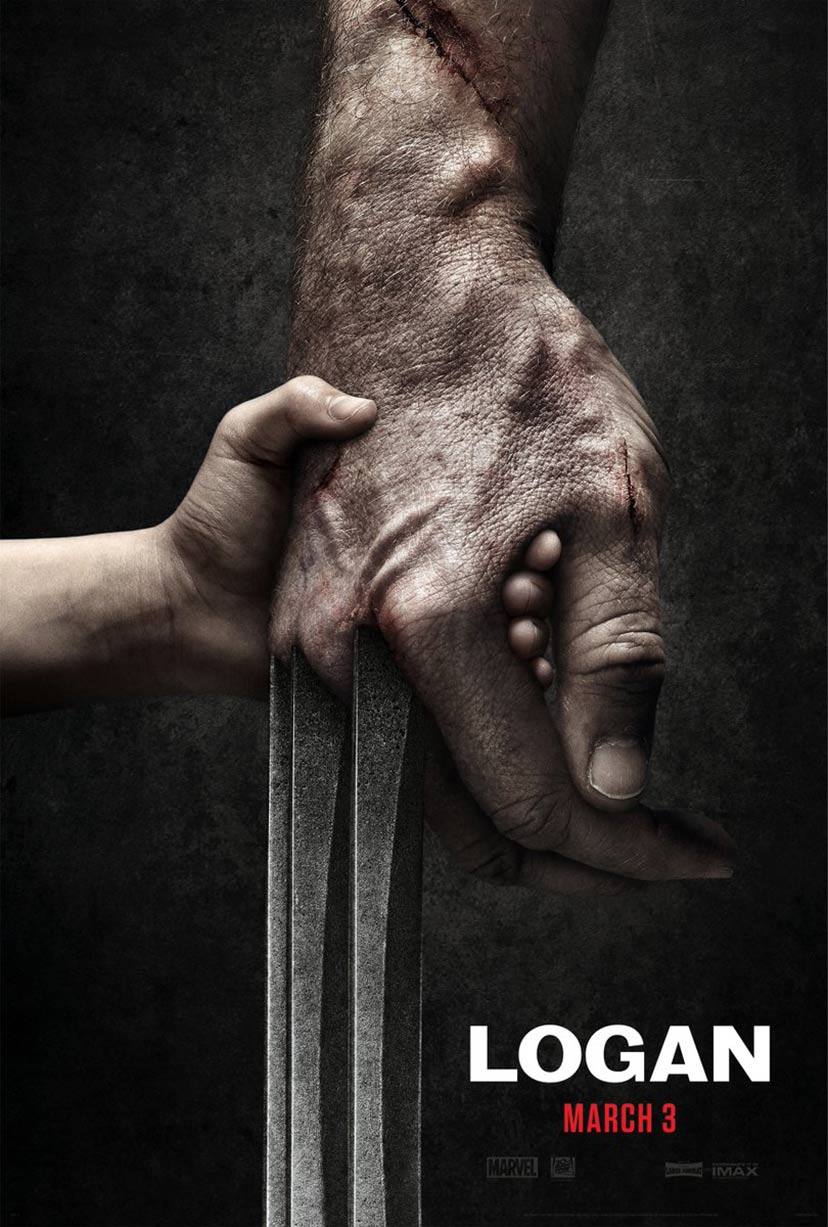
logan-2017-poster

D: James Mangold / 137m

Cast: Hugh Jackman, Patrick Stewart, Dafne Keen, Boyd Holbrook, Stephen Merchant, Elizabeth Rodriguez, Richard E. Grant, Eriq LaSalle, Elise Neal, Quincy Fouse

It’s 2029, and mutants are pretty thin on the ground, with those that remain hiding from the rest of humanity, hoping to be overlooked. They’re almost extinct thanks to a virus created by the Transigen Project, led by Dr Zander Rice (Grant). More able than most to blend in, Logan aka Wolverine (Jackman), is working as a limo driver while also looking after – secretly – Professor Charles Xavier (Stewart), now in his nineties and suffering from senile dementia. Hidden away in Mexico, Logan is helped in this by another mutant, Caliban (Merchant). Xavier’s psychic abilities are now inherently dangerous; if he has a seizure it triggers a psychic attack that could mean the death of anyone around him. In one of his more lucid moments he talks of a mutant who will need Logan’s help, but Logan doesn’t want to know anything about it.

An encounter with a woman, Gabriela (Rodriguez) and a young girl, Laura (Keen), brings Logan and the mutant Xavier has been talking about together. Laura is a mutant, but with a difference: she was created in a Transigen lab, along with twenty-two other “children”. Bred to be weapons, the creation of a twenty-fourth mutant means Laura and all the other children are expendable. Gabriela has helped Laura and the other children escape, but now they need to rendezvous at a place called Eden in North Dakota. When Transigen come a-calling at Logan’s hideout – in the form of Donald Pierce (Holbrook) and his team of genetically enhanced Reavers – previous events dictate that Logan, Xavier and Laura make a run for it, and against Logan’s better judgment, they head for North Dakota. But Caliban is captured by Pierce and coerced into using his tracking abilities to find Logan and the girl.
logan-trailer-2-2

As the trio journey to Eden, Logan learns more about the activities of Transigen and their attempts to create mutants they can control, while Pierce comes close a couple of times to catching them. A chance encounter outside of Oklahoma City with a local family, the Munsons (LaSalle, Neal, Fouse) has unexpected consequences, as well as revealing the identity of X24, Transigen’s latest creation. Logan does eventually get Laura to Eden, which proves to be real and not the comic book-inspired destination that Logan has believed Gabriela made up. There the other children are planning to make a break for the Canadian border, and Laura plans to go with them. But Pierce, now accompanied by Dr Rice, is soon on their heels, and it will need Logan’s alter ego, the Wolverine, to ensure they reach safety instead of being captured and killed.

Fans of Logan/Wolverine have been clamouring to see the character that they’ve read and seen in the comics, brought to life in the same violent, berserker fashion that he’s portrayed on the page. A brief moment towards the end of X-Men: Apocalypse (2016) gave everyone a chance to see what that would look like, but it was just a moment, however well-received. Now, in his third solo outing, Logan’s rage has finally been given its due, and this is the ultra-violent/borderline sadistic outing that the fans have been waiting for. The tone is set right at the start, with a scene that pits Logan against a quartet of gangbangers. Blasted in the chest, he still gets up and proceeds to use his adamantium claws to slice, dice and eviscerate all four of them. But at the same time it’s clear that his healing powers aren’t as effective as they used to be, and though his trademark rage is still there, it appears that the use of his claws is as painful for him as it is for anyone on their receiving end.

patrick-stewart-hugh-jackman-logan-01-600x350

It’s this vulnerable side to Logan’s character, this curtailment of his powers, that makes Logan such an interesting movie to watch. Based very loosely on the comic book series Old Man Logan (2008-09), this version of Logan, older, even more pragmatic, yet weary of life and living, allows the viewer to look beyond the usual superhero movie traits, and into the mind of a character who’s seen and done too much and doesn’t care to keep living that kind of life. He wants to die, a concept that most – if not all – other superhero movies shy away from. But returning director James Mangold, who made The Wolverine (2013), and along with screenwriters Michael Green and Scott Frank, has made a road movie-cum-Western that adds surprisingly complex emotional layers to its basic storyline, and which doesn’t tiptoe around the issues it brings up. This is an unashamedly adult “superhero” movie, dealing with adult themes in an intelligent, adult way, and at no point does it short change the viewer by glossing over the emotional stakes set up within the narrative.

It’s the Wolverine movie that Hugh Jackman has been waiting to make since his first appearance in the role back in 2000. Still aloof, but weighed down by experiences we can only guess at, Logan is battered and scarred, his features weathered by time, and partly hidden beneath a salt and pepper beard that provides texture in terms of his age and weary resignation at being so old. This is a Logan who is continually in pain, the antithesis of the Logan we’re used to seeing, and it’s ironic that the source of his strength and invincibility (until now), his adamantium skeleton and claws, is the very thing that’s now killing him. There’s an inevitable layer of melancholy attached to this, but Mangold and Jackman make sure that Logan’s gruff demeanour is still in place, derailing any sentimentality that might have arisen otherwise. This isn’t as elegiac as its references to Shane (1953) make it sound; instead, it’s about that other staple narrative of the Old West, the passing of an era.

619315922

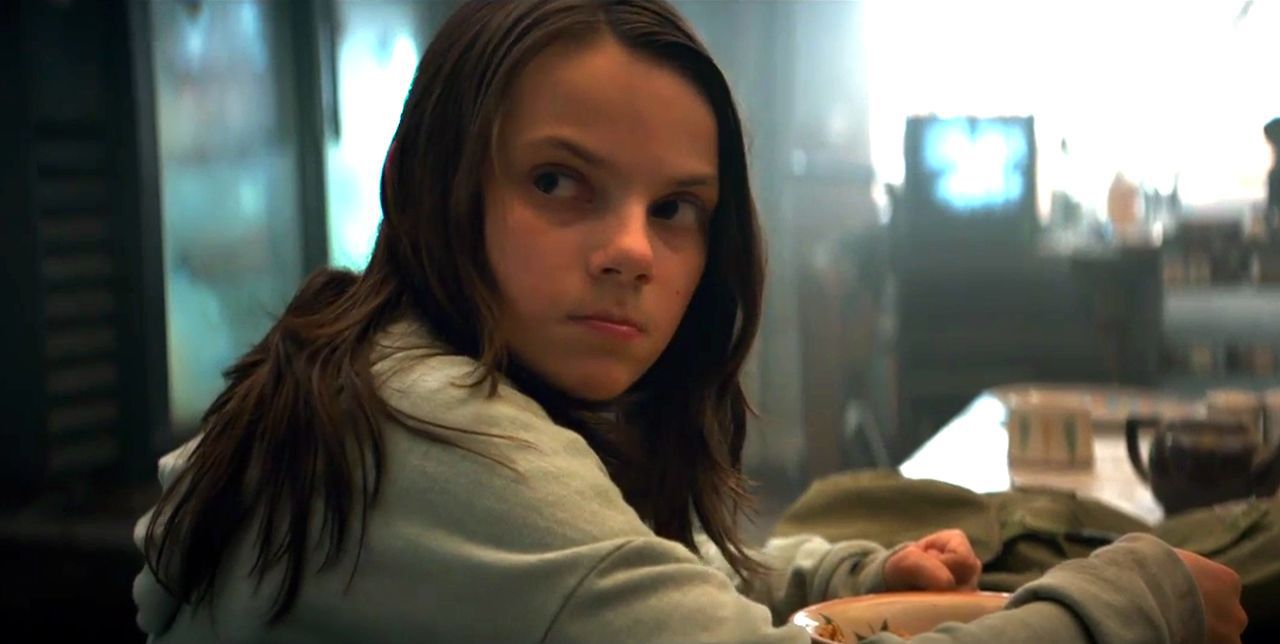
Jackman excels in what is easily his best performance in the role, and it’s good to see him finally playing Logan as something more than the cigar-chomping, Elvis-sideburned figure we’ve been used to. But if Jackman’s transformation into a much older Logan is disarming, then he’s more than matched by Stewart’s interpretation of Xavier’s mental disintegration. There are moments when Stewart’s bewildered, beseeching features are too painful to watch, and again it’s the irony of seeing a once proud and powerful man undermined by the very gift that made him stand out from the crowd that makes the movie so emotionally complex and rewarding. There are terrific supporting turns from Holbrook (give this man a leading role, for Pete’s sake), Grant, and Merchant, but inevitably it’s Keen who draws the viewer’s attention for her largely mute, refreshingly feral performance as Laura/X23, a character with a close connection to Logan, and someone you really don’t want to mess with when she furrows her brow.

If this really is Jackman’s swansong in the role then he couldn’t have picked a better storyline with which to hang up the claws and walk away from the X-Men franchise. By stripping back the narrative, and focusing on the relationships of the three main characters, Logan transcends its comic book origins to become a movie that is daring, quietly introspective when necessary, aggressively violent in a shocking, sometimes disturbing way, and able to take its basic set up – the road movie – and twist it far enough out of shape that it feels more nuanced and transgressive than on first impression. Mangold shapes the world around Logan with a keen eye for detail, and avoids doling out excessive sentimentality, keeping everything grounded and credible, despite the fantastic nature of the material. It’s an artistic triumph, and one that shows that Marvel superhero movies don’t have to follow the same template all the time, a message that Kevin Feige will hopefully take on board.

Rating: 9/10 – an intense, gritty, superbly realised and mature outing for its title character, Logan is perhaps the first “superhero” movie that wouldn’t feel out of place as a Best Film Oscar nominee (though it’s still unlikely to happen); gripping for long stretches, with the quieter moments proving just as engrossing as the action sequences (which are very well staged indeed, if a little hyper-edited), Mangold and Jackman’s determination to give the Wolverine a proper send-off is apparent from start to end.


Share this:

  • Click to share on X (Opens in new window) X
  • Click to share on Facebook (Opens in new window) Facebook
  • More
  • Click to print (Opens in new window) Print
  • Click to email a link to a friend (Opens in new window) Email
Like Loading...

Monthly Roundup – February 2017

01 Wednesday Mar 2017

Posted by dullwood68 in Movies

≈ Leave a comment

Tags

Alexis Wajsbrot, Alycia Debnam-Carey, Barbara Hale, Bill Douglas, Black mirror, Boys' school, Bryce Dallas Howard, Comedy, Damien Macé, David Lowery, Disney, Don't Hang Up, Drama, Edwin L. Marin, Fantasy, Friend Request, Gambling, Garrett Clayton, Gregg Sulkin, Horror, Insomnia, Internet, Joanna David, Lady Luck, Lawrence Huntington, Life on the Road, Literary adaptation, Marius Goring, Mr. Perrin and Mr. Traill, Oakes Fegley, Pete's Dragon, Prank calls, Remake, Reviews, Ricky Gervais, Robert Young, Romance, Saxon Logan, Simon Verhoeven, Sleepwalker

Life on the Road (2016) / D: Ricky Gervais / 96m

aka David Brent: Life on the Road

Cast: Ricky Gervais, Ben Bailey Smith, Tom Basden, Jo Hartley, Tom Bennett, Mandeep Dhillon, Andrew Brooke, Andy Burrows, Steve Clarke, Michael Clarke, Stuart Wilkinson

gallery-1460024286-david-brent-life-on-the-road

Rating: 5/10 – post-Wernham Hogg, David Brent (Gervais) is now a salesman with dreams of becoming famous by putting together a band, Foregone Conclusion, and going on tour; the gulf between Life on the Road and The Office (2001-03) can be gauged within the first ten minutes as Gervais treats his most enduring (and sympathetic) character with a complete disregard for Brent’s development, and by being unnecessarily cruel to everyone else, making this a chore to sit through, and only slightly more enjoyable than Special Correspondents (2016).

Pete’s Dragon (2016) / D: David Lowery / 103m

Cast: Bryce Dallas Howard, Oakes Fegley, Wes Bentley, Karl Urban, Oona Laurence, Robert Redford, Isiah Whitlock Jr

nekjooahknoxop_1_a

Rating: 7/10 – following a car crash that kills his parents and leaves him lost in the woods, a young boy called Pete is “adopted” and cared for by Elliot, who just happens to be a dragon, a situation that continues until civilisation comes calling in the form of a logging operation; a good-natured remake of the 1977, Pete’s Dragon original offers good performances all round, beautiful New Zealand backdrops, a lovable dragon, and keeps it all light and airy, all of which compensates for a script that wavers too often in its attempts to put Elliot in any real danger from Urban and his men.

Mr. Perrin and Mr. Traill (1948) / D: Lawrence Huntington / 92m

Cast: Marius Goring, David Farrar, Greta Gynt, Raymond Huntley, Edward Chapman, Mary Jerrold, Ralph Truman

de23013771395642cc6946f7ec5881e3-1000x563

Rating: 8/10 – when a new teacher at an all-boys’ school, Mr Traill (Farrar), proves more popular with the pupils, and the school nurse (Gynt), than the older Mr Perrin (Goring), personal and professional jealousies lead to an unexpected tragedy; an adaptation of the novel by Hugh Walpole, Mr. Perrin and Mr. Traill expertly creates a hothouse environment for its title characters, but never comes down fully on the side of either, making this a surprisingly jaundiced view of male rivalry, and a movie that features an exemplary performance from Goring.

Don’t Hang Up (2016) / D: Alexis Wajsbrot, Damien Macé / 83m

Cast: Gregg Sulkin, Garrett Clayton, Bella Dayne, Jack Brett Anderson, Parker Sawyers, Sienna Guillory

dont-hang-up-3

Rating: 5/10 – two phone pranksters, Sam (Sulkin) and Brady (Clayton), find themselves on the receiving end of a psycho(?) who’s willing to play their own game against them, with increasingly disturbing and violent results; basically the first ten minutes of Scream (1996) stretched to breaking point, Don’t Hang Up will soon have you rooting for the psycho as Sam and Brady behave as stupidly as you might expect, even to the point of continually picking up the phone, or answering their mobiles, just so the story can advance a bit further.

Lady Luck (1946) / D: Edwin L. Marin / 97m

Cast: Robert Young, Barbara Hale, Frank Morgan, James Gleason, Don Rice, Harry Davenport, Lloyd Corrigan

6770-2

Rating: 7/10 – Mary (Hale), who’s staunchly anti-gambling marries Scott (Young), who does his best to reform, but a trip to Las Vegas – on their honeymoon, no less – soon puts their marriage in jeopardy; a lightweight romantic comedy featuring smooth performances and a pleasing sense of its own absurdity, Lady Luck is carefree, populist piece of entertainment that hits a few dramatic potholes along the way to its final scene, but is nevertheless an enjoyable way to spend ninety-seven minutes.

Friend Request (2016) / D: Simon Verhoeven / 92m

Cast: Alycia Debnam-Carey, William Moseley, Connor Paolo, Brit Morgan, Brooke Markham, Sean Marquette, Liesl Ahlers, Shashawnee Hall, Nicholas Pauling

friend-request

Rating: 4/10 – the suicide of one of her classmates leads Laura to regret unfriending her on social media, a decision that has dire consequences for her and her friends, as her classmate’s ghost seeks revenge from beyond the grave; in amongst the horror motifs and distressed editing techniques that are now a depressing norm of the genre, Friend Request does have some pertinent things to say about popularity and the perils of social media, but it’s done in such a ham-fisted, unconvincing way that all that effort goes to waste very quickly.

Sleepwalker (1984) / D: Saxon Logan / 50m

Cast: Joanna David, Bill Douglas, Nickolas Grace, Heather Page, Fulton Mackay, Michael Medwin, Raymond Huntley

sleepwalker-sleepwalking

Rating: 7/10 – two couples at an isolated farmhouse share an evening deriding each other’s class and social values, unaware that the sleepwalking tendencies of one of them will lead to blood being spilt; part curdled Abigail’s Party and part baroque thriller, Sleepwalker has much to say about middle class angst, the antagonism inherent in middle class relationships of the time, and sets it all against the backdrop of a social evening from hell.

Share this:

  • Click to share on X (Opens in new window) X
  • Click to share on Facebook (Opens in new window) Facebook
  • More
  • Click to print (Opens in new window) Print
  • Click to email a link to a friend (Opens in new window) Email
Like Loading...

Mini-Review: Blackway (2015)

28 Tuesday Feb 2017

Posted by dullwood68 in Movies

≈ Leave a comment

Tags

Alexander Ludwig, Anthony Hopkins, Crime, Daniel Alfredson, Drama, Enderby, Go With It, Julia Stiles, Literary adaptation, Ray Liotta, Review, Thriller

a4eb9f17e1a6a3cd39eedca150b5e57a

Original title: Go With Me

D: Daniel Alfredson / 90m

Cast: Anthony Hopkins, Julia Stiles, Alexander Ludwig, Ray Liotta, Steve Bacic, Lochlyn Munro, Hal Holbrook, Dale Wilson

Enderby, British Columbia. Lillian (Stiles) has returned to her hometown following the death of her mother. Working as a waitress in a bar she attracts the unwanted attention of Richard Blackway (Liotta), an ex-police constable turned local crime lord. One night he turns up at her house and frightens her so much that she goes to the local sheriff (Wilson). When he learns that Blackway is involved, the sheriff becomes uninterested in helping her, and tells Lillian to seek out a man named Scotty at one of the lumber companies. Instead of finding Scotty, Lillian is offered help by an old man called Lester (Hopkins), and a young man called Nate (Ludwig). Together they try and track down Blackway, beginning with a man Lester thinks will help them, Fitzgerald (Bacic).

But Fitzgerald is just as afraid of Blackway as the rest of the town. He does give them a lead on Blackway’s whereabouts, and the trio find themselves driving from place to place, either just missing him, or on one occasion, finding him but not where he’s alone. Along the way Nate has a fight with Blackway’s accountant, Murdoch (Munro), an incident at a hotel Blackway runs as a brothel leads to its being set on fire, and the trio reach a point of no return, travelling up into the mountains to an old logging camp where Blackway hides out when he needs to. But will they remain the hunters, or will Blackway turn the tables on them instead?

go-with-me-recensione

Post-Lisbeth Salander, Daniel Alfredson’s career hasn’t been as consistent as he perhaps would have liked. Work on the small screen took him back to his roots until Echoes of the Dead (2013) came along, but that movie couldn’t maintain its initial premise and made some questionable decisions before reaching its conclusion. In the same year as Blackway, Alfredson teamed up with Hopkins for Kidnapping Mr. Heineken, a lacklustre account of the true story that must have convinced the pair to work together again. And so we have Blackway, an austere thriller-cum-unspoken revenge drama that has more going for it than first meets the eye. The movie has a gloomy, penetrating atmosphere that perfectly suits the mood of the piece. Everyone in Enderby looks beaten down, defeated, all but Blackway, whose violent, malevolent nature leaves him as the only person in town enjoying himself.

Liotta revels in his evil nature, and he adds another psycho character to his resumé, infusing the title villain with all the rage and sadism he can muster. There’s a scene where Blackway has his hand around the neck of Fitzgerald’s daughter, squeezing it, and Liotta plays it as if he were playing with a doll. It’s disquieting, and uncomfortable to watch, and tells you everything you need to know about him. Against this we have Stiles’s heroine, unwilling to leave town, and at first, emotional and angry at being treated so horribly. But as the movie progresses, she too appears beaten down, saying less and less, until words become superfluous, until it becomes apparent where tracking down Blackway is going to take her; and her newfound allies. Hopkins is taciturn and determined, and gives one of his better performances of recent years, a proud man looking to redeem himself for something we can guess at, but which we never see confirmed. And there’s a lot that’s left unsaid in Blackway, adding to the austerity and the stripped back nature of the material, and making it far more absorbing and intriguing than it looks.

Rating: 6/10 – once you get past some of the more awkward elements in the script – Blackway never sends his men out to find Lester and co, their search for him seems just a little too easy at times – there’s much to admire about Blackway, and Alfredson keeps it agreeably low-key throughout; a mood piece as much as a thriller, it’s a movie that doesn’t deserve to be dismissed as just another DtV backwoods drama.

Share this:

  • Click to share on X (Opens in new window) X
  • Click to share on Facebook (Opens in new window) Facebook
  • More
  • Click to print (Opens in new window) Print
  • Click to email a link to a friend (Opens in new window) Email
Like Loading...

The Happiest Day in the Life of Olli Mäki (2016)

25 Saturday Feb 2017

Posted by dullwood68 in Movies

≈ Leave a comment

Tags

1962, Biography, Boxing, Championship bout, Drama, Eero Milonoff, Finland, Hymyilevä mies, Jarkko Lahti, Juho Kuosmanen, Oona Airola, Review, Romance, True story

images-w1400

Original title: Hymyilevä mies

D: Juho Kuosmanen / 92m

Cast: Jarkko Lahti, Oona Airola, Eero Milonoff, Joanna Haartti, Esko Barquero, Elma Milonoff, Leimu Leisti, Hilma Milonoff, John Bosco Jr

Shot in gorgeous black and white, The Happiest Day in the Life of Olli Mäki opens in Finland in 1962. Olli (Lahti) is an amateur boxer turned professional whose manager, Elis Ask (Milonoff), is on the verge of clinching a deal that will see Olli fight in a bout against the World Boxing Association featherweight champion, Davey Moore (Bosco Jr). If it goes ahead, it will be the biggest sporting event in Finnish history. But Olli has other things on his mind, particularly his friend Raija Jänkä (Airola). At a wedding they both attend, Olli discovers he’s attracted to her, but at first he doesn’t know what to do or say about his new feelings. When the bout is agreed, Olli finds himself too busy to spend much time with Raija, who is reduced to the role of onlooker by Elis’s insistence that Olli focus on the bout and nothing else.

There’s also the issue of Olli’s weight, which needs to come down in order for him to be able to fight, but which he doesn’t seem to be concentrating on. With Elis arranging for a documentary film crew to record Olli’s preparations, it’s a further distraction for the boxer, and adds to the dissociation he feels with Raija. She too begins to feel the same thing, as Elis’ behaviour pushes her further and further away from Olli, almost to the point where she feels that she’s in the way. Meanwhile, Olli is forced to attend various dinners and promotional photo-shoots, adding to the disenchantment he’s feeling about the whole process. As the bout draws nearer, Raija returns to her home town, while Olli becomes increasingly withdrawn.

the-happiest-day-in-the-life-of-olli-maki-1

Unable to train any further, Olli follows Raija and declares his feelings for her. Giving Elis no option, he stays with Raija and trains at his own pace, even fighting to get his weight down. At the weigh-in he just comes in under the required weight, and afterwards he proposes to Raija. Buoyed by this he approaches the bout with a renewed sense of optimism. And as he enters the ring, the stage is set for a career- and life-defining moment – but will it prove to be the happiest day of his life?

If you’re not Finnish, and more specifically, up to speed on Finland’s boxing history, then it’s unlikely that you’ll have heard of Olli Mäki. His career was a succession of ups and downs, beginning with his winning the European lightweight title as an amateur in 1959, his bout with Moore, and his European Boxing Union light welterweight title win in 1964. He continued boxing until 1973 when he retired to become a boxing coach and manager. At first glance, his life doesn’t seem to warrant a biopic being made out of one particular period in his life, even if it does include a championship title bout. But this is a boxing movie that isn’t about boxing, even though it inhabits that world. Instead, director Kuosmanen (making his full-length feature debut) and co-writer Mikko Myllylahti have turned their attention onto Mäki himself, his doubts and fears and longings outside the ring, and in doing so, have wrought an accomplished, intelligent, and compassionate portrait of a man fighting for more than just a title.

the_happiest_day_in_the_life_of_olli_maki_36000515_st_8_s-high

From the beginning, Mäki seems bemused and oh-so-bored by all the media circus that surrounds him, a necessary evil he must endure on his way to the title bout. But he knows the ropes as it were, and goes along with Elis’ conditions and demands, trusting in the man who’s got him to this point. But the eagle-eyed viewer will soon spot that Elis is working as much to his own agenda as he is for Olli, and a scene late on where Elis is forced to take his children (and Mäki) with him on a rainy night to visit some of his backers, leaves the distinct feeling that there’s some form of corruption going on behind the scenes. But it’s enough to know that it’s there, because wisely, Kuosmanen doesn’t let this side trip upset the delicate balance he’s established by focusing on Mäki’s warring emotions.

Mäki’s dilemma revolves around whether he should be a lover or a fighter, or whether he can be both. It’s clear that he wants to be both, but if he has to make a choice – and an irrevocable one at that – then it’s obvious that he’ll be a lover. But boxing still has a hold over him, one that’s stronger than his loyalty to Elis, and letting go isn’t as easy as he may have believed. It takes Raija’s complete absence from his training camp to push him in the right direction, and for a moment the movie teeters on the edge of discarding the title fight altogether in favour of a happy ending. But Raija, despite her reservations about the world of boxing, believes in Mäki, and it’s this that allows him to return to his training and make the weigh-in. What happens next may not be entirely unpredictable, and definitely not if you’re familiar with Mäki’s career, but it has a pleasing symmetry with what’s gone before.

170209_film_thehappiestdayinthelifeofollimaki_5-912x513

As the eponymous boxer, Lahti wears a worn-down expression for the most part, but it’s in keeping with Mäki’s bemused resignation, and the actor inhabits the role with a weary sincerity. He also makes Mäki’s coiled physicality a part of his performance, as if the character is waiting for the right moment to explode but isn’t quite sure – outside of the ring at least – when that should be. As Raija, Airola (who in certain shots looks like Marion Cotillard’s younger sister) has an air of detachment and melancholy that again suits the movie’s mood and her character’s dwindling sense of importance when measured against Mäki’s training regime. But she also gets a chance to explore Raija’s more winsome, frivolous side in a party scene that fully explains why Mäki falls in love with her. As the main rival for Mäki’s “affections”, Milonoff is equally as good as his co-stars, portraying Elis as a man desperately trying to hide how much this fight means to him both professionally and personally. It could have been a two-dimensional role in comparison to Lahti and Airola’s, but Milonoff takes the bare bones of what appears to be a stock character and fleshes him out with sympathy and understanding.

Kuosmanen’s decision to make The Happiest Day in the Life of Olli Mäki in black and white proves to be a perfect choice for the material, and the depth and the richness of the images is further ensured by his use of a Kodak film stock that was never meant for feature length movies. The result is a movie that is frequently beautiful to watch, and which offers the viewer a variety of arresting images. Kuosmanen makes a number of other, equally important decisions, from the movie’s disciplined, elegant framing to the careful way in which he teases out each of the main characters’ feelings and desires in such a way that leaves them vulnerable and yet still secure. Add in themes around personal sacrifice and professional responsibility, as well as the pressures of an entire country’s expectations of an individual, and you have a movie that quietly and effortlessly draws in the viewer and rewards them in a variety of unexpected ways, not the least of which is a dry, diffident sense of humour.

Rating: 9/10 – a movie that speaks to the heart and tells a wonderful love story in the process, The Happiest Day in the Life of Olli Mäki is a modest, yet enthralling movie that somehow failed to be nominated for an Oscar this year (though it did win the Prize Un Certain Regard at Cannes last year); putting all that aside, this should be on everyone’s list of must-see movies, and a welcome reminder that sometimes it’s the movies that receive the least fanfare that can often be the ones to have the most impact.

Share this:

  • Click to share on X (Opens in new window) X
  • Click to share on Facebook (Opens in new window) Facebook
  • More
  • Click to print (Opens in new window) Print
  • Click to email a link to a friend (Opens in new window) Email
Like Loading...

The LEGO Batman Movie (2017)

24 Friday Feb 2017

Posted by dullwood68 in Movies

≈ 1 Comment

Tags

Action, Alfred, Animation, Batman, Chris McKay, Comedy, Drama, Lego, Michael Cera, Ralph Fiennes, Review, Robin, Rosario Dawson, The Joker, The Phantom Zone, Will Arnett, Zach Galifianakis

cym_yo1w8aqqn_z

D: Chris McKay / 104m

Cast: Will Arnett, Zach Galifianakis, Michael Cera, Rosario Dawson, Ralph Fiennes, Hector Elizondo, Jenny Slate, Channing Tatum, Jason Mantzoukas, Conan O’Brien, Doug Benson, Billy Dee Williams, Zoë Kravitz, Kate Micucci, Riki Lindhome, Eddie Izzard, Seth Green, Jemaine Clement, Ellie Kemper, Jonah Hill, Adam Devine, Mariah Carey

A black screen. And then… “Black. All important movies start with a black screen. And music. Edgy, scary music that would make a parent or studio executive nervous. And logos. Really long and dramatic logos. Warner Bros. Why not Warner Brothers? I dunno. DC. The house that Batman built. Yeah, what Superman? Come at me bro. I’m your kryptonite. Hmm, not sure what RatPac does but that logo is macho. I dig it. Okay, get yourself ready for some… reading. If you wanna make the world a better place, take a look at yourself and make a change. Hoooo. [attributed to Michael Jackson] No, I said that. Batman is very wise. I also have huge pecs and a nine pack. Yeah, I’ve got an extra ab. Now lets start the movie.” …and that’s just the first couple of minutes.

After the success of The LEGO Movie (2014), it was inevitable that a spin-off movie featuring the Caped Crusader would eventually hit our screens. Above all the other superheroes in that movie, it was Batman (Arnett), and his wonderfully egotistical repartee that grabbed the audience’s attention (“Bruce Wayne? Uh… who’s that? Sounds like a cool guy”). Now, he’s back, and this time he faces his biggest challenge. No, not the Joker (Galifianakis), or Catwoman (Kravitz), or Scarecrow (Mantzoukas), but… accepting he’s part of a family.

thelegobatman_trailer4

After foiling another of the Joker’s dastardly plans to destroy Gotham, and flatly denying the Joker’s assertion that he is Batman’s greatest enemy, the (brick)Bat heads back to the Batcave and a lonely evening at Wayne Manor (now on Wayne Island). The next night, at a gala to celebrate the retirement of Commissioner Gordon (Elizondo), his successor, his daughter Barbara (Dawson), announces that she intends to restructure Gotham’s police force to function without Batman’s help. The Joker turns up unexpectedly with all the other Gotham villains, and surrenders. Batman is immediately suspicious that the Joker is up to something, and aware that his arch-rival Superman (Tatum) banished General Zod to the Phantom Zone, decides this is what should happen to the Joker.

Before he can acquire Superman’s Phantom Zone Projector (PZP from now on), Batman is reminded by his butler, Alfred (Fiennes), that while he was at the gala, he inadvertently adopted an orphan (“My name is Richard Grayson. The other kids call me Dick.” “Well, children can be cruel.”). Batman allows “Dick” to help him and his young ward takes on the superhero identity, Robin. Together they steal the PZP from Superman’s Fortress of Solitude, and visit Arkham Asylum where they use it on the Joker. The new Commissioner reacts badly to this, and she has both Batman and Robin locked up. But Harley Quinn (Slate), the one villain who didn’t surrender, steals the PZP and uses it to free the Joker. In turn he uses it to free all the villains trapped in the Phantom Zone, a group that includes Lord Voldemort (Izzard), the Daleks, and the Eye of Sauron (Clement) (but strangely, not General Zod).

lego-batman-sdcc-1_9b94b532939c45c0b268d9d8bde646ea

With Gotham once again facing terrible ruin and destruction, Commissioner Gordon (or Babs as Batman calls her) realises she needs Batman and Robin’s help, and the three of them team up with Alfred to take on all the super-villains now loose in Gotham. Attacked on all sides, the quartet manage to see off the Eye of Sauron (and an embarrassed Kraken) before making it to Wayne Island and a showdown with the Joker. But Batman can’t risk losing the three people who now mean the most to him, and so he tricks them, and faces the Joker alone. But his plan quickly backfires on him, and the Caped Crusader finds himself in the Phantom Zone, while his new “family” do their utmost to try and save him…

The LEGO Batman Movie, like its predecessor, crams an awful lot into its running time, but although the plot thickens at a fast pace, and the jokes come even thicker and faster (a second viewing is practically unavoidable if you want to “get” all the in-jokes and references to previous Batman movies and comics), but thanks to a script by Seth Grahame-Smith, Chris McKenna, Erik Sommers, Jared Stern and John Whittington that defies the idea that “too many cooks spoil the broth”, the storyline is easy to follow, and the main subplot involving Batman not going it alone is stressed over and over (in fact, a little too much). It also provides one of the best Batman/Joker story arcs seen for quite some time, as the Joker’s need to be hated by Batman casts their adversarial relationship in the light of an unrequited bromance.

the-lego-batman-movie-villains-harley-quinn-231392

But while the script adds layers that you wouldn’t necessarily expect to find in a semi-sequel animated movie, it certainly doesn’t skimp on the comedy, and like The LEGO Movie, it’s a riot of visual gags, verbal one-liners, and sit-com moments that all gel together into a splendidly anarchic whole. It also takes as many opportunities as it can to poke fun at previous Batman movies – at one point, Alfred chides Batman’s behaviour as something he’s seen “in 2016 and 2012 and 2008 and 2005 and 1997 and 1995 and 1992 and 1989 and that weird one in 1966 (cue LEGO versions of Batman’s previous big screen outings; well, except for that weird one) – while taking a few sideswipes at other superhero movies. If anything, there’s a greater success rate here than in 2014, and the writing team should be congratulated for making this feel as fresh and as appealing as its forerunner.

Of course, the cast have a lot to do with it as well, with Arnett now in a position to lay claim to the title of Best Batman Voice Artist Ever. Whether he’s being arrogantly charming, obtuse, horrified by Robin’s liking for disco music, or struggling to say the word “sorry”, Arnett’s performance is immensely entertaining, and it’s clear the actor is having a blast. This is reflected in the performances of the rest of the cast, with Galifianakis, Cera, Fiennes, and Slate all on top form, while Dawson is unfortunately stuck with being the straight (wo)man to Arnett’s comic embellishments. The movie looks wonderful as well, with the LEGO sets combining beautifully with the CGI elements, and there’s a level of inspired visual invention that you can only get from an animated movie. If there’s one criticism to be made in this respect, it’s that some of the super-villains – the Daleks, the Gremlins, and the Kraken in particular – don’t look as good as most of the others do. But when a movie is otherwise as visually and comedically ingenious as this is, then what’s a few dodgy character designs between super-villains?

Rating: 8/10 – in amongst all the vivid action and the crunching noise, The LEGO Batman Movie is a good-natured, entertaining… movie that doesn’t waste a frame or the chance to put a smile on its audience’s faces; better by far than its live action brethren, it does more with the character in one outing than ever before, and does so in a way that’s still respectful of the source material, even though said material is being pulled around and twisted out of shape in the pursuit of gags, gags, and more gags.

Share this:

  • Click to share on X (Opens in new window) X
  • Click to share on Facebook (Opens in new window) Facebook
  • More
  • Click to print (Opens in new window) Print
  • Click to email a link to a friend (Opens in new window) Email
Like Loading...

Fences (2016)

23 Thursday Feb 2017

Posted by dullwood68 in Movies

≈ 2 Comments

Tags

1950's, August Wilson, Denzel Washington, Drama, Father/son relationship, Jovan Adepo, Pittsburgh, Relationships, Review, Stephen McKinley Henderson, Viola Davis

fences

D: Denzel Washington / 139m

Cast: Denzel Washington, Viola Davis, Stephen McKinley Henderson, Jovan Adepo, Russell Hornsby, Mykelti Williamson, Saniyya Sidney

Movie adaptations of stage productions, especially hugely successful stage productions, don’t come along too often. The two mediums don’t always make for good bedfellows, with one medium’s strengths rarely translating well to the other. For every Casablanca (1943), there’s a Boom! (1968); conversely, for every Hairspray (1988) there’s an Evil Dead: The Musical (2003). But sometimes a stage-to-screen adaptation comes along that has a built-in advantage, a guarantee of quality that ensures it’s going to be as impressive on screen as it was on stage. And Fences is such an adaptation.

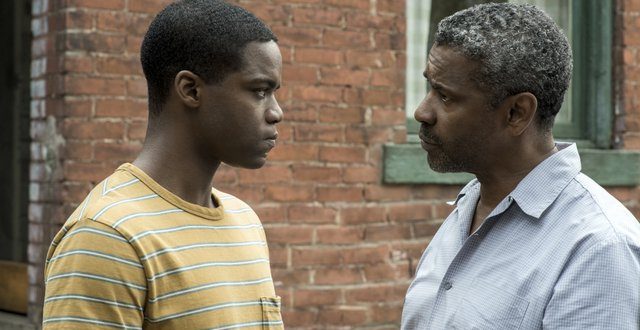
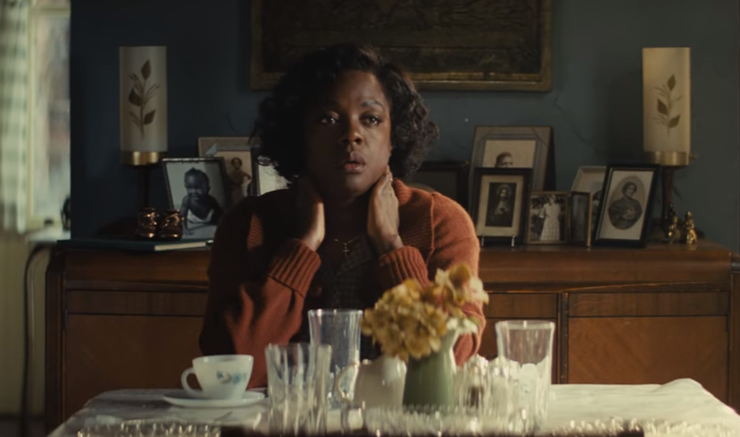
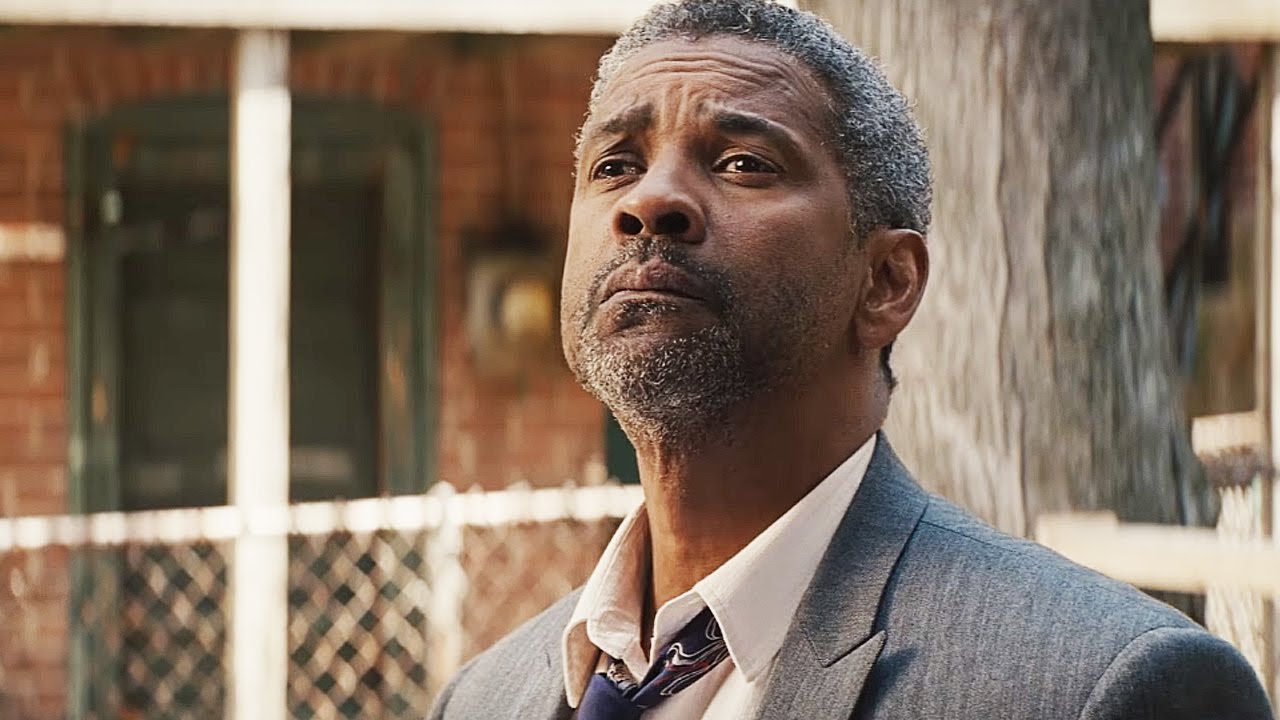
Set in 1950’s Pittsburgh, the movie opens with best friends Troy Maxson (Washington) and Jim Bono (Henderson) working as refuse collectors for the city. Troy is facing the possibility of losing his job because he’s challenging the idea that only white men can drive the garbage trucks. But Troy is unperturbed; he reckons he has right on his side, and that’s all he needs. They also talk about a woman that Troy has been spending time with, Alberta. Troy denies there’s anything wrong in what he’s doing, but Bono remains unconvinced. At Troy’s home, Bono and Troy’s wife Rose (Davis), listen to Troy relive a time when he almost died from pneumonia. He tells them he fought the Devil and beat him while he was sick, and he’s ready to take him on again. Rose and Bono laugh at his bluster, and so does Troy, but there’s a distinct feeling that he believes what he’s saying.

film-review-fences_news2-640x330

Troy has two sons: one, Lyons (Hornsby), from a previous relationship, and Cory (Adepo), whose mother is Rose. Lyons is in his thirties, an aspiring musician who only visits when he needs money. Cory is a teenager who wants to play football, but when Troy finds out he’s not working after school as agreed, but is going to football practice, Troy rails against it. Convinced that his own career in baseball was cut short by racial prejudice (and not his age at the time), and that the same will happen to his son, Troy refuses to support Cory’s ambitions. Meanwhile, Troy’s younger brother, Gabriel (Williamson), who has a metal plate in his head from serving in World War II and is mentally impaired, talks about knowing St Peter and needing to be ready when the Gates of Heaven will be opened.

Troy and Cory fight over Cory’s ambition to play football, while Rose takes her son’s side. But Troy is adamant, and when he learns that Cory isn’t working at all, he refuses point blank to sign any permission documents. Their animosity over the issue also leads Troy to visit the school and get Cory kicked off the team. With tensions flaring between the two, Troy’s inability to read or write backfires on him when he has to sign papers that leave Gabriel institutionalised. Fate takes further aim at him when Bono confronts him over his now having an affair with Alberta. Urged by Bono to do something about it, Troy has to face up to Rose and tell her the truth – not only about the affair, but that he’s going to be a father again…

rehost-2016-10-3-02ec9b46-aa66-437b-a129-7023fd8fc76f

Fences, first performed on stage in 1983, was revived on Broadway in 2010 to major acclaim and won a stack load of awards. It starred Denzel Washington and Viola Davis (who both won Tony’s for their performances), and also featured Henderson, Williamson and Hornsby in the roles they would eventually reprise on screen. With its creator, August Wilson, having passed away in 2005, a movie version rested on one proviso: that the director be an African-American. Step forward Washington, who took a script that August had prepared, and remained faithful to every word of it. There’s a quote from Shakespeare, “the play’s the thing”, and in Washington’s, and Davis’s, and everyone else’s more than capable hands, Fences is a perfect example of that quote.

The problem with a lot of stage to screen adaptations is the dialogue. There’s just too much of it, and while monologues and lengthy speeches are the lifeblood of many a theatrical production, on screen it’s a vastly different matter. Movies are a visual medium, and who wants to watch a bunch of people standing or sitting around talking to each other the whole time? But Fences is, to borrow from the movie’s vernacular, a whole different ball game. Wilson has created such a distinct, precise, rhythmic way of speaking for his characters that it also becomes poetry when listened to long enough. It flows and eddies in ways that ordinary speech never quite manages, but on stage or screen alike, this is dialogue that captivates and mesmerises, and keeps you hanging on every word. Wilson’s dialogue has weight, and a depth that carries such levels of meaning that you could spend hours dissecting each line and find new aspects of it every time. Washington the director knows this, and his fidelity to the words each character speaks is one of the reasons the movie works. They’re simply so well crafted that nobody else could improve on them.

maxresdefault

With the dialogue locked in, the performances follow. The cast know their characters inside out, and it shows. Washington is on superb form as Troy, angry and bitter at the way his life has worked out, and unable to see that the respect he demands from his family is given out of intimidation and fear. Troy isn’t anywhere near likeable for the most part, and Washington isn’t afraid to show just how selfish and controlling he is, daring his wife and sons to challenge him at every turn, a bullish man whose arrogance wears down everyone around him. But if Washington is superb, what can be said about Davis’s performance? Amazingly, she’s on a whole different level. In any two-hander with Washington, it’s Davis that the viewer will be focused on. She gives meaning to Rose’s sacrifice and wounded pride and makes her the strongest character in the whole movie. At one point, Troy asks her to do something that you hope will see Rose turn on him, a final straw for all the pain he’s caused her. But she doesn’t, and her change of heart is both achingly sad and completely understandable all at the same time. Davis is winning lots of awards for her performance, but they’re all justified; she’s simply that good.

The rest of the cast, including newcomers Adepo and Sidney, all add to the acting masterclass that Washington has created, and though some of the staginess of the original is inevitably present, thanks to some careful framing and the editing skills of Hughes Winborne, the movie soon becomes its own thing. Ultimately, Fences is about people – these people – and we learn more and more about them as time goes on, and through the outside influences that have an effect on all of them. Troy talks a lot about duty and responsibility, but these are issues that have affected him, and driven his life for too long, until now he feels trapped. Rose has stood by him, realising that neither will achieve their dreams but counting on their love to help them get by. And Cory is his father’s son, a younger version of Troy who wants his own life and not his father’s, just as Troy tried to emerge from under the shadow of his own father. Emotions run high, battles are fought, and lives are changed. It’s all there in Wilson’s fastidious dialogue, impeccably drawn out and presented by Washington, and all ending on a moment of magical realism that offers a surprisingly positive, and yet apt conclusion to a tale that isn’t afraid to show people at their most vulnerable, and how the notion of family can be both fluid and rigid at the same time.

Rating: 9/10 – a powerhouse of a movie, Fences is emotionally draining for long stretches, and thanks to Washington and Davis, a must-see for anyone even remotely interested in seeing raw, sincere emotions depicted honestly and realistically; naturally the fences of the title are allegorical, but it’s easy to see the boundaries enforced by Troy against the people around him, and though he’s ultimately a tragic figure, one truth the movie espouses is that, within the four walls of his home, he’s not alone.

Share this:

  • Click to share on X (Opens in new window) X
  • Click to share on Facebook (Opens in new window) Facebook
  • More
  • Click to print (Opens in new window) Print
  • Click to email a link to a friend (Opens in new window) Email
Like Loading...

Imperium (2016)

22 Wednesday Feb 2017

Posted by dullwood68 in Movies

≈ 1 Comment

Tags

Daniel Radcliffe, Daniel Ragussis, Drama, FBI, Review, Terrorism, Thriller, Toni Collette, Tracy Letts, Undercover, White supremacy

imperium-poster

D: Daniel Ragussis / 109m

Cast: Daniel Radcliffe, Toni Collette, Tracy Letts, Sam Trammell, Nestor Carbonell, Chris Sullivan, Seth Numrich, Pawel Szajda, Devin Druid, Burn Gorman

At the start of Imperium, relatively inexperienced FBI agent Nate Foster (Radcliffe) helps foil a terrorist bombing on US soil. His intuitive interrogation skills attract the attention of senior agent Angela Zampano (Collette). When a truck illegally carrying quantities of Caesium-137 – a chemical used in radiation treatments – crashes and six of the manifested containers are found to be missing, the FBI immediately assume that the chemical has been appropriated by Muslim terrorists. However, Zampano believes that the perpetrators are much closer to home, specifically within the white supremacy movement. She approaches Nate and convinces him that he would be an ideal choice to go undercover and infiltrate said movement and discover the whereabouts of the Caesium-137.

Connecting with a group of neo-Nazis led by Vincent (Szajda), Nate quickly earns their trust, and sets about making himself useful to them. Through Vincent, Nate is introduced to Aryan Alliance leader Andrew Blackwell (Sullivan), and other members of the movement, including atypical supremacist Gerry Conway (Trammell) who espouses supremacy ideals but leads an otherwise quiet suburban life. In turn, Nate’s attendance at a Unity Conference allows him to meet Zampano’s main target, an ultra-right-wing radio talk show host called Dallas Wolf (Letts). Wolf has ties and contacts to most of the organisations within the white supremacy movement, and Zampano is certain that he will know of any “action” that any of them may be planning. Nate gives Wolf the impression that he can help him boost the circulation of his radio show, in exchange for knowledge of any imminent “action” that Wolf may be aware of.

maxresdefault

At a rally, a fight breaks out and Blackwell is injured. Nate helps him get away, and later receives an invitation to the Aryan Alliance’s new compound (which the FBI is unaware of). There he sees plans relating to the water network for Washington D.C., and fears that the Caesium-137 will be used to poison the water supply. Needing confirmation from Wolf, he pushes the talk show host, but Wolf refuses both the money offered to help expand his circulation, and to have anything further to do with Nate. At the same time, Blackwell is dismissed as a potential threat by the FBI. With his undercover work seemingly at an end, Nate makes one last visit to see Conway. Still “in character”, Nate relates how much he wants to make a difference to the world as it is now. And to his surprise, Conway reveals that he has the Caesium-137, and that Nate can make a difference to the world…

Imperium does two things that are dramatically unexpected: first, it makes it appear incredibly easy to infiltrate a white supremacist organisation, and second, it makes it appear equally incredibly easy to divert suspicion when an agent’s identity is called into question. There are two main occasions when it looks as if the game is up, and Daniel Radcliffe’s wide-eyed right-wing ingénue is in danger of being exposed, but apparently the trick is just to get angry, accuse others of duplicity or stupidity – or both, and treat the accusation with complete disdain. As for providing proof, don’t worry; due diligence isn’t exactly high on a white supremacist’s list of priorities. They may be paranoid, but they’re not stu- Oh, hang on. Sadly, it’s this unconvincing approach to the material that undermines much of director Daniel Ragussis’s screenplay, leaving the movie itself to struggle from scene to scene in maintaining the viewer’s interest.

imperium-2016

It’s not so much that Imperium is a bad movie per se, but it is a movie that never grabs the viewer’s attention completely, making it an exercise that’s more frustrating than engaging or compelling. Also, there are problems with the character of Nate that Ragussis never seems to find solutions for. His initial naïvete and inexperience in field work (let alone being undercover) – illustrated by his being told to keep his weapon holstered in the movie’s opening sting operation – is highlighted in almost every scene until he’s facing Vincent across a table in a diner and making out he’s a disgruntled ex-Marine who doesn’t know why he was in Iraq. Nate gives an assured, confident performance that is completely at odds with his real, somewhat nerdy personality. He’s Serpico in suspect Levi jeans, and has an answer for everything. And despite the occasional protest to an uninterested Zampano, that’s how he remains.

This leaves the movie lacking in tension, as Nate goes about his task of infiltrating the white supremacy movement catching lucky break after lucky break and fending off any concerns about his being less than “racially superior”. And even though he’s been chosen for his empathy for others, where you might think that would lead to a kind of Stockholm Syndrome scenario, instead Nate appears largely unaffected by the hatred he encounters, and emerges from his undercover work psychologically unscathed. It’s this lack of depth, or any consequences to his involvement with such ideologically extreme people, that hurts the movie the most, as the script moves him from scene to scene, gathering intel but never being affected by what he sees and hears. This leaves Radcliffe, normally more than capable of inhabiting a role, somewhat stranded and unable to pull together a cohesive performance.

Imperium (2016) - Toni Collette and Tracy Letts

Inevitably, and despite the idea of there being a deadly chemical out there that could be used in a dirty bomb with the potential to kill thousands, it’s not a threat that anyone watching Imperium could take seriously. The various white supremacy protagonists are shown to be less than organised, preferring to squabble among themselves rather than combine their efforts and really make a difference (for which we should all be grateful), and their lack of guile and sophistication makes them a less than worrying “villain”. Only Gerry seems to be properly motivated, but in a very real sense he comes across as a left-wing idea of how a white supremacist should talk and behave; then they’d be more approachable, a notion that doesn’t make any sense at all.

With such tonal and narrative problems at the heart of the movie’s premise, Ragussis has assembled a movie that only fitfully engages the viewer, and which doesn’t seem to know just how effectively white supremacist groups are operating currently in the US, and just how much of a threat they really are (again, on this showing, not very much at all). There’s a good, thought-provoking movie to be made from the issue, but this isn’t it, and though the likes of Collette, Letts and Druid as a young neo-Nazi rise above the material for the most part, spare a thought for Radcliffe, stuck with carrying the movie for most of the running time, and whose director couldn’t get him to stop looking so scared and wide-eyed in scenes where he had no need to look scared and wide-eyed.

Rating: 5/10 – not quite a disaster, but certainly not as impressive as you might expect, Imperium is a sluggish, uncertain, and poorly assembled movie that never does itself justice; hampered by a script that feels under-developed in large stretches, this is passable stuff that requires patience and forgiveness in order to reap the few rewards it has to offer.

Share this:

  • Click to share on X (Opens in new window) X
  • Click to share on Facebook (Opens in new window) Facebook
  • More
  • Click to print (Opens in new window) Print
  • Click to email a link to a friend (Opens in new window) Email
Like Loading...

Captain Fantastic (2016)

21 Tuesday Feb 2017

Posted by dullwood68 in Movies

≈ 2 Comments

Tags

Comedy, Drama, Frank Langella, Funeral, George MacKay, Home schooling, Kathryn Hahn, Matt Ross, Mental illness, Mexico, Review, Viggo Mortensen, Washington state

ho00003779

D: Matt Ross / 119m

Cast: Viggo Mortensen, George MacKay, Samantha Isler, Annalise Basso, Nicholas Hamilton, Shree Crooks, Charlie Shotwell, Steve Zahn, Kathryn Hahn, Frank Langella, Ann Dowd, Trin Miller, Erin Moriarty, Missi Pyle

Parents inevitably want the best for their kids, but equally inevitably, are never quite sure if their kids are getting the best. While most children go through whatever state education system is available to them, there are some who are home schooled, whether it’s a lifestyle choice determined by their parents, or a matter of their culture or social background. In Matt Ross’s charming and idiosyncratic Captain Fantastic, we’re able to see both sides of the coin, and also see the pros and cons of a conventional upbringing, and the pros and cons of an unconventional upbringing. Which is best? That’s up to the viewer to decide.

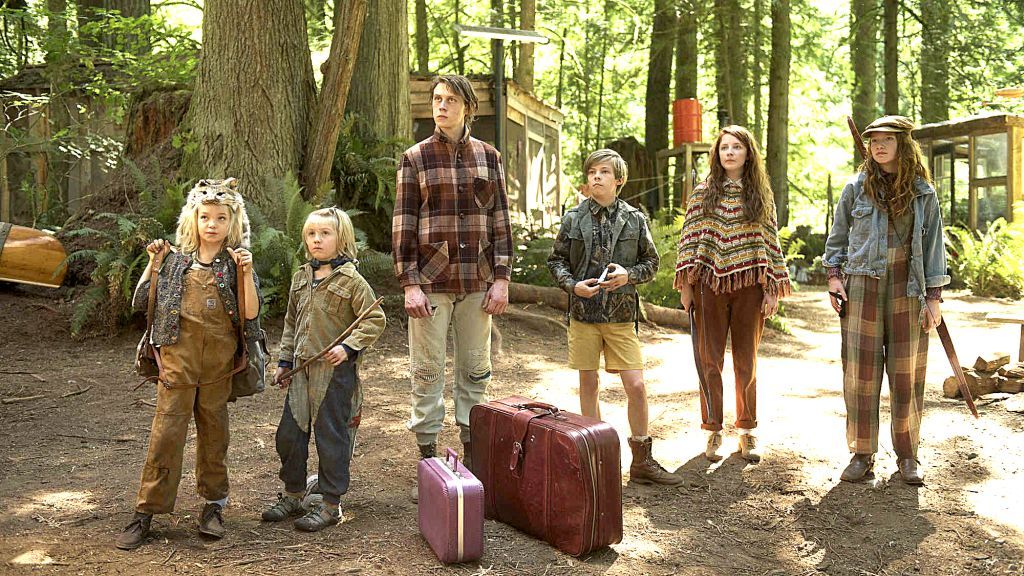
Ben Cash (Mortensen) and his wife, Leslie (Miller), have elected to raise their six children – Bodevan “Bo” (MacKay), Kielyr (Isler), Vespyr (Basso), Rellian (Hamilton), Zaja (Crooks), and Nai (Shotwell) – in the mountains of Washington state. As the movie opens, Leslie is in hospital, and nobody knows when she’ll be home. In the meantime, Ben continues instructing their children through mental and physical exercises and tests that are designed to make them smarter and fitter than most children of their respected ages. But while he and Bo are on a trip to the nearest town, Ben learns that Leslie has died. He tells the children the exact circumstances of their mother’s death, and for a while they are all visibly upset. But they soon rally round thanks to Ben ensuring that their normal routine isn’t altered.

web-captain-fantastic_rgb

Matters are complicated by Leslie’s father, Jack (Langella), refusing to acknowledge his daughter’s wish to be cremated, and threatening to have Ben arrested if he shows up at the funeral. The children want to go however, and persuade their father to ignore their grandfather’s dictates. They set off on their first ever road trip, heading for Mexico, with the children getting their first real glimpses of the wider world. On the way, they stop off at the home of Ben’s sister, Harper (Hahn), and her husband, Dave (Zahn). Ben’s honesty and directness in talking about Leslie in front of their two young boys leads to a row between Ben and Harper as to the suitability of speaking explicitly about issues that children don’t need to know about until they’re older. Ben apologises, but the next day he’s forced to show that his sister’s children are no match for even his second youngest child in terms of intelligence.

At a camping ground, Bo meets Claire (Moriarty), and experiences his first kiss, an event that leaves him confused and unhappy enough (though not about the kiss) to reveal that he’s applied to all the top colleges (Princeton, Yale etc.) and been accepted by all of them. Ben is upset that Bo has gone behind his back, but Bo reveals a secret that gives Ben pause, and makes him start to rethink his decision to raise the children in the wilderness. When they arrive at the funeral, Ben takes over from the priest, and reads out Leslie’s will. This angers Jack who has him removed. Still threatened with arrest if they turn up at the burial, his children convince Ben to stay away. But when Rellian makes it clear that he wants to stay with his grandparents (and the reasons why), it leads Ben further down the path of inappropriate parenting, results in one of his children ending up in hospital, leaves Ben with an unhappy decision to make, and unites his family in an endeavour that pushes the boundaries of what even the Cashes deem acceptable… probably.

maxresdefault

Based around the idea of being “completely present” in a child’s life, and how difficult that would be in today’s technology-saturated world, Matt Ross’s second feature is a warm, funny, yet profoundly sincere examination of what it means to be a parent, and the role of education in children’s lives. It offers a tantalising glimpse of a child’s true potential if that potential is guided and shaped by someone who is with them every day (like a parent), and not someone who may only interact with them for a few hours each week (like a teacher – and then not every week). But of course, while children may very well thrive in such an environment, the obvious pitfalls are there too. If you’re squirrelled away in the woods, then social skills become an issue, and so too does a child’s emotional development. You can teach a child about social interaction, but that’s no substitute for experience. But while Ross appears to be fully on the side of individualism and non-conformity, he’s astute enough to know that that’s not the full story, and that a more rounded approach needs to be in place (even if it does mean rejoining the “rat race”).

However, what this still means in terms of the narrative is a series of incidents and behaviours condoned and endorsed by Ben that are hugely amusing and yet wildly inappropriate at the same time. Robbing a grocery store, receiving hunting knives in order to celebrate Noam Chomsky day instead of Xmas, proposing marriage to the girl you’ve just kissed, climbing over a roof – all these and more are carried out by the children without even a first thought (let alone a second) as to how acceptable they are. It’s all fun and no consequences, games without frontiers or boundaries, and if there’s one thing we all know about consequences, it’s that they always come around sooner or later; and here those consequences turn up in the form of Leslie’s father. And Ross turns the tables on the viewers who’ve taken Ben’s side up til now by showing that Jack has a point too, and Ben’s way of parenting isn’t the only or right way of doing things.

5790f2a02400002600b3257a

This emotional and determinist tug-of-war occupies the movie’s final third, and leads to an overly sentimental conclusion to the whole affair (but which also begs a whole new set of questions about behaviour and consequences). In attempting to avoid providing any easy answers, Ross adds complexity to his narrative that stands the movie in very good stead, and which makes it an intriguing experience to watch. He’s helped immensely by a terrific, richly textured, and shrewd performance from Mortensen, expertly portraying Ben’s growing realisation that in order to be the good parent he thinks he is, he has to change and adapt to a new way of raising his children. As for the children themselves, high praise should be given to casting director Jeanne McCarthy for assembling such an amazing group of child actors. Each one of them has the chance to shine over and over, and not one of them is less than convincing (especially Shotwell, whose gender in the movie may be confusing for quite some time). They also get the lion’s share of the movie’s best lines, such as this (a)cute observation by Zaja: “You said Americans are under-educated and over-medicated.”

Ross mines the children’s superior intellects for much of the movie’s humour, but does so in a warmhearted, affectionate way that never grates or feels gratuitous. He’s not afraid to put his characters in emotionally distressing situations either, and there are times when the feelings on display are so raw as to be a little awkward to watch. But again, Ross keeps everything balanced and maintains a sense of purpose throughout, allowing scenes to flow easily and with obvious intent. It’s all shot beautifully by Stéphane Fontaine, who’s had a banner year in 2016, what with Jackie and Elle also under his belt (now there’s versatility), and the production design by Russell Barnes adds to the richness of the imagery. All in all, it’s a movie that entrances and captivates, and packs an emotional wallop when you least expect it.

Rating: 9/10 – owing a little to the work of Wes Anderson (and that’s definitely not a criticism), Captain Fantastic is a graceful, appealing look at parenting under pressure, and the highs and lows that come with it; with terrific performances all round, and assured, perceptive writing and direction from Ross, this is one of the more quietly profound movies of 2016, and also one of the most delightful.

Share this:

  • Click to share on X (Opens in new window) X
  • Click to share on Facebook (Opens in new window) Facebook
  • More
  • Click to print (Opens in new window) Print
  • Click to email a link to a friend (Opens in new window) Email
Like Loading...

Lion (2016)

19 Sunday Feb 2017

Posted by dullwood68 in Movies

≈ 3 Comments

Tags

Adoption, Australia, Biography, Dev Patel, Drama, Garth Davis, Google Earth, India, Literary adaptation, Nicole Kidman, Review, Rooney Mara, Saroo Brierley, True story

lion-movie-poster-01-1594x2362

D: Garth Davis / 115m

Cast: Dev Patel, Rooney Mara, Nicole Kidman, David Wenham, Sunny Pawar, Abhishek Bharate, Priyanka Bose, Divian Ladwa, Deepti Naval, Tannishtha Chatterjee, Nawazuddin Siddiqui

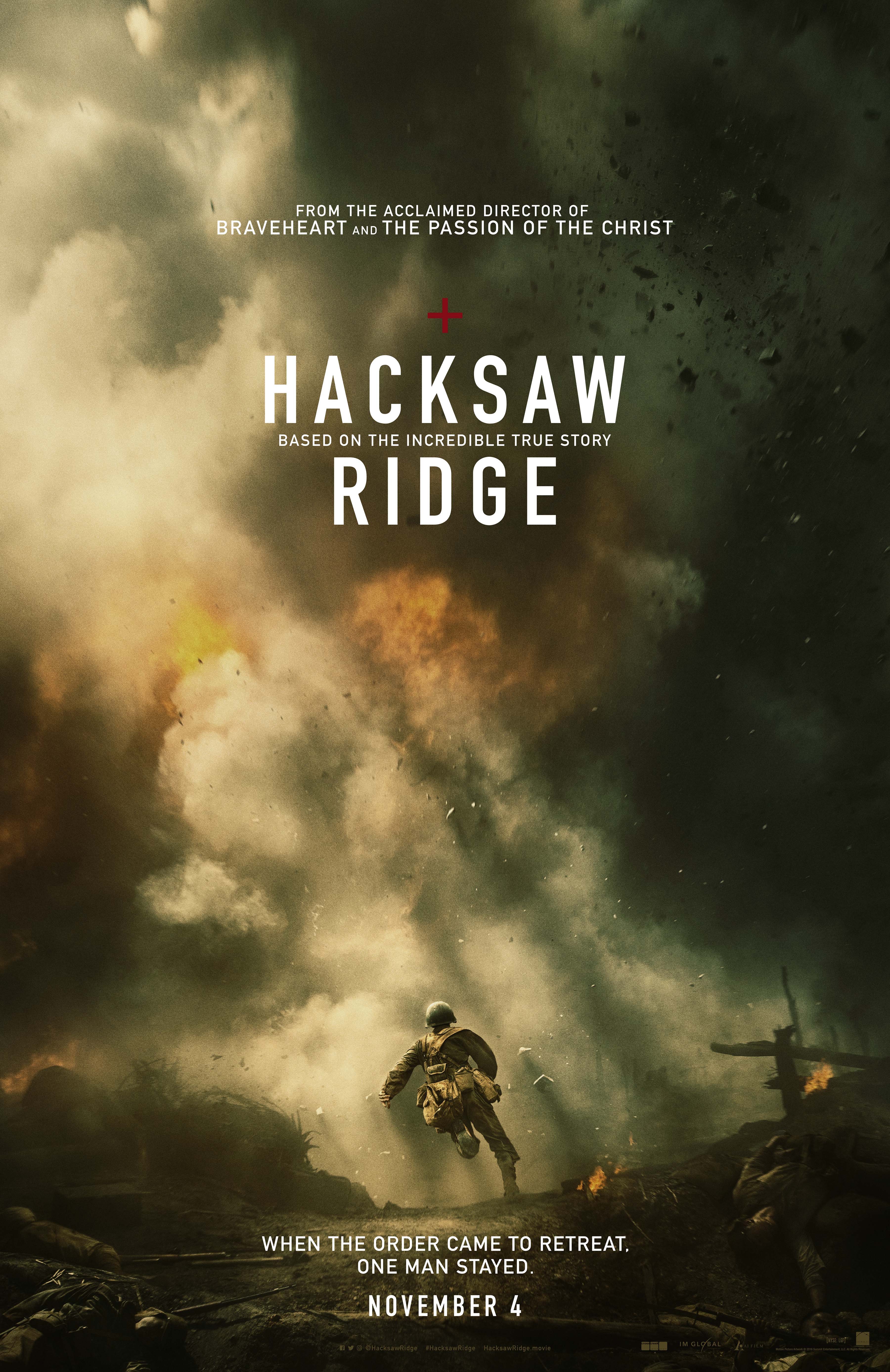
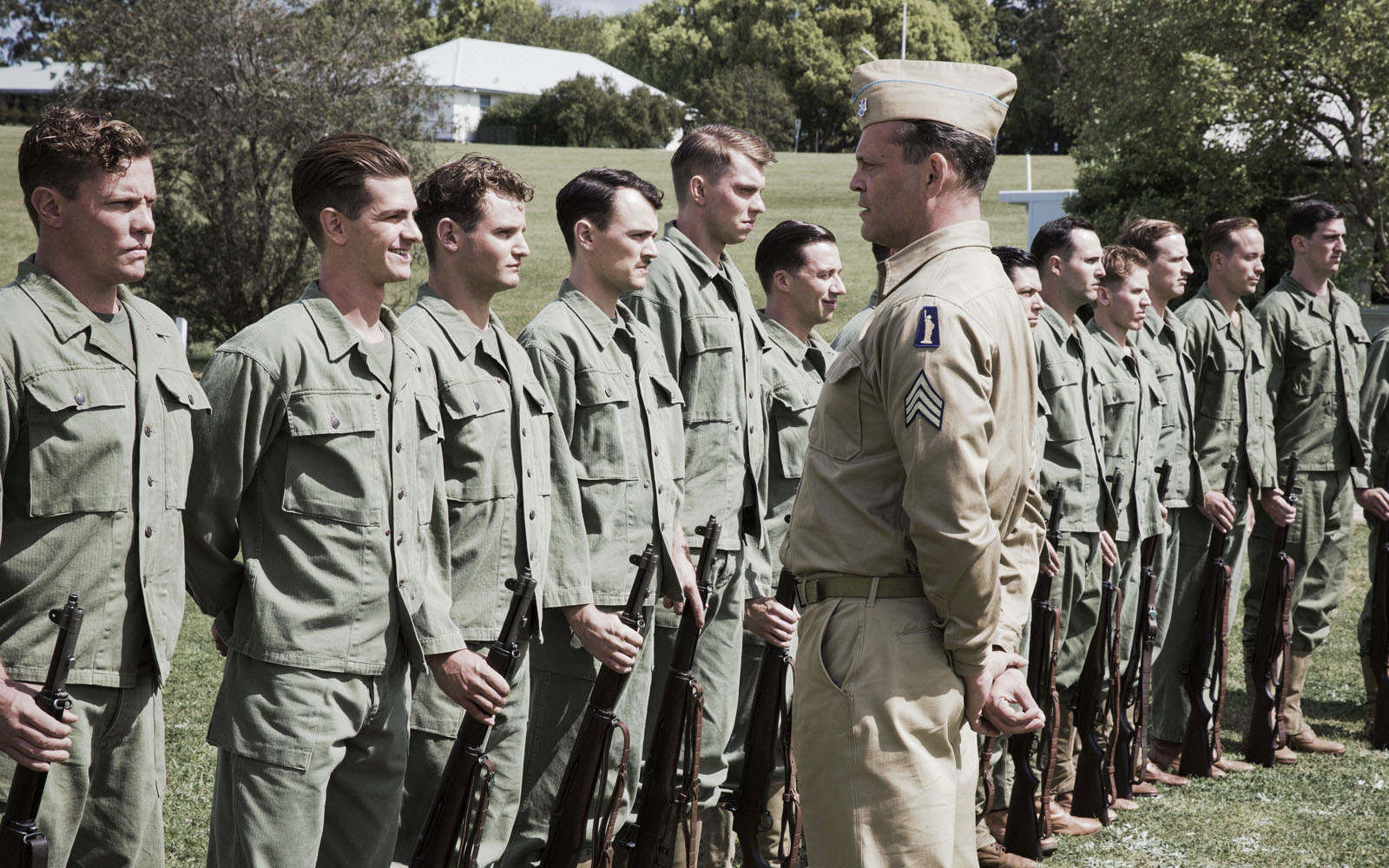
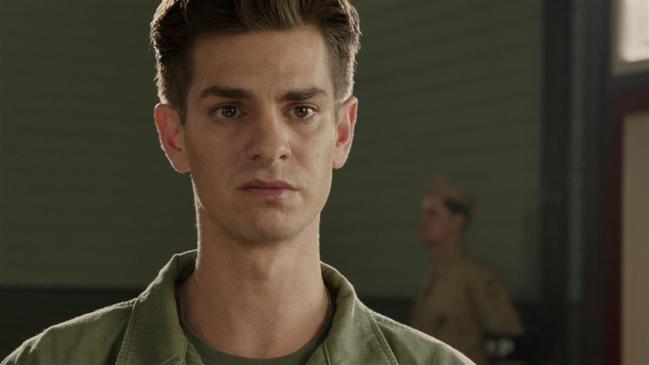
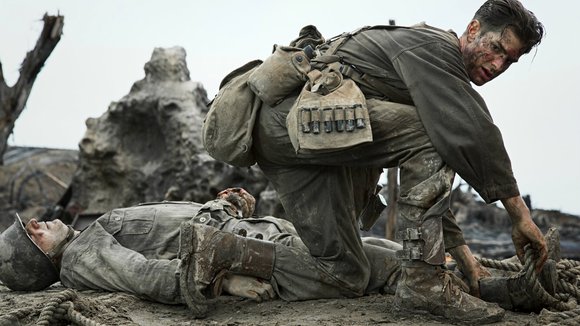
If you watch enough movies you soon learn that the world is full of inspiring true life stories where people from all walks of life overcome seemingly insurmountable odds in order to achieve a particular personal or professional goal. In 2016, movies based on true stories included the likes of Hacksaw Ridge, The Finest Hours, The Infiltrator, and Sully. And then there’s Lion, the story of a young Indian boy, Saroo (Pawar), who finds himself lost and alone in a part of India he doesn’t know, and who ends up being adopted by an Australian couple, the Brierleys (Kidman, Wenham). Twenty years later, Saroo (Patel) decides to go in search of his birth family: his older brother Guddu, his mother Kamla, and younger sister Shekila.

As expected, Lion is a movie of two halves. In the first we meet Saroo and Guddu (Bharate), brothers who steal coal from trains that they then sell on so as to be able to afford groceries. On one such mission they travel to a train station, where they end up separated. Saroo boards a train in the hope of finding Guddu, but he falls asleep. When he wakes the train is moving and he’s unable to get off until it arrives at its destination: Calcutta. Though he’s taken in by a kindly young woman, Noor (Chatterjee), Saroo flees from her home when a man she knows, Rama (Siddiqui), appears set on selling Saroo into the sex trade. Eventually, he finds himself in the care of the authorities and lodging in a children’s home. Some time later, Mrs Sood (Naval), from the Indian Society for Sponsorship and Adoption, tells him that an Australian couple want to adopt him. Saroo travels to Hobart, Tasmania, where he meets his adoptive parents, John and Sue Brierley. He settles in, and the Brierleys also adopt another orphaned Indian boy, Mantosh.

https-blueprint-api-production-s3-amazonaws-com-uploads-card-image-281971-sunny_pawar

This first half is compelling stuff, due largely to Pawar’s winning presence, and the sympathy his plight elicits. From the moment Saroo falls asleep on a platform bench, and despite his brother’s instruction to stay there, it’s obvious that it’s all going to go wrong (there wouldn’t be much of a movie otherwise). But this awareness in the viewer is what makes it work so well. Watching Saroo calling for his brother – and knowing he won’t appear or answer – adds to the sense of isolation that Saroo will soon begin to feel, and it’s one of those situations we can all appreciate. And when he falls asleep on the train that will take him far away from home, it’s especially heartbreaking. As the young Saroo, Pawar’s performance is pitch perfect, his natural way in front of the camera making it easy to identify with Saroo and hope that he doesn’t come to any harm. Pawar plays him as a cheeky, happy-go-lucky child at first, but when things become more serious, he’s more than able to display the sadness and dismay inherent in Saroo’s situation.

In the second half, Saroo is now studying hotel management in Melbourne, and begins a relationship with fellow student, Lucy (Mara). At a party with friends, Saroo experiences a flashback to his childhood, and it proves to be the first of many. Lucy and his friends suggest he uses Google Earth to try and find his hometown in India. But the town name he remembers doesn’t exist, and the only memory he has of the station where he last saw Guddu is that there was a rain tower there, something not uncommon at Indian railway stations. As his search continues, and with less and less luck or progress as time goes by, Saroo’s relationship with Lucy begins to suffer. Eventually, Saroo finds a clue on Google Earth that points him in the right direction, and brings the prospect of finding his Indian family even closer.

lion3

With the movie’s first half proving so compelling and so emotionally effective, it becomes something of a surprise when the second half appears to be doing its best to undo all the good work of the first. As an adult, Saroo’s floppy-haired, well-liked personality soon gives way to miserable, semi-tortured whinger as his efforts to find his birth family fail to provide the results he wants, and his disappointment causes him to treat Lucy like a stranger, and his adopted brother Mantosh (Ladwa) with callous disregard. It’s this transition that doesn’t make sense dramatically, and it’s an issue that Luke Davies’ otherwise exemplary script never addresses satisfactorily. The why of Saroo’s change in behaviour may well be due to accrued frustration, but why he should deliberately jeopardise his relationships with those closest to him remains a mystery, one greater than if he’ll succeed in his search. Not even Patel, normally a perceptive and thoughtful actor, can’t make anything of this turnaround, and for a long stretch any sympathy for the character that the viewer has, is in danger of being lost for good.

The second half is also where the script trots out too many subplots that don’t always add up to a coherent whole. Mantosh is seen as having issues surrounding his role in the Brierley family, but the reasons for these are never explained, while the reason for the Brierleys having adopted two Indian boys instead of having their own children is given at a point where Sue’s health is precarious. Sue’s health issues, though, are left hanging so that Saroo can head off to India with her encouragement and blessing, but not with anything resembling a backward glance. The whole pace of the second half is off as a result of these narrative fumbles, and some scenes feel as if they should have been excised in favour of a shorter, yet more dramatically sound approach. When you lose interest in the main character’s search or journey because of how he behaves, then you know the movie’s doing something wrong.

maxresdefault

Making his feature debut, Garth Davis makes the most of the Indian settings, painting a portrait of life as seen through the eyes of the young Saroo – a world full of wonder (a kaleidoscope of butterflies, the taste of a cold fizzy drink), and a world full of danger (predatory sex traffickers). Davis is on solid ground here, depicting Saroo’s journey with heart and compassion, and making it clear just how lucky Saroo was to be adopted. Many of the scenes in Calcutta show Saroo surrounded quite literally by the rush and press of its populace, but Davis is quick to show just how isolated he is at the same time. And he follows through with this idea with the adult Saroo, but instead of Saroo becoming isolated through the vagaries of Fate, this time he becomes isolated because of what he does. It reinforces the idea of Saroo not being settled in terms of his heritage and the connection he has with his past; he doesn’t want to continue being adrift.

Visually, Lion is often impressive to watch, alternating between the brooding, teeming city life of Calcutta, and the bright open spaces of Melbourne. Greig Fraser’s cinematography catches the mood precisely, his use of close ups in particular adding to the resonance of the story. Of course, those close ups wouldn’t be entirely as effective if it weren’t for the quality of the acting. As mentioned above, Patel has problems making Saroo credible in terms of his behaviour, but does a good job nevertheless. Mara makes a minimal impression because, one scene aside, her character is the standard girlfriend seen in too many other movies. As the Brierleys, Wenham is sidelined in favour of Kidman’s sterling performance, one that sees her regain some of the critical favour she’s lost in recent years. But if the movie “belongs” to anyone in the cast, it’s young Pawar, whose sweet, angelic features are difficult to resist, and even harder to ignore. Without him, Lion would not be as powerful as it is, or as rewarding.

Rating: 7/10 – let down by a second half that isn’t as focused as its first, Lion is still worth watching, but not as much as its various awards nominations – and wins – would have you believe; a true story that at least doesn’t preach to its audience, its tale is a remarkable one but in this version, not one that will necessarily linger too long in the memory.

Share this:

  • Click to share on X (Opens in new window) X
  • Click to share on Facebook (Opens in new window) Facebook
  • More
  • Click to print (Opens in new window) Print
  • Click to email a link to a friend (Opens in new window) Email
Like Loading...

The Founder (2016)

18 Saturday Feb 2017

Posted by dullwood68 in Movies

≈ Leave a comment

Tags

Biography, Drama, Franchise, Franchise Realty Corporation, History, John Carroll Lynch, John Lee Hancock, McDonalds, Michael Keaton, Nick Offerman, Prince Castle, Ray Kroc, Review

cezgbkauyaa20xx

D: John Lee Hancock / 115m

Cast: Michael Keaton, Nick Offerman, John Carroll Lynch, Laura Dern, Linda Cardellini, B.J. Novak, Patrick Wilson, Kate Kneeland, Justin Randell Brooke, Griff Furst

For those of us who live outside the good ole US of A, the idea of the American Dream seems like a typically grandiose American proposition, as if the US is the only place where dreams can come true, where people can become anyone they want to be, or where success can be won if you work really hard to achieve it. At the risk of upsetting any American readers of thedullwoodexperiment, it’s a strange kind of conceit; in reality, what makes the States any different from anywhere else in the world when it comes to people achieving their dreams? The obvious answer is: nothing. But it’s an idea that many Americans believe wholeheartedly, and one that fuels the story of Ray Kroc (Keaton), the man who gave us McDonald’s, the corporate behemoth that grew out of one independent restaurant in San Bernardino, California, and now spans the globe.

When we first meet Kroc it’s 1954. He’s a milkshake mixer salesman who’s about as successful as a butcher at a vegan commune. But he’s his own boss so he keeps plugging away at it, facing rejection at every turn, when one day his secretary, June (Kneeland), tells him they’ve received an order for six mixers from a restaurant in San Bernardino, a place called McDonald’s. Surprised, he decides to visit the owners, Mac and Dick McDonald (Lynch, Offerman), and they elect to tell him their story, one that involves many false starts and setbacks in setting up a burger restaurant, until they realised that by stripping down the menu and speeding up the delivery time, they could maximise their sales. Kroc is astonished by how effective their business is, and finds he can’t stop thinking about it.

1480047707230

The next day he proposes the brothers expand their business into a franchise. But they’ve tried this also, and it hasn’t worked, mostly because they were unable to guarantee the same quality of operation as at their own site. Kroc persuades them to let him take on the challenge, but fearful of what he might do in the process, they get him to sign a contract that states all changes must be agreed by them first. Kroc sets about building the McDonald’s brand but encounters problems when wealthy investors are involved. Instead he tries to attract middle-class couples who will work hard to make their franchise a success. Soon there are franchises opening all across the Midwest, but Kroc is getting little financial reward from it all. His contract gives him a very small percentage of any profits, despite the amount of effort he’s putting in, and the McDonald brothers won’t change the terms.

A chance encounter with a financial consultant, Harry Sonneborn (Novak), sees Kroc changing his approach to both his finances and his relationship with Mac and Dick. By focusing on the real estate needed by the franchisees, Kroc not only increases his own revenue, but is able to leverage his deal with the brothers to make changes to the overall operation, including replacing the ice cream in the milkshakes with powdered milk. The brothers resist, but by this stage, Kroc is effectively the face of McDonald’s to anyone who’s interested. And soon, he’s in a position to force out the brothers from their own business, and continue his expansion of the McDonald’s brand…

1479508650011

Your reaction to The Founder is going to be based on one of two things: whether you feel Ray Kroc was right in the way that he treated the McDonald brothers, or whether you feel that he mistreated them. But Robert D. Siegel’s engaging script isn’t solely about fair or foul play, or whether Kroc is a hero or a villain (like a lot of people he’s both, depending on the circumstances). Rather, it’s also about the very thing Kroc mentions in his opening sales pitch to an off-screen customer, and later to various groups of potential franchisees: opportunity. Ray Kroc was in the right place at the right time, and he instinctively knew that creating a franchise was the way to go. He was blinkered in his attitude, dismissive of his critics, and willing to roll over anyone and anything to make the McDonald’s brand a nationwide success. As he tells the unfortunate Mac and Dick: “If I saw a competitor drowning, I’d shove a hose down his throat.”

Throughout the movie Kroc seizes on opportunity after opportunity, triumphing over every setback and potential obstacle until he gets what he wants. And although you may indeed feel that his treatment of the McDonald brothers was akin to bullying, there’s a kind of grim inevitability to the story that makes Kroc seem like an instrument of Fate. The question then becomes, if Ray Kroc hadn’t met the McDonald brothers, would their one restaurant have grown into a franchise operation with approximately thirty-six and a half thousand outlets worldwide? The movie makes it clear: no. And so the movie becomes about the how (the why is obvious). And if sharp practice is the order of the day, then that’s going to come with a side order of fries and a drink (preferably Coca-Cola).

the-founder-film-still

Inevitably, audiences will decide that Ray Kroc treated the McDonald brothers abominably, because that’s exactly how he treated them. The movie doesn’t shy away from this, or from his shoddy treatment of pretty much everyone around him, and particularly his long-suffering wife Ethel (Dern). As Kroc, Keaton is a mesmerising presence, tightly-wound, arrogant and determined. Even when he’s still, he looks as if fires are raging beneath his skin. In 1954, Kroc was fifty-two and suddenly possessed by an idea that would consume him until his death in 1984, and Keaton displays this “possession” as if it was a calling. But Keaton also shows the venal side of Kroc’s nature, the need to be seen to succeed after so many years toiling in fields of failure, and so the movie also becomes, however uncomfortably, about one man’s redemption through the mistreatment of others.

As the McDonald brothers, both Offerman (in a rare serious role) and Lynch provide equally good performances, showcasing the naïvete and increasing stubbornness that would prove their undoing, and see them forced – eventually – out of the restaurant business. Dern gives a quiet, controlled portrayal as Kroc’s wife, while there’s a cameo role for Wilson as an interested franchisee whose wife (Cardellini) attracts Kroc’s attention. It’s all set against a vibrant period backdrop that highlights the sense of immeasurable promise that the US held for itself in the Fifties, and Hancock marshals the various plot strands and storylines with skill, maintaining the movie’s forward momentum despite several occasions when exposition threatens to overwhelm everything. As a cautionary tale – be careful who you do business with – The Founder is a good example of inexperience (and some degree of pride) going before a fall. It may not be the most positive of messages, but then, not everyone or everything in this world is going to treat you as you yourself would like to be treated, something Ray Kroc, despite his faults, knew all along.

Rating: 8/10 – anchored by a strong, forceful performance by Keaton, The Founder is a judicious mix of history and biography that looks behind the scenes at the beginnings of a global corporation with insight and sincerity; whatever your feelings about the fast-food industry, or McDonald’s specifically, this won’t necessarily change your mind, but as an object lesson in getting what you want – at all costs – then this should be required viewing.

Share this:

  • Click to share on X (Opens in new window) X
  • Click to share on Facebook (Opens in new window) Facebook
  • More
  • Click to print (Opens in new window) Print
  • Click to email a link to a friend (Opens in new window) Email
Like Loading...

Under the Shadow (2016)

16 Thursday Feb 2017

Posted by dullwood68 in Movies

≈ Leave a comment

Tags

Avin Manshadi, Babak Anvari, Djinn, Drama, Horror, Mother/daughter relationship, Narges Rashidi, Review, Tehran, Unexploded bomb

under-the-shadow-_nz-poster-final-web

D: Babak Anvari / 84m

Cast: Narges Rashidi, Avin Manshadi, Bobby Naderi, Arash Marandi, Aram Ghasemy, Soussan Farrokhnia, Ray Haratian, Hamid Djavadan

Tehran, the late Eighties. Shideh (Rashidi) is a former medical student who finds herself unable to resume her studies due to her prior involvement with left-wing political groups. She disposes of most of her old medical books but keeps one that was a gift from her mother. With the city under continual threat from random bomb attacks by Iraq, Shideh still wants to stay where she is with her daughter, Dorsa (Manshadi). Her husband, Iraj (Naderi), wants them to go and live with his parents away from the shelling, but Shideh refuses. When Iraj is conscripted, the matter becomes a moot point, but before he leaves, he tells Dorsa that her favourite doll, Kimia, will keep her safe from harm.

Soon after, neighbours the Ebrahimis take in an orphaned cousin, a young boy. During an air raid, he whispers something in Dorsa’s ear and hands her a charm meant to ward off evil spirits. Shideh finds it later in Dorsa’s room and throws it away. Afterwards, Dorsa develops a fever and begins having nightmares; Shideh has similar dreams as well. When a missile strikes the building they live in, causing a large crack in the ceiling, the impact also renders Dorsa unconscious; at the same time, Kimia goes missing. As a result, Dorsa’s behaviour becomes erratic, and she keeps trying to get into the flat on the floor above, insisting that Kimia is inside. She also tells Shideh that someone is moving around in their own flat, a mysterious woman that only she can see.

b0b8dcdd8222b22c985a1104c4c02164-1000x563

From one of their remaining neighbours, Shideh learns that a djinn can possess a person, and will steal a favourite item in their efforts to ensnare and take control of that person. Soon, Shideh and Dorsa are the only people left in the building. Shideh’s nightmares increase in both frequency and intensity, until she has no choice but to leave and go to Iraj’s parents. But Dorsa won’t leave unless she has Kimia back. Shideh makes one last desperate search for the doll, and in the process learns a horrifying truth: that the one last medical text book she kept is no longer in the locked drawer where she had hidden it, but has been replaced by Dorsa’s doll. Even more intent on leaving, the pair attempt to do so but find that it’s not so easy, and that the supernatural force Shideh has tried to deny, is determined to stop them.

Under the Shadow has proven to be a surprise hit since its first screening at the 2016 Sundance Film Festival, what with a glowing critical reception, and audiences finding themselves entranced by the low-key, thoughtful approach adopted by writer/director Babak Anvari. Having recently won a BAFTA for Outstanding Debut by a British Writer, Director or Producer, the movie is a subtle, menacing chiller that takes a simple premise and builds on it in such a way that when the terror of Shideh and Dorsa’s situation begins to form in earnest, the tension builds with it until it becomes almost unbearable. Anvari succeeds at this by keeping the scares to a minimum and using them to punctuate the narrative instead of making them the focus. As the tension mounts, each scare or shock adds to the overall effect, and increases the sense of dread that the movie has created.

under-the-shadow-sundance-film-festival-final

It’s a movie where the atmosphere inside Shideh’s flat is stifling and claustrophobic right from the start. Her relationship with Iraj is strained, his lack of understanding of how she feels when her studies are curtailed a prime mover in her decision to remain in Tehran. But Shideh herself is equally lacking in empathy when Iraj is conscripted, more concerned that he’s kept it from her until the last moment. With her marriage on rocky ground, Shideh focuses on Dorsa, but finds that their relationship has become even more strained than it is with her husband. Dorsa’s insistence on finding Kimia and the presence of someone else in the flat challenges Shideh’s attempts at keeping order in both the flat and her life. As she becomes more and more affected by her nightmares, and the growing sense that Dorsa may be right – despite everything her practical mind tells her – Shideh’s ability to tell reality from fantasy becomes increasingly fraught.

Where a mother’s determination to protect her daughter from harm is a staple of dramas the world over, here it’s made all the more effective by Anvari’s considered approach to both Shideh and Dorsa and the unexpected relationship that develops between them as their situation becomes more and more imperilled. There are moments where Dorsa is fully in control and Shideh is behaving in thrall to her daughter’s obsessive needs over Kimia. Anvari makes these moments credible through Shideh’s own need to keep Dorsa safe at all costs, and while Shideh resists the idea that there’s a supernatural reason for her daughter’s “condition”, her struggle to maintain a sense of normalcy drives her to make concessions when necessary. She doesn’t necessarily agree with her daughter’s claims, but she does recognise that her daughter believes what’s she’s saying.

undertheshadow_trailer1

The effectiveness of Shideh and Dorsa’s relationship is a key component of Anvari’s script, but it’s also his development of the danger that threatens them that makes as much of an impact. The disintegration of their nuclear family gives way to a more serious threat, as the djinn’s presence in the building promotes fear and anxiety on a level that permeates the narrative, and which also allows the level of dread to grow and develop at a slow, deliberate pace that makes things all the more intimidating and terrifying. By the time they try to leave the building, Anvari has made the presence of the djinn – represented by the spookiest chador you’re ever likely to see – such a palpably unnerving entity that it’s very nature: ordinary yet intrinsically threatening, makes it a truly terrifying opponent.

The movie is also effective because of its background, a period of Iranian history where the country was experiencing constant strife thanks to the ongoing hostilities with Iraq. The missile that crashes into the building is seen as the means by which the djinn arrives, as if it were a chemical weapon attached to the shell and designed to spread confusion and terror amongst the Tehran populace. Shideh’s inappropriate political leanings also reflect the non-status of many women at the time, their role reduced to that of being a mother, and with all the social restrictions that apply (after a particularly vivid nightmare, Shideh escapes outside but is apprehended by the police for not being covered up in public; when she is brought home, she does her best to hide the shame she feels but doesn’t want to feel).

Kit Fraser’s deliberately drab, minimalistic cinematography highlights the uphill struggle experienced by Shideh in trying to keep Dorsa safe, and his use of shadow and light in certain shots evokes an uneasiness that Anvari exploits to the movie’s full advantage. Likewise, the score by Gavin Cullen and Will McGillivray is used to support the growing, unhealthy atmosphere inside Shideh’s flat, and to punctuate those moments when the djinn’s evil aura adds dismay and menace to the proceedings. It’s all wrapped up by Anvari neatly and convincingly, and at a modest running time, is easily one of the best horror movies of recent years.

Rating: 9/10 – expertly constructed by its writer/director (making his feature debut), Under the Shadow is a goosebump-inducing tale of paranoia and possession that makes the most of its limited resources; a refreshing take on the home invasion/urban terror sub-genre of horror movies, the movie succeeds by playing it straight, and by layering everything that happens with sincerity and a large helping of credibility.

Share this:

  • Click to share on X (Opens in new window) X
  • Click to share on Facebook (Opens in new window) Facebook
  • More
  • Click to print (Opens in new window) Print
  • Click to email a link to a friend (Opens in new window) Email
Like Loading...

John Wick: Chapter 2 (2017)

15 Wednesday Feb 2017

Posted by dullwood68 in Movies

≈ 1 Comment

Tags

Action, Chad Stahelski, Common, Drama, Ian McShane, Keanu Reeves, New York, Review, Riccardo Scamarcio, Rome, Sequel, The Continental, Thriller

john-wick-chapter-2-poster

D: Chad Stahelski / 122m

Cast: Keanu Reeves, Riccardo Scamarcio, Ian McShane, Common, Ruby Rose, Claudia Gerini, Laurence Fishburne, Lance Reddick, Franco Nero, Peter Serafinowicz, Peter Stormare, John Leguizamo, Bridget Moynahan

In the surprise movie of 2014, Keanu Reeves made a bit of a comeback playing a retired assassin called John Wick. Brutally coerced into giving up a peaceful life as a widower after his wife, Helen (Moynahan), died from cancer, Wick had his car stolen and his dog – a puppy! – killed (not to mention being beaten up himself). He came out of retirement, dished out some serious retribution – killing a total of seventy-seven people (mostly unfortunate henchmen) in the process – and headed off into the sunrise.

Well, that’s what we thought he was doing. But as this amped-up, mercilessly nihilistic sequel shows, here’s what John actually did next. First there’s the small matter of retrieving his car from the uncle (Stormare) of the Russian gangster who stole his car in the first place. One warehouse full of wrecked cars and dead or suffering henchmen later, John has got his vehicle back and has managed to get it home where it can be rebuilt in all its former glory by John’s friend and chop shop specialist, Aurelio (Leguizamo). Job done, he says hello to his new dog, and he even re-buries the weapons he disinterred in the first movie. But just as he’s finished that, and is ready to resume his retirement, fate comes calling in the form of sequel nemesis, Santino D’Antonio (Scamarcia).

john_wick_chapter_2_-_1

Santino wants John to honour a marker he has, the debt that John owes him for Santino’s help in John’s retirement. John refuses, but Santino is like a spoilt child who’s been told he can’t have his own way. As soon as he leaves he uses a rocket launcher to blow John’s house to smithereens (but don’t worry, this time John and the dog survive). Next stop for a seriously annoyed John is the Continental hotel, where assassins can meet, have a few drinks, rest up, and absolutely, positively not kill each other. Chided by hotel owner and mentor, Winston (McShane), for not accepting the marker, John meets with Santino and discovers that his target is Santino’s sister, Gianna (Gerini).

So, a less than happy John travels to Rome, meets up with Winston’s Italian counterpart, Julius (Nero), gets all kitted out – bulletproof suits are all the rage in Rome – and after wandering through a series of tunnels setting up an elaborate kill sequence for later, he finds Gianna. Her death ensues, and just as expected, John has to escape back through the tunnels while offing an astonishingly large amount of disposable henchmen (don’t they have a union?). On his tail is Santino’s right hand assassin, Ares (Rose), there to dispose of him as a “loose end”, and Cassian (Common), Gianna’s personal bodyguard, who has taken his employer’s death, well, personally. John avoids death several dozen times over, gets back to the Italian Continental, and manages to leave for New York with Julius’s help. But not before the scheming and deceitful Santino has taken out a contract on John’s life, a contract worth $7m to anyone who can do what no one else has even come close to doing: killing the Boogeyman himself.

12275-john-wick-chapter-two-featurette-training

There’s more to the story, but in actuality it doesn’t amount to much, peppered as it is with an extended sequence of multiple mayhems at a train station – John and Cassian casually shooting at each other over the heads of blissfully unaware travellers is both comical and disturbing in equal measure – a reunion for ex-Matrix co-stars Reeves and Laurence (“Don’t call me Larry”) Fishburne, and yet another extended shootout in a museum, which features a genuinely disorientating sequence in an exhibition wing full of mirrored hallways and rooms. It’s all impossibly loud and garish and there’s not even the hint of a policeman hoving into view at any moment (though we do get to see a returning Jimmy the patrolman ask John if he’s “working”).

But plausibility and noting the absence of any laws that don’t pertain to the life of an assassin aren’t exactly the movie’s main interest. John Wick: Chapter 2 has one mission statement and one mission statement only: to provide its audience with as many over the top, seriously insane fight sequences as it can squeeze into its two hour running time. There are moments when the movie is absolutely bat-shit crazy in its determination to make viewers exclaim “Holy f*ck!” at the positively insane levels of violence on display, whether it’s John taking out a motorcyclist with a car door, or dispatching another assassin with a pencil; it’s all designed to up the ante for modern day action thrillers, and put other like-minded movie makers on notice: this is what you have to surpass.

john-wick-chapter-2-movie-4k-on

Whether anyone else can or will match the violent excesses that John Wick can come up with is debatable – and that’s without the inevitable Chapter 3 to consider as well. Under the guidance of returning screenwriter Derek Kolstad and director Chad Stahelski, John Wick: Chapter 2 is a riot: bigger, bolder, more exhausting than its predecessor, and yet leavened by healthy doses of humour when it’s needed. It’s not to all tastes, and some viewers will be put off by the obvious “gun love” on display, not to mention the number of close up head shots that are sprayed (literally) throughout the movie. But this is a movie that’s unashamedly for fans of high body counts, sneering villains who’ll definitely get their come-uppance, brutal fight sequences, and beautifully art-directed and surreal backdrops for said sequences.

The world that John Wick and his contemporaries inhabit is not the same world that we inhabit (though it has its similarities, obviously). In it, a man can be shot in the stomach and still see off multiple attackers. But thanks to a script that’s much cleverer in its design and intent than most people are likely to give it credit for, this is a sequel that delivers on the promise of its predecessor, and adds a whole new level of shock and awe, while also expanding on the world it takes place in. It’s almost the perfect sequel, giving the returning audience more of what it liked first time round and much more besides. If there are criticisms to be made then they’ll relate to the suddenness of the airport sequences and how they’re edited together (clumsily in places), and the continuing idea that John Wick is a ghost, the boogeyman that no one sees coming, when everyone he meets says, “Ah, Mr Wick”.

It all ends on a promise, one that will have fans clamouring for the makers to hurry up, and naysayers burying their heads in their hands in despair. But again, this is a movie made for fans of the original, a demographic that has apparently grown since 2014. At time of writing, John Wick: Chapter 2 has already made half of what the first movie made overall, and in just four days of release. And whatever you might say about Reeves’ acting ability, or the absurdity of the shootouts and one man overcoming all odds, this is a movie that delivers a ridiculous amount of adrenalin-fuelled turmoil and does so with an enormous amount of chutzpah. There really isn’t anything else out there to touch it.

Rating: 9/10 – that rare beast, a superior sequel, John Wick: Chapter 2 opens up the throttle in the first frenzied fifteen minutes, and barely lets up for the next hour and forty-five minutes; simply put, it does what it says on the tin, and then pumps an extra shot in for good measure.

Share this:

  • Click to share on X (Opens in new window) X
  • Click to share on Facebook (Opens in new window) Facebook
  • More
  • Click to print (Opens in new window) Print
  • Click to email a link to a friend (Opens in new window) Email
Like Loading...

Trailers – Speech & Debate (2017), The Bad Batch (2016) and Unlocked (2017)

14 Tuesday Feb 2017

Posted by dullwood68 in Movies

≈ Leave a comment

Tags

Ana Lily Amarpour, Drama, Horror, Jason Momoa, Michael Apted, Noomi Rapace, Previews, Thriller, Trailers

Based on the off-Broadway play by Stephen Karam (who also provides the screenplay), Speech & Debate concerns a trio of troubled teenagers who are all struggling to find their places in life, and most urgently, their school. Held back from expressing themselves by the repressive, hypocritical dictates of their school heirarchy, the trio – played by Liam James, Sarah Steele and Austin P. McKenzie – decide to resurrect the school debate club, and by doing so, attempt to challenge and overcome the rigid strictures they encounter on a daily basis. Steele was in the original stage production, and from the trailer it looks as if she’ll steal the movie – that last excerpt is a killer – but the rest of the cast appear on form as well, and if the use of Mika’s We Are Golden is anything to go by, then the movie’s likely to have a killer soundtrack as well. It’s been a while since we’ve had a decent teen-themed movie; maybe Speech & Debate will be the movie to rekindle our appreciation for them.


For her follow up to A Girl Walks Home Alone at Night (2014), writer/director Ana Lily Amarpour changes locations from the Iranian ghost town Bad City, to a Texas wasteland inhabited – not by vampires – but by cannibals. Amarpour has a distinct, vivid visual style (as can be seen in the trailer), and she isn’t afraid to depict violence in all its hideous glory, but she’s just as interested in ideas and the development of her characters as she is any bloodshed. The presence of Jason Momoa will no doubt attract a number of fans looking forward to another movie he’s in this year (Braven – obviously), but with the likes of Jim Carrey, Giovanni Ribisi and Keanu Reeves on board, the chances that Amarpour’s odd love story set against an equally odd backdrop will cement her growing reputation as an indie movie maker to watch out for.


And so it’s Noomi Rapace’s turn to kick ass and take names later as a modern day action heroine in Michael Apted’s by-the-numbers Unlocked. Twists and turns and betrayals every five minutes appear to be the order of the day, and the casting of John Malkovich, Toni Collette, Orlando Bloom, and Michael Douglas in lead roles is a strong nod to the level of credibility the movie is aiming for. But despite all this, Unlocked could still turn out to be quite respectful in its ambitions, and worth more of your time than you’d expect. Director Apted isn’t exactly inexperienced, and he certainly doesn’t need to make a generic action movie any more than he needs to, but his presence behind the camera is encouraging, and though the trailer doesn’t have the “wow” factor it needs to stand out from the crowd, it could still surprise us all… possibly.

Share this:

  • Click to share on X (Opens in new window) X
  • Click to share on Facebook (Opens in new window) Facebook
  • More
  • Click to print (Opens in new window) Print
  • Click to email a link to a friend (Opens in new window) Email
Like Loading...

La La Land (2016) and the Return of the Classic Musical

13 Monday Feb 2017

Posted by dullwood68 in Movies

≈ 5 Comments

Tags

Actress, Auditions, Damien Chazelle, Dance, Drama, Emma Stone, J.K. Simmons, Jazz, John Legend, Musical, Pianist, Review, Romance, Ryan Gosling

1

D: Damien Chazelle / 128m

Cast: Ryan Gosling, Emma Stone, John Legend, Rosemarie DeWitt, Finn Wittrock, Josh Pence, Callie Hernandez, Jessica Rothe, Sonoya Mizuno, Tom Everett Scott, J.K. Simmons

A bona fide awards magnet, La La Land is the movie that’s grabbing accolade after accolade, award after award, and more recognition than you can shake a well-timed dance step at. It’s lively, it’s precocious, it’s endearing, it’s alluring, it’s beautiful to watch, it’s often breathtaking, and it’s absolutely deserving of all the praise that has been heaped on it since it was first screened at the Venice Film Festival back in August 2016. In short, it’s a triumph.

Movie makers – in recent years at least – have somehow managed to forget what makes a musical so enjoyable, what elevates them above all the comedies and the romantic dramas and the sincerity-driven historical biographies that we see year in and year out, never quite offering audiences anything new or different, or breaking free of their self-imposed comfort zones. Movies such as Sweeney Todd: The Demon Barber of Fleet Street (2007) or Into the Woods (2014) – adaptations of successful stage incarnations – were too dark to warrant “enjoyment” as such, while the animated movie became the bolthole for musical numbers needed to pad out already short running times. Some musicals did try to be different – the “hip-hop” opera Confessions of a Thug (2005), splatterpunk/rock extravaganza Repo! The Genetic Opera (2008), biographical comedy-drama The Sapphires (2012) – but it was only fan favourites like Mamma Mia! (2008) and Les Misérables (2012) that made any impact at the box office or garnered any awards.

lala1

What modern movie makers failed to recognise when making these movies, was what made all those famous, much-loved musicals of the Forties and Fifties so beloved of contemporary audiences, and today’s aficionados. It wasn’t just the sight of Fred Astaire dancing effortlessly, and sublimely, with Cyd Charisse, or Gene Kelly pushing the boundaries of what could be achieved in a dance routine; it wasn’t even the sheer joy and enthusiasm of the singers and dancers, or the dizzying, dazzling cinematography that made each routine a small kinetic masterpiece all by themselves. What made those movies work was a shared love for the medium, a heartfelt commitment to making the best musicals they could, and by attempting to infuse these movies with a wonder and a magic you wouldn’t find anywhere else. If you need any further proof that the Forties and Fifties were a Golden Age for the movie musical, then take a look at any of the following: On the Town (1949), An American in Paris (1951), or The King and I (1956). Now, those are musicals.

Which brings us to La La Land. A shot in the arm for the modern musical, La La Land succeeds because it combines the look and feel of those long-ago musicals with a more up-to-date sensibility, and in doing so, breathes new life into a largely moribund genre, and gives audiences the best of both worlds. By ensuring they honour the conventions of the musical, Chazelle and his talented cast and crew have created a movie that pays homage to those great movie musicals of the past, while also having one foot planted very firmly in modern musical aspirations. And there’s a trenchant, beautifully observed love story at its heart, a tale of two aspiring entertainers who come together by chance, and explore what it means to be in love through a series of primary colour-drenched sequences that provide audiences with an endorphin rush of happiness. You can’t help but tap your fingers, or your toes, as jazz pianist Sebastian (Gosling) and aspiring actress Mia (Stone) sing and dance and fall in love against a fantasy LA backdrop that is both dreamlike and alluring.

LLL d 12 _2353.NEF

Chazelle has chosen his leads well, with Gosling and Stone displaying an easy chemistry together, a comfortable vibe that translates to the screen and makes their affair all the more believable. There are too many times when stars look at each other and the viewer can see there’s just no connection there whatsoever, but here that’s not the case (and this isn’t the first time that Gosling and Stone have been an on-screen item: check out Crazy, Stupid, Love. (2011) for further evidence of how well they look together). With the central relationship served perfectly by its award-winning duo, La La Land is free to present the couple with the necessary obstacles that challenge their love, and their desire for each other. As they navigate the treacherous waters that Love and Life can put in people’s way, Sebastian and Mia transform from musical archetypes into fully-grown characters we can sympathise with, empathise with, and wish all the best for. We know them, and somewhat intimately, because we recognise ourselves – our better, more devotedly romantic selves – in them, and we want their relationship to succeed, and for their personal dreams to succeed as well.

But the course of true love never runs smooth, and La La Land‘s bittersweet ending may be upsetting for some, but it’s a perfect way to show just how passionate and all-consuming love can be, an experience akin to lightning in a bottle. Sebastian and Mia are lovers in the moment, bewitched by each other, and when the inevitable cracks begin to appear in their relationship, you’ve become so invested in their future together that you can’t believe there’s trouble ahead; in fact, you don’t want there to be any trouble. But this is a romantic musical drama, and there has to be sadness and tears amid the laughter and exultation. Chazelle, though, is confident enough to include melancholy in his tale of love, and love in his melancholy denouement.

la-la-land-movie-720p-wallpaper

He’s also made the music and dance elements work independently of the main story, but at the same time, ensured they’re intrinsically connected in such a way that they elevate Sebastian and Mia’s love affair. You can watch only the musical sequences and gain an understanding of the emotions and feelings the couple are experiencing, but as  expressions of their love for each other, they take on an extra weight when interlaced with the main narrative, as each strives to be successful at what they love (or at the expense of each other). Desire and sacrifice are often two sides of the same coin when it comes to intense love affairs, and Chazelle shows how these two facets can co-exist for a time before they take on a disastrous over-importance in the couple’s lives.

La La Land is an amazing visual experience, a gorgeous, splendid ode to the Land of Dreams and an inspiring dreamland all by itself. It’s a bright, happy, sad, poignant, beautiful, wonderful confection that wraps up the viewer in its warm embrace and keeps you there as it makes you laugh and cry and feel a myriad of unexpected emotions. There’s not a wasted moment in La La Land, and Chazelle has created a world where each second is infused with meaning and significance, and the beauty of two people finding each other becomes paramount. For once, it’s an award winner that fully deserves all the acclaim that’s been afforded it, and is that rare thing: a modern classic musical.

Rating: 9/10 – ravishing, and astonishing for how delightfully beguiling it is, La La Land is a treat for the senses, a movie that keeps on giving and giving and giving; bold and exciting, there’s no room for churlish brickbats or grumbling sentiments, this is a lively, handsomely mounted movie that has, or will have, no comparable, contemporary equal, either now or in the future.

Share this:

  • Click to share on X (Opens in new window) X
  • Click to share on Facebook (Opens in new window) Facebook
  • More
  • Click to print (Opens in new window) Print
  • Click to email a link to a friend (Opens in new window) Email
Like Loading...

Mini-Review: The 9th Life of Louis Drax (2016)

11 Saturday Feb 2017

Posted by dullwood68 in Movies

≈ Leave a comment

Tags

Aaron Paul, Aiden Longworth, Alexandre Aja, Coma, Drama, Jamie Dornan, Literary adaptation, Mystery, Oliver Platt, Review, Sarah Gadon, Therapy, Thriller

ninth_life_of_louis_drax

D: Alexandre Aja / 108m

Cast: Jamie Dornan, Aiden Longworth, Sarah Gadon, Aaron Paul, Oliver Platt, Molly Parker, Terry Chen, Julian Wadham, Barbara Hershey

Narrated by the title character, The 9th Life of Louis Drax introduces us to a nine year old boy who is always having near-fatal accidents. His ninth involves a cliff-top fall into the sea while on a picnic with his parents, Natalie (Gadon) and Peter (Paul). While Louis (Longworth) is rescued but trapped in a coma, mystery surrounds his father, who is missing, and his mother, who may or may not be telling the truth about what happened. While the police (Parker, Chen) investigate, Louis’s care falls under the remit of pediatric coma specialist Dr Allan Pascal (Dornan). He believes that Louis can recover in time, even though there are no signs to support this, Louis having been diagnosed as being in a persistent vegetative state.

Over time, Pascal finds himself growing closer to Natalie, while also delving into Louis’s past medical history, including his visits to a psychiatrist, Dr Perez (Platt). It soon becomes clear that there is a mystery surrounding Louis’s accidents, and letters begin appearing that seem to have been written by Louis – which is impossible. Meanwhile, in his coma, Louis is discovering truths about his life that he has been aware of but has suppressed. As the mystery begins to unravel, both Pascal and Louis come to realise that strange forces are at work, and that neither will remain unaffected by them.

9thlife1x

If you know nothing about The 9th Life of Louis Drax before settling down to watch it, then the direction that it takes in telling its story may baffle you or seem inexplicably weird. This will be due to the dreamlike fantasy world that Louis inhabits inside his coma, a place where a gravel-voiced sea creature acts as a guide in allowing Louis to understand his past, and what it means for the present. It’s these scenes which are both fascinating and frustrating in equal measure, though, as Max Minghella’s adaptation of the novel by Liz Jensen uses these scenes to explain – at length – what has been going on, and why. While they are necessary in terms of the plot, their presence does, however, make the movie a more sluggish beast (much like the sea creature itself) than it needs to be.

Indeed, the pacing is a problem throughout, with a rapid compendium of Louis’s previous eight “lives” given a Jeunet-esque run-through, before the movie settles down to tell a (mostly) more conventional story. But it only ever really convinces in terms of the relationship between Louis and Peter, while Pascal’s attraction to Natalie feels very much like a tired, hoary old plot device that’s never going to go anywhere (and despite a last-minute reveal that will either have you groaning or grinning – or both). Likewise, Louis is another of those precocious pre-teens whose grasp of human dynamics and adult language only occurs in the movies. The performances are adequate – Gadon’s Natalie though, looks culpable right from the start – but the movie itself is a pedestrian affair that lacks pace and energy, and struggles to make you care about Louis or the people around him.

Rating: 5/10 – some arresting visuals aside, The 9th Life of Louis Drax is a slow, unengaging movie that tries to present its story as a puzzle-box mystery, but fails to make it anything more than a run-of-the-mill thriller; with Aja seemingly unable to elevate the material to the level it needs to reach to be effective, this has to go down as a missed opportunity, and yet another movie that doesn’t do its source material any justice.

Share this:

  • Click to share on X (Opens in new window) X
  • Click to share on Facebook (Opens in new window) Facebook
  • More
  • Click to print (Opens in new window) Print
  • Click to email a link to a friend (Opens in new window) Email
Like Loading...

Brotherhood (2016)

09 Thursday Feb 2017

Posted by dullwood68 in Movies

≈ Leave a comment

Tags

Arnold Oceng, Cornell John, Drama, Jason Maza, Noel Clarke, Revenge, Review, Sequel, The Hood Trilogy, Thriller

brotherhood-2016-movie-poster

D: Noel Clarke / 104m

Cast: Noel Clarke, Arnold Oceng, Jason Maza, Cornell John, Shanika Warren-Markland, Tonia Sotiropoulou, Leeshon Alexander, Lashana Lynch, David Ajala, Nick Nevern, Jack McMullen, Michael “Stormzy” Omari, Daniel Anthony, Adjoa Andoh, Red Madrell

And this year’s award for worst second sequel of a British movie goes to…

It’s a category you’re not likely to see at the BAFTAs this year (or any year for that matter), but if you did then Brotherhood would be the odds-on, hands-down winner. A broad mix of revenge drama, juvenile comedy, awkward social commentary, and baffling thriller, Noel Clarke’s conclusion to The Hood Trilogy – following Kidulthood (2006) and Adulthood (2008) – sees him return to the character of Sam Peel and provide fans of the previous entries with a disjointed, exploitation-heavy, credibility-free movie that is let down by Clarke most of all.

Which is a huge shame, as Clarke has consistently fought to make British movies on his own terms and for British audiences first and foremost. When Kidulthood was released, it was the kind of movie that audiences were unfamiliar with. Its gritty, though exaggerated look at a South London teenage sub-culture, was challenging, and a bold statement of intent from Clarke himself, who wrote the script. As well as Clarke, it contained roles for the likes of Adam Deacon, Nicholas Hoult and Rafe Spall, and grabbed enough attention that it spawned a slew of similar, like-minded movies over the next few years. Two years later, Adulthood cemented Clarke’s reputation as an indie movie maker, retaining the original’s gritty, challenging demeanour while exploring themes of revenge and personal responsibility that attempted to add depth to the events of the movie.

brotherhood-di-1

The same themes are explored even further in Brotherhood, but as with most second sequels, the law of diminishing returns hits hard, and sees Clarke struggle to piece together a storyline that makes any sense. Ten years on from the events seen in Kidulthood, Sam is holding down four jobs in his efforts to keep his family – partner Kayla (Warren-Markland), and their two young children – together, but it means he doesn’t see as much of them as he needs to. Meanwhile, his younger brother, Royston (Anthony), an up-and-coming singer, is shot and wounded at a gig; the gunman leaves a note “For Sam Peel”.

When Sam learns of the note through one of Royston’s friends, Henry (Oceng), it leads him to an East End gangster called Daley (Maza). Daley explains that Sam, and his family, has been targeted for “past sins”, sins that can be erased if he takes a job working for him. Sam refuses, and is then confronted by Curtis (John), the uncle of Trife, a young man Sam killed ten years before. He wants revenge, and wants Sam to know what it’s like to have nothing. Matters are made worse when a stupid mistake on Sam’s part causes Kayla to leave with the children, and a sudden death pushes Sam over the edge and seeking his own revenge on both Curtis and Daley.

brotherhood_-_still_-_h_-_2016

Brotherhood is a mess, both in terms of its plot and storyline, and its overall approach. Clarke can’t seem to connect things in an organic, natural manner, and there are too many scenes that bump up against each other like strangers. Whether or not this was intended from the start – and it’s unlikely that it was – what it means for the movie as a whole is it becomes a succession of unlikely situations and confrontations connected by the thinnest of motivations or a variety of ill-considered choices. Chief among these is the note left for Sam by Royston’s assailant: Henry takes the note home, leaves it there for a day or two (the movie’s timeline is hazy at the best of times), runs into Sam by accident, and only then tells him about it. It’s one of several occasions when the movie prompts disbelief in the viewer, and makes you wonder if Clarke was in too much of a rush to get the movie made, and was forced to cut several corners in the process.

If so, it still doesn’t excuse just how clumsily the plot has been assembled, or how badly it’s been executed. Clarke the writer and Clarke the director often seem at odds with each other, offering contradictions in scene after scene and never meshing together in a way that allows the tortured narrative to make any sense. Early on, Sam catches on that one of Daley’s gang is following him. Sam attacks him, beating him to the ground and injuring his leg, but in the very next minute, Hugs (Alexander), Daley’s enforcer, arrives on the scene and Sam immediately backs down and behaves like a scared child. It’s such an about-face that it’s actually shocking to see Clarke the screenwriter and Clarke the director expose Clarke the actor in such a terrible way, and make what should be a tense, memorable moment one that encourages laughter and further disbelief.

Brotherhood Unit Stills

As a result of Clarke’s poorly constructed script, and his equally poor directorial choices, the rest of the cast fare just as badly, and are as poorly served as Clarke himself. Maza gives a mannered performance that’s meant to be menacing, but he’s about as scary as the villain in a Scooby-Doo! movie. John, who’s appeared in all three movies, plays the vengeful Curtis with all the subtlety of a tank crushing roses, while Oceng is the comic relief whose performance is surprisingly enjoyable, but whose character, and his involvement, is at odds with the tone of the rest of the movie.

But worst of all is the callous streak of misogyny that runs throughout the movie, with several scenes that feature “European prostitutes” being paraded completely naked or wearing the kind of lingerie that makes no difference. Their inclusion provides a sour taste that the movie never overcomes (or makes any apology for), and Clarke makes sure that he has sex scenes with Warren-Markland and Sotiropoulou that fail to add to the plot or advance it in any way. The movie seems happier when it’s being violent, and there’s a particularly nasty – and yet, cathartic – scene where Sam takes a nail gun to one of Daley’s goons. But it doesn’t rescue the movie from the tonal and narrative disasters it propagates throughout its running time, and despite everyone’s best efforts, Brotherhood proves to be an unfortunate conclusion to a saga that has never really escaped its rough and ready appearance, or its raw, ill-defined acting.

Rating: 3/10 – low-budget, British “meh”; an unfortunate conclusion to a trilogy of movies that have always been well regarded (though against the odds), Brotherhood is unlikely to be thought of in the same way as either of its predecessors, and is let down by an amateurish sheen that is the responsibility of all concerned, and not just its overstretched writer/director/actor.

Share this:

  • Click to share on X (Opens in new window) X
  • Click to share on Facebook (Opens in new window) Facebook
  • More
  • Click to print (Opens in new window) Print
  • Click to email a link to a friend (Opens in new window) Email
Like Loading...

Hacksaw Ridge (2016)

06 Monday Feb 2017

Posted by dullwood68 in Movies

≈ 5 Comments

Tags

Andrew Garfield, Biography, Conscientious objector, Desmond Doss, Drama, Hugo Weaving, Mel Gibson, Review, Sam Worthington, Teresa Palmer, True story, Vince Vaughn, World War II

hacksaw-ridge-poster

D: Mel Gibson / 139m

Cast: Andrew Garfield, Sam Worthington, Teresa Palmer, Vince Vaughn, Luke Bracey, Hugo Weaving, Rachel Griffiths, Luke Pegler, Ben Mingay, Firass Dirani, Michael Sheasby, Nico Cortez, Goran D. Kleut, Richard Roxburgh, Ori Pfeffer

The story of Desmond T. Doss (Garfield) is one of those stories that seems tailor made for a big screen adaptation. After a childhood incident where he nearly kills his older brother, Desmond takes the sixth commandment, thou shalt not kill, very much to heart. When the US enters the Second World War, and pretty much every other young man has enlisted, Desmond enlists as well, and is sent to Fort Jackson in South Carolina for his basic training, he immediately upsets the normal order of things by refusing to touch a rifle… or indeed, any weapon. Naturally this antagonises his fellow trainees, and they make life difficult for him, as does his instructor, Sergeant Howell (Vaughn), and commanding officer, Captain Glover (Worthington), who want to see the back of Doss and his religious beliefs (he’s also a Seventh Day Adventist).

But Doss endures everything the army can throw at him, and begins to earn the respect of his comrades. However, when he’s given a direct order to pick up a gun and he refuses, he finds himself facing a court-martial. Luckily, a last-minute intervention by his father (Weaving), sees Doss allowed to take part in the war as a medic and without having to carry a rifle. Soon, Glover’s men, including Doss, are shipped out to the Pacific, and specifically, the island of Okinawa, where they are tasked with climbing the cliff face of the Maeda Escarpment – otherwise known as Hacksaw Ridge – and take on the Japanese forces that are dug in there. Their first attack is unsuccessful and they’re forced to take shelter on the ridge overnight. The next day they’re driven back down the Escarpment, leaving dozens of injured and wounded men behind.

hacksaw-ridge-2

Doss, however, refuses to leave them there. Over the next twenty-four hours he rescues seventy-five men, keeping them safe from Japanese patrols and when it’s safe to do so, lowering them down the cliff face to the amazement of the US soldiers below. Doss’ last rescue saves the life of Sergeant Howell, and he and an equally chastened Captain Glover, admit how wrong they’ve been about Doss and the courage he’s shown in sticking to his beliefs, and in saving so many men. The next day, another assault is launched. This time it’s Doss who is injured, and this time it’s his fellow soldiers who have to take care of him.

Doss’s heroism – and rescue of so many men – is told in a straightforward, linear fashion (its prologue aside), and is respectful of the man and his beliefs to such a degree that there’s a danger of his being a symbol rather than a fully fledged character. But thanks to a combination of Robert Schenkkan and Andrew Knight’s moving screenplay, Andrew Garfield’s impressive performance as Doss, and Mel Gibson’s equally impressive directing turn, Hacksaw Ridge never lionises Doss to the extent where he’s portrayed as an above average human being doing something extraordinary. Instead, Doss’s humility and keen sense of purpose keep him grounded firmly and effectively, and his sincerity is never doubted. He’s exactly the kind of man you want fighting alongside you in battle. Garfield – on somewhat of a religious roll with this and Silence (2016) – expresses Doss’s beliefs with a keen sense of how important his faith is to him, and gives a performance that is subtly nuanced, honest, and hugely sympathetic. When he’s saying to God, “Help me to get one more”, there’s no other line of dialogue in the movie that so perfectly encapsulates Doss’s character and personality, or his sense of personal responsibility.

external

Garfield is helped and surrounded by a terrific supporting cast, from Weaving as Doss’s sad, alcoholic father, to Palmer’s girl-next-door who he falls in love with at first glance, and on to Bracey’s gung-ho soldier who accuses Doss of cowardice. Vaughn, who rarely strays from his comedy man-child persona, here does some of his best work in years as the gruff Sergeant Howell, berating his men in a toned-down version of R. Lee Ermey’s Sergeant Hartman in Full Metal Jacket (1987), and doing so with a thinly disguised layer of affection. On the home front, Palmer is suitably fresh and enticing as the love of Doss’s life, and Griffiths is appropriately supportive as his mother. Only Worthington, saddled with a stock character and some clumsy dialogue, fails to make an immediate impression (though once he’s on Doss’s side it’s easier for the viewer to be on his side too).

But overall, this is Gibson’s triumph through and through, a powerful, riveting war movie that features some of the most exhilarating and, at the same time, exhausting battle sequences since Saving Private Ryan (1998). But where Spielberg’s ground-breaking recreation of the Normandy landings was brutal and uncompromising, and featured someone – Tom Hanks’ Captain Miller – that the viewer could relate to during all the carnage, here Gibson switches perspectives between the US and Japanese soldiers almost at will, and in doing so, captures some of the true, overwhelming nature of hand-to-hand combat (while also seeming a little too pre-occupied with setting men on fire, images of which crop up time and again).

hacksaw-ridge-20160349

But while the fierce exchanges at Hacksaw Ridge are given their due, Gibson is on equally solid ground during the sequences set in Doss’s home town of Lynchburg, Virginia, and at Fort Jackson, imbuing the Lynchburg scenes with a rosy, yet melancholy feeling, and then beginning to make things seem a little darker at Fort Jackson. By the time Doss reaches Okinawa, the viewer is left in no doubt that what follows will make Doss’s childhood trauma and boot camp humiliations seem like a walk in the park. It’s a slow build up as well, allowing the audience to get better acquainted with the men who’ll go into battle with Doss (and maybe not return), and to fully understand the dynamic between Doss and his father, and the bond between Doss and his fiancée, Dorothy.

Tales of heroism are often about the act or acts themselves, but here it’s “Doss the coward” (as he’s referred to) who is the focus. His determination, and over-riding desire to save life while everyone else is taking it, is embodied by Garfield’s praiseworthy performance, and further endorsed by the movie’s gung-ho, populist rhetoric. If it strays a little too close to feeling like a soap opera at times (especially in its scenes at Lynchburg), or unintentional melodrama, then Gibson is astute enough to bring it back from the brink. All of which makes Hacksaw Ridge one of the most “authentic-looking” war movies ever made, as well as being a fine tribute to the exploits of a man whose beliefs are truly inspirational.

Rating: 8/10 – bolstered by Simon Duggan’s bold cinematography, and Barry Robison’s exemplary production design, Hacksaw Ridge sees Gibson the director on fine form, and making one of the most impressive war movies of recent years; harrowing, visceral, and yet uplifting at the same time, the battle sequences are the movie’s main draw, though the earlier scenes contain enough emotional clout as well to balance things out, all of which provides viewers with one of the most fearless and potent true stories of 2016.

Share this:

  • Click to share on X (Opens in new window) X
  • Click to share on Facebook (Opens in new window) Facebook
  • More
  • Click to print (Opens in new window) Print
  • Click to email a link to a friend (Opens in new window) Email
Like Loading...

Denial (2016)

05 Sunday Feb 2017

Posted by dullwood68 in Movies

≈ Leave a comment

Tags

Andrew Scott, David Irving, Deborah Lipstadt, Drama, Holocaust, Libel case, Mick Jackson, Rachel Weisz, Review, Timothy Spall, Tom Wilkinson, Trial, True story

denial_movie_poster_p_2016

D: Mick Jackson / 109m

Cast: Rachel Weisz, Tom Wilkinson, Timothy Spall, Andrew Scott, Jack Lowden, Caren Pistorius, Alex Jennings, Harriet Walter, Mark Gatiss, John Sessions, Nikki Amuka-Bird

“The most effective way to destroy people is to deny and obliterate their own understanding of their history.” That quote, made by George Orwell, is a particularly apt phrase when looking at Denial, a movie that explores the libel case brought by Holocaust denier David Irving (Spall) against renowned historian Deborah Lipstadt (Weisz) and her UK publishers, Penguin, back in 2000. In her book, Denying the Holocaust: the Growing Assault on Truth and Memory (1993), Lipstadt had referred to Irving as a “Holocaust denier, falsifier, and bigot”, and also stated “that he manipulated and distorted real documents.” Irving sued Lipstadt in the British courts for one very good reason: in the UK, the burden of proof is on the defendant. In this case it meant that Lipstadt and Penguin had to prove that the Holocaust did actually happen, thereby proving that Irving was a falsifier and the accusations in her book were true.

If you were around in the late Nineties, it’s likely you would have heard of David Irving. He was notorious for his denial of the Holocaust, and the very nature of the trial made it headline news at the time. In bringing this incredible true story to the screen, director Mick Jackson and screenwriter David Hare have managed to somehow make a movie that gets the salient points across but which does so with a minimum of apparent enthusiasm. Perhaps it’s the nature of the subject matter, and the makers have gone for a dour, unspectacular approach in recognition of this. If that’s the case, then they’ve done the movie a massive disservice.

maxresdefault

From the moment we see Irving challenge Lipstadt at one of her lectures, the very idea that the Holocaust didn’t happen – and that someone would willingly say such a thing, and then challenge someone to prove it did happen – is so bizarrely unnerving that it should make Irving all the more intriguing, and yet, as played by Spall, he’s more like a kindly uncle who’s gone slightly off his rocker. When he makes his opening speech at the trial – Irving represented himself – his off-kilter rhetoric and less than fashionable beliefs show a man whose disregard for historical truth has brought him to the last place he should ever want to be: in a courtroom, where his beliefs could be challenged under law and where his convictions could be exposed as terrible shams. Irving may have thought he was being clever bringing the case in an English court, but it was hubris that made him do so, and inevitably, he paid the price.

It’s an aspect that the movie fails to grasp, instead highlighting Irving’s sense of self-aggrandisement, and his talent for being a fly in the ointment of accepted historical fact. Spall is good in the role (when was the last time Spall wasn’t good in a role?*), but as written, Irving never appears truly threatening; he never comes across as someone who ever had even the slightest chance of winning, but the movie tries to make it seem as if he did. There are nods to the oxygen of publicity that encourages him in his efforts, but the real question that should be on everyone’s lips is never asked: Why? Why be a naysayer for the Nazis?

denialpic2-600x400

With Irving filling the role of boogeyman to Lipstadt’s crusading historian, the movie settles back, happy with its principal villain, and finds itself struggling to make the defence team just as interesting. As Lipstadt, Weisz brings determination and passion to the role, but it’s directed too often in opposition to her legal team, headed by barrister Richard Rampton QC (Wilkinson), and solicitor Anthony Julius (Scott). She butts heads with them over how she thinks the case should be handled, questions their commitment, and then wonders why her passion isn’t as openly shared as she expects. Wilkinson bounces back and forth between carefree bonhomie and courtroom gravitas, while Scott essays patrician superiority at every turn, all of which leaves little room for the rest of the defence team to make much of an impact.

In the courtroom, any expected fireworks fail to be set off. There’s so little tension, and so few moments where the inherent drama of the case is allowed a bit of breathing room that the viewer can only wonder if Hare somehow forgot that these scenes were meant to be gripping. The same could be said for Jackson’s direction, which relies on the same camera set ups throughout, the cut and thrust of Rampton’s cross-examination of Irving, and a last-minute inference from the judge (Jennings) that the defence’s case might crumble at the final hurdle to instil some heightened drama. But by the time it happens, most viewers will have ceased to care if Irving loses or not, just as long as there’s an end to the story.

denial__2016_5048

All in all, Denial works as a generalised account of an important moment in British legal, and Holocaust, history. But in taking the generalised road – the road most travelled, if you will – the movie loses any sprightliness it might have had, and resorts to plodding along, picking up plot points along the way, and under-utilising its very talented cast. It doesn’t fall down at any point; instead it lumbers along as if it’s about to. The only time it breaks free of its self-imposed shackles, is during a trip to Auschwitz, where Rampton appears to be insensitive to the surroundings. It’s a bleak, mournful sequence that speaks to how gripping the rest of the movie could have been.

All in all, it’s not everyone’s finest hour, but it does do just enough to give people the sense of what it was like back then, with Irving seemingly unassailable and the very real possibility that Lipstadt might lose. But the movie’s dry, methodical approach undermines the material – and the performances – too often for comfort, and though this is a worthy piece, it never gains the necessary traction to make it compelling as well.

Rating: 6/10 – not a straight up fiasco, nor a contentious thriller either, Denial falls somewhere between the two camps in its efforts to be absorbing and persuasive; a movie that could, and should, have been made as a legal thriller, it keeps a respectful distance from the horrors that Irving would have had us dismiss, and only really gets under its own skin when it’s at the real Auschwitz-Birkenau camp.


*The last time Spall wasn’t that great in a role? Sofia aka Assassin’s Bullet (2012). Don’t check it out.

Share this:

  • Click to share on X (Opens in new window) X
  • Click to share on Facebook (Opens in new window) Facebook
  • More
  • Click to print (Opens in new window) Print
  • Click to email a link to a friend (Opens in new window) Email
Like Loading...

The Infiltrator (2016)

04 Saturday Feb 2017

Posted by dullwood68 in Movies

≈ 3 Comments

Tags

Benjamin Bratt, Brad Furman, Bryan Cranston, Diane Kruger, Drama, Drug cartel, John Leguizamo, Literary adaptation, Money laundering, Review, Robert Mazur, Thriller, True story

infiltrator

D: Brad Furman / 127m

Cast: Bryan Cranston, Diane Kruger, John Leguizamo, Benjamin Bratt, Juliet Aubrey, Yul Vazquez, Elena Anaya, Rubén Ochandiano, Simón Andreu, Joseph Gilgun, Juan Cely, Art Malik, Saïd Taghmaoui, Amy Ryan, Jason Isaacs, Olympia Dukakis, Michael Paré

Number four hundred and twenty-nine in what feels like 2016’s never-ending list of true stories – or movies based on true stories – The Infiltrator is a throwback to the kind of crime dramas made in the Seventies, with the main character going undercover  and putting their life on the line in order to expose the mob boss/cartel leader/fiendish criminal mastermind who has so far remained untouchable. Here the main character is Robert ‘Bobby’ Mazur, a veteran US Customs special agent nearing retirement, but who takes on one more undercover case when another agent, Emir Abreu (Leguizamo), asks for his help. Abreu’s case involves an informant (Cely) with ties to a Colombian drug cartel, and the aim, at first, is to follow the drug trail from America back to Colombia and catch the cartel leaders red-handed. But Mazur has a better idea: instead of following the drugs, why not follow the money?

Assuming an alias, Bob Musella, Mazur poses as a businessman who can launder the cartel’s money through the companies he owns, effectively making it clean and untraceable. He and Abreu are put in contact with a couple of the cartel’s men (Ochandiano, Andreu), who in turn introduce them to Javier Espina (Vazquez), a high-level enforcer whose job it is is to assess whether or not Musella can be trusted, and his claims for the cartel’s money are true. Reassured that they are, Espina gives the go ahead for Musella to start laundering the cartel’s money, but when Mazur is put in a compromising situation with a lap dancer – he’s happily married with two children – he invents a fiancée to get himself out of it. Mazur’s boss, Bonni Tischler (Ryan), is less than happy with this, but arranges for a female agent, Kathy Ertz (Kruger), to step into the role.

infiltrator-2

With his “credentials” proving satisfactory, Mazur cites a problem with the way the cartel currently moves its money as an excuse for meeting with the person who runs it all. This leads him to both the Bank of Credit and Commerce International, which will help him launder larger quantities of the cartel’s money than he can make look legal, and the acquaintance of Roberto Alcaino (Bratt), whose role is to facilitate both the movement of the cartel’s money and the distribution of its drug shipments through an entry point in Miami. Alcaino welcomes Mazur and Ertz into his home, and they become friendly with both him and his wife, Gloria (Anaya). Using a tape recorder hidden in a briefcase, Mazur is able to gain evidence on all the parties concerned, but needs just one more thing to happen before he can have everyone arrested: the release of funds belonging to Pablo Escobar which the US government has frozen. Without these funds, Escobar, who is the head of the cartel, will not commit to using Mazur exclusively, and the undercover work he’s done will only cause so much damage.

In the hands of director Brad Furman and screenwriter Ellen Sue Brown (Furman’s wife), Robert Mazur’s tale of deception and intrigue becomes a tale of patience and deferment for the audience, as any likely tension or nail-biting moments are kept to a minimum, and Mazur’s scam on the cartel moves along slowly and relentlessly to its expected denouement. Along the way, there are lots of scenes where Mazur as Musella insists on doing things his way and the cartel almost meekly agrees. His cover remains intact throughout, as does Ertz’s, and only Espina suspects they’re not who they say they are. At this point, the viewer will be grateful for something going wrong, as up til now it’s all gone along too smoothly (it may well have been this way, but it doesn’t make for compelling viewing). But not for long; Espina’s potential threat is removed before it’s even had time to get going, and the viewer is left wondering if anything is ever going to upset Mazur’s carefully balanced apple cart.

mv5bnjrjmde0odytzwm1zs00n2e0lwi2otatzjizmgi0y2m5yjkwxkeyxkfqcgdeqxvynjuwnzk3ndc-_v1_

The movie also struggles to maintain a consistent focus, with subplots that come and go without advancing the main narrative, and scenes surrounding Mazur’s home life that feel tacked on and derivative. His wife, Evelyn (Aubrey), is supportive of his work even though she wishes he’d retired when he could have, but is inexplicably jealous of Ertz and their fake relationship (she even asks Ertz if she’s sleeping with him). Elsewhere, Mazur is followed by someone who turns out to be a CIA agent, but you have to be paying attention to the end credits to learn why. And both Mazur and Ertz appear to bond with Alcaino and his wife to the point where they feel sympathy for them. These and other aspects of what should be a fairly straightforward storyline may well be meant to add depth and complexity to proceedings, but instead they only show just how bland that storyline really is.

As for the performances, Cranston plays Mazur with a great deal of charm (and a quite impressive wig), but we never really get to know him as a person. He’s good at his job, but we don’t know what motivates him to be so good, or what makes him so effective as an undercover agent. Kruger comes on board halfway through and her character’s (quickly ignored) inexperience proves a good foil for Cranston’s taciturn dedication, though viewers may well be surprised by the number of times they hug. Leguizamo offers good value for the viewer’s time (as always), portraying Abreu as a thrill-hungry agent with an attitude to match; whenever he’s on screen the movie livens up a little. As a second tier kingpin, Bratt exudes a glossy menace that is much more effective for being delivered with a reluctance born out of long experience of the life he leads, while from the supporting cast, Dukakis has a ball as Mazur’s aunt, Vazquez is unnerving as the camp yet deadly Espina, and Aubrey expresses more in a look than seems entirely feasible.

infiltrator-3

With its slow but steady pacing and attention to period detail, the movie doesn’t lack for sincerity, but it doesn’t quite know how to pick up the pace when it’s needed. Furman concentrates on explaining how the cartel’s money can be laundered, but it’s exposition that only needs confirming once, whereas it’s explained on at least four separate occasions. There are twists and turns here and there, some entirely predictable, others less so but lacking in impact. And there’s one scene, in a restaurant involving an unlucky waiter and an anniversary – no, birthday – cake that appears out of nowhere (and context) and tries to make Mazur something he’s not: a hardass.

With so many angles to cover, and not all of them as effective as needed, The Infiltrator relies more and more on Cranston to pull it through the weeds, but it’s an uphill struggle even for him. With Leguizamo given less and less to do thanks to Kruger’s involvement, and her role almost entirely (and deliberately) superficial at times, it’s only Bratt’s urbane take on Alcaino that keeps the final third interesting. It’s all given a rosy patina of sophistication by DoP Joshua Reis, though, and the movie benefits greatly from the way in which Furman uses composition to establish mood. But this particular tale eschews mood too often for it to work as a tense, engaging thriller, and in doing so, manages to downplay the enormity of Mazur’s achievement. And when it comes, it comes at a wedding that looks like it’s been put together for a reality TV show rather than a Customs Office sting operation.

Rating: 6/10 – moderately absorbing, yet banal in execution, The Infiltrator suffers from being too much on an even keel, and not loosening up in its approach at telling Robert Mazur’s amazing story; Cranston is a pleasure to watch, even if you think Mazur was inordinately lucky in what he did, and he keeps things from disintegrating too quickly, leaving a movie that wants to be topical (despite being set in the late Eighties), but lacks the modern day relevance that could be assigned to it.

Share this:

  • Click to share on X (Opens in new window) X
  • Click to share on Facebook (Opens in new window) Facebook
  • More
  • Click to print (Opens in new window) Print
  • Click to email a link to a friend (Opens in new window) Email
Like Loading...

Loving (2016)

03 Friday Feb 2017

Posted by dullwood68 in Movies

≈ 1 Comment

Tags

ACLU, Anti-miscegenation laws, Drama, Jeff Nichols, Joel Edgerton, Marton Csokas, Nick Kroll, Racism, Review, Ruth Negga, Supreme Court, True story, Virginia

qpzm7ok

D: Jeff Nichols / 123m

Cast: Joel Edgerton, Ruth Negga, Marton Csokas, Nick Kroll, Terri Abney, Alano Miller, Sharon Blackwood, Bill Camp, David Jensen, Jon Bass, Michael Shannon

Caroline County, Virginia, 1958. Bricklayer Richard Loving has fallen in love with Mildred Jeter (Negga), and now she’s pregnant. Knowing that Virginia’s anti-miscegenation laws prohibit inter-racial marriage, they travel to Washington D.C. and get married there. They return to Caroline County and begin their married life in the home of Mildred’s parents. But news of their marriage has reached the wrong people; in a dawn raid carried out by the local sheriff (Csokas), Richard and Mildred are arrested and put in jail. Richard is allowed out on bail soon after, but Mildred is kept there until the following Monday. At their trial, and on the recommendation of their lawyer (Camp), they plead guilty and are both sentenced to one year in prison, which will be suspended if they leave Virginia and don’t return for twenty-five years. With no other choice available to them, they move to Washington and stay with one of Mildred’s friends.

Richard’s mother (Blackwood) is a midwife, and Mildred is determined that their first baby should be delivered by her. They sneak back to Caroline County and Mildred gives birth to a son, Sidney. But again, the sheriff arrives to arrest them. In court, the judge is on the point of sentencing them when their lawyer intervenes and assumes the blame for their having returned. They return to Washington, and in time, have two more children: another son, Donald, and a daughter, Peggy. But Mildred is unhappy that her children can’t grow up surrounded by trees and fields and a more simple country life. On the advice of her friend she writes to Robert F. Kennedy (at the time the Attorney General), explaining their situation. A little while later, Mildred receives a call from Bernard S. Cohen (Kroll), a lawyer working for the American Civil Liberties Union (ACLU), who has been passed their case and wants to meet with them. But their first meeting doesn’t go too well, mainly because he suggests they return to Caroline County and get re-arrested so Cohen can begin mounting a challenge through the courts.

maxresdefault

Circumstances however, dictate a return to Caroline County, and the Lovings rent an old farm house nearby where they’re unlikely to be noticed. Cohen is encouraged to keep working on their case, and with the aid of constitutional lawyer Phil Hirschkop (Bass), they keep appealing the verdicts given at Virginia state level, until they have an appearance before the Supreme Court, an appearance that will have a far-reaching effect on not just the Lovings, but the whole country.

Following quickly on the heels of his previous movie, Midnight Special (also 2016), writer/director Jeff Nichols has made a much quieter, less spectacular movie, but also one that speaks directly from the heart. Anyone expecting the usual courtroom pyrotechnics that such a story might provoke other movie makers to attempt will be either sorely disappointed or pleasantly surprised. There are only three courtroom scenes in the entire movie, and they’re all very brief. And aside from the dawn raid that sees the couple’s first arrest by Sheriff Brooks, there’s little in the way of full-blown drama or tension. What we have instead, is a movie that quite rightly focuses on the Lovings, and the various ways that their love for each other allows them to weather the legal and social ramifications of their fight to have their marriage recognised – and not just in the state of Virginia.

L_03449.jpg

Nichols has gone to great lengths to make this movie about the Lovings, and not the crusade that Cohen and Hirschkop went on to get the anti-miscegenation law changed, a law that had been born out of the South’s desire to maintain racial purity (Virginia’s argument was that it was unfair to bring mixed race children into the world; the state regarded them as bastards). This contentious stance, and the challenge to it would make for a great movie, but Nichols is more astute than that, and he’s recognised that it’s the Lovings themselves that are the important element here. In scene after scene we witness a couple whose commitment and reliance on each other is evident from a glance here, a touch there, and how strong they are because they’re a couple. It’s their love that shines through, time and again, and it’s all done so subtly and so delicately that the breadth and depth of it is sometimes surprising – and that makes it all the more extraordinary.

Nichols is helped by two very good choices for the roles of Richard and Matilda. Edgerton gives possibly his best performance as the buttoned-down, emotionally and intellectually restrained bricklayer whose involvement all along is tempered by a fatalistic attitude. Edgerton is hunched over and taciturn, weighed down (and yet unbowed) by the wider relevance of his situation. It’s a situation that he doesn’t trust fully, but because Matilda supports it, he supports it through supporting her. Edgerton displays all this by relaxing his features when needed, softening his mostly pinched facial muscles as signs of both acceptance and admration for Mildred’s patience and persistence; you know he’d rather settle for a quiet life in Washington, but he also recognises that it’s not the life he should be leading. For some viewers, it may seem that Edgerton is just brooding a lot and being monosyllabic, but there’s a depth and a profundity to his performance that is very impresssive indeed.

1466022807_loving_gallery9_joeledgerton_ruthnegga_jeffnichols-1830x1029

He’s matched by Negga, who gives one of the year’s most sublime performances. Best known perhaps for her TV work on shows such as Marvel’s Agents of S.H.I.E.L.D. and more recently, Preacher, Negga is a revelation here, not portraying Mildred but inhabiting her, and in the process, revealing aspects and nuances that play out through her expressions and her body language. Like her husband, Mildred has a pride and a sense of her own worth that won’t be taken from her, and it’s she who drives the story forward. Negga shows us the determination not to be told where she can or cannot live and bring up her children, and she does so with a quiet fierceness that is entirely credible. Just watching her as she tries to take in what “going to the Supreme Court” actually means, with the character’s naïvete and lack of education shining through, is a perfect example of Negga’s confidence in the role, as she combines vulnerability and tenacity to quite stunning effect. And if further proof were needed as just how good she is, watch Negga when Mildred gets the call from Cohen as to the Supreme Court’s verdict; it’s simply breathtaking, both for its emotional complexity and its simplicity, a conflation that few actresses are able to achieve no matter how much they try.

Nichols is also astute enough to make sure that Loving isn’t about miscegenation, or the racial, social and political turmoil of the time (though they’re acknowledged), but what marriage means for a couple who love each other so deeply. It’s no coincidence that the movie is most effective when a scene involves just Richard and Mildred, and the audience can see how important they are to each other. Nichols is to be congratulated for making a movie that is truly about a couple and not what happened to them; here, all that is of secondary importance. With tremendous, striking cinematography from regular DoP Adam Stone, and a quietly emotive yet affecting score by David Wingo, Nichols adopts a measured, deliberate approach to the Lovings’ story that makes the whole experience that much more thought-provoking and absorbing.

Rating: 9/10 – a simple, yet powerful movie about love and hope, and a couple whose faith and belief in each other was unshakeable, Loving is one of the better screen biographies of recent years, featuring two superb central performances, and a fidelity to the real Richard and Mildred Loving that is refreshing to witness; with few obvious fireworks to grab the attention, what the movie does instead to such good effect, is to introduce us to a couple who never sought the attention they received (except insofar as it helped their legal challenge), and who, while they were alive, were a shining example of love really, truly conquering all.

Share this:

  • Click to share on X (Opens in new window) X
  • Click to share on Facebook (Opens in new window) Facebook
  • More
  • Click to print (Opens in new window) Print
  • Click to email a link to a friend (Opens in new window) Email
Like Loading...

Equity (2016)

02 Thursday Feb 2017

Posted by dullwood68 in Movies

≈ Leave a comment

Tags

Alysia Reiner, Anna Gunn, Cachet, Drama, Investment banking, IPOs, James Purefoy, Meera Menon, Review, Sarah Megan Thomas, Thriller

equity

D: Meera Menon / 100m

Cast: Anna Gunn, James Purefoy, Sarah Megan Thomas, Alysia Reiner, Samuel Roukin, Craig Bierko, Nate Corddry, Nick Gehlfuss, Carrie Preston, Tracie Thoms, Lee Tergesen, James Naughton

When an Initial Public Offering (IPO) (or stock market launch) that she’s brokering goes badly wrong, investment banker Naomi Bishop (Gunn) finds herself within touching distance of the glass ceiling. Passed over for promotion because of the launch’s failure, Naomi is further rankled by her boss’s assertion that the deal didn’t work out because she ruffled a few feathers. Given another project to work on – the launch of a privacy company called Cachet – she finds her rapport with the company’s owner, Ed (Roukin), tested early on, and the project is saved from potential disaster by the timely intervention of Naomi’s assistant, Erin Manning (Thomas). Realising what an asset she has, Naomi uses Erin to keep Ed happy.

Meanwhile, Naomi’s boyfriend, broker Michael Connor (Purefoy), is in need of an insider tip that he can pass on to old friend and businessman Benji Akers (Bierko). When he learns about Cachet, Michael tries to find out what he can about the company, but Naomi is tight-lipped about it. Later he tries to look around on her phone but her password defeats him. Also at this time, Naomi runs into an old friend, Samantha Ryan (Reiner). What seems to be an unexpected but pleasant reunion is soon revealed to be a ploy on Samantha’s part: she’s part of a government team investigating both Michael and Benji. When Naomi realises this, she refuses to cooperate.

equity_ex_og

As the day of the IPO approaches, Naomi learns that Cachet, far from being the heavily firewalled company that Ed brags it is, is at risk from hackers. This leads to Ed questioning Naomi’s confidence in the IPO, and beginning to have second thoughts about working with her. Erin is told to keep him “sweet”, and she manages to do so, keeping the deal alive. When Erin learns that the person who warned Naomi about the risk of Cachet being hacked has been fired, she tries to get hold of Naomi to tell her. Unable to, she ends up at Michael’s apartment, where she makes a decision that will have far-reaching consequences not just for Naomi, but for Michael, for Samantha, for Cachet, and for Erin herself.

A movie created, developed and assembled by women, and which features women in almost every role you can think of, Equity is a movie that, thanks to its female-centric provenance, comes loaded down with anticipation and a lot to prove. The world of investment banking has a male-dominated heirarchy that makes it difficult for a woman to succeed in the same way that a man does. As Naomi discovers, one mistake, one project that doesn’t go as planned, and the knives are out, with even colleagues adopting a “dead (wo)man walking” approach to their interactions with her. Using this as the backdrop for a tale riddled with deceit, backstabbing and betrayal, the movie attempts to make Naomi the heroine – unfairly treated, a little naïve despite her position and experience, and working within a personal ethical framework that her colleagues don’t seem to share or understand. It’s the age-old question: can a woman succeed in a man’s world?

thumbnail_24662

For a movie that sings the praises of female empowerment, and presents us with a trio of female characters, each with their own individual sense of entitlement, Equity can’t seem to make up its mind what to do with them. When we first meet Naomi she’s a strong, charismatic woman who’s close to the top of her profession, but it’s not long before the cracks begin to show and she’s running just to stand still. Similarly, Samantha’s determination to bring a case against Benji and Michael sees her chase down leads using guile and no small amount of ingenuity, but as soon as she gets bogged down and her investigation grinds to a halt, she doesn’t know what to do next. Only Erin seems to have a game plan that works, and where she ends up is perhaps indicative of the answer the movie itself is plumping for: yes, women can succeed in a man’s world, but they have to behave like men in order to do so.

Ultimately, Amy Fox’s screenplay – from a story by Fox, Thomas and Reiner – lacks focus and contains some astonishingly lame dialogue, particularly the scene where Samantha “seduces” Benji’s right-hand man, Cory (Corddry) (you will cringe; seriously, you will cringe). There’s also no one in the movie who is even remotely sympathetic, making it difficult to care about anyone, even Naomi, who by the movie’s end should have won over the audience thanks to the predicament she ends up in, but who remains a character you can easily forget about five minutes after the movie’s over. From all this it’s unclear just what message the movie is trying to get across, or even how important it is. Is it asking us to consider whether women should compete with men in the land of IPO’s, or is it that the movie believes women should compete, just as long as they leave their feminine principles at home?

equity_alysia_reiner-0

Gender issues aside, there are efforts to make this into a thriller, but these aren’t very convincing, as it all boils down to whether or not the knowledge that Cachet is hackable will affect the share price on the first day of trading (it’s that exciting). But as we already know what’s happened up to this point, and the script has conveniently spelled it all out for us, the issue of the share price becomes just another glum moment in an overly glum movie. Thanks to the script, the performances lack depth, and for the most part, any appreciable energy. In the last third, Gunn defaults to a perplexed expression that apparently explains how Naomi is feeling in every scene she’s in, while Reiner falls back on dismay at every opportunity (as well she might). But it’s Thomas who really lets the side down, adopting a wide-eyed, “who me?” approach to Erin that makes her look like she’s either on drugs, or is just a few seconds behind everyone else. As for Purefoy, he could have phoned in his performance and it wouldn’t have looked or sounded any different, such is his obvious boredom in the role.

In the director’s chair, Meera Menon does what she can to make the movie look and feel more important than it is, but the material works against her too often for her to make much out of it at all. Scenes come and go with no great acclaim, and the various “twists and turns” can be seen coming from a mile off. The movie also struggles to find its own rhythm, with Andrew Hafitz’ editing making the movie look as if it’s been pared down from a longer cut. There’s the germ of a good idea here, but the execution of it leaves much to be desired, from Erin’s pregnancy which has no bearing on anything, to Samantha’s already discussed “seduction” scene, to Naomi yelling at her boss, “When is it going to be my year?” Sadly for Naomi, and the movie, it’s not 2016.

Rating: 5/10 – moderately engaging but increasingly mired in mediocrity overlaid with a bland sensibility that it can’t overcome, Equity isn’t the gender equality triumph its makers were perhaps hoping for; dramatically flaccid for long stretches but still watchable, the movie struggles most with its trio of central female characters, a mistake that the makers appear to have made no effort to curtail, leaving the audience with no one to care about, or root for.

Share this:

  • Click to share on X (Opens in new window) X
  • Click to share on Facebook (Opens in new window) Facebook
  • More
  • Click to print (Opens in new window) Print
  • Click to email a link to a friend (Opens in new window) Email
Like Loading...

Mini-Review: Split (2016)

31 Tuesday Jan 2017

Posted by dullwood68 in Movies

≈ 2 Comments

Tags

23 identities, Abduction, Anya Taylor-Joy, Betty Buckley, Drama, James McAvoy, M. Night Shyamalan, Multiple personalities, Review, The Beast, Thriller

louglrd

D: M. Night Shyamalan / 117m

Cast: James McAvoy, Anya Taylor-Joy, Betty Buckley, Haley Lu Richardson, Jessica Sula, Brad William Henke, Sebastian Arcelus, Izzie Coffey

After a party at their local mall, birthday girl Claire (Richardson) and her friend Marcia (Sula) offer withdrawn classmate and pity invite Casey (Taylor-Joy), a ride home. But in the car park, a stranger (McAvoy) gets in the car instead of Claire’s father, and he uses a spray to render the three girls unconscious. When they wake, they find themselves in a locked basement room, but otherwise unhurt. Their abductor, Dennis, tells them that they’ll be perfectly safe, as long as they don’t try to escape; they’ve been taken because “someone” is coming. Meanwhile, Dennis attends therapy sessions with Dr Karen Fletcher (Buckley), but when he does he’s called Barry, and he’s a different personality altogether. And this is the point: Dennis and Barry are just two of twenty-three personalities living in the body of the man known as Kevin Wendell Crumb.

With one of the personalities sending urgent e-mails to Dr Fletcher on a regular basis, but Barry assuring her everything is okay, she suspects something has happened that has prompted this cry for help. As she attempts to work out just what that something might be, the girls make an attempt at escaping. Claire manages to get out of the room they’re in but she’s soon captured and locked in a separate room; the same fate eventually befalls Marcia. Casey tries to strike up a relationship with another of Kevin’s multiple personalities, a nine year old boy called Hedwig. He warns her that the “someone” who is coming is actually known as the Beast, and as Hedwig adds quite cheerfully, “He’s done awful things to people and he’ll do awful things things to you.” With Casey and Dr Fletcher arriving at the truth of things from different angles, it’s still down to the three girls to find a way out and back to safety before the Beast arrives.

split-images-movie-2016

With each new M. Night Shyamalan movie, it seems everyone is in agreement: he’s making better movies now from when he used to make absolute tosh like The Happening (2008) and The Last Airbender (2010). But while that may be true (and to make movies worse than either of those mentioned would be a feat in itself), it’s also true that he’s still not anywhere near to making movies as accomplished as The Sixth Sense (1999), or fan favourite, Unbreakable (2000). But while he’s still got a way to go, Split is certainly a good indication that he’s getting there. He’s helped in no small part by McAvoy’s incredibly detailed and nuanced performances as seven of Wendell’s multiple personalities, and Taylor-Joy’s practical captive with a relevant back story.

But while his cast go to great lengths to make his story at least halfway credible, and Shyamalan himself directs with great skill, as a writer he still manages to stumble too often for comfort, and the script fails to answer several important questions, the main one being, why is Hedwig’s drawing of the Beast not even remotely like the version we see towards the end – and especially after Dr Fletcher asserts that “an individual with multiple personalities can change their body chemistry with their thoughts”? (Oh, really?) It’s about time that Shyamalan let somebody else write the script because it’s the one area in which he consistently lets himself, and his movies, down. In the end, it’s all nonsense, but it could have been much more enjoyable nonsense, and McAvoy’s dexterous performances could have been part of a better showcase for his talents.

Rating: 6/10 – let down by a script that starts off strong then slowly but surely runs out of steam and ideas by the halfway mark, Split still qualifies as a stepping stone on the path of Shyamalan’s rehabilitation as a quality movie maker; McAvoy is terrific, the eerie nature of the basement rooms makes for a good mise en scène, and then there’s that final scene, which, depending on your love for a certain movie, will either have you whooping with joy, or wailing in despair.

Share this:

  • Click to share on X (Opens in new window) X
  • Click to share on Facebook (Opens in new window) Facebook
  • More
  • Click to print (Opens in new window) Print
  • Click to email a link to a friend (Opens in new window) Email
Like Loading...

Jackie (2016)

30 Monday Jan 2017

Posted by dullwood68 in Movies

≈ 2 Comments

Tags

Billy Crudup, Biography, Drama, Funeral, Greta Gerwig, Historical drama, Interview, Jacqueline Bouvier Kennedy, Natalie Portman, Pablo Larraín, Peter Sarsgaard, President John F. Kennedy, Review, The White House, True story

14757631562jackie-movie-poster-natalie-portman

D: Pablo Larraín / 100m

Cast: Natalie Portman, Peter Sarsgaard, Billy Crudup, Greta Gerwig, John Hurt, Richard E. Grant, Caspar Phillipson, Beth Grant, John Carroll Lynch, Max Casella

A week after the assassination of President John F. Kennedy (Phillipson) in November 1963, his widow, Jacqueline Bouvier Kennedy (Portman) – otherwise known as Jackie – summoned the journalist Theodore H. White (Crudup) to her home at Hyannis Port. White had won the Pulitzer Prize for general non-fiction with his book The Making of the President, 1960, an account of the election that saw Kennedy win the Presidency. Jackie’s idea was for White to write an article that would be published in Life magazine, and which would show a correlation between her late husband’s administration and King Arthur’s court at Camelot. White agreed, and guided by Jackie’s suggestions, he wrote a thousand word essay that stressed the Camelot comparison.

This is the basis for Jackie, the latest movie to pick over the bones of Kennedy’s assassination and its wake. By using White’s “interview” with Jackie, the movie shows how Jackie dealt with the demands of suddenly becoming a former First Lady, balancing her public persona with her private feelings, arranging her husband’s funeral, and most important of all, protecting and promoting his legacy. It’s this that forms most of the narrative, as Jackie seeks to cement Kennedy’s place in history. Even riding in a hearse with brother-in-law Bobby Kennedy (Sarsgaard) (and this shortly after Kennedy’s body has been released from Parkland Hospital), Jackie is keen to make the point that nobody remembers James A. Garfield or William McKinley, both assassinated while in office, but they do remember Abraham Lincoln – and all because of his legacy as a President.

landscape-1480358441-image-04afa3ee-f8cc-4059-8c62-8208612a44bc

But her husband’s legacy isn’t the only thing she appears focused on. There’s also the matter of what she regards as “the truth”. She wants the American public to see the full horror of what she experienced on 22 November 1963; to this end she doesn’t change out of that famous pink Chanel suit she wore on the day when she’s given the opportunity, and even though it’s spattered with her husband’s blood. She keeps it on for the rest of the day – at Parkland Hospital, during Lyndon B. Johnson’s impromptu inauguration, at the airport in Washington (where she refuses to leave by the back of the plane so as to avoid the reporters), and finally in the White House, where she wanders the various rooms as if only now beginning to come to terms with the enormity of what happened earlier that day in Dallas, Texas.

In the days that follow, we see Jackie behave erratically but with some deep-rooted purpose that only she understands, tackling the issue of whether or not to walk behind the coffin, and what she’ll do once she leaves the White House. She confides in one of her retinue, Nancy Tuckerman (Gerwig), one of the few people who can raise her spirits and bring a smile to Jackie’s face, and a priest, Father Richard McSorley (Hurt), who offers her spiritual comfort. But she remains almost defiantly isolated, determined to continue in her own way, and against the wishes of the new administration when it matters.

maxresdefault

In focusing on Jackie in the hours and days following Kennedy’s assassination, the movie gives the viewer the opportunity to eavesdrop on the very private grief of a very public person, someone who put on a brave face for the cameras, but who also kept herself at a distance, despite wanting people to see “the truth”. It’s this dichotomy that makes Jackie the person endlessly fascinating to observe, and Jackie the movie somewhat disappointing in terms of the narrative. We see Jackie at various points, both in time and in place, throughout the movie. There are scenes in Dallas, in Washington, inside the White House, at Hyannis Port, but many of them feel like snippets of memory, connected discretely to each other by the random nature of Jackie’s thoughts and emotions. When she and White (known only as the Journalist, for some reason, in the credits) sit down to discuss the article, their conversation often goes off at a tangent, and Noah Oppenheim’s screenplay encourages this, as if it will give us a better understanding of Jackie in those four days between JFK’s death and his funeral. But it’s obvious: she’s trying to weather those four days as best she can until she can grieve properly, away from prying eyes.

With the script trying to add layers where they’re not needed, it’s left to Natalie Portman to save the movie from its all-too-clever design, and deliver a nigh-on faultless performance, burrowing under Jackie’s skin and finding the nerve centre of someone who was never entirely comfortable being in the public spotlight, but who instinctively knew the public’s perception of JFK as a great President – hence the parallel with Camelot – needed to be kindled as quickly as possible after his death, and that she was the only one who could do it. Portman portrays this single-mindedness with a quiet intensity, perfectly capturing Jackie’s “feisty” nature in private, and her more vulnerable, debutante persona in front of the cameras and/or reporters’ notebooks. There are moments in the movie when you could be forgiven for thinking that Jackie is “absent” from the room, or a conversation. But Portman’s portrayal is more subtle than that, and she gauges these “absences” with an acute awareness that a character’s stillness or silence often means more than is seen on the surface.

movie_jackie-2016

If there’s one problem with Portman’s magnificent performance, it’s that it overshadows everything else the movie attempts or gets right. Jackie, ultimately, stands or falls thanks to Portman’s efforts, because without her command of the character (and Jackie’s odd accent), the movie lacks little else to keep the audience’s attention from wandering. Making his first English language movie, Chilean director Larraín displays an aptitude for scenes of sombre regret, and along with Portman fleshes out Jackie’s character to impressive effect, but there still remains the feeling that Jackie (the person) has been assembled from random aspects of her personality that seem a good fit for the narrative rather than a true representation of what she was really like at the time. At best, this is an interpretation of Jacqueline Bouvier Kennedy; at worst it’s an impression.

On the technical side, Jackie flits between looking stunning, and looking bland depending on the requirements of the script, and the budget. The interiors of the White House, faithfully recreated in a studio outside Paris, France, are dazzling examples of what can be achieved when you have the talents of production designer Jean Rabasse, art director Halina Gebarowicz, and set decorator Véronique Melery on board. And yet, if you contrast these wonderful sets with the motorcade sequences, it’s like the difference between day and night, with the scenes in Dallas looking like they’ve been shot on a closed stretch of road and with only two cars available for filming. And despite the best efforts of cinematographer Stéphane Fontaine, the movie never overcomes these disparities. In contrast, Mica Levi’s tonal, somewhat sepulchral score is a good match for the material, and acts as an emotional undercurrent to Jackie’s grief and displacement.

Rating: 8/10 – fans of low budget independent dramas will enjoy Jackie for its slow, measured pace, refusal to explain everything that’s going on (with Jackie herself), and Portman’s exquisitely detailed performance; an attempt at an intimate portrayal of a very private person, the movie glides majestically along for most of its running time, and gives the impression of being more meanngful than it actually is, but it still has a lot to offer both the casual and the more interested viewer.

Share this:

  • Click to share on X (Opens in new window) X
  • Click to share on Facebook (Opens in new window) Facebook
  • More
  • Click to print (Opens in new window) Print
  • Click to email a link to a friend (Opens in new window) Email
Like Loading...

Moonlight (2016)

29 Sunday Jan 2017

Posted by dullwood68 in Movies

≈ 4 Comments

Tags

Barry Jenkins, Chiron, Drama, Drugs, Homosexuality, Janelle Monáe, Mahershala Ali, Miami, Naomie Harris, Review, Tarell Alvin McCraney

cyy-htkvqaadir8

D: Barry Jenkins / 111m

Cast: Alex R. Hibbert, Ashton Sanders, Trevante Rhodes, Naomie Harris, Mahershala Ali, Janelle Monáe, Jaden Piner, Jharrel Jerome, André Holland, Patrick Decile

Chiron (Hibbert) is a young boy living in Miami who is being bullied at school. Avoiding another attempt by his classmates to harrass him, Chiron seeks refuge in an abandoned property. He’s discovered by local drug dealer, Juan (Ali), who takes him under his wing. With his girlfriend, Teresa (Monaé), Juan looks after Chiron overnight, and learns that his nickname is Little, because of his shy, withdrawn nature. The next day, Juan takes Chiron home to his mother, Paula (Harris). The only person he likes is his schoolmate Kevin (Piner), and they become firm friends. When Juan sees Paula with one of his customers, he berates her but she responds by criticising his supplying drugs to her. Chiron keeps going back to see Juan and Teresa, eventually revealing that he hates his mother.

At the age of sixteen, Chiron (Sanders) is still being bullied, now by a specific classmate, Terrel (Decile). His mother is now addicted to crack and prostitutes herself to support her habit. Chiron still visits Teresa, and his relationship with Kevin (Jerome) becomes more intimate following a party. But Terrel’s bullying takes a more sinister turn when he pressures Kevin into taking part in a hazing ritual that requires him to punch Chiron in the face. The ritual leads to Chiron taking out his anger and his frustration on Terrel in front of his classmates, and being arrested.

maxresdefault

As an adult, Chiron (Rhodes), now known as Black, has moved to Atlanta and followed in Juan’s footsteps and become a drug dealer. He’s estranged from his mother, but she keeps asking him to visit her. One night, out of the blue, Chiron receives a call from Kevin, who is still living in Miami. Kevin apologises for his actions years before, and this in turn prompts Chiron to visit his mother at the drug treatment facility where she now lives. She too apologises for the way she treated Chiron when he was growing up. He then travels to Miami and meets up with Kevin who is working in a diner. And Chiron reveals a surprising truth to his old schoolfriend that allows for a reconciliation between them.

A surprise hit at several festivals in 2016, Moonlight is a heartfelt, emotionally charged drama that portrays the experiences of a young boy as he grows into a teenager and then a young man. Based on the play In Moonlight Black Boys Look Blue by Tarell Alvin McCraney, as well as both McCraney and director Jenkins’ experiences growing up with similar family backgrounds to that of Chiron, Moonlight is a superb example of low-budget, independent movie making that’s by turns intelligent, compelling, meaningful, vital, and above all, crafted with a tremendous amount of heart and soul.

8a9b56e91cdfd5f25967c2b89b2ae580

In telling Chiron’s story across three different time periods, Jenkins is able to show the slow, inevitable loss of innocence that comes from living in an environment where life is held in poor regard, and regret is a squandered by-product of selfish need. Already having seen and heard far more of the adult world than is good for him, as well as facing the daily trial of being the target of bullies, it’s no wonder that Chiron is withdrawn and non-communicative. What voice does he have? Who will listen to him? The lack of a father in his life doesn’t help, making his relationship with Juan, however inappropriate, the nearest he has to having a male role model. With his mother worried more about satisfying her own needs, Chiron is adrift in life. Only his friendship with Kevin provides him with hope of something better; Juan and Teresa offer him support but on a limited basis, and when he learns that Juan has sold drugs to his mother, it’s another disappointment that reinforces his view that adults don’t care. In this, the movie’s first section, Jenkins displays a sureness of touch in detailing Chiron’s sense of alienation, a situation he has no control over. It’s heartbreaking to see this young boy, treated so unfairly, both directly and indirectly, and to know that whatever is in store for him in the future, it’s unlikely that his situation will improve.

And so it proves when we see Chiron as a teenager. Still the victim of bullying, still withdrawn and being emotionally neglected by his mother, the young boy sitting on a powder keg of ill-formed anger is now older, but still struggling to find a place for himself in the world, and trying to make sense of his burgeoning feelings toward Kevin. It’s this section that delves deeply into the pain and frustration that he feels more and more, and when he does connect with Kevin it’s a rare moment of joy in an otherwise unrewarding life. But Jenkins is ahead of his audience. Just as viewers might be thinking, “Well, this happiness can’t last”, he subjects Chiron to further pain and betrayal. This, Jenkins seems to be saying, is Chiron’s lot in life: for every good thing that happens to him, a reversal must come along to balance things out.

597669130

And in the final section, where we see Chiron as an adult, and it appears as though his future will be short-lived due to his being a drug dealer, the movie also makes it seem as if Chiron will remain adrift for the rest of his life. But Jenkins and McCraney have other plans for him, and by subtly shifting the focus from Chiron’s distrust of life and the pain it has caused him, the movie offers hope in the form of the one thing that ever brought him happiness: his sexuality. This allows the movie to end on a triumphal note that is both unexpected and incredibly moving, and though you might argue that Chiron’s life won’t change irrevocably, he does now have a chance at changing some things for the better.

Moonlight is an audacious movie that explores notions of identity and belonging with a great deal of conviction and confidence. Jenkins and McCraney have constructed a delicate, thought-provoking screenplay that offers no easy answers to the various predicaments Chiron experiences, and which does so out of a sense of fidelity to their own lives growing up. There are further themes around personal responsibility, parental neglect, peer pressure, and flexible morality, and Jenkins juggles all these elements with admirable ease, presenting Chiron’s world with a deceptively fluid directing style that’s enhanced by James Laxton’s often luminous cinematography, Joi McMillon and Nat Sanders’ intuitive, languorous editing, and a beautifully redolent score by Nicholas Britell. But it’s the performances that impress the most. As the three incarnations of Chiron, Hibbert, Sanders and Rhodes are all equally impressive, while Ali underplays his role as Juan to such good effect that you really want him to break the stereotype and be the male role model Chiron needs. And for someone who didn’t initially want to play the role, Harris is magnificent as the mother whose love for her son is diminished by addiction but not abandoned entirely.

Rating: 9/10 – an immensely personal and rewarding movie that paints a vivid picture of a life recognised but rarely this effectively examined, Moonlight is unapologetic and touching at the same time; treating its characters with a compassion and a tenderness that belies the life that Chiron is a part of, the movie is a wonderfully realised testament to the idea that connections can be made in the most inauspicious of situations, and that love – really and truly – can make all the difference.

Share this:

  • Click to share on X (Opens in new window) X
  • Click to share on Facebook (Opens in new window) Facebook
  • More
  • Click to print (Opens in new window) Print
  • Click to email a link to a friend (Opens in new window) Email
Like Loading...

Poster of the Week – Leviathan (2014)

27 Friday Jan 2017

Posted by dullwood68 in Movies

≈ Leave a comment

Tags

Andrey Zvyagintsev, Drama, Leviathan, Poster of the week, Russia

leviathan-movie-poster

For the most part, movie posters only need one direct or striking image to grab the attention and turn someone from a potential viewer into someone whose interest is so piqued they’ll want to see the movie as soon as possible (well, mostly – there’s always someone who’ll resist). One such poster is for the Russian movie Leviathan.

From the start, it’s easy to see why this poster is so effective. A man sits on a rock on the edge of the sea. His back is turned to us, and if this was the only part of the image we could see, then we could assume that he’s looking out across the water, perhaps watching the mountains we can see in the distance, or the horizon. We might think he’s looking wistfully, or anxiously, or even desperately, but still we wouldn’t know for sure. But the wider image – the whole image that we can see at once – tells us he’s looking at the remains of a large sea creature, in all likelihood a whale. He’s looking at this giant collection of bones, but the best part is: why can’t he still be looking at it wistfully, or anxiously, or even desperately?

Of course, none of these things might apply, but it’s still a lonely, melancholy image to look at, and a reflection of the tone of the movie perhaps. It prompts many questions as well. Why is the man there in the first place? What has brought him to this spot? And why are the whale’s remains still there so long after the flesh and muscle and sinew has been picked from it? Why haven’t the bones been removed? (Perhaps it doesn’t matter if they’re there or not; are they worth so much attention?) Is the man fascinated or horrified, or unmoved even, by this display of the apparent complacency of nature? Is he there out of curiosity, or respect? Does he see himself, or his future perhaps, there in the jutting bones of a once-proud sea creature? Or is it a more immediate reflection of the man’s life and circumstances?

Of course, it could all be none of these things; none of them might be relevant. But that’s the beauty of the poster: it provokes so many ideas about what the image might mean, both in terms of the character, and the movie itself. So the movie becomes a challenge: to see if any of these ideas are correct. And if they aren’t it doesn’t matter, because it’s important enough to enagage with the poster and give it that much thought. It’s a thought-provoking image, very carefully chosen (make no mistake about that), and in some way it speaks to everyone that sees it. And yes, it is haunting, but for reasons that may only become apparent if you watch the movie.

Otherwise, it’s quite a straihgtforward poster, design-wise, with a handful of fulsome, praiseworthy quotes above the title, all indicating just how good is the movie, and reinforcing the potential viewer’s need to see it, and how well they’ll be rewarded for doing so. These kinds of critical soundbites emphasise how well recieved the movie has been amongst the critics, and promise an exceptional viewing experience, and on a par with the poster’s salutary effectiveness. Add the regular formatted credits aong the bottom of the image and you have another poster that acts as an intriguing reference to the movie it’s promoting, and an arresting, complex, mysterious image all by itself.

Share this:

  • Click to share on X (Opens in new window) X
  • Click to share on Facebook (Opens in new window) Facebook
  • More
  • Click to print (Opens in new window) Print
  • Click to email a link to a friend (Opens in new window) Email
Like Loading...

Manchester by the Sea (2016)

26 Thursday Jan 2017

Posted by dullwood68 in Movies

≈ 2 Comments

Tags

Boston, Brothers, Casey Affleck, Drama, Grief, Guardian, Kenneth Lonergan, Kyle Chandler, Lucas Hedges, Michelle Williams, Nephew, Relationships, Review, Uncle

manchester

D: Kenneth Lonergan / 137m

Cast: Casey Affleck, Michelle Williams, Kyle Chandler, Lucas Hedges, C.J. Wilson, Gretchen Mol, Kara Hayward, Anna Baryshnikov, Tate Donovan, Heather Burns, Josh Hamilton, Matthew Broderick

Lee Chandler (Affleck) works as a janitor in the Boston suburb of Quincy. He lives alone, he can be rude to some of the residents he comes into contact with (which causes problems with his supervisor), and he picks fights in bars. He’s withdrawn, melancholy, and difficult to get to know. Then, one day, he receives news that his brother, Joe (Chandler), who still lives in their hometown of Manchester by the Sea, has had a massive heart attack. He rushes to the hospital, but by the time he gets there, Joe has died. Lee doesn’t really know how to react, but an old friend, George (Wilson), helps him out and between the two of them, family and friends are contacted, and the funeral is arranged.

Joe has a sixteen year old son, Patrick (Hedges). Lee’s plan is to stay with him until the funeral takes place and then head back to Quincy, but circumstances conspire to keep him in Manchester for longer: the ground is too hard for Joe to be buried, so his body has to go into cold storage until the spring, and Joe’s lawyer (Hamilton) informs Lee that under the terms of Joe’s will, Lee is to be Patrick’s legal guardian until he’s eighteen. Accepting the role of Patrick’s guardian means Lee moving to Manchester permanently, something that he doesn’t want to do; the reason he left Manchester in the first place, was in the wake of a personal tragedy, one that he has no wish to revisit by being in the one place that is a constant reminder.

766643621

While Lee tries to find an alternative solution to being Patrick’s guardian, including Patrick living with him in Quincy, his nephew continues with his life, and appears to be dealing with it all quite well. He has two girlfriends (neither knows about the other), and he spends time with them both, while one of them tries to set Lee up with their mother (Burns). At the same time, Patrick is secretly in touch with his mother, Elise (Mol). She and Joe divorced years before due to her being an alcoholic, and while Lee doesn’t trust Elise because of her past behaviour, when Patrick asks to visit her, Lee agrees to take him. When they arrive they find that Elise has remarried, to Jeffrey (Broderick), and is now a devout Christian. Patrick has hopes of living with her, but the visit goes badly, and later Jeffrey advises against further direct contact between them.

When the funeral can finally go ahead, Lee is reunited with his ex-wife, Randi (Williams). She is pleased to see him, but their past keeps him at a distance, and sometime later, when they run into each other in the street, Randi reveals how she truly feels about him after everything that happened. It’s an uncomfortable moment for Lee, but it is his last encounter with her, as a resolution is arrived at as to the question of whether or not Lee will be Patrick’s guardian.

There is a moment in Manchester by the Sea that takes place at Joe’s funeral. Lee and George are standing off to one side and greeting people as they arrive. Randi arrives with her new husband, Josh. While Randi embraces George, Lee looks at Josh as if he can’t understand why this man is there, at his brother’s funeral. And then it’s his turn to be embraced by Randi. We see his face over her shoulder, and his eyes are looking away from her, as if by looking away he could actually be away, anywhere else in fact. It’s a small moment, tiny even, but so indicative of Lee’s state of mind: he cannot connect with anyone, complete stranger or onetime intimate. If any viewer is in any doubt about what afflicts Lee Chandler, it’s way beyond everyday ennui; this is almost debilitating emotional sadness, and so profound that you can’t help but wonder how he gets out of bed each day, how he manages to motivate himself to do anything. He’s given up on life, on his future, and worst of all, he’s given up on himself.

rs-226256-000070-26554-16691_mbts_still1_kylechandler_caseyaffleck__byclairefolger

With that in mind, you’d expect his return to Manchester to be all about personal redemption, that his relationship with Patrick (already well established thanks to a series of flashbacks) would enable Lee to begin to rebuild his life, and to put the terrible tragedy that happened to him and Randi firmly in the past. But this isn’t that kind of movie. By the movie’s end, Lee isn’t transformed, he isn’t “saved”, in fact he’s still very much the same man we see at the beginning, shovelling snow off of the path outside his home. Lee’s journey isn’t one of renewal or acceptance, and it’s not one where his return home provides him with a restorative environment. What’s important to remember is that Lee is living the life he believes is right for him. Is he happy? Clearly not. Is he contented? Probably not that, either. But is he settled? Well, perhaps not even that, but living and working in Quincy – for Lee – may be the best answer he has to what ails him.

That said, Lonergan’s hugely impressive script does allow Lee opportunities for rehabilitation, but it also recognises that Lee is someone who doesn’t want them. And as the movie unfolds, and we meet the other characters, we learn that moving on isn’t something that anyone else is able to do with any conviction either. Randi has residual feelings for Lee that she hasn’t been able to deal with; Elise has supposedly conquered her demons thanks to her relationship with Jeffrey but it’s clear her newfound faith doesn’t bear up under scrutiny; and Patrick, who has inherited his father’s rundown boat, won’t sell it because it holds too many memories. Too many times we see instances where regret has taken hold of someone and they’ve not been able to shake it off. And too many times, that regret has settled like a heavy mantle across people’s shoulders.

Despite the apparent doom and gloom surrounding Lee’s return home, and despite the themes of guilt, loss and emotional trauma that the movie explores in some depth, Manchester by the Sea is leavened by a tremendously dry sense of humour (at one point, when asked if it’s okay for Patrick to have one of his girlfriends stay the night, Lee replies, “Am I supposed to tell you to use a condom?”). Here, the humour arises from the characters themselves rather than any situational approach, and Lonergan is able to insert these much-needed moments of levity when they’ll have the most effect, making the movie a little less predictable, and a whole lot more enjoyable than expected. Sometimes it requires a delicate balancing act, but Lonergan is as confident a director as he is an intelligent screenwriter, and he handles each comic moment with ease.

manchester1

As the emotionally disabled Lee, Affleck gives the finest performance of his career and of 2016. He was in two other movies in 2016 – The Finest Hours and Triple 9 – and in both he wasn’t allowed to match his talent to the material. But here he gets to provide us with a multi-layered portrayal that makes those movies look like poorly set up practice runs. It’s a largely internal performance, with Affleck using his eyes to powerful effect to display just how disengaged he is from everything around him. He’s equally effective at communicating his grief at what happened in the past, and he achieves this by physically withdrawing into himself at moments when that grief is too near the surface, almost as if he’s trying to squeeze it back inside, or push it down. And there’s a fragility to Lee that’s exposed from time to time, leaving the character with an anguished, wounded expression that Affleck conveys so convincingly you can easily forget he’s an actor playing a role. As Lee’s ex-wife, Randi, Williams is on equally fine form, although she has much less to do and is off screen for two thirds of the movie. However, the scene where she reveals her feelings for Lee is one of the most searing and compelling moments not just of the movie itself, but of any other movie you care to mention.

Credit is due to Hedges as well, putting in a mature, richly textured performance as Patrick that highlights the character’s teenage naïvete while also showing signs of the emerging adult that he’ll become. It’s a fearless portrayal in places, brave and audacious, particularly in a scene involving a freezer compartment and a stack of frozen meat that comes out of left field but which perfectly expresses the feelings and concerns that Patrick is experiencing. Elsewhere, Chandler is good in what is very much a secondary role as Joe, while Mol excels as both incarnations of Elise.

In the end, Manchester by the Sea is a triumph for all concerned, a multi-faceted, engrossing, and surprisingly sweet in places movie that doesn’t offer its characters any easy answers to their dilemmas, and which provides an incredible amount of food for thought for its viewers. It’s a defiantly mature piece of movie making, with a raft of standout performances, a perfectly assembled, nuanced script, and direction from Lonergan that subtly orchestrates and highlights each emotional downbeat and upturn, and which also draws out the varied strands of dismay and bitter experience that keep Lee and everyone else trapped in their own versions of Manchester by the Sea. If it sounds like a tough movie to watch, rest assured it isn’t. Put simply, it’s one of the finest movies out there at the moment, and completely deserving of its six Oscar nominations.

Rating: 9/10 – one of the best movies of 2016 – if not the best – Manchester by the Sea is a movie about real people living real lives, and dealing with real and difficult emotions in the best way that they can – and it doesn’t short change them or the audience at any point along the way; funny, sad, poignant, challenging, uplifting, painful, engrossing, bittersweet, and absorbing, this is a movie experience well worth taking up, and which rewards on so many levels it’ll take you by surprise.

Share this:

  • Click to share on X (Opens in new window) X
  • Click to share on Facebook (Opens in new window) Facebook
  • More
  • Click to print (Opens in new window) Print
  • Click to email a link to a friend (Opens in new window) Email
Like Loading...

A Monster Calls (2016)

23 Monday Jan 2017

Posted by dullwood68 in Movies

≈ 2 Comments

Tags

Cancer, Drama, Fantasy, Felicity Jones, Grief, J.A. Bayona, Lewis MacDougall, Liam Neeson, Literary adaptation, Patrick Ness, Sigourney Weaver, Stories, Toby Kebbell, Yew tree

monster_calls_ver2

D: J.A. Bayona / 108m

Cast: Lewis MacDougall, Liam Neeson, Sigourney Weaver, Felicity Jones, Toby Kebbell, James Melville, Geraldine Chaplin

Thirteen year old Conor O’Malley (MacDougall) is experiencing nightmares. In them, the church near his home collapses when the ground around it splits open, and Conor has to try and save his mother (Jones) who is in danger of disappearing into one of the fissures this devastation has wrought. When he wakes from these nightmares each night it is always 12:06. But the nightmares aren’t the only problem Conor has to deal with. His mother is suffering from cancer, and she’s not responding well to her treatment. His grandmother (Weaver) keeps mentioning that at some point, Conor will have to come and stay with her, but he doesn’t want to leave his mother; he still clings to the hope that she’ll get better. His father (Kebbell) lives in the US and is generally unsupportive, using the physical distance between them as an excuse. And at school, he’s the victim of bullying by one of the other boys in his class, Harry (Melville).

One night, at 12:07, Conor is drawing a picture of the view from his bedroom window when the large yew tree that is situated in the nearby graveyard transforms into a monster (Neeson) made from the tree’s trunk and branches. It approaches the house and after grabbing Conor from his bedroom, tells him that he’ll receive further visits from the monster, and that the monster will tell him three stories, after which Conor will then tell a fourth story, the truth behind his nightmares, which only he can tell. The monster is true to his word. On the first visit, he tells Conor the story of an old king who marries a young woman who many regard as a witch. When he dies she rules as regent until his grandson comes of age. She rules fairly but doesn’t want to relinquish her position, intending to marry the grandson instead. But the murder of the grandson’s true love leads to her being convicted of the crime, and she is only saved by the monster at the last moment.

1200

The second story concerns an apothecary whose livelihood is condemned by the local parson. When a terrible sickness breaks out, the parson’s two daughters fall ill, and he begs for the apothecary”s help, and swears he will do anything in order for his daughters to live, but the apothecary refuses, and the girls die. The monster appears and demolishes the parson’s house as a further punishment for his lack of faith. The third story concerns a man who feels himself to be invisible because no one ever takes notice of him, but when the monster aids him in this, it doesn’t solve things, merely adds further problems for him to deal with. These stories help Conor to deal with the various emotions he’s struggling with, and to make sense of them, leading inevitably, as the monster predicted, to his telling the fourth story, the truth about his nightmares…

At its heart, A Monster Calls is about impending loss and the grief that comes with it, both before and after. Adapted by Patrick Ness from his own novel, the movie is a dark, compelling, visually innovative tale of personal redemption in the face of overwhelming emotional distress. It’s a children’s tale about adult themes and how they can affect someone who is “too old to be a kid, too young to be a man”. By making Conor and his struggle to manage the full implications of his mother’s illness – her terminal illness – the focus of the story, Ness and director J.A. Bayona allow the movie to express the kind of feelings and emotions that we forget children can and do experience in these kinds of circumstances. It’s an obvious lesson, but presented in such a clear, immediate manner that Conor’s plight is readily acceptable, and convincingly played out.

maxresdefault

There may be some who will query why Conor’s road to the acceptance of his mother’s impending demise needs the presence of a fantasy giant made out of a yew tree. But allegory has always been a pertinent and effective way of dealing with, and expressing, the kinds of emotions that we keep buried inside us because of how painful they are. Conor’s emotions spill out through his nightmares, and in his search for an answer he calls on the monster, albeit unwittingly. When they first meet, Conor makes it clear he’s not scared, and nor should he be; after all, the monster is a creation formed from Conor’s own subconscious. But the stories the monster tells are far more than stories – they’re explanations of the various emotions and feelings that Conor is struggling with. And they pave the way for the truth, the real hurdle he must overcome in order to move forward. All this is relayed in such a plausible, non-sensationalist, and poignant fashion that any doubts as to the efficacy of such an approach is dismissed moments after the movie has begun.

The look of the movie is very important too, and here Bayona mixes a variety of styles to potent effect. There’s an almost documentary feel to the scenes where Conor is at school, as if the camera is eavesdropping on him. Then there are the scenes at home, the modest environment that looks like an inviting update on homes from the Seventies, what with Eugenio Caballero’s production design making everything look that just a little bit lived in, and Pilar Revuelta’s sterling set decoration as well. And then there are the animated interludes, the stories themselves, rendered in a mixture of styles, and each one enhancing the story it portrays. The movie is at its most confident in these sequences, taking the viewer away from the grim real world, and painting portraits of worlds where life is even harsher and less likely to offer the kind of solace Conor needs – at first glance, that is. It’s a brave decision, but one that pays off handsomely, as each sequence is captivating in its own right.

amonstercalls_trailer

The look of the monster is endlessly fascinating as well, with Neeson’s mo-capped features and physique a perfect fit for such an iconic creature. Despite not being “real”, the monster’s presence in the movie serves as a reminder that fantasy doesn’t have to mean an absence of credibility, and thanks to Ness’s tightly developed screenplay, this isn’t an issue the movie has to deal with at all. As the monster, Neeson delivers a perfectly modulated vocal performance, one replete with emotional nuances and textures that support the drama and justify his role in the production. As the two mothers connected by their shared love for each other, Weaver and Jones both give heartfelt performances that avoid unnecessary sentimentality, while Kebbell’s role calls for him to be affectionate yet callow, sympathetic yet distant, and emotionally obtuse. But it’s MacDougall’s performance that stands out, a complex, yet honest portrayal of a young boy’s struggle to acknowledge his own deep-rooted and frightening feelings about his mother, and what those feelings might do to him if he faces up to them. It’s a quietly bravura performance, generously encouraged by Bayona and the rest of the cast, and is as good as any performance by an adult actor in 2016.

There will be accusations that A Monster Calls is unremittingly bleak, and that its subject matter is not best suited to the so-called Young Adult market that many people will believe this is aimed at. Though Ness wrote the novel with that particular audience in mind, this version transcends notions of age and worldly experience by making Conor’s feelings universal, and for children and adults alike. Yes, it is bleak at times, and yes, it’s not an openly optimistic movie, but it is an uplifting, inspiring movie that celebrates maternal love, the sacrifices adults sometimes have to make to ensure that children remain children for just that little bit longer, and the resilience that we often forget children have when it comes to dealing with the darker aspects of growing up. This is a movie that does something completely unexpected: it challenges us to look at ourselves and ask, if we were in Conor’s shoes, would we beahve any differently? We might not call upon a monster to help us, but then, would it be such a bad idea?

Rating: 9/10 – an impressively mounted exploration of identity, hidden grief, and growing emotional despair, A Monster Calls is a crushingly honest look at how it feels to be losing someone you’re incredibly close to, and how those feelings can affect everything else around you; brilliantly realised, and with a tremendous performance from MacDougall, this is exceptional stuff indeed, and proof that intelligent, thought-provoking movies can also be beautiful and moving at the same time.

Share this:

  • Click to share on X (Opens in new window) X
  • Click to share on Facebook (Opens in new window) Facebook
  • More
  • Click to print (Opens in new window) Print
  • Click to email a link to a friend (Opens in new window) Email
Like Loading...

Mini-Review: Underworld: Blood Wars (2016)

22 Sunday Jan 2017

Posted by dullwood68 in Movies

≈ Leave a comment

Tags

Action, Anna Foerster, Charles Dance, Drama, Fantasy, Kate Beckinsale, Lara Pulver, Lycans, Review, Selene, Sequel, Theo James, Thriller, Tobias Menzies, Vampires

beckinsale-underworld-blood-wars-poster-2016

D: Anna Foerster / 91m

Cast: Kate Beckinsale, Theo James, Tobias Menzies, Lara Pulver, Charles Dance, James Faulkner, Peter Andersson, Clementine Nicholson, Bradley James, Daisy Head, Oliver Stark

Seconds out… round five! Yes, four years after the resoundingly awful Underworld: Awakening (2012), the world is treated to yet another unwanted, unneeded, unnecessary, and unwatchable Underworld movie. Nothing has changed. The Vampires and the Lycans are still at war with each other (though the Lycans appear to have the upper hand), Selene is still an outcast from her fellow bloodsuckers for killing Victor way, way back in Underworld (2003), blood is still the most important commodity on both sides, Kate Beckinsale still looks great in skin-tight black leather, and the plot makes about as much sense as building a dam from ten packs of waffles. It’s complete and utter tosh, and you get the sense that no one was really taking this seriously; not one person.

What plot there is concerns the Lycans reducing Vampire numbers by the coven load, thanks to the inspired leadership of Marius (Menzies), who appears to be a kind of enhanced werewolf. On the Vampire side, Elder Thomas (Dance) is supported by Vampire Council member Semira (Pulver) in bringing Selene (Beckinsale) back into the fold in order for her to use her unique skills in fending off/killing the Lycans. Selene relcutantly accepts but is soon betrayed by the scheming Semira, and flees to the Nordic Coven, where a Lycan attack led by Marius leaves her dead beneath the ice. With Semira further emboldened by news of Selene’s death, she allows the Lycans access to the Eastern Coven, and soon the place is overrun by werewolves. With only Thomas’s son David (James) to lead them – which is handy as he’s the true heir to the Vampire leadership – the Vampires are in danger of being wiped out once and for all…

maxresdefault-1-1475940193986_large

By now, any movies in the Underworld franchise that find a release (and Alexander Corvinus help us, there’s another one in the works), are purely for the fans only. They will make a certain amount of money – so far Blood Wars has made over $75 million, more than double its production budget – and they’ll gain a respectable (new) lease of life on home video. For the makers, it’s a win-win situation, and to some degree, it’s the same for the fans. Kate Beckinsale as Selene + warring Vampires and Lycans + shoddy CGI effects + incomprehensible storylines and dialogue + the same steel blue lighting effects in each movie + poorly edited action sequences = the franchise that good taste can’t kill.

Like the Resident Evil series, which also foists a movie on us every few years, the Underworld movies feature a strong-minded, invincible heroine, and the merest interest in logic or credibility. As long as there’s a fight scene every ten minutes, and the villains are appropriately nasty and conniving and amoral, then nothing else is really needed. Well, except for an establishing shot to set up the next instalment, that is. That these movies continue to attract the likes of Beckinsale and Dance is possibly the only thing that’s impressive about them, but not even Beckinsale can do anything with lines such as, “There is no beginning, there is no end. There is only the coming.” That’ll be Underworld: Dead Poor then.
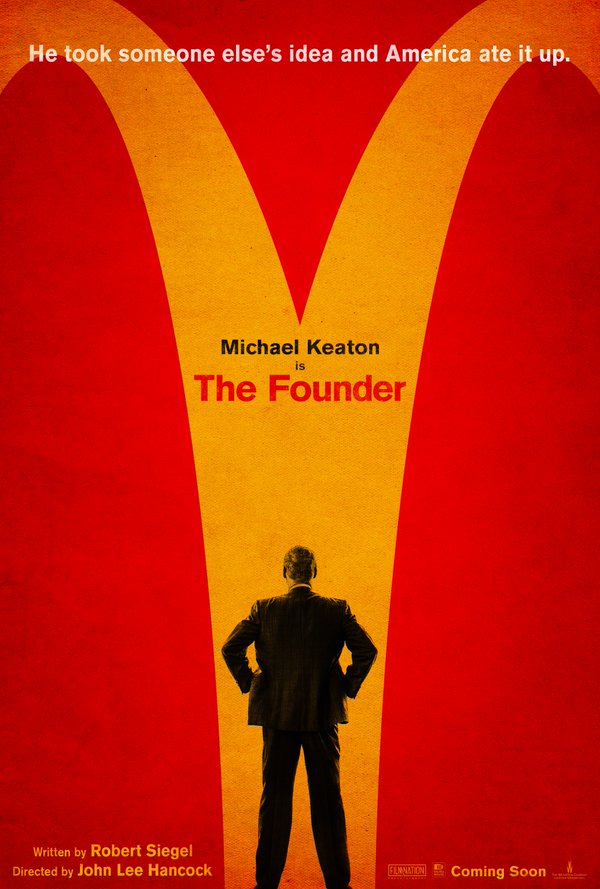
Rating: 3/10 – the first truly “meh” movie of 2017, Underworld: Blood Wars has all the attraction of root canal work and a rectal exam put together; unfailingly predictable, and trite on almost every level, the directorial debut of TV helmer Foerster readily shows that the producers are firmly in charge and there’s no room for originality – at all.

Share this:

  • Click to share on X (Opens in new window) X
  • Click to share on Facebook (Opens in new window) Facebook
  • More
  • Click to print (Opens in new window) Print
  • Click to email a link to a friend (Opens in new window) Email
Like Loading...

Patriots Day (2016)

22 Sunday Jan 2017

Posted by dullwood68 in Movies

≈ 2 Comments

Tags

Bombing, Boston Marathon, Boston Strong, Drama, J.K. Simmons, John Goodman, Kevin Bacon, Literary adaptation, Manhunt, Mark Wahlberg, Michelle Monaghan, Peter Berg, Review, Thriller, True story

328338id1_patriots-day_27x40_1sht-revise

D: Peter Berg / 133m

Cast: Mark Wahlberg, Kevin Bacon, John Goodman, J.K. Simmons, Michelle Monaghan, Alex Wolff, Themo Melikidze, James Colby, Michael Beach, Rachel Brosnahan, Christopher O’Shea, Jake Picking, Jimmy O. Yang, Vincent Curatola, Melissa Benoist, Khandi Alexander, Adam Trese, Dustin Tucker

At 2:48pm on 15 April 2013, the 117th annual Boston Marathon was taking place, and was proceeding as smoothly as in previous years. It was already nearly three hours since the winner had crossed the finish line, and the remainder of the runners – some 5,700 – were still to complete the course. A minute later, at 2:49pm, a bomb exploded in the crowd of onlookers near the finish line; approximately thirteen seconds after, a second bomb exploded one block further away. Between them, the blasts claimed the lives of three people, and injured hundreds of others, including sixteen people who lost limbs. It was a terrorist attack that no one saw coming, and such was the confusion at the time of the blasts that runners still crossed the finish line for another eight minutes.

This is the core event of Patriots Day, a recreation of the bombings that occurred that fateful day, and the subsequent manhunt that took place over the next four days. It begins with Boston Police Department Sergeant Tommy Saunders (Wahlberg) and moves on to introduce a variety of individuals whose lives will be affected by the bombing and subsequent events. These include Tommy’s wife, Carol (Monaghan), Boston Police Commissioner Ed Davis (Goodman), young couple Jessica Kensky (Brosnahan) and Patrick Downes (O’Shea), Chinese student Dun Meng (Yang), MIT police officer Sean Collier (Picking), district of Watertown police Sergeant Jeffrey Pugliese (Simmons), Boston Police Superintendent Billy Evans (Colby), naturalised U.S. citizen Dzhokhar Tsarnaev (Wolff), his brother Tamerlan (Melikidze), and Tamerlan’s American-born wife, Katherine (Benoist).

film-patriots-day_bece

By the time the race starts we know that Tamerlan and Dzhokhar will be the people who place the bombs. And as the race begins, and we see them moving amongst the crowds, what has been a fairly straightforward, and somewhat leisurely approach to the events of 15 April 2013 begins to become something altogether more focused, and darker. When the bombs do go off – and we know they will – the explosions, and the devastation they cause, are still shocking. And it’s as this point that Patriots Day, which could have so easily been a tale of jingoistic heroism sprinkled with Hollywood-ised action beats, becomes something even richer and more surprising: a movie based on true events that incorporates an incredible level of detail, and better still, includes actual footage from the time. It’s this aspect of the movie, the mixture of real and realised that impresses the most, as it makes the verisimilitude that much more potent.

In adapting the book, Boston Strong by Casey Sherman and Dave Wedge, director Peter Berg has made his most accomplished and impactful movie to date. Reuniting with Mark Wahlberg for the third time after Lone Survivor (2013) and Deepwater Horizon (2016) – also true stories – Berg has finally crafted a movie that resonates on more than one level, and which doesn’t rely on the jingoistic heroism mentioned above. It does celebrate the way in which the residents of Boston came together in the wake of a terrorist attack, but Sergeant Pugliese’s incredibly brave confrontation with Tamerlan Tsarnaev aside, there aren’t any moments of gung ho courage, just an acknowledgment of how determined everyone – law enforcement and public alike – were in making sure the bombers were captured. It’s not often that a movie gives you a true sense of a community coming together in such a way, but this is definitely one of them, and it does so powerfully and succinctly.

040616_PATRIOTSDAY_KB_462.CR2

The various storylines are cleverly interwoven as well, with each character given a relevant amount of screen time, and their lives, even Wahlberg’s composite policeman, explored with a tremendous surety of touch. Admittedly, some of the investigators – Bacon’s overly experienced FBI agent Richard DesLauriers, Goodman’s shocked and angry Police Commissioner – fare less well in this respect due to the nature of their involvement, but otherwise, people such as Downes and Kensky, who had reached the finish line when the first bomb went off, are afforded due recognition because of what happened to them not only then but subsequently. The same is true of Steve Woolfenden (Tucker), who was injured and separated from his young son, Leo. Away from the injured, the fates of people such as Dun Meng and MIT police officer Sean Collier are played out with sincerity and a lack of sensationalism, or the kind of made-for-TV banality that offsets any strived-for veracity.

Once the manhunt is under way and an initial identification of the suspects has been made (one of the movie’s cleverest moments), the movie steps up a gear, and becomes intensely exciting. The scenes involving Dun and the Tsarnaevs are mini-masterclasses in how to keep an audience on the edge of their seat, and all this is achieved by precision editing (courtesy of Gabriel Fleming and Colby Parker Jr) and an emotional undercurrent that permeates the movie as a whole. Berg makes you care about the people in this movie, these people who experienced so much and came out the other side so much stronger (albeit not all of them). The same can be said of the shootout on Watertown’s Laurel Street, a literally explosive confrontation between the police and the Tsarnaevs that stands head and shoulders above most movie shootouts, and which again, thanks to Fleming and Parker Jr, leaves the viewer gasping at how insane it all was, and how frightening it must have been to be a part of it all.

1479137092479

Berg’s commitment to telling this story as honestly and passionately as possible, while not sensationalising it in any way, is the reason why it works so well, and why it deserves every possible accolade. He’s helped tremendously by a cast so committed to meeting his vision of the story that there’s not one performance that’s out of place or not operating in service of the material. Wahlberg, who always seems to feel more comfortable playing blue collar workers, puts in his best work since The Fighter (2010), while the likes of Goodman, Bacon, Monaghan and Simmons all deliver solid, credible supporting performances that enhance the narrative whenever they’re on screen. As the Tsarnaevs, Wolff and Melikidze are an impressive teaming, establishing both the bonds and the boundaries between the two brothers with almost nonchalant ease; it’s an adversarial relationship in many ways (as with so many brothers), but you never once question their commitment to their cause and each other. But if there has to be one actor or actress who stands out for any reason, then that is unquestionably Melissa Benoist, TV’s current Supergirl. Watch the scene where Katherine is interrogated by a nameless “spook”: it’s an exemplary display of a character’s doubt, fear, loathing, and blinkered self-assurance, and is as surprising for its conclusion as it is for the iciness of the scene as a whole.

The movie ends as most movies attempting to tell a true story often do: with an update on some of the people whose lives were affected on that terrible day in April 2013. And then it goes one step further, and you hear the voice of the real Patrick Downes, and then you see both him and Jessica Kensky as they talk about that day and what it’s meant to them since. You see officials such as Ed Davis and Richard DesLauriers, and as they talk about the notion of Boston Strong, the unifying concept that sprang up in the wake of the bombings, the idea that Boston and its people would not be intimidated by acts of terrorism – listening to them you understand just why Berg and his team were so determined not to make this an exercise in hyperbole or the cinematic equivalent of yellow journalism. Because if they had, then the movie’s final image – its message if you like – would have meant nothing. It would have lacked context, and it would have lacked the emotional jolt that the movie leaves you with. And what was that image? Ah, now that would be telling…

Rating: 9/10 – a superb retelling of the Boston Marathon bombings and the manhunt that followed over the next one hundred and five hours, Patriots Day is a movie devoid of frills, unnecessary plot devices, or political finger-pointing; a tribute to all those who survived the bombings, and the extraordinary levels of cooperation between a city and its law enforcement – a de facto curfew was in place following the shootout in Watertown – the movie focuses on telling its story matter-of-factly and audaciously, and by concentrating on the people who were caught up in it all, an approach that many other movies “based on real events” should try adopting as well.

Share this:

  • Click to share on X (Opens in new window) X
  • Click to share on Facebook (Opens in new window) Facebook
  • More
  • Click to print (Opens in new window) Print
  • Click to email a link to a friend (Opens in new window) Email
Like Loading...

Hidden Figures (2016)

21 Saturday Jan 2017

Posted by dullwood68 in Movies

≈ 3 Comments

Tags

1961, Drama, Friendship 7, Janelle Monáe, Jim Parsons, Kevin Costner, Kirsten Dunst, Literary adaptation, NASA, Octavia Spencer, Racism, Review, Taraji P. Henson, Theodore Melfi, True story

hidden_figures_ver2

D: Theodore Melfi / 126m

Cast: Taraji P. Henson, Octavia Spencer, Janelle Monáe, Kevin Costner, Kirsten Dunst, Jim Parsons, Mahershala Ali, Aldis Hodge, Glen Powell, Kimberly Quinn, Olek Krupa

In 1961, the USA and the USSR were in a race to put a man into space. The Russians had managed to send up a mannequin and a dog on separate missions, while the Americans were struggling to stop their unmanned rockets from blowing up shortly after take-off. The team responsible for this string of non-fatal disasters was based at the NASA complex in Langley, Virginia. In fact, there were several teams working there, including a coloured section overseen by Vivian Mitchell (Dunst). Of the women that worked there, three were best friends: Katherine Goble (Henson), Dorothy Vaughan (Spencer), and Mary Jackson (Monáe). Each had their own specialty: Katherine was a maths genius, Dorothy was a more than competent supervisor (and latent programmer), while Mary was an engineer.

Despite their obvious capabilities, the institutionalised racism of the time ensures that each of them remains in a pool of temps to be drawn on as and when required. Dorothy is the de facto supervisor of the group, but isn’t officially recognised as such. Mary’s desire to be an engineer is hampered by her needing to take a specific engineering course – which is taught only at a non-segregated school. And Katherine’s intuitive knowledge of advanced mathematics is under-utilised on a regular basis. Things begin to change though, when Katherine is seconded to the Space Task Group, the team responsible for calculating the launch and landing coordinates for each rocket mission.

hf-gallery-04-gallery-image

Led by Al Harrison (Costner), the team is as inherently racist as an all-white male environment could be. Only Harrison seems able to look past the colour of Katherine’s skin, but he has too much on his plate to ensure that everyone else does. With her work constantly undermined by Harrison’s second-in-command, Paul Stafford (Parsons), and having to spend too much time checking other people’s calculations, Katherine struggles to make any headway in having her talents recognised. When the USSR succeeds in sending Yuri Gagarin into space (and bringing him back), the pressure is on to do the same with a US astronaut. With the arrival of an IBM mainframe computer that will process mathematical formulae and calculations much quicker than Harrison’s team of “computers”, Katherine faces an even bigger challenge: how to retain a human element amongst all the mathematics, and how to ensure that any future manned space flights remain as safe as humanly possible. It all leads to the first manned orbital flight, and making sure that astronaut John Glenn (Powell) returns home in one piece.

Those with a good memory for last year’s Oscars will remember the outcry over the Academy appearing to be racially biased against black and ethnic movie makers. Stars such as Will Smith boycotted the Oscar ceremony, while contention reigned over the nominations the Academy had made in the first place. A year later, and we have Hidden Figures, a movie almost designed to address the issue, and which should see itself gain a slew of nominations. However, the movie is the victim of felicitous timing, having gone into production a full year before last year’s Oscars. Nevertheless, it’s the kind of feelgood, inspiring, let’s-throw-a-light-on-a-little-known-aspect-of-recent-US-history movie that charms audiences and critics alike. And it doesn’t hurt that co-writer/director Theodore Melfi has assembled a great cast to do justice to his and Allison Schroeder’s screenplay, itself adapted from the book by Margot Lee Shetterley.

hidden-figures1

While Hidden Figures doesn’t necessarily stand or fall on its performances, having such a (mostly) seasoned cast pays off tremendously. Henson is terrific as Katherine, the unsung hero of the Friendship 7 mission who is more than just a maths genius, while Spencer and Monáe provide equal measures of grit and determination as Dorothy and Mary, guiding their real-life characters through the many professional, personal, and racial pitfalls the two women experienced at the time, and their inspirational, dedicated responses to each potential setback. Both actresses are equally as terrific as Henson, even if they have a little less to do in comparison, but as a trio they prove to be inspired casting. The same can be said for Costner, playing yet another (fictional) fair-minded, no-nonsense authority figure, but doing so with a great deal of charm and delivering his lines with the necessary amount of gravitas and persuasion. The only character who sticks out as unnecessarily stereotypical is Parsons as Katherine’s racist, jealous colleague, who constantly feels threatened by her presence and her abilities. Reduced to giving her glowering looks and blocking her attempts at personal recognition, Parsons’ performance does the actor no favours and will have many viewers thinking, “he’s just playing an evil version of Sheldon Cooper”.

As Mrs Mitchell, Dunst at least gets to see the error of her ways by the movie’s end, while there’s solid support from Ali and Hodge as Katherine’s love interest and Mary’s husband respectively. And there’s a mischievous turn from Powell as John Glenn, who won’t take off unless Katherine has checked the numbers. With so many enjoyable, and finely-tuned performances, the movie is free to explore the ways in which Johnson et al became so integral to the success of the Friendship 7 mission after so many failures. There’s subterfuge (on Dorothy’s part), legal wrangling (by Mary), and pure dogged persistence by Katherine. While it’s true that all three were in the right place at the right time, it’s still equally true that they took advantage of the chances given them, and made the most of those opportunities. In doing so, they forged a path for women (and not just black women) that is still being benefitted from today, and the movie is eager to highlight their achievements – which is as it should be.

DF-04856_R2 - Katherine G. Johnson (Taraji P. Henson), flanked by fellow mathematicians Dorothy Vaughan (Octavia Spencer) and Mary Jackson (Janelle Monáe) meet the man they helped send into orbit, John Glenn (Glen Powell), in HIDDEN FIGURES. Photo Credit: Hopper Stone.

But though these achievements are rightly recognised and celebrated, and the tensions inherent in the efforts to put Glenn into orbit are confidently addressed and shown, it’s when the movie steps away from the base at Langley and tries to paint a wider picture of the period that it proves to be less successful in its efforts. There are references to the growing civil unrest in the country, and we get to spend time with the trio’s family and friends on various occasions, but Katherine’s romance with Colonel Jim Johnson (Ali) aside, much of these scenes and sequences feel like filler, particularly the political discussions between Mary and her husband, which seem like they’re prodding the movie in another direction, but which ultimately amount to nothing.

Otherwise though, Hidden Figures is a lovingly rendered tribute to three women who smashed through not one but two glass ceilings and contributed greatly to the US winning the space race and eventually landing on the Moon. That their contributions have taken so long to be recognised and honoured by the wider public is a travesty that the movie addresses with no small amount of style and grace. Melfi is to be congratulated for taking such an inspiring, untold tale and doing it full justice, and in the process, making one of the most enjoyable, inspiring and rewarding movies of recent years.

Rating: 8/10 – shining a light on an overlooked story from the early Sixties, Hidden Figures is a generous, captivating movie that plays equally well as both an historical drama and a comedy of manners; with a trio of memorable performances, and richly textured direction from Melfi, this is an object lesson in bringing history alive and making it completely accessible.

Share this:

  • Click to share on X (Opens in new window) X
  • Click to share on Facebook (Opens in new window) Facebook
  • More
  • Click to print (Opens in new window) Print
  • Click to email a link to a friend (Opens in new window) Email
Like Loading...

All About Them! (2015)

21 Saturday Jan 2017

Posted by dullwood68 in Movies

≈ Leave a comment

Tags

Anaïs Demoustier, Á trois on y va, Comedy, Drama, Félix Moati, Jérôme Bonnell, Love, Relationships, Review, Romance, Sophie Verbeeck

1224511_full

Original title: Á trois on y va

D: Jérôme Bonnell / 86m

Cast: Anaïs Demoustier, Félix Moati, Sophie Verbeeck, Patrick d’Assumçao

Mélodie (Demoustier) is a young defence lawyer working and living in Lille. She’s also in a relationship with Charlotte (Verbeeck) that’s lasted for five months. Unfortunately, Charlotte has also been in a relationship with Micha (Moati) for four years. Mélodie and Charlotte have managed to keep their affair a secret from Micha, but for Mélodie it’s reached a point where she wants Charlotte to commit to her. Charlotte has been a little distant recently, and following Micha’s return from a trip away, an evening spent together leads to Micha unexpectedly declaring to Mélodie that he has feelings for her. Against her better judgement she kisses him.

Over the next few days, Mélodie becomes further involved with Micha, while both of them attempt to maintain their individual relationships with Charlotte. They take chances that could lead to them being found out, and Mélodie does the same with Charlotte. While all this is going on, Mélodie receives bad news from her boss, William (d’Assumçao); he needs to let her go due to the likelihood of his being disbarred. He does at least recommend her to another law firm based in Paris, but with everything that’s happening, she doesn’t know if she wants to take up the offer.

a-trois-on-y-va

Things almost come to a head at a party that all three attend. Charlotte invites Mélodie who initially begs off because of work, when instead she’s arranged to meet up with Micha. Micha has told Charlotte that he’s going out with work colleagues; she’s told him that she’s tired and will be staying at home. Micha and Mélodie arrive together, but she manages to make it look as if she’s come alone, and Charlotte remains unsuspicious of any relationship between her boyfriend and her lover. Later that night, and back at Micha and Charlotte’s apartment, both of them sneak into Mélodie’s room on separate occasions and attempt to reassure her that each will try and convince Mélodie to live with them now her job is winding up. But when she’s called out to provide defence counsel for someone she’s defended before, it triggers a response for honesty in Mélodie that brings matters to the fore, and the trio to a place that none of them could have predicted.

Ah, the French – they do love an off-beat, quirky romance, especially if it involves two women and a man. Over the years they’ve explored probably every possible twist and complicated convolution in their efforts to provide a wide-ranging exploration of love and romance and the highs and lows that go with them. But All About Them! is possibly the first time that the phrase ménage à trois has turned out to be a completely inadequate description for writer/director Bonnell’s charming, if mostly too broad, romantic drama. By making the inter-relationships between Mélodie, Micha and Charlotte so complicated in terms of arranging the characters from scene to scene, there are times when the movie borders on farce, though thankfully it never falls into the trap completely.

all_of_them_still

But while Bonnell’s screenplay tries to play it straight with the characters’ feelings, some of the motivations remain obscured by the dramatic need for secrecy between them. Mélodie’s work as a defence lawyer reveals a pride in winning; we see her winning cases involving a pervert and a suspected terrorist. Her ability to avoid the truth of her clients’ innocence or guilt goes some way to explaining why she keeps her relationship with Charlotte a secret, but at the same time she clearly enjoys getting her own way. Why she’s allowed things between them to go on for so long is never properly addressed. Equally, Charlotte’s inability to choose between Mélodie and Micha smacks more of convenience that an actual emotional dilemma. And Micha’s admission of his feelings for Mélodie, although clearly the means by which the main narrative is set up, never loses the sense of its being engineered rather than an organic development.

With the various romantic entanglements lacking any appreciable depth, the movie is rescued by its trio of central performances. Demoustier is a particular delight, her pale, delicate features capable entirely of showing the various degrees of romantic confusion and commitment that Mélodie experiences throughout, as well as a moment of tearful epiphany after she’s called out to attend the local police station. There are times when Demoustier’s open, expressive face tells the viewer everything you need to know about how Mélodie is feeling at any given moment, and it’s her skills as an actress that often elevates the material. As Micha, Moati has the enviable task of being in love with two striking women at the same time, and he plays the role with obvious relish, though not without recognising the often callow nature of his romance with Mélodie. In some ways it’s an awkward role, precisely because of Micha’s carefree, unconcerned attitude towards betraying Charlotte, but Moati makes him surprisingly likeable. As the third member of the trio, Verbeeck has the least to do, and beyond looking melancholy and withdrawn for the most part, plays Charlotte as a free spirit drawn into relationships that she doesn’t feel entirely comfortable with. Even though it’s the minor role of the three, Verbeeck’s distant glances and sanguine approach to the character makes her the most interesting, and when she’s on screen the viewer can’t help but be drawn to her.

1427469962057

Bonnell orchestrates the various “near misses” with easy-going aplomb, though he does misjudge a scene where Mélodie and Charlotte are kissing in a bar and Micha is outside, oblivious to their presence behind him. Otherwise he avoids banality by peppering the script with witty observations on romance and the craziness of the characters’ situation. The drama remains parboiled throughout but is absorbing enough, though the movie ends too suddenly with one of the characters making an abrupt decision that allows for an unnecessary, and too pat, resolution. By this stage, though, Bonnell and his talented cast have done enough to involve the audience to the degree that they’ll want to know how things pan out (even though they may find themselves feeling disappointed). There are a couple of subplots threaded into the narrative, but Mélodie’s reacquaintance with her pervert client aside, they remain largely ineffective, and add little to the overall proceedings.

Rating: 6/10 – a romantic drama suffused with awkward comic moments, All About Them! shows a lot of promise, but ultimately lets itself down on the drama front by making each relationship less than absorbing; good performances from Demoustier, Moati and Verbeeck keep Bonnell’s semi-effective script from falling down completely, and there’s enjoyment to be had from the various ways that Bonnell keeps his characters in the dark about each other, but otherwise this won’t meet most viewers’ expectations.

Share this:

  • Click to share on X (Opens in new window) X
  • Click to share on Facebook (Opens in new window) Facebook
  • More
  • Click to print (Opens in new window) Print
  • Click to email a link to a friend (Opens in new window) Email
Like Loading...

Trespass Against Us (2016)

21 Saturday Jan 2017

Posted by dullwood68 in Movies

≈ Leave a comment

Tags

Adam Smith, Brendan Gleeson, Crime, Drama, Father/son relationship, Lyndsey Marshal, Michael Fassbender, Review, Rory Kinnear, Travellers

94_tau_la_web

D: Adam Smith / 99m

Cast: Michael Fassbender, Brendan Gleeson, Lyndsey Marshal, Georgie Smith, Rory Kinnear, Killian Scott, Sean Harris, Gerard Kearns, Tony Way, Kingsley Ben-Adir, Barry Keoghan, Kacie Anderson, Peter Wight, Alan Williams, Anna Calder-Marshall, Mark Lewis Jones

Chad Cutler (Fassbender) is part of a Travellers community whose patriarch is his father, Colby (Gleeson). Chad doesn’t know how to read or write, but he does know how to drive a car, especially if that car is being pursued by the police and it needs not to be caught. He’s also married, to Kelly (Marshal), and has two children, Tyson (Smith) and Mini (Anderson). Kelly wants more for their children than living in a caravan in a field, and though they go to a local school, it’s the only aspect of “normal” life they’re familiar with. Kelly wants them to move into a proper home – a house – and Chad is in agreement with her: he doesn’t want his children growing up in the same environment he did, and settling for less. But there’s a problem. If Colby finds out what they’re planning, he’ll never agree to it, and he’ll make sure they don’t leave.

While Chad sources a home for them nearby, Colby insists on his involvement in the robbery of a large house that proves to be the home of the Lord Lieutenant for the county. Though the robbery is successful, and Chad evades capture by the police – led by PC Lovage (Kinnear) – he’s not “out of the woods” just yet. Lovage is determined to arrest Chad, but if he can’t do it by fair means then he’ll twist the rules to suit his own agenda. This involves raiding the Travellers’ camp, and intimidating them as well as Chad and Kelly. When Chad learns that his father has intimidated the owner of the home he and his family were going to move into, and it’s no longer on offer, a showdown looms between Chad and Colby, one that Colby wins.

nintchdbpict000269236886-e1474642448269

In the meantime, Tyson and Mini go missing from the school. Chad searches for them, but it’s not until Kelly goes to the police that anyone knows the children are with them, and not actually missing or lost. Lovage tries to use their presence at the station as leverage in getting Chad or Kelly to admit his involvement in the robbery, but it doesn’t work. It’s not until Chad, attempting to buy a puppy as a birthday present for Tyson, is refused due to who he is that circumstances conspire to fix the issue of his family’s future once and for all.

Stories about the Travelling community are relatively thin on the ground, which makes Trespass Against Us all the more welcome. Highlighting the darker side of a life that most people will only know about from TV reality shows such as My Big Fat Gypsy Wedding, Adam Smith’s directorial debut is keen to show how hierarchy and loyalty play very important roles in the lives of Travellers, and how aspirations, no matter how much they may be needed, go against the established order of things. Whether or not Chad is a typical example of a “new generation” that sees the traditions of the Travelling community as old-fashioned or no longer socially relevant, isn’t addressed directly by Smith and screenwriter Alistair Siddons, but it certainly fuels the story of Chad’s “defection”.

trespass-against-us-trailer-still

Played with grit and determination by an on-form Fassbender, Chad is aware of his limitations and the possibilities available to his children, but he’s fighting a losing battle against his father. Colby asserts an unhealthy authority over his grandchildren, and at times is far more of an authority figure to them than Chad is. He tells Tyson to ignore what his teacher tells him at school, and looks to reinforce the sense of being part of a tight-knit community that keeps its own counsel (or particularly, Colby’s). Chad has no immediate answer to his father’s belligerence, and is too scared to challenge him openly. Chad and Kelly may want better lives for their children, but Colby doesn’t even see it as an issue; he believes the life they all lead is the right one for them, and any other opinion is a betrayal. As Colby, Gleeson delivers the kind of intense, brooding performance he’s so good at, and he shows Colby’s anger at being challenged in a way that mixes resigned authority and the enjoyment he derives from being a bully.

But while the family dynamic, and the battle, between Chad and Colby forms the central storyline, other aspects of the script lack the same intensity or fail to engage the audience as effectively. Kinnear has the thankless task of making PC Lovage anything more than a pasty-faced thug in a police uniform, his determination to arrest Chad made into an obsession that causes him to behave in ways that steer away from credibility at every turn. Likewise, Harris is back playing the kind of role that casting directors seem eager to offer him. Gordon Bennett – yes, really – sports a close-cropped scalp and rat’s-tail extensions, and looks as if he hasn’t had a bath in weeks. He’s the community halfwit, protected by Colby, derided by Chad and the others, and capable of acts of unwitting cruelty. Harris is a very good actor, but Gordon as written adds little to the narrative, and the script uses him on occasion to move things along, but he’s often a distracting presence, and an unnecessary one at that.

thumbnail_24947

The twin themes of community and tradition are given enough space and time to be explored with a fair degree of depth, and though in truth, this is a story that could have been applied to any number of other, different family units, Smith and Siddons do their best to show how relevant these themes are in Traveller life. The austerity of tradition is touched on to good effect, but the reasoning behind continuing such traditions isn’t explored at all, leaving the viewer to wonder just why living in a field – no matter how much it keeps society away from the Travellers in general – is so preferable to the alternative. It’s an exclusionist stance that needed referencing, if only to provide viewers with a broader perspective.

As a drama, Trespass Against Us sometimes feels forced, as events drift into melodrama and Chad’s dream of emancipation from his father drifts further and further away. By the end, and the unlikely convergence of people and circumstance that provides Chad with a solution, some viewers may well be experiencing a kind of emotional ennui. There’s no payoff, or distinct resolution to Chad’s plight, only a hope that the decision he makes will have the required effect, and allow Kelly and the children to escape Colby’s clutches. But it’s a puzzling conclusion to a story that starts off well, includes a couple of impressively mounted car chases, but which soon loses dramatic focus and traction, and in doing so, looks and feels as if it’s lost sight of that very same story it started off with.

Rating: 7/10 – a mixed bag in terms of drama and the overall material, Trespass Against Us never quite scales the heights of its own ambitions, but it does feature two commanding performances from Fassbender and Gleeson, and a refreshing mise-en-scéne; let down by its own inconsistencies, it’s nevertheless a movie that shouldn’t be avoided, and which may in time, find itself ripe for reassessment.

Share this:

  • Click to share on X (Opens in new window) X
  • Click to share on Facebook (Opens in new window) Facebook
  • More
  • Click to print (Opens in new window) Print
  • Click to email a link to a friend (Opens in new window) Email
Like Loading...

Goat (2016)

21 Saturday Jan 2017

Posted by dullwood68 in Movies

≈ Leave a comment

Tags

Andrew Neel, Ben Schnetzer, Brad Land, Brothers, Danny Flaherty, Drama, Fraternity, Gus Halper, Hell Week, Literary adaptation, Nick Jonas, Phi Sigma Mu, Pledges, Review

goat-2016-movie-poster

D: Andrew Neel / 102m

Cast: Ben Schnetzer, Nick Jonas, Gus Halper, Danny Flaherty, Virginia Gardner, Jake Picking, Brock Yurich, Will Pullen, Austin Lyon, Eric Staves, James Franco

Across America there are hundreds if not thousands of colleges. And these colleges have what are called fraternities, male-only “clubs” whose membership is often highly sought after, and which confers a certain level of social acceptance on the member. If you’re a student who doesn’t belong to a fraternity, the inference is that you’re somehow not worthy, or an outsider and to be avoided. But if you are a student and you do want to fit in, then the price of membership is called Hell Week. During this period, the students who head up the fraternities will play practical jokes on potential members (called pledges), get them to perform painful or humiliating tasks, keep the pledges at the fraternity’s beck and call, and generally make their lives – appropriately – hell. The idea, officially, is to weed out the weak from the strong, and only allow in those who meet whatever criteria the fraternity is looking for. Unofficially, it’s an opportunity for existing members to bully and humiliate pledges, and all in the name of accepted tradition.

It’s this period of time in a college student’s life that is explored in Goat, an adaptation of the autobiographical book by Brad Land. Land (Schnetzer) is on the brink of going to the same college where his older brother Brett (Jonas) is studying, but he’s having second thoughts. However, an ill-fated decision to give two strangers a ride home late one night leads to Brad being robbed and assaulted, and his attackers disappearing. Stricken by guilt and self-reproach over not fighting back, Brad makes the decision to attend college, and though it means leaving behind his friends, and the one girl he likes (and who seems to like him), for Brad it’s akin to making a fresh start. Brett is happy that they’ll be on campus together, and so is Brad, who is soon getting to know his roommate, Will (Flaherty). It isn’t long before Brett’s fraternity comes calling, and he’s asked to join, along with Will.

goat-redband-screen2

Hell Week begins and the various tasks Brad and the other pledges are required to endure at first are largely alcohol-related. But as the week continues, and the tasks become more aggressive and humiliating in nature, Brett begins to believe that Brad shouldn’t be a pledge at all. But Brad is insistent that he’ll see it through, whatever happens to him. And see it through he does, but he and the others, including Will, have another month of hazing to endure before they become full-fledged fraternity members. During this period, a wedge is driven between the two brothers, the police contact Brad with news that they may have apprehended one of his attackers, and a tragedy threatens the existence of the fraternity and Brad’s continued attendance at the college…

True stories about horrific experiences, or periods in a person’s life, can often be a trial to sit through as well, and Goat, despite the best of intentions, is one such movie. Despite everything that happens to Brad in the course of Goat, one thing remains truer than any of the events of Hell Week, or even the carjacking-cum-assault and battery he suffers at the beginning, and it’s the one thing that lets the movie down throughout: we never get to know him. We learn some basics about him, but there’s too much that remains a mystery. We never get to know why he’s reluctant to go to college in the first place. We never learn why he decides not to stay in contact with the girl he likes. We never learn what his aspirations are, or why he’s at college to begin with (at one point he states he doesn’t know what he’ll major in). And most bewildering of all, we never learn why he wants to be a member of Phi Sigma Mu (other than that his brother is already). With the movie keeping Brad’s motivations in the dark, and by making him a less than self-reflexive character, Goat struggles to make his experiences ones that the viewer can sympathise with, or indeed, relate to. For anyone who has never taken part in a Hell Week, or the subsequent hazing period, why anyone would want to go through such a demeaning experience just to join a fraternity is completely baffling.

goat-15853-large

With the viewer asked to just accept this notion wholesale, the movie focuses on an unwelcome series of ritualised pranking and so-called character-building “exercises” that take up too much of the running time, and which proves futile in creating any tension, or dramatic traction. Scenes that should appal and horrify for their content are instead frustratingly matter-of-fact, and whatever happens to the pledges goes unchallenged in terms of bullying or deliberate mistreatment. It’s only when there’s a tragedy that the screenplay – by David Gordon Green, director Neel, and Mike Roberts – begins to question the morality of Hell Week, and even then it’s to set up a clumsy confrontation between Brett and fraternity bigwig Chance (Halper).

As the beleaguered Brad, Schnetzer is earnest or glum, depending on the scene, and has trouble portraying the range of emotions his character goes through, mainly because the script lacks consistency in determining them. Jonas is kept on the sidelines for the most part, and seems there only to deliver the occasional brotherly pep-talk, Halper oozes insincerity as the leader of Phi Sigma Mu, Picking is the principal bully-boy with few other recognisable characteristics, and Flaherty is the obvious “runt” who’ll suffer more than the others. There’s also a cameo from Franco as the owner of the fraternity house, an ex-fraternity member who still craves his old life even though he’s married and has a child. Sadly, his appearance makes no impact on the overall story, and his character is forgotten about after five minutes.

goat-redband-screen1

Whatever the truth of Land’s experiences in college, and even if the content of his Hell Week is accurate, thanks to an injudicious script and muddled direction by Neel, Goat remains a lost opportunity to examine the psychology of both the pledges and the fraternity members who torment them so willingly. Though you could argue that Brad takes part as a way of punishing himself for not fighting back against his attackers, it’s a theory that the movie fails to confirm or deny, and in holding back, it makes Brad’s journey even less appealing. In the end, the movie ends back where Brad was attacked, but even there it prompts more questions, and leaves the viewer still wondering what it was all for.

Rating: 5/10 – as a straightforward piece of movie making, Goat is a blunt, what-you-see-is-what-you-get feature that never gets inside the head of its main protagonist, and lacks the interest to do so; flatly directed by Neel with performances to match, the movie feels as if it’s about to “reveal all” on several occasions, but instead it remains vague and under-developed, and does its best not to let the audience in on why everything is happening.

Share this:

  • Click to share on X (Opens in new window) X
  • Click to share on Facebook (Opens in new window) Facebook
  • More
  • Click to print (Opens in new window) Print
  • Click to email a link to a friend (Opens in new window) Email
Like Loading...

Mini-Review: Live by Night (2016)

21 Saturday Jan 2017

Posted by dullwood68 in Movies

≈ Leave a comment

Tags

Ben Affleck, Brendan Gleeson, Crime, Dennis Lehane, Drama, Elle Fanning, Gangsters, Ku Klux Klan, Literary adaptation, Prohibition, Review, Sienna Miller, Thriller, Ybor City, Zoe Saldana

live-by-night-poster

D: Ben Affleck / 128m

Cast: Ben Affleck, Elle Fanning, Remo Girone, Brendan Gleeson, Chris Messina, Matthew Maher, Sienna Miller, Zoe Saldana, Robert Glenister, Chris Cooper, Miguel J. Pimentel, Titus Welliver, Max Casella

Undermined by a leaden script, Live by Night is writer/director/actor Ben Affleck’s third movie as a multi-hyphenate, but after the successes of Argo (2012) and The Town (2010), his latest project is a plodding affair that looks good thanks to Robert Richardson’s usual exemplary cinematography, but otherwise remains remote and uninvolving. The tale of a small-time Boston crook, Joe Coughlin (Affleck), who finds himself at odds with Irish gangster Albert White (Glenister) through his relationship with White’s girlfriend, Emma Gould (Miller), this adaptation of the novel by Dennis Lehane starts off well but soon gets bogged down by messy plotting and too many characters who randomly come and go.

Coughlin’s romance with Emma ends badly, leading him to offer his “services” to White’s rival, Maso Pescatore (Girone). Pescatore sends Coughlin down to Florida, to Ybor City, with instructions to take control of his rum-running operation and ensure that White’s activities in the area are curtailed. Once there, Coughlin, aided by trusted friend Dion (Messina), soon streamlines Pescatore’s operation and squeezes out all the competition. In the process he establishes a business relationship with a Cuban family, and begins an affair with the sister, Graciela (Saldana). Things run smoothly until Coughlin’s working with the Cubans as well as a group of local Negroes, attracts the ire of the Ku Klux Klan. Coughlin tries to come to an amicable arrangement with them, but the Klan’s leader, RD Pruitt (Maher) refuses to play ball, leading Coughlin to make an arrangement with Pruitt’s brother-in-law, Chief Figgis (Cooper) that has unforeseen consequences.

610279809

The Chief’s daughter, Loretta (Fanning), begins making evangelical protests against a casino that Coughlin is building in anticipation of Prohibition being repealed. Her protests lead to the project stalling, which makes Pescatore angry enough to forget all the money Coughlin has made for him, and travel down to Florida to oversee matters for himself, a development that leaves Coughlin vulnerable, and his future in doubt.

For all the convincing period detail and the impressive production design, Live by Night is let down by Affleck’s inability to craft a cohesive screenplay from Lehane’s novel. While Coughlin’s story is told against a backdrop of violence and betrayal, the movie remains a staid, pedestrian affair that moves at a steady pace despite Affleck’s best efforts to inject some energy and verve into proceedings. Part of the problem is the number of characters that appear for a short time then disappear or pop up again for another short period. Despite the cast’s best efforts, they’re let down by Affleck’s script, which uses each character to advance the narrative, but without investing in them to any great degree. This leaves actors of the calibre of Gleeson, Saldana and Glenister stranded for the most part, with only Miller and Fanning making much of an impression. It doesn’t help that Affleck’s portrayal of Coughlin also lacks range or depth, leaving the viewer hoping that things will improve over time, and that a way in to the material with eventually arise, something that, unfortunately, never happens.

Rating: 6/10 – curiously turgid and flat, Live by Night has clear aspirations to be a crime drama with operatic overtones, but instead, remains resolutely commonplace; with too many strands that make for a stop-start narrative, and characters that aren’t allowed to make much of an impact, the movie keeps its audience at a distance, and never looks as if it will close the gap at any point throughout.

Share this:

  • Click to share on X (Opens in new window) X
  • Click to share on Facebook (Opens in new window) Facebook
  • More
  • Click to print (Opens in new window) Print
  • Click to email a link to a friend (Opens in new window) Email
Like Loading...

The Young Offenders (2016)

21 Saturday Jan 2017

Posted by dullwood68 in Movies

≈ 1 Comment

Tags

Alex Murphy, Bicycles, Chris Walley, Cocaine, Comedy, Cork, Drama, Fake Billy, Hilary Rose, Ireland, Peter Foott, Review, True story

the-young-offenders_poster_goldposter_com_7

D: Peter Foott / 83m

Cast: Alex Murphy, Chris Walley, Hilary Rose, Dominic MacHale, PJ Gallagher, Shane Casey, Pascal Scott, Michael Sands, Ciaran Bérmingham

It’s the summer of 2007 in Cork, and best friends Conor (Murphy) and Jock (Walley) are spending their time differently: Conor is helping out his mother, Mairead (Rose), where she works at a fish market, while Jock is busy stealing bicycles and masquerading – literally – as a local thug called Billy (Casey) (helpfully he’s known as Fake Billy). Conor’s father died when he was four, and Jock’s mother only a year ago. Conor’s mother is hard on him, and is always calling him a moron, while Jock’s dad (Sands) has taken to drinking to deal with his grief; both boys wish for better family lives but don’t know how to make things better.

The big news story of the summer is a shipwreck further west that has seen bales of cocaine washed up along the shoreline. With each one reckoned to be worth around seven million Euros, Jock decides they should travel down to where the wreck occurred, grab themselves a bale, and make themselves rich on the proceeds (though how they’ll do that they haven’t worked out yet). Jock steals a couple of bicycles, and off they go, unaware that one of the bicycles has been fitted with a GPS transmitter, the brain child of obsessive Garda officer, Sergeant Healy (MacHale). Healy is determined to catch Fake Billy, and will do everything in his power to do so, even if it means tracking him across half of southern Ireland.

original

On their way they manage to elude Healy, but once they get to the site of the wreck, Conor and Jock are dismayed to learn that all the bales have been recovered by the Garda. But their fortunes change when they discover a man (Gallagher) sleeping with what looks suspiciously like one of the bales. They take the bale, strap it to the back of Conor’s bicycle, but as they set off back to Cork, something unforeseen happens, something they don’t discover until they get back home. With their luck already going from bad to worse – Healy is still hot on their trail – the sleeping man manages to track them down, resulting in a standoff in Conor’s kitchen that involves the two friends, Mairead, Healy, real Billy, the sleeping man, a large quantity of flour, and a nail gun.

Apparently based on true events, The Young Offenders has charm, laughs aplenty, and a huge amount of heart – and two utterly beguiling performances courtesy of Murphy and Walley. It’s safe to say that you won’t see two more convincing portrayals of what the Irish call “eejits” than here, as Murphy and Walley reach new heights of comic stupidity as best friends Conor and Jock, two young lads who know nothing and seem content with their ignorance. At one point, Jock mentions their country’s forefathers, and Conor asks who he means. Jock’s response? “Eh, Saint Patrick, Saint Bridget… I don’t know…” Of course, the level (or depth) of their stupidity is due to the wonderfully acerbic dialogue that writer/director Peter Foott (making his feature debut) has created, but the two young actors bring both characters to life such a measure of deadpan delight, that you can’t be helped but won over by Conor and Jock’s naive self-belief and disingenuous approach to life.

With two such convincing and commendable performances at the movie’s centre, you could be forgiven for thinking that the supporting characters would be less engaging, but thanks again to Foott’s considered and surprisingly layered script, such is not the case. Mairead, ostensibly a mother in constant despair at the juvenile antics of her only son, proves to be a thoughtful and supportive parent who genuinely wants what’s best for him. A scene towards the end where she and Conor find the common ground that’s been between them all along, is both funny and poignant, and emotional as well. Rose is terrific as Conor’s mother, and her scenes with Murphy provide the heart and soul of the movie just as much as the friendship between Conor and Jock does; she’s also great when dishing out insults to Jock (who thinks she’s kidding): when she points out a sucker fish to him, she tells him that will be his nickname in prison.

screen-shot-2016-08-17-at-12-29-33

Elsewhere, the obsessive Sergeant Healy is played with fierce determination by MacHale, and while the role could have been entirely one-dimensional, the actor makes him both sympathetic and understandable, a man who views his position within the Garda as one that carries great civic responsibility (even if it is a little too tightly focused). As the sleeping man, Gallagher is a joy, resourceful and clever despite having a withered arm and a club foot, and permanently astonished at how things are turning out (the scene where he acquires the nail gun is beautifully played). And there’s a wonderfully absurd, poignant, and unexpectedly heartfelt sequence involving a farmer (Scott) who suffers from a combination of alcoholism and confusion. Conor and Jock want to do right by him when they realise what his problems are, and they spend the evening with him, leading Conor to remark that “that was the closest we’d all got to a normal night in”.

It’s these moments when Foott reveals the sadness and the emotional complexity behind the characters, and lets on that they’re not entirely the “eejits” they appear to be that gives the movie a resonance and a warmth that makes it all the more impressive. Foott isn’t solely interested in making us laugh, he also wants us to experience the truth of Conor and Jock’s lives away from the obvious camaraderie they have with each other, where pain and heartache linger, but where they themselves are determined to keep them when they’re together. They’re always dreaming of what their lives could be like – the opening scene sees Jock ask Conor what he’d do if he had a million Euros – and deep down they just want ordinary home lives. By the movie’s end, Conor is well on the way to having achieved that, while Foott is careful to ensure that there’s no obvious happy ending for Jock, merely the possibility of one.

young-offenders

In essence, The Young Offenders is a movie about friendship and dreams, and how the two can sometimes, if we’re lucky, go together hand in hand. Foott is a talent to watch, and translates his script to the screen with confidence and aplomb. He extracts wonderful performances from all concerned, and there’s not one moment that feels forced or out of place. The comedy is fresh, laugh out loud funny, and deftly played by all concerned, while there’s plenty of pathos and bittersweet emotion in amongst all the levity. The movie looks great as well thanks to Paddy Jordan’s crisp, sky-bright cinematography, and on the soundtrack, there’s the more than welcome inclusion of Where’s Me Jumper by Sultans of Ping E.C., a proto-punk song that fits in well as a way of seeing out the movie on a musical high.

Rating: 9/10 – a perfectly balanced mix of comedy and familial heartbreak, The Young Offenders is the kind of movie that makes you want to spend more time with its central characters, and as soon as possible; Foott is to be congratulated for making a movie that operates so effectively on so many unexpected levels, and for keeping the friendship between Conor and Jock entirely credible throughout, an achievement that boosts the movie’s entertainment value and at the same time, ensures that it’s a rewarding viewing.

Share this:

  • Click to share on X (Opens in new window) X
  • Click to share on Facebook (Opens in new window) Facebook
  • More
  • Click to print (Opens in new window) Print
  • Click to email a link to a friend (Opens in new window) Email
Like Loading...

Oh! the Horror! – The Disappointments Room (2016) and The Bye Bye Man (2017)

13 Friday Jan 2017

Posted by dullwood68 in Movies

≈ Leave a comment

Tags

Cressida Bonas, D.J. Caruso, Douglas Smith, Drama, Grief, Haunted house, Horror, Kate Beckinsale, Lucas Till, Lucien Laviscount, Paranoia, Review, Stacy Title, Supernatural

disappointments_room

The Disappointments Room (2016) / D: D.J. Caruso / 85m

Cast: Kate Beckinsale, Mel Raido, Duncan Joiner, Lucas Till, Gerald McRaney, Celia Weston, Jennifer Leigh Mann, Ella Jones, Marcia DeRousse

After the tragic death of their baby daughter, Dana (Beckinsale) and David (Raido), and their son, Lucas (Joiner), relocate to a rundown, rural dream home. Haunted by their daughter’s death, Dana soon begins to hear the sounds of a baby crying, and also the sound of dripping water. She traces the dripping water sounds to a leak from the roof, but still hears a baby crying and other noises; she also sees a strange dog outside. David is oblivious to all this, and doesn’t think it’s at all mysterious when Dana discovers a hidden room in the attic that isn’t on the plans. Investigating it further the next day, she finds herself locked in and threatened by a malevolent force. Hours pass, but when she finally manages to get out of the room, she learns that only minutes have passed, and not hours; and that David is worried she’s not taking her medication (to help her deal with her grief).

With the help of a local historian (DeRousse), Dana discovers that the house has a disappointments room, a room that would have been used to hide away a child born with a deformity or some such, and which would have been highly embarrassing to its (usually) upper class family. Dana’s research uncovers a previous owner, Judge Blacker (McRaney), whose daughter, Laura, was believed to have died in childbirth. But Dana suspects Laura was the inhabitant of the disappointments room, and that it’s her spirit that is haunting the house. With a local workman (Till) helping restore the house, and Dana becoming increasingly disturbed by the things she’s seeing, the truth behind the disappointments room slowly begins to unfold, and Dana begins to understand that there’s a far more malevolent force at work…

thumbnail_24864

For a horror movie to have the word “disappointment” anywhere in its title is asking for trouble (or it’s being incredibly reckless). And The Disappointments Room, ah, doesn’t let us, or itself, down in that respect. It’s yet another haunted house movie where things happen for no reason at all, and scenes take place that are by-and-large independent of each other and only fit together if the viewer is lucky. The script – by director Caruso and Wentworth Miller – likes to play with visual motifs, like a child’s kite seen in historical photos floating above the house, even though it would have been proof of a child’s existence when there shouldn’t have been any; and it likes to have things happen outside the house when it’s clear that the ghost responsible for all the shenanigans doesn’t stray outside at all (so shouldn’t have that much influence).

Away from the kind of plot holes that you could fit an entire haunted house through twice over, the movie aims very low in its attempts to be scary or frightening, and falls back too often on the kind of traditional haunted house set ups that now invoke yawns rather than tension. Against such a plain, derivative backdrop, Beckinsale has no option but to put in a generic genre performance and walk away with as much dignity as she can manage. The rest of the cast lack for things to do, especially Raido, and Caruso’s directorial style largely involves ignoring how tedious and pedestrian the script is, and that the whole thing – though no more preposterous than usual – lacks energy and any kind of visual panache. It’s a glum, uninvolving movie to watch, and it isn’t helped by Brian Tyler’s overbearing, cliché-driven score.

Rating: 3/10 – bad horror movies are ten a penny these days – in fact, they’re ten a penny on most days – but The Disappointments Room is a particularly bad horror movie, one that can’t be bothered to be better than it is; hackneyed, with poor/lazy performances, and a terrible sense of its own effectiveness, it outstays its welcome within the first five minutes, and never once feels as if it’s about to surprise the viewer or give them something/someone to care about.


the-bye-bye-man-poster01

The Bye Bye Man (2017) / D: Stacy Title / 96m

Cast: Douglas Smith, Lucien Laviscount, Cressida Bonas, Doug Jones, Michael Trucco, Jenna Kanell, Erica Tremblay, Marisa Echeverria, Cleo King, Faye Dunaway, Carrie-Anne Moss, Leigh Whannell

In 1969, a reporter, Larry Redmon (Whannell), goes on a killing spree in the town of Madison, Wisconsin. Fast forward forty-seven years and three university students – couple Elliot (Smith) and Sasha (Bonas), and best friend John (Laviscount) – rent an old house on the outskirts of town, and soon they’re having more than their fair share of weird experiences. After a housewarming party, a friend of Sasha’s, Kim (Kanell), performs a cleansing ceremony, but it doesn’t work. Soon she’s telling them that “something” is coming. Later, Elliot finds a sheet of paper with the words “Don’t think it” and “Don’t say it” written on it over and over again. These words are a caution relating to a supernatural entity known as the Bye Bye Man. If you say or think his name, he will come for you and he will make you do terrible things – like Larry Redmon did.

Soon the trio are seeing things and their own inner fears are being exploited. Elliot digs into the origins of the Bye Bye Man, while at the same time becoming ever more certain that Sasha and John are sleeping together. Sasha becomes increasingly ill, while John becomes more and more paranoid. When Kim is killed, the police become involved. And when Elliot tracks down Larry Redmon’s widow (Dunaway), he discovers a way to defeat the Bye Bye Man. But when he returns to the house, circumstances dictate that he might never get the opportunity to use his newfound knowledge, as the Bye Bye Man is there already…

maxresdefault

A better tagline for The Bye Bye Man would be “Don’t try it, don’t see it”, as this adaptation of The Bridge to Body Island, a chapter from Robert Damon Schneck’s non-fiction book The President’s Vampire, is one of the most poorly written, directed, and acted horror movies of recent years. Aside from the bravura pre-credits sequence where Larry Redmon goes on the rampage, The Bye Bye Man struggles at almost every turn in its attempts at telling a cohesive, halfway credible story, and fails to deliver any tension, any shocks, any drama, or any let-up from the crushing banality of Jonathan Penner’s screenplay. It’s as if Penner has watched a dozen or so recent horror movies featuring supernatural creatures, taken the worst aspects of those movies’ scripts, and put them all together to make this movie look and sound as atrocious as possible.

Things are further compounded by Title’s haphazard, scattershot approach to the material, directing most scenes as if she had no idea what was going to happen next (which would be odd, as Penner is her husband). She’s also unable to elicit one decent performance from anyone in the whole movie; even the likes of Dunaway and Moss have no chance when faced with such terrible dialogue and even worse character motivation. Bonas favours one facial expression throughout (sleepy), Laviscount does angry young man whatever the scene, and Smith is so bad you hope the Bye Bye Man gets him first. Things are further hampered by James Kniest’s unimaginative framing and cinematography, and worst of all, Ken Blackwell’s laissez-faire editing, which takes the movie to new depths of awfulness.

Rating: 3/10 – sometimes you wonder how some horror movies get a general release and don’t go straight to video, and The Bye Bye Man is one such horror movie; a real stinker, it insults its audience at every turn, can’t even rustle up an origin story for its title character, tries for franchise levels of integrity that are never achieved, and should be used as an object lesson in how not to make a supernatural creature feature.

Share this:

  • Click to share on X (Opens in new window) X
  • Click to share on Facebook (Opens in new window) Facebook
  • More
  • Click to print (Opens in new window) Print
  • Click to email a link to a friend (Opens in new window) Email
Like Loading...

Elle (2016)

10 Tuesday Jan 2017

Posted by dullwood68 in Movies

≈ 2 Comments

Tags

Anne Consigny, Charles Berling, Drama, Isabelle Huppert, Laurent Lafitte, Literary adaptation, Paul Verhoeven, Philippe Djian, Rape, Revenge, Review, Thriller, Video games

elle-2016-poster

D: Paul Verhoeven / 131m

Cast: Isabelle Huppert, Laurent Lafitte, Anne Consigny, Charles Berling, Virginie Efira, Judith Magre, Christian Berkel, Jonas Bloquet, Alice Isaaz, Vimala Pons, Raphaël Lenglet, Arthur Mazet, Lucas Prisor

“She” of the title is Michèle Leblanc (Huppert). Michèle is divorced – from Richard (Berling) – has one adult son, Vincent (Bloquet), runs a video games company with her best friend, Anna (Consigny), is having an affair with Anna’s husband, Robert (Beckel), and lives alone with her cat. She is independent, self-assured, and a little reserved around others. And then, one day, a masked intruder breaks into her home and rapes her. But Michèle’s response to this isn’t typical. She cleans up the mess made during the attack, and carries on with her life as if – outwardly at least – nothing has happened.

Inwardly, though, Michèle begins to wonder if her attacker is someone she knows. At first she thinks it might be one of the designers at the company, some of whom don’t like her for her abrasive, no-nonsense attitude. She buys some pepper spray, and a small axe that she takes to sleeping with. But all the while she tells no one what’s happened, not even her mother, Iréne (Magre). She and her mother, though, have other issues. Iréne wants Michèle to visit her father, who is prison for mass murder, but Michèle wants nothing to do with him. The murders occurred when she was ten, and afterwards, her father involved her in the aftermath, something she has never forgiven him for.

elle_06_rgb-0-2000-0-1125-crop

Because of this, Michèle refuses to involve the police, as it will also stir up memories of the past and she will again be the subject of press attention. When it becomes clear that her attacker isn’t one of her male employees, it seems as if it could be anyone. But when she is attacked again by the same masked intruder, she is able to defend herself and pull off his mask. Her attacker proves to be someone she knows, but again, she doesn’t report it to the police, and she resumes her life, again as if nothing has happened. Instead, she develops a closer relationship with the man, gaining his trust and encouraging him and his sexual desires. Believing her to be something of a kindred spirit, he also believes their relationship will continue, but Michèle has another plan entirely…

It’s entirely likely that, if you’re a feminist, you’re not going to like Elle. It’s main character is raped, but doesn’t report it; in fact, she gets on with her life as if nothing has happened. And later, when she knows the identity of her attacker, she begins a complicit relationship with him where his raping her gives him sexual satisfaction (while she doesn’t even get any masochistic pleasure out of it). And when she does admit to her friends that she’s been raped, she’s so matter-of-fact about it, and so dismissive of their concerns, she might as well not have told them for all the difference it makes. In short, she’s not reacting in the way that a woman who’s been raped should react; she’s not behaving in the way that she should behave.

elle-movie-1024x568

At Cannes last year, where the movie was first shown, Elle was branded a “rape comedy”, an invidious term that was trying to be clever but which does have some relation to Elle’s complex, unflinching narrative. While the rape itself is sufficiently horrible (even when it’s only heard at the movie’s beginning, it’s still disturbing), it’s not the whole movie. As we begin to learn more about Michèle, humour begins to creep into the material, and largely from the way in which she interacts with her family and friends and colleagues. She’s caustic when she feels it’s necessary, and this leads to us smiling at her behaviour, and appreciating her all the more. She’s not letting being raped define her, or hold any power over her; and when she suspects one of her staff, she takes charge and does her best to find out who it could be. Like it or not, Michèle is being proactive, but in a way that we don’t often see in movies, even in so-called rape-revenge flicks.

Of course, there’s a strong psychological element to all this that drives the movie forward, with Michèle’s past informing and determining her present, and the feelings that she’s not quite in touch with. Part of the strength of the movie is the way in which it refuses to confirm or deny just what Michèle is doing, or how she’s feeling. It’s left to the viewer to decide for themselves what her mindset is – but be warned, for the most part you’re likely to get it wrong. This is also due to an absolutely magnificent performance by Huppert that is a masterpiece in delicate emotional shading. Verhoeven has praised Huppert for bringing things to the character of Michèle that he would never have thought of, and the actress – as ever – is fearless in the role, and endlessly inventive. It’s an hypnotic portrayal, fascinating and complex, and she doesn’t miss one single emotional beat throughout the entire movie. If there really is such a thing as “being true to the character”, then Huppert achieves that, and does it with consummate skill.

xu5sks2yamtwccqcffcz65z5ab

But while Huppert gives a stunning, tour-de-force performance, she’s matched in directorial terms by Verhoeven, here making what many regard as his best movie. (Away from his fantasy and sci-fi movies they’re right; otherwise an equal number of people will say that RoboCop (1987) is his best movie.) The Dutch director effortlessly weaves together the main storyline and its various subplots with the same consummate skill that Huppert brings to the role of Michèle. Thanks to Verhoeven’s sureness of touch, Elle remains endlessly provocative as a psychological drama, and equally riveting as a daring thriller. He also treads a fine line between the aforesaid drama and the movie’s humour, expertly blending the two elements into an unforgettable whole. As the story unfolds, and Michèle’s actions become clearer, the veteran director still manages to use the material at hand to wrongfoot the audience and keep them guessing – a neat trick in this day and age of Internet transparency.

There will be some who will write this off as just another revenge movie, but that isn’t the movie’s raison d’etre. Instead it’s about a woman taking a courageous and difficult route to self-empowerment; and she does it all on her own terms. This is to be applauded, whatever the circumstances, and in the hands of the masterful Huppert and the on-form Verhoeven, Elle paints a vivid portrait of how one woman strives for and maintains her own unique place in both a grossly misogynist workplace, and in the wider world at large. It’s often uncomfortable to watch – after Michèle is raped she has a bath, and blood rises to the water line, a terrible indication of just how violent the attack was – and it offers no easy answers, either in terms of whether or not Michèle’s reaction to being raped is the right one (whatever that is), or whether her search for her attacker is motivated by revenge or curiosity or a mixture of both. It’s a movie that is likely to provoke intense debate for some time to come, but even if it does, one thing is for sure: this is a movie that won’t be forgotten too easily by anyone who sees it.

Rating: 9/10 – a superb thriller unjustly snubbed by the Academy of Motion Picture Arts and Sciences as an entry for the Best Foreign Language Film at this year’s Oscars, Elle is a brilliant, elaborate movie that doesn’t pull any of its punches, and makes a virtue out of being uncompromising; with a daring, exceptional performance by Huppert, and Verhoeven fully in command of the material, the movie deserves every bit of praise it’s received so far, and should be on many people’s Top 10 lists come the end of the year.

Share this:

  • Click to share on X (Opens in new window) X
  • Click to share on Facebook (Opens in new window) Facebook
  • More
  • Click to print (Opens in new window) Print
  • Click to email a link to a friend (Opens in new window) Email
Like Loading...

Closet Monster (2015)

08 Sunday Jan 2017

Posted by dullwood68 in Movies

≈ Leave a comment

Tags

Aaron Abrams, Aliocha Schneider, Buffy, Coming of age, Connor Jessup, Drama, Gay, Hamster, Isabella Rossellini, Review, Sexuality, Stephen Dunn

closet-monster

D: Stephen Dunn / 90m

Cast: Connor Jessup, Isabella Rossellini, Aaron Abrams, Aliocha Schneider, Joanne Kelly, Sofia Banzhaf, Jack Fulton, Mary Walsh

A coming of age tale, Closet Monster seems hell-bent on making things ultra-difficult for its central protagonist, eighteen year old Oscar (Jessup). Not only is his surname Madly – no, really – and not only are his parents divorced, but he’s pretty sure he’s gay, though at this point he’s still pretty much in the closet of the title. As if that wasn’t enough, when he was much younger he witnessed a brutal homophobic attack that left its victim paralysed from the waist down. The combination of these events has left Oscar with mixed feelings about himself, his life, and his sexuality. The only thing he’s sure about is that he wants to be a make-up artist in the movies, and to this end he’s putting together a portfolio that will hopefully get him accepted into a Joe Blasco training centre. He’s helped in this by his best friend, Gemma (Banzhaf), who, as if he didn’t have enough problems, likes him a little too much.

Oscar lives with his dad, Peter (Abrams), and sometimes spends time at his mother’s new home. His mother, Brin (Kelly), has another family now (“the Brady Bunch”), and Oscar still hasn’t forgiven her for being the one to leave. But he’s also got issues with his father, and their relationship is nearly as strained. Add a drab, dead-end job at a local hardware store to the mix, and Oscar has so many problems he could keep a TV soap opera going for months. And then, as if things couldn’t get any more confusing or difficult, Oscar meets Wilder (Schneider), a guy at work, and straight away he’s head over heels in – well, not love per se, but definitely infatuation. The only problem (as if)? Oscar can’t tell if Wilder is definitely gay. What’s a horny, probably gay young man to do?

closet_monster__2015_1377

The answer involves one of Wilder’s shirts and a bathroom cubicle at work, and it’s here that writer/director Stephen Dunn begins to pull together all the jigsaw pieces that make up Oscar’s life. As Oscar indulges in a spot of self-release he experiences flashbacks to the assault he witnessed when he was younger. These images shock him out of his sexual reverie, and point toward the reason why he hasn’t “come out” yet: if he does, what happened to that other teenager could happen to him. It’s a recognisable and understandable fear, and goes some way to explaining why Oscar, through his make-up ambitions (his designs are all heavily influenced by fantasy and horror), retreats so often into a world where he feels safe, and where his best friend isn’t Gemma, but his talking hamster, Buffy (Rossellini).

Yes, that’s right, a talking hamster called Buffy. Now, if at this point you’re asking yourself, can this movie get any stranger, well, yes it can, and it does. But Dunn is canny enough to introduce us to Buffy when Oscar is younger, where a small boy talking and listening to a hamster doesn’t seem so strange. And so well established is Buffy’s presence in Oscar’s interior life, it makes it that much easier to accept when he’s eighteen and still struggling to make sense of things. And the way in which Rossellini brings Buffy to life, so to speak (excuse the pun), is charming and agreeable. And Buffy proves to be pretty much the only source of humour in a movie that’s often deliberately downbeat and angst-ridden.

yjvvh

The movie is based on Dunn’s own experiences of growing up as a gay teenager in Canada, and while it’s probably safe to assume that he’s taken a degree of artistic licence with his own life, there are times throughout the movie where it seems that he’s trying a little too hard in getting across the message that making sense of being gay when you’re a teenager isn’t easy. While this may be true – and the movie goes some way to make sure the audience understands this – Dunn’s message isn’t helped by Oscar being resolutely unsympathetic (and let’s hope Dunn wasn’t like this when he was younger). Yes, Oscar has a lot of problems, and yes, getting out of his hometown will probably go a long way towards helping him get past some of those problems, but in the meantime all he does is act petulantly, antagonise or upset everyone (except Wilder), and generally behave in a selfish, dismissive manner. Though Jessup is very good as Oscar, he can’t quite bring the viewer over to Oscar’s side, and by the time he’s punting his father into a wardrobe and heading off to a party to (hopefully) get somewhere with Wilder, you can’t help but wish for him to experience a massive fail (and in some ways he does).

There are problems too with Oscar’s father, Peter. In the beginning, Peter is the kind of dad every child wishes they had: loving, supportive, and there. But divorce brings out the moody, boozy homophobe in him, and the character quickly descends into a slightly more challenging stereotype than usual, but a stereotype nonetheless. By the time he’s shouting at Brin on the front lawn and the movie is morphing into a David Cronenberg body horror, his transformation is complete, and Oscar’s view of him as Deadbeat Dad has come to fruition. It’s a shame, but you can see why Dunn has chosen to make Peter such a douchebag: it’s one more thing that Oscar has to deal with, and it adds a degree of conflict that doesn’t exist solely within Oscar’s head.

CLOSET MONSTER

With all this – and more – Dunn’s narrative stumbles from time to time, and certain scenes don’t flow as easily as others. As mentioned already, Jessup is very good as Oscar, and even if he can’t make him sympathetic, he does make his predicament a credible one. There’s fine support from Abrams, who does his best to ground Peter even when he’s behaving badly thanks to the script, and Schneider as Wilder, who may or may not be gay, or straight, or bisexual; neither Dunn nor Schneider makes any attempt to confirm Wilder’s sexual orientation, and this ambiguity is something that strengthens the movie and makes the potential in Oscar and Wilder’s relationship all the more intriguing.

Dunn has made a movie out of his own personal experiences that looks and feels like the fevered imaginings of a kid in great need of psychiatric help. Oscar behaves foolishly and without due care for the people around him, and the movie doesn’t offer him any happiness, which amounts to a bitter pill indeed – for Oscar, and the audience. It’s a movie that paints a portrait of an angry, confused young man, then puts him through even more of an emotional wringer than he’s already been through, and finally offers him a way out through the experience of a waking nightmare. It’s a tough love movie about a teenager who doesn’t know how to love, and thanks to Dunn’s confidence as a director, where his script lets him down, he’s able to compensate by showing us Oscar’s world as he sees it: compromised, disheartening and frightening. And unfortunately, that’s a world that many teenagers will recognise.

Rating: 6/10 – Dunn the screenwriter lets down Dunn the director too many times for Closet Monster to work completely, but there are enough good ideas and directorial flourishes for Dunn to be someone to keep an eye on as their career unfolds; slow-paced but aided by a terrific soundtrack and some effective, roving camerawork courtesy of Bobby Shore, the movie has enough thought behind it that it shouldn’t be dismissed as superficial, and is surprisingly rewarding despite its flaws.

Share this:

  • Click to share on X (Opens in new window) X
  • Click to share on Facebook (Opens in new window) Facebook
  • More
  • Click to print (Opens in new window) Print
  • Click to email a link to a friend (Opens in new window) Email
Like Loading...

Assassin’s Creed (2016)

07 Saturday Jan 2017

Posted by dullwood68 in Movies

≈ 1 Comment

Tags

Abstergo, Action, Aguilar de Nerha, Apple of Eden, Drama, Jeremy Irons, Justin Kurzel, Knights Templar, Marion Cotillard, Michael Fassbender, Review, The Animus, Ubisoft, Video game

asscreedposter

D: Justin Kurzel / 115m

Cast: Michael Fassbender, Marion Cotillard, Jeremy Irons, Brendan Gleeson, Charlotte Rampling, Michael Kenneth Williams, Denis Ménochet, Ariane Labed, Khalid Abdalla, Essie Davis, Matias Varela, Callum Turner, Carlos Bardem, Javier Gutiérrez, Hovik Keuchkerian

Another video game adaptation, more raised expectations (after all, it’s been something of a passion project for Michael Fassbender, so it should be good – or better than the rest, at least), the usual hype surrounding these sort of things, and what are we left with? A genre defining moment that sees, at last, a video game adaptation delivering on everything it promises, or yet another failed opportunity to prove that video game adaptations can work, even if it’s due solely to the people involved? Well, with Assassin’s Creed, Ubisoft’s wildly successful video game series, the answer is: a bit of both.

First off, if you’re a gamer, then chances are you’ll enjoy the movie for the same reasons you like the game. It retains the parkour chases from the games, keeps an historical backdrop for the game elements to take place in, includes but doesn’t expand on the Bleeding Effect, makes continually good use of the hidden blades set in bracers on the assassin’s arms, and focuses on the eternal battle between the Assassin’s Creed and the Knights Templar (though this time for the Apple of Eden and not the Pieces of Eden). In short, much of the movie will be familiar to anyone who’s played at least one of the games.

assassins-gallery-gallery-image

Secondly though, if you’re not a gamer, and this is all new to you, then you might find yourself less impressed by all of the above, and more concerned as to why many of the narrative elements don’t make any sense whatsoever. Take the manner in which Callum Lynch (Fassbender) is co-opted by Abstergo Industries into their genetic memory programme: about to be executed for murder, he’s strapped down and about to be given a lethal injection. He blacks out and when he comes to he’s in Abstergo’s complex outside Madrid. Dramatic, eh? Well, not really. We all know Lynch can’t be killed off so early in the movie, so why all the Death Row stuff? Why have him on Death Row at all? We see him running away from the Knights Templar when he’s a young boy; why not have him captured after being on the run (albeit for thirty years – which begs the further question: why did Abstergo take so long)? If you can think of a really good reason for any of this, please let director Justin Kurzel and his screenwriters, Michael Lesslie, Adam Cooper and Bill Collage know, so they can maybe put together Assassin’s Creed – The Recut.

Obscure narrative decisions aside (let’s not even think about the woolly-minded inclusion of Lynch’s dad as an old man (Gleeson), a subplot that hints of excised scenes that might have explained it all a bit more), Assassin’s Creed is a video game adaptation that makes the same basic mistakes that every other unsuccessful video game adaptation makes: it lacks emotion and characters we can care about. Despite the best efforts of all concerned, Callum is just another stereotype whose aptitude for violence (in the pursuit of peace, no less) is exploited to the fullest time and time again. As for Cotillard’s character, the outwardly concerned and considerate scientist, Dr Sofia Rikkin, her attempts at showing sympathy for Lynch’s predicament remain unconvincing throughout, as if it was the only trait the screenwriters could come up with, so often is it trotted out. And if there’s a badly hidden riddle that the movie fails to address, it’s why employ an actress of Cotillard’s calibre, and then give her a supporting role with so little to do?

landscape-1463061625-assassins-creed-movie-animus

As frustrating as much of the movie is, Assassin’s Creed does impress with its action scenes, though even then there are caveats. These scenes are carved up into tiny bite-sized pieces – scraps, if you like – by the kind of rapid-fire editing that obscures what’s going on and who’s doing exactly what to whom, and makes it all too difficult to follow. There’s a tremendous amount of athleticism on display here, and Fassbender is a part of some of it, but overall his stunt double is put through his paces as Lynch’s Spanish ancestor, Aguilar de Nerha, hurtles over rooftops and engages in plenty of Dark Ages fisticuffs. It’s all done at breakneck speed but exciting as these sequences are – and they are – the editing gets in the way. The sequences are certainly kinetic, but with editor Christopher Tellefsen determined to make everything go by in a blur, and Kurzel apparently happy with the way these fight sequences look, what should be impressive, awe-inspiring and crowd-pleasing stuff lacks the true impetus that would elevate them to a point where every viewer is saying to themselves, “Good God, wow!” Instead you can applaud the effort that’s gone into assembling them, but that’s as far as it goes.

In between the action sequences, Kurzel and his cast get bogged down by endless reams of exposition, while subplots build quietly in the background. Fassbender does what he can but this isn’t one of his best performances, largely because the script gives him very little to be getting on with (though to be fair it’s the action that’s important, not the characters). Irons is an unsurprising bad guy, Rampling and Gleeson are brought in for five minutes apiece, and the likes of Williams, Ménochet and Davis have to make do with roles that are even more underwritten than the main ones. Only Labed makes a real impression, as Maria, one of Aguilar’s fellow assassins; against the odds she stands out where everyone else seems to fade into Andy Nicholson’s murky production design.

assassins-creed-movie

If all this makes it sound as if Assassin’s Creed is an awful movie that deserves to be avoided, then that’s not strictly true. It’s just that with all the talent involved, this particular video game adaptation stood a good chance of bucking the trend and actually working on its own merits. That it doesn’t is an indication – as if it were needed – that video games are incredibly difficult to adapt for the big screen, and it’s likely they always will be. But if you go into this with an open mind and don’t expect too much from it, there’s a lot to enjoy; it’s just that what’s on display isn’t as exciting or as fresh and rewarding as its makers will have intended.

Rating: 5/10 – another missed opportunity, Assassin’s Creed adds itself to the ever growing pile of video game adaptations that have fallen way short of matching the success of their original incarnations; having set things up for a sequel, the makers will have to find a better way than this to bring audiences back for another rousing adventure in history, and retain the services of Kurzel, Fassbender and Cotillard.

Share this:

  • Click to share on X (Opens in new window) X
  • Click to share on Facebook (Opens in new window) Facebook
  • More
  • Click to print (Opens in new window) Print
  • Click to email a link to a friend (Opens in new window) Email
Like Loading...

Kids in Love (2016)

05 Thursday Jan 2017

Posted by dullwood68 in Movies

≈ Leave a comment

Tags

Alma Jodorowsky, Cara Delevingne, Chris Foggin, Comedy, Drama, Jamie Blackley, Love, Preston Thompson, Relationships, Review, Romance, Romantic drama, Sebastian De Souza, Will Poulter

kids-in-love-movie-poster

D: Chris Foggin / 87m

Cast: Will Poulter, Alma Jodorowsky, Jamie Blackley, Sebastian De Souza, Preston Thompson, Cara Delevingne, Gala Gordon, Geraldine Somerville, Pip Torrens

Ahhh… to be young and in love… Movies about teenagers attempting to deal with their feelings when in the flush of first love are plentiful, so any new movie trying to tell such a well established story needs to bring something new to the table. Kids in Love, co-scripted by co-stars De Souza and Thompson, does its best but while it’s enjoyable enough and features a terrific performance from Poulter, the drama is lacking and the romance is too bittersweet.

Poulter plays Jack, heading off to university but taking a gap year to travel to South America with his best friend, Tom (Blackley), and take up an internship at a law firm. His life seems set on its course: gap year, university, work as a lawyer (probably marriage and 2.4 children), but Jack is a little restless. He’s not sure he wants the life his parents (Somerville, Torrens) expect of him, but he doesn’t know how to change things. With doubt nagging away at the back of his mind, fate steps in in the form of French girl, Evelyn (Jodorowsky). Carefree and open-minded, she’s the antithesis of the girls Jack knows, and when she invites him to drop in anytime at a bar she frequents, he’s quick to take up the offer.

kidsinlove-h_2016

Through Evelyn and her group of friends – Cassius (Thompson), Viola (Delevingne) and Elena (Gordon) – Jack is introduced to a world that completely alters the way he views his own life. Free-spirited and seemingly impervious to the more mundane aspects of everyday life, Evelyn et al pursue and enjoy a never-ending party-style existence where responsibility is positively discouraged. Jack finds himself being won over by this hedonistic lifestyle, so much so that his home life and friendship with Tom begins to falter. Smitten with Evelyn – though she has a boyfriend, Milo (De Souza) – Jack spends more and more of his time with this new group of friends he’s made, and in the process he tells Tom he doesn’t go to South America anymore, and he quits the internship before he even starts.

He also learns something about Milo that Evelyn doesn’t know about, but resists telling her. Making the decision to leave home, he heads for Viola and Elena’s place (where everyone hangs out during the day) hoping to crash there, and arrives just as Evelyn and Milo have had a huge row. Viola suggests the two of them get away for a while at her family’s place in the country. Jack and Evelyn take off, but when they arrive, their first night alone together leads to what may well prove to be a mistake that ruins their relationship irrevocably.

kids-in-love-movie-1-1

Again, movies about young love are plentiful, and Kids in Love, though made with an obvious amount of care and thought, still manages to fall short in its aspirations. That’s because there are only so many ways you can make a compelling story out of “boy-meets-girl, boy-falls-in-love-with-girl, girl-loves-boyfriend, boy-waits-for-chance-to-be-with-girl” and make it seem fresh. To be fair, it appears that co-writers Thompson and De Souza are aware of this, which is why it’s a shame that the movie isn’t more successful in achieving its aims, but given the path they’ve taken narratively, it’s not surprising. And while Jack is engaging and enjoyable company – thanks in no small measure to Poulter’s winning performance – Evelyn is the enigma that he, and the audience, have to contend with.

By making Evelyn so “complex” – or awkward, depending on your point of view – Thompson and De Souza paint themselves and the character into a corner. Her relationship with Milo is clearly an unequal one, and he’s abusive towards her at almost every opportunity. The script never manages to explain why she stays with him, or why an alternative life/relationship with Jack is so impossible. Without these distinctions, Evelyn’s interest in Jack becomes a convenience that keeps the storyline going, but which proves frustrating for the audience. And any prolonged interest in Jack’s pursuit of her – which means his looking forlornly at her at every opportunity – wears thin also. In the end it’s a relationship you can’t actually root for.

kidsinlove

With the central romance lacking the necessary spark to keep it interesting, the audience has to look for distractions elsewhere. Thankfully, Thompson and De Souza do manage to make the carefree, wild-child lifestyle of Jack’s new friends look and sound like something we’d all want to be a part of, and though things never get too hedonistic (the beginnings of a threesome in a bathroom is the closest it gets), there aren’t any darker strands involving drugs either. Milo’s “occupation” is the nearest the movie gets to being edgy or upsetting, and even then it’s all over in the blink of a scene. Add to that a clumsy “break up” between Jack and Tom (“Why are you in my room, Tom?”), and you can appreciate that Thompson and De Souza’s inexperience as writers is the movie’s biggest handicap.

Overseeing it all is first-time feature director Foggin. Best known as third assistant director on movies such as The Iron Lady (2011) and The World’s End (2013), Foggin exercises a steady control over the material but keeps things bland and unremarkable for the most part, and there are certain scenes that should be much more affecting and dramatic than they actually are. It’s not hard to watch overall, and Foggin is helped by good performances all round, especially from Poulter who makes Jack’s initial, unaffected nervousness a joy to behold, but when everything is put together the movie lacks cohesion or a central relationship that is strong enough to carry the rest of the material along with it. In fact, sometimes it feels very much like it’s the other way round.

Rating: 6/10 – an appealing, funny, low-key movie with lively performances and a good sense of the milieu it wants to portray, Kids in Love nevertheless falls short of being the terrific little charmer it should have been; that said, it’s still head and shoulders over most of the low budget movies being made in the UK, and it at least tries, something that on this occasion, should be applauded.

Share this:

  • Click to share on X (Opens in new window) X
  • Click to share on Facebook (Opens in new window) Facebook
  • More
  • Click to print (Opens in new window) Print
  • Click to email a link to a friend (Opens in new window) Email
Like Loading...

Mini-Review: The Man Who Knew Infinity (2015)

04 Wednesday Jan 2017

Posted by dullwood68 in Movies

≈ Leave a comment

Tags

Dev Patel, Drama, Jeremy Irons, Mathematics, Matthew Brown, Partitions, Proofs, Review, Srinivasa Ramanujan, Trinity College, True story, World War I

man_who_knew_infinity

D: Matthew Brown / 108m

Cast: Dev Patel, Jeremy Irons, Devika Bhise, Toby Jones, Jeremy Northam, Kevin McNally, Richard Johnson, Anthony Calf, Raghuvir Joshi, Stephen Fry

Madras, India, 1914. Humble clerk Srinivasa Ramanujan (Patel) has a special affinity for mathematics; he can see formulas in his head, and he can write them down without having to pause or check what he’s writing. Spurred on by his employer, he writes to the British mathematician, and professor at Trinity College, Cambridge, G.H. Hardy (Irons). Hardy is impressed enough to pay for Ramanujan’s passage to England, and with a promise of ensuring the young Indian’s work is published. Once at the college however, Ramanujan finds himself pressed to explain just how his formulas work. Hardy needs him to provide “proofs” – how he works things out – but at first it’s an alien concept that Ramanujan fights against.

Back in Madras, Ramanujan’s wife, Janaki (Bhise) is reliant on his letters for news of when she can travel to be with him. But his jealous mother, Narasimha (Joshi), hides his letters and confiscates hers. In England, his wife’s apparent silence adds to his further woes: experiencing institutionalised racism, the delays in being published, and the onset of tuberculosis. As he struggles to meet the demands that Hardy imposes, Ramanujan begins to feel despair at the thought that all his theories and formulas will die with him. It’s only when he and Hardy challenge another member of the faculty, Major MacMahon (McNally), over partitions, that his work begins to be recognised, and his position as a gifted mathematician is guaranteed.

960

A true story about a most remarkable man, The Man Who Knew Infinity is a fairly standard biopic that benefits greatly from the participation of Patel and Irons, both of whom give strong, inspiring performances, and from the work of production designer Luciana Arrighi Rajeevan, who recreates the period covering World War I with style and attention to detail. Beyond this, though, this is very much a standard tale of one remarkable man’s struggle to be heard and understood against an environment that appears unable to entertain original thought. There are many such stories throughout history, and many have been into serviceable movies, and while The Man Who Knew Infinity is certainly an interesting story, it’s too similar to many other stories to have much of an impact.

Partly this is due to the period of time over which the movie takes place – six years – which leaves the narrative necessarily fragmented. As a result, Ramanujan’s story feels incomplete, with too many scenes that are replays of earlier ones (Hardy’s insistence on proofs is played out on several occasions). The movie isn’t too subtle in depicting the racism of the time, doling out exactly the kind of scenes you’d expect to see in a movie such as this – Ramanujan is verbally abused, physically assaulted, and generally despised by the majority of the teaching staff – and there’s the classic movie moment where after a number of scenes where Ramanujan is prone to coughing fits, he finally coughs up blood into a handkerchief. Watching the movie, you can practically predict every beat of the narrative, and every advance in the material. But on a basic level it remains entirely watchable – just don’t expect too much from it.

Rating: 6/10 – an inspiring tale told with a minimum of passion, The Man Who Knew Infinity relies on a number of biopic clichés in telling its story, and in doing so, dulls the drama inherent in Ramanujan’s life; boasting two clever, intelligent central performances, and often glorious cinematography by Larry Smith, the movie feels as if it was aiming for more, but didn’t quite have the resources to achieve it – but at least it tried.

Share this:

  • Click to share on X (Opens in new window) X
  • Click to share on Facebook (Opens in new window) Facebook
  • More
  • Click to print (Opens in new window) Print
  • Click to email a link to a friend (Opens in new window) Email
Like Loading...

Indignation (2016)

03 Tuesday Jan 2017

Posted by dullwood68 in Movies

≈ Leave a comment

Tags

Drama, James Schamus, Korean War, Literary adaptation, Logan Lerman, Philip Roth, Religion, Review, Romance, Sarah Gadon, Tracy Letts, Winesburg

indignation

D: James Schamus / 111m

Cast: Logan Lerman, Sarah Gadon, Tracy Letts, Linda Emond, Danny Burstein, Philip Ettinger, Ben Rosenfield, Pico Alexander, Noah Robbins

In New Jersey in the early Fifties, Marcus Messner (Lerman), the son of a local butcher, has been awarded a scholarship to attend Winesburg College in Ohio. His father (Burstein) is over-protective and fearful that something will happen to Marcus when he’s there, but Marcus is having none of it; he can’t wait to get away. At Winesburg he finds himself boarding with two other Jewish students, Ron Foxman (Ettinger) and Bertram Flusser (Rosenfield). He throws himself into his studies, takes on a job at the college library, and generally keeps himself to himself. He doesn’t socialise, and when he’s offered a chance to join a largely Jewish fraternity, he refuses.

Marcus is drawn out of his self-contained world by the presence of Olivia Hutton (Gadon), an elegant fellow student he’s immediately attracted to. He plucks up the courage to ask her out on a date; at the evening’s end, Olivia surprises him by doing something so unexpected that he doesn’t know what to think of Olivia, or how to assimilate what happened within his limited experience of girls. He decides to avoid Olivia while he comes to a decision about how he feels, but this has the consequence of Olivia believing he doesn’t like her. Simmering tensions with his roommates come to a head in the meantime, and his decision to find alternative lodging within the college brings him to the attention of the dean, Hawes D. Caudwell (Letts). During a meeting between them, the conversation becomes heated, with Marcus decrying some of Winesburg’s traditions, including the mandatory attendance of chapel each week, especially as Marcus regards himself as an atheist. As he attempts to leave, he collapses and ends up in hospital thanks to a ruptured appendix.

41333076-jpg

Olivia makes several visits, and their relationship develops further. She reveals a secret about herself, one that complicates matters when he receives a visit from his mother (Emond) as well. The two women are introduced to each other, which makes an initially nervous Marcus quite happy. But his mother warns him that he should have nothing further to do with Olivia, a piece of advice that he ignores once he’s allowed out of the hospital. But his pursuit of Olivia, and his making a foolish decision in relation to attending chapel, leads to another encounter with the Dean, one that will have far-reaching consequences.

Adaptations of novels by Philip Roth have proven a mixed bunch in recent years, with the likes of Elegy (2008) and The Humbling (2014) receiving a lukewarm welcome with critics and audiences alike. And at first, Indignation seems as if it’s going to buck the trend of its predecessors. It opens with a sequence set during the Korean War, with Korean soldiers attempting to kill a US soldier. The soldier appears to avoid being killed, and we’re then transported to Newark and the funeral of a young Jewish soldier. We meet Marcus, fresh-faced, and anxious to get away from the stifling attention of his father. He’s well-liked in the neighbourhood, obviously bright, and will be the first Messner to attend college. It’s a neat, concise set up, and writer-director Schamus introduces us to the Messners and their milieu with a minimum of effort and a maximum of probity.

rs-indignation-e4f64d10-c97c-4acc-94a4-3dce010ece85

Once at Winesburg, though, and Schamus’s efforts begin to unravel. Marcus becomes a withdrawn, mirthless individual, and not without a degree of arrogance about his manner. This change of character is disturbing, as it challenges the viewer’s ability to feel sympathy for Marcus as the movie unfolds. His interaction with his fellow roommates borders on petulant, while he pursues Olivia with an eagerness that borders on obsession (he’s won over by the sight of her bare leg dangling over the arm of a chair). Only his inexperience with girls and obvious social naïvete spares him from being regarded as a jerk, but it’s a close run thing. His dismay at Olivia’s behaviour only adds to the impression of Marcus as a bemused but intolerant, shallow young man, and Schamus doesn’t do enough to offset that belief with anything more convincing or conclusive.

The encounter between Marcus and Dean Caudwell is the movie’s highlight, a near-fifteen minute masterclass in screen acting and writing that eclipses everything that comes before and after it. It’s somewhat of a shame that the scene is that good, because it exposes Marcus’s contempt for the college, and his disaffection with everything around him. This is where the “indignation” of the title is supposed to be revealed, from Marcus being made to do things that he doesn’t like or want to do (like join a fraternity), and railing against them. But Marcus’s indignation is misplaced and misappropriated; he’s an angry young man fighting for what he believes is just and right, but based on too little experience of life and the demands it can make on a person. He’s the classic angry young man/anti-authority figure, cocksure and heading for a fall.

indig_c0-10-3000-1759_s885x516

And so it plays out, with Schamus guiding Marcus – and the viewer – to an inevitable downfall, one where Roth, via Schamus, reveals the truth behind Marcus’s animosity: that he’s the victim of his own poor choices, and has no one else to blame but himself. There’s a wider argument: that when we make decisions we do so mostly without giving those decisions proper consideration, and Marcus’s story is a perfect example. But in adapting Roth’s novel, Schamus – known as a screenwriter and making his directorial debut here – pares back the drama so that there are long stretches where Marcus’s search for recognition (of his needs in others) occupies too much screen time. The tentative romance between Marcus and Olivia is also an issue, as Olivia’s dialogue is almost entirely given over to evasive, tissue-thin comments about relationships, and sidestepping questions about herself. And there’s a grim inevitability to it all that Schamus isn’t able to hide or exploit, despite the tragedy that surrounds her.

Thankfully, Schamus is well-served by his cast. Lerman, who despite appearances in movies such as Noah (2014) and Fury (2014), still carries the aura of being Percy Jackson with him, here embraces Marcus’s faults and growing cynicism with such confidence that it’s perhaps his most intuitive and perceptive performance to date. He’s not able to engender too much sympathy as Marcus, but perhaps that’s the point, that Marcus shouldn’t be too likeable, because if he was, his attitude and displeasure with college life (and much else) wouldn’t be as strident. In support, Gadon is radiant, her blonde hair, marbled skin and ruby red lips – such perfection – covering a damaged soul whose emotional needs are unlikely to ever be met. And then there’s Letts, his stern yet worryingly blank features proving the perfect foil for Lerman’s anguished expressions in their mid-movie encounter, his stillness and slightly menacing approach to his dialogue adding unexpected layers to the performance.

While Indignation does touch on elements and notions of anti-semitism, sexual mores, and the wider political and social worries of the time, including the shadow of the Korean War, at its heart it’s the story of a broken romance. Marcus and Olivia are a good match, one of them with too little experience of the world, one with too much; one of them has yet to make any real, life-changing decisions in their life, the other has made one too many. Again, as Roth says, it all comes down to choices, and when we make them, how we respond when they don’t work out. The consequence for Marcus can be seen at the movie’s end, and if there’s a degree of justice in that consequence, then should we be surprised?

Rating: 7/10 – with too many of its source novel’s subtleties and nuances jettisoned in favour of a more straightforward retelling, Indignation doesn’t have the impact that it should, and as a result, it only delivers emotionally and/or dramatically on a few, isolated occasions; bolstered by a trio of very good performances, and a feel for the period that helps ground the narrative, the movie struggles to make you care about Marcus or his “indignation”, and is only gripping when Marcus and the Dean go toe to toe.

Share this:

  • Click to share on X (Opens in new window) X
  • Click to share on Facebook (Opens in new window) Facebook
  • More
  • Click to print (Opens in new window) Print
  • Click to email a link to a friend (Opens in new window) Email
Like Loading...

Silence (2016)

02 Monday Jan 2017

Posted by dullwood68 in Movies

≈ 4 Comments

Tags

Adam Driver, Andrew Garfield, Buddhism, Christianity, Drama, Historical drama, Issei Ogata, Japan, Liam Neeson, Literary adaptation, Martin Scorsese, Religion, Remake, Review, Shûsaku Endô, Tadanobu Asano

silence-poster

D: Martin Scorsese / 161m

Cast: Andrew Garfield, Adam Driver, Tadanobu Asano, Issei Ogata, Liam Neeson, Shin’ya Tsukamoto, Yoshi Oiza, Yôsuke Kubozuka, Ciarán Hinds

Seventeenth century Portugal: news has reached the Jesuit ministry that a missionary to Japan, Father Ferreira (Neeson), has renounced his faith and embraced not only the Japanese way of life, but their Buddhist teachings as well. Two of his pupils, Father Rodrigues (Garfield) and Father Garrpe (Driver), believing the news to be unsubstantiated rumour, are tasked with travelling to Japan and learning for themselves if the news is true. Needing a guide to help keep them safe once in Japan – the Japanese are persecuting anyone who promotes or follows the Christian faith – the two priests enlist the aid of Kichijiro (Kubozuka), a man whose contact with Christianity in his homeland has left him with a variety of personal demons.

Once in Japan, Rodrigues and Garupe soon discover how dangerous it is to be associated with Christianity. They witness the torture and murder of several villagers who have taken up the Christian faith, and are kept in hiding so that they don’t fall victim as well. They decide it will be safer for both of them if they split up, and make it easier to continue their search for Father Ferreira. But Rodrigues is soon captured. He’s assigned an interpreter (Asano), and is kept under the watchful eye of the local Inquisitor, Inoue-sama (Ogata). It soon transpires that Inoue wants Rodrigues to apostatize (renounce his belief in God) by stepping on an image of Christ. By this token, any Japanese who have been practicing Christianity will be allowed to live, and so will Rodrigues. Despite witnessing more atrocities, Rodrigues holds firm in his belief, even though his prayers remain frustratingly unanswered.

liam-neeson-explains-frail-appearance-says-he-lost-20-pounds-for-scorseses-silence

Rodrigues’ faith is tested time and again, and Inoue continually informs him of the obstacles that Christianity will always face in becoming established in Japan. Despair begins to set in when Garrpe is also found and his fate determined by an act of valour. For Rodrigues it’s the first of several turning points, all designed to bring him to the point of apostatizing, but when he finally comes face to face with Father Ferreira, instead of the encounter reaffirming his faith and his weakening determination to stand firm against the violence perpetrated by his captors, the priest finds himself even more stranded, both in terms of his faith and his emotions. With Inoue’s tactics beginning to finally wear him down, Rodrigues finds himself having to decide which is more important: his life and the lives of others, or his faith.

An adaptation of the novel by Shûsaku Endô (and previously made in 1971 by Masahiro Shinoda), Silence has been a project that Martin Scorsese has been looking to make for around thirty years. Passion projects don’t always turn out so well for their makers, their closeness to the material producing a kind of tunnel vision that filters out any flaws, but with this, Scorsese has made a riveting movie about faith, religious idealism, and agonising self-doubt. It’s a measured, deliberately paced movie that is unlikely to satisfy everyone who sees it, but if you give yourself over to it, then it’s a movie that will reward you over and over again.

It opens with a blank screen and a cacophony of natural sounds including insects that builds to a crescendo before we see the title displayed briefly, and then the picture cuts to a medium shot of two severed heads resting on a piece of wood. It’s an arresting opening, and what follows isn’t for the faint hearted as Christian converts are tortured and left to die, with Neeson’s anguished priest looking on. This is the backdrop the movie keeps returning to, the resolute dispassion with which the Japanese treat all Christians in their country unless they apostatize themselves. And this is the very cauldron of hate that Fathers Rodrigues and Garrpe throw themselves into thanks to their naivete and, it must be acknowledged, no small degree of religious arrogance. And it’s not long before they, and the viewer, realise that they’re out of their depth.

SILENCE

A major part of the narrative is taken up with the argument that Christianity has no place in the Japan of the seventeenth century, that the country’s Buddhist principles, although sharing many similar facets and ideas with the Christian faith, will never be superseded. Scorsese and co-writer Jay Cocks make much of this battle for hearts and minds, and the script is often eloquent on the subject, highlighting not the differences between Christianity and Buddhism, but their similarities. And the Japanese argument for religious isolationism has its merits when stood up against the arrogant assumption that the Japanese need Christianity to make their lives better. But while all this makes the argument sound quite a simple one, Scorsese and Cocks are also aware that faith – which can apparently move mountains – can also be stubbornly resistant to notions of change. Thus, Rodrigues endures physical torture and mental anguish, and has to be broken psychologically by Inoue (aided by the interpreter’s cruel barbs).

It’s always a difficult matter showing religious faith on screen without the characters seeming like zealots. Thanks to Scorsese’s meticulous direction, and Garfield’s magnificent central performance, Silence isn’t burdened by any notions of extreme religious belief, and nor is it hampered by too much exposition. Rodrigues’ and Garrpe’s mission is, on the face of it, a simple one, but as strangers in a strange land they underestimate their ability to make a difference. All they have is their belief in God, and it strengthens them. But when Rodrigues begins to doubt that God is even listening to his prayers, then it’s only a matter of time before that belief will be tested, and how strong that belief really is. Scorsese keeps the viewer on the edge of their seat, piling on the pressure, but in such a way that you don’t know which way Rodrigues will fall: back into renewed faith, or forward into religious exclusion.

silence-2016-scorsese

With the religious and cultural backdrops firmly established throughout, Scorsese refrains from adding the political upheaval Japan was experiencing at the time, and which played such a heavy part in the country’s rejection of the Christian faith. It’s a wise move, as the narrative isn’t about politics per se, but Inoue makes an important point at one stage, likening Spain, Portugal, Holland and England to the four courtesans of a king who wisely sends them away to guarantee himself a quiet life. The question is, why should Japan open its borders to other countries and see its lifestyle and traditions trampled upon? Again, Scorsese keeps the material focused on the battle for the hearts and minds of the Japanese people, and the audacity of the Jesuits for believing they could, and should, undermine a foreign culture.

Away from ideas of faith and religious fundamentalism, Silence is also a quietly beautiful movie to watch, with almost painting-like vistas and compositions delicately brought to the screen by the extraordinary combination of Rodrigo Pietro’s exquisite cinematography, Thelma Schoonmaker’s matchless editing skills, and Dante Ferretti’s outstanding production and costume designs. This is organic movie making at its best, a never-ending feast for the senses that’s rounded off by a lilting, elegant score courtesy of Kathryn and Kim Allen Kluge. And then there’s the performances. Garfield – maybe not everyone’s first choice for the lead role – impresses at every step, giving a passionate, despairing portrayal of a man facing a seemingly impossible choice: renounce God (and himself), or be complicit in the deaths of potentially thousands of people. Garfield is growing in stature as an actor, and with this and Hacksaw Ridge (2016) under his belt, is heading for the A-list at a rate of knots. He’s ably supported by Driver (though he doesn’t have a lot of screen time), a slyly vindictive turn from Asano, and Ogata’s distinctive, hypnotic, somewhat casual portrayal of a man who uses physical and psychological torture to ensure his country’s religious status quo. As for Neeson, his presence is necessarily limited, but when he is on screen, his appearance serves as a reminder that, outside out of certain recent movies he’s appeared in, he’s more than capable of giving a nuanced and intuitive performance.

As mentioned above, and at 161 minutes, Silence and its subject matter will no doubt put off some potential viewers, and it’s likely that many who do see it will not be swayed by its content, or Scorsese’s approach to the material. But this really is the work of a director operating at a very high level indeed, and his confidence and expertise is there in every scene and every shot. It’s a rare movie that examines religious morality and personal faith with such authority and poise, but Scorsese has pulled it off, and with no small measure of style.

Rating: 9/10 – superb on just about every level (only Garfield’s wandering accent is any cause for annoyance or concern), Silence is a demanding yet rewarding watch made by a director whose engagement with the material is masterful; a devastating movie about ideas that is intelligent and precise in its meanings, this is a very (very) early contender for Movie of the Year.

Share this:

  • Click to share on X (Opens in new window) X
  • Click to share on Facebook (Opens in new window) Facebook
  • More
  • Click to print (Opens in new window) Print
  • Click to email a link to a friend (Opens in new window) Email
Like Loading...

Monthly Roundup – December 2016

31 Saturday Dec 2016

Posted by dullwood68 in Movies

≈ 2 Comments

Tags

50's sci-fi movie, A Perfect Man, Action, Alice Through the Looking Glass, Ana Girardot, Barry Sonnenfeld, Cameron Mitchell, Cat, Cell, Chandler Riggs, Christopher Walken, Comedy, David Tomlinson, Devil's Crag, Diana Dors, Drama, Edward Kemmer, Eliminators (2016), Flight to Mars, Frances O'Connor, Giant from the Unknown, Hard Target 2, Horror, Hostile takeover, Is Your Honeymoon Really Necessary, James Bobin, James Nunn, Jennifer Garner, John Cusack, Johnny Depp, Kevin Spacey, Lesley Selander, Literary adaptation, Marguerite Chapman, Mars, Maurice Elvey, Mercy (2014), Mia Wasikowska, Murder, Myanmar, Nine Lives, Peter Cornwell, Pierre Niney, Reviews, Rhona Mitra, Richard E. Cunha, Robert Knepper, Roel Reiné, Sally Fraser, Samuel L. Jackson, Scott Adkins, Sequel, Shirley Knight, Stephen King, The Mad Hatter, The Red Queen, Thriller, Tod Williams, Vargas, Wade Barrett, Wonderland, WWE Films, Yann Gozlan

Cell (2016) / D: Tod Williams / 98m

Cast: John Cusack, Samuel L. Jackson, Isabelle Fuhrman, Clark Sarullo, Ethan Andrew Casto, Owen Teague, Stacy Keach, Joshua Mikel

cell_2

Rating: 4/10 – a mysterious cell phone signal turns people into crazed, zombie-like creatures, but one man (Cusack) is determined to find his son while society disintegrates around him; a Stephen King adaptation (and co-scripted by him), Cell is another reminder that his work rarely translates well to the screen, and this is no exception, being dramatically incoherent, a waste of its talented cast, and lumbered with an ending that makes absolutely no sense at all.

A Perfect Man (2015) / D: Yann Gozlan / 104m

Original title: Un homme idéal

Cast: Pierre Niney, Ana Girardot, André Marcon, Valéria Cavalli, Thibault Vinçon, Marc Barbé, Sacha Mijovic

a_perfect_man_still

Rating: 7/10 – aspiring author Mathieu Vasseur (Niney) isn’t getting anywhere until he finds an unpublished novel and claims it as his own, a move that leads to fame, fortune, blackmail, and ultimately, murder; a clever, twisty thriller that benefits from a splendidly nervous, anxious performance from Niney, A Perfect Man may have many familiar elements, but it’s a movie with a great deal of style, and it holds the attention in such a way that there are times when you won’t realise you’re holding your breath.

Is Your Honeymoon Really Necessary (1953) / D: Maurice Elvey / 80m

Cast: David Tomlinson, Diana Dors, Bonar Colleano, Sidney James, Diana Decker, Audrey Freeman, MacDonald Parke

aa56833cc4842c8ff89eb399e9116e7d

Rating: 5/10 – returning to the UK with his new bride (Decker), US soldier Laurie Vining (Colleano) is horrified to learn that he may still be married to his first wife, glamour girl Candy (Dors), a situation that leads to his desperately trying to avoid his new bride – or anyone else – from finding out; a bedroom farce based on a successful stage play, Is Your Honeymoon Really Necessary has dated somewhat, but for fans of the cast and this type of Fifties UK comedy, there’s much to enjoy, from the frantic mugging of Colleano and Tomlinson, Elvey’s efficient direction, and a surprisingly nuanced performance from Dors.

Eliminators (2016) / D: James Nunn / 94m

Cast: Scott Adkins, Wade Barrett, Daniel Caltagirone, James Cosmo, Ty Glaser, Olivia Mace, Lily Ann Stubbs

eliminators-2016-movie-free-download-720p-bluray-4

Rating: 3/10 – when a home invasion means his Witness Protection identity is compromised, ex-Federal Agent Martin Parker (Adkins) finds himself the target of a hitman (Barrett) and forced to go on the run; a WWE Films production shot on location in and around London, Eliminators is a bog-standard actioner that stretches credulity, invites disbelief, and warrants avoidance as it does its best to cram in as many dull action scenes as it can in ninety minutes, and serves as yet another reminder that being a WWE superstar doesn’t mean you can act.

Giant from the Unknown (1958) / D: Richard E. Cunha / 77m

aka The Diablo Giant; Giant from Devil’s Crag; Giant from Diablo Point

Cast: Edward Kemmer, Sally Fraser, Bob Steele, Morris Ankrum, Buddy Baer, Jolene Brand, Gary Crutcher, Billy Dix

giantfromtheunknown-throw-jpg-html

Rating: 4/10 – animal mutilations and murder plague a small town – and that’s before a giant Spanish conquistador is released from suspended animation by a lightning bolt, and threatens both the town’s inhabitants and the research team trying to ascertain if the legend about him is true; not the best example of a Fifties “creature feature”, Giant from the Unknown takes so long to get going that it’s nearly over before it’s begun, features a raft of irritating performances, and is so flatly directed by Cunha that once the Giant is awakened, you can’t help but pray that he’s the first victim.

Alice Through the Looking Glass (2016) / D: James Bobin / 113m

Cast: Mia Wasikowska, Johnny Depp, Anne Hathaway, Helena Bonham Carter, Sacha Baron Cohen, Rhys Ifans, Matt Lucas, Lindsay Duncan, Leo Bill, Ed Speelers, Geraldine James, Andrew Scott, Alan Rickman, Stephen Fry, Michael Sheen, Barbara Windsor, Timothy Spall, Matt Vogel, Paul Whitehouse

alice-through-the-looking-glass-tv-spot

Rating: 5/10 – Alice (Wasikowska) returns to Wonderland to save the Mad Hatter (Depp) from suicidal depression(!) and the attentions of Time (Cohen) and the Red Queen (Carter) who are working in tandem and holding the Hatter’s family hostage for no convincing reason you can think of; another sequel no one asked for (and nowhere near as successful as its predecessor), Alice Through the Looking Glass is ravishing to look at, boasts some fine visual effects, and a great performance by Cohen, but everything else is a mess: bloated, derivative, witless, and with yet another wasteful performance from Depp (who clearly can’t be bothered).

Hard Target 2 (2016) / D: Roel Reiné / 104m

Cast: Scott Adkins, Robert Knepper, Rhona Mitra, Temuera Morrison, Ann Truong, Adam Saunders, Jamie Timony, Peter Hardy

hrdtrgt_8

Rating: 4/10 – ex-MMA fighter Wes Baylor (Adkins) finds himself in Myanmar with one simple objective: reach the Thai border while he’s pursued by a motley group of “hunters” who are out to kill him; a movie that definitely comes under the heading of “another sequel no one asked for”, Hard Target 2 is betrayed by its low budget origins, a script that lurches from one unmemorable action scene to another, and Knepper’s one-note portrayal of the villain.

Nine Lives (2016) / D: Barry Sonnenfeld / 87m

Cast: Kevin Spacey, Jennifer Garner, Christopher Walken, Robbie Amell, Malina Weissman, Cheryl Hines, Mark Consuelos, Talitha Bateman

nine-lives-film-kevin-spacey

Rating: 3/10 – businessman Tom Brand (Spacey) has no time for his wife (Garner) and daughter (Weissman), so what better way for him to learn the value of family (and some humility in the process) than by stranding his mind in the body of a cat?; the kind of inane, superficial comedy that Hollywood churns out with mindless regularity, Nine Lives gives Garfield 2 (2006) a run for its money in the stupid stakes, and hammers another nail into the coffin of Barry Sonnenfeld’s once-glorious career.

Flight to Mars (1951) / D: Lesley Selander / 72m

Cast: Marguerite Chapman, Cameron Mitchell, Arthur Franz, Virginia Huston, John Litel, Morris Ankrum, Richard Gaines, Lucille Barkley, Robert Barrat

alita-flight-to-mars-1951-_129993-fli_1363015116

Rating: 5/10 – the first manned flight to Mars gets there safely only to learn that the planet is inhabited, and by a human-like race that may or may not have an ulterior motive for helping them return to Earth; early-Fifties sci-fi hokum that throws in a tepid romance and some very, very short skirts for the female cast, Flight to Mars retains an odd charm – perhaps because of its naïve approach – that helps alleviate some of the more daffy moments the script insists on doling out.

Mercy (2014) / D: Peter Cornwell / 79m

Cast: Frances O’Connor, Shirley Knight, Chandler Riggs, Joel Courtney, Mark Duplass, Dylan McDermott, Amanda Walsh, Hana Hayes, Pepper Binkley

mercy-horror-movie-news-3

Rating: 4/10 – after a spell in a nursing home, Grandma Mercy (Knight) comes home to be looked after by her family – daughter Rebecca (O’Connor) and grandsons George (Riggs) and Buddy (Courtney) – but soon exhibits strange behaviour, behaviour that includes warning George that a supernatural force is coming to get him; adapted from the short story Gramma by Stephen King (yes, him again), Mercy aims for creepy and menacing, yet succeeds instead in being confused and uninspired, and with laboured direction and performances, a situation that devotees of King adaptations will appreciate, having been there many times before.

Share this:

  • Click to share on X (Opens in new window) X
  • Click to share on Facebook (Opens in new window) Facebook
  • More
  • Click to print (Opens in new window) Print
  • Click to email a link to a friend (Opens in new window) Email
Like Loading...

Collateral Beauty (2016)

30 Friday Dec 2016

Posted by dullwood68 in Movies

≈ Leave a comment

Tags

Actors, Bereavement, Comedy, David Frankel, Death, Drama, Edward Norton, Grief, Helen Mirren, Jacob Latimore, Kate Winslet, Keira Knightley, Letters, Love, Michael Peña, Naomie Harris, Review, Time, Will Smith

collateral-beauty_poster

D: David Frankel / 97m

Cast: Will Smith, Edward Norton, Kate Winslet, Michael Peña, Helen Mirren, Naomie Harris, Keira Knightley, Jacob Latimore, Ann Dowd

Sometimes, a movie arrives with very little fanfare or advance notice (in comparison to the supposed blockbusters of the day), and features a cast that makes the average viewer say to themselves, “Wow! What a cast! This movie’s got to be good!” Collateral Beauty is one of those movies, with its dream cast in service to a story that deals with unyielding grief, and which does so by employing magical realism as its main approach to telling the story. It’s meant to be an uplifting, emotionally dexterous movie – set at Xmas – that will leave viewers with a warm glow in their heart as they leave the cinema.

Alas, Collateral Beauty – and despite the best efforts of its dream cast – isn’t actually that movie. What it is, is a tragedy wrapped up in a comedy wrapped up in a magical realist fantasy wrapped up in an awkwardly staged feelbad movie. It’s a movie that revels in the pain and suffering of a group of individuals who are the very definition of stock characters. Some effort has been made with Smith’s character, a marketing executive whose six year old daughter has recently died from brain cancer. Unable to let go of his grief (and not really wanting to), Howard still shows up for work but spends his time creating elaborate domino structures and neglecting the business he built up with best friend, Whit (Norton). With the company on the brink of losing their biggest contract thanks to Howard having “zoned out”, Whit needs to prove to a prospective buyer that Howard, who has the controlling interest, is sufficiently non compos mentis for the sale to go ahead without his involvement.

8472687-922147

But how to prove this? How, indeed. The answer arrives, like a gift from Heaven, in the form of budding actress Amy (Knightley). Through a process too unlikely to relate here, he hires Amy and her friends, Brigitte (Mirren) and Raffi (Latimore) to act as Love, Death and Time respectively, concepts that Howard has been writing to. Yes, Howard has been railing against Love, Death and Time for stealing his daughter away from him. Whit’s idea is for the trio to pop up at random and talk to Howard in various public places. These encounters will be filmed by a private investigator (Dowd), and the actors removed digitally before the footage is shown to the buyer, thus making Howard seem, at the very least, delusional, or at worst, completely bonkers.

Now, the thing to remember here is that Whit, along with his colleagues, Claire (Winslet) and Simon (Peña), is Howard’s friend. Let’s let that sink in for a moment. His friend. Who with Claire and Simon decides to play charades with a man whose grief is all-consuming and all in order to save the company where they all work. They want to do this not, in the first place, to help Howard deal with his grief, but so that they can save their jobs. And this is meant to be a good idea, both in practice and as the basis for a movie.

But not content with having them play mind games with their boss, the script also gives them their own problems to deal with. Whit has a young daughter who hates him because he had an affair that led to her parents’ divorce (as she puts it, he broke her heart). Claire has sacrificed her longing for a child in order to be successful at work. And Simon, who has fought off a serious illness twice before, is having to face up to the possibility that the third time might not be the charm. Throw in Naomie Harris’s grief counsellor, Madeleine (the only person Howard seems able to talk to about how he feels), who has also lost a daughter, and you have a group of people you’d cross the room to avoid at a feelgood seminar. They do glum with a capital G-L-U-M, and each time the script – by Allan Loeb, who has penned such classics as Here Comes the Boom (2012) and Just Go With It (2011) – indulges in their suffering it does so in a way that’s detrimental to the central storyline: Howard and his grief.

499295-will-smith-keira-knightley-collateral-beauty

There’s also the problem of the movie’s tone. Collateral Beauty is about death, and the sorrow felt and experienced by the people left behind; it’s also about how grief can twist and contort feelings of pain and guilt into something much more violent and harmful. But Loeb’s script doesn’t want to address these issues head on, as quite rightly, this would make the movie a bit of a downer (and then some). So instead of making a straight-up drama about grief and loss, Frankel et al have made a middling comedy about grief and loss. While the themes in play remain serious, they’re all dusted with a light-hearted sheen that never feels right and never sounds right. The comedy elements distract from the drama of the piece, and in such an awkward, “oh no, they didn’t” way as to be confusing to the viewer. Is this a drama about grief, or a comedy about grief? But there’s no point in asking, as the movie doesn’t know any more than anyone else does.

With the whole premise undermined from the very beginning, Collateral Beauty becomes an exercise in perpetual wincing. When actors of the calibre of Norton and Winslet can’t make the material work then it’s time to head home and call it a day. Scenes come and go that make no sense dramatically, but seem intended to provide a level playing field for all the cast so they have enough moments to add to their showreels. As the actors with no background in psychotherapy but given carte blanche to say anything they can think of, Mirren, Knightley and Latimore are acceptable, but rarely do anything that takes them out of their thespian comfort zones (there’s also a suspicion that Mirren is playing a version of herself that fans have come to expect rather than an actual character).

maxresdefault

Smith at least tries to inject some much needed dramatic energy into his role, but until the very end, when Howard is required to undergo an about face because the script needs him to, he’s held back by the script’s decision to make him appear either vague or angry (or sometimes, vaguely angry). Norton and Winslet coast along for long stretches, and a restrained Harris is the voice of wisdom that Howard desperately needs to hear. That leaves Peña, whose performance elicits some real sympathy late on in the movie, and who proves once again that he’s a talented actor who needs to be given better opportunities and roles than this one.

Overseeing it all is Frankel, whose previous movies include Marley & Me (2008) and Hope Springs (2012). You can understand why he got the job, but with the script unable to decide what approach it wants to take, Frankel is left stranded and unable to find an effective through-line with which to link everything together. It never feels as if he’s got a firm grasp on the narrative, or any of the underlying subtleties that Loeb’s script managed to sneak in when the writer wasn’t looking. In the end, he settles for a perfunctory directing style that keeps things moving along on an even keel but which doesn’t allow for anything out of the ordinary to happen. There’s no real dramatic ebb and flow here, and sadly, like so many other directors out there today, he’s not able to overcome something that is one of the movie’s biggest flaws.

Rating: 4/10 – near enough to “meh” as to be on close, personal speaking terms, Collateral Beauty is bogged down by its schizophrenic script, and an over-developed propensity for ridiculousness; rarely has magical realism felt so false or poorly staged, and rarely has a movie about grief instilled the same feeling in its audience for having seen it in the first place.

Share this:

  • Click to share on X (Opens in new window) X
  • Click to share on Facebook (Opens in new window) Facebook
  • More
  • Click to print (Opens in new window) Print
  • Click to email a link to a friend (Opens in new window) Email
Like Loading...

Mini-Review: Passengers (2016)

29 Thursday Dec 2016

Posted by dullwood68 in Movies

≈ 3 Comments

Tags

Avalon, Chris Pratt, Drama, Homestead II, Jennifer Lawrence, Laurence Fishburne, Michael Sheen, Morten Tyldum, Review, Romance, Sci-fi, Spaceship

passengers_profil

D: Morten Tyldum / 116m

Cast: Jennifer Lawrence, Chris Pratt, Michael Sheen, Laurence Fishburne, Andy Garcia

The spaceship Avalon is on its one hundred and twenty year journey from Earth to colony planet Homestead II. On board are two hundred and fifty-eight crew and five thousand passengers, people looking to build new lives on the colony planet. Everyone is in a state of suspended animation, asleep in hibernation pods until the Avalon is a few months from reaching its destination. Thirty years into the journey, the ship is struck by a massive meteorite. Following this, one of the passengers, engineer Jim Preston (Pratt) is woken from hibernation. The only passenger who’s awake, and with no way of resetting the hibernation pod to put him back to sleep, Jim finds the only company he has is that of an android barman named Arthur (Sheen).

After a year by himself, Jim is joined by Aurora Lane (Lawrence), a writer looking to find a story in the migration from Earth. As time goes by, a romance develops between them. But the ship is constantly malfunctioning, sometimes to the extent of putting Jim and Aurora’s lives at risk. They do what they can to fix things as they happen, but it becomes obvious that there’s a bigger problem to contend with – they just don’t know what it is. When crew member Gus Mancuso (Fishburne) is also awoken by mistake, the trio begin to make a concerted effort to locate the source of all the malfunctions. But when they do, the potential arises for one of them to have to make the ultimate sacrifice in order to save the ship…

passengers

Ostensibly a sci-fi movie about a stricken ship and the stranded souls on board, Passengers works best as a romantic drama, but even then it lacks the depth and the courage of its own convictions. Jim and Aurora make for a seemingly perfect couple, but thanks to the way in which the movie is advertised, what you don’t learn until seeing the movie is that their relationship is founded on a lie. So you have a broad, generic romance where two people inevitably fall in love, and just as inevitably part ways before coming together again for the sake of the movie’s big finish (and an unnecessary coda). Lawrence and Pratt work well together, and there’s a certain amount of chemistry between them, but unfortunately the emphasis is on the spaceship rather than their characters’ straightforwardly handled romance.

Tyldum’s last feature was The Imitation Game (2014), another movie that lacked a sense of tension (or urgency) as it told its story, and his work here is no different, failing to make the ever-expanding crisis on board into the pulse-pounding race against time it needs to be to be fully effective. Instead, Jon Spaihts’ script has Pratt mouthing romantic platitudes at every opportunity, while Lawrence endeavours to make her character’s novelistic intentions at all interesting. Only Sheen rises above the blandness of the material, and he does so by means of some very detailed micro-expressions. Unsurprisingly, the movie looks very good indeed, with Rodrigo Prieto’s cinematography highlighting and complementing the sterling production design of Guy Hendrix Dyas. But when a movie fails to make you care if either or both of the main characters lives or dies, then there’s definitely something that’s not working as it should be.

Rating: 5/10 – a decent premise that’s handled with too many broad brush strokes, Passengers wastes its cast on a characters in peril narrative that should have been given more prominence, and a romance that remains tepid throughout; Lawrence and Pratt do their best, but even they look as if they’ve lost interest by the time the third act hoves into view, and Tyldum never quite seems to know how to knit everything together into a satisfying whole.


Share this:

  • Click to share on X (Opens in new window) X
  • Click to share on Facebook (Opens in new window) Facebook
  • More
  • Click to print (Opens in new window) Print
  • Click to email a link to a friend (Opens in new window) Email
Like Loading...

Blair Witch (2016)

27 Tuesday Dec 2016

Posted by dullwood68 in Movies

≈ 2 Comments

Tags

Adam Wingard, Black Hills, Burkittsville, Callie Hernandez, Drama, Horror, James Allen McCune, Review, Sequel, The Woods, Witch

cqzrohfueaaamq1-jpg-large

D: Adam Wingard / 89m

Cast: James Allen McCune, Callie Hernandez, Corbin Reid, Brandon Scott, Wes Robinson, Valorie Curry

Twenty years after his older sister, Heather, disappeared in the Black Hills woods outside Burkittsville, Maryland, James Donahue (McCune) comes into possession of a video that he believes is evidence that his sister is – somehow – still alive. Determined to find out for sure, he co-opts film student Lisa Arlington (Hernandez) – who is making a documentary about Heather’s disappearance and James’s search for answers – and friends Peter (Scott) and Ashley (Reid) into going with him. The night before they’re due to set off into the woods, they meet locals Lane (Robinson) and Talia (Curry), who agree to go with them.

Having set up camp on the first night, Lane tells the rest of the group stories he’s heard about the history of the Blair Witch. That night, noises from the surrounding woods wake James and Lisa; they discover Lane outside the camp and looking scared. The next day, the group discover lots of stick figures hanging from the trees and that they’ve slept until two o’clock. Freaked out by this, they decide to go back, but after several hours of trying to retrace their steps, they find themselves back at the campsite. Circumstances lead to Lane and Talia leaving the group and attempting to make their own way back.

blair-witch-2

The remaining four are forced to stay there overnight. Peter disappears, and when James tries to find him he encounters Lane and Talia instead. They tell him they’ve been lost in the woods for five days. The couple are allowed to stay in camp, though Lisa is suspicious of them. James sets his alarm for seven o’clock in the morning, but when it goes off it is still pitch dark. There are also, more, larger stick figures hanging from the trees. Lane runs off, and something happens to Talia that terrifies the rest. James, Lisa and Ashley become separated. When James and Lisa find each other again, they hear what they think is Ashley screaming. With it now raining heavily, they discover the same house where James believes he’ll find his sister…

When The Blair Witch Project was released in 1999, it was a massive, unexpected success. Made on a budget of $60,000, it accrued nearly $250 million worldwide and to this day, is one of the most successful independent movies ever produced. It spawned a sequel, Book of Shadows: Blair Witch 2 (2000) that was the antithesis of the original’s tone and approach, and which was so mangled in post-production by distributors Artisan Entertainment, that they wrecked any chances of it being even a fraction as successful as its predecessor. And now, we have a second sequel, one that ignores the events of Book of Shadows, and attempts to recreate the style and tone of the original movie.

3063621-poster-p-1-blair-witch-is-also-a-sequel-to-the-most-successful-movie-marketing-campaign

The key word here is “attempts”. Writer Simon Barrett and director Adam Wingard have decided, somewhat wisely, to take viewers back to the Black Hills woods, but in doing so, have unwittingly reminded everyone just why The Blair Witch Project was such a major success. It was a movie that dared its audience to say this isn’t real, that three people haven’t really disappeared in mysterious circumstances in the Black Hills woods in Maryland. It also made a virtue of its found-footage approach, and was all the more impressive for it. It was a simple, very effective way of detailing the increasing terror being experienced by Heather and her two friends, Mike and Josh. But since then, the found-footage genre has been done to death and back again, and its very moribund nature is the biggest obstacle any movie maker has to overcome in tackling a movie such as this one. We’ve seen too many people who are lost in the woods and are being menaced by malevolent forces. We’ve seen too many movies where the footage consists of distressed video images that tell us nothing of what’s happening, and are often set up just to provide jump scares.

And Blair Witch is no different. Barrett and Wingard – who are no slouches when it comes to horror movies – fail to provide us with anything new, or memorable. Instead they fall back on the tried and tested formula of several other, similar movies – A Night in the Woods (2012), Evidence (2011), and Willow Creek (2013), to name but a few – and make the same mistake that everyone else makes: they don’t provide us with anyone to care about. This leaves the movie feeling more like a (very) belated cash-in designed to wring a few more dollars out of an unsuspecting fanbase and/or potentially interested public. The makers went to a lot of trouble to ensure that Blair Witch wasn’t on anyone’s radar during its production, and right up until its first showing at this year’s Comic-Con, it was known as The Woods. Perhaps they already knew this wasn’t going to be as good as they’d hoped.

dd4ej8vfnf04ajyftimp

In the end, the movie falls way short of being a worthy successor to The Blair Witch Project, and it falls way short of being even an above average found-footage movie. Several times, and particularly during the events that take place in the house, there are shots that are clearly made by a third person. The editing, by Louis Cioffi, is haphazard and draining, stretching some scenes out to longer than necessary, while truncating others unnecessarily, and Wingard’s control of the material is similar in execution, with a lack of focus that undermines the narrative – such as it is – and keeps the audience at a distance.

The movie makes yet another huge mistake in showing the Blair Witch herself (however briefly), where the original didn’t have the inclination or the need, being scary enough without her – and it doesn’t help that she looks like the second cousin of the creature from [Rec] 2 (2009). When a sequel doesn’t follow through on one of the most important and effective decisions its predecessor made, then you know that no one’s paying close enough attention. And if they’re not, why should you?

Rating: 4/10 – professionally made but lacking in real smarts, Blair Witch arrives like an unwanted guest at a funeral – they knew the deceased, but can’t think of anything worthwhile to say about them; a sequel that squanders its predecessor’s legacy, it soon runs out of things with which to engage the audience and worse still, it can’t even come up with an ending that is even halfway as disturbing as the fate that befell Heather.

Share this:

  • Click to share on X (Opens in new window) X
  • Click to share on Facebook (Opens in new window) Facebook
  • More
  • Click to print (Opens in new window) Print
  • Click to email a link to a friend (Opens in new window) Email
Like Loading...

Xmas Classics – A Christmas Carol (1914)

23 Friday Dec 2016

Posted by dullwood68 in Movies

≈ Leave a comment

Tags

Bob Cratchit, Charles Dickens, Charles Rock, Drama, Ebenezer Scrooge, George Bellamy, Harold M. Shaw, Jacob Marley, Literary adaptation, Review, Silent Era, Three Ghosts, Xmas

screen-shot-2016-12-23-at-23-55-01

D: Harold M. Shaw / 23m

Cast: Charles Rock, George Bellamy, Mary Brough, Edna Flugrath, Franklyn Bellamy, Edward O’Neill, Arthur M. Cullin, Wyndham Guise, H. Ashton Tonge

The third movie adaptation of Charles Dickens’ classic tale – after versions released in 1908 and 1910 – Harold M. Shaw’s masterful retelling remains a must-see for fans of the original story, and for fans of silent cinema as well. Shaw’s interpretation retains most of the key elements and scenes from Dickens’ novella, and thanks to a roster of good performances, brings them to life with a minimum of frenzied arm waving or histrionic face-pulling.

The story begins as ever in the counting house of Ebenezer Scrooge (Rock). His lowly clerk, Bob Cratchit (G. Bellamy), makes the mistake of lighting a piece of coal in the fireplace in an effort to keep warm. Enter Scrooge, aghast at Cratchit’s nerve, removing the coal, and throwing a couple of sprigs of holly down onto the floor for good measure. Not even a visit from his nephew, Fred (F. Bellamy) and his niece, Belle (Flugrath) with an invitation to join them at Xmas, can overcome his mean-spirited mood. And as if that wasn’t enough, he has to contend with a visit from two charity workers looking for donations. What’s a miser to do with all these demands on his time and his money?

promo230919576_2-1000x563

The answer is make no changes whatsoever. At the end of the day, Scrooge visits a local tavern; even there his attitude spoils the evening for the other patrons. Meanwhile, Cratchit has returned home to the bosom of his family, and with his wife (Brough) and children – including poor old Tiny Tim – is able to be happy and carefree. Scrooge arrives home, but is startled to see the face of his old business partner, Jacob Marley (O’Neill), appear in place of the door-knocker. Scrooge, rattled by this, retires to bed but is soon visited by Marley’s ghost, who warns the old skinflint that he’ll be visited in turn by three ghosts.

The first, the Ghost of Christmas Past (Cullin), is a jolly, holly-bedecked phantom who takes Scrooge firmly by the wrist and drags him away back into Scrooge’s childhood, back when he was a much happier person than he is now. Reminded of better times makes Scrooge upset. The Ghost of Christmas Present (Guise) shows him how he’s regarded by others, from Bob Cratchit and his family, and his nephew Fred’s family and friends, and he learns that his manner has alienated him from them. The third ghost, that of Christmas Yet to Come (Tonge), shows Scrooge his tombstone, the blunt summation of his life. Returned to his bedroom, Scrooge wakes the next morning, determined to make amends…

screen-shot-2014-12-13-at-08-00-03

This is a fine, straightforward adaptation that tells a very familiar story with a great deal of invention and, on occasion, wit. That it’s very faithful to its source is another aspect that helps the movie provide an entertaining experience, and Shaw handles the various scenes where Scrooge behaves atrociously with a restraint and a purpose that rescinds any idea that he wants to make an out-and-out melodrama. With his cast restricted from making too many broad, sweeping gestures with their arms – a staple of early movie making – or wild, gurning faces, Shaw ensures that, by playing it as naturally as possible, the audience reaps the reward of seeing more genuine feelings and emotions than would have been the norm back in 1914. Of course, there’s still the odd moment where this still happens, but they don’t detract from the overall effect.

Another plus is the decision to make Scrooge’s experiences with Marley and the three Ghosts a matter of his viewing things and events as seemingly a ghost himself. Using the simple technique of super-imposition, Shaw has Scrooge appearing as transparent as the Ghosts are themselves, a trick that reinforces the lack of control Scrooge has over these ghostly ministrations, and makes for some interesting scene transitions. If you look carefully as the Ghost of Christmas Past takes Scrooge away from the “safety” of his bedroom, you’ll see the old miser begin to dematerialise slowly as they leave the room. It’s not a flashy effect, by any means, but it is a neat little touch that adds greatly to the effectiveness of the scene.

hqdefault

Again, Shaw is helped greatly by his cast, who all portray their roles with a credibility that anchors the story, and stops it from becoming just another costume drama, albeit one derived from a much-loved classic of literature. Rock is a convincing miser, but is most effective when realising the error of his ways, his despair and dismay written plainly on his face; when Scrooge is confronted with his tombstone, a moment that could have provoked an excessive amount of gesticulating and wild expressions, Rock conveys his character’s shock and horror with a minimum of fuss, and still manages to convey the utter terror that has been instilled in him.

As Bob Cratchit, George Bellamy provides a more mirthful performance, his wide-eyed surprise at his employer’s behaviour always a pleasure to witness lurking in the background, and balanced by the mournful look he gives when he donates what little money he has to the charity workers. It’s a moment that perfectly encapsulates the difference between the two characters, and also the reason why Cratchit has no qualms about drinking a toast to Scrooge at Xmas-time: he’s too good at heart not to. Elsewhere, O’Neill is a suitably mournful Jacob Marley, Brough is an amiable presence as Mrs Cratchit, and each of the Ghosts is presented (mostly) in the way that Dickens originally conceived them (seeing Tonge’s face does let the side down, though).

Rating: 8/10 – an atmospheric, sensitively handled version of Dickens’ classic tale, A Christmas Carol proves that silent era movies weren’t all about the “grand gesture” but could be considered, thoughtful, and emotionally astute; it’s all too easy to overlook silent movies that adapt literary successes, but when one is as successful at condensing the material as well as this movie does, then it shows that anything is possible – just like a committed miser having a change of heart.

NOTE: Unsurprisingly, there is no trailer for this movie.

Share this:

  • Click to share on X (Opens in new window) X
  • Click to share on Facebook (Opens in new window) Facebook
  • More
  • Click to print (Opens in new window) Print
  • Click to email a link to a friend (Opens in new window) Email
Like Loading...

The Hollow Point (2016)

22 Thursday Dec 2016

Posted by dullwood68 in Movies

≈ Leave a comment

Tags

Bullets, Cartel, Drama, Gonzalo López-Gallego, Ian McShane, Jim Belushi, John Leguizamo, Mexico, Patrick Wilson, Review, Thriller

the_hollow_point_-_official_poster_1200_1778_81_s

D: Gonzalo López-Gallego / 97m

Cast: Patrick Wilson, Ian McShane, John Leguizamo, Lynn Collins, Jim Belushi, David H. Stevens, Karli Hall, Derek Boone, Nathan Stevens

In a small, dusty town near the US-Mexico border there’s a new sheriff about to settle in. He’s a replacement for the current sheriff, Leland Kilbaught (McShane) who’s been suspended pending an investigation into his shooting and killing a young man, Clive Mercy (Nathan Stevens), attempting to smuggle bullets across the US-Mexico border. The new sheriff, Wallace (Wilson), brings with him some emotional baggage, thanks to an old relationship with Marla (Collins) that still prompts some animosity on her part. While Wallace attempts to fit back into his hometown, Clive’s brother Ken (David H. Stevens) waits in Mexico for him to arrive. When his contact from the Mexican cartel threatens him with death if his brother doesn’t turn up, Ken figures he’s got nothing to lose. He kills the contact and steals a load of money in the process.

Ken’s actions have a knock-on effect he couldn’t have predicted. Wallace begins to look into his brother’s case and starts to put two and two together. Figuring out Ken’s involvement, Wallace begins to look for him, unaware that the cartel have tasked a killer called Atticus (Leguizamo) with getting to him first. Wallace and Atticus find Ken at the same time; in the ensuing fight, Atticus cuts off Wallace’s right hand. Wallace escapes and manages to reach Kilbaught’s home. While his successor recovers, Kilbaught discovers that a local businessman, a car dealer called Shep Diaz (Belushi), is behind the runs the Mercy brothers have been making. With his dealership on the rocks, Diaz has been using the smuggling operation to prop it up. But the cartel aren’t satisfied that he wasn’t involved in Ken’s actions, especially when the money he stole isn’t found straight away. With Wallace determined to bring Diaz to justice, and protect Marla who becomes unfortunately involved in it all, Atticus is sent once more to clean up all the loose ends…

la-et-mn-mini-hollow-point-review-20161213

Fans of slow-burn, violent crime thrillers set in the American Southwest will find much to enjoy in López-Gallego’s latest feature. Assembling a great cast and setting them to work on a script that doesn’t provide anything new in the way the story pans out, but which nevertheless is admirable for its simplicity, López-Gallego has made a movie that resonates far beyond anything you might expect. One of the main reasons for this, is that well assembled cast. Wilson – a last-minute replacement for Timothy Olyphant – excels as the new sheriff who’s tested by the loss of his hand, but who won’t give up protecting the love of his life – even if she doesn’t want anything to do with him. Wilson has a knack for playing the everyday hero, and he uses that knack to provide an unexpectedly riveting performance, and one that makes the viewer wish he’d make more of these kinds of movies instead of any more Conjuring or Insidious sequels.

He’s more than ably supported by the likes of McShane – all grizzled disregard for the law and its finer distinctions – and Leguizamo as the hired killer who just won’t stop. Both are fine actors, and they inhabit their roles like second skins, with Leguizamo in particular, reminding us what a dangerous presence he can be. But both men are upstaged by a resurgent Jim Belushi, his performance as the duplicitous car dealer, Diaz, a shot in the arm for a career that has seen him take on too many undemanding minor roles in recent years. Diaz is as amoral as they come, and Belushi plays him to perfection, highlighting the sweaty, greedy machinations that will ultimately betray him.

maxresdefault

The script – by newcomer Nils Lyew – plays with relative notions of revenge and karma, property and theft, and sneaks in a thin line of religiosity via Atticus’s relationship with Lilly. He further grounds the various relationships – criminal and otherwise – through keen observation and how each character deals with a variety of physical pain and emotional distress. The self-contained nature of events, and the way in which Lyew isolates the characters against the bleached desert backdrop, adds further to the sense of tragedy that percolates through the narrative once Kilbaught fires his gun. And that last scene? Justice or revenge? Actually, it’s both, and completely understandable as both, thanks to the previous interaction of the characters involved.

It’s a very violent movie in places, and López-Gallego doesn’t shy away from showing both the violence and the often bloody aftermath (though one character does appear to cheat death very conveniently at one point). Consequences are the order of the day, for everyone, and no matter how hard they try to avoid them, those consequences have a way of catching up with them and adding an extra layer on top. Even Wallace, who becomes the anti-hero of the story, insists on taking a path that will lead to more and more pain, but he’s a fatalistic anti-hero, and in his own way, just as stubbornly recidivist as Kilbaught.

the-hollow-point-movie

Set against a pitiless desert backdrop, The Hollow Point has enough tension and undiluted malice for two movies, but López-Gallego is more than up to the task of maintaining that tension and then stretching it further, making some scenes feel hyper-realistic in the process. This isn’t a bad thing, as it all adds to the grim sense of inevitability that powers each confrontation and showdown, and each twist and turn in the narrative. As a result, the viewer is never too sure just how things will turn out, or even if the (relatively) good guys will triumph in the end. López-Gallego is also the movie’s editor, and he adopts an initially measured approach that develops over the course of the movie into a more rapid, insistent rhythm. It also helps that he has the assistance of regular DoP José David Montero, whose lensing brings out the rugged beauty of the desert surroundings, and the rundown, seen-better-days façades of the town and its buildings.
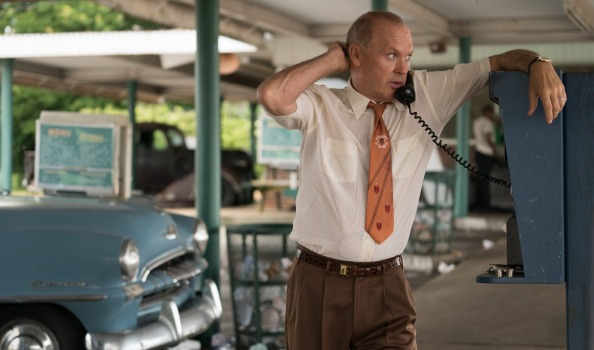
Rating: 8/10 – an underrated gem that could all too easily fail to atrract the attention it deserves, The Hollow Point benefits from a clutch of great performances, a tough, uncompromising script, and the careful ministrations of its director; it’s rare to see such a moderately budgeted project achieve so much and with such apparent ease, but this really is a movie that deserves a wider audience.

Share this:

  • Click to share on X (Opens in new window) X
  • Click to share on Facebook (Opens in new window) Facebook
  • More
  • Click to print (Opens in new window) Print
  • Click to email a link to a friend (Opens in new window) Email
Like Loading...

Xmas Classics – Christmas Evil (1980)

20 Tuesday Dec 2016

Posted by dullwood68 in Movies

≈ Leave a comment

Tags

Brandon Maggart, Drama, Horror, Jeffrey DeMunn, Jolly Dream, Lewis Jackson, Review, Santa Claus, Toy factory, Xmas, You Better Watch Out

christmas-evil-3a1

Original title: You Better Watch Out

D: Lewis Jackson / 100m

Cast: Brandon Maggart, Jeffrey DeMunn, Dianne Hull, Andy Fenwick, Brian Neville, Joe Jamrog

Xmas is a time for family – or so they say. If you’re young Harry Stadling, Xmas is a time for discovering that Santa Claus is actually your father playing dress-up and spending adult time with your mother rather than coming down the chimney and leaving presents for you and your brother, Philip. Disillusioned by this terrible discovery, Harry’s view on Xmas becomes twisted. As an adult, Harry (Maggart) spies on the children in his neighbourhood and makes notes on their behaviours in two large volumes: Good Boys and Girls 1980 and Bad Boys and Girls 1980. He works as a senior employee at a factory that makes children’s toys, but he’s tolerated more than respected, and one of the men who works the line, Frank Stoller (Jamrog), exploits his good nature. As Xmas approaches, Harry’s need to make people conform to his view of the importance of the Yuletide season – or his “tune” as he calls it – leads to his dressing up as Santa Claus on Xmas Eve and distributing presents.

Except, Harry’s plan doesn’t work out as he’d hoped. As well as handing out gifts for everyone at a children’s hospital, Harry finds himself handing out retribution to those who don’t share his love of Xmas, or respect how special it is. With his exploits attracting the attention of the police, Harry finds himself chased by a bloodthirsty mob who don’t take kindly to the “Xmas cheer” he’s dispensing. A narrow escape leads him to seek out his brother, but Philip (DeMunn) has his own issues surrounding Harry and the festive period, issues that mean a further escape for Harry, but not quite the one he’s looking for…

christmas-evil-1

Christmas Evil is not your typical slasher movie set at Xmas, and is vastly different from movies such as Black Christmas (1974) or Silent Night, Deadly Night (1984). For one thing, it takes its time in establishing the mental state of its central character, the emotionally detached Harry. This is very important to the overall storyline, as writer/director Jackson strives to make Harry a character the audience can at least have some sympathy with, and not regard as just some whack job intent on killing people for no reason (or because he got a present without any batteries, or a Barbie doll instead of Action Man). This means the movie gets off to a slow start, as Harry struggles to maintain an outward air of calm – as much as he can, at least – while everyone around him fails to recognise how important Xmas is to him.

Once the prologue set in 1947 is over with (and Harry’s childhood rejection of the Xmas myth is in place), the movie begins a few months before Xmas actually comes around. This again allows Jackson the time and space to show the gradual deterioration of Harry’s mental state, and the casual malice he endures both at work and closer to home through his brother, Philip. With Philip feeling obliged to look after Harry as well as his own family, there’s a tension and an animosity there that Harry feels deeply. At one point he watches from outside his brother’s home, and sees the perfect picture of a happy family at Xmas-time. Etched on Harry’s face is a mixture of dismay and envy that explains everything you need to know about Harry’s view on Xmas, and why he’s so torn by his feelings about it. He can’t quite reconcile the good with the bad, or the notion that there can’t be one without the other.

christmas_evil1

While Harry finds himself struggling to find a balance that will help him deal with his feelings, certain events conspire to push him towards more violent responses, including the offhand remarks of his bosses at the factory, and the (until then) suppressed need for revenge on Frank Stoller. It’s notable that for every bad thing that Harry does, he does an equally positive thing as well, and Jackson is clever enough to ensure – even if this is a “slasher” movie – that Harry’s predicament can’t be viewed in plain old black and white. He’s helped in large part by the performance of Maggart as Harry, a singular portrayal that is surprisingly nuanced beneath all the outer trappings of increasing mania and moral confusion. Maggart’s career is littered with television appearances (including an episode of ER in 1995 where he played a Santa Claus figure), and very few movies; this is his finest hour without a doubt. Imbuing Harry with a strangely affecting melancholy, and showing his descent into madness by reining in any possibility of histrionics, Maggart gives an intuitive, unforgettable performance, and Jackson is wise enough to give him the room to explore the character as fully as he can.

But while on the acting front this is Maggart’s movie, on the cinematography side it’s Argentinian DoP Ricardo Aronovich’s. Persuaded by Jackson to work on the movie, Aronovich’s sombre lighting design and tight close ups on Maggart’s face make for a claustrophobic, unnerving visual approach to the material. There are moments where he also creates a kind of chiaroscuro effect, particularly when Harry is being chased by the torch-wielding mob, the flames creating an odd halo effect that seems almost supernatural. His framing and spatial awareness is impressive too, making much of what takes place look and feel like the real world and not some composite assembled for yet another movie.

santas

In the end, Jackson’s commitment to his own script and the way in which it should be presented, pays off handsomely. At first glance, Christmas Evil looks like a hundred other gory slasher movies from the early Eighties, with their high body counts, splatter effects, and invincible killers. It also looks and feels like a low-budget slasher flick – Aronovich’s involvement notwithstanding – and it has a grimy, gloomy atmosphere that isn’t exactly an original approach. But as noted above, the movie takes its time before it provides its first kill, and it and all the subsequent kills are shot as cutaways, put together neatly and given a disturbing air by editors Corky O’Hara and Linda Leeds. These scenes have an almost sordid feel to them, thanks to the combination of mood and lighting, and Harry’s inability to quell his angry feelings.

There’s humour too, threaded throughout the movie, and like in any good, serious drama, it’s allowed to take centre stage on just the one occasion, when the police are trying to get witnesses to identify Harry from a line up of Santas. Otherwise, Jackson focuses on themes relating to family, loyalty, unmerited expectations, greed, and the endemic hypocrisy that the festive season seems to instill in everyone, where the phrase “goodwill to all men” really is just that: a phrase. There’s a sense that he’s tried to “keep it real”, and while he may not succeed in everything he’s attempted, he’s definitely got more right than he has wrong.

Rating: 8/10 – a superior horror thriller, featuring a great performance from Brandon Maggart, and a remarkably astute screenplay from its director, Christmas Evil is a much better movie than anyone could have ever expected (John Waters calls it “the greatest Christmas movie ever made”); as a portrait of one man’s struggle to make sense of his own conflicted feelings about the Yuletide season (and with a subtext of PTSD thrown in for good measure), it’s unexpectedly compelling, and makes good use of its Xmas backdrop, limited budget, and confident, measured pacing.

NOTE: The following trailer has French subtitles.

Share this:

  • Click to share on X (Opens in new window) X
  • Click to share on Facebook (Opens in new window) Facebook
  • More
  • Click to print (Opens in new window) Print
  • Click to email a link to a friend (Opens in new window) Email
Like Loading...
← Older posts
Newer posts →

Blog Stats

  • 492,263 hits

Recent Posts

  • 10 Reasons to Remember Bibi Andersson (1935-2019)
  • Fantasia (1940)
  • Dances With Wolves (1990) – The Special Edition
  • Kiss of the Spider Woman (1985)
  • The Three Musketeers (1973)

Top Posts & Pages

  • Lost for Life (2013)
    Lost for Life (2013)
  • "Science or no science, a girl's got to get her hair done" - 10 Female-centric Sci-fi Quotes from the 1950's
    "Science or no science, a girl's got to get her hair done" - 10 Female-centric Sci-fi Quotes from the 1950's
  • Cardboard Boxer (2016)
    Cardboard Boxer (2016)
  • Poster of the Week - Werewolf of London (1935)
    Poster of the Week - Werewolf of London (1935)
  • Mini-Review: Kill Your Darlings (2013)
    Mini-Review: Kill Your Darlings (2013)
  • Stray Bullet (2010)
    Stray Bullet (2010)
  • For One (Stretched) Week Only: Australian Cinema - Part V
    For One (Stretched) Week Only: Australian Cinema - Part V
  • Table 19 (2017)
    Table 19 (2017)
  • Carrie (2013)
    Carrie (2013)
  • The Human Centipede (First Sequence) (2009)
    The Human Centipede (First Sequence) (2009)
Follow thedullwoodexperiment on WordPress.com

Blogs I Follow

  • Rubbish Talk
  • Film 4 Fan
  • Fast Film Reviews
  • The Film Blog
  • All Things Movies UK
  • Interpreting the Stars
  • Let's Go To The Movies
  • Movie Reviews 101
  • TMI News
  • Dan the Man's Movie Reviews
  • Film History
  • Jordan and Eddie (The Movie Guys)

Archives

  • April 2019 (13)
  • March 2019 (28)
  • February 2019 (28)
  • January 2019 (32)
  • December 2018 (28)
  • November 2018 (30)
  • October 2018 (29)
  • September 2018 (29)
  • August 2018 (29)
  • July 2018 (30)
  • June 2018 (28)
  • May 2018 (24)
  • April 2018 (21)
  • March 2018 (31)
  • February 2018 (25)
  • January 2018 (30)
  • December 2017 (30)
  • November 2017 (27)
  • October 2017 (27)
  • September 2017 (26)
  • August 2017 (32)
  • July 2017 (32)
  • June 2017 (30)
  • May 2017 (29)
  • April 2017 (29)
  • March 2017 (30)
  • February 2017 (27)
  • January 2017 (32)
  • December 2016 (30)
  • November 2016 (28)
  • October 2016 (30)
  • September 2016 (27)
  • August 2016 (30)
  • July 2016 (30)
  • June 2016 (31)
  • May 2016 (34)
  • April 2016 (30)
  • March 2016 (30)
  • February 2016 (28)
  • January 2016 (35)
  • December 2015 (34)
  • November 2015 (31)
  • October 2015 (31)
  • September 2015 (34)
  • August 2015 (31)
  • July 2015 (33)
  • June 2015 (12)
  • May 2015 (31)
  • April 2015 (32)
  • March 2015 (30)
  • February 2015 (37)
  • January 2015 (39)
  • December 2014 (34)
  • November 2014 (34)
  • October 2014 (36)
  • September 2014 (25)
  • August 2014 (29)
  • July 2014 (29)
  • June 2014 (28)
  • May 2014 (23)
  • April 2014 (21)
  • March 2014 (42)
  • February 2014 (38)
  • January 2014 (29)
  • December 2013 (28)
  • November 2013 (34)
  • October 2013 (4)

Blog at WordPress.com.

Rubbish Talk

Film 4 Fan

A Movie Blog

Fast Film Reviews

The Film Blog

The official blog of everything in film

All Things Movies UK

Movie Reviews and Original Articles

Interpreting the Stars

Dave Examines Movies

Let's Go To The Movies

Film and Theatre Lover!

Movie Reviews 101

Daily Movie Reviews

TMI News

Latest weather, crime and breaking news

Dan the Man's Movie Reviews

All my aimless thoughts, ideas, and ramblings, all packed into one site!

Film History

Telling the story of film

Jordan and Eddie (The Movie Guys)

Movie Reviews & Ramblings from an Australian Based Film Fan

Privacy & Cookies: This site uses cookies. By continuing to use this website, you agree to their use.
To find out more, including how to control cookies, see here: Cookie Policy
  • Subscribe Subscribed
    • thedullwoodexperiment
    • Join 481 other subscribers
    • Already have a WordPress.com account? Log in now.
    • thedullwoodexperiment
    • Subscribe Subscribed
    • Sign up
    • Log in
    • Report this content
    • View site in Reader
    • Manage subscriptions
    • Collapse this bar
 

Loading Comments...
 

    %d