• 10 Reasons to Remember…
  • A Brief Word About…
  • About
  • For One Week Only
  • Happy Birthday
  • Monthly Roundup
  • Old-Time Crime
  • Other Posts
  • Poster of the Week
  • Question of the Week
  • Reviews
  • Trailers

thedullwoodexperiment

~ Viewing movies in a different light

thedullwoodexperiment

Tag Archives: Movies

Happy Birthday – Rebecca Hall

03 Tuesday May 2016

Posted by dullwood68 in Movies

≈ Leave a comment

Tags

A Promise, Actress, Career, Everything Must Go, Frost/Nixon, Iron Man 3, Movies, Vicky Cristina Barcelona

Rebecca Hall (3 May 1982 -)

Rebecca Hall

With her tall, slim frame and features that can appear both angled and smooth, Rebecca Hall – daughter of renowned English theatre director Sir Peter Hall – has made a career out of playing strong-willed yet vulnerable women, and in a variety of genres. She made her debut in the TV series The Camomile Lawn (1992), but it wasn’t until 2006 that she made her debut on the big screen in Starter for 10. Since then she’s worked solidly, releasing two or three movies each year, and working with directors of the calibre of Christopher Nolan, Ron Howard, Patrice Leconte, and Woody Allen. She’s often a reassuring presence in her movies, providing audiences with a sympathetic character to relate to and root for. She once said that she “always look[s] for contradiction in a character”, and this shows in her choice of roles over the years, even in something as unsuccessful as Lay the Favorite (2012). Later this year she can be seen in Steven Spielberg’s The BFG, yet another high-profile movie that sits comfortably within the mix of Hollywood and indie movies that make up her career so far. Before then, it’s worth checking out the five movies listed below, all of which feature Hall giving strong, impressive performances.

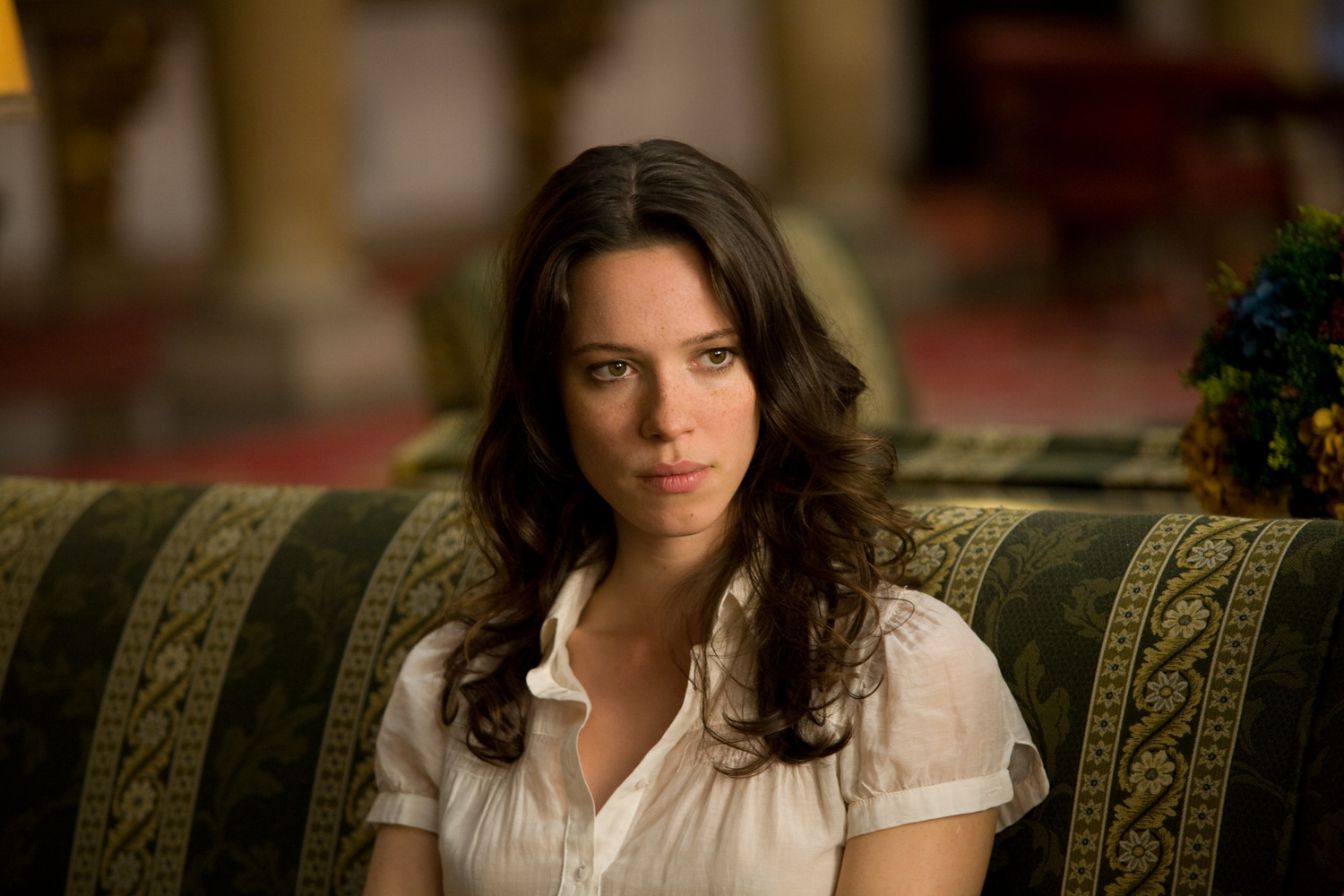
Vicky Cristina Barcelona (2008) – Character: Vicky

RH - VCB

In Woody Allen’s romantic comedy/drama, Hall is the practical friend to Scarlett Johansson’s more extrovert Cristina, but while she appears to be more strait-laced in comparison, it’s Vicky that falls for Javier Bardem’s lusty artist, Juan Antonio. Hall gives a layered, intelligent performance that allows the audience to believe that Vicky could be so certain about her future, and yet so unsure once she meets Juan Antonio, and the feelings of confusion and remorse she exhibits in the wake of their affair. Juggling these feelings with the need to appear satisfied and content with her recent marriage, Hall ensures Vicky is a recognisable and understandable character, and one that you feel you could probably get to know very well in real life.

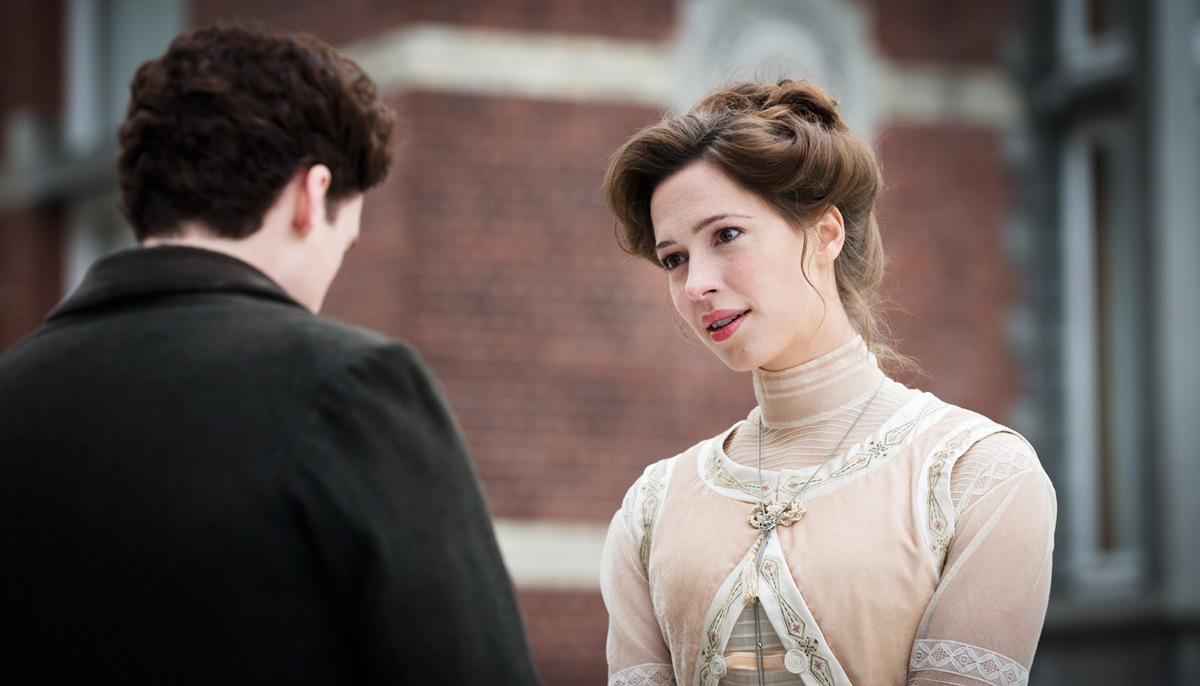
A Promise (2013) – Character: Charlotte “Lotte” Hoffmeister

RH - AP

A period drama set in Germany in 1912 – and directed by Patrice Leconte – A Promise features Hall as the young wife of an aging tycoon (played by Alan Rickman) who falls in love with an engineer (played by Richard Madden) who works for her husband. It’s a tale of unrequited love on both sides, adapted from a novel by Stefan Zweig, and features a beautifully constructed and affecting performance from Hall that is a pleasure to watch. As Lotte struggles against her ingrained sense of duty, Hall shows the personal sacrifice she has to make in order to retain her own sense of self-worth, until circumstances (namely, World War I) intrude and make her efforts seem ill-advised.

Frost/Nixon (2008) – Character: Caroline Cushing

RH - F:N

As the new girlfriend of David Frost (played by Michael Sheen), Hall’s character finds herself involved in the tense run-up to Frost’s televised interviews with disgraced US President Richard Nixon (played by Frank Langella). (In reality, Cushing and Frost had been together for five years at this point.) Hall has a supporting role here, and isn’t on screen for much of the movie’s running time, but when she is she still grabs the viewer’s attention, and there’s an obvious chemistry between Hall and Sheen that adds to the dynamic of Cushing and Frost’s relationship.

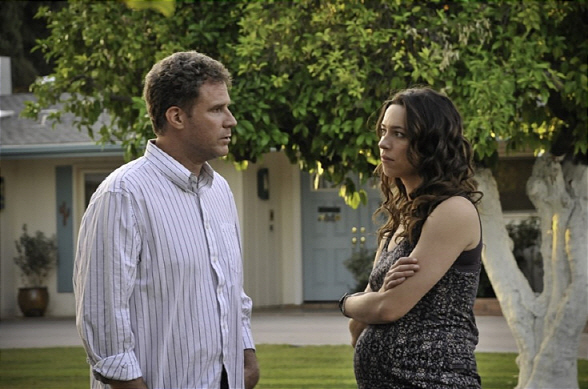
Everything Must Go (2010) – Character: Samantha

RH - EMG

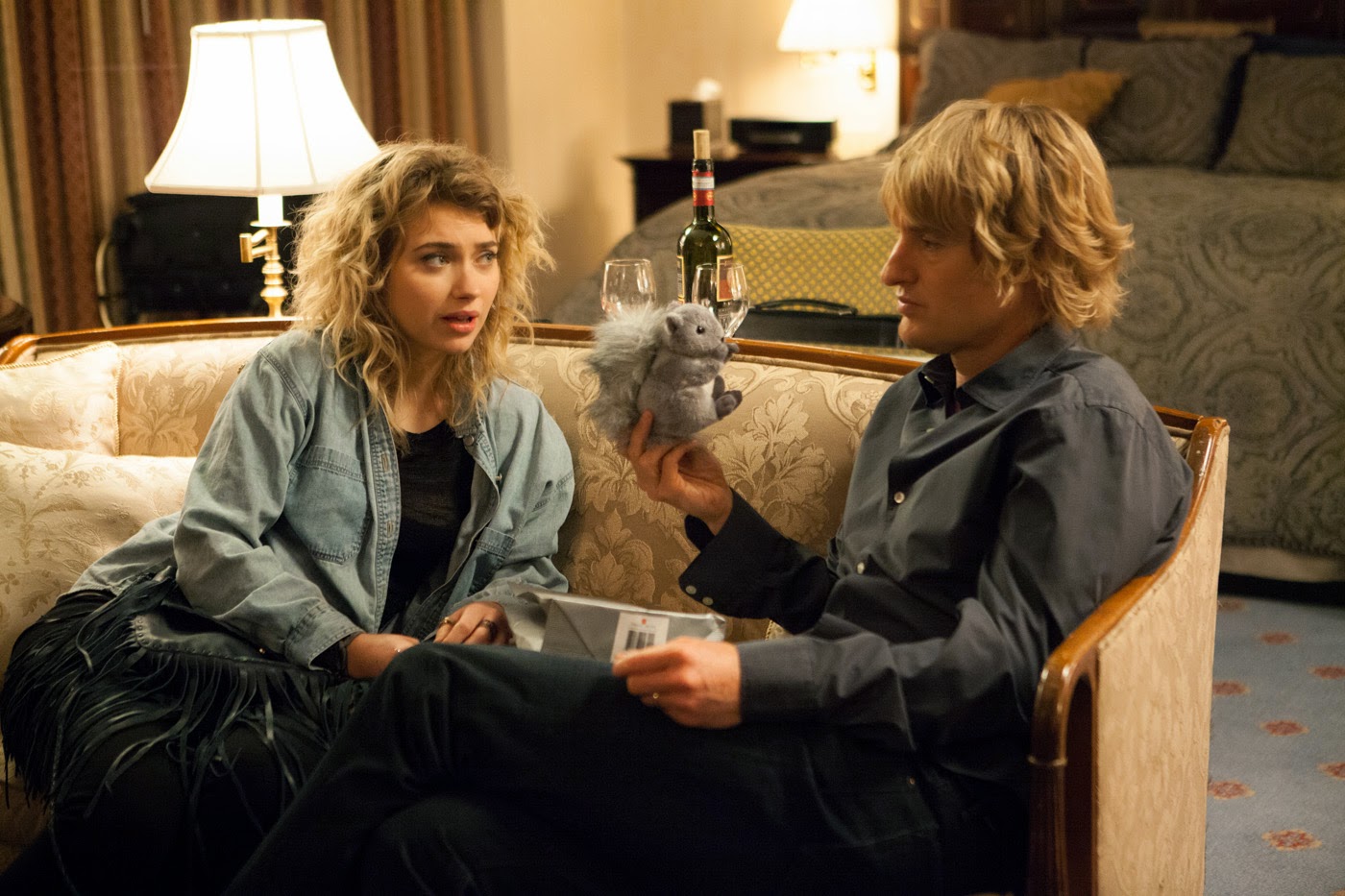
Although Everything Must Go is very much Will Ferrell’s movie, Hall once again shows she can match anyone when it comes to giving a natural, honest performance, and she does so here effortlessly, playing a pregnant, put-upon neighbour who does her best to help Ferrell’s depressed, alcoholic ex-salesman get over the loss of his job and his wife, and despite having enough problems of her own. It’s a surprisingly substantial role, and Hall teases out every nuance and shading of the character, making Samantha a much more rounded (and grounded) person than may be expected, and entirely sympathetic to boot.

Iron Man 3 (2013) – Character: Maya Hansen

RH - IM3

Hall once said, “One of the great things about the ‘Iron Man‘ franchise is that they employ fascinating actors who don’t necessarily do action movies.” Well, Hall is certainly a fascinating actor, and as the geneticist whose work ultimately is used for immoral and illegal purposes by Guy Pearce’s chief villain, she adds another string to her bow by appearing in the Marvel Cinematic Universe. She still gives her role due sincerity, and makes Hansen as credible as any other character she’s played. It’s a tribute to Hall that she doesn’t look or feel out of place in an Iron Man movie; a shame then that her character probably won’t be returning any time soon.

Share this:

  • Click to share on X (Opens in new window) X
  • Click to share on Facebook (Opens in new window) Facebook
  • More
  • Click to print (Opens in new window) Print
  • Click to email a link to a friend (Opens in new window) Email
Like Loading...

Trailers – Special Correspondents (2016), The Founder (2016) and Blood Father (2016)

26 Tuesday Apr 2016

Posted by dullwood68 in Movies

≈ 2 Comments

Tags

Comedy, Drama, McDonalds, Mel Gibson, Michael Keaton, Movies, Previews, Ricky Gervais, Thriller, Trailers, True story

Netflix adds another movie to its distribution roster with the latest from Ricky Gervais, a satirical look at at a journalist (played by Eric Bana) and his sound man (Gervais) who find themselves covering a civil war in Ecuador… from the safety of an apartment in New York. Adapted by Gervais from the 2009 French comedy Envoyés très spéciaux, the movie had its premiere at the Tribeca Film Festival and will be released worldwide on 29 April, but from the trailer it’s hard to tell if the movie is going to be as funny or as satirical as Gervais intended, and largely because the trailer’s pretty much a laugh-free zone. Gervais’s big screen projects haven’t exactly set the box office on fire in the past, and advance word isn’t very positive, so it’s likely that Special Correspondents will disappear just as “effectively” as Bana and Gervais’ characters do in the movie.


The true story of Ray Kroc’s acquistion of the McDonalds chain over the course of the late Fifties/early Sixties, The Founder looks to be a pull-no-punches examination of how Kroc outmanoeuvred the McDonald brothers (played by Nick Offerman and John Carroll Lynch), and gained control of what has become one of the world’s largest and most successful franchises. As Kroc, Michael Keaton has landed yet another role likely to reward him with a slew of awards nominations, while the recreation of the period looks to be spot on. This has the potential to be an unexpected hit at the box office, partly due to the nostalgia on offer, and partly because in the current US social and political climate, a tale of how the American dream was usurped and bent to someone else’s needs seems all too relevant.


Tough and moody, with a brutal streak running through it a mile wide, Mel Gibson’s latest foray in front of the cameras sees him playing an ex-con who’s forced to protect his estranged daughter (played by Erin Moriarty) from the drug dealers bent on killing her. Blood Father has an exploitation movie vibe to it, allied to strong visuals, as well as a pleasing sense that Gibson is playing a role more attuned to his work in the first two Lethal Weapon movies rather than the cartoon-oriented variations of the third and fourth. With an intriguing supporting cast on board – William H. Macy, Diego Luna, Elisabeth Röhm, Dale Dickey – this latest from the director of Mesrine Parts 1 & 2 (2008) could be another redeeming feature in Gibson’s post-meltdown career.

Share this:

  • Click to share on X (Opens in new window) X
  • Click to share on Facebook (Opens in new window) Facebook
  • More
  • Click to print (Opens in new window) Print
  • Click to email a link to a friend (Opens in new window) Email
Like Loading...

10 Reasons to Remember Guy Hamilton (1922-2016)

22 Friday Apr 2016

Posted by dullwood68 in Movies

≈ 3 Comments

Tags

Career, Director, Guy Hamilton, James Bond, Movies

Guy Hamilton (16 September 1922 – 20 April 2016)

Guy Hamilton

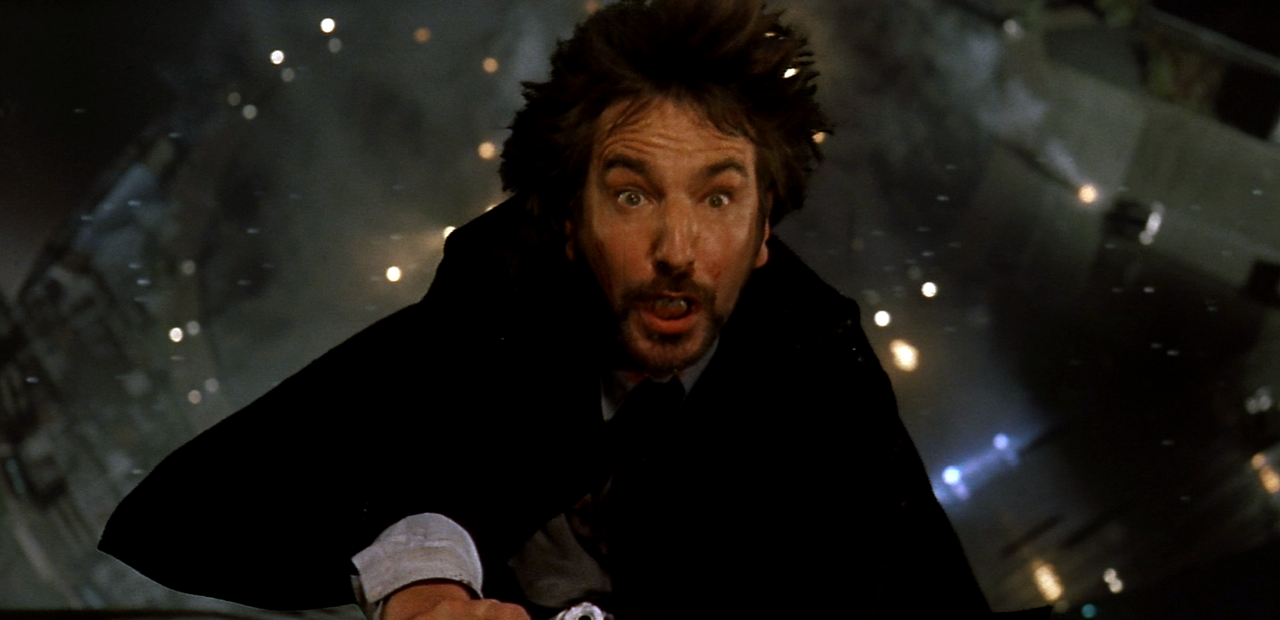
Like so many of his contemporaries, Guy Hamilton got into movie making in the wake of World War II. He started off as an assistant director on They Made Me a Criminal (1947) and continued in that role for the next five years, honing his craft working with directors such as Carol Reed and John Huston. In 1952 he took the plunge into direction with The Ringer, a low-key thriller starring Herbert Lom and Donald Wolfit. He continued to work steadily through the Fifties until he got the call to work on a spy movie called Goldfinger (1964). It was to be the first of four Bond outings that Hamilton would direct – the others were Diamonds Are Forever (1971), Live and Let Die (1973), and The Man With the Golden Gun (1974) – but it was also the first to fully establish the Bond template. The gritty seriousness of the first two movies was replaced with a more carefree, fantasy-lite approach that has been the hallmark of the series up until the arrival of Daniel Craig.

Goldfinger‘s success allowed Hamilton to make the movies he wanted to make, but his career was always sporadic, with periods where he seemed semi-retired. Late on he flirted with Agatha Christie, but by the mid-Eighties his career was winding down, and he made his last movie, the rarely seen Try This One for Size, in 1989. Hamilton was an urbane, intelligent movie director who was able to adapt his directorial style to the material at hand, getting the most out of it, and rarely failing to entertain the audience. And in relation to James Bond, he once made this very perceptive (at the time) comment: “One of the rules with the Bond pictures is that you’re not allowed to have a leading lady who can act – because we can’t afford them….If ever we were to have a real leading lady, the next time around we’d have to find another one. And in no time at all we’d have to have, oh, Jane Fonda for $2 million and up.”

The Intruder

1 – The Intruder (1953)

2 – An Inspector Calls (1954)

3 – The Colditz Story (1955)

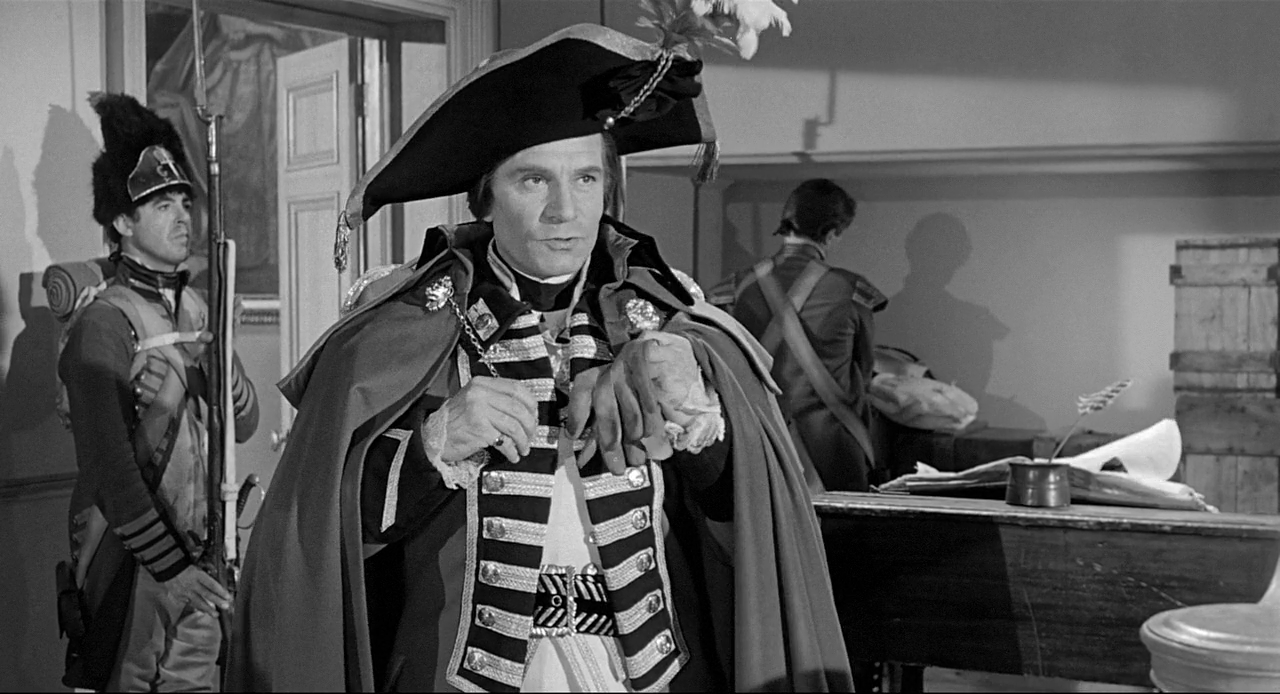
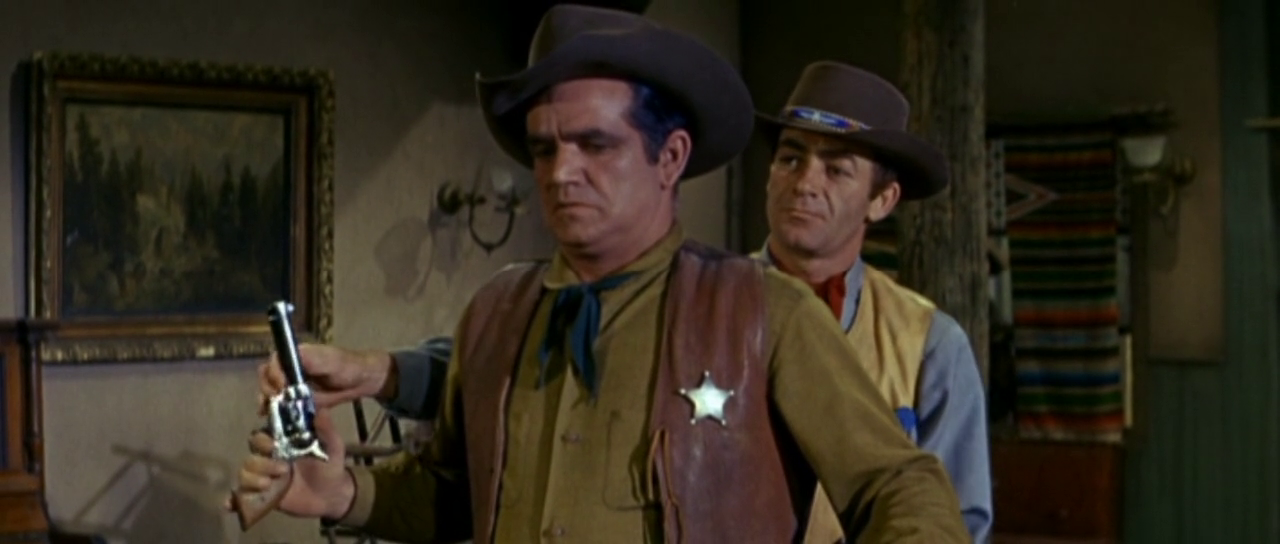
4 – The Devil’s Disciple (1959)

The Devil's Disciple

5 – Goldfinger (1964)

6 – Funeral in Berlin (1966)

7 – Battle of Britain (1969)

Battle of Britain

8 – Live and Let Die (1973)

9 – Evil Under the Sun (1982)

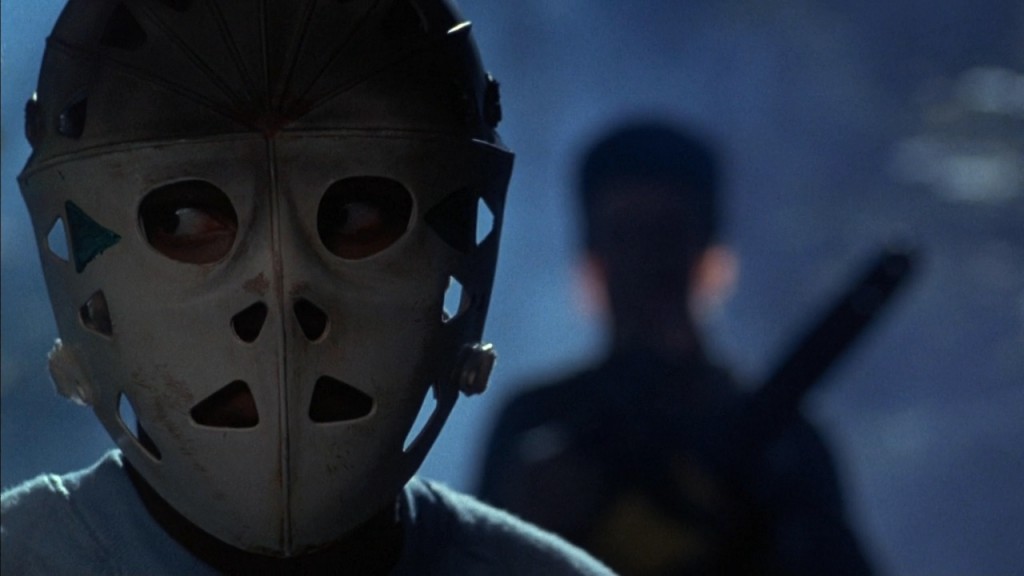
10 – Remo Williams: The Adventure Begins… (1985)

Remo Williams

Share this:

  • Click to share on X (Opens in new window) X
  • Click to share on Facebook (Opens in new window) Facebook
  • More
  • Click to print (Opens in new window) Print
  • Click to email a link to a friend (Opens in new window) Email
Like Loading...

Happy Birthday – Sean Bean

17 Sunday Apr 2016

Posted by dullwood68 in Movies

≈ Leave a comment

Tags

Actor, Anna Karenina (1997), Birthday, Far North, Movies, North Country, Sean Bean, The Field, Tom & Thomas

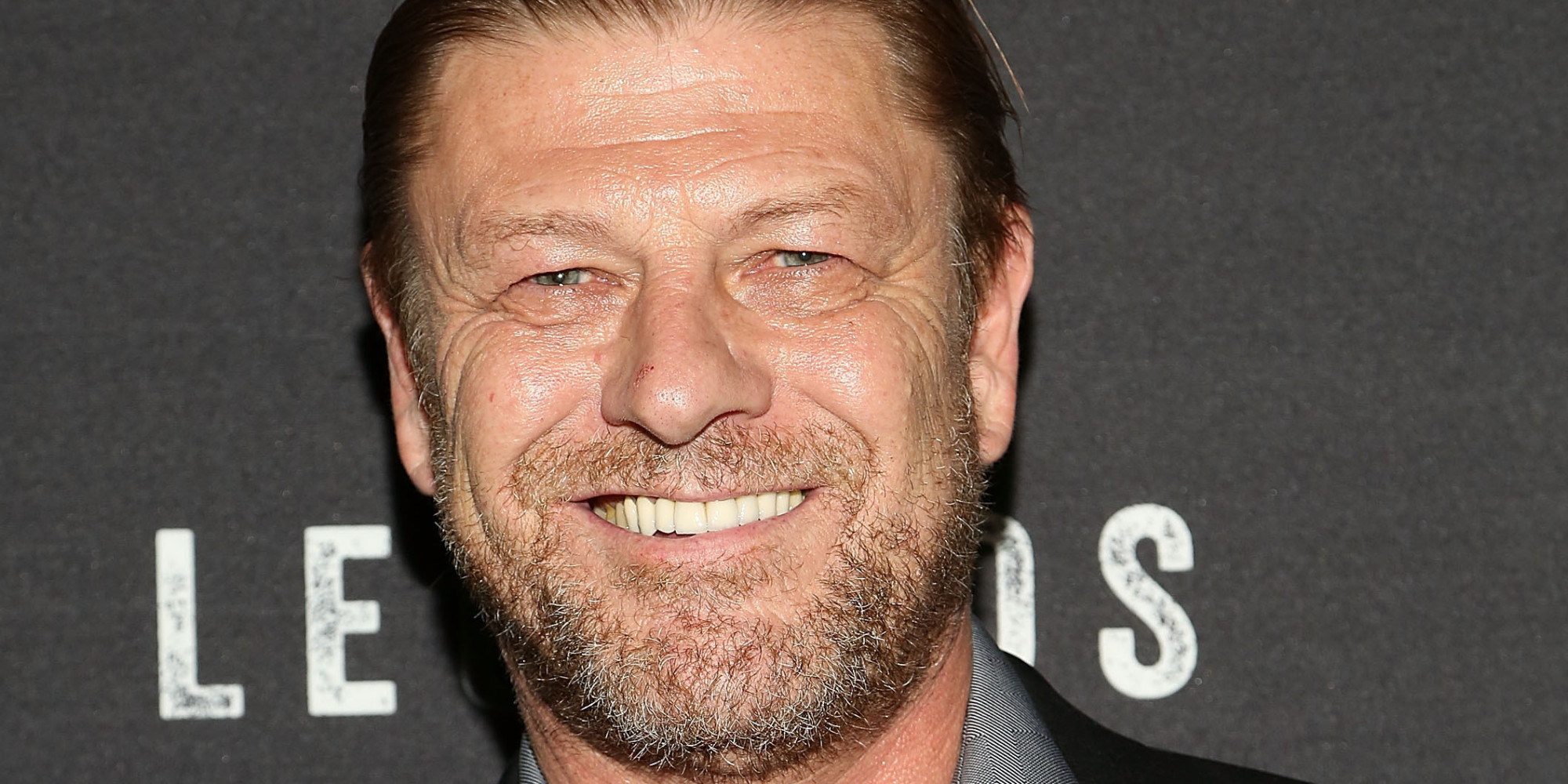
Sean Bean (17 April 1959 -)

"Legends" Series Premiere

An actor with a wider range than most people give him credit for, Sean Bean is also one of the most consistently reliable actors working today. He may be well known for his more villainous roles – which, admittedly, he’s very good at playing – but since playing Boromir in The Lord of the Rings: The Fellowship of the Ring (2001), his career has become more varied and (no doubt for him as well as us) more rewarding. His tough, uncompromising demeanour belies a man who listens to classical music when he’s preparing for a scene, and who is still a fervent supporter of Sheffield United football club. He made his feature debut in Winter Flight (1984), and since then has amassed over a hundred credits in both the movies and on TV, including appearances in Lady Chatterley (1993), the Sharpe series of TV movies, and more recently, season one of Game of Thrones (2011). On the big screen he’s a familiar face who brings a certain degree of gravelly sincerity to his roles. Here then are five Sean Bean movies that feature some of his more under-appreciated portrayals… and where his character doesn’t get killed.

Tom & Thomas (2002) – Character: Paul Sheppard

SB - T&T

A rarely seen children’s movie, Tom & Thomas sees Bean play the adoptive father of one of a set of twin boys (both played by Aaron Johnson, now better known as Aaron Taylor-Johnson). Once they meet, the other twin’s involvement with a group of child smugglers sets the pair off on a great adventure. It’s an enjoyable, unassuming movie, and it’s good to see Bean making the most of such a different role from the ones he’d been used to up until then.

Anna Karenina (1997) – Character: Count Alexei Kirillovitch Vronsky

02-00233935 - 1210501

Unfairly dismissed by critics upon release, Bernard Rose’s Russian-shot (and badly cut by the studio) version of Anna Karenina certainly has its problems in the script department, but remains a beautifully realised production of Tolstoy’s classic novel, with superb use of music by Tchaikovsky and Rachmaninov. Bean is a convincing, dashing Vronsky, and his scenes with Sophie Marceau are impeccable for the way in which both actors portray the overwhelming passion their characters feel for each other.

North Country (2005) – Character: Kyle Dodge

SB - NC

Bean takes a supporting role in another movie that broadens his career CV, playing the good friend of Josey Aimes (Charlize Theron) who brings a class action suit for sexual harassment against the owners of an iron mine. Based on a true story, Niki Caro’s movie is eloquent, passionate, and inspiring, and Bean fits in well as one of the few men in Josey’s life who aren’t either sexist scumbags or manipulative, uncaring “primitives”.

Far North (2007) – Character: Loki

SB - FN

In this strange and haunting tale set in the arctic tundra, Bean plays a man whose sudden interjection into the lives of a mother and daughter leads to both unexpected passion and forecasted tragedy. Kapadia’s last feature until this year’s Ali and Nino, Far North is a tough, uncompromising movie made against some stunning backdrops and giving Bean the chance to reveal a less macho side to his acting.

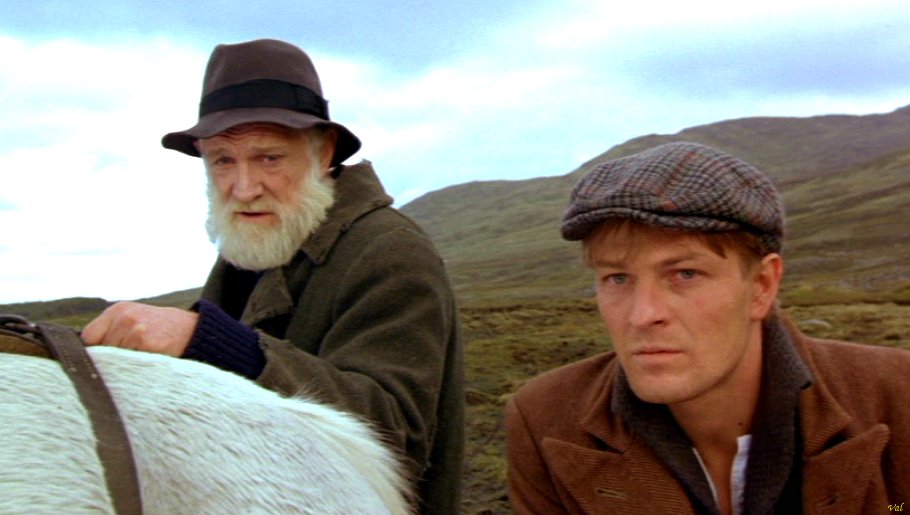
The Field (1990) – Character: Tadgh McCabe

SB - TF

Although it was a commercial failure, The Field still has a good reputation amongst movie lovers, thanks in the main to Richard Harris’s performance as Bull McCabe, but there are other positives as well, such as Bean’s stalwart turn as Bull’s son. It’s a powerful portrayal of a son unwilling (or unable) to meet his father’s expectations of him. It’s a movie where tragedy is just waiting to happen, and where pride is the instigator of that tragedy, and in the hands of writer/director Jim Sheridan, packs such an emotional punch you’ll be bruised for days after seeing it.

Share this:

  • Click to share on X (Opens in new window) X
  • Click to share on Facebook (Opens in new window) Facebook
  • More
  • Click to print (Opens in new window) Print
  • Click to email a link to a friend (Opens in new window) Email
Like Loading...

10 Movies That Are 40 Years Old This Year – 2016

15 Friday Apr 2016

Posted by dullwood68 in Movies

≈ 1 Comment

Tags

1900, 1976, All the President's Men, Fellini's Casanova, In the Realm of the Senses, Kings of the Road, Movies, Network, Robin and Marian, Rocky, Taxi Driver, The Killing of a Chinese Bookie

1976 was a slightly odd year for movies. There were enough instant classics to help compile this list, but it wasn’t a banner year, and it passed by without too much yelling from the rooftops about this movie or that movie. After the excellent year that was 1975 (itself following on from an even more impressive 1974), 1976 was a year where the movies that were released seemed a little below par. It was almost as if movie makers around the globe – with the exception of those mentioned below – were off their game, or that there weren’t enough original ideas going around for anyone to get a hold of and make something of them. But the ten movies listed here were successful, and fully deserving of all the accolades and critical acclaim (if not the box office success that some missed out on) that came their way. It’s a tribute to the movies themselves, and to their makers, that we’re still talking about them today.

1) Rocky – It was the movie that made Sylvester Stallone a star, and introduced us to a character who has endured several sequels, and in 2015, enjoyed something of a renaissance. Rocky Balboa is a terrific creation, and Stallone understood him completely, bringing a degree of gravitas to the role that is still effective when viewed forty years on. Future incarnations may have tarnished Stallone’s original interpretation, but the movie itself is a wonderful tribute to the idea that even the most average of people can achieve greatness if they work hard enough and believe in themselves.

Rocky

2) Taxi Driver – Known more for its “You talkin’ to me?” moment than anything else these days, Martin Scorsese’s harsh, uncompromising look at one man’s mental deterioration in the face of overwhelming moral and political corruption is one of the most jarring and breathtaking movies ever made. There’s a crude energy to the movie that makes De Niro’s incredible performance all the more uncompromising, but while he’s the movie’s central focus, let’s not forget the superb supporting performances from the likes of Cybill Shepherd, Jodie Foster, and Albert Brooks, and .

3) In the Realm of the Senses – More controversy, as Japanese director Nagisa Ôshima explores the true story of Sada Abe, whose affair with her master became all-consuming, and which led to a terrible act of violence. The controversy here was the explicit sex performed by actors Tatsuya Fuji (the master) and Eiko Matsuda (Abe), but this isn’t an erotic movie by any standards, thanks to an exemplary script by Ôshima that focuses on the couple’s relationship and the overwhelming emotions that developed as a result of their affair. That said, the movie does have its lurid moments, but these are offset by Ôshima’s refusal to judge either character, and thanks to two very committed performances by Fuji and Matsuda.

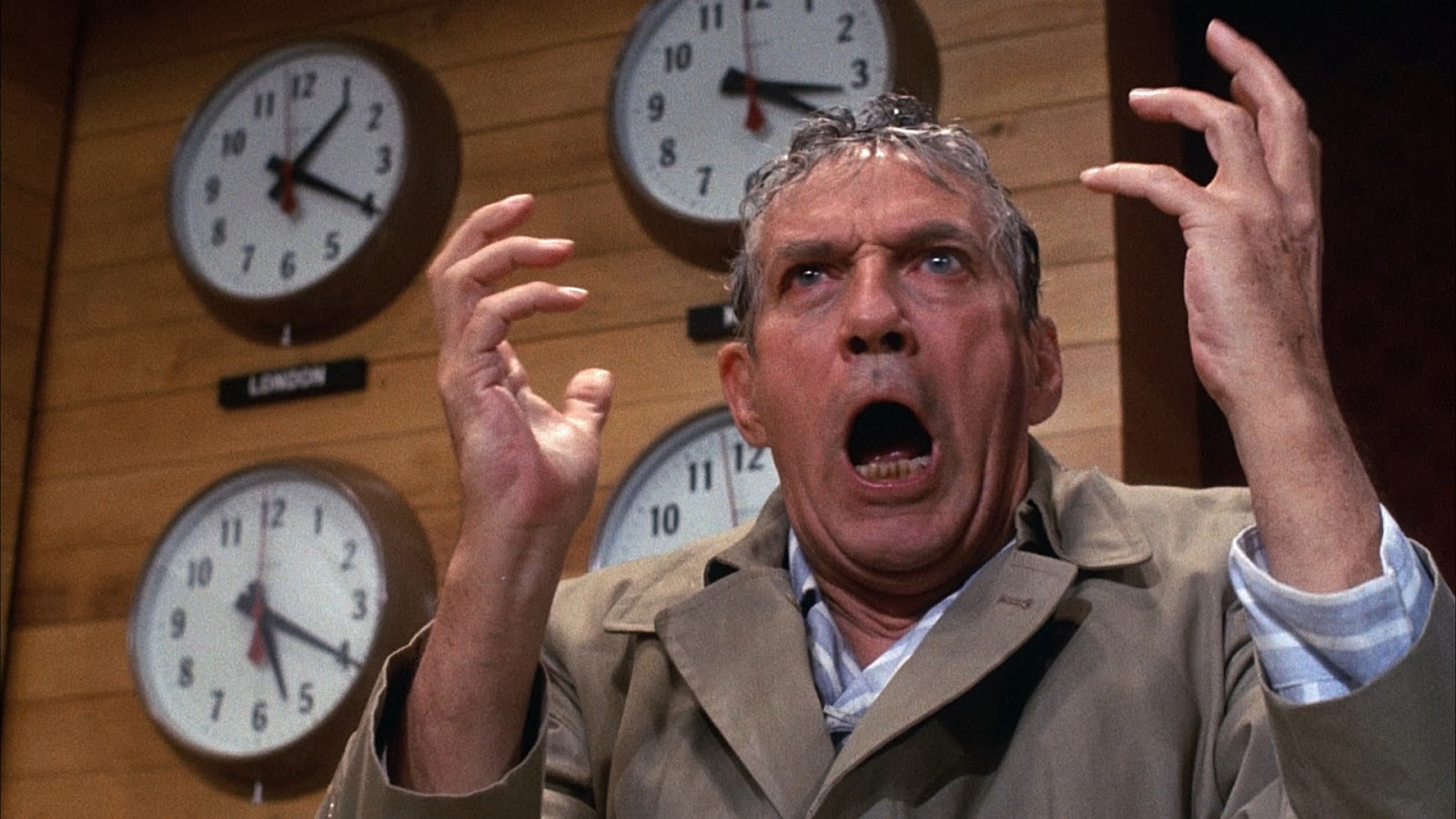
4) Network – The movie that saw Peter Finch win a posthumous Oscar for his portrayal of a newsreader who famously declares that he’s “mad as hell, and [he’s] not going to take this anymore”, Network is much more than a glimpse into one man’s mental unravelling, but a stinging satire on the nature of news gathering and the lengths some organisations will go to in exploiting their staff for financial gain. Packed with enough cynicism to stop a herd of charging elephants, Paddy Chayefsky’s script (also an Oscar winner) is one of the most intelligent, gripping and perceptive ever written, and Sidney Lumet’s direction teases out every nuance.

Network

5) All the President’s Men – William Goldman is the scribe responsible for the saying, “In Hollywood, nobody knows anything”. But in adapting Carl Bernstein and Bob Woodward’s riveting account of Richard Nixon’s fall from grace through the Watergate affair, Goldman shows he knows exactly what he’s doing, and the result is a political thriller that grabs its audience from the beginning and doesn’t let go for the next two and a quarter hours. Even though we all know the outcome, and from this point in time the depth of Nixon’s involvement, it’s still an incredible journey that the movie takes us on. The only question that remains unanswered is why Bernstein has a bicycle wheel at the side of his desk all the time.

6) 1900 – Bernardo Bertolucci’s epic, five hours plus look at the social and political upheaval in early 20th century Italy that saw fascism give way to communism, and as seen through the eyes of two friends – Gérard Depardieu, Robert De Niro – from opposite sides of the class divide. Beautifully shot by Vittorio Storraro and spanning over forty years, Bertolucci’s confidence in the material and his cast provides the viewer with some of the most breathtaking moments in world cinema (or just cinema as a whole). Unfairly mistreated since its release – several edited versions have been more available than the original cut – this is richly rewarding and a movie that never fails to excite, stimulate and inspire.

7) Robin and Marian – A somewhat dour but compelling addition to the Robin Hood myth sees Sean Connery’s older, wiser Robin returning from the Crusades to woo Audrey Hepburn’s Maid Marian one last time. It’s a bittersweet affair, a jaded yet moving romance set against the backdrop of Robin’s desire to retire the legend that’s built up around him, but which no one wants to see come to an end. It’s another movie that’s been beautifully shot, this time by David Watkin, and features an eloquent score by John Barry that is actually one of his very best, and for those patient enough to wait for it, features one of the best sword fights ever committed to the big screen.

Robin and Marian

8) The Killing of a Chinese Bookie – The kind of indie crime drama that no one makes anymore, John Cassavetes’ superb examination of an inveterate gambler’s addiction getting him into serious trouble with the Mob is a masterclass in dramatic tension. As the gambler in question, Ben Gazzara gives a career best performance, but this is Cassavetes’ movie through and through, as he explores notions of masculinity and pride through the actions of one of life’s continual losers, and structures the movie in such a way that you’re never sure if everything is happening for real or in some fever dream that Gazzara’s character is having.

9) Fellini’s Casanova – Only Fellini could have made a movie about the world’s most famous seducer of women and made it equally about the era that defined him, a time of opulence and unfettered greed. Against this backdrop, Fellini paints a compelling portrait of a Renaissance man who doesn’t fit in unless he’s bedding women as a way of warding off his own lack of self-confidence, and to maintain his “reputation”. Fellini directs in a fantastical, scattershot, self-aggrandising manner that reflects the material, and as the grand seducer, Donald Sutherland gives one of his best performances. Unfairly dismissed by US critics on release, this is now regarded as one of the best of Fellini’s later works, and deserves to be more widely available as well.

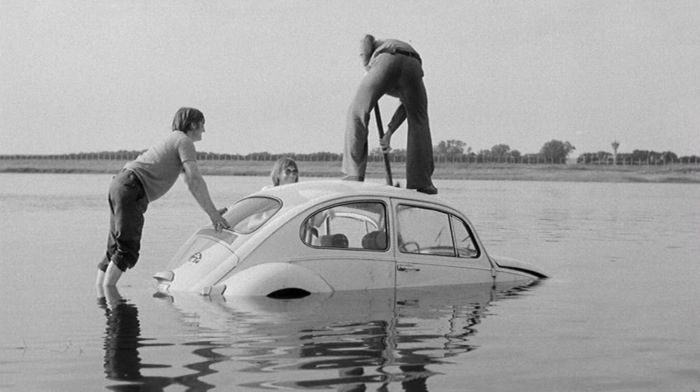
10) Kings of the Road – With standout performances from Rüdiger Vogler and Hanns Zischler as the two men who decide to travel together around Germany, Wim Wenders’ melancholic musings on loneliness and acceptance, combined with a visual austerity to match their emotional obduracy, is one of the finest German made movies of the Seventies. A road trip that also acts as an exploration of a country still coming to terms with the Second World War, this is a movie that has a surprising amount of heart beneath its drab exterior, and despite its length (nearly three hours) compels the viewer to see how it all works out.

Kings of the Road

Share this:

  • Click to share on X (Opens in new window) X
  • Click to share on Facebook (Opens in new window) Facebook
  • More
  • Click to print (Opens in new window) Print
  • Click to email a link to a friend (Opens in new window) Email
Like Loading...

Monthly Roundup – March 2016

31 Thursday Mar 2016

Posted by dullwood68 in Movies

≈ Leave a comment

Tags

Andy Mikita, Australia, Comedy, Cricket, Crime, Death of a Gentleman, Deathgasm, Devil worship, Disaster, Documentary, Drama, Ed Cowan, Edgar Ramirez, Ericson Core, Extreme Sports, FBI, Fred Durst, Horror, Ice Hockey, India, James Blake, Jarrod Kimber, Jason Bourque, Jeremy Sisto, Johnny Blank, Luke Bracey, Michael Shanks, Michelle MacLaren, Milo Cawthorne, Movies, Mr. Hockey: The Gordie Howe Story, Murder, Paul Johansson, Point Break (2015), Population / 436, Ray Winstone, Religion, Remake, Reviews, Robbery, Rockwell Falls, Sam Collins, Sci-fi, Sebastian Spence, Sports, Stonados, SyFy, Test match cricket, Twenty 20, Water spouts

Deathgasm (2015) / D: Jason Lei Howden / 86m

Cast: Milo Cawthorne, James Blake, Kimberley Crossman, Sam Berkley, Daniel Cresswell, Delaney Tabron, Stephen Ure, Andrew Laing, Colin Moy, Jodie Rimmer

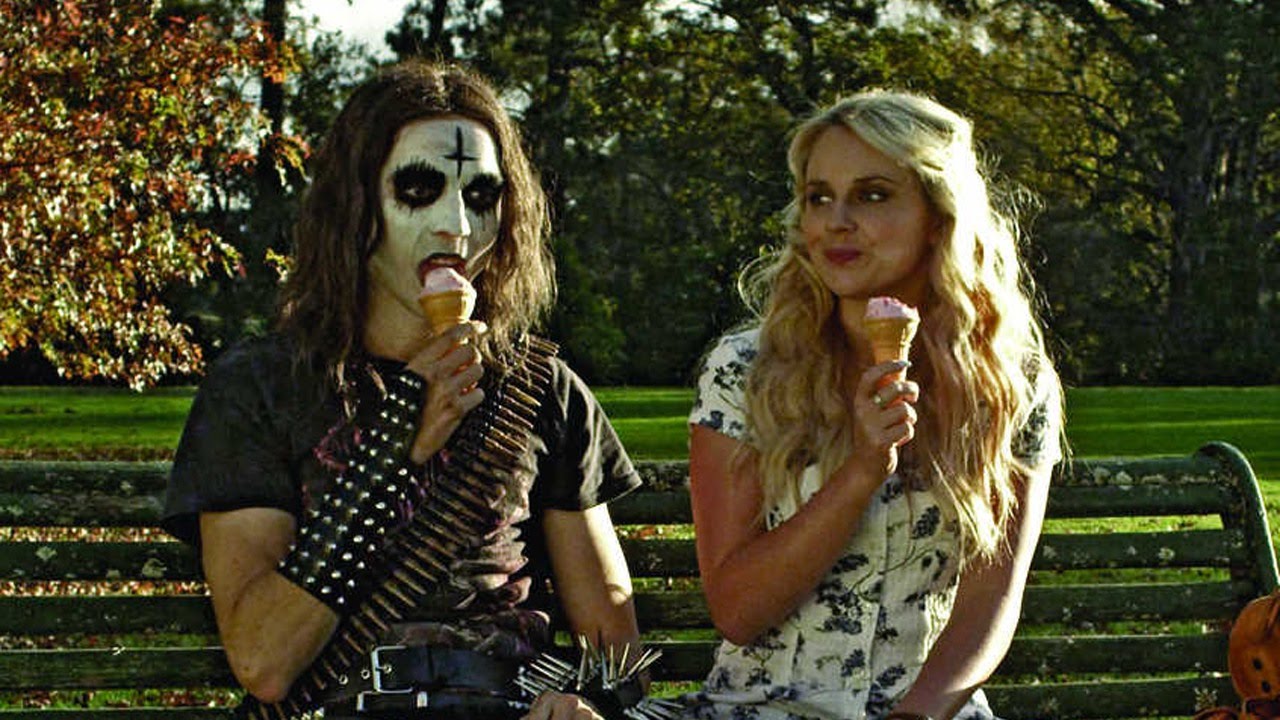
Deathgasm

Rating: 7/10 – when a teenage wannabe death metal band come into possession of sheet music that, when played, summons a demon called the Blind One, it’s up to them to stop both a zombie outbreak and the Blind One from destroying the world; raucous, rough around the edges, and with a liberal approach to gore, Deathgasm is a good-natured horror comedy that stumbles on occasion but, luckily, never loses sight of its simple brief: to be loud, dumb and lots of fun.

Mr. Hockey: The Gordie Howe Story (2013) / D: Andy Mikita / 87m

Cast: Michael Shanks, Kathleen Robertson, Dylan Playfair, Andrew Herr, Emma Grabinsky, Martin Cummins, Andrew Kavadas, Teach Grant, Ali Tataryn, Lochlyn Munro, Tom Anniko, Donnelly Rhodes, Erik J. Berg

HANDOUT PHOTO; ONE TIME USE ONLY; NO ARCHIVES; NOTFORRESALE Actor Michael Shanks as Gordie Howe is shown in a scene from the film "Mr.Hockey:The Gordie Howe Story," airing on CBC-TV on Sunday. THE CANADIAN PRESS/HO -CBC-Allen Fraser

Rating: 6/10 – the true story of ice hockey legend Gordie Howe who, after retiring in 1971, came back two years later and played not only with his two sons but in a new league altogether – and maintained his winning ways; looking like a strange hybrid of TV movie and abandoned big screen project, Mr. Hockey: The Gordie Howe Story does its best to avoid being a formulaic biopic, but is let down by the episodic nature of the script and a tendency to raise issues but not always follow them through.

Point Break (2015) / D: Ericson Core / 114m

Cast: Edgar Ramirez, Luke Bracey, Ray Winstone, Teresa Palmer, Matias Varela, Clemens Schick, Tobias Santelmann, Delroy Lindo, Max Thieriot, Nikolai Kinski

Point Break

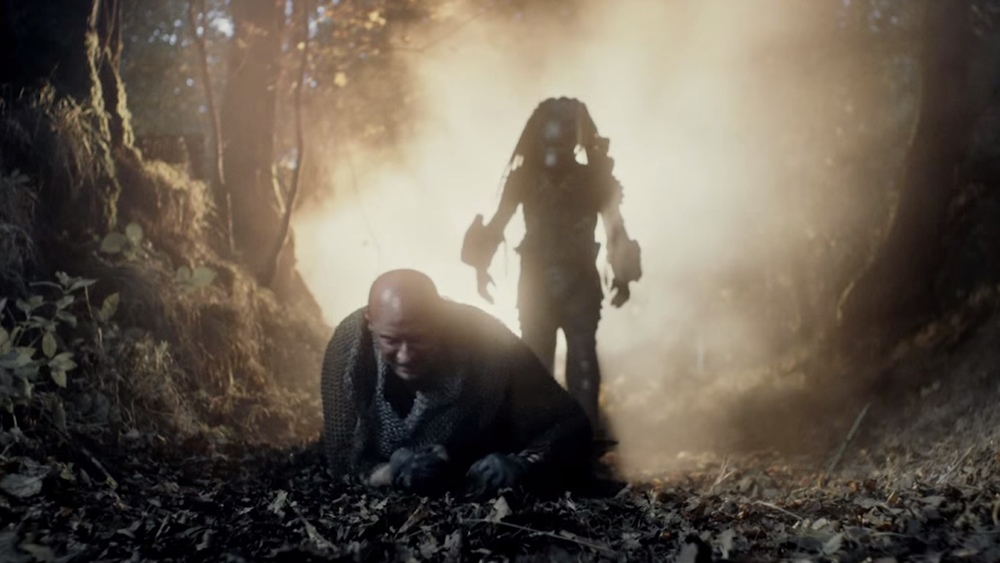
Rating: 4/10 – ex-extreme sportsman Johnny Utah joins the FBI and is given the opportunity to infiltrate a group of extreme sports fanatics who may or may not be responsible for a string of daring robberies; pretty to look at and featuring some great extreme sports sequences, Point Break is nonetheless a pointless remake with poor performances from all concerned, a woeful script, and lacks the edge Kathryn Bigelow brought to the original, leaving the viewer to wonder – yet again – why Hollywood insists on making so many dreadful remakes.

Stonados (2013) / D: Jason Bourque / 88m

Cast: Paul Johansson, Sebastian Spence, Miranda Frigon, Jessica McLeod, Dylan Schmid, William B. Davis, Grace Wolf, Thea Gill

Stonados

Rating: 3/10 – off the coast of Boston, freak water spouts appear and hurl large stone chunks in all directions, putting everyone in danger and hoping they don’t hit land and become… stonados!; made in the same year as Sharknado, this tries to take itself seriously, but without a sense of its own absurdity it stutters from one poorly staged “stonado” sequence to another while – ironically – being unable to shrug off a whole raft of ineffective, embarrassing performances.

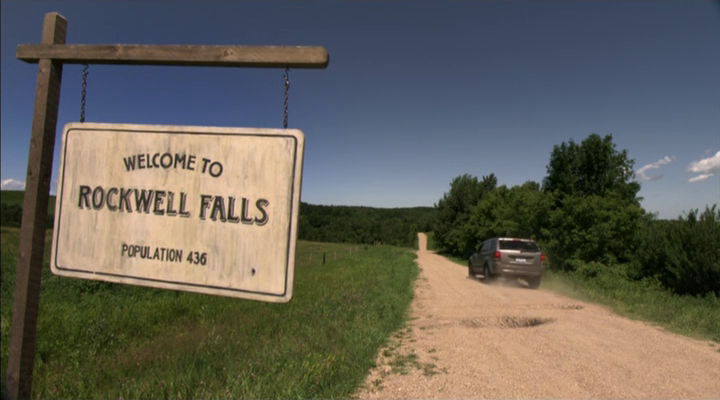
Population / 436 (2006) / D: Michelle MacLaren / 88m

Cast: Jeremy Sisto, Fred Durst, Charlotte Sullivan, Peter Outerbridge, David Fox, Monica Parker, Frank Adamson, R.H. Thomson, Reva Timbers

Population 436

Rating: 6/10 – a census taker (Sisto) comes to the small town of Rockwell Falls and begins to suspect a terrible conspiracy, one that keeps the town’s population fixed at the same number; an uneasy, paranoid thriller with horror overtones, Population 436 features a good performance from Sisto and a well maintained sense of dread, but is held back from being entirely convincing by some awkward soap opera moments and a mangled reason for the town keeping its numbers to 436.

Death of a Gentleman (2015) / D: Sam Collins, Jarrod Kimber, Johnny Blank / 99m

With: Sam Collins, Jarrod Kimber, Ed Cowan, Giles Clarke, Narayanaswami Srinivasan, Lalit Modi, Gideon Haigh, Mark Nicholas, Chris Gayle

Death of a Gentleman

Rating: 8/10 – journalists Collins and Kimber set out to make a movie about their love of cricket and the challenges it faces, both commercially and culturally, and discover a scandal that threatens an end to test match cricket; not just for fans of “the gentleman’s game”, Death of a Gentleman is a quietly impressive documentary that sneaks up on the viewer and exposes the level of corruption at the very top of the game, revealing as it does the way in which the sport is being held to ransom by Srinivasan and a handful of others.

Share this:

  • Click to share on X (Opens in new window) X
  • Click to share on Facebook (Opens in new window) Facebook
  • More
  • Click to print (Opens in new window) Print
  • Click to email a link to a friend (Opens in new window) Email
Like Loading...

10 Reasons to Remember Patty Duke (1946-2016)

29 Tuesday Mar 2016

Posted by dullwood68 in Movies

≈ Leave a comment

Tags

Actress, Career, Helen Keller, Manic depression, Movies, Oscar, Patty Duke Astin, The Miracle Worker

Patty Duke (14 December 1946 – 29 March 2016)

Patty Duke

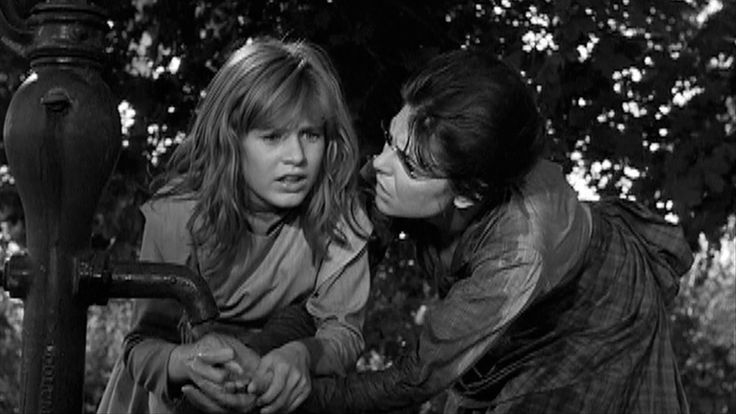
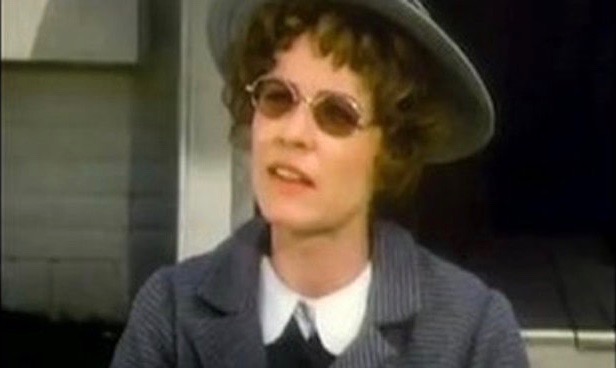
An actress who had more success in television than in the movies, Patty Duke was nevertheless a dependable star who rarely subjected an audience to a poor performance. When she was in her teens she appeared in the Broadway production of The Miracle Worker (1959-61), playing Helen Keller, and when it was adapted for the screen in 1962 there was no question as to who should play the role of Helen; it had to be Patty. She won an Oscar for Best Supporting Actress for her role, and she was able to use that win to transfer to the small screen and her own show (imaginatively titled The Patty Duke Show). Success followed for a third time, and occasional excursions into movies aside, she continued to fare well in TV, including a remake of The Miracle Worker (1979) in which she then played Annie Sullivan; for that portrayal she won an Emmy. In the Eighties she was diagnosed with manic depression, but it didn’t stop her from continuing to give good performances and adding a touch of class to the projects she took on, even if they were largely guest spots on TV shows or TV movies (and where she was usually billed as Patty Duke Astin). She was an instinctive actress, unafraid to give of herself when a role required it, and though she may not be regarded as an A-lister, she did more than enough to earn the respect and admiration of her peers, as well as fans around the world.

The Miracle Worker

1 – The Miracle Worker (1962)

2 – Billie (1965)

3 – Valley of the Dolls (1967)

4 – Me, Natalie (1969)

5 – You’ll Like My Mother (1972)

6 – Deadly Harvest (1972)

7 – Killer on Board (1977)

8 – The Miracle Worker (1979)

Miracle Worker (1)

9 – The Violation of Sarah McDavid (1981)

10 – Call Me Anna (1990)

Share this:

  • Click to share on X (Opens in new window) X
  • Click to share on Facebook (Opens in new window) Facebook
  • More
  • Click to print (Opens in new window) Print
  • Click to email a link to a friend (Opens in new window) Email
Like Loading...

Happy Birthday – Lara Flynn Boyle

24 Thursday Mar 2016

Posted by dullwood68 in Movies

≈ 2 Comments

Tags

Actress, Afterglow, Birthday, Have Dreams Will Travel, Land of the Blind, Lara Flynn Boyle, Movies, Red Rock West, Speaking of Sex

Lara Flynn Boyle (24 March 1970 -)

Lara Flynn Boyle

With her angled features highlighted by big piercing eyes, Lara Flynn Boyle has always brought a distinctive, attractive element to her movies, ever since her big screen debut in (sadly) Poltergeist III (1988). And yet beneath the model looks and slightly aloof exterior, Boyle has displayed a natural talent for acting that some of her peers would kill for (if they’d only admit it). She found fame though away from the big screen with the role of Donna Hayward in David Lynch’s Twin Peaks (1990-91), but like her female co-stars Sherilyn Fenn and Mädchen Amick, was never really able to capitalise on the show’s success in terms of bigger, better movie roles. Boyle has nevertheless appeared in a number of movies whose reputations preceed them, and even if she’s made the odd movie that doesn’t add anything to her CV – Hansel & Gretel Get Baked (2013) for example – her performances have always carried a sincerity about them that adds to the movie in question. She hasn’t made many movies in recent years, and some recent plastic surgery choices have kept her in the public eye for all the wrong reasons, but hopefully we haven’t seen the last of her on the big screen, not when the following five movies all show just how good an actress she really is.

Afterglow (1997) – Character: Marianne Byron

Afterglow

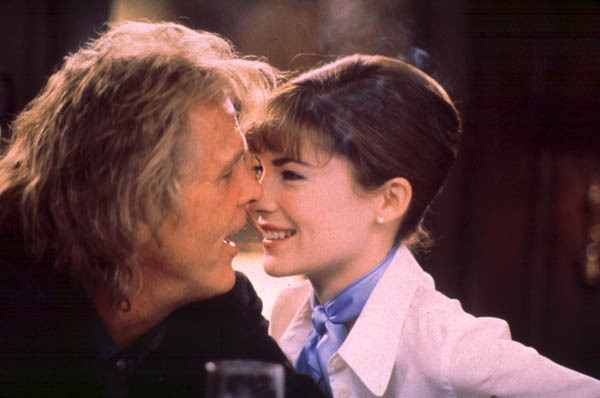
Alan Rudolph’s dramedy of marital infidelities cast Boyle as the sexually frustrated wife of an ambitious businessman (played by Jonny Lee Miller) who develops an unhealthy crush on a handyman (played by Nick Nolte) who has marital problems of his own. More than holding her own amongst a very talented cast that also includes an Oscar-nominated Julie Christie, Boyle’s performance overcomes some of Rudolph’s more unhelpful character decisions, and she handles the comedic elements with a clear understanding of the darkly comic aspects woven throughout the material.

Speaking of Sex (2001) – Character: Dr Emily Paige

Speaking of Sex

Rarely seen, but well worth seeking out (though some would say otherwise), this comedy from John McNaughton thankfully is more hit than miss, and sees Boyle playing a marriage counsellor who teams up with an expert on depression (played by James Spader) to try and solve a couples’ marital problems. The humour is situational rather than reliant on one-liners, anyone who’s even remotely prudish won’t enjoy most of it, and Boyle is terrific in a cast that also includes Jay Mohr and Melora Walters as the couple, Catherine O’Hara, Megan Mullaly, and Bill Murray.

Red Rock West (1993) – Character: Suzanne Brown

Red Rock West

As the unfaithful wife who has a contract taken out on her by her husband, Boyle is never less than compelling as the intended victim who hides a secret of her own and who isn’t as easy a target as Nicolas Cage’s wrong-person-in-the-wrong-place soon discovers. John Dahl’s modern day film noir gives Boyle the chance to play the femme fatale, and she seizes the opportunity with undisguised relish, imbuing Suzanne with the kind of icy immorality that we all like to see in our tarnished heroines.

Have Dreams, Will Travel (2007) – Character: Ben’s mother

Have Dreams, Will Travel (1)

A coming of age tale that somehow manages to avoid the clichés of the genre and provide viewers with a refreshing approach to otherwise familiar territory, Have Dreams, Will Travel (aka A West Texas Children’s Story) features Boyle, but this time in a supporting role as a young boy’s mother whose obsession with Hollywood and its movie stars means that she neglects him. Despite the focus being on her son, the female friend he makes, and their subsequent relationship, Boyle grabs the attention whenever she’s on screen and gives another indelible performance.

Land of the Blind (2006) – Character: First Lady

LAND OF THE BLIND, Lara Flynn Boyle, 2006. ©Bauer Martinez Studios

In this ambitious and largely successful political thriller, Boyle plays the wife of a dictator (played by Tom Hollander) whose imprisonment of a dissident (played by Donald Sutherland) drives the narrative. It’s a dark, pessimistic movie, shot through with the kind of black humour that is funny and uncomfortable at the same time, and features superb performances from all concerned (particularly from Ralph Fiennes who plays Sutherland’s guard), and though Boyle’s role is a secondary one, nevertheless there are strong enough echoes of Lady Macbeth to make her performance a chilling one.

Share this:

  • Click to share on X (Opens in new window) X
  • Click to share on Facebook (Opens in new window) Facebook
  • More
  • Click to print (Opens in new window) Print
  • Click to email a link to a friend (Opens in new window) Email
Like Loading...

Trailers – Miss Peregrine’s Home for Peculiar Children (2016), A Hologram for the King (2016) and Trapped (2016)

15 Tuesday Mar 2016

Posted by dullwood68 in Movies

≈ Leave a comment

Tags

A Hologram for the King, Abortion, Documentary, Drama, Eva Green, Fantasy, Miss Peregrine's Home for Peculiar Children, Movies, Previews, Tim Burton, Tom Hanks, Tom Tykwer, Trailers, Trapped

If there was ever any doubt as to who would be the first choice to direct the movie version of Ransom Riggs’ best-selling novel, Miss Peregrine’s Home for Peculiar Children, then those doubts will have been allayed with the appointment of Tim Burton to the director’s chair. A perfect match of visionary and material? Perhaps. A great combination of visual flair and dramatic invention? Perhaps again. But if you’ve read the first of Riggs’s Peculiar Children trilogy then you’ll know that it’s a lot darker than what’s glimpsed in the trailer, which highlights the idyllic nature of the children’s existence. The script is by Jane Goldman – always a good sign – so this may be one fantasy adaptation that retains the source’s vitality and creative energy and sticks closely to the story, but if Burton is still finding it difficult to connect with the material, as seems to have been the case in recent outings, then we may be faced with a movie that only achieves a portion of what it sets out to do – and that would be a shame.

One of four Tom Hanks’ movies planned for release in 2016, A Hologram for the King sees the rubber-faced everyman on the cusp of a (late) mid-life crisis, and travelling to Saudi Arabia in the hopes of pulling off that one last deal that will help him regain his self-respect and solve all manner of other issues that he has. Aided by the likes of Ben Whishaw and Tom Skerritt, Hanks’s character, Alan Clay, is the traditional fish out of water, ignorant of the customs of the country he’s in, and out of his depth – at first -when it comes to making his comeback. With a romantic sub-plot involving the lovely Sarita Choudhury thrown in as well, this adaptation of Dave Eggers’ novel, written and directed by Tom Tykwer – Run Lola Run (1998), Cloud Atlas (2012) – looks and sounds great, and hopefully, will prove to be a rewarding alternative in amongst all the big budget superhero movies coming our way in 2016 (and it includes a fantastic Talking Heads parody).

A powerful documentary that won a Special Jury Award at this year’s Sundance Festival, Trapped looks at the increasing number of US states that are introducing so-called “trap” laws, or Targeted Regulation of Abortion Providers. As these states seek to take away a woman’s right to legalised abortion, and in doing so, put many women’s lives in danger, Dawn Porter’s unflinching look at the potential consequences that these decisions could have both in the short and long term is both frightening and appalling. By focusing on the lives of the men and women who are taking the fight to the lawmakers, and who refuse to back down in the face of so much blinkered, often Christian-centric prejudice, the movie becomes a rallying cry for anyone who still believes that the decision in Roe vs Wade still gives a woman the right to choose what happens to her body.

Share this:

  • Click to share on X (Opens in new window) X
  • Click to share on Facebook (Opens in new window) Facebook
  • More
  • Click to print (Opens in new window) Print
  • Click to email a link to a friend (Opens in new window) Email
Like Loading...

Happy Birthday – Daniel Craig

02 Wednesday Mar 2016

Posted by dullwood68 in Movies

≈ Leave a comment

Tags

Actor, Birthday, Career, Daniel Craig, Hotel Splendide, Infamous, Layer Cake, Movies, Munich, The Mother

Daniel Craig (2 March 1968 -)

Daniel Craig

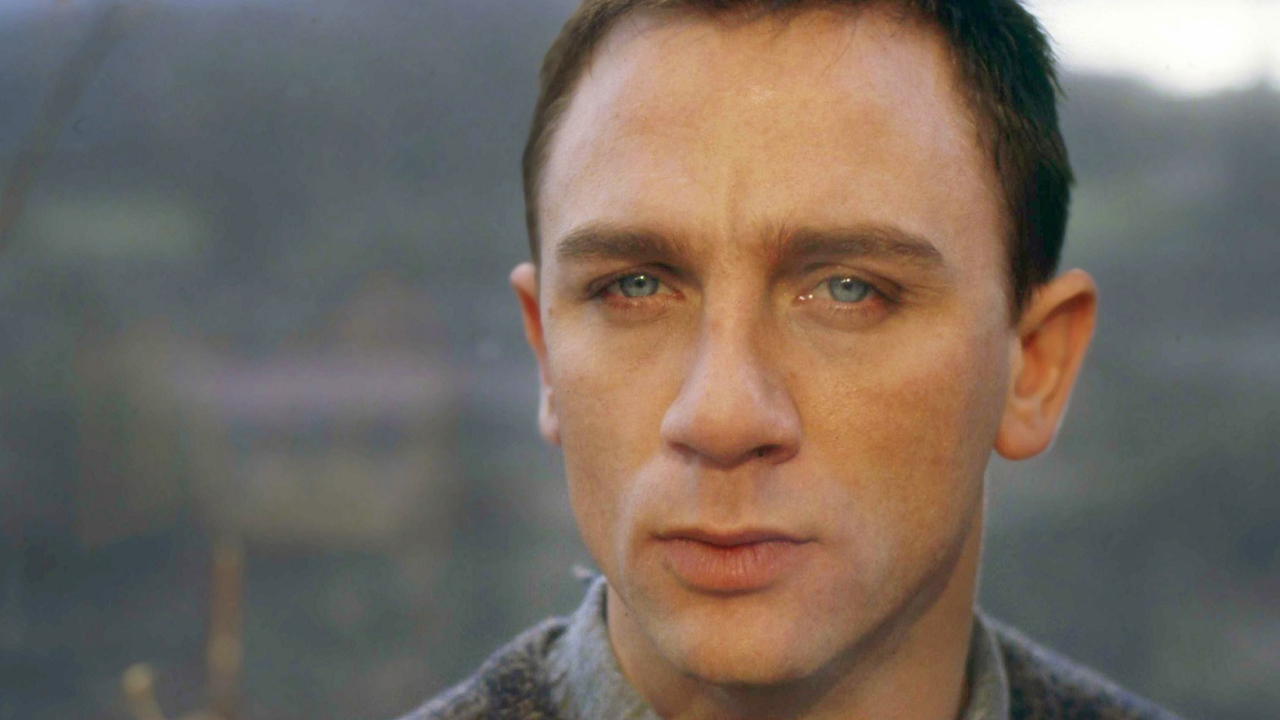
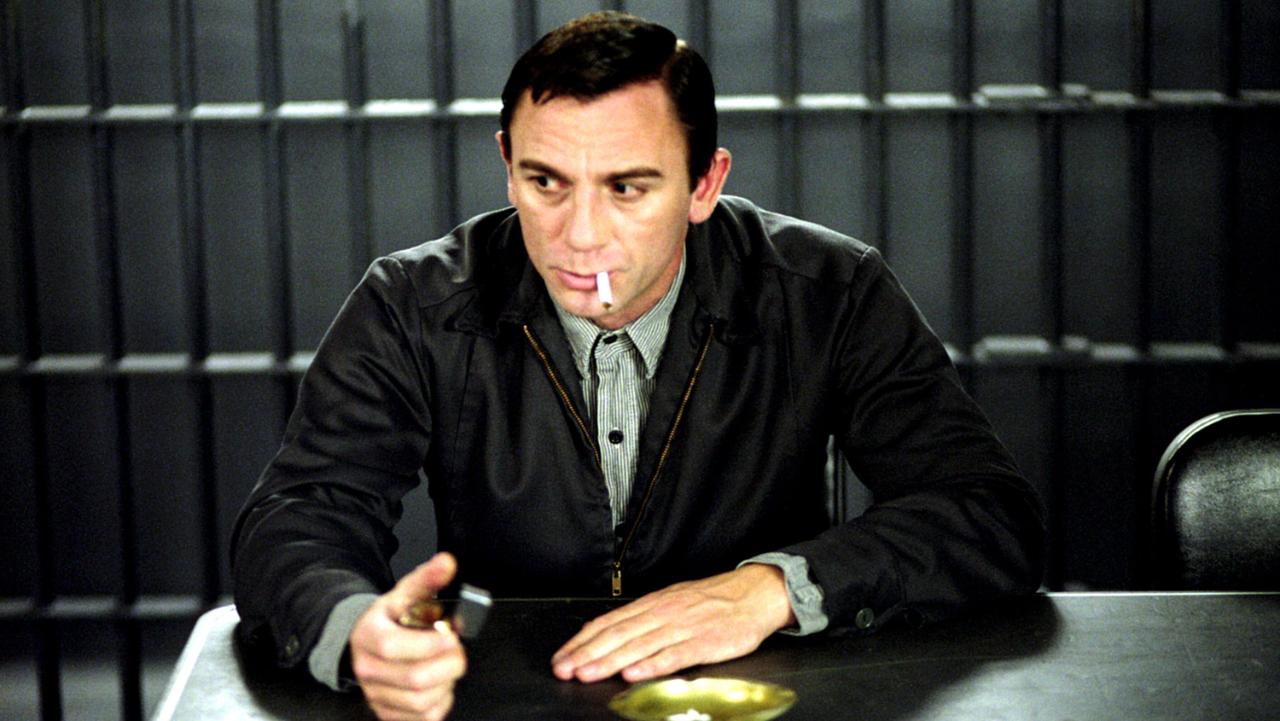
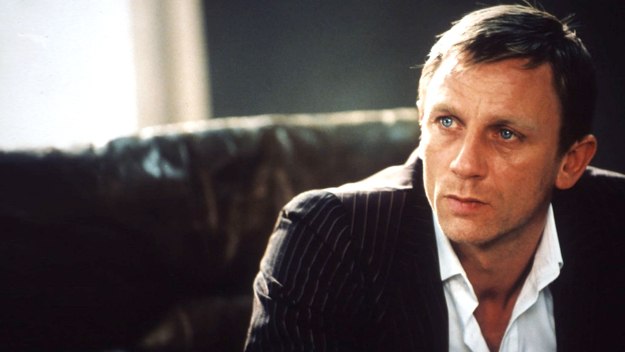
Since stepping into the shoes of everyone’s favourite British secret agent – no, not Johnny English – Daniel Craig has made fewer and fewer movies between 007 outings (between Skyfall and Spectre he made just one short movie, and even that was a promo for Spectre). But before he became licenced to kill, Craig’s career was full of interesting choices and appearances in movies you wouldn’t have suspected he’d be in the running for. From his debut in The Power of One (1992), Craig has given undeniably powerful performances throughout his career, and worked hard to vary the kind of movie he appears in (though he doesn’t seem to be anyone’s first choice for a romantic lead). While he can sometimes seem aloof in person, on screen he has a definite presence, and a physicality that can be a character in its own right. Here are five movies where the latest James Bond has shown he’s not all about gadgets and guns and glamourous women.

Munich (2005) – Character: Steve

Munich

In Steven Spielberg’s absorbing, somewhat controversial take on Mossad activity during the early Seventies, Craig’s low-key performance as South African driver Steve is one that rarely takes centre stage, but when he does, Craig displays a fierce determination to get the job done. While it might be regarded as a minor supporting role, Craig certainly doesn’t play it that way, and as a result, more than holds his own against fellow stars Eric Bana, Ciarán Hinds and Mathieu Kassovitz.

The Mother (2003) – Character: Darren

The Mother

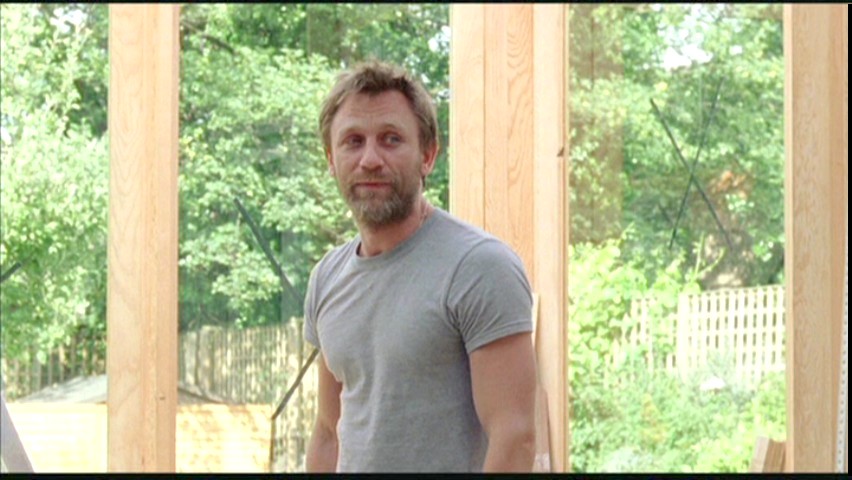
In this emotionally tense, absorbing drama, Craig plays the lover of a grandmother (played by Anne Reid) looking to regain some meaning in her life following the death of her husband. It’s a dour piece with tragic overtones, and Craig’s performance (as the handyman having an affair with the grandmother’s daughter as well as the old lady herself) is one laden with unnerving hints as to his true motives, and which is far subtler than might be expected.

Hotel Splendide (2000) – Character: Ronald Blanche

Hotel Splendide

In this rarely seen, obscure drama, Craig is the head chef of the titular hotel, and one of many characters sucked into a bizarre mystery surrounding the return of the hotel’s former sous chef (played by Toni Collette). With everyone made to behave oddly, Craig fits in well amongst the ensemble cast, and he gives an unexpectedly moving performance that acts as an emotional anchor for the viewer.

Infamous (2006) – Character: Perry Smith

Infamous

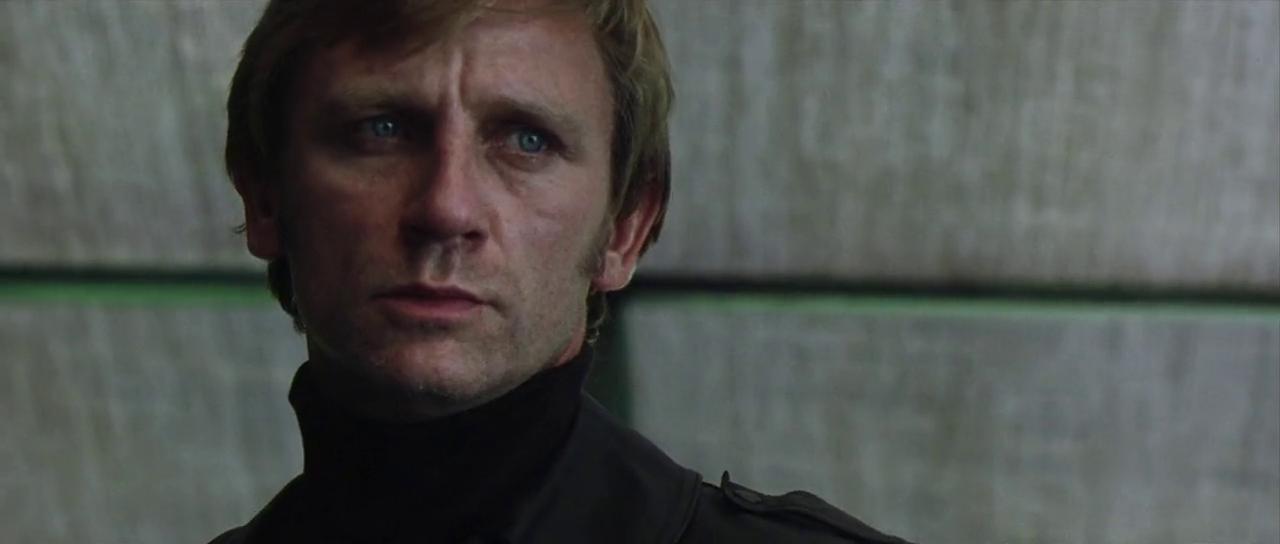
Perhaps Craig’s most well-known role outside of the 007 franchise, Infamous sees him play one of the two murderers immortalised by Truman Capote (played here by Toby Jones) in his book In Cold Blood. As the object of Capote’s “affection”, Craig uses his physical presence to good effect, and his character’s emotional and sexual confusion to even greater effect, resulting in a complex performance that really sees him stretch as an actor.

Layer Cake (2004) – Character: XXXX

Layer Cake

Matthew Vaughn’s ambitious British gangster movie is given a boost by Craig’s taking on the lead role, a drug dealer aiming to quit the industry but who finds himself “asked” to find someone’s missing daughter. Craig’s cynical, world-weary yet smug performance keeps the movie focused when it wants to head off in other directions, and his confident swagger works as a clue as to how he might play a certain iconic role, should he be asked (oh, right, he was).

Share this:

  • Click to share on X (Opens in new window) X
  • Click to share on Facebook (Opens in new window) Facebook
  • More
  • Click to print (Opens in new window) Print
  • Click to email a link to a friend (Opens in new window) Email
Like Loading...

The 36th Golden Raspberry Awards

02 Wednesday Mar 2016

Posted by dullwood68 in Movies

≈ Leave a comment

Tags

Awards, Dakota Johnson, Fantastic Four, Fifty Shades of Grey, Golden Raspberry Awards, Jamie Dornan, Josh Trank, Movies, Nominees, Sylvester Stallone, The Razzies, Winners, Worst of 2015

TGRA

With all the fuss and hullabaloo that comes with the Oscars, where the best of 2015 is celebrated (…and celebrated…and celebrated…), it’s easy to overlook the awards ceremony that “celebrates” the worst of 2015. Held on February 27th, the annual Golden Raspberry Awards “honour” the movies that we’ve all taken to beating with a stick over the last year, movies that contain breathless lines of dialogue such as these:

“You’re here because I’m incapable of leaving you alone.” – Fifty Shades of Grey

“I had no idea I was so deep in Her Majesty’s hole!” – Mortdecai

“The end of your world… is the beginning of mine!” – Fantastic Four

For those who missed out on congratulating the winners on their timeless efforts, here are the nominees for the 36th Golden Raspberry Awards with the winners highlighted in bold. How many have you seen?

Worst Picture

Fantastic Four (20th Century Fox) – Simon Kinberg, Matthew Vaughn, Hutch Parker, Robert Kulzer, Gregory Goodman
Fifty Shades of Grey (Universal/Focus Features) – Michael De Luca, Dana Brunetti, E. L. James
Jupiter Ascending (Warner Bros.) – Grant Hill, The Wachowskis
Paul Blart: Mall Cop 2 (Columbia) – Todd Garner, Kevin James, Adam Sandler
Pixels (Columbia) – Adam Sandler, Chris Columbus, Mark Radcliffe, Allen Covert

FSOG

Yes, it’s a tie, even though Fantastic Four was far and away the worst movie of 2015, the kind of movie you sit through wondering if it can get any worse – and then it does, repeatedly. Fifty Shades of Grey went for po-faced seriousness and in the process made Christian Grey’s BDSM tendencies more laughable than erotic. Both movies were examples of projects that seriously let down their target audiences, and it’s no wonder that the proposed sequels of both movies are now being looked forward to with the minimal amount of enthusiasm.

Worst Director

Josh Trank – Fantastic Four
Andy Fickman – Paul Blart: Mall Cop 2
Tom Six – The Human Centipede 3 (Final Sequence)
Sam Taylor-Johnson – Fifty Shades of Grey
The Wachowskis – Jupiter Ascending

Fantastic Four

No one else came close in 2015 than Trank for ruining the hopes and dreams of superhero fanboys everywhere. That he defended those casting choices all the way to the movie’s release was either a sign of mental instability or the actions of someone carrying out a monumental dare. In either case, Trank’s direction was in a league all its own (and that’s not a recommendation).

Worst Actor

Jamie Dornan – Fifty Shades of Grey as Christian Grey
Johnny Depp – Mortdecai as Charlie Mortdecai
Kevin James – Paul Blart: Mall Cop 2 as Paul Blart
Adam Sandler – The Cobbler and Pixels as Max Simkin and Sam Brenner
Channing Tatum – Jupiter Ascending as Caine Wise

Dornan’s oh-so-serious turn as Christian Grey was – and is – a very special performance requiring such a suspension of disblief in viewers he might as well have been flogging himself in lieu of the proverbial dead horse. Depp can count himself unlucky that his ersatz-Terry-Thomas portrayal didn’t have quite as much to unrecommend itself than Dornan’s slick turn. And as for Kevin James…

Worst Actress

Dakota Johnson – Fifty Shades of Grey as Anastasia Steele
Katherine Heigl – Home Sweet Hell as Mona Champagne
Mila Kunis – Jupiter Ascending as Jupiter Jones
Jennifer Lopez – The Boy Next Door as Claire Peterson
Gwyneth Paltrow – Mortdecai as Johanna Mortdecai

Thrust into the media spotlight, and finding her attributes exposed in more ways than one, Johnson’s tepid performance as Anastasia Steele was – and is – an example of an unknown being given an amazing opportunity… and not being ready for it at all. In fairness, she never had a chance, but it’s also true that in comparison with her fellow nominees, her lack of experience made her a dead cert for the award.

Worst Supporting Actor

Eddie Redmayne – Jupiter Ascending as Balem Abrasex
Chevy Chase – Hot Tub Time Machine 2 and Vacation as Hot Tub Repairman and Clark Griswold
Josh Gad – Pixels and The Wedding Ringer as Ludlow Lamonsoff and Doug Harris
Kevin James – Pixels as President William Cooper
Jason Lee – Alvin and the Chipmunks: The Road Chip as David “Dave” Seville

Eddie Redmayne

In a movie full of unrewarding sci-fi excess, it was Redmayne’s rasping, camp performace as the movie’s villain that acted as a kind of calm amid the storm, even if it looked and sounded like it should have been part of a pantomime rather than a huge, sprawling sci-fi disaster. And as for Kevin James…

Worst Supporting Actress

Kaley Cuoco – Alvin and the Chipmunks: The Road Chip (voice only) and The Wedding Ringer as Eleanor and Gretchen Palmer
Rooney Mara – Pan as Tiger Lily
Michelle Monaghan – Pixels as Lieutenant Colonel Violet van Patten
Julianne Moore – Seventh Son as Mother Malkin
Amanda Seyfried – Love the Coopers and Pan as Ruby and Mary

Kaley Cuoco

Watching the former Kaley Cuoco-Sweeting on TV’s The Big Bang Theory is a satisfying experience that shows the actress has good comic timing and an endearing screen presence. Watching her on the big screen shows that being part of an ensemble is where her talents lie, and that striking out on her own should be avoided at all costs. And there needs to be a law that says phenomenal actresses such as Moore should be banned from appearing in silly fantasy movies (they should know better).

Worst Screen Combo

Jamie Dornan and Dakota Johnson – Fifty Shades of Grey
All four “Fantastics” (Miles Teller, Michael B. Jordan, Kate Mara, and Jamie Bell) – Fantastic Four
Johnny Depp and his glued-on moustache – Mortdecai
Kevin James and either his Segway or his glued-on moustache – Paul Blart: Mall Cop 2
Adam Sandler and any pair of shoes – The Cobbler

With all the on-screen chemistry of a psychopath and his victim (not entirely an inappropriate idea), Dornan and Johnson made their scenes together feel and sound like contractual obligations (still not entirely inappropriate), and the culmination of minutes’ worth of introspection. This particular combo is still preferable by a mile to the “talented” cast that make up the Fantastic Four though.

Worst Prequel, Remake, Rip-off or Sequel

Fantastic Four (20th Century Fox) – Simon Kinberg, Matthew Vaughn, Hutch Parker, Robert Kulzer, Gregory Goodman
Alvin and the Chipmunks: The Road Chip (20th Century Fox) – Janice Karman, Ross Bagdasarian
Hot Tub Time Machine 2 (Paramount/Metro-Goldwyn-Mayer) – Andrew Panay
The Human Centipede 3 (Final Sequence) (IFC Midnight) – Tom Six, Ilona Six
Paul Blart: Mall Cop 2 (Columbia) – Todd Garner, Kevin James, Adam Sandler

Absolutely spot on on all points, the enormity of Fantastic Four‘s failure is still hard to grasp sometimes – didn’t anyone know how bad it was? – but all these studios should be taken out to the woodshed and soundly chastised for their profligacy. And it’s great to see an indie movie in there, proving that individual vision is no guarantee that a movie will be any good.

Worst Screenplay

Fifty Shades of Grey – Kelly Marcel, from the novel by E. L. James
Fantastic Four – Jeremy Slater, Simon Kinberg and Josh Trank from the Marvel Comics characters by Stan Lee and Jack Kirby
Jupiter Ascending – The Wachowskis
Paul Blart: Mall Cop 2 – Nick Bakay and Kevin James
Pixels – Tim Herlihy and Timothy Dowling, story: Tim Herlihy, from the short film by Patrick Jean

An unsurprising win for E.L. James’s bonkbuster, but again, Fantastic Four should have won the award with ease; at least Fifty Shades of Grey had a recognisable structure, and whatever the Wachowskis were smoking when they wrote Jupiter Ascending is concerning on waaay too many levels.

The Razzle Redeemer Award

Sylvester Stallone – From all-time Razzie champ to 2015 award contender for Creed
Elizabeth Banks – From Razzie “winning” director for Movie 43 to directing the 2015 hit film Pitch Perfect 2
M. Night Shyamalan – From Perennial Razzie nominee and “winner” to directing the 2015 horror hit The Visit
Will Smith – For following up Razzie “wins” for After Earth to starring in Concussion

Creed

The award that seeks to redress the balance for previous nominations, the Redeemer Award goes to an actor whose career has been a triumph of populism over depth. The other nominees? Nowhere near as deserving of inclusion, and choices that reflect an acknowledgment that Stallone was in a class of his own in 2015 when it comes to making a comeback.

And there you have it: shorter and sourer than the Oscars, but even more entertaining. Whatever your feelings about the main winners, one thing is indisputably true: there’ll be plenty of 2016 movies in the firing line next year, and they’ll all be richly deserving of a Razzie.


Share this:

  • Click to share on X (Opens in new window) X
  • Click to share on Facebook (Opens in new window) Facebook
  • More
  • Click to print (Opens in new window) Print
  • Click to email a link to a friend (Opens in new window) Email
Like Loading...

10 Reasons to Remember Douglas Slocombe (1913-2016)

23 Tuesday Feb 2016

Posted by dullwood68 in Movies

≈ Leave a comment

Tags

Career, Cinematographer, Director of Photography, Douglas Slocombe, Ealing, Movies

Douglas Slocombe (10 February 1913 – 22 February 2016)

Douglas Slocombe

When looking back over a career that spanned five decades, it’s clear that Douglas Slocombe was a very talented cinematographer whose range and versatility came to be appreciated by many. And there were different stages to his career, stages that meant new challenges, new associations and inevitably, greater heights. He began, as so many of his generation did, as a photojournalist working for Life magazine and Paris-Match (he even filmed a speech given in Berlin by Josef Goebbels just before the invasion of Poland). During World War II he was a newsreel cameraman, and while he worked (mostly uncredited) on a handful of movies and documentaries, it wasn’t until 1945 when he shot Ealing’s Dead of Night that his future in the industry was secured. Slocombe’s realistic visual style suited Ealing perfectly, and he went on to shoot some of their most memorable and iconic releases.

In the late Fifties and early Sixties he worked on a succession of British dramas that were praised for the natural approach of their narratives, the performances, and their photography. Slocombe also proved adept at moving from black and white to colour, and showed he had a mastery of both mediums. If some of the movies he made during the Sixties and early Seventies weren’t always as successful as their makers had hoped, there was always Slocombe’s work to commend them, and his reputation remained untarnished; he was unable to shoot a movie badly or with less than his usual attention to detail and his strong sense of how a scene should be lit.

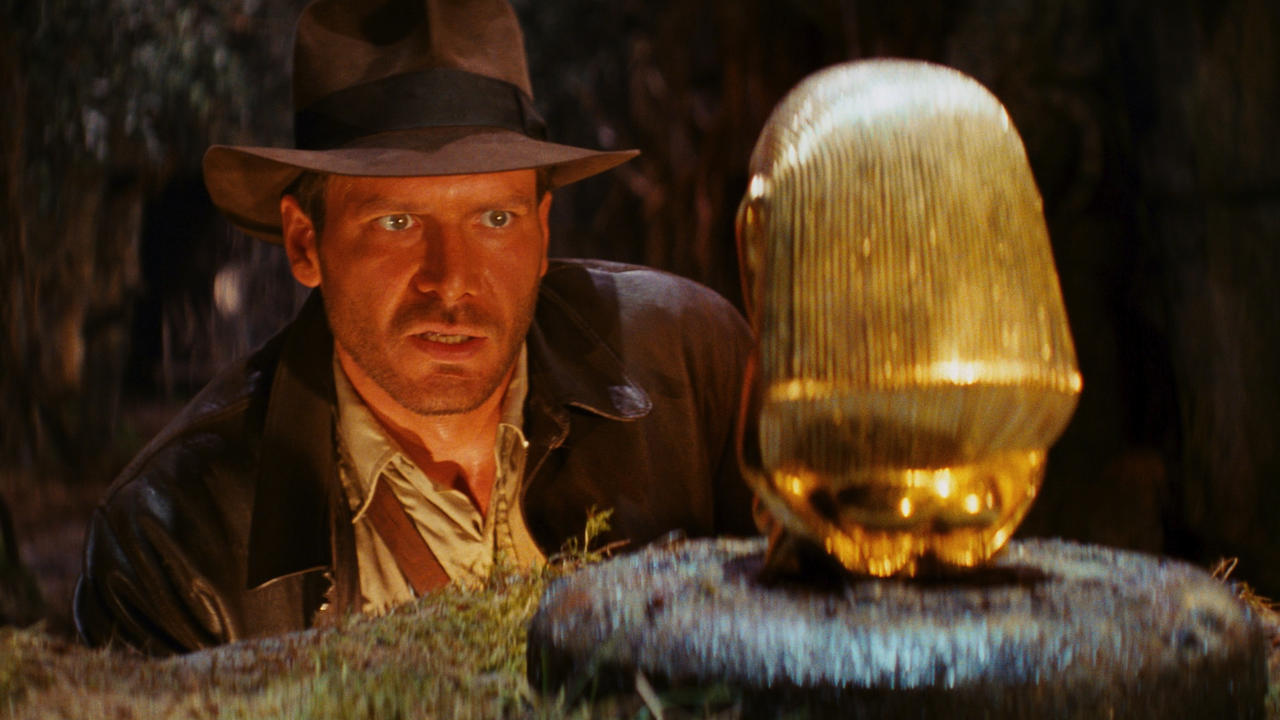
As his career moved into its final decade, Slocombe worked on a movie that proved his confidence and talent behind the camera was as assured as it ever was, and he became famous for never using a light meter during the shoot. The movie was a relatively small-scale adventure yarn called Raiders of the Lost Ark (1981); when it came time to make the second and third movies in the series, there was no one else considered for the role of DoP, and fittingly, Indiana Jones and the Last Crusade (1989) was Slocombe’s last movie. He was nominated for three Oscars during his career, and a number of BAFTAs (some of which he did at least win), but Slocombe was really one of those cinematographers whose work told you all you needed to know; any awards were merely an acknowledgment of what was already apparent: that he was an artist with an instinctive grasp of light and shade and colour and depth, and he was one of a kind.

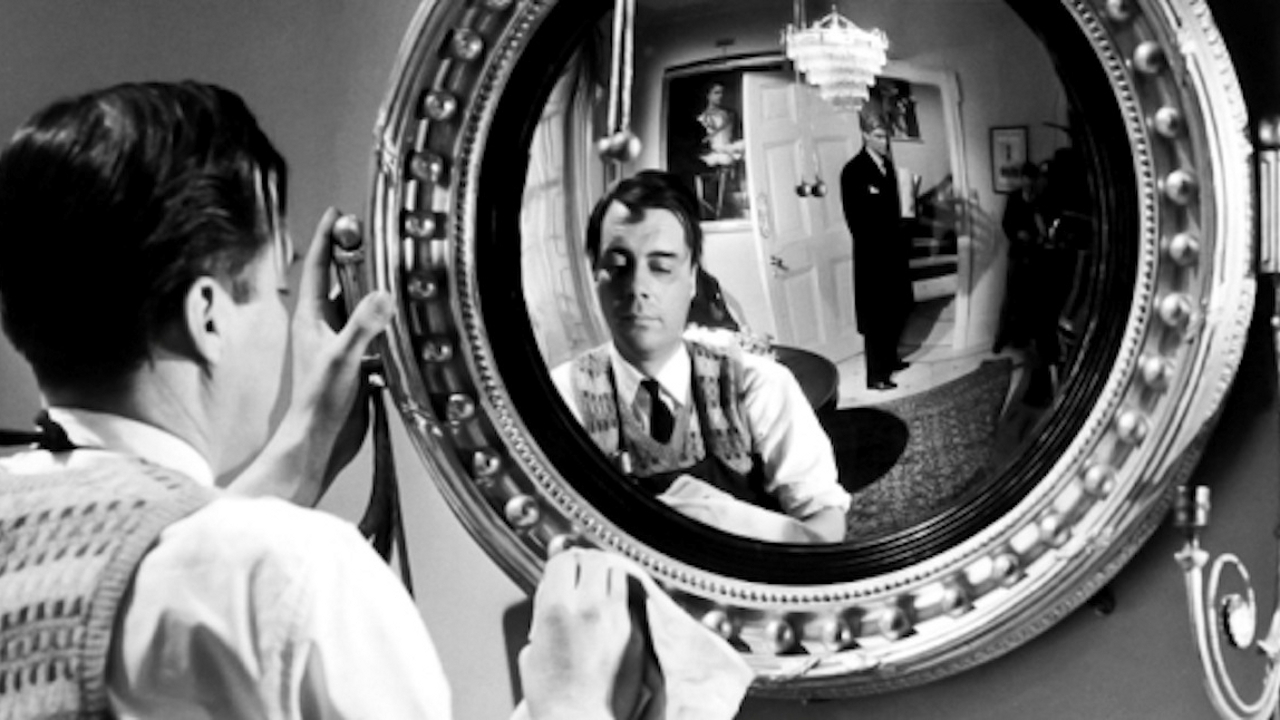
Dead of Night

1 – Dead of Night (1945)

2 – Kind Hearts and Coronets (1949)

3 – The Titfield Thunderbolt (1953)

4 – The Servant (1963)

The Servant

5 – The Lion in Winter (1968)

6 – The Italian Job (1969)

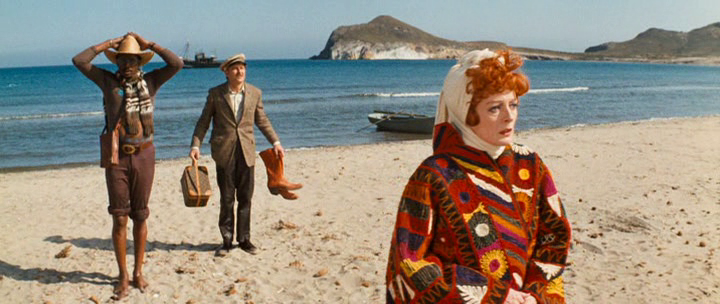
7 – Travels With My Aunt (1972)

Travels With My Aunt

8 – Jesus Christ Superstar (1973)

9 – Julia (1977)

10 – Raiders of the Lost Ark (1981)

Raiders of the Lost Ark

Share this:

  • Click to share on X (Opens in new window) X
  • Click to share on Facebook (Opens in new window) Facebook
  • More
  • Click to print (Opens in new window) Print
  • Click to email a link to a friend (Opens in new window) Email
Like Loading...

The BAFTAs 2016

14 Sunday Feb 2016

Posted by dullwood68 in Movies

≈ Leave a comment

Tags

2016, Alejandro González Iñárritu, Awards, BAFTA, Brie Larson, John Boyega, Kate Winslet, Leonardo DiCaprio, Mad Max: Fury Road, Mark Rylance, Movies, Stephen Fry, The Revenant

BAFTA

It’s that time of year again for the British Film Industry to slap its collective back and try and reassure itself that it’s in some way as vital as the US in terms of production, star power, and prestige (if not box office returns). Held in the slightly cramped environment of the Royal Opera House in London’s Covent Garden, and presented yet again by Stephen Fry, the ceremony followed the usual, tried and tested formula, and thanks to the miracle of pre-recording, didn’t outstay its welcome like the Oscar ceremony does.

One thing you probably won’t see at the Oscars is the BAFTA Kiss-Cam, an awkward bit of fun that had brief hook-ups between Cuba Gooding Jr and Stanley Tucci, Bryan Cranston and Julianne Moore, Eddie Izzard and Rebel Wilson, and oddly, Leonardo DiCaprio and Maggie Smith. Valentine’s Day, eh? What were the odds? (Winners in bold.)

BAFTA1

Outstanding British Film
45 Years – Andrew Haigh, Tristan Goligher
Amy – Asif Kapadia, James Gay-Rees
Brooklyn – John Crowley, Finola Dwyer, Amanda Posey, Nick Hornby
The Danish Girl – Tom Hooper, Tim Bevan, Eric Fellner, Anne Harrison, Gail Mutrux, Lucinda Coxon
Ex Machina – Alex Garland, Andrew Macdonald, Allon Reich
The Lobster – Yorgos Lanthimos, Ceci Dempsey, Ed Guiney, Lee Magiday, Efthimis Filippou

Not a surprise but also not the best result, with both The Danish Girl and 45 Years more deserving. Presented by Kate Winslet and Idris Elba.

Special Visual Effects
Ant-Man – Jake Morrison, Greg Steele, Dan Sudick, Alex Wuttke
Ex Machina – Mark Ardington, Sara Bennett, Paul Norris, Andrew Whitehurst
Mad Max: Fury Road – Andrew Jackson, Dan Oliver, Tom Wood, Andy Williams
The Martian – Chris Lawrence, Tim Ledbury, Richard Stammers, Steven Warner
Star Wars: The Force Awakens – Chris Corbould, Roger Guyett, Paul Kavanagh, Neal Scanlan

With little to choose between any of the nominees, it wasn’t a surprise that the Force took the BAFTA, but good to see Chris Corbould, an industry veteran, rewarded (with his team) for doing such fantastic work. Presented by Emilia Clarke and Matt Smith.

EE Rising Star Award

John Boyega; Taron Egerton; Dakota Johnson; Brie Larson; Bel Powley

A public vote that Boyega himself described as a “fluke” but well-deserved nevertheless. Presented by Jack O’Connell.

BAFTA6

Best Supporting Actor
Benicio Del Toro – Sicario
Christian Bale – The Big Short
Idris Elba – Beasts of No Nation
Mark Ruffalo – Spotlight
Mark Rylance – Bridge of Spies

Absolutely the right result, Rylance’s performance was a masterclass of internalised emotion. Accepted by Steven Spielberg. Presented by Rebel Wilson, who made a really funny speech about diversity and how the Oscars are racist, not to mention how Idris Elba made her nervous.

Animated Film
Inside Out – Pete Docter
Minions – Pierre Coffin, Kyle Balda
Shaun the Sheep Movie – Mark Burton, Richard Starzak

Well, who else was going to win? Presented by Eddie Izzard.

Best Supporting Actress
Kate Winslet – Steve Jobs
Alicia Vikander – Ex Machina
Rooney Mara – Carol
Jennifer Jason Leigh – The Hateful Eight
Julie Walters – Brooklyn

Winslet gave far and away the best performance in this category, and if she hadn’t won, then it would have been as baffling as why Carol hasn’t been nominated at the Oscars. Presented by Eddie Redmayne.

BAFTA3

Costume Design
Brooklyn – Odile Dicks-Mireaux
Carol – Sandy Powell
Cinderella – Sandy Powell
The Danish Girl – Paco Delgado
Mad Max: Fury Road – Jenny Beavan

A good result for both Beavan and Mad Max: Fury Road, and she got to say, “Oh what a lovely day” at the podium. Presented by Olga Kurylenko and Riz Ahmed.

Outstanding Debut by a British Writer, Producer or Director
Alex Garland (Director) – Ex Machina
Debbie Tucker Green (Writer/Director) – Second Coming
Naji Abu Nowar (Writer/Director) Rupert Lloyd (Producer) – Theeb
Sean McAllister (Director/Producer), Elhum Shakerifar (Producer) – A Syrian Love Story
Stephen Fingleton (Writer/Director) – The Survivalist

A great choice for this award, and good to see such a simple, moving story get its due recognition. Presented by Dakota Johnson and Will Poulter.

Adapted Screenplay
The Big Short – Adam McKay, Charles Randolph
Brooklyn – Nick Hornby
Carol – Phyllis Nagy
Room – Emma Donoghue
Steve Jobs – Aaron Sorkin

Congrats to McKay and Randolph who took a daunting, difficult subject and made it accessible to anyone who watched the movie. Presented by Angela Bassett.

Outstanding British Contribution to Cinema (The Michael Balcon Award) 

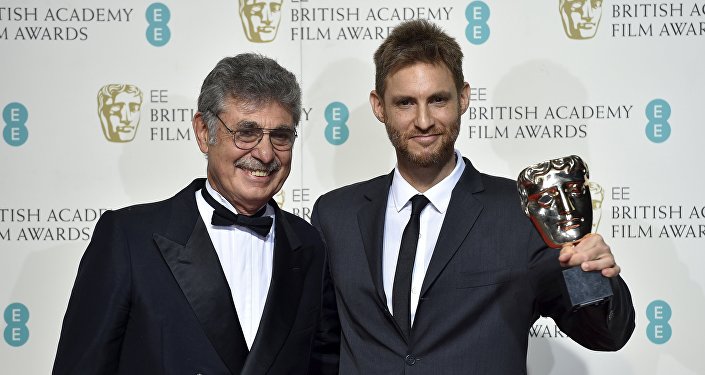
Established 175 years ago, the winners of this award, Angels Costumes, have been involved in the movies since 1913 and whichever movie you think of, it’s likely you’ve seen at least one of their costumes over the years, from Indiana Jones’ outfit to Gandhi’s robes, and a whole lot more. Presented by Cate Blanchett.

Original Screenplay
Bridge of Spies – Matthew Charman, Ethan Coen, Joel Coen
Ex Machina – Alex Garland
The Hateful Eight – Quentin Tarantino
Inside Out – Josh Cooley, Pete Docter, Meg LeFauve
Spotlight – Tom McCarthy, Josh Singer

A popular choice that wasn’t any kind of a surprise, and out of a fairly level playing field, but still a good result. Presented by Cuba Gooding Jr.

Film Not in the English Language
The Assassin – Hou Hsiao-Hsien
Force Majeure – Ruben Ostlund
Theeb – Abu Naji Nowar, Rupert Lloyd
Timbuktu – Abderrahmane Sissako
Wild Tales – Damian Szifron

A great result for the portmanteau revenge movie, and good to see that a fiercely adult and uncompromising movie can win a BAFTA. Presented by Carrie Fisher and Domhnall Gleeson.

BAFTA4

The Fellowship Award

Sidney Poitier. Given by the Academy in recognition of a lifetime’s achievement in cinema, with contributions from Oprah Winfrey, Noel Clarke and Lulu. Alas, Poitier was unable to attend due to ill health but there was a filmed (and quite heartfelt) acceptance, and his award was given to him by Jamie Foxx.

Director
The Big Short – Adam McKay
Bridge of Spies – Steven Spielberg
Carol – Todd Haynes
The Martian – Ridley Scott
The Revenant – Alejandro González Iñárritu

Another non-surprise given the scale and the difficulty of making The Revenant, though Todd Haynes may well have felt robbed by comparison. Presented by Stanley Tucci.

BAFTA5

Best Actress
Brie Larson – Room
Saoirse Ronan – Brooklyn
Cate Blanchett – Carol
Alicia Vikander – The Danish Girl
Maggie Smith – The Lady in the Van

Accepted by Lenny Abrahamson, this was completely unexpected. That Cate Blanchett didn’t win was possibly the only real shock of the night. Presented by Sacha Baron Cohen.

Best Actor
Leonardo DiCaprio – The Revenant
Eddie Redmayne – The Danish Girl
Michael Fassbender – Steve Jobs
Matt Damon – The Martian
Bryan Cranston – Trumbo

What a surprise! A shoo-in for the award, DiCaprio thanked many British actors who have inspired him over the years, and Tom Hardy in particular. Presented by Julianne Moore.

BAFTA2

Best Film
The Big Short
Bridge of Spies
The Revenant
Carol
Spotlight

With DiCaprio and Iñárritu winning in their categories this wasn’t any kind of a shock, but it was a sad moment to see Carol overlooked yet again. Presented by Tom Cruise.

The following awards weren’t shown during the broadcast:

Documentary
Amy – Asif Kapadia, James Gay-Rees
Cartel Land – Matthew Heineman, Tom Yellin
He Named Me Malala – Davis Guggenheim, Walter Parkes, Laurie MacDonald
Listen to Me Marlon – Stevan Riley, John Battsek, George Chignell, R.J. Cutler
Sherpa – Jennifer Peedom, Bridget Ikin, John Smithson

Cinematography
Bridge of Spies – Janusz Kaminski
Carol – Ed Lachman
Mad Max: Fury Road – John Seale
The Revenant – Emmanuel Lubezki
Sicario – Roger Deakins

Editing
The Big Short – Hank Corwin
Bridge of Spies – Michael Kahn
Mad Max: Fury Road – Margaret Sixel
The Martian – Pietro Scalia
The Revenant – Stephen Mirrione

Production Design
Bridge of Spies – Adam Stockhausen, Rena DeAngelo
Carol – Judy Becker, Heather Loeffler
Mad Max: Fury Road – Colin Gibson, Lisa Thompson
The Martian – Arthur Max, Celia Bobak
Star Wars: The Force Awakens – Rick Carter, Darren Gilford, Lee Sandales

Make Up & Hair
Brooklyn – Morna Ferguson, Lorraine Glynn
Carol – Jerry DeCarlo, Patricia Regan
The Danish Girl – Jan Sewell
Mad Max: Fury Road – Lesley Vanderwalt, Damian Martin
The Revenant – Sian Grigg, Duncan Jarman, Robert Pandini

Sound
Bridge of Spies – Drew Kunin, Richard Hymns, Andy Nelson, Gary Rydstrom
Mad Max: Fury Road – Scott Hecker, Chris Jenkins, Mark Mangini, Ben Osmo, Gregg Rudloff, David White
The Martian – Paul Massey, Mac Ruth, Oliver Tarney, Mark Taylor
The Revenant – Lon Bender, Chris Duesterdiek, Martin Hernandez, Frank A. Montaño, Jon Taylor, Randy Thom
Star Wars: The Force Awakens – David Acord, Andy Nelson, Christopher Scarabosio, Matthew Wood, Stuart Wilson

So in the end it was The Revenant‘s night, with five wins. More heartening was the four wins for Mad Max: Fury Road, a movie that was released (in awards terms at least) so long ago that some people might have forgotten all about it. That Carol didn’t pick up a win remains as baffling as America’s fascination with Donald Trump, and its snub here seems to be in keeping with the Oscars more overt slight. Which begs the question, just what does a lesbian love story have to do to win an award?

Mad Max Fury Road

Share this:

  • Click to share on X (Opens in new window) X
  • Click to share on Facebook (Opens in new window) Facebook
  • More
  • Click to print (Opens in new window) Print
  • Click to email a link to a friend (Opens in new window) Email
Like Loading...

10 Reasons to Remember Frank Finlay (1926-2016)

31 Sunday Jan 2016

Posted by dullwood68 in Movies

≈ Leave a comment

Tags

Actor, Career, Frank Finlay, Movies

Frank Finlay (6 August 1926 – 30 January 2016)

Frank Finlay

Depending on the level of your exposure to his work, Frank Finlay will be best known to you either for his Oscar-nominated role as Iago in Laurence Olivier’s Othello (1965), as the rambunctious Porthos in Richard Lester’s adaptation of Dumas’ The Three Musketeers (1973) (and its two sequels), or the cheating husband in TV’s Bouquet of Barbed Wire (1976) (and its sequel). But of course, this versatile British actor had a varied, interesting career that spanned over fifty years, and he worked with some of the finest actors and directors during that period, both on screen, on stage and on TV. He always held his own, though, and his famously brooding looks were often mesmerising to watch, and though he never made it to the “big leagues” he was still the type of actor you could expect an intelligent, considered performance from, even if the production around him wasn’t quite as intelligent or considered as he was. As a character actor he could be superb, and when given the chance – as in Bouquet of Barbed Wire – he could be incredibly focused in a lead role, so much so that it’s a shame he wasn’t offered more of them. Although he will always be known for the roles quoted above, there is one role that may come as a surprise to those who don’t remember it, but is well worth watching: the Witchsmeller Pursuivant in the first series of Blackadder (1983), a rare comic role which he played with appropriate and very funny relish.

A Study in Terror (2)

1 – A Study in Terror (1965)

2 – Othello (1965)

3 – Robbery (1967)

4 – The Molly Maguires (1970)

5 – The Three Musketeers (1973)

6 – Count Dracula (1977)

7 – Murder by Decree (1979)

8 – Sakharov (1984)

9 – Dreaming of Joseph Lees (1999)

10 – The Pianist (2002)

The Pianist

Share this:

  • Click to share on X (Opens in new window) X
  • Click to share on Facebook (Opens in new window) Facebook
  • More
  • Click to print (Opens in new window) Print
  • Click to email a link to a friend (Opens in new window) Email
Like Loading...

5 Famous Movie Roles That Nearly Went to Someone Else

30 Saturday Jan 2016

Posted by dullwood68 in Movies

≈ 2 Comments

Tags

Bette Midler, Beverly Hills Cop, Famous movie roles, Forrest Gump, John Travolta, Meg Ryan, Misery, Movies, Robert DeNiro, Star Wars, Sylvester Stallone, The Silence of the Lambs

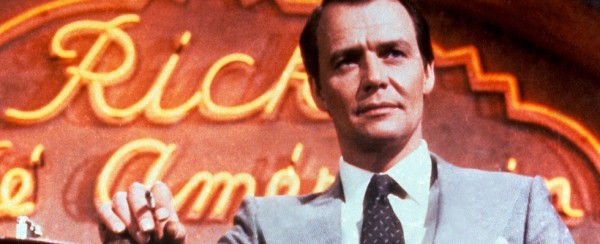
Once a movie is released, and especially if it’s successful, it becomes difficult to imagine another actor or actress in the lead role, and even harder if they win a clutch of awards into the bargain. Some movie stars can become so indelibly linked to a part, that if someone else takes it on in a remake or a sequel you can’t help but see the original actor in their place (you might even resent them for being there). And there are times when the very idea is wrong. Spare a thought for example, for David Soul, tasked with following in the footsteps of Humphrey Bogart as Rick Blaine in the short-lived Casablanca TV series back in 1983. No matter how world-weary he affected to be, Soul just couldn’t match Bogart for deep-seated ennui. As a result, Soul’s interpretation of the role couldn’t help but feel like a pale imitation.

David Soul

But if following in the footsteps of an iconic actor in an iconic role isn’t bad enough, then spare a thought for those actors and actresses who passed on a role that became iconic. How bad must that be? How must it feel to know that you could have taken on a role and made it your own, and yet because of some reason or other, you decided not to, and one of your more circumspect colleagues jumped at the chance and made it their own? (Probably bad enough that if worst comes to worst and the colleague is nominated for an Oscar, then that colleague won’t receive a vote from the person who lost out… at the very least.)

Here then are five movie stars and the roles they turned down. You can judge for yourselves just how successful they would have been if they’d gone ahead and played these roles, but one thing can be said for certain: each movie would have had a different dynamic as a consequence, and maybe they wouldn’t have been as successful, or as memorable.

1 – Sylvester Stallone – Role: Axel Foley – Movie: Beverly Hills Cop (1984)

Despite a long period of pre-production and several scripts written during the process, Beverly Hills Cop was always meant to star Stallone. But with a matter of weeks to go before filming began, Stallone upped and quit the project (Steven Berkoff, who plays the movie’s villain, once said in an interview that the Rocky star quit over disagreements about which kind of orange juice was to be put in his trailer). Enter Eddie Murphy, who seized the hastily rewritten character and improvised his way into the public’s affections as the motormouth cop with a bitingly funny sense of humour. It’s hard to think of Stallone being as free or confident in the way that Murphy is, and he’s not known for comedy – Stop! Or My Mom Will Shoot (1992), anyone? – so the chances of it having been as successful as well are less conclusive, but this is one of the best examples of an actor coming in and stealing the show (thankfully).

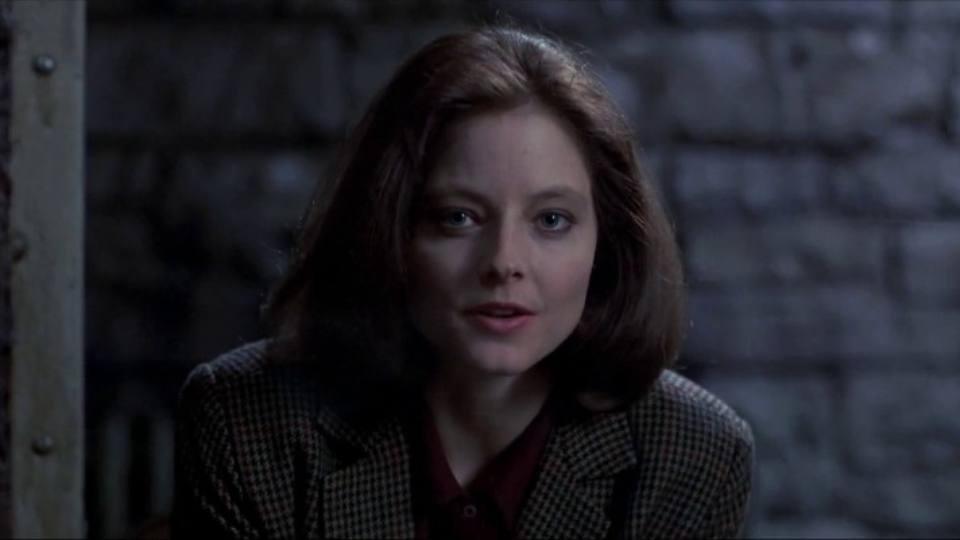
2 – Meg Ryan – Role: Clarice Starling – Movie: The Silence of the Lambs (1991)

Without meaning to undermine or decry Ryan’s talent as an actress, it’s perhaps very fortunate indeed that she turned down the role of Clarice Starling, paving the way for Jodie Foster to give such a stunning performance. Like some of her contemporaries, Ryan passed on the role because she felt the movie would be too violent, but with the benefit of hindsight it’s perhaps a good thing she didn’t take on the part. As with Stallone and Beverly Hill Cop‘s humour, The Silence of the Lambs and its dark, oppressive material isn’t really Ryan’s forté, and the idea of a rookie FBI agent in bouncy curls chasing down a serial killer suddenly becomes too risible to be entertained seriously.

Jodie Foster

3 – Robert De Niro – Role: Han Solo – Movie: Star Wars (1977)

When casting the role of Han Solo, George Lucas wanted to go with someone he hadn’t worked with before, and several up and coming actors – Christopher Walken, Kurt Russell, and Chevy Chase(!) to name but three – were considered. But De Niro was one of a handful of actors who actually turned down the role. With his appearances in Mean Streets (1973), The Godfather Part II (1974), and Taxi Driver (1976) already establishing him as one of the best actors of his generation, it was probably a wise move on De Niro’s part, but what he would have made of lines such as, “It’s the ship that made the Kessel Run in less than twelve parsecs” is still a tantalising proposition.

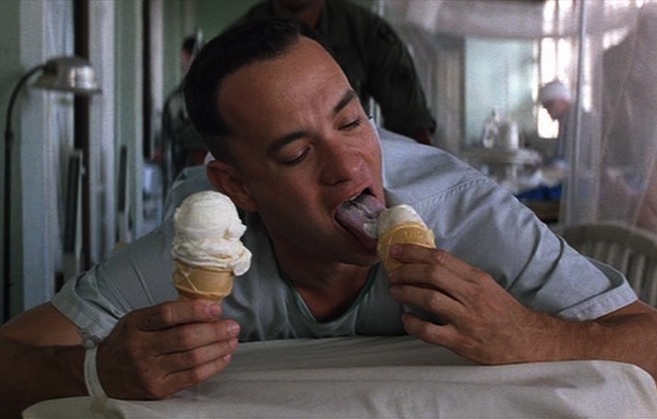
4 – John Travolta – Role: Forrest Gump – Movie: Forrest Gump (1994)

Throughout his career, Travolta has turned down a number of roles that, in other actors’ hands, have led to critical acclaim and their movies’ success at the box office. And this isn’t the only time that Tom Hanks has benefitted from Travolta’s reluctance to take on a role: he also turned down the role of Paul Edgecombe in The Green Mile (1999). But this decision is one that Travolta still regrets today, and though it’s hard to imagine him reciting the line, “Mama always said life was like a box of chocolates” with the same naïve innocence as Hanks does, it would have been interesting to see him adapt his naturally effusive style of acting to the role.

Tom Hanks

5 – Bette Midler – Role: Annie Wilkes – Movie: Misery (1990)

It’s often interesting to hear about proposed casting choices and the odd matches of actor or actress to a role, but the idea of Midler playing dowdy, homicidal Annie Wilkes is one that takes some adjusting to (especially given Kathy Bates’ Oscar-winning performance). Nothing in Midler’s career up til then (or since) gives any indication that she would have been effective in the role, so maybe she knew she was making the right decision – but to have been offered the role in the first place? Bizarre, just very bizarre.

Share this:

  • Click to share on X (Opens in new window) X
  • Click to share on Facebook (Opens in new window) Facebook
  • More
  • Click to print (Opens in new window) Print
  • Click to email a link to a friend (Opens in new window) Email
Like Loading...

10 Reasons to Remember Jacques Rivette (1928-2016)

29 Friday Jan 2016

Posted by dullwood68 in Movies

≈ Leave a comment

Tags

Career, Director, French New Wave, Jacques Rivette, Movies

Jacques Rivette (1 March 1928 – 29 January 2016)

Jacques Rivette

Idiosyncratic, pioneering, challenging, fascinating, obscurist – François Truffaut once said of Jacques Rivette that the French New Wave began “thanks to Rivette”, and while that may be true, the fact is that Rivette had an uneasy relationship with the French movie industry, and despite an extraordinary talent as a director, never achieved the success of his contemporaries, well-known names such as Truffaut, Claude Chabrol, Éric Rohmer and Jean-Luc Godard. He made long (sometimes very long) movies – Out 1 (1971) runs to nearly thirteen hours in its original version – and constructed them in such a way that audience attention was of supreme importance; complex story structures and innovative story-telling techniques made his movies look and sound unique.

Despite a career that began in 1949 with the short, Aux quatre coins, Rivette faced challenges that would have kept many directors from continuing their careers at all. While he made a steady stream of movies over the ensuing years, he encountered so many obstacles and setbacks that his perseverance is a testament to both his personal tenacity and his talent (in particular, a four-picture deal made in 1976 was never completed due to the poor reception of the first two movies). He wasn’t an instinctively commercial moviemaker, but he was influential in his own way, and his movies reflect an approach and an attitude about the boundaries attached to modern movies that should be applauded rather than dismissed. Watch any of his movies and you’ll find the work of a true artist, a moviemaker whose intelligence, wit and liveliness shone through with a clear-sighted consistency – even if he was doing his best to baffle his audiences at the same time.

Paris Belongs to Us

1 – Paris Belongs to Us (1961)

2 – The Nun (1966)

3 – L’amour fou (1969)

4 – Out 1 (1971)

5 – Celine and Julie Go Boating (1974)

6 – Le Pont du Nord (1981)

7 – Merry-Go-Round (1981)

8 – Gang of Four (1989)

9 – La belle noiseuse (1991)

10 – The Story of Marie and Julien (2003)

The Story of Marie and Julien

Share this:

  • Click to share on X (Opens in new window) X
  • Click to share on Facebook (Opens in new window) Facebook
  • More
  • Click to print (Opens in new window) Print
  • Click to email a link to a friend (Opens in new window) Email
Like Loading...

The 2016 Oscar Nominations

16 Saturday Jan 2016

Posted by dullwood68 in Movies

≈ Leave a comment

Tags

2016, Actor, Actress, Adapted Screenplay, Best Motion Picture, Director, Movies, Nominations, Original Screenplay, Oscars, Supporting Actor, Supporting Actress

Oscars 2016

Is it the middle of January already? Is it time to start getting mildly excited by the prospect of another year where the Academy voters behave responsibly and predictably in their choices for Best Film, Actor, Actress etc. etc.? Well, you’re darned right it is! Except this year there’s some early controversy, especially if you’re a fan of Carol, rightly regarded as one of 2015’s best movies – if not the best – but not good enough in the Academy’s eyes to be nominated for Best Motion Picture of the Year. And they’ve snubbed Todd Haynes as well, Carol’s director. What is going on?

Elsewhere, director snubs seem to be the order of the day, with Ridley Scott failing to pick up a nomination for that well-known comedy The Martian, and Steven Spielberg being overlooked for Bridge of Spies. The thing it’s always hard to understand about the Academy is that when they do this sort of thing, it never makes sense: how can a movie nominated in the Best Motion Picture category not have its primary mover and shaker nominated for Best Director? Maybe the Spotlight team should investigate.

For the most part it’s another predictable year, with some early front runners – Cate Blanchett for Carol, Spotlight for Best Motion Picture – emerging out of the haze, but with so few movies receiving the most nominations the only interest will be in seeing who wins the most. Here then are my picks for the winners in the main categories. The ones highlighted in bold are the ones I think will win. The ones highlighted in italics are the ones I think should win. If there’s no movie highlighted in italics then the one in bold is my choice for both.

Best Motion Picture of the Year

The Big Short; Brooklyn; Bridge of Spies; Mad Max: Fury Road; The Martian; The Revenant; Room; Spotlight

Spotlight

Best Performance by an Actor in a Leading Role

Bryan Cranston – Trumbo; Matt Damon – The Martian; Leonardo DiCaprio – The Revenant; Michael Fassbender – Steve Jobs; Eddie Redmayne – The Danish Girl

The Danish Girl

Best Performance by an Actress in a Leading Role

Cate Blanchett – Carol; Brie Larson – Room; Jennifer Lawrence – Joy; Charlotte Rampling – 45 Years; Saoirse Ronan – Brooklyn

Best Performance by an Actor in a Supporting Role

Christian Bale – The Big Short; Tom Hardy – The Revenant; Mark Ruffalo – Spotlight; Mark Rylance – Bridge of Spies; Sylvester Stallone – Creed

Best Performance by an Actress in a Supporting Role

Jennifer Jason Leigh – The Hateful Eight; Rooney Mara – Carol; Rachel McAdams – Spotlight; Alicia Vikander – The Danish Girl; Kate Winslet – Steve Jobs

Best Achievement in Directing

Lenny Abrahamson – Room; Alejandro González Iñárritu – The Revenant; Tom McCarthy – Spotlight; Adam McKay – The Big Short; George Miller – Mad Max: Fury Road

Best Writing, Screenplay Written Directly for the Screen

Bridge of Spies; Ex Machina; Inside Out; Spotlight; Straight Outta Compton

Inside Out

Best Writing, Screenplay Based on Material Previously Produced or Published

The Big Short; Brooklyn; Carol; The Martian; Room

Share this:

  • Click to share on X (Opens in new window) X
  • Click to share on Facebook (Opens in new window) Facebook
  • More
  • Click to print (Opens in new window) Print
  • Click to email a link to a friend (Opens in new window) Email
Like Loading...

10 Reasons to Remember Alan Rickman (1946-2016)

14 Thursday Jan 2016

Posted by dullwood68 in Movies

≈ Leave a comment

Tags

Actor, Alan Rickman, Career, Movies

Alan Rickman (21 February 1946 – 14 January 2016)

Alan Rickman

2016 has already seen the deaths of Vilmos Zsigmond and David Bowie, which ordinarily would have been bad enough, but now we have the sad passing as well of Alan Rickman. Rickman was one of Britain’s finest actors with a rich, varied career both on stage and screen, and back when he started out, on TV as well (if you get a chance to see The Barchester Chronicles (1982), you’ll see he’s always been talented). He came late to movies, making his big screen debut in a role that has proven iconic over the years, the immaculately groomed, urbane thief Hans Gruber in Die Hard (1988) (and doesn’t he look great for forty-two?). More villainous roles followed but Rickman was sharp enough to move away from those types of parts and he began making movies that showcased the wide range of skills he had as an actor, even showing on occasion what many believed was a surprising gift for comedy; who can forget the witheringly funny way he would intone “By Grabthar’s hammer” in Galaxy Quest (1999)? For many he will always be Professor Severus Snape from the Harry Potter movies, a role he made his own. You never quite knew what he was going to do in a scene as Snape, and that dangerous energy could be a feature of roles elsewhere. As well as acting he made two movies as a director, the understated yet poignant The Winter Guest (1997) and the romantic period drama A Little Chaos (2014); both are well worth checking out. But what we’ll miss most about Alan Rickman will be his voice, that rich, mellifluous sound that could ooze charm, villainy, passion and disdain in equal measure and still draw you in almost like a character all its own.

Die Hard

1 – Die Hard (1988)

2 – Truly Madly Deeply (1990)

3 – Robin Hood: Prince of Thieves (1991)

4 – Bob Roberts (1992)

5 – Sense and Sensibility (1995)

6 – Galaxy Quest (1999)

7 – Love Actually (2003)

8 – Snow Cake (2006)

9 – Harry Potter and the Deathly Hallows Part 2 (2011)

10 – CBGB (2013)

CBGB

Share this:

  • Click to share on X (Opens in new window) X
  • Click to share on Facebook (Opens in new window) Facebook
  • More
  • Click to print (Opens in new window) Print
  • Click to email a link to a friend (Opens in new window) Email
Like Loading...

10 Reasons to Remember Haskell Wexler (1922-2015)

28 Monday Dec 2015

Posted by dullwood68 in Movies

≈ Leave a comment

Tags

Career, Cinematographer, Haskell Wexler, Movies, Oscar winner

Haskell Wexler (6 February 1922 – 27 December 2015)

Haskell Wexler

An influential figure in the world of cinematography, Haskell Wexler was a true genius with the camera, a master of mood, light and colour. From his first feature, the wonderfully titled Stakeout on Dope Street (1958) (where he was credited as Mark Jeffrey, his two sons’ names), all the way through to the numerous documentaries he lensed in the last twenty years, Wexler has been an outstanding cinematographer, adding a distinct and lasting aura to the movies he worked on, including his first feature as a director, Medium Cool (1969). Along the way he picked up two Oscars, for Who’s Afraid of Virginia Woolf (1966) and Bound for Glory (1976), and during the Sixties and Seventies (arguably his heyday) he worked with the likes of Milos Forman, Norman Jewison, Hal Ashby, and Francis Ford Coppola. But he kept going back to documentaries, either features or shorts, and it’s these movies, which often gave Wexler the chance to espouse his own political leanings, that form the bulk of his filmography. Watch any of the ten movies listed below and you’ll see just why he was regarded as one of the ten most influential cinematographers in cinema history.

The Loved One

1 – The Loved One (1965)

2 – Who’s Afraid of Virginia Woolf (1966)

3 – In the Heat of the Night (1967)

4 – Medium Cool (1969)

5 – One Flew Over the Cuckoo’s Nest (1975)

6 – Bound for Glory (1976)

7 – Coming Home (1978)

8 – Matewan (1987)

9 – The Secret of Roan Inish (1994)

10 – Mulholland Falls (1996)

Mulholland Falls

Share this:

  • Click to share on X (Opens in new window) X
  • Click to share on Facebook (Opens in new window) Facebook
  • More
  • Click to print (Opens in new window) Print
  • Click to email a link to a friend (Opens in new window) Email
Like Loading...

10 Alternative Xmas Movies

24 Thursday Dec 2015

Posted by dullwood68 in Movies

≈ Leave a comment

Tags

A Very Harold & Kumar 3D Christmas, Alternative, Bad Santa, Black Christmas (1974), Christmas, Christmas (2003), Christmas With the Kranks, Comedy, Die Hard, Drama, Horror, Less Than Zero, Movies, The Apartment, The Ice Harvest, The Nightmare Before Christmas, Thriller, Xmas, Yuletide

When it comes to Xmas movies, the chances of there being a happy ending, an appearance by Santa Claus, plentiul shots of snow-covered streets, Xmas trees bedecked with tinsel and baubles and surrounded by brightly wrapped presents, and people being selfless and loving to the point of nausea, are pretty high. But for those of us who like a little (or a lot) of humbug mixed in with our Xmas cheer, here are ten movies that take the idea of Xmas and turn it on its head with unabashed enthusiasm and delight.

1 – The Nightmare Before Christmas (1993) / D: Henry Selick / 76m

The Nightmare Before Christmas

Perhaps the most obvious title on the list, this animated classic is a sure-fire winner for mixing ghoulish elements with a traditional(-ish) Xmas narrative. Even the songs are wonderfully appropriate – Oogie Boogie’s Cab Calloway-inspired number is a highlight – and the stop-motion adds an extra layer of charm to the proceedings, making this one of the best movies about the Yuletide season ever made.

2 – Black Christmas (1974) / D: Bob Clark / 98m

Black Christmas

If The Nightmare Before Christmas has its dark side, then this Xmas horror is way beyond even that, with a chilling storyline that is still impressive over forty years (and dozens of imitators) later. Superbly crafted and with great performances from the likes of Olivia Hussey and Margot Kidder, the movie comes complete with an ending that is even more unsettling than what’s gone before.

3 – Christmas (2003) / D: Gregory King / 89m

Christmas (1)

This New Zealand movie set at Xmas – which occurs during their summer – shows the flip side of family get-togethers and just how demoralising and depressing they can be when the family that meets up is the definition of dysfunctional. Dignity and self-preservation are the order of the day in a movie that is at once desperately funny, often unbearably sad, but remains a strangely poignant tribute to dealing with emotional fragility.

4 – Bad Santa (2003) / D: Terry Zwigoff / 91m

Bad Santa

A tour-de-force performance from Billy Bob Thornton anchors this scathing look at a department store Santa whose foul-mouthed attitude and disregard for the feelings of others is slowly eroded over the Xmas period by the attention of a fat kid who just won’t leave him alone. Scurrilous isn’t the word, and your tolerance for crude language may well be stretched very early on, but it’s laugh-out-loud funny and with a surprisingly tender heart at its core.

5 – A Very Harold & Kumar 3D Christmas (2011) / D: Todd Strauss-Schulson / 90m

A VERY HAROLD & KUMAR 3D CHRISTMAS

It’s Xmas Eve and you’ve just burned down your father-in-law’s beloved Xmas tree – what do you do? Well if you’re Harold Lee (John Cho), you enlist the help of your best friend Kumar Patel (Kal Penn) in finding a replacement. Whether or not that proves to be a good idea depends on how high Kumar is, and how long Harold can put off joining him as their plan backfires at every turn. For a second sequel, this is much better than expected, and its unapologetic stoner humour makes it all the more enjoyable.

6 – Christmas With the Kranks (2004) / D: Joe Roth / 99m

Christmas With the Kranks

Adapted from the novel by John Grisham, Skipping Christmas, this is a Xmas movie that for its first half at least, is a tribute to the joys of saying “bah humbug” to the festive season. Tim Allen is the dad who jumps for joy at the chance of spending Xmas without having to splurge on decorations or lights or being festive. But when his Xmas-loving daughter announces she’s coming home, it’s panic time and this once curmudgeonly dad becomes – sadly – a Xmas convert.

7 – The Ice Harvest (2005) / D: Harold Ramis / 92m

The Ice Harvest

A darkly comic thriller set on Xmas Eve, this sees John Cusack’s shady lawyer and Billy Bob Thornton’s strip club owner embezzle $2m from the local mob, and then thanks to a series of mishaps, they begin to see their plans unravel with humorous consequences. A bit of an overlooked treat, this uses the backdrop of the Xmas period to show that goodwill to all men is a great phrase in theory but little else in practice.

8 – Less Than Zero (1987) / D: Marek Kanievska / 98m

Less Than Zero

The Eighties were a time of selfishness and greed, and this adaptation of the novel by Bret Easton Ellis perfectly encapsulates the extremes to which some people would go to to realise their “dreams”. With plenty of snow on display (just not the stuff that lies on the ground), and a selection of gaudy Xmas parties to highlight the hollowness at the heart of the lead character’s return home for the holidays, this is a movie that takes no prisoners in depicting the decadence of the holiday season.

9 – Die Hard (1988) / D: John McTiernan / 131m

Die Hard

Set in L.A. at Xmas, this franchise opener uses the Yuletide season as a cover for all sorts of mayhem and destruction, and pits Bruce Willis’ lone cop against Alan Rickman’s group of mercenaries. Sly nods to the season abound throughout, but it’s John McClane’s ability to survive everything that’s thrown at him that acts as a surprising metaphor for negotiating the ups and downs of a family Xmas and coming out the other side (relatively) intact.

10 – The Apartment (1960) / D: Billy Wilder / 125m

The Apartment

While it starts at Xmas and then moves into the New Year, Wilder’s acerbic take on the holiday season is littered with allusions to the darker side of Xmas, including suicide, alcoholism, and extra-marital affairs. That it retains a positive side as well is a tribute to the screenplay by Wilder and I.A.L. Diamond, whose storytelling abilities make the whole tawdry period more bearable thanks to the sympathy they imbue the main characters with.

Share this:

  • Click to share on X (Opens in new window) X
  • Click to share on Facebook (Opens in new window) Facebook
  • More
  • Click to print (Opens in new window) Print
  • Click to email a link to a friend (Opens in new window) Email
Like Loading...

Happy Birthday – Vincent Cassel

23 Monday Nov 2015

Posted by dullwood68 in Movies

≈ Leave a comment

Tags

23 November, A Dangerous Method, Actor, As You Want Me, Birthday, Brotherhood of the Wolf, Movies, Read My Lips, Secret Agents, Vincent Cassel

Vincent Cassel (23 November 1966 -)

Vincent Cassel

Blue-eyed and ruggedly handsome, Vincent Cassel has made a reputation for himself as a tough, uncompromising actor who can exude menace at the drop of a chapeau. But as is the case with most “tough guy” actors, there’s much more to Cassel than his performances in, say, La Haine (1995) or the one-two punch that was Mesrine Part 1: Killer Instinct and Mesrine Part 2: Public Enemy #1 (both 2008) – although he has been quoted as saying, “My father [Jean-Pierre Cassel] is best known for his light comedies, and I’m best known for crazy bad guys with short tempers”. Here are five movies where Cassel shows that his career has a lot more to offer viewers than just anger and violence (with one exception).

Brotherhood of the Wolf (2001) – Character: Jean-François de Morangias

VC - BOTW

Christophe Gans’ bonkers martial arts/werewolf/historical drama sees Cassel give one of his most over the top performances as the villain of the piece, and yet it fits perfectly with the thrust of the movie, and allows him to play flamboyant, cunning, sly, mendacious, cruel, vicious, and even romantic (it’s true), against the fervid backdrop of superstitious, 18th Century rural France. A one of a kind performance and hugely enjoyable to watch (as is the movie).

Read My Lips (2001) – Character: Paul Angeli

VC - RML

In the same year as Brotherhood of the Wolf, Cassel made this arresting drama for Jacques Audiard, playing an ex-con who falls in with a deaf, put-upon office worker (played by Emmanuelle Devos) who’s looking for a way to improve the way she’s treated. The relationship that develops between them is an uneasy mix of mutual exploitation and dependency, and Cassel matches his co-star for vulnerability and pathos, as her need for revenge and his criminal background make for an uneasy combination.

A Dangerous Method (2011) – Character: Otto Gross

VC - ADM

David Cronenberg’s look at the turbulent relationships involving Carl Jung, Sigmund Freud and Jung’s patient Sabina Spielrein (Michael Fassbender, Viggo Mortensen and Keira Knightley respectively), also gives Cassel the chance to impress as the unstable psychoanalyst Otto Gross. It’s a pivotal role and Cassel is on terrific form as the man who felt that sexual passion should be wholly embraced and never repressed.

As You Want Me (1997) – Character: Pasquale

VC - AYWM

Cassel does comedy as well as drama in this enjoyable if not entirely successful movie that still benefits from the actor’s usual commitment to a role. He plays a policeman in Rome, who, during a roundup, finds his old friend from school, Domenico (played by Enrico Lo Verso) is now called Desideria and is transgender. Romance rears its confused head and Cassel does a great job in convincing the viewer that he could fall for his old friend even though he has a fiancé (played by Monica Bellucci).

Secret Agents (2004) – Character: Georges Brisseau

VC - SA

A psychological thriller that sees Cassel reunited with Bellucci, this sees them as spies working together to foil an arms deal in Africa. Cassel’s character is cool and methodical, but when the mission begins to derail around him, and Bellucci’s character ends up in jail, it’s down to him to get her out. It’s formulaic stuff but with a Gallic spin that’s aided by one of Cassel’s most instinctive performances, as he tries to remain focused while dealing with being betrayed.

Honourable mentions: The Pupil (1996), Black Swan (2010).

Share this:

  • Click to share on X (Opens in new window) X
  • Click to share on Facebook (Opens in new window) Facebook
  • More
  • Click to print (Opens in new window) Print
  • Click to email a link to a friend (Opens in new window) Email
Like Loading...

The Liebster Award

09 Monday Nov 2015

Posted by dullwood68 in Movies

≈ 2 Comments

Tags

Blogs, Movie blogs, Movies, Nominations, The Liebster Award

Liebster Award

Today, out of the blue, this happy blogger discovered he’d been nominated for the Liebster Award. Now, like a lot of you (probably), I’d never heard of the Liebster Award or the idea behind it, but once I’d done a little research, I discovered the following:

The Liebster Award is given to bloggers by other bloggers, it’s a bit like a chain letter, and it’s designed to promote new bloggers and their sites. It involves some work on the nominated blogger’s part (see below), but it’s a generally worthwhile attempt to broaden people’s horizons and get them to try other blogs they might not be aware of – which isn’t difficult as there’s thousands and thousands of us out there.

So a big THANK YOU to Jordan’s Movie Guide for nominating me (use the link to check out his site), and in the spirit of paying it forward etc., I’m more than happy to answer the questions he’s devised (it’s all part of the nomination).

THE QUESTIONS

Q1 The obvious: What is your favorite movie?

Answer: 2001: A Space Odyssey (1968) – a movie that never fails to impress me and which I can watch over and over again and always find something new that I haven’t noticed before.

Q2 Tell me a little about your favorite movie-going experience. What did it entail?

Answer: That’s an easy one. I won a free ticket to see all six Star Wars movies in one day, with the UK premiere of Episode III: Revenge of the Sith as the final movie… and George Lucas showed up to introduce it.

Q3 Which upcoming movies are you most excited about?

Answer: Alas, none at the moment. For me, this year has been a disappointing one, so my expectations have dwindled with each letdown. If I had to show enthusiasm for anything it would be In the Heart of the Sea.

Q4 Where are you from?

Answer: I’m from Basildon in Essex in the UK, a town that unfortunately has a Basildon sign that looks too much like a misguided attempt to emulate the Hollywood sign.

Q5 What place in a movie would you like to visit given the chance?

Answer: Well it’s less a place than an environment: the waters off the Southern Australian coast, New Guinea, and the Indo-Pacific areas, as seen in Under the Sea 3D (2009) – simply incredible!

Q6 What’s your favorite movie hero?

Answer: Easy peasy – Atticus Finch from To Kill a Mockingbird.

Q7 What’s your favorite movie villain?

Answer: It’s a tie, between Hugo Weaving’s Agent Smith in The Matrix trilogy, and Alan Rickman as Hans Gruber in Die Hard.

Q8 What’s your favorite genre of movies?

Answer: Even though I’m disappointed by what I see pretty much 99% of the time, it still has to be horror, a genre I grew up with and which is still my first love forty years on.

Q9 Who’s your favorite actor of all time?

Answer: Trevor Howard – he made some bad movies in his time, but he never gave a bad performance, and you never caught him “acting”.

Q10 Who’s your favorite director of all time?

Answer: Given that my all-time favourite movie is 2001: A Space Odyssey, it has to be Stanley Kubrick, a director who can still make my jaw drop when I watch any of his movies (even for the umpteenth time).

So, with that out of the way, it’s my turn to come up with the questions for the ten bloggers I’ll be nominating below. If any of them take up the challenge, there’s just one caveat: that they leave out any details relating to Q7. So, here goes:

Q1 The obvious one: What was the last movie you saw at the cinema?

Q2 Which movie – if any – has the ability to make you cry? (And guys – be honest.)

Q3 Black and white, or colour?

Q4 What is your favourite non-Disney/non-Pixar animated movie?

Q5 What is the worst movie you’ve ever seen?

Q6 Which Martin Scorsese movie would you like to have been in?

Q7 If you absolutely had to wake up in bed next to an actor or actress of your choosing, who would it be?

Q8 Hot dog, or popcorn?

Q9 Do you think there should be Adults Only showings of kids’ movies?

Q10 Which movie is the one that always cheers you up when you’ve had a crappy day?

We’re in the final stretch now, and it just remains for me to list my nominees for the Liebster Award. Now the current rule is that nominees should have around 200 followers, but I think that’s too low a figure. I’m more comfortable with 500-1000, as I’d like to think my nominees aren’t complete novices, and at least know what they’re doing (no offence to you guys who aren’t hitting 200 yet). But even with that it’s not always easy to work out just how many followers a blog has, as not everyone lets on, so some of my nominations may not fit the criteria (even my own). And lastly I have to admit, llike Jordan, some of these blogs I found so I could make up the list, but they’re all worthy of your attention, and if I have any favourites… well, you’ll never know. And the nominees are:

Sunset Boulevard

andsoitbeginsfilms

Sobriety Test Movie Reviews

Critical Outcast

Thoughts on Film

Fast Film Reviews

Ross v Ross

The Furious D Show

Phil on Film

Battle Royale With Cheese

So, that’s that. The last couple of years have been a fun ride, and I hope to continue for as long as my eyes can focus and my capacity for hot dogs and giant chocolate buttons remains undiminished. And to the nominees, I hope you guys “pay it forward” as well, and have fun compiling your own questions and nominees.

Share this:

  • Click to share on X (Opens in new window) X
  • Click to share on Facebook (Opens in new window) Facebook
  • More
  • Click to print (Opens in new window) Print
  • Click to email a link to a friend (Opens in new window) Email
Like Loading...

For One Week Only: Women Directors – 2. Ida Lupino

07 Saturday Nov 2015

Posted by dullwood68 in Movies

≈ 1 Comment

Tags

Actress, Career, Collier Young, Director, Elmer Clifton, Hard Fast and Beautiful, Ida Lupino, Independent, Movies, Never Fear, Nicholas Ray, Not Wanted, On Dangerous Ground, Outrage, Producer, Screen Directors Guild, The Bigamist, The Filmakers, The Hitch-Hiker, The Trouble With Angels, Warner Bros., Women directors

Introduction

The Golden Age of Hollywood, regarded as the years between 1928 and 1943, was also the period in which there was only one female director working in Hollywood, and that was Dorothy Arzner. Although she never made a movie that was a complete box office and/or critical success, Arzner was respected by her male peers, and worked with some of the biggest stars of the era. But she made her last feature in 1943, after which there were no female directors working in Hollywood. Until 1949 that is…

Ida Lupino (1918-1995)

Hollywood, Los Angeles, California, USA --- Hollywood, CA: Ida Lupino directs one of the scenes from her latest picture, "Mother of a Champion." She is shown peering through the movie camera. Undated photograph. --- Image by © Bettmann/CORBIS

Ida Lupino’s importance as a female director can’t be downplayed. Although she only made eight movies (two of which she didn’t receive an on-screen credit for), Lupino’s rise from studio starlet to challenging actress – at Warner Bros. she was often suspended for refusing roles she was offered – to respected director came about by a strange combination of happenstance and good/bad luck.

During the occasions when she was suspended, Lupino would spend her free time observing other directors as they worked on set, and also how movies were edited. To her it seemed as if everyone else was “doing the interesting work” on a movie while she sat around bored between takes. She learnt the basics of directing throughout the Forties, but still didn’t attempt to get a directing job. When she left Warner Bros. in 1947, it was to become a freelance artist, and while she continued to work as an actress, she and her husband, Collier Young, formed a production company called The Filmakers.

In 1949, she and Paul Jarrico collaborated on a script for the company’s first production, a (for the time) searing drama about pregnancy out of wedlock and the psychological impact on the young mother when she gives up her baby. The movie was called Not Wanted and it was to be directed by Elmer Clifton. But when Clifton suffered a heart attack part way through filming, Lupino stepped in to finish the movie (Lupino refused a screen credit out of respect for Clifton). The result was a controversial movie that drew attention to the problem of unwed mothers, garnered a huge amount of public debate, and made people aware of Lupino’s role behind the camera.

Ida Lupino 2

In the same year, Lupino co-wrote, co-produced and directed Never Fear, another drama, but this time about an aspiring dancer who contracts polio. It was a modest movie, effective in its way, and enough for the Screen Directors Guild to offer her membership in 1950, which she accepted, becoming only the second female director in its ranks (after Dorothy Arzner). Her acceptance within the industry as a director was rapid though well-deserved, and Lupino continued to make challenging social dramas that cemented her reputation and were successful both commercially and critically.

Lupino’s attraction to “difficult” subject matters was confirmed with the release of Outrage (1950), about the rape of a young woman and the problems that arise because she doesn’t tell anyone what’s happened to her. It shows Lupino still learning her craft as a director, but also growing in confidence, and her decision to tackle such a topic is entirely laudable: it’s a movie that Hollywood would never have made at the time, and which was only possible because of Lupino’s independence from the studio system. (By coincidence, Akira Kurosawa tackled the same subject, but from a different angle, in the same year’s Rashômon.)

Outrage

Lupino’s next movie seemed, at first glance, to be a step back from the powerful social dramas she’d already made, but Hard, Fast and Beautiful (1951) was a deceptively intriguing look at female jealousy and longing as experienced by the mother of a tennis prodigy. It features a great performance from Claire Trevor, and shows that Lupino was entirely capable of making the subtext of a movie more interesting than the main storyline. It was also Lupino’s first time directing a movie that was written by someone else.

Lupino’s next directorial stint was filling in for Nicholas Ray when he fell ill during the filming of film noir thriller On Dangerous Ground (1951), a movie Lupino had a role in. It’s a measure of Lupino’s regard within the industry at that time that she was asked to do this, and though it’s difficult when watching the movie to work out which scenes she shot specifically, that in itself is a tribute to Lupino’s skill as a director in that she was able to mimic Ray’s idiosyncratic style of directing.

The film noir approach of On Dangerous Ground may well have prompted Lupino to seek out a similar project for her next movie as a director. If so, the result was perhaps her most well-received movie yet, the tense and menacing The Hitch-Hiker (1953). With its claustrophobic car interiors and bleak desert vistas, Lupino’s strong visual style served as a compelling background to the psychological battle occurring between fishermen Edmond O’Brien and Frank Lovejoy, and psychotic William Talman (never better). It may be a short movie, a lean seventy-one minutes, but it’s one of the most compelling crime dramas of the Fifties, and Lupino’s grip on the material is so assured that her increasing skill behind the camera can no longer be questioned.

Hitch-Hiker, The

With audiences and critics alike impressed by The Hitch-Hiker, their response to Lupino’s next movie should have been even more emphatic, but despite being widely regarded now as her masterpiece, The Bigamist (1953) was coolly received. And yet it’s a movie that addresses its subject matter head on and is still as uncompromising in its approach even today. It was a first for Lupino in that she directed herself – as the object of the main character’s bigamous relationship – but her confidence as a director ensures that each character gets the screen exposure they need. The ending is particularly impressive, and has an emotional impact that is as unexpected as it is effective.

Sadly, Lupino’s short career as an independent producer/director came to an end after The Bigamist. Budgets had always been tight, and though Lupino was always well prepared and planned ahead on all her movies, the returns on her movies weren’t enough to keep The Filmakers going. Fortunately, in 1952, Lupino had been approached by Dick Powell who had started up a television production company called Four Star Productions; he wanted her to replace Joel McCrea and Rosalind Russell after they’d dropped out. Lupino began working in television in earnest, and it wasn’t until 1966 that Lupino made what would be her final movie as a director, The Trouble With Angels. A comedy about the students at an all-girls’ school who challenge the nuns that run it (including, ironically, Rosalind Russell), the movie received a mixed to negative reaction, but viewed today holds up remarkably well. Afterwards, Lupino continued acting and directing in television until her death, and along the way took supporting roles in horror movies such as The Devil’s Rain (1975) and The Food of the Gods (1976) (as many of her contemporaries did in the Seventies).

Trouble With Angels, The

Lupino’s importance in the history of women directors is due to the fact that she did it all by herself: she founded the production company to make the movies she wanted to make, she wrote (at first) the screenplays for those movies, and she tackled topics that her male peers would have run a mile from (or just not been allowed to make). If she couldn’t completely undermine the conservative values of the time, it was enough that she challenged them and held a mirror up to some of the more uncomfortable social issues of the day. She was a tough, determined director who didn’t short change her audience, and she achieved industry and public approval on her own terms, as well as long-lasting respect. And more importantly, she helped inspire a new generation of female movie makers, a generation that would tackle many of the same issues Lupino had, and with the same sense of propriety.

Share this:

  • Click to share on X (Opens in new window) X
  • Click to share on Facebook (Opens in new window) Facebook
  • More
  • Click to print (Opens in new window) Print
  • Click to email a link to a friend (Opens in new window) Email
Like Loading...

For One Week Only: Women Directors – 1. Dorothy Arzner

06 Friday Nov 2015

Posted by dullwood68 in Movies

≈ 1 Comment

Tags

Alice Guy, Boom mike, Career, Clara Bow, Craig's Wife, Dorothy Arzner, Editor, Famous Players-Lasky, For One Week Only, History, Lois Weber, Manhattan Cocktail, Movies, Old Ironsides, Screen Directors Guild, Screen writer, Silent Era, The Wild Party, Women directors

Later than advertised (and now running from 5-11 November 2015), this edition of For One Week Only is going to focus on women directors.

Introduction

Women have been directing movies since the very beginnings of cinema. In 1896, Frenchwoman Alice Guy made what is regarded as the first movie directed by a woman, La fée aux choux (The Cabbage Fairy). It’s not the most sophisticated of early silents, and only lasts a minute, but it does go some way to proving that it wasn’t entirely a man’s world at the end of the 19th century. Guy went on to have a prolific career as a director: between 1896 and 1920 she made a staggering 430 movies.

During the silent era there were many other “firsts” involving women directors, from Lois Weber’s being the highest-paid female director of the silent era – $5000 a week – to actresses such as Cleo Madison and Grace Cunard finding as much or more success behind the camera than they did in front of it. And the world’s first full-length animated feature, Die Geschichte des Prinzen Achmed (The Adventures of Prince Achmed), made in 1926, was directed by Germany’s Lotte Reiniger. But with the advent of the Talkies, women’s involvement in directing – in the US at least – began to lessen, although by coincidence, there was one woman who managed to buck the trend and carved out a career that included a significant number of achievements.

Dorothy Arzner (1897-1979)

Dorothy Arzner

It’s ironic looking back over Dorothy Arzner’s life and career that she had a connection to Hollywood from quite a young age. Her parents ran a café in Los Angeles that was frequented by such movie luminaries as Charles Chaplin, William S. Hart and Erich von Stroheim, and Dorothy worked there as a waitress. But her ambition lay in the medical profession and she enrolled in a pre-med programme after graduating from high school; during World War I she served as an ambulance driver.

Once hostilities had ceased, Arzner changed tack and got a job working for a newspaper. There she was introduced to William C. DeMille – Cecil’s brother – and landed a job as a stenographer at Famous Players-Lasky (the forerunner of Paramount Pictures). Having become very interested in working in the movies, Arzner began to amass as much knowledge as she could and she soon became a script writer, as well as an editor. Between 1919 and 1926 she worked on eight features as a screen writer, and eight features as an editor, including uncredited duties in both capacities on James Cruze’s Old Ironsides (1926). So good was her work that she was the first person of either gender to receive an on-screen credit as an editor.

Old Ironsides

Her ambition though was to become a director, and in 1927 she made her first feature, Fashions for Women, a drama about a cigarette girl played by Esther Ralston who falls in love with a count while finding success as a model. It was a rather innocuous start to her career as a director but did well enough for her to tackle two more movies that year, Ten Modern Commandments, a romantic comedy-drama that also featured Ralston, and Get Your Man, a romantic comedy set in Paris that starred Clara Bow. But it was Manhattan Cocktail (1928) that was to be the second of many “firsts” that Arzner would achieve in her career, as she became the first female to direct a sound feature (albeit a part-talkie).

Reuniting with Bow for The Wild Party (1929), Arzner found her star struggling with the demands of making her first talkie, and specifically the microphones that were being used. In order to accommodate and reassure her star, Arzner came up with what was, for then, a unique solution: she devised the industry’s first boom mike so that Bow could move around unhampered by having to be near a microphone.

Wild Party, The

As her career continued into the Thirties, Arzner made a number of moderately successful pre-Code movies, and worked with a variety of Paramount stars, such as Claudette Colbert, Pat O’Brien, Ginger Rogers, Fredric March, Ruth Chatterton, Paul Lukas, Sylvia Sidney, and a young Cary Grant. But as Paramount’s fortunes suffered due to the Depression, and the company insisted on pay cuts across the board, Arzner became a freelance director and was quickly snapped up by RKO to direct Christopher Strong (1933). The movie starred Katharine Hepburn and the two didn’t get along, so much so that Hepburn complained about Arzner to the studio; wisely, RKO backed their director.

Despite the animosity between the two women the movie was a critical, if not financial, success, and Arzner moved on to Nana (1934), a vanity project for Anna Sten, a Russian actress being promoted by Samuel Goldwyn. Alas the movie was a flop, and it wasn’t until 1936 that Arzner made another picture, the well-received and critically lauded Craig’s Wife, starring Rosalind Russell. Also that year, Arzner was the first woman to be enrolled into the recently formed Screen Directors Guild; for many years afterward she would remain the only woman in the Guild until Ida Lupino joined in 1950.

Craig's Wife

1937 saw Arzner work with and establish a close friendship with Joan Crawford, firstly providing uncredited direction on The Last of Mrs Cheyney, and then directing the star in that same year’s rags-to-riches tale The Bride Wore Red. Both movies were successful with audiences, but Arzner was unable to secure another picture until 1940 and the romantic drama Dance, Girl, Dance. Though it was a critical and commercial failure at the time, the movie underwent a re-evaluation in the 1970’s and is now regarded as one of Arzner’s more intriguing and important movies and as an early example of female empowerment. Three years later, Arzner made her last feature, the wartime drama First Comes Courage, an exercise in propaganda that featured the clearly Scandinavian Merle Oberon as a resistance fighter torn between Nazi Carl Esmond and Brit Brian Aherne.

Arzner turned her attention to the war effort after that, and made several training movies for the Women’s Army Corps. After the war she decided to work in television, making documentaries and commercials until the 1950’s when she became a filmmaking teacher. She first taught at the Pasadena Playhouse before moving to UCLA in the Sixties (one of her pupils was Francis Ford Coppola). She stayed there until her death in 1979.

Even though Dorothy Arzner was the most well-known female director working in Hollywood during its so-called Golden Age, the late Twenties through to the early Forties, she was also the only female director working in Hollywood during that time. She made movies that featured strong female heroines, and she found ways of including some of her feminist beliefs in the movies she made, slyly and with style. She also had a unique visual approach to the material she directed, and if you watch her movies today there’s a freshness about them that separates them from the otherwise formulaic movies being made at the time.

Arzner fought her way up from the bottom, and refused to be intimidated by the phallocentric system she worked in. She occupied a unenviable position in Hollywood, both as a woman and as a lesbian, but did so without compromising those values she felt strongly about. That she chose to give up directing movies after World War II is a cause for disappointment; it would have been interesting to see what she made of the role of women in the post-War era. But perhaps she’d had enough of being the only woman in such a male-dominated industry. After all, she did have this to say: “When I went to work in a studio, I took my pride and made a nice little ball of it and threw it right out the window.”

Dorothy Arzner 2

Share this:

  • Click to share on X (Opens in new window) X
  • Click to share on Facebook (Opens in new window) Facebook
  • More
  • Click to print (Opens in new window) Print
  • Click to email a link to a friend (Opens in new window) Email
Like Loading...

Preview: For One Week Only 2 – 8 November 2015

31 Saturday Oct 2015

Posted by dullwood68 in Movies

≈ Leave a comment

Tags

Angelina Jolie, For One Week Only, Lois Weber, Movies, Preview, Sight & Sound, Women directors

In the October issue of UK movie magazine Sight & Sound, the feature article was entitled, The Female Gaze: 100 Overlooked Films Directed by Women. In the article’s introduction, Isabel Stevens asks the question, “Other than decrying the status quo and highlighting and critiquing new films by female directors, what can a film magazine do?” The answer is to shed light on a variety of movies made by women directors and to reinforce the notion that they were and are just as capable as their male counterparts of making intelligent, thought-provoking, and entertaining movies on a wide variety of subjects.

Lois Weber

In recognition of this, and over the coming week, thedullwoodexperiment will be looking at some of the movies on the Sight & Sound list, and celebrating the contribution that women directors have made since those groundbreaking days of 1896. In the meantime you may want to look at the reviews of the movies directed by women that are already on the site, women such as:

Sima Urale, Margot Benacerraf, Allison Burnett, Ellie Kanner, Jennifer Kent, Amma Asante, Kimberly Peirce, Laura Poitras, Stacie Passon, Carol Morley, Sam Taylor-Johnson, Madonna, Jennifer Lee, Ana Lily Amirpour, Rebecca Johnson, Susan Seidelman, Lois Weber, Lake Bell, Courteney Cox, Lynn Shelton, Megan Griffiths, Karen Leigh Hopkins, Sara St. Onge, Gillian Robespierre, Jane Anderson, Gren Wells, Jen & Sylvia Soska, Clio Barnard, Susanne Bier, Laura Lau, Caryn Waechter, Annette K. Olesen, Maggie Carey, Vivian Qu, Karen Moncrieff, Angelina Jolie, Marjane Satrapi, Haifaa Al-Mansour, Shira Piven, Jocelyn Towne, Crystal Moselle, and Lauren Montgomery.

Angelina Jolie

Share this:

  • Click to share on X (Opens in new window) X
  • Click to share on Facebook (Opens in new window) Facebook
  • More
  • Click to print (Opens in new window) Print
  • Click to email a link to a friend (Opens in new window) Email
Like Loading...

10 Reasons to Remember Maureen O’Hara (1920-2015)

25 Sunday Oct 2015

Posted by dullwood68 in Movies

≈ Leave a comment

Tags

Actress, Career, John Wayne, Maureen O'Hara, Movies

Maureen O’Hara (17 August 1920 – 24 October 2015)

One of the very few actresses who could hold their own in a scene with John Wayne (she also once said she made him sexy), Irish-born Maureen O’Hara had an earthy sexuality about her that the camera captured every time, and who made a succession of high quality movies from the very start of her career. She was fearless, often doing her own stunts, and she projected a mental and emotional toughness that audiences in the Forties were quick to respond to. She was affectionately known as Big Red (for the colour of her hair), and worked with directors as diverse as John Ford, Alfred Hitchcock, Carol Reed, Jean Renoir and Henry Hathaway, and co-starred alongside the likes of Rex Harrison, James Stewart and Henry Fonda. But she’ll always be remembered for her performances opposite Wayne, and the larger than life personality she presented both in public and in private.

Maureen O'Hara1

1) The Hunchback of Notre Dame (1939)

2) How Green Was My Valley (1941)

3) The Black Swan (1942)

4) Sentimental Journey (1946)

5) Miracle on 34th Street (1947)

6) Rio Grande (1950)

7) The Quiet Man (1952)

8) Our Man in Havana (1959)

9) The Parent Trap (1961)

10) McLintock! (1963)

Maureen O'Hara2

Share this:

  • Click to share on X (Opens in new window) X
  • Click to share on Facebook (Opens in new window) Facebook
  • More
  • Click to print (Opens in new window) Print
  • Click to email a link to a friend (Opens in new window) Email
Like Loading...

10 Quotes by 10 Movie Directors (oh, and one more by Danny Boyle)

21 Wednesday Oct 2015

Posted by dullwood68 in Movies

≈ Leave a comment

Tags

Clint Eastwood, Danny Boyle, David Fincher, David Lean, Directors, Federico Fellini, Martin Scorsese, Milos Forman, Movies, Paul Thomas Anderson, Quotes, Steven Soderbergh, William Wyler, Woody Allen

Yesterday was Danny Boyle’s birthday. The director is 59 years old, and over the course of his career has been quoted on a variety of matters to do with movie making, both in general and specifically. He once said: “I learned that what I’m better at is making stuff lower down the radar. Actually, ideally not on the radar at all.” It’s a great quote and one that shows the man doesn’t take himself too seriously. Here then are ten more great quotes by ten more directors, all of whom don’t take themselves – or the industry – too seriously either.

David Lean – “I wouldn’t take the advice of a lot of so-called critics on how to shoot a close-up of a teapot.”

David Lean

William Wyler – “It’s a miserable life in Hollywood. You’re up at five or six o’clock in the morning to be ready to start shooting at nine. The working hours aren’t arranged to suit the artists and the directors; they’re for the convenience of the technicians. If you go to a party at night, you’ll never find anyone there who’s shooting a picture; they’re all home in bed.”

David Fincher – “People always ask why I don’t make independent movies. I do make independent movies – I just make them at Sony and Paramount.”

Clint Eastwood – “When I was doing The Bridges of Madison County (1995), I said to myself, “This romantic stuff is really tough. I can’t wait to get back to shooting and killing.”

Clint Eastwood

Milos Forman – “It all begins in the script. If what’s happening is interesting, it doesn’t matter where you shoot from, people will be interested to watch. If you write something boring, you can film from mosquitoes’ underpants and it will still be boring.”

Steven Soderbergh – (on his retirement) “Cinema, as I define it and as something that inspired me, is under assault by the studios and, from what I can tell, with the full support of the audience.”

Woody Allen – “[The French] think I’m an intellectual because I wear these glasses, and they think I’m an artist because my films lose money.”

Woody Allen2

Federico Fellini – “Even if I set out to make a film about a fillet of sole, it would be about me.”

Martin Scorsese – “I’m not a Hollywood director. I’m an in-spite-of-Hollywood director.”

Paul Thomas Anderson – “Well I’d really love to work with Robert De Niro, because he’s still the most talented actor out there. Maybe he makes some bad choices, which can be frustrating. On the one hand, you want to say, ‘What the fuck’s going on?’ On the other, you can’t get mad at him for wanting to work, because most actors would be murderers if they weren’t working.”

Paul Thomas Anderson

Share this:

  • Click to share on X (Opens in new window) X
  • Click to share on Facebook (Opens in new window) Facebook
  • More
  • Click to print (Opens in new window) Print
  • Click to email a link to a friend (Opens in new window) Email
Like Loading...

BFI London Film Festival 2015

12 Monday Oct 2015

Posted by dullwood68 in Movies

≈ 5 Comments

Tags

Battle of the Century, BFI London Film Festival, Carol, Chronic, Desierto, Green Room, Movies, Preview, Ruben Guthrie, Schneider vs Bax, Sherlock Holmes (1916), Sunset Song, The End of the Tour, The Ones Below, The Wave, The Witch, Truman

BFI - LFF

This year’s BFI London Film Festival began on 7 October 2015 with a gala screening of Suffragette. The festival, which boasts 240 films from 72 countries in 16 cinemas over 12 days, is a must-visit for this particular blogger, and each year I aim to cram as many movies into five days as I possibly can. This year, I was able to see two extra movies, the surprising and brutal Bone Tomahawk, and Black Mass, which sees Johnny Depp remind everyone he can still act/put in a good performance/be hypnotic for all the right reasons. With those movies already under my belt – and having proved so good as well – my optimism for the other movies I’ve chosen to see is running high.

As an appetiser for those five days (and to give everyone an idea of some of the movies that are likely to be reviewed in the near future), here are the movies I’ve pinned my hopes on, and which will hopefully prove to be as gripping and/or entertaining, or as absorbing and/or rewarding as they look likely to be. (A special thanks to the various reviewers on the BFI website, whose capsule reviews I’ve taken the liberty of adapting for this post.)

Wednesday 14 October

The Witch – In 17th-century New England, a devout Christian family are banished from their plantation. They relocate to a humble farm situated on the edge of a dense forest to live a life of self-sufficiency. With the elements taking their toll and food growing scarce, the family are thrown into despair when their youngest child inexplicably goes missing. As they hunt desperately for the lost child, tensions and paranoia breeds within the family and the growing belief that a supernatural force is at work slowly leads them to turn on each other.

Witch, The

Chronic – An uncompromising study of grief and isolation, which focuses on David, a full time care-giver for the terminally ill. Seemingly altruistic and entirely devoted to his work, it becomes clear that David’s dedication to his patients comes at the expense of his own personal life and with each new client his attachment to them veers increasingly toward the unhealthy. Starring Tim Roth.

Chronic

Desierto – Whilst attempting to cross the border from Mexico into the United States, a group of illegal immigrants find themselves stranded when their truck breaks down, leaving them no choice but to make the rest of the journey by foot. But upon entering US territory, the gang become the unsuspecting target of a gun toting racist who has taken the concept of border control into his own hands, and is determined to pick them off one by one. The second feature from Jonás Cuarón.

Desierto

The Ones Below – Kate and Justin are a successful, wealthy couple expecting the birth of their first child. One day they notice that the vacant apartment below theirs has new occupants, Jon and Theresa, a married couple also expecting a new addition to the family. Kate and Theresa strike up a tentative friendship, but while Kate experiences fears and doubts concerning her pregnancy, Theresa is filled with the unquestioning joys of impending motherhood, as though it were her life’s vocation. When Kate and Justin have their new neighbours over for dinner, an already awkward night is shattered by a tragic accident which has a chilling impact on all their lives.

Ones Below, The

Thursday 15 October

Carol – Therese (Rooney Mara) is an aspiring photographer, working in a Manhattan department store where she first encounters Carol (Cate Blanchett), an alluring older woman whose marriage is breaking down. Ambushed by their sudden attraction, the two women gravitate toward each other despite the threat their connection poses to both Therese’s relationship with her steady beau and Carol’s custody of her beloved young daughter. The latest from Todd Haynes.

Carol

Truman – A character study of two old friends – Julián and Tomás – who are reunited, just as Julián is entering the final stages of cancer. Tomás flies over from Canada to Madrid to visit the ailing actor and his pet dog Truman, to whom Julián is devoted. Over four intense days, as the focus of conversation constantly reverts to the notion of mortality, the friends look back on their lives – their loves, successes and failures – and speculate on what the future holds.

Truman

Green Room – When an unsigned punk band, The Ain’t Rights, book an impromtu gig at a seedy dive bar frequented by neo-Nazis, they are expecting a tough night. But when they accidentally become witness to a murder, the band find themselves trapped in the venue’s green room, hunted down by a gang of thuggish mercenaries (fronted by a truly unsettling Patrick Stewart) determined to ensure they keep their mouths shut.

Green Room

Friday 16 October

The End of the Tour – A low-key two-hander by James Ponsoldt (The Spectacular Now), which documents the five days that Rolling Stone writer David Lipsky (played by Jesse Eisenberg) spent with acclaimed writer David Foster Wallace in 1996, following a national tour to promote his novel Infinite Jest. Based on the many hours of taped conversations that Lipsky recorded, Ponsoldt’s film creates an intimate portrait of the man and his art, anchored by an intuitive performance from Jason Segel as Wallace.

End of the Tour, The

Rediscovered Laurel and Hardy: The Battle of the Century (1927) – The long, thought-to-be-lost Laurel and Hardy silent comedy, The Battle of the Century has been rediscovered via the ‘Mostly Lost’ film Workshop at the Library of Congress Film department. It comes courtesy of a collector – an eagle-eyed film accompanist – and has been restored by Serge Bromberg. The eponymous battle starts in the ring then turns into a battle royale of staggering scale… with pies! Only half of the film had been available to watch – including a section of the pie fight – until now. Also showing: You’re Darn Tootin’ (1928), Double Whoopee (1929), and Big Business (1929).

Battle of the Century, The

Saturday 17 October

Schneider vs. Bax – Nobody wants to work on their birthday. Neither does Schneider (Tom Dewispelaere), a suburban father whose glamorous wife is planning a dinner party to celebrate. Nevertheless, he takes the job and travels to the countryside where he must shoot and kill one Ramon Bax, a novelist who lives alone in the reed fields of the Netherlands. It should be a piece of cake for a slick and experienced professional killer like Schneider, but much like Bax, nothing in this oddball thriller is easy to execute: the writer’s neurotic daughter turns up unexpectedly, while the assassin accidentally picks up an unwanted passenger along the way.

Tom Dewispelaere

Ruben Guthrie – ‘Let’s get smashed!’ The battle cry of our eponymous, party animal ad-man proves inadvertently prophetic after a drunken rooftop dive from his swanky Sydney pad. Adding insult to near-fatal injury, Ruben’s long-suffering Czech model fiancée Zoya walks out, issuing an ultimatum: quit alcohol for a whole year and she’ll return. Maybe. Sceptical at first, it’s only when Ruben genuinely attempts to sober up that he realises just how much his job, his lifestyle and an entire society isn’t just underpinned by boozy excess, but actively enables it.

Ruben Guthrie

Sunday 18 October

Sunset Song – It’s the early 20th-century in rural Scotland and Chris Guthrie is a young woman with plans. Excelling at her schooling and in possession of a burgeoning independent streak, she seems destined for a job in teaching. But family life has its own pull and her religious father exerts a formidable force on his brood, as well as on her mother whose body he treats as both refuge and battleground. As the constellation of her family shifts around her and romance comes calling, Chris grows into womanhood just as the First World War begins to devastate a generation. The latest from Terence Davies.

Sunset Song

Sherlock Holmes (1916) – News that a long sought-after Sherlock Holmes film had been found caused a sensation amongst fans of the great detective. It was based on the popular play by William Gillette and links film representations back to this key stage work in the Holmesian canon. Gillette made a unique contribution to our image of how Holmes looks and to the development of the character of Moriarty. Gillette’s performance is the key thing to watch out for here. And for Chaplin fans, there is a chance to see the character of Billy in action, which he played on stage back in 1903. Beautifully restored and tinted by Rob Byrne of the San Francisco Silent Film Festival.

Sherlock Holmes

The Wave – Kristoffer Joner plays Kristian Eikfjord, a first-rate geologist who is about to leave the remote town of Geiranger, Norway to take a top job with an oil company in the big city. Leaving his wife Idun (Ane Dahl Torp) to join them later, Kristian sets off with the kids, but some unexplained power outages in the nearby mountains are playing on his mind. If his suspicions of an impending landfall are correct, the town will have only ten minutes to evacuate before an 80ft tsunami engulfs it.

Wave, The

Share this:

  • Click to share on X (Opens in new window) X
  • Click to share on Facebook (Opens in new window) Facebook
  • More
  • Click to print (Opens in new window) Print
  • Click to email a link to a friend (Opens in new window) Email
Like Loading...

10 Movies to Avoid in 2016

28 Monday Sep 2015

Posted by dullwood68 in Movies

≈ 3 Comments

Tags

2016, Movies, Previews

While there are plenty of movies to look forward to in 2016, the sad fact is that there are quite a few movies that should be avoided. These movies are the cinematic equivalent of being trapped in a basement with a zombie, or being forced to watch an Angry Birds movie – oh, hang on, that’s a real thing, isn’t it? Below are ten movies you might want to steer clear of in 2016, and if anyone asks why you don’t want to see them, just mention that zombie in the basement.

1) Ride Along 2 – As if Kevin Hart comedies aren’t bad enough on their own, now someone’s letting him make sequels? This sees Hart and the perennially snarling Ice Cube travel to Miami to take down a big time drug dealer, but any sequel that decides to take its main characters out of their normal environment while trying to retain the feel of its predecessor has lost the plot already (and anyway, didn’t anyone see Paul Blart: Mall Cop 2? Oh wait, no, they didn’t).

Ride Along 2

2) Extraction – Bruce Willis’s career continues its swan dive in this dreary-sounding action thriller about a CIA operative captured by terrorists whose son launches a rescue mission when nobody else will. The less than stellar cast also includes D.B. Sweeney and Kellan Lutz, and if this doesn’t go straight to DVD or VOD, then it’ll be a minor miracle.

3) Kickboxer – Another reboot, another trip down Déjà Vu Lane as yet another kickboxer (Alain Moussi) trains hard to avenge the death of his brother. With Dave Bautista as the villain, Tong Po(!), and Jean-Claude Van Damme stepping up from avenging brother to Muay Thai mentor, this has all the hallmarks of a movie that probably seemed like a good idea at the time, but as the original wasn’t that great to begin with…

4) Sausage Party – An animated feature written by Seth Rogen and Evan Goldberg, this has been in development since 2010, and concerns a sausage – yes, a sausage – and its attempts to find out where it came from. With a voice cast that includes James Franco, Jonah Hill, Bill Hader, Craig Robinson and Danny McBride, and characters with names like Teresa Taco and Sammy Bagel Jr, you can guess the level that this movie is aspiring to. And it just begs the question, how soon will it be before the first sausage and beans joke is made?

Sausage Party

5) Journey 3: From the Earth to the Moon – Dwayne Johnson and Josh Hutcherson are back as intrepid explorers Hank and Sean in a movie that seeks to further mine the oeuvre of Jules Verne. The first two Journeys were largely unremarkable, which begs the question, will this be any different? And with two more planned sequels to come, how much thinner will the basic idea be spread before audiences lose interest completely?

6) Natural Born Pranksters – If you’re familiar with the names Roman Atwood, Vitaly Z, and Dennis Roady, then you’ll have seen their pranks on YouTube. Some are genuinely funny, others miss the mark by a mile, but if the trailer for this movie is anything to go by then they’re not showcasing their best (or funniest) pranks – fake flashing in the park, anyone? A reminder then that what works well on the small screen doesn’t always transfer well to the big screen.

7) Grimsby – Possibly one of 2016’s best casts – Sacha Baron Cohen, Isla Fisher, Ian McShane, Mark Strong, Gabourey Sidibe, Penélope Cruz, Rebel Wilson – may now be looking back on this as a good idea at the time, while regretting making what Sony executive Mark Braddel called “pretty lazy and predictable” and “a pretty generic idea that should work across a variety of territories”. With that sort of backing, this tale of a super spy forced to team up with his football hooligan brother already sounds like a dud.

Grimsby

8) Fifty Shades of Black – As if Fifty Shades of Gray wasn’t bad enough, now we have to endure a parody of it, with Marlon Wayans heading up the cast (didn’t he used to have a proper career?). It’ll be a close run thing, but it’s a pretty safe bet that the original movie will remain funnier than this, and that’s without it even trying.

9) Kindergarten Cop 2 – After twenty-six years we finally get the sequel/remake we’ve all been waiting for, with noted comedian Dolph Lundgren inheriting Arnold Schwarzenegger’s role as an undercover FBI agent struggling with cute kids and political correctness. There’s no doubt this will be bad, the only question is just how bad.

10) Friday the 13th – The second reboot of Sean Cunningham’s seminal shocker is evidence of how little regard the makers have for both the fans and the series, as its main thrust appears to be an explanation of why Jason can’t be killed – despite this being explored/revealed in Jason Goes to Hell: The Final Friday (1993), and again in Jason X (2001). And if the first reboot didn’t work, then why should it now? (And for once, the advance poster has it spot on.)

Friday the 13th

Share this:

  • Click to share on X (Opens in new window) X
  • Click to share on Facebook (Opens in new window) Facebook
  • More
  • Click to print (Opens in new window) Print
  • Click to email a link to a friend (Opens in new window) Email
Like Loading...

The Wolfpack (2015)

26 Wednesday Aug 2015

Posted by dullwood68 in Movies

≈ 2 Comments

Tags

Crystal Moselle, Documentary, Halloween mask, Movies, New York, Reservoir Dogs, Review, The Angulo family, The Dark Knight

Wolfpack, The

D: Crystal Moselle / 90m

With: Mukunda Angulo, Narayana Angulo, Govinda Angulo, Susanne Angulo, Oscar Angulo, Bhagavan Angulo, Krsna Angulo, Jagadesh Angulo, Visnu Angulo

If you were in Manhattan’s Lower East Side around 2010 and saw six siblings walking around looking like stand-ins for the cast of Reservoir Dogs, then chances are you were looking at the Angulo brothers. You might have been amused by the way they were dressed, but what you wouldn’t have known was that this was very likely the first time the brothers had been out of their 16th-storey four-bedroom apartment – by themselves. The brothers – Mukunda, twins Govinda and Narayana, Bhagavan, Krsna, and Jagadesh – had previously been confined to their home – along with their sister, Visnu – by their father, Oscar, and only allowed out with their mother, Susanne, for doctors’ appointments. Home-schooled by their mother, the children had grown up without friends or relatives to offset their confinement, but in a remarkable twist – given that Oscar’s reason for keeping them at home was to ensure they didn’t fall victim to the city’s dangers – was to provide them with movies, lots and lots of movies (at one point the brothers estimate they have around 5,000 VHS tapes and DVDs).

Access to these movies proved to be the children’s saving grace. With the kind of passion only children can bring to a situation, they began to make their own versions of their favourite movies, including the aforementioned Reservoir Dogs, and The Dark Knight. By painstakingly writing down each line in the movie and memorising them, and then creating their own props and costumes, the brothers recreated the look and feel of these movies, and in doing so created a world in which their confinement could be endured. One year they even made their own horror movie featuring Freddy Krueger and Michael Myers.

Their reclusive lifestyle began to crumble when, in 2010, Mukunda decided one day to leave the apartment by himself. Worried that he might be spotted by his father, he did what any concerned teenager would do in those circumstances: he wore a disguise. The only problem was the disguise he chose was a cardboard approximation of Michael Myers’ Halloween mask. The locals called the police and Mukunda ended up in a mental ward for the next two weeks before being allowed home. His “escape” proved to be the catalyst for several key events: the boys began going out together (which is how they met Moselle), Susanne contacted her mother for the first time after thirty years (something Oscar had insisted she not do), and in time, Mukunda found a job and moved out. With their father’s controlling approach to their lives broken, the brothers, and their mother, have now begun to spread their wings.

Wolfpack, The - scene

The Wolfpack is one of the most fascinating, and frustrating, documentaries of recent years. It’s fascinating because it looks at a family that has existed for nearly fifteen years under what amounts to house arrest, and frustrating because it raises many questions it doesn’t answer. In presenting the Angulo’s story, Moselle – who in 2010 was a graduate of New York’s School of Visual Arts – has chosen to rely on archive footage filmed by the Angulo brothers themselves to illustrate their back story, while using first person interviews and contemporary footage to provide context and further explanations of their unusual lifestyle. But as we don’t get to hear the questions that Moselle asks, some of the responses, while remarkably insightful, are strangely perfunctory; the brothers often sound like they’re reciting lines from the movies they’ve seen.

The relationship between the brothers and their parents doesn’t yield any better results. Oscar is controlling and suspicious of the outside world, but we never really get to know why (it’s possible he doesn’t know himself any more). He makes claims about his ability to influence people, but his appearance belies this, as does his refusal to work because it would make him “a slave to society”. However, Susanne has been so complicit in her husband’s willingness to “retire” from society that she has to bear an equal responsibility for their particular withdrawal from the wider world. But neither Moselle nor the brothers address this in any purposeful way, leaving the moment when she talks to her mother less affecting than it should be. Oscar is seen wandering the apartment from time to time, and makes vague justifications for his actions, and while it becomes clear that there is animosity between him and Mukunda, his interactions with the rest of his family are kept to a minimum. Whether or not this was a deliberate choice by Moselle, or because Oscar didn’t want to cooperate as much as his children, the original mindset that led to his decision needed further examination, and the movie suffers accordingly.

That the six brothers – sister Visnu suffers from Turner Syndrome and doesn’t feature as much as a result – have turned out to be as well-balanced as they have is ascribed to their learning about life through movies. Again, the movie doesn’t delve deeply enough into this idea to fully support or prove the matter conclusively, and so we have to take it on trust that Mukunda et al. have grown up to be so confident by a kind of cinematic osmosis. (Though it doesn’t help when Mukunda went outside in his Michael Myers mask; a regular teenager wouldn’t have done that at all, and the authorities response to send him to a mental ward speaks of a deeper problem that again isn’t addressed or mentioned.)

With so much left unanswered, The Wolfpack fortunately retains its fascination by virtue of the footage the children have filmed over the years, footage that shows a family apparently living like any other. Although their apartment could certainly do with a makeover, it’s clear that the money from Susanne’s stipend as a home-schooler meant that the children didn’t go without, and it’s this contradiction – the outside world is bad unless it’s assimilated into the apartment – that adds to the movie’s allure. And their own versions of the movies they’ve seen are fascinating in their own right, a small-scale triumph of ingenuity and opportunity (would they have made these movies if they had access to the outside world?). Their initial trips outside by themselves show them taking small steps – some get their long hair cut, they go to the cinema, they take a trip to Coney Island and paddle in the sea – but as a precursor to the things they now can do, it leaves the viewer wondering what will happen next to them all. Perhaps Moselle can stay in touch with them and in a few years, let us know.

Rating: 6/10 – lacking the focus needed to explore the Angulo children’s singular experience growing up, and the reasons for it, The Wolfpack relies heavily on the children themselves and the similar personalities they’ve developed during their early lives; thought-provoking to be sure, but in the sense that there’s a lot that’s been left unsaid, the movie is still a unique look at an upbringing that most of us couldn’t even begin to imagine.

Share this:

  • Click to share on X (Opens in new window) X
  • Click to share on Facebook (Opens in new window) Facebook
  • More
  • Click to print (Opens in new window) Print
  • Click to email a link to a friend (Opens in new window) Email
Like Loading...

For One (Stretched) Week Only: Australian Cinema – Part V

25 Tuesday Aug 2015

Posted by dullwood68 in Movies

≈ 3 Comments

Tags

1991-2015, Australian cinema, Baz Luhrmann, Cate Blanchett, Chopper, Heath Ledger, Hollywood, Looking for Alibrandi, Mad Max: Fury Road, Movies, Muriel's Wedding, Nineties, Ozploitation, Sam Neill, Strictly Ballroom, The Adventures of Priscilla Queen of the Desert, The Castle, The Dish

Australian Cinema Part V – 1991-2015

The resurgence of the Australian Movie Industry during the Seventies and Eighties continued into the Nineties, but with an extra consideration: the industry had to make movies that could appeal to foreign audiences as much as those at home. Following the international success of “Crocodile” Dundee (1986), movie makers slowly came round to the idea that Australian movies didn’t have to be so insular or phlegmatic, determinedly historical or austere. It was during the Nineties that more and more Australian movies showed that they could get serious messages across – and still be fun.

Most of these movies were made on low budgets, but they were inventive and funny and warm-hearted, and audiences (and not just in Australia) found themselves enjoying the time they spent with some of the quirkiest characters to come out of any country’s working class psyche. Characters such as the determined Scott Hastings in Strictly Ballroom (1992), the socially awkward Muriel Heslop in Muriel’s Wedding (1994) (“You’re terrible, Muriel”), and the magnificently patriarchal Darryl Kerrigan in The Castle (1997) – these three and more showed audiences just how unconventional Australians could be and still be recognisable as individuals just like us. And these movies were hilarious, tapping into a cultural cheerfulness and sense of the absurdity of every day life that elevated them above the likes of Barry Mackenzie Holds His Own (1974) or The True Story of Eskimo Nell (1975). It was as if Australian producers, writers and directors had somehow (finally) tapped into the nation’s sense of humour and realised what a box office goldmine they had.

Further crowd pleasers followed: The Adventures of Priscilla, Queen of the Desert (1994) was such an unexpected treat that it spawned a stage musical that can still be seen somewhere in the world in 2015. Even now, lines like “Ummm… do you have The Texas Chainsaw Mascara?” and “That’s just what this country needs: a cock in a frock on a rock” are still as laugh out loud funny as they were twenty-one years ago. And the performances in these and other comedies are all first class, guided by precocious up-and-coming directors like Stephan Elliott, P.J. Hogan, and the Dutch-born Rolf de Heer. 1996 saw an Australian movie that successfully combined drama with comedy to provide an emotionally charged study of a musician battling with mental illness. The movie was Shine, and it brought Geoffrey Rush to the world’s attention (and bagged him a Best Actor Oscar). Here was further evidence that Australian movie makers were growing bolder and less afraid of taking risks with their projects. Even when certain movies didn’t achieve their full potential – Doing Time for Patsy Cline (1997), Paperback Hero (1999) amongst others – there was enough that was right about each production to warrant giving each movie a more than cursory look.

Dish, The

With the industry at its healthiest, it eased into the new millennium and gave the world three very different movies that showcased the confidence and eclecticism of contemporary Australian movie makers. One was The Dish (2000), the second was Looking for Alibrandi (2000), and the third was Chopper (2000). Though each movie told a different story in a different style, and they were poles apart in terms of subject matter and approach, with, in particular, Chopper‘s uncompromising violence and hard-edged grittiness contrasted against The Dish‘s feelgood, humanistic recounting of Australia’s involvement in the 1969 Moon landing (who can forget the band playing the US national anthem?), Looking for Alibrandi was an emotionally resonant and complex look at the trials and traumas of regular teenage life. But this disparity was proof that Australian cinema was continuing to be vital and expressive on a variety of themes, and that it was growing bolder with each year, challenging the notion that such a relatively small producer of movies couldn’t possibly hold its own against Hollywood.

Chopper

The decade continued in the same vein, with Australia proving a showcase for the type of talent that couldn’t be found elsewhere. Australia’s cultural heritage, once the “meat and potatoes” of Australian movie production, had given way to examinations of modern day issues that had previously been overlooked or given scant notice. Directors such as Baz Luhrmann came into their own, while actors such as Heath Ledger and Cate Blanchett rose to prominence. Awards from around the world kept flooding in, and there was a feeling that Australian cinema was unbeatable, its refusal to follow cinematic trends or the dictates of other movie industries, leading to further examples of a country finally embracing all the elements and factors that go into making a great Australian movie. Between 2001 and 2006, Australian production companies made and released the following movies:

2001 – Charlotte Gray, Lantana, The Man Who Sued God, Moulin Rouge!

2002 – Black and White, Dirty Deeds, Rabbit-Proof Fence, Swimming Upstream, The Tracker

2003 – Cracker Bag, Gettin’ Square, Japanese Story, The Rage in Placid Lake

2004 – A Man’s Gotta Do, Oyster Farmer, Somersault, Tom White

2005 – Little Fish, The Proposition, Wolf Creek

2006 – Candy, Happy Feet, Jindabyne, Kenny, Ten Canoes

And then in 2007, a strange thing happened: roughly the same amount of movies were being made, but the steady stream of critical and commercial hits dried up. 2007 was a year that yielded a succession of disappointing, uninspired movies, and 2008 proved only slightly better, with only The Black Balloon and Mark Hartley’s energetic Not Quite Hollywood: The Wild, Untold Story of Ozploitation! making any real impact (sad, also, that a movie looking back over Australia’s recent output should prove to be more engaging than its current offerings). 2009 brought some minor gems – The Boys Are Back, Bright Star, In Her Skin, Mary and Max – but again there wasn’t one movie that stood out from the rest in terms of quality or, more importantly, appeal.

Less movies were made in 2010 as the industry began to stumble in the face of increasing disappointment from critics and audiences alike. Animal Kingdom (2010) bucked the trend, but it was alone in its efforts to reinvigorate what many were coming to feel was a stagnant period in Australian movie making. 2011 was no different, leading viewers to mistrust the idea that Australia was still capable of making provocative, entertaining, relevant movies any more. Fred Schepisi had some success with The Eye of the Storm, and Sleeping Beauty was an icily stylised look at sexual compulsion, but again, two movies out of around thirty doesn’t make for a good return.

Sleeping Beauty

As the decade continued, Australian movies found themselves precariously balanced between staying true to their cultural and historical roots (and putting enough of a twist on things to make them appeal to a broader audience), and attempting, as “Crocodile” Dundee (1986) had, to appeal to as wide an audience as possible. A degree of uncertainty seemed to be holding movie makers back, and risk taking seemed to be avoided at all costs. 2012 was no different, and despite featuring new movies from the likes of John Duigan (Careless Love), Rob Sitch (Any Questions for Ben?), Rolf de Heer (The King Is Dead!), and P.J. Hogan (Mental), left many wondering if the industry would ever climb out of the innovative mire it had found itself in.

And then in 2013, signs that a revival – of sorts – was beginning to happen began appearing, with a clutch of movies that showed it wasn’t all doom and gloom (though the industry wasn’t quite out of the woods just yet). Baz Luhrmann released his lavishly mounted but flawed The Great Gatsby. Mystery Road, Tracks, Two Mothers, and The Railway Man were also released and made an impact that suggested the downturn was about to be redressed. And 2014 continued the upward trend, with more well received movies being released than in previous years, including The Babadook, Kill Me Three Times, The Mule, and Predestination.

Now in 2015, there’s still a lingering sense that the industry needs to step up its game. But a massive boost was given to it this year with the return of one, sorely missed, iconic character from Australia’s post-apocalyptic future, Max Rockatansky, in Mad Max: Fury Road. Now officially the most successful Australian movie ever made – sorry, “Crocodile” Dundee – George Miller’s crazy, riotous action movie is the kind of bold, frenetic auteur-driven visual/aural experience that doesn’t come along too often, but if it helps to give Miller’s directing confederates the push needed to make their own bold movies then with a bit of luck Australian cinema might just regain the acclaim it deserved in the Eighties and Nineties.

Mad Max Fury Road

Share this:

  • Click to share on X (Opens in new window) X
  • Click to share on Facebook (Opens in new window) Facebook
  • More
  • Click to print (Opens in new window) Print
  • Click to email a link to a friend (Opens in new window) Email
Like Loading...

Monthly Roundup – August 2015

23 Sunday Aug 2015

Posted by dullwood68 in Movies

≈ 1 Comment

Tags

A Capella, Action, Anna Kendrick, Arnold Schwarzenegger, Bank robbers, Barden Bellas, Bloody Mary 3D, Brighton Mob, Cathryn Michon, Charlie Vaughn, Christian J. Hearn, Comedy, Crime, David Arquette, David Siegel, Derek Jameson, Documentary, Elizabeth Banks, James Cameron, Jamie Lee Curtis, Jaqueline Siegel, Lauren Greenfield, Lavalantula, Literary adaptation, Los Angeles, Max Day, Mike Mendez, Movies, Muffin Top: A Love Story, Musical, Nia Peeples, Pitch Perfect 2, Ray James, Real estate, Rebel Wilson, Reviews, Sci-fi, Self esteem, Spiders, Steve Guttenberg, Terrorists, Thriller, Tom Arnold, True Lies, Undercover cop, Veronica Ricci, Versailles, Volcanoes, Weight loss

True Lies (1994) / D: James Cameron / 141m

Cast: Arnold Schwarzenegger, Jamie Lee Curtis, Tom Arnold, Tia Carrere, Bill Paxton, Art Malik, Eliza Dushku, Grant Heslov, Charlton Heston

Rating: 8/10 – spy Harry Tasker (Schwarzenegger) must track down and thwart the plans of jihadists to detonate nuclear bombs on US soil – and keep it all secret from his unsuspecting wife (Curtis); even now, True Lies remains tremendous fun, even if it does get bogged down by its middle act domestic dramatics, and Cameron directs with his usual attention to detail and aptitude for kinetic energy.

True Lies

The Queen of Versailles (2012) / D: Lauren Greenfield / 100m

With: Jaqueline Siegel, David Siegel, Richard Siegel, Marissa Gaspay, Victoria Siegel, Wendy Ponce

Rating: 7/10 – a look at the lives of self-made millionaire David Siegel and his wife Jaqueline, as their lives go from riches to rags thanks to the economic crisis in 2008; “how the other half lived” might be an appropriate subtitle for The Queen of Versailles, and the ways in which the Siegels try to deal with their reversal of fortune will bring a wry smile to viewers who aren’t millionaires, but ultimately this is a story about a couple for whom hardship means not being able to build their dream home: an enormous mansion that defies both taste and propriety.

Queen of Versailles, The

Brighton Mob (2015) / D: Christian J. Hearn / 79m

Cast: Ray James, Max Day, Philip Montelli Poole, Stephen Forrest, Nick Moon, George Webster, Reuben Liburd, Amy Maynard

Rating: 2/10 – an inexperienced young policeman (James) is given the job of infiltrating a gang suspected of carrying out bank robberies across the South of England; a low-budget, amateurish effort, Brighton Mob features dreadful dialogue, awful acting, and the kind of direction that seems to have been carried out by someone who’s not actually watching any of the dailies.

Brighton Mob

Muffin Top: A Love Story (2014) / D: Cathryn Michon / 97m

Cast: Cathryn Michon, Diedrich Bader, Melissa Peterman, David Arquette, Marissa Jaret Winokur, Haylie Duff, Marcia Wallace, Gary Anthony Williams

Rating: 7/10 – when Suzanne (Michon) learns that her husband (Bader) is having an affair and wants a divorce, she goes on a voyage of personal discovery; with several pertinent (if obvious) points to make about self-esteem and body image, Muffin Top: A Love Story is a gently comedic, engaging movie that features an endearing performance from Michon, and doesn’t overdo its theme of female empowerment.

Muffin Top A Love Story

Lavalantula (2015) / D: Mike Mendez / 80m

Cast: Steve Guttenberg, Nia Peeples, Patrick Renna, Noah Hunt, Michael Winslow, Marion Ramsey, Leslie Easterbrook, Ralph Garman, Diana Hopper, Zac Goodspeed, Danny Woodburn, Time Winters

Rating: 4/10 – when volcanic activity strikes Los Angeles, it brings with it giant fire-breathing spiders, and only action movie hero Colton West (Guttenberg) can save the day; taking its cue from the Sharknado series’ combination of low-budget special effects and broad self-referential humour, Lavalantula is enjoyable enough if you just go with it, and benefits from having Mendez – who gave us the superior Big Ass Spider! (2013) – in the director’s chair.

Lavalantula

Pitch Perfect 2 (2015) / D: Elizabeth Banks / 115m

Cast: Anna Kendrick, Rebel Wilson, Hailee Steinfeld, Brittany Snow, Skylar Astin, Adam DeVine, Katey Sagal, Anna Camp, Ben Platt, Alexis Knapp, Hana Mae Lee, Ester Dean, Chrissie Fit, Birgitte Hjort Sørensen, Flula Borg, John Michael Higgins, Elizabeth Banks

Rating: 6/10 – after a show goes disastrously, embarrassingly wrong, the Barden Bellas are banned from competing in the US, but it doesn’t stop them from taking part in the World A Capella Championships and going up against the dominating Das Sound Machine; a predictable sequel that offers nothing new (other than a great cameo by Snoop Dogg), Pitch Perfect 2 will satisfy fans of the original but newcomers might wonder what all the fuss is about.

Pitch Perfect 2

Bloody Mary 3D (2011) / D: Charlie Vaughn / 77m

Cast: Veronica Ricci, Derek Jameson, Alena Savostikova, Bear Badeaux, Shannon Bobo, Michael Simon, Natalie Pero, Ryan Barry McCarthy, Shawn C. Phillips, Shay Golden

Rating: 2/10 – the ghost of Mary Worth (Ricci) targets the makers of a music video when her name is invoked and she finds the reincarnation of the man who killed her is the video’s star; dire in the extreme, Bloody Mary 3D is the kind of low budget horror movie that gives low budget horror movies a bad name, and criminally, takes too much time out to showcase Jameson’s limited talents as a singer (and the 3D is awful as well).

Bloody Mary 3D

Share this:

  • Click to share on X (Opens in new window) X
  • Click to share on Facebook (Opens in new window) Facebook
  • More
  • Click to print (Opens in new window) Print
  • Click to email a link to a friend (Opens in new window) Email
Like Loading...

10 Movies That Are 40 Years Old This Year – 2015

31 Friday Jul 2015

Posted by dullwood68 in Movies

≈ Leave a comment

Tags

"Little Edie", 1975, Affairs, Akira Kurosawa, Dersu Uzala, Dog Day Afternoon, Edith Bouvier Beale, Grey Gardens, Hal Ashby, Jaws, John Huston, Kafiristan, Michael Caine, Milos Forman, Missing schoolchildren, Movies, Nashville, One Flew Over the Cuckoo's Nest, Peter Weir, Picnic at Hanging Rock, Pier Paolo Pasolini, Politics, Robert Altman, Robert Towne, Rudyard Kipling, Salò or the 120 Days of Sodom, Sean Connery, Shampoo, Sidney Lumet, Steven Spielberg, The Man Who Would Be King, The Maysles Brothers, Warren Beatty

If 1974 was a banner year, then surprisingly 1975 kept up the level of quality from around the globe. A closer look at the releases for 1975 show an amazing amount of movies that simply shone, and for all kinds of reasons. As with the list for 1974, there could have been a lot more movies included here, and the ten featured below were difficult to choose from out of all the fantastic movies available, but I think these are as representative of what a great year 1975 was as you’re likely to get.

1) One Flew Over the Cuckoo’s Nest – Ken Kesey’s landmark novel was given the best screen treatment possible, one of the best ensemble casts ever, and placed in the hands of a director, Milos Forman, who was able to tease out every nuance and subtlety of emotion that the movie required. At once depressing, sad, comedic and poignant, but ultimately uplifting, this is the finest hour for everyone concerned and one of the few movies to tackle issues of mental health head on and without flinching.

One Flew over the Cuckoo's Nest

2) Jaws – The grandaddy of all Summer tentpole movies, it’s still easy to see why Steven Spielberg’s make-or-break movie was so successful, and caused audiences around the world to stay out of the water. With that menacing score by John Williams, one of the most effective jump scares in screen history, a great trio of performances from Shaw, Dreyfuss and Scheider, some of the most intense cat-and-shark sequences ever, it all adds up to a movie that still terrifies as much today as it did back then.

Jaws

3) Salò, or the 120 Days of Sodom – Pasolini’s fierce condemnation of the Italian Fascist ruling classes during World War II, and the increasing lack of empathy in modern society, is one long, intentionally nihilistic piece of anguished propaganda. Difficult to watch, with long scenes that test the audience’s endurance, Pasolini’s last movie before he was murdered is shot through with despair and lacking completely in hope, or faith in the goodness of man, and is as powerful a vision of hell on earth as you’re ever likely to see.

Salo

4) Dog Day Afternoon – Based on a true story, Sidney Lumet’s triumphant telling of friendship and compassion and the lengths one person will go to to ensure their friend’s happiness boasts a stunning performance from Al Pacino, and is as tense as any other thriller out there. Mixing high drama with situational comedy borne out of the characters themselves, Dog Day Afternoon is unexpectedly affecting and is one of those movies that reveals different facets to its story with each successive viewing.

Dog Day Afternoon

5) Nashville – The ensemble movie’s highpoint, Robert Altman’s look at the contemporary US political scene is merely a backdrop for some of the most riveting dissections of people’s behaviour and (in)tolerances yet seen in the movies. Full of standout moments (and none more so than Keith Carradine’s rendition of I’m Easy), and with Altman in firm control at the helm, this is another movie that rewards with every viewing.

Nashville

6) Grey Gardens – One of the finest documentaries ever made, Grey Gardens is as compelling as any thriller and as absorbing as any intimate portrait of an unusual lifestyle can be. Produced and co-directed by Albert and David Maysles, the lives of Edith Bouvier Beale and her daughter, “Little Edie”, are highlighted in haunting, intimate detail, and prove that any notions of strangeness in others is merely a matter of misguided perception.

Grey Gardens

7) Picnic at Hanging Rock – Peter Weir’s haunting, immaculately filmed mystery is one of the most memorably eerie movies ever made, its sense of time and place and mood all combining to create a cinematic experience that remains unmatched. A true classic of Australian cinema and the movie that catapulted Weir – deservedly – onto the international scene, it’s as unsettling now as it was back when it was first released.

Picnic at Hanging Rock

8) Dersu Uzala – Kurosawa’s examination of the differences that exist between the old ways of nature and the apparent progress that civilisation brings is enhanced by some stunning cinematography and two magnificent central performances by Yuriy Solomin and Maksim Munzuk. By turns deceptively gripping and subtly elegiac, the movie has an emotional honesty to it that makes the development of the relationship between the explorer and the hunter that much more convincing and affecting.

Dersu Uzala

9) The Man Who Would Be King – One of director John Huston’s favourite projects, this adaptation of a story by Rudyard Kipling is the kind of rip-roaring adventure tale that doesn’t really get made any more, and features drama, comedy, suspense, action and two lovely performances from Sean Connery and Michael Caine. At its core it’s a heartfelt look at an enduring friendship overtaken by one man’s delusion of grandeur, but it’s also a penetrating examination of the abuse of power and the consequences thereof.

Man Who Would Be King, The

10) Shampoo – For some this is Warren Beatty’s finest hour, but the plaudits must go to his co-screenwriter, Robert Towne, for constructing such a beautifully realised satire on the fallout from the sexual revolution that took place in the Sixties and the way in which it gave way to a period of political paranoia. The cast hit all the right notes with ease, Hal Ashby directs with his usual simplicity and attention to framing, and the caustic humour is used more subtly than expected, making the contexts it relates to more important – and effective – than having a slew of one-liners.

Shampoo

Share this:

  • Click to share on X (Opens in new window) X
  • Click to share on Facebook (Opens in new window) Facebook
  • More
  • Click to print (Opens in new window) Print
  • Click to email a link to a friend (Opens in new window) Email
Like Loading...

10 Reasons to Remember Omar Sharif (1932-2015)

10 Friday Jul 2015

Posted by dullwood68 in Movies

≈ Leave a comment

Tags

Actor, Career, Movies, Omar Sharif

Omar Sharif (10 April 1932 – 10 July 2015)

Omar Sharif will always be remembered for his distinctive look: the thick black moustache, the large eyes and mesmerising stare, and his mischievous smile. While his career began in 1954 with the Egyptian movie Devil in the Sahara, it wasn’t until he made his slow appearance out of the haze in Lawrence of Arabia (1962) that stardom caught up with him and thrust him into the international limelight. Over the next fifty years he was pigeon-holed as the romantic foreigner, charming and urbane, whether playing real life characters such as Che Guevara, or fantasy roles such as Captain Nemo. He made movies in almost every genre, and was surprisingly adept at comedy, and if his career never maintained the heights he achieved in the Sixties, he was still an actor who was always interesting to watch (even if the movie wasn’t).

For my part, I saw Omar Sharif at a showing of the 4K restoration of Lawrence of Arabia at the London Film Festival in 2012. I was in the second row, roughly ten feet away from him, and as he spoke about David Lean and the making of the film, his gaze focused on mine, and for most of his reminiscing he looked directly at me. It was a fantastic moment and one I will treasure forever.

Omar 1

1 – Lawrence of Arabia (1962)

2 – Genghis Khan (1965)

3 – Doctor Zhivago (1965)

4 – The Night of the Generals (1967)

5 – Funny Girl (1968)

6 – The Last Valley (1971)

7 – The Horsemen (1971)

8 – The Baltimore Bullet (1980)

9 – The Rainbow Thief (1990)

10 – Monsieur Ibrahim et les fleurs du Coran (2003)

Omar 2

Share this:

  • Click to share on X (Opens in new window) X
  • Click to share on Facebook (Opens in new window) Facebook
  • More
  • Click to print (Opens in new window) Print
  • Click to email a link to a friend (Opens in new window) Email
Like Loading...

Monthly Roundup – June 2015

30 Tuesday Jun 2015

Posted by dullwood68 in Movies

≈ 1 Comment

Tags

Action, Animation, Beyond the Reach, Black Samurai, Blood, Brian Cox, Bulldog Drummond Comes Back, Bulldog Drummond in Africa, Children of the Corn: Genesis, Chris Evans, Chyler Leigh, Crazy Sexy Cancer, Crime, Curse of the Witching Tree, Daphne, Documentary, Dolph Lundgren, Drama, Drunk Wedding, E.E. Clive, Echelon Conspiracy, Ed Burns, Espionage, Every Secret Thing, Faults, Forrest Tucker, Fred, Gambling, Green Dragon, Gunsmoke in Tucson, Horror, Human trafficking, Imogen Poots, Indie movie, Jennifer Aniston, Jeremy Irvine, John Barrymore, John Howard, Kris Carr, Leland Orser, Leticia Dolera, Louis King, Mark Stevens, Martin Sheen, Mary Elizabeth Winstead, Michael Douglas, Miguel Ferrer, Mojave Desert, Movies, Murder, Noboru Iguchi, Not Another Teen Movie, Owen Wilson, Pamela Springsteen, Paul Bethany, Peter Bogdanovich, Prague, Predator: Dark Ages, Reviews, Rhys Ifans, Riley Stearns, Scooby-Doo! and the Samurai Sword, Serial killer, Shaggy, Shane West, She's Funny That Way, Skin Trade, Sleepaway Camp 2: Unhappy Campers, Thailand, The Four-Faced Liar, The Night Flier, The Posthuman Project, The Reconstruction of William Zero, Thriller, Tony Jaa, uwantme2killhim?, Vampire, Velma, Ving Rhames, Witch's curse, Zombie Ass: The Toilet of the Dead, Zombies, [Rec]³ Génesis

This month, the roundup is bigger than usual thanks to spending three weeks in sunny France, in an area where the Internet was an occasional luxury rather than a constant presence. But in between drinking copious amounts of beer and wine, and sampling far too much cheese and local bread, there was quite a bit of movie watching going on. These are the movies I watched in a gite in the middle of the gorgeous Brittany countryside, almost all of them a reminder that when life is this good you can forgive quite a bit…

The Posthuman Project (2014) / D: Kyle Roberts / 93m

Cast: Kyle Whalen, Collin Place, Josh Bonzie, Lindsay Sawyer, Alexandra Harris, Jason Leyva, Rett Terrell, Will Schwab

Rating: 5/10 – a group of teens develop super powers thanks to a device created by the dastardly uncle of one of them, and must thwart his plan to use it for immoral profit; pretty much a low-budget, amateur version of The Fantastic Four, The Posthuman Project relies on its not inconsiderable charm to help the viewer get past its rough edges, but the acting and the dialogue leave an awful lot to be desired, sometimes too much so.

Posthuman Project, The

Predator: Dark Ages (2015) / D: James Bushe / 27m

Cast: Adrian Bouchet, Amed Hashimi, Sabine Crossen, Ben Loyd-Holmes, Jon Campling, Joe Egan, Philip Lane, Bryan Hands

Rating: 7/10 – a group of mercenaries led by Thomas (Bouchard) set off to hunt the mysterious creature killing people and animals in a nearby forest – and find something even more deadly than they expected; a fan-made short that adds a novel twist to the Predator saga, Predator: Dark Ages is a welcome distraction that confirms that, sometimes, the big studios don’t always have the right idea when it comes to their franchise characters.
Predator Dark Ages

Drunk Wedding (2015) / D: Nick Weiss / 81m

Cast: Christian Cooke, Victoria Gold, Dan Gill, Anne Gregory, J.R. Ramirez, Nick P. Ross, Genevieve Jones, Diana Newton

Rating: 4/10 – when a couple decide to get married in Nicaragua, they and some of their friends are given hand-held cameras to film it all… with predictably awful, drunken, outrageous, and potentially life-altering effects; if your idea of comedy is seeing someone urinating on another person’s back, then Drunk Wedding is the movie for you, and despite its lowbrow modern day National Lampoon-style approach it still manages to hold the attention and is surprisingly enjoyable – if you don’t expect too much.
Drunk Wedding

Zombie Ass: The Toilet of the Dead (2011) / D: Noboru Iguchi / 85m

Original title: Zonbi asu

Cast: Arisa Nakamura, Mayu Sugano, Asana Mamoru, Yûki, Danny, Kentaro Kishi, Demo Tanaka

Rating: 5/10 – while on a trip to the woods, Megumi (Nakamura) and four older friends find themselves under attack from zombies who have emerged from the bowels of an outhouse – and only her martial arts skills can save them; a wild, wild ride from one of the masters of Japanese Shock Cinema, Zombie Ass: The Toilet of the Dead is equal parts raw, uncompromising, witless, and gross, but it’s also a movie that just can’t be taken at all seriously, and on that level it succeeds tremendously, providing enough WtF? moments to make it all worthwhile.
Zombie Ass

Faults (2014) / D: Riley Stearns / 89m

Cast: Leland Orser, Mary Elizabeth Winstead, Chris Ellis, Beth Grant, Jon Gries, Lance Reddick

Rating: 8/10 – down on his luck cult expert Ansel (Orser) sees a way out of debt and a chance to regain some self-respect when a couple (Ellis, Grant) ask him to abduct and de-programme their daughter (Winstead), but he soon finds himself out of his depth and facing up to some hard truths; a tour-de-force from the always excellent Orser – and with a solid supporting performance from Winstead – Faults is an unnerving look at a man on the verge of a nervous breakdown, and the ways in which his broken life have led him to a motel room where his own personal beliefs come under as much scrutiny as his captive’s.
(l-r) Leland Orser and Mary Elizabeth Winstead stars in FAULTS. ©Snoot Entertainment. CR: Jack Zeman.

She’s Funny That Way (2014) / D: Peter Bogdanovich / 93m

Cast: Imogen Poots, Owen Wilson, Rhys Ifans, Jennifer Aniston, Will Forte, Kathryn Hahn, Illeana Douglas, Debi Mazar, Cybill Shepherd, Richard Lewis, Ahna O’Reilly, Joanna Lumley

Rating: 6/10 – theatre director Arnold Albertson has a secret: he gives prostitutes money in order that they can set up their own businesses, but when his latest “project”, aspiring actress Isabella Patterson (Poots) lands the starring role in his latest production, it all leads to the kind of deception and duplicity that will test the notion that the show must go on; a modern attempt at a screwball comedy, She’s Funny That Way doesn’t have the sheer energy that made movies such as His Girl Friday (1940) or  Bringing Up Baby (1938) so enjoyable, but Bogdanovich knows his stuff and keeps the movie entertaining for the most part, even if it doesn’t stay in the memory for too long afterwards.
She's Funny That Way

Curse of the Witching Tree (2015) / D: James Crow / 102m

Cast: Sarah Rose Denton, Lucy Clarvis, Lawrence Weller, Jon Campling, Caroline Boulton, Danielle Bux

Rating: 2/10 – divorcée Amber Thorson (Denton) moves into an old house with her two children (Clarvis, Weller) only for strange phenomena to start happening that’s connected to a witch’s curse, and which leaves them all at risk of supernatural forces; woeful in the extreme, Curse of the Witching Tree is amateurish nonsense that is badly directed, poorly acted, contains defiantly stilted dialogue, suffers from below-par photography, is tension-free throughout, and stands as an object lesson in how not to make a low-budget British horror movie.
Curse of the Witching Tree

Bulldog Drummond Comes Back (1937) / D: Louis King / 64m

Cast: John Barrymore, John Howard, Louise Campbell, Reginald Denny, E.E. Clive, J. Carrol Naish, Helen Freeman

Rating: 5/10 – when dastardly villains Mikhail Valdin (Naish) and Irena Saldanis (Freeman) kidnap Phyllis Clavering (Campbell), the girlfriend of Captain Hugh Drummond (Howard), they send him on a merry chase where each clue he finds leads to another clue as to her whereabouts – but no nearer to finding her; the first of seven movies with Howard as the dashing sleuth created by H.C. “Sapper” McNeile, Bulldog Drummond Comes Back is as cheap and cheerful and antiquatedly entertaining as you might expect, and benefits enormously from a cast and crew who know exactly what they’re doing.
vlcsnap-00001

Every Secret Thing (2014) / D: Amy Berg / 93m

Cast: Diane Lane, Elizabeth Banks, Dakota Fanning, Danielle Macdonald, Nate Parker, Common

Rating: 7/10 – several years after two young girls are incarcerated for the murder of a younger child, their return to their hometown is marred by the disappearance of a little girl, and the belief that one or both of them is responsible; a stilted attempt at an indie film noir, Every Secret Thing features good performances – particularly from Macdonald – and focuses on the emotional effects a child abduction can have on everyone involved, but it never develops a sense of urgency, though its key revelation at the end carries a wallop that helps dismiss what will seem like a narrative impasse up until then.
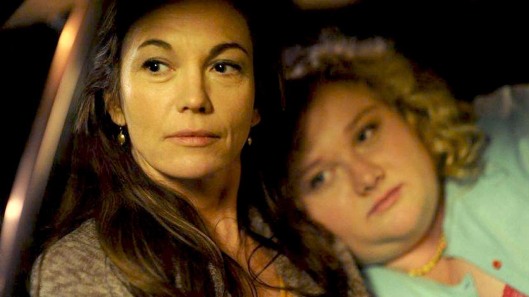
Every Secret Thing

Children of the Corn: Genesis (2011) / D: Joel Soisson / 80m

Cast: Kelen Coleman, Tim Rock, Billy Drago, Barbara Nedeljakova

Rating: 3/10 – a couple (Coleman, Rock) break down on a desert highway but manage to find shelter overnight with a old preacher (Drago) and his much younger, foreign bride (Nedeljakova), but soon find that what’s in the preacher’s barn is much more menacing than the old man himself; placing the action largely away from Gatlin, Nebraska may have seemed like a smart move but this tired, dreary, and just downright dull entry in the franchise shows just how bad things have gotten since the 1984 original, and just why Children of the Corn: Genesis should remain the last in the series to be made.

Children of the Corn Genesis

Skin Trade (2014) / D: Ekachai Uekrongtham / 96m

aka Battle Heat

Cast: Dolph Lundgren, Tony Jaa, Michael Jai White, Ron Perlman, Celina Jade, Peter Weller

Rating: 6/10 – when cop Nick Cassidy (Lundgren) is powerless to stop his wife and daughter being killed, he determines to go after the crime boss responsible, Viktor (Perlman), and destroy his human trafficking network, which means travelling to Thailand and teaming up with detective Tony Vitayakul (Jaa), who’s also out to put a stop to Viktor’s illegal behaviour; with its human trafficking backdrop giving it an unexpected depth, Skin Trade is not just a brainless, slam-bang action movie, but instead a very well-made (for its budget) revenge flick that features some great fight scenes – particularly one between Lundgren and Jaa – and uses its Thai locations to very good effect.
Skin Trade

The Reconstruction of William Zero (2014) / D: Dan Bush / 98m

Cast: Conal Byrne, Amy Seimetz, Scott Poythress, Lake Roberts, Melissa McBride, Tim Habeger

Rating: 6/10 – when the brother (Byrne) of a scientist (also Byrne) wakes from a coma, it’s not long before he begins to suspect that this identity may not be that of the scientist’s brother, and that he’s a pawn in a much bigger conspiracy, but the truth proves even stranger and more disturbing than he realised; a spare, almost antiseptic movie about notions of identity and individual consciousness, The Reconstruction of William Zero features terrific performances from Byrne, but lacks consistency of pace and sometimes feels as if Bush has taken his eye off the ball and taken a while to find it again, which leaves the movie often feeling flat and lifeless.
Reconstruction of William Zero, The

Not Another Teen Movie (2001) / D: Joel Gallen / 89m

aka Sex Academy

Cast: Chyler Leigh, Chris Evans, Jaime Pressly, Eric Christian Olsen, Randy Quaid, Mia Kirshner, Deon Richmond, Ed Lauter, Paul Gleason, Mr T, Molly Ringwald

Rating: 5/10 – at John Hughes High School, popular jock Jake Wyler (Evans) accepts a bet that he can’t take an ugly girl and transform her into the prom queen, but when he picks out Janey Briggs (Leigh), and begins to spend time with her, it makes him begin to question whether he should have made the bet in the first place; a predictably irreverent teen movie that parodies all those dreadful teen comedies from the Eighties, Not Another Teen Movie has more heart than most, and thanks to Mike Bender’s script contributions, is also quite funny in its knowing way, and gives viewers a chance to see the future Captain America back in the day when his skill as an actor wasn’t quite as honed as it is now.
Not Another Teen Movie

Bloomington (2010) / D: Fernanda Cardoso / 83m

Cast: Allison McAtee, Sarah Stouffer, Katherine Ann McGregor, Ray Zupp, J. Blakemore, Erika Heidewald

Rating: 7/10 – former child actress Jackie (Stouffer) attends Bloomington college, and finds herself having an affair with one of the professors, Catherine (McAtee), until the offer of a comeback threatens to end their relationship before it’s fully begun; an intelligent, finely crafted romantic drama, Bloomington has two great central performances, and an emotional honesty that is only undermined by the clichéd nature of Jackie’s need to return to acting, and Cardoso’s over-reliance on silent longing as a sign of emotional upheaval.
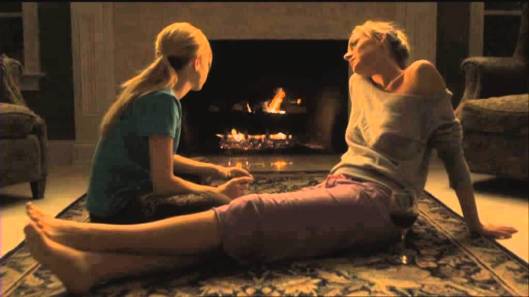
Bloomington

Sleepaway Camp 2: Unhappy Campers (1988) / D: Michael A. Simpson / 80m

Cast: Pamela Springsteen, Renée Estevez, Tony Higgins, Valerie Hartman, Brian Patrick Clarke, Walter Gotell

Rating: 5/10 – Angela Baker (Springsteen), having decimated most of the staff and children at Camp Arawak, and now judged to be safe around others, begins sending unruly teenagers “home” from Camp Rolling Hills – which in reality means killing them for any and all perceived infractions that Angela takes a dislike to; a much better sequel than expected, Sleepaway Camp 2: Unhappy Campers gets by on Springsteen’s preppy performance, some not-too-gory deaths, and Simpson’s confident touch behind the camera, as well as that dreadful musical interlude: The Happy Camper Song.
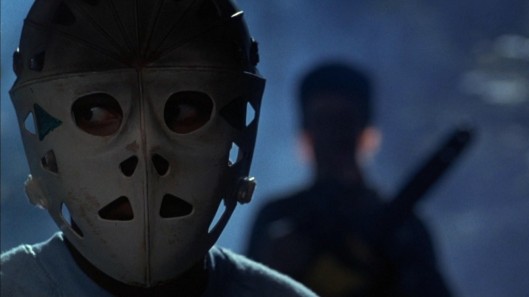
Sleepaway Camp 2

Gunsmoke in Tucson (1958) / D: Thomas Carr / 80m

Cast: Mark Stevens, Forrest Tucker, Gale Robbins, Vaughn Taylor, John Ward, Kevin Hagen, William Henry, Richard Reeves, John Cliff, Gail Kobe

Rating: 6/10 – brothers Jedediah (Stevens) and John (Tucker) are on opposite sides of the law, but when Jedediah becomes involved in a land dispute between cattle ranchers and farmers, his sense of right and wrong is put to the test, and he has to choose sides in the upcoming fight for the choicest plot of land; a robust, earnest Western, Gunsmoke in Tucson is a staid, respectable movie that doesn’t stray too far from its basic plot, and skimps on any psychological undertones in favour of a straight ahead anti-hero vs. the bad guys scenario that makes for a pleasant diversion.
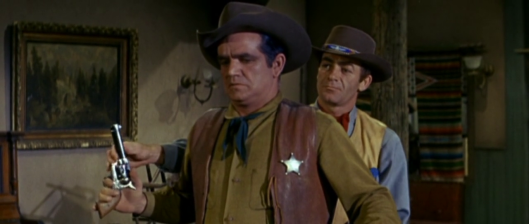
vlcsnap-00002

Beyond the Reach (2014) / D: Jean-Baptiste Léonetti / 91m

Cast: Michael Douglas, Jeremy Irvine, Ronny Cox, Hanna Mangan Lawrence

Rating: 6/10 – arrogant businessman Madec (Douglas) hires tracker Ben (Irvine) in order to bag some game out of season, but when he shoots and kills an old man by mistake, Madec refuses to accept responsibility for his actions and when Ben stands his ground over the issue, finds himself being hunted instead through the harsh Mojave Desert; an occasionally tense two hander that will do little for either actor’s career, Beyond the Reach ramps up the contrivance levels with each successive narrow escape that Ben makes, and with each missed shot that Madec makes, leading to the inevitable conclusion that this is one movie where credulity needs to be left at the door – an idea that is further enhanced by the movie’s risible conclusion.
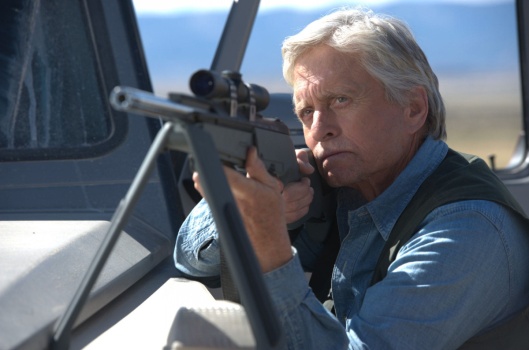
Email sent from: "Barnard, Linda"  lbarnard@thestar.ca  Subject: Beyond the Reach Date: 9 April, 2015 4:30:15 PM EDT   Jeremy Irvine and Michael Douglas star in Beyond The Reach Linda Barnard Movie Writer The Toronto Star thestar.com 416-869-4290

Blood (2012) / Nick Murphy / 92m

Cast: Paul Bettany, Mark Strong, Stephen Graham, Brian Cox, Ben Crompton, Naomi Battrick, Zoë Tapper, Adrian Edmondson

Rating: 5/10 – when a young girl is found murdered, the police, led by Joe Fairburn (Bethany) immediately set their sights on local child molester Jason Buleigh (Crompton), but when their prime suspect has to be let go for lack of evidence, Joe and his brother Chrissie (Graham) decide to take the law into their own hands, with terrible results; grim, visually depressing, and with a script that has more holes in it than a string vest, Blood has only its performances to recommend it, particularly those of Bethany, Graham and Cox, as well as the sense to know that its tale of a proud man’s downfall is always more interesting when you don’t know just how far they’ll fall.
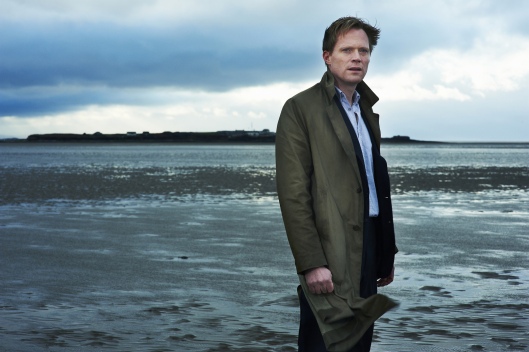
Blood

Echelon Conspiracy (2009) / D: Greg Marcks / 102m

aka The Conspiracy; The Gift

Cast: Shane West, Ed Burns, Ving Rhames, Martin Sheen, Tamara Feldman, Jonathan Pryce, Sergey Gubanov, Todd Jensen

Rating: 3/10 – computer security tech Max Peterson is given a mysterious phone that helps him gain a small fortune, but in doing so he finds himself embroiled in a plot to ensure that the NSA’s super computer, Echelon, gains the upgrade it needs in order to spy on everyone globally; so bad on so many levels, Echelon Conspiracy wastes its (mostly) talented cast, flirts with credibility before running away from it at high speed, offers laughs in places where they shouldn’t be, and is the cinematic equivalent of a car crash.
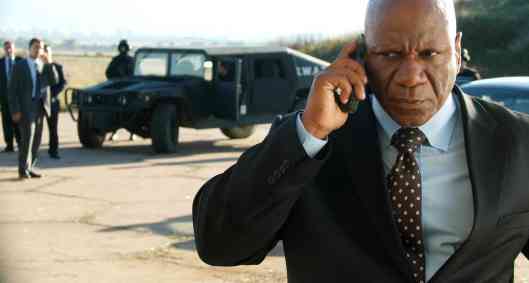
Echelon Conspiracy

Crazy Sexy Cancer (2007) / D: Kris Carr / 90m

With: Kris Carr, Jackie Farry, Melissa Gonzalez, Brian Fassett, Aura Carr, Kenneth Carr, Leslie Carr, Oni Faida Lampley, Bhavagan Das

Rating: 7/10 – when aspiring actress Kris Carr was diagnosed with cancer, she decided to make a visual record of the process of dealing with it, and the various ways in which other cancer sufferers have done so, and supported by the cameraman/editor who became her husband, as well as family and friends; an uplifting, positive message for anyone dealing with cancer, or who knows someone who is, Crazy Sexy Cancer is the kind of documentary that doesn’t attempt to overdo the physical and emotional strain of being in such a situation, but which does nevertheless offer plenty of poignant moments in amongst the hospital visits, and shows Carr to be a determined, aggressive would-be survivor.

Crazy Sexy Cancer

The Night Flier (1997) / D: Mark Pavia / 94m

Cast: Miguel Ferrer, Julie Entwisle, Dan Monahan, Michael H. Moss, John Bennes, Beverly Skinner, Rob Wilds, Richard K. Olsen, Elizabeth McCormick

Rating: 7/10 – hard-nosed, disreputable reporter Richard Dees investigates a series of murders carried out at small airstrips that appear to be the work of a vampire, but his initial scepticism gives way to reluctant belief as he talks to witnesses, and sees the injuries the victims have sustained; a well-crafted movie that betrays its low budget and scrappy production design, The Night Flier is still one of the better Stephen King adaptations thanks to Pavia’s confident handling of the material, Ferrer’s see-if-I-care performance, and some impressively nasty effects work courtesy of the KNB Group.
Night Flier, The

Killer by Nature (2010) / D: Douglas S. Younglove / 90m

Cast: Ron Perlman, Armand Assante, Zachary Ray Sherman, Lin Shaye, Haley Hudson, Richard Riehle, Richard Portnow, Svetlana Efremova, Jason Hildebrandt

Rating: 3/10 – troubled by nightmares of murder and sleepwalking, teen Owen (Sherman) undergoes therapy with Dr Julian (Perlman), a therapist who believes that a person’s essential nature is handed down through bloodlines – a theory originated by convicted murderer Eugene Branch (Assante), and who is connected to Owen in a way that causes Owen to believe he might be the perpetrator of a series of murders that mimic Branch’s modus operandi; a thriller that can’t decide if it’s tepid or overwrought, and then settles for both (sometimes in the same scene), Killer by Nature is a humdinger of a bad movie, and proof positive that sometimes the old saying that “if you can, it doesn’t mean you should” relates to far too many movies for comfort – especially this farrago of awful performances, pseudo-intellectual posturing, and deathless direction.
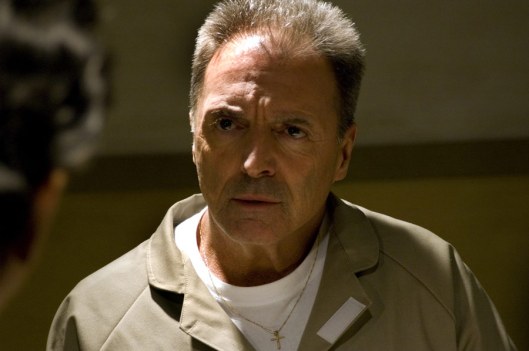
Killer by Nature

Scooby-Doo! and the Samurai Sword (2009) / D: Christopher Berkeley / 75m

Cast: Frank Welker, Casey Kasem, Mindy Cohn, Grey DeLisle, Kelly Hu, Kevin Michael Richardson, Sab Shimono, Keone Young, Gedde Watanabe, George Takei, Brian Cox

Rating: 6/10 – on a trip to Japan, Scooby-Doo and the gang become involved in the search for a mystical sword, while trying to thwart the efforts of the ghost of the Black Samurai to beat them to it; a middling entry in the series that at least provides a different backdrop than the standard old dark house (or mine, or hotel, or funfair…), and which allows Shaggy and Scooby to be the heroes we all know they really are deep down, while displaying a pleasing awareness of Japanese culture.
Scooby-Doo! and the Samurai Sword

[Rec]³ Génesis (2012) / D: Paco Plaza / 80m

Cast: Leticia Dolera, Diego Martín, Ismael Martínez, Àlex Monner, Sr. B, Emilio Mencheta, David Ramírez, Miguel Ángel González

Rating: 7/10 – a young couple’s wedding day is disrupted for good when one of the guests takes a bite out of another one, leading to a frenzied free-for-all among the guests and a fight for survival for those not affected by whatever’s causing people to become zombies – including the bride and groom, who have become separated in the mêlée; half found footage, half professionally filmed, [Rec]³ Génesis acts as a prequel to the events of the first two movies but is let down by both the change in location, and the absence of Claudia Silva, as well as a sense that by going backwards in terms of the outbreak and its possible cause, the makers are treading water until an idea as to how to carry the story forward from [Rec]2 (2009) comes along.
Rec3 Genesis

uwantme2killhim? (2013) / D: Andrew Douglas / 92m

Cast: Jamie Blackley, Toby Regbo, Joanne Froggatt, Jaime Winstone, Liz White, Mark Womack, Louise Delamere, Stephanie Leonidas, Mingus Johnston

Rating: 7/10 – popular schoolboy Mark (Blackley) leads a secret life on the Internet, where he invests his time and emotions in relationships with people he’s never met, but when of those people ask him to stop their younger brother, John (Regbo), from being bullied, what follows sets Mark on a dangerous path to murder; based on a true story, and told with a glum sense of foreboding throughout, uwantme2killhim? is an engrossing (though slightly frustrating) recounting of one of the strangest cases of the last fifteen years, and features two very good performances from Blackley and Regbo, though they have to fight against a script that favours repetition over clarity, but which still manages to flesh out what must have been a very strange relationship between the two boys.
JAMIE BLACKLEY (Mark) (L) & TOBY REGBO (John) (R) in UWANTME2KILLHIM? (c) 2011 U Want M2K Ltd. Photo by Mark Tillie

Bulldog Drummond in Africa (1938) / D: Louis King / 58m

Cast: John Howard, Heather Angel, H.B. Warner, J. Carrol Naish, Reginald Denny, E.E. Clive, Anthony Quinn

Rating: 7/10 – on the very day that Drummond (Howard) is finally due to marry his long-suffering girlfriend Phyllis (Angel) he becomes embroiled in the kidnapping of his old friend Colonel Nielsen (Warner), and finds himself travelling to Morocco – with Phyllis, butler Tenny (Clive) and old pal Algy (Denny) in tow – in order to rescue him; the fourth in the series is perhaps the funniest, with Howard allowed to spread his comedic wings, and even the villain (played again by Naish) given some splendidly dry remarks to make in amongst the threats of death by hungry lion, and a bomb on Drummond’s plane.
vlcsnap-00003

The Four-Faced Liar (2010) / D: Jacob Chase / 87m

Cast: Daniel Carlisle, Todd Kubrak, Emily Peck, Marja-Lewis Ryan, Liz Osborn

Rating: 8/10 – five friends – couples Greg (Carlisle) and Molly (Peck), Trip (Kubrak) and Chloe (Osborn), and single lesbian Bridget (Ryan) – experience various ups and downs in their relationships, especially when Trip has a one night stand, and Molly finds herself attracted to Bridget; a refreshingly honest look at what relationships mean to different individuals, and how they affect the people around them, The Four-Faced Liar is an effective, well-written drama that benefits from good performances all round, a soundtrack that supports the mood throughout, and Chase’s confident approach to Ryan’s script.
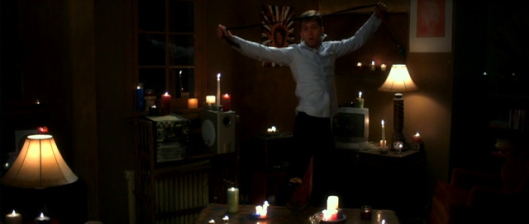
vlcsnap-00004

Share this:

  • Click to share on X (Opens in new window) X
  • Click to share on Facebook (Opens in new window) Facebook
  • More
  • Click to print (Opens in new window) Print
  • Click to email a link to a friend (Opens in new window) Email
Like Loading...

10 Reasons to Remember Christopher Lee (1922-2015)

15 Monday Jun 2015

Posted by dullwood68 in Movies

≈ Leave a comment

Tags

Actor, Career, Christopher Lee, Movies

Christopher Lee (27 May 1922 – 7 June 2015)

The sad passing of Christopher Lee this month means not just the end of an amazing career, but the loss of an actor who was always good value even if some of the movies he made weren’t. Of course, he’ll be forever associated with the movies he made for Hammer, including seven outings as Count Dracula. But he had a much more varied career than that, and was a versatile actor who could turn his hand to pretty much any genre you care to mention. His imposing figure and richly textured voice were instantly recognisable, and he still remains one of the few actors who are also an honorary member of three stuntmen’s unions.
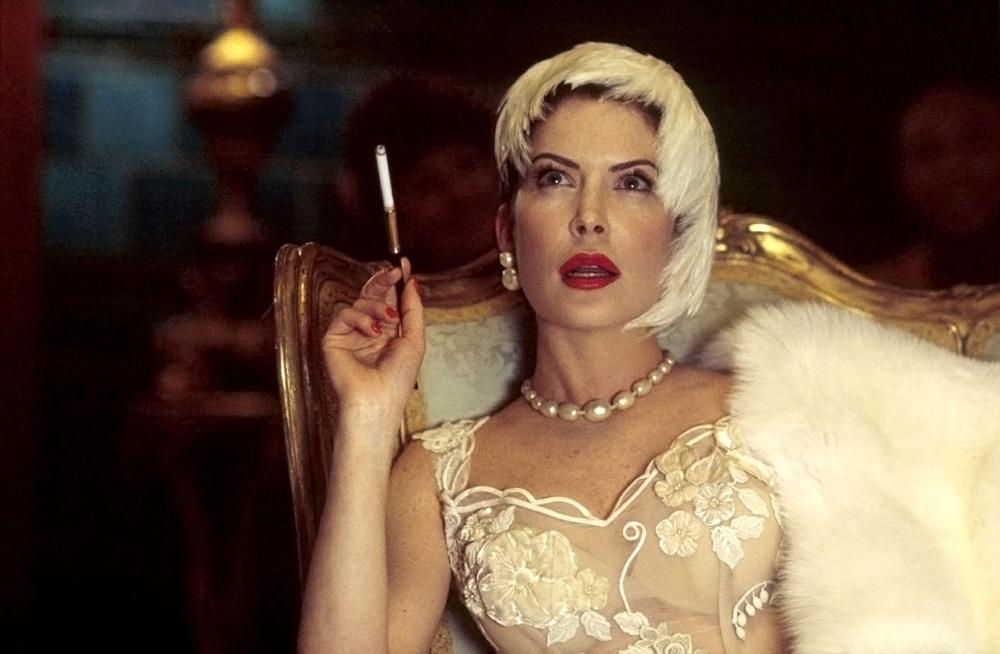

Christopher Lee 1

1 – Dracula (1958)

2 – Rasputin the Mad Monk (1966)

3 – The Devil Rides Out (1968)

4 – The Wicker Man (1973)

5 – The Three Musketeers (1973)

6 – The Man With the Golden Gun (1974)

7 – The Return of Captain Invincible (1983)

8 – Jinnah (1998)

9 – The Lord of the Rings: The Fellowship of the Rings (2001)

10 – Star Wars Episode II: Attack of the Clones (2002)

Christopher Lee 2

Share this:

  • Click to share on X (Opens in new window) X
  • Click to share on Facebook (Opens in new window) Facebook
  • More
  • Click to print (Opens in new window) Print
  • Click to email a link to a friend (Opens in new window) Email
Like Loading...

The 87th Annual Academy Awards – The Oscars 2015

23 Monday Feb 2015

Posted by dullwood68 in Movies

≈ Leave a comment

Tags

Academy Awards, Movies, Neil Patrick Harris, Nominees, Oscar, Speeches

Oscars 2014, The

Yes, folks, it’s that time of year again, when fashion designers get a free plug for some of their more expensive creations, when various stars generally fail to look happy for their fellow nominees when they win the coveted statuette, and when millions of us tune in to see a veritable orgy of fixed smiles, congratulatory backslapping, and a stream of actors and actresses who usually prove unable to read a teleprompter or tell poorly written jokes (and not forgetting the predictable round of halting acceptance speeches and several winners’ attempts to thank everybody and their auntie’s next door neighbour’s cat).

Hosted by first-timer Neil Patrick Harris, there was the traditional opening number celebrating the movies (and with help from Anna Kendrick and Jack Black), followed by a heartfelt speech about the power of the movies to inspire and move us. There was a fitfully amusing running gag involving Harris’s predictions locked away in a clear plastic box and being overseen by Octavia Spencer. A highlight was Harris’s “tribute” to Birdman or (the Unexpected Virtue of Ignorance) as he came from backstage in his underwear.

Meryl Streep provided a moving introduction to the In Memoriam section, and there was a tribute to The Sound of Music (now fifty years old) that featured clips from the movie and a performance by Lady Gaga that was – gasp! – actually pretty good (and received a standing ovation). And who should come out afterwards but Julie Andrews herself.

Winners in bold.

Best Performance by an Actor in a Supporting Role

Robert Duvall – The Judge; Ethan Hawke – Boyhood; Edward Norton – Birdman or (the Unexpected Virtue of Ignorance); Mark Ruffalo – Foxcatcher; J.K. Simmons – Whiplash

Whiplash (2014) -- Screengrab from exclusive EW.com clip.

Not much of a surprise but definitely well deserved, Simmons’ speech was mainly a tribute to his wife and children, and parents everywhere. Presented by Lupita Nyong’o.

Best Achievement in Costume Design

The Grand Budapest Hotel – Milena Canonero; Inherent Vice – Mark Bridges; Into the Woods – Colleen Atwood; Maleficent – Anna B. Sheppard; Mr. Turner – Jacqueline Durran

Completely expected and Canonero’s fourth win, she was gracious and thanked Wes Anderson profusely. Presented by Jennifer Lopez and Chris Pine.

Best Achievement in Makeup and Hairstyling

Foxcatcher – Bill Corso, Dennis Liddiard; The Grand Budapest Hotel – Frances Hannon, Mark Coulier; Guardians of the Galaxy – Elizabeth Yianni-Georgiou, David White

The second win for The Grand Budapest Hotel and entirely deserved, members of the team and Wes Anderson were thanked with gratitude. Presented by Reese Witherspoon.

Best Foreign Language Film of the Year

Ida; Leviathan; Tangerines; Timbuktu; Wild Tales

Ida - scene2

Superb result and a great moment for its director, Pawel Pawlikowski, who made a witty speech and was clearly overwhelmed by it all (and was the first who overran his time… and got a big cheer for it). Presented by Chiwetel Ejiofor and Nicole Kidman.

Best Short Film, Live Action

Aya; Boogaloo and Graham; Butter Lamp; Parvaneh; The Phone Call

This award was open to all and one of the winners called Oscar a “big bugger”, and a nod to Sally Hawkins for providing her services on the movie for free – and they went over their time. Presented by Kerry Washington and Jason Bateman.

Best Documentary, Short Subject

Crisis Hotline: Veterans Press 1; Joanna; Our Curse; The Reaper; White Earth

Too close to call but the winner has poignancy to spare, and the winners thanked everyone involved, particularly their families. Presented by Kerry Washington and Jason Bateman.

Best Achievement in Sound Mixing

American Sniper – Alan Robert Murray, Bub Asman; Birdman or (the Unexpected Virtue of Ignorance) – Jon Taylor, Frank A. Montaño, Thomas Varga; Interstellar – Gary Rizzo, Gregg Landaker, Mark Weingarten; Unbroken – Jon Taylor, Frank A. Montaño, David Lee; Whiplash – Craig Mann, Ben Wilkins, Thomas Curley

The second win of the evening for Whiplash in a category that could have been won by any of the nominees. Presented by Sienna Miller and Chris Evans.

Best Achievement in Sound Editing

American Sniper – Alan Robert Murray, Bub Asman; Birdman or (the Unexpected Virtue of Ignorance) – Aaron Glascock, Martín Hernández; The Hobbit: The Battle of the Five Armies – Brent Burge, Jason Canovas; Interstellar – Richard King; Unbroken – Becky Sullivan, Andrew DeCristofaro

Without Whiplash as a nominee, this was almost a fait accompli, and the winners thanked everyone connected with the movie, as well as their families. Presented by Sienna Miller and Chris Evans.

Best Performance by an Actress in a Supporting Role

Patricia Arquette – Boyhood; Laura Dern – Wild; Keira Knightley – The Imitation Game; Emma Stone – Birdman or (the Unexpected Virtue of Ignorance); Meryl Streep – Into the Woods

Patricia Arquette

One of the more predictable results of the evening, Arquette thanked a plethora of people and threw in a plea for equal rights for women in America – which got a huge round of applause. Presented by Jared Leto.

Best Achievement in Visual Effects

Captain America: The Winter Soldier – Dan DeLeeuw, Russell Earl, Bryan Grill, Daniel Sudick; Dawn of the Planet of the Apes – Joe Letteri, Dan Lemmon, Daniel Barrett, Erik Winquist; Guardians of the Galaxy – Stephane Ceretti, Nicolas Aithadi, Jonathan Fawkner, Paul Corbould; Interstellar – Paul J. Franklin, Andrew Lockley, Ian Hunter, Scott R. Fisher; X-Men: Days of Future Past – Richard Stammers, Lou Pecora, Tim Crosbie, Cameron Waldbauer

Not really a surprise (though it should have gone to Dawn…), the winners thanked everyone in general and gave a special mention to Kip Thorne. Presented by Ansel Elgort and Chloë Grace Moretz.

Best Short Film, Animated

The Bigger Picture; The Dam Keeper; Feast; Me and My Moulton; A Single Life

Well deserved – it really is a great movie – and the winners were appropriately humble. Presented by Anna Kendrick and Kevin Hart.
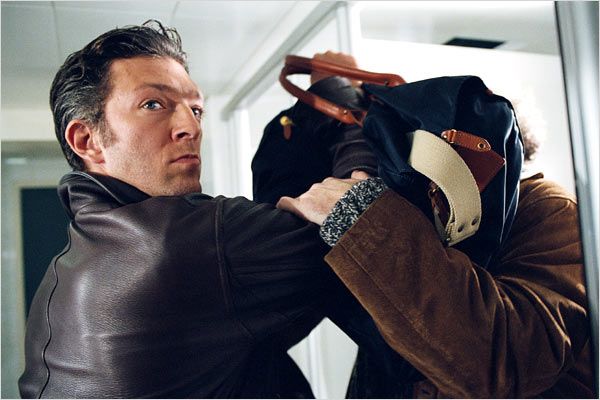
Best Animated Feature Film of the Year

Big Hero 6; The Boxtrolls; How to Train Your Dragon 2; Song of the Sea; The Tale of the Princess Kaguya

BigHero6

Disney win again (without a Pixar movie in contention), but this was the best result for the category, the movie having so much heart. Presented by Zoe Saldana and Dwayne Johnson.

Best Achievement in Production Design

The Grand Budapest Hotel – Adam Stockhausen, Anna Pinnock; The Imitation Game – Maria Djurkovic, Tatiana Macdonald; Interstellar – Nathan Crowley, Gary Fettis; Into the Woods – Dennis Gassner, Anna Pinnock; Mr. Turner – Suzie Davies, Charlotte Watts

It was either this or Mr. Turner but a good result nevertheless, and another heap of praise for Wes Anderson (and deservedly so). Presented by Chris Pratt and Felicity Jones.

Best Achievement in Cinematography

Birdman or (the Unexpected Virtue of Everything) – Emmanuel Lubezki; The Grand Budapest Hotel – Robert D. Yeoman; Ida – Łukasz Żal, Ryszard Lenczewski; Mr. Turner – Dick Pope; Unbroken – Roger Deakins

Lubezki’s second Oscar in a row (and the first award for Birdman…) was expected but it really should have gone to Ida. Presented by Idris Elba and Jessica Chastain.

Best Achievement in Editing

American Sniper – Joel Cox, Gary Roach; Boyhood – Sandra Adair; The Grand Budapest Hotel – Barney Pilling; The Imitation Game – William Goldenberg; Whiplash – Tom Cross

As at the BAFTAs, the absolutely positively must-win choice, and an absolutely positively deserved award, and a great nod to Damien Chazelle. Presented by Naomi Watts and Benedict Cumberbatch.

Best Documentary, Feature

CITIZENFOUR; Finding Vivian Maier; Last Days in Vietnam; The Salt of the Earth; Virunga

Citizenfour2

A superb result for such a superb movie, and great to see director Laura Poitras accepting the award, and condemning the powers that be over their treatment of ordinary people. Presented by Jennifer Aniston and David Oyelowo.

Best Achievement in Music Written for Motion Pictures, Original Song

Begin Again – Lost Stars (Gregg Alexander, Danielle Brisebois); Beyond the Lights – Grateful (Diane Warren); Glen Campbell: I’ll Be Me – I’m Not Gonna Miss You (Glen Campbell, Julian Raymond); The Lego Movie – Everything Is Awesome (Shawn Patterson); Selma – Glory (Common, John Legend)

Maroon 5 performed Lost Stars, while there was a cast of (what seemed like) thousands led by Tegan and Sara who reaffirmed that Everything Is Awesome. Tim McGraw subbed for Glen Campbell on I’m Not Gonna Miss You, then Rita Ora sang Grateful surrounded by laser lights, and in keeping with their original collaboration, John Legend and Common performed Glory against the backdrop of the Edmund Pettus Bridge (though Common’s hand gestures were a little too distracting). And Glory received a standing ovation, with many in the audience in tears.

Pretty much the only choice and Common gave an impassioned speech about democracy that revolved around the Edmund Pettus Bridge, while Legend reiterated the need for freedom and justice and continued voting rights. Presented by Idina Menzel and John Travolta.

Best Achievement in Music Written for Motion Pictures, Original Score

The Grand Budapest Hotel – Alexandre Desplat; The Imitation Game – Alexandre Desplat; Interstellar – Hans Zimmer; Mr. Turner – Gary Yershon; The Theory of Everything – Jóhann Jóhannsson

With Desplat finally winning an Oscar (and seeing off the challenge from himself), this was a great result and Desplat was a gracious winner. Presented by Julie Andrews.

Best Writing, Screenplay Written Directly for the Screen

Birdman or (the Unexpected Virtue of Ignorance) – Alejandro González Iñárritu, Nicolás Giacobone, Alexander Dinelaris, Armando Bo; Boyhood – Richard Linklater; Foxcatcher – E. Max Frye, Dan Futterman; The Grand Budapest Hotel – Wes Anderson, Hugo Guinness; Nightcrawler – Dan Gilroy

The movie’s second win and highly regarded, though not as cut and dried a result as it seemed. Iñárritu gave a bit of a rambling speech but it was heartfelt and didn’t go on for too long. Presented by Eddie Murphy.

Best Writing, Screenplay Based on Material Previously Produced or Published

American Sniper – Jason Hall; The Imitation Game – Graham Moore; Inherent Vice – Paul Thomas Anderson; The Theory of Everything – Anthony McCarten; Whiplash – Damien Chazelle

An unexpected result given Moore’s “treatment” of Turing’s life, the writer gave an awkward speech that mentioned his attempted suicide at sixteen and some life-affirming sentiments – but he still got some of the audience to stand and applaud him. Presented by Oprah Winfrey.

Best Achievement in Directing

Wes Anderson – The Grand Budapest Hotel; Alejandro González Iñárritu – Birdman or (the Unexpected Virtue of Ignorance); Richard Linklater – Boyhood; Bennett Miller – Foxcatcher; Morten Tyldum – The Imitation Game

As the tide swung in Birdman‘s direction (excuse the pun), Iñárritu gave an initially humorous speech that evolved into an expression of the effort that artists put into their work, and then into a big Thank You to everyone connected to the movie. Presented by Ben Affleck.

Best Performance by an Actor in a Leading Role

Steve Carell – Foxcatcher; Bradley Cooper – American Sniper; Benedict Cumberbatch – The Imitation Game; Michael Keaton – Birdman or (the Unexpected Virtue of Ignorance); Eddie Redmayne – The Theory of Everything

Eddie Redmayne

Despite the growing possibility that Michael Keaton would take the Oscar, this was a great result that saw Redmayne overjoyed by his win and giving praise to everyone in sight. Presented by Cate Blanchett.

Best Performance by an Actress in a Leading Role

Marion Cotillard – Two Days, One Night; Felicity Jones – The Theory of Everything; Julianne Moore – Still Alice; Rosamund Pike – Gone Girl; Reese Witherspoon – Wild

Julianne Moore

As with the BAFTAs Moore won but both Jones and Cotillard gave better performances. However, her speech acknowledged her co-nominees, and then she thanked pretty much everyone connected with the movie, before mentioning Alzheimer’s and thanking her family. Presented by Matthew McConaughey.

Best Motion Picture of the Year

American Sniper; Birdman or (the Unexpected Virtue of Ignorance); Boyhood; The Grand Budapest Hotel; The Imitation Game; Selma; The Theory of Everything; Whiplash

Birdman2

Iñárritu got everyone associated with the movie to come up on stage, and found even more people to thank, including Keaton who briefly showed how grateful he was to be there, before Iñárritu rounded things off by making a short political speech about Mexican immigration. Presented by Sean Penn.

And so it was a tie between Birdman or (the Unexpected Virtue of Everything) and The Grand Budapest Hotel with four wins each. With a few unexpected results amid all the predictable ones. The show as a whole became less and less interesting as it went on and Harris’s initial enthusiasm seemed to waver until even some of his jokes weren’t getting a laugh (though his predictions provided some amusement, even if they arrived too late). And the most valuable award of the evening? The Lego Oscars of course.

Share this:

  • Click to share on X (Opens in new window) X
  • Click to share on Facebook (Opens in new window) Facebook
  • More
  • Click to print (Opens in new window) Print
  • Click to email a link to a friend (Opens in new window) Email
Like Loading...

10 Reasons to Remember Louis Jourdan (1921-2015)

17 Tuesday Feb 2015

Posted by dullwood68 in Movies

≈ Leave a comment

Tags

Actor, French, Louis Jourdan, Movies

Suave, debonair, charming, handsome, a hit with the ladies – you could be forgiven for disliking Louis Jourdan just on principle, but the French actor had a likeability that made him popular with both genders. Over the course of a career spanning seven decades, Jourdan was the dependable character actor – a description he would have endorsed – who often gave better performances than the movies he made deserved. If he was never quite the star he should have been, it didn’t seem to matter to him, and it shouldn’t matter to us. He leaves behind some indelible screen appearances, and this wonderful quote: “I didn’t want to be perpetually cooing in a lady’s ear. There’s not much satisfaction in it.”

Louis Jourdan - Felicie nanteuil

1 – Félicie Nanteuil (1944)

2 – The Paradine Case (1947)

3 – Letter from an Unknown Woman (1948)

4 – The Happy Time (1952)

5 – Three Coins in the Fountain (1954)

6 – The Swan (1956)

7 – Gigi (1958)

8 – Can-Can (1960)

9 – The V.I.P.s (1963)

10 – Count Dracula (1977)

Louis Jourdan - Count Dracula

Share this:

  • Click to share on X (Opens in new window) X
  • Click to share on Facebook (Opens in new window) Facebook
  • More
  • Click to print (Opens in new window) Print
  • Click to email a link to a friend (Opens in new window) Email
Like Loading...

10 Reasons to Remember Rod Taylor (1930-2015)

10 Saturday Jan 2015

Posted by dullwood68 in Movies

≈ 1 Comment

Tags

Actor, Australian, Movies, Rod Taylor

An Australian actor with rugged good looks and a surfeit of roguish charm, Rod Taylor was an actor whose big screen outings displayed a raw energy, and a willingness to take risks, both in his choice of roles and (sometimes) in his choice of movies. He came to the US in the early Fifties and soon made a name for himself as a supporting actor in a variety of well-received movies – Hell on Frisco Bay (1955), The Catered Affair (1956), Giant (1956) and Raintree County (1957).

However, it was a science fiction adaptation of an H.G. Wells novel that brought him international stardom, and throughout the Sixties he made a number of highly regarded movies that helped maintain that stardom. If the Seventies saw him slowly drop out of the spotlight, Taylor still put in good performances even when the projects didn’t match his level of commitment (it would have been interesting to see how his career would have continued if he hadn’t lost the lead in Planet of the Apes (1968) to Charlton Heston). With an unexpected appearance as Winston Churchill in Tarantino’s Inglourious Basterds (2009) – he’d retired completely from acting at that point – to round off his career, Taylor has left us a raft of indelible performances that still have the power to entertain, and leaves behind a strength and an integrity few other actors of his generation could match.

Rod Taylor 1

1 – The Time Machine (1960)

2 – 101 Dalmatians (1961)

3 – The Birds (1963)

4 – Sunday in New York (1963)

5 – Young Cassidy (1965)

6 – The Glass Bottom Boat (1966)

7 – Hotel (1967)

8 – Zabriskie Point (1970)

9 – The Train Robbers (1973)

10 – The Picture Show Man (1977)

Rod Taylor 2

Share this:

  • Click to share on X (Opens in new window) X
  • Click to share on Facebook (Opens in new window) Facebook
  • More
  • Click to print (Opens in new window) Print
  • Click to email a link to a friend (Opens in new window) Email
Like Loading...

10 Reasons to Remember Mike Nichols (1931-2014)

20 Thursday Nov 2014

Posted by dullwood68 in Movies

≈ Leave a comment

Tags

Director, Five Rules for Filmmaking, Mike Nichols, Movies

A talented director who came to prominence in the Sixties with a brace of movies that heralded a prodigious talent, Mike Nichols had a distinct visual style and an even more distinctive rapport with his often very talented casts (he directed seventeen actors who were Oscar nominated for their roles). He made some very fine movies – see below – and even if later in his career, when the movies weren’t always as successful, or rewarding, his work still maintained a level of integrity that few directors have managed to achieve in the course of their careers. He also came up with the “Five Rules for Filmmaking”:

1 – The careful application of terror is an important form of communication.

2 – Anything worth fighting for is worth fighting dirty for.

3 – There’s absolutely no substitute for genuine lack of preparation.

4 – If you think there’s good in everybody, you haven’t met everybody.

5 – Friends may come and go, but enemies will certainly become studio heads.

Film Director Mike Nichols

1 – Who’s Afraid of Virginia Woolf? (1966)

2 – The Graduate (1967)

3 – Catch-22 (1970)

4 – Carnal Knowledge (1971)

5 – The Day of the Dolphin (1973)

6 – Silkwood (1983)

7 – Working Girl (1988)

8 – Postcards from the Edge (1990)

9 – The Birdcage (1996)

10 – Angels in America (2003)

Mike Nichols2

Share this:

  • Click to share on X (Opens in new window) X
  • Click to share on Facebook (Opens in new window) Facebook
  • More
  • Click to print (Opens in new window) Print
  • Click to email a link to a friend (Opens in new window) Email
Like Loading...

My Top 10 Guilty Pleasures

09 Sunday Nov 2014

Posted by dullwood68 in Movies

≈ 4 Comments

Tags

1941, Arachnophobia, Blown Away, Con Air, CutThroat Island, Guilty pleasures, Happy Gilmore, Lake Placid, Movies, Q, The Quick and the Dead, Tucker and Dale vs Evil

If you love movies, there’s always going to be those select favourites that, even if they’ve been critically derided and/or flopped at the box office, that you can watch over and over again, and which will always raise your spirits when you’re having a bad day or need cheering up.  With this in mind, these are my (mostly) guilty pleasures, the ten movies that I can return to time after time, but which aren’t exactly going to feature on any ten best lists (except this one).

10 – Con Air (1997) – D: Simon West / 115m

Con Air

A plane full of vicious criminals, Nicolas Cage with a mullet, Colm Meaney’s apoplectic DEA agent, more testosterone than you can shake an Uzi at, one of the most over-the-top climaxes in action cinema history, a bunny in a box, and Steve Buscemi as a serial killer with a keen sense of irony – what’s not to like in this profane, blustering, blackly comic action movie? It’s a blast of pure escapism, and while it has its fair share of crass, stupid moments, it’s still the kind of simple-minded excess that never lets up in its efforts to entertain.

9) – Q (1982) – D: Larry Cohen / 93m

Q

There are other Larry Cohen movies that are as enjoyable as this one, but it has a marvellous sense of its own absurdity and plays it straight throughout. The big Q himself – Quetzalcoatl – is used sparingly, but when he’s on screen the movie steps up a pace and the flaws in the acting and the production design are forgotten (and forgiven). A great homage to the monster movies of the Fifties and Sixties, Q is often rough and ready in its approach but at its heart it has passion and some very offbeat humour.

8) – Happy Gilmore (1996) – D: Dennis Dugan / 92m

Happy Gilmore

Adam Sandler’s man-child persona is given its most effective outing in this tale of a hockey player who discovers an aptitude for golf. Gilmore’s angry outbursts are a joy to watch, and though the movie is as uneven and lacking in a consistent tone as most of Sandler’s early movies, it’s the energy he brings to proceedings that lifts the movie and gives it such a winning sheen (and angry slapstick is always funny).

7) – Tucker and Dale vs. Evil (2010) – D: Eli Craig / 89m

Tucker and Dale vs Evil

Not really a guilty pleasure considering it was well received on release (and probably has a cult following by now), Tucker and Dale’s attempts at surviving the intrusion of a group of preppy college kids with unfortunately murderous intentions is an inventive, fun-filled exercise in subverting the backwoods psycho sub-genre of horror movies.  As our heroes, Alan Tudyk and Tyler Labine make for a great duo, and there are twists and surprises galore, as well as some great one-liners (“He’s heavy for half a guy”).

6) – Lake Placid (1999) – D: Steve Miner / 82m

Lake Placid

Of course it’s the best in the series, and of course it has a sense of humour that often overwhelms the horror, but the first in the rapidly worsening series is so deftly constructed that the inspired sparring between Oliver Platt’s arrogant hunter and Brendan Gleeson’s sardonic sheriff is just one highlight in a creature feature that just barrels along making the viewer smile at every opportunity. And there’s a wonderfully vulgar performance from Betty White that is as hilarious as it is unexpected.

5) – 1941 (1979) – D: Steven Spielberg / 118m

1941

Spielberg’s pet project is a complete mess, but it’s still a glorious mess, the kind of big budget misfire that still has a heart and a soul and is only interested in providing as much in the way of zany entertainment as it possibly can. The cast do their best but the script hinders any attempt at a cohesive narrative (almost deliberately so), and even Spielberg isn’t as in control of the material as he normally is. But if you go with it there’s lots to enjoy and some of the slapstick is really, really funny.

4) – Blown Away (1994) – D: Stephen Hopkins / 121m

Blown Away

Yes, Blown Away is barmy, and yes, Tommy Lee Jones’ Irish bomber is about as convincing as Sean Bean in The Patriot Games, but it has a simple intensity that offsets the ridiculous nature of the plot. It also features what is simply the most impressive explosion in movie history (spoiled slightly by having Jeff Bridges and Forest Whitaker almost photo-shopped into the sequence). It stretches credulity to the snapping point, and has more than a few moments where the script takes the cinematic equivalent of an extended lunch break, but it has a certain charm nevertheless.

3) – Arachnophobia (1990) – D: Frank Marshall / 103m

Arachnophobia

A thrill ride with spiders, and possibly Jeff Daniels’ finest hour, this heady mix of arachno-horror and small-town dramatics is unsure if it’s a slightly gorier tribute to the creature movies of the Fifties, or an adventure movie with hundreds of web-spinning villains. Either way it still works for the most part, and while some of the spider scenes err on the side of being more teasing than terrifying, the slowburn approach leads to a hugely satisfying climax.

2) – The Quick and the Dead (1995) – D: Sam Raimi / 105m

Quick and the Dead, The

Unfairly overlooked on its initial release, Raimi’s Western gunfight contest is high on impressive camerawork and special effects, but suffers from these aspects being the same reason the movie doesn’t quite work. Over-stylised it may be, and Raimi may not be able to rein in the movie’s visual ingenuity, but even so, surprisingly good performances from the likes of Gene Hackman, Leonardo DiCaprio and Tobin Bell help things immensely, and it never loses the viewer’s attention.

1) – CutThroat Island (1995) – D: Renny Harlin / 123m

Cut Throat Island

One of the most notorious money losers in box office history, Harlin’s overwrought, effects heavy, leaden-acted pirate movie is still huge fun despite all its problems. Frank Langella steals the movie, the locations are stunning, the stunts are great, and the whole movie revels in its complete absurdity. It’s the epitome of loud, dumb fun, and all the more enjoyable for it, making a remarkable virtue out of being so stupid that it just has to be watched over and over again just to see if it is as bad as it looks and sounds (it is, but who cares?).

Share this:

  • Click to share on X (Opens in new window) X
  • Click to share on Facebook (Opens in new window) Facebook
  • More
  • Click to print (Opens in new window) Print
  • Click to email a link to a friend (Opens in new window) Email
Like Loading...

Happy Birthday! – thedullwoodexperiment is a Year Old Today

30 Thursday Oct 2014

Posted by dullwood68 in Movies

≈ Leave a comment

Tags

Birthday, Movies, Phase 2, Reviews, THANK YOU

It’s incredible to think that I’ve been doing this for a year now, a year in which thedullwoodexperiment has exceeded all my expectations – not that I had very many – and which has, in its own small way, found a home on the Web that hopefully has proven thought-provoking, entertaining and informative.

When I wrote my first review – Touchy Feely (2013) – it was with a sense of trepidation.  I didn’t know if anyone would read it, or if they did, whether they would like it, agree with it, disagree with it, or just be dismissive of it.  But as I added more and more content, and I started getting more and more traffic, I could see that my efforts weren’t entirely in vain.  As I gained a few followers (still something that seems incredibly weird to me), I also gained more confidence in what I was writing, in my choice of movies to write about, and thanks to some generous comments and feedback in those early days, the momentum I needed to keep going when it seemed no one was interested (those were dark days indeed).

But now I feel I’m in a position to continue with even more confidence that, with all the other movie blogs out there, my little piece of the Net is getting the attention that it deserves, and that it’s appreciated as well.  It’s a tremendous feeling when I log on and find someone has liked a review or a post; it makes it all the more worthwhile.

So, a big THANK YOU to everyone who’s read a review, or a post – whether you’ve liked it or not – and especially to those very kind and generous people who are currently following thedullwoodexperiment.  As it’s customary to say on these occasions, “I couldn’t have done it without you”.

With Phase 1 of my version of Marvel’s Cinematic Universe now complete, it’s time to look forward to Phase 2, and making this particular blog even more well-known than it is now.  Hopefully I’ll pick up some new readers along the way, and hopefully they’ll like the blog enough to tell their friends etc.  (That’s a big hopefully, by the way.)  I have some ideas for the blog that will happen in the next twelve months, and a lot of them I’m really excited about.  A couple of new “additions” can be seen from today.

But the reviews will continue to be the focus of the blog.  I hope to include even more reviews in the next year, and not leave some out like I did this year – my apologies to 47 Ronin, several Roger Corman movies, Pride, and a few low budget horror movies that I just couldn’t bring myself to write about.  I’ll continue to review a wide range of movies from a variety of eras and countries, and not just the latest new releases; I think that’s only fair.

Finally, if you’ve ever wanted to leave a comment, positive or negative, and decided in the end not to, can I suggest that you just go for it?  Hearing from other people, bloggers and non-bloggers alike, is always special, and feedback is always greatly appreciated.  So, don’t be shy, and let me know what you’re thinking.

That’s all for now, folks!

Share this:

  • Click to share on X (Opens in new window) X
  • Click to share on Facebook (Opens in new window) Facebook
  • More
  • Click to print (Opens in new window) Print
  • Click to email a link to a friend (Opens in new window) Email
Like Loading...

10 Movies That Are 40 Years Old This Year – 2014

22 Wednesday Oct 2014

Posted by dullwood68 in Movies

≈ 1 Comment

Tags

1974, A Woman Under the Influence, Al Pacino, Biography, Bob Fosse, Chinatown, Comedy, Crime, Drama, Dustin Hoffman, Fear Eats the Soul, Francis Ford Coppola, Gena Rowlands, Gene Hackman, Gene Wilder, Gunnar Hansen, Horror, John Cassavetes, Lenny, Luis Buñuel, Mel Brooks, Movies, Rainer Werner Fassbinder, Reviews, Robert De Niro, Roman Polanski, The Conversation, The Godfather Part II, The Phantom of Liberty, The Taking of Pelham One Two Three, The Texas Chain Saw Massacre, Walter Matthau, Young Frankenstein

Pick any year and you’re likely to find ten really good films that were released during that year, but 1974 is a year when there were ten really great films released.  It’s not a year that stands out when first thought about, but upon closer inspection it seems like a banner year, when movie makers pulled out all the stops and gave us a succession of impressive movies that even now, still resonate and attract viewers in high numbers.  (And if truth be told, this list could have been stretched a little further, but 13 Movies That Are 40 Years Old This Year didn’t sound right.)  So, in no particular order, here are those ten movies we’re all still talking about.

1) Chinatown – Roman Polanski’s stunning neo-noir thriller transformed Jack Nicholson into a superstar and made Robert Towne’s elaborate, gripping screenplay – one of the most compelling, intelligent screenplays ever written – the main reason for seeing the movie.  With superb performances from Faye Dunaway and John Huston, this incredible movie still has the power to unnerve and startle with its story of corruption and greed in 40’s Los Angeles, and that tragic revelation.

Chinatown - scene

2) Lenny – Revisiting the life of counter-culture, angst-ridden comic Lenny Bruce was always going to depend on the actor playing him, but Dustin Hoffman turns in an amazing, detailed performance that is possibly his best ever.  With a career best turn from Valerie Perrine, deft, sympathetic direction from Bob Fosse, and a grimy, authentic recreation of the clubs where Bruce vented his anger at the hypocrisies of society, Lenny still has the potential to shock and surprise, and takes no prisoners (just like Bruce himself).

3) Fear Eats the Soul – German auteur Rainer Werner Fassbinder had made a number of excursions into movies for TV before he wrote and directed this vital, important tale of the relationship between a Moroccan migrant worker (the soulful El Hadi ben Salem) and a German woman in her mid-sixties (the affecting Brigitte Mira). Ageism and racism are given short shrift by Fassbinder’s script, and the growing relationship is portrayed naturally and with little sentiment.  It’s a dour movie, to be sure, but uplifting at the same time.

4) The Godfather Part II – The crowning glory of Francis Ford Coppola’s career and a movie that’s nigh on faultless, The Godfather Part II is the classic example of a sequel that is better than its predecessor… so, so much better.  Even Brando’s presence isn’t missed.  With its flashback sequences detailing the origin of Vito Corleone’s role as Godfather conflated with the inexorable rise of his son Michael to the same position, this has tragedy and triumph in equal measure, and features astonishing achievements in directing, scripting, acting, cinematography, sound, editing, costumes, art direction, and set design.  In short, it’s a masterpiece.

Godfather Part II, The - scene

5) The Texas Chain Saw Massacre – With its fierce, tension-wringing set up and feral, nightmarish family of cannibals, Tobe Hooper’s second feature still has the power to shock, and leave audiences feeling drained by the end.  The iconic image of Gunnar Hansen with a literal “face”-mask and revving a chainsaw – once seen, never forgotten – sums up the movie’s terrifying approach to its subject matter, and confirms (if anyone needed reminding) that low budget horror can be startling, original and a once in a lifetime experience.

6) A Woman Under the Influence – Possibly the finest examination of mental illness within the family, John Cassavetes’ stinging, heart-rending drama features a tour-de-force performance from Gena Rowlands as the emotionally downtrodden Mabel, a woman whose ill treatment by her husband and children leads her to suppress any positive feelings for fear of being judged as “unbalanced”.  Not a movie for everyone but one that isn’t afraid to confront a complex, contentious issue with poise and a piercing intelligence.

7) The Phantom of Liberty – If you like your movies chock-full of symbolism, surrealism and absurdist humour, then Luis Buñuel’s collection of barely connected episodes will capture your attention and never let go.  It’s a modern masterpiece of (mis)direction and subversive behaviour, and features a seasoned cast that includes Jean Rochefort, Monica Vitti and Adolfo Celi, all of whom enter into the spirit of things with undisguised gusto.

Phantom of Liberty, The - scene

8) The Conversation – It’s that man Coppola again, this time with an introspective low-key look at the self-contained life of a surveillance expert (the superb Gene Hackman) who finds himself drawn – against his better judgment – into a perfectly weighted mystery.  The chilly, withdrawn mise-en-scene is expertly crafted, and Coppola’s script delivers more and more as the movie heads toward its incredible denouement.  To release both this and The Godfather Part II in the same year – well, that’s just insane.

9) Young Frankenstein – Mel Brooks’ finest hour, even though Blazing Saddles was also released in ’74, this grand homage to the Universal horrors of the 30’s and 40’s is an undeniable treat, full of terrific one-liners – “To the lumber yard!” – and wonderful visual flourishes.  Co-writers Brooks and Gene Wilder are on top form, and their affection for the Fronkensteen movies made by Universal adds to the joy of watching Mary Shelley’s classic tale unfold in its own, very unique manner.  And the “Puttin’ on the Ritz” sequence is just inspired.

10) The Taking of Pelham One Two Three – Ignore the turgid remake with Denzel Washington and John Travolta, this is ten times as good and ten times as gripping.  Walter Matthau is the grizzled cop engaged in a battle of wits with train hijacker Robert Shaw, and as the movie ratchets up the tension, audiences are treated to one of the finest thrillers ever made.  Bravura movie making from all concerned but anchored by a fantastic job of direction by the underrated Joseph Sargent.

Taking of Pelham One Two Three, The - scene

If you agree or disagree with my choices, feel free to let me know.  And if there’s another year with an equally brilliant selection of movies released, feel free to let me know as well.  But more importantly, if you haven’t seen some or all of the movies listed above, then what are you doing reading this?  Get out there and watch them!

Share this:

  • Click to share on X (Opens in new window) X
  • Click to share on Facebook (Opens in new window) Facebook
  • More
  • Click to print (Opens in new window) Print
  • Click to email a link to a friend (Opens in new window) Email
Like Loading...

10 Reasons to Remember Richard Attenborough (1923-2014)

24 Sunday Aug 2014

Posted by dullwood68 in Movies

≈ Leave a comment

Tags

Actor, Director, Movies, Richard Attenborough

As well as being one of Britain’s finest directors – Gandhi (1982), Cry Freedom (1987) et al – Richard Attenborough will be remembered for an acting career that saw him play a variety of roles in a variety of movie genres but always with an innate sense of the character, and with a selflessness that was always impressive.  Several of the movies listed below are rightly regarded as classics – what better testament to an actor who never once short-changed an audience.

Richard Attenborough 1

1 – Brighton Rock (1947)

2 – The Angry Silence (1960)

3 – The League of Gentlemen (1960)

4 – The Great Escape (1963)

5 – Seance on a Wet Afternoon (1964)

6 – The Flight of the Phoenix (1965)

7 – The Sand Pebbles (1966)

8 – 10 Rillington Place (1971)

9 – The Chess Players (1977)

10 – Jurassic Park (1993)

Richard Attenborough 2

Share this:

  • Click to share on X (Opens in new window) X
  • Click to share on Facebook (Opens in new window) Facebook
  • More
  • Click to print (Opens in new window) Print
  • Click to email a link to a friend (Opens in new window) Email
Like Loading...

I Am Divine (2013)

21 Monday Jul 2014

Posted by dullwood68 in Movies

≈ Leave a comment

Tags

Biopic, Cross-dressing, Disco, Divine, Documentary, Frances Milstead, Harris Glenn Milstead, Jeffrey Schwarz, John Waters, Movies, Pink Flamingos, Women Behind Bars

I Am Divine

D: Jeffrey Schwarz / 90m

Divine, John Waters, Frances Milstead, Mink Stole, Michael Musto, Greg Gorman, Holly Woodlawn, Jay Bennett, Helen Hanft, Tab Hunter, Belle Zwerdling, Rob Saduski, Ricki Lake

In most movie buffs’ lives, there is that moment when they become aware of a Baltimore-based writer/director called John Waters.  And unless that first exposure is one of the five movies he’s made post-1988, or 1977’s Desperate Living, then said movie buff will have also become aware of the extreme force of nature that was… Divine.  In a world where image is everything, and glamour is often very rigidly defined, Divine was the overweight, over-made up anti-hero who shocked everyone with her aggressive nature and perverse behaviour.  She was relentless in her efforts to unnerve and confound people’s expectations, and found fame (if not a fortune) in pursuing that same avenue of expression, and across a variety of entertainment formats.  She was a stage performer, a disco queen, a probable TV star, but most of all, she was – and will remain – a movie icon.

Of course, she was a he, Harris Glenn Milstead, a kid from Baltimore who grew up with a liking for women’s fashions, and a desire to be in movies.  Teased and bullied at school on a daily basis, Glenn was a compulsive eater who never stopped dreaming, despite his weight going up and up and his increasingly feminine tendencies.  An early relationship ended when Glenn discovered the gay scene in Baltimore, and that led to drugs – Waters talks of having LSD “early” in 1964 – and a lifelong use of pot.  But it was when he met Waters that Glenn’s life really changed, and his dreams of being a movie star began to be realised, starting off with an uncredited appearance in Waters’ second short movie, Roman Candles (1966).  It was Waters who saw the potential in the Divine character, and he tapped into Glen’s suppressed anger.  Writing specifically with this in mind, Waters created the first in a series of over-the-top cinematic monsters that would define Glen’s career, and make Divine notorious for her on-screen antics.

With Divine’s celluloid persona duly cemented in place over the course of four wildly degenerate movies – Mondo Trasho (1969), Multiple Maniacs (1970), Pink Flamingos (1972), and Female Trouble (1974) – she became instantly recognisable thanks to the roles Waters created for her, and also thanks to the look created for her by make up artist and costume designer Van Smith (Glenn’s hairline was shaved back to the top of his head because Smith thought there wasn’t enough room on his face for all the make up that Smith needed for Divine’s “look”).  As a “freak”, Divine took to performing in night clubs and theatres, touring America and spawning an even larger fan base, and leading to a secondary career as a disco star, as well as a stint in the play Women Behind Bars.  Reunited with Waters for two further movies, Polyester (1981) and Hairspray (1988), Divine’s acting ability became more featured, and she began receiving more and more positive reviews.  Sadly, a foray into TV with a guest appearance on the sitcom Married… with Children never materialised: the night before filming, Glenn died in his sleep from a heart attack, his weight and unhealthy diet putting an end to a remarkable life.

I Am Divine - scene

There are several moments in I Am Divine where Glenn talks about Divine as another person entirely, and it’s clear from these moments that Divine is indeed a character that Glenn played, an extension of his own personality (as devised by Waters), but separate from his daily life and expectations.  It’s perhaps the most surprising revelation the movie has to offer, reminding fans or anyone who didn’t take to the character’s outrageous exploits, that being Divine was a job, and one that, most days, Glenn couldn’t wait to put aside.  In various contemporary interviews, he comes across as unfailingly polite, thoughtful, self-effacing and kind-hearted, the complete antithesis of his drag queen alter-ego.  It’s a reminder (not that it should be needed) that the person we see on screen or on stage, is playing a role, and not themselves.

At the heart of the movie is Glenn’s relationship with his mother, Frances, a bit of a glamour girl in her day, but unable to deal with his choices as an adult.  They were estranged for a long time, and the pain of that separation shows clearly when Frances talks about Glenn, her obvious pride in his achievements offset by a regret that they weren’t reunited any sooner than a short while before he died.  Frances talks candidly about Glenn with undisguised affection, and it’s these moments when she’s on screen that give the movie an unexpected emotional intensity.  As his best friend, Waters guides the viewer through Divine’s development from Elizabeth Taylor wannabe to gun-toting mistress of filth, and provides a unique insight into what made Glenn tick.  (In a cinematic sense, they were the movies’ first real odd couple, a depraved Laurel and Hardy doing their best to upset the establishment.  That both men’s sensibilities moved more toward the mainstream and wider acceptance as they got older is strangely comforting; shock and outrage are definitely pastimes for the young.)

I Am Divine brings forward a lot of friends and colleagues and co-stars to talk about both the private man and the public icon, and there’s enough  here to reinforce the image of a man who was larger than life and refreshingly down to earth at the same time.  Some aspects of his later life – his feeling suicidal when he couldn’t find acting jobs, his continued ingestion of marijuana – are glossed over or ignored, but on the whole, the movie is a compassionate, non-judgmental appreciation of a star unlike any other, and who Tab Hunter said was “one of [his] finest leading ladies”.  Anyone looking for a warts n’ all exposé of a star with terrible personal problems that they hid from view will be disappointed, but for those fans who want to know a little bit more about their favourite trash goddess – and thanks to director Jeffrey Schwarz’s skilful handling of the wealth of archive material and contemporary interviews – they will be entertained and informed throughout.

Rating: 8/10 – I Am Divine provides the cross-dressing diva with a heartwarming tribute and, in doing so, heaps praise on the most unlikeliest of stars; once described as “a Miss Piggy for the blissfully depraved”, the man also known as Harris Glenn Milstead would have laughed his filthy laugh, and heartily approved of all the attention.

Share this:

  • Click to share on X (Opens in new window) X
  • Click to share on Facebook (Opens in new window) Facebook
  • More
  • Click to print (Opens in new window) Print
  • Click to email a link to a friend (Opens in new window) Email
Like Loading...

10 Reasons to Remember Philip Seymour Hoffman (1967-2014)

02 Sunday Feb 2014

Posted by dullwood68 in Movies

≈ 1 Comment

Tags

Actor, Capote, Career, Movies, Philip Seymour Hoffman

Philip Seymour Hoffman (23 July 1967 – 2 February 2014)

Obit Hoffman

Easily one of the finest actors of his generation, Philip Seymour Hoffman was one of those actors who was able to inhabit a role and make you forget there was an actor playing a part. From his earliest performances, Hoffman often made all the difference in a movie, keeping things from becoming bland or entirely disappointing.

My first encounter with Hoffman, like so many other people’s I guess, was in his breakthrough movie, Scent of a Woman (1992). As the conflicted George Willis Jr he brought an intelligence and a conviction to a role that could have been just another supporting role given passing attention by most other actors. Other supporting roles followed – the free-spirited Dusty in Twister (1996), the lovelorn Scotty in Boogie Nights (1997), Brandt, the other Jeffrey Lebowski’s assistant in The Big Lebowski (1998), the sympathetic male nurse, Phil in Magnolia (1999), the resolute Freddie Miles in The Talented Mr. Ripley (1999), revered music journalist Lester Bangs in Almost Famous (2000) (a personal favourite), the slimy Freddy Lounds in Red Dragon (2002) – and it seemed that he would always remain the underused, scene-stealing actor everybody liked but who was never given the chance to headline a major movie and show what he could really do.

That all changed, of course, in 2005 with Capote. Hoffman won an Oscar for his performance, and if anyone had had any doubts about his ability to carry a movie, and to deliver a really powerful performance, they were banished right there and then. I saw an actor who had proved time and time again he could deliver terrific performances, but who was stepping up to a whole other level. If you haven’t seen Capote, you’re missing Hoffman’s finest hour; there’s a level of detail there that is just astonishing.

Hoffman followed Capote with what for many may have appeared a strange choice: the villain in Mission: Impossible III (2006), and yet, once again he was mesmerising, acting Tom Cruise off the screen and proving yet again that he could elevate even the weakest of material. But Hoffman had said, “I love a good payday and I’ll do films for fun.” Ultimately though his goal was to do good work, and in that regard he never failed either himself, or us, his audience.

The sad circumstances of his death, coming after his admission in May 2013 that he’d attended a substance abuse centre, is a reminder that even the most talented actors can have their demons. For me, I will always remember him as the main reason for watching several films I might not otherwise have taken a look at, in particular Before the Devil Knows You’re Dead (2007) and A Late Quartet (2012). A great talent, and one that will be sorely missed.

PSH - SOAW

1 – Scent of a Woman (1992)

2 – Twister (1996)

3 – Boogie Nights (1997)

4 – Magnolia (1999)

5 – Almost Famous (2000)

6 – Capote (2005)

7 – Synecdoche, New York (2008)

8 – Doubt (2008)

9 – The Master (2012)

10 – A Most Wanted Man (2014)

PSH - AMWM

Share this:

  • Click to share on X (Opens in new window) X
  • Click to share on Facebook (Opens in new window) Facebook
  • More
  • Click to print (Opens in new window) Print
  • Click to email a link to a friend (Opens in new window) Email
Like Loading...

10 Reasons to Remember Saul Zaentz (1921-2014)

05 Sunday Jan 2014

Posted by dullwood68 in Movies

≈ Leave a comment

Tags

Amadeus, Career, Movies, One Flew Over the Cuckoo's Nest, Producer, Saul Zaentz, The English Patient

Saul Zaentz (28 February 1921 – 3 January 2014)

Saul Zaentz

Though Saul Zaentz was a producer, it may surprise people to learn that, over a period of thirty-one years, he only produced nine movies. But among them are some of the finest movies made in the last forty years: One Flew Over the Cuckoo’s Nest (1975), Amadeus (1984), The Mosquito Coast (1986), The Unbearable Lightness of Being (1988), and The English Patient (1996). That’s not a bad record.

Zaentz came to producing after a long stint at the influential Fantasy Records, first as a salesman then later on as a co-owner, and before that he started out in life as a gambler. With these two experiences it makes a certain kind of sense that Zaentz would do well in Hollywood. He was tenacious, invested his own money in his productions (often leading to his owning those properties), and often had final cut.

He surrounded himself with some of the most talented writers, directors and actors available – Peter Weir, Anthony Minghella, Jean-Claude Carrière, Jack Nicholson and Daniel Day-Lewis to name but a few – and took the kind of risks that other producers would steer well clear of. As a result he was a three-time Oscar winner (for One Flew Over the Cuckoos’ Nest, Amadeus (my personal favourite of his movies), and The English Patient.

He was one of the last, great independent producers. If there is any regret to be had with his passing it’s that he didn’t come to movie making a lot earlier; think how many other fiercely intelligent movies we could have had the privilege of seeing if he had.

SZ - OFOTCN

1 – One Flew Over the Cuckoo’s Nest (1975)

2 – Three Warriors (1977)

3 – The Lord of the Rings (1978)

4 – Amadeus (1984)

5 – The Mosquito Coast (1986)

6 – The Unbearable Lightness of Being (1988)

7 – At Play in the Fields of the Lord (1991)

8 – The English Patient (1996)

9 – Goya’s Ghosts (2006)

SZ - GG

10 – Milos Forman: What Doesn’t Kill You… (2009)

Share this:

  • Click to share on X (Opens in new window) X
  • Click to share on Facebook (Opens in new window) Facebook
  • More
  • Click to print (Opens in new window) Print
  • Click to email a link to a friend (Opens in new window) Email
Like Loading...

10 Reasons to Remember Joan Fontaine (1917-2013)

19 Thursday Dec 2013

Posted by dullwood68 in Movies

≈ Leave a comment

Tags

Actress, Born to Be Bad, Career, Joan Fontaine, Movies, Suspicion


Joan Fontaine (22 October 1917 – 15 December 2013)

Joan Fontaine

It’s surprising sometimes when you hear that a certain actor or actress has died. A lengthy retirement can often lead to the assumption that someone has died a lot earlier than is actually the case. This was the case – for me, at least – with Joan Fontaine. Her last movie, Good King Wenceslas (1994) was made for TV. During the Eighties she made a handful of TV appearances, and just two in the Seventies. Before then she turned up in Hammer’s The Witches (1966), and it was this movie that introduced me to an actress whose screen presence projected a vulnerable tenacity. In Suspicion (1941), the movie for which she won an Oscar, she was perfectly cast as the shy, emotionally imperilled newlywed “menaced” by Cary Grant. Watching her in further movies it was evident that Fontaine was a talented actress with a much wider range than her earlier performances might have suggested.

My favourite role of hers is Christabel Caine Carey in Nicholas Ray’s Born to Be Bad (1950). As the predatory, unrepentant Christabel, Fontaine was startling. She varied her roles quite successfully throughout her career, and she was dependable even in the most unrewarding of movies – You Gotta Stay Happy (1948) – providing a strong focus for the audience and making the most of the material. She perhaps worked best under the guidance of strong directors like Alfred Hitchcock and Ida Lupino.

She had a famous feud with her sister, Olivia de Havilland, was a pilot and prize winning tuna fisherman, worked as a nurse’s aide during World War II, and was born in Tokyo. She married four times – second husband William Dozier remarked her autobiography, No Bed of Roses, should have been called No Shred of Truth – and lost out on the role of Karen Holmes in From Here to Eternity (1953) because she was embroiled in a custody case involving her daughter Deborah. Her own life would have made for a compelling drama.

JF - TW

1 – The Women (1939)

2 – Rebecca (1940)

3 – Suspicion (1941)

4 – The Constant Nymph (1943)

5 – Jane Eyre (1943)

6 – Letter from an Unknown Woman (1948)

7 – Born to Be Bad (1950)

8 – Ivanhoe (1952)

9 – The Bigamist (1953)

10 – Tender Is the Night (1962)

JF - TITN

Share this:

  • Click to share on X (Opens in new window) X
  • Click to share on Facebook (Opens in new window) Facebook
  • More
  • Click to print (Opens in new window) Print
  • Click to email a link to a friend (Opens in new window) Email
Like Loading...

10 Reasons to Remember Paul Walker (1973-2013)

03 Tuesday Dec 2013

Posted by dullwood68 in Movies

≈ Leave a comment

Tags

Actor, Brian Conner, Career, Movies, Paul Walker

Paul Walker (12 September 1973 – 30 November 2013)

Paul Walker

I first encountered Walker in The Fast and the Furious (2001), but he’d been working solidly in film and TV since 1986 (his debut movie was Monster in the Closet). My first reaction was that he might get typecast as the “pretty boy” hero, and while subsequent Fast and Furious movies did little to dispel that idea, it was in some of his non-franchise work that you could see an actor able to give a lot more than might have been expected. The underrated The Death and Life of Bobby Z (2007) showed he had the kind of acting ability that would stand him in good stead as he grew older, while his supporting turn in Flags of Our Fathers (2006) proved that he could respond to and step up for a strong director (in this case, Clint Eastwood). Even in the testosterone-filled and entirely risible Takers (2010) he managed to stand out from a very impressive crowd.

Walker was a likeable actor, unfussy perhaps in his style and performances but always confident and rarely disappointing. It’s always difficult to envisage a young actor – I was surprised to learn he was recently forty, God did he have good genes! – when they’re older and what work they’ll be doing. But I think if Walker were still with us, he’d have matured into a fine character actor.

PW - P

1 – Pleasantville (1998)

2 – She’s All That (1999)

3 – The Fast and the Furious (2001)

4 – Joy Ride (2001)

5 – Running Scared (2006)

6 – Eight Below (2006)

7 – The Death and Life of Bobby Z (2007)

8 – The Lazarus Project (2008)

9 – Fast Five (2011)

10 – Hours (2013)

PW - H

Share this:

  • Click to share on X (Opens in new window) X
  • Click to share on Facebook (Opens in new window) Facebook
  • More
  • Click to print (Opens in new window) Print
  • Click to email a link to a friend (Opens in new window) Email
Like Loading...
Newer posts →

Blog Stats

  • 483,352 hits

Recent Posts

  • 10 Reasons to Remember Bibi Andersson (1935-2019)
  • Fantasia (1940)
  • Dances With Wolves (1990) – The Special Edition
  • Kiss of the Spider Woman (1985)
  • The Three Musketeers (1973)

Top Posts & Pages

  • Lost for Life (2013) - Another Look
    Lost for Life (2013) - Another Look
  • Lost for Life (2013)
    Lost for Life (2013)
  • About
    About
  • The Monuments Men (2014)
    The Monuments Men (2014)
  • BFI London Film Festival 2015
    BFI London Film Festival 2015
  • Spotlight (2015)
    Spotlight (2015)
  • 45 Years (2015)
    45 Years (2015)
  • Irrational Man (2015)
    Irrational Man (2015)
  • A Brief Word About La La Land (2016)
    A Brief Word About La La Land (2016)
  • Mini-Review: Knock Knock (2015)
    Mini-Review: Knock Knock (2015)
Follow thedullwoodexperiment on WordPress.com

Blogs I Follow

  • Rubbish Talk
  • Film 4 Fan
  • Fast Film Reviews
  • The Film Blog
  • All Things Movies UK
  • Interpreting the Stars
  • Let's Go To The Movies
  • Movie Reviews 101
  • TMI News
  • Dan the Man's Movie Reviews
  • Film History
  • Jordan and Eddie (The Movie Guys)

Archives

  • April 2019 (13)
  • March 2019 (28)
  • February 2019 (28)
  • January 2019 (32)
  • December 2018 (28)
  • November 2018 (30)
  • October 2018 (29)
  • September 2018 (29)
  • August 2018 (29)
  • July 2018 (30)
  • June 2018 (28)
  • May 2018 (24)
  • April 2018 (21)
  • March 2018 (31)
  • February 2018 (25)
  • January 2018 (30)
  • December 2017 (30)
  • November 2017 (27)
  • October 2017 (27)
  • September 2017 (26)
  • August 2017 (32)
  • July 2017 (32)
  • June 2017 (30)
  • May 2017 (29)
  • April 2017 (29)
  • March 2017 (30)
  • February 2017 (27)
  • January 2017 (32)
  • December 2016 (30)
  • November 2016 (28)
  • October 2016 (30)
  • September 2016 (27)
  • August 2016 (30)
  • July 2016 (30)
  • June 2016 (31)
  • May 2016 (34)
  • April 2016 (30)
  • March 2016 (30)
  • February 2016 (28)
  • January 2016 (35)
  • December 2015 (34)
  • November 2015 (31)
  • October 2015 (31)
  • September 2015 (34)
  • August 2015 (31)
  • July 2015 (33)
  • June 2015 (12)
  • May 2015 (31)
  • April 2015 (32)
  • March 2015 (30)
  • February 2015 (37)
  • January 2015 (39)
  • December 2014 (34)
  • November 2014 (34)
  • October 2014 (36)
  • September 2014 (25)
  • August 2014 (29)
  • July 2014 (29)
  • June 2014 (28)
  • May 2014 (23)
  • April 2014 (21)
  • March 2014 (42)
  • February 2014 (38)
  • January 2014 (29)
  • December 2013 (28)
  • November 2013 (34)
  • October 2013 (4)

Blog at WordPress.com.

Rubbish Talk

Film 4 Fan

A Movie Blog

Fast Film Reviews

The Film Blog

The official blog of everything in film

All Things Movies UK

Movie Reviews and Original Articles

Interpreting the Stars

Dave Examines Movies

Let's Go To The Movies

Film and Theatre Lover!

Movie Reviews 101

Daily Movie Reviews

TMI News

Latest weather, crime and breaking news

Dan the Man's Movie Reviews

All my aimless thoughts, ideas, and ramblings, all packed into one site!

Film History

Telling the story of film

Jordan and Eddie (The Movie Guys)

Movie Reviews & Ramblings from an Australian Based Film Fan

Privacy & Cookies: This site uses cookies. By continuing to use this website, you agree to their use.
To find out more, including how to control cookies, see here: Cookie Policy
  • Subscribe Subscribed
    • thedullwoodexperiment
    • Join 481 other subscribers
    • Already have a WordPress.com account? Log in now.
    • thedullwoodexperiment
    • Subscribe Subscribed
    • Sign up
    • Log in
    • Report this content
    • View site in Reader
    • Manage subscriptions
    • Collapse this bar
 

Loading Comments...
 

    %d