• 10 Reasons to Remember…
  • A Brief Word About…
  • About
  • For One Week Only
  • Happy Birthday
  • Monthly Roundup
  • Old-Time Crime
  • Other Posts
  • Poster of the Week
  • Question of the Week
  • Reviews
  • Trailers

thedullwoodexperiment

~ Viewing movies in a different light

thedullwoodexperiment

Tag Archives: Review

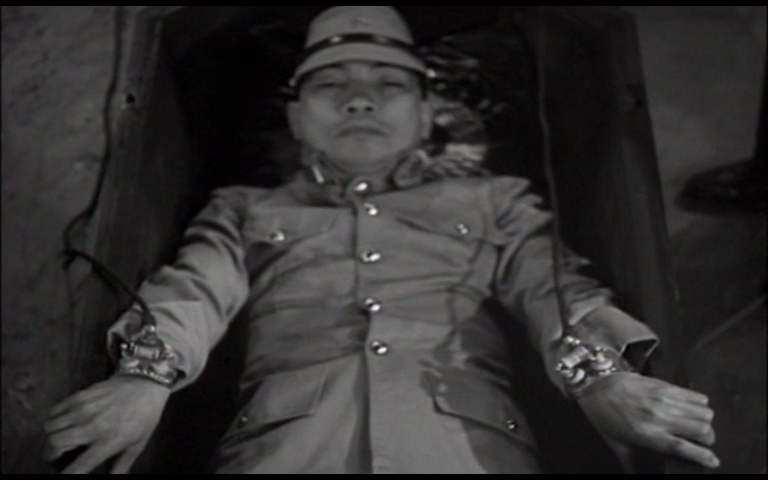
Batman (1943) – Chapter 11: A Nipponese Trap

05 Tuesday Jun 2018

Posted by dullwood68 in Movies

≈ Leave a comment

Tags

Action, Columbia, Douglas Croft, Drama, J. Carrol Naish, Lambert Hillyer, Lewis Wilson, Review, Serial, Thriller
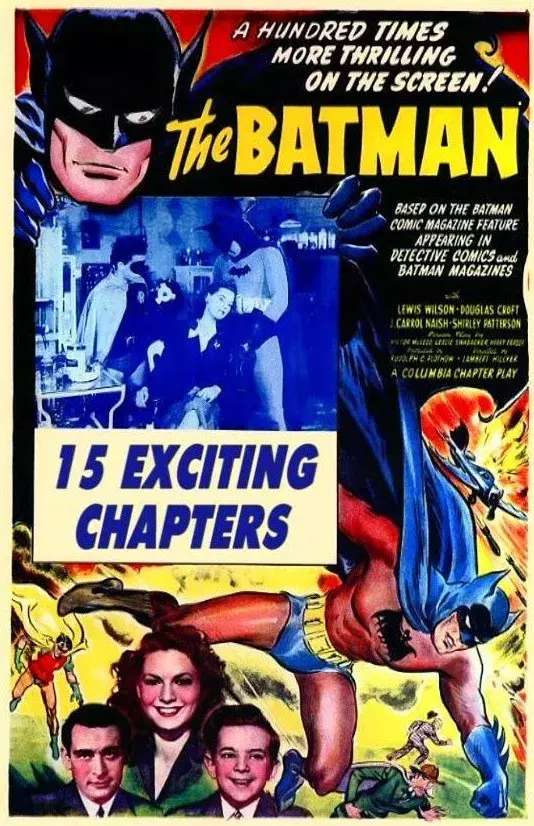
D: Lambert Hillyer / 16m

Cast: Lewis Wilson, Douglas Croft, J. Carrol Naish, William Austin, Ted Oliver, Dick Curtis, Eddie Kane

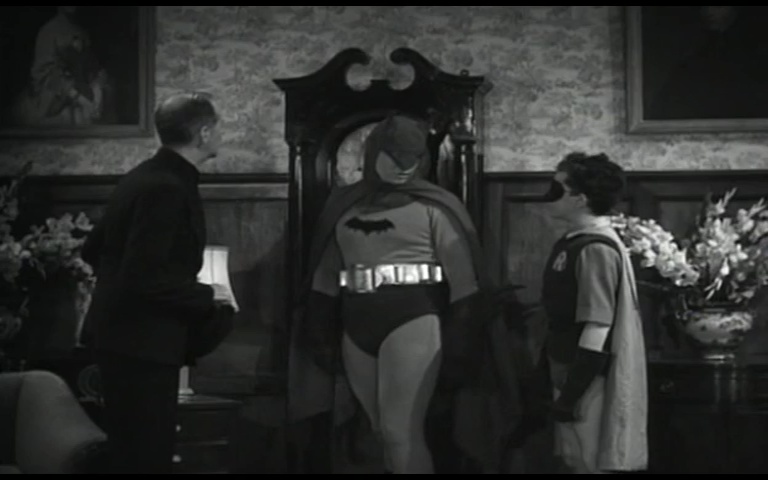
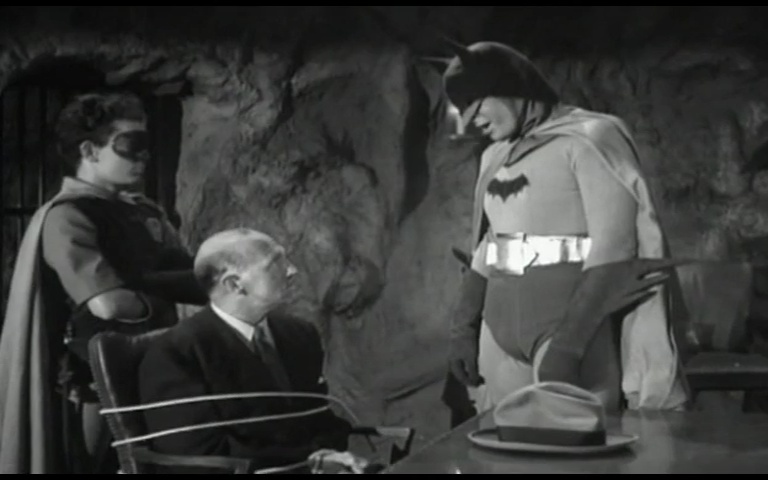
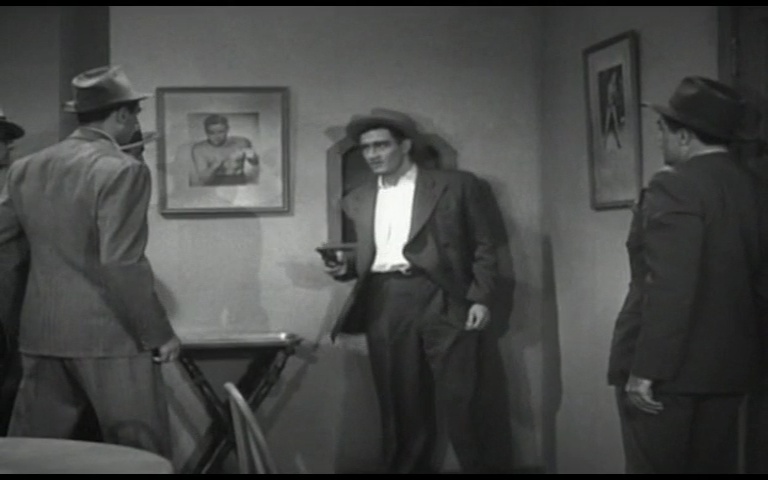
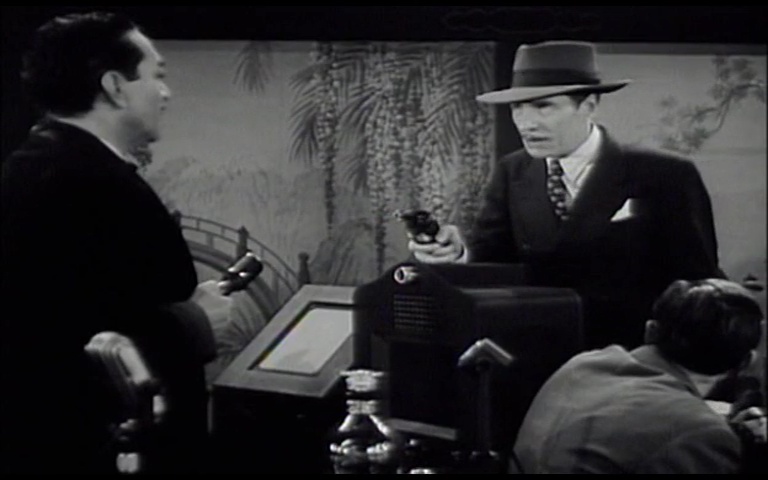
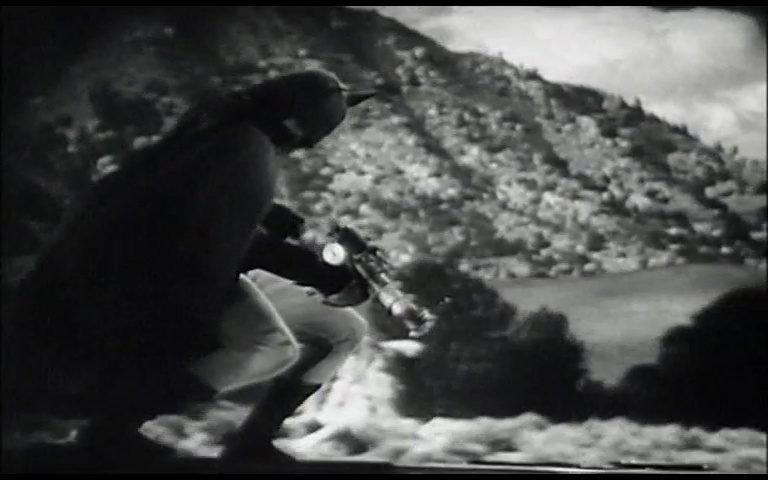
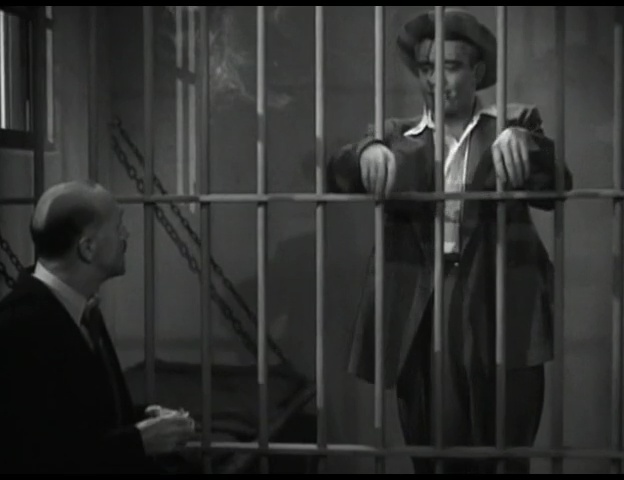
Having avoided being burned alive by throwing himself from the car before it burst into flames, Batman is unhappy to realise that Daka’s men have gotten away with the radium, which they take straight to Daka’s hideout. Meanwhile, Bruce decides to introduce Marshall (Oliver), the henchman they dropped off at the police station, to Chuck White. To this end, Chuck is put in jail in the cell next to Marshall. Chuck gains Marshall’s confidence by admitting to being a burglar and stating that he recently broke into a house where he saw Batman. Marshall is eager for Chuck to meet his “friends” and gives him an address to go to when he gets out. Dick and Alfred arrange for Chuck’s bail, but Daka hears about Chuck being in jail as well and sends two of his men to kill him when he gets out. They orchestrate a car crash – though Chuck/Bruce survives, something they’re not aware of. Later, Batman and Robin go to the address given by Marshall but are overpowered by Daka’s men. One of them sets a bomb to go off, one that destroys the building, sending Batman and Robin to certain death…
Eleven chapters in and finally, Batman and Robin fail to stop Daka and his men from succeeding in one of their plans. It’s a momentous occasion, and one that hopefully will be used as a springboard for the events of the final four chapters, because otherwise this one is yet another filler episode that keeps the serial chugging along and Wilson’s nose draped in putty. The use of Chuck White as yet another alter ego for Bruce Wayne has been moderately successful in terms of the narrative, but each time he’s been brought out it’s purely so that another hideout can be identified and then dropped as a way of Batman finding out more about Daka’s plans. While there are fifteen chapters and each have to be filled with incident, it’s reasonable to ask if the same kind of incident had to be used over and over? And thanks to the speed at which these things are cranked out, it’s not as if Wilson is rising to any great challenge either; he’s just as clumsy as Chuck as he is as Bruce (or Batman for that matter).
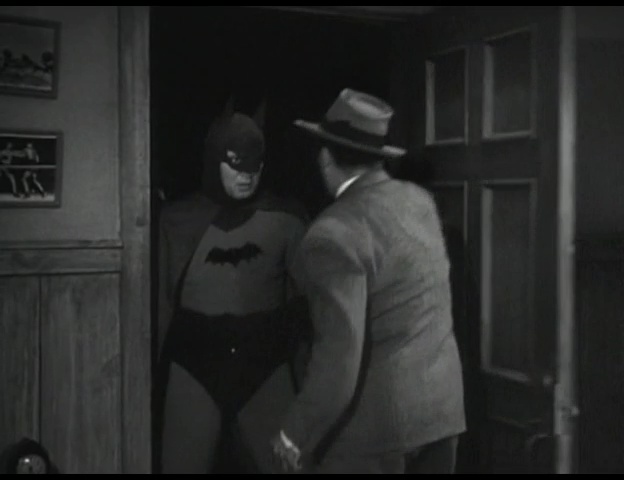
And just once you’d hope that Daka’s men wouldn’t report back to their boss that they’ve definitely killed Batman. Just once you’d hope that they’d check first, but once again, it’s a no-no. Each time now it gets funnier and funnier, a triumph of optimism over experience that Daka lets pass every time (he’s very forgiving for a bad guy). Much better – and a serial highlight – is the attempt on Chuck’s life, where a very large truck slams into a taxi and knocks it over onto its side. This has clearly been shot for real on a Columbia backlot, but is brutal in its effect, and if by some miracle of inter-movie time travel, Richard Thornburg was covering it, he’d be saying, “Tell me you got that.” Elsewhere, Linda is again absent from proceedings, getting a man out of jail on bail consists of paying twenty dollars for the release and five dollars for the (slightly corrupt) policeman organising it, and Batman’s real identity is revealed as Chuck White – lucky for Bruce! Chapter 11 isn’t the best or the worst of the series so far, but it’s not exactly groundbreaking – car crash aside – nor is it as entertaining as some other episodes, but when the bomb goes off, it at least has us asking, just how is Batman (and Robin) going to survive this time…?

Rating: 6/10 – another stopgap episode, Chapter 11 continues the semi-moribund influence of Chapter 10, and gets by on an unexpected development (Daka’s men get the radium), and an unexpected and spectacular event (the car crash); treading water is to be expected to some degree in a fifteen chapter serial, but Batman has done this now on a number of occasions, making the viewer wonder if ten or twelve chapters might have been a better idea.
Share this:

  • Click to share on X (Opens in new window) X
  • Click to share on Facebook (Opens in new window) Facebook
  • More
  • Click to print (Opens in new window) Print
  • Click to email a link to a friend (Opens in new window) Email
Like Loading...

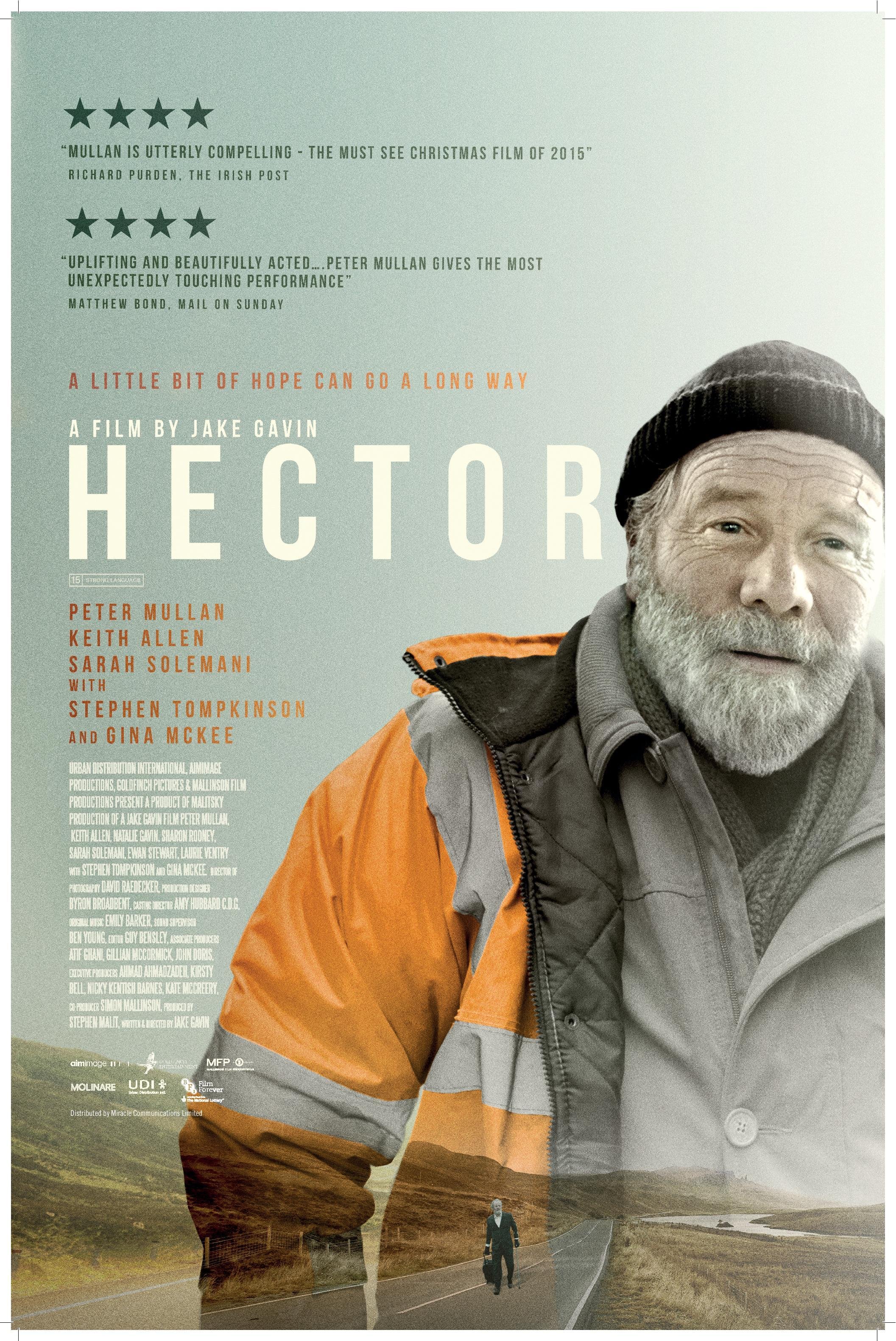
Hector (2015)

04 Monday Jun 2018

Posted by dullwood68 in Movies

≈ Leave a comment

Tags

Charity shelter, Drama, Family ties, Homeless, Jake Gavin, Keith Allen, London, Peter Mullan, Review, Sarah Solemani, Scotland

D: Jake Gavin / 87m

Cast: Peter Mullan, Keith Allen, Natalie Gavin, Laurie Ventry, Sarah Solemani, Ewan Stewart, Stephen Tompkinson, Gina McKee

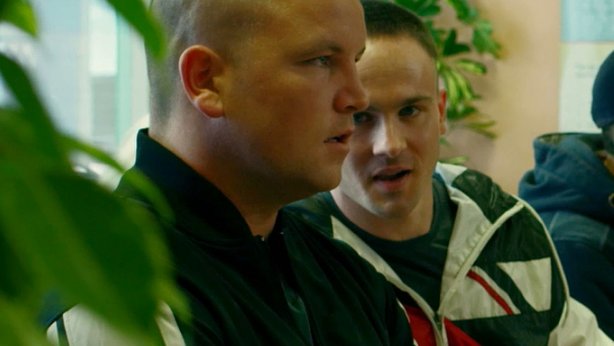
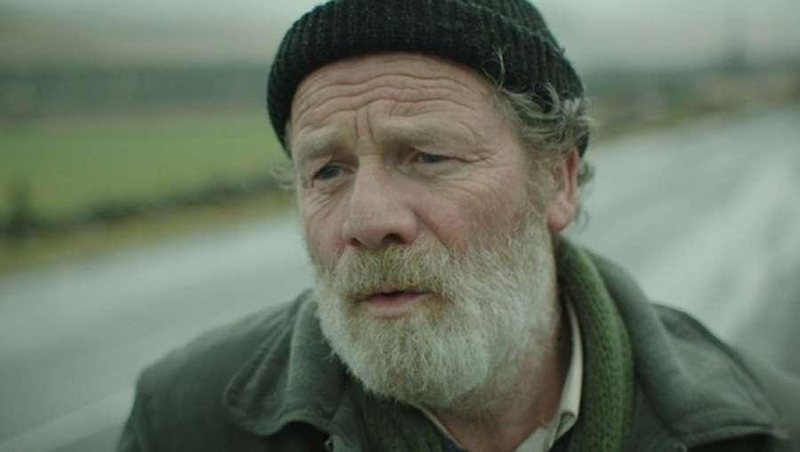
Hector McAdam (Mullan) is a fifty-something homeless man “living” with two other homeless people, Dougie (Ventry) and Hazel (Gavin), in a makeshift “home” at the rear of a service station in Scotland. He walks with a limp and has been in poor health for some time. Needing an operation, Hector decides to get in touch with his sister, Lizzie (McKee), who lives in Newcastle, but though he tracks down her husband, Derek (Tompkinson), his sister doesn’t want to see him. With his annual trip to London to stay at a charity shelter over the Xmas period coming up, Hector determines instead to find his brother, Peter (Stewart). With the aid of one of the shelter’s support workers, Sara (Solemani), Hector tries to locate Peter, but with only a vague idea of where to find him, his chances of being successful are very slim. But one day, Sara has a surprise for him, an unexpected visitor – Peter. As the reasons for Hector being homeless begin to be revealed, he’s also given a chance to reconnect with his family, and to face the future with more optimism than before…

Movies like Hector can appear – at first – as if they’re too slight, or too ephemeral, to work properly. This is borne out by the movie’s opening scenes, which see Hector trudging the streets from place to place and looking forlorn and rootless, a man adrift from his own life but having made a kind of peace with that. He’s good-natured, kind and thoughtful, but above all modest in his efforts to get by. Whatever his previous life, he’s moved on in his own way, even though it’s meant rejecting his family (and losing much more). We never learn what it is that means he needs an operation, but the emphasis is clear: it’s serious enough to make him rethink his situation and want to make amends (he has been homeless, and isolated himself, for fifteen years). As we spend more time with Hector, watching how painful walking is for him, how he has moments where he seems on the verge of some kind of seizure, first-time writer/director Jake Gavin ensures that Hector’s plight is one the viewer is entirely sympathetic of. He’s a good man, well liked and regarded, and thanks to Peter Mullan’s exemplary performance, deserving of our support.

By telling Hector’s story against a backdrop of homelessness and personal hardship, Gavin eschews the usual tropes and themes associated with such elements in favour of an approach that allows for tragedy and heartbreak, but not in a way that’s exploitative or melodramatic. Gavin’s direction is confident yet simple, allowing the narrative to broaden its scope when necessary, and to introduce a number of secondary characters, including Solemani’s ultra-supportive charity worker, that allows for an optimistic tone throughout. It’s arguable that Hector has it too easy – a social worker has helped him get his benefits and a pension, a shopkeeper helps him after he’s been assaulted – but that would be to miss the point of Hector’s story: it’s about taking those first brave steps toward reconciliation, both with his family and with himself. Mullan’s performance is first class, quietly commanding and authoritative, and with an emotional clarity to the character that’s all the more impressive for being so restrained. There’s fine support from Solemani, Ventry and Gavin, though Tompkinson’s over protective (and boorish) brother-in-law feels out of place, something that fortunately doesn’t harm the movie too much. It’s a surprisingly rewarding first feature, touching but persuasive, and with a simple sincerity that’s hard to beat.

Rating: 8/10 – a good example of the antithesis of today’s modern blockbuster, Hector is a small gem of a movie: unshowy yet emotive, and handled with due care and attention by all concerned; shot in a low-key style by DoP David Raedeker, this modest production is intelligent, absorbing, and beautifully understated.

Share this:

  • Click to share on X (Opens in new window) X
  • Click to share on Facebook (Opens in new window) Facebook
  • More
  • Click to print (Opens in new window) Print
  • Click to email a link to a friend (Opens in new window) Email
Like Loading...

Mary Shelley (2017)

03 Sunday Jun 2018

Posted by dullwood68 in Movies

≈ Leave a comment

Tags

Biography, Douglas Booth, Drama, Elle Fanning, Frankenstein, Haifaa Al Mansour, History, Lord Byron, Percy Shelley, Review, Romance, True story

D: Haifaa al-Mansour / 120m

Cast: Elle Fanning, Douglas Booth, Stephen Dillane, Bel Powley, Tom Sturridge, Joanne Froggatt, Ben Hardy, Maisie Williams

London, 1813. Mary Wollstonecraft Godwin (Fanning) is the sixteen year old daughter of bookseller and political philosopher, William Godwin (Dillane). Mary is wilful, and more interested in reading and writing than contributing to the household chores, and this in turn causes bad feelings with her stepmother (Froggatt). Things come to a head and Mary is sent to stay with one of her father’s friends in Scotland. There she meets the young poet Percy Bysshe Shelley (Booth), and an attraction develops between them. When Mary returns to London, Shelley follows her and their relationship deepens, even though Mary learns Shelley is married and has a child. Leaving her family home along with her stepsister Claire Clairmont (Powley), the pair and Shelley at first live in less than impressive surroundings until Shelley comes into some money. An invitation through Claire to stay with notorious poet and philanderer Lord Byron (Sturridge) near Geneva in the summer of 1816 comes just at the right time: Shelley’s creditors are literally knocking at the door. Once there, a challenge from Byron to write a ghost story led Mary to begin writing the novel that would seal her fame and her reputation…

A heritage picture with all the attendant tropes that go with it, Mary Shelley focuses on the early romantic life of the creator of Frankenstein: or, the Modern Prometheus, and does its best to show the trials and tribulations that made up Mary’s life, but without connecting them convincingly with the writing of her classic novel. With any historical biography, the problem lies in recreating an acceptable and authentic sounding series of events to illustrate how a novel, a painting, or a similar work of art came into being. Emma Jensen’s original screenplay does its best – there’s the loss of Mary’s mother shortly after she was born, a theatrical display of galvanism, querulous thoughts on an afterlife – but it can’t quite make us believe that Mary was destined to write her “ghost story” in the way that the script would have us accept. There’s both encouragement and discouragement from Shelley, Mary’s own determination to prove a patriarchal society that it’s dismissal of the efforts of women is wrong, and inevitably, the support of her father at a crucial point in the novel’s publication. That these things happened is not necessarily in dispute, but the way in which they’re laid out is unfortunately quite mundane.

This proves a detriment to the movie overall, with al-Mansour’s efforts held in check by the demands of the feel and shape of the narrative, which is respectful without being passionate, and fluid though without feeling driven. There are the requisite setbacks and tragedies on display, and they come at their expected moments, and so much so that you can tick them off as you watch. This leaves Fanning somewhat adrift in a movie that her peformance dominates, and which allows her to show a greater range and skill in her portrayal of Mary than is usually the case. In support, Booth is a gifted yet emotionally petulant Shelley, Powley is terrific as the envious stepsister trying to make her own mark through an unfortunate dalliance with Byron, and Dillane does seemingly little, but to such good effect that he’s the focus of every scene he’s in. al-Mansour, following up her debut feature Wadjda (2012), is a great choice as director but again is defeated by the apparent requirements for making a period picture. It’s ironic then, that a movie about the creator of a literary figure brought to life by lightning, lacks the spark needed to bring it’s own tale fully to life.

Rating: 6/10 – it looks good (thanks to David Ungaro’s sterling cinematography), and it’s replete with good performances, but Mary Shelley is ultimately too pedestrian in nature and presentation to linger in the memory; the romance between Mary and Percy fizzles out in a perfunctory “that’s done” fashion, her stance as a proto-feminist (and the nominal ease with which she overcomes the gender prejudice of the times) is clunky, and is undermined by the movie’s end, where her fame and fortune is guaranteed by the intervention of her lover and her father – and there’s further irony for you.

Share this:

  • Click to share on X (Opens in new window) X
  • Click to share on Facebook (Opens in new window) Facebook
  • More
  • Click to print (Opens in new window) Print
  • Click to email a link to a friend (Opens in new window) Email
Like Loading...

Bastards (2013)

01 Friday Jun 2018

Posted by dullwood68 in Movies

≈ Leave a comment

Tags

Abuse, Chiara Mastroianni, Claire Denis, Drama, France, Mystery, Review, Suicide, Thriller, Vincent Lindon

Original title: Les salauds

D: Claire Denis / 100m

Cast: Vincent Lindon, Chiara Mastroianni, Julie Bataille, Michel Subor, Lola Créton, Alex Descas, Grégoire Colin, Florence Loiret Caille, Christophe Miossec, Yann Antoine Bizette, Laurent Grévill

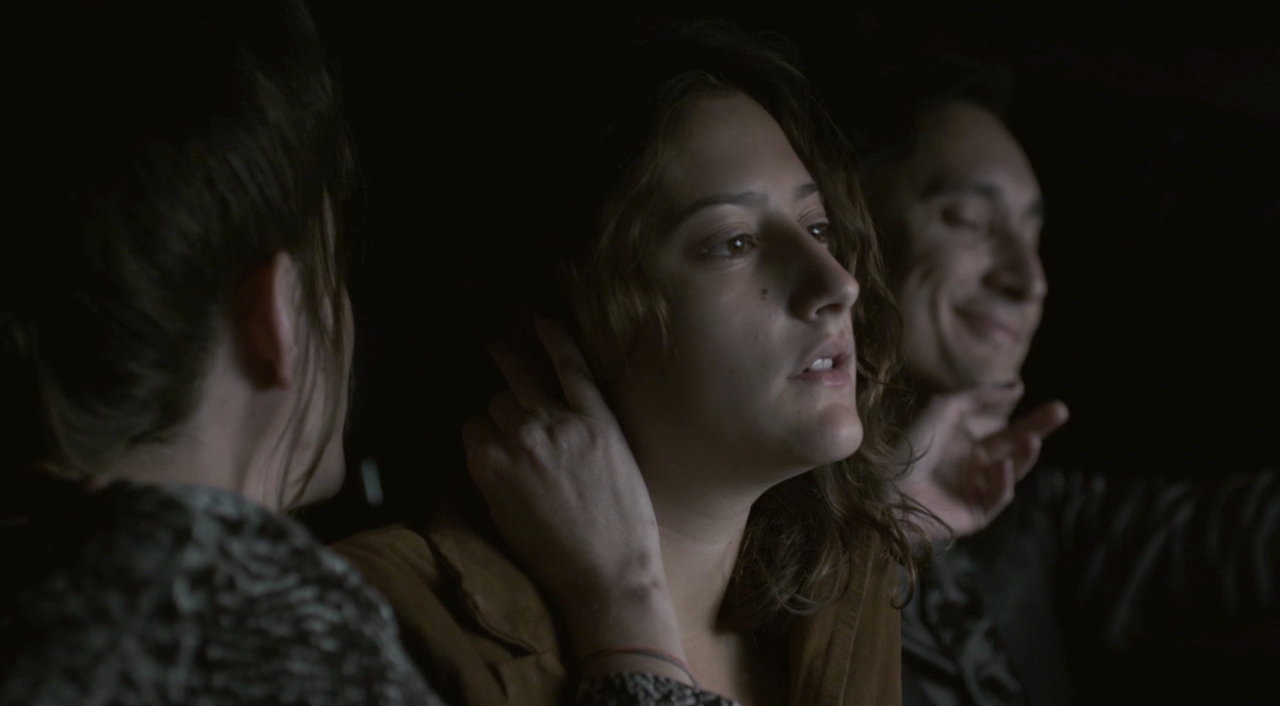
Following the death by suicide of his brother-in-law Jacques (Grévill), supertanker captain Marco Silvestri (Lindon) returns home at the behest of his sister, Sandra (Bataille). Sandra is convinced Jacques killed himself because of his involvement with successful businessman Edouard Laporte (Subor), though she has no proof. Marco moves into the apartment above Laporte’s, and begins a relationship with his mistress, Raphaëlle (Mastroianni); she lives there with their son, Joseph (Bizette). While Marco investigates Jacques’ death, he also discovers that his teenage niece, Justine (Créton), is in hospital having tried to take her life. He also learns that she has been sexually abused, but she won’t reveal who by. As his relationship with Raphaëlle becomes more intense, evidence seems to support the idea that Laporte is the person who assaulted Justine. Proof of what happened comes in the form of video footage, but it complicates things for Marco, and matters are further exacerbated when Justine runs away from the hospital where she’s convalescing, and Laporte tells Raphaëlle that Joseph is going to live with him…

A dark and moody thriller that, in Denis’s customary style, plays with notions of time and space and its characters physical connections to both, Bastards is a deliberately downbeat movie that is like taking a bath in multiple levels of corruption and moral culpability. Marco is a nominal hero, the nearest we get to a crusader looking for the truth, but even he’s not above behaving selfishly or violently in order to get the answers he’s looking for. He’s still the most sympathetic character in the movie – and that includes Justine, who is lost to both her family and the audience through her actions – but Denis, along with co-screenwriter Jean-Pol Fargeau, ensures Marco isn’t above reproach for his actions, even though he’s doing his best to unravel the mystery of Jacques’s death, and Justine’s assault. He’s a good man with good intentions, but his actions are often as unsavoury as his nemeses. Lindon plays him with a taciturn, no-nonsense approach that hides deep-rooted feelings of inadequacy and failure, the self-imposed distance between him and his family causing guilt to be the driving force behind his actions. Lindon is a strong masculine presence, powerful and stocky in a blunt, uncompromising way, and his casting is one of Denis’s best decisions.

There’s good support from Mastroianni as the compromised Raphaëlle, and though Subor is perhaps a little too reptilian for Laporte, he’s still an appropriately chilling figure (a moment where he takes Joseph’s hand in his is uncomfortable for the implication that goes with it). Denis has crafted an adroit though straightforward thriller that teases out its characters’ secrets and motivations in revelatory moments that are impactful dramatically if not quite promoting an emotional response in the viewer. Combined with the way in which the movie is assembled – Annette Dutertre’s editing, overseen by Denis, allows for scenes that feel disjointed and at times, out of place – this is as much an intellectual movie making exercise as it is a polished if gloomy thriller. It’s still a movie to admire in terms of its construction and the way it unfolds, but the lack of sympathetic characters makes it difficult to engage with, or care about the outcome, which is meant to be shocking, both for what is revealed, and for what it means overall. That being the case, the movie falls short of reaching its full potential, and remains a triumph of style over content.

Rating: 7/10 – not one of Denis’s best movies, but still intriguing to watch nevertheless, Bastards has a distinctly grim atmosphere to it, and a nihilistic streak that adds to its intensity; not entirely successful, but even a below par Denis movie is better than ones made by some movie makers operating at the top of their game.

Share this:

  • Click to share on X (Opens in new window) X
  • Click to share on Facebook (Opens in new window) Facebook
  • More
  • Click to print (Opens in new window) Print
  • Click to email a link to a friend (Opens in new window) Email
Like Loading...

Welcome to Leith (2015)

30 Wednesday May 2018

Posted by dullwood68 in Movies

≈ Leave a comment

Tags

Arrest, Christopher K. Walker, Craig Cobb, Documentary, Kynan Dutton, Lee Cook, Michael Beach Nichols, North Dakota, Review, Ryan Schock, True story, White supremacy

D: Michael Beach Nichols, Christopher K. Walker / 86m

With: Craig Cobb, Ryan Schock, Lee Cook, Kynan Dutton, Michelle Schock, Gregory Bruce, Jeff Schoep, Deborah Henderson, Ryan Lenz, Heidi Beirich, Bobby Harper, Todd Schwarz

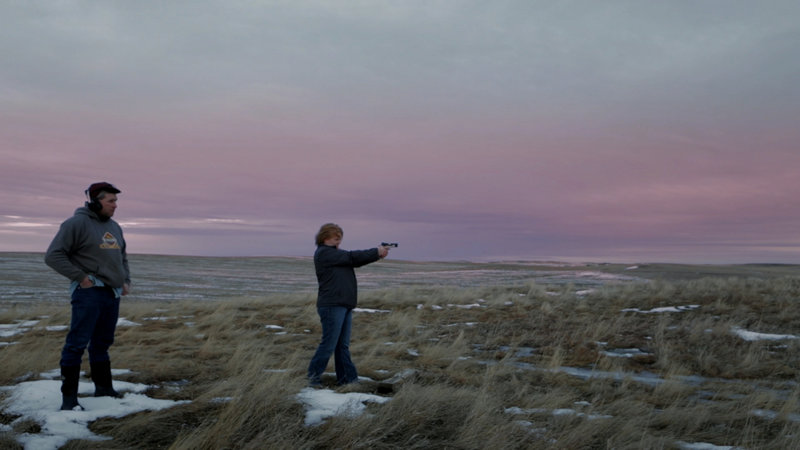
In May 2012, a white supremacist by the name of Craig Cobb bought twelve plots of land in the small North Dakota town of Leith – population twenty-four. Cobb’s intention was to build a community of like-minded people which would allow them to gain an electoral majority in Leith, and be “in charge”. Once the people of Leith became aware of Cobb’s background, as well as his intentions, they banded together to protect themselves from the prospect of seeing their town overrun in this way. The mayor, Ryan Schock, along with the rest of the town council, implemented an ordinance that required Cobb and those who’d come to Leith to support him, to be connected to the mains water and sewage supply or be evicted from their properties (none were). Following this decision, in November 2013, Cobb, along with a fellow white supremacist, Kynan Dutton, were arrested after walking the streets of Leith carrying loaded weapons. Charges of terrorising the citizens of Leith were brought against both men, and a trial was expected to begin the following year. But not everything went according to plan…

In Welcome to Leith, the battle lines are clearly drawn: an influx of white supremacists versus horrified townspeople increasingly afraid for their lives and livelihood. For most viewers it’s an easy decision to make as to where any sympathies should lie, but the undeniable power of Michael Beach Nichols and Christopher K. Walker’s gripping documentary is not that this decision is so obvious, or cut and dried, but that it highlights the irony of a section of society fighting for its place in the world by displacing another section of society in order to do so. This is an aspect that seems to escape Cobb and his followers and supporters, but it’s made abundantly clear by the white supremacist’s actions and behaviour. At a town council meeting, Cobb impugns the involvement of a father, Lee Cook, in the murder of his seventeen year old daughter. It’s a particularly horrible moment in a movie full of moments where negative racial profiling is exposed for the hate crime it is, and so-called Christians defend their First Amendment rights as if they are the only ones entitled to them.

Another irony exposed by the movie is the way in which Cobb and his followers behave, as if by spewing bile and hatred towards others, that it makes their cause all the more agreeable or acceptable. While Nichols and Walker don’t delve into the psychology of Cobb’s beliefs (it’s not really necessary), they do show the ways in which a small group of townspeople became affected by those beliefs, and the fear and mistrust engendered by them – for example, Cook wouldn’t let his family stay in their home while he was at work. More importantly, Nichols and Walker approach the material using a balance that offsets any accusations of bias, instead presenting events from all sides, even if as a viewer, you don’t agree with some of them. Also, what happens after Cobb and Dutton are arrested, and the subsequent legal wranglings that went on, shows just how committed both men were to their beliefs (and there’s irony there too). But if there’s any one moment where Cobb’s white nationalist observance is punctured for good and all it’s when the results of a DNA test he undertook for The Trisha Goddard Show reveal he’s genetically fourteen per cent sub-Saharan African. Now, how’s that for irony?

Rating: 8/10 – a formidable examination of an attempt to subvert a small township for a cause’s own subversive ends, Welcome to Leith is chilling, breathtaking to watch unfold, and a cautionary tale for our times; forget the Insidious horror series, what Cobb and his followers tried to do is really insidious, and the fact that it could happen elsewhere is a message the movie makes very loud and clear.

Share this:

  • Click to share on X (Opens in new window) X
  • Click to share on Facebook (Opens in new window) Facebook
  • More
  • Click to print (Opens in new window) Print
  • Click to email a link to a friend (Opens in new window) Email
Like Loading...

Batman (1943) – Chapter 10: Flying Spies

29 Tuesday May 2018

Posted by dullwood68 in Movies

≈ Leave a comment

Tags

Action, Columbia, Douglas Croft, Drama, J. Carrol Naish, Lambert Hillyer, Lewis Wilson, Radium, Review, Serial, Shirley Patterson, The Sphinx Club, Thriller

D: Lambert Hillyer / 18m

Cast: Lewis Wilson, Douglas Croft, J. Carrol  Naish, Shirley Patterson, William Austin, John Maxwell, Ted Oliver, Lester Dorr

Having survived being crushed by a ship’s gang plank (by simply rolling out of the way), Batman, along with Robin, returns to the Bat Cave, and decides to drop off their (not forgotten) captive, Marshall (Oliver), to the police. Meanwhile, Daka learns that another supply of radium has become available. Batman learns of the radium too, in a secret government message. Believing that his recent disguise as Chuck White is still a better way of infiltrating Daka’s gang, he returns to the Sphinx Club. From there he’s taken to another of the gang’s hideouts, where he’s observed by Daka and given approval to go along with the henchmen assigned to retrieving the radium; this is going to be dropped by parachute from an airplane that night. At the drop site, Chuck gets away from Daka’s men and changes into Batman. With Robin’s help he gets the radium package before they do, and drives off in one of their vehicles. With a tire shot out, and the Caped Crusader unable to control the steering, the vehicle crashes down the side of a hill and bursts into flames, sending Batman to certain death…

With two thirds over, and no end game in sight still, Chapter 10 is a curious installment. It’s better than Chapter 9, but not so good that it matches the standard of Chapters 6-8. For all that, though, this is another filler episode, but one that somehow feels that it has more momentum and more incident than the last time out (it doesn’t, but still, there’s a definite sense of the serial somehow upping its game). Perhaps it’s the serial’s weird sense of humour, which makes itself felt throughout, or the way in which each scene seems to be operating at speed. Hillyer appears to be in a hurry, as is the script, but it’s hard to work out why. It follows the standard formula for a filler episode, so perhaps the humour is an unexpected by-product (though Hillyer is too experienced for that to be entirely true). There’s the scene where Linda comes to see Bruce, gets jealous of White (don’t ask), and then leaves in a huff – and that’s it for Linda in this chapter. There’s Daka assessing Bruce as Chuck through the eyeholes in a painting, and the radium package (which Daka’s agent has trouble lifting) being attached to the kind of parachute that is the epitome of inadequate.

Credibility has never been the serial’s strong suit, and it’s highly unlikely that anyone making it thought they were making anything other than a B-movie with a better than average budget – even if you’re not sure where the money went. However, Chapter 10 does prove entertaining overall, from Alfred posing as a cab driver, to Marshall’s abrupt dismissal from the story, and the inclusion of yet more radium to be hijacked/stolen (which begs the question, just how secure is this stuff?). One aspect that does appear to be getting worse is the recap of the last episode, which this time means that Chapter 10 doesn’t get started properly until after three minutes have elapsed. Of course, this is to ensure that the required couple of bouts of fisticuffs still occur in each installment, but it’s becoming more and more of a liability, especially as the fight choreography remains as laughable as ever. Bruce’s disguise as Chuck is still something of an unacceptable caricature (that nose), but at least the chapter ends on a much more dramatic note than usual. An exploding vehicle? Just how is Batman going to survive this time…?

Rating: 6/10 – neither very good or very bad, but strangely acceptable as a moderately entertaining episode, Chapter 10 of Batman always feels like it could go either way, but it actually holds to the middle ground with some elan; if one wish could be granted, though, it would be for no more talk of radium, a plot device that has now been run into the ground.

Share this:

  • Click to share on X (Opens in new window) X
  • Click to share on Facebook (Opens in new window) Facebook
  • More
  • Click to print (Opens in new window) Print
  • Click to email a link to a friend (Opens in new window) Email
Like Loading...

Mad to Be Normal (2017)

28 Monday May 2018

Posted by dullwood68 in Movies

≈ Leave a comment

Tags

David Tennant, Drama, Elisabeth Moss, Gabriel Byrne, Kingsley Hall, Mental illness, Psychiatry, R.D. Laing, Review, Robert Mullan, Schizophrenia, True story

D: Robert Mullan / 105m

Cast: David Tennant, Elisabeth Moss, Michael Gambon, Gabriel Byrne, David Bamber, Adam Paul Harvey, Olivia Poulet, Jerome Holder, Lydia Orange, Tom Richards

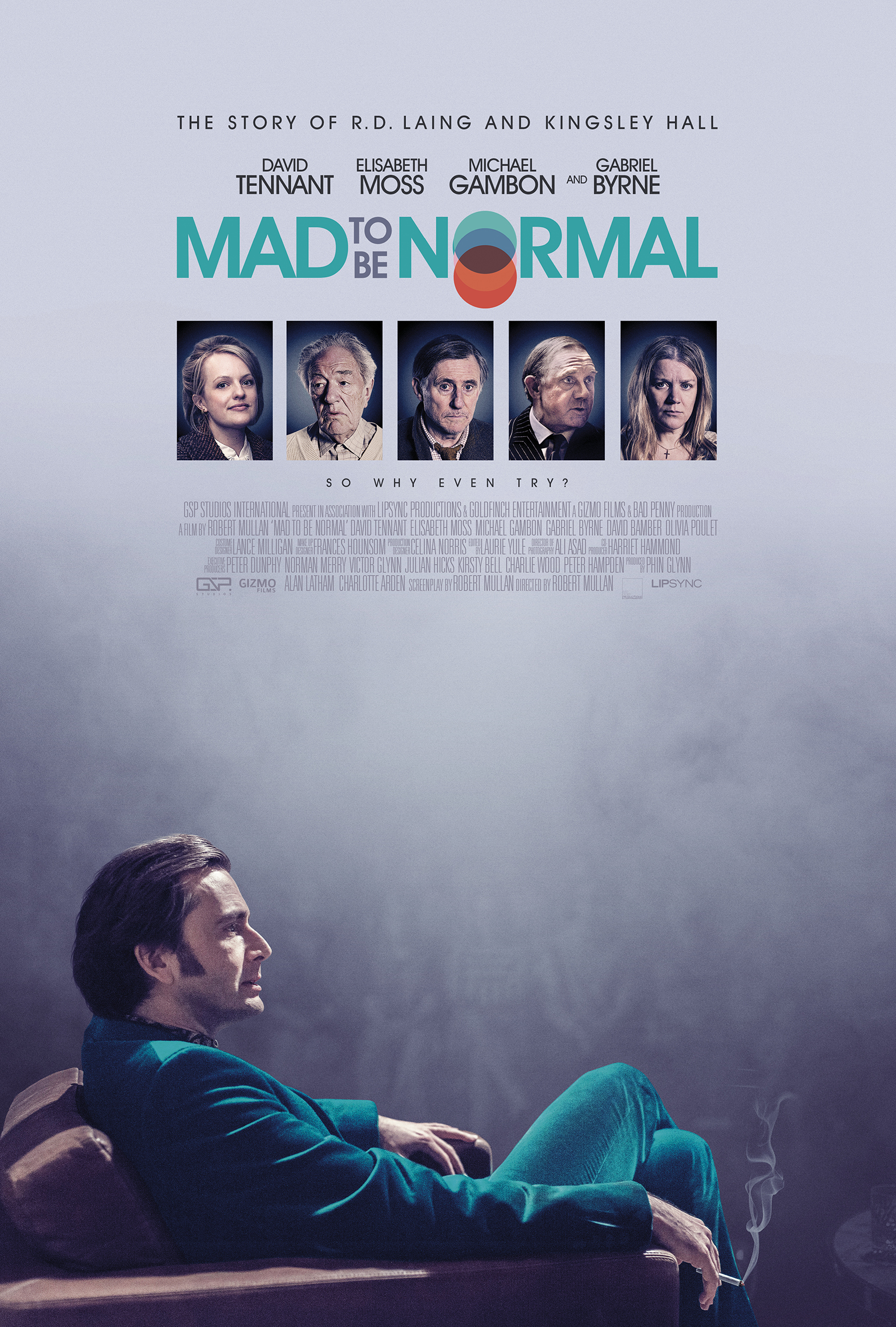
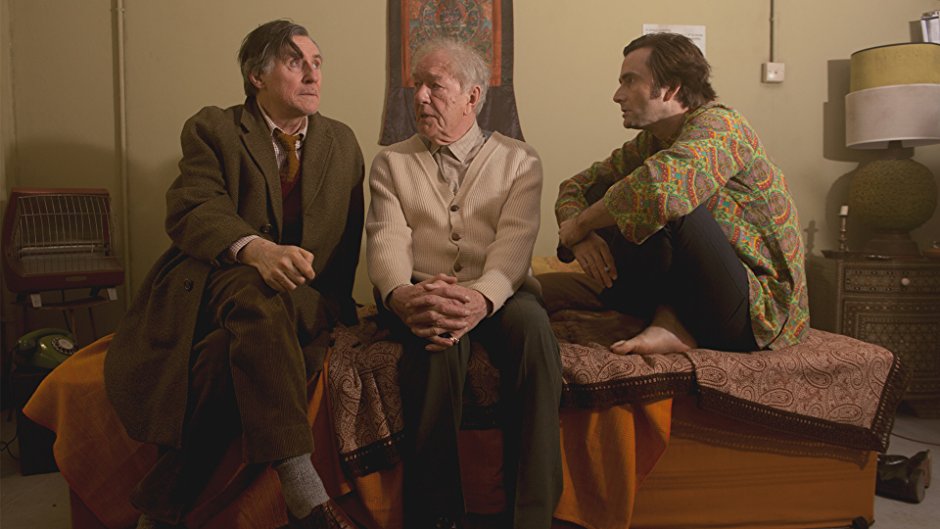
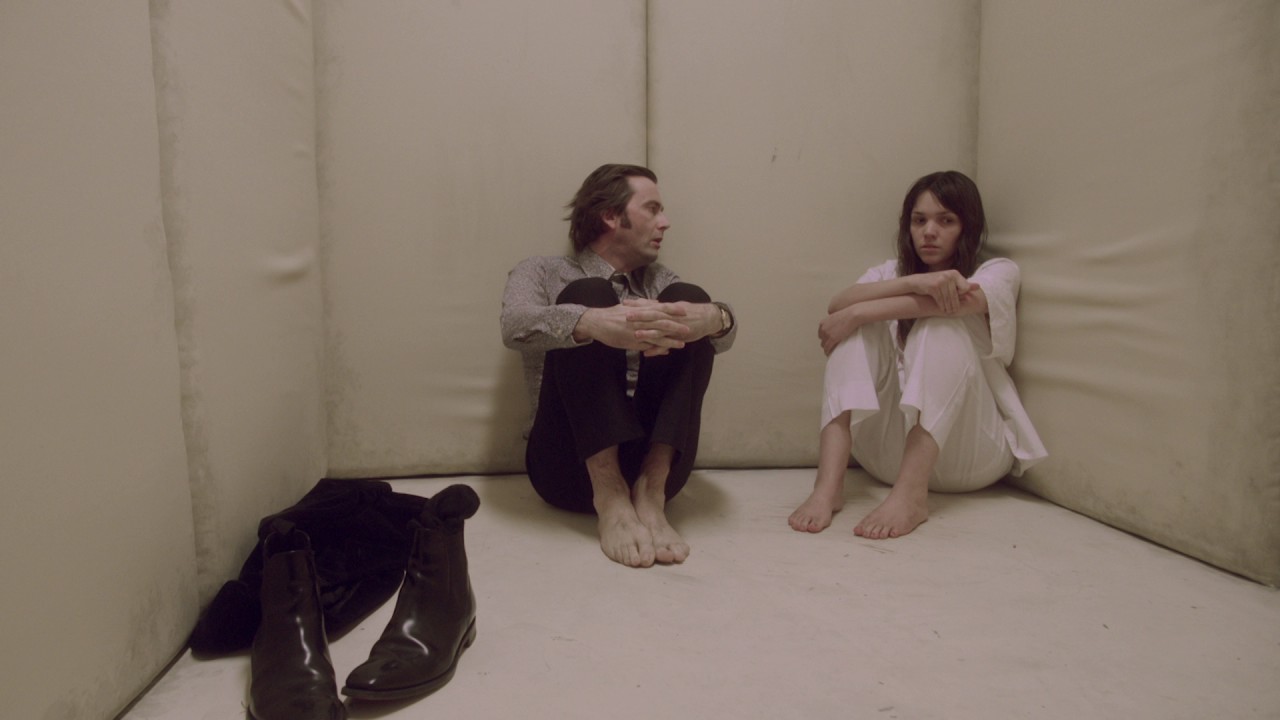
Beginning in 1965, the noted psychiatrist R.D. Laing (Tennant) was the head of the Philadelphia Association, a community-based psychiatric project based at Kingsley Hall in London’s  East End. There, therapists and patients lived together, and the aim was to provide a restraint-free, drug-free environment for those afflicted by schizophrenia. It was a pioneering experiment that drew plenty of criticism from the psychiatric establishment of the time, which decried Laing’s rejection of traditional treatments such as constant sedation and electro-convulsive therapy. For the purposes of Mad to Be Normal, Laing’s relationship with his girlfriend at the time, Jutta Werner, is transposed into one with an ambitious American student called Angie Wood (Moss). Their relationship provides the backbone of Robert Mullan’s movie, a serious yet distant piece that only superficially explores both Laing the man and Laing the health care professional. While he deals with the dynamics of their relationship, Laing also fights off challenges from the establishment (in the form of David Bamber’s blinkered traditionalist), and the patients at Kingsley Hall itself.

These patients include Sydney (Gambon), an elderly childhood trauma sufferer, Maria (Poulet), who can’t forgive herself for losing her baby, John (Holder), who hears voices, and Jim (Byrne), whose obsession with the moon belies violent tendencies relating to childbirth. The movie works well when it focuses on the patients, and there’s a terrific scene set in New York where Laing coaxes responses from a young woman, Sarah (Orange), who doesn’t speak or eat or otherwise engage with anyone. But away from these interactions, Laing’s life and commitment to his work don’t have the same impact, or come anywhere close to it. This is a major drawback for the movie as a whole, because though there is plenty of tension and dramatic incident borne out of Mullan and co-screenwriter Tracy Moreton’s script, Mullan doesn’t seem to know how to present these incidents in such a way that we get a clear insight into Laing’s own mental processes. He’s eloquent enough when challenged, and Tennant displays a passion and commitment to the role that gets the character through several moments where the drama lapses into soap opera, but as to the man himself, and his reasons for doing the work he does, this isn’t necessarily the forum for that kind of revelation.

This leaves the movie focusing mainly on said challenges, and the slow descent into violent madness experienced by Jim. Despite a terrific performance from Byrne, though, Jim’s story is predictable in the extreme, and the irony of his eventual treatment is hammered home with all the subtlety of an ECT session. But while Byrne is gifted with possibly the best role in the movie (it reminds you just how good an actor he is), Moss is left stranded by a role that keeps her sidelined for much of the running time, and which reduces Angie to the status of a secondary character, even when she has Laing’s child (though not his first; a subplot involving the five children he already has is thrown in for good but not lasting measure). Mullan and the script rarely attempt to explore the efficacy of the work carried out at Kingsley Hall, or show if there is any improvement gained by any of the patients there, and so we see patients behaving erratically though consistently, while Laing becomes more and more depressed himself. That there’s no real dramatic conclusion to all this – the movie ends very abruptly – doesn’t help either, leaving the viewer to wonder if there was any point to the movie, and on which level.

Rating: 6/10 – an uneven and dramatically unsatisfying look at a pivotal moment in the annals of “alternative psychiatry”, Mad to Be Normal is predicated on the assumption that Laing knew exactly what he was doing – and then doesn’t show the viewer how or why he was doing it; rescued by a clutch of good performances, the movie short changes Laing in favour of a routinely mounted biography that only skims the surface of its controversial and charismatic central character.

Share this:

  • Click to share on X (Opens in new window) X
  • Click to share on Facebook (Opens in new window) Facebook
  • More
  • Click to print (Opens in new window) Print
  • Click to email a link to a friend (Opens in new window) Email
Like Loading...

Every Day (2018)

27 Sunday May 2018

Posted by dullwood68 in Movies

≈ 1 Comment

Tags

Angourie Rice, Body swapping, David Levithan, Drama, Instagram, Jusice Smith, Literary adaptation, Lucas Jade Zumann, Michael Sucsy, Owen Teague, Review, Romance

D: Michael Sucsy / 97m

Cast: Angourie Rice, Justice Smith, Lucas Jade Zumann, Jacob Batalon, Colin Ford, Owen Teague, Maria Bello, Michael Cram, Debby Ryan

Rhiannon (Rice) is a sixteen year old schoolgirl whose boyfriend, Justin (Smith), surprises her one day by convincing her to skip classes and go to the beach. It’s a wonderful day, one that ends with Rhiannon believing that Justin, who isn’t normally so spontaneous or thoughtful, has changed for the better. However, the next day sees Justin finding it difficult to remember what happened the day before, and back to his usual self. Over the next few days, Rhiannon meets a handful of new people, all of whom are different but who also exhibit similar behaviours. One girl she meets tells her that these people have all been one person, inhabiting each body for a day, and that day at the beach has caused this person – who calls himself A – to want to spend more time with Rhiannon. Though at first she’s incredulous, Rhiannon begins to believe A’s story, and in the process starts to fall in love with him, despite the obstacles between them. But it’s when A finds himself able to stay in a body for more than a day that things become even more complicated…

A Twilight Zone-style scenario given a teen soap opera makeover, Every Day is the kind of inoffensive, and somewhat blandly presented movie that wants its characters to be better versions of themselves, but through the intervention of a body swapping entity instead of going on a personal journey of self-discovery. Rhiannon’s parents have their issues – dad had a breakdown some time before, mom now “works late” a lot – but it’s only when Rhiannon is substituted by A for a day that “she” does anything about these problems. Similarly, a teenager with suicidal thoughts is saved by A’s stepping up and saving the day. Every Day wears its wish fulfillment heart on its sleeve, and Jesse Andrews’ adaptation of David Levithan’s novel is keen to ensure that any drama is cleared away as tidily as possible, and as soon after it’s introduced, as if real life is ever that simple. What this means is that the material remains mostly good natured throughout and any lows are compensated for by the next high waiting around the corner. With the structure and the plotting laid out in such a straightforward, no frills way, the movie rarely moves out of second gear, or gains any real dramatic traction.

However, one area where the movie does excel is in its assembled depiction of A. Played by a total of fifteen actors and actresses (including Rice), it’s this aspect of the movie that works best. Watching so many different people playing the same character, and with all of them, even those with a limited amount of screen time, providing a consistent personality and mannerisms, is the movie’s trump card. A is handled with a great deal of care and attention throughout, and Sucsy and his talented cast ensure that his predicament is handled with a degree of sensitivity and even gravitas that is both unexpected and sincere. With A’s character feeling and sounding so grounded from the beginning, it helps the rest of the movie in terms of the drama surrounding his relationship with Rhiannon. As romances go, it’s not ideal, or practical, and the script doesn’t shy away from the likelihood that not everything will work out as it does in most other teen romantic dramas. But again, things run a little too smoothly, and any tension or close examinaton of A’s condition is passed over, making this a teen romance that can’t quite muster enough passion or depth to stand out from the crowd.

Rating: 6/10 – though the challenge of having fifteen different actors play the same role is achieved with a great degree of skill and confidence, it’s the overall story of Every Day that stops it from being better than it is; lacking in substance and/or dramatic thrust, it’s a movie that ambles along comfortably, while offering just enough to keep viewers interested until the end.

Share this:

  • Click to share on X (Opens in new window) X
  • Click to share on Facebook (Opens in new window) Facebook
  • More
  • Click to print (Opens in new window) Print
  • Click to email a link to a friend (Opens in new window) Email
Like Loading...

Bottom of the World (2017)

26 Saturday May 2018

Posted by dullwood68 in Movies

≈ Leave a comment

Tags

Disappearance, Douglas Smith, Drama, Evangelist, Jena Malone, Murder, Mystery, Review, Richard Sears, Ted Levine, Thriller

D: Richard Sears / 85m

Cast: Jena Malone, Douglas Smith, Ted Levine, Tamara Duarte, Kevin Owen McDonald, Jon McLaren, Mark Sivertsen

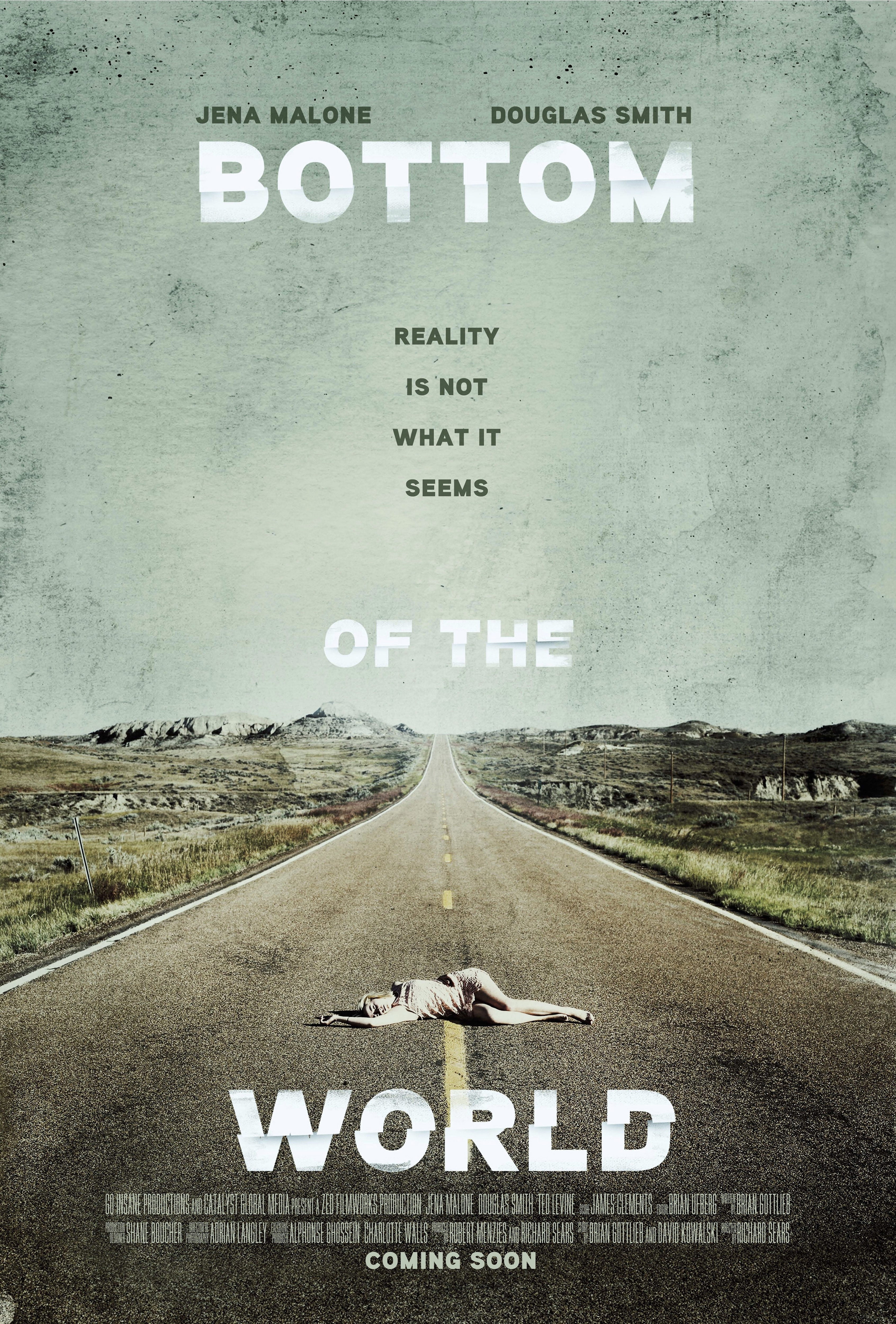
While on their way to LA and travelling through the South West, young couple Scarlett (Malone) and Alex (Smith) find themselves staying at a hotel overnight where they appear to be the only guests. At one point, Alex sees a man in a hoodie (McDonald) outside their room, looking up. When they leave the next morning, the man is there again. Back on the road, Scarlett becomes ill and they turn back, staying overnight at another hotel. The same thing happens again the next day, but this time, Scarlett disappears while Alex is in the hotel bar. When he tries to find her he meets the man in the hoodie who takes him out into the desert where he tells Alex there are bodies that he’s buried there at a certain spot; he then vanishes. Certain that Scarlett is with a locally based evangelist (Levine), Alex tracks him down to his church, but their confrontation offers more questions than answers, and Alex is forced to accept (or deny) that his trip with Scarlett has all been a dream when he wakes up and finds he is married to Paige (Duarte), and his next door neighbour looks exactly like Scarlett…

Early on in Richard Sears’ mystery mindbender of a movie, Scarlett asks Alex what’s the worst thing he’s ever done. His reply is boring, and no match for her tale of her mistreatment of a severely brain damaged cousin that she was meant to be looking after when she was younger. It’s a disturbing account, and feels somewhat out of place so early in the narrative, but it’s key to the events that transpire once Alex finds himself searching for Scarlett and then trying to decide if his life with her or his life with Paige is his true reality. With elements of both seeping and bleeding through and into each other, Alex’s quest for “the truth” becomes something that threatens to undermine his sanity. Through it all though, Brian Gottlieb’s script keeps bringing Alex back to Scarlett’s grim admission, and the mystery of her complicity – real or not? – becomes an obsession. It also leads Alex (and the viewer) to question the veracity of his memories, and the nature of his relationship with Scarlett. In his “dream” were they running away from a guilty truth, or toward one?

The answer(s) aren’t all forthcoming. Gottlieb’s script isn’t entirely successful when it comes to explaining just what exactly is going on, and while a fair degree of ambiguity is necessary to keep the scenario intriguing, a couple of narrative corners require a “one bound and he was free” approach to resolve matters. This leaves some moments feeling contrived and less than completely credible, and though Sears keeps things resolutely cryptic through a combination of hallucinatory visuals and an unsettling soundtrack, too much comes across as forced and/or unnecessary (Alex obsessing over the one black pea in a can is a case in point). So while the mystery of Scarlett’s story is eventually decided on, it’s at a disservice to the characters, who are required to behave bizarrely just to match the requirements of the plot. Playing two roles, Malone is a captivating presence as Scarlett, and ice cool as the more traditional femme fatale Alex has for a neighbour. As the tortured and conflicted Alex, Smith copes well with a role that could have been too arch and mannered for comfort (though it’s a close call at times), while Levine provides brief but effective support, and Adrian Langley’s apposite cinematography creates two distinct worlds for the price of one.

Rating: 6/10 – there are echoes of David Lynch here that aren’t as successfully integrated as they might have been, and the fusion of dream and reality doesn’t always gel, but there’s enough in Bottom of the World to make it worth watching; a valid attempt to create a waking nightmare, it nevertheless relies too heavily on the kinds of narrative “claim jumping” that requires too many occasions where belief has to be tempered thanks to narrative necessity.

Share this:

  • Click to share on X (Opens in new window) X
  • Click to share on Facebook (Opens in new window) Facebook
  • More
  • Click to print (Opens in new window) Print
  • Click to email a link to a friend (Opens in new window) Email
Like Loading...

Thoroughbreds (2017)

25 Friday May 2018

Posted by dullwood68 in Movies

≈ Leave a comment

Tags

Anton Yelchin, Anya Taylor-Joy, Black comedy, Cory Finley, Drama, Friends, Murder, Olivia Cooke, Review, Stepfather, Thriller

D: Cory Finley / 92m

Cast: Olivia Cooke, Anya Taylor-Joy, Anton Yelchin, Paul Sparks, Francie Swift, Kaili Vernoff

Amanda (Cooke) and Lily (Taylor-Joy) were once the best of friends, but circumstances affecting both their lives have caused them to drift apart. But those same circumstances now see them brought together again as Lily provides tutoring to Amanda, and they begin to re-establish their friendship. Amanda is emotionally crippled, while Lily is quite the opposite, and feels too much. When Amanda realises that Lily despises her stepfather, Mark (Sparks), it’s not long before she’s asking why Lily doesn’t murder him. Shocked at first, Lily begins to come around to the idea when her mother (Swift) tells her that she’s being sent to a boarding school for children with behavioural issues. Needing an alibi, they enlist the help of convicted felon, Tim (Yelchin), a hapless would-be drug dealer. With their plan set up for a weekend when both will be away, it’s down to Tim to carry out the crime, but things go awry and Mark remains very much alive. The plan, though, undergoes something of a change, one that sees Lily take charge by herself in an effort to resolve the situation once and for all…

A deliciously bittersweet, and biting, black comedy, Thoroughbreds is the debut feature of writer-director Cory Finley, and is as confident and assured a debut as you could hope for. Originally conceived of as a play, Finley’s exploration of two teenagers and their emotional differences, and the path both find themselves intent upon pursuing, is a striking and beautifully composed ode to teenage disaffection (and purposeful affectation). Amanda and Lily’s relationship provides challenges to both young women in terms of their emotional growth, and Finley provides an object lesson in how to create and develop two separate characters whose own individual needs quietly and inevitably dovetail until both are able to express those elements each other have been lacking. Amanda learns how to empathise, and Lily learns how to rationalise. These things make both of them stronger, and part of the pleasure of Finley’s finely judged screenplay is the way in which Amanda learns how to bond while Lily learns how to be alone. Throughout the movie, the tense dynamic established between them never quite settles comfortably into a groove that allows the viewer to predict what will happen next, and Finley manipulates the material accordingly.

It’s a movie that contains many examples of black comedy, and darkly satirical thriller elements that often subvert the modern day noir feel that Finley ascribes to the narrative. The glossy yet all too orderly environment of Lily’s home provides a trenchant backdrop for the largely muted passions on display, and Finley’s careful but invigorating direction ensures the movie is as visually arresting as it is emotionally powerful. As the murderous-minded Amanda and Lily, Cooke and Taylor-Joy both give excellent performances, while Yelchin (in one of his last roles), is marvellous as Tim, a man with dreams that aren’t matched by his ability or skill to see them through. It’s also worth noting Sparks’ performance as Mark, the ostensible bad guy who wears a frown on his face like a damaging accusation; it’s a tightly controlled portrayal, and all the more effective for not being the stereotype it so easily could have been. On the technical side, there’s much else to recommend the movie, from Lyle Vincent’s crisp, artfully composed cinematography, to Jeremy Woodward’s austere yet evocative production design, and Erik Friedlander’s memorably haunting score. With a sharp, calculating nature bubbling just below the surface, Thoroughbreds is a welcome addition to the usually underwhelming teen angst movies we normally get, and is all the better for managing to avoid the genre’s many pitfalls.

Rating: 8/10 – a movie that creates a precise and prescribed milieu on which to hang its tale of what happens when stifled emotions meet murderous ambition, Thoroughbreds is a genuine surprise, and a bona fide pleasure as well; with terrific performances wringing every possible nuance from his razor sharp screenplay, Finley’s debut highlights the arrival (hopefully) of someone with a great career ahead of them.

Share this:

  • Click to share on X (Opens in new window) X
  • Click to share on Facebook (Opens in new window) Facebook
  • More
  • Click to print (Opens in new window) Print
  • Click to email a link to a friend (Opens in new window) Email
Like Loading...

Batman (1943) – Chapter 9: The Sign of the Sphinx

22 Tuesday May 2018

Posted by dullwood68 in Movies

≈ Leave a comment

Tags

Action, Columbia, Douglas Croft, Drama, J. Carrol Naish, Lambert Hillyer, Lewis Wilson, Review, Serial, Shirley Patterson, The Sphinx Club, Thriller

D: Lambert Hillyer / 16m

Cast: Lewis Wilson, Douglas Croft, J. Carrol Naish, Shirley Patterson, William Austin, John Maxwell, Ted Oliver

Surviving the explosion in the mine thanks to a pair of well placed cross beams, Batman and Robin rescue an also lucky Linda, and one of Daka’s henchmen, Marshall (Oliver). They take Marshall to the Bat Cave, but he won’t talk – at first. Leaving him alone, he escapes his bonds (as planned) and uses a conveniently situated telephone to make a call. Expecting this, Batman uses a device that details the number called and uses it to find out the location of Marshall’s hideout. It proves to be a riverfront joint called the Sphinx Club. Bruce decides to infiltrate the hideout disguised as a criminal called Chuck White (his disguise is so good it fools Linda). Once inside the Sphinx Club, Bruce/Chuck meets Fletcher (Maxwell), one of Daka’s lieutenants. At the point where he has to prove he’s a friend of Marshall’s, Bruce is rescued by Robin distracting Fletcher and his men. While Bruce changes into his Batman outfit, Robin is chased through the nearby docks. Batman joins the fray, but is overpowered and knocked unconscious. Then one of Fletcher’s men cuts the rope for the gang plank, sending it crashing down on the Caped Crusader, and sending Batman to certain death…

The end of the Colton-radium mine sub-plot (which sadly sees the end of Charles Middleton’s involvement in the serial), means a change in direction for Batman, and a return to the not so heady days of the earlier episodes. Instead of a story arc designed to play out across several chapters, we’re back to another installment where Batman and Robin locate another place where Daka has a connection, they head over there after gaining any relevant information with ease, and engage in a punch up with Daka’s goons. It’s a makeshift, or make-do, entry that marks a major backward step for the serial, and which feels as if – once again – Messrs McLeod, Swabacker and Fraser need to pad out an episode as best they can before, hopefully, a new and stronger sub-plot can be introduced to see the serial through to the end. Even Hillyer, the serial’s chief energiser, can’t do anything with this chapter, and his direction is perfunctory at best and uninspired at worst. It’s an episode that goes through the motions in a way that seemed to have been left behind in Chapter 4.

Despite all this, though, there are a couple of moments where the serial’s penchant for unexpected mirth is to the fore, and where suspension of belief is not only required, but practically demanded. The scene in the Bat Cave, where Marshall finds and is able to use a telephone is a corker, a real moment of inspired lunacy on the writers’ part that has to be seen to be believed. It’s possibly the serial’s funniest, silliest moment so far, an occurrence so far-fetched and incredible that in some ways you have to acknowledge the brazen absurdity of it all (and by the way, that henchman is still there, possibly without food or water, while Batman and Robin are being duffed up at the docks). The other moment is where Linda is presented with Bruce as Chuck, and doesn’t recognise him. It’s funny because it’s obviously Bruce with a putty nose and unflattering eyebrows; anyone can see it. The serial’s sense of humour has always been a little bit hit and miss, but here it’s so far off kilter that you can’t help wondering if it’s all been done on a dare. And dropping a gang plank on the Caped Crusader? Just how is Batman going to survive this time…?

Rating: 6/10 – replete with too many absurdities – “We never got to the cave. It was so hot out, we laid down by the roadside and took a nap” – Chapter 9 undoes all the good work of the previous three episodes and resigns Batman to another round of repetitive storytelling; once again, there’s no option but to hope that things improve in Chapter 10.

Share this:

  • Click to share on X (Opens in new window) X
  • Click to share on Facebook (Opens in new window) Facebook
  • More
  • Click to print (Opens in new window) Print
  • Click to email a link to a friend (Opens in new window) Email
Like Loading...

Cardboard Gangsters (2017)

21 Monday May 2018

Posted by dullwood68 in Movies

≈ Leave a comment

Tags

Best friends, Crime, Darndale, Drama, Drugs, Fionn Walton, Ireland, John Connors, Kierston Wareing, Mark O'Connor, Review

D: Mark O’Connor / 92m

Cast: John Connors, Fionn Walton, Kierston Wareing, Jimmy Smallhorne, Paul Alwright, Ryan Lincoln, Fionna Hewitt-Tramley, Toni O’Rourke

Having grown up together in the small town of Darndale, four friends, now in their early twenties, find themselves at a crossroads. Jay (Connors), Dano (Walton), Glenner (Alwright), and Cobbie (Lincoln), are either unemployed or working for cash (or both) in order to get by. Dano wants them to knock off the local crime boss, Derra (Smallhorne), believing it would be “easy”. Jay and the others think it’s a bad idea. But when Jay is forced to rob an off licence to pay off his mother’s debt to Derra, it’s not long before the quartet are selling drugs on Derra’s patch, and doing so with relative impunity. To complicate matters, Jay’s girlfriend Sarah (O’Rourke) is pregnant, but he’s also having an affair with Derra’s wife, Kim (Wareing). Soon enough, Jay and his friends’ successful “business” venture attracts Derra’s attention, and he makes Jay an offer that Jay flatly refuses. What follows is a series of events that become more and more violent, and which threaten the lives of Jay, his mother (Hewitt-Tramley), his friends, and Sarah – events that will change their lives, and Derra’s, completely…

A rough-edged drama that often betrays its low budget roots, Cardboard Gangsters is still a robust Irish movie that is far more ambitious than you might expect. It’s a familiar milieu that we’re exposed to, but this isn’t necessarily a bad thing, as the script by director O’Connor and star Connors, provides enough familiarity for audiences to assess the movie’s narrative dynamic at a glance, while also adding several unexpected emotional layers for good measure. There are the usual themes of loyalty and brotherhood, as well as trust and betrayal, but shot through with a knowing vitality that invests even the most dramatically prosaic of scenes with a pace and an energy that elevates the material immensely. The various inter-relationships are handled well, and O’Connor displays a knack for stripping back the characterisations to a bare minimum while allowing the performances to grow from them. Even a character such as Dano, a mile a minute loudmouth with big ideas but little courage to back them up, is allowed to grow and develop as the movie progresses, and Walton seizes the opportunity to make him as memorable as possible. Again, the movie may appear predictable and rote at times, but the approach offsets this entirely.

Where the movie does excel is in its depiction of Jay and his violent nature, something he’s aware of but not always able to control. He’s a naturally cautious young man (he’s twenty-four but according to Kim he looks thirty), but his more aggressive, don’t care temperament puts him in many more dangerous situations than he needs to be in. His affair with Kim is a case in point; knowing she’s married to Derra doesn’t faze him in the least, even though he’s aware it’s unlikely to go well for him if Derra finds out. Connors portrays Jay with a quiet, deep-rooted sense of concentration, as if he’s constantly working out all the angles – only to ignore all the best ones for the bad. He’s a thinker who’s in thrall to his emotions, and Connors is very good indeed as the up and coming gang boss whose personal issues threaten the lives of everyone around him. Set against a small town backdrop of social listlessness, O’Connor imbues the movie with a modicum of hope for the four friends but is wise enough to know that youthful ambition isn’t always enough to guarantee success. And though the outcome is necessarily bleak, the demands of the narrative mean there’s no other option, either for O’Connor, or Jay.

Rating: 7/10 – better than average, and scoring points for the deftness of its characterisations, Cardboard Gangsters tells an overly familiar tale with verve and no small semblance of rugged style; some may find the Irish accents impenetrable at times, but the gist of the story (and individual scenes) shines through, making this easier to follow than expected, and shot through with moments of quiet power.

Share this:

  • Click to share on X (Opens in new window) X
  • Click to share on Facebook (Opens in new window) Facebook
  • More
  • Click to print (Opens in new window) Print
  • Click to email a link to a friend (Opens in new window) Email
Like Loading...

Tehran Taboo (2017)

19 Saturday May 2018

Posted by dullwood68 in Movies

≈ 2 Comments

Tags

Ali Soozandeh, Animation, Arash Marandi, Drama, Elmira Rafizadeh, Iran, Prostitution, Review, Sex, Tehran, Virginity, Zhara Amir Ebrahimi

D: Ali Soozandeh / 96m

Cast: Elmira Rafizadeh, Zhara Amir Ebrahimi, Arash Marandi, Bilal Yasar, Negar Mona Alizadeh, Morteza Tavakoli, Alireza Bayram, Hasan Ali Mete

Pari (Rafizadeh) is a wife and mother whose husband is a drug addict and in prison; she wants a divorce but he won’t agree to it. Sara (Ebrahimi) is a wife and mother-to-be who wants a job; her husband, Mohsen (Bayram), won’t allow it. Babak (Marandi) is an aspiring musician who has a one-night stand with Donya (Alizadeh) who is due to marry in a week’s time; this means she is no longer a virgin, something her fiancé is expecting her to be when they marry. Babak must arrange for Donya to have an operation to “restore” her maidenhood. Pari resorts to prostitution in order to get by; a chance encounter with a judge (Mete) sees her and her son, Elias (Yasar) set up in the same apartment block that Sara and Babak live in. Pari and Sara become friends, while  Pari finds herself helping Babak and Donya. As their lives intertwine, and secrets are revealed, each of the four must make decisions that will affect each of their futures, some of them irrevocably…

A movie that perhaps could only be presented in the rotoscoping animated format that director Ali Soozandeh has opted for, Tehran Taboo creditably and credibly explores the hypocrisy and double standards inherent in Iranian society today. Just how deep-rooted this is, is best illustrated by an early scene where Pari negotiates a sexual favour for a taxi driver. With the act and its price agreed, Pari sets to only for the taxi driver to spot his daughter walking along hand in hand with a boy. His sense of outrage is almost incandescent. That Iranian society is overwhelmingly patriarchal, and its laws designed to keep women firmly in the places prescribed for them, is nothing new, but the way in which Soozandeh and script collaborator Grit Kienzlen have constructed the interlocking stories of Pari, Sara, Babak and Donya, is to show just how far-reaching its effects can be. This is reflected in the lengths that Pari will go to to provide for herself and Elias, and the desperation that Sara feels at Mohsen’s unwillingness to agree to let her work. Likewise, Babak’s good intentions in supporting Donya lead him into unfamiiar social and political territory. They’re all trying to do what’s best, but at a continual cost to themselves.

Soozandeh is savvy enough to ensure that not everyone makes the best decisions, and though some of what transpires can be guessed at way in advance, the situations his characters find themselves in are compelling enough that the movie’s obvious lack of subtlety isn’t a hindrance (plus you could argue that with Iranian laws lacking their own subtlety, why bother?). At one point, Babak’s friend Amir (Tavakoli) says, “Saying no is more important than breathing in Tehran!”, and it’s the most persuasive observation in the whole movie, a moment of carefree discourse that sums up the oppressive nature of Iranian law as a whole. With its focus on various sexual proclivities, and moments of female nudity, this is definitely not a movie that could have been made in Tehran (or anywhere in Iran for that matter), and the rotoscoping effect adds an emotional currency that might not have been present otherwise, with expressions highlighting the characters’ feelings in ways that feel far more intriguing than usual. Soozandeh is aided immensely by a very talented cast, with Rafizadeh particularly impressive as the world-weary yet still optimistic Pari, while it should be noted that, thanks to editors Frank Geiger and Andrea Mertens, the movie has a brisk sense of immediacy about it that helps make it absorbing to watch.

Rating: 8/10 – while some of the traditional background animation feels flat and in need of development, and some of the more political elements are laid on with the proverbial trowel, there’s no denying that Tehran Taboo is a timely reminder of the undeserved restrictions imposed on a certain section of its population; thought-provoking despite some of its more soap opera-style elements, it’s a movie that also offers hope and sympathy along the way.

Share this:

  • Click to share on X (Opens in new window) X
  • Click to share on Facebook (Opens in new window) Facebook
  • More
  • Click to print (Opens in new window) Print
  • Click to email a link to a friend (Opens in new window) Email
Like Loading...

Stephanie (2017)

18 Friday May 2018

Posted by dullwood68 in Movies

≈ Leave a comment

Tags

Akiva Goldsman, Anna Torv, Blumhouse, Drama, Frank Grillo, Horror, Review, Shree Crooks, Thriller

D: Akiva Goldsman / 86m

Cast: Shree Crooks, Frank Grillo, Anna Torv, Jonah Beres

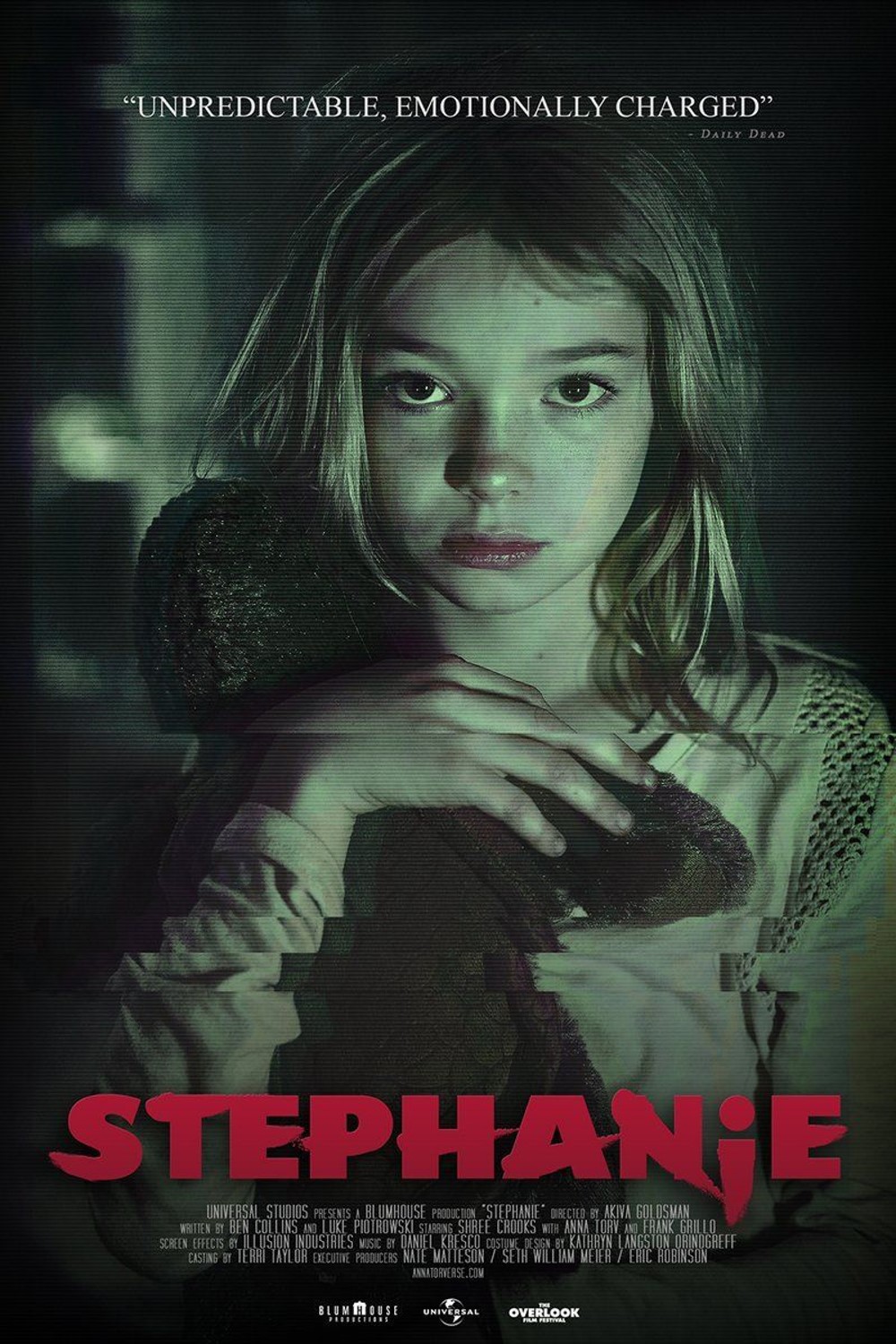
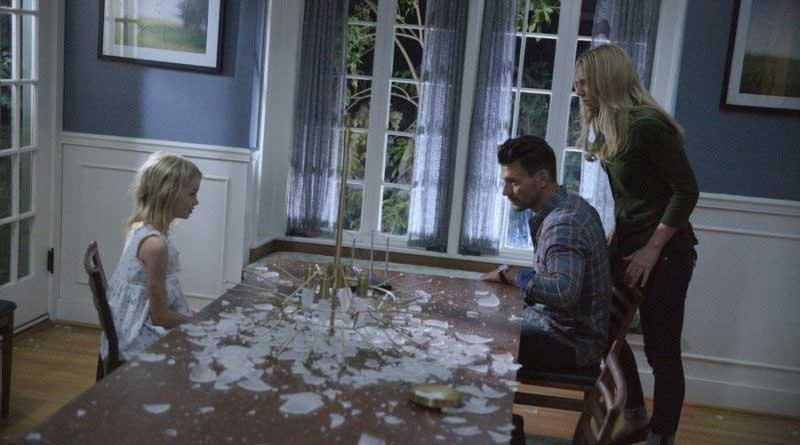
A young girl, Stephanie (Crooks), is alone in her family home, her only companions a stuffed toy turtle called Francis and a rabbit called Mr Hopper. Her parents (Grillo, Torv) have disappeared, and she doesn’t know if and when they’ll be coming back. She channel hops between her favourite TV shows and occasionally sees a news channel that is reporting on some kind of global epidemic. While she seems happy to be on her own, if she becomes sad or upset, it draws the attention of a monster that lives in the nearby woods. When this happens, Stephanie has learnt to hide and keep absolutely quiet; then the monster will go away. When her parents finally come home, her father is overjoyed to see her, but her mother is guarded and uncertain. There are issues surrounding her brother (Beres), and there are implications for Stephanie and her parents that are related to the epidemic. While her father erects a fence around the property to keep out the monster, Stephanie begins to suspect that there are things her parents aren’t telling her. But when they do, it puts a whole new perspective on everything she thought she knew…

Originally shown at the 2017 Overlook Film Festival, Stephanie is a Blumhouse production that is much more low-key than usual, but which also has a number of unfortunate elements to it that provide a good indication as to why Blumhouse’s usual distribution deal with Universal has resulted in around a year’s delay in getting the movie out to audiences (the movie hasn’t had a theatrical run). While the central notion of an isolated young girl at the mercy of a predatory monster has the potential to provide the requisite scares and thrills needed to make the movie work effectively, issues with the script – by Ben Collins and Luke Piotrowski – are further compounded by the erratic nature of Akiva Goldsman’s direction. The first twenty-five minutes, where Stephanie is shown getting by on her own, or avoiding being caught by the monster, are drawn out and lack the necessary impact that would allow the viewer to be really concerned for her. While the monster certainly makes its presence felt (and Jamie Hardt’s sound design helps immensely here), the ease with which Stephanie eludes it neuters any possible tension.

With the arrival of Stephanie’s parents, the movie picks up a certain amount of speed, but in the process begins to offer more questions than it has answers for, least of all in terms of the nature of the monster, and more so in relation to what’s going on in the wider world, and why. The script never properly explains why Stephanie was abandoned, and it never recovers from a third act-providing twist that makes no sense when weighed against what occurred in the first act. Throughout all this, Goldsman directs at a safe distance, disallowing any real emotion to find its way through the fog of misconstrued intentions on the parents’ side, and specious motivations on Stephanie’s side. The movie ticks over acceptably, but fortunately has a very good performance from Crooks as Stephanie, her childlike behaviour matched by more adult qualities handed to her by the script (though not consistently). Grillo and Torv cope well with characters that come across as convenient though not essential, while the denouement is frustratingly predictable once the twist is revealed. The script does attempt to show the fears governing both Stephanie and her parents’ actions, but while there are potential themes and sub-plots that could have been included – and would have made the material richer – in the end, the movie is too innocuous to be anywhere near as potent as it should be.

Rating: 5/10 – with the pace and tone of the movie at odds with its thriller aspects, Stephanie struggles to maintain a consistency likely to keep the average viewer fully engaged; a shame then, as the basic story – or its potential – could have made this a small but accomplished horror thriller, rather than the distant, unfulfilling feature that it really is.

NOTE: Currently, there doesn’t appear to be a trailer for Stephanie available, just the short scene below:

Share this:

  • Click to share on X (Opens in new window) X
  • Click to share on Facebook (Opens in new window) Facebook
  • More
  • Click to print (Opens in new window) Print
  • Click to email a link to a friend (Opens in new window) Email
Like Loading...

Broken Gardenias (2014)

17 Thursday May 2018

Posted by dullwood68 in Movies

≈ Leave a comment

Tags

Alma S. Grey, Comedy, Drama, Father/daughter relationship, Jack Morocco, Kai Alexander, LGBTQ+, Los Angeles, Review, Road movie, Romance, Suicide

D: Kai Alexander / 89m

Cast: Alma S. Grey, Jack Morocco, Caroline Heinle, Louis Dezseran, Nathan Douglas, Khelsy Raymond, Marlyse Londe, Geoffrey Kennedy, Amanda S. Hall

For Jenni (Grey), life isn’t something that she feels entirely comfortable with. She’s shy, has a somewhat childish attitude to her work in a plant nursery (she tells awful jokes to the plants), lives with a housemate (Heinle) who thinks she’s weird, and has a crush on a fellow nursery worker (Hall) that she’s too insecure to act on. When circumstances result in her losing both her home and her job, Jenni decides that suicide is her only remaining option. She goes to the park to hang herself but is stopped from doing so by Sam (Morocco), a free spirit who gets Jenni to open up about herself. Jenni tells Sam about her father, who she hasn’t seen since she was six years old. All she has is an old photo of him outside the house they used to live in in Los Angeles. Sam persuades Jenni to try and find him, and they travel to L.A. There, a number of distractions hold up their search, and their new-found friendship is put to the test…

A comical quasi-road movie that features a brace of enjoyable performances from its leads, Broken Gardenias is a good-natured comedy drama that doesn’t provide viewers with anything out of the ordinary, and which isn’t trying to be too profound either. It’s an indie movie with a surplus of charm that is in service to a script (by Grey) that sets out its stall very early on. It’s about acceptance, and on various levels. Jenni is afraid of taking chances, so travelling to L.A. is a big deal for her, especially as she has no idea if tracking down her father will be successful, or provide her with some, or all – or nothing – of the answers she’s looking for. Sam has a more positive outlook, but that’s because she’s compensating for Jenni’s lack of confidence, and her own nature allows her to accept Jenni’s uncertainty without necssarily supporting it. For once, the script isn’t concerned with whether or not both women learn from each other and grow as individuals accordingly, but with the singular journey that Jenni takes in gaining the confidence that has eluded her for so long. There’ll be tears, there’ll be laughs, and there’ll be unexpected sexual encounters, but above all, there’ll be emotional, cathartic outbursts.

Grey and Morocco play off and against each other with considerable skill, which is beneficial on those occasions when Grey’s script wanders off course (an encounter with a stoner lady who gives Jenni and Sam a lift), or scenes that drag on without adding anything to the narrative. There’s also a risible sub-plot involving Jenni’s housemate – and her boyfriend – who are visiting L.A. at the same time, a set up that has a less than satisfying, and very contrived resolution. With this in mind, though, Broken Gardenias has much more to offer, from the aforementioned performances, Alexander’s relaxed yet en point direction, some colourful L.A. locations, Meena Singh’s bright and airy cinematography, and a winsome, whimsical score by Tiffanie Lanmon. It’s very much a movie that wears its lesbian laurels on its sleeve, but it’s also a story that could be just as enjoyable and just as relevant if both Jenni and Sam were straight (though the romantic aspects might need adjusting). In the end, Grey has fashioned a knowing script that doesn’t take either Jenni or Sam for granted, and makes their growing relationship – with all its stumbles and strides – something to cherish, and relish, for its easy simplicity.

Rating: 7/10 – a small triumph of LGBTQ+ movie making, Broken Gardenias overcomes a handful of narrative hiccups to provide an engaging and entertaining look at one woman’s journey to gaining self-confidence and self-reliance; Grey and Morocco are an attractive pairing, there’s a good mix of drama and comedy, and it’s all set against a familiar indie backdrop that helps anchor some of the more wayward aspects of the script.

Share this:

  • Click to share on X (Opens in new window) X
  • Click to share on Facebook (Opens in new window) Facebook
  • More
  • Click to print (Opens in new window) Print
  • Click to email a link to a friend (Opens in new window) Email
Like Loading...

Bombshell (2017)

15 Tuesday May 2018

Posted by dullwood68 in Movies

≈ Leave a comment

Tags

Actress, Alexandra Dean, Anthony Loder, Beauty, Biography, Denise Loder-Deluca, Documentary, Fleming Meeks, Frequency hopping, Hedy Lamarr, Review, Vienna

aka Bombshell: The Hedy Lamarr Story

D: Alexandra Dean / 88m

With Hedy Lamarr, Anthony Loder, Denise Loder-Deluca, Fleming Meeks, Robert Osborne, Wendy Colton, Diane Kruger, Stephen Michael Shearer, Jimmy Loder, Jeanine Basinger, Peter Bogdanovich

In recent years, Hedy Lamarr and her life and work have been the subject of a critical reappraisal, from her role as an actress in Hollywood, to her other work as an inventor. This duality has been examined and explored through plays and photographic exhibitions, and her influence has extended as far as being the inspiration for Anne Hathaway’s portrayal of Catwoman in The Dark Knight Rises (2012). Bombshell charts Lamarr’s life from her childhood growing up in Vienna (as Hedy Kiesler), through to her early movie career and the production that brought her both fame and notoriety, Extase (1933), in which she appeared nude. Her family’s Jewish background put them at risk from the Nazis and so she fled Vienna to Paris where she met Louis B. Mayer, the head of MGM. She began her Hollywood career soon after, but she made a more lasting contribution through her work as an inventor, coming up with a system – in conjunction with composer George Antheil – called frequency hopping, something that stopped torpedoes from being tracked or jammed.

This occurred during World War II, and up until this stage, Bombshell is something of a standard biopic, charting Lamarr’s rise as an actress, and highlighting the Viennese background that propelled her, unexpectedly, to international stardom. Lamarr’s determination to succeed is also highlighted, as is her belief in herself and her abilities. But it’s the invention of frequency hopping – and its eventual use by the US Navy – that proves to be most intriguing. The documentary tells a story of bad luck and bad timing as Lamarr’s work proves too difficult to be adapted during the war, and when it is finally adopted in the early Sixties it’s too late for Lamarr to capitalise on its use financially. By this time her acting career has come to an end, and she has begun to withdraw from public life, becoming something of a recluse. Her children from her marriage to John Loder, Anthony and Denise, tell a story of ill-advised plastic surgery – footage of Lamarr in her later years shows just how much it was a bad idea – family estrangement (another son, Jimmy, believed he was adopted and chose to be brought up by someone else), and arrests for shoplifting.

Bombshell brings all these strands and aspects of Lamarr’s life together in a cogent and deftly considered way thanks to a mix of recent interviews, archival footage and photography, and recordings made by journalist Fleming Meeks in 1990 when he interviewed Lamarr, but which he thought were lost. The movie gains depth and a large degree of poignancy from the way in which Lamarr’s life played out in such a sad way in her later years, and the bittersweet emphasis on her beauty (knowing where it will lead) adds pathos as well. In the end, and despite the setbacks in both her careers (only a handful of her movies have stood the test of time), Lamarr’s story is one of huge promise that was only moderately and temporarily realised. Making her feature debut, Dean assembles the highs and lows of Lamarr’s life – married six times, highly regarded for her beauty if not her brains, more interesting away from acting – and paints a compelling portrait of a woman who was perhaps born two or three decades too soon. Ultimately it’s a sad tale because of its outcome, but thanks to Dean and the participation of Lamarr’s family, it’s also a celebration of an extraordinary woman who was much, much more than just a great beauty.

Rating: 8/10 – with an honesty about its subject that is sincere and affecting, Bombshell is a fascinating look at Hedy Lamarr the person, rather than just the actress or the inventor; a biography that examines much of her life in detail, and with a sympathetic approach, it’s an absorbing tale that does Lamarr justice in a way that, in many ways, she wasn’t granted while she was alive.

Share this:

  • Click to share on X (Opens in new window) X
  • Click to share on Facebook (Opens in new window) Facebook
  • More
  • Click to print (Opens in new window) Print
  • Click to email a link to a friend (Opens in new window) Email
Like Loading...

Blade of the Immortal (2017)

14 Monday May 2018

Posted by dullwood68 in Movies

≈ Leave a comment

Tags

Action, Drama, Japan, Kimura Takuya, Manga adaptation, Review, Samurai, Sugisaki Hana, Takashi Miike, Thriller

Original title: Mugen no jûnin

D: Takashi Miike / 141m

Cast: Kimura Takuya, Sugisaki Hana, Fukushi Sôta, Ichihara Hayato, Toda Erika, Kitamura Kazuki, Kuriyama Chiaki, Mitsushima Shinnosuke, Tanaka Min, Yamamoto Yôko

Manji (Kimura) is a man haunted by a tragic past involving the death of his sister, an incident that left him unable to die thanks to the intervention of a mysterious woman (Yamamoto). Fifty-two years later, a young girl, Rin (Sugisaki), approaches him to be her bodyguard and help gain revenge for the death of her father at the hands of Kagehisa Anotsu (Fukushi), the head of a new martial arts school. Manji refuses at first, but when Rin is attacked by one of Kagehisa’s men, he changes his mind. When news reaches Kagehisa that his man is dead, so begins a series of encounters as Kagehisa’s followers – aware that Manji cannot be killed – try various ways and means to defeat him. Meanwhile, Kagehisa attempts to influence the Shogun training school into joining his own school, but his plan fails. As Manji’s body suffers more and more from each encounter, circumstances bring him and Kagehisa together against an army of Shogun warriors, and if fate has a hand, then against each other…

Blade of the Immortal is Takashi Miike’s one hundredth movie, a feat that he’s achieved since his debut in 1991 (and he’s made two further movies since). Returning to the samurai arena he visited so effectively in 13 Assassins (2010), Takashi takes on another manga/anime adaptation and throws the audience headlong into a world of treachery, violence, political intrigue, vengeance, and misplaced codes of honour. As expected, it’s a bravura piece of movie making from Takashi, visually striking – the opening sequence is in black and white – bold in its execution with several stunningly mounted action set pieces, and a central character in Manji whose plight is weighing him down with every passing year. There’s a melancholy air to Manji’s situation that the script by Oishi Tetsuya maintains throughout, imbuing the character with a fatalism that gives depth to the part and helps ensure Manji isn’t just another invincible hero. Kimura is terrific in the role, Manji’s scarred features reflecting the pain of being immortal, and his interaction with Rin (who is a dead ringer for his sister; as she should be, as Sugisaki plays both roles) offering him both unexpected hope and potential redemption.

These themes play out against the kind of feudal backdrop that we’ve all become familiar with, and it’s these elements that don’t have the effect they should have. Kagehiso’s plan to appropriate all the teaching schools under one banner (and leader) never quite grips as a villainous ambition, though the personal reasons for his actions revealed later in the movie almost make it more convincing. The middle section of the movie suffers accordingly, as Kagehiso’s machinations and an unlikely alliance between Manji and members of a school who’ve yet to be assimilated stretch out the running time unnecessarily. Thankfully there’s a handful of superbly choreographed action scenes to offset what feels like too much filler, particularly in terms of the various examples of exotic weaponry on display, and the endlessly roving camerawork of Kita Nobuyasu. The performances are uniformly good as well, the quality of the characterisations allowing the likes of Sugisaki, Fukushi, Tanaka (as a duplicitous advisor to Kagehisa), and Toda (as a repentant member of Kagehisa’s clan) to add layers to their roles that might not otherwise have been possible. But at the end of the day it’s Takashi’s movie, and while this may be one of his more accessible movies, it’s clear that the enfant terrible of Japanese cinema is showing no sign of slowing down or avoiding challenges.

Rating: 7/10 – though Takashi’s propensity for extreme violence is dialled down, there’s still more than enough bloodshed on display in Blade of the Immortal to keep long-time fans, and newer viewers, happy; bold and thrilling (for the most part), this is stirring stuff supported by strong characterisations and a knowing sense of how outlandish it all is.

Share this:

  • Click to share on X (Opens in new window) X
  • Click to share on Facebook (Opens in new window) Facebook
  • More
  • Click to print (Opens in new window) Print
  • Click to email a link to a friend (Opens in new window) Email
Like Loading...

Toc Toc (2017)

13 Sunday May 2018

Posted by dullwood68 in Movies

≈ Leave a comment

Tags

Alexandra Jiménez, Comedy, Drama, OCD, Paco León, Patients, Review, Rossy de Palma, Spain, Theatrical adaptation, Therapy, Vicente Villanueva, Waiting room

D: Vicente Villanueva / 96m

Cast: Paco León, Rossy de Palma, Alexandra Jiménez, Nuria Herrero, Adrián Lastra, Oscar Martínez, Inma Cuevos

Six patients of the same therapist find themselves in his waiting room and all with the same appointment. With his receptionist (Cuevos) blaming the mix up on a new computer software programme, and the doctor himself delayed on his way back from London, the sextet decide to wait for him to arrive. Bianca (Jiménez) has a fear of bacteria and continually cleans both herself and her surroundings. Emilio (León) is a hoarder and someone who counts everything. Otto (Lastra) can’t step on lines and is obsessed by symmetry and balance. Lili (Herrero) has to repeat everything she or whomever she’s talking to says – twice. Ana Maria (De Palma) is susceptible to the power of suggestion and mis-repeats what other people say without realising it. And there’s Federico (Martínez) who suffers from Tourette’s Syndrome. As the wait for their therapist carries on, they begin to find out about each other, and the various issues that blight their every day lives. And then one of them suggests they take the opportunity to do a bit of group therapy, something that brings forth some very unexpected results…

A seriously funny movie that avoids making fun of its characters by painting their various plights with sympathy and understanding, Toc Toc is an adaptation of the stage play by Laurent Baffie. It’s sensitively handled, and takes its time in establishing each character’s problem and how they attempt to deal with it. It’s these defensive mechanisms that the script (by Villanueva) exploits in the beginning, and a great deal of the early humour is in seeing how much more difficult these defence mechanisms make their individual lives. Bianca cleans the lab where she works which raises the ire of the cleaning staff. Ana Maria crosses herself every time she hears a profanity, which is tiringly often. Otto can’t maintain a relationship if his partner is deliberately and unthinkingly messy. As each character explains just how their obsessions can have a negative effect on their lives, each illustration is conveyed in a humorous and yet melancholy way that allows the movie to be both necessarily exploitative but also sincere and mindful. It’s a delicate balancing act, but thanks to Villanueva’s assured direction and the unwavering commitment of the cast, these characters are never less than treated kindly, and with a great deal of compassion.

This allows the interaction between them – though still imbued with a staginess that can’t be avoided – to flourish in rich and rewarding ways. There’s a budding romance between Otto and Lili that is as sweet and unassuming as you could hope for, and Ana Maria’s initial reluctance to admit she’s a patient reveals a resourcefulness that proves to be a benefit to the whole group. These and other aspects are carefully drawn out by Villanueva and the cast, and even though there are farcical elements that are enacted with undisguised glee, the underlying seriousness of the situation isn’t ignored, making this often beautifully observed and trenchant at the same time. All the cast are on good form, with León’s garrulous, jokey cab driver and de Palma’s uptight religious hausfrau particularly enjoyable to watch, and Villanueva maintains a light, frothy tone that’s supported by a whimsical score by Antonio Escobar, and David Omedes’ fluid cinematography. Even the most casual of viewers will be able to work out where all this is heading, but it’s how it gets there that’s very much part of the fun.

Rating: 8/10 – some staginess and predictability aside, Toc Toc is a delightfully engaging meringue of a movie that knows exactly what it’s doing, and does it very well indeed; good-natured and agreeable, it’s the kind of movie that, like many other foreign language movies, deserves a wider audience than it will most likely attract.

NOTE: Sadly, there’s no subtitled trailer for Toc Toc currently available.

Share this:

  • Click to share on X (Opens in new window) X
  • Click to share on Facebook (Opens in new window) Facebook
  • More
  • Click to print (Opens in new window) Print
  • Click to email a link to a friend (Opens in new window) Email
Like Loading...

Batman (1943) – Chapter 8: Lured by Radium

13 Sunday May 2018

Posted by dullwood68 in Movies

≈ 1 Comment

Tags

Action, Columbia, Douglas Croft, Drama, J. Carrol Naish, Lambert Hillyer, Lewis Wilson, Radium mine, Review, Serial, Shirley Patterson, Thriller

D: Lambert Hillyer / 17m

Cast: Lewis Wilson, Douglas Croft, J. Carrol Naish, Shirley Patterson, William Austin, Charles Middleton, John Maxwell, William Wilkerson

Thanks to Robin’s quick thinking in turning off the power to the lift, Batman avoids certain death again. Worried by Colton’s disappearance, Linda decides to try and find him; Bruce and Dick agree to go with her. Meanwhile, back at Dr Daka’s lair, Colton (Middleton), to avoid being turned into one of Daka’s zombies, agrees to reveal the location of his radium mine. The next day sees Colton and six of Daka’s henchmen arrive at the mine, but Colton gets away from them and heads deeper into the mine. At the same time, Bruce, Dick and Linda, accompanied by Alfred, arrive at Colton’s cabin. While Linda and Alfred wait there, Bruce and Dick go to the mine, where they discover Daka’s men are there. Changing into their Batman and Robin outfits they enter the mine and a fight ensues. Back at the cabin, Colton appears from below a hidden trapdoor intent on blowing up the mine so that Daka cannot use the radium. Back down in the mine, he primes the explosives, but during the continuing fight, one of Daka’s men falls on the detonator, the blast collapsing the mine and sending Batman to certain death…

Now at the halfway point, Batman still feels as if it’s hitting its stride and comfortably so, with the sub-plot involving Colton’s radium mine providing continued excitement. As with Chapter 7, this has a shorter runtime than is apparent, thanks to the inclusion of the whole fight scene from the end of its predecessor (and not to mention the opening titles etc.). But again, everything is played out more concisely, and with a lot more verve, even though the script takes time out to introduce Steve (Wilkerson), a Native American who helps Bruce et al with directions to Colton’s cabin and the mine. It’s hard to work out why the character is there at all – Colton can provide directions by himself, and Linda has a map showing where the mine is – but his presence is a pleasant enough diversion, and doesn’t interfere with the overall pace of the episode. It does give Wilson and Croft a chance to be seen more as Bruce and Dick than in most chapters, and gives Wilson in particular a chance to break away from the earnestness that comes with being Batman.

But while these are relatively new elements – improvements even – the script still has plenty of tried and trusted moments for fans/viewers who haven’t given up yet to enjoy, from Linda accusing Bruce of being too lazy, Alfred behaving like the milquetoast he so clearly is, Croft’s stuntman having way less hair when dressed as Robin, and Naish’s make up giving Daka a perma-sneer. It’s still all in service to the kind of story that appears to have been made up from chapter to chapter, and it still benefits from Hillyer’s grasp of the absurdity of it all. As the serial continues it’s Hillyer who’s proving to be Batman‘s most valuable player, offsetting even the most risible moments with a straightforward, unfussy style that helps override the inherent silliness of it all. There’s even the odd, unexpected camera angle that belies the idea that camera set ups were purely of the one-and-done variety. Now that the serial has found its feet, there’s a consistency and a purpose about it all that augurs well for the second half of the serial as a whole, even though this chapter will see the end of the Colton sub-plot, and maybe the last time we ask the question just how is Batman going to survive this time…?

Rating: 7/10 – continuing the more confident approach first seen in Chapter 5, Chapter 7 is another solid, enjoyable chapter in a serial that has been mostly the opposite up until now; while not stretching the boundaries of serials made at the time, Batman is still worth watching, and still the kind of basic, no-frills entertainment that can be entirely its own reward.

Share this:

  • Click to share on X (Opens in new window) X
  • Click to share on Facebook (Opens in new window) Facebook
  • More
  • Click to print (Opens in new window) Print
  • Click to email a link to a friend (Opens in new window) Email
Like Loading...

The Escape of Prisoner 614 (2018)

11 Friday May 2018

Posted by dullwood68 in Movies

≈ Leave a comment

Tags

Comedy, Deputy Sheriffs, Drama, Escaped convict, George Semple III, Jake McDorman, Martin Starr, Review, Ron Perlman, Shandaken, Zach Golden

D: Zach Golden / 97m

Cast: Martin Starr, Jake McDorman, George Semple III, Ron Perlman, Sondra James, Michael Sirow

In the quiet southern town of Shandaken, crime is at an all-time low. Going back seven years, the town’s two deputies, Jim Doyle (Starr) and Thurman Hayford (McDorman), have what might be considered an envious record: in all that time they haven’t made one single arrest. However, this doesn’t sit well with the sheriff (Perlman). With their record giving him the opportunity to get rid of them, Jim and Thurman find themselves suddenly unemployed. But fate throws them a lifeline in the form of a convict, Prisoner 614 (Semple III), who has escaped from a nearby prison. Determined to capture the escapee, and use his capture to get their jobs back, the two ex-deputies set off into the nearby mountains to track him down. This proves easier than expected but getting back proves less so. Soon the trio are lost, and while the sheriff waits on their return, Jim and Thurman discover that Prisoner 614 was wrongly imprisoned. Aware that if they bring him back, the sheriff is likely to find a way of ensuring that Prisoner 614 doesn’t make it back to the prison – at all – they come up with a plan to keep him safe…

When we first meet Jim and Thurman they’re playing cops and robbers, chasing each other throught the woods and using prop guns to shoot at each other. These are grown men, but with one foot in a lingering childhood that keeps them from engaging fully with the world around them. They’re inept, foolish, naïve, and irredeemably good-natured. They’re also immensely likeable, and thanks to Zach Golden’s sincere and affectionate screenplay, the kind of gentle, unassuming heroes we can all get behind and root for. They have modest ambitions, and modest hopes. All of this goes to make The Escape of Prisoner 614 the kind of guilty pleasure that comes along every so often, and which allows the viewer to just enjoy a movie for its own sake. Golden’s debut is pleasantly free of subtext or hidden meanings, and it skirts around wider issues such as institutional racism because they’re not part of the story Golden wants to tell. This is a carefree, slightly unbelievable tale that succeeds thanks to a surfeit of unforced charm, and terrific performances. It may feel slight, and even under-developed at times, but it has an often wicked sense of humour, and it doesn’t set out to be more than it is. In and of itself, it’s a movie that’s as good-natured as its two main characters.

As the hapless pair, Starr and McDorman are on fine form, exploiting their characters’ naïveté with disarmingly skillful precision. Starr is terrific as the cautious Doyle, his deadpan delivery and pessimistic demeanour offering several understated yet hilarious moments, while McDorman portrays Hayford as the more generally upbeat and positive half of the duo, complementing Starr’s performance with aplomb. As the bully-boy sheriff, Perlman takes a role that could have been reduced to caricature and adds comic layers to the part that are both unexpected and enjoyable. It’s all played out in the kind of non-specific yet generic small town milieu that allows for quirky goings-on and equally quirky characters to come and go – James’ diner waitress, Marla, is a particular treat – while treating the main storyline with equal affection. It’s not for everyone, and some viewers may find the slightness of Golden’s tale to be unsatisfactory, but sometimes a movie that doesn’t concern itself with frills or unnecessary layers is all the better for being so purposely restrictive. And this is one such movie.

Rating: 8/10 – a knowingly arch comedy of errors, The Escape of Prisoner 614 is a gentle, low-key movie that has modest ambitions, and a confidence that augurs well for Golden’s next feature; bolstered by Adam Lee’s textured cinematography, and a naturalistic feel that underpins the deliberately whimsical nature of the material, this is a small-scale winner that’s both delightful and entertaining.

Share this:

  • Click to share on X (Opens in new window) X
  • Click to share on Facebook (Opens in new window) Facebook
  • More
  • Click to print (Opens in new window) Print
  • Click to email a link to a friend (Opens in new window) Email
Like Loading...

The Vault (2017)

10 Thursday May 2018

Posted by dullwood68 in Movies

≈ Leave a comment

Tags

Bank robbery, Crime, Dan Bush, Drama, Francesca Eastwood, Horror, James Franco, Review, Scott Haze, Taryn Manning, Thriller

D: Dan Bush / 91m

Cast: Francesca Eastwood, Taryn Manning, Scott Haze, James Franco, Q’orianka Kilcher, Jeff Gum, Clifton Collins Jr, Keith Loneker, Jill Jane Clements, Michael Milford, Conal Byrne

Just as a bank is about to close, a customer and an applicant for one of the teller’s positions, as well as three firemen, reveal themselves to be robbers, intent on emptying the safe. They’re expecting to grab around a million dollars, but find only $70,000 instead. It’s at this point that the assistant manager (Franco) tells them about the old vault located in the basement, one that holds six million dollars. The robbers – sisters Leah (Eastwood) and Vee (Manning), their brother Michael (Haze), and their accomplices, Cyrus (Loneker) and Kramer (Milford) – begin the process of breaking into the vault, but as soon as they do, strange things start to happen. It all appears to tie in to another attempted robbery at the bank in 1982, when a man in a white mask “snapped” and killed some of his hostages by burning them alive in the old vault. As the robbers find their numbers dwindling, it becomes a race against time to evade both the police waiting outside, and the supernatural forces at work within.

It’s something of a given that if you try and splice two genres together, then it’s a rare occasion when both benefit. The Vault is one such movie. An uneven and unsuccessful mix of crime and horror genres, it’s basic premise – robbers get more than they bargained for when they pick the wrong bank – is played out with all the subtlety and consideration of an idea that’s only been partly thought through, and which serves only to highlight the paucity of the premise’s development. Make no mistake, this is yet another horror movie where paranormal events occur because they can, and not because they should or if they make sense given the overall set up. Co-written by director Bush and Conal Byrne (who has a small role as a bank employee), the script lumbers from one unconvincing scene to another, and fails to make any of its characters memorable or more than cyphers. Leah and Vee have an adversarial relationship but apart from Vee accusing Leah of planning to disappear once the heist is over, there’s nothing of substance to support Vee’s distrust. Likewise, Michael is presented as an inherently good man, but as we’re never granted an insight into why he’s with his sisters, it’s all for nothing.

The longer the movie continues the more muddled it gets. Fans of the horror genre will spot a glaring “twist” very early on, and will be spitting fake blood over a final scene that is so hackneyed and predictable – as well as betraying the movie’s own internal logic – that it has to be seen to be believed. Meanwhile, fans of the crime genre, and particularly those who like a good heist caper, will feel short-changed by the derivative nature of Bush and Byrne’s set up and the various ways in which tried and trusted genre elements are trotted out without making any impact at all. Against all this, the cast have no chance but to keep their heads down and hope for the best, with Eastwood especially ill-served in a role that lacks both depth and a clearly defined character arc. Movies such as The Vault will continue to be made, and audiences will continue to be disappointed by the ways in which their makers fail to understand the basic needs and requirements of such genre movies. And therein lies both the real crime, and the real horror…

Rating: 3/10 – with its muddled storyline and questionable theatrics, The Vault offers little in the way of authentic thrills or chills, and soon becomes irredeemably tiresome; another genre hybrid that makes a disappointing patchwork out of its good intentions, it’s an unfortunate backward step for Bush and Byrne following their much better work on The Reconstruction of William Zero (2014).

Share this:

  • Click to share on X (Opens in new window) X
  • Click to share on Facebook (Opens in new window) Facebook
  • More
  • Click to print (Opens in new window) Print
  • Click to email a link to a friend (Opens in new window) Email
Like Loading...

Batman (1943) – Chapter 7: The Phoney Doctor

24 Tuesday Apr 2018

Posted by dullwood68 in Movies

≈ Leave a comment

Tags

Action, Columbia, Douglas Croft, Drama, J. Carrol Naish, Lambert Hillyer, Lewis Wilson, Nakina Laundry, Radium mine, Review, Serial, Thriller

D: Lambert Hillyer / 16m

Cast: Lewis Wilson, Douglas Croft, J. Carrol Naish, William Austin, Charles Middleton, John Maxwell, Charles C. Wilson, Gus Glassmire

With the help of some strategically fallen cross beams, Batman (Wilson) is shielded from the effects of the explosion and emerges unscathed from the rubble. Back in civvies as Bruce Wayne, he warns Ken Colton (Middleton) to be wary of any visitors to his hotel room, and then heads to police headquarters where he and Dick (Croft) are able to identify one of Daka’s hirelings from a mug shot. Meanwhile, Colton does exactly what he was warned not to do, and allows a man claiming to be a doctor into his room. Soon he’s drugged and being taken to Daka’s hideout. There, Colton learns what’s happened to his friend, Martin Warren (Glassmire) and tries to escape. Bruce and Dick find out Colton has been abducted, and a clue leads them to the Nakina Laundry. As Batman and Robin, the pair encounter a group of Daka’s men and a fight ensues. Batman is over-powered and he falls to the bottom of a lift shaft. Daka’s men make their escape, but not before sending the lift down to crush the Caped Crusader to death…

Having almost reached the midway point, Chapter 7 provides us with the shortest entry yet – and that’s with the first two minutes including a recap of the end of Chapter 6. But it’s another episode that packs a lot in, as if relishing the challenge of having such a short time in which to make an impact. As a result we’re spared some of the more tiresome aspects of the serial so far, such as Daka’s pontificating, and Bruce and Dick waiting around for the next clue to drop into their laps. We get to see a little more of Bruce’s Young Scientist chemical set, continue to wonder why it is that every one of Daka’s henchmen has the same handprint (could it be that Daka’s monitor is stuck on Henchman No. 5 and he hasn’t realised?), marvel at how different the colour of Colton’s beard is from the hair on his head, and wait for another comic one-liner from Captain Arnold. Even the obligatory bout of fisticuffs seems to have been bettered choreographed this time around, and there’s some surprisingly subtle moments of humour in there as well. This entry doesn’t quite reach the giddy heights of Chapter 5, but it’s pretty darn close.

Of course, we’re part way through a mini-storyline that has yet to fully play out, what with Colton’s radium mine in Daka’s sights, but the doldrum that was Chapter 6 put to one side, the serial seems to be picking up increasing speed and purpose. Even the scene where Colton shows off the gun he keeps up his sleeve isn’t as redundant as it feels because there’s a payoff to it later on. And the script makes Batman and Robin far more proactive than they’ve been at any time previously. It’s almost as if what’s gone before has been the filler needed to get a fifteen chapter serial to the point where it can legitimately take off and become really entertaining. It’s reflected in the performances, with Wilson and Croft shrugging off the over-earnest nature of their characterisations in favour of going with the narrative flow, and Middleton – one of those unsung supporting actors you can always rely on – providing energy and grit as the two-toned Colton. But while there’s much that’s good about Chapter 7, there is one aspect that is getting a little wearing. Just once, it would be nice to see an episode end without having to wonder just how is Batman going to survive this time…?

Rating: 7/10 – an above average entry, Chapter 7 zips along at a good pace with no shortage of incident, and helps to make Batman look and feel as if it has more of a purpose now; stripped back and straightforward seems to be working, something that it’s to be hoped is continued in Chapter 8.

Share this:

  • Click to share on X (Opens in new window) X
  • Click to share on Facebook (Opens in new window) Facebook
  • More
  • Click to print (Opens in new window) Print
  • Click to email a link to a friend (Opens in new window) Email
Like Loading...

The Tenth Victim (1965)

23 Monday Apr 2018

Posted by dullwood68 in Movies

≈ 1 Comment

Tags

Drama, Elio Petri, Italy, La decima vittima, Literary adaptation, Marcello Mastroianni, Ming Tea, Review, Sci-fi, The Big Hunt, Thriller, Ursula Andress

Original title: La decima vittima

D: Elio Petri / 89m

Cast: Marcello Mastroianni, Ursula Andress, Elsa Martinelli, Salvo Randone, Massimo Serato, Milo Quesada, Luce Bonifassy, George Wang

In the future, war has been eradicated thanks to The Big Hunt, a televised form of mass entertainment that involves people with violent tendencies taking it in turns to be Hunter or Hunted. The Hunter knows everything about their prey, while the Hunted has no idea who might be trying to kill them. There is a financial reward for the winner of each round, and if a contestant successfully despatches their tenth victim then they win a million dollars and can retire from the game. Caroline Meredith (Andress) is facing her tenth hunt; her intended victim is Marcello Poletti (Mastroianni), who has survived six hunts. With sponsorship allowing Caroline the chance to stage the grandest of all televised kills, she sets about luring Marcello to his death by pretending to be a journalist who wants to interview him about the sexual proclivities of Italian men. But Marcello becomes suspicious of her behaviour, and soon the pair are involved in an increasingly convoluted game of bluff and double-bluff, a game that will test the limits of the feelings they are starting to have for each other…

In many ways, Italian movies from the Sixties were startling creations, and unlike any others from around the world. Adapted from the short story, Seventh Victim (1953) by Robert Sheckley, The Tenth Victim fits neatly into that category, its tale of intrigue and romance bolstered by futuristic costume designs, a visual style that fuses images of old Rome with avant-garde projections of its future version, and a reckless approach to the narrative that serves the movie well for the most part, but which also undermines it completely at other times. It’s a sci-fi thriller with earnest romantic leanings that don’t quite gel into a convincing whole, but it’s also a movie that provides sights and sounds that you’re unlikely to see anywhere else (even in other, similar Italian movies of the period). Where else would you see a bra that fires bullets, or a mechanical toy animal that Marcello calls his only friend, or a seat that catapults an unlucky sitter into a nearby pool with a crocodile in it? Bizarre moments like these, where the script goes off on a creative tangent, help the movie overcome some of its more pedestrian passages, but there aren’t enough to overcome the feeling that the material is being stretched too thin in places, and to no obvious benefit.

That said, the game of bluff and double-bluff played out by Caroline and Marcello does have its moments, with each trying to manoeuvre the other into place so their kill can have the most impact. Andress is earnest and determined as Caroline, both in terms of her character’s growing love for Marcello, and her single-minded pursuit of the game’s ultimate prize. But while Andress – unexpectedly – proves to be very good indeed in her role, the same can’t be said of Mastroianni, who is let down by the script’s indecision in how to portray him. One minute he’s looking smug, the next he’s angry, the moment after that he’s as amorous as a typical Italian male… and so on. He’s not helped by Petri’s scattershot approach to directing, with the future director of Investigation of a Citizen Above Suspicion (1970) unable to maintain a consistent pace or tone throughout. There are very definite highs in the movie, but there are also very damning lows, and it’s this inconsistency that stops the movie from being as carefree and as enjoyable as it could have been.

Rating: 7/10 – while there’s a lot going on visually – all of it captured by Gianni Di Venanzo’s exemplary cinematography – the story suffers somewhat, making The Tenth Victim both invigorating and disappointing at the same time; with the main storyline falling victim to a series of implausible built-in plot developments, the movie is as preposterous as many others of its kind from the Sixties, but thanks to a frothy sense of its own absurdity, overcomes many of its faults by sheer force of indomitable Italian will.

Share this:

  • Click to share on X (Opens in new window) X
  • Click to share on Facebook (Opens in new window) Facebook
  • More
  • Click to print (Opens in new window) Print
  • Click to email a link to a friend (Opens in new window) Email
Like Loading...

Million Dollar Legs (1932)

21 Saturday Apr 2018

Posted by dullwood68 in Movies

≈ Leave a comment

Tags

Andy Clyde, Bankruptcy, Ben Turpin, Comedy, Edward F. Cline, Jack Oakie, Joseph L. Mankiewicz, Klopstokia, Olympics, Paramount, Review, W.C. Fields

D: Edward F. Cline / 59m

Cast: Jack Oakie, W.C. Fields, Andy Clyde, Lyda Roberti, Susan Fleming, Hugh Herbert, Ben Turpin, George Barbier, Dickie Moore

In the country of Klopstokia, where the women are all called Angela and the men are all called George, brush salesman Migg Tweeny (Oakie) runs into a young woman (named Angela, naturally) and immediately the pair fall in love. Angela (Fleming) takes Migg to meet her father, who just happens to be the country’s president (Fields). The president is at odds with his cabinet. Led by the Secretary of the Treasury (Herbert), the cabinet is plotting to overthrow him as his policies – or lack of them – have resulted in Klopstokia teetering on the edge of bankruptcy. When Migg realises that many Klopstokians are natural athletes, he suggests the country takes part in the upcoming Olympic Games; if they win, they’ll also collect a large cash reward being offered by Migg’s boss (Barbier). The cabinet take steps to sabotage the president’s efforts and hire femme fatale Mata Machree (Roberti) to seduce the athletes (why isn’t she called Angela?). Only a last-minute intervention by Angela keeps the country’s Olympic dream alive, and it comes down to the last event, the weightlifting competition, to decide if Klopstokia will avoid financial ruin…

If you’re in any doubt as to what kind of comedy is being served up by Million Dollar Legs, then an opening caption should explain everything (as it does about Klopstokia): Chief Exports … Goats and Nuts. Chief Imports … Goats and Nuts. Chief Inhabitants … Goats and Nuts. Yes, we’re in a weird approximation of a European country where anything goes. There’s parody, slapstick, farce, and every other form of comedic license you can think of. There are visual gags galore, razor sharp one-liners, and all courtesy of a group of comedians whose own individual (and often contrasting) styles somehow come together to make the movie one of the most consistently funny releases Paramount ever produced. With a script by Joseph L. Mankiewicz and Henry Myers that was originally written for the Marx Brothers (who turned it down), Million Dollar Legs is so carefree and unconcerned with being disciplined that the viewer has no choice but to go along with it all. Scenes often exist just to be funny, and they bear no relation to anything that’s gone before, or will do in the future. It’s like watching a movie that has only a tenuous sense of story and plot, is more than aware of it, but just doesn’t feel it’s important.

There’s so much to take in and enjoy. Fields ditches his standard curmudgeonly persona and appears looser and more relaxed than usual; the result is a performance that sparkles with comic invention. He’s in good company, too. Oakie shines as the loveable lunkhead he always played so well, Clyde is restraint personified as the president’s major-domo (and fastest man on two legs), Herbert makes his character’s shifty and obsequious behaviour a constant source of amusement, and Turpin pops up unexpectedly here and there as a black cloaked spy with a notebook. Roberti is equally effective in a pastiche Marlene Dietrich role that sees her throw her hips around with the kind of wild abandon that could injure someone. Ostensibly in charge of everything, Cline has no option but to stand back and let his cast loose on the material. Anarchy and preposterousness ensue in equal measure, with side orders of silliness and absurdity. Paramount never made another movie even remotely as harebrained as this one, and though at first glance the Marx Brothers’ rejection of the script might imply that this won’t be as good as one of their own movies, nothing could be further from the truth.

Rating: 9/10 – hugely enjoyable, and with its experienced cast working in effortless fashion, Million Dollar Legs is the kind of movie that modern audiences would be tempted to overlook – and that would be a travesty; alive with comic possibilities and fizzing with imagination, this is hilarious, inspired stuff indeed, and packs more into its relatively short running time than some features manage over twice the length.

NOTE: The trailer below is for a special screening of the movie held in 2010.

Share this:

  • Click to share on X (Opens in new window) X
  • Click to share on Facebook (Opens in new window) Facebook
  • More
  • Click to print (Opens in new window) Print
  • Click to email a link to a friend (Opens in new window) Email
Like Loading...

Paterno (2018)

20 Friday Apr 2018

Posted by dullwood68 in Movies

≈ Leave a comment

Tags

Al Pacino, American Football, Barry Levinson, Child abuse, Drama, Kathy Baker, Penn State, Review, Riley Keough, True story

D: Barry Levinson / 105m

Cast: Al Pacino, Riley Keough, Kathy Baker, Greg Grunwald, Annie Parisse, Larry Mitchell, Michael Mastro, Benjamin Cook, Kristen Bush, Peter Jacobson, Sean Cullen, Jim Johnson

In October 2011, Joe Paterno (Pacino) wins his 409th game as head coach of the Penn State Nittany Lions football team. At the ripe old age of eighty-four, Paterno has been with Penn State for sixty-one years, and is a local legend; a statue dedicated to him refers to him as “a coach, an educator, and a humanitarian”. But when a former assistant coach, now retired, called Jerry Sandusky (Johnson) is indicted on charges of child sexual abuse, Paterno finds himself embroiled in the case as speculation mounts that he was aware of Sandusky’s behaviour and did nothing to stop it. A local journalist, Sara Ganim (Keough), is the first person to fully investigate and report on the story, and she establishes a rapport with one of Sandusky’s victims, a student called Aaron (Cook), who was the first to come forward about the abuse. As the ensuing week plays out, the story broadens to include senior members of the Penn State faculty and the role they played in downplaying historical accusations made against Sandusky, accusations that they were aware of. As further accusations of wrong-doing are made, Paterno and his family find themselves trying to deal with a situation that, increasingly, they can’t control…

The question at the heart of Paterno isn’t how could a paedophile like Jerry Sandusky get away with what he did for so long, and nor is it how could his peers have ignored it for so long and so deliberately. Instead, the question is: how likely is it that Joe Paterno, given his standing at Penn State, didn’t know about it? As the story unfolds, and Debora Cahn and John C. Richards’ script reveals more and more about the levels of culpability that allowed Sandusky such a free rein for so long, each revelation serves to make it appear more and more unlikely that Paterno could have been as in the dark as he claimed. And as the movie progresses, we see Paterno’s initial refusal to get involved give way to moments of tempered reluctance, unwarranted bravado, and desperate agitation. Pacino – back on form after a string of less than sterling performances – shows both the physical frailty of the man, and the emotional reticence that informs his behaviour when challenged as to his awareness of Sandusky’s crimes. Thanks to both the script and his portrayal, Paterno isn’t just the legendary football coach beloved of everyone, but a human puzzle whose pieces don’t quite fit together as neatly as they should.

Pacino’s performance is cleverly constructed and detailed, and serves as the movie’s strongest suit. You’re never quite sure if Paterno is feeling guilty for what he did, or for what he didn’t do, and it’s this ambiguity that makes the movie so watchable. (It’s almost a shame that the movie ends the way it does.) Also making something of a comeback, director Levinson ensures the immediacy of the story remains paramount, and there are parts of the movie that play out like a thriller as more and more of the truth is revealed. Shot through with carefully chosen moments where the soundtrack is  teeming with snatches of angry, accusing, or shocked vox pop, the movie is dramatic without overstepping its remit, and even the scenes of people chanting Paterno’s name outside his home are based on fact. There are good supporting turns from Keough and Baker (as Paterno’s wife, Sue), and though this never “opens out” due to what must have been a tight budget, Marcell Rév’s cinematography perfectly complements the claustrophobia of Paterno’s unofficial “house arrest” while matters were decided without him.

Rating: 8/10 – featuring Pacino’s most effective and rewarding screen performance for some time, Paterno rightly keeps its focus on its leading character while also exposing the hypocrisy and deception going on around him; an intelligent but modest drama that packs an emotional wallop when it needs to, it’s also a movie that successfully avoids being exploitative or insensitive.

Share this:

  • Click to share on X (Opens in new window) X
  • Click to share on Facebook (Opens in new window) Facebook
  • More
  • Click to print (Opens in new window) Print
  • Click to email a link to a friend (Opens in new window) Email
Like Loading...

Every Reason to Forget (2018)

19 Thursday Apr 2018

Posted by dullwood68 in Movies

≈ 1 Comment

Tags

Bianca Comparato, Brazil, Comedy, Drama, Johnny Massaro, Maria Laura Nogueiro, Pedro Coutinho, Regina Braga, Review, Romance, Therapy, Tinder

Original title: Todas As Razões Para Esquecer

aka All the Reasons to Forget

D: Pedro Coutinho / 90m

Cast: Johnny Massaro, Bianca Comparato, Regina Braga, Maria Laura Nogueiro, Victor Mendes, Thiago Amaral, Rafael Primot

Antonio (Massaro) is an ad designer whose relationship with Sofia (Comparato) comes to an abrupt end after two years. Convincing himself that she made him end it, Antonio stays temporarily with his cousin, Carla (Nogueira), and her husband, Felipe (Primot). Carla and Felipe are having marriage problems and are seeing a couples therapist, Dr Elisa (Braga). When it’s suggested that Antonio should see her so he can make sense of his break-up from Sofia, he goes along with the idea without considering if therapy will really help him. While Dr Elisa challenges Antonio to open up and express his feelings, he takes advice from Carla and his friends, neighbour Deco (Amaral), and would-be writer Gabriel (Mendes), and tries to win Sofia back. His efforts don’t work as planned, and it’s not until Dr Elisa prescribes a certain mix of medication that Antonio finds his life improving, and things getting arguably better. But will Antonio’s newly found peace of mind help in winning back Sofia…?

A romantic comedy about one man’s tragic inability to understand the nuances and particularities of romantic relationships, Every Reason to Forget is an amiable, pleasant enough movie that somehow makes a virtue of its main character’s vapid intelligence and startling short-sightedness. Antonio isn’t just clueless, he’s actively clueless. He’s like a child who keeps burning his fingers on the stove but can’t work out why it keeps happening. He knows there’s a reason why he and Sofia are no longer together but he can’t work out what it is. This makes it nigh impossible for him to move on with his life, and why he makes so many mistakes in trying to do so. Faced with such an uphill struggle, Antonio resorts to measures such as finding a match on Tinder, and using relationship questions from a teen magazine to highlight how much more in tune he is. Amusing as much of this is though, writer-director Coutinho – making his feature debut – never really clarifies if Antonio is doing all this to win Sofia back (initially most likely), or for himself (increasingly most likely). And why he’s the way he is isn’t explored at all, leaving the viewer to wonder just how his relationship with Sofia lasted for two whole years in the first place.

As the emotionally switched off Antonio, Massaro has a certain vulnerable charm that works well for the character, and when the movie gets a little darker – which isn’t too often – he’s not afraid to make Antonio appear selfish and inconsiderate. Massaro also has a knack for keeping Antonio sympathetic in these moments, and though he’s someone for whom the art of poorly focused navel-gazing seems to be a built-in personality trait, Massaro’s portrayal of Antonio is effective without feeling contrived. There’s good support too from Braga as Antonio’s sex obsessed therapist, and Nogueira as the cousin who, in a US remake, would likely be the character he ends up with. Coutinho keeps things moving at an even pace, but in doing so, makes this occasionally feel like it’s dragging, and it’s not as willingly dramatic as it could have been. Despite this, and despite Antonio’s perpetual misunderstanding of his own imperfections, Coutinho does his best to make this an amusing and somewhat pleasant diversion, even though you might be wondering if there’s ever going to be any depth to the proceedings. The answer is yes, but with reservations as to when they do.

Rating: 5/10 – too monotone in its dramatic and visual approach – Joao Padua’s cinematography sometimes feels as if there wasn’t enough time for a proper set up – Every Reason to Forget is genial enough but lets its main character off the hook for his behaviour once too often; still, Coutinho shows promise, and with a tighter script in the future, should do much better, but until then this outing will have to serve as a fair attempt at putting a Brazilian twist on a well established genre.

NOTE: Currently there isn’t a trailer with English subtitles available.

Share this:

  • Click to share on X (Opens in new window) X
  • Click to share on Facebook (Opens in new window) Facebook
  • More
  • Click to print (Opens in new window) Print
  • Click to email a link to a friend (Opens in new window) Email
Like Loading...

I Can’t Think Straight (2008)

18 Wednesday Apr 2018

Posted by dullwood68 in Movies

≈ Leave a comment

Tags

Drama, LGBTQ+, Lisa Ray, Literary adaptation, Review, Romance, Sexuality, Shamim Sarif, Sheetal Sheth, Wedding

D: Shamim Sarif / 79m

Cast: Lisa Ray, Sheetal Sheth, Antonia Frering, Dalip Tahil, Nina Wadia, Ernest Ignatius, Siddiqua Akhtar, Amber Rose Revah, Anya Lahiri, Kimberly Jaraj, Sam Vicenti, Rez Kempton, Darwin Shaw

The daughter of wealthy Christian Palestinians (Frering, Tahil), Tala (Ray) is preparing to get married. Hani (Shaw) is a handsome young businessman, and her fourth fiancé. The wedding is due to take place in Jordan, but Tala lives and works in London. There she meets Leyla (Sheth), the girlfriend of Ali (Kempton), one of Tala’s old college friends. There’s an instant attraction between the two, and soon they are finding excuses to spend time together. A trip to Oxford with one of Tala’s sisters, Lamia (Lahiri), leads to Leyla and Tala sleeping together. But where this emboldens Leyla to acknowledge and embrace her sexuality, Tala cites her family and cultural traditions as reasons why she can’t commit to a relationship with Leyla, and this causes a wedge between them. They go their separate ways, with Tala preparing to enter into a marriage that isn’t what she wants, and Leyla choosing to make a life-changing decision. Time passes, but though both women retain their feelings for each other, it takes one more life-changing decision to allow them the chance of being happy together…

A lighter, less dramatic (and contemporary) version of Sarif’s previous movie, The World Unseen, I Can’t Think Straight is also another adaptation by Sarif of one of her novels. It’s a semi-autobiographical tale where Leyla represents Sarif, and reunites Ray and Sheth in similar roles from The World Unseen. It’s a breezy effort, more concerned with applying humour to events than focusing on the drama, and making the romance between Tala and Leyla more predictable. It’s a movie where the outcome can be guessed within the first ten minutes, and where each character fits neatly into a prescribed stereotype, particularly both sets of parents, with the mothers portrayed as controlling, and resistant to truly supporting their daughters’ happiness, while the fathers are entirely accepting and sympathetic. With the majority of the characters being so agreeable, Sarif has to work hard to make Tala and Leyla’s burgeoning relationship the source of any conflict. And when she does, the same issue that hampers the script elsewhere also comes to the fore: it’s all too inevitable to be completely convincing.

Along the way we’re treated to picture postcard shots of London and Oxford, a battery of supporting characters who are all painted in broad brush strokes, and a polo match where Tala’s hair and make up are immaculate – after she’s taken part (the script does acknowledge this, but even so…). But what really doesn’t help is the dialogue. Clunky and awkward, and often proving the better of the cast – including Ray and Sheth – Sarif and co-screenwriter Kelly Moss have concocted some truly cringeworthy lines that  call attention to themselves when they’re uttered. It’s not helpful either that the script is peppered with lumbering references to the Israeli-Palestinian divide, and Tala’s mother voices as many anti-Semitic remarks as she can manage in any given scene. Thankfully, Ray and Sheth manage to make more of Tala and Leyla than is on the page, though the rest of the performances remain perfunctory throughout. As that commonplace conundrum, the difficult second movie, I Can’t Think Straight lacks the persuasiveness and focus of Sarif’s first movie, and suffers accordingly. It’s lightweight and somewhat superficial, and unsure if it’s a rom-com or a rom-dram. In the end it’s an ungainly combination of the two, and though there are occasional moments where the script does work, there aren’t enough of them to make this anything more than disappointing.

Rating: 4/10 – a movie that betrays its low budget production values, and gives the impression its script needed more of a polish, I Can’t Think Straight tells its lesbian love story like it was a meringue, i.e. light and insubstantial; Sarif does her own novel a minimum of justice, and there’s a complacency to the material that hampers it further, making this something of a curio and nothing more.

Share this:

  • Click to share on X (Opens in new window) X
  • Click to share on Facebook (Opens in new window) Facebook
  • More
  • Click to print (Opens in new window) Print
  • Click to email a link to a friend (Opens in new window) Email
Like Loading...

Batman (1943) – Chapter 6: Poison Peril

17 Tuesday Apr 2018

Posted by dullwood68 in Movies

≈ Leave a comment

Tags

Action, Columbia, Douglas Croft, Drama, J. Carrol Naish, Lambert Hillyer, Lewis Wilson, Radium mine, Review, Serial, Shirley Patterson, Thriller

D: Lambert Hillyer / 17m

Cast: Lewis Wilson, Douglas Croft, J. Carrol Naish, Shirley Patterson, William Austin, Charles Middleton, John Maxwell

Unable to exit the stricken Lockheed plane before it crashes, Batman (Wilson) instead just walks clear of the wreckage, but not before saving the mechanics who had been zombified by Dr Daka (Naish). In doing so he discovers the snazzy silver caps that Daka uses to control people, and takes one with him. When Daka is informed of the failure of his mission, there’s another setback when the submarine he’s been in contact with is blown to bits by the US Navy. Meanwhile, Linda (Patterson) tells Bruce and Dick (Croft) about an old friend of theirs, Ken Colton (Middleton). Colton has struck it big with a radium mine, and is in town to see Linda’s Uncle Martin, who helped him buy it. Daka has Linda’s home bugged and learns about Colton’s mine but not its location. Colton is attacked by Daka’s men but Batman and Robin come to the rescue. When Daka makes another attempt on Colton’s life by luring him to an abandoned factory, Alfred (Austin) poses as Colton. Batman and Robin burst in, but Robin is soon incapacitated, and Batman knocked unconscious just as toxic chemicals receiving an electrical charge bring the factory down on top of the Caped Crusader…

Though Chapter 5 is definitely the silliest entry yet, Chapter 6 tries its best to match it. That it doesn’t succeed is due to the introduction of Colton and the latest sub-plot to revolve around Daka’s pursuit of large quantities of radium. Having to spend time setting this up, and planting the suspicion that Daka may eventually start targeting Bruce Wayne, this entry certainly has its moments – and Batman walking out of the plane wreckage without a scratch on him is easily one of them. Daka’s role is affected too, with the script requiring him to do a lot of knob-twiddling, while uttering the classic line (about Bruce Wayne), “That simpering idiot could never be the Batman!” And once again Alfred is placed in danger by impersonating someone else, and doing so in such a constipated manner that he and his fake beard aren’t fooling anyone. It’s all hands on deck on the good ship USS Implausible. The script follows its by now standard pattern: Batman cheats death, Daka plots something new, Bruce and Dick find out about said plot, there are fisticuffs, and then Batman is put in harm’s way at the end of the episode.

The introduction of Middleton as Colton seems promising enough but he’s very much the latest deus ex machina for Daka’s plotting, and in some respects he’s a replacement for the returning Linda. While she manages to get through the entire chapter without being put in danger, Colton is soon incapacitated and made to rest up (though it’s not so bad that he loses consciousness, or is forgotten about). But what is really noticeable is the apparent reluctance Batman has in doing anything with the clues he’s discovered, such as Daka’s radium gun, or the snazzy silver caps of Daka’s zombified henchmen. Just when you think, “this must be the episode where Batman starts to take the fight to Daka”, the script continues to do the opposite. Frustrating as this is, the formula remains king, and though a showdown between the two is inevitable, it’s obviously not going to happen soon. And so we have another poorly choreographed scrap between Batman and Robin and Daka’s goons – actually two such scraps – and the unexpected development of the Caped Crusader having a glass jaw (he’s been knocked out before, but not so easily). But all of this at least leads to the usual question: just how is Batman going to survive this time…?

Rating: 6/10 – the stop/start nature of the serial is in evidence here as yet another sub-plot tries to get off the ground without appearing flimsy and not particularly well thought out; Chapter 6 fizzes here and there, but there are too many moments where the effort to keep Batman from feeling strained and/or under-developed leads to just such an assumption.

Share this:

  • Click to share on X (Opens in new window) X
  • Click to share on Facebook (Opens in new window) Facebook
  • More
  • Click to print (Opens in new window) Print
  • Click to email a link to a friend (Opens in new window) Email
Like Loading...

British Classics – An Inspector Calls (1954)

15 Sunday Apr 2018

Posted by dullwood68 in Movies

≈ Leave a comment

Tags

Alistair Sim, Arthur Young, Brian Worth, Brumley, Bryan Forbes, Drama, Eileen Moore, Guy Hamilton, J.B. Priestley, Olga Lindo, Review, Theatrical adaptation

D: Guy Hamilton / 80m

Cast: Alistair Sim, Olga Lindo, Arthur Young, Brian Worth, Eileen Moore, Bryan Forbes, Jane Wenham

For the Birlings, a prosperous middle-class family living in the Yorkshire town of Brumley, an evening celebrating the engagement of their daughter, Sheila (Moore), to Gerald Croft (Worth), the son of one of Mr Birling’s competitors (Birling is a successful mill owner), is interrupted by the appearance of a police inspector named Poole (Sim). Poole is there to make enquiries relating to the death of a young woman at the local infirmary. Poole reveals that the young woman, Eva Smith (Wenham), appears to have committed suicide, and that she left behind a diary which mentions her connection to Mr Birling at least. At first, no one in the family – or Croft – admits to having known her, but as Poole relates her story over the last two years, it soon becomes clear that each one of them has had an effect on the direction the young woman’s life has taken, and that they may ultimately share a combined responsibility for her death. But a chance enounter reveals a truth about the inspector that none of them could have been prepared for…

The first screen adaptation of J.B. Priestley’s stage play, An Inspector Calls is a movie with a sense of political and social purpose. Set in 1912, it acts as a critique of post-Victorian middle-class hypocrisy, and in its own measured way, paints a searing portrait of the innate superiority that the middle-classes felt they were entitled to feel when dealing with the working-classes. Birling fires Eva from his mill because she was asking for better wages; he takes offence because he already feels he’s doing more than enough for his workers. Croft meets her at a low-point in her life, but his good deeds lead to her being set up as a mistress, and exploited accordingly. And at another point, when Eva is in dire need of help, Mrs Birling’s chairmanship of the local committee for financial aid, allows her to pour scorn on Eva’s request because she won’t reveal certain details of her situation out of pride. Desmond Davis’ screenplay highlights the self-satisfied, arrogant nature of the older Birlings, entrenched in their views and unwilling to accept responsibility for the consequences of their actions, while Priestley’s own socialist message is reflected in the younger Birlings’ ability to see why concern for others should be a necessary part of repaying earned privilege.

As Eva’s story plays out, and the scale of one family’s involvement in her tragic death is revealed, Davis and director Guy Hamilton tighten the emotional screws, and strip away the pretence and denial avowed by Croft and the Birlings until, as Sheila states, they’re all different people thanks to the inspector’s arrival. Sim is excellent as the gentle yet forceful Poole, his often mournful expression reflecting not just the sad fate of one young woman, but the inability of the older Birlings to admit their culpability. Lindo and Young deliver performances full of arrogance and bluster, while Moore is suitably anguished as the one person who can see why Poole’s presence is so meaningful for them all. Worth is a little stiff at times, but Forbes shines as Eric, the son whose drinking problem can’t be acknowledged by his mother because of how it will reflect on her. In many ways, the movie is a classic “drawing-room drama”, but spiked with an element of mystery. It draws in the viewer confidently and with a clear understanding of the story’s themes and values, and deftly skewers the institutional glibness and bigotry of the period. And by the time it reveals the hidden twist in its tale, its deconstruction of moral lassitude is complete.

Rating: 9/10 – a perfectly judged exploration of the class divide existing in pre-World War I Britain, An Inspector Calls offers an unassuming yet powerful dissection of that period’s social inequality; Sim has rarely been better, Hamilton’s direction is precise and uncompromising, and as theatrical adaptations go, it’s in a league of its own.

NOTE: Sadly, there’s no trailer available for An Inspector Calls.

Share this:

  • Click to share on X (Opens in new window) X
  • Click to share on Facebook (Opens in new window) Facebook
  • More
  • Click to print (Opens in new window) Print
  • Click to email a link to a friend (Opens in new window) Email
Like Loading...

The World Unseen (2007)

12 Thursday Apr 2018

Posted by dullwood68 in Movies

≈ 1 Comment

Tags

Apartheid, Cape Town, Drama, LGBTQ+, Lisa Ray, Literary adaptation, Location Cafe, Parvin Dabas, Review, Romance, Shamim Sarif, Sheetal Sheth

D: Shamim Sarif / 90m

Cast: Lisa Ray, Sheetal Sheth, Parvin Dabas, Nandana Sen, David Dennis, Grethe Fox, Colin Moss, Natalie Becker, Rajesh Gopie, Bernard White, Avantika Akerkar

Cape Town, 1952. Amina (Sheth) is a young Indian woman who owns and runs the Location Cafe, a haven for both the local Indian community and the blacks. Miriam (Ray) is an Indian housewife and mother of three who visits the cafe and finds herself fascinated by Amina’s seemingly carefree, yet proud attitude. Her husband, Omar (Dabas), opens a general store on the outskirts of the city, and for a while, things progress as expected. Omar’s sister, though, puts them in danger when she comes to visit from Paris with her white husband. The police discover their presence, and Omar’s sister, Rehmat (Sen), is only saved from arrest by Amina’s hiding her. This helps to build Amina and Miriam’s friendship, something that is aided by Omar’s decision to hire Amina to create a vegetable garden behind the store. The two women spend more and more time together, and their friendship deepens until each begins to acknowledge the attraction they have for each other. But how can their love flourish when they have to contend with the social, sexual, cultural and political milieu they’re a part of?

A romantic drama set in a time and place that would have heavily condemned the sexual love of two women for each other, The World Unseen is a carefully paced, judiciously mounted movie that isn’t too interested in putting its central characters in too much jeopardy, while it explores themes related to the racism and homophobia of the period. Adapted from writer-director Sarif’s own novel, her tale of fledgling love amidst the trials and tribulations of apartheid South Africa is a low-key affair, telling its story simply and with due care and attention to the characters of Amina and Miriam. Thanks to Sarif’s script and the performances of Ray and Sheth, both women are sharply drawn, and their thoughts and feelings expertly expressed through covert looks, cautious body language, and coded language. The slow reveal of their feelings for each other is hidden behind a veil of subterfuge, and Sarif shows the mounting tension between Amina’s longing for Miriam and Miriam’s hesitancy over what it will mean to her marriage and her children, in such a way that the sincerity of their emotions is never in doubt.

With the movie’s central relationship locked in, Sarif is free to build around it, adding sub-plots and minor incidents to help flesh out the running time. Sadly, not all of these sub-plots are as successful as they could have been, and though they don’t do anything to hurt the pace of the movie – Sarif’s measured direction ensures everything proceeds at an even pace – there are too many that feel as if they’ve been lifted from a soap opera. Amina’s silent partner in the cafe, Jacob (Dennis), has a predictably short relationship with a white postmistress (Fox), Omar has a secret that Miriam has no choice but to tolerate (at first), and Amina’s grandmother tries to push her into an arranged marriage. Most of these elements end as quietly as they began, and lack any appreciable impact, but thanks to the engaging quality of the material as a whole, the movie doesn’t suffer as dramatically as it might have done. The rest of the performances are adequate (though Moss’s permanently aggressive policeman is particularly one-note), and the visual style is consistently muted in terms of colour and light, something that robs it of any further appeal, but overall this is a quietly persuasive movie that does very well by its central characters.

Rating: 7/10 – with its well conceived romance, and passive recreation of the time period it’s set in, The World Unseen is exemplary when focusing on its central characters’ hopes and dreams, but less so when the focus switches elsewhere; Sarif’s first outing as a writer and a director shows promise, and there’s a clear message about female empowerment, but in the end, there’s too much that feels perfunctory instead of important.

Share this:

  • Click to share on X (Opens in new window) X
  • Click to share on Facebook (Opens in new window) Facebook
  • More
  • Click to print (Opens in new window) Print
  • Click to email a link to a friend (Opens in new window) Email
Like Loading...

Ghost Stories (2017)

11 Wednesday Apr 2018

Posted by dullwood68 in Movies

≈ Leave a comment

Tags

Alex Lawther, Andy Nyman, Drama, Ghosts, Horror, Jeremy Dyson, Martin Freeman, Paranormal investigator, Paul Whitehouse, Review

D: Jeremy Dyson, Andy Nyman / 98m

Cast: Andy Nyman, Paul Whitehouse, Alex Lawther, Martin Freeman, Leonard Byrne, Samuel Bottomley, Jake Davies, Nicholas Burns

Beginning with fragmented home movie footage set in 1979, Ghost Stories is the latest British horror movie to be granted a wide release, and to be backed by generous praise. The home movie footage shows incidents from the childhood of professor Phillip Goodman (Nyman), a paranormal investigator who has a TV show that debunks self-proclaimed psychics. Goodman receives an invitation from 70’s paranormal investigator Charles Cameron (Byrne), to look into three cases of apparently unexplainable ghostly sightings. The first relates to a nightwatchman (Whitehouse) working in an old, disused women’s asylum. The second relates to a young man (Lawther) who has an encounter with the Devil while driving home one night. And the third concerns a financier (Freeman), who experiences poltergeist activity at his home. Goodman investigates each case in turn, and comes to the conclusion that there is nothing remotely supernatural or paranormal about any of the cases, preferring instead to believe that what each person has experienced is actually the result of their own neuroses and psychological issues. But when he returns to confront Cameron with his findings, what happens next is far more disturbing…

…except, it isn’t. What happens next takes the movie into completely different territory and serves only to dissipate the sense of muted dread that has been achieved so far. It expands on the framing device of Goodman’s investigations, but in a way that abandons the eerie approach of the first hour in favour of a waking nightmare scenario that sees Goodman haunted by events from his childhood. There’s a pay off at the end (which is meant to be clever, but feels contrived instead), but by then it’s too late. The initial promise of the movie – that Goodman’s investigations will reveal a world of horror he can’t explain away rationally – never gets off the ground, and while there are plenty of riffs and echoes on events within the movie, there’s too much that proves superfluous. The title is misleading as well, as only one of the stories, the first, is about an actual ghost. And as the movie progresses, it does what so many other horror movies fall prey to: having inexplicable things happen for no other reason than that it’s a supernatural story and anything can happen… even though they shouldn’t.

The movie is also hampered by its indecisive tone. There’s humour here, and in the second story a little too much (though Lawther’s reply to the Devil’s command to “Stay” is priceless), and some of the situations and the performances veer between serious and comic, often within the same scene. Whitehouse plays his character straight for the most part, but the script can’t resist giving him a few forced one-liners. Lawther is batty with a side order of nuts, while Freeman opts for supercilious, a decision that fits the character but which leaves him looking and sounding as if he’s walked in from another movie altogether (and not a horror movie). Alas, it’s Nyman who really draws the short straw, which is unfortunate given his involvement as co-writer and co-director with Jeremy Dyson. Goodman is a classic naïf, in way over his head, and with no idea what he’s got himself into. As a result, Nyman does baffled a lot, and then afraid without knowing why he should be (aka baffled a bit more). On the plus side, Ole Bratt Birkeland’s widescreen cinematography is a major asset – you’ll be looking in every corner for the next scare – but aside from some knowing references to Seventies British horror, this is standard fare given an unlikely and surprising boost by critics who really should know better.

Rating: 5/10 – an adaptation of the original stage play, Ghost Stories is less the straight up horror movie it looks like, and more of the convoluted psychological thriller with horror overtones that it actually is; less effective than it needs to be, and uneven for much of its running time, it’s a movie that manages to throw in a few good scares, and offers a handful of creepy moments, but very little else to keep real fans of the genre properly entertained.

Share this:

  • Click to share on X (Opens in new window) X
  • Click to share on Facebook (Opens in new window) Facebook
  • More
  • Click to print (Opens in new window) Print
  • Click to email a link to a friend (Opens in new window) Email
Like Loading...

Batman (1943) – Chapter 5: The Living Corpse

10 Tuesday Apr 2018

Posted by dullwood68 in Movies

≈ 2 Comments

Tags

Action, Columbia, Douglas Croft, Drama, J. Carrol Naish, Lambert Hillyer, Lewis Wilson, Lockheed plane, Review, Serial, Submarine

D: Lambert Hillyer / 17m

Cast: Lewis Wilson, Douglas Croft, J. Carrol Naish, William Austin, John Maxwell

Having jumped from the truck just before it crashes through a barrier and topples down the side of a mountain, Batman (Wilson), along with Robin (Croft) and Alfred (Austin), return to Wayne Manor. Meanwhile, Dr Daka (Naish) bemoans yet another of his plans having failed, until he receives a message from a Japanese submarine advising him of a “package” being delivered to him that evening. The “package” is a Japanese soldier (the Living Corpse of the title) who instructs Daka to steal a Lockheed plane that has an experimental engine. At the same time, in his civilian guise of Bruce Wayne, Batman receives instructions from the US government to safeguard the very same Lockheed plane. While Daka kidnaps two Lockheed employees and turns them into zombies, Bruce and Dick go undercover at the Lockheed plant. Bruce sneaks onto the plane, while Dick discovers that Daka’s zombies have replaced the original pilots. He alerts Bruce (now dressed as Batman); Daka’s zombies tackle him. While they fight, the military learns of the plane’s hijacking and order it to be shot down. Soon the plane takes multiple hits, and crashes, sending the Caped Crusader to certain death…

…and the award for silliest entry so far goes to Chapter 5! After the turgid nature of Chapter 4, the writers perhaps imbibed a little too much sake, and the result is easily the wildest, most logic free entry of the series. The whole idea of the Living Corpse is just so spectacularly absurd it’s hard to believe anyone thought it would work in the first place. Dropped off by a submarine and delivered to Daka’s lair in a coffin, the Living Corpse is revived by electrical stimulus à la Frankenstein’s monster, imparts his message before tearing off a uniform button that contains further information about the plan, and then promptly expires. The whole thing is made all the more absurd thanks to two things: Daka having spoken to the submarine captain on the radio beforehand (why not have the captain relay the plan that way?), and the terrible map of the Lockheed plant that is retrieved from his button (it looks like it was done by someone with no real idea of what a map should look like). Whether it was meant to be a dramatic device or not, the result is laughter all round.

Chapter 5 also marks the point where the script starts to become irretrievably lazy. Daka zombifies the Lockheed workers, but unlike his other, similarly afflicted henchmen, they don’t wear the snazzy silver caps that act as control devices – so how does he control them? And instead of stealing experimental planes, why isn’t Daka out patenting the dashcam he’s had his henchmen install in the cockpit – the one that allows him to warn them that Batman is in the plane with them? It’s all too silly, and yet… and yet… all this silliness somehow works. Hillyer’s direction is as fluid and fast-paced as in Chapter 2, and even the now traditional dead spot where Batman is gifted a clue as to Daka’s next nefarious plan is fun (it involves an invisible message and a Young Scientist chemical set). Even the use of three different models once the Lockheed plane is in the air can’t detract from the fun to be had from this Chapter. And while all this craziness goes on, the cast get on with the arduous task of taking it all seriously, something that Shirley Patterson at least doesn’t have to worry about: she doesn’t appear at all (though to be fair, her character is probably still unconscious from the previous chapter). But if she did appear, one thing is for sure: she’d probably be wondering just how is Batman going to survive this time…?

Rating: 7/10 – a transformative episode, and a complete turnaround from the dour exploits of the previous entry, Chapter 5 ditches the serious tone adopted until now and opts for outright absurdity, making this possibly the most enjoyable episode so far; whether this approach continues in the next chapter remains to be seen, but let’s hope so, as by taking such a ridiculous and nonsensical direction, this might prove the making of the serial as a whole.

Share this:

  • Click to share on X (Opens in new window) X
  • Click to share on Facebook (Opens in new window) Facebook
  • More
  • Click to print (Opens in new window) Print
  • Click to email a link to a friend (Opens in new window) Email
Like Loading...

Bomb City (2017)

07 Saturday Apr 2018

Posted by dullwood68 in Movies

≈ Leave a comment

Tags

Amarillo, Brian Deneke, Dave Davis, Drama, Glenn Morshower, Hate crime, Jameson Brooks, Logan Huffman, Review, Trial, True story

D: Jameson Brooks / 98m

Cast: Dave Davis, Glenn Morshower, Logan Huffman, Lorelei Linklater, Eddie Hassell, Henry Knotts, Dominic Ryan Gabriel, Luke Shelton, Maemae Renfrow, Michael Seitz, Marilyn Manson

In 1997, Brian Deneke (Davis), a nineteen year old resident of Amarillo, Texas returns home after spending time in New York City. He reconnects with his friends in Amarillo’s punk sub-culture – where he’s well regarded and the vocalist of punk band The White Slave Traders – but finds that the long-standing enmity with the members of the local high school football team is still very much in place. A few minor altercations do nothing to diffuse matters, and though Brian uses his influence to try and calm matters, it’s his own friends that want to escalate things. When some of the jocks carry out an act of mindless vandalism on the place where Brian’s friends live, one of them, King (Knotts), chases them to a car park where he’s overwhelmed by greater numbers and badly beaten. King rallies Brian and some others, and carrying weapons, they return to the car park. A fight ensues, and during it, one of the jocks, Cody Cates (Shelton), uses his car to run down one of the punks… and kill them…

Based on a true story, but changing many of the details of what happened and how, while keeping the basic premise intact, Bomb City – a reference to Amarillo’s being home to one of the largest nuclear weapon facilities in the US – delves deep into the punk sub-culture that existed at the time, and paints a vivid portrait of Brian and his friends that serves to ground the movie as a whole. We get to spend a lot of time with them, and even get to understand them somewhat, and in doing so, Brooks makes his sympathies clear, something that is reinforced by the events that happen after the fight. These events are presented through scenes at a subsequent trial that are woven into the main narrative, but in such a way that they keep the unaware viewer in the dark as to the actual tragedy that occurred, and its highly controversial outcome. But while Brooks – making his feature debut as a director – does a commendable job of making the punks recognisable as individuals, the same can’t be said for the jocks, who remain arrogant stereotypes all the way through.

With the contrast between the two groups highlighted in bold as it were, and the animosity between them based on ignorance and purposeful misunderstanding (and sometimes on both sides), the cultural conservatism of Amarillo, Texas, during the Nineties is brought home powerfully by Morshower’s performance as Cates’s defence attorney, Cameron Wilson. In a chilling summing up before the jury, Wilson’s choice of rhetoric is horrifying, and it’s at this point that the movie reveals the real tragedy of what happened. Everything leads up to this one moment, and Brooks delivers two swift gut punches to the viewer in quick succession. The movie ends on a note of outrage, and it’s left to the viewer to decide if the movie’s themes of prejudice and social xenophobia will ever be addressed fully in the future. Tough though the movie is at times, there’s still much to enjoy before it heads into darker territory, and much of this is there in the script, which has a knowing sense of humour. The performances are solid, with Davis and Huffman making an impact across the divide, and the movie is enhanced by Adam Dietrich’s production design and Jonathan Rudak’s art direction, both of which help to create a convincing milieu for the action.

Rating: 7/10 – an angry movie with purpose, Bomb City explores a real life tragedy with integrity and grit, but takes a little too long in explaining why it’s so angry; still, it deserves a wider audience, and Brooks is someone to keep an eye on, all of which makes the movie a minor gem just waiting to be discovered.

Share this:

  • Click to share on X (Opens in new window) X
  • Click to share on Facebook (Opens in new window) Facebook
  • More
  • Click to print (Opens in new window) Print
  • Click to email a link to a friend (Opens in new window) Email
Like Loading...

The Third Murder (2017)

04 Wednesday Apr 2018

Posted by dullwood68 in Movies

≈ Leave a comment

Tags

Confession, Crime, Drama, Fukuyama Masaharu, Japan, Kore-eda Hirokazu, Murder, Review, Sandome no satsujin, Thriller, Trial, Yakusho Kôji

Original title: Sandome no satsujin

D: Kore-eda Hirokazu / 125m

Cast: Fukuyama Masaharu, Yakusho Kôji, Hirose Suzu, Saitô Yuki, Yoshida Kōtarō, Mitsushima Shinnosuke, Matsuoka Izumi, Ichikawa Mikako, Makita Aju

An apparently disgruntled ex-employee persuades the chairman of the company that fired him to go with him to the side of a river at night. There, the ex-employee, named Misumi (Yakusho), kills the chairman and sets light to the body. Misumi is arrested and charged with robbery with homicide (the chairman’s wallet is found on him). Misumi confesses to the crime, though when his initial lawyer Settsu (Yoshida) brings in a hot shot lawyer called Shigemori (Fukuyama), Shigemori begins to have doubts about Misumi’s confession and what actually happened when the chairman was killed. Soon, the chairman’s wife, Yamanaka (Saitô), and his daughter, Sakie (Hirose), are revealed to have things to hide, while there are echoes of a previous crime committed by Misumi thirty years before when he killed two debt collectors. In the run up to the trial, Misumi’s story changes at various times, making it difficult to get at the truth of what happened, and making it difficult for Shigemori to mount a good defence. With his client obscuring matters at every turn, Shigemori finds himself almost desperate to learn if Misumi is really guilty or truly innocent…

A legal drama-cum-thriller, The Third Murder isn’t quite the riveting experience you might hope for – its pace is too slow for that – but it is a compelling examination of the Japanese legal system, where the accused’s guilt or innocence isn’t as important as getting the charges right (or sometimes, the wording of the charges). Of course, the complexities of the Japanese legal system don’t seem like a viable basis for a legal thriller, but in the hands of Kore-eda (who spent several months observing lawyers carrying out mock trials in order to write the screenplay), they form the bedrock on which the wider story is told. With Kore-eda showing us the murder right at the start, and making it clear that Misumi is responsible, doubt is sown through the exploration of the circumstances leading up to the crime. Some of Misumi’s story appears contradictory, and circumstantial evidence appears to paint a potentially different story. And when the chairman’s wife and daughter appear to have colluded in their own separate ways with Misumi, his motive for the murder becomes less straightforward than it had at the beginning. With the narrative shifting at random, the truth – whatever that may be – becomes something that’s slippery and indistinct.

Kore-eda assembles the various layers of Misumi’s story with a great deal of skill, and puts particular emphasis on the scenes where Shigemori visits Misumi in prison. Thanks to Kore-eda’s skill as a director, and Fukuyama and Yakusho’s committed performances, these scenes are less a battle of wits and more a battle for understanding on both sides. There’s a genuine emotional heft to these scenes, and the final confrontation between them sees Kore-eda overlay their heads in a shot that highlights just how important their relationship has become to them. As already mentioned, the movie is slow-paced, but effectively so, and there’s a melancholy feel to much of the material that suits it. The movie looks tremendous as well, thanks to Kore-eda’s decision to shoot in the CinemaScope format, something the writer-director hasn’t used before. As a result, Takimoto Mikiya’s cinematography is often absurdly beautiful to look at, especially when Shigemori and his assistant, Kawashima (Mitsushima) visit the snow-covered area where Misumi committed his first two murders. There’s much more to enjoy, including a fine, understated performance from Hirose, and a subtly emotive score from the under-used Ludovico Einaudi.

Rating: 8/10 – perhaps not everyone will be enamoured of Kore-eda’s latest feature, but The Third Murder sees him on very good form indeed, and creating an intelligent and challenging movie that doesn’t go out of its way to explain everything that’s happening; with its themes of trust and culpability running throughout the movie and affecting how the main characters behave, this is absorbing stuff indeed, and well worth watching if you’re in the mood for something a little different.

Share this:

  • Click to share on X (Opens in new window) X
  • Click to share on Facebook (Opens in new window) Facebook
  • More
  • Click to print (Opens in new window) Print
  • Click to email a link to a friend (Opens in new window) Email
Like Loading...

Batman (1943) – Chapter 4: Slaves of the Rising Sun

03 Tuesday Apr 2018

Posted by dullwood68 in Movies

≈ 2 Comments

Tags

Columbia, Douglas Croft, J. Carrol Naish, Lambert Hillyer, Lewis Wilson, Radium, Review, Serial, Shirley Patterson, Swami, Thriller

D: Lambert Hillyer / 18m

Cast: Lewis Wilson, Douglas Croft, J. Carrol Naish, Shirley Patterson, William Austin, Robert Fiske, Gus Glassmire

Having been shoved off the bridge by Robin (Croft) into the river below, Batman (Wilson) at least has the reassurance of knowing that Dr Daka’s henchmen weren’t able to blow up the supply train. This is something that Daka (Naish) is unaware of at first, but his chief henchman, Foster (Fiske), soon arrives at his lair and gives him the bad news. Foster also turns on him, telling Daka he’s on the losing side, but when he tries to leave, he falls through a trapdoor into a pit full of crocodiles (naturally). Meanwhile, Batman and Robin wait for their next lead. It comes in the form of Linda (Patterson) getting a call to visit a swami where she’ll learn more about her Uncle Martin’s disappearance. It’s all a ruse to get hold of a receipt for a shipment of radium Linda is overseeing to the Gotham City Foundation. Daka’s goons grab the receipt, but Batman and Robin give chase by car. Batman gets onto the goons’ truck, disables two of the men inside by using the radium gun, but when he tussles with the driver, the truck crashes through a barrier and barrels down the side of a mountain, sending the Caped Crusader to certain death…

Four episodes in and already there are increased signs of padding (though not quite as much as there is around the waist of Wilson’s stunt double). For the third time we’re treated to the sight of one of Daka’s men take the fairground ride to his hideout, and for the second time, Daka is given an extended amount of screen time that doesn’t bring anything new to the narrative. On this evidence – and if you thought he had a superpower – the sight of him talking into a microphone is the one thing he seems able to do really well (and with menace). Naish still sounds like Peter Lorre playing Mr Moto – but in a karaoke impression kind of way – and he’s about as menacing as the middle aged men he’s turned into zombies. But he’s still more interesting than the Dynamic Duo, here fast becoming the Dynamic Dunderheads. It’s perhaps unfair, but as the serial is progressing, the decisions Batman and Robin are making aren’t necessarily the brightest. As Bruce, Batman decides to take the swami’s place when Linda visits him, but all it does is ensure she’s grabbed and loses the all-important receipt (though why go to all that trouble when they could just hijack the shipment? Oh well…)

It’s indicative of the problems the serial is facing when an episode that runs eighteen minutes feels tired and perfunctory. Batman is saved at the beginning (naturally), the focus switches to the villain (cue more exposition about the New Order), Bruce and Dick bemoan their lack of clues, Linda is placed in danger once again (it already seems as if she’s spent more time unconscious than not), Robin proves himself useless at being a lookout (again), and there’s the expected showdown between Batman and another bunch of Daka’s hoodlums. It’s formulaic, and it’s unlikely to change any time soon – the high water mark of Chapter 2 already feels like it was ages ago – but still and all, there’s something about the way Hillyer pushes things on that’s appealing, even when his cast stumble over their lines (step forward, Naish and Croft). Despite the lethargy in the script, Hillyer still manages to inject some much needed pace into the material, and the chapter is (naturally) over before you know it. Luckily, it still makes you wonder, just how is Batman going to survive this time…?

Rating: 6/10 – a slapdash, mediocre episode that chugs along without raising too many cheers for itself, Chapter 4 leaves the serial in idle while it rehashes old scenes and doesn’t even try to hide the fact; by this still relatively early stage, Batman seems to be holding back “the good stuff”, so the benefit of the doubt is required, but let’s hope things improve in Chapter 5.

Share this:

  • Click to share on X (Opens in new window) X
  • Click to share on Facebook (Opens in new window) Facebook
  • More
  • Click to print (Opens in new window) Print
  • Click to email a link to a friend (Opens in new window) Email
Like Loading...

A Quiet Place (2018)

02 Monday Apr 2018

Posted by dullwood68 in Movies

≈ Leave a comment

Tags

Creatures, Drama, Emily Blunt, Horror, John Krasinski, Millicent Simmonds, Noah Jupe, Review, Silence, Sound, Thriller

D: John Krasinski / 90m

Cast: Emily Blunt, John Krasinski, Millicent Simmonds, Noah Jupe

In the near future, humans have been decimated by creatures who hunt by sound. One family, the Abbotts – dad Lee (Krasinski), mother Evelyn (Blunt), daughter Regan (Simmonds), and son Marcus (Jupe) – are living in a farmhouse away from the nearest town. They have learned to adapt by being as silent as possible: when they travel they don’t wear anything on their feet, and they stick to paths they’ve created that soften their footfalls. Regan is deaf, and the family all communicate using sign language. Nearly five hundred days have elapsed since the creatures first appeared, and Evelyn is heavily pregnant. One day, Lee decides to take Marcus with him on a trip. Regan wants to go as well, but she’s charged with staying behind and looking after Evelyn. Angry at this, she decides to run away. Meanwhile, Evelyn injures herself, something that causes her to cry out (and attract one of the creatures), and also to go into labour. With the family split up, all of them find themselves in danger, and all of them must rely on their ingenuity to keep from being killed…

A creature feature with a modern, high concept twist, A Quiet Place opens with a prologue that highlights just how much peril the Abbotts are facing on a daily basis. With this established, the movie proceeds to introduce us properly to the characters, and to explore further the world they live in, what with all its rules about being silent, and how best to avoid the creatures that are lying in wait. In adapting an original screenplay by Bryan Woods and Scott Beck, actor-director John Krasinski has made a horror thriller that plays on our fears of the nuclear family coming under threat from a seemingly unstoppable force, and the potential destruction of said family. It’s a movie with a warning message: be careful and keep your family close, because if you don’t, bad things can happen (as the prologue tells us). This allows the movie to explore aspects of personal paranoia and fear that resonate throughout. Bolstered by a determination not to let anyone off lightly, the movie puts its characters into harm’s way at several different turns, and it doesn’t always provide them with a free pass. For once, this is a movie where you can’t be sure just who is going to make it to the end.

Naturally, the focus is on the sound design – though the cinematography by Charlotte Bruus Christensen is equally vivid – and it’s the combination of muted dialogue and rarefied natural sounds, along with periods of prolonged silence that makes it all so effective. Krasinski lessens the effect by including Marco Beltrami’s music score (would that he could have left out a score altogether), but the absence of a familiar soundtrack adds to the tension, and this makes for an uncomfortable atmosphere against which the action takes place. Making his first foray into the genre, Krasinski acquits himself well, and there are good performances from the cast, including Simmonds who is deaf in real life. If there are any caveats, it’s that the movie does feel stretched as it heads into the final half hour, and a couple of narrative decisions push the boundaries of what is otherwise a fairly well constructed scenario. The creatures are appropriately menacing, if a little over-exposed by the end, and the script makes only a casual attempt to explain their provenance, something that’s refreshing and doesn’t cause the movie to put itself on hold while someone delivers a few minutes of exposition (though if they were killed for doing so…).

Rating: 7/10 – a solid, unpretentious horror thriller that is at least trying to do something different, A Quiet Place is an intelligent if ultimately overwrought movie that has a number of effective moments, and makes a few good points about the perils of parenting along the way; there’s tension aplenty, and even though most of it dissipates in favour of the kind of showdown seen dozens (if not hundreds) of times before, this is still an above average survivalist horror that has a lot more to offer than most of its ilk.

Share this:

  • Click to share on X (Opens in new window) X
  • Click to share on Facebook (Opens in new window) Facebook
  • More
  • Click to print (Opens in new window) Print
  • Click to email a link to a friend (Opens in new window) Email
Like Loading...

The Daughter (2015)

30 Friday Mar 2018

Posted by dullwood68 in Movies

≈ Leave a comment

Tags

Auatralia, Catch Up movie, Drama, Ewen Leslie, Family secrets, Geoffrey Rush, Miranda Otto, Odessa Young, Paul Schneider, Review, Simon Stone, The Wild Duck, Wedding

D: Simon Stone / 96m

Cast: Geoffrey Rush, Ewen Leslie, Paul Schneider, Miranda Otto, Odessa Young, Sam Neill, Anna Torv, Wilson Moore, Ivy Mak

When he learns that his father, Henry (Rush) is remarrying, Christian Nielsen (Schneider) comes home to Australia from the US for the ceremony. He’s been away since his mother died, and in the meantime he’s developed a problem with alcohol, one that is jeopardising his current relationship with Grace (Mak), even though he’s been sober for three months. Henry is marrying his housekeeper, Anna (Torv), a situation that Christian is initially happy with. But it’s when he reconnects with his oldest friend, Oliver (Leslie), that he realises that this isn’t the first time his father has had a relationship with a housekeeper. Back when his mother was still alive, there was another, Charlotte (Otto), whom Oliver is married to. They have a teenage daughter, Hedvig (Young). When Christian starts putting two and two together, this coupled with Grace splitting up with him, prompts him to start drinking again. Tensions between Christian and his father threaten to mar the wedding, but it’s not until the evening reception that  Christian, fuelled by alcohol, reveals what he knows to an unsuspecting Oliver…

Another tale of secrets and lies, The Daughter tells exactly the story you think it’s telling, and does so in a melancholy, mournful way that says everything it’s relating is inevitable. From the moment when Christian mentions that he’s three months’ sober, to Grace telling him via video link that she’ll fly out to join him, writer-director Simon Stone’s movie adaptation of his own theatre adaptation of Henrik Ibsen’s The Wild Duck, proceeds carefully and assuredly along a path toward an inexorable and tragic fate that will sweep up and engulf all its main characters. Christian is the central protagonist, adrift in his own life and seeking some kind of permanence in order to make himself feel good, but too beset by his own personal demons to be able to. By contrast, Oliver is settled and content, even if he has just lost his job at the local sawmill (a sawmill owned by Henry in a subplot that goes undeveloped). Happily married and with a daughter he’s immensely proud of, Oliver is Christian’s opposite. At first it’s easy to sympathise with Christian, but as the movie progresses, it’s easy to see that his anger at his father’s actions is merely a cover for the jealousy he feels at Oliver’s happy home life.

Though the story has its antecedents in Ibsen’s The Wild Duck, here Stone is unable to avoid providing viewers with a number of scenes that are more melodramatic than successful. There’s plenty of exposition too, some of which is dragged out across several scenes, while in contrast, Henry and Anna are sidelined by a succession of short exhanges where he refuses to talk to her. Thankfully, the performances come to the rescue, with both Leslie and Young on superb form. As Oliver and Hedwig, they make the pair’s father-daughter relationship both convincing and natural, while Young by herself makes Hedvig’s confusion over the fracturing of her family and the subsequent fallout heartrending to watch. Stalwarts Rush and Neill do what they’re required to do (which isn’t too much), Otto fleshes out her character to the extent that there’s more to Charlotte than her dialogue allows, and Schneider does equally well in revealing the depths of Christian’s insecurities and resentments. Stone’s direction wavers from time to time, and the movie’s flow is often curtailed; he also adopts a time distortion effect where dialogue is spoken over scenes that occur some moments after. It’s an interesting idea, but like much else in the script, sadly doesn’t have the impact that may have been intended.

Rating: 6/10 – intermittently absorbing, and plagued by scenes that come and go without being developed further or followed up, it’s left to the performances to keep viewers of The Daughter interested; that said, Andrew Commis’ cinematography is terrific compensation, but overall this is a movie that should be filed under missed opportunity.

Share this:

  • Click to share on X (Opens in new window) X
  • Click to share on Facebook (Opens in new window) Facebook
  • More
  • Click to print (Opens in new window) Print
  • Click to email a link to a friend (Opens in new window) Email
Like Loading...

Cleopatra (1934)

28 Wednesday Mar 2018

Posted by dullwood68 in Movies

≈ Leave a comment

Tags

Cecil B. DeMille, Claudette Colbert, Drama, Egypt, Henry Wilcoxon, History, Julius Caesar, Mark Antony, Remake, Review, Rome, Warren William

D: Cecil B. DeMille / 100m

Cast: Claudette Colbert, Warren William, Henry Wilcoxon, Joseph Schildkraut, Ian Keith, Gertrude Michael, C. Aubrey Smith, Irving Pichel

After his previous movie, Four Frightened People (1934), died at the box office, legendary director Cecil B. DeMille was charged with making an historical epic with “lots of sex in it”. DeMille, who knew exactly how to infuse his movies with sin when required, decided on a remake of the original 1917 version starring Clara Bow (that version is now lost, sadly). And with the Hays Code only just coming into force, DeMille had to move quickly. His intentions are clear from the start: the movie opens with a shot of a strategically lit woman who looks naked. And he doesn’t stop there. Star Claudette Colbert (not necessarily the first choice for a role bordering on that of a femme fatale) wears a succession of skimpy, revealing outfits, and DeMille ensures that there are plenty of equally skimpily clothed handmaidens and dancers lurking in the background. For a movie made in 1934, it’s remarkably en point when it comes to selling sex to the masses. And that’s without all the writhing and the coquettish looks and the inference that life in Rome and Egypt was one long round of hedonism punctuated by the occasional war.

But while DeMille keeps the focus mainly on a number of entertainments and festivities that litter the movie, the story suffers as a result. While the basics are there, this isn’t the movie to quote as an historical record. That aside, Cleopatra’s seduction of Caesar (William) plays out against a backdrop of Egyptian political intrigue before shifting to include Roman political intrigue (“Caesar! Beware of the ides of March!”), and her subsequent romantic entanglement with Mark Antony (Wilcoxon) plays out against a backdrop of Egyptian and Roman political intrigue. It’s a two-act movie with both acts appearing interchangeable with one another, and with only the contrast between William’s starchy Caesar and Wilcoxon’s rambunctious Antony to let the viewer know which one they’re seeing. It doesn’t help that the movie is also littered with some of the worst dialogue in an historical epic heard before or since (Caesar: “I picked a flower in Britain once, the color of your eyes”). The performances are reasonable in comparison, but Colbert has a hard time convincing the viewer she’s someone that one powerful man could fall in love with, let alone two – and in quick succession.

This being a Cecil B. DeMille movie though, the acting, the script and the dialogue are the least of the director’s worries. What’s important here is the spectacle, the sense of immense proportions and its impact. This is a movie that screams “production designed to within an inch of its gaudy life”. There are sets the size of football fields, with ceilings that remain out of sight no matter how hard you look, and rear walls that are so far back from the camera they might as well have their own time zone. It’s excess on a super-grand scale, and DeMille keeps the camera lingering over the sheer enormity of it all, from Cleopatra’s barge to her triumphant arrival in Rome (which was overshadowed by Joseph L. Mankiewicz’s 1963 version). Victor Milner’s lush, exuberant cinematography captures it all (he also won an Academy Award for his efforts), but it’s the efforts of uncredited art directors Hans Dreier and Roland Anderson, along with costume designer Vicky Williams (also uncredited) that truly stand out. Without them, DeMille would have had a movie with no sets and naked stars. (And he would probably have been fine with that.)

Rating: 6/10 – a turgid script by Waldemar Young and Vincent Lawrence is rescued in entertainment terms by DeMille’s insistence on everything being more sumptuous than is humanly possible, and with as many scantily clad starlets hovering around as possible; the story is weak, the chemistry between Colbert and William is something that never convinces, and Wilcoxon at times looks and sounds like Guinn “Big Boy” Williams – and that’s definitely not a compliment.

Share this:

  • Click to share on X (Opens in new window) X
  • Click to share on Facebook (Opens in new window) Facebook
  • More
  • Click to print (Opens in new window) Print
  • Click to email a link to a friend (Opens in new window) Email
Like Loading...

Batman (1943) – Chapter 3: The Mark of the Zombies

27 Tuesday Mar 2018

Posted by dullwood68 in Movies

≈ Leave a comment

Tags

Alfred, Columbia, Douglas Croft, Drama, J. Carrol Naish, Lambert Hillyer, Lewis Wilson, Radium gun, Review, Serial, Thriller

D: Lambert Hillyer / 17m

Cast: Lewis Wilson, Douglas Croft, J. Carrol Naish, Shirley Patterson, William Austin, Robert Fiske, George Chesebro, Gus Glassmire

Having fallen from a power line while carrying Linda to safety, she and Batman are saved by Robin throwing the line that helped him to the ground. Meanwhile, Dr Daka is still trying to persuade Linda’s uncle, Martin Warren, to join the New Order. When he refuses, Daka decides there’s nothing for it but to turn Warren into a zombie, another of his men that he controls through a radio microphone. Back at Wayne Manor, all Batman and Robin can do is wait for a response to the ad they placed in the newspapers about the radium gun. While they do, Daka arranges to have a military supply train blown up as it crosses a bridge that evening. Before that, though, he charges his men with responding to the ad and retrieving the radium gun. They fall for Batman’s trap, but in the process of escaping, leave behind details of their plan for the supply train. Racing to where Daka’s henchmen are planting the explosives, the ensuing fight leaves Batman unconscious on the bridge, and with the supply train thundering towards his prone body…

After the breakneck pace of Chapter 2, Chapter 3 settles into a steadier groove once Linda is saved. There’s more time spent with Dr Daka, time that gives the impression Naish is channelling the spirit of Peter Lorre as Mr Moto in his performance. And though the chapter is titled The Mark of the Zombies we’re still no nearer finding out why Daka even bothers turning people into zombies in the first place. We’ve seen a total of three so far: an ex-colleague of Warren’s who attacked Batman in Chapter 1 before inexplicably jumping to his death, and the two who act as doormen whenever Daka wants to move from the New Order’s meeting room to his adjacent laboratory. Now there’s poor old Warren to make it four. How fiendish! There’s fun to be had, though, in the contrast between Daka’s nefarious actions and a contemporaneous scene that sees Bruce and Dick lounging about at Wayne Manor waiting for a break to come their way. It could almost be a behind the scenes moment with Wilson and Croft waiting to be called for their next scene. Thankfully it’s a short scene and then the script remembers it needs to get a move on.

The plan to blow up the supply train serves as a reminder that for all the superhero trappings and radium gun shenanigans, Daka is at heart a saboteur working for Emperor Hirohito. It’s a timely reminder in terms of the overall story that it’s more than likely that Columbia had an idea for a World War II-set serial laying around and Batman was co-opted into it. But before all that, there’s the small matter of Daka’s henchmen and the trap set for them by Batman. The first of two excuses for another poorly choreographed punch up, this sequence features Alfred disguised as an early precursor of Colonel Sanders, and once the scrapping has started, calling for help on the telephone in his own inimitable English fashion: “Get me Scotland Yard… I mean get me the police… get me anybody, I’m being murdered!” As he did in Chapter 2, Austin steals the show (which admittedly isn’t difficult), and the action becomes more entertaining because of his presence. As for Wilson, he’s a little stiff this time around, perhaps reminding himself he’s got another twelve chapters to get through in that ill-fitting hood, and asking himself how did his career start off like this. What he should be asking, though, is just how is Batman going to survive this time…?

Rating: 7/10 – a solid, dependable chapter that isn’t as fast-paced as its predecessor, this is still entertaining stuff thanks to Hillyer’s firm hand on the tiller, and a script – give it up for Victor McLeod, Leslie Swabacker and Harry L. Fraser – that knows how to give the appearance of moving things forward while also keeping them static at the same time; at this point, Batman is in danger of just having the Caped Crusader turn up for a fight before being put in mortal jeopardy each week, but there’s enough here (so far) to stop that from being a problem.

Share this:

  • Click to share on X (Opens in new window) X
  • Click to share on Facebook (Opens in new window) Facebook
  • More
  • Click to print (Opens in new window) Print
  • Click to email a link to a friend (Opens in new window) Email
Like Loading...

Once Upon a Time in Venice (2017)

26 Monday Mar 2018

Posted by dullwood68 in Movies

≈ Leave a comment

Tags

Action, Bruce Willis, Comedy, Drugs, Jason Momoa, John Goodman, Mark Cullen, Review, Thriller

D: Mark Cullen / 94m

Cast: Bruce Willis, John Goodman, Jason Momoa, Famke Janssen, Thomas Middleditch, Adam Goldberg, Emily Robinson, Maurice Compte, Stephanie Sigman, Jessica Gomes, Adrian Martinez, Ken Davitian, Tyga, Wood Harris, Christopher McDonald, Kal Penn, Elisabeth Röhm

Steve Ford (Willis) is a private detective. He doesn’t appear to take anything seriously, except for his dog, Buddy. Buddy is the most important part of Steve’s life, and even though the dog spends more time with Steve’s niece, Taylor (Robinson), the bond between the two is unbreakable. While being chased – naked and on a skateboard – by the brothers of a young woman (Gomes) he shouldn’t be “seeing”, Steve is helped by an old friend, Tino (Martinez), who does so on one condition: that Steve retrieves Tino’s car, which has been stolen by a local gang. The gang’s leader is Spyder (Momoa), and when Steve manages to steal the car back, Spyder retaliates by stealing stuff from Taylor’s home – including Buddy. Steve tries to get Buddy back from Spyder, and they agree on a deal, but when Steve comes through he learns that Spyder’s girlfriend, Lupe (Sigman), has disappeared, taking Buddy and a briefcase full of drugs with her. Spyder makes Steve another deal: find Lupe and retrieve the briefcase, and Buddy can come back to him.

From time to time, a movie comes along that looks like the very definition of unprepossessing, and which you’re pretty certain is going to be either a disappointment, or a big letdown, or both. It’s a movie that requires little conscious thought in order to watch it, and which is likely to be about as memorable as that time you can’t remember from a week ago. Once Upon a Time in Venice is one such movie. There’s a phrase: so bad it’s good, and sometimes it’s an apt phrase, but not here. This is, and let’s not forget it or make allowances for it, a bad movie. On so many levels, from the performances, to the script, to the direction, and the casual stereotyping (or racism, if you want to use a stronger term). This is a movie that gets so much wrong it’s almost as if the makers were challenging themselves to under achieve. And yet… and yet… while it may appear unprepossessing, it’s also an unlikely candidate for Guilty Pleasure of 2017. It’s definitely not so bad that it’s good, it’s so bad that it’s actually enjoyable… though not always for the right reasons.

Now, we’ve become used to Bruce Willis phoning in his performances over the last ten years – notable exceptions: Moonrise Kingdom and Looper (both 2012) – and here it’s no different, but for some reason the silliness and the absurdity of it all, and the very broad acting ranges on display, actually help to make this movie more enjoyable than it has any right to be. Willis as Steve is like an eclectic combination of John McClane and the Three Stooges (though without the eye poking and the face slapping). Goodman plays Steve’s best friend, Dave, as if he’s having a stroke the whole time, while Momoa’s drug lord(!) is a muscular mumbler, short on smarts and far too easily manipulated. The plot seems to have been made up on the spot during filming, and Cullen’s direction is so loose that it’s in danger of being blown away. Whether it’s Willis in drag (not a pretty sight), or homophobic grafitti directed at minor character Lou the Jew (Goldberg) (the script actually says the soubriquet isn’t offensive because he calls himself that), this is a movie you can only follow along blindly, accepting it for what it is – very bad indeed – but enjoying it nevertheless.

Rating: 4/10 – somehow grabbing an extra point just by virtue of how barmy it all is, Once Upon a Time in Venice is a low-brow crime caper that contains way too much bad acting, way too much bad dialogue, and way too much bad everything else; but somehow it’s a movie you can laugh with instead of at, and it’s a movie that has to be seen to be believed… on so many levels.

Share this:

  • Click to share on X (Opens in new window) X
  • Click to share on Facebook (Opens in new window) Facebook
  • More
  • Click to print (Opens in new window) Print
  • Click to email a link to a friend (Opens in new window) Email
Like Loading...

The Girl Who Leapt Through Time (2006)

25 Sunday Mar 2018

Posted by dullwood68 in Movies

≈ Leave a comment

Tags

Animation, Drama, Fantasy, Japan, Mamoru Hosoda, Mitsutaka Itakura, Review, Riisa Naka, Takuya Ishida, Time travel

Original title: Toki o kakeru shôjo

D: Mamoru Hosoda / 98m

Cast: Riisa Naka, Takuya Ishida, Mitsutaka Itakura, Ayami Kakiuchi, Mitsuki Tanimura, Yuki Sekido, Sachie Hara, Utawaka Katsura, Midori Ando

Makoto (Naka) is a seventeen year old whose life consists of one lucky break after another: whether she oversleeps or not she still gets to school in the nick of time, she does well enough on her tests even though she doesn’t study too hard, and when she loses control of her bike heading downhill toward a train crossing, she always manages to regain control just before reaching the barrier. She has two male friends, Chiaki (Ishida) and Kosuke (Itakura), whom she plays baseball with after school, and a female friend, Kaho (Tanimura). But her various relationships undergo a variety of changes – some good, some bad – when an accident at school leaves her with the ability to leap back in time. At first she tries to help her friends in different ways, but her plans and ideas always seem to backfire, and she has to keep repeatedly going back to the same times and places to try and fix the things that she’s caused to happen. Soon Makoto learns that she has a finite number of time leaps available to her, and as they begin to run out, she has to double her efforts to ensure that everyone affected – including herself – is better off than when she started.

It’s heartening to discover that in The Girl Who Leapt Through Time, the girl is only interested in using her gift to help others. She finds that helping herself has adverse effects on others that she couldn’t have predicted, while she also finds she has only modest ambitions for herself. Instead she tries to bring Kosuke and Kaho together (an idea that suffers a multitude of setbacks), and attempts to find out more about her newfound gift. One of the nicest things about Satoko Okudera’s script, itself a semi-sequel to Yasutaka Tsutsui’s 1967 novel of the same name, is that it doesn’t preach about the perils of interfering in the lives of others, or how dangerous it might be to meddle with time. What we get instead is a sensitive portrait of teen anxiety in the face of unresolved romantic feelings, and a heartfelt treatise on the nature of individual responsibility. What hampers Makoto from getting things right is her inexperience and her naïvete; she can’t see the potential consequences of her actions, no matter how unselfish they might be.

Hosoda brings all this together in charming and winning fashion, and provides an often beautiful backdrop for the action. The backgrounds are often astonishing for their vibrancy and depth of colour, and many scenes have a simplicity of style and execution that is inspiring. However, while the characters are well drawn, certain aesthetic decisions conspire to make them look outlandish and bizarre. Makoto suffers the most, with one scene showing her tipping her head back with laughter and her mouth widening to the extent that it looks freakish (or something out of a horror movie). And Hosoda curiously elects to remove all facial features from characters when they are in the background. These elements, along with a sub-plot about a time traveller from the future and a particular painting Makoto’s aunt is restoring, distract from the overall effect, and prove unsettling and unrewarding in equal measure. But there is a fresh, joyous quality to the material that makes up for much of this, and there are plenty of subtle emotional layers to be savoured throughout the movie. The voice cast acquits itself well, and though Hosoda’s direction is uneven at times, this remains a delightful, if unspectacular, coming-of-age anime.

Rating: 7/10 – it’s easy to forget that there are other animation studios in Japan beside Studio Ghibli (here it’s Madhouse), but despite some obvious flaws, The Girl Who Leapt Through Time is a positive reminder; engaging and unpretentious, it’s a movie that treats its more serious themes with genuine integrity, while adding a lively sense of humour, all of which makes for an entertaining, if not entirely polished, viewing experience.

Share this:

  • Click to share on X (Opens in new window) X
  • Click to share on Facebook (Opens in new window) Facebook
  • More
  • Click to print (Opens in new window) Print
  • Click to email a link to a friend (Opens in new window) Email
Like Loading...

I Kill Giants (2017)

24 Saturday Mar 2018

Posted by dullwood68 in Movies

≈ Leave a comment

Tags

Anders Walter, Bullying, Drama, Fantasy, Giants, Graphic novel, Imogen Poots, Madison Wolfe, Review, Thriller, Zoe Saldana

D: Anders Walter / 106m

Cast: Madison Wolfe, Zoe Saldana, Imogen Poots, Sydney Wade, Rory Jackson, Art Parkinson, Jennifer Ehle

For Barbara Thorson (Wolfe), the existence of giants is a given, as much a part of the fabric of her daily life as brushing her teeth or riding the bus to school. Barbara is an expert on giants, she knows their origins and their proclivities, but worse still, she’s seen one in the forests outside the town where she lives. Knowing their destructive power, she determines to save the town, and constructs elaborate traps designed to kill the giant. Of course, no one else believes her when she talks about these terrible creatures, not her adult sister, Karen (Poots), or her older brother, Dave (Parkinson). At school she’s treated like the outsider she’s happy to be, and is regularly targeted by the school bully, Taylor (Jackson). The arrival of Sophia (Wade) from England gives her a chance to make both a friend and an ally in her fight against the giants, but with the omens and portents pointing toward a greater threat than even she is prepared for, Barbara’s behaviour becomes increasingly erratic. Her friendship with Sophia suffers, she rejects the help of the school psychologist, Mrs Mollé (Saldana), and does her best to avoid talking about the reasons why her main weapon against the giants is called Coveleski…

Adapted from the graphic novel of the same name by Joe Kelly and JM Ken Niimura, and with a script by Kelly, I Kill Giants is a winning blend of teen drama and fantasy thriller that plays it straight throughout, and when it does add humour, ensures that it’s as mordaunt as possible. Barbara’s world is convincingly structured from the start, and as the movie progresses, Kelly’s script adds the kind of layers that make it difficult for the viewer to dismiss Barbara’s fantasy world as being just that (there are moments when you’ll be sure it’s all in her head, and then moments when you won’t be). The movie provides clues as to the reality of what’s happening, but unless you’ve already read the original graphic novel, it’s unlikely you’ll piece it all together before the end. This means that the tone of the movie is dark overall, with its themes of imminent peril from without (the giants) and from within (Taylor), the fractured dynamic of Barbara’s family, and the cause – if there is one – of her retreat into a fantasy world.

With all these elements in place, you could be forgiven for thinking that I Kill Giants is a dour, depressing movie, but thanks to Kelly’s understanding of the characters and first-timer Walter’s sympathetic approach, not to mention an impressive performance from Wolfe, this is often uplifting stuff when it’s not addressing the serious natures of its various themes. Inevitably, Barbara is the kind of precocious child who can talk to adults on their own level, and leave them dumbfounded (something that only seems to happen in the movies), while her friendship with Sophia goes through the kinds of trials that leaves Sophia feeling less like a fully developed character and more of a deus ex machina. Elsewhere, there’s a striking animated section that depicts the origins and various incarnations of the giants, and several moments where the sound is either distorted or withdrawn in order to show Barbara’s disorientation when faced with certain unpalatable facts. Rasmus Heise’s cinematography, with its largely muted colour scheme, adds to the overall tone, and there’s a fascinating degree of detail in Stijn Guillaume’s set decoration.

Rating: 8/10 – an ambitious Irish/Belgian co-production, I Kill Giants tells its story with a great degree of warmth and affinity for its central character, and in doing so, proves itself to be noticeably sincere; it’s a cleverly assembled movie, forthright and stirring in places, and like all the best stories, it doesn’t give up its secrets until it absolutely has to.

Share this:

  • Click to share on X (Opens in new window) X
  • Click to share on Facebook (Opens in new window) Facebook
  • More
  • Click to print (Opens in new window) Print
  • Click to email a link to a friend (Opens in new window) Email
Like Loading...

Beast of Burden (2018)

23 Friday Mar 2018

Posted by dullwood68 in Movies

≈ Leave a comment

Tags

Daniel Radcliffe, DEA, Drama, Drug mule, Grace Gummer, Jesper Ganslandt, Mexico, Pilot, Review, Thriller

D: Jesper Ganslandt / 90m

Cast: Daniel Radcliffe, Grace Gummer, Pablo Schreiber, Robert Wisdom, Cesar Perez, David Joseph Martinez

Ex-US Air Force and Peace Corps pilot Sean Haggerty (Radcliffe) has a bit of a problem: he’s making a clandestine flight from Mexico to the US, and he’s carrying twenty-five kilos of drugs for a Mexican cartel. The plane he’s flying sounds like it’s going to fall apart at any moment, his Mexican handlers clearly don’t trust him for a minute, and as if either of these things wasn’t bad enough, he’s also being squeezed by the DEA into fetching them a laptop that (presumably, because we’re not actually told) contains incriminating evidence about the cartel. And when the flight plan is changed mid-flight, and a certain Mr Mallory (Wisdom) starts calling Sean and asking if he loves his wife, Jen (Gummer), it’s clear that it’s going to take a lot to keep Sean out of further trouble, and Jen safe. With Mallory and DEA agent Bloom (Schreiber) both calling him to keep him in respective line, and Jen calling him with an agenda of her own, Sean finds himself being painted into a corner that he’s unlikely to escape from.

Essaying yet another character dealing with an extreme physical and emotional dilemma, Daniel Radcliffe is Beast of Burden‘s principal asset, its MVP if you will. As Sean, Radcliffe spends most of his screen time in the plane’s cockpit, but it’s a tremendously focused performance – vivid, compelling, forceful and driven. Sean is effectively a loser trying one last time to get ahead, to boost his waning sense of self-worth and to show Jen (though she doesn’t know just how) that he can make things right in the wake of their finding out that she has ovarian cancer and may never have children. Yes, we’re in “one last big score” territory, but thanks to Adam Hoelzel’s sometimes wayward yet effective script, Radcliffe’s committed performance, and Ganslandt’s tough, muscular direction, it doesn’t always feel so clichéd or so derivative that it reminds you too often of other similarly themed movies. Instead, it grabs the attention and doesn’t let up as Sean’s position becomes increasingly threatened, and the machinations of both Bloom and Mallory ensure that whatever happens, if he comes out of it all alive, then he’ll be one very lucky drug mule indeed. Shot in close up for the most part, Radcliffe’s expressive features run the gamut from despair to anger to paranoia to fear to bewilderment to anguish and all the way back to despair again.

But while Sean is in the air and the movie sticks to its one singular purpose, to be an edge-of-the-seat thriller, two narrative decisions mar the movie as a whole. One is the involvement of Jen. At first she’s the wife trying to cope with the possibility that she and her husband are drifting apart in the wake of her illness, but then the script catapults her into the action and she has to be rescued. There are no prizes for realising that this has to happen once Sean is on the ground, and that’s the second problem with the narrative: once Sean inevitably crash lands, the script crashes with him. The last ten minutes or so lack the focus of the previous seventy-five minutes, and what transpires is a huge disappointment in relation to what’s gone before. Thanks to Hoelzel and Ganslandt both taking their eye off the ball, the tension and the claustrophobia that’s been carefully built up, evaporates in the blink of an eye. It’s a shame, as up until then, this is a very entertaining thriller indeed.

Rating: 7/10 – anchored by another tremendous performance from Radcliffe, Beast of Burden is a thriller that gleefully – and effectively – tortures its central character, and then does an about face in favour of a messy, contrived ending; the movie also benefits from Sherwood Jones’s astute editing skills, a stirring and portentous score from Tim Jones, and the oppressive nature of seeing one man confined in such a relatively small space and trying to deal with much larger problems.

Share this:

  • Click to share on X (Opens in new window) X
  • Click to share on Facebook (Opens in new window) Facebook
  • More
  • Click to print (Opens in new window) Print
  • Click to email a link to a friend (Opens in new window) Email
Like Loading...

Unsane (2018)

21 Wednesday Mar 2018

Posted by dullwood68 in Movies

≈ Leave a comment

Tags

Claire Foy, Drama, Jay Pharoah, Joshua Leonard, Juno Temple, Murder, Psychological thriller, Review, Stalker, Steven Soderbergh

D: Steven Soderbergh / 97m

Cast: Claire Foy, Joshua Leonard, Jay Pharoah, Juno Temple, Amy Irving, Polly McKie, Gibson Frazier, Aimee Mullins, Myra Lucretia Taylor, Sarah Stiles

In Steven Soderbergh’s first stab at directing a horror movie, Sawyer Valentini (Foy) is a smart businesswoman making a fresh start for herself in a new town and with a new job. The reason for the fresh start is David Strine (Leonard), the man who stalked her for two years before she managed to get a court to issue a restraining order. But Sawyer begins to see him in various places – not directly, but out of the corner of her eye, or at a distance. Troubled by this and seeking a sympathetic ear, Sawyer attends a facility that purports to help victims of stalkers. But instead of helping her, the staff at the facility mislead her into voluntarily committing herself for twenty-four hours. When she realises this, Sawyer’s agitation leads her to strike an orderly; this results in her stay being extended to seven days. Things go from bad to worse when one of the night orderlies turns out to be Strine, masquerading as “George Shaw”. With the help of a fellow patient, Nate (Pharoah), Sawyer gets word to her mother (Irving), but with the facility legally in the right, she must rely on her wits to see out the seven days, and to stay away from Strine…

While watching Unsane it’s worth remembering that as a director, Steven Soderbergh has an eclectic, and distinctly personal approach to his projects. Touted as his first attempt at horror, the movie is actually a psychological thriller laced with horror elements, but even with that caveat, it’s clear from very early on that Soderbergh isn’t really interested in making a horror movie. Instead, Soderbergh – working from a script by Jonathan Bernstein and James Greer – appears to be more interested in making a feminist statement, one that supports the idea that women, even now, with the MeToo movement and all, still aren’t being listened to. Instead, the movie is saying, women have to be resourceful and work things out for themselves. Now, this isn’t necessarily a bad thing as a theme or a message, but as Sawyer is initially presented as a strong, more than competent businesswoman, the idea that she could be tricked into committing herself into a mental health institution – that she wouldn’t check the small print, as it were – strains credulity from the start.

There is much else that is problematical, from Strine popping up on Day Two (how does he know Sawyer is going to be committed, or that she’ll have her stay extended?), to the intransigence of the facility’s staff, and the uninspired laziness of the local police force (which seems to consist almost entirely of two patrol car officers). At least the script doesn’t belabour the whole is-it-or-isn’t-it-all-in-her-head approach, choosing instead to come down firmly on one side of the fence quite soon after Sawyer’s confinement. This allows the movie to switch from being a woman in peril movie to a woman still in peril but resilient enough to win through in the end movie. Foy is very good indeed as Sawyer, determined and tough even when she’s feeling vulnerable, while Leonard is the epitome of creepiness as Strine, his teddy bear countenance belying his twisted mindset. But while the script is saved in part by the quality of the performances, it’s Soderbergh who saves it the most, his visual approach to the material energising certain scenes and providing an unsettling mise-en-scène in others. There are moments where Sawyer’s sense of isolation is highlighted by having the background stretching away unnaturally behind her, and it’s these kinds of moments that are the most effective. But when all is said and done, this is still just another generic thriller, with too many plot holes, and too many occasions where the phrase, “Oh, come on!” seems entirely appropriate.

Rating: 5/10 – more of an exercise in style and visual representation – Sawyer having a psychotropic break is brilliantly realised – Unsane is a movie that, on the surface, appears to have more depth to it than it actually has; standard fare then, and emboldened in places by Soderbergh’s mercurial direction, but not the edge-of-your-seat thriller that it so obviously wants to be.

Share this:

  • Click to share on X (Opens in new window) X
  • Click to share on Facebook (Opens in new window) Facebook
  • More
  • Click to print (Opens in new window) Print
  • Click to email a link to a friend (Opens in new window) Email
Like Loading...

Batman (1943) – Chapter 2: The Bat’s Cave

20 Tuesday Mar 2018

Posted by dullwood68 in Movies

≈ 1 Comment

Tags

Alfred, Columbia, Douglas Croft, House of the Open Door, J. Carrol Naish, Kidnapping, Lambert Hillyer, Lewis Wilson, Radium gun, Review, Serial, Shirley Patterson

D: Lambert Hillyer / 17m

Cast: Lewis Wilson, Douglas Croft, J. Carol Naish, Shirley Patterson, William Austin, Charles C. Wilson, I. Stanford Jolley

Having been pushed off the top of the Gotham City Foundation building, Batman’s fall is broken by a conveniently situated maintenance cradle. Quickly back on the roof, he and Robin capture one of Dr Daka’s henchmen, and the radium gun they were using. They take the henchman back to the Bat Cave where the threat of being left alone with numerous bats scares the man into revealng the location of one of Daka’s hideouts, a fluff joint called the House of the Open Door. Meanwhile, Dr Daka is furious that his men have lost the radium gun, but he believes that one of the staff at the Foundation might have it. He targets Linda Page and arranges for his men to kidnap her. Using their only lead, Batman and Robin head to the House of the Open Door and manage to identify the room Linda is being held in. They get in through the window, and a fight ensues, during which some deadly chemicals are released. Forced to take flight back through the window, Robin crosses a power line and makes it safely to the ground. But one of Daka’s henchmen causes an electrical surge to course through the power line, causing Batman and Linda to fall to their certain death…

With the basic set up and character introductions of Chapter 1 out of the way, Chapter 2 can get on with the job of being faster paced, packing in more incident, and properly showing off the high-waisted design of Batman’s costume. It all makes for a more enjoyable, and entertaining, episode, and one that has time to feature Alfred as being more than just a chauffeur – though at the expense of Linda, who becomes the very epitome of a damsel in distress. However, Alfred is portrayed as something of a Nervous Nellie, even though he’s keen to get involved in the action. As a secondary character, it’s good to see him given more screen time, but still, this is called Batman rather than Alfred, and this episode sees Lewis Wilson’s portly Caped Crusader and Douglas Croft’s perma-permed Robin spending equal time in and out of costume. There’s a section where they don ordinary Joe disguises as a bum and a newsboy respectively, and carry out some sleuthing; it feels like Columbia’s way of acknowledging the fact that Batman got his start in Detective Comics.

And as the chapter title suggests, there’s our first proper introduction to the Bat Cave, a bare-bones, one-room affair that reminds us of the serial’s budgetary restraints, but which does lead to the Dynamic Duo appearing inside Wayne Manor via a grandfather clock, something that would be adapted in time by the comics. It’s details like this that help keep things fascinating for fans, and shows that even though this isn’t a big budget prestige picture, it’s still something that a lot of thought has gone into. Hillyer throws off the shackles of Chapter 1 to keep things at an often breakneck speed, and even allows for a few moments where the cast actually get a chance to act (Batman’s disguise as a bum is rendered credibly by Wilson, and there’s a delightful throwaway line for Charles C. Wilson as the beleaguered police chief, Arnold). There’s drama, there’s comedy, there’s thrills and spills, and there’s a sense that, after the stodgy scene setting of the first episode, that things have gotten better and should – hopefully – continue to do so. Now how is Batman going to survive this cliffhanger…?

Rating: 8/10 – a massive improvement in quality over Chapter 1, this entry feels looser in its approach to the story, and is much, much better without the racist posturings of its predecessor; two episodes in and Batman has become a winner, lively and exciting, and having overcome the stiffness and self-consciousness that marred the performances last time round.

Share this:

  • Click to share on X (Opens in new window) X
  • Click to share on Facebook (Opens in new window) Facebook
  • More
  • Click to print (Opens in new window) Print
  • Click to email a link to a friend (Opens in new window) Email
Like Loading...

The Green Butchers (2003)

19 Monday Mar 2018

Posted by dullwood68 in Movies

≈ Leave a comment

Tags

Anders Thomas Jensen, Black comedy, Cannibalism, Denmark, Drama, Line Kruse, Mads Mikkelsen, Nikolaj Lie Kaas, Review, Svend & Co

Original title: De grønne slagtere

D: Anders Thomas Jensen / 100m

Cast: Nikolaj Lie Kaas, Mads Mikkelsen, Line Kruse, Ole Thestrup, Bodil Jørgensen, Aksel Erhardtsen, Lily Weiding, Nicolas Bro, Camilla Bendix, Elsebeth Steentoft

Svend (Mikkelsen) and Bjarne (Kaas) are friends who work for their local butcher, Holger (Thestrup). Holger is a success thanks to the quality of his sausages, but he’s arrogant and treats the two friends as if they were idiots. But Svend has always wanted to open his own butcher’s shop in tandem with Bjarne, and when the opportunity presents itself, that’s exactly what he does. There’s a lot of work to do in getting the shop ready, including seeing to the electrics in the meat freezer. When the electrician carrying out the work is locked in the freezer overnight, Svend finds his body. But before he can do anything about it, Holger calls in with an order for a dinner party he’s having that evening. Svend obliges, but has to confess to Bjarne that he included fillets from the electrician’s leg in the order. The next day, the shop is besieged by customers, and though Svend promises the electrician is a one-off, the temptation to come up with other “donors” – and continue their success – proves too much for him to follow through on…

A low-key black comedy that adopts a largely matter-of-fact approach to its mildly anarchic narrative, The Green Butchers is an enjoyable romp that retains a subtlety of purpose at the same time as it throws a number of farcical elements into the mix as its story unfolds. Aside from the small matter of Svend & Co providing the kind of customer service Sweeney Todd would be proud of, there’s also the small matter of Bjarne’s twin brother, Eigil (Kaas), in a coma when we first meet him, and then running around and complicating matters. But just when Eigil’s vegetarianism and love of animals seems bound to reveal the truth about Svend & Co, the script pulls a fast one and his presence ends up jeopardising Bjarne’s budding romance with Astrid (Kruse), a local girl whose uncle just so happens to have eaten human flesh before (yes, really). While Bjarne tries to rebuild his life and move past a tragedy caused by his brother, Svend continues on a dark murderous spiral into insanity that shows no sign of halting. Thanks to their tortured pasts – Svend has never known love, even from his parents – both men become inured to what they’re doing.

That the movie never loses sight of their humanity and doesn’t make them look and feel like caricatures, is a testament to Jensen’s skill as a writer and director. Though the narrative does its best to wrong foot the viewer, much of it is foreseeable if not entirely predictable, and what few twists and turns there are, are handled with care and don’t overwhelm the storyline. As for Bjarne and Svend, they’re a likeable odd couple, with Bjarne’s laidback pothead demeanour a perfect foil for Svend’s arrogant, over-compensating nature. Svend is often unnecessarily spiteful, and Mikkelsen (with his severe hairstyle) makes him a wretch who’s almost incapable of good intentions, while Kaas gives full expression to the conflicting emotions Bjarne feels toward his brother. Both actors are on good form, and it’s a pleasure to watch them at work, while the dark humour and inherent absurdities of the plot are teased out with patience and skill by Jensen. It’s an amiable movie, content to avoid dwelling on the messier aspects of Svend & Co’s acquisition of its “chicken” products, and therefore lacking “bite”, but for a movie that concerns itself with murder and cannabalism, it’s also refreshing for its restraint and self-discipline.

Rating: 7/10 – there’s no shortage of laughs in The Green Butchers, but then its moral compass is more than a little off-kilter, and its two main characters delightfully adaptable to their predicament; perhaps a little too tame to make much of a dramatic impact, it’s nevertheless an enjoyable slice of Danish hokum, with winning performances and some knowing things to say about the pursuit of fame and success.

Share this:

  • Click to share on X (Opens in new window) X
  • Click to share on Facebook (Opens in new window) Facebook
  • More
  • Click to print (Opens in new window) Print
  • Click to email a link to a friend (Opens in new window) Email
Like Loading...

Spielberg (2017)

18 Sunday Mar 2018

Posted by dullwood68 in Movies

≈ Leave a comment

Tags

Biography, Career, Director, Documentary, E.T. - The Extra-Terrestrial, Jaws, Jurassic Park, Munich, Review, Saving Private Ryan, Schindler's List, Steven Spielberg

D: Susan Lacy / 147m

With: Steven Spielberg, Leah Adler, Francis Ford Coppola, Daniel Day-Lewis, Brian De Palma, Leonardo DiCaprio, Richard Dreyfuss, Sally Field, Tom Hanks, Michael Kahn, Janusz Kaminski, Tony Kushner, George Lucas, Janet Maslin, Dennis Muren, Martin Scorsese, A.O. Scott, Anne Spielberg, Arnold Spielberg, Nancy Spielberg, Sue Spielberg, John Williams, Vilmos Zsigmond

Spielberg opens with a confession from the man himself: that when he saw Lawrence of Arabia (1962) for the first time, it made him realise he couldn’t be a director. The scope and the depth of David Lean’s extraordinary movie was so far beyond Spielberg’s own capabilities as a budding movie maker that it was overwhelming. But not even Lean’s masterpiece could deter him completely. The next week he saw it again, and again the week after that, and the week after that… Awake to the possibilities that cinema could offer and provide, Spielberg continued to make short movies of his own, including Amblin’ (1968). This brought him to the attention of Sid Sheinberg, then president of Universal, who took a chance on him. A short stint in television led to his first feature, Duel (1971), and just four years later, he changed the face of cinema forever by making the first summer blockbuster, Jaws (1975). The rest, as the saying goes, is history.

Susan Lacy’s celebratory documentary focuses on the various highs of Spielberg’s career, while studiously ignoring the lows. This is to be expected perhaps, but while the likes of Jaws, E.T. – The Extra-Terrestrial (1982), Schindler’s List (1993), Jurassic Park (1993), Saving Private Ryan (1998), Munich (2005), and Lincoln (2012) are studied in some detail, once 1941 (1979) is dealt with (“Why couldn’t I make a comedy?”), the focus settles on establishing Spielberg as a predominantly serious movie maker, and not the populist movie maker who, at his best, can still inspire the kinds of awe and wonder that other directors can only dream of. Lacy looks to how Spielberg has grown as a director, and how he’s used each new experience behind the camera as a way of augmenting and perfecting his craft. Even now, after more than fifty years as a director, Spielberg comes across as someone who’s still learning, and is eager to do so. It doesn’t hurt that he’s an engaging and often self-deprecating interviewee, and throughout he makes references to growing up and being a child of divorce, something that has infused much of his work since.

His recollections and reminiscences are supported by a range of collaborators and interested parties, but none are as interesting as those supplied by his family, from his mother Leah, father Arnold, and sisters Anne, Nancy and Sue. Their memories of his childhood, coupled with his feelings about being Jewish, help broaden our understanding of Spielberg the person, and what has driven him in his work over the years. But while he’s open and honest about his parents’ divorce and the effect it had on him, and the importance of his own family now, the absence of Kate Capshaw is curious (and unexplained). That aside, and though the movie overall is a fascinating endorsement of his career and achievements, it’s perhaps a little too safe in its approach. Though a plethora of behind the scenes footage, and photographs from his childhood and early career is welcome, and Spielberg is a worthy subject, there’s a sense that his observations about those movies which weren’t so successful – Hook (1991), The Lost World: Jurassic Park (1997), or The BFG (2016) – would have been equally welcome. Lacy correctly focuses on Spielberg’s strengths as a director and the high regard he has amongst his peers, but even that brings up another issue: with Spielberg having had a considerable influence on a range of movie makers over the last forty-plus years, why are their contributions as noticeably absent as Capshaw’s?

Rating: 7/10 – a documentary that isn’t as wide-ranging as it could have been (and despite its running time), Spielberg is still an entertaining journey through the director’s life and career that is informative and convivial; having Spielberg revisit many of his movies is illuminating, and there’s enough here that’s new or previously unrevealed to make this – for now – the place to go to find out how and why he makes the movies he does.

Share this:

  • Click to share on X (Opens in new window) X
  • Click to share on Facebook (Opens in new window) Facebook
  • More
  • Click to print (Opens in new window) Print
  • Click to email a link to a friend (Opens in new window) Email
Like Loading...

80,000 Suspects (1963)

17 Saturday Mar 2018

Posted by dullwood68 in Movies

≈ Leave a comment

Tags

Bath, Claire Bloom, Drama, Elleston Trevor, Literary adaptation, Review, Richard Johnson, Smallpox, The Pillars of Midnight, Thriller, Unhappy marriage, Val Guest, Yolande Donlan

D: Val Guest / 109m

Cast: Claire Bloom, Richard Johnson, Yolande Donlan, Cyril Cusack, Michael Goodliffe, Mervyn Johns, Kay Walsh, Norman Bird, Basil Dignam, Arthur Christiansen

It’s New Year’s Eve and all is not well between Dr Steven Monks (Johnson) and his wife, Julie (Bloom). After nine years their marriage is faltering. He has had an affair with a long-time friend, Ruth Preston (Donlan), the wife of one of his colleagues, Clifford (Goodliffe), but Julie only has vague suspicions and half-formed ideas as to why their marriage is in trouble. The discovery that a patient at the hospital where Steven works has smallpox, at first puts their problems to one side, but as more and more sufferers are found and the threat of an epidemic hangs over everyone, their relationship – and how they overcome their issues – takes on a greater importance for both of them. Julie contracts the virus, while at the same time, Ruth may or may not have left her husband. With the authorities stretched to the limit in their efforts to contain the outbreak, personal animosities become heightened, Steven and Julie find themselves making irrevocable decisions about their marriage, and one carrier threatens the safety of everyone…

Adapted from the novel, The Pillars of Midnight by Elleston Trevor, 80,000 Suspects is three movies rolled into one. There’s the hospital-based drama that unfolds as more and more smallpox sufferers are discovered and the Ministry of Health is brought in to save the day, there’s the relationship drama built around the problems of Steven and Julie, and there’s a late addition in the form of a race against time to find the last carrier, which makes it a thriller. All these elements bump against each other as the movie unfolds, and though they don’t always do so in an organic or believable way, the strength of the material overall ensures any rough transitions are smoothed over as quickly as possible. As each element is explored, the script also ensures that they’re not explored for too long before moving on or away to the next development in the story. This keeps the narrative ticking over effectively, and allows the characters – even the minor ones such as Johns’ over-anxious Ministry of Health coordinator – to stand out as credibly as possible. Working from his own script, director Val Guest adroitly keeps the focus where it’s needed, and elicits good performances from all concerned (though you could argue Johnson is a little stiff at times).

Shot in and around the town of Bath during the winter of early 1963 (which was particularly bad), the movie benefits from its location work, and the involvement of local residents in the scenes involving mass vaccination (watch out too for a cameo from Thirties star Graham Moffatt as a man with a fear of needles). This level of verisimilitude adds greatly to the no-frills approach adopted by Guest, and helps to make the potential scale of the epidemic that much more frightening. And for once, there aren’t any hidden agendas or characters using the outbreak for personal gain, just a group of people trying to do their best under difficult circumstances. The inter-relationships between the Monks’ and the Prestons does lead to a couple of soap opera-style moments, but these are forgivable in a movie that, by and large, could be mistaken at times as being a reconstruction of past events. Guest oversees it all with his usual skill, and in tandem with DoP Arthur Grant, uses the CinemaScope format to impressive effect, even though he relies on medium shots for most of the movie. Often gripping, this is a minor British classic, and easily due a revival.

Rating: 8/10 – an intelligent, yet modest drama with thriller leanings, 80,000 Suspects invests heavily in its characters and uses its smallpox outbreak as a way of exploring their faults and foibles, and in some depth; Bloom is terrific as the conflicted Julie, but Guest is the movies’s MVP, and if for nothing else, than for showing the fear and paranoia about the outbreak spreading out of control coming not from the public, but from the authorities trying to combat it.

NOTE: At present, there isn’t a trailer for 80,000 Suspects.

Share this:

  • Click to share on X (Opens in new window) X
  • Click to share on Facebook (Opens in new window) Facebook
  • More
  • Click to print (Opens in new window) Print
  • Click to email a link to a friend (Opens in new window) Email
Like Loading...

Kuleana (2017)

16 Friday Mar 2018

Posted by dullwood68 in Movies

≈ 1 Comment

Tags

Brian Kohne, Drama, Hawaii, History, Kristina Anapau, Land development, Moronai Kanekoa, Mystery, Review, Sonya Balmores, Stefan C. Schaefer

D: Brian Kohne / 95m

Cast: Moronai Kanekoa, Sonya Balmores, Kristina Anapau, Stefan C. Schaefer, Augie Tulba, Marlene Sai, Branscombe Richmond, Mel Cabang, Vene Chun, Kainoa Horcajo, Steven Dascoulias

Hawaii, 1971. Nohea (Kanekoa) has returned home from Vietnam minus his left leg from the knee down, and with an uncertain future. He’s under pressure to sell the land his family has lived on for generations, and his grandmother (Sai), the current family elder, isn’t well enough to stop him. Things become even more complicated when his Aunt Rose (Anapau) appears to have committed suicide. Rose was married to a property developer who came from the mainland, Victor Coyle (Schaefer). In 1959, their adopted daughter, Kimberly, and Nohea’s father (Horcajo), disappeared. Victor accused Nohea’s father of kidnapping Kimberly, but as no trace of them was ever found, both are now presumed dead. Rose’s death brings the past and the present into sharp focus as Nohea tries to make sense of what happened twelve years ago, while also trying to fit back into a life and a culture that he’s lost his connection to. With Coyle intent on buying up as much land as possible for his own financial gain, and Nohea being drawn into Rose’s death, Kimberly’s sudden reappearance brings even further problems.

Kuleana is the Hawaiian word for responsibility. It’s a word that hangs heavy over writer-director Brian Kohne’s second feature, a sincere, culturally sensitive drama that unfolds patiently and with quiet skill. It’s a movie that focuses on the characters first and the drama second, but which also ties them together so that as the twin stories unfold in both 1959 and 1971, the characters drive the events that happen much more than they react to them. Pitched against a backdrop of the continued homogenisation of Hawaiian culture by US influences – Coyle’s development plans inevitably make no room for maintaining any traditions or beliefs about the land – the movie shows how the erosion of cultural values was taking its toll. Nohea’s conflicted struggle to make sense of his own future is reflected in the attitudes of his uncle, Bossy (Chun), who supports Coyle’s plans, and The Moke (Richmond), an enforcer for a local mobster (Cabang) who finds it increasingly difficult to put aside his tribal roots. By showing the political and social divisions that were prevalent at the time, Kohne ensures the movie is more than about the mystery surrounding Rose’s death, or if Kimberly’s return will complicate matters.

Kohne gets his message across clearly and concisely, and makes the most of a limited budget. Dan Hersey’s cinematography highlights the natural beauty of the Maui locations without making them look like picture postcard versions of themselves, while Adi Ell-Ad’s fluid yet measured editing ensures the narrative plays out in confident style and at a good pace. The performances are good, with Kanekoa giving an understated yet compelling portrayal of a man trying not to be at odds with his heritage, while Balmores carries the weight of the wrongs done to Kimberly with a steely determination. As Coyle, Schaefer is stuck with the one character who doesn’t have an arc but who does have a bad wig, and Anapau, as Rose, doesn’t get the opportunity to do more with her pivotal role than is absolutely necessary. This is due to the demands of the main storyline, and is therefore unavoidable, but Rose is one character we could have spent more time with. Kohne adds some magical realism into the mix to good effect, but scores even higher with his choice of Willie K and Johnny Wilson for the score. Their efforts, combined with a soundtrack that includes a poignant use of Procol Harum’s A Whiter Shade of Pale, add an emotional layer that complements and enhances the material from beginning to end.

Rating: 8/10 – despite some story elements that are either prosaic and/or predictable, Kuleana is an involving, credible drama that ensures its Hawaiian cultural backdrop is just as important as its central storyline; if this is an example of what can be achieved by Hawaiian movie makers working “at home”, then let’s hope that there will be many more opportunities for them to do so in the future.

Share this:

  • Click to share on X (Opens in new window) X
  • Click to share on Facebook (Opens in new window) Facebook
  • More
  • Click to print (Opens in new window) Print
  • Click to email a link to a friend (Opens in new window) Email
Like Loading...

All the Way (2016)

14 Wednesday Mar 2018

Posted by dullwood68 in Movies

≈ Leave a comment

Tags

1964, American politics, Anthony Mackie, Bryan Cranston, Civil rights, Drama, Frank Langella, History, Jay Roach, LBJ, Melissa Leo, Review, US President

D: Jay Roach / 132m

Cast: Bryan Cranston, Anthony Mackie, Melissa Leo, Frank Langella, Bradley Whitford, Stephen Root, Todd Weeks, Ray Wise, Ken Jenkins, Dohn Norwood, Mo McRae, Marque Richardson, Aisha Hinds, Joe Morton

In the wake of the assassination of John F. Kennedy in November 1963, newly sworn in (and ex-Vice) President Lyndon B. Johnson (Cranston) referred to himself as the “accidental President”. Kennedy’s death and Johnson’s sudden ascent to the highest position in US politics may have come as a shock, but Johnson was a firm believer in the ideals and policies of his predecessor in the White House. The Civil Rights Bill was one such ideal, and one of Johnson’s earliest statements to the Press confirmed his intention to have the Bill passed into law within the coming year. Inevitably, Johnson encountered opposition to his plan, but from within his own party, the Democrats. Political factions in the South tried to stop the Bill from being passed. Even Johnson’s mentor, Richard Russell Jr (Langella), worked against him, while Johnson sought support from Martin Luther King Jr (Mackie). Through a series of political manoeuvrings and confrontations, Johnson succeeded in getting the bill passed, even after removing a critical section that would have enabled blacks to have voting rights. But then there was the small matter of campaigning to be elected President…

Adapted by Robert Schenkkan from his original play of the same name, All the Way covers that fateful first year in the wake of Kennedy’s death. It’s an absorbing, deftly handled movie that packs in a lot of exposition while also finding time to explore the character and the personality of a President who, outside of the US at least, isn’t as well known as some of his predecessors and successors. Johnson was President at a pivotal time in American history, and by focusing on his first year in office, the movie shows just how dedicated he was to making huge social and political changes happen. And thanks to the combination of Schenkkan’s skill as a writer, and Cranston’s skill as an actor, the complexity of the man is brought vividly to life. Johnson the President is shown as tough, determined, and something of a bully. Johnson the man is shown as being wracked by doubt, and insecurity. Cranston gives possibly his finest performance as LBJ, inhabiting the role to such an extent that it’s easy to forget that it’s Cranston at all (though he is helped by a superb makeup job).

As well as depicting the various sides to Johnson, Schenkkan and director Jay Roach take care to flesh out the supporting characters, and ensure they’re not there just to give LBJ someone to square off with. As MLK, Mackie is patient and implacable, pushing LBJ to do what’s right, while Leo offers dignified and persuasive support as Johnson’s wife, Lady Bird. Langella is equally good as the experienced politician who finds himself outwitted by his protegé (and feels betrayed by him), and there’s further sterling support from Whitford (as future Vice President Hubert Humphrey), Root (as J. Edgar Hoover), and Weeks (as Walter Jenkins, LBJ’s top aide). Roach keeps things fairly simple, though there are moments where the political ramifications of certain decisions may confound viewers not up to speed on the issues of the time (and despite Schenkkan’s best efforts). However, this is compelling stuff that begins slowly and gradually builds up speed as it heads toward Election Night in November 1964. If there is one issue, though, that the movie itself never overcomes, it’s the flatness of Jim Denault’s cinematography. This may be a TV movie, but there are times when the image feels lifeless and looks unappealing. A little more sheen would have made this as impressive to watch as its content.

Rating: 8/10 – a history lesson that’s often as moving as it is educational, All the Way benefits from Roach’s assured direction, Schenkkan’s fascinating exploration of LBJ’s first year as President, and a standout turn by Cranston as the man himself; in shining a spotlight on a tumultuous period in 60’s American politics, it serves as a potent reminder of what can happen when a good man has his hand firmly on the wheel of change.

Share this:

  • Click to share on X (Opens in new window) X
  • Click to share on Facebook (Opens in new window) Facebook
  • More
  • Click to print (Opens in new window) Print
  • Click to email a link to a friend (Opens in new window) Email
Like Loading...
← Older posts
Newer posts →

Blog Stats

  • 490,540 hits

Recent Posts

  • 10 Reasons to Remember Bibi Andersson (1935-2019)
  • Fantasia (1940)
  • Dances With Wolves (1990) – The Special Edition
  • Kiss of the Spider Woman (1985)
  • The Three Musketeers (1973)

Top Posts & Pages

  • Cardboard Boxer (2016)
    Cardboard Boxer (2016)
  • Poster of the Week - A Countess from Hong Kong (1967)
    Poster of the Week - A Countess from Hong Kong (1967)
  • Mr Hublot. (2013)
    Mr Hublot. (2013)
  • Disorder (2015)
    Disorder (2015)
  • Charlotte for Ever (1986)
    Charlotte for Ever (1986)
  • Black Snow (2017)
    Black Snow (2017)
  • The Skin I Live In (2011)
    The Skin I Live In (2011)
  • A Window in London (1940)
    A Window in London (1940)
  • The Expendables 3 (2014)
    The Expendables 3 (2014)
  • A Small September Affair (2014)
    A Small September Affair (2014)
Follow thedullwoodexperiment on WordPress.com

Blogs I Follow

  • Rubbish Talk
  • Film 4 Fan
  • Fast Film Reviews
  • The Film Blog
  • All Things Movies UK
  • Interpreting the Stars
  • Let's Go To The Movies
  • Movie Reviews 101
  • TMI News
  • Dan the Man's Movie Reviews
  • Film History
  • Jordan and Eddie (The Movie Guys)

Archives

  • April 2019 (13)
  • March 2019 (28)
  • February 2019 (28)
  • January 2019 (32)
  • December 2018 (28)
  • November 2018 (30)
  • October 2018 (29)
  • September 2018 (29)
  • August 2018 (29)
  • July 2018 (30)
  • June 2018 (28)
  • May 2018 (24)
  • April 2018 (21)
  • March 2018 (31)
  • February 2018 (25)
  • January 2018 (30)
  • December 2017 (30)
  • November 2017 (27)
  • October 2017 (27)
  • September 2017 (26)
  • August 2017 (32)
  • July 2017 (32)
  • June 2017 (30)
  • May 2017 (29)
  • April 2017 (29)
  • March 2017 (30)
  • February 2017 (27)
  • January 2017 (32)
  • December 2016 (30)
  • November 2016 (28)
  • October 2016 (30)
  • September 2016 (27)
  • August 2016 (30)
  • July 2016 (30)
  • June 2016 (31)
  • May 2016 (34)
  • April 2016 (30)
  • March 2016 (30)
  • February 2016 (28)
  • January 2016 (35)
  • December 2015 (34)
  • November 2015 (31)
  • October 2015 (31)
  • September 2015 (34)
  • August 2015 (31)
  • July 2015 (33)
  • June 2015 (12)
  • May 2015 (31)
  • April 2015 (32)
  • March 2015 (30)
  • February 2015 (37)
  • January 2015 (39)
  • December 2014 (34)
  • November 2014 (34)
  • October 2014 (36)
  • September 2014 (25)
  • August 2014 (29)
  • July 2014 (29)
  • June 2014 (28)
  • May 2014 (23)
  • April 2014 (21)
  • March 2014 (42)
  • February 2014 (38)
  • January 2014 (29)
  • December 2013 (28)
  • November 2013 (34)
  • October 2013 (4)

Blog at WordPress.com.

Rubbish Talk

Film 4 Fan

A Movie Blog

Fast Film Reviews

The Film Blog

The official blog of everything in film

All Things Movies UK

Movie Reviews and Original Articles

Interpreting the Stars

Dave Examines Movies

Let's Go To The Movies

Film and Theatre Lover!

Movie Reviews 101

Daily Movie Reviews

TMI News

Latest weather, crime and breaking news

Dan the Man's Movie Reviews

All my aimless thoughts, ideas, and ramblings, all packed into one site!

Film History

Telling the story of film

Jordan and Eddie (The Movie Guys)

Movie Reviews & Ramblings from an Australian Based Film Fan

Privacy & Cookies: This site uses cookies. By continuing to use this website, you agree to their use.
To find out more, including how to control cookies, see here: Cookie Policy
  • Subscribe Subscribed
    • thedullwoodexperiment
    • Join 481 other subscribers
    • Already have a WordPress.com account? Log in now.
    • thedullwoodexperiment
    • Subscribe Subscribed
    • Sign up
    • Log in
    • Report this content
    • View site in Reader
    • Manage subscriptions
    • Collapse this bar
 

Loading Comments...
 

    %d