• 10 Reasons to Remember…
  • A Brief Word About…
  • About
  • For One Week Only
  • Happy Birthday
  • Monthly Roundup
  • Old-Time Crime
  • Other Posts
  • Poster of the Week
  • Question of the Week
  • Reviews
  • Trailers

thedullwoodexperiment

~ Viewing movies in a different light

thedullwoodexperiment

Tag Archives: Drama

Allied (2016)

16 Friday Dec 2016

Posted by dullwood68 in Movies

≈ 1 Comment

Tags

Action, Brad Pitt, Drama, French Morocco, Jared Harris, Marion Cotillard, Review, Robert Zemeckis, Spy, Thriller, World War II
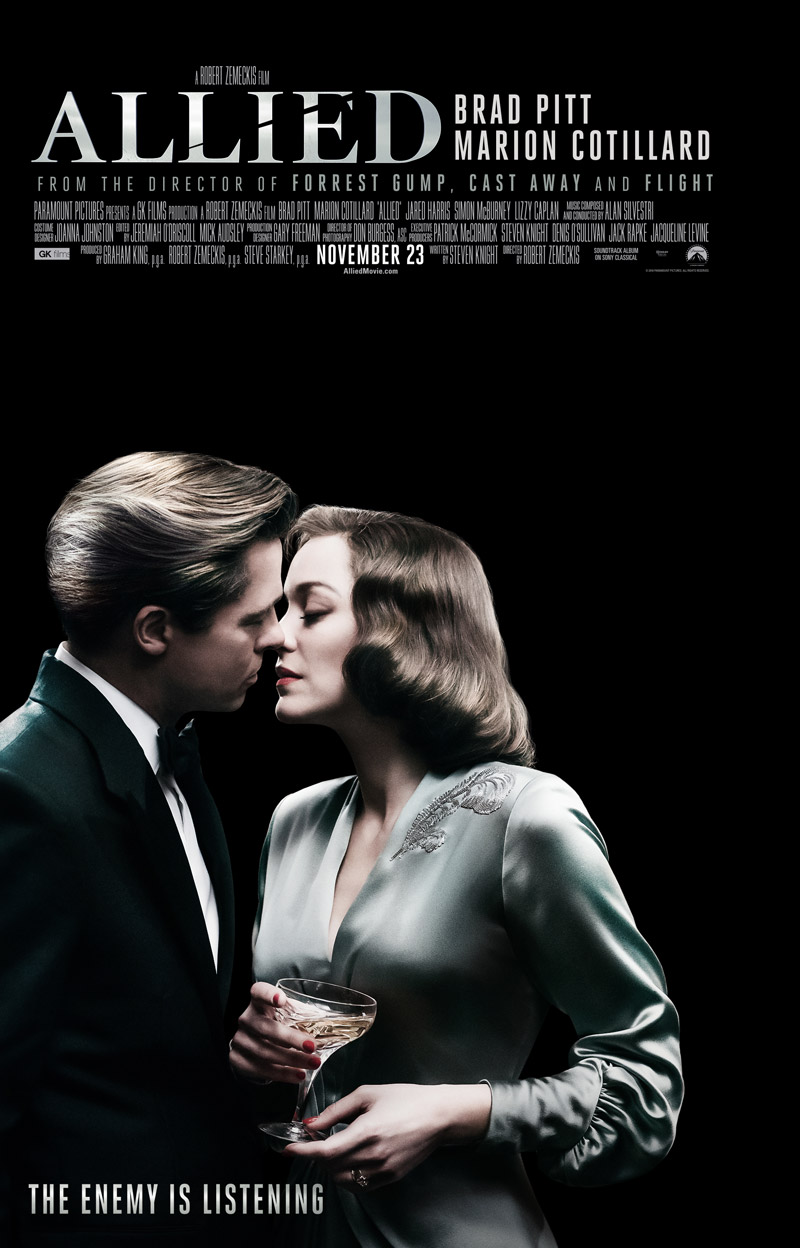
alliedposter

D: Robert Zemeckis / 124m

Cast: Brad Pitt, Marion Cotillard, Jared Harris, Simon McBurney, Lizzy Caplan, Daniel Betts, Camille Cottin, August Diehl, Matthew Goode, Thierry Frémont, Anton Lesser

French Morocco, 1940. Max Vatan (Pitt), a Canadian officer attached to the British army, is on a mission to assassinate a Nazi ambassador. He rendezvous’s with a French resistance fighter called Marianne Beauséjour (Cotillard). Posing as a married couple, they obtain an invitation to a party that will be attended by the ambassador and several other high-ranking Nazi officials. In the meantime, their posing as a married couple begins to awaken in each of them feelings for the other. When the mission is over, Max and Marianne realise they have fallen in love; he asks her to come to London  so they can marry. After a few months waiting for the red tape to be worked through, Marianne is allowed to join Max, and when she does she reveals that she’s expecting their child.

With their child, a girl, born during an air raid, Max and Marianne’s life begins to settle down into a more sedate existence. With Max rumoured to be in the running for a promotion, he’s called in one day by his superior officer, Frank Heslop (Harris). Frank introduces him to an S.O.E. operative (McBurney) who wastes no time in telling Max that they suspect Marianne is a German spy. Max refuses to believe it, but he’s charged with aiding the S.O.E. in their investigation. He has to receive a telephone call later that night, write down the details of the call and leave them where Marianne will see them, and then wait forty-eight hours until the S.O.E. will know one way or the other if the details have been transmitted to Germany. And there’s a further catch: if Marianne is revealed to be a German spy, then Max has to be the one to kill her.

screen-shot-2016-08-12-at-9-10-35-am

Despite being told not to, the next day Max decides to launch his own investigation. Aiming to prove Marianne’s innocence, he tracks down a British officer (Goode) who knew her before Max did. But the officer is unable to help him. At a party they’re hosting that night, Max sees Marianne talking to an old man (Lesser) he doesn’t recognise; the man turns out to be a jeweller, but Max’s suspicions are increased. With time running out, Max has no option but to travel to Occupied France and seek out the one man he’s certain can tell him if Marianne is who she says she is, a resistance fighter named Paul Delamare (Frémont). He finds the man in gaol, and learns something about Marianne that will answer the question of her guilt or innocence once and for all.

Some directors – many, in fact – have careers that initially show a lot of promise, are very successful once they’ve made four or five movies and have become internationally well-known, but then find their later projects failing to attract both the same audience levels and continuing critical acclaim. Robert Zemeckis is just such a director. Used Cars (1980) is a great, largely unsung comedy that features one of Kurt Russell’s best performances. The Back to the Future trilogy cemented his place in movie history, and Forrest Gump (1994) reinforced his stature as a mainstream director. But since then, and with the possible exception of Cast Away (2000), Zemeckis’ output – including three excursions into the world of performance motion capture – has been less than stellar, and The Walk (2015), a movie that looked as if it could arrest the slow decline in Zemeckis’ career, proved not to be up to the task.

allied-e14604399752361

And sadly, with Allied, Zemeckis has still to reverse that decline. Working from a tired, ineffective screenplay by perennial under-performer Steven Knight, Zemeckis has tried to make an old-fashioned romantic drama that harks back to classic wartime movies such as Casablanca (1942), while also presenting said drama with a more modern visual sheen. The mix, though, doesn’t aid a movie that is difficult to engage with, and which never does enough to make you care about either Max or Marianne. With no one to root for, Knight’s screenplay becomes a matter of pushing the basic storyline through to an incredibly unsatisfactory ending, one that will have audiences shaking their heads in disbelief (though there are plenty of other occasions where they’ll be doing this as well). And Zemeckis, a director whose visual acuity shouldn’t be in doubt, doesn’t seem able to enhance the narrative in any meaningful way, leaving Don Burgess’s cinematography to look and feel as tired as everything else – which is an incredible thing to realise, as Burgess is Zemeckis’ usual DoP, and has lensed non-Zemeckis movies such as Enchanted (2007) and The Book of Eli (2010).

Against this surprisingly dour visual backdrop, Pitt and Cotillard are left “holding the bag” as they try to inject a sense of immediacy into proceedings, and also try to convince the audience that they’re involved in a great love affair. Thanks to Knight’s script, though, neither star has a chance, as they’re hampered by some awful dialogue – “There’s a thing called the soul. I’ve looked into her soul.” – and the kind of motivations that don’t sound credible once they’ve been said out loud. Cotillard fares better than Pitt, but that’s only because she has less to do. Left stranded by virtue of having to carry the movie’s second half on his own, Pitt looks pained and unhappy, and though this could be attributed to his character’s state of mind, it always seems more likely that it’s a reflection of the star’s awareness that the movie isn’t turning out as well as it should.

ALLIED

The rest of the cast pop in and out of the narrative, often for one or two scenes, and fail to make any impact. Harris is the kind of gruff, good-natured senior officer we’d all like to think existed at the Ministry of Defense, McBurney plays an historical predecessor of the role he portrayed in Mission Impossible: Rogue Nation (2015), and Caplan is tucked away at the back of a few scenes as Max’s (apparently) openly lesbian sister, Bridget. While some of these characters are important in terms of moving the story forward, none of them have any depth, and again, thanks to Knight’s tortuous way with dialogue, none of them sound convincing (check out the dialogue Harris is stuck with in the movie’s denouement).

With Zemeckis bringing very little to the project other than his name and an occasional flash of the visual style that he’s most famous for, it’s difficult to work out what attracted him to the project, and very seriously, why he completed it. Coming so soon after The Walk, perhaps he didn’t have as much prep time as he’s used to. Perhaps the initial concept became altered and irretrievably lost during production, leaving Zemeckis stuck with seeing it through. Perhaps he did, genuinely feel that this was a project that he could make an entertaining, thrilling, exciting movie out of. Whatever the reason for his participation, this leaden, dreary, unappealing movie is the result, and it does the man and his career no favours at all.

Rating: 5/10 – yet to recoup its $85 million budget at the international box office, Allied is a movie that tests its audience’s patience, and gives it very little to care about; a dismal experience overall, and a reminder that the combination of a big name director and big name stars doesn’t always guarantee good value or an entertaining couple of hours.

Share this:

  • Click to share on X (Opens in new window) X
  • Click to share on Facebook (Opens in new window) Facebook
  • More
  • Click to print (Opens in new window) Print
  • Click to email a link to a friend (Opens in new window) Email
Like Loading...

Xmas Classics – The Shop Around the Corner (1940)

14 Wednesday Dec 2016

Posted by dullwood68 in Movies

≈ Leave a comment

Tags

Budapest, Comedy, Drama, Ernst Lubitsch, Frank Morgan, James Stewart, Margaret Sullavan, Matuschek's, Review, Romance, Xmas Classics

5f63facf48265363ed61ccfe114eb954

D: Ernst Lubitsch / 99m

Cast: Margaret Sullavan, James Stewart, Frank Morgan, Joseph Schildkraut, Sara Haden, Felix Bressart, William Tracy, Inez Courtney, Charles Smith

The first thing to know about The Shop Around the Corner, is that, for roughly the first nineteen minutes, it’s set during the summer. There’s not a snowflake or jingle bell in sight. There’s just Matuschek’s gift store, and the people who work there, waiting for the owner, Mr Matuschek (Morgan), to open up the store for another day. There’s Pepi (Tracy) the errand boy, Alfred Kralik (Stewart), the senior sales clerk, and the other sales clerks: Mr Vadas (Schildkraut), Mr Pirovitch (Bressart), Flora (Haden), and Ilona (Courtney). Later, Kralik is approached by Matuschek with the idea of selling a musical cigarette box; Kralik dismisses the idea for a number of reasons, and Matuschek reluctantly acquiesces.

But Kralik hasn’t heard or seen the last of the musical cigarette boxes. When Klara Novak (Sullavan) comes to the store looking for work, it’s her impromptu sale of one of the boxes that gets her a job, Matuschek’s respect, and Kralik’s reluctant admiration. But a mutual animosity soon takes over, and Klara and Kralik bicker with each other over almost everything. By the time Xmas is just a couple of days away, nothing has changed between them, but the relationship between Kralik and Matuschek has. The store owner no longer takes Kralik’s advice, or delegates important work to him. A row over who should stay on after work on the window displays leads to Matuschek firing Kralik, and much to the dismay of everyone else.

shoparound05

Kralik leaves, dejected. The only positive thing he has going for him is a first date with a girl he’s been penpals with since before the summer. Their correspondence has led to this first meeting, but Kralik isn’t sure he should go, partly because he’s nervous, and partly because he’s feeling down. He takes Mr Pirovitch with him to the cafe where they’re supposed to meet, and gets him to see what his penpal looks like. Surprise, surprise, it’s Klara. Kralik goes in and acts as if he’s there by chance, and soon learns that Klara’s romantic idealisation of her penpal is so complete that he is regarded as far inferior in comparison.

Meanwhile, a major development involving Matuschek and the real reason for Kralik’s dismissal leads to the store needing a stand-in manager. Kralik takes on the role, much to everyone’s surprise (and relief), though Mr Vadas’ position has become untenable. With Xmas Eve upon them, Klara has arranged another meeting with her penpal, though she’s still unaware that the man of her dreams is also her boss. The only thing Kralik is unsure of is how she’ll react when she learns about his deception.

Well, we all know the answer to that one, don’t we?

role-of-love-in-human-freedom

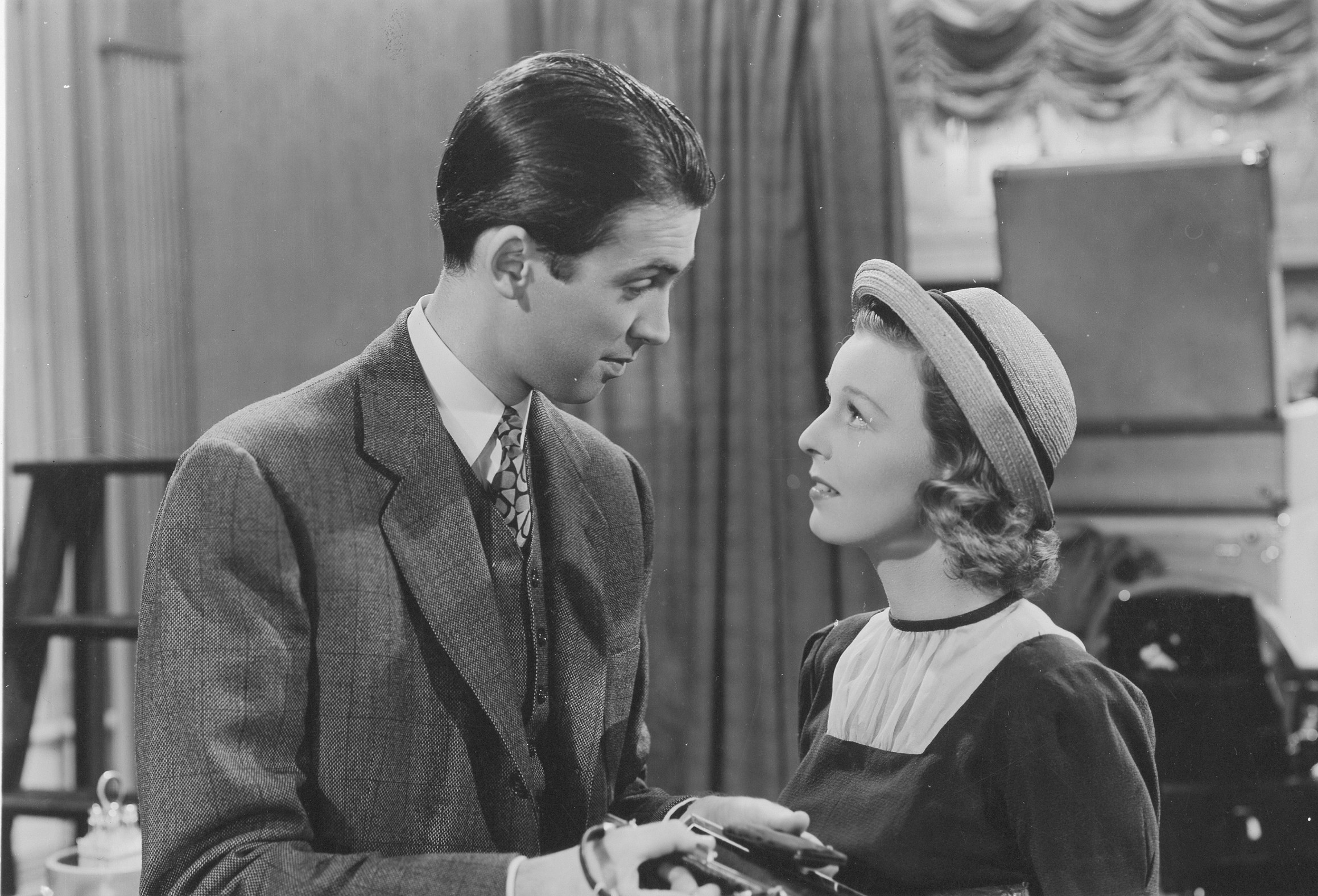
The Shop Around the Corner, adapted from a stage play by Miklós László and scripted by Samson Raphaelson, is a sheer delight from start to finish, another feather in the cap of Ernst Lubitsch’s career that is as entertaining today as it was seventy-six years ago. From the opening scene where the staff at Matuschek’s gather outside the store, the viewer is treated to a mini-masterclass in characterisation, a narrative and acting shorthand that obviates the need for long stretches of dialogue. Each character is recognisable instantly, and with their individual quirks acknowledged from the start, from Mr Pirovitch’s amiable passivity to Ilona’s youthful, fun-loving exuberance, to Mr Vadas’s irritating peacock-like strutting. Stock characters, perhaps, but already the kind of characters the viewer knows they’re going to enjoy spending the next hour and forty minutes with.

And so it proves. With the further introduction of Mr Matuschek – gruffly pompous – and Klara – sweet yet determined – the roster of characters is complete, and the small matter of the central romance is instigated. Around this, Raphaelson’s superb script adds layer upon layer of throwaway moments, from Pirovitch’s disappearing every time Matuschek wants someone’s “honest opinion”, to Pepi’s impersonation of Flora on the telephone (to avoid carrying out an errand for Mrs Matuschek). There’s a wealth of little moments like this, all designed to add extra merriment to a romantic comedy that fizzes and sparks when its central characters are sparring (but not sparing) with each other. Sullavan and Stewart play their roles to perfection, she disparaging everything he does, while he tries to find a way of evening the score. Both actors are a pleasure to watch, never missing a beat – either comedic or dramatic – and Sullavan’s breezy demeanour is complimented by Stewart’s often bemused, distracted presence.

shop-around-the-corner_2

They’re matched by Morgan’s ebullient turn as Matuschek, his story arc taking a darker turn as the movie progresses. There’s a moment where Matuschek realises that he’s made a huge, dreadful mistake, and the actor’s mournful, disconsolate expression speaks volumes as to the depth of his misjudgment. What follows is the movie’s most dramatic, and most affecting moment. Lubitsch imbues this scene with a quiet power that allows it to linger in the memory long after the movie has concluded, and it’s a mark of his skill as a director that it in no way disrupts the otherwise sparkling dialogue and engaging narrative. The German émigré displays a tongue-in-cheek approach to the material and a stylish wit throughout (the so-called “Lubitsch touch”), and he finds nuances in Raphaelson’s screenplay that add further lustre to a movie that is funny, sad, uproarious, charming, elegant in its construction, and unrelentingly appealing.

Rating: 9/10 – a perennial favourite amongst fans of Xmas-based movies, The Shop Around the Corner is a movie that effortlessly raises the spirits and puts a lingering smile on the viewer’s face; undeniably entertaining, it’s like an old friend you haven’t seen in years but who also holds a very dear place in your heart, and once you’ve seen them, you can’t wait until you see them again.

Share this:

  • Click to share on X (Opens in new window) X
  • Click to share on Facebook (Opens in new window) Facebook
  • More
  • Click to print (Opens in new window) Print
  • Click to email a link to a friend (Opens in new window) Email
Like Loading...

Southside With You (2016)

12 Monday Dec 2016

Posted by dullwood68 in Movies

≈ Leave a comment

Tags

Barack Obama, Do the Right Thing, Drama, Ernie Barnes, First date, Michelle Robinson, Parker Sawyers, Review, Richard Tanne, Romance, Tika Sumpter, True story

ckeh-dquyaaakue

D: Richard Tanne / 84m

Cast: Tika Sumpter, Parker Sawyers, Vanessa Bell Calloway, Phillip Edward Van Lear, Tom McElroy, Stephanie Monday

It’s 1989, and Michelle Robinson (Sumpter), a young lawyer with a firm in Chicago, is preparing to spend the afternoon with an associate who she’s mentoring. The young associate’s name is Barack Obama (Sawyers), and while Michelle’s parents (Calloway, Van Lear) tease her about it, she insists she’s not going on a date. When Barack arrives to pick her up, he’s late, there’s a hole in the passenger footwell of his car, and it’s clear that he smokes (which Michelle isn’t too keen on). And she learns that the community meeting he’s invited her to attend with him, isn’t until much later. Taking a further stand with Barack, she tells him they’re not on a date. He agrees (reluctantly), but adds that it won’t be a date until Michelle says so.

With time to kill, the pair attend an exhibition at a local arts centre. As they look at and voice their feelings about the artwork on display – by the artist Ernie Barnes – slowly but surely they begin to learn about each other. Michelle warms to Barack (though not too quickly), while he is obviously attracted to her. They talk about their backgrounds, make snap judgments about each other, and generally discover they have a liking for each other that Michelle, at least, is surprised by. From the arts centre, they go for a walk in the park, talk some more about their families, and in particular, Barack’s relationship with his mother and father.

southside-with-you-trailer-video-1

At the community meeting, Michelle witnesses Barack take on the role of confident, impassioned orator, as he takes up an issue that’s causing the community to feel disparaged. He encourages them to look at things from a different perspective. Afterwards, Michelle tells Barack how impressed she was – even if it did seem like a set up, what with her being there. Barack admits he may have hoped for such an outcome, but instead of taking him to task – as she would have done earlier in the day – Michelle appears to be okay with his minor subterfuge.

The two have dinner, and learn more about each other’s religious leanings, before attending a screening of Spike Lee’s Do the Right Thing. As they leave, Michelle is temporarily by herself, and she meets one of the partners at her law firm, Avery Goodman (McElroy), and his wife (Monday). When he asks her why one of the characters in the movie acted in the way that he did, she’s lost for an answer. When Barack reappears, he has an answer for Avery’s question. Avery is impressed, and suggests to Michelle that she ensure Barack’s time at the firm is beneficial. When they’re by themselves again, Michelle rounds on Barack and tells him why this should never have been a date: because of how it would look at the firm. Chastened, Barack takes Michelle home, but not before he makes one last stop…

southside-with-you-art-institute-scene-ernie-barnes-painting

It’s such an obvious conceit – show the first date between two famous people (and before they were famous) – that it’s somewhat surprising that it hasn’t been done before. A project begun by writer/director Richard Tanne back in 2007, Southside With You is a warm, big-hearted piece of romantic conjecture: what would that first date between Barack Obama and Michelle Robinson have been like? Would they have hit it off straight away, or would they have discovered a common enmity, a hurdle too big to overcome at the first attempt? The latter seems to be the case early on, what with Michelle’s refusing to classify their going out together as a “date”, while Barack’s oh-so-puppy-dog approach doesn’t appear to be gaining any traction either.

One of the things that makes this imagining of real life events so charming is its refusal to litter the script with presentiments of the future, those moments when (usually) dialogue hints at greater things to come. Even the one time that Michelle suggests Barack try his hand at politics, it’s all said and done with in a matter of seconds. The movie remains firmly in the here and now of 1989, never deviating from its carefully constructed sense of time and place, and keeping its two main characters anchored to their lives as they were then. This leads to a raft of information about the movie’s prospective lovebirds that most people won’t be aware of, such as Barack’s father dying at the relatively young age of forty-six, or that Michelle was living at home to help with her father, who has MS.

southside-with-you

Their verbal sparring, an often witty joust between two fiercely intelligent people certain (for the most part) about their place in the world, informs most of the movie’s running time, and makes for some spirited exchanges between the two. It’s here that the performances sparkle and come into their own, with Sumpter’s slightly waspish turn as Michelle slowly softening as the movie progresses. As she lowers her guard thanks to Barack’s easy-going presence, Michelle becomes more relaxed – and more likeable. It’s an impressive performance, subtly shaded for the most part, and hopefully will allow Sumpter the opportunity to take on more high profile roles in the future. But good as she is, it’s Sawyers’ performance as Barack “O-what-a” that holds the attention. Looking a good deal like the real Barack Obama, and sounding exactly like him, inflections and all, Sawyers inhabits the role with ease, avoiding any possible accusations of mimicry and providing viewers with a fully-rounded portrayal of a young man hoping to convince his “date” that that’s exactly what she is.

Tanne takes full advantage of his lead actors’ skill in their roles, and lets them do all the “hard” work, while he orchestrates things with deceptive ease. The time he’s spent writing and refining Southside With You has clearly paid off, and the simplicity of it all adds immeasurably to the movie’s charm and appeal. With a warmth to its cinematography – courtesy of Patrick Scola – and a winsome, winning score by Stephen James Taylor, the movie is a pleasure to watch from start to finish. The only question that remains is what Barack and Michelle think of the movie. They do have a copy…

Rating: 9/10 – with two standout performances from Sumpter and Sawyers, and a precision-tooled script, Southside With You entrances and beguiles in equal measure; a romantic drama with heart and soul, as well as humour, it’s the kind of low budget indie movie that wins heaps of praise, but is seen by very few – and in this case, that’s a crime, pure and simple.

Share this:

  • Click to share on X (Opens in new window) X
  • Click to share on Facebook (Opens in new window) Facebook
  • More
  • Click to print (Opens in new window) Print
  • Click to email a link to a friend (Opens in new window) Email
Like Loading...

The Birth of a Nation (2016)

11 Sunday Dec 2016

Posted by dullwood68 in Movies

≈ 1 Comment

Tags

1831, Armie Hammer, Drama, Historical drama, Jackie Earle Haley, Nat Turner, Nate Parker, Penelope Ann Miller, Rebellion, Review, Slavery, Southampton County, True story

birth_of_a_nation

D: Nate Parker / 120m

Cast: Nate Parker, Armie Hammer, Penelope Ann Miller, Jackie Earle Haley, Mark Boone Jr, Colman Domingo, Aunjanue Ellis, Dwight Henry, Aja Naomi King, Esther Scott, Roger Guenveur Smith, Gabrielle Union

The Birth of a Nation reaches our screens trailing controversy and dismay by being an historical movie focusing on certain direct issues, but having to deal with other indirect issues as well (but more of these later). A retelling of the Southampton County, Virginia rebellion led by Nat Turner in 1831, in which a slave uprising started by Turner led to the deaths of around sixty-five white people – men, women and children – and over two hundred and fifty black people. Turner managed to recruit around seventy slaves and free men to his cause, but the rebellion was quashed after a couple of days. Turner avoided capture for over two months before he was discovered hiding in a field. He was convicted at trial and sentenced to be hanged.

Those are the bare bones of a tale that director/writer/actor Nate Parker has chosen to make into The Birth of a Nation. For anyone unaware of the Southampton County rebellion, this movie will likely prove illuminating on a basic level, but Parker has chosen to make his own version of the rebellion, ignoring certain facts and events in order to make a more dramatic movie (as if a rebellion wasn’t dramatic enough). So, this isn’t an historically accurate movie, it’s an interpretation of the events that took place in Southampton County up to and including the rebellion. It’s important to make this point, “up front” as it were, because in doing so, Parker has actually managed to make a movie that lacks the impact the rebellion must have had at the time.

34314359_max

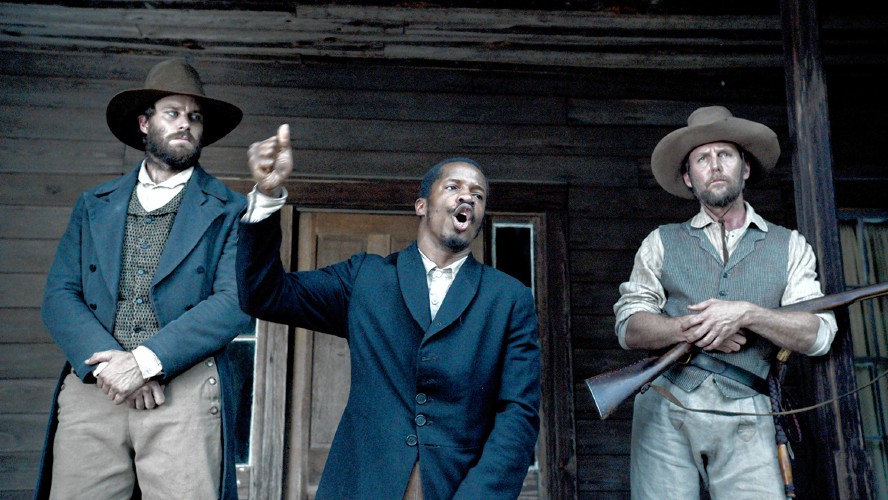
We see Nat first as a child. He’s taken by his mother (Ellis) to a tribe of blacks living in the woods. They tell him that the birthmark he has means he’s destined to be a prophet. This sets the tone of the movie: that Nat will grow up into an adult whose destiny is to change… well, actually, we never know, because Parker never gets around to telling us. Of course, he’ll eventually fight for freedom and seek to overturn injustice, but as a young child he’s encouraged to read by his owner’s mother (Miller), and is treated with all appropriate fairness for the time and the place he’s a part of. Young Nat takes to the Bible, and from there we see him grow into a young man who is a credit to both himself and the family who remain his owners, and who are now embodied by his childhood friend, Samuel Turner (Hammer).

So for the best part of an hour, Nat is well respected and regarded by Samuel and everyone around him, and life is good, despite the obvious limitations such as needing a written pass to travel outside the grounds of the Turner estate, and being struck repeatedly for offering a kindness to a white woman. He gains a reputation as a preacher, persuades Samuel to purchase a young woman, Cherry (King), who later becomes his wife, and manages to avoid raising the ire of local slave catcher, Cobb (Haley). But although Nat is well aware of the position that he and his fellow slaves are in, and the various ways that things can go wrong for them all, he lacks any will to do anything about it.

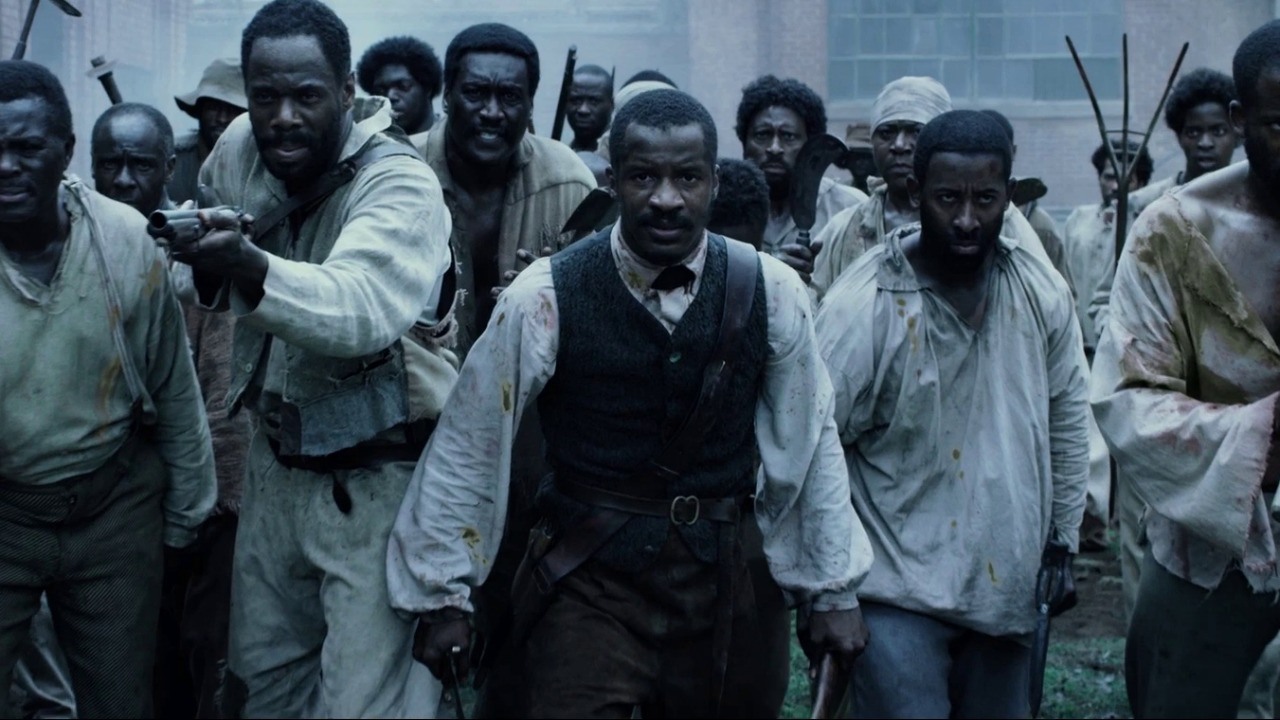
It’s only when Nat is hired out as a preacher, and begins to see just how bad things are at other plantations, that he begins to rethink things. One particular incident, followed by the brutal assault of his wife by Cobb and his men, leads Nat to anger, and a desire for revenge against “the white man”. He gathers a number of other slaves, and they begin their rebellion by attacking Samuel and his household before heading to other parts of the county, killing indiscriminately as they go. It’s not long before they come face to face with Cobb and his men, and a fight to the death ensues. Nat manages to escape and goes into hiding.

FILM-HORNADAY

All this is pretty standard fare, with Parker portraying Turner as a man who turns his back on the society that’s treated him well enough until he begins to question that society more closely. Which actually makes the small matter of motivation a bit of a problem, because Parker the screenwriter doesn’t give Parker the actor anything to work with, other than a handful of Bible passages that he gets to deliver in an angry fashion, or, when he’s confronted by Cobb, as a defiant call to arms. Parker struggles in all departments to show us the anger and the passion behind Nat’s decision to rebel, or why he would descend so quickly and easily into violence. Yes, there’s the appalling treatment of slaves, yes, there’s the institutionalised racism of the times, and yes, there’s the personal injuries done to him and Cherry, but in Parker’s hands none of this adds up to Nat being the instigator of a rebellion. The change comes about too quickly, and as with many movies, this change appears to come about solely because the movie needs to move on.

Against other movies such as 12 Years a Slave (2013) or A House Divided: Denmark Vesey’s Rebellion (1982), The Birth of a Nation – a title that doesn’t mean anything in the context of what happens in the movie itself – is too restrained in its approach to be entirely effective. Aside from one very disturbing scene involving a slave being force fed, Parker keeps everything on an even dramatic keel, with plot and story developments coming along when required, and all played out in a way that keeps the viewer at a distance. The look and feel of the movie owes a lot to the style and structure of Roots (1977), but without that series’ attention to character, or its narrative drive. Here, by the time Nat gets around to starting his rebellion, the average viewer will be glad to have gotten through all the sub-par dramatics that have gone before, and will be looking forward to the movie gaining some forward momentum.

birththumb-1460743741317_1280w

Performance-wise, it’s Parker’s movie, with the likes of Hammer (subdued surliness), Boone Jr (straggle-haired insouciance), Miller (pained resignation), Haley (gnarly aggression), and King (unfaltering sweetness) reduced to minor roles, and having the barest amount of depth or characterisation to work with. But it’s also Parker’s movie in terms of direction, and here he’s found wanting. And like so many other directors working from their own scripts, he’s not able to find solutions to the problems that one provides for the other. There are jarring moments where continuity is derailed (one involving Samuel will have audiences shaking their heads in confusion), moments where the pace of the movie slows to a crawl, and moments where Parker’s inexperience as a director leaves the movie avoiding any complexity in the story he’s telling.

In the right hands, Nat Turner’s story could have been a powerful, impassioned examination of an event that had far-reaching effects on how slavery was regulated, and which could be said to have made things far worse for the slaves of the antebellum South. But for now we’ll have to make do with Nate Parker’s version of events, which strives to make a hero out of an ordinary man who advocated wholesale bloodshed as the drive for his rebellion, and who was found hiding in a hole covered by fence rails rather than nobly giving himself up as Parker shows here. And Parker, whose past has distracted too many people from focusing in the right direction, has made a movie that ultimately lacks cohesion, and in doing so, has possibly done a greater disservice to Turner’s legacy than anyone since those tumultuous days in Southampton County, Virginia.

Rating: 4/10 – a broad, uninspired approach to an important moment in black history, The Birth of a Nation lacks finesse, complexity, and energy; Parker’s attempts at multi-tasking do the movie no favours, and there’s a stale air of tiredness about the whole thing that transmits itself to the viewer, all of which makes the movie a bit of a chore to sit through.

Share this:

  • Click to share on X (Opens in new window) X
  • Click to share on Facebook (Opens in new window) Facebook
  • More
  • Click to print (Opens in new window) Print
  • Click to email a link to a friend (Opens in new window) Email
Like Loading...

Morgan (2016)

10 Saturday Dec 2016

Posted by dullwood68 in Movies

≈ Leave a comment

Tags

Anya Taylor-Joy, Boyd Holbrook, Drama, Experiment, Kate Mara, L9, Luke Scott, Michelle Yeoh, Paul Giamatti, Review, Sci-fi, Thriller, Toby Jones

morgan-2016

D: Luke Scott / 92m

Cast: Kate Mara, Anya Taylor-Joy, Rose Leslie, Toby Jones, Michelle Yeoh, Boyd Holbrook, Jennifer Jason Leigh, Paul Giamatti, Michael Yare, Chris Sullivan, Vinette Robinson, Brian Cox

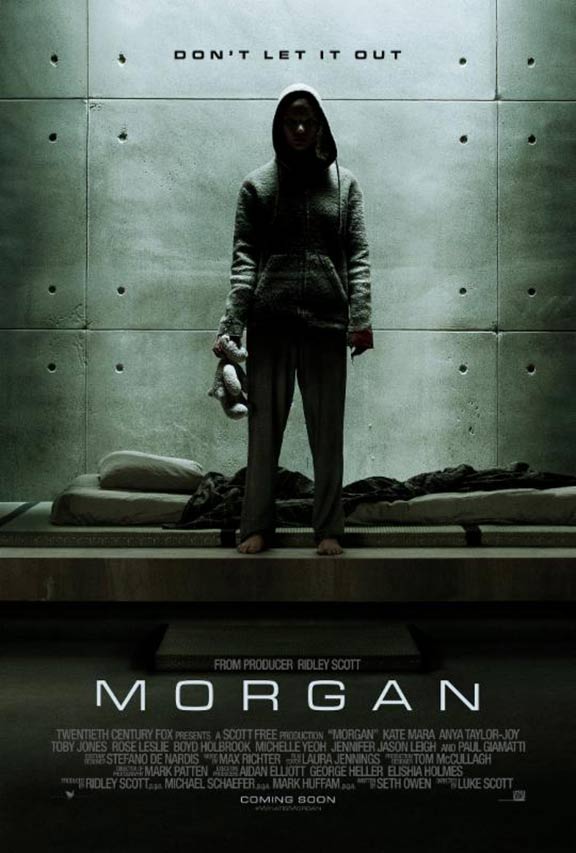
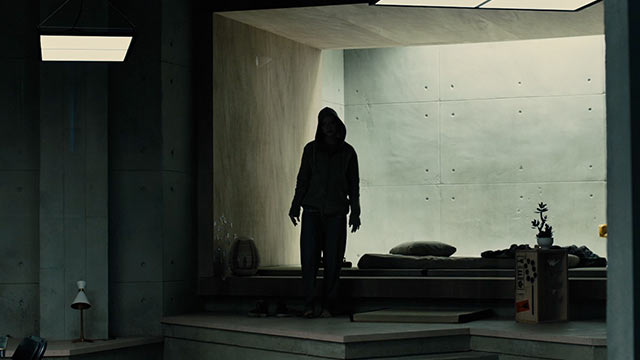
As the song has it, “If you go down to the woods today, you’re in for a big surprise…” Not once you see Kate Mara’s risk assessment consultant, Lee Weathers, driving to a facility hidden deep in the woods where a science experiment, codenamed L9, is going badly wrong. The experiment in question is the creation of a human/nano technology hybrid. The hybrid (Taylor-Joy) looks like a young woman, is called Morgan, is actually five years old, and has recently stabbed one of the team, Kathy (Leigh), repeatedly in the face and blinded them in their left eye. With a psych evaluation planned to take place that will determine whether or not the project continues, Lee’s role is to make the final decision, either to continue the work or to shut it down.

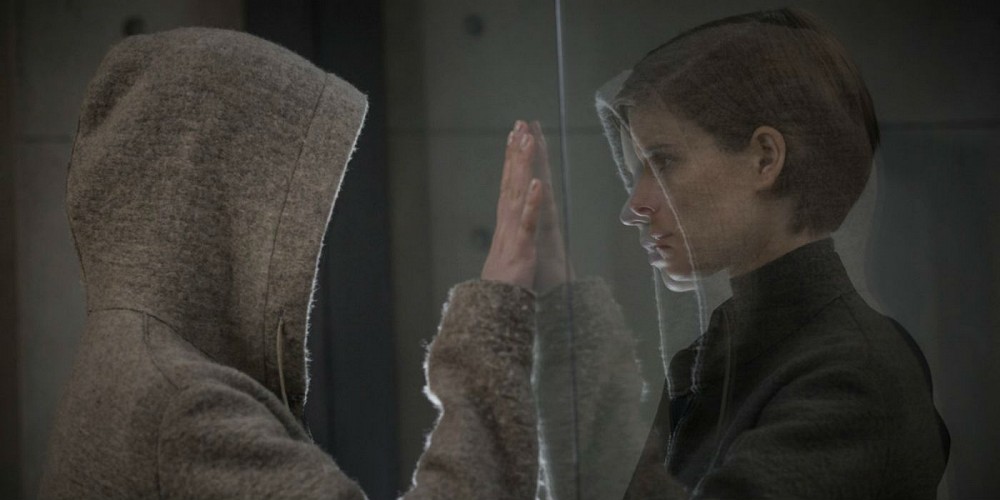
For everyone’s safety, Morgan is confined to a room that has toughened glass from wall to wall, and floor to ceiling. She appears to understand the need for this, but the team are overly apologetic about the incident with Kathy. They all state that it was their fault and not Morgan’s; they should have known better, should have been paying better attention to her current mental state. Lee takes none of this for granted, but does accept that they treat Morgan more as a human being than as a thing. When the psychiatrist, Dr Alan Shapiro (Giamatti), arrives the next day to conduct his assessment, his approach goads Morgan to anger, and a violent outburst means that Lee has no option but to shut down the project.

thumbnail_24494

She’s stopped, though, by the team. Rendered unconscious, she awakes in Morgan’s safe room, while the team’s own efforts to control the situation – and Morgan – start to unravel at an alarming rate. By the time Lee finds a way out of the room, Morgan’s determination to be free from the confines of the facility has proven disastrous for the team, and she makes her escape, taking along Amy (Leslie), who is the one member of the team that Morgan considers is her friend. But Lee is equally determined to find Morgan and make sure that the project is shut down once and for all.

Morgan is director Luke Scott’s first feature, a step up in terms of money and opportunity following his clever and impressive short movie, Loom (2012). That movie augured well for the future, but with Morgan it seems that Ridley Scott’s son has been let down by a poorly realised script, and the faint whiff of post-production interference. There’s little about the movie that works as well as it should, and long-time fans of this type of speculative sci-fi will be dismayed by the many ways in which the narrative shies away from making any kind of moral statement.

m5

Another screenplay picked out from the Black List (this time 2014’s), Morgan begins with a shocking act of violence, and continues with not one character reacting or behaving normally in its wake. Everyone carries on as if it was a minor incident, one that’s hardly worth bothering about. Morgan behaving strangely is to be expected, but when the team behave even more strangely than she does, and right from the start, then it only serves to undermine the drama that follows. Only Michelle Yeoh’s mother figure acts as if she has any idea of the consequences to Morgan’s actions, but she’s allotted so little screen time that she becomes the occasional, and token, voice of reason, trotted out to offer a limited balance to everyone else’s strange behaviour.

Things are further hampered by the character of Lee, played with stony-faced antipathy by Mara. It’s a role that’s difficult to talk about without revealing too much of why the character is at the facility in the first place, but while she’s an outsider given over to remaining so, Mara provides a better performance than expected, giving Lee an unexpected likeability even though she’s pretty much there to conduct a corporate hatchet job if necessary. As the movie progresses, her minimal social skills are stripped away, and Mara again strikes a careful balance between “assassin for hire” and consultant doing her job. She’s matched by Taylor-Joy, whose bleached looks and unnerving stare never quite manage to morph into the features of someone you could trust implicitly. Though her motivation becomes more and more strained as the movie continues, her performance highlights the emotions that Morgan has managed to express, even though she can’t understand them properly.

morgan-gallery6-gallery-image

Alas, the rest of the cast aren’t given nearly enough to make their roles worthwhile, and as you might expect, some are just waiting around until Morgan decides that everyone is surplus to requirements. The final half hour ups the ante in terms of action, and Mara and Taylor-Joy enjoy some well-choreographed fight scenes, but even then there’s a distinct lack of tension or energy. Scott seems unable to inject the necessary spark to make things that much more exciting, and the movie suffers as a result. As it heads towards an inevitable conclusion, one that it’s set up right from the moment we first see Lee in her car, Morgan begins to look and sound and feel like another great idea for a movie given the least amount of commitment by all involved. That’s not entirely true, but there are large stretches where the viewer won’t be able to shake off that feeling at all.

Watching Morgan, there’s an obvious correlation with Ex Machina (2015), but this is a different movie with a different agenda, and nowhere near as complex. The script by Seth W. Owen isn’t as fully rounded or well thought out as it needs to be, and Scott never really finds a way to avoid the pitfalls that Owen has left in situ. And watching the movie unfold, and the speed with which it changes direction from a somewhat intriguing sci-fi thriller to all-out action drama, it does smack a little of interference in the post-production stages, as if the producers had realised that the movie was in danger of losing its audience altogether if it didn’t change tack. On the plus side, the movie does have a decent score courtesy of Max Richter, and Tom McCullagh’s production design does help to anchor the movie in a more realistic fashion than the script does.

Rating: 4/10 – what could have been an intriguing, thought-provoking movie is scuppered by poor narrative choices, a lack of credible characterisations, and a shift in tone two thirds in that alters the movie’s trajectory as if no one would notice; a good idea given a lacklustre presentation, Morgan will only satisfy those viewers who don’t expect much from sci-fi thrillers, or are comfortable looking at things only on a superficial level.

Share this:

  • Click to share on X (Opens in new window) X
  • Click to share on Facebook (Opens in new window) Facebook
  • More
  • Click to print (Opens in new window) Print
  • Click to email a link to a friend (Opens in new window) Email
Like Loading...

Bleed for This (2016)

09 Friday Dec 2016

Posted by dullwood68 in Movies

≈ Leave a comment

Tags

Aaron Eckhart, Ben Younger, Boxing, Car accident, Ciarán Hinds, Drama, Halo, Miles Teller, Review, Sport, True story, Vinny Pazienza

bleed-for-this-poster

D: Ben Younger / 117m

Cast: Miles Teller, Aaron Eckhart, Katey Sagal, Ciarán Hinds, Ted Levine, Jordan Gelber, Amanda Clayton, Daniel Sauli, Peter Quillin, Jean Pierre Augustin, Edwin Rodriguez

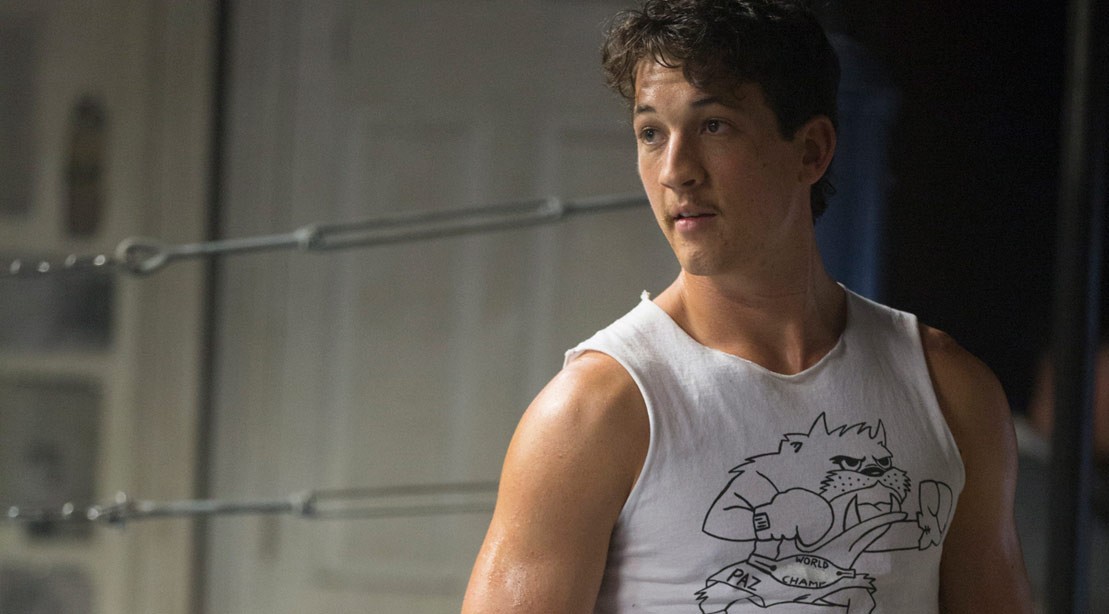
True stories from the world of sport always aim for the inspirational, to show an individual or a team face up to and defeat the odds (which are often stacked against them). There’s room for self-doubt, absolutely there is, and there’s room for the odd setback or stumble along the way to – usually – championship glory, the miracle comeback, or both. Bleed for This, the true story of boxer Vinny Pazienza (Teller), is a movie that includes a miracle comeback and championship glory. As such it should be a powerful, gripping feelgood story that grabs the audience’s attention and sympathies from the start, and then puts them through the same emotional wringer that the main character(s) went through. Well, the key phrase is “it should be”. Bleed for This, however, looks and sounds as if it doesn’t know what an emotional wringer is, let alone be able to put an audience through it.

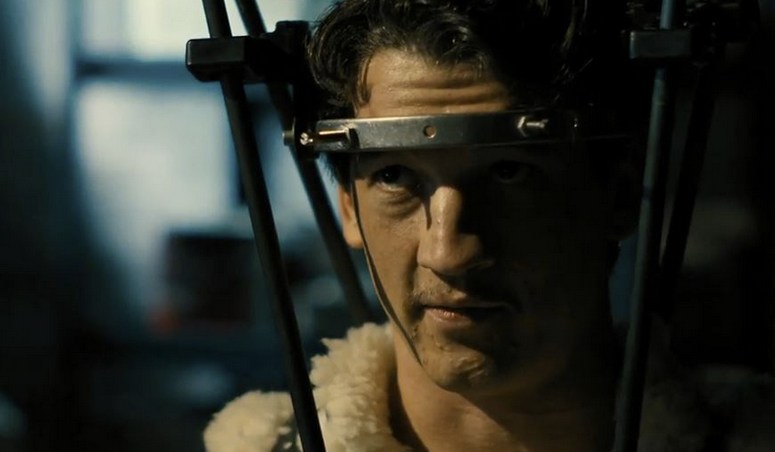
The problem here is that, prior to the car accident that saw Vinny Pazienza suffer a broken neck (which could have meant his not walking ever again, let alone boxing), and way before he decided he was going to ignore doctor’s orders and work out while still wearing the halo that allowed his neck to heal normally, the boxer’s life wasn’t one that warranted a movie being made about it. He’d had a relatively successful career early on as a lightweight, but fighting at junior welterweight he found himself on a title losing streak. He moved up to junior middleweight, and began winning again, culminating in winning WBA World Jr. Middleweight Championship against Gilbert Dele. But then came that fateful car accident, and four steel screws in his head.

bleed-for-this-pic5

Now, Pazienza’s life becomes interesting, now it becomes the kind of story that the movies would be interested in telling. And so, twenty-five years after that career-threatening injury, we have Bleed for This, the true(-ish) story of Vinny Pazienza’s recovery and return to the ring. It has all the hallmarks of a traditional tale of triumph over adversity, of how one man overcame tremendous physical trauma to continue doing the one thing that gives his life meaning. But as you watch the movie, as you see Vinny Pazienza’s story unfold, there’s one thing you’ll be asking yourself: namely, where’s the passion?

For, despite the drama and the incredible journey Pazienza took getting back into the ring, the movie version of that journey is about as exciting as watching the man train for two hours. Somewhere along the way, writer/director Ben Younger did something unforgivable: he forgot the passion. Sure there are times when Pazienza gets angry, but he’s also determined, sour, happy, uncertain, and resentful in equal measure. He experiences all the emotions you’d expect someone to experience in these circumstances, but the movie doesn’t allow any one of those emotions to have more screen time than the others, or to appear to have had any more effect on him. In essence, it’s all too neat.
bleed-for-this-film-miles-teller-the-new-terminator

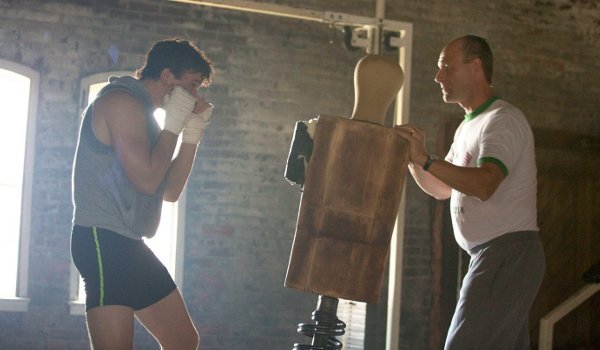
Bleed for This is a movie that signposts a tremendous struggle ahead, as Pazienza begins working out in the basement of his parents’ home. Aided by his trainer, Kevin Rooney (Eckhart), Pazienza lifts weights, regains definition (and the small degree of self-respect the script allowed him to lose after the accident), and shocks everybody with his progress. At least, he would shock everybody, but Younger approaches this section of the movie as if it were nothing more than a necessary bridge between the Dele fight and the eventual showdown with Roberto Duran (which wasn’t his first fight after the accident, that was with Luis Santana). There’s roughly a year between the accident and the comeback fight, but you wouldn’t know it thanks to Younger. It feels like a much shorter period because Younger’s impatient to get Pazienza back in the ring, to get to that miracle moment he believes the audience is waiting for. He also can’t resist throwing in a bit of family drama, with Pazienza’s father (Hinds) suddenly revealing a sense of guilt for pushing his son too hard earlier in his career.

There are other times where the basic story gets padded out with superfluous moments that add little or nothing to the main narrative. It’s established from the very first shot of Rooney that he’s an alcoholic. But it keeps cropping up, and never goes anywhere; even when he’s arrested for attempted drunk driving, there’s no fallout or consequence to it. Where some movies would use this as an excuse to remove him from the corner for the big fight, thereby adding extra pressure on the fighter etc. etc., here it’s just padding, and flimsy, unnecessary padding at that. And then there’s the background machinations of fight promoters the Duva’s (Levine, Gelber), who are regularly accused of putting their interests ahead of Pazienza’s, as if the notion that they’re self-serving fight promoters has come completely out of left field (apologies for the mixed sports metaphor).

miles-teller-vinny-pazienza-bleed-for-this

But if that wasn’t enough, if the pedestrian plotting, and the stale characters, and the excessive padding, just weren’t enough to make the movie difficult enough to enjoy already, Younger executes the coup de grace by fumbling the fights themselves. A mess of choppy editing, awkward camera angles, tight close ups, and fragmented jabs and blows, the fights do all they can to hide the fact that Teller can’t box. Maybe he didn’t have enough prep time to look convincing, maybe he was hired for his acting ability and not his ability to throw a punch – either way, Teller isn’t going to be heralded for showing off his “skills” in the squared circle.

As for the performances, Teller is hampered by the restraint Younger shows in his script, and several of the more dramatic moments in the movie show Teller in a good light, but it’s in the sense that he’s realised he’s only going to get so many opportunities to really shine. Eckhart is stuck with the worst receding hairline since Richard Attenborough in 10 Rillington Place (1971), while Sagal and Hinds do their best with characters who are two steps removed from being Italian-American parental stereotypes.

There is a decent, emotionally gripping drama to be made from Vinny Pazienza’s comeback against the odds, but Bleed for This really isn’t it. It’s professionally made, and technically at least, doesn’t fault, but the way in which the story has been told is less than successful. Younger neutralises the drama that occurs outside the ring, and in doing so, fails to recognise that in this case, that’s where the drama ultimately lies. And by doing that he lets down his talented cast, the audience, and the man who went through all of it – and who now gets to see a movie about him that can’t focus on him properly, or present effectively the struggle he went through to be worthy of a movie about his life.

Rating: 5/10 – with Bleed for This lacking a cohesive screenplay and a real sense of its main character’s determination not to give up (which scares him because it’s too easy), this is one biopic that lets everyone down; it also lacks flair, and a sense of urgency, and only impresses thanks to Larkin Seiple’s gloomy, shadow-filled cinematography (a surprisingly good fit for the material), and a robust sound mix that at least makes the fight sequences feel more aggressive than we can actually make out.

Share this:

  • Click to share on X (Opens in new window) X
  • Click to share on Facebook (Opens in new window) Facebook
  • More
  • Click to print (Opens in new window) Print
  • Click to email a link to a friend (Opens in new window) Email
Like Loading...

Mini-Review: Blind Woman’s Curse (1970)

07 Wednesday Dec 2016

Posted by dullwood68 in Movies

≈ Leave a comment

Tags

Action, Drama, Hoki Tokuda, Japan, Kaidan nobori ryû, Meiko Kaji, Revenge, Review, Teruo Ishii, Yakuza

SONY DSC

Original title: Hîchirimen bâkuto – nôbarydu takahadâ

aka Black Cat’s Revenge; Strange Tales of Dragon Tattoo; The Tattooed Swordswoman

D: Teruo Ishii / 85m

Cast: Meiko Kaji, Hoki Tokuda, Makoto Satô, Hideo Sunazuka, Shirô Ôtsuji, Tôru Abe, Yoshi Katô, Yôko Takagi, Tatsumi Hijikata

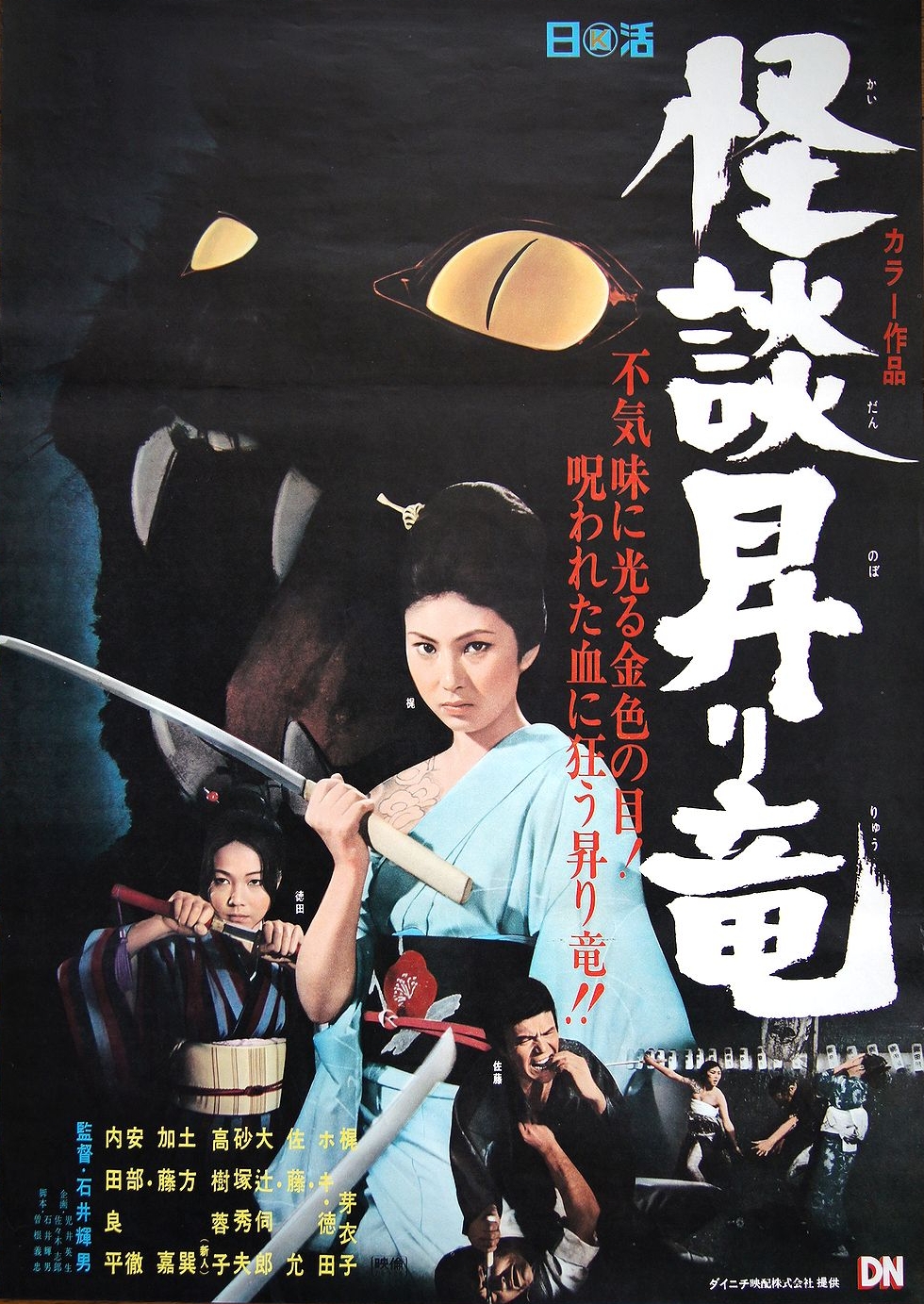
Akemi (Kaji) is the head of the notorious Tachibana gang. During an attack on a rival gang, she kills the gang’s leader and inadvertently injures his sister. A spell in prison sees Akemi bond with five of her fellow inmates and they all have part of a larger dragon tattoo inked onto their backs. Three years later, and Akemi is head of the Tachibana clan again but she has determined to go straight. This doesn’t sit well with some of her followers, particularly Tatsu (Ôtsuji), who plots with a rival yakuza gang leader, Dobashi (Abe), to have her overthrown. Tatsu ensures that two of the Tachibana clan are killed by Dobashi’s men so as to incite war between the two gangs, but Akemi is forebearing and doesn’t rise to the bait.

Shortly after, Dobashi is approached by a blind woman, Aiko (Tokuda), who offers him her services as a swordswoman. Impressed by her skill with a blade, Dobashi accepts. But before he can devise the next stage of his plot against Akemi, one of her friends from prison is found murdered, and with her tattoo removed from her back. A note attached to the body promises further violence and makes it clear that Akemi is the ultimate target. Matters between the two gangs escalate, including the murder of Akemi’s uncle (Katô) and the kidnapping of his daughter, Chie (Takagi). With the aid of a wandering fighter-for-hire called Tani (Satô), Akemi eventually decides to face Dobashi head on, but finds herself facing the blind woman instead.

6499-original

Blind Woman’s Curse is a weird concoction, combining as it does a vengeful blind woman, warring yakuza gangs, an eye-rolling, wild-haired hunchback, an opium den full of topless female addicts, gory violence, references to William Tell, a curse involving a black cat, an underwater torture sequence, a hint of the supernatural, and a third gang leader who wears a bowler hat and a loose, buttock-revealing red loincloth. There’s rarely a dull moment, or a shot that doesn’t make the viewer sit up and take notice, but even with all this going on, there’s a nagging feeling that all these elements don’t quite add up to a satisfying whole. As the movie progresses, the various plot strands sometimes tie themselves up in so many knots that they need the aid of a samurai blade to solve things. By the time Tani and Chie escape the underwater torture devised for them by Dobashi, and do so miraculously and without explanation, it’s clear that the movie – scripted by director Ishii with Chûsei Sone – is in a hurry to reach a conclusion, and if the movie’s internal logic needs to be sacrificed, then so be it.

And yet, the bizarre combination of elements does work for the most part, and the movie does have its fair share of entertaining set-pieces – the opening slow-motion, rain-soaked battle between Akemi’s men and a rival gang is a good example. It’s all shot with a mix of painterly formality and tense immediacy by Shigeru Kitaizumi, and for once, the editing (by Osamu Inoue) doesn’t hamper the flow and rhythm of the movie in the way that a lot of similar Japanese movies of this ilk are affected. Ishii, better known for the ten-movie Abashiri Prison series, brings out the usual themes of honour and regret, and makes Akemi a more solemn character than might be expected. He also keeps any humour to a minimum, choosing instead to focus on the  theme of revenge. It all adds up to a better-than-average outing within the genre, and well worth seeking out.

Rating: 7/10 – Ishii’s take on yakuza versus yakuza is an intense, often thrilling example of Japanese movie making gone berserk; Blind Woman’s Curse throws in everything but the kitchen sink, and in the process proves largely rewarding, even if it does go off at a tangent too many times for its own good.

Share this:

  • Click to share on X (Opens in new window) X
  • Click to share on Facebook (Opens in new window) Facebook
  • More
  • Click to print (Opens in new window) Print
  • Click to email a link to a friend (Opens in new window) Email
Like Loading...

Hell or High Water (2016)

05 Monday Dec 2016

Posted by dullwood68 in Movies

≈ 2 Comments

Tags

Bank robbers, Ben Foster, Brothers, Chris Pine, David Mackenzie, Drama, Jeff Bridges, Review, Texas, Thriller, Western

hell_or_high_water

D: David Mackenzie / 102m

Cast: Jeff Bridges, Chris Pine, Ben Foster, Gil Birmingham, Marin Ireland, John-Paul Howard, Kristin Berg, Katy Mixon, Dale Dickey, Kevin Rankin

Toby and Tanner Howard (Pine, Foster) are brothers who carry out bank robberies. They target branches of the Texas Midlands Bank, hitting two of them in the same morning. They are working to a plan of Toby’s devising, and they cover their tracks to the extent of burying the cars they use in the robberies, and taking the money across the state line into Oklahoma and laundering it at an Indian casino. Once the money has been laundered, they then get the casino to issue their “winnings” in the form of a cheque… which is made out to Texas Midlands Bank. Why? Because thanks to a reverse mortgage provided by the bank to the brothers’ recently deceased mother, their ranch will suffer foreclosure if the outstanding mortgage isn’t paid. And that’s without the oil that’s been found on their ranch as well…

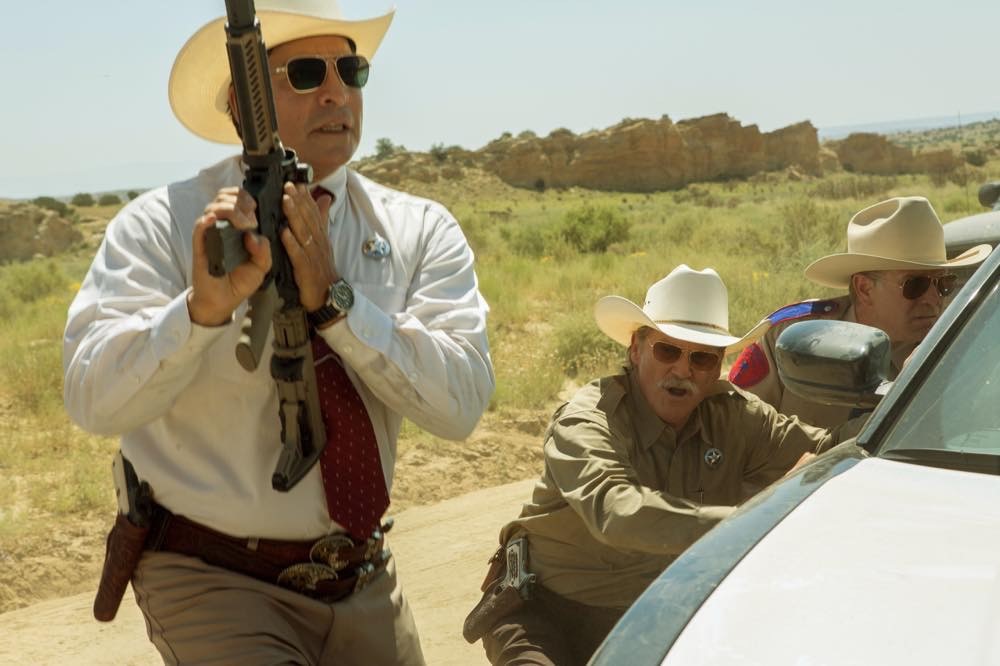
The police investigation is headed up by Texas Ranger Marcus Hamilton (Bridges) and his long-suffering partner, Alberto Parker (Birmingham). Hamilton is near to retirement, and his experience tells him that the bank robbers have a specific sum they’re aiming for; once they’ve got it they’ll stop – even though Tanner carries out an impromptu robbery on another bank. Realising that they’ve got a beef with Texas Midlands Bank, Hamilton persuades Parker to stake out one of the bank’s other branches, and they wait for the robbers to show up. With only one more robbery needed to net them the rest of the money they need, Toby and Tanner arrive at another branch altogether, only to find it’s been closed down. They decide to rob another branch in a bigger town, which also means a bigger risk.

hell-or-high-water-graffiti

The robbery is not a complete success. The brothers get the money they need but find themselves pursued by gun-toting locals. They manage to split up, and soon Tanner finds himself followed by the police. As he heads into the nearby hills in an attempt to escape, Toby takes the money and tries to get across the border and return to the Indian casino. But first there’s the small matter of a police checkpoint…

A modern day Western set in West Texas (but shot mostly in Eastern New Mexico), Hell or High Water‘s sombre screenplay used to be known as Comancheria. Neither title really does justice to a story that revolves around money and the way in which its importance is felt keenly by those who don’t have it, or how casually it’s regarded by those that do have it. This part of West Texas is peppered with roadside signs offering both financial and religious solutions for dealing with personal debt, but none of these signs have been put there by the banks or the loan companies that are deemed responsible for so much of the debt and deprivation that the average West Texan endures as part of their daily life.

But Toby Howard isn’t going to accept the loss of his family’s ranch (or the oil found below it). He’s not going to become another victim of the financial institutions that plague the area with their fire-sale mentality and lack of humanity. Along with his brother, Tanner, he’s going to fight back, he’s going to make Texas Midlands Bank accountable to him. It’s a classic David vs Goliath tale, except that in this case, Goliath doesn’t even know he’s in a fight. Taylor Sheridan’s perceptive, yet harsh screenplay makes it clear who the villain of the piece is, and it’s not the brothers, even if Hamilton and Parker firmly believe they are. And it adds to the harshness of the story that Hamilton never stops viewing the Howards as villains, even when he begins to work out why they’re robbing banks in the first place. Where the viewer can have a large degree of sympathy for their plight and their solution, Hamilton has only one judgment to give: they’re criminals, pure and simple.

hell-or-high-water

Mackenzie keeps things this simple throughout, and does so against a backdrop of financial ruin and macho posturing that serves as a vindication for Tanner and Hamilton’s behaviour. Tanner’s a hothead, unpredictable and rash; you never know if he’s going to jeopardise Toby’s plan or see it through without incident. Foster has played this kind of role before, but here he injects a sense of melancholy that makes Tanner more tragic than perhaps he has a right to be. It makes his performance all the more impressive: Foster knows that Tanner is as close to a stereotype as this movie gets, but he ignores that and makes the character as intriguing and beguiling in an off-kilter way as he can.

Bridges is equally impressive, his brooding, jowly features looking out and around from behind his sunglasses, his massively non-PC comments about his partner’s racial background funny, but only in a “long-time married couple” sense. But Sheridan’s script doesn’t let Hamilton have it all his own way. When he says, proudly, “This is what they call white man’s intuition,” Alberto is quick to respond, and in a perfectly deadpan manner: “Sometimes a blind pig finds a truffle.” All humour aside, though, Bridges projects a stern, authoritarian personality for Hamilton; he’s a man caught at the end of a career that has seen so many changes it’s almost overwhelming, so much so that once his retirement arrives, he can’t rest or leave the past behind.

These two roles, and the complexity that both actors bring to them, threaten to leave Pine way behind in the acting stakes, but he’s more than a match as the mastermind behind it all, his downtrodden, put-upon character finally taking a chance on himself in a desperate time of need. Pine isn’t exactly the most intuitive of actors – you can see the wheels turning in most of his performances – but here he does something quite remarkable: he imparts a stillness to the role that makes Toby all the more worthy of our time and attention. Foster may have the flashier role, but it’s Pine who provides the moral and emotional compass for the movie to navigate by.

gil_in_front_of_car

All this is set against some stunning desert landscapes, perfectly lensed and lit by DoP Giles Nuttgens, and acting as unconcerned characters occasionally drafted into the story for effect. Those wide open expanses, with their unending vistas and rippling heat hazes speak of a far-off country where the promise of a better life is just over the horizon – if only the brothers could get there. But Toby’s plan is much more prosaic than that, and Mackenzie uses the character’s yearning for a better life for his children to highlight Toby’s innate nobility. Mackenzie and Nuttgens are aided by exceptional editing by Jake Roberts – the movie has an elegiac feel throughout that lends itself so well to the movie’s internal rhythm – and there’s a wonderfully melancholy, rueful score courtesy of Nick Cave and Warren Ellis.

Rating: 9/10 – a movie that rewards the viewer on so many levels, Hell or High Water takes its financial vigilante characters down a hard road indeed, but makes the prize as compelling and profound as possible, and without dumbing down the narrative; the three leads are magnificent, and the whole mise-en-scene is handled with care and confidence by all concerned, leading to a movie that is by turns haunting, complex, thrilling, and emotionally draining.

Share this:

  • Click to share on X (Opens in new window) X
  • Click to share on Facebook (Opens in new window) Facebook
  • More
  • Click to print (Opens in new window) Print
  • Click to email a link to a friend (Opens in new window) Email
Like Loading...

Xmas Classics – Gremlins (1984)

03 Saturday Dec 2016

Posted by dullwood68 in Movies

≈ 1 Comment

Tags

Black comedy, Chris Columbus, Drama, Gizmo, Hoyt Axton, Joe Dante, Kingston Falls, Mogwai, Phoebe Cates, Review, Stripe, Xmas Classics, Zach Galligan

aaaa

D: Joe Dante / 106m

Cast: Zach Galligan, Phoebe Cates, Hoyt Axton, Polly Holliday, Frances Lee McCain, Scott Brady, Jonathan Banks, Dick Miller, Judge Reinhold, Glynn Turman, Corey Feldman, Keye Luke, Edward Andrews, Harry Carey Jr

In amidst all the destruction and mayhem caused by the Gremlins of the title, Phoebe Cates’s bank teller (and barmaid) Kate Beringer takes time out to tell fellow bank teller Billy Peltzer (Galligan) the reason why she hates Xmas. It’s an awful tale, simply but effectively told by Cates, and at the end of it, you can understand exactly what she means. And in a movie that thrives on being as subversive as possible, it’s the most subversive moment in the entire movie. Forget about the Gremlins singing along to “Hi-ho! Hi-ho! It’s off to work we go” from Snow White and the Seven Dwarfs (1937) – “They’re watching Snow White. And they love it.” – or having one of them “expose” himself to Kate, her monologue sums up everything that the movie wants to say about the festive season: it’s not all it’s cracked up to be.

And yet, despite this, Gremlins occupies a warm place in the hearts and minds of pretty much everyone who’s ever seen it. Despite the way in which it trashes several Xmas conventions – peace and goodwill to all men? Yeah, right – Gremlins is a movie that always satisfies, no matter how often you watch it. Right from the start, when Hoyt Axton’s terrible inventor, Randall Peltzer, tries to impress upon kindly Chinese store owner Mr Wing (Luke) the virtues of the Bathroom Buddy, it’s clear that nothing’s going to go right for him, or for anyone else in the movie. And that’s part of the movie’s charm: waiting to see just how bad it gets.

gremlins-2-1984-720p-bluray-x264-dimension-002

And so, we settle in to wait, to see just how bad it will get. Along the way we see some other examples of Randall’s knack for building inventions that don’t work, such as the clockwork egg slicer, and we meet the horrible Mrs Deagle (Holliday), a character so odious that she regales Billy with thinly veiled threats about what she would do to his dog, Barney, if she had her way. And then there’s Judge Reinhold’s preening, acid-tongued assistant bank manager, Gerald, a nasty piece of work who wouldn’t hesitate to fire Billy if he had the chance. And lastly, dear old Murray Futterman (Miller), an ex-GI with a racist streak that’s wider than the Grand Canyon. It seems the town of Kingston Falls isn’t quite the nice little town it appears to be.

Inevitably, little Gizmo begets a quintet of other furry Mogwai, led by the very anti-social Stripe. The story then introduces us to Mr Hanson (Turman), the local science teacher. Billy gives him one of the Mogwai, and though Mr Hanson’s intentions aren’t as cruel or nefarious as some of the other characters we’ve met, it’s when he starts performing multiple blood tests on the creature that we know he’s got to go on the Naughty List with Mrs Deagle et al. And then, the creature gets to eat after midnight…

While this particular Gremlin is claiming his revenge, Stripe and his scaly cohorts are wreaking havoc in the Peltzer kitchen. At this point, the movie does something unexpected. With all the horrible people living in Kingston Falls for the Gremlins to exact “justice” on, it’s the quiet, unassuming (and nice) Lynn Peltzer (McCain) that is one of the first targets (after the unfortunate Barney of course). What follows is one of the movie’s best sequences, as Lynn takes the fight to the Gremlins after the initial shock of finding them in her kitchen has worn off. Watch McCain closely as she goes from frightened housewife to tough-as-nails Gremlin-killer; it’s a standout moment for the actress, a once-in-a-career opportunity that she grabs with both hands and, in today’s modern parlance, “smashes”.

gerlg

And just as inevitably as Gizmo begat Stripe and friends, so Stripe begats hundreds more of the little blighters, and they proceed to go on a rampage through the town. The movie transforms itself from a charming, slightly innocuous looking family feature into a full-on riotous comedy horror, and for the next forty-five minutes there’s more mayhem and anti-social behaviour on display than in a raft of Seth Rogen movies. And Mr Hanson’s death isn’t the only one. What is happening? How can a movie that’s introduced us to such a cute and cuddly little creature suddenly go all psycho on us?

Of course, the movie is called Gremlins, and not Mogwai. But the best thing about Joe Dante’s inspired direction (working from an equally inspired script by Chris Columbus) is that he embraces the carnage. He’s keen to show off all the terrible things that the Gremlins are capable of, and he’s just as keen to revel in it all. He encourages the viewer to do the same, to enjoy the town’s destruction, to cheer it on even though the “good” townsfolk of Kingston Falls need to be saved from this unexpected retribution. It’s yet another example of how subversive Gremlins is: you can’t help but cheer them on.

gremlins-movie-image

With that in mind, it also explains why Billy and Kate are so dull. As central characters you should want to like them, but Dante isn’t interested in having us root for them. Sure, they have to win out in the end – in 1984, even the most subversive of mainstream movies couldn’t let evil triumph over good – but they’re just so uninspiring, and so bland. You get the feeling that if they were to have children their offspring would be the most boring kids alive. But against Stripe and his tribe of over-achieving disaster-mongers, Billy and Kate can’t help but look and feel tedious and simple-minded. It’s a contrast the movie has to stick with, but certainly, there are times when you wish they weren’t.

In the end, good does triumph over evil, and the Gremlins are vanquished. But just as the viewer prepares to endure the feelgood homilies that are part and parcel of ordinary US home life at Xmas (especially in the movies), the script has one last trick to play on the viewer, one last subversive moment to round things off with. Mr Wing shows up to collect Gizmo, and in the process, makes it clear that the Peltzer’s are entirely irresponsible, and don’t deserve to keep the furry little creature. Just as they’re congratulating themselves on saving the town (what’s left of it), the movie reins them in and reminds them (and us) that if it wasn’t for them, then none of it would have happened in the first place. It’s a great way to end a movie (even if they had to go and spoil it by hinting that Billy might have a shot at being responsible in the future), and leaves only one question unanswered: if all the Gremlins bar Stripe were blown up in the movie theatre, does that include the ones that were busy disrupting Rockin’ Ricky Rialto’s radio show?

Rating: 9/10 – an Eighties movie that – surprisingly – hasn’t dated, Gremlins is a classic of narrative misdirection and sly, devilish humour; watch it with a jaundiced eye and you’ll get much more out of it than if you were to take it at face value, and be prepared to be entertained on such a darkly comic level that you’ll be wondering for a long time to come, if Gremlins is really the family movie it appears to be.


NOTE: This is the first of four Xmas Classics to be featured on thedullwoodexperiment. The other three will appear between now and Xmas Day.

Share this:

  • Click to share on X (Opens in new window) X
  • Click to share on Facebook (Opens in new window) Facebook
  • More
  • Click to print (Opens in new window) Print
  • Click to email a link to a friend (Opens in new window) Email
Like Loading...

Come and Find Me (2016)

02 Friday Dec 2016

Posted by dullwood68 in Movies

≈ 2 Comments

Tags

Aaron Paul, Annabelle Wallis, Disappearance, Drama, Garret Dillahunt, Mystery, Review, Romance, Thriller, Zack Whedon

come-and-find-me-2016-movie-free-download-720p-bluray-1

D: Zack Whedon / 112m

Cast: Aaron Paul, Annabelle Wallis, Garret Dillahunt, Dean Redman, Zachary Knighton, Enver Gjokaj, Terry Chen, Michael Kopsa

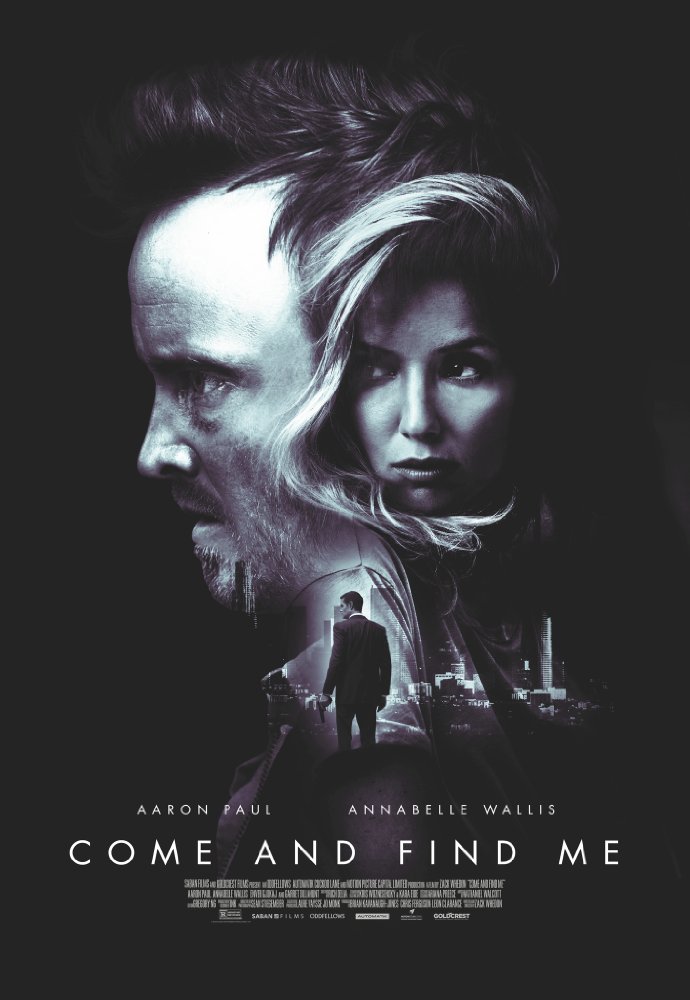
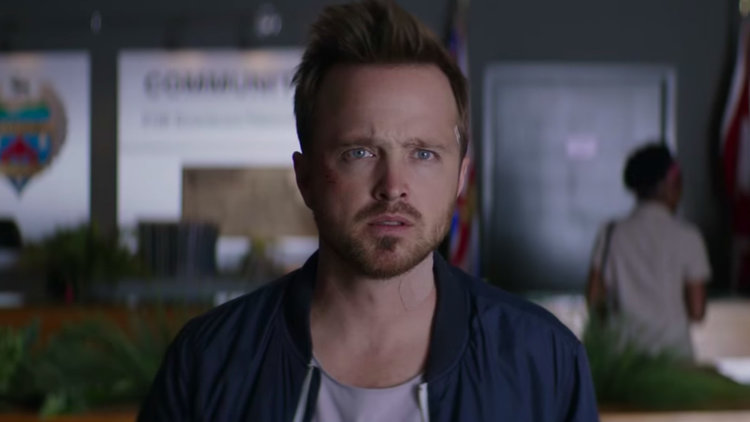
The Black List is an annual survey of the “most liked” motion picture screenplays not yet produced. 2012 was a pretty good year, with screenplays for the likes of Arrival, John Wick, Me and Earl and the Dying Girl, and Hell or High Water all making the list. But so did the screenplay for Come and Find Me, which just goes to show that the Black List doesn’t always get it right.

Written by Zack Whedon (brother of Josh), the script aims for being several things at once: a romantic drama, a thriller, and a mystery. In addition, it seeks to include meditations on what it is to really know someone, and the permanence of love. It’s an ambitious script, and one that has clear intentions to be more than just another run-of-the-mill why-has-my-girlfriend-suddenly-disappeared-when-we-were-so-happy-together? style of movie. Signs of these intentions can be seen throughout Come and Find Me’s drawn-out running time, but however effective these elements may have been on the page, it’s Whedon the director who sabotages any chances they had of being just as effective on the screen.

come-and-find-me

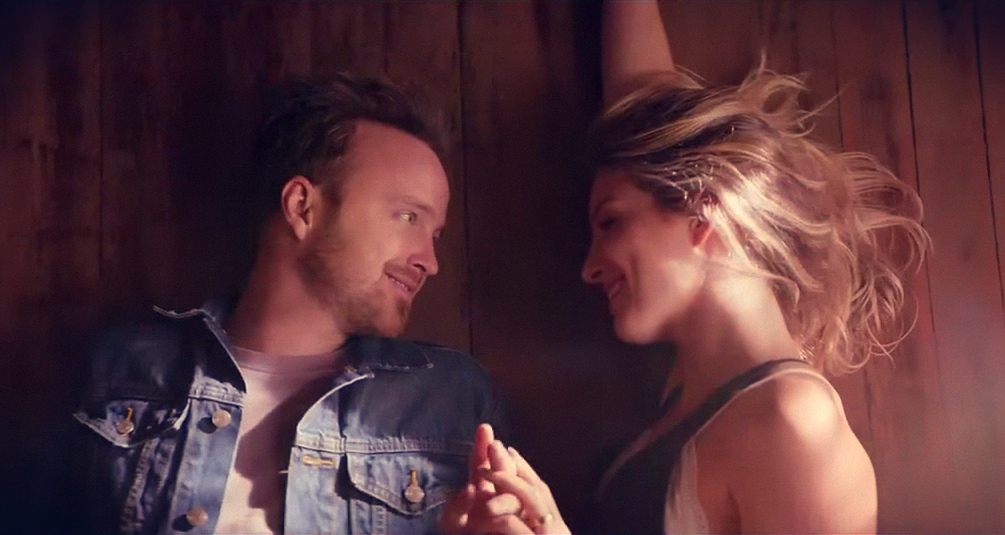
At the beginning, Aaron Paul’s graphic web designer, David, gets on a bus where he spots an attractive blonde (Wallis). When she gets off the bus, so does he. He follows her. Eventually she turns and asks him bluntly if he’s following her. David looks appalled, says no, and carries on past her. Soon, she is following him until they reach a house that they both claim is where they live. David opens the door, the woman goes in without being invited. Inside they find a photograph that shows they know each other… Now, at this point, viewers who have seen way too many movies will know exactly what happens next. But for anyone who hasn’t seen way too many movies, this is an exciting start: how can two people live in the same house and apparently not know each other? Is this going to be some kind of variation on The Lake House (2006)?

Well, no, it isn’t. If Whedon had written a mystery drama that evolved from this opening sequence, and had kept the mystery unfolding piece by tantalising piece then Come and Find Me would have been an entertaining, enjoyable movie. But instead, he explains away this early “mystery” and goes in a different direction altogether – but one we’ve seen in the movies, and on television, and in books and plays, time and time again. And he doesn’t bring anything new to the table, or find a way of presenting his tale with any kind of visual flair or panache.

aaron

After watching Come and Find Me for a while – say, twenty minutes – the average viewer will be wondering if the bland shooting style, with its dour lighting scheme and flat imagery, is going to continue throughout. Well, it does. Whedon’s framing is a major letdown (which makes you wonder if DoP Sean Steigemeier had any say in the matter), and he constantly shoots from a low angle, as if this will add to the drama unfolding on screen. But all it does is prove annoying and distracting, and make the average viewer wonder if Steigemeier’s back was okay, what with all this low level camera work. With its drab interior design adding to the movie’s visual problems, even when it heads out into the countryside, Whedon and his crew do their best to downplay any of Nature’s beauty. A shot from the top of a hillside looking toward a row of other hills should be a jaw-dropper; instead it’s literally, just a backdrop.

But even that isn’t the worst of the movie’s problems under Whedon’s stewardship. The central mystery, once it’s explained, proves to be underwhelming, but there’s still a long way to go as David engages in a less-than-riveting series of bluff and counter-bluff in his efforts to bring the bad guys to… to… well, actually, we never know if he’s looking for justice, revenge, a combination of the two, or something else entirely, as Whedon doesn’t think to tell us. Throughout, David has one motivation: to find out what happened to his girlfriend, Claire. But he does so in such a ham-fisted, you-won’t-believe-he-did-that kind of way that it’s a wonder he gets as far as he does. He’s a passive-aggressive victim who’s never as ahead of the game as he thinks he is, and as a result, and despite Paul’s best efforts, he remains unsympathetic throughout.

come_and_find_me_-_aaron_paul_annabelle_wallis_-_still_-_h_-_2016

Paul is a good choice for the character of David, but like so much of the movie, is undermined by Whedon’s inexperience in the director’s chair. Everyone else is a supporting character, and though the likes of Dillahunt and Gjokaj do their best with less than challenging material, there’s no chance than anyone is going to stand out from the crowd. Even Wallis, whose role is largely seen through a variety of flashbacks, gets to be less than a fully fledged character and more of a cypher; or more awkwardly, a McGuffin.

When it comes to first-time writer/directors, Whedon is another in a long line of movie makers who believe they can get it right on their maiden attempt, but often the opposite is true. Such is the case with Come and Find Me. Perhaps there should be a moratorium on first-time writer/directors. Perhaps directors shouldn’t make their own scripts until they’ve been directing for a while, and have worked on other writers’ scripts. Perhaps then they’ll have a better understanding of how to assemble a movie without undermining it at the very same time. Who knows? It might lead to them making better movies.

Rating: 4/10 – leaden, and with an ending that will leave most viewers slack-jawed through disbelief, Come and Find Me is a misfire on almost every level; lacking a clear purpose, or any depth or subtext, the movie plods along, then stumbles along, then plods along again etc. in its quest to be an absorbing mystery thriller, when it’s plain to see that it’s so far from that ambition as to be in a different universe altogether.

Share this:

  • Click to share on X (Opens in new window) X
  • Click to share on Facebook (Opens in new window) Facebook
  • More
  • Click to print (Opens in new window) Print
  • Click to email a link to a friend (Opens in new window) Email
Like Loading...

Monthly Roundup – November 2016

01 Thursday Dec 2016

Posted by dullwood68 in Movies

≈ 1 Comment

Tags

Action, Adam Schindler, All'ultimo sangue, Andrew Stanton, Animation, Annalise Basso, Attack of the Lederhosen Zombies, Beth Riesgraf, Bury Them Deep, Colin Firth, Comedy, Craig Hill, Dominik Hartl, Drama, Elizabeth Reaser, Ellen DeGeneres, Ettore Manni, Felicity Jones, Finding Dory, Fort Osage, Gabriela Marcinková, Home invasion, Horror, Inferno (2016), Laurie Calvert, Lesley Selander, Literary adaptation, Mike Flanagan, Ouija: Origin of Evil, Paolo Moffa, Patrick Dempsey, Plague virus, Prequel, Renée Zellweger, Rod Cameron, Romance, Romantic comedy, Ron Howard, Rory Culkin, Sequel, Sharon Maguire, Shut In, Ski-ing, Thriller, Tom Hanks, Western

Bury Them Deep (1968) / D: Paolo Moffa (as John Byrd) / 109m

Original title: All’ultimo sangue

Cast: Craig Hill, Ettore Manni, Giovanni Cianfriglia (as Ken Wood), José Greci, Francesco Santovetti, Luciano Doria, Pino Patti (as Giuseppe Sorrentino), Ruggero Salvadori

4807-2

Rating: 5/10 – when an Army payroll is stolen by notorious outlaw Billy Gun (Cianfriglia), expert tracker Clive Norton (Hill) is hired to get it back, but in the process he finds himself up against a variety of obstacles, not the least of which is Billy’s brother, El Chaleco (Manni); an average Spaghetti Western given a much needed dose of energy thanks to Manni’s muscular, spirited performance as the conniving El Chaleco, Bury Them Deep rarely rises above its perfunctory level, and despite cramming in several lengthy action sequences.

Ouija: Origin of Evil (2016) / D: Mike Flanagan / 99m

Cast: Elizabeth Reaser, Annalise Basso, Lulu Wilson, Henry Thomas, Parker Mack

ouija-origin-of-evil

Rating: 6/10 – it’s 1965, and the Zander family – single mother Alice (Reaser) and her two daughters, Lina (Basso) and Doris (Wilson) – become imperilled by an evil spirit thanks to the misguided use of a ouija board; a prequel to the events seen in Ouija (2014), this does nothing new in terms of scares and special effects, but thanks to the involvement of Flanagan, at least gives you characters you can actually relate to and care about, and which is a rare and valuable thing indeed.

Finding Dory (2016) / D: Andrew Stanton, Angus MacLane / 97m

Cast: Ellen DeGeneres, Albert Brooks, Ed O’Neill, Kaitlin Olson, Hayden Rolence, Ty Burrell, Diane Keaton, Eugene Levy, Sloane Murray, Idris Elba, Dominic West, Bob Peterson, Kate McKinnon, Bill Hader, Sigourney Weaver

3083866-dory

Rating: 7/10 – Dory the blue tang fish (DeGeneres) starts having flashbacks to when she was younger and lived with her parents, and these in turn prompt her to try and find them, much to the continuing consternation of clown fish Marlin (Brooks) and his more positive son Nemo (Rolence); a sequel to one of Pixar’s most cherished movies, and one of this year’s most anticipated releases, Finding Dory lacks the original movie’s winning charm, and settles instead for being a guilty pleasure retread of Finding Nemo, while being saved from a lower score thanks to DeGeneres wonderful, and still inspired, vocal performance.

Bridget Jones’s Baby (2016) / D: Sharon Maguire / 123m

Cast: Renée Zellweger, Colin Firth, Patrick Dempsey, Sarah Solemani, Gemma Jones, Jim Broadbent, Emma Thompson, Neil Pearson, Joanna Scanlan, Kate O’Flynn, Celia Imrie, Ed Sheeran

160628142149-bridget-jones-baby-large-169

Rating: 7/10 – at the dreadfully old age of forty-three, Bridget (Zellweger) feels like love is passing her by, until two one night stands – with old flame Mark Darcy (Firth) and new beau Jack Qwant (Dempsey) – lead to her being pregnant but unsure as to which one of them is the father; a welcome return for Bridget, and with much of the pizzazz and feelgood humour of the first movie, but the whole “who’s the father?” storyline is a poor conceit to hang a whole movie on, and it shows, leaving standout moments such as Bridget miming to House of Pain’s Jump Around, as a much better reason for splurging on this latest installment.

Shut In (2015) / D: Adam Schindler / 90m

aka Deadly Home; Intruders

Cast: Beth Riesgraf, Rory Culkin, Martin Starr, Jack Kesy, Joshua Mikel, Leticia Jiminez, Timothy T. McKinney

shut-in

Rating: 5/10 – when Anna (Riesgraf), who’s agoraphobic, doesn’t attend her recently deceased brother’s funeral, the three men who arrive at her home to rob her soon find that Anna has a dark secret that will endanger them all; a brave attempt to do something different in the home invasion genre, Shut In nevertheless remains an intriguing idea that never coalesces into a completely successful whole, but does feature a terrific performance from Riesgraf.

Inferno (2016) / D: Ron Howard / 121m

Cast: Tom Hanks, Felicity Jones, Omar Sy, Irrfan Khan, Sidse Babett Knudsen, Ben Foster, Ana Ularu, Ida Darvish

inferno-teaser-trailer-tom-hanks-felicity-jones

Rating: 6/10 – despite suffering from short term memory loss, symbologist Robert Langdon must endure a race against time in order to stop the release of a deadly toxin that will wipe out billions of people; another year, another Dan Brown adaptation, but this time it’s an adaptation that’s at least bearable, thanks to Tom Elkins’ and Daniel P. Hanley’s editing skills, an enjoyable, knowing performance from Khan, and a script that doesn’t hang around getting bogged down by endless exposition, which, considering Brown’s reliance on it in his novels, is a massive step forward should The Lost Symbol or any further novels be adapted for the screen.

Attack of the Lederhosen Zombies (2016) / D: Dominik Hartl / 77m

Cast: Laurie Calvert, Gabriela Marcinková, Oscar Dyekjær Giese, Margarete Tiesel, Karl Fischer, Patricia Aulitzky, Kari Rakkola

attack-of-the-lederhosen-zombies-patient-zero

Rating: 5/10 – a formula for producing snow proves extremely harmful if ingested, and soon the guests at a remote mountain top ski resort are knee deep in zombies, both human and animal; similar in tone to the Dead Snow movies, Attack of the Lederhosen Zombies combines daft humour with gross-out gore and flying body parts a-plenty, but as usual with this type of movie, it pays lip service to cohesive plotting, or credible characters, and focuses instead on providing a series of inventive zombie kills – which is pretty much the only aspect it gets right.

Fort Osage (1952) / D: Lesley Selander / 72m

Cast: Rod Cameron, Jane Nigh, Morris Ankrum, Douglas Kennedy, John Ridgely

movie-photo-original-8x10fort-osage-1951-rod-cameron-2

Rating: 6/10 – homesteaders looking to head west through Indian country are exploited by a crooked businessman (Ankrum) and have their lives put at risk by his decision to cheat said Indians out of the rewards of a peace treaty, leaving would-be wagonmaster Tom Clay (Cameron) to get the bottom of all the corruption; an enjoyable way to spend seventy-two minutes thanks to Selander’s typically intuitive direction, Cameron’s no-nonsense approach to dialogue, and the joy of watching so many standard Western tropes being trotted out and given such a good airing.

Share this:

  • Click to share on X (Opens in new window) X
  • Click to share on Facebook (Opens in new window) Facebook
  • More
  • Click to print (Opens in new window) Print
  • Click to email a link to a friend (Opens in new window) Email
Like Loading...

Kubo and the Two Strings (2016)

30 Wednesday Nov 2016

Posted by dullwood68 in Movies

≈ 3 Comments

Tags

Adventure, Animation, Art Parkinson, Charlize Theron, Drama, Fantasy, Laika, Matthew McConaughey, Moon King, Ralph Fiennes, Review, Travis Knight

kubo

D: Travis Knight / 102m

Cast: Charlize Theron, Art Parkinson, Matthew McConaughey, Ralph Fiennes, Rooney Mara, Brenda Vaccaro, George Takei, Cary-Hiroyuki Tagawa

In Ancient Japan, a young mother, Sariatu (Theron), is washed ashore with her infant son, Kubo. She is fleeing her family: her father, the Moon King (Fiennes) and her two sisters (both Mara). Her sisters have killed her husband, Hanzo, and stolen Kubo’s left eye for their father; and now he wants Kubo’s other eye. The infant grows into a young boy (Parkinson) who looks after his mother by night, and by day, tells stories to the folk in the nearby village, and who uses the magic he’s inherited from his mother to animate pieces of paper to help tell his tales. Kubo is well-liked, but often he can’t finish his stories because he has to be back before sunset, or his aunts will find him.

When an Obon festival proves too tempting to miss, Kubo finds himself still near the village when night – and his aunts – descend. They attack him, but he’s saved by the intervention of his mother; later she succumbs to her sisters and Kubo is left alone… though not for long. He finds he has a companion on a trek to track down his father’s sword, armour and helmet. The companion is called Monkey (Theron), and she was once a little wooden snow monkey charm that Kubo carried with him everywhere. Now she acts as his guide and protector, as the pair set off to find Hanzo’s equipment. Along the way they meet Beetle (McConaughey), one of Hanzo’s apprentices, who agrees to go with them.

kubo-and-the-two-strings-screenshot-11-1200x675-c

They find the sword in a cave full of bones, and cross the Long Lake in a boat woven together by leaves and thanks to Kubo’s magic. But they’re attacked by Sariatu’s sisters, just as Kubo attempts to retrieve the armour from the bottom of the lake. With only the helmet to be retrieved, the trio travel to Hanzo’s home where Kubo has a dream about an old man (Fiennes). Tricked into travelling to the village near where he lived, Kubo must face the Moon King alone, and find a way of avoiding the fates of his mother and father.

A vibrant, multi-layered fantasy adventure, Kubo and the Two Strings is animation company Laika’s fourth release, following Coraline (2009), ParaNorman (2012), and The Boxtrolls (2014). With such a track record already firmly in place, the chances of Kubo… not adding to that run of successes seems unlikely, and on a critical level, so it proves. But in a year when animation has accounted for three of the top five grossing movies, Laika’s latest has stumbled at the box office, only just earning back its budget. And yet, it’s easily better than two of those three top grossing movies – Finding Dory and The Secret Life of Pets – and on a par with the third, Zootopia. With its impressive visuals, cleverly constructed storyline, and accessible characters, Kubo and the Two Strings is a triumph that brings together those aforementioned elements, and compliments them with style, originality and verve.

kubo-and-the-two-strings-review-02

It’s all due to the script by Marc Haimes and Chris Butler, and the efforts of first-time director Knight (he’s also Laika’s president and CEO). There’s such a richess of detail, both in the dialogue and the characters, that the visual backgrounds and their immediate surroundings don’t always register as the beautifully created world that said characters exist in. Ancient Japan has been witnessed in so many other movies over the years that it should be hard to bring a fresh perspective to the period and the milieu. But Laika’s expert team of animators – working with CGI and traditional stop-frame animation – achieve the movie’s distinctive look with ease, blending the two animation formats to perfection and helping the viewer immerse themselves in this beautiful yet dangerous environment.

The animators have done their homework too. The sisters’ fighting styles are straight out of several highly successful martial arts/wire-fu movies, and there’s a crispness to the movements of the characters when in combat that is both arresting and profound (if you think that’s a little over the top for an animated movie, then just watch the scene where the sisters attack the boat, and see just how much effort has gone into making their actions so intense and so precise, and so exciting). There’s also an energy in these scenes that doesn’t appear anywhere else in the movie, and while that may sound like a criticism, there’s nothing anyone could – or should – do about it. (And that goes for the eyes in the sea, one of the most remarkable visual effects seen in recent years.)

kubo_and_the_two_strings-900x489

With its themes of loss and regret, and love and perseverance, the movie isn’t quite the children’s feature that some viewers may be expecting, but Laika have always been most impressive when introducing adult themes into their projects, and Kubo… is no exception. By adding depth to Kubo’s quest, and by introducing a layer of melancholy to it all, Knight and his team create a dynamic among the characters – good and bad – that can be appreciated by viewers of (nearly) all ages. It’s a delicate balancing act but one they pull off with unwavering conviction. And the way in which Kubo’s quest is resolved, and the Moon King’s threat is neutralised, it’s all accomplished in such a constructive, intelligent – and affecting – way that it offers viewers a much more satisfying conclusion all round.

As usual with a Laika production, the voice cast has been chosen with care. Theron brings a tenderness and subtlety to her performances that works perfectly for both characters, while McConaughey injects a mix of broad and pointed humour into his role as Beetle (even if his Southern drawl is allowed to slip through too often to maintain any consistency of voice). Parkinson effectively portrays the sadness and hopeful determination that combine to push Kubo ever forward, Mara essays the sisters as chilling echoes of each other, and Fiennes is formidable as the Moon King.

Rating: 9/10 – very minor quibbles aside, Kubo and the Two Strings is another triumph for Laika, and one of the very best animated movies of this or any other year; touching, poignant and thrilling, it features ravishing animation, terrifying villains, and speaks to the viewer on an emotional level that most live action movies fail to come even close to.

Share this:

  • Click to share on X (Opens in new window) X
  • Click to share on Facebook (Opens in new window) Facebook
  • More
  • Click to print (Opens in new window) Print
  • Click to email a link to a friend (Opens in new window) Email
Like Loading...

The Dressmaker (2015)

28 Monday Nov 2016

Posted by dullwood68 in Movies

≈ Leave a comment

Tags

1951, Australia, Comedy, Drama, Dressmaking, Dungatar, Hugo Weaving, Jocelyn Moorhouse, Judy Davis, Kate Winslet, Literary adaptation, Mystery, Revenge, Review, Sarah Snook

dressmaker

D: Jocelyn Moorhouse / 119m

Cast: Kate Winslet, Judy Davis, Liam Hemsworth, Hugo Weaving, Sarah Snook, Kerry Fox, Shane Bourne, Alison Whyte, Caroline Goodall, James Mackay, Sacha Horler, Gyton Grantley, Julia Blake, Barry Otto, Rory Potter

It’s Australia, and it’s 1951. The tiny rural town of Dungatar sees the return of Myrtle “Tilly” Dunnage (Winslet) after having been sent away as a child twenty-five years before for the suspected murder of Stewart Pettyman (Potter), the son of town councillor Evan Pettyman (Bourne). She’s back for two reasons: to look after her mother, Molly (Davis), who is suffering from dementia, and to discover the truth about what happened twenty-five years ago (Tilly doesn’t remember). The townsfolk aren’t exactly pleased to see her, with only Sergeant Farrat (Weaving) treating her fairly. Unconcerned, Tilly goes about caring for her mother, while also stirring things up around town, appearing in sexy, haute couture gowns and turning the heads of all the eligible and not-so-eligible men, and in particular, Teddy McSwiney (Hemsworth).

With the townsfolk treating her with suspicion and disrespect, she lets them know that she can make any of them bespoke dresses or outfits. Her first customer is young bride-to-be Gertrude Pratt (Snook). Going against her mother’s wishes, Gertrude is over the moon with the dress Tilly makes for her, and it’s not long before most of the women in town have followed suit. Pettyman employs the services of another dressmaker, Una Pleasance (Horler), but her efforts aren’t anywhere near as successful. Meanwhile, Tilly begins a tentative relationship with Teddy, while her mother’s memory improves, and her investigation into what happened to Stewart Pettyman starts to gather momentum.

maxresdefault

Along the way, town secrets are exposed, simmering animosities boil over, and Tilly’s skills as a dressmaker serve as a way of exacting revenge for the way she was treated as a child. Answers are revealed, lives are changed irrevocably, a tragedy ensues, and Dungatar’s entry into a local Eisteddfod affords Tilly the opportunity to carry out her ultimate revenge.

An adaptation of the novel by Rosalie Ham, The Dressmaker is a mixed bag indeed. Combining drama, comedy and romance, and mashing them all together (sometimes in the same scene), it’s a movie that is likely to divide audiences into two camps: those who prefer to have their revenge dramas played entirely straight throughout, and those who prefer to have their comedies unspoiled by dramatic stretches that restrict the belly laughs found elsewhere. Your tolerance for this mash-up will depend very much on going with the movie’s very particular flow, as Moorhouse and her co-screenwriter, husband P.J. Hogan, have embraced both the jaundiced drama and the wicked comedy inherent in Ham’s novel.

The result is a movie that’s tonally uneven and switches focus from comedy to drama and back again with unrestrained abandon. Moorhouse concentrates on the humour during the first hour, and gifts Davis with some great lines, some of them throwaways that make you wish the actress had made more comedies before this. When Tilly tells Gertrude the cost of the dress she wants made, Gertrude remarks that the cost is “outrageous”. Quick as a flash, Molly says, “So’s your bum.” Davis’ timing is simply brilliant. There are other moments that are equally as funny, and the cast can be seen to be enjoying themselves tremendously during these scenes. But all good things must come to an end, and the movie’s second half slowly sheds the comedy in order to concentrate more fully, and with more necessity, on the drama.

article-lead-wide1001981650gker0aimage-related-articleleadwide-729x410-gkjxzm-png1446177715341-jpg-620x349

But as well as shedding the humour, the script also sheds the shading and carefully orchestrated character beats, and leaves the viewer overwhelmed by increasing levels of melodrama. As well as the tragedy already alluded to, there is madness, murder, and extended bouts of retribution. There’s so much in fact, that Moorhouse struggles to find a way of making it all feel organic, with most scenes feeling forced by the need for resolution of the various subplots involving the townsfolk. By the time Tilly leaves Dungatar behind, the viewer may well be heaving a sigh of relief before laughing in gratitude at her final line of dialogue.

Thankfully, the movie’s flaws are more than compensated for by the performances. Davis steals the movie as the raddled, alcoholic, dementia-suffering Molly. It’s possibly the least glamorous role you’re likely to see for some time, but Davis is superb in it, caustic and sharp despite the dementia, and effortlessly dominating the scenes she’s in. Alongside her, Winslet gives another impressive performance, expressing Tilly’s determination and anger at how she was treated as a child, and yet also displaying an uncertainty and a mistrust surrounding her memories of her childhood. There are moments where Winslet is called upon to point up the character’s emotional fragility, and she does so in such an honest way that it’s entirely credible.

mgid-ao-image-mtv-com-209255

In support, Weaving is a delight as the crossdressing Sergeant Farrat, fey on the one hand, sturdy on the other, and a hoot as Rudolph Valentino. Hemsworth does enough to avoid giving an entirely wooden performance, but against Winslet still looks like a complete amateur. Further down the list there are good roles for, and good performances from, the likes of Kerry Fox as the acid-tongued schoolteacher, Bourne as the philandering town councillor, Blake as the ailing wife of the town’s doctor (Otto), Snook as the initially vapid but later viperish Gertrude, and Grantley as Teddy’s brother, Barney, who holds the key to what happened to Stewart Pettyman.

As befits a movie concerned with dressmaking, the costumes, designed by Marion Boyce and Margot Wilson, are fantastic, beautiful creations that flatter and enhance the female cast they were made for in exactly the way they were meant to flatter and enhance the characters. Winslet gets to show off her curves in a variety of figure hugging outfits, and there’s one scene where the dress she wears is – in terms of the time in which the movie is set – a precursor to the one worn by Anita Ekberg in La Dolce Vita (1960). And the overall look of the movie is like that of a Western, with Tilly “riding” back into town as an avenging angel á la Clint Eastwood in Hang ‘Em High (1968) or Pale Rider (1985). There are other references to other movies, some quite easy to spot, and some more subtly placed, but these don’t detract from the movie at all, but do add to the fun that can be had (in the first hour).

Rating: 7/10 – on balance, The Dressmaker‘s imbalance in terms of its storyline and tone should make this at least an awkward or unfulfilling watch, but somehow it’s a movie where it works more often than it doesn’t; with a standout turn from Davis, ravishing costumes, and a spare visual sense that suits the material, this is one of those movies where it’s unlikely for two different viewers to come to a consensus – but strangely, that’s one of its strengths.

Share this:

  • Click to share on X (Opens in new window) X
  • Click to share on Facebook (Opens in new window) Facebook
  • More
  • Click to print (Opens in new window) Print
  • Click to email a link to a friend (Opens in new window) Email
Like Loading...

Snowden (2016)

27 Sunday Nov 2016

Posted by dullwood68 in Movies

≈ 3 Comments

Tags

CIA, Drama, Eavesdropping, Edward Snowden, Hong Kong, Joseph-Gordon-Levitt, Laura Poitras, Melissa Leo, NSA, Oliver Stone, Review, Rhys Ifans, Shailene Woodley, Thriller, Tom Wilkinson, True story, Whistleblower, Zachary Quinto

snowden-movie-2016-poster

D: Oliver Stone / 134m

Cast: Joseph Gordon-Levitt, Shailene Woodley, Rhys Ifans, Melissa Leo, Zachary Quinto, Tom Wilkinson, Joely Richardson, Timothy Olyphant, Ben Schnetzer, Scott Eastwood, Lakeith Stanfield, Logan Marshall-Green, Ben Chaplin, Nicolas Cage

By now, most of us have heard of Edward Joseph Snowden (Gordon-Levitt), the NSA whistleblower who revealed the extent of the US’s surveillance programme both at home and abroad. In June 2013, Snowden flew to Hong Kong to meet with documentary movie maker Laura Poitras (Leo), and Guardian journalists Glenn Greenwald (Quinto) and Ewen MacAskill (Wilkinson). There, at the Hotel Mira, Snowden explained his reasons for disclosing the documents he appropriated from NSA data banks, and why he felt that the extent of the US’s “eavesdropping” was both inappropriate and damaging to the integrity of the US and its intelligence-gathering agencies. Following the publication of the files Snowden provided, he was charged with offences under the 1917 Espionage Act*, and though he tried to reach South America via Russia and Cuba, his passport was revoked while he was en route to Russia, and he was forced to remain in the transit area of Moscow’s Sheremetyevo Airport. And Moscow – though not the airport – has been his home ever since.

Snowden’s story is one that seems tailor-made for an Oliver Stone movie. Anyone who’s seen his documentary series The Untold History of the United States (2012-13), or read the accompanying book, will know that Stone is largely unimpressed with the way in which his country has become a land run by self-serving neo-conservatives for whom “by any means necessary” is a proud motto. And while you could argue that this has been the status quo in America for a lot longer than the last fifty years, what is without doubt is the extent to which the intelligence agencies have abused their remits post-911 to eavesdrop not just on suspected terrorists but everyone. But with all this now out in the open, and Snowden’s place in history assured – and already explored in Laura Poitras’s excellent, Oscar-winning documentary CITIZENFOUR (2014) – what is there left for Stone to bring to the screen that hasn’t already been explored? Unfortunately, the answer is not much.

snowden_movie_review_002-1200x675-c

Watching Snowden is a somewhat dispiriting experience. Stone does what he does best over two and a quarter hours: exposing the clandestine activities of several branches of the US government, highlighting the insidious effects these activities are having on an individual’s human rights, and revealing how those same human rights aren’t even protected by the courts (who seem to be bypassed at every opportunity). But Stone’s usual passion and sense of outrage seems to be muted here. This is like watching a movie made by someone who’s intellectually aggrieved by what the NSA has been up to, but doesn’t quite feel the need to get emotional about it as well. This is Oliver Stone in restrained, almost reflective mode – and it doesn’t feel right.

What all this means is that Snowden feels like objective reportage for much of its running time, with scenes placed and set up to impart relevant information, allowing Stone and co-screenwriter Kieran Fitzgerald to give audiences all they need to know about Snowden himself and the secret world he was a part of. But it’s this matter-of-fact way in which Stone has decided to present both the man and that world that curtails any tension, and thereby lessens the drama. The scene where Snowden downloads a mass of files right from the heart of the NSA’s base in Hawaii, a scene that many directors could have made into a nerve-shredding exercise in trepidation and anxiety, lacks all those elements and plays out with a minimum of fuss and bother.

snowdenshailenejosephgordonlevitt

Watching as Snowden becomes increasingly aware of the extent of his country’s malfeasance – and the ways in which he’s unwittingly contributed to that malfeasance – Stone shows Snowden’s baffled disbelief, and his somewhat naïve demeanour, but there’s a distance between the viewer and the beleaguered whistleblower that stops any real sympathy or connection from forming. As Joseph Gordon-Levitt goes about the process of making Snowden’s initial commitment to the NSA appear noble and necessary, he can’t quite overcome a lack of personality that keeps the man from registering as more than a name most people will recognise, but few outside the US will truly care about. This is partly due to the script, which, instead of showing the man behind the name through his commitment to the truth, attempts to do so through his relationship with his girlfriend, Lindsay Mills (Woodley). Would that these scenes had more of an impact, but there’s a pedantic, going-through-the-motions feel to them that Stone can’t quite shake off. There are times where they also border on soap opera, as Mills’s frustration with Snowden’s work leads to several moments where she invokes the whole “it’s me or the job” ultimatum.

Elsewhere, the movie plods along, only occasionally engaging with the material in a way that appears earnest or committed, but doing enough to keep interested viewers interested, while not doing enough to keep viewers new to Snowden’s story on board for the duration. It’s not that Stone is doing anything particularly wrong – he still has a strong visual sense (bolstered by crisp, insistent cinematography from Anthony Dod Mantle), and the movie is expertly edited by Alex Marquez and Lee Percy – but somewhere along the way, any sense of urgency about the subject and its ramifications seems to have been lost. Perhaps it’s due to the time that’s passed since Snowden blew the whistle; in today’s need-to-know-now society is his story relevant anymore?

19543332_303

There are good performances all round, but mostly amongst the supporting turns, with Ifans a standout as Snowden’s mentor and über-spook Corbin O’Brien. Its also good to see Nicolas Cage, albeit in a minor role, deliver the kind of performance that we know he’s capable of. Spare a thought though for the trio of Leo, Quinto and Wilkinson, stranded in a hotel room in Hong Kong and not really given much to do except listen and look amazed/appalled/astounded as appropriate (it makes the scene where Greenwald barks orders at his editor (Richardson) all the more striking – and out of place). Woodley is hamstrung by a role that requires her to be unsupportive and selfish for the most part, and which is left hanging by a script that doesn’t explain why she’s now living with Snowden in Moscow. And as Snowden, Gordon-Levitt gives a diffident, constrained portrayal of a man who made a momentous personal and professional decision, and the actor carries the gravitas of that with aplomb. If only he didn’t sound like Keanu Reeves…

Rating: 6/10 – Stone adds another American life to his list of movie subjects, but in doing so seems more like a director for hire than the tirelessly challenging agent provocateur he usually is; what hampers Snowden is a sense that its story is no longer important, and that the movie is aware of this, which stops it from being the impassioned, thought-provoking movie it should be.


*The 1917 Espionage Act is a particularly apt (and predictable) piece of legislation for Snowden to be charged under. Such is the loose nature of the Act, if Snowden were to return to the US and be put on trial, he wouldn’t be able to use any information relating to the offence as evidence that he wasn’t guilty; because of the nature of the information he released, it would still be regarded as classified and therefore not admissible, and the jury wouldn’t be privy to it. And that’s without the cost of the defense itself: anywhere between $1 million and $3 million.

Share this:

  • Click to share on X (Opens in new window) X
  • Click to share on Facebook (Opens in new window) Facebook
  • More
  • Click to print (Opens in new window) Print
  • Click to email a link to a friend (Opens in new window) Email
Like Loading...

Trailers – Claire in Motion (2016), The Comedian (2016) and The Zookeeper’s Wife (2017)

25 Friday Nov 2016

Posted by dullwood68 in Movies

≈ Leave a comment

Tags

Betsy Brandt, Comedy, Drama, Jessica Chastain, Previews, Robert De Niro, Trailers, True story

In Claire in Motion, the titular character finds her orderly world turned upside down when her husband disappears. What follows – at least as far as the trailer goes – is a search that takes some unexpected twists and turns, and which further undermines Claire’s sense of her marriage and her life. Featuring a breakout performance from Breaking Bad‘s Betsy Brandt, Claire in Motion is the creation of writing and directing team Annie J. Howell and Lisa Robinson, and looks like a strong, compelling mix of mystery thriller and a woman’s emotional struggle to make sense of what’s happened, that takes a well-worn storyline and does something unexpected with it. Will the husband be missing out of choice, or will there be a more sinister reason for his disappearance? What looks certain is that the answer won’t be as straightforward as might be expected.


De Niro’s third movie of 2016 – after Dirty Grandpa and Hands of Stone – The Comedian sees him playing Jackie Burke, an aging comic who’s performance style is somewhat “confrontational”. A burgeoning relationship with Leslie Mann’s charity worker sets the character off on a journey of personal reassessment, but along the way he still finds time to be obnoxious and insulting – which isn’t surprising as his stand-up routines were written by Jeffrey Ross. The movie has had several ups and downs on its way to our screens (director Taylor Hackford was preceeded by Martin Scorsese, Sean Penn, and Mike Newell, while Mann was third choice after Kristen Wiig and Jennifer Aniston), so it remains to be seen if it can maintain a “straight face” away from the moments where Burke indulges in his penchant for derogatory remarks and non-PC attitude.


Based on a true tale of wartime heroism, The Zookeeper’s Wife tells the story of Antonina Zabinska and her husband Jan Zabinski (Jessica Chastain, Johan Heldenbergh) who not only saved hundreds of animals from the Warsaw Zoo – where they lived and worked – but also hundreds of people fleeing from Nazi persecution. It’s a movie with some arresting imagery (wild animals prowling the streets of ghetto-ised Warsaw), a script adapted from the book by Diane Ackerman (itself based on the unpublished diaries of Antonina Zabinska), and all overseen by Niki Caro, the director of Whale Rider (2002) and North Country (2005). It all looks promising enough then, and with Daniel Brühl’s Nazi officer no doubt making things difficult, it remains to be seen if the movie adopts a typically polished approach to the Zabinskis’ story, or aims to be more gritty and realistic.

Share this:

  • Click to share on X (Opens in new window) X
  • Click to share on Facebook (Opens in new window) Facebook
  • More
  • Click to print (Opens in new window) Print
  • Click to email a link to a friend (Opens in new window) Email
Like Loading...

Mini-Review: Deepwater Horizon (2016)

21 Monday Nov 2016

Posted by dullwood68 in Movies

≈ 2 Comments

Tags

BP, Disaster, Drama, Gina Rodriguez, Gulf of Mexico, John Malkovich, Kate Hudson, Kurt Russell, Mark Wahlberg, Mike Williams, Oil rig, Peter Berg, Review, Thriller, True story

cpbdmd7wgaafqfs-1-jpg-large

D: Peter Berg / 107m

Cast: Mark Wahlberg, Kurt Russell, John Malkovich, Gina Rodriguez, Kate Hudson, Ethan Suplee, Dylan O’Brien

Arriving at the Deepwater Horizon oil rig site in the Gulf of Mexico to learn that certain safety checks haven’t been carried out, general operational supervisor “Mr Jimmy” Harrell (Russell) and chief electrical engineer Mike Williams (Wahlberg) find themselves at odds with BP executive Donald Vidrine (Malkovich) who is advocating that drilling continue despite the absence of these checks. With many more of the crew of the rig expressing their concerns, Vidrine pulls rank and the drilling resumes. Pressure begins to build in the pipeline, and further signs point to a dramatic, and likely, system failure. When it does, a massive blowout ensues, and the resulting explosion causes tremendous damage to the rig, threatening the lives of everyone on it.

As fires rage all around them, the workers’ attempt to evacuate the rig. Williams finds himself rescuing several of his colleagues, including “Mr Jimmy” who has been badly injured. With the Coast Guard racing to the rescue, and with no guarantee that the fires won’t cause the rig to sink, Williams et al must rely on their own ingenuity in order to get to safety, while the world looks on at what will become the worst environmental disaster in US history.

deepwater-horizon-mark

Watching Deepwater Horizon‘s first forty minutes, with its depictions of bubbling air pockets within the drill shaft, and the pipe itself shifting in protest against the pressure being exerted on it, it’s not hard to find a degree of anxiety about what’s going to happen creep up on you. It’s during this stretch that director Berg, aided by editors Gabriel Fleming and Colby Parker Jr, ratchets up the tension as he sets the scene for what we all know will be a nightmarish tale of survival. He also does a good job of introducing the main characters – along with principal supporting character, “Mr Jimmy”‘s moustache – and making us care about them. But once the oil hits the fan and fire takes a hold of the rig, the movie takes a strange left turn and becomes a standard men-in-peril movie where it’s hard to distinguish who’s doing what, where and how.

Inevitably, the movie regales us with moments of sacrifice, heroism and incredible fortitude, but it also features various stock elements, such as Hudson’s anxious wife stuck at home watching it all unfold on TV, and Malkovich’s suitably oleaginous BP executive looking sheepish as he gets in a lifeboat. While it’s easy to see why Berg has included these moments, it’s the way in which they help dissipate the tension established earlier on that proves problematical. It’s equally unhelpful that despite all the pyrotechnics and practical effects on display, Deepwater Horizon feels at times like an extreme, sea-based version of The Towering Inferno (1974). It makes for a distracting viewing experience (even if it wasn’t Berg’s intention). That said, the performances are uniformly good (though Malkovich’s accent is distracting), and the script manages to avoid too much foreshadowing (e.g. “I can’t wait to get home and see my newborn child”, from someone who’s clearly going to snuff it).

Rating: 7/10 – curiously uninvolving once things go from bad to staggeringly worse, Deepwater Horizon is a visually impressive retelling of an incident that BP would probably like to forget about completely; but spectacle without a human element to guide us through it is just that, spectacle, and the movie never finds an answer to the way in which it shifts down a gear after such an effective opening.

Share this:

  • Click to share on X (Opens in new window) X
  • Click to share on Facebook (Opens in new window) Facebook
  • More
  • Click to print (Opens in new window) Print
  • Click to email a link to a friend (Opens in new window) Email
Like Loading...

Cardboard Boxer (2016)

18 Friday Nov 2016

Posted by dullwood68 in Movies

≈ Leave a comment

Tags

Boyd Holbrook, Diary, Drama, Fighting, Homelessness, Knate Lee, Review, Terrence Howard, Thomas Haden Church

cardboard-boxer_poster

D: Knate Lee / 88m

Cast: Thomas Haden Church, Terrence Howard, Boyd Holbrook, Rhys Wakefield, Zach Villa, William Stanford Davies, Macy Gray, Carlton Byrd, David Henrie, Conrad Roberts, Adam Clark

Willie (Church) is a homeless man who sleeps in a cardboard box at night, and who wanders the streets by day looking for food wherever he can find it (even if it’s not exactly fresh), and hoping to score money from passersby. He lives a lonely existence, keeping himself to himself and spending a considerable amount of his “downtime” on a rooftop that affords him a panoramic view of the city where he lives. Down at ground level, home is a place on a back street with a group of other homeless people.

Willie doesn’t engage with other people. He keeps himself to himself, and tries not to get in anybody else’s way, including a local man (Clark) who carries a skillet and threatens to hurt anyone in the homeless group who aggravates him. Fortunately, while his approach to the group is antagonistic, there’s a taxi driver everyone calls The Pope (Howard) who is supportive; he provides blankets and food when he can. Willie and The Pope have a grudging respect for each other, but there are also clear boundaries that The Pope keeps in place.

cardboard-boxer-600x306

One day, Willie finds a little girl’s diary in a rubbish container. It’s burnt around the edges, like the other stuff there, but curious, he begins to read it. He learns at the beginning that the little girl has started the diary after her mother has died. Finding himself affected by her story he attempts to continue reading it, but is defeated by its being in cursive (basically joined-up writing). He begins to ask others in the homeless group if they’ll read it for him but he’s rebuffed at every turn. It’s not until he helps a war veteran, a man named Pinky (Holbrook), that he finds someone willing to read the rest of the diary to him (though he does learn to read cursive as well).

Some time later, two young men, JJ (Wakefield) and Tyler (Villa), appear in the homeless group’s back street and, for fun, challenge skillet man to fight someone for fifty dollars. Willie just happens to be in the wrong place at the wrong time, and is attacked by skillet man. However, Willie defends himself and beats the man unconscious. JJ is impressed, and starts calling Willie his friend, something that makes Willie proud and self-conscious at the same time. But JJ has an ulterior motive: using Willie to curry favour with his friends, he persuades him to fight other homeless men for money while he makes even more money via side betting. But things begin to get out of hand when skillet man makes a return appearance…

cardboard-boxer

If there’s one thing that tales of the down-and-out and the dispossessed always do, is to inform the viewer just why the main character(s) are down-and-out or dispossessed. It’s like a courtesy feature. Here’s a man (or a woman) who’s down on their luck, and here’s the reason why. Except in Cardboard Boxer, the viewer has to make his or her own mind up about why Willie is homeless, and it’s not an easy thing to decipher, because writer/director Knate Lee isn’t about to tell you. That said, it’s not too diffcult, given Willie’s skill as a fighter – well, brawler might be a better term – that his slow-witted nature could have been caused by one too many blows to the head, but even that interpretation lacks confirmation. Here, Willie is extra handy with his fists, and that’s all you need to know.

Except it really isn’t. Willie isn’t exactly an ordinary character, despite his doing ordinary stuff and trying to fit in as an ordinary human being, his emotional attachment to a war veteran whose legs are missing below each knee, and a little girl whose name he doesn’t even know show a need to connect, and it surprises him as much as it does us. But as he works his way through the diary, and begins to express his need for human contact, Willie doesn’t become any more sympathetic, or any more likeable. This is someone who’ll batter a fellow homeless person for money and the apparent “respect” of a young man well over twenty years his junior. And he’s not looking to find a way out of his “predicament”. Instead, and despite sums of money coming his way that could begin to make a difference, Willie shows no sign of wanting to improve his life, even when he has enough money to do so. Sure, he rents a hotel room and takes a shower and eats snacks while watching TV, but this is literally the best that he can come up with. His life literally doesn’t get any better than that.

And so, the movie falls back on the little girl’s diary, with Knate Lee’s script painting a picture of abuse and despair that compliments Willie’s own life – or at least it would do if we ever knew what caused his fall through the cracks of society in the first place. In the end, Lee’s script is a bleak portrait of a disconnected man’s empty life and his belated attempts to give it meaning, even if his methods – fighting for money, treating his fellow down-and-outs with disrespect, latching onto a possibly dead girl’s memory – aren’t exactly forgivable. It all makes for a dour, miserable movie that relies too heavily on Church’s distracted, almost there performance, and which features way too many shots of Willie standing on his favourite rooftop, or on a street corner, or just trudging round the city aimlessly. His life lacks purpose, but that’s an easy call; unfortunately, writer/director Lee feels the need to remind us of this constantly. Take away all those “blank stare” moments and the movie would run at least twenty minutes shorter.

thc_bh_pawn-h_2016

Despite being on board as an executive producer, Church’s involvement doesn’t do anything to elevate or improve the material, and he does little to convince the viewer that there’s an interior life going on behind the placid-featured façade he adopts for the most part. Howard is stuck with a supporting role that probably didn’t require him to be on set for more than a few days, while Holbrook’s turn as the disabled war veteran Pinky is yet another in a long line of indistinguishable disabled roles that movie makers believe audiences still have a lot of time for. And as for Wakefield, well, JJ is a caricature role that follows a predictable arc that’s married to a predictable portrayal.

The movie has been shot in a nondescript, visually unappealing style by Peter Holland that is no doubt meant to be a reflection of the lack of glamour inherent in Willie’s life, but it’s too obvious a choice and feels like a better effort couldn’t be decided on or made. And under Lee’s guidance, Jeff Seibenick’s editing leaves several scenes feeling as if there should be more to them, or in a weird contradiction, that they should be shorter and more punchy – but the material won’t allow it. This is Lee’s feature debut, and it shows, the choices he makes as a director showing a lack of imagination and confidence. And this is borne out by the movie’s conclusion, a fairytale ending that is both unnecessarily mawkish and dramatically inept given what’s gone before. But at least it’s not as downbeat as the rest of the movie.

Rating: 4/10 – a lumbering attempt to find grace and purpose even amongst homeless people, Cardboard Boxer lacks depth and a sense of purpose, and a central character the audience can get behind; while it merrily (and that’s still not the best word) goes about telling its largely redundant, determinedly non-complex tale, viewers will be wondering when and if the movie’s ever going to grow and stretch into something more affecting and worthwhile.


//ws-eu.amazon-adsystem.com/widgets/q?ServiceVersion=20070822&OneJS=1&Operation=GetAdHtml&MarketPlace=GB&source=ss&ref=as_ss_li_til&ad_type=product_link&tracking_id=thedullwoodex-21&marketplace=amazon&region=GB&placement=B01KWN1ZOE&asins=B01KWN1ZOE&linkId=d46234aee881214ec33cc823ecd6f62b&show_border=true&link_opens_in_new_window=true

Share this:

  • Click to share on X (Opens in new window) X
  • Click to share on Facebook (Opens in new window) Facebook
  • More
  • Click to print (Opens in new window) Print
  • Click to email a link to a friend (Opens in new window) Email
Like Loading...

Jenny’s Wedding (2015)

17 Thursday Nov 2016

Posted by dullwood68 in Movies

≈ Leave a comment

Tags

Comedy, Drama, Gay marriage, Grace Gummer, Katherine Heigl, Lesbian, Linda Emond, Mary Agnes Donoghue, Relationships, Review, Tom Wilkinson

jennys_wedding_xlg

D: Mary Agnes Donoghue / 91m

Cast: Katherine Heigl, Tom Wilkinson, Linda Emond, Grace Gummer, Alexis Bledel, Sam McMurray, Diana Hardcastle, Matthew Metzger, Houston Rhines

Jenny Farrell (Heigl) is the eldest daughter of fireman Eddie (Wilkinson) and housewife Rose (Emond). She works at placing foster kids and orphans in suitable homes, is well liked and admired by everyone around her – except maybe her younger sister, Anne (Gummer) – and is in a lesbian relationship with her (ostensible) flatmate, Kitty (Bledel). Jenny has never come out to her family because she doesn’t think they’d be able to handle it. Of course, this means she’s lied to them for a number of years now, and as with all lies that are prolonged beyond any possible good they may have done in the first place, Jenny has at least understood that if she tells them, they’ll be hurt and disappointed. But a conversation with her father about marriage and having children and all the responsibility that comes with it, leads Jenny to realise that that’s what she wants: to be married and have kids too.

So, now she needs to own up about her sexuality, and try and do so in a way that won’t upset everyone. She tells her mother first, but Rose is upset; not for herself per se, but for the knock her standing in the local community will take if everyone else was to know. She makes Jenny promise not to tell anyone else except her father, and not even Anne. Not wanting to upset her mother further, Jenny agrees. She tells her dad and while he’s shocked at not having realised after all this time, he’s initially much more supportive than Rose, though he goes along with her wishes.

jennys-wedding-4

Jenny and Kitty begin to plan their wedding. While they do so, Eddie and Rose struggle with the knowledge that Jenny has lied to them, and that they don’t know how to react. The relationships between the three of them begin to unravel, and are thrown into even more chaos when Anne sees her sister and Kitty kissing in a bridal store. When she learns that her parents have known about Jenny being a lesbian, and haven’t told her, Anne is devastated. But it does make her begin to question her marriage to layabout Frankie (Rhines), and the reason their front lawn isn’t green (don’t worry, it does makes sense within the movie). Things reach boiling point, though, at a funeral for a friend and neighbour where a confrontation between her father and Jenny leads to them becoming estranged. As the big day approaches, loyalties are challenged, relationships are tested, and prejudices appear set to interfere with, and derail, Jenny’s happiness.

Okay, let’s get the obvious out of the way, right at the start: this is not a good movie. Jenny’s Wedding is tired, predictable, asinine in places, dramatically inert for most of its running time, features another performance from Heigl that makes you wonder how she’s still getting lead roles, and looks and sounds like a Bible reader for those who find lesbianism distasteful. It’s a movie that suffers from trite dialogue, an unconvincing scenario, poorly realised motivations, and some extremely dodgy sexual politics. It tries hard not to be offensive, but fails every time it tries to make Eddie and Rose’s feelings “acceptable” in terms of their characters. Not even Tom Wilkinson, an actor who can inject genuine feeling and credibility into (almost) every role he plays, is stymied here by a script – courtesy of Donoghue – that asks him to either spout platitudes or inanities as a matter of course, and hunch over as if the weight of the world (or the movie’s ineptitude) was on his shoulders.

jennys-wedding-2

But there is one area where the movie is interesting, and it’s one that’s far beyond any expectation of achievement you could have hoped for. While Donoghue piles agony after agony onto a much more deserving Jenny than she probably intended, the movie’s creator tells a much better story about the lies we tell and the reasons we tell them. Jenny lies from the start but puts the onus on her parents for doing so, an act of cowardice that should offset any sympathy we have for her. As the movie progresses, Jenny continues to justify her having lied to her family because she’s unable to trust them to be supportive, and then she acts all hurt and surprised when the amount of time she’s spent lying to them prompts the exact reaction she’s been afraid of. The movie actively punishes her for doing so, an act of retribution that’s far more effective than expected precisely because Jenny is the main character and the audience is – nominally at least – supposed to be on her side.

But Jenny’s parents are just as bad, and although it’s out of confusion, their lies are based around, first, their helplessness about how they feel, and second, about the repercussions they’re likely to experience amongst their friends (in Rose’s case) and colleagues (in Eddie’s case). They lie out of fear and mistrust of others, and it’s here that Donoghue unexpectedly provides the most interesting aspect of the movie as a whole: that daughter and parents are entirely alike. And yet when the inevitable last-minute reconciliation occurs between Jenny and Eddie (Rose comes around much sooner), this isn’t mentioned at all. Instead, Donoghue, clearly unaware of the connection she’s made through her own script, trots out a sorry tale of male emasculation for Eddie’s recalcitrance, and leaves Wilkinson looking embarrassed for having to explain it all.

395e3ca0-1849-0133-f529-0e18518aac2f

There are lies and lying behaviour elsewhere in the movie. Anne’s husband Frankie is always going out on “business” late at night, a clear indication that he’s having an affair, and Rose’s friend, Ellen (Hardcastle), is the kind of hypocritical busybody who’ll take any piece of bad news and use it to her own ends, and embellish her own role at the same time. Her faux sympathy and understanding are a kind of insidious lying, and all the more unforgivable. Again, it’s this element of the movie, whether deliberately included or not, that gives it an edge that the so-called drama of Jenny getting her wedding day as wished for and planned doesn’t have (of course she’s going to get married and have kids – eventually; this is a fairy tale dressed up as a middling drama of expectations).

Like many other romantic dramas, Jenny’s Wedding could be seen as a comedy at heart, but while there are a handful of comic moments, this is a serious attempt at exploring… something. If it’s not readily clear then it doesn’t really impact on any enjoyment that can be had, and aside from the waste of Tom Wilkinson’s time and effort – it really is a stinker of a role – there’s Gummer’s performance to be appreciated, and odd moments where Emond also elevates things by sheer dint of effort. Otherwise, Donoghue struggles at maintaining a consistent tone, and avoids making anyone a bad guy, something that might have upped the drama and made it more interesting. She also marginalises the very relationship that Jenny is involved in, leaving Kitty in the background like an afterthought, and making it all about a self-absorbed coward and liar who wants it all her own way… and if you pay close attention, that attitude never changes.

Rating: 4/10 – some interesting aspects set around lying as a form of personal protection aside, Jenny’s Wedding lacks focus and a central character you can warm to; pedestrian in both its ideas and its presentation, it’s a movie that you’ll forget about soon after seeing it, and serves as another reminder that Heigl’s career is heading nowhere fast.

Share this:

  • Click to share on X (Opens in new window) X
  • Click to share on Facebook (Opens in new window) Facebook
  • More
  • Click to print (Opens in new window) Print
  • Click to email a link to a friend (Opens in new window) Email
Like Loading...

Blue Jay (2016)

16 Wednesday Nov 2016

Posted by dullwood68 in Movies

≈ 1 Comment

Tags

Alex Lehmann, Drama, Improvisation, Indie movie, Mark Duplass, Relationships, Review, Role play, Sarah Paulson

blue_jay

D: Alex Lehmann / 80m

Cast: Mark Duplass, Sarah Paulson, Clu Gulager

Having been living and working in Tucson for a while, Jim (Duplass) returns to his childhood home in California following the death of his mother. He’s in the process of going through the house and clearing it when a trip to the local supermarket finds him bumping into Amanda (Paulson), his teenage sweetheart. She’s in town visiting her sister who’s having a baby. At first, their meeting up is awkward and their attempts at conversation are stilted. They part, but outside in the parking lot, Jim asks Amanda if she’d like to go get a coffee. She agrees, and they head for the nearby Blue Jay diner.

There they begin to catch up properly. Jim reveals that he’s been doing dry wall work with his uncle in Tucson, and is thinking of doing up his mother’s house and selling it, while Amanda speaks of her marriage to Chris, and finding herself a mother to his two kids when they got married. Both tell each other their lives are good, but it’s clear that Jim isn’t as happy as Amanda appears to be. From the diner they go to a store they used to frequent as teenagers, and where the owner, Waynie (Gulager), still remembers them after twenty-two years. From there they venture to a spot near the river where they used to go. There, Jim reveals that he doesn’t have a job at the moment due to a falling out with his uncle, and that he doesn’t have a clue what he’s going to do next.

bluejay_03-h_2016

Amanda tells him she wants to see his mother’s house. When they get there, Amanda is astonished by the amount of stuff that’s still there from the time they were together: from mixtapes to photos to notebooks and letters, and one unopened letter in particular that’s addressed to her, and which she hides in her coat pocket. Jim digs out an old cassette player and they listen to recordings they made, and one where they were pretending to be an old married couple celebrating their fortieth wedding anniversary. They reminisce further, and decide to recreate that fictitious anniversary through having a meal together. As the evening wears on, both Jim and Amanda begin to grow closer, until it seems that their past will overshadow the present…

Although there are several moments in Blue Jay where Mark Duplass’s “script” seems hellbent on striking a pose for lost love, and its reclamation, it’s thanks to said “script” being an outline around which both Duplass and Paulson have improvised their dialogue, that it avoids this likely pitfall, and in doing so makes Jim and Amanda’s predicament all the more credible. Make no mistake, the relationship and the conversations that occur in the movie, could only happen in a movie, and though this level of artifice has all the potential of feeling flat and awkward to watch, it’s a mark of the commitment and the intelligence of its two stars that Blue Jay never once feels forced or uncomfortably set up.

maxresdefault

However, this is an ex-couple who have secrets to reveal, and it’s the way in which these secrets are held at bay until the last ten minutes that is worrisome in terms of what goes before. At first, and despite their initial awkwardness with each other, Jim and Amanda appear to pick up from where they have left off over twenty years ago, and even though we don’t know the reason they split up, there aren’t any signs that it was contentious on either side, or that it’s left them embittered with each other. They’re open and (mostly) honest with each other, and they’re clearly enjoying being together again after such a long time. As well, both Duplass and Paulson seem at ease with each other as actors, and they have a confidence in each other’s abilities that helps the story and their characters along.

Back at Jim’s mother’s house – or his boyhood home, though it’s interesting that it’s rarely referred to as that – further reminders of the past spark what can only be described as an unsettling game of role playing. Watching these two ex-lovers play at being a couple celebrating their twentieth wedding anniversary, is an odd, worrisome turn of events that prompts the question, why would they do that? Or, why would they feel the need to revisit the games of their youth in that particular way? Are they that unhappy with their lives now? The answers to those questions remain unanswered for the most part, with only hints and clues dropped at random in the conversations that follow, but what is clear is that there’s a longing for some kind of connection that they don’t have with anyone else. Maybe the role playing facilitates that, and brings them back to the people, the couple, they once were. Maybe that period was their relationship peak.

07bluejay-facebookjumbo-v2

You can interpret their actions in many different ways, and the likelihood would be that no one interpretation would be completely wrong or completely right. Duplass and Lehmann (making his feature debut), don’t appear to want the movie to be that black and white (and despite it being shot in that format), but once the reason for their split is revealed it has such a jarring effect that it’s a bit like being slapped in the face. And it has the unfortunate effect of calling into question everything that’s gone before, and the ease with which these two have reconnected. Would their running into each other really have led to coffee and jelly beans and dinner and head rubs? Wouldn’t the wedge that drove them apart still be there, and as it happens, especially on Jim’s side?

In the real world, absolutely (it’s a very big wedge). But again this is a movie, and though we can allow some suspension of disbelief, and admire the consistency of tone and purpose that’s been achieved, the movie is derailed by its revelation; and by the scene that follows, which aims for some degree of closure, but ends up looking and sounding incomplete, the one time in the movie where Duplass, Paulson and Lehmann have decided that what they’ve got is just enough (or perhaps worse still, will have to do). In the end, it upsets the rhythms established earlier in the movie, and leaves the viewer feeling that they’ve been tricked into having to accept an ending that doesn’t match what’s gone before.

Rating: 8/10 – despite it’s unsatisfactory denouement, Blue Jay has much to recommend it, and Duplass and Paulson should be congratulated for maintaining the truth of their characters through improvisation and intuition; Lehmann’s shiny black and white photography enhances the sense of nostalgia the movie revels in, and its quiet, brooding nature is a perfect fit for the way in which the characters move around each other.

Share this:

  • Click to share on X (Opens in new window) X
  • Click to share on Facebook (Opens in new window) Facebook
  • More
  • Click to print (Opens in new window) Print
  • Click to email a link to a friend (Opens in new window) Email
Like Loading...

Nocturnal Animals (2016)

16 Wednesday Nov 2016

Posted by dullwood68 in Movies

≈ 4 Comments

Tags

Aaron Taylor-Johnson, Amy Adams, Art gallery, Drama, Ex-husband, Isla Fisher, Jake Gyllenhaal, Literary adaptation, Michael Shannon, Murder, Novel, Review, Thriller, Tom Ford

nocturnal-animals-new-poster

D: Tom Ford / 117m

Cast: Amy Adams, Jake Gyllenhaal, Michael Shannon, Aaron Taylor-Johnson, Isla Fisher, Ellie Bamber, Armie Hammer, Karl Glusman, Robert Aramayo, Laura Linney, Andrea Riseborough, Michael Sheen, India Menuez, Graham Beckel, Jena Malone

Back in 2009, Tom Ford, once the creative director at Gucci between 1994 and 2004, made a movie called A Single Man. He produced it, he wrote it, and he directed it. In the process, he ensured Colin Firth received his first Oscar nomination as the single man of the title, a grief-stricken English professor who finds it difficult to deal with the death of his partner. It won a shedload of awards, and Ford was heralded as an exciting new voice in contemporary cinema. But even in amongst the sterling notices, reviewers and critics were largely in agreement: Firth’s performance saved the movie from being an empty exercise in style over content. Now, seven years later, he’s back with another adaptation, this time swapping Christopher Isherwood’s work for that of Austin Wright, and his novel, Tony and Susan. Should be good, eh?

Well, actually, no. This is a movie that can be admired for several reasons. For instance, there’s Seamus McGarvey’s often exquisite cinematography, whether he’s using the lens to amplify the sterile environments lead character Susan (Adams) spends her life inhabiting, or the tactile desert locations where the novel within the movie takes place. And then there’s Abel Korzeniowski’s string-driven score, which adds a delicious sense of impending doom to both storylines. But despite these solid, unassailable elements, what Ford attempts with the twin narratives doesn’t pan out quite as well.

nocturnal-animals

With its performance art opening sequence, Nocturnal Animals wants to keep the viewer wrong-footed, and it wants to keep its secrets all to itself. As you’re confronted by several large, ultra-wobbly ladies who are gyrating in the nude, Ford has already placed the viewer on the back foot. What you’re seeing, he seems to be saying, will be explained; just not right away. And this is how the tone of the movie is set from the beginning: you’ll see a lot of things that won’t immediately make sense, but in time they will… except for the things Ford has no intention of making clear. So, the naked ladies are part of an art exhibition at the gallery Susan owns. But Susan doesn’t seem to be too impressed by this particular exhibit. She appears to be elsewhere, caught up in her own thoughts. But again – already – Ford isn’t about to tell you what those thoughts are, or what they’ll mean (if anything) going forward.

We soon learn that Susan is on her second marriage, to a diffident, disconnected lump of a man called Hutton (Hammer). It’s obvious he doesn’t love her anymore, and he’s likely having an affair, but Susan doesn’t seem interested either way. She makes an effort toward they’re going away together but Hutton is too busy, and Susan is too lethargic to insist or get him to clarify the dates they can go. And while the viewer wonders if this is going to be yet another mannered, “arthouse” examination of a marriage break up with plenty of wistful stares into the distance by the wife, while the husband is unable to talk in meaningful sentences, Ford changes tack and introduces Susan’s ex-husband, Edward (Gyllenhaal).

But not in person. No, instead, Edward is introduced to us through a novel he’s written, and one that he’s dedicated to Susan. Surprised – but more importantly so that the movie can proceed in a viable fashion, intrigued – Susan begins to read it. It’s not what she expects, though. But let’s think about that. What was she expecting? And why? Because, as we later discover, Susan had no faith in Edward’s abilities as a writer. So why does she even read it? Curiosity? To reinforce her opinion about his talent (or lack of it)? Because she’s bored? (At home, Susan doesn’t appear to do very much apart from drink the occasional glass of wine.) Actually, it doesn’t matter, as it’s one of the things Ford isn’t going to take the time to explain.

noct

The story is a brutal one. Tony Hastings (Gyllenhaal) is travelling through the desert with his wife, Laura (Fisher), and daughter India (Bamber). Run off the road by a trio of men led by the would-be charming Ray (Taylor-Johnson), the family is threatened and verbally abused until chance sees Ray and one of his cohorts take the Hastings’ car – with Laura and India in it – and drive off, leaving Tony at the mercy of remaining “drunk baby” Lou (Glasman). Tony is made to drive after them, but it soon becomes obvious that Lou is just stringing him along, and Lou eventually makes Tony stop the car and get out; and then he drives off. Ray makes it back to the highway and hitches a ride to the nearest town. There he meets Detective Bobby Andes (Shannon) who agrees to go back out into the desert and check for the whereabouts of Tony’s family. They find them, both dead, but no sign of Ray and his buddies.

At this point, viewers should notice one of two things: that the character of Bobby Andes is at once more interesting and vital than anyone else in the movie (even Taylor-Johnson, who’s menacing and feral in equal measure), and secondly, that Edward’s novel, while intended to act as an emotional counterpoint to Susan’s life up until then, does get less involving and more straightforward as it continues. This allows two other, distinct things to happen: one) for Susan to begin to rethink her tidily tucked away feelings toward Edward, and two) for Ford to indulge in the kind of macho Western-style movie making once epitomised by the likes of Nicholas Ray and Budd Boetticher. But by then it’s all too late. Tony’s story can only have one outcome (which it does in such a contrived way you can hardly credit Ford the director agreeing with Ford the writer that it’s even partway acceptable dramatically), and the resolution to Susan’s immediate tale hints at a new beginning that she won’t be able to grasp.

nocturnal-animals-2016-michael-shannon-aaron-taylor-johnson-jake-gyllenhaal2

Throughout, Ford places great stock on having Adams stare off into space and think deep thoughts about her past with Edward and her present with Hutton, but it’s largely to little or no effect. Part of the problem is that Susan isn’t particularly likeable. In her time with Edward we witness what a horrible person she is beneath the surface veneer of respectability that she’s gained by being a gallery owner. This leaves her storyline feeling (and looking) like a succession of still-life paintings waiting to be given three-dimensional expression. But this isn’t on Ford’s agenda; more shots of Adams staring into space most definitely are though. Adams is a fine actress – see Arrival (2016) if you’re not sure – but here she’s wasted in a role that requires her to internalise her character’s feelings… and then leave them there. The actress is called upon to make so little of her role it’s almost insulting; why hire someone who’s capable of doing so much more than you’ll let them?

Fortunately, Shannon and Taylor-Johnson are on hand to breathe distinct and recognisable life into their respective roles, elevating the material through sheer force of skill, and making it difficult to look away from either of them, even if they’re in a scene together. Gyllenhaal, though, is a cypher, playing two roles and being made to appear as more of a supporting actor than someone given second billing and the responsibility of portraying two important characters. There are times when Gyllenhaal can only shine when the material challenges him in such a way that he has no choice but to commit himself wholly to the part. Movies such as Enemy (2013) and Nightcrawler (2014) show this, but here Ford makes the character of Tony a bystander in his own story, while Edward’s contribution to Susan’s tale is limited by the decision to focus on that particular story from Susan’s entirely subjective point of view (you can’t trust her memories).

Ultimately, Ford makes the mistake of believing that his adaptation carries the necessary weight and complexity to make each narrative work both against and for each other. And this leads to the viewer being unable to connect with any of the characters, or feel able to show any sympathy towards them (only Shannon’s ailing cop elicits any credible feeling in the audience). It’s as if Ford has decided he wants to make a movie where the idea of leading a self-contained life (Susan’s) is preferable to one where hazards and risks (Tony’s) are more likely to happen. Either way, the one-time Gucci guru has made something that plays to its strengths as the new Tom Ford movie, but which lacks a clear identity all of its own.

Rating: 5/10 – too much smoke and too many mirrors means Nocturnal Animals isn’t as effective as its writer/director would like you to believe – or as persuasive; it goes without saying that the movie has a tremendous visual sense, but it’s a shame that a similar level of effort wasn’t afforded the script or the characters.

Share this:

  • Click to share on X (Opens in new window) X
  • Click to share on Facebook (Opens in new window) Facebook
  • More
  • Click to print (Opens in new window) Print
  • Click to email a link to a friend (Opens in new window) Email
Like Loading...

The Tip of the Iceberg (2016)

14 Monday Nov 2016

Posted by dullwood68 in Movies

≈ Leave a comment

Tags

Bárbara Goenaga, Bullying, Carmelo Gómez, David Cánovas, Drama, Fernando Cayo, Investigation, Maribel Verdú, Review, Spain, Suicides, Thriller

1e46c8hfocm0nmknhcywqealf4s

Original title: La punta del iceberg

D: David Cánovas / 96m

Cast: Maribel Verdú, Carmelo Gómez, Fernando Cayo, Bárbara Goenaga, Jesús Castejón, Carlo D’Ursi, Juan Fernández, Álex García, Ginés García Millán, Nieve de Medina

Why have three employees at the Tecnocentro offices committed suicide in the last few months? Is there a link between the three untimely deaths? And if there is, is their work the link? These and other questions, and any answers, become the responsibility of project manager Sofia Cuevas (Verdú). Tasked by her boss, Enzo (D’Ursi), with visiting the offices, speaking to the staff there, and compiling a report, Sofia isn’t too keen on the idea. Unable to get out of it, she arrives there and meets the head of the Tecnocentro division, Carlos Fresno (Cayo). He’s abrasive, abrupt, and won’t entertain the idea that there is any link between the three men other than that they were unable to deal with the pressures associated with their jobs.

Unimpressed by Fresno’s uncaring attitude, Sofia is further dismayed when she learns that the office she is allocated to work from, was the office of the last man to kill himself, Marcelo Miralles (Millán). She talks to Miralles’ secretary, Gabriela Benassar (Goenaga), and begins to get the feeling that not all is right at Tecnocentro. As she learns more about the demands made of the employees there, she begins to suspect that Fresno’s management skills leave something to be desired, and that he’s guilty of bullying people. But is it enough to link the three men, or even to explain why they took their own lives, and all at the Tecnocentro offices?

the_tip_of_the_iceberg-h_2016

Sofia eventually learns far more than she expected about Fresno’s management style, and is provided with enough evidence to see him dismissed. With a further tragedy looming, and Fresno making it clear to Sofia that if she writes the correct report she can expect a promotion and the commensurate raise, she is faced with the possibility that her investigation is merely a matter of protocol. But if it is, how can she proceed, and how can she ensure that Fresno’s bullying isn’t ignored or swept under the carpet?

The answer to that final question is, in the end, quite an obvious one. The viewer is given advance warning of how The Tip of the Iceberg will end soon after Sofia arrives at Tecnocentro and she receives a certain phone call. Everything that happens between that particular call and the one that closes the movie is largely filler; the viewer doesn’t have to have seen many corporate thrillers to know that the company is up to no good, that it views its employees as entirely expendable, and that the bigwigs in charge have no intention of making any changes – and especially if it will affect the bottom line.

So the movie offers nothing new in terms of plot or storyline. It’s clear from the start that Sofia is regarded by her male bosses as dependable in a way that is also patronising. She doesn’t have much of a life outside the offices where she works, she says she’s still in a relationship with a botanist when anyone asks but later reveals that she isn’t, and her reputation as being tough and uncompromising precedes her to the Tecnocentro building. She’s a “safe pair of hands”, expected to go in there, do her job (as instructed), and come back. She’s not expected to rock the boat.

la_punta_del_iceberg_0394_juliovergne

But while Sofia may be tough and uncompromising, she also has standards, and worse still for the company she works for – which is never named – she has principles too. When her investigation reveals levels of bullying for which there can be no justification, it’s Sofia’s quiet outrage that ensures this matter won’t be swept under the carpet, or left to wither and die for lack of attention. But despite all this, she’s still a woman in a predominantly man’s world, and the movie articulates this throughout, sometimes cleverly, though usually with a bluntness that is actually a little tarnished thanks to the way in which it’s driven home.

Elsewhere in the script, which is an adaptation of a play by Antonio Tabares, and was co-written by director Cánovas, José Amaro Carrillo, and Alberto García Martín, there are quite heavy doses of sexism, with Álex García’s super-confident Jaime Salas hitting on Sofia at every opportunity, and her role as investigator being undermined by almost everyone who she comes into contact with. This is meant to be a damning critique of the entrenched ideas at the heart of modern business ethics, but while it has some merit on that level, it’s laboured use within the movie doesn’t add anything to the basic storyline. The same goes for the way in which Goenaga’s exploited secretary, Gabriela, is treated by both Miralles and Fresno (and which leads you to wonder why she works at Tecnocentro in the first place).

the-tip-of-the-iceberg1200xx2500-1406-0-47

But while the movie doesn’t offer very much in the way of originality, it does feature impressive – and expressive – art direction by Uxua Castelló that is admirably enhanced and emboldened by Juan Carlos Gómez’s chilly cinematography. The Tecnocentro offices are open-plan yet claustrophobic at the same time, and there’s a surface glamour to everything that belies the distress and desperation being experienced by most of the employees. Adding to the sense of unease and dismay that permeates the visuals is a quietly angry performance by Verdú that anchors the movie and provides the viewer with someone to eventually root for (such is our first impression of Sofia: that she has adopted the don’t care attitude of her male colleagues in an effort to fit in, that we don’t trust her to see or understand the problems going on at Tecnocentro).

Making his feature debut, director David Cánovas has created a dangerous world of expediency and mistrust that doesn’t allow Sofia to be herself until she’s faced with the logical, and tragic, extension of the management style – profits before employees – that she is a willing part of. As he explores this notion, Cánovas makes some salient points about modern technology’s demands on people’s time and effort, and the way in which large corporations or companies justify their constant chasing after profits as the only way they can validate themselves. It’s just a shame that these points are used in service of a largely pedestrian plot, and aren’t expanded on to make sure that the somewhat tepid thriller elements are allowed to have more of an impact.

Rating: 7/10 – some viewers may be wondering, “Is that it?” by the movie’s end, but The Tip of the Iceberg is a slow-burn drama that seems like it’s not trying too hard, but which has a steeliness to it that makes up for the lack of originality; Verdú is on fine form as usual, and strong supporting turns from the likes of Gómez (as an unreliable union rep) and Goenaga help bring a strong sense of humanity to a movie that points out how badly some employers can behave – and deliberately so.

Share this:

  • Click to share on X (Opens in new window) X
  • Click to share on Facebook (Opens in new window) Facebook
  • More
  • Click to print (Opens in new window) Print
  • Click to email a link to a friend (Opens in new window) Email
Like Loading...

Where There’s a Prank, There’s a Pay Off: Spider (2007) and Family Values (2011)

12 Saturday Nov 2016

Posted by dullwood68 in Movies

≈ Leave a comment

Tags

Alan Lovell, Australia, Black comedy, Comedy, David Michôd, Drama, Matthew Jenkin, Mirrah Foulkes, Nash Edgerton, Pranks, Reviews, Rubber spider, Ryan Johnson, Short movies

Here are two Australian short movies that not only play with the idea that karma isn’t something to mess with, but which also adopt a darkly comic approach to the stories they’re telling.

Spider (2007) / D: Nash Edgerton / 9m

hqdefault-2

Cast: Nash Edgerton, Mirrah Foulkes, Chum Ehelepola, Bruno Xavier, David Michôd, Sebastian Dickins, Tony Lynch, Joel Edgerton, Ashley Fairfield

In Spider, we soon learn that Jack (Edgerton) has done something to make Jill (Foulkes) really mad at him. As they drive around Sydney, Jack tries to make things right but Jill is resistant. When they reach a filling station, Jack takes the opportunity to go into the shop and buy Jill some things by way of an apology. But he can’t resist playing yet one more prank on her, and hides a rubber spider in the car where she’ll eventually find it. They drive off, and Jack’s purchase of chocolates begins to have an effect: Jill starts talking to him again (much to her personal disappointment).

But when she discovers the spider and freaks out, she nearly crashes the car. With the car brought to a halt, Jill gets out of the car in a hurry; Jack tries to placate her by saying the spider isn’t real, and by throwing it at her (not the smartest move). Jill jumps back and is immediately hit by another car, and badly injured. Overwhelmed by guilt, and fearful of what she might tell the police when she’s able to, Jack hovers around the paramedics when they arrive, and finds himself an unwitting victim of karma.

spider-nash-edgerton

There isn’t much of a story to Spider, but then there doesn’t need to be. It’s a self-contained short movie that’s concentrating as much on the dark humour of the piece, as well as the grim inevitability of the outcome of Jack’s pranking. Working with future helmer David Michôd – Animal Kingdom (2010), The Rover (2014) – director Edgerton fashions a script that the viewer is certain will lead to disaster, and he keeps the viewer waiting for that disaster to happen. And yet when it does, Edgerton is clever enough to delay the moment – and not just once – giving the viewer just enough time to wonder if the consequences of Jack’s prank will come from a different direction.

Edgerton is also wise enough to know that his main characters should be drawn in broad strokes and that any further depth isn’t required. This is a movie where Jack and Jill are merely conduits for the story’s blackly comic denouement. That both will suffer as the result of Jack’s stupidity is a given, and while what happens to Jill could be described as unnecessarily nasty, what happens to Jack tempers that by being appropriately cruel. Edgerton judges the tone perfectly, and is aided by his and Luke Doolan’s careful, purposeful editing.

Rating: 8/10 – not the first short movie made by Edgerton, Spider is nevertheless one of his more well-constructed offerings, and one that bears repeat viewings; with one of the more impressive person versus car collisions to recommend it as well, this is a movie that packs a lot into its short running time and to considerably good effect.

Spider can be viewed on YouTube here: 

Family Values (2011) / D: Matthew Jenkin / 7m

482369293

Cast: Alan Lovell, Ryan Jackson, Oliver Leimbach, Zoe Carides

In Family Values, a father (Lovell) who decides his two sons need to be taught a bit of a lesson, coerces his eldest son, Tom (Johnson), into helping him convince his youngest son, Jack (Leimbach), that he – the father – has suddenly passed away. The father hopes this will teach him to be more respectful and visit more often (by making Jack feel guilty). But when Jack arrives and hears the “sad news”, his reaction is unexpected: he’s pleased his father is dead, and especially as he’d changed his will and left the family business to Jack. Tom is horrified by this news, having spent the last ten years building it up to where it is today, and making it a success.

In a fit of rage he causes his father to “wake up”, and when he does, their father reveals he’s played a trick on both of them. Further enraged, Tom smothers his father with a pillow, and kills him. Both sons are horrified at what’s happened, and at how quickly and easily things have gotten out of hand. And then their mother (Carides) comes home, and at first, it’s very hard to convince her that the news of her husband’s death hasn’t been exaggerated, or is part of a prank. But when they do finally convince her…

family-values-2

Like Spider, Family Values doesn’t really have much of a story, but then it doesn’t need to have one. A straightforward tale of misfiring pranks where no one comes off any better than anyone else (well… mostly), it revolves around a situation that spirals out of control quickly and with unexpected consequences. As such it’s a tightly constructed and controlled movie that wants to have a lot of fun at its characters’ expense, while also providing solid entertainment for the viewer. Writer/director Jenkin skirts close to making a farce out of it all, but manages to rein in the obvious temptation to let his cast go over the top, and in doing so makes the heightened absurdity of the situation more credible (if still highly unlikely).

He also makes the most of his single location, moving the camera round the room to good effect, though by the time the mother arrives home, the room looks to have become too crowded, what with the actors, the camera crew, the director and anyone else involved apparently getting in each other’s way and forcing cinematographers Bradley J. Conomy and Max Seager into some awkward camera positions. This upsets the visual rhythm the movie has established up until then, and it’s unfortunate that it disrupts the flow, but Jenkin rescues the situation – and the framing – before it threatens to ruin things at the end. And as with Spider, it’s the instigator who ends up on the receiving end when his prank backfires, although here it isn’t quite as physically shocking as what happens to Jack – thankfully.

Rating: 7/10 – Jenkin is a movie maker who consistently tries to entertain his audiences as simply and easily as possible, and Family Values is no different in that respect from his other movies; smart and amusing, there’s much to enjoy here, and for once, the shallow nature of the relationships doesn’t detract from the fun to be had.

Family Values can be viewed on YouTube here: 

Share this:

  • Click to share on X (Opens in new window) X
  • Click to share on Facebook (Opens in new window) Facebook
  • More
  • Click to print (Opens in new window) Print
  • Click to email a link to a friend (Opens in new window) Email
Like Loading...

The Accountant (2016)

11 Friday Nov 2016

Posted by dullwood68 in Movies

≈ 1 Comment

Tags

Action, Anna Kendrick, Autism, Ben Affleck, Cynthia Addai-Robinson, Drama, Gavin O'Connor, J.K. Simmons, John Lithgow, Jon Bernthal, Living Robotics, Review, Thriller, Treasury

theaccountantgross

D: Gavin O’Connor / 128m

Cast: Ben Affleck, Anna Kendrick, J.K. Simmons, Jon Bernthal, Cynthia Addai-Robinson, John Lithgow, Jeffrey Tambor, Jean Smart, Andy Umberger, Robert C. Treveiler

To all intents and purposes, Christian Wolff (Affleck) is a public certified accountant who also happens to have high-functioning autism. He’s occasionally blunt to the point of rudeness, has trouble interacting with other people in certain situations, does his best to fit in, lives alone in a spartan apartment, and is the man to go to if you’re a big time criminal organisation and you want your “books” to look whiter than white. Over time he’s attracted the attention of the US Treasury Department, and in particular, soon-to-be-retired agent Ray King (Simmons), who wants to track Wolff down before he goes. To this end, he coerces Treasury analyst Marybeth Medina (Addai-Robinson) into helping him.

Meanwhile, Wolff is hired by a legitimate company, Living Robotics, to audit their accounts in full as one of their own analysts, Dana Cummings (Kendrick), has spotted what appears to be a huge, unaccounted loss. The company is owned by Lamar Blackburn (Lithgow), and it makes high-end prosthetic limbs. Wolff soon goes to work and it doesn’t take him long to identify just how much money has been stolen from the company – over $61m. But the apparent suicide of one of the company’s senior executives (and a lifelong friend of Blackburn’s) brings Wolff’s investigation to an abrupt halt. But Wolff is unable to leave it at that and intends to find out if the senior executive was responsible.

ben-affleck-accountant

There follows an attempt on his life which he foils, and he learns that Dana is being targeted as well. He gets to her in time and going against his usual “mission parameters” he determines to keep her safe. In the meantime, Medina has managed to put a name to the face of the “Accountant” and has tracked him to where he lives, but with Wolff having gone to ground after the attempts on his and Dana’s lives, the Treasury Department is no nearer to catching him. Holed up in a fancy hotel, he and Dana develop a friendship, while Wolff figures out that Living Robotics hasn’t been stolen from, but that they’re operating a scam designed to inflate their share price when the company goes public. Now that he knows what’s been going on and why, Wolff decides to pay Lamar Blackburn a home visit… but Blackburn has a small, private army, led by The Assassin (Bernthal), in place to ensure that Wolff doesn’t get to “finish the job” he started.

On the surface, The Accountant is a slightly above average Hollywood action thriller with a good cast and good production values. Its decision to make its central character suffer from autism – even if it’s at the high end of the range – is different, and for the most part, works thanks to Affleck’s studied, and muted, performance (the script does, however, have to keep reminding itself that Wolff is indeed autistic, and should show some ritual behaviour from time to time).  Also for the most part, it makes the usual unexplained narrative leaps that compromise the logic and flow of the story, and has many of its characters doing things in ways that are consistently at odds with their usual behaviour.

accountant-2

It’s also a movie that contains a number of scenes that are so redundant or unnecessary (and sometimes both) that you begin to wonder if a Director’s Cut due to be released on Blu-ray and DVD in six months’ time has been released to cinemas instead. When King coerces Medina into helping him track down Wolff, he does it by virtue of her having lied on her Treasury application form; she helps him or he’ll see that she’s prosecuted (forget that he appears to be the only one who’s vetted her properly since she applied). As the scene plays out, the viewer can only sit back and ask themselves, couldn’t he have just asked for her help, or used his seniority to get her working on the case? Wouldn’t that have been simpler? Of course it would, but the scene is there nevertheless, and the way it pans out it just doesn’t work.

Elsewhere, Wolff and Dana hit it off way too quickly, not only because her life is in danger and he’s yet another assassin who’s too good deep down to “walk away”, but because it’s an attempt to remind us that Wolff can connect when he tries, and the script seems to be saying, look, give the guy a break, he’s never had a girlfriend before. It’s the wrong kind of break, though, because Wolff gets close to Anna Kendrick in full on perky, quirky mode, the actress using all her standard comic traits and reactions in a role that is yet another too easy variation on the role she usually plays almost everywhere else. In their scenes together, Affleck doesn’t even have to try too hard: he’s inhabiting the role, she’s channelling the ghost of every eager-to-please young actress from the Sixties.

ben-affleck-accountant-images

And then there’s the moment, around two thirds in, where the movie decides to grind to a halt and spend around ten minutes detailing a back story involving King that nearly kills the movie’s momentum. And then there’s the final showdown between Wolff and the Assassin, which veers off into left field territory – unless you’ve been paying attention – and ends on an emotional note you won’t have seen coming. All of which adds up to a movie which is, appropriately or not, somewhat schizophrenic in places, or perhaps put more plainly, deliberately uneven.

In the end, The Accountant is yet another example of action movie making that only takes risks with its central character, and only when it doesn’t get in the way of his being an extremely talented assassin. The scenes where we witness Wolff grow from easily agitated pre-teen to kick-ass teenager thanks to his tough-as-nails father are weirdly compelling (when they shouldn’t be), and the action sequences are imaginative and well choreographed for the most part, even if they also lack the necessary “wow” factor that should have viewers hoping for more. By the end it’s clear that the producers are hoping that further on down the line there’ll be more adventures for Christian Wolff as he goes about writing other wrongs with his pocket protector and his high-calibre arsenal.

Rating: 7/10 – worth seeing for another committed performance from Affleck that elevates the otherwise pedestrian nature of the material on offer, The Accountant does its best to be more than a standard Hollywood action thriller, but can’t quite pull it off; with O’Connor handling things well from behind the camera, but without injecting too much pizzazz into proceedings, the movie ends up being exactly the kind of Saturday night choice that goes perfectly with pizza and beer.

Share this:

  • Click to share on X (Opens in new window) X
  • Click to share on Facebook (Opens in new window) Facebook
  • More
  • Click to print (Opens in new window) Print
  • Click to email a link to a friend (Opens in new window) Email
Like Loading...

Arrival (2016)

10 Thursday Nov 2016

Posted by dullwood68 in Movies

≈ 4 Comments

Tags

Aliens, Amy Adams, China, Denis Villeneuve, Drama, Forest Whitaker, Jeremy Renner, Literary adaptation, Michael Stuhlbarg, Montana, Mystery, Review, Sci-fi, Shells, Thriller, Translation

arrival_ver4

D: Denis Villeneuve / 116m

Cast: Amy Adams, Jeremy Renner, Forest Whitaker, Michael Stuhlbarg, Mark O’Brien, Tzi Ma

Louise Banks (Adams) is a linguistics professor whose private life has recently been shattered by the break up of her marriage and the death of her daughter from cancer. Getting by but still grieving, Louise is as unprepared as the rest of the world when twelve huge spaceships suddenly appear one day in different locations around the globe. Soon, though, she is approached by the US military – in the form of Colonel G.T. Weber (Whitaker) – to aid in communicating with the aliens on board the ship that hovers over American soil in Montana. The best in her field in terms of linguistics and translations, Louise joins Weber’s team along with mathematician and scientist Ian Donnelly (Renner).

In Montana, Louise and Ian are advised that the most important question is, What do they want? Later, they ascend into the ship – called a “shell” by the military – and have their first encounter with the aliens. A symbol is written on the screen that separates the aliens in their atmosphere from Louise and Ian et al in theirs. Using it as the basis of the aliens’ language, Louise soon deduces that the symbol doesn’t just translate into one word, but into many. From then on she is able to determine much more of how the aliens communicate. Meanwhile, at the other arrival sites, particularly in China, suspicion and distrust of the aliens’ intensions are leading to veiled threats of attack on the shells, while violent unrest occurs around the globe.

arrival-teaser-trailer

Louise begins to have visions of a little girl, who in various ways helps her to understand more of what the aliens are communicating. When she translates a symbol and the meaning is “Offer weapon”, it causes the CIA agent in charge of the whole operation in Montana, Halpern (Stuhlbarg), to order an evacuation. But Louise insists they should stay, to keep faith with the aliens, and to complete the mission to find out why they are here. She returns to the shell by herself, and by coming into direct contact with the aliens, Louise learns why they have arrived, and why she’s having visions of the little girl, a revelation that has a profound effect not just on her, but on her understanding of her marriage and also, her daughter’s death.

There’s a dearth of good, old-fashioned, serious sci-fi in the movies right now – in fact, it’s been that way for some time – but Arrival is here to redress the balance. Playing with notions of time and memory and the nature of happiness, the movie is a thought-provoking treatise on what it is to mourn a life while discovering at the same time that that life has much more to offer even though the person has passed away. It’s a bit of a mindbender at times, but Villeneuve confidently handles the narrative twists and turns of Eric Heisserer’s script – itself an adaptation of the short story Story of Your Life by Ted Chiang and heavily reworked by Villeneuve himself – so that the viewer can still grasp the subtleties of what’s happening and why.

arrival-movie-4-e1471529984165

Along the way, said viewer is treated to an intelligent story and plot that packs an unexpectedly emotional wallop towards the end, as the various strands of Louise’s life are brought into sharp relief, and the aliens’ reason for visiting Earth is revealed. Louise herself is brought to life by Adams in a performance that acts as a reminder that, away from the DC Extended Universe, she is still one of today’s finest actresses. As the emotionally distant Louise, Adams shows just how removed she is from everything going on around her – at first. But as Louise slowly begins to unravel the complex patterns of the aliens’ language, she begins to reconnect with herself and everyone around her; and particularly Ian. Adams is the movie’s chief ingredient for success, her succinct, subtle portrayal of Louise proving layered and intuitive, and deeply moving come the movie’s end.

But while Adams’ performance is the bedrock upon which the movie supports itself, there’s so much more to recommend it. Though she plays the central character, and the rest of the cast have essentially supporting roles, the likes of Renner and Whitaker still manage to contribute well-rounded and credible characters that are necessary to the plot, while even Stuhlbarg’s paranoid (and potentially one-note) CIA agent fits in to the overall set up without feeling extraneous or unnecessarily villainous. Villeneuve also allows each character to display their own fears and concerns, and a corresponding sense of wonder, at being in such close proximity to the aliens and their craft.

Visually, the movie is a gloomy-looking, though consistently well-thought out viewing experience, with Villeneuve choosing to dial down on any bright colours and in doing so, adding texture to the narrative. The aliens operate in a cloudy grey environment and “write” using appendages that produce a black inky substance that is surprisingly vibrant, while at the military base, the various comms rooms and private quarters also lack for vivid colours, with only computer screens providing any brightness to offset the gloom. Villeneuve is making a conscious choice here: the bleak, low-lit hive of activity reflecting the interior of the aliens’ ship, as if to insinuate that there is a greater level of connection between “us” and “them” than is immediately apparent.

maxresdefault

The visuals are more than ably supported by a distinctive sound design that unnerves far more than it reassures, and which also includes a suitably eerie and mournful score by Jóhann Jóhannsson, Villeneuve’s go-to composer. Keeping the viewer on edge as Louise deconstructs the alien message, the visuals and the sound design combine to create a haunting, other-worldly feel that is not only entirely appropriate given the nature of the story, but also serves to highlight the idea that if we aren’t alone in the universe, then ideas of melody and tone may still hold but are likely to be interpreted in completely different ways.

Ultimately though, it’s Villeneuve’s confident handling of the material that impresses the most. He’s not afraid to take his time in telling the story, and doesn’t drip-feed all the relevant information at regular points in the narrative. Instead he lets the story unfold at its own pace, revealing key plot points quietly and without the usual fanfare required in other sci-fi movies, and the result is a measured, affecting tale that contains a major twist, one that perhaps for the first time, is allowed to play out over much of the movie’s running time, rather than just suddenly and without warning, and which in its simplicity and emotional effectiveness, elevates Arrival over and above any other sci-fi movie you’re likely to see this year (and probably for some time to come).

Rating: 9/10 – a beautifully constructed movie with a clever, intelligent script, superb cinematography from Bradford Young, an intense soundtrack, heartfelt performances and all held together by a director at the top of his game, Arrival is a must-see movie that is less about why the aliens are here, and more about why we are here; quite simply, one of this year’s best movies.

Share this:

  • Click to share on X (Opens in new window) X
  • Click to share on Facebook (Opens in new window) Facebook
  • More
  • Click to print (Opens in new window) Print
  • Click to email a link to a friend (Opens in new window) Email
Like Loading...

Despite the Falling Snow (2016)

08 Tuesday Nov 2016

Posted by dullwood68 in Movies

≈ Leave a comment

Tags

Antje Traue, Charles Dance, Cold War, Defection, Drama, Espionage, Literary adaptation, Moscow, Rebecca Ferguson, Review, Romance, Russia, Sam Reid, Shamim Sarif, Spying

despite-the-falling-snow-poster

D: Shamim Sarif / 93m

Cast: Rebecca Ferguson, Sam Reid, Charles Dance, Antje Traue, Oliver Jackson-Cohen, Thure Lindhardt, Anthony Head

One of the things that never happened in the Golden Age of Cinema was an author being given the opportunity to make a movie of one of their novels or stories. Some were employed to adapt their novels and stories, but none were ever allowed to step behind the camera as well and actually direct the movie. Nowadays, this isn’t so unusual, but it’s also still not very prevalent. So step forward Shamim Sarif, author and movie maker, who has been making movies from her novels from the very beginning. She is possibly unique in this way, and has gained a very good reputation from working on both sides of the creative arena. Despite the Falling Snow is the third movie she’s made from one of her novels, and while she may be well regarded in some quarters as the perfect person to adapt her work – after all, who knows it better than she? – the finished product here isn’t quite the testament to her talents as a director.

The movie begins in New York in 1961 with the defection of a Russian government official called Sasha (Reid). As he’s helped to escape from his Russian handlers, he asks about his wife, Katya (Ferguson). She’s back in Moscow, but his new, US handlers have no idea where she is or what has happened to her. Fast forward thirty years and Sasha (Dance) is a successful restaurateur who has a niece, Lauren (also Ferguson) who is the spitting image of Katya, and who wants to travel to Moscow to try and find out what happened to her aunt. Sasha refuses to go with her, though, so Lauren, who’s lucky enough to be an artist who’s been asked to mount an exhibition in Moscow, heads off by herself.

day-17-2-881x588

While Lauren’s story plays out in 1991, Katya’s story plays out in tandem from 1959 to 1961. Katya is a teaching assistant who’s also helping her friend and government official Misha (Jackson-Cohen) steal secrets and pass them on to the Americans. At a party she meets Sasha but is unimpressed by him. It’s only when Misha persuades her to get close to Sasha because of his position in the Kremlin that she finds herself falling in love with him. Meanwhile, in 1991, Lauren meets and befriends a journalist called Marina (Traue) who helps her in finding out about Katya. Marina learns that Misha (Head) is still alive, and they make plans to visit him. When they do they find he’s become an embittered, angry old man who wants nothing to do with them.

Back in 1961, Katya and Sasha wed, but she agonises over whether she should tell him she’s a spy. In 1991, Marina’s behaviour becomes suspicious, and the unexpected arrival of Sasha in Moscow prompts a revelation. Katya’s decision to tell Sasha leads to his agreeing to defect, but thirty years on only Misha holds the key to what happened to her.

mv5bmtq1ndu0mjmyov5bml5banbnxkftztgwnzqxotkznje-_v1_sx640_sy720_

A romantic drama set – partly – during a period of intense political and social upheaval, namely the early Sixties, Despite the Falling Snow has such a generic feel to it that it could have been made about any couple in any country at any time, and still have made the same kind of impact. This is thanks to Sarif’s uninspired, pedestrian direction, and a visual style that never rises above formulaic. It’s as if Sarif has forgotten to add the drama needed to make the narrative more than just a succession of events and scenes that show how two people came together and then were separated by fate in the form of expediency. Even when suspicion falls on the officials in the Kremlin, including Sasha and Misha, it’s a moment where real terror at being found out translates instead as a mild concern. Misha is almost fatalistic about the whole thing, a reaction that not even the talented Jackson-Cohen can make convincing; this man should be even more scared than he’s been already.

But if the steady stream of narrative downplaying that infuses the scenes in early Sixties Russia also makes those scenes feel awkward and inconsistent, then spare a thought for those set in 1991. Sarif makes reference to the Berlin Wall having come down two years earlier, but her new Moscow is an uneasy mix of contemporary US stylings and Russian forebearance, as evidenced by Marina’s designer clothing and old Misha’s tower block abode. The juxtaposition jars, and adds to the overall feeling that Sarif wants her characters to look glamorous against the concrete backdrop of post-Stalinist Russia (Katya seems never to be without her red lipstick). The visual conceit is highlighted by Sarif’s decision to have Katya and Sasha, and Lauren and Marina, walk along the same snow-laden stretch of riverside pavement at different times, but instead of creating an echo of past events, it appears to be more of a budgetary deference than a creative decision.

despite_the_falling_snow-15

Elsewhere, narrative developments that appear out of nowhere are treated as if they are absolutely necessary to the overall plot, and that includes a left-field decision to have Lauren and Marina begin a sexual relationship. Old Sasha’s willingness to stay home out of harm’s way is overturned by the contents of a fax, while Old Misha’s decision to spill the beans about what happened to Katya is spurred on by feelings of guilt, and that old chestnut, a terminal illness. And when the viewer does find out what happened to Katya, Sarif handles it in such a hamfisted way that any emotional weight the scene might – or should – have engendered with said viewer, is lost before the scene’s even begun.

A lacklustre movie then, one that doesn’t even aim particularly high, but which does feature another of Charles Dance’s supporting roles (is he semi-retired now, is that what’s going on?) and a level of political naïvete that further dilutes the drama that isn’t really there. On the performance side, Ferguson is unable to make much of either role, as Sarif never allows the viewer to engage with them as anything other than under-developed non-characters. Reid is earnest but treading in a pool so shallow it’s practically evaporated, while Traue is allowed to look moody and resentful in equal measure even when she’s kissing Ferguson. Dance and Head bring a degree of old-time gravitas to the proceedings, but even they can’t avoid the pitfalls that are inherent in the script. On this showing, Sarif needs some more time to clarify her goals in making such a movie, and maybe next time, getting someone else to direct.

Rating: 4/10 – Sixties Moscow never looked cleaner, quieter, or more family friendly than it does in this movie, and that’s despite several efforts to make it look as if it’s not brand new; as a drama it never gets started, despite the best efforts of its cast, and by the end you’ll only want to know what happened to Katya just so that you can move on in (roughly) the same way everyone else does: without too much fuss.

Share this:

  • Click to share on X (Opens in new window) X
  • Click to share on Facebook (Opens in new window) Facebook
  • More
  • Click to print (Opens in new window) Print
  • Click to email a link to a friend (Opens in new window) Email
Like Loading...

The Girl on the Train (2016)

07 Monday Nov 2016

Posted by dullwood68 in Movies

≈ 1 Comment

Tags

Alcoholism, Drama, Emily Blunt, Haley Bennett, Justin Theroux, Literary adaptation, Luke Evans, Murder, Paula Hawkins, Rebecca Ferguson, Review, Tate Taylor, Thriller

girl_on_the_train_ver3

D:Tate Taylor / 112m

Cast: Emily Blunt, Haley Bennett, Rebecca Ferguson, Justin Theroux, Luke Evans, Edgar Ramírez, Laura Prepon, Allison Janney, Darren Goldstein, Lisa Kudrow

Whenever a novel becomes an unexpectedly massive success – such as Paula Hawkins’ The Girl on the Train did in 2015 – then a movie adaptation is sure to follow. But what happens when the source material isn’t strong enough to support a movie version? What do the makers of such a movie do to combat this? The answer, when you watch the movie version of The Girl on the Train, becomes obvious quite quickly: they don’t do anything, they merely transcribe events and characters to the screen and do nothing to circumvent the problems in the novel. Oh – and they do so in the hope that no one will notice.

From the beginning of The Girl on the Train we have a clumsy voice over that introduces us to Rachel Watson, a thirty-two year old woman who rides the train to and from work every day, and who seems to have created a fantasy world built around another woman (Bennett) that she sees most days from the train. The woman in question piques Rachel’s interest, as she lives a few doors away from where Rachel’s ex-husband Tom (Theroux) lives with his new wife, Anna (Ferguson), and their baby daughter, Evie. Believing this woman to have a perfect marriage (but having no real reason to believe this at all), Rachel is shocked one morning to see her kissing a man who isn’t her husband.

e51d4c20-6bb1-0134-cdc5-0aec1efe63a9

Rachel is so disturbed by this that she decides to confront the woman. But Rachel is an alcoholic, and though she makes the attempt, she suffers a blackout and wakes the next morning with cuts and bruises and blood on her clothes – but no memory of how any of it happened. Things get worse when a detective (Janney) visits Rachel and asks her if she knows the woman, whose name is Megan. Megan has gone missing, and because Rachel was spotted in the area where Megan was last seen, the detective wonders if Rachel is involved in Megan’s disappearance in some way. Able to stall the detective’s questions, Rachel then makes a fateful decision.

Anyone who has read the book will know that Rachel’s decision is to involve herself in the life of Megan’s husband, Scott (Evans). And the movie follows this route as well – how could it not? – but as with the novel, the movie has the same problem: her decision makes no sense at all. It’s obvious from Rachel’s behaviour – when she’s not fantasizing about a complete stranger, she’s stalking her ex-husband – that she’s got what you’d politely call “issues”, but the only reason the movie has for this behaviour is the fact that Rachel is an alcoholic. It was a contributing factor in her divorce from Tom, and it leads to a couple of minor revelations later on, but it ends up being a catch-all for anything she does that seems a bit manic or ill-advised. The novel tries to make her appear vulnerable; here she just seems desperate.

But as her involvement with Scott is passed off as trying to help (and punish Megan if she stops being missing), Rachel abandons all sense of decency and respect for the ordeal Scott is going through, and pushes her own agenda, which is to find Megan’s abductor or killer – and hope that it isn’t her. This leads to a couple of major revelations, and a final denouement that will have female audiences cheering, and male audiences shaking their heads at the reverse misogyny on display. In essence, the problems in the novel have become the problems in the movie.

girlontrainhaleybennett650

The main problem audiences will have is a lack of someone to even remotely care about. Despite a powerful and from time to time, deeply moving performance by Blunt, The Girl on the Train operates in an emotional vacuum. The trials and tribulations of the various characters are often on display, but it’s like watching a trio of strong-minded women who’ve all decided to give up on being independent, and who can only define themselves through their relationships with men. Rachel is the ex-wife who can’t deal with the fact that her marriage is over, Megan is the wife who needs affairs to feel some kind of connection with herself, and Anna is the ex-lover turned second wife whose chief function is being the mother of Tom’s child. Viewers may find themselves put off by the relentless undermining these characters experience, and the various ways the movie reinforces the ways in which said characters were undermined in the novel.

But beyond all the ersatz feminism, there remains the problem of the central mystery. Megan’s disappearance becomes a murder enquiry when her body is discovered in some nearby woods. But though Rachel wonders if she did kill Megan during her blackout, the likelihood of that actually having happened is so small it’s on a virtually sub-atomic level. So that leaves Anna, a character so gloriously one-dimensional that Ferguson’s talents as an actress are wasted; her husband Tom, whose outward calm and sincerity masks a need to control his environment; and tortured husband Scott, whose wild, angry outbursts could be a smokescreen for something much darker. And those are the only suspects, as the man Megan is seen kissing is her shrink, Dr Kamal Abdic (Ramírez), and despite the screenplay’s ham-fisted attempt to put him in the frame, he’s the classic red herring. This then makes it easy to work out who killed Megan, and also why.

gallery4-5717c33a14c70-1

For a thriller based on the novel “that shocked the world” – really? – The Girl on the Train is a bit of a damp squib, only showing signs of life when focusing on Blunt’s portrayal of Rachel. Blunt brings some much needed craft to her performance, ensuring that while everyone around her aims for competent, she’s proving capable of giving a layered, compassionate performance that elevates the material whenever her alcoholism is mentioned, or she’s on screen. In contrast, Taylor, who failed to find the motivation to make The Help (2011) as compelling as it should have been, leaves the viewer with the feeling he’s only semi-engaged with the project, and as a result, none of it resonates in the way that it should. It all leaves the movie looking and sounding like an uninspired echo of the original novel – and a less than engaging one at that.

Rating: 5/10 – slickly, professionally made, but as hollow as an Easter egg, The Girl on the Train delivers low rent thrills and annoying plot developments as it unfolds the mystery of Megan Hipwell’s disappearance; the non-linear approach of the novel is retained, and used to good effect, but this is still one literary adaptation that should have been more enticing and rewarding than it actually is.

Share this:

  • Click to share on X (Opens in new window) X
  • Click to share on Facebook (Opens in new window) Facebook
  • More
  • Click to print (Opens in new window) Print
  • Click to email a link to a friend (Opens in new window) Email
Like Loading...

Mini-Review: Jack Reacher: Never Go Back (2016)

06 Sunday Nov 2016

Posted by dullwood68 in Movies

≈ 1 Comment

Tags

Action, Cobie Smulders, Conspiracy, Danika Yarosh, Drama, Edward Zwick, Father/daughter relationship, Lee Child, Literary adaptation, Murder, New Orleans, Sequel, Thriller, Tom Cruise, US Military

cqlurvqumaatri2

D: Edward Zwick / 118m

Cast: Tom Cruise, Cobie Smulders, Aldis Hodge, Danika Yarosh, Patrick Heusinger, Holt McCallany, Austin Hébert, Robert Knepper, Madalyn Horcher, Robert Catrini

After helping the US Military apprehend a crooked sheriff – it doesn’t matter why – Jack Reacher (Cruise) begins flirting by telephone with his contact, Major Susan Turner (Smulders). When he arrives back at his old military HQ to meet her for the first time, Reacher finds she’s been arrested on suspicion of treason. It’s all to do with an investigation she was overseeing in Afghanistan, and which involves the murder of two soldiers out there. Reacher is instantly suspicious himself, but when Turner’s attorney winds up murdered, he finds himself framed for the killing, and with only one option going forward: break Turner and himself out of military prison and go on the run while also trying to solve the conspiracy surrounding Turner’s arrest.

While all this is going on, Reacher also learns that he may have a daughter. Her name is Samantha (Yarosh), she’s fifteen years old, and she becomes involved when the mercenary assassin (Heusinger) charged with tracking down Reacher and Turner links her to her possible father. With the guilty party looking like defence contractor, Parasource, the trio travel to New Orleans and try to find the company’s middle man in Afghanistan, Daniel Prudhomme (Hébert). Frightened and in hiding, Prudhomme is eventually found, and what he tells them reveals a puzzling conspiracy involving the illegal smuggling of weaponry owned by Parasource itself, the rewards of which are outweighed by the potential worth of government contracts.

1774

Jack Reacher (2012) made just enough money (if $218,340,595 can be considered “just enough”) to allow Jack Reacher: Never Go Back to be made. Making this only the second time that Cruise has reprised a character role, the movie again dispenses with any intention of following the sequence of Lee Child’s novels, and plumps for a more recent effort. Given that it provides Reacher with a potential daughter, you can see why Never Go Back was so attractive to the producers, including Cruise himself: let’s show the action man can be a big softie as well (though, actually, not too much of a big softie). But in the end, all this means is that the viewer is subjected to dozens of close ups of Cruise manipulating his facial expressions as if with strings, and a handful of awkward father-daughter moments that are played by rote. You can guess the outcome of this particular “mystery” from a mile away, but the movie goes through the motions with it, and never once makes it seem that Reacher and Samantha could achieve a really meaningful relationship.

This leaves the conspiracy story to lead the rest of the movie, but sadly, the movie never springs to life with it, leaving everything feeling flat and unnecessarily bland. Part of the problem is that you don’t really care what happens to anyone, even Samantha, and the mechanics of the villain’s deadly plot never catch on in the way that the writers and producers and Edward Zwick would like. None of it seems relevant, and all of it is coated with a thin layer of effort. Cruise looks determined, but often it’s difficult to work out if he’s in character or just trying to get through the filming stage. Smulders at least tries to inject some passion into things, but she’s held back by a script that actively ignores her character’s role in the military whenever it can, and at one point sidelines her as a babysitter to Samantha. It all makes the viewer “glad” that sexism can rear its ugly head in a movie, and if it’s supported by Tom Cruise then it’s all the better, and perhaps, even acceptable.

Rating: 5/10 – a sequel that lacks the bite of its predecessor, Jack Reacher: Never Go Back could also be called Jack Reacher: Never Knowingly Exciting; professionally done but a little too generic in its approach and presentation, it’s a movie that never strays out of its comfort zone, not even by accident.

Share this:

  • Click to share on X (Opens in new window) X
  • Click to share on Facebook (Opens in new window) Facebook
  • More
  • Click to print (Opens in new window) Print
  • Click to email a link to a friend (Opens in new window) Email
Like Loading...

Miss Peregrine’s Home for Peculiar Children (2016)

05 Saturday Nov 2016

Posted by dullwood68 in Movies

≈ 2 Comments

Tags

Asa Butterfield, Drama, Eva Green, Fantasy, Hollowgasts, Peculiars, Review, Samuel L. Jackson, Terence Stamp, Tim Burton, Time loop, Wales, World War II, Ymbrynes

miss-peregrines-home-movie

D: Tim Burton / 127m

Cast: Eva Green, Asa Butterfield, Samuel L. Jackson, Ella Purnell, Judi Dench, Rupert Everett, Allison Janney, Chris O’Dowd, Terence Stamp, Finlay McMillan, Lauren McCrostie, Hayden Keeler-Stone, Georgia Pemberton, Milo Parker, Raffiella Chapman, Pixie Davies, Joseph Odwell, Thomas Odwell, Cameron King, Kim Dickens

Teenager Jake Portman (Butterfield) is very close to his grandfather, Abe (Stamp), who tells him stories of when he was a boy and lived on an island off the coast of Wales during the Second World War. Abe lived at Miss Peregrine’s Home for Peculiar Children, a place where children with paranormal abilities could live freely and without fear of persecution. In time, Abe had to leave, but he’s never forgotten his time there, and he’s told Jake many stories during the course of Jake’s growing up, but Jake has always believed them to be Abe’s version of fairy stories. But one day, Jake finds his grandfather’s body in the woods near Abe’s home; he’s been attacked and his eyes removed. With his last breath, Abe exhorts Jake to find “the bird, the loop and September 3, 1943”.

The discovery of a letter from Miss Peregrine to Abe, added to advice given by Jake’s therapist (Janney), sees Jake and his dad, Franklin (O’Dowd), heading for Wales. They stay at the local inn, and soon, Jake is searching for the “peculiar” home. He finds it in ruins, the result of a direct hit by a German bomb on September 3, 1943. But while he marvels at confrmation of the home’s existence, several of the children Abe has told him about, make themselves known and draw Jake into their world. They travel through a “loop”, a part of time that has been folded in on itself and now re-plays the same day over and over: September 3, 1943. And Jake meets Miss Peregrine (Green) herself, the children’s guardian, called an Ymbryne, a bird able to take human form (and vice versa) and manipulate time.

44455180-3ccb-11e6-af9a-bd6fd6faa6bc_20160627_missperegrineshomeforpeculiarchild

Miss Peregrine wastes no time in welcoming Jake into the home, and he spends the evening there until he realises his father will be looking for him. He returns as quickly as he can, but not before Miss Peregrine shows him just how dangerous it is outside of her protection. Jake sees a hideous creature called a “Hollowgast” come for the children before Miss Peregrine dispatches it with a crossbow. From there stems a warning relating to Wights, former Peculiars who have been the unfortunate victims of an experiment to harness an Ymbryne’s power. One Wight in particular, Mr Barron (Jackson), has made it his mission to track down all the Ymbrynes and take their eyes. But while the way through the loop remains hidden, the children are safe… until Jake unwittingly leads Mr Barron right to them…

When author Ransom Riggs’ novel, Miss Peregrine’s Home for Peculiar Children was first published in 2011, it was an unexpected success. Riggs’ tale of peculiar children with strange abilities and the evil creatures that hunt them was the first in a trilogy of novels that breathed new life into gothic fantasy. It was obvious that a movie version would be made, and who better to bring the novel to life than Tim Burton? His brand of weird humour and his visual stylings were perfect for Miss Peregrine…, and with a script courtesy of Jane Goldman (X-Men: Days of Future Past, Kingsman: The Secret Service), all the signs were good that the movie would be as dark and strange and captivating and exciting as the novel.

miss-peregrines-home-peculiar_trailer-cap

And for the most part it is. Ultimately, it’s the adaptation that doesn’t work entirely, with Goldman unable to pin down the main storyline, and fumbling with the subtext relating to humans as monsters during World War II (it’s no coincidence that Abe is a Polish Jew and a survivor of the ghetto, and that the hollowgasts’ name sounds like something else from World War II). With the main ingredients of Riggs’ tale broadened at first and then allowed to carry on broadening, the movie ends up being only half as rewarding as it could have been. Things begin well with Stamp’s genial yet firm Abe trying to keep Jake safe from the threat of the Wights and the Hollowgasts, but once Abe dies there’s an uneasy switch from Abe and Jake to Jake and Franklin, and their trip to Wales. Goldman rushes things along and soon Jake is getting to know the likes of Emma Bloom (Purnell), who is lighter than air and has to be weighted down; Millard Nullings (King), an invisible boy; and Olive Abroholos Elephanta (McCrostie) who can set things alight just by touching them.

It’s this stretch of the movie that is the most enjoyable, as Jake (and the viewer) gets to know everyone, and the idyllic, if repetitive, nature of the children’s existence is explored. There are terrific performances from all the child actors playing the Peculiar Children of the title, and a wonderful performance from Green as their guardian. With her probing stare and knowing smiles, Green is the movie’s ace in the hole, and the movie misses her energy whenever she’s off screen. Once things start to unravel and Mr. Barron gains the upper hand, the movie pauses to regroup itself, and heads for a crowd-pleasing finale at the end of Blackpool Pier that involves a riotous showdown between Hollowgasts and animated skeletons á la Jason and the Argonauts (1963). Along the way it abandons any notion of cohesion and continuity, and its attempts to make sense of the time loop/time travel conundrum the Peculiars and Jake find themselves in are brief and inconclusive (and baffling to anyone not paying full attention).

miss-2

But while the script tries to work out how best to tell the story, and in doing so deviates from Riggs’ original halfway cliffhanger-ish ending, the movie is rescued by Burton and his striking visual compositions and the movie’s darkly exuberant set design and decoration. This is, at times, a sumptuous movie to watch, and Burton’s trademark gothic flair is well in evidence as he guides the viewer through a series of imaginative and impressive sequences that more than adequately show how good a fit for the material he is. But again, when the story has to take centre stage it’s often weak and lacking focus, though to be fair to Goldman she is trying to cram an awful lot into a two hour movie, and as good as she is as a screenwriter, when the source material is as detailed as it is, it’s unsurprising that some of the good stuff is going to be overlooked or a way for it all to fit in isn’t explored with any vigour.

Alongside Burton’s efforts, those of Green, Jackson, Stamp and Purnell are most welcome, with Jackson’s pantomime performance proving weirdly appropriate. Fans of the novel will be surprised to find that this is, unless a sequel is green-lit, a stand-alone movie with only a couple of nods to the book’s original ending. Does this work? The answer is impenetrable, either way. Fans and supporters of the novels will be disappointed that this isn’t the beginning of a series, and newcomers will most likely have wanted to spend more time getting to know all the peculiar’s; all in all, there’s something for everyone, just not as much for avid fans of the book.

Rating: 7/10 – with its script proving too wayward, and feeling like it was rushed (or hastily rewritten at some point prior to filming), Miss Peregrine’s Home for Peculiar Children entertains in fits and starts; and yet it’s hugely enjoyable when Goldman and Burton’s sensibilities meet in the middle, and there’s more than enough on display to justify the movie’s being seen by as many people as possible, so perhaps this is one adaptation where advance knowledge of the plot isn’t necessary… or desirable.

Share this:

  • Click to share on X (Opens in new window) X
  • Click to share on Facebook (Opens in new window) Facebook
  • More
  • Click to print (Opens in new window) Print
  • Click to email a link to a friend (Opens in new window) Email
Like Loading...

Mr. Church (2016)

05 Saturday Nov 2016

Posted by dullwood68 in Movies

≈ 1 Comment

Tags

Breast cancer, Britt Robertson, Bruce Beresford, Cooking, Drama, Eddie Murphy, Natascha McElhone, Pregnancy, Relationships, Review, Tearjerker

mr-church_poster

D: Bruce Beresford / 104m

Cast: Eddie Murphy, Britt Robertson, Natascha McElhone, Xavier Samuel, Lucy Fry, Christian Madsen, Mckenna Grace, Natalie Coughlin, Madison Wolfe, Lincoln Melcher

In 1971, something unusual happens to single mother Marie Brooks (McElhone) and her ten year old daughter Charlotte (known as Charlie) (Coughlin): they find they have a cook. His name is Henry Joseph Church (Murphy), and he is effectively a legacy from the man who was Charlie’s father. Employed to look after Marie and Charlie after her father’s death, Mr. Church – as he likes to be called – has been paid to look after them for the next six months. The timescale is important because Marie has breast cancer and has been given that amount of time to live, though she hasn’t told Charlie any of this.

At first, Charlie doesn’t want Mr. Church in their home. But once she tastes his cooking, she slowly comes around to the idea that having him there during the day is a good idea. He brings books into the home that Charlie begins to read, and he makes things easier for Marie. But after six months, Marie is still alive, and is still alive again in six years’ time, though much sicker by now. When Charlie (Robertson) is asked to the prom by the boy she likes, Owen (Samuel), she doesn’t want to accept because she’s afraid Marie won’t be alive by then, but Marie confounds expectations and even helps her decide on a dress. Throughout all this time, Mr. Church has been the rock that both women have relied on; the only thing that bothers Charlie is that after six years, she still doesn’t know anything about him.

crush_4

But one night she sees him going into an infamous club called Jelly’s. She doesn’t say anything, and soon after she goes off to Boston University, helped in part by savings Mr. Church has put aside for her. There she meets new people, works hard, and winds up pregnant. Unsure of what to do, she returns home, and with her mother no longer alive, she goes to Mr. Church’s home. He lets her stay on the condition that she continues to respect his privacy. She agrees, but later on, the temptation to find out more about him, leads her to break that one rule and in doing so, bring an end to their relationship.

Putting aside the Beverly Hills Cop retread that was made for TV in 2013, Eddie Murphy hasn’t appeared in a movie since A Thousand Words (2012). In fact, since he made the execrable Norbit (2007) his career has consisted of four theatrical releases, and five outings as Donkey (from Shrek) on both the big and the small screen. Once upon a time, Murphy was the world’s biggest movie star. Now he’s rarely seen at all, and when he is, there’s precious little fanfare. Mr. Church is a movie that has slipped under most people’s radar, and it’s indicative of both Murphy’s place in the acting firmament, and it’s likely reception, that this movie isn’t being promoted more heavily. It’s a small movie, to be sure, but one that has a lot more going for it than might be readily expected.

Cook_Day13_05701.NEF

For starters, there’s Murphy’s portrayal of Henry Joseph Church. Henry is a quiet, proud man, though he has his demons (as Charlie discovers when she stays with him). Murphy focuses on the man’s quiet demeanour, his initially reserved, almost calculating approach to being Marie and Charlie’s “cook” (he becomes so much more to both of them), and the way in which his relationships with them give his life a greater meaning. And even when he’s dealing with his inner demons, what is more impressive in terms of the character is the alacrity with which he can forget about those demons and continue to be supportive of Charlie and Marie. Murphy doesn’t strike a false note throughout (though an angry outburst nearly takes the shine off, coming across as an awkward line reading of an equally awkward piece of dialogue). Like a lot of comedians, Murphy is a fine, dramatic actor, and here he judges the character and the emotional links to the narrative with quiet aplomb, grounding a movie that at times can strike the viewer as being cloyingly sentimental.

But Murphy is the antidote to that feeling, even when he’s involved in some of that overly sentimental material. Mr. Church is a guardian angel, someone who knows exactly what to do in any given situation, and the former star of movies such as The Golden Child (1986) and Vampire in Brooklyn (1995), effortlessly redeems himself for some of the dreadful movies he’s made in the last twenty, thirty years. Using a neutral expression for the most part, Murphy still manages to evoke feelings and responses in the viewer that a lot of actors would struggle to achieve across a movie lasting five times as long. And in conjunction with Britt Robertson, he’s found someone who can match him in terms of displaying their character’s emotional stance without resorting to an exaggerated acting style. Mr. Church is a tearjerker, and one that works best because of the understated way in which its characters are played.

That’s not to say that the movie is entirely successful, though. Given the era it all takes place in, you could be forgiven for thinking that at some point, racism will rear its ugly head, but there’s not one scene that addresses the issue directly. This makes it seem as if the story is taking place in an historical vacuum, an idea that is further compounded by the realisation that Mr. Church doesn’t have a family of his own, or even friends, and his emotional well-being is entirely dependent on the white family he works for. There are moments where this is highlighted, and awkwardly, leaving the viewer with the suspicion that any such notions were ignored or removed during the movie’s production. But equally, it’s a measure of the movie that as race isn’t an issue for Marie and Charlie, then their acceptance of Mr. Church is a valuable lesson in how to make a movie about just the characters and their relationships, and not about any extraneous issues such as race or creed.

9ed18e20-664c-11e6-a882-afd8a6f86925_20160819_mrchurch_trailer

Some may find that the movie is overly and severely sentimental, but this, for once, isn’t a bad thing. There are several moments where the emotional message behind the movie is turned on like Xmas lights, and while these moments do stick out from the rest of the material, it’s a tribute to veteran director Bruce Beresford (and his cast) that they don’t overwhelm the episodic storyline, or prove too off-putting. There are also times when the characters avoid talking to each other, and almost in deference to Jack Nicholson’s character in A Few Good Men (1992) when he tells Tom Cruise’s character that he “can’t handle the truth”. These moments can be frustrating, but by the time you’ve registered the frustration, the story has moved on and the “danger” has passed.

Having previously directed the likes of Driving Miss Daisy (1989) and A Good Man in Africa (1994), Beresford is a good choice for the director’s chair, adding layers of subtlety when required, and allowing emotional outbursts to happen without their feeling staged, or pulling the viewer out of the narrative. He keeps things very simple throughout, and doesn’t allow the various “tragedies” that occur during the narrative to define the characters, leaving them free to grow in their own way. Even secondary characters such as Madsen’s Army vet with a drink problem are allowed to shine at various points in the movie, and while some of them may feel extraneous to things, they all have their place in driving the story forward. It all helps Mr. Church to become more than just a deft “feel-good Samaritan movie”, and more of an ode to (mostly) uncomplicated, mutually dependent and rewarding relationships.

Rating: 7/10 – with its simple message, and even simpler approach to the material, Mr. Church might seem, at first, to be lacking in depth, but thanks to good performances from Murphy and Robertson, and pertinent direction from Beresford, the movie has more to offer than meets the eye; easy to watch and even easier to admire for what it gets right, Murphy’s latest outing won’t win many awards or attract great swarms of viewers, but it is worth seeing as a reminder that he’s still a very talented actor indeed.

Share this:

  • Click to share on X (Opens in new window) X
  • Click to share on Facebook (Opens in new window) Facebook
  • More
  • Click to print (Opens in new window) Print
  • Click to email a link to a friend (Opens in new window) Email
Like Loading...

The Library Suicides (2016)

01 Tuesday Nov 2016

Posted by dullwood68 in Movies

≈ Leave a comment

Tags

Catrin Stewart, Drama, Dyfan Dwyfor, Euros Lyn, Fflur Dafydd, Literary adaptation, Murder, National Library of Wales, Review, Ryland Teifi, Suicide, Thriller, Twins, Wales, Y Llyfrgell

the-library-suicides-poster

Original title: Y Llyfrgell

D: Euros Lyn / 87m

Cast: Catrin Stewart, Dyfan Dwyfor, Ryland Teifi, Sharon Morgan, Carwyn Glyn

Twins Ana and Nan (Stewart) both work in the archive section of the National Library of Wales in Aberystwyth. Their mother, Elena (Morgan), is a famous author who has raised her daughters by herself. Ana is the creative, more outgoing twin, while Nan is the dependable, more introverted one. Their lives are orderly, well-managed and maintained, and their work appears to be all they have outside of their relationship with their mother. But all that changes when Elena commits suicide by jumping from a second story window at their home. With Ana and Nan both present in her dying moments, Elena says that “it was Eben”.

Eben (Teifi) was once a student of Elena’s who in the time since her death, has been granted access to her papers, and is intending to write her biography. The papers are kept at the National Library, in a vault room below ground. Late one afternoon he arrives at the Library to begin work on the biography. He’s shown in by security guard Dan (Dwyfor). Soon the Library closes, and once all the other visitors have left, Ana and Nan begin to carry out a plan they’ve hatched to kill Eben for causing the death of their mother.

screen-shot-2016-11-01-at-13-16-31

Along with Dan, there’s another guard called Glyn (Glyn). The twins offer them both coffee laced with crushed sleeping tablets. Glyn succumbs, but Dan rejects the offer. Ana tempts him with alcohol (also laced with crushed sleeping tablets) but he only drinks enough to pass out for a short while. While both men are “out of action”, the twins confront Eben in the vault room. They pull guns on him, tie his hands together, put a noose around his neck, and make him stand on a chair. But as they pull away the chair, Dan – who has woken up and has seen what’s happening on a security monitor – cuts the power to the building. The lights go out, there’s a crash followed by a gunshot, and in the moments that follow, both Ana and Nan become aware that their plan for revenge isn’t going to go as well as they’d planned…

The Library Suicides is a bit of a rarity. It’s a Welsh thriller where the entire cast speak Welsh throughout (there’s the odd English phrase or word, but it still leaves the cast speaking Welsh for ninety-nine percent of the running time), and it’s largely set in the actual National Library of Wales in Aberystwyth. There’s also something of a mystery to be solved, as the circumstances surrounding Elena’s death aren’t as clear-cut as they seem, and in particular, Eben’s involvement – if any – in what happened that day. As Ana and Nan put their plan into action, Eben’s behaviour, allied with some unexpected interventions by Dan, ensure that Ana and Nan have to improvise quite a bit, and in doing so, learn more about their mother than they suspected could be true.

screen-shot-2016-11-01-at-13-20-19

Adapted from the novel by Fflur Dafydd (who also provides the screenplay), The Library Suicides is a smart, intriguing psychological thriller that makes good use of its unique location – it’s like a maze in there – and manages to keep the viewer guessing for most of its relatively short running time before it conforms to thriller conventions and reveals all. Before then, though, it throws in a few deft twists and turns, and keeps its focus firmly on Ana and Nan as they try to contain the fallout from Dan’s cutting off the power, and also contain their own feelings as they both learn about and reveal things about their mother.

In the hands of experienced director Euros Lyn – better known for his TV work on shows such as Daredevil, Broadchurch and Doctor Who – The Library Suicides is a dour but imaginative thriller that features a terrific dual performance from Stewart (who is herself a twin in real life), an ominous score courtesy of Dru Masters, and sterling cinematography from Dan Stafford Clark that captures the chilly atmosphere of the Library and the claustrophobic nature of the material as the characters become more and more trapped by the decisions they’re forced to make. One of the main reasons for how good the movie is lies at the door of Stewart, who at first makes it very difficult for the viewer to tell Ana from Nan and vice versa, but as the movie progresses, slowly but surely, she expertly defines both twins’ individual psychology, and in the process, gives two awards-worthy performances.

screen-shot-2016-11-01-at-13-19-03

The mystery surrounding Elena’s death, and the meaning behind the phrase, “it was Eben”, is slowly but surely revealed as the movie progresses, and the deep, dark secret lurking behind it all (while it will be obvious to some viewers) is handled with care throughout. Lyn resists the temptation to make more out of it than there is, making it all more low-key than a lot of other movies would feel comfortable with. By doing so, Lyn ensures the viewer is more attentive and more invested than in a lot of other, similar thrillers out there, and he sprinkles some misdirection here and there to keep audiences on their toes.

This being a modern day thriller, there’s blood to be spilled, and though the physical demands of the production are entirely evident on the screen, it’s often the movie’s subtext that has the advantage of making more of an impact as the movie progresses. The movie is as much about redacted memory and the suppression of feelings than it is about revenge for an undisclosed crime, and Dafydd’s script keeps sight of all this even when said blood is being spilled. In particular it’s what the twins remember that carries emotional and dramatic weight, and again, both Lyn and Stewart are more than up to the challenge of revealing just enough to keep viewers enthralled and wanting to see what happens next. In the end it’s only a last-minute reveal that proves unnecessary, and while it may be clever in the context of what’s gone before, it does the narrative no favours and seems tacked on for effect – which it doesn’t need to do.

Rating: 8/10 – deliberately paced, and with the look and feel of a “Nordic noir”, The Library Suicides is a movie that gives its characters solid reasons for what they do, and never short changes them or the audience as a result; Stewart’s performances are compelling, and Lyn’s direction expertly juggles the visual demands of those performances, while also negotiating the spaces within the National Library with vigour and aplomb, making this one night shift that’s hard to forget.

Share this:

  • Click to share on X (Opens in new window) X
  • Click to share on Facebook (Opens in new window) Facebook
  • More
  • Click to print (Opens in new window) Print
  • Click to email a link to a friend (Opens in new window) Email
Like Loading...

I, Daniel Blake (2016)

30 Sunday Oct 2016

Posted by dullwood68 in Movies

≈ Leave a comment

Tags

Dave Johns, Drama, Employment Support Allowance, Hayley Squires, Heart attack, Jobseeker's Allowance, Ken Loach, Palme d'Or, Paul Laverty, Preview

i-_daniel_blake_poster-1

D: Ken Loach / 100m

Cast: Dave Johns, Hayley Squires, Briana Shann, Dylan McKiernan, Kate Rutter, Micky McGregor

As the opening credits of I, Daniel Blake are displayed, the viewer gets to hear a conversation that the movie’s title character (Johns) is having with a “healthcare professional”. The “healthcare professional”, a woman, is asking a series of questions that have nothing to do with Daniel’s recent heart attack. As he gets more and more frustrated with her, it becomes clear that he’s already become stuck in a welfare system that can’t deviate from its proscribed formulas and rules. The end result is a situation where Daniel’s health is such that his doctor and his consultant have advised him that he shouldn’t work until he’s fully recovered. But he’s unable to claim the Employment Support Allowance (ESA) that would tide him over until he’s better; he’s just not unwell enough as judged by the criteria. And with the so-called “healthcare professional” not having followed up about his health with his doctor, Daniel finds that if she had, he would have had enough points.

But he’s stuck with having to appeal the decision, which isn’t as straightforward as he expects. While he waits for the appeal to be heard, he has no choice but to claim Jobseeker’s Allowance (JSA), which is for people who are fit and looking for work. Needing money to live on but now finding himself stuck in a twilight world where strict rules often fail to help an individual’s needs, Daniel soon discovers that getting any kind of financial support is much, much harder than it looks (or should be). A carpenter who’s mostly worked on building sites for forty years, and who has been recently widowed, Daniel isn’t computer literate (instead he’s “pencil literate”, as he puts it) and struggles to fill in the requisite forms online. His efforts to look for work – because he hasn’t got any evidence of doing so that the Job Centre will accept – are looked upon unfavourably, and he’s threatened with sanctions if he doesn’t make more of an effort.

Through all of this, Daniel meets and befriends a young, single mother of two called Katie (Squires). Having had to move from London to Newcastle in order to live somewhere better than a homeless persons’ hostel, Katie is also struggling for money. Daniel helps her out where he can, mostly in a practical way by helping out around her new home, and in the process he bonds with her two children, Daisy (Shann) and Dylan (McKiernan). They support each other, their unlikely friendship borne out of their frustrating efforts to get the UK welfare system to help them in the short term. But even their friendship is put to the test by the system’s lack of support, and when Katie makes a decision that has (potentially) wider consequences, it causes a rift between them, and both find themselves alone again.

137

A few years ago, Ken Loach announced his retirement from movie making. He’d made Jimmy’s Hall (2014), and wasn’t sure he could continue with the same amount of confidence in his abilities as he had before. It was an understandable feeling, but one that many people hoped Loach would overcome. Obviously, he has. But if anyone had any doubts that Loach wasn’t capable of maintaining his passion for movies, and the making of them, then I, Daniel Blake is the movie to dispel those doubts. Laced with Loach’s trademark vitriol when dealing with blinkered authority, this is a movie that shows Loach has lost none of his skill in dissecting the ills lurking at the heart of British society, and the ways in which the under-privileged are treated with such disdain.

Along with regular screenwriter and collaborator Paul Laverty, Loach has fashioned a caustic tale of intransigence within the UK welfare system, and in doing so, has highlighted some of the more farcical aspects of said system. There’s a scene where Daniel, having given his CV to a number of potential employers, receives a phone call from one of them offering him a job. But because his ESA appeal is still pending he’s unable to take up the offer. This causes the employer to brand him a timewaster and someone who’d rather take benefits than work. It’s an untenable situation, and Daniel has no answer to it except to continue to plough through the mountain of red tape that seems designed to keep him from getting any money at all.

2717

Likewise, Katie has her own problems in getting any JSA. New to the city she misses her first Job Centre appointment by minutes and is told she can’t claim any money because she’s late. There’s no attempt to allow for extenuating circumstances, and when she protests she’s asked to leave; no one is interested in hearing her out. Loach uses examples like these to show just how unyielding and implacable the system is, and how it keeps knocking people down at every opportunity. If, at the start of the movie your understanding of the UK welfare system is that it isn’t as flawed as everyone makes out, then that understanding will be completely washed away by the movie’s end.

Loach’s passionate, didactic approach is, however, as heavy-handed and lacking in subtlety as ever. He and Laverty pile on the problems and the knockbacks and the condescension and the impugnity of uncaring authority figures with little regard for the drama of the piece. The movie is relentless in this respect, adding to Daniel’s woes in almost every scene, and by the end it’s an exhausting experience just watching a once proud man pushed to the limit of what he can endure. Katie also suffers, her efforts to keep her children safe and healthy meaning that she has to experience the opposite. With Loach and Laverty keen to prove just how terrible being dependent on the welfare system can be, their efforts to show just how bad it all is soon feels like they’re trying too hard. It shouldn’t take long for the viewer to understand and appreciate what they’re saying – and within the first twenty minutes, easily – but they can’t resist making it worse the longer the movie continues.

This makes the movie sound like a distressing polemic, a one-sided view of life in 21st century Britain. And it is, but thankfully it’s leavened by a streak of mordaunt humour that makes things more tolerable, and which allows Loach to lighten up from time to time and acknowledge that no matter how bad things get, even the most downtrodden of people can find something positive to fall back on. Daniel and Katie have each other, and their shared experiences help make things more bearable for both of them. Loach allows them (and the viewer) hope – and that’s the right thing to do. How else does anyone survive being treated so badly by a system that’s supposed to be helping them?

i-blake

Loach is ably supported by two commendable performances from Johns and Squires. Johns is a comedian making his feature debut, and he gives a beautifully judged portrayal of a man falling into despair but who’s determined not to give in. His plaintive, frustrated expressions speak volumes, while his attitude and physical presence in certain scenes are deliberately downplayed to show how much his will to fight has been whittled away. Squires is equally impressive, making Katie an entirely believable character whose focus is always on her children, and who is willing to make whatever sacrifice she can to keep them with her. There’s a scene in a food bank that is easily the movie’s best moment, and Squires is magnificent, letting Katie’s fears and desperation overwhelm her to heartbreaking effect.

In the end, much of I, Daniel Blake isn’t “enjoyable” in the traditional sense, and it’s not meant to be, clearly. Loach is on a mission to highlight the absurdity and misery that go hand in hand in today’s Britain if you’re seeking government assistance, and he more than succeeds, even if at times it’s at the expense of narrative consistency (the one authority figure Katie encounters who doesn’t add to her woes, only lets her off the hook because if he didn’t, the script wouldn’t be in a position to allow her to make the decision that causes a rift between her and Daniel), or credible characterisations (one Job Centre operative is so callous and uncaring it’s beyond caricature). But again, Loach isn’t exactly known for his subtlety, but he is aware of the message he’s sending, and in that respect, it’s good to have him back after his “so-called” retirement.

Rating: 8/10 – Loach’s second movie to win the Palme d’Or at Cannes – the first was The Wind That Shakes the Barley (2006) – I, Daniel Blake is a powerful, depressing, enraging, and yet touching movie made by a director who can still get angry at the injustice he sees being meted out to Britain’s social underclass; whatever your view on Loach’s politics, one thing is undeniable: he’s a director, who at the age of eighty, is still capable of making vital, socially relevant movies after nearly fifty years, and who shows no sign of (really) letting up just yet – and that’s something we should all be grateful for.

Share this:

  • Click to share on X (Opens in new window) X
  • Click to share on Facebook (Opens in new window) Facebook
  • More
  • Click to print (Opens in new window) Print
  • Click to email a link to a friend (Opens in new window) Email
Like Loading...

Doctor Strange (2016)

25 Tuesday Oct 2016

Posted by dullwood68 in Movies

≈ 3 Comments

Tags

Action, Astral plane, Baron Mordo, Benedict Cumberbatch, Chiwetel Ejiofor, Cloak of Levitation, Drama, Fantasy, Mads Mikkelsen, Magic, Marvel, Marvel Cinematic Universe, Rachel McAdams, Review, Scott Derrickson, Sorcerer Supreme, The Ancient One, Tilda Swinton

doctor-strange-2016-poster-impossibilities

D: Scott Derrickson / 115m

Cast: Benedict Cumberbatch, Chiwetel Ejiofor, Rachel McAdams, Tilda Swinton, Mads Mikkelsen, Benedict Wong, Michael Stuhlbarg, Benjamin Bratt, Scott Adkins

Stephen Strange (Cumberbatch) is a gifted neurosurgeon. He’s also an arrogant pain in the ass. His ego is on a par with Tony Stark’s, and he enjoys reminding people just how good he is. But one rainy evening, Strange’s car ends up in the river and his hands are so badly damaged that he’ll never be able to operate again. Angry and full of self-pity, Strange learns of a man who suffered a severed spine and was paralysed from the chest down, but who somehow managed to walk again. Strange tracks the man (Bratt) down, and is told of a monastery in Kathmandu, Nepal, where he learned how to walk again. Strange travels there and meets The Ancient One (Swinton), a mystic who teaches him that their plane of existence is one of many, and that Strange must let go of everything he thinks he knows in order to achieve “enlightenment”.

Strange proves to be an eager and willing (if still slightly sceptical) pupil. He learns how to cast spells, how to travel from one place to another by visualising it in his mind and creating a portal through which to get there, and the existence of a former pupil, Master Kaecilius (Mikkelsen), who believes he can gain immortality by helping a creature from the Dark Dimension, Dormammu, take over the Earth. As Strange’s powers grow, Kaecilius begins attacking the three sanctums that help keep Dormammu and his like from entering our world. Aided by another Master, Baron Mordo (Ejiofor), Strange attempts to stop Kaecilius from bringing about the end of the world; he also receives help from an unlikely source: the Cloak of Levitation, which chooses Strange as its master.

13-120647-marvel_debuts_doctor_strange_teaser_trailer

But the London sanctum falls to Kaecilius’s onslaught, and he moves on to attack the sanctum in Hong Kong. Strange and Mordo arrive too late to avoid its destruction and the arrival of Dormammu in our world, but Strange has an idea that will counter-act all the death and destruction that has followed in Dormammu’s wake. If he fails, however, it will mean the end of all life on Earth…

Another Marvel movie, another origin story. But Stephen Strange has always been the odd character out in the Marvel Universe (cinematic or otherwise), a humbled physician redeemed by the power of magic and able to deal with the kind of villains that would give the likes of Iron Man and Captain America more than a run for their money. (Not that Strange is in any immediate danger here; Kaecilius isn’t exactly the most threatening villain Marvel has come up with, but he is good at running a lot.) With Phase Three of the Marvel Cinematic Universe now under way, this gives Marvel the opportunity to add fresh characters to the roster, and take their ongoing series of movies in a new direction.

But is it any good? Well, predictably, the answer is Yes – for the most part. The standard Marvel formula is firmly in place, although there is less humour to be had this time round, and while the template is tweaked here and there, most viewers will be reassured that the House of Spidey hasn’t strayed too far from the formula that has made their movies so successful in the past. What is different, and markedly so, is the visual style adopted for the movie. Away from all the mind-bending, Inception-style graphics, Doctor Strange is both darker in tone and look. Even the hospital where Strange works isn’t as brightly lit as you might expect. But it’s not a gloomy movie over all, it’s just that for once, Marvel have realised that – scenes involving the Cloak of Levitation aside, and Strange’s “borrowing” habits in the library – this needs to be a serious piece above all.

doctor-strange-movie-image-gallery

Strange’s arrogance, and then his anger, in the beginning gives Cumberbatch the opportunity to play unlikeable with an unexpected fierceness. One scene in particular with McAdams as Strange’s one-time significant other, Christine Palmer, sees the actor deliver cruel lines of dialogue in a way that hasn’t been done before in a Marvel movie (he’s the hero and he’s being delberately objectionable). Even when he begins to accept that magic really does exist, he’s still an egotist, making snarky, caustic comments, but thanks to the script – by Derrickson, Jon Spaihts, and C. Robert Cargill – he’s also on a journey of self-discovery, and this comes across more and more effectively as the movie progresses.

With the main character in good hands (Cumberbatch inhabits the role with his customary panache, and even slips in an Alan Rickman tribute for those paying attention), it’s a shame that the rest are painted in such broad strokes. Baron Mordo, Strange’s arch-nemesis in the comics, is here very much a secondary character whose time will come in a later movie, while The Ancient One, despite being well-played by Swinton, is burdened with some astonishingly po-faced dialogue (“I spent so many years peering through time… looking for you.”) that you start to wonder if the half-smile Swinton adopts at times is in acknowledgment of how daft some of her lines truly are. As mentioned before, Mikkelsen’s master-turned-bad is not one of Marvel’s best villains, while McAdams is sidelined for much of the movie, though at least she’s not there as a damsel in need of being rescued.

null

The visuals are, unsurprisingly, stunning. The folding of cityscapes and the weird monstrosities glimpsed in the Dark Dimension are both equally impressive, but there is one sequence which stands head and shoulders above all the others: when Strange reverses the destruction of the Hong Kong sanctum. If anyone wants a clue as to why Marvel is more successful at the box office, and critically, than DC, then it’s this particular sequence that should be watched for one of the answers. Both DC and Marvel have been guilty of going down the destruction-porn road before, and audiences have begun to voice their dislike of these big, CGI-driven demolition extravaganzas. But here, we don’t see the destruction of the Hong Kong sanctum, just the aftermath, and then, in a complete stroke of genius, we see the destruction in reverse – and it’s so much more effective for being shown in this way. Clearly, someone at Marvel is listening.

Where Stephen Strange will fit into the wider Marvel Cinematic Universe remains to be seen (though a pre-end credits scene points him in one particular direction), and he won’t be back in another solo outing for some time, but as an introduction to a character with so much more to be explored, Doctor Strange has to be considered a success. Like most of Marvel’s output in the last eight years, though, it does have its fair share of pitfalls, and it does stumble at times in trying to simplify the more esoteric aspects of playing with magic, but overall this is an exciting, well-crafted, rewarding, and enjoyable first outing for the future Sorcerer Supreme.

Rating: 8/10 – superb spectacle can’t compensate for some poor decisions when it comes to the secondary characters, or the tangled logic surrounding Kaecilius’ need to bring Dormammu into this world, but these are minor gripes in a movie that takes a challenging character and does him justice from start to finish; by doing more than enough with the formula to make it more interesting, Doctor Strange becomes a movie that contradicts the claim that Marvel are just churning out the same movie over and over again.

Share this:

  • Click to share on X (Opens in new window) X
  • Click to share on Facebook (Opens in new window) Facebook
  • More
  • Click to print (Opens in new window) Print
  • Click to email a link to a friend (Opens in new window) Email
Like Loading...

The Whole Truth (2016)

22 Saturday Oct 2016

Posted by dullwood68 in Movies

≈ 2 Comments

Tags

Courtney Hunt, Crime, Drama, Gugu Mbatha-Raw, Jim Belushi, Keanu Reeves, Louisiana, Murder, Renée Zellweger, Review, Thriller, Trial

the-whole-truth-2016-movie-poster

D: Courtney Hunt / 93m

Cast: Keanu Reeves, Renée Zellweger, Gugu Mbatha-Raw, Gabriel Basso, Jim Belushi, Jim Klock, Ritchie Montgomery, Christopher Berry, Nicole Barré, Sean Bridgers, Mattie Liptak

In a small Louisiana town, young Mike Lassiter (Basso) is arrested for the murder of his father, Boone (Belushi). Having confessed to the crime, Mike says nothing more, even to his lawyer, Richard Ramsey (Reeves). Obviously this makes it hard for Ramsey to mount a defence, but as a friend of the family, and someone that Boone helped become a lawyer, he has inside knowledge about Boone that the jury won’t be aware of. With his client staying quiet, Ramsey’s only choice is to malign Boone’s reputation as a good father to Mike and loving husband to Loretta (Zellweger).

As the trial begins, Ramsey is joined by a junior lawyer, Janelle Brady (Mbatha-Raw). Together they begin to piece together a defence based on Boone’s abusive behaviour towards Mike and Loretta, while the prosecution – led by Leblanc (Klock) – reinforces the details surrounding the murder and Mike’s subsequent confession. The case seems hopeless until Ramsey calls Loretta to the witness stand, where she confirms just how abusive her husband could be. But as the trial continues, Janelle becomes suspicious about what might have really happened; she comes to believe that Mike is taking the fall for his mother. There’s no evidence to support this, however, and when Mike takes the stand and delivers a bombshell that no one could have prepared for, his testimony takes the trial in a direction that no one could have prepared for either.

the-whole-truth-2015-movie-header1

With an introductory voice over by Reeves that sets the tone for the whole movie (he sounds bored and uninterested), The Whole Truth is one of those courtroom dramas where secrets are revealed every so often in an effort to keep the audience guessing as to what’s happened, or is happening, and which should add up to a last-minute revelation that will have said audience saying to themselves, “Wow! I never saw that coming!” Except, in reality, The Whole Truth opts for secrets that have no impact on the movie’s ending, and which are pretty much forgotten about once they’ve been revealed.

You don’t have to have seen hundreds of courtroom dramas to know that ninety-nine per cent of the time, if the defendant has confessed to the crime (but isn’t saying why they did it), then the chances of them actually being guilty are greatly reduced. And while it would be unfair to reveal if this is the case here, let’s just say that there is a formula here that’s being adhered to, and said formula shouldn’t spring too many surprises on anyone familiar with the genre. And thanks to screenwriter Nicholas Kazan (known here as Raphael Jackson, and perhaps wisely), the movie plods along from one unexciting revelation to another in a dour effort to appear exciting. It’s all so sloppily written that, from Ramsey’s “knowing” voice over to both his and Leblanc’s inability to cross-examine witnesses, The Whole Truth acts more as an educational movie about how not to make a courtroom drama than the effective thriller it wants to be.

reevesbar640

Kazan’s script is one of the main offenders, but it’s not alone in handicapping the movie at every turn. Since coming to people’s attention with her well-received debut, Frozen River (2008), director Courtney Hunt has only worked on five TV episodes before taking on the challenge of molding this movie into something that isn’t the cinematic definition of “generic”. That she never gets to grips with the material, and films everything in a bland, TV-movie-of-the-week style, is evident throughout, and the look of the movie – all washed-out and looking as if bright colours were a no-no – further undermines any attempts the movie might make to stand out from the crowd. It’s as if cinematographer Jules O’Loughlin was instructed not to make the movie look attractive.

And then, somewhat inevitably, there’s the cast. Keanu Reeves has the kind of career that fluctuates between godawful and cautiously optimistic with almost absurd regularity. John Wick (2014) was a reminder that when he’s asked to play taciturn and given minimal dialogue, he’s playing to his strengths as an actor. But then he also appears in movies such as Man of Tai Chi (2013 – and which he directed), and Knock Knock (2015), and you’re reminded that he’s only good with certain material. Here he struggles as usual with both his character and his character’s dialogue, with his occasional voice overs further underscoring how often he looks and sounds removed from the movies he makes. He makes for an unconvincing trial lawyer as well, and The Whole Truth teeters on the edge of disaster every time Ramsey gets up to question a witness.

thumbnail_24946

Making her return to acting after a six-year hiatus, Renée Zellweger is, as many people have already pointed out, hard to recognise as Loretta. Even when she speaks you could still be forgiven for thinking she’s someone else, and this proves to be something of a distraction whenever she’s on screen. Why she picked this movie to make her comeback is a mystery that’s more intriguing than the central mystery around who killed Boone, and though she has second billing, Loretta is more of a supporting role than a lead. She’s not asked to do too much, and when Loretta takes the stand, Zellweger treats us to a glimpse of what she’s capable of, but otherwise it’s a performance that dozens of other actresses could have given. Mbatha-Raw is underused as well, her character the inexperienced, somewhat naïve ingenue who gets her one chance to shine in court before being relegated back to the sidelines.

With the performances unable to lift the movie out of its self-imposed narrative doldrums, and Hunt apparently unable to make much out of the material, The Whole Truth proves to be hugely disappointing, and resoundingly flat. There’s no impetus, no energy in the courtroom scenes, and by the end it’s difficult to care who did what, why or how. Courtroom dramas succeed or fail on the quality of the secrets that are revealed during a trial, and the odds against the defence lawyer winning, but here there’s so much apathy on display that any impact is curtailed before any such secrets are fully revealed. This may be a courtroom drama per se, but someone really should have pointed out that the drama was, in legal terms, misrepresented.

Rating: 4/10 – originally set to star Daniel Craig as Ramsey, The Whole Truth is a movie that wouldn’t have turned out any better even if he hadn’t dropped out just days before production was due to begin; clumsy and dull, the movie is like drudge work for the eyes and ears, and never once feels like it’s going to step up a gear and become even slightly interesting.

Share this:

  • Click to share on X (Opens in new window) X
  • Click to share on Facebook (Opens in new window) Facebook
  • More
  • Click to print (Opens in new window) Print
  • Click to email a link to a friend (Opens in new window) Email
Like Loading...

Mini-Review: The Fits (2015)

21 Friday Oct 2016

Posted by dullwood68 in Movies

≈ Leave a comment

Tags

Anna Rose Holmer, Boxing, Dancing, Drama, Fits, Review, Royalty Hightower

fits_onesheet_final2.indd

D: Anna Rose Holmer / 72m

Cast: Royalty Hightower, Alexis Neblett, Makyla Burnam, Da’Sean Minor, Lauren Gibson, Antonio A.B. Grant Jr, Inayah Rodgers

Toni (Hightower) is an eleven year old who hangs out with her older brother Jermaine (Minor) at their local gym where he’s training to be a boxer. She uses the time and opportunity to work out, and occasionally, spars with Jermaine and his friend, Donté (Grant Jr). It’s a situation she’s more than happy with, but when she becomes aware of the dance class that takes place elsewhere in the building, Toni becomes intrigued by the sense of camaraderie and commitment the girls in the group exhibit.

Eventually she joins the group. Some of the older girls are rehearsing for an upcoming competition after achieving success in another. As Toni begins to make friends and learn the routines, one of the older girls has a fit. Though unexpected, the group carries on rehearsing until the same thing happens to another of the older girls. Suspicion for the fits falls on the water supply to the building, but even though everyone is advised to drink bottled water, the fits continue to affect several of the girls, including some of the younger ones. But is there a simple solution to what’s happening, or is it a form of hysteria that has no obvious source?

thefitswff1

Anna Rose Holmer’s debut feature is a low-key, minimalist drama that unfolds slowly and with great deliberation. It maintains a steady, thoughtful pace throughout, and uses an observational approach that’s almost documentary-like in style (and which should be unsurprising given Holmer’s background in documentaries, and where she’s known as Anna Farrell). The story is kept very simple, as Toni’s attempts to fit in are offset by the rising tide of paranoia that affects the dance group, even after the mains water is ruled out as a cause for the fits. Holmer is clever enough not to provide any definitive answers for the seizures, and the movie retains its credibility even as the mystery deepens.

But while Holmer’s approach to her own material is consistently and carefully measured, it’s the material itself that doesn’t reward the viewer quite as effectively. Toni’s switch from boxing to dancing comes about thanks to her curiosity about the dance group, and a need to fit in amongst children of her own age and gender. But Toni makes few efforts to forge any friendships, and she remains a passive observer of each successive seizure and development. This makes it difficult to invest in the movie on a personal level, and while emotions run high on screen, the distancing effect adopted by Holmer makes Toni’s experiences more of an intellectual exercise than a moving one.

Rating: 7/10 – bolstered by a terrific performance by Hightower, The Fits is nevertheless a movie that keeps its distance from the viewer and makes it difficult to enjoy on a conventional level; strong on ideas, but with Holmer focused more on how the movie is assembled, it’s a feature to be admired for its rigorous approach rather than how affecting it is.

Share this:

  • Click to share on X (Opens in new window) X
  • Click to share on Facebook (Opens in new window) Facebook
  • More
  • Click to print (Opens in new window) Print
  • Click to email a link to a friend (Opens in new window) Email
Like Loading...

Complete Unknown (2016)

20 Thursday Oct 2016

Posted by dullwood68 in Movies

≈ Leave a comment

Tags

Azita Ghanizada, Drama, Identity, Joshua Marston, Michael Chernus, Michael Shannon, Mystery, Rachel Weisz, Review

complete_unknown-243183734-large

D: Joshua Marston / 91m

Cast: Rachel Weisz, Michael Shannon, Michael Chernus, Azita Ghanizada, Omar Metwally, Frank De Julio, Condola Rashad, Kathy Bates, Danny Glover

What if you could just up and walk away from the life you were living, and go and be somebody else, assume a different identity and create a history for yourself to go with that identity? And what if you could do that over and over, changing your name and your looks every so often, and living a new life each time? What would be the rewards of doing such a thing? What would be the downside? And even if you could, why would you do it in the first place?

This is what Rachel Weisz’s character, Jenny, does. The movie opens by introducing us to some of the identities she’s adopted in the fifteen years since she left her home and family and friends behind and became someone else. She’s lived in Australia, been a magician’s assistant in China, and an ER nurse somewhere in the US. Currently she’s a biologist who’s part of a team that have discovered a previously unknown species of frog in Tasmania. Her name is Alice Manning, and her work has brought her back to New York, where she comes from originally. Looking to reconnect with her past she tracks down Tom (Shannon), a land reform advocate on a mission to have environmental protection clauses inserted into the legislature. As we learn later on, Tom is Jenny’s only link to her past since the death of her father, and despite the time and distance she’s put between her first life and her current one, she still has a need to affirm its existence.

complete-unknown-3

Adopting a softly, slowly approach, Alice gets to know Tom’s work partner, Clyde (Chernus). She dazzles him, and when it comes time for Tom’s birthday, Clyde invites her along to the birthday party as his plus one. Once there, Tom becomes suspicious that Alice isn’t Alice, but the Jenny he remembers. As the party continues, Alice admits to changing her identity when she wants to. Some of the guests are impressed, others think it’s a horrible idea because of the lies involved. Tom remains bemused, certain and yet uncertain that Alice is Jenny. He tries to tackle her about it, but her answers offer confirmation and non-confirmation at the same time. It’s only when they all go to a club to spend the rest of the evening dancing that Tom becomes convinced that it’s Jenny and not Alice. When she leaves, in a hurry to get away suddenly, he follows her and gets her to admit to her deception.

What follows can best be described as a cinematic chamber piece, as Alice and Tom walk the streets debating the rights and wrongs of Jenny’s “lifestyle”, encounter Kathy Bates’ Nina who is out walking her dog, and who subsequently has a fall, and her husband Roger (Glover) when they help her back to her apartment. Further discussion around why Jenny left follows, and eventually, Tom tells her he wants to see how she moves on to the next identity. Having experienced some form of emotional epiphany, Tom returns home to his wife, Remina (Ghanizada)… and on the cusp of a revelation, the movie ends.

complete-unknown-1

Fans of very slow-paced dramas will enjoy the last half an hour of Complete Unknown, as the script – by director Marston and Julian Sheppard – winds down in terms of pace, interest, and credibility. It’s here that Marston sheds any notion that he knows where the movie is going, and the viewer is left wondering if there has been any point to the movie at all. Tom and Alice/Jenny’s relationship is the key focus by this time, but it’s not as dramatic as it should be, and Marston is unable to create any drama or sense of heightened feelings as the emotionally distant duo fret over each other’s pain, but only for a short period before they move on. For both there are meant to be “lessons learned”, but it’s hard to tell if any “lessons” have been doled out. Jenny can’t explain with any precision why she does what she does, and Tom is so tightly wound-up at times that it’s hard to work out if he’s mad at Jenny for disappearing all those years ago, or because his marriage is about to go through a potentially very rough patch.

Throughout the movie, Marston fails to explain things in a way that isn’t confusing to the viewer, or problematical for the characters. Jenny/Alice’s motivation for leaving behind her original life remains spurious at worst, and unsatisfactory at best. And more importantly, the script never sells the viewer on the reasons for Jenny/Alice wanting to return to her roots, undermining her previous determination to avoid any confrontation from her past. Similarly, Tom’s steely-eyed persistence in wanting to know why Jenny left so abruptly, is shown as being immediate and close to the surface, the dynamic of which seems absurd given the passage of time. Are we really meant to believe that he hasn’t moved on after fifteen years? And if we are, then why doesn’t the script explain why?

complete-unknown-sundance-2016

It’s these dramatic exclusions that hurt the movie most, draining it of the few mystery elements it’s set up at the beginning. The result is a dry, mannered, unconvincing movie that fails to provide depth for its characters to build on, and lacks the necessary desire to fill in the multitude of gaps in the narrative. Marston doesn’t really know where his movie is going to, and he’s curiously unable to make sense of Jenny’s need for reinvention, or the mechanics of it (toward the end, Tom challenges Jenny over her ability to change her identity, and tells her he wants to see how she does it; she takes him to her apartment and packs a bag – and that’s it).

Against this, Weisz provides a thankfully intuitive performance that goes a long way toward helping the viewer engage with the material, but even she can only do so much. Shannon is largely passive throughout, his face a blank canvas that gives little away, and his default manner one of bewilderment. In their scenes together there’s precious little spark to help explain the feelings they had for each other, and why it’s so important for Jenny to see Tom again, and the distance between them is another aspect of the production that Marston is unable to do anything about.

Rating: 4/10 – questions of identity are left hanging in Complete Unknown, and what could have been an absorbing, insightful examination of one woman’s need to be different versions of herself, is abandoned in favour of a trite, vaguely rewarding trawl through poorly constructed dialogues that leave everything open for interpretation; a slowburn movie that treats its central character like a cypher (because it can’t do anything else with her), Marston’s micro-drama is unlikely to generate the interest it needs in order to find an audience willing to forgive its indolence.

Share this:

  • Click to share on X (Opens in new window) X
  • Click to share on Facebook (Opens in new window) Facebook
  • More
  • Click to print (Opens in new window) Print
  • Click to email a link to a friend (Opens in new window) Email
Like Loading...

War on Everyone (2016)

18 Tuesday Oct 2016

Posted by dullwood68 in Movies

≈ Leave a comment

Tags

Action, Alexander Skarsgård, Comedy, Corrupt cops, Crime, Drama, John Michael McDonagh, Michael Peña, New Mexico, Review, Tessa Thompson, Theo James, Thriller

war-on-everyone

D: John Michael McDonagh / 98m

Cast: Michael Peña, Alexander Skarsgård, Theo James, Tessa Thompson, Malcolm Barrett, Caleb Landry Jones, Stephanie Sigman, David Wilmot, Paul Reiser

Do you like your cops as corrupt as the criminals they arrest/steal from? Do you like to see cops misuse their position and betray your trust in them at every turn? And do you like them to have so little regard for your (or anyone else’s) dignity or safety that they’d hit a mime with their car just to see if he yells in pain? Well, if you only answered yes to that last question, then War on Everyone is the movie for you. It’s a buddy cop movie where the cops in question, Detectives Bob Bolaño (Peña) and Terry Monroe (Skarsgård), will do everything they possibly can to screw over everyone they meet, be it their long-suffering boss, Lt. Stanton (Reiser), or one of their stoolpigeons, Reggie (Barrett), or just about anyone operating on the wrong side of the law (like them).

When news reaches them that a big heist is being planned, naturally Bob and Terry want to know all about it so they can grab the money once the robbers have done all the hard work. But the man planning the heist is a shadowy figure they’ve not encountered before, and the details are equally shadowy; all they have are the men who’ll be involved but not the location or where the money is to be taken. With Reggie managing to get himself the getaway driver’s job, Bob and Terry think they’ve got it all worked out: follow Reggie, grab the cash at the earliest opportunity, and head off to somewhere foreign with no extradition arrangement with the US. But of course, nothing goes to plan, and Bob and Terry find themselves up against a British aristocrat called “Lord” James Mangan (James), the mastermind behind the heist, and someone who doesn’t take kindly to their efforts to hijack the robbery and take most of the money.

woe-scene1

After the relatively sombre and restrained The Guard (2011) and Calvary (2014), writer/director John Michael McDonagh has decided to cut loose – and quite a bit – with this tale of two ultra-corrupt cops that’s set in New Mexico, is bolstered by the inclusion of Glen Campbell on the soundtrack, and which has a very gritty Seventies vibe to it. War on Everyone is also extremely funny in places, as you’d expect from McDonagh, and there are a plethora of laugh-out-loud moments to keep the audience happy and the script from seeming too formulaic. McDonagh is great at creating a world for his dysfunctional characters to inhabit, and the bright, airy spaces of New Mexico are used to good effect to create a surprisingly natural background for the absurdities that unfold in the foreground.

The plot, such as it is, is acceptable without pushing any boundaries or bringing anything new to the table, and McDonagh is keen to highlight the fact that he knows this, and that the audience should just go along with it. It’s Bob and Terry who are the movie’s real focus, even though their relationship – built as ever on mutual trust and respect while everyone else (bar Bob’s family) is fair game – is one we’re meant to enjoy for its verbal jousting and the pair’s unspoken dependence on each other. Only when it seems that Bob has run out of luck do we see how much Terry depends on him as both a partner and a friend. But in keeping with the characters’ macho exteriors, it’s a necessarily brief glance – and then back to the action.

woe-scene2

With McDonagh having established the bond that unites these two latter-day Robin Hoods (only difference: they don’t give to the poor), he adds subplots and secondary characters to flesh out the drama, but in the process and with the exception of Landry Jones’ twitchy portrayal of Mangan’s right hand man, Birdwell, never quite manages to make them as memorable as they need to be. Despite sending Mangan (literally) on an acid trip that’s designed more to show off some fancy camera moves and elaborate staging than to look into the mind of the character, the villain is essentially colourless and in the end, easily dealt with. Likewise, Terry’s love interest, Jackie (Thompson), who he places under his own personal protection and who he promptly falls in love with. Jackie’s a sweet enough character, and as a counterpoint to all the cynicism on display elsewhere she fits the bill, but McDonagh doesn’t develop her in any way, and she remains a frustrating caricature: the girl who needs to be rescued.

As the two felons with badges, Peña and Skarsgård make a great team. Peña is the erudite, well-read partner who can quote from the Greek classics, and who realises that they can’t keep doing what they’re doing indefinitely (it doesn’t help that he looks a little like a Latino version of the British movie critic Mark Kermode). Skarsgård brings the muscle, folding in on himself a lot of the time and accentuating his forehead, as if he’s about to use it as a battering ram. He’s the more dangerous of the two, unpredictable, and Skarsgård projects just the right amount of bottled-up menace that the role requires. Together the two stars are a joy to watch, and McDonagh ensures that their camaraderie is entirely believable, even when he takes them out of their New Mexico comfort zone and sends them off to Iceland to track down an absconded Reggie.

woe-scene3

Making his first feature away from Ireland, McDonagh shows a confidence in his decision that isn’t supported by the way he handles the material, and on this occasion McDonagh the director doesn’t know quite what to do to combat the problems inherent in McDonagh the writer’s screenplay. But the movie is an enjoyable one for the most part, provided the viewer keeps their expectations to a minimum; then they might be pleasantly surprised by Bob and Terry’s antics, and also more invested in how things turn out. One area where the movie can’t be faulted is in its cinematography, courtesy of the very talented Bobby Bukowski, whose previous movies include Rosewater (2014) and The Iceman (2012). Thanks to his efforts, War on Everyone is often beautiful to look at, and he keeps the camera moving in ways that are often very inventive – and often without the viewer realising it.

Rating: 7/10 – at times a raucous, freewheeling movie with plenty of buzz about it, War on Everyone can’t sustain it’s initial set up for very long, and McDonagh’s script loses its freshness around the halfway mark; good performances from Peña and Skarsgård help things immeasurably, but this has to go down as a missed opportunity from McDonagh, but not so bad that his next movie won’t be as highly anticipated as this one was.

Share this:

  • Click to share on X (Opens in new window) X
  • Click to share on Facebook (Opens in new window) Facebook
  • More
  • Click to print (Opens in new window) Print
  • Click to email a link to a friend (Opens in new window) Email
Like Loading...

Mini-Review: The Greasy Strangler (2016)

12 Wednesday Oct 2016

Posted by dullwood68 in Movies

≈ Leave a comment

Tags

Big Brayden, Big Ronnie, Comedy, Disco, Drama, Elizabeth De Razzo, Horror, Jim Hosking, Michael St. Michaels, Murder, Sky Elobar, Thriller

the-greasy-strangler

D: Jim Hosking / 93m

Cast: Michael St. Michaels, Sky Elobar, Elizabeth De Razzo, Gil Gex, Joe David Walters, Abdoulaye NGom, Sam Dissanayake, Holland MacFallister, Mel Kohl

Big Ronnie (St. Michaels), an ex-disco entrepreneur back in the Seventies, lives with his middle-aged son, Big Brayden (Elobar). When they’re not bickering, they run a tour guide business where they show unsuspecting tourists various sites “supposedly” connected to the heyday of disco. Big Ronnie likes his food cooked in a lot of oil and grease, the oilier and greasier the better, because when he’s not chiding Big Brayden, or ripping off tourists, he’s the Greasy Strangler, a maniacal killer who has claimed several victims so far and whom the police are no nearer catching than when he started.

Big Ronnie and Big Brayden’s relationship is shaken up by the appearance of Janet (De Razzo). Much to Big Ronnie’s displeasure, Janet takes a shine to Big Brayden, and they begin dating. This makes Big Ronnie so angry that he claims more victims, including friends such as Oinker (Walters). Big Brayden begins to have his suspicions about the Greasy Strangler’s identity, and when Big Ronnie behaves “all smooth” and persuades Janet to be his girlfriend, the stage is set for a showdown between father and son, killer and self-appointed vigilante, that will (inevitably) change their lives forever – but not necessarily in a way that either could have foreseen.

tgs-scene

Already being hailed as a cult favourite, and having a level of critical approval that most low-budget, indie horrors would themselves kill for, The Greasy Strangler is a funny, awful, side-splitting, appalling, blackly comic, dreadful movie that works very well in stretches but makes too much use of verbal and visual repetition to pad out its running time. Depending on your tolerance, conversations involving the phrase “bullshit artist” may prove to be annoying, as might seeing over and over again, Big Ronnie getting cleaned up in a car wash after a bout of killing as the Greasy Strangler. Co-writer/director Jim Hosking appears to be striving for some kind of banality here, a further example of the monotonous lives that Big Ronnie and Big Brayden live – they do little beyond the tours, eating together, and arguing – but it’s a device that soon wears out its welcome.

Alternatively, the movie is on firmer ground when it’s trying to be shocking and distasteful. Prosthetic penises and exploding eyeballs are the order of the day, and there’s a pleasing, sleazy Eighties vibe to it all (the special effects reflect the quality of the period). It’s also very funny in a “you shouldn’t really be laughing” kind of way, particularly in the ongoing war of attrition that makes for the relationship between Big Ronnie and Big Brayden; dysfunctional doesn’t even cover it. St. Michaels and Elobar are both excellent, pushing a number of physical and emotional boundaries in the script’s pursuit of ever more alienating content. Love ’em or want to get as far away from ’em as possible, Big Ronnie and Big Brayden are characters you won’t forget in a hurry, and the movie is on very firm ground when they’re on screen together.

Rating: 7/10 – a breath of welcome bad air in a year where few movies have dared to be different, The Greasy Strangler doesn’t always overcome its low-budget origins, but it does have a number of moments where the viewer will be thinking “No way“; bold in both tone and content, the movie never tries to be likeable or elicit sympathy for its lead characters, meaning it is what it is, and it’s entirely unapologetic about everything it depicts, which in this genre, is exactly what it should be doing.

Share this:

  • Click to share on X (Opens in new window) X
  • Click to share on Facebook (Opens in new window) Facebook
  • More
  • Click to print (Opens in new window) Print
  • Click to email a link to a friend (Opens in new window) Email
Like Loading...

Sacrifice (2016)

09 Sunday Oct 2016

Posted by dullwood68 in Movies

≈ Leave a comment

Tags

David Robb, Drama, Joanne Crawford, Literary adaptation, Peter A. Dowling, Radha Mitchell, Review, Rupert Graves, Sharon Bolton, Shetland Islands, Thriller

sacrifice

D: Peter A. Dowling / 91m

Cast: Radha Mitchell, Rupert Graves, David Robb, Joanne Crawford, Ian McElhinney, Liam Carney, Peter Vollebregt, Conor Mullen, Declan Conlon, Deirdre Monaghan

Consultant surgeon Tora Hamilton (Mitchell) wants to have a baby. After four miscarriages – and with no real reason why they should be happening – Tora and her husband, Duncan (Graves) relocate to his hometown in the Shetland Islands from New York. She starts afresh in the local hospital, while he works on an industrial project elsewhere on the island. She’s welcomed by one and all, especially by Duncan’s parents, Richard and Elspeth (Robb, Monaghan), who have arranged both their jobs, the house they live in, and the hassle-free adoption of a baby eight months from then via a specialised clinic on a neighbouring island. Everything is perfect.

But then Tora discovers the body of a young woman buried in the peat at the rear of the house, and everything stops being so perfect. The woman had died as her heart was cut from her body, and strange runes have been carved into her back. Tora also notices tell-tale signs that the woman had given birth a week or two before her death. The later discovery of a ring bearing the initials of a local councillor’s wife makes Tora believe she’s identified the young woman’s body, but she’s dismayed to learn that the woman in question died several years before. Unconvinced that she could be wrong in her belief about the woman’s identity, she challenges the local police, led by D.I. McKie (McElhinney), along with Sgt. Dana Tulloch (Crawford), to look into the matter further. She begins her own parallel investigation, one that touches on a local legend involving male firstborns.

sacrifice-scene1

She also finds herself becoming suspicious of Duncan, as well as several of the more important men on the island, all of whom have a single male child that was the result of a pregnancy with their first wives; what makes it all so strange is that these women all died soon after their pregnancies, and some from a stage four cancer that precludes their being pregnant in the first place. She and Sgt. Tulloch find linking evidence of a fraudulent use of charity funds, as well as a connection with the adoption clinic. But when Tulloch is killed, her death leads to the confession of the local solicitor; he admits to killing the woman found by Tora, and more besides. Everything is resolved – or, at least it seems to be – until eight months later, when Tora and Duncan are on the verge of completing their adoption of an unwanted baby.

The Denver Post had this to say about the novel on which Sacrifice is based: “The page turner of the summer… Extraordinary”. High praise indeed, but the same can’t be said for Peter A. Dowling’s muddled, plodding adaptation, which struggles to maintain a coherent or consistent tone, and which steadfastly refuses to explain its fractured storyline in any great depth or detail. So much goes unexplained that after a while, the viewer has no choice but to either go with the movie and hope for the best, or stage a King Canute-like attempt to stem the tide of narrative short cuts and poorly handled plot developments that make up large parts of Dowling’s untidy screenplay.

sacrifice-scene3

Thrillers like Sacrifice often require more of a commitment to suspended disbelief than usual. The quiet, seemingly idyllic island community, the hint of magical fantasy that informs local beliefs and behaviours, the sense of a long-term mystery needing to be solved, the plucky heroine going up against a shadowy menace that will protect itself at any cost – all these elements, if mishandled, can undermine the overall mood that the movie is attempting to create. And so it proves here, with Bolton’s well-received novel churned over repeatedly and reduced to a mass of warmed-over clichés. It’s almost as if Dowling couldn’t be bothered to make any of it even halfway plausible, from Tora’s opening miscarriage (which takes place while she ministers to a woman about to give birth – oh, the irony!), to the scene where a conveniently placed cleaner allows her access to the dental wing of the hospital, and all the way to the end and the moment where the chief villain hands Tora a sacrificial dagger and then stands directly behind her (what could possibly happen next?).

These and other moments will have even the most casual of viewers scratching their heads in disbelief, and faced with such ill-advised decisions, the cast have no choice but to keep a straight face and do their best against all the odds. Mitchell, an actress who just doesn’t seem to get the right breaks career-wise (seriously, 2016 has seen her in this, London Has Fallen, and The Darkness – time to rethink her representation perhaps?), and while she’s often been the brightest thing in some truly mediocre movies, not even she can rescue a movie that doesn’t allow its central character to grow or develop in any way. Likewise, Graves is saddled with the kind of secondary role that requires him to pop up from time to time, act shady on occasion to attract suspicion, and then pull action hero duty against a secondary villain in a vain attempt to inject some excitement into a movie that’s been determinedly second-rate up until then. It’s a thankless role, and Graves looks increasingly put out by the role’s lack of, well, everything, as the movie progresses.

sacrifice-scene2

Dowling also fumbles the use of local folklore, neither explaining it fully or giving the viewer any clue as to why its practices would be maintained in a more contemporary setting (though, on the plus side, this does mean the chief villain doesn’t get to monologue his way through the inevitable cliff-top showdown). And the whole thing is so unnecessarily convoluted it’s a wonder any of the participants can keep track of what they’re doing and why – just like the audience. Ultimately, Sacrifice is a movie that doesn’t try hard enough to be anything other than just about acceptable as a time waster.

Rating: 3/10 – another low-budget, poorly made thriller that at least acknowledges it doesn’t have pretensions, Sacrifice is so bad that at times you wonder if it wouldn’t have been improved by the introduction of some humour to leaven things out; a “meh” movie then, and one that cuts corners both narratively and through the erratic editing process, leaving the unsuspecting viewer to wish that they too had been killed and left in a peat bog, thus ending their misery at watching a movie that wants to be like The Wicker Man (1973) but ends up being more like The Wicker Tree (2011).

Share this:

  • Click to share on X (Opens in new window) X
  • Click to share on Facebook (Opens in new window) Facebook
  • More
  • Click to print (Opens in new window) Print
  • Click to email a link to a friend (Opens in new window) Email
Like Loading...

Hunt for the Wilderpeople (2016)

06 Thursday Oct 2016

Posted by dullwood68 in Movies

≈ 3 Comments

Tags

Barry Crump, Child services, Comedy, Drama, Julian Dennison, Literary adaptation, New Zealand, Rachel House, Review, Rima Te Wiata, Sam Neill, Taika Waititi, The Bush, Wild Pork and Watercress

hunt-for-the-wilderpeople

D: Taika Waititi / 101m

Cast: Sam Neill, Julian Dennison, Rima Te Wiata, Rachel House, Tioreore Ngatai-Melbourne, Oscar Kightley, Stan Walker, Mike Minogue, Cohen Holloway, Rhys Darby

Ricky Baker (Dennison) is a problem child. He’s in the care system, and has a reputation for disobedience, stealing, spitting, running away, throwing rocks, kicking stuff, defacing stuff, burning stuff, loitering, and graffiti-ing (and that’s just the stuff Child Services knows about). In short, he’s a real bad egg. But he’s been given one last chance: to be looked after by Bella Faulkner (Te Wiata) and her grouchy husband Hec (Neill) on their farm. Bella is endlessly upbeat despite a tendency for inappropriate comments (“Whoo! You’re a big fella. Who ate the guy who ate all the pies, eh?”), but her heart’s in the right place and she more than compensates for Hec’s less than welcoming behaviour. Ricky runs away the first night, but doesn’t get very far, and soon he’s running away each night – but he’s always back in time for breakfast.

Responding to Bella’s ministrations, Ricky soon settles in and begins to take an interest in the farm and Hec’s role. Hec teaches Ricky to shoot, and they begin to form a bond. When Ricky’s birthday comes around, the Faulkners get him a dog, which he names Tupac. But tragedy strikes, and Ricky is required to go back into the care system. Refusing to go he heads off into the Bush, and determines to remain in hiding. Hec soon finds him, and they begin the return journey home when Hec breaks his ankle. Forced to stay in the Bush while his ankle heals, six weeks pass, during which Child Services, in the form of would-be Agatha Trunchbull, Paula Hall (House), and the police, search for the missing pair. An encounter at a lodge with a trio of hunters who are looking for Ricky and Hec leads to Hec being regarded as a pervert, and Ricky having been kidnapped.

hftw-scene1

Ricky and Hec go on the run, and decide to hole up in the Bush until the search for them peters out. They survive by catching or foraging for food, use the “Knack” – a kind of semi-mystical knowledge that allows them to avoid being found and to survive in the wilderness – and slowly and surely learn to trust and respect and depend on each other. But the search for them continues unabated, thanks to Paula Hall’s determination that “no child is left behind”, and the occasional help afforded them by strangers such as young girl Kahu (Ngatai-Melbourne), and raving conspiracy theorist Psycho Sam (Darby). But inevitably the pair are tracked down and it only remains to be seen if they go out with a bang or a whimper.

An adaptation of the novel Wild Pork and Watercress by Barry Crump, Hunt for the Wilderpeople is one of the most enjoyable and endearing movies you’re likely to see all year. It has charm by the bucket load, an irresistible central character in Ricky Baker, is peppered with some of the funniest dialogue heard in a very loooong time, and features some absolutely stunning New Zealand scenery. And because it all takes place in New Zealand there’s a fantastic Lord of the Rings joke to round things off. It’s a movie that, thanks to the efforts of writer/director Taika Waititi, provides enough comic indulgence for two movies.

hftw-scene3

It features a quartet of wonderfully bizarre and idiosyncratic performances as well, from Neill’s wonderfully arch turn as a man with all the parental skills of a confirmed malcontent, to Te Wiata’s brief but heartfelt portrayal of a woman for whom the act of caring compensates greatly for the one regret she’s ever had in life, to House’s grotesque Child Services agent, a loud, over-earnest, bullying monster of a woman who won’t be beaten by Ricky at any cost, as evidenced by this brilliant exchange:

Ricky Baker: I’ll never stop running!
Paula: Yeah, and I’ll never stop chasing you – I’m relentless, I’m like the Terminator.
Ricky Baker: I’m more like the Terminator than you!
Paula: I said it first, you’re more like Sarah Connor, and in the first movie too, before she could do chinups.

But when all’s said and done, this is Dennison’s movie. He owns the role of Ricky Baker as if he’s played it all his life, from the constant gangsta/thug life referrals, all the way to the petulant disregard for others he uses as a shield against getting hurt. Dennison is nothing short of superb here, soaking up Waititi’s fluid direction and relaying with disarming simplicity the problems of being in a care system that doesn’t actually care about him. He’s also a great physical comedian, using his size in unexpected ways to draw out several moments of equally unexpected humour. And his timing isn’t too bad, either. Witness the scene where he tries to cajole Hec into looking for a Russian bride online: when Hec looks at him with disdain, Ricky’s deadpan “Too soon?” is served up to perfection.

hftw-scene2

In amongst the humour, Waititi is wise enough to keep the sermonising about the importance of family ties, and just what makes a family, to a minimum, and the demonisation of Child Services via the character of Paula is kept from becoming too silly or ridiculous thanks to Waititi’s assured handling of his own script, and House’s confident awareness of the character’s narrative limitations. She’s a cartoon figure in many respects, and in some ways the Yosemite Sam to Ricky’s Bugs Bunny, but not drawn or portrayed too broadly to be completely obnoxious or hateful. (There’s a sad back story there, no doubt, and one that would be good to know more about.) The relationship between Ricky and Hec is allowed to develop naturally, and is helped by the passage of time. Neill and Dennison work very well together, and the early scenes where they clash adds poignancy later on when it becomes clear to both of them just how much they need each other.

As mentioned before, the whole thing plays out against the backdrop of some spectacular New Zealand scenery – the opening credits sequence as the camera skims the treetops of the Bush sets the tone for the movie’s overall look and feel – and DoP Lachlan Milne captures the rugged beauty of the Bush itself and the surrounding terrain with clarity and precision; it’s a visually splendid movie to watch. And to cap it all off, the soundtrack, with its mix of original compositions and well-chosen songs – Nina Simone’s version of Sinnerman is put to particularly good use – adds an extra layer of finesse to a movie that already has more than enough finesse already.

Rating: 9/10 – a feel-good movie that doesn’t even have to try too hard to make its audience laugh or cry, Hunt for the Wilderpeople is beautifully observed, beautifully constructed, and effortlessly satisfying; Waititi is to be congratulated for taking material that could have been treated with far less care than is shown here and making it feel special, and for making a movie about a fat kid and his grumpy “uncle” that is nothing short of “majestical”.

Share this:

  • Click to share on X (Opens in new window) X
  • Click to share on Facebook (Opens in new window) Facebook
  • More
  • Click to print (Opens in new window) Print
  • Click to email a link to a friend (Opens in new window) Email
Like Loading...

Wiener-Dog (2016)

05 Wednesday Oct 2016

Posted by dullwood68 in Movies

≈ Leave a comment

Tags

Black comedy, Cancer, Danny DeVito, Doody, Drama, Ellen Burstyn, Greta Gerwig, Indie movie, Julie Delpy, Review, Todd Solondz

wiener-dog

D: Todd Solondz / 88m

Cast: Julie Delpy, Keaton Nigel Cooke, Tracy Letts, Greta Gerwig, Kieran Culkin, Connor Long, Bridget Brown, Danny DeVito, Sharon Washington, Ellen Burstyn, Zosia Mamet, Michael James Shaw

A portmanteau of stories connected by the titular animal, Wiener-Dog is the kind of quirky, off-kilter indie movie that attracts audiences attuned to quirky, off-kilter indie movies. That’s to say there’s a certain audience out there for it, and it’s a movie that does its best to be quirky and off-kilter, but as with most portmanteau movies – indie-based or otherwise – some stories work and others don’t. And this won’t help it reach a wider audience. Making a quirky, off-kilter indie movie isn’t a bad idea, but in order for it to avoid being stuck in a niche market, it really needs to be thought through in better fashion than writer/director Todd Solondz has done here.

We first meet wiener-dog as he’s taken to a shelter. Why he’s taken there we never find out – it probably doesn’t matter, but if it does, Solondz isn’t looking to give the viewer any clues – but it’s not long before he’s given a home by Danny (Letts) as a surprise gift for his young son, Remi (Cooke). Remi’s mother, Dina (Delpy), isn’t too happy though about having a dog in the house, and she’s keen to make it clear that the dog is Remi’s responsibility alone. Remi has recently survived a brush with cancer, and is only too happy to have a dog to look after. But an unfortunate occurrence involving the dog and a granola bar leads to wiener-dog being taken back to the shelter.

wiener-dog-scene2

Ear-marked to be put down, wiener-dog is saved at the last minute by veterinary nurse, Dawn (Gerwig). She takes the dog home with her and christens her Doody. At a local store she runs into Brandon (Culkin), who she knew in high school. He’s going on a trip to visit his brother, Tommy (Long) and his wife, April (Brown), and he invites Dawn along. With nothing better to do, she accepts. When they get to Tommy’s house, Dawn learns that he and April both have Downs Syndrome. When it’s time to leave, Dawn makes a gift of Doody to the couple.

We next see Doody with screenwriting professor Dave Schmerz (DeVito). Dave is trying to get his own screenplay produced, but his agent hasn’t even read it, and Dave is getting more and more depressed about it as a result. He’s lost his enthusiasm for teaching, and in turn has lost the respect of his students. Even when he’s assigned a new agent who tells him she may have a deal with Dreamworks set up for him, Dave’s newfound happiness is undermined by news that his students have complained about him. Angry and upset by this, Dave assembles a bomb, attaches it to Doody, and sends her into the college where he works.

wiener-dog-scene3

Our final encounter with the dog is when she’s owned by Nana (Burstyn) and is called Cancer. Nana lives with her caregiver and appears miserable and grumpy. She receives a visit from her granddaughter, Zoe (Mamet), and her current boyfriend, Fantasy (Shaw), a performance artist she thinks is cheating on her. The visit is cut short before Nana can give any practical advice, and afterwards she has goes outside and has a dream where younger versions of herself endlessly repeat how better her life would have been if she’d been nicer to people, less critical of them etc.

There’s one last scene involving wiener-dog in animatronic form, but that’s basically it, a collection of four stories where the dog is largely coincidental to the tales being told, and the characters – as per Solondz’ usual penchant – are disillusioned, emotionally stunted, socially awkward lost souls who are unable to connect to others on any meaningful level. Now, there’s aways room for this kind of movie making, and in the past Solondz has been an accomplished purveyor of tales about such people. He’s pretty much built his career on the back of them, and Happiness (1998) is a superb example of what he can do when the muse takes him. But Wiener-Dog is neither as sharp as that movie, or as engaging. There’s Solondz’ trademark waspish humour, but unfortunately, it’s also not as acute as it needs to be.

The first tale is possibly the most satisfactory, with Remi’s persistent questioning of his mother leading to some of the most inappropriate parenting seen on screen for a while. Dina doesn’t do much to reassure Remi; instead she offers worst-case scenarios and semi-pious examples of times went horribly wrong for want of the right thing being done. It’s reassurance by scare tactics, and while Solondz is aiming for very black humour in these moments, the awfulness of Dina’s approach is just that: awful. Delpy is a superb actress, and she handles the dialogue well, but even she can’t find the fine line that stops emotional support from becoming emotional abuse.

wiener-dog-scene1

The story involving Dawn and Brandon – characters reunited from Welcome to the Dollhouse (1995) – runs out of ideas very quickly, and Solondz doesn’t have anything to offer in terms of the characters or their lives, other than that Dawn and Brandon both exist in the kind of emotional bubbles that are difficult for others to break through, and partly because the two of them aren’t especially aware that that’s the kind of lives they lead. Dave’s tale is flat and uninvolving, a tired story about a tired man that you don’t spend enough time with to really care about. DeVito is often a better dramatic actor than he’s given credit for, but here he just doesn’t have the material to work with. But spare a thought for Burstyn, who has even less to work with, and who is left to yield the floor to Mamet and her character’s own worries. The focus isn’t on Nana enough for the dream visitations of her younger self to have any relevance, and once they occur her tale is effectively over, leaving the viewer to wonder why the story was included in the first place.

The cast do their best, but Solondz maintains a dreary, desultory tone throughout, aiming perhaps for slice of life tales that are meant to be affecting and saying something about modern day ennui, but instead, giving the viewer brief character sketches that say little beyond the obvious, and which lack the necessary depth to make these characters sympathetic or intriguing. It’s hard to care about any of them, and in the end, Solondz reveals just how little he cares about them, or the dog, as he pulls the rug out from under the audience with a scene that’s so gratuitous and unnecessary that you feel like slapping him in the face for being so arbitrary and cruel.

Rating: 4/10 – with past glories fading away with every passing minute, Wiener-Dog is not the movie to sound hurrahs for Solondz’ return to movie making after five years away; as it squanders every opportunity to be interesting or appealing, the movie gets bogged down by its attempts to say something about the lives of the disconnected, and in doing so – and with an irony that only highlights Solondz’ clumsy approach to his own material – keeps its characters at a safe distance from the audience as well.

Share this:

  • Click to share on X (Opens in new window) X
  • Click to share on Facebook (Opens in new window) Facebook
  • More
  • Click to print (Opens in new window) Print
  • Click to email a link to a friend (Opens in new window) Email
Like Loading...

Oh! the Horror! – The Darkness (2016) and Lights Out (2016)

04 Tuesday Oct 2016

Posted by dullwood68 in Movies

≈ 2 Comments

Tags

Anasazi, David F. Sandberg, Diana, Drama, Grand Canyon, Greg McLean, Horror, Kevin Bacon, Maria Bello, Radha Mitchell, Review, Teresa Palmer, Thriller

the-darkness

The Darkness (2016) / D: Greg McLean / 92m

Cast: Kevin Bacon, Radha Mitchell, David Mazouz, Lucy Fry, Matt Walsh, Jennifer Morrison, Parker Mack, Paul Reiser, Ming-Na Wen

In The Darkness, a family returns home from a trip to the Grand Canyon, unaware that their autistic son has released an ancient supernatural force that had been imprisoned in a secret Anasazi location. Once the feuding Taylors – dad Peter (Bacon), mum Bronny (Mitchell), teenage daughter Stephanie (Fry), and son Michael (Mazouz) – get settled back into the routine of sniping at each other and generally ignoring the fact that their combined behaviours are slowly tearing the family apart, the inevitable strange things start to happen. First, the taps in the kitchen turn on by themselves…

… and with that, any aspirations to be or do anything different for the remainder of the movie goes so far out of the window you’re not even sure if it’s landed anywhere. The Darkness is a shockingly bad amalgam of horror tropes and the supposed best bits from other horror movies. But in the main it’s Poltergeist (1982) that gets ripped off the most here, from the American Indian connection to the spiritual healer recommended to Peter by his boss (Reiser), and all the way to the portal that opens up in Michael’s bedroom.

the-darkness-scene

With the script having been cobbled together by director Greg McLean, Shayne Armstrong and Shane Krause, the movie ambles along on creative life support before it reaches the end and gives up the ghost entirely. Along the way it attempts to add depth by giving the Taylors their own personal demons to face as well as the ones formerly held at bay by Anasazi rituals. Peter once had an affair (though of course it didn’t mean anything), Bronny has a history of alcohol abuse, and Stephanie is bulimic (though one trip to the doctor’s seems to sort that one out). Personal demons, supernatural demons – what has this poor misguided family done to deserve all this? (What’s that? The supernatural demons are metaphors? Oh, right…)

There’s no shortage of cringeworthy moments in The Darkness (though the demons going by the collective name of Jenny is probably the best/worst), and the cast appear to have given up quite early on – Bacon in particular looks like he’s wondering if he could drop a few scenes and thereby lessen his involvement – but it’s McLean’s lack of focus on both the performances and the material that hurts the movie the most. With the script on only nudging terms with credibility – and yes, this is a horror movie, and yes, credibility is often the first thing to go when one is being made – it still needed a firmer hand at the controls, but McLean, now a long, long way from the glory days of Wolf Creek (2005) just lets the movie drift to a unsatisfactory finish that is at least in keeping with how unsatisfactory the rest of the movie has been.

Rating: 3/10 – meh horror that lacks commitment from all concerned, and offers nothing new… at all; daft, confusing, muddled, and dramatically inert for long stretches, The Darkness will make you feel uneasy – but, sadly, not for the right reasons.


lights-out

Lights Out (2016) / D: David F. Sandberg / 81m

Cast: Teresa Palmer, Gabriel Bateman, Alexander DiPersia, Maria Bello, Billy Burke, Alicia Vela-Bailey, Andi Osho

Martin (Bateman) is a young boy whose stepfather is killed in a very violent fashion. His mother, Sophie (Bello), already on medication for depression, is acting strangely. She talks to someone called Diana (Vela-Bailey) who doesn’t appear to be real. But one night Martin sees the hand of an unnatural figure in his mother’s room. Scared, he finds it difficult to sleep properly, and instead, falls asleep at school. When this happens for a third time, and the school can’t get hold of Sophie, they contact his older sister, Rebecca (Palmer). Rebecca left home years before, shortly after her father (Sophie’s first husband) decided to leave for good himself. Rebecca looks after Martin, but thanks to the intervention of Child Services, isn’t allowed to do so full-time.

With the aid of her would-be boyfriend Bret (DiPersia), Rebecca finds herself quickly coming to terms with the fact that Diana is real – desite having died many years before – and needing to do something about the wraith’s deadly attacks on Martin and herself.  Armed with the knowledge that Diana’s attacks only take place in the dark thanks to the extreme heliophobia she suffered from when she was alive, Rebecca and Martin take steps to protect themselves, and to get Sophie to admit that her childhood friendship with Diana is allowing the spectre to exist. But Diana has other plans…

lights-out-scene

Expanded on from his 2013 short movie of the same name, David F. Sandberg’s Lights Out is an efficient, no-nonsense horror thriller that takes its basic premise – lights on: no ghost, lights off: there it is – and finds various clever ways of keeping the central conceit from getting too stale too quickly, even at eighty-one minutes. While Diana’s back story only partially explains her reason for haunting Sophie and her family, and Diana herself isn’t quite as frightening as she’s meant to be, nevertheless, Sandberg succeeds in making her as credible a character (in the circumstances) as can be, and manages to achieve the same success with Sophie, Martin and Rebecca. Sandberg is helped by strong performances all round – Palmer is particularly good as Rebecca – and  a script by Eric Heisserer that does its best in avoiding the pitfalls of dishing up too many horror movie clichés (though it does serve up two unsuspecting police officers as victims of Diana’s wrath, just to keep the momentum going).

The movie is strong on atmosphere, with certain scenes having a clammy, claustrophobic feel to them that isn’t entirely to do with the characters being in confined spaces, and Marc Spicer’s cinematography makes the darkness that surrounds the characters for most of the movie as threatening as possible thanks to some very good lighting choices and some expert framing. The look of the movie is of primary importance in how scary it is, and Sandberg provides viewers with a mix of generic visuals and heightened situations that is surprisingly uncomfortable to watch at times. It’s not entirely successful – Bret is a seriously one-note character, the basement of Sophie’s house conveniently reveals a secret that otherwise would never have been known, a confrontation with Sophie about Diana (and her death) features some very stilted and ill-chosen dialogue – but on the whole it’s a far better movie than expected.

Rating: 7/10 – a horror movie that dares to be different, and succeeds for the most part, Lights Out has a creepy central premise that’s handled well and makes for some effective jump scares (for a change); inevitably, a sequel has already been greenlit, but this is an effective, self-contained movie that stands on its own and proves that intelligence and horror can go hand in hand, and not just wave to each other in passing.

Share this:

  • Click to share on X (Opens in new window) X
  • Click to share on Facebook (Opens in new window) Facebook
  • More
  • Click to print (Opens in new window) Print
  • Click to email a link to a friend (Opens in new window) Email
Like Loading...

The Lunchbox (2013)

02 Sunday Oct 2016

Posted by dullwood68 in Movies

≈ 1 Comment

Tags

Comedy, Dabba, Dabbawala, Drama, Irrfan Khan, Mumbai, Nawazuddin Siddiqui, Nimrat Kaur, Review, Ritesh Batra, Romance

the-lunchbox

Original title: Dabba

D: Ritesh Batra / 104m

Cast: Irrfan Khan, Nimrat Kaur, Nawazuddin Siddiqui, Lillete Dubey, Nakul Vaid, Bharti Achrekar, Yashvi Puneet Nagar, Denzil Smith, Shruti Bapna

In Mumbai, a dabbawala is literally “one who carries a box”. A dabbawala is part of a delivery system that allows workers who don’t want to eat at a food stand or a restaurant, to have hot, home-cooked food for lunch. The lunchboxes are collected from the worker’s home in the morning, delivered in time for their lunch break, and then returned to the worker’s home by the evening. This service first started in 1890, and has grown to the point where anywhere between 175,000 and 200,000 lunchboxes are delivered every day, and incredibly, it’s estimated that dabbawalas make less than one mistake in every six million deliveries.

It’s this amazing service that forms the backdrop and set up for The Lunchbox, a wonderfully complex, and still very simple, May-December romance that develops between soon-to-retire claims actuary Saajan Fernandes (Khan) and housewife Ila (Kaur). Saajan is a widower, well-regarded in the workplace but somewhat withdrawn from his colleagues. He doesn’t socialise outside of work, and he appears to be resigned to remaining alone. Ila has a husband, Rajeev (Vaid) who is distant from her, and from their young child, Yashvi (Nagar). Ila wants Rajeev to play more of an active part in their marriage; some nights he comes home and doesn’t say a word. Ila’s aunty (Achrekar), who lives in the flat above them, suggests that Ila make delicious lunches for Rajeev, in order to help rekindle the romance they used to have.

the-lunchbox-scene2

But instead of Rajeev receiving the first of these lunches, it’s Saajan who gets to discover just how good a cook Ila is. When she realises that her husband hasn’t been receiving the lunches, she leaves a note in the next one, advising the person who is getting them, about the mistake. Saajan is amused by this, but he’s even more enamoured by the quality of Ila’s cooking. He replies to her note, and so begins a correspondence that both keep to themselves, and which enables both of them to feel that there is more to life than the boundaries that seem to keep them hemmed in. As their relationship begins to deepen, Saajan has to cope with the irritating interruptions and attention of his successor, Shaikh (Siddiqui), while Ila has to cope with her father’s long-term illness, and the effect it’s having on her mother (Dubey), and the realisation that Rajeev is having an affair.

The first, and so far, only feature from Mumbai-born Ritesh Batra, The Lunchbox is so deceptively simple, and so elegantly complex, that it’s difficult to work out which of these two aspects is the more effective. Ostensibly a romantic drama with comedic overtones, the movie resists the temptation to be acceptably superficial, and instead, lays the groundwork for perceptive ruminations on growing old in modern India, and what it means to accept the role in life you believe you’ve been given. Through Saajan’s listless acceptance of his fate as a widower with no future in retirement, the movie casts an observant eye over what it is to become inured to a certain way of life, and to regard change as unobtainable. Saajan believes his fate is unavoidable, and in believing so, can do nothing about it.

Ila wants her husband back from wherever it is that his mind is taking him. She at least believes she can change things back to how they were, and has yet to resign herself to a stale marriage of convenience. But Rajeev’s continued indifference, and Ila’s eventual discovery of his infidelity, both serve to leave her feeling trapped and unable to make a better life for herself and Yashvi. Thankfully, Saajan’s enjoyment of her food, and his willingness to engage with her via the notes they send each other, allows her to feel that there is hope for the future, whether she leaves Rajeev and goes to live in Bhutan with Yashvi and Saajan (as he suggests at one point), or even if it’s just her and her daughter.

the-lunchbox-scene1

For Saajan, things are made more complicated by his age and his position in the workplace. After thirty-five exemplary years in the same job, he’s retiring out of some sense of commitment to the memory of his late wife. Closed off from everyone, including himself from time to time, Saajan has resigned himself to a life of anonymity and seclusion, and in a place, Nashik, for which he has little actual enthusiasm. It’s only through the persistence of his successor, the garrulous and irritating Shaikh, and Ila’s notes, that Saajan begins to come out of his shell. He becomes more outgoing, less gloomy, and he tolerates Shaikh’s ebullient behaviour, even when he joins Saajan for lunch and the older man finds himself sharing with the younger man – and is surprised to find he’s happy to do so.

Saajan and Ila’s relationship develops to the point where the audience is practically praying that they’ll meet and properly fall in love, and not rely on the kind of epistolary romance that suits a novel but not necessarily a movie (unless that movie is Whit Stillman’s Love & Friendship). But the course of true love is never known to run smoothly, and despite their obvious need for each other, Saajan’s awareness of the age difference between them leads him to snatch defeat from the jaws of victory. An arranged meeting doesn’t go as planned, and their romance suffers as a result, leaving both parties to decide if what they had was even tangible. Decisions are made, and though they seem immutable, Batra’s clever script allows for optimism in the face of dramatic certainty.

the-lunchbox-scene3

Batra is helped immensely by his two leads. Khan is a perceptive, dignified actor, and he brings those qualities to bear on a role that requires him to reveal more and more about Saajan as the movie progresses. With his gaze registering bemused astonishment with every mouthful and smell of Ila’s cooking, Khan is a delight to watch, and he handles the disappointments and self-imposed barriers to living that Saajan endures with an emotional clarity that is an acting masterclass all by itself. Kaur is equally impressive. Whether Ila is trading quips or recipe tips with her aunty, or whether she’s coming to terms with the likelihood of a loveless marriage for years to come, the actress displays a range and an understanding of her character’s situation that is breathtaking to watch. Both actors are superb here, so much so that it’s very difficult to envisage anyone else in either role.

With Batra proving to be as good a screenwriter as he is a director, The Lunchbox is in very good hands throughout. He makes a background character out of the city of Mumbai, and the hustle and bustle of its streets and trains and buses – all constant reminders that life goes on around us, vibrant and compulsive, even if we choose to step back from it – is used to potent effect, as Saajan in particular experiences its highs and lows. Batra is aided by sterling work from DoP Michael Simmonds, and the movie’s slow, lyrical pace is courtesy of editor John F. Lyons. Scenes play out sometimes at such a stately pace that it’s hard to believe it’s all been agreed in advance, and that so many quiet moments could have such a cumulative, and remarkable effect. But the pace and the tone of the movie are aspects that have been achieved with a great deal of skill, and they serve the material with undisguised aplomb.

Rating: 9/10 – a beautifully observed, beautifully constructed movie that takes two trapped souls and sets them free by virtue of their finding in each other a kindred spirit, The Lunchbox is touching, affecting, stylish, and endlessly gracious in its delivery; a sparkling romantic drama that pays dividends from the very start, and which never short changes either its characters or its audience, it’s a movie that delights with ease, and lingers in the memory long after it’s over.

Share this:

  • Click to share on X (Opens in new window) X
  • Click to share on Facebook (Opens in new window) Facebook
  • More
  • Click to print (Opens in new window) Print
  • Click to email a link to a friend (Opens in new window) Email
Like Loading...

Trailers – Fences (2016), Mean Dreams (2016) and The Free World (2016)

01 Saturday Oct 2016

Posted by dullwood68 in Movies

≈ Leave a comment

Tags

August Wilson, Bill Paxton, Boyd Holbrook, Crime, Denzel Washington, Drama, Previews, Trailers, Viola Davis

In 2010, a production of Fences, August Wilson’s award-winning play, won Tony’s for Best Revival of a Play, Best Actor and Best Actress. The two leads in the revival were Denzel Washington and Viola Davis, so if you think after watching the trailer that their performances look incredibly good – well, there’s the reason why. Set in the 1950’s, the movie examines the effects changes in race relations in the US have on an average African-American family, and in particular the dynamic between Washington’s struggling husband and father Troy, and his teenage son Cory (played by relative newcomer Jovan Adepo). With Washington making his first feature since The Great Debaters (2007), it will be interesting to see just how much of Wilson’s tale of bitter regret and personal despair is retained, and if the movie retains the play’s episodic structure. But from the trailer alone it does look as if Washington has made a challenging, powerful movie, and perhaps a sure-fire awards winner further down the line.


In Mean Dreams, Bill Paxton is the kind of backwoods sheriff we’ve seen quite a lot of recently: outwardly charming, seemingly decent, but beneath all that, as callous and conniving as any regular bad guy (and probably more so). But this is a small-town sheriff bordering on the psychotic, which makes his treatment and eventual pursuit of his daughter (Sophie Nélisse) and her wrong-guy-in-the-wrong-place boyfriend (Josh Wiggins) all the more gripping. Given the right role, Paxton is an actor you should never underestimate; he can take a viewer to some very dark places indeed, and often at the drop of a hat. This has all the hallmarks of such a role, and while the movie has a wintry feel to it that appears to suit the mood and tone of the movie, it’s still going to be Paxton who grabs all the attention – and he looks good and ready to do so.


There are always actors who pop up in movies and make an impression, but who still manage to retain an air of mystery and have audiences scratching their heads and asking themselves, “Didn’t I see him/her in that other movie?” Boyd Holbrook is one of those actors. He’s been quietly amassing a body of work that’s also been increasingly impressive ever since he first appeared in Milk (2008). Now, it looks as if The Free World, a taut thriller about second chances and personal redemption set against the backdrop of a domestic murder case, could be the movie to catapault Holbrook into the big(ger) leagues. If it doesn’t, then it’s unlikely Holbrook will be too worried. He’ll just carry on giving good performances in whatever movies he makes.

Share this:

  • Click to share on X (Opens in new window) X
  • Click to share on Facebook (Opens in new window) Facebook
  • More
  • Click to print (Opens in new window) Print
  • Click to email a link to a friend (Opens in new window) Email
Like Loading...

Monthly Roundup – September 2016

30 Friday Sep 2016

Posted by dullwood68 in Movies

≈ 3 Comments

Tags

Action, Andrew Asper, Antoine Fuqua, Ben-Hur, Chris Pratt, Denzel Washington, Drama, Elizabeth Mitchell, Fantasy, Florence Foster Jenkins, Frank Grillo, George Montgomery, Ghostbusters (2016), Glenn R. Miller, Historical drama, Horror, Hugh Grant, Ione Butler, Jack Huston, James DeMonaco, Kristen Wiig, Melissa McCarthy, Meryl Streep, Paul Feig, Review, Richard Boone, Robbers' Roost, Sidney Salkow, Stephen Frears, The Magnificent Seven (2016), The Purge: Election Year, Thriller, Timur Bekmambetov, Toby Kebbell, Western, Zoombies

The Purge: Election Year (2016) / D: James DeMonaco / 109m

Cast: Frank Grillo, Elizabeth Mitchell, Mykelti Williamson, Joseph Julian Soria, Betty Gabriel, Terry Serpico, Edwin Hodge, Kyle Secor

the-purge-election-year

Rating: 6/10 – several years after the events in The Purge: Anarchy (2014), ex-cop Leo Barnes (Grillo) is now head of security for Presidential candidate Senator Charlie Roan (Mitchell) – whose anti-Purge stance has made her a significant target come the latest Purge night; more of the same from writer/director DeMonaco, with the villainous Founding Fathers coming in for more grief thanks to the series’ need to avoid repeating itself, but without it actually finding a solution to the problem, all of which leads to The Purge: Election Year sounding good on paper, but proving instead that it’s an idea that’s already running out of steam.

Ben-Hur (2016) / D: Timur Bekmambetov / 125m

Cast: Jack Huston, Toby Kebbell, Rodrigo Santoro, Nazanin Boniadi, Ayelet Zurer, Pilou Asbæk, Morgan Freeman, Sofia Black-D’Elia

ben-hur

Rating: 3/10 – meh; a waste of time, money, resources, the cast, the crew, and another unwanted remake which ruins the one thing it should have moved Heaven and Earth to ensure it got right: yes, the chariot race, a sequence that’s assembled and edited so badly that you won’t have any idea what happens to Messala (Kebbell) other than that he loses.

Robbers’ Roost (1955) / D: Sidney Salkow / 83m

Cast: George Montgomery, Richard Boone, Sylvia Findley, Bruce Bennett, Peter Graves, Tony Romano, Warren Stevens

robbers-roost

Rating: 6/10 – revenge is on the mind of cowboy Jim Wall (Montgomery) as he tries to track down the killers of his wife, some of whom he suspects may be part of a notorious gang of cattle rustlers led by Hank Hays (Boone); an average Western bolstered by a strong cast, Robbers’ Roost is rough and tough and bristling with repressed macho energy, all of which is channelled – eventually – into a less than exciting showdown, and an about-face by Hays that undermines both the character, and Boone’s enjoyable portrayal of him.

Florence Foster Jenkins (2016) / D: Stephen Frears / 111m

Cast: Meryl Streep, Hugh Grant, Simon Helberg, Rebecca Ferguson, Nina Arianda, Stanley Townsend, Allan Corduner, Christian McKay, David Haig, John Sessions, Brid Brennan

florence-foster-jenkins

Rating: 7/10 – the true story of musically misguided socialite Florence Foster Jenkins (Streep) as she determines to bring her less than gifted voice to the unsuspecting ears of the public; as light and fluffy as a soufflé (and as enjoyable), Florence Foster Jenkins tries to be serious from time to time, but nothing can detract from Florence’s whimsical nature or the script’s determination to be nicer than nice, even when it needs to be a tad dramatic, such as when Florence’s husband (a terrific Hugh Grant) is shown to be having an affair, or Florence faces jeers rather than cheers from her audience.

The Magnificent Seven (2016) / D: Antoine Fuqua / 133m

Cast: Denzel Washington, Chris Pratt, Ethan Hawke, Vincent D’Onofrio, Byung-hun Lee, Manuel Garcia-Rulfo, Martin Sensmeier, Peter Sarsgaard, Haley Bennett, Luke Grimes, Matt Bomer

the-magnificent-seven

Rating: 4/10 – a land-grabbing, thieving, murdering businessman (Sarsgaard) plays nasty with the small town of Rose Creek and threatens to ruin them all, leaving them with only one choice: to hire a band of mercenaries who’ll save the town and defeat the evil land baron; leaden and uninspired, Fuqua’s remake features characters you don’t care about, a huge body count that quickly becomes tedious to watch, and a cast that move about like they’re wading in treacle searching for some much needed motivation (not that they’re likely to find any, as it’s something the script isn’t interested in exploring in any real depth).

Zoombies (2016) / D: Glenn R. Miller / 87m

Cast: Ione Butler, Andrew Asper, LaLa Nestor, Kim Nielsen, Marcus Anderson, Brianna Joy Chomer, Ivan Djurovic, Aaron Groben, Kaiwi Lyman-Mersereau

zoombies

Rating: 3/10 – somehow monkeys become infected with a virus that brings on zombie-like symptoms, and before you can shout “No, don’t open the door!”, they’re loose in the grounds of a massive zoo just days before it opens to the public; rubbish on a bargain basement level, Zoombies is lame in so many ways you’d need more time than the movie plays for to go through it all – and that’s if you can at least stomach the movie’s incessant inanity, and it’s seriously worst-ever gorilla suit.

Ghostbusters (2016) / D: Paul Feig / 116m

Cast: Melissa McCarthy, Kristen Wiig, Leslie Jones, Kate McKinnon, Chris Hemsworth, Neil Casey, Michael Kenneth Williams, Matt Walsh, Andy Garcia, Cecily Strong, Ed Begley Jr, Charles Dance

ghostbusters

Rating: 3/10 – more meh; a perfect example of just how out of tune some movie makers are when it comes to remakes, Ghostbusters is so lame it makes Ghostbusters II (1989) look like a masterpiece of comic horror fantasy, and labours consistently under the impression that if you put four comediennes together in the same room, instant hilarity will be the result – an idea that this farrago lays to rest speedily thanks to Feig and Katie Dippold’s creatively moribund screenplay (and let’s try to forget the awful cameos from Murray, Weaver, Ackroyd, and Hudson).

Share this:

  • Click to share on X (Opens in new window) X
  • Click to share on Facebook (Opens in new window) Facebook
  • More
  • Click to print (Opens in new window) Print
  • Click to email a link to a friend (Opens in new window) Email
Like Loading...

Me Before You (2016)

29 Thursday Sep 2016

Posted by dullwood68 in Movies

≈ Leave a comment

Tags

Charles Dance, Comedy, Drama, Emilia Clarke, Euthanasia, Janet McTeer, Jojo Moyes, Literary adaptation, Quadriplegia, Review, Romance, Sam Claflin, Thea Sharrock

me-before-you

D: Thea Sharrock / 110m

Cast: Emilia Clarke, Sam Claflin, Janet McTeer, Charles Dance, Matthew Lewis, Brendan Coyle, Samantha Spiro, Jenna Coleman, Stephen Peacocke, Vanessa Kirby, Ben Lloyd-Hughes, Joanna Lumley

Will Traynor (Claflin) is young, smart, successful, and thanks to an accident involving a motorbike, a quadriplegic. Louisa Clark (Clarke) is also young, but while she’s smart enough and able bodied, she’s reached her mid-twenties without having travelled or worked anywhere except in the local cafe. Will is financially well off and can afford the best care available; he also has doting parents (McTeer, Dance) who don’t want him to limit himself because of his disability. Louisa, nicknamed Lou by everyone who knows her, lacks ambition, and has a fitness-obsessed boyfriend, Patrick (Lewis), who treats her like a member of his (non-existent) fan club. Will wants to die, and has agreed to give his parents six months before he does. Lou wants a life but doesn’t know how to go about claiming one.

Lou loses her job at the cafe. Will needs a live-in carer. Lou applies for the job despite having no previous experience. Will’s mother hires her anyway, surmising that Lou’s madcap personality can bring Will out of his bitter moods. At first it doesn’t work. But as time goes on, Lou and Will establish a friendship that sees both of them venture out of their shells, and begin to engage/re-engage with the wider world. Lou introduces Will to her family. They go on outings together. Patrick suspects that Lou has stronger feelings for Will than she’ll readily admit. Patrick is right. After Will suffers a recurring bout of pneumonia, Lou persuades Will to take a holiday to Mauritius. She goes with him, as does Will’s personal care-giver, Nathan (Peacocke). The night before they’re due to return, Lou tells Will she loves him. But Will has devastating news for her…

mby-scene3

On the surface, Me Before You – adapted by Jojo Moyes from her novel of the same name – is a brisk romantic drama with comedic elements that is designed to tug at the heartstrings of viewers susceptible to this kind of thing, and leave them blubbing into their Kleenex by the movie’s end. And on a superficial level, the movie does this very well indeed, and is quite charming as it does so. But there’s a lot more going on in Me Before You than meets the eye; a lot more. The only question to ask is: how much of it is deliberate?

First there’s Lou, a bubbly, positive bundle of energy who pulls faces a lot when she’s nervous, and whose eyebrows appear to have (literally) wandered in from a documentary on endangered insects. She also has the worst fashion sense this side of anyone in either Zoolander movie. But she’s cute and she’s lovable, and she’s like an adorable puppy; she just wants to be liked sooooo much. But it’s not until she rounds on Will for being rude to her (for the umpteenth time) that their relationship truly begins. He stops behaving like an arse, she starts to like him. And romance begins to make itself felt, even if it’s only one-sided at first.

And secondly, there’s Will, a once-energetic, care-free young man who had the world at his feet, the admiration of his friends and colleagues, and a beautiful girlfriend (Kirby). He loses all that, and more besides. He loses the will to live, and he shuts himself away. He does his best to alienate the people around him, while refusing to show anyone just how much pain he’s in. When Lou chastises him for his behaviour it makes him rethink his approach, and the way he feels.

mby-scene1

But that’s the wicked attitude that sits at the heart of the movie. Moyes, aided by director Sharrock and the twin efforts of Clarke and Claflin, brings these two lonely characters together and gives them an unrealistic chance at happiness. We’re told at the beginning that Will’s condition is irreversible, and we’re told his intentions soon after. And through Lou’s efforts at bringing Will out of his shell, the audience is persuaded to believe that there is hope – for Will, for Lou, for both of them as a couple. But it’s a false hope, and one that the movie focuses on for a large part of its running time. As each shared experience brings Lou and Will closer and closer to each other, the audience is encouraged to believe that there will be a glorious Happy Ever After.

But anyone who has been paying attention will know that true love doesn’t conquer all, and that in the real world, fairy tale romances have a nasty habit of folding under the pressure of expectations (it doesn’t help that Moyes has also written a sequel, helpfully entitled Me After You). And so it proves here, as the kind of wonderful romance that only happens in the movies is derailed by narrative considerations it cannot avoid. It’s like a kick in the teeth, and the average viewer could be forgiven for thinking that the movie has stopped being a positive message about overcoming the restrictions of a truncated lifestyle, and has become a glowing advert for euthanasia.

mby-scene2

But strangely, such narrative concerns do little to hinder the movie’s charm and likeability. Despite the darkness at the heart of the story, Lou and Will’s burgeoning love affair is one that tugs at the heartstrings and proves impossible not to root for. Moyes is clever enough to make their relationship credible enough amid all of Lou’s self-doubt and Will’s hatred of his condition, and she and first-time director Sharrock are aided immensely by the performances of Clarke and Claflin. Both actors have the measure of both their characters and the drama that underlies the surface fluffiness of their romance. Clarke’s surprisingly malleable features express joy and sadness and confusion and worry with undeniable charm, while Claflin expresses more with a look than some actors manage with their whole body and a lengthy monologue.

Me Before You isn’t a perfect rom-dram – or rom-com – though it has the best elements of both, and it sometimes goes out of its way to paint an idealised picture of Will’s condition that is at odds with its own narrative agenda, but for all that it’s a warm-hearted, often very funny movie that is engaging, affecting and hugely enjoyable despite the last-minute change into movie-of-the-week melodramatics. And if it all looks a little too sleek and shiny in terms of its overall look, then chalk that one up to DoP Remi Adefarasin – he makes it all look like the fairy tale it so nearly is.

Rating: 8/10 – amiable and smart enough to overcome the necessity of its downbeat ending, Me Before You is entertaining, and full of light, lovely touches that should bring a smile to lovers of this type of movie; Clarke and Claflin are well-cast, and there’s good support from veterans McTeer and Dance, but it’s Moyes who earns the plaudits by retaining the structure and difficult denouement of her novel.

Share this:

  • Click to share on X (Opens in new window) X
  • Click to share on Facebook (Opens in new window) Facebook
  • More
  • Click to print (Opens in new window) Print
  • Click to email a link to a friend (Opens in new window) Email
Like Loading...

The Girl With All the Gifts (2016)

28 Wednesday Sep 2016

Posted by dullwood68 in Movies

≈ Leave a comment

Tags

Colm McCarthy, Drama, Fungal infection, Gemma Arterton, Glenn Close, Horror, Hungries, Literary adaptation, M.R. Carey, Paddy Considine, Review, Sennia Nanua, Thriller

the-girl-with-all-the-gifts

D: Colm McCarthy / 111m

Cast: Sennia Nanua, Gemma Arterton, Paddy Considine, Glenn Close, Anamaria Marinca, Fisayo Akinade, Anthony Welsh, Dominique Tipper

In the future, humanity has been infected by a variety of fungus known as Ophiocordyceps unilateralis. Victims lose the power to think and reason, and the basic need to eat living flesh becomes paramount. For this reason, the victims are called Hungries. But they won’t eat each other, only those who aren’t infected, and with the infection being passed on through blood and saliva, it’s even more important not to get bitten. Civilisation is in ruins, and what few survivors there are, are holed up in places like the army base located somewhere outside London. It’s here that the army, apparently under the command of Sgt. Parks (Considine), is working with a scientific team led by Dr Caroline Caldwell (Close), in an effort to find a cure for the fungal infection. Their best hope? Synthesizing an antidote from the brains and spinal columns of children who are second generation Hungries.

Second generation Hungries – children born with the infection – are able to think and reason but still hunger for flesh. There’s around twenty of them at the base, all kept in cells, and all kept in restraints when they attend their “schooling”. Their teacher, Helen Justineau (Arterton), is well-liked but naïve. She has a “class” favourite, Melanie (Nanua). Melanie is ten years old and very intelligent, even though she has no experience of the outside world, and she dotes on Helen as a surrogate mother. Meanwhile, Dr Caldwell is working her way through the children, using them (and then disposing of them) in her efforts to find a cure.

tgwatg-scene2

Inevitably, the base is overrun. In the melee that follows, Melanie saves Helen from being attacked, and they in turn are saved, unwittingly, by Sgt. Parks in an armoured vehicle. They, along with Dr Caldwell and two privates, Dillon (Welsh) and Gallagher (Akinade), escape into the nearby countryside. Their aim is to get to another base called the Beacon, but in order to do so, they find themselves having to travel through a Hungry-infested London, and having to rely on Melanie to help get them through…

At no point in The Girl With All the Gifts is the word zombie used or referred to. But this is clearly a movie featuring zombies, and there’s a significant amount of zombie carnage going on, but M.R. Carey’s adaptation of his novel of the same name isn’t really interested in all that. It’s an important part of the narrative, certainly, but the focus here is on watching Melanie become self-aware, and what that will ultimately mean for the non-Hungries she’s travelling with. As she learns more and more about the world she’s a part of, Carey’s best trick is to let Caldwell – so intent on doing good and saving the world – provide the impetus for the irrevocable choice that Melanie makes at the end of the movie (you’ll have to see the movie to find out what that is).

tgwatg-scene3

Along the way, Melanie’s interactions with Parks and Helen – her default step-parents, if you like – allows her to become more emotionally aware as well. Her initial doting on Helen, a young child’s needy infatuation, becomes more intense and more meaningful. Likewise, Parks’ simmering mistrust of Melanie and her motives gives way to mutual respect and trust, and Melanie learns from this as well. And when Gallagher is in danger from a group of feral Hungry children, it’s Melanie’s liking for him as an older brother that prompts her to insist they rescue him. All Melanie wants is to have a family around her, and even Caldwell fits into the mix as a grandmother figure. And thanks to the clarity and consideration found in Carey’s script, this need is defined without coming across as too laboured or too obvious.

It’s the personal relationships that anchor the movie, along with McCarthy’s strong, confident direction (all the more impressive for this being only his second feature), Kristian Milsted’s bleak yet arresting production design, and an eerie, unsettling score courtesy of Cristobal Tapia de Veer. With zombie movies virtually ten a penny these days, and with most looking to stand out from the crowd by virtue of any gimmicky concept they can come up with e.g. Zoombies (2016), The Girl With All the Gifts avoids such narrative and structural conceits by playing it completely straight and by applying studious attention to the details (though that’s not to say the script gets it right all the time; there are a handful of decisions made by the characters that don’t always add up).

tgwatg-scene4

The performances too are a major plus. Arterton, an actress whose career has never really taken off in the way that may have been expected, plays Helen with a quiet, sincere focus that gives the character a surprising depth. Considine is on equally fine form, Parks’ initial animosity toward Melanie giving way to the already mentioned respect, and the actor revealing an emotional quality to the character that could so easily have been overlooked. Close has the toughest role, as Caldwell’s single-minded pursuit of a cure creates more problems than it does answers, and leaves the character perilously near to being one-dimensional. But Close avoids this by imbuing Caldwell with an awareness of the cost to herself from her actions.

But this is Nanua’s movie. She gives such a finely nuanced performance that it’s hard to believe that this is her feature debut. As Melanie develops both emotionally and in terms of her relationships with the adults around her, Nanua displays a maturity that is quite impressive for her age, and her understanding of Melanie’s needs and desires is often very affecting. She tempers this with a no-nonsense, direct approach that matches the mood of the movie, and which allows her to dominate the scenes she’s in, making her more than a match for her more experienced co-stars. Wherever her career takes her, Nanua is off to a very good start, and her portrayal here is award worthy.

Rating: 8/10 – a post-apocalyptic thriller that boasts a clutch of very good performances and a tremendous sense of time and place, The Girl With All the Gifts is a surprisingly effective, and affecting, movie that breathes new life into a mostly moribund genre; it may not be the prettiest movie to watch, and it doesn’t shy away from being uncompromising when needed, but this is a genuinely rewarding movie that shouldn’t be missed.

Share this:

  • Click to share on X (Opens in new window) X
  • Click to share on Facebook (Opens in new window) Facebook
  • More
  • Click to print (Opens in new window) Print
  • Click to email a link to a friend (Opens in new window) Email
Like Loading...

Swiss Army Man (2016)

26 Monday Sep 2016

Posted by dullwood68 in Movies

≈ 1 Comment

Tags

Corpse, Daniel Kwan, Daniel Radcliffe, Daniel Scheinert, Drama, Manny, Mary Elizabeth Winstead, Paul Dano, Review

swiss-army-man

D: Daniel Scheinert, Daniel Kwan / 97m

Cast: Paul Dano, Daniel Radcliffe, Mary Elizabeth Winstead, Antonia Ribero, Timothy Eulich, Richard Gross

Stranded and alone on an island in the Pacific, Hank Thompson (Dano) has decided to end it all. He’s going to hang himself. But as he’s about to do so he spies a man’s body lying on the shoreline. Hoping the man (Radcliffe) is still alive, Hank forgets about killing himself and rushes to the man’s side. But he’s too late. The man looks as if he’s been in the water for too long, and it’s also not long before the accumulation of the gases inside his body begin to make themselves known. At first, Hank is annoyed and dismayed by the noises (and smells) coming from the man’s corpse, but when the tide starts to carry him back out to sea, Hank realises that the dead man’s flatulence is the answer to his being stranded on the island. Hank straddles the dead man’s back, points him away from the island and lets the escaping gases propel them both across the open ocean. And then he falls off…

Hank comes to on another beach, but this time he’s not on an island somewhere. He’s made it to US soil. And so has the dead man. Feeling a debt of gratitude to the dead man, Hank takes his corpse with him as he begins his trek back to civilisation. That first night he seeks shelter in a cave. The next morning, the corpse begins to speak, hesitantly at first, and then with increasing fluency. His conversation, though, is naïve and childlike, and Hank finds himself having to explain much about life and love and the nature of relationships. The corpse, who Hank names Manny, sees a picture of Hank’s “girlfriend”, Sarah (Winstead), on Hank’s mobile phone. He becomes obsessed with meeting her, so much so that to appease him, Hank constructs a hideout in the woods where he can teach Manny the best way to approach her, and how to talk to her without sounding stupid.

swiss-army-man-scene1

When they move on, they discover that they’ve been nearer to civilisation than either could have expected. And by chance they find themselves in Sarah’s back yard, where her daughter, Chrissy (Ribero) is playing. She’s curious about them at first, but Manny starts talking about being dead and then alive thanks to Hank. Chrissy becomes scared, and Sarah comes out to see what’s going on. When she sees Hank and Manny, she calls the police. In turn, EMT’s arrive to take away Manny’s body, and Hank’s dad (Gross), whom he’s distant from, also turns up. But Hank can’t bear to be separated from Manny, and so he makes one last desperate act of compassion, one that astounds everyone.

At one point in Swiss Army Man, Hank tells Manny that, “You can’t just say anything that comes into your head, that’s bad talking.” Judged against the things that Hank doesn’t say, it’s a self-serving rebuke that highlights just how uncomfortable he is with his own thoughts. If, as seems likely – and despite the best efforts of writers/directors Scheinert and Kwan to make it seem otherwise – that Hank is imagining Manny’s return to life as a way of coping with his own issues of being alone (and not just on the island), then Hank is arguing with himself. Or more accurately, attempting to persuade himself that he doesn’t have to be alone, and that he can find happiness in a relationship with Sarah. But where you might expect Manny to act as a deus ex machina, a source of resolution for Hank’s emotional fragility, what Scheinert and Kwan do in their script – and achieve thanks to two standout performances by Dano and Radcliffe – is make Manny the unbridled id to Hank’s more cautious super-ego.

swiss-army-man-scene2

It all makes for a fascinating and delicately balanced examination of one man’s lack of faith in himself. In the same way that we never learn how Hank came to be on the island in the first place, we never learn who Manny really is and why he came to be washed up there either. But it makes perfect sense if you accept that Manny’s physical self is real, and that his subsequent, miraculous ability to talk is due to Hank’s attempts to work out, or through, his own emotional distance from everyone. For Hank, Manny offers him a chance to examine his life and begin to make a difference. But Manny’s “approach” to life is the antithesis of how Hank approaches life; it’s no coincidence that Manny appears to be more “alive” than Hank.

By “resurrecting” Manny and making him Hank’s companion and eventual friend, Scheinert and Kwan have created a unique cinematic relationship. There’s a troubling sequence around the hour mark where Hank dresses up as Sarah in order to teach Manny what to say and how to behave around her. From this we can discern the exact nature of Hank’s relationship with Sarah, and also just how important it is to him. The sequence is troubling for the way in which Hank readily becomes Sarah, and readily accepts the off-kilter “courtship” that ensues. It all leads to a moment that is both uncomfortable for the audience and potentially cathartic for Hank, but he backs away at the last second, content still to grab defeat from the jaws of victory.

swiss-army-man-scene3

It’s been said elsewhere, but Swiss Army Man is definitely unlike any other movie you’ve ever seen. As if its basic premise isn’t bizarre enough, Scheinert and Kwan’s decision to include metaphysical and reality-bending aspects to the narrative makes it even more extraordinary, and so too is their decision not to shy away from the more singular side effects of being a corpse (“Manny, I think your penis is guiding us home”). As mentioned before, the movie benefits greatly from the performances of Dano and Radcliffe, both actors unsurprisingly committed to their roles and unsurprisingly affecting, and effective, as two halves of the same person. Dano’s offbeat acting style suits Hank immensely, his tremulous delivery and poignant facial expressions matched perfectly by Radcliffe’s mostly static gaze and conscience-free dialogue.

Aside from Dano and Radcliffe’s involvement, the movie has plenty else to recommend it, from the two Daniels’ sense of the absurdity of Hank’s situation and his decreasing mental stability, to the crisp, carefully composed cinematography of Larkin Seiple, a catchy indie soundtrack, and a deliciously tart sense of humour that helps alleviate the inherent darkness of the material. It’s not a perfect movie – amongst other things there are too many continuity problems for that – but it is one that brings its own rewards if you’re willing to go along with it. Scheinert and Kwan are to be congratulated for coming up with such an unusual, and diverting, cinematic experience.

Rating: 8/10 – a movie that defies easy categorisation – and for once, that’s a good thing – Swiss Army Man is likely to divide audiences, and be unapologetic for doing so; if you go with it then it’s an outlandish yet entertaining treat, but if you don’t then you’re missing out on one of the most original, inventive and surprising movies made in recent years, and one replete with enough fart jokes to keep anyone and everyone happy.

Share this:

  • Click to share on X (Opens in new window) X
  • Click to share on Facebook (Opens in new window) Facebook
  • More
  • Click to print (Opens in new window) Print
  • Click to email a link to a friend (Opens in new window) Email
Like Loading...

ARQ (2016)

23 Friday Sep 2016

Posted by dullwood68 in Movies

≈ Leave a comment

Tags

Drama, Gray Powell, Rachael Taylor, Robbie Amell, Sci-fi, Shaun Benson, The Bloc, Thriller, Time loop, Tony Elliott, Torus

arq

D: Tony Elliott / 88m

Cast: Robbie Amell, Rachael Taylor, Shaun Benson, Gray Powell, Jacob Neayem, Adam Butcher, Tantoo Cardinal

In the future, a man (Amell) wakes with a start. It’s early in the morning and there’s a woman (Taylor) sleeping next to him. Suddenly, men wearing air filtration masks burst in; when the man resists them he’s rendered unconscious. When he wakes for the second time, he and the woman are tied to chairs in the basement. The men are threatening, but will leave if the man gives them his “scrips”, credit notes they believe he has a large supply of. The home invaders leave the couple to think about it. The man finds a way to free himself and the woman. The man attempts to escape and is killed in the process.

In the future, the man (whose name is Renton) wakes with a start. It’s early in the morning and there’s a woman (whose name is Hannah) sleeping next to him. Suddenly, men wearing air filtration masks burst in; when Renton resists them he’s rendered unconscious. When he wakes for the second (fourth?) time, he and Hannah are tied to chairs in the basement. The men are threatening, but will leave if the man gives them his “scrips”, credit notes they believe he has a large supply of. The home invaders leave the couple to think about it. The man finds a way to free himself and the woman. Aware that, somehow, this has already happened, he forms a plan to kill the intruders by releasing cyanide gas into the ventilation system. While he turns on the system, he waits for Hannah to release the gas. But she doesn’t, and is revealed to be in collusion with the men. Renton hands over the scrips but is then shot and killed.

arq-scene2

Renton wakes with a start. It’s early in the morning… and his predicament is beginning all over again. He formulates another approach but this backfires as well, and so on, until one by one, Hannah and the intruders become aware that they’re all stuck in a time loop, one that lasts for around three hours and fourteen minutes, endlessly repeating itself. The cause is a device, the ARQ (pronounced Ark), that Renton was working on for the Torus Corporation, and which he stole from them when he realised that its properties as a perpetual motion machine could be used as a weapon. The intruders, and Hannah, are members of a rebel group called The Bloc, and Renton is convinced that they’re after the ARQ and the need for scrips is incidental. Not wanting to let either side get their hands on the ARQ, Renton tries to figure out a way of escaping the time loop, saving himself and Hannah, and foiling the plans of the Torus Corporation and the Bloc.

Writer/director Tony Elliott’s first feature, ARQ is a quirky, sincere sci-fi drama that is refreshingly free of the kind of initial setting up period that would normally introduce us to the characters and their surroundings before letting them loose in the overall plot. Instead, Elliott throws us and Renton straight into the thick of things, and with a great deal of aplomb, lures his main character, and the viewer, into thinking that a solution to the time loop can be easily arrived at – and despite our knowing that nothing that easy is likely to happen; this is a time paradox movie after all.

arq-scene3

With each successive loop, the movie creates more and more unexpected twists and turns, and in doing so, proves remarkably refreshing to watch. Of course, things get increasingly worse with every loop, and there’s an awful lot of dying involved (mostly by Renton), but Elliott’s script retains a fair degree of optimism as Renton’s efforts to solve the problem of the time loop and the ARQ’s role in it gathers momentum and urgency. The necessary internal logic that keeps everything as credible as possible is strictly maintained – for the most part – and one huge flaw aside, keeps the viewer hooked and wanting to see what happens next (the flaw involves the ARQ and what’s needed to shut it down). As Renton’s dilemma becomes more acute – can he afford for even the Bloc, the nominal good guys in this story, to have the ARQ? – Elliott works hard to maintain a level of suspense that also allows the relationship between Renton and Hannah to be explored in some detail.

Their back story allows for a degree of ethical debate, but thankfully it’s not at the expense of the movie’s more acute thriller elements. But it does add some much needed emotional depth to what would otherwise be a straighforward sci-fi thriller. Both Amell (best known for roles in TV shows such as The Flash and The Tomorrow People) and Taylor (also a TV alumni from shows such as 666 Park Avenue and Jessica Jones) strive for an honesty and a sincerity in their roles, and while they both stumble occasionally thanks to minor inconsistencies in Elliott’s script, their commitment to the material is evident in every scene and every twist and turn of the narrative.

arq-scene1

The story plays out in a claustrophobic home setting, with a splendid mix of futuristic and old-fashioned production design courtesy of Oleg M. Savytski that makes Renton’s home look entirely practical for his needs and not just the script’s. If occasionally it feels like it’s a home designed to replicate a warren, with too many corridors and rooms for comfort, it merely adds to the level of anxiety created by the recurring time loop and the feeling that there’s no escape. Even when Elliott allows Renton and Hannah a brief respite by letting them go outside, they’re too uncomfortable with the open space (and a further mystery) to stay there. They return inside, and their brief sojourn is forgotten, another wrinkle in the machinations of the ARQ.

Elliott makes good use of his limited resources and keeps things moving intelligently and with a good deal of visual flair, despite the gloomy, and sometimes oppressive, atmosphere. The ARQ itself is nothing more than a revolving drum, and doesn’t always carry the weight of being such an important component of the story. Elsewhere, Elliott’s decision to make one of the intruders into an all-out bad guy adds unease to the narrative, and allows the story to go off in some unexpected directions. It’s this willingness to change the storyline and take chances with the material and the characters that is, ultimately, the movie’s biggest strength. And if these chances don’t always pay off, it’s a small price to pay for a largely solid and deliberately unprepossessing movie that tries hard to be different – and largely succeeds.

Rating: 7/10 – some viewers may be put off by the familiarity of some of the twists and turns thrown up by the time loop, but ARQ isn’t afraid to mix expectations and surprises, and it often manages to transcend both; a small-scale triumph then – not without flaws though – and a movie that has been carefully thought through from the off, it’s been assembled with a fair degree of skill and precision.

Share this:

  • Click to share on X (Opens in new window) X
  • Click to share on Facebook (Opens in new window) Facebook
  • More
  • Click to print (Opens in new window) Print
  • Click to email a link to a friend (Opens in new window) Email
Like Loading...

The Jackals (1967)

22 Thursday Sep 2016

Posted by dullwood68 in Movies

≈ Leave a comment

Tags

Bank robbers, Diana Ivarson, Drama, Gold mine, Prospector, Review, Robert D. Webb, Robert Gunner, South Africa, Vincent Price, Western

the-jackals

D: Robert D. Webb / 96m

Cast: Vincent Price, Diana Ivarson, Robert Gunner, Bob Courtney, Patrick Mynhardt, Bill Brewer, John Whiteley

The mid- to late Sixties were a strange time for Vincent Price’s career. Prior to making The Jackals, the actor had teamed with Roger Corman to make a series of gothic horrors based on the works of Edgar Allan Poe, made a handful of TV appearances in the likes of The Man from U.N.C.L.E. and Voyage to the Bottom of the Sea, showed he could do camp as well as anyone else in two movies as Dr. Goldfoot, and proved especially hammy (though to good effect) with occasional appearances as Egghead in TV’s Batman. And then he made this: a Western filmed in South Africa – and possibly the oddest movie in his filmography.

A remake of Yellow Sky (1948), which starred Gregory Peck, Anne Baxter, and Richard Widmark, The Jackals begins with shots designed to establish its South African setting. We see zebras and elephants, and other animals, while a drum- and xylophone-based music score stands out awkwardly in the soundtrack’s foreground. We also see some snippets of tribal dancing until a group of cowboys are shown riding through the South African countryside. Soon they reach a small town, where they rob the bank. In the getaway, one of them is shot and killed. The group’s leader, Stretch (Gunner), persuades the rest to traverse an inhospitable desert area as a way of losing the posse chasing them. When they get to the other side, they find a ghost town, and the two remaining people who live there.

One is a young woman, Willie (Ivarson). She wants the men to go, but her grandfather, Oupa (Price), invites them to stay for as long as it takes for their horses to be well-rested. The men soon learn that Oupa is a prospector and has been working a nearby gold mine. At first, they intend to steal everything that the old man has accumulated, but Stretch’s attraction for Willie leads to his having a change of heart, and he strikes a deal with the old man that is meant to avoid any bloodshed. But two of Stretch’s men, Dandy (Courtney) and Gotz (Mynhardt), have their minds set on taking all the gold, and having their way with Willie. The longer they stay, the more that tempers flare, and Stretch’s command is called more and more into question, until Dandy can’t wait any more – and tries his best to remove his “competition”.

the-jackals-scene2

Why Price made this particular movie isn’t known. It’s likely he signed on because it meant a chance to visit South Africa, it’s also likely it was because it meant a change of pace and character for someone who had become somewhat typecast as a horror star (it didn’t help that he went from this to making Witchfinder General (1968) for Michael Reeves). Whatever the reason, the finished product is not one of his best; though he is the best thing in it, by a longshot. With a twinkle in his eye, and a laugh not too far from his lips, Price plays Oupa like the kindly old man he was in real life. He’s the only member of the cast who appears to be behaving normally (given the circumstances), and the only actor who can speak his/her lines without sounding like they’re still learning them.

But Price, despite being top-billed, is actually playing a supporting role. Off screen for much of the movie, Price has to leave the heavy lifting to contract players Gunner and Ivarson. Alas, neither of them are particularly convincing, especially as a romance develops between their characters and they’re required to look as if they’re attracted to each other. Gunner went on to make one more movie, playing the astronaut Landon in Planet of the Apes (1968), while Ivarson made three more movies before leaving the business. It’s easy to see why both actors didn’t have longer careers; Gunner looks tense and uncertain throughout, and makes hard work of his dialogue. Ivarson spits out her lines with venom, mistaking her character’s insecurity for hatred, and her performance is maddingly one-note as a result. Watching them both, you just wish and pray that they’ll loosen up at some point; sadly, they don’t.

They’re not helped by the vagaries of the script, a combination of Lamar Trotti’s 1948 screenplay and Harold Medford’s undistinguished update. The characters have all the traits of often-seen stereotypes, from Courtney’s scheming Dandy (the only one who looks as dapper as his name), to Brewer’s good-natured oaf, and on down to Whiteley’s callow youth. And with lines of the calibre of, “I just wanted to show you how safe you’d be if I really wanted to get rough” (spoken by Stretch after he forces himself on Willie), the movie strays too close to misogyny for comfort – and not just the once.

the-jackals-scene1

In the director’s chair, Webb adopts a tired, bare minimum approach that doesn’t help either. Scenes come and go in a perfunctory manner, as if most of them were assembled from first takes (there are a lot of continuity issues here), and lack the vitality needed to keep the audience involved with the material. Even the final shootout, usually the one aspect of a Western that most directors manage to get right, is so flatly choreographed and shot that by the time it’s over, it’s as much a relief for the viewer as it is for the characters. This was Webb’s last outing save for a couple of documentaries, and as swansong’s go isn’t one that can be recommended. As well as being unable to extract decent performances from his cast, he’s unable to elicit good work from his DoP, David Millin, or rescue the movie with his editor, Peter Grossett.

There’s too much that doesn’t work in The Jackals, and the whole thing is saddled (no pun intended) with a score that is completely South African in flavour and style, and which never matches the content or the mood of the narrative. All it does is remind the viewer that they’re watching a Western that’s been made in South Africa, and even though it’s a 20th Century Fox movie, it’s clear that concessions were made in order to get the movie agreed to and completed. As a further consequence of the movie’s low budget and scaled-back production values, it all leads to the realisation that whenever anyone is walking or running, it’s not footsteps that appear on the soundtrack but the sound of hoofbeats instead.

Rating: 4/10 – pretty meagre stuff, with poor performances from everyone except Price, and ineffectual direction from Webb, making The Jackals a disappointing experience from start to finish; as a curio it has a certain caché, but unless you’re a fan of Price there’s very little here to reward the casual viewer, and even less for regular Western enthusiasts.

NOTE: At present there is no trailer available for The Jackals.

Share this:

  • Click to share on X (Opens in new window) X
  • Click to share on Facebook (Opens in new window) Facebook
  • More
  • Click to print (Opens in new window) Print
  • Click to email a link to a friend (Opens in new window) Email
Like Loading...

Welcome to the World of High Concept/Low Return – Don’t Breathe (2016) and The Shallows (2016)

18 Sunday Sep 2016

Posted by dullwood68 in Movies

≈ 1 Comment

Tags

Action, Blake Lively, Blind man, Drama, Dylan Minnette, Fede Alvarez, Home invasion, Horror, Jane Levy, Jaume Collet-Serra, Medical student, Mexico, Murder, Review, Robbery, Seagull, Shark, Stephen Lang, Surfing, Thriller

dont-breathe

Don’t Breathe (2016) / D: Fede Alvarez / 89m

Cast: Jane Levy, Dylan Minnette, Stephen Lang, Daniel Zovatto, Franciska Töröcsik

You can hear the pitch even now: “What if these thieves tried to steal a lot of money from someone, and that someone was blind and he trapped them in his house and turned the tables on them?” A grateful production executive greenlights the project in seconds, and sometime later, the finished project is hitting screens with all the fanfare required of an original thriller (Don’t Breathe is being advertised and touted as a horror movie. It’s not; but more of that later.)

However, the grateful production executive clearly abdicated any responsibility for the project once he gave it the go-ahead. If he hadn’t, then maybe he could have insisted that the basic storyline, the marginally interesting characters, and the increasingly silly narrative be better developed before filming began. Sadly, it wasn’t, and the intriguing pitch that started everything off goes nowhere fast before throwing itself head first into the Comedy Zone in its last twenty minutes.

Every year the critics – and audiences – latch on to a movie they believe is a cut above the rest when it comes to other thrillers/horror movies/comedies etc. Don’t Breathe is one such movie, but as it does so little to justify its elevated importance, it’s tempting to wonder if the critics – and audiences – have seen a completely different cut of the movie; and if they have, why aren’t we allowed to see it? The basic premise is somewhat intriguing – three delinquents, Rocky, Alex and Money (Levy, Minnette, Zovatto), decide to go for broke on their next robbery/home invasion, but come up against a blind man whose resourcefulness (and unnerving ability to be in the wrong place at the right time) puts them in a life or (mostly) death situation.

dont-breathe-scene

Alvarez is a rising star in the horror firmament, and his remake of Evil Dead (2013) was better than expected. But here he’s in classic thriller territory, with a group of “innocents” being pursued by a relentless killer (Lang’s preternatural blind man), and finding themselves pushed beyond their limits. And though Alvarez is undoubtedly talented, here it’s obvious that he doesn’t have any answers when a script breaks its own rules – repeatedly. The blind man is referred to as an Army veteran, and because he’s played by Lang, we know he’s going to be a hard man to beat. But where a blind person’s other senses are often enhanced, here they come and go on a whim and a prayer. One minute he can hear extremely well, enough to pinpoint someone’s position in a ventilation system, the next he can’t hear a heavily wounded Minnette sneak up on him.

The problem with Don’t Breathe is that it wants to be a thrill ride with bloody (but non-horror) moments, but it forgets to add the thrills. A string of attempts to escape the house are repeatedly set up for Rocky and Alex to fail (Money exits stage left early on), and the plot’s major “twist” seems at first to be “great”, but it’s more of a way to keep the plot from collapsing in on itself (and pad out what would otherwise be a pretty meagre running time). In the end, the script, by Alvarez and Rodo Sayagues, runs out of steam and values unfortunate laughs over the muted tension it’s achieved earlier on. And as for the coda, well, let’s just say that clumsy is as clumsy does, and the end of the movie is very, very clumsy indeed.

Rating: 5/10 – with no one to care about or root for, Don’t Breathe becomes an exercise in soulless thriller tropes that let’s down the viewer continually once the blind man makes his presence felt; notwithstanding an eerie sequence in the basement when the lights go out, and some excellent production design, the movie will have long-standing fans of the sub-genre yawning at the absurdity and hamfisted nature of it all.


the-shallows

The Shallows (2016) / D: Jaume Collet-Serra / 86m

Cast: Blake Lively, Óscar Jaenada, Angelo José Lozano Corzo, José Manuel Trujillo Salas, Brett Cullen, Sedona Legge, Diego Espejel

As with Don’t Breathe, you can hear the pitch just as clearly: “What if a surfer, a lone woman even, gets trapped on a rock two hundred yards from land, but can’t get there because there’s a huge great shark stopping her?” And once again, a grateful production executive greenlights the project in seconds, and sometime later, the finished project is hitting screens with all the fanfare required of an original thriller. And yet…

The problem with The Shallows, however, is that, like Don’t Breathe, you don’t get a chance to really care about the main character, Nancy (Lively). We get to spend an awful lot of time with her, and while her predicament is scary enough on its own, it isn’t really enough in general terms for it all to work as well and as harmoniously as it would like. We get some back story – Nancy’s making a pilgrimage to the beach her mother, who has died recently, fell in love with twenty-five years before – but it’s very perfunctory and serves to pad out the script at the movie’s beginning. Then we have an extended section that shows just how good a surfer Blake Lively’s stunt double is, before Nancy’s leg gets chomped on and she makes it to the rock (along with an injured seagull).

And then the movie does something unforgivable: it makes Nancy’s predicament boring to watch. As if realising that having its heroine stranded on a rock with nowhere to go isn’t quite as cinematic as it hoped, the movie brings in a drunken Mexican (and brings back two surfers from earlier on), and serves them up to the shark as a way of re-engaging the audience’s interest (the drunkard’s death is particularly nonsensical, and any viewer who doesn’t hang their head in despair at the way in which he goes to his death, should give up now if they think it makes any sense whatsoever). Then it’s full speed ahead to the final showdown, Nancy vs shark, and the kind of over the top outcome that provokes laughter instead of relief.

the-shallows-scene

After a string of uneven yet mostly effective thrillers starring Liam Neeson – Unknown (2011), Non-Stop (2014), Run All Night (2015) – Collet-Serra seems unable to do anything positive with Anthony Jaswinski’s tension-free script. From the decision to shoot most of the movie against a green screen (making most shots and scenes look false and oddly lit), to failing to address issues of continuity (how do the two surfers fail to see the drunkard’s remains on the beach when they come back?), Collet-Serra allows the fractured narrative to play out with barely an attempt at tightening things up, or avoiding treating the viewer like a numpty (sure, you can “stitch” a bite wound with just a couple of pieces of jewellery and not bleed out – no problem).

As the injured yet resourceful Nancy, Lively is a good enough actress that she can overcome some of the more bizarre decisions her character makes – resetting a seagull’s dislocated wing, anyone? – but for most of the time she’s either yelling in pain or shouting for help. Some of the earlier scenes are geared around showing off her figure, and there’s a particularly gratuitous surfboard-cam cleavage shot that adds nothing to the sequence it appears in, but as the movie progresses she keeps covered up and her predicament is kept to the fore – until the end when she’s required to strip back down to her bikini. We may be in the twenty-first century but in certain regards, it seems, the times they aren’t a-changin’ (or are ever likely to).

Rating: 4/10 – a thriller that plays out by the odd numbers alone, The Shallows does everything it can to fall short of expectations and commitment; with its unhappy use of CGI, and an overbearing score courtesy of Marco Beltrami, it’s a movie that brings apathy and indifference to the table in ever increasing portions.

Share this:

  • Click to share on X (Opens in new window) X
  • Click to share on Facebook (Opens in new window) Facebook
  • More
  • Click to print (Opens in new window) Print
  • Click to email a link to a friend (Opens in new window) Email
Like Loading...
← Older posts
Newer posts →

Blog Stats

  • 492,285 hits

Recent Posts

  • 10 Reasons to Remember Bibi Andersson (1935-2019)
  • Fantasia (1940)
  • Dances With Wolves (1990) – The Special Edition
  • Kiss of the Spider Woman (1985)
  • The Three Musketeers (1973)

Top Posts & Pages

  • Lost for Life (2013)
    Lost for Life (2013)
  • "Science or no science, a girl's got to get her hair done" - 10 Female-centric Sci-fi Quotes from the 1950's
    "Science or no science, a girl's got to get her hair done" - 10 Female-centric Sci-fi Quotes from the 1950's
  • Cardboard Boxer (2016)
    Cardboard Boxer (2016)
  • Poster of the Week - Werewolf of London (1935)
    Poster of the Week - Werewolf of London (1935)
  • Mini-Review: Kill Your Darlings (2013)
    Mini-Review: Kill Your Darlings (2013)
  • Stray Bullet (2010)
    Stray Bullet (2010)
  • For One (Stretched) Week Only: Australian Cinema - Part V
    For One (Stretched) Week Only: Australian Cinema - Part V
  • Table 19 (2017)
    Table 19 (2017)
  • Carrie (2013)
    Carrie (2013)
  • The Human Centipede (First Sequence) (2009)
    The Human Centipede (First Sequence) (2009)
Follow thedullwoodexperiment on WordPress.com

Blogs I Follow

  • Rubbish Talk
  • Film 4 Fan
  • Fast Film Reviews
  • The Film Blog
  • All Things Movies UK
  • Interpreting the Stars
  • Let's Go To The Movies
  • Movie Reviews 101
  • TMI News
  • Dan the Man's Movie Reviews
  • Film History
  • Jordan and Eddie (The Movie Guys)

Archives

  • April 2019 (13)
  • March 2019 (28)
  • February 2019 (28)
  • January 2019 (32)
  • December 2018 (28)
  • November 2018 (30)
  • October 2018 (29)
  • September 2018 (29)
  • August 2018 (29)
  • July 2018 (30)
  • June 2018 (28)
  • May 2018 (24)
  • April 2018 (21)
  • March 2018 (31)
  • February 2018 (25)
  • January 2018 (30)
  • December 2017 (30)
  • November 2017 (27)
  • October 2017 (27)
  • September 2017 (26)
  • August 2017 (32)
  • July 2017 (32)
  • June 2017 (30)
  • May 2017 (29)
  • April 2017 (29)
  • March 2017 (30)
  • February 2017 (27)
  • January 2017 (32)
  • December 2016 (30)
  • November 2016 (28)
  • October 2016 (30)
  • September 2016 (27)
  • August 2016 (30)
  • July 2016 (30)
  • June 2016 (31)
  • May 2016 (34)
  • April 2016 (30)
  • March 2016 (30)
  • February 2016 (28)
  • January 2016 (35)
  • December 2015 (34)
  • November 2015 (31)
  • October 2015 (31)
  • September 2015 (34)
  • August 2015 (31)
  • July 2015 (33)
  • June 2015 (12)
  • May 2015 (31)
  • April 2015 (32)
  • March 2015 (30)
  • February 2015 (37)
  • January 2015 (39)
  • December 2014 (34)
  • November 2014 (34)
  • October 2014 (36)
  • September 2014 (25)
  • August 2014 (29)
  • July 2014 (29)
  • June 2014 (28)
  • May 2014 (23)
  • April 2014 (21)
  • March 2014 (42)
  • February 2014 (38)
  • January 2014 (29)
  • December 2013 (28)
  • November 2013 (34)
  • October 2013 (4)

Blog at WordPress.com.

Rubbish Talk

Film 4 Fan

A Movie Blog

Fast Film Reviews

The Film Blog

The official blog of everything in film

All Things Movies UK

Movie Reviews and Original Articles

Interpreting the Stars

Dave Examines Movies

Let's Go To The Movies

Film and Theatre Lover!

Movie Reviews 101

Daily Movie Reviews

TMI News

Latest weather, crime and breaking news

Dan the Man's Movie Reviews

All my aimless thoughts, ideas, and ramblings, all packed into one site!

Film History

Telling the story of film

Jordan and Eddie (The Movie Guys)

Movie Reviews & Ramblings from an Australian Based Film Fan

Privacy & Cookies: This site uses cookies. By continuing to use this website, you agree to their use.
To find out more, including how to control cookies, see here: Cookie Policy
  • Subscribe Subscribed
    • thedullwoodexperiment
    • Join 481 other subscribers
    • Already have a WordPress.com account? Log in now.
    • thedullwoodexperiment
    • Subscribe Subscribed
    • Sign up
    • Log in
    • Report this content
    • View site in Reader
    • Manage subscriptions
    • Collapse this bar
 

Loading Comments...
 

    %d