• 10 Reasons to Remember…
  • A Brief Word About…
  • About
  • For One Week Only
  • Happy Birthday
  • Monthly Roundup
  • Old-Time Crime
  • Other Posts
  • Poster of the Week
  • Question of the Week
  • Reviews
  • Trailers

thedullwoodexperiment

~ Viewing movies in a different light

thedullwoodexperiment

Tag Archives: Drama

Every Reason to Forget (2018)

19 Thursday Apr 2018

Posted by dullwood68 in Movies

≈ 1 Comment

Tags

Bianca Comparato, Brazil, Comedy, Drama, Johnny Massaro, Maria Laura Nogueiro, Pedro Coutinho, Regina Braga, Review, Romance, Therapy, Tinder

Original title: Todas As Razões Para Esquecer

aka All the Reasons to Forget

D: Pedro Coutinho / 90m

Cast: Johnny Massaro, Bianca Comparato, Regina Braga, Maria Laura Nogueiro, Victor Mendes, Thiago Amaral, Rafael Primot

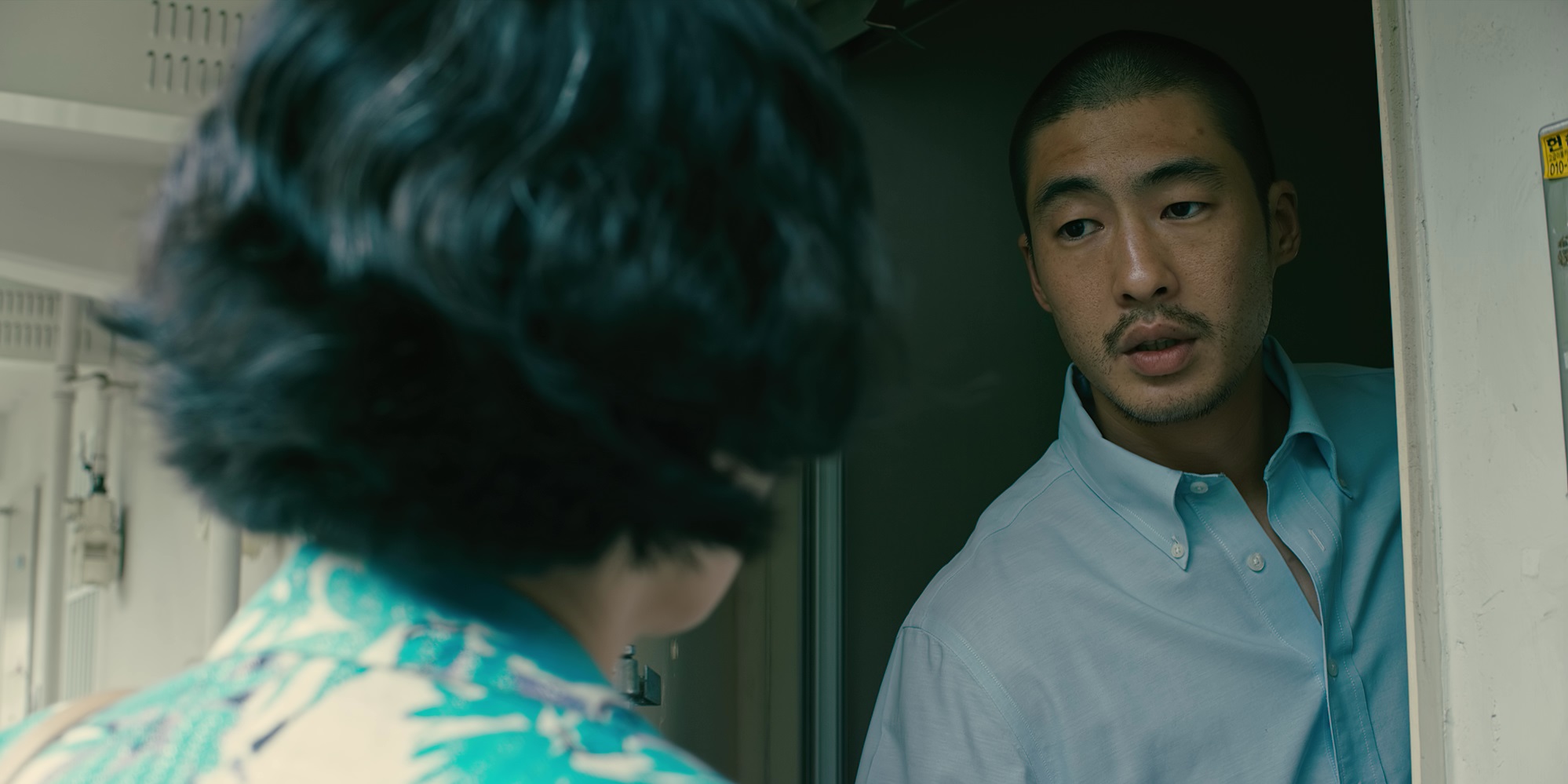
Antonio (Massaro) is an ad designer whose relationship with Sofia (Comparato) comes to an abrupt end after two years. Convincing himself that she made him end it, Antonio stays temporarily with his cousin, Carla (Nogueira), and her husband, Felipe (Primot). Carla and Felipe are having marriage problems and are seeing a couples therapist, Dr Elisa (Braga). When it’s suggested that Antonio should see her so he can make sense of his break-up from Sofia, he goes along with the idea without considering if therapy will really help him. While Dr Elisa challenges Antonio to open up and express his feelings, he takes advice from Carla and his friends, neighbour Deco (Amaral), and would-be writer Gabriel (Mendes), and tries to win Sofia back. His efforts don’t work as planned, and it’s not until Dr Elisa prescribes a certain mix of medication that Antonio finds his life improving, and things getting arguably better. But will Antonio’s newly found peace of mind help in winning back Sofia…?

A romantic comedy about one man’s tragic inability to understand the nuances and particularities of romantic relationships, Every Reason to Forget is an amiable, pleasant enough movie that somehow makes a virtue of its main character’s vapid intelligence and startling short-sightedness. Antonio isn’t just clueless, he’s actively clueless. He’s like a child who keeps burning his fingers on the stove but can’t work out why it keeps happening. He knows there’s a reason why he and Sofia are no longer together but he can’t work out what it is. This makes it nigh impossible for him to move on with his life, and why he makes so many mistakes in trying to do so. Faced with such an uphill struggle, Antonio resorts to measures such as finding a match on Tinder, and using relationship questions from a teen magazine to highlight how much more in tune he is. Amusing as much of this is though, writer-director Coutinho – making his feature debut – never really clarifies if Antonio is doing all this to win Sofia back (initially most likely), or for himself (increasingly most likely). And why he’s the way he is isn’t explored at all, leaving the viewer to wonder just how his relationship with Sofia lasted for two whole years in the first place.

As the emotionally switched off Antonio, Massaro has a certain vulnerable charm that works well for the character, and when the movie gets a little darker – which isn’t too often – he’s not afraid to make Antonio appear selfish and inconsiderate. Massaro also has a knack for keeping Antonio sympathetic in these moments, and though he’s someone for whom the art of poorly focused navel-gazing seems to be a built-in personality trait, Massaro’s portrayal of Antonio is effective without feeling contrived. There’s good support too from Braga as Antonio’s sex obsessed therapist, and Nogueira as the cousin who, in a US remake, would likely be the character he ends up with. Coutinho keeps things moving at an even pace, but in doing so, makes this occasionally feel like it’s dragging, and it’s not as willingly dramatic as it could have been. Despite this, and despite Antonio’s perpetual misunderstanding of his own imperfections, Coutinho does his best to make this an amusing and somewhat pleasant diversion, even though you might be wondering if there’s ever going to be any depth to the proceedings. The answer is yes, but with reservations as to when they do.

Rating: 5/10 – too monotone in its dramatic and visual approach – Joao Padua’s cinematography sometimes feels as if there wasn’t enough time for a proper set up – Every Reason to Forget is genial enough but lets its main character off the hook for his behaviour once too often; still, Coutinho shows promise, and with a tighter script in the future, should do much better, but until then this outing will have to serve as a fair attempt at putting a Brazilian twist on a well established genre.

NOTE: Currently there isn’t a trailer with English subtitles available.

Share this:

  • Click to share on X (Opens in new window) X
  • Click to share on Facebook (Opens in new window) Facebook
  • More
  • Click to print (Opens in new window) Print
  • Click to email a link to a friend (Opens in new window) Email
Like Loading...

I Can’t Think Straight (2008)

18 Wednesday Apr 2018

Posted by dullwood68 in Movies

≈ Leave a comment

Tags

Drama, LGBTQ+, Lisa Ray, Literary adaptation, Review, Romance, Sexuality, Shamim Sarif, Sheetal Sheth, Wedding

D: Shamim Sarif / 79m

Cast: Lisa Ray, Sheetal Sheth, Antonia Frering, Dalip Tahil, Nina Wadia, Ernest Ignatius, Siddiqua Akhtar, Amber Rose Revah, Anya Lahiri, Kimberly Jaraj, Sam Vicenti, Rez Kempton, Darwin Shaw

The daughter of wealthy Christian Palestinians (Frering, Tahil), Tala (Ray) is preparing to get married. Hani (Shaw) is a handsome young businessman, and her fourth fiancé. The wedding is due to take place in Jordan, but Tala lives and works in London. There she meets Leyla (Sheth), the girlfriend of Ali (Kempton), one of Tala’s old college friends. There’s an instant attraction between the two, and soon they are finding excuses to spend time together. A trip to Oxford with one of Tala’s sisters, Lamia (Lahiri), leads to Leyla and Tala sleeping together. But where this emboldens Leyla to acknowledge and embrace her sexuality, Tala cites her family and cultural traditions as reasons why she can’t commit to a relationship with Leyla, and this causes a wedge between them. They go their separate ways, with Tala preparing to enter into a marriage that isn’t what she wants, and Leyla choosing to make a life-changing decision. Time passes, but though both women retain their feelings for each other, it takes one more life-changing decision to allow them the chance of being happy together…

A lighter, less dramatic (and contemporary) version of Sarif’s previous movie, The World Unseen, I Can’t Think Straight is also another adaptation by Sarif of one of her novels. It’s a semi-autobiographical tale where Leyla represents Sarif, and reunites Ray and Sheth in similar roles from The World Unseen. It’s a breezy effort, more concerned with applying humour to events than focusing on the drama, and making the romance between Tala and Leyla more predictable. It’s a movie where the outcome can be guessed within the first ten minutes, and where each character fits neatly into a prescribed stereotype, particularly both sets of parents, with the mothers portrayed as controlling, and resistant to truly supporting their daughters’ happiness, while the fathers are entirely accepting and sympathetic. With the majority of the characters being so agreeable, Sarif has to work hard to make Tala and Leyla’s burgeoning relationship the source of any conflict. And when she does, the same issue that hampers the script elsewhere also comes to the fore: it’s all too inevitable to be completely convincing.

Along the way we’re treated to picture postcard shots of London and Oxford, a battery of supporting characters who are all painted in broad brush strokes, and a polo match where Tala’s hair and make up are immaculate – after she’s taken part (the script does acknowledge this, but even so…). But what really doesn’t help is the dialogue. Clunky and awkward, and often proving the better of the cast – including Ray and Sheth – Sarif and co-screenwriter Kelly Moss have concocted some truly cringeworthy lines that  call attention to themselves when they’re uttered. It’s not helpful either that the script is peppered with lumbering references to the Israeli-Palestinian divide, and Tala’s mother voices as many anti-Semitic remarks as she can manage in any given scene. Thankfully, Ray and Sheth manage to make more of Tala and Leyla than is on the page, though the rest of the performances remain perfunctory throughout. As that commonplace conundrum, the difficult second movie, I Can’t Think Straight lacks the persuasiveness and focus of Sarif’s first movie, and suffers accordingly. It’s lightweight and somewhat superficial, and unsure if it’s a rom-com or a rom-dram. In the end it’s an ungainly combination of the two, and though there are occasional moments where the script does work, there aren’t enough of them to make this anything more than disappointing.

Rating: 4/10 – a movie that betrays its low budget production values, and gives the impression its script needed more of a polish, I Can’t Think Straight tells its lesbian love story like it was a meringue, i.e. light and insubstantial; Sarif does her own novel a minimum of justice, and there’s a complacency to the material that hampers it further, making this something of a curio and nothing more.

Share this:

  • Click to share on X (Opens in new window) X
  • Click to share on Facebook (Opens in new window) Facebook
  • More
  • Click to print (Opens in new window) Print
  • Click to email a link to a friend (Opens in new window) Email
Like Loading...

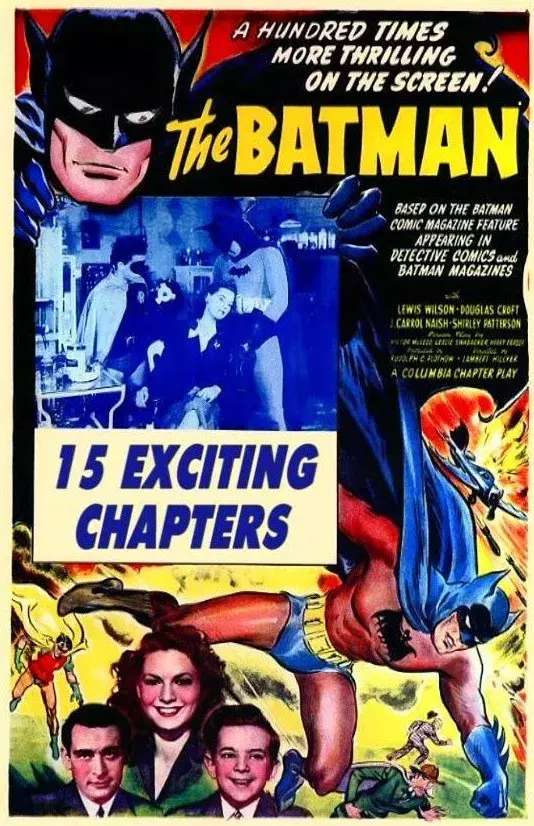
Batman (1943) – Chapter 6: Poison Peril

17 Tuesday Apr 2018

Posted by dullwood68 in Movies

≈ Leave a comment

Tags

Action, Columbia, Douglas Croft, Drama, J. Carrol Naish, Lambert Hillyer, Lewis Wilson, Radium mine, Review, Serial, Shirley Patterson, Thriller

D: Lambert Hillyer / 17m

Cast: Lewis Wilson, Douglas Croft, J. Carrol Naish, Shirley Patterson, William Austin, Charles Middleton, John Maxwell

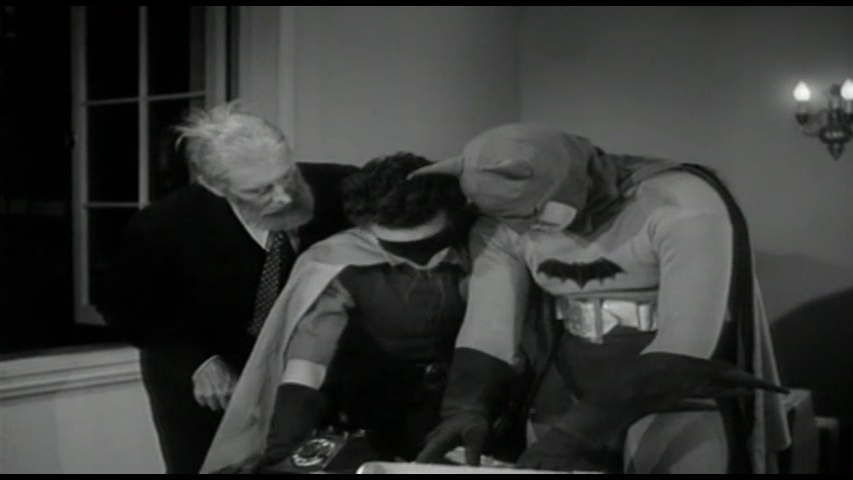
Unable to exit the stricken Lockheed plane before it crashes, Batman (Wilson) instead just walks clear of the wreckage, but not before saving the mechanics who had been zombified by Dr Daka (Naish). In doing so he discovers the snazzy silver caps that Daka uses to control people, and takes one with him. When Daka is informed of the failure of his mission, there’s another setback when the submarine he’s been in contact with is blown to bits by the US Navy. Meanwhile, Linda (Patterson) tells Bruce and Dick (Croft) about an old friend of theirs, Ken Colton (Middleton). Colton has struck it big with a radium mine, and is in town to see Linda’s Uncle Martin, who helped him buy it. Daka has Linda’s home bugged and learns about Colton’s mine but not its location. Colton is attacked by Daka’s men but Batman and Robin come to the rescue. When Daka makes another attempt on Colton’s life by luring him to an abandoned factory, Alfred (Austin) poses as Colton. Batman and Robin burst in, but Robin is soon incapacitated, and Batman knocked unconscious just as toxic chemicals receiving an electrical charge bring the factory down on top of the Caped Crusader…

Though Chapter 5 is definitely the silliest entry yet, Chapter 6 tries its best to match it. That it doesn’t succeed is due to the introduction of Colton and the latest sub-plot to revolve around Daka’s pursuit of large quantities of radium. Having to spend time setting this up, and planting the suspicion that Daka may eventually start targeting Bruce Wayne, this entry certainly has its moments – and Batman walking out of the plane wreckage without a scratch on him is easily one of them. Daka’s role is affected too, with the script requiring him to do a lot of knob-twiddling, while uttering the classic line (about Bruce Wayne), “That simpering idiot could never be the Batman!” And once again Alfred is placed in danger by impersonating someone else, and doing so in such a constipated manner that he and his fake beard aren’t fooling anyone. It’s all hands on deck on the good ship USS Implausible. The script follows its by now standard pattern: Batman cheats death, Daka plots something new, Bruce and Dick find out about said plot, there are fisticuffs, and then Batman is put in harm’s way at the end of the episode.

The introduction of Middleton as Colton seems promising enough but he’s very much the latest deus ex machina for Daka’s plotting, and in some respects he’s a replacement for the returning Linda. While she manages to get through the entire chapter without being put in danger, Colton is soon incapacitated and made to rest up (though it’s not so bad that he loses consciousness, or is forgotten about). But what is really noticeable is the apparent reluctance Batman has in doing anything with the clues he’s discovered, such as Daka’s radium gun, or the snazzy silver caps of Daka’s zombified henchmen. Just when you think, “this must be the episode where Batman starts to take the fight to Daka”, the script continues to do the opposite. Frustrating as this is, the formula remains king, and though a showdown between the two is inevitable, it’s obviously not going to happen soon. And so we have another poorly choreographed scrap between Batman and Robin and Daka’s goons – actually two such scraps – and the unexpected development of the Caped Crusader having a glass jaw (he’s been knocked out before, but not so easily). But all of this at least leads to the usual question: just how is Batman going to survive this time…?

Rating: 6/10 – the stop/start nature of the serial is in evidence here as yet another sub-plot tries to get off the ground without appearing flimsy and not particularly well thought out; Chapter 6 fizzes here and there, but there are too many moments where the effort to keep Batman from feeling strained and/or under-developed leads to just such an assumption.

Share this:

  • Click to share on X (Opens in new window) X
  • Click to share on Facebook (Opens in new window) Facebook
  • More
  • Click to print (Opens in new window) Print
  • Click to email a link to a friend (Opens in new window) Email
Like Loading...

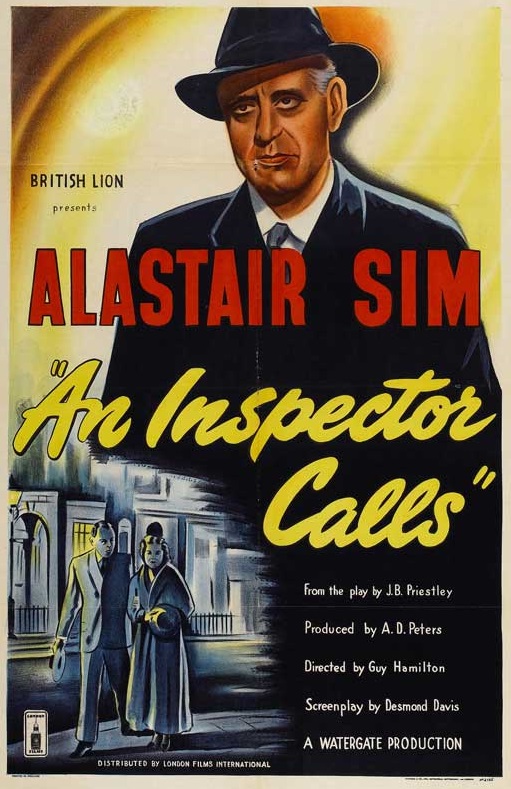
British Classics – An Inspector Calls (1954)

15 Sunday Apr 2018

Posted by dullwood68 in Movies

≈ Leave a comment

Tags

Alistair Sim, Arthur Young, Brian Worth, Brumley, Bryan Forbes, Drama, Eileen Moore, Guy Hamilton, J.B. Priestley, Olga Lindo, Review, Theatrical adaptation

D: Guy Hamilton / 80m

Cast: Alistair Sim, Olga Lindo, Arthur Young, Brian Worth, Eileen Moore, Bryan Forbes, Jane Wenham

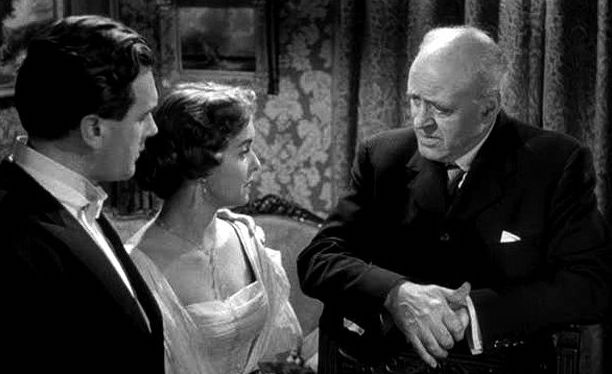
For the Birlings, a prosperous middle-class family living in the Yorkshire town of Brumley, an evening celebrating the engagement of their daughter, Sheila (Moore), to Gerald Croft (Worth), the son of one of Mr Birling’s competitors (Birling is a successful mill owner), is interrupted by the appearance of a police inspector named Poole (Sim). Poole is there to make enquiries relating to the death of a young woman at the local infirmary. Poole reveals that the young woman, Eva Smith (Wenham), appears to have committed suicide, and that she left behind a diary which mentions her connection to Mr Birling at least. At first, no one in the family – or Croft – admits to having known her, but as Poole relates her story over the last two years, it soon becomes clear that each one of them has had an effect on the direction the young woman’s life has taken, and that they may ultimately share a combined responsibility for her death. But a chance enounter reveals a truth about the inspector that none of them could have been prepared for…

The first screen adaptation of J.B. Priestley’s stage play, An Inspector Calls is a movie with a sense of political and social purpose. Set in 1912, it acts as a critique of post-Victorian middle-class hypocrisy, and in its own measured way, paints a searing portrait of the innate superiority that the middle-classes felt they were entitled to feel when dealing with the working-classes. Birling fires Eva from his mill because she was asking for better wages; he takes offence because he already feels he’s doing more than enough for his workers. Croft meets her at a low-point in her life, but his good deeds lead to her being set up as a mistress, and exploited accordingly. And at another point, when Eva is in dire need of help, Mrs Birling’s chairmanship of the local committee for financial aid, allows her to pour scorn on Eva’s request because she won’t reveal certain details of her situation out of pride. Desmond Davis’ screenplay highlights the self-satisfied, arrogant nature of the older Birlings, entrenched in their views and unwilling to accept responsibility for the consequences of their actions, while Priestley’s own socialist message is reflected in the younger Birlings’ ability to see why concern for others should be a necessary part of repaying earned privilege.

As Eva’s story plays out, and the scale of one family’s involvement in her tragic death is revealed, Davis and director Guy Hamilton tighten the emotional screws, and strip away the pretence and denial avowed by Croft and the Birlings until, as Sheila states, they’re all different people thanks to the inspector’s arrival. Sim is excellent as the gentle yet forceful Poole, his often mournful expression reflecting not just the sad fate of one young woman, but the inability of the older Birlings to admit their culpability. Lindo and Young deliver performances full of arrogance and bluster, while Moore is suitably anguished as the one person who can see why Poole’s presence is so meaningful for them all. Worth is a little stiff at times, but Forbes shines as Eric, the son whose drinking problem can’t be acknowledged by his mother because of how it will reflect on her. In many ways, the movie is a classic “drawing-room drama”, but spiked with an element of mystery. It draws in the viewer confidently and with a clear understanding of the story’s themes and values, and deftly skewers the institutional glibness and bigotry of the period. And by the time it reveals the hidden twist in its tale, its deconstruction of moral lassitude is complete.

Rating: 9/10 – a perfectly judged exploration of the class divide existing in pre-World War I Britain, An Inspector Calls offers an unassuming yet powerful dissection of that period’s social inequality; Sim has rarely been better, Hamilton’s direction is precise and uncompromising, and as theatrical adaptations go, it’s in a league of its own.

NOTE: Sadly, there’s no trailer available for An Inspector Calls.

Share this:

  • Click to share on X (Opens in new window) X
  • Click to share on Facebook (Opens in new window) Facebook
  • More
  • Click to print (Opens in new window) Print
  • Click to email a link to a friend (Opens in new window) Email
Like Loading...

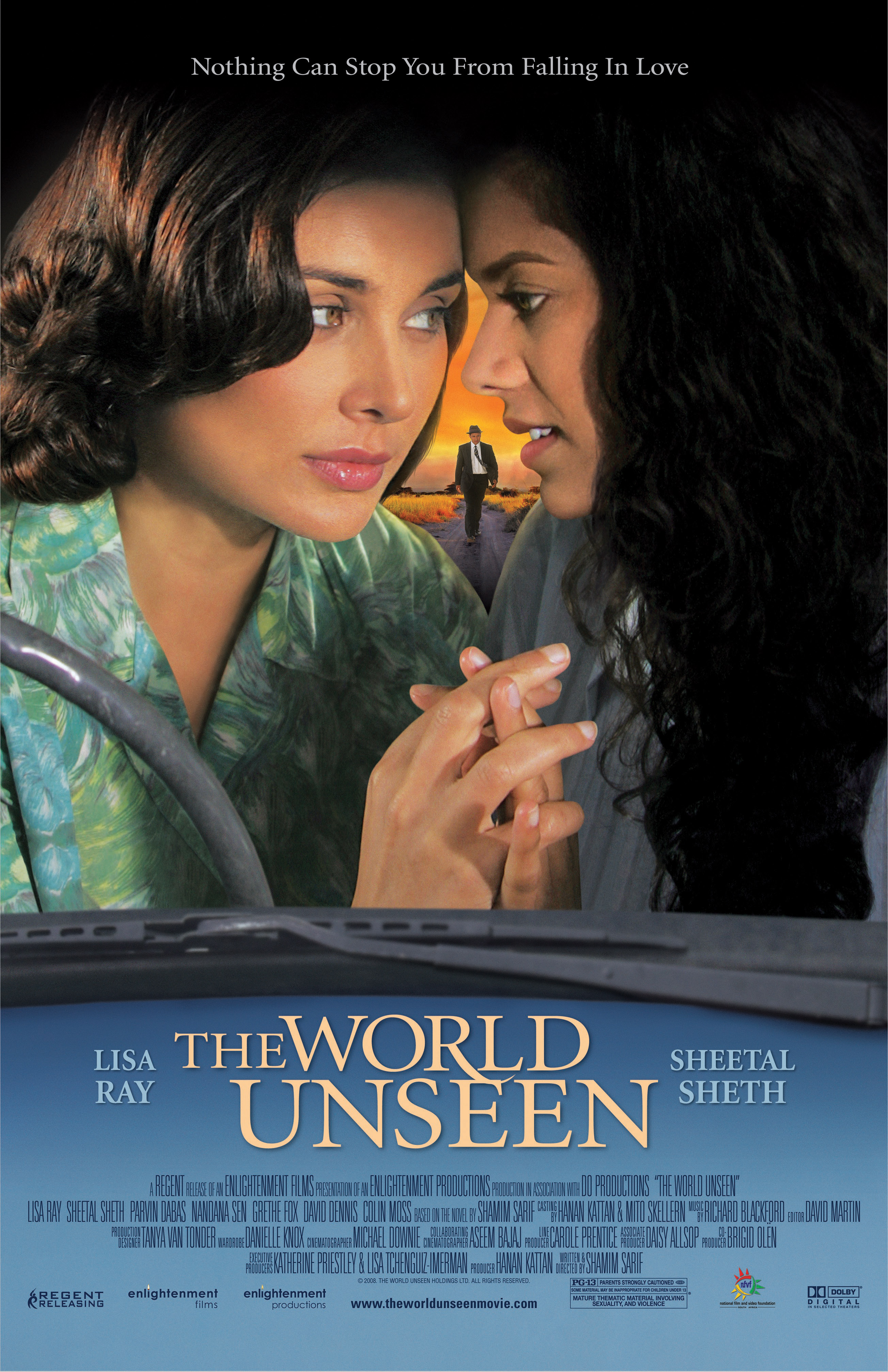
The World Unseen (2007)

12 Thursday Apr 2018

Posted by dullwood68 in Movies

≈ 1 Comment

Tags

Apartheid, Cape Town, Drama, LGBTQ+, Lisa Ray, Literary adaptation, Location Cafe, Parvin Dabas, Review, Romance, Shamim Sarif, Sheetal Sheth

D: Shamim Sarif / 90m

Cast: Lisa Ray, Sheetal Sheth, Parvin Dabas, Nandana Sen, David Dennis, Grethe Fox, Colin Moss, Natalie Becker, Rajesh Gopie, Bernard White, Avantika Akerkar

Cape Town, 1952. Amina (Sheth) is a young Indian woman who owns and runs the Location Cafe, a haven for both the local Indian community and the blacks. Miriam (Ray) is an Indian housewife and mother of three who visits the cafe and finds herself fascinated by Amina’s seemingly carefree, yet proud attitude. Her husband, Omar (Dabas), opens a general store on the outskirts of the city, and for a while, things progress as expected. Omar’s sister, though, puts them in danger when she comes to visit from Paris with her white husband. The police discover their presence, and Omar’s sister, Rehmat (Sen), is only saved from arrest by Amina’s hiding her. This helps to build Amina and Miriam’s friendship, something that is aided by Omar’s decision to hire Amina to create a vegetable garden behind the store. The two women spend more and more time together, and their friendship deepens until each begins to acknowledge the attraction they have for each other. But how can their love flourish when they have to contend with the social, sexual, cultural and political milieu they’re a part of?

A romantic drama set in a time and place that would have heavily condemned the sexual love of two women for each other, The World Unseen is a carefully paced, judiciously mounted movie that isn’t too interested in putting its central characters in too much jeopardy, while it explores themes related to the racism and homophobia of the period. Adapted from writer-director Sarif’s own novel, her tale of fledgling love amidst the trials and tribulations of apartheid South Africa is a low-key affair, telling its story simply and with due care and attention to the characters of Amina and Miriam. Thanks to Sarif’s script and the performances of Ray and Sheth, both women are sharply drawn, and their thoughts and feelings expertly expressed through covert looks, cautious body language, and coded language. The slow reveal of their feelings for each other is hidden behind a veil of subterfuge, and Sarif shows the mounting tension between Amina’s longing for Miriam and Miriam’s hesitancy over what it will mean to her marriage and her children, in such a way that the sincerity of their emotions is never in doubt.

With the movie’s central relationship locked in, Sarif is free to build around it, adding sub-plots and minor incidents to help flesh out the running time. Sadly, not all of these sub-plots are as successful as they could have been, and though they don’t do anything to hurt the pace of the movie – Sarif’s measured direction ensures everything proceeds at an even pace – there are too many that feel as if they’ve been lifted from a soap opera. Amina’s silent partner in the cafe, Jacob (Dennis), has a predictably short relationship with a white postmistress (Fox), Omar has a secret that Miriam has no choice but to tolerate (at first), and Amina’s grandmother tries to push her into an arranged marriage. Most of these elements end as quietly as they began, and lack any appreciable impact, but thanks to the engaging quality of the material as a whole, the movie doesn’t suffer as dramatically as it might have done. The rest of the performances are adequate (though Moss’s permanently aggressive policeman is particularly one-note), and the visual style is consistently muted in terms of colour and light, something that robs it of any further appeal, but overall this is a quietly persuasive movie that does very well by its central characters.

Rating: 7/10 – with its well conceived romance, and passive recreation of the time period it’s set in, The World Unseen is exemplary when focusing on its central characters’ hopes and dreams, but less so when the focus switches elsewhere; Sarif’s first outing as a writer and a director shows promise, and there’s a clear message about female empowerment, but in the end, there’s too much that feels perfunctory instead of important.

Share this:

  • Click to share on X (Opens in new window) X
  • Click to share on Facebook (Opens in new window) Facebook
  • More
  • Click to print (Opens in new window) Print
  • Click to email a link to a friend (Opens in new window) Email
Like Loading...

Ghost Stories (2017)

11 Wednesday Apr 2018

Posted by dullwood68 in Movies

≈ Leave a comment

Tags

Alex Lawther, Andy Nyman, Drama, Ghosts, Horror, Jeremy Dyson, Martin Freeman, Paranormal investigator, Paul Whitehouse, Review

D: Jeremy Dyson, Andy Nyman / 98m

Cast: Andy Nyman, Paul Whitehouse, Alex Lawther, Martin Freeman, Leonard Byrne, Samuel Bottomley, Jake Davies, Nicholas Burns

Beginning with fragmented home movie footage set in 1979, Ghost Stories is the latest British horror movie to be granted a wide release, and to be backed by generous praise. The home movie footage shows incidents from the childhood of professor Phillip Goodman (Nyman), a paranormal investigator who has a TV show that debunks self-proclaimed psychics. Goodman receives an invitation from 70’s paranormal investigator Charles Cameron (Byrne), to look into three cases of apparently unexplainable ghostly sightings. The first relates to a nightwatchman (Whitehouse) working in an old, disused women’s asylum. The second relates to a young man (Lawther) who has an encounter with the Devil while driving home one night. And the third concerns a financier (Freeman), who experiences poltergeist activity at his home. Goodman investigates each case in turn, and comes to the conclusion that there is nothing remotely supernatural or paranormal about any of the cases, preferring instead to believe that what each person has experienced is actually the result of their own neuroses and psychological issues. But when he returns to confront Cameron with his findings, what happens next is far more disturbing…

…except, it isn’t. What happens next takes the movie into completely different territory and serves only to dissipate the sense of muted dread that has been achieved so far. It expands on the framing device of Goodman’s investigations, but in a way that abandons the eerie approach of the first hour in favour of a waking nightmare scenario that sees Goodman haunted by events from his childhood. There’s a pay off at the end (which is meant to be clever, but feels contrived instead), but by then it’s too late. The initial promise of the movie – that Goodman’s investigations will reveal a world of horror he can’t explain away rationally – never gets off the ground, and while there are plenty of riffs and echoes on events within the movie, there’s too much that proves superfluous. The title is misleading as well, as only one of the stories, the first, is about an actual ghost. And as the movie progresses, it does what so many other horror movies fall prey to: having inexplicable things happen for no other reason than that it’s a supernatural story and anything can happen… even though they shouldn’t.

The movie is also hampered by its indecisive tone. There’s humour here, and in the second story a little too much (though Lawther’s reply to the Devil’s command to “Stay” is priceless), and some of the situations and the performances veer between serious and comic, often within the same scene. Whitehouse plays his character straight for the most part, but the script can’t resist giving him a few forced one-liners. Lawther is batty with a side order of nuts, while Freeman opts for supercilious, a decision that fits the character but which leaves him looking and sounding as if he’s walked in from another movie altogether (and not a horror movie). Alas, it’s Nyman who really draws the short straw, which is unfortunate given his involvement as co-writer and co-director with Jeremy Dyson. Goodman is a classic naïf, in way over his head, and with no idea what he’s got himself into. As a result, Nyman does baffled a lot, and then afraid without knowing why he should be (aka baffled a bit more). On the plus side, Ole Bratt Birkeland’s widescreen cinematography is a major asset – you’ll be looking in every corner for the next scare – but aside from some knowing references to Seventies British horror, this is standard fare given an unlikely and surprising boost by critics who really should know better.

Rating: 5/10 – an adaptation of the original stage play, Ghost Stories is less the straight up horror movie it looks like, and more of the convoluted psychological thriller with horror overtones that it actually is; less effective than it needs to be, and uneven for much of its running time, it’s a movie that manages to throw in a few good scares, and offers a handful of creepy moments, but very little else to keep real fans of the genre properly entertained.

Share this:

  • Click to share on X (Opens in new window) X
  • Click to share on Facebook (Opens in new window) Facebook
  • More
  • Click to print (Opens in new window) Print
  • Click to email a link to a friend (Opens in new window) Email
Like Loading...

Batman (1943) – Chapter 5: The Living Corpse

10 Tuesday Apr 2018

Posted by dullwood68 in Movies

≈ 2 Comments

Tags

Action, Columbia, Douglas Croft, Drama, J. Carrol Naish, Lambert Hillyer, Lewis Wilson, Lockheed plane, Review, Serial, Submarine

D: Lambert Hillyer / 17m

Cast: Lewis Wilson, Douglas Croft, J. Carrol Naish, William Austin, John Maxwell

Having jumped from the truck just before it crashes through a barrier and topples down the side of a mountain, Batman (Wilson), along with Robin (Croft) and Alfred (Austin), return to Wayne Manor. Meanwhile, Dr Daka (Naish) bemoans yet another of his plans having failed, until he receives a message from a Japanese submarine advising him of a “package” being delivered to him that evening. The “package” is a Japanese soldier (the Living Corpse of the title) who instructs Daka to steal a Lockheed plane that has an experimental engine. At the same time, in his civilian guise of Bruce Wayne, Batman receives instructions from the US government to safeguard the very same Lockheed plane. While Daka kidnaps two Lockheed employees and turns them into zombies, Bruce and Dick go undercover at the Lockheed plant. Bruce sneaks onto the plane, while Dick discovers that Daka’s zombies have replaced the original pilots. He alerts Bruce (now dressed as Batman); Daka’s zombies tackle him. While they fight, the military learns of the plane’s hijacking and order it to be shot down. Soon the plane takes multiple hits, and crashes, sending the Caped Crusader to certain death…

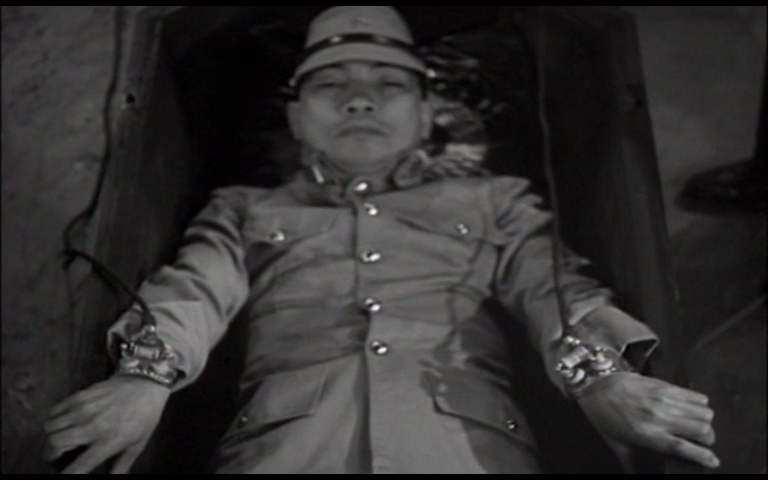
…and the award for silliest entry so far goes to Chapter 5! After the turgid nature of Chapter 4, the writers perhaps imbibed a little too much sake, and the result is easily the wildest, most logic free entry of the series. The whole idea of the Living Corpse is just so spectacularly absurd it’s hard to believe anyone thought it would work in the first place. Dropped off by a submarine and delivered to Daka’s lair in a coffin, the Living Corpse is revived by electrical stimulus à la Frankenstein’s monster, imparts his message before tearing off a uniform button that contains further information about the plan, and then promptly expires. The whole thing is made all the more absurd thanks to two things: Daka having spoken to the submarine captain on the radio beforehand (why not have the captain relay the plan that way?), and the terrible map of the Lockheed plant that is retrieved from his button (it looks like it was done by someone with no real idea of what a map should look like). Whether it was meant to be a dramatic device or not, the result is laughter all round.

Chapter 5 also marks the point where the script starts to become irretrievably lazy. Daka zombifies the Lockheed workers, but unlike his other, similarly afflicted henchmen, they don’t wear the snazzy silver caps that act as control devices – so how does he control them? And instead of stealing experimental planes, why isn’t Daka out patenting the dashcam he’s had his henchmen install in the cockpit – the one that allows him to warn them that Batman is in the plane with them? It’s all too silly, and yet… and yet… all this silliness somehow works. Hillyer’s direction is as fluid and fast-paced as in Chapter 2, and even the now traditional dead spot where Batman is gifted a clue as to Daka’s next nefarious plan is fun (it involves an invisible message and a Young Scientist chemical set). Even the use of three different models once the Lockheed plane is in the air can’t detract from the fun to be had from this Chapter. And while all this craziness goes on, the cast get on with the arduous task of taking it all seriously, something that Shirley Patterson at least doesn’t have to worry about: she doesn’t appear at all (though to be fair, her character is probably still unconscious from the previous chapter). But if she did appear, one thing is for sure: she’d probably be wondering just how is Batman going to survive this time…?

Rating: 7/10 – a transformative episode, and a complete turnaround from the dour exploits of the previous entry, Chapter 5 ditches the serious tone adopted until now and opts for outright absurdity, making this possibly the most enjoyable episode so far; whether this approach continues in the next chapter remains to be seen, but let’s hope so, as by taking such a ridiculous and nonsensical direction, this might prove the making of the serial as a whole.

Share this:

  • Click to share on X (Opens in new window) X
  • Click to share on Facebook (Opens in new window) Facebook
  • More
  • Click to print (Opens in new window) Print
  • Click to email a link to a friend (Opens in new window) Email
Like Loading...

Bomb City (2017)

07 Saturday Apr 2018

Posted by dullwood68 in Movies

≈ Leave a comment

Tags

Amarillo, Brian Deneke, Dave Davis, Drama, Glenn Morshower, Hate crime, Jameson Brooks, Logan Huffman, Review, Trial, True story

D: Jameson Brooks / 98m

Cast: Dave Davis, Glenn Morshower, Logan Huffman, Lorelei Linklater, Eddie Hassell, Henry Knotts, Dominic Ryan Gabriel, Luke Shelton, Maemae Renfrow, Michael Seitz, Marilyn Manson

In 1997, Brian Deneke (Davis), a nineteen year old resident of Amarillo, Texas returns home after spending time in New York City. He reconnects with his friends in Amarillo’s punk sub-culture – where he’s well regarded and the vocalist of punk band The White Slave Traders – but finds that the long-standing enmity with the members of the local high school football team is still very much in place. A few minor altercations do nothing to diffuse matters, and though Brian uses his influence to try and calm matters, it’s his own friends that want to escalate things. When some of the jocks carry out an act of mindless vandalism on the place where Brian’s friends live, one of them, King (Knotts), chases them to a car park where he’s overwhelmed by greater numbers and badly beaten. King rallies Brian and some others, and carrying weapons, they return to the car park. A fight ensues, and during it, one of the jocks, Cody Cates (Shelton), uses his car to run down one of the punks… and kill them…

Based on a true story, but changing many of the details of what happened and how, while keeping the basic premise intact, Bomb City – a reference to Amarillo’s being home to one of the largest nuclear weapon facilities in the US – delves deep into the punk sub-culture that existed at the time, and paints a vivid portrait of Brian and his friends that serves to ground the movie as a whole. We get to spend a lot of time with them, and even get to understand them somewhat, and in doing so, Brooks makes his sympathies clear, something that is reinforced by the events that happen after the fight. These events are presented through scenes at a subsequent trial that are woven into the main narrative, but in such a way that they keep the unaware viewer in the dark as to the actual tragedy that occurred, and its highly controversial outcome. But while Brooks – making his feature debut as a director – does a commendable job of making the punks recognisable as individuals, the same can’t be said for the jocks, who remain arrogant stereotypes all the way through.

With the contrast between the two groups highlighted in bold as it were, and the animosity between them based on ignorance and purposeful misunderstanding (and sometimes on both sides), the cultural conservatism of Amarillo, Texas, during the Nineties is brought home powerfully by Morshower’s performance as Cates’s defence attorney, Cameron Wilson. In a chilling summing up before the jury, Wilson’s choice of rhetoric is horrifying, and it’s at this point that the movie reveals the real tragedy of what happened. Everything leads up to this one moment, and Brooks delivers two swift gut punches to the viewer in quick succession. The movie ends on a note of outrage, and it’s left to the viewer to decide if the movie’s themes of prejudice and social xenophobia will ever be addressed fully in the future. Tough though the movie is at times, there’s still much to enjoy before it heads into darker territory, and much of this is there in the script, which has a knowing sense of humour. The performances are solid, with Davis and Huffman making an impact across the divide, and the movie is enhanced by Adam Dietrich’s production design and Jonathan Rudak’s art direction, both of which help to create a convincing milieu for the action.

Rating: 7/10 – an angry movie with purpose, Bomb City explores a real life tragedy with integrity and grit, but takes a little too long in explaining why it’s so angry; still, it deserves a wider audience, and Brooks is someone to keep an eye on, all of which makes the movie a minor gem just waiting to be discovered.

Share this:

  • Click to share on X (Opens in new window) X
  • Click to share on Facebook (Opens in new window) Facebook
  • More
  • Click to print (Opens in new window) Print
  • Click to email a link to a friend (Opens in new window) Email
Like Loading...

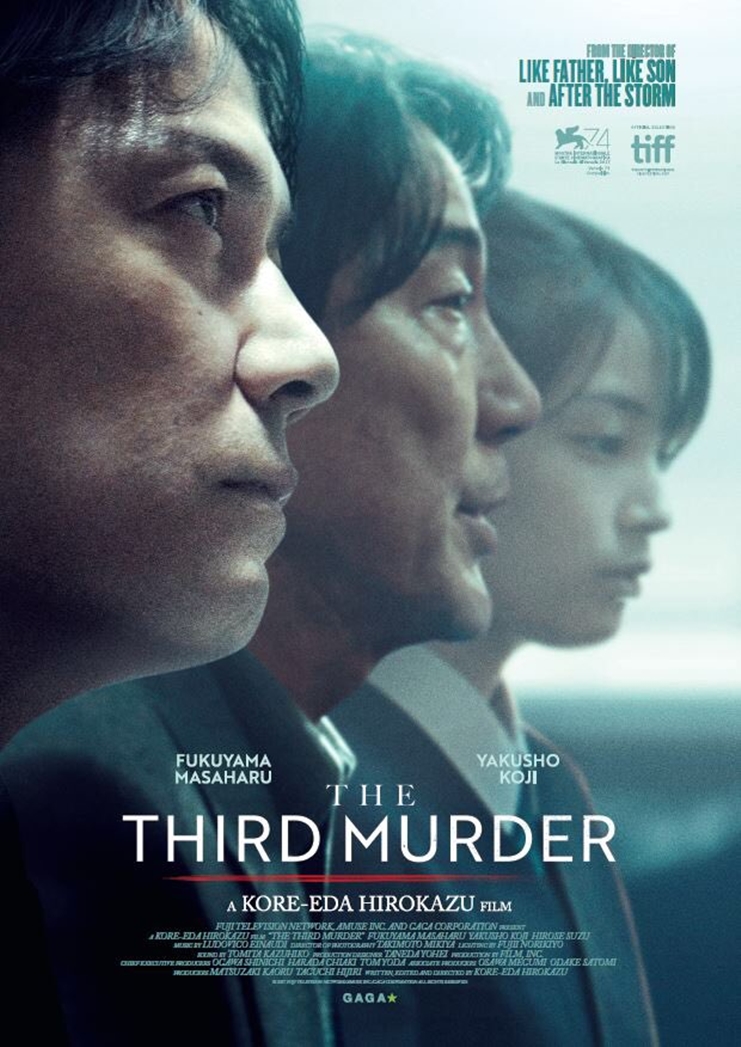
The Third Murder (2017)

04 Wednesday Apr 2018

Posted by dullwood68 in Movies

≈ Leave a comment

Tags

Confession, Crime, Drama, Fukuyama Masaharu, Japan, Kore-eda Hirokazu, Murder, Review, Sandome no satsujin, Thriller, Trial, Yakusho Kôji

Original title: Sandome no satsujin

D: Kore-eda Hirokazu / 125m

Cast: Fukuyama Masaharu, Yakusho Kôji, Hirose Suzu, Saitô Yuki, Yoshida Kōtarō, Mitsushima Shinnosuke, Matsuoka Izumi, Ichikawa Mikako, Makita Aju

An apparently disgruntled ex-employee persuades the chairman of the company that fired him to go with him to the side of a river at night. There, the ex-employee, named Misumi (Yakusho), kills the chairman and sets light to the body. Misumi is arrested and charged with robbery with homicide (the chairman’s wallet is found on him). Misumi confesses to the crime, though when his initial lawyer Settsu (Yoshida) brings in a hot shot lawyer called Shigemori (Fukuyama), Shigemori begins to have doubts about Misumi’s confession and what actually happened when the chairman was killed. Soon, the chairman’s wife, Yamanaka (Saitô), and his daughter, Sakie (Hirose), are revealed to have things to hide, while there are echoes of a previous crime committed by Misumi thirty years before when he killed two debt collectors. In the run up to the trial, Misumi’s story changes at various times, making it difficult to get at the truth of what happened, and making it difficult for Shigemori to mount a good defence. With his client obscuring matters at every turn, Shigemori finds himself almost desperate to learn if Misumi is really guilty or truly innocent…

A legal drama-cum-thriller, The Third Murder isn’t quite the riveting experience you might hope for – its pace is too slow for that – but it is a compelling examination of the Japanese legal system, where the accused’s guilt or innocence isn’t as important as getting the charges right (or sometimes, the wording of the charges). Of course, the complexities of the Japanese legal system don’t seem like a viable basis for a legal thriller, but in the hands of Kore-eda (who spent several months observing lawyers carrying out mock trials in order to write the screenplay), they form the bedrock on which the wider story is told. With Kore-eda showing us the murder right at the start, and making it clear that Misumi is responsible, doubt is sown through the exploration of the circumstances leading up to the crime. Some of Misumi’s story appears contradictory, and circumstantial evidence appears to paint a potentially different story. And when the chairman’s wife and daughter appear to have colluded in their own separate ways with Misumi, his motive for the murder becomes less straightforward than it had at the beginning. With the narrative shifting at random, the truth – whatever that may be – becomes something that’s slippery and indistinct.

Kore-eda assembles the various layers of Misumi’s story with a great deal of skill, and puts particular emphasis on the scenes where Shigemori visits Misumi in prison. Thanks to Kore-eda’s skill as a director, and Fukuyama and Yakusho’s committed performances, these scenes are less a battle of wits and more a battle for understanding on both sides. There’s a genuine emotional heft to these scenes, and the final confrontation between them sees Kore-eda overlay their heads in a shot that highlights just how important their relationship has become to them. As already mentioned, the movie is slow-paced, but effectively so, and there’s a melancholy feel to much of the material that suits it. The movie looks tremendous as well, thanks to Kore-eda’s decision to shoot in the CinemaScope format, something the writer-director hasn’t used before. As a result, Takimoto Mikiya’s cinematography is often absurdly beautiful to look at, especially when Shigemori and his assistant, Kawashima (Mitsushima) visit the snow-covered area where Misumi committed his first two murders. There’s much more to enjoy, including a fine, understated performance from Hirose, and a subtly emotive score from the under-used Ludovico Einaudi.

Rating: 8/10 – perhaps not everyone will be enamoured of Kore-eda’s latest feature, but The Third Murder sees him on very good form indeed, and creating an intelligent and challenging movie that doesn’t go out of its way to explain everything that’s happening; with its themes of trust and culpability running throughout the movie and affecting how the main characters behave, this is absorbing stuff indeed, and well worth watching if you’re in the mood for something a little different.

Share this:

  • Click to share on X (Opens in new window) X
  • Click to share on Facebook (Opens in new window) Facebook
  • More
  • Click to print (Opens in new window) Print
  • Click to email a link to a friend (Opens in new window) Email
Like Loading...

A Quiet Place (2018)

02 Monday Apr 2018

Posted by dullwood68 in Movies

≈ Leave a comment

Tags

Creatures, Drama, Emily Blunt, Horror, John Krasinski, Millicent Simmonds, Noah Jupe, Review, Silence, Sound, Thriller

D: John Krasinski / 90m

Cast: Emily Blunt, John Krasinski, Millicent Simmonds, Noah Jupe

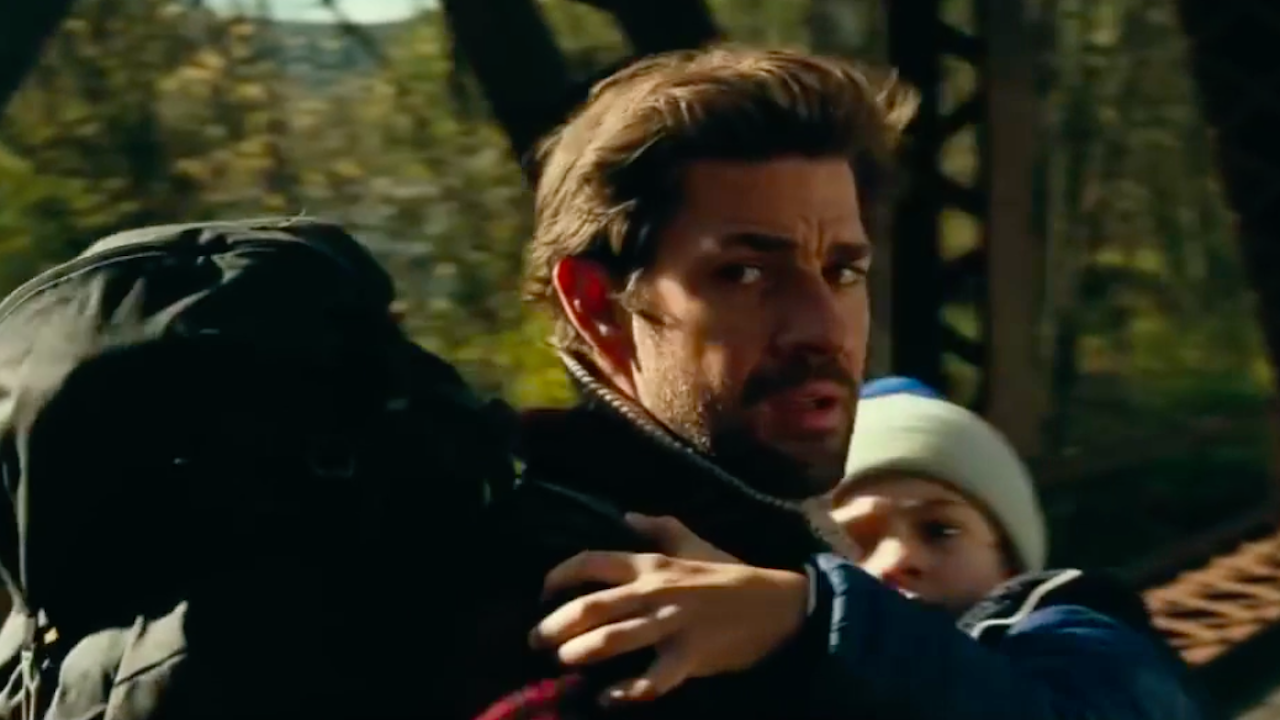
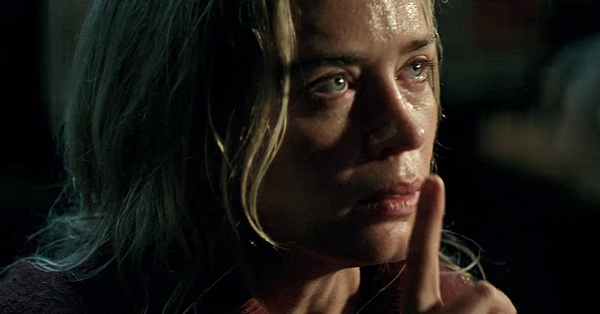
In the near future, humans have been decimated by creatures who hunt by sound. One family, the Abbotts – dad Lee (Krasinski), mother Evelyn (Blunt), daughter Regan (Simmonds), and son Marcus (Jupe) – are living in a farmhouse away from the nearest town. They have learned to adapt by being as silent as possible: when they travel they don’t wear anything on their feet, and they stick to paths they’ve created that soften their footfalls. Regan is deaf, and the family all communicate using sign language. Nearly five hundred days have elapsed since the creatures first appeared, and Evelyn is heavily pregnant. One day, Lee decides to take Marcus with him on a trip. Regan wants to go as well, but she’s charged with staying behind and looking after Evelyn. Angry at this, she decides to run away. Meanwhile, Evelyn injures herself, something that causes her to cry out (and attract one of the creatures), and also to go into labour. With the family split up, all of them find themselves in danger, and all of them must rely on their ingenuity to keep from being killed…

A creature feature with a modern, high concept twist, A Quiet Place opens with a prologue that highlights just how much peril the Abbotts are facing on a daily basis. With this established, the movie proceeds to introduce us properly to the characters, and to explore further the world they live in, what with all its rules about being silent, and how best to avoid the creatures that are lying in wait. In adapting an original screenplay by Bryan Woods and Scott Beck, actor-director John Krasinski has made a horror thriller that plays on our fears of the nuclear family coming under threat from a seemingly unstoppable force, and the potential destruction of said family. It’s a movie with a warning message: be careful and keep your family close, because if you don’t, bad things can happen (as the prologue tells us). This allows the movie to explore aspects of personal paranoia and fear that resonate throughout. Bolstered by a determination not to let anyone off lightly, the movie puts its characters into harm’s way at several different turns, and it doesn’t always provide them with a free pass. For once, this is a movie where you can’t be sure just who is going to make it to the end.

Naturally, the focus is on the sound design – though the cinematography by Charlotte Bruus Christensen is equally vivid – and it’s the combination of muted dialogue and rarefied natural sounds, along with periods of prolonged silence that makes it all so effective. Krasinski lessens the effect by including Marco Beltrami’s music score (would that he could have left out a score altogether), but the absence of a familiar soundtrack adds to the tension, and this makes for an uncomfortable atmosphere against which the action takes place. Making his first foray into the genre, Krasinski acquits himself well, and there are good performances from the cast, including Simmonds who is deaf in real life. If there are any caveats, it’s that the movie does feel stretched as it heads into the final half hour, and a couple of narrative decisions push the boundaries of what is otherwise a fairly well constructed scenario. The creatures are appropriately menacing, if a little over-exposed by the end, and the script makes only a casual attempt to explain their provenance, something that’s refreshing and doesn’t cause the movie to put itself on hold while someone delivers a few minutes of exposition (though if they were killed for doing so…).

Rating: 7/10 – a solid, unpretentious horror thriller that is at least trying to do something different, A Quiet Place is an intelligent if ultimately overwrought movie that has a number of effective moments, and makes a few good points about the perils of parenting along the way; there’s tension aplenty, and even though most of it dissipates in favour of the kind of showdown seen dozens (if not hundreds) of times before, this is still an above average survivalist horror that has a lot more to offer than most of its ilk.

Share this:

  • Click to share on X (Opens in new window) X
  • Click to share on Facebook (Opens in new window) Facebook
  • More
  • Click to print (Opens in new window) Print
  • Click to email a link to a friend (Opens in new window) Email
Like Loading...

Monthly Roundup – March 2018

31 Saturday Mar 2018

Posted by dullwood68 in Movies

≈ Leave a comment

Tags

5 Headed Shark Attack, Action, Adventure, Airport, Al Capone, Alex Hannant, All the Money in the World, And Then Came Lola, Animation, Anthony Bushell, Archery, Ashleigh Sumner, Barack Obama, Biography, Bob Logan, Braven, Brian Keith, Cenobites, Charlie Bean, Chokeslam, Chris Bruno, Chris Marquette, Christopher Plummer, Comedy, Crime, Damon Carney, Dave Franco, David Bruckner, Deepika Kumari, Documentary, Drama, Dwayne Johnson, Ellen Seidler, Elsa Lanchester, Fantasy, Father/son relationships, Film noir, Foreign policy, Gangster Land, Garret Dillahunt, Gary J. Tunnicliffe, Ghosts, Greg Barker, Hellraiser: Judgment, Heritage Falls, High school reunion, Hiking trip, Horror, Hugh Grant, India, Jackie Chan, Jake Kasdan, Japan, Jason Momoa, Jumanji: Welcome to the Jungle, Kevin Hart, Kidnapping, Ladies First, LGBTQ+, Lilli Palmer, Lin Oeding, Logan Huffman, Luke Rivett, Matt Jones, Megan Siler, Michael Barrett, Michelle Williams, Monster, Murder, Nico De Leon, Oasis, Paddington 2, Passport to Destiny, Paul Fisher, Paul King, Puerto Rico, Rafe Spall, Ray McCarey, Ready Player One, Reginald Beck, Relationships, Reviews, Rex Harrison, Ridley Scott, Robert Cuffley, Sci-fi, Sean Faris, Sequel, Shea Sizemore, Something Real and Good, Steven Spielberg, Sweden, SyFy, The Forest, The LEGO Ninjago Movie, The Long Dark Hall, The Ritual, Thriller, Timothy Woodward Jr, Tye Sheridan, Uraaz Bahi, Video game, Virtual reality, World War II, Wrestling

The LEGO Ninjago Movie (2017) / D: Charlie Bean, Paul Fisher, Bob Logan / 101m

Cast: Jackie Chan, Dave Franco, Justin Theroux, Fred Armisen, Kumail Nanjiani, Michael Peña, Abbi Jacobson, Zach Woods, Olivia Munn

Rating: 6/10 – when you’re the despised son (Franco) of an evil warlord (Theroux), there’s only one thing you can do: vow to defeat him with the aid of your ninja friends; after a superhero mash-up and a solo Batman outing, The LEGO Ninjago Movie brings us ninjas, but in the process forgets to provide viewers with much in the way of story, though the visual  innovation is still there, as is (mostly) the humour, making this something that is only just more of a hit than a miss.

Braven (2018) / D: Lin Oeding / 94m

Cast: Jason Momoa, Garret Dillahunt, Stephen Lang, Jill Wagner, Zahn McClarnon, Brendan Fletcher, Sala Baker, Teach Grant, Sasha Rossof

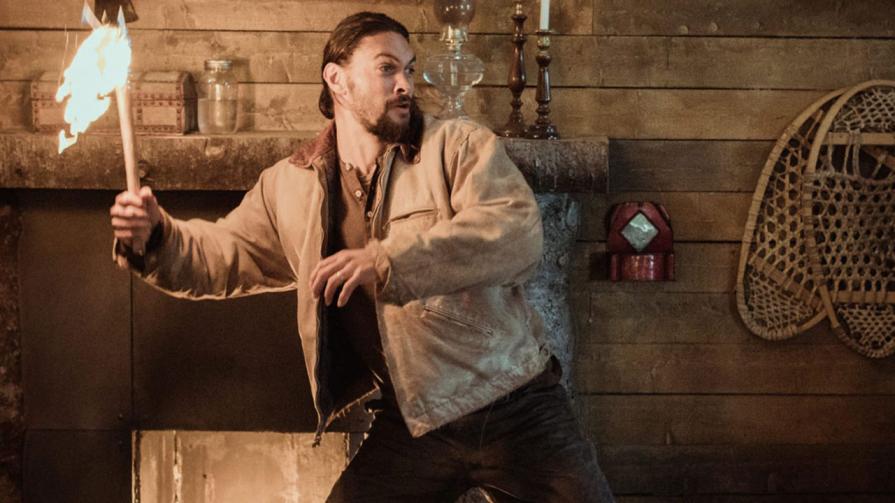
Rating: 4/10 – a trip for Joe Braven (Momoa) and his father (Lang) to their family cabin located in the Canadian wilderness sees them fighting for their lives when drug runners come to claim a shipment that has been hidden in the cabin; an unsophisticated action thriller, Braven has an earnestness to it that sees it through some of its more absurdist moments, but its Nineties vibe works against it too often for comfort, and despite the occasional effort, Dillahunt remains an unconvincing villain.

Passport to Destiny (1944) / D: Ray McCarey / 61m

Cast: Elsa Lanchester, Gordon Oliver, Lenore Aubert, Lionel Royce, Fritz Feld, Joseph Vitale, Gavin Muir, Lloyd Corrigan
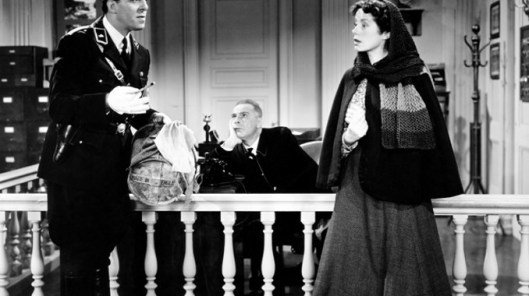
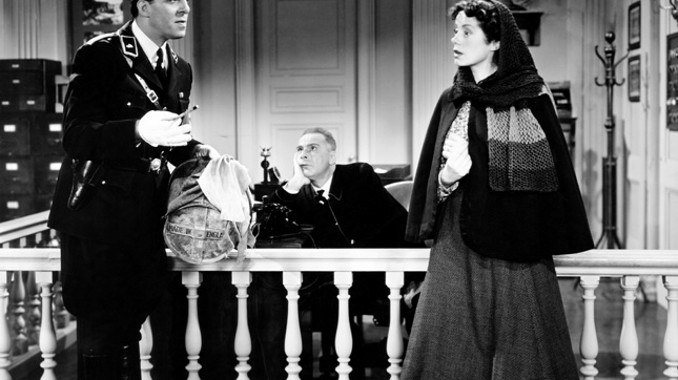
Rating: 6/10 – in World War II, a cleaning woman, Ella Muggins (Lanchester), who believes herself to be protected from harm thanks to a magical glass eye, determines to travel to Berlin and kill Hitler; a whimsical comic fantasy that somehow manages to have its heroine save a German officer (Oliver) and his girlfriend, Passport to Destiny is an uneven yet enjoyable product of its time, with a terrific central performance by Lanchester, and a winning sense of its own absurdity.

Hellraiser: Judgment (2018) / D: Gary J. Tunnicliffe / 81m

Cast: Damon Carney, Randy Wayne, Alexandra Harris, Paul T. Taylor, Gary J. Tunnicliffe, Helena Grace Donald, Heather Langenkamp

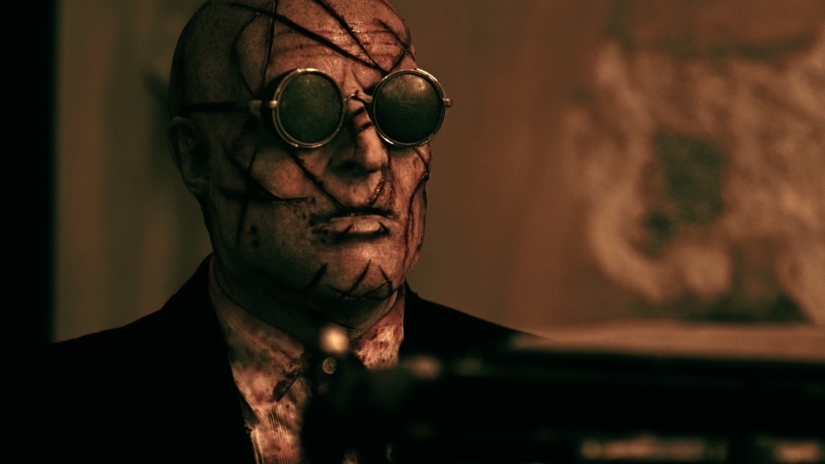
Rating: 3/10 – the hunt for a serial killer finds its lead detective (Carney) coming face to face with the Cenobites – still led by Pinhead (Taylor) – but the solution to the case isn’t as obvious as it seems; the tenth movie in the series, Hellraiser: Judgment at least tries to offer something new in terms of the Cenobites’ involvement, but in the end it can’t escape the fact that Pinhead et al are no longer frightening, the franchise’s penchant for sado-masochistic violence has lost any impact it may once have had, and as with every entry since Hellbound: Hellraiser II (1988), it fails to introduce one single character for the viewer to care about.

The Final Year (2017) / D: Greg Barker / 89m

With: Ben Rhodes, Samantha Power, John Kerry, Barack Obama
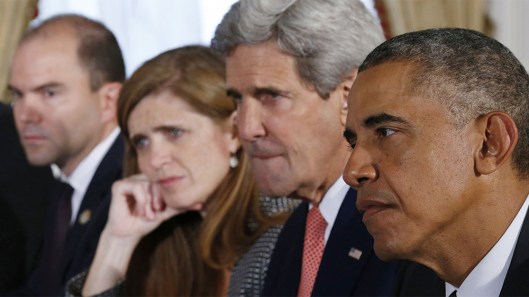
Rating: 7/10 – a look at the final year of Barack Obama’s second term as President of the United States focuses on his foreign policy team and their diplomatic efforts on the global stage; featuring contributions from some of the key players, The Final Year is an interesting if not fully realised documentary that never asks (or finds an answer for) the fundamental question of why Obama’s administration chose to concentrate so much on foreign policy in its last days, something that keeps all the good work that was achieved somewhat in isolation from the viewer.

And Then Came Lola (2009) / D: Ellen Seidler, Megan Siler / 71m

Cast: Ashleigh Sumner, Jill Bennett, Cathy DeBuono, Jessica Graham, Angelyna Martinez, Candy Tolentino, Linda Ignazi

Rating: 4/10 – in a series of Groundhog Day-style episodes, the undisciplined Lola (Sumner) is required to rush a set of photographs to her interior designer girlfriend, Casey (Bennett), so she can seal the deal at a job interview – but she has varying degrees of success; an LGBTQ+ comedy that stops the action every so often to allow its female cast to make out with each other, And Then Came Lola doesn’t put enough spins on its central conceit, and doesn’t make you care enough if Lola comes through or not.

The Ritual (2017) / D: David Bruckner / 94m

Cast: Rafe Spall, Arsher Ali, Robert James-Collier, Sam Troughton, Paul Reid, Maria Erwolter

Rating: 7/10 – following the tragic death of one of their friends, four men embark on a memorial hiking trip in Sweden, but when one of them is injured, taking a short cut through a forest puts all their lives in jeopardy; a creature feature with a nasty edge to it and above average performances for a horror movie, The Ritual employs mystery as well as terror as it creates a growing sense of dread before it runs out of narrative steam and tries to give its monster a back story that brings the tension up short and leads to a not entirely credible denouement.

Jumanji: Welcome to the Jungle (2017) / D: Jake Kasdan / 119m

Cast: Dwayne Johnson, Kevin Hart, Jack Black, Karen Gillan, Rhys Darby, Bobby Cannavale, Nick Jonas, Alex Wolff, Ser’Darius Blain, Madison Iseman, Morgan Turner

Rating: 7/10 – four teenagers find themselves transported into a video game called Jumanji, where, transformed into avatars, they are charged with thwarting the dastardly plans of the game’s chief villain (Cannavale); a reboot more than a sequel, Jumanji: Welcome to the Jungle has the benefit of well-drawn, likeable characters, winning performances from Johnson, Hart, Black and Gillan, and confident direction from Kasdan, all things that serve to distract from the uninspired game levels and the predictable nature of its main storyline.

Paddington 2 (2017) / D: Paul King / 103m

Cast: Hugh Bonneville, Sally Hawkins, Ben Whishaw, Hugh Grant, Brendan Gleeson, Julie Walters, Jim Broadbent, Peter Capaldi, Imelda Staunton, Sanjeev Bhaskar, Ben Miller, Jessica Hynes, Noah Taylor, Joanna Lumley

Rating: 9/10 – the theft of a unique pop-up book sees Paddington (Whishaw) end up in jail while the Brown family do their best to track down the real thief, Phoenix Buchanan (Grant); an absolute joy, Paddington 2 is just so unexpectedly good that even just thinking about it is likely to put a smile on your face, something that’s all too rare these days, and which is thanks to an inspired script by director King and Simon Farnaby, terrific performances from all concerned, and buckets of perfectly judged humour.

Gangster Land (2017) / D: Timothy Woodward Jr / 113m

Original title: In the Absence of Good Men

Cast: Sean Faris, Milo Gibson, Jason Patric, Jamie-Lynn Sigler, Peter Facinelli, Mark Rolston, Michael Paré

Rating: 4/10 – the rise of boxer Jack McGurn (Faris) from potential champion to right-hand man to Al Capone (Gibson), and his involvement in Capone’s feud with ‘Bugs’ Moran (Facinelli); a biopic that’s hampered by lacklustre performances and a leaden script, Gangster Land wants to be thought of as classy but budgetary constraints mean otherwise, and Woodward Jr’s direction doesn’t inject many scenes with the necessary energy to maintain the viewer’s interest, something that leaves the movie feeling moribund for long stretches.

Pitch Perfect 3 (2017) / D: Trish Sie / 93m

Cast: Anna Kendrick, Rebel Wilson, Brittany Snow, Anna Camp, Hailee Steinfeld, John Lithgow, Ruby Rose, Matt Lanter, Elizabeth Banks, John Michael Higgins, DJ Khaled

Rating: 4/10 – the Borden Bellas are back for one last reunion before they all go their separate ways, taking part in a European tour and competing for the chance to open for DJ Khaled; a threequel that adds nothing new to the mix (even if you include Lithgow as Wilson’s scoundrel father), and which is as empty-headed as you’d expect, Pitch Perfect 3 isn’t even well thought out enough to justify its existence and trades on old glories in the hope that the audience won’t notice that’s what they are.

Something Real and Good (2013) / D: Luke Rivett / 81m

Cast: Matt Jones, Alex Hannant, Colton Castaneda, Marla Stone

Rating: 4/10 – he (Jones) meets her (Hannant) in an airport lounge, and over the next twenty-four hours, get to know each other, flirt, have fun, and stay in a hotel together due to their flight being cancelled; the slightness of the story – boy meets girl, they talk and talk and talk and talk – is further undermined by the cod-philosophising and trite observations on life and relationships that they come out with, leaving Something Real and Good as a title that’s a little over-optimistic, though if it achieves anything, it’ll be to stop people from striking up random conversations with strangers in airports – and that’s now a good thing.

Ladies First (2017) / D: Uraaz Bahi / 39m

With: Deepika Kumari, Geeta Devi, Shiv Narayan Mahto, Dharmendra Tiwari

Rating: 8/10 – the story of Deepika Kumari, at one time the number one archer in the world, and her efforts to obtain Olympic gold in 2012 and 2016; a sobering documentary that for a while feels like it’s going to be a standard tale of triumph over adversity (here, relating to Indian culture and gender equality), Ladies First offers a much deeper examination of success and failure than might be expected, and shows that in India, as in many other countries, there are precious few opportunities for women to be anything more than wives and mothers.

Heritage Falls (2016) / D: Shea Sizemore / 88m

Cast: David Keith, Coby Ryan McLaughlin, Keean Johnson, Sydney Penny, Nancy Stafford, Devon Ogden

Rating: 4/10 – three generations of males head off for a bonding weekend designed to overcome the divisions that are keeping them distant or apart from each other; a mixed bag of drama and lightweight comedy, Heritage Falls wants to say something sincere and relevant about father-son relationships, but falls way short in its ambitions thanks to a script that can’t provide even one of its protagonists with a convincing argument for their position, a bland visual style, and even blander direction from Sizemore, making this a turgid exercise in emotional dysfunction.

The Long Dark Hall (1951) / D: Anthony Bushell, Reginald Beck / 86m

Cast: Rex Harrison, Lilli Palmer, Denis O’Dea, Reginald Huntley, Anthony Dawson, Brenda de Banzie, Eric Pohlmann
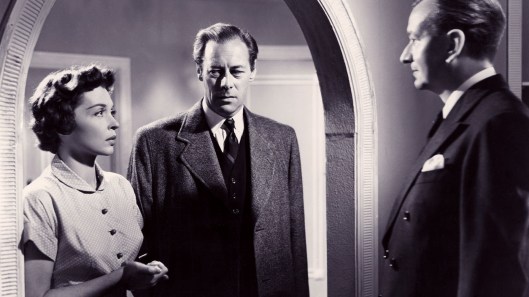
Rating: 7/10 – when an actress is murdered in the room she rents, suspicion falls on her lover, married man Arthur Groome (Harrison), but even though he goes on trial at the Old Bailey, his wife, Mary (Palmer), stands by him; an early UK attempt at film noir, The Long Dark Hall has its fair share of tension, particularly in a scene at the Groome home where Mary is alone with the real killer (Dawson), but Harrison doesn’t seem fully committed (it wasn’t one of his favourite projects), and the screenplay lurches too often into uncomfortable melodrama, though overall this has an air of fatalism that keeps it intriguing for viewers who are used to their crime thrillers being a little more straightforward.

Ready Player One (2018) / D: Steven Spielberg / 140m

Cast: Tye Sheridan, Olivia Cooke, Ben Mendelsohn, Lena Waithe, T.J. Miller, Simon Pegg, Mark Rylance, Philip Zhao, Win Morisaki, Hannah John-Kamen

Rating: 7/10 – in 2045, people have become obsessed with a virtual reality game called Oasis where anything can happen, but when its creator (Rylance) reveals there’s a hidden prize within the game, one that will give overall control of the game and its licence to the winner, it’s up to a small group of gamers led by Parzifal (Sheridan) to stop a rival corporation from winning; an elaborate sci-fi fantasy that provides a nostalgia overload for fans of Eighties pop culture in particular, Ready Player One has plenty of visual pizzazz, but soon runs out of steam in the story department, and offers way too much exposition in lieu of a proper script, a situation it tries to overcome by being dazzling if empty-headed, but which in the hands of Steven Spielberg still manages to be very entertaining indeed – if you don’t give it too much thought.

The Temple (2017) / D: Michael Barrett / 78m

Cast: Logan Huffman, Natalia Warner, Brandon Sklenar, Naoto Takenaka, Asahi Uchida

Rating: 4/10 – three American tourists – best friends Chris (Huffman) and Kate (Warner), and Kate’s boyfriend, James (Sklenar) – are travelling in Japan when they hear about an abandoned temple and decide to go there, little knowing what will happen to them once they get there; even with its post-visit framing device designed to add further mystery to events, The Temple is a chore to sit through thanks to its being yet another horror movie where people behave stupidly so that a number of uninspired “shocks” can be trotted out, along with dreary dialogue and the (actually) terrible realisation that movie makers still think that by plundering legends and myths from other countries then their movies will be much more original and scary… and that’s simply not true.

Chokeslam (2016) / D: Robert Cuffley / 102m

Cast: Chris Marquette, Amanda Crew, Michael Eklund, Niall Matter, Gwynyth Walsh, Mick Foley

Rating: 5/10 – a 10-year high school reunion gives deli owner Corey (Marquette) the chance to reconnect with the girl he loved, Sheena (Crew), who is now a famous female wrestler; a lightweight romantic comedy that pokes moderate fun at the world of wrestling, Chokeslam is innocuous where it should be daring, and bland when it should be heartwarming, making it a movie that’s populated almost entirely by stock characters dealing with stock situations and problems, and which, unsurprisingly, provides them with entirely stock solutions.

All the Money in the World (2017) / D: Ridley Scott / 132m

Cast: Michelle Williams, Christopher Plummer, Mark Wahlberg, Romain Duris, Timothy Hutton, Charlie Plummer, Marco Leonardi, Giuseppe Bonifati

Rating: 8/10 – a recreation of the kidnapping in 1973 of John Paul Getty III (Charlie Plummer), and the subsequent attempts by his mother, Gail (Williams), to persuade his grandfather (Christopher Plummer) to pay the ransom, something the then world’s richest man refuses to do; Scott’s best movie in years, All the Money in the World is a taut, compelling thriller that tells its story with ruthless expediency and features yet another commanding performance from Williams, something that takes the spotlight away from the presence of Christopher Plummer (who’s good but not great), and which serves as a reminder that money isn’t the central concern here, but a mother’s unwavering love for her child.

5 Headed Shark Attack (2017) / D: Nico De Leon / 98m

Cast: Chris Bruno, Nikki Howard, Lindsay Sawyer, Jeffrey Holsman, Chris Costanzo, Amaanda Méndez, Ian Daryk, Jorge Navarro, Lorna Hernandez, Michelle Cortès, Nicholas Nene

Rating: 3/10 – a four-headed shark terrorises the waters off Palomino Island in Puerto Rico before mutating into a five-headed shark, and being hunted by both the island’s police force, and a team of marine biologists from a local aquarium; operating at the bargain bucket end of the movie business, 5 Headed Shark Attack, SyFy’s latest cheaply made farrago, references Sharknado (2013) early on (as if it’s being clever), and then does it’s absolute best to make its audience cringe and wince and wish they’d never started watching in the first place, something the awful screenplay, dialogue, acting, special effects and direction all manage without even trying.

Share this:

  • Click to share on X (Opens in new window) X
  • Click to share on Facebook (Opens in new window) Facebook
  • More
  • Click to print (Opens in new window) Print
  • Click to email a link to a friend (Opens in new window) Email
Like Loading...

The Daughter (2015)

30 Friday Mar 2018

Posted by dullwood68 in Movies

≈ Leave a comment

Tags

Auatralia, Catch Up movie, Drama, Ewen Leslie, Family secrets, Geoffrey Rush, Miranda Otto, Odessa Young, Paul Schneider, Review, Simon Stone, The Wild Duck, Wedding

D: Simon Stone / 96m

Cast: Geoffrey Rush, Ewen Leslie, Paul Schneider, Miranda Otto, Odessa Young, Sam Neill, Anna Torv, Wilson Moore, Ivy Mak

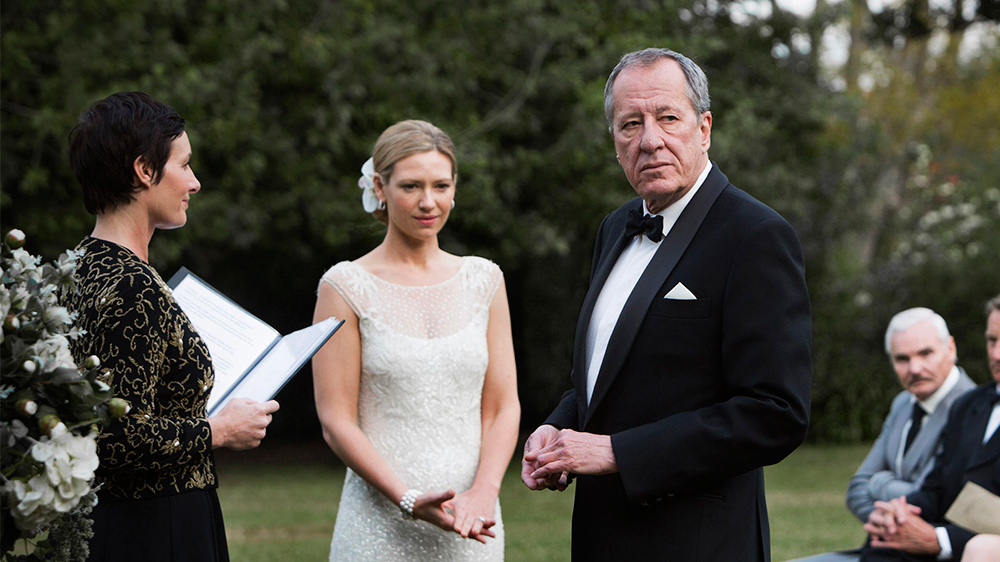
When he learns that his father, Henry (Rush) is remarrying, Christian Nielsen (Schneider) comes home to Australia from the US for the ceremony. He’s been away since his mother died, and in the meantime he’s developed a problem with alcohol, one that is jeopardising his current relationship with Grace (Mak), even though he’s been sober for three months. Henry is marrying his housekeeper, Anna (Torv), a situation that Christian is initially happy with. But it’s when he reconnects with his oldest friend, Oliver (Leslie), that he realises that this isn’t the first time his father has had a relationship with a housekeeper. Back when his mother was still alive, there was another, Charlotte (Otto), whom Oliver is married to. They have a teenage daughter, Hedvig (Young). When Christian starts putting two and two together, this coupled with Grace splitting up with him, prompts him to start drinking again. Tensions between Christian and his father threaten to mar the wedding, but it’s not until the evening reception that  Christian, fuelled by alcohol, reveals what he knows to an unsuspecting Oliver…

Another tale of secrets and lies, The Daughter tells exactly the story you think it’s telling, and does so in a melancholy, mournful way that says everything it’s relating is inevitable. From the moment when Christian mentions that he’s three months’ sober, to Grace telling him via video link that she’ll fly out to join him, writer-director Simon Stone’s movie adaptation of his own theatre adaptation of Henrik Ibsen’s The Wild Duck, proceeds carefully and assuredly along a path toward an inexorable and tragic fate that will sweep up and engulf all its main characters. Christian is the central protagonist, adrift in his own life and seeking some kind of permanence in order to make himself feel good, but too beset by his own personal demons to be able to. By contrast, Oliver is settled and content, even if he has just lost his job at the local sawmill (a sawmill owned by Henry in a subplot that goes undeveloped). Happily married and with a daughter he’s immensely proud of, Oliver is Christian’s opposite. At first it’s easy to sympathise with Christian, but as the movie progresses, it’s easy to see that his anger at his father’s actions is merely a cover for the jealousy he feels at Oliver’s happy home life.

Though the story has its antecedents in Ibsen’s The Wild Duck, here Stone is unable to avoid providing viewers with a number of scenes that are more melodramatic than successful. There’s plenty of exposition too, some of which is dragged out across several scenes, while in contrast, Henry and Anna are sidelined by a succession of short exhanges where he refuses to talk to her. Thankfully, the performances come to the rescue, with both Leslie and Young on superb form. As Oliver and Hedwig, they make the pair’s father-daughter relationship both convincing and natural, while Young by herself makes Hedvig’s confusion over the fracturing of her family and the subsequent fallout heartrending to watch. Stalwarts Rush and Neill do what they’re required to do (which isn’t too much), Otto fleshes out her character to the extent that there’s more to Charlotte than her dialogue allows, and Schneider does equally well in revealing the depths of Christian’s insecurities and resentments. Stone’s direction wavers from time to time, and the movie’s flow is often curtailed; he also adopts a time distortion effect where dialogue is spoken over scenes that occur some moments after. It’s an interesting idea, but like much else in the script, sadly doesn’t have the impact that may have been intended.

Rating: 6/10 – intermittently absorbing, and plagued by scenes that come and go without being developed further or followed up, it’s left to the performances to keep viewers of The Daughter interested; that said, Andrew Commis’ cinematography is terrific compensation, but overall this is a movie that should be filed under missed opportunity.

Share this:

  • Click to share on X (Opens in new window) X
  • Click to share on Facebook (Opens in new window) Facebook
  • More
  • Click to print (Opens in new window) Print
  • Click to email a link to a friend (Opens in new window) Email
Like Loading...

FiveFilms4Freedom 2018

29 Thursday Mar 2018

Posted by dullwood68 in Movies

≈ Leave a comment

Tags

BFI Flare, Canada, Comedy, Cultural traditions, Documentary, Drama, Gay farmers, Greece, Helpline, India, Jeff Lee Petry, Karishma Dev Dube, LGBTQ+, Matt Houghton, Milan Halikowski, Nathan Drillot, Seung Yeob Lee, Sexuality, Short movies, South Korea, Yorgos Angelopoulos

FiveFilms4Freedom is part of the BFI Flare: London LGBTQ+ Film Festival currently running until 1 April 2018. These five shorts have been shown as part of the festival, and thanks to an intitiative developed by the British Council and the British Film Institute, have also been made available online during the course of the festival.

Devi (2017) / D: Karishma Dev Dube / 13m

aka Devi: Goddess

Cast: Aditi Vasudev, Priyanka Bose, Tanvi Azmi

Rating: 8/10 – Tara (Vasudev) is a troubled teen who challenges her mother’s sense of tradition and moral certitude at every turn, but takes a step too far when she turns her romantic attentions to Devi (Bose), the housemaid who has helped raise her from a child. Dube’s critique of unyielding Hindi cultural traditions and strict morality plays well until you realise that Tara’s actions are entirely selfish and devoid of any consideration of potential consequences – which then leads the viewer to consider if Tara is quite the sympathetic character she’s made out to be at the start. Dube shows that there will always be victims in these circumstances, and the class divide is sharply illustrated by the inevitable outcome of Tara’s decision to act on her impulses. By exploring not just the cultural divide, but the generational divide as well, Dube shows that Tara’s behaviour is too frivolous to be tolerated by the traditions she’s rebelling against, and that acceptance is still a very long way off indeed.

Handsome and Majestic (2016) / D: Jeff Lee Petry, Nathan Drillot / 12m

With: Milan Halikowski, Lynnell Halikowski, Mike Halikowski

Rating: 7/10 – Milan is a twelve year old transboy living in Canada who has suffered more than his fair share of abuse and violence in his young life, and who has been routinely let down by the teachers at his school. Having endured all this, and gone through a period of depression that saw him try to take his own life, Milan has found the strength to come out as transgender, and in doing so, he’s found a friend in another transboy living just a few streets away. There are few of us who can fully understand what it must be like to feel trapped in our own body, and not to look the way we believe we should. Handsome and Majestic goes some way to explaining what that must be like, but spends too much time illustrating it by having Milan looking at himself in mirrors, and with a sad, pensive expression. Contributions from his family offer (perhaps unintentionally) stark comparisons with Milan’s own struggle, but just seeing him playing with his new friends allows the movie to end on a positive note that didn’t seem to be on the cards at all. It’s a moving, humane documentary, and though it doesn’t delve too deeply into transgender issues, it’s still an informative and engaging examination of one young boy’s wish to be accepted for who he is.

Uninvited (2017) / D: Seung Yeob Lee / 20m

Cast: Sum Lee, Keonyeung Kim, Jinseung Moon

Rating: 7/10 – An impending, and largely unexpected visit from his mother (Kim), prompts still-in-the-closet Jungho (Lee) to get his partner, Jae-ik (Moon), to pack most of his belongings and hide out in a nearby coffee shop while she’s at the flat they live in. Despite his best efforts, though, Jungho’s mother discovers evidence that points to his having a flatmate at best, and a gay lover at worst. Ostensibly a comedy, Uninvited lacks the bite needed to make this as funny as it could be, and Jungho is such a moody complainer it’s amazing anyone, gay or straight, would take him on. Still, this is anchored by a surprisingly compassionate and thoughtful performance from Kim, who never lets on if her character is disappointed or ashamed or appalled by her son being gay, but instead translates passive acceptance into determined support. Like Devi and Goldfish, this is another movie where the main protagonist isn’t the person who’s gay or a lesbian, but the parent whose own cultural identity makes it difficult to accept unreservedly their child’s sexuality.

Goldfish (2017) / D: Yorgos Angelopoulos / 14m

Cast: Michael Ikonomou, Lissandros Kouroumbalis, Eva Angelopoulou

Rating: 7/10 – It’s Stratis’ (Kouroumbalis) seventh birthday, and all he wants is a pet fish. His father, Yorgos (Iknonomou), wants him to get a warrior fish, but Stratis settles for a goldfish. On their way home, Stratis reveals the goldfish is called Tom, after Tom Daley the British diver. Incensed at what he perceives as yet another example of his son’s effeminacy, Stratis’ father throws the goldfish in the river, causing Stratis to run away from home… While it’s a little too broad in its approach – Yorgos is the kind of unreconstructed Greek male that borders on cliché – and the message is rammed home a little too bluntly, nevertheless, Goldfish is an enjoyable examination of how some men feel threatened by the merest hint of homosexuality, and the often absurd reactions they display as a result. Not a movie about being gay, then, but about the unnecessary fear and paranoia that comes from prejudice about homosexuality, and the terrible emotions that take over when the source of that fear and paranoia – your own child – might never be seen again.

Landline (2017) / D: Matt Houghton / 12m

Cast: Jem Dobbs, Niamh Blackshaw, Oliver Devoti, Bradley Johnson

Rating: 9/10 – In 2010, Keith Ineson, a chaplain from Cheshire in the UK, set up a helpline for gay farmers, one that allowed them to voice their experiences, their worries, and their concerns. With the helpline still being the only one of its kind anywhere in the world, Landline uses original telephone recordings and visual reconstructions of the events being talked about to paint a powerful, and sometimes disturbing portrait of rural prejudice and intolerance. Director Matt Houghton doesn’t just focus on the negative though: one perfectly judged vignette has the camera tracking through the debris and chaos of what appears to have been a terrible bar fight, only for the recording to reveal that it was one man’s coming out party, and probably the best night of his life. From this it’s worth mentioning the excellent cinematography courtesy of James Blann, which makes this docu-drama visually striking and compelling in equal measure.

Share this:

  • Click to share on X (Opens in new window) X
  • Click to share on Facebook (Opens in new window) Facebook
  • More
  • Click to print (Opens in new window) Print
  • Click to email a link to a friend (Opens in new window) Email
Like Loading...

Cleopatra (1934)

28 Wednesday Mar 2018

Posted by dullwood68 in Movies

≈ Leave a comment

Tags

Cecil B. DeMille, Claudette Colbert, Drama, Egypt, Henry Wilcoxon, History, Julius Caesar, Mark Antony, Remake, Review, Rome, Warren William

D: Cecil B. DeMille / 100m

Cast: Claudette Colbert, Warren William, Henry Wilcoxon, Joseph Schildkraut, Ian Keith, Gertrude Michael, C. Aubrey Smith, Irving Pichel

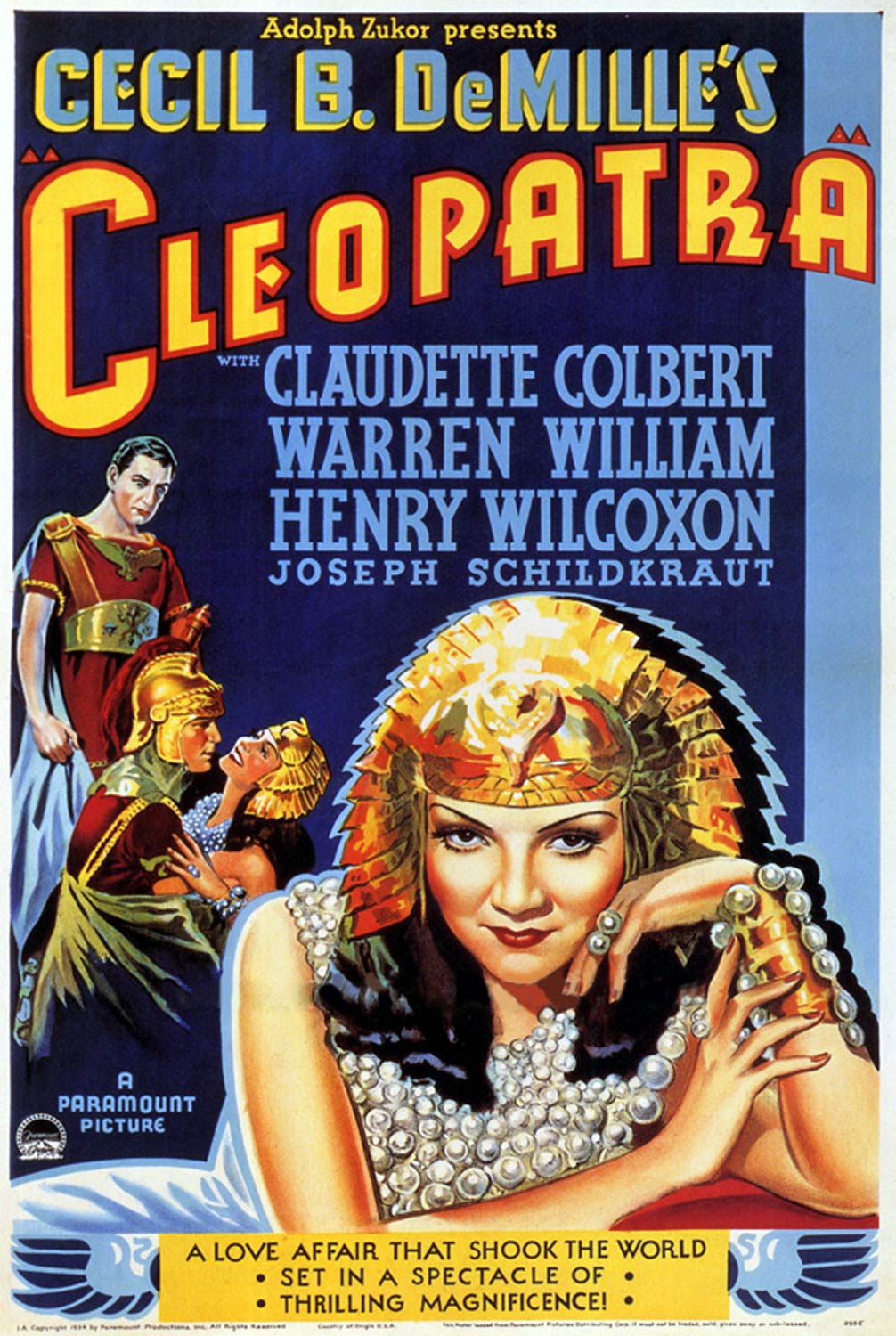
After his previous movie, Four Frightened People (1934), died at the box office, legendary director Cecil B. DeMille was charged with making an historical epic with “lots of sex in it”. DeMille, who knew exactly how to infuse his movies with sin when required, decided on a remake of the original 1917 version starring Clara Bow (that version is now lost, sadly). And with the Hays Code only just coming into force, DeMille had to move quickly. His intentions are clear from the start: the movie opens with a shot of a strategically lit woman who looks naked. And he doesn’t stop there. Star Claudette Colbert (not necessarily the first choice for a role bordering on that of a femme fatale) wears a succession of skimpy, revealing outfits, and DeMille ensures that there are plenty of equally skimpily clothed handmaidens and dancers lurking in the background. For a movie made in 1934, it’s remarkably en point when it comes to selling sex to the masses. And that’s without all the writhing and the coquettish looks and the inference that life in Rome and Egypt was one long round of hedonism punctuated by the occasional war.

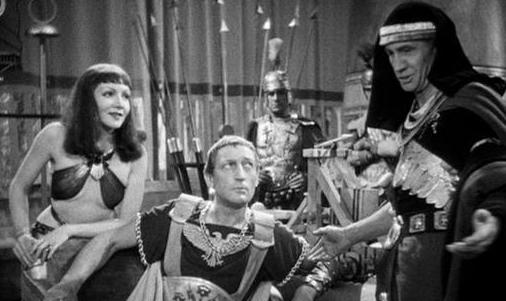
But while DeMille keeps the focus mainly on a number of entertainments and festivities that litter the movie, the story suffers as a result. While the basics are there, this isn’t the movie to quote as an historical record. That aside, Cleopatra’s seduction of Caesar (William) plays out against a backdrop of Egyptian political intrigue before shifting to include Roman political intrigue (“Caesar! Beware of the ides of March!”), and her subsequent romantic entanglement with Mark Antony (Wilcoxon) plays out against a backdrop of Egyptian and Roman political intrigue. It’s a two-act movie with both acts appearing interchangeable with one another, and with only the contrast between William’s starchy Caesar and Wilcoxon’s rambunctious Antony to let the viewer know which one they’re seeing. It doesn’t help that the movie is also littered with some of the worst dialogue in an historical epic heard before or since (Caesar: “I picked a flower in Britain once, the color of your eyes”). The performances are reasonable in comparison, but Colbert has a hard time convincing the viewer she’s someone that one powerful man could fall in love with, let alone two – and in quick succession.

This being a Cecil B. DeMille movie though, the acting, the script and the dialogue are the least of the director’s worries. What’s important here is the spectacle, the sense of immense proportions and its impact. This is a movie that screams “production designed to within an inch of its gaudy life”. There are sets the size of football fields, with ceilings that remain out of sight no matter how hard you look, and rear walls that are so far back from the camera they might as well have their own time zone. It’s excess on a super-grand scale, and DeMille keeps the camera lingering over the sheer enormity of it all, from Cleopatra’s barge to her triumphant arrival in Rome (which was overshadowed by Joseph L. Mankiewicz’s 1963 version). Victor Milner’s lush, exuberant cinematography captures it all (he also won an Academy Award for his efforts), but it’s the efforts of uncredited art directors Hans Dreier and Roland Anderson, along with costume designer Vicky Williams (also uncredited) that truly stand out. Without them, DeMille would have had a movie with no sets and naked stars. (And he would probably have been fine with that.)

Rating: 6/10 – a turgid script by Waldemar Young and Vincent Lawrence is rescued in entertainment terms by DeMille’s insistence on everything being more sumptuous than is humanly possible, and with as many scantily clad starlets hovering around as possible; the story is weak, the chemistry between Colbert and William is something that never convinces, and Wilcoxon at times looks and sounds like Guinn “Big Boy” Williams – and that’s definitely not a compliment.

Share this:

  • Click to share on X (Opens in new window) X
  • Click to share on Facebook (Opens in new window) Facebook
  • More
  • Click to print (Opens in new window) Print
  • Click to email a link to a friend (Opens in new window) Email
Like Loading...

Batman (1943) – Chapter 3: The Mark of the Zombies

27 Tuesday Mar 2018

Posted by dullwood68 in Movies

≈ Leave a comment

Tags

Alfred, Columbia, Douglas Croft, Drama, J. Carrol Naish, Lambert Hillyer, Lewis Wilson, Radium gun, Review, Serial, Thriller

D: Lambert Hillyer / 17m

Cast: Lewis Wilson, Douglas Croft, J. Carrol Naish, Shirley Patterson, William Austin, Robert Fiske, George Chesebro, Gus Glassmire

Having fallen from a power line while carrying Linda to safety, she and Batman are saved by Robin throwing the line that helped him to the ground. Meanwhile, Dr Daka is still trying to persuade Linda’s uncle, Martin Warren, to join the New Order. When he refuses, Daka decides there’s nothing for it but to turn Warren into a zombie, another of his men that he controls through a radio microphone. Back at Wayne Manor, all Batman and Robin can do is wait for a response to the ad they placed in the newspapers about the radium gun. While they do, Daka arranges to have a military supply train blown up as it crosses a bridge that evening. Before that, though, he charges his men with responding to the ad and retrieving the radium gun. They fall for Batman’s trap, but in the process of escaping, leave behind details of their plan for the supply train. Racing to where Daka’s henchmen are planting the explosives, the ensuing fight leaves Batman unconscious on the bridge, and with the supply train thundering towards his prone body…

After the breakneck pace of Chapter 2, Chapter 3 settles into a steadier groove once Linda is saved. There’s more time spent with Dr Daka, time that gives the impression Naish is channelling the spirit of Peter Lorre as Mr Moto in his performance. And though the chapter is titled The Mark of the Zombies we’re still no nearer finding out why Daka even bothers turning people into zombies in the first place. We’ve seen a total of three so far: an ex-colleague of Warren’s who attacked Batman in Chapter 1 before inexplicably jumping to his death, and the two who act as doormen whenever Daka wants to move from the New Order’s meeting room to his adjacent laboratory. Now there’s poor old Warren to make it four. How fiendish! There’s fun to be had, though, in the contrast between Daka’s nefarious actions and a contemporaneous scene that sees Bruce and Dick lounging about at Wayne Manor waiting for a break to come their way. It could almost be a behind the scenes moment with Wilson and Croft waiting to be called for their next scene. Thankfully it’s a short scene and then the script remembers it needs to get a move on.

The plan to blow up the supply train serves as a reminder that for all the superhero trappings and radium gun shenanigans, Daka is at heart a saboteur working for Emperor Hirohito. It’s a timely reminder in terms of the overall story that it’s more than likely that Columbia had an idea for a World War II-set serial laying around and Batman was co-opted into it. But before all that, there’s the small matter of Daka’s henchmen and the trap set for them by Batman. The first of two excuses for another poorly choreographed punch up, this sequence features Alfred disguised as an early precursor of Colonel Sanders, and once the scrapping has started, calling for help on the telephone in his own inimitable English fashion: “Get me Scotland Yard… I mean get me the police… get me anybody, I’m being murdered!” As he did in Chapter 2, Austin steals the show (which admittedly isn’t difficult), and the action becomes more entertaining because of his presence. As for Wilson, he’s a little stiff this time around, perhaps reminding himself he’s got another twelve chapters to get through in that ill-fitting hood, and asking himself how did his career start off like this. What he should be asking, though, is just how is Batman going to survive this time…?

Rating: 7/10 – a solid, dependable chapter that isn’t as fast-paced as its predecessor, this is still entertaining stuff thanks to Hillyer’s firm hand on the tiller, and a script – give it up for Victor McLeod, Leslie Swabacker and Harry L. Fraser – that knows how to give the appearance of moving things forward while also keeping them static at the same time; at this point, Batman is in danger of just having the Caped Crusader turn up for a fight before being put in mortal jeopardy each week, but there’s enough here (so far) to stop that from being a problem.

Share this:

  • Click to share on X (Opens in new window) X
  • Click to share on Facebook (Opens in new window) Facebook
  • More
  • Click to print (Opens in new window) Print
  • Click to email a link to a friend (Opens in new window) Email
Like Loading...

The Girl Who Leapt Through Time (2006)

25 Sunday Mar 2018

Posted by dullwood68 in Movies

≈ Leave a comment

Tags

Animation, Drama, Fantasy, Japan, Mamoru Hosoda, Mitsutaka Itakura, Review, Riisa Naka, Takuya Ishida, Time travel

Original title: Toki o kakeru shôjo

D: Mamoru Hosoda / 98m

Cast: Riisa Naka, Takuya Ishida, Mitsutaka Itakura, Ayami Kakiuchi, Mitsuki Tanimura, Yuki Sekido, Sachie Hara, Utawaka Katsura, Midori Ando

Makoto (Naka) is a seventeen year old whose life consists of one lucky break after another: whether she oversleeps or not she still gets to school in the nick of time, she does well enough on her tests even though she doesn’t study too hard, and when she loses control of her bike heading downhill toward a train crossing, she always manages to regain control just before reaching the barrier. She has two male friends, Chiaki (Ishida) and Kosuke (Itakura), whom she plays baseball with after school, and a female friend, Kaho (Tanimura). But her various relationships undergo a variety of changes – some good, some bad – when an accident at school leaves her with the ability to leap back in time. At first she tries to help her friends in different ways, but her plans and ideas always seem to backfire, and she has to keep repeatedly going back to the same times and places to try and fix the things that she’s caused to happen. Soon Makoto learns that she has a finite number of time leaps available to her, and as they begin to run out, she has to double her efforts to ensure that everyone affected – including herself – is better off than when she started.

It’s heartening to discover that in The Girl Who Leapt Through Time, the girl is only interested in using her gift to help others. She finds that helping herself has adverse effects on others that she couldn’t have predicted, while she also finds she has only modest ambitions for herself. Instead she tries to bring Kosuke and Kaho together (an idea that suffers a multitude of setbacks), and attempts to find out more about her newfound gift. One of the nicest things about Satoko Okudera’s script, itself a semi-sequel to Yasutaka Tsutsui’s 1967 novel of the same name, is that it doesn’t preach about the perils of interfering in the lives of others, or how dangerous it might be to meddle with time. What we get instead is a sensitive portrait of teen anxiety in the face of unresolved romantic feelings, and a heartfelt treatise on the nature of individual responsibility. What hampers Makoto from getting things right is her inexperience and her naïvete; she can’t see the potential consequences of her actions, no matter how unselfish they might be.

Hosoda brings all this together in charming and winning fashion, and provides an often beautiful backdrop for the action. The backgrounds are often astonishing for their vibrancy and depth of colour, and many scenes have a simplicity of style and execution that is inspiring. However, while the characters are well drawn, certain aesthetic decisions conspire to make them look outlandish and bizarre. Makoto suffers the most, with one scene showing her tipping her head back with laughter and her mouth widening to the extent that it looks freakish (or something out of a horror movie). And Hosoda curiously elects to remove all facial features from characters when they are in the background. These elements, along with a sub-plot about a time traveller from the future and a particular painting Makoto’s aunt is restoring, distract from the overall effect, and prove unsettling and unrewarding in equal measure. But there is a fresh, joyous quality to the material that makes up for much of this, and there are plenty of subtle emotional layers to be savoured throughout the movie. The voice cast acquits itself well, and though Hosoda’s direction is uneven at times, this remains a delightful, if unspectacular, coming-of-age anime.

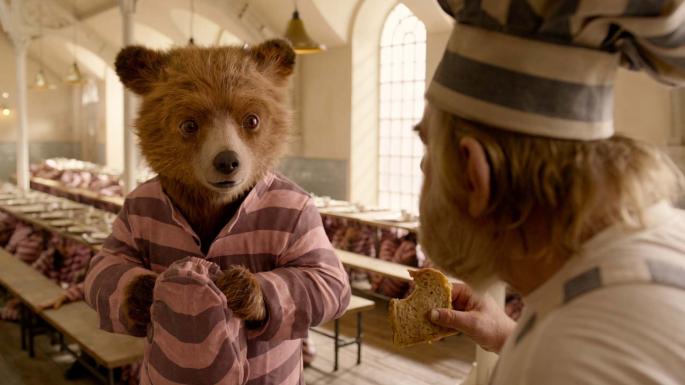
Rating: 7/10 – it’s easy to forget that there are other animation studios in Japan beside Studio Ghibli (here it’s Madhouse), but despite some obvious flaws, The Girl Who Leapt Through Time is a positive reminder; engaging and unpretentious, it’s a movie that treats its more serious themes with genuine integrity, while adding a lively sense of humour, all of which makes for an entertaining, if not entirely polished, viewing experience.

Share this:

  • Click to share on X (Opens in new window) X
  • Click to share on Facebook (Opens in new window) Facebook
  • More
  • Click to print (Opens in new window) Print
  • Click to email a link to a friend (Opens in new window) Email
Like Loading...

I Kill Giants (2017)

24 Saturday Mar 2018

Posted by dullwood68 in Movies

≈ Leave a comment

Tags

Anders Walter, Bullying, Drama, Fantasy, Giants, Graphic novel, Imogen Poots, Madison Wolfe, Review, Thriller, Zoe Saldana

D: Anders Walter / 106m

Cast: Madison Wolfe, Zoe Saldana, Imogen Poots, Sydney Wade, Rory Jackson, Art Parkinson, Jennifer Ehle

For Barbara Thorson (Wolfe), the existence of giants is a given, as much a part of the fabric of her daily life as brushing her teeth or riding the bus to school. Barbara is an expert on giants, she knows their origins and their proclivities, but worse still, she’s seen one in the forests outside the town where she lives. Knowing their destructive power, she determines to save the town, and constructs elaborate traps designed to kill the giant. Of course, no one else believes her when she talks about these terrible creatures, not her adult sister, Karen (Poots), or her older brother, Dave (Parkinson). At school she’s treated like the outsider she’s happy to be, and is regularly targeted by the school bully, Taylor (Jackson). The arrival of Sophia (Wade) from England gives her a chance to make both a friend and an ally in her fight against the giants, but with the omens and portents pointing toward a greater threat than even she is prepared for, Barbara’s behaviour becomes increasingly erratic. Her friendship with Sophia suffers, she rejects the help of the school psychologist, Mrs Mollé (Saldana), and does her best to avoid talking about the reasons why her main weapon against the giants is called Coveleski…

Adapted from the graphic novel of the same name by Joe Kelly and JM Ken Niimura, and with a script by Kelly, I Kill Giants is a winning blend of teen drama and fantasy thriller that plays it straight throughout, and when it does add humour, ensures that it’s as mordaunt as possible. Barbara’s world is convincingly structured from the start, and as the movie progresses, Kelly’s script adds the kind of layers that make it difficult for the viewer to dismiss Barbara’s fantasy world as being just that (there are moments when you’ll be sure it’s all in her head, and then moments when you won’t be). The movie provides clues as to the reality of what’s happening, but unless you’ve already read the original graphic novel, it’s unlikely you’ll piece it all together before the end. This means that the tone of the movie is dark overall, with its themes of imminent peril from without (the giants) and from within (Taylor), the fractured dynamic of Barbara’s family, and the cause – if there is one – of her retreat into a fantasy world.

With all these elements in place, you could be forgiven for thinking that I Kill Giants is a dour, depressing movie, but thanks to Kelly’s understanding of the characters and first-timer Walter’s sympathetic approach, not to mention an impressive performance from Wolfe, this is often uplifting stuff when it’s not addressing the serious natures of its various themes. Inevitably, Barbara is the kind of precocious child who can talk to adults on their own level, and leave them dumbfounded (something that only seems to happen in the movies), while her friendship with Sophia goes through the kinds of trials that leaves Sophia feeling less like a fully developed character and more of a deus ex machina. Elsewhere, there’s a striking animated section that depicts the origins and various incarnations of the giants, and several moments where the sound is either distorted or withdrawn in order to show Barbara’s disorientation when faced with certain unpalatable facts. Rasmus Heise’s cinematography, with its largely muted colour scheme, adds to the overall tone, and there’s a fascinating degree of detail in Stijn Guillaume’s set decoration.

Rating: 8/10 – an ambitious Irish/Belgian co-production, I Kill Giants tells its story with a great degree of warmth and affinity for its central character, and in doing so, proves itself to be noticeably sincere; it’s a cleverly assembled movie, forthright and stirring in places, and like all the best stories, it doesn’t give up its secrets until it absolutely has to.

Share this:

  • Click to share on X (Opens in new window) X
  • Click to share on Facebook (Opens in new window) Facebook
  • More
  • Click to print (Opens in new window) Print
  • Click to email a link to a friend (Opens in new window) Email
Like Loading...

Beast of Burden (2018)

23 Friday Mar 2018

Posted by dullwood68 in Movies

≈ Leave a comment

Tags

Daniel Radcliffe, DEA, Drama, Drug mule, Grace Gummer, Jesper Ganslandt, Mexico, Pilot, Review, Thriller

D: Jesper Ganslandt / 90m

Cast: Daniel Radcliffe, Grace Gummer, Pablo Schreiber, Robert Wisdom, Cesar Perez, David Joseph Martinez

Ex-US Air Force and Peace Corps pilot Sean Haggerty (Radcliffe) has a bit of a problem: he’s making a clandestine flight from Mexico to the US, and he’s carrying twenty-five kilos of drugs for a Mexican cartel. The plane he’s flying sounds like it’s going to fall apart at any moment, his Mexican handlers clearly don’t trust him for a minute, and as if either of these things wasn’t bad enough, he’s also being squeezed by the DEA into fetching them a laptop that (presumably, because we’re not actually told) contains incriminating evidence about the cartel. And when the flight plan is changed mid-flight, and a certain Mr Mallory (Wisdom) starts calling Sean and asking if he loves his wife, Jen (Gummer), it’s clear that it’s going to take a lot to keep Sean out of further trouble, and Jen safe. With Mallory and DEA agent Bloom (Schreiber) both calling him to keep him in respective line, and Jen calling him with an agenda of her own, Sean finds himself being painted into a corner that he’s unlikely to escape from.

Essaying yet another character dealing with an extreme physical and emotional dilemma, Daniel Radcliffe is Beast of Burden‘s principal asset, its MVP if you will. As Sean, Radcliffe spends most of his screen time in the plane’s cockpit, but it’s a tremendously focused performance – vivid, compelling, forceful and driven. Sean is effectively a loser trying one last time to get ahead, to boost his waning sense of self-worth and to show Jen (though she doesn’t know just how) that he can make things right in the wake of their finding out that she has ovarian cancer and may never have children. Yes, we’re in “one last big score” territory, but thanks to Adam Hoelzel’s sometimes wayward yet effective script, Radcliffe’s committed performance, and Ganslandt’s tough, muscular direction, it doesn’t always feel so clichéd or so derivative that it reminds you too often of other similarly themed movies. Instead, it grabs the attention and doesn’t let up as Sean’s position becomes increasingly threatened, and the machinations of both Bloom and Mallory ensure that whatever happens, if he comes out of it all alive, then he’ll be one very lucky drug mule indeed. Shot in close up for the most part, Radcliffe’s expressive features run the gamut from despair to anger to paranoia to fear to bewilderment to anguish and all the way back to despair again.

But while Sean is in the air and the movie sticks to its one singular purpose, to be an edge-of-the-seat thriller, two narrative decisions mar the movie as a whole. One is the involvement of Jen. At first she’s the wife trying to cope with the possibility that she and her husband are drifting apart in the wake of her illness, but then the script catapults her into the action and she has to be rescued. There are no prizes for realising that this has to happen once Sean is on the ground, and that’s the second problem with the narrative: once Sean inevitably crash lands, the script crashes with him. The last ten minutes or so lack the focus of the previous seventy-five minutes, and what transpires is a huge disappointment in relation to what’s gone before. Thanks to Hoelzel and Ganslandt both taking their eye off the ball, the tension and the claustrophobia that’s been carefully built up, evaporates in the blink of an eye. It’s a shame, as up until then, this is a very entertaining thriller indeed.

Rating: 7/10 – anchored by another tremendous performance from Radcliffe, Beast of Burden is a thriller that gleefully – and effectively – tortures its central character, and then does an about face in favour of a messy, contrived ending; the movie also benefits from Sherwood Jones’s astute editing skills, a stirring and portentous score from Tim Jones, and the oppressive nature of seeing one man confined in such a relatively small space and trying to deal with much larger problems.

Share this:

  • Click to share on X (Opens in new window) X
  • Click to share on Facebook (Opens in new window) Facebook
  • More
  • Click to print (Opens in new window) Print
  • Click to email a link to a friend (Opens in new window) Email
Like Loading...

Unsane (2018)

21 Wednesday Mar 2018

Posted by dullwood68 in Movies

≈ Leave a comment

Tags

Claire Foy, Drama, Jay Pharoah, Joshua Leonard, Juno Temple, Murder, Psychological thriller, Review, Stalker, Steven Soderbergh

D: Steven Soderbergh / 97m

Cast: Claire Foy, Joshua Leonard, Jay Pharoah, Juno Temple, Amy Irving, Polly McKie, Gibson Frazier, Aimee Mullins, Myra Lucretia Taylor, Sarah Stiles

In Steven Soderbergh’s first stab at directing a horror movie, Sawyer Valentini (Foy) is a smart businesswoman making a fresh start for herself in a new town and with a new job. The reason for the fresh start is David Strine (Leonard), the man who stalked her for two years before she managed to get a court to issue a restraining order. But Sawyer begins to see him in various places – not directly, but out of the corner of her eye, or at a distance. Troubled by this and seeking a sympathetic ear, Sawyer attends a facility that purports to help victims of stalkers. But instead of helping her, the staff at the facility mislead her into voluntarily committing herself for twenty-four hours. When she realises this, Sawyer’s agitation leads her to strike an orderly; this results in her stay being extended to seven days. Things go from bad to worse when one of the night orderlies turns out to be Strine, masquerading as “George Shaw”. With the help of a fellow patient, Nate (Pharoah), Sawyer gets word to her mother (Irving), but with the facility legally in the right, she must rely on her wits to see out the seven days, and to stay away from Strine…

While watching Unsane it’s worth remembering that as a director, Steven Soderbergh has an eclectic, and distinctly personal approach to his projects. Touted as his first attempt at horror, the movie is actually a psychological thriller laced with horror elements, but even with that caveat, it’s clear from very early on that Soderbergh isn’t really interested in making a horror movie. Instead, Soderbergh – working from a script by Jonathan Bernstein and James Greer – appears to be more interested in making a feminist statement, one that supports the idea that women, even now, with the MeToo movement and all, still aren’t being listened to. Instead, the movie is saying, women have to be resourceful and work things out for themselves. Now, this isn’t necessarily a bad thing as a theme or a message, but as Sawyer is initially presented as a strong, more than competent businesswoman, the idea that she could be tricked into committing herself into a mental health institution – that she wouldn’t check the small print, as it were – strains credulity from the start.

There is much else that is problematical, from Strine popping up on Day Two (how does he know Sawyer is going to be committed, or that she’ll have her stay extended?), to the intransigence of the facility’s staff, and the uninspired laziness of the local police force (which seems to consist almost entirely of two patrol car officers). At least the script doesn’t belabour the whole is-it-or-isn’t-it-all-in-her-head approach, choosing instead to come down firmly on one side of the fence quite soon after Sawyer’s confinement. This allows the movie to switch from being a woman in peril movie to a woman still in peril but resilient enough to win through in the end movie. Foy is very good indeed as Sawyer, determined and tough even when she’s feeling vulnerable, while Leonard is the epitome of creepiness as Strine, his teddy bear countenance belying his twisted mindset. But while the script is saved in part by the quality of the performances, it’s Soderbergh who saves it the most, his visual approach to the material energising certain scenes and providing an unsettling mise-en-scène in others. There are moments where Sawyer’s sense of isolation is highlighted by having the background stretching away unnaturally behind her, and it’s these kinds of moments that are the most effective. But when all is said and done, this is still just another generic thriller, with too many plot holes, and too many occasions where the phrase, “Oh, come on!” seems entirely appropriate.

Rating: 5/10 – more of an exercise in style and visual representation – Sawyer having a psychotropic break is brilliantly realised – Unsane is a movie that, on the surface, appears to have more depth to it than it actually has; standard fare then, and emboldened in places by Soderbergh’s mercurial direction, but not the edge-of-your-seat thriller that it so obviously wants to be.

Share this:

  • Click to share on X (Opens in new window) X
  • Click to share on Facebook (Opens in new window) Facebook
  • More
  • Click to print (Opens in new window) Print
  • Click to email a link to a friend (Opens in new window) Email
Like Loading...

The Green Butchers (2003)

19 Monday Mar 2018

Posted by dullwood68 in Movies

≈ Leave a comment

Tags

Anders Thomas Jensen, Black comedy, Cannibalism, Denmark, Drama, Line Kruse, Mads Mikkelsen, Nikolaj Lie Kaas, Review, Svend & Co

Original title: De grønne slagtere

D: Anders Thomas Jensen / 100m

Cast: Nikolaj Lie Kaas, Mads Mikkelsen, Line Kruse, Ole Thestrup, Bodil Jørgensen, Aksel Erhardtsen, Lily Weiding, Nicolas Bro, Camilla Bendix, Elsebeth Steentoft

Svend (Mikkelsen) and Bjarne (Kaas) are friends who work for their local butcher, Holger (Thestrup). Holger is a success thanks to the quality of his sausages, but he’s arrogant and treats the two friends as if they were idiots. But Svend has always wanted to open his own butcher’s shop in tandem with Bjarne, and when the opportunity presents itself, that’s exactly what he does. There’s a lot of work to do in getting the shop ready, including seeing to the electrics in the meat freezer. When the electrician carrying out the work is locked in the freezer overnight, Svend finds his body. But before he can do anything about it, Holger calls in with an order for a dinner party he’s having that evening. Svend obliges, but has to confess to Bjarne that he included fillets from the electrician’s leg in the order. The next day, the shop is besieged by customers, and though Svend promises the electrician is a one-off, the temptation to come up with other “donors” – and continue their success – proves too much for him to follow through on…
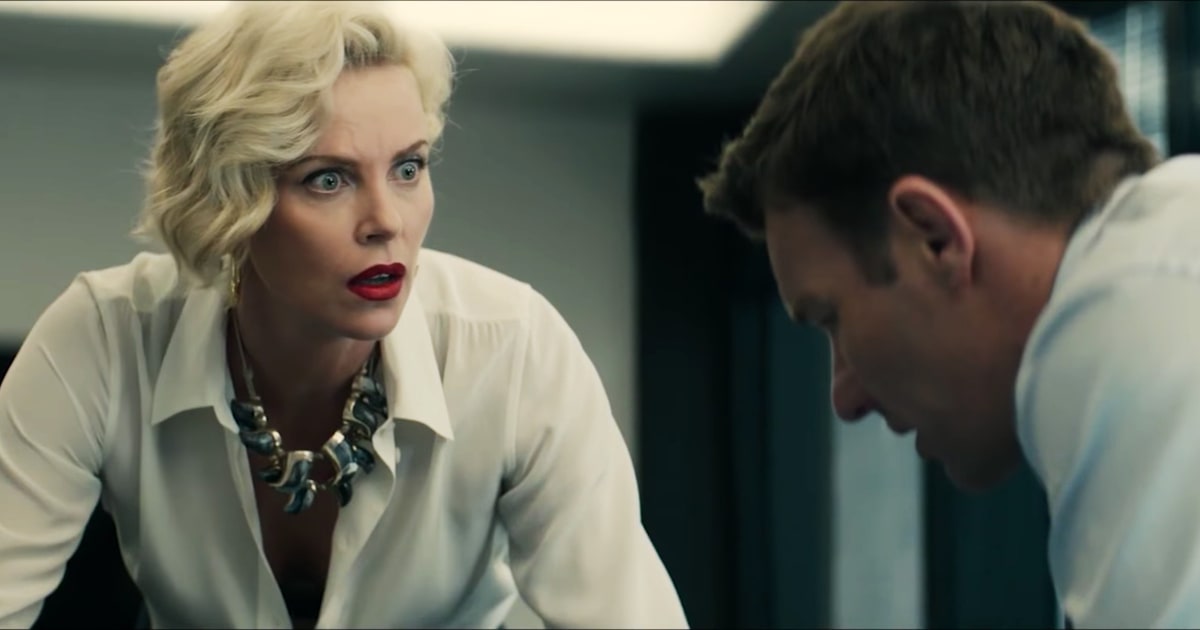
A low-key black comedy that adopts a largely matter-of-fact approach to its mildly anarchic narrative, The Green Butchers is an enjoyable romp that retains a subtlety of purpose at the same time as it throws a number of farcical elements into the mix as its story unfolds. Aside from the small matter of Svend & Co providing the kind of customer service Sweeney Todd would be proud of, there’s also the small matter of Bjarne’s twin brother, Eigil (Kaas), in a coma when we first meet him, and then running around and complicating matters. But just when Eigil’s vegetarianism and love of animals seems bound to reveal the truth about Svend & Co, the script pulls a fast one and his presence ends up jeopardising Bjarne’s budding romance with Astrid (Kruse), a local girl whose uncle just so happens to have eaten human flesh before (yes, really). While Bjarne tries to rebuild his life and move past a tragedy caused by his brother, Svend continues on a dark murderous spiral into insanity that shows no sign of halting. Thanks to their tortured pasts – Svend has never known love, even from his parents – both men become inured to what they’re doing.

That the movie never loses sight of their humanity and doesn’t make them look and feel like caricatures, is a testament to Jensen’s skill as a writer and director. Though the narrative does its best to wrong foot the viewer, much of it is foreseeable if not entirely predictable, and what few twists and turns there are, are handled with care and don’t overwhelm the storyline. As for Bjarne and Svend, they’re a likeable odd couple, with Bjarne’s laidback pothead demeanour a perfect foil for Svend’s arrogant, over-compensating nature. Svend is often unnecessarily spiteful, and Mikkelsen (with his severe hairstyle) makes him a wretch who’s almost incapable of good intentions, while Kaas gives full expression to the conflicting emotions Bjarne feels toward his brother. Both actors are on good form, and it’s a pleasure to watch them at work, while the dark humour and inherent absurdities of the plot are teased out with patience and skill by Jensen. It’s an amiable movie, content to avoid dwelling on the messier aspects of Svend & Co’s acquisition of its “chicken” products, and therefore lacking “bite”, but for a movie that concerns itself with murder and cannabalism, it’s also refreshing for its restraint and self-discipline.

Rating: 7/10 – there’s no shortage of laughs in The Green Butchers, but then its moral compass is more than a little off-kilter, and its two main characters delightfully adaptable to their predicament; perhaps a little too tame to make much of a dramatic impact, it’s nevertheless an enjoyable slice of Danish hokum, with winning performances and some knowing things to say about the pursuit of fame and success.

Share this:

  • Click to share on X (Opens in new window) X
  • Click to share on Facebook (Opens in new window) Facebook
  • More
  • Click to print (Opens in new window) Print
  • Click to email a link to a friend (Opens in new window) Email
Like Loading...

80,000 Suspects (1963)

17 Saturday Mar 2018

Posted by dullwood68 in Movies

≈ Leave a comment

Tags

Bath, Claire Bloom, Drama, Elleston Trevor, Literary adaptation, Review, Richard Johnson, Smallpox, The Pillars of Midnight, Thriller, Unhappy marriage, Val Guest, Yolande Donlan

D: Val Guest / 109m

Cast: Claire Bloom, Richard Johnson, Yolande Donlan, Cyril Cusack, Michael Goodliffe, Mervyn Johns, Kay Walsh, Norman Bird, Basil Dignam, Arthur Christiansen

It’s New Year’s Eve and all is not well between Dr Steven Monks (Johnson) and his wife, Julie (Bloom). After nine years their marriage is faltering. He has had an affair with a long-time friend, Ruth Preston (Donlan), the wife of one of his colleagues, Clifford (Goodliffe), but Julie only has vague suspicions and half-formed ideas as to why their marriage is in trouble. The discovery that a patient at the hospital where Steven works has smallpox, at first puts their problems to one side, but as more and more sufferers are found and the threat of an epidemic hangs over everyone, their relationship – and how they overcome their issues – takes on a greater importance for both of them. Julie contracts the virus, while at the same time, Ruth may or may not have left her husband. With the authorities stretched to the limit in their efforts to contain the outbreak, personal animosities become heightened, Steven and Julie find themselves making irrevocable decisions about their marriage, and one carrier threatens the safety of everyone…

Adapted from the novel, The Pillars of Midnight by Elleston Trevor, 80,000 Suspects is three movies rolled into one. There’s the hospital-based drama that unfolds as more and more smallpox sufferers are discovered and the Ministry of Health is brought in to save the day, there’s the relationship drama built around the problems of Steven and Julie, and there’s a late addition in the form of a race against time to find the last carrier, which makes it a thriller. All these elements bump against each other as the movie unfolds, and though they don’t always do so in an organic or believable way, the strength of the material overall ensures any rough transitions are smoothed over as quickly as possible. As each element is explored, the script also ensures that they’re not explored for too long before moving on or away to the next development in the story. This keeps the narrative ticking over effectively, and allows the characters – even the minor ones such as Johns’ over-anxious Ministry of Health coordinator – to stand out as credibly as possible. Working from his own script, director Val Guest adroitly keeps the focus where it’s needed, and elicits good performances from all concerned (though you could argue Johnson is a little stiff at times).

Shot in and around the town of Bath during the winter of early 1963 (which was particularly bad), the movie benefits from its location work, and the involvement of local residents in the scenes involving mass vaccination (watch out too for a cameo from Thirties star Graham Moffatt as a man with a fear of needles). This level of verisimilitude adds greatly to the no-frills approach adopted by Guest, and helps to make the potential scale of the epidemic that much more frightening. And for once, there aren’t any hidden agendas or characters using the outbreak for personal gain, just a group of people trying to do their best under difficult circumstances. The inter-relationships between the Monks’ and the Prestons does lead to a couple of soap opera-style moments, but these are forgivable in a movie that, by and large, could be mistaken at times as being a reconstruction of past events. Guest oversees it all with his usual skill, and in tandem with DoP Arthur Grant, uses the CinemaScope format to impressive effect, even though he relies on medium shots for most of the movie. Often gripping, this is a minor British classic, and easily due a revival.

Rating: 8/10 – an intelligent, yet modest drama with thriller leanings, 80,000 Suspects invests heavily in its characters and uses its smallpox outbreak as a way of exploring their faults and foibles, and in some depth; Bloom is terrific as the conflicted Julie, but Guest is the movies’s MVP, and if for nothing else, than for showing the fear and paranoia about the outbreak spreading out of control coming not from the public, but from the authorities trying to combat it.

NOTE: At present, there isn’t a trailer for 80,000 Suspects.

Share this:

  • Click to share on X (Opens in new window) X
  • Click to share on Facebook (Opens in new window) Facebook
  • More
  • Click to print (Opens in new window) Print
  • Click to email a link to a friend (Opens in new window) Email
Like Loading...

Kuleana (2017)

16 Friday Mar 2018

Posted by dullwood68 in Movies

≈ 1 Comment

Tags

Brian Kohne, Drama, Hawaii, History, Kristina Anapau, Land development, Moronai Kanekoa, Mystery, Review, Sonya Balmores, Stefan C. Schaefer

D: Brian Kohne / 95m

Cast: Moronai Kanekoa, Sonya Balmores, Kristina Anapau, Stefan C. Schaefer, Augie Tulba, Marlene Sai, Branscombe Richmond, Mel Cabang, Vene Chun, Kainoa Horcajo, Steven Dascoulias

Hawaii, 1971. Nohea (Kanekoa) has returned home from Vietnam minus his left leg from the knee down, and with an uncertain future. He’s under pressure to sell the land his family has lived on for generations, and his grandmother (Sai), the current family elder, isn’t well enough to stop him. Things become even more complicated when his Aunt Rose (Anapau) appears to have committed suicide. Rose was married to a property developer who came from the mainland, Victor Coyle (Schaefer). In 1959, their adopted daughter, Kimberly, and Nohea’s father (Horcajo), disappeared. Victor accused Nohea’s father of kidnapping Kimberly, but as no trace of them was ever found, both are now presumed dead. Rose’s death brings the past and the present into sharp focus as Nohea tries to make sense of what happened twelve years ago, while also trying to fit back into a life and a culture that he’s lost his connection to. With Coyle intent on buying up as much land as possible for his own financial gain, and Nohea being drawn into Rose’s death, Kimberly’s sudden reappearance brings even further problems.

Kuleana is the Hawaiian word for responsibility. It’s a word that hangs heavy over writer-director Brian Kohne’s second feature, a sincere, culturally sensitive drama that unfolds patiently and with quiet skill. It’s a movie that focuses on the characters first and the drama second, but which also ties them together so that as the twin stories unfold in both 1959 and 1971, the characters drive the events that happen much more than they react to them. Pitched against a backdrop of the continued homogenisation of Hawaiian culture by US influences – Coyle’s development plans inevitably make no room for maintaining any traditions or beliefs about the land – the movie shows how the erosion of cultural values was taking its toll. Nohea’s conflicted struggle to make sense of his own future is reflected in the attitudes of his uncle, Bossy (Chun), who supports Coyle’s plans, and The Moke (Richmond), an enforcer for a local mobster (Cabang) who finds it increasingly difficult to put aside his tribal roots. By showing the political and social divisions that were prevalent at the time, Kohne ensures the movie is more than about the mystery surrounding Rose’s death, or if Kimberly’s return will complicate matters.

Kohne gets his message across clearly and concisely, and makes the most of a limited budget. Dan Hersey’s cinematography highlights the natural beauty of the Maui locations without making them look like picture postcard versions of themselves, while Adi Ell-Ad’s fluid yet measured editing ensures the narrative plays out in confident style and at a good pace. The performances are good, with Kanekoa giving an understated yet compelling portrayal of a man trying not to be at odds with his heritage, while Balmores carries the weight of the wrongs done to Kimberly with a steely determination. As Coyle, Schaefer is stuck with the one character who doesn’t have an arc but who does have a bad wig, and Anapau, as Rose, doesn’t get the opportunity to do more with her pivotal role than is absolutely necessary. This is due to the demands of the main storyline, and is therefore unavoidable, but Rose is one character we could have spent more time with. Kohne adds some magical realism into the mix to good effect, but scores even higher with his choice of Willie K and Johnny Wilson for the score. Their efforts, combined with a soundtrack that includes a poignant use of Procol Harum’s A Whiter Shade of Pale, add an emotional layer that complements and enhances the material from beginning to end.

Rating: 8/10 – despite some story elements that are either prosaic and/or predictable, Kuleana is an involving, credible drama that ensures its Hawaiian cultural backdrop is just as important as its central storyline; if this is an example of what can be achieved by Hawaiian movie makers working “at home”, then let’s hope that there will be many more opportunities for them to do so in the future.

Share this:

  • Click to share on X (Opens in new window) X
  • Click to share on Facebook (Opens in new window) Facebook
  • More
  • Click to print (Opens in new window) Print
  • Click to email a link to a friend (Opens in new window) Email
Like Loading...

Poster of the Week – Virtue (1932)

15 Thursday Mar 2018

Posted by dullwood68 in Movies

≈ Leave a comment

Tags

Carole Lombard, Drama, Pat O'Brien, Poster of the week, Pre-Code

Passion, torment, fear, distrust, regret – all these are present in the poster for Virtue, a pre-Code potboiler that uses an already well-worn theme to tell its sexploitation story. The wife with an embarrassing past was already a movie staple by 1932, and the poster for Virtue is a good example of the way in which the studios – here it’s Columbia – tried to be both exploitative and responsible in their promotion of a “racy” picture. (Which concept do you think they were more interested in?) What’s interesting about this poster is its combination of disparate and not immediately complementary elements – and to modern eyes – the rather dated and slightly humorous sexual overtones.

The top part of the poster is given over to what would have been regarded as a shocking tagline, one given extra emphasis by an exaggerated exclamation mark. Make no mistake, this tagline is saying, this is going to be strong stuff (and you won’t be disappointed). The euphemism is clear, but as usual it’s the kind of hyperbole that promises a lot, but which the movie itself won’t be able to provide. Then there’s the swirling blue background, something of a miasma designed to represent the turmoil the characters will find themselves battling. But as we travel down the poster, this murky miasma gives way to depictions of the two main characters, and the jarring use of orange and yellow hues to depict the passion that exists between them. A closer inspection, however, reveals something else, something revealed in their expressions. O’Brien’s character is looking at Lombard with apprehension, while Lombard returns his gaze with a concerned look of her own. It’s almost as if she’s asking herself, does he know? With this dynamic in place,it’s then that the poster decides it’s time to highlight the suggestive nature of the movie, and gives us Lombard’s exposed throat and the hint of a swelling breast.

Sometimes, when you see posters from the pre-Code era, it’s interesting to see just what was regarded as “racy” or “provocative”. Here we have the unflattering sight of Lombard (sadly not provided with the best of representations) in a pink chemise with a black shawl over one shoulder, her right hand behind her head in what was no doubt intended to be a sultry pose reflecting the kind of “past” O’Brien doesn’t know about. It’s the pose of someone with a disreputable character, but too awkwardly designed and executed to have quite the effect required. More startling is the spectral hand reaching out as if attempting to touch Lombard’s right breast, or perhaps to clutch at the more sultry embodiment further to the right. It’s a clumsy expression of the past life that’s about to catch up with her, and would be better off on the poster for a Forties’ horror movie. And then there’s the movie’s title, highlighted in blatant yellow, and a counterpoint to the rest of the imagery – as well as being something of a challenge. Virtue? you might ask? Really?

The rest of the poster, with its strong yet ugly shade of green used as a backdrop for the stars’ names and an unnecessary city landscape, is perfunctory if a little brutal. Judged as a whole, though, this is a poster that works surprisingly well, its contrasting colour scheme and pictorial stylings somehow coming together to make an effective piece of advertising. You could argue that it’s not pretty, and you could argue that it’s too inconsistent in its composition, but while all that may be true, what can be said with absolute authority is that this is a poster that captures the attention and has a lot to offer – and in spite of its diverse components.

Share this:

  • Click to share on X (Opens in new window) X
  • Click to share on Facebook (Opens in new window) Facebook
  • More
  • Click to print (Opens in new window) Print
  • Click to email a link to a friend (Opens in new window) Email
Like Loading...

All the Way (2016)

14 Wednesday Mar 2018

Posted by dullwood68 in Movies

≈ Leave a comment

Tags

1964, American politics, Anthony Mackie, Bryan Cranston, Civil rights, Drama, Frank Langella, History, Jay Roach, LBJ, Melissa Leo, Review, US President

D: Jay Roach / 132m

Cast: Bryan Cranston, Anthony Mackie, Melissa Leo, Frank Langella, Bradley Whitford, Stephen Root, Todd Weeks, Ray Wise, Ken Jenkins, Dohn Norwood, Mo McRae, Marque Richardson, Aisha Hinds, Joe Morton

In the wake of the assassination of John F. Kennedy in November 1963, newly sworn in (and ex-Vice) President Lyndon B. Johnson (Cranston) referred to himself as the “accidental President”. Kennedy’s death and Johnson’s sudden ascent to the highest position in US politics may have come as a shock, but Johnson was a firm believer in the ideals and policies of his predecessor in the White House. The Civil Rights Bill was one such ideal, and one of Johnson’s earliest statements to the Press confirmed his intention to have the Bill passed into law within the coming year. Inevitably, Johnson encountered opposition to his plan, but from within his own party, the Democrats. Political factions in the South tried to stop the Bill from being passed. Even Johnson’s mentor, Richard Russell Jr (Langella), worked against him, while Johnson sought support from Martin Luther King Jr (Mackie). Through a series of political manoeuvrings and confrontations, Johnson succeeded in getting the bill passed, even after removing a critical section that would have enabled blacks to have voting rights. But then there was the small matter of campaigning to be elected President…

Adapted by Robert Schenkkan from his original play of the same name, All the Way covers that fateful first year in the wake of Kennedy’s death. It’s an absorbing, deftly handled movie that packs in a lot of exposition while also finding time to explore the character and the personality of a President who, outside of the US at least, isn’t as well known as some of his predecessors and successors. Johnson was President at a pivotal time in American history, and by focusing on his first year in office, the movie shows just how dedicated he was to making huge social and political changes happen. And thanks to the combination of Schenkkan’s skill as a writer, and Cranston’s skill as an actor, the complexity of the man is brought vividly to life. Johnson the President is shown as tough, determined, and something of a bully. Johnson the man is shown as being wracked by doubt, and insecurity. Cranston gives possibly his finest performance as LBJ, inhabiting the role to such an extent that it’s easy to forget that it’s Cranston at all (though he is helped by a superb makeup job).

As well as depicting the various sides to Johnson, Schenkkan and director Jay Roach take care to flesh out the supporting characters, and ensure they’re not there just to give LBJ someone to square off with. As MLK, Mackie is patient and implacable, pushing LBJ to do what’s right, while Leo offers dignified and persuasive support as Johnson’s wife, Lady Bird. Langella is equally good as the experienced politician who finds himself outwitted by his protegé (and feels betrayed by him), and there’s further sterling support from Whitford (as future Vice President Hubert Humphrey), Root (as J. Edgar Hoover), and Weeks (as Walter Jenkins, LBJ’s top aide). Roach keeps things fairly simple, though there are moments where the political ramifications of certain decisions may confound viewers not up to speed on the issues of the time (and despite Schenkkan’s best efforts). However, this is compelling stuff that begins slowly and gradually builds up speed as it heads toward Election Night in November 1964. If there is one issue, though, that the movie itself never overcomes, it’s the flatness of Jim Denault’s cinematography. This may be a TV movie, but there are times when the image feels lifeless and looks unappealing. A little more sheen would have made this as impressive to watch as its content.

Rating: 8/10 – a history lesson that’s often as moving as it is educational, All the Way benefits from Roach’s assured direction, Schenkkan’s fascinating exploration of LBJ’s first year as President, and a standout turn by Cranston as the man himself; in shining a spotlight on a tumultuous period in 60’s American politics, it serves as a potent reminder of what can happen when a good man has his hand firmly on the wheel of change.

Share this:

  • Click to share on X (Opens in new window) X
  • Click to share on Facebook (Opens in new window) Facebook
  • More
  • Click to print (Opens in new window) Print
  • Click to email a link to a friend (Opens in new window) Email
Like Loading...

Chloe & Theo (2015)

12 Monday Mar 2018

Posted by dullwood68 in Movies

≈ Leave a comment

Tags

Dakota Johnson, Drama, Ezna Sands, Inook, Inuit, Mira Sorvino, Review, The Arctic, The Elders, Theo Ikummaq

D: Ezna Sands / 82m

Narrator: Michael Stiles

Cast: Theo Ikummaq, Dakota Johnson, Ashley Springer, André De Shields, Mira Sorvino, Eric Oram

When the Elders of his tribe approach him and tell him the story of a dream they’ve had that warns of the end of the world, Inuk Theo (Ikummaq) takes up the task of bringing the dream’s message to the Elders of the South. He travels to New York City, rents a room in a hotel, and wanders the streets looking for the Elders he needs to warn. It’s there that he meets Chloe (Johnson), a young homeless woman. She takes him under her wing, and in turn she introduces him to her friends, Tyler (Springer), Sancho (Oram), and Mr Sweet (De Shields). They each react in different ways to the story that Theo tells, but Chloe wants to help him get his warning out to as wide an audience as possible. But it’s slow-going until Mr Sweet tells Theo about the United Nations building, and suggests he take his message there. Theo finds himself detained, but once he’s released he finds an unexpected ally in Monica (Sorvino), a green campaigner who can help Theo’s message reach a wider audience.

There’s no avoiding it: Chloe & Theo is not the movie it should be. What should have been an endearing, humorous, heartfelt movie with a late but still timely ecological message, instead is a lumpen mess, a blundering attempt at bringing together all those elements into one satisfying whole. It’s hard to work out how it all could have gone so horribly wrong. It’s a fish-out-of-water story told in a very simple fashion, but with so many visual and narrative non sequiturs that it feels like a longer movie hacked down to its current running time entirely for commercial reasons (and not very good ones at that). Its environmental message is more simplistic than simple, and boils down to “rampant consumerism bad”, “listening to the planet good”. But that focus is dropped into the narrative at random times and for random reasons, with the characters – aside from some unnecessarily aggressive U.N. security officers – fully on Theo’s side but with no idea of how to help him. This means the first forty-five minutes, before the arrival of Monica, is replete with scenes where Theo’s naïvete is treated as a source of easy laughs, and the narrative moves forward with all the purpose of a stranded whale.

In the end, the movie doesn’t have an end, and what happens feels like a cop-out, designed to add some pathos to a movie that has only one truly emotional moment – and even that comes and goes without any context to support it. Also, the movie isn’t helped by the two main performances. Ikummaq is a non-professional so can be excused some very awkward line readings, and even though he exudes a quiet strength and dignity, he lacks the on-screen presence that would have allowed audiences to connect with him more effectively. Johnson, however, is a professional, but hers is a terrible performance, a succession of pouts and glowering expressions that highlight just how one-note her portrayal actually is. And giving her a few dirty smudges around her face and a mane of unkempt hair (while everyone else who’s homeless remains immaculately groomed) further hinders any credibility she might be trying to attain. There’s so much else that either doesn’t make sense, or doesn’t fit in, or feels forced, that the movie feels like yet another bad idea from the lab of Victor Frankenstein. Sadly, Sands, and despite very good intentions, lacks the wherewithal to tie everything together, and includes too much that is either far-fetched, problematical, dramatically redundant, or all three.

Rating: 3/10 – the Arctic scenery is stunning, an animated sequence is appropriately nightmarish, and there’s a great Indie soundtrack, but overall, Chloe & Theo is a disaster on a par with the one it warns about; lacking depth and a consistent tone (a homeless march on the U.N., anyone?), this won’t do anything for the green movement, or for viewers unlucky enough to give it a try.

Share this:

  • Click to share on X (Opens in new window) X
  • Click to share on Facebook (Opens in new window) Facebook
  • More
  • Click to print (Opens in new window) Print
  • Click to email a link to a friend (Opens in new window) Email
Like Loading...

Strange Weather (2016)

11 Sunday Mar 2018

Posted by dullwood68 in Movies

≈ Leave a comment

Tags

Carrie Coon, Drama, Holly Hunter, Katherine Dieckmann, Kim Coates, Mystery, Review, Road trip, Suicide

D: Katherine Dieckmann / 91m

Cast: Holly Hunter, Carrie Coon, Kim Coates, Shane Jacobsen, Glenne Headly, Walker Babington, Craig Boe, Ransom Ashley, Susan Gallagher, Choppy Guillotte

Still grieving seven years after her son, Walker (Ashley), committed suicide at the age of twenty-four, Darcy Baylor (Hunter) learns that a friend of her son back then, Mark Wright (Jacobsen), appropriated a business plan that Walker had come up with, and has made a success of the idea. Wright has even used a childhood memory that Walker had that illustrated his original concept for a chain of hot dog restaurants. Darcy decides to head down to New Orleans – where Wright has opened a chain of Hot Dawg sites – to confront him and find out why he did what he did. She’s accompanied by her best friend, Byrd (Coon), and along the way they learn things about Walker’s last day, and particularly the last few hours before he died, that brings into question the perception that he killed himself. When Darcy reaches New Orleans she has far more questions than she started out with, but when she finally confronts Wright, she learns that the answers she’s seeking aren’t as cut and dried as she expected…

In assembling Strange Weather, writer/director Katherine Dieckmann has made a movie that combines an examination of personal grief, a mystery, and a road trip, and in such a way that the viewer never quite knows where each element is leading them, or if any of them will be resolved satisfactorily. In portraying the residual grief that Darcy feels, Dieckmann shows how hollow her life has been, and how difficult it’s been to move forward when so many unspoken questions have been holding her back. Dieckmann also shows how Darcy’s grief has kept her going at the same time, and how she’s used that grief as a form of emotional support. It all makes Darcy a flawed yet interesting character, and unpredictable as well, as evidenced by her taking the gun that Walker killed himself with, on her journey to New Orleans. Dieckmann also keeps the mystery surrounding Walker’s death ticking over in the background, ever present and fueling Darcy’s need for the truth, and Byrd’s reasons for going with her. As the road trip takes them inexorably to the Big Easy, it serves as a conduit for the truth, and as a reckoning for the grief that Darcy feels so intensely.

Darcy is played with impeccable artistry by Hunter, an actress who just keeps getting better and better, and who portrays the pain and sadness that Darcy feels so adroitly that you can’t help but be moved by the determination she shows in getting the answers she needs. Hunter shows both the character’s inner strength and her unacknowledged vulnerability, and gives a performance of such subtlety and range that Darcy’s actions, even those that are somewhat questionable, retain a credibility that makes her all the more sympathetic. The supporting performances are good too, but Hunter is in a league of her own, and Dieckmann wisely leaves her to it (when someone like Hunter is this good, it’s best just to step back and make sure the cameras are rolling). The movie is honest and sincere in its approach to the material, and while a couple of plot developments do feel a little forced (and lifted from a daytime soap opera), by continually returning to Darcy’s dogged quest for answers to questions she hasn’t formulated yet, the movie remains a fascinating, if low-key, journey into the world of a mother who just can’t find it within herself to close the door fully on the death of her son… and who is proved right in not doing so.

Rating: 8/10 – an impressive performance by Hunter is the bedrock of a movie that is effective in terms of its examination of the nature of overwhelming grief, and which offers unexpected insights at several points along the way; David Rush Morrison’s cinematography provides a rich colour palette for the characters to appear against, and there’s a terrific soundtrack courtesy of Sharon Van Etten that complements the material in a rewarding and unforeseen manner, making Strange Weather the kind of movie that deserves a wider audience.

Share this:

  • Click to share on X (Opens in new window) X
  • Click to share on Facebook (Opens in new window) Facebook
  • More
  • Click to print (Opens in new window) Print
  • Click to email a link to a friend (Opens in new window) Email
Like Loading...

Gringo (2018)

10 Saturday Mar 2018

Posted by dullwood68 in Movies

≈ 1 Comment

Tags

Amanda Seyfried, Black comedy, Charlize Theron, Crime, David Oyelowo, Drama, Drugs, Joel Edgerton, Mexico, Nash Edgerton, Review, Sharlto Copley

D: Nash Edgerton / 110m

Cast: David Oyelowo, Charlize Theron, Joel Edgerton, Amanda Seyfried, Sharlto Copley, Harry Treadaway, Thandie Newton, Yul Vazquez, Carlos Corona, Diego Cataño, Rodrigo Corea, Hernán Mendoza, Alan Ruck, Kenneth Choi

Ah, the underdog. The plucky, conscientious, yet continually overlooked underdog. One of Life’s also-rans, he or she rarely gets ahead because everyone around them is too busy feathering their own nests to do anything other than take them for granted – except when it comes time to make them the fall guy in some nefarious scheme or other. How many times have we seen this scenario in a movie? (Don’t answer, that’s an entirely rhetorical question.) And how many times have we seen the underdog, after many trials and tribulations, find a way to come out on top? (Again, don’t answer.) But it doesn’t seem to matter how often this kind of scenario plays out in a movie, someone will always come along and attempt to provide another variation on such a time-worn theme. Which leads us to Gringo, the second feature from Nash Edgerton, and another example of the underdog story. Here, the underdog is Harold Soyinka (Oyelowo), a Nigerian-born executive at a US pharmaceutical company, Cannabax Technologies Inc, who finds himself in trouble with a Mexican drugs cartel.

It’s all the fault of his duplicitous bosses, Richard Rusk (Edgerton), and Elaine Markinson (Theron). The marijuana-based drug they’ve been developing for the mass market is ready to go, but in their haste to rake in as much profit as they can, Richard and Elaine have decided to sever ties with the drugs cartel they have been colluding with up until now. Harold doesn’t know any of this at first, but he soon gets wise, and he learns that Richard and Elaine are planning to sell the company, meaning he’ll lose his job. So on a trip to Cannabax’s Mexican factory, Harold decides to fake his own kidnapping. He hopes to force Richard and Elaine into paying the “ransom demand” and pocketing the money for himself. Inevitably, things don’t go the way Harold has planned them, and soon he’s being chased by the cartel, getting involved with the girlfriend (Seyfried) of a drug mule (Treadaway) (they’re all staying in the same hotel where he’s hiding out), and finding an unlikely saviour in an ex-mercenary (Copley) who isn’t all that he seems.

Gringo is the kind of black comedy thriller that always seems to attract a great cast, but which then spends a lot of time and effort in giving them hardly anything to do, or to work with. It’s a busy movie, but messy and dramatically uneven, and unsure of what tone to adopt in any given scene. As it plays out, the movie seems committed to providing as many stock characters in as many stock situations as it can, and to adding a thick layer of humour to proceedings in the hope that if the drama doesn’t work, then the audience will be distracted by the sight of Harold’s high-pitched yelping when given an injection (admittedly funny thanks to Oyelowo), or the cartel boss’s obsession with The Beatles (less so). When things turn violent, the movie becomes another beast altogether, and it tries for tragedy as well, something it can’t pull off because by then it’s way too late. The performances suffer as a result, with Oyelowo and Copley coming off best, but Theron is saddled with a thankless “corporate bitch” role that even she can’t enliven. There’s a half decent movie in there somewhere, but thanks to the vagaries of the script (by Anthony Tambakis and Matthew Stone) and Edgerton’s inability to maintain a consistent tone throughout, it’s never going to see the light of day.

Rating: 5/10 – intermittently funny, but otherwise too predictable and/or derivative of other, similar movies, Gringo wants to be entertaining but lacks the wherewithal to know how; a movie that coasts along at times in its search for the next incident to move it forward, it’s amiable enough, but not very ambitious in its ideas, something that leaves it feeling rough and ready and under-developed.

Share this:

  • Click to share on X (Opens in new window) X
  • Click to share on Facebook (Opens in new window) Facebook
  • More
  • Click to print (Opens in new window) Print
  • Click to email a link to a friend (Opens in new window) Email
Like Loading...

Festival (2005)

08 Thursday Mar 2018

Posted by dullwood68 in Movies

≈ Leave a comment

Tags

Actors, Annie Griffin, Chris O'Dowd, Comedians, Comedy, Daniela Nardini, Drama, Edinburgh, Lucy Punch, Raquel Cassidy, Review, Sex, Stephen Mangan

D: Annie Griffin / 101m

Cast: Richard Ayoade, Amelia Bullmore, Billy Carter, Raquel Cassidy, Jonah Lotan, Stephen Mangan, Lyndsey Marshal, Stuart Milligan, Daniela Nardini, Chris O’Dowd, Deirdre O’Kane, Lucy Punch, Clive Russell

Set against the backdrop of the Edinburgh Festival Fringe (and shot there in 2004), Festival is a compendium of interlocking stories centred around various actors and comedians who are all trying to be noticed or win awards. Amongst the comedians there’s Tommy O’Dwyer (O’Dowd), returning for his ninth year of unqualified non-success; Conor Kelly (Carter), who works with puppets; and Nicky Romanowski (Punch), who tells comic stories based on her Jewish upbringing. Amongst the actors there’s Faith Myers (Marshal), a first-timer with a one-woman play about Dorothy Wordsworth; a Canadian trio that includes Rick (Lotan), who finds himself attracted to the owner of the house they’re renting, Micheline (Bullmore); and Father Mike (Russell), whose play about paedophile priests may not be entirely fictional. Orbiting these characters are the likes of über-famous comedian and Comedy Award judge Sean Sullivan (Mangan), and his put-upon PA Petra Loewenberg (Cassidy); radio presenter Joan Gerard (Nardini), who’s also a Comedy Award judge; and Arnold Weiss (Milligan), an American agent looking to represent Sean in the US.

Ensemble movies can be a tricky proposition. Give too much screen time to one character and their story and you risk making another character’s story slight and uninteresting. Reverse that idea and you don’t do justice to the other character and their story. With fifteen main characters to juggle with, Festival does a good job of getting the balance right, but of necessity it does focus on some characters more than others, though not to the extent that any one tale suffers accordingly. However, whether or not you care about any of the characters is another matter, because while Annie Griffin’s feature debut doesn’t short change any of them in terms of development, even the most sympathetic of characters – Petra, for example – fail to connect with the audience. You can perhaps understand the dilemma: whether to show the hypocrisy and rampant self-absorption of the performers at the Fringe, or to make them less objectionable – and the movie less credible as a result. But the consequence of opting to show the hypocrisy etc. means that the result is a movie where being immersed in the various storylines isn’t as rewarding as it could be.

Part of the problem is in the movie’s fluctuating tone. In trying to accommodate both comedy and drama, while also including flashes of bathos and heavy-handed irony, Griffin provides too many awkward transitions from one to the other (and sometimes in the same scene). It’s also a less than subtle movie, with one sex scene in particular guaranteed to have some viewers squirming with discomfort (though not as much as one of the characters involved in it), and Griffin making the point over and over that comedians are an unhappy bunch whose ability to be funny masks a myriad of personal and emotional problems. Thankfully, trite observations such as these are offset by the quality of the comedy elements, which are very funny indeed. The drama though, still retains an overcooked feel to it that stops it from being entirely credible, and it’s in these moments that you can see Griffin trying too hard. As for the performances, there isn’t one portrayal that stands out from all the rest – though Mangan’s obnoxious Sean Sullivan comes close – which makes this a truly ensemble experience. The hustle and bustle of the Edinburgh Festival is expressed through often guerrilla-style cinematography courtesy of DoP Danny Cohen, and allows for an authentic backdrop. It’s just a shame that not everything happening in the foreground matches the industry of the festival itself.

Rating: 6/10 – promoted as a “black comedy”, Festival is more of an unfulfilled dramedy, one that succeeds more in one area than it does in the other; it’s entertaining enough while you’re watching it, but the relevance and resonance it’s aiming for doesn’t come across, making this frustrating and satisfying in almost equal measure.

NOTE: Alas, there’s no available trailer for Festival.

Share this:

  • Click to share on X (Opens in new window) X
  • Click to share on Facebook (Opens in new window) Facebook
  • More
  • Click to print (Opens in new window) Print
  • Click to email a link to a friend (Opens in new window) Email
Like Loading...

Barakah Meets Barakah (2016)

06 Tuesday Mar 2018

Posted by dullwood68 in Movies

≈ Leave a comment

Tags

Barakah yoqabil Barakah, Comedy, Drama, Fatima AlBanawi, Hisham Fageeh, Instagram, Mahmoud Sabbagh, Review, Riyadh, Romance, Saudi Arabia

Original title: Barakah yoqabil Barakah

D: Mahmoud Sabbagh / 88m

Cast: Hisham Fageeh, Fatima AlBanawi, Sami Hifny, Khairia Nazmi, reem Habib, Abdulmajeed Al-Ruhaidi

Barakah (Fageeh) works for Riyadh’s Municipal Police, issuing fines for minor offences such as selling goods outside a store’s permitted area. He’s single, amiable, and despite the overbearing intentions of the local midwife (and his surrogate mother) Daya Sa’adiya (Nazmi), not in any hurry to find a wife. A report of a civil disturbance brings him into contact with Bibi (AlBanawi), a fashion model who uses carefully cropped images of herself on Instagram as a way of promoting her own political and social agendas (while staying within the law). Barakah is instantly smitten, and thanks to some unwitting help from his friend Maqbool (Al-Ruhaidi), he’s able to meet Bibi at an art exhibition. As their relationship develops, obstacles arise such as the controlling nature of Bibi’s mother – and head of the fashion chain Bibi is the face of – Madame Mayyada (Habib), Barakah’s own naïve approach to romance, and Saudi Arabia’s strict laws regarding public interaction. But it’s a misunderstanding over a push-up bra that may just prove to be the biggest obstacle of all…

When you think about the rom-coms churned out by Hollywood, there’s always something that keeps true love from conquering all (until the last five minutes, that is), but one of the most refreshing things about Barakah Meets Barakah is that the “something” in question is Saudi Arabian law. The very real threat of imprisonment that hangs over the heads of Barakah and Bibi gives the movie a depth and a resonance that you rarely see in an average rom-com. First-time writer-director Sabbagh rarely alludes to it head on, happy to let it hover in the background while his script concentrates on providing viewers with one of the sweetest, and most endearing romantic comedies of recent years. Barakah is simply one of the nicest protagonists you’re ever likely to encounter: good-natured, a pleasure to spend time with, and like a puppy that’s eager to please in his pursuit of Bibi. She’s more fiery, able and willing to challenge the accepted order of things, but in such a way that she builds support for her efforts through her careful manipulation of social media. As a way of expressing female empowerment, it’s a clever conceit, and Sabbagh is equally clever enough not to wield the idea like a big stick.

In many areas of the movie the key word is restraint, as Sabbagh tells his story with admirable economy of style, and a minimum of fuss. His talented cast ensure that each character appears fully formed from the moment we meet them, with Fageeh proving that gauche and awkward can be charming as well, and AlBanawi investing Bibi with a seductive vulnerability (like Barakah, you can’t help but be captivated by her). Sabbagh peppers his script with wry observations on contemporary Saudi culture, has Barakah co-opted into a local amateur production of Hamlet to play Ophelia, provides unnecessarily pixellated images as a barb to state censors, and gets overtly political by contrasting the more liberal Saudi Arabia of the 60’s and 70’s with the restrictions that have been in place since 1979. But none of this is to distract from the central romance that anchors the movie and makes it so appealing. The movie brings its chaste lovebirds together at the end, but not in the traditional “love has conquered all” way that Hollywood approves of. Instead, Sabbagh offers us a reunion that speaks of hope for the future, a message that is both simple and powerful, and as much about Barakah and Bibi, as it is about Saudi Arabia itself.

Rating: 8/10 – an example of what can be achieved when you don’t have to follow a clichéd narrative pattern or formula, Barakah Meets Barakah is beautifully shot by Victor Credi, and hugely entertaining; by keeping things natural and straightforward, Sabbagh has created a movie where you never feel like you’re being led by the hand, and where you’re more than happy to share in the journeys undertaken by the characters.

Share this:

  • Click to share on X (Opens in new window) X
  • Click to share on Facebook (Opens in new window) Facebook
  • More
  • Click to print (Opens in new window) Print
  • Click to email a link to a friend (Opens in new window) Email
Like Loading...

The Watchman’s Canoe (2017)

04 Sunday Mar 2018

Posted by dullwood68 in Movies

≈ Leave a comment

Tags

Adam Beach, Adventure, Barri Chase, Drama, Kiri Goodson, Reservation, Review, Roger Willie, Tribal customs, Witch's Island

D: Barri Chase / 101m

Cast: Kiri Goodson, Roger Willie, Adam Beach, Stephanie Wallace, Ian Stevenson, Matthew Johnson, John Thomas, Dez Tillman, Jennifer Oswald

Jett (Goodson) is a young girl of mixed Native American and caucasian parentage who goes to live on the reservation of her mother’s people following the death of her father. Due to her dual heritage, she doesn’t fit in with the rest of the children her age, but her older brother, Tommy (Stevenson) – who happens to look more indigenous than Jett – fits in easily with some of the older boys. Jett is drawn to the surrounding trees and meadows, and has a deep affinity with nature. This affinity is recognised by her Uncle Ralph (Willie), who tells the tribal medicine man (Thomas) that Jett is a watchman, someone who can hear the voices of the wind, trees, plants, animals and water. The medicine man rejects this idea because Jett is a girl (though there is a precedent for it). But Jett becomes aware of the tribal myths and legends, and those surrounding nearby Witch’s Island, a place she becomes determined to visit. However, when she takes a canoe and travels to the island with her cousin Peedie (Johnson), the experience proves to be more of a test than she could ever have imagined.

From the outset it’s clear that first-time feature writer/director Barri Chase wants to make a lyrical, poetic movie about the ethereal nature of Native American mythology. To this end, there are plenty of shots of Jett communing with nature, walking in the woods and along the shoreline, and talking to the spirits that guide her. These are moments that are beautifully set up and shot by DoP AJ Young, and in terms of the journey of self-discovery that Jett embarks upon, eloquently reflect the spiritual nature of the world around her. But somewhere along the way, Chase has forgotten to make Jett’s journey as compelling as it should be. There are too many longueurs that ensure the movie’s sedate yet methodical rhythm grinds to a halt, and many of them involve Willie staring off into the distance – with meaning (though whatever meaning these longueurs have is never fully established). Chase has a terrific visual sense (unsurprising in someone with a background in fine art photography), but her narrative is like Jett’s canoe: it’s not long before it’s taking on water.

As a coming-of-age tale, the movie fares moderately well, but Chase lacks the experience to tie all the elements of her story together in a way that makes everything feel organic. There are several strands on show, and one that relates to the Fort Gang boys (the group Tommy falls in with) takes up too much time and peters out in terms of its importance to the overall story. Likewise, the problems Jett’s mother, Onie (Wallace), is facing trying to hold down a job: ultimately it’s one sub-plot too many. As for the performances, Willie is reticent and aloof (even from Jett at times), while Beach, as an historian who lives on Witch’s Island, is required to be enigmatic, but it’s an approach that is hampered by Chase not really knowing what to do with the character once he’s introduced. Goodson, initially, seems a perfect choice for the role of Jett, but she often looks uncomfortable, and there are times when the appropriate emotion, or response, in a scene escapes her. Chase doesn’t have a solution to this, or to several other issues, and so the movie stutters from scene to scene trying to build up a momentum that it can’t achieve. In the end, it remains enigmatic about tribal myths and customs, and never becomes as compelling as it should be.

Rating: 4/10 – sometimes, the format of a movie stops it from being all it can be, and this is the case with The Watchman’s Canoe, a movie that would have been more effective as a short; though beautiful to watch, the material isn’t strong enough to support anything but the most basic of ideas, and even then it does so falteringly and inconsistently – which is a shame, as Chase’s basic concept is a sound one.

Share this:

  • Click to share on X (Opens in new window) X
  • Click to share on Facebook (Opens in new window) Facebook
  • More
  • Click to print (Opens in new window) Print
  • Click to email a link to a friend (Opens in new window) Email
Like Loading...

I Am Nasrine (2012)

03 Saturday Mar 2018

Posted by dullwood68 in Movies

≈ Leave a comment

Tags

Drama, Iran, Micsha Sadeghi, Refugees, Relationships, Review, Sexuality, Shiraz Haq, Tina Gharavi, Travellers

D: Tina Gharavi / 88m

Cast: Micsha Sadeghi, Shiraz Haq, Steven Hooper, Christian Coulson, Nichole Hall

Nasrine (Sadeghi) lives in Iran with her mother and father, and her older brother, Ali (Haq). One day she finds herself being detained by the police. What happens to her is both violent and distressing. Fearing for her continued safety, her father decides that she and Ali must travel to the UK and seek asylum there. They enter the country illegally and find themselves in another difficult situation: while their application is processed, Nasrine has to attend school, while Ali is forbidden to work. They are given a flat in which to live, but in order for them both to get by, Ali finds work in a car wash and, later, a kebab shop as well. At school, Nasrine finds it hard to fit in, but makes a friend in Nicole (Hall), who is part of the local travellers community. Meanwhile, Ali struggles to fit in socially, his serious demeanour keeping others at bay (his concerns about his sexuality don’t help either). Nasrine also has relationship issues, having attracted the attention of Nicole’s older brother, Leigh (Hooper). But with the events of 9/11, both Nasrine and Ali discover that being refugees in a foreign country has unexpected consequences…

The debut feature of Iranian-born Gharavi, I Am Nasrine is a coming-of-age tale that explores issues surrounding the refugee experience, politics and sexuality, and finding one’s place in the world. But though it addresses these issues in various ways, and to varying degrees, it’s a movie that is about connections, how difficult they are to make, how difficult they are to maintain, and how difficult they are to break when they’ve run their course. In Iran, Nasrine’s actions cause the end of her middle-class lifestyle. In the UK she has to start again. The same applies to Ali, charged with being Nasrine’s protector, but equally unnerved by the changes that have led them to a dingy flat in London, and an uncertain future. Whether they are better off proves more and more debatable as the movie progresses, but it’s the siblings’ attempts at fitting in that provide the necessary dramatic focus. Whether it’s Nasrine’s growing friendship with Nicole and then Leigh, or Ali’s attempts to deal with his feelings for other men, including kebab shop customer Tommy (Coulson), it’s the way that writer/director Gharavi takes these basic desires and shows their universality that makes it all work so well. Refugees or not, Nasrine and Ali deserve the same respect we ourselves feel entitled to.

Gharavi’s approach is often straighforward and/or blunt, but this isn’t a bad thing as it precludes the possibility of any unnecessary sentiment, and allows what happens to Nasrine and Ali to remain unforced throughout. There’s a degree of unexpected and poetic beauty in the movie’s imagery as well, from the shot of Nasrine looking back from the motorbike she’s riding on in Tehran (see above), to the moment when she and Leigh experience their first kiss. Gharavi is also confident enough to minimise the impact of 9/11, safe in the knowledge that it will resonate quietly as the narrative unfolds, an unspoken component of the racial distrust and hatred that follows. She’s aided by a terrific performance from first-timer Sadeghi who instills Nasrine with a naïve yet determined quality that won’t be swayed, and unobtrusive production design courtesy of Chryssanthy Kofidou that anchors the narrative in a recognisable and credible setting. Gharavi occasionally makes some obvious dramatic choices that border on being predictable and rote, but the sincerity and the integrity of the story she’s telling more than make up for these choices, making the movie an absorbing exercise in what it is to try and belong anywhere where belonging comes at a price.

Rating: 8/10 – an engaging, thought-provoking movie that paints a candid and guileless picture of the need for acceptance, whatever someone’s personal circumstances, I Am Nasrine is severe and heartelt at the same time, and entirely up front about its plea for inclusivity; Gharavi’s passion for telling Nasrine’s story is evident throughout, and the story itself is rendered with compassion and honesty, making this a movie that is far more effective, and affecting, than it might seem at the outset.

NOTE: The quote by Ben Kingsley on the poster translates as: “An important and much needed film.”

Share this:

  • Click to share on X (Opens in new window) X
  • Click to share on Facebook (Opens in new window) Facebook
  • More
  • Click to print (Opens in new window) Print
  • Click to email a link to a friend (Opens in new window) Email
Like Loading...

Too Late (2015)

02 Friday Mar 2018

Posted by dullwood68 in Movies

≈ Leave a comment

Tags

Crystal Reed, Dennis Hauck, Dichen Lachman, Drama, John Hawkes, Murder, Private investigator, Revenge, Review, Thriller

D: Dennis Hauck / 107m

Cast: John Hawkes, Vail Bloom, Joanna Cassidy, Jeff Fahey, Robert Forster, Brett Jacobsen, Dichen Lachman, Dash Mihok, Sydney Tamiia Poitier, Crystal Reed, Rider Strong, Natalie Zea

A modern day noir that sports a grim measure of inevitability, the central character in Too Late is not John Hawkes’ determined private investigator, Samson, but Dorothy (Reed), the stripper he befriends then loses touch with for three years. When she asks to meet him, she’s already in trouble, and by the time he arrives for their rendezvous, she’s already dead. So what’s a newly embittered P.I. to do? Why, go after the people responsible of course. Dorothy’s murder gives Samson a purpose he’s been missing, and he’s as dogged and persistent as gumshoes in the movies usually are, but writer-director Dennis Hauck isn’t interested solely in presenting Samson’s woes, he’s equally (if not more) interested in revealing Dorothy’s hopes and dreams. Too often in noir thrillers, the murder victim serves as a modus operandi for the hero’s actions. Here, Dorothy is more than that: she’s someone the viewer gets to know, and in some detail, and that’s because once she’s dead, she’s not really dead.

How is this possible, you might ask? Well, Hauck has a trick up his sleeve. Once the first scene is over and we’ve met Dorothy and gotten to know a lot about her and she’s wound up dead, Hauck brings her back in the third scene, one where we get to see her meet Samson for the first time. The movie consists of five scenes in total, but they’re assembled in a non-linear fashion. This isn’t as confusing as it might sound – though some viewers may feel aggrieved when they realise that scene five is actually a precursor to scene four – and what it does is to allow Dorothy’s character to be present throughout the whole movie, and to leave an indelible impression. That way, Samson’s determination to track down and punish the people responsible for her death becomes understandable in a way that doesn’t often occur in noir thrillers. And Hauck is clever enough through his screenplay to make Samson’s “mission” a personal one that really comes across as personal, instead of something perfunctory in order to get the movie started. There is an air of personal redemption going on with Samson, and his persistence hints at deeper feelings for Dorothy than he might admit.

Each scene has been shot in one single, continuous twenty-two minute take, so there’s a lot of Steadicam work, plus a lot of swinging the camera from one character to another, which can be really distracting (there’s also an impressive zoom in the first scene that is technically superb for the distance it covers). On occasion the need to maintain the integrity of the take makes for some uncomfortable transitions, but overall Hauck and DoP Bill Fernandez have done an impressive job of immersing the viewer in what’s happening, and populating the frame with details that support the emotion of each scene as it unfolds. The performances are very good indeed, with Hawkes, Lachman and Reed all at the top of their game, while the likes of Bloom – re-enacting Julianne Moore’s famous nude scene from Short Cuts (1993) – Zea and Jacobsen all make an impact in minor roles. This being a modern noir thriller, there’s plenty of violence, but it’s always in service to the demands of the narrative, rather than the other way round. As a tale of flawed human beings trying their best to get by in the world with what little they have that’s theirs, Too Late is an intriguing, thought-provoking revenge drama that has no intention of telling its heartfelt story in any other way than with honesty, sincerity and an unfailing commitment to its characters.

Rating: 8/10 – the commitment to continuous twenty-two minute scenes does lead to some pacing issues, and some moments do feel like filler (e.g. the point where Samson picks up a guitar and performs an admittedly lovely song), but Too Late is far too good everywhere else; a meditative, earnest thriller that impresses every time it surprises, this also serves as an example of how character can – and always should – drive the narrative of a movie forward, and how it should be allowed to maintain that ambition right to the very end.

Share this:

  • Click to share on X (Opens in new window) X
  • Click to share on Facebook (Opens in new window) Facebook
  • More
  • Click to print (Opens in new window) Print
  • Click to email a link to a friend (Opens in new window) Email
Like Loading...

Brakes (2016)

26 Monday Feb 2018

Posted by dullwood68 in Movies

≈ Leave a comment

Tags

Break ups, Comedy, Drama, Julia Davis, Julian Barratt, Kerry Fox, Mercedes Grower, Noel Fielding, Paul McGann, Peter Wight, Relationships, Review, Romance

D: Mercedes Grower / 85m

Cast: Julian Barratt, Kelly Campbell, Seb Cardinal, Juliet Cowan, Julia Davis, Noel Fielding, Jess-Luisa Flynn, Kerry Fox, Roland Gift, Salena Godden, Mercedes Grower, Martin Hancock, Kate Hardie, Siobhan Hewlett, Oliver Maltman, Paul McGann, John Milroy, Steve Oram, Daniel Roch, Morgan Thomas, Peter Wight

In Mercedes Grower’s debut feature, we’re introduced to a number of couples whose relationships are on the verge of breaking up, or which have actually reached the point of no return (or further investment by one or both parties). There’s Elliot (Barratt) and Raymond (Maltman), whose unexpected fling in Spain has been misinterpreted as something more permanent by Elliot. There’s Rhys (Gift) and Brinie (Fox), a couple who can’t spend time together without trading veiled insults or outright criticism, and there’s Livy (Davis) and Alan (Wight), a would-be actress and her theatrical producer partner who are finding themselves at odds over the types of roles that Livy can play. And then there’s Daniel (Fielding) and Layla (Grower), a couple expecting a child but being forced apart by his apathy and intransigence. These and several other stories show the various ways in which relationships can come to an end, and how differently people allow themselves to be affected.

All of this makes up Part II of Brakes, and is shown first. We see the characters often at their worst, and Grower shows just how selfish and uncaring we can be when we want to extricate ourselves from a relationship we no longer want to be a part of. On the flip side, we see the pain and the hurt that this approach can cause, and Grower wades through a variety of emotions and responses, from anger to disbelief, to sadness and resignation, and denial and regret. Inevitably, some stories fare better than others, with Daniel and Layla’s break up in a public toilet coming across as too absurd to be credible, and hampered by the decision to have Daniel behave like a six year old. Conversely, the austere yet stinging conversation between Rhys and Brinie is so tense and uncomfortable that it’s a relief when he goes out for beers (it also helps that Fox’s performance is particularly impressive). Most of the other scenarios fall somewhere in between, but the necessity of keeping things short (for the most part), means that if one story disappoints there’ll be another one along quite soon.

Once Part II is out of the way, then Grower presents us with Part I, in which we see how these relationships began originally. It’s a neat idea, and having seen the outcomes of each one already, the viewer can judge for themselves if any might or should have turned out differently, and it does allow the movie to end on a positive note, but the knowledge that none of these promising, hopeful unions is going to end well also leaves a bitter after-taste. With the script proving to be a hit or miss affair in terms of the stories, the performances fall into the same category. Alongside Fox, there are fine portrayals from Davis, Wight, and Barratt, while some of the cast – e.g. McGann, Milroy, Hewlett, and Oram – are hamstrung by clichéd dialogue and unconvincing set ups. Grower does show promise, and she’s able to inject some much needed humour when it’s required, but she needs an idea that she can focus on exclusively instead of a number of different ones all at the same time. That said, the movie does feature some appropriately gloomy cinematography by Denzil Armour-Brown and Gabi Norland in Part II, and a brighter, more upbeat tone in Part I, something that gives rise to the notion that if more time had been available, then this could have been so much better.

Rating: 6/10 – with a sixty per cent success rate in regard to the stories themselves, Brakes is often a frustrating movie to watch, but it does have singular moments where the breadth of Grower’s ambition is met and exceeded upon; in the end, though, it’s a movie that makes a number of telling points about our inability to communicate with each other when it matters, but which doesn’t always find the right context to express itself fully.

Share this:

  • Click to share on X (Opens in new window) X
  • Click to share on Facebook (Opens in new window) Facebook
  • More
  • Click to print (Opens in new window) Print
  • Click to email a link to a friend (Opens in new window) Email
Like Loading...

The Breadwinner (2017)

25 Sunday Feb 2018

Posted by dullwood68 in Movies

≈ Leave a comment

Tags

Afghanistan, Animation, Deborah Ellis, Drama, Kabul, Literary adaptation, Nora Twomey, Review, Saara Chaudry, Soma Chhaya, Taliban

D: Nora Twomey / 94m

Cast: Saara Chaudry, Soma Chhaya, Noorin Gulamgaus, Laara Sadiq, Ali Badshah, Shaista Latif, Kanza Feris, Kawa Ada

In Taliban controlled Kabul, Afghanistan, eleven year old Parvana (Chaudry) and her family – father Nurullah (Badshah), mother Soraya (Latif), older sister Fattema (Sadiq), and younger brother Zaki – get by through selling personal items on the street. Business isn’t always good, though, and when a run in with a member of the local militia, Idrees (Gulamgaus), leads to Nurullah being arrested and imprisoned without charge, things become even more difficult. With money and food running out, and women unable to move about freely unless accompanied by a man, Parvana hits on the idea to look and dress like a boy. She cuts her hair short, wears clothes worn by her deceased older brother, and along with Shauzia (Chhaya), a girl she knew when she went to school and who is also disguised as a boy, she begins to earn enough money to keep her family from becoming destitute. Parvana has a bigger aim, though: she wants to see her father, and maybe get him out of prison. Shauzia helps her get enough money together to bribe the guards, but Parvana’s plan doesn’t work. But as life in Kabul becomes more and more dangerous, the kindness of a stranger, Razaq (Ada), may prove to mean all the difference in Pavarna’s family being reunited…

Adapted from the literary award-winning novel of the same name by Deborah Ellis, The Breadwinner is the kind of animated movie we don’t often see enough of. Dealing with serious topics such as female persecution and religious intolerance in an honest and direct manner, the movie allows us a glimpse into a world most of us can’t even imagine. But like the best animation, the world it presents to us is just as real and just as affecting as if it were a documentary. The importance of the family unit, and the daily struggle to keep it intact, is highlighted by the little sacrifices that Parvana’s mother and sister make in the wake of Nurullah’s imprisonment. For Parvana, her experiences in the wider world – in a male-dominated world – bring both freedom of movement and unexpected restrictions due to her increased responsibility. It’s a dangerous path Parvana is taking, and the anguish it causes her family if she’s late home, is explored with impressive sincerity and pitched at just the right level of paranoia. Likewise, the risk of Parvana being found out, and the knowledge that if she is, everyone in her family will suffer, adds to the tension.

As a result, the movie draws in the viewer and provides them with a sincere, heartfelt story that is peppered with moments of philosophical reflection on the nature of modern Afghanistan, as well as showing that it’s still possible, even in a country ruled by the Taliban, to have hopes and dreams. Parvana hopes to be reunited with her father, Shauzia wants to see the ocean. Neither is unobtainable, but the script by Anita Doron makes it clear that achieving these things won’t be easy. The script also makes it clear that despite the hostility and the religious fundamentalism that the Taliban use to enforce their beliefs, there is also room for personal respect and understanding amongst the “people”. There are other messages to be found (relating to issues such as integrity, the abuse of power, and recurring injustice), but this is a movie about the power of hope and the power of family (a narrative strand that is best exemplified by the story within a story that Pavarna tells when there is a lull in her endeavours, and which features a brave villager taking on a terrible Elephant King). Twomey’s direction is confident, intelligent and humane, while the animation, with its clean lines and vibrant colours, is simple, yet tremendously effective.

Rating: 9/10 – nominated at this year’s Academy Awards in the Best Animated Feature Film category, The Breadwinner is an outstanding movie that features a great voice cast, superb animation, and a story that is compelling, thought-provoking, and ultimately, uplifting; not afraid to pull any narrative punches, the movie offers insights into life under the Taliban, but paints a picture of hope amidst all the suffering, and the refusal of the human spirit to be crushed completely.

Share this:

  • Click to share on X (Opens in new window) X
  • Click to share on Facebook (Opens in new window) Facebook
  • More
  • Click to print (Opens in new window) Print
  • Click to email a link to a friend (Opens in new window) Email
Like Loading...

Siembamba (2017)

24 Saturday Feb 2018

Posted by dullwood68 in Movies

≈ Leave a comment

Tags

Brandon Auret, Darrell Roodt, Drama, Eden Rock, Horror, Midwife, Post-partum depression, Psychological thriller, Reine Swart, Review, South Africa, Thandi Puren

aka The Lullaby

D: Darrell Roodt / 86m

Cast: Reine Swart, Thandi Puren, Brandon Auret, Deànré Reiners, Dorothy Ann Gould

Touted as the first horror movie from South Africa, Siembamba is as much a psychological thriller as it is a straight-out chiller, and it juggles both interpretations with a degree of confidence as it tells the story of nineteen year old Chloe van Heerden (Swart), returning to her home in Eden Rock with a newborn baby, Liam, in tow. Chloe ran away after a row with her mother, Ruby (Puren). What happened to her, and why she fell pregnant, Chloe won’t – or can’t – explain, but she is resigned to being back home and being a young mother. Soon, strange things begin happening around the house, and Chloe becomes convinced that there is a strange presence there, and it wants Liam. She sees and hears things, including a nightmarish vision of a woman, a midwife, wearing a black bonnet. Ruby shares her own concerns with Dr Reed (Auret), who wonders if Chloe is merely suffering from post-partum depression. But Chloe’s visions become more and more violent, and she even begins to doubt her mother’s role in everything, her paranoia and distrust building with each new frightening experience. And then, on Dr Reed’s advice, Chloe is left by herself for the evening…

If you’re a country that’s never made an out and out horror movie before, but you don’t want to make just another slasher movie, then what better way to start off than by adapting a poem by South African poet Louis Leipoldt that, with some slight re-wording, goes as follows: Siembamba, mother’s little baby / Siembamba, mother’s little child / Wring his neck, throw him in the ditch / Step on his head, make sure he is dead. And the movie sets out its stall right from the beginning with a baby having its neck broken within the first five minutes; as a statement of intent it’s up there with Georgie Denbrough getting his arm torn off by Pennywise in It (2017). This is strong, mature stuff (albeit shot in a distressed, found-footage style that grates more than it should), and as the movie delves into Chloe’s tortured present and past, Tarryn-Tanille Prinsloo’s script finds ever more horrible and unsettling ways to put little Liam in harm’s way, including a nerve-wracking moment where Chloe is trimming his fingernails – or is she cutting off his fingers? The movie is at its best in moments like these, when the viewer can’t be sure if it’s all in Chloe’s mind or if there really is a supernatural presence in the house.

But while the movie goes to great pains to keep the audience guessing, it does so with little regard to pacing or the overall tone. Like many horror movies it makes the mistake of having strange events happen as soon as Chloe gets home after giving birth. There’s no appreciable build-up, and the adversarial nature of Chloe and Ruby’s relationship is exacerbated by the script’s refusal to have them actually talk to each other unless it involves recriminations on each side. Likewise, when Chloe sees Dr Reed, a scene that could have provided audiences with a deeper understanding of the folklore the movie is based on, instead remains a missed opportunity. But these issues are to be expected in a modern horror movie, whereas the pacing is seriously off, with scenes lacking energy and purpose at times, making the movie as a whole a somewhat frustrating experience. Roodt is an experienced director, and in many ways a good choice for South Africa’s first horror movie, but the fractured imagery and off-kilter visual style he’s adopted along with editor Leon Gerber hampers the movie instead of helping it. There are a couple of good scares to be had along the way, but much of what frights there are involve the midwife, a character that wouldn’t feel out of place in the Insidious franchise. As things progress, the movie relies on her presence more and more, though without her, the psychological aspects could have been used to make things even more unsettling. For a first attempt, Siembamba overcomes some hurdles with ease, but it also manages to knock down too many others in its efforts to stand out from the crowd.

Rating: 6/10 – good performances from Swart and Puren keep Siembamba from dissembling under the weight of its (modest) ambitions, and though there is much that doesn’t work as well as it should, genre enthusiasts should seek this one out because of its provenance; neither great nor terrible, it’s to be hoped that South Africa doesn’t stop here in its attempts to make horror movies, because even though a lot of the movie is derivative of other work, there’s enough here to be hopeful for better things to come.

Share this:

  • Click to share on X (Opens in new window) X
  • Click to share on Facebook (Opens in new window) Facebook
  • More
  • Click to print (Opens in new window) Print
  • Click to email a link to a friend (Opens in new window) Email
Like Loading...

Wonder Wheel (2017)

23 Friday Feb 2018

Posted by dullwood68 in Movies

≈ 1 Comment

Tags

1950's, Affair, Coney Island, Drama, James Belushi, Juno Temple, Justin Timberlake, Kate Winslet, Review, Romance, Woody Allen

D: Woody Allen / 101m

Cast: James Belushi, Juno Temple, Justin Timberlake, Kate Winslet, Max Casella, Jack Gore, David Krumholtz

At one point in Wonder Wheel, Mickey (Timberlake), a lifeguard at Coney Island (and the movie’s narrator), gives Ginny (Winslet), the married woman he’s having an affair with, a book of plays by Eugene O’Neill for her birthday. Once upon a time, Ginny was an aspiring actress, until she met and married a drummer. That relationship ended when she had an affair, and now she’s in the process of cheating on her second husband, ‘Humpty’ (Belushi), a carousel operator. Ginny works as a waitress in a restaurant on the boardwalk; she’s already unhappy in her marriage, and has a young son from her first marriage, Richie (Gore), who likes to set fires. She’s struggling to hold onto her hopes and dreams, and Mickey’s attentions are a way for her to do that. Fast approaching forty, and trapped in a marriage of convenience, Ginny is desperately looking for happiness. But a book of O’Neill’s plays? How much more of a clue as to whether or not Ginny will find the happiness she seeks does an audience need?

Woody Allen’s latest is one of his serious movies, a drama that starts off by showing the surface glamour of Coney Island in the 1950’s, before quickly going behind the scenes and revealing the hardships and the despair that exist just a short distance from the lights and the attractions. ‘Humpty’ has a daughter, Carolina (Temple), who left home five years before to marry a gangster. Now she’s back, having left him but also having been “marked”; she’s hoping her established estrangement from her father will mean no one will look for her there. But when Carolina meets Mickey, Ginny sees her chance for happiness coming under threat. Ginny’s desperation increases, and her behaviour becomes more erratic than usual. Unable to help herself, Ginny begins to alienate everyone around her, and when the opportunity arises to do the right thing, the decision she makes has profound, and irreversible, consequences. It’s a simple premise, confidently set up and handled by Allen, but also one that feels more like an abandoned stage play than an original screenplay. This also means the movie has the look of a theatrical production at times, and Vittorio Storaro’s cinematography stutters back and forth between interior and exterior scenes with all the dexterity of an artist who can’t decide on natural or artificial light.

But production issues aside, this is Winslet’s movie through and through. Ginny is an emotional trainwreck, only taking responsibility for her actions when it will bring her sympathy, and defending herself by attacking others. She’s an ersatz Blanche DuBois, hurting instead of loving, and Winslet gives a driving, intense performance that is in many ways out of place within the movie because it overhadows everything else that Allen comes up with. And Winslet is on such tremendous form that her co-stars have no choice but to run to keep up. Belushi and Temple are good in roles that aren’t quite as well developed as Winslet’s, but Timberlake is the odd man out as Mickey. He never looks comfortable in the role, and in his scenes with Winslet, the gulf between them is highlighted every time. In the end, Allen elects to leave many of the sub-plots and storylines unresolved, especially the one involving Richie, which goes nowhere and seems included just to pad out the running time. Otherwise, the movie’s open-endedness proves unexpectedly satisfying, and though this may not be a prime example of Allen’s more recent output, thanks to Winslet’s superb performance, it’s a movie that deserves a look, if for no other reason than that.

Rating: 7/10 – featuring Winslet on incredible form, Wonder Wheel tells its story as if it had been written in the 1950’s but has been given a modern day makeover; the milieu has been lovingly recreated by production designer Santo Loquasto, Allen remains a dependable if unexciting visual artist, and for once the romance doesn’t have such a pronounced age gap.

Share this:

  • Click to share on X (Opens in new window) X
  • Click to share on Facebook (Opens in new window) Facebook
  • More
  • Click to print (Opens in new window) Print
  • Click to email a link to a friend (Opens in new window) Email
Like Loading...

Acts of Vengeance (2017)

22 Thursday Feb 2018

Posted by dullwood68 in Movies

≈ Leave a comment

Tags

Action, Antonio Banderas, Drama, Isaac Florentine, Karl Urban, Murder, Paz Vega, Revenge, Review, Thriller

D: Isaac Florentine / 86m

Cast: Antonio Banderas, Karl Urban, Paz Vega, Clint Dyer, Johnathon Schaech, Cristina Serafini, Lillian Blankenship, Atanas Srebrev, Mark Rhino Smith, Raycho Vasilev, Stacey Clickner, Robert Forster

Acts of Vengeance (or, the latest episode in the on-going series, Whatever Happened to Antonio Banderas) is, on the face of it, not a great movie. It’s another low-budget action thriller with Bulgaria standing in for America (and poorly at that; you know that a movie’s in trouble when the sign outside a book store says exactly that: Bookstore). It has a trio of internationally known stars who clearly had a fortnight’s break in their schedule, and nothing better to do, plus a cameo (from Forster) that lasts all of two minutes. The movie is a curious mix of the standard and the bizarre – which at least helps it stand out somewhat from the crowd – and it has a clutch of fight scenes that are well choreographed and shot. It keeps Banderas mute for much of the running time, has a plot that’s so worn out it’s practically invisible, telegraphs its villain with all the subtlety of a stampeding rhino, and features one laughably absurd scene after another. In short, it’s two steps away from being a complete disaster. But the movie has an ace up its sleeve, an ace in the form of its director, Isaac Florentine.

If you’re not familiar with Florentine’s career, and if you’re a fan of DTV movies, then where the hell have you been since 1992? Although he’s never made a mainstream movie, Florentine is more than adept at turning some of the least promising material into something that works in ways that it really shouldn’t do. And the man knows how to put together a fight scene. This is just as true here, with Banderas doing the majority of his own stunt work, and Florentine ensuring that Yaron Scharf’s cinematography provides the best coverage possible. So we have Banderas’ avenging lawyer, Frank Valera – he’s looking for the killer or killers of his wife and daughter (Serafini, Blankenship) – learning a range of fighting techniques, and getting into a number of scraps where his newfound skills are shown off to very good effect. These fight scenes, and Banderas’ involvement in them, are what raise the movie out of the various narrative doldrums that leave the story waiting around to be kickstarted again after stalling. These scenes are also the movie’s modus operandi; if they’re not any good, then what’s the point of watching it in the first place?

There are the aforementioned bizarre elements to help it along, though, such as the story being structured in such a way that quotes from Marcus Aurelius’ Meditations can be used as chapter headings (“To expect bad men not to do wrong is madness”), and the recurring presence of Russian mobsters for Frank to beat up on – and without any reprisals. Factor in Vega’s handy nurse in a medical crisis, Urban’s illegal cage fighting cop (don’t ask), Frank’s hearing becoming pin sharp within days of his deciding to remain mute until he’s avenged his family (which has him acting like a sighted DareDevil), and the villain conveniently leaving his house key in a planter right outside his front door, and you have a movie that’s only on nodding terms with reality. But even with all that, Florentine has a clean, unfussy visual style that suits the material down to the ground, and he instills the movie with a rhythm that moves things along with a surprising amount of energy. While it’s true that the limitations of Matt Venne’s screenplay are evident in almost every scene, Acts of Vengeance has enough to recommend it as a one-off, just-for-the-fun-of-it viewing.

Rating: 4/10 – yes, it’s bad, and yes, it’s another nail in the career of its star, but thanks to Florentine’s involvement, Acts of Vengeance can be regarded as something of a guilty pleasure; with a handful of well choreographed fight scenes that belie the dire nature of the rest of the material, this is a movie that at least doesn’t outstay its welcome, and wraps things up neatly and concisely.

Share this:

  • Click to share on X (Opens in new window) X
  • Click to share on Facebook (Opens in new window) Facebook
  • More
  • Click to print (Opens in new window) Print
  • Click to email a link to a friend (Opens in new window) Email
Like Loading...

Freak Show (2017)

19 Monday Feb 2018

Posted by dullwood68 in Movies

≈ Leave a comment

Tags

Abigail Breslin, Alex Lawther, AnnaSophia Robb, Bette Midler, Comedy, Cross-dressing, Drama, High School, Homecoming Queen, Literary adaptation, Review, Trudie Styler

D: Trudie Styler / 91m

Cast: Alex Lawther, Abigail Breslin, AnnaSophia Robb, Ian Nelson, Larry Pine, Bette Midler, Celia Weston, Willa Fitzgerald, Charlotte Ubben, Laverne Cox, Christopher Dylan White, Michael Park, Mickey Sumner, John McEnroe, Eddie Schweighardt

What if you didn’t fit in anywhere, and most days went out of your way not to fit in? And what if you were bullied by your fellow high schoolers, ignored by your father, missed your absentee mother terribly, and expressed your inner feelings by dressing up in outrageous yet clearly female outfits… and the source of all this was because you’re a boy? How would all that make you feel? And what would you do to combat the unwanted attention you’re getting from the other students? Well, in the feature debut of director Trudie Styler, the answer new kid Billy Bloom (Lawther) opts for is to be bolder and more outrageous, and to treat the majority of the other kids with disdain. But for all his outward self-confidence, Billy is still the outsider who wants to be accepted for who he is. The trouble is he’s flamboyant, shamelessly narcissistic, and completely uninterested in fitting in unless it’s on his own terms. But when he’s viciously beaten up by members of the school football team, things begin to edge his way, and a wider acceptance makes itself felt, an acceptance that is put to the test when Billy decides to run for Homecoming Queen…

Anyone coming to Freak Show might find themselves wondering if its origins lay between the pages of a Young Adult novel, and those assumptions would be right. Adapted from the novel of the same name by self-styled celebutante James St. James, Freak Show is a movie predicated to the idea of individuality above all else, and being true to yourself, even if you’re not sure just who you are yet. It’s an ode to persevering against the odds, but told in an uneven and often uncertain way thanks to a screenplay by Patrick J.Clifton and Beth Rigazio that can’t decide if Billy should fully integrate into high school life or remain a consenting outsider. Outside of school, Billy lives with his father (Pine) who doesn’t understand him, and he dreams of the day his mother (Midler) will come to rescue him from the terrible life he really doesn’t lead. Within school, Billy makes friends with Blah Blah Blah (Robb), who thinks he’s amazing, and football star Flip (Nelson) who has an artistic side he doesn’t feel he can express except when he’s around Billy.

The relationship that develops between Billy and Flip occupies a lot of the movie’s running time, and it spends a lot of that time not going where you might expect it to (but then it does). It’s not always handled well, and there’s a frankly embarrassing moment between Flip and Billy’s mother that has all the dramatic subtlety of a police baton strike to the lower right thigh (sorry, wrong movie). Billy’s decision to run for Homecoming Queen includes the movie’s heartfelt plea for tolerance, and though it’s beautifully expressed by Lawther, the movie tries to be ironic immediately after – and doesn’t even come close. With the screenplay also unable to pin down its approach to gender politics, it’s left to Lawther and the make up, costume and wardrobe departments to provide a series of outfits that best express Billy’s glamour obsessed personality, and in doing so to gloss over the movie’s various shortcomings, not the least of which is Breslin’s God-bothering rival for the Homecoming Queen tiara, Lynette. It is Lawther’s movie though, the young actor giving a relaxed, confident, and sincere performance that keeps Billy sympathetic throughout, even when it’s hard to feel entirely sorry for him.

Rating: 6/10 – bolstered by a terrific performance from Lawther, but hampered at the same time by so many high school movie clichés it’s like shooting fish in a barrel, Freak Show is at least funny when it’s trying to be, but tiresome when it’s trying to be serious; with its mixed messages centering around individuality and integration, the movie is only half as effective as it should be, and too often opts for warm and fuzzy when it should be direct and uncomfortable.

Share this:

  • Click to share on X (Opens in new window) X
  • Click to share on Facebook (Opens in new window) Facebook
  • More
  • Click to print (Opens in new window) Print
  • Click to email a link to a friend (Opens in new window) Email
Like Loading...

Professor Marston and the Wonder Women (2017)

18 Sunday Feb 2018

Posted by dullwood68 in Movies

≈ Leave a comment

Tags

Angela Robinson, Bella Heathcote, Drama, Lie detector, Luke Evans, Psychology, Rebecca Hall, Review, Sexuality, True story, Wonder Woman

D: Angela Robinson / 108m

Cast: Luke Evans, Rebecca Hall, Bella Heathcote, Connie Britton, JJ Feild, Oliver Platt, Chris Conroy, Alexa Havins

The creation of Wonder Woman, or at least, the source of her creation, is the kind of story that should be filed under “so incredible it must be true”. And that’s exactly right. Wonder Woman was the lasso-twirling, tiara-wearing brainchild of ex-Harvard faculty member William Moulton Marston (Evans), a psychology professor who also invented the systolic blood pressure cuff used with lie detectors (though he forgot to patent it). Wonder Woman was born out of Marston’s belief that women could only truly be happy by “submitting to a loving authority”, i.e. a husband. As a result, the early Wonder Woman comic strips were full of scenes of bondage, domination and spanking, with the majority of the female characters passively accepting their situations. Some of this was due to the structure of Marston’s private life. He was married to Elizabeth (Hall), also a professor of psychology, and they in turn lived with a research assistant of Marston’s who became their joint lover, Olive Byrne (Heathcote). Both women had children by Marston, and for a number of years their living arrangements went unquestioned. This polyamorous relationship led to Marston’s creation of the Amazonian princess, but even though the Wonder Woman comic strip was enormously popular, its content ensured that it would fall under the spotlight of Josette Frank (Britton) and the Child Study Association of America, and find itself at risk of public censure…

In telling Marston’s story, and that of Elizabeth and Olive, Angela Robinson’s earnest biopic relates a story of a ménage à trois that succeeded on its own terms, and in flagrant defiance of the societal norms of the period. This is the movie’s focus: not the creation of Wonder Woman, but the creation of a three-way relationship that withstood both internal and external pressures, the addition of children (four in total), long periods where Marston was reliant on his writing to bring in money (Elizabeth was a better breadwinner), and which did so because of the trio’s commitment to each other (though inevitably, there’s a blip). Robinson’s screenplay is firmly on the side of Marston and his two Wonder Women, and the personal and sexual explorations they undertook in order to make their relationship work, and if there isn’t too much in the way of judgment or objective criticism about the nature of their private lives, then it doesn’t hurt the story overall. But there are moments where the narrative seems in need of a dramatic push, and Robinson obliges accordingly.

But this is a movie about feelings, and emotions, and the best way of expressing them. Refreshingly, and aside from a closing scene in a hospital room that seems to go on for far too long (see if you think someone should have come in at some point), the characters make their points succinctly and quickly before moving on the next, and despite some occasionally clunky expository dialogue, the cast all give strong, skillful performances. It’s good to see Evans taking on a more meatier role than of late, and he expertly navigates the twin poles of Marston’s personality, aiming for dominance in his public and working lives, while being submissive in private. Hall is terrific as Elizabeth, hiding her vulnerability and insecurities behind a fearsome exterior, and Heathcote is equally impressive as Olive, the young woman neither Marston nor his wife can live without. As a framing device, Marston’s meeting with Frank doesn’t always tie up with what amount to flashbacks of his life up until then, but it does give the viewer a better understanding of Marston’s views on relationships and submission and all areas in between. This is a movie that’s unafraid to explore issues surrounding marriage and polygamy and notions of what constitutes individual pleasure, and in doing so proves itself to be intelligent and thought-provoking, though a little too matter-of-fact in its approach.

Rating: 7/10 – purposeful and intense for the most part, Professor Marston and the Wonder Women plays it straight, and in doing so, does justice to its trio of lead characters and their unconventional lifestyles; Bryce Fortner’s cinematography adds a layer of nostalgia to things, and Robinson is to be congratulated for interpreting Marston’s life in such a way that the majority of the movie remains plausible if not always entirely convincing.

Share this:

  • Click to share on X (Opens in new window) X
  • Click to share on Facebook (Opens in new window) Facebook
  • More
  • Click to print (Opens in new window) Print
  • Click to email a link to a friend (Opens in new window) Email
Like Loading...

The Scent of Rain & Lightning (2017)

17 Saturday Feb 2018

Posted by dullwood68 in Movies

≈ Leave a comment

Tags

Blake Robbins, Drama, Literary adaptation, Maggie Grace, Maika Monroe, Mark Webber, Murder, Revenge, Review, Thriller, Will Patton

D: Blake Robbins / 103m

Cast: Maika Monroe, Mark Webber, Will Patton, Maggie Grace, Justin Chatwin, Bonnie Bedelia, Aaron Poole, Brad Carter, Logan Miller, Kassia Conway, Sarah Noble Peck

A small town murder mystery with an arthouse feel, The Scent of Rain & Lightning opens with bad news for Jody Linder (Monroe): Billy Croyle (Carter), the man who was jailed for killing her parents, Laurie and Hugh (Grace, Chatwin), twelve years before has had his sentence commuted and is being released from prison. Understandably, Jody and the rest of her family – grandfather ‘Senior’ (Patton), grandmother Annabelle (Bedelia), uncles Chace (Webber) and Meryl (Poole) – aren’t too happy about this, but when Jody confronts Croyle and he accuses ‘Senior’ of getting the verdict he wanted, as well as denying he killed her parents, Jody begins to ask questions around town, questions that make her believe that not everything about her parents’ deaths is as cut and dried as she’s been led to believe. As the town – and her family – start to give up their secrets, Jody is forced to accept that the answers she’s looking for may lie closer to home. But then a senseless act of violence occurs, one that puts Jody in danger, and which threatens her family as well…

A slow burn thriller that looks and feels like an arthouse movie, The Scent of Rain & Lightning (adapted from the novel of the same name by Nancy Pickard) doesn’t offer anything new for viewers with a liking for small town murder mysteries, but it does provide a non-linear narrative that interweaves Jody’s somewhat random approach to investigating her parents’ deaths, with flashbacks to the events that led up to the murders, and finally, what actually happened. These flashbacks are necessary, as Jody proves to be the Rick Deckard of small town murder mysteries, and never learns anything of real value. Thankfully, while she’s looking for answers, the script by Casey Twenter and Jeff Robison (also two of the movie’s producers) keeps the viewer up to speed with what happened, why, how, and who was responsible. It makes for an uneven narrative, with neither strand complementing each other, or finding common moments where they might connect effectively, and as a result, it’s a movie that often feels like it’s been stitched together Frankenstein Monster-style, with no clear idea of which part goes with which. This also leaves some scenes feeling a little lost, or there just to pad out the running time.

Performance-wise, the movie is a bit of a mixed bag also. None of the characters are particularly well developed, and Jody’s expected character arc fizzles out around two thirds in. Monroe, a very talented young actress who’s still looking for that perfect follow up to her breakout role in It Follows (2014), hasn’t much to do beyond ask awkward questions and have those questions go unanswered. As the movie progresses, her role diminishes further and further, and the need to solve the mystery takes precedence. This brings Grace’s character to the fore, but Laurie and her secret prove to be very stereotypical, which leaves any emotional connection the viewer might be looking to make as unlikely as Kevin Spacey winning a Best Supporting Actor award at this year’s Oscars. Elsewhere, the likes of Patton, Bedelia and Poole flit in and out of the narrative, while Webber struggles to make his character ambivalent enough to be considered a viable suspect. Robbins, making his second feature (and appearing as the town sheriff), opts for a muted visual style that is at least atmospheric, but which doesn’t elevate the material, and there are too many occasions where the image is refracted through water as if it has an important psychological resonance.

Rating: 5/10 – with two narrative strands that work independently of each other, and a sense that no amount of screenplay jiggery-pokery could have brought them together, The Scent of Rain & Lightning lacks the impact needed to make its mystery elements work, and its small town milieu appropriately claustrophobic; disappointing then – though not unwatchable – it’s another indie thriller that tries hard to be different while forgetting that it’s using very basic materials to begin with.

Share this:

  • Click to share on X (Opens in new window) X
  • Click to share on Facebook (Opens in new window) Facebook
  • More
  • Click to print (Opens in new window) Print
  • Click to email a link to a friend (Opens in new window) Email
Like Loading...

Entanglement (2017)

16 Friday Feb 2018

Posted by dullwood68 in Movies

≈ Leave a comment

Tags

Comedy, Diana Bang, Drama, Jason James, Jess Weixler, Review, Romance, Suicide, Thomas Middleditch

D: Jason James / 85m

Cast: Thomas Middleditch, Jess Weixler, Diana Bang, Randal Edwards, Marilyn Norry, Eric Keenleyside, Johannah Newmarch, Jena Skodje, Shauna Johannesen

When we first meet Ben Layten (Middleditch), he’s trying to kill himself. He’s recently divorced, increasingly depressed, and all alone. But death isn’t going to let him off so easily, and despite cutting his wrists, Ben survives. As he begins to get his life back on track, he learns he almost had a sister: his parents (Norry, Keenleyside), believing they wouldn’t have children of their own, had adopted a baby girl. But on the very day the baby was given to them, Ben’s mother discovered she was pregnant. The baby was returned for adoption, Ben was born nine months later, and now Ben has a mission: to find his near-sister and see how she’s turned out, and if he’s lucky, to establish a brother-sister relationship with her. His search leads him to Hanna Weathers (Weixler), a free-spirited young woman who slowly brings Ben out of his shell. In the process, Ben begins to find more and more reasons to continue living, and ways of putting the past behind him. But then he learns a truth about Hanna that challenges his perception of his new-found happiness…

Entanglement is the kind of indie movie that comes along several times a year, plays at various festivals, gets a good buzz behind it, and then goes out into the big wide world of cinema releases or VOD, and then promptly vanishes from people’s radar. It’s not the movie’s fault – after all, there are just sooooo many movies out there, all jostling for our attention – but it does make finding such a movie all the more rewarding. This is the case here, with the combination of Jason Filiatrault’s adroit, cleverly constructed screenplay, and Jason James’ easy-going yet focused direction. Between them they ensure that Ben’s attempts to make sense of his life and where it’s going aren’t just the actions of a pretentious, navel-gazing nebbish (which could have easily been the case), but a sincere and heartfelt look at how easy and difficult it can be to find the courage to move on after a traumatic experience. Deep down, Ben knows he can move on, but he doesn’t know how to; being with Hanna helps him find out – just not in a way he ever expected. (Some viewers may find themselves ahead of Ben for most of the movie, but rest assured, this doesn’t detract from the enjoyment to be had in waiting for him to catch up.)

The movie isn’t afraid to throw in some whimsical fantasy elements, such as the planets on a bowling alley wall that begin to rotate while Hanna speaks to Ben, or the puppet in the office of Ben’s therapist that takes him to task over his relationship with Hanna. These elements serve as psychological cues for Ben’s state of mind, and are introduced at various points in the narrative, but with a great deal of circumspection attached. Are these signs of progress, or backward steps? Filiatrault wisely leaves it up to the viewer to decide. By the time the truth about Hanna is revealed, the movie has become intriguing and absorbing, and thanks in no small part to the performances of Middleditch and Weixler. Middleditch is self-contained and vulnerable as Ben, giving a shy, diffident portrayal that is affecting and quietly impressive. Weixler, an actress who deserves to be better known, is more extrovert but in a way that is considered and entirely apt for her character. There’s good support too from Bang as Tabby, Ben’s neighbour and one true friend. The whole thing plays out at a good pace, there’s sterling work from DoP James Liston, and it’s all topped off by a terrific soundtrack.

Rating: 8/10 – a movie about connections, including the ones we can’t see but which have the most impact in our lives, Entanglement is a light-hearted, comic, yet earnest movie that achieves its modest ambitions with ease; quirky and intelligent, plausible and deftly handled, it’s another indie movie wih buckets of charm and a winning sensibility.

Share this:

  • Click to share on X (Opens in new window) X
  • Click to share on Facebook (Opens in new window) Facebook
  • More
  • Click to print (Opens in new window) Print
  • Click to email a link to a friend (Opens in new window) Email
Like Loading...

Goodbye Christopher Robin (2017)

15 Thursday Feb 2018

Posted by dullwood68 in Movies

≈ Leave a comment

Tags

A.A. Milne, Domhnall Gleeson, Drama, Kelly Macdonald, Margot Robbie, Review, Simon Curtis, True story, Winnie the Pooh, Writing

D: Simon Curtis / 107m

Cast: Domhnall Gleeson, Margot Robbie, Kelly Macdonald, Will Tilston, Alex Lawther, Stephen Campbell Moore, Richard McCabe, Geraldine Somerville, Phoebe Waller-Bridge

After fighting in the First World War, the playwright A.A. Milne (Gleeson) has difficulty adjusting to post-War life in the same way that his contemporaries have. While they behave as if the war had never happened, Milne suffers from delayed shell shock and debilitating flashbacks of his time at the Somme. Unable to reconcile his recent past with the demands of the present, Milne struggles to resume his writing; even the arrival of his first child, Christopher, is unable to make a difference. With a nanny, Olive (Macdonald), to look after Christopher (but called Billy), Milne moves his family to a secluded house in the Sussex countryside. When circumstances collude to leave Milne and Billy (Tilston) by themselves, their time together leads to Milne writing a series of books based around Billy’s toys, books whose main character is Christopher/Billy himself. But their success comes at a price, and Milne and his wife, Daphne (Robbie), allow Billy to become a part of the media circus that springs up around them, a decision that will have unexpected consequences when World War II brings things full circle…

From the outset, Goodbye Christopher Robin has all the hallmarks of a classic British heritage picture. With its impeccable period production design (courtesy of David Roger), sharply detailed costumes, attention to the social and political mores of the time, beautifully composed and lit cinematography (from Ben Smithard), and a surfeit of stiff upper lips, the movie has nostalgia running through it like a plumb line. This is a movie that looks and feels as if you could step into it at any moment and join A.A. Milne and his young son on their walks throught the Hundred Acre Wood. Luckily though, the script – by Frank Cottrell Boyce and Simon Vaughan – isn’t content with just recreating a bucolic time gone by. Instead it wants to paint a darker picture, one that encompasses PTSD, the expoitation of childhood innocence, remote parenting, the pitfalls of fame, and emotional disconnection. But while these issues serve to make the movie less superficial than it might be otherwise, even when they’re combined they don’t quite provide enough depth to stop the movie from feeling like a carefully selected box of confectionery. Make no mistake, it’s a lovely selection, but after a while you begin to realise that all the centres have the same flavour.

That’s not to say that the movie is a bad one, or that it fails somehow in its ambitions. Rather it’s a case of a movie doing exactly what is expected of it and very little more. There are the requisite number of moments where a loud noise sends Milne back to the trenches, the long-delayed moment when Olive tells her employers what she thinks of their parenting skills, and several more moments when Billy brings Milne out of his moody, self-imposed shell just by being a smiling young moppet. It’s attractively put together by director Simon Curtis, who shows more engagement with the subject matter than he did with his last feature, Woman in Gold (2015), and he coaxes a terrific performance from first-timer Tilston. Gleeson glowers in silence a lot but is effective as Milne, Macdonald shines in the kind of servant role she can do in her sleep now, Moore contributes a sensitive turn as Winnie the Pooh’s original illustrator, E.H. Shepard, but Robbie’s turn as Daphne is spoilt by the character’s unrelentingly mean-spirited and mercenary nature; the actress has nowhere to go with it. All in all though, the movie is an enjoyable one, with a strong emotional core to it, and a good sense of the childhood wonder that helped create such enduring and much-loved characters as Winnie the Pooh, Tigger and Piglet.

Rating: 7/10 – beautifully shot and edited, and with keenly expressed moments of insight into the creative process, Goodbye Christopher Robin nevertheless struggles to keep its dramatic elements meaningful or to the fore; thankfully it gets by on much else besides, including a magical vibe that’s maintained throughout, and the committed performances of its cast.

Share this:

  • Click to share on X (Opens in new window) X
  • Click to share on Facebook (Opens in new window) Facebook
  • More
  • Click to print (Opens in new window) Print
  • Click to email a link to a friend (Opens in new window) Email
Like Loading...

Phantom Thread (2017)

14 Wednesday Feb 2018

Posted by dullwood68 in Movies

≈ 2 Comments

Tags

Daniel Day-Lewis, Drama, Haute couture, Lesley Manville, Paul Thomas Anderson, Review, Romance, The Fifties, The House of Woodcock, Vicky Krieps

D: Paul Thomas Anderson / 130m

Cast: Daniel Day-Lewis, Vicky Krieps, Lesley Manville, Camilla Rutherford, Gina McKee, Brian Gleeson, Harriet Sansom Harris, Lujza Richter, Julia Davis

In Paul Thomas Anderson’s latest movie, we’re introduced to the splendidly named Reynolds Woodcock (Day-Lewis), a London-based couturier to those with money and prestige and power. Woodcock’s name is a byword for quality, and his meticulous designs and ability to match the outfit to the client has brought him his own versions of his clients’ money, prestige and power. He is fastidious, particular, uncompromising, and resolute. When he meets a waitress, Alma (Krieps), a relationship develops between them, and she moves into the home which also serves as his fashion house. Alma becomes Woodcock’s lover, and also his muse and assistant. But Woodcock proves to be a difficult partner to please. His daily routines are ingrained and not to be interfered with, and his idea of a relationship is that it comes second to the work he does. Alma rails against this, but it’s only when Woodcock falls ill and she nurses him back to health that their mutual need for each other becomes apparent and things improve between them. But Woodcock’s mercurial yet pedantic nature soon reasserts itself, and Alma’s importance in his life becomes even more precarious…

Coco Chanel once said, “Dress shabbily and they remember the dress; dress impeccably and they remember the woman.” In the world of Reynolds Woodcock, he would no doubt amend Chanel’s statement to read “remember the designer.” Woodcock is a creative genius who basks in the reflected glory of the outfits he designs, his position within the upper echelons of 50’s London high society assured because of the work ethic he has devised, and because he doesn’t deviate from that work ethic. And he expects everyone around him to fit in with that work ethic also; for Woodcock, nothing is more important than the dress or the outfit he’s creating. The beauty of Anderson’s foray into The House of Woodcock is the challenge to his authority from Alma. Can she break through the barriers that Woodcock has erected over the years, and can she get him to focus on her rather than his designs? Anderson wants you to think she can, but at the same time he won’t make it easy for her, and his script is often a series of brutal rebuttals punctuated by moments of calm that offer both Alma and the viewer a sense of hope. Alma, though, is just as stubborn as Woodcock, and just as tenacious in what she wants. This is force majeure for lovers.

Anderson is on dazzling form here, his own considerable creative energies in service to a story that is formed of strong emotional undercurrents and perceptive examinations of the shifting balances of power within a relationship that is both mutually beneficial and destructive. It all plays out against a rarefied world that’s much like love itself: heightened and demanding, but also incredibly rewarding. Woodcock and Alma battle against each other for dominance, and their war brooks no attrition, and yet Anderson never allows the viewer to lose sight of the fact that they are in love with each other. It’s a compelling, sometimes devastating story, and each twist and turn is superbly orchestrated by Anderson, and delivered impeccably by Day-Lewis and Krieps, their performances drawing you in and making you understand fully the characters and their motivations. They’re ably supported by Manville as Woodcock’s no-nonsense yet sensitive sister Cyril, tremendous cinematography and production design (by an uncredited Anderson, and Mark Tildesley respectively), and yet another hugely impressive score by Jonny Greenwood. This is a beautiful, meticulously assembled movie that looks austere from the outside, but which has an energy and a passion seen all too rarely in modern cinema.

Rating: 9/10 – a movie that explores a world few of us will have any direct knowledge of, but which guides us through it with so much assurance, Phantom Thread is like a love letter to a different age: enchanting, exhilarating, and exquisitely depicted; on this evidence, Anderson is possibly the finest writer/director working today, such is the confidence he shows here in detailing both the narrative and the characters.

Share this:

  • Click to share on X (Opens in new window) X
  • Click to share on Facebook (Opens in new window) Facebook
  • More
  • Click to print (Opens in new window) Print
  • Click to email a link to a friend (Opens in new window) Email
Like Loading...

The Black Panther (1977)

13 Tuesday Feb 2018

Posted by dullwood68 in Movies

≈ Leave a comment

Tags

Crime, Debbie Farrington, Donald Neilson, Donald Sumpter, Drama, Ian Merrick, Kidnapping, Lesley Whittle, Murder, Review, Thriller

D: Ian Merrick / 97m

Cast: Donald Sumpter, Debbie Farrington, Marjorie Yates, Sylvia O’Donnell, Andrew Burt, Alison Key, Ruth Dunning, David Swift

For a short time in the early Seventies, Donald Neilson (Sumpter) was the unheralded centre of public attention in the UK due to a number of sub-post office robberies he committed, some of which ended in murder. Neilson’s motive for these robberies was purely financial, but they rarely netted him much in the way of consistent reward for his efforts. Then he saw a newspaper article about a sixteen year old girl, Lesley Whittle (Farrington), who had recently inherited a fortune from her late father. Neilson planned to kidnap Lesley and hold her to ransom for £50,000. He located a drainage shaft where he could hide her, and on 14 January 1975, Neilson abducted Lesley from her bedroom, but his ransom plan foundered due to the involvement of the police. Worse was to follow: Lesley died while he was holding her captive, and he was forced to abandon his plan altogether. Her body was found two months later. Still, Neilson might have got away with even that, if it wasn’t for a completely unexpected turn of events that occurred in December of the same year.

For fans of true crimes stories, The Black Panther is something of a must-see, and something of a cause célèbre in itself. The movie has a measured, documentary feel to it that is reinforced by Joseph Mangine’s cinema verité-style cinematography, and Merrick’s matter-of-fact approach to the material. It’s a studious, unshowy movie that highlights the meticulous planning that Neilson put into his robberies and Lesley’s kidnapping, and then contrasts that planning with the various ways in which his plans managed to fall apart once they were carried out. If truth be told, Neilson was an average thief, and Michael Armstrong’s astute, carefully constructed screenplay shows Neilson to be a classic under-achiever, always looking to make it big but having too narrow an outlook or ambition to ever achieve any lasting success. Sumpter pitches Neilson as a man desperate to be in control, but lacking the wherewithal to maintain or build on what little control he does have, and which largely involves verbally abusing his wife, Irene (Yates), and daughter, Kathryn (O”Donnell). In marked contrast, Neilson treats Lesley with compassion and concern for her welfare, and treats her in a far better way than his own daughter. Again, the script carefully illustrates the various ways in which Neilson’s own moral code – however warped – was important to his own sense of who he was (at one point he sneers at the idea of being called the Black Panther).

While the psychological aspects of Neilson’s character are examined to a degree, and Sumpter’s performance supports a psychological approach to the character, where this would be acceptable by modern standards (and some might say it doesn’t explore Neilson’s habits and personality enough), back in 1977 the movie came under attack for daring to even portray Neilson and his criminal activities in the first place. In a case of “perhaps too soon”, the movie was deemed as exploitative (and it does have that vibe in places, particularly when Lesley is abducted from her bedroom), and was withdrawn from UK cinemas. But this is a movie that has a quiet power to it, and which is disturbing not for its violence but because Donald Neilson could be our neighbour next door, or a family member. It’s the otherwise mundane existence he leads that is unsettling, and the milieu he’s a part of. Merrick’s first outing as a director is now regarded – rightly – as a classic of UK true crime, and even now, over forty years on, it still has the ability to fascinate and appal at the same time.

Rating: 8/10 – a grim depiction of Donald Neilson’s exploits, The Black Panther uses its minimal production values to superb effect, and in doing so, emerges as a movie that is challenging to watch but necessarily so also; Sumpter’s performance, all pent up fury and phlegmatic stares, suits the movie to a tee, and Merrick’s confident direction proves to be exactly the right approach for the material, leaving the movie as a whole to get under the viewer’s skin and lodge there like an unwelcome guest.

Share this:

  • Click to share on X (Opens in new window) X
  • Click to share on Facebook (Opens in new window) Facebook
  • More
  • Click to print (Opens in new window) Print
  • Click to email a link to a friend (Opens in new window) Email
Like Loading...

HHhH (2017)

12 Monday Feb 2018

Posted by dullwood68 in Movies

≈ Leave a comment

Tags

Assassination, Cédric Jimenez, Drama, History, Jack O'Connell, Jack Reynor, Jason Clarke, Literary adaptation, Mia Wasikowska, Reinhard Heydrich, Review, Rosamund Pike, Thriller, World War II

aka Killing Heydrich; The Man With the Iron Heart

D: Cédric Jimenez / 120m

Cast: Jason Clarke, Rosamund Pike, Jack O’Connell, Jack Reynor, Mia Wasikowska, Stephen Graham, Thomas M. Wright, Noah Jupe, Geoff Bell, Enzo Cilenti, Volker Bruch, David Rintoul, David Horovitch, Abigail Lawrie, Adam Nagaitis

Let’s get this out of the way right from the start: HHhH is an odd movie. In fact, it’s very odd. Not because of the title, which is an acronym for Himmlers Hirn heißt Heydrich (Himmler’s brain is called Heydrich, a quip you wouldn’t dare repeat back then), and not because you have to wade through a long list of actors before you find someone whose first language is actually German or Czechoslovakian. No, what makes the movie so odd is that, for a drama based around the assassination of Reinhard Heydrich (Clarke), keen violinist and one of the main architects of the Final Solution, it lacks ambition and drive, and often moves from scene to scene as if seeking the right direction in which to move forward. It also lacks focus, telling us much about Heydrich’s early life in its first twenty minutes (including his love of fencing, and his dishonourable discharge from the German Navy), but then failing to link it all to anything that happens once he’s fully committed to being a Nazi.

Like a lot of members of the Nazi Party, Heydrich went from being something of a nobody to somebody wielding quite a lot of power in a very short space of time, and the movie recognises this. However, thanks to the vagaries of the script, and Clarke’s gloomy demeanour throughout, Heydrich remains a sadistic bully boy in adult’s clothing – and just that. No one is looking for the movie to redeem Heydrich in some way (though that would make it more interesting), but for all its attempts at trying to shine a spotlight on his pre-Nazi activities, they’re all left abandoned as the movie progresses. Instead we see Heydrich’s rise to prominence through the patronage of, first, his wife, Lina von Osten (Pike playing Lady Macbeth as if her career depends upon it), and then, second, Heinrich Himmler (Graham playing Hitler’s right hand man as the uncle you do visit). He does some expectedly nasty things, behaves unconscionably whenever possible, and then his story, with over an hour of the movie to go, takes a back seat to Operation Anthropoid.

By changing its focus nearly halfway through, Jimenez’s movie only narrowly avoids feeling schizophrenic. As we’re introduced to Jan Kubiš (O’Connell) and Jozef Gabčík (Reynor), the two men chosen to head up the assassination attempt, we also get to meet a whole roster of new characters that we don’t have time to get to know or care about. And once Heydrich is out of the way, the terrible reprisals carried out by the Nazis are represented by the razing of Lidice (which actually happened), but in such a brusque way that it makes it obvious that HHhH wants to move on quickly to address the fate of Kubiš and Gabčík and their compatriots – which goes on for far too long and features the kind of gung-ho heroics that only a movie would feel was appropriate. Add the fact that the script – by Jiminez, Audrey Diwan and David Farr from Laurent Binet’s novel – is represented by some of the blandest, most depressing cinematography seen in recent years, and you have a movie that is tonally awkward, flatly directed, and which flirts in earnest with having nothing meaningful to say.

Rating: 5/10 – clunky and dour, and only sporadically engaging, HHhH tells its story as if it was being forced to – and the whole process is painful; a missed opportunity would be putting it mildly, but the movie’s very oddness allows for a certain fascination to develop as the movie unfolds, making it watchable if you don’t expect too much from it.

Share this:

  • Click to share on X (Opens in new window) X
  • Click to share on Facebook (Opens in new window) Facebook
  • More
  • Click to print (Opens in new window) Print
  • Click to email a link to a friend (Opens in new window) Email
Like Loading...

I, Tonya (2017)

11 Sunday Feb 2018

Posted by dullwood68 in Movies

≈ 1 Comment

Tags

Allison Janney, Craig Gillespie, Crime, Drama, Figure skating, Jeff Gillooly, Margot Robbie, Nancy Kerrigan, Olympics, Review, Sebastian Stan, Tonya Harding, True story

D: Craig Gillespie / 120m

Cast: Margot Robbie, Sebastian Stan, Allison Janney, Julianne Nicholson, Paul Walter Hauser, Bobby Cannavale, Bojana Novakovic, Caitlin Carver, Mckenna Grace, Anthony Reynolds, Ricky Russert

When a movie is said to be based on a true story, then chances are it won’t bear any resemblance to what actually happened. The movie becomes an approximation, an interpretation of events that took place, of conversations that people had, and their outcomes. Many movies use this idea to tell their own version of what they think happened and why, but often it’s in disservice to the original – and correct – story. If you want the truth, purists might argue, go see a documentary (like they don’t have their own biases). With so many movies released each year that are based on true stories, it’s often difficult to determine which ones are more accurate than others. But the makers of I, Tonya address this issue right from the start, with a caption that states: Based on irony free, wildly contradictory, totally true interviews with Tonya Harding and Jeff Gillooly. It’s a clever, and very effective tactic. By the movie’s end, and with no two individuals agreeing completely on the events that led to Tonya Harding’s fall from grace, the viewer is left to make up their own mind about what really happened. It’s akin to doing cinematic jury service.

Harding’s story (again if true) is another one that’s concerned with achieving the American dream, but it’s also a story that highlights the unspoken class divide that exists in the US and is still prevalent today. Born on the wrong side of the tracks and with a fearsome, domineering mother, LaVona (Janney), Harding (Robbie) was always going to find it difficult to adapt to and fit in with the somewhat rarefied surroundings of US professional figure skating, but even her ability to carry off a triple axel jump (she was the first American female figure skater to do so in competitions) couldn’t offset the disdain that her behaviour both on and off the ice prompted in both judges and followers of the sport. What didn’t help was her relationship with her husband, Jeff Gillooly (Stan). Harding was often the victim of domestic violence – something the movie goes to some uncomfortable lengths to illustrate – and the battles she waged at home were reflected in her demeanour during competitions. The movie doesn’t shy away from any of this, and Harding’s struggles to maintain an acceptable balance on the ice (no pun intended), point toward the reason why she was never entirely accepted by the figure skating cognoscenti.

Steven Rogers’ extremely fascinating and absorbing screenplay tells a mostly linear story but isn’t afraid to take detours that allow the characters to express themselves more fully during recorded interviews. There are other moments where the fourth wall is broken, but these again allow the characters to provide their own opinions on what’s happening, and it’s largely this approach to the material that keeps the movie from feeling routine or a best available reconstruction of recent history. The performances are uniformly superb, with Robbie and Stan giving career-best turns, while Janney almost steals the movie from everyone (everyone that is apart from Hauser, who plays Harding’s bodyguard, and self-professed “spy”, with such unorthodox charm that the character’s innate stupidity remains likeable throughout). Gillespie, bouncing back after the less than stellar The Finest Hours (2016), gives the movie a pace and a vibrancy that is upheld by Nicolas Karakatsanis’s stylish cinematography, and Tatiana S. Riegel’s flawless editing, while the soundtrack is peppered with songs that relate both to the period the movie covers and to the emotional peaks and troughs threaded throughout the screenplay. If Tonya Harding’s story is one that you’re unfamiliar with, then this is a great place to start if you want to find out how someone goes from being arguably the best female figure skater in the world, to someone who ends up being banned from the sport for life.

Rating: 9/10 – a dazzling concoction that mixes high drama with low comedy, and which also has time to be poignant, mournful, ecstatic, sad, joyous, profane, and reproachful, I, Tonya is a whirlwind of a movie that impresses at every turn; based on a true story, and open and honest about its various source materials, this gives everyone involved a voice and treats them all with respect, even when they do things that are irretrievably dumb – and that happens a lot.

Share this:

  • Click to share on X (Opens in new window) X
  • Click to share on Facebook (Opens in new window) Facebook
  • More
  • Click to print (Opens in new window) Print
  • Click to email a link to a friend (Opens in new window) Email
Like Loading...

Handsome Devil (2016)

10 Saturday Feb 2018

Posted by dullwood68 in Movies

≈ Leave a comment

Tags

Andrew Scott, Boarding school, Comedy, Coming of age, Drama, Fionn O'Shea, Ireland, John Butler, Nicholas Galitzine, Review, Rugby, Talent show

D: John Butler / 95m

Cast: Fionn O’Shea, Nicholas Galitzine, Andrew Scott, Michael McElhatton, Moe Dunford, Ruairi O’Connor, Jay Duffy, Ardal O’Hanlon, Amy Huberman, Stephen Hogan

Ned (O”Shea) is returning to boarding school for another year of being the outsider, the one pupil in the entire school for whom rugby – which the school is obsessed by – doesn’t mean anything. Ned prefers reading and music, but this has earned him the enmity of some of the other pupils, including Weasel (O”Connor), who is on the current team. However, there is good news: this year he has a room to himself. But this good fortune doesn’t last long. A new pupil called Connor (Galitzine), is assigned to Ned’s room. First impressions don’t help and the pair initially don’t get along. An incident in their English class allows for the barriers they’ve erected (literally and figuratively) to be broken down, and soon they share a genuine friendship. A joint love of music sees them cajoled by their English teacher, Mr Sherry (Scott), into taking part in a local talent show. But Connor has also made the school rugby team and is proving to be their star player. But Connor has a secret, one that Ned discovers by accident, and one that leads to their friendship becoming strained, as well as forcing Connor to make a difficult choice if he wants to remain at the school.

Told in the form of an extended flashback as Ned recounts the events of the previous months, Handsome Devil is another very likeable, very enjoyable movie that serves as a reminder that when it comes to coming-of-age tales, Ireland has assembled a pretty good track record in recent years. Irish movie makers seem to know instinctively how to balance comedy and drama in their movies, and John Butler’s follow up to The Stag (2013) is no exception. And more importantly, one isn’t allowed to overshadow the other. It’s sometimes a precarious balancing act, but here the dramatics surrounding Connor’s secret (an obvious one but treated with sympathy and understanding by Butler’s screenplay) are played out with a credibility lacking in many other movies, and thanks to a deftly handled performance by Galitzine. Connor’s friendship with Ned is another aspect that’s handled well, growing organically out of their shared appreciation for music. Butler gives both characters the chance to grow as the movie progresses, and they both emerge from their self-imposed shells more confident and more determined not to return to them.

There’s plenty of humour to be had as well, and the movie makes several salient points about the highs and lows to be experienced in a boarding school environment. There’s also a devil and angel scenario whereby Connor’s “soul” is the concern of both Mr Sherry and his rugby coach, Mr O’Keeffe (Dunmore). This leads to a few awkward scenes that don’t feel as well developed as in other areas, and despite good performances from both actors, these scenes always feel a little leaden in comparison. In truth, the main storyline isn’t anything new, but it’s the way in which Butler handles it that makes it so enjoyable. There’s an impish yet sincere quality to the material that is engaging, and within the world he’s created, much is recognisable in terms of the characters and their troubles. Butler is utilising universal elements to tell his story, and it’s this universality that makes it look and sound so good, even if sometimes, his message is a little too simplistic (the movie ends on a moment of fantasy wish fulfillment that will either make you groan or cheer).Your world won’t be changed – probably – by seeing this movie, but you will enjoy spending time with it.

Rating: 8/10 – bright and entertaining, and with a welcome degree of poignancy, Handsome Devil is a delightful movie full of terrific performances topped off by Butler’s assured direction, and a number of first-rate song choices on the soundtrack; definitely a feelgood movie, then, and one that doesn’t strain to be something it’s not or strive to make more of its story than is completely necessary.

Share this:

  • Click to share on X (Opens in new window) X
  • Click to share on Facebook (Opens in new window) Facebook
  • More
  • Click to print (Opens in new window) Print
  • Click to email a link to a friend (Opens in new window) Email
Like Loading...

Dan Dream (2017)

07 Wednesday Feb 2018

Posted by dullwood68 in Movies

≈ Leave a comment

Tags

Casper Christensen, Comedy, Denmark, Drama, Electric car, Frank Hvam, Hope Whisper, Jesper Rofelt, Marcus Millang, Niclas Vessel Kølpin, Review, True story

D: Jesper Rofelt / 98m

Cast: Casper Christensen, Frank Hvam, Marcus Millang, Niclas Vessel Kølpin, Louisa Yaa Aisin, Stine Schrøder Jensen, Lars Hjortshøj, Jelina Moumou Meyer, Peter Gantzler, Mia Lyhne, Jacob Lohmann

Outside of Denmark it’s unlikely that anyone has heard of Whisper Electronic Car A/S, but back in the early Eighties, this company attempted to design and manufacture a Danish electric car intended for mass consumption. They even got so far as to introduce the first version, called the Hope Whisper, at a premiere event in front of then Danish Prime Minister, Poul Schlüter. The fact that the Hope Whisper isn’t a household name the world over (or even in Denmark) should give you an idea of just how successful it was, but in Dan Dream, whether or not it succeeds or fails is beside the point. Tired of being patronised or ignored by his bosses, sales executive Thorkil Bonnesen (Christensen) quits his job and following a chance encounter with engineer Jens Knagstrup (Hvam) and his electric bicycle, decides to give Denmark their first electric car. Using Jens’ battery design, Thorkil enlists the aid of a one-armed mechanic, Vonsil (Millang), and ex-colleague Henrik (Kølpin), and together they move to the quiet country town of Bjerringsund to set up shop and build their (Dan) dream car.

There’s some local opposition at first, even though the town’s mayor, Kai Ove (Hjortshøj), is behind them a hundred per cent. But Thorkil charms them enough to win them over to his side, and the car’s production proceeds smoothly until the fateful day of the premiere. Along the way, director Rofelt and co-writers (and co-stars) Christensen and Hvam provide us with a hugely entertaining movie that wears its heart on its sleeve from the beginning, and which proves to be one of the unsung “heroes” of 2017. There’s drama to be had from the setbacks that have to be overcome, but this is less about the creation and launch of a revolutionary mode of transport, but a look at how it affects the lives of those involved (well, some of them; Vonsil and Henrik remain much the same throughout). It’s interesting to note that of the three male characters most affected – Thorkil, Jens and Kai – each has issues relating to their wives. One is a bully in need of a comeuppance, one learns his wife has had an affair since arriving in Bjerringsund, while the last treats his wife badly in a moment of weakness. Some of this allows for trenchant comments about the racist and sexist atttudes of the time, and the script isn’t afraid to have Thorkil et al look stupid or unwittingly insensitive.

But first and foremost, Dan Dream is a comedy whose easy-going material revolves around the notion that “everything is impossible until it’s been done”, a bright, positive statement that reflects well on the team’s efforts, even in the face of subsequent disaster. The humour is light and unforced, and reliant on its cast’s abilities to play bemused, baffled, and flustered in equal measure while also retaining a naīvete that allows for sympathy and the viewer’s support in their efforts. Making his feature debut, Rofelt directs with a flair for capturing the minor details in a scene, details that add credibility to the often whimsical nature of the script, and he deftly handles the underlying seriousness of much of the material. He’s supported by a cast who all play their roles with a terrific awareness of when too much is enough, and who are clearly having a great deal of fun in the process. This transfers itself to the viewer, and the movie remains amusing and involving throughout. It’s amiable and far from overly dramatic, but it is a gently unfolding piece that is confidently handled, wonderfully consistent, and a very pleasant way to spend ninety-eight minutes.

Rating: 8/10 – smart, amusing, and providing a wry commentary on the times (in Denmark at least), Dan Dream is a movie that offers a number of simple pleasures throughout its run time, all of which make it immensely enjoyable; one of those movies that absolutely should be given a chance when you come across it, it proves that some movies don’t have to be profound to make an impact, or have a message to justify their existence.

NOTE: There’s no trailer with English subtitles available at present.

Share this:

  • Click to share on X (Opens in new window) X
  • Click to share on Facebook (Opens in new window) Facebook
  • More
  • Click to print (Opens in new window) Print
  • Click to email a link to a friend (Opens in new window) Email
Like Loading...

The Cloverfield Paradox (2018)

06 Tuesday Feb 2018

Posted by dullwood68 in Movies

≈ 1 Comment

Tags

Aksel Hennie, Chris O'Dowd, Daniel Brühl, David Oyelowo, Drama, Elizabeth Debicki, Gugu Mbatha-Raw, John Ortiz, Julius Onah, Prequel, Review, Sci-fi, Shepard particle accelerator, Space station, Thriller, Ziyi Zhang

D: Julius Onah / 102m

Cast: Daniel Brühl, Elizabeth Debicki, Aksel Hennie, Gugu Mbatha-Raw, Chris O’Dowd, John Ortiz, David Oyelowo, Ziyi Zhang, Roger Davies, Clover Nee

Originally titled God Particle and delayed twice before Netflix picked it up, The Cloverfield Paradox is the third in the series that began with Cloverfield (2008 – is it really that long ago?), and continued with 10 Cloverfield Lane (2016). A prequel to both movies in that it provides a partial explanation for the existence of the Cloverfield monster, this latest instalment has neither the strong visual aesthetic of the first movie, nor the strong storyline and characters of the second. It does have a great cast, but this time round the story isn’t there, and the muddled narrative that unfolds is chock-full of dramatic clichés, characters you’re never close to caring about (even Mbatha-Raw’s nominal heroine, Ava), and the kind of cod-science that sounds good unless you listen to what’s being said too closely. In essence, it’s a big let-down, both as a sci-fi movie, and as another entry in the Cloverfield franchise. And that shouldn’t be much of a surprise. Oren Uziel’s screenplay was originally a spec script that was picked up by J.J. Abrams’ Bad Robot production company back in 2012, and which had nothing to do with the Cloverfield universe. Until production began in 2016…

The story is a rote one that contains elements of Alien (1979), Event Horizon (1997), and any other sci-fi movie set on a space ship or station where the crew has to fight off an unseen and/or murderous presence. It also splits the narrative between scenes on the space station that see the plucky crew trying to reverse the effects of an infinite energy experiment that has flung them into an alternate reality, and scenes involving Ava’s doctor husband (Davies) back on Earth as the Cloverfield monster makes its presence felt. Each provides a respite from the other but only for a short while, and by the halfway mark, a complete respite from the whole silly set up is required. As the script inevitably picks off its space station characters one by one, the manner in which they’re dispatched ranges from the banal to the overly thought out set piece and back again. The cause of most of these deaths is concerning as Uziel’s script seems unable to explain exactly what is going on, and how, and why. A lot happens just because the characters are in a weird situation, and it seems fitting to throw weird stuff at them – a severed arm, a crew member trapped in a wall space, a condensation issue becoming a flood – but none of it makes any coherent sense.

As a result, the very talented cast have to work very, very hard to make the most of the script’s weaknesses and Onah’s by-the-numbers direction. Mbatha-Raw fares better than most, but then she’s playing the one character who has anything like a story arc. Ava has a tragic past, and the alternate reality she finds herself in gives her a chance to change things and alleviate her guilt. Against this, O’Dowd brings some necessary humour to the mix, while everyone else offers tepid support, from Oyelowo’s nondescript mission commander to Brühl’s German (and possibly villainous) scientist – #HollywoodStillSoRacist anyone? The movie also betrays its modest production values, with several scenes, especially those involving corridors on the space station, looking decidedly cheap. All in all, it’s a movie that offers nothing new to the franchise, or to viewers who might be intrigued enough to take a chance on watching it without having seen its predecessors. With the good possibility that a fourth movie in the Cloverfield universe will be with us in the next eighteen months, let’s hope that it’s not another spec script given a Cloverfield once-over, and instead an original story that fits more neatly into the world Bad Robot created ten years ago.

Rating: 4/10 – stock characters, stock situations, a garbled political crisis on Earth, and much more besides that doesn’t work, The Cloverfield Paradox is let down by its confusing screenplay, and by Onah’s inability to make much of it interesting; a jarring experience given the quality of its predecessors, the real paradox here isn’t why it was made, but how anyone could have thought it was any good.

Share this:

  • Click to share on X (Opens in new window) X
  • Click to share on Facebook (Opens in new window) Facebook
  • More
  • Click to print (Opens in new window) Print
  • Click to email a link to a friend (Opens in new window) Email
Like Loading...

Roman J. Israel, Esq. (2017)

05 Monday Feb 2018

Posted by dullwood68 in Movies

≈ 1 Comment

Tags

Carmen Ejogo, Colin Farrell, Dan Gilroy, Denzel Washington, Drama, Justice, Law firm, Legal drama, Review

D: Dan Gilroy / 122m

Cast: Denzel Washington, Colin Farrell, Carmen Ejogo, Lynda Gravatt, Amanda Warren, Hugo Armstrong, Sam Gilroy, Tony Plana, DeRon Horton, Amari Cheatom

Roman J. Israel, Esq. (Washington) is the smarter half of a two-partner legal firm, the backroom brains of the outfit, and gladly so because he’s not comfortable in the courtroom. He’s something of a savant, and follows the rule of Law to the letter, even if everyone else around him doesn’t. When his partner suffers a heart attack, Roman is thrust into the spotlight, but his court appearances don’t go so well. It’s something of a mixed blessing then, when his firm is wound down and he has to find a new job. But Roman doesn’t have the social skills to keep himself from upsetting or annoying others, and it’s only when one of his partner’s ex-students (and very successful lawyer heading up his own firm) George Pierce (Farrell) gives him a job that Roman begins to find another place in the world for himself. Given cases to oversee, Roman does his best, but when he ruins a potentially good deal for one of his clients – one that could have prevented a tragedy – a combination of Roman’s guilt and his loathing for the system he works within, leads him to make a decision that will have far-reaching consequences.

A movie that feels like its central character was written with Washington in mind, Roman J. Israel, Esq. does feature yet another notable performance from the man himself, but anyone rushing to see this should be forewarned: while Washington is as impressive as ever, and commands the screen whenever he’s in a scene (which is pretty much all of them), the story that flits around him looking to settle into a comfortable groove, never quite achieves its aims and ambitions, leaving the movie looking and sounding important but upon closer inspection, lacking the shrewdness to make it work overall. Gilroy is a talented writer, but he juggles too many ideas and too many storylines with too little attention to detail. Whether Israel is battling against his own sense of justice, finding possible romance with NACP volunteer Maya (Ejogo), or antagonising the other lawyers in Pierce’s firm, Gilroy never quite succeeds in making it all gel. The various storylines weave in and around each other without ever really connecting, and though Washington is a great choice to unite them all, in the end he’s unable to lift the material out of its self-imposed doldrums.

There’s a lot of talk about justice for all and changing the US judicial system for the better, but it’s a hard sell when Gilroy has Israel abandon his principles because something he does leads to something horrible happening. It’s less a loss of faith and more a chance to inject some much needed drama into a movie that up until then has ambled along quite smoothly but without much purpose. It also lends credence to the idea that Gilroy doesn’t entirely know what to do with Roman, and his character arc suffers accordingly, with his loss of faith setting up a volte face that feels awkward and unconvincing. The same can be said for Pierce, a character who is hugely understanding and supportive of Roman one minute, and then hugely critical and despairing of him the next. Farrell plays him with a lot of charm and surprising sincerity, but has no way of anchoring the character or fleshing it out. Spare a thought for Ejogo, though, saddled with perhaps the worst of all female roles, that of the woman whose sole job it is to tell the lead male character how wonderful and inspiring he is at almost every turn. #HollywoodStillSoSexist anyone?

Rating: 5/10 – dull in stretches, and lacking dramatic focus, it’s unsurprising to learn that Roman J. Israel, Esq. was trimmed by twelve minutes following its Toronto International Film Festival premiere; Washington is the movie’s MVP, but without him it would be a long, slow trudge to the end, and a largely unrewarding one at that.

Share this:

  • Click to share on X (Opens in new window) X
  • Click to share on Facebook (Opens in new window) Facebook
  • More
  • Click to print (Opens in new window) Print
  • Click to email a link to a friend (Opens in new window) Email
Like Loading...
← Older posts
Newer posts →

Blog Stats

  • 492,197 hits

Recent Posts

  • 10 Reasons to Remember Bibi Andersson (1935-2019)
  • Fantasia (1940)
  • Dances With Wolves (1990) – The Special Edition
  • Kiss of the Spider Woman (1985)
  • The Three Musketeers (1973)

Top Posts & Pages

  • What's in a Name? - The Boy (2015) and The Boy (2016)
    What's in a Name? - The Boy (2015) and The Boy (2016)
  • Poster of the Week - Werewolf of London (1935)
    Poster of the Week - Werewolf of London (1935)
  • Overdrive (2017)
    Overdrive (2017)
  • Concussion (2013)
    Concussion (2013)
  • Lost for Life (2013)
    Lost for Life (2013)
  • Table 19 (2017)
    Table 19 (2017)
  • The Escape (2017)
    The Escape (2017)
  • Dawn of the Planet of the Apes (2014)
    Dawn of the Planet of the Apes (2014)
  • Disaster Zone: Volcano in New York (2006)
    Disaster Zone: Volcano in New York (2006)
  • 90 Minutes (2012)
    90 Minutes (2012)
Follow thedullwoodexperiment on WordPress.com

Blogs I Follow

  • Rubbish Talk
  • Film 4 Fan
  • Fast Film Reviews
  • The Film Blog
  • All Things Movies UK
  • Interpreting the Stars
  • Let's Go To The Movies
  • Movie Reviews 101
  • TMI News
  • Dan the Man's Movie Reviews
  • Film History
  • Jordan and Eddie (The Movie Guys)

Archives

  • April 2019 (13)
  • March 2019 (28)
  • February 2019 (28)
  • January 2019 (32)
  • December 2018 (28)
  • November 2018 (30)
  • October 2018 (29)
  • September 2018 (29)
  • August 2018 (29)
  • July 2018 (30)
  • June 2018 (28)
  • May 2018 (24)
  • April 2018 (21)
  • March 2018 (31)
  • February 2018 (25)
  • January 2018 (30)
  • December 2017 (30)
  • November 2017 (27)
  • October 2017 (27)
  • September 2017 (26)
  • August 2017 (32)
  • July 2017 (32)
  • June 2017 (30)
  • May 2017 (29)
  • April 2017 (29)
  • March 2017 (30)
  • February 2017 (27)
  • January 2017 (32)
  • December 2016 (30)
  • November 2016 (28)
  • October 2016 (30)
  • September 2016 (27)
  • August 2016 (30)
  • July 2016 (30)
  • June 2016 (31)
  • May 2016 (34)
  • April 2016 (30)
  • March 2016 (30)
  • February 2016 (28)
  • January 2016 (35)
  • December 2015 (34)
  • November 2015 (31)
  • October 2015 (31)
  • September 2015 (34)
  • August 2015 (31)
  • July 2015 (33)
  • June 2015 (12)
  • May 2015 (31)
  • April 2015 (32)
  • March 2015 (30)
  • February 2015 (37)
  • January 2015 (39)
  • December 2014 (34)
  • November 2014 (34)
  • October 2014 (36)
  • September 2014 (25)
  • August 2014 (29)
  • July 2014 (29)
  • June 2014 (28)
  • May 2014 (23)
  • April 2014 (21)
  • March 2014 (42)
  • February 2014 (38)
  • January 2014 (29)
  • December 2013 (28)
  • November 2013 (34)
  • October 2013 (4)

Blog at WordPress.com.

Rubbish Talk

Film 4 Fan

A Movie Blog

Fast Film Reviews

The Film Blog

The official blog of everything in film

All Things Movies UK

Movie Reviews and Original Articles

Interpreting the Stars

Dave Examines Movies

Let's Go To The Movies

Film and Theatre Lover!

Movie Reviews 101

Daily Movie Reviews

TMI News

Latest weather, crime and breaking news

Dan the Man's Movie Reviews

All my aimless thoughts, ideas, and ramblings, all packed into one site!

Film History

Telling the story of film

Jordan and Eddie (The Movie Guys)

Movie Reviews & Ramblings from an Australian Based Film Fan

Privacy & Cookies: This site uses cookies. By continuing to use this website, you agree to their use.
To find out more, including how to control cookies, see here: Cookie Policy
  • Subscribe Subscribed
    • thedullwoodexperiment
    • Join 481 other subscribers
    • Already have a WordPress.com account? Log in now.
    • thedullwoodexperiment
    • Subscribe Subscribed
    • Sign up
    • Log in
    • Report this content
    • View site in Reader
    • Manage subscriptions
    • Collapse this bar
 

Loading Comments...
 

    %d