• 10 Reasons to Remember…
  • A Brief Word About…
  • About
  • For One Week Only
  • Happy Birthday
  • Monthly Roundup
  • Old-Time Crime
  • Other Posts
  • Poster of the Week
  • Question of the Week
  • Reviews
  • Trailers

thedullwoodexperiment

~ Viewing movies in a different light

thedullwoodexperiment

Tag Archives: Drama

The Space Between Us (2017)

04 Sunday Feb 2018

Posted by dullwood68 in Movies

≈ Leave a comment

Tags

Asa Butterfield, Britt Robertson, Carla Gugino, Catch Up movie, Drama, Gary Oldman, Mars, Peter Chelsom, Review, Romance, Sci-fi

D: Peter Chelsom / 121m

Cast: Asa Butterfield, Gary Oldman, Carla Gugino, Britt Robertson, BD Wong, Janet Montgomery, Gil Birmingham, Colin Egglesfield

In a strange version of the future that appears to be happening today, space exploration bigwig Nathaniel Shepherd (Oldman) announces the latest mission to Mars, and the crew that are going there to continue the Red Planet’s colonisation. But in one of those “What if?” scenarios that jump start way too many movies, the lone female astronaut, Sarah Elliot (Montgomery), proves to be pregnant. She gives birth to a son on Mars, and promptly dies from eclampsia. And from that moment on, The Space Between Us throws all sense and logic out of the window, and gallops headlong towards absurdity with all the gusto of a starving man at an all-you-can-eat buffet. It’s unsurprising to learn that the movie has been in development in one form or another since 1999, when it was titled Mainland and its central protagonist was a boy born on the Moon. Put in turnaround until it was picked up again in 2014, the basic idea has remained the same – boy born in space wants to visit Earth – but the idea that his physiology would be compromised, perhaps fatally, has also remained. Tough break for the kid, huh? Just don’t think it about it too much, though – no, really, don’t.
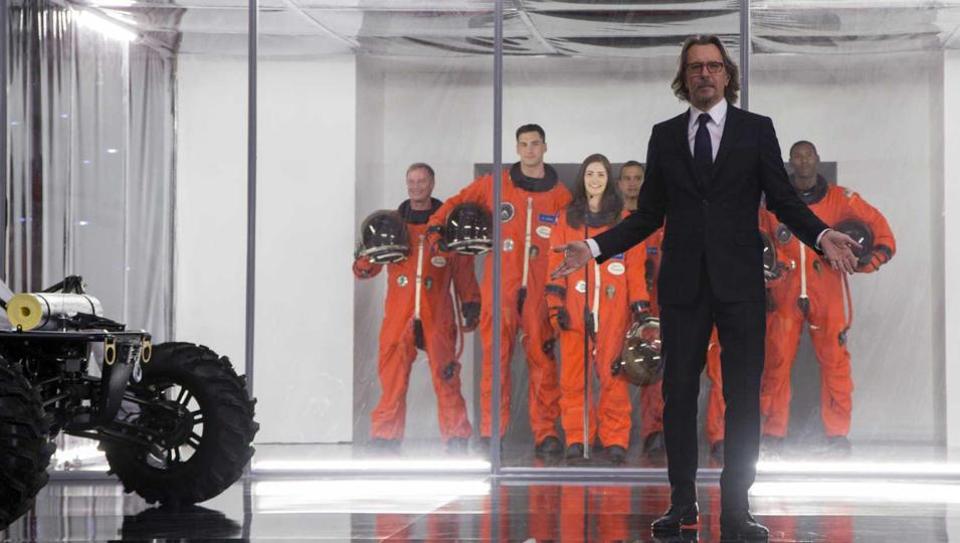
The Space Between Us is a movie that wants to tell its cute romantic story against a backdrop of new-fangled technological advancement and old school moral dilemmas. It’s a movie that bounces from scene to scene with no clear through line, and which lets its lovers on the run scenario get sillier and sillier as Gardner and his only friend on Earth, Tulsa (Robertson), avoid capture by stealing cars at every turn staying one step ahead of a pursuing Shepherd and astronaut-nominally-playing-stepmother-to-Gardner Kendra (Gugino) (with all the technology at Shepherd’s disposal you wonder how he’s so bad at catching up to them). Gardner’s mission on Earth is to find his father, something that should be easy enough as he has a photo of the man with his mother, but the script throws huge curve balls in the way of this, including a detour to a shaman (Birmingham), and a sidetrip to an ER where Gardner’s bone implants (don’t ask) barely register as a concern. And along the way, Gardner gets a crash course in human relationships including how not to sound weird, and losing your virginity (not to be funny, but does anyone remember that Eighties movie, Earth Girls Are Easy?).

There are far too many moments and scenes where the average viewer will be asking themselves, Really? Most of them involve Oldman, whose performance can best be described as desperately seeking relevance. Stuck with some of the movie’s worst dialogue, the more than capable Oldman has no redress against the inanities of both the script and his character. It’s a similar situation for Butterfield, playing a role that requires him to be a science whizz on the one hand but one who’s learned absolutely zero social skills while growing up on Mars (yes, he’s smart and dumb at the same time). Gugino and Robertson have interchangeable roles once you take out the sex, and everyone else has no option but to go along with it all and hope for the best. In the director’s chair, Chelsom keeps things moving in the haphazard way the script (by Allan Loeb) dictates, but he appears to lose interest early on, while Barry Peterson’s sharp and detailed cinematography proves to be one of the movie’s few blessings. At several points, Gardner asks people, What’s your favourite thing about Earth? One answer seems obvious: being able to avoid seeing this inane, stupid movie.

Rating: 3/10 – with its tortured science (just think about the environment Gardner has been living in since birth and ask yourself, would he really suffer on Earth?), and equally tortured YA theatrics, The Space Between Us is a movie that trips over itself continually in its efforts to tell a coherent, relatable story; a waste of everybody’s time and effort, the hint should have been taken back in 1999 when rewrites on the original Mainland script proved unworkable.
Share this:

  • Click to share on X (Opens in new window) X
  • Click to share on Facebook (Opens in new window) Facebook
  • More
  • Click to print (Opens in new window) Print
  • Click to email a link to a friend (Opens in new window) Email
Like Loading...

Brawl in Cell Block 99 (2017)

03 Saturday Feb 2018

Posted by dullwood68 in Movies

≈ 1 Comment

Tags

Crime, Don Johnson, Drama, Jennifer Carpenter, Prison, Review, S. Craig Zahler, Thriller, Udo Kier, Vince Vaughn

D: S. Craig Zahler / 132m

Cast: Vince Vaughn, Jennifer Carpenter, Marc Blucas, Dion Mucciacito, Don Johnson, Udo Kier, Geno Segers, Victor Almanzar, Willie C. Carpenter, Tom Guiry, Clark Johnson, Pooja Kumar, Fred Melamed

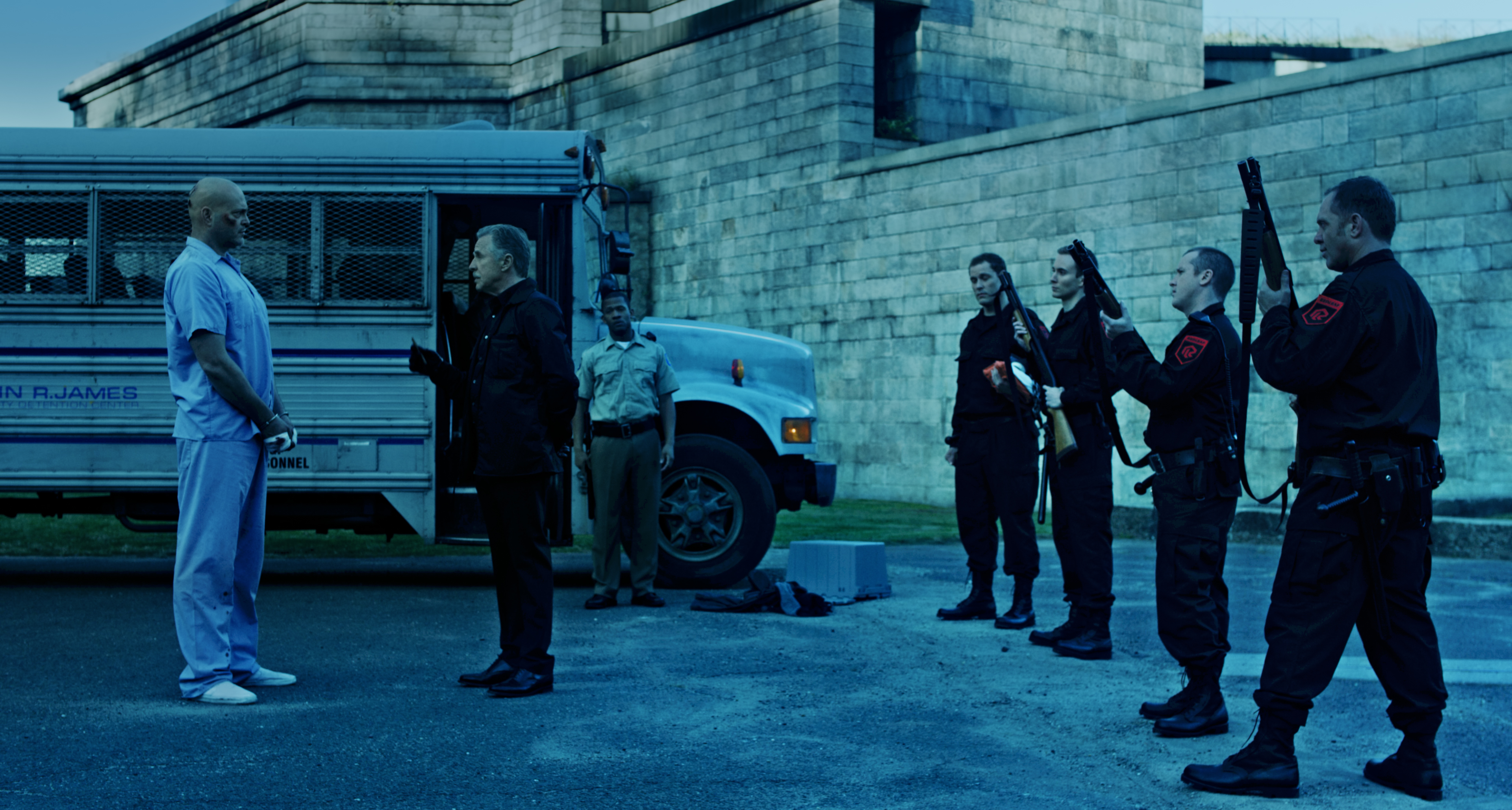
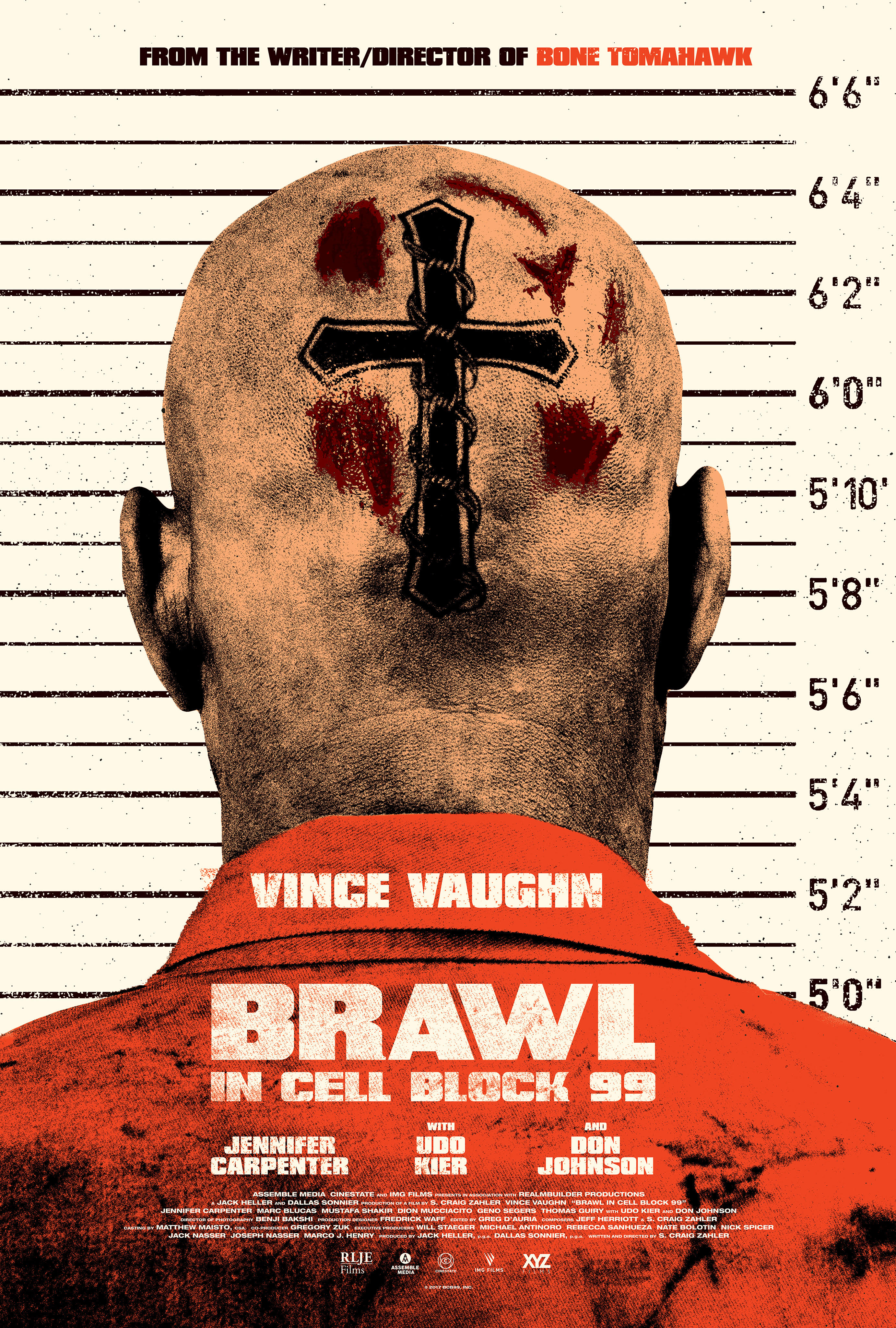
In Craig S. Zahler’s follow up to Bone Tomahawk (2015), Vince Vaughn is Bradley (never Brad) Thomas, a man who turns to being a drug runner when he gets laid off from his job at an auto-repair shop. Eighteen months later, he and his wife, Lauren (Carpenter), are expecting a baby (their second after they lost the first), and living a pretty luxurious lifestyle; crime has been good to them. Bradley works for an old friend, Gil (Blucas), but when Gil goes into partnership with a Mexican drug boss called Eleazar (Mucciacito), their first pick up ends in a shootout with the police and Bradley causing the death of one of Eleazar’s men and incapacitating another. Despite this, he’s sentenced to seven years in a medium security prison. But Eleazar wants revenge. He has Lauren kidnapped, and through an emissary (Kier), lets Bradley know that unless he kills an inmate at a maximum security hellhole called Redleaf, his unborn baby will be “operated on”. Getting transferred to Redleaf is the easy part however, while surviving it, and the regime set up by Warden Tuggs (Johnson), is a whole other matter…

In recent years, Vince Vaughn’s career has been about relinquishing his comic persona in favour of more dramatic roles, from his appearance in Season Two of True Detective (2015) to his role in the Oscar-winning Hacksaw Ridge (2016). Now he gives his best dramatic performance yet as a drug runner with principles, the stoic Bradley Thomas, a man you can hit with a billy club and he’ll barely flinch. It’s a role that keeps him quiet for much of the picture, but with Vaughn it’s all in the eyes and the way they can convey a range of emotions with clarity and precision. You know when Bradley is angry, you know when he’s trying to keep that anger in check, and you know when he’s about to unleash that anger. This all makes Bradley something of a coiled spring, and Vaughn is a commanding physical presence in the role, expertly channelling Bradley’s propensity for extreme violence while maintaining the character’s deep-rooted humanity. Vaughn is never less than convincing, and he brings an intensity to the part that is mesmerising.

He’s ably supported by Carpenter, Kier and Johnson, but while the performances are good, the movie does suffer from a storyline that, once it picks up momentum and Bradley starts hurting people in ever more violent ways, reveals itself to be more than a little on the slight side. There’s a prologue that proves superfluous, while the stretch that leads up to Bradley’s incarceration is long-winded and could have benefited from some judicious cutting (when will movie makers learn that scenes where characters drive from place to place looking thoughtful don’t add anything to a movie?). But even when Bradley does start showing us what he’s really good at, and the movie’s pace increases, what we’re left with is a succession of increasingly violent (and cartoonish) altercations that are well choreographed and executed, but which also appear to be the movie’s sole raison d’être. With this in mind, and despite the visceral and very effective quality of the fight scenes, the movie reveals a hollow centre that stops it from being as rewarding a viewing experience as intended. Zahler is certainly a director of talent, and the movie’s visual aesthetic becomes more and more squalid as Bradley’s descent into prison hell continues. But this is that difficult second feature that doesn’t quite match the promise raised by its predecessor.

Rating: 6/10 – Vaughn’s imposing performance is the main attraction here, and while it helps elevate the material above its grindhouse ambitions, Brawl in Cell Block 99 is still a movie that doesn’t work as well as it should; overlong, and with Bradley impervious to any blows that come his way, there’s too little in the way of actual jeopardy for the character to find himself in, making this a movie where tension is ignored, and nihilism is the primary order of the day.

Share this:

  • Click to share on X (Opens in new window) X
  • Click to share on Facebook (Opens in new window) Facebook
  • More
  • Click to print (Opens in new window) Print
  • Click to email a link to a friend (Opens in new window) Email
Like Loading...

The Clapper (2017)

02 Friday Feb 2018

Posted by dullwood68 in Movies

≈ 1 Comment

Tags

Amanda Seyfried, Comedy, Dito Montiel, Drama, Ed Helms, Infomercials, Literary adaptation, Review, Romance, Tracy Morgan

D: Dito Montiel / 90m

Cast: Ed Helms, Amanda Seyfried, Tracy Morgan, Adam Levine, Russell Peters, P.J. Byrne, Brenda Vaccaro, Leah Remini

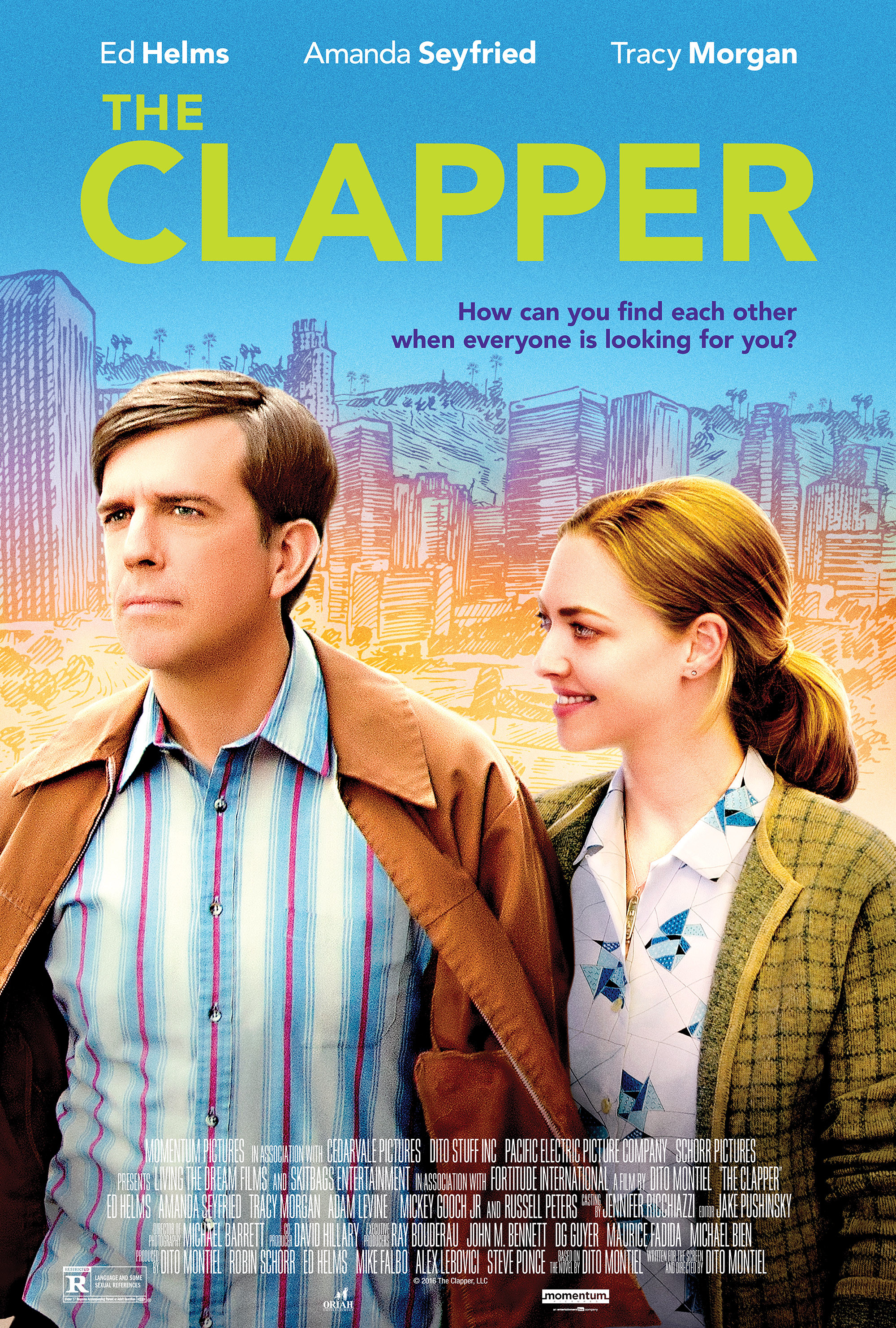
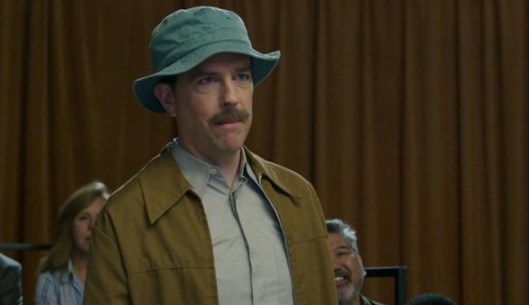
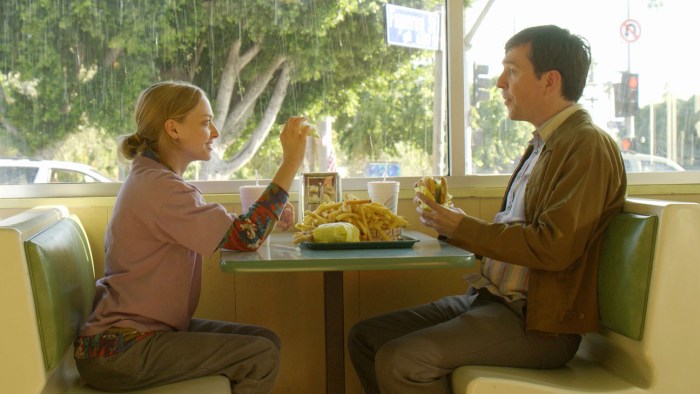
Eddie Krumble (Helms) is a professional clapper, a paid audience member of informercials who sometimes gets paid extra for asking a question, or standing out from the crowd in some other way. It’s not the best paid job in the world, but Eddie is kept busy, and along with his best (and only) friend, Chris (Morgan), he makes a good enough living to suit his needs. He’s also struck up an unlikely friendship with a young woman, Judy (Seyfried), who works at a gas station. But just as they begin dating, a late night TV show shines a spotlight on Eddie’s clapper activities, and asks the question, Who is the Clapper? This unwanted attention causes problems for Eddie as he doesn’t want the exposure, and it leads to Judy being fired from her job at the gas station. Not knowing how to contact her, and with the TV show still trying to track him down, Eddie hits on an idea that he thinks will keep everyone happy: he’ll appear on the show and ask people to help him find Judy. But Eddie’s efforts backfire, and soon it looks as if he and Judy are destined never to be reunited.

snap1.44861.4

In adapting his own novel, writer/director Dito Montiel has crafted an uneven yet enjoyable movie that tries to take a number of heavy-handed potshots at lowest common denominator television, while also featuring a sweetly nuanced romance, and a deft exploration of the lasting effects of overwhelming grief. In targeting the exploitative nature of some US TV shows, Montiel’s approach feels a little old and past its time, and it lacks the satirical bite that’s needed for his barbs to hit home with the required effect. The burgeoning romance between Eddie and Judy is handled with a lightness of touch that is magnified by the just-this-side of overbearingly cute performances by Helms and Seyfried. In their capable hands, what could have been sickly and off-putting is instead winning and delightful, a meeting of unsure hearts and minds with each needing to protect themselves as much as possible while also trying to find the courage to make a commitment. Their romance is touching and sincere, and the awkwardness each feels is tenderly expressed on both sides, with Eddie’s nervous ramblings a perfect foil for Judy’s equally nervous uncertainty.

But where the movie really works is in its depiction of the emotional troubles affecting Eddie, and his consternation at being singled out. Helms is terrific as Eddie, a man just trying to get along without being noticed, and trying to put a devastating trauma behind him. There’s a frailty and an anger and a desperation in Eddie, and they all threaten to leak out and overwhelm him, and Helms is at his best when showing us how his character is trying to keep all these feelings in check. There are moments when it seems as though Montiel has let Helms run with a scene, and if this is true, then it was a wise decision; this is one of Helms’s finest performances. However, it’s a performance that can’t make up for some of the other decisions Montiel has made, such as the late inclusion of Vaccaro as Eddie’s mother (there just to push Eddie into a necessary narrative corner), and the length of time that Eddie remains anonymous (when she wants to, Judy finds his agent/manager with ease; yet the TV show struggles for weeks to do the same thing). The tone of the piece changes too often as well, with the disparate storylines not always fitting well together. Nevertheless, this is diverting enough to warrant maybe a repeat watch, just for the pleasure of seeing Helms at his best.

Rating: 7/10 – that man Helms rescues The Clapper from a lower score purely by the strength and subtlety of his performance, and Montiel’s inspired decision to cast him; Morgan too is on good form, and so is Seyfried (even if she’s given less and less to do as the movie progresses), but narrative inconsistencies, and a sense that Montiel hasn’t fully locked in the script, undermine the good work on show elsewhere, leaving the movie feeling likeable yet also incomplete.

Share this:

  • Click to share on X (Opens in new window) X
  • Click to share on Facebook (Opens in new window) Facebook
  • More
  • Click to print (Opens in new window) Print
  • Click to email a link to a friend (Opens in new window) Email
Like Loading...

Monthly Roundup – January 2018

31 Wednesday Jan 2018

Posted by dullwood68 in Movies

≈ 2 Comments

Tags

Adrian Molina, Alexander Payne, Animation, Anthony Gonzalez, Awakening the Zodiac, Chadwick Boseman, Christoph Waltz, Coco, Comedy, Darkest Hour, Downsizing, Drama, Dylan Minnette, Fabrice du Welz, Family Fever, Gael García Bernal, Gary Oldman, Germany, Hallie Meyers-Shyer, History, Home Again, Horror, Jaume Collet-Serra, Joe Wright, Jonathan Wright, Kathrin Waligura, Kristin Scott Thomas, Lee Unkrich, Leslie Bibb, Liam Neeson, Matt Angel, Matt Damon, Meryl Streep, Message from the King, Mexico, Michael Sheen, Nico Sommer, Peter Trabner, Pixar, Reese Witherspoon, Reviews, Romance, Serial killer, Shane West, Steven Spielberg, Suzanne Coote, The Commuter, The Open House, The Pentagon Papers, The Post, The Washington Post, Thriller, Tom Hanks, True story, Vera Farmiga

Awakening the Zodiac (2017) / D: Jonathan Wright / 100m

Cast: Shane West, Leslie Bibb, Matt Craven, Nicholas Campbell, Kenneth Welsh, Stephen McHattie

Rating: 4/10 – no one knew it at the time but the notorious (and uncaptured) Zodiac killer filmed the murders he committed, something cash-strapped couple Mick and Zoe Branson (West, Bibb) discover when they come into possession of one of the reels, and then find themselves and those around them targeted by the Zodiac killer himself; there’s the germ of a good idea lurking somewhere in Awakening the Zodiac, but thanks to a sloppy script, wayward direction, and an indifferent approach to the Zodiac killer himself (by the end he’s just a generic movie-made serial killer), this never gets out of first gear, and settles for trundling along and signposting each narrative development with all the skill and style of a one-legged man at an ass-kicking contest.

Home Again (2017) / D: Hallie Meyers-Shyer / 97m

Cast: Reese Witherspoon, Michael Sheen, Candice Bergen, Pico Alexander, Jon Rudnitzky, Nat Wolff, Lake Bell

Rating: 7/10 – when middle-aged fledgling interior designer Alice (Witherspoon) splits from her unreliable husband (Sheen), the last thing she expects to do is allow three young men trying to break into the movie business to move into her guest house – and then become romantically involved with one of them (Alexander); it’s hard to criticise Home Again because despite it being almost drama-free and the very definition of innocuous, it also just wants to give audiences a good time, and on that very basic level it succeeds, but it’s still possibly the most lightweight romantic comedy of 2017.

Downsizing (2017) / D: Alexander Payne / 135m

Cast: Matt Damon, Christoph Waltz, Hong Chau, Kristen Wiig, Rolf Lassgård, Udo Kier, Søren Pilmark, Jason Sudeikis

Rating: 5/10 – the answer to the world’s population crisis is revealed to be shrinking people to the point where they’re five inches tall, something that sad-sack occupational therapist Paul Safranek (Damon) agrees to with alacrity, but being small proves to be no different from being normal-sized, and soon Paul is having to re-think everything he’s ever thought or believed; a closer examination of Downsizing (under a microscope perhaps) reveals a movie that contains too many scenes that pass by without contributing anything to the overall storyline, and a satirical approach to the idea itself that lacks purpose, and sadly for Payne fans, his trademark wit, making it all a dreary, leaden experience that goes on for waaaaaay too long.

Family Fever (2014) / D: Nico Sommer / 71m

Original title: Familien fieber

Cast: Kathrin Waligura, Peter Trabner, Deborah Kaufmann, Jörg Witte, Jan Amazigh Sid, Anais Urban

Rating: 7/10 – when two sets of parents get together for the weekend at the request of their respective children (who are a couple), none of them are able to deal with the fallout that comes with the revelation of a secret that threatens the security of both marriages; a German comedy/drama that doesn’t always go where the viewer might expect it to, Family Fever revels in the awkwardness and frustration felt by its quartet of main characters, and though it sadly runs out of steam in the last fifteen minutes, by then it’s done more than enough to provide plenty of wicked laughs and affecting drama.

Coco (2017) / D: Lee Unkrich, Adrian Molina / 105m

Cast: Anthony Gonzalez, Gael García Bernal, Benjamin Bratt, Alanna Ubach, Renee Victor, Jaime Camil, Alfonso Arau

Rating: 8/10 – Miguel (Gonzalez) is a young boy whose family has rejected any kind of music in order to focus on selling shoes, which leads him into all sorts of trouble in the Underworld on Mexico’s Day of the Dead, trouble that could also mean his never returning to the land of the living; right now you’re never quite sure how a Pixar movie is going to work out, but Coco is a treat, its mix of clever character design, beautifully rendered animation (naturally), heartfelt storylines, and memorable songs making it one to savour time and again… though, be warned, you will be in tears towards the end.

Darkest Hour (2017) / D: Joe Wright / 125m

Cast: Gary Oldman, Kristin Scott Thomas, Lily James, Stephen Dillane, Ben Mendelsohn, Ronald Pickup, Nicholas Jones, Samuel West

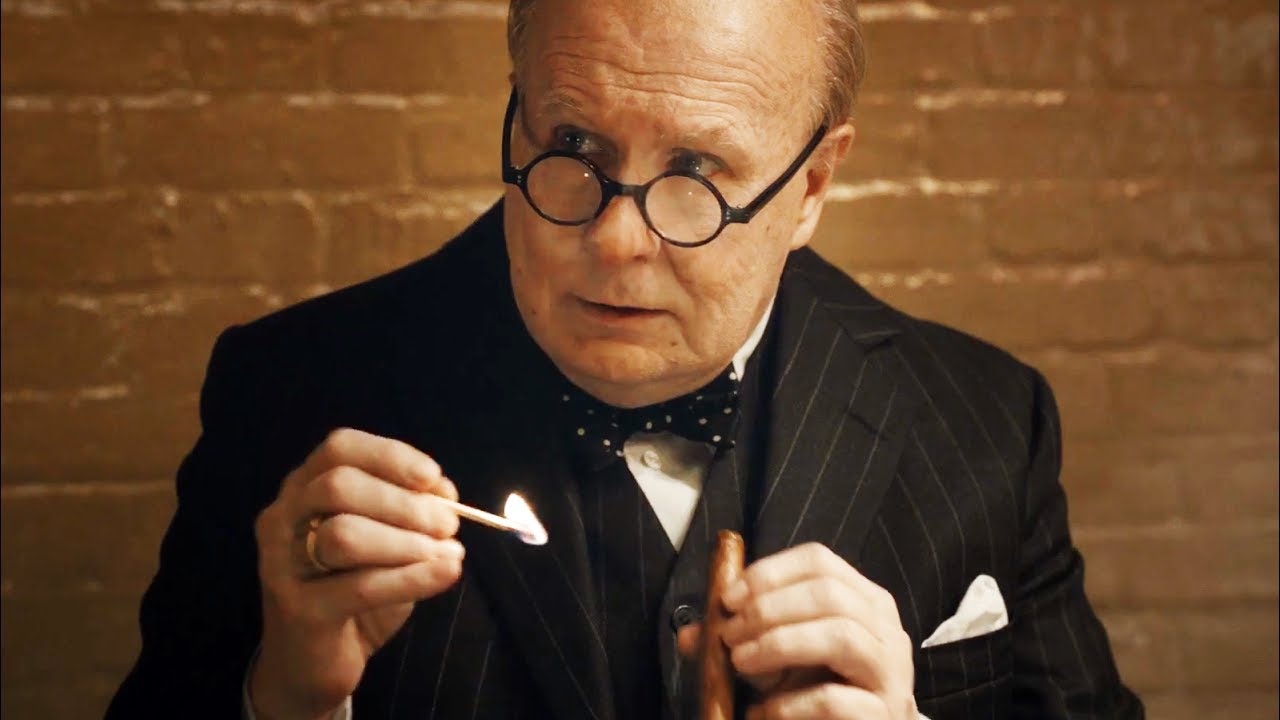
Rating: 8/10 – it’s 1940 and Great Britain is faced with a challenge: who is to lead them against the fast-approaching menace of the Nazis, and if it has to be Winston Churchill (Oldman), then what can be done to undermine him and his authority?; the answer is quite a bit – for the most part – but history is firm on Churchill’s success, and so Darkest Hour, while featuring a superb performance from Oldman, has no choice but to succumb to retelling events that have already been retold numerous times before, and in doing so doesn’t offer the viewer anything new except for a number of very good performances and assured, and surprisingly sinewy direction from Wright.

Message from the King (2016) / D: Fabrice du Welz / 102m

Cast: Chadwick Boseman, Luke Evans, Alfred Molina, Teresa Palmer, Natalie Martinez, Arthur Darbinyan, Lucan Melkonian, Diego Josef, Tom Felton, Chris Mulkey, Jake Weary

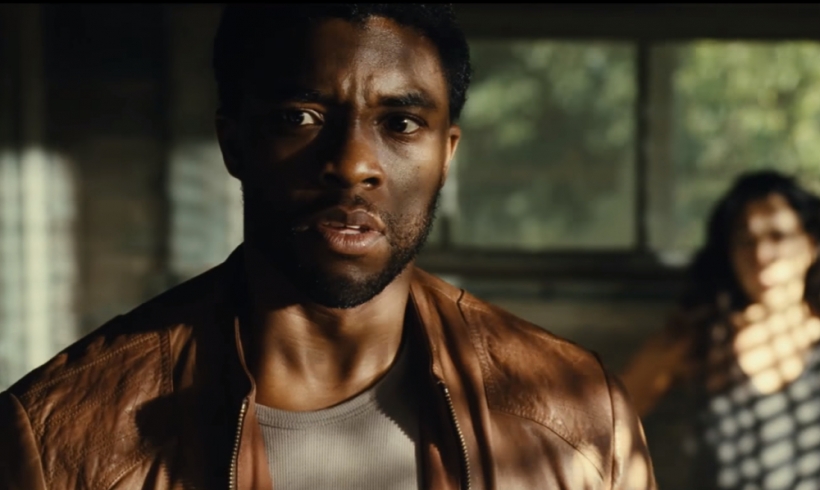
Rating: 5/10 – when his younger sister dies in suspicious circumstances in Los Angeles, South African cab driver Jacob King (Boseman) travels there to find out who caused her death and why – and exact revenge; a throwback to the kind of blaxploitation movies made in the Seventies, Message from the King at least refers to King as an angry brother in the traditional sense, but the movie’s plot is hollow, and the likes of Evans and Molina are wasted in roles that might have seemed fresh (again) in the Seventies, but here feel like caricatures for the movie to focus on in between bouts of King exacting his violent revenge.

The Commuter (2018) / D: Jaume Collet-Serra / 105m

Cast: Liam Neeson, Vera Farmiga, Patrick Wilson, Jonathan Banks, Sam Neill, Elizabeth McGovern, Killian Scott, Shazad Latif, Andy Nyman, Clara Lago, Roland Møller, Florence Pugh

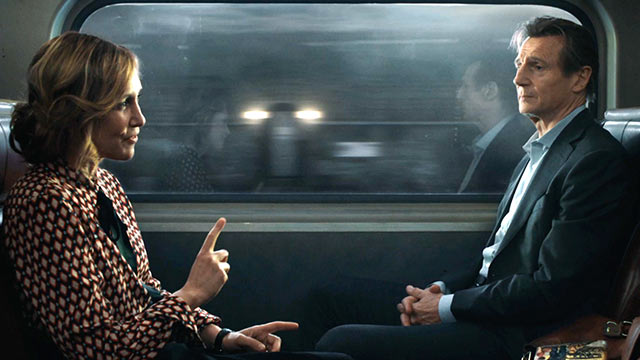
Rating: 4/10 – ex-cop turned insurance salesman Michael MacCauley (Neeson) is approached by a mysterious woman (Farmiga) on his train home and tasked with finding a complete stranger who’s also on the train – what could possibly go wrong?; everything as it turns out, with The Commuter going off the rails soon after, and never getting back on track, something confirmed (if there was any doubt before then) when the script throws in an “I’m Spartacus/I’m Brian” moment (take your pick), as well as reminding everyone that Neeson really is too old for this kind of thing.

The Post (2017) / D: Steven Spielberg / 116m

Cast: Meryl Streep, Tom Hanks, Sarah Paulson, Bob Odenkirk, Tracy Letts, Bradley Whitford, Bruce Greenwood, Matthew Rhys, Alison Brie, Carrie Coon, Jesse Plemons, David Cross, Zach Woods, Pat Healy

Rating: 9/10 – the publication of the Pentagon Papers, which exposed the level of deceit the US government had perpetrated on its citizens about its involvement in Vietnam, is explored through the days leading up to the Washington Times‘ courageous decision to publish despite the threat of imprisonment for treason that the White House was prepared to enforce; Streep is publisher Kay Graham, Hanks is legendary editor Ben Bradlee, and Spielberg is on excellent form, giving The Post a sense of immediacy and potency that other historical dramas can only dream of (and the relevance to today’s US political scene doesn’t even need to be made obvious).

The Open House (2018) / D: Matt Angel, Suzanne Coote / 94m

Cast: Dylan Minnette, Piercey Dalton, Patricia Bethune, Sharif Atkins, Aaron Abrams, Edward Olson, Katie Walder

Rating: 3/10 – a recent widow (Dalton) and her mopey son (Minnette) get away from their grief and their problems at a house that’s up for sale – and find strange things going on there right from the start; an awful thriller that just refuses to make any sense or make either of its two main characters sympathetic, The Open House does everything it can to make you look away… and not in a good way.

Share this:

  • Click to share on X (Opens in new window) X
  • Click to share on Facebook (Opens in new window) Facebook
  • More
  • Click to print (Opens in new window) Print
  • Click to email a link to a friend (Opens in new window) Email
Like Loading...

Snake in the Eagle’s Shadow (1978)

30 Tuesday Jan 2018

Posted by dullwood68 in Movies

≈ Leave a comment

Tags

Action, Comedy, Drama, Hong Kong, Hwang Jang Lee, Jackie Chan, Martial arts, Review, Se ying diu sau, Thriller, Yuen Siu Tin, Yuen Woo-Ping

Original title: Se ying diu sau

D: Yuen Woo-Ping / 98m

Cast: Jackie Chan, Yuen Siu Tin, Hwang Jang Lee, Dean Shek, Roy Horan, Fung Hark-On, Chen Yao Lin, Chen Tien Lung, Chiu Chi Ling, Gam Yam, Hsu Hsia

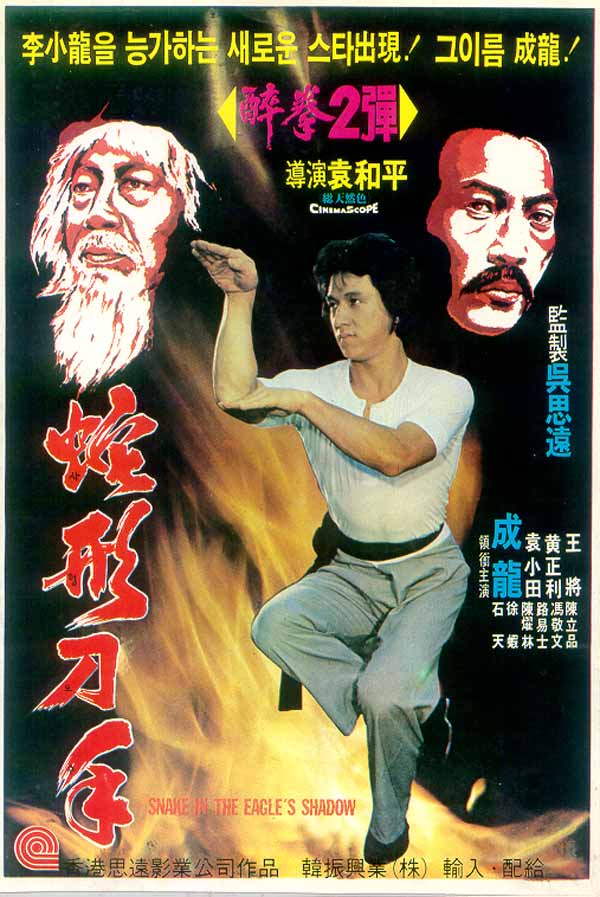
The movie that really kickstarted Jackie Chan’s career, Snake in the Eagle’s Shadow is a compendium of established martial arts stylings with added humour that remains as fresh today as it was forty years ago. Which, on the face of it, seems unlikely, as the story is so conventional that the average viewer could work out what’s going to happen even if they’ve never seen a Hong Kong martial arts movie before. There are two rival clans, one that uses the Eagle Claw style of fighting, and one that uses the Snake style. The leader of the Eagle Claw clan, Lord Sheng Kuan (Hwang), has sworn to kill each and every member of the Snake clan, and is on the trail of one of the last surviving masters of said clan, Pai Cheng-Tien (Yuen). Fleeing Kuan, Pai ends up in a small town where he befriends Chien Fu (Chan), a janitor at a kung fu school who is mistreated by his masters. Pai teaches Chien how to defend himself using the Snake style of fighting, and Chien proves a fast learner… which proves to be a huge benefit when Kuan makes his presence known in the town.

The master and the pupil is a popular storyline in martial arts movies, and here it’s the source of much of the humour, as Pai uses a variety of (often) humiliating techniques to help Chien learn faster. The rival clans, necessarily good and bad, are another staple, and proud fighters squaring off against each other with determined faces is yet another, but though the movie provides enough familiarity to keep audiences reassured that they’ll have a good time, what it does so much more effectively is in depicting each individual fight scene in a way that makes each one seem fresh and unforced. With so many fight scenes crammed in to what is a relatively short running time, there’s the likelihood that they’ll all merge into one by the end, but the choreography is so expertly done, and so focused on showing the technique involved as well as the speed and the precision, that much of what is shown is breathtaking in both its simplicity and its impact (and it’s the only movie where you’ll see Jackie Chan kill someone with a groin strike). The only disappointment comes with the final showdown between Chien and Kuan, a sequence that suffers from some very choppy editing, and which lacks the flow of earlier encounters.

Away from the action there’s mileage to be had from Shek’s turn as the abusive Teacher Li, a character so rotten you wish for a better comeuppance than he receives (though he is part of a marvellous piece of physical slapstick with Chan that is one of the movie’s several highlights), and an equally enjoyable turn by Yuen (the director’s father) as the impish and badly be-wigged Grandmaster Pai. Hwang proves to be a smooth and likeable villain (for a change), even though his obsession with killing the Snake clan is a little genocidal, and the presence of Horan as a sword-wielding Russian masquerading as a priest adds an extra dimension to the fighting styles on show. But this is Chan’s breakthrough role, and the movie trains its focus on him at every turn, capturing every knowing smile and perplexed expression. You can argue that in his early movies Chan wasn’t really required to “act” because his physical presence and abilities were more important, but it’s clear that he’s aware of his limitations. This helps him give an enjoyable, spirited performance, and one that remains as entertaining now as it was then.

Rating: 8/10 – the debut feature of Yuen Woo-Ping, Snake in the Eagle’s Shadow is a martial arts movie that overcomes its prosaic storyline and simple plotting to provide a hugely satisfying experience; with intricate, complex fight choreography and very basic (and amusing) sound effects to accompany every blow, this is Cat’s Claws above the majority of Hong Kong martial arts movies made at the time, and a bona fide classic of the genre.

Share this:

  • Click to share on X (Opens in new window) X
  • Click to share on Facebook (Opens in new window) Facebook
  • More
  • Click to print (Opens in new window) Print
  • Click to email a link to a friend (Opens in new window) Email
Like Loading...

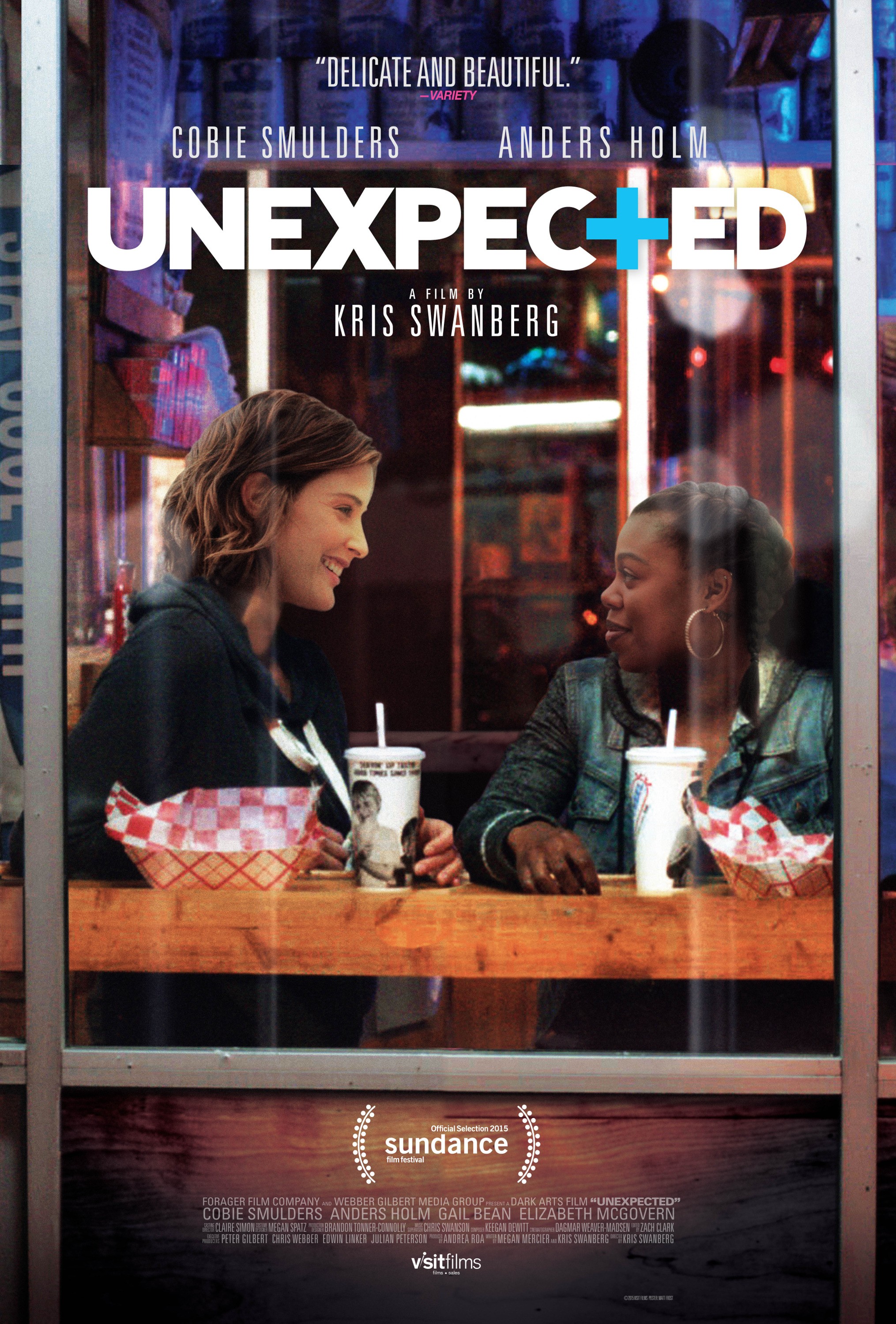
Unexpected (2015)

28 Sunday Jan 2018

Posted by dullwood68 in Movies

≈ Leave a comment

Tags

Anders Holm, Catch Up movie, Cobie Smulders, Comedy, Drama, Friendship, Gail Bean, High School, Kris Swanberg, Pregnancy, Review

D: Kris Swanberg / 85m

Cast: Cobie Smulders, Anders Holm, Gail Bean, Elizabeth McGovern, Aaron J. Nelson, Tyla Abercrumbie, Audrey Morgan

A teacher at a Chicago inner city high school, Samantha Abbott (Smulders) has a dilemma: what to do when the high school closes in a few months’ time. She thinks she’s found the ideal job to apply for, but then another dilemma presents itself: she finds out she’s pregnant. Terrified by the implications that come with being pregnant, as well as the future responsibilities of being a parent, Samantha doesn’t know what to do. Luckily, her partner, John (Holm), knows exactly what she should do: marry him, and when the baby is born, spend a couple of years as a stay-at-home mother before working again. So, they get married, and Samantha continues to teach. This leads to the discovery that one of her brightest pupils, Jasmine (Bean), is also pregnant. So what is a scared, confused thirty year old teacher to do in such circumstances? The answer is to support Jasmine as much as possible with her college applications, and her pregnancy, while at the same time coping poorly with her own upcoming “blessed event”. After all, what could possibly go wrong?

At first glance, Unexpected appears to be about – yes, you’ve guessed it – being pregnant. However, a closer look reveals that it’s as much about the friendship that develops between Samantha and Jasmine as it is about anything else. Sure, they have pregnancy in common, but it’s how they share their thoughts and feelings about it, and their experiences of being pregnant, that carries the most weight. We see Samantha poring over books on pregnancy, trying desperately to work out if she’s doing it right, seeking approbation, and finding it through her support for Jasmine. Of the two, Jasmine is the more confident mother-to-be, her background and personal situation making her more able to cope with any issues or problems that arise. In many respects, Samantha behaves in a less mature manner than Jasmine does, so much so that when John rebuffs her complaints about not getting the job she wants by telling her to “get over it”, you have to agree with him (though that may not be the response director Kris Swanberg and co-screenwriter Megan Mercier are looking for).

Though the movie does address a number of pregnancy-related issues – finding a college place with a baby in tow, what to do if the father isn’t involved – it does so in a lightweight, easy-going manner that doesn’t allow for much in the way of real drama. Even when Samantha and Jasmine have an inevitable falling out, it’s all done in such a restrained, matter-of-fact way that the entire moment lacks conviction and power. What Swanberg and Mercier have done is to construct a story that plays out in what feels like a very normal fashion, and with mistakes being made by both expectant mothers. It’s a simple approach, one that’s enhanced by two terrific performances from Smulders and Bean, who both display a notable sincerity in their roles, and a thorough understanding of their characters’ emotional make-up (Smulders was actually pregnant during shooting, definitely a happy coincidence). As a slice of life drama it weaves its story with ease, and the comic elements add spice to the mix, making the movie enjoyable if not particularly invigorating. With little or no relevance to the wider world it takes place in, this exercise in female bonding solves its characters’ problems too easily to be wholly effective, but as if to make up for it, is unremittingly charming throughout.

Rating: 7/10 – low-key and thoughtful are two words that spring to mind when thinking about Unexpected, but these are strengths in a movie that avoids any real calamity in case it breaks the mood; inviting popularity with every scene, it’s a movie equivalent of a work-out that doesn’t make you sweat, but which still leaves you feeling good when you’ve finished.

Share this:

  • Click to share on X (Opens in new window) X
  • Click to share on Facebook (Opens in new window) Facebook
  • More
  • Click to print (Opens in new window) Print
  • Click to email a link to a friend (Opens in new window) Email
Like Loading...

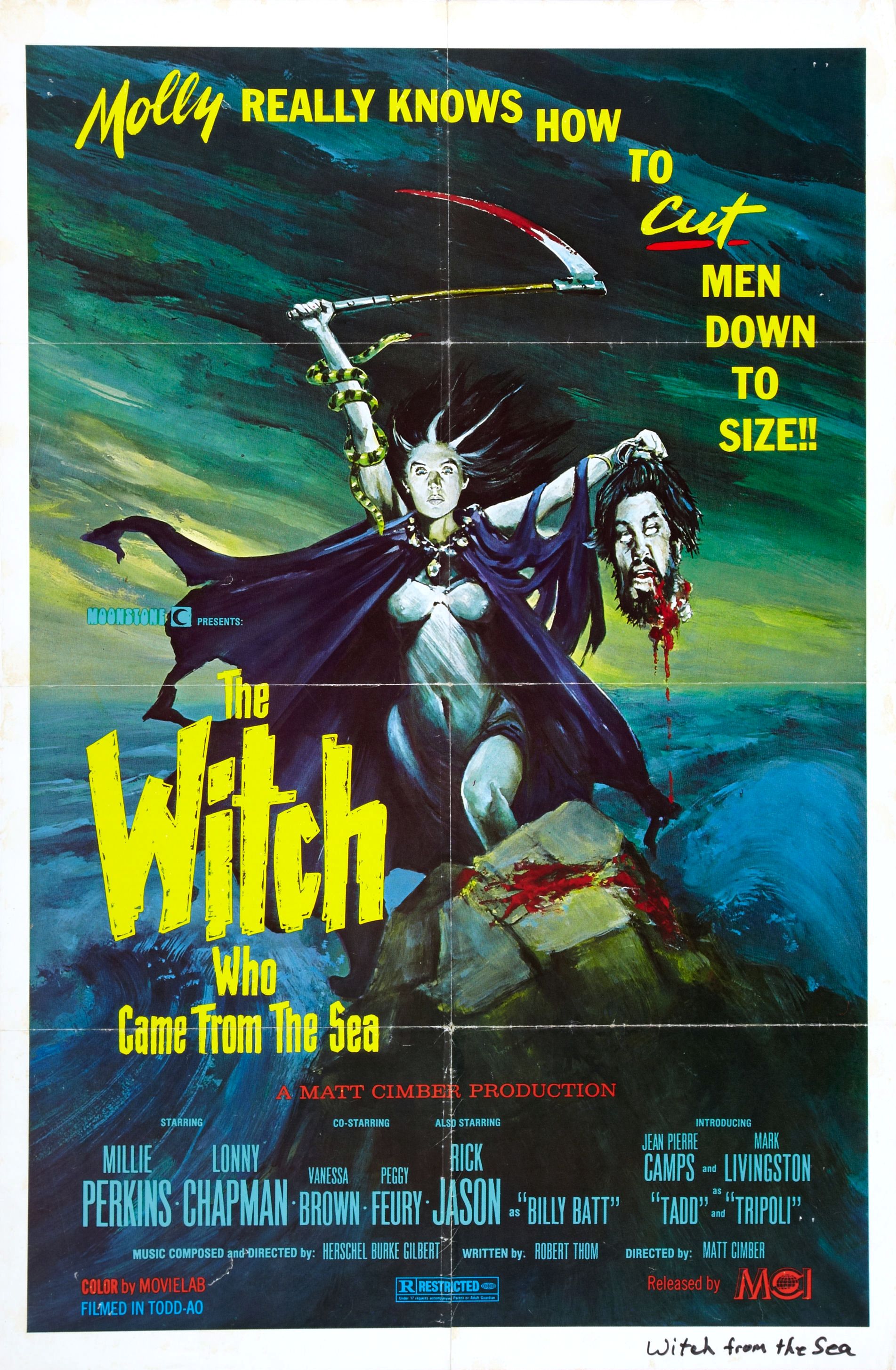
The Witch Who Came from the Sea (1976)

27 Saturday Jan 2018

Posted by dullwood68 in Movies

≈ Leave a comment

Tags

Abuse, Drama, Lonny Chapman, Matt Cimber, Millie Perkins, Murder, Psychological thriller, Review, Robert Thom, Vanessa Brown, Video nasty

D: Matt Cimber / 87m

Cast: Millie Perkins, Lonny Chapman, Vanessa Brown, Peggy Feury, Jean Pierre Camps, Mark Livingston, Rick Jason, Stafford Morgan, Richard Kennedy, George ‘Buck’ Flower, Roberta Collins

As a child, Molly (Perkins) was sexually abused by her father. As an adult, Molly works in a bar called the Boathouse, and is in a relationship with the owner, Long John (Chapman). She has a sister, Cathy (Brown), and two young nephews she adores, Tadd (Camps) and Triploi (Livingston). She regales her nephews with tales of their grandfather and what a kind, loving man he was, a captain of a ship who was lost at sea when she was much younger. The two boys believe her stories completely, but these fantasies are indicative of the struggle that Molly is having in dealing with the psychological trauma of her childhood. She experiences a fever dream in which she kills two famous football players, but when the two men are found dead, Molly faces an even greater struggle to stop herself from falling victim to the murderous rages that come over her whenever she’s around men who remind her of her father, or who project a certain masculine image through television adverts.

A movie that was once regarded in the UK as a “video nasty”, The Witch Who Came from the Sea is an under-rated psychological thriller (with horror overtones) that charts one woman’s descent into madness in a way that is both haunting and disturbing. The movie is directed with great skill by Cimber, and there’s a terrific central performance from Perkins, but the key player here is sceenwriter Robert Thom. During the Seventies, Thom wrote the screenplays for Bloody Mama (1970), Death Race 2000 (1975), this, and several others. All were low budget movies that like this one, thrived on Thom’s ability to exceed audience expectations thanks to his unerring ability to ground even the most extreme incidents, and his sharp ear for dialogue. Thom started out writing for the theatre, and there are moments where the movie feels like it’s a play that has been adapted for the screen. This gives the movie a greater sense of depth, and a greater sense of tragedy as events unfold. As Molly drifts between reality and fantasy, and becomes increasingly unable to differentiate between the two, Thom’s layered screenplay, Perkins’ bold portrayal, and Cimber’s restrained yet visceral direction, combine to create a movie that is hard to look away from – but in a good way.

For an actress who has never been entirely comfortable with the trappings of being an actress, Perkins gives a formdiable performance, investing Molly with a forlorn, anxious appearance that affords glimpses of self-awareness in amongst her mostly irrational behaviour. She’s also able to make Molly’s dialogue sound at times like an interior monologue, an effect that further illustrates the emotional and psychological dysfunction she’s experiencing. Perkins is provided with fine support from the likes of Chapman, Brown and Feury (as another Boathouse waitress who provides Molly with “pharmaceutical assistance”), and Cimber ensures that even the smallest of roles fits in neatly with the overall scenario. The visual look of the movie is quite subdued, with mostly grey and brown tones used throughout, but the cinematography – by Ken Gibb and Dean Cundey – is a good match for the dark emotional undercurrents that pepper the screenplay. Also effective is the decision to distort the audio during those sequences when Molly can’t tell if she’s fantasising about killing someone, or is actually doing it. It’s all done very cleverly, and takes the movie far from the exploitation trappings that viewers might be expecting.

Rating: 8/10 – far better than it perhaps has any right to be on paper, The Witch Who Came from the Sea is a first-rate psychological thriller that is unsettling, and oppressive, for much of its running time; Perkins gives an exceptional performance, and the whole tortured narrative feels disarmingly organic, with any missteps serving only to highlight just how good this movie is, and how well it’s been put together.

Share this:

  • Click to share on X (Opens in new window) X
  • Click to share on Facebook (Opens in new window) Facebook
  • More
  • Click to print (Opens in new window) Print
  • Click to email a link to a friend (Opens in new window) Email
Like Loading...

Foreign Moon (1996)

26 Friday Jan 2018

Posted by dullwood68 in Movies

≈ Leave a comment

Tags

Chen Daming, Chen Hsaio-hsuan, Drama, Harrison Liu, London, Music student, Review, Romance, Zeming Zhang

D: Zeming Zhang / 87m

Cast: Chen Hsiao-hsuan, Harrison Liu, Chen Daming, David Tse, Hong Xiang, Jian Rui Chao, Tanya Broome, Vanessa Earl

Arriving in London from Mainland China, Lan Lan (Chen Hsiao-hsuan) is a music student finding herself stranded at Waterloo Station when her sponsor doesn’t show up to collect her. She approaches a Chinese man, Su Tong (Liu), who helps her find her sponsor’s home, but when she learns her sponsorship comes with a major string attached – marriage to her sponsor’s son, Charles (Tse) – she soon leaves. With nowhere else to go she turns again to Su Tong who finds her somewhere to live and helps her navigate the confusing requirements of college scholarships and living in London. In time, Su Tong persuades her to live with both him and his younger friend, Deng Lin (Chen Daming), and help them with their new Chinese takeaway/delivery business. Despite Su Tong having a wife and a young son back in China, Lan Lan begins to develop feelings for him, feelings that he appears to have for her in return. With both of them too afraid to reveal their feelings for each other, it takes a violent intervention to highlight the strength of the emotional bond they’ve developed, but also why they shouldn’t act on it…

What first appears to be an examination of the experiences of a Chinese student coming to London for the first time, Foreign Moon soon morphs from a promising (if lightweight) fish out of water tale into something quite different. Unconcerned with making Lan Lan’s story one that sees her hampered by bureaucracy – which would have been a more predictable path to take – writer/director Zeming instead develops it into a delicate romantic drama, one that retains a healthy respect for Chinese norms of behaviour, while also recognising that China and its influences are a long way off.

The trio of central characters all act and behave in ways that are understandable given the close quarters that all three live and work in, and Zeming ensures that the drama that unfolds as strains are placed on all of them – Lan Lan tries to hide her feelings for Su Tong, he has to deal with the disappointment of his wife and child having to remain in China, Deng Lin allows his hedonistic lifestyle to get him into trouble – isn’t allowed to become melodramatic, but remains realistic instead. Zeming achieves this through close attention to the characters’ emotional states, and dialogue that remains naturalistic throughout.

It’s a shame then that the performances aren’t always able to match the quality of Zeming’s script. Chen Hsiao-hsuan makes her feature debut here, and though she’s a beguiling and appealing presence, there are moments where her inexperience catches her out, and the demands of the role remain unfulfilled. Similarly, Daming Chen, though exuding confidence in his role as a young Chinese man with only three things on his mind: sex, money, and a passport, is allowed to overdo the angry young man that Deng Lin is required to be at times. Liu however, is a strong focal point, his grasp of the emotional and cultural responsibilities facing Su Tong adding gravitas to a role that could have been far less complex, and easily so. On the plus side, Zeming doesn’t make London another character in the drama, but uses it as an ordinary backdrop (though Piccadilly Circus does get more than the one look-in). The interiors are equally well handled, stage sets that don’t feel like stage sets, and they’re explored more throughly than expected thanks to Lik Lu’s probing camerawork, creating a verité feel that grounds the action effectively and with a fine attention to detail.

Rating: 8/10 – with its story of two not-quite lovers wanting to connect with each other but afraid to do so, Foreign Moon isn’t an original piece by any means, but it has a sincerity and a humanity that singles it out from other, similar movies; Zeming directs with a directness that doesn’t allow for ambiguity or misunderstanding – which in some ways is refreshing – while his cast, despite the drawbacks mentioned already, help make this a perceptive and engaging viewing experience.

NOTE: Sadly, there’s no trailer available for Foreign Moon.

Share this:

  • Click to share on X (Opens in new window) X
  • Click to share on Facebook (Opens in new window) Facebook
  • More
  • Click to print (Opens in new window) Print
  • Click to email a link to a friend (Opens in new window) Email
Like Loading...

Final Portrait (2017)

25 Thursday Jan 2018

Posted by dullwood68 in Movies

≈ Leave a comment

Tags

Alberto Giacometti, Armie Hammer, Art, Comedy, Drama, Geoffrey Rush, James Lord, Literary adaptation, Painting, Paris, Review, Stanley Tucci

D: Stanley Tucci / 90m

Cast: Geoffrey Rush, Armie Hammer, Clémence Poésy, Tony Shalhoub, Sylvie Testud

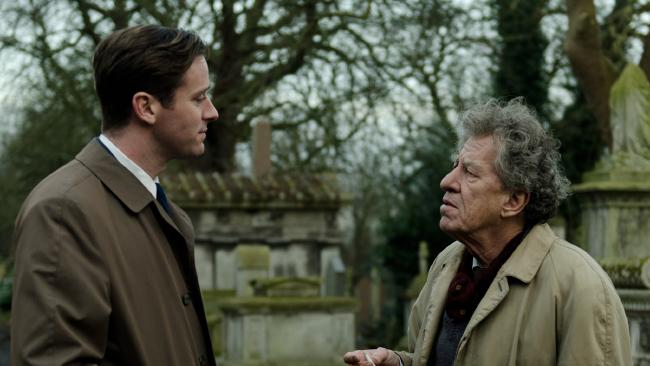
In 1964, the writer James Lord (Hammer) is in Paris on a short trip when his friend, the artist Alberto Giacometti (Rush), asks him to sit for a portrait. Giacometti initially says it will take a few hours – one afternoon – but his own eccentricities and his own self-doubts mean that one afternoon becomes several weeks, and Lord is faced with postponing his return to the US until the portrait is finished. Giacometti works in fits and starts, and his personal life often interferes with his progress with the painting. There are long-standing animosities between Giacometti and his wife, Annette (Testud), that are exacerbated by his relationship with Caroline (Poésy), whose portrait he’s also painting. As the time passes, Lord becomes an observer of Giacometti’s life and work, and his insecurities and obsessions.

Based on the biography written by Lord a year later, A Giacometti Portrait, Stanley Tucci’s fourth feature as a writer/director is a meditative exploration of the creative process, and the notion that no work of art can ever truly be regarded as finished. It’s an interesting idea for a movie to examine, as by its very nature, Final Portrait is exactly that: a finished product (unless Tucci decides to release revised versions of the movie in future years). But it’s an idea that Giacometti adheres to, and Tucci has him continually looking at the sculptures in his studio, examining them, assessing them, and sometimes changing them slightly, albeit in very minor ways, as if by doing so, he can improve the work in such a way that it becomes more relevant, and worth the effort he’s put into it. The same applies to Lord’s portrait, an endeavour that Giacometti says will never be truly completed, even if Lord were to be available to sit for the rest of his life; even then, more can always be done to improve the work, and then more again.

Tucci isn’t one for histrionics or exaggerated performances, and his cast comply with the needs of a script that requires a delicacy of touch and a sympathetic approach to both Giacometti and his erratic genius. Rush is a terrific choice as the artist who thinks nothing of throwing an envelope with two million francs in it under a bed and forgetting about it. Chain-smoking his way through the movie, Rush portrays Giacometti as a restless man who is always searching for that one moment of clarity in his work but never quite finding it. As the trapped, slightly bewildered, and increasingly frustrated Lord, Hammer is effectively the straight man to Rush’s manic devilry, but he carries the role well, and is a charming foil for Giacometti’s maddening behaviour. In support, Poésy and Testud offer polar opposites as the women in Giacometti’s life (neither of whom are as well treated as they would like), and there’s the quiet, reflective presence of Shalhoub as Giacometti’s brother, Diego. The movie is beautifully constructed, with the artist’s studio a wonderfully designed and assembled cave of wonders courtesy of production designer James Merifield, art director David Hindle, and set decorator Sarah Wan. The camera takes in all the elements that are on display and a wonderfully evocative world is entered into as a result. It’s all overlaid with a tremendous sense of fun, along with a dash of rueful humour here and there, and remains a captivating and entertaining experience throughout.

Rating: 8/10 – an affectionate tribute to the difficulties inherent in the artistic process, Final Portrait is a thoughtful, sincere, modest, and clever movie that offers a beguiling yet intuitive examination of the artist Alberto Giacometti and his work; Rush and Hammer give wonderful performances, Tucci directs with verve and confidence in his own script, and it all proves as invigorating as the pursuit of artistic “truth” should be.

Share this:

  • Click to share on X (Opens in new window) X
  • Click to share on Facebook (Opens in new window) Facebook
  • More
  • Click to print (Opens in new window) Print
  • Click to email a link to a friend (Opens in new window) Email
Like Loading...

Bad Day for the Cut (2017)

23 Tuesday Jan 2018

Posted by dullwood68 in Movies

≈ Leave a comment

Tags

Chris Baugh, Drama, Józef Pawlowski, Murder, Nigel O'Neill, Northern Ireland, Revenge, Review, Stuart Graham, Susan Lynch, Thriller

D: Chris Baugh / 99m

Cast: Nigel O’Neill, Susan Lynch, Józef Pawlowski, Stuart Graham, David Pearse, Anna Próchniak, Stella McCusker, Ian McElhinney

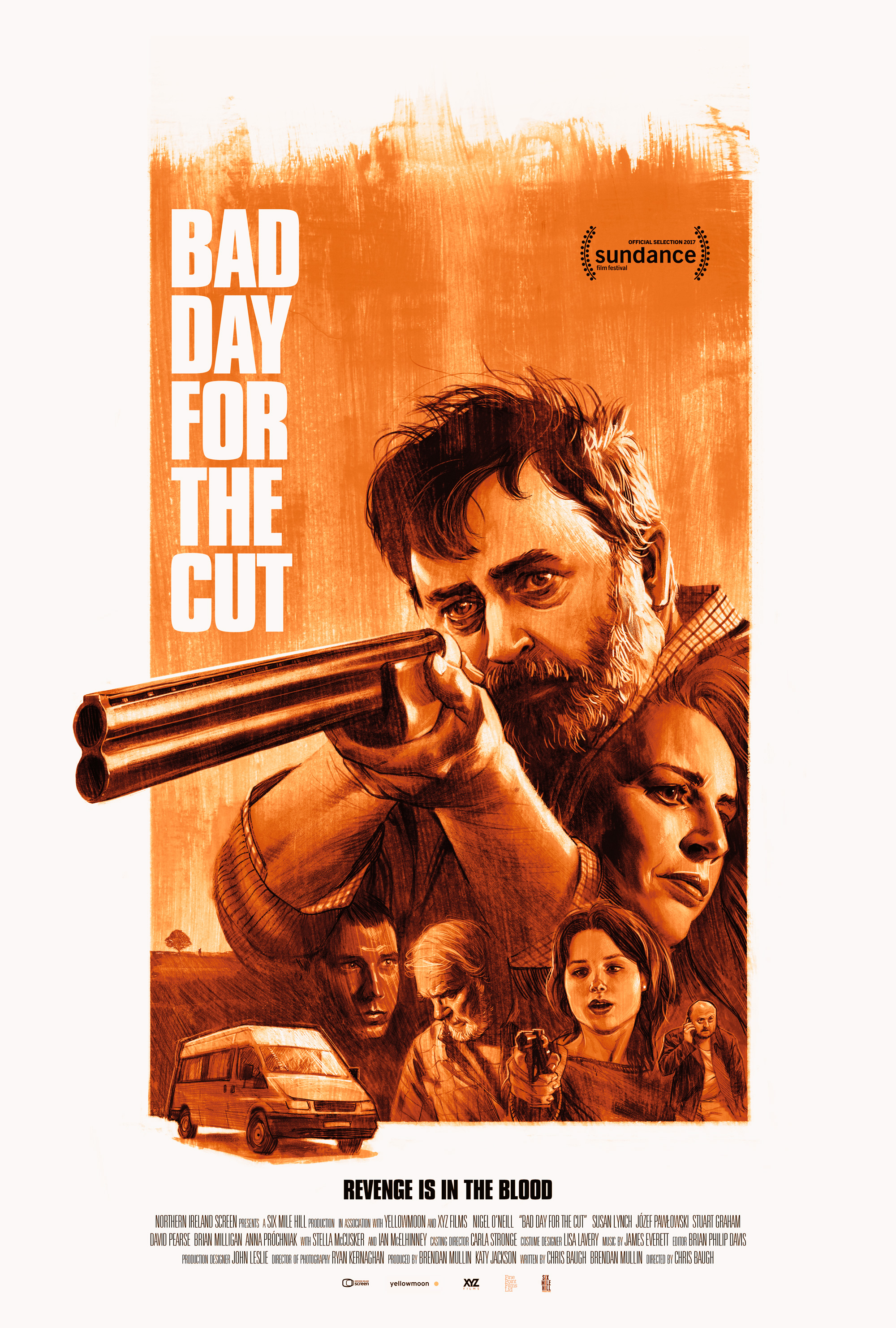
Donal (O”Neill) and his mother, Florence (McCusker), live on a farm on the outskirts of a small town in Northern Ireland. The pair keep themselves to themselves, and seem to be contented with their lot. But when Donal does go out one evening, he returns to find a stranger leaving the farmhouse and his mother dead inside. Some time later, Donal is surprised by two hooded intruders who attempt to kill him as well. He turns the tables on them, and coerces one of them, a young Polish man named Bartosz (Pawlowski), to help him track down the man who killed his mother. The trail leads to a prostitution ring run by a woman called Charlie (Lynch). Soon, Donal and Bartosz are both hunters and hunted as Charlie targets them, and a game of cat and mouse ensues, one that reveals an unexpected connection between Florence, Donal, and Charlie, and events that took place around thirty years before, events that have a major bearing on Florence’s murder and Donal’s current predicament.

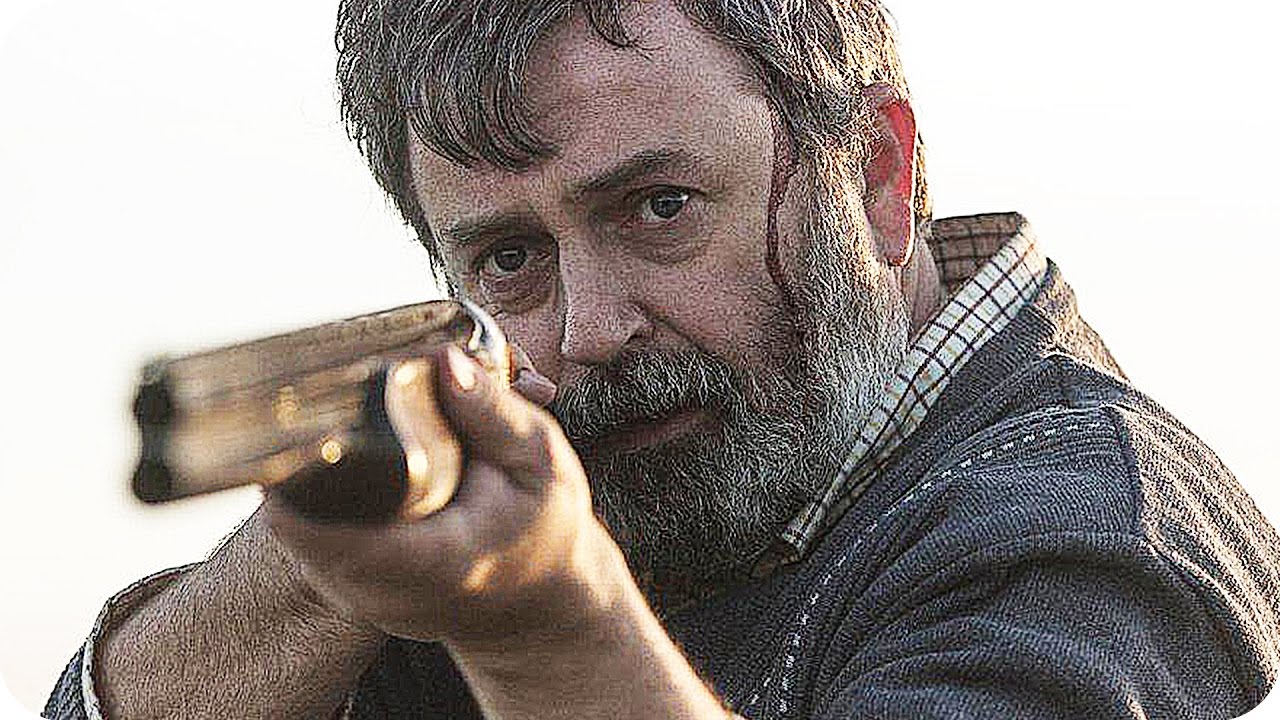
A tough and gritty Western transposed to the wilds of Northern Ireland, Bad Day for the Cut is a modest amalgam of revenge motifs that makes the most of its equally modest production values and its sparsely populated locations, and which benefits further from good performances and Baugh’s measured direction. Along with co-screenwriter Brendan Mullins, Baugh (making his feature debut) has constructed a movie that harkens back to so many other, similar movies from the past, but which still maintains an identity all its own. Donal is a familiar figure, the man rendered alone through the death of his family and consumed with anger. It makes him determined and uncompromising, but Baugh is careful to avoid making him a murderous automaton. When Bartosz reveals that his sister, Kaja (Próchniak), is one of the girls in Charlie’s stable, Donal allows himself to be sidetracked in his mission to make Charlie pay for his mother’s murder. Despite his need for revenge, Donal retains an innate honesty and sense of morality that he fights hard not to compromise. As the beleaguered Donal, O’Neill is a quiet force of nature, taciturn for the most part but capable of moments of irredeemable violence; you wouldn’t want to be trapped in a camper van with Donal and a hot saucepan.

Like all good thrillers, Donal’s quest for revenge doesn’t go as planned (partly because he doesn’t really have a plan), and partly because there are things he doesn’t know, things that he only becomes aware of as the movie progresses. These things stop the movie from being too simplistic, and they also allow the character of Frankie (played with unrestrained vitriol by Lynch) to become more than just a matriarchal monster figure. Baugh plays up the rural isolation that Donal leaves behind in his search for vengeance, but thanks to some well chosen locations, keeps him acting in isolation (even while being helped by Bartosz, who has his own agenda), and adrift from any semblance of a normal life. There’s a real sense that even if he does succeed in getting his revenge, it won’t mean that his grief will be assuaged. Against this, the movie does have a wry sense of humour, and is often funny in a “you-shouldn’t-laugh” kind of way that offsets those moments where the violence is busy being harsh and inflexible. Tough and unyielding then at times, Baugh has managed to put together an agreeable thriller that overcomes several narrative stumbles (which ultimately don’t hurt it as much as they should), and in doing so, he emerges as a director to watch out for in the future.

Rating: 7/10 – with wonderful cinematography by DoP Ryan Kernaghan, and a straightforward approach to the material that works wonders, Bad Day for the Cut is an enjoyable Irish Western that pays due respect to its genre inspirations; anchored by a terrific performance from O’Neill, it’s also a movie whose narrative doesn’t feel forced (except once), and which never tries to be smarter than it already is.

Share this:

  • Click to share on X (Opens in new window) X
  • Click to share on Facebook (Opens in new window) Facebook
  • More
  • Click to print (Opens in new window) Print
  • Click to email a link to a friend (Opens in new window) Email
Like Loading...

The Corpse of Anna Fritz (2015)

22 Monday Jan 2018

Posted by dullwood68 in Movies

≈ Leave a comment

Tags

Alba Ribas, Albert Carbó, Bernat Saumell, Cristian Valencia, Drama, Hèctor Hernández Vicens, Horror, Mortuary, Review, Spain, Thriller

Original title: El Cadáver de Anna Fritz

D: Hèctor Hernández Vicens / 74m

Cast: Alba Ribas, Cristian Valencia, Albert Carbó, Bernat Saumell

You have a friend, Pau (Carbó), who works evenings at the local hospital mortuary. When a famous actress, Anna Fritz (Ribas), dies and her body is kept overnight at the mortuary before an autopsy can be performed, you’d expect him to send you a photo of the dead actress, wouldn’t you? And you’d expect him to let you come to the hospital and have a look for yourselves, right? After all, how often do you get a chance to see a famous, and beautiful, actress live (so to speak) and in the flesh? And better still, naked? That’s the situation Iván (Valencia) and Javi (Saumell) hope to find themselves in when Pau sends exactly the kind of photograph that piques their interest and has them rushing to the hospital with unseemly haste. But seeing Anna Fritz naked isn’t enough, not for Iván at least. He wants to have sex with her; it doesn’t matter to him if she’s dead. So he does, and he cajoles Pau into doing the same. But when Pau takes his turn, something unexpected happens, something that will change everything, even to whether or not the three men will leave the hospital alive…

For some people, just hearing there’s necrophilia involved, and depicted, in The Corpse of Anna Fritz will have them reaching for the off button, or deciding not to watch the movie at all. But the movie has a lot more to offer the viewer than extremely inappropriate sexual behaviour, and once that section is dispensed with, it becomes a claustrophobic mix of horror movie and suspense thriller, with a handful of twists and turns that, while not exactly original, are still put together with enough skill and confidence by Vicens (here making his feature debut) that much of what follows is suitably tense and appropriately visceral. Iván, Javi and Pau find themselves trapped in the basement of the hospital as much by their own actions as any relating to the famous Miss Fritz, and as their predicament worsens, their alliance is threatened, broken apart, and irredeemably ruined. Vicens tracks all this with a predatory eye for the politics of survival, and the breakdown of societal norms. Having sex with a dead woman? That deserves more than just as slap on the wrist, and Vicens ensures the three men suffer for their crime.

Throughout its compact running time, the movie goes to great lengths to make one of its male characters someone the viewer can sympathise with, or even root for, but if there’s one issue that Vicens and co-writer Isaac P. Creus can’t solve, it’s that the characters exist in a vacuum, with no development occurring as the movie progresses. Any sympathy therefore is stymied in order for them to suffer instead. Thus the movie is more of an exercise in what will happen to them, when, and how. This mechanism works for the most part, and there are some clever riffs on one of the “punishments”, but as it builds to a climax, some of the tension is sacrificed at the altar of narrative expediency, though the movie does retain an urgency of purpose that could have been allowed to dissipate much earlier on. At least the main location explains the lack of other hospital staff in the vicinity, and the photography by Ricard Canyellas highlights M. Carmen Sanfrancisco’s spare yet effective production design. It’s all assembled with a view to providing the movie with an oppressive air, and though this approach isn’t always successful, there’s more than enough here to warrant a look-see.

Rating: 6/10 – a modest achievement that is only occasionally as challenging to watch as its makers may have wanted, The Corpse of Anna Fritz is nevertheless bolstered by its choice of location for the material, and the drama inherent in Miss Fritz’s situation; a bit of a mixed bag over all, but a bag that contains at least a couple of surprises, and one that shows that Vicens – with the right material – could well make a stone cold classic one of these days.

Share this:

  • Click to share on X (Opens in new window) X
  • Click to share on Facebook (Opens in new window) Facebook
  • More
  • Click to print (Opens in new window) Print
  • Click to email a link to a friend (Opens in new window) Email
Like Loading...

Early Man (2018)

21 Sunday Jan 2018

Posted by dullwood68 in Movies

≈ 1 Comment

Tags

Aardman, Bronze Age, Comedy, Drama, Eddie Redmayne, Football, Maisie Williams, Nick Park, Review, Stone Age, Timothy Spall, Tom Hiddleston

D: Nick Park / 89m

Cast: Eddie Redmayne, Tom Hiddleston, Maisie Williams, Timothy Spall, Miriam Margolyes, Rob Brydon, Richard Ayoade, Mark Williams, Kayvan Novak, Johnny Vegas, Gina Yashere, Nick Park

In Nick Park’s debut feature as a solo director (and somehow that doesn’t feel right), we’re asked to take a lot on faith: that football was created by an isolated tribe in the Stone Age, that said tribe have remained isolated until the arrival of the Bronze Age, that they’ve lost the ability to play football during that period, and that they’ve somehow survived all this time purely through hunting rabbits (and though they all wear the skins of much larger animals – whom we never see). All perfectly plausible, right? Right. And especially so in the uniquely weird and wonderful world of Aardman animation. After all, what could be so unlikely about a challenge match between a Stone Age team of under-achievers and a Bronze Age team overseen by a villainous nobleman called Lord Nooth (Hiddleston)? There’s nothing unlikely in that at all. The only thing about it that’s unlikely is that audiences might not be charmed and amused by the exploits of Dug (Redmayne), his pet wild boar Hognob (Park), his tribe, and their bronze coin loving adversary. It’s Aardman; what’s not to like?

Now if that all sounds like a set up designed to reveal that the movie isn’t very good, then rest assured it is good, and very much so. But Early Man is an Aardman movie that requires audiences to approach it with a certain amount of caution. First of all, it’s very funny, and in the whimsical, very British way that only Aardman can manufacture. Park (who came up with the original story idea) and co-writers Mark Burton and James Higginson have created a world full of inspired sight gags, inspired dialogue, inspired character-based comedy, and a ton of in-jokes. The animation, as expected, is on a par with previous Aardman movies and shorts – meaning it’s excellent – and there is a limited use of CG that, for once, is in support of the Claymation process and doesn’t overwhelm it. Park’s direction is fluid, with an economy of style that matches the material, and there’s terrific voice work from the entire cast, though if you had to highlight anyone’s performance, it would be Brydon as the messenger bird (think Zazu from The Lion King (1994) but with increased attitude). Like all Aardman productions there is a surfeit of riches, and it’s immensely enjoyable.

The caution, though, is to do with the storyline. It’s slight, very slight. So slight in fact that there are periods where the movie stalls in its own version of a half-time break. This is where Park and his co-contributors provide more exposition than is actually needed, where the rhythm of the movie slows noticeably and the pace struggles to be regained, and the need to make the movie play out to around the ninety minute mark becomes all too obvious. All these things stop Early Man from being on a par with Chicken Run (2000) or Wallace & Gromit in the Curse of the Were-Rabbit (2005). Here – and despite all the plusses to be found elsewhere – by the time the match starts it’s with some semblance of relief. At this point, the script and the movie both knuckle down and provide a satisfying climax and they earn enough overall merit points to make it all feel as if it’s been time well spent… which it has. It’s an unusual feeling, to be watching something that’s so enjoyable, while at the same time, feeling that there’s something lacking, but that’s the vibe that Early Man gives off. But it’s still a must-see movie, if only to witness once again the absolute pleasure that can be achieved with, and by, lumps of clay.

Rating: 7/10 – like Pixar, Aardman work to very high standards, so when a movie doesn’t quite hit the heights that they or their fans are expecting, it’s always a bit of a disappointment, but though Early Man isn’t as impressive story-wise as it could have been, it’s still a great movie with much to offer; Hognob is like a Stone Age Gromit (no bad thing), there are more football puns than you can shake a woolly mammoth at, and look out for dinosaurs Ray and Harry – a lovely tribute to stop-motion legend Ray Harryhausen.


Postscript: Early Man was given a preview screening at London’s BFI Southbank on 20 January 2018. Following the screening there was a Q&A with Nick Park. Questions were taken from the audience, and one little girl asked, “What was the name of the rabbit?” (a rabbit, a likely ancestor of Hutch from Curse of the Were-Rabbit, is the main target of Dug’s tribe). Park admitted that the rabbit was never given a name, and then he asked the little girl what she thought the rabbit should be called. There was a pause, and then the little girl replied (and with perfect timing), “Rabbit.”

Share this:

  • Click to share on X (Opens in new window) X
  • Click to share on Facebook (Opens in new window) Facebook
  • More
  • Click to print (Opens in new window) Print
  • Click to email a link to a friend (Opens in new window) Email
Like Loading...

The Shape of Water (2017)

19 Friday Jan 2018

Posted by dullwood68 in Movies

≈ 1 Comment

Tags

Baltimore, Cold War, Creature, Doug Jones, Drama, Guillermo del Toro, Michael Shannon, Michael Stuhlbarg, Music, Octavia Spencer, Review, Richard Jenkins, Romance, Sally Hawkins, Sci-fi, The Sixties

D: Guillermo del Toro / 123m

Cast: Sally Hawkins, Michael Shannon, Richard Jenkins, Octavia Spencer, Michael Stuhlbarg, Doug Jones, David Hewlett, Nick Searcy, Lauren Lee Smith

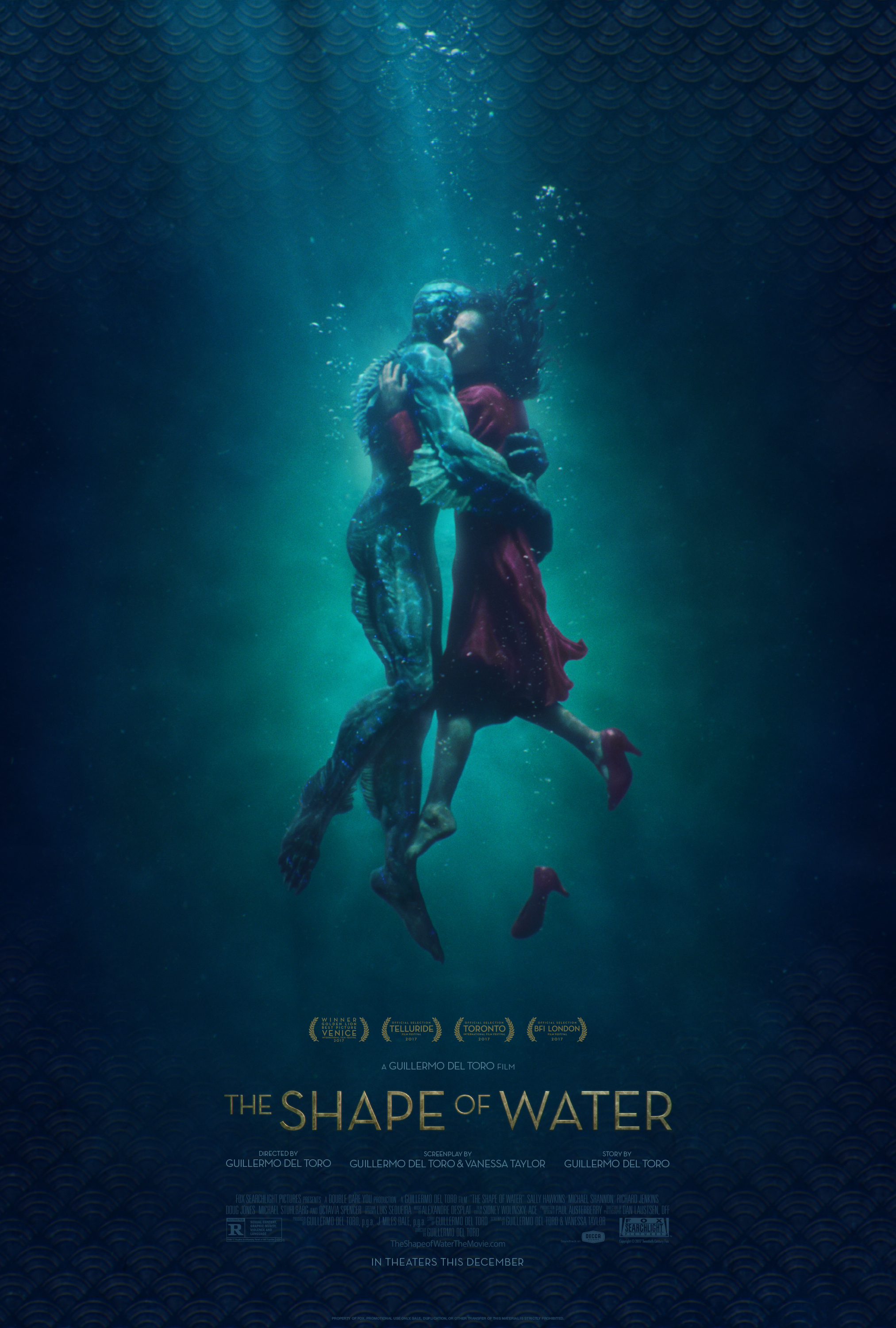
A romantic fairy tale set during the Cold War era of the Sixties, Guillermo del Toro’s latest feature is set in a secret government laboratory in Baltimore. Elisa Esposito (Hawkins) is a cleaner who works the night shift. She’s also mute from birth. One night the laboratory receives a new “asset”, an amphibious creature (Jones) captured in the Amazon river by military man Richard Strickland (Shannon). The creature proves to be humanoid, and though it’s ostensibly dangerous, Elisa develops a bond with it, and even uses sign language to communicate with it on a basic level. With the creature able to breathe in and out of water, the intricacies of its anatomy lead to the decision to have it vivisected. Elisa is horrified by this, and with the aid of her fellow cleaner, Zelda (Spencer), and her neighbour, elderly artist Giles (Jenkins), she determines to free the creature and return it to the sea. As she puts her plan into action, she finds unexpected assistance from one of the scientists at the laboratory, Dr Hoffstetler (Stuhlbarg), and unwanted attention from Strickland.

Fully and firmly back on track after the disappointment that was Crimson Peak (2015), Guillermo del Toro has made perhaps his best movie yet. The Shape of Water is a veritable treasure trove of delights. By turns funny, dramatic, sad, tender, exciting, joyous, imaginative, bold, romantic, uplifting, and poignant, it’s a movie that crams so much into its two hour running time that it should feel heavy-handed. Instead it feels like the lightest of confections, even with the overtly darker undertones that are threaded throughout the narrative and which help the movie add a credible and palpable sense of menace to the overall tone. del Toro has long wanted to make a movie inspired by Creature from the Black Lagoon (1954), but it’s unlikely even he could have predicted just how good the end result would be. From Paul D. Austerberry’s masterful period production design, to the efforts of the set dressers (so much detail), this is a movie that is constantly inviting the viewer to come nearer and peer closely at all the objects that fill each frame. And then there are the small yet seemingly effortless moments that pepper the movie, moments such as Elisa and Giles’ seated dance routine, or the man at the bus stop with the partially eaten cake. It all adds up to a richness of texture that is nigh-on faultless.

But the movie isn’t just beautiful to look at, it’s also an old-fashioned love story (an inter-species love story, to be fair, but hey, so what? As Joe E. Brown says at the end of Some Like It Hot (1959), “Nobody’s perfect”). It would have been so easy to misjudge the tone and the mood in presenting this romance, but del Toro and co-screenwriter Vanessa Taylor handle it perfectly, combining elements of magical realism and the aforementioned fairy tale aspect to wonderful effect. Hawkins – for whom the role of Elisa was written – gives a mesmerising performance, passionate and vulnerable, determined and caring, and capable of expressing any of Elisa’s emotions through the delicate shading of her features. As the principal villain, Shannon gets to add unexpected psychological layers to the role of Strickland, something that keeps the part from being that of a stereotypical bad guy, while Jenkins provides the majority of the laughs (and a great deal of pathos) as Giles, an elderly gay man still hoping to find love himself. Everything is rounded off by the music, as del Toro harks back to the golden era of Hollywood musicals. And just when you think he can’t squeeze in anything else, he gives us a black and white dance number featuring Elisa and the creature which is a tribute to Follow the Fleet (1936). This all leaves just one option: this much confidence must be applauded.

Rating: 9/10 – made with an intense amount of love and affection for its central characters, and with an elegance that shines throughout, The Shape of Water is a triumph of both style and substance; look closely, though, and you’ll find del Toro being quietly and unobtrusively subversive: ask yourself – which other movie are you likely to see where the heroes are in turn disabled, gay, black, and a Communist?

Share this:

  • Click to share on X (Opens in new window) X
  • Click to share on Facebook (Opens in new window) Facebook
  • More
  • Click to print (Opens in new window) Print
  • Click to email a link to a friend (Opens in new window) Email
Like Loading...

The Foreigner (2017)

18 Thursday Jan 2018

Posted by dullwood68 in Movies

≈ 1 Comment

Tags

Action, Authentic IRA, Bombing, Drama, Ireland, Jackie Chan, Literary adaptation, London, Martin Campbell, Pierce Brosnan, Review, Thriller

D: Martin Campbell / 113m

Cast: Jackie Chan, Pierce Brosnan, Orla Brady, Dermot Crowley, Rory Fleck Byrne, Charlie Murphy, Niall McNamee, Rufus Jones, Ray Fearon, Lia Williams, Michael McElhatton

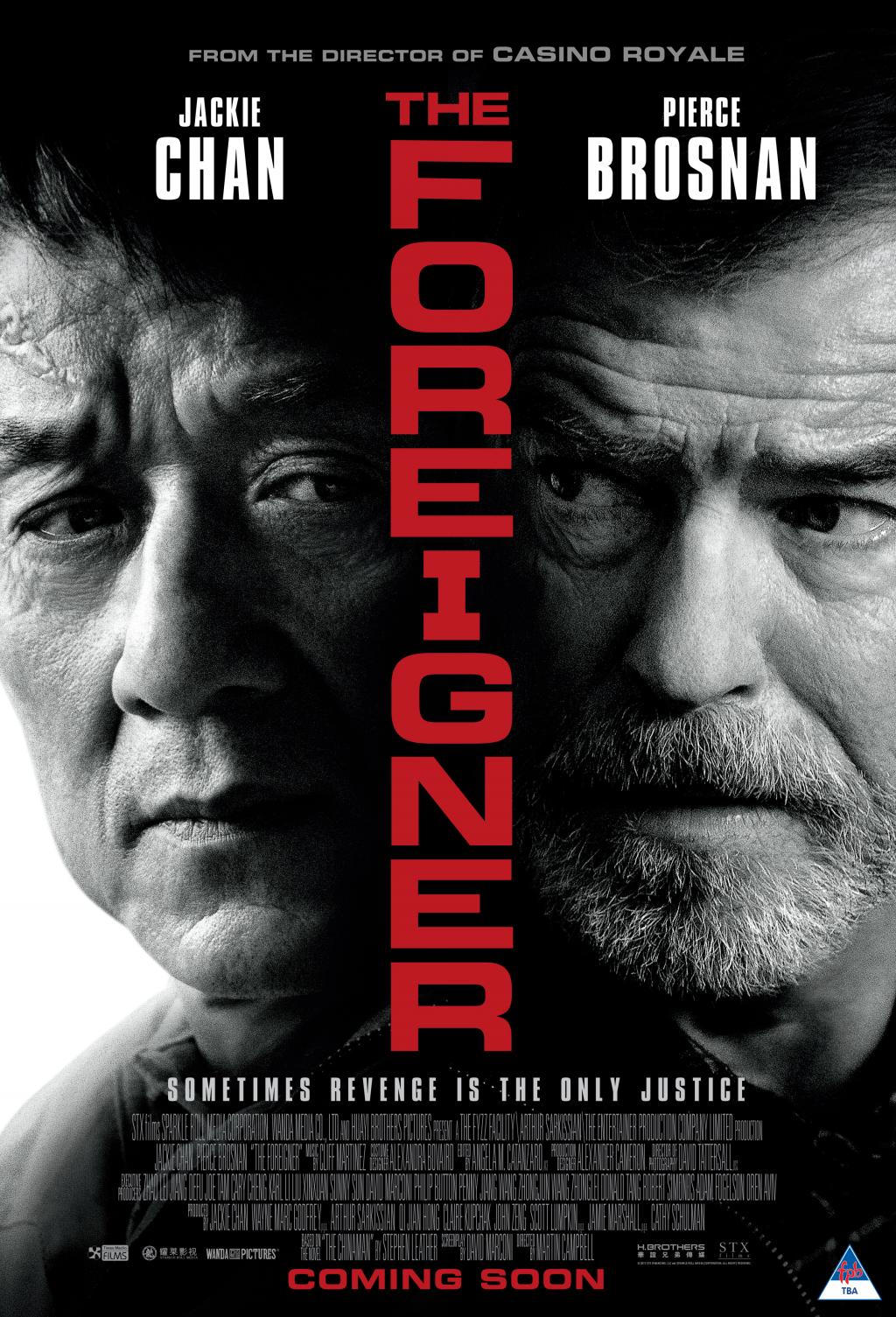
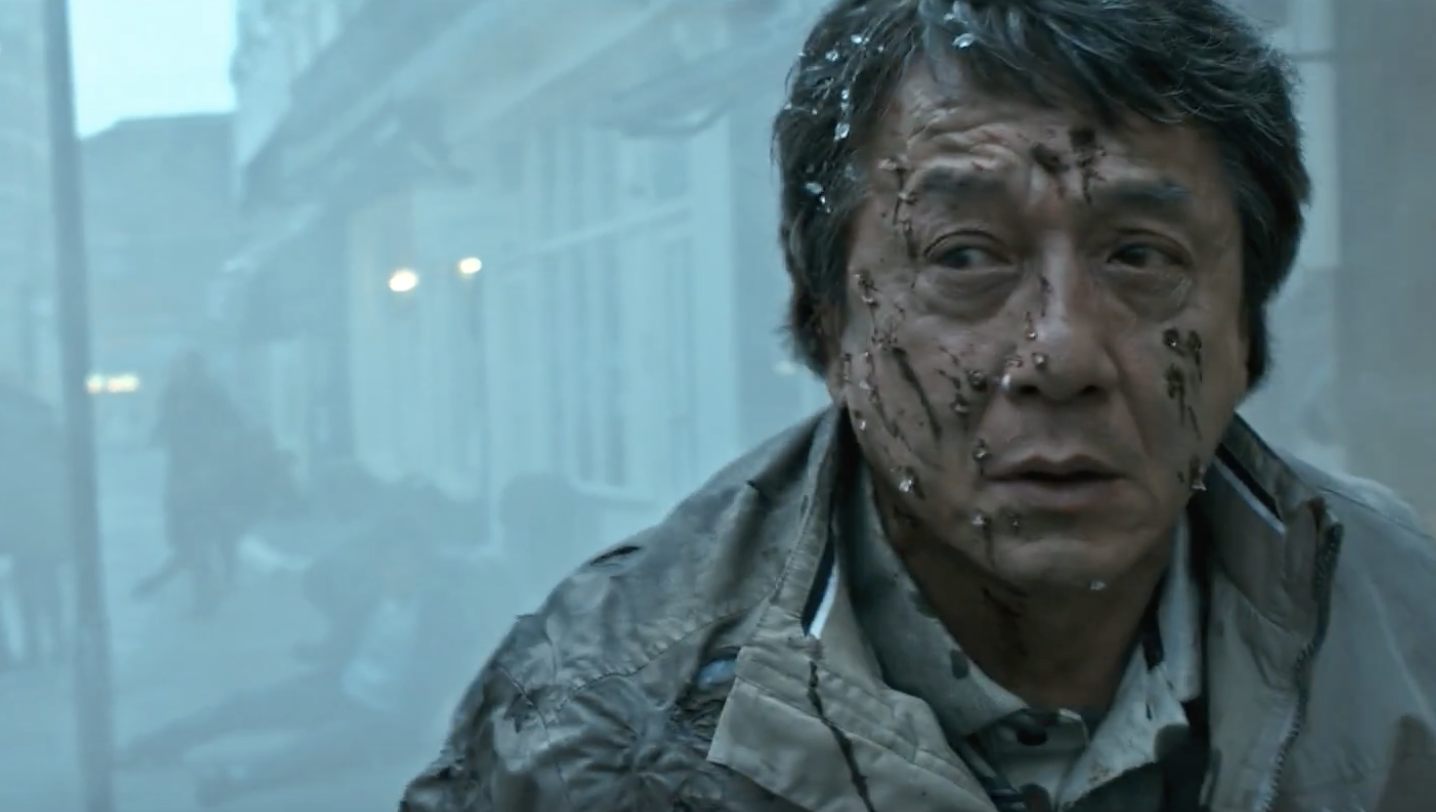
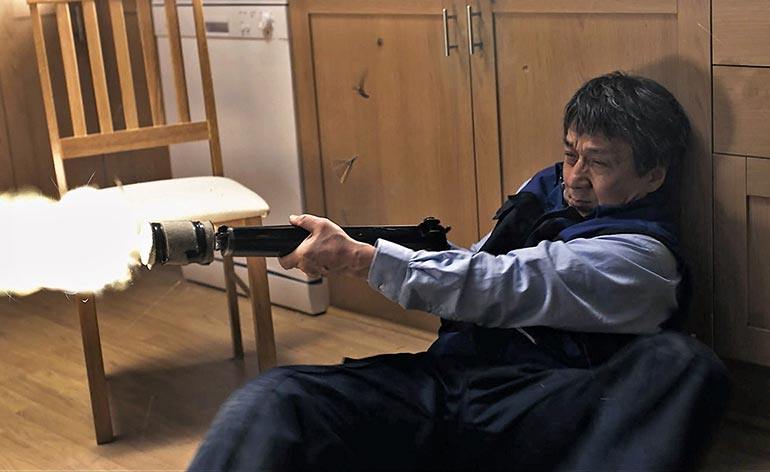
At the beginning of The Foreigner we see Jackie Chan playing a role that we’ve not seen him play before: that of a concerned father. Already it’s a refreshing change, and though you might think he’s being a little over-protective of his teenage daughter, even he can’t foresee that when he drops her off a boutique clothes shop that she’s going to be the victim of a terrorist bom blast just moments later. But if Chan’s character, a Chinese Nuang chef called Ngoc Minh Quan, is stone-faced before, then he’s positively chiselled granite afterwards, as the London Metropolitan police investigation stalls quickly in its efforts to discover which dissident faction of the IRA carried out the bombing (they call themselves the “Authentic IRA”, as if the real IRA were somehow a bunch of phoneys). Quan learns enough from the police to enable him to go after Northern Ireland Deputy First Minister Liam Hennessy (Brosnan), an ex-member of the original IRA brought into the Establishment but who still has ties to his once and fellow comrades. Is Hennessy the link that Quan needs to find the bombers? Will Quan be able to stay one step ahead of the police as he wages his own one-man war against Hennessy and his associates? And will anyone be able to answer the question, just how does one lone sixty-one year old Asian man that everyone’s on the lookout for, travel backwards and forwards between London and Ireland without racking up some serious air miles (oh yes, and being spotted)?

Adapted from Stephen Leather’s novel of the same name, The Foreigner is an action thriller that requires the usual suspension of disbelief at almost every turn, but which still manages, for the most part, to be entertaining. Chan is excellent value as the grieving yet violently focused Quan, a role he slips into with very little effort. It’s sometimes easy to write off stars such as Chan as not being “real” actors, but as Arnold Schwarzenegger showed in Maggie (2015), there will always be roles they can play that will surprise us. Chan’s melancholy, devastated presence is one that adds a layer of sympathy to the character that isn’t always considered a necessity in this kind of movie, but it’s a more than welcome change, and again, Chan is more than up to the task. So too is Brosnan, clearly relishing the chance to play an Irishman for a change and ramping up the character’s ambiguity; is he a good guy, or a bad guy, or just caught in the middle? Further down the cast list there are fine supporting turns from the likes of Crowley and Murphy (though her role is a little too similar to Polly Walker’s in Patriot Games (1992), and from the ever reliable McElhatton.

But while the performances are above average for a thick-ear thriller such as this, and director Martin Campbell does his best to keep things moving quickly enough so that the viewer won’t notice some of the more patent absurdities on display (again, just who is Quan’s remarkable travel agent?), the script by David Marconi either relies on too much exposition, or jumps from scene to scene disjointedly, making it difficult to keep track of what’s happening exactly, and why. That said, Campbell does know how to put together an effective action sequence, and though Chan isn’t as fast as he used to be, he still doesn’t have to rely on carefully chosen camera angles or rapid-fire editing to make himself look good. All in all, the movie is good in places, long-winded in others, but still well assembled enough to provide a couple of hours of harmless enjoyment – and sometimes that’s all you need.

Rating: 7/10 – Chan and Brosnan make for great adversaries, and Campbell is on solid form in the director’s chair, making The Foreigner an above average thriller with better ambitions than most; a bit of a throwback to thrillers from the Seventies (but with extra added millennial-style violence), this gives Chan his best role in years, and is an entertaining if occasionally cheesy action movie that doesn’t worry in the slightest about the things it gets irretrievably wrong.

Share this:

  • Click to share on X (Opens in new window) X
  • Click to share on Facebook (Opens in new window) Facebook
  • More
  • Click to print (Opens in new window) Print
  • Click to email a link to a friend (Opens in new window) Email
Like Loading...

Sand Storm (2016)

17 Wednesday Jan 2018

Posted by dullwood68 in Movies

≈ Leave a comment

Tags

Arranged marriage, Bedouins, Drama, Elite Zexer, First wife, Haitham Omari, Israel, Lamis Ammar, Review, Ruba Blal-Asfour, Sufat Chol

Original title: Sufat Chol

D: Elite Zexer / 88m

Cast: Lamis Ammar, Ruba Blal-Asfour, Haitham Omari, Khadija Alakel, Jalal Masarwa, Elham Arraf, Shaden Kanboura, May Azliah, Diamond Zaccak

The first feature by Israeli movie maker Elite Zexer, Sand Storm focuses on a Bedouin family whose patriarch, Suliman (Omari), has just married his second wife. His first wife, Jalila (Blal-Asfour), is none too happy about it, but as it’s part of the Bedouin culture and it’s a male-dominated society, she has no choice in the matter. Jalila has given Suliman four daughters, including teenager Layla (Ammar), who is in college. Layla and her father have a somewhat easy-going relationship, while her mother is stricter and less inclined to indulge her daughter’s wayward and more modern behaviour. Suliman’s marriage, combined with Layla’s recent exam results being less than satisfactory, focuses his mind on what he should do about his eldest daughter, and her future. His answer is to marry her to a man she doesn’t know, and whom she has never spoken to. Despite their differences, Jalila defends her daughter’s wish not to marry this man, but as tensions rise and threaten to boil over, it isn’t clear which side will win out: centuries old traditions or modern day aspirations.

Throughout Sand Storm, there’s the palpable sense of a tragedy unfolding, one that will prove life-changing for all concerned. As modern sensibilities clash with established social norms, the struggle that comes with understanding both sides of the argument is highlighted in the character of Suliman. He loves his first daughter, but he is bound by what is expected of him as a father; he may want Layla to be free to live her own life with the man of her choice, but he has no more say in what happens than she does. This element of Bedouin culture, so apparently cruel in its disregard for the feelings of an individual, adds tension and a dark, emotional undercurrent to the material, and as the movie progresses, it proves more gripping than expected. By the time Layla makes the decision to pack her bags and leave for good, Zexer’s tightly constructed and intelligent screenplay ensures that there’s no guarantee that she’ll be successful in her escape. And what the consequences will be of her actions carries an equally palpable sense of dread. Here, love is irrelevant. Here, love is a distant second to the marriage contract. Here, love is likely to be punished.

The tone throughout is one of simmering antipathy allowed an occasional outburst when things prove too much. This applies to all three main characters, with Jalila angry at her husband’s callous choice of husband for Layla (“Did you ever look at your daughter?”), Layla herself challenging her mother and father over their perceived intransigence, and Suliman when his authority is questioned repeatedly. Zexer neatly explores the ties that bind ever more tightly in these circumstances and sidesteps any potential sentimentality by showing that – sadly – there’s no place for it in any of the characters’ lives. The cast are uniformly impressive, their performances rich in detail and hugely affecting, with Blal-Asfour’s portrayal of the downtrodden yet still resilient Jalila commanding the viewer’s attention from the start. Zexer has a good eye for the rhythms of daily family life, and she’s careful to portray traditional Bedouin culture without any overt criticism, making this a respectful piece but one that’s also hopeful of change, even if takes a few more generations to achieve.

Rating: 8/10 – winner of the Grand Jury Prize in the World Cinema category at the 2016 Sundance Film Festival, Sand Storm has an emotional heft that belies the simplicity of its appearance and its plot; it’s a standard tale to be sure, and seen many times before, but this is a movie that is both humane and surprisingly tender despite its dramatic, and often devastating, exploration of the limits of female empowerment when brought up against the rigid cultural expectations of Bedouin society.

Share this:

  • Click to share on X (Opens in new window) X
  • Click to share on Facebook (Opens in new window) Facebook
  • More
  • Click to print (Opens in new window) Print
  • Click to email a link to a friend (Opens in new window) Email
Like Loading...

Short Movies Volume 5

16 Tuesday Jan 2018

Posted by dullwood68 in Movies

≈ Leave a comment

Tags

Andy (2017), Anna Casas, Brendan Meyer, Christopher Cox, Comedy, Don't Look Away (2017), Drama, Hedonist (2012), High School, Horror, Katie Vincent, Michael J. Murphy, Miquel Vilar, Pregnancy, Prego (2015), Revenge, Reviews, Sexual pleasure, Short movies, Spain, Taso Mikroulis, Usher Morgan

The short movie is an oft-neglected aspect of movie viewing these days, with fewer outlets available to the makers of short movies, and certainly little chance of their efforts being seen in our local multiplexes (the exceptions to these are the animated shorts made to accompany the likes of Pixar’s movies, the occasional cash-in from Disney such as Frozen Fever (2015), and Blue Sky’s Scrat movies). Otherwise it’s an internet platform such as Vimeo, YouTube (a particularly good place to find short movies, including the ones in this post), or brief exposure at a film festival. Even on DVD or Blu-ray, there’s a dearth of short movies on offer. In an attempt to bring some of the gems that are out there to a wider audience, here’s another in an ongoing series of posts. Who knows? You might find one that becomes a firm favourite – if you do, please let me know.

Don’t Look Away (2017) / D: Christopher Cox / 8m

Cast: Sabrina Twyla, Danny Roy, Jim Marshall, Charlie McCarthy

Rating: 6/10 – Siblings Savannah (Twyla) and Jim (Roy) are squabbling as usual while they wait for their parents to arrive home. When Savannah looks out of her bedroom window she sees a strange man standing in the garden looking at her. The man is wearing a tattered black suit, and has a bag over his head that is wrapped in chains. When her father (Marshall) calls to say he’ll be late home, Savannah mentions the man. He immediately tells her not to look away, and to get her brother to lock all the doors. But not knowing all the rules puts Savannah in danger… A brisk, relatively effective horror short, Don’t Look Away starts well, but soon tapers off once Savannah inevitably looks away, and writer/director Cox finds himself attempting to explain the animus behind the strange man in the garden (referred to as The Creature in the credits). There’s the germ of a good idea here, and though it’s not anywhere near as scary as it should be, if Cox ever manages to expand on his basic premise, he has the potential to get another horror franchise icon off the ground.

Andy (2017) / D: Michael J. Murphy / 16m

Cast: Brendan Meyer, McKaley Miller, Madison Iseman, Tannaz Shastiri, Beejan Land, Seth Clarke, Tom Draper, Landon Merrell

Rating: 7/10 – After being harrassed and bullied throughout his high school years, Andy (Meyer) discovers that social media is the ideal way to get even. Not so much a cautionary tale – Andy uses his tormentors’ own forms of harrassment against them – but a revenge tale pure and simple, this is a well mounted and well constructed short that doesn’t play out as simply as expected. The basic set up has been seen a thousand times before, but Murphy’s third short plays a trump card in its depiction of high school queen Lia (Iseman). She and Andy used to be childhood friends but they’ve grown apart and now she’s popular and he’s not. There’s a point in the movie where she has a choice to make – and she doesn’t make the right choice. However, Murphy and co-screenwriter Emily Mattoon make it clear that it’s not a choice she wants to make. This makes Andy’s subsequent revenge just as terrible as the harrassment he’s suffered. Subtly done, this raises the material, and makes the ending far more ironic than expected.

Prego (2015) / D: Usher Morgan / 13m

Cast: Katie Vincent, Taso Mikroulis

Rating: 8/10 – A woman (Vincent) meets a man (Mikroulis) in a cafe and tells him that she’s pregnant with his child. His response isn’t what she wants to hear. A well written and very funny comedy short, Prego works as well as it does by taking an established (and somewhat stereotypical) situation and making the woman’s exasperation as amusing as the man’s witless comments and questions. The dialogue is sharp and to the point, and the performances are terrific, with Vincent convincing as the straight (wo)man to Mikroulis’ credulous man-child. Morgan shoots much of their exchange in close-up, placing strong emphasis on Vincent’s impressively blue eyes and Mikroulis’ ability to stare blankly but still to good purpose. The ending may be just a tad predictable, but otherwise this is winning stuff, unfussy, well put together, and backed by an apt and appealing soundtrack.

Hedonist (2012) / D: Miquel Vilar / 9m

Original title: Hedonista

Cast: Anna Casas, Frank Capdet, Jordi Pérez

Rating: 7/10 – A couple (Casas, Pérez) visit a man (Capdet) in his apartment in order for the wife to experience the kind of pleasure that she hasn’t had since she was a child, pleasure that the man cultivates in an unusual and, for the husband, disgusting way. A beguiling and intriguing exploration of an obscure form of sexual gratification, Hedonist is as much about the pursuit of that gratification as it is the power shifts in the relationship between the married couple. The husband is unhappy about being there and accuses his wife of not wanting to sleep with him. She dismisses his concerns as if they were trifles. The man offers advice and warnings, but the wife isn’t interested. Both men have only limited influence; the woman has taken charge. Vilar keeps the audience guessing until the end as to what exactly are the “specimens” the woman has come to “collect”, and in doing so he gives the impression this will develop into a horror short. And when the nature of the “specimens” is revealed, there are likely to be some viewers who will be in complete agreement that it has.

Share this:

  • Click to share on X (Opens in new window) X
  • Click to share on Facebook (Opens in new window) Facebook
  • More
  • Click to print (Opens in new window) Print
  • Click to email a link to a friend (Opens in new window) Email
Like Loading...

Mustang Island (2017)

14 Sunday Jan 2018

Posted by dullwood68 in Movies

≈ Leave a comment

Tags

Comedy, Craig Elrod, Drama, John Merriman, Lee Eddy, Macon Blair, Relationships, Review, Romance, Texas

D: Craig Elrod / 86m

Cast: Macon Blair, Lee Eddy, John Merriman, Molly Karrasch, Jason Newman, Byron Brown, Haley Alea Erickson

In Mustang Island, the second feature from writer/director Craig Elrod, Bill (Blair) and his girlfriend Molly (Karrasch) break up on New Year’s Eve. Reduced to uncontrollable tears by this event, Bill crashes his car into a boat, breaks his arm and flees the scene before he’s arrested by the police. Later, he learns that Molly may have gone to her family’s place on Mustang Island. Rounding up his brother, John (Merriman), and John’s friend and co-worker Travis (Newman), the trio set off for the island with Bill intending to make things right with Molly. When they get there, the house is empty and there’s no sign that Molly has even been there. Bill decides to stay a while in the hope that Molly shows up, and John and Travis stay with him. At a local diner, John spies a waitress, Lee (Eddy), that he’s attracted to. But John is painfully shy and despite Bill’s attempts to bring them together, it soon becomes clear that Lee likes Bill instead of John. Bill finds that he has feelings for Lee as well, but as ever with Bill, there are problems to overcome…

Set on the real Mustang Island (which is located on the Gulf Coast of Texas), Elrod’s follow up to The Man from Orlando (2012) is a quirky, understated tale that relies heavily on nuance and tone in order to tell its simple yet engrossing story. Elrod’s script calls for dozens of moments where the camera lingers on a character’s face and the viewer is given the time to realise and understand what that character is feeling or thinking. It’s these quiet moments that are of the greatest importance, as the characters are not as articulate as they would like to be, and expressing their emotions is uncomfortable and scary for them. By focusing on their features and the range of expressions that play across them, Elrod and his talented cast ensure that the viewer is in no doubt as to what anyone is thinking or feeling. This allows for moments of sadness, heartbreak, vulnerability, and poignancy as the characters strive to make sense of their own feelings while trying not to hurt anyone else’s. It’s a subdued, reflective movie that offers hope amidst the setbacks experienced by its characters, and is shot through with a winning sense of humour, particularly in a diner scene where Bill thinks everyone is looking at him.

Headed by Blair, the main cast members offer impressive, detailed performances that are sincere and refreshingly unspoiled by notions of “acting”. Blair and Eddy are married in real life, and this adds a sensitivity to their portrayals that makes them all the more convincing. Merriman is one of the movie’s best assets, though, his solid, restrained performance a sheer pleasure to watch whenever he’s on screen, and his expressions of happiness and delight are to be treasured thanks to the childlike innocence they convey. The movie’s real trump card, however, is the decision to shoot in black and white. This adds another level of detail to Elrod’s already meticulously assembled screenplay, and the use of light and shade to complement the characters’ moods, emotions and desires, adds depth to all those aspects. And the movie is simply beautiful to look at, with as many striking compositions encompassing the island surroundings as there are devastating close-ups (especially the final one). It’s all rounded off by a well chosen soundtrack, and a warm and thoughtful score by first-timer Benjamin Prosser.

Rating: 8/10 – assembled with care and intelligence and a surfeit of confidence, Mustang Island is a beautifully observed romantic comedy drama that does justice to all those elements, and which has so much to offer viewers, it’s a stone’s throw from being embarrassing; Elrod and everyone else involved are to be congratulated for making a movie that is genuinely, unashamedly heartfelt in places, and unswervingly affectionate toward its delightful cast of characters.

NOTE: Surprisingly, there is no trailer available for Mustang Island.

Share this:

  • Click to share on X (Opens in new window) X
  • Click to share on Facebook (Opens in new window) Facebook
  • More
  • Click to print (Opens in new window) Print
  • Click to email a link to a friend (Opens in new window) Email
Like Loading...

Marshall (2017)

13 Saturday Jan 2018

Posted by dullwood68 in Movies

≈ Leave a comment

Tags

Chadwick Boseman, Dan Stevens, Drama, Historical drama, James Cromwell, Josh Gad, Kate Hudson, NAACP, Rape trial, Reginald Hudlin, Review, Sterling K. Brown, True story

D: Reginald Hudlin / 118m

Cast: Chadwick Boseman, Josh Gad, Kate Hudson, Sterling K. Brown, Dan Stevens, James Cromwell, Keesha Sharp, Roger Guenveur Smith, Derrick Baskin, Barrett Doss, Marina Squerciati, John Magaro, Ahna O’Reilly, Jeffrey DeMunn

Thurgood Marshall (Boseman) was a lawyer who worked across the US for the National Association for the Advancement of Coloured People (NAACP) during the Thirties and Forties. During his time with the NAACP he tried cases in front of the US Supreme Court, and won twenty-nine out of thirty-two of them. His most famous case was Brown v Board of Education, Topeka in 1954, in which the the educational segregation of whites and blacks was deemed unconstitutional. It was a landmark case, and a major victory for the Civil Rights Movement. But instead of telling that story, the makers of Marshall have opted to tell the story of The State of Connecticut v Joseph Spell, a lurid rape case that occurred in 1940. The movie, capably directed by Reginald Hudlin from a screenplay by father and son team Michael and Jakob Koskoff, also makes the decision to change things around so that Marshall himself is the focus and not the original trial lawyer, Sam Friedman (Gad). Does this really matter in a movie that’s based on a true story? Let’s answer that with another question: what’s wrong with the true story by itself?

The differences between what actually happened and what occurs in the movie are many (as you might expect), but one aspect that leaves a bitter after taste is the treatment of Sam Friedman. Here he’s Marshall’s flunky, criticised repeatedly, and treated in such a poor way for so long that bullying becomes the only word for it. In a role reversal that would be outrageous if it weren’t so credulous, Marshall treats Friedman as if their racial positions were reversed: Marshall is the master and Friedman is the slave. Friedman was a more than capable lawyer who in 1940 had more trial experience than Marshall, and who was hired by the NAACP to defend Joseph Spell (Brown). Marshall was sent as a consultant, and the legal liberties the movie takes to reduce his presence in court while at the same time making him look like a puppet master pulling Friedman’s strings, is objectionable. While it’s good to see an educated, strong, confident, and positive example of a black man on our screens, did it really have to be at the expense of the white man who actually did all the heavy lifting?
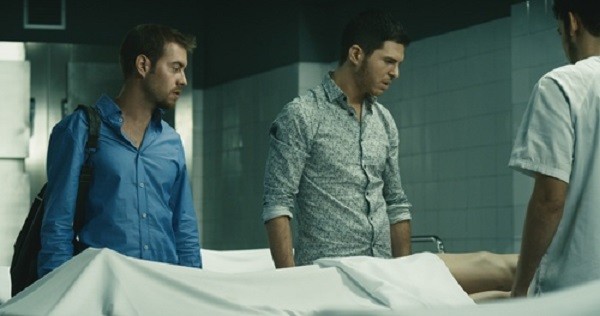
Things aren’t helped by the predictable plotting, and the stereotypical characters, from Stevens’ arrogant prosecution lawyer to Cromwell’s obstructionist, authoritarian judge. The trial scenes have a certain amount of energy to them, as do the flashbacks to the night of the rape (Spell was a chauffeur who was accused by his employer’s wife, Eleanor Strubing (Hudson), of rape and attempted murder), but away from the courtroom, much of the movie is perfunctory, and the visuals are quite drab. It’s also a movie that recounts the more tawdry aspects of the alleged rape with a degree of detachment, and what should be shocking sounds more as if it were unrelated to anyone who’s actually involved in it all. As Marshall, Boseman adds another real-life person to his resumé, and invests the character with a lot of passion and vigour, but as the movie finally gets round to giving Friedman his due, Marshall becomes a secondary character and his impact diminishes. Gad handles the enforced comic aspects of his character with his usual amiable skill, but doesn’t always look comfortable doing so. Hudson brings a degree of ambiguity to her role as Eleanor, and Brown is a solid, dependable presence throughout. In dramatic terms, the verdict is a given, and it’s a mark of the movie’s lacklustre approach, that when that verdict is announced, the response from the viewer is likely to be “Okay” instead of Oh my God!”

Rating: 6/10 – patchy and hesitant in parts, Marshall beefs up its main character’s involvement in a rape trial and spends much of its time reminding the viewer that Thurgood Marshall was a better man than anyone else depicted in the movie; a hagiography then – though not the first – and one that, by adopting such an approach, reinforces that old newspaper saying, “If you can’t print the truth, print the legend”.

Share this:

  • Click to share on X (Opens in new window) X
  • Click to share on Facebook (Opens in new window) Facebook
  • More
  • Click to print (Opens in new window) Print
  • Click to email a link to a friend (Opens in new window) Email
Like Loading...

Floating! (2015)

12 Friday Jan 2018

Posted by dullwood68 in Movies

≈ 2 Comments

Tags

Anna König, Comedy, Drama, Jakob Renger, Julia Becker, Julia C. Kaiser, Relationships, Review, Romance, Sperm donor

Original title: Das Floß!

D: Julia C. Kaiser / 86m

Cast: Julia Becker, Jakob Renger, Anna König, Till Butterbach, Rhon Diels, Christian Natter, Nina Bernards, Sina Bianca Hentschel

German movies haven’t really been too conspicuous in recent years. In the new millennium, and though the German movie industry has climbed out of the doldrums brought about by the rise in home viewing in the 1990’s, on the international stage, German movies have rarely made an impact. The arrival of Toni Erdmann (2016) was a much needed fillip for the industry, but for the movie buff who is prepared to do a little digging, there are other movies out there that are worth a look and a mention. One such movie is Floating!, the first feature of writer/director Julia C. Kaiser. The set up is a simple one: Katha (Becker) and Jana (König) have decided to get married and to have a child via artificial insemination. They’ve even chosen a sperm donor, called Momo (Renger). One weekend, both have their bachelor/bachelorette parties. Katha heads off to the countryside to meet her brother Tobi (Natter), her oldest friend Charly (Butterbach), and friend and work colleague, Ken (Diels), for a trip on a motorised raft. Jana meanwhile, stays at their flat and has several of her friends over. But unexpected guests at both parties – Momo at the raft, Jana’s ex-partner Susan (Bernards) at the flat – threaten to cause both women to question their relationship.

Floating! is exactly the kind of feature that’s needed to remind people that German movie makers can produce the same astute, enjoyable, and carefully crafted movies that their European counterparts can make. Focusing on the pre-marital doubts that could affect any couple, straight or gay, Kaiser’s gently probing script gives the us time to get to know the characters and understand enough of their back stories so that we can sympathise with the emotional issues that they find themselves facing. Katha, surrounded by males who all view her differently, finds herself wondering if there’s any merit in being straight (or at least finding out what it might be like). She’s comfortable with their bloke-ish camaraderie and easy-going behaviour. She even comes to appreciate Momo’s presence, even though she makes it clear he won’t have a role in the baby’s life. With copious amounts of alcohol to help confuse matters further, Katha becomes unsure of herself and her commitment to Jana. Meanwhile, Jana is shocked by the presence of Susan at her party, and though she does all the right things in trying to avoid her/get rid of her, when Susan explains why she’s there, Jana – who walked out of their relationship – begins to doubt the wisdom of her past actions. And she too finds herself torn between what she has and what she could have.

This being a romantic drama with suitable helpings of comedy to make it more agreeable, Floating! remains a consistently plausible and thoughtful examination of the natural doubts any couple might have before making that final commitment to each other. There’s a lightness of touch and emphasis in Kaiser’s direction that allows us to feel like we’ve known the characters all their lives, and the cast respond accordingly, giving natural, appealing performances that further enhance the sense that these are all people you could meet at any time, and anywhere. The dialogue is entirely natural sounding too, and very little feels forced or contrived. It’s all shot by DoP Dominik Berg using an autumnal colour palette that emphasises the possibility of change within the characters as well as the season, and Nicole Weber’s editing ensures that the pace of the movie is reflected in the bustle of Jana’s party and the laconic ease of the raft party.

Rating: 8/10 – a wry, sympathetic, and engaging look at love found and nearly lost, Floating! is a delightful movie anchored by finely balanced, intuitive performances, and Kaiser’s confident direction; one not only for fans of German cinema, but for anyone who wants to see a movie that tells its tale with an understated grace and in a very simple, yet very effective fashion.

NOTE: The trailer below doesn’t have English subtitles.

Share this:

  • Click to share on X (Opens in new window) X
  • Click to share on Facebook (Opens in new window) Facebook
  • More
  • Click to print (Opens in new window) Print
  • Click to email a link to a friend (Opens in new window) Email
Like Loading...

Victoria & Abdul (2017)

11 Thursday Jan 2018

Posted by dullwood68 in Movies

≈ Leave a comment

Tags

Ali Fazal, Drama, Eddie Izzard, History, Judi Dench, Mohur, Munshi, Queen Victoria, Review, Stephen Frears, Tim Pigott-Smith, True story

D: Stephen Frears / 111m

Cast: Judi Dench, Ali Fazal, Eddie Izzard, Tim Pigott-Smith, Adeel Akhtar, Michael Gambon, Paul Higgins, Olivia Williams, Fenella Woolgar, Julian Wadham, Robin Soans, Simon Callow

There’s a saying that “history repeats itself”, and it’s an apt concept when discussing the latest slice of heritage cinema concerning Queen Victoria and the post-Albert years that saw her decline in health if not in will. In Victoria & Abdul, the Queen (Dench) has been a widow for twenty-six years. It’s also 1887 and the British Empire is celebrating fifty years of Victoria’s reign. As part of the celebrations, two Muslims are sent from India to present a mohur, a special gold coin, to the Queen. One is a prison clerk, Abdul Karim (Fazal). Bored with the fawning antics of her inner circle and courtiers, Victoria develops an interest in Abdul and makes him her “munshi”, a native language teacher. Soon, Abdul is teaching her Urdu and instructing her in the Quran. Of course, this horrifies the Queen’s household, as well as her son, Bertie (Izzard), and efforts are made to discredit Abdul or reduce the increasing influence he has on Victoria through their friendship. But the Queen refuses to listen, and Abdul remains at her side for the remainder of her reign…

Much of that previous sentence could be rewritten to reflect the turbulent friendship that Victoria experienced with John Brown, her Scottish manservant. That relationship occurred post-Albert and pre-Abdul, but there are remarkable similarities between the two men that would make watching this and Mrs. Brown (1997) something of an exercise in deliberately instilled déjà vu. Suffice it to say, the similarities don’t end there. The active racism of the period is front and centre, as is the general xenophobia of the Queen’s household, but the distaste with which Abdul’s presence is regarded is pushed to the fore on too many occasions for it to remain effective. It’s a given that there’s going to be a resistance from the Establishment over Abdul’s perceived influence, but in the end this is the main focus of the movie and the source of much of the drama, whether it’s Eddie Izzard’s churlish Bertie looking miffed behind his beard, or Tim Pigott-Smith’s equerry, Sir Henry Ponsonby, being rebuffed at every turn in his efforts to undermine Abdul’s position. Efforts are made or attempted to have Abdul removed, Victoria stands firm against these impositions, and then – repeat. This does allow the movie to maintain a certain rhythm, but the repetitive nature of the screenplay (plus the story’s inevitable ending) leaves the movie feeling more and more dramatically redundant as it progresses.

But while the material may feel a little fusty, there’s no denying the energy of Stephen Frears’ direction, or the merits of the performances. Frears is too experienced to let the predictable nature of the material get in the way of stopping him from making an entertaining and enjoyable movie, and this is the case with Victoria & Abdul. Frears has the confidence to alter the mood of a scene on the turn of a sentence or the change of a look, and he does so on several occasions, and often through observing the characters in repose or in thought. Judi Dench gives another exemplary portrayal of Victoria, and it’s one that reveals several hidden layers to the character, all of which highlight the often lonely and fragile nature of the Queen at that time, while also reinforcing her reputation for being obstinate and direct. As Abdul, Fazal has much less to do, but still makes a good impression in a portrayal that, despite being that of a title character, is effectively a supporting role. The rest of the cast, all seasoned professionals who could carry off this sort of thing in their collective sleep, encourage the familiarity of the period and the material, and it’s all beautifully rendered by DoP Danny Cohen, who is something of an unsung hero in the world of cinematography.

Rating: 7/10 – though put together with enough due care and attention to ensure that watching it is a gratifying experience for the most part, Victoria & Abdul remains a standard piece of history-telling that won’t surprise viewers in any way at all; the cinematic equivalent then of a pair of comfy slippers, this avoids being bland and unremarkable thanks to the talent involved, and because everyone still enjoys seeing the Establishment being thwarted at every turn in its machinations.

Share this:

  • Click to share on X (Opens in new window) X
  • Click to share on Facebook (Opens in new window) Facebook
  • More
  • Click to print (Opens in new window) Print
  • Click to email a link to a friend (Opens in new window) Email
Like Loading...

Bang Gang (A Modern Love Story) (2015)

10 Wednesday Jan 2018

Posted by dullwood68 in Movies

≈ Leave a comment

Tags

Daisy Broom, Drama, Eva Husson, Finnegan Oldfield, France, Lorenzo Lefèbvre, Marilyn Lima, Relationships, Review, Sex, Teenagers

Original title: Bang Gang (une histoire d’amour moderne)

D: Eva Husson / 94m

Cast: Finnegan Oldfield, Marilyn Lima, Lorenzo Lefèbvre, Daisy Broom, Fred Hotier, Manuel Husson, Olivia Lancelot, Raphaël Porcheron, Tatiana Werner, Olivier Lefebvre

Eva Husson’s debut feature, set in the world of Biarritz high-schoolers, could be described as a French reworking of Fight Club (1999), but with sexual activity instead of fighting. What’s the first rule of Sex Club? Answer: nobody talks about Sex Club! This may sound like a trite way of approaching the movie but it’s hard not to draw parallels with a number of other movies that focus on teens and the troubles they have in negotiating that dread period of time between being a teenager and becoming an adult. Here, the teens are predictably bored, listless and lacking in ambition (except for Gabriel (Lefèbvre), who creates his own music). Alex (Oldfield) has his mother’s house all to himself and has decided that conspicuous hedonism is the way forward; he’s aided by his friend, Niki (Hotier), who’s a little dorky but not as arrogant as Alex. Best friends George (Lima) and Laetitia (Broom) have little experience of the opposite sex, though both are curious to learn in their separate ways. Gabriel, meanwhile, is Laetitia’s neighbour, something of a loner, and attracted to George.
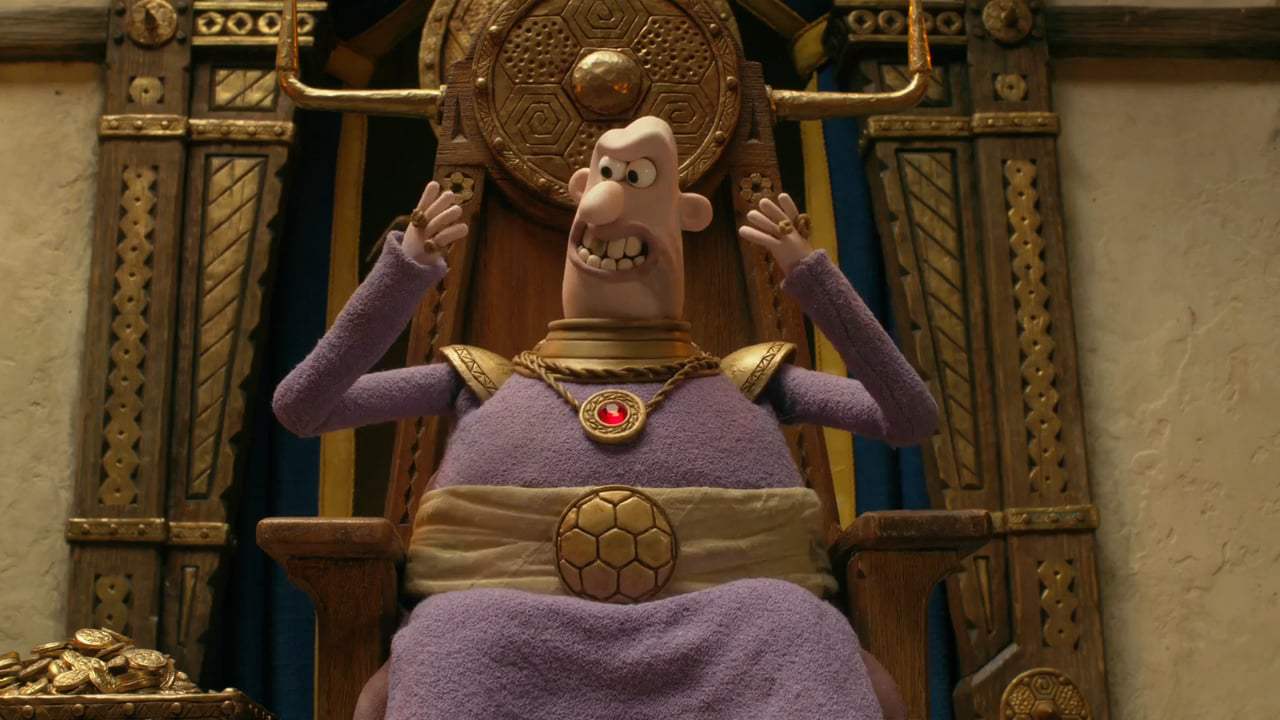
Thus the movie is ripe for exploring the tangled relationships that only horny and confused teenagers can endure, and the inevitable fallout when things start to go irretrievably wrong (as it does here, when their school is forced to implement a particularly embarrasing round of health screenings). But the movie doesn’t quite manage to make any of the characters’ predicaments anything more than perfunctory. The sex parties (which begin innocuously enough with games of spin the bottle) include drug taking as well, and participants are allowed to take photos or record videos of what goes on, but only for future sharing within the group. Of course, this lasts about as long as it takes for George and Laetitia’s friendship to crumble when they both sleep with Alex, and soon the widespread knowledge of the group’s activities causes further problems, but for the most part, these teenagers are still as bored, listless, and lacking in ambition as they were at the beginning. Does anyone learn anything? It’s hard to tell, not even if the lesson is simply to avoid getting involved with sex parties, and Husson’s script strives for meaning far too often and without providing any answers.

That said, the performances are engaging and acceptably fearless, with Lima a stand out as the emotionally compromised George, a character whose injured self-esteem leads her into wanton behaviour that undermines her self-esteem even more. But Husson doesn’t seem able to make anyone truly sympathetic enough for the viewer to identify with, and the whole sorry mess that the sex parties engender is best summed up by Gabriel’s father (Husson) as, “…so profoundly mediocre.” This extends to the parties themselves, which provide tame examples of the kind of “action” that would be taking place, and which for all the “freedom” that is on display, is content to show females kissing and getting together, but not males doing the same (are there no gay teens in Biarritz?). It’s a movie that also feels lightweight in terms of any social or sexual subtexts, and there are frequent allusions to train wrecks on the local news that offer clumsy counterpoints to the derailment of normal teenage behaviour taking place at Alex’s house. All in all, the movie struggles for relevance, and tells its story in too mundane a fashion for it to strike any chords – even amongst teenagers.

Rating: 5/10 – not as controversial as may have been intended, and not as fascinating as the scenario could have been, Bang Gang (A Modern Love Story) offers a glimpse at a world that seeks to flout traditional rules of propriety, and without any long-term consequences; all wrapped up too neatly, Husson’s feature debut reveals a director with a certain visual flair but who needs to be aware that narrative loopholes – of which there are several – can hinder the success of any project.

Share this:

  • Click to share on X (Opens in new window) X
  • Click to share on Facebook (Opens in new window) Facebook
  • More
  • Click to print (Opens in new window) Print
  • Click to email a link to a friend (Opens in new window) Email
Like Loading...

Molly’s Game (2017)

08 Monday Jan 2018

Posted by dullwood68 in Movies

≈ 1 Comment

Tags

Aaron Sorkin, Biography, Drama, Gambling, Idris Elba, Jessica Chastain, Kevin Costner, Poker, Review, True story

D: Aaron Sorkin / 140m

Cast: Jessica Chastain, Idris Elba, Kevin Costner, Michael Cera, Jeremy Strong, Chris O’Dowd, J.C. MacKenzie, Brian d’Arcy James, Bill Camp, Graham Greene, Jon Bass

With the issue of women trying to get ahead in a “man’s world” receiving so much attention right now, the arrival of Aaron Sorkin’s debut as a director seems like very good timing indeed. Based on the true story of Molly Bloom (Chastain), a potential Olympic-class skier forced to retire through injury, and how she came to run one of the world’s most exclusive high-stakes poker games – twice, Sorkin’s debut is a dazzling whirl through the twilight world of underground gambling where fortunes are won and lost at the turn of a card. Molly begins her second career while working for Dean Keith (Strong), a struggling businessman who hosts his own underground game, and who tells her to oversee the game each week. When her relationship with Keith becomes irretrievably strained, she starts up her own game, steals away one of his main players, an actor referred to as Player X (Cera), and begins to make a name for herself. Avoiding taking a cut of the money being wagered, Molly isn’t doing anything illegal, but she falls foul of Player X’s ego and the game is taken away from her. She moves to New York where she starts another game but this time she begins to take a cut. She bows out after a couple of years, but two years later, finds herself being arrested and charged with, amongst other things, money laundering. Enter the man who will represent her in court, Charlie Jaffey (Elba)…

Like many biopics, Molly’s Game doesn’t tell Bloom’s real story, but instead uses its bare bones to explore a world where gambling is its own addictive drug of choice, and the players wage obscene amounts of money for the thrill of it. It’s a world that Sorkin portrays with a great deal of fidelity, but while it’s an interesting and compelling world to spend time in – and the movie spends as much time there as it can – it does mean that Molly herself is placed firmly in the background. There are too many times where she’s the observer, watching the players while offering a pointed commentary on their habits and foibles. The movie is on firmer ground when it’s showing the process by which Molly and Jaffey spar their way to a workable defence strategy, with her refusal to implicate others or break her own self-imposed ethical code, proving at odds with Jaffey’s efforts to keep her out of jail. The scenes between Chastain and Elba crackle with an urgency and an intensity that isn’t always there when Molly’s past is being recounted, and while Sorkin the director in conjunction with editors Alan Baumgarten, Elliot Graham, and Josh Schaeffer, keeps things moving at quite a lick (the running time doesn’t feel like it’s anywhere near two hours and twenty minutes), the movie’s non-linear approach does undercut any potential or hard-earned momentum.

But if there’s one area of the screenplay that no one should worry about, it’s the dialogue. This is a movie where the dialogue is so well structured and so well held together through the various vocal rhythms associated with the characters, that not one word feels false or sounds awkward when it’s spoken. Sorkin’s good ear works its magic as usual, and there are times when it’s easy to believe that Molly et al spoke these actual words during the real-life situations being depicted. Even a scene late on between Molly and her uncompromising father (Costner), a scene that screams plot contrivance at the top of its lungs, is so deftly written that you can almost forgive the hackneyed nature of it. Sorkin is also well served by his cast, with Chastain and Elba both giving terrific performances, and they in turn are given equally terrific support from the likes of Costner, Cera, and O’Dowd. This is a confident debut feature from Sorkin, and even though some of it feels a little stretched in terms of “did it really happen that way?” there’s no denying the energy and the appeal of seeing one woman carving out her own niche in a man’s world and sticking to her own principles while she does it.

Rating: 8/10 – top-notch performances from Chastain and Elba added to another script full of riches from Sorkin (and his surprisingly flexible direction) make Molly’s Game a hugely enjoyable movie even when it steers perilously close to Movie Biopic Clichés 101; if you’re not into poker some of this will go way over your head, and there are a few silly missteps along the way, but otherwise this is a fast-paced, freewheeling, and above all fun experience that doesn’t rely on depth or subtexts at all in telling Bloom’s story.

Share this:

  • Click to share on X (Opens in new window) X
  • Click to share on Facebook (Opens in new window) Facebook
  • More
  • Click to print (Opens in new window) Print
  • Click to email a link to a friend (Opens in new window) Email
Like Loading...

A Bad Idea Gone Wrong (2017)

07 Sunday Jan 2018

Posted by dullwood68 in Movies

≈ Leave a comment

Tags

Comedy, Debut feature, Drama, Eleanore Pienta, Gated community, Jason Headley, Matt Jones, Review, Robbery, Will Rogers

D: Jason Headley / 81m

Cast: Matt Jones, Eleanore Pienta, Will Rogers, Jonny Mars, Jennymarie Jemison, Sam Eidson

In Jason Headley’s very amusing feature debut, he introduces us to Marlon (Jones) and Leo (Rogers) as they sit in a diner and discuss the various places they can rob. Right away we know that they aren’t the brightest of potential thieves as they’re sitting in a diner discussing their plans where anyone can hear them. They bat ideas back and forth before Leo announces that he’s found somewhere, a house where the owners will be away for a while, and that he knows how to get into. Marlon is surprised but willing to go along with Leo’s suggestion. That night, they put Leo’s plan into action. But the first of several obstacles they’ll face presents itself when Leo reveals that the house is part of a gated community. Still proving that their I.Q.’s are probably lower than their shoe sizes, the pair persuade a pizza delivery driver to let them hide in the trunk of his car and get onto the estate that way. That obstacle overcome, Leo uses the key he knows will be hidden outside to gain entry. But Marlon decides to play with the house alarm, and ends up arming it, leaving them trapped inside. Deciding to go ahead with the robbery and work out a solution to the alarm later, two things soon become very apparent indeed: one, Leo knows way too much about the house and its owners than he should, and two, they’re not alone…

A Bad Idea Gone Wrong is a comedy of errors that finds inventive yet credible ways in which to make things more and more difficult for its two protagonists, and the unexpected housesitter, Darcy (Pienta), they find upstairs in one of the bedrooms. Some of these problems are worse than others and some are more casually signposted by Headley, but they all conspire to make the movie an enjoyable romp and spin on the humble home invasion movie. By making Marlon and Leo less than brilliant in the planning and executing stakes, many of the obstacles they face are the result of their own incompetence, or more particularly, Leo holding back some hugely relevant information about the house they’re attempting to rob. Add in the complication of Darcy’s presence and the uneasy truce that they arrive at in attempting to solve all their issues – Darcy isn’t completely honest with Marlon and Leo; not at first, anyway – and you have a quirky, sometimes surreal comedy that is brisk, clever, and which features three very good performances from Jones, Pienta and Rogers.

Headley makes sure that all three characters are gifted with some very witty dialogue, and though we only get to know a few things about them – Marlon is obsessed with landing a big payday, Leo has ex-girlfriend issues, Darcy is shadier than she appears – within the confines of the house and the scenario, Headley is right not to give the audience too much in the way of back stories. The plot plays out smoothly, with each twist and turn feeling like a logical extension of the one that’s gone before, and by the time a community security guard (Mars) arrives on the scene, the movie has successfully and somewhat easily become such an enjoyable experience that a late injection of sentimentality – unnecessary but not surprising given the connections made between the trio – is unable to derail things. Headley mixes daft humour with broad farce to good effect and there’s a warmth towards the characters that allows for a great deal of sympathy for them and their predicament. It’s a lightweight concoction at times, but in a good way, and one that will have you smiling throughout and laughing out loud on more occasions than you’d expect.

Rating: 8/10 – a low budget indie comedy with smarts, A Bad Idea Gone Wrong has its own offbeat sensibility, and offers a reminder that more mainstream comedies can only dream that they could be this well put together; touching in places, absurdist in others, yet consistently amusing and appealing, it’s another of the many “unsung heroes” of 2017.

Share this:

  • Click to share on X (Opens in new window) X
  • Click to share on Facebook (Opens in new window) Facebook
  • More
  • Click to print (Opens in new window) Print
  • Click to email a link to a friend (Opens in new window) Email
Like Loading...

Beatriz at Dinner (2017)

06 Saturday Jan 2018

Posted by dullwood68 in Movies

≈ Leave a comment

Tags

Connie Britton, Dinner party, Drama, Healer, John Lithgow, Miguel Arteta, Mike White, Review, Salma Hayek

D: Miguel Arteta / 82m

Cast: Salma Hayek, John Lithgow, Connie Britton, Jay Duplass, Amy Landecker, Chloë Sevigny, David Warshofsky, John Early

The dinner party has long been used as an excuse for movies to explore the differences between people, or to expose secrets, or to raise questions of a social, sexual, psychological, philosophical, or moral nature. Beatriz at Dinner seeks to cover each of these angles in its relatively short running time, but is it as successful as it may have wanted to be? The answer lies in the way in which it establishes its main character, the titular Beatriz (Hayek). When we first meet her, Beatriz is in a rowboat in a mangrove swamp. It’s a beautiful location, peaceful and calming, and on a bright sunny day. It’s idyllic. But then Beatriz spies a white goat stranded on the shore line. The camera moves in closer – and then Beatriz wakes up; it’s all been a dream. However, it’s a dream that has a basis in reality, because Beatriz has a goat in a pen in her bedroom. It tells us a lot about her, about her principles, and what type of person she is. How will she fare then, when placed in a room with a group of people whose experiences of life, and whose attitudes, are so different from hers?

That’s the question at the heart of Mike White’s screenplay, one of four that were made into movies during 2017 – the others were The Emoji Movie, Brad’s Status, and Pitch Perfect 3. White is a multi-hyphenate who has built up a solid reputation for himself as a screenwriter, and since his first script for Dead Man on Campus (1998), he’s plied his trade in both mainstream and indie circles. Beatriz at Dinner is definitely one of his indie projects, and it reunites him with Arteta, who directed another of White’s scripts, Chuck & Buck (2000). But where White is usually sharper and more astute with his indie scripts, this time around there’s a sense that not all the movie’s ambitions have been met. It’s puzzling, yet perhaps shouldn’t be, because it all hinges on Beatriz, and Beatriz isn’t exactly the kind of heroine that we were probably expecting. She’s a legal migrant from Mexico, she works as a therapist at a cancer treatment centre, and she does private massages for a variety of clients. She doesn’t wear any make-up, drives an old beat up car, has a goat and two dogs, doesn’t appear to be in a relationship, and believes in an holistic approach to life.

One of her clients is Kathy (Britton). Kathy lives with her husband, Grant (Warshofsky), in a gated community outside of Los Angeles. Their house has a view of the ocean and practically yells new money. Beatriz arrives one afternoon to give Kathy a massage, but her car won’t start when she tries to leave. Kathy insists that Beatriz stay for dinner, even though it’s a dinner party for two of Grant’s business colleagues and their wives, and Beatriz is only waiting on a friend to come and get her car started. The first guests, Alex (Duplass) and Shannon (Sevigny) arrive, followed by the other couple, Doug (Lithgow) and Jeana (Landecker). The three couples are celebrating a business deal that Alex has closed, and which stands to make them even richer than they already are. Beatriz begins to suspect that she knows Doug from some time in her past, perhaps in Mexico. As the evening progresses, Beatriz has a little too much to drink, but not enough to stop her voicing her disgust when Doug brags about his having hunted big game in Africa. But her outburst causes a rift between her and Kathy, and when she learns more about Doug and challenges him on some of his sharp practices as a businessman, that rift grows even wider…

Beatriz at Dinner has been widely regarded as a comedy as well as a drama. This is a little misleading, as while there are certainly humorous moments, and other moments where a darkly satirical tone is adopted, this is a drama through and through, serious in its intentions, and direct in its approach to the material. White is looking to skewer the pompous, affected nature of these entitled men and their equally entitled wives, and he does so by providing them with dialogue that makes them sound crass, insensitive, patronising, and lacking in self-awareness. It even extends to the “help”, when John Early’s eerily proficient Evan interrupts Beatriz when she’s talking, to advise on the starters that are available. Beatriz is talking about the hardships she’s experienced in her life; he wants to make sure the guests know what sauces go with the beef and the halibut. Just by that alone you know the evening isn’t going to go well.

Tension arises through the character of Doug, whose company has been involved in several controversial incidents, some of which have occurred in Mexico. The scene is set for a showdown between Beatriz and Doug, but White makes Doug look like he’s made out of Teflon; no matter how angry or aggrieved Beatriz becomes, Doug just shrugs it off as if it’s of so little importance than he can’t even be bothered to acknowledge it. By adopting this approach to the character, White has made him incapable of being affected, and so he remains a largely anodyne villain, in place to stir up emotions and provide conflict, but too remote in attitude to care about being attacked in the first place. Lithgow is good as Doug, expressing right-wing opinions on a variety of topics, and forever wondering why anyone should care if what he does is harmful or even immoral. Doug is a character we want to see bested and taught a valuable lesson about responsibility, but White has other ideas, and so in those terms the movie ends unsatisfactorily, and worse still, elliptically.

Aside from Beatriz, Doug and Kathy, the characters are bland, interchangeable versions of each other, though Grant does show a huge propensity for ass-kissing (see how many times he agrees with something Doug says). As a result there’s little in the way of scene-stealing, and Sevigny and Duplass are on the periphery of the action for the most part, their roles more mundane than necessary. Britton is good as the outwardly empathetic but inwardly image conscious Kathy, while Hayek connects well with Beatriz’s sense of herself as a healer, expressing the character’s spiritual and environmental passions with an understated yet still fervent sincerity. Arteta has trouble mustering enough energy in some scenes, leaving the movie feeling flat and prosaic, and there are times when it seems as if something momentous is about to occur – but it doesn’t (though when something momentous actually does occur, even then it’s undermined by narrative decision making). All this makes for occasionally intriguing viewing, but in the end, the movie leaves too much unaddressed to make it work consistently or completely.

Rating: 6/10 – a movie that often lacks substance thanks to the stereotypical nature of most of its characters, Beatriz at Dinner is neither acerbic enough nor penetrating enough in its efforts to expose the moral and ethical lassitude of America’s nouveau riche; Hayek gives an impassioned portrayal, but it isn’t matched elsewhere, and though the script strives for political relevance, it doesn’t offer the kind of insights that would have an audience nodding their heads in weary recognition.

Share this:

  • Click to share on X (Opens in new window) X
  • Click to share on Facebook (Opens in new window) Facebook
  • More
  • Click to print (Opens in new window) Print
  • Click to email a link to a friend (Opens in new window) Email
Like Loading...

Old-Time Crime: The Whistler (1944) and The Mark of the Whistler (1944)

03 Wednesday Jan 2018

Posted by dullwood68 in Movies

≈ Leave a comment

Tags

Columbia, Crime, Drama, Gloria Stuart, J. Carrol Naish, Janis Carter, Murder, Radio drama, Review, Richard Dix, Thriller, William Castle

The Whistler (1944) / D: William Castle / 60m

Cast: Richard Dix, Gloria Stuart, J. Carrol Naish, Alan Dinehart, Joan Woodbury, Don Costello, George Lloyd, William ‘Billy’ Benedict, Byron Foulger, Robert Homans, Otto Forrest

The first in a series of eight movies released by Columbia between 1944 and 1948, The Whistler is based on the radio drama of the same name. Each movie begins with the same voice over: “I am the Whistler, and I know many things…”, and each movie features a different story “narrated” by the Whistler (Forrest). In this first outing, Richard Dix plays Earl C. Conrad, an industrialist who decides to have a contract taken out on himself. Guilt-ridden over the loss of his wife at sea, Conrad wants to end it all, and arranges with a career criminal called Lefty Vigran (Costello) to have someone kill him within the next few days. But then news reaches him that his wife is still alive, and of course he tries to call off the hit. But Vigran is unable to call a halt to things, and Conrad must spend the next few days trying to find out who’s been hired, and if he finds him, persuade the killer (Naish) not to go through with it.

As ever with this kind of story, the killer is determined to see out his contract as a matter of personal pride, and to uphold his reputation. This leaves Conrad in a tight spot, and the second half of the movie sees him trying to avoid being killed, while the killer tries – at first – to scare him to death, having read a book about the very same thing. It’s little quirks like these that make The Whistler more enjoyable than you might expect, and Naish’s performance as the killer is an equally enjoyable combination of tortured soul and pedantic assassin. Like many movies he appeared in, Naish is fun to watch, and he throws himself into the role with obvious enthusiasm, and he brings an unexpected level of sincerity to the part. It’s easy to forget, but Naish was nominated twice for an Oscar for Best Supporting Actor, first for Sahara (1943), and again for A Medal for Benny (1945).

As these kind of things go however, it’s only occasionally effective, and only occasionally gripping. It does have a slightness of tone in the scenes between Dix’s anguished industrialist and his super-supportive secretary, Alice Walker (Stuart) (who’s clearly in love with him), but otherwise it opts for a sub-noir approach full of menacing shadows and drawn-out sequences where Conrad is stalked by the killer. Making only his third feature, future schlockmeister William Castle contributes little in the way of anything substantial, but he does ensure that Dix gets to show viewers his entire repertoire of worried expressions. As with Naish it’s easy to forget that Dix was also an Oscar nominated actor – for Cimarron (1931) – but he’s a long way from that movie, and he looks tired throughout, a reflection on the personal problems he had at the time.

Overall it’s not the most rewarding of franchise openers, but it did establish a template that would see Dix return as different characters in a further six movies, while the last in the series saw the main character played by Michael Duane. Castle would return for the next movie, and direct two more later entries, and he would develop a better approach in regard to pacing and performances. As for the Whistler himself, he would remain in the shadows offering specious comments about the wicked nature of Man, and reminding everyone that he knows “many things”. As a framing device for the stories that are told it’s not entirely successful, and to be fair, these tales could have been made as stand-alone movies without the Whistler’s presence to connect them all, but as the series unfolded, lessons were learned, and the quality – thankfully – improved.

Rating: 5/10 – not the most auspicious of debuts, The Whistler squanders much of its running time by having Naish stalk Dix with little or no consequence or outcome, and by reducing the supporting characters to little more than walk-ons; straightforward direction from Castle doesn’t help, and there’s too much of an air of “contractual obligation” for much of this to work, and without Naish’s involvement, this would be even less interesting than it is already.

The Mark of the Whistler (1944) / D: William Castle / 61m

aka The Marked Man

Cast: Richard Dix, Janis Carter, Porter Hall, Paul Guilfoyle, John Calvert, Matt Willis, Willie Best, Otto Forrest

By contrast to the tired machinations of The Whistler, its sequel (released a little over six months later) has much more verve and energy, and the reason is simple: it’s based on a story by Cornell Woolrich. Woolrich was a novelist and crime author who during the Forties wrote some of the best noir thrillers of the period, and so prolific was he that more film noir screenplays have been adapted from his works than any other crime novelist. Here, his short story, Dormant Account, is used as the basis for another “narrated” tale by the Whistler. In it, a returning Richard Dix is a bum called Lee Selfridge Nugent. One day, Nugent sees a notice in a newspaper. A bank is looking for a Lee Nugent to come forward and claim the money in – surprise! – a dormant account. With the aid of a tailor (Hall) who provides him with a new suit, and by dint of doing his research into the other Nugent’s background, Lee “inherits” $29,000. But when his picture ends up in the local paper, he becomes the target of two brothers (Calvert, Willis) who are looking for the real Nugent. Suffice it to say, their intentions aren’t exactly good…

Woolrich’s stories and novels are the very definition of page-turners: fast-paced, always intriguing, and practically forcing you to see what happens next. He also understood how to turn the screws on his characters and leave them at the hands of a whimsical fate. This is best expressed when Lee is waiting in the bank while a clerk goes to get some paperwork. Lee can’t help but become nervous, and he begins to overthink things: what if he’s been rumbled, what if the police are being called right then, why is the bank guard always looking over at him, etc. etc. It’s a terrific distillation of the tension that Woolrich could invoke in his writing, and the two occasions when Lee has to visit the bank provide the movie with two very tense and formidable scenes indeed. Dix doesn’t look quite as bad as he did in the first movie, and the actor seems more engaged with the material. He’s even able to have a little fun in his scenes with Hall, whose parsimonious tailor is the movie’s comic relief (something the first movie could have done with).

With the money claimed, the movie changes gear and becomes an out-and-out thriller, with Calvert and Willis tracking down Lee and threatening to put holes in him unless he hands over the money. This all happens while Lee is focused on wining and dining newspaper reporter Patricia Henley (Carter). For the second time, it’s refreshing to see the lead female character kept away from harm, and not interfering in a way that will see her put in harm’s way, but the character is one of the few areas where the script by George Bricker doesn’t know how to proceed. As a result, Patricia is reduced to background traffic while Dix fights off the brothers with the aid of Guilfoyle’s down on his luck pencil salesman, ‘Limpy’ Smith. It’s another example of the institutionalised sexism of the times, and not exactly unheard of, but it still rankles as unnecessary.

With a much better script to get to grips with, Castle’s return to the director’s chair shows a marked improvement on the first movie, and he orchestrates matters with much more vigour than before, and even manages to elicit a better portrayal from Dix than previously. The hour-long running time is free of the filler that hampered the first movie, and the increased production values mean the movie doesn’t look like it’s been shot through a foggy lens or on a cheaply rented soundstage. A sequel then that’s been shown more care and attention than these kind of ‘B’ movies usually received, and very much worth seeking out.

Rating: 7/10 – an agreeable and entertaining entry in the series, The Mark of the Whistler proves that with the right source material, even the lowest budget crime thriller can be successful; tightly plotted and appropriately tense in places, this is that rare beast: a sequel (kind of) that’s better than the original.

Share this:

  • Click to share on X (Opens in new window) X
  • Click to share on Facebook (Opens in new window) Facebook
  • More
  • Click to print (Opens in new window) Print
  • Click to email a link to a friend (Opens in new window) Email
Like Loading...

Mark Felt: The Man Who Brought Down the White House (2017)

02 Tuesday Jan 2018

Posted by dullwood68 in Movies

≈ Leave a comment

Tags

Deep Throat, Diane Lane, Drama, FBI, Liam Neeson, Marton Csokas, Peter Landesman, Review, True story, Watergate

aka The Secret Man

D: Peter Landesman / 103m

Cast: Liam Neeson, Diane Lane, Marton Csokas, Tony Goldwyn, Ike Barinholtz, Josh Lucas, Wendi McLendon Covey, Kate Walsh, Brian d’Arcy James, Maika Monroe, Michael C. Hall, Tom Sizemore, Bruce Greenwood, Eddie Marsan, Noah Wyle

To have lived in America during the late Sixties and early Seventies was to have lived in troubled times. The country was experiencing seismic shifts in practically all areas: sexually, racially, politically, socially. But if there was one constant, one small part of the US that could be counted on to remain the same, no matter what was occurring anywhere in the country, it was the FBI. The FBI under J. Edgar Hoover remained apart from political bias or influence, an autonomous body that answered to no one, but which involved itself – if needed – in the lives of everyone. If you ever wanted to know just how much Hoover was feared, you only have to watch the first scene in Mark Felt: The Man Who Brought Down the White House. In it, the FBI’s Deputy Associate Director Mark Felt (Neeson) is called to the White House for a meeting with John Dean (Hall) and two of his colleagues in the Nixon administration, John Mitchell and John Ehrlichmann. When they infer that Hoover should step down as Director of the FBI, it’s Felt who chillingly reminds them about Hoover’s secret files, the ones that contain everybody’s dirty laundry. What would happen, Felt counter infers, if those files were made public. The idea of Hoover retiring is quickly dropped.

The scene serves two purposes: one, to show just why the FBI was so autonomous, and two, to make it clear to the viewer that even if Hoover wasn’t around, Felt would be, and he was just as much a keeper of the secrets as Hoover was. It’s a necessary distinction to make, as what follows in the wake of Hoover’s death on 2 May 1972, is a watershed in US history, and Felt’s involvement in that watershed is crucial to the events that led to President Nixon’s resignation from office. Make no mistake: without Felt’s involvement, and without the decision he ultimately took in becoming “Deep Throat”, the US political landscape would have continued to change irrevocably for the worse. It’s a theme that runs throughout the movie, and which has modern day parallels. After Hoover’s death, and the discovery of the Watergate break-in, the White House did its best to influence the FBI and stop it from carrying out a thorough investigation (sound familiar?). And the White House’s efforts would have succeeded – if it hadn’t been for Mark Felt.

And so we have Felt portrayed by Liam Neeson in a political drama that goes behind the scenes at the FBI during the two years between Hoover’s death and Nixon’s resignation. Based largely on A G-Man’s Life (2006), a memoir Felt wrote with John O’Connor, Peter Landesman’s latest movie is ultimately a strange beast, neither compelling enough to grab its audience and guide it safely through the political upheaval of the time, or clear enough on the details of just how Nixon was caught in a web of his own deception. Instead, Landesman’s script focuses on the need to keep Acting Director L. Patrick Gray (Csokas) in the dark about the investigation, the search for the mole in the FBI who’s leaking information to Time and The Washington Post, and on a personal front, Felt’s search for his runaway daughter, Joan (Monroe). These three strands lead to a lot of repetition as Felt repeatedly goes behind Gray’s back, accusations of someone being “Deep Throat” fly thick and fast through the FBI offices with almost everyone being accused at one point or another, and Felt reassuring his wife, Audrey (Lane), that Joan will be found safe and well.

It’s all done in a watchable, unpretentious way, with Landesman apparently content to play out the story as if he were doing it by the numbers. There’s energy here in the way that people around Felt seem to be rushing around but to no obvious purpose (Felt gives out lots of instructions but rarely receives any related feedback), and the pace of the movie is quick enough that boredom is never likely to set in, but it all seems like a missed opportunity. It’s another movie where we all know the outcome in advance (or at least should do), and so it’s also a movie where the script’s ability to create tension and maintain it is undermined from the word go. Even when Felt falls under suspicion of being “Deep Throat” and Gray implies that Felt is being bugged because of this, all it leads to is a few minutes of Felt searching his office and his home for hidden microphones, and then it’s all forgotten. In his efforts to include as much as possible that occurred during that tumultuous two-year period, Landesman has forgotten to ensure that what is included is both relevant and advances the narrative. As a result, there are too many occasions where said narrative stalls and needs to be kickstarted again.

In the title role, Neeson is square-jawed, determined, strikingly gray-haired, and a bit of a dull date. Spending time with Felt eventually becomes something of a chore. He’s not the most expressive of men – though when he becomes angry about something, his outbursts are like the tantrums of a six year old, or someone trying out being angry for the first time – and his stolid, rigid demeanour doesn’t exactly warm you to him, but where Neeson does succeed with the character is in showing his commitment to the FBI and the depth of his affiliation with it. The script hints at Felt becoming a whistleblower because of what was happening to the FBI rather than any disgust at Nixon’s criminal behaviour, but it falls short of exploring this idea fully, and instead paints Felt as a kind of Gary Cooper figure who has to do the right thing, no matter what. Neeson is also lumbered with some gloriously tedious dialogue, though the moment where he gets to say, “No one can stop the driving force of an FBI investigation, not even the FBI”, is one to cherish.

There’s good support from the likes of Lucas and Monroe, but Csokas comes across as too heavy handed as the out of his depth Gray. Lane, meanwhile, apparently gave such a great performance as Felt’s troubled wife that most of her scenes ended up on the cutting room floor, which is a shame as Lane provides easily the movie’s best performance in spite of this. Visually the movie is quite restrained, with a dark, limiting colour palette that is probably meant to represent the gloominess of the times, but which in reality makes the movie look unnecessarily dreary. In the end it’s a competently made movie but not one that stands out from the crowd despite its subject matter.

Rating: 5/10 – a movie that has all the potential to be a riveting political thriller is instead a rather uninspired trek through a period of US history that was anything but humdrum; Mark Felt: The Man Who Brought Down the White House lacks drive and ambition in its attempts to tell Felt’s story, and settles early on for playing it safe and pedestrian in terms of its willingness to amble instead of soaring.

Share this:

  • Click to share on X (Opens in new window) X
  • Click to share on Facebook (Opens in new window) Facebook
  • More
  • Click to print (Opens in new window) Print
  • Click to email a link to a friend (Opens in new window) Email
Like Loading...

Palace of Fun (2016)

01 Monday Jan 2018

Posted by dullwood68 in Movies

≈ Leave a comment

Tags

Andrew Mullan, Brighton, Drama, Eadward Stocks, First feature, George Stocks, Phoebe Naughton, Review, Thriller

D: Eadward Stocks / 82m

Cast: Andrew Mullan, Phoebe Naughton, George Stocks

In this ultra-low budget British thriller set in Brighton, Lily (Naughton) and Finn (Mullan) meet in a nightclub. There’s an immediate attraction between them, and Lily takes Finn back to her parents’ home. The next morning, Finn meets Lily’s brother, Jamie (Stocks), and the three of them go on a yachting trip together. However, a disagreement between Lily and Jamie hints at an instability in Jamie’s character, and when he takes the opportunity to look through Finn’s satchel, what he discovers there leads all three down a very dark path indeed. With Finn and Jamie both doing their best to manipulate matters between the trio – though for very different reasons – Lily soon finds herself caught in the middle, until Finn decides to reveal the secret that Jamie has already discovered. When Jamie sees that his sister and Finn are still together, things become even darker, and his attempts to derail their relationship has unfortunate consequences…

First-time features often go one of two ways: they’re either first-out-of-the-gate original, both in terms of the story or the visual design, or they’re derivative yet respectful of pre-existing material. Palace of Fun adopts a third option, that of being a combination of the two, and it does so with a degree of style and confidence that helps it during some of the less successfully rendered moments or scenes. The narrative will be familiar to most viewers, but it’s cuckoo-in-the-nest storyline, coupled with its Patricia Highsmith-inspired tone, is offset by George and Eadward Stocks’ measured, and understated screenplay which threatens to drift into melodrama on more than one occasion but which also manages to avoid the same pitfall thanks to Stocks the director’s firm grip on the material. It’s a presure cooker environment that the first-timer maintains comfortably throughout, and without giving too many clues as to whether or not said pressure cooker does boil over, there’s a grim inevitability about the movie’s outcome that suits it perfectly.

The screenplay is keen to explore the dynamics of the relationship between Jamie and Lily, but it does so without qualifying why Finn is effectively taken in by Lily, and why Jamie takes against him so quickly. By pushing the narrative on in this way (and in deference to the running time), the story becomes more involving and less trite in its exploration of the characters and the twists and turns that drive the material, but it does also make Finn more of a cipher than is necessary for any sympathy or collusion on the part of the viewer to be established. Finn is the deus ex machina of the story, and while we don’t get to know too much about him, what little information we are given about him is too generic to work properly. That said, Mullan gives a very good performance as the mysterious Finn, and he works hard to ensure that the character retains a sense of vulnerability beneath his outwardly confident demeanour.

Similarly, the relationship between Jamie and Finn is one that leads to a couple of scenes where the lines are blurred as to just which one of them is the manipulator and which one is the manipulated. What seems like a frivolous game of cat and mouse soon gives way to a more (apparently) calculated game of psychological oneupmanship. Jamie appears to be in control, and he seems more able than Finn to manoeuvre things to his advantage, but as the movie progresses it’s Jamie whose grip on matters starts to falter. This leads to him taking increasingly more desperate measures in an attempt to split up Finn and Lily for good. Although not explicitly revealed, there’s more than a hint of sexual jealousy at play here, and while Jamie is certainly a devious and easily maligned character – he could be best described as someone who “doesn’t play well with others” – the script makes it clear that he’s operating out of a need for approbation that a) his actions don’t always deserve, and b) he’s not always able to control.

In the middle of all this is Lily, somewhat carefree but left on the sidelines for long stretches, her presence almost incidental to the main storyline even though the character is an integral (and very necessary) part of the drama that unfolds. At one point she has to make an important decision regarding her relationship with Finn, and though it’s a decision that the script can’t avoid Lily making in order for things to progress, it would look and feel more clumsy than it is thanks to Naughton’s honest approach to the character, and her rendition of the emotional bewilderment Lily feels at the time. It’s a role that requires Naughton to be reactive for much of the movie, but thanks to her portrayal, Lily remains the most honest of the three, and the only one without an ulterior motive for her behaviour.

The performances are a little rough around the edges at times, but this can be attributed to the minimal experience each has accrued so far in their careers (this is actually Naughton’s first acting gig). However, each contributes greatly to the overall effectiveness of the movie, and they’re matched by the efforts made behind the camera. Stocks the director displays an over-fondness for slightly off-centre framing, but it helps keep the viewer off balance in terms of what’s really happening, while Brighton itself is shot by DoP Murren Tullett with a view to providing a bright and sunny counterpoint to the increasing darkness of the material. As well, there’s an often ominous soundtrack that heightens the drama of certain scenes, and which acts as a warning that something bad might be about to happen. It’s all put together in a way that makes the movie compelling to watch for the most part, but which also labours the point quite heavily at times as well. Still, the Stocks brothers have proven themselves as movie makers to watch out for, and their debut feature is, for the most part, a triumph of ultra-low budget movie making.

Rating: 8/10 – a deliberately uneasy blend of slow-build menace and pitch-black humour that smooths out some of the narrative bumps in the road (e.g. Finn suddenly gains a mobile phone that he shouldn’t be able to afford), Palace of Fun is an ironic title for a movie that treads in very deep waters; acerbic and violent at times, and touching and warm-hearted at others, it’s a movie that has very specific aims and ambitions, ones that it achieves without too much fuss, and a simpicity of effort.

Share this:

  • Click to share on X (Opens in new window) X
  • Click to share on Facebook (Opens in new window) Facebook
  • More
  • Click to print (Opens in new window) Print
  • Click to email a link to a friend (Opens in new window) Email
Like Loading...

Lady Bird (2017)

31 Sunday Dec 2017

Posted by dullwood68 in Movies

≈ 2 Comments

Tags

Comedy, Drama, Greta Gerwig, High School, Laurie Metcalf, Lucas Hedges, Mother/daughter relationship, Review, Sacramento, Saoirse Ronan, Timothée Chalamet, Tracy Letts

D: Greta Gerwig / 93m

Cast: Saoirse Ronan, Laurie Metcalf, Tracy Letts, Lucas Hedges, Timothée Chalamet, Beanie Feldstein, Lois Smith, Stephen McKinley Henderson, Odeya Rush, Jordan Rodrigues, Marielle Scott

Warm and inviting, actress Greta Gerwig’s debut as a writer/director is a coming of age tale that involves Christine McPherson (Ronan), a seventeen year old high schooler who lives in Sacramento with her parents, Marion (Metcalf) and Larry (Letts), her adopted older brother Miguel (Rodrigues) and his girlfriend, Shelly (Scott), and who prefers to be known by her given name (as in given to her by herself) of Lady Bird. Lady Bird is a senior student who is looking to swap what she views as the culturally barren West Coast for the more eclectic and intellectual East Coast when she graduates and heads off to college. Currently attending a Catholic high school, she feels and acts like an outsider, and aside from having one friend, Julie (Feldstein), doesn’t do much to combat this. When she and Julie decide to audition for the upcoming school musical though, she meets Danny (Hedges), and they begin dating.

But while she navigates the uncharted waters of her first romantic relationship, Lady Bird has other problems to deal with. Her father is in danger of losing his job, and increasing financial difficulties have left the family living – literally – on the wrong side of the tracks. Also, Lady Bird’s relationship with her mother is an adversarial one, with the two of them constantly arguing and battling against each other. Marion is painfully honest about her belief in Lady Bird’s ability to get into a good college, and rarely ever compliments her. Her father is more supportive, and between them, he and Lady Bird endeavour to get her on to a college Wait List. While she waits for a response, Lady Bird’s relationship with Danny stalls due to an unexpected development, and she drops Julie in favour of Jenna (Rush), a more popular girl in school. At the same time she meets Kyle (Chalamet), who’s a musician in a band. But Lady Bird soon finds that dropping one small set of friends for another doesn’t solve any of her self-perceived problems, and her fractious home life doesn’t improve either. In fact, events lead to it being quite the opposite…

The idea of actors or actresses deciding to step behind the camera is far from unusual, but writing and directing as a first choice, and on the first occasion, is a little rarer. It’s a tribute to Greta Gerwig’s efforts that Lady Bird is not only an accomplished first feature, but a movie that will bear up under repeated viewings. Coming of age movies are ten a penny these days, and the highs and lows of being a teenager have been the subject of so many movies that you could be forgiven for wondering if there is anything new to be said. And while this does remain the case, what Gerwig does that makes her movie so effective, and so good, is write convincing dialogue. There’s not one line that feels false or contrived or sounds clichéd, and with this so ably taken care of, the cast have no problem in sounding like real people, and the various interactions their characters have all have an air of authenticity, as if Gerwig has eavesdropped on actual conversations and recorded them verbatim. This also gives the movie a rhythm and a flow that allows the viewer to be drawn along in the characters’ wake, something that adds immeasurably to the enjoyment the movie provides. And with that enjoyment comes a hopefulness that everything will eventually work out well for everyone concerned.

Lady Bird herself is a terrific character, challenging and challenged at almost every turn, and behaving in contradictory fashion throughout, just as a regular teenager would be who was trying to work out their place in the world. She wants to be her own individual, independent and assured despite having only limited experience of relationships and the wider world – everything happening with her father comes as a surprise to her – and trying to do her best as long as she benefits most. Gerwig focuses on Lady Bird’s selfish behaviour with a precision that if it isn’t autobiographical then it means that she’s very, very observant. There are moments where sympathy for the character is deliberately withdrawn by Gerwig, but there are also moments that follow on where Lady Bird shows more self-awareness than before, and sympathy is restored accordingly. It’s all played out with great skill and directorial acumen, and Gerwig accurately captures the confusion and longing that goes with being seventeen and wanting to be loved by family, friends, and/or the opposite sex.

She’s aided by a tremendously assured performance from Ronan, an actress who seems to be getting better and better with every role. Ronan brings a versatility and an understanding of the character that is impressive for the consistency that she achieves in maintaining Lady Bird’s obdurate character. It’s an appealing, generous performance and has a sincerity about it that allows the viewer to overlook much of Lady Bird’s poor behaviour. As Lady Bird’s mother, Metcalf is also on tremendous form, channelling the pain and frustration Marion feels at where Life has brought her, and the additional pain that comes of finding herself unable to do anything about the emotional discord between herself and her daughter (though the reason why is perfectly encapsulated in a single line of dialogue). In support, Letts is tender and more approachable, Hedges is a flawed Prince Charming, Chalamet is the pretentious rebound boyfriend, and Feldstein shines as the best friend who’s kicked to the kerb out of social expediency.

For the most part, Lady Bird is a keenly observed drama, but Gerwig is able to infuse her tale with an abundance of humour that acts as a necessary counterpoint to the emotional trials and tribulations that her heroine faces. The humour is varied from scene to scene, but like the majority of Gerwig’s script is only included when it suits or supports the material; there are no easy laughs here. Gerwig also shows that she has a keen sense of the spaces that her characters inhabit. Lady Bird and Marion are often shot in close proximity to each other so as to highlight the closeness of their relationship, while her other relationships – the ones that aren’t so emotionally acute – are allowed greater room in which to play out. DoP Sam Levy does a terrific job in allowing Sacramento (with which Lady Bird has a love-hate relationship) to become a secondary character all its own, while Nick Huoy’s editing is perfectly in sync with the tempo of Gerwig’s screenplay and directing style. As first features go, Gerwig has made a formidable debut. If she has any other ideas for a movie, then let’s hope we get to see them real soon, because on this evidence, her career as an actress doesn’t have to be her only one.

Rating: 9/10 – modest in scope and presentation, but perfectly realised for all that, Lady Bird is a movie with a big heart, grander ambitions than expected, and the courage to attain them all; in making this movie so completely irresistible, Gerwig has put her indie colleagues on notice: there’s a new movie maker in town and worst of all, she knows exactly what she’s doing.

Share this:

  • Click to share on X (Opens in new window) X
  • Click to share on Facebook (Opens in new window) Facebook
  • More
  • Click to print (Opens in new window) Print
  • Click to email a link to a friend (Opens in new window) Email
Like Loading...

Call Me by Your Name (2017)

30 Saturday Dec 2017

Posted by dullwood68 in Movies

≈ 2 Comments

Tags

Armie Hammer, Drama, First love, Italy, Literary adaptation, Lombardy, Luca Guadagnino, Michael Stuhlbarg, Review, Romance, Timothée Chalamet

D: Luca Guadagnino / 132m

Cast: Armie Hammer, Timothée Chalamet, Michael Stuhlbarg, Amira Casar, Esther Garrel, Victoire Du Bois, Vanda Capriolo, Antonio Rimoldi

In this beautifully shot, written, directed, and acted adaptation of the novel by André Aciman, the setting is Northern Italy in the summer of 1983. Oliver (Hammer), a graduate student of archaeology and Greco-Roman culture arrives at the home of Professor Perlman (Stuhlbarg) and his family – wife Annella (Casar) and son Elio (Chalamet) – to assist the professor for six weeks with his academic paperwork. Oliver is outgoing, confident and charming, and soon wins over everyone except for Elio. Elio is Oliver’s polar opposite: reserved, insular, unsure of himself, and envious of Oliver’s ebullient nature. But Elio finds himself unexpectedly attracted to Oliver, something that both frightens and excites him. Lacking in any kind of sexual experience at seventeen, and torn between his burgeoning feelings for Oliver as well as the attentions of Marzie (Garrel), a close friend, Elio tries to navigate the treacherous waters of first love, and the realities inherent in accepting feelings and emotions that are completely overwhelming.

A project that has been in development since the movie’s main producers, Peter Spears and Howard Rosenman, saw an early galley of Aciman’s novel (his first) back in 2007, Call Me by Your Name is perhaps one of the most visually and emotionally ravishing movies of the year – or indeed any year. Shot in a variety of locations around Crema in Lombardy, this is a beautiful movie to watch, perfectly capturing the hazy, laidback existence of the Perlman family and their idyllic, rural home, and constantly providing the viewer with some absolutely magnificent imagery. Director Luca Guadagnino, in collaboration with DoP Sayombhu Mukdeeprom, has made a movie that is almost painterly in its design and execution. Shots are so perfectly framed that the amount of information in any given scene is breathtaking. With such a wealth of detail on offer, it’s a triumph of cinematography yes, but also of production design, and art and set decoration.

But this movie isn’t just about the world that it so richly creates. It’s an examination of the joys and cruelties associated with first love, that horrible wonderful period in a person’s life when the world seems turned upside down and all the surety and confidence they’ve accrued counts for nothing in the face of having to let down their defences and hope their hopes and feelings aren’t rejected wholesale. The movie addresses this directly in a scene where Annella reads from a German translation of Marguerite of Navarre’s Heptaméron, where the question is asked, “Is it better to speak or to die?” This is the dilemma Elio faces: does he reveal his feelings to Oliver, or does he remain silent and in doing so forgo the relationship he seeks. It’s a familiar plight, and one that the movie treats with an appropriate sympathy and sense of consideration. Elio’s uncertainty facilitates a kind of dance between the pair as they circle around each other, both providing hints for the other and neither of them trusting their instincts far enough to take that first, all-important step.

Guadagnino ensures that the nature of this dance and the intricacy of its turns and swirls is played out in contrast to Elio’s relationship with Marzie, which is just as hesitant and just as confusing for Elio as his feelings for Oliver. Faced with opposing emotions and unable to reconcile them, Elio is equally unable to take responsibility for them. The script – a remarkable achievement courtesy of James Ivory – has him do what any confused and horny teenager would do, and indulge his desires wherever and however they might appear. It doesn’t lessen his sense of ambiguity about his sexuality, or his need for Oliver, but it does lead him to make some questionable decisions, and while there are moments where he appears unable to overcome his own culpability, the fact that his behaviour is so easily recognisable and understandable, allows the viewer to remain hopeful that things will work out for him.

It helps that Ivory’s script and Guadagnino’s direction don’t pass judgment on any of the characters, and instead provides them with a cinematic safe haven for their troubles to play out. It’s also refreshing that the movie focuses on a gay relationship that runs its course – as inevitably it must do, Oliver is only there for six weeks – and there’s no threat or peril attached, either from Elio’s parents or any of the locals (though a handful of scenes set in Bergamo where Elio and Oliver spend some time together give the impression that something bad will happen at some point). It’s worth noting that this is a movie where prejudice isn’t allowed to raise its unwelcome head at any time, and though you could argue that this doesn’t sound entirely realistic given the period, it’s still encouraging to have that particular hoary old plot device ignored completely. The dynamic between Elio and Oliver is what’s important, and once Elio has made his choice to either speak or die, the movie rightly focuses on them and the fledgling steps they take in their relationship.

All of this, though, would be for nothing if it weren’t for the two mesmerising performances given by Hammer and Chalamet. For Hammer this is a major step up in his career, his portrayal of the apparently worldly-wise Oliver strengthened by his ability to show the character’s own insecurities and vulnerable side. There’s a scene where Oliver begins to have doubts about the longevity of his relationship with Elio, and the way in which Hammer expresses this uncertainty pulls at the heartstrings in a way that’s completely unexpected. Chalamet is equally as impressive as Elio, the camera lingering on him for long stretches, catching each fleeting emotion and sharply expressed moment of self-awareness. For Chalamet, the key scene is one that involves a peach, and it’s thanks to his skill as an actor that the scene works as incredibly well as it does; in the hands of some movie makers and actors, it would have killed the movie stone dead. Together, both actors support and encourage each other in their scenes, and the freedom they exhibit is hugely impressive. Again, without them, all the good work achieved in other areas would be for naught, and this would be a movie about which we would all be saying, “Ah well, good try.” That we’re not is a triumph for all concerned.

Rating: 9/10 – a superb adaptation of Aciman’s novel that is languid in pace yet deeply emotional in tone, Call Me by Your Name is also an amazingly affecting movie that grips like a thriller and which presents its characters as average human beings struggling with common human problems, but particularly, how to commit to someone else wholeheartedly; beautifully made on all levels, this is Guadagnino’s best movie yet, and one that resonates with, and rewards and reassures viewers by providing recognisable characters that we can all identify and sympathise with – because we’ve all been there ourselves.

Share this:

  • Click to share on X (Opens in new window) X
  • Click to share on Facebook (Opens in new window) Facebook
  • More
  • Click to print (Opens in new window) Print
  • Click to email a link to a friend (Opens in new window) Email
Like Loading...

Three Billboards Outside Ebbing, Missouri (2017)

28 Thursday Dec 2017

Posted by dullwood68 in Movies

≈ 1 Comment

Tags

Comedy, Crime, Drama, Frances McDormand, Martin McDonagh, Murder, Review, Sam Rockwell, Woody Harrelson

D: Martin McDonagh / 115m

Cast: Frances McDormand, Woody Harrelson, Sam Rockwell, Caleb Landry Jones, Lucas Hedges, Abbie Cornish, Zeljko Ivanek, Sandy Martin, Clarke Peters, John Hawkes, Samara Weaving, Peter Dinklage, Kerry Condon

Every now and then – too rarely, perhaps – a movie comes along and just sucker punches the viewer, leaving them out of breath and wondering what the hell just happened, and was that a movie that did all that? Movies such as these often come out of nowhere, with minimal fanfare, but have the greatest impact. This year, there are two movies that fit that description. One is Sean Baker’s The Florida Project, and the other is Martin McDonagh’s Three Billboards Outside Ebbing, Missouri. Both movies have the ability to draw in the viewer within minutes of starting, and both movies have the ability to keep the viewer engaged and involved and wanting to know what happens next. Baker achieves this through his characters, while McDonagh achieves this through a complex narrative that never goes where you expect it to. Both movies are among the finest examples of modern day movie making that you’re ever likely to see. In short, they’re magnificent.

But before you begin to wonder if this is going to be a review of both movies, let’s step away from The Florida Project and focus fully on Three Billboards… It concerns a mother, Mildred Hayes (McDormand), whose teenage daughter, Angela, was killed in a particularly horrific way seven months before. The police investigation has stalled, and to Mildred’s mind they’ve stopped looking for her daughter’s killer. Unhappy with this, Mildred decides to make use of three unused billboards on the outskirts of town. She rents all three and uses them to bring the public’s attention to the fact that her daughter’s murder remains unsolved. The billboards prove divisive, and the local police, headed up by Chief William Willoughby (Harrelson), try to persuade Mildred to have the billboards taken down (well, they are pretty critical of the police, and the chief in particular). But Mildred remains resolute. The reaction(s) she seeks, however, aren’t exactly what she’d hoped, and as the billboards further fan the flames of division and animosity within the town, what transpires over the next few days is both surprising, and in some cases, life-changing.

First of all, this really isn’t going to go the way you expect. Be warned, McDonagh the writer is in cahoots with McDonagh the director, and both men want to keep you on the edge of your seat trying to work out what’s going to happen next. And this isn’t your bog standard, predictable murder mystery where suspects and red herrings and hidden clues are bandied about like house keys at a swingers party. This follows its own darkly comic path while also packing a strong dramatic punch or three when it needs to. It’s brave, it takes chances, it certainly doesn’t lack for confidence, and it features a trio of excellent performances. This is only McDonagh’s third feature after In Bruges (2008) and Seven Psychopaths (2012). Those movies are good, very good in fact, but this sees McDonagh stepping up several notches at once and showing a command of the medium that is hugely impressive. In 2012 he was quoted as saying, “…the amount of control for a playwright is almost infinite, so you have that control over the finished product. But in film, you’re the lowest form of life. So that was half of the job of directing, was not letting someone else come in and fuck it up.” He needn’t be worried anymore: Three Billboards… is almost perfectly realised, and is far and away one of the finest movies of 2017.

To reveal more of the plot and how it all plays out would be to spoil the movie completely for anyone coming to it fresh and without any advanced knowledge other than what can be guessed from the brief outline recorded above. But what can be expressed is the strength of the material over all, the precise way in which McDonagh introduces his characters and then takes them on journeys we and they could never expect, how easily McDonagh can change the tempo and the tone of a scene in seconds and still make it all feel organic, and all the while juggle themes of regret, anger, guilt, loss, and pride. This is also about revenge and the need for someone to be accountable (and if not the killer, then the police), and the way in which that anger can hollow out a person. And with all that, McDonagh still manages to include elements relating to racism, casual violence, anti-authoritarianism, self-pity, fate, spousal abuse, peer pressure, and blind chance. That it all fits together so well is yet another tribute to McDonagh’s expertise as a writer and a director.

He’s helped tremendously by the performances of McDormand, Harrelson, and Rockwell. McDormand is as fierce as we’ve ever seen her, commanding our attention in every scene, Mildred’s determination to follow her own path given sympathetic expression through her steely gaze and forthright opinions and sense of justice. She does things that challenge our sympathies, but McDormand never allows us to lose sight of the pain and anguish that Mildred is still experiencing after so long, and in doing so Mildred remains a singular character with a singular goal. As the chief of police, Harrelson gives one of his best performances, infusing the character with a mixture of remorse, hopefulness and resignation. It’s a thoughtful portrayal, one that allows Harrelson to show a more restrained, internal approach to the part, and one that provides one of the movie’s more emotionally compelling moments. And then there’s Rockwell, a wilful force of nature who acts like a whirlwind leaving a trail of devastation in his wake. It’s an unforgettable performance, brash, loud and unashamedly complex in its creation, and Rockwell walks a fine line between arrogance and childish insubordination as Dixon, a man with his own issues to deal with.

The rest of the characters, most of whom orbit around Mildred, Willoughby and Dixon, are all perfectly cast, and McDonagh doesn’t neglect them, instead making them all integral to the story, from Jones’s advertising manager who sticks to his guns when the police try to intimidate him into withdrawing Mildred’s “ads”, to Martin as Dixon’s mother, a wry, darkly humorous turn that explains much of why her son is the way he is. The humour is important here, as McDonagh uses it to diffuse the terrible tensions and horrific nature of much of the material, and to shade the various levels of grief and anger experienced by the characters. Again, it’s a terrific balancing act that McDonagh pulls off, and there are many moments where the viewer has no choice but to laugh out loud or face up to the tragedy that is continuing to unfold even after seven months. All this is beautifully photographed by DoP Ben Davis, carefully edited and assembled by John Gregory for maximum effect, and set to another quietly ambitious score by Carter Burwell. Quite simply, it’s a must-see movie.

Rating: 9/10 – heartbreaking, powerful, exquisite, emotionally perceptive, profane, unpredictable, and unapologetic in tone and ambition, Three Billboards Outside Ebbing, Missouri is a masterpiece of modern movie making; a movie to be absorbed into and then released at the end with your heart pounding, it takes big risks and pulls off every single one of them, making this not just a triumph for its writer/director, but a wonderful, magnificent surprise for anyone who decides to engage with it.

Share this:

  • Click to share on X (Opens in new window) X
  • Click to share on Facebook (Opens in new window) Facebook
  • More
  • Click to print (Opens in new window) Print
  • Click to email a link to a friend (Opens in new window) Email
Like Loading...

Last Flag Flying (2017)

27 Wednesday Dec 2017

Posted by dullwood68 in Movies

≈ Leave a comment

Tags

Bryan Cranston, Comedy, Darryl Ponicsan, Drama, Ex-Marines, Funeral, Laurence Fishburne, Review, Richard Linklater, Road trip, Sequel, Steve Carell

D: Richard Linklater / 123m

Cast: Bryan Cranston, Laurence Fishburne, Steve Carell, J. Quinton Johnson, Yul Vazquez, Deanna Reed-Foster, Cicely Tyson

A man walks into a bar… From this inauspicious beginning, writer/director Richard Linklater provides us with another unmissable movie that bristles with humour and thoughtfully constructed drama, and which introduces us to three of the most fully rounded characters you’ll meet all year (and in one movie to boot). Adapted from the novel of the same name by Darryl Ponicsan, this is a loose sequel to Ponicsan’s The Last Detail (1973) (which he also wrote the screenplay for), and features three ex-Marines, all former friends who have lost touch since coming home from Vietnam. There’s Sal (Cranston), a bar owner, Larry aka “Doc” (Carell), who still works in a civilian capacity for the Navy, and Mueller (Fishburne), who has since become a pastor. Larry is the man who walks into a bar, in order to ask for Sal’s help with something. They travel to the Mueller’s home, where Larry reveals that he would like the three of them to go to Washington. The reason? Larry’s son has recently been killed while on duty in Iraq. His body is on its way home to be buried in Arlington cemetery, and Larry would like his two old friends to help him.

And so begins a road trip that sees Larry defer much of what happens to Sal and the Mueller, animosities long forgotten dusted off and trotted out, the trio encountering insensitive bureaucracy, the Mueller being mistaken for a terrorist, some detours along the way, and their friendships withstanding the test of both time and their being together again after so long. The script also reflects on matters of grief, regret, guilt, doing the right thing, and persevering through emotional and physical anguish. It’s a movie with many layers, all dovetailing neatly together, and providing one of the most affecting experiences of 2017. Linklater and Ponicsan have made a movie that is about the basic humanity in all of us, and how it brings out the best in us, even when we’re not sure if what we’re doing is the right thing. All along, Larry believes that what he is doing is what is appropriate and correct. At first he’s happy for his son, Larry Jr, to be buried at Arlington; after all, he’s been told his son died a hero in a skirmish with insurgents. But when the truth is revealed, his feelings change. And when he’s confronted with a different point of view, his feelings are challenged and his point of view shifts again. The clever thing is, at no point is Larry wrong about how he feels or what decisions he makes.

If it’s a simple statement to make – that Life isn’t always simple or easy – it’s still an important one. Linklater and Ponicsan are on point here, and the way in which Larry’s deliberations affect both him and his friends infuses much of the interplay between the three characters. For much of the movie, Larry is reticent and appearing to be in a world all his own, as he might well be. Sal is the motor mouth, always ready to challenge authority, politics, religion, anything that he disagrees with (and there isn’t much that he doesn’t disagree with), while the Mueller, actually called Richard, is a mix of the two, thoughtful and contemplative thanks to his religious beliefs but also forthright and aggressive when he feels he needs to be. You can see how they would have been friends in Vietnam, and how they emerged from that period to become the people they are now. Their experiences back then are used to inform the characters they’ve become, and thanks to three very gifted performances, spending time with them is an absolute pleasure.

Cranston has the more showy role, talking non-stop, Sal getting the three friends into trouble deliberately or without even trying, but always making him sympathetic, someone you can see is just trying to do their best in any given situation. The actor is on rare form here, judging the mercurial aspects of the role perfectly, and also showing a more reflective side to Sal that helps make the broader tones of his portrayal that much more believable. Fishburne is, in some ways, our way in to the characters, his quiet, brooding presence more reactive than passive, and despite the Mueller’s continued reluctance to be making this extended trip (nothing quite goes according to plan – as you might expect). It’s a role that also serves to remind us of what a terrific actor Fishburne is when given the right script, the right character, and he’s encouraged by the right director. And then there’s Carell as the distant, heartbroken Larry, his emotions pushed and pulled in opposing directions, and never quite sure if he’s in the moment or merely watching it all from a distance. Like his co-stars’ it’s a perfectly pitched performance, sincere, honest and entirely credible, and when his feelings do break through, all those tempered emotions mentioned before – grief, guilt etc – come flooding through and it’s almost overwhelming, for him and for the viewer.

Of course, this being a Richard Linklater movie, it’s not all doom and gloom or a completely depressing drama. The movie is infused with a dark, satirical kind of humour that offsets the heavy lifting the script does elsewhere. Sal provides much of the verbal comedy, his quick-fire retorts and pithy observations leavening the serious nature of the material, while there are a handful of visual gags, usually juxtapositions, that pop up here and there to good effect. And then there is a scene in the baggage car of a train where reminiscences and regrets come together to form one of the movie’s most engaging and humorous moments. Line by line, and minute by minute, this is the part of the movie that highlights the true spirit of friendship that exists between the three friends, and which is perhaps one of the funniest scenes you’ll see all year (even if you don’t see this until 2018). It’s also a point in the movie that is very much needed in terms of lightening the load, and it’s perfectly executed by all concerned.

That said, there a few caveats to be made, mostly in the form of certain scenes that prove superfluous, such as one involving Yul Vazquez’s oily, dislikeable Colonel where he vents his anger at the lack of respect shown to him by Sal in particular, and a side trip to visit the mother of a fellow Marine whose death wasn’t as heroic as she believes. This is one of the movie’s main thrusts, whether the truth should be told on every occasion or are there times when a lie is justified. Quite rightly, the movie errs on the side of “depending on the situation”, but it’s a valid question and one that is ripe for debate within the movie’s own context. And the movie ends on a sentimental note that, while providing Larry with a sense of closure, is at odds with the ambiguous nature of much of the material in relation to his son’s burial. It doesn’t quite ruin the movie – it would take something much more momentous than that – but as a way to finish things off feels more contrived than anything else seen or heard up to that point.

Rating: 8/10 – some judicious trimming would have made this a 9/10 easily, but this is still a terrific movie that deserves to be seen by as many people as possible; with humour, poignancy, wonderful performances, and often beautiful cinematography from Shane F. Kelly, Last Flag Flying tackles its themes with intelligence and wit and style and huge amounts of unashamed humanity, making this another Richard Linklater movie that steals both our hearts and our minds.

Share this:

  • Click to share on X (Opens in new window) X
  • Click to share on Facebook (Opens in new window) Facebook
  • More
  • Click to print (Opens in new window) Print
  • Click to email a link to a friend (Opens in new window) Email
Like Loading...

Flatliners (2017)

24 Sunday Dec 2017

Posted by dullwood68 in Movies

≈ 1 Comment

Tags

Diego Luna, Drama, Ellen Page, Horror, James Norton, Kiersey Clemons, Medical students, Near death experience, Niels Arden Oplev, Nina Dobrev, Remake, Thriller

D: Niels Arden Oplev / 109m

Cast: Ellen Page, Diego Luna, Nina Dobrev, James Norton, Kiersey Clemons, Kiefer Sutherland, Madison Brydges, Jacob Soley, Anna Arden, Miguel Anthony, Jenny Raven, Wendy Raquel Robinson

Another remake no one wanted or needed, Flatliners is certainly a shocker, but not in the way that the producers (and they include Michael Douglas) probably intended. The story of five medical students who agree to conduct near death experiments on themselves in an effort to find out what’s “on the other side”, it’s a movie to endure rather than engage with. It begins with a very well staged car crash, in which Ellen Page’s mobile phone-focused driver, Courtney, loses control of her vehicle, ends up in a river, but survives… which is more than can be said for her younger sister. Years later, Courtney is a medical student obsessed with discovering if there’s an afterlife. She badgers patients who’ve had near death experiences, reads up on the phenomena, and does her best to live with the guilt of causing her sister’s death.

By persuading two of her fellow students, Jamie (Norton) and Sophia (Clemons), to help her, Courtney begins an experiment to try and record what happens when someone “flatlines”. Naturally, Courtney is the first to have her death induced and then be brought back to life after a minute, albeit with the help of Ray (Luna), another medical student. Yet another student, Marlo (Dobrev), also becomes involved. Courtney finds that near death has brought back long forgotten memories, and boosted her medical knowledge. Witnessing this, Jamie goes next, followed by Marlo, then finally Sophia. Ray sensibly steers clear of flatlining, but continues to help the others with the experiment. Each of the four experiences initial euphoria and heightened senses and awareness, but they all soon become troubled by visions of things they have done in their lives that they feel guilty about or haven’t admitted. Courtney is haunted by the ghost of her sister, Jamie by an ex-girlfriend and the baby she was pregnant with when  he abandoned them, Marlo by a patient she killed by giving him the wrong medication, and Sophia by the girl she humiliated in college by posting private, intimate photos of her on social media.

The rest is predictable, perfunctory, and incredibly dull, as all four affected characters seek answers to the visions and visitations that plague them. The fact that it’s obvious what’s happening to them doesn’t stop them from moping around, or acting in an irrational manner, and mostly not talking to each other. Time passes in this way to the point that you wonder just how they all managed to get into medical school in the first place; they’re about as bright as a dimmer bulb on its minimum setting. They all have guilty feelings over what they’ve done, and though the screenplay by Ben Ripley gets them to a solution eventually, by then one of them is dead, one of them has been stabbed in the hand, and Ray has been forced into playing the voice of reason even when the increasing evidence is there to say, “hang on, explain this away then”.

But the main failing of this movie is that it places four of its main characters in increasing peril, and despite the best efforts of all concerned – well, perhaps not Norton – there’s not one of them that’s worth caring about. Courtney is the loner of the group, Jamie is the party boy, Marlo is arrogant and self-absorbed, and Sophia is an under-achiever in her own mind. Watching these characters struggle with their personal guilt is about as gratifying dramatically as watching from the outside while someone tries to escape from a locked room with no windows – and never knowing if they succeeded. There are a number of scenes where Courtney et al are menaced by the people they’ve wronged, but it’s hard to understand why this is all happening because they’ve had near death experiences. And why some of the victims are dead and others aren’t. If the afterlife is involved, and if it’s the pivotal reason for these manifestations, are the four experiencing genuine supernatural phenomena, or is it all in their collective heads?

The script never makes a firm declaration one way or the other (though it does lean towards the supernatural), and where a hint of ambiguity is usually a good thing in a movie, here it serves only to muddy the waters. Stranded by the idea that these apparitions can have a physical effect when it suits the needs of the script, the movie lumbers from one tedious set piece to another, and throws in the kind of sub-par horror imagery that only serves to highlight the lack of imagination shown elsewhere and throughout. Oplev keeps it all looking glossy and generic, but his usual edgy directorial style is left high and dry, unsupported by any sense of urgency within the narrative, and the overall flatness of the material (seeing the dailies must have been so dispiriting). The lax nature of it all can best be summed up by the speed with which one of the wronged forgives the student they’re connected to. It’s another moment in yet another movie that will prompt a WTF? from the viewer.

Inevitably, the performances don’t add up to much. Page is earnest but dull, Luna looks as if the full enormity of how bad it all is is creeping up on him with every scene, Dobrev reacts to everything by looking startled (as well she might), Norton appears unable to judge the right reaction to provide for whatever’s happening, and Clemons does anxious with ever-decreasing sincerity or attention to Sophia’s limited character arc. As the only alumni from the 1990 original, Sutherland sports white hair and a cane in an effort to make himself stand out from the crowd, but his performance is as perfunctory as everyone else’s. If we can be thankful for anything it’s that the movie doesn’t end by setting up an unnecessary sequel, but rather closes out the story in distinctly sentimental style. Thankfully too, the movie under-performed at the box office, ensuring that the chance of there being a sequel is limited. So, there is at least one thing to shout about.
Rating: 3/10 – another movie to add to the long list of underwhelming remakes foisted on us in recent years, Flatliners is yet another dreary exercise in taking material that worked perfectly well the first time around, and then jettisoning everything that made the original work so well; even without the original to compare it with, this fails to make the grade, and manages to insult both its own characters and the viewer in equal measure, something that is one of the movie’s few actual achievements.

Share this:

  • Click to share on X (Opens in new window) X
  • Click to share on Facebook (Opens in new window) Facebook
  • More
  • Click to print (Opens in new window) Print
  • Click to email a link to a friend (Opens in new window) Email
Like Loading...

Bright (2017)

23 Saturday Dec 2017

Posted by dullwood68 in Movies

≈ 1 Comment

Tags

Action, David Ayer, Drama, Edgar Ramirez, Elves, Fantasy, Joel Edgerton, Lucy Fry, Magic wand, Noomi Rapace, Orcs, Review, Thriller, Will Smith

D: David Ayer / 118m

Cast: Will Smith, Joel Edgerton, Noomi Rapace, Lucy Fry, Edgar Ramírez, Veronica Ngo, Alex Meraz, Happy Anderson, Ike Barinholtz, Dawn Olivieri, Matt Gerald, Margaret Cho, Joseph Piccuirro, Brad William Henke, Jay Hernandez, Enrique Murciano

And so, like the cinematic equivalent of a pair of socks (but for the same foot), we have Bright, the latest Netflix original to grace the small screen and remind us that not all the bad movies get a cinema release. Penned by Max Landis and directed by David Ayer, this lumpen mix of fantasy and crime arrives D.O.A. before it’s even started, and not once during its near-on two hour run time, shows any sign that it can be resurrected (unlike one of its characters). If you have to see this movie, then be warned: it’s as if Alien Nation (1988) never happened.


Mismatched buddy cop movies have been around for some time now, but rarely have they been as ill-advised and as poorly constructed as this movie. Bright takes a great central conceit – what if magic was real and fantasy creatures co-existed with us in some alternate reality? – and then keeps on reminding the viewer that beyond this central conceit, the script has no idea what to do with it other than to make an action thriller out of it, and one that rarely makes any coherent sense. There’s a Dark Lord who was vanquished two thousand years ago, and now a bad elf, Leilah (Rapace), wants to use one of three magic wands to bring the Dark Lord back so he can kill billions of people and enslave the rest. (As wth most fantasy movies where there’s a Big Bad who just wants to destroy everything, there’s no actual reason given as to why they want to do all this, or why they have followers who can’t see this isn’t actually a good thing.) Our heroes are a couple of L.A. cops, the mismatched buddies of this paragraph’s first sentence. One is Daryl Ward (Smith), a long-serving officer about to resume active duty after being shot, and the other is his partner, Nick Jakoby (Edgerton), the first and only Orc to become a police officer.

It won’t surprise anyone that Nick being an Orc gives rise to notions of racism, both casual and institutional, and the movie does spend some time examining this particular theme, but it does so in such a clumsy, ham-fisted way that it’s almost embarrassing. The Orc population primarily lives in ghetto-ised areas, while the Elves have their own exclusive part of town, are rich and influential, and apparently exist to go boutique shopping (there are fairies too but they’re not important). Both keep out of each other’s way, both have sketchily drawn histories, and there’s no attempt to explain how they and humans came to be co-existing with each other, or how long it’s been going on. Landis and Ayer aren’t interested in creating a credible world that makes any sense, and that’s evident by the way in which the movie throws the viewer in at the deep end and then wanders off without throwing them a lifeline. Instead, Ward and Nick are soon running from everyone in their efforts to keep Leilah’s magic wand – stolen by good elf Tikka (Fry) – from ending up in the wrong hands. Corrupt cops want it, a local gang wants it, Leilah and two of her followers (Ngo, Meraz) want it, and an FBI agent, Kandomere (Ramirez), wants it as well. What’s a couple of increasingly isolated police officers to do?

The answer is to wait until the movie delivers on a piece of information a minor character imparts near the beginning. The title refers to someone who can wield a magic wand – usually an elf – but who can also be human, even though the odds are (unsurprisingly) astronomical. With this fairly important tidbit introduced into the narrative, and in such a way as to draw direct attention to it, the ending of the movie is set up, and any tension intended to keep viewers on the edge of their seats wondering how Leilah can be defeated, is abandoned. Landis and Ayer know what’s going to happen, the viewer knows what’s going to happen, and if you took a straw poll of a hundred random strangers, they’d all know too. This means wading through a number of encounters that offer a succession of action beats – one inside a convenience store is at least well choreographed – interspersed with scenes that are meant to reveal more about the characters. Sadly, much of this is tedious to watch and dramatically redundant. This is fantasy by numbers, and Landis’s script doesn’t bring anything new to the table, just stock characters and a predictable scenario.

It’s concerning that Landis thinks of this movie as his “Star Wars“, and that Ayer has said (in response to a negative review) that “it’s a big fun movie”. Landis needs to rethink his opinion, and Ayer needs to reflect on what aspects could be regarded as “fun”. Following on so soon after the debacle that was Suicide Squad (2016), Ayer should be persuaded to avoid big budget fantasy spectacles and maybe concentrate on smaller, more personal movies or return to making gritty, immediate cop thrillers such as End of Watch (2012). Equally, Landis should forget about high concept screenplays and maybe write some more of the quirky, low budget stuff that actually has an impact, such as Mr. Right (2015). The trap that both men have fallen into is in believing that audiences will just accept what they’re being shown, and will be more than happy with the numerous action scenes that bulk out the movie. But when everything seems either laboured or ignored or both, audiences will take that on board, and they will be disappointed.

The performances are adequate, with Edgerton coming away with a degree of kudos for his portrayal of Nick, but for Smith this is another misfire in what seems to be a consistent series of misfires stretching all the way back to Men in Black 3 (2012). Whether you believe his judgment has been affected in some way, and that his choice of projects over the last five years has made him appear “off his game”, what remains is a portrayal here that doesn’t resonate in the way that a Will Smith performance used to. There isn’t the energy or the knowing humour that we’ve come to expect in the past; instead it’s another occasion where his presence is almost a guarantee of disappointment. Rapace has even less chance of making an impact, reduced as she is to playing generic villain of the month, while the rest of the cast make up the numbers in a variety of unassuming and unaffecting ways. It all looks gloomy and portentous, but not in a good way, and there are moments where any good intentions or creative ideas appear to have been jettisoned in favour of sticking to Landis’s screenplay. There’s a great movie to be made from the idea of fantasy creatures inhabiting the same world as humans, and living side by side with us, but unfortunately, Bright isn’t it.

Rating: 3/10 – with a sequel already greenlit and Smith set to return, the notion that Netflix have seen all they need to see in relation to Bright is quite a worrying development, especially as there’s nothing here to warrant continuing Ward or Nick’s story; loud, dumb, and superficially entertaining, it’s a movie that lacks heart and soul and a sense of wonder at the world it’s seeking to show, and which quickly descends into a melee of rote situations and trite outcomes.

Share this:

  • Click to share on X (Opens in new window) X
  • Click to share on Facebook (Opens in new window) Facebook
  • More
  • Click to print (Opens in new window) Print
  • Click to email a link to a friend (Opens in new window) Email
Like Loading...

The Mountain Between Us (2017)

22 Friday Dec 2017

Posted by dullwood68 in Movies

≈ Leave a comment

Tags

Drama, Hany Abu-Assad, High Uintas Wilderness, Idris Elba, Kate Winslet, Plane crash, Review, Survival, Thriller

D: Hany Abu-Assad / 112m

Cast: Idris Elba, Kate Winslet, Dermot Mulroney, Beau Bridges

Sometimes, and even in the best of movies, characters will do or say something that makes the viewer take a breath before uttering that immortal phrase, “What the hell?” (or some similar version). It might be something that’s out of character, or that doesn’t make any sense, or both, but it’s something that always takes the viewer out of the moment and leaves them wondering, “what idiot came up with that idea?” There’s such a moment in The Mountain Between Us, an adaptation of the novel by Charles Martin, that sees Idris Elba’s moody neurosurgeon Ben Bass, and Kate Winslet’s overly inquisitive photo-journalist Alex Martin, stranded in the High Uintas Wilderness (in Utah) after their charter plane crashes there. It would be unfair to mention this moment in detail, but any prospective viewer will know it when they see it. The problem with this moment in particular is that once it happens, the movie – already teetering on the brink of credibility – decides not to bother anymore and appropriately given Ben and Alex’s predicament, it’s all downhill from there.

Ostensibly a survival thriller, The Mountain Between Us isn’t content with being one type of movie: it wants to be a romantic drama as well. This would be all well and good if both approaches worked well together, but in the hands of director Hany Abu-Assad, and writers Chris Weitz and J. Mills Goodloe, the movie begins well enough with a well conceived and executed plane crash, and places its two main characters in a great deal of jeopardy, but then settles down to ensure that they become attracted to each other, and that their reliance on each other in order to survive becomes something greater. Yes, love is the order of the day, and is as clearly signposted as the various trials and tribulations they’ll face on their trek out of the wilderness. What this romantic development means though, is that the movie can’t decide which is more important in terms of the narrative: finding safety, or falling in love (and not into a frozen lake as Alex does).

This uncertainty leads to the movie feeling schizophrenic at times, as it develops a tendency to focus on the relationship/burgeoning love affair storyline for a while, before remembering it’s also a survival thriller and focusing on that before remembering again that it’s a romantic drama. As a result of this narrative to-ing and fro-ing, the movie never settles into a consistent groove, and as noted above, it loses its way once a certain point is reached, and from there it consequently loses traction. What could have been a tense, enthralling tale of two strangers learning how to survive against perilous odds, and using their combined wits and ingenuity to make it out of the wilderness alive (if not exactly in one piece: Ben has broken ribs, Alex has a leg injury), is left unrealised thanks to the romantic angle. And what could have been an emotive, touching love story borne out of an unexpected mutual attraction is made unlikely and annoying by the conventions used to tell said story.

As the movie unfolds it becomes obvious that the romance between Ben and Alex is more important to the overall story than whether or not they survive (though the outcome is entirely predictable). This means there are plenty of those odd, awkward moments that only seem to occur in the movies where characters remain reticent and hold back their emotions for no other reason than that the script needs them to, and misunderstanding is piled on top of further misunderstanding as the same script keeps both characters from openly declaring their love for each other until the very end. Someone, somewhere, has decided that this makes for good viewing. Someone, somewhere, needs to know this isn’t true. And if you’re a viewer watching this kind of thing drag itself out, you’ll be annoyed and frustrated and want to yell things like, “Kiss her/him already!” or “Just get on with it!” Ben and Alex do exactly this, andthe script can’t find adequate reasons for them to be so afraid of talking openly to each other.

Fortunately, and though the characters are somewhat insipid and stereotypical, they’re played by Idris Elba and Kate Winslet, two of the best actors working today. Doing their best to compensate for the vagaries of the script, the pair make Ben and Alex more sympathetic than they perhaps have any right to be, and though their inevitable coming together is less than convincing, they at least make it less dispiriting than it could have been. Elba uses his familiar taciturn demeanour to good effect throughout, while Winslet always seems to be thinking about what her character is doing and why. True, she looks puzzled more often than not, but it’s in keeping with the way that Alex views things and tries to make sense of them. Together they share a definite chemistry; it’s just a shame that the script and Abu-Assad’s direction can’t provide a suitable scenario for them to build on more effectively. And there aren’t many actors who could take the last couple of scenes in the movie and make them work as well as Elba and Winslet – and that’s no mean feat.

Alas, the movie is further undermined by its refusal to put Ben and Alex in anything truly like harm’s way. Problems arise and are quickly overcome, whether it’s Ben’s broken ribs (which don’t seem to slow him down at all) or Alex’s injured leg (she proves equally adept at getting about despite the pain she’s in), or a cougar looking for an easy lunch, or the aforementioned dip in the frozen lake that Alex enjoys: none of these problems pose much of a realistic threat, or give any indication that they might stop Ben and Alex from reaching civilisation. With any and all peril removed so easily and consistently, the movie loses any sense of urgency it might have been able to assemble, and Abu-Assad’s flaccid direction ensures that any thrills to be had are left behind with the plane crash. That said, the Canadian locations have been beautifully photographed by DoP Mandy Walker, displaying their snowy peaks and valleys to often striking effect, and emphasising the vastness of the wilderness Ben and Alex are stranded in. Sadly, it’s really only these aspects of the production that Abu-Assad and his team have managed to get completely right, leaving a movie that’s good in some places, but (mostly) not in others.

Rating: 5/10 – Elba and Winslet are the main draw here, an acting dream team who can only do so much against a script that lacks conviction and somewhat counter-intuitively at times, a clear purpose; another of the many missed opportunities that 2017 has seen fit to put in front of us, The Mountain Between Us just doesn’t register strongly enough to make much of an impact, and comes perilously close at times to wasting the talents of both its stars, something that should be regarded as unforgivable.

Share this:

  • Click to share on X (Opens in new window) X
  • Click to share on Facebook (Opens in new window) Facebook
  • More
  • Click to print (Opens in new window) Print
  • Click to email a link to a friend (Opens in new window) Email
Like Loading...

Mayhem (2017)

21 Thursday Dec 2017

Posted by dullwood68 in Movies

≈ 1 Comment

Tags

Comedy, Drama, Horror, ID7 Strain, Joe Lynch, Kerry Fox, Quarantine, Review, Samara Weaving, Steven Brand, Steven Yeun, Thriller, Towers & Smythe Consulting

D: Joe Lynch / 87m

Cast: Steven Yeun, Samara Weaving, Steven Brand, Caroline Chikezie, Kerry Fox, Dallas Roberts, Mark Frost, Claire Dellamar, André Eriksen, Nikola Kent, Lucy Chappell, Olja Hrustic

Multi-hyphenate Joe Lynch has come a long way since Wrong Turn 2: Dead End (2007), his debut as a director. Knights of Badassdom (2013) was a mess that at least confirmed Lynch had promise (if he had the right material to work with), while Everly (2014) was an over-the-top action fest that showed Lynch was indeed learning his craft, and becoming increasingly more confident. And now, with his latest movie, Lynch  displays an even greater confidence, and makes his most polished feature so far. It’s a darkly humorous, splatter-infused second cousin to The Belko Experiment (2016), but where that was a terrible attempt at creating an old-fashioned exploitation flick, Mayhem is an old-fashioned exploitation flick, and one that is far more successful in both its aims and its achievements.

The McGuffin of the movie is a virus, the ID7 Strain, a nasty little bugger that causes people to throw caution, responsibility and morality out of the window, and indulge in whatever hidden desires they’ve held back from carrying out in the past. ID7 means self-control is anathema to the infected, and be it lust, greed, violence, or a mix of all three, those afflicted will ignore any calls for restraint. Thankfully, an antidote has been found, but the company that created the virus, Towers & Smythe Consulting, is about to fall victim to a very bad case of schadenfreude: their corporate headquarters is about to be put into quarantine because of an outbreak in the building. It will take eight hours for the antidote to reverse the effects of the virus; until then it’s every man and woman for themselves. Two of the infected – executive Derek Cho (Yeun), who has been set up as a patsy for one of his colleagues’ malpractice and then fired, and Melanie Cross (Weaving), a victim of one of T&SC’s sharp practices – find themselves teaming up and using a legal loophole (no one affected by the virus can be arrested or tried for any crimes they commit while suffering from ID7) to fight their way to the top floor and “persuade” the company’s board of directors to give Derek his job back, and allow Melanie to keep her home.

Of course, the path to the top floor is paved with numerous obstacles and murderous intentions, as the company’s head honcho, coke-snorting, golf club-wielding John Towers (Brand), takes offence to Derek wanting his job back, and takes even further offence when Derek starts leaking company secrets. With both Derek and Towers determined to use the eight hour quarantine period to advance their own agendas, the stage is set for a bloody boardroom showdown and a number of violent “dismissals” along the way. As Derek and Melanie fight their way up the building using an assortment of tools including a nail gun and a wrench, they find themselves facing the likes of the Reaper (Roberts), an HR executive who does the firing, the Siren (Chikezie), Derek’s rival and the colleague who got him fired, and the Bull (Eriksen), Towers’ head of security.

It’s all good, propulsive stuff, violent and preposterous, clever and absurd, and bearing absolutely no resemblance to anything that’s even remotely credible – at any stage. By creating the legal loophole whereby anything goes and no one is responsible for their actions (a la The Purge series), Mayhem ensures that any criticism of what takes place is fruitless, and that only the more extreme moments, such as when Derek is stabbed through the hand with a pair of scissors and shrugs it off for the rest of the movie, can be called into question. With Lynch and co given free rein thanks to Matias Caruso’s knowing screenplay, the movie embraces its exploitation roots and allows itself to throw narrative caution to the wind in its efforts to provide thrills, gore, action, comedy, and blunt force drama. There’s enough blood spilt here to keep the cleaners mopping up for days. And Lynch orchestrates it all with the glee of someone getting to play at being sadistic while also keeping their tongue firmly in their cheek. The violence may be bloody and raw on occasion, but it’s leavened by a cruel sense of humour at the same time, and there are moments when the viewer won’t know whether to wince or laugh or both.

There’s also a fair and pleasing dose of corporate satire at play here, as the script pokes fun at the culture of ladder climbing at all costs that exists in modern US buinesses (and elsewhere in the world, no doubt). Derek is seen when he first comes to work for T&SC and he’s a naïve, hopeful individual whose experiences soon make him more callous and dismissive of others. He retains an innate sense of justice but outwardly and for the most part he’s just as much a jerk as the rest of his colleagues. Yuen plays him to perfection, channelling Derek’s anger at being fired and using it as a way to control the virus in his system. Likewise, Weaving does the same with Melanie, only allowing her to cut loose when needing to take someone down (and/or out). Both actors are clearly having fun with their roles and this transfers itself well to the viewer, who will be on their side and willing them on at every turn. Against this, Brand is a terrific villain: vain, arrogant, and getting through mounds of cocaine like a pig in a trough.

Elsewhere, Fox provides another exemplary portrayal as the Smythe in T&SC, there’s a lovely moment where Derek and Melanie pause to debate the merits of the Dave Matthews Band, and viewers should keep one eye focused on what’s going on in the background in certain scenes. The movie has a good pace, takes an adequate amount of time to introduce its central characters, maintains a good narrative structure, mounts several good action scenes, includes several unexpected pop culture references, and makes the very most of its limited budget. It’s not a perfect movie, but it’s far better than most exploitation flicks out there these days and it’s immensely likeable, with strong characters and Lynch’s (by now) trademark rock ‘n’ roll sensibility urging it along. For fans of this sort of thing it will feel like a welcome breath of fresh air, and for others it should prove to be far more enjoyable than expected. Either way, this is a movie whose spiky energy should be welcomed and applauded.

Rating: 8/10 – with several plusses – Yuen in a starring role and corporate culture being skewered left, right and centre (to name just a couple) – Mayhem sets out its stall early on in a bravura pre-credits scene, and doesn’t let up once the ID7 Strain makes its presence felt; a popcorn movie it may be, but this has much more than that to recommend it, and by confidently mixing its genres, makes itself all the more praiseworthy, and well worth seeking out.

Share this:

  • Click to share on X (Opens in new window) X
  • Click to share on Facebook (Opens in new window) Facebook
  • More
  • Click to print (Opens in new window) Print
  • Click to email a link to a friend (Opens in new window) Email
Like Loading...

Stronger (2017)

17 Sunday Dec 2017

Posted by dullwood68 in Movies

≈ 1 Comment

Tags

Biography, Boston Marathon bombing, David Gordon Green, Drama, Erin Hurley, Jake Gyllenhaal, Jeff Bauman, Literary adaptation, Miranda Richardson, Review, Romance, Tatiana Maslany, True story

D: David Gordon Green / 119m

Cast: Jake Gyllenhaal, Tatiana Maslany, Miranda Richardson, Clancy Brown, Richard Lane Jr, Nate Richman, Lenny Clarke, Patty O’Neil, Kate Fitzgerald, Danny McCarthy, Frankie Shaw, Carlos Sanz

Following in the wake of Patriots Day (2016), Peter Berg’s excellent recreation of the manhunt for the Boston Marathon bombers, we have Stronger, a movie that focuses on one of the victims on that occasion, a Costco employee called Jeff Bauman (Gyllenhaal). Adapted from the book he wrote about his experiences after losing both his legs from above the knee down, Bauman’s tale is one of physical and emotional hardship, but most of all, how his relationship with on again, off again girlfriend, Erin Hurley (Maslany), made all the difference to his rehabilitation. It’s another true story of triumph over adversity, but while Jeff’s story – by itself – is inspiring, the movie itself isn’t quite as satisfactory.

Biopics often have a hard time avoiding the clichés of the genre. In recounting the trials and tribulations of someone who has suffered greatly through personal trauma, there’s usually a list of stock situations to be worked through. Most of them adhere to the various stages of grief, and so audiences can almost tick off these stock situations as they go along, but while Stronger does its best to avoid these clichés, in doing so it actually robs the movie of a lot of what would involve the audience more. Sure, we see Jeff falling off the toilet because his centre of gravity is out of whack, and yes, he tries to push Erin away because of self-pity, and of course, he misses rehab appointments because he can’t motivate himself, but while these are all established staples, here they’re downplayed to the point where the movie runs the risk of feeling a little detached from its subject matter and main character. There’s a matter-of-fact approach adopted by director David Gordon Green that stops the viewer from fully engaging with Jeff and his struggle to walk again.

Partly this is due to the way in which John Pollono’s script tackles the various stages of Jeff’s recovery. It always feels like a piecemeal attempt to tell a larger story, and while the focus on Jeff and Erin’s fractious relationship is to be commended, it doesn’t take long for the viewer to realise that without it the movie would be a lot shorter and a lot less interesting. Stripped of this central relationship, and once he’s lost his legs, the movie would consist merely of scenes between Jeff and his alcoholic mother, Patty (Richardson), a handful of other scenes featuring Jeff and his friends, Jeff being feted as a living breathing incarnation of the Boston Strong ideal, and further scenes where he’s told off for not going to his rehab appointments. All these are exactly the kind of things you’d expect to see in a movie such as this, and in that respect, the movie doesn’t disappoint. But there have been far too many other movies made along similar lines, and there’s not enough effort made to make this stand out from the crowd.

Bauman’s story, however, is made more interesting through his relationship with Erin. Pre-bombing, Jeff isn’t the most committed of boyfriends, but Erin has always allowed herself to give him another chance after splitting up with him. The irony of what happened to Jeff isn’t lost on the movie, as the only reason he was near the finishing line when the first bomb went off, was because he was there to support Erin (who was taking part in the race), and to show that she could rely on him more than in the past. Their connection is strengthened by Erin’s innate decency in supporting Jeff through the days and months that follow, and also by his need to have someone capable of looking after him; Patty is a semi-functioning alcoholic who admits she hasn’t been the greatest of mothers. With his father, Jeff Sr (Brown), reduced to hanging around in the background the longer the movie goes on, Jeff leans on Erin quite heavily, and as the dynamic of their relationship shifts and changes, it’s Erin’s own sense of self-respect that allows her to make a decision that, along with meeting the man who saved his life, Carlos Arredondo (Sanz), helps Jeff to dig himself out of the mire of self-pity and self-doubt that he’s surrounded himself with.

As Jeff, Gyllenhaal puts in another committed, powerful performance that sees the actor express Jeff’s confusion and anguish and dismay and anger at being placed in such a difficult position. However, his commitment to the role is hampered by the script’s determination not to make things too difficult for Jeff, as each obstacle he encounters is quickly overcome so that he can move on to the next – and overcome that one just as easily. If anything, this approach comes as something of a surprise, especially when it becomes obvious that Maslany’s portrayal of Erin is the movie’s strong suit, instead of Gyllenhaal’s portrayal of Jeff. It’s a career best performance from Maslany, who takes charge of the role and makes Erin the movie’s heart and soul. She’s simply mesmerising, and she finds new and different ways to make Erin more than the eternally supportive and self-sacrificing (i.e. stock) girlfriend that she could have been in other hands. In their scenes together, Maslany is so good that she’s always the focus and not Gyllenhaal; when the camera’s on him, you want it to shift back to her as quickly as possible.

There are many elements that are allowed to play out without any resolution, and a lot of things that are left unaddressed, such as the marital status of Jeff’s parents (are they divorced, separated, taking a break?), and though Green directs with his usual flair for exploiting emotional undercurrents, he’s not given too many occasions where he can do this. Certain scenes lack purpose – the script could have done with some judicious pruning – and there are times when Jeff’s family and friends seem present only to provide the movie with a sense of humour, but the overall problem with the movie is that its efforts to avoid the clichés of the genre don’t always work. And when you have a character who needs to learn to walk again but on prosthetic legs, and that aspect is reduced to a smattering of scenes, that raises another issue: just what is the movie’s focus if it isn’t that?

Rating: 6/10 – neither great nor awful but somewhere maddeningly in between, Stronger cleaves to audience expectations of what is, in cinematic terms, a very familiar story, and only manages to deviate from it when examining Jeff and Erin’s relationship; good performances all round help to alleviate the feeling of déjà vu that pervades the material and which holds it back from being more effective, leaving the whole thing feeling like a missed opportunity, and a curious one at that.

Share this:

  • Click to share on X (Opens in new window) X
  • Click to share on Facebook (Opens in new window) Facebook
  • More
  • Click to print (Opens in new window) Print
  • Click to email a link to a friend (Opens in new window) Email
Like Loading...

Pottersville (2017)

16 Saturday Dec 2017

Posted by dullwood68 in Movies

≈ 1 Comment

Tags

Bigfoot, Comedy, Drama, Furries, Ian McShane, Judy Greer, Michael Shannon, Monster Finder, Review, Ron Perlman, Seth Henrikson, Thomas Lennon

D: Seth Henrikson / 85m

Cast: Michael Shannon, Judy Greer, Ron Perlman, Thomas Lennon, Ian McShane, Christina Hendricks, Michael Torpey, Debargo Sandal, Greta Lee

In the same way that most music artists are seemingly contractually bound to release a Xmas album (or at the least, a single), the same appears to apply to actors as well. This is the only way to explain the existence of Pottersville, a movie that features a well-known and very capable cast literally going through the motions right before our eyes. It’s a movie that will encourage viewers to have one too many glasses of Xmas punch, or perhaps wish they could choke on a mince pie while they’re watching it. It’s not even so bad it’s good; in fact, it’s just plain awful. So what on earth could have attracted said cast to the project in the first place? And why did two of them jump on board as producers? (Perlman is a co-producer, while Shannon is one of several executive producers – along with Patricia Hearst, which is still a weird notion even after all this time.) Surely they had some degree of confidence in the script, some idea that this could be a traditional heart-warming tale for children and adults alike? Didn’t they?

Well, if they didn’t, then the final product – directed by relative newbie Henrikson from a script by feature debut screenwriter, Daniel Meyer – must have come as quite a surprise. For while this looks very much like a Xmas movie at first glance, and while there’s plenty of snow around, and the wintry feel lends itself to being a Xmas movie, Pottersville isn’t set at Xmas, there aren’t any Xmas trees or decorations in sight, no one dresses up as Santa, and nobody has a tragic Xmas tale to tell a la Gremlins (1984). It’s all so misleading, especially when the poster supports the idea that this is a Xmas movie, and features various Xmas trees and twinkly lights (and as for Lennon sporting Santa’s headgear, let’s not even go there). But while this isn’t a Xmas movie per se, it’s certainly feeding off the hope that viewers will begin watching it as such and wll be sucked in by the movie’s snowy mise en scene, but by the time they work out that they’ve been duped, the audience will have been exposed for too long to the movie’s daft sensibilities and ham-fisted attempts at providing the kind of generous helpings of down-home folksy wisdom that would make a reindeer choke and Santa blush with embarrassment.

When it’s not being a Xmas movie – which is still all the way through – Pottersville is content to disturb the spirit of Xmas Past and rehash key elements from a proper Xmas movie: It’s a Wonderful Life (1946). Alas, it’s a telling distinction, as Shannon’s main character, general store owner Maynard Greiger, is no George Bailey, and despite Shannon’s obvious skill as an actor, here he’s no James Stewart either. Financial matters, though, are to the fore as the struggling town of Pottersville faces an uncertain future thanks to an economic downturn. There are more stores that are closed than open, and Maynard is the kind of philanthropic individual who’ll happily let someone off their bill if they’re having difficulty finding the money. With only one employee, Parker (Greer), it’s hard to work out how he’s managed to stay open, but he seems happy enough (if a little resigned to following in the foreclosed footsteps of his main street neighbours). A chance discovery that his wife is a Furry, and that his long-time friend and town sheriff, Jack (Perlman) is too, leads Maynard to get drunk and put on a Sasquatch outfit in a moment of alcoholic “insight”. He roams the town at night, is seen by too many short-sighted townsfolk, and soon discovers that his drunken behaviour has led to everyone believing that Bigfoot is alive and well and living in the woods outside of town.

With “Bigfoot” attracting media attention, Pottersville is soon inundated with people hoping to catch sight of the hairy fella, and the residents are only too happy to help relieve said people of their money, offering Bigfoot related merchandise and the like. Maynard sees the turnaround in the town’s fortunes and decides to keep quiet about what he did, and even provide the odd extra sighting from time to time. But there’s a fly in the ointment, in the shape of reality TV presenter, Brock Masterson (Lennon). Masterson arrives in town with his Australian accent and bored entourage, and promises to catch Bigfoot live on his show, Monster Finder. His initial attempts though, are unsuccessful – surprise, surprise – but when he accepts the help of local tracker and hunter, Bart (McShane), Maynard’s secret is placed in jeopardy, and so is the town’s renaissance.

From the obvious references to It’s a Wonderful Life, to a scene that rips off Quint’s “you know me” speech in Jaws (1975), Pottersville lurches from one lapse in artistic judgment to another, and leaves its cast reeling in its wake. Rarely have so many talented actors looked so bemused or bewildered by what they’re being asked to do, and Meyer’s script proves of no assistance to them whatsoever. Probably best described as a broad comedy, this is cringeworthy stuff that many of the cast may well leave off their resumés in the future. Most of the movie’s “humour” is meant to come from the vain, cowardly antics of Lennon’s TV host, but he’s just tiresome from very early on, and irritating in a way that makes you want to reach through the screen and slap him. That he’s allowed so much screen time is one of the worst decisions the movie makes, and it’s right up there with its crude use of Furries – people who like to dress up in furry, anthropomorphic animal costumes – who at one point conveniently meet up in the woods for no apparent reason that anyone can think of. (If anyone in the Furry community is reading this, please be quick and get a documentary made about yourselves; don’t let this be the main representation of your lifestyle on screen.)

While there are some occasional moments when it seems as if the movie is going to break free of the heavy chains created out of Meyer’s poorly constructed (and hopelessly contrived) script, and Henrikson’s laboured direction, the movie shuts those moments down with a crash and its business as usual. There is a kind of perverse enjoyment to be had from watching such a bad movie, but the feeling rarely lasts for more than a minute, and the cast don’t seem able (or willing) to fight their way out from under. Shannon is under-used and left to look thoughtful for much of the movie, while Lennon portrays Masterson like a twelve-year-old going through atomoxetine withdrawal. Perlman and Greer fulfill their contractual obligations, Hendricks gets to spend a fair bit of time in a bunny costume, and McShane is perhaps the most “game” of all, but even he’s struggling, and when someone with McShane’s talent can be seen to be struggling, then it’s all you need to know.

Rating: 3/10 – like an evil Xmas present left out for the one kid on Santa’s Naughty List, Pottersville is appalling yet brief, far-fetched to the point of infinity, and not really worth anyone’s time – even fans of the cast; such a conspicuous waste of time and effort isn’t seen very often, and this is one of those occasions when it seems only WTF? will do as a response, but beware: you’ll be saying WTF? so many times it’ll be exhausting.

Share this:

  • Click to share on X (Opens in new window) X
  • Click to share on Facebook (Opens in new window) Facebook
  • More
  • Click to print (Opens in new window) Print
  • Click to email a link to a friend (Opens in new window) Email
Like Loading...

The Killing of a Sacred Deer (2017)

15 Friday Dec 2017

Posted by dullwood68 in Movies

≈ 1 Comment

Tags

Barry Keoghan, Colin Farrell, Drama, Heart surgeon, Mystery, Nicole Kidman, Raffey Cassidy, Revenge, Review, Thriller, Yorgos Lanthimos

D: Yorgos Lanthimos / 121m

Cast: Colin Farrell, Nicole Kidman, Barry Keoghan, Raffey Cassidy, Sunny Suljic, Alicia Silverstone, Bill Camp

In Yorgos Lanthimos’s follow up to the multi-award winning The Lobster (2015), he teams up again with Colin Farrell to tell a story adapted from Iphigenia at Aulis by the Greek playwright Euripides. Lanthimos is an idiosyncratic writer/director, and his approach to movie making can often seem experimental and/or challenging. That’s certainly the case here, as he shines a light on the aftermath of a man dying during surgery, a man that Farrell’s character, cardiothoracic specialist Steven Moore, operated on. Steven is part of a traditional nuclear family – wife Anna (Kidman), teenage daughter Kim (Cassidy), younger son Bob (Suljic) – is well respected by his peers, and appears to have everything he could need. The only odd thing about his life is his relationship with a teenage boy called Martin (Keoghan). They meet in coffee shops, and though Martin at first seems as if he could be some kind of outpatient that Steven is treating, his openly expressed neediness is at odds with Steven’s more reserved demeanour.

Martin begins to visit the hospital instead of waiting for their meetings outside. He appears without warning, and his beahviour becomes increasingly erratic. In an effort to placate him, Steven invites Martin to his home for dinner. Over time, Martin ingratiates himself into Steven’s family, and wins the affection of Kim. A reciprocal arrangement sees Steven going to dinner at Martin’s home, where he meets Martin’s mother (Silverstone). The evening doesn’t go well, and it prompts Steven to start ignoring Martin’s calls and attempts to meet up. Then one day Bob wakes to find he’s paralysed from the waist down. Soon he’s refusing to eat as well, but despite the best medical treatment that Steven can arrange, there is no physical reason found to explain what’s happening. And then, during choir practice, Kim too loses the use of her legs, and she and her brother find themselves in hospital, in the same room, and facing the same outcome: death.

In adapting Iphigenia at Aulis, Lanthimos has taken the central theme – what would you do if you had to kill a loved one to avert a greater number of deaths – and made it into a psychological thriller that proves difficult to engage with from the very start. Beginning with a close up of a beating human heart that’s been operated on, this is as close as the movie gets to displaying anything like the same kind of “heart” to its characters. As a result, Steven, Anna, Martin et al become chess pieces to be moved around a board of Lanthimos’ design, and with no greater ambition than to reach the endgame. What doesn’t help is the emotional constraint the movie adopts, particularly with Steven, where his dialogue is largely clipped and/or neutral in its relation to other dialogue in any given scene. This makes Steven something of an emotional cipher, physically present in the moment, but otherwise withdrawn or remote from the people around him (he’s more present with his children but then only when they’re doing what he expects of them). And even when he does display any real emotion, such as during a row with Anna, his responses are childish and inappropriate; he’s a man approximating what it is to feel anything.

Steven is also a dissembler, hiding the facts about his relationship with Martin from everyone else until matters dictate he reveal the truth. This should lead to a point from which the audience can begin to have some sympathy for his predicament – in order to save the lives of everyone in his family he must choose to kill one of them deliberately, to make a sacrificial offering as atonement for his sins – but thanks to Lanthimos’ determination to continue on and make Steven’s predicament a tragic one, the movie becomes instead a visual treat if not one that is likely to stir any feelings beyond impatience or apathy. The how and the why of his children falling ill is explained fully and with no room for misunderstanding, but despite this the actual source of their illness remains illogically set up and maintained. As an act of revenge it has its merits (as Euripides knew), but it’s introduced in a way that robs it of any merit as a narrative device; the audience is expected to go along with it because the script doesn’t offer any alternative. It also leaves the inter-relationships between the likes of Martin and Kim, and Steven and Anna – and most notably, Anna and Matthew (Camp), one of Steven’s colleagues – feeling contrived and under-developed.

There are times when it seems as if Lanthimos is more interested in mood and tone than he is in characterisation or narrative meaning, but what this does mean is that the movie has such a strong, consistent visual aesthetic that it compensates for some of the more wayward decisions made in regard to the plot. Each shot is lovingly framed and lit by DoP Thimios Bakatakis, and there are moments of quiet beauty, such as the very high, overhead shot of Anna and Bob that sees them about to leave the hospital after Bob has been allowed to go home, only for him to collapse. The camera stays fixed in place, maintaining its distance, as Anna desperately tries to rouse him. There are other moments where the cinematography excels, but these moments aren’t always in service to the narrative, unless Lanthimos’ intention really is to keep the viewer at a distance, and make it more difficult (than it is already) to engage with the characters.

In the end, and despite Lanthimos’ best efforts, this is a movie that relies on its main character behaving inappropriately and oddly in spite of the gravity of his situation, and Keoghan giving the kind of performance that is technically impressive – and that’s about all. As the movie spirals down towards a scene that is likely to have viewers laughing when they should be horrified, the nature of the material reveals itself to be a carefully constructed farce rather than the psychological mystery thriller that it appears to be (though whether or not this is Lanthimos’ intention is still debatable). Watched as such, the movie makes more sense and is more enjoyable, but if taken at face value it’s more likely to alienate viewers than entice them in with the offer of a probing, insightful melodrama. More simply put, and despite a handful of good performances, it’s a movie that looks very good indeed on the surface, but which lacks the necessary substance when you look more closely.

Rating: 6/10 – an arthouse thriller that takes a step back from its central plot before it’s even begun, The Killing of a Sacred Deer strives for eloquence and meaning, but falls short because of its detachment from the material; Farrell et al are left stranded sometimes by Lanthimos’ approach to the movie’s subject matter, and there are too many occasions where the viewer’s response will be one of bemusement or disbelief at what they’re seeing.

Share this:

  • Click to share on X (Opens in new window) X
  • Click to share on Facebook (Opens in new window) Facebook
  • More
  • Click to print (Opens in new window) Print
  • Click to email a link to a friend (Opens in new window) Email
Like Loading...

Star Wars: The Last Jedi (2017)

14 Thursday Dec 2017

Posted by dullwood68 in Movies

≈ 1 Comment

Tags

Action, Adam Driver, Carrie Fisher, Daisy Ridley, Drama, John Boyega, Kylo Ren, Mark Hamill, Review, Rey, Rian Johnson, Sci-fi, Sequel

D: Rian Johnson / 152m

Cast: Daisy Ridley, John Boyega, Adam Driver, Mark Hamill, Carrie Fisher, Oscar Isaac, Domhnall Gleeson, Andy Serkis, Laura Dern, Kelly Marie Tran, Anthony Daniels, Gwendoline Christie, Benicio Del Toro, Lupita Nyong’o

In the Star Wars universe there is one second sequel to rule them all (to mix franchise metaphors), and that’s The Empire Strikes Back (1980). That movie, even more so than A New Hope, was a lightning in a bottle experience, never to be repeated, and a shining example of what can happen when the stars are in perfect alignment. But now we have Star Wars: The Last Jedi, and though it falls just agonisingly short of being as good as Episode V, this is the closest anyone has come in coming close to the heights achieved by that particular movie. Better than all three prequel movies put together, richer and with more depth than either Episodes IV or VI, and showing even J.J. Abrams how it should be done, Episode VIII is the franchise entry that gives rise to another, newer hope: that Disney, for all that they want a Star Wars movie to grace our screens every year for the foreseeable future, do know what they’re doing. And the main reason for all this? Step forward, Rian Johnson.

Sometimes it’s a case of cometh the hour, cometh the man, and with The Last Jedi, it’s definitely Johnson’s hour, and he’s definitely the man. Not only has he built on the (mostly) impressive groundwork laid down by J.J. Abrams, but he’s made the current trilogy into something that’s in a league of its own. Whatever happens in Episode IX – and there’s more than enough evidence here to have Johnson substituted for Abrams in the writer/director’s chair – it will have to go some to top what’s on show here. This is bold, imaginative, stirring stuff, a clear rebuttal to all those who felt that The Force Awakens was too derivative of previous entries (another Death Star – okay, planet – and another Emperor – okay, Supreme Leader, etc.), and convincing proof that there will, and can be, life after the Skywalker story arc.

For this is the movie’s strongest suit, the way in which it’s pushing the whole Star Wars franchise forward, away from past glories, and toward future glories of its own making. Kylo Ren (Driver) sums up the aim of the current trilogy best when he says: “Let the past die. Kill it, if you have to. That’s the only way to become what you are meant to be.” This could double as the trilogy’s raison d’etre, as we move further and further away from the events and legacies of the first six movies, and into a period within the galaxy that involves Star Wars finding a new identity for itself. In making this narrative jump to lightspeed, producers Kathleen Kennedy and Ram Bergman have made the most astute decision possible, and let Rian Johnson loose on their “baby”. And Johnson hasn’t let them, or the fans, or even casual viewers down. The Last Jedi is the Star Wars movie we’ve all been waiting for since 1980: the one that reminds us of just how much story-telling potential there is in the saga, and how much it can all mean to us both culturally and personally.

This is a movie that will delight existing fans, but also will go a long way to persuading non-fans that there’s much more to Star Wars than action toys and cosplay. Johnson has created an exciting, intimidating, intelligent, and emotionally daunting piece of sci-fi, and has done so with flair, confidence, and no small amount of visual style (the prequels, for all their faults, always looked visually stunning, but Johnson has upped that particular ante, and seemingly effortlessly). The movie provides impressive amounts of eye candy in terms of the production design, the locations used, and the special effects, but it’s all in service to the story, and the three separate plot strands that occupy the movie’s extended running time (forget that it’s two and a half hours long; you won’t notice the time anyway once you’re watching it). This is the movie’s greatest strength: in telling these separate plot strands in such a way that you can’t wait to see what’s going to happen next with all of them. Johnson keeps upping the stakes, putting the characters through the emotional, physical, and psychological wringer (and the viewer right along with them), and offering only very brief respites for everyone to catch their breath. It’s a juggling act, but one that Johnson pulls off with all the confidence of someone who’s been doing it all their lives.

Of course, the presence of Luke Skywalker (Hamill) is the main draw this time. Where Abrams had the nerve to keep Luke off-screen until the very last scene of The Force Awakens, here Johnson has to keep him front and centre for much of the movie, and provide some answers for the questions raised in Episode VII. To his credit, Johnson provides Luke with a character arc that makes sense of his isolation, and his reluctance to become involved with the Resistance. Hamill, naturally, seizes on the quality of Johnson’s writing and makes of Luke an old man with huge regrets and an attitude that keeps him feeling reproachful and pessimistic. The presence of Rey (Ridley) serves only as a painful reminder of his failings, and the way in which Luke rediscovers his sense of self-worth is played out with a great deal of attention to the character’s inner emotions, and the added layers of betrayal and guilt that he’s accrued over the years.

The dynamic between Rey and Kylo Ren is given its due, and though there’s a degree of inevitability about the way their Force-led relationship is resolved for now, the path they’re taken on by Johnson offers up a range of possibilities that keeps the viewer guessing as to which ones will be explored the most, and which ones will be held over for Episode IX. Both Ridley and Driver delve deeper into their characters’ individual needs and destinies, and the scenes they share have an intensity that matches the high stakes involved in their manoeuvring around each other. Against this it would be easy to say that the other characters don’t fare so well and have truncated story arcs as a result, but Rey and Kylo Ren are the central protagonists, and it’s their particular story that drives much of the action. Finn (Boyega) and Poe Dameron (Isaac) are kept busy but as secondary characters this time around, while newcomers Tran, Dern and Del Toro have roles that fit the requirements of the plot rather than making their characters as memorable as some of the others. And then there’s Carrie Fisher (involved in the movie’s strangest moment) and as General Leia Organa, carrying the weight of everyone’s hopes on her shoulders – and feeling the strain. It’s a tightly controlled performance, not a swansong as such, but one that contains the gravitas needed to emphasise the importance of keeping the Resistance alive.

In a year where there have been a number of high profile, highly anticipated blockbusters – most of which have proved disappointing on many levels – it’s reassuring to know that there is at least one movie released this year under that banner that matches the expectations required of it. Whether it’s setting pulses racing in its opening sequence as Poe seeks to disable a dreadnought’s external gun placements, or exploring the darker aspects of the Force, or even the notion that power isn’t corrupting of itself but the intent to grasp power is, the movie treads carefully but effectively through a series of emotional minefields and debatable decision making. However, this isn’t to say that it’s all doom and gloom and entirely heavy stuff, because it isn’t. There’s plenty of humour – a lot of it laugh out loud funny and in places where you wouldn’t expect it – and there’s some excellent location work, especially in Ireland’s Skellig Michael (where Luke is found), and the salt flats of Bolivia’s Salar de Uyuni. Johnson’s go-to cinematographer, Steve Yedlin, makes it all look stunning, and this is an episode where more than ever the visuals are used to enhance and support the material, and which can on more than one occasion, elicit gasps of appreciation – much like the movie as a whole.

Rating: 8/10 – with still too many ties to the Lucas era, and still finding its way to a satisfying future without those ties, Star Wars: The Last Jedi is a transitional movie but one that is so confidently handled by writer/director Rian Johnson that any qualms about the material can be overlooked – for the most part; a movie that keeps moving and keeps doing its best to be surprising, it’s the very definition of a crowd-pleaser, and one that rewards as it goes, and which sets up numerous possibilities for the next installment, due on 20 December 2019.

Share this:

  • Click to share on X (Opens in new window) X
  • Click to share on Facebook (Opens in new window) Facebook
  • More
  • Click to print (Opens in new window) Print
  • Click to email a link to a friend (Opens in new window) Email
Like Loading...

The Show (2017)

10 Sunday Dec 2017

Posted by dullwood68 in Movies

≈ Leave a comment

Tags

Drama, Famke Janssen, Giancarlo Esposito, Josh Duhamel, Review, Suicide, This Is Your Death, Thriller, TV show

Original title: This Is Your Death

D: Giancarlo Esposito / 105m

Cast: Josh Duhamel, Giancarlo Esposito, Famke Janssen, Caitlin FitzGerald, Sarah Wayne Callies, Chris Ellis, Lucia Walters, Brooke Warrington, Jaeden Noel

The rise and rise and continued rise of reality TV shows has, according to the latest movie to feature James Franco in an “anyone could have played it” cameo, brought us to a bit of an impasse. With audiences (apparently) becoming bored with watching the lives of celebrities, would-be celebrities and those looking for love, what’s a television network to do when their latest hit show, Marriage to a Millionaire, ends in murder and suicide? For the show’s host, Adam Rogers (Duhamel), it proves to be a bit of a wake up call. For network chief Ilana Katz (Janssen), it provides an opportunity to create a brand new show unlike any seen before on national TV. Ilana wants to make a show that features ordinary members of the public killing themselves live on television. At first, Adam is repulsed by the idea, as is the live event producer, Sylvia (FitzGerald), that Ilana wants to hire. But Adam convinces himself that the show doesn’t have to be as tawdry or exploitative as it sounds. Instead, he believes the deaths can have meaning, and he comes up with an idea that facilitates this: the death of each person who takes part will be financially beneficial to someone in their lives…

It’s a measure of The Show‘s innate stupidity as a movie that this notion – and all by itself – doesn’t derail things from the moment the idea is mentioned. It’s certainly the moment when the movie gives up all attempts at credibility, and settles for being an unadulterated mess. As Adam demands more and more creative control (and gets it), his insistence that the show is “real” (whatever that means), and is helping people to see that their lives can make a difference, becomes more and more nonsensical as the movie progresses. Both Adam and the script – the work of Kenny Yakkel and Noah Pink – become less and less convincing as the show, titled This Is Your Death, becomes a ratings winner, and any initial horror or disgust is conveniently overlooked. Behind the scenes, Sylvia acts as the show’s voice of conscience, but her objections to the show’s format and content is continually undermined by her remaining as the producer. Away from the show, the only other voice of dissent is provided by Adam’s sister, Karina (Callies), a nurse who quickly points out the immorality of what her brother is doing. But Adam doesn’t want to listen because Adam has his own agenda.

The movie tries to keep several plot strands going all at the same time, but while some of those strands are pursued to the end, there are just as many that are maintained in such a haphazard fashion that they add to the sense that nobody working on this movie had a clear idea as to what it was actually about. Anyone looking for a movie that supports the idea of dignity through suicide will find the televised versions shown here abhorrent, while anyone looking for a cogent and thoughtful examination of what it means to sacrifice yourself for the good of your loved ones, will come away perplexed by the simplistic and lunk-headed approach that’s adopted by Yakkel and Pink’s unimpressive screenplay. There are themes and issues raised that the movie could have addressed more directly, such as the audience’s complicity in people’s deaths, and the need for each death to be as violent as possible (when someone takes their life by lethal injection, it’s something of a relief).

But the movie is trying to be a thriller first and foremost, even though at best it’s a muddled drama that seeks to hurl contentious barbs at our obsession with reality television, and to a lesser extent, social media. Some of this is addressed through the character of Ilana, who wants only for the show to be successful, and who is willing to look the other way when circumstances dictate. But the character is an easy target, the network executive without a conscience, and though Janssen is a talented actress, there’s nothing she can do with the role because Ilana is a caricature without any substance. Then there’s Adam himself, increasingly arrogant, increasingly self-aggrandising, and only interested in what benefits the show can give him, from national fame on a whole different level to what he’s experienced before, to a new house that is way too big for just one person. The script tries to make it seem that Adam truly believes in what the show is trying to do, but whenever it tries to get him to explain his beliefs, they remain as unconvincing as the show as a whole.

Away from the studio, the movie offers us two stories, the one that relates to Karina and her efforts to remain clean from drugs (and which you know is going to collide with the show at some stage), and the efforts of a fifty-something ex-salesman, Mason Washington (Esposito), and his efforts to keep a roof over the heads of himself and his family. Mason is working two jobs when we first meet him, but inevitably he loses both thanks to Basic Plotting 101, and when he can’t find any alternative work (and even gets turned down by a loan shark; yes, a loan shark whose conscience works better than anyone on the show), Mason begins to think about trading his life for his family’s future security. He’s the emotional core of the movie, someone we can care about and hope doesn’t kill himself, and thanks to Esposito’s sympathetic portrayal, that’s easily done. But Esposito the director still has the issue of connecting what’s essentially a character drama (Mason’s trouble finding a job etc.) with a low-concept reality TV-based thriller. Sadly, the two don’t mix as well as intended.

The performances are consistent with the lack of consistency in the narrative, and the likes of Callies, FitzGerald, and Janssen can only do so much to ensure their characters aren’t completely stereotypical. But while Esposito makes it work, Duhamel isn’t so lucky, and as he showed in Misconduct (2016), when the character isn’t fully there, he’s not always able to build on what’s available and create a compelling portrayal. Duhamel is a likeable actor, but in this kind of movie and in this kind of role, he often seems out of his depth, and he struggles accordingly. By the end of the movie, and a scene set outside the studio, the limitations of his performance are on full display (though he’s not helped by Esposito’s clumsy direction; watch Esposito exit the scene as Mason to see just how clumsy Esposito’s direction can be). With so much that doesn’t work, or is simply under-developed, the movie coasts along trying to be relevant and/or insightful, but instead, falls down at every turn, and relies too heavily on dramatic clichés to ever achieve anything that isn’t superficial or half-baked.

Rating: 3/10 – as ideas go, it’s not a bad one, but the treatment is what keeps The Show from being anything other than a jumbled, unconvincing, and embarrassing farrago; another example of a movie that feels as if everyone is working from a first draft, it plays out like a bad dream that you hope you’ll be able to forget, but which lingers in the memory just a little too long for comfort.

Share this:

  • Click to share on X (Opens in new window) X
  • Click to share on Facebook (Opens in new window) Facebook
  • More
  • Click to print (Opens in new window) Print
  • Click to email a link to a friend (Opens in new window) Email
Like Loading...

Black Snow (2017)

09 Saturday Dec 2017

Posted by dullwood68 in Movies

≈ Leave a comment

Tags

Argentina, Drama, Laia Costa, Leonardo Sbaraglia, Martin Hodara, Mystery, Patagonia, Review, Ricardo Darín, Thriller, Tragedy

Original title: Nieve negra

D: Martin Hodara / 91m

Cast: Ricardo Darín, Leonardo Sbaraglia, Laia Costa, Federico Luppi, Dolores Fonzi, Andrés Herrera, Biel Montoro, Liah O’Prey, Mikel Iglesias, Iván Luengo

Upon learning of his father’s death, Marcos (Sbaraglia), along with his pregnant wife, Laura (Costa), travels to his home in Patagonia to settle his father’s affairs and sell the family home. But he encounters an obstacle to his plans in the form of his older brother, Salvador (Darín). Salvador still lives in the family home, and has no wish to move to somewhere new; nor is he tempted by gaining a share of the sale price that’s being offered by a local lawyer, Sepia (Luppi). He makes it clear that he wants to stay because of a tragedy that befell the family when he and Marcos when children, and their younger brother, Juan (Luengo), was accidentally killed during a hunting trip. Their father (Herrera) blamed Salvador for Juan’s death, and ever since, Salvador has lived a life of solitude and penitence, while Marcos has made a life for himself elsewhere, and their sister, Sabrina (Fonzi), has battled with mental health issues connected with the death of her younger brother. As Marcos does his best to persuade Salvador to change his mind, the truth about what happened when Juan was killed begins to surface, and secrets long buried come back to haunt the brothers, and send them down a path towards bloody conflict…

With family tragedies – and the inevitable dark secrets that seem to go with them at every turn – fuelling so many movies over the years, Argentinian thriller Black Snow has its work cut out for it before it’s even started. But while it doesn’t offer anything that’s particularly striking or original, it does have the benefit of its Patagonian setting, and a strong cast whose performances contribute greatly in making the viewer overlook how predictable it all is. It also takes great care through the various flashbacks that pepper the narrative, in revealing just enough about what happened the day Juan died, but without giving the viewer too much information to help them work out the why. Sharp-eyed and -eared viewers – or just those who have seen one too many of these kinds of thrillers – will be able to work out who did what, but this doesn’t spoil anything going forward, and the script – by director Hodara and Leonel D’Agostino – works hard to concentrate on the characters and their fractured relationships instead of making it all about the mystery surrounding Juan’s death.

Away from that central mystery, there is still much to keep viewers occupied, from the sad fate of Sabrina, her brother’s death having scarred her to the point where she’s retreated from the world, to the legacy that their father has bequeathed them all, one that encompasses unhappiness and emotional distance. Marcos initially seems to have succeeded in avoiding the effects of their father’s legacy but his marriage shows signs that this isn’t the case, and as the movie progresses and he fights to maintain his own fragile equilibrium, whenever Laura challenges him about his behaviour or what happened all that time ago, you can see the façade that he’s so carefully hidden behind for so long begin to slip. For his part, Salvador is reticent and unhappy with Marcos’ attempts at further marginalising their shared tragedy, and the idea of selling their childhood home fuels the anger he’s kept at bay in the intervening years. And when Marcos finally goes too far, both brothers’ actions have unforeseen consequences.

The snow-covered mountains of Patagonia serve as an effective backdrop for the icy interactions between Marcos and Salvador, and the wintry weather also helps to highlight the simmering emotions that both brothers are trying to keep in check. (That said, a scene where Marcos’ and Laura’s car ends up stuck in a snowdrift, and they remain there until nightfall, sees a mistral-like wind suddenly spring up, and then just as quickly disappear once they reach safety.) It’s all shot by DoP Arnau Valls Colomer with a view to increasing the sense of isolation that these characters are experiencing, both within themselves, and as a result of where they are. Hodara takes care to make sure all this isn’t shown in a way that could be construed as heavy-handed, and as he teases out the various strands of the narrative, the overall effect is maintained and built on until those same strands are pulled together into an ending that offers both closure and ambiguity.

The final shot may have some viewers feeling that they’ve had the rug pulled out from under them, but there are clues that support the ending, and in terms of the narrative and what’s gone before, there’s a psychological underpinning that works well in supporting it. It’s also a moment that leaves you wanting to see what happens next, something that doesn’t always happen in this type of thriller, and if there is to be a sequel of some sort (though it’s unlikely), and if Hodara and his very talented cast do return, then the story really needs to be locked in before everyone’s on board. On the evidence here, though, the cast would be the least of Hodara’s worries. Darín, as usual, gives a terrific, detailed performance of a man living under a terrible shadow, but who is still able to retain an innate dignity despite what he’s done (which isn’t as straightforward as it seems). As his unwanted nemesis, Sbaraglia exudes a callous disregard for others that shows Marcos is more self-serving than he would ever admit, or want others to realise, and it’s in his scenes with Costa that this becomes more and more evident. Rounding out the main cast, Costa too is good in a role that seems like it’s going to be yet another “female character ignored by the plot” arrangement, but Laura proves integral to said plot, and Costa makes her determined and not at all vulnerable – which is a nice change.

The pace of the movie is measured, with the aforementioned flashbacks layered into the narrative at appropriate points, and the tone of the movie is suitably dark and gloomy, infused as it is by references to fratricide, mental illness, abuse, and emotional pessimism. It’s not a cheerful, sanguine movie by any means, but it tells its story in a way that maintains interest and keeps its central mystery exactly that – a mystery – until the final fifteen minutes. There are times when the material feels a little strained, and Hodara and D’Agostino seem to have painted themselves into a corner in terms of allowing the story to unfold organically, but these instances don’t hinder the movie too much even though they are noticeable, and the story is strong enough to press on without suffering any “ill effects”. A compelling thriller then, and one that has more than enough going on to attract even the most casual of viewers.

Rating: 8/10 – a neat psychological mystery that doesn’t feel like it’s trying to trick the viewer or string them along until a big twist is revealed, Black Snow is a confident, darkly agreeable movie that works hard to make its characters credible and their story more believable still; another winner from South America, and further evidence that movies from that part of the world deserve a wider platform on which to shine.

NOTE: The trailer below doesn’t have English subtitles, but it does enough without them to give you a good idea of what the movie is about, and its themes.

Share this:

  • Click to share on X (Opens in new window) X
  • Click to share on Facebook (Opens in new window) Facebook
  • More
  • Click to print (Opens in new window) Print
  • Click to email a link to a friend (Opens in new window) Email
Like Loading...

Darkland (2017)

08 Friday Dec 2017

Posted by dullwood68 in Movies

≈ Leave a comment

Tags

Ali Sivandi, Crime, Dar Salim, Denmark, Drama, Fenar Ahmad, Review, Stine Fischer Christensen, Thriller, Vigilante

Original title: Underverden

D: Fenar Ahmad / 113m

Cast: Dar Salim, Stine Fischer Christensen, Ali Sivandi, Dulfi Al-Jabouri, Jakob Ulrik Lohmann, Roland Møller, B. Branco, Anis Alobaidi

Two brothers, two different paths in Life. One, Zaid (Salim), is a respected heart surgeon whose wife, Stine (Christensen), is expecting their first child. The other, Yasin (Alobaidi), is involved with a criminal gang. They appear to lead separate lives, but Fate brings Yasin to Zaid’s door one evening after a bank heist he’s been involved in has gone badly wrong. Yasin seeks his older brother’s help but is sent on his way unceremoniously. The next day, Yasin’s badly beaten body arrives at the hospital where Zaid works, and despite the staff’s best efforts, he dies. Zaid grieves for his brother, and with the aid of one of Yasin’s friends, Alex (Al-Jabouri), begins to understand just what kind of criminal gang Yasin was a part of, and why he was so brutally attacked and left for dead. An early encounter with one of the gang’s enforcers, Branco (Branco), leaves Zaid bruised and beaten himself, but at least he’s let off with a warning to leave things well alone. But Zaid isn’t so easily persuaded, and with the aid of close friend, Torben (Lohmann), he trains to become a better fighter, and to show the gang’s boss, Semion (Sivandi), that killing Yasin was a big mistake…

Away from Hollywood, vigilante thrillers tend to be gloomy, atmospheric movies that focus more on the characters than the mechanics of getting them from one action set-piece to the next. Scenes play out in longer fashion, the interplay between the characters is given room to imbed itself within the narrative, and the action set-pieces, when they come, have a more satisfying feel to them. In short, the viewer can make more of an investment in what’s happening, and in the complexities of how and why. (And they can do all this and still cheer when the anti-hero starts kicking ass.) In Fenar Ahmad’s second feature, the very gloomy, very atmospheric Darkland, the main protagonist embarks on a journey that sees him slowly but surely strip away his humanity, the very attribute that has made him so successful, in his pursuit of vengeance for his brother. It all comes at a very high cost indeed, with his marriage and his career put under increasing pressure, and his priorities skewed in one very dark direction indeed.

One of the movie’s strong points is that even though Zaid is the central protagonist and his motives are entirely understandable, he’s not the most sympathetic of characters. Thanks to Ahmad and co-screenwriter Adam August’s considered approach, Zaid’s decision to seek vengeance for the death of Yasin always seems a little self-serving, as if it’s more important for him to be the avenger out of some misguided sense of filial obligation; what would it say about him if he did nothing? Between them, the script and Salim’s pressure cooker performance point up this emotional disparity, and the usual assurances that the central character is looking to avenge someone’s death purely for the deceased’s sake are undermined from the start. This alters the standard vigilante movie dynamic just enough to make the movie more interesting, and more likely to subvert audience expectations.

Ahmad is also clever enough to make Zaid’s immersion into the world of the vigilante one that doesn’t occur overnight. Following his beating at the hands of Branco and his men, Zaid wisely seeks help and the movie spends time with him as he learns to protect himself through a combination of boxing moves, body armour, and mysterious injections that only make sense when the final showdown between Zaid and Semion arrives. As he becomes more confident and more focused, his commitment leads to a deadening of his emotions. His relationship with Stine suffers as he closes himself off from everyone around him, and even when she becomes embroiled in the cat and mouse game that develops between Zaid and Semion he remains remote from her and their unborn child. Where you would expect him to become angrier and perhaps more reckless in his efforts, here Zaid tamps down those feelings and focuses on the job at hand. By the time he faces off with Semion he’s an automaton.

At one point a strong contender as Denmark’s official selection for the Best Foreign Language Film at next year’s Oscars (it lost out to You Disappear), Darkland has more to offer than a central character whose motives may not be as selfless as they should be. The contrast between Zaid’s comfortable, ordered lifestyle and his brother’s is perfectly illustrated by Yasin’s visit for help. With a dinner party in full swing, and already having ignored his brother’s calls, Zaid is in no mood to introduce Yasin to his guests. He keeps him outside in the hallway and gets him to leave as soon as possible. It’s when Zaid and Stine are enjoying an evening meal at a restaurant, and Semion and his entourage arrive as well, that the contrasts begin to blur, and in an icy encounter between the two men, Semion chastises Zaid for not being as charitable to the local community as he is. From that moment on, Zaid’s world is Semion’s world, and he has no intention of removing himself from it.

All this is aided by, and benefits from, sterling production design courtesy of Sabine Hviid, and excellent cinematography from Kasper Tuxen. Much of the movie takes place at night, and the semi-deserted streets of Copenhagen are used to very good effect, with the lighting providing an occasionally hallucinatory feel, as if Zaid is interacting with a different “reality”, one that has danger lurking around every corner. Tuxen is particularly good at framing the action so that each incident contains the necessary impact, and in the quieter scenes he uses lighting to create and support the various emotional moods on display. Ahmad directs with a firm understanding of how to avoid the clichés that can so easily make this kind of story seem derivative and underwhelming, and he draws out good performances from all concerned, with special mention going to Salim, and Al-Jabouri. There are times when the script feels like it’s going to cut corners in telling its tale, but thankfully it draws back from doing so, leaving the movie feeling and sounding more considered and thought out than expected.

Rating: 8/10 – with its secondary themes of personal honour and emotional neglect firmly established through its characters and their behaviours, Darkland has a lot more going on than its vigilante-out-for-revenge concept might imply; visually intense in places, and packing a visceral punch when needed, it’s a movie that also has a surprisingly melancholy vibe to it at times, something which adds further to the effectiveness of the piece as a whole.

Share this:

  • Click to share on X (Opens in new window) X
  • Click to share on Facebook (Opens in new window) Facebook
  • More
  • Click to print (Opens in new window) Print
  • Click to email a link to a friend (Opens in new window) Email
Like Loading...

Death Race 2050 (2017)

07 Thursday Dec 2017

Posted by dullwood68 in Movies

≈ 1 Comment

Tags

Action, Comedy, Drama, Frankenstein, G.J. Echternkamp, Malcolm McDowell, Manu Bennett, Marci Miller, Political commentary, Review, Roger Corman, Sequel, Thriller, United Corporations of America

D: G.J. Echternkamp / 93m

Cast: Manu Bennett, Malcolm McDowell, Marci Miller, Burt Grinstead, Folake Olowofoyeku, Anessa Ramsey, Yancy Butler, Charlie Farrell, Shanna Olson, Leslie Shaw

Ah, Roger Corman. Yes, he’s a legend in the movie business, and yes, he’s made some lowest-common-denominator movies over the years, but he’s still highly regarded and his movies still continue to make money (which isn’t difficult as he still doesn’t spend very much on them). But Corman, for all his skill at getting movies made cheaply – and whether he’s directing and/or producing – doesn’t always get it right. For every House of Usher (1960), there’s a Supergator (2007), and for every Piranha (1978), there’s an Escape from Afghanistan (2001). And now you can add, for every Death Race 2000 (1975), there’s a Death Race 2050. A direct sequel to the original movie, Death Race 2050 ignores the three movies made by Universal between 2008 and 2013. Although those movies suffered a serious decline in quality by the third outing (or arguably the second), the move to revisit the milieu created for the David Carradine-starring original came from Corman himself, who felt that what was missing from the Universal movies was the political commentary.

Fair enough, you may think. Political commentary usually worked for George A. Romero, then why shouldn’t it work for Corman? The answer to that question is sharply illustrated when the viewer gets their first glimpse of Malcolm McDowell as the movie’s über-villain, the Chairman. With his floating, white-haired pompadour and “I’m in charge” attitude – and not to mention being surrounded by sycophants – it isn’t hard to think who Corman might be using as the inspiration for the Chairman. But aside from having America renamed as the United Corporations of America, that’s the full extent of any attempts at providing any political commentary or subtext. So with that out of the way, what else do we have? Surely there are some terrific action sequences involving uniquely designed muscle cars, and a wealth of pedestrian kills that are both gory and funny at the same time? And what about a group of weird and wild drivers all out to win the race and dispose of returning champion Frankenstein (Bennett)? Well, no; kind of; nearly; and sometimes. (It’s that kind of movie.)

Sadly, but perhaps predictably, whatever sense of originality or invention was intended to be part of the movie’s make up, has been ruthlessly excised in favour of a succession of appallingly directed, acted, shot, edited and scored scenes that aim for the darkly humorous tone of the original but which miss the mark by such a wide margin that you begin to wonder if it’s all deliberate (it’s the only answer that makes any sense). This is an extremely dispiriting sequel: crass, idiotic, banal, stupid, half-baked, laughable, nonsensical, hackneyed, trite, ludicrous – the list goes on and on. It’s almost as if the makers have taken a cursory glance at the original, made a few notes as to its content, and then decided that the best way to honour it is to make a sequel that trashes the original’s legacy, and in the most derogatory way possible.

From McDowell’s turn as the Chairman – replete with nods to his role in Caligula (1979) – to the decision to have Frankenstein remove his mask once the race gets under way, and to the inclusion of a group of rebels hellbent on disrupting the race for their own inane agenda, the movie flits from one ridiculous idea or set-piece to another with faint regard for its own skewed internal logic, or any interest in maintaining continuity. Almost all the interior scenes of the racers are shot in picture cars, while any scenes where the cars are seen in long shot are either speeded up or so poorly framed that any intended sense of urgency or excitement is over before it’s begun. Death Race 2050 may have been made on a shoestring budget, but watching it is like being privy to a rough cut of a movie and then finding out that the post-production funds have run out already.

The script – such as it is – is the work of director G.J. Echternkamp and Matt Yamashita. If any congratulations can be afforded them, it’s that between them they’ve managed to concoct a story that makes no sense, and which seems to have been stitched together from a variety of unremarkable sources. To mention all the areas where they’ve undermined their own narrative, or provided grist for the mill of their own incompetence would see this review double in length. But it’s with the dialogue that they’ve truly excelled themselves, coming up with such gems as, “Why did those pilgrims land on Plymouth Rock? Because they needed a place to stage the greatest pissing contest known to Man”, and “I’ll drink your tears, Frankenstein. I’ll lick them off your handsome face.” There are more, and almost all of them are likely to induce groans or slapped foreheads. The cast struggle (it’s the only thing they can do) against all of this, and even stalwarts of this kind of thing such as McDowell and Butler can’t do anything to make much of a difference. The characters all strive for relevance even within the fractured nature of the narrative, but ultimately they’re all hollow constructs whose fate is to be inter-changeable with each other – and even then not that successfully.

With the odds stacked so highly against it, the movie pivots from one ill-considered plot development to another, and relies on exposition-heavy scenes to fill in the gaps created by the script’s willingness to change tack at the slightest provocation. It looks tacky, and the visual design of the movie serves only to reinforce the idea that there was very little money available to get it made. As mentioned above, this is an appallingly assembled movie that becomes more and more depressing to watch the longer it goes on. If this really is the best sequel to Death Race 2000 that Roger Corman could come up with, then perhaps it would have been better to have left well alone and made something more distinctive or singular. As it is, we have this instead, a terrible farrago of a movie that is hard to defend both artistically and commercially.

Rating: 2/10 – a leaden, dreadful, uninspired movie that aims so low that it’s hard to work out what its aims actually are (aside from ripping off The Hunger Games as often as it can), Death Race 2050 is an insult to its predecessor, and easily qualifies as one of the very worst movies of 2017; low budget doesn’t have to mean poor quality, but this is one movie where any care or attention due to the project seems to have been jettisoned on day one as being completely unnecessary.

Share this:

  • Click to share on X (Opens in new window) X
  • Click to share on Facebook (Opens in new window) Facebook
  • More
  • Click to print (Opens in new window) Print
  • Click to email a link to a friend (Opens in new window) Email
Like Loading...

Hickey (2016)

06 Wednesday Dec 2017

Posted by dullwood68 in Movies

≈ Leave a comment

Tags

Alex Grossman, Comedy, Cy's Auto Sound and Stereo, Drama, Flavia Watson, Indie movie, Review, Romance, Troy Doherty, Zedrick Restauro

D: Alex Grossman / 80m

Cast: Troy Doherty, Flavia Watson, Zedrick Restauro, Raychel Diane Weiner, Alex Ashbaugh, Ross Mackenzie, Tommy “Tiny” Lister, Janie Haddad Tompkins, Nicholas Azarian, Danny Chambers, Herb Isaacs

Low-budget independent movies have been with us since the beginning of cinema itself, and have ranged from cheap and nasty horrors to poorly imagined sci-fi movies, and that glorious institution, the teen comedy. Some of these movies have managed to transcend their restrictive budgets and become successful – The Blair Witch Project (1999) is perhaps the best example – but most receive a fleeting moment in the spotlight before fading into obscurity, or appearing at odd hours of the night on cable or satellite channels that most people don’t even know are transmitting. The casts and crews that make these movies are often doing it for experience, the outside chance of being in a bona fide hit (or festival darling), or for the love of it (and sometimes all three). Whatever the reasons, there are thousands of these low-budget features made every year. And for any of them to stand out from the crowd, they’ve got to have something that most, if not all, the others don’t have.

In the case of Alex Grossman’s first feature, which was made for under $200,000, that something isn’t too easy to define. His tale is a fairly simple one: boy loves girl, girl doesn’t know, boy faces losing girl, boy comes up with risky scheme to keep her around until he plucks up the courage to tell her he loves her. Here, the boy is Ryan (Doherty), a bit of a maths whizz who works at Cy’s Auto Sound and Stereo alongside the girl he’s fallen in love with, Carly (Watson). Ryan is a few months away from going to MIT, but a far more pressing and urgent matter prompts Ryan into speeding up his efforts to make his feelings known. The store is marked for closure for failing to meet its sales targets, but undeterred by this, Ryan arranges for the store to have a massive one-day sale to help a) show that the store is still viable, and b) give him the opportunity to confess his attraction to Carly. Aided by his colleague and friend, Jeremy (Restauro), Ryan sets about saving the store, and his potential future relationship with Carly. But, of course, there are more than a few obstacles along the way, including regional manager Brady (Ashbaugh), and the news that he and Carly once dated…

Written and directed by Grossman, Hickey is a confident, freewheeling mix of comedy, drama and romance that is appealing and likeable, while not exactly reinventing the wheel. The movie is a collection of stock characters and situations that sometimes border on being clichés, but thanks to a combination of Grossman’s direction and his cast’s enthusiasm, the movie doesn’t suffer too much even though there are glaring moments where originality clearly wasn’t the order of the day. Thankfully, these moments don’t detract from the overall enjoyment to be had from watching Ryan and his often humorous efforts to save the store, and the romantic longueurs that pepper the script on various occasions. But be warned: there are points in the story where the momentum that Grossman has built up grinds to a halt, and the movie teeters on the brink of losing the viewer’s interest. This seems to be as much about Grossman’s inexperience in directing features – he was a commercials director before this – as it is about the way he’s structured the material over its eighty minute runtime. But again, there’s more here that works than doesn’t.

The milieu will be familiar to most viewers – a band of quirky underachievers take on a seemingly hopeless situation – but this is one of those movies where the visual and character shorthand that comes with it, makes the viewing experience all the more enjoyable. There aren’t too many moments where you’ll find yourself laughing out loud  (wry smiles would seem to be more appropriate), and the drama of the looming store closure never really feels like it’s locked in as solidly as it should be, but Grossman scores highly with his characters. Ryan is the romantically awkward, gawky teenager whose heart is in the right place but whose confidence with the opposite sex is hiding right behind it, and terrified to come out. Carly is the seemingly carefree love interest who can see past Ryan’s gauche behaviour and nerdish looks and who will, inevitably, realise she loves him too. The supporting characters are (largely) well integrated into the narrative, with Jeremy’s prickly, occasionally inappropriate behaviour allowed to stand out because of his connection to Ryan. The only character who doesn’t ring true is Brady, the erstwhile villain of the piece whose demeanour feels cartoonish and forced.

In telling his somewhat lightweight story, Grossman at least ensures that the viewer remains invested in what’s going to happen next, even if some of the plot developments come across as laboured. There are times throughout when it’s clear that Grossman is striving for more than his budgetary constraints will allow him, but it’s all in service to the material, and in trying to make the movie as good as possible. Where some movie makers settle for what they can achieve without making that extra effort to improve things, Hickey‘s creator is at least aiming for more. That he’s not always successful is a shame, as the movie has a lot of heart and a clutch of winning characters. A more polished script would have helped too, but it’s still hard to knock a movie that’s clearly trying, and which doesn’t want to disappoint its audience too much or too often.

In the end, Hickey is a likeable movie that won’t make much of an impact, and which is likely to fall into that category of unfortunate features that people discover by accident while channel hopping, or trawling through the movies available on Netflix or Amazon Prime. It’s not obscurity as such, but it is a sad fate for many movies, though Hickey doesn’t deserve it. With its amiable approach, and wistful romantic idealism at the forefront of the narrative, the movie is another example of what can be achieved on a very low budget indeed. Seamus Tierney’s cinematography is a bonus, his framing and use of medium shots often adding to the emotion of a scene, and there’s a wonderful score by Gregory Reeves that complements the material without being unnecessarily intrusive. In assembling his first feature, Grossman is to be congratulated for doing so well, even if he’s not been able to overcome some of the more obvious drawbacks.

Rating: 6/10 – a movie that shows promise in terms of where its writer/director’s career is heading, Hickey is a teen comedy/romance/drama that makes great efforts to stand out from the crowd, and avoid being labelled “so-so”; with good performances from its (mostly) young cast, it’s a sweet-natured, agreeable movie that may not garner a huge following, but which should still attract viewers that will appreciate its modest charms.

Share this:

  • Click to share on X (Opens in new window) X
  • Click to share on Facebook (Opens in new window) Facebook
  • More
  • Click to print (Opens in new window) Print
  • Click to email a link to a friend (Opens in new window) Email
Like Loading...

Wonder (2017)

04 Monday Dec 2017

Posted by dullwood68 in Movies

≈ 2 Comments

Tags

Drama, Facial disfigurement, Izabela Vidovic, Jacob Tremblay, Julia Roberts, Literary adaptation, Owen Wilson, R.J. Palacio, Review, Stephen Chbosky, Treacher Collins syndrome

D: Stephen Chbosky / 113m

Cast: Julia Roberts, Owen Wilson, Jacob Tremblay, Izabela Vidovic, Mandy Patinkin, Noah Jupe, Bryce Gheisar, Elle McKinnon, Daveed Diggs, Millie Davis, Danielle Rose Russell, Nadji Jeter, Sonia Braga

Imagine you’re at a restaurant and pancakes are on the menu. Now imagine that you’ve ordered said pancakes and they’ve just arrived at your table. The waiter (or waitress; let’s keep this fair) offers you maple syrup. You say please, and they begin to pour the maple syrup over the pancakes. And they continue pouring… and pouring… and pouring… Soon, the pancakes are swimming in maple syrup, and just the mere thought of tucking into them has become as desirable as if the waiter or waitress had poured an okra smoothie over them. This is the gourmet version of Wonder, a movie so glutinously nice, and so determinedly uplifting that it should come with a health warning. It not only tugs unashamedly at the heartstrings, but inspires lashings of sympathetic responses and unabashed sentimentality. It’s a massive sugar rush for fans of emotionalism and softheartedness.

For once, though, all this wistful sensitivity actually works – although you’d still be wise to wear waist-high waders in order to combat the rising tide of persistent romanticism that the movie fosters. In adapting R.J. Palacio’s novel, director Chbosky, along with co-screenwriters Steve Conrad and Jack Thorne, have retained the book’s wholesome dramatics, and tried extra hard to ensure there isn’t a dry eye in the house by the time they’ve finished. What this means for the movie as a whole, is that August “Auggie” Pullman (Tremblay somewhere under all the prosthetics), and his first time in school at the age of ten, becomes an exercise in survival for him, and a precautionary tale for the viewer who must overcome several instances where the script goes for the emotional jugular in its efforts to “hit home”.

August “Auggie” Pullman (Tremblay) suffers from Treacher Collins syndrome, a genetic disorder that is characterised by deformities affecting the eyes, ears, cheekbones and chin. It’s incurable, but the symptoms can be managed, and life expectancy is normal. Auggie has been home-schooled by his mother, Isabel (Roberts), but now it’s time for him to attend a school where there are other pupils and other teachers. Isabel insists everything will be alright, and Auggie wants to believe her, but inevitably he’s treated differently by all the other children. He’s bullied by one child, Julian (Gheisar), but finds a friend in another, Jack Will (Jupe). As the school year continues, Auggie learns that being different has both its ups and downs, and he grows in confidence as a result. Meanwhile, his older sister, Via (short for Olivia) (Vidovic), has problems of her own: her best friend, Miranda (Russell), isn’t talking to her, and her first day in high school has her feeling lost and alone.

Wonder‘s appealing sense of family dynamics makes the Pullmans seem impervious to external harm or misfortune; they even argue amongst each other with good grace. No problem is too big for them to overcome, and no issue is allowed to stop them from remaining as tight-knit and loving a family as you could ever wish for. And that’s the beauty of the narrative: it’s a fairy tale where the frog prince is welcomed into the fold despite never being able to turn into a handsome prince. It’s a wish fulfilment fantasy where everyone – even those who are initially horrible to Auggie and bully him at every turn – comes to be his friend and appreciates him for who he is and not what he looks like. Let’s be serious about this. This is a movie that has no grounding in any reality that any child with Treacher Collins syndrome would experience. Instead it’s a movie whose reality seems based on what that child would wish for. It’s a dubious conceit, but because the script is unequivocal in its approach – Auggie will triumph over all his adversities – there’s little room to manoeuvre. Either you go with the flow of the movie and give yourself over to its ultra-positive nature, or you struggle against it and allow yourself to be weighed down by its unabashed mawkishness.

If you choose the former, then thankfully there’s much to enjoy, not least from the performances. We haven’t really seen enough of Julia Roberts in recent years, but here she gives an impressive portrayal of a mother who has willingly put her career on hold to look after her son, and who has found a tremendous sense of purpose in doing so. Roberts is the movie’s anchor, her role the one that stabilises it and gives it meaning in the face of so much untrammelled sensitivity. Without her, Wonder would have a hollow centre where Isabel should be. Alongside her is Wilson, essaying much the same character he played in Marley & Me (2008), and offering a comic foil to Roberts’ more serious portrayal. He’s the light relief when things threaten to become too serious and the movie needs to right itself. Under all the make up, Tremblay continues to impress as the smart but emotionally smarting Auggie, and the young actor plays the role as the natural that he is. Sometimes it’s hard to express appropriate emotions from under a layer of latex, but Tremblay has no such problem, and he’s perhaps the perfect choice for the role.

Kudos too to Vidovic, who invests Via with an independence that allows the character to operate separately from the Pullman family dynamic, and Jeter as Via’s eventual boyfriend, Justin, a role that requires him to hang around and be nice a lot, something he pulls off without making it seem too weird. There’s plenty of weird going on elsewhere, but in a good way, as the movie allows Auggie triumph after triumph and keeps him away from any drama that might affect his slow rise to middle school stardom. The movie is with him all the way, knocking down obstacles and pushing aside unwanted nuisances. By the movie’s (slightly preposterous) end, Auggie’s luck will be left unchallenged and his family will remain as good-natured and eternally supportive as they were at the beginning. But this is still a good thing, and though the movie does look and sound as if it’s deliberately trying to induce tears in its audience, going against such a thing is, ultimately, too tiring and too much of a struggle to keep up for nearly two hours. As the Borg would say, “resistance is futile”.

Rating: 7/10 – an immensely appealing slice of unreality, Wonder is completely uninterested in making any of its characters suffer for very long, and by extension its viewers too, as it strives to make itself the feelgood movie of 2017; you’ll laugh, you’ll cry, you’ll laugh and cry some more, but in the hands of Chbosky and his talented cast, and despite some very high levels of romanticism and unrestrained poignancy, this is something of an unexpected treat.

Share this:

  • Click to share on X (Opens in new window) X
  • Click to share on Facebook (Opens in new window) Facebook
  • More
  • Click to print (Opens in new window) Print
  • Click to email a link to a friend (Opens in new window) Email
Like Loading...

Blood Money (2017)

03 Sunday Dec 2017

Posted by dullwood68 in Movies

≈ Leave a comment

Tags

Drama, Ellar Coltrane, Jacob Artist, John Cusack, Lucky McKee, Review, Stolen money, Thriller, Willa Fitzgerald

D: Lucky McKee / 85m

Cast: John Cusack, Ellar Coltrane, Willa Fitzgerald, Jacob Artist

A movie that should really have the tag line, “If you go down to the woods today…” Blood Money shows us that, if nothing else, three friends should never go camping together for the weekend, especially if the girl, Lynn (Fitzgerald), once had a relationship with one of the guys, Victor (Coltrane), and is now seeing the other guy, Jeff (Artist). With all that baggage hanging over them, what’s the likeliest thing that could happen (aside from their falling out, that is)? The answer – of course – is that they run into an embezzler on the run, Miller (Cusack), and the four bags he’s jumped out of a plane with but become separated from. The bags contain a cool eight million dollars, and Miller is determined to be reunited with them. But he hasn’t counted on Lynn’s equal determination to keep them for herself…

And that’s the movie in a nutshell. Embezzler jumps out of a plane with eight million dollars in cash stuffed into four bags, loses them to Lynn and Jeff (Victor correctly guesses it’s stolen money and he doesn’t want anything to do with it; hooray for someone behaving sensibly in one of these movies), and spends the remainder of the movie trying to get it all back from them. A simple plot, no frills, and potentially, a timely reminder that it’s often the simplest of plots that make for the best movies. Just not this time though. Instead, Blood Money insists on putting its characters through the mill in a succession of scenes that make you wonder if writers Jared Butler and Lars Norberg had worked out any of it in advance. The trio of unhappy campers bicker and argue while Miller wanders along the side of a river seemingly in no hurry to retrieve his ill-gotten gains and then skip the country (there’s an element of the D.B. Cooper story here but that has more drama to it than this does). At one point, Victor, having left his “friends”, comes upon Miller lying asleep on a makeshift table. It’s as potent a message as to the movie’s reliance on logic as you could ever need.

The movie does do something right, though, and while it may not pan out as effectively as hoped, it is a better idea than might be expected. The standard approach for this kind of wilderness thriller is to have the thief as the bad guy (he won’t let anything stand in his way, etc. etc.), and the lone female the eventual heroine who overcomes fear, panic, injury and several attempts on her life before eventually triumphing over the bad guy. Here, though, Butler and Norberg have chosen to make Lynn the bad guy, and Miller the character the viewer ends up rooting for. Once Lynn gets her hands on the money, it’s instant addiction time, and no one, not even Miller is going to stop her from keeping it. Again, it’s a great idea, and Fitzgerald has a field day with the role, but the drawback – yes, inevitably, there is one – is that over the course of the movie, Lynn’s determination becomes more than a little tedious, and by the time the script calls on her to explain herself, and she’s become a psycho with a mission, what she comes up with makes about as much sense as anything else in the movie (it’s something to do with becoming a woman, or something like that; in truth, it doesn’t really matter).

Against this the characters of Victor and Jeff have no chance but to sound and feel like also rans, with Victor bemoaning the way in which Lynn broke up with him, and Jeff forever feeling paranoid that Lynn will give Victor a second chance. And as Lynn is so awful to both of them, you can’t help but wonder why either one of them wants to be with her. But the dynamic feels forced anyway. With no credible reason for the trio to be together in the first place – where else but in the movies do these kinds of trips ever take place? – except to grab the loot when it shows up and set the thriller elements in motion, the script’s attempts at keeping us interested in which one out of Victor and Jeff, Lynn will end up with soon becomes irrelevant, and partly because it’s pretty obvious she doesn’t want either of them. So Blood Money becomes a chase movie, and in doing so, becomes even more generic.

At the helm of all this redactive nonsense, director Lucky McKee, who can normally be counted on to elevate the material he works with – check out May (2002) or The Woman (2011) if you need any persuading – approaches the material with no clear idea of how to make more of the script than is there, or to make the narrative more thrilling. This means the movie plods along lacking any appreciable energy, and Fitzgerald aside, wastes the talents of Cusack and Coltrane accordingly (Artist’s role as Jeff is so poorly written that the actor is undermined before he can even start). It’s a shame to see Cusack’s run of terrible movies continue, but here he’s in on the act, giving a less-than convincing turn as a thief with a conscience and an easy-going manner that changes whenever he has a weapon in his hand. Miller is a character you never get to know beyond the obvious, and when he tries explaining to Victor why he stole the money, the scene fades out before he can finish. If that’s an example of how well the character has been created then there’s little hope that any of it will ever matter.

In the end, and thankfully it’s a short enough experience that it rolls around quite acceptably, Blood Money has no clear agenda beyond its basic plot. There are no hidden subtexts, no attempts at allegory, and no sense that there was ever any intention to include them. But with that being the case, then the movie had every opportunity to up the ante on its simple narrative and make it all as tense and as thrilling as possible. That hasn’t happened though, and the movie is a plodding exercise in undercooked thrills, rampant narcissism (Lynn), and underwhelming relationship advice, and it all ends as precisely as you’d expect. So beware: if you go down to the woods today…

Rating: 4/10 – shoddy and inconsistent in its efforts to provide a convincing mise en scene, Blood Money is another forgettable outdoors thriller that seems to have been written on spec and directed accordingly; only worth watching if you want to see deconstructed gender politics given a light dusting of credibility, or the movie’s Georgia locations rendered beautifully by DoP Alex Vendler.

Share this:

  • Click to share on X (Opens in new window) X
  • Click to share on Facebook (Opens in new window) Facebook
  • More
  • Click to print (Opens in new window) Print
  • Click to email a link to a friend (Opens in new window) Email
Like Loading...

The Party (2017)

02 Saturday Dec 2017

Posted by dullwood68 in Movies

≈ Leave a comment

Tags

Black comedy, Bruno Ganz, Cherry Jones, Cillian Murphy, Drama, Emily Mortimer, Kristin Scott Thomas, Minister for Health, Patricia Clarkson, Review, Sally Potter, Timothy Spall

D: Sally Potter / 71m

Cast: Patricia Clarkson, Bruno Ganz, Cherry Jones, Emily Mortimer, Cillian Murphy, Kristin Scott Thomas, Timothy Spall

A small, intimate dinner party to celebrate becoming the Shadow Minister for Health – what could possibly go wrong? Well, when a movie begins with one of its characters answering the front door and aiming a gun at the new arrival, the answer must be: plenty. But we’re coming in at the end – naturally – and in order to understand just what has brought this threatening moment to pass, we must allow ourselves to be brought back in time, to an hour or so before, and into the company of Bill (Spall), an elderly man sitting in a chair drinking red wine and looking as if he’s only physically present, and not mentally or cognitively. His wife, Janet (Scott Thomas), is in the kitchen preparing food. Her mobile phone keeps ringing; people are calling to congratulate her on her promotion. Soon, Janet and Bill are joined by April (Clarkson), a long-time friend of theirs, and her current boyfriend, Gottfried (Ganz).

It’s not long before further guests arrive. Martha (Jones) has known Bill since their college days; her partner, Jinny (Mortimer), is expecting their first child. Later, Tom (Murphy), a banker, arrives without his wife, Marianne, who works in the same department as Janet and is one of her colleagues. While Martha and Jinny talk in the walled courtyard that passes for a garden, Tom behaves nervously from the moment he arrives. He rushes into the lavatory and snorts a couple of lines of cocaine and reveals he’s carrying a gun. Composing himself as best he can, he joins the others who are busy discussing everything but Janet’s promotion. April seeks to address this by raising a toast to Janet, but her ploy is over-shadowed by Jinny announcing that she is expecting triplets. But even that news is over-shadowed when Bill reveals that he is seriously ill and hasn’t long to live…

A biting, acerbic comedy of bad manners, the latest from Sally Potter – Orlando (1992), The Man Who Cried (2000) – is a bruising slugfest of a movie, with its characters giving and receiving no quarter in their efforts to maintain (or retain) a sense of their own importance. From the moment April and Gottfried arrive and she mentions that their relationship is over, the mood is gleaned and it’s just a matter of waiting for the inevitable verbal assaults to find their targets (April sets the ball rolling by telling Gottfried to shut up every time he says something). As the movie progresses and we discover the cracks that exist in the relationships of all the couples – even Tom and Marianne – we also see the desperation and the fear that has propelled them into causing these cracks. We learn that Janet is having an affair, and that Bill has no idea about it. But we sense an unhappiness in him that matches hers, what with her continual references to Bill having given up his career to support her own career in politics. The cost to Bill may be more than Janet is aware of: Bill doesn’t just look unwell, he looks positively beaten.

Potter, who wrote the screenplay as well, delves quickly and easily into the lives of everyone, and shows how the dynamics within each relationship shifts and changes with every personal and private confession and revelation that ensues. Janet is devastated by Bill’s news about his health and vows to quit her position within the Shadow Cabinet. Tom is aghast at the sympathy Bill is receiving (for reasons that come to light in time), while Gottfried slips free of April’s yoke and uses his knowledge as a spiritual healer to help Bill come to terms with his impending mortality. April remains stubbornly cynical of everyone else’s motives and opinions, while Martha and Jinny come to a crossroads in their own relationship. Accusations and recriminations fly thick and fast as secrets are revealed and self-preservation becomes the order of the day. By the end, and the opening of that front door, everyone’s lives – with the possible exception of Gottfried – will have been challenged, and changed as a result.

This being a Sally Potter movie, The Party is chock-full of endlessly quotable dialogue, from April’s withering retort, “Please tell me you’re not meditating, Gottfried. Pull yourself together”, to her observation of Martha: “You’re a first class lesbian and a second rate thinker. Must be all those women’s studies.” Clarkson is terrific as a self-confessed realist who can spot a weakness of character from a mile off, and she delivers April’s barbs with an unimpressed, deadpan attitude that is at once fearsome and hilarious. Scott Thomas is also terrific, never quite allowing the viewer to think that Janet’s always behaving like a dyed-in-the-wool politician, while Spall does a mean vacant stare that’s as unnerving as it is impressive (especially later in the movie). Rounding out the cast, Murphy does agitated with aplomb, Ganz is great as someone who thinks Western medicine is “voodoo”, and Jones and Mortimer spar over Martha and Jinny’s commitment issues in ways that add depth to both characters, and overcomes the impression that they have a peripheral involvement with the main storyline.

If all this sounds too heavy, or overly dramatic, rest assured The Party is bitingly funny, and is a black comedy par excellence. Tightly controlled by Potter working at the height of her writing and directing powers, this is short of running time but full of beautifully observed moments that are in service to a fairly straightforward (and predictable, if you look too closely) narrative. The decision to shoot in astonishingly crisp black and white gives the movie a sleek, distinguished feel that works surprisingly well for a movie that could have been adapted from a stage piece (kudos to DoP Aleksei Rodionov), and Potter is helped enormously by some stategic and humorously clever editing choices courtesy of Anders Refn and Emilie Orsini. There’s also a great soundtrack that includes an inspired (if a little predictable) use of Henry Purcell’s When I Am Laid in Earth (Dido’s Lament). All in all, this is a farce wrapped up in a tragedy wrapped up in a cautionary tale, and making the point that you never know what’s waiting for you right around the corner.

Rating: 8/10 – a stellar cast have a great deal of fun with one of Potter’s more approachable screenplays, and the result is a spirited, enjoyable movie that maintains a waspish vibe throughout and piles on the agony for its characters with glee; not to everyone’s tastes though, The Party may seem shallow and derivative at first, but once it gets going it has plenty of trenchant things to say about the nature of trust, and the need to be recognised for who you are in a relationship.

NOTE: The Party is the 15,000th movie that I’ve seen (so far), and it gives me great pleasure to be able to review it here on thedullwoodexperiment. I’ve been doing this for a little over four years now, and to reach such a landmark and to be able to celebrate it here, and with the wider world, is truly incredible. Here’s to reaching 20,000 sometime in 2030!

Share this:

  • Click to share on X (Opens in new window) X
  • Click to share on Facebook (Opens in new window) Facebook
  • More
  • Click to print (Opens in new window) Print
  • Click to email a link to a friend (Opens in new window) Email
Like Loading...

The Book of Henry (2017)

29 Wednesday Nov 2017

Posted by dullwood68 in Movies

≈ 2 Comments

Tags

Brain tumour, Child abuse, Colin Trevorrow, Comedy, Drama, Jacob Tremblay, Jaeden Lieberher, Naomi Watts, Review, Sarah Silverman

D: Colin Trevorrow / 103m

Cast: Naomi Watts, Jaeden Lieberher, Jacob Tremblay, Sarah Silverman, Dean Norris, Lee Pace, Maddie Ziegler, Bobby Moynihan, Tonya Pinkins, Geraldine Hughes

A movie that inspires audiences to stare at it with the phrase, “say what?” firmly embedded at the forefront of their minds, The Book of Henry is both shockingly bad and hugely enjoyable at the same time (though it’s not quite the kind of movie that’s “so bad it’s good”). This may seem like a contradiction, but this could easily be many people’s idea of a guilty pleasure, a movie that you know from the start is pretty awful but which you can still derive an awful lot of pleasure from. The first draft was written in 1998 by author and screenwriter Gregg Hurwitz, and you can believe that the final screenplay as used in the movie, is exactly the same draft. And on this evidence, you can perhaps understand also why director Colin Trevorrow isn’t going to be at the helm of Star Wars Episode IX.

Shying away – perhaps deliberately – from creating a tonally consistent narrative, The Book of Henry sets itself up initially as a bucolic drama dealing with the ups and downs of the Carpenter family: single mother Susan (Watts), eleven year old whizzkid Henry (Lieberher), and younger son Peter (Tremblay). Susan works at a diner and dreams of writing and illustrating children’s books. Henry acts as the de facto man of the house, and is something of a financial genius, having invested very successfully in the stock market (Susan literally has no idea how wealthy they are as a family which is why she continues to work at the diner). And Peter is bullied at school, though Henry always comes to his rescue. Add their neighbour’s stepdaughter, Christina (Ziegler), into the mix as a kind of surrogate daughter/sister, and you have a family bordering on dysfunctional but in a winning, adorable way that makes you want to ruffle their hair and remark on how winning and adorable they are.

So far, so cute. But into every sunny life some shadows must appear, and it’s not long before Henry realises that Christina is being abused by her stepdad, Glenn (Norris). However, he’s the local police commissioner, and he has connections within social services, so Henry’s attempts to involve them and save Christina fail at the first hurdle. And before he can do anything more, he’s struck down by a brain tumour and promptly dies. But Henry being such a whizzkid (and apparently having had far more time on his hands than most eleven year olds), he’s not about to let Glenn off the hook. Before he dies, he compiles a book in which he leaves instructions for his mother to… contact and convince social services to investigate Glenn? Gather further evidence to prove her case? Put Glenn on notice that if he continues he’ll be exposed for the paedophile he is? Well, actually, no. As Peter so aptly puts it when he first looks at the book, “Henry wants us to kill Glenn!”

And so the movie lurches from bucolic family drama to child in danger drama to disease of the week melodrama, and all the way to vigilante thriller in little over an hour. Except none of these tonal shifts work as an organic whole. It’s as if the movie feels compelled to hit the restart button every fifteen minutes or so. And while it does so, it drops a handful of sub-plots and characters in and out of the mix at random, from Susan’s co-worker, Sheila (Silverman) and her problems with alcohol, to the bullying Peter experiences at school (which happens once… and that’s it). Hurwitz’s script is like a melting pot of ideas and themes and narrative devices all shoehorned into the smallest space available and then left to fight it out amongst themselves for the best amount of breathing space. One classic example: the school principal (Pinkins) dismisses Henry’s concerns about Christina when he raises them, but later is convinced by the interpretative power of dance (no, really). And then there’s the sight of Susan in a treehouse with a sniper rifle…

So absurd and so silly is The Book of Henry, the only way to approach it is as a drama that forgot it was meant to be a comedy. If you do, and it really is the best way to approach it, then the movie can be enjoyed despite its being a terrible mess that’s only on nodding terms with credibility. There are laughs to be had – deliberate and otherwise – and a whole raft of scenes that feel like filler (see how many times Susan covers over Peter, or the leaves in her yard are mentioned), but still the movie exerts a strange fascination, like a road traffic accident that you just can’t look away from. Hurwitz’s script, combined with Trevorrow’s meandering sense of direction, leaves the movie high and dry and static in its efforts to be effective, and the only area in which it does succeed is in its use of its Hudson Valley locations, all beautifully rendered by John Schwartzman’s richly autumnal cinematography.

The performances are a mixed bunch also. Watts has a good grasp of her character’s interior life, but it’s a shame that Susan’s exterior life is so bland and uninteresting. Aspects of Lieberher’s performance might prompt viewers to believe that Henry is on the spectrum, while Tremblay, the go-to child actor right now, is otherwise kept firmly in the background, good for a couple of scenes of emotional poignancy but little else. Spare a thought too for Silverman playing blowsy with a heart of gold, and Pace as the doctor who keeps popping up and may, at some distant point when the movie is over and done, prove to be Susan’s next love interest. The cast as a whole are admirably committed to the material, and it is fun watching them trying to legitimise some of the more absurdist moments in the script, but when there’s more enjoyment to be had from watching them fail than succeed then it’s time to ‘fess up and admit that things just haven’t worked out in the way that the producers would have hoped for.

Rating: 4/10 – silly, funny, and endlessly entertaining in all the wrong ways, The Book of Henry has at least one unfulfilled potential: that of being a cult midnight movie where the audience interacts with it a la The Rocky Horror Picture Show (1975); such a misfire that it has to be seen to be believed, it’s a movie that doesn’t know when to rein in its ridiculous nature, but in failing to do so (and entirely against the odds), makes itself into perhaps the most unlikeliest must-see movie of 2017.

Share this:

  • Click to share on X (Opens in new window) X
  • Click to share on Facebook (Opens in new window) Facebook
  • More
  • Click to print (Opens in new window) Print
  • Click to email a link to a friend (Opens in new window) Email
Like Loading...

The Disaster Artist (2017)

27 Monday Nov 2017

Posted by dullwood68 in Movies

≈ 5 Comments

Tags

Comedy, Dave Franco, Drama, Greg Sestero, James Franco, Literary adaptation, Review, Seth Rogen, The Room (2003), Tommy Wiseau, True story

D: James Franco / 103m

Cast: Dave Franco, James Franco, Alison Brie, Seth Rogen, Ari Graynor, Paul Scheer, Josh Hutcherson, Jacki Weaver, Zac Efron, Jason Mantzoukas, Hannibal Buress, Nathan Fielder, Megan Mullally, Sharon Stone, Melanie Griffith, Bryan Cranston

Every now and then a movie comes along that defies both its own creation and its own inherent drawbacks to achieve cult status amongst movie fans. Instead of disappearing into obscurity, perhaps never to be seen again (or only in the early hours of the morning on channels such as Movies 4 Men when they haven’t got a poorly dubbed spaghetti western to show) some movies take on a life and a reputation all their own, and succeed against – or in spite of – all the odds. One such movie is The Room (2003), written, produced, directed by and starring Tommy Wiseau. Generally regarded as one of the worst movies ever made, and critically lambasted on its initial release, The Room plays regularly at midnight showings throughout the US, and has the kind of dedicated fans who dress up like their favourite characters and throw items at the screen at relevant moments. Think The Rocky Horror Picture Show (1975), but without the wit or the ingenuity (or indeed, the songs).

Wiseau made the movie with and for his friend, Greg Sestero, who eventually wrote about his experiences being Wiseau’s best friend, and making The Room, in a book called, The Disaster Artist: My Life Inside The Room, the Greatest Bad Film Ever Made. And now we have an adaptation of that book, and a recreation of the making of the movie, that is both entertaining and irresistible. In the hands of James Franco, The Disaster Artist is a fresh, appealing movie that looks at the dangers of following your dreams, and how those dreams can become the source of bitterness and disappointment. It’s a movie that works on a number of levels, and thanks to a perceptive screenplay by Scott Neustadter and Michael H. Weber, it’s a fully rounded piece that embraces drama, comedy, and darker facets of both in its tale of deluded ambition.

The movie begins in 1998, with Tommy (James Franco) and Greg (Dave Franco) meeting at acting classes and forming a strange, unorthodox friendship. Tommy is secretive and elusive, making out that he’s from New Orleans when he clearly has an Eastern European accent, and insisting that he’s the same age as Greg when clearly he’s much older. There’s also the matter of his being independently wealthy. Where does his money come from? Nobody knows. They move to Los Angeles, where they both try to break into Hollywood. Greg quickly gains an agent (Stone) but finds his career stalling just as quickly. Tommy remains unemployable as an actor, but can’t understand why. All he sees is his talent going unrecognised. Eventually they decide to make a movie on their own, a movie that will star Tommy and Greg and make their fortune. Tommy writes the script, and in 2002, production begins. And what a production it proves to be…

This being a good movie about the making of a bad movie, it’s tempting to wonder just how accurate this movie is in recreating the details of the production itself. There are moments of pure comedy, such as shooting Tommy’s first scene (“What is line?”), or the awkward mechanics of a sex scene (“Why is he having sex with her belly button? He knows where her vagina is, right?”), but there are also much darker moments when Tommy behaves like a dictator and riles the crew with his indifference and misplaced anger. It’s at these moments that Tommy is shown as a selfish, manipulative child, and none more so than when he refuses to let Greg have a day off to appear in an episode of Malcolm in the Middle (and at the request of Bryan Cranston himself). Tommy’s jealous intransigence casts a sallow light on his behaviour and his character, but it’s a measure of both the script and Franco’s performance that Tommy remains a figure to pity rather than be angry with.

What comes across is the importance of his friendship with Greg and the determination to make the movie he wants to make. When challenged about his on-set behaviour, Tommy cites Hitchcock and Kubrick as directors who didn’t care about their actors, but without realising that they had talent to make up for their callow attitudes. At every turn, Tommy doesn’t understand anything about what he’s doing, and he can’t see that the decisions he’s making are undermining almost everything that he’s trying to do. Everyone around him sees this, but Tommy’s insecurity won’t let him acknowledge it. He’s a lonely man looking for approbation, and though his friendship with Greg goes some way to meeting his emotional needs, it’s a much wider appreciation that he’s searching for. And the movie makes it clear that this is the dream he really has; the movie is just a means to that end. Franco nails the accent, and Wiseau’s own off-centre thought processes, and gives one of his best performances: at times sad, defensive, jealous – of Greg’s relationship with girlfriend, Amber (Brie) – antic, effusive, melodramatic, and emotionally shallow.

He’s matched by an intuitive and likeable portrayal of Greg by his younger brother, and there are plenty of enjoyable supporting performances, including Rogen as the script supervisor who becomes the de facto director when Tommy is “acting”, and Graynor as the female lead who possesses the aforementioned “belly button”. Elsewhere there are plenty of cameos and talking heads (at the beginning) to keep viewers on their toes, but it’s the recreation of those hectic days when The Room was being shot that proves the most compelling, and Franco the director assembles it all with an eye for the absurdity of it all and the misguided passion that pushed Wiseau to make the movie in the first place. An auteur’s folly, then, but one that has survived and prospered over the years, and which has afforded Wiseau exactly what he wanted: recognition. But as The Disaster Artist proves, passion without talent is just passion, and dreams often require luck as well as a determination to succeed.

Rating: 8/10 – a wonderfully bizarre tale given the kind of respectful treatment that only highlights how unlikely it all was at the time, The Disaster Artist doesn’t need anyone to see The Room before watching it, as the off-camera turmoil is captured with aplomb by Franco and his cast and crew; a testament to the power of friendship (and pinky swears), as well as not giving up on your dreams, this is also a cautionary tale about what can happen when ambition becomes obsession, and the pursuit of fame turns everything (temporarily) sour.

Share this:

  • Click to share on X (Opens in new window) X
  • Click to share on Facebook (Opens in new window) Facebook
  • More
  • Click to print (Opens in new window) Print
  • Click to email a link to a friend (Opens in new window) Email
Like Loading...

Dismissed (2017)

26 Sunday Nov 2017

Posted by dullwood68 in Movies

≈ Leave a comment

Tags

Benjamin Arfmann, Blackmail, Drama, Dylan Sprouse, Grade A, High School, Kent Osborne, Murder, Psychopath, Review, Thriller

D: Benjamin Arfmann / 87m

Cast: Kent Osborne, Dylan Sprouse, Rae Gray, Alycia Delmore, Chris Bauer, Leslie Thurston, Robert Longstreet, Mark Kelly, Randall Park

Movies where the central character is menaced by someone they’ve upset or betrayed, or just plain let down in some way (at least in the eyes of that someone), aren’t exactly new, and in many ways the format has been done to death over the years. With each new release riffing on storylines and characters and situations that have been done so often before, it’s difficult for any new movie to buck the trend or provide viewers with anything tangible enough to qualify as “original” or even “offbeat”. With so many movies out there having paved such a wide path already, anyone attempting a psychological thriller has their work cut out for them from day one. So what can an aspiring thriller do to overcome such hurdles?

In the case of Dismissed, the first feature from Benjamin Arfmann, the solution is to embrace those already firmly established tropes and values that come with the territory, and in doing so, treat them with a healthy dose of respect. The result is a thriller that is very much aware that it’s not telling a new story, or that it’s venturing into territory that won’t be over-familiar to anyone watching it. But what the movie does do, is to present everything in a low-key, matter-of-fact way that makes it look and feel more persuasive than if it had played as a flashy, strident melodrama. Thanks to Arfmann’s patient direction, and Yong Ok Lee’s deliberately unremarkable production design, Dismissed is that rare beast: a psychological thriller that doesn’t make the mistake of going overboard in its efforts to keep the viewer on the edge of their seats. Instead it builds tension by degrees, and the screenplay by Brian McAuley allows each new development to happen with a grim sense of inevitability, as what starts off with petty acts of revenge becomes more and more sinister and violent.

The central protagonists are high school English teacher David Butler (Osborne), and new transfer student, Lucas Ward (Sprouse). David’s class is largely disinterested in his teaching them about Othello, or Crime and Punishment (though this level, and kind of lethargy is only seen in the movies), so when super-knowledgeable Lucas makes his presence felt, David is only too glad to have a student who actually knows some (if not all) of the answers. But when David gives one of Lucas’s assignments a B+, Lucas makes his displeasure known: he’s a straight-A student, and that’s what David should have given him for his work. David sticks to his guns, and so begins a series of incidents that are the beginning of Lucas’s retaliation. David leaves for school only to find his tyre is flat. In the classroom his marker pens don’t work, and in the staffroom, his lunch is missing from the fridge. But it’s when his application to a prestigious university, one that will make him a professor and give him tenure, is replaced by a version that costs him the position, David begins to realise that Lucas is behind everything.

Now, at this stage, you might be saying, all this is over a grade? And while that does sound a little shallow, or even a little risible as a motive for Lucas’ behaviour, what the movie does really cleverly is to make Lucas’s psychopathy not only about being the best at all costs, but also what it means in terms of his “place” in the world. The opening scene shows video footage of a young child practising facial expressions, and from this we can understand that Lucas wants to fit in, even if ultimately it’s on his terms. The why is more understandable, and McAuley’s script leaves subtle clues here and there as to the details of why, but in keeping with the genre, it’s the how that leaves much to be desired. Lucas may be outwardly charming and persuasive, but like all good movie psychopaths, inside he’s as hollow as an Easter egg. Cue the aforementioned incidents of petty retaliation, plus the emotional manipulation of another student (Gray), attempted blackmail, veiled threats, murder, and evidence of Lucas having done similar things before.

In assembling all this, the movie does suffer from a handful of narrative short cuts that hurry things along, particularly in the last half an hour, and some of these short cuts are awkward in nature and upset the movie’s measured pace. But these are small prices to pay in respect of a movie that is otherwise confidently handled by Arfmann, and which features two central performances that anchor the story and give both central characters sincerity and credibility. Osborne is quietly effective as the English teacher who’s initially out of his depth in dealing with a teenage psychopath, but as the movie progresses his genial, accommodating persona becomes more steely and determined. At the point where he tells Lucas that if he comes near David’s family, he’ll kill him, Osborne delivers the line in just the way you’d expect an average man to say it: not like an action hero, but with genuine feeling. It’s moments like these, where the supposedly weaker character “turns” but it’s done with care and attention to the character’s personality, that helps make the movie more impressive than expected.

For some viewers though, the main attraction will be Sprouse, making his first acting foray since saying goodbye to  the role of Zack Martin in The Suite Life on Deck (2008-11). From TV star to murderous psychopath, one could be forgiven for thinking that Sprouse is doing his best to put behind him the lovable moppet he played for six years, and for the most part he does, making Lucas the kind of over-achiever who really should set off more warning bells than he does. As his plan to get that all-important A inevitably falls apart, Sprouse stays true to the character and keeps him removed from any recognisable emotion until the screenplay requires him to ramp things up for an overly melodramatic showdown that’s as unnecessary as it is unfortunate (the one time the script really drops the ball). Sprouse is on solid ground with his portrayal, and in his own way, is as quietly effective as Osborne. Both actors seem aware of the requirements of the genre they’re working in, and provided with good support from Arfmann, who facilitates the action with a darkly portentous quality that makes it more involving than you might think at first glance, they help the movie overcome some of the more uninspired aspects of the material, and ensure that the game of cat-and-mouse David and Lucas engage in remains as credible as possible.

Rating: 7/10 – a movie that does a lot more with its simple premise than is immediately apparent, Dismissed is let down by the inconsistent way in which it treats some of its supporting characters (David’s wife, Rachel (Delmore), is a perfect example), and those previously noted narrative short cuts; with much to admire, it’s the movie’s decision to adhere to many of the genre’s devices but in a way that’s not lazy or convenient that marks it out from all the other psychological thrillers out there.

Share this:

  • Click to share on X (Opens in new window) X
  • Click to share on Facebook (Opens in new window) Facebook
  • More
  • Click to print (Opens in new window) Print
  • Click to email a link to a friend (Opens in new window) Email
Like Loading...
← Older posts
Newer posts →

Blog Stats

  • 492,205 hits

Recent Posts

  • 10 Reasons to Remember Bibi Andersson (1935-2019)
  • Fantasia (1940)
  • Dances With Wolves (1990) – The Special Edition
  • Kiss of the Spider Woman (1985)
  • The Three Musketeers (1973)

Top Posts & Pages

  • What's in a Name? - The Boy (2015) and The Boy (2016)
    What's in a Name? - The Boy (2015) and The Boy (2016)
  • Poster of the Week - Werewolf of London (1935)
    Poster of the Week - Werewolf of London (1935)
  • Overdrive (2017)
    Overdrive (2017)
  • Concussion (2013)
    Concussion (2013)
  • Lost for Life (2013)
    Lost for Life (2013)
  • Table 19 (2017)
    Table 19 (2017)
  • The Escape (2017)
    The Escape (2017)
  • Dawn of the Planet of the Apes (2014)
    Dawn of the Planet of the Apes (2014)
  • Disaster Zone: Volcano in New York (2006)
    Disaster Zone: Volcano in New York (2006)
  • 90 Minutes (2012)
    90 Minutes (2012)
Follow thedullwoodexperiment on WordPress.com

Blogs I Follow

  • Rubbish Talk
  • Film 4 Fan
  • Fast Film Reviews
  • The Film Blog
  • All Things Movies UK
  • Interpreting the Stars
  • Let's Go To The Movies
  • Movie Reviews 101
  • TMI News
  • Dan the Man's Movie Reviews
  • Film History
  • Jordan and Eddie (The Movie Guys)

Archives

  • April 2019 (13)
  • March 2019 (28)
  • February 2019 (28)
  • January 2019 (32)
  • December 2018 (28)
  • November 2018 (30)
  • October 2018 (29)
  • September 2018 (29)
  • August 2018 (29)
  • July 2018 (30)
  • June 2018 (28)
  • May 2018 (24)
  • April 2018 (21)
  • March 2018 (31)
  • February 2018 (25)
  • January 2018 (30)
  • December 2017 (30)
  • November 2017 (27)
  • October 2017 (27)
  • September 2017 (26)
  • August 2017 (32)
  • July 2017 (32)
  • June 2017 (30)
  • May 2017 (29)
  • April 2017 (29)
  • March 2017 (30)
  • February 2017 (27)
  • January 2017 (32)
  • December 2016 (30)
  • November 2016 (28)
  • October 2016 (30)
  • September 2016 (27)
  • August 2016 (30)
  • July 2016 (30)
  • June 2016 (31)
  • May 2016 (34)
  • April 2016 (30)
  • March 2016 (30)
  • February 2016 (28)
  • January 2016 (35)
  • December 2015 (34)
  • November 2015 (31)
  • October 2015 (31)
  • September 2015 (34)
  • August 2015 (31)
  • July 2015 (33)
  • June 2015 (12)
  • May 2015 (31)
  • April 2015 (32)
  • March 2015 (30)
  • February 2015 (37)
  • January 2015 (39)
  • December 2014 (34)
  • November 2014 (34)
  • October 2014 (36)
  • September 2014 (25)
  • August 2014 (29)
  • July 2014 (29)
  • June 2014 (28)
  • May 2014 (23)
  • April 2014 (21)
  • March 2014 (42)
  • February 2014 (38)
  • January 2014 (29)
  • December 2013 (28)
  • November 2013 (34)
  • October 2013 (4)

Blog at WordPress.com.

Rubbish Talk

Film 4 Fan

A Movie Blog

Fast Film Reviews

The Film Blog

The official blog of everything in film

All Things Movies UK

Movie Reviews and Original Articles

Interpreting the Stars

Dave Examines Movies

Let's Go To The Movies

Film and Theatre Lover!

Movie Reviews 101

Daily Movie Reviews

TMI News

Latest weather, crime and breaking news

Dan the Man's Movie Reviews

All my aimless thoughts, ideas, and ramblings, all packed into one site!

Film History

Telling the story of film

Jordan and Eddie (The Movie Guys)

Movie Reviews & Ramblings from an Australian Based Film Fan

Privacy & Cookies: This site uses cookies. By continuing to use this website, you agree to their use.
To find out more, including how to control cookies, see here: Cookie Policy
  • Subscribe Subscribed
    • thedullwoodexperiment
    • Join 481 other subscribers
    • Already have a WordPress.com account? Log in now.
    • thedullwoodexperiment
    • Subscribe Subscribed
    • Sign up
    • Log in
    • Report this content
    • View site in Reader
    • Manage subscriptions
    • Collapse this bar
 

Loading Comments...
 

    %d