• 10 Reasons to Remember…
  • A Brief Word About…
  • About
  • For One Week Only
  • Happy Birthday
  • Monthly Roundup
  • Old-Time Crime
  • Other Posts
  • Poster of the Week
  • Question of the Week
  • Reviews
  • Trailers

thedullwoodexperiment

~ Viewing movies in a different light

thedullwoodexperiment

Tag Archives: Review

A Window in London (1940)

21 Tuesday Aug 2018

Posted by dullwood68 in Movies

≈ Leave a comment

Tags

Crane driver, Drama, Herbert Mason, Jealousy, Michael Redgrave, Paul Lukas, Remake, Review, Sally Gray, The Great Zoltini, Thriller, Waterloo Bridge

aka Lady in Distress

D: Herbert Mason / 76m

Cast: Michael Redgrave, Sally Gray, Paul Lukas, Hartley Power, Patricia Roc, Glen Alyn, George Carney

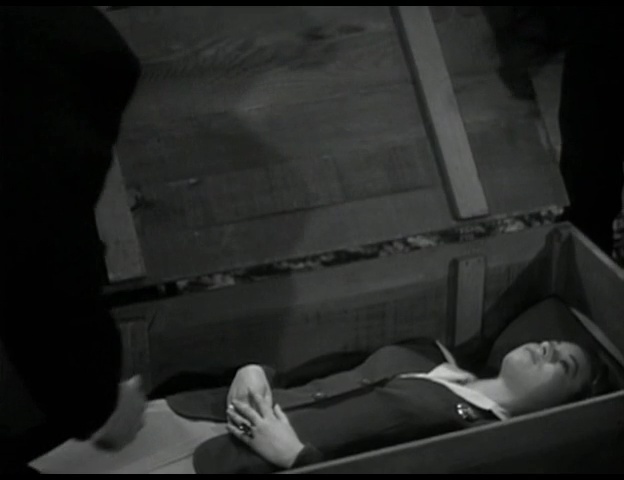
Peter (Redgrave) and Pat (Roc) are a young married couple whose jobs are keeping them apart. Peter is a crane driver working construction on Waterloo Bridge during the day, while Pat works as a hotel telephonist overnight. One morning, while travelling to work by train, Peter witnesses what looks like a murder being committed at an open window in one of the buildings opposite the rail line. He gets off the train and makes his way quickly to the flat where he saw the murder, only to find a couple – stage magician The Great Zoltini (Lukas) and his wife, Vivienne (Gray) – both alive and well and with an explanation for what Peter saw. A reporter covering the bridge’s construction hears about Peter’s heroism and the story ends up in the papers. But when Peter learns that Zoltini and his wife have duped him, it leads him into a world of sexual jealousy, showbusiness and danger that has potentially terrible consequences, both for Peter and his marriage, and for Vivienne, whose unhappiness proves to be the catalyst for a whirlwind twenty-four hours…
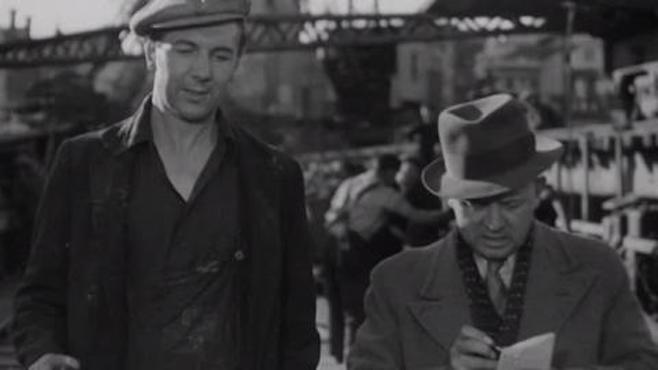
A remake of the 1939 French movie Métropolitain starring Albert Préjean, A Window in London had, until 2015, been unseen in its original UK version since its release (the US version was trimmed by eight minutes). It’s a shame, as the movie is a deceptively dark thriller that deserves better recognition than it’s received since 1940, and which features strong performances from Redgrave, Gray and Lukas in what is really an unlikely love triangle. An early scene sets the tone for Peter and Pat’s marriage: two years in and only able to spend any quality time together on a Sunday, Peter goes to kiss Pat “goodnight” only for her to yawn and turn away. It’s a telling moment, rendering the increasing awkwardness of their situation in one small action, and in Peter’s disappointed reaction, paves the way for his becoming embroiled in Vivienne’s wish to get away from her abusive husband. It’s rare for a British movie from the early Forties to deal with the subject of domestic abuse, but here the script by Ian Dalrymple doesn’t shy away from the violent emotions that underpin the Zoltinis’ marriage. It makes the scenes between Gray and Lukas crackle with tension, and when that tension boils over, what happens is abrupt and shocking.

What’s also fascinating is the ease with which Peter allows himself to become attracted to Vivienne. It’s as if she reminds him of the feelings he had when he first met Pat, when their relationship was new and exciting (if not so perilous). Drawn along in her wake, Peter is in way over his head, and doesn’t seem to care; Pat is forgotten as he follows Vivienne down the rabbit hole of her showbiz connections and a past that could be her only salvation. The movie maintains a terrible hold over the viewer, as it continually teeters on the edge of a happy ending – surely there’ll be a happy ending – but there’s a continual sense of foreboding throughout. And when the ending does arrive, it’s like a gut punch delivered full force. It’s a movie that’s tough and uncompromising in its own way, and which doesn’t pander to the accepted values of the time, preferring instead to retain the fatalistic Gallic flavour of the original. With an intriguing look at pre-war London, and scenes taking place at the site of Waterloo Bridge’s construction, this is an intimate and unsettling reflection of a time before things became really, really dark.

Rating: 7/10 – with fine performances from its three leads, and a dark, unnerving tone that Mason exploits to maximum effect, A Window in London is a minor British classic that deserves a wider, modern audience; a psychological drama in many respects, it’s also a nervy thriller and a doomed love story – though not in the way that you might be expecting.

NOTE: There’s no trailer currently available for A Window in London.

Share this:

  • Click to share on X (Opens in new window) X
  • Click to share on Facebook (Opens in new window) Facebook
  • More
  • Click to print (Opens in new window) Print
  • Click to email a link to a friend (Opens in new window) Email
Like Loading...

Blush (2015)

20 Monday Aug 2018

Posted by dullwood68 in Movies

≈ Leave a comment

Tags

Drama, Drugs, Dvir Benedek, Hadas Jade Sakori, Irit Pashtan, Israel, Lesbian, Michal Vinik, Review, Romance, Sexuality, Sivan Noam Shivon, Teens

Original title: Barash

D: Michal Vinik / 85m

Cast: Sivan Noam Shivon, Hadas Jade Sakori, Dvir Benedek, Irit Pashtan, Amit Muchtar, Bar Ben Vakil, Hila Gozlan, Einav Levi, Reut Akkerman

Naama (Shivon) is a typical Israeli teenager, living a different life from the one her parents (Benedek, Pashtan) believe she lives. Away from her home – where she’s something of a moody presence – Naama spends time with her best friends, Iris (Gozlan) and Lili (Levi), taking drugs and having casual sex with random boys. Her parents are more concerned with her older sister, Liora (Vakil), who’s a secretary in the Army, but who it soon transpires, has run off with her latest boyfriend. While the search for Liora escalates, Naama meets Dana (Sakori), a confident free spirit who she finds herself attracted to. The two become friends, and soon Dana is introducing Naama to the nightclub scene in Tel Aviv. Naama and Dana become lovers, but what is a serious development for Naama, appears to be less so for Dana, whose past hints at her having unresolved issues that threaten their relationship. When a trip to Tel Aviv takes an unexpected turn, Naama is forced to confront both the reality of her relationship with Dana, and her new-found sexuality…

A frank and appealing exploration of racial, sexual and political tensions in modern-day Israel, Michal Vinik’s debut feature (which she also wrote) is a movie that tells a familiar tale but with an edge that’s borne out of its setting and the parochialism of Naama’s social background. It’s a movie that avoids depicting easy sentimentality or indulging in melodramatic flourishes, and which subverts audience expectations in often clever and unexpected ways. One such occasion occurs when Naama, high on a drug whose effects will last for several hours, is given no choice but to accompany her mother on a trip to the military base where Liora is stationed. What feels like an opportunity for some embarrassing comedy at Naama’s expense, instead leads to an outpouring of rage at an unsuspecting (and inflexible) guard that is a perfect representation of the anger and frustration that Naama feels in her own life. So extreme is this outpouring that her mother can only stand and watch, unable to intervene. Elsewhere, Vinik casts an acerbic eye over a family dynamic that includes a father whose hatred of Palestinians is all-consuming, and a rebellious older sister whose personal liberation comes at the expense of her cultural heritage.

For much of the movie, this family dynamic, with its roiling undercurrents of inter-personal animosity, is the movie’s trump card, and easily more interesting than the somewhat standardised coming-of-age tale that sits at its centre. Though Naama is a wonderfully realised character – thanks to Shivon’s tough, unsparing efforts – and her sexual awakening is handled with a delicacy that’s at odds with the jarring discomfort of the social conventions she’s expected to adhere to, there’s still the feeling that we’re in much charted territory, even down to the inevitable betrayal that lies ahead of her. To offset this, Vinik employs Shai Peleg’s sharply composited cinematography to present a world that is both familiar and alien, and even to its protagonists. Often the frame teems with details that can be easily missed, visual cues that point to the stability of Naama’s emotional state. There are terrific performances from all concerned, with Shivon a standout as Naama, Benedek proving an uncompromising bull-like presence, and Pashtan quietly impressive as Naama’s mother, her passive body language and blank expressions hiding the kind of emotional intensity that has been repressed for far too long. In the end, it’s not the sadness of Naama’s failed romance that resonates, but the idea that it’s her mother’s life that is the future she’s locked into.

Rating: 8/10 – a mixture of the bold and the commonplace (dramatically speaking), Blush offers a fascinating insight into the trials and tribulations of an average Israeli family and the challenges faced when trying to be different; full of telling moments and deft directorial touches that add poignancy to an otherwise familiar tale of burgeoning sexual expression, this is finely tuned for the most part, and with a well-defined vibrancy that makes it all the more engaging.

Share this:

  • Click to share on X (Opens in new window) X
  • Click to share on Facebook (Opens in new window) Facebook
  • More
  • Click to print (Opens in new window) Print
  • Click to email a link to a friend (Opens in new window) Email
Like Loading...

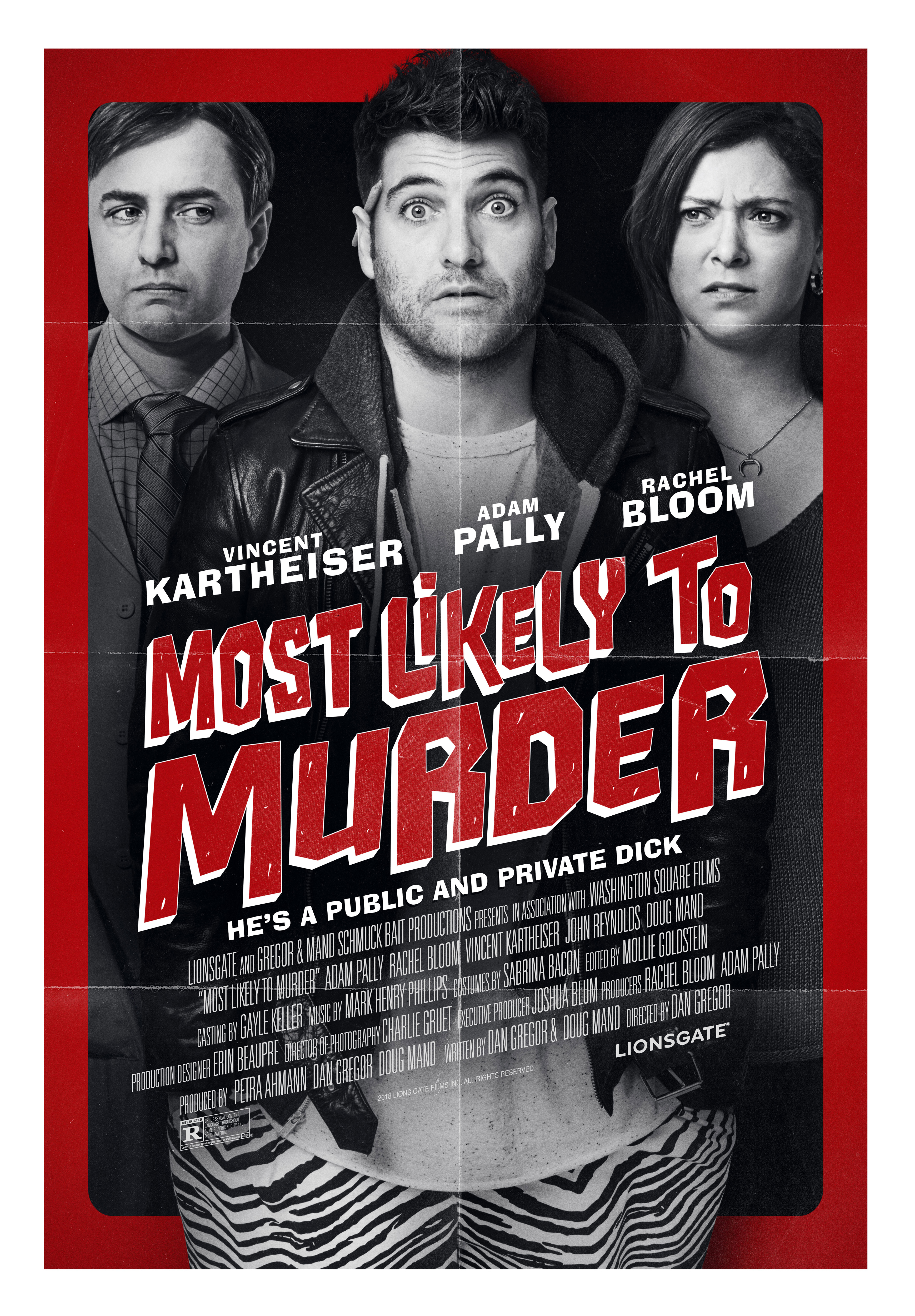
Most Likely to Murder (2018)

19 Sunday Aug 2018

Posted by dullwood68 in Movies

≈ Leave a comment

Tags

Adam Pally, Comedy, Crime, Dan Gregor, Doug Mand, Evidence, Murder mystery, Pharmacist, Rachel Bloom, Review, Suspect, Vincent Kartheiser

D: Dan Gregor / 99m

Cast: Adam Pally, Rachel Bloom, Vincent Kartheiser, Doug Mand, John Reynolds, Didi Conn, Ethan Phillips, Julia Goldani Telles, Rebecca Naomi Jones, Bonnie Rose

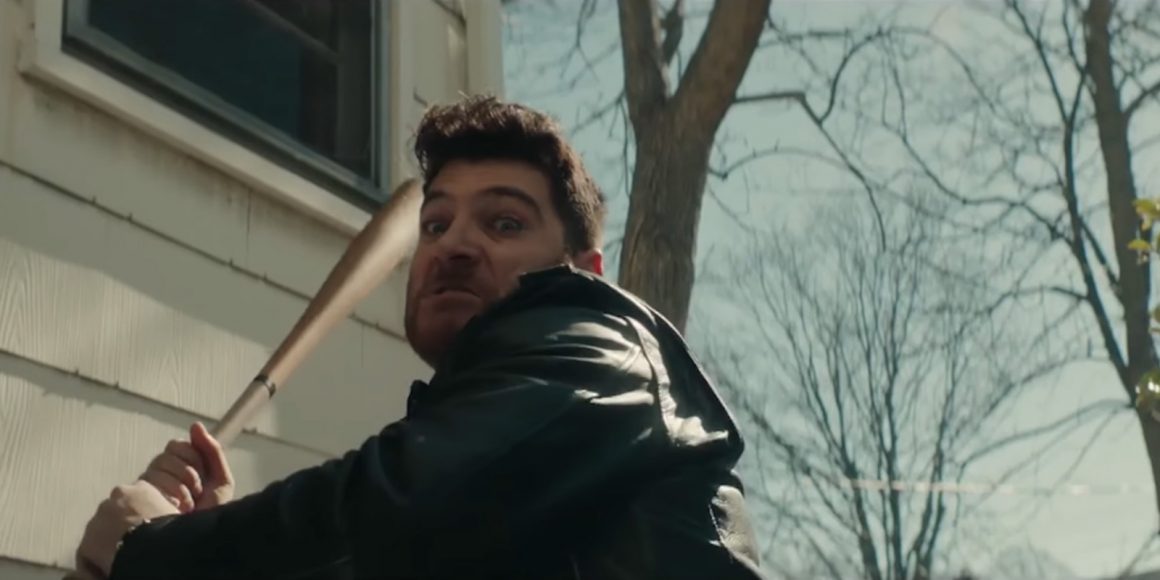
Billy (Pally), the one-time king of his local high school, is now, ten years later, working at a dead-end job in a Las Vegas hotel. Deciding it’s time for a holiday, he returns home to his parents (Conn, Phillips), but makes out he’s successful and on the verge of completing a major deal. Billy reconnects with his old friend, Duane (Mand), but finds that most everyone else in town isn’t as pleased to see him back, including old flame, Kara (Bloom). Billy left her behind to go to Las Vegas; now she’s dating Billy’s neighbour and town pharmacist, Lowell (Kartheiser). When Lowell’s mother dies suddenly, Billy becomes suspicious when he realises that Lowell has lied to the police. Convinced that Lowell is a killer, Billy sets about gathering evidence, and even voices his suspicions to Lieutenant Perkins (Reynolds). But with everyone believing Lowell to be a pillar of the community, and unable to produce clear evidence that Lowell has killed his mother, Billy decides to return to Las Vegas. Until Kara notices something strange about the pharmacy inventory…

A valiant attempt to combine comedy with a murder mystery, Most Likely to Murder is the kind of eccentric mash-up that needs to be on its toes with both aspects of its construction. It’s moderately successful on both counts, but makes mistakes along the way that could have been easily avoided. First is Billy himself, a self-aggrandising, arrogant, insensitive jerk whose character arc is non-existent until the very end when the script – previously uninterested in giving him any redeeming features – gets him to do an abrupt volte face and reveal a previously well hidden (if not absent) conscience. The second is the mystery itself, which, though the movie has a great deal of fun with the whole did-he-didn’t-he? angle, is too laboured and predictable to work as effectively as needed, and keen-eyed fans of murder mysteries will correctly guess the outcome well in advance of the movie revealing it. So, as a result, the movie has a lead character who’s immediately unlikeable and behaves inappropriately because it drives most of the comedy, and a murder mystery that is dependent on making the main suspect as guilty looking as possible but only because, in Billy’s eyes, he’s a “bit weird”.

There are moments when the script – by co-star Mand and director Gregor – contorts itself in its efforts to keep things moving, and the movie’s pace dips when it has to choose between being funny or serious. This leads to odd moments such as Billy’s brief “interaction” with Duane’s mother (Rose), a bathroom “reveal” that defies the belief that “Lowell has no pole”, and a running joke involving a VHS tape of Billy and Lt. Perkins’ wife (Jones) from high school that everyone wants to see. Against the odds, the performances make things far more enjoyable than the script allows for, with Pally embracing Billy’s faults in a way that, while not making him sympathetic, does at least allow the viewer to understand him. There’s good support from Bloom and Mand, and Reynolds finds different ways to play henpecked and exasperated without it feeling forced, but if anyone has a hard time, it’s Kartheiser, who has to deal with the script’s determination to make Lowell as weird as possible to fit Billy’s suspicions. He does what he can but there are clear moments when the actor is struggling to keep his performance on track. By the end, you’ll know if he’s succeeded, but before then, this is a movie that doesn’t make it easy for the viewer to remain entirely interested in Billy’s search for the truth.

Rating: 5/10 – moderately funny with a moderately interesting murder mystery, Most Likely to Murder will exasperate some viewers while proving moderately entertaining to others; the kind of movie that comes and goes with little fanfare, it’s worth checking out if you’re in an undemanding mood, but anyone looking for something with a bit more substance would be wise to look elsewhere.

Share this:

  • Click to share on X (Opens in new window) X
  • Click to share on Facebook (Opens in new window) Facebook
  • More
  • Click to print (Opens in new window) Print
  • Click to email a link to a friend (Opens in new window) Email
Like Loading...

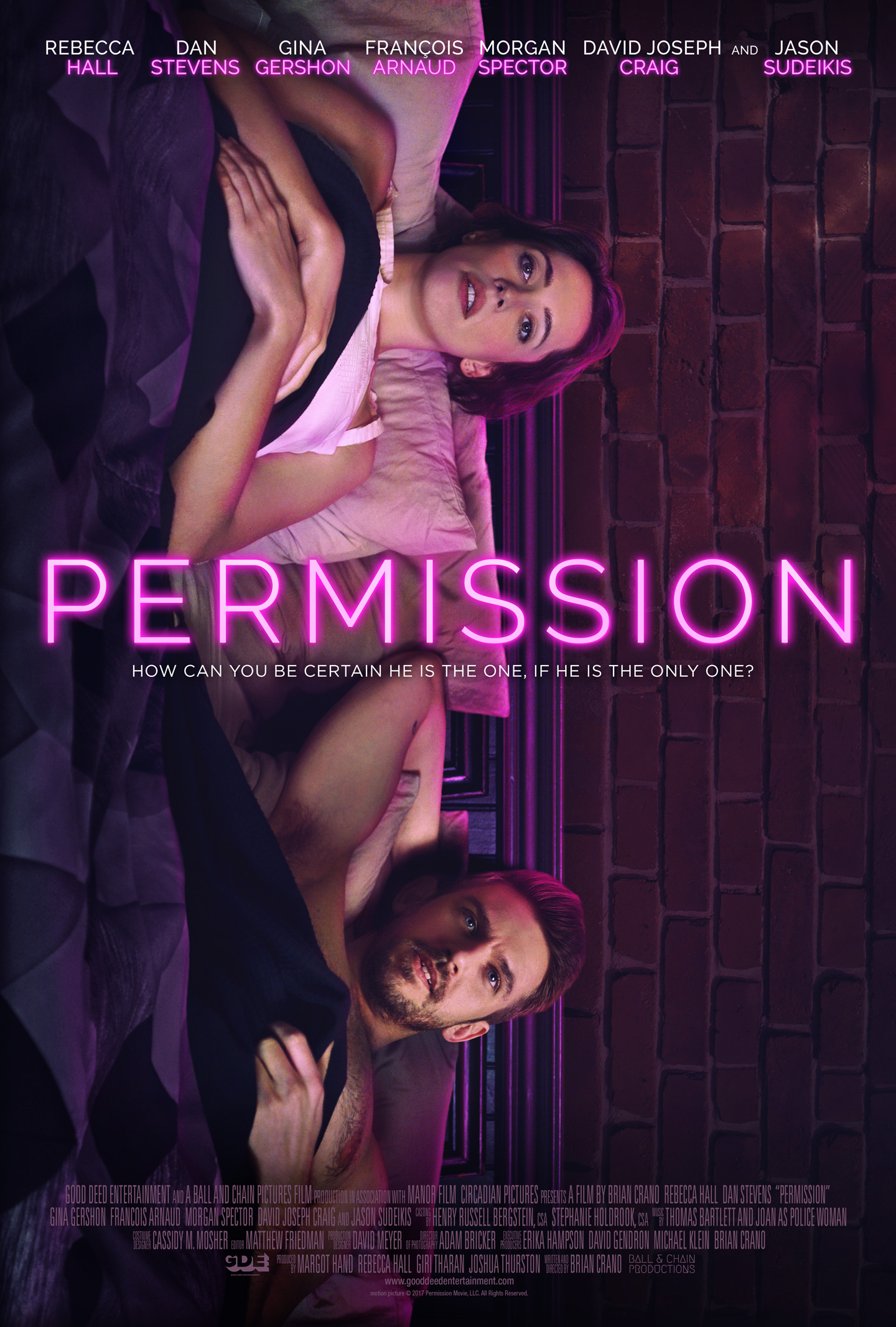
Permission (2017)

14 Tuesday Aug 2018

Posted by dullwood68 in Movies

≈ Leave a comment

Tags

Affairs, Brian Crano, Casual sex, Dan Stevens, Drama, François Arnaud, Gina Gershon, Rebecca Hall, Relationships, Review, Romance

D: Brian Crano / 98m

Cast: Rebecca Hall, Dan Stevens, Gina Gershon, François Arnaud, Morgan Spector, David Joseph Craig, Jason Sudeikis

Anna (Hall) and Will (Stevens) have been together since forever, a couple with no other relationship experience except their own. They’ve never lived as a couple with anyone else, never had sex with anyone else, and never felt that they’ve missed out on anything as a result. In short, they live in a state of blissful monogamy. Will is an artisan who makes furniture and is renovating a house for he and Anna to move into, while Anna is finishing up her music thesis. Will has begun to believe that it’s the perfect time to propose, but at the same dinner in which he plans to pop the question, another one is raised by Reece (Spector), the partner of Anna’s brother, Hale (Craig): how can either of them be sure each is “the one” when they’ve never “been” with anyone else? Will holds off on proposing, and it isn’t long before both of them are contemplating the idea of sleeping with other people. Soon an agreement is reached whereby Anna meets musician Dane (Arnaud), and Will meets wealthy divorcée, Lydia (Gershon). But their agreement soon starts to cause problems between them…

It’s not immediately obvious while watching Permission, but Brian Crano’s second feature after the more easy-going A Bag of Hammers (2011), has a secret agenda that it doesn’t reveal until at the very end. You could say it’s in the nature of a twist, something that the viewer won’t see coming, but with any good twist the clues should be woven into the narrative from the start so that even if the twist really does come as a complete surprise then at least the viewer can look back and – hopefully – spot those moments where they were hoodwinked. Unfortunately, writer/director Crano doesn’t do this, so when one of his two main characters does pitch that curveball, it’s likely to provoke more headscratching than nodding in agreement. But before then, Crano is already sending the viewer mixed messages, so perhaps it shouldn’t be so surprising. Anna and Will are set up initially as the poster couple for committed monogamy, but the speed with which they allow Reece’s poser to have them throwing away their commitment to each other is as unseemly as Anna’s later encounter with a gallery owner.

Of course, this is the thrust of the movie: is Anna and Will’s specific kind of monogamy healthy enough for a relationship to succeed? But the material is too uneven to provide any kind of definitive answer (though it does decide that casual hook-ups are a no-no), and so instead of having Anna and Will explore other sexual experiences and then bring those experiences back to their own relationship, both engage in new relationships that test their own commitment in different ways. Crano can’t resist throwing in some clichés – Will asks if Dane is bigger than him, Dane falls in love with Anna – but too often the script fails to relate things back to Will and Anna except in the most perfunctory of ways. Hall is as spiky and watchable as ever, while Stevens has more of a comic role that feels at odds with the intended drama of the material. As the objects of Will and Anna’s new affections, Gershon is breezy and likeable while Arnaud is left high and dry by his character having nowhere to go. There’s an intriguing sub-plot involving Hale’s desire to have a baby (which isn’t shared by Reece), and at times this is more interesting, but overall this is a movie that puts its central characters into a number of uncomfortable situations and then gifts them a convenient way out almost every time – so where’s the lesson there?

Rating: 6/10 – if monogamy is your thing and “well-meaning” affairs are the antithesis of what you believe is right, then Permission won’t be the movie for you; even as a potential comedy of errors and/or manners it falls short, and if the movie has any kind of message it’s that you actually don’t have to be careful what you wish for.

Share this:

  • Click to share on X (Opens in new window) X
  • Click to share on Facebook (Opens in new window) Facebook
  • More
  • Click to print (Opens in new window) Print
  • Click to email a link to a friend (Opens in new window) Email
Like Loading...

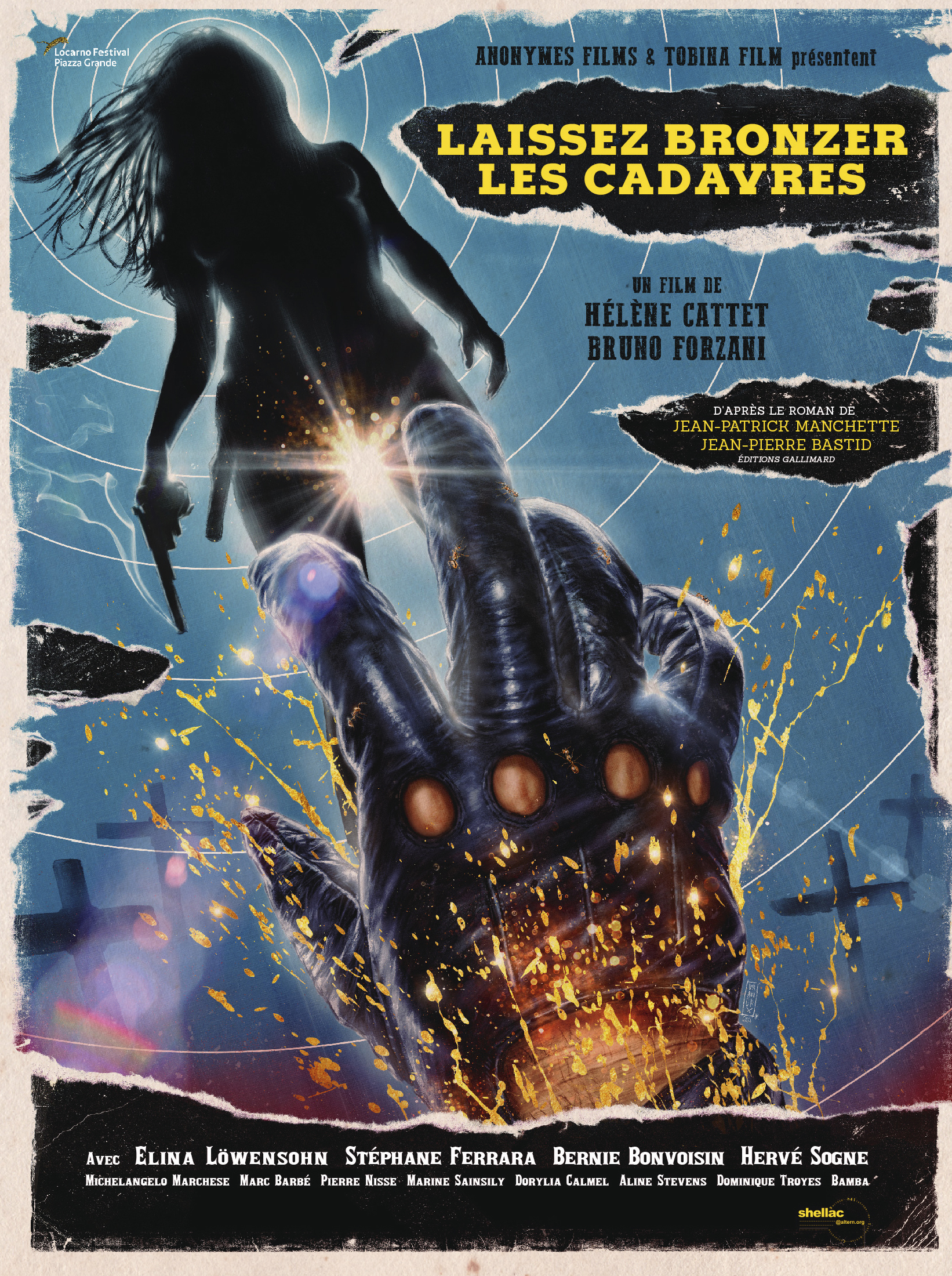
Let the Corpses Tan (2017)

13 Monday Aug 2018

Posted by dullwood68 in Movies

≈ Leave a comment

Tags

Action, Belgium, Bruno Forzani, Crime, Elina Löwensohn, France, Gold bullion, Hélène Cattet, Literary adaptation, Review, Stéphane Ferrara, Thriller

Original tltle: Laissez bronzer les cadavres

D: Hélène Cattet, Bruno Forzani / 88m

Cast: Elina Löwensohn, Stéphane Ferrara, Bernie Bonvoisin, Hervé Sogne, Michelangelo Marchese, Marc Barbé, Marine Sainsily, Pierre Nisse, Dorylia Calmel, Dominique Troyes

On a remote outcrop of land, an abandoned church and its surrounding buildings has become the home of a once in-demand artistic muse Madame Luce (Löwensohn), her partner, an unscrupulous lawyer called Brisorgueil (Marchese), and a bohemian writer, Max Bernier (Barbé), who was once her lover. One day they are joined by a group of men – Rhino (Ferrara), Gros (Bonvoisin), and an unnamed young man (Nisse) – who, while on their way back from getting supplies at a nearby town, rob an armoured car of 250 kilos of gold bullion. But as they head back to the church, they find themselves picking up a woman, Mélanie (Calmel), her young son, and the boy’s nanny (Sainsily). The woman proves to be Max’s wife, there to hide out after abducting her son from her ex-husband who has custody. Meanwhile, two motorcycle cops (Sogne, Troyes) become intrigued by a sighting of Max’s wife, and decide to ride out to Madame Luce’s, a decision that will prove to have a number of far-reaching consequences for everyone there…

A Franco-Belgian production adapted from the novel of the same name by Jean-Patrick Manchette and Jean-Pierre Bastid, Let the Corpses Tan is a heavily stylised kaleidoscope of unflinching violence  supported by a bravura visual palette that employs all kinds of cinematic trickery to tell its tale of intrigue and betrayal and the legacy of the Golden Woman (Löwensohn’s Madame Luce, albeit in younger days). It’s an absurdist Euro-meta-Western, straight out of the late Sixties and early Seventies, and with compositions by Ennio Morricone from the period that fit neatly into Cattet and Forzani’s excessively mounted pastiche. Replete with every trick in the book to add energy and pizzazz to its flamboyant tale, the movie is exhausting to watch, with the camerawork and the editing designed in tandem to assault the eyes and render any resistance as futile. This is a movie that wants to dominate its audience into submission, to send it reeling away at the movie’s end having been visually assaulted by the extent of Cattet and Forzani’s colour drenched aesthetic. But while it does have an excess of, well… excess, Let the Corpses Tan doesn’t quite reach the giddy heights it sets for itself, and for all the visual distractions, its basic premise lacks conviction.
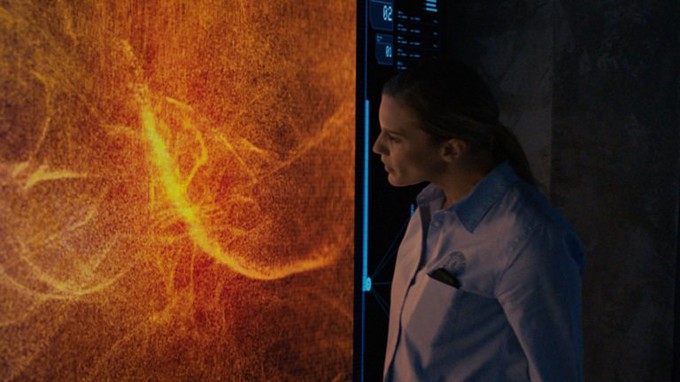
It’s nearly always the same: the more striking a movie is to look at, and the more its creators rely on creating an overly stylised mise en scene, the more likely it is that the story isn’t on the same level. Here this is unfortunately the case, as Cattet and Forzani (who also wrote the screenplay) forget to make any of the characters relatable or sympathetic, and though you could argue that this might be deliberate, when you don’t even care who gets out alive – or at all – then an opportunity has been missed. Such is the case with a movie where the expected body count happens at regular enough intervals but without any of them making an impact or eliciting an emotional response in the viewer. It’s rote storytelling, with the original source material diluted and weakened by the visual artifice it’s asked to support. The cast struggle too, with Löwensohn behaving as if Madame Luce is still tripping from the Seventies, while the male characters are pretty much indistinguishable from each other. And by the end even the violence has become tiresome. There’s a better movie hidden somewhere inside Cattet and Forzani’s screenplay, but in allowing themselves free rein with the movie’s look, that particular version was always doomed to stay hidden.

Rating: 6/10 – though visually adventurous and on occasion quite audacious – a fantasy sequence where the nanny’s clothes are ripped to shreds by gunfire leaving her naked is a prime example – nevertheless Let the Corpses Tan is only partly successful; a movie with style in (over-)abundance, but without the necessary substance to back it up, this can be enjoyed on a basic level, but those looking for more than just visual panache would do better to look elsewhere.

Share this:

  • Click to share on X (Opens in new window) X
  • Click to share on Facebook (Opens in new window) Facebook
  • More
  • Click to print (Opens in new window) Print
  • Click to email a link to a friend (Opens in new window) Email
Like Loading...

7:19 (2016)

12 Sunday Aug 2018

Posted by dullwood68 in Movies

≈ Leave a comment

Tags

Demián Bichir, Disaster, Drama, Earthquake, Héctor Bonilla, Jorge Michel Grau, Mexico, Mexico City, Review, Survival, True story

D: Jorge Michel Grau / 94m

Cast: Demián Bichir, Héctor Bonilla, Óscar Serrano, Azalia Ortiz, Octavio Michel Grau, Carmen Beato

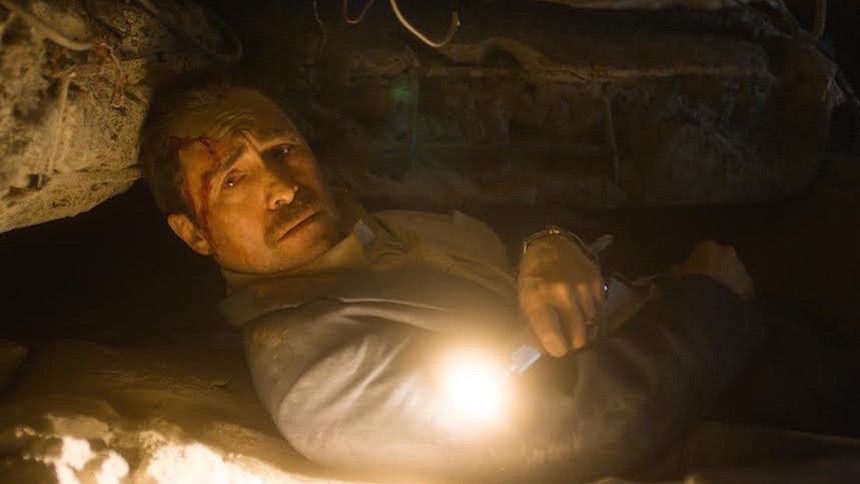
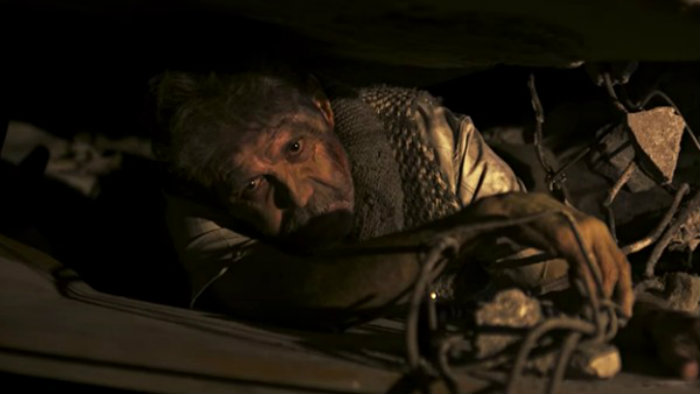
On the morning of 19 September 1985, the staff at an office building in Mexico City begin arriving for work. Already there is the building’s caretaker, Martin Soriano (Bonilla), who is waiting to go home having been there overnight. As he waits, the building becomes busier and busier, with cleaners and maintenance workers getting on with their tasks while people who work in the various offices arrive and chat at the beginning of their day. It’s an average Thursday, until at 7:19 am precisely, an earthquake registering 8.0 on the Richter Scale hits the seven storey building and brings it crumbling to the ground. Once the debris has settled, there are survivors, but they’re trapped beneath tons of rubble. There’s Dr Fernando Pellicer (Bichir), who’s a lawyer as well as a doctor, and who’s legs are trapped. He discovers a flashlight that’s just within reach. When he turns it on, he finds that Martin is trapped several feet away. As time passes, other survivors in other parts of the rubble make themselves known, and as they wait to be rescued, they all try to keep each other from despairing or losing hope…

In terms of its timing, this shortlisted entry for the Academy Award for Best Foreign Language Film at the 89th Academy Awards (it wasn’t selected), appears to be a movie that’s arrived at too far a remove from the original event to make much of an impact. It’s a simple, straightforward movie as well, devoid of any major special effects sequences – the earthquake itself is depicted from within the lobby of the building, and is effectively handled if brief – and focusing on Pellicer and Martin as they struggle to maintain their composure and their strength while trapped under a building that has collapsed on top of them. Anyone familiar with Oliver Stone’s World Trade Center (2006) will recognise the basic set up, as Bichir and Serrano (until very late on), are the only people we can see. We hear others, and one character has a radio that keeps everyone in touch with what’s happened and what is happening, but otherwise this is a two-man show. As the beleaguered pair, Bichir and Serrano acquit themselves well, and display mixed feelings of courage and fear that highlight the uncertainty of their situation. For them, every shudder and shift of the debris around them could mean a crushing death.

With the decision made to concentrate on Pellicer and Martin, Grau and co-scripter Alberto Chimal opt for a visual conceit post-quake to emphasise the horrible nature of their circumstances. The frame is reduced considerably, almost to an Academy ratio, as we focus closely on Pellicer. As he comes to terms with his plight, so the screen widens and expands to encompass the two men and the apparent unlikelihood of their being rescued. It’s a move designed to put the audience in the thick of things, to help them feel as helpless as the characters, but it’s also oddly distracting, a visual motif that keeps you watching for the changes in scope rather than the inevitable issues that Martin has with Pellicer. Grau switches back and forth between the two men in an unfussy, severe style that plays down the chances of any visual flourishes, and the disembodied voices, along with a number of distinct sound effects, illustrate the range of emotions felt by those who have been trapped. There’s little in the way of subtext or broader social themes, just a no frills, stripped back exploration of the will to survive against overwhelming odds in a seemingly impossible situation.

Rating: 7/10 – simply told, and with a minimum of artifice or glamour, 7:19 is a sobering, grimly effective story of quiet heroism and strength in adversity; dour for the most part – but deliberately so – this doesn’t always carry the emotional wallop that might be expected, but it is a finely tuned, true-to-life drama nevertheless.

NOTE: Alas, there isn’t a trailer with English subtitles available for 7:19.

Share this:

  • Click to share on X (Opens in new window) X
  • Click to share on Facebook (Opens in new window) Facebook
  • More
  • Click to print (Opens in new window) Print
  • Click to email a link to a friend (Opens in new window) Email
Like Loading...

Pin Cushion (2017)

10 Friday Aug 2018

Posted by dullwood68 in Movies

≈ Leave a comment

Tags

Bullying, Coming of age, Deborah Haywood, Drama, Fantasy, Horror, Hunchback, Joanna Scanlan, Lily Newmark, Mother/daughter relationship, Review

D: Deborah Haywood / 82m

Cast: Joanna Scanlan, Lily Newmark, Sacha Cordy-Nice, Saskia Paige Martin, Bethany Antonia, Loris Scarpa, Chanel Cresswell, John Henshaw, Isy Suttie, Nadine Coyle, Bruce Jones

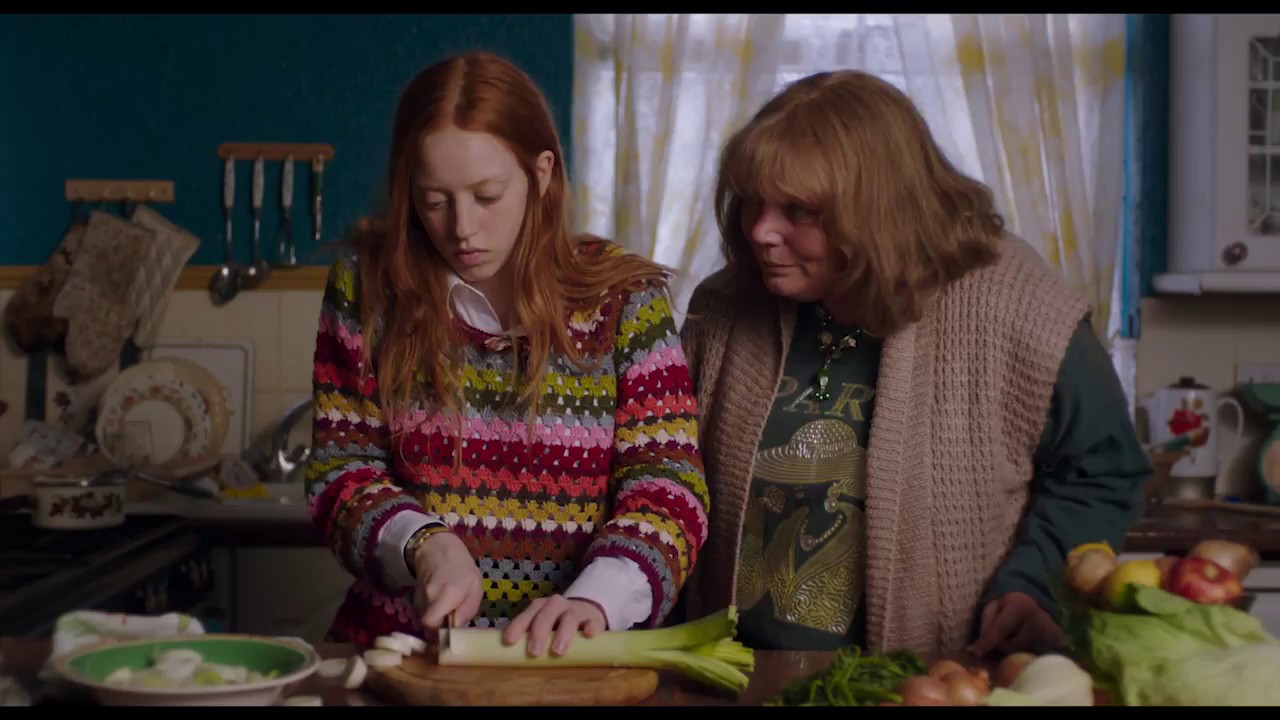
It’s time for a new start for Lyn (Scanlan) and her teenage daughter, Iona (Newmark). Having moved to a new town, both are ready to fit in with their new surroundings. But several things aren’t likely to work in their favour: Lyn is a hunchback whose right leg is shorter than the other; she’s also socially awkward. Iona is almost desperate to fit in, but she has less life experience than her peers, and is easily manipulated. At her school she tries to be friends with a trio of girls – Keeley (Cordy-Nice) and her cohorts in bullying, Stacie (Martin) and Chelsea (Antonia) – and though she’s treated appallingly by them, Iona still regards them as her best friends, even when Keeley steals away the one boy (Scarpa) who’s shown any interest in her. Meanwhile, Lyn struggles with self-esteem and -confidence issues, and is rebuffed by everyone she meets, from an aggressive neighbour (Cresswell) to the organiser of a local support group (Suttie). As each suffers, their once solid relationship begins to fracture and tear…

When we first meet Lyn and Iona, their combined appearances immediately mark them out as different, as the kind of people society in general will be unkind to. And so it proves in Deborah Haywood’s first feature, a strikingly misanthropic and unremitting tale of deliberate social exclusion and unconscionable bullying. That both Lyn and Iona are victims is a given: they mis-read social cues, trust in others even when experience teaches them they shouldn’t, and persevere in the face of untold setbacks. They’re figures of fun for the people they encounter, a source of endless amusement and/or disgust, but such is the nature of their own needs that they carry on, hoping to make some connection – any connection – that can exist independently of their own. Being that much older (if not wiser), Lyn is more reluctant to engage with others; she’s had enough disappointment in her life already, and the depth of the pain she’s had to endure because of her physical appearance can only be guessed at (when she explains the circumstances of Iona’s conception it’s horrifying and heartrending at the same time). She tries her best, but the self-styled Dafty One (Iona is Dafty Two) can only absorb the blows she receives with a grieving acceptance.

Iona’s plight is explored in greater detail, and Haywood really piles on the agony. As Keeley and her pals take her under their wing, their ulterior motives are as obvious as Iona’s desperate need to fit in. It’s an awful thing to contemplate, but there’s a horrible symbiosis here, and the script exploits Iona’s capacity for self-abasement in such a rigidly unforgiving way that what begins as bullying becomes something worse: a situation in which she is entirely culpable. Haywood orchestrates Iona’s journey of self-deception as a terrifying coming of age drama spliced with fantasy moments that serve as pointers to the character’s self-delusions. It’s a supremely confident first feature, enhanced by Nicola Daley’s impeccable cinematography, and featuring two exemplary and moving performances from Scanlan as Lyn and Newmark as Iona (in her first starring role). Both actresses shine, highlighting their characters’ innate feelings of loneliness and vulnerabilities, and making the viewer hope that they’ll find some small measure of acceptance, even though it’s unlikely. In some ways, this is an urban horror movie, and there are moments of body horror that Haywood could have taken further, but she employs a restrained, matter-of-fact approach that is actually more effective. Mesmerising and fascinating, this an impressive first feature that isn’t so easily shaken off once it’s been seen.

Rating: 8/10 – with a deeply unsettling mise en scene and two central characters whose lives are blighted to such an extent that each successive misfortune they endure adds to the discomfort of spending time with them, Pin Cushion is a triumph for its writer/director; with an excess of style and form to help it along, this is a movie that’s unafraid to leave a nasty taste in the viewer’s mouth, or provide anything remotely close to a happy ending.

Share this:

  • Click to share on X (Opens in new window) X
  • Click to share on Facebook (Opens in new window) Facebook
  • More
  • Click to print (Opens in new window) Print
  • Click to email a link to a friend (Opens in new window) Email
Like Loading...

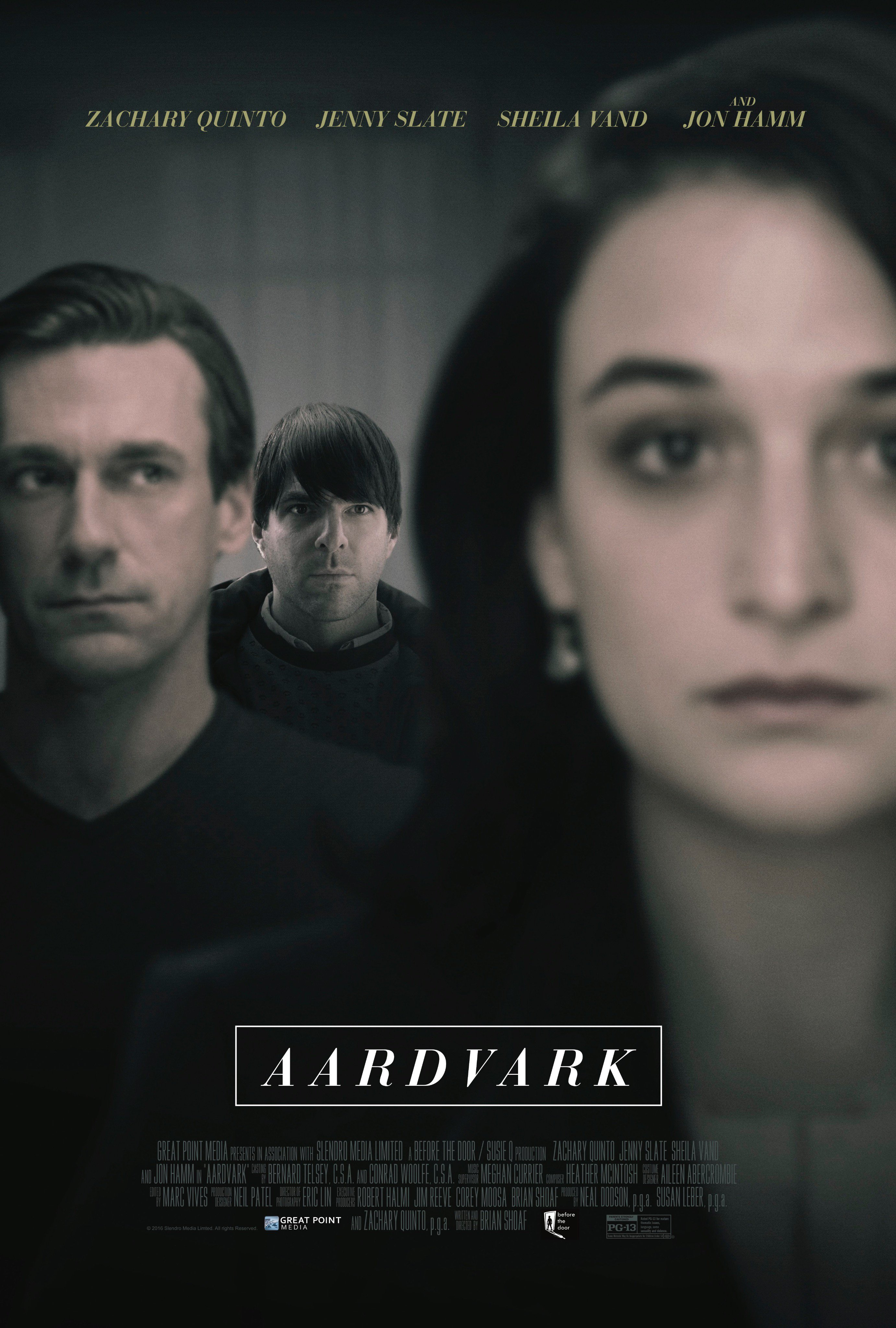
Aardvark (2017)

09 Thursday Aug 2018

Posted by dullwood68 in Movies

≈ Leave a comment

Tags

Brian Shoaf, Brothers, Drama, Jenny Slate, Jon Hamm, Mental illness, Review, Sheila Vand, Therapy, Zachary Quinto

D: Brian Shoaf / 89m

Cast: Zachary Quinto, Jenny Slate, Sheila Vand, Jon Hamm

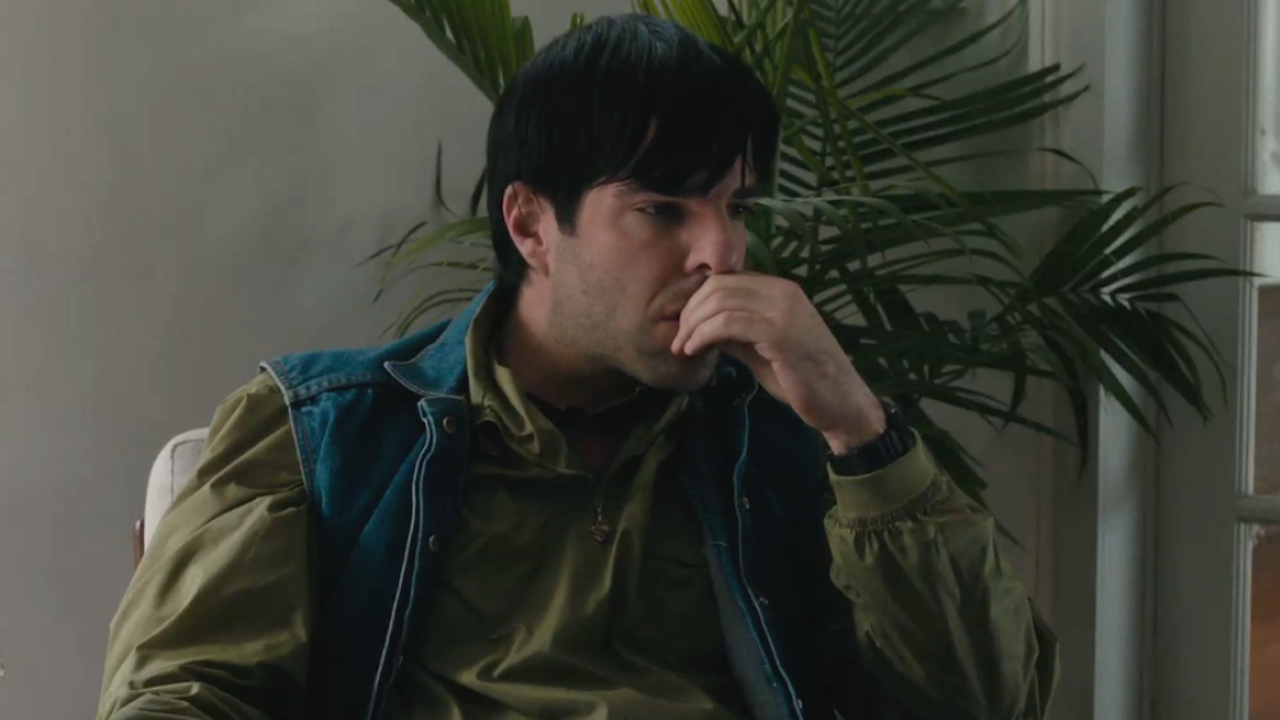
Josh Norman (Quinto) has his fair share of issues – more, actually – and most of them relate to the strained relationship he has with his brother, Craig (Hamm). When he was nineteen, Josh suffered a psychotic break, and since then he’s been on a variety of medications for a variety of undiagnosed afflictions. In recent years, Josh has come to believe that Craig visits him from time to time, and in disguise as his latest role (and even if it’s an elderly homeless lady). Josh is aware that he is ill, and so he seeks out Emily Milburton (Slate), a licensed clinical support worker, to help him with his problems. Emily correctly identifies that much of what ails Josh stems from unresolved issues to do with Craig, but is unable to get Josh to face them – or Craig, who appears at Emily’s door one night. He and Emily begin a relationship, while Josh finds a measure of solace in a burgeoning romance with Hannah (Vand), with whom he goes for long walks. But Emily’s efforts to reconcile the two brothers aren’t as successful as she hopes they’ll be, and her own relationship with Craig suffers as a result…

The debut feature of writer/director Brian Shoaf, Aardvark is a curious beast (pun intended) that is likely to test the patience of viewers as they wait for Shoaf to work out just what it is he’s trying to say, and to put more than two scenes together that are organically linked. This is a meandering, focus-lite movie that generates a modicum of polite interest in its characters, all of whom interact with each other as if they’re meeting for the first time. It’s like a version of Chinese Whispers where no one deliberately pays any attention to what the other person is saying, and misconceptions and misunderstandings abound as a natural result. In Josh this would make sense as his perceptions are skewed anyway, but there’s no excuse for Emily, a therapist who is so obtuse that when her skill as a therapist is brought into question, you want to shout out, “Finally!” Perhaps Shoaf wants us to feel more sympathy for Emily than for Josh, and that would be fine if she weren’t so poorly defined as a character. Slate does what she can, but as Emily is called upon to look bewildered a lot of the time, perhaps it’s a more perfect meld of actress and role than expected.

As Josh, Quinto does well in portraying his character’s dissociative tendencies, and he does a nice line in wounded perplexity, but it’s still a performance that relies on the actor’s input rather than the script’s, or Shoaf’s imprecise direction. Josh’s friendship with Hannah also suffers, coming across at first as a staple meet-cute of romantic dramas but with added mental illness to help it stand out, something that doesn’t happen anyway thanks to Hannah’s status as a cypher and Josh’s judgmental narcissism. But Shoaf really scores an own goal with Craig, a character who appears to have all the answers for Josh’s condition, but is used more as a convenient plot device than a credible protagonist (you have to ask at what point Shoaf thought putting Emily and Craig together was ever a good idea). Stilted and frustrating, the movie wanders around in various directions without ever settling on a simple, straightforward through line, and by the end, all of the characters have been undermined for the sake of narrative expediency, and an ending that feels detached from what’s gone before. And the aardvark of the title? Hmmm…

Rating: 4/10 – an indie drama that plays at being smart and contemplative while missing the mark by a country mile, Aardvark is an awkwardly assembled reminder that good intentions alone don’t make a movie; a good cast can’t save this from being anything more than a curiosity, and even then, that curiosity is unlikely to be satisfied.

Share this:

  • Click to share on X (Opens in new window) X
  • Click to share on Facebook (Opens in new window) Facebook
  • More
  • Click to print (Opens in new window) Print
  • Click to email a link to a friend (Opens in new window) Email
Like Loading...

Struck by Lightning (2012)

07 Tuesday Aug 2018

Posted by dullwood68 in Movies

≈ Leave a comment

Tags

Allison Janney, Blackmail, Brian Dannelly, Chris Colfer, Christina Hendricks, Comedy, Dermot Mulroney, Drama, High School, Literary magazine, Rebel Wilson, Review

D: Brian Dannelly / 84m

Cast: Chris Colfer, Allison Janney, Rebel Wilson, Dermot Mulroney, Christina Hendricks, Sarah Hyland, Carter Jenkins, Brad William Henke, Angela Kinsey, Polly Bergen

Carson Phillips (Colfer) is a high school senior with a major literary ambition: to be the youngest ever editor of The New Yorker magazine. But life in high school isn’t exactly a bed of roses for Carson: he’s the kind of sarcastic, openly contemptuous of his peers teenager who’s treated harshly by his fellow students, and who can’t get a break to save his life. He’s the editor and sole contributor of the school paper – which no one reads, and his mother, Sheryl (Janney), is an over-medicated alcoholic who continually reminds him she would have had a better life if he hadn’t been born. But a chance discovery leads Carson to the possibility of getting his revenge on some of his fellow high schoolers while also adding to his prospects in getting into Northwestern University. His plan involves blackmailing his peers into providing material for a literary magazine, but while at first his plan seems to be paying dividends, Carson’s belligerent, anti-authoritarian attitude throws a massive spanner in the works, and what seemed like a foolproof idea, soon turns horribly wrong…

Told in flashback after Carson is struck by lightning and killed, this literally titled movie is a teen comedy-drama that puts its narrator front and centre while also taking a risk in doing so. Carson is so dismissive of everyone around him, adults and peers alike (with the exception of Wilson’s plagiaristic Malerie: “Call me Ishmael”), that Colfer’s script comes very close to making him completely unlikeable. His arrogance, though, is a thin line of defence against the blows he’s experienced throughout his life. From his parents’ break-up – dad Neal (Mulroney) has a new partner, April (Hendricks), who’s six months’ pregnant – to his grandmother (Bergen) developing Alzheimer’s, Carson’s unstable home life has left him sad and permanently at odds with everyone around him. He’s a figure to be pitied though rather than dismissed, and Colfer works hard to make the character more rounded than he appears on the page. Take away Colfer’s performance and you have a character who behaves meanly on purpose, and lacks any sense of proportion in his loathing of his peers (who he doesn’t regard as such). It’s only thanks to Colfer – who clearly understands Carson completely (and so he should) – that the role isn’t continuously one-note and irritating.

It’s the script and the performances that resonate the most. Colfer has a good ear for the rhythms and diction of high school teenagers, and though some of Carson’s co-seniors border on the stereotypical, there’s enough depth and detail provided by the mostly young cast to offset any over-familiarity (plus they’re having a lot of fun at the same time). Amongst the adults, Janney is good value as ever, giving Sheryl a weary self-awareness beneath the character’s own tattered dreams, while Mulroney’s feckless father is a purely comic creation that the actor also has a lot of fun with. Colfer adds a handful of sub-plots to his tale of foiled ambition, with the most notable being the awkward relationship between Sheryl and April, and there’s a strong sense of carpe diem that is used to spur the blackmailed students into writing for the magazine. Dannelly keeps things amusing and laced with teenage angst as appropriate, and the whole thing relies on an easy-going if pointed charm that works well in supporting the material. There’s a good balance between drama and comedy, and Colfer is a confident enough writer that he can mix the two in the same scene without it feeling contrived. And for a first-time script, that’s impressive.

Rating: 7/10 – an underdog movie where the protagonist doesn’t overcome all the challenges thrown at him, Struck by Lightning is instead an often witty, acerbic comedy of despair that doesn’t short change its main character or the audience; a familiar tale that can’t always shake off its more prosaic influences, it’s still a movie with a lot to offer, and several moments of (very) impressive and inspired humour.

Share this:

  • Click to share on X (Opens in new window) X
  • Click to share on Facebook (Opens in new window) Facebook
  • More
  • Click to print (Opens in new window) Print
  • Click to email a link to a friend (Opens in new window) Email
Like Loading...

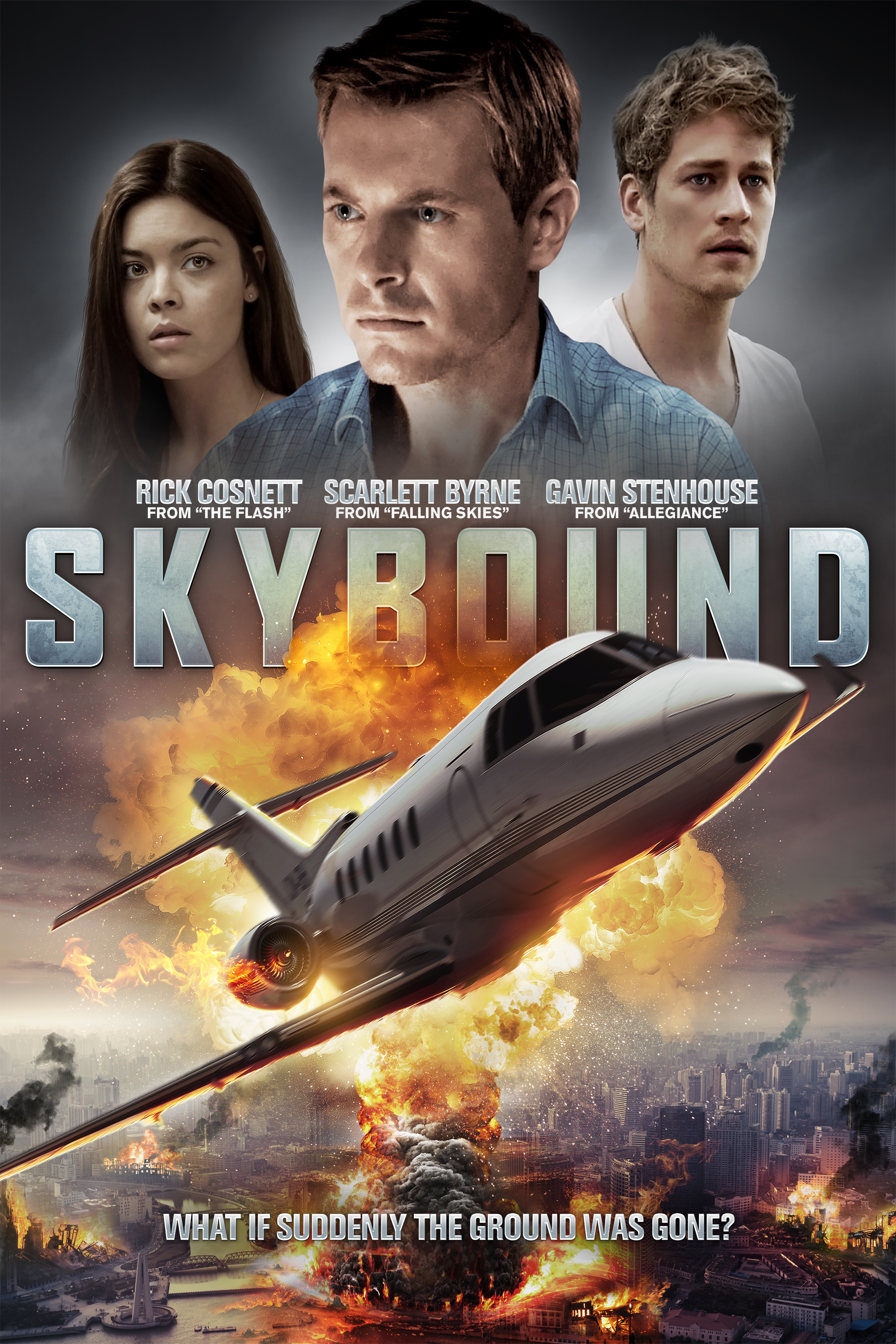
Skybound (2017)

06 Monday Aug 2018

Posted by dullwood68 in Movies

≈ Leave a comment

Tags

Alex Tavakoli, Disaster, Drama, Gavin Stenhouse, Mystery, Private jet, Review, Rick Cosnett, Scarlett Byrne, Stowaway, Thriller

D: Alex Tavakoli / 81m

Cast: Scarlett Byrne, Gavin Stenhouse, Rick Cosnett, Morten Suurballe, Tyler Fayose, Carla Carolina Pimentel, Jerry Coyle

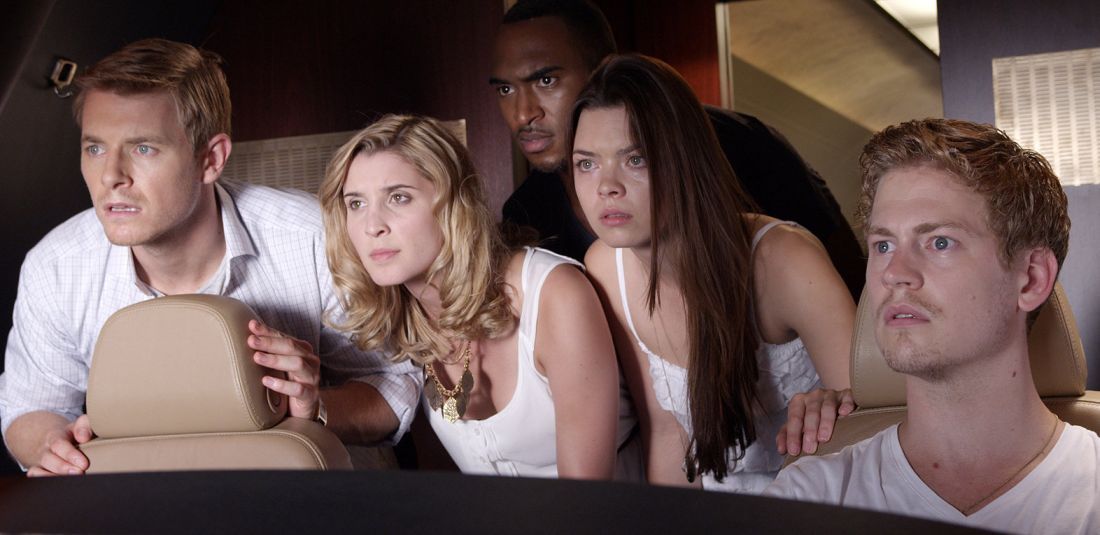
For their first date together, Matt (Cosnett) decides to take Lisa (Byrne) on a cross-country flight from The Hamptons to Malibu in his parents’ private jet. Joining them are their friends, Odin (Fayose) and Roxy (Pimentel), and by a twist of fate, Matt’s brother, Kyle (Stenhouse), with whom Lisa had a brief relationship the year before. At first the flight is uneventful but as they approach Chicago air space, a sudden electrical failure affects some of their systems, including the warning signal that alerts other planes to their presence. When Matt tries to rectify things he discovers they have a stowaway, Erik Harris (Suurballe). When Erik tries to take over the jet, Kyle ends up being shot before the stowaway can be overpowered. Needing to land and seek help for Kyle, they aim for Chicago but soon find dozens of other planes waiting in the sky as well, and all with the same problem warning signal problem. They decide to travel on, and the further they fly, the more they come to realise that staying skybound is their best option, as whatever has happened below the clouds is likely to mean their deaths if they land…

The debut feature of writer/producer/director Tavakoli, Skybound is a low-budget disaster movie that often belies its constrained production values, scattershot dramatics, and unlikely characters. It’s also a disaster movie that plays as a mystery for much of its running time, as Tavakoli makes a stab at increasing the tension of the situation and whether or not Matt and everyone else will survive the journey. But though it’s often stodgy in its execution, with some really tortured dialogue to complement the wayward character motivations, Tavakoli also manages to keep it all chugging along with a rude energy that flags on occasion but which also ensures a surprising level of enjoyment. Make no mistake, Skybound is exactly the kind of movie for which leaving your brain at the door is a prerequisite, but somehow – and against all the odds – it’s never tiresome or overstays its welcome. What it is, is a movie that revels in its implausibility and never apologises for it. It also piles on a number of WtF? moments that should hurt it irreparably, but which just add to the enjoyment of it all. Tavakoli may not be the best movie maker in the world, but here he does more than enough to hold the viewer’s attention.

The mystery elements are played to the fore, with Suurballe’s villainous stowaway employed as a narrative red herring, but the character’s presence does add a further layer to the riddle of what’s happening on the ground, and as more and more information is gathered, Tavakoli does a good job of delaying the big bad reveal. When he does, it proves to be less far-fetched than expected, and more credible than some of the other hypotheses that his characters come up with, especially those who’ve seen 2012 (2009). It all culminates in a last ditch effort for survival that relies on a level of narrative absurdity that is so absurd that you can only go with it or give up. But again, in a weirdly effective way, Tavakoli knows what he’s doing, and though it all depends on one character’s unexpected mathematical smarts and the most ridiculous act of self-sacrifice seen in many a recent disaster movie, it’s still carried off with a flair and a level of self-aware chutzpah that you have to applaud its creator’s audacity. And with low-budget disaster movies, how often can you say that?

Rating: 5/10 – bad movies can sometimes be really bad and still be enjoyable, and despite its many drawbacks, Skybound is one of them; a flawed production to be sure, but if given the right amount of leeway, it’s a movie that brings its own unexpected rewards, and one that has no right to be as entertaining as it is.

Share this:

  • Click to share on X (Opens in new window) X
  • Click to share on Facebook (Opens in new window) Facebook
  • More
  • Click to print (Opens in new window) Print
  • Click to email a link to a friend (Opens in new window) Email
Like Loading...

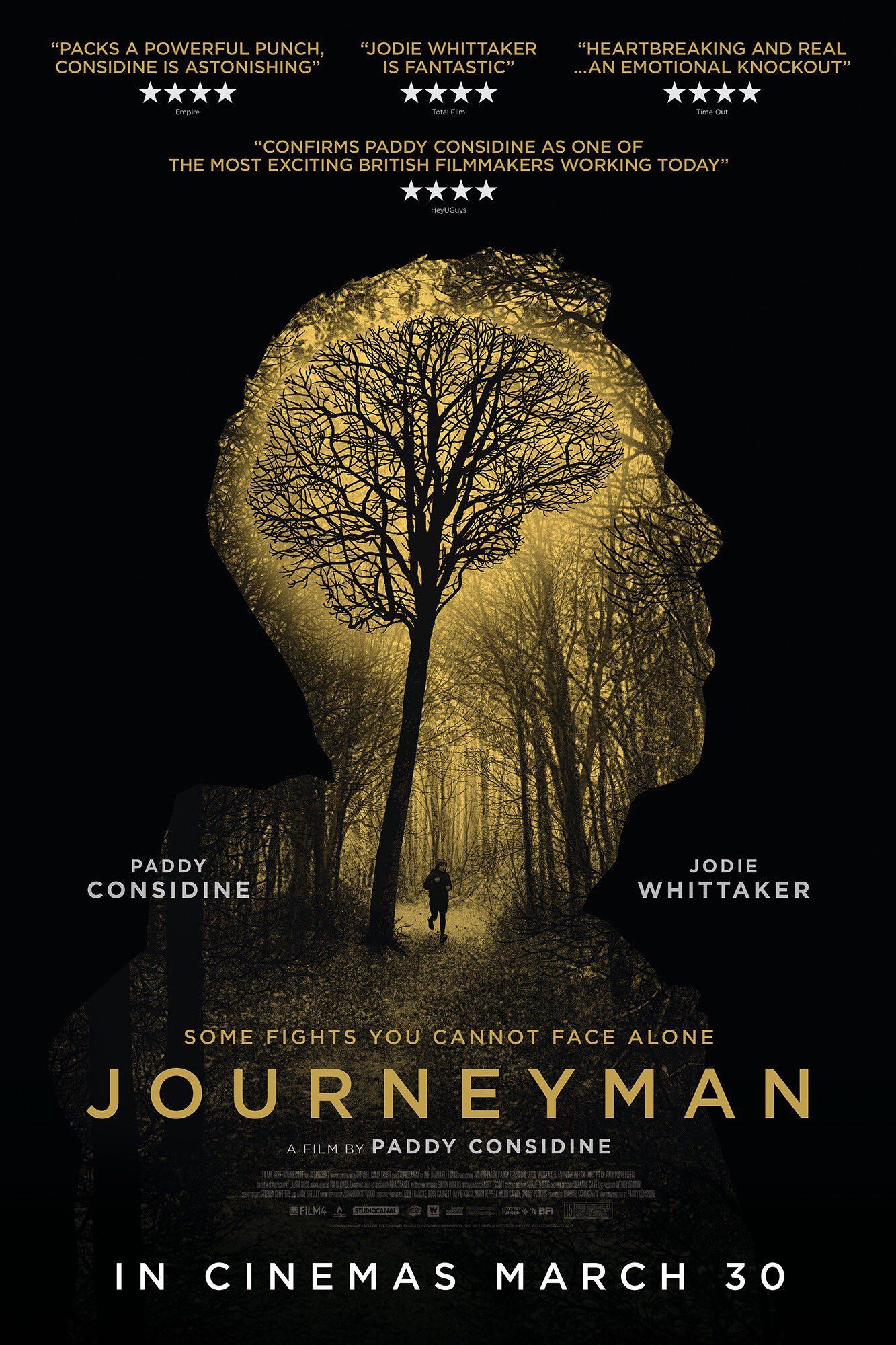
Journeyman (2017)

03 Friday Aug 2018

Posted by dullwood68 in Movies

≈ Leave a comment

Tags

Anthony Welsh, Boxing, Brain injury, Drama, Jodie Whittaker, Paddy Considine, Rehabilitation, Review

D: Paddy Considine / 92m

Cast: Paddy Considine, Jodie Whittaker, Anthony Welsh, Tony Pitts, Paul Popplewell

For Matty Burton (Considine), his upcoming defence of his newly attained WBO World Middleweight Championship title, will be his last fight. He’s an average boxer who has become champion by default, and his best years are behind him. But his pride is pushing him to take up the challenge of rising star Andre Bryte (Welsh) and despite the younger boxer’s considerable talent, hope to win the fight. The bout is a bruising, punishing encounter, and Matty endures several traumatic blows to the head. Back home after the fight, he collapses. When he wakes, his memory is impaired and his personality is changed. His wife, Emma (Whittaker), does her best to help him with his rehabilitation, but when Matty becomes prone to violent outbursts when he doesn’t get what he wants, this and an incident involving their baby daughter, Mia, prompts her to leave him, for the safety of both of them. Another traumatising experience leads Matty back to the gym where his former trainers, Richie (Pitts) and Jackie (Popplewell), decide to take over his rehabilitation, and help him do enough to win Emma back – but will be able to fight back against the brain injury that has changed him so drastically…?

A powerful and uncompromising movie, Journeyman is Paddy Considine’s second outing as writer/director – after the equally impressive Tyrannosaur (2011) – and a showcase for his considerable talents both behind and in front of the camera. As a writer, Considine has a knack for keeping dialogue to a minimum while still allowing his characters to express so much of how they’re feeling. Here, the challenge is to ensure that Matty, despite his memory loss and personality change, is still fundamentally the same man, and Considine achieves this by the slow reveal of key phrases from pre-injury moments that show a mind in turmoil, but one that’s also able to lock onto those important phrases. It’s an emotional process as well, one that highlights Matty’s progress, and which gives hope for his eventual rehabilitation. As a director, Considine pays close attention to the small details that help in Matty’s recovery, such as remembering his father’s name, while also showing just how difficult it is through things such as Matty leaving tea bags in people’s drinks. He never romanticises Matty’s struggle, either, keeping the drama of his situation entirely credible, and the pitfalls and setbacks he experiences are often heart-rending.

But it’s Considine’s work as an actor that is the most impressive here. As Matty, he gives a tour-de-force portrayal of a proud man brought low by a traumatic experience, and the problems he faces in regaining everything he’s lost. It’s an unsentimental, sobering performance, flecked with moments of quiet yet affecting pathos and unsparing emotional simplicity. You can sense the pain behind Matty’s seemingly vacant gaze, and the depth of that pain. Considine is in a class of his own, wringing every last piece of poignancy and heartfelt regret from Matty’s journey back to himself. Alongside him, Whittaker – in what is effectively a secondary role – is a worried presence as Emma, anxious enough before the fight, and then increasingly so afterwards as her marriage begins to implode, and it becomes clear there’s nothing she can do in the short term to stop it. The future Doctor Who has perhaps the less “difficult” role, but Considine is such an unselfish actor that Whittaker is given the room to make Emma an equally integral part of Matty’s story. If there’s one moment of mild controversy it’s when Considine lets boxing off the hook for Matty’s injury – would he have sustained it otherwise? – but otherwise this is a fiercely intelligent, tough, and demanding movie that, thankfully, doesn’t pull its punches.

Rating: 9/10 – a sincere and credible story told incredibly well by its writer/director/star, Journeyman lands knockout after knockout in its unflinching tale of a boxer’s struggle to reboot his life; Considine’s performance is simply astonishing, and is the beating heart of a movie that packs an emotional wallop over and over again.

Share this:

  • Click to share on X (Opens in new window) X
  • Click to share on Facebook (Opens in new window) Facebook
  • More
  • Click to print (Opens in new window) Print
  • Click to email a link to a friend (Opens in new window) Email
Like Loading...

Black Mountain Poets (2015)

30 Monday Jul 2018

Posted by dullwood68 in Movies

≈ 1 Comment

Tags

Alice Lowe, Comedy, Dolly Wells, Drama, Jamie Adams, Poetry, Review, The Wilding Sisters, Tom Cullen, Wales

D: Jamie Adams / 85m

Cast: Alice Lowe, Dolly Wells, Tom Cullen, Rosa Robson, Richard Elis, Laura Patch

On the run from the police after trying to steal a JCB, con artist sisters Lisa (Lowe) and Claire (Wells) hijack a car belonging to the Wilding Sisters, well known poets on their way to a poetry gathering in Wales’ Black Mountains. Thinking that it’ll be easy to impersonate a couple of poets, even at a poetry weekend, Lisa and Claire head there as a way of hiding out, and because there’s a large cash prize up for grabs for the best poem. When they arrive at the Poet’s Poetry Society retreat, they’re welcomed with open arms by the other attendees, and particularly by Richard (Cullen), a poet who takes an instant shine to Claire. As the weekend unfolds, the group take to the nearby Black Mountains for a camping trip designed to help them bond and foster their creativity. While Claire and Richard get to know each better, a jealous Lisa does her best to sabotage their growing romance, while both sisters deal with the challenge of providing extemporaneous poetry at the drop of a hat, something that they find is greeted with unexpectedly warm approval…

Something of a mixed bag, Black Mountain Poets is a funny, moody, silly, melancholy, daft, affecting little movie that feels like much of it was improvised, and when it was, nominal scripter (and director) Jamie Adams was happy to go along with it all, and keep most of it in the movie. This might explain why Lowe’s character expresses herself in a weird, meant-to-be-awkwardly-amusing, stream of consciousness style that is at odds with the more reticent musings of the other characters, and why Lisa feels so under-developed. By comparison, Claire – nominally the follower in their relationship – grows in confidence and conviction as the weekend goes on, until it’s clear that she no longer needs Lisa as much as Lisa needs her. This sibling rivalry, an aspect of the material that helps anchor a somewhat rambling narrative, gives the movie some much needed heart in amongst all the poetry nerd jokes and predictable camping disasters. Lowe is a distinct cine-presence, reprising the same type of insecure, regressive character that’s she’s played in many of her recent movies, and it might not be long before she needs to broaden her range, but right now and right here, she’s the sole source of any dramatic friction.

The rest of the cast fit snugly into their roles, with Wells providing a nicely prosaic counterpoint to Lowe’s challenging demeanour, and Cullen content to be the quietly overwhelmed love interest who’s never too sure of himself or his poetry. As his jealous ex-girlfriend, Louise, Robson comes close to stealing the show, her desperate-for-attention behaviour proving ever more incautious and hilarious. But while the performances are mostly impressive, it’s the movie’s uneven tone and pacing that keep it from having a more sincere impact. Switching between comedy and drama with only an occasional acknowledgment that it’s a necessary switch, Adams sometimes tries for satire and pathos in the same scene, but rarely succeeds in pulling it off. Simply put, the material isn’t strong enough to support his ambitions. But there’s still much to enjoy, even if it’s entirely sporadic, from the sisters’ free-form “experimentation” to the running gag of the real Wilding Sisters stranded at the roadside and remaining there out of a misguided belief that someone will “come along”. As a backdrop, the Black Mountains are suitably impressive, but in another unfortunate consequence, the time of year lends itself more to melancholy and emotional reflection than the movie’s attempts at fractious humour or romantic self-empowerment.

Rating: 5/10 – a movie that stumbles too often in its efforts to be affecting and on point, Black Mountain Poets is a British indie comedy with the credentials to be successful, but not the consistency needed to ensure said success; not one to avoid but also not one to expect too much from, it wears its heart on its sleeve but at the expense of a focused, engaging narrative.

Share this:

  • Click to share on X (Opens in new window) X
  • Click to share on Facebook (Opens in new window) Facebook
  • More
  • Click to print (Opens in new window) Print
  • Click to email a link to a friend (Opens in new window) Email
Like Loading...

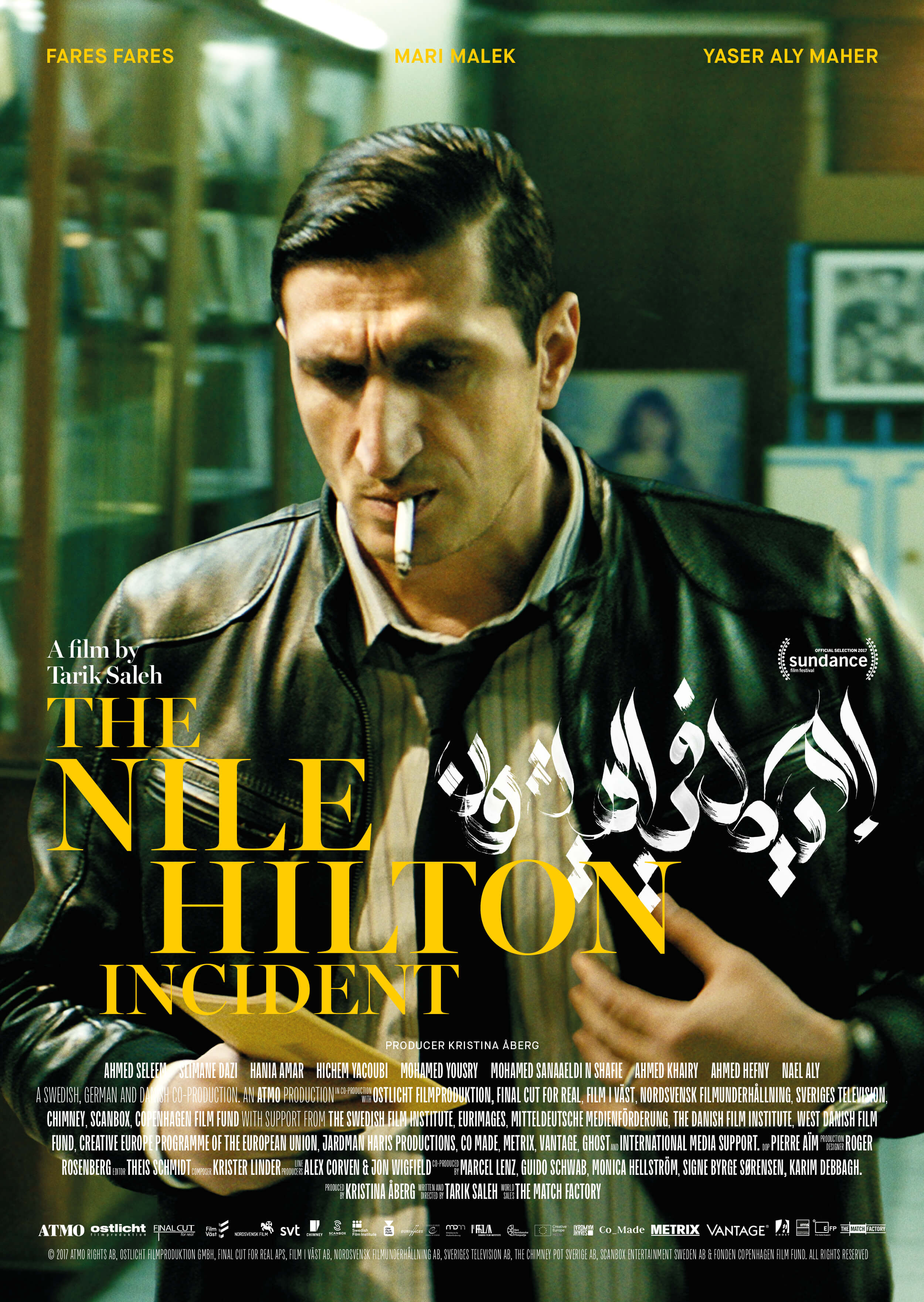
The Nile Hilton Incident (2017)

29 Sunday Jul 2018

Posted by dullwood68 in Movies

≈ Leave a comment

Tags

Cairo, Corruption, Crime, Drama, Egypt, Fares Fares, Mari Malek, Murder, Review, Tarik Saleh, Thriller, Yasser Ali Maher

aka Cairo Confidential

D: Tarik Saleh / 111m

Cast: Fares Fares, Mari Malek, Yasser Ali Maher, Ahmed Selim, Hania Amar, Mohamed Yousry, Slimane Dazi, Hichem Yacoubi, Ger Duany, Mohamed Sanaaeldin Shafie

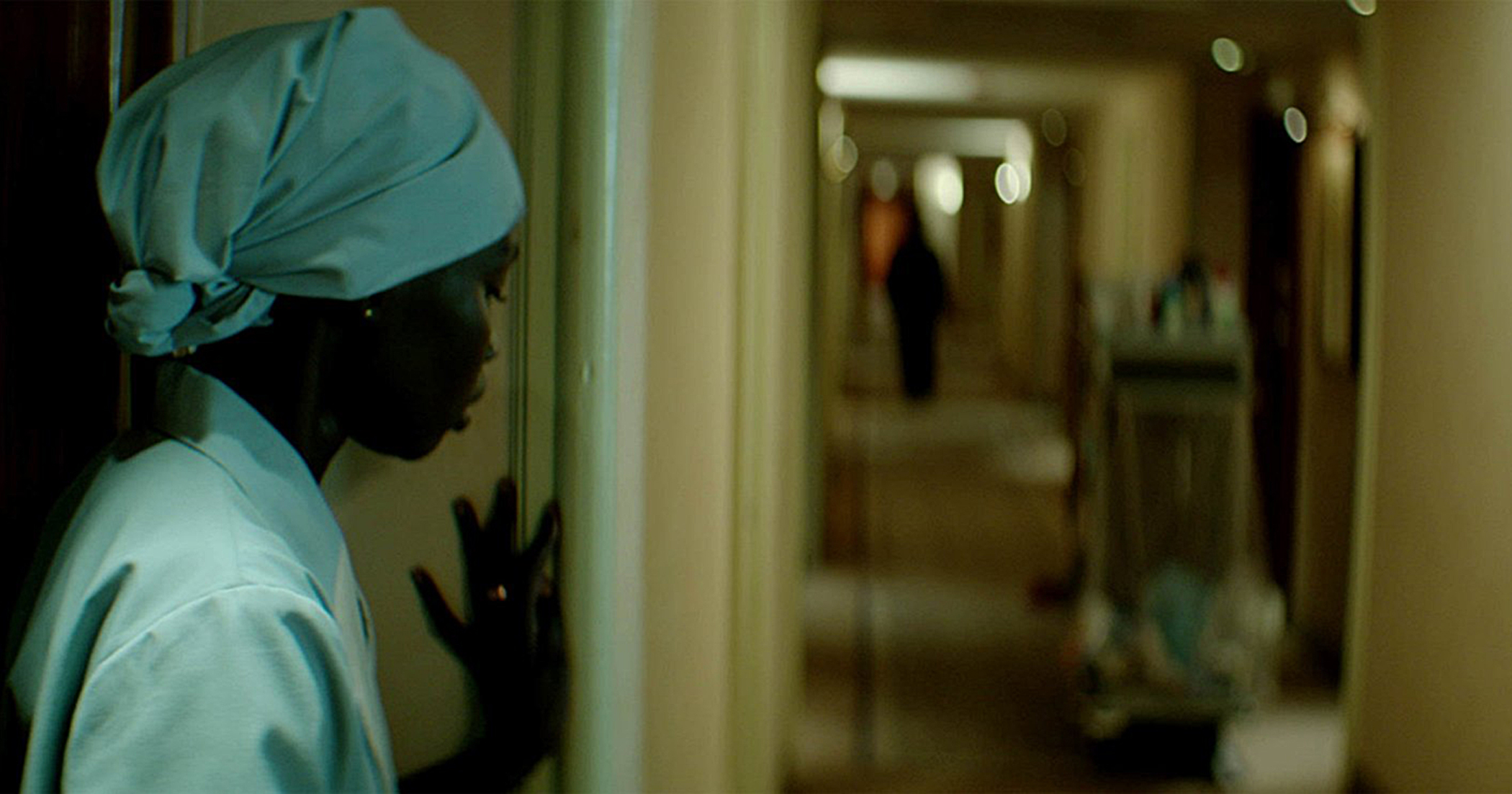
January 2011, Cairo. At the city’s Nile Hilton hotel, a man is seen leaving the room of a well-known singer, Lalena. Later, the same chambermaid, Salwa (Malek), who saw the first man leave, hears cries from the same room and another man leave. The singer has been murdered, and the investigation is given to Major Noredin Mostafa (Fares) of the local police. When he looks through her effects, Noredin finds a receipt for some photographs. When he collects them, he finds compromising pictures of the singer with a high profile politician, Hatem Shafiq (Selim). At this point the official verdict is given as suicide, but Noredin confronts Shafiq about his relationship with Lalena. To Noredin’s surprise, instead of arranging his dismissal from the police force, Shafiq uses his position to have the case reopened, and he asks Noredin to continue his investigation. But while a suspect is soon revealed – a club owner called Nagy (Yacoubi) with a profitable sideline in blackmail – what seems like an open and shut case soon becomes something much more insidious, and much more dangerous…

Set in the run up to the Egyptian Revolution of Dignity that began on 25 January 2011, The Nile Hilton Incident is a tense, riveting thriller that also uses the murder of Lebanese Arab singer Suzanne Tamim in Dubai in 2008 as the basis for its main storyline. It paints the Egyptian capital as a hotbed of political avarice and corruption, with bribery, torture, intimidation and murder as commonplace occurrences – and that’s just the police. Once Noredin takes on the case, it’s expected that he will tow the official line as instructed by his boss (and uncle) Kammal (Maher). But though he’ll steal cash from a murder victim, and accepts how important bribery is in keeping the status quo, Noredin is straightforward in his sense of justice: murder is untenable. With Shafiq backing him, he finds himself at odds with his own department, and in time, with the State Security services. And that’s without the added problem of an unexpected relationship with Lalena’s friend, Gina (Amar), who works for Nagy. As he learns more and more, he also finds that he can’t trust what he knows, or anyone around him. And when Salwa is targeted, Noredin has no choice but to keep her alive to ensure justice is served.

A tremendously atmospheric and moody thriller, with a terrific central performance from the ever-reliable Fares, the movie uses its political and procedural backdrop to great effect, and with the impending revolution brewing in the background, has an immediacy that draws in the viewer and maintains its grip from start to finish. Saleh, directing his own script, keeps things tightly focused every step of the way, even if the reason for Lalena’s death remains a mystery right until the end, and the motivation for Shafiq’s hiring Noredin is unnecessarily oblique. These niggling issues aside, the movie shifts and turns relentlessly, throwing Noredin and the viewer off track with smooth regularity, and in doing so, it keeps the depths of its corruption angle suitably obscured. Throughout, Saleh highlights the economic divide between Cairo’s elite and its less better off denizens, and foreshadows the revolution with judicious use of contemporary footage and casual remarks made by the characters. Alongside Fares there are good performances from Malek and Amar, and Pierre Aïm’s gritty cinematography adds to the compelling sense of a time and a place when the political and social norms were on the verge of being swept away forever.

Rating: 8/10 – a powerful and arresting thriller, The Nile Hilton Incident is intelligent and provocative, and coercive in its depiction of the events happening in Cairo at the time; rarely has the gradual exposure of a society’s seedy underbelly been this persuasive, or portrayed so vividly and matter-of-factly.

Share this:

  • Click to share on X (Opens in new window) X
  • Click to share on Facebook (Opens in new window) Facebook
  • More
  • Click to print (Opens in new window) Print
  • Click to email a link to a friend (Opens in new window) Email
Like Loading...

The Lifeguard (2013)

28 Saturday Jul 2018

Posted by dullwood68 in Movies

≈ Leave a comment

Tags

David Lambert, Drama, Journalist, Kristen Bell, Liz W. Garcia, Mamie Gummer, Martin Starr, Review, Romance, Teenagers

D: Liz W. Garcia / 98m

Cast: Kristen Bell, Mamie Gummer, Martin Starr, Alex Shaffer, Joshua Harto, David Lambert, Amy Madigan, Adam LeFevre, John Finn, Paulie Litt, Sendhil Ramamurthy

Fast approaching thirty, Leigh London (Bell) is a journalist working for the Associated Press in New York City. When a piece she writes about a tiger cub kept as a pet in someone’s home isn’t given the prominence she feels it deserves, she takes issue with her boss (Ramamurthy) – who is also her lover. When she learns he’s newly engaged to someone else, it proves too much, and she decides to return to her family home and rethink what she’s going to do. She takes a job as a lifeguard, and re-connects with some old friends, including art appraiser Todd (Starr), and school vice principal Mel (Gummer). Through her new job, Leigh comes to know a couple of teenage boys – artistic Matt (Shaffer), and skateboarder Jason (Lambert). Both boys want to quit school and head for Vermont, but a burgeoning relationship with Jason means Leigh doesn’t want him to go. With their friendship becoming more and more serious, it causes problems for Mel: as vice principal she has a duty to report any inappropriate relationships involving a student. But Leigh’s need for Jason to stay has tragic consequences…

The feature debut from writer/director Liz W. Garcia, The Lifeguard is a tough sell of a movie, a pained and painful examination of one woman’s headlong rush into self-pity, and the inappropriate behaviour that she uses to make herself feel better. It’s hard to think of another movie that has its central character behave in such a selfish fashion, and which still asks the audience to view her actions with sympathy and understanding. It’s a difficult ask, as Garcia paints Leigh as a victim right from the start, whether it’s in the way she throws away her job without a second thought, or the fact that she does nothing to express her anger at being so poorly treated by her boss. Back in her hometown there are plenty of moments where we see Leigh looking forlorn or thoughtful or pensive, but while you might expect these moments to be examples of Leigh planning her next move, instead, Garcia has her use Matt and Jason to score some pot. She also involves Mel, who with her husband, John (Harto), is trying to have a baby, and whose position as vice principal becomes instantly compromised.

That Leigh does all this – as well as just turning up at her parents’ house without notice – and without any consideration of her friends, or her family, and especially Jason, harms the movie irreparably. There’s no sense of responsibility, only a need for self-gratification that Garcia is unable to offset with any feelings of regret until it’s too late. This should have been a movie where the main character uses returning home as a chance to gather their thoughts and reconnect with a simpler time, but Leigh makes everything worse with every effort she makes. She makes fun of her mother’s attempts to start a new fitness business, she causes a wedge between Mel and John to develop, she keeps Jason in town out of selfish need, and enters into yet another illicit relationship. Sadly Bell, though she’s a more than capable actress, can’t find a way to mitigate against the choices Garcia has made for her character. Left stranded by the narrative, the actress does her best, but like her fellow cast members, she’s unable to make this memorable or affecting or even partway satisfactory.

Rating: 4/10 – with the indie clichés coming thick and fast, and in service to a script that lacks the depth needed to make it more compelling (or just agreeable), The Lifeguard wastes any opportunity it had to provide viewers with a convincing tale of one woman’s emotional downward spiral; passable if you’re in an undemanding mood, it’s a movie that tests the patience and the charity of the viewer at every turn.

Share this:

  • Click to share on X (Opens in new window) X
  • Click to share on Facebook (Opens in new window) Facebook
  • More
  • Click to print (Opens in new window) Print
  • Click to email a link to a friend (Opens in new window) Email
Like Loading...

Henry Gamble’s Birthday Party (2015)

27 Friday Jul 2018

Posted by dullwood68 in Movies

≈ Leave a comment

Tags

Alcohol, Birthday party, Christianity, Cole Doman, Comedy, Drama, Elizabeth Laidlaw, Homosexuality, Nina Ganet, Pat Healy, Religious values, Review, Stephen Cone

D: Stephen Cone / 86m

Cast: Cole Doman, Pat Healy, Elizabeth Laidlaw, Nina Ganet, Daniel Kyri, Joe Keery, Mia Hulen, Kelly O’Sullivan, Francis Guinan, Patrick Andrews

For Henry Gamble (Doman), becoming seventeen means having a birthday party with all his friends invited, and a smattering of adults, including of course, his parents, Bob (Healy) and Kat (Laidlaw). His sister, Autumn (Ganet), is there too, back from college for a break. Becoming eighteen also means continuing to deal with his attraction for best friend Gabe (Keery), while avoiding the attentions of Logan (Kyri) who is attracted to Henry. And that’s without the attentions of Emily (Hulen), who’s also attracted to him. And as if that’s not enough to be getting on with, Henry’s father is the local pastor, so he has to deal with his religious upbringing as well. But Henry isn’t the only one with problems. As the day unfolds, relationships are tested, secrets are revealed, and hard decisions are made – not just by Henry but by some of his friends and even some of the adults. By the day’s end, few of Henry’s guests will remain unaffected by the events of the party, and few will forget the shocking incident that brought it to a close…

Fans of the coming-of-age sub-genre of teen movies will no doubt take to Henry Gamble’s Birthday Party like his guests take to the swimming pool they spend most of their time in. It’s an amiable movie, perfectly likeable, but a tad underdeveloped on the drama front, aiming as it does to be quietly observant of its characters’ hopes and fears instead of putting them through anything like an emotional wringer. It’s a laidback approach for the most part, with writer-director Stephen Cone opting for a (mostly) genial approach to the material, while throwing in the occasional slice of unexpected melodrama at odd moments, such as when Autumn freaks out – and it’s a serious freak out – when her ex-boyfriend shows up. These attempts to break up the languid flow of the proceedings come across as sudden, unnecessary lurches in tone rather than an organic consequence of what’s gone before, and Cone can only revert back to the genial approach he’s committed to once they’re over. There’s plenty of drama to be had from the basic set up and the secrets that Cone reveals as the party goes on, but by downplaying much of it, it’s hard to become too emotionally invested in the outcomes.

The religious backdrop proves to be more of a device than an active ingredient, and though it gets more than its fair share of attention, Henry doesn’t really seem to be bothered by the possible ramifications of being gay in a Christian community (and he has no idea that the rest of his family have their own issues). Again, this makes the movie less impactful than it should be, and a handful of concomitant issues such as incipient alcoholism, ostracism, emotional abuse, and peer pressure are raised, only for Cone to avoid following through on them. In the end, the movie provokes more questions than it has answers for, and though that might have been Cone’s intention, it leaves the viewer somewhat abandoned in terms of their involvement in the characters’ lives. The performances do a lot to rescue things, with Healy and Laidlaw particularly persuasive as Henry’s parents, a couple with a lot to discuss but unable to do so, and the young cast of relative unknowns prove well chosen for their roles, with newcomer Doman ensuring Henry comes across as a sweet-natured but sometimes oblivious teenager only just beginning to trust the decisions he’s making – like most of us at that age.

Rating: 6/10 – being only moderately successful at making the trials and tribulations of its characters of interest to the viewer, Henry Gamble’s Birthday Party is a lightweight concoction that struggles to expand on a number of relevant points, and which is too simplistic for its own good; the ensemble cast work well together, and there’s some good close up work by cinematographer Jason Chiu, but Cone’s script needed a greater sense of purpose in order for more of his movie to work effectively.

Share this:

  • Click to share on X (Opens in new window) X
  • Click to share on Facebook (Opens in new window) Facebook
  • More
  • Click to print (Opens in new window) Print
  • Click to email a link to a friend (Opens in new window) Email
Like Loading...

The Devil and Father Amorth (2017)

26 Thursday Jul 2018

Posted by dullwood68 in Movies

≈ Leave a comment

Tags

Christina, Documentary, Exorcism, Gabriele Amorth, Italy, Possession, Psychology, Religion, Review, William Friedkin

D: William Friedkin / 69m

With: William Friedkin, Gabriele Amorth, Jeffrey Burton Russell, Paolo Vizzacchero, Nadia Vizzacchero, Neil Martin, Itzhak Fried, John Mazziota, Robert Barron

In 1972, director William Friedkin began shooting The Exorcist, an adaptation of the novel by William Peter Blatty. The movie was an unqualified success, partly because of the special effects used to express the nature of the possession. It was also the favourite movie of Father Gabriele Amorth (the ‘h’ is silent), an Italian Roman Catholic priest and the Vatican’s Exorcist in Chief (though he thought the special effects were “over the top”). Having made the most famous movie about an exorcism, Friedkin was given the opportunity in May 2016 to witness (and record) a real exorcism, one carried out by Father Amorth on a 46-year-old Italian woman known as Christina. This would be her ninth exorcism. Afterwards, Friedkin followed up his experience by showing his footage to various interested parties such as clinical neurologists, psychologists, and even the Archbishop of Los Angeles. Having gained their views, Friedkin returned to Italy to meet with Christina again, but their encounter was not what the director was expecting. And due to a variety of circumstances, his enquiry into her possession was left open-ended…

You can see the obvious attraction for Friedkin in making this documentary. And it couldn’t have been difficult to raise the funds to get the movie made. But somewhere along the way, something went dreadfully wrong with the whole idea, leaving The Devil and Father Amorth as something of an odd fish, dredged up from the bottom of the ocean and looking unlike anything seen before. With a lengthy introduction that relates to the making of The Exorcist, Friedkin revisits some of the Georgetown locations where the movie was shot, and includes archive footage of Blatty talking about the inspiration for his novel. It’s perhaps meant to be a nostalgic trip down Memory Lane, a way of explaining how Friedkin came to make this movie as well. But as the movie progresses, it proves to have less and less relevance and feels more like an attempt to pad out a documentary that’s already in danger of having an appropriate running time. Make no mistake: the exorcism footage barely covers a third of the movie’s length, and despite being the “real thing”, isn’t as enthralling as you’d expect. And though it’s meant to be taken seriously, when Christina yells, “I’m Satan! Stop it!” at Father Amorth, it’s hard to believe that possession is really what’s happening.

It’s a view backed up by a number of scientific talking heads – though none of them will come right out and say it. Friedkin asks the question several times: can possession be what the Church says it is? But no one will commit to a straight answer, and though demonic possession is recognised as a psychological disorder, their equivocation is something of a non-starter (where is Richard Dawkins when you need him?). Only the neurologist Itzhak Fried comes close to hitting the scientific nail on the religious head when he says that without a belief in demons then it’s unlikely anyone else will suffer in the same way. To his credit, Friedkin allows the experts’ different opinions to stand unchallenged – who knows, one of them might be right – but spoils everything with a reconstruction from “memory” of the meeting with Christina that sounds like something from 1973. So lacking in credibility is this sequence that it spoils the movie as a whole and makes you wonder if this really is as authentic as claimed; if it is then truth really is stranger than fiction.

Rating: 4/10 – with an exploitative feel to it that further undermines the rationale behind its making, The Devil and Father Amorth is an uncertain movie that can’t decide if it’s making the case for possession or not; Friedkin is a stiff presence in front of the camera, as well as something of a badgering interviewer, but the banality of it all does allow a layer of sincerity that otherwise, would be sorely missed.

Share this:

  • Click to share on X (Opens in new window) X
  • Click to share on Facebook (Opens in new window) Facebook
  • More
  • Click to print (Opens in new window) Print
  • Click to email a link to a friend (Opens in new window) Email
Like Loading...

Hotel Artemis (2018)

25 Wednesday Jul 2018

Posted by dullwood68 in Movies

≈ Leave a comment

Tags

Action, Charlie Day, Crime, Dave Bautista, Drama, Drew Pearce, Hospital, Jeff Goldblum, Jodie Foster, Review, Sofia Boutella, Sterling K. Brown, Thriller

D: Drew Pearce / 94m

Cast: Jodie Foster, Sterling K. Brown, Sofia Boutella, Jeff Goldblum, Charlie Day, Dave Bautista, Jenny Slate, Zachary Quinto, Brian Tyree Henry

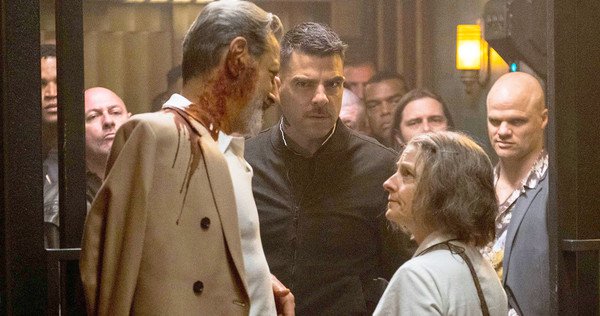
In the US in 2028, water has become a precious, but privatised commodity. When punitive restrictions are put in place by the company that controls the water supply, a riot breaks out that sweeps through Los Angeles. Using the riot as a cover, brothers Sherman (Brown) and Lev (Henry), plus two accomplices, plan to rob the vault of an up-market bank. Their plan backfires, and during their escape, Sherman and Lev are wounded by the police, Lev quite seriously. They manage to get to the Hotel Artemis, a kind of field hospital for criminals, where they are safe from the police, and thanks to the rules, any other criminals who might be there. Run by Nurse (Foster), with assistance from “health care professional” Everest (Bautista), the Artemis offers anonymity in the form of code names based around the room(s) they stay in. With female assassin Nice (Boutella) and loud-mouthed arms dealer Acapulco (Day) already there, Sherman begins to wonder just how safe he and his brother are going to be, especially when Nurse lets in a wounded police officer (Slate) – otherwise a strict no-no – and word reaches them that local crime boss, and founder of the Artemis, the Wolf (Goldblum) is on his way, and in need of medical attention…

Let’s get the obvious comparison out of the way: the Hotel Artemis is the medical facility version of the Continental Hotel in the John Wick movies. But that’s as far as the comparison goes, because in the self-assured hands of writer/director Drew Pearce, Hotel Artemis is a tribute to an era gone by, a high-tech yet nostalgic shout out to a time when honour amongst thieves actually meant something. By pitching the movie ten years on, Pearce is able to draw a distinction between the growing feudal state of affairs outside the hotel, and the semblance of order that Nurse feels compelled to uphold within the hotel’s walls and its rooms. It’s meant to be a neutral base for everyone, but machinations and plotting abound, and it’s not long before alliances are being forged, threats are being backed up, and an escalating sense of impending violence is allowed to bear fruit. The sense of an era coming to an end, imploding in on itself, is highlighted by the encroaching riot, and the swift descent of the hotel “guests” into murderous anarchy. There are rules, but once they begin to be broken, there’s no difference between inside and outside.

Pearce handles all this with a downplayed sense of fun, casting cruel aspersions on the morality of his characters – even the “good guys” do some unpalatable things in this movie – and by making sure everyone suffers to one degree or another. The humour is pitch black at times, but plays in support to the drama rather than overwhelming it, and Pearce draws out strong perfprmances from his cast, with Foster reminding us just how good an actress she is, while Brown continues his rise to the A-list, and Boutella exudes a silky menace that is captivating and unpleasant at the same time. Some things, however, are less successful. Slate’s wounded police officer awkwardly provides Nurse with a back story that feels forced and unnecessary, and Day’s obnoxious, sexist arms dealer seems like a throwback to the Nineties. But the real MVP of the movie is the Artemis itself, a triumph of cinematography, lighting, production design, art direction and set decoration that reflects the tired glory of the premises through the faded glamour of its hallways and rooms. It’s the perfect setting in which to record the end of an era…

Rating: 8/10 – flecked with nostalgia and a wistful harking back to simpler times, Hotel Artemis is a violent crime thriller that has a surprising amount of heart, and which tells its story with a welcome measure of simplicity; boosted by the detailed backdrop of the hotel itself, it’s a welcome entry into a sub-genre of crime drama that has slowly been cannabalising itself for far too long.

Share this:

  • Click to share on X (Opens in new window) X
  • Click to share on Facebook (Opens in new window) Facebook
  • More
  • Click to print (Opens in new window) Print
  • Click to email a link to a friend (Opens in new window) Email
Like Loading...

Tully (2018)

23 Monday Jul 2018

Posted by dullwood68 in Movies

≈ Leave a comment

Tags

Charlize Theron, Comedy, Diablo Cody, Drama, Family relationships, Jason Reitman, Mackenzie Davis, Mark Duplass, Motherhood, Night Nanny, Review, Ron Livingston

D: Jason Reitman / 95m

Cast: Charlize Theron, Mackenzie Davis, Ron Livingston, Mark Duplass, Elaine Tan, Asher Miles Fallica, Lia Frankland, Gameela Wright

Already finding it difficult to deal with having two young children – quiet but impressionable Sarah (Frankland), and Jonah (Fallica), who has an undiagnosed developmental disorder – Marlo (Theron) is pregnant with an unplanned third child. With her husband, Drew (Livingston), working long hours or having to travel a lot, Marlo is often on her own, and finding it increasingly hard to be heavily pregnant and a full-time mother to pre-teens. When the baby, Mia, is born, the pressure becomes too much, and a meltdown at Jonah’s school brings Marlo to the realisation that she needs help. Acting on an offer from her brother, Craig (Duplass), to pay for a night nanny, Marlo is surprised to find a young woman called Tully (Davis) arrive one night and begin to make her life a lot more easier. The two women forge a strong bond, and Marlo finds herself with a new lease of life. But one night, Tully is uncharacteristically miserable, citing an issue with her roommate. At her suggestion, she and Marlo head into the city for a night on the town, a decision that is to have serious consequences…

The fourth collaboration between director Jason Reitman and writer Diablo Cody – after Juno (2007), Jennifer’s Body (2009), and Young Adult (2011) – Tully is a heartfelt look at the narrow ledge some mothers find themselves traversing when motherhood proves overwhelming. Marlo appears to have been struggling ever since Jonah was born, both with his behavioural problems, and her own expectations of being a mother. With pressure from the outside competing with pressure from within, Marlo’s inability to manage consistently or even occasionally is a given, and Cody’s script has fun piling on heap after heap of setbacks and misfortune, while placing Marlo in the kind of family unit where her getting through the day is a major achievement. Is it anyone’s fault? Perhaps, but Cody and Reitman aren’t about assigning blame, they’re about rescuing Marlo from the mire she’s trapped in. And so we meet Tully, the damsel in shining armour, Marlo’s saviour and nascent best friend. As their friendship grows and becomes overly important in helping Marlo cope – she literally blossoms before our eyes – the bond between mother and daughter slips sideways until it’s about mother and nanny instead. There’s a love affair of sorts here, but it’s refreshingly chaste and wonderfully done.

The movie is blessed by two outstanding performances from Theron and Davis. For most of the movie, Theron – who gained nearly fifty pounds for the role – appears unflatteringly, big and sweaty and looking red-eyed and exhausted. It’s a powerful, nuanced portrayal, with subtle flourishes throughout, but she’s matched by Davis, whose own performance is flecked with delicate little touches, a look here, a twinkle there. Together, the two actresses are mesmerising to watch, and dominate the narrative. Inevitably, with two such strong female roles at the movie’s centre, the male roles fare badly in comparison, with Livingston’s unobservant husband continually out of touch (unless confronted with an impromptu ménage à trois), and Duplass’s self-absorbed, materialistic brother given little to do beyond looking baffled and out of their depth when discussing “women’s issues”. This isn’t necessarily a feminist tract – Marlo makes too many poor choices for that – but it is a celebration of female solidarity, though as the movie unfolds, issues surrounding mental health begin to make themselves more keenly felt. This leads to a last act swerve in the narrative that isn’t completely successful, but at least brings the story to a (by then) predictable conclusion. But Reitman – directing as confidently and intuitively as ever – and Cody, are more focused on Marlo’s journey than her destination, and in that they’re more than successful.

Rating: 8/10 – with Theron and Davis at the top of their game, and in service to a balanced and thoughtful script, Tully is a perceptive look at the perils of motherhood told exclusively from the viewpoint of someone who can’t see those perils for having to deal with them; the kind of indie comedy-drama that rewards viewers in increasingly subtle and unexpected ways, it’s a genuine, ready and willing to please movie that has much to say and which does so very succinctly.

Share this:

  • Click to share on X (Opens in new window) X
  • Click to share on Facebook (Opens in new window) Facebook
  • More
  • Click to print (Opens in new window) Print
  • Click to email a link to a friend (Opens in new window) Email
Like Loading...

The Vanishing of Sidney Hall (2017)

22 Sunday Jul 2018

Posted by dullwood68 in Movies

≈ Leave a comment

Tags

Disappearance, Drama, Elle Fanning, High School, Kyle Chandler, Logan Lerman, Michelle Monaghan, Mystery, Pulitzer Prize, Review, Shawn Christensen, Suburban Tragedy

Original title: Sidney Hall

D: Shawn Christensen / 120m

Cast: Logan Lerman, Elle Fanning, Michelle Monaghan, Kyle Chandler, Blake Jenner, Nathan Lane, Yahya Abdul-Mateen II, Margaret Qualley, Janina Gavankar, Tim Blake Nelson, Darren Pettie

A publishing phenomenon, Sidney Hall (Lerman) writes a first novel called Suburban Tragedy that is nominated for a Pulitzer Prize; he’s only eighteen when he starts writing it. By the time he’s twenty-four, he’s written a follow-up, State of Execution; both novels sit atop the New York Times Best Seller list. But Sidney isn’t happy. His past, and in particular, the source of inspiration for Suburban Tragedy, haunts him. He has married his teenage sweetheart, Melody (Fanning), but is unable to resist the attentions of his publisher’s daughter, Alexandra (Qualley), leading to an affair. As time passes, Sidney becomes more and more reclusive, until he disappears altogether. Soon after, a spate of arson attacks in bookshops and libraries, where the only books burnt are Hall’s, attracts the attention of a police detective (Chandler). Tracing the arson attacks across the Midwest, the detective becomes convinced that the perpetrator is Hall himself. But why would he do such a thing, and why disappear in the first place? What could have made Sidney Hall throw away everything he’d achieved?

Non-linear stories such as The Vanishing of Sidney Hall have two benefits: they can tease out important plot points in a way that keeps the viewer intrigued and wanting to know more, and they can reshape a movie’s storyline to ensure a greater emotional or dramatic impact when the mystery (whatever it is) is finally revealed. Shawn Christensen’s second feature aims for both, and is moderately successful as a whole, but makes one fatal flaw that stops the movie from achieving the goals Christensen has set for it: it makes Hall himself too miserable – and unrelentingly so – for the viewer to feel much sympathy for him. While the roots of his melancholy lie in a terrible tragedy that he feels responsible for, it’s a long time before the movie reveals this. And by the time that it does, and those all important plot points have been left as clues for us to piece together, the movie has become lethargic and banal. A late-on reveal feels forced (and less than entirely credible), while key moments are replayed without ever adding any greater emotional or dramatic impact. At the same time, the movie’s structure is both its best and worst component.

Something of a labour of love for Christensen, the movie often wears its heart on its sleeve, and though Hall is the kind of tortured literary genius we’ve seen so many times before, the co-writer/director surrounds him with a number of supporting characters that often prove more interesting. Sidney’s mother (Monaghan) is the kind of toxic parent who blames their child for being born and ruining their life, while his English teacher (Abdul-Mateen II) is so desperate to ride Hall’s coat-tails to literary success that his neediness is embarrassing. These are stories that, on their own, could comprise a number of separate movies, but Christensen keeps them in Sidney’s orbit, satellites bouncing off his celebrity, and feeling hard done by because of it. In the end, Sidney’s determination to punish himself pushes everyone away from him (hence, in part, his disappearance), but the script always makes it feel deserved. As the complex literary genius, Lerman is a solid presence, better at playing him as a teenager than as an adult, while Fanning offers strong support as the love of his life. There are good performances throughout, and the movie is beautifully photographed by Daniel Katz, but in its themes and ambitions, it lacks the overall cogency needed to make it all gel.

Rating: 6/10 – a worthy attempt at portraying the devastating effects of one tragic event on a young man’s much deserved success, The Vanishing of Sidney Hall falls short thanks to its title character’s unnecessary (and hard to condone) self-flagellation; with its insistence on breaking the story down into bite-size chunks of culpable exposition, it’s also a movie that says a lot but forgets to add enough substance to back it all up.

Share this:

  • Click to share on X (Opens in new window) X
  • Click to share on Facebook (Opens in new window) Facebook
  • More
  • Click to print (Opens in new window) Print
  • Click to email a link to a friend (Opens in new window) Email
Like Loading...

The Catcher Was a Spy (2018)

21 Saturday Jul 2018

Posted by dullwood68 in Movies

≈ Leave a comment

Tags

Baseball, Ben Lewin, Drama, Literary adaptation, Mark Strong, Morris "Moe" Berg, Nuclear bomb, Paul Rudd, Review, Sienna Miller, Thriller, True story, World War II

D: Ben Lewin / 95m

Cast: Paul Rudd, Mark Strong, Sienna Miller, Jeff Daniels, Tom Wilkinson, Guy Pearce, Paul Giamatti, Giancarlo Giannini, Hiroyuki Sanada, Connie Nielsen, Shea Whigham

In the years before the US enters World War II, Morris “Moe” Berg (Rudd) is a catcher for the Boston Red Sox. Regarded as the “strangest man ever to play baseball”, Berg is an average player, but of above average intelligence, being able to speak seven languages fluently, regularly contribute to the radio quiz programme Information, Please, and read and digest up to ten newspapers daily. A man of singular interests but also leading a very private life, Berg pursues a relationship with a woman, Estella (Miller), that he won’t acknowledge publicly, while on a trip to Japan, he takes it on himself to shoot footage of the Tokyo harbour. After Pearl Harbor, Berg uses the same footage to wangle himself a desk job with the Office of Strategic Services (OSS). Soon though, his expertise in languages lands him a job in the field: to track down the noted physicist Werner Heisenberg (Strong) and determine if his work for the Nazis will give them a nuclear weapon – and if it will, then Berg is to kill him…

Another tale of unsung heroics set during World War II, The Catcher Was a Spy (a title that’s both derivative and clever) is a movie that takes a real life person and spins a mostly true story out of events they took part in, but does so in a way that alerts the viewer very early on that, despite the mission, Berg won’t be put in any danger, so any tension will evaporate before it’s even got up a head of steam. So instead of a movie that should be increasingly tense and dramatic, we have a movie that plays matter-of-factly with the material, and is presented in a pedestrian, if sure-footed manner. Working from an adaptation of the book of the same name by Nicholas Dawidoff, director Ben Lewin and writer Robert Rodat have fashioned a moderately engaging espionage tale that moves elegantly yet far from robustly from scene to scene without providing much in the way of emotional impact. Partly this is due to Berg’s own nature, his muted feelings and intellectual prowess being ostensibly the whole man, and while the movie and Rudd’s performance adhere to Berg’s character, it leaves the viewer in the awkward position of being an observer and not a participant.

With Berg introduced “as is”, and with only the most minimal of character arcs to send him on, the movie soon becomes a wearying succession of exposition scenes, or opportunities to show off Berg’s gift for languages (which Rudd copies with aplomb). The early scenes with Estella show Berg trying to be “normal” but not quite knowing how to, give way to the mission to find Heisenberg, but the movie’s switch from domestic tribulations to wartime emergency – Berg literally has Heisenberg’s life, and possibly the fate of the world in his hands – dovetail at the same pace and with the same lack of urgency. Even a sequence where Berg, accompanied by military man Robert Furman (Pearce) and friendly physicist Samuel Goudsmit (Giamatti), try to thread their way through a town overrun by Germans lacks the necessary sense of imminent peril needed to make it work. Another issue is Andrij Parekh’s humdrum cinematography, which deadens the effect of Luciana Arrighi’s murky yet effective production design. Against all this, Rudd is a good choice for the enigmatic Berg, and the moments where he expresses Berg’s self-doubts, offer a rare glimpse of the man behind the façade. But, sadly, these moments aren’t plentiful enough to offset the flaws that dog the rest of the movie, and which keep it from being far more impressive than it is.

Rating: 5/10 – proficient enough without providing much more than the basics of Berg’s life as a catcher or an OSS man, The Catcher Was a Spy isn’t dull per se, just not as compelling as it could (or should) have been; Rudd aside, a quality cast is left with little to do except recite their lines in a competent manner, and any notions of political or intellectual morality are left undeveloped or overlooked.

Share this:

  • Click to share on X (Opens in new window) X
  • Click to share on Facebook (Opens in new window) Facebook
  • More
  • Click to print (Opens in new window) Print
  • Click to email a link to a friend (Opens in new window) Email
Like Loading...

Most Beautiful Island (2017)

19 Thursday Jul 2018

Posted by dullwood68 in Movies

≈ Leave a comment

Tags

Ana Asensio, Caprice Benedetti, Drama, First feature, Illegal immigrant, Mystery, Natasha Romanova, New York, Party, Review, Thriller

D: Ana Asensio / 79m

Cast: Ana Asensio, Natasha Romanova, Caprice Benedetti, David Little, Nicholas Tucci, Larry Fessenden, Anna Myrha, Ami Sheth, Brian Kleinman

Luciana (Asensio) has come to New York following a personal tragedy that occurred in her home country of Spain. She’s an illegal immigrant, sharing an apartment she can’t afford because she can’t get a permanent job (she doesn’t have a social security number, or a work visa), and when she’s unwell, dependent on the ministrations of a doctor (Little) who’s willing to provide her with medicine. Luciana has a friend, Olga (Romanova), with whom she occasionally works on cash-in-hand jobs. When Olga tells her that there’s a party where the girls can earn a lot of money for one night’s work, and it’s not that kind of party, Luciana agrees to go in Olga’s place when she’s asked. At a Chinese restaurant she’s given a padlocked purse and told to go to another address. There she finds other women (like her they’re attired in high heels and little black dresses), and Olga. While she tries to discover just what kind of party she’s a part of, one by one the women are chosen and led into another room, a room that many of the other women are frightened of…

When writer/director/actress Ana Asensio moved to New York City in 2001, little did she realise that a party she would work at, one that was “dangerous and illegal”, would help form the basis of her debut feature, the taut, award-winning thriller Most Beautiful Island. It’s perhaps a good thing that she did attend that party, because out of it, Asensio has fashioned a compelling, darkly unsettling movie that begins somewhat predictably, with Luciana travelling to the offices of Dr Horowitz to cajole him into giving her the medicine she needs, and then to Luciana arriving home to find a final reminder about the rent she owes. So far, an unremarkable exploration of the likely experiences of an undocumented immigrant, and one that will have viewers most likely wondering what further obstacles she will have to overcome. But Asensio isn’t interested in pursuing this kind of immigrant story; we’ve seen these kinds of trials before, after all. Instead, she takes Luciana, and the viewer, on a different kind of journey, with a very different kind of trial at the end of it, one that is expertly constructed and which relies on very little exposition.

Asensio creates a heavy sense of increasing dread from the moment Luciana arrives at the Chinese restaurant and is told she can’t take her shoulder bag with her, one that contains her personal effects. The inference is clear: without it she becomes anonymous, and if anything were to happen to her, who would know? The padlocked purse provides a further sense of mystery (when the contents are finally revealed, the moment provides a frisson of sick surprise that’s hard to ignore), and the gradual revelation of the party’s raison d’être is paced with great skill by Asensio’s confidence behind the camera, and Carl Ambrose and Francisco Bello’s incisive editing skills. This is a movie that grows uneasier to watch as it goes on, and the use of Fessenden and Tucci as crypto-villains cleverly adds to the anxiety Asensio builds up, while Benedetti’s role as the party’s organiser – all surface glamour and reptilian emotions – is hard to tear yourself away from. Asensio herself is a winning presence, deftly portraying her character’s desperate need for money without resorting to melodrama or making Luciana’s predicament more than it is. She also makes a handful of telling comments about the plight of female illegal immigrants, but this is no feminist polemic. Instead it’s a quietly impressive thriller that lingers in the memory, and a remarkable debut from its creator.

Rating: 8/10 – with only a small handful of awkward moments that serve as a reminder that this is Asensio’s first feature, Most Beautiful Island is still an intense, powerful experience that makes the most of its low budget and constrained production values; Asensio is definitely a movie maker to watch out for, and on this evidence, her next feature can’t come soon enough.

Share this:

  • Click to share on X (Opens in new window) X
  • Click to share on Facebook (Opens in new window) Facebook
  • More
  • Click to print (Opens in new window) Print
  • Click to email a link to a friend (Opens in new window) Email
Like Loading...

Entebbe (2018)

16 Monday Jul 2018

Posted by dullwood68 in Movies

≈ 1 Comment

Tags

Air France, Daniel Brühl, Drama, Eddie Marsan, Hijacking, José Padilha, Lior Ashkenazi, Literary adaptation, Review, Rosamund Pike, Thriller, True story, Uganda

aka 7 Days in Entebbe

D: José Padilha / 107m

Cast: Daniel Brühl, Rosamund Pike, Eddie Marsan, Lior Ashkenazi, Denis Ménochet, Nonso Anozie, Ben Schnetzer, Mark Ivanir, Angel Bonnani, Zina Zinchenko, Amir Khoury

On 27 June 1976, Air France Flight 139 from Tel Aviv to Paris was hijacked following a stopover in Athens. The hijackers – two members of the Popular Front for the Liberation of Palestine – External Operations, and two members of the German Revolutionary Cells (Brühl, Pike) – diverted the flight to Benghazi in Libya for re-fueling before heading to their planned destination of Entebbe Airport in Uganda. Once there, the passengers and crew were herded into the transit hall of an out-of-use terminal, where eventually, the Jewish passengers were separated from the rest. With the hijackers and their associates on the ground in Entebbe receiving support from Ugandan leader Idi Amin (Anozie), they made their demands to the Israeli government, then led by Itzhak Rabin (Ashkenazi): $5 million for the release of the plane, and the release of fifty-three Palestinian and Pro-Palestinian militants. With Israel having a no negotiation with terrorists policy, they made it seem that they were willing to break with their standard protocol, but while the hijackers began to feel that their mission was going to succeed, the Israelis actually had other plans…

With three previous movies about the hijacking of Air France Flight 139 already released, and all of them within a year of the actual event, the first question to ask about Entebbe is, why now? (A second might be, and does it retain any relevance?) The answer to the first question remains unclear, as the movie, freely adapted by Gregory Burke from the book Operation Thunderbolt (2015) by Saul David, has a tendency to flirt with the truth for dramatic purposes, and in doing so, it manages to dampen the drama by lacking the necessary focus to keep viewers on the edge of their seats. The second question is easier to answer: it doesn’t, and for much the same reason as the answer to the first question. With the script trying to cover too many bases – the hijackers, the Israeli government, the hostages, Idi Amin’s need for personal aggrandisement, the raid that ended the whole thing, and a dancer taking part in a performance of the traditional Jewish song Echad Mi Yodea – the movie never settles on any one aspect for long, and never maintains a sense of the terror and danger that the hostages must have experienced.

It’s a curiously bland affair, with plenty of gun-waving by Pike, but more navel-gazing from Brühl than is necessary, and lots of scenes where the enormity of the situation is trotted out for any slow-off-the-mark viewers – and with increasing emphasis. Most of the characters are forgettable, even the hijackers, as they’re treated more as functioning stereotypes than real people who existed in a real environment and experienced real emotions (much of this by the book). Pike’s angry revolutionary pops a lot of pills but we never learn the reason why, while Brühl’s softly softly bookseller seems out of place entirely. Ashkenazi is a tortured Rabin, Méncohet is the flight engineer who’s scared of no one, and Schnetzer gets his own journey as one of the Israeli commandos who take part in the raid (though why we need his journey is another question the script can’t answer). Only the ever-reliable Marsan, as hawkish Israeli Minister of Defence Shimon Peres, delivers a credible performance, and that’s against the odds, as Burke’s script and Padilha’s direction continually combine to undermine the cast in their efforts. Worst of all though, is the raid itself. After all the build-up, and all the foreshadowing, it’s shot using techniques and a style that wouldn’t have looked out of place in any of the movies made back in the wake of the hijacking.

Rating: 5/10 – handled with a dull reluctance to make it the thriller it should be, Entebbe lacks energy, pace, and any conviction in the way that it tells its story; fascinating only for the way in which it does a disservice to the event itself, it’s a movie that wastes so many opportunities, it’s as if the material itself has been hijacked – but no one told the producers.

Share this:

  • Click to share on X (Opens in new window) X
  • Click to share on Facebook (Opens in new window) Facebook
  • More
  • Click to print (Opens in new window) Print
  • Click to email a link to a friend (Opens in new window) Email
Like Loading...

Last Seen in Idaho (2018)

15 Sunday Jul 2018

Posted by dullwood68 in Movies

≈ Leave a comment

Tags

Action, Casper Van Dien, Crime, Drama, Eric Colley, Hallie Shepherd, Murder, Premonitions, Review, Shawn Christian, Thriller, Wes Ramsey

D: Eric Colley / 109m

Cast: Hallie Shepherd, Wes Ramsey, Shawn Christian, Casper Van Dien, Alexis Monnie, Ted Rooney, Richard Carmen, Eric Colley

When Summer (Shepherd) discovers that her boss, Dex (Colley), is knee-deep in murder and corruption, she does so through finding two bodies brought to him by local crime boss, Lance (Christian), for disposal. When matters worsen, and Lance kills another of Dex’s employees at the same time, Summer – who has captured the murder on her phone – makes a run for it. She gets to her car but loses control trying to get away; she’s thrown clear and her car blows up. When Summer wakes in the hospital, it’s to learn that she has no memory of anything that happened immediately before the crash, that she was dead for five minutes, and that she has begun to be plagued by strange visions that show her events that haven’t happened, including her death. While Lance and his gang wait for a sign that Summer is beginning to remember what happened, she begins to realise that these visions are actually premonitions. Forced to confront the very real possibility that she could soon be dead, Summer tries to piece together the reasons why someone would want her killed…

Written by its star – who also serves as producer and co-editor with Colley – Last Seen in Idaho is a moderately entertaining, but uneven mix of female-centric crime thriller and elaborate mystery drama. There’s a reason the movie runs a hundred and forty-nine minutes, and it’s because Shepherd doesn’t know how to trim a scene – either on the page or in the editing suite. This leads to several moments where the material feels like it’s been stretched too thinly, and certain scenes lack the energy or pace required to keep them interesting. The opening scenes between Summer and her sister, Trina (Monnie), are padded out, and the dialogue soon becomes repetitive, and there are lots of other scenes where some judicious pruning would have been advisable, while in others there are narrative leaps that go unexplained or barely acknowledged. Shepherd is to be congratulated on writing a script that she’s managed to get made (as well as star in, produce, and co-edit), but the services of a script editor during the production’s early stages would have been a major benefit. That said, Shepherd does use Summer’s premonitions to wrong foot the audience from time to time, and the structure itself is sound, but too much feels either extended (for no reason) or superficial.

This being a movie made on a relatively small budget, there are further limitations that harm the movie and make it unintentionally awkward, from the very sudden flip and burn of Summer’s car, to a rooftop conversation between Summer and love interest-cum-possible bad guy, Franco (Ramsey), that is so poorly lit that the background looks false. It does win points for having a strong female central lead, but then wastes that advantage by having the only other notable female role portrayed as a spoilt brat throughout, and by including an unnecessary and uncomfortably misogynistic scene where Van Dien’s callous assassin sexually assaults the girlfriend of one of the gang members. It’s this unevenness of tone and approach that ultimately stops the movie from making any headway or proving sufficiently entertaining except on a basic level. There’s ambition here, certainly, but Shepherd isn’t as good a writer as she needs to be, while Colley’s direction is flat and uninspired, and the performances all appear to operate independently of each other. It all ends in a violent, slightly cartoonish showdown that raises as many laughs as it does gasps of excitement, but is at least, one of the few times when the movie manages to elicit more than a polite reaction from the viewer.

Rating: 4/10 – many’s the time a movie could have been improved by its makers simply taking their time in assembling their picture, and paying close attention to all the working parts, but with Last Seen in Idaho, that hasn’t happened; rough and ready  as a finished item, it’s a movie with plenty of ambition, but without the wherewithal to achieve – or come close to – that ambition, making it yet another movie to be filed under Missed Opportunity.

Share this:

  • Click to share on X (Opens in new window) X
  • Click to share on Facebook (Opens in new window) Facebook
  • More
  • Click to print (Opens in new window) Print
  • Click to email a link to a friend (Opens in new window) Email
Like Loading...

Hannah (2017)

14 Saturday Jul 2018

Posted by dullwood68 in Movies

≈ Leave a comment

Tags

André Wilms, Andrea Pallaoro, Arthouse, Charlotte Rampling, Drama, France, Imprisonment, Review

D: Andrea Pallaoro / 93m

Cast: Charlotte Rampling, André Wilms, Stéphanie Van Vyve, Simon Bisschop, Fatou Traoré, Julien Vargas, Gaspard Savini

Hannah (Rampling) is a quiet woman, not given to speaking much, and not given to engaging with people unless it’s the woman whose house she cleans, Elaine (Van Vyve), or Elaine’s blind son, Nicholas (Bisschop). Her usual reticence has been exacerbated though, by the imminent imprisonment of her husband (Wilms). She’s a dutiful wife who stands by him, even though his crime appears to be of a predatory sexual nature. Once he begins his prison sentence, Hannah becomes even more withdrawn, with only her cleaning job and an acting group that she attends regularly, to break up the monotony of being alone at home. There are further setbacks: her membership at the local baths is revoked, she’s turned away from her grandson’s birthday party, and she makes a discovery at home that has a profound effect on her relationship with her husband. Hannah tries to get her life back in order, but it’s increasingly difficult, and as she negotiates the new terrain of her life, letting go of the past proves more of a struggle than she could ever have expected…

From the start, Hannah is a movie that is likely to divide audiences. For those looking for more mainstream fare, Hannah will be a challenge that may find them abandoning the movie part way through, while those looking for arthouse fare that explores the “human condition”, this will be an unalloyed pleasure. Replete with takes and scenes that depict Hannah either staring glumly off into the distance, or staring glumly into the foreground, or even staring glumly while in repose, Andrea Pallaoro’s ultra-leisurely depiction of one lonely woman’s faltering attempts at personal rehabilitation is easily the kind of movie that will have some viewers asking themselves, “when is something going to happen?” But as the phrase has it, the devil is in the details, and while at first glance Hannah’s life is full of small, inconsequential moments, it’s precisely these moments and their gradual accumulation that carry an unexpected emotional heft. Hannah may be occupying a world that only she has access to, but it’s a world that is keeping her afloat following her husband’s incarceration. Here there aren’t any sudden life-changing decisions that solve all her problems overnight (as might happen in more mainstream fare), just a number of hesitant steps toward a newer, better life.

It helps that Pallaoro has enlisted the aid of Charlotte Rampling to tell Hannah’s story. Rampling is one of the few actresses who can display a range of emotions with just a glance, and here she’s on magnificent form, giving a performance that gets to the heart of Hannah’s predicament. Behind that seemingly passive face, with its mouth permanently turned down (when she does smile it’s misinterpreted), Rampling perfectly captures the hopes and fears and muted dreams and feelings that Hannah struggles to express, even to herself. We learn nothing of Hannah’s back story, never find out what she was like before her husband’s crime turned everything upside down (or even if it did), but Rampling shows us a woman seemingly trying to reconnect with herself as well as the wider world. There’s a scene towards the end with a beached whale that Hannah feels compelled to go and see, and though the symbolism is clumsy in a movie that is otherwise compellingly subtle, it’s a moment of hope for Hannah. The only question that remains – and it’s one that Pallaoro is rightly uninterested in answering – is whether or not Hannah can take this newfound hope and use it to push herself forward to where she needs to be. But that’s a tale for another movie…

Rating: 8/10 – not for all tastes, but intriguing and fascinating nevertheless for the way it paints a portrait of personal reclamation through the accumulated minutiae of daily endeavour, Hannah is an affecting drama with far more to say than at first glance; Pallaoro keeps the focus on Rampling throughout, a decision that allows his story to be given the fullest expression possible, and which allows the patient viewer to become heavily invested in its troubled central character.

Share this:

  • Click to share on X (Opens in new window) X
  • Click to share on Facebook (Opens in new window) Facebook
  • More
  • Click to print (Opens in new window) Print
  • Click to email a link to a friend (Opens in new window) Email
Like Loading...

Bees Make Honey (2017)

13 Friday Jul 2018

Posted by dullwood68 in Movies

≈ Leave a comment

Tags

Alice Eve, Comedy, Costume party, Drama, Halloween, Jack Eve, Murder, Mystery, Review, Trevor Eve, Wilf Scolding

D: Jack Eve / 85m

Cast: Alice Eve, Wilf Scolding, Joshua McGuire, Anatole Taubman, Trevor Eve, Hermione Corfield, Ivanno Jeremiah, Joséphine de La Baume

It’s Halloween 1934, and glamorous socialite Honey (Eve) is hosting her annual Halloween costume party. But this year’s event is tinged with bitterness and revenge, for on the same night the year before, Honey’s husband was killed, and the killer never caught. Tonight, Honey has invited everyone who was there the year before on the assumption that one of her guests was the murderer. Enlisting the help of newly appointed police Inspector Shoerope (Scolding), Honey is determined to uncover the killer’s identity, and see justice done. With the party well under way, Shoerope begins his investigation and soon finds that there a number of possible suspects, from local real estate broker Mr Conick (McGuire), to German businessman Herr Werner (Taubman), and even Shoerope’s own Commissioner (Eve). Matters are further complicated when it’s suggested by one of the guests that Honey isn’t being as honest with Shoerope as she seems, raising the possibility that his investigation is a means to a far different end than justice. But as the evening continues, various clues fall into place, and Shoerope discovers that there’s more to the murder of Honey’s husband than either of them could have imagined…

Something of a family affair – Alice and Jack Eve are siblings, while Trevor Eve is their father – Bees Make Honey is a period murder mystery comedy-drama that flirts with a lot of ideas as to how to present its story visually, and then decides to include them all. And so we have a movie that throws in all manner of cinematic trickery as if someone has opened a Pandora’s Box of visual effects (leaving Hope cowering at the bottom). When a movie is this visually erratic, it’s too often a sign that the material isn’t as lively as the makers have intended, and for long stretches, this is the case with Jack Eve’s honest yet overwrought pastiche of Thirties drawing room mysteries. A huge – and this is no understatement – part of the problem is the dialogue, which is meant to be clever and dazzlingly erudite, but which causes further problems for many of the cast, lumbered as they are with lines such as, “But one can never repeat the past with complete sincerity. There’s is always the possibility, if not inevitability, of a fleeting fancy throwing a spanner in the works.”

There’s also an anachronistic use of music, with the likes of The Libertines’ What a Waster, and The Clash’s Lover’s Rock littering the soundtrack as literal counterpoints to the action, but all these incidences do is to jar the viewer out of whatever temporary mood the material has just got them into. With such a lack of focus, it’s a shame also that any mystery is undermined by a massive visual clue given away when the murder is committed at the movie’s beginning. These and other directorial decisions made by Eve make the movie a stop-start affair that never really gels or fully entertains as the high-spirited romp it could (and should) have been, and viewers may find themselves hitting the fast-forward button more than they’d like. The cast are game, however, and muddle through in support of their director, though Trevor Eve is clearly having fun with a role he wouldn’t normally be asked to play. By the end, a kind of weary acceptance sets in, allied to the knowledge that the movie isn’t going to raise its game any higher. There’s a good idea in there somewhere, but this sort of murder mystery has been done too often before, and to much better effect.

Rating: 4/10 – when a movie tries to make an apple-bobbing competition one of its highlights, you know there’s a problem, and in this respect, it’s one of many that hamper Bees Make Honey from being a success;  one to approach with caution, it’s a movie that never settles on a through line, or maintains a consistent tone – unless not maintaining one was the original idea.

Share this:

  • Click to share on X (Opens in new window) X
  • Click to share on Facebook (Opens in new window) Facebook
  • More
  • Click to print (Opens in new window) Print
  • Click to email a link to a friend (Opens in new window) Email
Like Loading...

The Forest of Lost Souls (2017)

10 Tuesday Jul 2018

Posted by dullwood68 in Movies

≈ Leave a comment

Tags

Daniela Love, Drama, Horror, Jorge Mota, José Pedro Lopes, Mafalda Banquart, Portugal, Review, Suicide, Thriller

Original title: A Floresta das Almas Perdidas

aka The Forest of the Lost Souls

D: José Pedro Lopes / 71m

Cast: Daniela Love, Jorge Mota, Mafalda Banquart, Lígia Roque, Tiago Jácome, Lília Lopes

A young woman (Lopes) travels to a remote area of forest that’s a favourite destination for people looking to commit suicide. She comes to a lake and takes a dose of poison. Wading out into the water she waits for the poison to take effect. When it does she collapses into the water. Some time later, an old man, Ricardo (Mota), also comes to the forest. There he meets a young woman, Carolina (Love); both are there (ostensibly) for the same reason: to take their own lives. Ricardo is there because he believes himself to be a failure as a father and a husband. Carolina is fearful of getting old and suffering the ill effects that old age brings. They venture deeper into the forest, and talk about their reasons for being there, and the lies they’ve told in order to be there without raising any suspicions amongst their friends and families. When Ricardo asks Carolina if she knows where the lake is, it leads to a turn of events that suggests their meeting wasn’t entirely accidental…

The first feature from writer/producer/director Lopes, The Forest of Lost Souls is a darkly disturbing psychological horror movie that spins its own version of Japan’s Aokigahara Forest, and in doing so depicts an unexpectedly grim portrait of extreme personal need. The poster sadly gives away something of the dynamic between Carolina and Ricardo, and acts as a warning as to where the movie is heading once they meet, but even with that marketing mis-step, Lopes does more than enough with his stripped back narrative to ensure that viewers will be wondering if Carolina’s “secret” will be matched or exceeded by Ricardo’s. As they challenge each other’s views and feelings on the mistakes they’ve made that have led them there, the pair spar in ways that hint at deeper motivations lurking beneath the pain that Ricardo is experiencing, and the jaunty cockiness that Carolina expresses (it’s not her first time in the forest, and she’s quick to point out the pros and cons of committing suicide if you’re not fully prepared to die). As they venture nearer to the lake, and a friendship of sorts develops between them, Lopes adroitly holds back from revealing which one of them might leave the forest alive. And then…

Well, and then the movie takes a left turn into vastly different, and yet completely related territory (there are hints of this in the trailer, but thankfully they’re not too blatant). Leaving behind the solitary, isolated forest with its occasionally discovered corpses, Lopes takes the movie and one of its two central characters off in a new direction, and cleverly links past and present through the use of a mobile phone and a sense of dread that’s borne out of knowing what must come next. As Lopes allows these scenes to play out in an unsettling and matter-of-fact manner, there’s the temptation to feel that this new direction is an unnecessary transition from the realm of psychological horror into more predictable slasher territory, but Lopes has a further trick up his sleeve, and connects the two halves of his movie with a coda that explains a great deal of what’s happened, and which does so in a way that wraps things up neatly and with a great deal of confidence and skill. It’s all enhanced by Francisco Lobo’s often beautiful widescreen compositions, with their sense of space and detachment, and the characters seemingly lost amidst the wider, wilder landscape.

Rating: 8/10 – for once, a movie’s brevity is a positive, as The Forest of Lost Souls and its deliberate pacing provide rich dividends for the viewer prepared to see it to the end; brutal in places but not gratuitously so, it’s a movie that is spare and unflinching when it needs to be, and is possibly the only psychological horror outing to name drop Nick Hornby not once but twice.

Share this:

  • Click to share on X (Opens in new window) X
  • Click to share on Facebook (Opens in new window) Facebook
  • More
  • Click to print (Opens in new window) Print
  • Click to email a link to a friend (Opens in new window) Email
Like Loading...

There’s Always Woodstock (2014)

09 Monday Jul 2018

Posted by dullwood68 in Movies

≈ Leave a comment

Tags

Abundant Records, Allison Miller, Comedy, Drama, James Wolk, Jason Ritter, Relationships, Review, Rita Merson, Romance, Rumer Willis, Woodstock

aka Always Woodstock

D: Rita Merson / 97m

Cast: Allison Miller, James Wolk, Anna Anissimova, Jason Ritter, Rumer Willis, Katey Sagal, Finesse Mitchell, Richard Reid, Richard Riehle, Brittany Snow

For Catherine Brown (Miller), life means just chugging along. She has a self-absorbed actor boyfriend, Garrett (Ritter), a mid-level job at a record company, Abundant Records, that her best friend Ryan (Anissimova) got her, and a stifled ambition to be a singer/songwriter. She’s just getting by. But when she loses her job and discovers Garrett is having an affair – all on the same day – it triggers a tailspin that lasts for a week before Ryan stages an intervention. Faced with starting afresh, Catherine decides it’s time to go home, to Woodstock, where she grew up. There she meets local doctor, Noah Bernstein (Wolk), with whom she shares an instant attraction, and begins to work on her songs. Aided by new friend, Emily (Willis), and local singer Lee Ann (Sagal), Catherine begins to find her feet, but when a song of hers comes to the attention of her ex-bosses at Abundant Records – and Garrett shows up in her life again – her old life clashes with her new life, and causes even more problems than before…

Before settling down to watch There’s Always Woodstock, another caveat needs to be borne in mind: There’s Always the Stop Button. The first feature from writer/director Rita Merson, the movie is an ill-formed and poorly structured romantic comedy drama (with music) that does a disservice to each of its thematic components, and which asks its cast to behave in some very odd ways indeed. It’s the kind of romantic comedy with added moments of drama that has the ability to put people off from watching other romantic comedies with added moments of drama. It’s a bad movie made with good intentions, but a bad movie nevertheless. Nothing in it makes any kind of sense, from the opening scene where Garrett cries like a grossly affected man-child after he and Catherine have ludicrous looking sex, to the scene where Catherine and Ryan have their first argument and which sees Ryan ask Catherine if she’s “a mental” before Catherine tells Ryan, “I hate your baby” (Ryan has just revealed she’s pregnant). There’s much else besides, with moments where Catherine behaves like a spoilt child and does her best to antagonise everyone around her with her selfish motivations and crass insensitivity. That anyone in Woodstock likes her, especially for herself, is a miracle only the script could have come up with.

The characters and the situations they find themselves in lend themselves to absurdity at almost every turn, and even when the movie does try to be serious, it’s to offer the kind of cookie-cutter wisdom that has been done a thousand times before in other, better movies. The comedy is strained and relies heavily on Miller looking bewildered or anxious or a combination of both, while the romance is bland and insipid, something which isn’t helped by Wolk’s grin-happy, what-am-I-doing-here? performance. As for the songs – a collection of subdued observations on failed or failing relationships – these at least are bearable, and offer some relief from the reluctance to be fully engaging that the movie promulgates the rest of the time. Miller is left high and dry by the script’s demands on her character, while the likes of Willis, Sagal and Anissimova pop up every now and then, contribute some lines, and then fade into the background again. It’s indicative of the problems that plague a movie when none of the supporting characters make much of an impact, and the heroine is an infuriating nitwit who has to be force fed positive life lessons in order to achieve anything.

Rating: 3/10 – with its stock characters trapped in a mildly diverting storyline, and no real attempt being made to make Catherine even remotely likeable or sympathetic, There’s Always Woodstock is a disaster as a romantic comedy with added moments of drama; with a bland visual style as well, and Merson’s clumsy hand at the tiller, this is tonally uneven, dramatically banal, and undeniably terrible.

Share this:

  • Click to share on X (Opens in new window) X
  • Click to share on Facebook (Opens in new window) Facebook
  • More
  • Click to print (Opens in new window) Print
  • Click to email a link to a friend (Opens in new window) Email
Like Loading...

King of Peking (2017)

08 Sunday Jul 2018

Posted by dullwood68 in Movies

≈ Leave a comment

Tags

Beijing, China, Comedy, Drama, Father/son relationship, Pirate videos, Review, Sam Voutas, The Nineties, Wang Naixun, Zhao Jun

D: Sam Voutas / 88m

Cast: Zhao Jun, Wang Naixun, Han Qing, Si Chao, Geng Bowen, Yi Long, Zhou Min, Cao Maishun, Feng Lishan, Fan Chengxin, Qin Yi, Zheng Zhongli

The Wongs – father Big Wong (Zhao) and young son Little Wong (Wang) – make something of a living showing old movies to whomever they can attract. Travelling round with an old, rickety projector and a large white sheet, they advertise the latest action romance Hollywood blockbuster, but it’s never the case (one punter says he’s already got one of their movies on DVD). When the projector catches fire at a showing, the Wongs’ livelihood seems over. Further troubles come in the form of Little Wong’s mother (from whom Big Wong is divorced), who wants monthly alimony payments that just aren’t affordable. There’s something of a custody battle going on as well, which Big Wong is on the verge of losing if he continues to exploit his son (who shouldn’t be working with him). Big Wong, despite being an experienced projectionist, can only get a job as the janitor at a local cinema. The money isn’t enough – until one day, Big Wong hits on the idea of copying the movies shown at the cinema onto DVD and selling them, a development that causes the beginning of a rift between him and his son…

An unlikely storyline for a movie perhaps – our heroes make pirate copies of Hollywood movies, and are sympathetic throughout – King of Peking isn’t so much about the issues of piracy and blatant copyright infringement (or what effects it may or may not have on Hollywood’s bottom line), but on the relationship between a selfish yet determined father who wants to do his best for his son, even if the means are inherently compromised, and a son who slowly begins to realise that those same means benefit his father more than himself. The inevitable rift that develops between them is handled with a sincerity, and a salutary nature, that is made all the more credible by the ways in which the script – by writer/director Voutas – keeps the viewer on both characters’ side, and allows us to understand the motivations of each. Big Wong is always looking to get ahead, and recognises that his son is a big part of being successful; he knows how valuable the boy is in making their fortune. Sadly, that’s all he sees, and not the disappointment Little Wong experiences at being his father’s junior partner, and not his son.

With the story being told as an extended flashback – a narrator guides us through events that take place in Beijing in the Nineties – the movie has a nostalgic feel to it that is augmented by the Wongs’ small-scale though lucrative attempts at movie piracy, a reflection on a time when piracy was in its infancy and not the all-pervading, and financially ruinous, menace that the major studios would have us now believe. Voutas is careful to ensure that there’s no interference from any gangs or the authorities that would complicate matters, and instead uses the internal strife that grows between father and son to provide the necessary drama of the movie’s final third. As the ever determined Wongs (though for different reasons), both Zhao and Wang are a terrific double act, making their characters as stubborn and headstrong as each other, while also making it clear that their relationship is much stronger than any problems they might face, even when on opposing sides of an argument. There’s good support from the rest of the cast – Geng’s officious security guard stands out – and Voutas ensures that the story never runs out of steam or feels strained.

Rating: 7/10 – a small-scale comedy-drama that’s simply done, and which is all the better for it, King of Peking uses its simplicity of style to tell an engaging and likeable story; with Voutas gaining in confidence with each new feature, this is his most assured and most accomplished movie to date.

Share this:

  • Click to share on X (Opens in new window) X
  • Click to share on Facebook (Opens in new window) Facebook
  • More
  • Click to print (Opens in new window) Print
  • Click to email a link to a friend (Opens in new window) Email
Like Loading...

Leave No Trace (2018)

06 Friday Jul 2018

Posted by dullwood68 in Movies

≈ Leave a comment

Tags

Ben Foster, Debra Granik, Drama, Father/daughter relationship, Literary adaptation, My Abandonment, Oregon, PTSD, Review, Thomasin McKenzie

D: Debra Granik / 109m

Cast: Ben Foster, Thomasin McKenzie, Jeff Kober, Dale Dickey, Dana Millican, Isaiah Stone, David Pittman

In the forest outside Portland, Oregon, an Army veteran suffering from PTSD, Will (Foster), and his teenage daughter, Tom (McKenzie), live together in a makeshift encampment. Only venturing into the city to pick up supplies, the pair do their best to ensure they pass unnoticed. But when Tom is seen by a jogger, their peaceful existence is brought to an end. The authorities raid their camp, and they’re apprehended; as they learn, it’s not illegal to live in the forest per se, but it is when the forest is part of a state park. Placed with a farmer (Kober), Will remains uncomfortable being surrounded by four walls, while Tom begins to explore a wider world than the one she’s used to. It isn’t long before Will tells Tom they’re leaving, and they head off into the Oregon wilderness. It isn’t long before they’re lost, and in less than hospitable conditions, a situation that reinforces Tom’s awareness that the life they’ve been living isn’t the same one she wants to continue with…

Writer/director Granik’s follow up to Winter’s Bone (2010) (and only her third feature over all), Leave No Trace is a low-key experience, full of emotional and dramatic ellipses, and yet with a depth and a clarity of expression that seems at odds with the stripped back nature of the material. Adapted from the novel My Abandonment by Peter Rock, Leave No Trace explores the ways in which a mutually dependent relationship inevitably has to fracture when it’s exposed to outside influences. It’s also a deeply sincere look at how longing and individual need can set people in such a relationship on vastly different courses in life, and yet still be the best thing for both of them. Will is always unlikely to accept the “normal” life he and Tom are thrust into, while it’s equally likely that Tom will take to it with a greater appetite. But though all this is a given, it’s the quality of Granik and co-scripter Anne Rossellini’s screenplay that all this plays out with a great deal of compassion and understanding for both characters’ aspirations and needs. There’s not one false note to be found in the way that Will and Tom behave, or in the way that they interact with their surroundings, be it the forest or their temporary home on the farm.

The movie has a beautiful visual aesthetic too, the lush green vegetation of the forest feeling visceral and alive before giving way to the compromised homogeneity of the city, and then enveloping us again towards the end, wrapping Will and Tom (and the viewer) in a leafy embrace that’s heartening and threatening and exciting and reassuring all at the same time. Michael McDonough’s cinematography deftly switches from being an immersive, magnificent experience during its forest scenes to that of an impartial observer of Will and Tom’s emotional struggles, and back again with such authority that it’s breathtaking. Granik has also seen fit to employ a soundtrack that comprises much of the natural soundscape as its backdrop, adding to our sense of the time and place(s) that Will and Tom inhabit. Will and Tom are played to perfection by Foster and McKenzie, with Foster’s internalised, haunted performance a career best that’s matched – exceeded perhaps – by McKenzie’s beautifully nuanced portrayal of Tom. Their scenes together never feel strained or unconvincing, and Granik’s measured yet intuitive direction teases out every unspoken thought or feeling with a clarity that is unlikely to have been more impactful if they’d been uttered out loud.

Rating: 9/10 – tremendously moving and visually striking, Leave No Trace is a strong contender for Movie of the Year and easily one of the most impressive movies of the last few years; with faultless performances, inspired direction, a deceptively impassioned screenplay, and an abiding sense of hope for both its central characters, this is richly rewarding and an absolute must-see.

Share this:

  • Click to share on X (Opens in new window) X
  • Click to share on Facebook (Opens in new window) Facebook
  • More
  • Click to print (Opens in new window) Print
  • Click to email a link to a friend (Opens in new window) Email
Like Loading...

Paper Year (2018)

05 Thursday Jul 2018

Posted by dullwood68 in Movies

≈ Leave a comment

Tags

Avan Jogia, Comedy, Drama, Eve Hewson, Hamish Linklater, Marital problems, Marriage, Rebecca Addelman, Relationships, Review

D: Rebecca Addelman / 89m

Cast: Eve Hewson, Avan Jogia, Hamish Linklater, Andie MacDowell, Grace Glowicki, Brooks Gray, Liza Lapira, Daniela Barbosa

In Rebecca Addelman’s debut feature, we first meet Franny (Hewson) and Dan (Jogia) minutes after they’ve gotten married. It hasn’t been a big, arranged wedding, just a spur of the moment, impetuous decision made by a couple who are so in love they just couldn’t wait any longer, and rushed to the nearest courthouse. Naturally, Franny’s mother, Joanne (MacDowell), is hugely disappointed, especially as neither of them has a job, and are living in Franny’s tiny apartment. But when Dan lands a job housesitting for six months for actress Hailey Turner (Barbosa), and Franny in turn lands a job as a writer at a TV production company, their relationship begins to feel the strain. As they see less and less of each other, and become disenchanted with married life, Franny finds herself becoming increasingly attracted to co-worker Noah (Linklater), while Dan finds a notebook of Hailey’s writings and becomes obsessed with the image he builds up of her. Further complications ensue, complications that put Franny and Dan in the uncomfortable position of having to decide if being married is the right thing for both of them…

In many romantic movies, the wedding is the culmination of a story that has seen its erstwhile couple work through various problems and overcome various stumbling blocks on their way to the altar. In Paper Year, this is the launchpad for a different kind of story: what happens once that culmination is over with, and the couple have to actually begin the rest of their lives together. But while the idea is a good one, the movie itself isn’t quite as successful at making that idea work. Part of the problem lies in being introduced to Franny and Dan at their happiest, and without ever learning what brought them together in the first place. As the movie progresses, their first flush of marital bliss gives way to doubt and disillusionment, and as their characters develop, we can’t help but wonder how or why they became a couple in the first place. They don’t really have much in common, and when they’re apart it’s almost as if they’re behaving in ignorance of the other. Franny’s attraction to Noah causes her to make a number of rash decisions, while Dan retreats into a fantasy world where Hailey is his soulmate and not Franny.

Matters are further undermined by the disparity in the characters’ development, particularly in relation to Dan. He’s an actor who hasn’t had a job in two years and doesn’t appear to have any real ambition in that direction, and one of the few things we learn about him is that, left to his own devices, he’s a chronic masturbator. His obsession with Hailey feels forced, as if Addelman needed a similar character arc for Dan to match Franny’s attraction to Noah. But her script isn’t so tightly constructed that any of these decisions and behaviours appear organic or entirely credible. By the end, with their marriage in freefall and potentially doomed, the viewer is unlikely to care if their relationship survives or not. The tone of the movie is uneven as well, with scenes displaying mordaunt humour one moment and emotional drama the next, and never fitting the two together. The perfomances suffer as a result of the script’s uncertainty, with Hewson and Jogia having to play selfish and unsympathetic with very little room for anything else. Linklater is the only other actor given any prominence, but his role is so generic to indie dramas that he can’t do anything with it either, and Addelman, as with so much of her script, doesn’t have anything original for him to do.

Rating: 5/10 – a stab at being a thoughtful and thought-provoking look at the demands of early married life, things fall apart too quickly and too easily to make any appreciable impact; as a drama, Paper Year relies on too many well-worn, stock indie movie set ups – yes, there’s a disastrous dinner party – to offer potential viewers something new or unexpected.

Share this:

  • Click to share on X (Opens in new window) X
  • Click to share on Facebook (Opens in new window) Facebook
  • More
  • Click to print (Opens in new window) Print
  • Click to email a link to a friend (Opens in new window) Email
Like Loading...

Batman (1943) – Chapter 15: The Doom of the Rising Sun

03 Tuesday Jul 2018

Posted by dullwood68 in Movies

≈ Leave a comment

Tags

Action, Columbia, Douglas Croft, Drama, J. Carrol Naish, Lambert Hillyer, Lewis Wilson, Review, Serial, Shirley Patterson, Thriller

D: Lambert Hillyer / 20m

Cast: Lewis Wilson, Douglas Croft, J. Carrol Naish, Shirley Patterson, William Austin, Charles C. Wilson, Gus Glassmire, John Maxwell

Trapped inside a wooden crate, Batman seems doomed to be fed to Daka’s crocodiles, but when the crate is dropped into their pit, Daka and his goons are surprised to learn it’s one of their own who’s inside the crate. With help from Robin and a handy Morse Code device in his utility belt, the Caped Crusader has switched places with Daka’s unlucky henchman, and has trailed the crate to Daka’s lair. Using Alfred as a diversion, Batman and Robin sneak into the Cave of Horrors that serves as the entrance to Daka’s hideout. Overcoming several of the villain’s henchmen, and while Robin ties them up, Batman is apprehended by two of Daka’s zombies and forced into Daka’s laboratory, where he is strapped to a chair and threatened with being turned into a zonbie. Meanwhile, Alfred finds himself apprehended too: by a policeman who takes him to see Captain Arnold; soon he’s returning with more police (well, three of them) than you can shake a Japanese spy ring at. But will they be in time to save Batman from having his secret identity revealed and being turned into a zombie…?

And so, we reach the end of Batman’s first screen appearance, thanks to those good folks at Columbia, and the efforts of a cast and production crew who you could argue were suffering from serial fatigue from the very outset. It’s been a very patchy affair, with chapters that failed to advance the (very basic) plot, and performances that could provide the dictionary definition of perfunctory. The direction was inconsistent too, with Hillyer seemingly engaged in some episodes, and treading water in others (along with everyone else). In short, when Batman was good, it was really good, and when Batman was bad, it was really bad. Seventy-five years on, it’s not a serial that’s stood the test of time, but as a curio it has its good points, and is worth seeking out if you’re a fan of the Caped Crusader, or if you’re a fan of the serial format. Be prepared though to wade through some very tortuous moments in order to get to the good stuff, and then repeat as often as the script deems it necessary – which is a lot. Surprisingly, this was Columbia’s largest-scale serial production to date, but watching it, you have to wonder where the money went to.

And sadly, the problems that have plagued the serial throughout the first fourteen chapters are still present in the last, and are exacerbated by the need to wrap things up. The radium remains completely forgotten, the references to Daka as a “Jap” are rehashed (three times by Batman, who can’t refer to him in any other way), Daka’s zombies continue to hang around like glorified human ornaments, and the fight scenes are as clumsily choreographed as ever – but are now much shorter as Daka’s men prove to have glass jaws all of a sudden. Aside from being tied to a chair for a few minutes, it’s all too easy for Batman, and Daka’s fate is sealed with a minimum of (ironic and appropriate) fuss. If there’s one positive aspect about the whole thing, it’s that Robin gets to save the day not once but twice, but even then he remains as invisible as ever. If you watch each chapter closely, you’ll find that Batman is always referred to in the singular, and there’s no mention of Batman and Robin. Perhaps it’s an oversight, perhaps it’s deliberate, but it is indicative of the lack of care taken in the script, something that happens a lot, and which, sadly, stops this particular serial from scaling the heights of some of its predecessors.

Rating: 6/10 – narrative short cuts and the need to wrap things up neatly leads Chapter 15 into a dramatic cul-de-sac that sees what should be an energetic and exciting finale become something of a chore to get through; historically important for being the character’s first screen outing, Batman isn’t the best example of the Forties serial format, and it’s only sporadically rewarding (oh for the heyday of Chapters 6-8), all of which ensures that this particular episode fits right in in the overall scheme of things.

Share this:

  • Click to share on X (Opens in new window) X
  • Click to share on Facebook (Opens in new window) Facebook
  • More
  • Click to print (Opens in new window) Print
  • Click to email a link to a friend (Opens in new window) Email
Like Loading...

Ideal Home (2018)

02 Monday Jul 2018

Posted by dullwood68 in Movies

≈ Leave a comment

Tags

Allison Pill, Andrew Fleming, Comedy, Gay couple, Homosexuality, Jack Gore, Jake McDorman, Parenting, Paul Rudd, Review, Steve Coogan

D: Andrew Fleming / 91m

Cast: Steve Coogan, Paul Rudd, Allison Pill, Jake McDorman, Jack Gore, Evan Bittencourt, Kate Walsh, Jesse Luken

Erasmus Brumble (Coogan) is a well-known TV culinary expert. He’s also vain, self-centred, self-aggrandising, emotionally obtuse, and gay. His partner, Paul (Rudd), is also the producer of his TV show. They bicker, they argue, they fight, and they treat each other with as little respect as possible. When a ten year old boy (Gore) turns up at their home unexpectedly, they’re both surprised to learn that he’s Erasmus’s grandson. The boy is there because his father, Beau (McDorman), has been arrested, and despite the fact that Beau and Erasmus are estranged, Beau has sent his son there because it’s better than the boy being with social services. Unprepared for being parents, even for a potentially temporary period, the trio find themselves bonding into a family unit, even though Paul does all the work, Erasmus takes all the credit, and the boy will only eat at Taco Bell. As they adjust to each other, they learn things that allow them to grow as individuals (well, not so much with Erasmus). But when Beau is released from prison and wants his son back, what was meant to be temporary, now feels like it should be permanent…

Existing in a broad, farcical fantasy world where parenting roles are fluid and ill-defined (and yet somehow they work), Ideal Home is not a movie to be taken at all seriously. It has a positive message to make about the aptitude or suitability of gay couples to raise children, but it’s a message that’s buried below a welter of crass humour, egregious stereotyping (Erasmus’s caricature nature is only rescued by the quality of Coogan’s performance), a healthy/unhealthy (you decide) disregard for authority, and the idea that the nuclear family unit is something that’s become a bit old-fashioned. It’s not a movie that’s trying to blaze a trail for same-sex parenting, but in its own blink-and-you’ll-miss-it way, it is putting forward the idea that it’s no longer something for certain people to be afraid of. That said, if you’re easily offended by references to homosexuality in the context of raising a child (or at all), then this isn’t the movie for you. Maybe go and see Hereditary (2018) if you don’t want to watch a dysfunctional couple trying to make sense of being parents… oh, wait a minute…

Cutely delivered message aside, what this movie is most definitely about is making its audience laugh, and this it achieves with ease thanks to the quality of Fleming’s script, the boisterous partnership of Coogan and Rudd, and a kind of subdued anarchy that suits the material well. But most of all it’s laugh out loud funny: coarse, irreverent, near the knuckle on occasions, and unapologetically profane. The bickering between Erasmus and Paul is beautifully constructed, with the kind of wounding remarks made on both sides that can only come out of a long-term relationship, and Coogan and Rudd deliver these broadsides with gusto, dismantling the couple’s bond while maintaining the deep love they have for each other. In the middle of all this, Gore is a moppet with quiet attitude, deadpan for long stretches and more than a match for his two more experienced co-stars. Alas, the same can’t be said for McDorman, whose role as the boy’s father is more deus ex machina than fully developed character, and Pill, whose portrayal of a social worker is restricted to three short scenes. Otherwise it’s all about Erasmus’s annoying man-child, and Paul’s long-suffering semi-adult fighting and challenging each other and being won over by the growing appreciation for their “efforts” by a de facto orphan. And here, that’s no bad thing at all…

Rating: 7/10 – the drama that props up the comedy is too straightforward to make any impact, so it’s a good job that Fleming and his stars are on such good form in the laughs department; avoiding the kind of icky sentimentality that can so easily scupper a movie of this kind, Ideal Home is often lightweight in tone and lightweight in terms of the material, but when it’s funny, oh boy is it funny.

Share this:

  • Click to share on X (Opens in new window) X
  • Click to share on Facebook (Opens in new window) Facebook
  • More
  • Click to print (Opens in new window) Print
  • Click to email a link to a friend (Opens in new window) Email
Like Loading...

Lavender (2016)

28 Thursday Jun 2018

Posted by dullwood68 in Movies

≈ Leave a comment

Tags

Abbie Cornish, Dermot Mulroney, Diego Klattenhoff, Drama, Ed Gass-Donnelly, Horror, Justin Long, Memories, Murder, Mystery, Review, Supernatural, Thriller

aka Trauma

D: Ed Gass-Donnelly / 92m

Cast: Abbie Cornish, Diego Klattenhoff, Lola Flanery, Dermot Mulroney, Justin Long, Sarah Abbott, Liisa Repo-Martell, Peyton Kennedy

1985 – Jane Ryer (Kennedy) is the sole survivor when her family is murdered in their remote farmhouse; she’s found covered in blood and holding a cutthroat razor. Twenty-five years later, Jane (Cornish) is married to Alan (Klattenhoff), and has a young daughter, Alice (Flanery). She runs a photographer’s studio that showcases the pictures she takes of often abandoned rural properties, and is plagued by lapses in her memory. A stay in hospital following a car accident reveals Jane has several skull fractures from when she was a child, but she has no memory of being injured. She also comes to learn that one of the farmhouses she has photographed is one that she owns, even though she has no memory of it, or an uncle, Patrick (Mulroney), who has been paying the taxes on it and maintaining it. Drawn to discovering what happened when she was a child, Jane, Alan and Alice decide to meet Patrick and stay at the farmhouse. Soon, Jane discovers that the house is the source of a series of supernatural occurrences that relate to the murder of her family all those years before…

From the outset, with Patrick being informed of the deaths of his sister’s family and the horrific aftermath being presented in a series of tableaux, it seems as if Lavender isn’t interested in offering viewers another generic rural ghost story. But that opening sequence, culminating in the discovery of a clearly traumatised Jane, unfortunately marks the beginning of the end in terms of originality. Jane’s plight, going from being forgetful to being plagued by supernatural events and visions, is played out in too flat a manner for it to be entirely effective. While the script – by director Gass-Donnelly and Colin Frizzell – takes its time in revealing the details of just what happened in 1985, it does so in a measured, unhurried way that robs the movie of any appreciable pace or momentum. This doesn’t even allow for a slowburn approach to the material, and instead, has the opposite effect, making the viewer wish some scenes would hurry up, while wishing others wouldn’t repeat motifs and experiences that Jane – and we – have already witnessed over and over. As a result, the central mystery is treated with sincerity but lacks verve, and the characters are forced to repeat conversations and actions that harm the movie’s narrative structure.

When presenting supernatural events on screen, many directors and screenwriters adopt a kind of “kitchen sink” approach, and throw in scares and jolts and all sorts of shenanigans because they might look good (or cool), and because even a cheap scare can be a winner. Lavender has a number of these moments, such as when adult Jane and her younger sister, Susie (Abbott), hide under a sheet in the stables. As something wicked comes nearer – cue heavy footfalls – Susie urges Jane to run, and when she does the sheet becomes more voluminous than it should be and when she finally escapes from it, she’s in the middle of a field. The juxtaposition between the expanse of the field after the confines of the sheet works well, but in terms of dramatic effect, it makes no sense (we already know Jane’s mental state isn’t the best). Gass-Donnelly works hard to give the movie a tense, unnerving atmosphere, and employs a grimly portentous score from Colin Stetson and Sarah Neufeld to help matters along, but the material is too thinly stretched in places, and too flatly handled, for their efforts to be successful. By the time things pick up for the climax, and some energy is injected into the proceedings, some viewers might have already taken their leave.

Rating: 5/10 – with the performances proving merely adequate (Cornish, though, makes a virtue of appearing blank-faced), and the script veering off at odd tangents at odd moments, Lavender is a lukewarm psychological horror that doesn’t follow through on its initial promise; tiresome in places, and with a central mystery that shouldn’t come as a surprise when it’s exposed, the movie struggles to be consistently interesting, and passes on several opportunities to better itself.

Share this:

  • Click to share on X (Opens in new window) X
  • Click to share on Facebook (Opens in new window) Facebook
  • More
  • Click to print (Opens in new window) Print
  • Click to email a link to a friend (Opens in new window) Email
Like Loading...

2036 Origin Unknown (2018)

27 Wednesday Jun 2018

Posted by dullwood68 in Movies

≈ 2 Comments

Tags

ARTi, Drama, Hasraf Dulull, Katee Sackhoff, Mars, Mystery, Ray Fearon, Review, Sci-fi, Steven Cree, Thriller

D: Hasraf Dulull / 94m

Cast: Katee Sackhoff, Ray Fearon, Julie Cox, Steven Cree, David Tse

In 2030, the first manned space flight to Mars reaches the surface but is destroyed by an unknown force. Six years later, the company behind the flight, United Space Planetary Corporation, has scaled back the involvement of human personnel in its space flight programme, and has entrusted its missions to an artificial intelligence called ARTi (Cree); some employees have been retained as supervisors, though. One of them is Mackenzie ‘Mack’ Wilson (Sackhoff), and she and ARTi have been tasked with investigating the fate of the earlier mission. Mack has a personal connection: her father was the lead astronaut. Sending a reconnaissance probe to the Martian surface, Mack and ARTi are shocked to find a mysterious cube-like structure. News of this is fed back to Mack’s sister (and high-ranking USPC executive) Lena (Cox), but instead of seeing it as an incredible discovery, she downplays the news and behaves in a way that makes Mack worry about the true parameters of the investigation. And when two things happen – a link is discovered between the cube and ARTi’s design, and the cube disappears (only to reappear somewhere completely unexpected) – Mack becomes convinced that her search for the truth has been severely compromised…

The second feature from visual effects supervisor Hasraf Dulull, 2036 Origin Unknown wears its heart on its sleeve right from the opening frames. This is a cinematic love letter to 2001: A Space Odyssey (1968), with imagery cribbed from that movie’s Star Gate sequence, and an AI creation that may or may not be as infallible as it seems. Add in further imagery and ideas from 2010 (1984), and you have a de facto homage to the finest science fiction movie ever made (and its laboured sequel). Now this would probably have been a good thing if Dulull – who also wrote the script – had been able to concoct a coherent and/or credible story in the first place. Instead, he’s created something of a sci-fi monster in celluloid form, with an awkward, poorly assembled storyline, some of the most confusing and confused exposition heard in a sci-fi movie for some time, and pretty visuals that barely compensate for the dramatic liberties taken elsewhere. Dulull may have had good intentions when he began writing his screenplay, but somewhere along the line no one pointed out that the awful dialogue, the one-note characters, and the unconvincing scenario, didn’t add up to anything meaningful.

Take one example of how confused Dulull’s plotting becomes as the movie plods on from one “revelation” to another: the connection between ARTi and the cube is given centre stage at one point, but why or how that connection has been made remains unexplained, even after there’s a scene that explores the idea (but in as little detail as possible). Other unexplained anomalies abound – the importance of magnetism in relation to the cube, the involvement of government spook Sterling (Fearon), and why Mack has to bear so much responsibility for the death of her father. These and other issues arise too often for comfort, making the movie an uncomfortable watch for anyone used to seeing intelligent sci-fi, and not this amalgamation of other directors’ greatest hits. Despite this, the ever-watchable Sackhoff maintains her ability to make even the worst of material sound better than it has any right to be, and there’s good support from Cree as the slightly supercilious ARTi. The visuals are clearly designed to be the movie’s standout feature, and Dulull’s background in visual effects ensures their effectiveness, but it’s a shame that more attention couldn’t have been given to the hazy material.

Rating: 4/10 – a frustrating foray into the arena of mystery sci-fi, 2036 Origin Unknown is a hodge-podge of half-formed ideas and possibilities that are hampered by a muddled, perplexing screenplay; and don’t believe the poster: the “origins of our existence” aren’t explored at all.

Share this:

  • Click to share on X (Opens in new window) X
  • Click to share on Facebook (Opens in new window) Facebook
  • More
  • Click to print (Opens in new window) Print
  • Click to email a link to a friend (Opens in new window) Email
Like Loading...

Batman (1943) – Chapter 14: The Executioner Strikes

26 Tuesday Jun 2018

Posted by dullwood68 in Movies

≈ 2 Comments

Tags

Action, Columbia, Douglas Croft, Drama, J. Carrol Naish, Lambert Hillyer, Lewis Wilson, Review, Serial, Shirley Patterson, Thriller

D: Lambert Hillyer / 16m

Cast: Lewis Wilson, Douglas Croft, J. Carrol Naish, Shirley Patterson, William Austin, John Maxwell, Warren Jackson, Gus Glassmire

Saved by the timely intervention of Robin, Batman escapes the room full of spikes, while Linda is turned into a zombie by Daka. Batman and Robin look for another way into Daka’s lair, their opponent discovers his trap hasn’t worked. Taking no chances he detonates charges set into the roof of the entrance and collapses the tunnel. When the Dynamic Duo realise what has happened, they determine to find out where another entrance might be located. As they return to their car (with Alfred waiting as patiently as ever), two of Daka’s henchmen spot Robin getting into it. They follow the car and force it to pull over. Bruce wrong foots them, and when the henchmen drive off, it’s they who are followed. When they are pulled over, a brief fight sees them captured and taken to the Bat Cave. Alfred finds a note from Linda asking Bruce to meet her at an old house. Suspecting a trap, Batman enters the house alone, and is soon overcome by two of Daka’s men. Carried out in a wooden crate, Batman remains in it all the way to Daka’s lair, where the crate – with him still in it – is dropped into Daka’s crocodile pit, sending him to certain death…

The penultimate chapter sees the serial keeping to the idea of Batman taking the fight to Daka, but not with the same intensity or determination as in Chapter 13. That said, he’s still more proactive than he’s been for most of the serial, although in doing so, Robin continues to be sidelined: when Batman goes to the old house, Robin has to wait in the car! The increased sense of urgency about the narrative still throws up the odd anomaly, though, with the capture of Daka’s men and their subsequent incarceration in the Bat Cave – alongside the still restrained Bernie (Jackson) – proving as unnecessary as the death of Marshall in Chapter 12. Both these sequences serve only to stretch the running times of their respective installments, and with The Executioner Strikes replaying around three minutes of Chapter 13 at the beginning, the need for so much filler remains disconcerting. The whole approach seems to support the idea that the writers didn’t have a great deal of time to put everything together, and as a result, the serial’s structure has no choice but to feel haphazard.

This episode also highlights other ways in which the narrative appears to have been made up from chapter to chapter. Daka’s pursuit of radium – given so much emphasis during the serial’s first half – could be regarded as forgotten or surplus to requirements  now, seeing how unimportant it’s become. Elsewhere, Linda’s involvement in the plot to trap Bruce Wayne doesn’t make sense (she has to arrive in a crate but can leave on her own two feet), and it’s troubling that a note can be left for Bruce at his home when neither Daka nor his men have any idea where Bruce lives in the first place. As we get nearer to the culmination of the whole saga, the writing has become noticeably lazier, and the urgency of the material is proving to be unequal to the task of papering over these obvious cracks. Hillyer is still plugging away, doing his best, almost refusing to let things get the better of him, but he’s hamstrung by the increasing paucity of the material. And even the nature of Batman’s intended demise, normally the source of mild conjecture as to how he’ll escape certain death, is here rendered moot by a narrative sleight of hand that won’t fool anyone, and which means there’s no need to ask, just how is Batman going to survive this time…?

Rating: 6/10 – the inconsistency of the serial as a whole is rendered vividly by the events of Chapter 14, and the misplaced energy employed in presenting them; with just the final episode of Batman left, there’s continued momentum but sadly it’s at a disservice to the story and the characters.

Share this:

  • Click to share on X (Opens in new window) X
  • Click to share on Facebook (Opens in new window) Facebook
  • More
  • Click to print (Opens in new window) Print
  • Click to email a link to a friend (Opens in new window) Email
Like Loading...

Zoo (2017)

24 Sunday Jun 2018

Posted by dullwood68 in Movies

≈ Leave a comment

Tags

Art Parkinson, Belfast Zoo, Buster, Colin McIvor, Drama, Elephant, Elephant Angel, Penelope Wilton, Review, Toby Jones, True story, World War II

D: Colin McIvor / 97m

Cast: Art Parkinson, Toby Jones, Penelope Wilton, Emily Flain, Ian O’Reilly, Amy Huberman, Damian O’Hare, Stephen Hagan, James Stockdale, Ian McElhinney, Glen Nee

It’s 1941, and there’s a new arrival at Belfast Zoo: a baby elephant that zookeeper’s son, Tom Hall (Parkinson), names ‘Buster’. Tom’s father, George (O’Hare), is in charge of looking after Buster, and Tom visits him every day, even when the zoo is closed – and much to the chagrin of gatekeeper and security guard, Charlie (Jones). But George is enlisted in the Army and goes off to fight in the war. Soon, the first of several air raids carried out by the Germans persuades the Ministry of Public Security to order the killing of the zoo’s dangerous animals, in case any escape during any further air raids. Buster is spared on this occasion, but it’s made clear to Tom that he may not be so lucky in the future. Determined to keep Buster safe from the authorities, and obtaining help from fellow classmates Jane (Flain) and Pete (O’Reilly), Tom hatches a plan to move Buster from the zoo and into hiding. Circumstances ensure that his plan doesn’t go entirely as hoped, but the unexpected assistance of local widow (and animal lover) Mrs Austin (Wilton), allows Buster to remain hidden, until a reward is offered for his whereabouts…

Though based on a true story, Zoo plays fast and loose with what really happened, but thankfully does so in a way that retains the spirit of the actual events. In doing so, the script – by writer/director McIvor – often runs the risk of making things appear too whimsical and too fantastical (Buster isn’t the quietest of baby elephants, but none of Mrs Austin’s neighbours seem to notice or recognise when he makes a racket). But this is a kids’ movie at heart, replete with pre-teen protagonists and a reassuring approach to the story that says, “don’t worry, the elephant will be fine”. That’s not to say that there aren’t problems to be overcome along the way, from the nasty intentions of school bully, Vernon (Nee), to the random searches of two local air raid wardens, and Buster’s need for a special medicine kept at the zoo. Through it all, the war serves as a backdrop that emphasises the seriousness of Buster’s situation, and the risks being taken to keep him safe and well. Children of a certain age will be enthralled by it, though adults – well, that might be a different matter.

Still, the movie is very likeable, though at times (and particularly once Buster has been “emancipated”), it does rely a little too heavily on getting Tom and his friends out of trouble just as quickly as they get into it. And despite the adults starting off as Tom and friends’ main adversaries, it isn’t long before each of them falls into place, and McIvor can end the movie on an emotional high note. Again, this isn’t a bad way for the movie to play out, and though it is incredibly predictable, the quality of the performances and the tender sincerity of how it’s all rendered more than make up for any deficiencies in McIvor’s storytelling. Parkinson is an endearing presence as Tom, while Flain plays Jane with a reserve borne out of her character’s unhappy home life. As Pete, O’Reilly is the movie’s comic relief, though he’s matched by Stockdale as Pete’s younger, disabled brother, Mickey (his “elephant” impression is terrific). Of the adults, Jones is underused along with most everyone else, leaving it to Wilton to make an impression as the real life “Elephant Angel“, Denise Austin (seen below with real life Buster, Sheila).

Rating: 7/10 – charming, funny, and darkly dramatic on occasion, Zoo takes one of those interesting footnotes history provides us with from time to time, and makes a pleasing slice of entertainment from it; the period detail is impeccable, the use of a real elephant (called Nellie – of course) avoids the deployment of any unintentionally lifeless CGI, and thanks to Mcivor’s tight grip on the movie’s tone, keeps sentimentality and mawkishness to a minimum.

Share this:

  • Click to share on X (Opens in new window) X
  • Click to share on Facebook (Opens in new window) Facebook
  • More
  • Click to print (Opens in new window) Print
  • Click to email a link to a friend (Opens in new window) Email
Like Loading...

Love, Simon (2018)

23 Saturday Jun 2018

Posted by dullwood68 in Movies

≈ Leave a comment

Tags

Blackmail, Comedy, Coming out, Drama, Greg Berlanti, High School, Jennifer Garner, Josh Duhamel, LGBTQ+, Literary adaptation, Nick Robinson, Review, Romance

D: Greg Berlanti / 110m

Cast: Nick Robinson, Jennifer Garner, Josh Duhamel, Katherine Langford, Alexandra Shipp, Logan Miller, Keiynan Lonsdale, Jorge Lendeborg Jr, Talitha Eliana Bateman, Tony Hale, Natasha Rothwell, Miles Heizer

Simon Spier (Robinson) is in high school. He has three best friends – Leah (Langford), Abby (Shipp), and Nick (Lendeborg Jr) – loving parents (Garner, Duhamel), a kid sister, Nora (Bateman), whose culinary efforts he praises whether they’re good or (usually) bad, an interest in drama, and a big secret: he’s gay. Being a teenager, of course, nobody knows that he’s gay, but when Leah tells him that another pupil at their high school has come out anonymously online, Simon begins talking to him via e-mail. Soon, he and “Blue” are exchanging their mutual thoughts and feelings on their personal circumstances. When another pupil, Martin (Miller), discovers Simon’s e-mails, he uses them to blackmail Simon into helping him get together with Abby. Afraid of being outed, Simon does his best to set them up with each other, while also trying to bring Nick and Leah together (because Nick is attracted to Abby). But his attempts at matchmaking backfire, and Martin does what Simon has feared all along: he outs Simon to the entire school…

Widely touted as the first movie by a major Hollywood studio to focus on a gay teenage romance (and it’s only taken until 2018 to happen – way to go, 20th Century Fox), Love, Simon is a tender, heartfelt, and overwhelmingly sweet movie based on the novel Simon vs. the Homo Sapiens Agenda by Becky Albertalli. It features a good central performance by Robinson as the modest but likeable Simon, and it hits all the right notes in its attempts to focus on his struggle to deal with the implications of being gay, the fear of being outed, and what it means to have to protect that knowledge. And yet, once Simon’s secret is revealed to one and all, what has been a confidently handled, and sincerely expressed story – with a nice mystery sideline in trying to work out Blue’s identity – suddenly becomes an unexpected fantasy based somewhere between the world of John Hughes’ teen dramas and a return trip to the Land of Oz. All along, Simon has been dreading everyone finding out that he’s gay, and it’s at this point in the movie where you could be forgiven for thinking that things will start to get really difficult for him.

Au contraire, mon ami. Aside from a (very) brief moment of uninspired, and childish, leg-pulling (bullying is really too strong a word for it), the only other fallout from Simon’s outing is the decision of his three best friends to avoid him – he did manipulate them after all. Otherwise, his family prove to be mega-supportive, his teachers express zero tolerance for any homophobic behaviour by the other students, Martin apologises to him while admitting his own insecurities, and when Simon challenges Blue to meet him at an upcoming carnival, what seems to be the whole high school turns out to be there for them (oh, and his friends forgive him as well). Now, there’s nothing wrong with a happy ending, but this is like something out of the Thirties and early Forties when happy endings were guaranteed (back then it might have been called Andy Hardy Comes Out… of the Barn). If the movie’s message – coming out is easy-peasy – is intentional, then that’s fair enough, it’s still a piece of entertainment, and designed to do well in the mass market. But as a reflection of what is likely to happen in the real world when coming out, then Love, Simon is a far from perfect choice from which to take your cues.

Rating: 7/10 – a wish fulfillment tale that’s breezy and fun but also deliberately anodyne in places, Love, Simon is enjoyable and refreshing for its choice of topic, and benefits from good performances throughout – Rothwell’s drama teacher with attitude is a highlight – as well as Berlanti’s sensitive direction; becoming an entirely different movie altogether once Simon is outed, though, undermines the character’s emotional struggle, and paints first gay love in such rainbow-like colours that any real sense of drama is abandoned altogether.

Share this:

  • Click to share on X (Opens in new window) X
  • Click to share on Facebook (Opens in new window) Facebook
  • More
  • Click to print (Opens in new window) Print
  • Click to email a link to a friend (Opens in new window) Email
Like Loading...

Menashe (2017)

22 Friday Jun 2018

Posted by dullwood68 in Movies

≈ Leave a comment

Tags

Borough Park, Drama, Father/son relationship, Hasidic Jews, Joshua Z. Weinstein, Menashe Lustig, Review, Ruben Niborski, Widower, Yoel Weisshaus

D: Joshua Z. Weinstein / 83m

Cast: Menashe Lustig, Ruben Niborski, Yoel Weisshaus, Meyer Schwartz, Shlomo Klein

Menashe (Lustig) is an Hasidic Jew who works as a clerk in a grocery store. He’s a middle-aged widower with a ten year old son, Rieven (Niborski), who is being looked after by his Uncle Eizik (Weisshaus) because the Torah says that Menashe can only look after him if he has a wife; being a single parent is forbidden. But Menashe doesn’t want to remarry. His marriage wasn’t a happy one, and partly because it was arranged, so he has no wish to run the risk of being unhappy a second time. A year on from his wife’s death, he is struggling to make ends meet, is regarded as a schlimazel – someone who is chronically unlucky – and is doing his best to maintain his relationship with his son. As the day of his wife’s memorial service draws near, Menashe is allowed to have Rieven stay with him for a week, but his run of bad luck continues, and though he and Rieven become closer than ever, events conspire to make the likelihood of his keeping his son with him all the more unlikely…

If you’re wondering, how much can there be to enjoy in a movie about an Hasidic Jew given to butting heads with centuries of tradition and societal conditioning, then wonder again: it doesn’t matter that Menashe is an Hasidic Jew, and it doesn’t matter that the movie takes place in Brooklyn’s Borough Park, and it matters even less that there are moments where Jewish rituals and religious practices are portrayed in an almost documentary style. This is a movie that may take place in a specific cultural environment, but its themes are entirely universal. We can all sympathise with Menashe’s plight. He’s the perpetual underdog, doing his best to get along in the world but failing to gain the respect of his wife’s family, his friends, and his boss (Klein). He tries his best but he seems doomed to experience continual disappointment. But each setback merely spurs him on with even greater determination. He’s prideful, somewhat belligerent (though usually at the wrong time), but he has a heart of gold. He may not be the best father in the world – he may not even be in the running – but his love for his son is as sure as his good intentions.

All of this makes Menashe a pleasant and rewarding diversion from the usual run of the mill family dramas that involve fractured families and/or long-buried secrets. It’s based in part on experiences from Lustig’s own life, and these have been expertly woven into a screenplay (by director Weinstein, Alex Lipschultz, and Musa Syeed) that blends an authentic Jewish milieu with problems and dilemmas that we can all relate to. Weinstein, whose background is in documentaries, approaches the material in much the same fashion, choosing camera angles and compositions within the frame that highlight the emotions being felt in any given scene, and in doing so, he avoids any need for sentimentality or misguided pathos. It’s an impressive directorial effort, as Weinstein, with no previous experience of the Hasidic community, sets about making them as recognisably “human” as the rest of us. Good as Weinstein is in the director’s chair, though, it’s Lustig as the eternally hopeful Menashe who provides the movie with the utmost sincerity and charm. It’s a dogged yet sprightly performance, carefully assembled so that even when Menashe is clearly in the wrong, you want him to be right. Alongside him, Niborski and Weisshaus offer terrific support, and there’s a subtly affecting score courtesy of Aaron Martin and Dag Rosenqvist, all of which goes to show that a story set in an Hasidic Jewish community doesn’t have to be a challenge to sit through.

Rating: 8/10 – shot through with an amiable, wry sense of humour, Menashe offers a glimpse into a world that isn’t so different from ours, and which has the same kinds of problems and issues it needs to deal with as well; the central father/son relationship is handled with skill and aplomb, and if at times it all seems a little too simplistic, it doesn’t detract from the quality of the production as a whole.

Share this:

  • Click to share on X (Opens in new window) X
  • Click to share on Facebook (Opens in new window) Facebook
  • More
  • Click to print (Opens in new window) Print
  • Click to email a link to a friend (Opens in new window) Email
Like Loading...

The Liability (2012)

21 Thursday Jun 2018

Posted by dullwood68 in Movies

≈ Leave a comment

Tags

Catch Up movie, Comedy, Craig Viveiros, Drama, Jack O'Connell, Murder, Northumberland, Peter Mullan, Review, Sex trafficking, Tallulah Riley, The Handyman, Thriller, Tim Roth

aka The Hitman’s Apprentice

D: Craig Viveiros / 86m

Cast: Tim Roth, Jack O’Connell, Tallulah Riley, Peter Mullan, Kierston Wareing, Tomi May

Adam (O’Connell) is a nineteen year old Jack-the-lad who lives with his mum, Nicky (Wareing), and her shady businessman boyfriend, Peter (Mullan). When Adam totals one of Peter’s cars, he’s offered a chance to pay the debt he owes: he’s to drive one of Peter’s associates, Roy (Roth), around for a day. They journey to Northumberland, where, deep in the woods they find a caravan where a man called Danil (May) is hiding out. Roy kills him, but as they attempt to make his death look like the work of local serial killer, the Handyman, a young woman (Riley) comes along. She manages to get away from them, and with a bag that contains evidence of what Roy and Adam have done. What follows is a game of cat and mouse that sees the pair trying to retrieve the bag, while the young woman stays ahead of them every step of the way. Before long, Adam learns things about Roy, Peter, and the young woman, that cause him to realise that not everything is as it seems, and that his future depends on the decisions he makes when the truth reveals itself…

A deliberately low-key crime thriller with an acerbic sense of humour, The Liability begins with a subtle clue as to the criminal activity that sits at the heart of the narrative. A man watches as a container is washed out; moments later he’s attacked and killed in his car. He’s the latest victim of the Handyman, and it’s a testament to the efficiency of John Wrathall’s economical screenplay that the identity of this killer and Roy’s despatching of Danil is connected by a generous helping of unexpected irony. It’s surprising moments such as these, where the material plumbs unforeseen depths, that help make The Liability a much more entertaining movie than might be expected. Add in the material’s quirky, often droll line in mirth (Roth and O’Connell do more with a glance than some actors can manage with a three-page monologue), and you have a black comedy thriller that knows when to be serious, when to be uncomfortable, and when to be slyly humorous. It’s not a balancing act that the movie pulls off every time, but it succeeds more than it fails.

The central relationship between the garrulous, over-eager Adam and the more taciturn, fatalistic Roy drives the movie forward, as mutual respect is established, and a degree of inter-dependency grows between them. Roth and O’Connell are a terrific combination, and the way they play off each other, especially in their early scenes together, ensures their characters’ relationship carries a greater weight later on in the movie. Alas, while Adam and Roy grow as characters and invite sympathy and compassion (despite their actions), the same can’t be said for the likes of Mullan’s one-note bad guy, or Riley’s less than innocent backpacker. Both roles suffer thanks to being painted with too broad brush strokes, and their presence offers little in relation to the material featuring Adam and Roy. That said, Viveiros (making only his second feature) shows a deftness of touch that aids the movie tremendously, and he maintains a consistently weary, yet effective tone throughout. The natural beauty of the Northumberland and Teesside locations are muted in order to match the mood of the piece, and James Friend’s cinematography – all dark hues and glowering skies – complements the darker aspects of the narrative. The ending, though, lacks the punch that’s needed to make it work properly – which is disappointing – and it’s further hampered by feeling rushed. But up until then, this is one movie that provides plenty of cinematic nourishment.

Rating: 8/10 – sombre and mournful in places, and yet funny and warm-hearted in others, The Liability isn’t just the standard crime thriller with jokes that it appears to be; an under-rated gem, it’s well worth checking out as an alternative to the East End gangster movies that populate so much of the UK’s crime-based output.

Share this:

  • Click to share on X (Opens in new window) X
  • Click to share on Facebook (Opens in new window) Facebook
  • More
  • Click to print (Opens in new window) Print
  • Click to email a link to a friend (Opens in new window) Email
Like Loading...

Oh! the Horror! – Kantemir (2015) and February (2015)

20 Wednesday Jun 2018

Posted by dullwood68 in Movies

≈ Leave a comment

Tags

Ben Samuels, Bromford School, Daniel Gadi, Diane Cary, Drama, Emma Roberts, Horror, Kiernan Shipka, Lucy Boynton, Murder, Oz Perkins, Review, Robert Englund, Stage play, Thriller, Winter break

Kantemir (2015) / D: Ben Samuels / 81m

Cast: Robert Englund, Diane Cary, Daniel Gadi, Justine Griffiths, Alanna Janell, Stuart Stone, Sean Derry

John Larousse (Englund) is an actor whose career has bottomed out thanks to being an alcoholic. Given the chance to start afresh, he travels to an out of the way country estate where he and a group of actors have been assembled to work on a play. The director, Nicholas (Gadi), is secretive about the play’s content, only revealing that it’s an historical piece and that the characters are involved in a doomed romance. As the rehearsals begin, each actor starts to display the traits of their character, and they often refer to each other by their character names. Only John seems to be aware of the strange transformation that the cast is undergoing, and when he discovers that one of them has been killed, the reluctance of the others to believe him is further undermined by their increasing commitment to the play, and Nicholas’s strange hold over all of them…

If Kantemir has anything going for it, it’s Englund’s performance (though even he struggles with some of the cliché-ridden dialogue dreamed up by co-writers Mark Garbett and Ralph Glenn Howard). Englund is the glue that keeps the movie from coming unravelled altogether, which is something that’s needed, as the script, and Samuels’ sloppy direction, conspire to obscure just what kind of movie it is. On the one hand it’s a horror movie, but at times it’s also a mystery and a thriller, and an historical romance, and at a stretch, a psychological drama. What it isn’t is coherent or able to connect any two scenes to each other without making it seem as if another one has been cut from between them. Englund’s experience carries him through – just – but otherwise the performances are awkward, mannered, and unconvincing. The back story that explains it all doesn’t make any sense either, which further undermines the movie’s credibility, and John Rosario’s gloomy cinematography ensures the movie isn’t attractive to look at either. It’s not entirely a chore to sit through, but any rewards are minimal, and even then, very hard to find.

Rating: 4/10 – with its patchwork screenplay and ill-considered scenario, Kantemir is the kind of low budget horror that gets made hundreds of times each year – and which provides evidence (if it were really needed) that they shouldn’t be made in the first place; admittedly, it’s hard to come up with something truly original in the horror field, and this may be an attempt to do that, but the vast gulf between idea and execution is displayed here a little too obviously for the movie’s own good.


February (2015) / D: Oz Perkins / 94m

aka The Blackcoat’s Daughter; The Devil’s Daughter

Cast: Emma Roberts, Kiernan Shipka, Lucy Boynton, James Remar, Lauren Holly, Greg Ellwand, Elana Krausz, Heather Tod Mitchell, Peter James Howarth

It’s February at the Bromford School for girls, a Catholic establishment preparing to see its pupils and staff head off for winter break. Two students however – Kat (Shipka) and Rose (Boynton) – remain behind at the school thanks to their parents being unable to collect them on the allotted day. Kat is a freshman, prone to staring off into the distance and behaving oddly. Rose is a senior who has just found out she’s pregnant; the school head has also asked her to chaperone Kat during the break (though two nuns are there as well). Meanwhile, a young woman named Joan (Roberts) has left a psychiatric hospital some distance away; at a bus station she meets and accepts a lift from Bill (Remar), a good Samaritan who reveals in time that she reminds him of his daughter, who died nine years before. He and his wife, Linda (Holly), are travelling to Bromford to lay flowers on her grave. Kat’s behaviour becomes increasingly bizarre, and Rose begins to fear for her safety, something that is given credence when the headmaster (Howarth) returns to the school and makes a horrifying discovery…

Although it suffers from issues with pacing, and the story it tells borders on being uncomfortably slight, February is a lean and atmospheric chiller from the fertile mind of its writer/director. Perkins has an offbeat dramatic sensibility, and it’s as a writer that he’s most effective – see Removal (2010) and The Girl in the Photographs (2015) for further evidence. Here, what you see isn’t necessarily what you can believe, as the narrative weaves in and out in a non-linear fashion that keeps the viewer from fully understanding just what’s going on and why. The performances, particularly Shipka’s, are accomplished, and they ensure that the mystery is maintained for as long as possible. Perkins also throws in themes relating to grief and personal responsibility, but  is unable to make certain scenes as effective as they could be, mostly due to their being stretched beyond any real benefit. The wintry locations add to the sense of unease, and the way in which the movie escalates the level of violence and horror towards the end is persuasive as well. Some viewers may find the movie’s first hour somewhat difficult to get through, but if they stick around, they’ll find that perseverance is its own reward.

Rating: 7/10 – not entirely successful, but doing more than enough to warrant the casual viewer’s attention, February is a deceptively effective horror thriller that takes its time and doesn’t give away all its secrets at once; too many longueurs hamper the movie’s pace and rhythm, but the material is strong enough to offset these faults and provide a pervasive sense of menace that is handled astutely and in appropriately cool fashion.

Share this:

  • Click to share on X (Opens in new window) X
  • Click to share on Facebook (Opens in new window) Facebook
  • More
  • Click to print (Opens in new window) Print
  • Click to email a link to a friend (Opens in new window) Email
Like Loading...

Batman (1943) – Chapter 13: Eight Steps Down

19 Tuesday Jun 2018

Posted by dullwood68 in Movies

≈ Leave a comment

Tags

Action, Columbia, Douglas Croft, Drama, J. Carrol Naish, Lambert Hillyer, Lewis Wilson, Review, Serial, Shirley Patterson, The Sphinx Club, Thriller

D: Lambert Hillyer / 14m

Cast: Lewis Wilson, Douglas Croft, J. Carrol Naish, Shirley Patterson, William Austin, Charles C. Wilson, Warren Jackson, John Maxwell, Gus Glassmire

Having managed to avoid the collapsing basement ceiling coming down on him, Batman ensures Linda isn’t trapped anywhere in the burning Ajax Metal Works before getting to safety. Instead of heading for home, he checks with Captain Arnold (Wilson) to see if the Sphinx Club has been raided and one of Daka’s men, Bernie (Jackson), has been picked up. Learning that Bernie is still at large, Batman returns to the Sphinx Club where he discovers Bernie in a hidden room. Bernie is taken back to the Bat Cave where he lets slip that the one place Batman doesn’t want to investigate is the hideout where Chuck White was taken. Meanwhile, Linda is taken to Daka’s lair where he threatens to turn her into a zombie unless she helps him lure Bruce Wayne into a trap. At the secondary hideout, Batman and Robin discover an underground tunnel that leads to Daka’s lair. While Linda is being turned into a zombie, Batman falls through a trap door and into a room with large spikes on opposing walls. Soon, the walls are closing in, sending Batman to certain death…

And there it is folks, the final stretch is in sight – at last. After so many episodes where the Caped Crusader and the Boy Wonder escape certain death only to retire to the Wayne home to wait for the next clue to fall into their laps, now, in Chapter 13 they finally take the initiative. Batman even takes the opportunity to criticise Captain Arnold (“Wasn’t very smart of you to take their word against mine”) when told the men caught in the Sphinx Club raid denied knowing anyone called Bernie. This new, proactive Batman is a pleasure to meet at long last, and this is the first installment where Wilson and Croft don’t get to don their civvies as Bruce and Dick. It’s also the episode where Robin’s involvement appears deliberately curtailed and he’s sidelined in favour of Batman leading the action (he goes into the Sphinx Club alone; in the underground tunnel, Robin is sent back for a crowbar). Meanwhile, Daka has nearly finished assembling his new radium gun, Uncle Martin is used as a threat to induce Linda to aid Daka, and the racism of the time gets a fresh outing when Linda’s first words on meeting Daka are, “A Jap!”

It’s an episode that, despite its short running time, feels like a proper installment, one that advances the somewhat precariously handled – up til now – plot, and one which has the vitality and energy of the Colton/radium mine chapters (ahh, those were the days). The various scenes have a punchy, determined quality, as if everyone involved can see the home stretch now and want to get there as soon as possible. It’s as if someone – the writers, Hillyer, the Columbia brass themselves – said, “come on, let’s put this serial to bed,” and the challenge was accepted (gladly). Even the usually tedious scenes where Daka monologues fiendishly, but to little avail, here actually see him behaving threateningly and to good effect. Naish hasn’t always been able to avoid chewing the scenery, but here he employs a quietly disturbing menace to the role that makes him seem like a worthy villain. Wilson benefits too. Without having to play either Bruce or Chuck White as well as Batman, Wilson is more forceful and single-minded. And Hillyer shows that he’s regained some of the verve and energy that he’s brought to earlier installments. It all bodes well for the last two chapters, though there’s still the question, just how is Batman going to survive this time…?

Rating: 7/10 – a huge improvement on the last few chapters (even if a few narrative leaps and bounds are employed to achieve this), Chapter 13 sees the serial rise from the doldrums with an urgency that can only mean the end is in sight; with Batman having relied too much on filler up until now, it’s a relief to see that it will, in all likelihood, be like this until Daka’s plans have been thwarted once and for all.

Share this:

  • Click to share on X (Opens in new window) X
  • Click to share on Facebook (Opens in new window) Facebook
  • More
  • Click to print (Opens in new window) Print
  • Click to email a link to a friend (Opens in new window) Email
Like Loading...

The Intervention (2016)

18 Monday Jun 2018

Posted by dullwood68 in Movies

≈ Leave a comment

Tags

Alia Shawkat, Ben Schwartz, Clea DuVall, Cobie Smulders, Comedy, Drama, Friends, Jason Ritter, Marital problems, Melanie Lynskey, Natasha Lyonne, Relationships, Review, Vincent Piazza

D: Clea DuVall / 89m

Cast: Clea DuVall, Melanie Lynskey, Natasha Lyonne, Vincent Piazza, Jason Ritter, Ben Schwartz, Alia Shawkat, Cobie Smulders

Annie and Matt (Lynskey, Ritter) are travelling to meet up with their friends, Sarah and Jessie (Lyonne, DuVall), Peter and Ruby (Piazza, Smulders), and Jessie’s brother, Jack (Schwartz), for a weekend get together. There is an ulterior motive for the get together: the rest are convinced that Peter and Ruby’s marriage is on the rocks and that an intervention is needed; they intend to suggest the couple divorce for both their sakes. When Jack arrives he brings a new girlfriend with him, Lola (Shawkat), but while this is initially regarded as inappropriate, it’s quickly forgotten with the arrival of Peter and Ruby. The couple bicker and squabble in front of their friends, and though Annie appears to the group’s prime mover, she fumbles a first attempt at confronting Peter and Ruby by getting drunk. Before another attempt can be made, divisions between the other couples are brought to the fore, partly because of Lola’s freewheeling sexuality, but also because of long-buried animosities. And things don’t improve when the intervention finally takes place, and Peter and Ruby react in ways that prove unexpected and which threaten the group’s friendship – perhaps irrevocably…

DuVall’s debut as a writer/director, The Intervention is a broadly optimistic, genial and amusing movie that works surprisingly well despite its largely conventional narrative and collection of characters. The basic premise plays out as you’d expect, adding fault lines in each relationship as the movie progresses, but thankfully not to the point where it looks as if each marriage/partnership needs their own intervention. Instead, DuVall does something that’s a little bit sneaky (maybe even underhanded): she pulls the rug out from under the viewer by revealing said fault lines but without wrapping them up neatly in a nice dramatic bow by the movie’s end. In doing this, she keeps the material fresher than it appears to be at first, and allows the main storyline and its various sub-plots to make much more of an impact than usual. Little betrayals and far from imagined slights have their place, but it’s the characters’ reactions to them – their bemused, uncomprehending reactions – that provide much of the enjoyment to be had from DuVall’s astute observations and the movie’s overall tone. If there’s one caveat, it’s that the drama is often underplayed in favour of the humour, but when it needs to, the script stings deliberately and painfully.

If DuVall’s first outing as a writer isn’t always successful – Lola is too obviously a catalyst for upset, the male characters aren’t as clearly defined as their female counterparts – as a director she’s on firmer ground, orchestrating matters with a great deal of confidence and precision in the way scenes are staged, and knowing when to focus on the appropriate dynamics relating to each couple. She’s aided by a terrific ensemble cast that’s headed by the always reliable Lynskey. As the commitment-phobic Annie, Lynskey invests her character with a pliable sense of responsibility and a survivor’s ignorance of individual culpability. It’s yet another performance that reinforces the fact that she’s one of the best actresses working today. Almost matching her (it’s really close) is Smulders, her portayal of Ruby as melancholy and subdued as you’d suspect in a woman whose marriage is visibly imploding (Smulders broke her leg shortly before shooting began; rather than re-cast, DuVall wrote it into the script). The rest of the cast enter into the spirit of things with gusto, and thanks to DuVall’s actor friendly approach, it’s the performances that prove to be the movie’s main attraction.

Rating: 7/10 – uneven in places, but with a sincerity and a sharpness to the material that keeps it (mostly) fresh and appealing, The Intervention is rewarding in an undemanding yet enjoyable way; bolstered by a raft of good performances, it’s unpretentious stuff that doesn’t outstay its welcome, and which knows not to resolve all its characters’ problems.

Share this:

  • Click to share on X (Opens in new window) X
  • Click to share on Facebook (Opens in new window) Facebook
  • More
  • Click to print (Opens in new window) Print
  • Click to email a link to a friend (Opens in new window) Email
Like Loading...

Ali’s Wedding (2016)

15 Friday Jun 2018

Posted by dullwood68 in Movies

≈ Leave a comment

Tags

Arranged marriage, Australia, Comedy, Don Hany, Drama, Helana Sawires, Jeffrey Walker, Muslims, Osamah Sami, Review, Romance, True story, Wedding

D: Jeffrey Walker / 110m

Cast: Osamah Sami, Don Hany, Helana Sawires, Robert Rabiah, Khaled Khalafalla, Asal Shenaveh, Rodney Afif, Ghazi Alkinani, Majid Shokor, Shayan Salehian, Ryan Corr

Ali (Sami) and his family live in Australia, but are originally from Iraq. His father (Hany) is the cleric of the local mosque, and wants Ali to become a doctor. Ali isn’t so sure that’s going to happen as he doesn’t have a natural aptitude for medicine and struggles with his studies; when he only gets 68.5 on his university entrance exam, it confirms what he already knows. However, because he doesn’t want to disappoint his father, Ali keeps the result to himself, but when another student boasts of getting a high score, Ali tells everyone he scored even higher. And when he learns that the girl he’s attracted to, Dianne (Sawires), has also passed, Ali determines to attend the university anyway. Meanwhile, Ali’s parents reveal that they are arranging a bride for him (now that he’s on his way to being a successful doctor), and are making plans for their upcoming wedding. As Ali fights to keep his secret from being revealed, he has to find a way of getting out of the arranged marriage, and ensuring that he and Dianne can be together – even though she’s Lebanese…

Based on Sami’s own experiences, Ali’s Wedding is something of a first: a Muslim romantic comedy that manages to be respectful of Muslim traditions and his family’s transplanted way of life, while also acknowledging that his generation may not be as “wedded” to those traditions as elder generations would expect them to be. It’s a movie that avoids the usual condemnation that you’d expect when young love rears its socially unacceptable head and challenges the status quo, or entrenched religious sensibilities, and part of the movie’s charm is that Sami, along with co-writer Andrew Knight, recognises the validity of both points of view. So there’s no demonising of the Muslim religion, no stereotypical characterisations, and no deciding if one side is “better” than the other. Arguments are made for both sides of the cultural divide, and it’s left to the viewer to decide which one they agree with most. That said, Sami’s unwavering fairness to both sides should be enough, as he makes sure that the movie’s nominal bad guy, a would-be usurper of his father’s role of cleric, is undone by an outburst of arrogant pride.

Having set the tone for the movie’s cultural and religious backdrop, Sami is free to build a lightweight yet likeable romance out of Ali’s relationship with Dianne, and to pepper proceedings with the kind of knowing humour that wouldn’t necessarily work outside of the movie’s framework. Hence we have Saddam The Musical (all true), and an abortive trip to the US to stage the show (the principal cast are all returned home in handcuffs). And that’s without a tractor ride that ends in disaster, and a joke about community service that is both beautifully timed and arrives out of the blue. Walker lets the narrative breathe, and doesn’t rush things, allowing the material and the performances to progress naturally and to good effect. As himself, Sami has a mischievous twinkle in his eye that at times is infectiously winning, and he’s supported by a great cast who all contribute greatly to the movie’s likeability (though Hany’s Aussie accent slips through from time to time, which can be off-putting). There are themes surrounding trust and respect, community and togetherness that are played out with a directness and simplicity that enhance the material, and though the ending is never in doubt, there’s still an awful lot of fun to be had in getting there.

Rating: 8/10 – an agreeable and amusing romantic comedy, Ali’s Wedding does what all the best rom-coms do, and puts its hero through the ringer before giving him a chance at coming up trumps; the romance between Ali and Dianne is entirely credible, as are the various inter-relationships within families and the wider Muslim community, making this an unexpected, but modestly vital, success.

Share this:

  • Click to share on X (Opens in new window) X
  • Click to share on Facebook (Opens in new window) Facebook
  • More
  • Click to print (Opens in new window) Print
  • Click to email a link to a friend (Opens in new window) Email
Like Loading...

Lost in London (2017)

14 Thursday Jun 2018

Posted by dullwood68 in Movies

≈ Leave a comment

Tags

Arrest, Comedy, Drama, Eleanor Matsuura, London, Martin McCann, Owen Wilson, Review, True story, Woody Harrelson

D: Woody Harrelson / 103m

Cast: Woody Harrelson, Owen Wilson, Eleanor Matsuura, Martin McCann, Peter Ferdinando, Zrinka Cvitešić, Al Nedjari, David Mumeni, David Avery, Amir El-Masry, Willie Nelson, Daniel Radcliffe

In 2002, Woody Harrelson was in London appearing in John Kolvenbach’s play, On an Average Day. One night, following a visit to Chinawhite, a club in Soho, Harrelson was in a taxi where he broke an ashtray. The police were called, and Harrelson, having transferred to another taxi, was subsequently chased by them before being arrested. He spent the night in jail before being bailed the following morning. This incident forms the basis for Lost in London, a reworking of the events of that night, events that begin with Harrelson getting into trouble with his wife, Laura (Matsuura), after she reads about him in the papers having partied with three strippers. Given until midnight to be by himself and think about his actions, while Laura decides what to do herself, Woody finds himself hooking up with an Arab prince (Nedjari) and his three sons and going to a nightclub. There he bumps into Owen Wilson, and an ensuing altercation between the two men leads to Woody having to leave the club suddenly, and get into the first available taxi, a decision that will prove to have far-reaching consequences…

Lost in London is notable for two reasons: it’s Harrelson’s first movie as a director (he also wrote the script as well), and it was the first – and so far only – movie to be screened in cinemas live. Necessarily playing out in real time, apart from a temporal sleight of hand towards the end, Harrelson’s debut is much more than a gimmick of a movie. Shot through with an absurdist sense of humour that feels more British than American, the movie sees Harrelson riffing on his career (often to self-deprecating effect), and his public persona at the time (drugs and booze his staple diet). He also expands on the original problem with the ashtray to include such priceless moments as “hiding” from the police at the top of a children’s slide, and Martin McCann’s sympathetic policeman’s phone call to a reggae-obsessed Bono (actually Bono). The humour in the movie ranges from the broad to the scalpel sharp to inspired to silly, and all the way back again. At the beginning, having come off stage after a less than well received performance of Long Day’s Journey Into Night, Harrelson bemoans being stuck doing serious drama. Watching Lost in London, that’s definitely not a problem.

Harrelson has assembled a great cast in support of his endeavours, with McCann and Cvitešić (as a woman he meets outside the nightclub) particularly good, while Wilson trades increasingly vicious barbs with him as they trash each other’s movies (Wilson: “You were just oozing sex appeal in Kingpin.” Harrelson: “You got out-acted by a dog in Marley & Me“). There are some serious moments as well though, caustic observations about the nature of celebrity, and the drawbacks of public perception (at one point Harrelson sings the theme song to Cheers to an unimpressed and unaware bouncer). But most of all, this is meant to make its audience laugh, and this Harrelson achieves with a great deal of skill and wit. As a technical challenge, it has to be regarded as an unalloyed success, with Nigel Willoughby’s single camera cinematography providing a sense of immediacy that, if it had been missing, would have undermined the movie completely. That it all works so well is a testament to the planning and the practice that must have gone into putting the movie together in such a way, and so confidently. It may be some time before anyone attempts such a movie again, but until then, this is a more than worthy effort all by itself.

Rating: 8/10 – having given himself a major challenge with his first feature as a director, Woody Harrelson delivers a movie that’s funny, warm-hearted, and full of indelible moments; Lost in London may stretch the format out of shape on occasion, but Harrelson has such overall control of the material that the odd mis-step now and again can easily be forgiven.

Share this:

  • Click to share on X (Opens in new window) X
  • Click to share on Facebook (Opens in new window) Facebook
  • More
  • Click to print (Opens in new window) Print
  • Click to email a link to a friend (Opens in new window) Email
Like Loading...

Batman (1943) – Chapter 12: Embers of Evil

12 Tuesday Jun 2018

Posted by dullwood68 in Movies

≈ Leave a comment

Tags

Action, Ajax Metal Works, Columbia, Douglas Croft, Drama, J. Carrol Naish, Lambert Hillyer, Lewis Wilson, Medusa cigarettes, Review, Serial, Shirley Patterson, Thriller

D: Lambert Hillyer / 14m

Cast: Lewis Wilson, Douglas Croft, J. Carrol Naish, Shirley Patterson, William Austin, Charles C. Wilson, Warren Jackson, Gus Glassmire

Having avoided certain death from the explosion at one of Daka’s hideouts thanks to a conveniently placed trap door that leads to the outside, Batman and Robin meet up with Alfred and head back home. Daka receives the news with his customary annoyance, and learns from one of his henchmen, Bernie (Jackson), that Marshall (presumed dead in the Colton mine collapse) is in jail and was talking to Chuck White. Daka sends Bernie to the jail to give Marshall a “special brand” of cigarettes called Medusa. The next morning, Bruce and Dick go to see Captain Arnold (Wilson); he wants them to identify Marshall as one of the men who attacked them, but when they get to his cell, Marshall is dead. Bruce picks up a cigarette and analyses it with the aid of his Young Scientist chemical set and learns it’s poisonous. Following this, Daka decides to target Linda in an effort to draw out Batman and ambush him at the Ajax Metal Works. When she goes missing, Batman and Robin track her whereabouts to the metal works, but their attempt to rescue her leads to a fire breaking out and Batman trapped in the basement as part of the ceiling collapses on him, sending him to certain death…

The shortest chapter so far fairly whizzes by as it crams in as much as it can while still failing to advance the main plot in any way, shape or form (whatever the main plot is; by now it’s hard to remember if there is one). The whole set up surrounding the “rubbing out” of Marshall serves no dramatic purpose at all, and while it’s always good to see Captain Arnold providing some much needed, and at least scripted, humour, there’s no reason to devote any time to Marshall’s demise at all. More padding then, and in an episode that runs two minutes shorter than the previous record holders. The phrase “running out of steam” seems entirely appropriate, and this with only three chapters left to go. The trailer gives a better idea of where everything is headed at this stage, as the repetitive nature of the script takes a further toll on the narrative. It’s as if – the Colton episodes aside – the writers’ brief was to repeat each episode’s basic structure as often as possible.

Inevitably, this leaves the cast stranded as if on a loop they can’t escape from. The formulaic nature of the serial means Wilson and Croft now only don their Batman and Robin outfits in order to have a punch up with Daka’s goons at the end of each chapter, while Naish leers and sneers as Daka to banal, off-putting effect, and Patterson – when allowed – is given the littlest possible to do (some of the actors playing henchmen have more screen time than she does). The credibility of the crime fighters themselves is brought into question this time as they put themselves in jeopardy by alerting Daka’s men to their presence at the metal works by using a smoke bomb in a basement filled with crates and highly flammable packing materials. (So much for lying low and not drawing attention to yourself). All it needs is for one of Daka’s men to be smoking a cigarette… oh, wait a minute, one of them is. With so many issues and so little time now to improve on them, it’s getting harder to believe that the writers will be able to turn things around and bring the serial to a satisfactory end – let alone working out how Batman is going to survive this time…

Rating: 5/10 – it’s over almost before you know it, but Chapter 12 is also another dispiriting entry in a serial that is proving to be more filler than fulfillment; at this stage, Batman is losing traction with every chapter, and any energy it has is like the oxygen in the basement room at the end of this episode: fast running out.

Share this:

  • Click to share on X (Opens in new window) X
  • Click to share on Facebook (Opens in new window) Facebook
  • More
  • Click to print (Opens in new window) Print
  • Click to email a link to a friend (Opens in new window) Email
Like Loading...

The Ottoman Lieutenant (2017)

11 Monday Jun 2018

Posted by dullwood68 in Movies

≈ Leave a comment

Tags

Ben Kingsley, Christians, Drama, Hera Hilmar, Hospital, Joseph Ruben, Josh Hartnett, Michiel Huisman, Muslims, Review, Romance, Turkey, World War I

D: Joseph Ruben / 110m

Cast: Michiel Huisman, Hera Hilmar, Josh Hartnett, Ben Kingsley, Haluk Bilginer, Affif Ben Badra, Paul Barrett, Jessica Turner

It’s 1914, and in Philadelphia, Lillie Rowe (Hilmar), the daughter of well-to-do society parents is trying to make her way in the world as a nurse. It’s not easy, what with class and racial prejudice making it more and more difficult to treat those needing treatment, so when she meets Dr Jude Gresham (Hartnett) at one of her parents’ soirées, and learns he works at a hospital in a remote part of Turkey that offers medical aid to anyone who needs it, Christian or Muslim, she decides to take a truck full of medical supplies there all by herself. Needing a military escort, Lillie is guided to the hospital by Lieutenant Ismail Veli (Huisman), who is stationed at a nearby garrison. They develop romantic feelings for each other, despite the difference in their faiths, and despite the objections of Gresham (who loves Lillie himself), and the advice of the hospital’s founder, Dr Garrett Woodruff (Kingsley). When World War I breaks out, their romance is put under further pressure thanks to the political upheavals the war brings, and the difficulty in keeping the hospital a neutral place for all…

Despite the tumultuous events that occurred during the period it covers, The Ottoman Lieutenant is largely unconcerned with such minor details as the Armenian genocide that began in 1915, or in exploring too closely the religious, political, ethnic and historical realities of the time. Instead, it sidesteps these issues (for the most part) in order to focus on one of the most excruciatingly bland three-way romances seen in quite some time. If you’re expecting the movie to be a grand, sweeping romantic drama set against a turbulent backdrop, and full of passion and fire, then be prepared: it’s not that kind of movie, and the combination of Jeff Stockwell’s anodyne screenplay, Joseph Ruben’s pedestrian direction, and three tired-from-the-word-go performances by Huisman, Hilmar and Hartnett, ensure that the movie never gets out of the starting gate. And that’s without Geoff Zanelli’s by-the-numbers score, and cinematography by Daniel Aranyó that only seems to fizz when depicting the beautiful Turkish countryside; any interiors appear drab and unappealingly flat in their presentation. Apparently, the movie was given a limited release in December 2016 to allow it to qualify for Oscar consideration. If so, the obvious question is: why?

All round, it’s a woeful lump of a movie, uninspired, straining for momentum and merit, and unable to raise any interest especially when its lacklustre love story is pushed to the forefront. It’s hard to care about Veli and Lillie when their love affair is played out with all the perfunctory flair of a dismal soap opera, and it’s worse that neither Huisman or Hilmar seem interested in doing anything more than going through the (e)motions (there’s certainly no chemistry between them). Hartnett is no better, which means that, performance-wise, it’s only Kingsley who appears to be putting any effort in. Making more out of his character, and some truly awful dialogue, than his three co-stars put together, Kingsley is the movie’s sole saving grace; without him it would be even more tortuous. Even when the movie throws in a couple of action sequences, the viewer’s pulse is unlikely to quicken, and any tension is dismissed early on when it becomes obvious that, one character aside, no one is in any real danger from the Turks, the Russians, or anyone else – though the viewer is at risk of succumbing to terminal lethargy. Best advice: if you have to make one trip to Turkey this year, make sure it isn’t this one.

Rating: 3/10 – what was probably intended to be a good old-fashioned romantic adventure yarn with a plucky heroine and a dashing suitor, is instead the opposite: trite, run-of-the-mill, and poorly executed; when it’s not addressing the issues of the period (which is most of its running time), The Ottoman Lieutenant remains firmly in dramatic limbo, unable to rouse itself beyond the mundane and the banal.

Share this:

  • Click to share on X (Opens in new window) X
  • Click to share on Facebook (Opens in new window) Facebook
  • More
  • Click to print (Opens in new window) Print
  • Click to email a link to a friend (Opens in new window) Email
Like Loading...

Mom & Dad (2017)

10 Sunday Jun 2018

Posted by dullwood68 in Movies

≈ Leave a comment

Tags

Anne Winters, Black comedy, Brian Taylor, Drama, Filicide, Horror, Nicolas Cage, Review, Selma Blair, Suburbia, Thriller, Zackary Arthur

D: Brian Taylor / 83m

Cast: Nicolas Cage, Selma Blair, Anne Winters, Zackary Arthur, Robert T. Cunningham, Olivia Crocicchia, Lance Henriksen, Marilyn Dodds Frank

For the Ryans it’s just another ordinary, humdrum day. Dad Brent (Cage) is getting through another dull day at the office, mum Kendall (Blair) is trying to make sense of where her life has gone, teenage daughter Carly (Winters) is rebelling against her parents because they don’t approve of her boyfriend, Damon (Cunningham), and young son Josh (Arthur) is home for the day. But partway through the morning, news reports start referring to incidents of parents attacking and killing their children. Carly and her best friend, Riley (Crocicchia), discover this when groups of parents show up at their school with murderous intent. Kendall hears about these incidents too, and rushes home to ensure Josh is safe – but little realising that once she’s there he won’t be. With Carly reaching home accompanied by Damon, she finds Josh alive and well, but only just before Brent arrives home too, followed by Kendall. Soon, the three children are doing their best to stay alive as Brent and Kendall show their determination to kill their children, and if it has to be messy, well…

The basic premise of Mom & Dad – what would happen if parents took up filicide with gleeful enthusiasm – is evidenced in a number of cruel, horrific, and yet somehow satisfying ways. The movie begins with a mother leaving her baby in a car on some railroad tracks with a train fast approaching. Later, a first-time mum attempts to kill her newborn within moments of its birth, and as Kendall speeds home, another mum shoves a stroller with her child inside it in front of Kendall’s car. These and other examples of parental rage in suburbia are presented with a joyful sense of mischief that is unapologetic, and the source of much of the movie’s black comedy. Of course, whether or not the idea of filicide is an acceptable source of humour will be down to the individual, but Brian Taylor’s script offers no defence in the matter – and nor should it. It’s a crazy idea, but a perfect one for a low budget horror thriller that rolls along in the wake of The Purge series, and which doesn’t show anything too graphic, such as Georgie Denbrough losing an arm in It (2017). It’s all about the tone – which is admittedly warped – but Taylor pulls it off with brash exuberance, and more to spare.

In doing so he marshalls two terrific performances from Cage and Blair. It’s a given that Cage will go overboard in his portrayal of the world weary Brent (trapped in a life he never wanted), but this time it’s in full service to the story, and it’s entirely in context of his character’s insane, murderous intentions. But it’s Blair who impresses the most, going from shocked and horrified to eerily calm about murdering her children, and offering odd, quirky moments such as when she picks up a meat tenderiser and realises what it can be used for. Both actors are clearly having a lot of fun, and Taylor’s script allows them to explore (admittedly) basic notions of what it means to be a parent and the pressures that go with it. Taylor also gets the action right – as the co-writer/director of the Crank movies should – and does so with an acknowledgment that he’s on a restricted budget, which makes some of the set ups more inventive than expected. It’s not the subtlest of movies, and though it’s far-fetched nature sometimes works against it, it’s still an entertaining, and often very funny, look at what some parents would really like to do to their kids if they were able to.

Rating: 7/10 – surprisingly well put together, and shot through with a casual disregard for the sanctity of parenthood, Mom & Dad is a blithely amoral horror thriller that works well within its production boundaries and its basic premise; wisely choosing not to explain the reason or source of why parents start killing their children, it gets on with the challenge of making it as terrifying a situation as possible – and for the most part, succeeds admirably.

Share this:

  • Click to share on X (Opens in new window) X
  • Click to share on Facebook (Opens in new window) Facebook
  • More
  • Click to print (Opens in new window) Print
  • Click to email a link to a friend (Opens in new window) Email
Like Loading...

Kate Can’t Swim (2017)

09 Saturday Jun 2018

Posted by dullwood68 in Movies

≈ Leave a comment

Tags

Best friends, Celeste Arias, Drama, Grayson DeJesus, Jennifer Allcott, Josh Helman, Lesbian, Relationships, Review

D: Josh Helman / 90m

Cast: Celeste Arias, Jennifer Allcott, Grayson DeJesus, Josh Helman, Zosia Mamet, Evan Jonigkeit

Kate (Arias) and Em (Allcott) have been best friends for years. Recently, Em has been in Paris following the break up of her latest relationship. When she returns, she has a surprise: having been in exclusively lesbian relationships before now, now she’s met and is seeing a man, Aussie photographer Nick (Helman). Kate is surprised and pleased at the news, and accepts an invitation for herself and her partner, Pete (DeJesus), to spend the weekend at Nick’s lakeside cabin. Kate and Pete take to Nick straight away, and he’s a gracious host, even if the cabin is full of framed photographs of the models Nick has slept with. As the weekend progresses, tension begins to develop between Kate and Nick following a prank where he threw her into the lake. Matters worsen during a game of Sardines when Kate does something to threaten the stability of both relationships, as well as her friendship with Em. It coincides with Pete learning he’s landed a new job that means moving to Seattle (he and Kate live in New York), and it all puts Kate in the position of having to decide what she wants moving forward…

An indie movie co-written by Helman and Allcott, Kate Can’t Swim takes two couples, puts them in a remote, semi-isolated cabin in the woods, and proceeds to challenge each individual’s middle class, aspirational values, and the security of their partnerships. Kate is a writer struggling with her first novel, Em is an artist whose work appears to be recognised but we’re never sure who by, Nick is a well-regarded photographer looking to move from nudes to portraiture, and Pete is on the cusp of getting the job he’s worked so hard for over the last five years. They are all fun-loving, serious when necessary individuals, apparently secure in their own emotions and beliefs, but beneath the surface there are tensions and insecurities that beset all of them (though to different extremes). Helman and Allport aren’t in any rush to exploit these tensions and insecurities, which means that the movie takes a while to get going, content to introduce each character slowly and deliberately, and to provide a few obvious clues as to where it’s all heading. It’s lively in places, thoughtful in others, and engaging enough to keep the viewer interested in what’s going to happen.

However, what happens leads to a final twenty minutes that feels unbalanced against the rest of the movie. Even though things become necessarily more serious, there’s also a large dollop of melodrama introduced to the mix that feels clunky and contrived, as if Helman and Allcott didn’t know how to address fully the issues raised by Kate’s actions and the emotions we learn she’s been repressing. These developments may alienate some viewers, while others may find themselves happier to go with the flow, but either way, the fact there’s a choice to be made is still concerning. Helman’s direction is at least consistent, opting for static shots as a way of highlighting the isolation each character is feeling at various times, and he coaxes good performances from his co-stars, particularly Arias, whose portrayal of Kate is sympathetic, though not entirely so. The inter-relationships are effectively portrayed, and there’s some knowing humour to help leaven the growing drama, all of which makes the movie a mostly enjoyable experience, even if the structure is a little predictable. It’s not an indie movie that stands out from the crowd per se, but it is one that offers a number of small pleasures along the way.

Rating: 7/10 – easy-going and happily laid back for most of its running time, Kate Can’t Swim doesn’t always offer a fresh take on its choice of storyline, but it does enough to hold the viewer’s interest throughout; solidly assembled and amenable in its approach, on this evidence any further movies from Helman and Allcott will be ones to look forward to.

Share this:

  • Click to share on X (Opens in new window) X
  • Click to share on Facebook (Opens in new window) Facebook
  • More
  • Click to print (Opens in new window) Print
  • Click to email a link to a friend (Opens in new window) Email
Like Loading...

The Mercy (2018)

08 Friday Jun 2018

Posted by dullwood68 in Movies

≈ Leave a comment

Tags

Colin Firth, David Thewlis, Donald Crowhurst, Drama, Golden Globe Race, James Marsh, Rachel Weisz, Review, Round the world, Teignmouth, True story

D: James Marsh / 101m

Cast: Colin Firth, Rachel Weisz, David Thewlis, Ken Stott, Finn Elliot, Eleanor Stagg, Kit Connor, Mark Gatiss, Simon McBurney, Oliver Maltman

In the summer of 1968, and with his electronics business failing, amateur sailor Donald Crowhurst (Firth) hears about the Sunday Times Golden Globe Race, a single-handed, round the world yacht race with a prize of £5,000 to the yachtsman who completes the race in the fastest time. Determined to win the prize, Crowhurst gains financial backing from businessman Stanley Best (Stott), and sets about building a purpose-desogned trimaran for the voyage. He also hires a crime reporter for the Daily Express, Rodney Hallworth (Thewlis), to act as his publicist. Problems with the design of the trimaran and getting the right materials delay Crowhurst’s start in the race, and in order to maintain Best’s sponsorship, Crowhurst signs over his business and his home; now he has to succeed. Eventually, Crowhurst, in his boat Teignmouth Electron, sets sail on 31 October, the last day allowed. Leaving his wife, Clare (Weisz), and three children with promises of being back in nine months’ time, Crowhurst soon encounters problems early on in his voyage, problems that contribute to his making a number of rash decisions…

If you’ve never heard of Donald Crowhurst – and fifty years on, it’s unlikely given the circumstances – watching The Mercy may prove a singularly frustrating experience. It’s the true story (modified as ever for the movies) of a man pursuing a dream but lacking in the abilities and skills required to achieve that dream – and knowing it, deep down. On the eve of sailing, Crowhurst tells Hallworth and Best that he thinks it’s a good idea for him not to go, to abandon the idea. It’s a moment of desperate clarity for Crowhurst, and he wants the two men to agree with him and support him in his decision. But the opposite happens: Hallworth acknowledges Crowhurst’s fears as being a normal reaction to the enormity of what he’s about to do. And in that moment, Crowhurst’s last hope is crushed through good intentions. Firth’s performance says it all: Crowhurst is doomed; whatever happens, he won’t win the prize. It’s a terrible, disconsolate moment for the amateur sailor, and for the audience. Now we’re set up for a tale of tragedy. The only thing to do is to wait it out and see just how things go wrong, and why.

But Crowhurst’s story – and this is where the frustration comes in – requires a great deal of guesswork and supposition. What actually happened isn’t in doubt, but the why remains tantalisingly out of reach, which means that the movie has to fill in the gaps as best it can. As a result, Scott Z. Burns’ script becomes less and less gripping as Crowhurst’s voyage continues, and becomes a series of loosely connected scenes that leave the viewer as stranded as the movie’s central character. Marsh is a terrific director – Man on Wire (2008), The Theory of Everything (2014) – but somehow the tragedy of Crowhurst’s story isn’t conveyed as forcefully as it could have been. Firth is good in the role, showing Crowhurst slowly coming to terms with the futility of chasing a dream he can’t ever catch, but Weisz is stuck with a typical wife-at-home role where she’s required to look worried a lot and little else (proving there’s still plenty of “thankless female” roles around in this day and age of the #MeToo Movement). Thewlis is also good as Hallworth (another man whose ambitions weren’t realised), even if he’s more spiv than publicist, and the movie has a beautiful sheen to it thanks to Eric Gautier’s sparkling cinematography. But there’s still a sense, once the outcome is known, that the voyage getting there isn’t as affecting as it should be.

Rating: 6/10 – laced with a sympathetic streak that, given some of Crowhurst’s pre-sailing decisions, is debatable for its presence, The Mercy remains a hollow effort that keeps Crowhurst at a distance from the audience; still, there’s enough in terms of the non-seafaring narrative to semi-compensate for this, and there’s another fine score from Jóhann Jóhannsson to further ameliorate matters.

Share this:

  • Click to share on X (Opens in new window) X
  • Click to share on Facebook (Opens in new window) Facebook
  • More
  • Click to print (Opens in new window) Print
  • Click to email a link to a friend (Opens in new window) Email
Like Loading...

The Night of the Wild Boar (2016)

07 Thursday Jun 2018

Posted by dullwood68 in Movies

≈ Leave a comment

Tags

Catalina Zahri, Drama, Fernando Kliche, Murder, Mystery, Novelist, Ramiro Tenorio, Review, South America, Thriller

Original title: La noche del jabali

D: Ramiro Tenorio / 71m

Cast: Catalina Zahri, Fernando Kliche, Renzo Briceño, Gastón Salgado, Spyros Papadatos

A writer of romantic fiction, Claudia Moratti (Zahri), travels to the southern most area of South America, and the small town where her partner, the horror novelist Guillermo San Román (Papadatos), grew up. Guillermo’s novels were each inspired by a series of murders that took place in his home town, and specific details of the crimes were always included in his books. Claudia has come looking for answers to the question, did Guillermo commit the murders? The local police chief, Benno (Kliche), seems to think so, and is determined to find evidence that he did. Claudia begins her own investigation, looking through Guillermo’s novels and research materials, until she is faced with the serious possibility that he at least had a hand in the murders. The discovery of another body complicates matters as Guillermo has been dead for a year, having committed suicide. With suspicion falling on both Mario (Briceño), who looks after Guillermo’s home, and Sebastian (Salgado), who helps him, Claudia has to work out who is lying to her, and who is hiding a terrible secret. Things come to a head when she discovers materials in Sebastian’s home that point to him being the killer…

The debut feature of writer/director Ramiro Tenorio, The Night of the Wild Boar is that unfortunate beast, the poorly thought out thriller. It begins well, creating a vivid sense of mystery and a tainted atmosphere for its backdrop. Claudia’s arrival is met with the usual customary suspicion in these cases, with Mario offering her glowering looks, and Benno wasting no time in voicing his opinions about Guillermo’s likely guilt. It’s a strong set up, and even though there are few suspects, each – and including the police chief – appear to have their own fair share of secrets, and each of them could be the culprit. With Claudia feeling like she’s made a big mistake in going there, and her interactions with everyone adding further confusion to the notion of Guillermo’s possible guilt or innocence, Tenorio tightens the screws somewhat, making Claudia – and the audience – feel uncomfortable and more unsafe the more she finds out. But having done a fine job in setting up the central mystery, as well as introducing the suspects, Tenorio then goes ahead and spoils things by having Claudia find copies of Guillermo’s novels and his notes and his research – in his home.

At this stage – and bearing in mind these files have lain untouched for a year – Tenorio’s grip on the narrative begins to unravel, and further developments start to collapse in on one another as the script leads the way to the kind of overly melodramatic conclusion that tests the movie’s internal logic, and makes Claudia’s presence from the beginning entirely problematical. With a relatively short running time as well, the need to wrap things up neatly becomes paramount, but the answer to the mystery of the dead girls is awkward and unconvincing; it feels like a fait accompli. Visually, though, the movie is often lovely if a little gloomy to look at, and Nick Deeg’s cinematography highlights the rugged beauty of the area, while also providing the movie with a sense of unyielding claustrophobia that can feel unnerving. The performances are good, though hampered at times by the demands of the material, and Tenorio handles several tense scenes with aplomb, but remains unable to make up for the way in which the movie sheds any credibility it has built up in favour of a denouement that doesn’t make any sense when judged against what’s happened so far.

Rating: 5/10 – a movie with a lot of early promise that is abandoned thanks to an increasingly muddled script, and a couple of very bad directorial decisions, The Night of the Wild Boar could have been a solid, efficient little thriller; a decent premise finds itself wasted, while moments such as Claudia revealing a personal secret, or a cryptic conversation between Benno and Mario, only add to the confusion.

NOTE: The trailer below doesn’t have English subtitles, but it still provides a good sense of the movie’s atmospheric and slightly uncomfortable nature.

Share this:

  • Click to share on X (Opens in new window) X
  • Click to share on Facebook (Opens in new window) Facebook
  • More
  • Click to print (Opens in new window) Print
  • Click to email a link to a friend (Opens in new window) Email
Like Loading...
← Older posts
Newer posts →

Blog Stats

  • 490,527 hits

Recent Posts

  • 10 Reasons to Remember Bibi Andersson (1935-2019)
  • Fantasia (1940)
  • Dances With Wolves (1990) – The Special Edition
  • Kiss of the Spider Woman (1985)
  • The Three Musketeers (1973)

Top Posts & Pages

  • Cardboard Boxer (2016)
    Cardboard Boxer (2016)
  • Mr Hublot. (2013)
    Mr Hublot. (2013)
  • Disorder (2015)
    Disorder (2015)
  • Charlotte for Ever (1986)
    Charlotte for Ever (1986)
  • Poster of the Week - A Countess from Hong Kong (1967)
    Poster of the Week - A Countess from Hong Kong (1967)
  • Black Snow (2017)
    Black Snow (2017)
  • Summer of Sam (1999)
    Summer of Sam (1999)
  • M.F.A. (2017)
    M.F.A. (2017)
  • Almost Adults (2016)
    Almost Adults (2016)
  • Divergent (2014)
    Divergent (2014)
Follow thedullwoodexperiment on WordPress.com

Blogs I Follow

  • Rubbish Talk
  • Film 4 Fan
  • Fast Film Reviews
  • The Film Blog
  • All Things Movies UK
  • Interpreting the Stars
  • Let's Go To The Movies
  • Movie Reviews 101
  • TMI News
  • Dan the Man's Movie Reviews
  • Film History
  • Jordan and Eddie (The Movie Guys)

Archives

  • April 2019 (13)
  • March 2019 (28)
  • February 2019 (28)
  • January 2019 (32)
  • December 2018 (28)
  • November 2018 (30)
  • October 2018 (29)
  • September 2018 (29)
  • August 2018 (29)
  • July 2018 (30)
  • June 2018 (28)
  • May 2018 (24)
  • April 2018 (21)
  • March 2018 (31)
  • February 2018 (25)
  • January 2018 (30)
  • December 2017 (30)
  • November 2017 (27)
  • October 2017 (27)
  • September 2017 (26)
  • August 2017 (32)
  • July 2017 (32)
  • June 2017 (30)
  • May 2017 (29)
  • April 2017 (29)
  • March 2017 (30)
  • February 2017 (27)
  • January 2017 (32)
  • December 2016 (30)
  • November 2016 (28)
  • October 2016 (30)
  • September 2016 (27)
  • August 2016 (30)
  • July 2016 (30)
  • June 2016 (31)
  • May 2016 (34)
  • April 2016 (30)
  • March 2016 (30)
  • February 2016 (28)
  • January 2016 (35)
  • December 2015 (34)
  • November 2015 (31)
  • October 2015 (31)
  • September 2015 (34)
  • August 2015 (31)
  • July 2015 (33)
  • June 2015 (12)
  • May 2015 (31)
  • April 2015 (32)
  • March 2015 (30)
  • February 2015 (37)
  • January 2015 (39)
  • December 2014 (34)
  • November 2014 (34)
  • October 2014 (36)
  • September 2014 (25)
  • August 2014 (29)
  • July 2014 (29)
  • June 2014 (28)
  • May 2014 (23)
  • April 2014 (21)
  • March 2014 (42)
  • February 2014 (38)
  • January 2014 (29)
  • December 2013 (28)
  • November 2013 (34)
  • October 2013 (4)

Create a free website or blog at WordPress.com.

Rubbish Talk

Film 4 Fan

A Movie Blog

Fast Film Reviews

The Film Blog

The official blog of everything in film

All Things Movies UK

Movie Reviews and Original Articles

Interpreting the Stars

Dave Examines Movies

Let's Go To The Movies

Film and Theatre Lover!

Movie Reviews 101

Daily Movie Reviews

TMI News

Latest weather, crime and breaking news

Dan the Man's Movie Reviews

All my aimless thoughts, ideas, and ramblings, all packed into one site!

Film History

Telling the story of film

Jordan and Eddie (The Movie Guys)

Movie Reviews & Ramblings from an Australian Based Film Fan

Privacy & Cookies: This site uses cookies. By continuing to use this website, you agree to their use.
To find out more, including how to control cookies, see here: Cookie Policy
  • Subscribe Subscribed
    • thedullwoodexperiment
    • Join 481 other subscribers
    • Already have a WordPress.com account? Log in now.
    • thedullwoodexperiment
    • Subscribe Subscribed
    • Sign up
    • Log in
    • Report this content
    • View site in Reader
    • Manage subscriptions
    • Collapse this bar
 

Loading Comments...
 

    %d