• 10 Reasons to Remember…
  • A Brief Word About…
  • About
  • For One Week Only
  • Happy Birthday
  • Monthly Roundup
  • Old-Time Crime
  • Other Posts
  • Poster of the Week
  • Question of the Week
  • Reviews
  • Trailers

thedullwoodexperiment

~ Viewing movies in a different light

thedullwoodexperiment

Tag Archives: Thriller

Monthly Roundup – July 2018

31 Tuesday Jul 2018

Posted by dullwood68 in Movies

≈ Leave a comment

Tags

Abby Kohn, Action, Amanda Seyfried, Amy Schumer, Ari Aster, Backlash (1956), Christopher McQuarrie, Comedy, Donna Reed, Drama, Dwayne Johnson, Edward Lexy, Fred Ellis, Gabriel Byrne, Henry Cavill, Hereditary, Horror, I Feel Pretty, John Sturges, Lily James, Mamma Mia! Here We Go Again, Marc Silverstein, Mary Clare, Michelle Williams, Mission: Impossible - Fallout, Mrs. Pym of Scotland Yard, Murder, Musical, Mystery, Neve Campbell, Ol Parker, Rawson Marshall Thurber, Richard Widmark, Romance, Skyscraper, Thriller, Tom Cruise, Toni Collette, Western

Hereditary (2018) / D: Ari Aster / 127m

Cast: Toni Collette, Gabriel Byrne, Alex Wolff, Milly Shapiro, Ann Dowd

Rating: 7/10 – following the death of her mother, miniaturist artist Annie (Collette) and her family begin to experience strange phenomena that hint at supernatural forces at work around them, and which appear to be malevolent in their intentions; this year’s critics’ favourite in the horror genre, Hereditary does boast a superb performance from Collette, and creates a fervid atmosphere in its first half that is genuinely unnerving, but this is a movie where the sum of its parts isn’t equal to a satisfying whole, and what should have been a tense, psychological thriller becomes a grandstanding Rosemary’s Baby for the new millennium, an outcome that robs it of much of its impact.

Mrs. Pym of Scotland Yard (1940) / D: Fred Ellis / 64m

Cast: Mary Clare, Edward Lexy, Nigel Patrick, Janet Johnson, Anthony Ireland, Irene Handl, Vernon Kelso

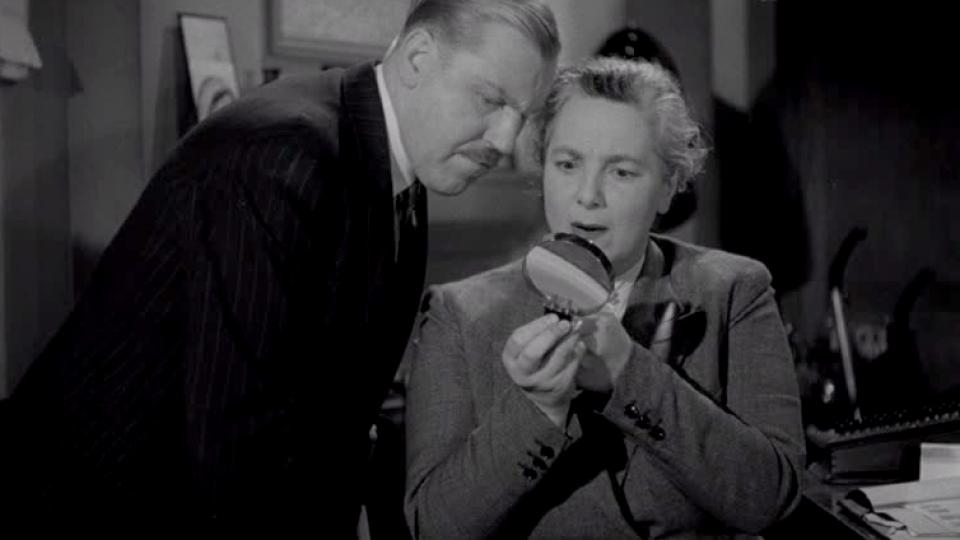
Rating: 7/10 – the predicted deaths of two members of a Psychic Society leads Scotland Yard to assign their lone female detective, Mrs. Pym (Clare), to the case in an effort to track down the victims’ killer; a boisterous little crime caper with a delightful performance by Clare (in her only starring role), Mrs. Pym of Scotland Yard retains a freshness nearly eighty years on that some movies can’t manage after eighty days, a feat that can be attributed to Ellis’s sprightly direction, a handful of engaging secondary performances, and a script – based on stories by Nigel Morland and adapted by Ellis and Peggy Barwell – that knows when to be amusing and when to be dramatic, and when to be delightfully daft (which, thankfully, is often).

Backlash (1956) / D: John Sturges / 84m

Cast: Richard Widmark, Donna Reed, William Campbell, John McIntire, Barton MacLane, Harry Morgan, Robert J. Wilke

Rating: 7/10 – while searching for his father’s killer, Jim Slater (Widmark) crosses paths with a woman (Reed) who may be connected to his father’s death, and who may be able to provide him with information that will lead him to the man responsible, an outcome that, when it happens, isn’t as straightforward as he’s been led to believe; a tough, muscular Western with psychological and film noir elements, Backlash is also a taut, uncompromising revenge tale that doesn’t pull its punches and which takes a sudden narrative turn halfway through that puts a whole different spin on Slater’s journey, something that Widmark handles with his usual aplomb, and Sturges – who would go on to helm Gunfight at the O.K. Corral (1957) and The Magnificent Seven (1960) – handles the twists and turns with confidence and no small amount of directorial flair.

Skyscraper (2018) / D: Rawson Marshall Thurber / 102m

Cast: Dwayne Johnson, Neve Campbell, Chin Han, Roland Møller, Noah Taylor, Byron Mann, Pablo Schreiber, McKenna Roberts, Noah Cottrell, Hannah Quinlivan

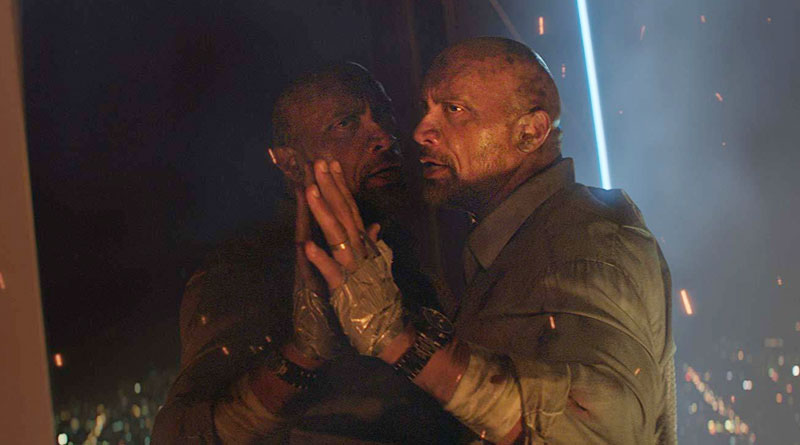
Rating: 4/10 – the world’s tallest building, The Pearl, is ready to open but needs a final sign-off from security analyst Will Sawyer (Johnson), but when terrorists set the building on fire, Sawyer has a greater problem: that of rescuing his family who are trapped above the fire line; there was a time when a movie like Skyscraper would have been a must-see at the cinema, but this Die Hard meets The Towering Inferno mash-up (scripted by Thurber) is a soulless, empty spectacle that can’t even put Sawyer’s family in any appreciable peril, wastes its talented cast by having them play one-dimensional stereotypes, and which uses Sawyer’s disability as a narrative parlour trick whenever the plot needs it.

Mamma Mia! Here We Go Again (2018) / D: Ol Parker / 114m

Cast: Lily James, Amanda Seyfried, Pierce Brosnan, Stellan Skarsgård, Colin Firth, Christine Baranski, Julie Walters, Dominic Cooper, Andy Garcia, Jeremy Irvine, Josh Dylan, Hugh Skinner, Jessica Keenan Wynn, Alexa Davies, Celia Imrie, Cher, Meryl Streep

Rating: 7/10 – with the reopening of her late mother’s hotel just days away, Sophie Sheridan (Seyfried) is worried that everything won’t go according to plan, while the story of how a young Donna Sheridan (James) came to own the hotel in the first place, plays out simultaneously; if you liked the first movie then you’ll definitely like Mamma Mia! Here We Go Again, another love letter to the music of ABBA, and a movie that has no simpler ambition than to charm its audience at every turn and provide fans with as good a time as before, something it achieves thanks to generous dollops of good-natured humour, a talented cast giving their all, and an if-it-ain’t-broke-don’t-fix-it approach that works wonders on what is very familiar material indeed.

Mission: Impossible – Fallout (2018) / D: Christopher McQuarrie / 147m

Cast: Tom Cruise, Henry Cavill, Simon Pegg, Ving Rhames, Rebecca Ferguson, Sean Harris, Vanessa Kirby, Angela Bassett, Alec Baldwin, Michelle Monaghan, Wes Bentley

Rating: 9/10 – a mission in Berlin to retrieve three plutonium cores leads Ethan Hunt (Cruise) and his IMF team into a high stakes race-against-time chase across the continents as they try to avert a terrorist attack orchestrated by the followers of arch-nemesis Solomon Lane (Harris); number six in the franchise, and Mission: Impossible – Fallout is the best entry yet, with hugely impressive action scenes, the strongest plot so far, and a surprisingly emotional core drawn from the interactions of the characters that puts this head and shoulders above every other action movie you’ll see this year – and who would have bet on that?

I Feel Pretty (2018) / D: Abby Kohn, Marc Silverstein / 111m

Cast: Amy Schumer, Michelle Williams, Tom Hopper, Rory Scovel, Adrian Martinez, Emily Ratajkowski, Aidy Bryant, Busy Philipps, Lauren Hutton, Naomi Campbell

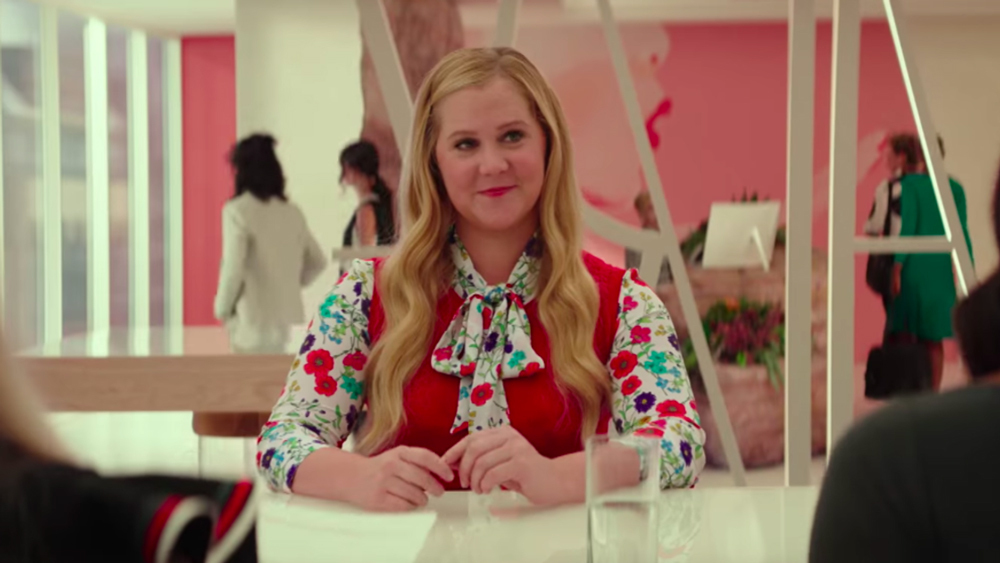
Rating: 5/10 – when an insecure woman, Renee Bennett (Schumer), who works at an international cosmetics company suffers a blow to the head, she wakes seeing herself as beautiful and capable of achieving anything – but in reality she looks exactly the same; what should be an immensely likeable shout out to the power of self-belief, I Feel Pretty is hampered by the bludgeoning approach of the script (by directors Kohn and Silverstein), and the incredible ease with which Renee powers her way up the corporate ladder, aspects that are at least more palatable than the way in which the men are treated as accessories, something that, if the roles were reversed, would likely cause an outcry.

Share this:

  • Click to share on X (Opens in new window) X
  • Click to share on Facebook (Opens in new window) Facebook
  • More
  • Click to print (Opens in new window) Print
  • Click to email a link to a friend (Opens in new window) Email
Like Loading...

The Nile Hilton Incident (2017)

29 Sunday Jul 2018

Posted by dullwood68 in Movies

≈ Leave a comment

Tags

Cairo, Corruption, Crime, Drama, Egypt, Fares Fares, Mari Malek, Murder, Review, Tarik Saleh, Thriller, Yasser Ali Maher

aka Cairo Confidential

D: Tarik Saleh / 111m

Cast: Fares Fares, Mari Malek, Yasser Ali Maher, Ahmed Selim, Hania Amar, Mohamed Yousry, Slimane Dazi, Hichem Yacoubi, Ger Duany, Mohamed Sanaaeldin Shafie

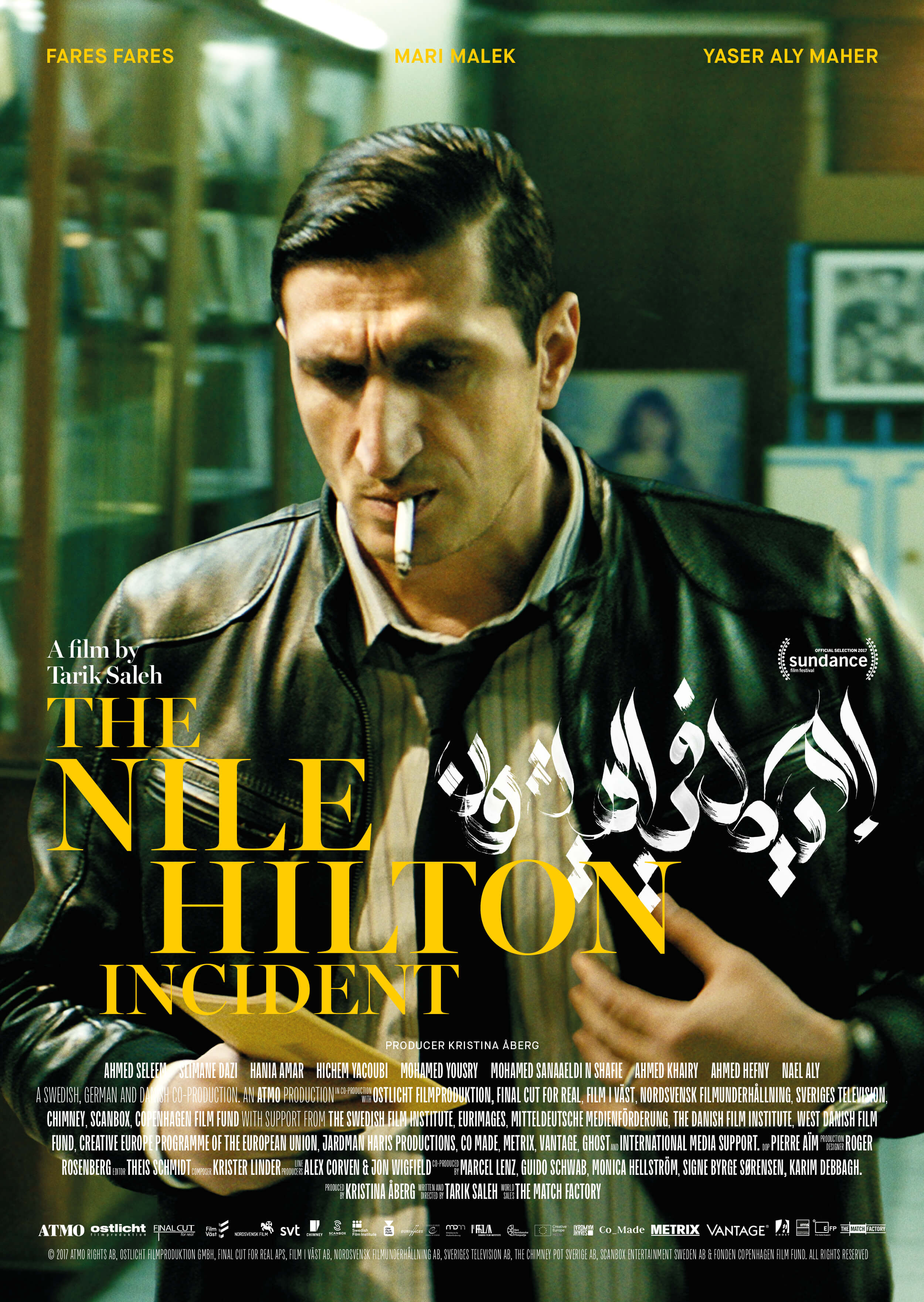
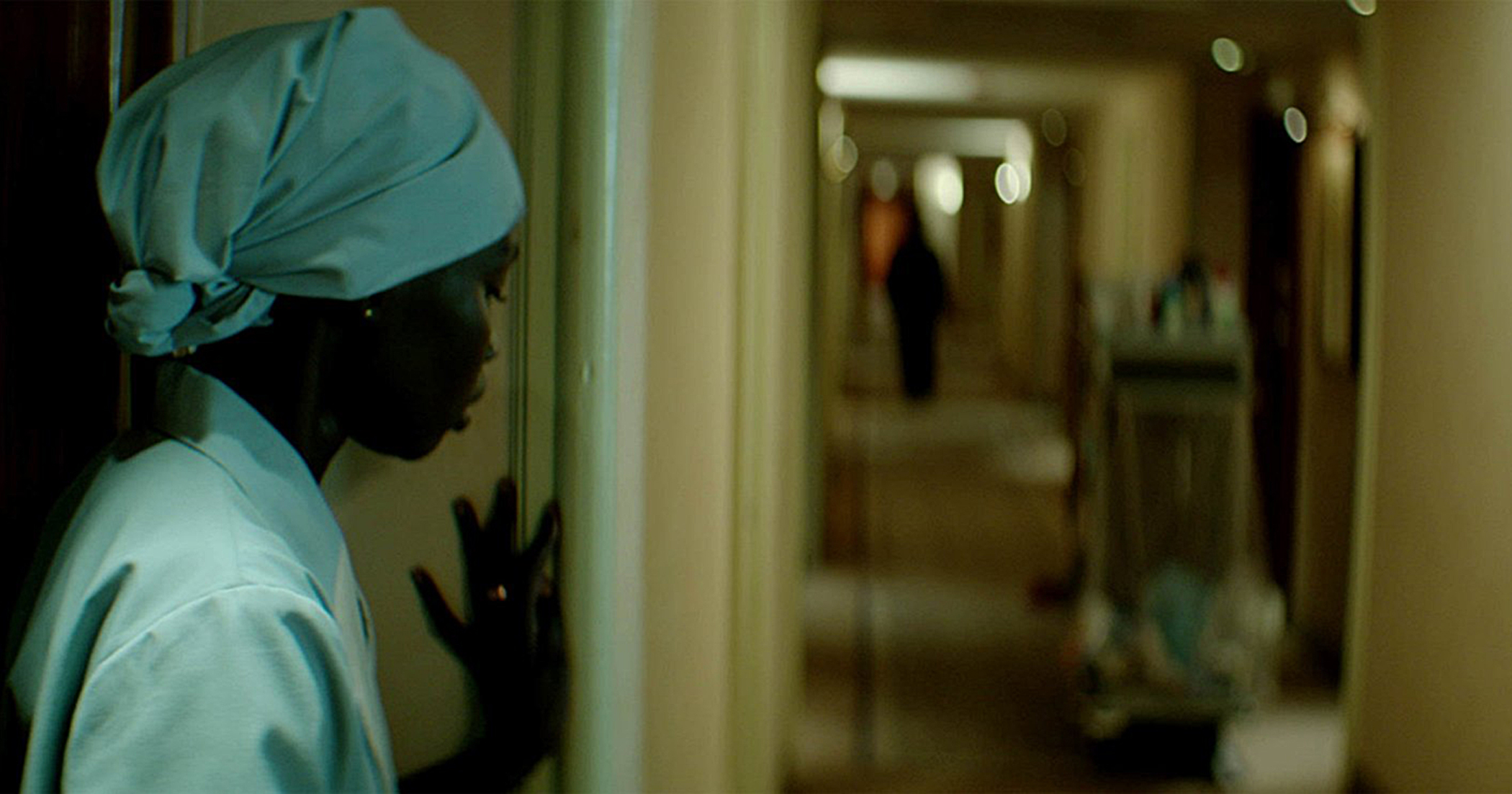
January 2011, Cairo. At the city’s Nile Hilton hotel, a man is seen leaving the room of a well-known singer, Lalena. Later, the same chambermaid, Salwa (Malek), who saw the first man leave, hears cries from the same room and another man leave. The singer has been murdered, and the investigation is given to Major Noredin Mostafa (Fares) of the local police. When he looks through her effects, Noredin finds a receipt for some photographs. When he collects them, he finds compromising pictures of the singer with a high profile politician, Hatem Shafiq (Selim). At this point the official verdict is given as suicide, but Noredin confronts Shafiq about his relationship with Lalena. To Noredin’s surprise, instead of arranging his dismissal from the police force, Shafiq uses his position to have the case reopened, and he asks Noredin to continue his investigation. But while a suspect is soon revealed – a club owner called Nagy (Yacoubi) with a profitable sideline in blackmail – what seems like an open and shut case soon becomes something much more insidious, and much more dangerous…

Set in the run up to the Egyptian Revolution of Dignity that began on 25 January 2011, The Nile Hilton Incident is a tense, riveting thriller that also uses the murder of Lebanese Arab singer Suzanne Tamim in Dubai in 2008 as the basis for its main storyline. It paints the Egyptian capital as a hotbed of political avarice and corruption, with bribery, torture, intimidation and murder as commonplace occurrences – and that’s just the police. Once Noredin takes on the case, it’s expected that he will tow the official line as instructed by his boss (and uncle) Kammal (Maher). But though he’ll steal cash from a murder victim, and accepts how important bribery is in keeping the status quo, Noredin is straightforward in his sense of justice: murder is untenable. With Shafiq backing him, he finds himself at odds with his own department, and in time, with the State Security services. And that’s without the added problem of an unexpected relationship with Lalena’s friend, Gina (Amar), who works for Nagy. As he learns more and more, he also finds that he can’t trust what he knows, or anyone around him. And when Salwa is targeted, Noredin has no choice but to keep her alive to ensure justice is served.

A tremendously atmospheric and moody thriller, with a terrific central performance from the ever-reliable Fares, the movie uses its political and procedural backdrop to great effect, and with the impending revolution brewing in the background, has an immediacy that draws in the viewer and maintains its grip from start to finish. Saleh, directing his own script, keeps things tightly focused every step of the way, even if the reason for Lalena’s death remains a mystery right until the end, and the motivation for Shafiq’s hiring Noredin is unnecessarily oblique. These niggling issues aside, the movie shifts and turns relentlessly, throwing Noredin and the viewer off track with smooth regularity, and in doing so, it keeps the depths of its corruption angle suitably obscured. Throughout, Saleh highlights the economic divide between Cairo’s elite and its less better off denizens, and foreshadows the revolution with judicious use of contemporary footage and casual remarks made by the characters. Alongside Fares there are good performances from Malek and Amar, and Pierre Aïm’s gritty cinematography adds to the compelling sense of a time and a place when the political and social norms were on the verge of being swept away forever.

Rating: 8/10 – a powerful and arresting thriller, The Nile Hilton Incident is intelligent and provocative, and coercive in its depiction of the events happening in Cairo at the time; rarely has the gradual exposure of a society’s seedy underbelly been this persuasive, or portrayed so vividly and matter-of-factly.

Share this:

  • Click to share on X (Opens in new window) X
  • Click to share on Facebook (Opens in new window) Facebook
  • More
  • Click to print (Opens in new window) Print
  • Click to email a link to a friend (Opens in new window) Email
Like Loading...

Hotel Artemis (2018)

25 Wednesday Jul 2018

Posted by dullwood68 in Movies

≈ Leave a comment

Tags

Action, Charlie Day, Crime, Dave Bautista, Drama, Drew Pearce, Hospital, Jeff Goldblum, Jodie Foster, Review, Sofia Boutella, Sterling K. Brown, Thriller

D: Drew Pearce / 94m

Cast: Jodie Foster, Sterling K. Brown, Sofia Boutella, Jeff Goldblum, Charlie Day, Dave Bautista, Jenny Slate, Zachary Quinto, Brian Tyree Henry

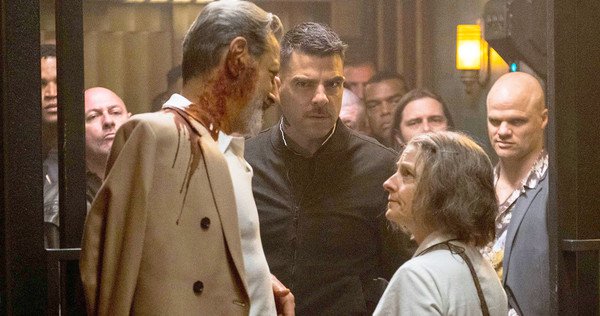
In the US in 2028, water has become a precious, but privatised commodity. When punitive restrictions are put in place by the company that controls the water supply, a riot breaks out that sweeps through Los Angeles. Using the riot as a cover, brothers Sherman (Brown) and Lev (Henry), plus two accomplices, plan to rob the vault of an up-market bank. Their plan backfires, and during their escape, Sherman and Lev are wounded by the police, Lev quite seriously. They manage to get to the Hotel Artemis, a kind of field hospital for criminals, where they are safe from the police, and thanks to the rules, any other criminals who might be there. Run by Nurse (Foster), with assistance from “health care professional” Everest (Bautista), the Artemis offers anonymity in the form of code names based around the room(s) they stay in. With female assassin Nice (Boutella) and loud-mouthed arms dealer Acapulco (Day) already there, Sherman begins to wonder just how safe he and his brother are going to be, especially when Nurse lets in a wounded police officer (Slate) – otherwise a strict no-no – and word reaches them that local crime boss, and founder of the Artemis, the Wolf (Goldblum) is on his way, and in need of medical attention…

Let’s get the obvious comparison out of the way: the Hotel Artemis is the medical facility version of the Continental Hotel in the John Wick movies. But that’s as far as the comparison goes, because in the self-assured hands of writer/director Drew Pearce, Hotel Artemis is a tribute to an era gone by, a high-tech yet nostalgic shout out to a time when honour amongst thieves actually meant something. By pitching the movie ten years on, Pearce is able to draw a distinction between the growing feudal state of affairs outside the hotel, and the semblance of order that Nurse feels compelled to uphold within the hotel’s walls and its rooms. It’s meant to be a neutral base for everyone, but machinations and plotting abound, and it’s not long before alliances are being forged, threats are being backed up, and an escalating sense of impending violence is allowed to bear fruit. The sense of an era coming to an end, imploding in on itself, is highlighted by the encroaching riot, and the swift descent of the hotel “guests” into murderous anarchy. There are rules, but once they begin to be broken, there’s no difference between inside and outside.

Pearce handles all this with a downplayed sense of fun, casting cruel aspersions on the morality of his characters – even the “good guys” do some unpalatable things in this movie – and by making sure everyone suffers to one degree or another. The humour is pitch black at times, but plays in support to the drama rather than overwhelming it, and Pearce draws out strong perfprmances from his cast, with Foster reminding us just how good an actress she is, while Brown continues his rise to the A-list, and Boutella exudes a silky menace that is captivating and unpleasant at the same time. Some things, however, are less successful. Slate’s wounded police officer awkwardly provides Nurse with a back story that feels forced and unnecessary, and Day’s obnoxious, sexist arms dealer seems like a throwback to the Nineties. But the real MVP of the movie is the Artemis itself, a triumph of cinematography, lighting, production design, art direction and set decoration that reflects the tired glory of the premises through the faded glamour of its hallways and rooms. It’s the perfect setting in which to record the end of an era…

Rating: 8/10 – flecked with nostalgia and a wistful harking back to simpler times, Hotel Artemis is a violent crime thriller that has a surprising amount of heart, and which tells its story with a welcome measure of simplicity; boosted by the detailed backdrop of the hotel itself, it’s a welcome entry into a sub-genre of crime drama that has slowly been cannabalising itself for far too long.

Share this:

  • Click to share on X (Opens in new window) X
  • Click to share on Facebook (Opens in new window) Facebook
  • More
  • Click to print (Opens in new window) Print
  • Click to email a link to a friend (Opens in new window) Email
Like Loading...

The Catcher Was a Spy (2018)

21 Saturday Jul 2018

Posted by dullwood68 in Movies

≈ Leave a comment

Tags

Baseball, Ben Lewin, Drama, Literary adaptation, Mark Strong, Morris "Moe" Berg, Nuclear bomb, Paul Rudd, Review, Sienna Miller, Thriller, True story, World War II

D: Ben Lewin / 95m

Cast: Paul Rudd, Mark Strong, Sienna Miller, Jeff Daniels, Tom Wilkinson, Guy Pearce, Paul Giamatti, Giancarlo Giannini, Hiroyuki Sanada, Connie Nielsen, Shea Whigham

In the years before the US enters World War II, Morris “Moe” Berg (Rudd) is a catcher for the Boston Red Sox. Regarded as the “strangest man ever to play baseball”, Berg is an average player, but of above average intelligence, being able to speak seven languages fluently, regularly contribute to the radio quiz programme Information, Please, and read and digest up to ten newspapers daily. A man of singular interests but also leading a very private life, Berg pursues a relationship with a woman, Estella (Miller), that he won’t acknowledge publicly, while on a trip to Japan, he takes it on himself to shoot footage of the Tokyo harbour. After Pearl Harbor, Berg uses the same footage to wangle himself a desk job with the Office of Strategic Services (OSS). Soon though, his expertise in languages lands him a job in the field: to track down the noted physicist Werner Heisenberg (Strong) and determine if his work for the Nazis will give them a nuclear weapon – and if it will, then Berg is to kill him…

Another tale of unsung heroics set during World War II, The Catcher Was a Spy (a title that’s both derivative and clever) is a movie that takes a real life person and spins a mostly true story out of events they took part in, but does so in a way that alerts the viewer very early on that, despite the mission, Berg won’t be put in any danger, so any tension will evaporate before it’s even got up a head of steam. So instead of a movie that should be increasingly tense and dramatic, we have a movie that plays matter-of-factly with the material, and is presented in a pedestrian, if sure-footed manner. Working from an adaptation of the book of the same name by Nicholas Dawidoff, director Ben Lewin and writer Robert Rodat have fashioned a moderately engaging espionage tale that moves elegantly yet far from robustly from scene to scene without providing much in the way of emotional impact. Partly this is due to Berg’s own nature, his muted feelings and intellectual prowess being ostensibly the whole man, and while the movie and Rudd’s performance adhere to Berg’s character, it leaves the viewer in the awkward position of being an observer and not a participant.

With Berg introduced “as is”, and with only the most minimal of character arcs to send him on, the movie soon becomes a wearying succession of exposition scenes, or opportunities to show off Berg’s gift for languages (which Rudd copies with aplomb). The early scenes with Estella show Berg trying to be “normal” but not quite knowing how to, give way to the mission to find Heisenberg, but the movie’s switch from domestic tribulations to wartime emergency – Berg literally has Heisenberg’s life, and possibly the fate of the world in his hands – dovetail at the same pace and with the same lack of urgency. Even a sequence where Berg, accompanied by military man Robert Furman (Pearce) and friendly physicist Samuel Goudsmit (Giamatti), try to thread their way through a town overrun by Germans lacks the necessary sense of imminent peril needed to make it work. Another issue is Andrij Parekh’s humdrum cinematography, which deadens the effect of Luciana Arrighi’s murky yet effective production design. Against all this, Rudd is a good choice for the enigmatic Berg, and the moments where he expresses Berg’s self-doubts, offer a rare glimpse of the man behind the façade. But, sadly, these moments aren’t plentiful enough to offset the flaws that dog the rest of the movie, and which keep it from being far more impressive than it is.

Rating: 5/10 – proficient enough without providing much more than the basics of Berg’s life as a catcher or an OSS man, The Catcher Was a Spy isn’t dull per se, just not as compelling as it could (or should) have been; Rudd aside, a quality cast is left with little to do except recite their lines in a competent manner, and any notions of political or intellectual morality are left undeveloped or overlooked.

Share this:

  • Click to share on X (Opens in new window) X
  • Click to share on Facebook (Opens in new window) Facebook
  • More
  • Click to print (Opens in new window) Print
  • Click to email a link to a friend (Opens in new window) Email
Like Loading...

Most Beautiful Island (2017)

19 Thursday Jul 2018

Posted by dullwood68 in Movies

≈ Leave a comment

Tags

Ana Asensio, Caprice Benedetti, Drama, First feature, Illegal immigrant, Mystery, Natasha Romanova, New York, Party, Review, Thriller

D: Ana Asensio / 79m

Cast: Ana Asensio, Natasha Romanova, Caprice Benedetti, David Little, Nicholas Tucci, Larry Fessenden, Anna Myrha, Ami Sheth, Brian Kleinman

Luciana (Asensio) has come to New York following a personal tragedy that occurred in her home country of Spain. She’s an illegal immigrant, sharing an apartment she can’t afford because she can’t get a permanent job (she doesn’t have a social security number, or a work visa), and when she’s unwell, dependent on the ministrations of a doctor (Little) who’s willing to provide her with medicine. Luciana has a friend, Olga (Romanova), with whom she occasionally works on cash-in-hand jobs. When Olga tells her that there’s a party where the girls can earn a lot of money for one night’s work, and it’s not that kind of party, Luciana agrees to go in Olga’s place when she’s asked. At a Chinese restaurant she’s given a padlocked purse and told to go to another address. There she finds other women (like her they’re attired in high heels and little black dresses), and Olga. While she tries to discover just what kind of party she’s a part of, one by one the women are chosen and led into another room, a room that many of the other women are frightened of…

When writer/director/actress Ana Asensio moved to New York City in 2001, little did she realise that a party she would work at, one that was “dangerous and illegal”, would help form the basis of her debut feature, the taut, award-winning thriller Most Beautiful Island. It’s perhaps a good thing that she did attend that party, because out of it, Asensio has fashioned a compelling, darkly unsettling movie that begins somewhat predictably, with Luciana travelling to the offices of Dr Horowitz to cajole him into giving her the medicine she needs, and then to Luciana arriving home to find a final reminder about the rent she owes. So far, an unremarkable exploration of the likely experiences of an undocumented immigrant, and one that will have viewers most likely wondering what further obstacles she will have to overcome. But Asensio isn’t interested in pursuing this kind of immigrant story; we’ve seen these kinds of trials before, after all. Instead, she takes Luciana, and the viewer, on a different kind of journey, with a very different kind of trial at the end of it, one that is expertly constructed and which relies on very little exposition.

Asensio creates a heavy sense of increasing dread from the moment Luciana arrives at the Chinese restaurant and is told she can’t take her shoulder bag with her, one that contains her personal effects. The inference is clear: without it she becomes anonymous, and if anything were to happen to her, who would know? The padlocked purse provides a further sense of mystery (when the contents are finally revealed, the moment provides a frisson of sick surprise that’s hard to ignore), and the gradual revelation of the party’s raison d’être is paced with great skill by Asensio’s confidence behind the camera, and Carl Ambrose and Francisco Bello’s incisive editing skills. This is a movie that grows uneasier to watch as it goes on, and the use of Fessenden and Tucci as crypto-villains cleverly adds to the anxiety Asensio builds up, while Benedetti’s role as the party’s organiser – all surface glamour and reptilian emotions – is hard to tear yourself away from. Asensio herself is a winning presence, deftly portraying her character’s desperate need for money without resorting to melodrama or making Luciana’s predicament more than it is. She also makes a handful of telling comments about the plight of female illegal immigrants, but this is no feminist polemic. Instead it’s a quietly impressive thriller that lingers in the memory, and a remarkable debut from its creator.

Rating: 8/10 – with only a small handful of awkward moments that serve as a reminder that this is Asensio’s first feature, Most Beautiful Island is still an intense, powerful experience that makes the most of its low budget and constrained production values; Asensio is definitely a movie maker to watch out for, and on this evidence, her next feature can’t come soon enough.

Share this:

  • Click to share on X (Opens in new window) X
  • Click to share on Facebook (Opens in new window) Facebook
  • More
  • Click to print (Opens in new window) Print
  • Click to email a link to a friend (Opens in new window) Email
Like Loading...

Entebbe (2018)

16 Monday Jul 2018

Posted by dullwood68 in Movies

≈ 1 Comment

Tags

Air France, Daniel Brühl, Drama, Eddie Marsan, Hijacking, José Padilha, Lior Ashkenazi, Literary adaptation, Review, Rosamund Pike, Thriller, True story, Uganda

aka 7 Days in Entebbe

D: José Padilha / 107m

Cast: Daniel Brühl, Rosamund Pike, Eddie Marsan, Lior Ashkenazi, Denis Ménochet, Nonso Anozie, Ben Schnetzer, Mark Ivanir, Angel Bonnani, Zina Zinchenko, Amir Khoury

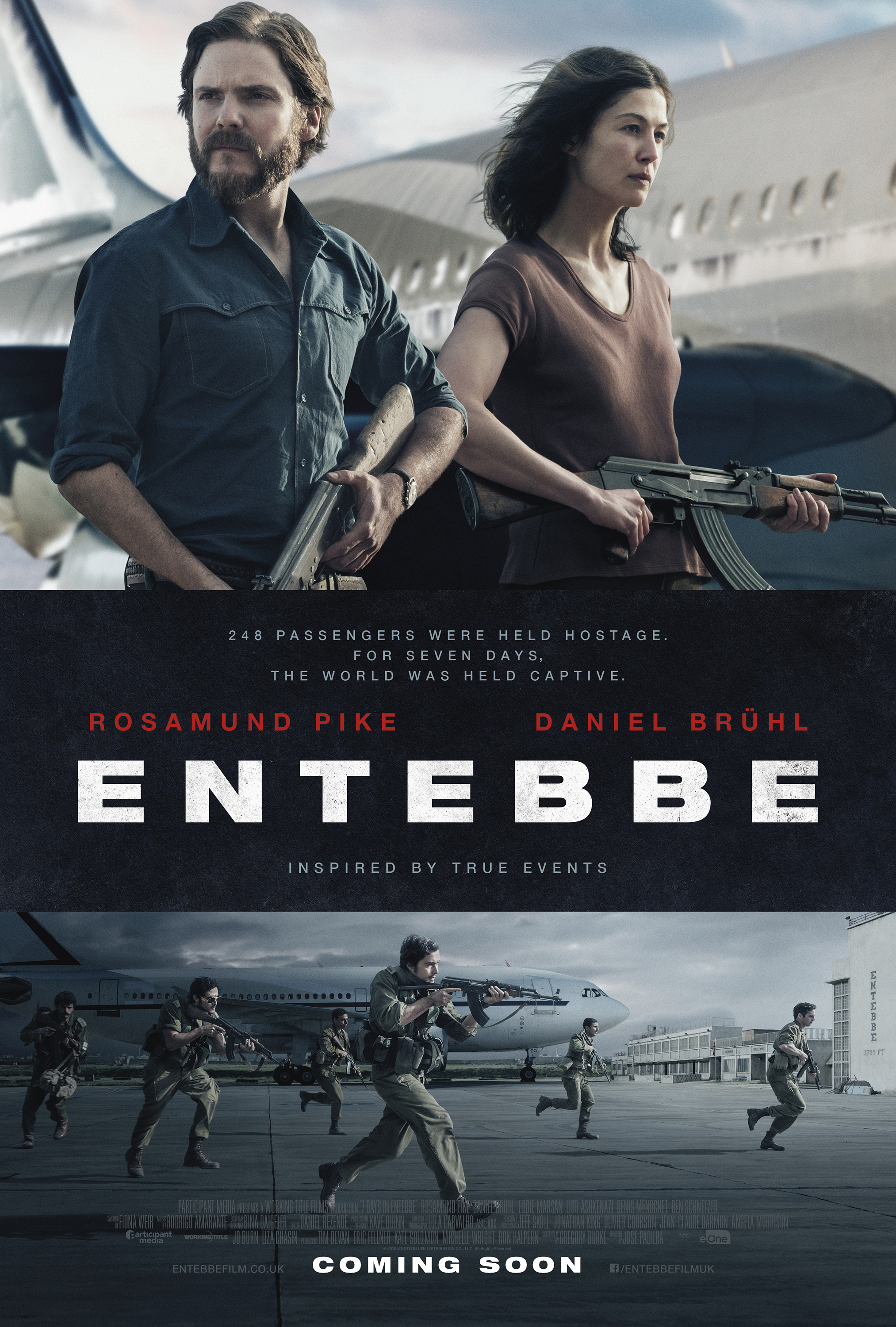
On 27 June 1976, Air France Flight 139 from Tel Aviv to Paris was hijacked following a stopover in Athens. The hijackers – two members of the Popular Front for the Liberation of Palestine – External Operations, and two members of the German Revolutionary Cells (Brühl, Pike) – diverted the flight to Benghazi in Libya for re-fueling before heading to their planned destination of Entebbe Airport in Uganda. Once there, the passengers and crew were herded into the transit hall of an out-of-use terminal, where eventually, the Jewish passengers were separated from the rest. With the hijackers and their associates on the ground in Entebbe receiving support from Ugandan leader Idi Amin (Anozie), they made their demands to the Israeli government, then led by Itzhak Rabin (Ashkenazi): $5 million for the release of the plane, and the release of fifty-three Palestinian and Pro-Palestinian militants. With Israel having a no negotiation with terrorists policy, they made it seem that they were willing to break with their standard protocol, but while the hijackers began to feel that their mission was going to succeed, the Israelis actually had other plans…

With three previous movies about the hijacking of Air France Flight 139 already released, and all of them within a year of the actual event, the first question to ask about Entebbe is, why now? (A second might be, and does it retain any relevance?) The answer to the first question remains unclear, as the movie, freely adapted by Gregory Burke from the book Operation Thunderbolt (2015) by Saul David, has a tendency to flirt with the truth for dramatic purposes, and in doing so, it manages to dampen the drama by lacking the necessary focus to keep viewers on the edge of their seats. The second question is easier to answer: it doesn’t, and for much the same reason as the answer to the first question. With the script trying to cover too many bases – the hijackers, the Israeli government, the hostages, Idi Amin’s need for personal aggrandisement, the raid that ended the whole thing, and a dancer taking part in a performance of the traditional Jewish song Echad Mi Yodea – the movie never settles on any one aspect for long, and never maintains a sense of the terror and danger that the hostages must have experienced.

It’s a curiously bland affair, with plenty of gun-waving by Pike, but more navel-gazing from Brühl than is necessary, and lots of scenes where the enormity of the situation is trotted out for any slow-off-the-mark viewers – and with increasing emphasis. Most of the characters are forgettable, even the hijackers, as they’re treated more as functioning stereotypes than real people who existed in a real environment and experienced real emotions (much of this by the book). Pike’s angry revolutionary pops a lot of pills but we never learn the reason why, while Brühl’s softly softly bookseller seems out of place entirely. Ashkenazi is a tortured Rabin, Méncohet is the flight engineer who’s scared of no one, and Schnetzer gets his own journey as one of the Israeli commandos who take part in the raid (though why we need his journey is another question the script can’t answer). Only the ever-reliable Marsan, as hawkish Israeli Minister of Defence Shimon Peres, delivers a credible performance, and that’s against the odds, as Burke’s script and Padilha’s direction continually combine to undermine the cast in their efforts. Worst of all though, is the raid itself. After all the build-up, and all the foreshadowing, it’s shot using techniques and a style that wouldn’t have looked out of place in any of the movies made back in the wake of the hijacking.

Rating: 5/10 – handled with a dull reluctance to make it the thriller it should be, Entebbe lacks energy, pace, and any conviction in the way that it tells its story; fascinating only for the way in which it does a disservice to the event itself, it’s a movie that wastes so many opportunities, it’s as if the material itself has been hijacked – but no one told the producers.

Share this:

  • Click to share on X (Opens in new window) X
  • Click to share on Facebook (Opens in new window) Facebook
  • More
  • Click to print (Opens in new window) Print
  • Click to email a link to a friend (Opens in new window) Email
Like Loading...

Last Seen in Idaho (2018)

15 Sunday Jul 2018

Posted by dullwood68 in Movies

≈ Leave a comment

Tags

Action, Casper Van Dien, Crime, Drama, Eric Colley, Hallie Shepherd, Murder, Premonitions, Review, Shawn Christian, Thriller, Wes Ramsey

D: Eric Colley / 109m

Cast: Hallie Shepherd, Wes Ramsey, Shawn Christian, Casper Van Dien, Alexis Monnie, Ted Rooney, Richard Carmen, Eric Colley

When Summer (Shepherd) discovers that her boss, Dex (Colley), is knee-deep in murder and corruption, she does so through finding two bodies brought to him by local crime boss, Lance (Christian), for disposal. When matters worsen, and Lance kills another of Dex’s employees at the same time, Summer – who has captured the murder on her phone – makes a run for it. She gets to her car but loses control trying to get away; she’s thrown clear and her car blows up. When Summer wakes in the hospital, it’s to learn that she has no memory of anything that happened immediately before the crash, that she was dead for five minutes, and that she has begun to be plagued by strange visions that show her events that haven’t happened, including her death. While Lance and his gang wait for a sign that Summer is beginning to remember what happened, she begins to realise that these visions are actually premonitions. Forced to confront the very real possibility that she could soon be dead, Summer tries to piece together the reasons why someone would want her killed…

Written by its star – who also serves as producer and co-editor with Colley – Last Seen in Idaho is a moderately entertaining, but uneven mix of female-centric crime thriller and elaborate mystery drama. There’s a reason the movie runs a hundred and forty-nine minutes, and it’s because Shepherd doesn’t know how to trim a scene – either on the page or in the editing suite. This leads to several moments where the material feels like it’s been stretched too thinly, and certain scenes lack the energy or pace required to keep them interesting. The opening scenes between Summer and her sister, Trina (Monnie), are padded out, and the dialogue soon becomes repetitive, and there are lots of other scenes where some judicious pruning would have been advisable, while in others there are narrative leaps that go unexplained or barely acknowledged. Shepherd is to be congratulated on writing a script that she’s managed to get made (as well as star in, produce, and co-edit), but the services of a script editor during the production’s early stages would have been a major benefit. That said, Shepherd does use Summer’s premonitions to wrong foot the audience from time to time, and the structure itself is sound, but too much feels either extended (for no reason) or superficial.

This being a movie made on a relatively small budget, there are further limitations that harm the movie and make it unintentionally awkward, from the very sudden flip and burn of Summer’s car, to a rooftop conversation between Summer and love interest-cum-possible bad guy, Franco (Ramsey), that is so poorly lit that the background looks false. It does win points for having a strong female central lead, but then wastes that advantage by having the only other notable female role portrayed as a spoilt brat throughout, and by including an unnecessary and uncomfortably misogynistic scene where Van Dien’s callous assassin sexually assaults the girlfriend of one of the gang members. It’s this unevenness of tone and approach that ultimately stops the movie from making any headway or proving sufficiently entertaining except on a basic level. There’s ambition here, certainly, but Shepherd isn’t as good a writer as she needs to be, while Colley’s direction is flat and uninspired, and the performances all appear to operate independently of each other. It all ends in a violent, slightly cartoonish showdown that raises as many laughs as it does gasps of excitement, but is at least, one of the few times when the movie manages to elicit more than a polite reaction from the viewer.

Rating: 4/10 – many’s the time a movie could have been improved by its makers simply taking their time in assembling their picture, and paying close attention to all the working parts, but with Last Seen in Idaho, that hasn’t happened; rough and ready  as a finished item, it’s a movie with plenty of ambition, but without the wherewithal to achieve – or come close to – that ambition, making it yet another movie to be filed under Missed Opportunity.

Share this:

  • Click to share on X (Opens in new window) X
  • Click to share on Facebook (Opens in new window) Facebook
  • More
  • Click to print (Opens in new window) Print
  • Click to email a link to a friend (Opens in new window) Email
Like Loading...

The Forest of Lost Souls (2017)

10 Tuesday Jul 2018

Posted by dullwood68 in Movies

≈ Leave a comment

Tags

Daniela Love, Drama, Horror, Jorge Mota, José Pedro Lopes, Mafalda Banquart, Portugal, Review, Suicide, Thriller

Original title: A Floresta das Almas Perdidas

aka The Forest of the Lost Souls

D: José Pedro Lopes / 71m

Cast: Daniela Love, Jorge Mota, Mafalda Banquart, Lígia Roque, Tiago Jácome, Lília Lopes

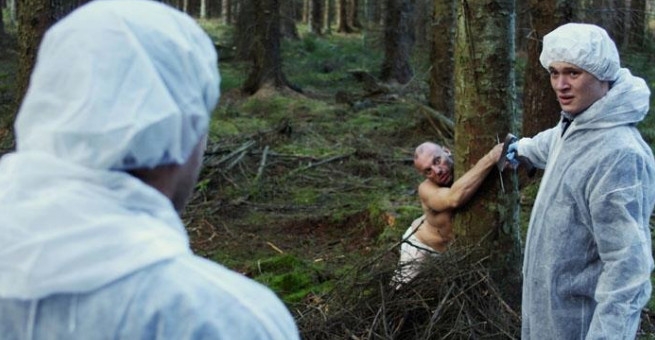
A young woman (Lopes) travels to a remote area of forest that’s a favourite destination for people looking to commit suicide. She comes to a lake and takes a dose of poison. Wading out into the water she waits for the poison to take effect. When it does she collapses into the water. Some time later, an old man, Ricardo (Mota), also comes to the forest. There he meets a young woman, Carolina (Love); both are there (ostensibly) for the same reason: to take their own lives. Ricardo is there because he believes himself to be a failure as a father and a husband. Carolina is fearful of getting old and suffering the ill effects that old age brings. They venture deeper into the forest, and talk about their reasons for being there, and the lies they’ve told in order to be there without raising any suspicions amongst their friends and families. When Ricardo asks Carolina if she knows where the lake is, it leads to a turn of events that suggests their meeting wasn’t entirely accidental…

The first feature from writer/producer/director Lopes, The Forest of Lost Souls is a darkly disturbing psychological horror movie that spins its own version of Japan’s Aokigahara Forest, and in doing so depicts an unexpectedly grim portrait of extreme personal need. The poster sadly gives away something of the dynamic between Carolina and Ricardo, and acts as a warning as to where the movie is heading once they meet, but even with that marketing mis-step, Lopes does more than enough with his stripped back narrative to ensure that viewers will be wondering if Carolina’s “secret” will be matched or exceeded by Ricardo’s. As they challenge each other’s views and feelings on the mistakes they’ve made that have led them there, the pair spar in ways that hint at deeper motivations lurking beneath the pain that Ricardo is experiencing, and the jaunty cockiness that Carolina expresses (it’s not her first time in the forest, and she’s quick to point out the pros and cons of committing suicide if you’re not fully prepared to die). As they venture nearer to the lake, and a friendship of sorts develops between them, Lopes adroitly holds back from revealing which one of them might leave the forest alive. And then…

Well, and then the movie takes a left turn into vastly different, and yet completely related territory (there are hints of this in the trailer, but thankfully they’re not too blatant). Leaving behind the solitary, isolated forest with its occasionally discovered corpses, Lopes takes the movie and one of its two central characters off in a new direction, and cleverly links past and present through the use of a mobile phone and a sense of dread that’s borne out of knowing what must come next. As Lopes allows these scenes to play out in an unsettling and matter-of-fact manner, there’s the temptation to feel that this new direction is an unnecessary transition from the realm of psychological horror into more predictable slasher territory, but Lopes has a further trick up his sleeve, and connects the two halves of his movie with a coda that explains a great deal of what’s happened, and which does so in a way that wraps things up neatly and with a great deal of confidence and skill. It’s all enhanced by Francisco Lobo’s often beautiful widescreen compositions, with their sense of space and detachment, and the characters seemingly lost amidst the wider, wilder landscape.

Rating: 8/10 – for once, a movie’s brevity is a positive, as The Forest of Lost Souls and its deliberate pacing provide rich dividends for the viewer prepared to see it to the end; brutal in places but not gratuitously so, it’s a movie that is spare and unflinching when it needs to be, and is possibly the only psychological horror outing to name drop Nick Hornby not once but twice.

Share this:

  • Click to share on X (Opens in new window) X
  • Click to share on Facebook (Opens in new window) Facebook
  • More
  • Click to print (Opens in new window) Print
  • Click to email a link to a friend (Opens in new window) Email
Like Loading...

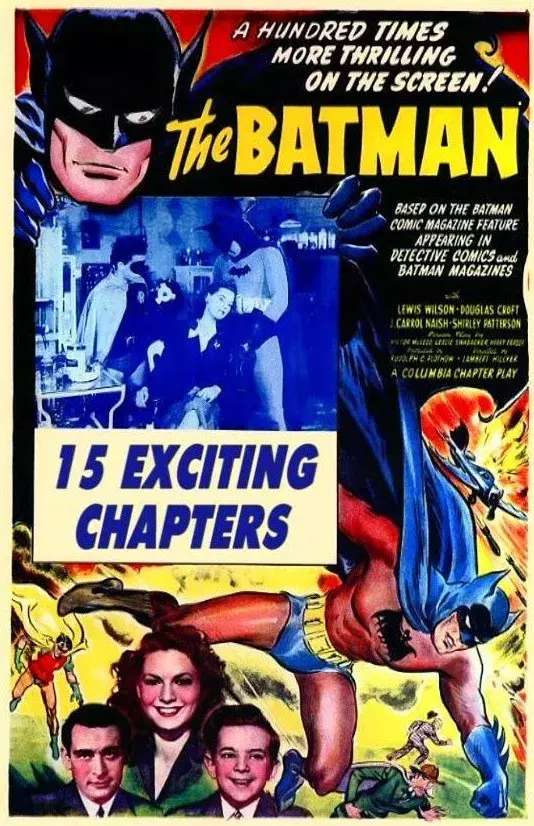
Batman (1943) – Chapter 15: The Doom of the Rising Sun

03 Tuesday Jul 2018

Posted by dullwood68 in Movies

≈ Leave a comment

Tags

Action, Columbia, Douglas Croft, Drama, J. Carrol Naish, Lambert Hillyer, Lewis Wilson, Review, Serial, Shirley Patterson, Thriller

D: Lambert Hillyer / 20m

Cast: Lewis Wilson, Douglas Croft, J. Carrol Naish, Shirley Patterson, William Austin, Charles C. Wilson, Gus Glassmire, John Maxwell

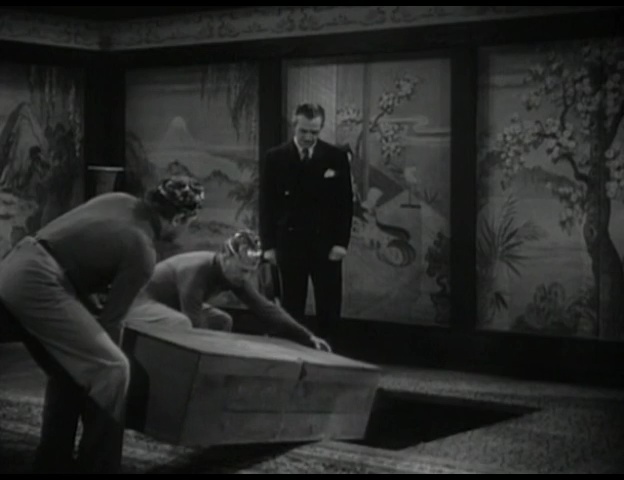
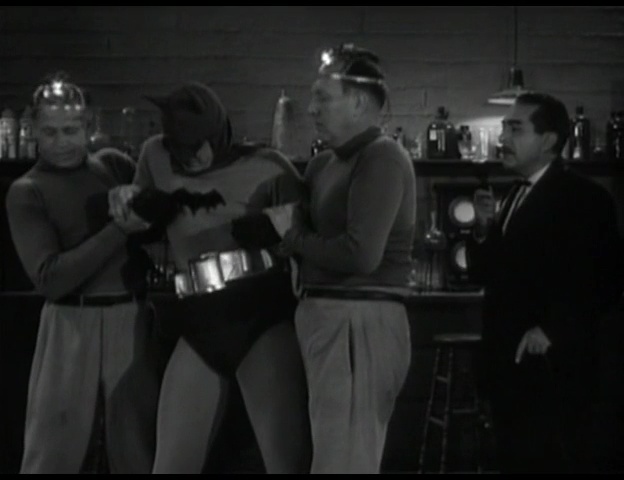
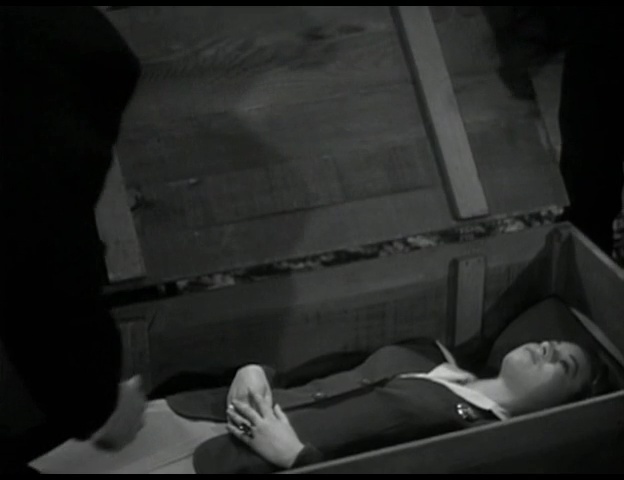
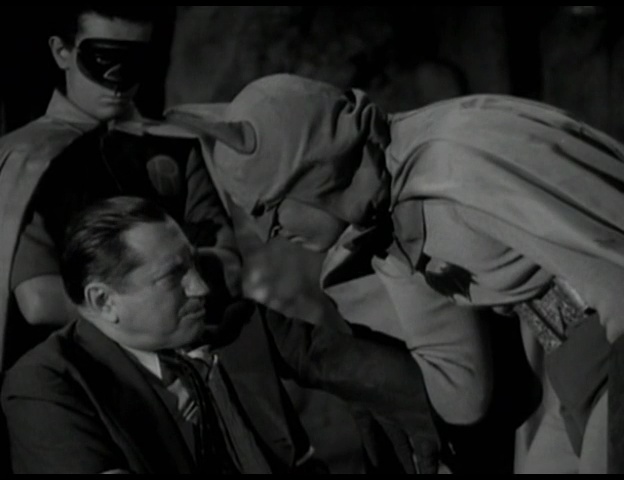
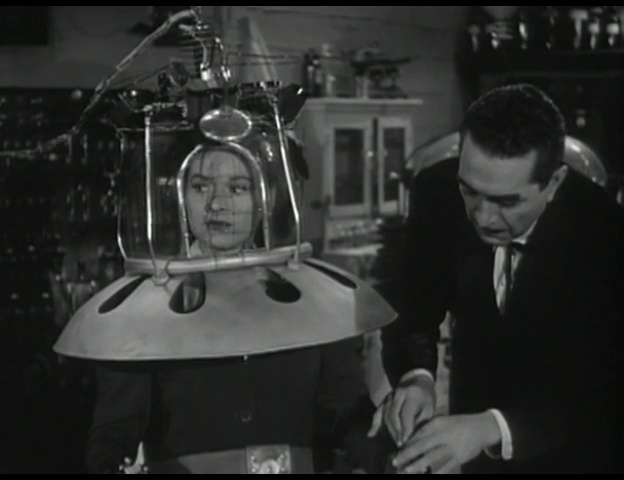
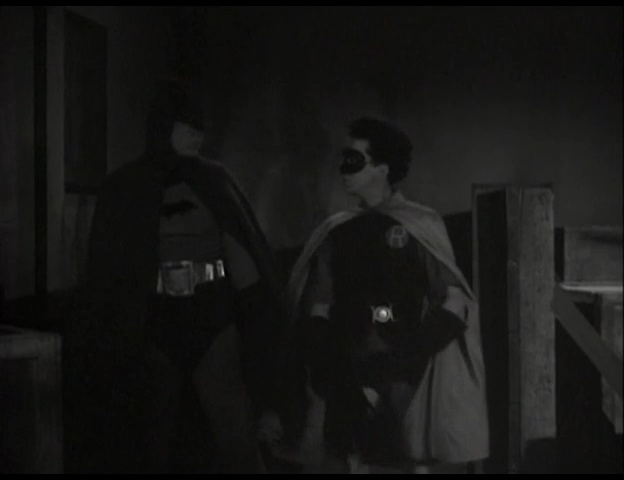
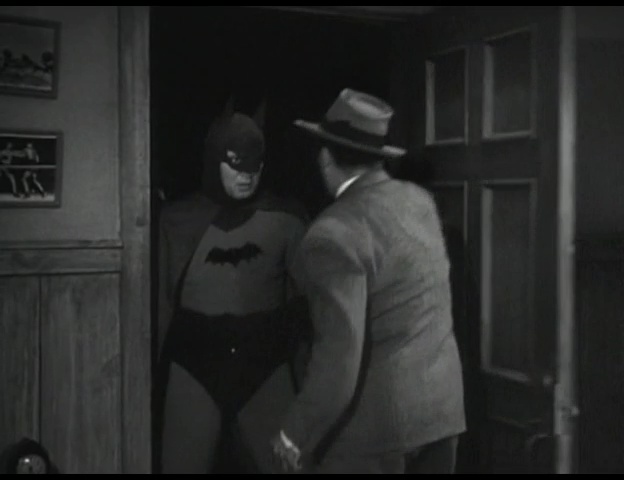
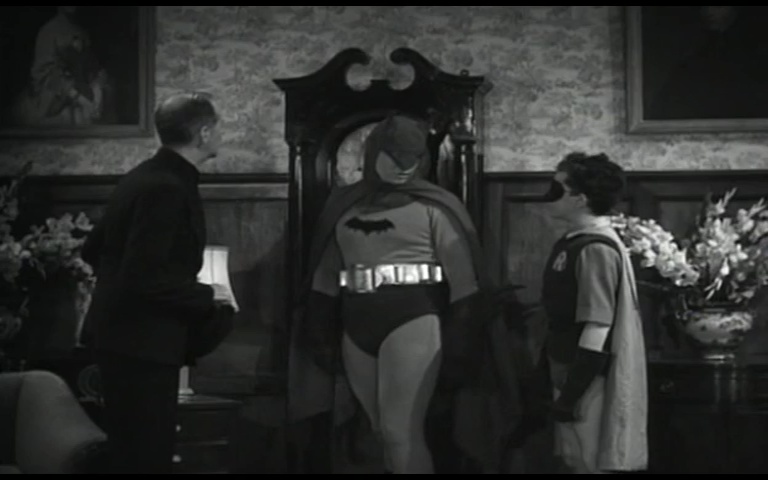
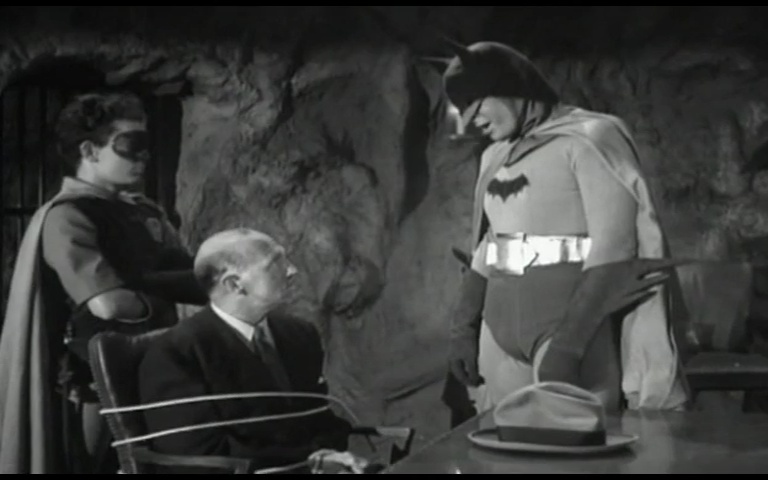
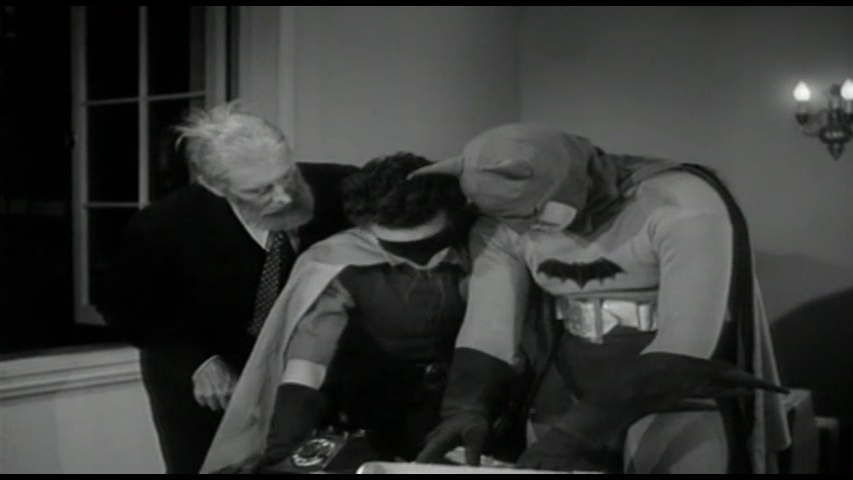
Trapped inside a wooden crate, Batman seems doomed to be fed to Daka’s crocodiles, but when the crate is dropped into their pit, Daka and his goons are surprised to learn it’s one of their own who’s inside the crate. With help from Robin and a handy Morse Code device in his utility belt, the Caped Crusader has switched places with Daka’s unlucky henchman, and has trailed the crate to Daka’s lair. Using Alfred as a diversion, Batman and Robin sneak into the Cave of Horrors that serves as the entrance to Daka’s hideout. Overcoming several of the villain’s henchmen, and while Robin ties them up, Batman is apprehended by two of Daka’s zombies and forced into Daka’s laboratory, where he is strapped to a chair and threatened with being turned into a zonbie. Meanwhile, Alfred finds himself apprehended too: by a policeman who takes him to see Captain Arnold; soon he’s returning with more police (well, three of them) than you can shake a Japanese spy ring at. But will they be in time to save Batman from having his secret identity revealed and being turned into a zombie…?

And so, we reach the end of Batman’s first screen appearance, thanks to those good folks at Columbia, and the efforts of a cast and production crew who you could argue were suffering from serial fatigue from the very outset. It’s been a very patchy affair, with chapters that failed to advance the (very basic) plot, and performances that could provide the dictionary definition of perfunctory. The direction was inconsistent too, with Hillyer seemingly engaged in some episodes, and treading water in others (along with everyone else). In short, when Batman was good, it was really good, and when Batman was bad, it was really bad. Seventy-five years on, it’s not a serial that’s stood the test of time, but as a curio it has its good points, and is worth seeking out if you’re a fan of the Caped Crusader, or if you’re a fan of the serial format. Be prepared though to wade through some very tortuous moments in order to get to the good stuff, and then repeat as often as the script deems it necessary – which is a lot. Surprisingly, this was Columbia’s largest-scale serial production to date, but watching it, you have to wonder where the money went to.

And sadly, the problems that have plagued the serial throughout the first fourteen chapters are still present in the last, and are exacerbated by the need to wrap things up. The radium remains completely forgotten, the references to Daka as a “Jap” are rehashed (three times by Batman, who can’t refer to him in any other way), Daka’s zombies continue to hang around like glorified human ornaments, and the fight scenes are as clumsily choreographed as ever – but are now much shorter as Daka’s men prove to have glass jaws all of a sudden. Aside from being tied to a chair for a few minutes, it’s all too easy for Batman, and Daka’s fate is sealed with a minimum of (ironic and appropriate) fuss. If there’s one positive aspect about the whole thing, it’s that Robin gets to save the day not once but twice, but even then he remains as invisible as ever. If you watch each chapter closely, you’ll find that Batman is always referred to in the singular, and there’s no mention of Batman and Robin. Perhaps it’s an oversight, perhaps it’s deliberate, but it is indicative of the lack of care taken in the script, something that happens a lot, and which, sadly, stops this particular serial from scaling the heights of some of its predecessors.

Rating: 6/10 – narrative short cuts and the need to wrap things up neatly leads Chapter 15 into a dramatic cul-de-sac that sees what should be an energetic and exciting finale become something of a chore to get through; historically important for being the character’s first screen outing, Batman isn’t the best example of the Forties serial format, and it’s only sporadically rewarding (oh for the heyday of Chapters 6-8), all of which ensures that this particular episode fits right in in the overall scheme of things.

Share this:

  • Click to share on X (Opens in new window) X
  • Click to share on Facebook (Opens in new window) Facebook
  • More
  • Click to print (Opens in new window) Print
  • Click to email a link to a friend (Opens in new window) Email
Like Loading...

Monthly Roundup – June 2018

01 Sunday Jul 2018

Posted by dullwood68 in Movies

≈ 1 Comment

Tags

Action, Adam West, Animation, Austin Stowell, Ayla Kell, Batman vs. Two-Face, Batman: Gotham by Gaslight, Biography, Borg McEnroe, Bruce Greenwood, Bryce Dallas Howard, Burt Ward, Charles Barton, Chris Pratt, Crime, Dave Davis, Dirty Gertie from Harlem U.S.A., Dominic Cooper, Don E. FauntLeRoy, Drama, Elliott Maguire, Francine Everett, Francis Lawrence, Gail Patrick, Guy Pearce, Horror, J.A. Bayona, Jack the Ripper, Janus Metz, Jennifer Carpenter, Jennifer Lawrence, Joel Edgerton, Jurassic World: Fallen Kingdom, Literary adaptation, Murder, Mystery, Nicola Holt, Pierce Brosnan, Randolph Scott, Red Sparrow, Rick Morales, Sam Liu, Shia LaBeouf, Simon Kaijser, Simon West, Snakehead Swamp, Spencer Williams, Spinning Man, Stratton, Sverrir Gudnason, SyFy, The Ferryman, Thriller, True story, Wagon Wheels, Western, William Shatner

Borg McEnroe (2017) / D: Janus Metz / 107m

Cast: Sverrir Gudnason, Shia LaBeouf, Stellan Skarsgård, Tuva Novotny, Leo Borg, Marcus Mossberg, Jackson Gann, Scott Arthur

Rating: 7/10 – the rivalry between tennis players Björn Borg (Gudnason) and John McEnroe (LaBeouf) is explored during the run up to the 1980 Wimbledon Tennis Championships, and the tournament itself; with a script that delves into both players’ formative years (and if you think Borg is a terrific choice for the young Swede then it’s no surprise: Bjōrn is his dad), Borg McEnroe is an absorbing yet diffident look at what drove both men to be as good as they were, and features fine work from Gudnason and LaBeouf, though at times it’s all a little too dry and respectful.

The Ferryman (2018) / D: Elliott Maguire / 76m

Cast: Nicola Holt, Garth Maunders, Shobi Rae Mclean, Pamela Ashton, Philip Scott-Shurety

Rating: 4/10 – following a suicide attempt, a young woman, Mara (Holt), finds herself experiencing strange phenomena and being pursued by a mysterious hooded figure; an ultra-low budget British horror, The Ferryman is let down by terrible performances, cringeworthy dialogue, and a patently obvious storyline, and yet it’s saved from complete disaster by a strong visual style that’s supported by a disconcerting soundtrack, an approach that first-timer Maguire exploits as often as possible.

Red Sparrow (2018) / D: Francis Lawrence / 140m

Cast: Jennifer Lawrence, Joel Edgerton, Matthias Schoenaerts, Charlotte Rampling, Mary-Louise Parker, Ciarán Hinds, Joely Richardson, Bill Camp, Jeremy Irons, Thekla Reuten, Douglas Hodge

Rating: 6/10 – Ex-ballerina Dominika Egorova (Lawrence) is recruited to a secret Russian organisation that trains her to use her body as a weapon, and which then uses her to expose a double agent working in the heart of the Soviet system; a movie made up of so many twists and turns it becomes tiring to keep track of them all, Red Sparrow is an unlikely project to be released in the current gender/political climate, seeking as it does to objectify and fetishise its star as often as possible, but it tells a decent enough story while not exactly providing viewers with anything new or memorable.

Spinning Man (2018) / D: Simon Kaijser / 100m

Cast: Guy Pearce, Pierce Brosnan, Minnie Driver, Alexandra Shipp, Odeya Rush, Jamie Kennedy, Clark Gregg

Rating: 4/10 – when a teenage student (Rush) goes missing, suspicion falls on the professor (Pearce) who may or may not have been having a relationship with her; with arguably the most annoying character of 2018 propping up the narrative (Pearce’s commitment to the role doesn’t help), Spinning Man is a dreary mystery thriller that has its chief suspect behave as guiltily as possible and as often as he can, while putting him in as many unlikely situations as the script can come up with, all of which makes for a dismally executed movie that can’t even rustle up a decent denouement.

Jurassic World: Fallen Kingdom (2018) / D: J.A. Bayona / 128m

Cast: Chris Pratt, Bryce Dallas Howard, Rafe Spall, Justice Smith, Daniella Pineda, James Cromwell, Toby Jones, Ted Levine, Jeff Goldblum, BD Wong, Geraldine Chaplin, Isabella Sermon

Rating: 7/10 – with the volcano on Isla Nublar about to erupt, a rescue mission is launched to save as many of the dinosaurs as possible, but it’s a rescue mission with an ulterior motive; clearly the movie designed to move the series forward – just how many times can Jurassic Park be reworked before everyone gets fed up with it all? – Jurassic World: Fallen Kingdom concentrates on the horror elements that have always been a part of the franchise’s raison d’être, and does so in a way that broadens the scope of the series, and allows Bayona to provide an inventive twist on the old dark house scenario.

Dirty Gertie from Harlem U.S.A. (1946) / D: Spencer Williams / 61m

Cast: Francine Everett, Don Wilson, Katherine Moore, Alfred Hawkins, David Boykin, L.E. Lewis, Inez Newell, Piano Frank, John King

Rating: 7/10 – making an appearance at a club on a Caribbean island resort, dancer Gertie La Rue’s free-spirited behaviour causes all sorts of problems, for her and for the men she meets; an all-black production that takes W. Somerset Maugham’s tale Miss Thompson and puts its own passionate spin on it, Dirty Gertie from Harlem U.S.A. overcomes its limited production values thanks to its faux-theatrical mise-en-scene, Williams’ confidence as a director, a vivid performance from Everett that emphasises Gertie’s irresponsible nature, and by virtue of the relaxed attitude it takes to the themes of race and sexuality.

Wagon Wheels (1934) / D: Charles Barton / 59m

Cast: Randolph Scott, Gail Patrick, Billy Lee, Monte Blue, Raymond Hatton, Jan Duggan, Leila Bennett, Olin Howland

Rating: 5/10 – a wagon train heading for Oregon encounters trials and hardships along the way, including Indian attacks that are being organised by someone who’s a part of the group; a middling Western that finds too much room for songs round the campfire, Wagon Wheels takes a while to get going, but once it does, it has pace and a certain amount of B-movie charm thanks to Scott’s square-jawed performance, and Barton’s experienced direction, benefits that help offset the clunky storyline and one-note characters.

Batman: Gotham by Gaslight (2018) / D: Sam Liu / 77m

Cast: Bruce Greenwood, Jennifer Carpenter, Scott Patterson, Kari Wuhrer, Anthony Head, Yuri Lowenthal, William Salyers, Grey Griffin

Rating: 6/10 – in an alternate, Victorian-era Gotham City, the Batman (Greenwood) has only recently begun his efforts at stopping crime, efforts that see him cross paths with the notorious Jack the Ripper; though kudos is due to Warner Bros. for trying something different, Batman: Gotham by Gaslight doesn’t always feel as if it’s been thoroughly thought out, with too much time given over to the mystery of Jack’s real identity, and a sub-plot involving Selena Kyle (Carpenter) that seems designed to pad out a storyline that doesn’t have enough substance for a full-length feature.

Batman vs. Two-Face (2017) / D: Rick Morales / 72m

Cast: Adam West, Burt Ward, William Shatner, Julie Newmar, Steven Weber, Jim Ward, Lee Meriwether

Rating: 6/10 – when a laboratory accident turns Gotham City District Attorney Harvey Dent (Shatner) into arch-villain Two-Face, Batman (West) and Robin (Ward) soon end his criminal activities, only to find themselves battling all their old adversaries – but who is manipulating them?; what probably seemed like a good idea at the time – have West and Ward (and Newmar) reprise their television roles – Batman vs. Two-Face is let down by a tired script that does its best to revisit past TV glories but without replicating the sheer ebullience the 60’s series enjoyed, making this very much a missed opportunity.

Stratton (2017) / D: Simon West / 94m

Cast: Dominic Cooper, Austin Stowell, Gemma Chan, Connie Nielsen, Thomas Kretschmann, Tom Felton, Derek Jacobi, Igal Naor

Rating: 4/10 – a Special Boat Service commando, John Stratton (Cooper), teams up with an American military operative (Stowell) to track down an international terrorist cell that is targeting a major Western target – but which one?; the kind of action movie that wants to be packed with impressive action sequences, and thrilling moments, Stratton is let down by a tepid script, restrictive production values, poor performances, and despite West’s best efforts, action scenes that only inspire yawns, not appreciation.

SnakeHead Swamp (2014) / D: Don E. FauntLeRoy / 86m

Cast: Ayla Kell, Dave Davis, Terri Garber, Antonio Fargas

Rating: 3/10 – a truck full of genetically mutated snakehead fish crashes, releasing its cargo into the Louisiana swamp land, where they soon start making their way to the top of the food chain; another lousy SyFy movie that mixes mutant creatures, endangered teens, a muddled voodoo subplot, and sub-par special effects to less than astounding results, SnakeHead Swamp might best be described as a “no-brainer”, in that it doesn’t try very hard, FauntLeRoy’s direction is rarely noticeable, and the cast – even Fargas – don’t come anywhere near making their characters credible or realistic, all of which is down to a script that should have been rejected at the title stage.

Share this:

  • Click to share on X (Opens in new window) X
  • Click to share on Facebook (Opens in new window) Facebook
  • More
  • Click to print (Opens in new window) Print
  • Click to email a link to a friend (Opens in new window) Email
Like Loading...

Lavender (2016)

28 Thursday Jun 2018

Posted by dullwood68 in Movies

≈ Leave a comment

Tags

Abbie Cornish, Dermot Mulroney, Diego Klattenhoff, Drama, Ed Gass-Donnelly, Horror, Justin Long, Memories, Murder, Mystery, Review, Supernatural, Thriller

aka Trauma

D: Ed Gass-Donnelly / 92m

Cast: Abbie Cornish, Diego Klattenhoff, Lola Flanery, Dermot Mulroney, Justin Long, Sarah Abbott, Liisa Repo-Martell, Peyton Kennedy

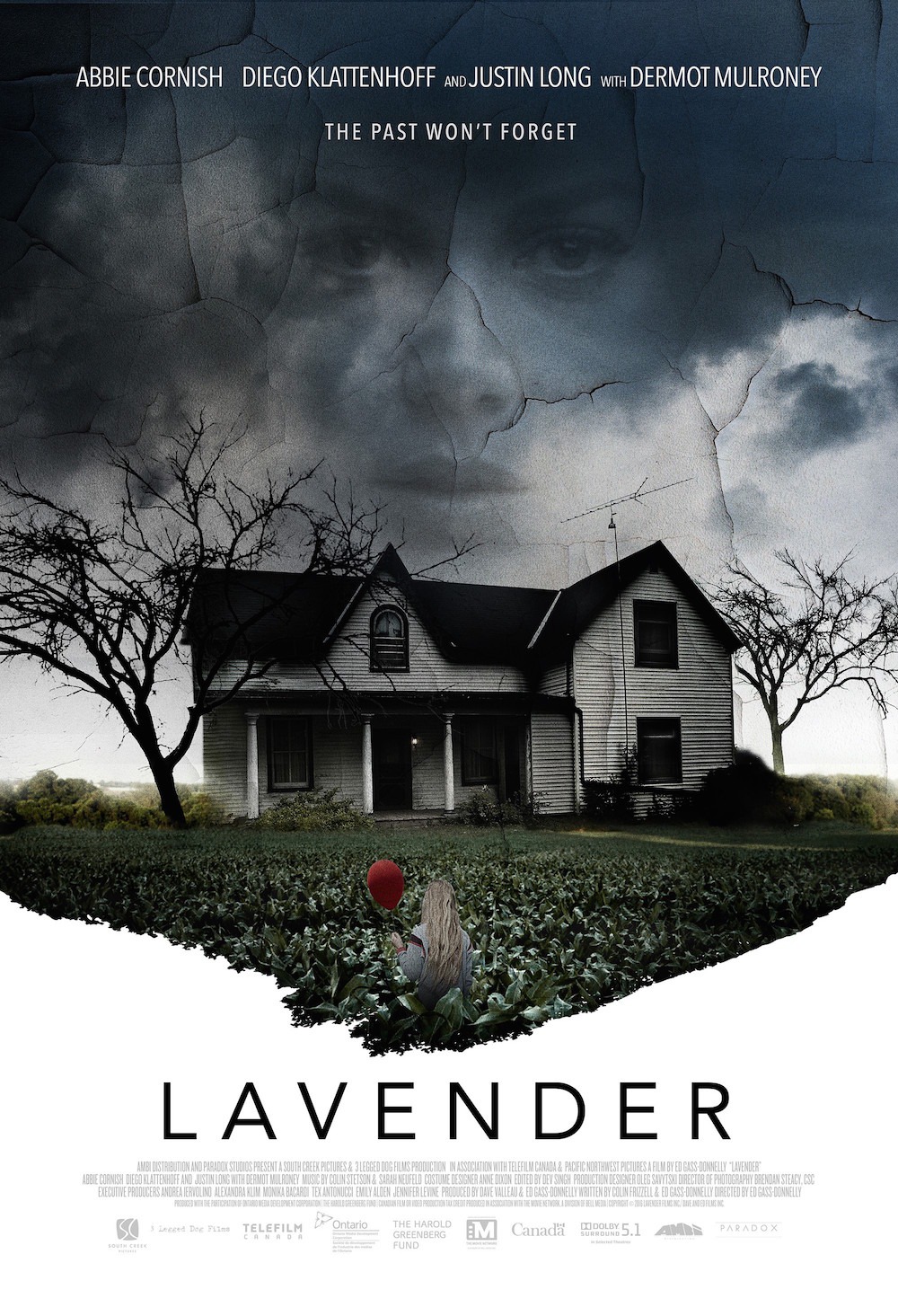
1985 – Jane Ryer (Kennedy) is the sole survivor when her family is murdered in their remote farmhouse; she’s found covered in blood and holding a cutthroat razor. Twenty-five years later, Jane (Cornish) is married to Alan (Klattenhoff), and has a young daughter, Alice (Flanery). She runs a photographer’s studio that showcases the pictures she takes of often abandoned rural properties, and is plagued by lapses in her memory. A stay in hospital following a car accident reveals Jane has several skull fractures from when she was a child, but she has no memory of being injured. She also comes to learn that one of the farmhouses she has photographed is one that she owns, even though she has no memory of it, or an uncle, Patrick (Mulroney), who has been paying the taxes on it and maintaining it. Drawn to discovering what happened when she was a child, Jane, Alan and Alice decide to meet Patrick and stay at the farmhouse. Soon, Jane discovers that the house is the source of a series of supernatural occurrences that relate to the murder of her family all those years before…

From the outset, with Patrick being informed of the deaths of his sister’s family and the horrific aftermath being presented in a series of tableaux, it seems as if Lavender isn’t interested in offering viewers another generic rural ghost story. But that opening sequence, culminating in the discovery of a clearly traumatised Jane, unfortunately marks the beginning of the end in terms of originality. Jane’s plight, going from being forgetful to being plagued by supernatural events and visions, is played out in too flat a manner for it to be entirely effective. While the script – by director Gass-Donnelly and Colin Frizzell – takes its time in revealing the details of just what happened in 1985, it does so in a measured, unhurried way that robs the movie of any appreciable pace or momentum. This doesn’t even allow for a slowburn approach to the material, and instead, has the opposite effect, making the viewer wish some scenes would hurry up, while wishing others wouldn’t repeat motifs and experiences that Jane – and we – have already witnessed over and over. As a result, the central mystery is treated with sincerity but lacks verve, and the characters are forced to repeat conversations and actions that harm the movie’s narrative structure.

When presenting supernatural events on screen, many directors and screenwriters adopt a kind of “kitchen sink” approach, and throw in scares and jolts and all sorts of shenanigans because they might look good (or cool), and because even a cheap scare can be a winner. Lavender has a number of these moments, such as when adult Jane and her younger sister, Susie (Abbott), hide under a sheet in the stables. As something wicked comes nearer – cue heavy footfalls – Susie urges Jane to run, and when she does the sheet becomes more voluminous than it should be and when she finally escapes from it, she’s in the middle of a field. The juxtaposition between the expanse of the field after the confines of the sheet works well, but in terms of dramatic effect, it makes no sense (we already know Jane’s mental state isn’t the best). Gass-Donnelly works hard to give the movie a tense, unnerving atmosphere, and employs a grimly portentous score from Colin Stetson and Sarah Neufeld to help matters along, but the material is too thinly stretched in places, and too flatly handled, for their efforts to be successful. By the time things pick up for the climax, and some energy is injected into the proceedings, some viewers might have already taken their leave.

Rating: 5/10 – with the performances proving merely adequate (Cornish, though, makes a virtue of appearing blank-faced), and the script veering off at odd tangents at odd moments, Lavender is a lukewarm psychological horror that doesn’t follow through on its initial promise; tiresome in places, and with a central mystery that shouldn’t come as a surprise when it’s exposed, the movie struggles to be consistently interesting, and passes on several opportunities to better itself.

Share this:

  • Click to share on X (Opens in new window) X
  • Click to share on Facebook (Opens in new window) Facebook
  • More
  • Click to print (Opens in new window) Print
  • Click to email a link to a friend (Opens in new window) Email
Like Loading...

2036 Origin Unknown (2018)

27 Wednesday Jun 2018

Posted by dullwood68 in Movies

≈ 2 Comments

Tags

ARTi, Drama, Hasraf Dulull, Katee Sackhoff, Mars, Mystery, Ray Fearon, Review, Sci-fi, Steven Cree, Thriller

D: Hasraf Dulull / 94m

Cast: Katee Sackhoff, Ray Fearon, Julie Cox, Steven Cree, David Tse

In 2030, the first manned space flight to Mars reaches the surface but is destroyed by an unknown force. Six years later, the company behind the flight, United Space Planetary Corporation, has scaled back the involvement of human personnel in its space flight programme, and has entrusted its missions to an artificial intelligence called ARTi (Cree); some employees have been retained as supervisors, though. One of them is Mackenzie ‘Mack’ Wilson (Sackhoff), and she and ARTi have been tasked with investigating the fate of the earlier mission. Mack has a personal connection: her father was the lead astronaut. Sending a reconnaissance probe to the Martian surface, Mack and ARTi are shocked to find a mysterious cube-like structure. News of this is fed back to Mack’s sister (and high-ranking USPC executive) Lena (Cox), but instead of seeing it as an incredible discovery, she downplays the news and behaves in a way that makes Mack worry about the true parameters of the investigation. And when two things happen – a link is discovered between the cube and ARTi’s design, and the cube disappears (only to reappear somewhere completely unexpected) – Mack becomes convinced that her search for the truth has been severely compromised…

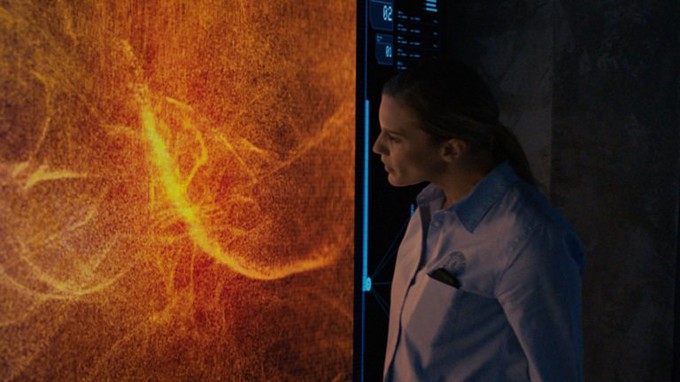
The second feature from visual effects supervisor Hasraf Dulull, 2036 Origin Unknown wears its heart on its sleeve right from the opening frames. This is a cinematic love letter to 2001: A Space Odyssey (1968), with imagery cribbed from that movie’s Star Gate sequence, and an AI creation that may or may not be as infallible as it seems. Add in further imagery and ideas from 2010 (1984), and you have a de facto homage to the finest science fiction movie ever made (and its laboured sequel). Now this would probably have been a good thing if Dulull – who also wrote the script – had been able to concoct a coherent and/or credible story in the first place. Instead, he’s created something of a sci-fi monster in celluloid form, with an awkward, poorly assembled storyline, some of the most confusing and confused exposition heard in a sci-fi movie for some time, and pretty visuals that barely compensate for the dramatic liberties taken elsewhere. Dulull may have had good intentions when he began writing his screenplay, but somewhere along the line no one pointed out that the awful dialogue, the one-note characters, and the unconvincing scenario, didn’t add up to anything meaningful.

Take one example of how confused Dulull’s plotting becomes as the movie plods on from one “revelation” to another: the connection between ARTi and the cube is given centre stage at one point, but why or how that connection has been made remains unexplained, even after there’s a scene that explores the idea (but in as little detail as possible). Other unexplained anomalies abound – the importance of magnetism in relation to the cube, the involvement of government spook Sterling (Fearon), and why Mack has to bear so much responsibility for the death of her father. These and other issues arise too often for comfort, making the movie an uncomfortable watch for anyone used to seeing intelligent sci-fi, and not this amalgamation of other directors’ greatest hits. Despite this, the ever-watchable Sackhoff maintains her ability to make even the worst of material sound better than it has any right to be, and there’s good support from Cree as the slightly supercilious ARTi. The visuals are clearly designed to be the movie’s standout feature, and Dulull’s background in visual effects ensures their effectiveness, but it’s a shame that more attention couldn’t have been given to the hazy material.

Rating: 4/10 – a frustrating foray into the arena of mystery sci-fi, 2036 Origin Unknown is a hodge-podge of half-formed ideas and possibilities that are hampered by a muddled, perplexing screenplay; and don’t believe the poster: the “origins of our existence” aren’t explored at all.

Share this:

  • Click to share on X (Opens in new window) X
  • Click to share on Facebook (Opens in new window) Facebook
  • More
  • Click to print (Opens in new window) Print
  • Click to email a link to a friend (Opens in new window) Email
Like Loading...

Batman (1943) – Chapter 14: The Executioner Strikes

26 Tuesday Jun 2018

Posted by dullwood68 in Movies

≈ 2 Comments

Tags

Action, Columbia, Douglas Croft, Drama, J. Carrol Naish, Lambert Hillyer, Lewis Wilson, Review, Serial, Shirley Patterson, Thriller

D: Lambert Hillyer / 16m

Cast: Lewis Wilson, Douglas Croft, J. Carrol Naish, Shirley Patterson, William Austin, John Maxwell, Warren Jackson, Gus Glassmire

Saved by the timely intervention of Robin, Batman escapes the room full of spikes, while Linda is turned into a zombie by Daka. Batman and Robin look for another way into Daka’s lair, their opponent discovers his trap hasn’t worked. Taking no chances he detonates charges set into the roof of the entrance and collapses the tunnel. When the Dynamic Duo realise what has happened, they determine to find out where another entrance might be located. As they return to their car (with Alfred waiting as patiently as ever), two of Daka’s henchmen spot Robin getting into it. They follow the car and force it to pull over. Bruce wrong foots them, and when the henchmen drive off, it’s they who are followed. When they are pulled over, a brief fight sees them captured and taken to the Bat Cave. Alfred finds a note from Linda asking Bruce to meet her at an old house. Suspecting a trap, Batman enters the house alone, and is soon overcome by two of Daka’s men. Carried out in a wooden crate, Batman remains in it all the way to Daka’s lair, where the crate – with him still in it – is dropped into Daka’s crocodile pit, sending him to certain death…

The penultimate chapter sees the serial keeping to the idea of Batman taking the fight to Daka, but not with the same intensity or determination as in Chapter 13. That said, he’s still more proactive than he’s been for most of the serial, although in doing so, Robin continues to be sidelined: when Batman goes to the old house, Robin has to wait in the car! The increased sense of urgency about the narrative still throws up the odd anomaly, though, with the capture of Daka’s men and their subsequent incarceration in the Bat Cave – alongside the still restrained Bernie (Jackson) – proving as unnecessary as the death of Marshall in Chapter 12. Both these sequences serve only to stretch the running times of their respective installments, and with The Executioner Strikes replaying around three minutes of Chapter 13 at the beginning, the need for so much filler remains disconcerting. The whole approach seems to support the idea that the writers didn’t have a great deal of time to put everything together, and as a result, the serial’s structure has no choice but to feel haphazard.

This episode also highlights other ways in which the narrative appears to have been made up from chapter to chapter. Daka’s pursuit of radium – given so much emphasis during the serial’s first half – could be regarded as forgotten or surplus to requirements  now, seeing how unimportant it’s become. Elsewhere, Linda’s involvement in the plot to trap Bruce Wayne doesn’t make sense (she has to arrive in a crate but can leave on her own two feet), and it’s troubling that a note can be left for Bruce at his home when neither Daka nor his men have any idea where Bruce lives in the first place. As we get nearer to the culmination of the whole saga, the writing has become noticeably lazier, and the urgency of the material is proving to be unequal to the task of papering over these obvious cracks. Hillyer is still plugging away, doing his best, almost refusing to let things get the better of him, but he’s hamstrung by the increasing paucity of the material. And even the nature of Batman’s intended demise, normally the source of mild conjecture as to how he’ll escape certain death, is here rendered moot by a narrative sleight of hand that won’t fool anyone, and which means there’s no need to ask, just how is Batman going to survive this time…?

Rating: 6/10 – the inconsistency of the serial as a whole is rendered vividly by the events of Chapter 14, and the misplaced energy employed in presenting them; with just the final episode of Batman left, there’s continued momentum but sadly it’s at a disservice to the story and the characters.

Share this:

  • Click to share on X (Opens in new window) X
  • Click to share on Facebook (Opens in new window) Facebook
  • More
  • Click to print (Opens in new window) Print
  • Click to email a link to a friend (Opens in new window) Email
Like Loading...

The Liability (2012)

21 Thursday Jun 2018

Posted by dullwood68 in Movies

≈ Leave a comment

Tags

Catch Up movie, Comedy, Craig Viveiros, Drama, Jack O'Connell, Murder, Northumberland, Peter Mullan, Review, Sex trafficking, Tallulah Riley, The Handyman, Thriller, Tim Roth

aka The Hitman’s Apprentice

D: Craig Viveiros / 86m

Cast: Tim Roth, Jack O’Connell, Tallulah Riley, Peter Mullan, Kierston Wareing, Tomi May

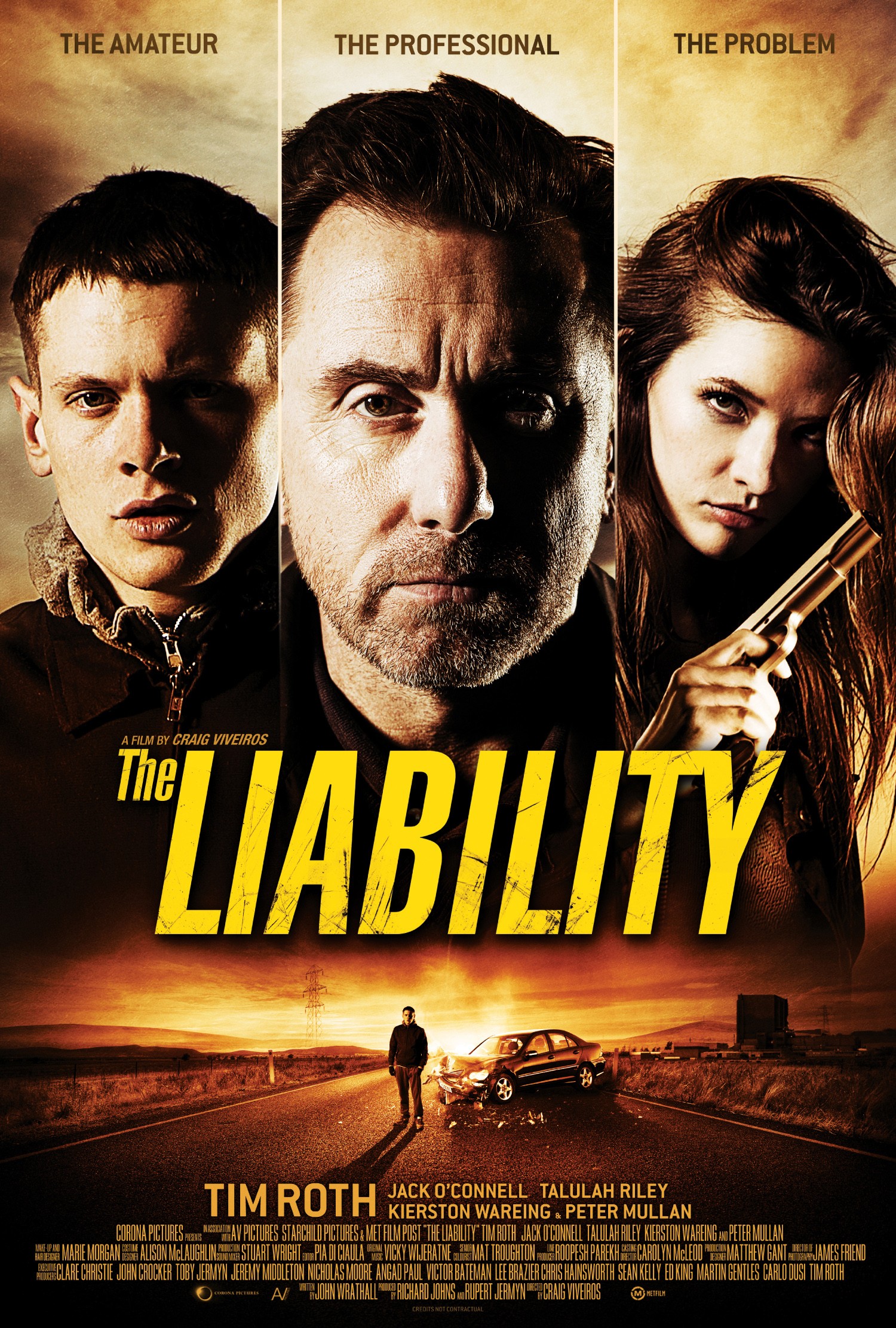
Adam (O’Connell) is a nineteen year old Jack-the-lad who lives with his mum, Nicky (Wareing), and her shady businessman boyfriend, Peter (Mullan). When Adam totals one of Peter’s cars, he’s offered a chance to pay the debt he owes: he’s to drive one of Peter’s associates, Roy (Roth), around for a day. They journey to Northumberland, where, deep in the woods they find a caravan where a man called Danil (May) is hiding out. Roy kills him, but as they attempt to make his death look like the work of local serial killer, the Handyman, a young woman (Riley) comes along. She manages to get away from them, and with a bag that contains evidence of what Roy and Adam have done. What follows is a game of cat and mouse that sees the pair trying to retrieve the bag, while the young woman stays ahead of them every step of the way. Before long, Adam learns things about Roy, Peter, and the young woman, that cause him to realise that not everything is as it seems, and that his future depends on the decisions he makes when the truth reveals itself…

A deliberately low-key crime thriller with an acerbic sense of humour, The Liability begins with a subtle clue as to the criminal activity that sits at the heart of the narrative. A man watches as a container is washed out; moments later he’s attacked and killed in his car. He’s the latest victim of the Handyman, and it’s a testament to the efficiency of John Wrathall’s economical screenplay that the identity of this killer and Roy’s despatching of Danil is connected by a generous helping of unexpected irony. It’s surprising moments such as these, where the material plumbs unforeseen depths, that help make The Liability a much more entertaining movie than might be expected. Add in the material’s quirky, often droll line in mirth (Roth and O’Connell do more with a glance than some actors can manage with a three-page monologue), and you have a black comedy thriller that knows when to be serious, when to be uncomfortable, and when to be slyly humorous. It’s not a balancing act that the movie pulls off every time, but it succeeds more than it fails.

The central relationship between the garrulous, over-eager Adam and the more taciturn, fatalistic Roy drives the movie forward, as mutual respect is established, and a degree of inter-dependency grows between them. Roth and O’Connell are a terrific combination, and the way they play off each other, especially in their early scenes together, ensures their characters’ relationship carries a greater weight later on in the movie. Alas, while Adam and Roy grow as characters and invite sympathy and compassion (despite their actions), the same can’t be said for the likes of Mullan’s one-note bad guy, or Riley’s less than innocent backpacker. Both roles suffer thanks to being painted with too broad brush strokes, and their presence offers little in relation to the material featuring Adam and Roy. That said, Viveiros (making only his second feature) shows a deftness of touch that aids the movie tremendously, and he maintains a consistently weary, yet effective tone throughout. The natural beauty of the Northumberland and Teesside locations are muted in order to match the mood of the piece, and James Friend’s cinematography – all dark hues and glowering skies – complements the darker aspects of the narrative. The ending, though, lacks the punch that’s needed to make it work properly – which is disappointing – and it’s further hampered by feeling rushed. But up until then, this is one movie that provides plenty of cinematic nourishment.

Rating: 8/10 – sombre and mournful in places, and yet funny and warm-hearted in others, The Liability isn’t just the standard crime thriller with jokes that it appears to be; an under-rated gem, it’s well worth checking out as an alternative to the East End gangster movies that populate so much of the UK’s crime-based output.

Share this:

  • Click to share on X (Opens in new window) X
  • Click to share on Facebook (Opens in new window) Facebook
  • More
  • Click to print (Opens in new window) Print
  • Click to email a link to a friend (Opens in new window) Email
Like Loading...

Oh! the Horror! – Kantemir (2015) and February (2015)

20 Wednesday Jun 2018

Posted by dullwood68 in Movies

≈ Leave a comment

Tags

Ben Samuels, Bromford School, Daniel Gadi, Diane Cary, Drama, Emma Roberts, Horror, Kiernan Shipka, Lucy Boynton, Murder, Oz Perkins, Review, Robert Englund, Stage play, Thriller, Winter break

Kantemir (2015) / D: Ben Samuels / 81m

Cast: Robert Englund, Diane Cary, Daniel Gadi, Justine Griffiths, Alanna Janell, Stuart Stone, Sean Derry

John Larousse (Englund) is an actor whose career has bottomed out thanks to being an alcoholic. Given the chance to start afresh, he travels to an out of the way country estate where he and a group of actors have been assembled to work on a play. The director, Nicholas (Gadi), is secretive about the play’s content, only revealing that it’s an historical piece and that the characters are involved in a doomed romance. As the rehearsals begin, each actor starts to display the traits of their character, and they often refer to each other by their character names. Only John seems to be aware of the strange transformation that the cast is undergoing, and when he discovers that one of them has been killed, the reluctance of the others to believe him is further undermined by their increasing commitment to the play, and Nicholas’s strange hold over all of them…

If Kantemir has anything going for it, it’s Englund’s performance (though even he struggles with some of the cliché-ridden dialogue dreamed up by co-writers Mark Garbett and Ralph Glenn Howard). Englund is the glue that keeps the movie from coming unravelled altogether, which is something that’s needed, as the script, and Samuels’ sloppy direction, conspire to obscure just what kind of movie it is. On the one hand it’s a horror movie, but at times it’s also a mystery and a thriller, and an historical romance, and at a stretch, a psychological drama. What it isn’t is coherent or able to connect any two scenes to each other without making it seem as if another one has been cut from between them. Englund’s experience carries him through – just – but otherwise the performances are awkward, mannered, and unconvincing. The back story that explains it all doesn’t make any sense either, which further undermines the movie’s credibility, and John Rosario’s gloomy cinematography ensures the movie isn’t attractive to look at either. It’s not entirely a chore to sit through, but any rewards are minimal, and even then, very hard to find.

Rating: 4/10 – with its patchwork screenplay and ill-considered scenario, Kantemir is the kind of low budget horror that gets made hundreds of times each year – and which provides evidence (if it were really needed) that they shouldn’t be made in the first place; admittedly, it’s hard to come up with something truly original in the horror field, and this may be an attempt to do that, but the vast gulf between idea and execution is displayed here a little too obviously for the movie’s own good.


February (2015) / D: Oz Perkins / 94m

aka The Blackcoat’s Daughter; The Devil’s Daughter

Cast: Emma Roberts, Kiernan Shipka, Lucy Boynton, James Remar, Lauren Holly, Greg Ellwand, Elana Krausz, Heather Tod Mitchell, Peter James Howarth

It’s February at the Bromford School for girls, a Catholic establishment preparing to see its pupils and staff head off for winter break. Two students however – Kat (Shipka) and Rose (Boynton) – remain behind at the school thanks to their parents being unable to collect them on the allotted day. Kat is a freshman, prone to staring off into the distance and behaving oddly. Rose is a senior who has just found out she’s pregnant; the school head has also asked her to chaperone Kat during the break (though two nuns are there as well). Meanwhile, a young woman named Joan (Roberts) has left a psychiatric hospital some distance away; at a bus station she meets and accepts a lift from Bill (Remar), a good Samaritan who reveals in time that she reminds him of his daughter, who died nine years before. He and his wife, Linda (Holly), are travelling to Bromford to lay flowers on her grave. Kat’s behaviour becomes increasingly bizarre, and Rose begins to fear for her safety, something that is given credence when the headmaster (Howarth) returns to the school and makes a horrifying discovery…

Although it suffers from issues with pacing, and the story it tells borders on being uncomfortably slight, February is a lean and atmospheric chiller from the fertile mind of its writer/director. Perkins has an offbeat dramatic sensibility, and it’s as a writer that he’s most effective – see Removal (2010) and The Girl in the Photographs (2015) for further evidence. Here, what you see isn’t necessarily what you can believe, as the narrative weaves in and out in a non-linear fashion that keeps the viewer from fully understanding just what’s going on and why. The performances, particularly Shipka’s, are accomplished, and they ensure that the mystery is maintained for as long as possible. Perkins also throws in themes relating to grief and personal responsibility, but  is unable to make certain scenes as effective as they could be, mostly due to their being stretched beyond any real benefit. The wintry locations add to the sense of unease, and the way in which the movie escalates the level of violence and horror towards the end is persuasive as well. Some viewers may find the movie’s first hour somewhat difficult to get through, but if they stick around, they’ll find that perseverance is its own reward.

Rating: 7/10 – not entirely successful, but doing more than enough to warrant the casual viewer’s attention, February is a deceptively effective horror thriller that takes its time and doesn’t give away all its secrets at once; too many longueurs hamper the movie’s pace and rhythm, but the material is strong enough to offset these faults and provide a pervasive sense of menace that is handled astutely and in appropriately cool fashion.

Share this:

  • Click to share on X (Opens in new window) X
  • Click to share on Facebook (Opens in new window) Facebook
  • More
  • Click to print (Opens in new window) Print
  • Click to email a link to a friend (Opens in new window) Email
Like Loading...

Batman (1943) – Chapter 13: Eight Steps Down

19 Tuesday Jun 2018

Posted by dullwood68 in Movies

≈ Leave a comment

Tags

Action, Columbia, Douglas Croft, Drama, J. Carrol Naish, Lambert Hillyer, Lewis Wilson, Review, Serial, Shirley Patterson, The Sphinx Club, Thriller

D: Lambert Hillyer / 14m

Cast: Lewis Wilson, Douglas Croft, J. Carrol Naish, Shirley Patterson, William Austin, Charles C. Wilson, Warren Jackson, John Maxwell, Gus Glassmire

Having managed to avoid the collapsing basement ceiling coming down on him, Batman ensures Linda isn’t trapped anywhere in the burning Ajax Metal Works before getting to safety. Instead of heading for home, he checks with Captain Arnold (Wilson) to see if the Sphinx Club has been raided and one of Daka’s men, Bernie (Jackson), has been picked up. Learning that Bernie is still at large, Batman returns to the Sphinx Club where he discovers Bernie in a hidden room. Bernie is taken back to the Bat Cave where he lets slip that the one place Batman doesn’t want to investigate is the hideout where Chuck White was taken. Meanwhile, Linda is taken to Daka’s lair where he threatens to turn her into a zombie unless she helps him lure Bruce Wayne into a trap. At the secondary hideout, Batman and Robin discover an underground tunnel that leads to Daka’s lair. While Linda is being turned into a zombie, Batman falls through a trap door and into a room with large spikes on opposing walls. Soon, the walls are closing in, sending Batman to certain death…

And there it is folks, the final stretch is in sight – at last. After so many episodes where the Caped Crusader and the Boy Wonder escape certain death only to retire to the Wayne home to wait for the next clue to fall into their laps, now, in Chapter 13 they finally take the initiative. Batman even takes the opportunity to criticise Captain Arnold (“Wasn’t very smart of you to take their word against mine”) when told the men caught in the Sphinx Club raid denied knowing anyone called Bernie. This new, proactive Batman is a pleasure to meet at long last, and this is the first installment where Wilson and Croft don’t get to don their civvies as Bruce and Dick. It’s also the episode where Robin’s involvement appears deliberately curtailed and he’s sidelined in favour of Batman leading the action (he goes into the Sphinx Club alone; in the underground tunnel, Robin is sent back for a crowbar). Meanwhile, Daka has nearly finished assembling his new radium gun, Uncle Martin is used as a threat to induce Linda to aid Daka, and the racism of the time gets a fresh outing when Linda’s first words on meeting Daka are, “A Jap!”

It’s an episode that, despite its short running time, feels like a proper installment, one that advances the somewhat precariously handled – up til now – plot, and one which has the vitality and energy of the Colton/radium mine chapters (ahh, those were the days). The various scenes have a punchy, determined quality, as if everyone involved can see the home stretch now and want to get there as soon as possible. It’s as if someone – the writers, Hillyer, the Columbia brass themselves – said, “come on, let’s put this serial to bed,” and the challenge was accepted (gladly). Even the usually tedious scenes where Daka monologues fiendishly, but to little avail, here actually see him behaving threateningly and to good effect. Naish hasn’t always been able to avoid chewing the scenery, but here he employs a quietly disturbing menace to the role that makes him seem like a worthy villain. Wilson benefits too. Without having to play either Bruce or Chuck White as well as Batman, Wilson is more forceful and single-minded. And Hillyer shows that he’s regained some of the verve and energy that he’s brought to earlier installments. It all bodes well for the last two chapters, though there’s still the question, just how is Batman going to survive this time…?

Rating: 7/10 – a huge improvement on the last few chapters (even if a few narrative leaps and bounds are employed to achieve this), Chapter 13 sees the serial rise from the doldrums with an urgency that can only mean the end is in sight; with Batman having relied too much on filler up until now, it’s a relief to see that it will, in all likelihood, be like this until Daka’s plans have been thwarted once and for all.

Share this:

  • Click to share on X (Opens in new window) X
  • Click to share on Facebook (Opens in new window) Facebook
  • More
  • Click to print (Opens in new window) Print
  • Click to email a link to a friend (Opens in new window) Email
Like Loading...

Batman (1943) – Chapter 12: Embers of Evil

12 Tuesday Jun 2018

Posted by dullwood68 in Movies

≈ Leave a comment

Tags

Action, Ajax Metal Works, Columbia, Douglas Croft, Drama, J. Carrol Naish, Lambert Hillyer, Lewis Wilson, Medusa cigarettes, Review, Serial, Shirley Patterson, Thriller

D: Lambert Hillyer / 14m

Cast: Lewis Wilson, Douglas Croft, J. Carrol Naish, Shirley Patterson, William Austin, Charles C. Wilson, Warren Jackson, Gus Glassmire

Having avoided certain death from the explosion at one of Daka’s hideouts thanks to a conveniently placed trap door that leads to the outside, Batman and Robin meet up with Alfred and head back home. Daka receives the news with his customary annoyance, and learns from one of his henchmen, Bernie (Jackson), that Marshall (presumed dead in the Colton mine collapse) is in jail and was talking to Chuck White. Daka sends Bernie to the jail to give Marshall a “special brand” of cigarettes called Medusa. The next morning, Bruce and Dick go to see Captain Arnold (Wilson); he wants them to identify Marshall as one of the men who attacked them, but when they get to his cell, Marshall is dead. Bruce picks up a cigarette and analyses it with the aid of his Young Scientist chemical set and learns it’s poisonous. Following this, Daka decides to target Linda in an effort to draw out Batman and ambush him at the Ajax Metal Works. When she goes missing, Batman and Robin track her whereabouts to the metal works, but their attempt to rescue her leads to a fire breaking out and Batman trapped in the basement as part of the ceiling collapses on him, sending him to certain death…

The shortest chapter so far fairly whizzes by as it crams in as much as it can while still failing to advance the main plot in any way, shape or form (whatever the main plot is; by now it’s hard to remember if there is one). The whole set up surrounding the “rubbing out” of Marshall serves no dramatic purpose at all, and while it’s always good to see Captain Arnold providing some much needed, and at least scripted, humour, there’s no reason to devote any time to Marshall’s demise at all. More padding then, and in an episode that runs two minutes shorter than the previous record holders. The phrase “running out of steam” seems entirely appropriate, and this with only three chapters left to go. The trailer gives a better idea of where everything is headed at this stage, as the repetitive nature of the script takes a further toll on the narrative. It’s as if – the Colton episodes aside – the writers’ brief was to repeat each episode’s basic structure as often as possible.

Inevitably, this leaves the cast stranded as if on a loop they can’t escape from. The formulaic nature of the serial means Wilson and Croft now only don their Batman and Robin outfits in order to have a punch up with Daka’s goons at the end of each chapter, while Naish leers and sneers as Daka to banal, off-putting effect, and Patterson – when allowed – is given the littlest possible to do (some of the actors playing henchmen have more screen time than she does). The credibility of the crime fighters themselves is brought into question this time as they put themselves in jeopardy by alerting Daka’s men to their presence at the metal works by using a smoke bomb in a basement filled with crates and highly flammable packing materials. (So much for lying low and not drawing attention to yourself). All it needs is for one of Daka’s men to be smoking a cigarette… oh, wait a minute, one of them is. With so many issues and so little time now to improve on them, it’s getting harder to believe that the writers will be able to turn things around and bring the serial to a satisfactory end – let alone working out how Batman is going to survive this time…

Rating: 5/10 – it’s over almost before you know it, but Chapter 12 is also another dispiriting entry in a serial that is proving to be more filler than fulfillment; at this stage, Batman is losing traction with every chapter, and any energy it has is like the oxygen in the basement room at the end of this episode: fast running out.

Share this:

  • Click to share on X (Opens in new window) X
  • Click to share on Facebook (Opens in new window) Facebook
  • More
  • Click to print (Opens in new window) Print
  • Click to email a link to a friend (Opens in new window) Email
Like Loading...

Mom & Dad (2017)

10 Sunday Jun 2018

Posted by dullwood68 in Movies

≈ Leave a comment

Tags

Anne Winters, Black comedy, Brian Taylor, Drama, Filicide, Horror, Nicolas Cage, Review, Selma Blair, Suburbia, Thriller, Zackary Arthur

D: Brian Taylor / 83m

Cast: Nicolas Cage, Selma Blair, Anne Winters, Zackary Arthur, Robert T. Cunningham, Olivia Crocicchia, Lance Henriksen, Marilyn Dodds Frank

For the Ryans it’s just another ordinary, humdrum day. Dad Brent (Cage) is getting through another dull day at the office, mum Kendall (Blair) is trying to make sense of where her life has gone, teenage daughter Carly (Winters) is rebelling against her parents because they don’t approve of her boyfriend, Damon (Cunningham), and young son Josh (Arthur) is home for the day. But partway through the morning, news reports start referring to incidents of parents attacking and killing their children. Carly and her best friend, Riley (Crocicchia), discover this when groups of parents show up at their school with murderous intent. Kendall hears about these incidents too, and rushes home to ensure Josh is safe – but little realising that once she’s there he won’t be. With Carly reaching home accompanied by Damon, she finds Josh alive and well, but only just before Brent arrives home too, followed by Kendall. Soon, the three children are doing their best to stay alive as Brent and Kendall show their determination to kill their children, and if it has to be messy, well…

The basic premise of Mom & Dad – what would happen if parents took up filicide with gleeful enthusiasm – is evidenced in a number of cruel, horrific, and yet somehow satisfying ways. The movie begins with a mother leaving her baby in a car on some railroad tracks with a train fast approaching. Later, a first-time mum attempts to kill her newborn within moments of its birth, and as Kendall speeds home, another mum shoves a stroller with her child inside it in front of Kendall’s car. These and other examples of parental rage in suburbia are presented with a joyful sense of mischief that is unapologetic, and the source of much of the movie’s black comedy. Of course, whether or not the idea of filicide is an acceptable source of humour will be down to the individual, but Brian Taylor’s script offers no defence in the matter – and nor should it. It’s a crazy idea, but a perfect one for a low budget horror thriller that rolls along in the wake of The Purge series, and which doesn’t show anything too graphic, such as Georgie Denbrough losing an arm in It (2017). It’s all about the tone – which is admittedly warped – but Taylor pulls it off with brash exuberance, and more to spare.

In doing so he marshalls two terrific performances from Cage and Blair. It’s a given that Cage will go overboard in his portrayal of the world weary Brent (trapped in a life he never wanted), but this time it’s in full service to the story, and it’s entirely in context of his character’s insane, murderous intentions. But it’s Blair who impresses the most, going from shocked and horrified to eerily calm about murdering her children, and offering odd, quirky moments such as when she picks up a meat tenderiser and realises what it can be used for. Both actors are clearly having a lot of fun, and Taylor’s script allows them to explore (admittedly) basic notions of what it means to be a parent and the pressures that go with it. Taylor also gets the action right – as the co-writer/director of the Crank movies should – and does so with an acknowledgment that he’s on a restricted budget, which makes some of the set ups more inventive than expected. It’s not the subtlest of movies, and though it’s far-fetched nature sometimes works against it, it’s still an entertaining, and often very funny, look at what some parents would really like to do to their kids if they were able to.

Rating: 7/10 – surprisingly well put together, and shot through with a casual disregard for the sanctity of parenthood, Mom & Dad is a blithely amoral horror thriller that works well within its production boundaries and its basic premise; wisely choosing not to explain the reason or source of why parents start killing their children, it gets on with the challenge of making it as terrifying a situation as possible – and for the most part, succeeds admirably.

Share this:

  • Click to share on X (Opens in new window) X
  • Click to share on Facebook (Opens in new window) Facebook
  • More
  • Click to print (Opens in new window) Print
  • Click to email a link to a friend (Opens in new window) Email
Like Loading...

The Night of the Wild Boar (2016)

07 Thursday Jun 2018

Posted by dullwood68 in Movies

≈ Leave a comment

Tags

Catalina Zahri, Drama, Fernando Kliche, Murder, Mystery, Novelist, Ramiro Tenorio, Review, South America, Thriller

Original title: La noche del jabali

D: Ramiro Tenorio / 71m

Cast: Catalina Zahri, Fernando Kliche, Renzo Briceño, Gastón Salgado, Spyros Papadatos

A writer of romantic fiction, Claudia Moratti (Zahri), travels to the southern most area of South America, and the small town where her partner, the horror novelist Guillermo San Román (Papadatos), grew up. Guillermo’s novels were each inspired by a series of murders that took place in his home town, and specific details of the crimes were always included in his books. Claudia has come looking for answers to the question, did Guillermo commit the murders? The local police chief, Benno (Kliche), seems to think so, and is determined to find evidence that he did. Claudia begins her own investigation, looking through Guillermo’s novels and research materials, until she is faced with the serious possibility that he at least had a hand in the murders. The discovery of another body complicates matters as Guillermo has been dead for a year, having committed suicide. With suspicion falling on both Mario (Briceño), who looks after Guillermo’s home, and Sebastian (Salgado), who helps him, Claudia has to work out who is lying to her, and who is hiding a terrible secret. Things come to a head when she discovers materials in Sebastian’s home that point to him being the killer…

The debut feature of writer/director Ramiro Tenorio, The Night of the Wild Boar is that unfortunate beast, the poorly thought out thriller. It begins well, creating a vivid sense of mystery and a tainted atmosphere for its backdrop. Claudia’s arrival is met with the usual customary suspicion in these cases, with Mario offering her glowering looks, and Benno wasting no time in voicing his opinions about Guillermo’s likely guilt. It’s a strong set up, and even though there are few suspects, each – and including the police chief – appear to have their own fair share of secrets, and each of them could be the culprit. With Claudia feeling like she’s made a big mistake in going there, and her interactions with everyone adding further confusion to the notion of Guillermo’s possible guilt or innocence, Tenorio tightens the screws somewhat, making Claudia – and the audience – feel uncomfortable and more unsafe the more she finds out. But having done a fine job in setting up the central mystery, as well as introducing the suspects, Tenorio then goes ahead and spoils things by having Claudia find copies of Guillermo’s novels and his notes and his research – in his home.

At this stage – and bearing in mind these files have lain untouched for a year – Tenorio’s grip on the narrative begins to unravel, and further developments start to collapse in on one another as the script leads the way to the kind of overly melodramatic conclusion that tests the movie’s internal logic, and makes Claudia’s presence from the beginning entirely problematical. With a relatively short running time as well, the need to wrap things up neatly becomes paramount, but the answer to the mystery of the dead girls is awkward and unconvincing; it feels like a fait accompli. Visually, though, the movie is often lovely if a little gloomy to look at, and Nick Deeg’s cinematography highlights the rugged beauty of the area, while also providing the movie with a sense of unyielding claustrophobia that can feel unnerving. The performances are good, though hampered at times by the demands of the material, and Tenorio handles several tense scenes with aplomb, but remains unable to make up for the way in which the movie sheds any credibility it has built up in favour of a denouement that doesn’t make any sense when judged against what’s happened so far.

Rating: 5/10 – a movie with a lot of early promise that is abandoned thanks to an increasingly muddled script, and a couple of very bad directorial decisions, The Night of the Wild Boar could have been a solid, efficient little thriller; a decent premise finds itself wasted, while moments such as Claudia revealing a personal secret, or a cryptic conversation between Benno and Mario, only add to the confusion.

NOTE: The trailer below doesn’t have English subtitles, but it still provides a good sense of the movie’s atmospheric and slightly uncomfortable nature.

Share this:

  • Click to share on X (Opens in new window) X
  • Click to share on Facebook (Opens in new window) Facebook
  • More
  • Click to print (Opens in new window) Print
  • Click to email a link to a friend (Opens in new window) Email
Like Loading...

Batman (1943) – Chapter 11: A Nipponese Trap

05 Tuesday Jun 2018

Posted by dullwood68 in Movies

≈ Leave a comment

Tags

Action, Columbia, Douglas Croft, Drama, J. Carrol Naish, Lambert Hillyer, Lewis Wilson, Review, Serial, Thriller

D: Lambert Hillyer / 16m

Cast: Lewis Wilson, Douglas Croft, J. Carrol Naish, William Austin, Ted Oliver, Dick Curtis, Eddie Kane

Having avoided being burned alive by throwing himself from the car before it burst into flames, Batman is unhappy to realise that Daka’s men have gotten away with the radium, which they take straight to Daka’s hideout. Meanwhile, Bruce decides to introduce Marshall (Oliver), the henchman they dropped off at the police station, to Chuck White. To this end, Chuck is put in jail in the cell next to Marshall. Chuck gains Marshall’s confidence by admitting to being a burglar and stating that he recently broke into a house where he saw Batman. Marshall is eager for Chuck to meet his “friends” and gives him an address to go to when he gets out. Dick and Alfred arrange for Chuck’s bail, but Daka hears about Chuck being in jail as well and sends two of his men to kill him when he gets out. They orchestrate a car crash – though Chuck/Bruce survives, something they’re not aware of. Later, Batman and Robin go to the address given by Marshall but are overpowered by Daka’s men. One of them sets a bomb to go off, one that destroys the building, sending Batman and Robin to certain death…

Eleven chapters in and finally, Batman and Robin fail to stop Daka and his men from succeeding in one of their plans. It’s a momentous occasion, and one that hopefully will be used as a springboard for the events of the final four chapters, because otherwise this one is yet another filler episode that keeps the serial chugging along and Wilson’s nose draped in putty. The use of Chuck White as yet another alter ego for Bruce Wayne has been moderately successful in terms of the narrative, but each time he’s been brought out it’s purely so that another hideout can be identified and then dropped as a way of Batman finding out more about Daka’s plans. While there are fifteen chapters and each have to be filled with incident, it’s reasonable to ask if the same kind of incident had to be used over and over? And thanks to the speed at which these things are cranked out, it’s not as if Wilson is rising to any great challenge either; he’s just as clumsy as Chuck as he is as Bruce (or Batman for that matter).

And just once you’d hope that Daka’s men wouldn’t report back to their boss that they’ve definitely killed Batman. Just once you’d hope that they’d check first, but once again, it’s a no-no. Each time now it gets funnier and funnier, a triumph of optimism over experience that Daka lets pass every time (he’s very forgiving for a bad guy). Much better – and a serial highlight – is the attempt on Chuck’s life, where a very large truck slams into a taxi and knocks it over onto its side. This has clearly been shot for real on a Columbia backlot, but is brutal in its effect, and if by some miracle of inter-movie time travel, Richard Thornburg was covering it, he’d be saying, “Tell me you got that.” Elsewhere, Linda is again absent from proceedings, getting a man out of jail on bail consists of paying twenty dollars for the release and five dollars for the (slightly corrupt) policeman organising it, and Batman’s real identity is revealed as Chuck White – lucky for Bruce! Chapter 11 isn’t the best or the worst of the series so far, but it’s not exactly groundbreaking – car crash aside – nor is it as entertaining as some other episodes, but when the bomb goes off, it at least has us asking, just how is Batman (and Robin) going to survive this time…?

Rating: 6/10 – another stopgap episode, Chapter 11 continues the semi-moribund influence of Chapter 10, and gets by on an unexpected development (Daka’s men get the radium), and an unexpected and spectacular event (the car crash); treading water is to be expected to some degree in a fifteen chapter serial, but Batman has done this now on a number of occasions, making the viewer wonder if ten or twelve chapters might have been a better idea.

Share this:

  • Click to share on X (Opens in new window) X
  • Click to share on Facebook (Opens in new window) Facebook
  • More
  • Click to print (Opens in new window) Print
  • Click to email a link to a friend (Opens in new window) Email
Like Loading...

Monthly Roundup – May 2018

02 Saturday Jun 2018

Posted by dullwood68 in Movies

≈ 1 Comment

Tags

Action, Adam Robitel, Air Hawks, Alanna Forte, Albert S. Rogell, Alden Ehrenreich, Alex Richanbach, Alex Skarlatos, Andy Milligan, Animation, Aviation, Bath house, Beatrix Potter, Bedelia, Bernard Charnacé, Betsy-Blue English, CGI, Clint Eastwood, Comedy, David Leitch, Deadpool 2, DJ, Domhnall Gleeson, Don Michael Paul, Drama, Emilia Clarke, Enemies Closer, From Hell to the Wild West, Gabrielle Haugh, Gerard Jacuzzo, Gillian Jacobs, Graboids, Han Solo, Homosexuality, Horror, Ian Hunter, Ibiza, Insidious: The Last Key, Jack the Ripper, James Corden, James Stewart, Jamie Kennedy, Jean Rollin, Jean-Claude Van Damme, Jeepers Creepers 3, Jesse V. Johnson, Josh Brolin, Lance Comfort, Lin Shaye, Louis Mandylor, Maggie Grace, Margaret Lockwood, Marvel, Michael Gross, Murder, Mutants, Mystery, Navy Blue and Gold, Newhaven Fort, Peter Hyams, Peter Rabbit, Prankz., Prequel, Ralph Bellamy, Rene Perez, Reviews, Robert Dahdah, Robert Kovacs, Robert Young, Romance, Ron Howard, Rose Byrne, Russell Peters, Ryan Reynolds, Sam Wood, Sci-fi, Scott Adkins, Sequel, Simone Rollin, Solo: A Star Wars Story, Spencer Stone, Stan Shaw, Supercon, Superhero, Tala Birell, The 15:17 to Paris, The Creeper, The Debt Collector, The Mask of Medusa, Thriller, Tom Everett Scott, Tremors: A Cold Day in Hell, True story, Vapors, Victor Salva, Warren Dudley, Will Gluck, Zak Knutson

Enemies Closer (2013) / D: Peter Hyams / 85m

Cast: Tom Everett Scott, Jean-Claude Van Damme, Orlando Jones, Linzey Cocker, Christopher Robbie, Zachary Baharov, Dimo Alexiev, Kris Van Damme

Rating: 5/10 – when a plane carrying drugs crash lands in the waters off King’s Island it’s up to ranger (and ex-Navy Seal) Henry Taylor (Scott) to stop mercenary Xander (Van Damme) and his men from retrieving the cargo; a bone-headed action movie with a flamboyant performance from Van Damme, Enemies Closer is saved from complete disaster by Hyams’ confident direction and cinematography, a script that often seems aware of how silly it all is, and an earnest turn from Scott that eschews the usual macho heroics expected from something that, in essence, is Die Hard on a Small Island.

From Hell to the Wild West (2017) / D: Rene Perez / 77m

Cast: Robert Kovacs, Alanna Forte, Charlie Glackin, Karin Brauns, Robert Bronzi, Sammy Durrani

Rating: 3/10 – a masked serial killer sets up home in a ghost town in California, until a Marshall (Kovacs) and a bounty hunter (Bronzi) team up to end his reign of terror; a low budget horror with an interesting premise, From Hell to the Wild West is let down by poor production values, terrible acting, the kind of Easter eggs that stick out like a sore thumb (Bronzi was a stunt double for Charles Bronson, and his character name is Buchinski), a threadbare plot, and occasional stabs at direction by Perez – all of which make it yet another horror movie that’s a chore to sit through.

Tremors: A Cold Day in Hell (2018) / D: Don Michael Paul / 98m

Cast: Michael Gross, Jamie Kennedy, Tanya van Graan, Jamie-Lee Money, Kiroshan Naidoo, Keeno Lee Hector, Rob van Vuuren, Adrienne Pearce, Francesco Nassimbeni, Paul de Toit

Rating: 4/10 – Burt Gummer (Gross) and his son, Travis (Kennedy), are called in when Graboid activity is discovered in the Canadian tundra, and threatens a research facility; number six in the series, Tremors: A Cold Day in Hell marks a serious downturn in quality thanks to dreary plotting, cardboard characters, and absentee suspense, and supports the notion that the franchise should be put to bed (even though there’s a TV series on the horizon), something that not even the continued presence of Gross can mitigate against, or the producers.

The Debt Collector (2018) / D: Jesse V. Johnson / 96m

Cast: Scott Adkins, Louis Mandylor, Vladimir Kulich, Michael Paré, Tony Todd, Rachel Brann, Esteban Cueto, Jack Lowe

Rating: 5/10 – a financially strapped martial arts instructor, French (Adkins), takes on a job as a debt collector for a local gangster, and finds himself elbow deep in unexpected violence and the search for someone who may or may not have swindled one of the debtors on his list; though breezy and easy-going, and replete with fight scenes designed to show off Adkins prowess as an action hero, The Debt Collector gets bogged down by its neo-noir-style script, and a plethora of supporting characters that come and go without making an impact, or contributing much to the story.

Air Hawks (1935) / D: Albert S. Rogell / 68m

Cast: Ralph Bellamy, Tala Birell, Wiley Post, Douglass Dumbrille, Robert Allen, Billie Seward, Victor Kilian, Robert Middlemass, Geneva Mitchell, Wyrley Birch, Edward Van Sloan

Rating: 6/10 – a small-time independent airline finds itself being sabotaged by a rival airline in its attempts to win a transcontinental contract from the government; a mash-up of aviation drama and sci-fi elements (Van Sloan’s character operates a “death ray” from the back of a truck), Air Hawks is the kind of sincerely acted and directed nonsense that Hollywood churned out by the dozens during the Thirties, but it’s enjoyable nonetheless, with eager performances from Bellamy and Kilian, nightclub scenes that don’t feel out of place at all(!), and a knowing sense of how silly it all is.

Supercon (2018) / D: Zak Knutson / 100m

Cast: Russell Peters, Maggie Grace, Ryan Kwanten, Brooks Braselman, Clancy Brown, John Malkovich, Mike Epps, Caroline Fourmy

Rating: 3/10 – at a TV/artists/superhero convention, a group of friends decide to rob the promoter and at the same time, stick it to an overbearing TV icon (Brown) as payback for the way they’ve been treated; somewhere – though buried deep – inside the mess that is Supercon is a great idea for a movie set at a fantasy convention centre, but this dire, uninspired comedy isn’t it, lacking as it does real laughs, any conviction, and consistent direction, all things that seemed to have been “refused entry” at the earliest stages of production.

The 15:17 to Paris (2018) / D: Clint Eastwood / 94m

Cast: Spencer Stone, Alex Skarlatos, Anthony Sadler, Judy Greer, Jenna Fischer, Ray Corasani, P.J. Byrne, Thomas Lennon, William Jennings, Bryce Gheisar, Paul-Mikél Williams

Rating: 6/10 – the true story of how three friends, two of whom (Stone, Skarlatos) were American servicemen, tackled and overcame a gun-toting terrorist on a train bound for Paris from Amsterdam in August 2015; with the terrorist incident being dealt with in a matter of minutes, The 15:17 to Paris has to pad out its running time, and does so by showing how the three friends met and grew up, and their progress through Europe until that fateful train ride, a decision that works well in introducing the trio, but which makes this in some ways more of a rites of passage-cum-travelogue movie than the incisive thriller it wants to be.

The Mask of Medusa (2009) / D: Jean Rollin / 73m

Original title: Le masque de la Méduse

Cast: Simone Rollin, Bernard Charnacé, Sabine Lenoël, Thomas Smith, Marlène Delcambre

Rating: 5/10 – a retelling of the classical story of the Gorgon presented in two parts; Rollin’s final project, The Mask of Medusa is much more of an experimental movie than you’ll find amongst his usual work, but it has a starkly defined approach that allows the largely idiosyncratic dialogue room to work, and the austere nature of the visuals has an unnerving effect that works well at times with the narrative, but it’s also an experience that offers little in the way of intellectual or emotional reward for the viewer, which makes this something of a disappointment as Rollin’s last movie.

Jeepers Creepers 3 (2017) / D: Victor Salva / 101m

Cast: Stan Shaw, Gabrielle Haugh, Brandon Smith, Meg Foster, Jordan Salloum, Chester Rushing, Jason Bayle, Ryan Moore, Jonathan Breck

Rating: 3/10 – the Creeper targets anyone who comes near the truck he collects his victims in, as well as the members of a family he terrorised originally twenty-three years before; set between the first and second movies, Jeepers Creepers 3 suffers from tortuous sequelitis, with Salva stretching the franchise’s time frame out of whack, and failing to provide viewers with the scares and thrills seen in the original movie, something that, though predictable, doesn’t bode well for the already in gestation Part Four.

Navy Blue and Gold (1937) / D: Sam Wood / 94m

Cast: Robert Young, James Stewart, Florence Rice, Billie Burke, Lionel Barrymore, Tom Brown, Samuel S. Hinds, Paul Kelly, Barnett Parker, Frank Albertson

Rating: 7/10 – three new recruits to the United States Naval Academy (Young, Stewart, Brown) battle their own individual problems, as well as trying to make the grade; a patriotic flag waver of a movie, and cinematic recruitment drive for the US Navy, Navy Blue and Gold features likeable performances from all three “cadets”, the usual soap opera elements to help keep the plot ticking over, and Barrymore doing yet another variation on his crusty old man persona, all of which, along with Wood’s erstwhile direction, ensure the movie is pleasant if undemanding.

Bedelia (1946) / D: Lance Comfort / 90m

Cast: Margaret Lockwood, Ian Hunter, Barry K. Barnes, Anne Crawford, Beatrice Varley, Louise Hampton, Jill Esmond

Rating: 7/10 – a woman (Lockwood), married for the second time, comes under the suspicion of an artist (Barnes) who believes her husband (Hunter) is likely to end up dead – just as her first husband did; a clever piece of melodrama from the novel by Vera Caspary, Bedelia doesn’t quite ratchet up the suspense as it goes along, but it does offer a fine performance from Lockwood as a femme with the emphasis on fatale, and occasional psychological details that help keep Bedelia herself from appearing evil for evil’s sake.

Peter Rabbit (2018) / D: Will Gluck / 95m

Cast: James Corden, Rose Byrne, Domhnall Gleeson, Margot Robbie, Sam Neill, Elizabeth Debicki, Daisy Ridley, Sia, Colin Moody

Rating: 7/10 – when the farmer (Neill) who continually tries to stop Peter Rabbit (Corden) and his friends stealing from his vegetable garden drops dead, so begins a war of attrition with his grandnephew (Gleeson); as a modern updating of Beatrix Potter’s beloved characters, purists might want to stay away from Peter Rabbit, but this is a colourful, immensely charming (if occasionally cynical) tale that is both funny and sweet, and which falls just the right side of being overwhelmingly saccharine.

Insidious: The Last Key (2018) / D: Adam Robitel / 103m

Cast: Lin Shaye, Leigh Whannell, Angus Sampson, Kirk Acevedo, Caitlin Gerard, Spencer Locke, Josh Stewart, Tessa Ferrer, Bruce Davison, Javier Botet

Rating: 6/10 – Elise Rainier (Shaye) is forced to come face to face with a demon from her childhood, as it targets members of her brother’s family; another trip into the Further reveals signs of the franchise beginning to cannibalise itself in the search for newer, scarier installments, though at least Insidious: The Last Key has the ever reliable Shaye to add a layer of sincerity to the usual hokey paranormal goings on, and one or two scares that do actually hit the mark, but this should be more way more effective than it actually is.

Deadpool 2 (2018) / D: David Leitch / 119m

Cast: Ryan Reynolds, Josh Brolin, Morena Baccarin, Julian Dennison, Zazie Beetz, T.J. Miller, Leslie Uggams, Karan Soni, Brianna Hildebrand, Stefan Kapicic, Eddie Marsan, Rob Delaney, Lewis Tan, Bill Skarsgård, Terry Crews

Rating: 8/10 – everyone’s favourite Merc with a Mouth is called upon to protect a teenage mutant (Dennison) with pyro abilities from a time-travelling half-man, half-cyborg called Cable (Brolin); any worries about Deadpool 2 not living up to the hype and being a letdown are dispensed with by more meta jokes than you can shake a pair of baby legs at, the same extreme levels of bloody violence as the first movie, and the opening title sequence, which gleefully advertises the fact that it’s directed by “one of the directors who killed the dog in John Wick”.

Vapors (1965) / D: Andy Milligan / 32m

Cast: Robert Dahdah, Gerard Jacuzzo, Hal Sherwood, Hal Borske, Richard Goldberger, Larry Ree

Rating: 7/10 – set in a bath house for homosexuals, first-timer Thomas (Jacuzzo) ends up sharing a room with married man, Mr Jaffee (Dahdah), who in between interruptions by some of the other patrons, tells him a disturbing personal story; an absorbing insight into both the freedom of expression afforded gay men by the confines of a bath house, as well as the personal stories that often have a tragic nature to them, Vapors is a redolent and pungent exploration of a milieu that few of us will have any experience of, and which contains content that is still relevant today.

Solo: A Star Wars Story (2018) / D: Ron Howard / 135m

Cast: Alden Ehrenreich, Emilia Clarke, Woody Harrelson, Paul Bettany, Joonas Suotamo, Donald Glover, Phoebe Waller-Bridge, Thandie Newton, Jon Favreau, Linda Hunt

Rating: 6/10 – Han Solo (Ehrenreich), a pilot for the Imperial Empire, breaks away from the Empire to work with smuggler Tobias Beckett (Harrelson) in an attempt to rescue his lover Qi’ra (Clarke) from their home planet – but it’s not as easy as it first seems; a movie that spends too much time reminding audiences that its main character has a chequered history, Solo: A Star Wars Story is a series of admittedly entertaining action sequences in search of a coherent story to wrap around them, but hamstrung by a bland lead performance, and another round of secondary characters you can’t connect with.

Prankz. (2017) / D: Warren Dudley / 71m

Cast: Betsy-Blue English, Elliot Windsor, Ray d James, Isabelle Rayner, Sharon Drain

Rating: 3/10 – six vlogs, two of which were never uploaded, show a footballer (Windsor), his girlfriend (English), and his best friend (James), playing pranks on each other, until a planned prank backfires with horrific consequences; an object lesson in how not to make a found footage horror movie, Prankz. is low budget awfulness personified, and as far from entertaining, or scary, or credible, or worth your time as it’s possible to be, which is the only achievement this dire movie is able to claim.

Ibiza (2018) / D: Alex Richanbach / 94m

Cast: Gillian Jacobs, Vanessa Bayer, Phoebe Robinson, Michaela Watkins, Richard Madden, Nelson Dante, Anjela Nedyalkova, Jordi Mollá

Rating: 3/10 – tasked with clinching a business deal in Barcelona, Harper (Jacobs) not only takes along her two best friends (Bayer, Robinson), but falls for a DJ (Madden) whose next gig is in Ibiza – where she determines to find him, even if it puts the deal in jeopardy; a romantic comedy that is neither romantic or funny – desperate is a more appropriate description – Ibiza is so bad that it’s yet another Netflix movie that you can’t believe was ever given a green light, or that Will Ferrell and Adam McKay stayed on board as producers once they saw the script (or what passes for one).

Share this:

  • Click to share on X (Opens in new window) X
  • Click to share on Facebook (Opens in new window) Facebook
  • More
  • Click to print (Opens in new window) Print
  • Click to email a link to a friend (Opens in new window) Email
Like Loading...

Bastards (2013)

01 Friday Jun 2018

Posted by dullwood68 in Movies

≈ Leave a comment

Tags

Abuse, Chiara Mastroianni, Claire Denis, Drama, France, Mystery, Review, Suicide, Thriller, Vincent Lindon

Original title: Les salauds

D: Claire Denis / 100m

Cast: Vincent Lindon, Chiara Mastroianni, Julie Bataille, Michel Subor, Lola Créton, Alex Descas, Grégoire Colin, Florence Loiret Caille, Christophe Miossec, Yann Antoine Bizette, Laurent Grévill

Following the death by suicide of his brother-in-law Jacques (Grévill), supertanker captain Marco Silvestri (Lindon) returns home at the behest of his sister, Sandra (Bataille). Sandra is convinced Jacques killed himself because of his involvement with successful businessman Edouard Laporte (Subor), though she has no proof. Marco moves into the apartment above Laporte’s, and begins a relationship with his mistress, Raphaëlle (Mastroianni); she lives there with their son, Joseph (Bizette). While Marco investigates Jacques’ death, he also discovers that his teenage niece, Justine (Créton), is in hospital having tried to take her life. He also learns that she has been sexually abused, but she won’t reveal who by. As his relationship with Raphaëlle becomes more intense, evidence seems to support the idea that Laporte is the person who assaulted Justine. Proof of what happened comes in the form of video footage, but it complicates things for Marco, and matters are further exacerbated when Justine runs away from the hospital where she’s convalescing, and Laporte tells Raphaëlle that Joseph is going to live with him…

A dark and moody thriller that, in Denis’s customary style, plays with notions of time and space and its characters physical connections to both, Bastards is a deliberately downbeat movie that is like taking a bath in multiple levels of corruption and moral culpability. Marco is a nominal hero, the nearest we get to a crusader looking for the truth, but even he’s not above behaving selfishly or violently in order to get the answers he’s looking for. He’s still the most sympathetic character in the movie – and that includes Justine, who is lost to both her family and the audience through her actions – but Denis, along with co-screenwriter Jean-Pol Fargeau, ensures Marco isn’t above reproach for his actions, even though he’s doing his best to unravel the mystery of Jacques’s death, and Justine’s assault. He’s a good man with good intentions, but his actions are often as unsavoury as his nemeses. Lindon plays him with a taciturn, no-nonsense approach that hides deep-rooted feelings of inadequacy and failure, the self-imposed distance between him and his family causing guilt to be the driving force behind his actions. Lindon is a strong masculine presence, powerful and stocky in a blunt, uncompromising way, and his casting is one of Denis’s best decisions.

There’s good support from Mastroianni as the compromised Raphaëlle, and though Subor is perhaps a little too reptilian for Laporte, he’s still an appropriately chilling figure (a moment where he takes Joseph’s hand in his is uncomfortable for the implication that goes with it). Denis has crafted an adroit though straightforward thriller that teases out its characters’ secrets and motivations in revelatory moments that are impactful dramatically if not quite promoting an emotional response in the viewer. Combined with the way in which the movie is assembled – Annette Dutertre’s editing, overseen by Denis, allows for scenes that feel disjointed and at times, out of place – this is as much an intellectual movie making exercise as it is a polished if gloomy thriller. It’s still a movie to admire in terms of its construction and the way it unfolds, but the lack of sympathetic characters makes it difficult to engage with, or care about the outcome, which is meant to be shocking, both for what is revealed, and for what it means overall. That being the case, the movie falls short of reaching its full potential, and remains a triumph of style over content.

Rating: 7/10 – not one of Denis’s best movies, but still intriguing to watch nevertheless, Bastards has a distinctly grim atmosphere to it, and a nihilistic streak that adds to its intensity; not entirely successful, but even a below par Denis movie is better than ones made by some movie makers operating at the top of their game.

Share this:

  • Click to share on X (Opens in new window) X
  • Click to share on Facebook (Opens in new window) Facebook
  • More
  • Click to print (Opens in new window) Print
  • Click to email a link to a friend (Opens in new window) Email
Like Loading...

Batman (1943) – Chapter 10: Flying Spies

29 Tuesday May 2018

Posted by dullwood68 in Movies

≈ Leave a comment

Tags

Action, Columbia, Douglas Croft, Drama, J. Carrol Naish, Lambert Hillyer, Lewis Wilson, Radium, Review, Serial, Shirley Patterson, The Sphinx Club, Thriller

D: Lambert Hillyer / 18m

Cast: Lewis Wilson, Douglas Croft, J. Carrol  Naish, Shirley Patterson, William Austin, John Maxwell, Ted Oliver, Lester Dorr

Having survived being crushed by a ship’s gang plank (by simply rolling out of the way), Batman, along with Robin, returns to the Bat Cave, and decides to drop off their (not forgotten) captive, Marshall (Oliver), to the police. Meanwhile, Daka learns that another supply of radium has become available. Batman learns of the radium too, in a secret government message. Believing that his recent disguise as Chuck White is still a better way of infiltrating Daka’s gang, he returns to the Sphinx Club. From there he’s taken to another of the gang’s hideouts, where he’s observed by Daka and given approval to go along with the henchmen assigned to retrieving the radium; this is going to be dropped by parachute from an airplane that night. At the drop site, Chuck gets away from Daka’s men and changes into Batman. With Robin’s help he gets the radium package before they do, and drives off in one of their vehicles. With a tire shot out, and the Caped Crusader unable to control the steering, the vehicle crashes down the side of a hill and bursts into flames, sending Batman to certain death…

With two thirds over, and no end game in sight still, Chapter 10 is a curious installment. It’s better than Chapter 9, but not so good that it matches the standard of Chapters 6-8. For all that, though, this is another filler episode, but one that somehow feels that it has more momentum and more incident than the last time out (it doesn’t, but still, there’s a definite sense of the serial somehow upping its game). Perhaps it’s the serial’s weird sense of humour, which makes itself felt throughout, or the way in which each scene seems to be operating at speed. Hillyer appears to be in a hurry, as is the script, but it’s hard to work out why. It follows the standard formula for a filler episode, so perhaps the humour is an unexpected by-product (though Hillyer is too experienced for that to be entirely true). There’s the scene where Linda comes to see Bruce, gets jealous of White (don’t ask), and then leaves in a huff – and that’s it for Linda in this chapter. There’s Daka assessing Bruce as Chuck through the eyeholes in a painting, and the radium package (which Daka’s agent has trouble lifting) being attached to the kind of parachute that is the epitome of inadequate.

Credibility has never been the serial’s strong suit, and it’s highly unlikely that anyone making it thought they were making anything other than a B-movie with a better than average budget – even if you’re not sure where the money went. However, Chapter 10 does prove entertaining overall, from Alfred posing as a cab driver, to Marshall’s abrupt dismissal from the story, and the inclusion of yet more radium to be hijacked/stolen (which begs the question, just how secure is this stuff?). One aspect that does appear to be getting worse is the recap of the last episode, which this time means that Chapter 10 doesn’t get started properly until after three minutes have elapsed. Of course, this is to ensure that the required couple of bouts of fisticuffs still occur in each installment, but it’s becoming more and more of a liability, especially as the fight choreography remains as laughable as ever. Bruce’s disguise as Chuck is still something of an unacceptable caricature (that nose), but at least the chapter ends on a much more dramatic note than usual. An exploding vehicle? Just how is Batman going to survive this time…?

Rating: 6/10 – neither very good or very bad, but strangely acceptable as a moderately entertaining episode, Chapter 10 of Batman always feels like it could go either way, but it actually holds to the middle ground with some elan; if one wish could be granted, though, it would be for no more talk of radium, a plot device that has now been run into the ground.

Share this:

  • Click to share on X (Opens in new window) X
  • Click to share on Facebook (Opens in new window) Facebook
  • More
  • Click to print (Opens in new window) Print
  • Click to email a link to a friend (Opens in new window) Email
Like Loading...

Bottom of the World (2017)

26 Saturday May 2018

Posted by dullwood68 in Movies

≈ Leave a comment

Tags

Disappearance, Douglas Smith, Drama, Evangelist, Jena Malone, Murder, Mystery, Review, Richard Sears, Ted Levine, Thriller

D: Richard Sears / 85m

Cast: Jena Malone, Douglas Smith, Ted Levine, Tamara Duarte, Kevin Owen McDonald, Jon McLaren, Mark Sivertsen

While on their way to LA and travelling through the South West, young couple Scarlett (Malone) and Alex (Smith) find themselves staying at a hotel overnight where they appear to be the only guests. At one point, Alex sees a man in a hoodie (McDonald) outside their room, looking up. When they leave the next morning, the man is there again. Back on the road, Scarlett becomes ill and they turn back, staying overnight at another hotel. The same thing happens again the next day, but this time, Scarlett disappears while Alex is in the hotel bar. When he tries to find her he meets the man in the hoodie who takes him out into the desert where he tells Alex there are bodies that he’s buried there at a certain spot; he then vanishes. Certain that Scarlett is with a locally based evangelist (Levine), Alex tracks him down to his church, but their confrontation offers more questions than answers, and Alex is forced to accept (or deny) that his trip with Scarlett has all been a dream when he wakes up and finds he is married to Paige (Duarte), and his next door neighbour looks exactly like Scarlett…

Early on in Richard Sears’ mystery mindbender of a movie, Scarlett asks Alex what’s the worst thing he’s ever done. His reply is boring, and no match for her tale of her mistreatment of a severely brain damaged cousin that she was meant to be looking after when she was younger. It’s a disturbing account, and feels somewhat out of place so early in the narrative, but it’s key to the events that transpire once Alex finds himself searching for Scarlett and then trying to decide if his life with her or his life with Paige is his true reality. With elements of both seeping and bleeding through and into each other, Alex’s quest for “the truth” becomes something that threatens to undermine his sanity. Through it all though, Brian Gottlieb’s script keeps bringing Alex back to Scarlett’s grim admission, and the mystery of her complicity – real or not? – becomes an obsession. It also leads Alex (and the viewer) to question the veracity of his memories, and the nature of his relationship with Scarlett. In his “dream” were they running away from a guilty truth, or toward one?

The answer(s) aren’t all forthcoming. Gottlieb’s script isn’t entirely successful when it comes to explaining just what exactly is going on, and while a fair degree of ambiguity is necessary to keep the scenario intriguing, a couple of narrative corners require a “one bound and he was free” approach to resolve matters. This leaves some moments feeling contrived and less than completely credible, and though Sears keeps things resolutely cryptic through a combination of hallucinatory visuals and an unsettling soundtrack, too much comes across as forced and/or unnecessary (Alex obsessing over the one black pea in a can is a case in point). So while the mystery of Scarlett’s story is eventually decided on, it’s at a disservice to the characters, who are required to behave bizarrely just to match the requirements of the plot. Playing two roles, Malone is a captivating presence as Scarlett, and ice cool as the more traditional femme fatale Alex has for a neighbour. As the tortured and conflicted Alex, Smith copes well with a role that could have been too arch and mannered for comfort (though it’s a close call at times), while Levine provides brief but effective support, and Adrian Langley’s apposite cinematography creates two distinct worlds for the price of one.

Rating: 6/10 – there are echoes of David Lynch here that aren’t as successfully integrated as they might have been, and the fusion of dream and reality doesn’t always gel, but there’s enough in Bottom of the World to make it worth watching; a valid attempt to create a waking nightmare, it nevertheless relies too heavily on the kinds of narrative “claim jumping” that requires too many occasions where belief has to be tempered thanks to narrative necessity.

Share this:

  • Click to share on X (Opens in new window) X
  • Click to share on Facebook (Opens in new window) Facebook
  • More
  • Click to print (Opens in new window) Print
  • Click to email a link to a friend (Opens in new window) Email
Like Loading...

Thoroughbreds (2017)

25 Friday May 2018

Posted by dullwood68 in Movies

≈ Leave a comment

Tags

Anton Yelchin, Anya Taylor-Joy, Black comedy, Cory Finley, Drama, Friends, Murder, Olivia Cooke, Review, Stepfather, Thriller

D: Cory Finley / 92m

Cast: Olivia Cooke, Anya Taylor-Joy, Anton Yelchin, Paul Sparks, Francie Swift, Kaili Vernoff

Amanda (Cooke) and Lily (Taylor-Joy) were once the best of friends, but circumstances affecting both their lives have caused them to drift apart. But those same circumstances now see them brought together again as Lily provides tutoring to Amanda, and they begin to re-establish their friendship. Amanda is emotionally crippled, while Lily is quite the opposite, and feels too much. When Amanda realises that Lily despises her stepfather, Mark (Sparks), it’s not long before she’s asking why Lily doesn’t murder him. Shocked at first, Lily begins to come around to the idea when her mother (Swift) tells her that she’s being sent to a boarding school for children with behavioural issues. Needing an alibi, they enlist the help of convicted felon, Tim (Yelchin), a hapless would-be drug dealer. With their plan set up for a weekend when both will be away, it’s down to Tim to carry out the crime, but things go awry and Mark remains very much alive. The plan, though, undergoes something of a change, one that sees Lily take charge by herself in an effort to resolve the situation once and for all…

A deliciously bittersweet, and biting, black comedy, Thoroughbreds is the debut feature of writer-director Cory Finley, and is as confident and assured a debut as you could hope for. Originally conceived of as a play, Finley’s exploration of two teenagers and their emotional differences, and the path both find themselves intent upon pursuing, is a striking and beautifully composed ode to teenage disaffection (and purposeful affectation). Amanda and Lily’s relationship provides challenges to both young women in terms of their emotional growth, and Finley provides an object lesson in how to create and develop two separate characters whose own individual needs quietly and inevitably dovetail until both are able to express those elements each other have been lacking. Amanda learns how to empathise, and Lily learns how to rationalise. These things make both of them stronger, and part of the pleasure of Finley’s finely judged screenplay is the way in which Amanda learns how to bond while Lily learns how to be alone. Throughout the movie, the tense dynamic established between them never quite settles comfortably into a groove that allows the viewer to predict what will happen next, and Finley manipulates the material accordingly.

It’s a movie that contains many examples of black comedy, and darkly satirical thriller elements that often subvert the modern day noir feel that Finley ascribes to the narrative. The glossy yet all too orderly environment of Lily’s home provides a trenchant backdrop for the largely muted passions on display, and Finley’s careful but invigorating direction ensures the movie is as visually arresting as it is emotionally powerful. As the murderous-minded Amanda and Lily, Cooke and Taylor-Joy both give excellent performances, while Yelchin (in one of his last roles), is marvellous as Tim, a man with dreams that aren’t matched by his ability or skill to see them through. It’s also worth noting Sparks’ performance as Mark, the ostensible bad guy who wears a frown on his face like a damaging accusation; it’s a tightly controlled portrayal, and all the more effective for not being the stereotype it so easily could have been. On the technical side, there’s much else to recommend the movie, from Lyle Vincent’s crisp, artfully composed cinematography, to Jeremy Woodward’s austere yet evocative production design, and Erik Friedlander’s memorably haunting score. With a sharp, calculating nature bubbling just below the surface, Thoroughbreds is a welcome addition to the usually underwhelming teen angst movies we normally get, and is all the better for managing to avoid the genre’s many pitfalls.

Rating: 8/10 – a movie that creates a precise and prescribed milieu on which to hang its tale of what happens when stifled emotions meet murderous ambition, Thoroughbreds is a genuine surprise, and a bona fide pleasure as well; with terrific performances wringing every possible nuance from his razor sharp screenplay, Finley’s debut highlights the arrival (hopefully) of someone with a great career ahead of them.

Share this:

  • Click to share on X (Opens in new window) X
  • Click to share on Facebook (Opens in new window) Facebook
  • More
  • Click to print (Opens in new window) Print
  • Click to email a link to a friend (Opens in new window) Email
Like Loading...

Death Wish (2018)

24 Thursday May 2018

Posted by dullwood68 in Movies

≈ Leave a comment

Tags

Bruce Willis, Burglary, Chicago, Dean Norris, Drama, Eli Roth, Murder, Remake, The Grim Reaper, Thriller, Vigilante, Vincent D'Onofrio

D: Eli Roth / 107m

Cast: Bruce Willis, Vincent D’Onofrio, Elisabeth Shue, Camila Morrone, Dean Norris, Beau Knapp, Kimberly Elise, Len Cariou, Jack Kesy, Ronnie Gene Blevins

Paul Kersey (Willis) is a trauma surgeon working at a Chicago hospital. He has a wife, Lucy (Shue), and a teenage daughter, Jordan (Morrone), who is about to go off to college. One night, while Kersey is working, three burglars break into his home while everyone is out, but Lucy and Jordan return while they’re still there. Lucy is killed, and Jordan suffers a skull fracture that leaves her in a coma. The police, represented by Detective Kevin Raines (Norris) and Detective Leonore Jackson (Elise), offer hope that they’ll catch the men responsible, but with no leads, time passes and Kersey begins to wonder if he’ll ever have justice for his family. Angry at the police’s inability to protect people, Kersey becomes a vigilante, and earns the soubriquet The Grim Reaper. When a gunshot victim is admitted to the ER and is wearing one of Kersey’s stolen watches, it provides him with enough information to begin tracking down the men the police can’t find. But as he hunts them down, Raines and Jackson become suspicious of his actions, and the leader of the men (Knapp) targets him directly…

The idea of a remake of Michael Winner’s exploitation “classic” has been mooted for a while now (since 2006 when Sylvester Stallone was set to direct and star). There have been a few stops and starts along the way, and now we have the combination of Eli Roth and Bruce Willis, and a movie that has all the charm and appeal of applying haemorrhoid cream. There’s no other way of putting it: this incarnation of Death Wish is appalling, a right-wing political tract that lacks the courage of its own convictions, and strives for relevance in a day and age where violence is a sad, every day occurrence in the good old US of A. While talking heads debate the merits of having a vigilante on the streets of Chicago, Willis’s monotone Kersey goes on a journey of violent wish-fulfillment that screams “under-developed!” For a surgeon with no previous experience of handling a gun even, he’s able to act with impunity (he takes out a drug dealer on the street – in daylight – without being shot at by anyone), and even when he takes on the burglars, he leaves no evidence of his involvement.

So while Kersey gets away with murder, the police amble through proceedings like unwitting sleepwalkers at a narcolepsy convention (they even have time to joke about their investigation with their boss). It’s laughable, and something of an insult to the talent and skill of Joe Carnahan, the sole credited writer of this farrago, whose original script was re-written once Roth came on board. With a plethora of poorly written characters (D’Onofrio plays Kersey’s brother, but why he’s even there is impossible to work out), dialogue that sounds like a deaf person’s idea of dialogue, and Kersey’s motivations remaining murky at best, this is further sabotaged by Roth’s inability to maintain a consistent tone or invest proceedings with any appreciable energy. Willis continues to look bored out of his skull (a too common occurrence these days), the bad guys are straight out of generic villain central casting, and the action scenes are the nearest the movie comes to waking up. It has all the hallmarks of a movie that was rushed into production before the rights ran out, or worse, was rushed into production without anyone having a clear idea of what they were doing. So they truly did have a death wish…

Rating: 3/10 – abandoning any notion of moral ambiguity from the outset, Death Wish – Roth’s exploitation-free remake – is as dull as they come, and as ineptly handled as you’d expect; if you need any proof, just watch the early scene where Kersey “consoles” a cop whose partner has just died – and then hang your head in dismay.

Share this:

  • Click to share on X (Opens in new window) X
  • Click to share on Facebook (Opens in new window) Facebook
  • More
  • Click to print (Opens in new window) Print
  • Click to email a link to a friend (Opens in new window) Email
Like Loading...

Batman (1943) – Chapter 9: The Sign of the Sphinx

22 Tuesday May 2018

Posted by dullwood68 in Movies

≈ Leave a comment

Tags

Action, Columbia, Douglas Croft, Drama, J. Carrol Naish, Lambert Hillyer, Lewis Wilson, Review, Serial, Shirley Patterson, The Sphinx Club, Thriller

D: Lambert Hillyer / 16m

Cast: Lewis Wilson, Douglas Croft, J. Carrol Naish, Shirley Patterson, William Austin, John Maxwell, Ted Oliver

Surviving the explosion in the mine thanks to a pair of well placed cross beams, Batman and Robin rescue an also lucky Linda, and one of Daka’s henchmen, Marshall (Oliver). They take Marshall to the Bat Cave, but he won’t talk – at first. Leaving him alone, he escapes his bonds (as planned) and uses a conveniently situated telephone to make a call. Expecting this, Batman uses a device that details the number called and uses it to find out the location of Marshall’s hideout. It proves to be a riverfront joint called the Sphinx Club. Bruce decides to infiltrate the hideout disguised as a criminal called Chuck White (his disguise is so good it fools Linda). Once inside the Sphinx Club, Bruce/Chuck meets Fletcher (Maxwell), one of Daka’s lieutenants. At the point where he has to prove he’s a friend of Marshall’s, Bruce is rescued by Robin distracting Fletcher and his men. While Bruce changes into his Batman outfit, Robin is chased through the nearby docks. Batman joins the fray, but is overpowered and knocked unconscious. Then one of Fletcher’s men cuts the rope for the gang plank, sending it crashing down on the Caped Crusader, and sending Batman to certain death…

The end of the Colton-radium mine sub-plot (which sadly sees the end of Charles Middleton’s involvement in the serial), means a change in direction for Batman, and a return to the not so heady days of the earlier episodes. Instead of a story arc designed to play out across several chapters, we’re back to another installment where Batman and Robin locate another place where Daka has a connection, they head over there after gaining any relevant information with ease, and engage in a punch up with Daka’s goons. It’s a makeshift, or make-do, entry that marks a major backward step for the serial, and which feels as if – once again – Messrs McLeod, Swabacker and Fraser need to pad out an episode as best they can before, hopefully, a new and stronger sub-plot can be introduced to see the serial through to the end. Even Hillyer, the serial’s chief energiser, can’t do anything with this chapter, and his direction is perfunctory at best and uninspired at worst. It’s an episode that goes through the motions in a way that seemed to have been left behind in Chapter 4.

Despite all this, though, there are a couple of moments where the serial’s penchant for unexpected mirth is to the fore, and where suspension of belief is not only required, but practically demanded. The scene in the Bat Cave, where Marshall finds and is able to use a telephone is a corker, a real moment of inspired lunacy on the writers’ part that has to be seen to be believed. It’s possibly the serial’s funniest, silliest moment so far, an occurrence so far-fetched and incredible that in some ways you have to acknowledge the brazen absurdity of it all (and by the way, that henchman is still there, possibly without food or water, while Batman and Robin are being duffed up at the docks). The other moment is where Linda is presented with Bruce as Chuck, and doesn’t recognise him. It’s funny because it’s obviously Bruce with a putty nose and unflattering eyebrows; anyone can see it. The serial’s sense of humour has always been a little bit hit and miss, but here it’s so far off kilter that you can’t help wondering if it’s all been done on a dare. And dropping a gang plank on the Caped Crusader? Just how is Batman going to survive this time…?

Rating: 6/10 – replete with too many absurdities – “We never got to the cave. It was so hot out, we laid down by the roadside and took a nap” – Chapter 9 undoes all the good work of the previous three episodes and resigns Batman to another round of repetitive storytelling; once again, there’s no option but to hope that things improve in Chapter 10.

Share this:

  • Click to share on X (Opens in new window) X
  • Click to share on Facebook (Opens in new window) Facebook
  • More
  • Click to print (Opens in new window) Print
  • Click to email a link to a friend (Opens in new window) Email
Like Loading...

Stephanie (2017)

18 Friday May 2018

Posted by dullwood68 in Movies

≈ Leave a comment

Tags

Akiva Goldsman, Anna Torv, Blumhouse, Drama, Frank Grillo, Horror, Review, Shree Crooks, Thriller

D: Akiva Goldsman / 86m

Cast: Shree Crooks, Frank Grillo, Anna Torv, Jonah Beres

A young girl, Stephanie (Crooks), is alone in her family home, her only companions a stuffed toy turtle called Francis and a rabbit called Mr Hopper. Her parents (Grillo, Torv) have disappeared, and she doesn’t know if and when they’ll be coming back. She channel hops between her favourite TV shows and occasionally sees a news channel that is reporting on some kind of global epidemic. While she seems happy to be on her own, if she becomes sad or upset, it draws the attention of a monster that lives in the nearby woods. When this happens, Stephanie has learnt to hide and keep absolutely quiet; then the monster will go away. When her parents finally come home, her father is overjoyed to see her, but her mother is guarded and uncertain. There are issues surrounding her brother (Beres), and there are implications for Stephanie and her parents that are related to the epidemic. While her father erects a fence around the property to keep out the monster, Stephanie begins to suspect that there are things her parents aren’t telling her. But when they do, it puts a whole new perspective on everything she thought she knew…

Originally shown at the 2017 Overlook Film Festival, Stephanie is a Blumhouse production that is much more low-key than usual, but which also has a number of unfortunate elements to it that provide a good indication as to why Blumhouse’s usual distribution deal with Universal has resulted in around a year’s delay in getting the movie out to audiences (the movie hasn’t had a theatrical run). While the central notion of an isolated young girl at the mercy of a predatory monster has the potential to provide the requisite scares and thrills needed to make the movie work effectively, issues with the script – by Ben Collins and Luke Piotrowski – are further compounded by the erratic nature of Akiva Goldsman’s direction. The first twenty-five minutes, where Stephanie is shown getting by on her own, or avoiding being caught by the monster, are drawn out and lack the necessary impact that would allow the viewer to be really concerned for her. While the monster certainly makes its presence felt (and Jamie Hardt’s sound design helps immensely here), the ease with which Stephanie eludes it neuters any possible tension.

With the arrival of Stephanie’s parents, the movie picks up a certain amount of speed, but in the process begins to offer more questions than it has answers for, least of all in terms of the nature of the monster, and more so in relation to what’s going on in the wider world, and why. The script never properly explains why Stephanie was abandoned, and it never recovers from a third act-providing twist that makes no sense when weighed against what occurred in the first act. Throughout all this, Goldsman directs at a safe distance, disallowing any real emotion to find its way through the fog of misconstrued intentions on the parents’ side, and specious motivations on Stephanie’s side. The movie ticks over acceptably, but fortunately has a very good performance from Crooks as Stephanie, her childlike behaviour matched by more adult qualities handed to her by the script (though not consistently). Grillo and Torv cope well with characters that come across as convenient though not essential, while the denouement is frustratingly predictable once the twist is revealed. The script does attempt to show the fears governing both Stephanie and her parents’ actions, but while there are potential themes and sub-plots that could have been included – and would have made the material richer – in the end, the movie is too innocuous to be anywhere near as potent as it should be.

Rating: 5/10 – with the pace and tone of the movie at odds with its thriller aspects, Stephanie struggles to maintain a consistency likely to keep the average viewer fully engaged; a shame then, as the basic story – or its potential – could have made this a small but accomplished horror thriller, rather than the distant, unfulfilling feature that it really is.

NOTE: Currently, there doesn’t appear to be a trailer for Stephanie available, just the short scene below:

Share this:

  • Click to share on X (Opens in new window) X
  • Click to share on Facebook (Opens in new window) Facebook
  • More
  • Click to print (Opens in new window) Print
  • Click to email a link to a friend (Opens in new window) Email
Like Loading...

Blade of the Immortal (2017)

14 Monday May 2018

Posted by dullwood68 in Movies

≈ Leave a comment

Tags

Action, Drama, Japan, Kimura Takuya, Manga adaptation, Review, Samurai, Sugisaki Hana, Takashi Miike, Thriller

Original title: Mugen no jûnin

D: Takashi Miike / 141m

Cast: Kimura Takuya, Sugisaki Hana, Fukushi Sôta, Ichihara Hayato, Toda Erika, Kitamura Kazuki, Kuriyama Chiaki, Mitsushima Shinnosuke, Tanaka Min, Yamamoto Yôko

Manji (Kimura) is a man haunted by a tragic past involving the death of his sister, an incident that left him unable to die thanks to the intervention of a mysterious woman (Yamamoto). Fifty-two years later, a young girl, Rin (Sugisaki), approaches him to be her bodyguard and help gain revenge for the death of her father at the hands of Kagehisa Anotsu (Fukushi), the head of a new martial arts school. Manji refuses at first, but when Rin is attacked by one of Kagehisa’s men, he changes his mind. When news reaches Kagehisa that his man is dead, so begins a series of encounters as Kagehisa’s followers – aware that Manji cannot be killed – try various ways and means to defeat him. Meanwhile, Kagehisa attempts to influence the Shogun training school into joining his own school, but his plan fails. As Manji’s body suffers more and more from each encounter, circumstances bring him and Kagehisa together against an army of Shogun warriors, and if fate has a hand, then against each other…

Blade of the Immortal is Takashi Miike’s one hundredth movie, a feat that he’s achieved since his debut in 1991 (and he’s made two further movies since). Returning to the samurai arena he visited so effectively in 13 Assassins (2010), Takashi takes on another manga/anime adaptation and throws the audience headlong into a world of treachery, violence, political intrigue, vengeance, and misplaced codes of honour. As expected, it’s a bravura piece of movie making from Takashi, visually striking – the opening sequence is in black and white – bold in its execution with several stunningly mounted action set pieces, and a central character in Manji whose plight is weighing him down with every passing year. There’s a melancholy air to Manji’s situation that the script by Oishi Tetsuya maintains throughout, imbuing the character with a fatalism that gives depth to the part and helps ensure Manji isn’t just another invincible hero. Kimura is terrific in the role, Manji’s scarred features reflecting the pain of being immortal, and his interaction with Rin (who is a dead ringer for his sister; as she should be, as Sugisaki plays both roles) offering him both unexpected hope and potential redemption.

These themes play out against the kind of feudal backdrop that we’ve all become familiar with, and it’s these elements that don’t have the effect they should have. Kagehiso’s plan to appropriate all the teaching schools under one banner (and leader) never quite grips as a villainous ambition, though the personal reasons for his actions revealed later in the movie almost make it more convincing. The middle section of the movie suffers accordingly, as Kagehiso’s machinations and an unlikely alliance between Manji and members of a school who’ve yet to be assimilated stretch out the running time unnecessarily. Thankfully there’s a handful of superbly choreographed action scenes to offset what feels like too much filler, particularly in terms of the various examples of exotic weaponry on display, and the endlessly roving camerawork of Kita Nobuyasu. The performances are uniformly good as well, the quality of the characterisations allowing the likes of Sugisaki, Fukushi, Tanaka (as a duplicitous advisor to Kagehisa), and Toda (as a repentant member of Kagehisa’s clan) to add layers to their roles that might not otherwise have been possible. But at the end of the day it’s Takashi’s movie, and while this may be one of his more accessible movies, it’s clear that the enfant terrible of Japanese cinema is showing no sign of slowing down or avoiding challenges.

Rating: 7/10 – though Takashi’s propensity for extreme violence is dialled down, there’s still more than enough bloodshed on display in Blade of the Immortal to keep long-time fans, and newer viewers, happy; bold and thrilling (for the most part), this is stirring stuff supported by strong characterisations and a knowing sense of how outlandish it all is.

Share this:

  • Click to share on X (Opens in new window) X
  • Click to share on Facebook (Opens in new window) Facebook
  • More
  • Click to print (Opens in new window) Print
  • Click to email a link to a friend (Opens in new window) Email
Like Loading...

Batman (1943) – Chapter 8: Lured by Radium

13 Sunday May 2018

Posted by dullwood68 in Movies

≈ 1 Comment

Tags

Action, Columbia, Douglas Croft, Drama, J. Carrol Naish, Lambert Hillyer, Lewis Wilson, Radium mine, Review, Serial, Shirley Patterson, Thriller

D: Lambert Hillyer / 17m

Cast: Lewis Wilson, Douglas Croft, J. Carrol Naish, Shirley Patterson, William Austin, Charles Middleton, John Maxwell, William Wilkerson

Thanks to Robin’s quick thinking in turning off the power to the lift, Batman avoids certain death again. Worried by Colton’s disappearance, Linda decides to try and find him; Bruce and Dick agree to go with her. Meanwhile, back at Dr Daka’s lair, Colton (Middleton), to avoid being turned into one of Daka’s zombies, agrees to reveal the location of his radium mine. The next day sees Colton and six of Daka’s henchmen arrive at the mine, but Colton gets away from them and heads deeper into the mine. At the same time, Bruce, Dick and Linda, accompanied by Alfred, arrive at Colton’s cabin. While Linda and Alfred wait there, Bruce and Dick go to the mine, where they discover Daka’s men are there. Changing into their Batman and Robin outfits they enter the mine and a fight ensues. Back at the cabin, Colton appears from below a hidden trapdoor intent on blowing up the mine so that Daka cannot use the radium. Back down in the mine, he primes the explosives, but during the continuing fight, one of Daka’s men falls on the detonator, the blast collapsing the mine and sending Batman to certain death…

Now at the halfway point, Batman still feels as if it’s hitting its stride and comfortably so, with the sub-plot involving Colton’s radium mine providing continued excitement. As with Chapter 7, this has a shorter runtime than is apparent, thanks to the inclusion of the whole fight scene from the end of its predecessor (and not to mention the opening titles etc.). But again, everything is played out more concisely, and with a lot more verve, even though the script takes time out to introduce Steve (Wilkerson), a Native American who helps Bruce et al with directions to Colton’s cabin and the mine. It’s hard to work out why the character is there at all – Colton can provide directions by himself, and Linda has a map showing where the mine is – but his presence is a pleasant enough diversion, and doesn’t interfere with the overall pace of the episode. It does give Wilson and Croft a chance to be seen more as Bruce and Dick than in most chapters, and gives Wilson in particular a chance to break away from the earnestness that comes with being Batman.

But while these are relatively new elements – improvements even – the script still has plenty of tried and trusted moments for fans/viewers who haven’t given up yet to enjoy, from Linda accusing Bruce of being too lazy, Alfred behaving like the milquetoast he so clearly is, Croft’s stuntman having way less hair when dressed as Robin, and Naish’s make up giving Daka a perma-sneer. It’s still all in service to the kind of story that appears to have been made up from chapter to chapter, and it still benefits from Hillyer’s grasp of the absurdity of it all. As the serial continues it’s Hillyer who’s proving to be Batman‘s most valuable player, offsetting even the most risible moments with a straightforward, unfussy style that helps override the inherent silliness of it all. There’s even the odd, unexpected camera angle that belies the idea that camera set ups were purely of the one-and-done variety. Now that the serial has found its feet, there’s a consistency and a purpose about it all that augurs well for the second half of the serial as a whole, even though this chapter will see the end of the Colton sub-plot, and maybe the last time we ask the question just how is Batman going to survive this time…?

Rating: 7/10 – continuing the more confident approach first seen in Chapter 5, Chapter 7 is another solid, enjoyable chapter in a serial that has been mostly the opposite up until now; while not stretching the boundaries of serials made at the time, Batman is still worth watching, and still the kind of basic, no-frills entertainment that can be entirely its own reward.

Share this:

  • Click to share on X (Opens in new window) X
  • Click to share on Facebook (Opens in new window) Facebook
  • More
  • Click to print (Opens in new window) Print
  • Click to email a link to a friend (Opens in new window) Email
Like Loading...

Monthly Roundup – April 2018

12 Saturday May 2018

Posted by dullwood68 in Movies

≈ Leave a comment

Tags

Action, Adventure, Alain Guiraudie, Alberto Cavalcanti, Amen Island, Animation, Anthony Russo, Assassin, Avengers: Infinity War, B-movie, Babak Nafari, Bank robbery, Barbara Britton, Billy Brown, Blaxploitation, Blue Sky, Brad Peyton, Bullfighting, Burglars, Carlos Saldanha, Children of the Corn: Runaway, Children's Film Foundation, Chris Evans, Christina De Vallee, Comedy, Crime, Danny Glover, David Paisley, Drama, Eugeniusz Chylek, Ferdinand, France, Genetic experiment, Hafsia Herzi, Horror, Jake Ryan Scott, Jeffrey Dean Morgan, Joe Russo, John Cena, John Gulager, Johnny on the Run, Kate McKinnon, Le roi de l'évasion, Lewis Gilbert, Literary adaptation, Ludovic Berthillot, Maggie Grace, Marci Miller, Mark Harriott, Marvel, Marvel Cinematic Universe, Mike Matthews, Naomie Harris, Pine-Thomas, Proud Mary, Rampage, Reviews, Rival gangs, Rob Cohen, Robert Downey Jr, Robert Lowery, Romance, Ryan Kwanten, Sequel, Sydney Tafler, Taraji P. Henson, Thanos, The Hurricane Heist, The Monster of Highgate Ponds, They Made Me a Killer, Thriller, Toby Kebbell, Unhappy Birthday, Video game, William C. Thomas

They Made Me a Killer (1946) / D: William C. Thomas / 64m

Cast: Robert Lowery, Barbara Britton, Lola Lane, Frank Albertson, Elisabeth Risdon, Byron Barr, Edmund MacDonald, Ralph Sanford, James Bush

Rating: 5/10 – a man (Lowery) drives across country after the death of his brother and gives a lift to a woman (Lane) who tricks him into being the getaway driver in a bank robbery, a situation that sees him on the run from the police but determined to prove his innocence; a gritty, hard-boiled film noir, They Made Me a Killer adds enough incident to its basic plot to keep viewers entertained from start to finish without really adding anything new or overly impressive to the mix, but it does have a brash performance from Lowery, and Thomas’s direction ensures it’s another solid effort from Paramount’s B-movie unit, Pine-Thomas.

Proud Mary (2018) / D: Babak Najafi / 89m

Cast: Taraji P. Henson, Billy Brown, Jahi Di’Allo Winston, Danny Glover, Neal McDonough, Margaret Avery, Xander Berkeley, Rade Serbedzija, Erik LaRay Harvey

Rating: 3/10 – a female assassin (Henson) finds herself protecting the teenage boy (Winston) whose father she killed years before, and at a time when her actions cause a murderous dispute between the gang she works for and their main rival; as the titular Proud Mary, Henson makes for a less than convincing assassin in this modern day blaxploitation thriller that lets itself down constantly thanks to a turgid script and lacklustre direction, and which has far too many moments where suspension of disbelief isn’t just required but an absolute necessity.

Children of the Corn: Runaway (2018) / D: John Gulager / 82m

Cast: Marci Miller, Jake Ryan Scott, Mary Kathryn Bryant, Lynn Andrews III, Sara Moore, Diane Ayala Goldner, Clu Gulager

Rating: 3/10 – arriving in a small Oklahoman town with her teenage son, Ruth (Miller) attempts to put down roots after over ten years of running from the child cult that nearly cost her her life, but she soon finds that safety still isn’t something she can count on; number ten in the overall series, Children of the Corn: Runaway is yet another entry that keeps well away from any attempts at providing anything new, and succeeds only in being as dull to watch as you’d expect, leaving unlucky viewers to ponder on why these movies still keep getting made when it’s clear the basic premise has been done to death – again and again and again…

Johnny on the Run (1953) / D: Lewis Gilbert / 68m

Cast: Eugeniusz Chylek, Sydney Tafler, Michael Balfour, Edna Wynn, David Coote, Cleo Sylvestre, Jean Anderson, Moultrie Kelsall, Mona Washbourne

Rating: 7/10 – after running away from his foster home in Edinburgh, a young Polish boy, Janek (Chylek), unwittingly falls in with two burglars (Tafler, Balfour), and then finds himself in a Highland village where the possibility of a new and better life is within his grasp; an enjoyable mix of drama and comedy from the UK’s Children’s Film Foundation, Johnny on the Run benefits from sterling performances, Gilbert’s astute direction, excellent location work, and a good understanding of what will interest both children and adults alike, making this one of the Foundation’s better entries, and still as entertaining now as when it was first released.

Ferdinand (2017) / D: Carlos Saldanha / 108m

Cast: John Cena, Kate McKinnon, Anthony Anderson, Bobby Cannavale, Peyton Manning, David Tennant, Jeremy Sisto, Lily Day, Gina Rodriguez, Daveed Diggs, Gabriel Iglesias

Rating: 8/10 – a young bull called Ferdinand (Cena) whose disposition includes a fondness for flowers and protecting other animals, finds himself temporarily living with a supportive family, until events bring him back to the world of bullfighting that he thought he’d left behind; the classic children’s tale gets the Blue Sky treatment, and in the process, retains much of the story’s whimsical yet pertinent takes on pacifism, anti-bullying, and gender diversity, while providing audiences with a rollicking and very humorous adventure that makes Ferdinand a very enjoyable experience indeed.

The Hurricane Heist (2018) / D: Rob Cohen / 98m

Cast: Toby Kebbell, Maggie Grace, Ryan Kwanten, Ralph Ineson, Melissa Bolona, Ben Cross, Jamie Andrew Cutler, Christian Contreras

Rating: 4/10 – thieves target a US Treasury facility during a Category 5 hurricane, but don’t reckon on their plans going awry thanks to a Treasury agent (Grace), a meteorologist (Kebbell), and his ex-Marine brother (Kwanten); as daft as you’d expect, The Hurricane Heist continues the downward career spiral of Cohen, and betrays its relatively small budget every time it sets up a major action sequence, leaving its talented cast to thrash against the wind machines in search of credibility and sincerity, a notion that the script abandons very early on as it maximises all its efforts to appear as ridiculous as possible (which is the only area in which it succeeds).

The Monster of Highgate Ponds (1961) / D: Alberto Cavalcanti / 59m

Cast: Sophie Clay, Michael Wade, Terry Raven, Ronald Howard, Frederick Piper, Michael Balfour, Roy Vincente, Beryl Cooke

Rating: 6/10 – when his uncle (Howard) returns home from a trip to Malaya, David (Wade) gets to keep a large egg that’s been brought back, but little does he realise that a creature will hatch from the egg – a creature David, his sister Sophie (Clay), and their friend, Chris (Raven) need to protect from the authorities until his uncle returns home from his latest trip; though the special effects that bring the “monster” to life are less than impressive, there’s a pleasing low budget, wish fulfillment vibe to The Monster of Highgate Ponds that allows for the absurdity of it all to be taken in stride, and thanks to Cavalcanti’s relaxed direction, that absurdity makes the movie all the more enjoyable.

Rampage (2018) / D: Brad Peyton / 107m

Cast: Dwayne Johnson, Naomie Harris, Malin Akerman, Jeffrey Dean Morgan, Jake Lacy

Rating: 5/10 – a gorilla, a wolf, and an alligator are all exposed to an illegal genetic engineering experiment and become massively bigger and more aggressive thanks to the corporation behind the experiment, leaving the gorilla’s handler (Johnson) to try and help put things right; based on a video game, and as brightly ridiculous as any movie version of a video game could be, Rampage uses its (very) simple plotting to bludgeon the audience into submission with a variety of exemplary digital effects, while also trying to dredge up a suitable amount of emotion along the way, but in the end – and surprisingly – it’s Johnson’s knowing performance and Morgan’s affected government spook that trade this up from simple disaster to almost disaster.

Unhappy Birthday (2011) / D: Mark Harriott, Mike Matthews / 91m

aka Amen Island

Cast: David Paisley, Christina De Vallee, Jill Riddiford, Jonathan Deane

Rating: 4/10 – Rick (Paisley) and his girlfriend, Sadie (De Vallee), along with their friend Jonny (Keane), travel to the tidal island of Amen to reunite Sadie with her long lost sister, only to find that the islanders have a secret that threatens the lives of all three of them; a low budget British thriller with distinct echoes of The Wicker Man (1973) – though it’s not nearly as effective – Unhappy Birthday highlights the isolated nature of the island and the strangeness of its inhabitants, but reduces its characters to squabbling malcontents pretty much from the word go, which makes spending time with them far from appealing, and stops the viewer from having any sympathy for them once things start to go wrong.

Avengers: Infinity War (2018) / D: Anthony Russo, Joe Russo / 149m

Cast: Robert Downey Jr, Chris Evans, Mark Ruffalo, Chris Hemsworth, Chris Pratt, Josh Brolin, Scarlett Johansson, Don Cheadle, Benedict Cumberbatch, Tom Holland, Chadwick Boseman, Zoe Saldana, Karen Gillan, Tom Hiddleston, Paul Bettany, Elizabeth Olsen, Anthony Mackie, Sebastian Stan, Idris Elba, Danai Gurira, Peter Dinklage, Benedict Wong, Pom Klementieff, Dave Bautista, Vin Diesel, Bradley Cooper, Gwyneth Paltrow, Benicio Del Toro, William Hurt, Letitia Wright

Rating: 8/10 – Thanos (Brolin) finally gets around to collecting the Infinity stones and only the Avengers (and almost every other Marvel superhero) can stop him – or can they?; there’s much that could be said about Avengers: Infinity War, but suffice it to say, after eighteen previous movies, Marvel have finally made the MCU’s version of The Empire Strikes Back (1980).

The King of Escape (2009) / D: Alain Guiraudie / 90m

Original title: Le roi de l’évasion

Cast: Ludovic Berthillot, Hafsia Herzi, Pierre Laur, Luc Palun, Pascal Aubert, François Clavier, Bruno Valayer, Jean Toscan

Rating: 6/10 – when a middle-aged homosexual tractor salesman (Berthillot) falls in love with the daughter (Herzi) of a rival salesman, this unexpected turn of events has further unexpected repercussions, all of which lead the pair to go on the run from her father and the police; as much a comedy of manners as an unlikely romance, The King of Escape is humorous (though far from profound), and features too many scenes of its central couple running across fields and through woods, something that becomes as tiring for the viewer as it must have been for the actors, though the performances are finely judged, and Guiraudie’s direction displays the increasing confidence that would allow him to make a bigger step with Stranger by the Lake (2013).

Share this:

  • Click to share on X (Opens in new window) X
  • Click to share on Facebook (Opens in new window) Facebook
  • More
  • Click to print (Opens in new window) Print
  • Click to email a link to a friend (Opens in new window) Email
Like Loading...

The Vault (2017)

10 Thursday May 2018

Posted by dullwood68 in Movies

≈ Leave a comment

Tags

Bank robbery, Crime, Dan Bush, Drama, Francesca Eastwood, Horror, James Franco, Review, Scott Haze, Taryn Manning, Thriller

D: Dan Bush / 91m

Cast: Francesca Eastwood, Taryn Manning, Scott Haze, James Franco, Q’orianka Kilcher, Jeff Gum, Clifton Collins Jr, Keith Loneker, Jill Jane Clements, Michael Milford, Conal Byrne

Just as a bank is about to close, a customer and an applicant for one of the teller’s positions, as well as three firemen, reveal themselves to be robbers, intent on emptying the safe. They’re expecting to grab around a million dollars, but find only $70,000 instead. It’s at this point that the assistant manager (Franco) tells them about the old vault located in the basement, one that holds six million dollars. The robbers – sisters Leah (Eastwood) and Vee (Manning), their brother Michael (Haze), and their accomplices, Cyrus (Loneker) and Kramer (Milford) – begin the process of breaking into the vault, but as soon as they do, strange things start to happen. It all appears to tie in to another attempted robbery at the bank in 1982, when a man in a white mask “snapped” and killed some of his hostages by burning them alive in the old vault. As the robbers find their numbers dwindling, it becomes a race against time to evade both the police waiting outside, and the supernatural forces at work within.

It’s something of a given that if you try and splice two genres together, then it’s a rare occasion when both benefit. The Vault is one such movie. An uneven and unsuccessful mix of crime and horror genres, it’s basic premise – robbers get more than they bargained for when they pick the wrong bank – is played out with all the subtlety and consideration of an idea that’s only been partly thought through, and which serves only to highlight the paucity of the premise’s development. Make no mistake, this is yet another horror movie where paranormal events occur because they can, and not because they should or if they make sense given the overall set up. Co-written by director Bush and Conal Byrne (who has a small role as a bank employee), the script lumbers from one unconvincing scene to another, and fails to make any of its characters memorable or more than cyphers. Leah and Vee have an adversarial relationship but apart from Vee accusing Leah of planning to disappear once the heist is over, there’s nothing of substance to support Vee’s distrust. Likewise, Michael is presented as an inherently good man, but as we’re never granted an insight into why he’s with his sisters, it’s all for nothing.

The longer the movie continues the more muddled it gets. Fans of the horror genre will spot a glaring “twist” very early on, and will be spitting fake blood over a final scene that is so hackneyed and predictable – as well as betraying the movie’s own internal logic – that it has to be seen to be believed. Meanwhile, fans of the crime genre, and particularly those who like a good heist caper, will feel short-changed by the derivative nature of Bush and Byrne’s set up and the various ways in which tried and trusted genre elements are trotted out without making any impact at all. Against all this, the cast have no chance but to keep their heads down and hope for the best, with Eastwood especially ill-served in a role that lacks both depth and a clearly defined character arc. Movies such as The Vault will continue to be made, and audiences will continue to be disappointed by the ways in which their makers fail to understand the basic needs and requirements of such genre movies. And therein lies both the real crime, and the real horror…

Rating: 3/10 – with its muddled storyline and questionable theatrics, The Vault offers little in the way of authentic thrills or chills, and soon becomes irredeemably tiresome; another genre hybrid that makes a disappointing patchwork out of its good intentions, it’s an unfortunate backward step for Bush and Byrne following their much better work on The Reconstruction of William Zero (2014).

Share this:

  • Click to share on X (Opens in new window) X
  • Click to share on Facebook (Opens in new window) Facebook
  • More
  • Click to print (Opens in new window) Print
  • Click to email a link to a friend (Opens in new window) Email
Like Loading...

Batman (1943) – Chapter 7: The Phoney Doctor

24 Tuesday Apr 2018

Posted by dullwood68 in Movies

≈ Leave a comment

Tags

Action, Columbia, Douglas Croft, Drama, J. Carrol Naish, Lambert Hillyer, Lewis Wilson, Nakina Laundry, Radium mine, Review, Serial, Thriller

D: Lambert Hillyer / 16m

Cast: Lewis Wilson, Douglas Croft, J. Carrol Naish, William Austin, Charles Middleton, John Maxwell, Charles C. Wilson, Gus Glassmire

With the help of some strategically fallen cross beams, Batman (Wilson) is shielded from the effects of the explosion and emerges unscathed from the rubble. Back in civvies as Bruce Wayne, he warns Ken Colton (Middleton) to be wary of any visitors to his hotel room, and then heads to police headquarters where he and Dick (Croft) are able to identify one of Daka’s hirelings from a mug shot. Meanwhile, Colton does exactly what he was warned not to do, and allows a man claiming to be a doctor into his room. Soon he’s drugged and being taken to Daka’s hideout. There, Colton learns what’s happened to his friend, Martin Warren (Glassmire) and tries to escape. Bruce and Dick find out Colton has been abducted, and a clue leads them to the Nakina Laundry. As Batman and Robin, the pair encounter a group of Daka’s men and a fight ensues. Batman is over-powered and he falls to the bottom of a lift shaft. Daka’s men make their escape, but not before sending the lift down to crush the Caped Crusader to death…

Having almost reached the midway point, Chapter 7 provides us with the shortest entry yet – and that’s with the first two minutes including a recap of the end of Chapter 6. But it’s another episode that packs a lot in, as if relishing the challenge of having such a short time in which to make an impact. As a result we’re spared some of the more tiresome aspects of the serial so far, such as Daka’s pontificating, and Bruce and Dick waiting around for the next clue to drop into their laps. We get to see a little more of Bruce’s Young Scientist chemical set, continue to wonder why it is that every one of Daka’s henchmen has the same handprint (could it be that Daka’s monitor is stuck on Henchman No. 5 and he hasn’t realised?), marvel at how different the colour of Colton’s beard is from the hair on his head, and wait for another comic one-liner from Captain Arnold. Even the obligatory bout of fisticuffs seems to have been bettered choreographed this time around, and there’s some surprisingly subtle moments of humour in there as well. This entry doesn’t quite reach the giddy heights of Chapter 5, but it’s pretty darn close.

Of course, we’re part way through a mini-storyline that has yet to fully play out, what with Colton’s radium mine in Daka’s sights, but the doldrum that was Chapter 6 put to one side, the serial seems to be picking up increasing speed and purpose. Even the scene where Colton shows off the gun he keeps up his sleeve isn’t as redundant as it feels because there’s a payoff to it later on. And the script makes Batman and Robin far more proactive than they’ve been at any time previously. It’s almost as if what’s gone before has been the filler needed to get a fifteen chapter serial to the point where it can legitimately take off and become really entertaining. It’s reflected in the performances, with Wilson and Croft shrugging off the over-earnest nature of their characterisations in favour of going with the narrative flow, and Middleton – one of those unsung supporting actors you can always rely on – providing energy and grit as the two-toned Colton. But while there’s much that’s good about Chapter 7, there is one aspect that is getting a little wearing. Just once, it would be nice to see an episode end without having to wonder just how is Batman going to survive this time…?

Rating: 7/10 – an above average entry, Chapter 7 zips along at a good pace with no shortage of incident, and helps to make Batman look and feel as if it has more of a purpose now; stripped back and straightforward seems to be working, something that it’s to be hoped is continued in Chapter 8.

Share this:

  • Click to share on X (Opens in new window) X
  • Click to share on Facebook (Opens in new window) Facebook
  • More
  • Click to print (Opens in new window) Print
  • Click to email a link to a friend (Opens in new window) Email
Like Loading...

The Tenth Victim (1965)

23 Monday Apr 2018

Posted by dullwood68 in Movies

≈ 1 Comment

Tags

Drama, Elio Petri, Italy, La decima vittima, Literary adaptation, Marcello Mastroianni, Ming Tea, Review, Sci-fi, The Big Hunt, Thriller, Ursula Andress

Original title: La decima vittima

D: Elio Petri / 89m

Cast: Marcello Mastroianni, Ursula Andress, Elsa Martinelli, Salvo Randone, Massimo Serato, Milo Quesada, Luce Bonifassy, George Wang

In the future, war has been eradicated thanks to The Big Hunt, a televised form of mass entertainment that involves people with violent tendencies taking it in turns to be Hunter or Hunted. The Hunter knows everything about their prey, while the Hunted has no idea who might be trying to kill them. There is a financial reward for the winner of each round, and if a contestant successfully despatches their tenth victim then they win a million dollars and can retire from the game. Caroline Meredith (Andress) is facing her tenth hunt; her intended victim is Marcello Poletti (Mastroianni), who has survived six hunts. With sponsorship allowing Caroline the chance to stage the grandest of all televised kills, she sets about luring Marcello to his death by pretending to be a journalist who wants to interview him about the sexual proclivities of Italian men. But Marcello becomes suspicious of her behaviour, and soon the pair are involved in an increasingly convoluted game of bluff and double-bluff, a game that will test the limits of the feelings they are starting to have for each other…

In many ways, Italian movies from the Sixties were startling creations, and unlike any others from around the world. Adapted from the short story, Seventh Victim (1953) by Robert Sheckley, The Tenth Victim fits neatly into that category, its tale of intrigue and romance bolstered by futuristic costume designs, a visual style that fuses images of old Rome with avant-garde projections of its future version, and a reckless approach to the narrative that serves the movie well for the most part, but which also undermines it completely at other times. It’s a sci-fi thriller with earnest romantic leanings that don’t quite gel into a convincing whole, but it’s also a movie that provides sights and sounds that you’re unlikely to see anywhere else (even in other, similar Italian movies of the period). Where else would you see a bra that fires bullets, or a mechanical toy animal that Marcello calls his only friend, or a seat that catapults an unlucky sitter into a nearby pool with a crocodile in it? Bizarre moments like these, where the script goes off on a creative tangent, help the movie overcome some of its more pedestrian passages, but there aren’t enough to overcome the feeling that the material is being stretched too thin in places, and to no obvious benefit.

That said, the game of bluff and double-bluff played out by Caroline and Marcello does have its moments, with each trying to manoeuvre the other into place so their kill can have the most impact. Andress is earnest and determined as Caroline, both in terms of her character’s growing love for Marcello, and her single-minded pursuit of the game’s ultimate prize. But while Andress – unexpectedly – proves to be very good indeed in her role, the same can’t be said of Mastroianni, who is let down by the script’s indecision in how to portray him. One minute he’s looking smug, the next he’s angry, the moment after that he’s as amorous as a typical Italian male… and so on. He’s not helped by Petri’s scattershot approach to directing, with the future director of Investigation of a Citizen Above Suspicion (1970) unable to maintain a consistent pace or tone throughout. There are very definite highs in the movie, but there are also very damning lows, and it’s this inconsistency that stops the movie from being as carefree and as enjoyable as it could have been.

Rating: 7/10 – while there’s a lot going on visually – all of it captured by Gianni Di Venanzo’s exemplary cinematography – the story suffers somewhat, making The Tenth Victim both invigorating and disappointing at the same time; with the main storyline falling victim to a series of implausible built-in plot developments, the movie is as preposterous as many others of its kind from the Sixties, but thanks to a frothy sense of its own absurdity, overcomes many of its faults by sheer force of indomitable Italian will.

Share this:

  • Click to share on X (Opens in new window) X
  • Click to share on Facebook (Opens in new window) Facebook
  • More
  • Click to print (Opens in new window) Print
  • Click to email a link to a friend (Opens in new window) Email
Like Loading...

Batman (1943) – Chapter 6: Poison Peril

17 Tuesday Apr 2018

Posted by dullwood68 in Movies

≈ Leave a comment

Tags

Action, Columbia, Douglas Croft, Drama, J. Carrol Naish, Lambert Hillyer, Lewis Wilson, Radium mine, Review, Serial, Shirley Patterson, Thriller

D: Lambert Hillyer / 17m

Cast: Lewis Wilson, Douglas Croft, J. Carrol Naish, Shirley Patterson, William Austin, Charles Middleton, John Maxwell

Unable to exit the stricken Lockheed plane before it crashes, Batman (Wilson) instead just walks clear of the wreckage, but not before saving the mechanics who had been zombified by Dr Daka (Naish). In doing so he discovers the snazzy silver caps that Daka uses to control people, and takes one with him. When Daka is informed of the failure of his mission, there’s another setback when the submarine he’s been in contact with is blown to bits by the US Navy. Meanwhile, Linda (Patterson) tells Bruce and Dick (Croft) about an old friend of theirs, Ken Colton (Middleton). Colton has struck it big with a radium mine, and is in town to see Linda’s Uncle Martin, who helped him buy it. Daka has Linda’s home bugged and learns about Colton’s mine but not its location. Colton is attacked by Daka’s men but Batman and Robin come to the rescue. When Daka makes another attempt on Colton’s life by luring him to an abandoned factory, Alfred (Austin) poses as Colton. Batman and Robin burst in, but Robin is soon incapacitated, and Batman knocked unconscious just as toxic chemicals receiving an electrical charge bring the factory down on top of the Caped Crusader…

Though Chapter 5 is definitely the silliest entry yet, Chapter 6 tries its best to match it. That it doesn’t succeed is due to the introduction of Colton and the latest sub-plot to revolve around Daka’s pursuit of large quantities of radium. Having to spend time setting this up, and planting the suspicion that Daka may eventually start targeting Bruce Wayne, this entry certainly has its moments – and Batman walking out of the plane wreckage without a scratch on him is easily one of them. Daka’s role is affected too, with the script requiring him to do a lot of knob-twiddling, while uttering the classic line (about Bruce Wayne), “That simpering idiot could never be the Batman!” And once again Alfred is placed in danger by impersonating someone else, and doing so in such a constipated manner that he and his fake beard aren’t fooling anyone. It’s all hands on deck on the good ship USS Implausible. The script follows its by now standard pattern: Batman cheats death, Daka plots something new, Bruce and Dick find out about said plot, there are fisticuffs, and then Batman is put in harm’s way at the end of the episode.

The introduction of Middleton as Colton seems promising enough but he’s very much the latest deus ex machina for Daka’s plotting, and in some respects he’s a replacement for the returning Linda. While she manages to get through the entire chapter without being put in danger, Colton is soon incapacitated and made to rest up (though it’s not so bad that he loses consciousness, or is forgotten about). But what is really noticeable is the apparent reluctance Batman has in doing anything with the clues he’s discovered, such as Daka’s radium gun, or the snazzy silver caps of Daka’s zombified henchmen. Just when you think, “this must be the episode where Batman starts to take the fight to Daka”, the script continues to do the opposite. Frustrating as this is, the formula remains king, and though a showdown between the two is inevitable, it’s obviously not going to happen soon. And so we have another poorly choreographed scrap between Batman and Robin and Daka’s goons – actually two such scraps – and the unexpected development of the Caped Crusader having a glass jaw (he’s been knocked out before, but not so easily). But all of this at least leads to the usual question: just how is Batman going to survive this time…?

Rating: 6/10 – the stop/start nature of the serial is in evidence here as yet another sub-plot tries to get off the ground without appearing flimsy and not particularly well thought out; Chapter 6 fizzes here and there, but there are too many moments where the effort to keep Batman from feeling strained and/or under-developed leads to just such an assumption.

Share this:

  • Click to share on X (Opens in new window) X
  • Click to share on Facebook (Opens in new window) Facebook
  • More
  • Click to print (Opens in new window) Print
  • Click to email a link to a friend (Opens in new window) Email
Like Loading...

The Third Murder (2017)

04 Wednesday Apr 2018

Posted by dullwood68 in Movies

≈ Leave a comment

Tags

Confession, Crime, Drama, Fukuyama Masaharu, Japan, Kore-eda Hirokazu, Murder, Review, Sandome no satsujin, Thriller, Trial, Yakusho Kôji

Original title: Sandome no satsujin

D: Kore-eda Hirokazu / 125m

Cast: Fukuyama Masaharu, Yakusho Kôji, Hirose Suzu, Saitô Yuki, Yoshida Kōtarō, Mitsushima Shinnosuke, Matsuoka Izumi, Ichikawa Mikako, Makita Aju

An apparently disgruntled ex-employee persuades the chairman of the company that fired him to go with him to the side of a river at night. There, the ex-employee, named Misumi (Yakusho), kills the chairman and sets light to the body. Misumi is arrested and charged with robbery with homicide (the chairman’s wallet is found on him). Misumi confesses to the crime, though when his initial lawyer Settsu (Yoshida) brings in a hot shot lawyer called Shigemori (Fukuyama), Shigemori begins to have doubts about Misumi’s confession and what actually happened when the chairman was killed. Soon, the chairman’s wife, Yamanaka (Saitô), and his daughter, Sakie (Hirose), are revealed to have things to hide, while there are echoes of a previous crime committed by Misumi thirty years before when he killed two debt collectors. In the run up to the trial, Misumi’s story changes at various times, making it difficult to get at the truth of what happened, and making it difficult for Shigemori to mount a good defence. With his client obscuring matters at every turn, Shigemori finds himself almost desperate to learn if Misumi is really guilty or truly innocent…

A legal drama-cum-thriller, The Third Murder isn’t quite the riveting experience you might hope for – its pace is too slow for that – but it is a compelling examination of the Japanese legal system, where the accused’s guilt or innocence isn’t as important as getting the charges right (or sometimes, the wording of the charges). Of course, the complexities of the Japanese legal system don’t seem like a viable basis for a legal thriller, but in the hands of Kore-eda (who spent several months observing lawyers carrying out mock trials in order to write the screenplay), they form the bedrock on which the wider story is told. With Kore-eda showing us the murder right at the start, and making it clear that Misumi is responsible, doubt is sown through the exploration of the circumstances leading up to the crime. Some of Misumi’s story appears contradictory, and circumstantial evidence appears to paint a potentially different story. And when the chairman’s wife and daughter appear to have colluded in their own separate ways with Misumi, his motive for the murder becomes less straightforward than it had at the beginning. With the narrative shifting at random, the truth – whatever that may be – becomes something that’s slippery and indistinct.

Kore-eda assembles the various layers of Misumi’s story with a great deal of skill, and puts particular emphasis on the scenes where Shigemori visits Misumi in prison. Thanks to Kore-eda’s skill as a director, and Fukuyama and Yakusho’s committed performances, these scenes are less a battle of wits and more a battle for understanding on both sides. There’s a genuine emotional heft to these scenes, and the final confrontation between them sees Kore-eda overlay their heads in a shot that highlights just how important their relationship has become to them. As already mentioned, the movie is slow-paced, but effectively so, and there’s a melancholy feel to much of the material that suits it. The movie looks tremendous as well, thanks to Kore-eda’s decision to shoot in the CinemaScope format, something the writer-director hasn’t used before. As a result, Takimoto Mikiya’s cinematography is often absurdly beautiful to look at, especially when Shigemori and his assistant, Kawashima (Mitsushima) visit the snow-covered area where Misumi committed his first two murders. There’s much more to enjoy, including a fine, understated performance from Hirose, and a subtly emotive score from the under-used Ludovico Einaudi.

Rating: 8/10 – perhaps not everyone will be enamoured of Kore-eda’s latest feature, but The Third Murder sees him on very good form indeed, and creating an intelligent and challenging movie that doesn’t go out of its way to explain everything that’s happening; with its themes of trust and culpability running throughout the movie and affecting how the main characters behave, this is absorbing stuff indeed, and well worth watching if you’re in the mood for something a little different.

Share this:

  • Click to share on X (Opens in new window) X
  • Click to share on Facebook (Opens in new window) Facebook
  • More
  • Click to print (Opens in new window) Print
  • Click to email a link to a friend (Opens in new window) Email
Like Loading...

Batman (1943) – Chapter 4: Slaves of the Rising Sun

03 Tuesday Apr 2018

Posted by dullwood68 in Movies

≈ 2 Comments

Tags

Columbia, Douglas Croft, J. Carrol Naish, Lambert Hillyer, Lewis Wilson, Radium, Review, Serial, Shirley Patterson, Swami, Thriller

D: Lambert Hillyer / 18m

Cast: Lewis Wilson, Douglas Croft, J. Carrol Naish, Shirley Patterson, William Austin, Robert Fiske, Gus Glassmire

Having been shoved off the bridge by Robin (Croft) into the river below, Batman (Wilson) at least has the reassurance of knowing that Dr Daka’s henchmen weren’t able to blow up the supply train. This is something that Daka (Naish) is unaware of at first, but his chief henchman, Foster (Fiske), soon arrives at his lair and gives him the bad news. Foster also turns on him, telling Daka he’s on the losing side, but when he tries to leave, he falls through a trapdoor into a pit full of crocodiles (naturally). Meanwhile, Batman and Robin wait for their next lead. It comes in the form of Linda (Patterson) getting a call to visit a swami where she’ll learn more about her Uncle Martin’s disappearance. It’s all a ruse to get hold of a receipt for a shipment of radium Linda is overseeing to the Gotham City Foundation. Daka’s goons grab the receipt, but Batman and Robin give chase by car. Batman gets onto the goons’ truck, disables two of the men inside by using the radium gun, but when he tussles with the driver, the truck crashes through a barrier and barrels down the side of a mountain, sending the Caped Crusader to certain death…

Four episodes in and already there are increased signs of padding (though not quite as much as there is around the waist of Wilson’s stunt double). For the third time we’re treated to the sight of one of Daka’s men take the fairground ride to his hideout, and for the second time, Daka is given an extended amount of screen time that doesn’t bring anything new to the narrative. On this evidence – and if you thought he had a superpower – the sight of him talking into a microphone is the one thing he seems able to do really well (and with menace). Naish still sounds like Peter Lorre playing Mr Moto – but in a karaoke impression kind of way – and he’s about as menacing as the middle aged men he’s turned into zombies. But he’s still more interesting than the Dynamic Duo, here fast becoming the Dynamic Dunderheads. It’s perhaps unfair, but as the serial is progressing, the decisions Batman and Robin are making aren’t necessarily the brightest. As Bruce, Batman decides to take the swami’s place when Linda visits him, but all it does is ensure she’s grabbed and loses the all-important receipt (though why go to all that trouble when they could just hijack the shipment? Oh well…)

It’s indicative of the problems the serial is facing when an episode that runs eighteen minutes feels tired and perfunctory. Batman is saved at the beginning (naturally), the focus switches to the villain (cue more exposition about the New Order), Bruce and Dick bemoan their lack of clues, Linda is placed in danger once again (it already seems as if she’s spent more time unconscious than not), Robin proves himself useless at being a lookout (again), and there’s the expected showdown between Batman and another bunch of Daka’s hoodlums. It’s formulaic, and it’s unlikely to change any time soon – the high water mark of Chapter 2 already feels like it was ages ago – but still and all, there’s something about the way Hillyer pushes things on that’s appealing, even when his cast stumble over their lines (step forward, Naish and Croft). Despite the lethargy in the script, Hillyer still manages to inject some much needed pace into the material, and the chapter is (naturally) over before you know it. Luckily, it still makes you wonder, just how is Batman going to survive this time…?

Rating: 6/10 – a slapdash, mediocre episode that chugs along without raising too many cheers for itself, Chapter 4 leaves the serial in idle while it rehashes old scenes and doesn’t even try to hide the fact; by this still relatively early stage, Batman seems to be holding back “the good stuff”, so the benefit of the doubt is required, but let’s hope things improve in Chapter 5.

Share this:

  • Click to share on X (Opens in new window) X
  • Click to share on Facebook (Opens in new window) Facebook
  • More
  • Click to print (Opens in new window) Print
  • Click to email a link to a friend (Opens in new window) Email
Like Loading...

A Quiet Place (2018)

02 Monday Apr 2018

Posted by dullwood68 in Movies

≈ Leave a comment

Tags

Creatures, Drama, Emily Blunt, Horror, John Krasinski, Millicent Simmonds, Noah Jupe, Review, Silence, Sound, Thriller

D: John Krasinski / 90m

Cast: Emily Blunt, John Krasinski, Millicent Simmonds, Noah Jupe

In the near future, humans have been decimated by creatures who hunt by sound. One family, the Abbotts – dad Lee (Krasinski), mother Evelyn (Blunt), daughter Regan (Simmonds), and son Marcus (Jupe) – are living in a farmhouse away from the nearest town. They have learned to adapt by being as silent as possible: when they travel they don’t wear anything on their feet, and they stick to paths they’ve created that soften their footfalls. Regan is deaf, and the family all communicate using sign language. Nearly five hundred days have elapsed since the creatures first appeared, and Evelyn is heavily pregnant. One day, Lee decides to take Marcus with him on a trip. Regan wants to go as well, but she’s charged with staying behind and looking after Evelyn. Angry at this, she decides to run away. Meanwhile, Evelyn injures herself, something that causes her to cry out (and attract one of the creatures), and also to go into labour. With the family split up, all of them find themselves in danger, and all of them must rely on their ingenuity to keep from being killed…

A creature feature with a modern, high concept twist, A Quiet Place opens with a prologue that highlights just how much peril the Abbotts are facing on a daily basis. With this established, the movie proceeds to introduce us properly to the characters, and to explore further the world they live in, what with all its rules about being silent, and how best to avoid the creatures that are lying in wait. In adapting an original screenplay by Bryan Woods and Scott Beck, actor-director John Krasinski has made a horror thriller that plays on our fears of the nuclear family coming under threat from a seemingly unstoppable force, and the potential destruction of said family. It’s a movie with a warning message: be careful and keep your family close, because if you don’t, bad things can happen (as the prologue tells us). This allows the movie to explore aspects of personal paranoia and fear that resonate throughout. Bolstered by a determination not to let anyone off lightly, the movie puts its characters into harm’s way at several different turns, and it doesn’t always provide them with a free pass. For once, this is a movie where you can’t be sure just who is going to make it to the end.

Naturally, the focus is on the sound design – though the cinematography by Charlotte Bruus Christensen is equally vivid – and it’s the combination of muted dialogue and rarefied natural sounds, along with periods of prolonged silence that makes it all so effective. Krasinski lessens the effect by including Marco Beltrami’s music score (would that he could have left out a score altogether), but the absence of a familiar soundtrack adds to the tension, and this makes for an uncomfortable atmosphere against which the action takes place. Making his first foray into the genre, Krasinski acquits himself well, and there are good performances from the cast, including Simmonds who is deaf in real life. If there are any caveats, it’s that the movie does feel stretched as it heads into the final half hour, and a couple of narrative decisions push the boundaries of what is otherwise a fairly well constructed scenario. The creatures are appropriately menacing, if a little over-exposed by the end, and the script makes only a casual attempt to explain their provenance, something that’s refreshing and doesn’t cause the movie to put itself on hold while someone delivers a few minutes of exposition (though if they were killed for doing so…).

Rating: 7/10 – a solid, unpretentious horror thriller that is at least trying to do something different, A Quiet Place is an intelligent if ultimately overwrought movie that has a number of effective moments, and makes a few good points about the perils of parenting along the way; there’s tension aplenty, and even though most of it dissipates in favour of the kind of showdown seen dozens (if not hundreds) of times before, this is still an above average survivalist horror that has a lot more to offer than most of its ilk.

Share this:

  • Click to share on X (Opens in new window) X
  • Click to share on Facebook (Opens in new window) Facebook
  • More
  • Click to print (Opens in new window) Print
  • Click to email a link to a friend (Opens in new window) Email
Like Loading...

Monthly Roundup – March 2018

31 Saturday Mar 2018

Posted by dullwood68 in Movies

≈ Leave a comment

Tags

5 Headed Shark Attack, Action, Adventure, Airport, Al Capone, Alex Hannant, All the Money in the World, And Then Came Lola, Animation, Anthony Bushell, Archery, Ashleigh Sumner, Barack Obama, Biography, Bob Logan, Braven, Brian Keith, Cenobites, Charlie Bean, Chokeslam, Chris Bruno, Chris Marquette, Christopher Plummer, Comedy, Crime, Damon Carney, Dave Franco, David Bruckner, Deepika Kumari, Documentary, Drama, Dwayne Johnson, Ellen Seidler, Elsa Lanchester, Fantasy, Father/son relationships, Film noir, Foreign policy, Gangster Land, Garret Dillahunt, Gary J. Tunnicliffe, Ghosts, Greg Barker, Hellraiser: Judgment, Heritage Falls, High school reunion, Hiking trip, Horror, Hugh Grant, India, Jackie Chan, Jake Kasdan, Japan, Jason Momoa, Jumanji: Welcome to the Jungle, Kevin Hart, Kidnapping, Ladies First, LGBTQ+, Lilli Palmer, Lin Oeding, Logan Huffman, Luke Rivett, Matt Jones, Megan Siler, Michael Barrett, Michelle Williams, Monster, Murder, Nico De Leon, Oasis, Paddington 2, Passport to Destiny, Paul Fisher, Paul King, Puerto Rico, Rafe Spall, Ray McCarey, Ready Player One, Reginald Beck, Relationships, Reviews, Rex Harrison, Ridley Scott, Robert Cuffley, Sci-fi, Sean Faris, Sequel, Shea Sizemore, Something Real and Good, Steven Spielberg, Sweden, SyFy, The Forest, The LEGO Ninjago Movie, The Long Dark Hall, The Ritual, Thriller, Timothy Woodward Jr, Tye Sheridan, Uraaz Bahi, Video game, Virtual reality, World War II, Wrestling

The LEGO Ninjago Movie (2017) / D: Charlie Bean, Paul Fisher, Bob Logan / 101m

Cast: Jackie Chan, Dave Franco, Justin Theroux, Fred Armisen, Kumail Nanjiani, Michael Peña, Abbi Jacobson, Zach Woods, Olivia Munn

Rating: 6/10 – when you’re the despised son (Franco) of an evil warlord (Theroux), there’s only one thing you can do: vow to defeat him with the aid of your ninja friends; after a superhero mash-up and a solo Batman outing, The LEGO Ninjago Movie brings us ninjas, but in the process forgets to provide viewers with much in the way of story, though the visual  innovation is still there, as is (mostly) the humour, making this something that is only just more of a hit than a miss.

Braven (2018) / D: Lin Oeding / 94m

Cast: Jason Momoa, Garret Dillahunt, Stephen Lang, Jill Wagner, Zahn McClarnon, Brendan Fletcher, Sala Baker, Teach Grant, Sasha Rossof

Rating: 4/10 – a trip for Joe Braven (Momoa) and his father (Lang) to their family cabin located in the Canadian wilderness sees them fighting for their lives when drug runners come to claim a shipment that has been hidden in the cabin; an unsophisticated action thriller, Braven has an earnestness to it that sees it through some of its more absurdist moments, but its Nineties vibe works against it too often for comfort, and despite the occasional effort, Dillahunt remains an unconvincing villain.

Passport to Destiny (1944) / D: Ray McCarey / 61m

Cast: Elsa Lanchester, Gordon Oliver, Lenore Aubert, Lionel Royce, Fritz Feld, Joseph Vitale, Gavin Muir, Lloyd Corrigan
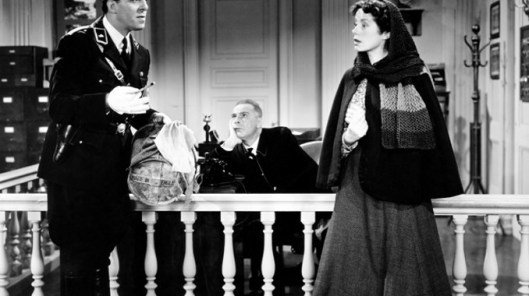
Rating: 6/10 – in World War II, a cleaning woman, Ella Muggins (Lanchester), who believes herself to be protected from harm thanks to a magical glass eye, determines to travel to Berlin and kill Hitler; a whimsical comic fantasy that somehow manages to have its heroine save a German officer (Oliver) and his girlfriend, Passport to Destiny is an uneven yet enjoyable product of its time, with a terrific central performance by Lanchester, and a winning sense of its own absurdity.

Hellraiser: Judgment (2018) / D: Gary J. Tunnicliffe / 81m

Cast: Damon Carney, Randy Wayne, Alexandra Harris, Paul T. Taylor, Gary J. Tunnicliffe, Helena Grace Donald, Heather Langenkamp

Rating: 3/10 – the hunt for a serial killer finds its lead detective (Carney) coming face to face with the Cenobites – still led by Pinhead (Taylor) – but the solution to the case isn’t as obvious as it seems; the tenth movie in the series, Hellraiser: Judgment at least tries to offer something new in terms of the Cenobites’ involvement, but in the end it can’t escape the fact that Pinhead et al are no longer frightening, the franchise’s penchant for sado-masochistic violence has lost any impact it may once have had, and as with every entry since Hellbound: Hellraiser II (1988), it fails to introduce one single character for the viewer to care about.

The Final Year (2017) / D: Greg Barker / 89m

With: Ben Rhodes, Samantha Power, John Kerry, Barack Obama

Rating: 7/10 – a look at the final year of Barack Obama’s second term as President of the United States focuses on his foreign policy team and their diplomatic efforts on the global stage; featuring contributions from some of the key players, The Final Year is an interesting if not fully realised documentary that never asks (or finds an answer for) the fundamental question of why Obama’s administration chose to concentrate so much on foreign policy in its last days, something that keeps all the good work that was achieved somewhat in isolation from the viewer.

And Then Came Lola (2009) / D: Ellen Seidler, Megan Siler / 71m

Cast: Ashleigh Sumner, Jill Bennett, Cathy DeBuono, Jessica Graham, Angelyna Martinez, Candy Tolentino, Linda Ignazi

Rating: 4/10 – in a series of Groundhog Day-style episodes, the undisciplined Lola (Sumner) is required to rush a set of photographs to her interior designer girlfriend, Casey (Bennett), so she can seal the deal at a job interview – but she has varying degrees of success; an LGBTQ+ comedy that stops the action every so often to allow its female cast to make out with each other, And Then Came Lola doesn’t put enough spins on its central conceit, and doesn’t make you care enough if Lola comes through or not.

The Ritual (2017) / D: David Bruckner / 94m

Cast: Rafe Spall, Arsher Ali, Robert James-Collier, Sam Troughton, Paul Reid, Maria Erwolter

Rating: 7/10 – following the tragic death of one of their friends, four men embark on a memorial hiking trip in Sweden, but when one of them is injured, taking a short cut through a forest puts all their lives in jeopardy; a creature feature with a nasty edge to it and above average performances for a horror movie, The Ritual employs mystery as well as terror as it creates a growing sense of dread before it runs out of narrative steam and tries to give its monster a back story that brings the tension up short and leads to a not entirely credible denouement.

Jumanji: Welcome to the Jungle (2017) / D: Jake Kasdan / 119m

Cast: Dwayne Johnson, Kevin Hart, Jack Black, Karen Gillan, Rhys Darby, Bobby Cannavale, Nick Jonas, Alex Wolff, Ser’Darius Blain, Madison Iseman, Morgan Turner

Rating: 7/10 – four teenagers find themselves transported into a video game called Jumanji, where, transformed into avatars, they are charged with thwarting the dastardly plans of the game’s chief villain (Cannavale); a reboot more than a sequel, Jumanji: Welcome to the Jungle has the benefit of well-drawn, likeable characters, winning performances from Johnson, Hart, Black and Gillan, and confident direction from Kasdan, all things that serve to distract from the uninspired game levels and the predictable nature of its main storyline.

Paddington 2 (2017) / D: Paul King / 103m

Cast: Hugh Bonneville, Sally Hawkins, Ben Whishaw, Hugh Grant, Brendan Gleeson, Julie Walters, Jim Broadbent, Peter Capaldi, Imelda Staunton, Sanjeev Bhaskar, Ben Miller, Jessica Hynes, Noah Taylor, Joanna Lumley

Rating: 9/10 – the theft of a unique pop-up book sees Paddington (Whishaw) end up in jail while the Brown family do their best to track down the real thief, Phoenix Buchanan (Grant); an absolute joy, Paddington 2 is just so unexpectedly good that even just thinking about it is likely to put a smile on your face, something that’s all too rare these days, and which is thanks to an inspired script by director King and Simon Farnaby, terrific performances from all concerned, and buckets of perfectly judged humour.

Gangster Land (2017) / D: Timothy Woodward Jr / 113m

Original title: In the Absence of Good Men

Cast: Sean Faris, Milo Gibson, Jason Patric, Jamie-Lynn Sigler, Peter Facinelli, Mark Rolston, Michael Paré

Rating: 4/10 – the rise of boxer Jack McGurn (Faris) from potential champion to right-hand man to Al Capone (Gibson), and his involvement in Capone’s feud with ‘Bugs’ Moran (Facinelli); a biopic that’s hampered by lacklustre performances and a leaden script, Gangster Land wants to be thought of as classy but budgetary constraints mean otherwise, and Woodward Jr’s direction doesn’t inject many scenes with the necessary energy to maintain the viewer’s interest, something that leaves the movie feeling moribund for long stretches.

Pitch Perfect 3 (2017) / D: Trish Sie / 93m

Cast: Anna Kendrick, Rebel Wilson, Brittany Snow, Anna Camp, Hailee Steinfeld, John Lithgow, Ruby Rose, Matt Lanter, Elizabeth Banks, John Michael Higgins, DJ Khaled

Rating: 4/10 – the Borden Bellas are back for one last reunion before they all go their separate ways, taking part in a European tour and competing for the chance to open for DJ Khaled; a threequel that adds nothing new to the mix (even if you include Lithgow as Wilson’s scoundrel father), and which is as empty-headed as you’d expect, Pitch Perfect 3 isn’t even well thought out enough to justify its existence and trades on old glories in the hope that the audience won’t notice that’s what they are.

Something Real and Good (2013) / D: Luke Rivett / 81m

Cast: Matt Jones, Alex Hannant, Colton Castaneda, Marla Stone

Rating: 4/10 – he (Jones) meets her (Hannant) in an airport lounge, and over the next twenty-four hours, get to know each other, flirt, have fun, and stay in a hotel together due to their flight being cancelled; the slightness of the story – boy meets girl, they talk and talk and talk and talk – is further undermined by the cod-philosophising and trite observations on life and relationships that they come out with, leaving Something Real and Good as a title that’s a little over-optimistic, though if it achieves anything, it’ll be to stop people from striking up random conversations with strangers in airports – and that’s now a good thing.

Ladies First (2017) / D: Uraaz Bahi / 39m

With: Deepika Kumari, Geeta Devi, Shiv Narayan Mahto, Dharmendra Tiwari

Rating: 8/10 – the story of Deepika Kumari, at one time the number one archer in the world, and her efforts to obtain Olympic gold in 2012 and 2016; a sobering documentary that for a while feels like it’s going to be a standard tale of triumph over adversity (here, relating to Indian culture and gender equality), Ladies First offers a much deeper examination of success and failure than might be expected, and shows that in India, as in many other countries, there are precious few opportunities for women to be anything more than wives and mothers.

Heritage Falls (2016) / D: Shea Sizemore / 88m

Cast: David Keith, Coby Ryan McLaughlin, Keean Johnson, Sydney Penny, Nancy Stafford, Devon Ogden

Rating: 4/10 – three generations of males head off for a bonding weekend designed to overcome the divisions that are keeping them distant or apart from each other; a mixed bag of drama and lightweight comedy, Heritage Falls wants to say something sincere and relevant about father-son relationships, but falls way short in its ambitions thanks to a script that can’t provide even one of its protagonists with a convincing argument for their position, a bland visual style, and even blander direction from Sizemore, making this a turgid exercise in emotional dysfunction.

The Long Dark Hall (1951) / D: Anthony Bushell, Reginald Beck / 86m

Cast: Rex Harrison, Lilli Palmer, Denis O’Dea, Reginald Huntley, Anthony Dawson, Brenda de Banzie, Eric Pohlmann
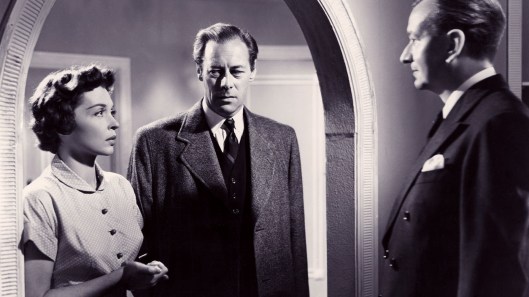
Rating: 7/10 – when an actress is murdered in the room she rents, suspicion falls on her lover, married man Arthur Groome (Harrison), but even though he goes on trial at the Old Bailey, his wife, Mary (Palmer), stands by him; an early UK attempt at film noir, The Long Dark Hall has its fair share of tension, particularly in a scene at the Groome home where Mary is alone with the real killer (Dawson), but Harrison doesn’t seem fully committed (it wasn’t one of his favourite projects), and the screenplay lurches too often into uncomfortable melodrama, though overall this has an air of fatalism that keeps it intriguing for viewers who are used to their crime thrillers being a little more straightforward.

Ready Player One (2018) / D: Steven Spielberg / 140m

Cast: Tye Sheridan, Olivia Cooke, Ben Mendelsohn, Lena Waithe, T.J. Miller, Simon Pegg, Mark Rylance, Philip Zhao, Win Morisaki, Hannah John-Kamen

Rating: 7/10 – in 2045, people have become obsessed with a virtual reality game called Oasis where anything can happen, but when its creator (Rylance) reveals there’s a hidden prize within the game, one that will give overall control of the game and its licence to the winner, it’s up to a small group of gamers led by Parzifal (Sheridan) to stop a rival corporation from winning; an elaborate sci-fi fantasy that provides a nostalgia overload for fans of Eighties pop culture in particular, Ready Player One has plenty of visual pizzazz, but soon runs out of steam in the story department, and offers way too much exposition in lieu of a proper script, a situation it tries to overcome by being dazzling if empty-headed, but which in the hands of Steven Spielberg still manages to be very entertaining indeed – if you don’t give it too much thought.

The Temple (2017) / D: Michael Barrett / 78m

Cast: Logan Huffman, Natalia Warner, Brandon Sklenar, Naoto Takenaka, Asahi Uchida

Rating: 4/10 – three American tourists – best friends Chris (Huffman) and Kate (Warner), and Kate’s boyfriend, James (Sklenar) – are travelling in Japan when they hear about an abandoned temple and decide to go there, little knowing what will happen to them once they get there; even with its post-visit framing device designed to add further mystery to events, The Temple is a chore to sit through thanks to its being yet another horror movie where people behave stupidly so that a number of uninspired “shocks” can be trotted out, along with dreary dialogue and the (actually) terrible realisation that movie makers still think that by plundering legends and myths from other countries then their movies will be much more original and scary… and that’s simply not true.

Chokeslam (2016) / D: Robert Cuffley / 102m

Cast: Chris Marquette, Amanda Crew, Michael Eklund, Niall Matter, Gwynyth Walsh, Mick Foley

Rating: 5/10 – a 10-year high school reunion gives deli owner Corey (Marquette) the chance to reconnect with the girl he loved, Sheena (Crew), who is now a famous female wrestler; a lightweight romantic comedy that pokes moderate fun at the world of wrestling, Chokeslam is innocuous where it should be daring, and bland when it should be heartwarming, making it a movie that’s populated almost entirely by stock characters dealing with stock situations and problems, and which, unsurprisingly, provides them with entirely stock solutions.

All the Money in the World (2017) / D: Ridley Scott / 132m

Cast: Michelle Williams, Christopher Plummer, Mark Wahlberg, Romain Duris, Timothy Hutton, Charlie Plummer, Marco Leonardi, Giuseppe Bonifati

Rating: 8/10 – a recreation of the kidnapping in 1973 of John Paul Getty III (Charlie Plummer), and the subsequent attempts by his mother, Gail (Williams), to persuade his grandfather (Christopher Plummer) to pay the ransom, something the then world’s richest man refuses to do; Scott’s best movie in years, All the Money in the World is a taut, compelling thriller that tells its story with ruthless expediency and features yet another commanding performance from Williams, something that takes the spotlight away from the presence of Christopher Plummer (who’s good but not great), and which serves as a reminder that money isn’t the central concern here, but a mother’s unwavering love for her child.

5 Headed Shark Attack (2017) / D: Nico De Leon / 98m

Cast: Chris Bruno, Nikki Howard, Lindsay Sawyer, Jeffrey Holsman, Chris Costanzo, Amaanda Méndez, Ian Daryk, Jorge Navarro, Lorna Hernandez, Michelle Cortès, Nicholas Nene

Rating: 3/10 – a four-headed shark terrorises the waters off Palomino Island in Puerto Rico before mutating into a five-headed shark, and being hunted by both the island’s police force, and a team of marine biologists from a local aquarium; operating at the bargain bucket end of the movie business, 5 Headed Shark Attack, SyFy’s latest cheaply made farrago, references Sharknado (2013) early on (as if it’s being clever), and then does it’s absolute best to make its audience cringe and wince and wish they’d never started watching in the first place, something the awful screenplay, dialogue, acting, special effects and direction all manage without even trying.

Share this:

  • Click to share on X (Opens in new window) X
  • Click to share on Facebook (Opens in new window) Facebook
  • More
  • Click to print (Opens in new window) Print
  • Click to email a link to a friend (Opens in new window) Email
Like Loading...

Batman (1943) – Chapter 3: The Mark of the Zombies

27 Tuesday Mar 2018

Posted by dullwood68 in Movies

≈ Leave a comment

Tags

Alfred, Columbia, Douglas Croft, Drama, J. Carrol Naish, Lambert Hillyer, Lewis Wilson, Radium gun, Review, Serial, Thriller

D: Lambert Hillyer / 17m

Cast: Lewis Wilson, Douglas Croft, J. Carrol Naish, Shirley Patterson, William Austin, Robert Fiske, George Chesebro, Gus Glassmire

Having fallen from a power line while carrying Linda to safety, she and Batman are saved by Robin throwing the line that helped him to the ground. Meanwhile, Dr Daka is still trying to persuade Linda’s uncle, Martin Warren, to join the New Order. When he refuses, Daka decides there’s nothing for it but to turn Warren into a zombie, another of his men that he controls through a radio microphone. Back at Wayne Manor, all Batman and Robin can do is wait for a response to the ad they placed in the newspapers about the radium gun. While they do, Daka arranges to have a military supply train blown up as it crosses a bridge that evening. Before that, though, he charges his men with responding to the ad and retrieving the radium gun. They fall for Batman’s trap, but in the process of escaping, leave behind details of their plan for the supply train. Racing to where Daka’s henchmen are planting the explosives, the ensuing fight leaves Batman unconscious on the bridge, and with the supply train thundering towards his prone body…

After the breakneck pace of Chapter 2, Chapter 3 settles into a steadier groove once Linda is saved. There’s more time spent with Dr Daka, time that gives the impression Naish is channelling the spirit of Peter Lorre as Mr Moto in his performance. And though the chapter is titled The Mark of the Zombies we’re still no nearer finding out why Daka even bothers turning people into zombies in the first place. We’ve seen a total of three so far: an ex-colleague of Warren’s who attacked Batman in Chapter 1 before inexplicably jumping to his death, and the two who act as doormen whenever Daka wants to move from the New Order’s meeting room to his adjacent laboratory. Now there’s poor old Warren to make it four. How fiendish! There’s fun to be had, though, in the contrast between Daka’s nefarious actions and a contemporaneous scene that sees Bruce and Dick lounging about at Wayne Manor waiting for a break to come their way. It could almost be a behind the scenes moment with Wilson and Croft waiting to be called for their next scene. Thankfully it’s a short scene and then the script remembers it needs to get a move on.

The plan to blow up the supply train serves as a reminder that for all the superhero trappings and radium gun shenanigans, Daka is at heart a saboteur working for Emperor Hirohito. It’s a timely reminder in terms of the overall story that it’s more than likely that Columbia had an idea for a World War II-set serial laying around and Batman was co-opted into it. But before all that, there’s the small matter of Daka’s henchmen and the trap set for them by Batman. The first of two excuses for another poorly choreographed punch up, this sequence features Alfred disguised as an early precursor of Colonel Sanders, and once the scrapping has started, calling for help on the telephone in his own inimitable English fashion: “Get me Scotland Yard… I mean get me the police… get me anybody, I’m being murdered!” As he did in Chapter 2, Austin steals the show (which admittedly isn’t difficult), and the action becomes more entertaining because of his presence. As for Wilson, he’s a little stiff this time around, perhaps reminding himself he’s got another twelve chapters to get through in that ill-fitting hood, and asking himself how did his career start off like this. What he should be asking, though, is just how is Batman going to survive this time…?

Rating: 7/10 – a solid, dependable chapter that isn’t as fast-paced as its predecessor, this is still entertaining stuff thanks to Hillyer’s firm hand on the tiller, and a script – give it up for Victor McLeod, Leslie Swabacker and Harry L. Fraser – that knows how to give the appearance of moving things forward while also keeping them static at the same time; at this point, Batman is in danger of just having the Caped Crusader turn up for a fight before being put in mortal jeopardy each week, but there’s enough here (so far) to stop that from being a problem.

Share this:

  • Click to share on X (Opens in new window) X
  • Click to share on Facebook (Opens in new window) Facebook
  • More
  • Click to print (Opens in new window) Print
  • Click to email a link to a friend (Opens in new window) Email
Like Loading...

Once Upon a Time in Venice (2017)

26 Monday Mar 2018

Posted by dullwood68 in Movies

≈ Leave a comment

Tags

Action, Bruce Willis, Comedy, Drugs, Jason Momoa, John Goodman, Mark Cullen, Review, Thriller

D: Mark Cullen / 94m

Cast: Bruce Willis, John Goodman, Jason Momoa, Famke Janssen, Thomas Middleditch, Adam Goldberg, Emily Robinson, Maurice Compte, Stephanie Sigman, Jessica Gomes, Adrian Martinez, Ken Davitian, Tyga, Wood Harris, Christopher McDonald, Kal Penn, Elisabeth Röhm

Steve Ford (Willis) is a private detective. He doesn’t appear to take anything seriously, except for his dog, Buddy. Buddy is the most important part of Steve’s life, and even though the dog spends more time with Steve’s niece, Taylor (Robinson), the bond between the two is unbreakable. While being chased – naked and on a skateboard – by the brothers of a young woman (Gomes) he shouldn’t be “seeing”, Steve is helped by an old friend, Tino (Martinez), who does so on one condition: that Steve retrieves Tino’s car, which has been stolen by a local gang. The gang’s leader is Spyder (Momoa), and when Steve manages to steal the car back, Spyder retaliates by stealing stuff from Taylor’s home – including Buddy. Steve tries to get Buddy back from Spyder, and they agree on a deal, but when Steve comes through he learns that Spyder’s girlfriend, Lupe (Sigman), has disappeared, taking Buddy and a briefcase full of drugs with her. Spyder makes Steve another deal: find Lupe and retrieve the briefcase, and Buddy can come back to him.

From time to time, a movie comes along that looks like the very definition of unprepossessing, and which you’re pretty certain is going to be either a disappointment, or a big letdown, or both. It’s a movie that requires little conscious thought in order to watch it, and which is likely to be about as memorable as that time you can’t remember from a week ago. Once Upon a Time in Venice is one such movie. There’s a phrase: so bad it’s good, and sometimes it’s an apt phrase, but not here. This is, and let’s not forget it or make allowances for it, a bad movie. On so many levels, from the performances, to the script, to the direction, and the casual stereotyping (or racism, if you want to use a stronger term). This is a movie that gets so much wrong it’s almost as if the makers were challenging themselves to under achieve. And yet… and yet… while it may appear unprepossessing, it’s also an unlikely candidate for Guilty Pleasure of 2017. It’s definitely not so bad that it’s good, it’s so bad that it’s actually enjoyable… though not always for the right reasons.

Now, we’ve become used to Bruce Willis phoning in his performances over the last ten years – notable exceptions: Moonrise Kingdom and Looper (both 2012) – and here it’s no different, but for some reason the silliness and the absurdity of it all, and the very broad acting ranges on display, actually help to make this movie more enjoyable than it has any right to be. Willis as Steve is like an eclectic combination of John McClane and the Three Stooges (though without the eye poking and the face slapping). Goodman plays Steve’s best friend, Dave, as if he’s having a stroke the whole time, while Momoa’s drug lord(!) is a muscular mumbler, short on smarts and far too easily manipulated. The plot seems to have been made up on the spot during filming, and Cullen’s direction is so loose that it’s in danger of being blown away. Whether it’s Willis in drag (not a pretty sight), or homophobic grafitti directed at minor character Lou the Jew (Goldberg) (the script actually says the soubriquet isn’t offensive because he calls himself that), this is a movie you can only follow along blindly, accepting it for what it is – very bad indeed – but enjoying it nevertheless.

Rating: 4/10 – somehow grabbing an extra point just by virtue of how barmy it all is, Once Upon a Time in Venice is a low-brow crime caper that contains way too much bad acting, way too much bad dialogue, and way too much bad everything else; but somehow it’s a movie you can laugh with instead of at, and it’s a movie that has to be seen to be believed… on so many levels.

Share this:

  • Click to share on X (Opens in new window) X
  • Click to share on Facebook (Opens in new window) Facebook
  • More
  • Click to print (Opens in new window) Print
  • Click to email a link to a friend (Opens in new window) Email
Like Loading...

I Kill Giants (2017)

24 Saturday Mar 2018

Posted by dullwood68 in Movies

≈ Leave a comment

Tags

Anders Walter, Bullying, Drama, Fantasy, Giants, Graphic novel, Imogen Poots, Madison Wolfe, Review, Thriller, Zoe Saldana

D: Anders Walter / 106m

Cast: Madison Wolfe, Zoe Saldana, Imogen Poots, Sydney Wade, Rory Jackson, Art Parkinson, Jennifer Ehle

For Barbara Thorson (Wolfe), the existence of giants is a given, as much a part of the fabric of her daily life as brushing her teeth or riding the bus to school. Barbara is an expert on giants, she knows their origins and their proclivities, but worse still, she’s seen one in the forests outside the town where she lives. Knowing their destructive power, she determines to save the town, and constructs elaborate traps designed to kill the giant. Of course, no one else believes her when she talks about these terrible creatures, not her adult sister, Karen (Poots), or her older brother, Dave (Parkinson). At school she’s treated like the outsider she’s happy to be, and is regularly targeted by the school bully, Taylor (Jackson). The arrival of Sophia (Wade) from England gives her a chance to make both a friend and an ally in her fight against the giants, but with the omens and portents pointing toward a greater threat than even she is prepared for, Barbara’s behaviour becomes increasingly erratic. Her friendship with Sophia suffers, she rejects the help of the school psychologist, Mrs Mollé (Saldana), and does her best to avoid talking about the reasons why her main weapon against the giants is called Coveleski…

Adapted from the graphic novel of the same name by Joe Kelly and JM Ken Niimura, and with a script by Kelly, I Kill Giants is a winning blend of teen drama and fantasy thriller that plays it straight throughout, and when it does add humour, ensures that it’s as mordaunt as possible. Barbara’s world is convincingly structured from the start, and as the movie progresses, Kelly’s script adds the kind of layers that make it difficult for the viewer to dismiss Barbara’s fantasy world as being just that (there are moments when you’ll be sure it’s all in her head, and then moments when you won’t be). The movie provides clues as to the reality of what’s happening, but unless you’ve already read the original graphic novel, it’s unlikely you’ll piece it all together before the end. This means that the tone of the movie is dark overall, with its themes of imminent peril from without (the giants) and from within (Taylor), the fractured dynamic of Barbara’s family, and the cause – if there is one – of her retreat into a fantasy world.

With all these elements in place, you could be forgiven for thinking that I Kill Giants is a dour, depressing movie, but thanks to Kelly’s understanding of the characters and first-timer Walter’s sympathetic approach, not to mention an impressive performance from Wolfe, this is often uplifting stuff when it’s not addressing the serious natures of its various themes. Inevitably, Barbara is the kind of precocious child who can talk to adults on their own level, and leave them dumbfounded (something that only seems to happen in the movies), while her friendship with Sophia goes through the kinds of trials that leaves Sophia feeling less like a fully developed character and more of a deus ex machina. Elsewhere, there’s a striking animated section that depicts the origins and various incarnations of the giants, and several moments where the sound is either distorted or withdrawn in order to show Barbara’s disorientation when faced with certain unpalatable facts. Rasmus Heise’s cinematography, with its largely muted colour scheme, adds to the overall tone, and there’s a fascinating degree of detail in Stijn Guillaume’s set decoration.

Rating: 8/10 – an ambitious Irish/Belgian co-production, I Kill Giants tells its story with a great degree of warmth and affinity for its central character, and in doing so, proves itself to be noticeably sincere; it’s a cleverly assembled movie, forthright and stirring in places, and like all the best stories, it doesn’t give up its secrets until it absolutely has to.

Share this:

  • Click to share on X (Opens in new window) X
  • Click to share on Facebook (Opens in new window) Facebook
  • More
  • Click to print (Opens in new window) Print
  • Click to email a link to a friend (Opens in new window) Email
Like Loading...

Beast of Burden (2018)

23 Friday Mar 2018

Posted by dullwood68 in Movies

≈ Leave a comment

Tags

Daniel Radcliffe, DEA, Drama, Drug mule, Grace Gummer, Jesper Ganslandt, Mexico, Pilot, Review, Thriller

D: Jesper Ganslandt / 90m

Cast: Daniel Radcliffe, Grace Gummer, Pablo Schreiber, Robert Wisdom, Cesar Perez, David Joseph Martinez

Ex-US Air Force and Peace Corps pilot Sean Haggerty (Radcliffe) has a bit of a problem: he’s making a clandestine flight from Mexico to the US, and he’s carrying twenty-five kilos of drugs for a Mexican cartel. The plane he’s flying sounds like it’s going to fall apart at any moment, his Mexican handlers clearly don’t trust him for a minute, and as if either of these things wasn’t bad enough, he’s also being squeezed by the DEA into fetching them a laptop that (presumably, because we’re not actually told) contains incriminating evidence about the cartel. And when the flight plan is changed mid-flight, and a certain Mr Mallory (Wisdom) starts calling Sean and asking if he loves his wife, Jen (Gummer), it’s clear that it’s going to take a lot to keep Sean out of further trouble, and Jen safe. With Mallory and DEA agent Bloom (Schreiber) both calling him to keep him in respective line, and Jen calling him with an agenda of her own, Sean finds himself being painted into a corner that he’s unlikely to escape from.

Essaying yet another character dealing with an extreme physical and emotional dilemma, Daniel Radcliffe is Beast of Burden‘s principal asset, its MVP if you will. As Sean, Radcliffe spends most of his screen time in the plane’s cockpit, but it’s a tremendously focused performance – vivid, compelling, forceful and driven. Sean is effectively a loser trying one last time to get ahead, to boost his waning sense of self-worth and to show Jen (though she doesn’t know just how) that he can make things right in the wake of their finding out that she has ovarian cancer and may never have children. Yes, we’re in “one last big score” territory, but thanks to Adam Hoelzel’s sometimes wayward yet effective script, Radcliffe’s committed performance, and Ganslandt’s tough, muscular direction, it doesn’t always feel so clichéd or so derivative that it reminds you too often of other similarly themed movies. Instead, it grabs the attention and doesn’t let up as Sean’s position becomes increasingly threatened, and the machinations of both Bloom and Mallory ensure that whatever happens, if he comes out of it all alive, then he’ll be one very lucky drug mule indeed. Shot in close up for the most part, Radcliffe’s expressive features run the gamut from despair to anger to paranoia to fear to bewilderment to anguish and all the way back to despair again.

But while Sean is in the air and the movie sticks to its one singular purpose, to be an edge-of-the-seat thriller, two narrative decisions mar the movie as a whole. One is the involvement of Jen. At first she’s the wife trying to cope with the possibility that she and her husband are drifting apart in the wake of her illness, but then the script catapults her into the action and she has to be rescued. There are no prizes for realising that this has to happen once Sean is on the ground, and that’s the second problem with the narrative: once Sean inevitably crash lands, the script crashes with him. The last ten minutes or so lack the focus of the previous seventy-five minutes, and what transpires is a huge disappointment in relation to what’s gone before. Thanks to Hoelzel and Ganslandt both taking their eye off the ball, the tension and the claustrophobia that’s been carefully built up, evaporates in the blink of an eye. It’s a shame, as up until then, this is a very entertaining thriller indeed.

Rating: 7/10 – anchored by another tremendous performance from Radcliffe, Beast of Burden is a thriller that gleefully – and effectively – tortures its central character, and then does an about face in favour of a messy, contrived ending; the movie also benefits from Sherwood Jones’s astute editing skills, a stirring and portentous score from Tim Jones, and the oppressive nature of seeing one man confined in such a relatively small space and trying to deal with much larger problems.

Share this:

  • Click to share on X (Opens in new window) X
  • Click to share on Facebook (Opens in new window) Facebook
  • More
  • Click to print (Opens in new window) Print
  • Click to email a link to a friend (Opens in new window) Email
Like Loading...

80,000 Suspects (1963)

17 Saturday Mar 2018

Posted by dullwood68 in Movies

≈ Leave a comment

Tags

Bath, Claire Bloom, Drama, Elleston Trevor, Literary adaptation, Review, Richard Johnson, Smallpox, The Pillars of Midnight, Thriller, Unhappy marriage, Val Guest, Yolande Donlan

D: Val Guest / 109m

Cast: Claire Bloom, Richard Johnson, Yolande Donlan, Cyril Cusack, Michael Goodliffe, Mervyn Johns, Kay Walsh, Norman Bird, Basil Dignam, Arthur Christiansen

It’s New Year’s Eve and all is not well between Dr Steven Monks (Johnson) and his wife, Julie (Bloom). After nine years their marriage is faltering. He has had an affair with a long-time friend, Ruth Preston (Donlan), the wife of one of his colleagues, Clifford (Goodliffe), but Julie only has vague suspicions and half-formed ideas as to why their marriage is in trouble. The discovery that a patient at the hospital where Steven works has smallpox, at first puts their problems to one side, but as more and more sufferers are found and the threat of an epidemic hangs over everyone, their relationship – and how they overcome their issues – takes on a greater importance for both of them. Julie contracts the virus, while at the same time, Ruth may or may not have left her husband. With the authorities stretched to the limit in their efforts to contain the outbreak, personal animosities become heightened, Steven and Julie find themselves making irrevocable decisions about their marriage, and one carrier threatens the safety of everyone…

Adapted from the novel, The Pillars of Midnight by Elleston Trevor, 80,000 Suspects is three movies rolled into one. There’s the hospital-based drama that unfolds as more and more smallpox sufferers are discovered and the Ministry of Health is brought in to save the day, there’s the relationship drama built around the problems of Steven and Julie, and there’s a late addition in the form of a race against time to find the last carrier, which makes it a thriller. All these elements bump against each other as the movie unfolds, and though they don’t always do so in an organic or believable way, the strength of the material overall ensures any rough transitions are smoothed over as quickly as possible. As each element is explored, the script also ensures that they’re not explored for too long before moving on or away to the next development in the story. This keeps the narrative ticking over effectively, and allows the characters – even the minor ones such as Johns’ over-anxious Ministry of Health coordinator – to stand out as credibly as possible. Working from his own script, director Val Guest adroitly keeps the focus where it’s needed, and elicits good performances from all concerned (though you could argue Johnson is a little stiff at times).

Shot in and around the town of Bath during the winter of early 1963 (which was particularly bad), the movie benefits from its location work, and the involvement of local residents in the scenes involving mass vaccination (watch out too for a cameo from Thirties star Graham Moffatt as a man with a fear of needles). This level of verisimilitude adds greatly to the no-frills approach adopted by Guest, and helps to make the potential scale of the epidemic that much more frightening. And for once, there aren’t any hidden agendas or characters using the outbreak for personal gain, just a group of people trying to do their best under difficult circumstances. The inter-relationships between the Monks’ and the Prestons does lead to a couple of soap opera-style moments, but these are forgivable in a movie that, by and large, could be mistaken at times as being a reconstruction of past events. Guest oversees it all with his usual skill, and in tandem with DoP Arthur Grant, uses the CinemaScope format to impressive effect, even though he relies on medium shots for most of the movie. Often gripping, this is a minor British classic, and easily due a revival.

Rating: 8/10 – an intelligent, yet modest drama with thriller leanings, 80,000 Suspects invests heavily in its characters and uses its smallpox outbreak as a way of exploring their faults and foibles, and in some depth; Bloom is terrific as the conflicted Julie, but Guest is the movies’s MVP, and if for nothing else, than for showing the fear and paranoia about the outbreak spreading out of control coming not from the public, but from the authorities trying to combat it.

NOTE: At present, there isn’t a trailer for 80,000 Suspects.

Share this:

  • Click to share on X (Opens in new window) X
  • Click to share on Facebook (Opens in new window) Facebook
  • More
  • Click to print (Opens in new window) Print
  • Click to email a link to a friend (Opens in new window) Email
Like Loading...

Too Late (2015)

02 Friday Mar 2018

Posted by dullwood68 in Movies

≈ Leave a comment

Tags

Crystal Reed, Dennis Hauck, Dichen Lachman, Drama, John Hawkes, Murder, Private investigator, Revenge, Review, Thriller

D: Dennis Hauck / 107m

Cast: John Hawkes, Vail Bloom, Joanna Cassidy, Jeff Fahey, Robert Forster, Brett Jacobsen, Dichen Lachman, Dash Mihok, Sydney Tamiia Poitier, Crystal Reed, Rider Strong, Natalie Zea

A modern day noir that sports a grim measure of inevitability, the central character in Too Late is not John Hawkes’ determined private investigator, Samson, but Dorothy (Reed), the stripper he befriends then loses touch with for three years. When she asks to meet him, she’s already in trouble, and by the time he arrives for their rendezvous, she’s already dead. So what’s a newly embittered P.I. to do? Why, go after the people responsible of course. Dorothy’s murder gives Samson a purpose he’s been missing, and he’s as dogged and persistent as gumshoes in the movies usually are, but writer-director Dennis Hauck isn’t interested solely in presenting Samson’s woes, he’s equally (if not more) interested in revealing Dorothy’s hopes and dreams. Too often in noir thrillers, the murder victim serves as a modus operandi for the hero’s actions. Here, Dorothy is more than that: she’s someone the viewer gets to know, and in some detail, and that’s because once she’s dead, she’s not really dead.

How is this possible, you might ask? Well, Hauck has a trick up his sleeve. Once the first scene is over and we’ve met Dorothy and gotten to know a lot about her and she’s wound up dead, Hauck brings her back in the third scene, one where we get to see her meet Samson for the first time. The movie consists of five scenes in total, but they’re assembled in a non-linear fashion. This isn’t as confusing as it might sound – though some viewers may feel aggrieved when they realise that scene five is actually a precursor to scene four – and what it does is to allow Dorothy’s character to be present throughout the whole movie, and to leave an indelible impression. That way, Samson’s determination to track down and punish the people responsible for her death becomes understandable in a way that doesn’t often occur in noir thrillers. And Hauck is clever enough through his screenplay to make Samson’s “mission” a personal one that really comes across as personal, instead of something perfunctory in order to get the movie started. There is an air of personal redemption going on with Samson, and his persistence hints at deeper feelings for Dorothy than he might admit.

Each scene has been shot in one single, continuous twenty-two minute take, so there’s a lot of Steadicam work, plus a lot of swinging the camera from one character to another, which can be really distracting (there’s also an impressive zoom in the first scene that is technically superb for the distance it covers). On occasion the need to maintain the integrity of the take makes for some uncomfortable transitions, but overall Hauck and DoP Bill Fernandez have done an impressive job of immersing the viewer in what’s happening, and populating the frame with details that support the emotion of each scene as it unfolds. The performances are very good indeed, with Hawkes, Lachman and Reed all at the top of their game, while the likes of Bloom – re-enacting Julianne Moore’s famous nude scene from Short Cuts (1993) – Zea and Jacobsen all make an impact in minor roles. This being a modern noir thriller, there’s plenty of violence, but it’s always in service to the demands of the narrative, rather than the other way round. As a tale of flawed human beings trying their best to get by in the world with what little they have that’s theirs, Too Late is an intriguing, thought-provoking revenge drama that has no intention of telling its heartfelt story in any other way than with honesty, sincerity and an unfailing commitment to its characters.

Rating: 8/10 – the commitment to continuous twenty-two minute scenes does lead to some pacing issues, and some moments do feel like filler (e.g. the point where Samson picks up a guitar and performs an admittedly lovely song), but Too Late is far too good everywhere else; a meditative, earnest thriller that impresses every time it surprises, this also serves as an example of how character can – and always should – drive the narrative of a movie forward, and how it should be allowed to maintain that ambition right to the very end.

Share this:

  • Click to share on X (Opens in new window) X
  • Click to share on Facebook (Opens in new window) Facebook
  • More
  • Click to print (Opens in new window) Print
  • Click to email a link to a friend (Opens in new window) Email
Like Loading...

Monthly Roundup – February 2018

28 Wednesday Feb 2018

Posted by dullwood68 in Movies

≈ 1 Comment

Tags

'C'-Man, Action, Adam Devine, Alan James, Alec Baldwin, Allene Ray, Animation, Ari Sandel, Atomic Blonde, Beauty and the Beast (2017), Berlin, Bill Condon, Black Panther, Chadwick Boseman, Charlize Theron, Comedy, Crime, Daisy Ridley, Dan Stevens, David Leitch, Dean Jagger, Emma Watson, Fantasy, Game Night, Guinn Williams, James McAvoy, Jason Bateman, John Francis Daley, Jonathan Goldstein, Joseph Lerner, Kenneth Branagh, Maris Wrixon, Marvel, Michelle Pfeiffer, Murder, Murder on the Orient Express (2017), Mystery, Noel M. Smith, Rachel McAdams, Reviews, Romance, Romantic comedy, Ryan Coogler, Steve Buscemi, Superhero, The Boss Baby, The Case of the Black Parrot, The Phantom (1931), Thriller, Tom McGrath, Wakanda, When We First Met, William Lundigan

‘C’-Man (1949) / D: Joseph Lerner / 77m

Cast: Dean Jagger, John Carradine, Lottie Elwen, Rene Paul, Harry Landers, Walter Vaughn, Adelaide Klein, Edith Atwater

Rating: 5/10 – a US Customs agent (Jagger) finds himself looking for the killer of his best friend (and fellow Customs agent), and the person responsible for the theft of a rare jewel – could they be the same man?; an odd noir crime thriller that betrays its low budget production values, ‘C’-Man is short on character but long on action, and is fitfully entertaining, though the performances vary wildly and the script contains some very po-faced dialogue, making it a movie you can’t really take your eyes from – and not in a good way.

When We First Met (2018) / D: Ari Sandel / 97m

Cast: Adam Devine, Alexandra Daddario, Shelley Hennig, Andrew Bachelor, Robbie Amell

Rating: 3/10 – Noah (Devine) falls for Avery (Daddario) and winds up in the friend zone, but thanks to a magic photo booth, he gets the chance to go back and change their relationship into a romantic one; a dire romantic comedy that struggles to be both romantic and funny, When We First Met can’t even make anything meaningful out of its time travel scenario, and is let down by a banal script and below-par performances.

The Phantom (1931) / D: Alan James / 62m

Cast: Guinn Williams. Allene Ray, Niles Welch, Tom O’Brien, Sheldon Lewis, Wilfred Lucas, Violet Knights, William Gould, Bobby Dunn, William Jackie

Rating: 3/10 – a reporter (Williams) tries to track down the titular criminal mastermind when he targets the father of his girlfriend (Ray), but finds it’s not as simple a prospect as he’d thought; an early talkie that shows a lack of imagination and purpose, The Phantom struggles from the outset to be anything but a disappointment, what with its unconvincing mix of comedy and drama, its old dark house scenario, and a clutch of amateur performances that drain the very life out of it at every turn.

Black Panther (2018) / D: Ryan Coogler / 134m

Cast: Chadwick Boseman, Michael B. Jordan, Lupita Nyong’o, Danai Gurira, Martin Freeman, Daniel Kaluuya, Letitia Wright, Winston Duke, Sterling K. Brown, Angela Bassett, Forest Whitaker, Andy Serkis, Florence Kasumba, John Kani

Rating: 7/10 – the king of outwardly poor but inwardly technologically advanced Wakanda, T’Challa (Boseman), faces a coup from an unexpected source (Jordan), while trying to work out whether or not his country’s scientific advances should be shared with the wider world; though Black Panther does feature a predominantly black cast, and speaks to black issues, this is still a Marvel movie at the end of the day and one that adheres to the template Marvel have created for their releases, making this an admittedly funny and exciting thrill ride, but one that’s also another formulaic entry in the Marvel Cinematic Universe.

Atomic Blonde (2017) / D: David Leitch / 115m

Cast: Charlize Theron, James McAvoy, John Goodman, Toby Jones, Eddie Marsan, James Faulkner, Roland Møller, Sofia Boutella, Bill Skarsgård, Sam Hargrave, Jóhannes Haukur Jóhannesson, Til Schweiger

Rating: 6/10 – in the days before the fall of the Berlin Wall, a spy (Theron) must find a list of double agents that are being smuggled into the West, a task complicated by the involvement of the Americans, the Russians and a number of other interested parties; an attempt to provide audiences with a female John Wick, Atomic Blonde does have tremendous fight scenes, and a great central performance by Theron, but it’s let down by a muddled script, an even more muddled sense of the period it’s set in, and by trying to be fun when a straighter approach would have worked better.

Beauty and the Beast (2017) / D: Bill Condon / 129m

Cast: Emma Watson, Dan Stevens, Luke Evans, Josh Gad, Kevin Kline, Ewan McGregor, Ian McKellen, Emma Thompson, Nathan Mack, Audra McDonald, Stanley Tucci, Gugu Mbatha-Raw

Rating: 5/10 – the classic fairy tale, and previously a classic animated movie, is given the live action treatment by Disney; if the latest installment of a certain space opera hadn’t been released in 2017, Beauty and the Beast would have been the number one movie at the international box office, but though the House of Mouse might point to this as a measure of quality, the reality is that Watson was miscast, the songs lack the emotional heft they had in the animated version, and the whole thing has a perfunctory air that no amount of superficial gloss and shine can overcome.

The Case of the Black Parrot (1941) / D: Noel M. Smith / 61m

Cast: William Lundigan, Maris Wrixon, Eddie Foy Jr, Paul Cavanagh, Luli Deste, Charles Waldron, Joseph Crehan, Emory Parnell, Phyllis Barry, Cyril Thornton

Rating: 6/10 – a newspaper reporter (Lundigan) gets involved in a case involving a master forger (the Black Parrot), an antique cabinet, and a couple of mysterious deaths; an enjoyable piece of hokum, The Case of the Black Parrot gets by on a great deal of understated charm, a whodunnit plot that doesn’t overplay its hand, and by having its cast treat the whole absurd undertaking with a sincerity that is an achievement all by itself.

Murder on the Orient Express (2017) / D: Kenneth Branagh / 114m

Cast: Kenneth Branagh, Tom Bateman, Lucy Boynton, Olivia Colman, Penélope Cruz, Willem Dafoe, Judi Dench, Johnny Depp, Josh Gad, Manuel Garcia-Rulfo, Derek Jacobi, Marwan Kenzari, Leslie Odom Jr, Michelle Pfeiffer, Sergei Polunin, Daisy Ridley

Rating: 5/10 – the famous Belgian detective Hercule Poirot (Branagh) is faced with a complex mystery: which one of a dozen passengers killed an infamous kidnapper, and more importantly, why?; yet another version of the Agatha Christie novel, Murder on the Orient Express strands its capable cast thanks to both an avalanche and a tepid script, leaving its director/star to orchestrate matters less effectively than expected, particularly when unravelling the mystery means having the suspects seated together in a way that clumsily replicates the Last Supper.

The Boss Baby (2017) / D: Tom McGrath / 97m

Cast: Alec Baldwin, Steve Buscemi, Jimmy Kimmel, Lisa Kudrow, Tobey Maguire, Miles Bakshi, James McGrath, Conrad Vernon, ViviAnn Yee, Eric Bell Jr, David Soren

Rating: 6/10 – when seven year old Tim (Bakshi) finds he has a new baby brother, Theodore (Baldwin) – and one dressed in a business suit at that – he also finds that Theodore is there to stop babies from being usurped in people’s affections by puppies; a brightly animated kids’ movie that takes several predictable swipes at corporate America, The Boss Baby wants to be heartwarming and caustic at the same time, but can’t quite manage both (it settles for heartwarming), and though Baldwin may seem like the perfect choice for the title character, he’s the weakest link in a voice cast that otherwise sells the performances with a great deal of enthusiasm.

Game Night (2018) / D: John Francis Daley, Jonathan Goldstein / 100m

Cast: Jason Bateman, Rachel McAdams, Kyle Chandler, Billy Magnussen, Sharon Horgan, Lamorne Morris, Kylie Bunbury, Jesse Plemons, Danny Huston, Michael C. Hall

Rating: 5/10 – when a group of friends led by Max (Bateman) and Annie (McAdams) are invited to a game night at the home of Max’s brother, Brooks (Chandler), the evening descends into murder and mayhem, and sees the group trying to get to the bottom of a real-life mystery; like an Eighties high concept comedy released thirty years too late, Game Night has a great cast but little direction and waaaay too much exposition clogging up its run time, all of which makes a couple of very funny, very inspired visual gags the only reward for the viewer who sticks with this to the end.

Share this:

  • Click to share on X (Opens in new window) X
  • Click to share on Facebook (Opens in new window) Facebook
  • More
  • Click to print (Opens in new window) Print
  • Click to email a link to a friend (Opens in new window) Email
Like Loading...

Acts of Vengeance (2017)

22 Thursday Feb 2018

Posted by dullwood68 in Movies

≈ Leave a comment

Tags

Action, Antonio Banderas, Drama, Isaac Florentine, Karl Urban, Murder, Paz Vega, Revenge, Review, Thriller

D: Isaac Florentine / 86m

Cast: Antonio Banderas, Karl Urban, Paz Vega, Clint Dyer, Johnathon Schaech, Cristina Serafini, Lillian Blankenship, Atanas Srebrev, Mark Rhino Smith, Raycho Vasilev, Stacey Clickner, Robert Forster

Acts of Vengeance (or, the latest episode in the on-going series, Whatever Happened to Antonio Banderas) is, on the face of it, not a great movie. It’s another low-budget action thriller with Bulgaria standing in for America (and poorly at that; you know that a movie’s in trouble when the sign outside a book store says exactly that: Bookstore). It has a trio of internationally known stars who clearly had a fortnight’s break in their schedule, and nothing better to do, plus a cameo (from Forster) that lasts all of two minutes. The movie is a curious mix of the standard and the bizarre – which at least helps it stand out somewhat from the crowd – and it has a clutch of fight scenes that are well choreographed and shot. It keeps Banderas mute for much of the running time, has a plot that’s so worn out it’s practically invisible, telegraphs its villain with all the subtlety of a stampeding rhino, and features one laughably absurd scene after another. In short, it’s two steps away from being a complete disaster. But the movie has an ace up its sleeve, an ace in the form of its director, Isaac Florentine.

If you’re not familiar with Florentine’s career, and if you’re a fan of DTV movies, then where the hell have you been since 1992? Although he’s never made a mainstream movie, Florentine is more than adept at turning some of the least promising material into something that works in ways that it really shouldn’t do. And the man knows how to put together a fight scene. This is just as true here, with Banderas doing the majority of his own stunt work, and Florentine ensuring that Yaron Scharf’s cinematography provides the best coverage possible. So we have Banderas’ avenging lawyer, Frank Valera – he’s looking for the killer or killers of his wife and daughter (Serafini, Blankenship) – learning a range of fighting techniques, and getting into a number of scraps where his newfound skills are shown off to very good effect. These fight scenes, and Banderas’ involvement in them, are what raise the movie out of the various narrative doldrums that leave the story waiting around to be kickstarted again after stalling. These scenes are also the movie’s modus operandi; if they’re not any good, then what’s the point of watching it in the first place?

There are the aforementioned bizarre elements to help it along, though, such as the story being structured in such a way that quotes from Marcus Aurelius’ Meditations can be used as chapter headings (“To expect bad men not to do wrong is madness”), and the recurring presence of Russian mobsters for Frank to beat up on – and without any reprisals. Factor in Vega’s handy nurse in a medical crisis, Urban’s illegal cage fighting cop (don’t ask), Frank’s hearing becoming pin sharp within days of his deciding to remain mute until he’s avenged his family (which has him acting like a sighted DareDevil), and the villain conveniently leaving his house key in a planter right outside his front door, and you have a movie that’s only on nodding terms with reality. But even with all that, Florentine has a clean, unfussy visual style that suits the material down to the ground, and he instills the movie with a rhythm that moves things along with a surprising amount of energy. While it’s true that the limitations of Matt Venne’s screenplay are evident in almost every scene, Acts of Vengeance has enough to recommend it as a one-off, just-for-the-fun-of-it viewing.

Rating: 4/10 – yes, it’s bad, and yes, it’s another nail in the career of its star, but thanks to Florentine’s involvement, Acts of Vengeance can be regarded as something of a guilty pleasure; with a handful of well choreographed fight scenes that belie the dire nature of the rest of the material, this is a movie that at least doesn’t outstay its welcome, and wraps things up neatly and concisely.

Share this:

  • Click to share on X (Opens in new window) X
  • Click to share on Facebook (Opens in new window) Facebook
  • More
  • Click to print (Opens in new window) Print
  • Click to email a link to a friend (Opens in new window) Email
Like Loading...

The Scent of Rain & Lightning (2017)

17 Saturday Feb 2018

Posted by dullwood68 in Movies

≈ Leave a comment

Tags

Blake Robbins, Drama, Literary adaptation, Maggie Grace, Maika Monroe, Mark Webber, Murder, Revenge, Review, Thriller, Will Patton

D: Blake Robbins / 103m

Cast: Maika Monroe, Mark Webber, Will Patton, Maggie Grace, Justin Chatwin, Bonnie Bedelia, Aaron Poole, Brad Carter, Logan Miller, Kassia Conway, Sarah Noble Peck

A small town murder mystery with an arthouse feel, The Scent of Rain & Lightning opens with bad news for Jody Linder (Monroe): Billy Croyle (Carter), the man who was jailed for killing her parents, Laurie and Hugh (Grace, Chatwin), twelve years before has had his sentence commuted and is being released from prison. Understandably, Jody and the rest of her family – grandfather ‘Senior’ (Patton), grandmother Annabelle (Bedelia), uncles Chace (Webber) and Meryl (Poole) – aren’t too happy about this, but when Jody confronts Croyle and he accuses ‘Senior’ of getting the verdict he wanted, as well as denying he killed her parents, Jody begins to ask questions around town, questions that make her believe that not everything about her parents’ deaths is as cut and dried as she’s been led to believe. As the town – and her family – start to give up their secrets, Jody is forced to accept that the answers she’s looking for may lie closer to home. But then a senseless act of violence occurs, one that puts Jody in danger, and which threatens her family as well…

A slow burn thriller that looks and feels like an arthouse movie, The Scent of Rain & Lightning (adapted from the novel of the same name by Nancy Pickard) doesn’t offer anything new for viewers with a liking for small town murder mysteries, but it does provide a non-linear narrative that interweaves Jody’s somewhat random approach to investigating her parents’ deaths, with flashbacks to the events that led up to the murders, and finally, what actually happened. These flashbacks are necessary, as Jody proves to be the Rick Deckard of small town murder mysteries, and never learns anything of real value. Thankfully, while she’s looking for answers, the script by Casey Twenter and Jeff Robison (also two of the movie’s producers) keeps the viewer up to speed with what happened, why, how, and who was responsible. It makes for an uneven narrative, with neither strand complementing each other, or finding common moments where they might connect effectively, and as a result, it’s a movie that often feels like it’s been stitched together Frankenstein Monster-style, with no clear idea of which part goes with which. This also leaves some scenes feeling a little lost, or there just to pad out the running time.

Performance-wise, the movie is a bit of a mixed bag also. None of the characters are particularly well developed, and Jody’s expected character arc fizzles out around two thirds in. Monroe, a very talented young actress who’s still looking for that perfect follow up to her breakout role in It Follows (2014), hasn’t much to do beyond ask awkward questions and have those questions go unanswered. As the movie progresses, her role diminishes further and further, and the need to solve the mystery takes precedence. This brings Grace’s character to the fore, but Laurie and her secret prove to be very stereotypical, which leaves any emotional connection the viewer might be looking to make as unlikely as Kevin Spacey winning a Best Supporting Actor award at this year’s Oscars. Elsewhere, the likes of Patton, Bedelia and Poole flit in and out of the narrative, while Webber struggles to make his character ambivalent enough to be considered a viable suspect. Robbins, making his second feature (and appearing as the town sheriff), opts for a muted visual style that is at least atmospheric, but which doesn’t elevate the material, and there are too many occasions where the image is refracted through water as if it has an important psychological resonance.

Rating: 5/10 – with two narrative strands that work independently of each other, and a sense that no amount of screenplay jiggery-pokery could have brought them together, The Scent of Rain & Lightning lacks the impact needed to make its mystery elements work, and its small town milieu appropriately claustrophobic; disappointing then – though not unwatchable – it’s another indie thriller that tries hard to be different while forgetting that it’s using very basic materials to begin with.

Share this:

  • Click to share on X (Opens in new window) X
  • Click to share on Facebook (Opens in new window) Facebook
  • More
  • Click to print (Opens in new window) Print
  • Click to email a link to a friend (Opens in new window) Email
Like Loading...

The Black Panther (1977)

13 Tuesday Feb 2018

Posted by dullwood68 in Movies

≈ Leave a comment

Tags

Crime, Debbie Farrington, Donald Neilson, Donald Sumpter, Drama, Ian Merrick, Kidnapping, Lesley Whittle, Murder, Review, Thriller

D: Ian Merrick / 97m

Cast: Donald Sumpter, Debbie Farrington, Marjorie Yates, Sylvia O’Donnell, Andrew Burt, Alison Key, Ruth Dunning, David Swift

For a short time in the early Seventies, Donald Neilson (Sumpter) was the unheralded centre of public attention in the UK due to a number of sub-post office robberies he committed, some of which ended in murder. Neilson’s motive for these robberies was purely financial, but they rarely netted him much in the way of consistent reward for his efforts. Then he saw a newspaper article about a sixteen year old girl, Lesley Whittle (Farrington), who had recently inherited a fortune from her late father. Neilson planned to kidnap Lesley and hold her to ransom for £50,000. He located a drainage shaft where he could hide her, and on 14 January 1975, Neilson abducted Lesley from her bedroom, but his ransom plan foundered due to the involvement of the police. Worse was to follow: Lesley died while he was holding her captive, and he was forced to abandon his plan altogether. Her body was found two months later. Still, Neilson might have got away with even that, if it wasn’t for a completely unexpected turn of events that occurred in December of the same year.

For fans of true crimes stories, The Black Panther is something of a must-see, and something of a cause célèbre in itself. The movie has a measured, documentary feel to it that is reinforced by Joseph Mangine’s cinema verité-style cinematography, and Merrick’s matter-of-fact approach to the material. It’s a studious, unshowy movie that highlights the meticulous planning that Neilson put into his robberies and Lesley’s kidnapping, and then contrasts that planning with the various ways in which his plans managed to fall apart once they were carried out. If truth be told, Neilson was an average thief, and Michael Armstrong’s astute, carefully constructed screenplay shows Neilson to be a classic under-achiever, always looking to make it big but having too narrow an outlook or ambition to ever achieve any lasting success. Sumpter pitches Neilson as a man desperate to be in control, but lacking the wherewithal to maintain or build on what little control he does have, and which largely involves verbally abusing his wife, Irene (Yates), and daughter, Kathryn (O”Donnell). In marked contrast, Neilson treats Lesley with compassion and concern for her welfare, and treats her in a far better way than his own daughter. Again, the script carefully illustrates the various ways in which Neilson’s own moral code – however warped – was important to his own sense of who he was (at one point he sneers at the idea of being called the Black Panther).

While the psychological aspects of Neilson’s character are examined to a degree, and Sumpter’s performance supports a psychological approach to the character, where this would be acceptable by modern standards (and some might say it doesn’t explore Neilson’s habits and personality enough), back in 1977 the movie came under attack for daring to even portray Neilson and his criminal activities in the first place. In a case of “perhaps too soon”, the movie was deemed as exploitative (and it does have that vibe in places, particularly when Lesley is abducted from her bedroom), and was withdrawn from UK cinemas. But this is a movie that has a quiet power to it, and which is disturbing not for its violence but because Donald Neilson could be our neighbour next door, or a family member. It’s the otherwise mundane existence he leads that is unsettling, and the milieu he’s a part of. Merrick’s first outing as a director is now regarded – rightly – as a classic of UK true crime, and even now, over forty years on, it still has the ability to fascinate and appal at the same time.

Rating: 8/10 – a grim depiction of Donald Neilson’s exploits, The Black Panther uses its minimal production values to superb effect, and in doing so, emerges as a movie that is challenging to watch but necessarily so also; Sumpter’s performance, all pent up fury and phlegmatic stares, suits the movie to a tee, and Merrick’s confident direction proves to be exactly the right approach for the material, leaving the movie as a whole to get under the viewer’s skin and lodge there like an unwelcome guest.

Share this:

  • Click to share on X (Opens in new window) X
  • Click to share on Facebook (Opens in new window) Facebook
  • More
  • Click to print (Opens in new window) Print
  • Click to email a link to a friend (Opens in new window) Email
Like Loading...

HHhH (2017)

12 Monday Feb 2018

Posted by dullwood68 in Movies

≈ Leave a comment

Tags

Assassination, Cédric Jimenez, Drama, History, Jack O'Connell, Jack Reynor, Jason Clarke, Literary adaptation, Mia Wasikowska, Reinhard Heydrich, Review, Rosamund Pike, Thriller, World War II

aka Killing Heydrich; The Man With the Iron Heart

D: Cédric Jimenez / 120m

Cast: Jason Clarke, Rosamund Pike, Jack O’Connell, Jack Reynor, Mia Wasikowska, Stephen Graham, Thomas M. Wright, Noah Jupe, Geoff Bell, Enzo Cilenti, Volker Bruch, David Rintoul, David Horovitch, Abigail Lawrie, Adam Nagaitis

Let’s get this out of the way right from the start: HHhH is an odd movie. In fact, it’s very odd. Not because of the title, which is an acronym for Himmlers Hirn heißt Heydrich (Himmler’s brain is called Heydrich, a quip you wouldn’t dare repeat back then), and not because you have to wade through a long list of actors before you find someone whose first language is actually German or Czechoslovakian. No, what makes the movie so odd is that, for a drama based around the assassination of Reinhard Heydrich (Clarke), keen violinist and one of the main architects of the Final Solution, it lacks ambition and drive, and often moves from scene to scene as if seeking the right direction in which to move forward. It also lacks focus, telling us much about Heydrich’s early life in its first twenty minutes (including his love of fencing, and his dishonourable discharge from the German Navy), but then failing to link it all to anything that happens once he’s fully committed to being a Nazi.

Like a lot of members of the Nazi Party, Heydrich went from being something of a nobody to somebody wielding quite a lot of power in a very short space of time, and the movie recognises this. However, thanks to the vagaries of the script, and Clarke’s gloomy demeanour throughout, Heydrich remains a sadistic bully boy in adult’s clothing – and just that. No one is looking for the movie to redeem Heydrich in some way (though that would make it more interesting), but for all its attempts at trying to shine a spotlight on his pre-Nazi activities, they’re all left abandoned as the movie progresses. Instead we see Heydrich’s rise to prominence through the patronage of, first, his wife, Lina von Osten (Pike playing Lady Macbeth as if her career depends upon it), and then, second, Heinrich Himmler (Graham playing Hitler’s right hand man as the uncle you do visit). He does some expectedly nasty things, behaves unconscionably whenever possible, and then his story, with over an hour of the movie to go, takes a back seat to Operation Anthropoid.

By changing its focus nearly halfway through, Jimenez’s movie only narrowly avoids feeling schizophrenic. As we’re introduced to Jan Kubiš (O’Connell) and Jozef Gabčík (Reynor), the two men chosen to head up the assassination attempt, we also get to meet a whole roster of new characters that we don’t have time to get to know or care about. And once Heydrich is out of the way, the terrible reprisals carried out by the Nazis are represented by the razing of Lidice (which actually happened), but in such a brusque way that it makes it obvious that HHhH wants to move on quickly to address the fate of Kubiš and Gabčík and their compatriots – which goes on for far too long and features the kind of gung-ho heroics that only a movie would feel was appropriate. Add the fact that the script – by Jiminez, Audrey Diwan and David Farr from Laurent Binet’s novel – is represented by some of the blandest, most depressing cinematography seen in recent years, and you have a movie that is tonally awkward, flatly directed, and which flirts in earnest with having nothing meaningful to say.

Rating: 5/10 – clunky and dour, and only sporadically engaging, HHhH tells its story as if it was being forced to – and the whole process is painful; a missed opportunity would be putting it mildly, but the movie’s very oddness allows for a certain fascination to develop as the movie unfolds, making it watchable if you don’t expect too much from it.

Share this:

  • Click to share on X (Opens in new window) X
  • Click to share on Facebook (Opens in new window) Facebook
  • More
  • Click to print (Opens in new window) Print
  • Click to email a link to a friend (Opens in new window) Email
Like Loading...
← Older posts
Newer posts →

Blog Stats

  • 478,660 hits

Recent Posts

  • 10 Reasons to Remember Bibi Andersson (1935-2019)
  • Fantasia (1940)
  • Dances With Wolves (1990) – The Special Edition
  • Kiss of the Spider Woman (1985)
  • The Three Musketeers (1973)

Top Posts & Pages

  • Lost for Life (2013) - Another Look
    Lost for Life (2013) - Another Look
  • The Layover (2017)
    The Layover (2017)
  • Lost for Life (2013)
    Lost for Life (2013)
  • Illegal Aliens (2007)
    Illegal Aliens (2007)
  • Xala (1975)
    Xala (1975)
  • BFI London Film Festival 2015
    BFI London Film Festival 2015
  • About
    About
  • Divergent (2014)
    Divergent (2014)
  • Paper Year (2018)
    Paper Year (2018)
  • Grand Piano (2013)
    Grand Piano (2013)
Follow thedullwoodexperiment on WordPress.com

Blogs I Follow

  • Rubbish Talk
  • Film 4 Fan
  • Fast Film Reviews
  • The Film Blog
  • All Things Movies UK
  • Interpreting the Stars
  • Let's Go To The Movies
  • Movie Reviews 101
  • TMI News
  • Dan the Man's Movie Reviews
  • Film History
  • Jordan and Eddie (The Movie Guys)

Archives

  • April 2019 (13)
  • March 2019 (28)
  • February 2019 (28)
  • January 2019 (32)
  • December 2018 (28)
  • November 2018 (30)
  • October 2018 (29)
  • September 2018 (29)
  • August 2018 (29)
  • July 2018 (30)
  • June 2018 (28)
  • May 2018 (24)
  • April 2018 (21)
  • March 2018 (31)
  • February 2018 (25)
  • January 2018 (30)
  • December 2017 (30)
  • November 2017 (27)
  • October 2017 (27)
  • September 2017 (26)
  • August 2017 (32)
  • July 2017 (32)
  • June 2017 (30)
  • May 2017 (29)
  • April 2017 (29)
  • March 2017 (30)
  • February 2017 (27)
  • January 2017 (32)
  • December 2016 (30)
  • November 2016 (28)
  • October 2016 (30)
  • September 2016 (27)
  • August 2016 (30)
  • July 2016 (30)
  • June 2016 (31)
  • May 2016 (34)
  • April 2016 (30)
  • March 2016 (30)
  • February 2016 (28)
  • January 2016 (35)
  • December 2015 (34)
  • November 2015 (31)
  • October 2015 (31)
  • September 2015 (34)
  • August 2015 (31)
  • July 2015 (33)
  • June 2015 (12)
  • May 2015 (31)
  • April 2015 (32)
  • March 2015 (30)
  • February 2015 (37)
  • January 2015 (39)
  • December 2014 (34)
  • November 2014 (34)
  • October 2014 (36)
  • September 2014 (25)
  • August 2014 (29)
  • July 2014 (29)
  • June 2014 (28)
  • May 2014 (23)
  • April 2014 (21)
  • March 2014 (42)
  • February 2014 (38)
  • January 2014 (29)
  • December 2013 (28)
  • November 2013 (34)
  • October 2013 (4)

Blog at WordPress.com.

Rubbish Talk

Film 4 Fan

A Movie Blog

Fast Film Reviews

The Film Blog

The official blog of everything in film

All Things Movies UK

Movie Reviews and Original Articles

Interpreting the Stars

Dave Examines Movies

Let's Go To The Movies

Film and Theatre Lover!

Movie Reviews 101

Daily Movie Reviews

TMI News

Latest weather, crime and breaking news

Dan the Man's Movie Reviews

All my aimless thoughts, ideas, and ramblings, all packed into one site!

Film History

Telling the story of film

Jordan and Eddie (The Movie Guys)

Movie Reviews & Ramblings from an Australian Based Film Fan

Privacy & Cookies: This site uses cookies. By continuing to use this website, you agree to their use.
To find out more, including how to control cookies, see here: Cookie Policy
  • Subscribe Subscribed
    • thedullwoodexperiment
    • Join 481 other subscribers
    • Already have a WordPress.com account? Log in now.
    • thedullwoodexperiment
    • Subscribe Subscribed
    • Sign up
    • Log in
    • Report this content
    • View site in Reader
    • Manage subscriptions
    • Collapse this bar
 

Loading Comments...
 

    %d