Ashby (2015)

Tags

, , , , , , , , , , , , ,

Ashby

D: Tony McNamara / 103m

Cast: Mickey Rourke, Nat Wolff, Emma Roberts, Sarah Silverman, Kevin Dunn, Zachary Knighton, Michael Lerner, John Enos III

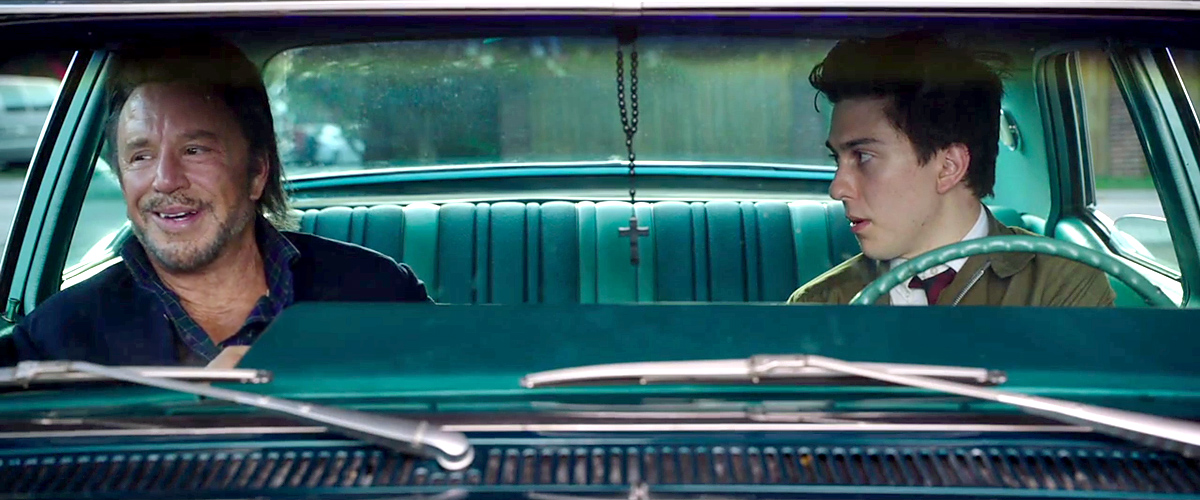
Seventeen year old Ed Wallis (Wolff) and his mother, June (Silverman), have moved into a new neighbourhood following June’s divorce from Ed’s father. Ed is a self-contained, quietly determined, well-read teenager who is struggling to make sense of his life and where it’s going. When his English teacher instructs Ed’s class to write a report about an “old person” – one they actually have to talk to – Ed decides to write his report about his neighbour, Ashby Holt (Rourke).

Unknown to Ed, Ashby has a brain tumour that has left him with only three months left to live. When Ed knocks on his door, Ashby tales advantage of the situation, and in return for talking to Ed about his life, gets him to drive Ashby around. On their first trip, Ashby tells Ed he was a napkin salesman, but later, when Ed helps Ashby through a potential seizure, he discovers that this particular “napkin salesman” has a small arsenal of weapons in his basement and a clutch of passports in different names. Despite Ed’s attempts to cover his tracks, Ashby knows what’s happened, and the next day he and Ed go for a drive where he reveals that he was actually a CIA assassin, and has killed over ninety people. When Ed asks him if he has any regrets or doubts about what he did, Ashby’s response isn’t as unequivocal as Ashby himself would have liked.

Back in high school, Ed attracts the attention of Eloise (Roberts), a student whose class project involves her studying the effect of violent collisions on the brains of the football team. Ed wants to be a part of the team, but his slight frame and nerd-like appearance doesn’t inspire much confidence, but when he reveals his talent as a wide receiver, he wins his place. Meanwhile, Ashby becomes concerned that one of the people he killed wasn’t as deserving as he believed at the time. When he looks into the man’s life and career, Ashby discovers that his bosses lied to him, and he determines to make amends before he dies, even if it means their deaths. While Ashby searches for redemption, Ed tries his best to deal with his mother’s habitual dating (and inferred one night stands), his father continually failing to visit him, his fear of being hit during a football match, and navigating the tricky waters of his relationship with Eloise. And then he learns about Ashby’s latest “mission”…
Ashby - scene

A coming-of-age tale that features a handful of winning performances, and an uneven but engaging storyline, Ashby is an independent feature that just about works thanks to the spirited commitment of its cast and the relative originality and quirkiness of the script by director McNamara, who also made the wonderful The Rage of Placid Lake (2003).

As a coming-of-age tale the movie relies heavily on making Ed a bit of a coward, and he’s whiny too, justifying his reluctant behaviour at every turn and always making excuses for the people around him, such as his father, whom he always speaks well of, even when they don’t deserve it. Ed is continually defending these people, even the jock who assaults him; he spends so much time understanding why people treat him so badly, this very “understanding” marks him out as one of Life’s perennial victims. He also complains too much when things don’t work out as he’d like them to, which leads to Ashby telling him he’s got to stop “bitchin’ like a sheep on crystal meth”. With all this, it’s a tribute to Wolff’s performance that the viewer doesn’t dislike Ed on principle, and it’s a further tribute that when things do start to go right for him, the viewer is completely on his side and urging him on.

But while Ed’s journey is paved with good intentions rarely achieved, Ashby’s is more soulful and melancholic. As he helps Ed manoeuvre the minefield that is becoming an adult, Ashby looks to put his affairs in order before he’s reunited with his wife and daughter in the afterlife (even though he knows there’s no guarantee he will be). There’s a sombre, religious and philosophical consideration here that doesn’t quite fit in with Ashby’s character as a whole, and there’s a scene where he visits the local priest (Knighton) for absolution that holds up the movie and feels out of place, mostly because this takes place during the period he’s looking to “take care” of his old bosses. That said, Rourke is on terrific form as Ashby, his usual mannered approach to a role here left off and replaced with a restrained, careful take on a character that could so easily have been a caricature if it weren’t for the combination of Rourke’s portrayal and McNamara’s writing (and for once, it looks like Rourke is really enjoying himself).

Where McNamara does stumble though is in his treatment of the secondary characters, with Roberts’ Eloise possessing the kind of confidence and self-awareness that only teenage females in the movies have, while Silverman’s love-hungry June openly admits to Ed that she likes sex in a scene that again, is only likely to happen in the movies. The writer/director also has trouble judging the length of a scene, leaving some to run on (the locker room scenes), while others feel truncated (the early scenes between Ed and his mother). But even though these problems intrude from time to time and break the movie’s rhythm, they’re not enough to ruin the mood of the piece as a whole, which finds clever ways to celebrate both the beginning of one adult life and the end of another.

First and foremost a drama, Ashby finds room for some much-needed and relishable humour, from some terrific one-liners to occasional visual gags that are as unexpected as they are hilarious, and McNamara is often on surer ground in these instances. But it’s Rourke and Wolff who make this work so well, their scenes together displaying a keen sense of timing with both actors sparking off each other to great effect. Aided by some very crisp, stylish photography from Christopher Baffa, and a succinct, gently supportive score by Alec Puro, the movie overcomes many of its failings to become a heartfelt, meditative examination of an unlikely but mutually rewarding friendship.

Rating: 7/10 – some viewers may feel that Ashby is too good-natured or lightweight to be entirely successful, but it has a likeable, winning nature that’s hard to ignore, and what it has to say it says without too much prevarication or pontificating; with Rourke giving one of his best performances for quite some time, and Wolff reminding audiences just why he’s one of the best young actors working today, the movie is a small-scale treat that would have benefitted from some judicious script editing and a more streamlined storyline, but still retains a charm all its own.

Fantastic Four (2015)

Tags

, , , , , , , , , , , , , , , , , , ,

Fantastic Four

D: Josh Trank / 100m

Cast: Miles Teller, Michael B. Jordan, Kate Mara, Jamie Bell, Toby Kebbell, Reg E. Cathey, Tim Blake Nelson

Telephone call from Fantastic Four director Josh Trank to Marvel head Stan Lee:

Trank: Hi, is that Stan Lee?

Lee: Yes. Who’s this?

Trank: Hi, it’s Josh Trank, I’m directing the new Fantastic Four movie.

Lee: How’s it going?

Trank: It’s going very well, very well indeed. I think you’re going to be pleasantly surprised.

Lee: That’s good. I hear you’ve made some interesting casting choices.

Trank: That’s true, but I think Toby Kebbell will be the definitive Victor Von Doom.

Lee: Ah, that wasn’t what I meant… Anyway, what can I do for you?

Trank: Well, I was calling to find out when you can come out to Louisiana to film your cameo role.

Lee: I’ll need to get back to you on that. I’m really snowed under at the moment. By the way, can you let me see any footage if you have some?

Trank: Sure, we’ve got some great early footage of Reed and Ben as grade school kids, and then seven years later when they’re played by Miles Teller and Jamie Bell.

Lee: Seven years? Okay… Well, if you could let me see it, that would be great.

Trank: Okay, I’ll get it sent to you.

Lee: Great. And I’ll let you know about the cameo.

Trank: Terrific. Well it was great talking to you. You take care now.

Lee: You too. Bye.

Trank: Bye.

Fantastic Four - scene

E-mail sent from Stan Lee to Josh Trank six days later:

Dear Josh – Thanks for sending the early footage, it was… illuminating. I don’t think I’ll be able to find the time to film a cameo, though.

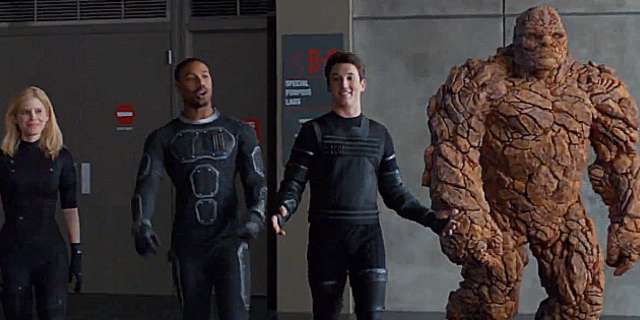
Rating: 3/10 – when your superhero team only works together as a team out of narrative necessity, and the actors portraying that team appear to have all the chemistry of fire and water, then you know you’re in trouble – unless you’re Josh Trank, writers Jeremy Slater, Simon Kinberg (and Trank), and the executives at Twentieth Century Fox, in which case you plough on hoping that no one will notice just how bad the reboot you’re making really is; an appalling mess that features a badly rendered Human Torch to add insult to injury, Fantastic Four is enough to make viewers pine for the 2005 and 2007 movies that should now be reassessed in the light of this movie’s failure to provide anything other than an incoherent plot, dreadful dialogue, even worse characterisations, and one of the all-time worst superhero movies ever (seriously, even Roger Corman’s 1994 version is more enjoyable than this farrago).


The Gamechangers (2015)

Tags

, , , , , , , , , , , , , , ,

Gamechangers, The

D: Owen Harris / 90m

Cast: Daniel Radcliffe, Bill Paxton, Joe Dempsie, Mark Weinman, Ian Keir Attard, Fiona Ramsay, Shannon Esra, Garion Dowds, Thabo Rametsi, Gideon Lombard

Following the release of Grand Theft Auto: Vice City, eighteen-year-old Devin Moore (Rametsi) is arrested for stealing a car. At the police station, he disarms an officer and shoots him dead. He kills two more officers before escaping in a police car. When he’s apprehended, a link emerges between his actions and Vice City: Moore has copied one of the scenarios in the game. This claims the attention of Florida lawyer Jack Thompson (Paxton), a fiercely moralistic man who feels that the makers of the game are complicit in Moore’s crimes. He travels to Alabama in order to represent the victims’ families in a civil suit against the makers, Rockstar Games.

Meanwhile, Sam Houser (Radcliffe), the British-born co-founder and president of Rockstar Games, has decided that their next release will be bigger, better and more realistic. Always looking to improve both the content and the format of their games, Houser pushes for a sex scene to be included in their next Grand Theft Auto release, even though his closest colleagues, including his brother Dan (Attard), and fixer Jamie King (Dempsie), aren’t convinced it’s a good idea. When Houser learns of Thompson’s civil suit he rails against the notion that Rockstar is any way responsible for Moore’s actions. While Thompson looks for evidence to support his assertion that violent video games can influence people into behaving violently themselves, Rockstar hires a firm of corporate lawyers to represent them. But Thompson’s enthusiasm for the case proves to be its downfall, and the judge throws it out.

Rockstar press ahead with the release of their next instalment, Grand Theft Auto: San Andreas, but the inclusion of the sex scene proves problematical: if it’s included it will seriously effect the game’s potential sales. Houser bows to pressure from his close colleagues and orders the scene removed. The game is released and is a huge success, but a short time after, a modder (a person who modifies existing software or hardware) in Holland, Patrick Wildenborg (Lombard), finds the code for the sex scene hidden within the game. He renders the code into rudimentary animation and posts it on YouTube. When the post goes viral, and Rockstar are charged with misleading both their customers and the body that regulates the video game industry, it leads to a federal investigation, and gives Thompson a second chance to make Rockstar and other video game makers accountable for the content of their games.

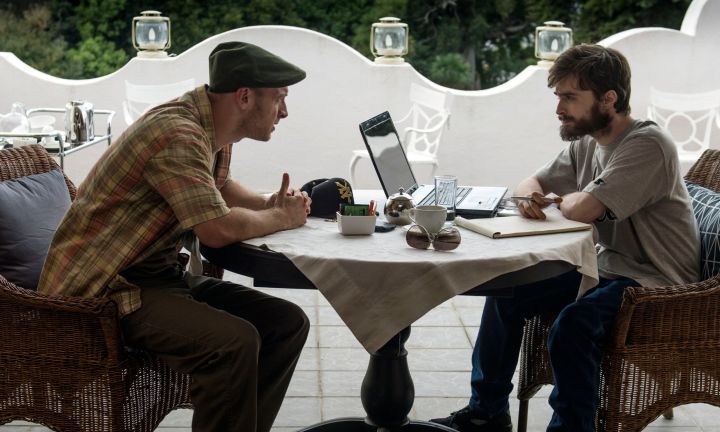
WARNING: Embargoed for publication until 00:00:01 on 08/09/2015 - Programme Name: The Gamechangers - TX: n/a - Episode: n/a (No. 1) - Picture Shows: Terry Donovan (MARK WEINMAN), Sam Houser (DANIEL RADCLIFFE) - (C) BBC Scotland © 2015; Moonlighting NNN Productions (Pty) Limited: African Photographic C.C. - Photographer: Joe Alblas

Made for TV by the BBC, The Gamechangers sets out its stall right from the outset by stating that while it’s based on real events, scenes have been altered for dramatic effect. But while this seems entirely laudable, what it actually does is to make the viewer unsure if what they’re seeing is either next door to the truth or living in the next town. Certainly, Rockstar has disavowed the movie for containing a number of inaccuracies, and there are several moments where the likelihood of James Wood’s script being as factual as it should be are easily questioned, but what hurts the movie more than all this is the unfortunate way in which it takes the idea of violent video games causing impressionable game players to act out those violent fantasies, and does nothing with it.

What we’re left with is Thompson’s principled railings against the “filth” he sees in the games tempered with Houser’s insistence that they’re in no way to blame for Moore’s behaviour, and these confident outbursts are repeated over and over, as if the viewer would be unable to work out either hypothesis for themselves. Add a number of scenes designed to show both men’s commitment to their individual causes, and how their single-mindedness affects the people around them, the movie becomes less about issues of violence and more about what drives both Thompson and Houser to be so committed in their respective arenas. Alas, this isn’t as interesting or engaging as the movie thinks it is, and gives both Radcliffe and Paxton little room to provide well-rounded portrayals, or make much of the repetitive dialogue.

With the movie lacking focus, any drama feels either overdone or forced, particularly in the relationship between Houser and King, which becomes increasingly adversarial as the movie progresses, but seems based purely around King’s lack of time off. Harris seems unable to overcome these problems, and many scenes seem designed to pad out the running time, whether it’s another example of Houser’s dismissive attitude towards his staff, or Thompson’s unresolved anger at not being able to find the justice he’s seeking. By the time the viewer learns how the federal investigation pans out, and the result of an investigation into Thompson’s competence as a lawyer is revealed, the flatness of the drama is too apparent to make it compelling.

As a result, the performances range from the pedestrian to the merely satisfactory, with Radcliffe and Paxton both stranded by the script, and the supporting cast left to fend for themselves. Only Rametsi impresses, making Moore a blank-faced killer with no real conception of whether he’s living in the real world or the confines of a video game (Moore is still on Death Row awaiting execution by lethal injection). And despite occasional attempts to make the visuals more interesting, Gustav Danielsson’s cinematography is mostly perfunctory and uninspired, leaving no room for the movie to impress in other areas. There’s a decent movie to be made out of the events that followed Moore’s kill-spree, but this isn’t it.

Rating: 4/10 – an opportunity that’s been missed by a very wide margin indeed, The Gamechangers challenges the audience’s patience throughout, and never settles on which story it really wants to tell, Houser’s or Thompson’s; blandly made, and with an awkwardness that never resolves itself, potential viewers should lower their expectations before they start watching.

D.W. Griffith Double Bill – The House of Darkness (1913) and The Mothering Heart (1913)

Tags

, , , , , , , , , , , ,

House of Darkness, The

The House of Darkness (1913)

D: D.W. Griffith / 17m

Cast: Lionel Barrymore, Claire McDowell, Charles Hill Mailes, Lillian Gish, Christy Cabanne, Robert Harron, William Elmer

In an asylum for people with “disordered minds”, a young nurse (McDowell) is wooed by one of the doctors (Barrymore). Their courtship leads to marriage, and a happy one at that. Meanwhile, one of the inmates, an older man (Mailes) who has clearly seen better times, wanders around quite calmly and with a dazed expression that speaks of his confusion. But when he suddenly turns violent, and for no apparent reason, he has to be physically restrained. As he struggles against the orderlies restraining him, the sound of a piano being played nearby by one of the other nurses (Gish), proves successful in calming down the old man, and returning him to his former docile state.

The hospital staff make a note of this, and the nurse is encouraged to play the piano whenever the man shows signs of aggression. However, it isn’t long before the man has another psychotic episode; in the process he escapes from the grounds of the asylum. He attacks two men in a park, and manages to wrest a gun from one of them. With orderlies and the police in pursuit, he flees the park and eventually finds himself outside the home of the recently married nurse and doctor. He breaks in, and discovers the nurse there by herself…

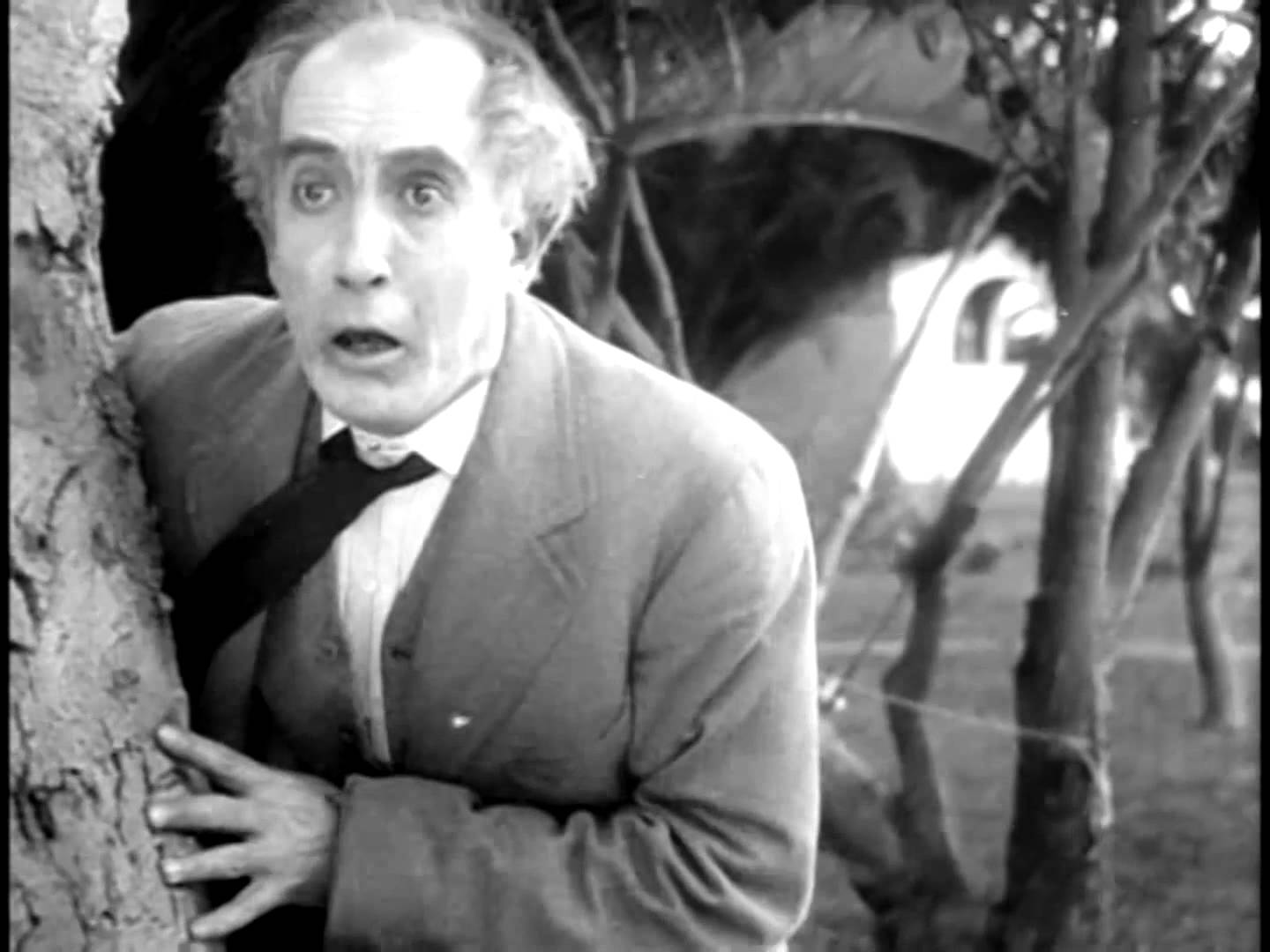
House of Darkness, The - scene

An interesting, well-made movie that shines an unexpectedly sympathetic spotlight on the mentally ill, Griffith’s even-paced, non-melodramatic portrayal of the “insane” (only once is the old man referred to as a lunatic), The House of Darkness is a perfect metaphor for the mind of a man with mental health problems. Without a strait-jacketed or gibbering madman in sight, this is still a powerful cry for a better understanding of those whose minds have betrayed them, and is remarkably “modern” in the way in which the old man’s mania is dealt with (even if it is based on the idea that “music hath charms to soothe the savage breast”).

With Barrymore and McDowell reduced to supporting players once their marriage is established it falls to Mailes to be the focus of the movie, and he gives a poignant, affecting performance that belies his usual role as a patrician elder, and also serves as a reminder that silent movie acting wasn’t always all declamatory hand gestures and facial gurning. Mailes has the viewer’s sympathy from the start, and even when he goes berserk, there’s always the sense that he can’t help what he’s doing and that he still deserves our understanding. Griffith, by now such an assured presence behind the camera that every shot and every camera placement provides information for the viewer to react to, keeps things from being too dramatic, and lets the story unfold with a grim fatalism that is thankfully derailed in the movie’s climax.

With the script having been written by the appropriately named Jere F. Looney (or unfortunately named, depending on your point of view), The House of Darkness is a solid, unspectacular yet moving account of madness and the burden it bestows on those affected by it. And in its own way, it’s as much an affecting drama as it is a gripping thriller.

Rating: 8/10 – a good example of Griffith subverting his audience’s expectations in terms of the movie’s approach to the subject matter, and bolstered by a great performance by Mailes, The House of Darkness is both illuminating and inspiring; a small-scale triumph and as relevant now as it was back then.

Mothering Heart, The

The Mothering Heart (1913)

D: D.W. Griffith / 29m

Cast: Walter Miller, Lillian Gish, Kate Bruce, Viola Barry, Charles West

A young woman (Gish), romantically involved with a young man called Joe (Miller), allows herself to be persuaded to marry him. They move into their new home but money is tight, and Joe is weighed down by his lack of success at work. His new bride earns extra money taking in ironing, and she’s pleased to do so, believing that it will only be a matter of time before her husband begins to earn better money. After a period where he returns home each night feeling more melancholy than the last, he finally has some good news: a welcome bonus. Joe wants to celebrate, and he tells his wife to get dressed to go out, but what she has to wear is neither new nor fashionable.

They go to a nightclub where Joe attracts the attention of a woman (Barry) sitting at the next table. His wife becomes aware of this and insists they leave, but a chance encounter with the woman leads to Joe neglecting his wife and spending more and more time with her, and in the same nightclub. When she finds out what he’s doing, she resolves to leave him. When she does, Joe is only momentarily upset, and continues to spend time with his new flame. His wife, meanwhile, goes back to living with her mother (Bruce), and without telling her husband that she’s expecting their child…

Mothering Heart, The - scene

By the time of The Mothering Heart, Griffith was looking ahead to making feature length movies, but this didn’t mean that he was restless or putting any less of an effort into his short features. Here he pulls no punches in highlighting the pitiful surroundings of the young married couple, and contrasting them with the gaudy excesses of the nightclub, with its ornate furnishings and impeccably attired clientele. Through this juxtaposition he shows just how easy it is for young men to forget what’s really important in their lives, and how it can just as easily drain the love of a young bride for her husband. It’s a simple tale, and while Griffith’s approach is simple as well, he also makes Joe’s deception and its consequences tremendously emotive.

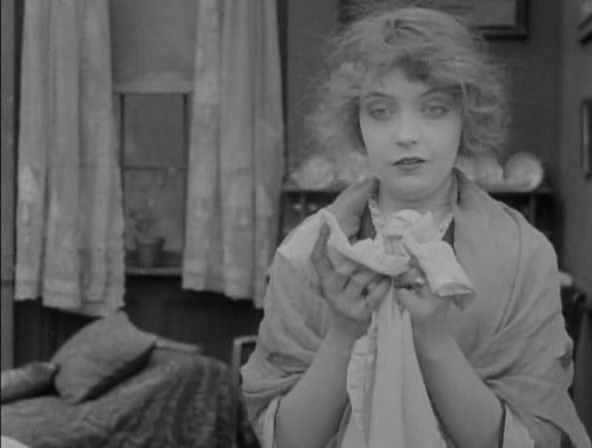
Of course, he’s aided immeasurably by Gish. It’s a little hard to credit, but at the time the movie was made, Gish was still only twenty, but in the scene where she first suspects her husband is deceiving her, she finds a glove in his coat pocket. At first she’s glad to find it, thinking it’s a present from him, but when she realises there’s only one, her expression begins to change from happiness to disappointment, all there for the audience to see as she stares into the camera. It’s a bravura moment, and beautifully crafted, as her faith in her husband is taken from her in a matter of seconds.

For all its passion and heartfelt melancholy, The Mothering Heart is also quite a restrained movie in terms of its look and the way in which Griffith uses fixed camera set ups throughout. This is a movie that is content to observe its characters and their actions, and its no frills approach adds beautifully to the carefully constructed mise en scene, the simple story allowed to be the focus and with little in the way of any distractions or irrelevancies (except for the nightclub dancers, that is).

Rating: 8/10 – with a tremendous performance by Gish, and assured, impressive direction from Griffith, The Mothering Heart is one of the very best of his American Biograph movies; powerful and moving, and visually striking, it’s a movie that rewards on far more levels than you’d expect, and paints a sobering portrait of young love undone.

Trailer – Meadowland (2015)

Tags

, , , , ,

The first feature from cinematographer Reed Morano – Kill Your Darlings (2013), The Skeleton Twins (2014) – is a searing portrait of a couple desperately trying to cope in the aftermath of a terrible tragedy. Uncompromising and unflinching, it stars Olivia Wilde and Luke Wilson as the rapidly unravelling couple, and features a strong supporting cast that includes Giovanni Ribisi, Juno Temple and John Leguizamo. Not for all tastes, certainly, but for those who like their dramas to be bold and emotionally devastating, this looks like it will fit the bill completely.

Cooties (2014)

Tags

, , , , , , , , , , , , , , , ,

Cooties

D: Jonathan Milott, Cary Murnion / 88m

Cast: Elijah Wood, Rainn Wilson, Alison Pill, Jack McBrayer, Leigh Whannell, Nasim Predad, Ian Brennan, Jorge Garcia, Cooper Roth, Miles Elliot, Morgan Lily, Sunny May Allison, Armani Jackson, Peter Kwong

Clint Hadson (Wood) is a would-be writer who finds himself back in his home town of Fort Chicken and making ends meet as a substitute teacher at the same elementary school he attended fifteen years ago. On his first day he finds the teachers are an odd mix, while the pupils in his class, particularly Patriot (Roth), are an unruly bunch who give him a hard time. Another of the pupils in his class, Shelly (Allison), is being bullied by Patriot but when he tugs at a ponytail and it comes off in his hand leaving a raw open wound where it was attached only seconds before, he finds himself being attacked by Shelly and having a chunk taken out of his cheek. Shelly runs off after the attack, while Clint takes Patriot to the nurse’s station.

Talking about it afterwards in the teachers’ lounge with Lucy McCormick (Pill), who was at school with Clint at the same time, they are oblivious to the situation that’s developing outside in the playground, as Shelly infects Patriot’s friend, Dink (Elliot), and he in turn begins infecting the other children. As the children’s behaviour turns savage, some of the teachers try to intervene but they’re quickly overwhelmed… and eaten. At the same time, PE teacher Wade Johnson (Wilson) – who’s shooting hoops in a corner of the playground – and the rest of the staff who are watching from the teachers’ lounge, begin to realise that what they’re seeing is an outbreak of zombie children.

Wade makes it back inside the school building, but the now ravenous pupils soon find their way in, and the remaining teaching staff hole up in the music room for safety; along the way they find Calvin (Jackson) who is unaffected. Wade is all for making a dash for his truck, while Clint thinks they should try and get help from the outside. But Lucy has a better idea: they should wait until 3pm when the parents arrive to pick up their children, and signal to them from the roof. But when the time comes only one parent arrives and she’s despatched as quickly as she arrived. Clint and the rest now head down to the hall where they find another unaffected child, Tamra (Lily). And when the hall is overrun, it’s the janitor, Mr Hatachi (Kwong), who comes to their rescue. Now barricaded in the basement, and with no choice but to find a way out, Clint and Wade come up with an idea between them that, if all goes well, will see them free of the school and its murderous pupils.

Cooties - scene

These days, zombie movies are a dime a dozen, and most are instantly forgettable, so any movie using them as the central protagonists really needs to bring something new and/or different to the table. And thanks to Leigh Whannell, creator of the Saw and Insidious franchises, Cooties certainly fits the bill, taking the (accepted) innocence of youth and destroying it with unrestrained malice. The idea of feral kids isn’t a new one, but here it’s taken to the extreme, with teachers being torn limb from limb, and entrails spread about with gory abandon. It’s a bloody exercise that’s reminiscent of the inmates taking over the asylum, but done here with a layer of crass humour to offset the blood spatters.

Be warned though: the movie isn’t as polished, or as funny as the trailer makes out, thanks largely to the script’s decision to keep the teachers moving from one breachable room to another, and by some poor choices when it comes to some of the characters’ quirks and foibles (Pedrad’s angry feminist practically accuses Clint of being a potential rapist without being properly introduced, while Tracy (McBrayer) talks about his partner’s lovely balls – his tennis partner that is). When the movie attempts to subvert the genre it’s on firmer ground, as when Whannell’s scientifically knowledgeable Doug announces he’s discovered the cause of the outbreak to be a virus, and has done so by rooting around in Clint’s vomit and “anal leakage”; when the rest of the staff voice their disgust he rebukes them by saying he wore gloves – and holds up his hands which are clearly glove-free.

Making children into zombies turns out to be a whole lot of fun by itself, and the young cast are clearly having fun with it all, especially Roth and Allison who are the Adam and Eve of the zombie outbreak. The kids aren’t funny at all (which is a relief), and their ferocity is well-gauged, leaving the humour to the adults, and in particular to Wilson, whose bullish PE teacher is ill-equipped to deal with the finer emotions such as love and trust, and who finds it impossible to say “dual rear wheels” (one of the movie’s funnier moments). There’s a great deal of physical humour too – Lucy whacking one of the kids with a plastic umbrella, Wade constructing a weapon out of a tennis ball launcher – as well as a couple of inspired visual gags. It all works intermittently, but still has enough energy and verve to see it through, despite the obvious low budget and presumably short shooting period.

The performances are engaging, with Wood evincing wide-eyed surprise at the sudden, horrific turn of events, while Wilson plays Wade as a stubborn jackass who comes good in the end, and Pill does perky and bubbly before having a Rambo moment that leaves Wilson, for once, upstaged and put in his place. Garcia is the pot-smoking school guard who can’t believe what he’s seeing from the safety of his van, and Kwong is the fierce Oriental janitor who wants to tell the story of the caterpillar and the frog (you have to wait until after the end credits to hear the end of the story). In the directors’ chairs, Milott and Murnion keep things moving but don’t always get the rhythm right, and some scenes are shot with a flatness of style that hurts the movie by virtue of standing out so easily.

Rating: 6/10 – enjoyable hokum that fans of the comedy-horror genre will lap up, Cooties still struggles to maintain a clear focus, and rarely feels as confident as it should do; that said, it is good fun, and has a winning approach that does let some level of disappointment to be overlooked, but in the end, the chase elements are wearying, and there’s not enough balance in the way the differing components are assembled.

50 Movies to Look Forward to in 2016 – Part 2

Tags

, ,

2016

Here are the rest of the movies that look likely to be interesting to watch/surprising/blockbusters/worth giving a try in 2016. Some are already household names thanks to the power of blanket coverage advertising allied with fanboy extremism, but hopefully there’ll be enough movies where the main characters don’t wear spandex to provide some much-needed balance.

26) Jason Bourne – Having vowed never to make another appearance as Jason Bourne unless Paul Greengrass agreed to direct, Matt Damon makes a welcome return to the franchise after the misfire that was The Bourne Legacy (2012). Whether or not the pair can work the same magic they did before remains to be seen, but with Julia Stiles also returning, and Vincent Cassel and Tommy Lee Jones also in the cast, the signs are looking good for a triumphant fifth entry in the series.

27) The Lost City of Z – In 1925, the English explorer, Percy Fawcett, travelled to the Mato Grosso region in Brazil to begin looking for a lost city that he was convinced existed there in the jungle. James Gray’s recreation of that expedition looks set to be one of the most spectacular experiences of 2016, and could be the movie that finally makes an A-list star of Charlie Hunnam.

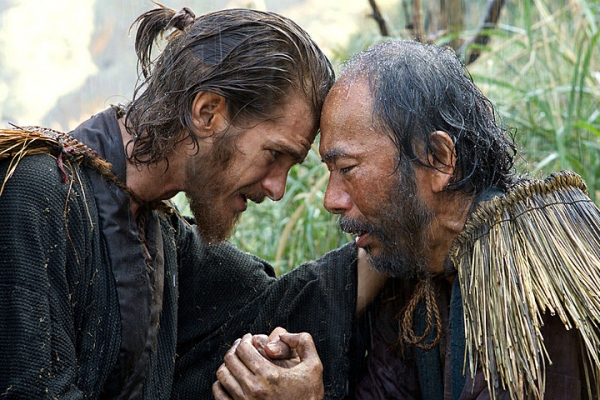
28) Silence – Delayed from 2015, Martin Scorsese’s latest sees Andrew Garfield and Adam Driver as two Jesuit priests in 17th Century Japan trying to spread the gospel of Christianity against continual persecution. Oscar may like this a lot, but it may prove a tough sell at the box office. It’s Scorsese though, and if he’s on form, then this could be astonishing.

Silence

29) The Circle – Emma Watson and Tom Hanks star in this adaptation of the novel by Dave Eggers, about a young woman who goes to work for a powerful tech company and becomes involved with a mysterious colleague. Is the company she works for up to no good, and if it is, will she be able to do anything about it? If director and screenwriter James Ponsoldt is on the ball, this could be a terrific cat and mouse game set against a backdrop of unethical corporate machinations.

30) Miss Peregrine’s Home for Peculiar Children – The latest from Tim Burton has the potential to be 2016’s number one fantasy adventure, based as it is on Ransom Riggs’ wonderfully eccentric (and cleverly illustrated) novel. The cast includes Eva Green, Samuel L. Jackson, Judi Dench, and Asa Butterfield as the young boy who discovers a world where magic takes some strange and wondrous forms.

31) The BFG – The first co-production between Disney and Dreamworks also sees director Steven Spielberg and screenwriter Melissa Mathison reunited for the first time since E.T. – The Extra-Terrestrial (1982) – and look how that turned out. With Mark Rylance as the title character, and supported by Rebecca Hall, Bill Hader and Jemaine Clement, what may seem like an odd choice for the director could well prove to be one of his most affecting movies.

32) Suicide Squad – While its Dirty Dozen set up isn’t anything new, it is the first time a group of supervillains has been the focus of a DC or Marvel movie. Whether or not DC’s Extended Universe can be as successful as Marvel’s own efforts remains to be seen but with David Ayer in the director’s chair and a cast that includes Focus (2015) alumni Margot Robbie as Harley Quinn and Will Smith as Deadshot, all eyes will still be on Jared Leto as the Joker.

Suicide Squad

33) Criminal – Ryan Reynolds is the career felon whose unpredictable and dangerous behaviour still qualifies him to be used in an experiment to replace his own memories and skills with those of a deceased CIA agent. Director Ariel Vroman made the austere but impressive The Iceman (2012) so this has a chance at being a step up from purely ridiculous, but a lot will depend on how seriously it all plays out.

34) The Nice Guys – Shane Black writes and directs this mystery thriller where a private eye in 1970’s Los Angeles (played by Ryan Gosling) investigates the murder of a porn star and uncovers a web of corruption. Russell Crowe and fellow L.A. Confidential star Kim Basinger lend support, and if this sounds a little like Black’s homage to Chinatown (1974), then that’s not such a bad thing given his abilities as a screenwriter.

35) Billy Lynn’s Long Halftime Walk – The latest from Ang Lee is a thought-provoking drama based on the novel by Ben Fountain about a group of soldiers who, after surviving an intense skirmish in Iraq, are sent on a “victory tour” of the US – and then learn they have to go back. Lynn is played by newcomer Joe Alwyn, but he’s ably supported by Kristen Stewart, Vin Diesel, and Steve Martin as the wonderfully named Norm Oglesby. Expect a sincere if uncomfortable look at the nature of patriotism, and a meditation on personal needs weighed against a greater responsibility.

36) Money Monster – A scathing look at financial organisations and the dubious ways they make money, this features Jack O’Connell as the investor ruined by TV personality George Clooney’s “hot tip”, and is Jodie Foster’s fourth feature as a director. It leads to a hostage situation in a TV studio, and asks the perennial question, just what is a man’s life worth, as O’Connell tasks Clooney with restoring his losses. With Foster calling the shots, and a crackerjack cast that also includes Dominic West and Giancarlo Esposito, this could be 2016’s most intelligently handled thriller.

37) Finding Dory – Perhaps the most eagerly awaited of all the Pixar sequels so far, this sees the ever so slightly forgetful blue tang fish Dory reunited with her family – played by Diane Keaton and Eugene Levy – and discovering just how important family is (as if she didn’t learn that from Finding Nemo – oh hang on, she’s probably forgotten). If Pixar have got this right then this will be the year’s best animated movie, and a future family favourite just like its predecessor.

Finding Dory

38) Assassin’s Creed – Director Justin Kurzel, Michael Fassbender and Marion Cotillard reunite after their collaboration on Macbeth (2015) to bring the classic video game to the big screen. Fassbender is a big fan of the original, and perhaps not the first choice for such a heavily stylised action movie, but this might, just might, be the first video game adaptation that doesn’t descend rapidly into nonsense after the opening five minutes.

39) Misconduct – A legal thriller that features Josh Duhamel as the young(-ish) lawyer taking on the ruthless chief executive of a large pharmaceutical company (played by Anthony Hopkins), this tale of corruption and murder could be a surprise hit, and has Al Pacino and Alice Eve in support. Everything depends on the script and how first-time director Shintaro Shimosawa handles both it and the high-powered cast, but even if it’s reminiscent of a John Grisham thriller, it could still be worth seeing.

Beyond Deceit

40) American Pastoral – For his directorial debut, Ewan McGregor hasn’t exactly taken the easy option by transferring Philip Roth’s ambitious novel surrounding the social and political upheavals of the Sixties to the big screen, but it will be very interesting to see how it turns out. Aided by the likes of Jennifer Connelly, Dakota Fanning and David Strathairn, McGregor is aiming very high indeed. Let’s hope he doesn’t need a safety net.

41) My Big Fat Greek Wedding 2 – The original was a surprise hit back in 2002, and made a star of Nia Vardalos, but whether or not lightning can strike twice remains to be seen. If it does then the exploits of the Portokalos family will be sure to raise smiles galore while also offering a sincere appreciation of the quirks of Greek family life. With the original cast all returning, including John Corbett’s amiable outsider, and Michael Constantine’s grouchy father, this could be unexpectedly successful.

42) Bad Neighbours 2 – Another sequel (originally entitled Neighbors 2: Sorority Rising), this sees Seth Rogen and Rose Byrne once again at odds with Zac Efron and his raucous frat buddies. The same team are involved as before, and are joined by Chloë Grace Moretz and Selena Gomez, but it’s touch and go as to whether or not this will match the first movie’s mix of out-there physical humour and homespun values.

43) X-Men: Apocalypse – Oscar Isaac is the big bad villain, but there’s no room for Hugh Jackman, Patrick Stewart or Ian McKellen in Bryan Singer’s latest mutant epic, the final part of the trilogy that began with X-Men: First Class (2011). While the plot is being kept under wraps, there’s still enough anticipation surrounding the project that in some respects, it’ll be a box office success whatever happens.

X-Men Apocalypse

44) Warcraft – Duncan Jones’ adaptation of the ultra-cool video game has been avidly waited for for years. Early footage suggests this will be one of the most visually arresting movies of 2016, while the cast, led by Vikings star Travis Fimmel, all seem chosen for their intensity and commitment. It will all come down to the story (as usual with video games adaptations), but Jones is an intelligent, inspired director, and this could be his best movie yet.

45) Hail, Caesar!The cast of 2016 – including Channing Tatum, George Clooney, Ralph Fiennes, Tilda Swinton and Dolph Lundgren – assemble to help Joel and Ethan Coen tell the story of a Hollywood fixer in the 1950’s who spends all his time keeping the stars in line, and out of trouble. It promises to be a wonderfully carefree, spirited movie that revels in its time and place, and should be chock-full of the Coens wicked way with dialogue and farcical situations.

46) Moana – Disney have two animated movies on release in 2016 – the other is Zootropolis – but this already has set tongues wagging thanks to how beautiful it looks. Dwayne Johnson heads the voice cast in this tale of a young woman, the daughter of a tribal chief, who uses her navigational skills to find the fabled island that will help her family in their time of need, and which features demigods and creatures taken from “real” mythology.

47) Hacksaw Ridge – A biopic that could well feature prominently come Oscar-time, Mel Gibson’s latest movie as director tells the story of Desmond T. Doss, a World War II army medic who served during the Battle of Okinawa but refused to kill anyone, and who became the first conscientious objector to win the Congressional Medal of Honor. Andrew Garfield is Doss, while Vince Vaughn and Sam Worthington provide solid support, but all eyes will be on Gibson, stepping behind the camera for the first time since Apocalypto (2006).

48) Allegiant – The third movie in the Divergent series takes Tris et al. outside the wall and introduces the Bureau of Genetic Welfare. With the first two movies having established a very specific world and its denizens, it’s now time to explore the bigger picture, and find out just what did happen all those years before. Shailene Woodley heads the cast again, and Robert Schwentke resumes director duties, while fans will be waiting to see if this entry has as much jettisoned from the source novel as the previous instalment did.

49) Batman v Superman: Dawn of Justice – The first trailer’s release had DC fans jumping for joy at seeing their favourite heroes battling it out, but it also showed evidence of the kind of city-wide destruction that has become predictable and boring in recent DC (and Marvel) outings, so while its commercial success seems assured, it’s likely it won’t do so well with the critics. But Ben Affleck looks like a good choice for Batman, while Henry Cavill still looks like a stuffed shirt in a lycra bodysuit, a description that should never apply to someone who’s playing Superman.

Batman v Superman

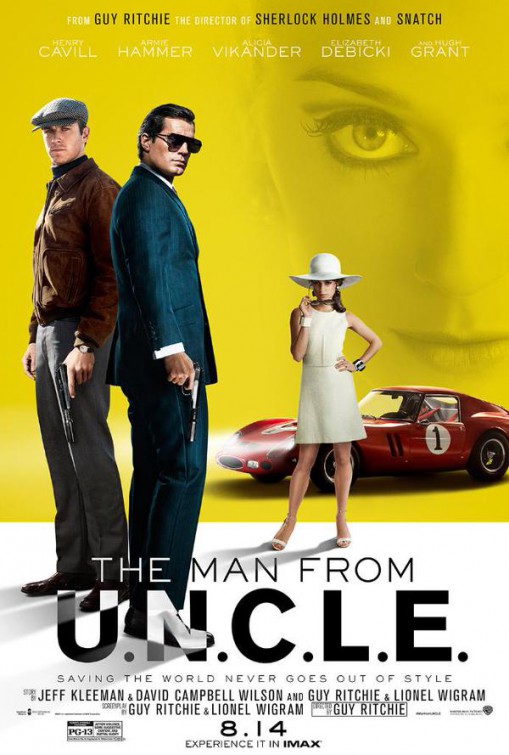
50) Knights of the Roundtable: King Arthur – Guy Ritchie’s take on the Arthurian legend will no doubt involve a lot of editing wizardry, a heavily saturated colour scheme, and fight scenes that reference more modern styles of combat, but however it looks, it should certainly feel fresh and exciting. The plot, like many others, is being kept under wraps, but with minor characters such as Brothel Punter, Low-Rent Villager, Dan Clan Pikey, and Towel Boy 2 making probably fleeting appearances, what can be certain is that there’ll be humour in amongst the carefully choreographed action, as well as David Beckham in his second screen role (hands up those who missed him in The Man from U.N.C.L.E.?)

Trailer – The 5th Wave (2016)

Tags

, , , , ,

As part of my look ahead to 2016, here’s the trailer to a movie whose combination of Independence Day destruction and Divergent series’ teen action heroics could prove to be an enormous crowd pleaser. Trading on her action star status from the Kick Ass movies, Chloë Grace Moretz looks convincing as the teenager taking a lonely stand against an alien invasion, while the visuals have that crisp, arresting style that allows for moments where the audience can safely allow their jaws to hit the floor. It’s based on a novel by Rick Yancey, and if successful, we’ll see two sequels hit our screens in the coming years (unless the last in the trilogy – still to be published – is split into two movies).

50 Movies to Look Forward to in 2016 – Part 1

Tags

, ,

2016

Yes, it’s already that time again when we look ahead to some of the movies coming our way in 2016. You might notice a slight bias towards superhero movies, but that’s not my bias, it’s the studios, all of whom seem to feel there’s a lot of life in the old genre yet. That remains to be seen, of course, but there are plenty of other movies worthy of our attention next year, and here are the first twenty-five out of fifty. See how many you’re looking forward to.

1) Alice Through the Looking Glass – The storyline is being kept under wraps for now, but what we do know is that most of the cast from Alice in Wonderland are back, although James Bobin is sitting in the director’s chair instead of Tim Burton (who’s now only a producer). Magical, fantastical, charming – if it’s any of these things then there’s a good chance it’ll be as successful at the box office as its predecessor.

2) The Magnificent Seven – One of many remakes for 2016, Antoine Fuqua’s take on the classic Western (itself based on Kurosawa’s Seven Samurai) features a great cast as the titular mercenaries for hire – including Denzel Washington, Ethan Hawke and Chris Pratt – and promises to be as compelling and authoritative as John Sturges’ 1960 version. Let’s hope that John Lee Hancock and Nic Pizzolatto’s screenplay is up to the task.

3) Snowden – Oliver Stone makes a welcome return to the big screen with another confrontational look at the state of US politics, and the shady secrets America’s government would rather we didn’t know about. With CITIZENFOUR (2014) already acting as a primer for audiences interested in Edward Snowden’s whistleblowing exploits, it’ll be interesting to see if Stone can bring his usual outrage and savage condemnation of political hypocrisy to the table without it being watered down.

Snowden

4) Doctor Strange – Marvel introduce yet another of their vast stable of superheroes, with actor of the moment Benedict Cumberbatch assuming the mantle of Earth’s Sorcerer Supreme. Expect spells and other dimensions and supernatural threats tempered with knowing humour, and a nod to the wider Marvel Cinematic Universe popping up (probably) after the end credits.

5) Ghostbusters – They’re back, only this time they’re all female! This gender variation on the classic Eighties comedy has all the potential to be as funny as the original and just as successful at the box office. With Paul Feig ensuring things go bump in the night, and a role for Bill Murray (though not as Peter Venkman), the only important box left to be ticked is the theme song. Now, who they gonna call?

6) The Secret Life of Pets – The trailer is fantastic, and features some of the cleverest animal-related jokes that Illumination Entertainment can come up with. Without a Minion in sight, can this do as well as expected? Let’s hope so, because if the Internet has taught us anything, it’s that seeing animals getting into trouble when they think we’re not looking is often the funniest thing ever.

Secret Life of Pets, The

7) The Girl on the Train – Paula Hawkins’ impressive novel is given the big screen treatment with a screenplay by Erin Cressida Wilson, whose previous work includes Fur: An Imaginary Portrait of Diane Arbus (2006) and Chloe (2009). With Emily Blunt taking on the central character who becomes embroiled in the mysterious disappearance of a woman she doesn’t know, only the choice of Tate Taylor as director is any cause for concern.
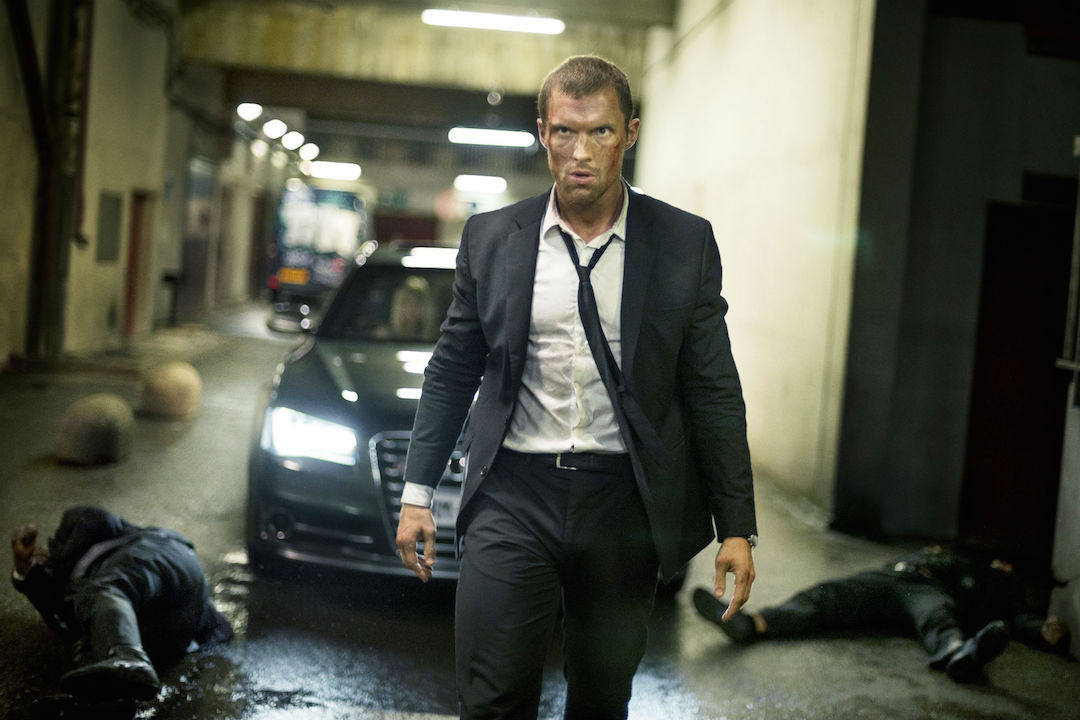
8) Zoolander 2 – Long-awaited sequel finally arrives and finds male supermodel Derek Zealander still as vain (and stupid) as he’s always been. With a strong supporting cast including Owen Wilson, Will Ferrell and Penélope Cruz, director and star Ben Stiller appears to have retained the comic energy that made the original such a good movie, and throws in a few cameos to keep the audience on their toes.
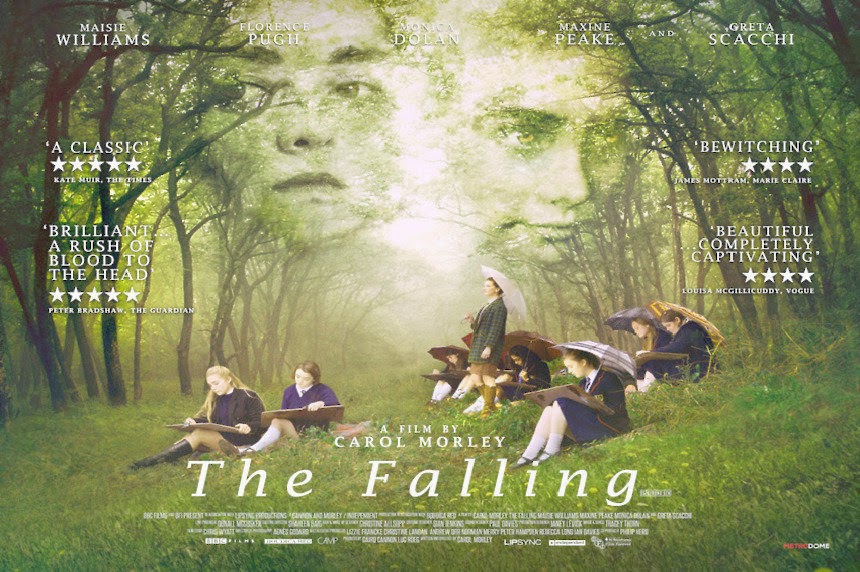
9) The Bad Batch – Ana Lily Amirpour follows up The Girl Who Walked Home Alone at Night (2014) with another nightmarish fantasy that focuses on a love story set in a community of cannibals living in a Texas wasteland. However this turns out, Amirpour is a clever, talented director with a fascinating visual style, and a unique way of looking at the world. With luck we’ll get something bizarre, quirky, strange and amazing.

10) Independence Day: Resurgence – Twenty years after the world successfully fought off an alien invasion, they’re back, and more destructive than before. Director Roland Emmerich assembles several members of the original cast (including, surprisingly, Brent Spiner), but has to rely on Liam Hemsworth to fill Will Smith’s shoes (and is that really fair?). Expect devastation on a global scale once more, but how much will have been done with scale models?

Independence Day Resurgence

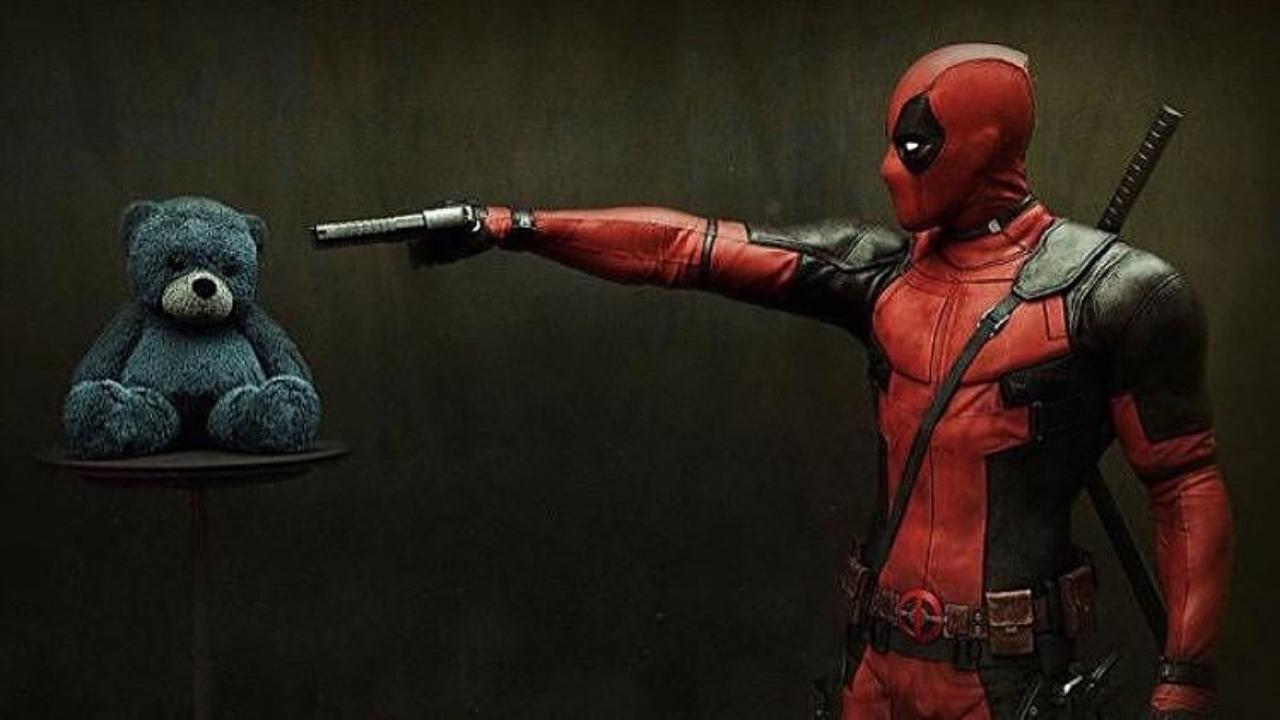
11) Deadpool – After his less than thrilling introduction in X-Men Origins: Wolverine (2009), the self-styled Merc With a Mouth gets his own movie, and is portrayed by big fan Ryan Reynolds. The anarchic humour and intense violence associated with the character is firmly on display in the trailer, and Reynolds seems to have nailed the character’s mix of arrogance and charm, and if the storyline’s right then we can say hello to another superhero franchise.

Deadpool

12) The Light Between Oceans – A beautifully written novel is hopefully translated into a beautifully made movie, as Derek Cianfrance adapts and directs this tale of a lighthouse keeper and his wife – the ever-reliable Alicia Vikander and Michael Fassbender – who raise a baby they rescue from a drifting rowboat. Set off the coast of Western Australia, this has all the potential of being an awards winner down the line, and an audience favourite.

13) The Great Wall – The latest from Yimou Zhang – Raise the Red Lantern (1991), House of Flying Daggers (2004) – is a mystery centred around the construction of China’s Great Wall. With a cast that includes Willem Dafoe, Matt Damon and Andy Lau, this may be one of Yimou’s more mainstream movies, but there’s no doubting it will be spectacular to see as well.

14) Nocturnal Animals – Adapted from Austin Wright’s novel of the same name, Tom Ford’s second movie after A Single Man (2009) is a tale within a tale that sees a woman sent a manuscript by her ex-husband whom she left twenty years before. He wants her opinion on the manuscript, and as she reads it, she’s forced to confront a number of dark truth about herself. Amy Adams is the lucky woman, and the cast also includes Jake Gyllenhaal, Michael Shannon and Armie Hammer. This could be one of the most fascinating, and stylish, dramas of 2016.

15) Fantastic Beasts and Where to Find Them – The J.K. Rowling bandwagon carries on rolling along with this adaptation of her companion book to the Harry Potter series. Focusing on the adventures of writer Newt Scamander (Eddie Redmayne) as he navigates the secret world of New York’s wizards and witches, a chance to relive the magic of the world of young Mr Potter may not be as successful as the eight-movie series, but will be a welcome contribution to the year’s releases.

16) The Huntsman – A prequel to Snow White and the Huntsman (2012), this promises to be an origin story for the Huntsman character to come, and a chance to expand the universe that’s already been created, thanks to the inclusion of Emily Blunt as the Snow Queen, Freya. With Charlize Theron and Chris Hemsworth reprising their roles, and directing duties handed over to Cedric Nicolas-Troyan (who worked as a second unit director on the first movie), this could go either way, but should still remain an entertaining fantasy.

17) Clerks III – The final part of the trilogy that began back in 1994, this sees Kevin Smith return to his roots as a movie-maker, and reunites the original cast plus Rosario Dawson from Clerks II (2006). Fans expecting scabrous dialogue and enough witty banter to sink a battleship are unlikely to be disappointed, and they should thank their lucky stars that Tusk (2014) was as successful as it was, because without that success, this probably wouldn’t have been made.

Clerks III

18) The Adventures of Tintin: Red Rackham’s Treasure – Now that he’s able to leave Middle Earth behind and concentrate on something else, it’s Peter Jackson’s turn to make a Tintin movie, and the second of the planned trilogy. With this being two firsts for the director – first animated feature, first movie where the screenplay hasn’t been written by him – and with Steven Spielberg’s entry receiving a lukewarm response from critics and audiences alike, Jackson has his work cut out for him. But if anyone can maximise mo-cap animation to its full potential then it’s Jackson.

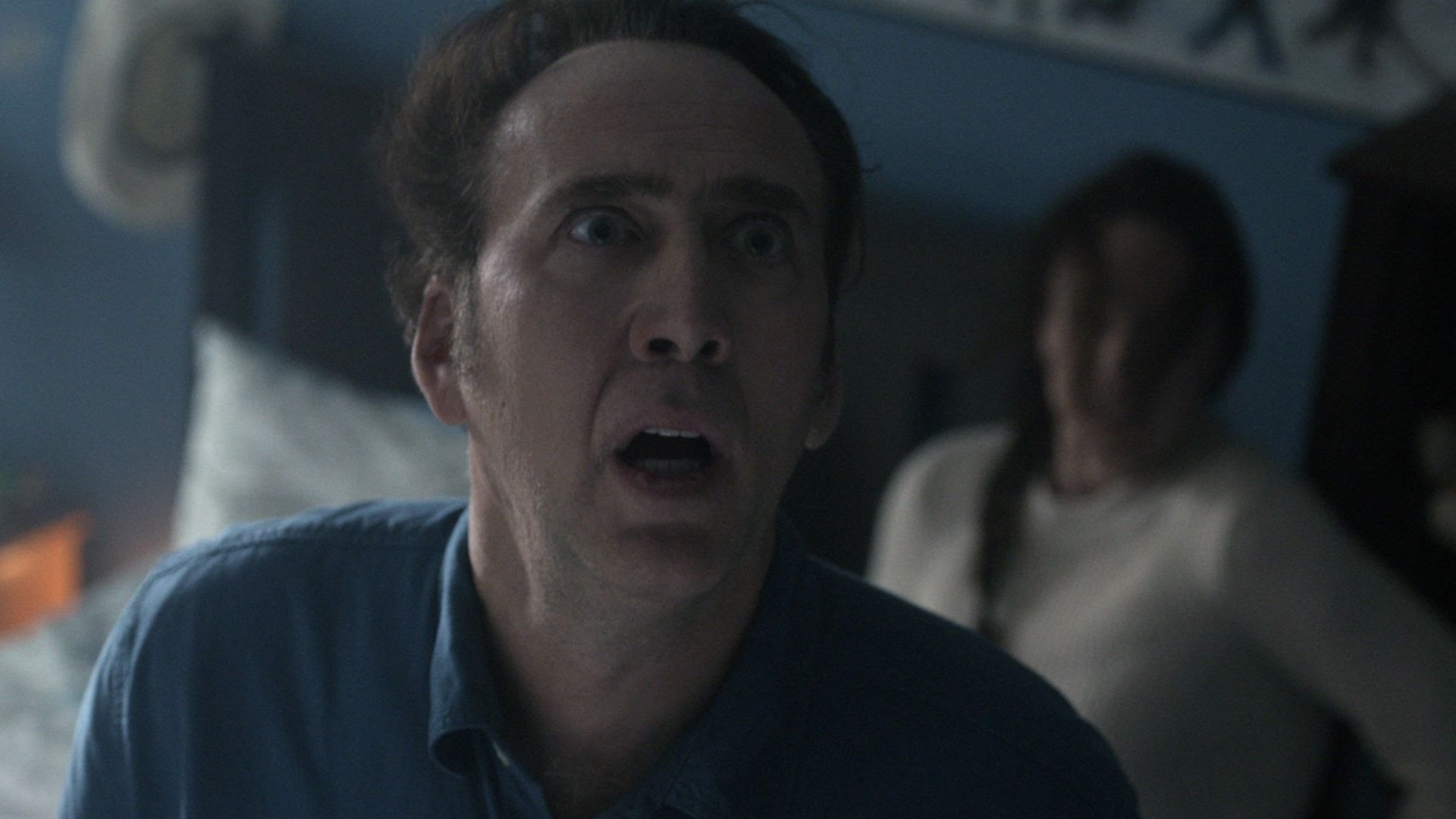
19) USS Indianapolis: Men of Courage – The true story of the sinking of the US warship Indianapolis in the Philippine Sea during World War II, and the five days the survivors spent waiting for help, was memorably recounted by Robert Shaw in Jaws (1975). Hopefully this will be as emotive and heart-stopping as the circumstances require, and even though Nicolas Cage is the star, here’s hoping his recent track record is sidelined on this occasion.

20) Captain America: Civil War – Already hyped to the stars and back because of the likely inclusion of a certain web-slinger, Chris Evans’ fourth outing as Steve Rogers (five if you include his cameo in Thor: The Dark World) ups the stakes considerably as superheroes takes sides against each other. With pretty much everyone involved except the Hulk and Thor, this could crumble under the weight of trying to tell too many individual stories all at once, but one thing’s for certain: it won’t skimp on the spectacle.

21) Kung Fu Panda 3 – The continuing adventures of unlikely kung fu warrior Po (voiced again by Jack Black) sees our rotund hero on the verge of meeting his real father, and discovering there’s an imminent supernatural threat to everyone’s safety, a threat only he and the Famous Five can defeat. The usual cast return, augmented by Bryan Cranston as Po’s real father, and there’s a sense that the stakes have been upped to provide a more exciting visual experience.

Kung Fu Panda 3

22) Star Trek Beyond – The third in the rebooted series is currently shrouded in secrecy, the makers perhaps having learned their lesson after Star Trek Into Darkness (2013) and the difficulty in keeping some cast members from blabbing various facts about the plot. So far, everything is under wraps, but if the template established by J.J. Abrams is followed, then this will still be a mission to remember, and should translate into box office gold.

23) Imperium – Daniel Radcliffe is the FBI agent tasked with infiltrating a group of white supremacists who plan to build – and use – a dirty bomb. Based on a true story, and giving Radcliffe one of his meatiest roles to date, this should be scary and fascinating all at the same time, while also examining issues of trust, fatalism and homegrown revolution.

24) Ben-Hur – Lew Wallace’s love letter to the early days of Christianity gets its fifth screen outing with Jack Huston and Timur Bekmambetov stepping into the particular shoes of Charlton Heston and William Wyler respectively. As ever, all eyes will be on the chariot race (and any riders wearing wrist watches), while it will be interesting to see if Wallace’s religious beliefs translate well with today’s audiences.

25) Rogue One: A Star Wars Story – Just for those Star Wars fans who can’t wait until 2017 for Episode VIII, Disney has come up with this semi-prequel set between Episode III and Episode IV. Details are as sketchy as you’d expect but the cast does include Ben Mendelsohn and Felicity Jones, and the prospect of Darth Vader making an appearance has already had fans practically creaming their Millennium Falcon-patterned underwear.

Pay the Ghost (2015)

Tags

, , , , , , , , , , ,

Pay the Ghost

D: Uli Edel / 94m

Cast: Nicolas Cage, Sarah Wayne Callies, Lyriq Bent, Jack Fulton, Veronica Ferres, Susannah Hoffmann, Lauren Beatty, Stephen McHattie

It’s Halloween, and newly tenured professor Mike Lawford (Cage) arrives home just in time to take his young son Charlie (Fulton) to a nearby Halloween carnival. Charlie is a little nervous as the night before he saw something outside his bedroom window, and at the carnival he sees a large vulture circling overhead, though Mike doesn’t. When they queue up to get ice cream, Charlie asks his dad if they can “pay the ghost”, and in seconds he’s disappeared. Mike searches frantically for him but there’s no trace of Charlie, only the pirate hat he was wearing as part of his Halloween costume. The police are called, and the lead detective, Reynolds (Bent) assures Mike that these things usually resolve themselves within twenty-four hours.

A year later, with three days to go before Halloween, Mike and his wife Kristen (Callies) have separated, and Charlie is still missing. Mike pesters Detective Reynolds, accusing him of not trying hard enough, while also putting up flyers detailing Charlie’s disappearance. When he begins to hear Charlie’s voice, he initially doubts his senses, but when he sees him on a bus and chases after it, it leads him to an abandoned warehouse that’s become home to a group of vagrants. On the outside of the building the phrase “pay the ghost” has been painted. Mike asks if anyone knows what it means, and a blind man (McHattie) shows him a wall covered with the phrase; however he has little more to offer.

Mike tries to convince Kristen that Charlie might be trying to communicate with them from wherever he’s been taken. He discovers that a child who went missing on the Halloween before Charlie’s disappearance also said the same thing to her father. Kristen refuses to believe him until she has her own supernatural encounter. Together, Charlie’s parents begin to look into the number of child disappearances that have occurred on Halloween; a disturbing pattern emerges, one that leads them to believe that this has been happening for a very long time. They dig deeper, and find that the abductions are related to a tragedy that happened over three hundred years before.

Pay the Ghost - scene

For fans of Nicolas Cage, it’s been a rough few years since his lauded turn in Kick-Ass (2010). Since then, only Joe (2013) has shown audiences what Cage can do when he’s fully engaged with a project. Otherwise, the movies he’s chosen to star in have been so lacking in quality they could only have been taken on as a way of paying off his mortgage. Anyone who’s sat through the likes of Seeking Justice (2011), Rage (2014), and/or Left Behind (2014) will have wondered what’s happened to an actor who won an Oscar for one of the most powerful portrayals of an alcoholic ever committed to celluloid. With each new movie, his loyal fans must hope that this will be the one to change his dwindling fortunes and prove he still has what it takes.

Alas, Pay the Ghost isn’t the one. Here Cage doesn’t so much phone in his performance as fax it over an intermittent connection. Trying to maintain a semblance of commitment to the material, Cage goes through the motions with all the intensity of someone who can’t wait to move on to the next project. At one point, after Kristen has made it clear she blames Mike for losing Charlie, Cage is required to fall to the floor and begin crying. It should be an uncomfortable moment of parental grief, but instead it’s uncomfortable because Cage can’t sell the emotion (or any tears). In comparison with Callies, who at least makes an effort to be traumatised by Charlie’s disappearance, Cage sleepwalks through their scenes together, only showing any passion when called upon to share his growing suspicions about Charlie’s abduction.

To be fair to Cage, he isn’t helped by the material, a hodgepodge of supernatural thriller clichés stitched together by screenwriter Dan Gay and adapted from the novella by Tim Lebbon. Fans of the genre will have fun spotting the references to other, similar movies, while the makers of the Insidious franchise will have good cause to wonder if Edel and co. haven’t made an unofficial companion movie to that particular series (Hoffmann’s medium is certainly no match for Lin Shaye’s Elise Rainier). You know a movie hasn’t got a clue when the supernatural entity at the heart of everything is able to organise all kinds of mischief at the drop of a hat – including killing someone by spontaneous combustion – but fails to put Cage off his stride at any point (yes, he’s the hero, but really, shouldn’t he be put in danger at least once during the movie?).

Further incongruities occur throughout, with Bent’s credulous detective used to poor effect and removed from the movie once he experiences his own supernatural awakening. Fulton spends most of the movie in a pirate costume, and sporting an eye patch applied with black make up that makes him look like a reject from a KISS audition. The evil entity has evolved from a curse made centuries before but its modern day raison d’être is arbitrary and convenient at the same time, reinforcing the idea that the makers have adopted a kitchen sink approach to its behaviour (just why Charlie has been chosen is one of the many questions the movie fails to even ask let alone explain).

In charge of all this, Edel never shows he has a grip on the material, and several scenes seem under-rehearsed or sloppily staged. Even the de rigeuer scares are heavily signposted and too reminiscent of similar ones from the Insidious series, while the final showdown between Mike and the entity takes place on a gantry that’s surrounded by some of the worst visual effects seen for some time. It’s almost as if everyone concerned just wanted to do enough to get the movie made and then move on.

Rating: 3/10 – Cage has made few worse movies, but Pay the Ghost comes pretty close to being at the top of the list; derivative, uninspired, dull, laughable, ridiculous, awful – it’s all these things and more, and serves as yet another unfortunate nail in the coffin of Cage’s career.

The Curse of Downers Grove (2015)

Tags

, , , , , , , , , , ,

Curse of Downers Grove, The

D: Derick Martini / 89m

Cast: Bella Heathcote, Lucas Till, Kevin Zegers, Penelope Mitchell, Martin Spanjers, Mark L. Young, Zane Holtz, Helen Slater, Tom Arnold

In the small town of Downers Grove, an annual series of deaths involving high school seniors has led to the belief that there is a curse on the town, though no one can explain why it’s happening. Each death has a rational explanation but the fact that it’s always a senior and it always happens in the week before graduation has entrenched the belief even further.

Chrissie Swanson (Heathcote) is a senior who doesn’t believe in the curse, though her best friend Tracy (Mitchell) does. As graduation approaches, Chrissie’s single mother Diane (Slater) goes away on a trip with her new boyfriend, leaving Chrissie and her younger brother, David (Spanjers) to their own devices. Tracy keeps wondering who will be this year’s victim, even suggesting it might be Chrissie. When they get invited to a party by local college quarterback Chuck (Zegers), his obvious attraction to Chrissie leads to his assaulting her, and in her efforts to get away from him she gouges out his right eye.

With his future as a star quarterback in ruins, Chuck begins to harass and intimidate Chrissie, letting her know how much he plans to make her life a misery. Chrissie begins seeing a mechanic called Bobby (Till), while unbeknownst to her, Tracy and David have invited pretty much everyone to the house for a party. As Chuck’s harassment begins to escalate, Chrissie goes to the police but when they learn that Chuck’s father (Arnold) is an ex-cop they close ranks and refuse to help her. David is beaten up and has his right hand badly broken. Bobby confronts Chuck and his cronies but he too is beaten up.

On the day of the party, Chrissie decides that she can no longer try to deal with Chuck on a normal level, and his insistence on their being together (even though she blinded him) isn’t going to be deterred by her obvious dislike of him. And when Chuck and his cronies invade the party, firing guns and scaring off everyone, Chrissie, David, and Bobby all make a stand to end things once and for all.

Curse of Downers Grove, The - scene

With its misleading title, and the involvement of author Bret Easton Ellis as co-screenwriter (with director Martini), The Curse of Downers Grove looks to all intents and purposes to be a small town horror movie with mystery elements. However, it’s really a small town thriller with one of the most ridiculous plots yet devised for the screen. In fact, as each development unfolds it becomes clear that the more absurd the idea, the more determined Ellis and Martini are to forge ahead with it. This is likely to leave the viewer scratching or shaking their head in disbelief for much of its running time.

There are so many things wrong with the plot and basic storyline that it’s hard to know where to start. The curse – introduced at the beginning in a gory black and white flashback – is practically abandoned as soon as we meet Chrissie and Tracy, and as the movie stumbles on, it becomes less and less important, until it’s rudely shoehorned back into the movie at the end in a vain attempt to provide some kind of shocking conclusion (which it isn’t). Occasional references are used to remind the viewer that what’s happening could all be leading up to the curse taking effect, but the focus is clearly on Chuck’s war of attrition and psychotic tendencies, and the script makes no attempt to connect the two.

Worse still is the issue of Chuck’s right eye. He doesn’t go to hospital, he just goes home and tries to patch things up himself. And then his dad comes in and instead of being shocked or concerned or sympathetic, is angry at his son for what happened and for ruining his future career in football, and attempts to beat him. The police aren’t called (remember, Chuck’s dad is an ex-cop), Chrissie isn’t arrested or questioned, and everyone gets on with their lives as if it had happened to somebody else in another town. Until Chuck goes all psycho…

From then on, the movie spirals downhill out of control and appears unconcerned as to how stupid or ridiculous it’s becoming. It’s the kind of movie where characters suddenly announce that their father taught them how to shoot when they were younger, and maybe it’s time they get out his old rifle, just before the inevitable showdown. It’s a movie where Chrissie’s creepy neighbour and childhood friend, Ian (Young), behaves even more alarmingly than Chuck does but somehow manages to avoid any suspicion that he might be up to no good. And it’s a movie where Chuck suddenly starts walking around with a bandage taped over his right eye and no one bats an eyelid (pun very much intended).

The lack of attention in the script leaves the cast high and dry. Heathcote has an alarming lack of facial expressions, making it difficult to work out what she’s feeling unless she says it out loud, and Till adds another showroom dummy role to his resumé. Zegers offers a one-note performance that struggles to be credible on any level, Mitchell pouts a lot to little effect, Spanjers is an unconvincing teenager (he was twenty-six when the movie was made), Slater plays the lovestruck middle-aged mom to surprisingly good effect before being written out for the rest of the movie, and Arnold is completely and totally wasted as Chuck’s dad (whose angry motivation is as nonsensical as his son’s psychopathy).

In all, it’s a disaster of a movie that could have been a lot more effective, and potentially creepy, than it is here. Martini – whose first feature, Lymelife (2008), is a well-polished gem of a movie, and well worth seeing – makes such a bad fist of things you begin to wonder if his heart was really in it. Scenes take place that are so desultory that again, it makes the viewer wonder if the cast were looking at their watches to see if the day’s shoot was almost over. Add to this the fact that the movie was shot nearly two and a half years ago, and is only now getting a release, and you have all the hallmarks of a movie that’s dead in the water but doesn’t know it.

Rating: 3/10 – one step up from being abysmal, but only just, The Curse of Downers Grove is an object lesson in how not to make a scary thriller; tedious, muddled, and disappointing throughout, this should be avoided like a bad case of the runs.

Legend (2015)

Tags

, , , , , , , , , , , , , , , , ,

Legend

D: Brian Helgeland / 131m

Cast: Tom Hardy, Emily Browning, David Thewlis, Christopher Eccleston, Paul Anderson, Taron Egerton, Colin Morgan, Tara Fitzgerald, Sam Spruell, John Sessions, Chazz Palminteri, Paul Bettany, Kevin McNally, Shane Attwooll, Jane Wood

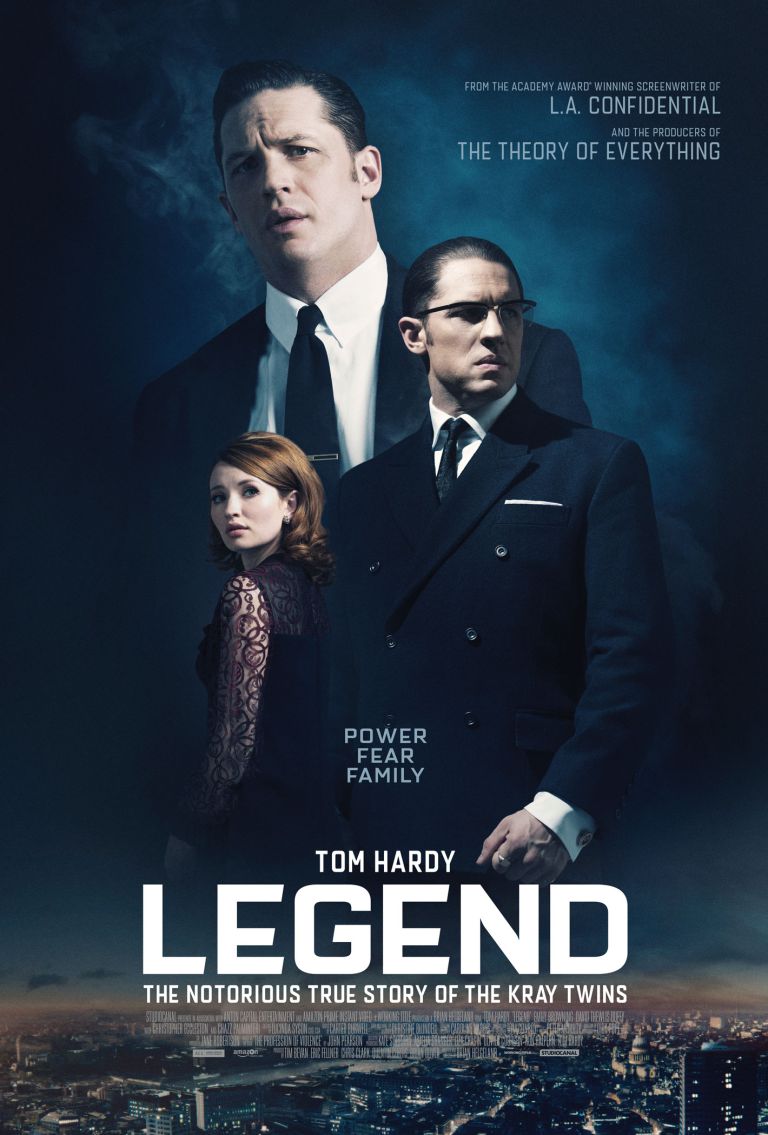
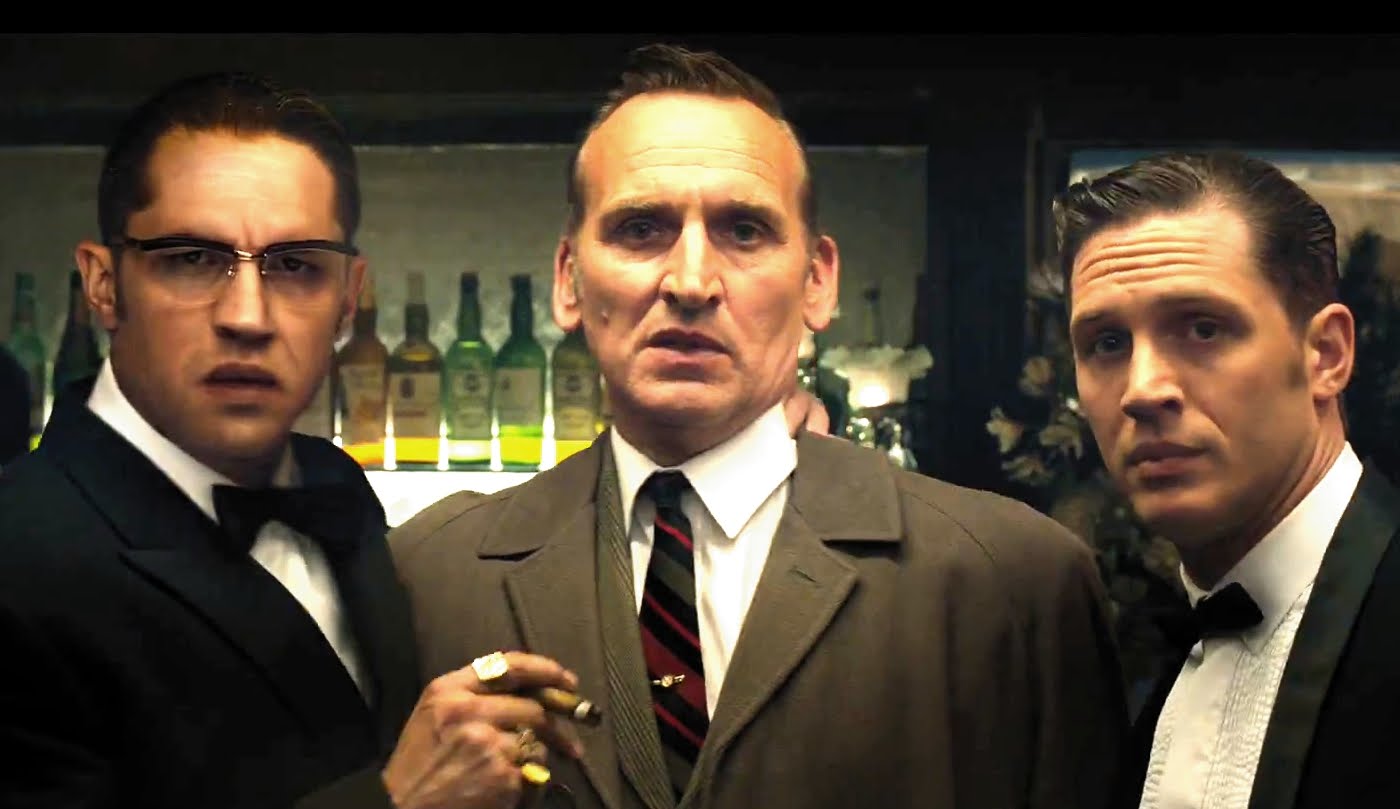
London, the 1960’s. The East End is home to two brothers, the confident, ambitious Reggie Kray (Hardy), and his psychotic twin Ronnie (Hardy). Together they run a criminal network based around providing protection to local businesses, while Reggie owns a club that attracts celebrities and politicians who like to mingle with London’s criminal element. The pair are well-liked in their local neighbourhood, and are both feared and respected. Reggie is continually followed by Detective Superintendent “Nipper” Read (Eccleston) who has been given the task of bringing the twins to justice. But they’re always one step ahead of him.

One morning, Reggie’s regular driver, Frankie Shea (Morgan) hasn’t shown up. Reggie goes to his house; the door is opened by Frankie’s sister, Frances (Browning). He’s immediately attracted to her and he asks her out. She agrees to go out with him, despite her mother’s misgivings, and despite Reggie’s reputation. Meanwhile, one of the Krays’ gang has been caught “working” on the south side of the river, an area run by the Richardson family. This infraction leads to a meeting between the Krays and the Richardsons on neutral ground, but the Richardsons send some of their men instead to get rid of Reggie and Ronnie once and for all. But the twins prove too much for the men, and are all viciously beaten up.
With no other serious rivals, the Krays’ criminal empire spreads further afield. With the aid and advice of their accountant, Leslie Payne (Thewlis) – whom Ronnie dislikes and is suspicious of – they take over a casino in an attempt to earn some legitimate money (while still maintaining their regular criminal activities). An old warrant sees Reggie spend six months in prison, during which time he and Frances grow closer, though she seeks reassurances that he’ll be more honest when he gets out. But it doesn’t happen, and even with her hopes dashed, Reggie and Frances get married. Ronnie is welcoming at first, but their marriage leads him to think that Reggie is trying to move on without him. At the same time, Read’s investigation is sidelined when he allows himself to be photographed with the Krays in their casino.

Frances finds herself isolated, and begins to rely more and more on medication to ease her growing sense of anguish. Reggie is oblivious, and has more urgent matters to attend to when Ronnie kills one of the Richardsons’ men, George Cornell (Attwooll) in a pub in front of witnesses. In order to protect his brother, Reggie must intimidate the witnesses, which he does, but when Ronnie hatches another plan to eliminate a perceived enemy, and hires Jack “The Hat” McVitie (Spruell) to do the job, it leads to the end of their criminal careers and the empire they’ve built up.

Legend - scene

Adapted from the book The Profession of Violence: The Rise and Fall of the Kray Twins by John Pearson (who was once an assistant to Ian Fleming), Legend is a curious movie in that it takes the two most notorious criminals known in Britain in the last sixty years, and tells their story in such a way that, on the whole, they don’t seem that bad. Sure they use intimidation and violence as a way of getting what they want from people, but we don’t see any of this, so the viewer has to take it for granted that they were as nasty as their “legend” would have it. Instead, writer/director Helgeland shows us the Kray twins as entrepreneurs, buying into legitimate businesses and making inroads into so-called polite society, including the patronage of Lord Boothby (Sessions), a predatory homosexual whose relationship with Ronnie leads to the Krays being acquitted at trial for fear of a government scandal. What’s given scant attention is their youth and how they got to where they were in the mid-Sixties, and how they actually attained the powerful position they enjoyed.

Then there’s the relationship between Reggie and Frances, which at first follows an almost predictable girl-meets-bad-boy scenario before settling down into something much darker and terrible. It’s hard to pick out just why Frances stays with Reggie for so long, because Helgeland doesn’t provide very many clues to help explain it all, and it’s equally unclear why Reggie wants Frances. It’s all very superficial, and though it’s based on real events etc., it doesn’t quite gel on screen, leaving the viewer with the feeling that whatever the truth about their marriage – and the movie makes some strong claims – there’s more to it than meets the eye (or is included in Helgeland’s script).

The same is true of the movie as a whole, with the sense that Helgeland’s adaptation isn’t concerned with providing any depth or subtext, leaving the poor viewer (again) suspecting that they just have to go along with everything and accept it all for what it is. It makes for a frustrating viewing experience as the characters – and there are a lot of them – all appear to lack an inner life (with the possible exception of Ronnie, whose inner life seems entirely weird and deranged). The movie also lacks a sense of time, its events and occurrences sometimes feeling like they’re happening in the absence of any  recognisable timescale, or have been cherry-picked from Pearson’s book at random (one example: Frances meets Reggie when she’s sixteen but doesn’t marry him until she’s twenty-two). And that’s without mentioning that as a retelling of the Krays’ activities and lives, it’s not very faithful or accurate.

The period of the Krays’ infamy is, however, extremely well-realised, with the East End of London looking as foreboding and shadowy as it did back in the Sixties, and with the period detail proving impressive. In terms of the time and the place, Tom Conroy’s incredibly detailed production design is enhanced by Dick Pope’s sharply focused cinematography, and further augmented by Carter Burwell’s appropriately Sixties-style score. The costumes are also a plus, with the fashions of the time recreated in fine style by Caroline Harris, an underrated costume designer who has provided equally fine work on movies as varied as An Ideal Husband (1999), A Knight’s Tale (2001), and And When Did You Last See Your Father? (2007).

Legend - scene2

As to the performances, it’s either a one-man or a two-man show, depending on how you look at it. Hardy is magnificent in roles that it would be difficult now to imagine any other actor attempting. As the charming, urbane-sounding Reggie, Hardy does more with a glance than some actors can manage with a long speech and an unwavering close up. He’s magnetic in most of his scenes, grabbing the attention as firmly as if he had the viewer in a headlock, and making it difficult to look away from him. And as Ronnie it’s like watching a human shark, his dark eyes staring out from behind the character’s glasses with vicious intent, just waiting for the chance to explode, and speaking with the delusional belief that his ideas are as sane as he thinks they sound (at one point he comes out with a plan to protect the homeless children of Nigeria). In both cases, Hardy is superb, even if he’s let down by the material, but he’s such a good actor that he overcomes Helgeland’s negligence and commands the audience’s attention throughout.

In support, Browning is captivating and sincere as Frances, and finds layers in the role that aren’t so evident from the script, while Thewlis gives one of his best recent performances as Payne, the accountant who earns Ronnie’s enmity. Anderson is quietly effective as Reggie’s right-hand man Alby, Fitzgerald is a scornful Mrs Shea (she wears black to her daughter’s wedding), Sessions is suitably slimy as Lord Boothby, and Palminteri, as the Mafia representative who wants the Krays to run London as part of a criminal franchise overseen by Meyer Lansky, exudes a rough Italian charm that hides a more dangerous persona. Alas, Eccleston is given little to do beyond looking exasperated, and Spruell’s McVitie is required to “grow a pair” just when the script needs him to; up ’til then he’s the very definition of compliant.

Ultimately, Helgeland the writer undermines Helgeland the director, focusing on Reggie to the detriment of Ronnie, and trying to make this about Reggie’s loyalty to his brother, rather than the exploits that made them infamous (which are almost incidental here). Some scenes lack the intensity they deserve, as if Helgeland didn’t have the nerve to show some things as they actually occurred (McVitie’s murder was much more vicious than what is shown in the movie), and though the emphasis is quite rightly on the Krays, more time with some of the other characters would have added some richness to the material and kept it from feeling (on occasion) somewhat uninspired. Perhaps there’s a longer cut waiting to be released on DVD/Blu ray, and it fills in a lot of the gaps, but at this length, Helgeland’s scattershot approach to the Krays’ lives is too much of a hindrance to make it anything more than just okay.

Rating: 6/10 – missing the vital spark that would have elevated it into the realm of the truly great gangster movies, Legend instead squanders its chance and remains a mostly pedestrian account of the lives of two men who meant to rule London’s criminal underworld with four iron fists; not as violent as you might expect, but with two standout performances from Hardy to help compensate, this is one “real life” movie that feels like it could have, and should have, been a whole lot better.

Mini-Review: Break Point (2014)

Tags

, , , , , , , , , ,

Break Point

D: Jay Karas / 90m

Cast: Jeremy Sisto, David Walton, Amy Smart, J.K. Simmons, Joshua Rush, Adam DeVine, Chris Parnell, Vincent Ventresca, Jenny Wade, Cy Admundson

Jimmy Price (Sisto) is a pro tennis player who’s successfully alienated every doubles partner he’s ever played with. When his latest partner walks out on him, Jimmy tries to find a new one but his past behaviour catches up with him, and he’s turned down by everyone he contacts. Knowing that he has one last chance at taking part in a grand slam tournament, he has no option but to ask his brother, Darren (Walton), who is a substitute teacher, to be his partner. Darren is less than enthusiastic, as when they were younger Jimmy dumped him for another player during a tournament.

Darren eventually comes around to the idea, and he and Jimmy begin to practice together. They’re joined by one of Darren’s pupils, a precocious eleven year old called Barry (Rush) who has attached himself to Darren for the summer break. Supported and encouraged by their veterinarian father, Jack (Simmons), and his assistant Heather (Smart), they get through a qualifying tournament despite Jimmy’s confrontational antics. With one more qualifying match to play, a meet and greet sees Jimmy talking to several of the other pro players, leading Darren to suspect that history is about to repeat itself.

Break Point - scene

A broad mix of lightweight drama and affable comedy, Break Point is easy-going fare for those times when thinking about a movie isn’t required. It’s amiable and it pretty much does what it says on the tin, leading the viewer through a predictable yet enjoyable story that avoids any lows but equally doesn’t hit the heights either. A bit of a pet project for Sisto – as well as being its star, he’s the co-writer and one of the producers – the movie allows him to give another man-child performance that’s flecked with occasional moments of introspection. Sisto is good in the role but like all the characters, Jimmy is a step up from being one-dimensional, and nothing he does or says will come as a surprise to anyone.

With Sisto getting to play the “fun guy”, it falls to Walton to be the straight man, and while he’s more than up to the task, he has little to do beyond acting peevish or doubtful about his brother’s motives. With the exception of Rush as the cute but borderline annoying Barry, the rest of the cast are sidelined for much of the movie, with Simmons wasted as the brothers’ dad, and Smart roped in for the last third as a romantic partner for Darren. Karas directs ably but routinely, and even the tennis matches remain formulaic in both the way they’re shot and edited, with little in the way of any real excitement. All in all it’s a sweet movie, but not one you’re likely to remember for long.

Rating: 5/10 – while not a bad movie, Break Point is too laid-back for its own good, and it never really gets off the ground; a pleasant enough experience but it’s likely that the average viewer will be left wanting a whole lot more in order to feel rewarded for their time.

Trailer – The Jungle Book (2016)

Tags

, , , ,

Disney’s new live action version of The Jungle Book looks to be a million miles away from the simple pleasures to be had from the 1967 animated original, with its emphasis on action and adventure (though the last shot is a nice way to end the trailer). But director Jon Favreau has been championing this project for a while now, and he’s assembled a very talented voice cast including Scarlett Johansson as Kaa, and Bill Murray (who else?) as Baloo. With Warner Bros.’ rival, animated, version, Jungle Book: Origins, now pushed back to 2017, this update has the potential to be a huge success, and with the backing of the mighty House of Mouse, it could well be the family movie of 2016.

Everest (2015)

Tags

, , , , , , , , , , , , , , , ,

Everest

D: Baltasar Kormákur / 121m

Cast: Jason Clarke, Josh Brolin, John Hawkes, Emily Watson, Robin Wright, Keira Knightley, Jake Gyllenhaal, Sam Worthington, Michael Kelly, Martin Henderson, Thomas M. Wright, Ingvar Eggert Sigurðsson, Naoko Mori, Elizabeth Debicki

The brainchild of New Zealand mountaineer Rob Hall (Clarke), Adventure Consultants is a company that takes people to the summit of Mount Everest. In April 1996, Rob and his team, led by base camp manager Helen Wilton (Watson), plan to take eight clients to the summit. Among them are Texan climber Beck Weathers (Brolin) and Doug Hansen (Hawkes), a postman seeking to inspire the pupils at an elementary school where he lives, and Jon Krakauer (Kelly), a journalist from Outside magazine that Hall has persuaded to write an article about them in return for a gratis trip. When they arrive at base camp, Hall regales them with the necessary rules and warns them all of the dangers of ascending to a height where their bodies will literally begin to die.

The group make three acclimatisation climbs before starting off for the summit on the morning of May 10. They are joined by a group led by Scott Fischer (Gyllenhaal) of the rival company Mountain Madness. Together they aid each other in climbing the mountain, making it to each Camp in good time. The camaraderie between the climbers helps them to keep going the further up they climb, but after they leave Camp IV, they begin to encounter problems. Fischer becomes unwell and starts to struggle, while Weathers develops an eyesight problem that causes him to remain on the side of the mountain until the other climbers come back down. As they near the summit, they reach the Balcony and find there are no fixed ropes; and again when they reach the Hillary Step. With time being eaten away by these delays the strain of the climb begins to tell on more and more of the climbers, including Hansen who lags behind everyone else.

The two groups persevere though and the first person to reach the summit – from Fischer’s group – gets there around 1pm. With everyone needing to start back down by 2pm in order to make it back to Camp IV, Hall finds himself ignoring his own rules and helping Hansen reach the summit. Now over an hour late in leaving, and with Hansen getting weaker and weaker due to a lack of oxygen, Hall is faced with an even worse problem: a terrible storm rushing in from the southwest. With the blizzard making the effort to descend even harder, Hall and Hansen make it back to the Hillary Step, while Fischer’s group and the rest of Hall’s group find themselves battling the blizzard and struggling to stay alive. With no help available from the base camp, all anyone can do is hope that the storm abates soon, and gives them all a chance to get back down.

Everest - scene

Based on a true story, and with a script by William Nicholson and Simon Beaufoy that’s been collated from various sources, Everest is a disaster movie that highlights the natural beauty of the Himalayas, and the ever-present danger that lies hidden and waiting for the unwary (or even the experienced). It’s an intelligent, cleverly constructed and judiciously maintained tale of unexpected tragedy that is also unexpectedly moving. And thanks to the decision to film as much of the movie on location as possible, it allows the viewer to become embroiled in the effort to reach the summit and then to stay alive against the odds.

Much will be made of Everest‘s stunning vistas and gasp-inducing scenery, and while this is entirely appropriate, they’re still the backdrop for a tragic endeavour that was doomed from the moment that the groups found that there were no fixed ropes in two sections where they were needed. With the climb having gone so well up til then, this presentiment of doom adds a chill to events that augments the sub-zero temperatures, and makes the rest of the movie dreadful and fascinating to watch at the same time.

As the resulting tragedy unfolds, it becomes an agonising experience as the various climbers we’ve come to know and empathise with, face terrible hardships brought on by the brutal weather, and find the limits of their endurance pushed beyond measure. The inclusion of Hall’s partner, Jan (Knightley), and Beck’s wife, Peach (Wright), both removed from the action but still linked to their men by tremendous love and commitment, allows the movie to show how the events on Everest had a wider consequence. Jan is pregnant with hers and Rob’s first child, while Peach moves heaven and earth to ensure her husband has a chance of returning home. Their fears and concerns add an extra layer of tragic drama to proceedings, and in the capable hands of Knightley and Wright, both women show fear, strength, determination and sadness with admirable clarity. And they’re matched by Watson, who puts in yet another faultless performance.

Amongst the men, Clarke plays Hall as an altruistic, methodical leader whose love of climbing defines him the most. When Hall decides to help Hansen reach the summit, his thoughts are writ clearly on his face: it’s the wrong decision, and Clarke shows Hall’s understanding of this with such resignation that it heightens the impending tragedy, and makes their twin fates all the more affecting. Hawkes gives another low-key yet determined performance as the most unlikely climber in the group, while Brolin’s cocky, bullish attitude soon reveals a deeper layer of insecurity that Weathers would rather keep hidden. Gyllenhaal and Worthington have minor roles in comparison and we don’t get to know their characters as well, but with so many to keep track of, it would be unfair for the script to try and focus on too many at one time.

Making his most complete and effective movie to date, Kormákur ratchets up the tension as the storm hits and survival becomes everything. But he never loses sight of the human will to overcome and conquer adversity, and as the treacherous descent is begun, most viewers are likely to have at least one character they’ll want to see reach Camp IV. Whether they do or not is another matter, and it would be fair to say that billing is no guarantee of survival, but again Kormákur keeps the viewer on the edge of their seat as to just who will make it and who won’t, and each death carries with it its own devastating emotional “punch”.

The production is handsomely mounted and is supported by Salvatore Totino’s superb photography, Dario Marianelli’s subtle, non-intrusive score, and Mick Audsley’s fine-tuned editing. With only a few dodgy green screen shots to break the illusion, and some confusion as to what’s happening to whom once the blizzard hits, Everest remains a compelling, gripping account of an unfortunate, avoidable tragedy.

Rating: 8/10 – whatever your views on the mistakes made on May 10 1996, there’s no doubting the courage shown by all those on the mountain that day, and Everest is a tribute to all those who perished, and the survivors as well; with an emotional core that steals up on the viewer, it’s a movie that reaffirms the risks of climbing “the most dangerous place on Earth”, and the sense of profound achievement that it provides.

Laggies (2014)

Tags

, , , , , , , , , , ,

Laggies

aka Say When

D: Lynn Shelton / 99m

Cast: Keira Knightley, Chloë Grace Moretz, Sam Rockwell, Mark Webber, Jeff Garlin, Ellie Kemper, Sara Coates, Kirsten deLohr Helland, Kaitlyn Dever, Daniel Zovatto, Dylan Arnold, Gretchen Mol

At twenty-six, Megan (Knightley) still doesn’t know what she wants to do with her life. She helps out her dad (Garlin) with his store, but otherwise does little beyond spend time with her friends, or her boyfriend, Anthony (Webber). When her friend Allison (Kemper) gets married, the day of the wedding proves traumatic when Anthony proposes to her unexpectedly and Megan sees her father fooling around with another woman. Unable to deal with the two events, she leaves the reception and drives around until she stops at a convenience store. There she’s stopped by a young girl, Annika (Moretz) and asked if she’ll buy alcohol for her and her friends. Megan agrees, and ends up spending the next few hours with them.

When she eventually gets back home, Anthony reveals that he thinks they should forgo a big wedding and elope to Las Vegas. Megan agrees that they should, but she still has qualms about getting married, and uses a trip to a planned careers advice seminar to delay their marriage for a week. Her idea is to give herself the space and time to decide if she wants to spend the rest of her life with Anthony. As she leaves Seattle, Megan receives a phone call from Annika asking if she can pose as her mother for a meeting with a school guidance counsellor. Megan does so, and asks Annika if, in return, she can stay with her for the upcoming week.

Annika is fine with the idea but knows her father, Craig (Rockwell), will be less enthusiastic about it, but Annika’s attempt to sneak Megan into the house fails, and Megan ends up being questioned by Craig – who’s a lawyer – about why she’s there. Megan lies and tells him she’s between apartments due to lease problems, and just needs somewhere to stay temporarily. Craig lets her stay, and as the week progresses he begins to trust her. So does Annika, so much so that she asks Megan to go with her to see her estranged mother, Bethany (Mol).

Craig and Megan spend an evening together at a bar and on their way home begin kissing. They have sex when they get home; next morning Craig offers to let Megan stay longer, but she reluctantly tells him she has to leave. They kiss again and this time Annika sees them. She later tells Megan that she doesn’t have a problem if they got together, but when they go shopping for a prom dress for Annika, Annika discovers Megan’s engagement ring. Forced to admit the truth, Megan’s deception proves to have lasting consequences…

Laggies - scene

After the disappointment of her previous movie, Touchy Feely (2013), hopes were high that Lynn Shelton’s next project would be an improvement, and re-cement her position as one of today’s more intriguing and perceptive directors. Working from a script by first-time screenwriter Andrea Siegel, Laggies – the phrase refers to people who are always late or lagging behind in some way – Shelton has certainly made a better feature than her last, but it’s still a movie that suffers from a lack of conviction.

Part of the problem is the central character of Megan, a young woman apparently experiencing a “quarter-life crisis”. While it’s not improbable for anyone to find themselves in their mid-twenties and without a clear idea of where their life is heading, where Megan is concerned it’s very clear that she’s an intelligent, independently-minded young woman, but someone who is unable to deal with the larger, more important aspects of becoming an adult. She avoids responsibility and appears emotionally shallow, but somehow manages to retain the affection and support of everyone around her. How she’s arrived at this point is never explained, and the movie never explores fully the implications of such an arrested lifestyle, preferring instead to have Megan float through her own life waiting for the answers to come to her rather than working them out for herself.

With Megan having little in the way of self-awareness (or even pride), it’s difficult to fully sympathise with her, especially when she falls for Craig so easily, a plot development that couldn’t have been signposted better if it had been written in fiery letters in the sky. It’s this conventional romantic approach that anchors the movie’s second half and leads to the kind of unsurprising resolution that’s been seen a million times before. That Shelton manages to keep the viewer interested despite all this is a tribute to her skills as a director, and the performance of Knightley, who adopts not only a convincing American accent, but also fleshes out the character of Megan against all the odds. There’s a scene after Megan has slept with Craig where she talks with her father; unable to judge him anymore, Megan’s lack of ambivalence over her own actions further hurts the scene, and it’s only rescued by Knightley’s decision to play it with a sense of newly discovered regret at the way she’s acted towards him.

Moretz is sidelined by the script’s insistence on her being a constant reminder of the simpler life Megan is looking for, while Rockwell brings his usual quirky schtick to a character who really needs to be more conservative, and not an older, wiser version of Megan. Spare a thought for Webber, though, playing a character so wet and puppy like you can only think Megan’s with him out of a sense of obligation, or worse, pity. With its four main characters either stretching credulity or in place to meet the wider needs of the storyline, the movie feels and sounds like an examination of a particularly callow way of living, and one that most of us would have little time for.

On the plus side, Shelton does make more of the material than it deserves, and she invests the movie with a rhythm that helps the viewer get through some of the more unlikely moments. Knightley dials down most of her usual mannerisms to give a polished portrayal of a lost soul who’d prefer to remain that way, and Mol deserves a mention for making Annika’s mother something more than the standard embittered ex-wife. Nat Sanders’ editing is another plus, especially when called upon to enhance a character’s emotional reaction in a scene, and there’s an often delightfully apt score by Benjamin Gibbard that subtly reflects Megan’s confusion.

Rating: 6/10 – while the movie’s structure is fairly sound, and Shelton shows an awareness of the script’s faults that compensates greatly, Laggies still feels undercooked, and as a result, falls short of what it’s aiming for; while it’s refreshing to see a woman in her mid-twenties having a life crisis, it’s also a shame to find said crisis left mostly unexplored.

Trailer – I Smile Back (2015)

Tags

, , , , ,

One critic calls Sarah Silverman’s performance in I Smile Back a “career changer”, and from what can be seen in the trailer, they’re not far wrong. Known primarily for her stand up persona, and appearances in screen comedies, Silverman has taken on the most challenging role of her career as Laney, a wife and mother whose drug and alcohol addictions and self-destructive tendencies are pushing her to the point where she’s about to lose everything. It promises to be both an eye opener in terms of the performance, and the role that changes audience perceptions of her as an actress. If she’s also in the running come the awards season then it won’t necessarily be a surprise, but if she is looking to take on further dramatic roles, then this will have been a great first choice.

The Transporter Refueled (2015)

Tags

, , , , , , , , , , , ,

Transporter Refueled, The

D: Camille Delamarre / 96m

Cast: Ed Skrein, Ray Stevenson, Loan Chabanol, Gabriella Wright, Tatiana Pajkovic, Wenxia Yu, Radivoje Bukvic, Noémie Lenoir, Yuri Kolokolnikov, Lenn Kudrjawizki, Samir Guesmi, Anatole Taubman

Comments made following an advance US screening of The Transporter Refueled:

“When did Jason Statham get a facelift? Damn, he looks good!”

“Why was Florida full of French people?”

“Where can I learn to drive like the transporter?”

“Why was the transporter’s dad such a manwhore?”

“Who’s Ed Skrein?”

“A roundabout with four conveniently placed fire hydrants – what are the odds?”

“What a great idea to have the final showdown take place on a boat. Well done!”

“The four women looked really good after being prostitutes for fifteen years. What was their skin care regime?”

“It was good that the Russian bad guy and the English good guy had served in the same army at some point.”

“Will the next one be called, The Transporter: Are We There Yet?

“Shouldn’t it be spelt refuelled?”

Transporter Refueled, The - scene

Rating: 4/10 – for a fast-paced action movie, The Transporter Refueled is instead quite sluggish, and easily the least of the four movies so far; Skrein doesn’t have Statham’s intensity (or his moves), and the plot – as usual – relies on far too many things falling conveniently into place for comfort, leaving the viewer with the feeling that the three screenwriters weren’t interested in scripting a movie that might have had audiences on the edge of their seats.

Mini-Review: The Falling (2014)

Tags

, , , , , , , , , , ,

Falling, The

D: Carol Morley / 102m

Cast: Maisie Williams, Maxine Peake, Greta Scacchi, Florence Pugh, Anna Burnett, Joe Cole, Rose Caton, Lauren McCrostie, Katie Ann Knight, Evie Hooton, Morfydd Clark, Monica Dolan, Mathew Baynton

At a British girls’ school in 1969, Abbie Mortimer (Pugh) is liked and admired by all, especially her best friend, Lydia Lamont (Williams). Abbie though, has a rebellious streak, and is the first of the girls to have sex. But this leads to her falling pregnant and a subsequent series of fainting spells that lead to her unexpected death. Stunned by this sudden turn of events, Lydia begins to feel unwell herself, and soon she too is fainting, both at school, and at home where her mother Eileen (Peake) hides herself away from the world.

Lydia now assumes the role Abbie had in the school, and much to the vexation of teacher Miss Mantel (Scacchi) and school head Miss Alvaro (Dolan), more and more of the other girls begin to show similar signs of illness, and start fainting as well. At first, Miss Alvaro refuses to believe that anything is wrong, and is certain that Lydia and the rest are faking their attacks. But when it also affects one of the other teachers, Miss Charron (Clark), at an assembly, the school is faced with no option but to send the girls to hospital for tests to see if the pupils are guilty of deception, or if there’s a real medical reason for what’s happening.

Falling, The - scene

Despite the crispness of Agnès Godard’s often exquisite photography, and an insistent but strangely apt soundtrack involving original music by Tracey Thorn, The Falling is not as mysterious or dramatic as it seems, relying heavily on visual motifs and too many shots that are meant to increase the sense of foreboding, but which only go to show that trees used as a metaphor actually remain just trees. The same goes for the repetitive nature of the faintings – instead of instilling any sense of dread they happen so regularly that by the time we see a group of schoolgirls hyperventilating in a hospital corridor, it’s more a cause for laughter than concern.

Morley leaves a lot of questions unanswered (not the least of which is the cause of Abbie’s death), and avoids taking one or two subplots down roads that would have made for more dramatic results (Lydia’s growing attraction for her brother, Kenny (Cole), for example), while the cast do their best with poorly motivated characters and the kind of dialogue that only teenagers in the movies come out with (Lydia even yells “Kill the system!” at one point). It’s all meant to be a fervent hotbed of paranoid mass hysteria, and while it’s a situation that obviously goes too far, there are few consequences for the characters involved, and by the end we’re back where we started. There’s a decent idea here, but there’s also too much that’s elliptical or left hanging, leaving the movie only occasionally successful in what it’s trying to do, and only occasionally rewarding for the viewer.

Rating: 5/10 – dramatically unsound and lacking in any clear focus as to what it’s trying to say (other than that teenage girls are incredibly susceptible to hysteria), The Falling is a psychological mystery overlaid with an arthouse approach that doesn’t suit the material; obtuse and trying to be profound, the movie stumbles along revealing little about its characters beyond the obvious, and does its best to keep them at a distance.

American Ultra (2015)

Tags

, , , , , , , , , , , , , , , , ,

American Ultra

D: Nima Nourizadeh / 96m

Cast: Jesse Eisenberg, Kristen Stewart, Topher Grace, Connie Britton, Walton Goggins, John Leguizamo, Bill Pullman, Tony Hale, Stuart Greer, Monique Ganderton

Mike Howell (Eisenberg) is charitably known as a stoner. He works in a mini-mart that rarely sees any customers, and he lives with his girlfriend of five years, Phoebe (Stewart). Having made plans for a romantic trip to Hawaii, Mike doesn’t make it further than the airport as he always gets panic attacks when he tries to leave the sleepy town of Liman, where he and Phoebe live. Mike was going to propose when they were in Hawaii, and has kept the ring, waiting for the right moment.

At the CIA’s headquarters in Langley, Virginia, veteran agent Victoria Lasseter (Britton) receives a mysterious phone call that warns her that “Tough Guy is moving in on Little Man”. This refers to two separate CIA programs: the Little Man referred to was part of the Ultra program that was shelved several years before, while Tough Guy is the brainchild of fellow agent Adrian Yates (Grace). Lasseter confronts Yates who tells her he’s cleaning house and the one remaining participant in the Ultra program is regarded as a liability. Blocked by Yates’s seniority, she decides to take matters in her own hands.

That night, Lasseter visits the store where Mike works. She tells him some coded phrases that are meant to reactivate him, but they appear to be ineffective. But later, when he sees two men tampering with his car, he finds himself being attacked. Without thinking, he defends himself and kills both men. Freaked out he calls Phoebe and tells her what’s happened. When she arrives, she’s just ahead of the sheriff (Greer), who arrests them both. Mike is unable to explain how he was able to kill the men, but his newly realised (or reawakened) skills prove useful again when Yates sends two Tough Guys – Laugher (Goggins) and Crane (Ganderton) – to finish the job the other two couldn’t. In the process, the station is destroyed and all the police force killed; Mike kills Crane and he and Phoebe get away.

They head for the home of Mike’s dealer, Rose (Leguizamo). There they learn that the town has been quarantined and that Mike and Lasseter are being labelled animal rights terrorists who have released a deadly virus in the area. Two more Tough Guys arrive and start to flood the place with a deadly gas. Phoebe and Mike get out but not before he ingests a dangerous amount of it. She saves his life, but in the process Mike realises that she knows too much about what’s going on. Phoebe is forced to confess that she’s been hiding something from him, and this changes things between them. While Phoebe tries to explain things, Laugher pushes their car off a bridge. Mike is trapped, but Phoebe is captured by Laugher who takes her to Yates – but not before he’s poured gasoline on the overturned car and set it alight…

American Ultra - scene

An uneven mix of stoner comedy and action movie, American Ultra is the kind of late summer crowd pleaser that will likely please fans of both genres as it comfortably combines both to generally good effect. It’s a movie where lots of things happen coincidentally and predictably, but this is one occasion where it doesn’t really matter, as whatever flaws it has are compensated for by the huge sense of fun to be had, from Mike’s drug-fuelled paranoia – at one point he thinks he might be a robot – to the moment where he finally proposes to Phoebe.

It’s a deliberately offbeat, totally ridiculous slice of escapist fantasy that knows exactly what it’s doing, and if screenwriter Landis and director Nourizadeh between them can’t quite wrestle the whole premise into a manageable whole, it’s still comforting to know that they get it right more times than not. On the plus side, there’s the relationship between Mike and Phoebe, a touching, believable couple with minimal ambitions and secure in their love for each other (even if Mike can’t make an omelette without nearly burning down their home). As played by Eisenberg and Stewart, reuniting at last after first appearing together in Adventureland (2009), Mike and Phoebe provide the sweet-natured heart of the movie, and you root for them when Yates and his operation come to Liman. Even when Phoebe’s revelation threatens to come between them, there’s enough investment in their relationship made already that even though their reconciliation is inevitable, you still want it to happen sooner rather than later.

Another plus factor are the inventive fight scenes, particularly a standout sequence at the mini-mart that is shot almost like a first-person video game, and sees Mike using anything that comes to hand to ward off over a dozen Tough Guys. Eisenberg makes a convincing action hero, his slight frame and long hair at odds with the muscular attributes of most action stars, and he’s a revelation in these scenes, kicking ass in a way that the portrayer of Mark Zuckerberg wouldn’t usually be thought of. Stewart also has her moves, and she too is surprisingly effective as a bad-ass. There’s still a tendency to shoot the action sequences and fight scenes with too much of a nod to rapid editing, though there is a fair amount that’s seen in long shot, and is all the better for it.

On the downside, Leguizamo has an awkward role that sees him using the N-word too often, while Grace mugs and overacts in a way that suggests he’s read a different script to everyone else. The real script’s implausibilities threaten to derail the narrative at times, and Landis can’t always resist the temptation to throw in a few unnecessary curve balls (the character of Laugher and his eventual fate is a case in point), but as mentioned above there’s more than enough to make up for it all, including some very humorous moments that show Eisenberg’s complete ownership of his character (Mike’s reaction to a call from Yates is the best example, and very funny indeed).

And lastly, there’s Apollo Ape and Chip the Brick. Who are they? They’re characters Mike draws who have adventures – very violent adventures – in outer space. They make an animated appearance at the movie’s end that’s hopefully not the last time we see them.

Rating: 7/10 – too messy at times to be entirely effective, American Ultra is still a worthwhile view, ably enhanced by the pairing of Eisenberg and Stewart, and feeling fresh when concentrating on the action; if the machinations of the plot are too far-fetched to work as well as they should, it’s still good to know that there are far worse, similar movies out there that aren’t half this enjoyable.

Poster(s) of the Week – Me and Earl and the Dying Girl (2015)

Tags

, , ,

If you’ve seen Me and Earl and the Dying Girl, then you’ll have a better understanding of the posters that were designed as part of the movie’s online advertising. Each one has an individual focus, and they all reference something or someone that happens in the movie. They’re clever, follow a pre-determined and consistent format, and for me, form one of the best representations of a movie in quite a while. See what you think, and if you feel like it, let me know which one is your favourite.

Me  Earl

Olivia Cooke  Hot Girls

Friendship  Freaks

Obvious

Me and Earl and the Dying Girl (2015)

Tags

, , , , , , , , , , , , ,

Me and Earl and the Dying Girl

D: Alfonso Gomez-Rejon / 105m

Cast: Gabriel Mann, Olivia Cooke, RJ Cyler, Connie Britton, Nick Offerman, Molly Shannon, Jon Bernthal, Katherine C. Hughes

Aloof and self-conscious, Greg Gaines (Mann) is a senior at Pittsburgh’s Schenley High School. He keeps himself to himself and avoids the standard drawbacks of high school life by belonging to all the various cliques rather than just the one; for Greg this means no one gets on his case, and his life remains unblemished by involvement with anyone other than his best friend, Earl (Cyler). Together, they make home movies based on the pictures they like, but they give them all alternative titles, such as Sockwork Orange and My Dinner With Andre the Giant.

Greg’s carefree, reclusive life is thrown into turmoil when his mother (Britton) announces that a fellow student of his, Rachel Kushner (Cooke) has been diagnosed with leukaemia, and his mother wants him to spend time with her, and be her friend. Greg visits Rachel and he confesses the reason why he’s there, and asks her to go along with his mother’s idea so that he won’t need to bother her after this one visit. But Greg’s quirky, unorthodox way of looking at things amuses Rachel, and they agree to keep meeting up.

Earl convinces Greg to show Rachel the movies they’ve made, and she finds them entertaining. As Rachel’s condition worsens, so Greg finds himself spending more time with her, and supporting her through her illness. When he and Earl are found making another movie by Madison (Hughes), the girl Greg has a crush on, she tells them they should make a movie for Rachel. Meanwhile, Rachel convinces Greg to apply for a local college; he gets accepted but his grades begin to suffer because of all the time he spends with Rachel. But when she decides to stop having chemotherapy, her decision causes Greg to become angry with her; they argue, and unable to vent his anger on Rachel, he takes out his frustration on Earl, which leads to their friendship ending. And to make matters worse, his failing grades mean he loses his college place.

Some time later, Madison informs Greg that Rachel has been admitted to a hospice. She also asks him to be her date for the upcoming prom. Greg agrees, but on the night, he gets his limo driver to take him somewhere else instead…

Me and Earl and the Dying Girl - scene

A hit at this year’s Sundance Film Festival, where it won both the Grand Jury Prize and the Audience Award, Me and Earl and the Dying Girl arrives at cinemas trailing a heap of advance praise, and with raised expectations. An adaptation from his own novel by Jesse Andrews, it’s a bittersweet coming-of-age/disease-of-the-week movie that is intelligently crafted, beautifully acted, and put together so effectively that it constantly surprises and entertains in equal measure.

Where many teen-related movies trade in clichés and broad stereotypes, Me and Earl and the Dying Girl avoids such drawbacks by keeping them far enough in the background that they register, but not with any cause for concern that they’ll ever undermine the good work Andrews’ script has built up. There’s a recognisable milieu here, to be sure, but it’s one that’s skewed and twisted through the unhappy state of Greg’s perception. He doesn’t want to get involved with Rachel and her illness, but to his surprise he finds that she likes him, and this emboldens him to turn away from his usual selfish, rootless behaviour. Blossoming from the attention that Rachel gives him, Greg comes to depend on her approval, and he has the idea that this is reciprocated. But when Rachel stops taking her meds, and he falls out with Earl, he learns a valuable lesson: that friendship is more complicated than he’s ever considered.

As Greg navigates his way through the choppy waters of teen angst and self-imposed reclusivity, Rachel’s bravery in facing her mortality is used in sharp contrast to highlight Greg’s lack of empathy. He finds a purpose in befriending Rachel but it’s at the expense of his carefully arranged lifestyle, and her determination has the effect of threatening to eliminate the new emotions and feelings he’s begun to experience. Torn between his need for these feelings, and the safety provided by his usual reticence, Greg has to face up to the uncomfortable fact that, in Rachel, he’s found someone he cares about as much, if not more so, than himself. This leads to him being noticed in school, something he’s studiously avoided, but by being forced out into the open he benefits in ways he would never have imagined, and especially when Madison asks him to be her prom date.

That Greg slowly matures over the course of the movie is a given, but thanks to Andrews’ confident, eloquent script, his journey is less one of self-discovery than selfless acceptance that some friendships or relationships will cause pain more often than not, but it doesn’t mean they’re not worth it. Rachel learns to accept her fate, and in the end she embraces it with a fierce disregard for the fear she has about dying. She’s almost heroic in a way that teenagers can’t generally manage, and it’s a tribute to the script and Cooke’s performance that even when Rachel is sad and afraid it’s heart-wrenching to see someone finding hidden sources of courage that will also weaken her further.

Me and Earl and the Dying Girl - scene2

If Greg and Rachel’s friendship forms the core of the movie’s focus, then Greg’s friendship with Earl is its foundation, their relationship bordering on the kind of geeky mutual reliance that allows two outsiders to bond without any formal acknowledgment of their dependence on each other. Mann and Cyler have an ease about them that translates well in their scenes together, and the way they covertly emphasise the regard they have for each other is touching. Both young actors are excellent, teasing out the subtle nuances of their characters and looking entirely credible throughout.

With all three leads on superb form, they’re more than ably supported by the likes of Offerman and Britton, and there’s a great, unexpected cameo from Hugh Jackman that highlights the offbeat nature of the humour – Greg’s penchant for pillows, for instance. But while there are plenty of funny moments, this is still first and foremost a drama, and Gomez-Rejon’s self-assured direction teases out themes of alienation and personal courage, self-pity and despair with precision and skill, guiding the characters through their travails with a fondness for them that is evidenced by the clarity with which their thoughts and feelings are portrayed.

It’s a movie that’s also been wonderfully shot, with Chung-hoon Chung’s photography framed to perfection and lit with such confidence that every scene has the look and feel of a still shot. The movie further benefits from a cleverly muted score by Brian Eno that plays along in the background for the most part, and acts as an indirect reflection of the movie’s moods, accentuating some and downplaying others, its quirky nature almost like a character in itself. The movie is stylish, thoughtful, acutely aware of the message it wants to impart, and effortlessly affecting.

Rating: 9/10 – this year’s indie movie to beat, Me and Earl and the Dying Girl is the kind of multi-layered drama that rewards the viewer in so many ways it’s like taking part in a feast; imaginative and delightful, it’s a movie that actually has something to say, and does it eloquently and with commanding ease.

Ask Me Anything (2014)

Tags

, , , , , , , , , , , , , ,

Ask Me Anything

D: Allison Burnett / 99m

Cast: Britt Robertson, Christian Slater, Molly Hagan, Justin Long, Robert Patrick, Martin Sheen, Kimberly Williams-Paisley, Andy Buckley, Max Carver, Zuleikha Robinson, Sharon Omi, Gina Mantegna, Max Hoffman

When Katie Kampenfelt (Robertson) decides to take a gap year before attending college, her high school careers advisor (Omi) suggests she starts to keep a diary or a blog. Katie chooses to write a blog detailing her life and sexual experiences, but more importantly, to tell the truth (though in order to do this she changes her name and the names and places of everyone and everywhere else that she describes). In it she talks about her life, and in particular her relationship with an older man, Dan Gallo (Long). She sees Dan as often as she can but no one knows about him, not her mother, Caroline (Hagan), stepfather Mark (Buckley), or her father Doug (Patrick), and especially not her boyfriend Rory (Carver) (or Dan’s girlfriend, Martine).

But when Dan moves nearer to his work it makes it more difficult for them to see each other, and their relationship begins to unravel. Katie finds a job in a bookstore run by Glen Warburg (Sheen) and continues to try and contact Dan, but to no avail. She spends time with her best friend, Jade (Mantegna), and finds her blog is developing a loyal following. But just as things seem to be going well – Dan’s reticence aside – Mark reveals that Glen has an unsavoury past, and Katie is forced to quit her job. A week or so later, though, she receives a call from Paul Spooner (Slater), a local hedge fund manager looking for a nanny for his newborn son. Katie meets his wife, Maggie (Williams-Paisley), and is hired on the spot.

Soon after, Katie manages to contact Dan and persuades him to see her. She meets him at his new home, but her happiness at seeing him again is ruined by her realising that their in Martine’s home, and Dan has moved in with her; he also tells her that he and Martine are engaged. Furious, she leaves. When she gets home, Rory is there wanting to know where she’s been. He’s angry with her and challenges her assertion she was at the cinema, and when she tells him she was with Dan, Rory assaults her before being thrown out. With Rory out of the picture, she begins to develop an attraction for Paul, and they end up having sex. But like Dan he has no intention of making their affair more permanent, and Katie begins to face the probability that she will always be let down by the men she’s attracted to. And then she finds out she’s pregnant…

Ask Me Anything - scene

On the surface, Ask Me Anything is yet another coming-of-age teen drama that sees its central character encounter all sorts of emotional and social obstacles on the way to becoming a more grounded (and rounded) individual. It’s a scenario we’ve seen countless times before, and while this movie steers close to many of the genre’s staple ingredients, there’s a subtler, more mysterious thread running beneath Katie’s exploits that creates a completely different vibe than is present in other, similar movies.

In adapting his novel Undiscovered Gyrl, Burnett has fashioned an unexpectedly compelling tale that begins as brightly and humorously as you’d expect, but as the narrative progresses, it takes on a darker hue, and cracks begin to appear, and not just in Katie’s various romantic relationships, but in her story as well. Central to this is her relationship with her father, and the way in which she chooses older men for sexual partners as a way of pleasing an idea of him that she’s had since childhood. Once a sports writer but now an angry alcoholic – he refers to Caroline as “the witch” – Doug reminds Katie at one point that he was her hero when she was younger. Tellingly, Katie doesn’t remember this, and can’t work out why. Astute viewers at this point will be thinking that Katie was abused by her father (she has flashbacks to her childhood, but only when she’s on the point of orgasm), but Burnett is canny enough to sow seeds of doubt, and the viewer is never quite sure until late on what really happened.

Katie has only one positive relationship with a male in the movie, and it’s with manic depressive Joel Seidler (Hoffman), who she knew in school and who contacts her out of the blue. Joel becomes her confidant, but because he’s near to her own age, she feels safe with him, and while he offers her good advice throughout, Katie continues to continue down the self-destructive path she’s chosen for herself. As her problems increase and she finds herself struggling to cope, Burnett has Katie floundering so much that the viewer can see just how easy it’s been for her to end up like this, but at the same time he restricts the amount of sympathy the audience can feel for her: like many teens who think they have a handle on the world, Katie’s problems are a result of Katie’s ill-informed choices and decisions.

With so much that’s hidden from plain view, the audience is taken on a journey where what they learn about Katie and her life increasingly comes to be tainted by a sense that all is not what it seems. It’s a very clever trick by Burnett, and the movie’s coda serves as a beautiful payoff of what’s gone before (there’s a big clue near the beginning, but you’ll need to be sharp to spot it). And it’s here that the movie’s true message comes through, with an indelible flourish that is as audacious as it is sincere.

Burnett is blessed with a cast that ably skewers the conventions of the genre while maintaining them at the same time. Robertson confirms the promise shown in The Family Tree (2011) and in TV’s Under the Dome, and provides a confident performance that easily encompasses Katie’s contradictions and insecurities. As the men in Katie’s sex life, Long and Carver are given interesting character arcs, but Slater is hamstrung by Paul’s being a stereotypical middle-aged seducer. Hagan and Patrick are solid in support, while Sheen is the kindly grandfather figure who’s straight out of wish fulfilment central.

Rating: 8/10 – deceptive and quietly affecting, Ask Me Anything steals up on its unsuspecting audience and delivers one hell of a sucker punch at the end, but it’s one that will have you saying “Bravo!” rather than “What the hell?”; clever, intelligent, and rewarding, Burnett’s movie is an underrated gem that deserves a wider audience.

True Story (2015)

Tags

, , , , , , , , , , , ,

True Story

D: Rupert Goold / 99m

Cast: Jonah Hill, James Franco, Felicity Jones, Robert John Burke, Ethan Suplee, Gretchen Mol, Maria Dizzia, Byron Jennings

A journalist with the New York Times, Mike Finkel (Hill) hands in an assignment that looks at the African slave trade. It becomes the cover story for the New York Times Magazine, but later it’s discovered that Finkel hasn’t been entirely honest about his research and has created a composite character for the story’s focus. Finkel is subsequently fired and returns to his home in Montana where he lives with his wife Jill (Jones). At around the same time, the discovered bodies of a woman and her three children has led authorities to Mexico where they arrest a man who claims to be Mike Finkel. His real name, though, is Christian Longo (Franco), and he’s accused of having killed his family.

When Finkel becomes aware that Longo claimed to be him, he becomes intrigued. He begins to look into the case, and travels to see Longo in prison. At their first meeting, Longo tells Finkel he’s admired his writing for a long time. They also strike a bargain: in return for Longo’s story, Finkel will teach him to write and he won’t discuss what they talk about until after Longo’s trial. Soon after, Finkel receives a lengthy letter in which Longo describes the events that led up to his wife and children’s murders – but it stops short of going further.

Over the next few months as the two men continue to meet, Longo intimates that he didn’t kill his family, and Finkel begins to believe he may be innocent, even though Longo avoids giving any definitive statement on the matter, and refers to a mysterious “someone” he needs to protect. He tells Finkel he’ll plead Not Guilty at his arraignment, and the journalist begins to believe that there must be another answer to the question of who murdered Longo’s wife and children. But at the arraignment, Longo pleads Not Guilty to the murders of two of his children, and Guilty to the murder of his wife and other child. Feeling betrayed, Finkel confronts him, but Longo hides behind the idea that he’s protecting someone.

As the trial approaches, Finkel – who has been busy turning his and Longo’s correspondence into a book – now begins to doubt the veracity of Longo’s claims, but though he’s approached by one of the detectives who arrested Longo, Greg Ganley (Burke) and asked to provide evidence for the prosecution, he refuses. The trial takes place and the prosecution puts forward a convincing case for Longo’s guilt. But then the defence begins its case, and Longo is called to the stand…

True Story - scene

At one point in True Story, Christian Longo tells Mike Finkel that “sometimes the truth isn’t believable. But that doesn’t mean that it’s not true.” It’s a fine idea, and the movie trades on Longo’s assertion for most of its running time, leading the audience down various dead ends and blind alleys in an attempt to keep the mystery of what really happened to Longo’s family from being revealed too soon. There’s always a degree of fun to be had from a character who is deliberately elliptical, or who hides behind a wall of half-clues and misdirection, but while Franco’s cold-eyed, hooded expressions suit the character’s manipulative nature, the movie isn’t so convincing that anyone would think Finkel could be easily duped. In fact, the way in which their scenes are set up and choreographed, it should have been obvious that Longo was trying to influence Finkel’s thinking, and by doing so, gain an acquittal at his trial.

But as many people say, hindsight is a wonderful thing, but it is something that the movie can’t quite avoid dealing with. As a fairly straightforward retelling of a relationship between two narcissistic, prideful individuals, the movie wisely avoids coming down on the side of one character over the other, but at the same time, Finkel’s credulity is incredibly worrying; he is a seasoned journalist after all, even if he has made an almighty, career-shredding error of judgment. Hill plays him as a kind of eager puppy dog, wanting to be liked and willing to believe in anything that will help him get back on top. He also shows the desperation Finkel feels when the book deal is jeopardised, or when he begins to suspect that Longo is probably guilty – he needs Longo to be innocent so that he won’t look like he’s been fooled.

As the potential murderer of his entire family, Franco keeps Longo self-contained and aloof, meeting Finkel partway but never revealing anything of real substance. He uses a blank expression to convey all the audience needs to know about him, and acts with his eyes for the most part, conveying hurt and innocence and sadness, but failing to show any regret for his family’s demise, or anger at being arrested. (Again, it’s worrying that Finkel never picked up on any of this.) Both actors play well against each other, with Hill slightly edging it by virtue of his being more emotive. As Jill, Jones – in a somewhat underwritten role – is given a remarkable scene in which she’s able to confront Longo and show her contempt for him, but it smacks too much of writer’s licence, and as a result, interrupts the movie’s flow. Elsewhere she’s required to look concerned and irritable by turns, and her participation becomes yet another example of a very talented actress being shamefully underused.

Making his feature debut, Goold steps up from directing British TV dramas to make a solid, if restrained movie that tries its best to examine issues of trust and falsehood, as well as public perception, but ultimately it shies away from looking at them in any depth. Goold is better with his cast, even when his screenplay – co-written with David Kajganich – has them repeating conversations and scenes, and emphasising over and over the “mystery” that Longo implies has happened. There’s also an attempt at some basic psychology that doesn’t come off too well, and it’s a humourless piece for the most part, with only a few ironic statements to leaven the drama.

Rating: 7/10 – absorbing for the most part, True Story tries to be direct and complex at the same time, but the two approaches don’t mix, leaving the audience with a story that leaks vitality and energy as it progresses; Hill and Franco are good value, and Longo’s testimony is a highlight, but there are too many questions left unanswered for it to be entirely successful.

To Sir, With Love (1967)

Tags

, , , , , , , , , , , , ,

To Sir, With Love

D: James Clavell / 105m

Cast: Sidney Poitier, Christian Roberts, Judy Geeson, Suzy Kendall, Lulu, Faith Brook, Patricia Routledge, Geoffrey Bayldon, Chris Chittell, Adrienne Posta, Edward Burnham, Anthony Villaroel, Rita Webb, Ann Bell

Having qualified as an engineer, British Guyana-born Mark Thackeray (Poitier) finds himself getting nowhere with job applications in his chosen field. Needing to make ends meet while he continues to look for an engineering post, he takes a position as a teacher at North Quay Secondary School in London’s tough East End. On his first day he’s warned that the children in his class will be unruly and will challenge his authority, and that their behaviour caused their previous teacher to resign. Further advised that they’re pupils that other schools have given up on, Thackeray begins to realise the task ahead of him.

The other teachers prove to be right. Led by Bert Denham (Roberts) and Pamela Dare (Geeson), the pupils in Thackeray’s class show a lack of interest, swear constantly, and are openly hostile and disrespectful. He retains a calm composure, however, and despite the pupils’ best efforts, manages to keep an uneasy control over them… until one morning when he arrives to discover that they’ve put a sanitary towel in the classroom grate and set it alight. Disgusted by this he tells the boys to get out and then rounds on the girls, lambasting them for their “sluttish” behaviour. Later, in the staff room, he rebukes himself for losing his temper, and for being so easily provoked by a bunch of “kids”. It’s then that he realises where he’s been going wrong.

He returns to the class and informs them that as they are all leaving school at the end of the term, and are going out into the world, he will now treat them as adults, and expect them to behave accordingly. The pupils, particularly the girls, are soon won over by this, and it’s not long before the boys are too; only Denham resists. He arranges an outing for them to the British History Museum and finds them all well-dressed and looking clean and tidy. The trip is a success, but things take a more serious turn when one of the class is bullied during a gym lesson. He suffers an injury and the rest of the boys round on the teacher; Potter (Chittell) picks up a piece of wood and threatens him with it. Thackeray is called to intervene, and manages to defuse the situation, but when he tells Potter that he should apologise for his actions, he begins to lose the respect he’s worked so hard to establish, and things begin to how they were when he first arrived.

To Sir, With Love - scene

Adapted by Clavell from E.R. Braithwaite’s semi-autobiographical 1959 novel, To Sir, With Love opens with Thackeray journeying to his new teaching post through London’s East End. These brief establishing shots plus a comic bus ride are used to show the kind of area he’s venturing into, a tough, run down borough where post-War renovations have yet to happen on the scale required. It’s a trenchant observation, and serves to illustrate the movie’s central message, one that will be more explicitly referred to later on. It could even be said that Thackeray is akin to Daniel entering the lion’s den, and such is the welcome from his fellow teachers, especially the cynical Weston (Bayldon), that his time at North Quay may turn out to be even less favourable.

And so we meet the pupils, and their rowdiness and lack of respect is explained away by virtue of their coming from broken or abusive homes (or both), and by the way in which they feel they’ve been let down by the adults around them. As they search for their own identities and place in the world, they make the same mistake that every confused or angry teenager makes: that soon they too will be adults and will have to face the same challenges every other adult has to deal with. It’s an obvious point, and the movie makes it very succinctly in a scene where Thackeray insists they all treat each other with respect. For the pupils to be treated this way is a revelation to them, and they begin to see advantages to their new behaviour, advantages that help them deal with each other and make sense of what’s expected of them. In essence, they can be whomever they want, and do whatever they want; all they have to do is believe in themselves (and this is the message our first sight of Thackeray travelling through the East End sets up for us: here’s a man of determination who has made something of himself).

By concentrating on Thackeray’s empowerment of his pupils, the social aspects of Braithwaite’s story are pushed to the background, and receive only occasional mentions – the girl who can’t come to school because her mother has just given birth and needs help at home, the boy whose mother dies but whose bi-racial background means the other pupils can’t be seen to take some flowers to his home – and this leaves the drama of the piece feeling slightly muted, as if Clavell has recognised the importance of including such issues but doesn’t feel comfortable in criticising them too loudly. The same is true of Pamela Dare’s obvious attraction for Thackeray, a strand that leads nowhere in dramatic terms but which does lead to a scene at the end where racial and social concerns, and awkward convention, are ignored in favour of a feelgood moment that doesn’t feel realistic at all.

To Sir, With Love - scene2

One area where the movie is successful is in its musical interludes, which give Lulu (making her movie debut) the kind of promotional boost that’s worth its weight in gold – her rendition of the title song stayed at Number 1 in the US pop charts for five weeks. As well as the songs there’s the inevitable moving and grooving that, viewed nearly fifty years later, looks embarrassing, but which also retains a charming naïvete. And it’s this naïvete that, ultimately, makes the movie work as well as it does, and has allowed it to remain such a firm favourite after all these years. It sets itself up as a searing indictment of the British class and education systems, but then changes tack as soon as it can to become an inspirational tract for the young and disaffected. From then on there are no problems that can’t be overcome, and no situations that won’t turn out for the best. It’s not real life, it’s a cannily produced and played wish fulfilment tale that steals up on its audience and leaves a warm, enjoyable glow in its wake.

Of course, the movie relies heavily on the presence of Poitier, his every feeling and emotion writ large on his surprisingly expressive face, and he’s quickly embedded as the movie’s heart and soul, leading the audience from scene to scene and showdown to showdown with such good nature and patience that his outburst over the burning sanitary towel is a welcome relief. Roberts is a sneering, dismissive Denham, all squared shoulders and challenging smirk. Geeson manages the impressive feat of being knowingly attractive and yet sexually reticent at the same time, as the script effectively neuters her to avoid any unpleasant complaints that it’s encouraging or supporting miscegenation. And there’s a raft of familiar British character actors in smaller roles that adds to the movie’s cosy, reassuring nature.

Clavell, an Australian who made his name writing big fat bestselling novels such as Tai-Pan and Shogun, directs with a firm understanding of what he wants from his own script, and doesn’t stray too far from its remit. He plays down the humour that arises in the classroom, making it seem more natural and less rehearsed, and wisely shoots Poitier in close up as often as he can. But he does dampen down the drama a little too often, leaving some scenes feeling under-developed, while others are focused on to the point where their importance feels forced. Thankfully, he’s aided by crisp, well-framed photography courtesy of Paul Beeson, and a fine, unintrusive score by Ron Grainer (who also composed the theme tune for Doctor Who).

Rating: 7/10 – well-loved and optimistic, To Sir, With Love has stood the test of time thanks to its effective performances and inherent charm; as a snapshot of a bygone era it’s not quite the social document it appears to be, but it has a freshness that hasn’t faded, and a winning feel to it that offsets the lack of depth.

The following trailer is from America, and is a priceless example of the way in which British movies were marketed at the time, and features a voice over that has to be heard to be believed.

Hitman: Agent 47 (2015)

Tags

, , , , , , , , , , , , , ,

Hitman Agent 47

D: Aleksander Bach / 96m

Cast: Rupert Friend, Hannah Ware, Zachary Quinto, Ciarán Hinds, Thomas Kretschmann, Angelababy, Dan Bakkedahl, Jürgen Prochnow

Excerpted text from a memo sent by 20th Century Fox co-chairman Stacey Snyder to CEO Jim Gianopulos:

… and now that the dust has settled, it might be time to reboot Hitman, which we made and released in 2007. I think enough time has gone by that people will have forgotten just how bad/disappointing/clumsy the original was, and how we nearly sabotaged Timothy Olyphant’s career. I would suggest we get the original writer back on board, Skip Woods, and get him to fashion a Hitman movie that combines an original story with references and elements from the video games. I know he penned the original script, and I’m further aware that it wasn’t the best received script we’ve ever produced, but I believe that even in Hollywood, everyone deserves a second chance (don’t they?).

Perhaps we can entice a more well-known actor to the main role, Paul Walker for instance, or Vin Diesel (either of those Fast and Furious guys) as Olyphant has made it clear he doesn’t want to return to the role as “his house is fully paid for now”. Other casting will depend on Woods’ script and the availability of non-A list stars for the secondary roles, while it might be best to hire a British actress with little experience to fill any lead female role.

In terms of hiring a director, and in order to keep costs’ down, I would advise we give the job to someone with a background in commercials, and who hasn’t actually directed a movie before. This will allow us to bring a (hopefully) fresh approach to Woods’ script, and a visual look to the movie that will remind people of movies such as Equilibrium (2002) and the Resident Evil series. In terms of budget, and again in order to reduce costs, we should film abroad – Singapore, maybe – and keep the budget to between $30 and $40 million dollars. That way, and allowing for foreign distribution rights, DVD and Blu-ray sales, and any further revenue, the movie should be a financial success even if it is slated by the critics.

That’s all for now. Let me know how you want to proceed with these particular projects, and once things are in place, I’ll get back to you.

Hitman Agent 47 - scene

Excerpt from a memo sent by 20th Century Fox CEO Jim Gianopulos to co-chairman Stacey Snyder:

We made Hitman?!

Rating: 4/10 – professionally made tosh, Hitman: Agent 47 retains a modicum of credibility but only because it exists in a parallel world where the police don’t get involved in any gunplay, and where someone can be said to have subdural body armour – and no one blinks an eye; Friend is efficient though too remote, and Ware is blatantly awkward, leaving no one to carry the film on a human level, and allowing it to get by on badly edited action sequences that would have been even worse if they hadn’t been orchestrated by John Wick (2014) directors David Leitch and Chad Stahelski.

Dark Was the Night (2014)

Tags

, , , , , , , , , , , , , ,

Dark Was the Night

D: Jack Heller / 98m

Cast: Kevin Durand, Lukas Haas, Bianca Kajlich, Nick Damici, Heath Freeman, Ethan Khusidman, Sabina Gadecki, Billy Paterson

The small town of Maiden Woods is a quiet, peaceful place where everyone knows everyone else, and whose sheriff is a man named Paul Shields (Durand). Grieving the loss of his young son Tim, Paul has split from his wife Susan (Kajlich) and their older son Adam (Khusidman) through his feelings of guilt (he was looking after Tim when he died). Estranged and lacking faith in himself, he’s called out to a farm by the owner, Ron (Paterson), who’s missing one of his horses. Certain that there’s nothing suspicious going on, he puts it down to Ron leaving a gate open. Back in town, Susan tries to get Paul to confront his feelings but he doesn’t want to, but he does agree to look after Adam for the night. While they have dinner, Adam sees something outside, but when Paul investigates he doesn’t find anything.

The next morning, Paul’s deputy, Donny Saunders (Haas) calls at Paul’s home and asks him if he’s been outside yet. Paul follows him out and finds a line of muddy hoof prints that circle his house and then head further into town, and then out into the woods where they disappear abruptly. The puzzling thing about them is that whatever animal made them, it was walking on two legs. While Paul starts to look into the matter, and does his best to reassure the worried townspeople, Donny hears about the local legend of a creature that lives in the nearby woods, and how it hunts by using the upper branches of trees as cover.

Paul has an encounter one night on the road with a dead deer. He hears something in amongst the trees, and rattled, gets back in his car only to find the deer has disappeared. He checks with the sheriff of a neighbouring county to see if there have been any animal attacks there recently. He learns that a logging crew were found dead not too long ago, and there have been a number of animal killings. Between them, Paul and Donny come to the conclusion that the logging company’s efforts have forced the legendary creature of the woods out of its natural habitat and it’s now trying to take over a new territory for itself, namely, Maiden Woods.

When a fierce snowstorm cuts off the town and the few remaining inhabitants who haven’t already evacuated, Paul decides to get everyone holed up in the church and to wait it out until morning when the storm has passed; then they can get help. But the creature proves unwilling to wait and launches an assault on the church and the fearful townsfolk inside…

Dark Was the Night - scene

Back in 2009, Tyler Hisel’s script The Trees was included in the annual Hollywood Black List, the list of the 100 best unproduced screenplays. Based loosely on real-life events that occurred in 1855 in Topsham, England, when the inhabitants woke to find freshly fallen snow and biped hoof prints tracing the landscape, Hisel’s script was eventually picked up for production in 2012, and though filming was completed in the same year, it remained unseen until a showing at the Screamfest Horror Film Festival in 2014. Such a delayed release usually speaks of either production problems or a lack of confidence in the final product. But either way, potential viewers who might be put off by such a delay would be doing themselves a disservice, because said final product is one of the better creature features out there and well worth seeing.

Part of the movie’s appeal is the performance by Durand, an actor usually employed to play bad guys. Here he gets a chance at playing the hero plagued both by self-doubt and being out of his depth. His reactions to the increasing weirdness in his town are flecked with small moments of subdued panic, and it’s this considered approach to both the character and the material that raises what would normally be a stock role into something much more subtle and much richer. Even when the narrative requires Paul to play the action hero, his taking charge plays better as a result of the work Durand has already put in, and instead of it feeling clichéd or forced, Paul’s heroism becomes a natural consequence of his dealing with his guilty feelings.

Having such a degree of depth in its main character, the movie has a grounding that makes the fantasy and horror elements feel more credible, even if the creature, when it’s finally revealed, is not as scary or convincing as it needs to be. It’s a shame as up until then the movie does a very good job of keeping it out of the spotlight, and the brief glimpses we do see of it are carefully chosen to good effect (and to meet the demands of the budget). The creature has its roots in Native American myths and legends, including that of the wendigo, and the concept of its being disturbed from its natural habitat is another of Hisel’s ideas that carries some extra weight (and adds some subtext about endangered species).

Thanks to Heller – who also directed the under-rated Enter Nowhere (2011) – the plot unfolds at a measured pace, with equal time given to the mystery of what’s happening in and around Maiden Woods, and the emotional problems that Paul is trying to deal with. As both storylines converge, Heller increases the tension through judicious use of close ups and sound effects, and manages the unenviable task of having his two leads come to the conclusion that there might be a supernatural answer to what’s happening by emphasising their own doubts and disbelief, even though everything tells them otherwise. It makes for one of the more convincing “it-must-be-a-monster” moments in creature feature history, and is one more example of the care and attention taken by Heller, his cast and crew.

Rating: 7/10 – much better than most other movies of the same ilk, Dark Was the Night is a minor gem that shouldn’t be missed; thanks to the efforts of all concerned this is a much more meticulous and rewarding experience than could be gleaned from at first glance, and proof that low budget horror doesn’t have to be witless or exploitative.

Trailer – Macbeth (2015)

Tags

, , , , ,

The latest movie adaptation of Shakespeare’s Macbeth features the dream pairing of Michael Fassbender and Marion Cotillard as the tragic Scot and his manipulative wife, and has already impressed critics with its blend of visceral shocks and bold interpretation of the text. It certainly looks good, with vivid battle scenes, three very unnerving witches, several hints of uncompromising bloodshed, and a sense of time and place that reeks of febrile intensity. And that’s without the foreboding atmosphere, or themes of madness, betrayal and paranoia. All in all, this should be a movie lover’s delight, and a prime contender come the awards season.

Zombie Mash-ups

Tags

, , , , , , , ,

Ah, the zombie. Poor, pitiful, flesh-rotting, animated corpse searching for one thing and one thing only: food (preferably of the screaming human kind). Like many horror sub-genres, there’s always been the temptation to combine these marauding munch-aholics with other genres, or take them places you might not expect them to be a part of, like the upcoming Pride and Prejudice and Zombies (2016). Zombie Strippers! (2008) is another example, or you could have Pro Wrestlers vs Zombies (2014 – actually, maybe not). But while Zombie Fight Club (2014) or Zombie Hamlet (2012) might sound fun in terms of their crossover appeal, the fact remains that there are plenty of movies that could be reworked to include zombies, and still retain the values that made them the great movies we all know and love. Here then are ten examples of movies that might have benefitted from a more undead approach.

Arsenic and Old Zombies (1944)

Frantic comedy starring Cary Grant as a nephew to two spinster aunts who have been mercy killing their lodgers and burying them in the basement. As he tries to work out what to do about it, and keep it all a secret from his girlfriend, things are made even more complicated when the murdered lodgers rise from the dead and try to take their revenge.

Arsenic and Old Lace

A Zombie in Winter (1968)

King Henry II of England has a dilemma: having been bitten by a zombie he needs to ensure his successor is a) worthy of the crown, and b) not eaten by Henry before it can be arranged. With time running out, Henry must negotiate the treacherous waters of palace intrigue, and avoid questions about the mounting number of servants in his household who are being found partially devoured.

The Dirty Dozen Zombies (1967)

Desperate times call for desperate measures and with the outcome of World War II finely balanced on a knife edge, it’s up to tough Army major Lee Marvin to recruit a suicide squad for a dangerous mission. Going behind enemy lines to steal vital plans, Marvin’s pick of dead soldiers brought back to life with the promise of full restoration, get the job done with a minimum loss of limbs and a maximum amount of gnawing.

Mr. Zombie Goes to Washington (1939)

It’s politics gone mad as a newly appointed senator (James Stewart) bucks the system and endemic corruption when a bill that fosters land graft is bulldozed through the Senate, and the planned development disturbs a cemetery full of zombies. Using a long-unused statute to protect their rights to eternal peace, the senator takes to the floor of the Senate to overturn the decision and expose the corrupt officials behind the bill.

Father of the Zombie (1950)

Spencer Tracy is the unlucky father whose daughter’s impending wedding is thrown into doubt when she comes home with a strange bite on her arm and begins to show signs of cannibalism. Even when she attacks and takes a chunk out of the groom’s mother, Tracy manages to keep the wedding on track (and his daughter from eating the guests).

Father of the Bride

Snow White and the Seven Zombies (1937)

Early Walt Disney classic sees Snow White fleeing the dastardly intentions of the Queen and finding sanctuary in the forest with seven zombies. When she eats a poisoned apple and falls into a deep sleep they struggle to stop themselves from gorging themselves on her, but find it helps to frequently sing “Hi ho, hi ho, it’s off for lunch we go”.

A Connecticut Zombie in King Arthur’s Court (1949)

Danny Kaye is the unfortunate zombie cast back in time to Arthurian England and pressed into helping Arthur defeat Merlin’s plan to take over the kingdom, while trying to hide his condition and the hunger that comes over him at jousting tournaments when he sees the knights who are, to him, food in a can.

Who’s Afraid of Virginia Zombie? (1966)

Pain and humiliation are the order of the day as Elizabeth Taylor and Richard Burton play a married zombie couple who’ve lost sight of how much they used to chase down and devour young couples who remind them of their pre-zombie existence. Filled with angst and an existential dread of remaining undead forever, Taylor and Burton are terrific as the couple who’d rather flay each other than their unsuspecting dinner guests.

Zombie on a Hot Tin Roof (1958)

It’s high drama in the Deep South as long-held family secrets are brought out into the open, including the love that dare not speak its name: that of a human for a zombie. Paul Newman is excellent as the confused human whose willingness to be a buffet for his “close” zombie friend puts his marriage at risk, his inheritance, and in a scene heavily censored at the time, his chances of having a child.

The Fabulous Zombie Boys (1989)

Two brothers, professional musicians, play small clubs and make enough to get by, but when they take on a singer (Michelle Pfeiffer) and both are subsequently bitten in a zombie attack, their attraction for her leads to jealousy, wounded pride, bitterness, and no small amount of mutual munching. Notable for the scene where Pfeiffer is forced to slide around the top of a piano to avoid the brothers’ attempts to turn her into a mid-show snack.

Fabulous Baker Boys, The

Aloha (2015)

Tags

, , , , , , , , , , , , ,

Aloha

D: Cameron Crowe / 105m

Cast: Bradley Cooper, Emma Stone, Rachel McAdams, Bill Murray, John Krasinski, Danny McBride, Alec Baldwin, Bill Camp, Jaeden Lieberher, Danielle Rose Russell

After being injured in Afghanistan, Brian Gilcrest (Cooper) is invalided out of the Army and goes to work as a private defence contractor for billionaire Carson Welch (Murray). Welch is looking to consolidate two army posts in Hawaii and launch a telecoms satellite at the same time, having made a deal with the military. As his representative, Brian is tasked with seeking permission from the leader of the Nation of Hawaii for a blessing to be carried out on the site of the combined army bases’ new gate. Given a military liaison in the form of Allison Ng (Stone), Brian also has to contend with the presence of his ex-girlfriend, Tracy Woodside (McAdams). She has two children, twelve year old Grace (Russell) and younger son Mitch (Lieberher), and is married to pilot “Woody” Woodside (Krasinski).

Brian and Allison meet with the Hawaiian Nation’s leader and they reach an agreement about the blessing, but it’s as much to do with Allison’s presence as it is Brian’s. He begins to reassess her opinion of her, while fending off Tracy’s attempts to get him to talk about the reasons they broke up thirteen years ago. With the blessing assured, Welch lets Brian in on the details of the satellite launch, but when he accesses the USB stick he’s been given he finds the satellite has an extra payload that nobody has mentioned: a missile system. Brian is aware that what Welch is doing is illegal, but he feels a sense of obligation to him and keeps the information to himself, also knowing that he’s promised the Nation of Hawaii that the skies above their land won’t be populated with weaponry.

His relationship with Allison deepens, and they spend much of his remaining time together. But her quarter-Hawaiian heritage and belief in the myths and legends of the islands begins to play on his conscience. On the day of the launch however, Welch calls Brian urgently to the launch centre to deal with an attempt by Chinese hackers to access the satellite. With Allison next to him he sets about protecting the satellite, while also being aware that this is his only opportunity to stop Welch’s plans for the payload.

Aloha - scene

Cameron Crowe’s career has had its fair share of setbacks in recent years, with his movies failing to capture fully the early promise shown by Say Anything… (1989) and Singles (1992). Jerry Maguire (1996) was perhaps his most fully realised project, and Almost Famous perhaps the one he was most passionate about. But then he changed tack with the remake of Vanilla Sky (2001), a movie that defied even his and Tom Cruise’s talents to make interesting. Four years later he returned with Elizabethtown (2005), a movie that seemed to play to his strengths as a writer/director, but which was so unsure of itself that it ended up collapsing in on itself (and featured an awkward performance from Orlando Bloom). It was even longer before he directed another feature, the based-on-a-true-story tale We Bought a Zoo (2011), but it lacked that certain spark that would have elevated it above its TV movie of the week feel.

And so, after another break, Crowe is back with Aloha, another movie in which the main character is redeemed by the love of a good woman, while coming to terms with the mistakes of his past. It’s a simple movie, told in a straightforward style, with few stylistic flourishes, and features cosmetically interesting performances from Cooper and Stone. It’s a movie that doesn’t aim very high, and as a result feels tired and worn out from the start. It also features a raft of characters that are hard to care about – Brian, Tracy, “Woody” – or serve no useful purpose other than to give certain actors – McBride, Baldwin, Camp – another role to add to their CV’s. Only Stone and Murray make anything of the material, but that shouldn’t be regarded as anything other than a major achievement in the face of a script that Crowe appears not to have worked on beyond the first draft.

Crowe’s script is so uneven and rife with so many coincidences that after a while the viewer has no choice but to just go with the movie, knowing exactly where it’s going and with no sense that anything will be a surprise. There’s a subplot involving Tracy’s daughter that is signposted so clumsily that even a blind person could spot it, and Crowe doesn’t even try and throw some mystery onto the subject; it also leads to the most cringeworthy scene in the whole movie. But that’s not as bad as when Brian discovers the weapons payload on the satellite, another clumsy moment that smacks of Crowe’s desperate need to beef up the drama and give himself a final act (as if Brian dealing with Allison and Tracy wasn’t enough). And everything’s all wrapped up neatly by the end – only a bow is missing to complete the effect.

It’s sad to see a writer/director of Crowe’s talent waste his time on something so unexceptional and bland. That he still has a certain caché is good, but the anticipation for Aloha that was garnered by the trailer has been soundly trampled on, leaving only Baldwin’s description of Cooper as “Mr Sexy Pants” as one of the few things to look forward to. Perhaps next time, Crowe will direct someone else’s script, or work with someone who’ll be able to strengthen his ideas and material. Either way, if he’s in the same two seats again as writer and director, then the anticipation might not be as great as it was on this occasion.

Rating: 4/10 – dull, uninspired, and lacking any degree of charm to help offset the tedium of the narrative, Aloha arrives looking like a new, shiny dollar, but leaves looking like a battered nickel; Crowe misjudges almost everything, and only the technical credits warrant any merit, making the movie inviting to look at, but sadly hollow upon closer inspection.

10 Reasons to Remember Wes Craven (1939-2015)

Tags

, , , , , , ,

Wes Craven (2 August 1939 – 30 August 2015)

An innovator in the horror genre, and the originator of two of the most successful horror franchises in recent movie history, Wes Craven’s career was dogged by a series of ups and downs that only the movie industry could come up with. A good example of this is Deadly Friend (1986). If you were to see this as your first Wes Craven movie, you would find  a movie that is hopelessly muddled in terms of tone and content, but which also contains clear signs that the director has a flair and a style that can’t be entirely hampered by what seems like a weak script but was actually heavy studio interference. If, however, your first experience is The Hills Have Eyes (1977) then you’ll be impressed by Craven’s brash, discomfiting approach to the material, and his aggressive visual style.

As his career developed, it seemed that for every good or well-intentioned movie he made there was an opposite, a movie that didn’t quite come off as well as it should have. Craven made twenty-two features (including Music of the Heart (1999), which bagged an Oscar nomination for Meryl Streep), three TV movies, directed a segment of the movie Paris, je t’aime (2006), and made a few forays into episodic television. But if his career stalled from time to time, or some projects appeared ill-advised, Craven was still a professional and often made more of a movie than would have been the case if he hadn’t been its director (one wonders how Superman IV: The Quest for Peace (1987) would have turned out if he hadn’t experienced difficulties with Christopher Reeve). And of course he’ll be forever remembered for creating two of modern horror’s most iconic characters, Freddy Kreuger and Ghostface – and that’s enough of an achievement right there: to have frightened the life out of two separate generations of moviegoers.

Last House on the Left, The

1 – The Last House on the Left (1972)

2 – The Hills Have Eyes (1977)

3 – A Nightmare on Elm Street (1984)

4 – The Serpent and the Rainbow (1988)

5 – The People Under the Stairs (1991)

6 – Wes Craven’s New Nightmare (1994)

7 – Scream (1996)

8 – Music of the Heart (1999)

9 – Red Eye (2005)

10 – Scre4m (2011)

Scream 4

Far from the Madding Crowd (2015)

Tags

, , , , , , , , , , , , ,

Far from the Madding Crowd

D: Thomas Vinterberg / 119m

Cast: Carey Mulligan, Matthias Schoenaerts, Michael Sheen, Tom Sturridge, Juno Temple, Jessica Barden, Hilton McRae, Bradley Hall

1870. Bathsheba Everdene (Mulligan) shelling out on her aunt’s farm in Dorset. Her aunt’s neighbour, Gabriel Oak (Schoenaerts), is a shepherd with a hundred acres and two hundred sheep. One day he proposes marriage to Bathsheba but she rejects his offer, telling him that she is too independent for him and he would never be able to tame her. Soon after, Gabriel’s sheep are all killed when his sheepdog herds them over a cliff; unable to keep his farm going he is forced to sell up and move on. Bathsheba is sorry to see him go, but her sadness is by the news that she has inherited her uncle’s estate in Weatherbury.

Determined to run the estate herself, Bathsheba brooks no nonsense from her staff. Now a wandering worker for hire, Gabriel learns of a position as shepherd on the estate. When he arrives there he and Bathsheba are both pleased to see each other again, but she insists on the proper formalities now that she is his employer. When her efforts attract the attention of her neighbour, William Boldwood (Sheen), he too proposes marriage as Gabriel did. Bathsheba turns him down as well, and when she and Gabriel discuss the matter, his dislike for the way she treated Boldwood leads to her telling him to leave. But a problem with the sheep gives her no choice but to rehire him.

Some time later, Bathsheba is walking the grounds of her estate one night when she unexpectedly meets ex-soldier Francis Troy (Sturridge). He tells her she’s beautiful, but although she’s pleasantly surprised she tells him to leave. When she finds Troy helping with the harvest the next morning, she again tells him to leave, but before he does he manages to persuade her to meet him the next day. When she does, he proposes to her, and this time she accepts. They marry – against Gabriel’s advice – and Troy’s rapacious nature reveals itself. He milks the estate for money and treats Bathsheba like she’s his property. But his past comes back to haunt him in the form of Fanny Robbin (Temple), a young woman he was betrothed to but who went to the wrong church on their wedding day. She tells him she’s carrying his child; he agrees to meet her the next day but she doesn’t show up. Later, her discovered corpse is taken to Weatherbury (because she was a servant there). When Troy sees the body he tells Bathsheba she is nothing to him, and he leaves. He swims out to sea and Bathsheba is informed of his drowning. With the estate’s fortunes in jeopardy because of Troy’s gambling, Bathsheba is once more offered support from William Boldwood…

Carey Mulligan as "Bathsheba" and Matthias Schoenaerts as "Gabriel" in FAR FROM THE MADDING CROWD. Photos by Alex Bailey.  © 2014 Twentieth Century Fox Film Corporation All Rights Reserved

Leaving aside any comparison with John Schlesinger’s 1967 version, Far from the Madding Crowd is a hard movie to enjoy, determined as it is to play down the passion inherent in Thomas Hardy’s novel, and the social proprieties of the period. Thanks to the adaptation and screenplay by David Nicholls, and Thomas Vinterberg’s pedestrian direction, the movie fails to ignite at any point, preferring instead to tread safely along, ticking off the novel’s high points like a classroom exercise. This leaves the unlucky viewer wondering if and when the pace will pick up, or the buttoned-down emotions will ever be released in a way that can be recognised or acknowledged.

For this is a movie that trades on lingering looks and silent expressions. Bathsheba and Gabriel do little else but show their attraction for each other by looking pointedly and often at each other (God forbid anyone should display their feelings – William Boldwood excepted). So much is left unspoken there are moments that wouldn’t feel out of place in a silent movie. No doubt this is to allow Mulligan and Schoenaerts to “act” but instead it drags the movie along, and leaves both of them somewhat stranded, as the audience waits patiently for their expected romance to finally come to fruition (once Troy and Boldwood are dispensed with).

There’s also the sense that somewhere along the way – the editing stage, probably – the decision was taken to fit the movie to a two-hour running time, because this is a movie that feels hurried and disjointed at the same time. Some scenes feel truncated, while others feel as if they’re missing the one that should have come before. It’s an odd feeling, and never really goes away, even though the movie becomes more interesting once Bathsheba is married and it holds the attention a little better. Presented in this fashion, though, leads to the movie feeling like the edited version of a mini-series. (If there’s a Director’s Cut on the horizon, then a three-hour version wouldn’t come as a surprise.)

Against this, the performances are solid if unspectacular, though Sheen is a standout as the troubled yet hopeful Boldwood, the scene where he reveals his feelings about Bathsheba to Gabriel a small masterclass in making more from stilted dialogue than would seem possible. Mulligan convinces as a free spirit (though not as a woman instantly lovestruck by the romantic attentions of a soldier), while Schoenaerts gives such a laid-back performance it’s tempting to have his pulse checked from time to time. As the dashing Troy, Sturridge acts with his top lip to the fore, and delivers his lines as if he was reading from The Young Rogue’s Guide to Eligible Damsels. And Temple is wasted as Fanny, reduced to a few scenes and given little more to do than pop in and out of the narrative as required.

What saves the movie is Charlotte Bruus Christensen’s luminous landscape photography, allied to some richly detailed interiors, and a recreation of the period that feels exactly as it would have been. Beyond that, Craig Armstrong’s score is used sparingly and with surprising acuity, the few emotional scenes left free of music so as to focus the viewer’s attention on the scene itself, and not manipulate them into feeling the “correct” emotion. It’s a rare feat, but it works well here (unlike the scenes themselves).

Rating: 5/10 – sluggish and only fleetingly engaging, Far from the Madding Crowd looks and feels like a movie that deserves a better, more considered approach; while hitting its mark sporadically may account for some of the kinder reviews out there, this is still a major disappointment from Vinterberg, and if you’re a fan of Hardy, a letdown as well.

Mini-Review: Lila and Eve (2015)

Tags

, , , , , , , , , , , ,

Lila and Eve

D: Charles Stone III / 94m

Cast: Viola Davis, Jennifer Lopez, Shea Whigham, Julius Tennon, Aml Ameen, Ron Caldwell, Andre Royo, Chris Chalk, Michole Briana White, Yolonda Ross

Following the death of her eldest son Stephon (Ameen) in a drive-by shooting, single mother Lila (Davis) finds herself at a loss as to how to continue with her life. She puts on a brave front for her youngest son Justin (Caldwell), and struggles with the lack of progress the police are making in finding her son’s killer. When she attends a local support group she meets Eve (Lopez), who lost her nine year old daughter. Eve persuades Lila to look into Stephon’s death herself, and they start by looking into why the intended victim of the drive-by shooting was the target. They learn that the victim was dealing drugs where he shouldn’t have been and his death was just a matter of “business”. In the process of learning this, Eve shoots and kills the drug dealer who gives them the information, but not before he’s given them the names of the men who supplied him.

The detectives investigating Stephon’s death, Holliston (Whigham) and Skaketti (Royo), are assigned to this new shooting. While it looks like another gang hit, Holliston isn’t so sure. Lila, meanwhile, having been shocked by Eve’s actions, tries to put it behind her. A burgeoning romance with her neighbour, Ben (Tennon), keeps her occupied until Eve pressures her into finding the men who supplied the dead dealer. They follow them to the roof of a car park; once there, Lila pulls a gun on them and when they try to resist she shoots and wounds one and kills another (as well as another dealer). This time the wounded man gives them the name of the man who carried out the shooting, Alonzo (Chalk), then Lila kills him. Holliston begins to piece together what’s happening and becomes suspicious of Lila. And then she and Eve find Alonzo, and Lila prepares to take her revenge…

Lila and Eve - scene

A female-driven murder/revenge movie that features a bravura performance from Viola Davis, Lila and Eve has a fatalistic 70’s feel to it that suits the mood and the tone of the narrative, and keeps its tale of hate-filled revenge refreshingly simple and straightforward. It does stretch credulity at times in terms of how easily Lila and Eve find out who’s responsible for Stephon’s death, and how inept it makes the otherwise quite astute Holliston look in comparison, but this corner-cutting by screenwriter Patrick Gilfillan keeps the movie from meandering, and allows the pace to aid in keeping the audience involved.

It helps that the viewer also remains involved thanks to Davis’s emotive, fearless portrayal of Lila, a woman pushed to the edge by the sense of injustice she feels regarding her son’s death, and who finds the strength within herself to navigate the moral maze revenge throws up in her path. For a movie that looks to have been made on a fairly low budget, and which aims for a gritty realism (which it achieves for the most part), Davis’s presence elevates the material and makes the movie much more than a simple revenge drama. As her friend and confederate in revenge, Lopez is much more effective here than she was in The Boy Next Door (2015), bringing a coiled, steely energy to her role that fits comfortably with Lila’s hesitant, uncertain belief in what they’re doing. Whigham is equally good as the detective who cites Columbo as a role model for cops, and Tennon (Davis’s real life husband) adds a layer of humility and gentleness that provides the movie with some necessary breathing room.

Rating: 7/10 – directed with confidence and unassuming flair by Stone III, Lila and Eve is a spirited, enjoyable crime drama that isn’t afraid to show the human consequences of random violence; a pleasant surprise amongst all the other crime dramas out there and well worth watching for the performances alone (even Royo’s, whose character is written as an idiot, and is subsequently played like one).

The Wolfpack (2015)

Tags

, , , , , , , ,

Wolfpack, The

D: Crystal Moselle / 90m

With: Mukunda Angulo, Narayana Angulo, Govinda Angulo, Susanne Angulo, Oscar Angulo, Bhagavan Angulo, Krsna Angulo, Jagadesh Angulo, Visnu Angulo

If you were in Manhattan’s Lower East Side around 2010 and saw six siblings walking around looking like stand-ins for the cast of Reservoir Dogs, then chances are you were looking at the Angulo brothers. You might have been amused by the way they were dressed, but what you wouldn’t have known was that this was very likely the first time the brothers had been out of their 16th-storey four-bedroom apartment – by themselves. The brothers – Mukunda, twins Govinda and Narayana, Bhagavan, Krsna, and Jagadesh – had previously been confined to their home – along with their sister, Visnu – by their father, Oscar, and only allowed out with their mother, Susanne, for doctors’ appointments. Home-schooled by their mother, the children had grown up without friends or relatives to offset their confinement, but in a remarkable twist – given that Oscar’s reason for keeping them at home was to ensure they didn’t fall victim to the city’s dangers – was to provide them with movies, lots and lots of movies (at one point the brothers estimate they have around 5,000 VHS tapes and DVDs).

Access to these movies proved to be the children’s saving grace. With the kind of passion only children can bring to a situation, they began to make their own versions of their favourite movies, including the aforementioned Reservoir Dogs, and The Dark Knight. By painstakingly writing down each line in the movie and memorising them, and then creating their own props and costumes, the brothers recreated the look and feel of these movies, and in doing so created a world in which their confinement could be endured. One year they even made their own horror movie featuring Freddy Krueger and Michael Myers.

Their reclusive lifestyle began to crumble when, in 2010, Mukunda decided one day to leave the apartment by himself. Worried that he might be spotted by his father, he did what any concerned teenager would do in those circumstances: he wore a disguise. The only problem was the disguise he chose was a cardboard approximation of Michael Myers’ Halloween mask. The locals called the police and Mukunda ended up in a mental ward for the next two weeks before being allowed home. His “escape” proved to be the catalyst for several key events: the boys began going out together (which is how they met Moselle), Susanne contacted her mother for the first time after thirty years (something Oscar had insisted she not do), and in time, Mukunda found a job and moved out. With their father’s controlling approach to their lives broken, the brothers, and their mother, have now begun to spread their wings.

Wolfpack, The - scene

The Wolfpack is one of the most fascinating, and frustrating, documentaries of recent years. It’s fascinating because it looks at a family that has existed for nearly fifteen years under what amounts to house arrest, and frustrating because it raises many questions it doesn’t answer. In presenting the Angulo’s story, Moselle – who in 2010 was a graduate of New York’s School of Visual Arts – has chosen to rely on archive footage filmed by the Angulo brothers themselves to illustrate their back story, while using first person interviews and contemporary footage to provide context and further explanations of their unusual lifestyle. But as we don’t get to hear the questions that Moselle asks, some of the responses, while remarkably insightful, are strangely perfunctory; the brothers often sound like they’re reciting lines from the movies they’ve seen.

The relationship between the brothers and their parents doesn’t yield any better results. Oscar is controlling and suspicious of the outside world, but we never really get to know why (it’s possible he doesn’t know himself any more). He makes claims about his ability to influence people, but his appearance belies this, as does his refusal to work because it would make him “a slave to society”. However, Susanne has been so complicit in her husband’s willingness to “retire” from society that she has to bear an equal responsibility for their particular withdrawal from the wider world. But neither Moselle nor the brothers address this in any purposeful way, leaving the moment when she talks to her mother less affecting than it should be. Oscar is seen wandering the apartment from time to time, and makes vague justifications for his actions, and while it becomes clear that there is animosity between him and Mukunda, his interactions with the rest of his family are kept to a minimum. Whether or not this was a deliberate choice by Moselle, or because Oscar didn’t want to cooperate as much as his children, the original mindset that led to his decision needed further examination, and the movie suffers accordingly.

That the six brothers – sister Visnu suffers from Turner Syndrome and doesn’t feature as much as a result – have turned out to be as well-balanced as they have is ascribed to their learning about life through movies. Again, the movie doesn’t delve deeply enough into this idea to fully support or prove the matter conclusively, and so we have to take it on trust that Mukunda et al. have grown up to be so confident by a kind of cinematic osmosis. (Though it doesn’t help when Mukunda went outside in his Michael Myers mask; a regular teenager wouldn’t have done that at all, and the authorities response to send him to a mental ward speaks of a deeper problem that again isn’t addressed or mentioned.)

With so much left unanswered, The Wolfpack fortunately retains its fascination by virtue of the footage the children have filmed over the years, footage that shows a family apparently living like any other. Although their apartment could certainly do with a makeover, it’s clear that the money from Susanne’s stipend as a home-schooler meant that the children didn’t go without, and it’s this contradiction – the outside world is bad unless it’s assimilated into the apartment – that adds to the movie’s allure. And their own versions of the movies they’ve seen are fascinating in their own right, a small-scale triumph of ingenuity and opportunity (would they have made these movies if they had access to the outside world?). Their initial trips outside by themselves show them taking small steps – some get their long hair cut, they go to the cinema, they take a trip to Coney Island and paddle in the sea – but as a precursor to the things they now can do, it leaves the viewer wondering what will happen next to them all. Perhaps Moselle can stay in touch with them and in a few years, let us know.

Rating: 6/10 – lacking the focus needed to explore the Angulo children’s singular experience growing up, and the reasons for it, The Wolfpack relies heavily on the children themselves and the similar personalities they’ve developed during their early lives; thought-provoking to be sure, but in the sense that there’s a lot that’s been left unsaid, the movie is still a unique look at an upbringing that most of us couldn’t even begin to imagine.

For One (Stretched) Week Only: Australian Cinema – Part V

Tags

, , , , , , , , , , , , , , , , ,

Australian Cinema Part V – 1991-2015

The resurgence of the Australian Movie Industry during the Seventies and Eighties continued into the Nineties, but with an extra consideration: the industry had to make movies that could appeal to foreign audiences as much as those at home. Following the international success of “Crocodile” Dundee (1986), movie makers slowly came round to the idea that Australian movies didn’t have to be so insular or phlegmatic, determinedly historical or austere. It was during the Nineties that more and more Australian movies showed that they could get serious messages across – and still be fun.

Most of these movies were made on low budgets, but they were inventive and funny and warm-hearted, and audiences (and not just in Australia) found themselves enjoying the time they spent with some of the quirkiest characters to come out of any country’s working class psyche. Characters such as the determined Scott Hastings in Strictly Ballroom (1992), the socially awkward Muriel Heslop in Muriel’s Wedding (1994) (“You’re terrible, Muriel”), and the magnificently patriarchal Darryl Kerrigan in The Castle (1997) – these three and more showed audiences just how unconventional Australians could be and still be recognisable as individuals just like us. And these movies were hilarious, tapping into a cultural cheerfulness and sense of the absurdity of every day life that elevated them above the likes of Barry Mackenzie Holds His Own (1974) or The True Story of Eskimo Nell (1975). It was as if Australian producers, writers and directors had somehow (finally) tapped into the nation’s sense of humour and realised what a box office goldmine they had.

Further crowd pleasers followed: The Adventures of Priscilla, Queen of the Desert (1994) was such an unexpected treat that it spawned a stage musical that can still be seen somewhere in the world in 2015. Even now, lines like “Ummm… do you have The Texas Chainsaw Mascara?” and “That’s just what this country needs: a cock in a frock on a rock” are still as laugh out loud funny as they were twenty-one years ago. And the performances in these and other comedies are all first class, guided by precocious up-and-coming directors like Stephan Elliott, P.J. Hogan, and the Dutch-born Rolf de Heer. 1996 saw an Australian movie that successfully combined drama with comedy to provide an emotionally charged study of a musician battling with mental illness. The movie was Shine, and it brought Geoffrey Rush to the world’s attention (and bagged him a Best Actor Oscar). Here was further evidence that Australian movie makers were growing bolder and less afraid of taking risks with their projects. Even when certain movies didn’t achieve their full potential – Doing Time for Patsy Cline (1997), Paperback Hero (1999) amongst others – there was enough that was right about each production to warrant giving each movie a more than cursory look.

Dish, The

With the industry at its healthiest, it eased into the new millennium and gave the world three very different movies that showcased the confidence and eclecticism of contemporary Australian movie makers. One was The Dish (2000), the second was Looking for Alibrandi (2000), and the third was Chopper (2000). Though each movie told a different story in a different style, and they were poles apart in terms of subject matter and approach, with, in particular, Chopper‘s uncompromising violence and hard-edged grittiness contrasted against The Dish‘s feelgood, humanistic recounting of Australia’s involvement in the 1969 Moon landing (who can forget the band playing the US national anthem?), Looking for Alibrandi was an emotionally resonant and complex look at the trials and traumas of regular teenage life. But this disparity was proof that Australian cinema was continuing to be vital and expressive on a variety of themes, and that it was growing bolder with each year, challenging the notion that such a relatively small producer of movies couldn’t possibly hold its own against Hollywood.

Chopper

The decade continued in the same vein, with Australia proving a showcase for the type of talent that couldn’t be found elsewhere. Australia’s cultural heritage, once the “meat and potatoes” of Australian movie production, had given way to examinations of modern day issues that had previously been overlooked or given scant notice. Directors such as Baz Luhrmann came into their own, while actors such as Heath Ledger and Cate Blanchett rose to prominence. Awards from around the world kept flooding in, and there was a feeling that Australian cinema was unbeatable, its refusal to follow cinematic trends or the dictates of other movie industries, leading to further examples of a country finally embracing all the elements and factors that go into making a great Australian movie. Between 2001 and 2006, Australian production companies made and released the following movies:

2001 – Charlotte Gray, Lantana, The Man Who Sued God, Moulin Rouge!

2002 – Black and White, Dirty Deeds, Rabbit-Proof Fence, Swimming Upstream, The Tracker

2003 – Cracker Bag, Gettin’ Square, Japanese Story, The Rage in Placid Lake

2004 – A Man’s Gotta Do, Oyster Farmer, Somersault, Tom White

2005 – Little Fish, The Proposition, Wolf Creek

2006 – Candy, Happy Feet, Jindabyne, Kenny, Ten Canoes

And then in 2007, a strange thing happened: roughly the same amount of movies were being made, but the steady stream of critical and commercial hits dried up. 2007 was a year that yielded a succession of disappointing, uninspired movies, and 2008 proved only slightly better, with only The Black Balloon and Mark Hartley’s energetic Not Quite Hollywood: The Wild, Untold Story of Ozploitation! making any real impact (sad, also, that a movie looking back over Australia’s recent output should prove to be more engaging than its current offerings). 2009 brought some minor gems – The Boys Are Back, Bright Star, In Her Skin, Mary and Max – but again there wasn’t one movie that stood out from the rest in terms of quality or, more importantly, appeal.

Less movies were made in 2010 as the industry began to stumble in the face of increasing disappointment from critics and audiences alike. Animal Kingdom (2010) bucked the trend, but it was alone in its efforts to reinvigorate what many were coming to feel was a stagnant period in Australian movie making. 2011 was no different, leading viewers to mistrust the idea that Australia was still capable of making provocative, entertaining, relevant movies any more. Fred Schepisi had some success with The Eye of the Storm, and Sleeping Beauty was an icily stylised look at sexual compulsion, but again, two movies out of around thirty doesn’t make for a good return.

Sleeping Beauty

As the decade continued, Australian movies found themselves precariously balanced between staying true to their cultural and historical roots (and putting enough of a twist on things to make them appeal to a broader audience), and attempting, as “Crocodile” Dundee (1986) had, to appeal to as wide an audience as possible. A degree of uncertainty seemed to be holding movie makers back, and risk taking seemed to be avoided at all costs. 2012 was no different, and despite featuring new movies from the likes of John Duigan (Careless Love), Rob Sitch (Any Questions for Ben?), Rolf de Heer (The King Is Dead!), and P.J. Hogan (Mental), left many wondering if the industry would ever climb out of the innovative mire it had found itself in.

And then in 2013, signs that a revival – of sorts – was beginning to happen began appearing, with a clutch of movies that showed it wasn’t all doom and gloom (though the industry wasn’t quite out of the woods just yet). Baz Luhrmann released his lavishly mounted but flawed The Great Gatsby. Mystery Road, Tracks, Two Mothers, and The Railway Man were also released and made an impact that suggested the downturn was about to be redressed. And 2014 continued the upward trend, with more well received movies being released than in previous years, including The Babadook, Kill Me Three Times, The Mule, and Predestination.

Now in 2015, there’s still a lingering sense that the industry needs to step up its game. But a massive boost was given to it this year with the return of one, sorely missed, iconic character from Australia’s post-apocalyptic future, Max Rockatansky, in Mad Max: Fury Road. Now officially the most successful Australian movie ever made – sorry, “Crocodile” Dundee – George Miller’s crazy, riotous action movie is the kind of bold, frenetic auteur-driven visual/aural experience that doesn’t come along too often, but if it helps to give Miller’s directing confederates the push needed to make their own bold movies then with a bit of luck Australian cinema might just regain the acclaim it deserved in the Eighties and Nineties.

Mad Max Fury Road

Monthly Roundup – August 2015

Tags

, , , , , , , , , , , , , , , , , , , , , , , , , , , , , , , , , , , , , , , , , , , , , , , ,

True Lies (1994) / D: James Cameron / 141m

Cast: Arnold Schwarzenegger, Jamie Lee Curtis, Tom Arnold, Tia Carrere, Bill Paxton, Art Malik, Eliza Dushku, Grant Heslov, Charlton Heston

Rating: 8/10 – spy Harry Tasker (Schwarzenegger) must track down and thwart the plans of jihadists to detonate nuclear bombs on US soil – and keep it all secret from his unsuspecting wife (Curtis); even now, True Lies remains tremendous fun, even if it does get bogged down by its middle act domestic dramatics, and Cameron directs with his usual attention to detail and aptitude for kinetic energy.

True Lies

The Queen of Versailles (2012) / D: Lauren Greenfield / 100m

With: Jaqueline Siegel, David Siegel, Richard Siegel, Marissa Gaspay, Victoria Siegel, Wendy Ponce

Rating: 7/10 – a look at the lives of self-made millionaire David Siegel and his wife Jaqueline, as their lives go from riches to rags thanks to the economic crisis in 2008; “how the other half lived” might be an appropriate subtitle for The Queen of Versailles, and the ways in which the Siegels try to deal with their reversal of fortune will bring a wry smile to viewers who aren’t millionaires, but ultimately this is a story about a couple for whom hardship means not being able to build their dream home: an enormous mansion that defies both taste and propriety.

Queen of Versailles, The

Brighton Mob (2015) / D: Christian J. Hearn / 79m

Cast: Ray James, Max Day, Philip Montelli Poole, Stephen Forrest, Nick Moon, George Webster, Reuben Liburd, Amy Maynard

Rating: 2/10 – an inexperienced young policeman (James) is given the job of infiltrating a gang suspected of carrying out bank robberies across the South of England; a low-budget, amateurish effort, Brighton Mob features dreadful dialogue, awful acting, and the kind of direction that seems to have been carried out by someone who’s not actually watching any of the dailies.

Brighton Mob

Muffin Top: A Love Story (2014) / D: Cathryn Michon / 97m

Cast: Cathryn Michon, Diedrich Bader, Melissa Peterman, David Arquette, Marissa Jaret Winokur, Haylie Duff, Marcia Wallace, Gary Anthony Williams

Rating: 7/10 – when Suzanne (Michon) learns that her husband (Bader) is having an affair and wants a divorce, she goes on a voyage of personal discovery; with several pertinent (if obvious) points to make about self-esteem and body image, Muffin Top: A Love Story is a gently comedic, engaging movie that features an endearing performance from Michon, and doesn’t overdo its theme of female empowerment.

Muffin Top A Love Story

Lavalantula (2015) / D: Mike Mendez / 80m

Cast: Steve Guttenberg, Nia Peeples, Patrick Renna, Noah Hunt, Michael Winslow, Marion Ramsey, Leslie Easterbrook, Ralph Garman, Diana Hopper, Zac Goodspeed, Danny Woodburn, Time Winters

Rating: 4/10 – when volcanic activity strikes Los Angeles, it brings with it giant fire-breathing spiders, and only action movie hero Colton West (Guttenberg) can save the day; taking its cue from the Sharknado series’ combination of low-budget special effects and broad self-referential humour, Lavalantula is enjoyable enough if you just go with it, and benefits from having Mendez – who gave us the superior Big Ass Spider! (2013) – in the director’s chair.

Lavalantula

Pitch Perfect 2 (2015) / D: Elizabeth Banks / 115m

Cast: Anna Kendrick, Rebel Wilson, Hailee Steinfeld, Brittany Snow, Skylar Astin, Adam DeVine, Katey Sagal, Anna Camp, Ben Platt, Alexis Knapp, Hana Mae Lee, Ester Dean, Chrissie Fit, Birgitte Hjort Sørensen, Flula Borg, John Michael Higgins, Elizabeth Banks

Rating: 6/10 – after a show goes disastrously, embarrassingly wrong, the Barden Bellas are banned from competing in the US, but it doesn’t stop them from taking part in the World A Capella Championships and going up against the dominating Das Sound Machine; a predictable sequel that offers nothing new (other than a great cameo by Snoop Dogg), Pitch Perfect 2 will satisfy fans of the original but newcomers might wonder what all the fuss is about.

Pitch Perfect 2

Bloody Mary 3D (2011) / D: Charlie Vaughn / 77m

Cast: Veronica Ricci, Derek Jameson, Alena Savostikova, Bear Badeaux, Shannon Bobo, Michael Simon, Natalie Pero, Ryan Barry McCarthy, Shawn C. Phillips, Shay Golden

Rating: 2/10 – the ghost of Mary Worth (Ricci) targets the makers of a music video when her name is invoked and she finds the reincarnation of the man who killed her is the video’s star; dire in the extreme, Bloody Mary 3D is the kind of low budget horror movie that gives low budget horror movies a bad name, and criminally, takes too much time out to showcase Jameson’s limited talents as a singer (and the 3D is awful as well).

Bloody Mary 3D

For One Week Only: Australian Cinema – Part IV

Tags

, , , , , , , , , , , ,

Australian Cinema Part IV – 1971-1990

With Australian cinema firmly in the doldrums, it took John Gorton, the Prime Minister from 1968-1971 to come to its rescue. He implemented a raft of government sponsored schemes designed to support cinema and the arts, and this was continued by his successor, Gough Whitlam. With funding and training now widely available, Australian movies began to appear in ever greater numbers, and two distinct forms of movie making emerged in the Seventies, the Australian New Wave and Ozploitation.

The New Wave (also known as the Australian Film Revival, Australian Film Renaissance, or New Australian Cinema) introduced a more direct, volatile approach to movie making, with themes of violence and sexuality brought more to the fore than they had previously. New Wave directors often made movies that were tough and uncompromising, with the Australian landscape featuring as an integral part of contemporary features. The era saw the start of several impressive careers, both behind the camera – directors Peter Weir, Bruce Beresford, George Miller, John Duigan, and DoP John Seale – and in front of it – Judy Davis, Jack Thompson, Bryan Brown, Sam Neill, Nicole Kidman.

Australian movies began to be regarded highly abroad as well as at home. Walkabout (1971) premiered at the Cannes Film Festival. The Adventures of Barry McKenzie (1972) was the first movie to achieve over A$1,000,000 at the Australian box office. Production was booming suddenly, and some movies proved bulletproof; such was the scarcity of homegrown content in the Sixties that this resurgence also brought back audiences in droves. The New Wave revitalised and democratised the industry, leading to startling, indisputably Australian movies being made such as The Cars That Ate Paris (1974) and Sunday Too Far Away (1975). The so-called Ozploitation movement also saw highly individual movies being released, movies such as Alvin Purple (1973) and Inn of the Damned (1975). And there was a further sub-genre of Australian movies dubbed “outback gothic”, where survival in harsh situations or locations were a vital element of the plot or story. And Australia’s first animated movie was released: Marco Polo Jr. Versus the Red Dragon (1972). It seemed at last that there was something for everyone, both at home and abroad.

Australian movie makers also began looking to their own history and began to make forays into the darker moments of its colonial past. Though it wasn’t based on a true story (though it certainly felt like it), Picnic at Hanging Rock (1975) explored class and social distinctions of the era it depicted through the prism of a girls’ school. Eliza Fraser (1976), though ostensibly a bawdy romp, still had some pertinent things to say about early colonialism and the hardships involved. But one of the most powerful movies to be made during the Seventies, and one that explored themes of Aboriginal exploitation, was the industry’s first determined effort to fully address the issue of the country’s indigenous racism.

The Chant of Jimmie Blacksmith Quad

The Chant of Jimmie Blacksmith (1978) / D: Fred Schepisi / 120m

Cast: Tommy Lewis, Freddy Reynolds, Ray Barrett, Jack Thompson, Angela Punch McGregor, Steve Dodd, Peter Carroll, Ruth Cracknell, Don Crosby, Tim Robertson, Elizabeth Alexander, Peter Sumner

Half-white, half-Australian Jimmie Blacksmith (Lewis) is raised by a benevolent minister, Reverend Neville (Thompson) and his wife. Neville’s belief is that he can foster positive social ambitions in Jimmie by teaching him Christian values and by providing him with an entry into the wider, white society. Jimmie is a hard worker, conscientious and respectful, but this is due to his upbringing with the Nevilles. At the first job he takes on, building fences on a farm, the owner fails to pay Jimmie and his Aboriginal half-brother Mort (Reynolds) the agreed wage, and when Jimmie challenges this he’s then sacked. The same happens to him at the next farm he works at. By this point, Jimmie is beginning to understand that not all whites are like the Nevilles.

Jimmie finds work as a policeman. He accepts the role of law enforcer with equanimity, and has no trouble administering the law when it comes to Aboriginals. But matters change when he witnesses a flagrant abuse of the law he believes in, an abuse that shows him there will always be one rule for whites and no rules for others. Appalled, he leaves the police force and eventually finds work on a sheep ranch owned by a Mr Newby (Crosby). Here he sends for Gilda (McGregor), a woman he met at one of the farms and who has agreed to marry him. When she arrives she is heavily pregnant, but when the baby is born it’s obvious that Jimmie isn’t the father. Newby’s family are less than sympathetic, and take every opportunity to make snide remarks about “his child”. Jimmie makes the best of it, but when a well-meaning acquaintance of the Newby’s suggests that Gilda should take her baby and leave Jimmie, and he’s let go without any pay, the steady tide of oppression that he’s encountered since leaving the Nevilles leads to a shocking, violent outburst that leaves Jimmie, Mort, his uncle Tabidgi (Dodd), and Gilda on the run from the police.

Chant of Jimmie Blacksmith, The - scene

Adapted from the novel by Thomas Keneally, itself based on the true story of Jimmy Governor, The Chant of Jimmie Blacksmith is like an unexpected slap across the face, a shocking moment that is made all the worse by the surprise factor. The same can be said about the movie, one that the viewer goes into thinking they know what to expect, but then finds themselves reeling from the ferocity of emotion, violent or otherwise, that they experience. It’s an impressive, extraordinary movie that can still do that nearly forty years after it was first released, and a testament to the vision of Schepisi, and the lead performance of Lewis.

Watching the movie today its bleak and uncompromising nature really is that startling for modern viewers unused to having outrage displayed in such frank and brutal terms, from the casual verbal racism of the whites to the inverse scorn of the Aborigines who feel Jimmie is losing his heritage by associating too closely with whites. In a brave but necessary move, writer/director Schepisi paints a portrait of a time and a society where sympathy and consideration for Australia’s indigenous people was considered anathema, but offers no judgement on either sides feelings or beliefs. With Jimmie’s increasing disillusionment and anger at the attitude of his white employers and the larger, endemic disdain for his race, Schepisi’s uncompromising treatment of the material leaves the audience facing a dilemma: are Jimmie’s actions defensible given his treatment by the whites, or are they too extreme for extenuating circumstances to be taken into consideration or provide mitigation? Whatever your opinion, Schepisi doesn’t make it easy, and nor should he.

It’s refreshing too that the movie doesn’t try to be relevant to the Seventies, or invite the viewer to search for a subtext. This is entirely about the times, and the hardship of life in Australia in the early twentieth century if you weren’t white: it doesn’t need to be about anything else. And Jimmie, as a character, is refreshingly free from the type of psychological interpretation that would no doubt be employed if the movie were to be made today. Lewis is completely convincing in the title role, Jimmie’s sense of belonging to two cultures but without knowing which he should commit to, rendered with such detail and commitment that it’s hard to believe that Lewis had never acted before. It’s an amazing achievement, and with Schepisi, he reinforces the idea that Jimmie can be sympathised with or detested in equal measure.

With the movie proving so intense, it definitely can’t be regarded as entertainment, but it is thought-provoking, consistently tough-minded and hard-hearted, and avoids any undue sentimentality, settling for a discomforting nihilism that suits the mood of the times, and underpins Jimmie’s struggle to fit in. Schepisi left Australia for Hollywood after this, citing the struggles he had to endure to get the movie made, but he’s yet to make another movie on a par with this one. Lewis continued to make movies, but he never played a lead role again. Perhaps it’s fitting for both men as it’s hard to see how either could top The Chant of Jimmie Blacksmith for sheer gritty realism and power.

The movie also benefits from measured performances from Thompson, Barrett and McGregor, while there are minor roles for Bryan Brown, John Jarratt, and Arthur Dignam, and surprisingly, Lauren Hutton. It’s shot in a dour, unflattering way by Ian Baker that enhances and embraces the material, but still leaves room to showcase Australia’s natural beauty. And the score by Bruce Smeaton is similarly enriching, adding an emotive layer to the proceedings that complements the bleak narrative.

Rating: 9/10 – desolate and austere in its approach but all the more potent for it, The Chant of Jimmie Blacksmith is the kind of tough, relentlessly savage movie that is rarely this confident or emotionally draining; all credit to Schepisi for refusing to water down the febrile nature of the story, or the tragic consequences that arise from one man’s refusal to be treated so arrogantly.


The late Seventies and early Eighties saw a rise in the number of movies that looked at classical stories from Australian literature and history, movies such as My Brilliant Career (1979) and Breaker Morant (1980). International acclaim had been building steadily across the Seventies, with Peter Finch becoming the first Australian actor to win an Oscar (albeit posthumously) for Network (1976), and the Eighties saw Australian movies consolidate and expand on that success. The focus was more on dramatic stories rather than comedies, and several prestige movies garnered awards from around the world. At home, The Man from Snowy River (1982) proved to be such a well-received movie that it was regarded as the best Australian movie of all time (though not for long).

In 1986, a movie arrived that was a comedy, that had been cleverly constructed for international audiences, contained adventure and romance, told a delightful fish out of water story, and made an international star out of its creator, Paul Hogan. The movie was “Crocodile” Dundee, and when it was released in the US (in September ’86), it achieved the distinction of being the second highest grossing movie of the year (losing out to Top Gun). At the time, Hogan stated that he was “planning for it to be Australia’s first proper movie… a real, general public, successful, entertaining movie”. Some may have felt that Hogan was being unfair, but the movie’s success did lead to a sea change in the way that Australian movie makers approached those stories that were essentially Australian in terms of subject matter and cultural reference. As the Eighties drew to a close, and with the industry still enjoying its renaissance, “Crocodile” Dundee‘s example would lead to an even richer period of Australian movie making, and an even stronger presence abroad.

The D Train (2015)

Tags

, , , , , , , , , , , ,

D Train, The

D: Jarrad Paul, Andrew Mogel / 101m

Cast: Jack Black, James Marsden, Kathryn Hahn, Jeffrey Tambor, Russell Posner, Mike White, Henry Zebrowski, Kyle Bornheimer

Dan Landsman (Black) is the self-styled chairman of his high school reunion committee. He enjoys what limited prestige comes with the position (which isn’t much), but can’t get the respect from his fellow committee members that he thinks he deserves. This is due to his overbearing, self-important approach to organising the reunion, and the fact that he was never popular in high school. As he and the rest of the committee call up their peers and are continually let down, Dan finds a solution in the unlikeliest of places: a Banana Boat commercial. The “star” of the commercial is none other than Oliver Lawless (Marsden), the most popular guy in high school. Dan reasons that if he can get Oliver to attend the reunion, everyone will.

Dan determines that a face-to-face approach is needed, but Oliver lives in L.A., while he lives in Pittsburgh. Under the pretence of going there for an important business meeting, Dan books a flight and gets ready to go. But his boss, Mr Schurmer (Tambor), insists on coming with him to help facilitate the deal that Dan has supposedly set up. Unable to persuade his boss to stay in Pittsburgh, he has no choice but to make it seem as if the deal has fallen through. Dan tracks down Oliver and they spend the night on the town, going from club to club and bar to bar and getting drunk and high. Dan goes back to his hotel room but in the early hours, Oliver, feeling down, pays him a visit. Dan reveals the true reason for his visit, and even tells Oliver about the so-called business deal; Oliver agrees to attend the reunion.

The next morning, Oliver poses as the businessman Dan has been dealing with, but instead of killing the deal as Dan needs him to, he tells Schurmer that it’s a go. Oliver apologises, but tells Dan he can easily put a stop to things when he’s back in Pittsburgh. That night they go out on the town again, but this time they end up back at Oliver’s apartment. To Dan’s surprise, Oliver makes a pass at him. What happens next leaves Dan bewildered and confused. Back home he finds his boss spending lots of money on the business in expectation of the deal going through, his fourteen year old son Zach (Posner) experiencing problems of the heart, and his wife Stacey (Hahn) pleased for him for landing the deal and Oliver’s attendance at the reunion.

But when Oliver arrives for the reunion and stays at Dan’s home, Dan begins behaving erratically, and he starts to alienate his wife and son, and the members of the committee (who don’t like him that much anyway). As the reunion draws nearer, he tries his best to behave normally but the events in L.A. have had a greater impact on him than even he’s aware of. And it’s at the reunion itself that Dan’s behaviour causes the greatest upset as he and Oliver confront each other over what happened, and Dan is left feeling isolated and alone, and wondering what he can do to make things right with the people he cares about.

THE D TRAIN - 2015 FILM STILL - Jack Black (Dan Landsman) and James Marsden (Oliver Lawless) - Photo Credit: Hilary Bronwyn Gayle. An IFC Films release.

Having previously worked on the script for Yes Man (2008), writers/directors Jarrad Paul and Andrew Mogel have upped their game somewhat for The D Train, and the result is a clever, sometimes very funny comedy drama that gives Black his best role since Bernie (2011) (though to be fair he has only made two other movies in that time). It’s also smart, knowing and occasionally tragic in its look at its main character’s constant need for respect and approbation, and the lengths he’ll go to in order to be acknowledged.

The social misfit is perhaps Black’s niche role (it can only be a matter of time before he plays a serial killer), and as in Bernie he’s uncomfortably comfortable in the role of a man whose social standing is based on his lack of popularity in high school (when we see him calling his fellow alumni not one of them appears to remember him without the benefit of some heavy prompting). Away from the reunion committee he’s in a respected position at work, with his boss happy to defer to Dan’s judgement on matters, while his home life appears secure as well. But it’s his lack of social presence that bothers him, and why he’s never fit in. Meeting Oliver in L.A. reminds him he can be a fun guy, that he can be good company, and more importantly, that those traits have always been inside him; it’s just needed someone of Oliver’s carefree nature to bring them out of him.

But with freedom comes (no, not great responsibility) a complete misunderstanding of the nature of friendship and many of the unspoken rules that go with it. Back in Pittsburgh, Dan displays all the signs of someone who’s been abandoned or had their favourite toy taken away from them; he just doesn’t know how to deal with all the raw feelings he’s experiencing. He overcompensates in the bedroom (not that Stacey minds), but then rudely ignores Zach when he needs some fatherly advice. The situation at work becomes unmanageable, and when Oliver shows himself to be a better father figure, Dan over-reacts and tells him to leave. It’s in these moments when Dan’s insecurities and jealousy of Oliver’s “cool” attitude shows him for the desperately needy person that he is.

Black is superb in the role, and he’s matched by Marsden who portrays Oliver’s shallow lifestyle with a thread of sadness lurking beneath the rampant hedonism. Hahn, who goes from strength to strength with each movie she makes, delivers a polished if largely restrained performance that makes for an effective counterpoint to Black’s anguished social walrus. And Tambor is terrific as Dan’s boss, a confirmed Luddite whose puppy-dog adoption of computers and the Internet contributes to Dan’s downfall.

But while the performances are all above average, and while the basic premise is a sound one given enough room for considered examination, the movie does have its faults, and in the same way that Paul and Mogel’s script is on solid ground when dissecting Dan’s motives and behaviour, it’s less so when it introduces moments and scenes of crass humour. One scene in particular stands out, when Oliver gives Zach advice on how to manage in a threesome. Despite the obvious humour to be had from such a scene, it’s still at odds with the tone of the rest of the movie, and there’s nothing the directors can do to offset the awkwardness of having a man in his late Thirties giving sex advice to a fourteen year old (it’s also strange that the script thinks it’s entirely likely that Zach would ask his dad about such a subject while at the dinner table). And at the reunion, Dan snorts cocaine in the bathroom before being discovered by Jerry (White), one of the committee members. Dan rambles on and Jerry’s surprise at Dan’s behaviour evaporates as quickly as it occurs. And Mr Schurmer’s subdued reaction to the potential loss of his company is meant to be quietly tragic but seems instead to be a case of the script not wanting to follow that particular plot thread any further (the same goes for Stacey’s reaction to the revelation of what happened in L.A.).

D Train, The - scene 2

With the characters routinely involved in scenes that don’t always have a logical follow-on, or betray the emotion of a scene (e.g. when Oliver leaves for L.A. and says goodbye to two of the committee members), the movie tries for hard-edged adult humour too often at the expense of the more important dramatic aspects. While the humour is mostly very funny indeed, a lot of it feels shoe-horned in, as if they were added to the script somewhere in the pre-production phase. As a result the movie feels disjointed at times, and lacks the overall focus afforded the drama, leaving audiences to wonder if the humour is there to provide some relief from the themes of social inequality, self respect, alienation, and personal inadequacy. If it is, then unfortunately the way in which it’s been done lacks authority.

Rating: 7/10 – deficiencies in the script leave The D Train feeling like it’s falling short of its original intentions; Black is on terrific form however, keeping the movie afloat through some of its more unlikely moments, and perfectly judging the pathos needed to avoid Dan being completely unlikeable.

For One Week Only: Australian Cinema – Part III

Tags

, , , , , , , , , , , , , , , , ,

Australian Cinema Part III – 1941-1970

With Australia’s entry into the Second World War in 1939, movie production dwindled in support of the war effort. Movies continued to be made but they were few and far between, and were dependent on their producers’ confidence in claiming enough of the domestic and international markets to be worthwhile in making. Cinesound Productions, though they’d stopped making feature length movies, were still making newsreels, and in 1942 they won the Oscar for Best Documentary for their full-length edition of the Cinesound Review entitled Kokoda Front Line! Other, fictional, propaganda movies were made (in keeping with similar efforts made in other countries at war); these included Forty Thousand Horsemen (1940), and The Rats of Tobruk (1944). (Both movies were directed by Charles Chauvel, and ever since 1992, the Brisbane International Film Festival has awarded a Chauvel Award for distinguished contributions to Australian cinema.) But once the war was over, any expected upturn in production failed to materialise, as can be seen by the release of just one movie in 1948, Always Another Dawn.

The Forties did see the emergence of homegrown stars who would go on to have international careers, actors such as Peter Finch (actually born in England) and Chips Rafferty. Rafferty was the star of one of Australia’s finest movies of the Forties, a saga of drovers transporting a large herd of cattle across 1600 miles of inhospitable outback. Produced by Ealing, it was very, very successful at the box office, with an estimated 350,000 Australians having seen it by February 1947, six months after its release.

Overlanders, The

The Overlanders (1946) / D: Harry Watt / 91m

Cast: Chips Rafferty, John Nugent Hayward, Daphne Campbell, Jean Blue, Helen Grieve, John Fernside, Peter Pagan, Frank Ransome, Stan Tolhurst, Clyde Combo, Henry Murdoch

1942. With the threat of invasion by Japanese forces, many Australians feel it’s only a matter of time before they’re overrun. People in the north of the country begin evacuating their homes to head south and burning them in a kind of “scorched earth” policy. One such family are the Parsons: Bill (Hayward), his wife (Blue), and their two daughters, Mary (Campbell) and Helen (Grieve).

Meanwhile, in the Kimberley District of Western Australia, a meat export centre has been directed to pack up its operation and for its men to head south. When the manager (Tolhurst) tells cattle man Dan McAlpine (Rafferty) that the cattle will need to be shot, Dan comes up with an alternative: to drive the cattle – all 958 of them – overland to Queensland, a distance of 1500 miles. He manages to enlist some of his co-workers to help him, including a sailor, Sinbad (Pagan) a couple of aborigines, Jacky (Combo) and Nipper (Murdoch), and generally work-shy Corky (Fernside). As they make plans to set out, the Parsons’ join them.

At first, the drove is slow going. A couple of months pass of fairly easy travel before they reach the North-South Road, but a week later they encounter the first obstacle to reaching the East Coast, a crocodile-infested river that they need to cross. The crossing goes well with no loss of cattle, but on the other side the drove finds its second obstacle, scrubland that gives the cattle little to feed on; this also slows them down to making only five miles a day instead of an average ten or twelve. A little while later, a tragedy leaves them short of horses, but salvation proves to be at hand (and close by) in the form of a group of brumbies (wild horses). They trap and break enough of them to allow the drove to continue on, and soon they arrive at an outpost, Anthony’s Lagoon where they get fresh supplies.

The next leg of the drove proves even harder, with no surface water or much feed for the cattle, but all goes well though tempers are frayed due to the conditions. When they reach the Queensland border they have to stop so that the cattle can be inoculated. While this is done, Corky reveals his plans following the war to set up a company for the exploitation of land and mineral rights in the Northern Territory, a plan Dan is none too happy to hear about. That same night, Sinbad and Mary reveal their feelings for each other, and the cattle are spooked, causing a stampede. In the attempt to halt them, Sinbad is badly injured; Mary tries to alert the inoculation team who are leaving on the plane that brought them there, but they take off before she can reach them.

With no other option open to them, Sinbad is put on the back of the supply wagon and Mrs Parsons and Helen leave the drove to take him to the nearest place with a wireless that can summon the flying doctor. The drove then faces another setback at the next watering hole which is dry. Needing to water the cattle in the next two days or face losing them all, Dan must take a risk in taking them over a range of rocky hills along a track more suited for goats than cattle.

Overlanders, The - scene

Though shot in black and white, The Overlanders was the first Australian movie to be filmed almost entirely outdoors. This allowed the makers to shoot some of the most rugged and breathtaking scenery in the country’s northern states, as well as providing audiences with a realistic look at a cattle drove and the problems it might face. It was based on an actual event that occurred in 1942 where 100,000 cattle were driven 2,000 miles to avoid the (expected) Japanese invasion. Although the movie had to scale back those numbers out of necessity – though 958 is quoted as the number of cattle on the drove, Ealing only used 500 – it’s still an impressive looking sight, especially when the drove is seen from a distance.

The sheer physical effort involved in bringing the movie to the screen is impressive, with the river crossing a particular highlight. The cast look the part too (though Pagan’s hairstyle marks him out as the matinee idol in the making), with Rafferty looking so at home in the saddle, and giving such a natural performance it’s no surprise that Ealing signed him to a long-term contract before the movie was even released. He’s possibly the quintessential pre-1970’s Australian actor, honest, as rugged as the country around him, and refreshingly no-nonsense in his approach to the art of acting. He’s an actor for whom a false note would be impossible, and here his condemnation of the plan to exploit the Northern Territory’s resources shows an impassioned side that is as plainly felt as it is expressed.

With the movie’s verisimilitude firmly in place and the location photography adding to the effectiveness of the overall drama, writer/director Watt’s decision to spend around eighteen months preparing the movie paid off handsomely (he even spent 1944 following the route of the original drove). His script is one of the most succinct and straightforward of the period, and is so lean it feels effortless in its construction. His original ending was more cynical than the one used but it wouldn’t have felt out of place; underneath all the belated pro-Australian war effort propaganda, there’s an undeniable sense that the country was on the cusp of some profound and far-reaching changes.

The movie does start out a little slowly, but sets out its stall with a minimum of fuss, and while the first hour sees everything go well, the inevitable setbacks and life-threatening situations make the movie more gripping, although in a matter-of-fact way that, weirdly, is entirely apposite. It speaks to the Aussie mentality of “let’s just get it done”, and shows the characters almost welcoming the adversity as a way of proving either their manhood (if male) or their unspoken capability (if female). Mary is congratulated on heading off the stampede, but she shrugs it off as no more appropriate than if she’d made dinner for everyone, so confident is she in her own abilities. It’s a small, neat touch that says everything you need to know about the characters’ inner strengths, and not just Mary’s, as they’re all so attuned to what they’re doing (and even if Corky is looking much further ahead than the others).

There’s a rousing score by English composer John Ireland that manages to be evocative at the same time, and the photography, so ravishing to look at, comes courtesy of Osmond Borradaile, a Canadian whose experience in shooting location footage more than justified Watt’s decision to hire him. And though Watt was unhappy with the way Inman Hunter edited the movie and brought in Leslie Norman to take over, whatever the final percentage of each man’s work, the movie is seamless and the decision doesn’t show in the finished product. And you have to admire a movie that includes the line, “bullocks are more important than bullets”.

Rating: 9/10 – an engrossing, simply told tale that highlights the strengths of the Australian movie industry at the time, The Overlanders is a tribute to both the men and women who lived through the threat of Japanese occupation and did their best to live outside the shadow of that dreadful possibility; with the Australian outback looking both daunting and alluring, it’s a movie that celebrates the country and its people’s apparently unflagging fortitude, and does so in such a skilful way that it stays in the memory long after it’s seen.

Overlanders, The - scene 2

In the Fifties, Australia became the place to make movies if you were a foreign production company (such as Ealing). But there was a degree of irony attached to this development, as movie makers from around the world came to Australia to make movies that depicted Australian life and culture, or were adaptations of Australian stories or literature. Chief amongst these were the likes of A Town Like Alice (1956) and The Shiralee (1957), but while they were made in Australia, they weren’t Australian movies; they were made by British or American companies and so were British or American movies. One movie made in the Fifties that was wholeheartedly Australian, funding and all, was Jedda (1955), notable for being the first Australian movie shot in colour, and for its casting of two Aboriginal actors – Ngarla Kunoth and Robert Tudawali – in the lead roles (it was also the last movie to be directed by Charles Chauvel).

Elsewhere though, indigenous movie making was struggling to make any kind of an impact. Robbery Under Arms (1957) was an exception, but otherwise there were few production companies that were willing or able to make movies that would have bolstered the industry’s standing, or made any headway at the box office. In 1958, the Australian Film Institute was founded, its mission to promote the industry both at home and abroad. The Institute also set up the annual AFI Awards which were designed in part to “improve the impoverished state of Australian cinema”. That first year there were seven categories: Documentary, Educational, Advertising, Experimental Film, Public Relations, and an Open category for any movie that didn’t fit any of the other criteria. Such was the parlous state of the industry at the time – and on into the Sixties – that it wasn’t until 1969 and Jack and Jill: A Postscript that a feature movie was given an award.

The Sixties began with a rare fillip for the industry in the form of Fred Zinnemann’s The Sundowners (1960), but it was a US/UK/Australian production, and without Zinnemann’s passion for the project, unlikely to have been made under other circumstances. The situation worsened as the decade continued. Clay (1965) was entered for the Palm Award at the Cannes Film Festival, but again this was a rare event that provided a momentary boost for an otherwise moribund industry. Even They’re a Weird Mob (1966), directed by Michael Powell, and featuring familiar faces such as Chips Rafferty, Ed Devereaux, John Meillon and Clare Dunne, couldn’t do much to stem the tide of inertia (though some say it was an inspiration to the generation of movie makers who would follow in the Seventies). (Look closely and you can see Jeanie Drynan and Jacki Weaver in early roles.)

Powell would return to Australia to make Age of Consent (1969) but as the decade drew to an end there was no sign that the movie industry was going anywhere but as steadily downhill as it had been since the late Forties.

Yvonne Craig – A Surprising Career

Tags

, , , , , , , ,

Yvonne Craig (16 May 1937 – 17 August 2015)

Yvonne Craig will always be remembered for her role as Barbara Gordon aka Batgirl in the Sixties TV version of Batman. She made the role her own, and while the planned Batgirl series never materialised, Craig was a bright, funny, attractive addition to the cast, and over the course of two seasons and twenty-six episodes, more than held her own against the series’ more established stars.

Yvonne Craig 1

Looking over her career, though, reveals a surprising number of appearances in well-known, well-regarded and very popular US TV shows. Between 1958 when she made her first appearance in an episode of Schlitz Playhouse, to the animated series Olivia (2009-2011), Craig has appeared in so many of these shows that the term “abundance of riches” could be applied, and without any sense of irony. Here then are just some of the appearances she made in a career that spanned over fifty years.

Perry Mason (1958). The Jim Backus Show (1961). The Many Loves of Dobie Gillis (1959-1962, playing six different roles). 77 Sunset Strip (1960-1964, playing four different roles). Wagon Train (1964). Voyage to the Bottom of the Sea (1964). McHale’s Navy (1965). The Man from U.N.C.L.E. (1965). My Favorite Martian (1965). The Wild Wild West (1966). It Takes a Thief (1968). Mod Squad (1968). Star Trek (1969, the episode Whom Gods Destroy). Land of the Giants (1970). The Magician (1973). Kojak (1973). The Six Million Dollar Man (1977). Starsky and Hutch (1979). Fantasy Island (1983).

Yvonne Craig 2

Oh! the Horror! – Harbinger Down (2015) and Charlie’s Farm (2014)

Tags

, , , , , , , , , , , , , , , , ,

Both movies under review here have something in common: they take an old school approach to special effects, forsaking CGI for practical make up and/or prosthetic effects. It’s an approach that had its heyday in the Eighties and early Nineties, but recently aficionados of this kind of “low-tech” way of movie making have made movies that celebrate all things rubbery, slimy and blood-drenched. Here are two such movies that employ rubber tubing and gruesome make up to splendidly gory effect.

Harbinger Down

Harbinger Down (2015) / D: Alec Gillis / 82m

Cast: Lance Henriksen, Camille Balsamo, Matt Winston, Reid Collums, Winston James Francis, Milla Bjorn, Giovonnie Samuels

On a crabbing trip to the Bering Sea, the ship Harbinger and its captain, Graff (Henriksen), play host to a group of research students looking into how global warming is affecting a pod of Beluga whales. Among the students is Graff’s granddaughter, Sadie (Balsamo). When she spots something in the ice, the crew haul it aboard. It turns out to be a Soviet space capsule with an astronaut remarkably well preserved inside. The capsule also contains tardigrades, micro-animals that can withstand extremes of temperature and the vacuum of space. Sadie does some tests on the tardigrades and discovers that they’ve been exposed to some sort of radiation and are now capable of mutating into any living form they come into contact with.

When the research group’s leader, Stephen (Winston) attempts to claim the capsule and its contents as space salvage, the astronaut’s disappearance further inflames his desire to receive the credit for its discovery. But as Sadie has surmised, the tardigrades are assimilating their new human hosts, and all thoughts of salvage rights and personal glory are abandoned when the first of them falls victim to the tardigrades’ capability for mutating. As one by one the research group and the crew fall victim to the creature that is growing on board the ship, loyalties are tested, secrets are revealed, and a desperate fight for survival ensues.

Harbinger Down - scene

When the makers of The Thing (2011) decided to overlay CGI effects on the already filmed practical effects that represented the titular organism, the company that created those practical effects, ADI, decided that they would provide audiences with the chance to see their original designs and effects in another movie altogether. The result is Harbinger Down, and while their efforts are to be applauded, the finished product isn’t as impressive or persuasive as they may have hoped. Part of the reason for this can be laid at the door of the budget (part of which was funded by Kickstarter contributions), but mostly it’s down to Alec Gillis’s poorly constructed screenplay and sloppy direction. He may be a whiz when it comes to creating suitably fantastic and icky creatures, but away from his usual environment, the cracks soon show and once they do, the movie never recovers.

Considering that this is strictly speaking a reworking of both the 1982 and 2011 versions of The Thing, and Gillis is such an aforementioned whiz at the creature side of things, it’s dismaying to report that this particular incarnation is saddled with some really awkward dialogue (of the George Lucas variety*), characters that scream deliberate stereotype, situations that lack any tension or drama, performances that give new meaning to the term “barely adequate”, and worst of all, creature effects that are often shot in half light or obscured by rapid editing, leaving them on nodding terms with the words “unimpressive” and “dull”. It’s a shallow exercise in showing viewers how it should be done, and as hubristic a movie as you’re likely to see all year.

Rating: 3/10 – with long stretches that challenge the viewer to remain interested, Harbinger Down improves when Henriksen is on screen but flounders everywhere else; some Kickstarter investors may want to think about asking for their money back before it’s too late.

Charlie's Farm

Charlie’s Farm (2014) / D: Chris Sun / 93m

Cast: Tara Reid, Nathan Jones, Allira Jaques, Bill Moseley, Kane Hodder, Dean Kirkright,  Sam Coward, Genna Chanelle Hayes, David Beamish, Trudi Ross, Robert J. Mussett

Four friends – couple Natasha (Reid) and Jason (Kirkright), and singles Mick aka Donkey (Coward) and Melanie (Jaques) – agree to take a trip into the Outback in search of Charlie’s Farm, the site of several gruesome murders that were carried out by the Wilsons (Moseley, Ross) over thirty years ago. Legend has it that even though the Wilsons were killed by the local townsfolk, their retarded son Charlie got away and hasn’t been seen since… and may be the cause of a recent spate of disappearances involving backpackers and people curious enough to visit the farm and check out its tarnished history. When the group need directions they ask in a local bar but are told in no uncertain terms not to go to Charlie’s farm; Jason, who wants to go more than anyone else, eventually talks to his friend Tony (Hodder) who tells him the same thing before telling him where they need to head to.

When they finally reach the farm they’re unsurprised to find it’s rundown and uninhabited. They’re joined by another couple, Alyssa (Hayes) and Gordon (Beamish). They all spend the night, which proves uneventful, though Melanie thinks she saw someone when she woke briefly, but she can’t be sure if she was dreaming or not. Planning to leave the next day, Jason suggests they all split up into twos and explore the surrounding farmland. Alyssa and Gordon investigate an old equipment shed, Mick and Melanie end up taking a dip in the river, while Jason and Natasha’s roaming takes them, eventually, to the same equipment shed. It’s Alyssa and Gordon who are the first to discover that the legend is real, and that Charlie (Jones) is still alive, only now he’s a seven-foot brute of a killing machine, and intent on picking everyone off one by one.

Charlie's Farm - scene

An Aussie slasher movie in the mould of Behind the Mask: The Rise of Leslie Vernon and Hatchet (both 2006, and both featuring Kane Hodder), Charlie’s Farm builds its basic premise from the ground up by introducing its main characters and the murderously insane Wilsons in the movie’s slow-paced first half, and then allows itself to cut loose with some brutally effective killings courtesy of Charlie and various sharp implements (though he’s not afraid to get his hands dirty either). But while those movies had a rude, somewhat grimy atmosphere about them, Chris Sun’s third feature is yet another example – sadly – of how imitation doesn’t yield the same results, and rather than providing solid entertainment, adds yet one more disappointment to the list of cheap and nasty horror movies that get released each year.

The movie isn’t helped by many of the same things that hamper Harbinger Down, namely some awful dialogue, performances that are barely adequate (Kirkright is the worst offender), and situations that lack tension or drama (or both). Sun’s script also goes off on too many tangents, such as the bed that Alyssa and Gordon argue about, Melanie’s being unaware of many things that everyone else knows about (“Who’s Charles Manson?”), and the clumsy, laughable way in which Hodder is shoehorned into proceedings, and just so he can try and box his way to defeating Charlie (yes, you read that right: by boxing). Thankfully, the killings are much better than the rest of the movie and are genuinely impressive, with one character having their jaw ripped off, while another suffers death by penis (not a phrase you see too often in any movie review, let alone a horror movie review).

Rating: 4/10 – derivative and long-winded during the first hour, Charlie’s Farm pulls out all the stops for its kill scenes, and shows what Sun can do when he’s not trying to present ordinary people in an extraordinary situation; however, it lacks an ending, and while nihilism in horror movies isn’t exactly unheard of, this particular example smacks of its writer/director running out of ideas at the eighty-five minute mark.

Mini-Review: The Man from U.N.C.L.E. (2015)

Tags

, , , , , , , , , , , , , , , , , ,

Man from U.N.C.L.E., The

D: Guy Ritchie / 116m

Cast: Henry Cavill, Armie Hammer, Alicia Vikander, Elizabeth Debicki, Luca Calvani, Sylvester Groth, Hugh Grant, Jared Harris, Christian Berkel, Misha Kuznetsov

Following his rescue of a scientist’s daughter, Gaby Teller (Vikander) from East Berlin, CIA agent Napoleon Solo (Cavill) is told by his boss (Harris) that he has a new partner: the KGB agent who tried to stop him, Ilya Kuryakin (Hammer). Gaby’s father, Udo (Berkel), is building an atom bomb that’s intended for a hidden Nazi group. Her Uncle Rudi (Groth) is suspected of knowing where he is. Solo and Kuryakin must take Gaby to Rome where evidence points to the involvement of the Alexanders (Calvani, Debicki). While Solo poses as an antiquities dealer, Kuryakin poses as Gaby’s fiancé. Solo and Kuryakin attend a party given by Victoria Alexander where they discover evidence that the atom bomb (and Udo) must be nearby. That night they both break in to the Alexanders’ factory where they find further evidence of Udo’s work.

Solo meets with Victoria but she drugs his drink. When he wakes he finds himself strapped to a chair and about to be tortured by Uncle Rudi who turns out to be an evil Nazi scientist. With Kuryakin’s aid he escapes, while Gaby is taken to an island where her father is putting the finishing touches to the bomb. It’s at this point that Solo and Kuryakin are introduced to Commander Waverly (Grant), a member of British intelligence. He fills them in on some information that’s been held back from them, and reveals a plan to infiltrate the island, seize the atom bomb, and rescue Gaby and her father. But the Alexanders have an ace up their sleeve…

Man from U.N.C.L.E., The - scene

The Man from U.N.C.L.E. (on the big screen at least) has been a long time coming. But up until the recent involvement of Ritchie and his producing partner Lionel Wigram, every attempt to make a movie version of the classic 60’s TV show has stalled, often before it’s even cleared the gate. Coming off two very successful Sherlock Holmes movies, Ritchie has clearly been given as much leeway as he needs in order to bring this movie to audiences, and while he uses many of the stylistic shooting techniques he used on the Holmes movies, what he’s failed to do is come up with a story that is either exciting or engrossing. It’s a shame as the potential is there for another successful franchise, but aside from a splendidly retro feel for the era, the movie lacks the kind of impact that would lift it out of the bin marked “ordinary”.

Things aren’t helped by the casting of Cavill and Hammer, two averagely effective actors who lack the subtlety required to make Solo and Kuryakin anything more than grudging partners. Sure it’s an origin story so the animosity is understandable, but they’re also highly skilled professionals, the best at what they do; so why make Solo a preening plank, or Kuryakin a headstrong liability? It’s a curious decision, to make your two leading men so unrelatable, but Ritchie’s gone with it completely, and the movie suffers appropriately. Thankfully, the same can’t be said of Vikander and Debicki, who save the movie from being too much of a debacle, and the involvement of Grant, who seems to be having the most fun he’s had in years. If there is to be a sequel – and at the moment the movie’s performance at the box office seems to indicate there won’t be – then a serious rethink is in order.

Rating: 5/10 – not as bad as it could have been, but also not as good as it should have been, The Man from U.N.C.L.E. lacks energy and limps uneasily from scene to scene in search of a consistently entertaining tone that it doesn’t find; a pleasant enough diversion if you’re in the mood, but definitely not a movie to expect too much from.

Trailer – Victor Frankenstein (2015)

Tags

, , , ,

A reworking of Mary Shelley’s classic tale, Victor Frankenstein has long been touted as a story that concentrates on the relationship between the titular scientist (James McAvoy) and his assistant Igor (Daniel Radcliffe). It sounded like an interesting premise, and with the two stars firmly committed to the project, hopes have been high that this version will show audiences a new, different take on what is now a very familiar story. But this first trailer raises a variety of concerns, not least in that the relationship so focused on during production seems to have been over-emphasised (there’s certainly no glimpse of it in the trailer), and there are too many occasions where McAvoy seems to be cracking one-liners. Whether or not this version proves to be a stylish, thought-provoking addition to the ranks of Frankenstein movies, or something that sits uncomfortably close to Mel Brooks’ brilliant homage remains to be seen, but on this evidence there’s very much room for concern (and the introduction doesn’t help either).

For One Week Only: Australian Cinema – Part II

Tags

, , , , , , , , , , , , , , , ,

Australian Cinema Part II – 1921-1940

At the beginning of the 1920’s, the Australian movie industry was facing new challenges following the aftermath of World War I. Back in 1912, production companies had merged to form the Australasian Films and Union Theaters, a body which effectively controlled which movies were shown and where. However, it soon became apparent to distributors that there was a decreasing market for Australian movies, a belief that was exacerbated by the relatively cheap cost of importing, say, American movies that had already recouped their budgets in their home market. With local movies being passed over in favour of these imports, the industry began to dwindle. By 1923 this meant that 94% of all movies shown in Australia were American imports.

Movies did continue to be made though, and directors such as Raymond Longford and Beaumont Smith maintained their own standards against the influx of American product. Longford made several well-received movies during the early Twenties, including The Blue Mountains Mystery (1921) and The Dinkum Bloke (1923), but with the death of Lottie Lyell in 1925 his career began to flounder and he never regained the status he’d had in the 1910’s. Beaumont Smith made comedies, quickly and cheaply produced, and this practice earned him the nickname “One Shot Beau”. He too made several movies during the early Twenties, including While the Billy Boils (1921) and The Digger Earl (1924), but like Longford his career began to flounder and he retired officially in 1925 thanks to dwindling profits.

With the US continuing to dominate the market, especially in terms of the emerging “talkies”, Australian movie production maintained a reasonable level but not every movie was as successfully received as they had been in the past. New movie makers arrived on the scene, writer/directors such as Norman Dawn and Paulette McDonagh, and though they too faced an uphill battle to make an impact (or a profit) with their movies, nevertheless they succeeded. Dawn made one of the most impressive Australian movies of the late Twenties, the historical drama For the Term of His Natural Life (1927), yet another movie that showed Australia was just as capable as Hollywood of producing intelligent and compelling movies.

For the Term of His Natural Life

For the Term of His Natural Life (1927) / D: Norman Dawn / 102m

Cast: George Fisher, Eva Novak, Dunstan Webb, Jessica Harcourt, Arthur McLaglen, Katherine Dawn, Gerald Kay Souper, Marion Marcus Clarke, Arthur Tauchert, Mayne Lynton, Compton Coutts

1827, England. A row between Sir Richard Devine and his wife Ellinor (Clarke) leads to the revelation that their son, also Richard (Fisher), is illegitimate and the result of a brief affair with Lord Bellasis. Sir Richard banishes his son, while at the same time Lord Bellasis has an argument with his son, known as John Rex (also Fisher) that leads to John killing his father. Richard chances upon the body but is discovered by some of Lord Bellasis’s men. Accused of his murder, but thinking that Sir Richard has committed it, he remains silent (and helps to keep his mother’s shame from being exposed as well). He gives his name as Rufus Dawes and allows himself to be tried and sentenced to life imprisonment in a penal colony in Australia.

On the voyage a mutiny is organised by none other than John Rex, with the aid of his fiancée, Sarah Purfoy (Harcourt). Purfoy is travelling as nurse to the daughter of the new governor, Major Vickers (Souper) and his wife (Dawn). Rufus overhears the plans for the mutiny and alerts the crew. The mutiny is foiled but the mutineers guess that Rufus informed on them, and they have their revenge by claiming he was the leader. When the ship reaches Macquarie Harbour, Rufus is left in isolation on a nearby island.

Six years pass. The governor’s daughter, Sylvia (Novak) has grown into a beautiful young woman, and has attracted the attention of Captain Frere (Webb). Frere was in command of the penal ship that brought them all to Australia; his distrust of the convicts has made him cruel and merciless. His arrival at the harbour is to inform Major Vickers that he is to decamp to Port Arthur, along with all the convicts. This coincides with Rufus’s decision to end his life by jumping off a high cliff on his island; however, he survives. Meanwhile, Vickers travels with the prisoners on one ship while his wife and daughter, accompanied by Frere, travel on a second ship. This ship is hijacked by Rex and the trio are left on a beach, witjhout supplies, to fend for themselves. Rufus is washed ashore and sets about trying to return them all to the governor. He builds a makeshift boat and they set off, but not before Sylvia’s mother succumbs to a fever. It’s all too much for the young woman, and by the time they’re rescued, Sylvia also has a fever, but one that robs her of the memories of what has happened. Frere takes advantage of this and has Rufus re-imprisoned, and takes the credit for their being alive.

Years pass. Frere and Sylvia are due to be married, while Rex has been apprehended and is to be tried and expected to hang. Purfoy reappears and blackmails Frere into getting his sentence reduced. At the trial Rufus is called to testify, but when it becomes clear that Sylvia doesn’t recognise him, his accusations against Frere go unheeded. With his life spared, Rex plans another escape and asks Rufus to go with him. Rufus declines the offer but asks Rex to take a letter home to his mother. The escape plan is a success, and with Purefoy’s help, Rex gets to Sydney, whereupon he reads Rufus’s letter and discover the truth about their relationship. Realising that this is the reason why they look so much alike, Rex determines to go to England and impersonate Rufus and live his life in the way he’s always wanted…

For the Term of His Natural Life - scene

Based on the novel by Marcus Clarke, and previously adapted for the screen in 1908 and 1911, For the Term of His Natural Life is the most expensive Australian silent movie ever made, and also one of the most gripping. Its tale of doppelgängers, murder, mutinies, dangerous convicts, a scheming captain, a young woman in peril, the twin burdens of shame and regret – all combine to make a movie that grips from beginning to end, and it’s a movie that’s so well filmed for the time that it makes some modern day movies look amateurish in comparison.

The budget aside, Dawn’s adaptation aims high and rarely falls short, capturing the agony and despair of the convicts’ lives and the conditions they’re forced to live in. In this sense the movie doesn’t pull any punches, and as a record of the period it’s remarkably faithful, with the makers’ decision to film in the actual locations depicted adding to the credibility of the outdoor scenes (the Inca, an old sailing ship, was renovated and used for the scenes in Sydney harbour). With such an effort made to make the background as realistic as possible, and with exact copies of contemporary clothing made as well, Dawn’s grounding of the narrative pays off in dividends. It’s like looking through a window into the past.

Dawn is aided immeasurably by his cast, with Fisher a standout as the anguished Rufus and the malicious Rex. The viewer is never in any doubt as to which character is on screen, and even though there are few scenes where the two characters interact, it’s a testament to the efforts of DoP’s Len Roos, John William Trerise and Bert Cross that when they do it’s as seamlessly as possible. Of the two characters, Rufus is the more sympathetic (as you’d expect), but Fisher makes sure Rex’s dastardly behaviour isn’t entirely objectionable. It’s a delicate process, but you only have to look to the scene where his relationship to Rufus is revealed to see the desperate need to be accepted that has driven Rex onwards.

Novak is exquisitely lovely as Sylvia, and displays her character’s amnesia with aplomb, keeping her expressions natural and free from hysteria (or the declamatory style of acting that still afflicted some silent movies of the era). As the cowardly, villainous Frere, Webb is eminently hissable, while Harcourt, formerly a fashion model, is entirely convincing as Purfoy, using her feminine wiles to good effect as she charms and entices a variety of the male characters into doing what she wants. In smaller roles, The Sentimental Bloke‘s Tauchert pops up as a prison warden, while Dawn’s wife, Katherine has a touching death scene as Sylvia’s mother (she was also the movie’s editor).

There’s enough here to make a mini-series, but Dawn apportions the appropriate time needed for each scene and development of the storyline, so that no scene outstays its welcome or feels truncated. There’s a natural rhythm and flow to the narrative, and Dawn handles the crises and lulls with equal attention and commitment. In fact, so confident is he with the material that, when it’s over, you don’t realise just how quickly it’s all happened… and how rewarding it’s all been.

Rating: 9/10 – some very minor quibbles aside – such as Coutts eyeball-rolling performance, or an unnecessary reference to a secondary character’s claims of cannibalism – For the Term of His Natural Life is an exciting, character-driven historical drama that succeeds by virtue of its cast and crew’s commitment to the overall tale; one to be seen both for its confident, considered approach and its exacting take on both the material and the period evoked.

Movies such as For the Term of His Natural Life weren’t common however, and as the Twenties drew to a close, movie production resumed a more familiar pattern of homegrown comedies such as the Dad and Dave series along with turgid dramas such as Tiger Island (1930). It was in 1930 that exhibitor F.W. Thring established Efftee Studios in Melbourne, a production company that made the first Australian talkies, movies such as Diggers (1931), The Haunted Barn (1931), and the generally well received remake of The Sentimental Bloke (1932). But with the Australian government refusing to implement quotas for Australian movies it was difficult for any studio or production company to make a profit, and in 1935 Thring was forced to cease making movies; it was estimated he lost A$75,000 of his own money.

Another movie company, Cinesound Productions was more successful, making seventeen features between 1932 and 1940. Cinesound based their productions on the American model and promoted them well enough that each feature either broke even or made a profit. But while other movies continued to be made independently – e.g. In the Wake of the Bounty (1933), which introduced the world to Errol Flynn – the decline that had begun in the Twenties continued unabated. As fewer movies were made each year, and were less and less profitable, the Australian movie industry was dealt a further blow when the UK decided that Australian movies would no longer be included in the local movie quota, thus causing the loss of a previously guaranteed market.

In the Wake of the Bounty

As the Thirties drew to a close with World War II looming on the horizon, the industry began to implement a kind of self-imposed shutdown, recognising that feature length movies would prove too costly to make in the new economic climate. But the future was already uncertain, and though the War did have an impact on movie production, a break was perhaps just what the industry needed.

For One Week Only: Australian Cinema – Part I

Tags

, , , , , , , , , , , , , , , , , ,

Australian Cinema Part I – 1896-1920

The first cinema presentation in Australia happened in October 1896 at the Athanaeum Hall in Melbourne. It was a short movie (of course), but while Australia and other movie producing countries around the world continued to make and show short movies, it was Australia that would produce the first full-length feature: The Story of the Kelly Gang (1906). Running for approximately sixty minutes, it was directed by Charles Tait, a concert, movie and theatrical entrepreneur, and featured several of his family in key roles. It was a major success, and was shown in New Zealand, Ireland and the UK (alas, only seventeen minutes of footage still survives).

Story of the Kelly Gang, The - scene

While the Athanaeum Hall continued to show movies, Melbourne was also the home of one of the world’s first movie studios, the Limelight Department, which was in use between 1897 and 1910 (and was overseen by the Salvation Army). It made a variety of movies of varying lengths, some three hundred in all, and was, for its time, the biggest producer of movies worldwide. It was responsible for a number of firsts: first feature length documentary, Inauguration of the Commonwealth (1901); first bushranging drama, Bushranging in North Queensland (1904); and first movie combining moving images, glass slides, oratory and music, Soldiers of the Cross (1900). As the Australian movie industry took off, the ensuing boom years of the 1910’s saw the industry flourish, with directors such as John Gavin, Alfred Roche, E.I. Cole and W.J. Lincoln leading the way (and even though some of their efforts may not have been as good as they’d hoped).

In 1911, first-time director Raymond Longford made The Fatal Wedding, a melodrama that proved to be a huge success and which was well received critically. It was also the first Australian movie to claim two particular innovations: that it was the first to use interior sets, and that it featured the first ever close-up. Whether or not this is actually true, it reinforces the view that Australia – despite its distance from the rest of the world’s movie-making community – was forging ahead with new ideas and was creating a robust, popular industry that was the equal of the US, Italy and the UK in terms of movie production and exhibition.

As the decade wore on, more and more movies were made and released, including The Sundowner (1911), Transported (1913), The Martyrdom of Nurse Cavell (1916), Australia’s Peril (1917), and the interestingly titled Does the Jazz Lead to Destruction (1919), but most titles are now considered lost. One movie that has survived, and was the subject of a restoration project in the early 2000’s, is Raymond Longford’s The Sentimental Bloke (1919), viewed as one of the best Australian movies of all time, and based on the poem The Songs of a Sentimental Bloke by C.J. Dennis. Here is a testament to the impressive development of the Australian movie industry, and an example of how advanced this island continent had become.

Sentimental Bloke, The

The Sentimental Bloke (1919) / D: Raymond Longford / 68m

Cast: Arthur Tauchert, Lottie Lyell, Gilbert Emery, Stanley Robinson, Harry Young, Margaret Reid, Charles Keegan, William Coulter, Helen Fergus, C.J. Dennis

Bill (Tauchert) is a larrikin, an uncultivated, mischievous man who behaves as if social conventions don’t apply to him. He drinks – usually with his best friend, Ginger Mick (Emery), and he gambles as well. When he’s caught in a raid on a gambling den, he’s sentenced to six months in gaol. When he gets out he vows to himself that he’ll give up his old life and walk the straight and narrow. He finds work at a market and avoids his old friends. One day he spies a young woman (Lyell) and is instantly smitten with her. But when he approaches her, and uses his usual slang terms to impress her, she rebuffs him. Chastened, and aware that he needs to improve his manners, Bill determines that if she should meet her again he will behave more responsibly.

He learns that the young woman is called Doreen and that she works in a pickle factory, putting labels on the bottles. Through a friend who works there also, Bill arranges a meeting with her, and putting aside his usual way of talking, he shows her that he’s not as bad as she thought previously. They begin seeing each other, but when another man Bill calls the Stror ‘at Coot (Young) starts to pay attention to Doreen as well, his natural belligerence and anger cause him to warn the man off. However, the Stror ‘at Coot persists in seeing Doreen until Bill gets violent with him, a situation that Doreen is unhappy about.

Knowing he’s skating on thin ice, but confused that defending his true love appears to be wrong, Bill assures Doreen that he will try harder. Eventually, after Bill has satisfied the concerns of Doreen’s mother (Reid), they marry and settle down together in their own home. But a chance encounter one night with Ginger Mick leads to Bill lapsing back into his old ways. He gambles away his money, and when he finally gets home in the early hours of the morning, he expects to be chastised for his foolishness. But the next morning brings a surprise, one that allows the couple to move on with their lives and in the fullness of time, to find peace and happiness.

Sentimental Bloke, The - scene

A huge success on its release, The Sentimental Bloke plays like a cross between Charles Dickens and an early Australian soap opera. It’s a charming, easily likeable movie, with a good central performance from Tauchert (who’d only made a couple of short movies before this), and tells its story in a direct, no frills way that makes it all the more enjoyable. In adapting Dennis’s work, Longford and his real life partner Lyell have kept the heart and soul of the poet’s work and translated it to the screen with surprising ease, even to the point of using Dennis’s prose for the intertitles (though some viewers may be put off by the use of colloquialisms and Aussie slang terms).

There’s much to admire, from Tauchert’s naturalistic interpretation of Bill, to Lyell’s considered portrayal of Doreen. Their scenes together reflect Longford’s decision to eschew the usual melodramatic excesses of silent movie acting, and opt for a more realistic approach, leaving Bill and Doreen resembling people that audiences could actually identify with. Tauchert has a wonderfully expressive face (especially when Bill is showing confusion), and Lyell matches him with several moments of pained acceptance, as Doreen’s love for Bill wins out over her reservations about his behaviour. (Sadly, Lyell, who was very very talented, and regarded as Australia’s first movie star, died in 1925 from tuberculosis.) Elsewhere, Emery and Reid provide solid support, but Longford keeps the focus on Bill and Doreen, and rightly so. Their relationship, with its ups and downs and unwavering commitment to each other, is shown without the need for undue or unnecessary emphasis, and is all the more effective for it.

What arises from all this is a great deal of humour to offset the pathos and muted drama. A highlight is a visit to the theatre to see a production of Romeo and Juliet (not something that Bill is too keen on at first). As the couple become wrapped up in the tragedy of Shakespeare’s young lovers, each twist and turn of the story sees them more and more emotionally invested, until the moment when Romeo slays Tybalt and Bill shouts out “Put in the boot!” The movie is stuffed with winning moments like that one, and each adds to the richness of the material.

The movie is also beautifully shot by Arthur Higgins. He was the DoP on The Fatal Wedding, and would work on this movie’s sequel, Ginger Mick (1920). He shows a firm grasp of lighting and composition, and the outdoor sequences have a freshness and vitality about them that few other cinematographers of the period could manage to achieve. It’s a shame that so many of the other movies he shot have since been lost – on this evidence he was exceptionally talented and deserves to be more widely known.

Following its release, The Sentimental Bloke was a success in the UK and Ireland, but not in the US because Dennis’s prose was found to be too difficult to understand. Despite the movie being recut and the intertitles changed, and being called The Story of a Tough Guy, it was quickly withdrawn from distribution. In the Fifties, a fire at a Melbourne movie library resulted in the destruction of all but two boxes of movie negatives. Fortunately, The Sentimental Bloke was saved, and following a transfer of the 35mm nitrate positive to 16mm acetate stock, it was shown to great acclaim at the 1955 Sydney Film Festival (ironically, Longford wasn’t invited to attend as the organisers were unaware he was still alive; he died in 1959).

But that wasn’t the end of the movie’s journey. In 1973 an original 35mm negative was discovered at a Film Archive in Rochester, New York. Even though it was a copy of the American version, the quality was better than any Australian copies (it had also been mislabelled The Sentimental Blonde). And in 2000, Australia’s National Film and Sound Archive embarked on a restoration project that included restoring the original colour tinting as much as possible. The results were shown at the 2004 Sydney Film Festival to further acclaim, proving that Longford and Lyell’s efforts all those years ago will continue to be appreciated – and rightly so.

Rating: 9/10 – a bona fide classic that still stands the test of time, The Sentimental Bloke is Australian silent cinema at its finest: dramatic, funny, emotionally earnest, and heartwarming; as one of the few movies to survive (relatively) intact from the period, it should be required viewing for anyone interested in silent cinema, or just because it’s a beautiful story beautifully told.

Cop Car (2015)

Tags

, , , , , , , , , , , ,

Cop Car

D: Jon Watts / 86m

Cast: Kevin Bacon, James Freedson-Jackson, Hays Wellford, Shea Whigham, Camryn Manheim

Two boys, Travis (Freedson-Jackson) and Harrison (Wellford) have run away from their respective homes, and are travelling across country when they stumble upon a police cruiser in a small wooded area. Nervous about being discovered and taken home, they approach the vehicle with caution but soon realise that whoever it belongs to isn’t anywhere nearby. They get in and pretend to be driving it when Travis finds the keys. Caught up in the excitement of finding the car, they drive off, eventually reaching a main road where they almost collide with a woman driver (Manheim).

Meanwhile, Sheriff Kretzer (Bacon), whose cruiser it is, is busy disposing of a body he had in the trunk. When he returns to the car to dispose of a second body, he of course finds it’s gone. Confused, he uses his mobile phone to call Dispatch and ask the operator if she’s heard anything unusual over the radio. Kretzer is relieved when she says no, but knows that it could be just a matter of time before his car is seen or stopped. He begins to run across country until he comes to a trailer park. There he steals a car, and uses it to head home where he can regroup. When another call to Dispatch reveals reports of a stolen cop car, he dismisses the idea and arranges for all the local units to switch to another channel.

That done, he uses the radio in his truck to try and contact whoever’s stolen his cruiser. The boys don’t hear him at first, but they do hear a noise from the trunk. When they open it they discover a badly beaten man (Whigham) who is also tied up. He implores them to free him, saying the sheriff is a bad man and his life is still in danger. But when Travis and Harrison do free him, he overpowers them, and when Kretzer calls through again, the man forces Harrison to give him their location. While Kretzer heads to meet them, the man takes the sheriff’s assault rifle and hides nearby with the intention of killing him when he arrives. But when the sheriff does arrive, he senses something’s wrong, and so begins a game of cat-and-mouse that sees the two friends trapped in the back of the cruiser, and at the mercy of both the man and the sheriff.

Cop Car - scene

Cop Car‘s basic premise is a simple one: boys steal a sheriff’s cruiser, sheriff tries to get cruiser back, things get messy and complicated very quickly. In fact, it’s such a simple premise that it doesn’t need much more embellishment than a woman driver who can’t believe what’s she seen (two boys driving a sheriff’s car). And director/co-writer (along with Christopher J. Ford) Watts knows it, paring down the action and the drama to the point where only the most essential requirements are needed or used. It makes a refreshing change to see a thriller that’s pared down in such an effective way, and it’s all credit to Watts and Ford that they maintain such a tightly focused narrative throughout.

Of course, they’re helped enormously by the presence of Bacon (sporting a moustache that could qualify as either a special effect or a character in its own right). As the cocksure sheriff whose crooked endeavours are brought to heel by the intervention of two unsuspecting ten year olds, Bacon is a mix of sweaty terror and ambivalent menace; there’s a moral compass in there, but thanks to the script and Bacon’s interpretation of the character the viewer can’t be sure which way he’ll turn when it comes to dealing with the two boys (as opposed to Whigham’s unequivocally bad guy, who in the movie’s most cruelly effective scene, tells the boys just what he’ll do if they try and double cross him).

With Bacon on such fine form, it’s a good job that Freedson-Jackson and Wellford are able to match him for credibility, their easy-going camaraderie and childish naïvete another of the movie’s wealth of positives. In this day and age of computer whizz-kids and their seemingly inevitable rush to adulthood, it’s good to see a couple of kids who aren’t tech savvy, don’t know about safety catches on guns, and believe that someone they find bound and bloodied in the trunk of a car isn’t on the wrong side of the law (their ease in driving does raise a few questions however). Travis is the more confident of the two, and Freedson-Jackson – making his feature debut – shows how vulnerable he really is beneath all the bravado. By contrast, Harrison is the more cautious and reserved of the two, and Wellford portrays his gradual toughening up with a skill that belies his age and experience.

There’s very little in the way of subplot either, with Kretzer’s pursuit of his car, and the man’s determination to kill him providing all the required tension and drama. By putting the two boys square in the middle of the two men’s determination to kill each other, Watts adds a layer of vulnerability to a story that would otherwise be a straightforward slab of testosterone set in wide open spaces. And what wide open spaces they are, the Colorado locations beautifully lensed by Matthew J. Lloyd and Larkin Seiple, the rolling grasslands often overwhelmed by some impressively glowering skies. The locations give the movie a sense of place and dimension, making even Kretzer’s run across country seem entirely possible, despite the seemingly endless vistas he has to travel through.

For all Watts’ and Ford’s careful attention to detail and the way in which they’ve carefully structured their story, there are still a few problems. The scene where Kretzer persuades the woman driver to look for his keys isn’t as clever or convincing as it needs to be, and leaves the viewer feeling a little disappointed at the way in which the movie is heading towards its conclusion. And the outcome of the sheriff’s showdown with the man feels forced, while what follows seems hopelessly contrived, as if the movie needed to be a certain length and this was the best way they could come up with to meet that need. It undermines all the good work that’s gone before, but not so much to negate it entirely, though some viewers will probably be left shaking their heads in dismay.

Rating: 7/10 – let down by a final quarter hour that flouts the carefully constructed narrative that’s gone before, Cop Car is still a great little thriller that is much better than you’d expect; eschewing cynicism (in a genre that can’t help itself sometimes), and focusing on the situation the boys find themselves in, it has a knowing depth that rewards on closer examination.

Danny Collins (2015)

Tags

, , , , , , , , , , , , , , , ,

Danny Collins

D: Dan Fogelman / 106m

Cast: Al Pacino, Annette Bening, Jennifer Garner, Bobby Cannavale, Christopher Plummer, Katarina Cas, Giselle Eisenberg, Melissa Benoist, Josh Peck, Nick Offerman

In 1971, young folk singer Danny Collins is on the verge of stardom. His first album, featuring songs he’s written himself, is about to be released, and he’s about to give an interview for Chime magazine that will attract the attention of one of rock music’s most well-known performers (and one of Danny’s idols).

Fast forward to 2014 and Danny is touring in support of his third greatest hits album. He no longer sings his own material, and hasn’t written a song since he made his first album. His signature song is a track called Baby Doll, and his fans want him to sing it before anything else. With his audience aging as much as he is, Danny relies heavily on cocaine and booze to get him through his day, and he has a young girlfriend, Sophie (Cas), he’s thinking of making his fourth wife. When his birthday comes round, his manager and long-time friend Frank Grubman (Plummer) hands him a special present: a letter written to him by John Lennon in response to the Chime interview. In it, Lennon offers the young Danny help in avoiding the pitfalls of being famous in the music business, and even includes his phone number.

Danny is shell-shocked by the idea that Lennon could have changed the course of his career. Feeling that he’s wasted the last forty-plus years, he decides it’s time to make some changes. He catches Sophie with another, younger man, but isn’t angry; instead he tells her he’s going away for a while and to enjoy their home for a little longer (though he makes it clear their relationship is over). He travels to New Jersey and stays at a Hilton hotel with the intention of going to see his son who lives nearby but with whom he’s had no contact. He also begins writing a new song, while attempting to woo the hotel manager, Mary Sinclair (Bening). And when Frank comes to visit him, Danny tells him he doesn’t want to continue with the tour either.

Danny visits his son’s home, and meets his daughter-in-law Samantha (Garner) and his granddaughter Hope (Eisenberg). When his son Tom (Cannavale) arrives home he makes it clear he doesn’t want anything to do with Danny. But Danny perseveres, both with his new song, wooing Mary, and by arranging for Tom and Samantha to have an interview for a special school that will deal with Hope’s ADHD. As he begins to make headway with his new life, Danny learns that he’s not as financially secure as he thought, and going back on tour is his best option. But then Mary challenges him to play his new song at his next gig…

Danny Collins - scene

The idea of Al Pacino playing an aging singer trying to reconnect with his lost youth and aspirations seems like the perfect excuse for a stark, emotionally compelling drama, but writer/director Dan Fogelman has other ideas. Instead of dark and challenging, he’s gone for wistful and comic, with a side order of restrained sentimentality. Add in slices of romance, personal regret, misdirected anger, and selflessness, and you have a comedy that pokes fun at Danny’s lifestyle and sense of himself – “No, I’m sharp!” – but does so without laughing at him.

When we first meet him in 1971, Danny is anxious, mildly confident, but absolutely terrified of the thought he might be famous. When we see him again he’s a tired, unhappy man going through the motions of being famous, and his terror has given way to a weary resignation; this is his life, for better or worse. When he’s given the letter by Lennon, it opens his eyes both to the life he’s living, and the life he could have had. Pacino effortlessly portrays the sad realisation that Danny has in that moment, and the viewer can feel the sense of self-betrayal coast off of him in waves. It’s the movie’s most effecting moment, and Pacino is flawless. And from that, Danny regains a sense of purpose, a drive he’s not had in years, and the new Danny is funny, immensely likeable, supportive of others to a fault, and willing to own up to his mistakes. It’s a sea change that could have appeared unlikely or unconvincing, but Pacino, ably supported by Fogelman, brushes aside any apprehensions the viewer might have, and strides on imperiously like a rejuvenated force of nature.

With Pacino giving one of his best performances in recent years, Danny Collins is a pleasure to watch from start to finish, with equally impressive supporting turns from the always dependable Bening (perhaps too dowdily attired and coiffed to really attract a major singing star), Garner and Cannavale, and the sublime Plummer, who gets some of the movie’s best lines, and who is drily memorable throughout. It’s a movie that is very easy to watch as a result, as the cast go about their business with the surety of veteran performers, but it’s Fogelman who’s the real star here, effortlessly poking a stick at the ridiculous nature of celebrity, and imbuing the movie with a heart and a warmth that reaches out to the viewer and envelops them in its heartfelt embrace. Thankfully, this is one screenplay – based on the true story involving folk singer Steve Tilston – that he’s judged exceptionally well, and the confidence he and the cast have in the material is evident in the finished product (Fogelman has had a somewhat schizophrenic career as a screenwriter: for every Crazy, Stupid, Love. (2011), there’s been a Fred Claus (2007) to balance things out).

Shot with a preference for bright, sharply delineated colours by Steve Yedlin, and with a score by Ryan Adams and Theodore Shapiro that is overwhelmed by the inclusion of several of John Lennon’s solo works (some of which feel more intrusive than complementary), Danny Collins is a romantic comedy drama that is a great deal of fun, and well worth your time, even though it’s sadly apparent that Pacino, great actor though he is, is no great shakes as a singer.

Rating: 8/10 – surprisingly good and with the kind of warm-hearted approach that puts a smile on the viewer’s face throughout, Danny Collins is bolstered by a great performance from Pacino, and a very astute script from Fogelman; with as many visual gags as verbal ones (though none can beat Plummer’s offloading of a Steinway piano), it’s a movie that is continually entertaining, and definitely one to watch with a group of likeminded friends.

Second Cousin of My Top 10 Movie Quotes

Tags

, , , , , , , , , , ,

Ever since I posted My Top 10 Movie Quotes, I’ve encountered or remembered even more movie quotes that have either made me laugh, impressed me out of all proportion to the rest of the movie they’re in, or just sounded so profound that they’ve stuck in my memory ever since. And so, here are another ten examples of dialogue that will never die or fade away…

1 – “Oh my God, it’s the slutty Oompa Loompas.” – Judge Klark, The To Do List (2013)

2 – “Don’t cheat on your lady, man, when you live in a country that only has eight people in it.” – Helicopter pilot, The Secret Life of Walter Mitty (2013)

3 – “This never happened to the other fellow.” – James Bond, On Her Majesty’s Secret Service (1969)

George Lazenby

4 – “Why do all the best things in life belong to the past?” – Tommy Fawkes, Funny Bones (1995)

5 – “No, let me go! I’ve got tides to regulate! Comets to direct! I don’t have time for flatulence and orgasms!” – King of the Moon, The Adventures of Baron Munchausen (1988)

6 – “Bring in that floating fat man, the Baron!” – Padishah Emperor Shaddam IV, Dune (1984)

7 – “I want to apologize. I’m not even confident on which end that came out of.” – Megan, Bridesmaids (2011)

Melissa McCarthy

8 – “She looks like a cocktail waitress on an oil rig.” – Scott Donlan, Best in Show (2000)

9 – “The fat one on the throne is the queen. She’s not very well today, so I should kneel upwind of her.” – Flunkie, Yellowbeard (1983)

10 – “Waiter, will you serve the nuts? I mean, will you serve the guests the nuts?” – Nora Charles, The Thin Man (1934)

The To Do List (2013)

Tags

, , , , , , , , , , , ,

To Do List, The

D: Maggie Carey / 104m

Cast: Aubrey Plaza, Johnny Simmons, Bill Hader, Alia Shawkat, Sarah Steele, Scott Porter, Rachel Bilson, Connie Britton, Clark Gregg, Christopher Mintz-Plasse, Andy Samberg, Donald Glover

High school valedictorian Brandy Klark (Plaza) is a straight-A student who’s looking forward to going off to college. She’s fiercely intelligent, studious and focused, but when her two best friends, Fiona (Shawkat) and Wendy (Steele) coerce her into attending a party, the sight of blonde beefcake Rusty (Porter) awakens feelings in her that she’s never experienced before. That night she gets drunk for the first time, and when Rusty comes into the room where she’s trying to sleep it off, he mistakes her for someone else. They start making out, but Brandy’s reaction stops Rusty short. He apologises and leaves. Confused by her newfound feelings, Brandy seeks advice from her older sister, Amber (Bilson). Astonished that Brandy has no sexual experience at all, Amber tells her that she needs to address the issue before she gets to college. In order to do so, Brandy compiles a list of sexual acts to experience over the course of the summer.

While she begins to put her plan into action, Brandy works at an outdoor swimming pool. On her first day she finds that Rusty works there too, as well as her friend Cameron (Simmons). Cameron wants to be her boyfriend but he’s too shy to ask her out. Brandy also meets their boss, Willy (Hader), who it transpires, is homeless and lives on site. Brandy flirts with Rusty who appears bemused by the attention, while at the same time she begins her voyage of sexual exploration, co-opting a willing Cameron into the process, and giving him the impression that she has feelings for him. But for Brandy, becoming sexually experienced is treated like a school project, and she approaches each sex act with an air of detachment. As she ticks off each item on her list, she begins to discover that sex can cause a lot of problems she wouldn’t previously have considered.

Soon, word gets round about her list. One of Cameron’s friends, Duffy (Mintz-Plasse) takes advantage of Brandy’s curiosity, as does her co-worker Derrick (Glover). She also hooks up with a rock singer called Van (Samberg) at the pool, but though she’s able to tick off one more sexual practice, she’s interrupted by Willy, who’s horrified by Brandy and her friends’ behaviour. And when Cameron discovers what’s been going on he refuses to have anything further to do with her. When Fiona tells Brandy that she’d like to date Cameron, Brandy’s confusion over her feelings leads to a breakdown in her relationship with Fiona and Wendy. Undeterred though, Brandy forges ahead with her plan, and finally plucks up the courage to ask Rusty on a date, a date where she plans to tick off one experience in particular: losing her virginity.

To Do List, The - scene

Anchored by a fearless performance from Aubrey Plaza – watch the masturbation scene to see just how fearless – The To Do List is a raucous, raunchy, pull-no-punches look at female sexual instruction and empowerment. Maggie Carey’s screenplay often finds itself very near the knuckle (though it does depend on where that knuckle is at the time), and paints a uniquely female perspective on the ups and downs of early sexual experiences. Through the character of Brandy, Carey’s script skewers some probable misconceptions about female sexuality, and provides an object lesson in the differences between the sexes. It’s scabrously funny at times, with much of the humour arising from Brandy’s unfamiliarity with certain sexual techniques (“What’s a rim job? Guess I’ll have to ask at the library”), and the posturing that teenagers adopt in order to look and feel more adult.

If you’re one of those teenagers then this movie is going to feel a lot like a documentary, but there’s enough staple rom-com ingredients to help allay any fears that this is going to end up abandoning subtlety at the side of the road and being cruder than a turd in a swimming pool – oh, hang on, there is one (and Brandy takes a bite out of it). And yet, while the movie appears to be a distaff relation to the American Pie series, it retains a sweet, harmless core that makes some of the more questionable moments easier to accept and deal with. Again, this is largely due to Carey’s clever, balanced script, and the familiarity of seeing teenagers pretending to be adults while getting it completely wrong.

In the lead role, Plaza shows once again why she’s one of the best young(-ish) actresses around – it’s hard to believe but she was twenty-nine when The To Do List was released. She takes great care in making Brandy as credibly naïve as possible, even to the point that she’s never had any amorous feelings until she sets eyes on Rusty (what have she and her friends been talking about all this time?). With that battle won, her studious, almost lab-based approach to discovering sex is presented in such a witty and laugh out loud way that it’s no surprise that the viewer ends up rooting for her, even when things start to go wrong through her own intransigence.

The rest of the cast take turns in sharing the glory of Plaza’s performance, with Hader (in real life, Carey’s husband) coming off best as the slightly seedy, sometimes cruel Willy, unaverse to making fun of Brandy’s boobs (or lack of them), and yet paternal and supportive when confronting her over her “experiment” with Van. While there isn’t one horrible person in the whole movie, Willy comes closest thanks to the scene where he encourages boob jokes at Brandy’s expense, and it’s the one scene in the whole movie that feels out of place. Elsewhere, Brandy’s verbal battles with Amber are ambitiously aggressive, and Plaza and Bilson are clearly revelling in spitting out so much bile at each other. Porter exudes surf dude manliness with ease, Simmons does awkward adolescent with aplomb, Mintz-Plasse does would-be Lothario with gusto, and Gregg is terrific as Brandy’s dad, a judge for whom any talk of sex is embarrassing and unnerving.

Some viewers, inevitably, will take issue with some of the more ruder content, but this is less about sex and more about finding oneself through sex, and becoming a more rounded person. As Cameron says towards the end, “sometimes sex is just sex”, and as a judicious summing up of what’s gone before, it’s entirely accurate. And the beauty of this movie is that it knows it as surely as finger-banging is really known as finger-blasting… or is it finger-bombing…?

Rating: 8/10 – a delight from start to finish and one that doesn’t patronise either its characters or its audience, The To Do List is one of the more honest movies about sex you’re ever likely to see; funny, compassionate, disarming, and defiantly rude, it’s some of the best fun you can have with your clothes on.