• 10 Reasons to Remember…
  • A Brief Word About…
  • About
  • For One Week Only
  • Happy Birthday
  • Monthly Roundup
  • Old-Time Crime
  • Other Posts
  • Poster of the Week
  • Question of the Week
  • Reviews
  • Trailers

thedullwoodexperiment

~ Viewing movies in a different light

thedullwoodexperiment

Tag Archives: Comedy

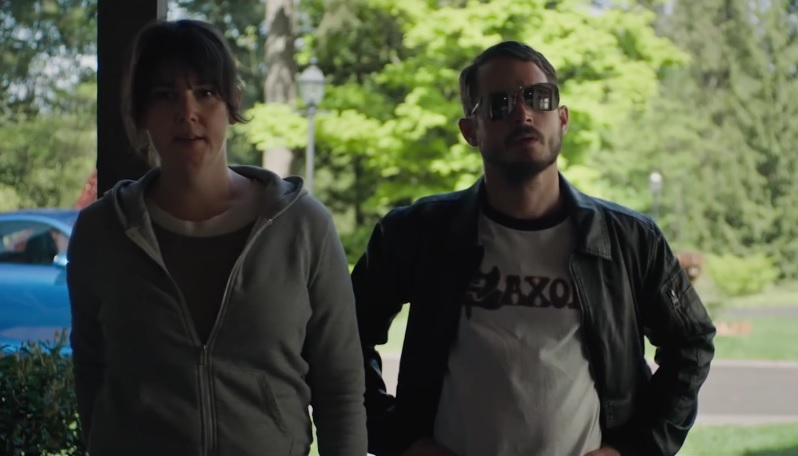
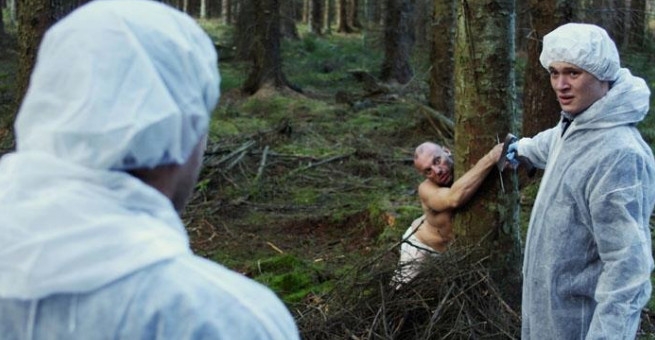
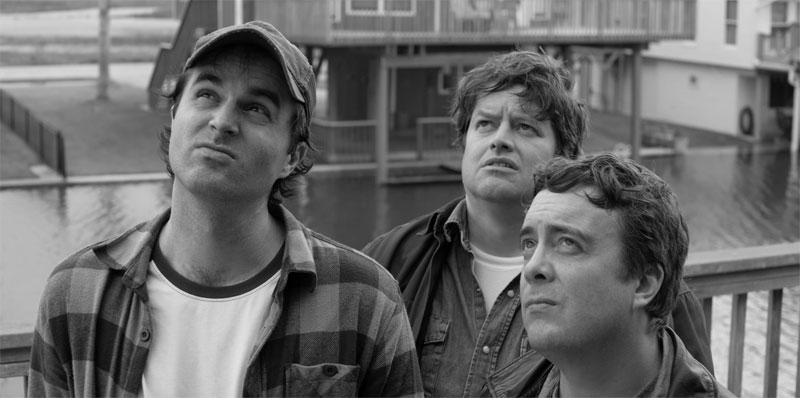
I Don’t Feel at Home in This World Anymore. (2017)

01 Saturday Sep 2018

Posted by dullwood68 in Movies

≈ 3 Comments

Tags

Burglary, Comedy, David Yow, Devon Graye, Drama, Elijah Wood, Indie movie, Macon Blair, Melanie Lynskey, Review

D: Macon Blair / 93m

Cast: Melanie Lynskey, Elijah Wood, David Yow, Devon Graye, Jane Levy, Gary Anthony Williams, Myron Natwick, Christine Woods, Robert Longstreet

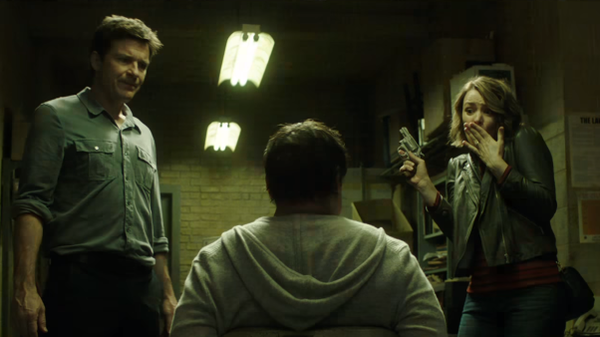
Ruth (Lynskey) is a nursing assistant who is continually annoyed by the thoughtlessness of others. When she comes home from work one day to find that she’s been burgled and the thief has stolen her laptop, grandmother’s silverware and some prescription medication, her day is made even worse when the investigating detective, Bendix (Williams), chides her for leaving her back door unlocked. Later, as she goes door to door to see if anyone saw anything, she meets Tony (Wood) who becomes violently outraged at what has happened. Ruth discovers evidence in her backyard – a conspicuous shoeprint in the mud – and when she uses a phone app to track her laptop, and discovers its location, Bendix is uninterested. Needing someone to go with her to retrieve her laptop, Ruth asks Tony, who’s only too keen to do so. When they get it back, they learn it was bought from a resale shop. There, Ruth discovers her grandmother’s silverware, and as she tries to sneak it out, she also discovers a young man (Graye) at the counter wearing a shoe that’s a match for the print in her garden…

The words ‘quirky’ and ‘unconventional’ seem tailor-made for I Don’t Feel at Home in This World Anymore., Macon Blair’s feature debut as a writer/director. You could add ‘wacky’ and ‘peculiar’, and they wouldn’t be too far off the mark either. But while there are plenty of other low budget indie movies that fit those descriptions quite easily, what Blair has achieved here is something a little more rarefied. In Ruth, there’s a temptation to view this as a “worm has turned” story, but that would be to cast a superficial eye over both the material and Ruth herself. Ruth may be one of Life’s minor victims, and she may appear to be a bystander in her own life, but she has an innate strength of character that just needs the right stimulus to bring her into her own. Being robbed does just that, and by aligning herself with Tony – who has a number of his own issues – Ruth becomes empowered in a way she’s unfamiliar with. It’s a step in the right direction, but Blair is confident enough in his screenplay to ensure that Ruth’s journey doesn’t change her completely. By the end, she’s more positive, but she’s still finding herself.

By making Ruth’s journey one that is affectionately handled and which resonates far more than expected, Blair has gifted Lynskey with yet another terrific role for the actress to make her own. Whether she’s sipping beer from a bottle out of habit, or being instinctively happy when she finds others are reading the same book she is, Ruth is a wonderful creation. Blair is equally on form with the rest of the characters, with Wood’s NWBHM-loving Tony prone to inappropriate violent outbursts, and Graye’s troubled teen burglar, Christian, having a back story that takes the material into unforeseen territory. In amongst the millennial concerns and suburban drama there’s a great deal of comedy, from Ruth’s look when asked the last words of a deceased patient, to a lovely visual gag involving Tony’s dog, Kevin, and the reaction of Christian’s stepmother (Woods) when asked why she’s speaking to two fake cops (that she knows are fake cops). Blair’s ‘quirky’ sensibility ensures the movie is always interesting for what’s going to happen next, and there’s first-rate cinematography from Larkin Seiple that paints Ruth’s particular part of suburbia as a bright yet deceptively unstable place to live.

Rating: 8/10 – another wonderful performance from the always reliable Lynskey anchors I Don’t Feel at Home in This World Anymore., and makes it one of the more enjoyable indie movies of recent years; with such a good meld of drama and comedy, and a cruel streak to keep things ‘unconventional’, Blair’s directorial debut is so good that his next movie can’t come quickly enough.

Share this:

  • Click to share on X (Opens in new window) X
  • Click to share on Facebook (Opens in new window) Facebook
  • More
  • Click to print (Opens in new window) Print
  • Click to email a link to a friend (Opens in new window) Email
Like Loading...

Monthly Roundup – August 2018

31 Friday Aug 2018

Posted by dullwood68 in Movies

≈ Leave a comment

Tags

Absolutely Fabulous: The Movie, Action, Adventure, Alicia Vikander, Alyson Walker, Animation, Antoine Fuqua, Benicio Del Toro, Brad Bird, Clay Kaytis, Clown, Comedy, Coralie Fargeat, Craig T. Nelson, Damien Leone, Dark Web, Denzel Washington, Dominic West, Doug Murphy, Drama, Drugs, Dylan O'Brien, Erdal Ceylan, Fergal Reilly, Frank Welker, Game adaptation, Gore, Grey Griffin, Holly Hunter, Horror, Incredibles 2, Jason Sudeikis, Jenna Kanell, Jennifer Saunders, Joanna Lumley, John Boyega, Josh Brolin, Josh Gad, Kaiju, Kaya Scodelario, Kevin Janssens, Mandie Fletcher, Matilda Anna Ingrid Lutz, Mexican cartels, Pacific Rim: Uprising, Paranormal, Pedro Pascal, Revenge (2017), Roar Uthaug, Samantha Scaffidi, Sci-fi, Scooby-Doo! and the Gourmet Ghost, Scott Eastwood, Selfie from Hell, Sequel, Sicario 2: Soldado, Stefano Sollima, Steven S. DeKnight, Terrifier, Terrorists, The Angry Birds Movie, The Death Cure, The Equalizer 2, The Flare, The Mystery Gang, Thriller, Tomb Raider, Tony Giroux, Violence, WCKD, Wes Ball

Absolutely Fabulous: The Movie (2016) / D: Mandie Fletcher / 91m

Cast: Jennifer Saunders, Joanna Lumley, Julia Sawalha, Jane Horrocks, June Whitfield, Kathy Burke, Celia Imrie, Robert Webb, Lulu, Emma Bunton, Rebel Wilson, Barry Humphries, Wanda Ventham, Kate Moss

Rating: 3/10 – fashionistas Edina (Saunders) and Patsy (Lumley) flee to the south of France after thinking they’ve killed supermodel Kate Moss; making this yet another British TV comedy success story that goes badly, horribly wrong when transferred to the big screen, Absolutely Fabulous: The Movie is another reminder that humour needs context in which to work, and rehashing the same old jokes over and over is less about giving fans what they want and more about lazy screenwriting.

Revenge (2017) / D: Coralie Fargeat / 108m

Cast: Matilda Anna Ingrid Lutz, Kevin Janssens, Vincent Colombe, Guillaume Bouchéde

Rating: 7/10 – a married CEO (Janssens) takes his mistress (Lutz) along with him on a hunting weekend with two friends (Colombe, Bouchéde), but things go badly wrong, and all three men find themselves being hunted instead; a visceral and very, very bloody thriller, Revenge is relentlessly nihilistic, and with characters so broadly drawn they might as well be archetypes, but Fargeat makes good use of the desert landscapes, and Lutz is a resourceful and unapologetically violent heroine.

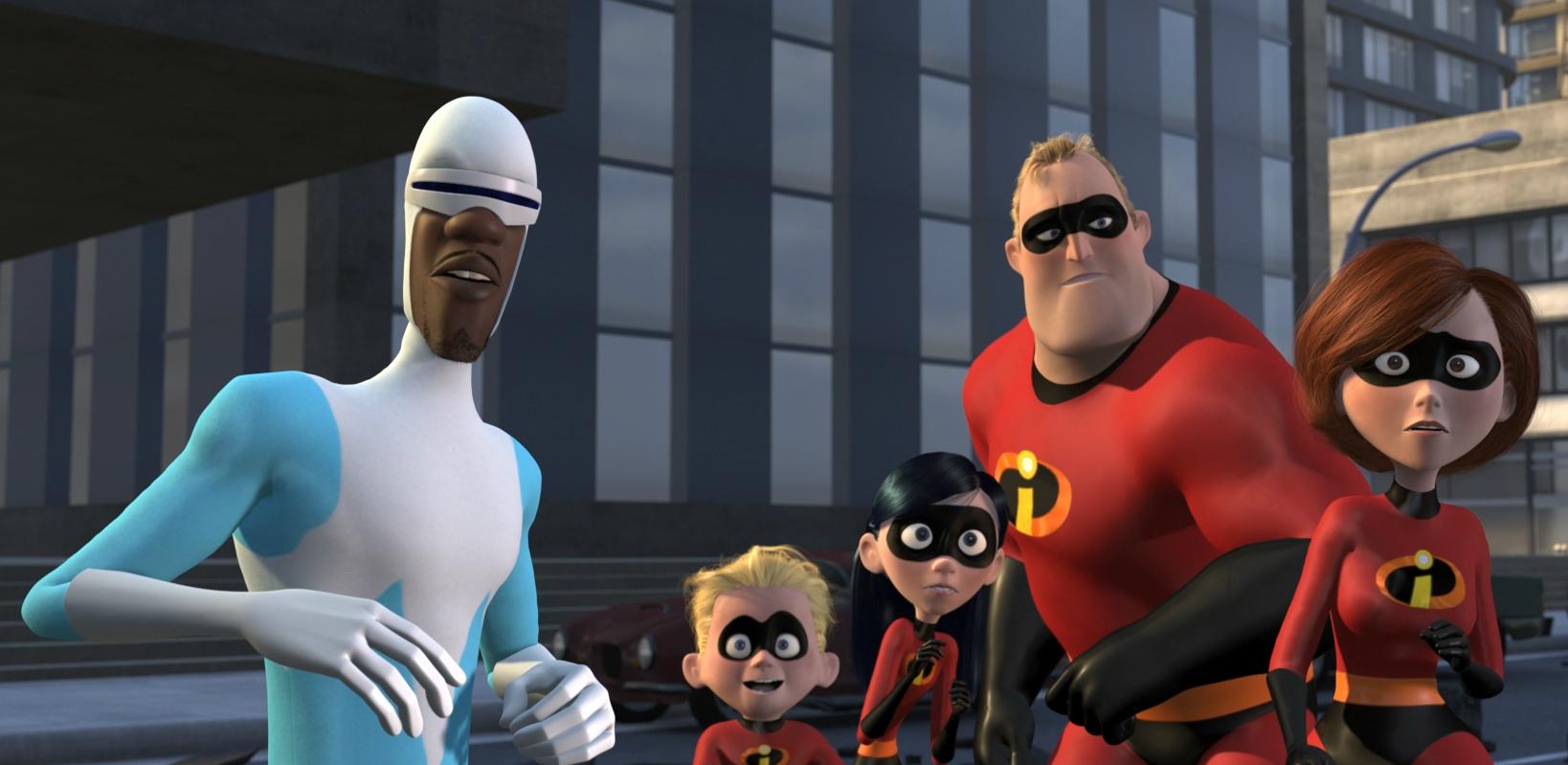
Incredibles 2 (2018) / D: Brad Bird / 118m

Cast: Craig T. Nelson, Holly Hunter, Sarah Vowell, Huck Milner, Bob Odenkirk, Catherine Keener, Samuel L. Jackson, Brad Bird, Isabella Rossellini, Jonathan Banks, John Ratzenberger

Rating: 9/10 – when a successful businessman (Odenkirk) approaches the Parr family with a plan to have Supers allowed to use their super powers again, it proves to be good timing as a new super villain, the Screenslaver, makes himself known; following directly on from the original, Incredibles 2 retains the Sixties vibe, visual ingenuity, and genuine laughs from before, and continues to focus on the Parr family first and foremost, making this a hugely entertaining sequel – even if the villain (as in a lot of superhero movies) is the movie’s weakest link.

Sicario 2: Soldado (2018) / D: Stefano Sollima / 122m

Original title: Sicario: Day of the Soldado

Cast: Benicio Del Toro, Josh Brolin, Isabela Moner, Jeffrey Donovan, Catherine Keener, Manuel Garcia-Ruffo, Matthew Modine, Shea Whigham, Elijah Rodriguez

Rating: 7/10 – Federal agent Matt Graver (Brolin) is tasked with taking the fight to the Mexican drug cartels when evidence points to their helping terrorists get into the US; an odd sequel that goes off in an unexpected direction partway through (and which sets up what’s likely to be a banal third chapter), Sicario 2: Soldado is still head and shoulders above most action thrillers thanks to returning scribe Taylor Sheridan’s taut screenplay, Del Toro’s singular performance as the Sicario of the title, and a handful of well choreographed action scenes.

Terrifier (2017) / D: Damien Leone / 84m

Cast: Jenna Kanell, Samantha Scaffidi, David Howard Thornton, Catherine Corcoran, Pooya Mohseni, Matt McAllister, Katie Maguire

Rating: 4/10 – one night, two young women (Kanell, Scaffidi) find themselves being pursued by a killer clown (Thornton) intent on murdering them and anyone they come into contact with – and as gruesomely as possible; old school practical gore effects are the order of the day here, with Terrifier using every trick in the book to make viewers wince or look away, while building a fair amount of tension, but it’s let down by the usual non-investment in credible characters, lacklustre direction, and making its villain indestructible.

Tomb Raider (2018) / D: Roar Uthaug / 118m

Cast: Alicia Vikander, Dominic West, Walton Goggins, Daniel Wu, Kristen Scott Thomas, Derek Jacobi, Hannah John-Kamen

Rating: 6/10 – Lara Croft (Vikander) sets off in search of her missing father (West) when she discovers a clue to where he went missing, while looking for an ancient artefact that could have devastating consequences for the modern world; another unnecessary reboot, Tomb Raider tries hard – sometimes too hard – to make its by-the-numbers storyline exciting, but too many perfunctory action sequences, allied to so-so performances and Uthaug’s corporate directing style makes this an unlikely contender as the opener for a whole new franchise.

Pacific Rim: Uprising (2018) / D: Steven S. DeKnight / 111m

Cast: John Boyega, Scott Eastwood, Callee Spaeny, Burn Gorman, Charlie Day, Tian Jing, Jin Zhang, Adria Arjona, Rinko Kikuchi

Rating: 5/10 – a new threat to Earth’s defences brings the Jaeger force back into operation, but they soon find themselves fighting against a foe whose plans don’t just involve the Jaeger force’s destruction, but the return of the Kaiju as well; there’s an element of dumb fun about Pacific Rim: Uprising that keeps things ticking over, but though DeKnight is able to provide a decent amount of energy to proceedings, the looming threat to Earth lacks the first movie’s effectiveness, and the Kaiju arrive too late to improve things.

The Death Cure (2018) / D: Wes Ball / 141m

aka Maze Runner: The Death Cure

Cast: Dylan O’Brien, Kaya Scodelario, Thomas Brodie-Sangster, Ki Hong Lee, Dexter Darden, Will Poulter, Jacob Lofland, Rosa Salazar, Giancarlo Esposito, Patricia Clarkson, Aidan Gillen, Barry Pepper, Walton Goggins

Rating: 8/10 – with their friends imprisoned in the Last City, a WCKD stronghold, Thomas (O’Brien) and his fellow Gladers must find a way of freeing them, and of finding a cure for the Flare, before it’s too late; the final part of the Maze Runner trilogy, The Death Cure ensures the series goes out with a bang, with high octane action sequences, a strong emotional undercurrent to proceedings, and though it’s a little bit too long, it does provide each of the main characters with a suitable and satisfactory conclusion to their story arcs, and doesn’t leave things hanging on the possibility of there being any further chapters.

The Angry Birds Movie (2016) / D: Clay Kaytis, Fergal Reilly / 97m

Original title: Angry Birds

Cast: Jason Sudeikis, Josh Gad, Danny McBride, Maya Rudolph, Bill Hader, Peter Dinklage, Sean Penn, Keegan Michael-Key, Kate McKinnon, Tony Hale, Hannibal Buress, Ike Barinholtz, Tituss Burgess

Rating: 6/10 – trouble comes to an island of (mostly) happy birds in the form of green pigs who aren’t quite as friendly as they seem, leaving the unlikely trio of Red (Sudeikis), Chuck (Gad), and Bomb (McBride) to save the day; a brightly animated game adaptation that will appeal to children far more than adults, The Angry Birds Movie is acceptable fun within the confines of its basic storyline, but the humour is inconsistent, the plot developments seem designed to pad things out instead of feeling organic, and the whole thing becomes less interesting as it goes on.

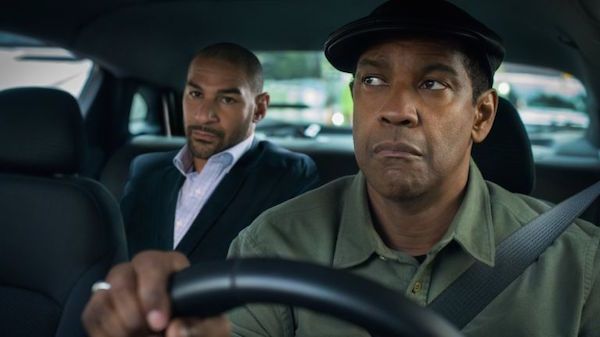
The Equalizer 2 (2018) / D: Antoine Fuqua / 121m

Cast: Denzel Washington, Pedro Pascal, Ashton Sanders, Orson Bean, Bill Pullman, Melissa Leo

Rating: 6/10 – ex-spy Robert McCall (Washington) goes after the people responsible for the murder of his ex-boss (Leo), and finds himself up against a cadre of mercenaries with a similar skill-set; Washington’s first sequel, The Equalizer 2 is unremarkable at best and unnecessary at worst, with a banal storyline and cookie cutter character motivations that are offset by Fuqua’s authoritative direction, Washington’s commanding performance, and several very effective fight sequences.

Selfie from Hell (2018) / D: Erdal Ceylan / 76m

Cast: Alyson Walker, Tony Giroux, Meelah Adams, Ian Butcher

Rating: 3/10 – strange paranormal events that have a connection to the Dark Web begin to affect a young woman (Walker) when her cousin (Adams) comes to visit; even for its modest running time, Selfie from Hell soon outwears its welcome, thanks to its confused plotting, wayward acting, leaden direction, and meaningless frights, all of which add up to yet another horror movie where things happen because they can instead of because they make sense within the terms of the story.

Scooby-Doo! and the Gourmet Ghost (2018) / D: Doug Murphy / 77m

Cast: Frank Welker, Grey Griffin, Matthew Lillard, Kate Micucci, Bobby Flay, Giada De Laurentiis, Marcus Samuelsson, David Kaye, Dana Snyder, Jason Spisak

Rating: 7/10 – the Mystery Gang travel to Bar Harbour to help Fred’s Uncle Bobby deal with a ghost that’s jeopardising the opening of a culinary resort; the format and the jokes are all present and correct, making Scooby-Doo! and the Gourmet Ghost another satisfying entry in the series, but it’s also one that highlights just how predictable these movies are becoming.

Share this:

  • Click to share on X (Opens in new window) X
  • Click to share on Facebook (Opens in new window) Facebook
  • More
  • Click to print (Opens in new window) Print
  • Click to email a link to a friend (Opens in new window) Email
Like Loading...

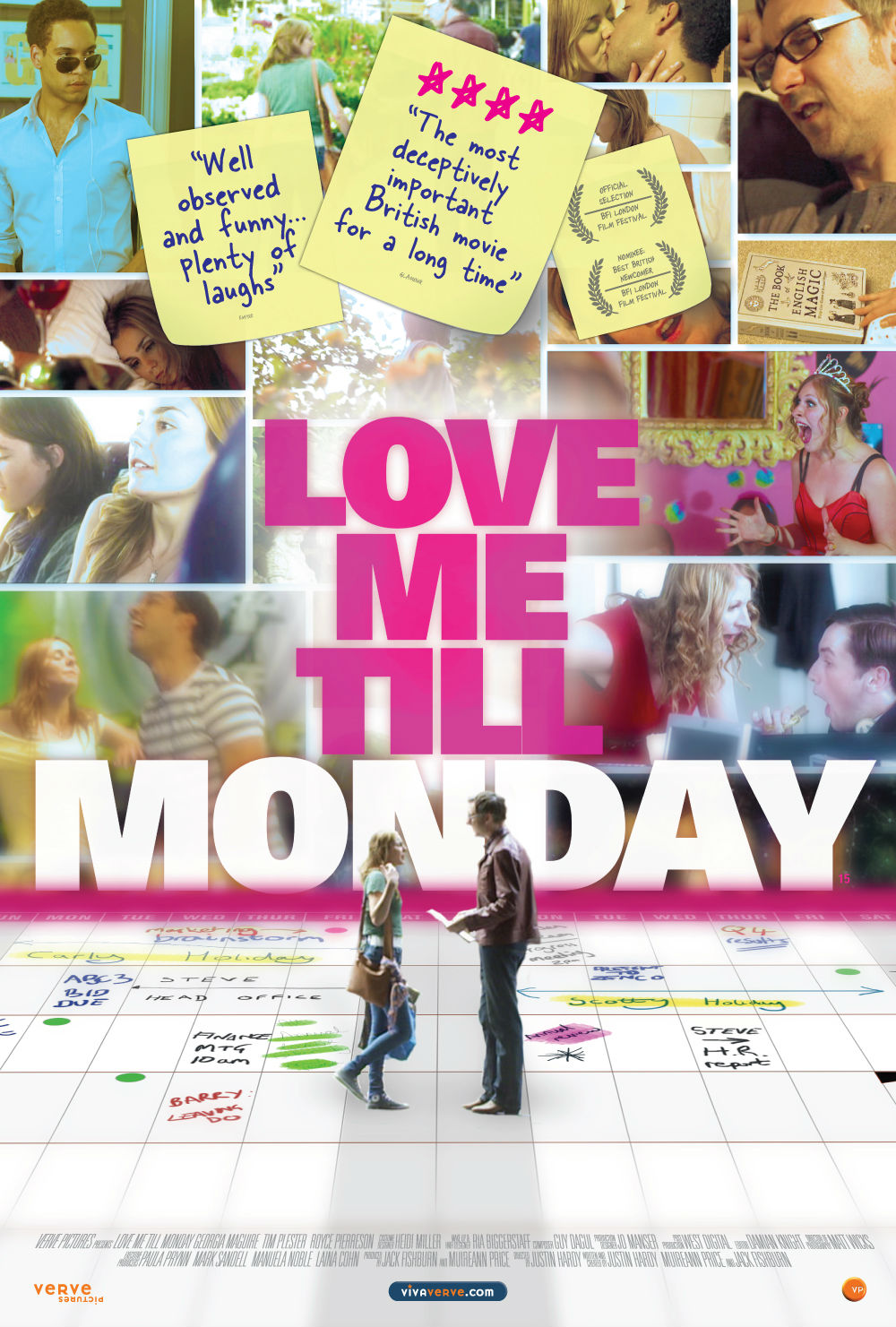
Love Me Till Monday (2013)

29 Wednesday Aug 2018

Posted by dullwood68 in Movies

≈ Leave a comment

Tags

Comedy, Dead-end job, Drama, Georgia Maguire, Justin Hardy, Love, Reading, Review, Romance, Romantic comedy, Tim Plester

D: Justin Hardy / 89m

Cast: Georgia Maguire, Tim Plester, Royce Pierreson, Sarah Jayne Butler, Sarah Barratt, Christopher Leveaux, Bennett Warden, Ludo Hardy

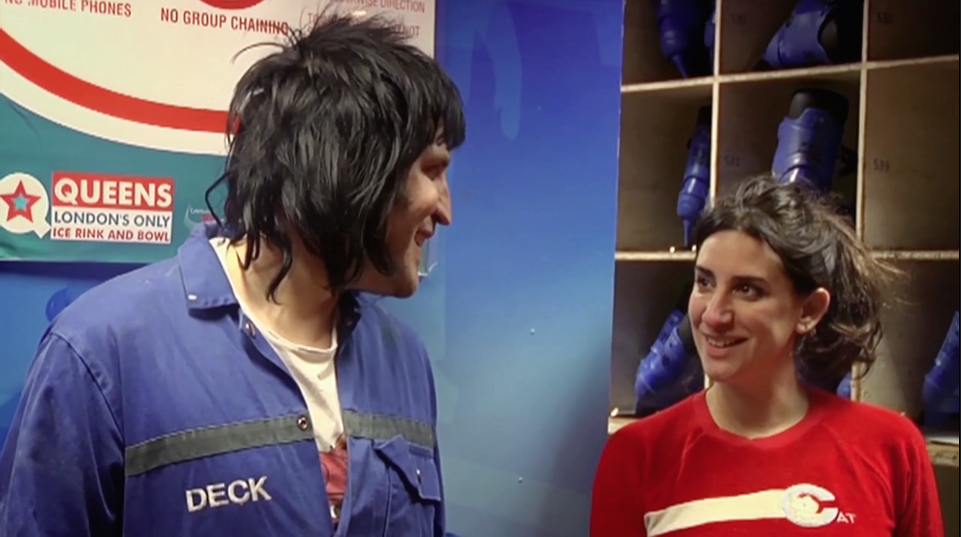
For Becky Williams (Maguire), life at twenty-five isn’t going the way she thought it would. Stuck in a dead-end job in an office, single, and still living with her mother, Becky is beginning to wonder if she’ll ever find true happiness. While her mother is away with her latest boyfriend, Becky also has to look after her eleven year old brother, Olly (Hardy). Things couldn’t get any bleaker. But a couple of unexpected encounters outside of work with her boss, Steve (Plester), hint at the possibility of a romantic relationship, one that grows on Becky the more she considers it. But all this happens while the main object of her would-be affections, another colleague (Pierreson), is on holiday. Should she keep her relationship with Steve going, or wait until her colleague – known only as HIM – returns to work. Fate intervenes and makes the decision for her, but as with most things in Becky’s life, what she hopes for and what actually happens proves to be something completely different, even when she seemingly gets what she wants…

A bright, entertaining romantic comedy, the basic set up of Love Me Till Monday will be familiar to fans of the genre, and even those who only occasionally watch such movies. It’s another underdog movie, where the heroine is faced with disappointment after disappointment in her search for Mr Right. Here, Becky works in an office where she’s very much the “junior”, both in terms of how long she’s been there, and her “accepted” rank with regard to the other female staff: brassy and ebullient receptionist Vicki (Butler), and classy and immaculate contracts manager Carly (Barratt) (of the three it’s noticeable that Becky wears little or no make up at work, such is her lack of confidence). With a quiet, semi-withdrawn personality as well, Becky’s hopes and dreams of finding true love are further hampered by her choice of men. Steve is a charmer outside of work while remaining stern and non-committal at the office, and HIM, though charming wherever he is, has the aura of being too good to be true. How Becky discovers the truth about both of them is the meat of a movie that drifts along from time to time, but in a wistful, breezy fashion that is engaging and often delightful as well.

Much of the movie’s success is down to Maguire’s sterling performance. Making her feature debut, Maguire perfectly inhabits and expresses a life made ordinary by circumstance and banal repetition. As Becky strives – in her own awkward way – to attain the kind of life she believes she needs, Maguire highlights Becky’s naïvete in believing that having the “right man” in her life will make her happier (she even uses a book that contains love spells as a way of securing HIM). With its improvised feel and upbeat rom-com sensibility, the movie works well, though some elements aren’t given enough screen time – or explanation – to work as effectively as they should, such as Becky’s having a book on witchcraft, the reason why she doesn’t appear to have any friends (bar one) outside of work, and why her ambitions relate only to romance. That said, Hardy injects just enough drama into the otherwise lightweight nature of the material to ensure that it’s not all sweetness and casual laughs, and thanks to Matthew Wicks’ deft cinematography, the movie’s Reading backdrop adds to the likeable nature of it all. Naturally, this is a low budget movie, but it’s also one that makes the effort to make the audience forget that it is. And like Becky herself, it’s better, and more deserving, than it looks.

Rating: 7/10 – though Love Me Till Monday has nothing new to offer, what is on offer is a charming, appealing romantic comedy anchored by an equally appealing, and genuine, performance from Maguire; an undemanding watch then, but one that is pleasant and entertaining enough to hold the attention from start to (optimistic) finish.

Share this:

  • Click to share on X (Opens in new window) X
  • Click to share on Facebook (Opens in new window) Facebook
  • More
  • Click to print (Opens in new window) Print
  • Click to email a link to a friend (Opens in new window) Email
Like Loading...

Dear Dictator (2017)

25 Saturday Aug 2018

Posted by dullwood68 in Movies

≈ Leave a comment

Tags

Black List script, Comedy, Coup d'Etat, Joe Syracuse, Katie Holmes, Lisa Addario, Michael Caine, Odeya Rush, Pen pals, Review, Satire, Suburbia

Original title: Coup d’Etat

D: Lisa Addario, Joe Syracuse / 90m

Cast: Michael Caine, Odeya Rush, Katie Holmes, Seth Green, Jason Biggs

Tatiana Mills (Rush) is fifteen years old when she decides to start writing letters to island dictator, Anton Vincent (Caine). Intrigued by her letters, Vincent writes back, and the pair develop a pen pal relationship that involves Tatiana telling him about her life and problems, and Anton proffering advice on how to deal with them. Many of her problems revolve around school (where she’s not the most popular girl), and her relationship with her mother, Darlene (Holmes). When Anton is the victim of a coup d’etat and has to flee his island country, he heads for the US, where Tatiana finds him hiding out in the garage. In return for allowing him to stay with them, Tatiana and Darlene let Anton help out with various jobs around the house, and continuing to help Tatiana with her problems. While Darlene becomes more confident in how to deal with her boss (and lover) Dr Seaver (Green), Anton teaches Tatiana how to deal with the girls who pick on her, and how to become a rebel – just like him. But the authorities are getting closer to finding him…

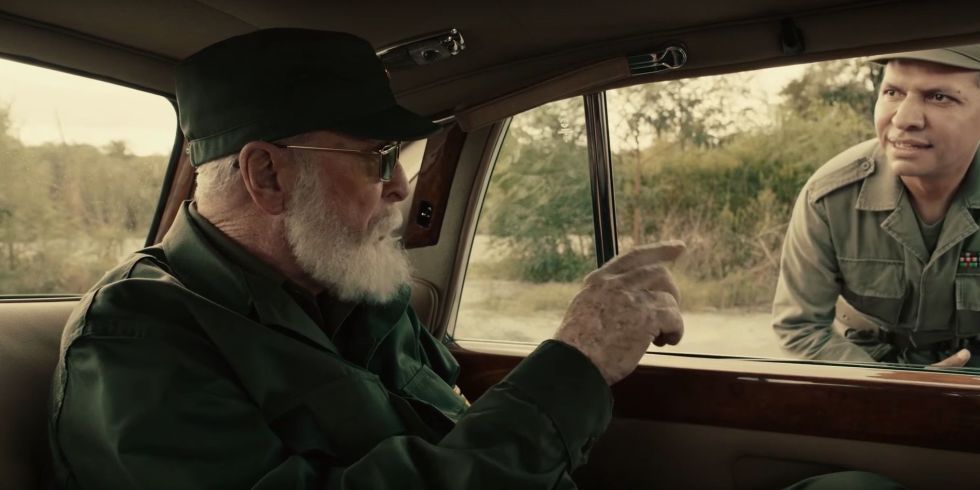
Yet another movie that has its origins in an unproduced Black List script – this time from 2006 – Dear Dictator is ostensibly a comedy that strives for relevance but falls well short thanks to its depiction of Anton as a sub-par Castro lookalike, and Tatiana’s tired teenage problems. It doesn’t help either that Anton vacillates between being a hard line dictator and a kindly surrogate grandfather figure. By adopting this approach to the character, writer/directors Addario and Syracuse miss out on the chance to make Anton’s stay in suburbia a truly subversive experience. Instead of making him a good man at heart, how much more satisfying it would have been if his extreme political practices had led to Tatiana adopting more than just his advice on how to deal with bullies. The movie makes a half-hearted attempt at this, but pulls Tatiana back from the edge before things can get too serious (it is a comedy, after all). Likewise, Tatiana’s problems are the stuff of too many previous movies to prompt much more than tired acknowledgment, followed quickly by deeply lodged ennui. As their relationship develops, the script shifts the balance of power between them backwards and forwards until one of them is required to make a wholly expected sacrifice.

So what we have here is an unproduced Black List script that could probably have written itself, such is its reliance on the clichés of teen dramas, and its determination to make Anton more sympathetic than dangerous. With both its central pairing and its central dynamic proving so unrewarding, there’s only Darlene’s interaction with Dr Seaver to fall back on. Ranging from exploitative to criminal (and with an element of co-dependency thrown in for good measure), their relationship provides the subversive ingredient the movie needs so desperately elsewhere (it’s certainly disturbing to see Green licking Holmes’s toes with such relish). But it’s not enough to rescue the movie from avoidable mediocrity, and despite surprisingly good performances from Caine, Rush and Holmes (particularly Holmes), it’s Addario and Syracuse’s inability to give the movie a coherent through line or tone that damages it most of all. Falling foul of that old no-no, the consecutive scenes that have no relation to each other, Dear Dictator is disjointed and unsure at times if drama or humour is the more appropriate context for the material it’s dealing with. Which is awkward as this is clearly meant to be a comedy – probably.

Rating: 4/10 – some of Caine’s more recent choices haven’t been the best, and Dear Dictator is another one to add to the list (though it’s not in the same league as Jaws: The Revenge (1987) – and what could be?); with only a fleeting awareness of how uneven it all is, the movie loses its way very early on and never finds its way back.

Share this:

  • Click to share on X (Opens in new window) X
  • Click to share on Facebook (Opens in new window) Facebook
  • More
  • Click to print (Opens in new window) Print
  • Click to email a link to a friend (Opens in new window) Email
Like Loading...

Most Likely to Murder (2018)

19 Sunday Aug 2018

Posted by dullwood68 in Movies

≈ Leave a comment

Tags

Adam Pally, Comedy, Crime, Dan Gregor, Doug Mand, Evidence, Murder mystery, Pharmacist, Rachel Bloom, Review, Suspect, Vincent Kartheiser

D: Dan Gregor / 99m

Cast: Adam Pally, Rachel Bloom, Vincent Kartheiser, Doug Mand, John Reynolds, Didi Conn, Ethan Phillips, Julia Goldani Telles, Rebecca Naomi Jones, Bonnie Rose

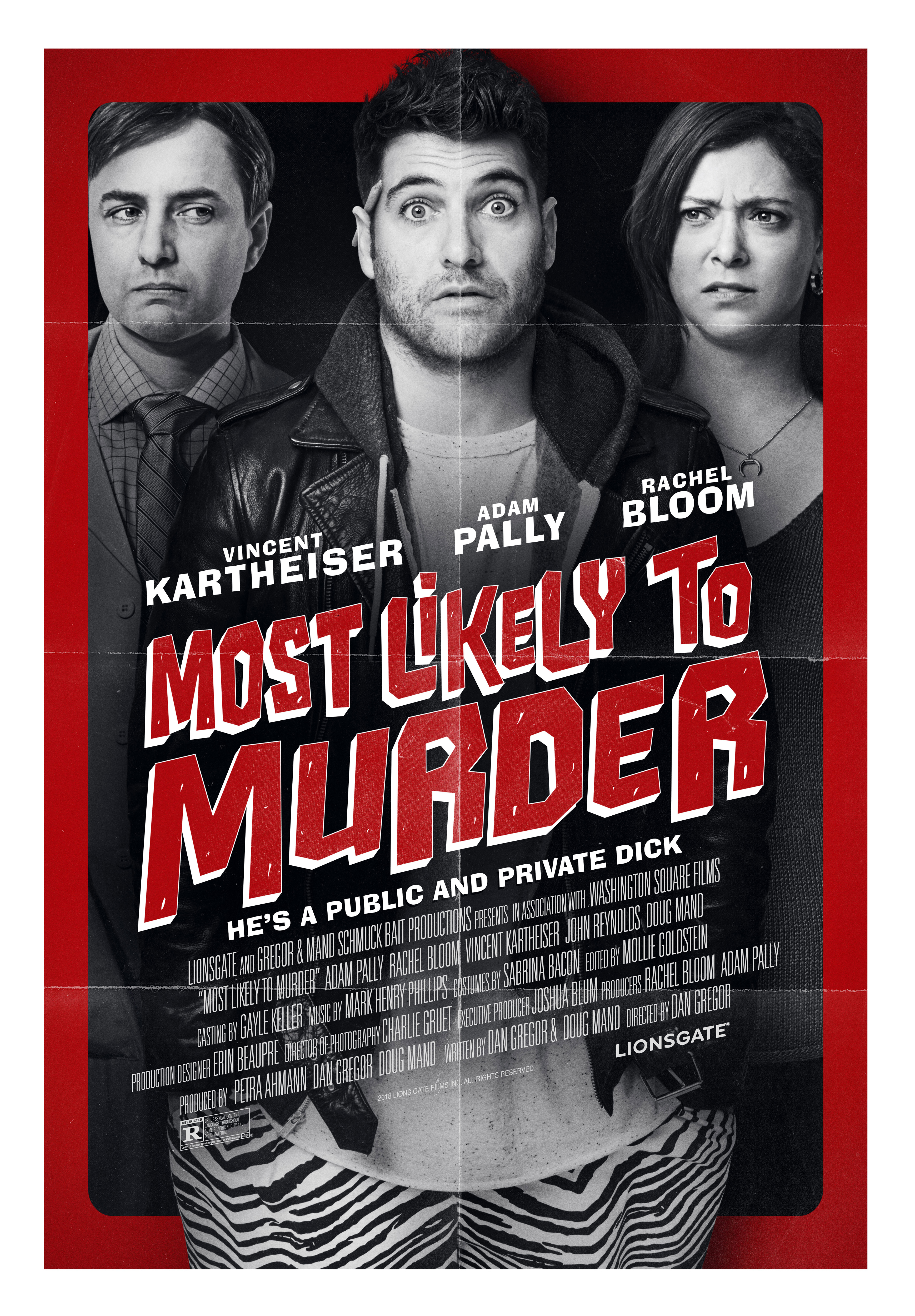
Billy (Pally), the one-time king of his local high school, is now, ten years later, working at a dead-end job in a Las Vegas hotel. Deciding it’s time for a holiday, he returns home to his parents (Conn, Phillips), but makes out he’s successful and on the verge of completing a major deal. Billy reconnects with his old friend, Duane (Mand), but finds that most everyone else in town isn’t as pleased to see him back, including old flame, Kara (Bloom). Billy left her behind to go to Las Vegas; now she’s dating Billy’s neighbour and town pharmacist, Lowell (Kartheiser). When Lowell’s mother dies suddenly, Billy becomes suspicious when he realises that Lowell has lied to the police. Convinced that Lowell is a killer, Billy sets about gathering evidence, and even voices his suspicions to Lieutenant Perkins (Reynolds). But with everyone believing Lowell to be a pillar of the community, and unable to produce clear evidence that Lowell has killed his mother, Billy decides to return to Las Vegas. Until Kara notices something strange about the pharmacy inventory…

A valiant attempt to combine comedy with a murder mystery, Most Likely to Murder is the kind of eccentric mash-up that needs to be on its toes with both aspects of its construction. It’s moderately successful on both counts, but makes mistakes along the way that could have been easily avoided. First is Billy himself, a self-aggrandising, arrogant, insensitive jerk whose character arc is non-existent until the very end when the script – previously uninterested in giving him any redeeming features – gets him to do an abrupt volte face and reveal a previously well hidden (if not absent) conscience. The second is the mystery itself, which, though the movie has a great deal of fun with the whole did-he-didn’t-he? angle, is too laboured and predictable to work as effectively as needed, and keen-eyed fans of murder mysteries will correctly guess the outcome well in advance of the movie revealing it. So, as a result, the movie has a lead character who’s immediately unlikeable and behaves inappropriately because it drives most of the comedy, and a murder mystery that is dependent on making the main suspect as guilty looking as possible but only because, in Billy’s eyes, he’s a “bit weird”.

There are moments when the script – by co-star Mand and director Gregor – contorts itself in its efforts to keep things moving, and the movie’s pace dips when it has to choose between being funny or serious. This leads to odd moments such as Billy’s brief “interaction” with Duane’s mother (Rose), a bathroom “reveal” that defies the belief that “Lowell has no pole”, and a running joke involving a VHS tape of Billy and Lt. Perkins’ wife (Jones) from high school that everyone wants to see. Against the odds, the performances make things far more enjoyable than the script allows for, with Pally embracing Billy’s faults in a way that, while not making him sympathetic, does at least allow the viewer to understand him. There’s good support from Bloom and Mand, and Reynolds finds different ways to play henpecked and exasperated without it feeling forced, but if anyone has a hard time, it’s Kartheiser, who has to deal with the script’s determination to make Lowell as weird as possible to fit Billy’s suspicions. He does what he can but there are clear moments when the actor is struggling to keep his performance on track. By the end, you’ll know if he’s succeeded, but before then, this is a movie that doesn’t make it easy for the viewer to remain entirely interested in Billy’s search for the truth.

Rating: 5/10 – moderately funny with a moderately interesting murder mystery, Most Likely to Murder will exasperate some viewers while proving moderately entertaining to others; the kind of movie that comes and goes with little fanfare, it’s worth checking out if you’re in an undemanding mood, but anyone looking for something with a bit more substance would be wise to look elsewhere.

Share this:

  • Click to share on X (Opens in new window) X
  • Click to share on Facebook (Opens in new window) Facebook
  • More
  • Click to print (Opens in new window) Print
  • Click to email a link to a friend (Opens in new window) Email
Like Loading...

Earthworm Tractors (1936)

17 Friday Aug 2018

Posted by dullwood68 in Movies

≈ Leave a comment

Tags

Comedy, Guy Kibbee, Joe E. Brown, June Travis, Literary adaptation, Ray Enright, Romance, Salesman, Tractors, William Hazlett Upson

aka A Natural Born Salesman

D: Ray Enright / 69m

Cast: Joe E. Brown, June Travis, Guy Kibbee, Dick Foran, Carol Hughes, Gene Lockhart, Olin Howland, Joseph Crehan, Charles C. Wilson

Alexander Botts (Brown) is a self-professed natural born salesman. Looking to impress his girlfriend, Sally (Hughes), and win her hand in marriage, Botts takes a job with the Earthworm Tractor Company as a master salesman and mechanic (even though he has no experience with tractors at all). Sent to the midwest town of Cypress City, Botts is tasked with selling tractors to an old, intransigent lumberman called Johnson (Kibbee). Even with the aid of Johnson’s daughter, Mabel (Travis), Botts finds the old man a hard sell, and his efforts to impress the lumberman usually end in calamity. A stroke of luck keeps Botts in his job, and he becomes even more determined to clinch the deal, but one more disaster ruins his chances, both with the old man, and with Mabel. Chastened, Botts heads home to seek solace with Sally, but that idea doesn’t work out either. Still in danger of losing his job, Botts returns to Cypress City intending to make one last effort to change Johnson’s mind, and win back Mabel…

Based on the character created by William Hazlett Upson in a series of stories for The Saturday Evening Post, Earthworm Tractors trades heavily on Joe E. Brown’s ebullient screen persona, and a number of slapstick action sequences based around Botts’ misuse of an Earthworm Tractor (often with Johnson as an unwilling passenger). It’s something of a curio now, an off-centre comedy with the requisite romantic elements, that looks and feels more like a silent movie given an audio upgrade than a movie released in 1936. But while it has the perfunctory quality inherent in so many low budget B-movies of the Thirties – all the characters are recognisable staples of the genre, the camerawork, editing and score are all adequate without standing out – there’s an energy to the movie that keeps the viewer entertained as each one of Botts’ plans comes to an ignoble, and often destructive end. Working from a script by Richard Macaulay, Joe Traub and Hugh Cummings, Enright and his star keep things moving with impressive dexterity, imbuing even the most pedestrian of scenes with a comic sheen that highlights Brown’s skills as a comic actor, and his director’s deft understanding of what constitutes effectiv physical comedy.

Brown is irrepressible as Botts (even when he’s down, a contradiction that works when it shouldn’t), and his infectious smile goes a long way towards keeping the viewer rooting for him throughout. Of the rest of the cast, Kibbee is notable for another variation on his grouchy old man routine, though Travis and Hughes are, frankly, too bland to make much of an impact. However, the acting isn’t the movie’s focal point. Rather it’s the impressive-for-a-low-budget-movie stunt sequences involving the Earthworm Tractor. The finale – which takes place in a quarry that’s primed with explosives that will inevitably be set off – sees Botts, Johnson and the Earthworm Tractor having to negotiate each detonation and a rickety old wooden bridge before reaching safety, and it’s this sequence that is the movie’s highlight. Along the way there are numerous examples of clever ideas that have been used cleverly, such as the couple of occasions where Botts is thrown bodily from Johnson’s premises and onto the ground, only for him to land on a carefully placed mattresss on the third occasion. Little moments such as that one help make the movie resonate much more with the viewer, and though some of those moments are almost thrown away (though deliberately), the ones that are included help make the movie as silly and as entertaining as it is.

Rating: 7/10 – a slapstick comedy with romantic overtones and a quiet sense of irony regarding its capitalist message, Earthworm Tractors is still very definitely a Thirties movie, but one that’s flecked with nice touches and occasional, surreal moments; Brown is the main star, but the likes of Lockhart and Crehan boost the supporting cast thanks to their efforts, and Enright orchestrates it all with a dexterity and prowess that belies his reputation as a journeyman director.

NOTE: Alas, there’s no trailer available for Earthworm Tractors.

Share this:

  • Click to share on X (Opens in new window) X
  • Click to share on Facebook (Opens in new window) Facebook
  • More
  • Click to print (Opens in new window) Print
  • Click to email a link to a friend (Opens in new window) Email
Like Loading...

Struck by Lightning (2012)

07 Tuesday Aug 2018

Posted by dullwood68 in Movies

≈ Leave a comment

Tags

Allison Janney, Blackmail, Brian Dannelly, Chris Colfer, Christina Hendricks, Comedy, Dermot Mulroney, Drama, High School, Literary magazine, Rebel Wilson, Review

D: Brian Dannelly / 84m

Cast: Chris Colfer, Allison Janney, Rebel Wilson, Dermot Mulroney, Christina Hendricks, Sarah Hyland, Carter Jenkins, Brad William Henke, Angela Kinsey, Polly Bergen

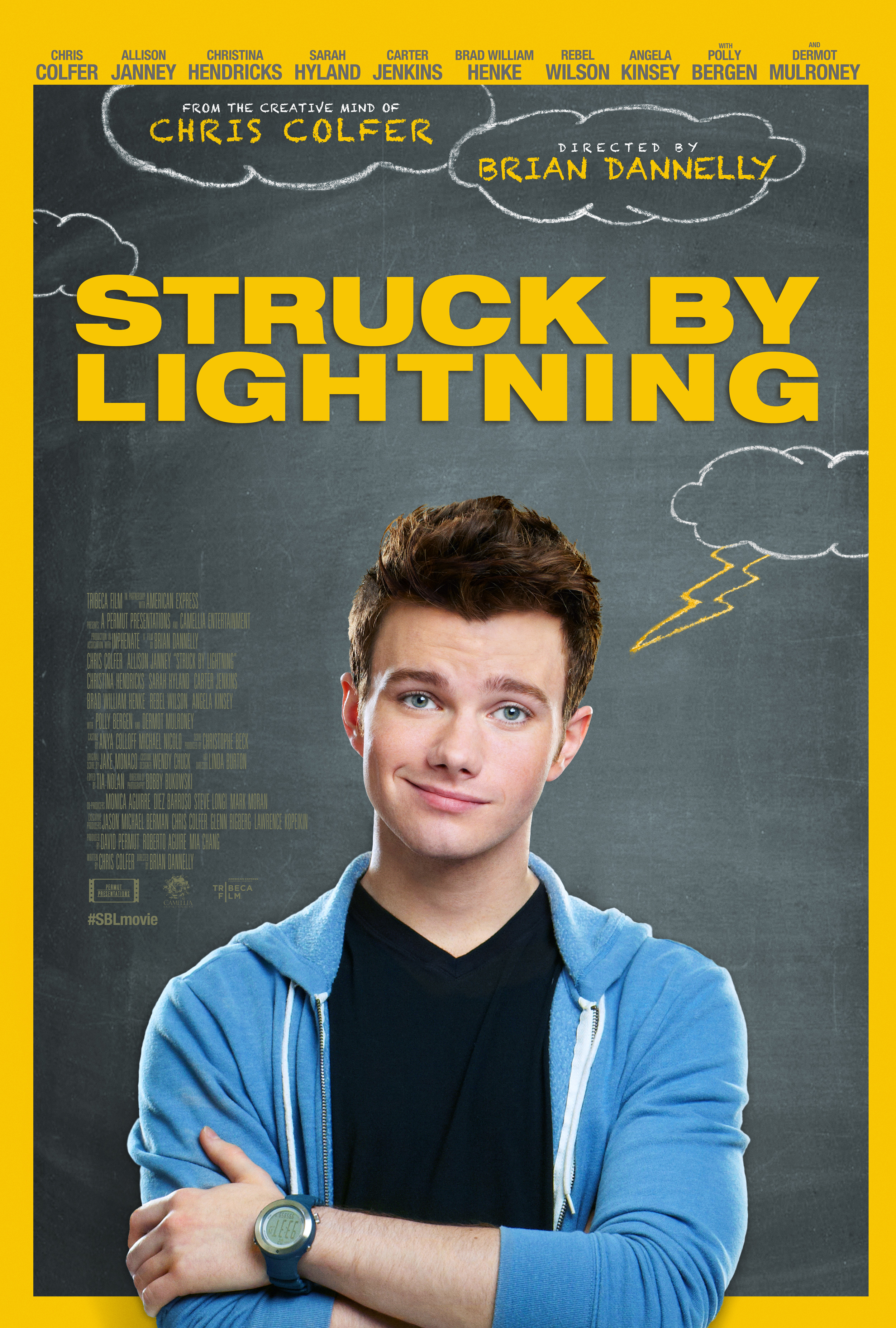
Carson Phillips (Colfer) is a high school senior with a major literary ambition: to be the youngest ever editor of The New Yorker magazine. But life in high school isn’t exactly a bed of roses for Carson: he’s the kind of sarcastic, openly contemptuous of his peers teenager who’s treated harshly by his fellow students, and who can’t get a break to save his life. He’s the editor and sole contributor of the school paper – which no one reads, and his mother, Sheryl (Janney), is an over-medicated alcoholic who continually reminds him she would have had a better life if he hadn’t been born. But a chance discovery leads Carson to the possibility of getting his revenge on some of his fellow high schoolers while also adding to his prospects in getting into Northwestern University. His plan involves blackmailing his peers into providing material for a literary magazine, but while at first his plan seems to be paying dividends, Carson’s belligerent, anti-authoritarian attitude throws a massive spanner in the works, and what seemed like a foolproof idea, soon turns horribly wrong…

Told in flashback after Carson is struck by lightning and killed, this literally titled movie is a teen comedy-drama that puts its narrator front and centre while also taking a risk in doing so. Carson is so dismissive of everyone around him, adults and peers alike (with the exception of Wilson’s plagiaristic Malerie: “Call me Ishmael”), that Colfer’s script comes very close to making him completely unlikeable. His arrogance, though, is a thin line of defence against the blows he’s experienced throughout his life. From his parents’ break-up – dad Neal (Mulroney) has a new partner, April (Hendricks), who’s six months’ pregnant – to his grandmother (Bergen) developing Alzheimer’s, Carson’s unstable home life has left him sad and permanently at odds with everyone around him. He’s a figure to be pitied though rather than dismissed, and Colfer works hard to make the character more rounded than he appears on the page. Take away Colfer’s performance and you have a character who behaves meanly on purpose, and lacks any sense of proportion in his loathing of his peers (who he doesn’t regard as such). It’s only thanks to Colfer – who clearly understands Carson completely (and so he should) – that the role isn’t continuously one-note and irritating.

It’s the script and the performances that resonate the most. Colfer has a good ear for the rhythms and diction of high school teenagers, and though some of Carson’s co-seniors border on the stereotypical, there’s enough depth and detail provided by the mostly young cast to offset any over-familiarity (plus they’re having a lot of fun at the same time). Amongst the adults, Janney is good value as ever, giving Sheryl a weary self-awareness beneath the character’s own tattered dreams, while Mulroney’s feckless father is a purely comic creation that the actor also has a lot of fun with. Colfer adds a handful of sub-plots to his tale of foiled ambition, with the most notable being the awkward relationship between Sheryl and April, and there’s a strong sense of carpe diem that is used to spur the blackmailed students into writing for the magazine. Dannelly keeps things amusing and laced with teenage angst as appropriate, and the whole thing relies on an easy-going if pointed charm that works well in supporting the material. There’s a good balance between drama and comedy, and Colfer is a confident enough writer that he can mix the two in the same scene without it feeling contrived. And for a first-time script, that’s impressive.

Rating: 7/10 – an underdog movie where the protagonist doesn’t overcome all the challenges thrown at him, Struck by Lightning is instead an often witty, acerbic comedy of despair that doesn’t short change its main character or the audience; a familiar tale that can’t always shake off its more prosaic influences, it’s still a movie with a lot to offer, and several moments of (very) impressive and inspired humour.

Share this:

  • Click to share on X (Opens in new window) X
  • Click to share on Facebook (Opens in new window) Facebook
  • More
  • Click to print (Opens in new window) Print
  • Click to email a link to a friend (Opens in new window) Email
Like Loading...

Monthly Roundup – July 2018

31 Tuesday Jul 2018

Posted by dullwood68 in Movies

≈ Leave a comment

Tags

Abby Kohn, Action, Amanda Seyfried, Amy Schumer, Ari Aster, Backlash (1956), Christopher McQuarrie, Comedy, Donna Reed, Drama, Dwayne Johnson, Edward Lexy, Fred Ellis, Gabriel Byrne, Henry Cavill, Hereditary, Horror, I Feel Pretty, John Sturges, Lily James, Mamma Mia! Here We Go Again, Marc Silverstein, Mary Clare, Michelle Williams, Mission: Impossible - Fallout, Mrs. Pym of Scotland Yard, Murder, Musical, Mystery, Neve Campbell, Ol Parker, Rawson Marshall Thurber, Richard Widmark, Romance, Skyscraper, Thriller, Tom Cruise, Toni Collette, Western

Hereditary (2018) / D: Ari Aster / 127m

Cast: Toni Collette, Gabriel Byrne, Alex Wolff, Milly Shapiro, Ann Dowd

Rating: 7/10 – following the death of her mother, miniaturist artist Annie (Collette) and her family begin to experience strange phenomena that hint at supernatural forces at work around them, and which appear to be malevolent in their intentions; this year’s critics’ favourite in the horror genre, Hereditary does boast a superb performance from Collette, and creates a fervid atmosphere in its first half that is genuinely unnerving, but this is a movie where the sum of its parts isn’t equal to a satisfying whole, and what should have been a tense, psychological thriller becomes a grandstanding Rosemary’s Baby for the new millennium, an outcome that robs it of much of its impact.

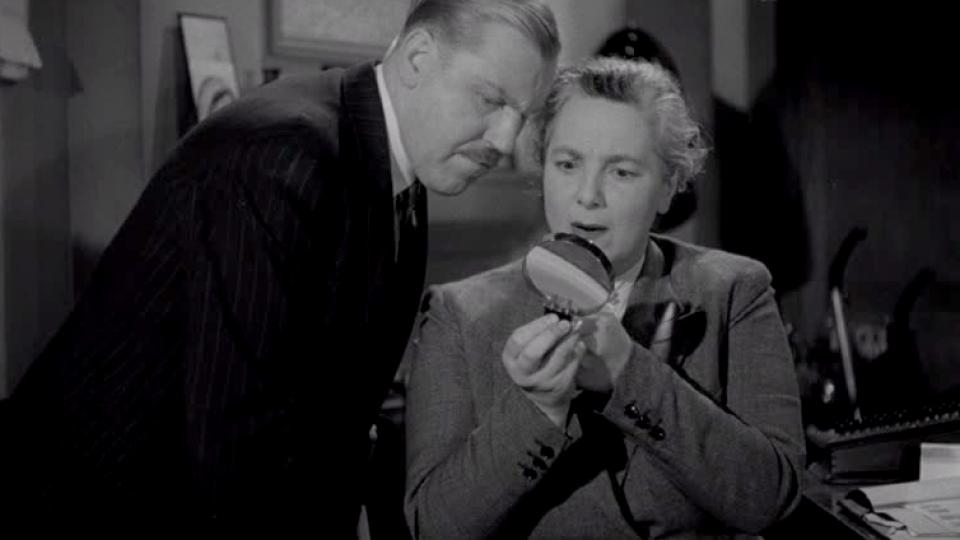
Mrs. Pym of Scotland Yard (1940) / D: Fred Ellis / 64m

Cast: Mary Clare, Edward Lexy, Nigel Patrick, Janet Johnson, Anthony Ireland, Irene Handl, Vernon Kelso

Rating: 7/10 – the predicted deaths of two members of a Psychic Society leads Scotland Yard to assign their lone female detective, Mrs. Pym (Clare), to the case in an effort to track down the victims’ killer; a boisterous little crime caper with a delightful performance by Clare (in her only starring role), Mrs. Pym of Scotland Yard retains a freshness nearly eighty years on that some movies can’t manage after eighty days, a feat that can be attributed to Ellis’s sprightly direction, a handful of engaging secondary performances, and a script – based on stories by Nigel Morland and adapted by Ellis and Peggy Barwell – that knows when to be amusing and when to be dramatic, and when to be delightfully daft (which, thankfully, is often).

Backlash (1956) / D: John Sturges / 84m

Cast: Richard Widmark, Donna Reed, William Campbell, John McIntire, Barton MacLane, Harry Morgan, Robert J. Wilke

Rating: 7/10 – while searching for his father’s killer, Jim Slater (Widmark) crosses paths with a woman (Reed) who may be connected to his father’s death, and who may be able to provide him with information that will lead him to the man responsible, an outcome that, when it happens, isn’t as straightforward as he’s been led to believe; a tough, muscular Western with psychological and film noir elements, Backlash is also a taut, uncompromising revenge tale that doesn’t pull its punches and which takes a sudden narrative turn halfway through that puts a whole different spin on Slater’s journey, something that Widmark handles with his usual aplomb, and Sturges – who would go on to helm Gunfight at the O.K. Corral (1957) and The Magnificent Seven (1960) – handles the twists and turns with confidence and no small amount of directorial flair.

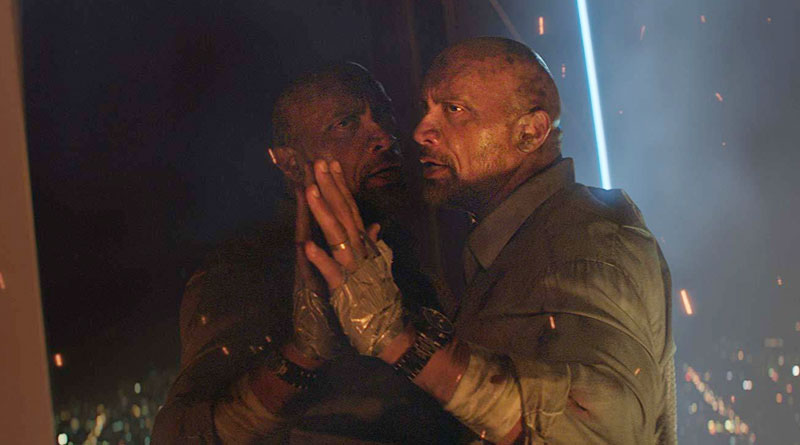
Skyscraper (2018) / D: Rawson Marshall Thurber / 102m

Cast: Dwayne Johnson, Neve Campbell, Chin Han, Roland Møller, Noah Taylor, Byron Mann, Pablo Schreiber, McKenna Roberts, Noah Cottrell, Hannah Quinlivan

Rating: 4/10 – the world’s tallest building, The Pearl, is ready to open but needs a final sign-off from security analyst Will Sawyer (Johnson), but when terrorists set the building on fire, Sawyer has a greater problem: that of rescuing his family who are trapped above the fire line; there was a time when a movie like Skyscraper would have been a must-see at the cinema, but this Die Hard meets The Towering Inferno mash-up (scripted by Thurber) is a soulless, empty spectacle that can’t even put Sawyer’s family in any appreciable peril, wastes its talented cast by having them play one-dimensional stereotypes, and which uses Sawyer’s disability as a narrative parlour trick whenever the plot needs it.

Mamma Mia! Here We Go Again (2018) / D: Ol Parker / 114m

Cast: Lily James, Amanda Seyfried, Pierce Brosnan, Stellan Skarsgård, Colin Firth, Christine Baranski, Julie Walters, Dominic Cooper, Andy Garcia, Jeremy Irvine, Josh Dylan, Hugh Skinner, Jessica Keenan Wynn, Alexa Davies, Celia Imrie, Cher, Meryl Streep

Rating: 7/10 – with the reopening of her late mother’s hotel just days away, Sophie Sheridan (Seyfried) is worried that everything won’t go according to plan, while the story of how a young Donna Sheridan (James) came to own the hotel in the first place, plays out simultaneously; if you liked the first movie then you’ll definitely like Mamma Mia! Here We Go Again, another love letter to the music of ABBA, and a movie that has no simpler ambition than to charm its audience at every turn and provide fans with as good a time as before, something it achieves thanks to generous dollops of good-natured humour, a talented cast giving their all, and an if-it-ain’t-broke-don’t-fix-it approach that works wonders on what is very familiar material indeed.

Mission: Impossible – Fallout (2018) / D: Christopher McQuarrie / 147m

Cast: Tom Cruise, Henry Cavill, Simon Pegg, Ving Rhames, Rebecca Ferguson, Sean Harris, Vanessa Kirby, Angela Bassett, Alec Baldwin, Michelle Monaghan, Wes Bentley

Rating: 9/10 – a mission in Berlin to retrieve three plutonium cores leads Ethan Hunt (Cruise) and his IMF team into a high stakes race-against-time chase across the continents as they try to avert a terrorist attack orchestrated by the followers of arch-nemesis Solomon Lane (Harris); number six in the franchise, and Mission: Impossible – Fallout is the best entry yet, with hugely impressive action scenes, the strongest plot so far, and a surprisingly emotional core drawn from the interactions of the characters that puts this head and shoulders above every other action movie you’ll see this year – and who would have bet on that?

I Feel Pretty (2018) / D: Abby Kohn, Marc Silverstein / 111m

Cast: Amy Schumer, Michelle Williams, Tom Hopper, Rory Scovel, Adrian Martinez, Emily Ratajkowski, Aidy Bryant, Busy Philipps, Lauren Hutton, Naomi Campbell

Rating: 5/10 – when an insecure woman, Renee Bennett (Schumer), who works at an international cosmetics company suffers a blow to the head, she wakes seeing herself as beautiful and capable of achieving anything – but in reality she looks exactly the same; what should be an immensely likeable shout out to the power of self-belief, I Feel Pretty is hampered by the bludgeoning approach of the script (by directors Kohn and Silverstein), and the incredible ease with which Renee powers her way up the corporate ladder, aspects that are at least more palatable than the way in which the men are treated as accessories, something that, if the roles were reversed, would likely cause an outcry.

Share this:

  • Click to share on X (Opens in new window) X
  • Click to share on Facebook (Opens in new window) Facebook
  • More
  • Click to print (Opens in new window) Print
  • Click to email a link to a friend (Opens in new window) Email
Like Loading...

Black Mountain Poets (2015)

30 Monday Jul 2018

Posted by dullwood68 in Movies

≈ 1 Comment

Tags

Alice Lowe, Comedy, Dolly Wells, Drama, Jamie Adams, Poetry, Review, The Wilding Sisters, Tom Cullen, Wales

D: Jamie Adams / 85m

Cast: Alice Lowe, Dolly Wells, Tom Cullen, Rosa Robson, Richard Elis, Laura Patch

On the run from the police after trying to steal a JCB, con artist sisters Lisa (Lowe) and Claire (Wells) hijack a car belonging to the Wilding Sisters, well known poets on their way to a poetry gathering in Wales’ Black Mountains. Thinking that it’ll be easy to impersonate a couple of poets, even at a poetry weekend, Lisa and Claire head there as a way of hiding out, and because there’s a large cash prize up for grabs for the best poem. When they arrive at the Poet’s Poetry Society retreat, they’re welcomed with open arms by the other attendees, and particularly by Richard (Cullen), a poet who takes an instant shine to Claire. As the weekend unfolds, the group take to the nearby Black Mountains for a camping trip designed to help them bond and foster their creativity. While Claire and Richard get to know each better, a jealous Lisa does her best to sabotage their growing romance, while both sisters deal with the challenge of providing extemporaneous poetry at the drop of a hat, something that they find is greeted with unexpectedly warm approval…

Something of a mixed bag, Black Mountain Poets is a funny, moody, silly, melancholy, daft, affecting little movie that feels like much of it was improvised, and when it was, nominal scripter (and director) Jamie Adams was happy to go along with it all, and keep most of it in the movie. This might explain why Lowe’s character expresses herself in a weird, meant-to-be-awkwardly-amusing, stream of consciousness style that is at odds with the more reticent musings of the other characters, and why Lisa feels so under-developed. By comparison, Claire – nominally the follower in their relationship – grows in confidence and conviction as the weekend goes on, until it’s clear that she no longer needs Lisa as much as Lisa needs her. This sibling rivalry, an aspect of the material that helps anchor a somewhat rambling narrative, gives the movie some much needed heart in amongst all the poetry nerd jokes and predictable camping disasters. Lowe is a distinct cine-presence, reprising the same type of insecure, regressive character that’s she’s played in many of her recent movies, and it might not be long before she needs to broaden her range, but right now and right here, she’s the sole source of any dramatic friction.

The rest of the cast fit snugly into their roles, with Wells providing a nicely prosaic counterpoint to Lowe’s challenging demeanour, and Cullen content to be the quietly overwhelmed love interest who’s never too sure of himself or his poetry. As his jealous ex-girlfriend, Louise, Robson comes close to stealing the show, her desperate-for-attention behaviour proving ever more incautious and hilarious. But while the performances are mostly impressive, it’s the movie’s uneven tone and pacing that keep it from having a more sincere impact. Switching between comedy and drama with only an occasional acknowledgment that it’s a necessary switch, Adams sometimes tries for satire and pathos in the same scene, but rarely succeeds in pulling it off. Simply put, the material isn’t strong enough to support his ambitions. But there’s still much to enjoy, even if it’s entirely sporadic, from the sisters’ free-form “experimentation” to the running gag of the real Wilding Sisters stranded at the roadside and remaining there out of a misguided belief that someone will “come along”. As a backdrop, the Black Mountains are suitably impressive, but in another unfortunate consequence, the time of year lends itself more to melancholy and emotional reflection than the movie’s attempts at fractious humour or romantic self-empowerment.

Rating: 5/10 – a movie that stumbles too often in its efforts to be affecting and on point, Black Mountain Poets is a British indie comedy with the credentials to be successful, but not the consistency needed to ensure said success; not one to avoid but also not one to expect too much from, it wears its heart on its sleeve but at the expense of a focused, engaging narrative.

Share this:

  • Click to share on X (Opens in new window) X
  • Click to share on Facebook (Opens in new window) Facebook
  • More
  • Click to print (Opens in new window) Print
  • Click to email a link to a friend (Opens in new window) Email
Like Loading...

Henry Gamble’s Birthday Party (2015)

27 Friday Jul 2018

Posted by dullwood68 in Movies

≈ Leave a comment

Tags

Alcohol, Birthday party, Christianity, Cole Doman, Comedy, Drama, Elizabeth Laidlaw, Homosexuality, Nina Ganet, Pat Healy, Religious values, Review, Stephen Cone

D: Stephen Cone / 86m

Cast: Cole Doman, Pat Healy, Elizabeth Laidlaw, Nina Ganet, Daniel Kyri, Joe Keery, Mia Hulen, Kelly O’Sullivan, Francis Guinan, Patrick Andrews

For Henry Gamble (Doman), becoming seventeen means having a birthday party with all his friends invited, and a smattering of adults, including of course, his parents, Bob (Healy) and Kat (Laidlaw). His sister, Autumn (Ganet), is there too, back from college for a break. Becoming eighteen also means continuing to deal with his attraction for best friend Gabe (Keery), while avoiding the attentions of Logan (Kyri) who is attracted to Henry. And that’s without the attentions of Emily (Hulen), who’s also attracted to him. And as if that’s not enough to be getting on with, Henry’s father is the local pastor, so he has to deal with his religious upbringing as well. But Henry isn’t the only one with problems. As the day unfolds, relationships are tested, secrets are revealed, and hard decisions are made – not just by Henry but by some of his friends and even some of the adults. By the day’s end, few of Henry’s guests will remain unaffected by the events of the party, and few will forget the shocking incident that brought it to a close…

Fans of the coming-of-age sub-genre of teen movies will no doubt take to Henry Gamble’s Birthday Party like his guests take to the swimming pool they spend most of their time in. It’s an amiable movie, perfectly likeable, but a tad underdeveloped on the drama front, aiming as it does to be quietly observant of its characters’ hopes and fears instead of putting them through anything like an emotional wringer. It’s a laidback approach for the most part, with writer-director Stephen Cone opting for a (mostly) genial approach to the material, while throwing in the occasional slice of unexpected melodrama at odd moments, such as when Autumn freaks out – and it’s a serious freak out – when her ex-boyfriend shows up. These attempts to break up the languid flow of the proceedings come across as sudden, unnecessary lurches in tone rather than an organic consequence of what’s gone before, and Cone can only revert back to the genial approach he’s committed to once they’re over. There’s plenty of drama to be had from the basic set up and the secrets that Cone reveals as the party goes on, but by downplaying much of it, it’s hard to become too emotionally invested in the outcomes.

The religious backdrop proves to be more of a device than an active ingredient, and though it gets more than its fair share of attention, Henry doesn’t really seem to be bothered by the possible ramifications of being gay in a Christian community (and he has no idea that the rest of his family have their own issues). Again, this makes the movie less impactful than it should be, and a handful of concomitant issues such as incipient alcoholism, ostracism, emotional abuse, and peer pressure are raised, only for Cone to avoid following through on them. In the end, the movie provokes more questions than it has answers for, and though that might have been Cone’s intention, it leaves the viewer somewhat abandoned in terms of their involvement in the characters’ lives. The performances do a lot to rescue things, with Healy and Laidlaw particularly persuasive as Henry’s parents, a couple with a lot to discuss but unable to do so, and the young cast of relative unknowns prove well chosen for their roles, with newcomer Doman ensuring Henry comes across as a sweet-natured but sometimes oblivious teenager only just beginning to trust the decisions he’s making – like most of us at that age.

Rating: 6/10 – being only moderately successful at making the trials and tribulations of its characters of interest to the viewer, Henry Gamble’s Birthday Party is a lightweight concoction that struggles to expand on a number of relevant points, and which is too simplistic for its own good; the ensemble cast work well together, and there’s some good close up work by cinematographer Jason Chiu, but Cone’s script needed a greater sense of purpose in order for more of his movie to work effectively.

Share this:

  • Click to share on X (Opens in new window) X
  • Click to share on Facebook (Opens in new window) Facebook
  • More
  • Click to print (Opens in new window) Print
  • Click to email a link to a friend (Opens in new window) Email
Like Loading...

Tully (2018)

23 Monday Jul 2018

Posted by dullwood68 in Movies

≈ Leave a comment

Tags

Charlize Theron, Comedy, Diablo Cody, Drama, Family relationships, Jason Reitman, Mackenzie Davis, Mark Duplass, Motherhood, Night Nanny, Review, Ron Livingston

D: Jason Reitman / 95m

Cast: Charlize Theron, Mackenzie Davis, Ron Livingston, Mark Duplass, Elaine Tan, Asher Miles Fallica, Lia Frankland, Gameela Wright

Already finding it difficult to deal with having two young children – quiet but impressionable Sarah (Frankland), and Jonah (Fallica), who has an undiagnosed developmental disorder – Marlo (Theron) is pregnant with an unplanned third child. With her husband, Drew (Livingston), working long hours or having to travel a lot, Marlo is often on her own, and finding it increasingly hard to be heavily pregnant and a full-time mother to pre-teens. When the baby, Mia, is born, the pressure becomes too much, and a meltdown at Jonah’s school brings Marlo to the realisation that she needs help. Acting on an offer from her brother, Craig (Duplass), to pay for a night nanny, Marlo is surprised to find a young woman called Tully (Davis) arrive one night and begin to make her life a lot more easier. The two women forge a strong bond, and Marlo finds herself with a new lease of life. But one night, Tully is uncharacteristically miserable, citing an issue with her roommate. At her suggestion, she and Marlo head into the city for a night on the town, a decision that is to have serious consequences…

The fourth collaboration between director Jason Reitman and writer Diablo Cody – after Juno (2007), Jennifer’s Body (2009), and Young Adult (2011) – Tully is a heartfelt look at the narrow ledge some mothers find themselves traversing when motherhood proves overwhelming. Marlo appears to have been struggling ever since Jonah was born, both with his behavioural problems, and her own expectations of being a mother. With pressure from the outside competing with pressure from within, Marlo’s inability to manage consistently or even occasionally is a given, and Cody’s script has fun piling on heap after heap of setbacks and misfortune, while placing Marlo in the kind of family unit where her getting through the day is a major achievement. Is it anyone’s fault? Perhaps, but Cody and Reitman aren’t about assigning blame, they’re about rescuing Marlo from the mire she’s trapped in. And so we meet Tully, the damsel in shining armour, Marlo’s saviour and nascent best friend. As their friendship grows and becomes overly important in helping Marlo cope – she literally blossoms before our eyes – the bond between mother and daughter slips sideways until it’s about mother and nanny instead. There’s a love affair of sorts here, but it’s refreshingly chaste and wonderfully done.

The movie is blessed by two outstanding performances from Theron and Davis. For most of the movie, Theron – who gained nearly fifty pounds for the role – appears unflatteringly, big and sweaty and looking red-eyed and exhausted. It’s a powerful, nuanced portrayal, with subtle flourishes throughout, but she’s matched by Davis, whose own performance is flecked with delicate little touches, a look here, a twinkle there. Together, the two actresses are mesmerising to watch, and dominate the narrative. Inevitably, with two such strong female roles at the movie’s centre, the male roles fare badly in comparison, with Livingston’s unobservant husband continually out of touch (unless confronted with an impromptu ménage à trois), and Duplass’s self-absorbed, materialistic brother given little to do beyond looking baffled and out of their depth when discussing “women’s issues”. This isn’t necessarily a feminist tract – Marlo makes too many poor choices for that – but it is a celebration of female solidarity, though as the movie unfolds, issues surrounding mental health begin to make themselves more keenly felt. This leads to a last act swerve in the narrative that isn’t completely successful, but at least brings the story to a (by then) predictable conclusion. But Reitman – directing as confidently and intuitively as ever – and Cody, are more focused on Marlo’s journey than her destination, and in that they’re more than successful.

Rating: 8/10 – with Theron and Davis at the top of their game, and in service to a balanced and thoughtful script, Tully is a perceptive look at the perils of motherhood told exclusively from the viewpoint of someone who can’t see those perils for having to deal with them; the kind of indie comedy-drama that rewards viewers in increasingly subtle and unexpected ways, it’s a genuine, ready and willing to please movie that has much to say and which does so very succinctly.

Share this:

  • Click to share on X (Opens in new window) X
  • Click to share on Facebook (Opens in new window) Facebook
  • More
  • Click to print (Opens in new window) Print
  • Click to email a link to a friend (Opens in new window) Email
Like Loading...

Bees Make Honey (2017)

13 Friday Jul 2018

Posted by dullwood68 in Movies

≈ Leave a comment

Tags

Alice Eve, Comedy, Costume party, Drama, Halloween, Jack Eve, Murder, Mystery, Review, Trevor Eve, Wilf Scolding

D: Jack Eve / 85m

Cast: Alice Eve, Wilf Scolding, Joshua McGuire, Anatole Taubman, Trevor Eve, Hermione Corfield, Ivanno Jeremiah, Joséphine de La Baume

It’s Halloween 1934, and glamorous socialite Honey (Eve) is hosting her annual Halloween costume party. But this year’s event is tinged with bitterness and revenge, for on the same night the year before, Honey’s husband was killed, and the killer never caught. Tonight, Honey has invited everyone who was there the year before on the assumption that one of her guests was the murderer. Enlisting the help of newly appointed police Inspector Shoerope (Scolding), Honey is determined to uncover the killer’s identity, and see justice done. With the party well under way, Shoerope begins his investigation and soon finds that there a number of possible suspects, from local real estate broker Mr Conick (McGuire), to German businessman Herr Werner (Taubman), and even Shoerope’s own Commissioner (Eve). Matters are further complicated when it’s suggested by one of the guests that Honey isn’t being as honest with Shoerope as she seems, raising the possibility that his investigation is a means to a far different end than justice. But as the evening continues, various clues fall into place, and Shoerope discovers that there’s more to the murder of Honey’s husband than either of them could have imagined…

Something of a family affair – Alice and Jack Eve are siblings, while Trevor Eve is their father – Bees Make Honey is a period murder mystery comedy-drama that flirts with a lot of ideas as to how to present its story visually, and then decides to include them all. And so we have a movie that throws in all manner of cinematic trickery as if someone has opened a Pandora’s Box of visual effects (leaving Hope cowering at the bottom). When a movie is this visually erratic, it’s too often a sign that the material isn’t as lively as the makers have intended, and for long stretches, this is the case with Jack Eve’s honest yet overwrought pastiche of Thirties drawing room mysteries. A huge – and this is no understatement – part of the problem is the dialogue, which is meant to be clever and dazzlingly erudite, but which causes further problems for many of the cast, lumbered as they are with lines such as, “But one can never repeat the past with complete sincerity. There’s is always the possibility, if not inevitability, of a fleeting fancy throwing a spanner in the works.”

There’s also an anachronistic use of music, with the likes of The Libertines’ What a Waster, and The Clash’s Lover’s Rock littering the soundtrack as literal counterpoints to the action, but all these incidences do is to jar the viewer out of whatever temporary mood the material has just got them into. With such a lack of focus, it’s a shame also that any mystery is undermined by a massive visual clue given away when the murder is committed at the movie’s beginning. These and other directorial decisions made by Eve make the movie a stop-start affair that never really gels or fully entertains as the high-spirited romp it could (and should) have been, and viewers may find themselves hitting the fast-forward button more than they’d like. The cast are game, however, and muddle through in support of their director, though Trevor Eve is clearly having fun with a role he wouldn’t normally be asked to play. By the end, a kind of weary acceptance sets in, allied to the knowledge that the movie isn’t going to raise its game any higher. There’s a good idea in there somewhere, but this sort of murder mystery has been done too often before, and to much better effect.

Rating: 4/10 – when a movie tries to make an apple-bobbing competition one of its highlights, you know there’s a problem, and in this respect, it’s one of many that hamper Bees Make Honey from being a success;  one to approach with caution, it’s a movie that never settles on a through line, or maintains a consistent tone – unless not maintaining one was the original idea.

Share this:

  • Click to share on X (Opens in new window) X
  • Click to share on Facebook (Opens in new window) Facebook
  • More
  • Click to print (Opens in new window) Print
  • Click to email a link to a friend (Opens in new window) Email
Like Loading...

Two for the Kids: Molly Moon and the Incredible Book of Hypnotism (2015) and Curse of Cactus Jack (2017)

12 Thursday Jul 2018

Posted by dullwood68 in Movies

≈ Leave a comment

Tags

Adventure, Billy Kitchen, Christopher N. Rowley, Comedy, Craig McMahon, Drama, Fame, Fantasy, Gold mine, Hypnotism, Katie Kitchen, Literary adaptation, Orphanage, Raffey Cassidy, Reviews

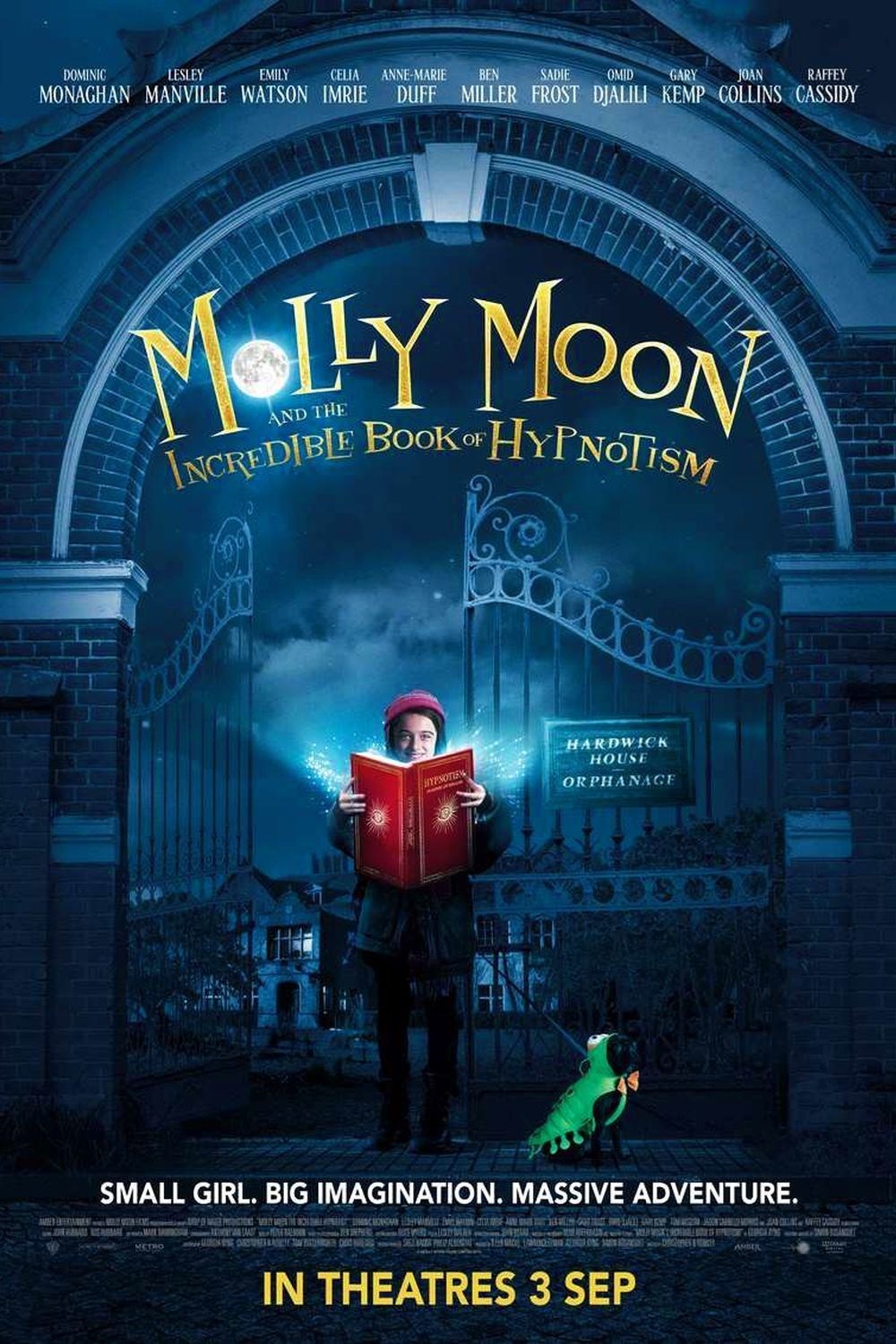
Molly Moon and the Incredible Book of Hypnotism (2015) / D: Christopher N. Rowley / 98m

Cast: Raffey Cassidy, Lesley Manville, Emily Watson, Dominic Monaghan, Celia Imrie, Joan Collins, Anne-Marie Duff, Ben Miller, Sadie Frost, Omid Djalili, Gary Kemp, Jadon Carnelly Morris, Tallulah Evans, Tom Wisdom

Hardwick House is an orphanage that’s run on a tight rein by its headmistress, Miss Adderstone (Manville). Sour and unlikeable, and disliking the children in her care, she has to contend with Molly Moon (Cassidy), a constant thorn in her side, and someone for whom getting into mischief – deliberately or not – seems to be a way of life. When Molly discovers a book on hypnotism at the local library, she uses it to begin making life at the orphanage that much better. But she’s drawn toward living a better life far away, and travels to London, where she tricks her way into replacing incredibly famous Davina Nuttel (Evans) as the star du jour. But she’s being pursued by would-be arch-criminal Nockman (Monaghan), who wants to use the book as a means toward robbing a diamond house. Will Molly thwart Nockman’s plans, and in the process, will she abandon her friends at Hardwick House altogether…?

Based on the 2002 novel by Georgia Byng, Molly Moon’s Incredible Book of Hypnotism is a lightweight adaptation that hits its marks with all the energy and bounce of a movie that knows it’s not quite going to measure up in the entertainment department. This is despite a plethora of generous acting performances by a talented cast who all know what’s required of them, and a script that doesn’t skimp on making it seem as if being an orphan isn’t really that bad. Molly’s adventures in London – becoming a mega-star overnight, saving a friend, Rocky (Carnelly Morris), from the perils of middle class adoptive parents, and foiling Nockman’s plans – are played out in a day-glo fantasy world of crude ambition and guilt-free wish fulfilment. That it stays just on the right side of amiable and is even (whisper it) enjoyable for the most part, is a tribute to the invested cast and director Rowley’s simplistic approach to the material. It lacks depth – something that’s not unusual in these circumstances – and avoids presenting its target audience with anything that might be recognised as real life. But this is part of its charm, and though it relies heavily on adult caricature and Molly’s authority-defying behaviour, it’s pleasant enough, and at times, funny in a way that children will enjoy far more than the grown ups.

Rating: 6/10 – targeting its intended audience with almost laser precision, Molly Moon and the Incredible Book of Hypnotism will amuse and entertain those of a pre-teen persuasion, but older viewers won’t be so impressed; a great cast helps the script overcome some serious narrative hurdles, and the whole thing breezes along like a modern day fairy tale – just with manufactured magic.


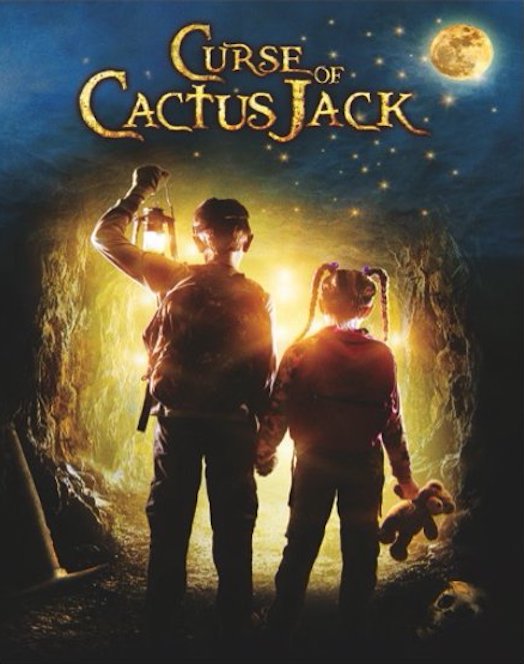
Curse of Cactus Jack (2017) / D: Craig McMahon / 82m

Cast: Billy Kitchen, Katie Kitchen, Mitch Etter, Aaron Seever, Julie Van Lith, Glen Gold

Billy and Katie live with their parents (Seever, Van Lith) and their grandfather (Etter). When their mum and dad aren’t paying attention – which is often – their grandfather regales them with tales of the Old West, and in particular, the legend of Cactus Jack, a gold prospector who found what was said to be the most lucrative gold mine of all. Fearful of his find being taken away from him, Jack never revealed the location of his mine, though he left behind a bunch of keys and a map with cryptic clues as to its whereabouts. Now in their grandfather’s possession, he hands them over to Billy and Katie. The next day, while their parents are at work, Billy and Katie determine to find the mine and Cactus Jack’s long-hidden horde. Using the map and its clues, they realise that the mine is near to where they live (conveniently), and soon find an entrance that leads them into the mine and the first of many obstacles put in place by Cactus Jack. Risking their lives, they venture further and further into the mine, and discover the reason why the mine is known as the curse of Cactus Jack…

A tightly budgeted adventure movie for kids, Curse of Cactus Jack is an Indiana Jones-style feature that pits its intrepid siblings against a variety of deadly obstacles, but makes itself somewhat redundant in terms of actual peril thanks to the script’s decision to make almost every snag and hindrance solvable through the use of one of the keys (conveniently) left behind by Cactus Jack. This might hamper the effectiveness of the narrative, but it’s ultimately of little consequence thanks to the casting of real life siblings Billy and Katie Kitchen. The pair are most definitely a team, supportive of each other (though Billy does get to mention that he’s “been a great brother” a little too often to avoid sounding as if he’s crowing about it), and on the same page throughout. There’s no sibling rivalry here, no bickering or complaining, and while it fits with the overall blandness of their characters, it’s refreshing to see them just getting on with it all. Against this, mum and dad are the parental equivalent of Bobble Heads, grandpa speaks as if he’s just stepped out of the Old West himself, and there’s a supernatural element that sits uncomfortably amongst proceedings as if the story really needed it (it doesn’t), but this is a pleasant enough diversion, and its target audience will most likely be pleased to see two pre-teens being so proactive and capable.

Rating: 6/10 – something of a one-man show – director McMahon is also the co-writer, co-producer, cinematographer, editor, and post-production supervisor – Curse of Cactus Jack is amiable and inoffensive, but also enjoyable for being a basic, no frills kids’ adventure movie; first-timers the Kitchens are acceptable as the movie’s protagonists, but if there’s one character that steals every scene he’s in, it’s Scooter Bear – now let’s see him get his own movie.

Share this:

  • Click to share on X (Opens in new window) X
  • Click to share on Facebook (Opens in new window) Facebook
  • More
  • Click to print (Opens in new window) Print
  • Click to email a link to a friend (Opens in new window) Email
Like Loading...

There’s Always Woodstock (2014)

09 Monday Jul 2018

Posted by dullwood68 in Movies

≈ Leave a comment

Tags

Abundant Records, Allison Miller, Comedy, Drama, James Wolk, Jason Ritter, Relationships, Review, Rita Merson, Romance, Rumer Willis, Woodstock

aka Always Woodstock

D: Rita Merson / 97m

Cast: Allison Miller, James Wolk, Anna Anissimova, Jason Ritter, Rumer Willis, Katey Sagal, Finesse Mitchell, Richard Reid, Richard Riehle, Brittany Snow

For Catherine Brown (Miller), life means just chugging along. She has a self-absorbed actor boyfriend, Garrett (Ritter), a mid-level job at a record company, Abundant Records, that her best friend Ryan (Anissimova) got her, and a stifled ambition to be a singer/songwriter. She’s just getting by. But when she loses her job and discovers Garrett is having an affair – all on the same day – it triggers a tailspin that lasts for a week before Ryan stages an intervention. Faced with starting afresh, Catherine decides it’s time to go home, to Woodstock, where she grew up. There she meets local doctor, Noah Bernstein (Wolk), with whom she shares an instant attraction, and begins to work on her songs. Aided by new friend, Emily (Willis), and local singer Lee Ann (Sagal), Catherine begins to find her feet, but when a song of hers comes to the attention of her ex-bosses at Abundant Records – and Garrett shows up in her life again – her old life clashes with her new life, and causes even more problems than before…

Before settling down to watch There’s Always Woodstock, another caveat needs to be borne in mind: There’s Always the Stop Button. The first feature from writer/director Rita Merson, the movie is an ill-formed and poorly structured romantic comedy drama (with music) that does a disservice to each of its thematic components, and which asks its cast to behave in some very odd ways indeed. It’s the kind of romantic comedy with added moments of drama that has the ability to put people off from watching other romantic comedies with added moments of drama. It’s a bad movie made with good intentions, but a bad movie nevertheless. Nothing in it makes any kind of sense, from the opening scene where Garrett cries like a grossly affected man-child after he and Catherine have ludicrous looking sex, to the scene where Catherine and Ryan have their first argument and which sees Ryan ask Catherine if she’s “a mental” before Catherine tells Ryan, “I hate your baby” (Ryan has just revealed she’s pregnant). There’s much else besides, with moments where Catherine behaves like a spoilt child and does her best to antagonise everyone around her with her selfish motivations and crass insensitivity. That anyone in Woodstock likes her, especially for herself, is a miracle only the script could have come up with.

The characters and the situations they find themselves in lend themselves to absurdity at almost every turn, and even when the movie does try to be serious, it’s to offer the kind of cookie-cutter wisdom that has been done a thousand times before in other, better movies. The comedy is strained and relies heavily on Miller looking bewildered or anxious or a combination of both, while the romance is bland and insipid, something which isn’t helped by Wolk’s grin-happy, what-am-I-doing-here? performance. As for the songs – a collection of subdued observations on failed or failing relationships – these at least are bearable, and offer some relief from the reluctance to be fully engaging that the movie promulgates the rest of the time. Miller is left high and dry by the script’s demands on her character, while the likes of Willis, Sagal and Anissimova pop up every now and then, contribute some lines, and then fade into the background again. It’s indicative of the problems that plague a movie when none of the supporting characters make much of an impact, and the heroine is an infuriating nitwit who has to be force fed positive life lessons in order to achieve anything.

Rating: 3/10 – with its stock characters trapped in a mildly diverting storyline, and no real attempt being made to make Catherine even remotely likeable or sympathetic, There’s Always Woodstock is a disaster as a romantic comedy with added moments of drama; with a bland visual style as well, and Merson’s clumsy hand at the tiller, this is tonally uneven, dramatically banal, and undeniably terrible.

Share this:

  • Click to share on X (Opens in new window) X
  • Click to share on Facebook (Opens in new window) Facebook
  • More
  • Click to print (Opens in new window) Print
  • Click to email a link to a friend (Opens in new window) Email
Like Loading...

King of Peking (2017)

08 Sunday Jul 2018

Posted by dullwood68 in Movies

≈ Leave a comment

Tags

Beijing, China, Comedy, Drama, Father/son relationship, Pirate videos, Review, Sam Voutas, The Nineties, Wang Naixun, Zhao Jun

D: Sam Voutas / 88m

Cast: Zhao Jun, Wang Naixun, Han Qing, Si Chao, Geng Bowen, Yi Long, Zhou Min, Cao Maishun, Feng Lishan, Fan Chengxin, Qin Yi, Zheng Zhongli

The Wongs – father Big Wong (Zhao) and young son Little Wong (Wang) – make something of a living showing old movies to whomever they can attract. Travelling round with an old, rickety projector and a large white sheet, they advertise the latest action romance Hollywood blockbuster, but it’s never the case (one punter says he’s already got one of their movies on DVD). When the projector catches fire at a showing, the Wongs’ livelihood seems over. Further troubles come in the form of Little Wong’s mother (from whom Big Wong is divorced), who wants monthly alimony payments that just aren’t affordable. There’s something of a custody battle going on as well, which Big Wong is on the verge of losing if he continues to exploit his son (who shouldn’t be working with him). Big Wong, despite being an experienced projectionist, can only get a job as the janitor at a local cinema. The money isn’t enough – until one day, Big Wong hits on the idea of copying the movies shown at the cinema onto DVD and selling them, a development that causes the beginning of a rift between him and his son…

An unlikely storyline for a movie perhaps – our heroes make pirate copies of Hollywood movies, and are sympathetic throughout – King of Peking isn’t so much about the issues of piracy and blatant copyright infringement (or what effects it may or may not have on Hollywood’s bottom line), but on the relationship between a selfish yet determined father who wants to do his best for his son, even if the means are inherently compromised, and a son who slowly begins to realise that those same means benefit his father more than himself. The inevitable rift that develops between them is handled with a sincerity, and a salutary nature, that is made all the more credible by the ways in which the script – by writer/director Voutas – keeps the viewer on both characters’ side, and allows us to understand the motivations of each. Big Wong is always looking to get ahead, and recognises that his son is a big part of being successful; he knows how valuable the boy is in making their fortune. Sadly, that’s all he sees, and not the disappointment Little Wong experiences at being his father’s junior partner, and not his son.

With the story being told as an extended flashback – a narrator guides us through events that take place in Beijing in the Nineties – the movie has a nostalgic feel to it that is augmented by the Wongs’ small-scale though lucrative attempts at movie piracy, a reflection on a time when piracy was in its infancy and not the all-pervading, and financially ruinous, menace that the major studios would have us now believe. Voutas is careful to ensure that there’s no interference from any gangs or the authorities that would complicate matters, and instead uses the internal strife that grows between father and son to provide the necessary drama of the movie’s final third. As the ever determined Wongs (though for different reasons), both Zhao and Wang are a terrific double act, making their characters as stubborn and headstrong as each other, while also making it clear that their relationship is much stronger than any problems they might face, even when on opposing sides of an argument. There’s good support from the rest of the cast – Geng’s officious security guard stands out – and Voutas ensures that the story never runs out of steam or feels strained.

Rating: 7/10 – a small-scale comedy-drama that’s simply done, and which is all the better for it, King of Peking uses its simplicity of style to tell an engaging and likeable story; with Voutas gaining in confidence with each new feature, this is his most assured and most accomplished movie to date.

Share this:

  • Click to share on X (Opens in new window) X
  • Click to share on Facebook (Opens in new window) Facebook
  • More
  • Click to print (Opens in new window) Print
  • Click to email a link to a friend (Opens in new window) Email
Like Loading...

Paper Year (2018)

05 Thursday Jul 2018

Posted by dullwood68 in Movies

≈ Leave a comment

Tags

Avan Jogia, Comedy, Drama, Eve Hewson, Hamish Linklater, Marital problems, Marriage, Rebecca Addelman, Relationships, Review

D: Rebecca Addelman / 89m

Cast: Eve Hewson, Avan Jogia, Hamish Linklater, Andie MacDowell, Grace Glowicki, Brooks Gray, Liza Lapira, Daniela Barbosa

In Rebecca Addelman’s debut feature, we first meet Franny (Hewson) and Dan (Jogia) minutes after they’ve gotten married. It hasn’t been a big, arranged wedding, just a spur of the moment, impetuous decision made by a couple who are so in love they just couldn’t wait any longer, and rushed to the nearest courthouse. Naturally, Franny’s mother, Joanne (MacDowell), is hugely disappointed, especially as neither of them has a job, and are living in Franny’s tiny apartment. But when Dan lands a job housesitting for six months for actress Hailey Turner (Barbosa), and Franny in turn lands a job as a writer at a TV production company, their relationship begins to feel the strain. As they see less and less of each other, and become disenchanted with married life, Franny finds herself becoming increasingly attracted to co-worker Noah (Linklater), while Dan finds a notebook of Hailey’s writings and becomes obsessed with the image he builds up of her. Further complications ensue, complications that put Franny and Dan in the uncomfortable position of having to decide if being married is the right thing for both of them…

In many romantic movies, the wedding is the culmination of a story that has seen its erstwhile couple work through various problems and overcome various stumbling blocks on their way to the altar. In Paper Year, this is the launchpad for a different kind of story: what happens once that culmination is over with, and the couple have to actually begin the rest of their lives together. But while the idea is a good one, the movie itself isn’t quite as successful at making that idea work. Part of the problem lies in being introduced to Franny and Dan at their happiest, and without ever learning what brought them together in the first place. As the movie progresses, their first flush of marital bliss gives way to doubt and disillusionment, and as their characters develop, we can’t help but wonder how or why they became a couple in the first place. They don’t really have much in common, and when they’re apart it’s almost as if they’re behaving in ignorance of the other. Franny’s attraction to Noah causes her to make a number of rash decisions, while Dan retreats into a fantasy world where Hailey is his soulmate and not Franny.

Matters are further undermined by the disparity in the characters’ development, particularly in relation to Dan. He’s an actor who hasn’t had a job in two years and doesn’t appear to have any real ambition in that direction, and one of the few things we learn about him is that, left to his own devices, he’s a chronic masturbator. His obsession with Hailey feels forced, as if Addelman needed a similar character arc for Dan to match Franny’s attraction to Noah. But her script isn’t so tightly constructed that any of these decisions and behaviours appear organic or entirely credible. By the end, with their marriage in freefall and potentially doomed, the viewer is unlikely to care if their relationship survives or not. The tone of the movie is uneven as well, with scenes displaying mordaunt humour one moment and emotional drama the next, and never fitting the two together. The perfomances suffer as a result of the script’s uncertainty, with Hewson and Jogia having to play selfish and unsympathetic with very little room for anything else. Linklater is the only other actor given any prominence, but his role is so generic to indie dramas that he can’t do anything with it either, and Addelman, as with so much of her script, doesn’t have anything original for him to do.

Rating: 5/10 – a stab at being a thoughtful and thought-provoking look at the demands of early married life, things fall apart too quickly and too easily to make any appreciable impact; as a drama, Paper Year relies on too many well-worn, stock indie movie set ups – yes, there’s a disastrous dinner party – to offer potential viewers something new or unexpected.

Share this:

  • Click to share on X (Opens in new window) X
  • Click to share on Facebook (Opens in new window) Facebook
  • More
  • Click to print (Opens in new window) Print
  • Click to email a link to a friend (Opens in new window) Email
Like Loading...

Ideal Home (2018)

02 Monday Jul 2018

Posted by dullwood68 in Movies

≈ Leave a comment

Tags

Allison Pill, Andrew Fleming, Comedy, Gay couple, Homosexuality, Jack Gore, Jake McDorman, Parenting, Paul Rudd, Review, Steve Coogan

D: Andrew Fleming / 91m

Cast: Steve Coogan, Paul Rudd, Allison Pill, Jake McDorman, Jack Gore, Evan Bittencourt, Kate Walsh, Jesse Luken

Erasmus Brumble (Coogan) is a well-known TV culinary expert. He’s also vain, self-centred, self-aggrandising, emotionally obtuse, and gay. His partner, Paul (Rudd), is also the producer of his TV show. They bicker, they argue, they fight, and they treat each other with as little respect as possible. When a ten year old boy (Gore) turns up at their home unexpectedly, they’re both surprised to learn that he’s Erasmus’s grandson. The boy is there because his father, Beau (McDorman), has been arrested, and despite the fact that Beau and Erasmus are estranged, Beau has sent his son there because it’s better than the boy being with social services. Unprepared for being parents, even for a potentially temporary period, the trio find themselves bonding into a family unit, even though Paul does all the work, Erasmus takes all the credit, and the boy will only eat at Taco Bell. As they adjust to each other, they learn things that allow them to grow as individuals (well, not so much with Erasmus). But when Beau is released from prison and wants his son back, what was meant to be temporary, now feels like it should be permanent…

Existing in a broad, farcical fantasy world where parenting roles are fluid and ill-defined (and yet somehow they work), Ideal Home is not a movie to be taken at all seriously. It has a positive message to make about the aptitude or suitability of gay couples to raise children, but it’s a message that’s buried below a welter of crass humour, egregious stereotyping (Erasmus’s caricature nature is only rescued by the quality of Coogan’s performance), a healthy/unhealthy (you decide) disregard for authority, and the idea that the nuclear family unit is something that’s become a bit old-fashioned. It’s not a movie that’s trying to blaze a trail for same-sex parenting, but in its own blink-and-you’ll-miss-it way, it is putting forward the idea that it’s no longer something for certain people to be afraid of. That said, if you’re easily offended by references to homosexuality in the context of raising a child (or at all), then this isn’t the movie for you. Maybe go and see Hereditary (2018) if you don’t want to watch a dysfunctional couple trying to make sense of being parents… oh, wait a minute…

Cutely delivered message aside, what this movie is most definitely about is making its audience laugh, and this it achieves with ease thanks to the quality of Fleming’s script, the boisterous partnership of Coogan and Rudd, and a kind of subdued anarchy that suits the material well. But most of all it’s laugh out loud funny: coarse, irreverent, near the knuckle on occasions, and unapologetically profane. The bickering between Erasmus and Paul is beautifully constructed, with the kind of wounding remarks made on both sides that can only come out of a long-term relationship, and Coogan and Rudd deliver these broadsides with gusto, dismantling the couple’s bond while maintaining the deep love they have for each other. In the middle of all this, Gore is a moppet with quiet attitude, deadpan for long stretches and more than a match for his two more experienced co-stars. Alas, the same can’t be said for McDorman, whose role as the boy’s father is more deus ex machina than fully developed character, and Pill, whose portrayal of a social worker is restricted to three short scenes. Otherwise it’s all about Erasmus’s annoying man-child, and Paul’s long-suffering semi-adult fighting and challenging each other and being won over by the growing appreciation for their “efforts” by a de facto orphan. And here, that’s no bad thing at all…

Rating: 7/10 – the drama that props up the comedy is too straightforward to make any impact, so it’s a good job that Fleming and his stars are on such good form in the laughs department; avoiding the kind of icky sentimentality that can so easily scupper a movie of this kind, Ideal Home is often lightweight in tone and lightweight in terms of the material, but when it’s funny, oh boy is it funny.

Share this:

  • Click to share on X (Opens in new window) X
  • Click to share on Facebook (Opens in new window) Facebook
  • More
  • Click to print (Opens in new window) Print
  • Click to email a link to a friend (Opens in new window) Email
Like Loading...

Trailer – Damsel (2018)

25 Monday Jun 2018

Posted by dullwood68 in Movies

≈ Leave a comment

Tags

Comedy, David Zellner, Mia Wasikowska, Miniature horse, Nathan Zellner, Robert Pattinson, Trailer, Western

Recently released in the US, Damsel follows the fortunes of a lovestruck pioneer named Samuel Alabaster (played by Robert Pattinson) as he travels the American frontier in order to marry the love of his life, Penelope (Mia Wasikowska). On his trek he’s accompanied by a miniature horse called Butterscotch, and a drunkard called Parson Henry (co-writer/director David Zellner). As ever, the course of true love doesn’t run smooth, and Samuel’s efforts suffer more setbacks than he’s prepared for.

It’s a Western with a slapstick sensibility, humorous and absurd in places, and sees Pattinson doing comedy for the first time, and by the look of the trailer, succeeding admirably. He’s matched by Wasikowska as the less-than-pleased-to-see-Alabaster Penelope, a role that she plays with “cantankerous” going all the way up to eleven. Created by brothers David and Nathan Zellner, Damsel looks like a less than serious take on the standard Western, and for that alone it deserves our attention. Quirky and ambitious, it’s the kind of movie that could offer a breath of fresh air when weighed against the majority of multiplex offerings foisted on us these days.

Share this:

  • Click to share on X (Opens in new window) X
  • Click to share on Facebook (Opens in new window) Facebook
  • More
  • Click to print (Opens in new window) Print
  • Click to email a link to a friend (Opens in new window) Email
Like Loading...

Love, Simon (2018)

23 Saturday Jun 2018

Posted by dullwood68 in Movies

≈ Leave a comment

Tags

Blackmail, Comedy, Coming out, Drama, Greg Berlanti, High School, Jennifer Garner, Josh Duhamel, LGBTQ+, Literary adaptation, Nick Robinson, Review, Romance

D: Greg Berlanti / 110m

Cast: Nick Robinson, Jennifer Garner, Josh Duhamel, Katherine Langford, Alexandra Shipp, Logan Miller, Keiynan Lonsdale, Jorge Lendeborg Jr, Talitha Eliana Bateman, Tony Hale, Natasha Rothwell, Miles Heizer

Simon Spier (Robinson) is in high school. He has three best friends – Leah (Langford), Abby (Shipp), and Nick (Lendeborg Jr) – loving parents (Garner, Duhamel), a kid sister, Nora (Bateman), whose culinary efforts he praises whether they’re good or (usually) bad, an interest in drama, and a big secret: he’s gay. Being a teenager, of course, nobody knows that he’s gay, but when Leah tells him that another pupil at their high school has come out anonymously online, Simon begins talking to him via e-mail. Soon, he and “Blue” are exchanging their mutual thoughts and feelings on their personal circumstances. When another pupil, Martin (Miller), discovers Simon’s e-mails, he uses them to blackmail Simon into helping him get together with Abby. Afraid of being outed, Simon does his best to set them up with each other, while also trying to bring Nick and Leah together (because Nick is attracted to Abby). But his attempts at matchmaking backfire, and Martin does what Simon has feared all along: he outs Simon to the entire school…

Widely touted as the first movie by a major Hollywood studio to focus on a gay teenage romance (and it’s only taken until 2018 to happen – way to go, 20th Century Fox), Love, Simon is a tender, heartfelt, and overwhelmingly sweet movie based on the novel Simon vs. the Homo Sapiens Agenda by Becky Albertalli. It features a good central performance by Robinson as the modest but likeable Simon, and it hits all the right notes in its attempts to focus on his struggle to deal with the implications of being gay, the fear of being outed, and what it means to have to protect that knowledge. And yet, once Simon’s secret is revealed to one and all, what has been a confidently handled, and sincerely expressed story – with a nice mystery sideline in trying to work out Blue’s identity – suddenly becomes an unexpected fantasy based somewhere between the world of John Hughes’ teen dramas and a return trip to the Land of Oz. All along, Simon has been dreading everyone finding out that he’s gay, and it’s at this point in the movie where you could be forgiven for thinking that things will start to get really difficult for him.

Au contraire, mon ami. Aside from a (very) brief moment of uninspired, and childish, leg-pulling (bullying is really too strong a word for it), the only other fallout from Simon’s outing is the decision of his three best friends to avoid him – he did manipulate them after all. Otherwise, his family prove to be mega-supportive, his teachers express zero tolerance for any homophobic behaviour by the other students, Martin apologises to him while admitting his own insecurities, and when Simon challenges Blue to meet him at an upcoming carnival, what seems to be the whole high school turns out to be there for them (oh, and his friends forgive him as well). Now, there’s nothing wrong with a happy ending, but this is like something out of the Thirties and early Forties when happy endings were guaranteed (back then it might have been called Andy Hardy Comes Out… of the Barn). If the movie’s message – coming out is easy-peasy – is intentional, then that’s fair enough, it’s still a piece of entertainment, and designed to do well in the mass market. But as a reflection of what is likely to happen in the real world when coming out, then Love, Simon is a far from perfect choice from which to take your cues.

Rating: 7/10 – a wish fulfillment tale that’s breezy and fun but also deliberately anodyne in places, Love, Simon is enjoyable and refreshing for its choice of topic, and benefits from good performances throughout – Rothwell’s drama teacher with attitude is a highlight – as well as Berlanti’s sensitive direction; becoming an entirely different movie altogether once Simon is outed, though, undermines the character’s emotional struggle, and paints first gay love in such rainbow-like colours that any real sense of drama is abandoned altogether.

Share this:

  • Click to share on X (Opens in new window) X
  • Click to share on Facebook (Opens in new window) Facebook
  • More
  • Click to print (Opens in new window) Print
  • Click to email a link to a friend (Opens in new window) Email
Like Loading...

The Liability (2012)

21 Thursday Jun 2018

Posted by dullwood68 in Movies

≈ Leave a comment

Tags

Catch Up movie, Comedy, Craig Viveiros, Drama, Jack O'Connell, Murder, Northumberland, Peter Mullan, Review, Sex trafficking, Tallulah Riley, The Handyman, Thriller, Tim Roth

aka The Hitman’s Apprentice

D: Craig Viveiros / 86m

Cast: Tim Roth, Jack O’Connell, Tallulah Riley, Peter Mullan, Kierston Wareing, Tomi May

Adam (O’Connell) is a nineteen year old Jack-the-lad who lives with his mum, Nicky (Wareing), and her shady businessman boyfriend, Peter (Mullan). When Adam totals one of Peter’s cars, he’s offered a chance to pay the debt he owes: he’s to drive one of Peter’s associates, Roy (Roth), around for a day. They journey to Northumberland, where, deep in the woods they find a caravan where a man called Danil (May) is hiding out. Roy kills him, but as they attempt to make his death look like the work of local serial killer, the Handyman, a young woman (Riley) comes along. She manages to get away from them, and with a bag that contains evidence of what Roy and Adam have done. What follows is a game of cat and mouse that sees the pair trying to retrieve the bag, while the young woman stays ahead of them every step of the way. Before long, Adam learns things about Roy, Peter, and the young woman, that cause him to realise that not everything is as it seems, and that his future depends on the decisions he makes when the truth reveals itself…

A deliberately low-key crime thriller with an acerbic sense of humour, The Liability begins with a subtle clue as to the criminal activity that sits at the heart of the narrative. A man watches as a container is washed out; moments later he’s attacked and killed in his car. He’s the latest victim of the Handyman, and it’s a testament to the efficiency of John Wrathall’s economical screenplay that the identity of this killer and Roy’s despatching of Danil is connected by a generous helping of unexpected irony. It’s surprising moments such as these, where the material plumbs unforeseen depths, that help make The Liability a much more entertaining movie than might be expected. Add in the material’s quirky, often droll line in mirth (Roth and O’Connell do more with a glance than some actors can manage with a three-page monologue), and you have a black comedy thriller that knows when to be serious, when to be uncomfortable, and when to be slyly humorous. It’s not a balancing act that the movie pulls off every time, but it succeeds more than it fails.

The central relationship between the garrulous, over-eager Adam and the more taciturn, fatalistic Roy drives the movie forward, as mutual respect is established, and a degree of inter-dependency grows between them. Roth and O’Connell are a terrific combination, and the way they play off each other, especially in their early scenes together, ensures their characters’ relationship carries a greater weight later on in the movie. Alas, while Adam and Roy grow as characters and invite sympathy and compassion (despite their actions), the same can’t be said for the likes of Mullan’s one-note bad guy, or Riley’s less than innocent backpacker. Both roles suffer thanks to being painted with too broad brush strokes, and their presence offers little in relation to the material featuring Adam and Roy. That said, Viveiros (making only his second feature) shows a deftness of touch that aids the movie tremendously, and he maintains a consistently weary, yet effective tone throughout. The natural beauty of the Northumberland and Teesside locations are muted in order to match the mood of the piece, and James Friend’s cinematography – all dark hues and glowering skies – complements the darker aspects of the narrative. The ending, though, lacks the punch that’s needed to make it work properly – which is disappointing – and it’s further hampered by feeling rushed. But up until then, this is one movie that provides plenty of cinematic nourishment.

Rating: 8/10 – sombre and mournful in places, and yet funny and warm-hearted in others, The Liability isn’t just the standard crime thriller with jokes that it appears to be; an under-rated gem, it’s well worth checking out as an alternative to the East End gangster movies that populate so much of the UK’s crime-based output.

Share this:

  • Click to share on X (Opens in new window) X
  • Click to share on Facebook (Opens in new window) Facebook
  • More
  • Click to print (Opens in new window) Print
  • Click to email a link to a friend (Opens in new window) Email
Like Loading...

The Intervention (2016)

18 Monday Jun 2018

Posted by dullwood68 in Movies

≈ Leave a comment

Tags

Alia Shawkat, Ben Schwartz, Clea DuVall, Cobie Smulders, Comedy, Drama, Friends, Jason Ritter, Marital problems, Melanie Lynskey, Natasha Lyonne, Relationships, Review, Vincent Piazza

D: Clea DuVall / 89m

Cast: Clea DuVall, Melanie Lynskey, Natasha Lyonne, Vincent Piazza, Jason Ritter, Ben Schwartz, Alia Shawkat, Cobie Smulders

Annie and Matt (Lynskey, Ritter) are travelling to meet up with their friends, Sarah and Jessie (Lyonne, DuVall), Peter and Ruby (Piazza, Smulders), and Jessie’s brother, Jack (Schwartz), for a weekend get together. There is an ulterior motive for the get together: the rest are convinced that Peter and Ruby’s marriage is on the rocks and that an intervention is needed; they intend to suggest the couple divorce for both their sakes. When Jack arrives he brings a new girlfriend with him, Lola (Shawkat), but while this is initially regarded as inappropriate, it’s quickly forgotten with the arrival of Peter and Ruby. The couple bicker and squabble in front of their friends, and though Annie appears to the group’s prime mover, she fumbles a first attempt at confronting Peter and Ruby by getting drunk. Before another attempt can be made, divisions between the other couples are brought to the fore, partly because of Lola’s freewheeling sexuality, but also because of long-buried animosities. And things don’t improve when the intervention finally takes place, and Peter and Ruby react in ways that prove unexpected and which threaten the group’s friendship – perhaps irrevocably…

DuVall’s debut as a writer/director, The Intervention is a broadly optimistic, genial and amusing movie that works surprisingly well despite its largely conventional narrative and collection of characters. The basic premise plays out as you’d expect, adding fault lines in each relationship as the movie progresses, but thankfully not to the point where it looks as if each marriage/partnership needs their own intervention. Instead, DuVall does something that’s a little bit sneaky (maybe even underhanded): she pulls the rug out from under the viewer by revealing said fault lines but without wrapping them up neatly in a nice dramatic bow by the movie’s end. In doing this, she keeps the material fresher than it appears to be at first, and allows the main storyline and its various sub-plots to make much more of an impact than usual. Little betrayals and far from imagined slights have their place, but it’s the characters’ reactions to them – their bemused, uncomprehending reactions – that provide much of the enjoyment to be had from DuVall’s astute observations and the movie’s overall tone. If there’s one caveat, it’s that the drama is often underplayed in favour of the humour, but when it needs to, the script stings deliberately and painfully.

If DuVall’s first outing as a writer isn’t always successful – Lola is too obviously a catalyst for upset, the male characters aren’t as clearly defined as their female counterparts – as a director she’s on firmer ground, orchestrating matters with a great deal of confidence and precision in the way scenes are staged, and knowing when to focus on the appropriate dynamics relating to each couple. She’s aided by a terrific ensemble cast that’s headed by the always reliable Lynskey. As the commitment-phobic Annie, Lynskey invests her character with a pliable sense of responsibility and a survivor’s ignorance of individual culpability. It’s yet another performance that reinforces the fact that she’s one of the best actresses working today. Almost matching her (it’s really close) is Smulders, her portayal of Ruby as melancholy and subdued as you’d suspect in a woman whose marriage is visibly imploding (Smulders broke her leg shortly before shooting began; rather than re-cast, DuVall wrote it into the script). The rest of the cast enter into the spirit of things with gusto, and thanks to DuVall’s actor friendly approach, it’s the performances that prove to be the movie’s main attraction.

Rating: 7/10 – uneven in places, but with a sincerity and a sharpness to the material that keeps it (mostly) fresh and appealing, The Intervention is rewarding in an undemanding yet enjoyable way; bolstered by a raft of good performances, it’s unpretentious stuff that doesn’t outstay its welcome, and which knows not to resolve all its characters’ problems.

Share this:

  • Click to share on X (Opens in new window) X
  • Click to share on Facebook (Opens in new window) Facebook
  • More
  • Click to print (Opens in new window) Print
  • Click to email a link to a friend (Opens in new window) Email
Like Loading...

Ali’s Wedding (2016)

15 Friday Jun 2018

Posted by dullwood68 in Movies

≈ Leave a comment

Tags

Arranged marriage, Australia, Comedy, Don Hany, Drama, Helana Sawires, Jeffrey Walker, Muslims, Osamah Sami, Review, Romance, True story, Wedding

D: Jeffrey Walker / 110m

Cast: Osamah Sami, Don Hany, Helana Sawires, Robert Rabiah, Khaled Khalafalla, Asal Shenaveh, Rodney Afif, Ghazi Alkinani, Majid Shokor, Shayan Salehian, Ryan Corr

Ali (Sami) and his family live in Australia, but are originally from Iraq. His father (Hany) is the cleric of the local mosque, and wants Ali to become a doctor. Ali isn’t so sure that’s going to happen as he doesn’t have a natural aptitude for medicine and struggles with his studies; when he only gets 68.5 on his university entrance exam, it confirms what he already knows. However, because he doesn’t want to disappoint his father, Ali keeps the result to himself, but when another student boasts of getting a high score, Ali tells everyone he scored even higher. And when he learns that the girl he’s attracted to, Dianne (Sawires), has also passed, Ali determines to attend the university anyway. Meanwhile, Ali’s parents reveal that they are arranging a bride for him (now that he’s on his way to being a successful doctor), and are making plans for their upcoming wedding. As Ali fights to keep his secret from being revealed, he has to find a way of getting out of the arranged marriage, and ensuring that he and Dianne can be together – even though she’s Lebanese…

Based on Sami’s own experiences, Ali’s Wedding is something of a first: a Muslim romantic comedy that manages to be respectful of Muslim traditions and his family’s transplanted way of life, while also acknowledging that his generation may not be as “wedded” to those traditions as elder generations would expect them to be. It’s a movie that avoids the usual condemnation that you’d expect when young love rears its socially unacceptable head and challenges the status quo, or entrenched religious sensibilities, and part of the movie’s charm is that Sami, along with co-writer Andrew Knight, recognises the validity of both points of view. So there’s no demonising of the Muslim religion, no stereotypical characterisations, and no deciding if one side is “better” than the other. Arguments are made for both sides of the cultural divide, and it’s left to the viewer to decide which one they agree with most. That said, Sami’s unwavering fairness to both sides should be enough, as he makes sure that the movie’s nominal bad guy, a would-be usurper of his father’s role of cleric, is undone by an outburst of arrogant pride.

Having set the tone for the movie’s cultural and religious backdrop, Sami is free to build a lightweight yet likeable romance out of Ali’s relationship with Dianne, and to pepper proceedings with the kind of knowing humour that wouldn’t necessarily work outside of the movie’s framework. Hence we have Saddam The Musical (all true), and an abortive trip to the US to stage the show (the principal cast are all returned home in handcuffs). And that’s without a tractor ride that ends in disaster, and a joke about community service that is both beautifully timed and arrives out of the blue. Walker lets the narrative breathe, and doesn’t rush things, allowing the material and the performances to progress naturally and to good effect. As himself, Sami has a mischievous twinkle in his eye that at times is infectiously winning, and he’s supported by a great cast who all contribute greatly to the movie’s likeability (though Hany’s Aussie accent slips through from time to time, which can be off-putting). There are themes surrounding trust and respect, community and togetherness that are played out with a directness and simplicity that enhance the material, and though the ending is never in doubt, there’s still an awful lot of fun to be had in getting there.

Rating: 8/10 – an agreeable and amusing romantic comedy, Ali’s Wedding does what all the best rom-coms do, and puts its hero through the ringer before giving him a chance at coming up trumps; the romance between Ali and Dianne is entirely credible, as are the various inter-relationships within families and the wider Muslim community, making this an unexpected, but modestly vital, success.

Share this:

  • Click to share on X (Opens in new window) X
  • Click to share on Facebook (Opens in new window) Facebook
  • More
  • Click to print (Opens in new window) Print
  • Click to email a link to a friend (Opens in new window) Email
Like Loading...

Lost in London (2017)

14 Thursday Jun 2018

Posted by dullwood68 in Movies

≈ Leave a comment

Tags

Arrest, Comedy, Drama, Eleanor Matsuura, London, Martin McCann, Owen Wilson, Review, True story, Woody Harrelson

D: Woody Harrelson / 103m

Cast: Woody Harrelson, Owen Wilson, Eleanor Matsuura, Martin McCann, Peter Ferdinando, Zrinka Cvitešić, Al Nedjari, David Mumeni, David Avery, Amir El-Masry, Willie Nelson, Daniel Radcliffe

In 2002, Woody Harrelson was in London appearing in John Kolvenbach’s play, On an Average Day. One night, following a visit to Chinawhite, a club in Soho, Harrelson was in a taxi where he broke an ashtray. The police were called, and Harrelson, having transferred to another taxi, was subsequently chased by them before being arrested. He spent the night in jail before being bailed the following morning. This incident forms the basis for Lost in London, a reworking of the events of that night, events that begin with Harrelson getting into trouble with his wife, Laura (Matsuura), after she reads about him in the papers having partied with three strippers. Given until midnight to be by himself and think about his actions, while Laura decides what to do herself, Woody finds himself hooking up with an Arab prince (Nedjari) and his three sons and going to a nightclub. There he bumps into Owen Wilson, and an ensuing altercation between the two men leads to Woody having to leave the club suddenly, and get into the first available taxi, a decision that will prove to have far-reaching consequences…

Lost in London is notable for two reasons: it’s Harrelson’s first movie as a director (he also wrote the script as well), and it was the first – and so far only – movie to be screened in cinemas live. Necessarily playing out in real time, apart from a temporal sleight of hand towards the end, Harrelson’s debut is much more than a gimmick of a movie. Shot through with an absurdist sense of humour that feels more British than American, the movie sees Harrelson riffing on his career (often to self-deprecating effect), and his public persona at the time (drugs and booze his staple diet). He also expands on the original problem with the ashtray to include such priceless moments as “hiding” from the police at the top of a children’s slide, and Martin McCann’s sympathetic policeman’s phone call to a reggae-obsessed Bono (actually Bono). The humour in the movie ranges from the broad to the scalpel sharp to inspired to silly, and all the way back again. At the beginning, having come off stage after a less than well received performance of Long Day’s Journey Into Night, Harrelson bemoans being stuck doing serious drama. Watching Lost in London, that’s definitely not a problem.

Harrelson has assembled a great cast in support of his endeavours, with McCann and Cvitešić (as a woman he meets outside the nightclub) particularly good, while Wilson trades increasingly vicious barbs with him as they trash each other’s movies (Wilson: “You were just oozing sex appeal in Kingpin.” Harrelson: “You got out-acted by a dog in Marley & Me“). There are some serious moments as well though, caustic observations about the nature of celebrity, and the drawbacks of public perception (at one point Harrelson sings the theme song to Cheers to an unimpressed and unaware bouncer). But most of all, this is meant to make its audience laugh, and this Harrelson achieves with a great deal of skill and wit. As a technical challenge, it has to be regarded as an unalloyed success, with Nigel Willoughby’s single camera cinematography providing a sense of immediacy that, if it had been missing, would have undermined the movie completely. That it all works so well is a testament to the planning and the practice that must have gone into putting the movie together in such a way, and so confidently. It may be some time before anyone attempts such a movie again, but until then, this is a more than worthy effort all by itself.

Rating: 8/10 – having given himself a major challenge with his first feature as a director, Woody Harrelson delivers a movie that’s funny, warm-hearted, and full of indelible moments; Lost in London may stretch the format out of shape on occasion, but Harrelson has such overall control of the material that the odd mis-step now and again can easily be forgiven.

Share this:

  • Click to share on X (Opens in new window) X
  • Click to share on Facebook (Opens in new window) Facebook
  • More
  • Click to print (Opens in new window) Print
  • Click to email a link to a friend (Opens in new window) Email
Like Loading...

Monthly Roundup – May 2018

02 Saturday Jun 2018

Posted by dullwood68 in Movies

≈ 1 Comment

Tags

Action, Adam Robitel, Air Hawks, Alanna Forte, Albert S. Rogell, Alden Ehrenreich, Alex Richanbach, Alex Skarlatos, Andy Milligan, Animation, Aviation, Bath house, Beatrix Potter, Bedelia, Bernard Charnacé, Betsy-Blue English, CGI, Clint Eastwood, Comedy, David Leitch, Deadpool 2, DJ, Domhnall Gleeson, Don Michael Paul, Drama, Emilia Clarke, Enemies Closer, From Hell to the Wild West, Gabrielle Haugh, Gerard Jacuzzo, Gillian Jacobs, Graboids, Han Solo, Homosexuality, Horror, Ian Hunter, Ibiza, Insidious: The Last Key, Jack the Ripper, James Corden, James Stewart, Jamie Kennedy, Jean Rollin, Jean-Claude Van Damme, Jeepers Creepers 3, Jesse V. Johnson, Josh Brolin, Lance Comfort, Lin Shaye, Louis Mandylor, Maggie Grace, Margaret Lockwood, Marvel, Michael Gross, Murder, Mutants, Mystery, Navy Blue and Gold, Newhaven Fort, Peter Hyams, Peter Rabbit, Prankz., Prequel, Ralph Bellamy, Rene Perez, Reviews, Robert Dahdah, Robert Kovacs, Robert Young, Romance, Ron Howard, Rose Byrne, Russell Peters, Ryan Reynolds, Sam Wood, Sci-fi, Scott Adkins, Sequel, Simone Rollin, Solo: A Star Wars Story, Spencer Stone, Stan Shaw, Supercon, Superhero, Tala Birell, The 15:17 to Paris, The Creeper, The Debt Collector, The Mask of Medusa, Thriller, Tom Everett Scott, Tremors: A Cold Day in Hell, True story, Vapors, Victor Salva, Warren Dudley, Will Gluck, Zak Knutson

Enemies Closer (2013) / D: Peter Hyams / 85m

Cast: Tom Everett Scott, Jean-Claude Van Damme, Orlando Jones, Linzey Cocker, Christopher Robbie, Zachary Baharov, Dimo Alexiev, Kris Van Damme

Rating: 5/10 – when a plane carrying drugs crash lands in the waters off King’s Island it’s up to ranger (and ex-Navy Seal) Henry Taylor (Scott) to stop mercenary Xander (Van Damme) and his men from retrieving the cargo; a bone-headed action movie with a flamboyant performance from Van Damme, Enemies Closer is saved from complete disaster by Hyams’ confident direction and cinematography, a script that often seems aware of how silly it all is, and an earnest turn from Scott that eschews the usual macho heroics expected from something that, in essence, is Die Hard on a Small Island.

From Hell to the Wild West (2017) / D: Rene Perez / 77m

Cast: Robert Kovacs, Alanna Forte, Charlie Glackin, Karin Brauns, Robert Bronzi, Sammy Durrani

Rating: 3/10 – a masked serial killer sets up home in a ghost town in California, until a Marshall (Kovacs) and a bounty hunter (Bronzi) team up to end his reign of terror; a low budget horror with an interesting premise, From Hell to the Wild West is let down by poor production values, terrible acting, the kind of Easter eggs that stick out like a sore thumb (Bronzi was a stunt double for Charles Bronson, and his character name is Buchinski), a threadbare plot, and occasional stabs at direction by Perez – all of which make it yet another horror movie that’s a chore to sit through.

Tremors: A Cold Day in Hell (2018) / D: Don Michael Paul / 98m

Cast: Michael Gross, Jamie Kennedy, Tanya van Graan, Jamie-Lee Money, Kiroshan Naidoo, Keeno Lee Hector, Rob van Vuuren, Adrienne Pearce, Francesco Nassimbeni, Paul de Toit

Rating: 4/10 – Burt Gummer (Gross) and his son, Travis (Kennedy), are called in when Graboid activity is discovered in the Canadian tundra, and threatens a research facility; number six in the series, Tremors: A Cold Day in Hell marks a serious downturn in quality thanks to dreary plotting, cardboard characters, and absentee suspense, and supports the notion that the franchise should be put to bed (even though there’s a TV series on the horizon), something that not even the continued presence of Gross can mitigate against, or the producers.

The Debt Collector (2018) / D: Jesse V. Johnson / 96m

Cast: Scott Adkins, Louis Mandylor, Vladimir Kulich, Michael Paré, Tony Todd, Rachel Brann, Esteban Cueto, Jack Lowe

Rating: 5/10 – a financially strapped martial arts instructor, French (Adkins), takes on a job as a debt collector for a local gangster, and finds himself elbow deep in unexpected violence and the search for someone who may or may not have swindled one of the debtors on his list; though breezy and easy-going, and replete with fight scenes designed to show off Adkins prowess as an action hero, The Debt Collector gets bogged down by its neo-noir-style script, and a plethora of supporting characters that come and go without making an impact, or contributing much to the story.

Air Hawks (1935) / D: Albert S. Rogell / 68m

Cast: Ralph Bellamy, Tala Birell, Wiley Post, Douglass Dumbrille, Robert Allen, Billie Seward, Victor Kilian, Robert Middlemass, Geneva Mitchell, Wyrley Birch, Edward Van Sloan

Rating: 6/10 – a small-time independent airline finds itself being sabotaged by a rival airline in its attempts to win a transcontinental contract from the government; a mash-up of aviation drama and sci-fi elements (Van Sloan’s character operates a “death ray” from the back of a truck), Air Hawks is the kind of sincerely acted and directed nonsense that Hollywood churned out by the dozens during the Thirties, but it’s enjoyable nonetheless, with eager performances from Bellamy and Kilian, nightclub scenes that don’t feel out of place at all(!), and a knowing sense of how silly it all is.

Supercon (2018) / D: Zak Knutson / 100m

Cast: Russell Peters, Maggie Grace, Ryan Kwanten, Brooks Braselman, Clancy Brown, John Malkovich, Mike Epps, Caroline Fourmy

Rating: 3/10 – at a TV/artists/superhero convention, a group of friends decide to rob the promoter and at the same time, stick it to an overbearing TV icon (Brown) as payback for the way they’ve been treated; somewhere – though buried deep – inside the mess that is Supercon is a great idea for a movie set at a fantasy convention centre, but this dire, uninspired comedy isn’t it, lacking as it does real laughs, any conviction, and consistent direction, all things that seemed to have been “refused entry” at the earliest stages of production.

The 15:17 to Paris (2018) / D: Clint Eastwood / 94m

Cast: Spencer Stone, Alex Skarlatos, Anthony Sadler, Judy Greer, Jenna Fischer, Ray Corasani, P.J. Byrne, Thomas Lennon, William Jennings, Bryce Gheisar, Paul-Mikél Williams

Rating: 6/10 – the true story of how three friends, two of whom (Stone, Skarlatos) were American servicemen, tackled and overcame a gun-toting terrorist on a train bound for Paris from Amsterdam in August 2015; with the terrorist incident being dealt with in a matter of minutes, The 15:17 to Paris has to pad out its running time, and does so by showing how the three friends met and grew up, and their progress through Europe until that fateful train ride, a decision that works well in introducing the trio, but which makes this in some ways more of a rites of passage-cum-travelogue movie than the incisive thriller it wants to be.

The Mask of Medusa (2009) / D: Jean Rollin / 73m

Original title: Le masque de la Méduse

Cast: Simone Rollin, Bernard Charnacé, Sabine Lenoël, Thomas Smith, Marlène Delcambre

Rating: 5/10 – a retelling of the classical story of the Gorgon presented in two parts; Rollin’s final project, The Mask of Medusa is much more of an experimental movie than you’ll find amongst his usual work, but it has a starkly defined approach that allows the largely idiosyncratic dialogue room to work, and the austere nature of the visuals has an unnerving effect that works well at times with the narrative, but it’s also an experience that offers little in the way of intellectual or emotional reward for the viewer, which makes this something of a disappointment as Rollin’s last movie.

Jeepers Creepers 3 (2017) / D: Victor Salva / 101m

Cast: Stan Shaw, Gabrielle Haugh, Brandon Smith, Meg Foster, Jordan Salloum, Chester Rushing, Jason Bayle, Ryan Moore, Jonathan Breck

Rating: 3/10 – the Creeper targets anyone who comes near the truck he collects his victims in, as well as the members of a family he terrorised originally twenty-three years before; set between the first and second movies, Jeepers Creepers 3 suffers from tortuous sequelitis, with Salva stretching the franchise’s time frame out of whack, and failing to provide viewers with the scares and thrills seen in the original movie, something that, though predictable, doesn’t bode well for the already in gestation Part Four.

Navy Blue and Gold (1937) / D: Sam Wood / 94m

Cast: Robert Young, James Stewart, Florence Rice, Billie Burke, Lionel Barrymore, Tom Brown, Samuel S. Hinds, Paul Kelly, Barnett Parker, Frank Albertson

Rating: 7/10 – three new recruits to the United States Naval Academy (Young, Stewart, Brown) battle their own individual problems, as well as trying to make the grade; a patriotic flag waver of a movie, and cinematic recruitment drive for the US Navy, Navy Blue and Gold features likeable performances from all three “cadets”, the usual soap opera elements to help keep the plot ticking over, and Barrymore doing yet another variation on his crusty old man persona, all of which, along with Wood’s erstwhile direction, ensure the movie is pleasant if undemanding.

Bedelia (1946) / D: Lance Comfort / 90m

Cast: Margaret Lockwood, Ian Hunter, Barry K. Barnes, Anne Crawford, Beatrice Varley, Louise Hampton, Jill Esmond

Rating: 7/10 – a woman (Lockwood), married for the second time, comes under the suspicion of an artist (Barnes) who believes her husband (Hunter) is likely to end up dead – just as her first husband did; a clever piece of melodrama from the novel by Vera Caspary, Bedelia doesn’t quite ratchet up the suspense as it goes along, but it does offer a fine performance from Lockwood as a femme with the emphasis on fatale, and occasional psychological details that help keep Bedelia herself from appearing evil for evil’s sake.

Peter Rabbit (2018) / D: Will Gluck / 95m

Cast: James Corden, Rose Byrne, Domhnall Gleeson, Margot Robbie, Sam Neill, Elizabeth Debicki, Daisy Ridley, Sia, Colin Moody

Rating: 7/10 – when the farmer (Neill) who continually tries to stop Peter Rabbit (Corden) and his friends stealing from his vegetable garden drops dead, so begins a war of attrition with his grandnephew (Gleeson); as a modern updating of Beatrix Potter’s beloved characters, purists might want to stay away from Peter Rabbit, but this is a colourful, immensely charming (if occasionally cynical) tale that is both funny and sweet, and which falls just the right side of being overwhelmingly saccharine.

Insidious: The Last Key (2018) / D: Adam Robitel / 103m

Cast: Lin Shaye, Leigh Whannell, Angus Sampson, Kirk Acevedo, Caitlin Gerard, Spencer Locke, Josh Stewart, Tessa Ferrer, Bruce Davison, Javier Botet

Rating: 6/10 – Elise Rainier (Shaye) is forced to come face to face with a demon from her childhood, as it targets members of her brother’s family; another trip into the Further reveals signs of the franchise beginning to cannibalise itself in the search for newer, scarier installments, though at least Insidious: The Last Key has the ever reliable Shaye to add a layer of sincerity to the usual hokey paranormal goings on, and one or two scares that do actually hit the mark, but this should be more way more effective than it actually is.

Deadpool 2 (2018) / D: David Leitch / 119m

Cast: Ryan Reynolds, Josh Brolin, Morena Baccarin, Julian Dennison, Zazie Beetz, T.J. Miller, Leslie Uggams, Karan Soni, Brianna Hildebrand, Stefan Kapicic, Eddie Marsan, Rob Delaney, Lewis Tan, Bill Skarsgård, Terry Crews

Rating: 8/10 – everyone’s favourite Merc with a Mouth is called upon to protect a teenage mutant (Dennison) with pyro abilities from a time-travelling half-man, half-cyborg called Cable (Brolin); any worries about Deadpool 2 not living up to the hype and being a letdown are dispensed with by more meta jokes than you can shake a pair of baby legs at, the same extreme levels of bloody violence as the first movie, and the opening title sequence, which gleefully advertises the fact that it’s directed by “one of the directors who killed the dog in John Wick”.

Vapors (1965) / D: Andy Milligan / 32m

Cast: Robert Dahdah, Gerard Jacuzzo, Hal Sherwood, Hal Borske, Richard Goldberger, Larry Ree

Rating: 7/10 – set in a bath house for homosexuals, first-timer Thomas (Jacuzzo) ends up sharing a room with married man, Mr Jaffee (Dahdah), who in between interruptions by some of the other patrons, tells him a disturbing personal story; an absorbing insight into both the freedom of expression afforded gay men by the confines of a bath house, as well as the personal stories that often have a tragic nature to them, Vapors is a redolent and pungent exploration of a milieu that few of us will have any experience of, and which contains content that is still relevant today.

Solo: A Star Wars Story (2018) / D: Ron Howard / 135m

Cast: Alden Ehrenreich, Emilia Clarke, Woody Harrelson, Paul Bettany, Joonas Suotamo, Donald Glover, Phoebe Waller-Bridge, Thandie Newton, Jon Favreau, Linda Hunt

Rating: 6/10 – Han Solo (Ehrenreich), a pilot for the Imperial Empire, breaks away from the Empire to work with smuggler Tobias Beckett (Harrelson) in an attempt to rescue his lover Qi’ra (Clarke) from their home planet – but it’s not as easy as it first seems; a movie that spends too much time reminding audiences that its main character has a chequered history, Solo: A Star Wars Story is a series of admittedly entertaining action sequences in search of a coherent story to wrap around them, but hamstrung by a bland lead performance, and another round of secondary characters you can’t connect with.

Prankz. (2017) / D: Warren Dudley / 71m

Cast: Betsy-Blue English, Elliot Windsor, Ray d James, Isabelle Rayner, Sharon Drain

Rating: 3/10 – six vlogs, two of which were never uploaded, show a footballer (Windsor), his girlfriend (English), and his best friend (James), playing pranks on each other, until a planned prank backfires with horrific consequences; an object lesson in how not to make a found footage horror movie, Prankz. is low budget awfulness personified, and as far from entertaining, or scary, or credible, or worth your time as it’s possible to be, which is the only achievement this dire movie is able to claim.

Ibiza (2018) / D: Alex Richanbach / 94m

Cast: Gillian Jacobs, Vanessa Bayer, Phoebe Robinson, Michaela Watkins, Richard Madden, Nelson Dante, Anjela Nedyalkova, Jordi Mollá

Rating: 3/10 – tasked with clinching a business deal in Barcelona, Harper (Jacobs) not only takes along her two best friends (Bayer, Robinson), but falls for a DJ (Madden) whose next gig is in Ibiza – where she determines to find him, even if it puts the deal in jeopardy; a romantic comedy that is neither romantic or funny – desperate is a more appropriate description – Ibiza is so bad that it’s yet another Netflix movie that you can’t believe was ever given a green light, or that Will Ferrell and Adam McKay stayed on board as producers once they saw the script (or what passes for one).

Share this:

  • Click to share on X (Opens in new window) X
  • Click to share on Facebook (Opens in new window) Facebook
  • More
  • Click to print (Opens in new window) Print
  • Click to email a link to a friend (Opens in new window) Email
Like Loading...

Broken Gardenias (2014)

17 Thursday May 2018

Posted by dullwood68 in Movies

≈ Leave a comment

Tags

Alma S. Grey, Comedy, Drama, Father/daughter relationship, Jack Morocco, Kai Alexander, LGBTQ+, Los Angeles, Review, Road movie, Romance, Suicide

D: Kai Alexander / 89m

Cast: Alma S. Grey, Jack Morocco, Caroline Heinle, Louis Dezseran, Nathan Douglas, Khelsy Raymond, Marlyse Londe, Geoffrey Kennedy, Amanda S. Hall

For Jenni (Grey), life isn’t something that she feels entirely comfortable with. She’s shy, has a somewhat childish attitude to her work in a plant nursery (she tells awful jokes to the plants), lives with a housemate (Heinle) who thinks she’s weird, and has a crush on a fellow nursery worker (Hall) that she’s too insecure to act on. When circumstances result in her losing both her home and her job, Jenni decides that suicide is her only remaining option. She goes to the park to hang herself but is stopped from doing so by Sam (Morocco), a free spirit who gets Jenni to open up about herself. Jenni tells Sam about her father, who she hasn’t seen since she was six years old. All she has is an old photo of him outside the house they used to live in in Los Angeles. Sam persuades Jenni to try and find him, and they travel to L.A. There, a number of distractions hold up their search, and their new-found friendship is put to the test…

A comical quasi-road movie that features a brace of enjoyable performances from its leads, Broken Gardenias is a good-natured comedy drama that doesn’t provide viewers with anything out of the ordinary, and which isn’t trying to be too profound either. It’s an indie movie with a surplus of charm that is in service to a script (by Grey) that sets out its stall very early on. It’s about acceptance, and on various levels. Jenni is afraid of taking chances, so travelling to L.A. is a big deal for her, especially as she has no idea if tracking down her father will be successful, or provide her with some, or all – or nothing – of the answers she’s looking for. Sam has a more positive outlook, but that’s because she’s compensating for Jenni’s lack of confidence, and her own nature allows her to accept Jenni’s uncertainty without necssarily supporting it. For once, the script isn’t concerned with whether or not both women learn from each other and grow as individuals accordingly, but with the singular journey that Jenni takes in gaining the confidence that has eluded her for so long. There’ll be tears, there’ll be laughs, and there’ll be unexpected sexual encounters, but above all, there’ll be emotional, cathartic outbursts.

Grey and Morocco play off and against each other with considerable skill, which is beneficial on those occasions when Grey’s script wanders off course (an encounter with a stoner lady who gives Jenni and Sam a lift), or scenes that drag on without adding anything to the narrative. There’s also a risible sub-plot involving Jenni’s housemate – and her boyfriend – who are visiting L.A. at the same time, a set up that has a less than satisfying, and very contrived resolution. With this in mind, though, Broken Gardenias has much more to offer, from the aforementioned performances, Alexander’s relaxed yet en point direction, some colourful L.A. locations, Meena Singh’s bright and airy cinematography, and a winsome, whimsical score by Tiffanie Lanmon. It’s very much a movie that wears its lesbian laurels on its sleeve, but it’s also a story that could be just as enjoyable and just as relevant if both Jenni and Sam were straight (though the romantic aspects might need adjusting). In the end, Grey has fashioned a knowing script that doesn’t take either Jenni or Sam for granted, and makes their growing relationship – with all its stumbles and strides – something to cherish, and relish, for its easy simplicity.

Rating: 7/10 – a small triumph of LGBTQ+ movie making, Broken Gardenias overcomes a handful of narrative hiccups to provide an engaging and entertaining look at one woman’s journey to gaining self-confidence and self-reliance; Grey and Morocco are an attractive pairing, there’s a good mix of drama and comedy, and it’s all set against a familiar indie backdrop that helps anchor some of the more wayward aspects of the script.

Share this:

  • Click to share on X (Opens in new window) X
  • Click to share on Facebook (Opens in new window) Facebook
  • More
  • Click to print (Opens in new window) Print
  • Click to email a link to a friend (Opens in new window) Email
Like Loading...

Toc Toc (2017)

13 Sunday May 2018

Posted by dullwood68 in Movies

≈ Leave a comment

Tags

Alexandra Jiménez, Comedy, Drama, OCD, Paco León, Patients, Review, Rossy de Palma, Spain, Theatrical adaptation, Therapy, Vicente Villanueva, Waiting room

D: Vicente Villanueva / 96m

Cast: Paco León, Rossy de Palma, Alexandra Jiménez, Nuria Herrero, Adrián Lastra, Oscar Martínez, Inma Cuevos

Six patients of the same therapist find themselves in his waiting room and all with the same appointment. With his receptionist (Cuevos) blaming the mix up on a new computer software programme, and the doctor himself delayed on his way back from London, the sextet decide to wait for him to arrive. Bianca (Jiménez) has a fear of bacteria and continually cleans both herself and her surroundings. Emilio (León) is a hoarder and someone who counts everything. Otto (Lastra) can’t step on lines and is obsessed by symmetry and balance. Lili (Herrero) has to repeat everything she or whomever she’s talking to says – twice. Ana Maria (De Palma) is susceptible to the power of suggestion and mis-repeats what other people say without realising it. And there’s Federico (Martínez) who suffers from Tourette’s Syndrome. As the wait for their therapist carries on, they begin to find out about each other, and the various issues that blight their every day lives. And then one of them suggests they take the opportunity to do a bit of group therapy, something that brings forth some very unexpected results…

A seriously funny movie that avoids making fun of its characters by painting their various plights with sympathy and understanding, Toc Toc is an adaptation of the stage play by Laurent Baffie. It’s sensitively handled, and takes its time in establishing each character’s problem and how they attempt to deal with it. It’s these defensive mechanisms that the script (by Villanueva) exploits in the beginning, and a great deal of the early humour is in seeing how much more difficult these defence mechanisms make their individual lives. Bianca cleans the lab where she works which raises the ire of the cleaning staff. Ana Maria crosses herself every time she hears a profanity, which is tiringly often. Otto can’t maintain a relationship if his partner is deliberately and unthinkingly messy. As each character explains just how their obsessions can have a negative effect on their lives, each illustration is conveyed in a humorous and yet melancholy way that allows the movie to be both necessarily exploitative but also sincere and mindful. It’s a delicate balancing act, but thanks to Villanueva’s assured direction and the unwavering commitment of the cast, these characters are never less than treated kindly, and with a great deal of compassion.

This allows the interaction between them – though still imbued with a staginess that can’t be avoided – to flourish in rich and rewarding ways. There’s a budding romance between Otto and Lili that is as sweet and unassuming as you could hope for, and Ana Maria’s initial reluctance to admit she’s a patient reveals a resourcefulness that proves to be a benefit to the whole group. These and other aspects are carefully drawn out by Villanueva and the cast, and even though there are farcical elements that are enacted with undisguised glee, the underlying seriousness of the situation isn’t ignored, making this often beautifully observed and trenchant at the same time. All the cast are on good form, with León’s garrulous, jokey cab driver and de Palma’s uptight religious hausfrau particularly enjoyable to watch, and Villanueva maintains a light, frothy tone that’s supported by a whimsical score by Antonio Escobar, and David Omedes’ fluid cinematography. Even the most casual of viewers will be able to work out where all this is heading, but it’s how it gets there that’s very much part of the fun.

Rating: 8/10 – some staginess and predictability aside, Toc Toc is a delightfully engaging meringue of a movie that knows exactly what it’s doing, and does it very well indeed; good-natured and agreeable, it’s the kind of movie that, like many other foreign language movies, deserves a wider audience than it will most likely attract.

NOTE: Sadly, there’s no subtitled trailer for Toc Toc currently available.

Share this:

  • Click to share on X (Opens in new window) X
  • Click to share on Facebook (Opens in new window) Facebook
  • More
  • Click to print (Opens in new window) Print
  • Click to email a link to a friend (Opens in new window) Email
Like Loading...

Monthly Roundup – April 2018

12 Saturday May 2018

Posted by dullwood68 in Movies

≈ Leave a comment

Tags

Action, Adventure, Alain Guiraudie, Alberto Cavalcanti, Amen Island, Animation, Anthony Russo, Assassin, Avengers: Infinity War, B-movie, Babak Nafari, Bank robbery, Barbara Britton, Billy Brown, Blaxploitation, Blue Sky, Brad Peyton, Bullfighting, Burglars, Carlos Saldanha, Children of the Corn: Runaway, Children's Film Foundation, Chris Evans, Christina De Vallee, Comedy, Crime, Danny Glover, David Paisley, Drama, Eugeniusz Chylek, Ferdinand, France, Genetic experiment, Hafsia Herzi, Horror, Jake Ryan Scott, Jeffrey Dean Morgan, Joe Russo, John Cena, John Gulager, Johnny on the Run, Kate McKinnon, Le roi de l'évasion, Lewis Gilbert, Literary adaptation, Ludovic Berthillot, Maggie Grace, Marci Miller, Mark Harriott, Marvel, Marvel Cinematic Universe, Mike Matthews, Naomie Harris, Pine-Thomas, Proud Mary, Rampage, Reviews, Rival gangs, Rob Cohen, Robert Downey Jr, Robert Lowery, Romance, Ryan Kwanten, Sequel, Sydney Tafler, Taraji P. Henson, Thanos, The Hurricane Heist, The Monster of Highgate Ponds, They Made Me a Killer, Thriller, Toby Kebbell, Unhappy Birthday, Video game, William C. Thomas

They Made Me a Killer (1946) / D: William C. Thomas / 64m

Cast: Robert Lowery, Barbara Britton, Lola Lane, Frank Albertson, Elisabeth Risdon, Byron Barr, Edmund MacDonald, Ralph Sanford, James Bush

Rating: 5/10 – a man (Lowery) drives across country after the death of his brother and gives a lift to a woman (Lane) who tricks him into being the getaway driver in a bank robbery, a situation that sees him on the run from the police but determined to prove his innocence; a gritty, hard-boiled film noir, They Made Me a Killer adds enough incident to its basic plot to keep viewers entertained from start to finish without really adding anything new or overly impressive to the mix, but it does have a brash performance from Lowery, and Thomas’s direction ensures it’s another solid effort from Paramount’s B-movie unit, Pine-Thomas.

Proud Mary (2018) / D: Babak Najafi / 89m

Cast: Taraji P. Henson, Billy Brown, Jahi Di’Allo Winston, Danny Glover, Neal McDonough, Margaret Avery, Xander Berkeley, Rade Serbedzija, Erik LaRay Harvey

Rating: 3/10 – a female assassin (Henson) finds herself protecting the teenage boy (Winston) whose father she killed years before, and at a time when her actions cause a murderous dispute between the gang she works for and their main rival; as the titular Proud Mary, Henson makes for a less than convincing assassin in this modern day blaxploitation thriller that lets itself down constantly thanks to a turgid script and lacklustre direction, and which has far too many moments where suspension of disbelief isn’t just required but an absolute necessity.

Children of the Corn: Runaway (2018) / D: John Gulager / 82m

Cast: Marci Miller, Jake Ryan Scott, Mary Kathryn Bryant, Lynn Andrews III, Sara Moore, Diane Ayala Goldner, Clu Gulager

Rating: 3/10 – arriving in a small Oklahoman town with her teenage son, Ruth (Miller) attempts to put down roots after over ten years of running from the child cult that nearly cost her her life, but she soon finds that safety still isn’t something she can count on; number ten in the overall series, Children of the Corn: Runaway is yet another entry that keeps well away from any attempts at providing anything new, and succeeds only in being as dull to watch as you’d expect, leaving unlucky viewers to ponder on why these movies still keep getting made when it’s clear the basic premise has been done to death – again and again and again…

Johnny on the Run (1953) / D: Lewis Gilbert / 68m

Cast: Eugeniusz Chylek, Sydney Tafler, Michael Balfour, Edna Wynn, David Coote, Cleo Sylvestre, Jean Anderson, Moultrie Kelsall, Mona Washbourne

Rating: 7/10 – after running away from his foster home in Edinburgh, a young Polish boy, Janek (Chylek), unwittingly falls in with two burglars (Tafler, Balfour), and then finds himself in a Highland village where the possibility of a new and better life is within his grasp; an enjoyable mix of drama and comedy from the UK’s Children’s Film Foundation, Johnny on the Run benefits from sterling performances, Gilbert’s astute direction, excellent location work, and a good understanding of what will interest both children and adults alike, making this one of the Foundation’s better entries, and still as entertaining now as when it was first released.

Ferdinand (2017) / D: Carlos Saldanha / 108m

Cast: John Cena, Kate McKinnon, Anthony Anderson, Bobby Cannavale, Peyton Manning, David Tennant, Jeremy Sisto, Lily Day, Gina Rodriguez, Daveed Diggs, Gabriel Iglesias

Rating: 8/10 – a young bull called Ferdinand (Cena) whose disposition includes a fondness for flowers and protecting other animals, finds himself temporarily living with a supportive family, until events bring him back to the world of bullfighting that he thought he’d left behind; the classic children’s tale gets the Blue Sky treatment, and in the process, retains much of the story’s whimsical yet pertinent takes on pacifism, anti-bullying, and gender diversity, while providing audiences with a rollicking and very humorous adventure that makes Ferdinand a very enjoyable experience indeed.

The Hurricane Heist (2018) / D: Rob Cohen / 98m

Cast: Toby Kebbell, Maggie Grace, Ryan Kwanten, Ralph Ineson, Melissa Bolona, Ben Cross, Jamie Andrew Cutler, Christian Contreras

Rating: 4/10 – thieves target a US Treasury facility during a Category 5 hurricane, but don’t reckon on their plans going awry thanks to a Treasury agent (Grace), a meteorologist (Kebbell), and his ex-Marine brother (Kwanten); as daft as you’d expect, The Hurricane Heist continues the downward career spiral of Cohen, and betrays its relatively small budget every time it sets up a major action sequence, leaving its talented cast to thrash against the wind machines in search of credibility and sincerity, a notion that the script abandons very early on as it maximises all its efforts to appear as ridiculous as possible (which is the only area in which it succeeds).

The Monster of Highgate Ponds (1961) / D: Alberto Cavalcanti / 59m

Cast: Sophie Clay, Michael Wade, Terry Raven, Ronald Howard, Frederick Piper, Michael Balfour, Roy Vincente, Beryl Cooke

Rating: 6/10 – when his uncle (Howard) returns home from a trip to Malaya, David (Wade) gets to keep a large egg that’s been brought back, but little does he realise that a creature will hatch from the egg – a creature David, his sister Sophie (Clay), and their friend, Chris (Raven) need to protect from the authorities until his uncle returns home from his latest trip; though the special effects that bring the “monster” to life are less than impressive, there’s a pleasing low budget, wish fulfillment vibe to The Monster of Highgate Ponds that allows for the absurdity of it all to be taken in stride, and thanks to Cavalcanti’s relaxed direction, that absurdity makes the movie all the more enjoyable.

Rampage (2018) / D: Brad Peyton / 107m

Cast: Dwayne Johnson, Naomie Harris, Malin Akerman, Jeffrey Dean Morgan, Jake Lacy

Rating: 5/10 – a gorilla, a wolf, and an alligator are all exposed to an illegal genetic engineering experiment and become massively bigger and more aggressive thanks to the corporation behind the experiment, leaving the gorilla’s handler (Johnson) to try and help put things right; based on a video game, and as brightly ridiculous as any movie version of a video game could be, Rampage uses its (very) simple plotting to bludgeon the audience into submission with a variety of exemplary digital effects, while also trying to dredge up a suitable amount of emotion along the way, but in the end – and surprisingly – it’s Johnson’s knowing performance and Morgan’s affected government spook that trade this up from simple disaster to almost disaster.

Unhappy Birthday (2011) / D: Mark Harriott, Mike Matthews / 91m

aka Amen Island

Cast: David Paisley, Christina De Vallee, Jill Riddiford, Jonathan Deane

Rating: 4/10 – Rick (Paisley) and his girlfriend, Sadie (De Vallee), along with their friend Jonny (Keane), travel to the tidal island of Amen to reunite Sadie with her long lost sister, only to find that the islanders have a secret that threatens the lives of all three of them; a low budget British thriller with distinct echoes of The Wicker Man (1973) – though it’s not nearly as effective – Unhappy Birthday highlights the isolated nature of the island and the strangeness of its inhabitants, but reduces its characters to squabbling malcontents pretty much from the word go, which makes spending time with them far from appealing, and stops the viewer from having any sympathy for them once things start to go wrong.

Avengers: Infinity War (2018) / D: Anthony Russo, Joe Russo / 149m

Cast: Robert Downey Jr, Chris Evans, Mark Ruffalo, Chris Hemsworth, Chris Pratt, Josh Brolin, Scarlett Johansson, Don Cheadle, Benedict Cumberbatch, Tom Holland, Chadwick Boseman, Zoe Saldana, Karen Gillan, Tom Hiddleston, Paul Bettany, Elizabeth Olsen, Anthony Mackie, Sebastian Stan, Idris Elba, Danai Gurira, Peter Dinklage, Benedict Wong, Pom Klementieff, Dave Bautista, Vin Diesel, Bradley Cooper, Gwyneth Paltrow, Benicio Del Toro, William Hurt, Letitia Wright

Rating: 8/10 – Thanos (Brolin) finally gets around to collecting the Infinity stones and only the Avengers (and almost every other Marvel superhero) can stop him – or can they?; there’s much that could be said about Avengers: Infinity War, but suffice it to say, after eighteen previous movies, Marvel have finally made the MCU’s version of The Empire Strikes Back (1980).

The King of Escape (2009) / D: Alain Guiraudie / 90m

Original title: Le roi de l’évasion

Cast: Ludovic Berthillot, Hafsia Herzi, Pierre Laur, Luc Palun, Pascal Aubert, François Clavier, Bruno Valayer, Jean Toscan

Rating: 6/10 – when a middle-aged homosexual tractor salesman (Berthillot) falls in love with the daughter (Herzi) of a rival salesman, this unexpected turn of events has further unexpected repercussions, all of which lead the pair to go on the run from her father and the police; as much a comedy of manners as an unlikely romance, The King of Escape is humorous (though far from profound), and features too many scenes of its central couple running across fields and through woods, something that becomes as tiring for the viewer as it must have been for the actors, though the performances are finely judged, and Guiraudie’s direction displays the increasing confidence that would allow him to make a bigger step with Stranger by the Lake (2013).

Share this:

  • Click to share on X (Opens in new window) X
  • Click to share on Facebook (Opens in new window) Facebook
  • More
  • Click to print (Opens in new window) Print
  • Click to email a link to a friend (Opens in new window) Email
Like Loading...

The Escape of Prisoner 614 (2018)

11 Friday May 2018

Posted by dullwood68 in Movies

≈ Leave a comment

Tags

Comedy, Deputy Sheriffs, Drama, Escaped convict, George Semple III, Jake McDorman, Martin Starr, Review, Ron Perlman, Shandaken, Zach Golden

D: Zach Golden / 97m

Cast: Martin Starr, Jake McDorman, George Semple III, Ron Perlman, Sondra James, Michael Sirow

In the quiet southern town of Shandaken, crime is at an all-time low. Going back seven years, the town’s two deputies, Jim Doyle (Starr) and Thurman Hayford (McDorman), have what might be considered an envious record: in all that time they haven’t made one single arrest. However, this doesn’t sit well with the sheriff (Perlman). With their record giving him the opportunity to get rid of them, Jim and Thurman find themselves suddenly unemployed. But fate throws them a lifeline in the form of a convict, Prisoner 614 (Semple III), who has escaped from a nearby prison. Determined to capture the escapee, and use his capture to get their jobs back, the two ex-deputies set off into the nearby mountains to track him down. This proves easier than expected but getting back proves less so. Soon the trio are lost, and while the sheriff waits on their return, Jim and Thurman discover that Prisoner 614 was wrongly imprisoned. Aware that if they bring him back, the sheriff is likely to find a way of ensuring that Prisoner 614 doesn’t make it back to the prison – at all – they come up with a plan to keep him safe…

When we first meet Jim and Thurman they’re playing cops and robbers, chasing each other throught the woods and using prop guns to shoot at each other. These are grown men, but with one foot in a lingering childhood that keeps them from engaging fully with the world around them. They’re inept, foolish, naïve, and irredeemably good-natured. They’re also immensely likeable, and thanks to Zach Golden’s sincere and affectionate screenplay, the kind of gentle, unassuming heroes we can all get behind and root for. They have modest ambitions, and modest hopes. All of this goes to make The Escape of Prisoner 614 the kind of guilty pleasure that comes along every so often, and which allows the viewer to just enjoy a movie for its own sake. Golden’s debut is pleasantly free of subtext or hidden meanings, and it skirts around wider issues such as institutional racism because they’re not part of the story Golden wants to tell. This is a carefree, slightly unbelievable tale that succeeds thanks to a surfeit of unforced charm, and terrific performances. It may feel slight, and even under-developed at times, but it has an often wicked sense of humour, and it doesn’t set out to be more than it is. In and of itself, it’s a movie that’s as good-natured as its two main characters.

As the hapless pair, Starr and McDorman are on fine form, exploiting their characters’ naïveté with disarmingly skillful precision. Starr is terrific as the cautious Doyle, his deadpan delivery and pessimistic demeanour offering several understated yet hilarious moments, while McDorman portrays Hayford as the more generally upbeat and positive half of the duo, complementing Starr’s performance with aplomb. As the bully-boy sheriff, Perlman takes a role that could have been reduced to caricature and adds comic layers to the part that are both unexpected and enjoyable. It’s all played out in the kind of non-specific yet generic small town milieu that allows for quirky goings-on and equally quirky characters to come and go – James’ diner waitress, Marla, is a particular treat – while treating the main storyline with equal affection. It’s not for everyone, and some viewers may find the slightness of Golden’s tale to be unsatisfactory, but sometimes a movie that doesn’t concern itself with frills or unnecessary layers is all the better for being so purposely restrictive. And this is one such movie.

Rating: 8/10 – a knowingly arch comedy of errors, The Escape of Prisoner 614 is a gentle, low-key movie that has modest ambitions, and a confidence that augurs well for Golden’s next feature; bolstered by Adam Lee’s textured cinematography, and a naturalistic feel that underpins the deliberately whimsical nature of the material, this is a small-scale winner that’s both delightful and entertaining.

Share this:

  • Click to share on X (Opens in new window) X
  • Click to share on Facebook (Opens in new window) Facebook
  • More
  • Click to print (Opens in new window) Print
  • Click to email a link to a friend (Opens in new window) Email
Like Loading...

Million Dollar Legs (1932)

21 Saturday Apr 2018

Posted by dullwood68 in Movies

≈ Leave a comment

Tags

Andy Clyde, Bankruptcy, Ben Turpin, Comedy, Edward F. Cline, Jack Oakie, Joseph L. Mankiewicz, Klopstokia, Olympics, Paramount, Review, W.C. Fields

D: Edward F. Cline / 59m

Cast: Jack Oakie, W.C. Fields, Andy Clyde, Lyda Roberti, Susan Fleming, Hugh Herbert, Ben Turpin, George Barbier, Dickie Moore

In the country of Klopstokia, where the women are all called Angela and the men are all called George, brush salesman Migg Tweeny (Oakie) runs into a young woman (named Angela, naturally) and immediately the pair fall in love. Angela (Fleming) takes Migg to meet her father, who just happens to be the country’s president (Fields). The president is at odds with his cabinet. Led by the Secretary of the Treasury (Herbert), the cabinet is plotting to overthrow him as his policies – or lack of them – have resulted in Klopstokia teetering on the edge of bankruptcy. When Migg realises that many Klopstokians are natural athletes, he suggests the country takes part in the upcoming Olympic Games; if they win, they’ll also collect a large cash reward being offered by Migg’s boss (Barbier). The cabinet take steps to sabotage the president’s efforts and hire femme fatale Mata Machree (Roberti) to seduce the athletes (why isn’t she called Angela?). Only a last-minute intervention by Angela keeps the country’s Olympic dream alive, and it comes down to the last event, the weightlifting competition, to decide if Klopstokia will avoid financial ruin…

If you’re in any doubt as to what kind of comedy is being served up by Million Dollar Legs, then an opening caption should explain everything (as it does about Klopstokia): Chief Exports … Goats and Nuts. Chief Imports … Goats and Nuts. Chief Inhabitants … Goats and Nuts. Yes, we’re in a weird approximation of a European country where anything goes. There’s parody, slapstick, farce, and every other form of comedic license you can think of. There are visual gags galore, razor sharp one-liners, and all courtesy of a group of comedians whose own individual (and often contrasting) styles somehow come together to make the movie one of the most consistently funny releases Paramount ever produced. With a script by Joseph L. Mankiewicz and Henry Myers that was originally written for the Marx Brothers (who turned it down), Million Dollar Legs is so carefree and unconcerned with being disciplined that the viewer has no choice but to go along with it all. Scenes often exist just to be funny, and they bear no relation to anything that’s gone before, or will do in the future. It’s like watching a movie that has only a tenuous sense of story and plot, is more than aware of it, but just doesn’t feel it’s important.

There’s so much to take in and enjoy. Fields ditches his standard curmudgeonly persona and appears looser and more relaxed than usual; the result is a performance that sparkles with comic invention. He’s in good company, too. Oakie shines as the loveable lunkhead he always played so well, Clyde is restraint personified as the president’s major-domo (and fastest man on two legs), Herbert makes his character’s shifty and obsequious behaviour a constant source of amusement, and Turpin pops up unexpectedly here and there as a black cloaked spy with a notebook. Roberti is equally effective in a pastiche Marlene Dietrich role that sees her throw her hips around with the kind of wild abandon that could injure someone. Ostensibly in charge of everything, Cline has no option but to stand back and let his cast loose on the material. Anarchy and preposterousness ensue in equal measure, with side orders of silliness and absurdity. Paramount never made another movie even remotely as harebrained as this one, and though at first glance the Marx Brothers’ rejection of the script might imply that this won’t be as good as one of their own movies, nothing could be further from the truth.

Rating: 9/10 – hugely enjoyable, and with its experienced cast working in effortless fashion, Million Dollar Legs is the kind of movie that modern audiences would be tempted to overlook – and that would be a travesty; alive with comic possibilities and fizzing with imagination, this is hilarious, inspired stuff indeed, and packs more into its relatively short running time than some features manage over twice the length.

NOTE: The trailer below is for a special screening of the movie held in 2010.

Share this:

  • Click to share on X (Opens in new window) X
  • Click to share on Facebook (Opens in new window) Facebook
  • More
  • Click to print (Opens in new window) Print
  • Click to email a link to a friend (Opens in new window) Email
Like Loading...

Every Reason to Forget (2018)

19 Thursday Apr 2018

Posted by dullwood68 in Movies

≈ 1 Comment

Tags

Bianca Comparato, Brazil, Comedy, Drama, Johnny Massaro, Maria Laura Nogueiro, Pedro Coutinho, Regina Braga, Review, Romance, Therapy, Tinder

Original title: Todas As Razões Para Esquecer

aka All the Reasons to Forget

D: Pedro Coutinho / 90m

Cast: Johnny Massaro, Bianca Comparato, Regina Braga, Maria Laura Nogueiro, Victor Mendes, Thiago Amaral, Rafael Primot

Antonio (Massaro) is an ad designer whose relationship with Sofia (Comparato) comes to an abrupt end after two years. Convincing himself that she made him end it, Antonio stays temporarily with his cousin, Carla (Nogueira), and her husband, Felipe (Primot). Carla and Felipe are having marriage problems and are seeing a couples therapist, Dr Elisa (Braga). When it’s suggested that Antonio should see her so he can make sense of his break-up from Sofia, he goes along with the idea without considering if therapy will really help him. While Dr Elisa challenges Antonio to open up and express his feelings, he takes advice from Carla and his friends, neighbour Deco (Amaral), and would-be writer Gabriel (Mendes), and tries to win Sofia back. His efforts don’t work as planned, and it’s not until Dr Elisa prescribes a certain mix of medication that Antonio finds his life improving, and things getting arguably better. But will Antonio’s newly found peace of mind help in winning back Sofia…?

A romantic comedy about one man’s tragic inability to understand the nuances and particularities of romantic relationships, Every Reason to Forget is an amiable, pleasant enough movie that somehow makes a virtue of its main character’s vapid intelligence and startling short-sightedness. Antonio isn’t just clueless, he’s actively clueless. He’s like a child who keeps burning his fingers on the stove but can’t work out why it keeps happening. He knows there’s a reason why he and Sofia are no longer together but he can’t work out what it is. This makes it nigh impossible for him to move on with his life, and why he makes so many mistakes in trying to do so. Faced with such an uphill struggle, Antonio resorts to measures such as finding a match on Tinder, and using relationship questions from a teen magazine to highlight how much more in tune he is. Amusing as much of this is though, writer-director Coutinho – making his feature debut – never really clarifies if Antonio is doing all this to win Sofia back (initially most likely), or for himself (increasingly most likely). And why he’s the way he is isn’t explored at all, leaving the viewer to wonder just how his relationship with Sofia lasted for two whole years in the first place.

As the emotionally switched off Antonio, Massaro has a certain vulnerable charm that works well for the character, and when the movie gets a little darker – which isn’t too often – he’s not afraid to make Antonio appear selfish and inconsiderate. Massaro also has a knack for keeping Antonio sympathetic in these moments, and though he’s someone for whom the art of poorly focused navel-gazing seems to be a built-in personality trait, Massaro’s portrayal of Antonio is effective without feeling contrived. There’s good support too from Braga as Antonio’s sex obsessed therapist, and Nogueira as the cousin who, in a US remake, would likely be the character he ends up with. Coutinho keeps things moving at an even pace, but in doing so, makes this occasionally feel like it’s dragging, and it’s not as willingly dramatic as it could have been. Despite this, and despite Antonio’s perpetual misunderstanding of his own imperfections, Coutinho does his best to make this an amusing and somewhat pleasant diversion, even though you might be wondering if there’s ever going to be any depth to the proceedings. The answer is yes, but with reservations as to when they do.

Rating: 5/10 – too monotone in its dramatic and visual approach – Joao Padua’s cinematography sometimes feels as if there wasn’t enough time for a proper set up – Every Reason to Forget is genial enough but lets its main character off the hook for his behaviour once too often; still, Coutinho shows promise, and with a tighter script in the future, should do much better, but until then this outing will have to serve as a fair attempt at putting a Brazilian twist on a well established genre.

NOTE: Currently there isn’t a trailer with English subtitles available.

Share this:

  • Click to share on X (Opens in new window) X
  • Click to share on Facebook (Opens in new window) Facebook
  • More
  • Click to print (Opens in new window) Print
  • Click to email a link to a friend (Opens in new window) Email
Like Loading...

Monthly Roundup – March 2018

31 Saturday Mar 2018

Posted by dullwood68 in Movies

≈ Leave a comment

Tags

5 Headed Shark Attack, Action, Adventure, Airport, Al Capone, Alex Hannant, All the Money in the World, And Then Came Lola, Animation, Anthony Bushell, Archery, Ashleigh Sumner, Barack Obama, Biography, Bob Logan, Braven, Brian Keith, Cenobites, Charlie Bean, Chokeslam, Chris Bruno, Chris Marquette, Christopher Plummer, Comedy, Crime, Damon Carney, Dave Franco, David Bruckner, Deepika Kumari, Documentary, Drama, Dwayne Johnson, Ellen Seidler, Elsa Lanchester, Fantasy, Father/son relationships, Film noir, Foreign policy, Gangster Land, Garret Dillahunt, Gary J. Tunnicliffe, Ghosts, Greg Barker, Hellraiser: Judgment, Heritage Falls, High school reunion, Hiking trip, Horror, Hugh Grant, India, Jackie Chan, Jake Kasdan, Japan, Jason Momoa, Jumanji: Welcome to the Jungle, Kevin Hart, Kidnapping, Ladies First, LGBTQ+, Lilli Palmer, Lin Oeding, Logan Huffman, Luke Rivett, Matt Jones, Megan Siler, Michael Barrett, Michelle Williams, Monster, Murder, Nico De Leon, Oasis, Paddington 2, Passport to Destiny, Paul Fisher, Paul King, Puerto Rico, Rafe Spall, Ray McCarey, Ready Player One, Reginald Beck, Relationships, Reviews, Rex Harrison, Ridley Scott, Robert Cuffley, Sci-fi, Sean Faris, Sequel, Shea Sizemore, Something Real and Good, Steven Spielberg, Sweden, SyFy, The Forest, The LEGO Ninjago Movie, The Long Dark Hall, The Ritual, Thriller, Timothy Woodward Jr, Tye Sheridan, Uraaz Bahi, Video game, Virtual reality, World War II, Wrestling

The LEGO Ninjago Movie (2017) / D: Charlie Bean, Paul Fisher, Bob Logan / 101m

Cast: Jackie Chan, Dave Franco, Justin Theroux, Fred Armisen, Kumail Nanjiani, Michael Peña, Abbi Jacobson, Zach Woods, Olivia Munn

Rating: 6/10 – when you’re the despised son (Franco) of an evil warlord (Theroux), there’s only one thing you can do: vow to defeat him with the aid of your ninja friends; after a superhero mash-up and a solo Batman outing, The LEGO Ninjago Movie brings us ninjas, but in the process forgets to provide viewers with much in the way of story, though the visual  innovation is still there, as is (mostly) the humour, making this something that is only just more of a hit than a miss.

Braven (2018) / D: Lin Oeding / 94m

Cast: Jason Momoa, Garret Dillahunt, Stephen Lang, Jill Wagner, Zahn McClarnon, Brendan Fletcher, Sala Baker, Teach Grant, Sasha Rossof

Rating: 4/10 – a trip for Joe Braven (Momoa) and his father (Lang) to their family cabin located in the Canadian wilderness sees them fighting for their lives when drug runners come to claim a shipment that has been hidden in the cabin; an unsophisticated action thriller, Braven has an earnestness to it that sees it through some of its more absurdist moments, but its Nineties vibe works against it too often for comfort, and despite the occasional effort, Dillahunt remains an unconvincing villain.

Passport to Destiny (1944) / D: Ray McCarey / 61m

Cast: Elsa Lanchester, Gordon Oliver, Lenore Aubert, Lionel Royce, Fritz Feld, Joseph Vitale, Gavin Muir, Lloyd Corrigan
Rating: 6/10 – in World War II, a cleaning woman, Ella Muggins (Lanchester), who believes herself to be protected from harm thanks to a magical glass eye, determines to travel to Berlin and kill Hitler; a whimsical comic fantasy that somehow manages to have its heroine save a German officer (Oliver) and his girlfriend, Passport to Destiny is an uneven yet enjoyable product of its time, with a terrific central performance by Lanchester, and a winning sense of its own absurdity.

Hellraiser: Judgment (2018) / D: Gary J. Tunnicliffe / 81m

Cast: Damon Carney, Randy Wayne, Alexandra Harris, Paul T. Taylor, Gary J. Tunnicliffe, Helena Grace Donald, Heather Langenkamp

Rating: 3/10 – the hunt for a serial killer finds its lead detective (Carney) coming face to face with the Cenobites – still led by Pinhead (Taylor) – but the solution to the case isn’t as obvious as it seems; the tenth movie in the series, Hellraiser: Judgment at least tries to offer something new in terms of the Cenobites’ involvement, but in the end it can’t escape the fact that Pinhead et al are no longer frightening, the franchise’s penchant for sado-masochistic violence has lost any impact it may once have had, and as with every entry since Hellbound: Hellraiser II (1988), it fails to introduce one single character for the viewer to care about.

The Final Year (2017) / D: Greg Barker / 89m

With: Ben Rhodes, Samantha Power, John Kerry, Barack Obama

Rating: 7/10 – a look at the final year of Barack Obama’s second term as President of the United States focuses on his foreign policy team and their diplomatic efforts on the global stage; featuring contributions from some of the key players, The Final Year is an interesting if not fully realised documentary that never asks (or finds an answer for) the fundamental question of why Obama’s administration chose to concentrate so much on foreign policy in its last days, something that keeps all the good work that was achieved somewhat in isolation from the viewer.

And Then Came Lola (2009) / D: Ellen Seidler, Megan Siler / 71m

Cast: Ashleigh Sumner, Jill Bennett, Cathy DeBuono, Jessica Graham, Angelyna Martinez, Candy Tolentino, Linda Ignazi

Rating: 4/10 – in a series of Groundhog Day-style episodes, the undisciplined Lola (Sumner) is required to rush a set of photographs to her interior designer girlfriend, Casey (Bennett), so she can seal the deal at a job interview – but she has varying degrees of success; an LGBTQ+ comedy that stops the action every so often to allow its female cast to make out with each other, And Then Came Lola doesn’t put enough spins on its central conceit, and doesn’t make you care enough if Lola comes through or not.

The Ritual (2017) / D: David Bruckner / 94m

Cast: Rafe Spall, Arsher Ali, Robert James-Collier, Sam Troughton, Paul Reid, Maria Erwolter

Rating: 7/10 – following the tragic death of one of their friends, four men embark on a memorial hiking trip in Sweden, but when one of them is injured, taking a short cut through a forest puts all their lives in jeopardy; a creature feature with a nasty edge to it and above average performances for a horror movie, The Ritual employs mystery as well as terror as it creates a growing sense of dread before it runs out of narrative steam and tries to give its monster a back story that brings the tension up short and leads to a not entirely credible denouement.

Jumanji: Welcome to the Jungle (2017) / D: Jake Kasdan / 119m

Cast: Dwayne Johnson, Kevin Hart, Jack Black, Karen Gillan, Rhys Darby, Bobby Cannavale, Nick Jonas, Alex Wolff, Ser’Darius Blain, Madison Iseman, Morgan Turner

Rating: 7/10 – four teenagers find themselves transported into a video game called Jumanji, where, transformed into avatars, they are charged with thwarting the dastardly plans of the game’s chief villain (Cannavale); a reboot more than a sequel, Jumanji: Welcome to the Jungle has the benefit of well-drawn, likeable characters, winning performances from Johnson, Hart, Black and Gillan, and confident direction from Kasdan, all things that serve to distract from the uninspired game levels and the predictable nature of its main storyline.

Paddington 2 (2017) / D: Paul King / 103m

Cast: Hugh Bonneville, Sally Hawkins, Ben Whishaw, Hugh Grant, Brendan Gleeson, Julie Walters, Jim Broadbent, Peter Capaldi, Imelda Staunton, Sanjeev Bhaskar, Ben Miller, Jessica Hynes, Noah Taylor, Joanna Lumley

Rating: 9/10 – the theft of a unique pop-up book sees Paddington (Whishaw) end up in jail while the Brown family do their best to track down the real thief, Phoenix Buchanan (Grant); an absolute joy, Paddington 2 is just so unexpectedly good that even just thinking about it is likely to put a smile on your face, something that’s all too rare these days, and which is thanks to an inspired script by director King and Simon Farnaby, terrific performances from all concerned, and buckets of perfectly judged humour.

Gangster Land (2017) / D: Timothy Woodward Jr / 113m

Original title: In the Absence of Good Men

Cast: Sean Faris, Milo Gibson, Jason Patric, Jamie-Lynn Sigler, Peter Facinelli, Mark Rolston, Michael Paré

Rating: 4/10 – the rise of boxer Jack McGurn (Faris) from potential champion to right-hand man to Al Capone (Gibson), and his involvement in Capone’s feud with ‘Bugs’ Moran (Facinelli); a biopic that’s hampered by lacklustre performances and a leaden script, Gangster Land wants to be thought of as classy but budgetary constraints mean otherwise, and Woodward Jr’s direction doesn’t inject many scenes with the necessary energy to maintain the viewer’s interest, something that leaves the movie feeling moribund for long stretches.

Pitch Perfect 3 (2017) / D: Trish Sie / 93m

Cast: Anna Kendrick, Rebel Wilson, Brittany Snow, Anna Camp, Hailee Steinfeld, John Lithgow, Ruby Rose, Matt Lanter, Elizabeth Banks, John Michael Higgins, DJ Khaled

Rating: 4/10 – the Borden Bellas are back for one last reunion before they all go their separate ways, taking part in a European tour and competing for the chance to open for DJ Khaled; a threequel that adds nothing new to the mix (even if you include Lithgow as Wilson’s scoundrel father), and which is as empty-headed as you’d expect, Pitch Perfect 3 isn’t even well thought out enough to justify its existence and trades on old glories in the hope that the audience won’t notice that’s what they are.

Something Real and Good (2013) / D: Luke Rivett / 81m

Cast: Matt Jones, Alex Hannant, Colton Castaneda, Marla Stone

Rating: 4/10 – he (Jones) meets her (Hannant) in an airport lounge, and over the next twenty-four hours, get to know each other, flirt, have fun, and stay in a hotel together due to their flight being cancelled; the slightness of the story – boy meets girl, they talk and talk and talk and talk – is further undermined by the cod-philosophising and trite observations on life and relationships that they come out with, leaving Something Real and Good as a title that’s a little over-optimistic, though if it achieves anything, it’ll be to stop people from striking up random conversations with strangers in airports – and that’s now a good thing.

Ladies First (2017) / D: Uraaz Bahi / 39m

With: Deepika Kumari, Geeta Devi, Shiv Narayan Mahto, Dharmendra Tiwari

Rating: 8/10 – the story of Deepika Kumari, at one time the number one archer in the world, and her efforts to obtain Olympic gold in 2012 and 2016; a sobering documentary that for a while feels like it’s going to be a standard tale of triumph over adversity (here, relating to Indian culture and gender equality), Ladies First offers a much deeper examination of success and failure than might be expected, and shows that in India, as in many other countries, there are precious few opportunities for women to be anything more than wives and mothers.

Heritage Falls (2016) / D: Shea Sizemore / 88m

Cast: David Keith, Coby Ryan McLaughlin, Keean Johnson, Sydney Penny, Nancy Stafford, Devon Ogden

Rating: 4/10 – three generations of males head off for a bonding weekend designed to overcome the divisions that are keeping them distant or apart from each other; a mixed bag of drama and lightweight comedy, Heritage Falls wants to say something sincere and relevant about father-son relationships, but falls way short in its ambitions thanks to a script that can’t provide even one of its protagonists with a convincing argument for their position, a bland visual style, and even blander direction from Sizemore, making this a turgid exercise in emotional dysfunction.

The Long Dark Hall (1951) / D: Anthony Bushell, Reginald Beck / 86m

Cast: Rex Harrison, Lilli Palmer, Denis O’Dea, Reginald Huntley, Anthony Dawson, Brenda de Banzie, Eric Pohlmann
Rating: 7/10 – when an actress is murdered in the room she rents, suspicion falls on her lover, married man Arthur Groome (Harrison), but even though he goes on trial at the Old Bailey, his wife, Mary (Palmer), stands by him; an early UK attempt at film noir, The Long Dark Hall has its fair share of tension, particularly in a scene at the Groome home where Mary is alone with the real killer (Dawson), but Harrison doesn’t seem fully committed (it wasn’t one of his favourite projects), and the screenplay lurches too often into uncomfortable melodrama, though overall this has an air of fatalism that keeps it intriguing for viewers who are used to their crime thrillers being a little more straightforward.

Ready Player One (2018) / D: Steven Spielberg / 140m

Cast: Tye Sheridan, Olivia Cooke, Ben Mendelsohn, Lena Waithe, T.J. Miller, Simon Pegg, Mark Rylance, Philip Zhao, Win Morisaki, Hannah John-Kamen

Rating: 7/10 – in 2045, people have become obsessed with a virtual reality game called Oasis where anything can happen, but when its creator (Rylance) reveals there’s a hidden prize within the game, one that will give overall control of the game and its licence to the winner, it’s up to a small group of gamers led by Parzifal (Sheridan) to stop a rival corporation from winning; an elaborate sci-fi fantasy that provides a nostalgia overload for fans of Eighties pop culture in particular, Ready Player One has plenty of visual pizzazz, but soon runs out of steam in the story department, and offers way too much exposition in lieu of a proper script, a situation it tries to overcome by being dazzling if empty-headed, but which in the hands of Steven Spielberg still manages to be very entertaining indeed – if you don’t give it too much thought.

The Temple (2017) / D: Michael Barrett / 78m

Cast: Logan Huffman, Natalia Warner, Brandon Sklenar, Naoto Takenaka, Asahi Uchida

Rating: 4/10 – three American tourists – best friends Chris (Huffman) and Kate (Warner), and Kate’s boyfriend, James (Sklenar) – are travelling in Japan when they hear about an abandoned temple and decide to go there, little knowing what will happen to them once they get there; even with its post-visit framing device designed to add further mystery to events, The Temple is a chore to sit through thanks to its being yet another horror movie where people behave stupidly so that a number of uninspired “shocks” can be trotted out, along with dreary dialogue and the (actually) terrible realisation that movie makers still think that by plundering legends and myths from other countries then their movies will be much more original and scary… and that’s simply not true.

Chokeslam (2016) / D: Robert Cuffley / 102m

Cast: Chris Marquette, Amanda Crew, Michael Eklund, Niall Matter, Gwynyth Walsh, Mick Foley

Rating: 5/10 – a 10-year high school reunion gives deli owner Corey (Marquette) the chance to reconnect with the girl he loved, Sheena (Crew), who is now a famous female wrestler; a lightweight romantic comedy that pokes moderate fun at the world of wrestling, Chokeslam is innocuous where it should be daring, and bland when it should be heartwarming, making it a movie that’s populated almost entirely by stock characters dealing with stock situations and problems, and which, unsurprisingly, provides them with entirely stock solutions.

All the Money in the World (2017) / D: Ridley Scott / 132m

Cast: Michelle Williams, Christopher Plummer, Mark Wahlberg, Romain Duris, Timothy Hutton, Charlie Plummer, Marco Leonardi, Giuseppe Bonifati

Rating: 8/10 – a recreation of the kidnapping in 1973 of John Paul Getty III (Charlie Plummer), and the subsequent attempts by his mother, Gail (Williams), to persuade his grandfather (Christopher Plummer) to pay the ransom, something the then world’s richest man refuses to do; Scott’s best movie in years, All the Money in the World is a taut, compelling thriller that tells its story with ruthless expediency and features yet another commanding performance from Williams, something that takes the spotlight away from the presence of Christopher Plummer (who’s good but not great), and which serves as a reminder that money isn’t the central concern here, but a mother’s unwavering love for her child.

5 Headed Shark Attack (2017) / D: Nico De Leon / 98m

Cast: Chris Bruno, Nikki Howard, Lindsay Sawyer, Jeffrey Holsman, Chris Costanzo, Amaanda Méndez, Ian Daryk, Jorge Navarro, Lorna Hernandez, Michelle Cortès, Nicholas Nene

Rating: 3/10 – a four-headed shark terrorises the waters off Palomino Island in Puerto Rico before mutating into a five-headed shark, and being hunted by both the island’s police force, and a team of marine biologists from a local aquarium; operating at the bargain bucket end of the movie business, 5 Headed Shark Attack, SyFy’s latest cheaply made farrago, references Sharknado (2013) early on (as if it’s being clever), and then does it’s absolute best to make its audience cringe and wince and wish they’d never started watching in the first place, something the awful screenplay, dialogue, acting, special effects and direction all manage without even trying.

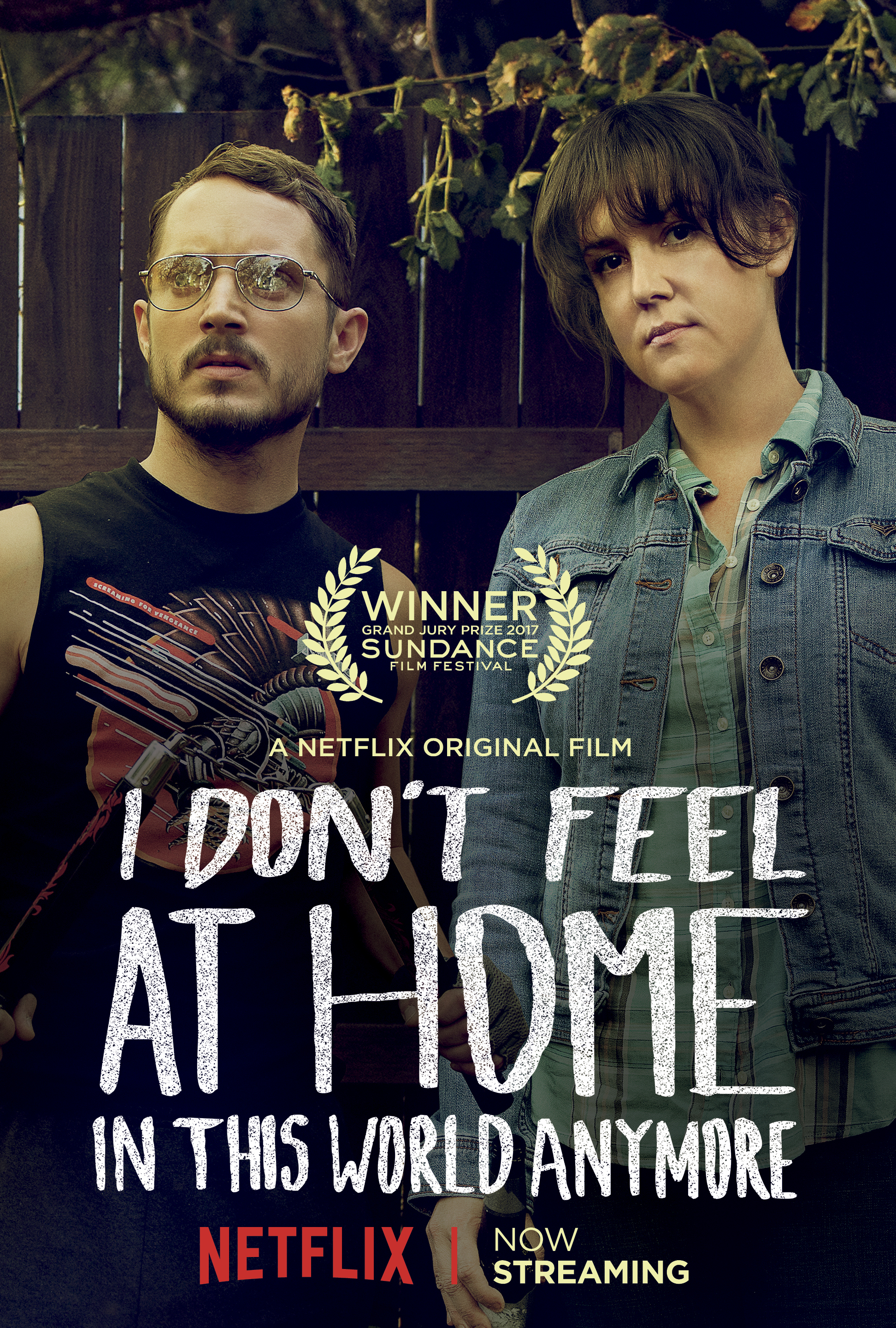
Share this:

  • Click to share on X (Opens in new window) X
  • Click to share on Facebook (Opens in new window) Facebook
  • More
  • Click to print (Opens in new window) Print
  • Click to email a link to a friend (Opens in new window) Email
Like Loading...

FiveFilms4Freedom 2018

29 Thursday Mar 2018

Posted by dullwood68 in Movies

≈ Leave a comment

Tags

BFI Flare, Canada, Comedy, Cultural traditions, Documentary, Drama, Gay farmers, Greece, Helpline, India, Jeff Lee Petry, Karishma Dev Dube, LGBTQ+, Matt Houghton, Milan Halikowski, Nathan Drillot, Seung Yeob Lee, Sexuality, Short movies, South Korea, Yorgos Angelopoulos

FiveFilms4Freedom is part of the BFI Flare: London LGBTQ+ Film Festival currently running until 1 April 2018. These five shorts have been shown as part of the festival, and thanks to an intitiative developed by the British Council and the British Film Institute, have also been made available online during the course of the festival.

Devi (2017) / D: Karishma Dev Dube / 13m

aka Devi: Goddess

Cast: Aditi Vasudev, Priyanka Bose, Tanvi Azmi

Rating: 8/10 – Tara (Vasudev) is a troubled teen who challenges her mother’s sense of tradition and moral certitude at every turn, but takes a step too far when she turns her romantic attentions to Devi (Bose), the housemaid who has helped raise her from a child. Dube’s critique of unyielding Hindi cultural traditions and strict morality plays well until you realise that Tara’s actions are entirely selfish and devoid of any consideration of potential consequences – which then leads the viewer to consider if Tara is quite the sympathetic character she’s made out to be at the start. Dube shows that there will always be victims in these circumstances, and the class divide is sharply illustrated by the inevitable outcome of Tara’s decision to act on her impulses. By exploring not just the cultural divide, but the generational divide as well, Dube shows that Tara’s behaviour is too frivolous to be tolerated by the traditions she’s rebelling against, and that acceptance is still a very long way off indeed.

Handsome and Majestic (2016) / D: Jeff Lee Petry, Nathan Drillot / 12m

With: Milan Halikowski, Lynnell Halikowski, Mike Halikowski

Rating: 7/10 – Milan is a twelve year old transboy living in Canada who has suffered more than his fair share of abuse and violence in his young life, and who has been routinely let down by the teachers at his school. Having endured all this, and gone through a period of depression that saw him try to take his own life, Milan has found the strength to come out as transgender, and in doing so, he’s found a friend in another transboy living just a few streets away. There are few of us who can fully understand what it must be like to feel trapped in our own body, and not to look the way we believe we should. Handsome and Majestic goes some way to explaining what that must be like, but spends too much time illustrating it by having Milan looking at himself in mirrors, and with a sad, pensive expression. Contributions from his family offer (perhaps unintentionally) stark comparisons with Milan’s own struggle, but just seeing him playing with his new friends allows the movie to end on a positive note that didn’t seem to be on the cards at all. It’s a moving, humane documentary, and though it doesn’t delve too deeply into transgender issues, it’s still an informative and engaging examination of one young boy’s wish to be accepted for who he is.

Uninvited (2017) / D: Seung Yeob Lee / 20m

Cast: Sum Lee, Keonyeung Kim, Jinseung Moon

Rating: 7/10 – An impending, and largely unexpected visit from his mother (Kim), prompts still-in-the-closet Jungho (Lee) to get his partner, Jae-ik (Moon), to pack most of his belongings and hide out in a nearby coffee shop while she’s at the flat they live in. Despite his best efforts, though, Jungho’s mother discovers evidence that points to his having a flatmate at best, and a gay lover at worst. Ostensibly a comedy, Uninvited lacks the bite needed to make this as funny as it could be, and Jungho is such a moody complainer it’s amazing anyone, gay or straight, would take him on. Still, this is anchored by a surprisingly compassionate and thoughtful performance from Kim, who never lets on if her character is disappointed or ashamed or appalled by her son being gay, but instead translates passive acceptance into determined support. Like Devi and Goldfish, this is another movie where the main protagonist isn’t the person who’s gay or a lesbian, but the parent whose own cultural identity makes it difficult to accept unreservedly their child’s sexuality.

Goldfish (2017) / D: Yorgos Angelopoulos / 14m

Cast: Michael Ikonomou, Lissandros Kouroumbalis, Eva Angelopoulou

Rating: 7/10 – It’s Stratis’ (Kouroumbalis) seventh birthday, and all he wants is a pet fish. His father, Yorgos (Iknonomou), wants him to get a warrior fish, but Stratis settles for a goldfish. On their way home, Stratis reveals the goldfish is called Tom, after Tom Daley the British diver. Incensed at what he perceives as yet another example of his son’s effeminacy, Stratis’ father throws the goldfish in the river, causing Stratis to run away from home… While it’s a little too broad in its approach – Yorgos is the kind of unreconstructed Greek male that borders on cliché – and the message is rammed home a little too bluntly, nevertheless, Goldfish is an enjoyable examination of how some men feel threatened by the merest hint of homosexuality, and the often absurd reactions they display as a result. Not a movie about being gay, then, but about the unnecessary fear and paranoia that comes from prejudice about homosexuality, and the terrible emotions that take over when the source of that fear and paranoia – your own child – might never be seen again.

Landline (2017) / D: Matt Houghton / 12m

Cast: Jem Dobbs, Niamh Blackshaw, Oliver Devoti, Bradley Johnson

Rating: 9/10 – In 2010, Keith Ineson, a chaplain from Cheshire in the UK, set up a helpline for gay farmers, one that allowed them to voice their experiences, their worries, and their concerns. With the helpline still being the only one of its kind anywhere in the world, Landline uses original telephone recordings and visual reconstructions of the events being talked about to paint a powerful, and sometimes disturbing portrait of rural prejudice and intolerance. Director Matt Houghton doesn’t just focus on the negative though: one perfectly judged vignette has the camera tracking through the debris and chaos of what appears to have been a terrible bar fight, only for the recording to reveal that it was one man’s coming out party, and probably the best night of his life. From this it’s worth mentioning the excellent cinematography courtesy of James Blann, which makes this docu-drama visually striking and compelling in equal measure.

Share this:

  • Click to share on X (Opens in new window) X
  • Click to share on Facebook (Opens in new window) Facebook
  • More
  • Click to print (Opens in new window) Print
  • Click to email a link to a friend (Opens in new window) Email
Like Loading...

Once Upon a Time in Venice (2017)

26 Monday Mar 2018

Posted by dullwood68 in Movies

≈ Leave a comment

Tags

Action, Bruce Willis, Comedy, Drugs, Jason Momoa, John Goodman, Mark Cullen, Review, Thriller

D: Mark Cullen / 94m

Cast: Bruce Willis, John Goodman, Jason Momoa, Famke Janssen, Thomas Middleditch, Adam Goldberg, Emily Robinson, Maurice Compte, Stephanie Sigman, Jessica Gomes, Adrian Martinez, Ken Davitian, Tyga, Wood Harris, Christopher McDonald, Kal Penn, Elisabeth Röhm

Steve Ford (Willis) is a private detective. He doesn’t appear to take anything seriously, except for his dog, Buddy. Buddy is the most important part of Steve’s life, and even though the dog spends more time with Steve’s niece, Taylor (Robinson), the bond between the two is unbreakable. While being chased – naked and on a skateboard – by the brothers of a young woman (Gomes) he shouldn’t be “seeing”, Steve is helped by an old friend, Tino (Martinez), who does so on one condition: that Steve retrieves Tino’s car, which has been stolen by a local gang. The gang’s leader is Spyder (Momoa), and when Steve manages to steal the car back, Spyder retaliates by stealing stuff from Taylor’s home – including Buddy. Steve tries to get Buddy back from Spyder, and they agree on a deal, but when Steve comes through he learns that Spyder’s girlfriend, Lupe (Sigman), has disappeared, taking Buddy and a briefcase full of drugs with her. Spyder makes Steve another deal: find Lupe and retrieve the briefcase, and Buddy can come back to him.

From time to time, a movie comes along that looks like the very definition of unprepossessing, and which you’re pretty certain is going to be either a disappointment, or a big letdown, or both. It’s a movie that requires little conscious thought in order to watch it, and which is likely to be about as memorable as that time you can’t remember from a week ago. Once Upon a Time in Venice is one such movie. There’s a phrase: so bad it’s good, and sometimes it’s an apt phrase, but not here. This is, and let’s not forget it or make allowances for it, a bad movie. On so many levels, from the performances, to the script, to the direction, and the casual stereotyping (or racism, if you want to use a stronger term). This is a movie that gets so much wrong it’s almost as if the makers were challenging themselves to under achieve. And yet… and yet… while it may appear unprepossessing, it’s also an unlikely candidate for Guilty Pleasure of 2017. It’s definitely not so bad that it’s good, it’s so bad that it’s actually enjoyable… though not always for the right reasons.

Now, we’ve become used to Bruce Willis phoning in his performances over the last ten years – notable exceptions: Moonrise Kingdom and Looper (both 2012) – and here it’s no different, but for some reason the silliness and the absurdity of it all, and the very broad acting ranges on display, actually help to make this movie more enjoyable than it has any right to be. Willis as Steve is like an eclectic combination of John McClane and the Three Stooges (though without the eye poking and the face slapping). Goodman plays Steve’s best friend, Dave, as if he’s having a stroke the whole time, while Momoa’s drug lord(!) is a muscular mumbler, short on smarts and far too easily manipulated. The plot seems to have been made up on the spot during filming, and Cullen’s direction is so loose that it’s in danger of being blown away. Whether it’s Willis in drag (not a pretty sight), or homophobic grafitti directed at minor character Lou the Jew (Goldberg) (the script actually says the soubriquet isn’t offensive because he calls himself that), this is a movie you can only follow along blindly, accepting it for what it is – very bad indeed – but enjoying it nevertheless.

Rating: 4/10 – somehow grabbing an extra point just by virtue of how barmy it all is, Once Upon a Time in Venice is a low-brow crime caper that contains way too much bad acting, way too much bad dialogue, and way too much bad everything else; but somehow it’s a movie you can laugh with instead of at, and it’s a movie that has to be seen to be believed… on so many levels.

Share this:

  • Click to share on X (Opens in new window) X
  • Click to share on Facebook (Opens in new window) Facebook
  • More
  • Click to print (Opens in new window) Print
  • Click to email a link to a friend (Opens in new window) Email
Like Loading...

Festival (2005)

08 Thursday Mar 2018

Posted by dullwood68 in Movies

≈ Leave a comment

Tags

Actors, Annie Griffin, Chris O'Dowd, Comedians, Comedy, Daniela Nardini, Drama, Edinburgh, Lucy Punch, Raquel Cassidy, Review, Sex, Stephen Mangan

D: Annie Griffin / 101m

Cast: Richard Ayoade, Amelia Bullmore, Billy Carter, Raquel Cassidy, Jonah Lotan, Stephen Mangan, Lyndsey Marshal, Stuart Milligan, Daniela Nardini, Chris O’Dowd, Deirdre O’Kane, Lucy Punch, Clive Russell

Set against the backdrop of the Edinburgh Festival Fringe (and shot there in 2004), Festival is a compendium of interlocking stories centred around various actors and comedians who are all trying to be noticed or win awards. Amongst the comedians there’s Tommy O’Dwyer (O’Dowd), returning for his ninth year of unqualified non-success; Conor Kelly (Carter), who works with puppets; and Nicky Romanowski (Punch), who tells comic stories based on her Jewish upbringing. Amongst the actors there’s Faith Myers (Marshal), a first-timer with a one-woman play about Dorothy Wordsworth; a Canadian trio that includes Rick (Lotan), who finds himself attracted to the owner of the house they’re renting, Micheline (Bullmore); and Father Mike (Russell), whose play about paedophile priests may not be entirely fictional. Orbiting these characters are the likes of über-famous comedian and Comedy Award judge Sean Sullivan (Mangan), and his put-upon PA Petra Loewenberg (Cassidy); radio presenter Joan Gerard (Nardini), who’s also a Comedy Award judge; and Arnold Weiss (Milligan), an American agent looking to represent Sean in the US.

Ensemble movies can be a tricky proposition. Give too much screen time to one character and their story and you risk making another character’s story slight and uninteresting. Reverse that idea and you don’t do justice to the other character and their story. With fifteen main characters to juggle with, Festival does a good job of getting the balance right, but of necessity it does focus on some characters more than others, though not to the extent that any one tale suffers accordingly. However, whether or not you care about any of the characters is another matter, because while Annie Griffin’s feature debut doesn’t short change any of them in terms of development, even the most sympathetic of characters – Petra, for example – fail to connect with the audience. You can perhaps understand the dilemma: whether to show the hypocrisy and rampant self-absorption of the performers at the Fringe, or to make them less objectionable – and the movie less credible as a result. But the consequence of opting to show the hypocrisy etc. means that the result is a movie where being immersed in the various storylines isn’t as rewarding as it could be.

Part of the problem is in the movie’s fluctuating tone. In trying to accommodate both comedy and drama, while also including flashes of bathos and heavy-handed irony, Griffin provides too many awkward transitions from one to the other (and sometimes in the same scene). It’s also a less than subtle movie, with one sex scene in particular guaranteed to have some viewers squirming with discomfort (though not as much as one of the characters involved in it), and Griffin making the point over and over that comedians are an unhappy bunch whose ability to be funny masks a myriad of personal and emotional problems. Thankfully, trite observations such as these are offset by the quality of the comedy elements, which are very funny indeed. The drama though, still retains an overcooked feel to it that stops it from being entirely credible, and it’s in these moments that you can see Griffin trying too hard. As for the performances, there isn’t one portrayal that stands out from all the rest – though Mangan’s obnoxious Sean Sullivan comes close – which makes this a truly ensemble experience. The hustle and bustle of the Edinburgh Festival is expressed through often guerrilla-style cinematography courtesy of DoP Danny Cohen, and allows for an authentic backdrop. It’s just a shame that not everything happening in the foreground matches the industry of the festival itself.

Rating: 6/10 – promoted as a “black comedy”, Festival is more of an unfulfilled dramedy, one that succeeds more in one area than it does in the other; it’s entertaining enough while you’re watching it, but the relevance and resonance it’s aiming for doesn’t come across, making this frustrating and satisfying in almost equal measure.

NOTE: Alas, there’s no available trailer for Festival.

Share this:

  • Click to share on X (Opens in new window) X
  • Click to share on Facebook (Opens in new window) Facebook
  • More
  • Click to print (Opens in new window) Print
  • Click to email a link to a friend (Opens in new window) Email
Like Loading...

Barakah Meets Barakah (2016)

06 Tuesday Mar 2018

Posted by dullwood68 in Movies

≈ Leave a comment

Tags

Barakah yoqabil Barakah, Comedy, Drama, Fatima AlBanawi, Hisham Fageeh, Instagram, Mahmoud Sabbagh, Review, Riyadh, Romance, Saudi Arabia

Original title: Barakah yoqabil Barakah

D: Mahmoud Sabbagh / 88m

Cast: Hisham Fageeh, Fatima AlBanawi, Sami Hifny, Khairia Nazmi, reem Habib, Abdulmajeed Al-Ruhaidi

Barakah (Fageeh) works for Riyadh’s Municipal Police, issuing fines for minor offences such as selling goods outside a store’s permitted area. He’s single, amiable, and despite the overbearing intentions of the local midwife (and his surrogate mother) Daya Sa’adiya (Nazmi), not in any hurry to find a wife. A report of a civil disturbance brings him into contact with Bibi (AlBanawi), a fashion model who uses carefully cropped images of herself on Instagram as a way of promoting her own political and social agendas (while staying within the law). Barakah is instantly smitten, and thanks to some unwitting help from his friend Maqbool (Al-Ruhaidi), he’s able to meet Bibi at an art exhibition. As their relationship develops, obstacles arise such as the controlling nature of Bibi’s mother – and head of the fashion chain Bibi is the face of – Madame Mayyada (Habib), Barakah’s own naïve approach to romance, and Saudi Arabia’s strict laws regarding public interaction. But it’s a misunderstanding over a push-up bra that may just prove to be the biggest obstacle of all…

When you think about the rom-coms churned out by Hollywood, there’s always something that keeps true love from conquering all (until the last five minutes, that is), but one of the most refreshing things about Barakah Meets Barakah is that the “something” in question is Saudi Arabian law. The very real threat of imprisonment that hangs over the heads of Barakah and Bibi gives the movie a depth and a resonance that you rarely see in an average rom-com. First-time writer-director Sabbagh rarely alludes to it head on, happy to let it hover in the background while his script concentrates on providing viewers with one of the sweetest, and most endearing romantic comedies of recent years. Barakah is simply one of the nicest protagonists you’re ever likely to encounter: good-natured, a pleasure to spend time with, and like a puppy that’s eager to please in his pursuit of Bibi. She’s more fiery, able and willing to challenge the accepted order of things, but in such a way that she builds support for her efforts through her careful manipulation of social media. As a way of expressing female empowerment, it’s a clever conceit, and Sabbagh is equally clever enough not to wield the idea like a big stick.

In many areas of the movie the key word is restraint, as Sabbagh tells his story with admirable economy of style, and a minimum of fuss. His talented cast ensure that each character appears fully formed from the moment we meet them, with Fageeh proving that gauche and awkward can be charming as well, and AlBanawi investing Bibi with a seductive vulnerability (like Barakah, you can’t help but be captivated by her). Sabbagh peppers his script with wry observations on contemporary Saudi culture, has Barakah co-opted into a local amateur production of Hamlet to play Ophelia, provides unnecessarily pixellated images as a barb to state censors, and gets overtly political by contrasting the more liberal Saudi Arabia of the 60’s and 70’s with the restrictions that have been in place since 1979. But none of this is to distract from the central romance that anchors the movie and makes it so appealing. The movie brings its chaste lovebirds together at the end, but not in the traditional “love has conquered all” way that Hollywood approves of. Instead, Sabbagh offers us a reunion that speaks of hope for the future, a message that is both simple and powerful, and as much about Barakah and Bibi, as it is about Saudi Arabia itself.
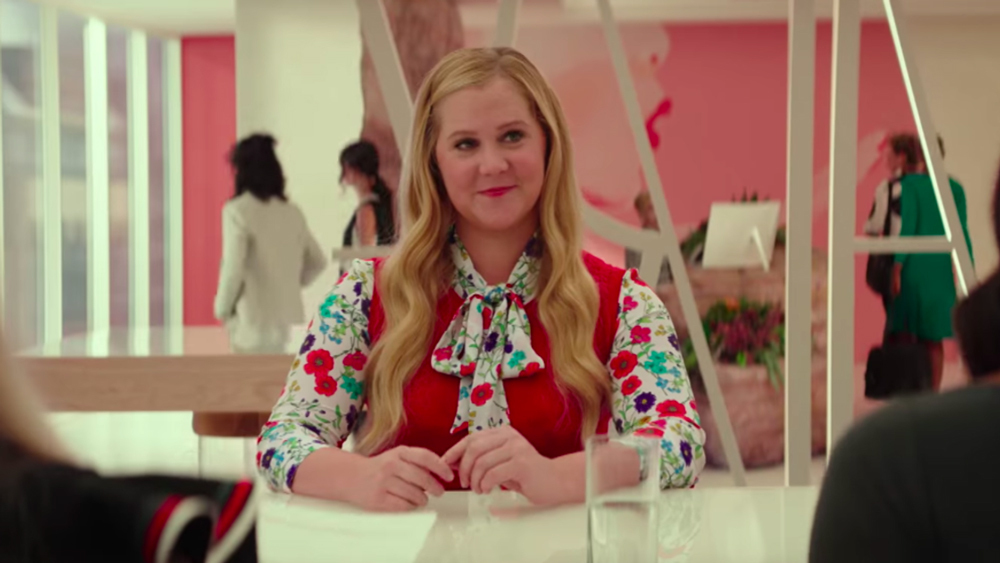
Rating: 8/10 – an example of what can be achieved when you don’t have to follow a clichéd narrative pattern or formula, Barakah Meets Barakah is beautifully shot by Victor Credi, and hugely entertaining; by keeping things natural and straightforward, Sabbagh has created a movie where you never feel like you’re being led by the hand, and where you’re more than happy to share in the journeys undertaken by the characters.

Share this:

  • Click to share on X (Opens in new window) X
  • Click to share on Facebook (Opens in new window) Facebook
  • More
  • Click to print (Opens in new window) Print
  • Click to email a link to a friend (Opens in new window) Email
Like Loading...

Monthly Roundup – February 2018

28 Wednesday Feb 2018

Posted by dullwood68 in Movies

≈ 1 Comment

Tags

'C'-Man, Action, Adam Devine, Alan James, Alec Baldwin, Allene Ray, Animation, Ari Sandel, Atomic Blonde, Beauty and the Beast (2017), Berlin, Bill Condon, Black Panther, Chadwick Boseman, Charlize Theron, Comedy, Crime, Daisy Ridley, Dan Stevens, David Leitch, Dean Jagger, Emma Watson, Fantasy, Game Night, Guinn Williams, James McAvoy, Jason Bateman, John Francis Daley, Jonathan Goldstein, Joseph Lerner, Kenneth Branagh, Maris Wrixon, Marvel, Michelle Pfeiffer, Murder, Murder on the Orient Express (2017), Mystery, Noel M. Smith, Rachel McAdams, Reviews, Romance, Romantic comedy, Ryan Coogler, Steve Buscemi, Superhero, The Boss Baby, The Case of the Black Parrot, The Phantom (1931), Thriller, Tom McGrath, Wakanda, When We First Met, William Lundigan

‘C’-Man (1949) / D: Joseph Lerner / 77m

Cast: Dean Jagger, John Carradine, Lottie Elwen, Rene Paul, Harry Landers, Walter Vaughn, Adelaide Klein, Edith Atwater

Rating: 5/10 – a US Customs agent (Jagger) finds himself looking for the killer of his best friend (and fellow Customs agent), and the person responsible for the theft of a rare jewel – could they be the same man?; an odd noir crime thriller that betrays its low budget production values, ‘C’-Man is short on character but long on action, and is fitfully entertaining, though the performances vary wildly and the script contains some very po-faced dialogue, making it a movie you can’t really take your eyes from – and not in a good way.

When We First Met (2018) / D: Ari Sandel / 97m

Cast: Adam Devine, Alexandra Daddario, Shelley Hennig, Andrew Bachelor, Robbie Amell

Rating: 3/10 – Noah (Devine) falls for Avery (Daddario) and winds up in the friend zone, but thanks to a magic photo booth, he gets the chance to go back and change their relationship into a romantic one; a dire romantic comedy that struggles to be both romantic and funny, When We First Met can’t even make anything meaningful out of its time travel scenario, and is let down by a banal script and below-par performances.

The Phantom (1931) / D: Alan James / 62m

Cast: Guinn Williams. Allene Ray, Niles Welch, Tom O’Brien, Sheldon Lewis, Wilfred Lucas, Violet Knights, William Gould, Bobby Dunn, William Jackie

Rating: 3/10 – a reporter (Williams) tries to track down the titular criminal mastermind when he targets the father of his girlfriend (Ray), but finds it’s not as simple a prospect as he’d thought; an early talkie that shows a lack of imagination and purpose, The Phantom struggles from the outset to be anything but a disappointment, what with its unconvincing mix of comedy and drama, its old dark house scenario, and a clutch of amateur performances that drain the very life out of it at every turn.

Black Panther (2018) / D: Ryan Coogler / 134m

Cast: Chadwick Boseman, Michael B. Jordan, Lupita Nyong’o, Danai Gurira, Martin Freeman, Daniel Kaluuya, Letitia Wright, Winston Duke, Sterling K. Brown, Angela Bassett, Forest Whitaker, Andy Serkis, Florence Kasumba, John Kani

Rating: 7/10 – the king of outwardly poor but inwardly technologically advanced Wakanda, T’Challa (Boseman), faces a coup from an unexpected source (Jordan), while trying to work out whether or not his country’s scientific advances should be shared with the wider world; though Black Panther does feature a predominantly black cast, and speaks to black issues, this is still a Marvel movie at the end of the day and one that adheres to the template Marvel have created for their releases, making this an admittedly funny and exciting thrill ride, but one that’s also another formulaic entry in the Marvel Cinematic Universe.

Atomic Blonde (2017) / D: David Leitch / 115m

Cast: Charlize Theron, James McAvoy, John Goodman, Toby Jones, Eddie Marsan, James Faulkner, Roland Møller, Sofia Boutella, Bill Skarsgård, Sam Hargrave, Jóhannes Haukur Jóhannesson, Til Schweiger

Rating: 6/10 – in the days before the fall of the Berlin Wall, a spy (Theron) must find a list of double agents that are being smuggled into the West, a task complicated by the involvement of the Americans, the Russians and a number of other interested parties; an attempt to provide audiences with a female John Wick, Atomic Blonde does have tremendous fight scenes, and a great central performance by Theron, but it’s let down by a muddled script, an even more muddled sense of the period it’s set in, and by trying to be fun when a straighter approach would have worked better.

Beauty and the Beast (2017) / D: Bill Condon / 129m

Cast: Emma Watson, Dan Stevens, Luke Evans, Josh Gad, Kevin Kline, Ewan McGregor, Ian McKellen, Emma Thompson, Nathan Mack, Audra McDonald, Stanley Tucci, Gugu Mbatha-Raw

Rating: 5/10 – the classic fairy tale, and previously a classic animated movie, is given the live action treatment by Disney; if the latest installment of a certain space opera hadn’t been released in 2017, Beauty and the Beast would have been the number one movie at the international box office, but though the House of Mouse might point to this as a measure of quality, the reality is that Watson was miscast, the songs lack the emotional heft they had in the animated version, and the whole thing has a perfunctory air that no amount of superficial gloss and shine can overcome.

The Case of the Black Parrot (1941) / D: Noel M. Smith / 61m

Cast: William Lundigan, Maris Wrixon, Eddie Foy Jr, Paul Cavanagh, Luli Deste, Charles Waldron, Joseph Crehan, Emory Parnell, Phyllis Barry, Cyril Thornton

Rating: 6/10 – a newspaper reporter (Lundigan) gets involved in a case involving a master forger (the Black Parrot), an antique cabinet, and a couple of mysterious deaths; an enjoyable piece of hokum, The Case of the Black Parrot gets by on a great deal of understated charm, a whodunnit plot that doesn’t overplay its hand, and by having its cast treat the whole absurd undertaking with a sincerity that is an achievement all by itself.

Murder on the Orient Express (2017) / D: Kenneth Branagh / 114m

Cast: Kenneth Branagh, Tom Bateman, Lucy Boynton, Olivia Colman, Penélope Cruz, Willem Dafoe, Judi Dench, Johnny Depp, Josh Gad, Manuel Garcia-Rulfo, Derek Jacobi, Marwan Kenzari, Leslie Odom Jr, Michelle Pfeiffer, Sergei Polunin, Daisy Ridley

Rating: 5/10 – the famous Belgian detective Hercule Poirot (Branagh) is faced with a complex mystery: which one of a dozen passengers killed an infamous kidnapper, and more importantly, why?; yet another version of the Agatha Christie novel, Murder on the Orient Express strands its capable cast thanks to both an avalanche and a tepid script, leaving its director/star to orchestrate matters less effectively than expected, particularly when unravelling the mystery means having the suspects seated together in a way that clumsily replicates the Last Supper.

The Boss Baby (2017) / D: Tom McGrath / 97m

Cast: Alec Baldwin, Steve Buscemi, Jimmy Kimmel, Lisa Kudrow, Tobey Maguire, Miles Bakshi, James McGrath, Conrad Vernon, ViviAnn Yee, Eric Bell Jr, David Soren

Rating: 6/10 – when seven year old Tim (Bakshi) finds he has a new baby brother, Theodore (Baldwin) – and one dressed in a business suit at that – he also finds that Theodore is there to stop babies from being usurped in people’s affections by puppies; a brightly animated kids’ movie that takes several predictable swipes at corporate America, The Boss Baby wants to be heartwarming and caustic at the same time, but can’t quite manage both (it settles for heartwarming), and though Baldwin may seem like the perfect choice for the title character, he’s the weakest link in a voice cast that otherwise sells the performances with a great deal of enthusiasm.

Game Night (2018) / D: John Francis Daley, Jonathan Goldstein / 100m

Cast: Jason Bateman, Rachel McAdams, Kyle Chandler, Billy Magnussen, Sharon Horgan, Lamorne Morris, Kylie Bunbury, Jesse Plemons, Danny Huston, Michael C. Hall

Rating: 5/10 – when a group of friends led by Max (Bateman) and Annie (McAdams) are invited to a game night at the home of Max’s brother, Brooks (Chandler), the evening descends into murder and mayhem, and sees the group trying to get to the bottom of a real-life mystery; like an Eighties high concept comedy released thirty years too late, Game Night has a great cast but little direction and waaaay too much exposition clogging up its run time, all of which makes a couple of very funny, very inspired visual gags the only reward for the viewer who sticks with this to the end.

Share this:

  • Click to share on X (Opens in new window) X
  • Click to share on Facebook (Opens in new window) Facebook
  • More
  • Click to print (Opens in new window) Print
  • Click to email a link to a friend (Opens in new window) Email
Like Loading...

Brakes (2016)

26 Monday Feb 2018

Posted by dullwood68 in Movies

≈ Leave a comment

Tags

Break ups, Comedy, Drama, Julia Davis, Julian Barratt, Kerry Fox, Mercedes Grower, Noel Fielding, Paul McGann, Peter Wight, Relationships, Review, Romance

D: Mercedes Grower / 85m

Cast: Julian Barratt, Kelly Campbell, Seb Cardinal, Juliet Cowan, Julia Davis, Noel Fielding, Jess-Luisa Flynn, Kerry Fox, Roland Gift, Salena Godden, Mercedes Grower, Martin Hancock, Kate Hardie, Siobhan Hewlett, Oliver Maltman, Paul McGann, John Milroy, Steve Oram, Daniel Roch, Morgan Thomas, Peter Wight

In Mercedes Grower’s debut feature, we’re introduced to a number of couples whose relationships are on the verge of breaking up, or which have actually reached the point of no return (or further investment by one or both parties). There’s Elliot (Barratt) and Raymond (Maltman), whose unexpected fling in Spain has been misinterpreted as something more permanent by Elliot. There’s Rhys (Gift) and Brinie (Fox), a couple who can’t spend time together without trading veiled insults or outright criticism, and there’s Livy (Davis) and Alan (Wight), a would-be actress and her theatrical producer partner who are finding themselves at odds over the types of roles that Livy can play. And then there’s Daniel (Fielding) and Layla (Grower), a couple expecting a child but being forced apart by his apathy and intransigence. These and several other stories show the various ways in which relationships can come to an end, and how differently people allow themselves to be affected.

All of this makes up Part II of Brakes, and is shown first. We see the characters often at their worst, and Grower shows just how selfish and uncaring we can be when we want to extricate ourselves from a relationship we no longer want to be a part of. On the flip side, we see the pain and the hurt that this approach can cause, and Grower wades through a variety of emotions and responses, from anger to disbelief, to sadness and resignation, and denial and regret. Inevitably, some stories fare better than others, with Daniel and Layla’s break up in a public toilet coming across as too absurd to be credible, and hampered by the decision to have Daniel behave like a six year old. Conversely, the austere yet stinging conversation between Rhys and Brinie is so tense and uncomfortable that it’s a relief when he goes out for beers (it also helps that Fox’s performance is particularly impressive). Most of the other scenarios fall somewhere in between, but the necessity of keeping things short (for the most part), means that if one story disappoints there’ll be another one along quite soon.

Once Part II is out of the way, then Grower presents us with Part I, in which we see how these relationships began originally. It’s a neat idea, and having seen the outcomes of each one already, the viewer can judge for themselves if any might or should have turned out differently, and it does allow the movie to end on a positive note, but the knowledge that none of these promising, hopeful unions is going to end well also leaves a bitter after-taste. With the script proving to be a hit or miss affair in terms of the stories, the performances fall into the same category. Alongside Fox, there are fine portrayals from Davis, Wight, and Barratt, while some of the cast – e.g. McGann, Milroy, Hewlett, and Oram – are hamstrung by clichéd dialogue and unconvincing set ups. Grower does show promise, and she’s able to inject some much needed humour when it’s required, but she needs an idea that she can focus on exclusively instead of a number of different ones all at the same time. That said, the movie does feature some appropriately gloomy cinematography by Denzil Armour-Brown and Gabi Norland in Part II, and a brighter, more upbeat tone in Part I, something that gives rise to the notion that if more time had been available, then this could have been so much better.

Rating: 6/10 – with a sixty per cent success rate in regard to the stories themselves, Brakes is often a frustrating movie to watch, but it does have singular moments where the breadth of Grower’s ambition is met and exceeded upon; in the end, though, it’s a movie that makes a number of telling points about our inability to communicate with each other when it matters, but which doesn’t always find the right context to express itself fully.

Share this:

  • Click to share on X (Opens in new window) X
  • Click to share on Facebook (Opens in new window) Facebook
  • More
  • Click to print (Opens in new window) Print
  • Click to email a link to a friend (Opens in new window) Email
Like Loading...

Freak Show (2017)

19 Monday Feb 2018

Posted by dullwood68 in Movies

≈ Leave a comment

Tags

Abigail Breslin, Alex Lawther, AnnaSophia Robb, Bette Midler, Comedy, Cross-dressing, Drama, High School, Homecoming Queen, Literary adaptation, Review, Trudie Styler

D: Trudie Styler / 91m

Cast: Alex Lawther, Abigail Breslin, AnnaSophia Robb, Ian Nelson, Larry Pine, Bette Midler, Celia Weston, Willa Fitzgerald, Charlotte Ubben, Laverne Cox, Christopher Dylan White, Michael Park, Mickey Sumner, John McEnroe, Eddie Schweighardt

What if you didn’t fit in anywhere, and most days went out of your way not to fit in? And what if you were bullied by your fellow high schoolers, ignored by your father, missed your absentee mother terribly, and expressed your inner feelings by dressing up in outrageous yet clearly female outfits… and the source of all this was because you’re a boy? How would all that make you feel? And what would you do to combat the unwanted attention you’re getting from the other students? Well, in the feature debut of director Trudie Styler, the answer new kid Billy Bloom (Lawther) opts for is to be bolder and more outrageous, and to treat the majority of the other kids with disdain. But for all his outward self-confidence, Billy is still the outsider who wants to be accepted for who he is. The trouble is he’s flamboyant, shamelessly narcissistic, and completely uninterested in fitting in unless it’s on his own terms. But when he’s viciously beaten up by members of the school football team, things begin to edge his way, and a wider acceptance makes itself felt, an acceptance that is put to the test when Billy decides to run for Homecoming Queen…

Anyone coming to Freak Show might find themselves wondering if its origins lay between the pages of a Young Adult novel, and those assumptions would be right. Adapted from the novel of the same name by self-styled celebutante James St. James, Freak Show is a movie predicated to the idea of individuality above all else, and being true to yourself, even if you’re not sure just who you are yet. It’s an ode to persevering against the odds, but told in an uneven and often uncertain way thanks to a screenplay by Patrick J.Clifton and Beth Rigazio that can’t decide if Billy should fully integrate into high school life or remain a consenting outsider. Outside of school, Billy lives with his father (Pine) who doesn’t understand him, and he dreams of the day his mother (Midler) will come to rescue him from the terrible life he really doesn’t lead. Within school, Billy makes friends with Blah Blah Blah (Robb), who thinks he’s amazing, and football star Flip (Nelson) who has an artistic side he doesn’t feel he can express except when he’s around Billy.

The relationship that develops between Billy and Flip occupies a lot of the movie’s running time, and it spends a lot of that time not going where you might expect it to (but then it does). It’s not always handled well, and there’s a frankly embarrassing moment between Flip and Billy’s mother that has all the dramatic subtlety of a police baton strike to the lower right thigh (sorry, wrong movie). Billy’s decision to run for Homecoming Queen includes the movie’s heartfelt plea for tolerance, and though it’s beautifully expressed by Lawther, the movie tries to be ironic immediately after – and doesn’t even come close. With the screenplay also unable to pin down its approach to gender politics, it’s left to Lawther and the make up, costume and wardrobe departments to provide a series of outfits that best express Billy’s glamour obsessed personality, and in doing so to gloss over the movie’s various shortcomings, not the least of which is Breslin’s God-bothering rival for the Homecoming Queen tiara, Lynette. It is Lawther’s movie though, the young actor giving a relaxed, confident, and sincere performance that keeps Billy sympathetic throughout, even when it’s hard to feel entirely sorry for him.

Rating: 6/10 – bolstered by a terrific performance from Lawther, but hampered at the same time by so many high school movie clichés it’s like shooting fish in a barrel, Freak Show is at least funny when it’s trying to be, but tiresome when it’s trying to be serious; with its mixed messages centering around individuality and integration, the movie is only half as effective as it should be, and too often opts for warm and fuzzy when it should be direct and uncomfortable.

Share this:

  • Click to share on X (Opens in new window) X
  • Click to share on Facebook (Opens in new window) Facebook
  • More
  • Click to print (Opens in new window) Print
  • Click to email a link to a friend (Opens in new window) Email
Like Loading...

Entanglement (2017)

16 Friday Feb 2018

Posted by dullwood68 in Movies

≈ Leave a comment

Tags

Comedy, Diana Bang, Drama, Jason James, Jess Weixler, Review, Romance, Suicide, Thomas Middleditch

D: Jason James / 85m

Cast: Thomas Middleditch, Jess Weixler, Diana Bang, Randal Edwards, Marilyn Norry, Eric Keenleyside, Johannah Newmarch, Jena Skodje, Shauna Johannesen

When we first meet Ben Layten (Middleditch), he’s trying to kill himself. He’s recently divorced, increasingly depressed, and all alone. But death isn’t going to let him off so easily, and despite cutting his wrists, Ben survives. As he begins to get his life back on track, he learns he almost had a sister: his parents (Norry, Keenleyside), believing they wouldn’t have children of their own, had adopted a baby girl. But on the very day the baby was given to them, Ben’s mother discovered she was pregnant. The baby was returned for adoption, Ben was born nine months later, and now Ben has a mission: to find his near-sister and see how she’s turned out, and if he’s lucky, to establish a brother-sister relationship with her. His search leads him to Hanna Weathers (Weixler), a free-spirited young woman who slowly brings Ben out of his shell. In the process, Ben begins to find more and more reasons to continue living, and ways of putting the past behind him. But then he learns a truth about Hanna that challenges his perception of his new-found happiness…

Entanglement is the kind of indie movie that comes along several times a year, plays at various festivals, gets a good buzz behind it, and then goes out into the big wide world of cinema releases or VOD, and then promptly vanishes from people’s radar. It’s not the movie’s fault – after all, there are just sooooo many movies out there, all jostling for our attention – but it does make finding such a movie all the more rewarding. This is the case here, with the combination of Jason Filiatrault’s adroit, cleverly constructed screenplay, and Jason James’ easy-going yet focused direction. Between them they ensure that Ben’s attempts to make sense of his life and where it’s going aren’t just the actions of a pretentious, navel-gazing nebbish (which could have easily been the case), but a sincere and heartfelt look at how easy and difficult it can be to find the courage to move on after a traumatic experience. Deep down, Ben knows he can move on, but he doesn’t know how to; being with Hanna helps him find out – just not in a way he ever expected. (Some viewers may find themselves ahead of Ben for most of the movie, but rest assured, this doesn’t detract from the enjoyment to be had in waiting for him to catch up.)

The movie isn’t afraid to throw in some whimsical fantasy elements, such as the planets on a bowling alley wall that begin to rotate while Hanna speaks to Ben, or the puppet in the office of Ben’s therapist that takes him to task over his relationship with Hanna. These elements serve as psychological cues for Ben’s state of mind, and are introduced at various points in the narrative, but with a great deal of circumspection attached. Are these signs of progress, or backward steps? Filiatrault wisely leaves it up to the viewer to decide. By the time the truth about Hanna is revealed, the movie has become intriguing and absorbing, and thanks in no small part to the performances of Middleditch and Weixler. Middleditch is self-contained and vulnerable as Ben, giving a shy, diffident portrayal that is affecting and quietly impressive. Weixler, an actress who deserves to be better known, is more extrovert but in a way that is considered and entirely apt for her character. There’s good support too from Bang as Tabby, Ben’s neighbour and one true friend. The whole thing plays out at a good pace, there’s sterling work from DoP James Liston, and it’s all topped off by a terrific soundtrack.

Rating: 8/10 – a movie about connections, including the ones we can’t see but which have the most impact in our lives, Entanglement is a light-hearted, comic, yet earnest movie that achieves its modest ambitions with ease; quirky and intelligent, plausible and deftly handled, it’s another indie movie wih buckets of charm and a winning sensibility.

Share this:

  • Click to share on X (Opens in new window) X
  • Click to share on Facebook (Opens in new window) Facebook
  • More
  • Click to print (Opens in new window) Print
  • Click to email a link to a friend (Opens in new window) Email
Like Loading...

Handsome Devil (2016)

10 Saturday Feb 2018

Posted by dullwood68 in Movies

≈ Leave a comment

Tags

Andrew Scott, Boarding school, Comedy, Coming of age, Drama, Fionn O'Shea, Ireland, John Butler, Nicholas Galitzine, Review, Rugby, Talent show

D: John Butler / 95m

Cast: Fionn O’Shea, Nicholas Galitzine, Andrew Scott, Michael McElhatton, Moe Dunford, Ruairi O’Connor, Jay Duffy, Ardal O’Hanlon, Amy Huberman, Stephen Hogan

Ned (O”Shea) is returning to boarding school for another year of being the outsider, the one pupil in the entire school for whom rugby – which the school is obsessed by – doesn’t mean anything. Ned prefers reading and music, but this has earned him the enmity of some of the other pupils, including Weasel (O”Connor), who is on the current team. However, there is good news: this year he has a room to himself. But this good fortune doesn’t last long. A new pupil called Connor (Galitzine), is assigned to Ned’s room. First impressions don’t help and the pair initially don’t get along. An incident in their English class allows for the barriers they’ve erected (literally and figuratively) to be broken down, and soon they share a genuine friendship. A joint love of music sees them cajoled by their English teacher, Mr Sherry (Scott), into taking part in a local talent show. But Connor has also made the school rugby team and is proving to be their star player. But Connor has a secret, one that Ned discovers by accident, and one that leads to their friendship becoming strained, as well as forcing Connor to make a difficult choice if he wants to remain at the school.

Told in the form of an extended flashback as Ned recounts the events of the previous months, Handsome Devil is another very likeable, very enjoyable movie that serves as a reminder that when it comes to coming-of-age tales, Ireland has assembled a pretty good track record in recent years. Irish movie makers seem to know instinctively how to balance comedy and drama in their movies, and John Butler’s follow up to The Stag (2013) is no exception. And more importantly, one isn’t allowed to overshadow the other. It’s sometimes a precarious balancing act, but here the dramatics surrounding Connor’s secret (an obvious one but treated with sympathy and understanding by Butler’s screenplay) are played out with a credibility lacking in many other movies, and thanks to a deftly handled performance by Galitzine. Connor’s friendship with Ned is another aspect that’s handled well, growing organically out of their shared appreciation for music. Butler gives both characters the chance to grow as the movie progresses, and they both emerge from their self-imposed shells more confident and more determined not to return to them.

There’s plenty of humour to be had as well, and the movie makes several salient points about the highs and lows to be experienced in a boarding school environment. There’s also a devil and angel scenario whereby Connor’s “soul” is the concern of both Mr Sherry and his rugby coach, Mr O’Keeffe (Dunmore). This leads to a few awkward scenes that don’t feel as well developed as in other areas, and despite good performances from both actors, these scenes always feel a little leaden in comparison. In truth, the main storyline isn’t anything new, but it’s the way in which Butler handles it that makes it so enjoyable. There’s an impish yet sincere quality to the material that is engaging, and within the world he’s created, much is recognisable in terms of the characters and their troubles. Butler is utilising universal elements to tell his story, and it’s this universality that makes it look and sound so good, even if sometimes, his message is a little too simplistic (the movie ends on a moment of fantasy wish fulfillment that will either make you groan or cheer).Your world won’t be changed – probably – by seeing this movie, but you will enjoy spending time with it.

Rating: 8/10 – bright and entertaining, and with a welcome degree of poignancy, Handsome Devil is a delightful movie full of terrific performances topped off by Butler’s assured direction, and a number of first-rate song choices on the soundtrack; definitely a feelgood movie, then, and one that doesn’t strain to be something it’s not or strive to make more of its story than is completely necessary.

Share this:

  • Click to share on X (Opens in new window) X
  • Click to share on Facebook (Opens in new window) Facebook
  • More
  • Click to print (Opens in new window) Print
  • Click to email a link to a friend (Opens in new window) Email
Like Loading...

Dan Dream (2017)

07 Wednesday Feb 2018

Posted by dullwood68 in Movies

≈ Leave a comment

Tags

Casper Christensen, Comedy, Denmark, Drama, Electric car, Frank Hvam, Hope Whisper, Jesper Rofelt, Marcus Millang, Niclas Vessel Kølpin, Review, True story

D: Jesper Rofelt / 98m

Cast: Casper Christensen, Frank Hvam, Marcus Millang, Niclas Vessel Kølpin, Louisa Yaa Aisin, Stine Schrøder Jensen, Lars Hjortshøj, Jelina Moumou Meyer, Peter Gantzler, Mia Lyhne, Jacob Lohmann

Outside of Denmark it’s unlikely that anyone has heard of Whisper Electronic Car A/S, but back in the early Eighties, this company attempted to design and manufacture a Danish electric car intended for mass consumption. They even got so far as to introduce the first version, called the Hope Whisper, at a premiere event in front of then Danish Prime Minister, Poul Schlüter. The fact that the Hope Whisper isn’t a household name the world over (or even in Denmark) should give you an idea of just how successful it was, but in Dan Dream, whether or not it succeeds or fails is beside the point. Tired of being patronised or ignored by his bosses, sales executive Thorkil Bonnesen (Christensen) quits his job and following a chance encounter with engineer Jens Knagstrup (Hvam) and his electric bicycle, decides to give Denmark their first electric car. Using Jens’ battery design, Thorkil enlists the aid of a one-armed mechanic, Vonsil (Millang), and ex-colleague Henrik (Kølpin), and together they move to the quiet country town of Bjerringsund to set up shop and build their (Dan) dream car.

There’s some local opposition at first, even though the town’s mayor, Kai Ove (Hjortshøj), is behind them a hundred per cent. But Thorkil charms them enough to win them over to his side, and the car’s production proceeds smoothly until the fateful day of the premiere. Along the way, director Rofelt and co-writers (and co-stars) Christensen and Hvam provide us with a hugely entertaining movie that wears its heart on its sleeve from the beginning, and which proves to be one of the unsung “heroes” of 2017. There’s drama to be had from the setbacks that have to be overcome, but this is less about the creation and launch of a revolutionary mode of transport, but a look at how it affects the lives of those involved (well, some of them; Vonsil and Henrik remain much the same throughout). It’s interesting to note that of the three male characters most affected – Thorkil, Jens and Kai – each has issues relating to their wives. One is a bully in need of a comeuppance, one learns his wife has had an affair since arriving in Bjerringsund, while the last treats his wife badly in a moment of weakness. Some of this allows for trenchant comments about the racist and sexist atttudes of the time, and the script isn’t afraid to have Thorkil et al look stupid or unwittingly insensitive.

But first and foremost, Dan Dream is a comedy whose easy-going material revolves around the notion that “everything is impossible until it’s been done”, a bright, positive statement that reflects well on the team’s efforts, even in the face of subsequent disaster. The humour is light and unforced, and reliant on its cast’s abilities to play bemused, baffled, and flustered in equal measure while also retaining a naīvete that allows for sympathy and the viewer’s support in their efforts. Making his feature debut, Rofelt directs with a flair for capturing the minor details in a scene, details that add credibility to the often whimsical nature of the script, and he deftly handles the underlying seriousness of much of the material. He’s supported by a cast who all play their roles with a terrific awareness of when too much is enough, and who are clearly having a great deal of fun in the process. This transfers itself to the viewer, and the movie remains amusing and involving throughout. It’s amiable and far from overly dramatic, but it is a gently unfolding piece that is confidently handled, wonderfully consistent, and a very pleasant way to spend ninety-eight minutes.

Rating: 8/10 – smart, amusing, and providing a wry commentary on the times (in Denmark at least), Dan Dream is a movie that offers a number of simple pleasures throughout its run time, all of which make it immensely enjoyable; one of those movies that absolutely should be given a chance when you come across it, it proves that some movies don’t have to be profound to make an impact, or have a message to justify their existence.

NOTE: There’s no trailer with English subtitles available at present.

Share this:

  • Click to share on X (Opens in new window) X
  • Click to share on Facebook (Opens in new window) Facebook
  • More
  • Click to print (Opens in new window) Print
  • Click to email a link to a friend (Opens in new window) Email
Like Loading...

The Clapper (2017)

02 Friday Feb 2018

Posted by dullwood68 in Movies

≈ 1 Comment

Tags

Amanda Seyfried, Comedy, Dito Montiel, Drama, Ed Helms, Infomercials, Literary adaptation, Review, Romance, Tracy Morgan

D: Dito Montiel / 90m

Cast: Ed Helms, Amanda Seyfried, Tracy Morgan, Adam Levine, Russell Peters, P.J. Byrne, Brenda Vaccaro, Leah Remini

Eddie Krumble (Helms) is a professional clapper, a paid audience member of informercials who sometimes gets paid extra for asking a question, or standing out from the crowd in some other way. It’s not the best paid job in the world, but Eddie is kept busy, and along with his best (and only) friend, Chris (Morgan), he makes a good enough living to suit his needs. He’s also struck up an unlikely friendship with a young woman, Judy (Seyfried), who works at a gas station. But just as they begin dating, a late night TV show shines a spotlight on Eddie’s clapper activities, and asks the question, Who is the Clapper? This unwanted attention causes problems for Eddie as he doesn’t want the exposure, and it leads to Judy being fired from her job at the gas station. Not knowing how to contact her, and with the TV show still trying to track him down, Eddie hits on an idea that he thinks will keep everyone happy: he’ll appear on the show and ask people to help him find Judy. But Eddie’s efforts backfire, and soon it looks as if he and Judy are destined never to be reunited.

snap1.44861.4

In adapting his own novel, writer/director Dito Montiel has crafted an uneven yet enjoyable movie that tries to take a number of heavy-handed potshots at lowest common denominator television, while also featuring a sweetly nuanced romance, and a deft exploration of the lasting effects of overwhelming grief. In targeting the exploitative nature of some US TV shows, Montiel’s approach feels a little old and past its time, and it lacks the satirical bite that’s needed for his barbs to hit home with the required effect. The burgeoning romance between Eddie and Judy is handled with a lightness of touch that is magnified by the just-this-side of overbearingly cute performances by Helms and Seyfried. In their capable hands, what could have been sickly and off-putting is instead winning and delightful, a meeting of unsure hearts and minds with each needing to protect themselves as much as possible while also trying to find the courage to make a commitment. Their romance is touching and sincere, and the awkwardness each feels is tenderly expressed on both sides, with Eddie’s nervous ramblings a perfect foil for Judy’s equally nervous uncertainty.

But where the movie really works is in its depiction of the emotional troubles affecting Eddie, and his consternation at being singled out. Helms is terrific as Eddie, a man just trying to get along without being noticed, and trying to put a devastating trauma behind him. There’s a frailty and an anger and a desperation in Eddie, and they all threaten to leak out and overwhelm him, and Helms is at his best when showing us how his character is trying to keep all these feelings in check. There are moments when it seems as though Montiel has let Helms run with a scene, and if this is true, then it was a wise decision; this is one of Helms’s finest performances. However, it’s a performance that can’t make up for some of the other decisions Montiel has made, such as the late inclusion of Vaccaro as Eddie’s mother (there just to push Eddie into a necessary narrative corner), and the length of time that Eddie remains anonymous (when she wants to, Judy finds his agent/manager with ease; yet the TV show struggles for weeks to do the same thing). The tone of the piece changes too often as well, with the disparate storylines not always fitting well together. Nevertheless, this is diverting enough to warrant maybe a repeat watch, just for the pleasure of seeing Helms at his best.

Rating: 7/10 – that man Helms rescues The Clapper from a lower score purely by the strength and subtlety of his performance, and Montiel’s inspired decision to cast him; Morgan too is on good form, and so is Seyfried (even if she’s given less and less to do as the movie progresses), but narrative inconsistencies, and a sense that Montiel hasn’t fully locked in the script, undermine the good work on show elsewhere, leaving the movie feeling likeable yet also incomplete.

Share this:

  • Click to share on X (Opens in new window) X
  • Click to share on Facebook (Opens in new window) Facebook
  • More
  • Click to print (Opens in new window) Print
  • Click to email a link to a friend (Opens in new window) Email
Like Loading...

Monthly Roundup – January 2018

31 Wednesday Jan 2018

Posted by dullwood68 in Movies

≈ 2 Comments

Tags

Adrian Molina, Alexander Payne, Animation, Anthony Gonzalez, Awakening the Zodiac, Chadwick Boseman, Christoph Waltz, Coco, Comedy, Darkest Hour, Downsizing, Drama, Dylan Minnette, Fabrice du Welz, Family Fever, Gael García Bernal, Gary Oldman, Germany, Hallie Meyers-Shyer, History, Home Again, Horror, Jaume Collet-Serra, Joe Wright, Jonathan Wright, Kathrin Waligura, Kristin Scott Thomas, Lee Unkrich, Leslie Bibb, Liam Neeson, Matt Angel, Matt Damon, Meryl Streep, Message from the King, Mexico, Michael Sheen, Nico Sommer, Peter Trabner, Pixar, Reese Witherspoon, Reviews, Romance, Serial killer, Shane West, Steven Spielberg, Suzanne Coote, The Commuter, The Open House, The Pentagon Papers, The Post, The Washington Post, Thriller, Tom Hanks, True story, Vera Farmiga

Awakening the Zodiac (2017) / D: Jonathan Wright / 100m

Cast: Shane West, Leslie Bibb, Matt Craven, Nicholas Campbell, Kenneth Welsh, Stephen McHattie

Rating: 4/10 – no one knew it at the time but the notorious (and uncaptured) Zodiac killer filmed the murders he committed, something cash-strapped couple Mick and Zoe Branson (West, Bibb) discover when they come into possession of one of the reels, and then find themselves and those around them targeted by the Zodiac killer himself; there’s the germ of a good idea lurking somewhere in Awakening the Zodiac, but thanks to a sloppy script, wayward direction, and an indifferent approach to the Zodiac killer himself (by the end he’s just a generic movie-made serial killer), this never gets out of first gear, and settles for trundling along and signposting each narrative development with all the skill and style of a one-legged man at an ass-kicking contest.

Home Again (2017) / D: Hallie Meyers-Shyer / 97m

Cast: Reese Witherspoon, Michael Sheen, Candice Bergen, Pico Alexander, Jon Rudnitzky, Nat Wolff, Lake Bell

Rating: 7/10 – when middle-aged fledgling interior designer Alice (Witherspoon) splits from her unreliable husband (Sheen), the last thing she expects to do is allow three young men trying to break into the movie business to move into her guest house – and then become romantically involved with one of them (Alexander); it’s hard to criticise Home Again because despite it being almost drama-free and the very definition of innocuous, it also just wants to give audiences a good time, and on that very basic level it succeeds, but it’s still possibly the most lightweight romantic comedy of 2017.

Downsizing (2017) / D: Alexander Payne / 135m

Cast: Matt Damon, Christoph Waltz, Hong Chau, Kristen Wiig, Rolf Lassgård, Udo Kier, Søren Pilmark, Jason Sudeikis

Rating: 5/10 – the answer to the world’s population crisis is revealed to be shrinking people to the point where they’re five inches tall, something that sad-sack occupational therapist Paul Safranek (Damon) agrees to with alacrity, but being small proves to be no different from being normal-sized, and soon Paul is having to re-think everything he’s ever thought or believed; a closer examination of Downsizing (under a microscope perhaps) reveals a movie that contains too many scenes that pass by without contributing anything to the overall storyline, and a satirical approach to the idea itself that lacks purpose, and sadly for Payne fans, his trademark wit, making it all a dreary, leaden experience that goes on for waaaaaay too long.

Family Fever (2014) / D: Nico Sommer / 71m

Original title: Familien fieber

Cast: Kathrin Waligura, Peter Trabner, Deborah Kaufmann, Jörg Witte, Jan Amazigh Sid, Anais Urban

Rating: 7/10 – when two sets of parents get together for the weekend at the request of their respective children (who are a couple), none of them are able to deal with the fallout that comes with the revelation of a secret that threatens the security of both marriages; a German comedy/drama that doesn’t always go where the viewer might expect it to, Family Fever revels in the awkwardness and frustration felt by its quartet of main characters, and though it sadly runs out of steam in the last fifteen minutes, by then it’s done more than enough to provide plenty of wicked laughs and affecting drama.

Coco (2017) / D: Lee Unkrich, Adrian Molina / 105m

Cast: Anthony Gonzalez, Gael García Bernal, Benjamin Bratt, Alanna Ubach, Renee Victor, Jaime Camil, Alfonso Arau

Rating: 8/10 – Miguel (Gonzalez) is a young boy whose family has rejected any kind of music in order to focus on selling shoes, which leads him into all sorts of trouble in the Underworld on Mexico’s Day of the Dead, trouble that could also mean his never returning to the land of the living; right now you’re never quite sure how a Pixar movie is going to work out, but Coco is a treat, its mix of clever character design, beautifully rendered animation (naturally), heartfelt storylines, and memorable songs making it one to savour time and again… though, be warned, you will be in tears towards the end.

Darkest Hour (2017) / D: Joe Wright / 125m

Cast: Gary Oldman, Kristin Scott Thomas, Lily James, Stephen Dillane, Ben Mendelsohn, Ronald Pickup, Nicholas Jones, Samuel West

Rating: 8/10 – it’s 1940 and Great Britain is faced with a challenge: who is to lead them against the fast-approaching menace of the Nazis, and if it has to be Winston Churchill (Oldman), then what can be done to undermine him and his authority?; the answer is quite a bit – for the most part – but history is firm on Churchill’s success, and so Darkest Hour, while featuring a superb performance from Oldman, has no choice but to succumb to retelling events that have already been retold numerous times before, and in doing so doesn’t offer the viewer anything new except for a number of very good performances and assured, and surprisingly sinewy direction from Wright.

Message from the King (2016) / D: Fabrice du Welz / 102m

Cast: Chadwick Boseman, Luke Evans, Alfred Molina, Teresa Palmer, Natalie Martinez, Arthur Darbinyan, Lucan Melkonian, Diego Josef, Tom Felton, Chris Mulkey, Jake Weary

Rating: 5/10 – when his younger sister dies in suspicious circumstances in Los Angeles, South African cab driver Jacob King (Boseman) travels there to find out who caused her death and why – and exact revenge; a throwback to the kind of blaxploitation movies made in the Seventies, Message from the King at least refers to King as an angry brother in the traditional sense, but the movie’s plot is hollow, and the likes of Evans and Molina are wasted in roles that might have seemed fresh (again) in the Seventies, but here feel like caricatures for the movie to focus on in between bouts of King exacting his violent revenge.

The Commuter (2018) / D: Jaume Collet-Serra / 105m

Cast: Liam Neeson, Vera Farmiga, Patrick Wilson, Jonathan Banks, Sam Neill, Elizabeth McGovern, Killian Scott, Shazad Latif, Andy Nyman, Clara Lago, Roland Møller, Florence Pugh

Rating: 4/10 – ex-cop turned insurance salesman Michael MacCauley (Neeson) is approached by a mysterious woman (Farmiga) on his train home and tasked with finding a complete stranger who’s also on the train – what could possibly go wrong?; everything as it turns out, with The Commuter going off the rails soon after, and never getting back on track, something confirmed (if there was any doubt before then) when the script throws in an “I’m Spartacus/I’m Brian” moment (take your pick), as well as reminding everyone that Neeson really is too old for this kind of thing.

The Post (2017) / D: Steven Spielberg / 116m

Cast: Meryl Streep, Tom Hanks, Sarah Paulson, Bob Odenkirk, Tracy Letts, Bradley Whitford, Bruce Greenwood, Matthew Rhys, Alison Brie, Carrie Coon, Jesse Plemons, David Cross, Zach Woods, Pat Healy

Rating: 9/10 – the publication of the Pentagon Papers, which exposed the level of deceit the US government had perpetrated on its citizens about its involvement in Vietnam, is explored through the days leading up to the Washington Times‘ courageous decision to publish despite the threat of imprisonment for treason that the White House was prepared to enforce; Streep is publisher Kay Graham, Hanks is legendary editor Ben Bradlee, and Spielberg is on excellent form, giving The Post a sense of immediacy and potency that other historical dramas can only dream of (and the relevance to today’s US political scene doesn’t even need to be made obvious).

The Open House (2018) / D: Matt Angel, Suzanne Coote / 94m

Cast: Dylan Minnette, Piercey Dalton, Patricia Bethune, Sharif Atkins, Aaron Abrams, Edward Olson, Katie Walder

Rating: 3/10 – a recent widow (Dalton) and her mopey son (Minnette) get away from their grief and their problems at a house that’s up for sale – and find strange things going on there right from the start; an awful thriller that just refuses to make any sense or make either of its two main characters sympathetic, The Open House does everything it can to make you look away… and not in a good way.

Share this:

  • Click to share on X (Opens in new window) X
  • Click to share on Facebook (Opens in new window) Facebook
  • More
  • Click to print (Opens in new window) Print
  • Click to email a link to a friend (Opens in new window) Email
Like Loading...

Snake in the Eagle’s Shadow (1978)

30 Tuesday Jan 2018

Posted by dullwood68 in Movies

≈ Leave a comment

Tags

Action, Comedy, Drama, Hong Kong, Hwang Jang Lee, Jackie Chan, Martial arts, Review, Se ying diu sau, Thriller, Yuen Siu Tin, Yuen Woo-Ping

Original title: Se ying diu sau

D: Yuen Woo-Ping / 98m

Cast: Jackie Chan, Yuen Siu Tin, Hwang Jang Lee, Dean Shek, Roy Horan, Fung Hark-On, Chen Yao Lin, Chen Tien Lung, Chiu Chi Ling, Gam Yam, Hsu Hsia

The movie that really kickstarted Jackie Chan’s career, Snake in the Eagle’s Shadow is a compendium of established martial arts stylings with added humour that remains as fresh today as it was forty years ago. Which, on the face of it, seems unlikely, as the story is so conventional that the average viewer could work out what’s going to happen even if they’ve never seen a Hong Kong martial arts movie before. There are two rival clans, one that uses the Eagle Claw style of fighting, and one that uses the Snake style. The leader of the Eagle Claw clan, Lord Sheng Kuan (Hwang), has sworn to kill each and every member of the Snake clan, and is on the trail of one of the last surviving masters of said clan, Pai Cheng-Tien (Yuen). Fleeing Kuan, Pai ends up in a small town where he befriends Chien Fu (Chan), a janitor at a kung fu school who is mistreated by his masters. Pai teaches Chien how to defend himself using the Snake style of fighting, and Chien proves a fast learner… which proves to be a huge benefit when Kuan makes his presence known in the town.

The master and the pupil is a popular storyline in martial arts movies, and here it’s the source of much of the humour, as Pai uses a variety of (often) humiliating techniques to help Chien learn faster. The rival clans, necessarily good and bad, are another staple, and proud fighters squaring off against each other with determined faces is yet another, but though the movie provides enough familiarity to keep audiences reassured that they’ll have a good time, what it does so much more effectively is in depicting each individual fight scene in a way that makes each one seem fresh and unforced. With so many fight scenes crammed in to what is a relatively short running time, there’s the likelihood that they’ll all merge into one by the end, but the choreography is so expertly done, and so focused on showing the technique involved as well as the speed and the precision, that much of what is shown is breathtaking in both its simplicity and its impact (and it’s the only movie where you’ll see Jackie Chan kill someone with a groin strike). The only disappointment comes with the final showdown between Chien and Kuan, a sequence that suffers from some very choppy editing, and which lacks the flow of earlier encounters.

Away from the action there’s mileage to be had from Shek’s turn as the abusive Teacher Li, a character so rotten you wish for a better comeuppance than he receives (though he is part of a marvellous piece of physical slapstick with Chan that is one of the movie’s several highlights), and an equally enjoyable turn by Yuen (the director’s father) as the impish and badly be-wigged Grandmaster Pai. Hwang proves to be a smooth and likeable villain (for a change), even though his obsession with killing the Snake clan is a little genocidal, and the presence of Horan as a sword-wielding Russian masquerading as a priest adds an extra dimension to the fighting styles on show. But this is Chan’s breakthrough role, and the movie trains its focus on him at every turn, capturing every knowing smile and perplexed expression. You can argue that in his early movies Chan wasn’t really required to “act” because his physical presence and abilities were more important, but it’s clear that he’s aware of his limitations. This helps him give an enjoyable, spirited performance, and one that remains as entertaining now as it was then.

Rating: 8/10 – the debut feature of Yuen Woo-Ping, Snake in the Eagle’s Shadow is a martial arts movie that overcomes its prosaic storyline and simple plotting to provide a hugely satisfying experience; with intricate, complex fight choreography and very basic (and amusing) sound effects to accompany every blow, this is Cat’s Claws above the majority of Hong Kong martial arts movies made at the time, and a bona fide classic of the genre.

Share this:

  • Click to share on X (Opens in new window) X
  • Click to share on Facebook (Opens in new window) Facebook
  • More
  • Click to print (Opens in new window) Print
  • Click to email a link to a friend (Opens in new window) Email
Like Loading...

Unexpected (2015)

28 Sunday Jan 2018

Posted by dullwood68 in Movies

≈ Leave a comment

Tags

Anders Holm, Catch Up movie, Cobie Smulders, Comedy, Drama, Friendship, Gail Bean, High School, Kris Swanberg, Pregnancy, Review

D: Kris Swanberg / 85m

Cast: Cobie Smulders, Anders Holm, Gail Bean, Elizabeth McGovern, Aaron J. Nelson, Tyla Abercrumbie, Audrey Morgan

A teacher at a Chicago inner city high school, Samantha Abbott (Smulders) has a dilemma: what to do when the high school closes in a few months’ time. She thinks she’s found the ideal job to apply for, but then another dilemma presents itself: she finds out she’s pregnant. Terrified by the implications that come with being pregnant, as well as the future responsibilities of being a parent, Samantha doesn’t know what to do. Luckily, her partner, John (Holm), knows exactly what she should do: marry him, and when the baby is born, spend a couple of years as a stay-at-home mother before working again. So, they get married, and Samantha continues to teach. This leads to the discovery that one of her brightest pupils, Jasmine (Bean), is also pregnant. So what is a scared, confused thirty year old teacher to do in such circumstances? The answer is to support Jasmine as much as possible with her college applications, and her pregnancy, while at the same time coping poorly with her own upcoming “blessed event”. After all, what could possibly go wrong?

At first glance, Unexpected appears to be about – yes, you’ve guessed it – being pregnant. However, a closer look reveals that it’s as much about the friendship that develops between Samantha and Jasmine as it is about anything else. Sure, they have pregnancy in common, but it’s how they share their thoughts and feelings about it, and their experiences of being pregnant, that carries the most weight. We see Samantha poring over books on pregnancy, trying desperately to work out if she’s doing it right, seeking approbation, and finding it through her support for Jasmine. Of the two, Jasmine is the more confident mother-to-be, her background and personal situation making her more able to cope with any issues or problems that arise. In many respects, Samantha behaves in a less mature manner than Jasmine does, so much so that when John rebuffs her complaints about not getting the job she wants by telling her to “get over it”, you have to agree with him (though that may not be the response director Kris Swanberg and co-screenwriter Megan Mercier are looking for).

Though the movie does address a number of pregnancy-related issues – finding a college place with a baby in tow, what to do if the father isn’t involved – it does so in a lightweight, easy-going manner that doesn’t allow for much in the way of real drama. Even when Samantha and Jasmine have an inevitable falling out, it’s all done in such a restrained, matter-of-fact way that the entire moment lacks conviction and power. What Swanberg and Mercier have done is to construct a story that plays out in what feels like a very normal fashion, and with mistakes being made by both expectant mothers. It’s a simple approach, one that’s enhanced by two terrific performances from Smulders and Bean, who both display a notable sincerity in their roles, and a thorough understanding of their characters’ emotional make-up (Smulders was actually pregnant during shooting, definitely a happy coincidence). As a slice of life drama it weaves its story with ease, and the comic elements add spice to the mix, making the movie enjoyable if not particularly invigorating. With little or no relevance to the wider world it takes place in, this exercise in female bonding solves its characters’ problems too easily to be wholly effective, but as if to make up for it, is unremittingly charming throughout.

Rating: 7/10 – low-key and thoughtful are two words that spring to mind when thinking about Unexpected, but these are strengths in a movie that avoids any real calamity in case it breaks the mood; inviting popularity with every scene, it’s a movie equivalent of a work-out that doesn’t make you sweat, but which still leaves you feeling good when you’ve finished.

Share this:

  • Click to share on X (Opens in new window) X
  • Click to share on Facebook (Opens in new window) Facebook
  • More
  • Click to print (Opens in new window) Print
  • Click to email a link to a friend (Opens in new window) Email
Like Loading...

Final Portrait (2017)

25 Thursday Jan 2018

Posted by dullwood68 in Movies

≈ Leave a comment

Tags

Alberto Giacometti, Armie Hammer, Art, Comedy, Drama, Geoffrey Rush, James Lord, Literary adaptation, Painting, Paris, Review, Stanley Tucci

D: Stanley Tucci / 90m

Cast: Geoffrey Rush, Armie Hammer, Clémence Poésy, Tony Shalhoub, Sylvie Testud

In 1964, the writer James Lord (Hammer) is in Paris on a short trip when his friend, the artist Alberto Giacometti (Rush), asks him to sit for a portrait. Giacometti initially says it will take a few hours – one afternoon – but his own eccentricities and his own self-doubts mean that one afternoon becomes several weeks, and Lord is faced with postponing his return to the US until the portrait is finished. Giacometti works in fits and starts, and his personal life often interferes with his progress with the painting. There are long-standing animosities between Giacometti and his wife, Annette (Testud), that are exacerbated by his relationship with Caroline (Poésy), whose portrait he’s also painting. As the time passes, Lord becomes an observer of Giacometti’s life and work, and his insecurities and obsessions.

Based on the biography written by Lord a year later, A Giacometti Portrait, Stanley Tucci’s fourth feature as a writer/director is a meditative exploration of the creative process, and the notion that no work of art can ever truly be regarded as finished. It’s an interesting idea for a movie to examine, as by its very nature, Final Portrait is exactly that: a finished product (unless Tucci decides to release revised versions of the movie in future years). But it’s an idea that Giacometti adheres to, and Tucci has him continually looking at the sculptures in his studio, examining them, assessing them, and sometimes changing them slightly, albeit in very minor ways, as if by doing so, he can improve the work in such a way that it becomes more relevant, and worth the effort he’s put into it. The same applies to Lord’s portrait, an endeavour that Giacometti says will never be truly completed, even if Lord were to be available to sit for the rest of his life; even then, more can always be done to improve the work, and then more again.

Tucci isn’t one for histrionics or exaggerated performances, and his cast comply with the needs of a script that requires a delicacy of touch and a sympathetic approach to both Giacometti and his erratic genius. Rush is a terrific choice as the artist who thinks nothing of throwing an envelope with two million francs in it under a bed and forgetting about it. Chain-smoking his way through the movie, Rush portrays Giacometti as a restless man who is always searching for that one moment of clarity in his work but never quite finding it. As the trapped, slightly bewildered, and increasingly frustrated Lord, Hammer is effectively the straight man to Rush’s manic devilry, but he carries the role well, and is a charming foil for Giacometti’s maddening behaviour. In support, Poésy and Testud offer polar opposites as the women in Giacometti’s life (neither of whom are as well treated as they would like), and there’s the quiet, reflective presence of Shalhoub as Giacometti’s brother, Diego. The movie is beautifully constructed, with the artist’s studio a wonderfully designed and assembled cave of wonders courtesy of production designer James Merifield, art director David Hindle, and set decorator Sarah Wan. The camera takes in all the elements that are on display and a wonderfully evocative world is entered into as a result. It’s all overlaid with a tremendous sense of fun, along with a dash of rueful humour here and there, and remains a captivating and entertaining experience throughout.

Rating: 8/10 – an affectionate tribute to the difficulties inherent in the artistic process, Final Portrait is a thoughtful, sincere, modest, and clever movie that offers a beguiling yet intuitive examination of the artist Alberto Giacometti and his work; Rush and Hammer give wonderful performances, Tucci directs with verve and confidence in his own script, and it all proves as invigorating as the pursuit of artistic “truth” should be.

Share this:

  • Click to share on X (Opens in new window) X
  • Click to share on Facebook (Opens in new window) Facebook
  • More
  • Click to print (Opens in new window) Print
  • Click to email a link to a friend (Opens in new window) Email
Like Loading...

Early Man (2018)

21 Sunday Jan 2018

Posted by dullwood68 in Movies

≈ 1 Comment

Tags

Aardman, Bronze Age, Comedy, Drama, Eddie Redmayne, Football, Maisie Williams, Nick Park, Review, Stone Age, Timothy Spall, Tom Hiddleston

D: Nick Park / 89m

Cast: Eddie Redmayne, Tom Hiddleston, Maisie Williams, Timothy Spall, Miriam Margolyes, Rob Brydon, Richard Ayoade, Mark Williams, Kayvan Novak, Johnny Vegas, Gina Yashere, Nick Park

In Nick Park’s debut feature as a solo director (and somehow that doesn’t feel right), we’re asked to take a lot on faith: that football was created by an isolated tribe in the Stone Age, that said tribe have remained isolated until the arrival of the Bronze Age, that they’ve lost the ability to play football during that period, and that they’ve somehow survived all this time purely through hunting rabbits (and though they all wear the skins of much larger animals – whom we never see). All perfectly plausible, right? Right. And especially so in the uniquely weird and wonderful world of Aardman animation. After all, what could be so unlikely about a challenge match between a Stone Age team of under-achievers and a Bronze Age team overseen by a villainous nobleman called Lord Nooth (Hiddleston)? There’s nothing unlikely in that at all. The only thing about it that’s unlikely is that audiences might not be charmed and amused by the exploits of Dug (Redmayne), his pet wild boar Hognob (Park), his tribe, and their bronze coin loving adversary. It’s Aardman; what’s not to like?

Now if that all sounds like a set up designed to reveal that the movie isn’t very good, then rest assured it is good, and very much so. But Early Man is an Aardman movie that requires audiences to approach it with a certain amount of caution. First of all, it’s very funny, and in the whimsical, very British way that only Aardman can manufacture. Park (who came up with the original story idea) and co-writers Mark Burton and James Higginson have created a world full of inspired sight gags, inspired dialogue, inspired character-based comedy, and a ton of in-jokes. The animation, as expected, is on a par with previous Aardman movies and shorts – meaning it’s excellent – and there is a limited use of CG that, for once, is in support of the Claymation process and doesn’t overwhelm it. Park’s direction is fluid, with an economy of style that matches the material, and there’s terrific voice work from the entire cast, though if you had to highlight anyone’s performance, it would be Brydon as the messenger bird (think Zazu from The Lion King (1994) but with increased attitude). Like all Aardman productions there is a surfeit of riches, and it’s immensely enjoyable.

The caution, though, is to do with the storyline. It’s slight, very slight. So slight in fact that there are periods where the movie stalls in its own version of a half-time break. This is where Park and his co-contributors provide more exposition than is actually needed, where the rhythm of the movie slows noticeably and the pace struggles to be regained, and the need to make the movie play out to around the ninety minute mark becomes all too obvious. All these things stop Early Man from being on a par with Chicken Run (2000) or Wallace & Gromit in the Curse of the Were-Rabbit (2005). Here – and despite all the plusses to be found elsewhere – by the time the match starts it’s with some semblance of relief. At this point, the script and the movie both knuckle down and provide a satisfying climax and they earn enough overall merit points to make it all feel as if it’s been time well spent… which it has. It’s an unusual feeling, to be watching something that’s so enjoyable, while at the same time, feeling that there’s something lacking, but that’s the vibe that Early Man gives off. But it’s still a must-see movie, if only to witness once again the absolute pleasure that can be achieved with, and by, lumps of clay.

Rating: 7/10 – like Pixar, Aardman work to very high standards, so when a movie doesn’t quite hit the heights that they or their fans are expecting, it’s always a bit of a disappointment, but though Early Man isn’t as impressive story-wise as it could have been, it’s still a great movie with much to offer; Hognob is like a Stone Age Gromit (no bad thing), there are more football puns than you can shake a woolly mammoth at, and look out for dinosaurs Ray and Harry – a lovely tribute to stop-motion legend Ray Harryhausen.


Postscript: Early Man was given a preview screening at London’s BFI Southbank on 20 January 2018. Following the screening there was a Q&A with Nick Park. Questions were taken from the audience, and one little girl asked, “What was the name of the rabbit?” (a rabbit, a likely ancestor of Hutch from Curse of the Were-Rabbit, is the main target of Dug’s tribe). Park admitted that the rabbit was never given a name, and then he asked the little girl what she thought the rabbit should be called. There was a pause, and then the little girl replied (and with perfect timing), “Rabbit.”

Share this:

  • Click to share on X (Opens in new window) X
  • Click to share on Facebook (Opens in new window) Facebook
  • More
  • Click to print (Opens in new window) Print
  • Click to email a link to a friend (Opens in new window) Email
Like Loading...

Short Movies Volume 5

16 Tuesday Jan 2018

Posted by dullwood68 in Movies

≈ Leave a comment

Tags

Andy (2017), Anna Casas, Brendan Meyer, Christopher Cox, Comedy, Don't Look Away (2017), Drama, Hedonist (2012), High School, Horror, Katie Vincent, Michael J. Murphy, Miquel Vilar, Pregnancy, Prego (2015), Revenge, Reviews, Sexual pleasure, Short movies, Spain, Taso Mikroulis, Usher Morgan

The short movie is an oft-neglected aspect of movie viewing these days, with fewer outlets available to the makers of short movies, and certainly little chance of their efforts being seen in our local multiplexes (the exceptions to these are the animated shorts made to accompany the likes of Pixar’s movies, the occasional cash-in from Disney such as Frozen Fever (2015), and Blue Sky’s Scrat movies). Otherwise it’s an internet platform such as Vimeo, YouTube (a particularly good place to find short movies, including the ones in this post), or brief exposure at a film festival. Even on DVD or Blu-ray, there’s a dearth of short movies on offer. In an attempt to bring some of the gems that are out there to a wider audience, here’s another in an ongoing series of posts. Who knows? You might find one that becomes a firm favourite – if you do, please let me know.

Don’t Look Away (2017) / D: Christopher Cox / 8m

Cast: Sabrina Twyla, Danny Roy, Jim Marshall, Charlie McCarthy

Rating: 6/10 – Siblings Savannah (Twyla) and Jim (Roy) are squabbling as usual while they wait for their parents to arrive home. When Savannah looks out of her bedroom window she sees a strange man standing in the garden looking at her. The man is wearing a tattered black suit, and has a bag over his head that is wrapped in chains. When her father (Marshall) calls to say he’ll be late home, Savannah mentions the man. He immediately tells her not to look away, and to get her brother to lock all the doors. But not knowing all the rules puts Savannah in danger… A brisk, relatively effective horror short, Don’t Look Away starts well, but soon tapers off once Savannah inevitably looks away, and writer/director Cox finds himself attempting to explain the animus behind the strange man in the garden (referred to as The Creature in the credits). There’s the germ of a good idea here, and though it’s not anywhere near as scary as it should be, if Cox ever manages to expand on his basic premise, he has the potential to get another horror franchise icon off the ground.

Andy (2017) / D: Michael J. Murphy / 16m

Cast: Brendan Meyer, McKaley Miller, Madison Iseman, Tannaz Shastiri, Beejan Land, Seth Clarke, Tom Draper, Landon Merrell

Rating: 7/10 – After being harrassed and bullied throughout his high school years, Andy (Meyer) discovers that social media is the ideal way to get even. Not so much a cautionary tale – Andy uses his tormentors’ own forms of harrassment against them – but a revenge tale pure and simple, this is a well mounted and well constructed short that doesn’t play out as simply as expected. The basic set up has been seen a thousand times before, but Murphy’s third short plays a trump card in its depiction of high school queen Lia (Iseman). She and Andy used to be childhood friends but they’ve grown apart and now she’s popular and he’s not. There’s a point in the movie where she has a choice to make – and she doesn’t make the right choice. However, Murphy and co-screenwriter Emily Mattoon make it clear that it’s not a choice she wants to make. This makes Andy’s subsequent revenge just as terrible as the harrassment he’s suffered. Subtly done, this raises the material, and makes the ending far more ironic than expected.

Prego (2015) / D: Usher Morgan / 13m

Cast: Katie Vincent, Taso Mikroulis

Rating: 8/10 – A woman (Vincent) meets a man (Mikroulis) in a cafe and tells him that she’s pregnant with his child. His response isn’t what she wants to hear. A well written and very funny comedy short, Prego works as well as it does by taking an established (and somewhat stereotypical) situation and making the woman’s exasperation as amusing as the man’s witless comments and questions. The dialogue is sharp and to the point, and the performances are terrific, with Vincent convincing as the straight (wo)man to Mikroulis’ credulous man-child. Morgan shoots much of their exchange in close-up, placing strong emphasis on Vincent’s impressively blue eyes and Mikroulis’ ability to stare blankly but still to good purpose. The ending may be just a tad predictable, but otherwise this is winning stuff, unfussy, well put together, and backed by an apt and appealing soundtrack.

Hedonist (2012) / D: Miquel Vilar / 9m

Original title: Hedonista

Cast: Anna Casas, Frank Capdet, Jordi Pérez

Rating: 7/10 – A couple (Casas, Pérez) visit a man (Capdet) in his apartment in order for the wife to experience the kind of pleasure that she hasn’t had since she was a child, pleasure that the man cultivates in an unusual and, for the husband, disgusting way. A beguiling and intriguing exploration of an obscure form of sexual gratification, Hedonist is as much about the pursuit of that gratification as it is the power shifts in the relationship between the married couple. The husband is unhappy about being there and accuses his wife of not wanting to sleep with him. She dismisses his concerns as if they were trifles. The man offers advice and warnings, but the wife isn’t interested. Both men have only limited influence; the woman has taken charge. Vilar keeps the audience guessing until the end as to what exactly are the “specimens” the woman has come to “collect”, and in doing so he gives the impression this will develop into a horror short. And when the nature of the “specimens” is revealed, there are likely to be some viewers who will be in complete agreement that it has.

Share this:

  • Click to share on X (Opens in new window) X
  • Click to share on Facebook (Opens in new window) Facebook
  • More
  • Click to print (Opens in new window) Print
  • Click to email a link to a friend (Opens in new window) Email
Like Loading...

Mustang Island (2017)

14 Sunday Jan 2018

Posted by dullwood68 in Movies

≈ Leave a comment

Tags

Comedy, Craig Elrod, Drama, John Merriman, Lee Eddy, Macon Blair, Relationships, Review, Romance, Texas

D: Craig Elrod / 86m

Cast: Macon Blair, Lee Eddy, John Merriman, Molly Karrasch, Jason Newman, Byron Brown, Haley Alea Erickson

In Mustang Island, the second feature from writer/director Craig Elrod, Bill (Blair) and his girlfriend Molly (Karrasch) break up on New Year’s Eve. Reduced to uncontrollable tears by this event, Bill crashes his car into a boat, breaks his arm and flees the scene before he’s arrested by the police. Later, he learns that Molly may have gone to her family’s place on Mustang Island. Rounding up his brother, John (Merriman), and John’s friend and co-worker Travis (Newman), the trio set off for the island with Bill intending to make things right with Molly. When they get there, the house is empty and there’s no sign that Molly has even been there. Bill decides to stay a while in the hope that Molly shows up, and John and Travis stay with him. At a local diner, John spies a waitress, Lee (Eddy), that he’s attracted to. But John is painfully shy and despite Bill’s attempts to bring them together, it soon becomes clear that Lee likes Bill instead of John. Bill finds that he has feelings for Lee as well, but as ever with Bill, there are problems to overcome…

Set on the real Mustang Island (which is located on the Gulf Coast of Texas), Elrod’s follow up to The Man from Orlando (2012) is a quirky, understated tale that relies heavily on nuance and tone in order to tell its simple yet engrossing story. Elrod’s script calls for dozens of moments where the camera lingers on a character’s face and the viewer is given the time to realise and understand what that character is feeling or thinking. It’s these quiet moments that are of the greatest importance, as the characters are not as articulate as they would like to be, and expressing their emotions is uncomfortable and scary for them. By focusing on their features and the range of expressions that play across them, Elrod and his talented cast ensure that the viewer is in no doubt as to what anyone is thinking or feeling. This allows for moments of sadness, heartbreak, vulnerability, and poignancy as the characters strive to make sense of their own feelings while trying not to hurt anyone else’s. It’s a subdued, reflective movie that offers hope amidst the setbacks experienced by its characters, and is shot through with a winning sense of humour, particularly in a diner scene where Bill thinks everyone is looking at him.

Headed by Blair, the main cast members offer impressive, detailed performances that are sincere and refreshingly unspoiled by notions of “acting”. Blair and Eddy are married in real life, and this adds a sensitivity to their portrayals that makes them all the more convincing. Merriman is one of the movie’s best assets, though, his solid, restrained performance a sheer pleasure to watch whenever he’s on screen, and his expressions of happiness and delight are to be treasured thanks to the childlike innocence they convey. The movie’s real trump card, however, is the decision to shoot in black and white. This adds another level of detail to Elrod’s already meticulously assembled screenplay, and the use of light and shade to complement the characters’ moods, emotions and desires, adds depth to all those aspects. And the movie is simply beautiful to look at, with as many striking compositions encompassing the island surroundings as there are devastating close-ups (especially the final one). It’s all rounded off by a well chosen soundtrack, and a warm and thoughtful score by first-timer Benjamin Prosser.

Rating: 8/10 – assembled with care and intelligence and a surfeit of confidence, Mustang Island is a beautifully observed romantic comedy drama that does justice to all those elements, and which has so much to offer viewers, it’s a stone’s throw from being embarrassing; Elrod and everyone else involved are to be congratulated for making a movie that is genuinely, unashamedly heartfelt in places, and unswervingly affectionate toward its delightful cast of characters.

NOTE: Surprisingly, there is no trailer available for Mustang Island.

Share this:

  • Click to share on X (Opens in new window) X
  • Click to share on Facebook (Opens in new window) Facebook
  • More
  • Click to print (Opens in new window) Print
  • Click to email a link to a friend (Opens in new window) Email
Like Loading...

Floating! (2015)

12 Friday Jan 2018

Posted by dullwood68 in Movies

≈ 2 Comments

Tags

Anna König, Comedy, Drama, Jakob Renger, Julia Becker, Julia C. Kaiser, Relationships, Review, Romance, Sperm donor

Original title: Das Floß!

D: Julia C. Kaiser / 86m

Cast: Julia Becker, Jakob Renger, Anna König, Till Butterbach, Rhon Diels, Christian Natter, Nina Bernards, Sina Bianca Hentschel

German movies haven’t really been too conspicuous in recent years. In the new millennium, and though the German movie industry has climbed out of the doldrums brought about by the rise in home viewing in the 1990’s, on the international stage, German movies have rarely made an impact. The arrival of Toni Erdmann (2016) was a much needed fillip for the industry, but for the movie buff who is prepared to do a little digging, there are other movies out there that are worth a look and a mention. One such movie is Floating!, the first feature of writer/director Julia C. Kaiser. The set up is a simple one: Katha (Becker) and Jana (König) have decided to get married and to have a child via artificial insemination. They’ve even chosen a sperm donor, called Momo (Renger). One weekend, both have their bachelor/bachelorette parties. Katha heads off to the countryside to meet her brother Tobi (Natter), her oldest friend Charly (Butterbach), and friend and work colleague, Ken (Diels), for a trip on a motorised raft. Jana meanwhile, stays at their flat and has several of her friends over. But unexpected guests at both parties – Momo at the raft, Jana’s ex-partner Susan (Bernards) at the flat – threaten to cause both women to question their relationship.

Floating! is exactly the kind of feature that’s needed to remind people that German movie makers can produce the same astute, enjoyable, and carefully crafted movies that their European counterparts can make. Focusing on the pre-marital doubts that could affect any couple, straight or gay, Kaiser’s gently probing script gives the us time to get to know the characters and understand enough of their back stories so that we can sympathise with the emotional issues that they find themselves facing. Katha, surrounded by males who all view her differently, finds herself wondering if there’s any merit in being straight (or at least finding out what it might be like). She’s comfortable with their bloke-ish camaraderie and easy-going behaviour. She even comes to appreciate Momo’s presence, even though she makes it clear he won’t have a role in the baby’s life. With copious amounts of alcohol to help confuse matters further, Katha becomes unsure of herself and her commitment to Jana. Meanwhile, Jana is shocked by the presence of Susan at her party, and though she does all the right things in trying to avoid her/get rid of her, when Susan explains why she’s there, Jana – who walked out of their relationship – begins to doubt the wisdom of her past actions. And she too finds herself torn between what she has and what she could have.

This being a romantic drama with suitable helpings of comedy to make it more agreeable, Floating! remains a consistently plausible and thoughtful examination of the natural doubts any couple might have before making that final commitment to each other. There’s a lightness of touch and emphasis in Kaiser’s direction that allows us to feel like we’ve known the characters all their lives, and the cast respond accordingly, giving natural, appealing performances that further enhance the sense that these are all people you could meet at any time, and anywhere. The dialogue is entirely natural sounding too, and very little feels forced or contrived. It’s all shot by DoP Dominik Berg using an autumnal colour palette that emphasises the possibility of change within the characters as well as the season, and Nicole Weber’s editing ensures that the pace of the movie is reflected in the bustle of Jana’s party and the laconic ease of the raft party.

Rating: 8/10 – a wry, sympathetic, and engaging look at love found and nearly lost, Floating! is a delightful movie anchored by finely balanced, intuitive performances, and Kaiser’s confident direction; one not only for fans of German cinema, but for anyone who wants to see a movie that tells its tale with an understated grace and in a very simple, yet very effective fashion.

NOTE: The trailer below doesn’t have English subtitles.

Share this:

  • Click to share on X (Opens in new window) X
  • Click to share on Facebook (Opens in new window) Facebook
  • More
  • Click to print (Opens in new window) Print
  • Click to email a link to a friend (Opens in new window) Email
Like Loading...
← Older posts
Newer posts →

Blog Stats

  • 486,627 hits

Recent Posts

  • 10 Reasons to Remember Bibi Andersson (1935-2019)
  • Fantasia (1940)
  • Dances With Wolves (1990) – The Special Edition
  • Kiss of the Spider Woman (1985)
  • The Three Musketeers (1973)

Top Posts & Pages

  • Lost for Life (2013) - Another Look
    Lost for Life (2013) - Another Look
  • Lost for Life (2013)
    Lost for Life (2013)
  • About
    About
  • BFI London Film Festival 2015
    BFI London Film Festival 2015
  • Mr. Topaze (1961)
    Mr. Topaze (1961)
  • Shock and Awe (2017)
    Shock and Awe (2017)
  • Hunt for the Wilderpeople (2016)
    Hunt for the Wilderpeople (2016)
  • Cardboard Boxer (2016)
    Cardboard Boxer (2016)
  • Billy Lynn's Long Halftime Walk (2016)
    Billy Lynn's Long Halftime Walk (2016)
  • Winter's Tale (2014)
    Winter's Tale (2014)
Follow thedullwoodexperiment on WordPress.com

Blogs I Follow

  • Rubbish Talk
  • Film 4 Fan
  • Fast Film Reviews
  • The Film Blog
  • All Things Movies UK
  • Interpreting the Stars
  • Let's Go To The Movies
  • Movie Reviews 101
  • TMI News
  • Dan the Man's Movie Reviews
  • Film History
  • Jordan and Eddie (The Movie Guys)

Archives

  • April 2019 (13)
  • March 2019 (28)
  • February 2019 (28)
  • January 2019 (32)
  • December 2018 (28)
  • November 2018 (30)
  • October 2018 (29)
  • September 2018 (29)
  • August 2018 (29)
  • July 2018 (30)
  • June 2018 (28)
  • May 2018 (24)
  • April 2018 (21)
  • March 2018 (31)
  • February 2018 (25)
  • January 2018 (30)
  • December 2017 (30)
  • November 2017 (27)
  • October 2017 (27)
  • September 2017 (26)
  • August 2017 (32)
  • July 2017 (32)
  • June 2017 (30)
  • May 2017 (29)
  • April 2017 (29)
  • March 2017 (30)
  • February 2017 (27)
  • January 2017 (32)
  • December 2016 (30)
  • November 2016 (28)
  • October 2016 (30)
  • September 2016 (27)
  • August 2016 (30)
  • July 2016 (30)
  • June 2016 (31)
  • May 2016 (34)
  • April 2016 (30)
  • March 2016 (30)
  • February 2016 (28)
  • January 2016 (35)
  • December 2015 (34)
  • November 2015 (31)
  • October 2015 (31)
  • September 2015 (34)
  • August 2015 (31)
  • July 2015 (33)
  • June 2015 (12)
  • May 2015 (31)
  • April 2015 (32)
  • March 2015 (30)
  • February 2015 (37)
  • January 2015 (39)
  • December 2014 (34)
  • November 2014 (34)
  • October 2014 (36)
  • September 2014 (25)
  • August 2014 (29)
  • July 2014 (29)
  • June 2014 (28)
  • May 2014 (23)
  • April 2014 (21)
  • March 2014 (42)
  • February 2014 (38)
  • January 2014 (29)
  • December 2013 (28)
  • November 2013 (34)
  • October 2013 (4)

Blog at WordPress.com.

Rubbish Talk

Film 4 Fan

A Movie Blog

Fast Film Reviews

The Film Blog

The official blog of everything in film

All Things Movies UK

Movie Reviews and Original Articles

Interpreting the Stars

Dave Examines Movies

Let's Go To The Movies

Film and Theatre Lover!

Movie Reviews 101

Daily Movie Reviews

TMI News

Latest weather, crime and breaking news

Dan the Man's Movie Reviews

All my aimless thoughts, ideas, and ramblings, all packed into one site!

Film History

Telling the story of film

Jordan and Eddie (The Movie Guys)

Movie Reviews & Ramblings from an Australian Based Film Fan

Privacy & Cookies: This site uses cookies. By continuing to use this website, you agree to their use.
To find out more, including how to control cookies, see here: Cookie Policy
  • Subscribe Subscribed
    • thedullwoodexperiment
    • Join 481 other subscribers
    • Already have a WordPress.com account? Log in now.
    • thedullwoodexperiment
    • Subscribe Subscribed
    • Sign up
    • Log in
    • Report this content
    • View site in Reader
    • Manage subscriptions
    • Collapse this bar
 

Loading Comments...
 

    %d