• 10 Reasons to Remember…
  • A Brief Word About…
  • About
  • For One Week Only
  • Happy Birthday
  • Monthly Roundup
  • Old-Time Crime
  • Other Posts
  • Poster of the Week
  • Question of the Week
  • Reviews
  • Trailers

thedullwoodexperiment

~ Viewing movies in a different light

thedullwoodexperiment

Tag Archives: Drama

Dogman (2018)

06 Wednesday Feb 2019

Posted by dullwood68 in Movies

≈ Leave a comment

Tags

Bullying, Dog groomer, Drama, Edoardo Pesce, Italy, Marcello Fonte, Matteo Garrone, Review, Robbery, Seaside resort
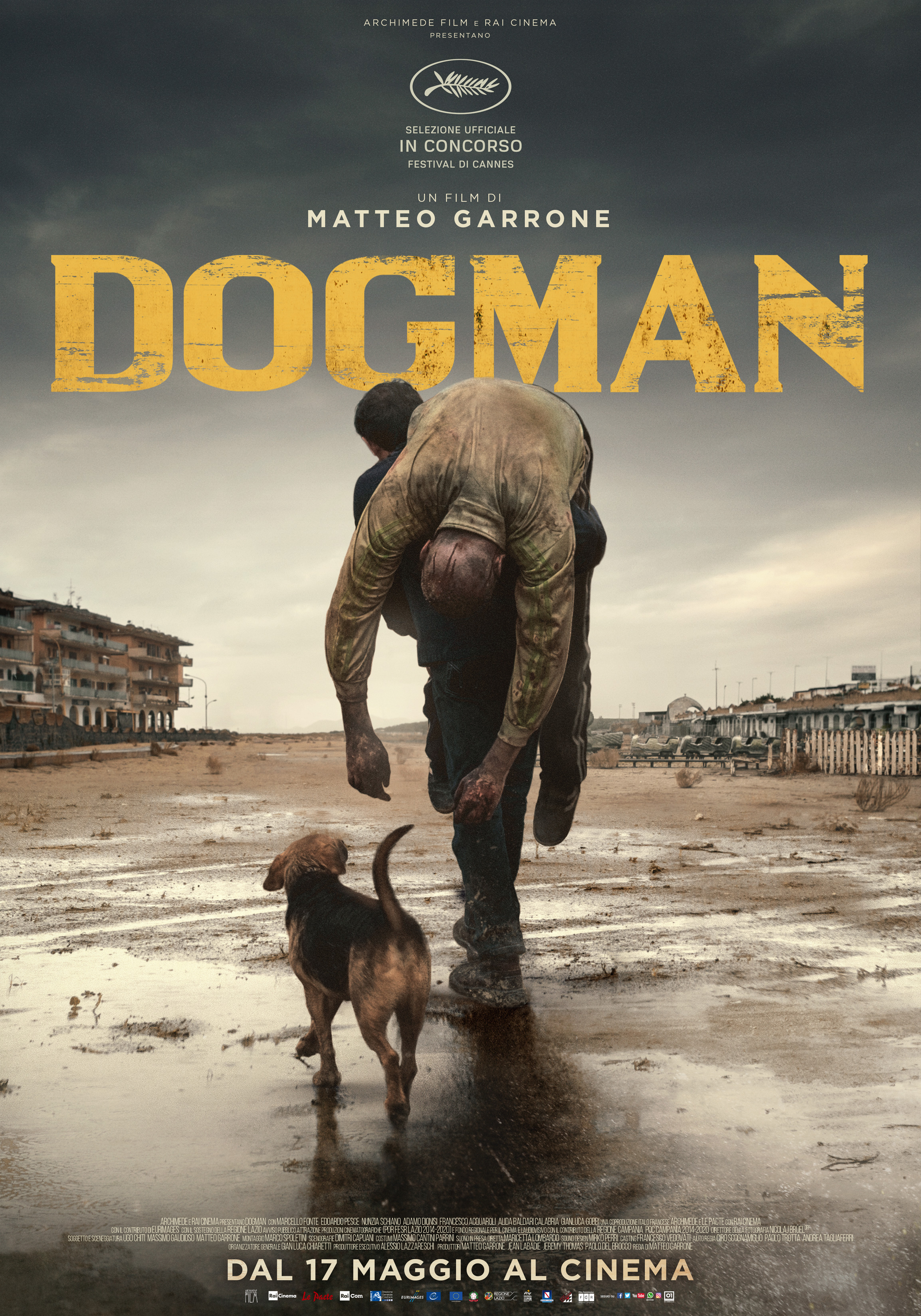
D: Matteo Garrone / 103m

Cast: Marcello Fonte, Edoardo Pesce, Nunzia Schiano, Adamo Dionisi, Francesco Acquaroli, Gianluca Gobbi, Alida Baldari Calabria, Laura Pizzirani, Giancarlo Porcacchia, Aniello Arena

In a rundown seaside resort during a miserable winter, Marcello (Fonte) makes a living as the local dog groomer. Operating out of a small shop that’s part of a small parade of other businesses, Marcello is a quiet, inoffensive man whose marriage has broken down, but who has a daughter, Alida (Calabria), who dotes on him. They go on expensive holidays together, which Marcello pays for by dealing cocaine on the side to his friends at the parade. But one local individual, Simone (Pesce), an intimidating and thuggish former boxer, takes advantage of Marcello’s timidity and never pays for his cocaine when he wants it. Marcello is further taken advantage of when Simone “persuades” him to be the getaway driver in a house robbery. Later still, Simone bullies Marcello into letting him have the keys to his shop so that Simone can break through the adjoining wall of the jewellers next door, and rob the place. Marcello is compromised by the robbery, and is arrested and then jailed when he says nothing about Simone’s involvement. But when he comes out, he goes looking for reparation…

As much a delicate character study as it is a bruising drama, Dogman is many things, but each aspect has been carefully melded to ensure that the whole is entirely effective, and the viewer is left with the sense that this is an entirely credible slice of life. Dealing with ideas related to loneliness, bullying, moral lethargy, and the modest aspirations of its main character, Garrone’s follow up to Tale of Tales (2015) is like gaining access to a world that we’ve heard about but never seen before, a world where a combination of weakness and strength is a vital component in the struggle to survive. Marcello is always deferring to others, even amongst the other shop owners who are ostensibly his friends, and outside of his relationship with Alida, he’s a loner who struggles to make himself stand out. His need for acceptance leads him to spend time with Simone, as if the two of them were friends, but so desperate is Marcello’s need to be included he allows himself to be patronised and exploited in equal measure. When he’s released from prison, there’s the initial impression that he’s toughened up, and to a degree he has, but as his pursuit of Simone and the restitution he feels is owing to him unfolds, it becomes clear that much of this change is only on the surface – and this leads to an uncomfortable, bittersweet ending.

Garrone has fashioned a tense, often unnerving movie that doesn’t shy away from portraying Marcello’s struggles against the backdrop of a demoralised seaside resort that has seen better days, and having the resort mirror the continual setbacks that Marcello endures. The only relief there is comes from beautifully lit underwater scenes where Marcello and Alida scuba dive on their holidays, a respite for both of them from the tawdry gloom of their home town. Garrone places these scenes carefully throughout the movie, but not to offer hope; instead they’re an acknowledgement of just how far Marcello is from those wondrous experiences. Fonte gives a subdued yet expressive performance, always apologetic, always nervous, never feeling at ease, and ready to excuse any inconvenience. It’s a subtle exercise in character building, with Fonte working from the inside out, and showing how Marcello’s innate passivity has fostered a kind of perverse self-preservation. As the hulking brute, Simone, Pesce is all blunt force and deliberate condescension, and he brings a cruel menace to his scenes with Fonte; you’re never quite sure what he’s going to do, but you do know that it won’t be pleasant. The relationship between Simone and Marcello is the unlikely focus of a movie that doesn’t believe in happy endings, and by showing how happy Marcello can be in this relationship, Garrone makes Marcello’s predicament a thing of undiluted tragedy.

Rating: 9/10 – sombre and unhesitatingly harsh, Dogman paints a bleak yet compelling portrait of moral and emotional ambiguity, and what some people will do to feel included; a standout performance from Fonte anchors a menacing script by Garrone and co-screenwriters Ugo Chiti and Massimo Gaudioso, and the whole thing benefits from superb work by DoP Nicolai Brüel that matches the darkness inherent both in the material, and the souls of its two main characters.
Share this:

  • Click to share on X (Opens in new window) X
  • Click to share on Facebook (Opens in new window) Facebook
  • More
  • Click to print (Opens in new window) Print
  • Click to email a link to a friend (Opens in new window) Email
Like Loading...

The Courageous Dr. Christian (1940)

05 Tuesday Feb 2019

Posted by dullwood68 in Movies

≈ Leave a comment

Tags

Bernard Vorhaus, Dorothy Lovett, Drama, Epidemic, Jean Hersholt, Review, River's End, Robert Baldwin, Series, Spinal meningitis, Squatters Town, Tom Neal

D: Bernard Vorhaus / 67m

Cast: Jean Hersholt, Dorothy Lovett, Robert Baldwin, Tom Neal, Maude Eburne, Vera Lewis, George Meader, Bobby Larson, Bobette Bentley

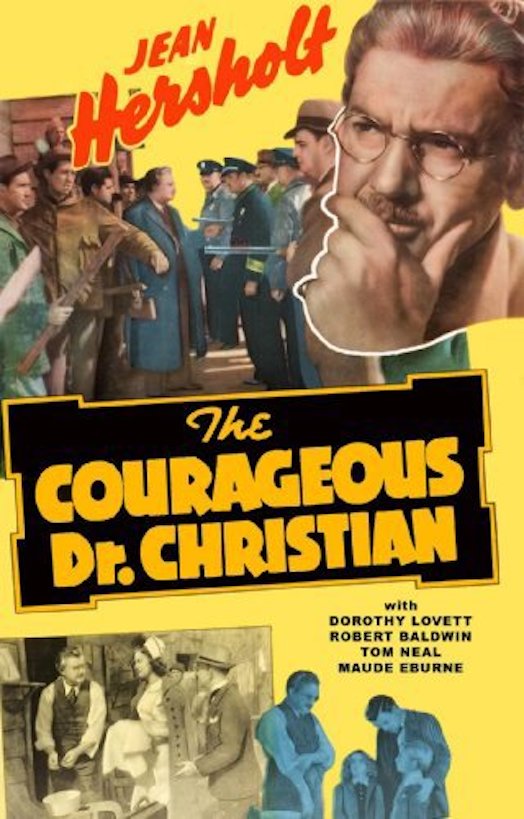
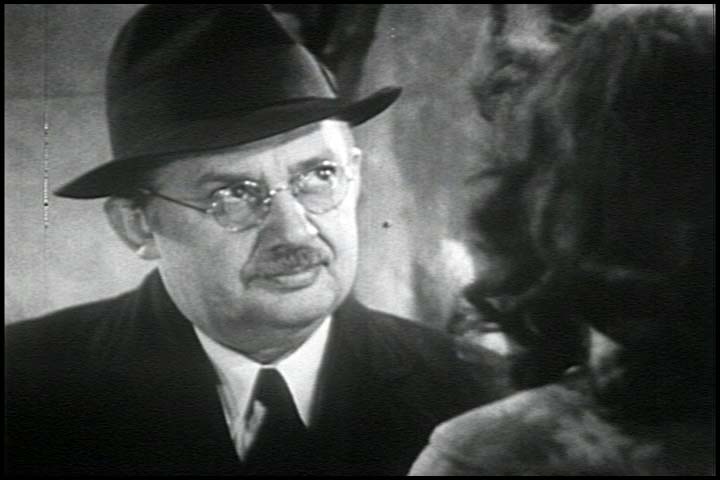
Outside of the small town of River’s End, lies an area of hardship and poverty called Squatters Town. With its people ignored by their more affluent neighbours, it’s only kindly local doctor, Paul Christian (Hersholt), who has any time for them. A visit to a sick girl at the site leads to Christian taking in a young man, Dave Williams (Neal), while his younger brother and sister (Larson, Bentley) are looked after by town matriarch, Norma Stewart (Lewis). Norma has a vacant lot in the centre of town that Christian thinks would be ideal as a new housing development for the people of Squatters Town to move into. He secures the deed to the land – at a personal price – but soon faces opposition from local businessman, Harry Johnson (Meader), and the town council. Dave takes matters into his own hands and gets everyone from Squatters Town to move onto the vacant lot. Johnson and his cronies on the council invoke a little known by-law, and arrange for the police to have everyone dispersed. But just as a violent confrontation seems inevitable, Dr Christian realises that the sick girl he treated before has spinal meningitis – and it’s highly contagious…

One of the benefits of watching old black and white movies from the Thirties and Forties, is the number of pleasant surprises you’re likely to come across, and often in the unlikeliest of places. Between 1939 and 1941, RKO made six movies based around the radio character, Dr Paul Christian. They were family friendly dramas with a recurrent streak of obvious, gentle humour, made quickly and cheaply, and featured Hersholt in the role he’d become famous for over the airwaves. The Courageous Dr. Christian was the second in the series, and is remarkable for the quality of its screenplay, which was written by Ring Lardner Jr and Ian McLellan Hunter. An original story, its depiction of the social and class divisions between the people of River’s End and Squatters Town, and the inequalities experienced by the latter (along with prejudice and blatant xenophobia), mark out the movie as something of a departure from the standard small town fables that the likes of Andy Hardy were focused on. Here the movie has a clear message about tolerance and the true meaning of community spirit. There are differences on either side – Dave is just as contemptuous of the people in River’s End, as George Johnson is of Dave and his fellow Squatters Town inhabitants. How then to bring them all together?

An outbreak of spinal meningitis might not be the most obvious motivator for public and personal contrition, and Lardner Jr and Hunter aren’t about to lather on the altruism (one couple decide to donate their blankets – because they need new ones anyway), but their screenplay is sharper than this kind of movie usually deserves, and the characters all appear to have inner lives, something that is also unusual. Even the likes of Roy (Baldwin), drug store owner and the series’ romantic stooge, comes across as more rounded and capable of surprising the viewer than he does in all the other entries. With the cast given more to bite into, and the humour (a necessary component of the material) arising from the drama instead of sitting alongside it, the movie exerts a more compelling interest than expected, and offers director Bernard Vorhaus a chance to show just why he was a mentor to David Lean; his approach to the material is intelligent, sincere, and unforgiving of the prejudice shown by both sides. There’s good camera work by John Alton, and a score by William Lava that knows when to throw off the small town whimsy, and engage in more serious motifs. Hersholt impresses as always in the role he’d made his own (and which has never been played by anyone else), and there’s sterling support from Lewis and Meader, stalwarts at this kind of thing, and exactly the kind of familiar faces that you know will do the whole thing the justice it deserves.

Rating: 8/10 – an above average entry in a series that never again attained the heights it does here, The Courageous Dr. Christian is proof positive that “old, low budget, and black and white” doesn’t have to mean a poor quality experience; entertaining and thoughtful at the same time, it’s well worth seeking out as a simpler and more effective alternative to what passes for small town drama in the 21st century.

NOTE: It may not come as a surprise, but there’s no available trailer for The Courageous Dr. Christian.

Share this:

  • Click to share on X (Opens in new window) X
  • Click to share on Facebook (Opens in new window) Facebook
  • More
  • Click to print (Opens in new window) Print
  • Click to email a link to a friend (Opens in new window) Email
Like Loading...

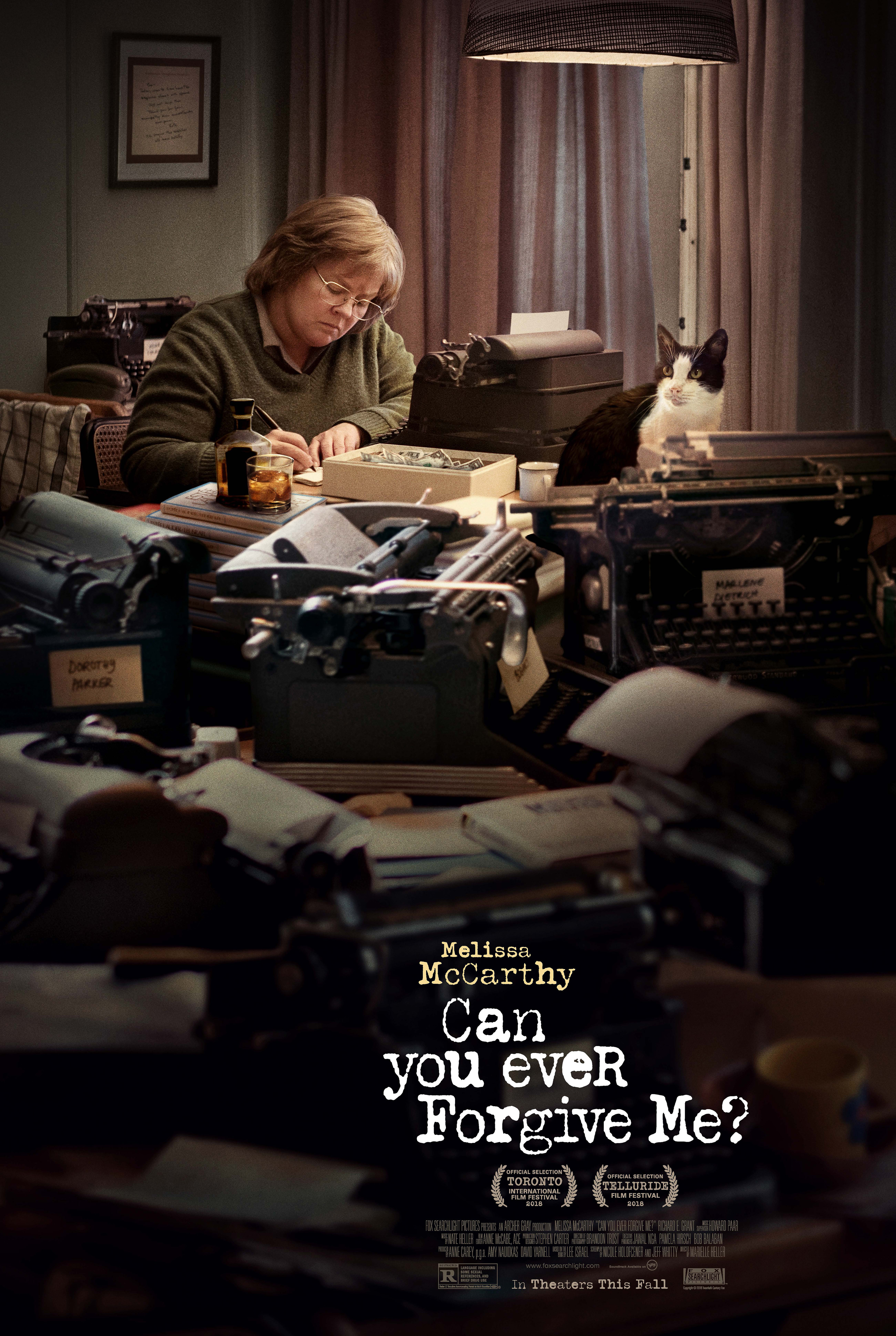
Can You Ever Forgive Me? (2018)

04 Monday Feb 2019

Posted by dullwood68 in Movies

≈ Leave a comment

Tags

Biography, Comedy, Dolly Wells, Drama, Lee Israel, Literary adaptation, Literary forgeries, Marielle Heller, Melissa McCarthy, Review, Richard E. Grant, True story

D: Marielle Heller / 106m

Cast: Melissa McCarthy, Richard E. Grant, Dolly Wells, Ben Falcone, Gregory Korostishevsky, Jane Curtin, Stephen Spinella, Christian Navarro, Anna Deveare Smith

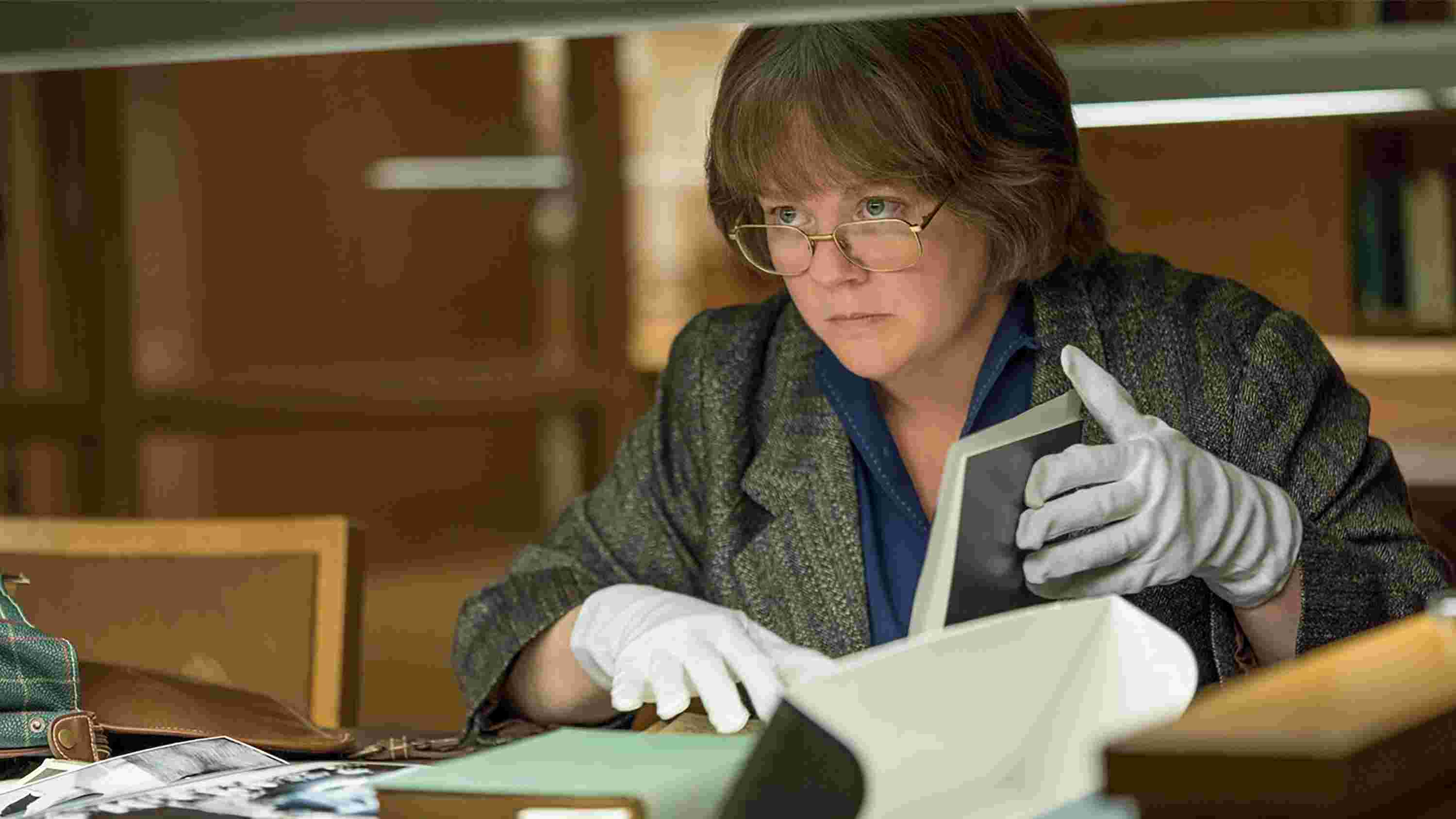
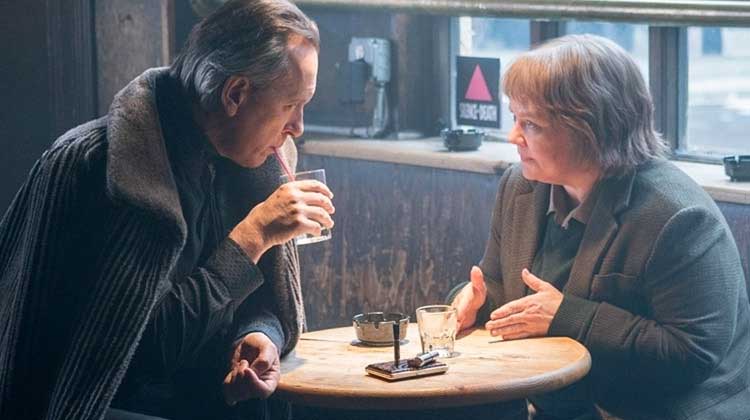
New York, 1991. Author Lee Israel (McCarthy) is struggling with a combination of writer’s block, alcoholism, and financial troubles. Her last book wasn’t well received, and her agent (Curtin) is unable to get her an advance for her latest project, a biography of Fanny Brice. In order to make ends meet, Lee sells a letter she received from Katharine Hepburn to a local bookseller, Anna (Wells). Anna’s chance remark that she would have paid more for “better content”, allied with the discovery of a letter by Brice while doing research, leads Lee to forging and selling letters by well known literary figures. She’s successful at first, but in time suspicions are raised, and Lee is blacklisted. To combat this, Lee enlists the aid of her friend, Jack Hock (Grant), an aging British actor who is as much down on his luck as she is. But though he too is initially successful at selling Lee’s forgeries, it’s not long before she becomes aware that the FBI is involved, and actively talking to the people she’s sold to. And then Jack is arrested…

What would you do to maintain your fame and (minor) fortune? How far would you go to retain the idea that your work is still relevant when the evidence points otherwise? And how would you go about it without jeopardising what little respect you still have amongst your peers? These are all questions asked by Can You Ever Forgive Me?, a sobering yet archly humorous exploration of the ways in which bitterness and a misplaced sense of entitlement can lead someone to abandon their principles in pretty much a heartbeat. What makes Lee’s fall from grace so ironic is that she was arguably more successful as a forger than she was as a legitimate writer. It’s another aspect of the cautionary tale that made up most of Lee’s later life that the screenplay – by Nicole Holofcener and Jeff Whitty – correctly focuses on. With its bittersweet coda, that sees one of Lee’s forgeries regarded as real (and priced accordingly), there’s an argument that what she did was her best work of all, and she herself would have probably agreed (at her trial, she relays the fact that her time spent forging literary letters was the best time of her life). Was she aware of this while she wrote them? It’s possible, and if she did, it goes some way to answering a good number of the questions the movie raises about her.

In raising these kinds of questions, the movie is helped immensely by the performance of Melissa McCarthy. An actress who is in many ways hampered by her comedy persona, McCarthy is a revelation here, unlikeable yet likeably tenacious, arrogant yet without cause, and undermined by her own insecurities. It’s a tremendous portrayal that allows Lee to appear vulnerable, and unerringly caustic at the same time, while giving McCarthy her best role so far (and one that enables us to forget her other two movies of 2018, Life of the Party and The Happytime Murders). Partnered with an equally unforgettable performance from Richard E. Grant – the relish with which he tackles his role is infectious; no wonder he’s already won eighteen awards – McCarthy channels unexpected depths as Lee, and makes her more than just a hack with a drink problem and a (deliberate) shortage of friends. If the movie does Lee any kind of injustice, it’s in distancing itself from her being a lesbian, something that’s awkwardly, and unconvincingly, addressed through a tentative friendship with Anna. Otherwise, this is a tremendously unfashionable biopic about an unhappy, disreputable woman (and her equally disreputable sidekick) who seek to repair their fragile egos through lying to others, and themselves.

Rating: 8/10 – with a transformative performance from McCarthy, and astute, carefully layered direction from first-timer Heller, Can You Ever Forgive Me? is a dark comedy that touches on some very serious topics while daring the viewer to like its main character; fascinating and smartly handled, it’s a movie you feel the real Lee Israel would have been happy with, as long as she got the right credit.

Share this:

  • Click to share on X (Opens in new window) X
  • Click to share on Facebook (Opens in new window) Facebook
  • More
  • Click to print (Opens in new window) Print
  • Click to email a link to a friend (Opens in new window) Email
Like Loading...

Under the Tree (2017)

03 Sunday Feb 2019

Posted by dullwood68 in Movies

≈ Leave a comment

Tags

Þorsteinn Bachmann, Black comedy, Drama, Edda Björgvinsdóttir, Hafsteinn Gunnar Sigurðsson, Iceland, Neighbours, Review, Selma Björnsdóttir, Sigurður Sigurjónsson, Unhappy marriage

Original title: Undir Trénu

D: Hafsteinn Gunnar Sigurðsson / 89m

Cast: Steinþór Hróar Steinþórsson, Edda Björgvinsdóttir, Sigurður Sigurjónsson, Þorsteinn Bachmann, Selma Björnsdóttir, Lára Jóhanna Jónsdóttir, Dóra Jóhannsdóttir, Sigrídur Sigurpálsdóttir Scheving

Inga (Björgvinsdóttir) and Baldvin (Sigurjónsson) are an elderly couple who live next door to Konrad (Bachmann) and his second wife, Eybjorg (Björnsdóttir). The two couples get on for the most part, but there is a large tree in Inga and Baldvin’s garden that blocks out much of the light when Eybjorg uses their sun deck. This bone of contention has been raised once or twice, but Inga is determined that the tree will remain as it is. Meanwhile, her son Atli (Steinþórsson), has been kicked out by his wife, Agnes (Jónsdóttir), and has come back home while he tries to put things right between them. When all the tires of Baldvin’s car are slashed, and then Inga’s cat goes missing, these events trigger a further string of occurrences that threaten to – and then do – spiral out of control. Atli goes about reconnecting with Agnes in ways that serve only to antagonise her further, and which also have an effect on their young daughter, Asa (Scheving), and relations between the two sets of neighbours deteriorates to the point where tragedy and violence ensues…

In this pitch black comedy from Iceland, the opening scenes set the tone for the rest of the movie, with Atli caught masturbating to a sex tape he made with someone he knew before meeting Agnes. As awkward moments go, it’s pretty awkward, and there are many more to enjoy as the movie progresses, with each character either the victim of something horrible, or being the catalyst or instigator of something horrible. What’s clever though about the set up by writer/director Hafsteinn Gunnar Sigurðsson is the way in which he escalates matters between the two sets of neighbours, but without showing us if any of them really are responsible for, say, four slashed tyres, or the disappearance of a cat. This ambiguity hints at the possibility of a third party being involved, but again, Sigurðsson offers no clues as to this third party’s identity, and so the cycle of revenge plays out with a high degree of angry absurdity, as each couple blames the other for their woes. Tit for tat gives way to targeted, violent (even criminal) behaviour, until tragedy is compounded by further tragedy, and the original disagreement seems petty and inconsequential. Sigurðsson acknowledges what we all know to be true: all’s fair in hate and war.

Sigurðsson also isn’t afraid to make some of his characters unlikeable, or in Inga’s case, downright horrid. With a caustic tongue and a mind that’s been warped by grief – her other son, Uggi, has disappeared and is presumed dead, though no body has been found – Inga is played with angry gusto by Björgvinsdöttir, and it’s she who provides the movie with its most awful moment as the disappearance of her cat causes her to do something so terrible you can’t stop thinking about it after the movie has ended. That it also sets up one of the funniest moments in the movie is a tribute to the care with which Sigurðsson has crafted his narrative. But though the humour is as dark as it can be, this is ultimately a movie about loss, and the things people will do to avoid dealing with it. Inga hasn’t dealt with the loss of her son (Baldvin states at one point that it perhaps would have been better if Uggi had died in front of her), while Atli is struggling to come to terms with losing his family through his own stupidity, and Eybjorg is scared of losing altogether the chance of becoming a mother. Driven by these fears, and the grief that comes with them, each character fights their own corner, but without the understanding that their feelings aren’t exclusive, or that by concentrating only on themselves, that the tragedy stalking all of them will happen all the sooner.

Rating: 8/10 – with terrific performances from all concerned, and a grim, relentless intensity to the material, Under the Tree is impressively detailed when it comes to the various ways in which people rush to ensure that revenge can be eagerly justified – if only to themselves; unsparing and cruel in places, but fiercely intelligent and with a small measure of optimism to cling on to, it’s a movie that doesn’t pander to its audience, or offer them an easy way out from all the suffering of its characters.
Share this:

  • Click to share on X (Opens in new window) X
  • Click to share on Facebook (Opens in new window) Facebook
  • More
  • Click to print (Opens in new window) Print
  • Click to email a link to a friend (Opens in new window) Email
Like Loading...

The Mule (2018)

31 Thursday Jan 2019

Posted by dullwood68 in Movies

≈ 1 Comment

Tags

Bradley Cooper, Clint Eastwood, DEA, Dianne Wiest, Drama, Drugs cartel, Horticulturalist, Laurence Fishburne, Michael Peña, Octogenarian, Review, True story

D: Clint Eastwood, Bradley Cooper, Laurence Fishburne, Michael Peña, Dianne Wiest, Ignacio Serricchio, Andy Garcia, Taissa Farmiga, Alison Eastwood, Eugene Cordero, Clifton Collins Jr

In 2005, Earl Stone (Eastwood) is a thriving and award-winning horticulturalist whose commitment to his work life has left him estranged from his family. Twelve years later, Earl’s business has failed, his home is on the verge of being repossessed, and his appearance at the engagement party of his granddaughter, Ginny (Farmiga), leaves him in no doubt that he still has a long way to go in making amends. But a surprise suggestion by one of the guests at the party – that he accept a job just “driving” for some people the guest knows – leads Earl to working for a group of Mexicans who he comes to realise are part of a drugs cartel. His job is to transport cocaine across country, and he’s well paid for his time and effort. Earl uses the money to help his local community, and his family, while becoming the most successful drug mule in the cartel’s history. But the DEA, in the form of agent Colin Bates (Cooper), soon learns of Earl’s existence, and they become determined to catch him. With the cartel shadowing him on one side, and the DEA chasing him on the other, Earl finds himself in an untenable position…

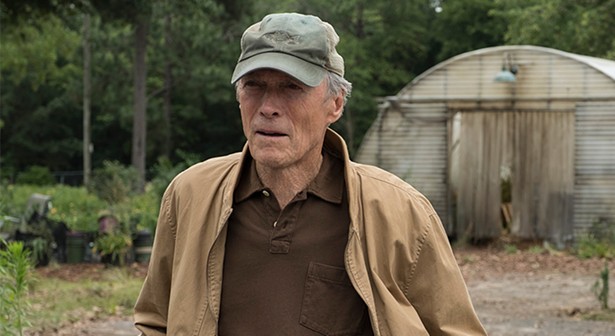
Making his first appearance in front of the camera since Trouble With the Curve (2012), here Clint Eastwood reminds us that when you need a grizzled old-timer who has to be both charming and stubborn – fractious, if you like – then there’s no better choice than the former Man With No Name. Based on the real life story of octogenarian Leo Sharp, who eluded capture by the authorities for over ten years, The Mule is an enjoyable, if rickety, drama that relies heavily on Eastwood’s presence, and which treats its subject matter with a lightness of touch that should feel alarming. But thanks to Eastwood’s performance, and a great deal of goodwill garnered by his direction of Nick Schenk’s uneven screenplay, the movie plays like a strange wish fulfillment fantasy where someone can be part of a drugs cartel and still be considered a “good guy”. The script has Earl behaving like Robin Hood, using his new-found wealth to help others, while avoiding any suggestion that his impaired morality is in any way wrong. And yet, when you have your main character flying down to Mexico to meet his employer (Garcia), and embracing the lifestyle (and the women; this sees Eastwood get more “action” than in all his other movies combined), it’s hard to accept the movie’s own compromised attitude.

It’s this inability to make a firm decision about Earl’s status – is he an anti-hero or not? – that stops the movie from plumbing any depths that can’t be called superficial. There’s no sense of threat here either, with Earl ignoring repeated instructions and threats from the cartel and being let off the hook time and time again. And inevitably, Earl reunites with his family as a reward for his criminal endeavours. Through it all, Eastwood gives one of his best performances, elevating the material and showing the likes of Cooper (all starch and buttoned-down restraint) and Peña (in another sidekick role) how to maximise an under-written character to good effect. On the plus side, Yves Bélanger’s romanticised cinematography adds a layer of nostalgia to proceedings, harking back to a time when the likes of Earl were straightforward heroes (he’s a Korean War veteran), and running drugs would have been impossible to even imagine. And though the humour can sometimes be misplaced or inappropriate – Earl’s casual racism is awkwardly handled throughout – there are laughs to be had, and the movie’s genial attitude is appealing. It’s not a  bad movie per se, and Eastwood is the reason why, but it’s not quite so good that it deserves anything more than average praise.

Rating: 6/10 – whimsical and unpretentious, The Mule is a lightweight offering from the veteran actor/director that lacks some much needed grit, and which opts for enforced poignancy as a substitute; the supporting cast aren’t allowed to do much, and there are stretches where the movie coasts along happily, but to no great effect, all of which adds up to a pleasant but unremarkable experience that fails to make a lasting impact.

Share this:

  • Click to share on X (Opens in new window) X
  • Click to share on Facebook (Opens in new window) Facebook
  • More
  • Click to print (Opens in new window) Print
  • Click to email a link to a friend (Opens in new window) Email
Like Loading...

At Eternity’s Gate (2018)

30 Wednesday Jan 2019

Posted by dullwood68 in Movies

≈ Leave a comment

Tags

Arles, Biography, Drama, France, Julian Schnabel, Oscar Isaac, Painting, Review, Rupert Friend, Vincent Van Gogh, Willem Dafoe

D: Julian Schnabel / 111m

Cast: Willem Dafoe, Rupert Friend, Oscar Isaac, Mads Mikkelsen, Mathieu Amalric, Emmanuelle Seigner, Neils Arestrup, Anne Consigny, Amira Casar, Vincent Perez

In 1888, and with his work not gaining the attention he feels it deserves, Dutch painter Vincent van Gogh (Dafoe) decides to leave Paris for the rural town of Arles, where he can sketch and paint without all the distractions of city life to hinder him. Backed by his brother, Theo (Friend), Vincent lives in the Yellow House, and soon begins producing a prodigious amount of work. An extended stay by Paul Gauguin (Isaac) is, at first, welcomed by Vincent, but it soon becomes clear that the two men have very different ideas about art, and that the friendship Vincent is looking for – along with Gauguin’s respect – isn’t going to develop. Eventually, Gauguin leaves, and in a fugue state, Vincent severs his left ear. Now more isolated than ever, Vincent spends time being assessed as to the suitability of his being released from hospital, and though his behaviour, and the possibility of more manic episodes can’t be dismissed, he appears rational enough to return to Arles. But Vincent is still plagued by doubts and worries, and he eventually moves to Auvers-sur-Oise, where a tragic fate awaits him…

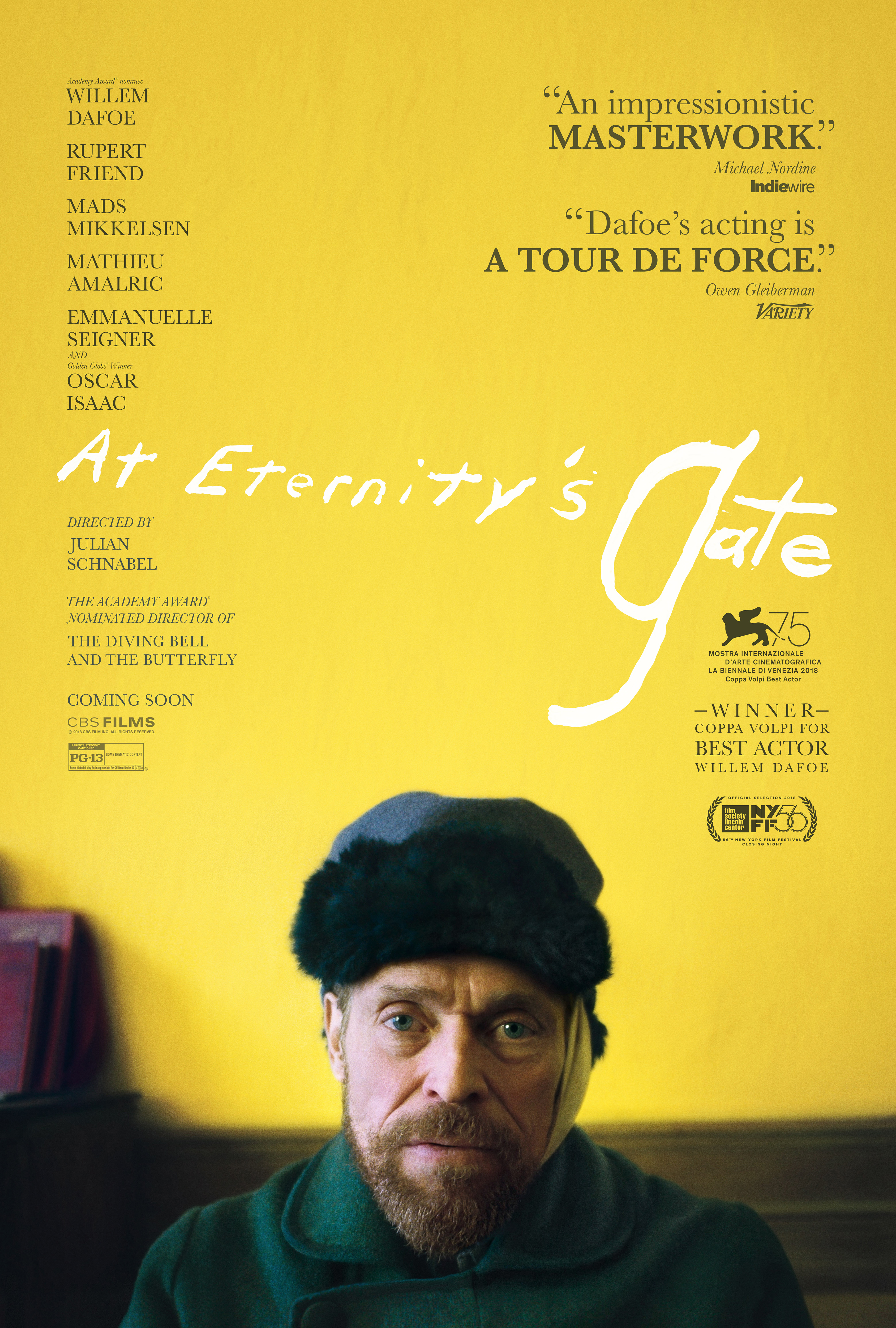
Covering the last two years of van Gogh’s life, At Eternity’s Gate (the title is taken from a painting the artist made during his last year) is not your average portrait of a suffering, unappreciated artist. Instead it’s a movie that does its best to make the viewer understand the depth of van Gogh’s passion for painting, and which does so thanks to a combination of Benoît Delhomme’s glorious cinematography, and director (and co-screenwriter with Jean-Claude Carrière and Louise Kugelberg) Julian Schnabel’s own artistic sensibilities. Here, the viewer is allowed to immserse themselves in the details of van Gogh’s paintings and sketches, and to gain a sense of the passion that drove van Gogh to create such a unique body of work. Whether it’s a still life, or a landscape, van Gogh’s commitment and drive is readily apparent, and Schnabel uses a number of visual and aural tricks to help us get inside the head of a man who wasn’t always comfortable with his own thoughts. This makes our engagement with van Gogh a little intrusive but also highly instructive: he’s a man tormented by his personal demons, but also an artistic genius because of them.

Van Gogh is played with a masterly brio by Dafoe, the actor displaying a rare skill in inhabiting the character, and in doing so, bringing him to life in ways that are surprising and profound. It’s as if Dafoe has found a way of channelling van Gogh’s own spirit and energy (and his mania), and as a result, it’s a performance that is often mesmerising for its empathy and understanding of just how tortured and driven van Gogh was. Dafoe is ably supported by Friend and Isaac, and there’s a tremendous supporting turn from Mikkelsen as the priest who gets to decide if van Gogh can be released from hospital (their one scene together is the movie’s highlight), but even with all these pin sharp interpretations, it’s Schnabel’s distinctive handling of the material that stands out the most. This is Schnabel’s own idea as to how van Gogh existed in the last two years of his life, and though it’s based on fact, the movie remains an imagining, an artistic depiction of how Schnabel views the van Gogh of that period – just as van Gogh depicted what he saw and made it his own. Often very, very beautiful to watch, and with much to say about the nature of art and its relation to us as individuals, this is easily Schnabel’s best movie since The Diving Bell and the Butterfly (2007), and a fitting tribute to van Gogh and his work.

Rating: 9/10 – with a peerless performance from Dafoe, and Schnabel providing a masterclass in how to depict artistic expression on film, At Eternity’s Gate is a small miracle of arthouse movie making; moving and sincere, it’s the kind of endeavour that will always struggle to reach a wider audience, but for those who are willing to give it a try, it’s one of the most rewarding movies of 2018.

Share this:

  • Click to share on X (Opens in new window) X
  • Click to share on Facebook (Opens in new window) Facebook
  • More
  • Click to print (Opens in new window) Print
  • Click to email a link to a friend (Opens in new window) Email
Like Loading...

Mary Queen of Scots (2018)

29 Tuesday Jan 2019

Posted by dullwood68 in Movies

≈ Leave a comment

Tags

Drama, Elizabeth I, Guy Pearce, History, Jack Lowden, Joe Alwyn, Josie Rourke, Margot Robbie, Review, Saoirse Ronan, Scotland, True story

D: Josie Rourke / 124m

Cast: Saoirse Ronan, Margot Robbie, Jack Lowden, Joe Alwyn, Guy Pearce, Adrian Lester, Martin Compston, Ian Hart, James McArdle, David Tennant, Gemma Chan, Ismael Cruz Cordova, Brendan Coyle

Scotland, 1561. Following the death of her French husband, Mary Stuart (Ronan) returns to take up her rightful place as Queen. Her return is viewed with dismay and suspicion by the English court, as Mary has a claim to the English throne should Elizabeth I (Robbie) die without issue. Elizabeth suggests that Mary wed an Englishman, Robert Dudley (Alwyn), and despite Dudley being her lover. Aware that this is a ploy designed to weaken her claim, Mary agrees on one condition: that she be named heir to the throne. With Elizabeth unwilling to consent to this, she sends Henry Darnley (Lowden) to infiltrate Mary’s court, but Mary and Henry fall in love and marry. In time, Mary gives birth to a son, James, but political intrigue sees her own half-brother, the earl of Moray (McArdle) mount an insurgency against her. She quashes this, but further unrest is whipped up by militant preacher John Knox (Tennant), and Mary finds herself being forced to abdicate when James is taken from her by her former protector, Lord Bothwell (Compston). She flees to England, where she seeks help from Elizabeth…

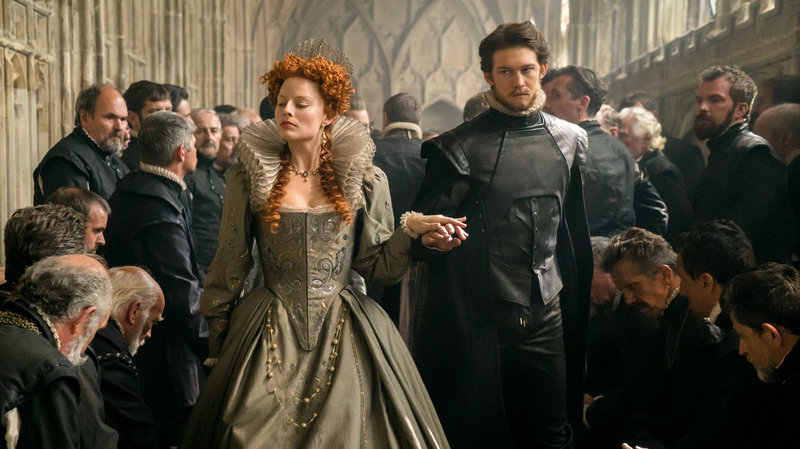
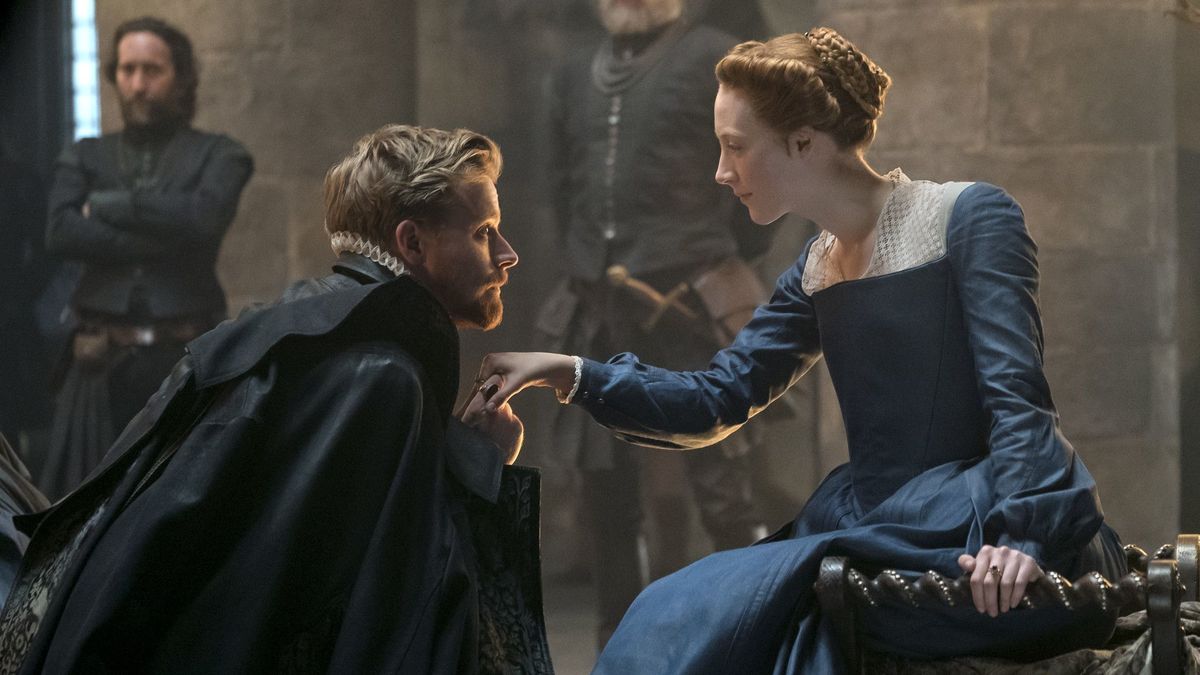
If you have a keen interest in Scottish history, and in Mary Stuart in particular, you might be perplexed by some of the “revelations” that Mary Queen of Scots includes as part of its adaptation of the book Queen of Scots: The True Life of Mary Stuart by John Guy. For instance, who knew that Henry Darnley and David Rizzio (Cordova), Mary’s “gay friend” (in reality her private secretary) slept together shortly after Mary and Henry were married? (That’s a rhetorical question.) It’s one of many historical inaccuracies and inventions that the movie comes up with to heighten the drama, as if the real story wasn’t exciting or dramatic enough. Also, the action takes place over twenty-six years, from Mary’s return to Scotland, to her execution in 1887. Not that you’d necessarily realise this as the movie appears to take place in a timeless period where no one ages, and plot developments come so thick and fast, that by the time you’ve absorbed one, two more have already gone by. With so much to cram in in two hours, Beau Willimon’s screenplay can only act as a yardstick for excessive historical exposition. But conversely, the movie is strangely reticent when it really matters, such as when Mary pardons Moray and others for their part in the insurgency, leaving the viewer to wonder if they really have missed something.

As the movie progresses, it becomes less and less involving, and less and less impactful, as all efforts to make Mary’s plight appear tragic slowly evaporate, and the narrative trundles on from one historical action point to the next with all the energy of someone trudging through treacle. First time director Josie Rourke, whose background is in theatre, does elicit two compelling performances from Ronan and Robbie, but hasn’t adapted her talents to meet the needs of her movie, and the result is a patchwork of disparate scenes that don’t always allow for a consistent narrative, or characterisations (Bothwell’s change of conscience is particularly troubling). But this is first and foremost a movie that affords Ronan and Robbie the opportunity to reveal just why they are two of the best actresses working today. Ronan is appropriately fiery as Mary, passionate and determined, but unable to combat the forces that lead her to tragedy. Good as Ronan is, though, Robbie is superb as Elizabeth, making her a tragic figure who knows what must be done to protect her kingdom, but whose conscience leaves her feeling sad and isolated. There’s good support too from Pearce and McArdle, and the sets and costumes are a highlight, but ultimately, this is a movie for those who don’t mind if their history lessons are compromised from start to finish.

Rating: 5/10 – coming away from Mary Queen of Scots, the realisation soon sinks in that as a retelling of tumultous events and times in Scotland’s history, it’s not as robust as it needs to be, or as insightful; inevitably, it’s the modernism that lets it down, with Willimon’s script making a bad hash of trying to make the movie feel relevant to today’s feminist outlook, but worse than that, it just doesn’t hold the interest in a way that would make it more compelling.

Share this:

  • Click to share on X (Opens in new window) X
  • Click to share on Facebook (Opens in new window) Facebook
  • More
  • Click to print (Opens in new window) Print
  • Click to email a link to a friend (Opens in new window) Email
Like Loading...

Jonathan (2018)

28 Monday Jan 2019

Posted by dullwood68 in Movies

≈ Leave a comment

Tags

12 hours, Ansel Elgort, Bill Oliver, Brothers, Drama, One body, Patricia Clarkson, Review, Romance, Sci-fi, Suki Waterhouse

aka Duplicate

D: Bill Oliver / 101m

Cast: Ansel Elgort, Suki Waterhouse, Patricia Clarkson, Douglas Hodge, Matt Bomer, Souleymane Sy Savane, Shunori Ramanathan, Joe Egender, Ian Unterman

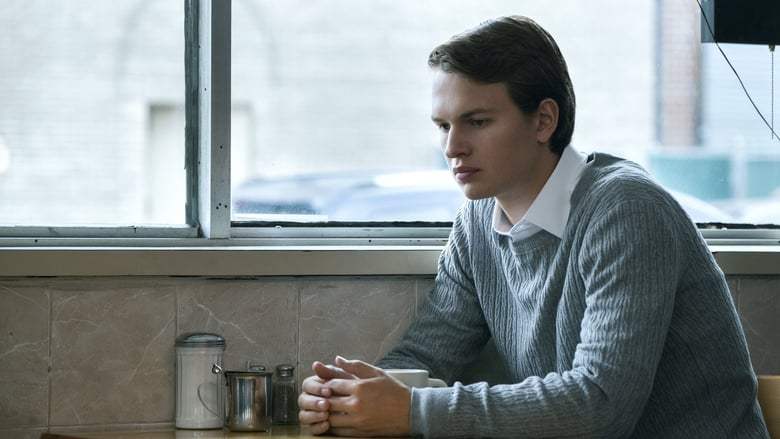
For Jonathan (Elgort), life is lived in just twelve hours every day, from 7am to 7pm. During that time he works and sleeps and and exercises and takes care of his apartment, the one he shares with his brother, John (Elgort). John’s life unfolds between 7pm and 7am, and he has a similar routine. But their relationship isn’t exactly like that of other brothers, because Jonathan and John inhabit the same body. They are two distinct personalities, able to live their separate lives thanks to the intervention when they were children, of Dr Mina Nariman (Clarkson). Using technology to keep both identities in their own daily “time zones”, the pair communicate through video messages, thus ensuring that their lives don’t overlap. But when Jonathan starts to notice a difference in John’s behaviour, he becomes curious and hires a private detective (Unterman) to check on John’s movements. Jonathan discovers that John has a girlfriend, Elena (Waterhouse), a relationship that both have agreed not to have because of the difficulties involved. When Jonathan’s involvement causes the relationship to end, John refuses to communicate with him, which leads Jonathan into doing two things he’s never done before: explaining their condition to Elena, and falling in love with her…

How well do we know our siblings? How confidently can we say that we know what they would do or how they would react in any given situation? And how much more difficult would that be to judge if you’ve never met that sibling in person? In Bill Oliver’s debut feature, questions of identity are clearly to the fore, but more than whether you can truly know someone through the medium of video messages takes a back seat to the question of how well you can know yourself in those circumstances. It’s an intriguing idea, and Oliver, along with co-screenwriters Peter Nickowitz and Gregory Davis, spends much of Jonathan‘s running time exploring the tilte character’s personality and how it responds when the ordered world it exists in is threatened. Jonathan’s life is governed by rules and responsibility, and his lifestyle is one that he has embraced wholeheartedly because it keeps him safe. John is more outgoing, more likely to indulge himself or be spontaneous, things that Jonathan would never dream of doing. So when John’s relationship with Elena is revealed, it sends Jonathan into a tailspin that, ironically, has him behaving in similar ways to his brother. And in exactly the same way that John kept Elena’s existence a secret from Jonathan, so too does Jonathan keep his relationship with her secret from John.

All of this has inevitable consequences, and as the movie plays out, Oliver adds a fine layer of foreboding to the narrative, as Jonathan becomes ever more confused and afraid of where his new-found feelings will take him. In the title role (and the supporting one), Elgort gives perhaps his best performance so far, tightly wound as Jonathan and unravelling faster and faster as the movie goes on, his initially placid features and economy of movement giving way to expressions of muted horror and staccato bursts of physical energy. There’s also an emotional depth to Elgort’s portrayal that highlights Jonathan’s dependence on his brother, and which is allowed more and more expression as he struggles to understand what’s happening to him. Oliver keeps the sci-fi elements deliberately low-key, preferring instead to focus on the brothers’ relationship, while also affording time to explore Elena’s reaction to her involvement in a unique ménage à trois, and the motherly affections and attentions of Dr Nariman. As the latter, Clarkson brings further gravitas to the material, while Waterhouse brings a much needed looseness to her character that offsets the serious nature of the other performances. With Oliver opting for a restrained, observational feel to much of the material, it’s not entirely engaging, and there is the sense that we’re looking at a lab rat navigating a maze that doesn’t have an exit, but when Elgort is struggling for a clarity that he just can’t grasp, the movie becomes poignant and more than a little bittersweet.

Rating: 8/10 – a polished, thought-provoking drama with an impressive central performance from Ansel Elgort, Jonathan is a low budget indie movie with lofty ambitions that it can’t always attain, but which has a sense of purpose about it that helps it through some of the rougher parts of the script; a neat idea that could have been expanded further, it succeeds thanks to the wise decision not to Hollywood-ise either its romantic elements, or the dramatic nature of Jonathan’s emotional turmoil.

Share this:

  • Click to share on X (Opens in new window) X
  • Click to share on Facebook (Opens in new window) Facebook
  • More
  • Click to print (Opens in new window) Print
  • Click to email a link to a friend (Opens in new window) Email
Like Loading...

Destroyer (2018)

27 Sunday Jan 2019

Posted by dullwood68 in Movies

≈ Leave a comment

Tags

Bank robbery, Crime, Drama, Karyn Kusama, Los Angeles, Nicole Kidman, Review, Sebastian Stan, Tatiana Maslany, Thriller, Toby Kebbell, Undercover

D: Karyn Kusama / 121m

Cast: Nicole Kidman, Toby Kebbell, Tatiana Maslany, Sebastian Stan, Scoot McNairy, Bradley Whitford, Toby Huss, James Jordan, Beau Knapp, Jade Pettyjohn, Shamier Anderson, Zach Villa

Seventeen years after an undercover operation in which she was involved went badly wrong, leaving her partner, Chris (Stan), dead, and the head of the gang they’d infiltrated, Silas (Kebbell), vanished along with most of the rest of his gang, LAPD detective Erin Bell (Kidman) learns that Silas is back. She receives a dye-stained $100 bill in the mail that can only have come from Silas, and which relates to the bank robbery that his gang carried out, and which saw Chris killed. Determined to make up for not being able to save her partner, Erin decides to track down the other members of Silas’s enclave, beginning with Toby (Jordan), who leads her to Arturo (Villa), who in turn leads her to a shady lawyer called DiFranco (Whitford). After some “persuasion”, DiFranco confirms that he makes monthly payments to Silas via Silas’ girlfriend, Petra (Maslany). At the next drop off, Erin follows Petra to her home. The next morning, Petra meets up with five men, one of whom could be Silas. But there’s a snag: when Erin sees them meet up, it’s just before they attempt to carry out another bank robbery…

A tense, riveting thriller, Destroyer is also a tough, uncompromising, and visceral crime drama, where almost all of its characters exhibit shifting moral perspectives, and notions of right and wrong are deliberately occluded. It’s hard to think of a recent movie that has been as deliberately and purposefully gruelling as this one, and it’s hard to think of another recent movie that has painted such a bleak portrait of human behaviour. This is not a movie where good fights evil and emerges triumphant. Instead, good takes an early retirement, and bad flourishes in its place. The nominal heroine, Erin is so plagued and consumed by her demons that even when she tries to do the right thing, it’s no good because she’s fatally compromised from the word go. Her motive for catching Silas – Chris’s death – may be the nearest thing to pure that the movie can come up with, but even that reason is revealed to be dubious at best and self-serving at worst. Erin is damaged in ways that even she doesn’t fully comprehend, and she moves forward like a shark, refusing to let anyone stop her. She avoids her colleagues and her superiors, bullies, threatens and cajoles (and in one scene, gives a handjob to) Silas’s accomplices, and retaliates in kind when she’s violently assaulted. It’s tempting to nickname Erin Dirty Harriet, but even that wouldn’t cover the psychological damage that she has failed to deal with over the past seventeen years.

Of course, all this is brought to vivid and impressive life thanks to an incredible peformance from Kidman. With her blank stare and ravaged, withdrawal-like features, she’s impossible to look away from. A physical and emotional mess, it’s only Erin’s recollections of the undercover operation that allow us to see her when she had ambition and hope for the future. As these recollections unfold we see the circumstances that have led her to her current situation: alone, unhappy, and at odds with her teenage daughter, Shelby (Pettyjohn). Spiralling ever further down the rabbit hole, Erin looks to make amends for her past, but she’s a doomed soul, and redemption is frustratingly out of reach. Kusama, making only her fifth feature in eighteen years – we can forget Æon Flux (2005) now, okay? – is on dazzling form, tightly controlling the narrative and doling out pieces of the larger puzzle like all good film noirs, modern or otherwise. However, she’s unable to breathe convincing life into the subplot involving Shelby and her much older boyfriend (Knapp), or make Silas into the badass bogeyman he’s painted as. These issues, and a couple of times when the script connects the dots a little too conveniently, stop the movie from being as all round devastating as it should have been, but this is still a strong, intelligent and bold movie that deserves to be seen by as wide an audience as possible.

Rating: 8/10 – some may complain that the pace lags at times, but Destroyer‘s narrative allows for a slow build up of details that makes the ending all the more effective for making you question everything you’ve seen already; the rest of the cast trail (understandably) in Kidman’s majestic wake, but Julie Kirkwood’s exemplary cinematography paints Los Angeles in gritty, washed out colours tthat make LA seem at times like an alien landscape.

Share this:

  • Click to share on X (Opens in new window) X
  • Click to share on Facebook (Opens in new window) Facebook
  • More
  • Click to print (Opens in new window) Print
  • Click to email a link to a friend (Opens in new window) Email
Like Loading...

The Merger (2018)

26 Saturday Jan 2019

Posted by dullwood68 in Movies

≈ Leave a comment

Tags

Australia, Bodgy Creek, Comedy, Damian Callinan, Drama, Footy, John Howard, Kate Mulvany, Mark Grentell, Rafferty Grierson, Refugees, Review, Stage adaptation

D: Mark Grentell / 103m

Cast: Damian Callinan, Kate Mulvany, John Howard, Rafferty Grierson, Fayssal Bazzi, Nick Cody, Josh McConville, Penny Cook, Angus McLaren, Stephen Hunter, Ben Knight, Sahil Saluja, Zenia Starr, Francis Kamara, Harry Tseng, Aaron Gocs

In the small town of Bodgy Creek, the local Aussie Rules footy team is in trouble. Without a coach, or even a full squad of players, and a clubhouse that has been condemned due to asbestos, the Roosters need a miracle – or a merger with another team. Town patriarch and team overseer Bull Barlow (Howard) is lost for answers, so when his daughter-in-law, Angie (Mulvany), suggests they ask local outcast and ex-professional footy player Troy Carrington (Callinan) to coach the team and find more players, he’s less than enthusiastic. An encounter with a Syrian refugee, Sayyid (Bazzi), gives Troy an unusual idea: to re-populate the Roosters with Sayyid and some of the other refugees that the town is supporting. As well as the expected resistance from Bull, some of the existing players are upset by Troy’s approach, but as they begin to learn about their new team mates and the often harrowing experiences they’ve had in their home countries, bonds develop between them, bonds that enable the Roosters to begin winning games, and restore the town’s lost pride…

Adapted from Callinan’s one-man stage show of the same name, The Merger is a timely comedy that looks at the refugee crisis, and Australia’s response to it through the use of Bodgy Creek’s tight-knit community. The movie has a serious streak to it, but this is first and foremost a light-hearted, very funny feature that serves as a reminder that when the Aussies make movies that focus on small town foibles and posturings, the end results are always entertaining – even when there’s a message in there too. Such is the case here, with Cullinan’s show being expanded to meet the demands of its new medium, and thanks to director Mark Grentell’s smart handling of the material, the comedy and the drama mix in such a way that neither overshadows the other. This makes for a light-hearted yet sincere movie that is as comfortable exploring topics such as xenophobia as it is in exploiting the ignorance of its characters, including bar owner Porterhouse (“Well done!”) (Gocs) and his attempts at fusion cuisine. There’s an endearing mix of humorous dialogue (“A hermit going to a stranger’s funeral is just weird”) and running gags (School Shoes’ injuries), and wry observations on a number of topics from small town politics to cultural differences.

Humour aside, the movie is also well crafted in terms of its drama. Troy befriends a ten year old boy called Neil (Grierson), whose father, Angie’s husband, has died a year ago in a motorbike accident. Getting to know him by making a documentary about Troy, Neil helps bring Troy out of his “hermit” shell, and by doing so, finds he has a new father figure in his life. Inevitably, Troy and Angie begin to develop their own relationship, and while this is entirely predictable, it’s handled with deft assurance by Grentell, and Callinan ensures there’s a minimum of sentimentality involved. More successful still is the focus on what it means to be a refugee, and the toll it takes when loved ones have been left behind. Less satisfying though is Bull’s blatant prejudice, an aspect of the movie that comes across as forced rather than credible, and which is resolved too easily thanks to an unlikely intervention by Sayyid. The performances are solid, with Mulvany and Callinan sharing an easy chemistry, while Grierson is terrific as a ten year old with way too many questions (the follow on question to “What’s a monologue?” is priceless), and a neat line in honest put-downs. Each character gets their moment in the spotlight (even Stan, the team’s oldest “player”), and each actor responds accordingly. It’s also given an extra shot of vim and vigour thanks to Tony Luu’s vibrant cinematography, and its willingness to embrace (and address) the vicissitudes of small town life, all of which adds up to a movie that has much to say but which does so without being pedantic or judgmental.

Rating: 8/10 – hugely enjoyable, and with moments of poignancy and heartbreak, The Merger is a wonderful reminder that when it comes to movies like these, the Aussies know exactly what they’re doing; charming and sincere in equal measure, its message of tolerance and inclusivity is welcome in the current international and political climate, and its positive attitude makes it exactly the kind of feelgood movie we can all do with right now.

Share this:

  • Click to share on X (Opens in new window) X
  • Click to share on Facebook (Opens in new window) Facebook
  • More
  • Click to print (Opens in new window) Print
  • Click to email a link to a friend (Opens in new window) Email
Like Loading...

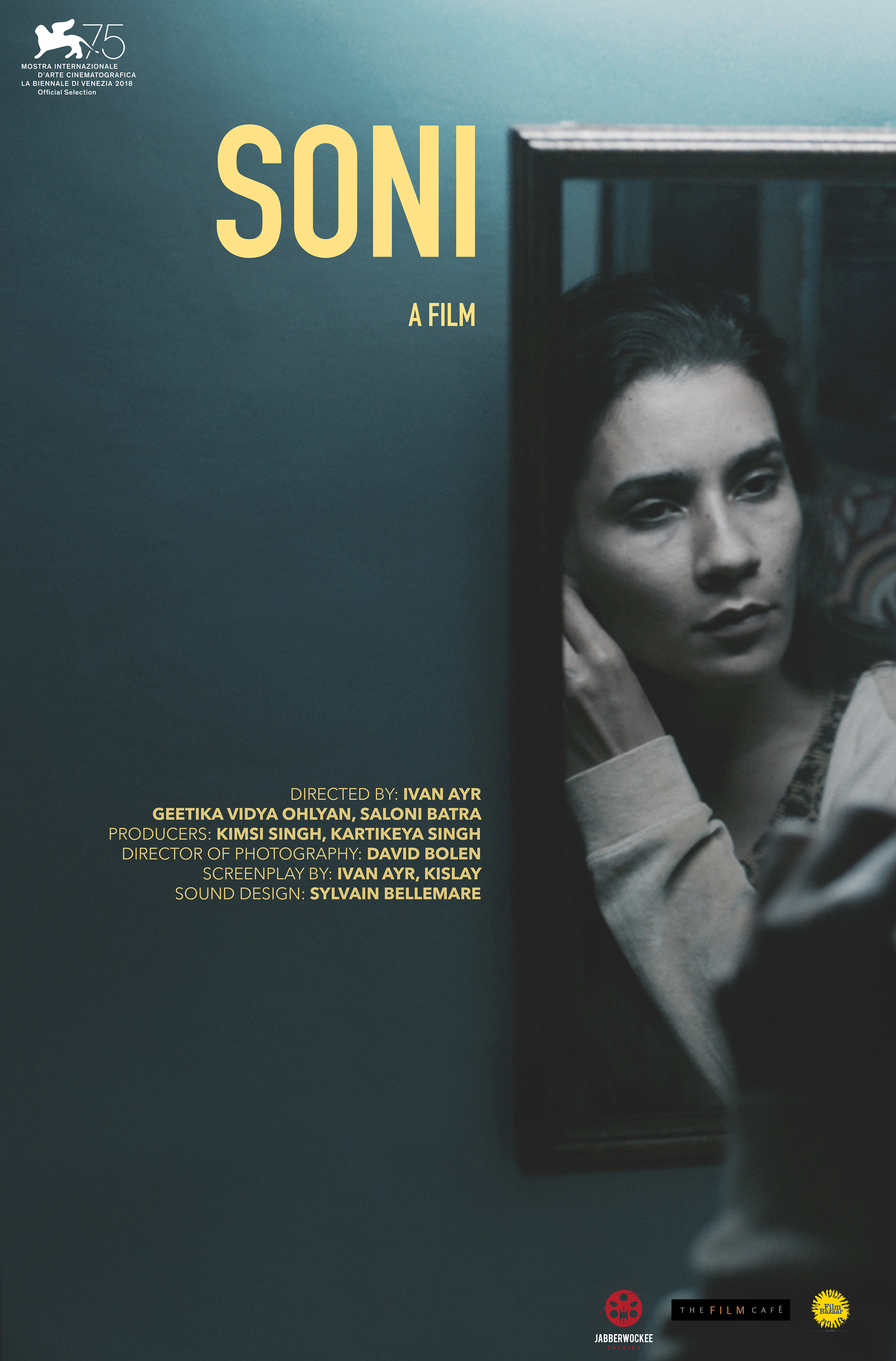
Soni (2018)

25 Friday Jan 2019

Posted by dullwood68 in Movies

≈ Leave a comment

Tags

Drama, Geetika Vidya Ohlyan, Gender politics, India, Indie movie, Ivan Ayr, Mohit Chauhan, New Delhi, Police force, Review, Saloni Batra, Sexism, Vikas Shukla

D: Ivan Ayr / 97m

Cast: Geetika Vidya Ohlyan, Saloni Batra, Mohinder Gujral, Mohit Chauhan, Vikas Shukla, Gauri Chakraborty, Simrat Kaur, Dimple Kaur, Dalip Kumar Gulati, Prateek Pachori, Upasya Goswami

Soni (Ohlyan) is an inspector working for the New Delhi police force. Based in the team that deals with crimes against women, Soni works the night shift, placing herself in dangerous situations in order to arrest men who attack or harass lone women. When Soni beats a man who tries to assault her, it highlights her own propensity for violence, and the anger she keeps pent up inside her. As well as causing problems for Soni, it also makes life difficult for her boss, Kalpana (Batra), who recognises Soni’s worth as an officer, but has to keep persuading her superiors that Soni is more of an asset than a liability. A further violent incident involving a drunken naval officer sees an investigation opened into Soni’s behaviour. At the same time, Soni’s estranged husband, Naveen (Shukla), attempts to reconcile with her, while Kalpana’s own marriage becomes strained because her husband, Sandeep (Chauhan), a senior officer at the same station, believes she’s too soft on Soni. Torn between defending Soni and acting appropriately as her superior, a further violent incident puts Kalpana in an awkward position and threatens Soni’s future with the police…

From its opening scene, which sees its lead character called a “dirty c*nt” before she viciously pummels her would-be attacker, it’s clear that Soni isn’t going to be your standard run-of-the-mill police-based drama. Although first-time feature director Ivan Ayr is interested in exploring the effects of violence on women working as police officers, his movie is also keen to examine the motivations that have prompted them to join in the first place, and what keeps them in the job. To do this, Ayr paints two very different portraits. Soni is a loner, her marriage having fallen apart due to events that we remain ignorant of until late on, and with few friends both within the force and outside. She’s deliberately isolated herself, and Ayr shows the extent of her isolation in the various ways she avoids being helped by others. She’s punishing herself, even at work where she feels most comfortable; such is the depth of her self-imposed misery. Kalpana is her polar opposite, a career policewoman with a stable marriage and brighter prospects. But even Kalpana has a number of problems to face, from the chiding attitude of her husband, to the awkward position she finds herself in through defending Soni.

For both women, being a part of the police force in New Delhi is an important part of who they are, and Ayr further explores the gender politics and endemic sexism that surrounds them. He does so with a quiet assurance and empathy that is evidenced by terrific performances from newcomers Ohlyan and Batra. They ensure Soni and Kalpana remain believable at all times, with the developing bond between the two women played sincerely and honestly, and their restrained, sincere portrayals prove as gripping for their emotional acuity as they are for the way they conduct themselves physically, with Ohlyan moving purposefully and with a minimum of effort, and Batra appearing as if she’s hemmed in by the demands of Kalpana’s uniform. Shot on a small budget – Ayr is also co-screenwriter and editor – the movie belies this thanks to impressive camera work from DoP David Bolen, and Ayr’s decision to shoot in long takes that lend an unexpected and nuanced immediacy to the action. The lack of a score or soundtrack is fortuitous too, allowing the viewer to concentrate on the material without the distraction of musical cues to take them by the hand and guide them towards the emotion of a scene. All in all, it’s remarkable debut, and one that lifts the lid on an aspect of Indian gender politics that cinema depicts all too rarely.

Rating: 9/10 – shot through with a mournful pessimism but still allowing a modicum of hope for both its main characters, Soni is a terrific example of an Indian indie movie; authoritative without being forthright, bold without being melodramatic, and insightful of its characters internal lives, it’s a movie that is both subtle and precise, and which exerts a powerful grip from beginning to end.

Share this:

  • Click to share on X (Opens in new window) X
  • Click to share on Facebook (Opens in new window) Facebook
  • More
  • Click to print (Opens in new window) Print
  • Click to email a link to a friend (Opens in new window) Email
Like Loading...

Colette (2018)

23 Wednesday Jan 2019

Posted by dullwood68 in Movies

≈ Leave a comment

Tags

Biography, Claudine, Dominic West, Drama, France, Keira Knightley, Review, True story, Wash Westmoreland

D: Wash Westmoreland / 111m

Cast: Keira Knightley, Dominic West, Denise Gough, Fiona Shaw, Eleanor Tomlinson, Ray Panthaki, Al Weaver, Julian Wadham, Shannon Tarbet, Aiysha Hart, Jake Graf, Robert Pugh

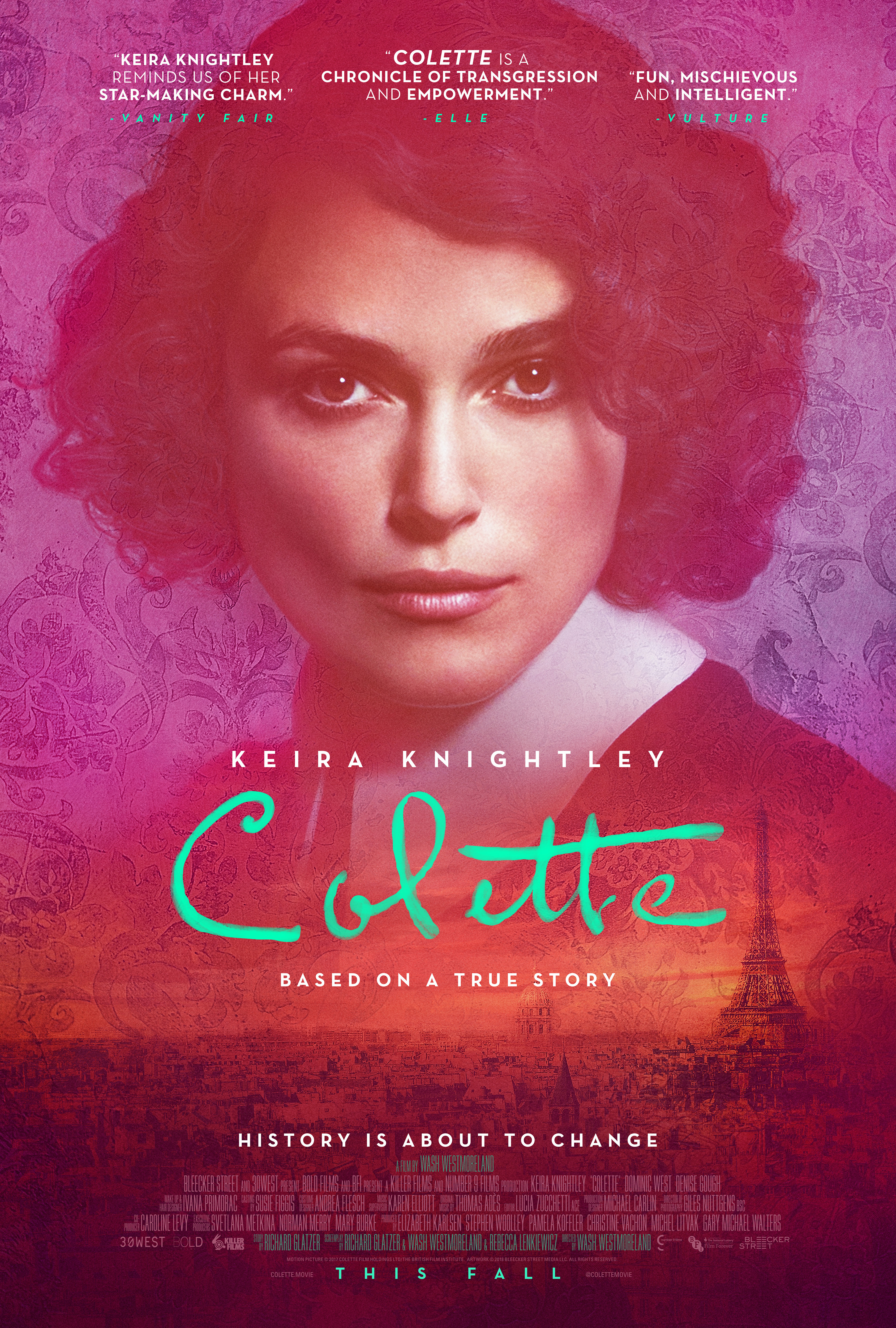
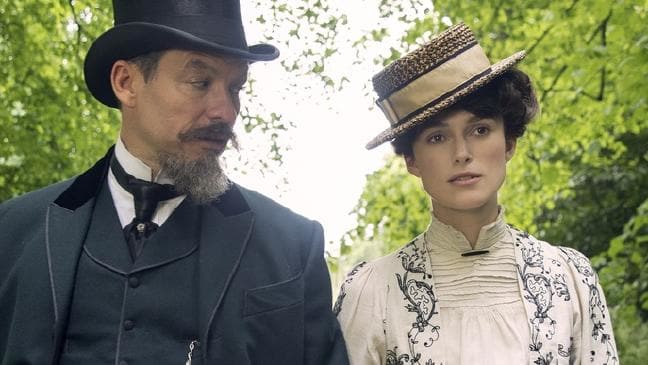
In France in 1892, Sidonie-Gabrielle Colette, “Gabri” (Knightley), is a young woman whose father (Pugh) served in the army with renowned playwright and author “Willy”. Living in the quiet village of Saint Serveur, Gabri has led a sheltered life, so when she and Willy marry and she moves to Paris, the life he leads and his social circle prove something of a disappointment; it’s not the life she expected. Also unexpected is Willy’s carefree way with money – they’re always broke – and his fondness for other women. But being in Paris has awakened Gabri’s gift for writing, and though Willy is initially critical of her work, when bailiffs start calling and it looks as if they have no other choice, he convinces her to write a novel based on her school days. Published under his name, the novel is a runaway success, and is soon followed by two more, both equally as successful. But while Willy is happy to reap the fame and fortune, and keep Gabri’s talent hidden from everyone else, it’s not long before Gabri – now calling herself Colette – decides that remaining anonymous isn’t what she wants – or deserves…

A heritage picture through and through, Colette gives Keira Knightley yet another opportunity to prove that when it comes to costume dramas, there’s something about them that brings out the best in her. Beginning the movie in long pigtails and with a gauche demeanour that highlights Gabri’s inexperience of the world, Knightley continually adds layers to the character that allow her to grow in front of the viewer, and to stake a place in our hearts. It’s not a flamboyant performance, and it’s not designed to overwhelm the other actors or the material. Instead, Knightley shows the quiet determination and increasingly fierce will that Gabri develops as she transitions from average country girl to gifted literary icon. As she battles her husband’s prideful arrogance and sexist beliefs, Colette emerges as the woman Gabri was meant to be, and seeing Knightley navigate the narrow social and emotional pathways of the time highlights again her strengths as an actress. There’s an intuitiveness to her portrayal that’s impressive in the way that it allows her to shade her performance, and to make it subtler than the usual requirements of a costume drama. Quite rightly, she dominates the movie from start to finish.

Which is good news for the movie as a whole, as otherwise this is a period piece that adheres to the standard template of period pieces everywhere, and which does its best not to rock the boat in terms of visual flair, dramatic emphasis, the other performances, Westmoreland’s attentive yet straightforward direction, and Thomas Adès’ stalwart score. It’s not quite a pedestrian movie, but in terms of its structure, and its approach to the details of Colette’s life (and lifestyle), it’s very much a “safe” movie. Colette’s attraction to other women is played matter-of-factly, but the decision to do so, and for Willy to be unconcerned about it, robs the movie of any impact that these scenes could have generated. And many of the confrontations between Colette and Willy, though played in earnest and providing Knightley and West with moments to shine, are still part and parcel of what we’ve come to expect from a movie such as this one. It’s all handsomely mounted, with terrific attention to period detail, but it’s also too clean and sanitary, as if the characters’ prosaic surroundings had to match their constrained emotional outbursts. And for all the sense that the world Colette inhabited was on the cusp of change, here that change remains frustratingly under-developed, leaving the movie to make only a modest impact over all.

Rating: 7/10 – a first-rate performance from Keira Knightley helps Colette overcome a number of unfortunate production decisions that hamper the movie from achieving its full potential; still likeable, and with flashes of mordaunt wit that are deftly handled, it’s a movie that could have been richer and deeper and more layered, but which settles for telling a by-now quite standard tale of female empowerment.

Share this:

  • Click to share on X (Opens in new window) X
  • Click to share on Facebook (Opens in new window) Facebook
  • More
  • Click to print (Opens in new window) Print
  • Click to email a link to a friend (Opens in new window) Email
Like Loading...

The Wife (2017)

20 Sunday Jan 2019

Posted by dullwood68 in Movies

≈ Leave a comment

Tags

Björn L. Runge, Christian Slater, Drama, Glenn Close, Jonathan Pryce, Literary adaptation, Marriage, Max Irons, Nobel Prize, Review, Stockholm

D: Björn L. Runge / 100m

Cast: Glenn Close, Jonathan Pryce, Max Irons, Christian Slater, Harry Lloyd, Annie Starke, Elizabeth McGovern

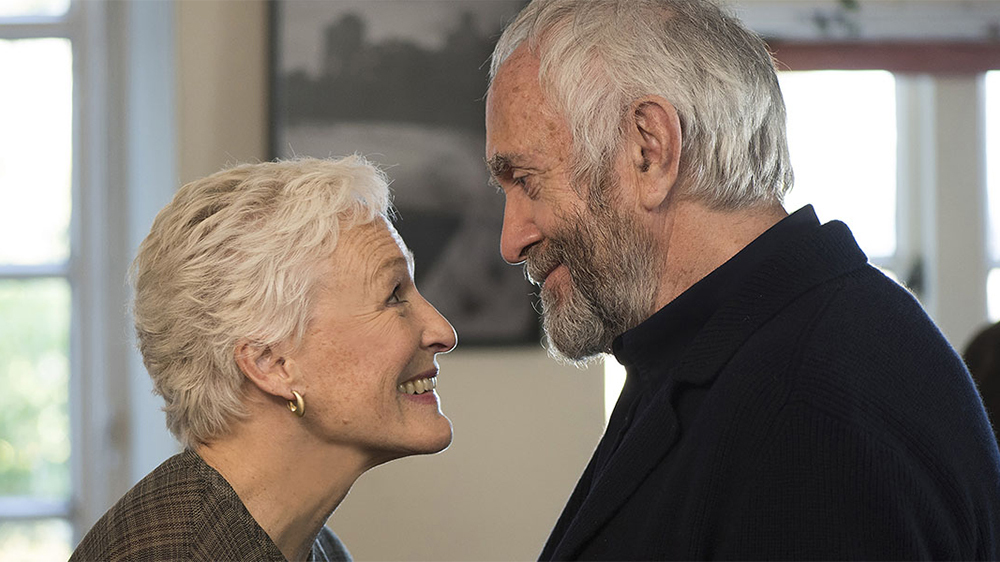
Connecticut, 1992. Joseph Castleman (Pryce) is an esteemed American author who is woken early one morning to learn that he is being awarded the Nobel Prize for Literature. He’s over the moon, and so is his wife, Joan (Close), but there is tension from their son, David (Irons), who has written his first short story and is waiting for his father to offer his opinion, something Joseph seems reluctant to do. The three travel to Stockholm for the prize giving ceremony, and discover on their flight the presence of another writer, Nathaniel Bone (Slater), who has made a career out of scandalous biographies, and who has chosen Joseph as his next subject. Joseph and Joan want nothing to do with him, but once in Stockholm, and with Joan displaying a degree of unhappiness that Bone spots, she and Bone spend time talking over drinks. Bone has a theory about Joseph’s work that Joan rebuffs, but it’s one that he also repeats to David. As the ceremony nears, Joan’s unhappiness begins to express itself more and more, and David decides to challenge them both over Bone’s theory…

Adapted from the 2003 novel by Meg Wolitzer, The Wife provides Glenn Close with her best role in years, and provides us with her best performance in years. As the long-suffering wife of acclaimed author Joseph, Close’s Joan is a model of reticence and humility, refusing to share in her husband’s limelight, but happy for the recognition it affords them as a couple. But beneath Joan’s placid, almost stoic exterior, their marriage, and an arrangement between them that they’ve kept a secret for decades, is beginning to take its toll and Joan is struggling to maintain the façade she’s held in place for so long. Astute viewers will quickly work out just what that secret is, and combined with Bone’s suspicions and flashbacks to when Joseph and Joan met, even less astute viewers will be able to piece together the cause of Joan’s unhappiness. But with that comes a question that the movie can’t quite answer: why has it taken all this time – over thirty years – for her sorrow to manifest itself – and so abruptly? There’s an inevitable confrontation between Joan and Joseph, but though there are accusations and remonstrations aplenty, that unanswered question remains. And as well constructed as it is (the story is told in non-linear fashion), this leaves the movie with a great big hole in it.

But while the narrative stumbles at times, and David is depicted as something of an insecure brat, Björn L. Runge’s direction compensates for all this by taking Jane Anderson’s screenplay and making it into an austere, emotionally repressed drama where the power struggle within a marriage is displayed almost forensically, from Joseph’s constant reminders that Joan doesn’t write (even though we know she does), to the subtle ways in which Runge has Joseph keep Joan behind him, or just off to the side while praising her at the same time. Runge and his DoP, Ulf Brantås, use the bright airy spaces within the Castelemans’ hotel room, and the claustrophobic interiors of the ceremony events to highlight just how hemmed in Joan has become, that it doesn’t matter what her environment is, she’s still uncomfortable. Allied to Close’s stellar performance, this allows the audience to witness the slow, uncomfortable realisation to dawn for Joan that she can’t continue as she has been. And when Close invites us to witness this, that realisation is all the more powerful for the quiet way that she expresses it. It’s an emotional movie that hits hard on a number of occasions, but only in regard to Joan; Joseph isn’t as multi-faceted as he sounds, David is a drain on the narrative, and it’s unlikely that Bone would be tolerated so easily in real life. But the main reason for being here is Close, and though the movie loses traction when she’s not on screen, when she is, she – and the movie – are magnificent.

Rating: 7/10 – one of those occasions where a performance is so good that it offsets much that doesn’t work elsewhere, The Wife is certainly intriguing, but alas not as complex as it may seem; Close is superb, and the movie is mesmerising when she’s on screen, but though Runge tries hard to make the rest of the movie just as involving, it’s those devastating close ups of Joan as she copes with each new betrayal that have the most impact.

Share this:

  • Click to share on X (Opens in new window) X
  • Click to share on Facebook (Opens in new window) Facebook
  • More
  • Click to print (Opens in new window) Print
  • Click to email a link to a friend (Opens in new window) Email
Like Loading...

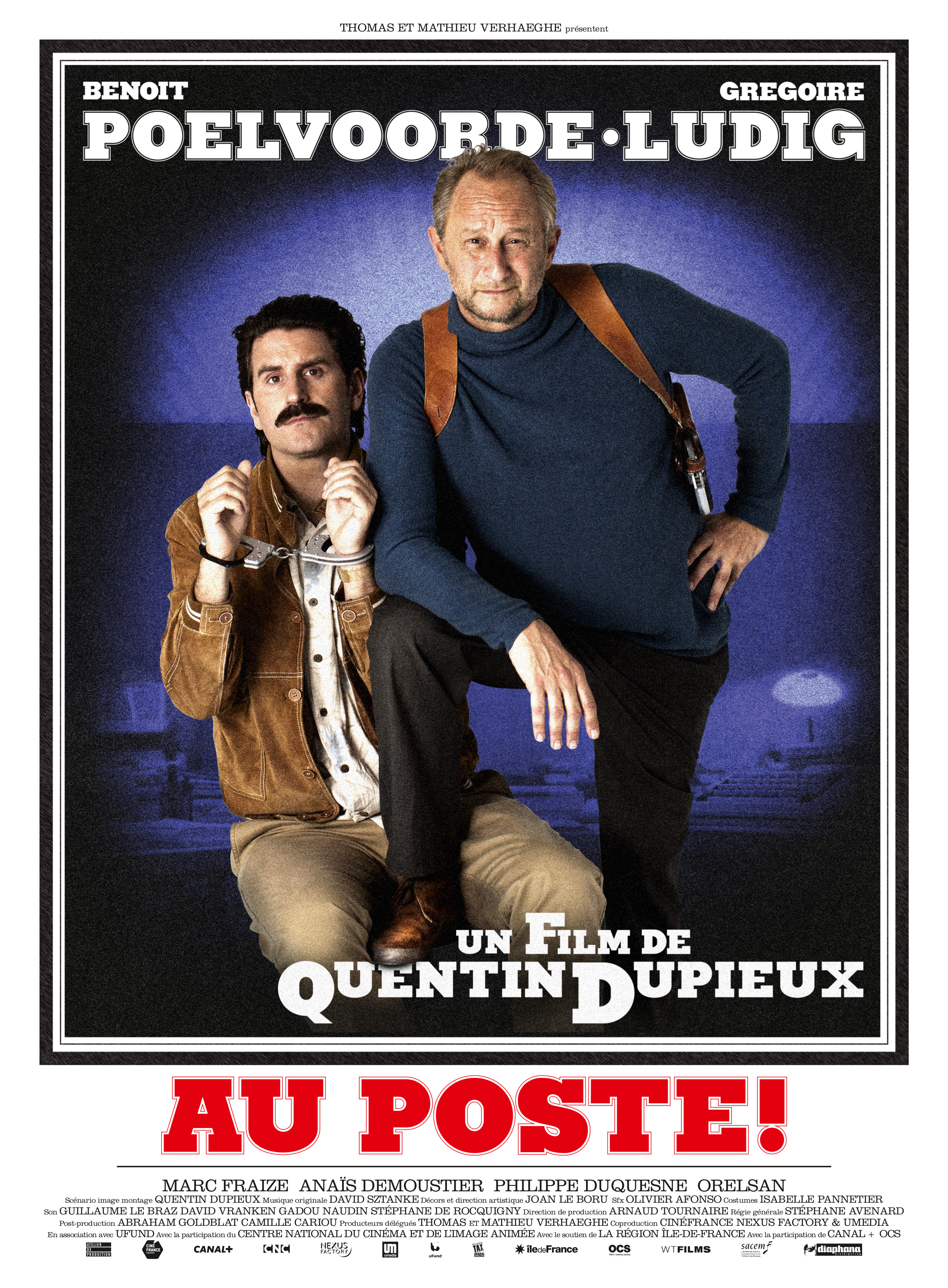
Keep an Eye Out (2018)

19 Saturday Jan 2019

Posted by dullwood68 in Movies

≈ Leave a comment

Tags

Au poste!, Benoît Poelvoorde, Comedy, Drama, France, Grégoire Ludig, Interrogation, Marc Fraize, Quentin Dupieux, Review

Original title: Au poste!

D: Quentin Dupieux / 73m

Cast: Benoît Poelvoorde, Grégoire Ludig, Marc Fraize, Anaïs Demoustier, Philippe Duquesne, Jacky Lambert, Orelsan, Jeanne Rosa, Vincent Grass

Late one night, the man who’s found a dead body outside his apartment block and reported it to the police, Fugain (Ludig), finds himself being interrogated by Superintendent Buron (Poelvoorde). Buron asks Fugain to repeat his previous statement, and to go into further detail by explaining his actions leading up to the discovery of the body. Fugain begins doing so, but has to leave the room for a while to meet his son (Orelsan). Buron leaves another officer, Philippe (Fraize), in charge, but when their conversation turns to homicidal matters that don’t relate to Fugain’s discovery, it leads to an unfortunate accident that Fugain needs to hide from Buron when he returns. Fugain continues to recount the events preceding his discovery of the body, most of which are prosaic and dull, something Buron is quick to point out. As the interrogation continues, Fugain becomes less and less of a suspect in Buron’s eyes, but when Buron’s boss, Champonin (Duquesne), pays him an unexpected visit, a chance discovery leads to Fugain being put on the spot, but not before something completely bizarre happens…

If you’re familiar with the work of Quentin Dupieux, then you’ll probably be thinking that whatever happens in Keep an Eye Out, it won’t be ordinary or commonplace. And you’d be right. But it takes a while for Dupieux for reveal just how quirky and unpredictable his latest movie is going to be. Throughout the opening sequence, which sees Buron taking time out from interrogating Fugain in order to arrange a get-together with one of his friends (and which is humorous enough by itself), we can see another man with his back to the camera. Buron gains his attention and the man turns in his chair to reveal his has no left eye. This is Philippe, and it’s in that moment that you know that whatever Dupieux has up his sleeve isn’t going to be like any other French comedy you’ve seen recently. From then on, the movie steps up a notch and Fugain’s increasingly uncomfortable situation becomes the stuff of quietly controlled farce. Badgered by Buron’s insistence on breaking down his whereabouts before discovering the body into minute, but boring detail, Fugain can only sit and wait for his ordeal to be over. As he keeps saying, he’s innocent. But events have superseded all this, and like all good farceurs, Dupieux delights in putting Fugain in more and more trouble.

As well as having some very witty and very sharp dialogue, the movie also trades on some visual tricks and anomalies that add to the proceedings, and which act as clues for the observant viewer that not everything is as it seems. And so it proves. At the point where Fugain seems finally in the clear, Dupieux delights in pulling the rug out under from under him, and then in a startling move that defies expectations, from under the viewer as well. It’s a moment of sheer audacity that only someone like Dupieux could pull off (or even think of). But it wouldn’t work half as well if it wasn’t for the characters, expertly devised and played by Dupieux’s talented cast. Poelvoorde is terrific as the deadpan, seemingly bored but dogged superintendent, while Ludig is a perfect foil as the upright man targeted because of a moment’s rash behaviour, but who becomes embroiled in something far worse. Fraize almost steals the show from both of them as Philippe, a recently appointed officer whose opinions about set squares have a particularly apt payoff. But to say more about this wonderfully droll movie and the odd tangents it takes us to would be to spoil things. Suffice it to say, it’s definitely one to watch.

Rating: 8/10 – another unconventional, but delightfully peculiar outing from the off-kilter imagination of Quentin Dupieux, Keep an Eye Out is funny, arresting, bizarre, and an absolute joy; more impactful as well due to its short running time, it’s a movie that’s so confidently assembled and handled that the fact that it’ll be difficult to see outside of its native France is a terrible state of affairs.

Share this:

  • Click to share on X (Opens in new window) X
  • Click to share on Facebook (Opens in new window) Facebook
  • More
  • Click to print (Opens in new window) Print
  • Click to email a link to a friend (Opens in new window) Email
Like Loading...

Close (2019)

18 Friday Jan 2019

Posted by dullwood68 in Movies

≈ Leave a comment

Tags

Action, Bodyguard, Drama, Indira Varma, Morocco, Noomi Rapace, Review, Sophie Nélisse, Thriller, Vicky Jewson

D: Vicky Jewson / 94m

Cast: Noomi Rapace, Sophie Nélisse, Indira Varma, Eoin Macken, George Georgiou, Christopher Sciueref, Akin Gazi, Kevin Shen

Sam Carter (Rapace) is one of the world’s foremost female bodyguards. Following a tough assignment, she’s enjoying some down time when she’s offered the job of protecting a mining heiress, Zoe Tanner (Nélisse), for twenty-four hours, including a trip from England to Morocco. Zoe’s father ran a company called Hassine that is now overseen by her stepmother, Rima (Varma). With an important deal looming, Zoe’s presence in Morocco is regarded as a stabilising factor due to pressure from a rival company, Sikong. When the safe house they are staying in is attacked, Sam and Zoe manage to escape but matters worsen when the police they believe are taking them to safety prove to be just as dangerous. They get away again, but not before Zoe shoots and kills one of the officers. On the run, and with Sam being disavowed by her bosses, the pair must contend with continued threats to their lives, while Rima fights to keep the deal from falling through. When an extraction plan goes badly wrong, and it looks as if Rima is responsible for Zoe being targeted, Sam must come up with a plan to save them both…

Somewhere, buried deep within its solid action movie credentials, Close contains the germ of an idea that relates to female empowerment. With Rapace’s character based on real life bodyguard Jacquie Davis, it’s an obvious approach, but in telling its awkward, badly constructed story, Close fumbles the central relationship between Sam and Zoe, and never comes near to making it feel like a natural consequence of being thrust into such a dangerous situation. Sure, there’s a mutual dependence that develops, and Zoe proves to be almost as resourceful as Sam, but as ever with relatively low budget thrillers, the characterisations take a back seat to the action, and any character beats prove both perfunctory and forgettable. It’s the one over-riding problem for anyone making an action movie: how to make the characters look and sound like recognisable human beings. So, often they’re given tragic pasts (here, Zoe is still struggling to cope with her mother’s suicide), or emotional baggage to carry around (here, Sam has a daughter that she had to give away at sixteen), but it’s rare that these attempts at adding depth complement or improve matters. And so it proves with Close.

But while the script – by Jewson and Rupert Whitaker – is less than convincing during its quieter moments, it’s much more successful when it’s putting Rapace through a succession of tough, physically demanding action scenes. One such scene, which finds Sam going one on one with a bad guy with her hands tied behind her back and relying on her wits and ingenuity is surprisingly impressive, even though the coverage could have benefitted from a few more medium shots at the right moments. One of the movie’s other pleasures is its rich, warm-hued cinematography. Courtesy of Malte Rosenfeld, this gives Close the sense of having a bigger budget and better resources than other movies of its ilk, and many of the Moroccan locations are rendered beautifully. Rapace is as reliable as ever, and convincing enough that you’d definitely want her on your side in a real fight, but Nélisse is all at sea in a role that has under-developed written all over it. But that’s as nothing to the trials Varma is put through as the movie’s notional villain, a role that sees her having to veer (unavoidably) between uncaring über-bitch and misunderstood stepmother, and often in the same scene.

Rating: 5/10 – though Jewson is clearly at home amidst all the bullets and bloodshed, Close suffers from a stodgy narrative, wince-inducing dialogue, and rudimentary character work that all combine to undermine the things it does get right; there’s ambition here, certainly, but somewhere along the way it was jettisoned in favour of making the same mistakes that so many other low budget action movies make.

Share this:

  • Click to share on X (Opens in new window) X
  • Click to share on Facebook (Opens in new window) Facebook
  • More
  • Click to print (Opens in new window) Print
  • Click to email a link to a friend (Opens in new window) Email
Like Loading...

Columbus (2017)

17 Thursday Jan 2019

Posted by dullwood68 in Movies

≈ Leave a comment

Tags

Architecture, Drama, Friendship, Haley Lu Richardson, Indie movie, John Cho, Kogonada, Michelle Forbes, Review

D: Kogonada / 104m

Cast: John Cho, Haley Lu Richardson, Michelle Forbes, Rory Culkin, Parker Posey

When his father, a renowned architecture scholar, becomes ill and lapses into a coma prior to a speaking engagement in Columbus, Indiana, his estranged son, Jin (Cho), travels there to be at his side. While Jin waits for his father to recover, he meets a young local woman, Casey (Richardson), who works in a library near the hospital. Her passion for architecture is at odds with his own disinterest, but they strike up a friendship as she shows him her favourite buildings in the city. Jin reveals the differences that have kept him and his father apart for so long, while Casey admits that her mother, Maria (Forbes), is a recovering drug addict. This is also the reason why she’s passed on opportunities to leave Columbus and make a career for herself as an architect. While wrestling with his own feelings about his father, Jin challenges Casey to make something of her life, but his advice isn’t well received. It’s not until Casey discovers that her mother isn’t always at the two jobs she has, and that she may have relapsed, that Jin’s advice starts to sink in…

Every once in a while a movie comes along that is so singularly expressive that it makes you wonder why no one else has made a movie like it before. Such a movie is Columbus, the creation of video essayist Kogonada. It’s a hugely impressive feature debut, a visual tone poem that combines stark, formal screen compositions with nuanced emotional content, and which allows both these aspects to complement each other naturally and without any sense that either have been forced together unnecessarily. There are many unique buildings in Columbus, Indiana, and Kogonada incorporates them as supporting characters, rigid backdrops that provide insights into the hopes and dreams that Casey feels she has to suppress, and which Jin has abandoned. Through the use of careful framing, and recurring visual motifs – many shots are of doorways and what’s beyond them – the movie paints a wonderfully distinctive, and unexpectedly immersive portrait of a friendship that’s increasingly defined by the characters’ relationship to the spaces around them at any given time. Whether it’s Casey dancing wildly outside the formidable façade of the school she attended, or Casey and Jin having an argument within the confines of a covered bridge, the choice of location always enhances the emotional requirements of the scene in question.

While the relationship between Jin and Casey remains the kind of friendship that only exists in the movies, the script doesn’t allow itself to fall into any of the usual traps where romance rears its inappropriate head, or misunderstandings cause a rift that’s resolved too easily in the final scene. Jin’s sobering sense of duty (Korean tradition has him waiting at his father’s bedside to ensure he doesn’t die alone), is at odds with his need to live his own life free from the parental and cultural constraints he’s broken away from. Meanwhile, Casey’s own sense of duty (how will her mother cope if she leaves?), keeps her from achieving her own escape. Their friendship allows both to learn some valuable lessons from each other, but this is done in such an organic, subtle way that it feels fresh, and the outcome less than predictable. Cho and Richardson are both excellent, each giving beautifully measured performances that bring their characters to life in ways that are entirely truthful and recognisable for their aspirations and vulnerabilities. The movie adopts a slow, stately pace that suits the material, and there are narrative gaps that add a sense of mystery and which keep the viewer “on their toes”. But all in all, this is a beautiful, fascinating, lustrous gem of a movie and one of the finest in recent years.

Rating: 9/10 – with its visually stunning look courtesy of writer/director/editor Kogonada and DoP Elisha Christian, and a poignant central relationship that’s expertly played by its leads, Columbus is an unexpectedly moving treatise on loss and love that rewards the viewer at every turn; not for everyone, but for those willing to give themselves over to it, this is an exceptional movie that mesmerises and fascinates, and which does so long after it’s over.

Share this:

  • Click to share on X (Opens in new window) X
  • Click to share on Facebook (Opens in new window) Facebook
  • More
  • Click to print (Opens in new window) Print
  • Click to email a link to a friend (Opens in new window) Email
Like Loading...

Vice (2018)

16 Wednesday Jan 2019

Posted by dullwood68 in Movies

≈ Leave a comment

Tags

Adam McKay, Amy Adams, Biography, Christian Bale, Dick Cheney, Drama, History, Iraq War, Politics, Review, Sam Rockwell, Steve Carell, True story

D: Adam McKay / 132m

Cast: Christian Bale, Amy Adams, Steve Carell, Sam Rockwell, Jesse Plemons, Tyler Perry, Alison Pill, Lily Rabe, Eddie Marsan, Justin Kirk, LisaGay Hamilton, Bill Camp, Don McManus, Shea Whigham, Stephen Adly Guirgis

In 1963, future vice president Dick Cheney (Bale) is working as a lineman because his alcoholism got him kicked out of Yale. Given an ultimatum by his wife, Lynne (Adams), to shape up and make something of his life, Cheney goes into politics, securing an internship at the White House during the Nixon administration. There he works for Nixon’s economic advisor Donald Rumsfeld (Carell). The two become friends (of a sort) and as the years pass, they both fall in and out of favour with the ruling elite, until during the Clinton era, Cheney becomes CEO of Halliburton, and Rumsfeld holds a variety of positions in the private sector. When he’s asked to be the running mate of George W. Bush (Rockwell) when Bush runs for president, Cheney sees an opportunity to occupy a unique position of power. But it’s in the wake of the terrorist attacks that occurred on 9/11 that Cheney sees his ambition begin to come to fruition. Without recourse to just cause, and ignoring his own intelligence agencies, Cheney orchestrates an unnecessary war in Iraq…

Although it’s perfectly well made, and intelligently constructed, Adam McKay’s foray into US politics lacks the urgency of his previous outing, The Big Short (2015), and the impact, with much of what we know about Cheney and his unrepentant manipulation of the facts post-9/11, still fresh in our memories. And it’s hard to be outraged by what Cheney did when the current incumbent of the White House abuses his position so appallingly (and deliberately), and on an almost daily basis. This leaves Vice at a bit of a disadvantage, with McKay’s screenplay laying it all out for us, but in a way that doesn’t feel fresh or surprising, but rather more like reportage. The facts are there, but the emotion isn’t, and this leaves the viewer in an awkward position: working out how to engage with a movie that should be hitting home quite forcefully, but which settles instead for telling its story too matter-of-factly for its own good (it doesn’t help that McKay lumbers his movie with having to stop and explain things such as the unitary executive theory… not the most exciting of topics). There’s also the hint of a longer movie as well, with incidents such as the Valerie Plame affair, and the accidental shooting of Harry Whittington, added to the narrative but ultimately carrying little or no dramatic weight.

And we never get to know Cheney the man, or his motives. Played with a marked reticence that makes Cheney look like a less amiable Chevy Chase, Bale is physically intimidating but often reduced to uttering grunts instead of sentences, and looking disinterested or dismissive. Cheney may have been a ruthless, calculating politician post-9/11, but a lot of the time he just looks like your average grumpy grandpa. Even the one good thing that Cheney did – retiring from public life in order to shield his daughter, Mary (Pill), from media scrutiny over being a lesbian – is tarnished by his later actions in supporting the political ambitions of his other daughter, Liz (Rabe). Rare moments such as these make Cheney appear more recognisably human, and not the unknowable cypher he is the rest of the time. All in all, it’s still a good performance from Bale, but it’s the likes of Adams and Plemons (as a fictional Iraq War veteran with an unlikely tie to Cheney) who make the material resonate more. Again, it’s intelligently constructed, and McKay sprinkles the narrative with some caustic humour to leaven the gloom, while DoP Greig Fraser ensures the sense of dirty deeds carried out behind closed doors is portrayed through tight close ups and the use of shadowy lighting. It’s a movie that speaks plainly about the issues it’s addressing, but sadly, a little too plainly to be effective.

Rating: 6/10 – dry and only fitfully engaging, Vice has the feel of a movie that’s telling its story as if everyone’s already been briefed and the movie itself is something of a formality; when a movie that seeks to recount seismic events in recent US history lacks immediacy and verve then something is very wrong indeed.

Share this:

  • Click to share on X (Opens in new window) X
  • Click to share on Facebook (Opens in new window) Facebook
  • More
  • Click to print (Opens in new window) Print
  • Click to email a link to a friend (Opens in new window) Email
Like Loading...

Nothing to Hide (2018)

14 Monday Jan 2019

Posted by dullwood68 in Movies

≈ Leave a comment

Tags

Bérénice Bejo, Dinner party, Doria Tillier, Drama, Fred Cavayé, Grégory Gadebois, Mobile phones, Perfect Strangers, Remake, Review, Roschdy Zem, Secrets, Stéphane De Groodt, Suzanne Clément, Vincent Elbaz

Original title: Le jeu

aka The Game

D: Fred Cavayé / 92m

Cast: Bérénice Bejo, Suzanne Clément, Stéphane De Groodt, Vincent Elbaz, Grégory Gadebois, Doria Tillier, Roschdy Zem, Fleur Fitoussi

Seven friends gather together for a dinner party, held at the home of cosmetic surgeon Vincent (De Groodt) and his wife, therapist Marie (Bejo). Joining them are newlyweds Thomas (Elbaz) and Léa (Tillier), who have decided to try for a baby; distant married couple Charlotte (Clément) and Marco (Zem); and single friend Ben (Gadebois), who should be bringing his new girlfriend for everyone to meet, but who turns up alone as she’s fallen ill. A discussion about mobile phones and the secrets they may contain leads to Marie suggesting they all play a game: if anyone receives a call, or a text, or an e-mail, that person has to answer the call (with the loudspeaker on), or read out their texts and e-mails for the whole group to hear. The “game” starts off innocently enough, but it’s not long before some of the calls prove uncomfortable for the people receiving them. As the evening continues, secrets are revealed and relationships find themselves under threat, as the seven friends begin to realise that perhaps they don’t know each other as well as they thought…

One of a staggering eight remakes of Perfect Strangers (2016) that have been made in the past two years (and soon to be joined by four more), Nothing to Hide cleaves faithfully to the original set up, both in the secrets it reveals and the physical layout of Vincent and Marie’s apartment; there’s even a balcony for the friends to gather on when it comes time to take a group selfie. And although imitation is apparently the sincerest form of flattery, what Cavayé does with his adaptation, which he also scripted, is to take the pressure cooker atmosphere of Paolo Genovese’s original and dial it down to make it more recognisably French. There are outbursts, there is anger, but these aspects are much more subdued, and Cavayé’s decision to apply a degree of subtlety to the material helps the movie achieve a different kind of impact, one that fits the minor changes made to the narrative, and the overall approach. Here, there are silences and periods where the characters are forced to examine their indiscretions and lies that offer painful reminders that we all keep secrets, even and sometimes especially, from our loved ones. But is the price we invitably pay, ever worth it?

As with the original, the movie retains the curveball that marred Genovese’s ending, but somehow Cavayé makes it work, and with a wistfulness that feels completely in keeping with what’s gone before. He’s also assembled a terrific ensemble cast, with each getting a chance to shine, and each getting the measure of their characters. This leads to insights and revelations about each of the friends that help add layers to the narrative and which also allows the viewer to feel a degree of sympathy for each one – but especially Marco, who acts bravely but misguidedly to protect one of the others. Bejo and De Groodt are a convincing couple, and as the duo least affected by the fallout from the game, act as our touchstones as things get worse; they’re also at the centre of the movie’s best scene, when Vincent has to deal with a difficult and emotive issue concerning their daughter, Margot (Fitoussi). Elsewhere, Denis Rouden’s deft camerawork and framing catches reactions and behavourial tics that might otherwise go unmissed, and Mickael Dumontier’s restrained yet intuitive editing style ensures Rouden’s efforts are maximised for the best impact. It’s a French take on a universal story, and infused with a great deal of charm and wit, and as a cautionary tale – be careful of the games you play – very enjoyable indeed.
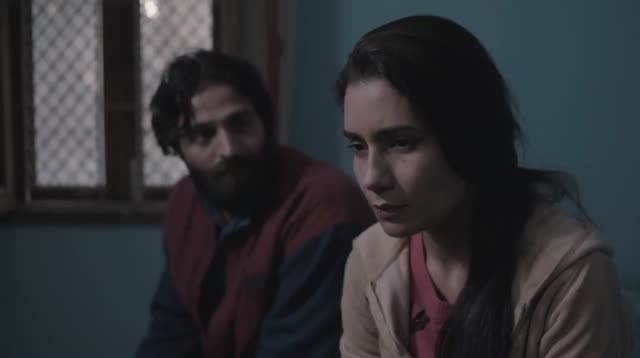
Rating: 8/10 – a rare remake that improves on the original, Nothing to Hide is a dramedy that often hits close to home in the way that it exposes the lies we tell ourselves in order to keep secrets; unexpectedly sobering at times, and laugh out loud funny at others, it does flirt uncomfortably with homophobia at one point, but overall this is an intelligent, entertaining remake that has its own style and its own way of being relevant.

NOTE: Apologies for the dubbed and subtitled trailer – sometimes you just can’t win!

Share this:

  • Click to share on X (Opens in new window) X
  • Click to share on Facebook (Opens in new window) Facebook
  • More
  • Click to print (Opens in new window) Print
  • Click to email a link to a friend (Opens in new window) Email
Like Loading...

The Upside (2017)

13 Sunday Jan 2019

Posted by dullwood68 in Movies

≈ Leave a comment

Tags

Bryan Cranston, Comedy, Drama, Kevin Hart, Life auxiliary, Neil Burger, Nicole Kidman, Quadriplegia, Remake, Review

D: Neil Burger / 126m

Cast: Kevin Hart, Bryan Cranston, Nicole Kidman, Aja Naomi King, Jahi Di’Allo Winston, Golshifteh Farahani, Genevieve Angelson, Tate Donovan, Julianna Margulies

Parolee Dell Scott (Hart) is fresh out of prison and trying his best (which isn’t much) to avoid going straight back in. Tasked with finding a job as quickly as possible by his parole officer, Dell attends what he thinks is an interview for a cleaning job. The number of waiting applicants surprises him, but when time drags on and he’s in danger of not picking up his son, Anthony (Winston), from school on time, he crashes the interviews in order to get a signature to say that he’s attended. But the job proves to be a life auxiliary for ex-businessman Phillip Lacasse (Cranston), who is paralysed from the neck down. Against the better wishes of Phillip’s associate, Yvonne (Kidman), Phillip takes to Dell’s unconventional attitude, and decices to hire him. Unsure at first, Dell’s decision is made for him thanks to a row with his wife, Latrice (King), over his inability to properly provide for her and Anthony. Realising that being a carer for Phillip could solve a lot of his problems, Dell accepts the job, but soon finds that he’s not quite as prepared for it as he thought…

The third remake of the French movie Intouchables (2011), The Upside reaches us long after its first screening at the Toronto International Film Festival in September 2017. Caught up in the scandal involving Harvey Weinstein, the movie’s planned release in March 2018 was shelved until it was picked up for distribution by STX Entertainment and Lantern Entertainment (the successor to the Weinstein Company). Now the only question is: was it worth the wait? Sadly, the answer is, not really. This is a movie that is almost entirely depth-free, and dramatically inert. It’s a standard Hollywood interpretation of the kind of feelgood story that comes along every now and then and which, thanks to its sincerity and innate positivity, tugs at the heartstrings. But as usual in Hollywood, this kind of narrative can’t be allowed to exist in and of itself; it has to be treated with a level of over-simplification that five year olds would find frustrating, and slathered with enough gooey sentimentality to induce Type 2 diabetes in the unsuspecting viewer. There’s often a formula to these kinds of stories, but the best versions try their best to wrest something new from the material. Here the formula is embraced wholeheartedly… and then some.

This leaves the viewer with two choices: to either go with the flow and settle for spending an occasionally amusing, occasionally effective couple of hours that will leave them unmoved, or to rail against every predictable plot and story development for being so obvious. Either will involve a tremendous amount of effort on the viewer’s part, and neither will see them coming away singing the movie’s praises. For despite the chemistry between Hart and Cranston, and their performances – which at least stop the material from becoming too sappy – this is very much a movie that coasts for most of its running time, and which struggles to find anything to say. Burger does what he can, but someone really should have stepped in at the first draft stage and told screenwriter Jon Hartmere that a by-the-numbers approach wasn’t what was needed (though you do get the feeling that’s exactly what the producers wanted). Cranston is good value as always, and Hart, trying to broaden his range, is okay, but he doesn’t do anything to make us think that there’s a serious actor inside him who’s desperately seeking the dramatic limelight. And then there’s Kidman, on something of a role at the moment, but so under-utilised it’s hard to work out why she said yes. Like much about this movie, her presence begs a secondary question: was it worth the effort?

Rating: 5/10 – though its leads work well together, and there are some good comedic moments in amongst the otherwise routine material, The Upside is, unfortunately, a movie that doesn’t live up to its title; with issues around disability, class and race carefully ignored in favour of making this purely a feelgood movie, even the obligatory falling out between Dell and Phillip feels as manufactured as everything else.

Share this:

  • Click to share on X (Opens in new window) X
  • Click to share on Facebook (Opens in new window) Facebook
  • More
  • Click to print (Opens in new window) Print
  • Click to email a link to a friend (Opens in new window) Email
Like Loading...

The Front Runner (2018)

12 Saturday Jan 2019

Posted by dullwood68 in Movies

≈ Leave a comment

Tags

Affair, Drama, Gary Hart, Hugh Jackman, J.K. Simmons, Jason Reitman, Literary adaptation, Miami Herald, Politics, Review, True story, Vera Farmiga

D: Jason Reitman / 113m

Cast: Hugh Jackman, Vera Farmiga, J.K. Simmons, Alfred Molina, Mamoudou Athie, Bill Burr, Oliver Cooper, Chris Coy, Kaitlyn Dever, Molly Ephraim, Ari Graynor, Mike Judge, John Bedford Lloyd, Mark O’Brien, Sara Paxton, Kevin Pollak, Steve Zissis

1984. Senator Gary Hart (Jackman) of Colorado loses the Democratic presidential nomination to Walter Mondale. Four years later, Hart is the front runner in the race for the presidency, ahead in the polls against Republican candidate George H.W. Bush, and on course to put a Democrat back in the Oval Office after Ronald Reagan’s eight-year tenure. While campaigning in Florida, Hart attends a party held by a political associate of his, and there he meets Donna Rice (Paxton), a university graduate who is interested in working for Hart’s campaign as a fundraiser. Later, a reporter at the Miami Herald, Tom Fiedler (Zissis), receives an anonymous call informing him that Hart is meeting Rice at his home in Washington. Deciding to follow Rice to Washington, she is seen in Hart’s company at his home, and appears to have stayed there overnight. The Herald publishes an article exposing Hart’s “affair”, and in the ensuing days, the senator has to decide whether he should fight the accusation and continue with his campaign, or abandon his hopes of becoming President altogether…

Based on the book All the Truth Is Out: The Week Politics Went Tabloid by Matt Bai (who also co-wrote the screenplay along with Reitman and Jay Carson), The Front Runner is an odd mix of political drama, cautionary tale, and media morality discourse, but it’s also a mix that doesn’t entirely work because it doesn’t examine these aspects in any meaningful or deliberate way. It’s true, Hart targets the media as the authors of his downfall, and makes several pointed remarks about how intrusive they’ve become in order to break a story, but rather than providing a precise examination of the way in which newspaper reporting was beginning to morph into what we’re familiar with nowadays, the movie instead opts to have several reporters look sheepish when challenged, and bleating about the public’s right to know when polls clearly showed they weren’t that interested. The movie also has a problem with the nature of Hart’s relationship with Rice. As both parties stated then (and since) that they weren’t having an affair, and no conclusive proof was ever found, the whole issue is inferred in much the same way that the Miami Herald originally reported it. As a result, the movie has a gaping narrative hole in it, one that it never overcomes.

But with all this, what truly matters is whether or not Hart’s story is actually worth telling… and on this evidence, the answer has to be No. Despite an impressive performance from Jackman that paints Hart as a man whose surface charm hides an arrogant, self-righteous personality, the movie struggles to make his downfall anything like the tragedy it’s aiming for. When he’s not putting all the blame on the media, he’s pitiful and apologetic to his long-suffering wife, Lee (Farmiga), admitting his culpability to her but not to anyone else; this makes it hard to feel sympathy for someone whose sense of personal morality is so badly compromised. Elsewhere, the movie shifts and turns uneasily in its attempts to make itself politically and socially relevant to today’s climate (feminist issues form the basis for a subplot involving Rice’s treatment by Hart’s campaign team), and Reitman shapes too many scenes that are meant to be impactful, but which fall short because they lack the necessary energy or power. Judged against the current political climate in America, the “details” of Hart’s fall from grace seem almost whimsical now in their simplicity, and The Front Runner doesn’t offer the required insights to make it more compelling or effective.

Rating: 6/10 – to paraphrase Bob Dylan, “the times they were a-changin'”, but though this is touched on in The Front Runner, like much else it touches on, the movie raises many more questions than it can answer, and often feels like a beginner’s guide to Eighties political naïvete; with a large supporting cast that’s given little to do that might improve matters – Athie and Ephraim are the exceptions – the movie casts a wide net but its catch isn’t as substantial as it should have been, and it’s only occasionally absorbing.

Share this:

  • Click to share on X (Opens in new window) X
  • Click to share on Facebook (Opens in new window) Facebook
  • More
  • Click to print (Opens in new window) Print
  • Click to email a link to a friend (Opens in new window) Email
Like Loading...

Mary and the Witch’s Flower (2017)

11 Friday Jan 2019

Posted by dullwood68 in Movies

≈ Leave a comment

Tags

Animation, Drama, Endor College, Fantasy, Fly-by-night, Fumiyo Kohinata, Hana Sugisaki, Jiro Sata, Literary adaptation, Review, Studio Ponoc, Yūki Amami

Original title: Meari to majo no hana

D: Hiromasa Yonebayashi / 103m

Cast: Hana Sugisaki, Yūki Amami, Fumiyo Kohinata, Jiro Sato, Shinobu Otake, Hikari Mitsushima, Ryunosuke Kamiki, Eri Watanabe, Kenichi Endō

Mary Smith (Sugisaki) is a young girl spending the summer with her Great-Aunt Charlotte (Otake) in the British countryside. A local youngster, Peter (Kamiki), teases her about her red hair (which she hates), but it’s his two cats, Tib and Gib, who lead her into finding some mysterious blue glowing flowers in the nearby woods. Said to contain magical powers, Mary learns the flowers are called “fly-by-night”, and when she later discovers an old broomstick in the woods and accidentally crushes one of the flowers against it, the broomstick comes to life and whisks Mary and Tib to a wondrous place hidden in the clouds called Endor College. Mistaken for a new trainee witch, Mary meets Madame Mumblechook (Amami), the headmistress, and Doctor Dee (Kohinata), the chemistry master. When Mary admits that the source of her magic is a fly-by-night, and that Tib isn’t her familiar, but Peter’s cat, she is allowed to leave. But the next day, and with the magic worn off, Mary receives a message from Madame Mumblechook telling her that unless Mary gives up the remaining flowers, Peter (who has been abducted) will never be seen again…

The first feature from Studio Ponoc, the company founded by ex-Studio Ghibli producer Yoshiaki Nishimura, Mary and the Witch’s Flower is an appealing, deftly handled movie that makes up for what it lacks in depth and narrative ambition, by creating a marvellously detailed and often beautiful fantasy world hidden above the clouds. Adapted from the children’s book The Little Broomstick by Mary Stewart, the movie proper begins wistfully enough with nostalgic representations of the English countryside that have a timeless feel to them, and the kind of small village ambience that speaks of a bygone age. Yonebayashi, along with co-screenwriter Riko Sakaguchi, invests these early scenes with a bucolic nature that is attractive and reassuring, even as the script begins to introduce hints of the troubles to come. There’s an increasing sense of unease that develops, as Endor College gradually reveals its secrets, and the motives of Madame Mumblechook and Doctor Dee become more evident. But then the narrative, boxed in by the requirement that fly-by-night induced magic only lasts for twenty-four hours, becomes episodic, and loses some of the momentum it’s built up until then. Cue a handful of set pieces that feel isolated from each other, and  though the animation is often majestic, it’s in service to material that doesn’t entirely resonate.

That said, Mary is a likeable heroine, endearing in her clumsiness and brimming with increased confidence with every magical encounter. As she grows into the role of the world’s saviour, she tackles each obstacle with growing determination and acuity. She’s another in the long line of animated heroines that viewers can warm to from the start. Inevitably, there will be comparisons with the output of Studio Ghibli, and while some of those comparisons may be invidious – and rightly so, there’s still room for movies such as this one, that takes the ideals and the commitment to traditonal hand-drawn animation that epitomised Studio Ponoc’s predecessor and helps keep them alive. Though the storyline and the narrative may not be as sharp as they could be, the movie’s visual stylings are still a joy to explore and experience, and there’s an inventiveness that could only come from the unique mindset of Japanese animators. As a first feature, Studio Ponoc should be congratulated for trying to make movies that honour the spirit and adventurous nature of the Studio Ghibli output, and if they haven’t quite succeeded in their aim then, hopefully, there will be plenty of opportunities in the future to do so.

Rating: 7/10 – with exactly the kind of stunning animation that we’re used to seeing from movies such as this, Mary and the Witch’s Flower is a visual treat: vibrant, colourful and just plain gorgeous to look at; the slightness of the story lets it down, as well as the stop-start approach in the latter half, but this is still exemplary stuff from a company that can only get better and better.

Share this:

  • Click to share on X (Opens in new window) X
  • Click to share on Facebook (Opens in new window) Facebook
  • More
  • Click to print (Opens in new window) Print
  • Click to email a link to a friend (Opens in new window) Email
Like Loading...

The Sisters Brothers (2018)

10 Thursday Jan 2019

Posted by dullwood68 in Movies

≈ 1 Comment

Tags

Action, Drama, Gold Rush, Jacques Audiard, Jake Gyllenhaal, Joaquin Phoenix, John C. Reilly, Literary adaptation, Manhunt, Review, Riz Ahmed, Western

D: Jacques Audiard / 122m

Cast: John C. Reilly, Joaquin Phoenix, Jake Gyllenhaal, Riz Ahmed, Rebecca Root, Allison Tolman, Rutger Hauer, Carol Kane

Oregon, 1851. The Sisters brothers, Charlie (Phoenix) and Eli (Reilly), work as assassins for a wealthy magnate known as the Commodore (Hauer). Tasked with killing a chemist called Hermann Kermit Warm (Ahmed), the brothers are obliged to travel south to Jacksonville where they are due to rendezvous with another man in the Commodore’s employ, John Morris (Gyllenhaal), who has located Warm and befriended him. However, Warm discovers Morris’s true allegiance, and manages to persuade him into joining Warm on his journey to the California gold fields, where a formula he has created will allow them to locate gold located on any river bed. Charlie and Eli find themselves tracking two men instead of one, and follow them all the way to San Francisco. The brothers have a temporary falling out before discovering the location of Warm’s claim site. However, when they get there, Warm and Morris outwit them and the brothers are captured. Before they can decide what to do with them, though, they are attacked by mercenaries. Forced to free Charlie and Eli in order to overcome their attackers, what begins as a necessary truce later becomes something else entirely…

Westerns made by non-American directors usually have a distinct visual look to them, with the Old West looking as though it’s been filtered through an atypical perspective. Somehow the vistas look markedly different: less awe inspiring and more prosaic, and the overall mise-en-scene feels a little off, as if the locations were chosen as a last resort, the desired ones proving unavailable. Such is the case with Jacques Audiard’s first English language feature, the marvellously droll and appealing The Sisters Brothers. But while this may seem like a handicap – and elsewhere that’s entirely apt – here it suits the material, which is itself broadly interchangeable with the demands of a traditional Western and those of a Western that portrays events with a wry, modernist detachment. Though its story is slight – it’s basically that staple of the Western movie, the manhunt – it’s also a story that is allowed to go off at several tangents, and in doing so, it provides several unexpected delights, from Eli’s encounter with a prostitute (Tolman) who is unused to kindness, to Warm’s desire to create a Utopian society in (of all places) Dallas, Texas. Odd moments such as these, and more besides, add a richness to the material that makes the movie more engaging and more enjoyable in equal measure.

There’s also a melancholy undercurrent to the narrative, as evidenced by Eli’s wish to settle down and open a store and to put the brothers’ violent life and times behind them, while the progress seen in San Francisco – a hotel with indoor plumbing – acknowledges that times are changing, and progress is fast making the brothers’ role in the West obsolete (well, eventually it will). With all this going on in the background, Audiard is equally adept at littering the foreground with moments of rare inspiration and flashes of mordaunt humour. As the two brothers, often feuding but always there for each other, Reilly and Phoenix are a terrific duo, displaying a chemistry that makes you wish they could make further Sisters movies, while the same can be said for Gyllenhaal and Ahmed, another perfect pairing that improves the movie whenever they’re on screen. These are roles that include a great deal of subtlety, and Audiard never misses a trick in letting his very talented cast wring every last drop of emotion and misguided motivation out of their characters and their characters’ ambitions. The movie is ambitious as well, and succeeds more often than not in telling its story with wit and a clever use of atmosphere. And thanks to DoP Benoît Debie (who is Gaspar Noe’s cinematographer of choice), it all looks strangely beautiful and beautifully strange.

Rating: 8/10 – adapted from the novel by Patrick DeWitt, and pulling off a number of narrative tricks that enhance the material immensely, The Sisters Brothers is a refreshing take on the otherwise overworked Western, and a movie that offers genuine surprises along the way; it’s also very funny indeed, and Phoenix is the most relaxed he’s been for ages, another unexpected aspect in a movie that treats the unexpected as something of a challenge that’s been gladly accepted.

Share this:

  • Click to share on X (Opens in new window) X
  • Click to share on Facebook (Opens in new window) Facebook
  • More
  • Click to print (Opens in new window) Print
  • Click to email a link to a friend (Opens in new window) Email
Like Loading...

Anchor and Hope (2017)

09 Wednesday Jan 2019

Posted by dullwood68 in Movies

≈ Leave a comment

Tags

Canal boat, Carlos Marques-Marcet, Comedy, David Verdaguer, Drama, Literary adaptation, Natalia Tena, Oona Chaplin, Pregnancy, Review

D: Carlos Marques-Marcet / 113m

Cast: Oona Chaplin, Natalia Tena, David Verdaguer, Geraldine Chaplin, Lara Rossi

Eva (Chaplin) and Kat (Tena) live a somewhat idyllic life on their canal boat, free to roam where they please and work how they wish. The death of their cat prompts Eva to raise the idea of their having a child, something that has been discussed previously but which Kat isn’t so keen on. The arrival of their friend, Roger (Verdaguer), for a short stay with them, prompts further fun times, until one night when all three of them are drunk and Eva suggests that Roger could be the sperm donor. David readily agrees, but Kat is less than enthusiastic, and though it goes against her better judgment, she allows herself to be persuaded to agree to the idea. The plan goes ahead, and despite a couple of hiccoughs along the way, Eva becomes pregnant. But while Eva and Roger – who is excited at the prospect of being a father, even though he won’t be fully involved in the child’s upbringing – bond over buying things for the baby, Kat becomes more and more distant from Eva. As their relationship becomes more and more strained, an unexpected turn of events pushes them further apart…

A Spanish production made in the UK, Anchor and Hope is an amusing, adroitly handled mix of comedy and drama that deals with the subject of same sex parenting, but in a way that doesn’t feel heavy handed or pedantic, and which also doesn’t exploit its potential as a LGBTQ+ movie with a pointed message. Based on the novel Maternidades subversivas by Maria Llopis, the movie treats Eva and Kat like any normal couple with a difficult decision to make (one that will mean a huge difference and change to their relationship), but does ensure that the relevant feelings on both sides are fully expressed and understood. What this reveals more than anything else is the ways in which two people sharing a life and a potential future, can still be acting out of selfish reasons that have nothing to do with the needs of the other. Kat is fearful of losing what she has with Eva (while behaving in a way that is likely to push Eva away completely), and Eva wants a child because of her own emotional needs. Of course there will be conflict between them, and of course their relationship will be tested, but Marques-Marcet and co-screenwriter Jules Nurrish avoid any unnecessary melodramatics and manage to keep things simple yet still largely effective.

By focusing on the characters, though, some of the wider issues – the rights of the donor father, how Eva and Kat will manage financially, how the child will be raised – are acknowledged but not explored, and Roger’s place in the narrative isn’t as fully developed as Eva and Kat’s. It’s fortunate then that Verdaguer provides Roger with a charming, care-free romanticism that provides much of the movie’s light relief. Tena and Chaplin are equally as good, shading their characters so that Eva and Kat’s motivations and behaviours are credible, and this even though the material flows toward the obvious on too many occasions. Marques-Marcet handles the dramatic highs and lows and comic flourishes with noticeable skill, and never once lacks for sincerity in his approach and commitment to the screenplay. With Dagmar Weaver-Madsen’s intimate cinematography catching all the nuances of the various performances, Anchor and Hope is perhaps more predictable than it needed to be, but though most viewers will see each plot development coming a mile off, spending time with the characters is rewarding enough, and the movie as a whole is surprisingly entertaining. And life on a canal boat has rarely looked so appealing…

Rating: 7/10 – Marques-Marcet’s first English language feature, Anchor and Hope is a quietly thoughtful, and emotionally honest movie that tells its story simply and with a great deal of probity; the obviousness of the situation, and the relationship between Eva and Kat, keeps the material from having more of an impact, but luckily this doesn’t detract from a movie that sometimes feels like it’s going to outstay its welcome, but which averts disaster by keeping things intriguing and realistic.

Share this:

  • Click to share on X (Opens in new window) X
  • Click to share on Facebook (Opens in new window) Facebook
  • More
  • Click to print (Opens in new window) Print
  • Click to email a link to a friend (Opens in new window) Email
Like Loading...

Nancy (2018)

08 Tuesday Jan 2019

Posted by dullwood68 in Movies

≈ Leave a comment

Tags

Andrea Riseborough, Christina Choe, Drama, Grief, Indie movie, J. Smith-Cameron, Missing child, Review, Steve Buscemi

D: Christina Choe / 86m

Cast: Andrea Riseborough, J. Smith-Cameron, Steve Buscemi, Ann Dowd, John Leguizamo

Nancy Freeman (Riseborough) is a thirty-something woman who lives at home with her domineering mother, Betty (Dowd), and does agency work in various dental practices. She writes in her spare time but her work is continually rejected by publishers, and to compensate she also writes a blog offering support to people who have lost children in tragic circumstances. When her mother dies suddenly, Nancy finds herself a little adrift, but when she sees a news report about a couple whose daughter, Brooke, went missing thirty years before, and a picture of what the girl might look like today, Nancy comes to believe that she might be the missing girl. She has the barest of evidence to support any claim – a missing birth certificate is pretty much it – but it doesn’t stop her from contacting the couple, Ellen (Smith-Cameron) and Leo Lynch (Buscem i). Despite some initial misgivings, the couple invite Nancy to visit them. It’s an awkward first encounter, with Ellen clearly hoping that Nancy is her missing daughter, while Leo is more reserved and doubtful. Agreeing to a DNA test, Nancy finds herself staying longer than she planned, but as the time passes, whether or not she is the couple’s missing daughter becomes less and less important…

The debut feature of its writer/director, Nancy is a curious movie that has a clear central idea that is confidently established, but which unfortunately peters out the longer the movie continues. From the beginning it’s also clear that Nancy inhabits her own world, one in which she’s a good samaritan, kind and supportive in a way that her mother isn’t, and through her blog, someone with the best of intentions but the worst of motivations. She agrees to meet Jeb (Leguizamo), a man whose daughter died just hours after being born; Nancy meets him and pretends to be pregnant. Watching her do this, and hearing later how she justifies her behaviour adds a frisson of tension when she hears about the Lynches missing daughter. What lies will she tell? How much will she deliberately mislead them? And how will she justify her actions if the DNA test proves what the viewer – and Nancy – has known all along: that she isn’t the Lynches child? All these questions are answered by Choe as the movie progresses, but it’s still slightly chilling knowing the level of deception that this still grieivng couple are being exposed to.

And therein lies the movie’s central problem: the deception itself and the couple’s reactions to it. Ellen is understandably keen for Nancy to be the real thing, while Leo’s reluctance to believe implicitly in Nancy’s claim is the more rational, and self-protective approach. But this difference in belief never causes any anatagonism between them, and Choe sweeps away any chance that they’ll confront Nancy with their suspicions, preferring instead to present the narrative as a kind of reverse cuckoo-in-the-nest tale where the cuckoo is made completely welcome. This makes the scenes at the Lynches home feel under-developed, as if once Choe had got her characters together she wasn’t quite sure what to do with them. Instead of upping the drama, Choe allows the plot and storyline to move pedantically forward, and the muted energy of the first half an hour gives way to a more stilted, less fluid approach that robs the movie of any impact in the final stretch. Smith-Cameron and Buscemi are entirely credible as the couple who keep finding new hope to alleviate their grief, while Riseborough is astounding as a woman who is unable to reconcile a strong desire to help others with a disturbing lack of empathy. But good though the performances are, they can’t stop the movie from becoming more and more dramatically moribund as time goes on.

Rating: 7/10 – a melancholy look at what can happen when someone who doesn’t understand affection finds herself finally receiving it, Nancy features a mesmerising performance from Riseborough (despite a very unconvincing wig), and impressive visuals courtesy of DoP Zoe White; in wanting to be a haunting tale of unconditional acceptance, the movie continually stumbles, but it finds firmer footing when Nancy is by herself, and the extent of her inability to connect appropriately with others can be fully gauged and understood.

Share this:

  • Click to share on X (Opens in new window) X
  • Click to share on Facebook (Opens in new window) Facebook
  • More
  • Click to print (Opens in new window) Print
  • Click to email a link to a friend (Opens in new window) Email
Like Loading...

A Woman, a Gun and a Noodle Shop (2009)

07 Monday Jan 2019

Posted by dullwood68 in Movies

≈ Leave a comment

Tags

China, Drama, Gansu province, Ni Dahong, Ni Yan, Remake, Review, Sun Honglei, Thriller, Wang's Noodle Shop, Xiao Shenyang, Zhang Yimou

Original title: San qiang pai an jing qi

aka The First Gun; A Simple Noodle Story, Zhang Yimou’s Blood Simple

D: Zhang Yimou / 86m

Cast: Sun Honglei, Xiao Shenyang, Ni Yan, Ni Dahong, Cheng Ye, Mao Mao, Julien Gaudfroy, Zhao Benshan

Situated in a small desert town in China’s Gansu province, Wang’s Noodle Shop is overseen by its owner, Wang (Ni Dahong0, but managed and run by his wife (Ni Yan). Wang is cruel and abusive towards his wife, which has led her to contemplating having an affair with Li (Xiao), who works there along with Zhao (Cheng) and Chen (Mao). The arrival of a travelling Persian weapons salesman (Gaudfroy) gives Wang’s wife the opportunity to buy a gun with three bullets in it. Having it makes her feel safer, but when her husband is told that she’s actually having an affair with Li, he employs a local policeman, Zhang (Sun), to kill them both and dispose of the bodies. But Zhang has other ideas: he offers Wang manufactured evidence of their deaths, and then uses the gun Wang’s wife has bought to shoot Wang. What follows is a twisted and deadly game of cat and mouse between Zhang and Wang’s wife and Li, and between Zhang and Zhao and Chen, who are looking to get into Wang’s money-laden safe…

A remake of thw Coen brothers’ debut, Blood Simple (1984), Zhang Yimou’s A Woman, a Gun and a Noodle Shop isn’t the kind of movie you’d expect from the director of such international arthouse successes as Raise the Red Lantern (1991) and House of Flying Daggers (2004). For though it may be as beautiful and visually striking as those movies, with its heavily stylised colour palette and bold desert landscapes, the movie is also a departure in that it wilfully embraces elements of slapstick humour and out and out screwball comedy (albeit in a Chinese fashion). Many of the movie’s early scenes showcase a lightness of touch and a comedic sensibility that Zhang has yet to revisit in his career, and the antics of would-be lovers Li and Wang’s wife, as well as the devious machinations of Zhao and Chen, allow the spirited cast a chance to overact wildly but to very funny effect (though bear in mind this is Chinese humour, and not always compatible with Western sensibilities; best just to go with it). As the misunderstandings and murderous plottings begin to accumulate, Zhang ensures that the humour remains a key ingredient in his adaptation, but as the movie becomes darker, so too does the comedy, until it’s as pitch black as Wang’s heart.

Fans of Blood Simple won’t be too surprised by this, as the screenplay – by Zu Zhengchao, Shi Jianquan and Zhou Xiaofeng – follows the Coens original story more closely as the story unfolds. Thanks to Zhang’s willingness to experiment with his own directing style, and to try something entirely different, the movie remains faithful while carving out its own unique approach, with its veteran director making terrific use of space and light, and editor Meng Peicong increasing the rhythm and pace as the movie progresses. It’s all anchored by a wonderfully deadpan performance from Sun, whose passive features still manage to express disdain, and boredom with events, as a matter of course. With all the crazy, buffoonish behaviour on display elsewhere, it’s Sun’s straight man who has the most impact, and he’s a pleasure to spend time with. As the would-be lovers, Xiao and Ni Yan bounce off each other with increasing delight, and there’s a terrific cameo from Zhao as a slightly cross-eyed police captain that is short but very entertaining. Zhang may not be delving into the motivations and desires of his characters as closely as he would normally, but then he’s wise enough to know that the material doesn’t require it, and by painting everyone with broad brush strokes, it helps the movie enormously.

Rating: 8/10 – not for all tastes, and certainly not the usual fare expected of Zhang Yimou, nevertheless A Woman, a Gun and a Noodle Shop is hugely entertaining, both on a comedic level, and thanks to Zhang’s skill with visual imagery; occasionally surreal, but always intriguing, it’s a movie that is handled with a deftness and a simplicity that many other movie makers would do well to emulate, and features a bravura noodle making scene that is even more impressive for giving the impression that it was all done in one take.

Share this:

  • Click to share on X (Opens in new window) X
  • Click to share on Facebook (Opens in new window) Facebook
  • More
  • Click to print (Opens in new window) Print
  • Click to email a link to a friend (Opens in new window) Email
Like Loading...

Skate Kitchen (2018)

06 Sunday Jan 2019

Posted by dullwood68 in Movies

≈ 2 Comments

Tags

Ardelia Lovelace, Crystal Moselle, Drama, Indie movie, Jaden Smith, New York City, Nina Moran, Rachelle Vinberg, Review, Skateboarding

D: Crystal Moselle / 106m

Cast: Rachelle Vinberg, Ardelia Lovelace, Nina Moran, Jaden Smith, Elizabeth Rodriguez, Kabrina Adams, Ajani Russell, Jules Lorenzo, Tashiana Washington, Hisham Tawfiq

Camille (Vinberg) is an eighteen year old Long Islander who spends much of her free time on her skateboard, or watching skateboarding videos on her phone. When she suffers a nasty accident falling off her board, her mother (Rodriguez) makes Camille promise not to continue with it. But it’s not long before Camille goes against her mother’s wishes. Discovering that an all-female skateboard collective called Skate Kitchen meets up regularly in New York City, Camille decides to go. She’s welcomed by the group, and soon she’s spending as much time as she can with them, while lying to her mother about her whereabouts. When Camille’s deception is discovered, it causes a falling out between her and her mother, and Camille ends up staying with Janay (Lovelace), one of the Skate Kitchen crew. She gets a job in a store, and becomes friends with a male skateboarder, Devon (Smith). When Janay suffers an ankle injury and is laid up at home, Camille starts to hang out more and more with Devon, but as their friendship grows, Camille learns that Janay has feelings for Devon as well…

Expanded from the short That One Day (2016), which also featured Vinberg and the Skate Kitchen crew, this feature length look at skateboarding culture and what it means for a group of young women is a mesmerising, accomplished movie that leaves the viewer in no doubt as to the sense of camaraderie and friendship that being part of Skate Kitchen provides. Camille is looking for somewhere to belong. Her parents are divorced, and though she lives with her mother, their relationship is often a rocky one. Skateboarding, with its semi-underground status and its own code of conduct allows Camille to feel that she’s a part of something bigger than herself, something that as she herself puts it, stops her from feeling “alone”. But Camille is also an eighteen year old whose life experience is far behind the likes of Janay and Nina (Moran), and though she feels right at home in their company – and female solidarity is an important aspect of being in the group – the potential for a romantic relationship with Devon eventually causes a rift that has the further potential to see Camille alone again. It’s that old coming-of-age dilemma: whether to stick with your friends, or move on – while being aware of the consequences.

This is Moselle’s first feature – she also made the intriguing documentary The Wolfpack (2015) – and the connection she’s made with the Skate Kitchen crew allows for a movie that has a fictional storyline but which also has an air of verisimilitude that grounds the action in a much greater reality than would otherwise be expected. There’s a freedom in skateboarding that Moselle captures through expressive, almost rhythmical camerawork, as the girls weave along sidewalks and in and out of traffic, their confidence and the ebullience they exhibit highlighting the sheer pleasure they must be experiencing. And it’s clear from the amount of bruises and scrapes the crew all display throughout the movie that no one’s faking any of it (well, except for Smith, who needed a skateboarding double). Away from the various skate parks and improvised bouts of boardslides and kickflips, the narrative is kept fairly simple, as Camille learns from her friends about love and sex, and she gets into deep water because of her uncertain attraction to Devon. Vinberg is a convincing ingenue, and though the Skate Kitchen members are basically playing themselves, there’s a freshness and a spontaneity about all of them that wouldn’t have been captured if they’d been played by actresses. And again, it’s this verisimilitude that makes the movie feel honest and sincere in its approach, and which helps it feel more like a slice of life than something carefully orchestrated or put together.

Rating: 8/10 – a wonderfully bright and affirming look at a sub-culture most of us will be unfamiliar with, Skate Kitchen is short on plot but big on friendship and young women looking out for each other (sadly, most of the male skateboarders are prideful dicks); it’s exactly the kind of movie that will make you want to go out and grab a skateboard and try your own tricks, which makes it not only life affirming, but inspirational too.

Share this:

  • Click to share on X (Opens in new window) X
  • Click to share on Facebook (Opens in new window) Facebook
  • More
  • Click to print (Opens in new window) Print
  • Click to email a link to a friend (Opens in new window) Email
Like Loading...

Welcome to Marwen (2018)

05 Saturday Jan 2019

Posted by dullwood68 in Movies

≈ Leave a comment

Tags

Diane Kruger, Drama, Fantasy, Leslie Mann, Mark Hogancamp, Marwen, PTSD, Review, Robert Zemeckis, Steve Carell, True story, World War II

D: Robert Zemeckis / 116m

Cast: Steve Carell, Leslie Mann, Diane Kruger, Janelle Monáe, Gwendoline Christie, Merritt Wever, Eiza González, Leslie Zemeckis, Stefanie von Pfetten, Neil Jackson, Falk Hentschel, Conrad Coates

Following a vicious beating by five white supremacists that robbed him of any personal memories he had before the attack, illustrator Mark Hogancamp (Carell) has managed to rebuild much of his life, but he’s no longer able to draw. Instead, he has created the fictional Belgian town of Marwen, a one-sixth scale model of which he’s built in his yard. Populated by dolls that represent some of the people who have been important to him since the attack, Mark has created a World War II storyline for the dolls of Marwen, and he takes photographs of them in carefully staged positions. These photographs have become regarded as art, and an exhibition of his work is due to take place in the near future. Also due to take place is the sentencing hearing of the men who attacked him, something that Mark’s lawyer (Coates) is pressing him to attend. But with Mark suffering from PTSD, and the Marwen stories occupying so much of his time, it’s only the sympathetic attention of a new neighbour, Nicol (Mann), that starts to bring Mark back to reality…

They say that truth is stranger than fiction, and that’s certainly the case with Mark Hogancamp, a man so violently assaulted that his attackers literally “kicked the memory” out of him. In creating the fictional village of Marwen, Hogancamp gave himself a way back to “normality”, even if it was through the use of an alternate, fantasy world populated by revamped Barbie dolls and Nazi soldiers who never die. It’s this aspect of the movie, with its model sets and plastic toy figures and props that makes the most impression, and Zemeckis – no stranger to giving life to CGI characters based on real people and performances – gives these scenes an urgency and a vibrancy that makes Marwen the kind of place we’d all like to visit (even if we’re likely to be shot at by marauding Nazis). With a great deal of charm, and visual wit, Zemeckis and co-scripter Caroline Thompson have created a cinematic variation of Hogancamp’s imagination and story-telling that is in its own way, brave and affecting, and which touches on more serious themes such as gender identity, persistent emotional trauma, drug addiction, and social isolation. There’s plenty of humour here too, but it’s more knowing than it is overt, and there’s a sadness behind it that make it all the more effective.

But while the scenes with Cap’n Hogie and his female coterie are the backbone of the movie and its MVP, the rest of the movie feels more fanciful and fictitious than the idea of dolls toting sub-machine guns and wearing stilettoes during wartime (look it up). Hogancamp is portrayed as a lovable yet tormented man who is personable yet reserved, and socially awkward, yet the introduction of Nicol, whose character feels like a stock idea lifted wholesale from Screenplay 101, grates with every scene she appears in (despite the best efforts of both Carell and Mann), while Hogancamp’s PTSD is laid on with the thickest of dramatic trowels. Carell at least has the measure of the character, but is hampered by the script’s insistence on making him depth-free, and something of a perennial man-child. Elsewhere in the “real world”, there are a number of stodgy contrivances – Nicol’s ex-boyfriend and nasty piece of work, Kurt (Jackson), exists only so he can double for the chief Nazi in Marwen, Nicol is completely unfazed and unconcerned by Hogancamp’s liking for wearing women’s shoes – and after a while any excuse to return to Marwen is likely to be gratefully accepted by the viewer, because that’s where the movie’s true heart and soul resides.

Rating: 6/10 – immensely enjoyable when the action is based in and around Marwen, but stilted and perfunctory when set away from there, Welcome to Marwen is a movie that struggles to balance both halves of its necessarily fractured narrative; Zemeckis directs with his usual flair and gift for visual flamboyance (and gets to include a clever nod to Back to the Future), but is let down by his own decision to make the real world look and sound like a bad soap opera, and by making the dolls more human than the humans.

Share this:

  • Click to share on X (Opens in new window) X
  • Click to share on Facebook (Opens in new window) Facebook
  • More
  • Click to print (Opens in new window) Print
  • Click to email a link to a friend (Opens in new window) Email
Like Loading...

The Favourite (2018)

04 Friday Jan 2019

Posted by dullwood68 in Movies

≈ Leave a comment

Tags

Comedy, Drama, Emma Stone, Hatfield House, History, Olivia Colman, Queen Anne, Rachel Weisz, Review, Yorgos Lanthimos

D: Yorgos Lanthimos / 119m

Cast: Olivia Colman, Emma Stone, Rachel Weisz, Nicholas Hoult, Joe Alwyn, Mark Gatiss, James Smith, Jenny Rainsford

England, 1708. Queen Anne (Colman) is on the throne, but the real power lies with Sarah, Duchess of Marlborough (Weisz), the Queen’s best friend, confidante, and lover. Sarah counsels the Queen on almost every matter that comes before her, and uses Anne’s malleability to promote her own political agenda. The arrival of a destitute cousin of Sarah’s, Abigail Hill (Stone), prompts the beginning of a power struggle between the two women, as they vie for the Queen’s attention, both in and out of the bed chamber. Sarah’s experience proves no match for Abigail’s determination to see her social status restored to her, and the on-going war with France that Sarah is supporting is undermined by Abigail’s mutually beneficial allegiance with politician Robert Harley (Hoult). With Anne’s health worsening due to gout, Abigail aims to supplant Sarah once and for all, and arranges for her to be missing from court. As Anne becomes more and more dependant on Abigail’s presence, and gives her blessing to an advantageous marriage to a courtier, Samuel Masham (Alwyn), Sarah returns to make one last effort to overturn Abigail’s influence, and restore her own position with the Queen…

For most people, The Favourite will be seen in 2019. There will be other historical movies that will carry over from 2018 and reach their intended audience, but it’s a sure bet that Yorgos Lanthimos’ ebullient follow up to The Killing of a Sacred Deer (2017) will be unlike any other. A riotous mix of scabrous comedy, intelligently handled drama, bawdy romance, political intrigue, and ferocious oneupmanship (oneupwomanship?), this plays fast and loose with historical accuracy (though the three-way affair depicted actually happened), and instead opts for being a rambunctious send up of both the times and the people who lived through them. Working from a glorious screenplay by Deborah Davis and Tony McNamara, Lanthimos has fashioned his most accessible movie to date, and one that offers a plethora of riches. First and foremost are the fierce, redoubtable performances of its trio of female leads, all of whom attack the material with undisguised relish, and all of whom give superb portrayals of women for whom men are either to be used, or ignored, or both. Harley is the principal male protagonist, and in any other movie he would emerge triumphant with all of his ambitions achieved, and stronger than ever. Here he achieves his ambitions, but the audience knows that it’s just a matter of time before his position will collapse into political and personal ruin.

With gender reversals of this type firmly on display (and encouraged), Lanthimos gives his cast full rein to inhabit their roles with gusto. Weisz is condescending and vampish as Sarah, a career manipulator who finds herself surprisingly ill-equipped to deal with Abigail’s more straightforward manoeuvrings. Stone is a revelation, portraying an historical character so far removed from her previous acting roles that her confidence is often astonishing; she embues Abigail with such a sweet-natured viciousness that you have no idea just what she’ll do next. And then there’s Colman, towering over both of them, her performance a thing of magnificent yet focused excess, railing against imagined injustices one moment, dew-eyed and poignant the next as Anne remembers her seventeen dead children. It all takes place against the sumptuous backdrop of Hatfield House, its rooms and corridors given tremendous presence in the movie thanks to the use of fisheye lenses and wide shots, making it another character altogether, one whose size helps to put the machinations of its human counterparts into stark relief for their transitory nature. But even with all this – and a terrific soundtrack as well – it’s the interlocking relationships between Anne, Sarah and Abigail, all counter turns and devious switches, that hold the attention and prove the most rewarding part of a movie that has so much to offer that it’s almost embarrassing.

Rating: 9/10 – Lanthimos’ auteur leanings are still on display, but here he’s at his most relaxed and amenable, and the result is that The Favourite is easily his best movie so far; a movie to wallow in over and over again, it is richly detailed, formidably acted, wickedly perverse, beautifully shot (by Robbie Ryan), and a pure delight from beginning to end.

Share this:

  • Click to share on X (Opens in new window) X
  • Click to share on Facebook (Opens in new window) Facebook
  • More
  • Click to print (Opens in new window) Print
  • Click to email a link to a friend (Opens in new window) Email
Like Loading...

In the Fade (2017)

03 Thursday Jan 2019

Posted by dullwood68 in Movies

≈ Leave a comment

Tags

Bombing, Denis Moschitto, Diane Kruger, Drama, Fatih Akin, Germany, Grief, Neo-Nazis, Revenge, Review, Thriller

Original title: Aus dem Nichts

D: Fatih Akin / 106m

Cast: Diane Kruger, Denis Moschitto, Henning Peker, Johannes Krisch, Samia Muriel Chancrin, Numan Acar, Hanna Hilsdorf, Ulrich Brandhoff, Ulrich Tukur, Yannis Economides, Rafael Santana

Katja (Kruger) is married to reformed Kurdish drug dealer Nuri (Acar), and they have a precocious six year old son, Rocco (Santana). Having put his criminal past behind him, Nuri runs a small travel agency in Hamburg. One day, Katja drops off Rocco at Nuri’s office and heads off to meet her best friend, Birgit (Chancrin). When she returns later to meet them, she finds that a nail bomb has gone off outside the office and Nuri and Rocco have both been killed. She identifies a woman (Hilsdorf) she saw earlier who left a bike outside the office, and eventually the woman is identified as a Neo-Nazi, and with her husband (Brandhoff), is arrested and charged with the bombing. A trial ensues, but despite the best efforts of Katja’s lawyer, Danilo (Moschitto), enough doubt is raised about the couple’s guilt that the court is forced to acquit them. Distraught by this unexpected decision, Katja retreats into despair, until an idea presents itself as to how she can avenge the deaths of her son and husband…

Taking the 2004 Cologne bombing as its inspiration, which also saw Neo-Nazis detonating a nail bomb in a busy commercial street, In the Fade is a stylish and fascinating thriller that is also a tough, uncompromising examination of one woman’s grief in the aftermath of a horrible tragedy. Featuring a superb performance from Kruger, the movie paints an uncomfortable picture of both the emotional despair that Katja feels and the physical impact it has on her as well. Katja’s bright, confident manner in the movie’s opening scenes is soon replaced by a withdrawn, cynical veneer that (barely) hides the pain that she’s feeling. Even the drugs she takes to help her cope (a decision that has dire consequences later on) aren’t enough to numb the sadness that she’s feeling. As the trial steers ever closer to its unhappy conclusion, Katja’s anger at the injustice that’s taking place builds and builds, and remains in waiting as she recovers from the court’s decision, until it can be refocused into a steely determination to take matters into her own hands. All of this is portrayed by Kruger in a career-best performance, as she plumbs the depths of Katja’s misery in a way that is both urgent and persuasive.

However, without Kruger’s passionate and powerful performance, In the Fade isn’t quite as well constructed or purposeful as it might seem. Akin is a fiercely political movie maker, and his movies are often full of political statements, but here the message isn’t as clear cut or as concisely made as they would be normally. True, he takes potshots at the perceived indolence of the German authorities in reining in the activities of Neo-Nazi groups in modern day Deutschland, and the endemic racism of a police force that would rather focus on the criminal past of a bombing victim than catching the actual bombers, but these don’t have the impact that would make viewers become as outraged as Katja does. The movie is at its best in the immediate aftermath of the bombing, when the only point it wants to make is about the unbearable weight that grief can impose on a person, and then during the courtroom scenes, the inexorable turning of the tide of guilt is played out with a grim fascination that is horrifying, albeit in a different way. But the post-trial scenes – set in Greece, and providing a beautiful contrast to the constantly overcast, rainy environs of Hamburg – prove to be something of a let-down, and the momentum the movie has built up until then is squandered by poor narrative choices and giving Katja unconvincing motivations for her actions. It’s another movie whose ending undermines the good work that’s gone before, and for some viewers, being denied their own catharsis may prove a deal breaker all by itself.

Rating: 7/10 – with an unsettling score courtesy of Queens of the Stone Age frontman Josh Homme, and good supporting turns from Krisch and Tukur (as the father of one of the bombers), In the Fade is an urgent, often uncompromising thriller that’s let down by some flaccid plotting and a final section that is more frustrating than rewarding; Kruger is excellent in only her first German-speaking lead role, and there’s a sparseness to the production design that plays well with the rigour of Kruger’s tightly wound presence, but all in all this doesn’t succeed as a whole but is instead an exercise in (unfulfilled) anticipation.

Share this:

  • Click to share on X (Opens in new window) X
  • Click to share on Facebook (Opens in new window) Facebook
  • More
  • Click to print (Opens in new window) Print
  • Click to email a link to a friend (Opens in new window) Email
Like Loading...

Beast (2017)

02 Wednesday Jan 2019

Posted by dullwood68 in Movies

≈ Leave a comment

Tags

Drama, Geraldine James, Jersey, Jessie Buckley, Johnny Flynn, Michael Pearce, Murder, Review, Romance, Thriller, Violence

D: Michael Pearce / 106m

Cast: Jessie Buckley, Johnny Flynn, Trystan Gravelle, Geraldine James, Oliver Maltman, Charley Palmer Rothwell

On the island of Jersey, three young women have been murdered recently and the killer is still at large. Moll Huntington (Buckley) is a twenty-something tour guide who still lives at home with her parents. On the night of her birthday, she leaves the party her mother (James) has organised, and heads to a nightclub, where she meets a young man (Rothwell), who later tries to take advantage of her on their way home. She’s rescued by local poacher and odd job man Pascal (Flynn), and the pair strike up a tentative romance. That same night, a fourth girl is abducted and later found murdered. Suspicion points toward Pascal, who has a violent history, but Moll has become so infatuated with him that she lies to the police about being with him the whole time she was at the nightclub. However, doubts about his innocence begin to plague her, and when she learns about his past, this causes her to doubt him even more. When a break in the case appears to clear Pascal, it’s still not enough to convince Moll, and she starts to challenge what seems to be the truth…

Based very loosely on the real life Beast of Jersey who broke into homes at night and attacked women and children during the 60’s and 70’s, Beast is a psycho-drama that is heavy on atmosphere, and rife with undercurrents of dread and barely contained mania. There’s madness here too, but the source isn’t what (or who) you might expect, as writer/director Michael Pearce slowly unravels the identity of someone who isn’t the Beast, but who is, in many ways, far worse. Both Pascal and Moll have violent pasts – she stabbed a fellow pupil when she was thirteen as revenge for bullying, he assaulted his girlfriend of the time – and Pearce explores the different mindsets that have kept both of them from having any real friends, or from being in a long-term relationship. They’re both outsiders, Pascal because he doesn’t “fit in”, and Moll because she doesn’t want to. Together their different social exclusions help them bond and this bond allows a twisted form of romance to develop. But as the movie progresses, and we learn more about them, Pearce reveals that their relationship is less of a romantic connection, and more of a strange co-dependency.

Pearce places this odd, and very disturbing central relationship against a backdrop of bucolic imagery that hints at darker deeds to come, and which also offers little in the way of comfort for the easily dismayed viewer. Bolstered by two terrific performances from Buckley and Flynn, the movie works best when it’s exploring Moll’s tortured psychological motivations, with Buckley navigating the kind of dark emotional territory that is both unnerving and frightening for the scale of its intensity. Flynn makes Pascal more of a tragic figure than he first appears, and though his past misdeeds point at the poacher being involved in the murders, there’s an ambiguity that remains in place even when Pearce affects a narrative sleight of hand that changes things irrevocably for both Moll and Pascal. But this sleight of hand also means that the movie goes off at a tangent that isn’t anywhere near as convincing as what’s gone before, and it raises more questions than Pearce’s screenplay has answers for. It’s a shame, as up until then, the movie is a confident, tightly controlled thriller that plays with audience expectations, and which offers complex characterisations instead of the usual thriller-style stereotypes. It’s also beautifully composed and shot by DoP Benjamin Kracun, and features an eclectic but effective score by Jim Williams.

Rating: 7/10 – a compelling, and malice-filled first feature from Pearce, Beast isn’t quite the sum of its parts, but when it’s being mysterious and malignant, it’s hard to look away for fear of missing something either horrible or important, or both; Buckley is outstanding, but the secondary characters, including James’s stern-faced mother and Gravelle’s lovelorn policeman, aren’t as well developed, while Maya Maffioli’s sometimes hesitant editing doesn’t always allow certain scenes to flow as smoothly as they should.

Share this:

  • Click to share on X (Opens in new window) X
  • Click to share on Facebook (Opens in new window) Facebook
  • More
  • Click to print (Opens in new window) Print
  • Click to email a link to a friend (Opens in new window) Email
Like Loading...

Happy New Year, Colin Burstead (2018)

01 Tuesday Jan 2019

Posted by dullwood68 in Movies

≈ Leave a comment

Tags

Ben Wheatley, Bill Paterson, Comedy, Doon Mackichan, Drama, Dysfunctional family, Hayley Squires, Neil Maskell, New Year's Eve, Party, Review, Sam Riley

D: Ben Wheatley / 95m

Cast: Sarah Baxendale, Sudha Bhuchar, Asim Choudhry, Joe Cole, Charles Dance, Sura Dohnke, Vincent Ebrahim, Peter Ferdinando, Richard Glover, Alexandra Maria Lara, Doon Mackichan, Neil Maskell, Sinead Matthews, Mark Monero, Bill Paterson, Sam Riley, Hayley Squires

For Colin Burstead (Maskell), a New Year’s Eve party for his extended family at a seaside country manor seems like a great idea. But as he and his wife, Val (Dohnke), and the rest of the guests begin to arrive, the chances of the event going smoothly becomes increasingly unlikely, and begins when his mother, Sandy (Mackichan) trips over the front step and injures her ankle. With his father, Gordon (Paterson), trying desperately to convince Colin to lend him a large amount of money, and the news that his estranged brother, David (Riley), has been invited as a surprise by his sister, Jini (Squires), Colin begins to feel more and more agitated as he tries to keep everything from falling apart. With most of the other guests having their own issues to deal with – uncle Bertie (Dance) is a cross-dresser with a bleak immediate future, Val is perturbed by the presence of Lainey (Matthews), a member of the hotel staff who dated Colin before he and Val met – the arrival of David threatens to ruin everything…

With its simple premise and very basic set up, Happy New Year, Colin Burstead introduces us to yet another dysfunctional family whose individual idiosyncracies and personal motivations will ensure an awkward time is had by all, thereby allowing the viewer to reap the dramatic and comedic benefits. You know from the start that it’s all going to go badly wrong, as soon as David’s name is mentioned. You just don’t know how, and part of the fun of Ben Wheatley’s latest, emotional violence only, movie is in trying to work out just how it will all go downhill, and how rapidly. But Wheatley (here stripping back Coriolanus and using it as the basis for the action), isn’t just interested in revealing secrets and infidelities, he’s more concerned with the effects that these have had on his characters, and where those effects have brought them. In the end it doesn’t matter what David has done (though we do find out), but what is is how it informs the responses of everyone else. What this leads to, and what is refreshing in terms of the drama, is the restrained nature of the fallout itself. No one comes to blows with anyone else, and though there are plenty of strong verbal exchanges, Wheatley refrains from making this anything more than the kind of family disagreements that we’ve all witnessed.

So, while Wheatley’s restraint is admirable in terms of making things unpredictable, it does, however, have the unfortunate effect of making the drama of the situation itself feel less impactful. With its documentary style camerawork courtesy of long-term collaborator, DoP Laurie Rose, the movie flits from character to character with a restlessness that gives the movie some much needed energy and pace, but which doesn’t entirely hide the fact that the various storylines and personal intrigues on display aren’t as interesting or as provocative as might be expected. Also, some of the characters – necessarily perhaps – are marginalised by the demands of Wheatley’s script, which begs the question, why have so many? As a result, cast members such as Ferdinando and Cole have little to do, while some of the storylines peter out thanks to the need to address the issue of what David did. Though the movie suffers accordingly, and ends with a scene that some viewers might sympathise with (though for different reasons), Wheatley’s script does ensure that there’s plenty of dry wit on display, and the characters and their foibles are both recognisable, and understandable.

Rating: 7/10 – with an ensemble cast of British acting talent that takes to the material with obvious enthusiasm, Happy New Year, Colin Burstead is writer/director Ben Wheatley’s most relaxed and (for British audiences at least) accessible movie to date; with echoes of Mike Leigh’s work about it – the improvised dialogue, the emotive undercurrents – it’s a movie that takes a different tack with what is over-familiar territory, but in doing so, forgets to provide anything too memorable for viewers to take away with them.

NOTE: Currently, there isn’t a trailer available for Happy New Year, Colin Burstead.

Share this:

  • Click to share on X (Opens in new window) X
  • Click to share on Facebook (Opens in new window) Facebook
  • More
  • Click to print (Opens in new window) Print
  • Click to email a link to a friend (Opens in new window) Email
Like Loading...

Lizzie (2018)

30 Sunday Dec 2018

Posted by dullwood68 in Movies

≈ Leave a comment

Tags

Chloë Sevigny, Craig William Macneill, Double murder, Drama, Fiona Shaw, Jamey Sheridan, Kristen Stewart, Lizzie Borden, Review, Thriller, True story

D: Craig William Macneill / 106m

Cast: Chloë Sevigny, Kristen Stewart, Jamey Sheridan, Fiona Shaw, Kim Dickens, Denis O’Hare, Jeff Perry

Fall River, Massachusetts, 1892. Lizzie Borden (Sevigny) is the youngest daughter of respected local businessman Andrew Borden (Sheridan). Unmarried at thirty-two, Lizzie is constantly at odds with her father over the way in which she conducts herself. She finds a supporter of sorts when her father engages a new servant, Bridget Sullivan (Stewart). Known as Maggie, Bridget and Lizzie develop a close bond just when Andrew begins receiving anonymous threats to his life. Consulting with his brother-in-law, John Morse (O’Hare), he alludes to a will that would see Morse inherit his estate if his wife, Abby (Shaw), were to pre-decease him. Lizzie overhears this conversation and decides to take matters into her own hands. Her actions lead to an outbreak of violent events within the Borden household, while at the same time, Lizzie and Bridget become lovers. Lizzie’s father discovers their relationship and forbids Lizzie from having anything to do with Bridget unless it is related to her role as a servant. And then on the morning of 4 August, Lizzie discovers that someone has killed her father…

Something of a cause célèbre even now, the murders of Andrew and Abby Borden have become the stuff of gory legend, spawning a famous rhyme (“Lizzie Borden took an axe…”), and maintaining a lurid fascination that is unlikely to dissipate anytime soon. Of course, the main problem with any re-telling of the story is that Lizzie was tried and acquitted of the murders, and no one else was ever accused (though Morse was viewed as a possible suspect for a while). With this in mind, any explanation for the murders must be conjecture only, and Bryce Kass’s chilly screenplay chooses to adopt the theory put forward by crime writer Ed McBain in 1984, that Lizzie killed her father and stepmother after her lesbian relationship with Bridget had been discovered. The issue of the will adds a further twist to the story, and seems as likely as any other reason, but the script approaches these theories as if they are fact, and any ambiguity is abandoned with the recreation of the Bordens’ deaths. Up until then, the movie has established an atmosphere of subdued yet inevitable violence that is almost suffocating; knowing what’s going to happen makes it all the worse. And when it does, it’s almost as cathartic for the viewer as it appears to be for Lizzie.

Lizzie is brought to life thanks to a wonderfully astute performance from Sevigny that highlights both the character’s rebellious nature and the deeper passions that she had to keep hidden. It’s an intelligent, well constructed portrayal that never falters in its conviction and which isn’t afraid to make Lizzie unsympathetic, as in the aftermath of the murders when she appears unperturbed (we see these scenes before we see the murders). Stewart has the more emotional role, and projects Bridget’s discomfort at the situation she finds herself in with empathy and compassion. There’s sterling support from Sheridan as the domineering Andrew Borden, and O’Hare is suitably nasty as the avaricious Morse, but Shaw and Dickens are left with precious little to do except when it suits the screenplay. Macneill directs with a keen understanding that Lizzie feels very much like a prisoner in her own home, and Noah Greenberg’s exemplary cinematography captures and expands on this idea through careful framing and extensive use of close ups. There are some minor issues with pacing as the movie introduces both the characters and the psychological backdrop to their behaviours, and the score by Jeff Russo doesn’t always complement the action, but overall this is an impressive, richly detailed recreation of two visceral, unsolved murders that continue to enthrall and captivate us over a hundred and twenty years on.

Rating: 8/10 – anchored by a sterling performance by Sevigny, and a palpable sense of impending dread, Lizzie is a subtle, yet powerful movie that explores what can happen when repressed emotions remain that way for too long; beginning as a perceptive character study before descending into startling, but necessary melodrama, it’s an intriguing, intelligently expressed piece that is confidently handled and often unflinching in its approach.

Share this:

  • Click to share on X (Opens in new window) X
  • Click to share on Facebook (Opens in new window) Facebook
  • More
  • Click to print (Opens in new window) Print
  • Click to email a link to a friend (Opens in new window) Email
Like Loading...

Black ’47 (2018)

29 Saturday Dec 2018

Posted by dullwood68 in Movies

≈ Leave a comment

Tags

Action, Drama, History, Hugo Weaving, Ireland, James Frecheville, Lance Daly, Review, Stephen Rea, The Great Famine, Thriller

D: Lance Daly / 100m

Cast: Hugo Weaving, James Frecheville, Stephen Rea, Freddie Fox, Barry Keoghan, Moe Dunford, Sarah Greene, Jim Broadbent, Dermot Crowley, Aidan McArdle

In 1847, Martin Feeney (Frecheville), an Irish ranger who has served in the English army, returns home to Connemara only to discover that his mother has died of starvation and his brother has been hanged for stabbing a bailiff while being evicted. Staying with his brother’s family, their own eviction from the property they’re squatting in, leads to the death of Martin’s nephew, and his arrest by the constabulary. Escaping from the barracks where he was being held, and burning it down in the process, Martin is targeted by the British authorities, and an up-and-coming lieutenant called Pope (Fox) is assigned to find and kill him. He’s aided by a veteran of the British Army called Hannah (Weaving), and a young English private called Hobson (Keoghan). While they attempt to track him down, Feeney goes on a revenge spree, beginning with the man who took advantage of his mother’s plight by purchasing her home after her eviction, to the judge (Crowley) who sentenced his brother to hang, and all the way to the biggest landlord in the area, Lord Kilmichael (Broadbent). And it’s not long before the paths of everyone involved come together…

Expanded from the short, An Ranger (2008), which was written and directed by P.J. Dillon (here one of four co-writers), Black ’47 explores a period in Irish history that hasn’t really been seen on the big screen before. The title refers to the worst year of a famine that lasted from 1845 to 1849, when as many as a million people died from starvation and disease brought about by a potato blight. Here the use of the Great Famine as the backdrop to a tale of violent, unmerciful revenge helps the narrative greatly, giving it an immediacy and power – and depth – that allows the movie to become more than just another exercise in morally doubtful vigilantism. The nature and the widespread effects of the famine can be seen in scene after scene, with communities decimated and starving families congregating in fields or at the side of the road because they no longer have homes, and work is unavailable. Feeney is an avenging angel, targeting the corrupt Irish officials who have opted to collude with the British, and the British authorities, whose arrogance and greed has led them to view the famine as an opportunity to make themselves richer by removing the labourers and farmers they never wanted on their lands in the first place.

By allowing the backdrop to become a big part of the movie’s foreground, director Lance Daly ensures that what’s at stake on a national level isn’t entirely forgotten, even if it’s not the movie’s primary focus. Feeney may be an Irishman with “a very particular set of skills” for the time, and he may be taciturn out of expediency, but he’s also someone who accepts that he can’t change anything; he’s just doing what he can. Frecheville is an imposing figure, his eyes glowering with suppressed rage, and he makes Feeney as much a victim as an avenger. Weaving adds a sense of melancholy to his role, making Hannah the most conflicted character of all thanks to a connection with Feeney that complicates things when they matter most. However, these characters, and Rea’s world-weary translator, are the only ones that have any meat on them (excuse the pun), and as a result, the script struggles to make their actions and motives entirely credible (Hobson has a mad moment of naïve idealism that is jarring thanks to its unlikely occurrence). Sometimes the politics is a little pedantic as well, but when it comes to Feeney exacting his revenge, the movie is on much firmer ground, and Daly provides viewers with a number of exciting, well staged – and brutal – action sequences. It’s not an entirely successful movie, but it is gripping, and for anyone who has seen An Ranger, yes, the pig is back.

Rating: 7/10 – though a markedly genre exercise (a Western) set against a grim historical backdrop, Black ’47 uses said backdrop as a way of adding depth and intensity to its otherwise generic main storyline; with starkly beautiful imagery thanks to DoP Declan Quinn (and this despite some very dodgy matte work), and equally impressive production design courtesy of Waldemar Kalinowski, this is a movie that tells its simple story in ways that help elevate the material, and make it a far more emotional experience than expected.

Share this:

  • Click to share on X (Opens in new window) X
  • Click to share on Facebook (Opens in new window) Facebook
  • More
  • Click to print (Opens in new window) Print
  • Click to email a link to a friend (Opens in new window) Email
Like Loading...

Cold War (2018)

28 Friday Dec 2018

Posted by dullwood68 in Movies

≈ Leave a comment

Tags

Drama, France, Joanna Kulig, Lukasz Zal, Music, Pawel Pawlikowski, Poland, Review, Romance, Tomasz Kot

Original title: Zimna wojna

D: Pawel Pawlikowski / 88m

Cast: Joanna Kulig, Tomasz Kot, Borys Szyc, Agata Kulesza, Cédric Kahn, Jeanne Balibar, Adam Woronowicz

In the wake of World War II, and with Poland trying to establish a new identity for itself under Communist rule, Wiktor (Kot) and Zula (Kulig) meet at the musical academy where he is one of the directors, and she is a pupil. The academy has been set up as a training ground for performing musicians tasked with spreading Communist propaganda, but despite all the rules and restrictions that prohibit any kind of relationship between them, Wiktor and Zula fall in love. While on a foreign tour, they grab the opportunity of escaping to the West, but their plan means travelling separately, something that leads to both of them making decisions that affect their reunion. When they are eventually reunited in Paris, they renew their love affair while Zula is approached to become a recording artist. Jealousy and distrust begin to undermine their love for each other, and Zula becomes unhappy with her life in France. Looking for a solution to her problems, Zula makes an independent decision that has a far-reaching impact on both her life, and Wiktor’s also…

With Ida (2013), writer/director Pawel Pawlikowski made good on the promise hinted at in the four movies he’d made up ’til then, and showed that he was a movie maker of extraordinary skill and talent. In case anyone thought that movie might be a flash in the pan, here’s Cold War to prove them wrong. Loosely based on the experiences of his own parents, Pawlikowski’s ode to the power and perseverance of love is an impressive, heart-wrenching experience that has flashes of profundity and a clarity of purpose that is outstanding. Everything about Cold War has a note of authenticity about it, from the opening recitations of Polish folk songs, to the austere functionality of the academy and its rural surroundings, to the smoky clubs and bars of late Fifties Paris, and the heady milieu that gave birth to the cultural and artistic explosion that was beginning to make itself felt. But looking and sounding even more authentic is the relationship between Wiktor and Zula, an incandescent, tender, desperate, imploring, fiery, all-consuming romance that can only be sustained in bursts before it tears them apart. Pawlikowski shows the pain and the anguish they feel, and also the need for each other that drives them on, their love prompting them to make sacrifices for each other that may appear foolish to others, but which are true expressions of the depth of their love.

As with Ida, Pawlikowski has chosen to shoot Cold War in black and white, and the decision is yet another reason why he’s such a skilled cinematic interpreter and technician. Working again with DoP Lukasz Zal, Pawlikowski ensures the movie is often breathtaking to look at, whether we’re looking at wintry rural Polish landscapes, or the interior of the garret apartment where Wiktor and Zula live in Paris. Individual frames and compositions leap out, but they’re always in service to the material, and never feel gratuitous. This visual flare is matched by the flawless choice of music that enhances and enthralls, whether it’s the aforementioned (and melancholy sounding) Polish folk songs, or the jazz breakouts, or even the unexpected use of Rock Around the Clock. Pawlikowski melds it all together with a singular ease, tying the characters’ moods and emotions to the music, and enhancing the narrative so much and so effectively that the movie winds up feeling like a lost Sixties New Wave classic being given a long overdue, big screen re-issue. Kulig and Kot give powerful, indelible performances, highlighting their characters’ strengths and shortcomings with equal measures of sympathy and persuasion, and Pawlikowski rounds it all up with a final shot (and line) that is so affecting it almost takes the breath away. It’s simple, and it’s audacious, and it sums up the movie completely.

Rating: 9/10 – a prime contender for best movie of 2018, Cold War is a passionate, beautifully shot tale that exceeds expectations at every turn, and which provides ample rewards for the interested viewer; with this and Ida, Pawlikowski seems to have found his oeuvre, and on this form if he wants to make further features in a similar fashion and/or vein, then he absolutely should be allowed to do so.

Share this:

  • Click to share on X (Opens in new window) X
  • Click to share on Facebook (Opens in new window) Facebook
  • More
  • Click to print (Opens in new window) Print
  • Click to email a link to a friend (Opens in new window) Email
Like Loading...

1985 (2018)

23 Sunday Dec 2018

Posted by dullwood68 in Movies

≈ Leave a comment

Tags

AIDS, Cory Michael Smith, Drama, Homosexuality, Jamie Chung, Michael Chiklis, Review, Virginia Madsen, Xmas, Yen Tan

D: Yen Tan / 86m

Cast: Cory Michael Smith, Viriginia Madsen, Michael Chiklis, Jamie Chung, Aidan Langford

Returning home for the Xmas holidays after having been away for three years living and working in New York, Adrian (Smith) arrives back in Fort Worth, Texas with a number of misgivings. Adrian is a closeted homosexual, and his parents’ conservative Christian values are at odds with his sexual orientation, making his return a potentially difficult occasion. Appearing to be successful in his work at an advertising agency, but “too busy” to be in a relationship, Adrian seems a little bit adrift but assures his mother, Eileen (Madsen) and father Dale (Chiklis) that everything is okay. Reconnecting with an old friend, Carly (Chung), Adrian finds it just as hard to tell her what’s really going on in his life (which isn’t what he’s told his parents), and an evening spent with her ends in disaster. Matters are further complicated by an unexpected admission from his father, and Adrian’s own inability to be honest with himself. When Carly tells him she doesn’t want to lose him as a friend, Adrian finally reveals what he’s been wanting to say the whole time he’s been back, but hasn’t dared to because of the reaction he’s expecting…

Adapted and expanded from a short of the same name that writer/director Tan made in 2016, 1985 is set in that hysterical time period when AIDS was seen as an untreatable, ultra-contagious pandemic, and discrimination against homosexuals for carrying what was unfairly regarded as the “gay plague” was prevalent. Adrian’s situation was by no means unusual – many young gay men fled their conservative, judgmental small town communities for the anonymity of big cities – and his decision to return home “for one last time” speaks to the pressure that must have affected other young men who still yearned for the love and support of their families, even when it was unlikely to be given. Such are Adrian’s concerns when he arrives home. He has so much to tell them, but his father’s disdain for the work he does (Dale is blue collar through and through), his mother’s constant referrals to Carly (she’s a matchmaker, but is it through ignorance of her son’s sexual preference?), and the open antagonism of his younger brother, Andrew (Langford), for being away for so long, hinder matters, and Adrian avoids the inevitable fallout from making any confessions. Unable to settle his emotions due to the fear and paranoia that he feels both from being at home, and from what he has to return to in New York, it’s no wonder that Adrian feels lost and alone.

Tan makes all this look and sound as realistic and truthful as possible, and avoids any unnecessary melodramatics by ensuring that any emotional outbursts are kept to a minimum, and even then they’re as restrained as they can be without feeling muted. It’s the emotion that’s bubbling under the surface of Adrian’s need to be at home that matters, rather than any overt display that would feel out of place against Tan’s carefully assembled mise-en-scene. It’s also as much about Adrian coming to terms with his situation; only when he’s done that will he be ready to tell his family. It’s all rendered in grainy yet evocative black and white, with DoP HutcH using light and shadow to highlight the conflicting emotions felt by Adrian, and to emphasise the dark time that he’s going through. There are moments of quiet power, too, such as a shot of Eileen praying that makes her look beatific. In exploring both the period and the effects on individual AIDS sufferers during that period, Tan has assembled a movie that pays tribute to those who were unfortunate enough to succumb to the disease, and the struggle they had to be accepted by society. Adrian’s fate is left unresolved, so there is a degree of hope for him by the movie’s end, one that you can’t help but feel will bring him back for another Xmas… and maybe another one after that.

Rating: 9/10 – an exceptionally honest and at times, intentionally raw look at impending mortality and the need for reconciliation with those who matter most in your life, 1985 is a complex, sensitively handled drama that doesn’t skirt the issues it raises, and which doesn’t offer any easy solutions; with excellent performances from all concerned, and a claustrophobic atmosphere that fits well with the narrative and the movie’s visual design, this is deeply moving and beautifully observed.

Share this:

  • Click to share on X (Opens in new window) X
  • Click to share on Facebook (Opens in new window) Facebook
  • More
  • Click to print (Opens in new window) Print
  • Click to email a link to a friend (Opens in new window) Email
Like Loading...

Almost Christmas (2016)

22 Saturday Dec 2018

Posted by dullwood68 in Movies

≈ Leave a comment

Tags

Comedy, Danny Glover, David E. Talbert, Drama, Dysfunctional family, Gabrielle Union, Kimberly Elise, Mo'Nique, Review, Romany Malco, Xmas

D: David E. Talbert / 111m

Cast: Danny Glover, Gabrielle Union, Mo’Nique, Kimberly Elise, Romany Malco, J.B. Smoove, Jesse T. Usher, John Michael Higgins, Nicole Ari Parker, Omar Epps, Keri Hilson, DC Young Fly

For Walter Meyers (Glover), it’s the first Xmas since the death of his wife, Grace. Determined to have the same traditional family get together that they always have, Walter invites his children and their partners and their children, and his sister-in-law, May (Mo’Nique), to spend the five days before Xmas with him. It should be a happy time for everyone, but his two daughters, Cheryl (Elise) and Rachel (Union) don’t get on, his eldest son, Christian (Malco), is wrapped up in running for Congress, and his youngest son, Evan (Usher), has an addiction to painkillers that no one is aware of. Animosities old and new soon take centre stage as Walter tries to rein in his family’s inability to get along for just five short days, while Cheryl’s husband, Lonnie (Smoove), does more than flirt with checkout girl, Jasmine (Hilson), and Christian’s involvement with a local planning issue threatens the homeless shelter that Grace and Walter supported their entire marriage. And that’s without Walter’s own plans to sell the family home, something he hasn’t mentioned to anyone…

Ah, the dysfunctional family. What would movie makers do without it, and especially at Xmas? (They’d probably have to invent it,) In writer/director David E. Talbert’s ode to the the highs and lows of Yuletide family arrangements, the Meyers family behave just like most large families, with some members still clinging on to long past upsets and disappointments as if they were freshly minted, with yet others in unfulfilling or strained relationships, and yet others trying to make sense of the lives they’re leading (while all of them are wondering where it all went wrong). None of the scenarios and storylines in Talbert’s screenplay, however, are particularly original, and even if you haven’t seen that many movies with a similar set up, there’s little here that will come as a surprise, except perhaps for Talbert’s laidback approach to the material, and how the search for easy laughs hampers the more dramatic elements (such is Talbert’s reliance on the tried and tested that Glover even gets to repeat his Lethal Weapon catchphrase, “I’m too old for this shit”). Audiences may feel the same way, as each sub-plot and scenario is worked through in the same formulaic way that dozens if not hundreds of other, similar movies have adopted before.

It’s a relief then, that the movie has the seasoned cast that it has, because without them, much of Talbert’s laboured screenplay would have stopped the movie from having any kind of impact at all. Glover is the patient patriarch who should really be banging some heads together, while Union and Smoove grab the lion’s share of the viewer’s attention by playing, respectively, the sister who’s still looking for a direction in her life, and the self-absorbed ex-basketball player whose head is easily turned by a pretty, young admirer. Stock characters they may be, but at least the cast know how to play them for maximum effect, even if that proves somewhat contradictory in practice. As a result, the movie is pleasant to watch, but in an undemanding fashion that allows the viewer to just sit back and let the movie do all the work, while the comedy is successful enough to warrant a few hearty guffaws here and there. Ultimately, it’s held together by good will and perseverance, and by a determination to do the best that it can, even if the odds are against it. And so, it’s like a lot of Xmas movies that feature a dysfunctional family: basically entertaining, but you wouldn’t want to repeat the experience.

Rating: 5/10 – with little to recommend it beyond the obvious, Almost Christmas is competent enough to hold the casual viewer’s interest – and not exactly a chore to watch – but it does what it does without attempting to be anything more effective; one to watch on a quiet Xmas Eve afternoon perhaps, but not one that is likely to be adopted as an annual Yuletide treat.

Share this:

  • Click to share on X (Opens in new window) X
  • Click to share on Facebook (Opens in new window) Facebook
  • More
  • Click to print (Opens in new window) Print
  • Click to email a link to a friend (Opens in new window) Email
Like Loading...

The Butterfly Tree (2017)

21 Friday Dec 2018

Posted by dullwood68 in Movies

≈ Leave a comment

Tags

Australia, Burlesque, Butterflies, Drama, Ed Oxenbould, Ewen Leslie, Fantasy, Grief, Melissa George, Priscilla Cameron, Review

D: Priscilla Cameron / 96m

Cast: Melissa George, Ewen Leslie, Ed Oxenbould, Sophie Lowe, Ella Jaz Macrokanis, Lauren Dillon, Paula Nazarski, Steve Nation

In a small Australian town, widowed father Al (Leslie) and his son, Fin (Oxenbould), are both struggling to deal with the recent death of Fin’s mother, Rose (Dillon). Al is a teacher at the local college who has sought comfort in a string of short-term physical relationships, and who is currently sleeping with one of his students, Shelley (Lowe). Fin has retreated into a fantasy world populated by butterflies and happy memories of his mother. Both in their own way are looking for a love to replace the one they’ve lost, and when retired burlesque dancer, Evelyn (George), opens a flower shop nearby, they soon fall under her spell. Fin becomes possessive of her, while Al believes a new, more long-lasting relationship is possible – once he can extricate himself from the persistent attentions of Shelley. But father and son soon find themselves at loggerheads over their attraction for Evelyn, and their antagonism towards each other escalates, bringing up painful memories of Rose’s passing, and at a time when Evelyn has her own problems to deal with, problems that she has kept from both of them…

Movies that deal with grief and longing are often melancholic and hard to watch. Seeing other people’s misery acted out in front of us isn’t something that’s likely to attract large audiences or much in the way of mainstream appeal. But there’s definitely a niche market for such movies, and any feature that tries to examine how we deal with the pain and grief of losing a close relative is to be applauded for venturing into territory that most people want to avoid. But though The Butterfly Tree is one of those less fearful movies, it’s also one that struggles to find a consistent identity as it tells its oh-so-sad story. It has an uneven mix of styles, from its poignant magical realist opening as Fin imagines himself surrounded and then transported by thousands of butterflies, to the arch comedy of Shelley’s blinkered pursuit of an unwilling Al, to the romantic possibilities created by both Al and Fin’s super-fast infatuations with Evelyn, and to the wistful, philosophical mood it aims for when Evelyn wittingly or unwittingly (you decide) helps with Fin’s infatuation. And that’s without the drama of Al and Fin going to war against each other, a war that’s sparked by teenage jealousy and cinema’s usual approach of ensuring that two characters avoid talking to each other.

With all these elements vying for our attention, writer/director Priscilla Cameron (making her feature debut) has trouble keeping them all in line, and it’s not long before you begin to wonder if perhaps this is a movie that has been improvised from start to finish, and not least with the dialogue, which often sounds awkward, and awkwardly phrased. The movie is at least often luminous to look at, thanks to Jason Hargreaves’ careful use of colour saturated photography, and Charlie Shelley’s evocative production design, which makes Evelyn’s heady, over-stylised home, itself a riot of competing colours and textures and sights, a visual delight. But all in all, this is a movie that seems content to flirt with many of the heavy-hitting themes it seeks to explore, and which signposts many of the twists and turns in its narrative, making it not just predictable, but laboured as well. There are good performances from George and Oxenbould, though Leslie is hampered by the script’s insistence that Al should not be able to confront Fin over his behaviour at any point (until it’s dramatically too late). And by the time Evelyn’s main problem comes to the fore and adds further gravitas to everything else, it’s a diversion that, like much else in the movie, fails to have any appreciable impact.

Rating: 5/10 – though clearly made with the best of intentions, The Butterfly Tree falls short of achieving its goals thanks to Cameron’s lack of focus, and a script that doesn’t want its characters to suffer too much; shot through with a hazy, quirky sensibility that hints at any meaning being up for grabs, it’s a movie that unfortunately frustrates more often than it impresses.

Share this:

  • Click to share on X (Opens in new window) X
  • Click to share on Facebook (Opens in new window) Facebook
  • More
  • Click to print (Opens in new window) Print
  • Click to email a link to a friend (Opens in new window) Email
Like Loading...

Time Share (2018)

20 Thursday Dec 2018

Posted by dullwood68 in Movies

≈ Leave a comment

Tags

Cassandra Ciangherotti, Drama, Everfields, Holiday resort, Luis Gerardo Méndez, Mexico, Miguel Rodarte, Montserrat Marañon, Mystery, Relationship problems, Review, Sebastián Hofmann

Original title: Tiempo compartido

D: Sebastián Hofmann / 96m

Cast: Luis Gerardo Méndez, Miguel Rodarte, Cassandra Ciangherotti, Montserrat Marañón, Andrés Almeida, Emiliano Rodriguez, RJ Mitte

For Pedro (Méndez) and Eva (Ciangherotti), a week’s vacation at an Everfields holiday resort with their young son, Raton (Rodriguez), is exactly what they need after a year spent recovering from a family tragedy. However, their plans for a relaxing holiday are ruined on the first night with the arrival of a family headed by Abel (Almeida) who have been booked into the same apartment as Pedro and Eva. Eva invites them to share the apartment (much to Pedro’s annoyance), and the two families find themselves spending all their time together. They even attend the time share sessions that the hotel has set up. Overseen by Tom (Mitte), an American Everfields executive, the sessions give one of the hotel staff, Gloria (Marañón), a chance to improve herself, but it’s at the expense of her marriage to Andres (Rodarte), who also works there, but who had a seizure five years before that caused some long-term physical effects. Believing that Gloria is being brainwashed by Everfields, he discovers just what they’ll do to sell a time share, while Pedro learns the hard way that his own marriage isn’t as good as he thought it was…

A Mexican-Dutch co-production, Time Share has a surfeit of good ideas that it can play around with, and it establishes an uneasy, eerie atmosphere from the start, with pre-seizure Andres blowing a whistle and then finding himself unable to stop while at the same time he becomes as rigid as a board. However, though those good ideas are brought into play quite often, and sometimes to very good effect – two encounters between Andres and a little boy are cleverly done – when they’re taken all together, there are too many awkward juxtapositions that interrupt the movie’s flow, and make it feel disjointed. The script – by director Hofmann and Julio Chavezmontes – wants to be an emotional drama about the effect of familial tragedy on couples who are still grieving, as well as a mystery (just what part of Everfields’ sales strategy is being withheld from potential customers?), and a thriller (a series of mishaps hint at something darker going on at the resort). That none of these approaches takes central stage fully is an indication that Hofmann and Chavezmontes didn’t themselves know which avenue to explore as a main narrative thread, and as a result, they all suffer in terms of impact.

The movie also doesn’t really know what to do with Pedro as a character. He has an arc of sorts, but it’s one that wouldn’t happen if it wasn’t for Andres’ timely intervention; otherwise he’s a lot like a petulant teenager: always moody, never satisfied, and frequently wishing he was elsewhere. He remains this way for much of the movie, and though Méndez does a fine job of articulating Pedro’s unhappiness, it’s not until very late on that Pedro becomes more than the one-dimensional protagonist he’s been up until then. Rodarte has better luck with Andres, using the character’s slowness of mind to appear methodical and determined, and sympathetic when Gloria and others use his slowness against him. Meanwhile, Marañón is very impressive as Gloria, infusing the character’s conversion to the “cult” of Everfields with a bitter desperation that is meant to give her renewed purpose after a personal loss, but which is clearly not working. In support of all the emotional brouhaha that Hofmann brings to matters, there’s sterling cinematography from Matias Penachino that includes a number of striking images, and the resort is given an appropriately second-hand, slightly rundown feel thanks to Claudio Ramirez Castelli’s production design.

Rating: 6/10 – while there’s much about Time Share that should work (and often it comes close to doing so), it’s ultimately a movie that develops only a few of the good ideas that it starts out with, while allowing many others to drift away from the narrative as if they’ve been forgotten about altogether; a mixed bag then, but worth a view for Marañón’s terrific performance, and those moments where Hofmann’s directorial intentions jibe perfectly with the demands of a script that is too wayward, too often to be consistently good or bad.

NOTE: The following trailer doesn’t have English subtitles, but it’s so well assembled that you’ll get a very good idea of what’s happening anyway.

Share this:

  • Click to share on X (Opens in new window) X
  • Click to share on Facebook (Opens in new window) Facebook
  • More
  • Click to print (Opens in new window) Print
  • Click to email a link to a friend (Opens in new window) Email
Like Loading...

Stan & Ollie (2018)

18 Tuesday Dec 2018

Posted by dullwood68 in Movies

≈ Leave a comment

Tags

British tour, Comedy, Drama, John C. Reilly, Jon S. Baird, Laurel & Hardy, Nina Arianda, Review, Shirley Henderson, Steve Coogan

D: Jon S. Baird / 97m

Cast: Steve Coogan, John C. Reilly, Nina Arianda, Shirley Henderson, Danny Huston, Rufus Jones

In 1937, Stan Laurel (Coogan) and Oliver Hardy (Reilly) are at the height of their fame: beloved the world over, they are in the midst of making their latest movie, Way Out West, when Stan’s determination to get them more money doesn’t go as well as he’d hoped. Sixteen years later, the duo are embarking on a British comedy tour, beginning in Newcastle. They’re playing small venues to small audiences under the guidance of impresario Bernard Delfont (Jones), and missing their wives, Ida (Arianda) and Lucille (Henderson). They’re also hoping to begin filming a new version of Robin Hood once the tour has finished, and Stan spends much of his spare time fine-tuning the script. As the tour progresses, the sales improve, and by the time they reach London, the tour is a critical and commercial success. But long held animosities begin to surface, and the pair have a falling out. With public appearances and further shows to be carried out, Stan and Ollie continue at loggerheads until Ollie is taken ill, and the rest of the tour is threatened. Stan is persuaded to carry on with an English comedian in place of Ollie, but Laurel and Cook just isn’t the same…

An entertaining, affectionate, and beautifully played tribute to the comedy genius of Stan Laurel and Oliver Hardy, Stan & Ollie offers fans of the duo a chance to revel in some of the best loved comedy routines ever created, and to share in the limelight they enjoyed for around forty years. The movie acknowledges that they had their personal ups and downs – Stan antagonising Hal Roach (Huston) and getting fired after Way Out West (effectively ending their success at the box office), Ollie going off and doing “the elephant picture” (1939’s Zenobia) – and it isn’t afraid to highlight just how often their professionalism kept them going during these periods. But through all the disagreements and the disappointments that followed in the wake of their severed ties from Roach, what shines through is the enduring, unassailable nature of their partnership. Jeff Pope’s nostalgic and emotionally redolent screenplay shows just how strong a bond the pair had, and through the exceptional performances of Coogan and Reilly, we see that bond expressed through shared moments of happiness and contentment where, whatever else is going on around them, they’re able to find solace and strength in each other.

So this is as much a love story as it is a fictionalised record of a British tour that didn’t include plans to make a Robin Hood movie (that occurred during their European tour of 1947), and which conflates several other incidents from the time. But for once, historical fidelity isn’t the issue, instead it’s about being true to the legacy of Laurel & Hardy, and the joy they brought to millions. As portrayed by Coogan, Stan is the restless creator, always thinking up new ideas, new jokes, or tinkering with old ones to make them better. Laurel’s facial expressions have kept impressionists in work for decades, and Coogan does an excellent job of recreating them, but there’s also heart and passion in his performance, and he perfectly captures the quiet melancholy beneath all the laughs. Reilly is also excellent as Ollie, consumed by a fat suit, but more than capable of relaying Hardy’s own doubts and concerns, while retaining his sense of joy and his surprising physicality. Though the illusion is dispelled in close ups, when viewed at a distance and when they’re replicating the pair’s routines, it’s almost as if a veil has been lifted, and for a moment, you can believe you’re seeing the real thing. Now that would have been truly wonderful…

Rating: 9/10 – a moving, delightful, and above all, joyous celebration of Laurel & Hardy’s unique personal and professional relationships, Stan & Ollie could be accused of lacking depth, but as a snapshot of a surprisingly successful period in the duo’s lives it’s winning stuff, and packed with charm; with a number of classic L&H routines on display, and terrific supporting performances from Arianda and Henderson (sometimes they’re funnier than Stan and Ollie themselves), this is Baird’s best movie to date, and for fans, an absolute delight.

Share this:

  • Click to share on X (Opens in new window) X
  • Click to share on Facebook (Opens in new window) Facebook
  • More
  • Click to print (Opens in new window) Print
  • Click to email a link to a friend (Opens in new window) Email
Like Loading...

Outside In (2017)

17 Monday Dec 2018

Posted by dullwood68 in Movies

≈ Leave a comment

Tags

Drama, Edie Falco, Granite Falls, Indie movie, Jay Duplass, Kaitlyn Dever, Lynn Shelton, Murder, Parole, Review, Romance

D: Lynn Shelton / 109m

Cast: Edie Falco, Jay Duplass, Kaitlyn Dever, Ben Schwartz, Charles Leggett, Eryn Rea, Matt Molloy, Pamela Reed

After spending the last twenty years in prison for murder, Chris (Duplass) is paroled and returns to his home town of Granite Falls. At a surprise party given by his brother, Ted (Schwartz), Chris reunites with Carol (Falco), one of his high school teachers and the person whose efforts have helped gain his release. Later, Carol begins to realise that Chris has a crush on her, something that is confirmed when he kisses her outside her home and declares his love for her. Carol insists they can only be friends, but even that proves difficult, as when he and Carol do begin to spend time together, it’s in the company of Carol’s teenage daughter, Hildy (Dever). While Carol does her best to put some distance between them, Hildy becomes interested in Chris and begins to hang out with him. But though he and Hildy get on, Chris still hopes to be with Carol, and convinces her to spend the day with him as a kind of final, one off experience that would allow him to move on. But while the day goes better than they could have hoped for, the following day sees things begin to go badly wrong…

Featuring an original screenplay by director Shelton and star Duplass, Outside In is a subtle, elegantly paced drama that explores the emotional vicissitudes of two people whose close bond has been developed over years in which they have only been able to exchange their ideas and feelings through letters. How much longing would build up over all that time, the movie asks, and how would someone deal with the inevitable pressure of expectation that would bring? Well, for Chris it’s easy: he blurts out his feelings as if it were the simplest thing in the world to do. But for Carol, the pressure she feels is different. Married – though to an indifferent husband (Leggett) – and with a daughter who is trying to deal with her own issues, Carol’s feelings for Chris are tempered by responsibility and their inappropriate nature. While Chris persists in his attentions, Carol feels the weight of her own expectations slowly eroding her will to say no. And though there are no prizes for guessing how things will turn out on their day together, Shelton and Duplass’s sympathetic and revealing screenplay ensures that what follows isn’t as easily deciphered.

The movie is anchored by two terrific central performances. Falco offers a quietly devastating portrayal of a middle-aged woman who is only now beginning to realise just how much she’s settled for in her life. As she struggles with her feelings for Chris, Carol’s inner torment is perfectly expressed by Falco, and the depth of her feelings, and the crisis it’s causing her is beautifully rendered. Just as good, but in a different fashion, Duplass plays Chris as a thirty-eight year old man suffering from arrested development, still the eighteen year old he was when he went to jail, and still viewing much of life through the eyes of a teenager. That he’s not fully aware of this should be tragic, but Chris is so good-natured and kind that it counts almost as a blessing, and Duplass uses the character’s naïvete to good effect. This is a movie that is decisive and impactful in equal measure, and in service to a story that builds momentum while avoiding many of the clichés that you might expect from yet another “small-town story”. Shelton has made perhaps her best movie yet, and the whole thing is given a further boost thanks to a lovely, wistful, engaging soundtrack courtesy of Andrew Bird.

Rating: 8/10 – full of quiet, tender moments that carry an unexpected emotional wallop, Outside In is a beautifully crafted and shot movie (by Nathan M. Miller) that takes its time in developing both the main storyline and the inner lives of its two central characters; a movie about hope and longing, and how there are many, different kinds of imprisonment, the latest from the prolific Duplass brothers reconfirms that when it comes to small scale indie dramas, they’re still in a league of their own.

Share this:

  • Click to share on X (Opens in new window) X
  • Click to share on Facebook (Opens in new window) Facebook
  • More
  • Click to print (Opens in new window) Print
  • Click to email a link to a friend (Opens in new window) Email
Like Loading...

The Hate U Give (2018)

16 Sunday Dec 2018

Posted by dullwood68 in Movies

≈ 1 Comment

Tags

Algee Smith, Amandla Stenberg, Anthony Mackie, Drama, Garden Heights, George Tillman Jr, Literary adaptation, Police shooting, Racism, Regina Hall, Review, Russell Hornsby

D: George Tillman Jr / 128m

Cast: Amandla Stenberg, Regina Hall, Russell Hornsby, Anthony Mackie, Algee Smith, Issa Rae, K.J. Apa, Lamar Johnson, Sabrina Carpenter, Dominique Fishback, Megan Lawless, Common

Starr Carter (Stenberg) is a sixteen year old black girl living in a predominantly black neighbourhood – Garden Heights – but who attends a predominantly white prep school, Williamson. One night, while at a party, she reconnects with a childhood friend, Khalil (Smith). Later, as Khalil takes her home, they’re pulled over by a white police officer, who insists Khalil gets out of the car. When Khalil reaches into the car for a hairbrush, the officer thinks he’s going for a gun, and reacts by shooting Khalil dead. The shooting causes a local outcry, but Starr’s involvement is kept a secret, even from her best friends (Carpenter, Lawless) at Williamson, and her white boyfriend, Chris (Apa). But as racial tensions increase, and Starr is required to testify before a grand jury, matters are further complicated by the attentions of local gang leader, King (Mackie), who doesn’t want Starr saying anything about Khalil selling drugs for him. Torn between keeping quiet and not putting herself or her family at risk, and honouring Khalil’s memory, Starr must find the courage to chart a course that ensures she does the right thing…

A contentious and powerful adaptation of the novel by Angie Thomas, The Hate U Give doesn’t shy away from tackling some pretty serious issues, and does so in spite of its YA backdrop, proving that the genre can address issues beyond dystopian futures and awkward romantic entanglements. And while the continuing effects of cultural and political racism are front and centre, the movie also delves into topics such as social deprivation (Garden Heights isn’t exactly an affluent neighbourhood), peer pressure, police accountability, gang culture, cultural appropriation, and political activism. It’s a heady brew, and as such, a challenge for any one movie to assimilate without running the risk of minimising the impact or importance of any one aspect at the expense of the others. But Audrey Wells’ screenplay is one of the best literary adaptations of recent years, and it addresses each issue succinctly and with a great deal of care, and ensures that the viewer understands the effects that each issue has on the characters. Whether it’s the injustice felt by a community that has already seen too many people die unnecessarily, or Starr’s increasing unhappiness at the way her friends behave as “black” because it’s “cool”, the movie refuses to treat these issues lightly, or inappropriately (as the kids at Williamson do).
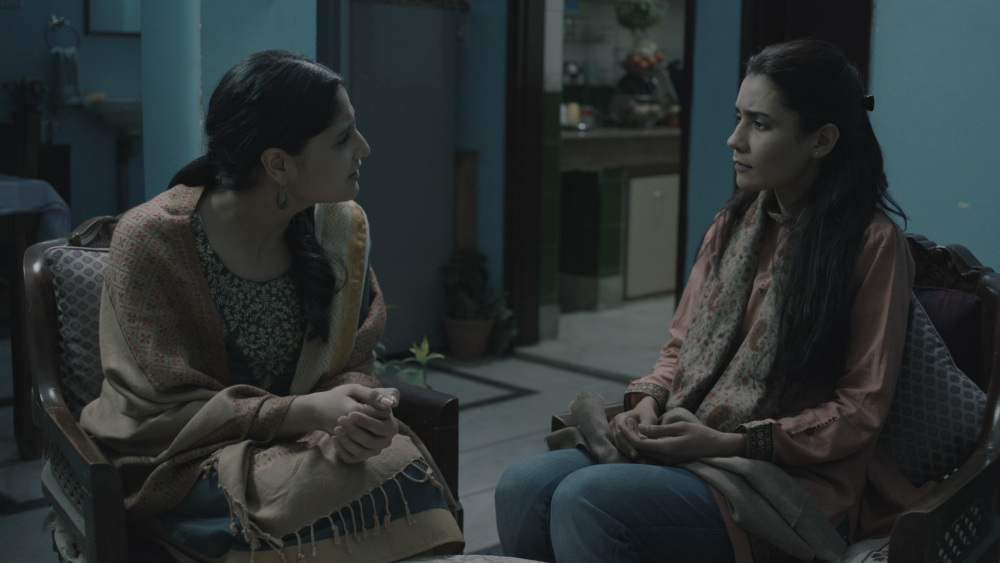
With the script locked in, it’s left to the performances to amplify the importance of the issues the movie explores. As Starr, Stenberg gives one of the best performances of the year, courageously tackling her role head on, and always finding the emotional truth in any given scene. It’s such a mature portrayal, so nuanced and impressive, that on the rare occasions Starr isn’t the focus of a scene, you can’t wait to have her back. There’s fine support from Hall and Hornsby, and Smith proves that his break-out performance in Detroit (2017) wasn’t a flash in the pan. Tillman Jr has assembled a powerful, hard-hitting movie, but despite the quality of Wells’ script and the quality of the performances, it’s a movie that is often more effective in its quieter moments than when it seeks to escalate the tensions inherent within it. A protest march that descends into violence feels timid in relation to the emotions it’s engendered, while the sequence where Starr and Seven are trapped in their father’s burning store is over before any real threat to their lives can be allowed to create any tension. Minor bumps in the road such as these, however, do serve to distract from the good work the rest of the movie revels in, and as they come in the last half hour, unfortunately they undermine some of what’s gone before. But even so, this remains an intense and vigorous exploration of issues that rarely get addressed with this much clarity and confidence.

Rating: 8/10 – despite a few narrative leaps and bounds designed to wrap things up more quickly than necessary, and a few soap opera moments that always feel out of place, The Hate U Give is a vivid, potent examination of America’s continuing racial divide; with its superb central performance, and its ability to tackle complex issues without resorting to being dogmatic or condescending, it’s a significant reminder – as if it has to be said – that all lives matter.

Share this:

  • Click to share on X (Opens in new window) X
  • Click to share on Facebook (Opens in new window) Facebook
  • More
  • Click to print (Opens in new window) Print
  • Click to email a link to a friend (Opens in new window) Email
Like Loading...

The Escape (2017)

15 Saturday Dec 2018

Posted by dullwood68 in Movies

≈ Leave a comment

Tags

Art, Depression, Dominic Cooper, Dominic Savage, Drama, Gemma Arterton, Marital problems, Paris, Review, The Lady and the Unicorn

D: Dominic Savage / 101m

Cast: Gemma Arterton, Dominic Cooper, Jalil Lespert, Frances Barber, Marthe Keller

Tara (Arterton) is a young, stay-at-home wife and mother. Her husband, Mark (Cooper), works long hours, while their two young children, Teddy and Florrie, are of school age but still young enough that they prove a constant source of struggle for Tara as she tries to deal with their beahviours. She is unhappy in the marriage, particularly with Mark’s constant need for sex, which she finds distressing (though he doesn’t know this). When she finally begins to express her unhappiness, Mark is confused, and tries his best to be more supportive, but when Tara puts forward the idea of taking art classes, his support wavers at the first mention. Things come to a head one day when Mark castigates her for being clumsy; Tara packs a bag and leaves right then. She travels to Paris to see a series of tapestries titled The Lady and the Unicorn (the source of her desire to start art classes), and to begin a new life free from the stifling constraints of marriage and motherhood. At the museum she meets a Frenchman, Phillipe (Lespert), and they strike up a friendship, but what seems to be a much needed turning point in Tara’s life, instead brings more problems…

The story of an unhappy woman looking for both meaning and satisfaction in her life, The Escape is a sombre, emotionally redolent drama that isn’t afraid to explore the dark side of being a wife and mother. At one point, Tara confesses that she doesn’t care about her children – at all – and she knows they hate her. It’s a startling admission, relayed in a low-key, subdued manner by Arterton, but exactly the kind of transgressive admission that mothers aren’t supposed to make. This reflection of the depth of Tara’s misery is the movie’s key revelation, the heart of what ails her (if you prefer), and once that particular genie is out of the bottle, it’s obvious that it can’t be put back. Tara will flee the nest she’s built but now detests, and she’ll seek to give her life a renewed purpose. Is she genuinely unhappy with her life? Has she genuinely fallen out of love with Mark? Is she depressed, or suffering from some other form of mental illness? The screenplay (by the director) doesn’t clarify matters – and deliberately so. Tara can’t fully articulate her distress herself, and Savage uses this as a way of holding things back from the viewer. But it’s this that proves the movie’s undoing.

We never get to know what has brought Tara to this point in her life, and why she feels so unhappy. And when she reaches Paris, her initial pleasure at being there soon dissipates once her liaison with Phillipe takes a more serious turn than expected. This section of the movie is the least effective, with Tara’s motivations lacking full credibility, and a brief scene featuring Keller appearing to have been thrown in just to provide a resolution to Tara’s time in Paris. Through it all, Tara remains an emotional enigma, and despite a tremendous performance from Arterton, it’s hard to fathom entirely what’s going on in her head, and why. More successful is Cooper’s distraught husband, unable to fathom why his marriage is falling apart, and without the skills to deal with Tara’s unhappiness. As his efforts to save their relationship fail at every turn, Mark becomes a source of profound pity, and more so than Tara. Cooper and Arterton are great together, and the movie is all the better for the scenes they share, while Lespert’s amiable Frenchman is given short shrift by Savage’s decision to handicap the character in a way that he doesn’t with Tara. The end is deliberately elliptical, and seems to hint at Tara being stuck in the same depressive mind-set as at the beginning – which if true, hints at a broader meaning to events, but one that hasn’t been made clear.

Rating: 6/10 – sterling performances from Arterton and Cooper add lustre to a movie that is much more successful as an exploration of a marriage in freefall, than as an examination of a woman’s need to feel fulfilled; with its writer/director taking a broader approach to the latter theme, The Escape ultimately feels disingenuous once it reaches Paris, and the movie never recovers from its change of scenery and narrative opacity.

Share this:

  • Click to share on X (Opens in new window) X
  • Click to share on Facebook (Opens in new window) Facebook
  • More
  • Click to print (Opens in new window) Print
  • Click to email a link to a friend (Opens in new window) Email
Like Loading...

Come Sunday (2018)

14 Friday Dec 2018

Posted by dullwood68 in Movies

≈ Leave a comment

Tags

Carlton Pearson, Chiwetel Ejiofor, Condola Rashad, Drama, Heresy, Jason Segel, Joshua Marston, Lakeith Stanfield, Religion, Review, True story, Tulsa, Universal reconciliation

D: Joshua Marston / 105m

Cast: Chiwetel Ejiofor, Jason Segel, Condola Rashad, Lakeith Stanfield, Martin Sheen, Stacey Sargeant, Danny Glover, Vondie Curtis-Hall, Ric Reitz

1998, Tulsa, Oklahoma. Carlton Pearson (Ejiofor) is the pastor of the Higher Dimensions Family Church. His congregation is a mix of blacks and whites and his services are attracting around six thousand members each week. He is highly regarded in the community, and has the respect of his peers, and the people who work for him at the church. Things begin to change, though, after he watches a programme about the Rwandan genocide. Believing that he has received an epiphany from God, Carlton begins to refute the notion that non-Christians will automatically go to Hell, and asserts that Jesus Christ died to absolve all of humanity’s sins, not just those who are saved or given absolution. This goes against the received teaching of the church, and it proves too much for many in his congregation, who elect to leave and worship elsewhere. The loss of so many parishioners is further exacerbated by his being declared a heretic by the Joint College of African-American Pentecostal Bishops. Throughout it all, Carlton wrestles with his faith, but remains true to his belief that God has spoken to him, even when it seems that God has now deserted him…

When watching a movie that explores notions of faith and religious belief, it’s often tempting to ask the question, just how is that faith going to be portrayed? Are we going to be treated to a blood and thunder show of Biblical proportions, or a quieter, more considered affair? Come Sunday, the true story of Carlton Pearson and his belief in universal reconciliation, opts for the second approach, but there are certain moments where a bit of blood and thunder wouldn’t have gone amiss. Despite the inherent drama that overtakes Carlton’s life, and which sees him lose his ministry, there’s much about Marcus Hinchey’s otherwise well constructed screenplay that keeps the movie from being as dramatic as it should be. Too many confrontational scenes – between Carlton and his associate, Henry (Segel); between Carlton and his mentor, Oral Roberts (Sheen); between Carlton and the Bishops – lack the vitality and energy that would allow them to stand out from the connective scenes around them. It’s like going to a revivalist meeting, only to find that everyone in the choir has laryngitis and they’re singing in a whisper. Even the scenes between Carlton and his wife, Gina (Rashad), where we learn there are marital problems, have a restraint about them that makes them feel of little consequence in the overall scheme of things.

But where a quieter approach proves more effective is when Carlton begins to question if his new-found belief is right. When everyone except for Gina and his assistant, Nicky (Sargeant), desert him, Carlton’s faith is rocked, and he begins to feel that God has deserted him too. Thanks to a terrific performance from Ejiofor, Carlton’s growing anguish is revealed through the star seeming to shrink physically on screen, while relaying the character’s conflicting emotions through a range of searching looks and pained expressions. There’s subtlety and range to Ejiofor’s performance, and it’s a good thing too, as Marston relies on his star more and more as the movie progresses. The director’s cautious development of the material is another reason why the movie doesn’t soar as it should, and why its examination of true faith feels laboured whenever it’s debated. There are fine supporting turns from Segel and Stanfield (as Carlton’s AIDS-affected musical director), but Sheen is miscast as Roberts, and Rashad is stifled by a role that borders on caricature. In the end, it’s a pallid movie that lacks energy, and which spends much of its running time steering clear of being anywhere near as controversial as Pearson was.

Rating: 5/10 – with its neutered narrative and sub-par dramatics, Come Sunday treats Pearson’s struggle to be explain his epiphany and subsequent denunciation as a heretic as if it were a footnote in a much larger story; with an ending that’s even more low-key than what’s gone before, the message seems to be clear: God isn’t the sure-fire draw He used to be.

Share this:

  • Click to share on X (Opens in new window) X
  • Click to share on Facebook (Opens in new window) Facebook
  • More
  • Click to print (Opens in new window) Print
  • Click to email a link to a friend (Opens in new window) Email
Like Loading...

Chameleon (2016)

13 Thursday Dec 2018

Posted by dullwood68 in Movies

≈ Leave a comment

Tags

Chile, Drama, Gastón Salgado, Home invasion, Jorge Riquelme Serrano, Paula Zúñiga, Paulina Urrutia, Review, Thriller, Violence

Original title: Camaleón

D: Jorge Riquelme Serrano / 80m

Cast: Gastón Salgado, Paula Zúñiga, Paulina Urrutia, Alejandro Goic

For couple Paulina (Urrutia) and Paula (Zúñiga), it’s the morning after a party for their friends to say goodbye to Paulina before she embarks on a trip to England. Their house overlooking the ocean is a mess, but Paula soon sets to cleaning up, while Paulina showers and gets dressed. They share breakfast together, then while Paula tends to a sink that’s overflowed, there’s a knock at the front door. Paulina opens the door to find Gastón (Salgado), there on behalf of their mutual friend, Franco (Goic), who has sent Gastón to apologise for Franco’s rude behaviour at the party. Franco has sent wine glasses that Paulina likes, and a bottle of wine. Paula is a little dismayed by Gastón’s arrival, as she was expecting to spend the day alone with Paulina, but the pair make Gastón welcome, and soon the wine has been poured, and the three of them are discussing various matters related to their jobs, and as time goes on, the relationship between the two women. As Paula becomes more and more drunk from the wine, animosities are revealed, and when she becomes incapacitated, Gastón’s true reason for being there is revealed…

A slow, carefully paced thriller that is unsettling to watch on several occasions, Chameleon is also a telling drama that examines themes surrounding sexual identity and class. When we first meet Gastón, it’s in a prologue that shows him flirting and being intimate with Franco, and so when he later admits that he’s only known Franco since the night before, no one is surprised, and it all seems like a normal occurrence. And Serrano is in no hurry to disabuse the viewer of this idea, even though Gastón is wearing one of Franco’s shirts, and Franco can’t be contacted. Gastón’s presence seems plausible enough, and even though Paulina suspects him of lying about his work, there’s no sense that he’s there for any other reason than the one he’s mentioned. Instead, the greater threat – if any at this stage – comes from the adversarial nature of the two women’s relationship. Paulina is the boss, while Paula adopts a more servile attitude, but the wine allows Paula to express her true feelings about Paulina’s superior attitude, and the lack of a child in their relationship. Throughout all this bickering and emotional unloading, Gastón remains calm and quietly supportive of both of them, and seems genuinely concerned when Paula begins to feel unwell.

This all accounts for the first half of the movie, and Serrano maintains a slow build up that shows a calculated restraint in setting up what is a much darker, less “normal” second half. What happens once Paula is put to bed is a nightmare scenario that plays out in a matter-of-fact way that is augmented by Serrano’s decision to make the viewer an unwilling observer. Ensuring that the camera is there to record what happens instead of providing the viewpoint for any one of the characters, Serrano challenges the audience to keep looking, even though there’s nothing graphic to see. Instead, he builds on the menace that has been there from the beginning, from that unremarkable prologue with Gastón and Franco, and tightens the screws accordingly. It’s a home invasion movie with a grim sense of foreboding about it, and it’s one that doesn’t supply the viewer with any easy answers as to Gastón’s motives (some can be guessed at, but none are definitive). There are solid performances from Salgado and Zúñiga (Urrutia’s character is too one-dimensional to be entirely effective), and Cristián Petit-Laurent’s cinematography is disposed primarily to unnerve the viewer, something that it achieves with verve. And then there’s the ending…

Rating: 8/10 – an undeniably tough watch from the halfway mark onwards, Chameleon is a dark, uncompromising thriller that knows how to make the viewer uneasy – even when they’re not sure why they should be; an impressive debut from Serrano, it’s a movie that’s best approached with as little knowledge about it as possible, and with a willingness on the viewer’s part to accept that the painstaking build up of the first half is a necessary precursor to what follows.

Share this:

  • Click to share on X (Opens in new window) X
  • Click to share on Facebook (Opens in new window) Facebook
  • More
  • Click to print (Opens in new window) Print
  • Click to email a link to a friend (Opens in new window) Email
Like Loading...

The Old Man & the Gun (2018)

12 Wednesday Dec 2018

Posted by dullwood68 in Movies

≈ 1 Comment

Tags

Bank robberies, Casey Affleck, Crime, David Lowery, Drama, Forrest Tucker, Manhunt, Review, Robert Redford, Sissy Spacek, True story

D: David Lowery / 93m

Cast: Robert Redford, Sissy Spacek, Casey Affleck, Danny Glover, Tom Waits, Tika Sumpter, David Carradine, Isiah Whitlock Jr, John David Washington, Elisabeth Moss, Robert Longstreet

In 1981, and in his Seventies, career criminal Forrest Tucker (Redford) is still doing what he’s best at: robbing banks. As the founder of The Over the Hill Gang, Tucker, along with his associates, Teddy (Glover) and Waller (Waits), takes a low key, gentlemanly approach to robbing a bank. He smiles a lot, he pretends to have a gun, and no one ever gets hurt. Of course, the police don’t see it in quite the same light, and a detective, John Hunt (Affleck), becomes determined to catch Tucker and put him away. But this is easier planned than done, as Tucker stays one step ahead of everyone while he also romances a widow called Jewel (Spacek). As Hunt learns more and more about Tucker, and vice versa, a mutual respect develops between the pair. But even knowing Hunt is on his trail, and the promise of an easy retirement with Jewel is within his grasp, Tucker can’t help but keep on robbing banks. It’s not until the police finally track him down, and he’s forced to go it alone, that Tucker has to decide on what kind of future he really wants…

If Forrest Tucker hadn’t been a real life character (he passed away in 2004), and if he hadn’t really escaped from prison around sixteen times (including once, in 1979, from San Quentin), and made an estimated four million dollars from his robberies over the years, then the movies would have had to have made him up. And if a casting director had been charged with finding the perfect actor for the role, then they would have had only one choice: Robert Redford. Widely acknowledged as Redford’s swansong performance, Tucker is a fitting role for an actor who has encompassed all the qualities that David Lowery’s screenplay – itself based on a 2003 article by David Grann – imbues the character with. He’s charming, he has a relaxed manner, he appears unhurried and thoughtful, and he has that smile, that signifier that if you stick with him, everything will be okay, and most of all, a lot of fun. Redford could almost be playing himself, or an older, wiser version of the Sundance Kid, such is the modern day Western vibe that infuses the movie. And he doesn’t even have to do too much to be effective; it’s possibly the most relaxed he’s ever been, and it shows. It’s a performance that feels effortless.

But this being a David Lowery movie, it’s not just about Tucker and his almost carefree attitude to life and other people’s money. It’s also about time – what we do with it, how it affects us, whether the past informs our present, and whether the future should be something to be concerned about – and how our memories can influence how we look at time. Tucker has nothing but fond memories of his life, even though he’s spent most of it locked up, while Jewel feels regret for not having been more selfish with her time when she was married. It’s not difficult to work out which one of them feels that they’ve really been in prison, and just as easy to work out which one is the more fulfilled. But while it would be easy to look at this as another, off-kilter version of the Follow Your Dream experience, the movie is a lot subtler than that, and has a much more solid and dramatic foundation. That Lowery has chosen to layer his movie with a poignant meditation on getting old doesn’t detract from the enjoyment to be had from it, and the discerning viewer will find much that resonates along the way.

Rating: 9/10 – a movie that remains wistful and pleasantly languid for much of its running time, The Old Man & the Gun is still chock full of dramatic moments that highlight the underlying seriousness of Tucker’s “work”; with terrific performances from all concerned, and enchanting cinematography from Joe Anderson, this may end up being regarded solely as a fitting tribute to Redford and his career, but it has so much more to offer, and is so much more rewarding.

Share this:

  • Click to share on X (Opens in new window) X
  • Click to share on Facebook (Opens in new window) Facebook
  • More
  • Click to print (Opens in new window) Print
  • Click to email a link to a friend (Opens in new window) Email
Like Loading...

Beautiful Boy (2018)

11 Tuesday Dec 2018

Posted by dullwood68 in Movies

≈ Leave a comment

Tags

Amy Ryan, Drama, Drug addiction, Father/son relationship, Felix van Groeningen, Literary adaptation, Maura Tierney, Review, Steve Carell, Timothée Chalamet, True story

D: Felix van Groeningen / 120m

Cast: Steve Carell, Timothée Chalamet, Maura Tierney, Amy Ryan, Kaitlyn Dever, LisaGay Hamilton, Andre Royo, Christian Convery, Oakley Bull, Timothy Hutton

After his teenage son, Nic (Chalamet), goes missing for a couple of days, freelance writer David Sheff (Carell) discovers that Nic has a drug habit. David arranges treatment for Nic at a rehab clinic and the teenager makes significant progress, however it’s not long before he goes missing again and his habit becomes an addiction. With the support of his father, and his stepmother, Karen (Tierney), Nic makes a full recovery and goes off to college to focus on writing. Nic relapses, though, and soon he’s back to taking drugs, particularly crystal meth, while insisting that he has everything under control. When an overdose puts Nic in the hospital, David and his ex-wife, Nic’s mother, Vicki (Ryan), decide that he should live with her while he attends rehab sessions. Again, Nic makes significant progress, and is sober for over a year before anxieties about relapsing cause the very thing he’s afraid of to happen. Reconnecting with an old girlfriend, Lauren (Dever), Nic’s addiction spirals even further out of control, which leaves David with a tough decision to make: whether to continue trying to help his son, or admit that he can’t help him at all…

From the synopsis above, it’s easy to guess just how much Beautiful Boy is going to be a movie based around a succession of terrible lows and tantalising highs, and though it’s based on a true story, this is exactly how the movie plays out: Nic takes drugs, Nic gets better, Nic relapses, and so on. Unfortunately, while the quality of the central performances isn’t in doubt – Carell and Chalamet are superb – and van Groeningen’s direction ensures the viewer remains interested throughout, the repetitive nature of the material leads to an emotional distancing that becomes more pronounced as the movie progresses. Though the effects of Nic’s drug addiction clearly take their toll on him and everyone around him, once he’s relapsed the first time (and so early on), you know that it’s going to happen again, and again. The script – by van Groeningen and Luke Davies – does its best to offset this by focusing on David’s efforts to understand his son’s addiction, though strangely, it’s on a more physiological and intellectual level; when Nic explains how drugs make him feel, David doesn’t get it at all. So, while Nic experiences feelings and sensations that make drug addiction, to him, more desirable, David remains somewhat aloof. Even after he’s taken cocaine himself, David is unchanged, and any effect the drug may have had isn’t revealed.

With both father and son unable to connect anymore in a meaningful way, the movie seeks to remind its audience of the tragedy that’s occurring by resorting to flashbacks that show the bond David and Nic shared when he was much younger. These are placed at key points in the narrative and serve as leavening moments against the grim nature of Nic’s addiction. But these too lose their impact through over-use, and by the time Nic reaches rock bottom, the idea of one more poignant remembrance is one too many. But though the structure and the content of the movie hampers its effectiveness, it’s the performances that stand out. Carell has rarely been better, using David’s anger and shame at not being able to help his son, to paint a portrait of a man coming up against the hard fact of his own limitations. As Nic, Chalamet continues to impress, imbuing the character with a desperate, anguished fatalism that is heart-wrenching to watch. The father/son relationship is the heart of the movie, and van Groeningen pays close attention to it, letting it dominate the movie accordingly, while leaving Tierney and Ryan with little to do as a result. At least it doesn’t seek to be profound, or to provide any glib answers to the issues it explores, and that at least is something to be thankful for.

Rating: 7/10 – adapted from books written by both David and Nic, and which allow for a powerful yet emotionally subdued movie, Beautiful Boy is bolstered by two stand out performances, and its refusal to compromise on the dispiriting nature of its storyline; while it doesn’t work as well as it should, and it might not be everyone’s idea of a “good time”, there’s still more than enough on offer to keep the average, or even casual viewer hoping that, by the movie’s end, Nic finds some semblance of peace.

Share this:

  • Click to share on X (Opens in new window) X
  • Click to share on Facebook (Opens in new window) Facebook
  • More
  • Click to print (Opens in new window) Print
  • Click to email a link to a friend (Opens in new window) Email
Like Loading...

Assassination Nation (2018)

10 Monday Dec 2018

Posted by dullwood68 in Movies

≈ Leave a comment

Tags

Abra, Drama, Er0str4tus, Hari Nef, Odessa Young, Review, Salem, Sam Levinson, Secrets, Social media, Suki Waterhouse, Thriller

D: Sam Levinson / 108m

Cast: Odessa Young, Suki Waterhouse, Hari Nef, Abra, Maude Apatow, Anika Noni Rose, Joel McHale, Colman Domingo, Bella Thorne, Bill Skarsgård, Cody Christian, Danny Ramirez, Kathryn Erbe, Jennifer Morrison

In modern day Salem, Massachusetts, Lily Colson (Young) is a high school senior whose main interests are art, challenging the views of the adults around her, and hanging out with her best friends, Em (Abra), Sarah (Waterhouse), and Bex (Nef). She has a boyfriend, Mark (Skarsgård), but also appears to have a relationship with someone called “Daddy”. One day, a mysterious hacker known only as Er0sta4tus begins a campaign of releasing photographs and texts that expose the secrets of a number of well-known townspeople, including the mayor and Lily’s school principal (Domingo). Damage is done in both instances, but it’s when a massive data dump exposes the secrets of half the town that things spiral out of control. Mark finds out about “Daddy”, and Lily is cruelly victimised as a result. A week later, matters worsen for Lily and her friends when a group of vigilantes assert that she is responsible for the data dump. With all four at Em’s house, they find themselves under attack, and unable to count on being rescued by the police…

A triumph of style over substance, Assassination Nation is an angry movie that raves against the intolerance it perceives to be prevalent in the US today, but in the same way that a certain elected proponent of the “fear” factor paints a self-serving, one-sided version of the truth, so too does writer/director Sam Levinson. With the movie lacking in introspection, and unable to provide the necessary causality to make its second half anywhere near convincing, it’s a frustrating experience that starts off well (an early montage of coming attractions that include violence, transphobia, fragile  male egos, and giant frogs is a particular highlight), but which soon abandons any attempts at satire, or subtlety, as it morphs from an impassioned critique of small town hypocrisy into a below par, gender-focused variation of The Purge. Levinson has some pretty big targets in his sights, but doesn’t quite know how to approach them, riffing on the perils of social media and toxic masculinity, but from a cautious distance that only feels truly immersive when he’s subjecting Lily to all sorts of physical humiliation. These moments are also gleefully exploitative, and wouldn’t feel out of place if they’d been lifted from the likes of Day of the Woman (1978).

There’s the temptation to believe that Levinson has set out to shock and upset his audience deliberately, although if that is the case, the why remains a mystery. The one truly upsetting thing about the movie is its lack of narrative clarity. It doesn’t help either that the characters remain singularly one-dimensional from start to finish, with several individuals’ motivations proving murky at best, or risible at worst. It’s fortunate then that the look of the movie is all the more arresting and confidently handled. Thanks to DoP Marcell Rév, Assassination Nation is one of the bolder and more vivid movies released this year, and the visual flair on display is often breathtaking in its audacity. Utilising split screen techniques, filters, odd camera angles, fluid camera work, and tight framing where it’s most effective, Rév makes the movie soar beyond the pedestrian nature of the narrative. It also has a terrific, and eclectic soundtrack that mixes classical, avant-garde, pop, and alternative rap to superb effect. Against this, the performances range from the committed and convincing (Nef), to the perfunctory and underwhelming (Waterhouse, Christian), and in the case of Young, hampered by poor writing and direction.

Rating: 5/10 – a vibrant, visually startling movie that’s also a mess of half-thought out ideas and narrative cul-de-sacs, Assassination Nation wants to get in its viewer’s face and scream about the unfairness of bigotry and hypocrisy, but in the end it’s too unfocused to get its message across except in the clumsiest of fashions; it also has a tough time justifying its “girls can be tough too” approach when their own revenge spree smacks so much of being an obvious male fantasy brought to life.

Share this:

  • Click to share on X (Opens in new window) X
  • Click to share on Facebook (Opens in new window) Facebook
  • More
  • Click to print (Opens in new window) Print
  • Click to email a link to a friend (Opens in new window) Email
Like Loading...

The Sweet Life (2016)

09 Sunday Dec 2018

Posted by dullwood68 in Movies

≈ Leave a comment

Tags

Abigail Spencer, Chris Messina, Comedy, Drama, Golden Gate Bridge, Review, Road trip, Rob Spera, Romance, Suicide

D: Rob Spera / 90m

Cast: Chris Messina, Abigail Spencer, Maggie Siff, Tyson Ritter, J.D. Evermore, Karan Soni, Glenn Plummer, Nick Searcy, Josh Pence, Jayne Brook

After another day of poor returns, depressed ice cream salesman Kenny Pantalio (Messina) contemplates throwing himself off a bridge and ending it all. But he’s interrupted by Lolita Nowicki (Spencer), a young woman with her own suicidal tendencies. When they discover they have the same therapist, it leads to them wandering through night-time Chicago until outside a swanky restaurant, Kenny is mistaken for a valet parker, and is given the keys to a Mercedes. Lolita convinces him to take the car, and that they should travel together to the Golden Gate Bridge where they can both commit suicide. As their journey takes them across country, Kenny and Lolita find themselves in a number of weird situations, from trying to rob a convenience store on the promise of their having a gun, to Kenny’s stealing a car that has a surprising cargo on the back seat, to a side trip to meet someone from Kenny’s past. Through trial and error they arrive in San Francisco, where Lolita’s own past catches up with her, and her relationship with Kenny prompts a sudden decision…

Despite the best of intentions, and the best efforts of its screenplay – by Jared Rappaport – its director, and its two leads, The Sweet Life lacks the necessary credulity to allow the viewer to connect with the characters and the plot. From the moment that Lolita interrupts Kenny’s suicidal reverie, the movie goes off in several different directions all at once, and it tries to become a drama, a comedy, and yes, a romance, and often, all at the same time. This scatter gun effect works well at certain moments, but falls flat at others, leaving the movie feeling haphazard and poorly constructed. Even if you accept the unlikely “meet-cute” that brings Kenny and Loilta together, the contrived nature of their subsequent relationship remains a recurring problem. The idea is that they will support each other during their road trip, but this rarely happens, as each is as selfish and inwardly focused as the other, and even when they do put aside their differences to come to each other’s rescue, it’s always because the script needs them to, not because it makes their journey that much richer or profound. That said, their journey does avoid easy sentimentality, and there are trenchant moments that work surprisingly well.

What Rappaport’s script also avoids is any in-depth explorations of Kenny and Lolita’s reasons for wanting to commit suicide. There are hints and clues, but none that are fleshed out enough to make sense, or allow the viewer to feel sorry for them. Kenny is depressed, and as it transpires, for a variety of reasons; Lolita is the same. But their intention to jump from the Golden Gate Bridge always feels like a stretch, the road trip a way of giving them time to realise that their lives aren’t as bleak as they think, and for the movie to make a number of telling comments about the nature of happiness. If you were watching the movie, and didn’t know why they were heading to San Francisco, you could quite easily believe this was merely another modern rom-com where opposites attract. And on many levels, when the script isn’t addressing this issue directly, the movie is much better for it. Messina portrays Kenny with an increasingly endearing manner that proves likeable by the movie’s end, but Spencer has the very hard task of making Lolita look and sound like someone who would exist in the real world. In the end, Spera’s direction proves too wayward to help matters, and the outcome is both dramatically and emotionally spurious, something that undermines those moments earlier in the movie that do work.

Rating: 5/10 – with little in the way of depth, and little in the way of examining the serious side of suicidal tendencies, The Sweet Life is a rom-com with dramatic pretensions it’s unable to pull off; a frustrating experience, it’s a low-key, genial movie that offers odd moments of poignancy, but never gels into anything more substantial.

Share this:

  • Click to share on X (Opens in new window) X
  • Click to share on Facebook (Opens in new window) Facebook
  • More
  • Click to print (Opens in new window) Print
  • Click to email a link to a friend (Opens in new window) Email
Like Loading...

The Guilty (2018)

08 Saturday Dec 2018

Posted by dullwood68 in Movies

≈ Leave a comment

Tags

Court appearance, Denmark, Drama, Emergency East, Gustav Möller, Jakob Cedergren, Jessica Dinnage, Kidnapping, Police officer, Review, Thriller

Original title: Den skyldige

D: Gustav Möller / 85m

Cast: Jakob Cedergren, Jessica Dinnage, Omar Shargawi, Johan Olsen, Jacob Lohmann, Katinka Evers-Jahnsen, Jeanette Lindbæk

Asger Holm (Cedergren) is a police officer working as a call handler for the Danish emergency response services. He’s doing this while he waits for the outcome of a court appearance that will determine if he remains a police officer. It’s his last shift before his court date, and with around half an hour to go he’s having to deal with the usual amount of time wasters and people who want an emergency response there and then. But one call brings Asger out of his self-imposed funk: a young woman called Iben (Dinnage) tells him she has been kidnapped and is in a vehicle, but she doesn’t know where she’s being taken. Asger knows roughly the area she’s in, and once he gets Iben to reveal the colour and kind of vehicle she’s in, he calls the appropriate police force to look for   her. But as Asger’s shift ends and he decides to stay on, he becomes more and more involved in finding Iben and reuniting her with her two children, who are still at home. But his efforts have unexpected consequences…

With all the action taking place wihin the confines of the Emergency East call centre, and for much of the movie within the further confines of an office where only Asger is situated, The Guilty relies heavily on both its plot, and Cedergren’s performance. Luckily, the plot is a gripping, edge-of-your-seat race against time scenario that sees Asger make a number of mistakes – some avoidable, some not – that both highlight and complicate the urgency of the situation, and which rely on the drip feed of information that some viewers will be able to piece together before Asger does. It’s a scenario that requires Asger to be a very good listener, but with his own issues weighing heavily on him, this proves difficult for him to achieve, and as he gets in deeper and deeper – even to the point of involving one of his police colleagues, Rashid (Shargawi) – his feelings of guilt over the incident that has brought him to the call centre begin to overwhelm him, and his efforts to do the right thing become more and more desperate. As Iben’s situation worsens, so too does Asger’s, and as he strives to save her, it becomes obvious that he’s trying to redeem himself at the same time.

This duality of purpose becomes more and more explicit as the movie progresses, and thanks to a sterling performance from Cedergren, Asger’s taciturn, dismissive demeanour gives way to a maelstrom of unexpected emotions that ultimately prove to be both the source of his undoing and his redemption. Asger isn’t the most sympathetic of characters, and Cedergren makes no attempt to soften him or make him more agreeable, but the narrative is still looking for that positive outcome, and if only Asger can swing it, then that’s okay. Möller and editor Carla Luff instill the movie with a sinewy, muscular rhythm that deflects from just how many times the camera placidly, but effectively observes Asger in close up, and the restrained camera work by DoP Jasper J. Spanning is suitably claustrophobic, making good use of the limited space Asger occupies and further highlighting the urgency of the situation. With good supporting performances from his voice cast, Möller teases out the truth in stages, and confounds audience expectations on a couple of occasions while playing to the gallery at others. It’s a compelling thriller, commendably staged and cleverly executed, and one that balances the demands of its main plot with that of Asger’s own situation with style and a surfeit of brooding self-confidence.
Rating: 8/10 – Denmark’s entry for Best Foreign Language Film at next year’s Academy Awards, The Guilty is a riveting, tightly constructed thriller that doesn’t short change the viewer, or betray its own internal logic in the final third as so many thrillers do; quietly devastating in places, its relatively short running time means not a moment is wasted, and there’s depth lurking beneath the simplicity of the main set up.

Share this:

  • Click to share on X (Opens in new window) X
  • Click to share on Facebook (Opens in new window) Facebook
  • More
  • Click to print (Opens in new window) Print
  • Click to email a link to a friend (Opens in new window) Email
Like Loading...

Oh! the Horror! – The Possession of Hannah Grace (2018) and The Harrowing (2018)

06 Thursday Dec 2018

Posted by dullwood68 in Movies

≈ Leave a comment

Tags

Arnold Vosloo, Cadaver, Demons, Diederik Van Rooijen, Drama, Grey Damon, Horror, Jon Keeyes, Matthew Tompkins, Morgue, Psychiatric hospital, Review, Shay Mitchell

The Possession of Hannah Grace (2018) / D: Diederik Van Rooijen / 86m

Cast: Shay Mitchell, Grey Damon, Kirby Johnson, Nick Thune, Louis Herthum, Stana Katic, Maximillian McNamara, Jacob Ming-Trent

Megan Reed (Mitchell) is an ex-cop still suffering the lingering effects of PTSD from a shooting that saw her partner killed. Getting back on her feet, she takes a job working the night shift at the Boston Metro Hospital morgue. Working alone in her part of the building, her main responsibility is to see in any “new arrivals” and get them processed into the system. Her first night on the job passes by without incident, but on the second night something more out of the ordinary happens: the body of a young woman (Johnson), the victim of a deranged killer who has hacked her body and tried to burn it, is brought in. Alerted to the fact that the killer is still at large, Megan sets about trying to process the body, but her equipment fails at every turn. Later, while seeing in another body, a man (Herthum) slips into the morgue, and hides away. Later still, Megan becomes aware of his presence, and finds him trying to haul the young woman’s body into the incinerator. She overpowers him, and it’s then that he tells her that the young woman, Hannah Grace, isn’t dead…

A modest little horror flick from Sony/Screen Gems, The Possession of Hannah Grace has slipped into cinemas recently, and though there’s always the temptation to think that if it’s in cinemas then it must be better than the usual horror fare released these days, in this case that wouldn’t be entirely appropriate. Originally entitled Cadaver, this has good production values for its budget, a good central performance from Mitchell, and a handful of creepy moments that are as much to do with its setting as it’s title character. However, the story holds about as much water as a paper bag, and the details of Hannah’s possession can best be described as “flaky to the max” (and that’s being generous). This flakiness is the excuse for the supporting characters to be picked off one by one, but on each occasion, the contrivance is obvious and perfunctory. Van Rooijen keeps the scares simple if predictable, but is unable to rein in the preposterousness that runs rampant through the screenplay. The end result is a movie that falls short of being as gripping, or frightening, as its setting should have made it, and which relies too heavily on its title character’s ability to make weird clacking noises when she (inevitably) moves around.

Rating: 4/10 – another frustrating horror movie experience foisted on our cinema screens, The Possession of Hannah Grace is unlikely to bother anyone who’s seen any of the four million other possession movies released in the last few years, or indeed, anyone coming to the genre for the first time either; dull in stretches, with a back story for its heroine that is as unnecessary as these things usually are, it does at least have an ending, and thankfully, not one that sets up a sequel.


The Harrowing (2018) / D: Jon Keeyes / 111m

Cast: Matthew Tompkins, Arnold Vosloo, Arianne Martin, Michael Ironside, Damon Carney, Hayden Tweedie, Michael Crabtree, Susana Gibb, Morgana Shaw, James Cable

Ryan Calhoun (Tompkins) is a vice cop working a sting operation with his partner, Jack (Carney), and newbie, Greenbaum (Cable). While he’s out getting coffee, something goes wrong in the apartment they’re monitoring, and when Ryan gets there, he finds the prostitute who’s been working with them, her trick, and Jack all dead, horribly mutilated, and apparently killed by Greenbaum. Greenbaum attacks Ryan, who shoots him dead, but not before Greenbaum has mentioned something to do with demons. Although he’s removed from the case by his superior, Lieut, Logan (Ironside), Ryan does his own investigating, and discovers that Greenbaum was a patient at a psychiatric facility before joining the force. Electing to go undercover at the facility, which is run by Dr Franklin Whitney (Vosloo), Ryan looks for answers as to why Greenbaum would have committed such a terrible act. Soon he learns that Greenbaum wasn’t the only patient who believed in demons, and that both himself and the other patients are in danger from something truly diabolical…
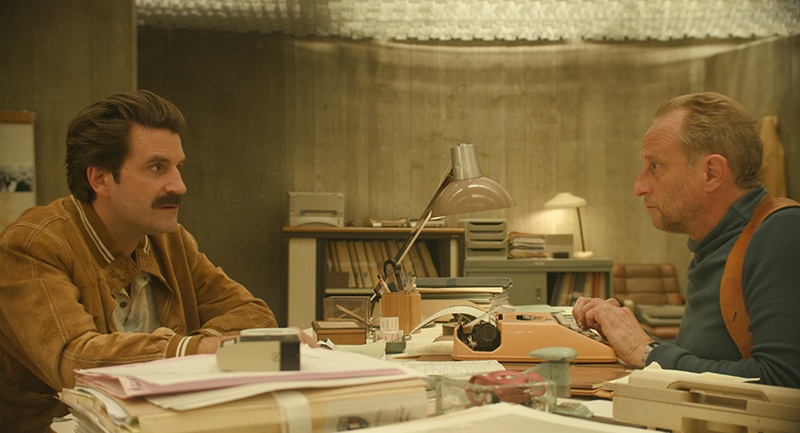
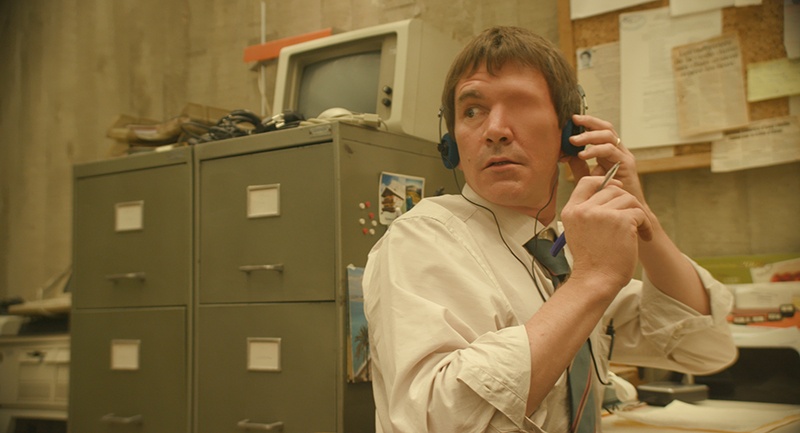
Beginning with a prologue that proves entirely superfluous to what follows, The Harrowing is a less than sure-footed attempt at blending a variety of genres, from the humble police procedural to the psychological thriller, and with a heavy coating of supernatural drama ladled on top. There’s the hint of a neat little mystery here, but it’s buried under a welter of kaleidoscopic lighting effects, more cutaways than could ever be necessary, and a fragmented screenplay that has a defined ending in mind but which doesn’t know quite how to get there without tripping itself up along the way (and more than once). There’s certainly ambition on display here as well, but writer/director Keeyes has opted for visual and aural excess over subtlety in telling his story, and the result is a shouty mess that lacks the coherence needed to keep the viewer intrigued or motivated to keep watching. Things aren’t helped by a truly awful performance from Tompkins, and a number of very questionable directorial decisions made by Keeyes as he tries to create a nightmare fusion of reality and fantasy, but succeeds only in creating a nightmare that the viewer is forced to navigate. By the end, it’s hard to care how it all turns out, and when it does, it does so abruptly – which is some consolation at least given the extended running time.

Rating: 3/10 – when veterans of this sort of thing like Vosloo and Ironside look as if they’d rather be elsewhere, then you know there’s a problem, though for The Harrowing it’s just one of many; another example of low budget equals low return, Keeyes has been doing this sort of thing for a while now, something that begs the question, isn’t it time to try another genre altogether?

Share this:

  • Click to share on X (Opens in new window) X
  • Click to share on Facebook (Opens in new window) Facebook
  • More
  • Click to print (Opens in new window) Print
  • Click to email a link to a friend (Opens in new window) Email
Like Loading...
← Older posts
Newer posts →

Blog Stats

  • 486,619 hits

Recent Posts

  • 10 Reasons to Remember Bibi Andersson (1935-2019)
  • Fantasia (1940)
  • Dances With Wolves (1990) – The Special Edition
  • Kiss of the Spider Woman (1985)
  • The Three Musketeers (1973)

Top Posts & Pages

  • Lost for Life (2013) - Another Look
    Lost for Life (2013) - Another Look
  • Lost for Life (2013)
    Lost for Life (2013)
  • About
    About
  • Mr. Topaze (1961)
    Mr. Topaze (1961)
  • Hunt for the Wilderpeople (2016)
    Hunt for the Wilderpeople (2016)
  • Shock and Awe (2017)
    Shock and Awe (2017)
  • Cardboard Boxer (2016)
    Cardboard Boxer (2016)
  • Billy Lynn's Long Halftime Walk (2016)
    Billy Lynn's Long Halftime Walk (2016)
  • Winter's Tale (2014)
    Winter's Tale (2014)
  • The Haunting of Harry Payne (2014)
    The Haunting of Harry Payne (2014)
Follow thedullwoodexperiment on WordPress.com

Blogs I Follow

  • Rubbish Talk
  • Film 4 Fan
  • Fast Film Reviews
  • The Film Blog
  • All Things Movies UK
  • Interpreting the Stars
  • Let's Go To The Movies
  • Movie Reviews 101
  • TMI News
  • Dan the Man's Movie Reviews
  • Film History
  • Jordan and Eddie (The Movie Guys)

Archives

  • April 2019 (13)
  • March 2019 (28)
  • February 2019 (28)
  • January 2019 (32)
  • December 2018 (28)
  • November 2018 (30)
  • October 2018 (29)
  • September 2018 (29)
  • August 2018 (29)
  • July 2018 (30)
  • June 2018 (28)
  • May 2018 (24)
  • April 2018 (21)
  • March 2018 (31)
  • February 2018 (25)
  • January 2018 (30)
  • December 2017 (30)
  • November 2017 (27)
  • October 2017 (27)
  • September 2017 (26)
  • August 2017 (32)
  • July 2017 (32)
  • June 2017 (30)
  • May 2017 (29)
  • April 2017 (29)
  • March 2017 (30)
  • February 2017 (27)
  • January 2017 (32)
  • December 2016 (30)
  • November 2016 (28)
  • October 2016 (30)
  • September 2016 (27)
  • August 2016 (30)
  • July 2016 (30)
  • June 2016 (31)
  • May 2016 (34)
  • April 2016 (30)
  • March 2016 (30)
  • February 2016 (28)
  • January 2016 (35)
  • December 2015 (34)
  • November 2015 (31)
  • October 2015 (31)
  • September 2015 (34)
  • August 2015 (31)
  • July 2015 (33)
  • June 2015 (12)
  • May 2015 (31)
  • April 2015 (32)
  • March 2015 (30)
  • February 2015 (37)
  • January 2015 (39)
  • December 2014 (34)
  • November 2014 (34)
  • October 2014 (36)
  • September 2014 (25)
  • August 2014 (29)
  • July 2014 (29)
  • June 2014 (28)
  • May 2014 (23)
  • April 2014 (21)
  • March 2014 (42)
  • February 2014 (38)
  • January 2014 (29)
  • December 2013 (28)
  • November 2013 (34)
  • October 2013 (4)

Create a free website or blog at WordPress.com.

Rubbish Talk

Film 4 Fan

A Movie Blog

Fast Film Reviews

The Film Blog

The official blog of everything in film

All Things Movies UK

Movie Reviews and Original Articles

Interpreting the Stars

Dave Examines Movies

Let's Go To The Movies

Film and Theatre Lover!

Movie Reviews 101

Daily Movie Reviews

TMI News

Latest weather, crime and breaking news

Dan the Man's Movie Reviews

All my aimless thoughts, ideas, and ramblings, all packed into one site!

Film History

Telling the story of film

Jordan and Eddie (The Movie Guys)

Movie Reviews & Ramblings from an Australian Based Film Fan

Privacy & Cookies: This site uses cookies. By continuing to use this website, you agree to their use.
To find out more, including how to control cookies, see here: Cookie Policy
  • Subscribe Subscribed
    • thedullwoodexperiment
    • Join 481 other subscribers
    • Already have a WordPress.com account? Log in now.
    • thedullwoodexperiment
    • Subscribe Subscribed
    • Sign up
    • Log in
    • Report this content
    • View site in Reader
    • Manage subscriptions
    • Collapse this bar
 

Loading Comments...
 

    %d