• 10 Reasons to Remember…
  • A Brief Word About…
  • About
  • For One Week Only
  • Happy Birthday
  • Monthly Roundup
  • Old-Time Crime
  • Other Posts
  • Poster of the Week
  • Question of the Week
  • Reviews
  • Trailers

thedullwoodexperiment

~ Viewing movies in a different light

thedullwoodexperiment

Tag Archives: Drama

The Carer (2016)

05 Wednesday Dec 2018

Posted by dullwood68 in Movies

≈ Leave a comment

Tags

Brian Cox, Coco König, Comedy, Drama, Hungary, János Edelényi, Lifetime Achievement Award, Parkinson's disease, Review, Sir Michael Gifford

D: János Edelényi / 88m

Cast: Brian Cox, Coco König, Emilia Fox, Anna Chancellor, Karl Johnson, Andrew Havill, Selina Cadell, Emily Bevan, Roger Moore

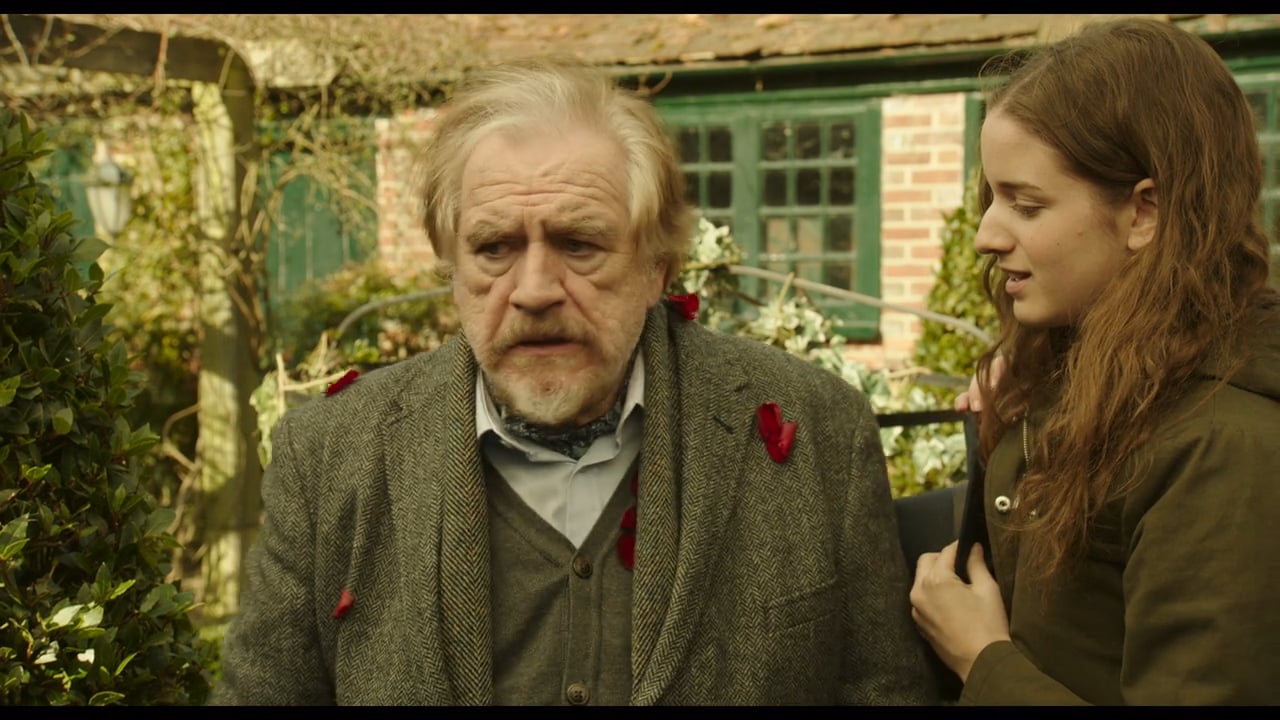
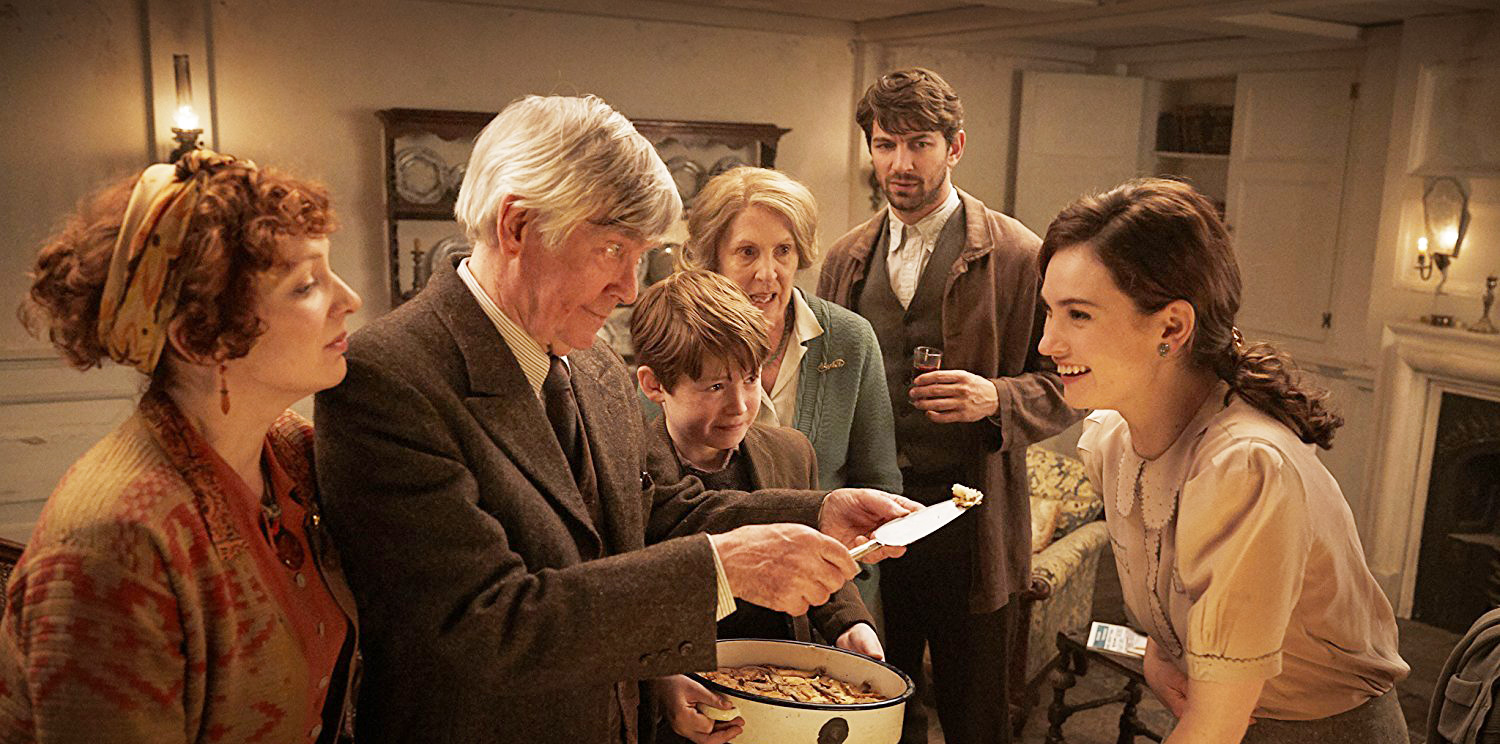
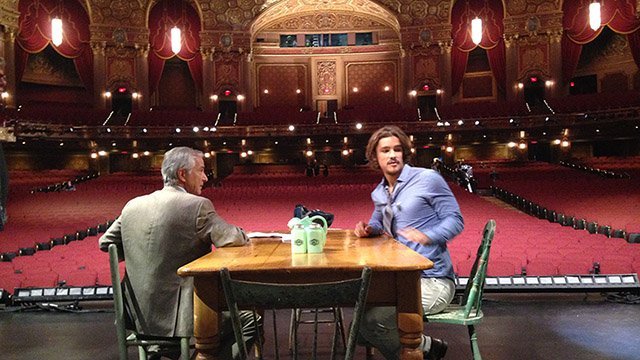
Sir Michael Gifford (Cox) is a British acting legend, equally at home in movies and on television, but mostly on the stage. Now retired and suffering from the early onset of Parkinson’s disease, Sir Michael is being urged to accept having a full-time carer by his daughter, Sophia (Fox), and his housekeeper (and ex-lover) Milly (Chancellor). Resistant to the idea, Sir Michael finds that the introduction of Dorottya (König), a Hungarian care worker who has applied to study drama in the UK, isn’t quite the imposition he expects it to be. With her love of, and ability to quote, Shakespeare, Sir Michael finds Dorottya’s sympathetic approach and youthful enthusiasm something of a tonic – though he reserves his usual dyspeptic disposition for everyone else. However, when he’s put forward for a Lifetime Achievement Award, it causes friction between him and Sophia (who thinks he’s too infirm to attend), and Sophia and Dorottya (who thinks it would be good for him). Sir Michael decides he’s going to go, whether his daughter agrees or not, but before he does he has to recconnect with Dorottya, who has been sacked by Sophia…

In a similar vein to Venus (2006), The Carer is about a crusty, cantankerous old thespian who finds an unexpected kinship with a much younger carer, and in doing so, learns a number of valuable life lessons. And… that’s it. There are Shakespeare quotes a-plenty (with King Lear getting the lion’s share for obvious, though, undercooked thematic reasons), occasional nods to the indignities of getting old (adult nappies), regrets and recriminations flying thick and fast from all sides, and a tendency to soft-pedal any really serious issues through the use of ill-focused humour. Nothing about the movie is surprising or unexpected. It ticks along in time-honoured fashion, hitting each required beat with almost metronomic regularity, and relying on its talented albeit under-served (and undeserved) cast to rescue it from the doldrums of its own making. At no point do you feel that this could be happening in real life, or that you might meet any of the characters while walking down the street. With the action largely taking place at Sir Michael’s baronial hall of a home, a grim sense of claustrophobia soon settles in as Sir Michael takes profanity flecked inconstancy to new levels of banality; he’s the least disagreeable misanthrope you’re ever likely to encounter.

More problematical is the character of Dorottya. The Carer is a Hungarian/British co-production, with a Hungarian director, and dozens of Hungarian crew members, and so the inclusion of König as the title character is, like much else, unsurprising. But Dorottya doesn’t ring true on any level. She’s so one-dimensional you half expect her to disappear when she turns sideways. With the barest of motivations for what she does, and not even the required knowledge that medicaton and alcohol don’t mix, Dorottya is a lumpen plot device designed to allow Sir Michael to play to one last appreciative audience before popping his theatrical clogs. Making her feature debut, König does her best but hasn’t got a hope of imbuing the character with any meaningful traits or mannerisms, thanks to a script that makes very little effort to add depth or texture at any stage of the proceedings. There are misguided attempts at pathos, scattered instances of poorly judged poignancy, and an acceptance speech from Sir Michael that is part ramble, part soliloquy, and all contrived; it’s the musings of an actor who really can’t improvise. Cox is fine despite all this, and it’s fun to see him in his younger days through movies and posters, but if this was a role that was written with him in mind, he shouldn’t feel so flattered.

Rating: 4/10 – visually as bland and uninviting as the storyline proves to be, The Carer strives for emotional resonance and comes up short every time; acceptable only on a very basic level, and even then with reservations, this is a misguided and unconvincing movie that wastes the time and efforts of its cast, and never appears to be aspiring to anything other than being merely perfunctory.

Share this:

  • Click to share on X (Opens in new window) X
  • Click to share on Facebook (Opens in new window) Facebook
  • More
  • Click to print (Opens in new window) Print
  • Click to email a link to a friend (Opens in new window) Email
Like Loading...

Green Book (2018)

04 Tuesday Dec 2018

Posted by dullwood68 in Movies

≈ 4 Comments

Tags

Concert tour, Don Shirley, Drama, Linda Cardellini, Mahershala Ali, Music, Peter Farrelly, Racism, Review, The Deep South, Tony Villalongo, True story, Viggo Mortensen

D: Peter Farrelly / 130m

Cast: Viggo Mortensen, Mahershala Ali, Linda Cardellini, Sebastian Maniscalco, Dimiter D. Marinov, Mike Hatton, P.J. Byrne, Joe Cortese, Brian Stepanek

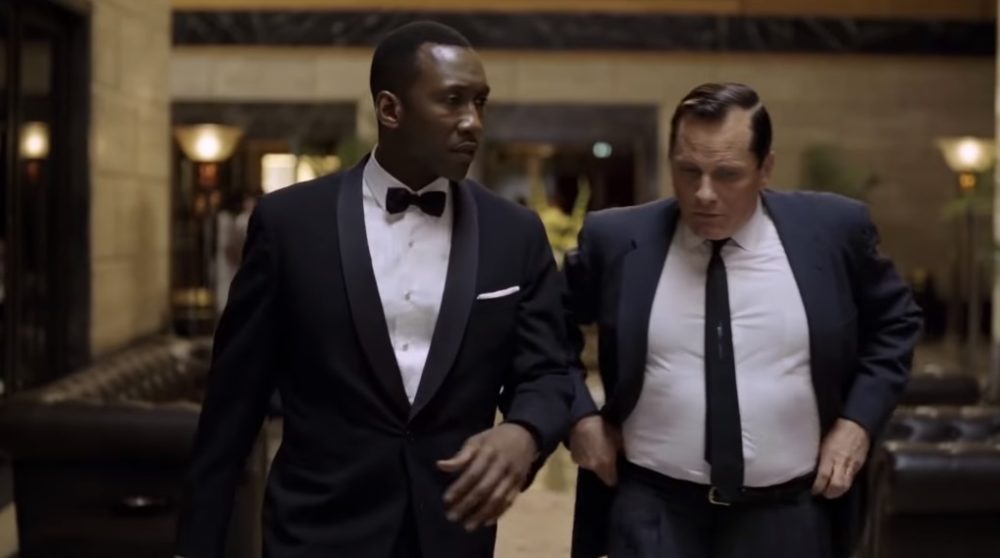
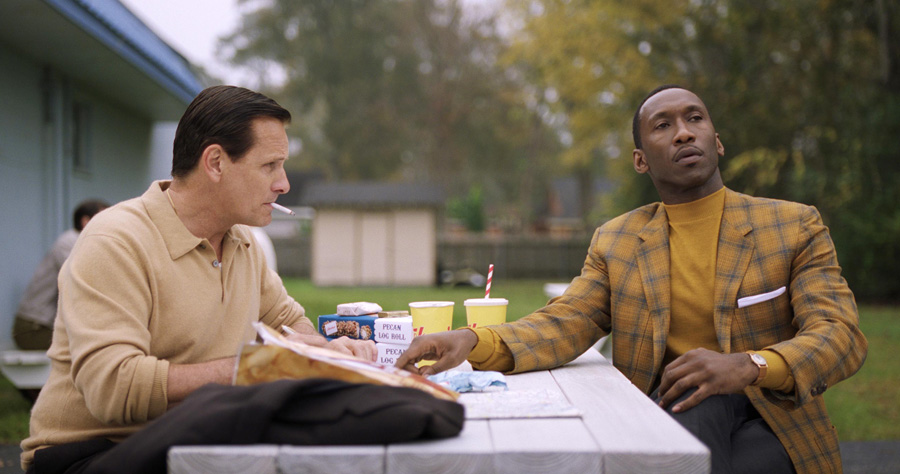
In 1962, in New York City, club bouncer Tony Villalonga (Mortensen) (known as Tony Lip) finds himself temporarily out of work. Though a number of opportunities are open to him, he becomes intrigued when he’s approached through a friend to be a driver for a doctor on a trip down south. At the interview, Tony meets Dr Don Shirley (Ali), and is surprised to learn that Don isn’t a medical doctor, but a doctor of music (amongst other things). The trip down south is a two-month concert tour that will eventually head into the Deep South, and Don needs someone who can keep him out of trouble during the tour. The two men agree terms, and aim to be back in New York City on Xmas Eve. Setting out, their differences in attitude causes friction between them: Tony is uncultured and lacking in certain social graces, while Don is refined and sophisticated. As the trip continues however, Tony and Don begin to develop a mutual respect and understanding, at the same time as the Deep South’s racist agenda begins to threaten the tour’s completion…

If you were black in the early Sixties, and wanted to travel in relative safety through the South, then a good investment would have been a copy of The Negro Motorist Green Book by Victor Hugo Green, a book which listed hotels and restaurants that would accept black people. Tony is given a copy at the start of the tour, and though he has own racist tics, he’s bemused by the idea of such a book. He’s an Italian-American who’s lived his whole life in New York City; his interaction with the kind of institutional racism practiced in the South has been next to zero. For Don, it’s the very fact that this kind of racism is prevalent that he carries out these tours; it’s about not taking the easy option and staying in the North and (literally) playing it safe. But while Green Book has a clearly defined backdrop that encompasses contemporary racism and the social politics of the period, it’s not specifically about those issues. Instead it’s about the blossoming friendship between two men from two very different cultural and social backgrounds who find a common ground through their experiences travelling together. Each learns from the other, and each is a better man for it.

Now, so far it’s another standard tale of friendship achieved between polar opposites, but it’s played out in such a way that both men are made better versions of themselves and without the need for either of them to lose or change any aspect of their character or personality. Instead, they improve themselves, and willingly, seeing their own lives through the ideas and thoughts of each other. This approach takes place over time, and the script – co-written by Villalonga’s real-life son, Nick (who also has a role as one of Tony’s relatives), Farrelly, and Brian Hayes Currie – doesn’t rush things out of any sense of dramatic necessity, relying instead on the subtleties and nuances on the page, and two magnificent performances from Mortensen and Ali. Both actors are on superb form, teasing out small but important revelations about their characters, and relishing the opportunity to work with such strong material. Farrelly, whose output in this decade has been less than compelling – The Three Stooges (2012), anyone? – here hits a home run, getting it tonally and thematically right, and without recourse to unnecessary melodramatics or forced sentimentality. There’s humour amidst the drama, of course (“I knew you had a gun”), but again Farrelly balances it all with skill and intelligence. This is the kind of road trip that you’ll want to go on on a second and maybe a third time, and if you do, you’ll still be as entertained as you were on the first.

Rating: 9/10 – at times, Green Book appears effortless in its attempts to tell a simple story without the need for artifice or contrivance, and it’s this simplicity of style and content – along with a generous helping of cinematic heart and soul – that makes it such a wonderful experience; again, this isn’t about the time period or the geographical area it’s set in, or any combination of the two, it’s about two men with different outlooks and predispositions who become lifelong friends in the unlikeliest of circumstances, and against some pretty long odds.

Share this:

  • Click to share on X (Opens in new window) X
  • Click to share on Facebook (Opens in new window) Facebook
  • More
  • Click to print (Opens in new window) Print
  • Click to email a link to a friend (Opens in new window) Email
Like Loading...

The Miseducation of Cameron Post (2018)

03 Monday Dec 2018

Posted by dullwood68 in Movies

≈ 1 Comment

Tags

Chloë Grace Moretz, Desiree Akhavan, Drama, Forrest Goodluck, Gay conversion therapy, God's Promise, Jennifer Ehle, John Gallagher Jr, Lesbian, Literary adaptation, Review, Sasha Lane

D: Desiree Akhavan / 92m

Cast: Chloë Grace Moretz, John Gallagher Jr, Jennifer Ehle, Sasha Lane, Forrest Goodluck, Emily Skeggs, Owen Campbell, Melanie Ehrlich, Christopher Dylan White, Quinn Shephard, Kerry Butler

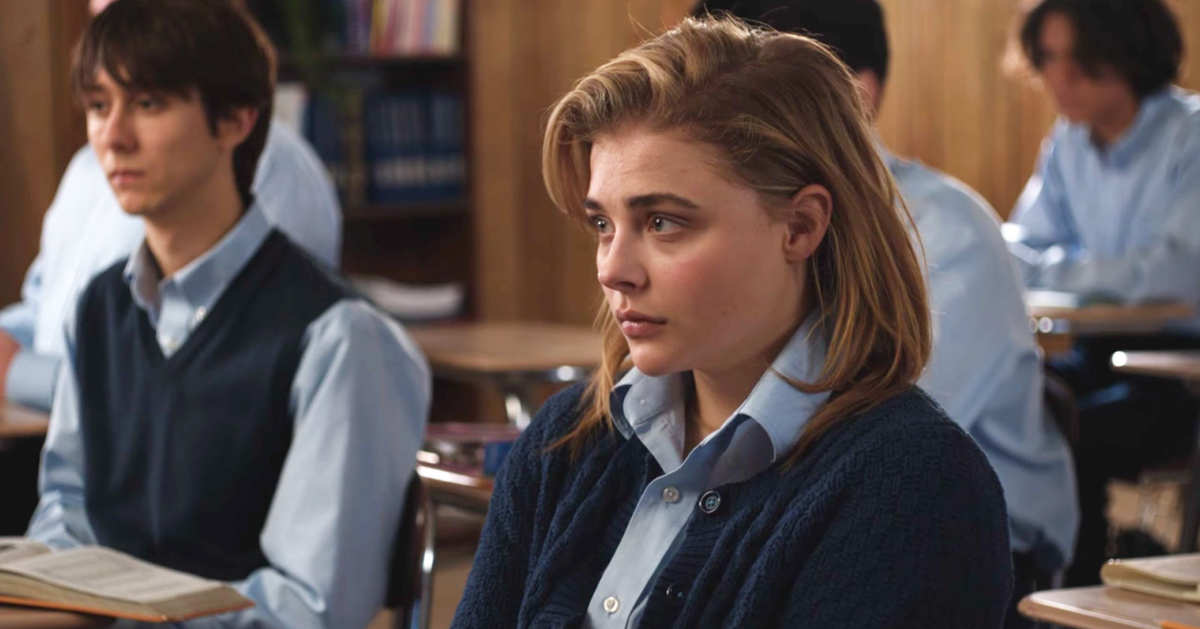
For Cameron Post (Moretz) and her best friend, Coley Taylor (Shephard), being discovered having sex in the back seat of one of their boyfriends’ cars on prom night was not how the evening was meant to turn out. Although not their first sexual experience together, they’ve kept their relationship a secret from everyone, and Cameron, though certain that she’s a lesbian, is still coming to terms with how it will affect her life. However, being discovered leads her aunt (Butler), who is a devout Christian (and who has been raising Cameron since the deaths of her parents), to enrol Cameron in a gay conversion therapy centre called God’s Promise. Run by brother and sister, Reverend Rick (Gallagher Jr) and Dr Lydia Marsh (Ehle), the centre views homosexuality as a sin, and its programme is designed to help young people who are “confused” by their sexuality into making the right changes and embracing heterosexuality. Cameron soon makes friends – mainly with fellow lesbian Jane (Lane) and two spirit Adam Red Eagle (Goodluck) – but she also finds her own certainty about being a lesbian brought into question…

Imbued with a healthy dose of skepticism about the whole notion of gay conversion therapy, The Miseducation of Cameron Post is not the strident call to have these institutions banned that you might think it would be. Instead, it’s a much more subtle piece, adapted from Emily M. Danforth’s novel, and thanks to its historical setting – the movie takes place in 1993 – the movie is able to explore the issues it raises – freedom of sexual expression, religious fundamentalism, nature vs nurture, even free will – with a lightness of tone that seems at odds with the seriousness of its subject matter, but which enables it to get its points across more effectively. This isn’t a movie that wants to pound its viewers over the head with damning rhetoric. Rather, it explores Cameron’s experiences at home and at the centre in a way that gets its message across without it feeling forced or contrived. Cameron poses her challenges to the centre’s programme in a wry, humorous way that makes clear her confusion – not about her sexuality, but whether or not Reverend Rick or Dr Lydia even know what they’re doing (tragically, they don’t). There’s no war of attrition, no acting out or playing up, just an awareness that God’s Promise is not an answer to anything, and so, perhaps not worth the effort to take it seriously.

In adapting Danforth’s novel, director Akhavan and her co-scripter, Cecilia Frugiuele, paint the adults as either blinkered or over-reaching, and the young people as doing what teenagers do best (or worst, depending on your point of view), and that’s working out what kind of people they’re going to be. Anchored by Moretz’s best performance in years, and with strong supporting turns from Lane, Goodluck and Skeggs, Akhavan draws out each character’s strengths and insecurities in such a way that they don’t feel like stereotypes, and the emotional upheaval that they’re experiencing feels genuine. It’s often a delicate balancing act, but Akhavan is more than up to the task, and this is a terrific follow up to her first feature, Appropriate Behaviour (2014). Bristling with confidence in the material, and the approach she’s taken, Akhavan finds nuance and perception in the smallest of details, and without feelig the need to hold the viewer’s hand throughout. The title claims that Cameron has been miseducated, but by the end of the movie, when Cameron, Jane and Adam decide to take matters into their own hands, you could argue that this has been a misstep rather than a miseducation. Either way, it’s a well observed piece that doesn’t skirt the issues it raises, or treat them lightly.

Rating: 8/10 – a movie that doesn’t labour the points it’s trying to make, and which avoids both sentimentality and the need for polemics, The Miseducation of Cameron Post is a sly dog of a movie that sneaks up on the viewer and makes a quiet, yet effective impact; whatever your feelings about religion and homosexuality, and the way the two butt heads so often, this is a movie that stresses humanity over dogma, and finds beauty in the struggle for personal acceptance.

Share this:

  • Click to share on X (Opens in new window) X
  • Click to share on Facebook (Opens in new window) Facebook
  • More
  • Click to print (Opens in new window) Print
  • Click to email a link to a friend (Opens in new window) Email
Like Loading...

The Guernsey Literary and Potato Peel Pie Society (2018)

25 Sunday Nov 2018

Posted by dullwood68 in Movies

≈ Leave a comment

Tags

Channel Islands, Drama, Katherine Parkinson, Lily James, Literary adaptation, Michiel Huisman, Mike Newell, Mystery, Penelope Wilton, Review, Romance, Tom Courtenay, World War II

D: Mike Newell / 124m

Cast: Lily James, Michiel Huisman, Glen Powell, Matthew Goode, Jessica Brown Findlay, Katherine Parkinson, Penelope Wilton, Tom Courtenay, Kit Connor, Bronagh Gallagher, Bernice Stegers, Clive Merrison

In 1946, author Juliet Ashton (James) is in the middle of promoting her latest book, when two things happen simultaneously: The Times Literary Supplement asks her to write a series of articles on the benefits of literature, and she receives a letter from a Guernsey man named Dawcey Adams (Huisman) who is part of a literary society on the island. Intrigued by the idea of a literary society formed during the war, Juliet opts to visit Guernsey and meet Adams and the other members. Just before she sails from London, her American beau, Mark (Powell), proposes to her and she accepts. On Guernsey, Juliet meets all but one of the members of the literary society, and is told that the absent member, Elizabeth McKenna (Findlay), is away on the continent. When she mentions writing an article about the group, one of them, Amelia Maugery (Wilton), refuses to agree to the idea. Sensing there are things that she’s not being told, Juliet remains on the island and soon finds herself beginning to piece together the mystery surrounding Elizabeth’s absence…

Based on the novel of the same name (and how could it be anything different?) by Mary Ann Shaffer and Annie Barrows, The Guernsey Literary and Potato Peel Pie Society is a lightweight slice of rose-tinted nostalgia filtered through the lens of modern movie-making techniques, and with even less substance than the culinary creation in its title (which sounds like a stodge-fest of epic proportions). It’s by-the-numbers movie making with no surprises, an ending you can guess all the way from the rings of Saturn, and as many softly poignant moments designed to raise a tear that can be squeezed into a two-hour run time. It’s cosy, and reassuring in its approach, and it requires almost no effort at all in watching it. In short, it’s a perfectly enjoyable confection that’s written and directed and performed with a keen understanding that it has to be made in a certain way, and that way is to provide audiences with the cinematic equivalent of comfort food. So lightweight is it that the mystery of Elizabeth’s absence isn’t even the most dramatic aspect of the movie – and that’s bcause there’s nothing dramatic about any of it, no matter how hard the script tries, and no matter how hard its director tries also.

Thankfully, all this doesn’t mean that the movie is a bad one, just predictable and bland and almost a perfect tick box exercise in terms of it being a romantic drama with a wartime background. It does feature a clutch of good performances, with James suitably bullish and radiant at the same time, Courtenay delivering yet another example of his recent run of lovable old codgers, Goode effortlessly suave and supportive as Juliet’s publisher, and Powell as the boyfriend who you know is going to be dumped near the end to ensure that true love prevails as it should. Only Huisman looks out of place (and there’s a distinct awkwardness and lack of chemistry between him and James), while Parkinson and Wilton deliver pitch-perfect portrayals of a gin-making (and swigging) spinster, and a still grieving mother respectively. It’s handsomely mounted (though sadly, none of it was actually shot on Guernsey), with impressive production design and period detail, and equally impressive effects shots detailing some of the destruction suffered by London during the Blitz. But still, there’s that traditional romantic storyline that anchors the movie and keeps it from straying too far into original territory. And if there’s one thing that the movie knows above all else, it’s that familiarity – when done correctly – is all you need.

Rating: 7/10 – a movie that can be criticised easily for what it doesn’t do, The Guersey Literary and Potato Peel Pie Society is a modest movie with modest ambitions, and likely to have a modest effect on its audience; a good-natured bit of celluloid fluff, it’s perfect viewing for a wet and windy Sunday afternoon, or when all you need is something that doesn’t require too much effort in order to enjoy it fully.

Share this:

  • Click to share on X (Opens in new window) X
  • Click to share on Facebook (Opens in new window) Facebook
  • More
  • Click to print (Opens in new window) Print
  • Click to email a link to a friend (Opens in new window) Email
Like Loading...

How It Ends (2018)

24 Saturday Nov 2018

Posted by dullwood68 in Movies

≈ Leave a comment

Tags

Black List script, David M. Rosenthal, Drama, Forest Whitaker, Grace Dove, Post-apocalypse, Review, Road trip, Seattle, Theo James, Thriller

D: David M. Rosenthal / 113m

Cast: Theo James, Forest Whitaker, Grace Dove, Kat Graham, Kerry Bishé, Nicole Ari Parker, Mark O’Brien

Will (James) and Sam (Graham) are a young couple living in Seattle who have recently discovered they are going to have a baby. Will flies to Chicago to ask Sam’s father, Tom (Whitaker), for his blessing to marry her, but the evening goes badly due to Tom’s domineering nature. The next morning, as he prepares to fly back to Seattle, Will is talking to Sam on the phone when something mysterious happens and the line is lost. Heading back to her parents’ home, Will finds Tom ready and packed to travel across country to Seattle to find Sam. With all flights grounded, Will goes with him. Their trip is fraught with all sorts of dangers, particularly when an encounter with a police cruiser leaves their car banged up and Tom with a couple of broken ribs. Reaching a small town, they meet Ricki (Dove), a car mechanic with plans to head west. Tom convinces her to come with them, and as they head towards Seattle, the mystery of what happened on the West Coast becomes ever more puzzling. With the US heading into a post-apocalyptic future, the trio have to overcome a number of threats and obstacles in order to find Sam and ensure she’s safe…

The script for How It Ends – by Brooks McLaren – was on the 2010 Black List of highly regarded yet unproduced screenplays. Now that it has been made, it would be interesting to make a comparison between the original Black List script and the final version used here, because this is yet another occasion where the initial hype is very far from justified. For one thing, the characters are paper thin, and barely fleshed out beyond their screenwriting 101 archetypes. Will is a lawyer but his occupation hardly matters as he has no personality or recognisable character traits to make him stand out in any meaningful way. Tom is the classic overbearing father, convinced no one is good enough for his “little girl” and initially dismissive of Will’s presence and minimal capabilities (during the encounter with the police cruiser, he can’t even use a gun properly). Of course, the pair will bond over time, and mutual respect will be formed, but here it happens almost as an afterthought, as if McLaren had forgotten about it, and then realised he needed to tick that particular narrative box before it was too late. The secondary characters are even less interesting, there to help move things along as and when necessary, though Ricki does add a little flavour to proceedings (though this is largely due to Dove’s performance, which looks out of place because she’s actually trying).

The narrative relies on too many moments of convenience – Tom talks their way through a military roadblock, Will convinces a town sheriff to let them through a barricade – and it creates danger at nearly every turn, with almost everyone they meet on the road out to rob them or kill them or both on nearly every occasion. This wouldn’t be so bad if director David M. Rosenthal was able to make these sequences tense or suspenseful, but there’s much that goes wrong in the editing of these sequences, so much so that they lack any appreciable impact, leaving them to slot into a movie that proceeds along a steady, measured pace for much of its running time. The mysterious occurrence on the West Coast goes unexplained for the most part (though there is a conspiracy theory trotted out near the end that is meant to sound plausible but isn’t), and its effects vary from late scene to late scene, until the movie climaxes with a final image that will literally have viewers saying, “This is how it ends…?” But by then, it will have failed to matter long before, making this an apocalyptic event that could have done us all a favour.

Rating: 4/10 – with nods to the breakdown of civilisation that is always expected to occur in these occasions (but within a day or two – and country wide?), How It Ends strives for relevance where it doesn’t need to, and aims for resonance where it doesn’t have to, making this a turgid trip through a less than convincing post-apocalypse Twilight Zone; with no one to connect to, and a series of repetitive encounters with people who have conveniently “turned bad” at the drop of a hat, the movie struggles with a number of ideas it doesn’t know what to do with, and instead of trying, it settles for being banal and dramatically commonplace.

Share this:

  • Click to share on X (Opens in new window) X
  • Click to share on Facebook (Opens in new window) Facebook
  • More
  • Click to print (Opens in new window) Print
  • Click to email a link to a friend (Opens in new window) Email
Like Loading...

To the Bone (2017)

23 Friday Nov 2018

Posted by dullwood68 in Movies

≈ Leave a comment

Tags

Alex Sharp, Anorexia, Carrie Preston, Catch Up movie, Drama, Eating disorders, Keanu Reeves, Lili Taylor, Lily Collins, Marti Noxon, Review, Treatment

D: Marti Noxon / 107m

Cast: Lily Collins, Carrie Preston, Lili Taylor, Keanu Reeves, Alex Sharp, Liana Liberato, Retta, Leslie Bibb, Maya Eshet, Alanna Ubach

Ellen (Collins) is a twenty year old college dropout suffering with anorexia. Returning to her father and stepmother’s home after a failed stint at an in-patient programme, she finds herself put forward for yet another treatment regime, this time run by unconventional therapist Dr Beckham (Reeves). At the urging of her stepmother, Susan (Preston), and younger sister, Kelly (Liberato), Ellen agrees to take part, and goes to stay at a home run by Beckham where sufferers from eating disorders can receive treatment and learn to remind themselves that “life is worth living”. There Ellen meets a variety of fellow anorexics (and bulimics), including Lucas (Sharp), a young, British-born ballet dancer whose career has been cut short by a knee injury and his subsequent anorexia. The pair develop a friendship that sees Lucas act as Ellen’s personal advocate, encouraging her to eat more and to see the world in a more positive light. But Ellen’s demons – largely in the form of something she did that prompted another girl to take her own life – aren’t so easily overcome, and her initial progress is soon derailed by events that she has no defence against…

Early on in To the Bone, Ellen and her sister are sitting talking quietly, an unidentified city spread out before them. Kelly is voicing her concern about Ellen’s condition when Ellen replies, “I’ve got it under control. Nothing bad’s gonna happen.” To which Kelly answers, “How many people do you think are down there? Like 2 million? I bet a bunch of them who are about to die just said the exact same thing.” It’s a poignant moment, and one that highlights the problem on both sides of the eating disorder divide: the sufferers think they’re in control of what they’re doing, while their loved ones wish it were true. And there’s no middle ground. It’s moments like these, where hope and despair collide and cancel each other out, that makes Noxon’s debut as a feature writer/director all the more affecting. A movie that for the most part offers little in the way of concrete answers, To the Bone is instead a powerful and unflinching examination of both the physical effects of anorexia, and the psychological damage that accompanies it. Based around Noxon’s own experiences, the movie steers clear of being yet another “disease of the week” TV-style outing, and instead focuses on what can be done to make someone with an eating disorder value their life again.

Despite some odd moments of fractured humour, mainly expressed through Lucas’s flamboyant behaviour, this isn’t a movie designed to entertain or make the viewer feel good. Which is a good thing, as this would have trivialised the serious nature of the subject matter, and undermined the good work of all concerned. Collins gives an exemplary performance, expressing Ellen’s anger and sense of hopelessness at her situation, and doing so with a clarity and a precision that allows Ellen’s rough-hued antagonism to have a credible emotional and psychological footing. There’s good support from Taylor as Ellen’s mother, unable to deal with her daughter’s suffering because of her own problems, Preston as Ellen’s stepmother, a woman out of her depth but willing to make  mistakes if it helps matters (though usually it doesn’t), and Liberato as the younger sister who misses the version of Ellen that she’s meant to be. If there’s one thorn in the narrative ointment, it’s related to Reeves’ character, a therapist whose benign manner and intuitive insights are jettisoned during a misjudged scene in which Beckham tells Ellen that the answer to her problems is to “grow a pair”. It’s a moment that sits uncomfortably within the rest of the material, but fortunately it’s a rare mis-step in a movie that is otherwise moving and empathetic.

Rating: 8/10 – confidently handled by Noxon, and compellingly structured, To the Bone benefits from an excellent central performance from Collins, and the decision to be non-judgmental of its characters; a journey worth taking then, sincere and unapologetic in its examination of a difficult and important subject, and worthy without preaching or being condescending.

Share this:

  • Click to share on X (Opens in new window) X
  • Click to share on Facebook (Opens in new window) Facebook
  • More
  • Click to print (Opens in new window) Print
  • Click to email a link to a friend (Opens in new window) Email
Like Loading...

An Interview With God (2018)

21 Wednesday Nov 2018

Posted by dullwood68 in Movies

≈ Leave a comment

Tags

Brenton Thwaites, David Strathairn, Drama, Faith, God, Interview, Journalist, Marital problems, Perry Lang, Religion, Yael Grobglas

D: Perry Lang / 97m

Cast: David Strathairn, Brenton Thwaites, Yael Grobglas, Charlbi Dean Kriek, Hill Harper, Bobby Di Cicco

Paul Asher (Thwaites) is a talented young journalist whose coverage of the war in Afghanistan has brought him a measure of acclaim and a good position at the newspaper he works for. He writes religious, faith-based articles, but while his career is going well, his marriage to Sarah (Grobglas) is failing, and his own faith is crumbling in the wake of his experiences in Afghanistan. Not knowing how to resolve any of the issues he’s facing, he finds some distraction in an interview with a man claiming to be God (Strathairn). Paul arranges to meet the man on three consecutive days for thirty minutes at a time. On the first day, the man blithely avoids answering Paul’s direct questions, and poses plenty of his own that Paul finds himself responding to. Later, at home, Sarah’s absence leads him to the realisation that she has left him. Meeting the man again the next day, the interview becomes more adversarial, with “God” insisting that he is there to help Paul, but with Paul refusing to believe him. Confused and scared by the effect the interviews are having on him, Paul struggles to come to terms with the very real possibility that this man really is God…

In An Interview With God, the Almighty is a middle-aged man in a bland suit who dispenses axioms with all the dexterity of someone used to bamboozling the people he meets. In the more than capable hands of David Strathairn, he also conforms to the idea that God is unknowable, even when God Himself is telling you all you need to know about Him – or isn’t. This is at the heart of the initial mystery of whether the man really is the One True God, or whether he’s just a con artist looking to exploit Paul’s emotional problems for unknown reasons. But this being a Christian movie first and foremost, it doesn’t take long for the mystery to be jettisoned and God’s identity to be confirmed (it happens during the first interview). What follows is a jittery, dramatically unstable examination of faith and how its loss can have a profoundly negative effect on our lives, and particularly in relation to personal trauma. However, Paul’s experiences in Afghanistan are never explored in a way that would allow us to have any insights into what ails him, and his failing marriage hinges more on Sarah’s feelings than his own. He may be in pain, but – and here’s the irony – we have to take it on faith that he is.

The script – by Ken Aguado – does its best to explore notions of salvation and free will, but skims over questions such as why do bad things happen to good people (the answer? They just do). With God answering Paul’s questions often with another question, their conversations soon feel like empty existential banter tricked out to sound illuminating and profound. Also, such is the amount of cod-philosophical repetition in these scenes, it’s hard to decide if Aguado and director Perry Lang were aware that this approach was stifling the material, and making it feel stilted. In the end, the movie opts for a literal answer to the question of God’s identity when a more ambivalent one would have suited the material better. As the embattled Paul, Thwaites acquits himself well but is hampered by his character lacking sufficient depth for us to care about him except superficially, while Strathairn opts to play God as a kind of exasperated guidance counselor. Both actors are good in their roles, but mostly this is against the odds, as their characters remain ciphers throughout. With artifice increasingly the order of the day, and faith sometimes treated as an abstract concept, the movie ends on a feelgood note that it hasn’t quite earned, or is deserving of.

Rating: 5/10 – the tagline asks, What Would You Ask? but this is as profound as An Interview With God ever gets, thanks to a wayward, not fully realised screenplay, and some awkwardly staged scenes between Paul and his boss (Harper) (and Paul and Sarah… and Paul and God…); in the end it proves nothing except that God continues to work in mysterious ways – if you believe in that sort of thing – and none more so than in allowing this movie to be made as it is.

Share this:

  • Click to share on X (Opens in new window) X
  • Click to share on Facebook (Opens in new window) Facebook
  • More
  • Click to print (Opens in new window) Print
  • Click to email a link to a friend (Opens in new window) Email
Like Loading...

Almost Adults (2016)

19 Monday Nov 2018

Posted by dullwood68 in Movies

≈ Leave a comment

Tags

Comedy, Drama, Elise Bauman, Friendship, Justin Gerhard, Lesbianism, LGBTQ+, Natasha Negovanlis, Review, Romance, Sarah Rotella

D: Sarah Rotella / 90m

Cast: Natasha Negovanlis, Elise Bauman, Justin Gerhard, Winny Clarke, Mark Matechuk, Pujaa Pandey, David John Phillips

Cassie (Negovanlis) and Mackenzie (Bauman) are best friends on the verge of leaving college and heading out into the wider world. Cassie has recently split up from her boyfriend, Matthew (Matechuk), while Mackenzie is coming to terms with being a lesbian. While Cassie tells Mackenzie about her love life, Mackenzie feels awkward about coming out to Cassie; she’s told their mutual gay friend, Levi (Gerhard), and recently her parents, but is unsure how Cassie will react. Persuaded  by Levi to look for a girlfriend on Tumblr, Mackenzie continues to avoid telling Cassie she’s a lesbian, while a couple of chance encounters with Matthew lead Cassie to wonder if she is over him. Inevitably, Cassie finds out about Mackenzie’s “secret”, and her disappointment causes a rift between them. As they navigate the new dynamic of their friendship, with each finding fault with the other for their attitudes and behaviours, both Cassie and Mackenzie try to come to terms with all the new feelings and emotions they’re experiencing. Mackenzie begins a relationship with Elliot (Clarke), while Cassie focuses on getting the job she wants. As they focus on their own needs, though, their friendship suffers even more…

In any movie where one character keeps something a secret from their family/friends/workmates (delete as appropriate), the reason for their doing so often remains unanswered at best, or spuriously explained at worst. Almost Adults opts for the second approach and never makes Mackenzie’s reasoning convincing. Fortunately, this narrative misstep doesn’t hurt the movie too much, but it does mean that the animosity that develops between Cassie and Mackenzie feels unnecessarily contrived; in real life, Mackenzie’s reticence probably wouldn’t make such a difference. But where Adrianna DiLonardo’s subtly observant screenplay scores more highly is in its depiction not of two characters falling out because of a poorly motivated secret, but because they are finally learning how to be responsible adults. Their friendship – when we first meet them – is the kind that has them swearing to be in each other’s lives forever, the kind of promise that teenagers make out of a desperate need to be needed. DiLonardo soon waves off this affectation, and has Cassie and Mackenzie behave like the insecure and selfish young adults they really are. When faced with the demands of moving on to the next stage in their lives – and their friendship – life soon finds them unprepared and trying their utmost to control everything around them, including each other.

Although the movie falls under the LGBTQ+ banner thanks to its inclusion of openly gay characters, it’s not a movie about being gay. Rather it’s a movie about finding your place in the world, and at a pivotal moment in most people’s lives, when growing up becomes a mandatory requirement. Look what can happen if you don’t, the movie seems to be saying, and though it does include its fair share of coming-of-age clichés, it’s not weighted in favour of either character, and it does its best not to make easy judgments. Making her feature debut, Rotella handles the material with a lightness of touch that helps the movie through some of its rougher patches, and she has a knack for positioning the camera at odd yet effective vantage points. As the warring BFF’s, Negovanlis and Bauman have an easy chemistry that makes their characters’ falling out all the more dramatic, while Gerhard steals nearly all his scenes as the mandatory wise gay friend. The movie balances comedy and drama (with a smattering of romance) to good effect, and proves appealing throughout. It’s not ground-breaking stuff, or particularly original, but what it does it does with a quiet confidence and skill, and in a way that impresses more than it disappoints.

Rating: 7/10 – by not taking the obvious route in telling its story of a friendship undone by poor choices and a crippling lack of self-awareness on both sides, Almost Adults avoids looking and feeling like every other LGBTQ+ movie you might have seen recently; enjoyable though not exactly profound, and with two praiseworthy central performances, it’s a lovely, self-effacing diversion, and well worth anyone’s time and attention.

Share this:

  • Click to share on X (Opens in new window) X
  • Click to share on Facebook (Opens in new window) Facebook
  • More
  • Click to print (Opens in new window) Print
  • Click to email a link to a friend (Opens in new window) Email
Like Loading...

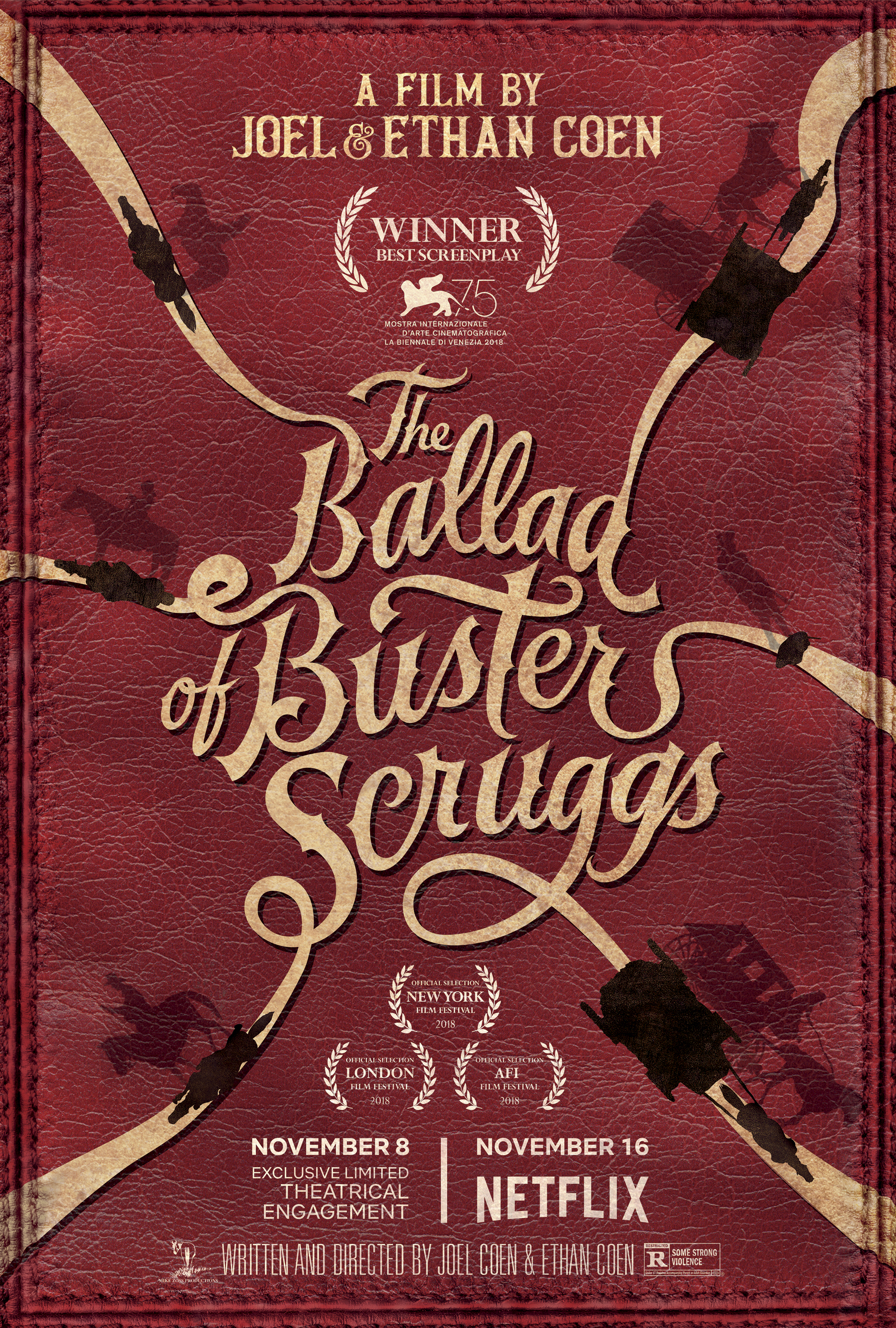
The Ballad of Buster Scruggs (2018)

17 Saturday Nov 2018

Posted by dullwood68 in Movies

≈ Leave a comment

Tags

Comedy, Drama, Ethan Coen, Gold prospector, James Franco, Joel Coen, Liam Neeson, Outlaw, Review, Tim Blake Nelson, Tom Waits, Wagon train, Western, Zoe Kazan

D: Joel Coen, Ethan Coen / 133m

Cast: Tyne Daly, James Franco, Brendan Gleeson, Bill Heck, Grainger Hines, Zoe Kazan, Harry Melling, Liam Neeson, Tim Blake Nelson, Jonjo O’Neill, Chelcie Ross, Saul Rubinek, Tom Waits

Six tales from the Old West: The Ballad of Buster Scruggs, in which the titular singing outlaw (Nelson) rides into a small town and finds himself threatened with being shot at almost every turn; Near Algodones, in which a would-be bank robber (Franco) underestimates the difficulty of robbing his latest target, and winds up on the verge of being lynched; Meal Ticket, in which a grizzled impresario (Neeson) travels from town to town in a wagon that converts into a small stage that allows an armless and legless young orator called Harrison (Melling) to perform; All Gold Canyon, in which an aging gold prospector (Waits) discovers a valley that may just provide him with the strike he’s being hoping for; The Gal Who Got Rattled, in which a young woman (Kazan) travelling to Oregon by wagon train with her brother, finds herself alone and at the financial mercy of an unscrupulous trail hand; and The Mortal Remains, in which a group of travellers on a stage coach discover that their destination may not be exactly the one they’re expecting…

The Coen brothers have apparently been writing Western short stories for years, and The Ballad of Buster Scruggs showcases some of those stories, plus one based on a story by Jack London (All Gold Canyon), in a handy compendium sized movie that offers a variety of pleasures for the interested viewer. Each tale or segment is different from the others both in terms of content and approach, though the Coens’ trademark humour can be found in all of them, and each is self-contained and thematically restrained. With no overlaps or need to wonder if a character from one story will pop up in another one, the various tales are linked only by a framing device that depicts each story as part of a volume entitled The Ballad of Buster Scruggs and Other Tales of the American Frontier. With this conceit established, the Coens proceed to have a lot of fun with their opening story, with Scruggs breaking the fourth wall and taking part in a series of shootouts that are ingeniously and very cleverly staged (the confrontation between Scruggs and Clancy Brown’s poker player is simply genius). There’s more physical humour to be found in Near Algodones, and though it is funny to watch, it’s the slightest of the six tales on offer.

The tone changes completely with Meal Ticket, and the story ends on a dark note that is a little uncomfortable, as commerce and altruism make for uneasy bedfellows (kudos too to the special effects work that makes Harrison’s limbless nature so convincing). Another switch is provided by All Gold Canyon, practically a solo performance by Waits and supported by some of the most stunning natural scenery seen in any movie this year. It speaks towards determinism and self-will, and like its predecessor, provides a wry commentary on the hardships of frontier life. Perhaps the most fully realised and affecting of all the stories is The Gal Who Got Rattled, which skillfully blends comedy and romance into its narrative, and which features a terrific performance from Kazan as an innocent abroad whose naïvete eventually gets the better of her (be warned: there are illustrations that accompany the stories in the framing device, and this one hints strongly at the story’s outcome). And lastly, The Mortal Remains sees the Coens ending the movie with a tale that strictly speaking isn’t related to the Old West or the frontier, but will be familiar to anyone who enjoys tales of the macabre or supernatural. All in all, the Coens have taken a chance in combining so many disparate stories within one movie, but such is their control over the material, and their confidence in their abilities as writers and directors, that as a result, it’s a movie that works exceptionally well throughout, and has much to offer – even for those who don’t like Westerns.

Rating: 8/10 – a compendium of stories that each hold their own, and which offer different narrative rewards, The Ballad of Buster Scruggs is an affectionate tribute to the Old West from a couple of writers/directors who clearly have a fascination for the period and its hardships; very funny in places, and with a dramatic flair to match, the movie sees the Coens back on form after the perceived stumble of Hail, Caesar! (2016), and showing that there’s still life in the Old West if you know where to look.

Share this:

  • Click to share on X (Opens in new window) X
  • Click to share on Facebook (Opens in new window) Facebook
  • More
  • Click to print (Opens in new window) Print
  • Click to email a link to a friend (Opens in new window) Email
Like Loading...

Peterloo (2018)

13 Tuesday Nov 2018

Posted by dullwood68 in Movies

≈ Leave a comment

Tags

Drama, History, Manchester, Massacre, Maxine Peake, Mike Leigh, Politics, Radicals, Review, Rory Kinnear, St Peter's Fields, True story

D: Mike Leigh / 154m

Cast: Rory Kinnear, Maxine Peake, Pearce Quigley, Karl Johnson, Neil Bell, Philip Jackson, John-Paul Hurley, Tom Gill, Vincent Franklin, Jeff Rawle, Philip Whitchurch, Martin Savage, Roger Sloman, Sam Troughton, Alastair Mackenzie, Tim McInnerny, Dorothy Duffy, Victoria Moseley

In the wake of Napoléon Bonaparte’s defeat on the Continent in 1815, the working classes in the north of England turn their attention to protesting against the lack of fair political representation, and asking for extended voting rights (one vote per household). Getting wind of this, and viewing it as impending sedition, the British Government – as represented by the Home Secretary, Lord Sidmouth (Johnson) – decides to do all it can to ensure that this new movement is unsuccessful, and preferably crushed before it can begin. While local radicals from the Manchester Observer, including its founder, Joseph Johnson (Gill), organise a great assembly to take place at St Peter’s Fields in Manchester on 9 August 1819, with a speech to be delivered by the great reformist orator Henry Hunt (Kinnear), government spies and local magistrates plot to have Hunt arrested and the crowd dispersed by force if necessary. With a crowd of around 60,000 people attending, the local militia’s attempts to break up the gathering lead to a terrible tragedy…

Beginning on the battlefield in 1815, Mike Leigh’s latest movie features several firsts for the director in terms of action and bloodshed, but Peterloo is also his most fiercely political movie to date. In telling the story of one of Britain’s worst tragedies, Leigh takes us on a vital history lesson, ranging from the semi-rural mill towns of Lancashire and their inhabitants’ clamour for fair political representation, to the richly decorated rooms of the Establishment and their unwillingness to ease the yoke of political oppression, to the austere courtrooms of the local magistrates and their callous disregard for the lives of the working class. In meeting rooms and at outdoor venues, Leigh explores and illuminates the political and social climate of the period, and through the use of lengthy speeches and extended conversations, brings to life a time when liberty was a luxury afforded only to the ruling elite, and the working classes were so beaten down they were constantly in danger of dying from starvation and disease. Leigh brings all this to life, and gives powerful voice to both the ideals of the radicals and their supporters, and the arrogance of the Establishment. By the time the massacre gets under way, the audience knows exactly what is being fought for (albeit peacefully), and why it matters. And why the elite are so determined to impede any progress.

If all this sounds irredeemably dry and didactic, then nothing could be further from the truth. Like Eric Rohmer, whose movies often consist of just two people talking at length but which are still fascinating to watch, Leigh has the same ability to draw in the viewer and make the expression of ideas as compelling as the action that inevitably follows in their wake (though if anything, the massacre itself isn’t as well realised as the rest of the movie, and carries a strangely muted impact, as if Leigh didn’t want to go too far in depicting the violence). There are real emotions on display, however, from the peacock-ish pride of Henry Hunt, to the cautious reticence of Peake’s unconvinced wife and mother, to the fervour and enthusiasm of the leaders of the nascent Manchester Female Reform Society, to the priggish belligerence of the Prince Consort (McInnerny). In this, the cast are uniformly excellent, with special mention going to Bell as radical reformer Samuel Bamford, and Franklin as the vituperative, apoplectic Magistrate Rev Etlhelson. With expressive, beautifully composed cinematography by Dick Pope that further brings the period to life, along with Suzie Davies’ highly impressive production design, this is a gripping account of a despicable act of state-organised domestic terrorism.

Rating: 9/10 – not for all tastes, but a compelling and revealing look at a key moment in 19th century British history nevertheless, Peterloo sees Mike Leigh working at the height of his considerable story-telling powers; absorbing, intelligently handled, and brimming with vitality, this does border on being unashamedly polemical at times, but when the quality of the material is this good, it’s something that can be easily forgiven.

Share this:

  • Click to share on X (Opens in new window) X
  • Click to share on Facebook (Opens in new window) Facebook
  • More
  • Click to print (Opens in new window) Print
  • Click to email a link to a friend (Opens in new window) Email
Like Loading...

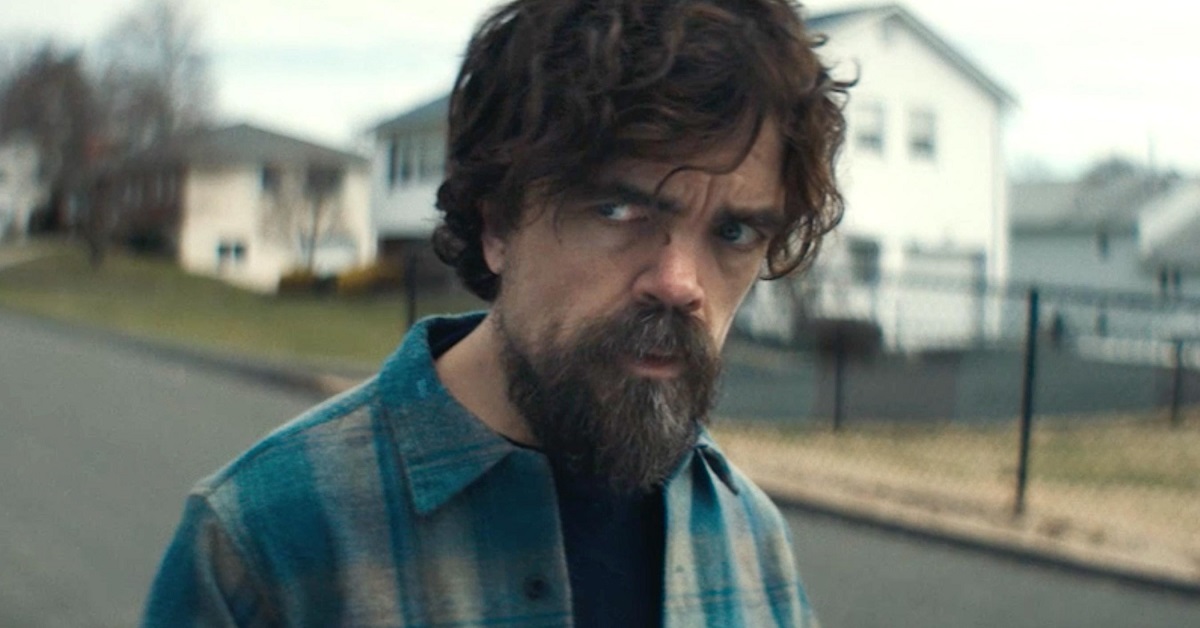
I Think We’re Alone Now (2018)

12 Monday Nov 2018

Posted by dullwood68 in Movies

≈ Leave a comment

Tags

Charlotte Gainsbourg, Drama, Elle Fanning, Mystery, Paul Giamatti, Peter Dinklage, Post-apocalypse, Reed Morano, Review, Sci-fi

D: Reed Morano / 99m

Cast: Peter Dinklage, Elle Fanning, Paul Giamatti, Charlotte Gainsbourg

In a small US coastal town, Del (Dinklage) is apparently the only survivor of a worldwide catastrophic event that has seen everyone else killed off. Something of a loner before this happened, Del has adjusted quickly to being alone, and divides his time between his job at the library, and systematically cleaning homes and disposing of bodies. He’s content, until one day he sees fireworks going off across the bay. The next day he encounters a young woman, Grace (Fanning), who has suffered a head injury in a car accident. His surprise at finding someone else alive is muted by his wanting to be alone; he tries to get Grace to move on, but she appears to be just as alone as he is. An uneasy relationship begins to develop between them, and Grace helps with the house cleanings and body disposals. Days pass in this way, with the pair coming to terms with each other’s quirks and foibles, including Del’s collecting photographs of the people who lived in the houses he’s cleaned. But it’s Grace’s story that intrudes more decisively – with the arrival of Patrick (Giamatti) and Violet (Gainsbourg)…

The second feature of cinematographer/director Reed Morano, I Think We’re Alone Now is a slow, meditative, yet absorbing examination of what it’s like to be alone, and what it’s like to want to be alone. In a muted, largely contained performance from Dinklage, Del comes across as the de facto embodiment of survivor’s guilt, taking on the responsibility of looking after the dead and their homes and belongings, as if by doing so he can atone for being alive when they’re not. No explanation is given for the apocalyptic event that has caused people to drop dead wherever they are (though not in the street apparently), and no explanation is given as to why Del hasn’t died as well. This adds to the melancholy feel of Del’s predicament, one that he’s embraced but which also feels like a guilty fait accompli. The arrival of Grace has a profound effect on him: how can he continue to feel the same way when she’s obviously happy to be alive, and this is how he should really be feeling? It’s not a question that Del – or Mike Makowsky’s screenplay – is able to answer with any authority, and before there’s any likelihood of the issue being addressed, along come Patrick and Violet to take the story in a different direction altogether.

To be fair, this narrative switch has been signposted a couple of times already by then, but when it does happen, the movie ceases to be about loneliness and becomes something else entirely. Examining what that involves would be to spoil things (mostly), but it can be noted that the movie ceases to be as effective or as absorbing as it’s been with just Del and Grace as our guides to this eerie new world (it also feels like something of a cheat, as if two competing narrative strands had been glued together for the sake of a dramatic final third). This also leaves the careful construction of the relationship between Del and Grace in limbo, and offers Del a chance to play the unlikely hero. Unconvincing as this may be, Morano, who directs in a formal yet expressive manner that adds a layer of hazy unreality to the overall mise en scene, provides moments of serene beauty but is unable to rectify the larger problems with the script. It’s a shame as Dinklage and Fanning make for a great “odd couple”, and there’s a decent enough central idea on display. But more work needed to be done on the movie as a whole, making this compelling and frustrating at the same time.

Rating: 6/10 – with its post-apocalypse background serving as the anchor for its tale of melancholy self-negation, I Think We’re Alone Now strives for resonance but falls short thanks to the vagaries of its script; good performances from all concerned are sadly not enough to prop up the movie, but Morano does more than enough to cement her growing reputation as a director to watch.

Share this:

  • Click to share on X (Opens in new window) X
  • Click to share on Facebook (Opens in new window) Facebook
  • More
  • Click to print (Opens in new window) Print
  • Click to email a link to a friend (Opens in new window) Email
Like Loading...

Hurricane (2018)

11 Sunday Nov 2018

Posted by dullwood68 in Movies

≈ Leave a comment

Tags

David Blair, Drama, History, Iwan Rheon, Milo Gibson, Poland, RAF, Review, Stefanie Martini, True story, World War II

aka Hurricane: Squadron 303

D: David Blair / 108m

Cast: Iwan Rheon, Milo Gibson, Stefanie Martini, Marcin Dorociński, Krystof Hádek, Christopher Jaciow, Slawomir Doliniec, Radoslaw Kaim, Adrian Zaremba, Hugh Alexander, Nicholas Farrell, Rosie Gray

Having seen their country overrun by the Nazis, a number of Polish fighter pilots, including Jan Zumbach (Rheon) and Witold Urbanowicz (Dorociński), find their way to England where they join the Royal Air Force. It’s 1940, and Britain is suffering heavy casualties in the air, and is fast running out of both planes and pilots. With the RAF top brass unwilling to let them fly their best planes because of doubts about their skills and experience, it takes a while for the Poles to find a role in the War. Eventually, they form 303 Squadron, based at RAF Northolt aerodrome, and take to the skies during the Battle of Britain. Their courage and determination brings them aerial glory, and despite some resentment among some of the British pilots, the Poles soon find themselves highly regarded. Jan begins a relationship with a WAAF called Phyllis (Martini), but as the war continues and inevitably, his comrades are killed, Jan begins to experience an ambivalence about the war that sees him become angrier and more reckless…

Of the many stories to come out of World War II, the story of the Polish fighter pilots who served in the RAF is one of the more remarkable. In the first six weeks of combat, they claimed an unprecedented hundred and twenty six kills, and by the end of the war, 303 Squadron had the highest ratio of enemy aircraft destroyed to their own lost. With such a notable history, it’s a shame then that Hurricane resorts to lazy soap opera dramatics in telling the Poles’ story. The tone is set when we see Jan steal a plane in France in order to reach England: instead of being a perilous endeavour that could go wrong at any moment, it’s treated as something of a practical joke on Jan’s part. Good-natured banter ensues between the Poles while they wait to be put to good use, and only when the RAF top brass assign lucky Canadian John Kent (Gibson) to oversee their training. Rule-breaking and insubordination are the order of the day from then on, alongside skirmishes with British pilots who are brought in to be unpleasantly racist, something that’s heightened by Phyllis dumping her usual man (Alexander) in favour of Jan. It’s history perhaps, but played out in a distant, modern fashion that doesn’t suit the period.

While the movie does get darker as the war continues – and the Polish body count rises – we see flashbacks to the fates of Jan and Witold’s spouses at the hands of the Nazis. This sobering of the narrative is necessary but feels underwhelming; there’s always another soap opera moment waiting just around the corner, such as when Jan seeks to repay the hospitality of a working class family, only to find their home has been destroyed in a bombing raid (the inference is clear but Jan never actually checks to see if they’re dead or alive). Elsewhere, there’s a member of the squadron suffering from cowardice, plenty of stiff upper lip moments, and the strange sight of a book on Rudimentary Polish that’s the size of War and Peace. Thankfully the aerial dogfights rescue the movie from its self-inflicted doldrums, though the anonymity of the pilots in these sequences (despite as many cockpit close ups as possible), lessens the impact when one of them is killed. The cast are proficient without being asked to do too much, and TV veteran Blair does his best to cope with the few demands of Robert Ryan and Alistair Galbraith’s patchy screenplay. All in all, it’s a great story, but here it’s also one that never seems like it’s being encouraged to truly “take off”.

Rating: 5/10 – lacklustre, though enjoyable in a basic, just-go-with-the-flow kind of way, Hurricane is the kind of movie that doesn’t even tell you its title is the make of plane its main characters are flying; without the requisite energy needed to make it as compelling as it should have been, the movie founders under a weight of good intentions and unrealised ambitions, something that can’t be said of its Polish pilots in real life – dzięki Bogu.

Share this:

  • Click to share on X (Opens in new window) X
  • Click to share on Facebook (Opens in new window) Facebook
  • More
  • Click to print (Opens in new window) Print
  • Click to email a link to a friend (Opens in new window) Email
Like Loading...

Brothers’ Nest (2018)

10 Saturday Nov 2018

Posted by dullwood68 in Movies

≈ Leave a comment

Tags

Australia, Black comedy, Clayton Jacobson, Drama, Kim Gyngell, Lynette Curran, Murder, Review, Shane Jacobson, Thriller

D: Clayton Jacobson / 93m

Cast: Shane Jacobson, Clayton Jacobson, Kim Gyngell, Lynette Curran, Sarah Snook

Brothers Terry (Shane Jacobson) and Jeff (Clayton Jacobson) arrive at their childhood home early one morning, and set about preparing to kill their stepfather, Rodger (Gyngell), and make it look like suicide. Jeff has come up with the plan pretty much all by himself: the idea is to stop Rodger inheriting the family home and then selling it when their mother (Curran) passes away (she has cancer and only a few months left to live). Looking at it as a way of ensuring they keep what they regard as theirs, and to honour their biological father who killed himself when he discovered Rodger was having an affair with their mother, the pair work through Jeff’s plan down to the minutest detail. As time passes, the brothers reminisce about their childhood, and the impact Rodger has had on their lives. They also learn things about each other that makes Terry begin to question if what they’re doing is necessary, Finally, and as expected, Rodger arrives at the house, but Jeff’s meticulously devised plan begins to unravel from the moment that Rodger doesn’t enter the house straight away, forcing the brothers to improvise…

A pitch black comedy that starts off slowly before ramping up the tension and making at least two scenes very uncomfortable to watch, Brothers’ Nest is an assured, finely tuned movie that has a lot going on “under the hood”. Reuniting the Jacobson brothers for the first time since the sublime Kenny (2006) (though Clayton had a much smaller role), the movie spends much of its first half in exploring each brother’s reasons for being there, and the complicated family and emotional ties that have led them to contemplating murder as a way of solving problems they can barely articulate (at one point Jeff insists on their being honest with each other, but it’s an idea neither is able to commit to). It’s tempting to speculate that the Jacobsons – working from a script by Jaime Browne – have drawn from their own relationship in order to portray Terry and Jeff, but if that were so then you’d be seriously worried for them: both brothers have enough unresolved issues to keep a team of therapists busy for years. Clayton teases out a number of subtle character moments that point to things going wrong even if they go right, and these are based on equally subtle undercurrents that inform the characters’ motives and the quality of the performances.

It’s when things do start to go wrong that the movie kicks into a higher gear and becomes a dark, uncompromising thriller, with the brothers forced down a path that brooks no return or chance of redemption. The humour, which so far has been a mixture of unsettling and morbid, becomes blacker still, but it’s all in service to the desperate efforts of Terry and Jeff to rescue their plan, and when that’s no longer possible, for one of them to save himself at any cost. The movie does lose its way in the final twenty minutes, when the confines of the house are overtaken by events that take place outside, but there’s a messy desperation to these events that seems appropriate even as the material, and its credibility, is stretched a little too thinly. Throughout it all, Clayton uses low level camera angles and subdued lighting to emphasise the off-kilter nature of the brothers’ plan, while sound designer/supervisor Emma Bortignon provides cues and effects that add to the discomfort the movie promotes throughout. With tremendous performances from both Shane and Clayton, the movie works best when focusing on Terry and Jeff’s fractured relationship, but when it takes a (much, much) darker turn, it still manages to keep them at the centre, while exploring their fragile bond even further – even when it proves increasingly uncomfortable to do so.

Rating: 8/10 – despite a last act detour into violent melodrama that’s tonally at odds with what’s gone before, the bulk of Brothers’ Nest is a quietly disturbing look at fratricidal dysfunction set against a simmering backdrop of unresolved family betrayals; tense and tautly executed, let’s hope it’s not another twelve years before the Jacobsons work together again.

Share this:

  • Click to share on X (Opens in new window) X
  • Click to share on Facebook (Opens in new window) Facebook
  • More
  • Click to print (Opens in new window) Print
  • Click to email a link to a friend (Opens in new window) Email
Like Loading...

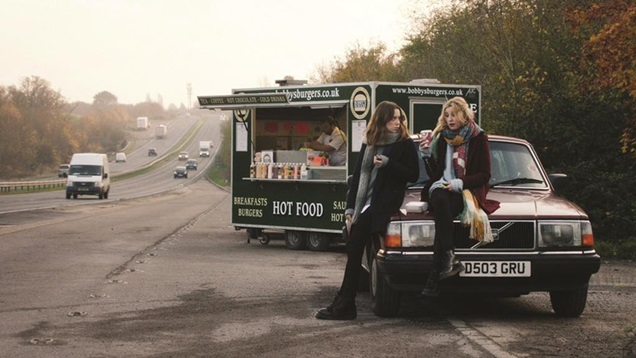
Burn Burn Burn (2015)

09 Friday Nov 2018

Posted by dullwood68 in Movies

≈ Leave a comment

Tags

Ashes, Chanya Button, Chloe Pirrie, Comedy, Drama, Indie movie, Jack Farthing, Laura Carmichael, Review, Road trip

D: Chanya Button / 105m

Cast: Laura Carmichael, Chloe Pirrie, Jack Farthing, Joe Dempsie, Alice Lowe, Julian Rhind-Tutt, Sally Phillips, Melanie Walters, Jane Asher, Nigel Planer, Matthew Kelly, Alison Steadman

Following the death of their friend, Dan (Farthing), best friends Seph (Carmichael) and Alex (Pirrie) find themselves tasked with spreading his ashes at four different locations. To help make sense of his choices, Dan has made several short videos that the pair have to watch when they arrive at each destination. At first, though, they aren’t keen on the idea, and decide not to do it. But when their grief and anger and confusion over Dan’s death from cancer causes both of them to lose their jobs (and Alex discovers her girlfriend is seeing someone else), they head out on the road to carry out his final wishes. Along the way, Seph begins to doubt whether she and her boyfriend, James (Dempsie) should be together, a detour to visit Alex’s mother (Walters) leads to the exposure of uncomfortable truths for Alex, and Seph’s behaviour threatens to cause a rift between them that’s exacerbated by some scathing comments by Dan on his videos. It all leaves Seph and Alex wondering if agreeing to Dan’s wishes was the right thing to do…

A charming mix of drama and comedy that often hides a melancholy centre, Burn Burn Burn is a deceptively sincere meditation on the nature of regret and the emotional toll it can take. Dan regrets the life he’ll no longer live and what he perceives as the mistakes he’s made with his mother (Asher). Seph regrets the choices she’s made both professionally (she works as a nanny for a therapist who consults from home) and personally (her relationship with James). And Alex has regrets over a childhood incident that causes her to push people away. It’s no wonder that they all became friends: how could they not when they’re such kindred spirits? The beauty of Charlie Covell’s nimble screenplay is that Dan uses his regrets as a way of challenging Seph and Alex to examine and overcome their own problems, and as the journey progresses from location to location, so Seph and Alex confront and overcome the things that are holding them back. There’s a welcome lack of empty sentimentality, and none of the cloying mawkishness that might ordinarily come with a movie such as this, and Button, making her first feature, keeps a tight control over the emotional dilemmas and resolutions that the screenplay delivers with aplomb.

The movie also offers up several surprising scenes that seem out of place at first, but which on closer inspection, relate closely to the characters and their predicaments. Alex makes a startling confession while tied to a cross (she’s standing in for an AWOL am-dram Jesus), while an overnight stay at a commune headed by counter-culture philosopher Adam (Rhind-Tutt) sees the pair part of a group gazing at the stars and determining what’s important in life. Moments such as these add appreciable depth and no small amount of artless candour to the narrative, and help make the characters’ problems relatable. As the troubled pair, Carmichael and Pirrie both provide astute, sympathetic, and likeable performances, and there’s fine work from Farthing that roots around in the despair of dying too young with a frankness that’s often unsettling to watch. The rest of the cast looks like a who’s who of acceptable British cameo providers, and Lowe aside (who’s once again asked to play the same character she normally plays, just in a medieval costume), they acquit themselves well, offering deft touches and character beats that flesh out their roles. Their portrayals are all in service to a movie that eschews the usual quirky road trip analogies, and which centres instead on telling its heartfelt story with quiet verve and incisiveness.

Rating: 8/10 – a winning blend of honest drama and good-natured comedy, Burn Burn Burn is a modest yet effective first outing from Button that is a pleasant and rewarding alternative to the huge number of similar movies that are out there; brimming with confidence, and unafraid to tackle some difficult topics head on, it’s bolstered by a moving score and soundtrack courtesy of Marc Canham and the indie band Candy Says, and leaves you wanting to know just how Seph and Alex get on once their trip is over.

Share this:

  • Click to share on X (Opens in new window) X
  • Click to share on Facebook (Opens in new window) Facebook
  • More
  • Click to print (Opens in new window) Print
  • Click to email a link to a friend (Opens in new window) Email
Like Loading...

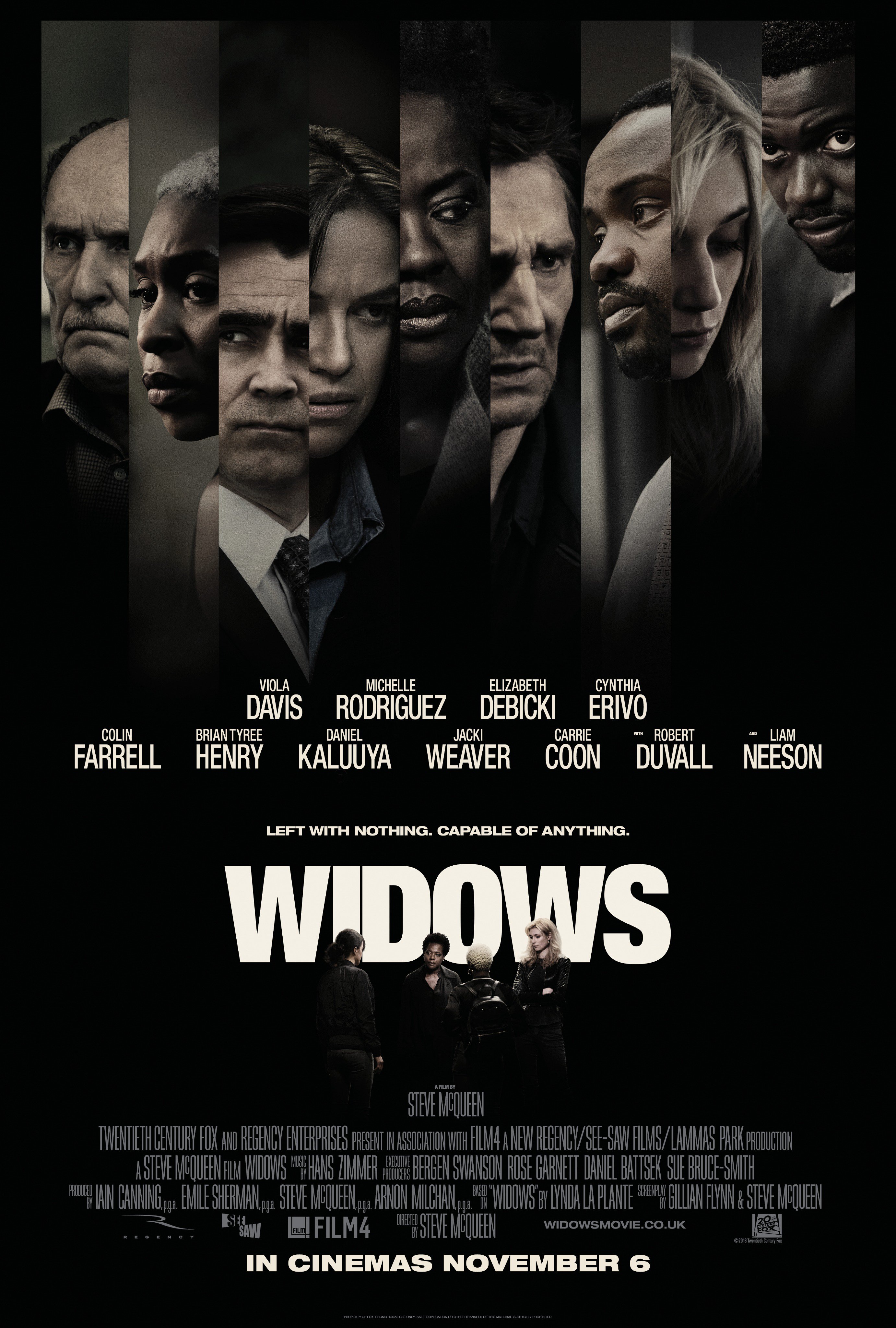
Widows (2018)

08 Thursday Nov 2018

Posted by dullwood68 in Movies

≈ 1 Comment

Tags

Chicago, Colin Farrell, Crime, Cynthia Erivo, Drama, Elizabeth Debicki, Literary adaptation, Michelle Rodriguez, Review, Steve McQueen, Thriller, Viola Davis

D: Steve McQueen / 130m

Cast: Viola Davis, Michelle Rodriguez, Elizabeth Debicki, Cynthia Erivo, Colin Farrell, Brian Tyree Henry, Daniel Kaluuya, Carrie Coon, Garret Dillahunt, Lukas Haas, Kevin J. O’Connor, Jacki Weaver, Matt Walsh, Adepero Oduye, Robert Duvall, Liam Neeson

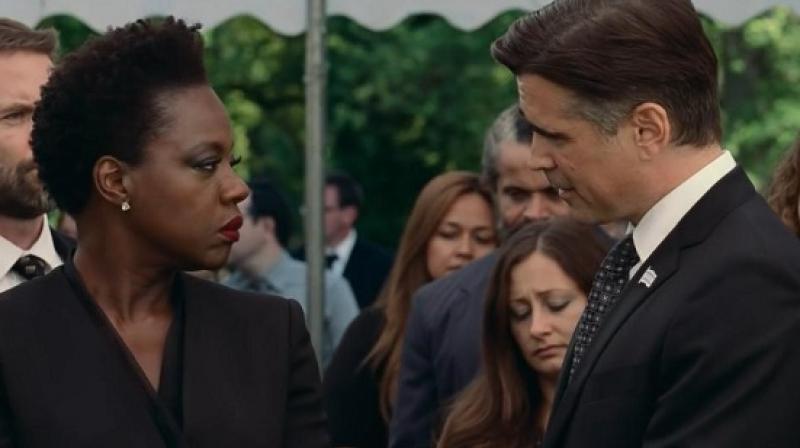
In the wake of her husband’s death in a heist gone wrong, Veronica Rawlings (Davis) finds herself in a whole lot of trouble. Her husband, Harry (Neeson), along with three of his friends – all career criminals – stole two million dollars from gang boss Jamal Manning (Henry), and though his money is gone, he expects Veronica to pay him back within a month. With no money of her own, and only a notebook Harry left her that gives details of his previous heists – and the one he had planned next – Veronica decides her only option is to contact the wives of the other men in Harry’s gang, and persuade them to help her carry out his next robbery, which will net them a cool five million. Two of the women, Linda Perelli (Rodriguez) and Alice Gunner (Debicki), agree to help, but the fourth, Amanda (Coon), isn’t interested. Needing four of them to carry out the heist, Linda recruits her babysitter, Belle (Erivo). They move forward with the plan, but are unaware that they’re being watched…

An adaptation of Lynda La Plante’s novel, Steve McQueen’s latest movie is an odd beast indeed, quite formal in its approach, but with occasional directorial flourishes to remind the viewer that this isn’t just a heist movie, it’s a serious heist movie, unlike, say, Ocean’s Eight (2018). Here, lives are at stake, and the cost of failure is unthinkable. It’s a dour, earnest movie that explores notions of sexism, political expediency (care of a subplot surrounding a ward campaign involving Farrell’s reformist alderman versus Henry’s aspiring gang boss), proto-feminism, spousal betrayal, and personal legacies. The script, by McQueen and author Gillian Flynn (Gone Girl, Sharp Objects), is adroitly constructed, but though the pair have worked hard to bring the characters to life and present them against a credible backdrop (well, as credible as these kinds of movies can manage), there’s not much here that will either come as a surprise, or which doesn’t follow in an expected order. Even if you’re not familiar with La Plante’s novel, or the original British TV series, the few twists and turns in the narrative won’t have much of an impact, and getting through the movie almost becomes a tick box exercise.

That’s not to say, however, that the movie is bad, or disappointing, just oddly straightforward and dramatically sincere without ever rising above the expectations of the genre. Perhaps this kind of story has been told too many times before for McQueen to provide us with anything fresh or new. And there’s the small matter of Davis’ and Debicki’s characters having more screen time than Rodriguez’ and Erivo’s. This lop-sided approach to the main quartet seems a little counter-intuitive in a movie that seems to be promoting female solidarity, and often, some character beats are cut short in order to move on to the next phase of the heist and its planning. On the agnate side, the likes of Duvall, Kaluuya and Dillahunt are saddled with perfunctory, under-developed secondary roles, while Farrell does his best to make sense of a character whose ambivalent motives rarely make sense. Thankfully, Davis and Debicki are on hand to provide two excellent performances. That Davis is so good is a given, but it’s Debicki who shines the most, imbuing Alice with a steely survivor’s determination to make life better for herself that is both complex and credible; whenever she’s on screen, she holds the audience’s attention in a vice-like grip. That the rest of the movie doesn’t manage to do this, is again, something of a surprise, but in playing out as expected, it doesn’t disappoint entirely. Instead it’s a respectable effort that isn’t as memorable as we all might have hoped.

Rating: 7/10 – despite all the effort and all the talent involved, Widows lacks the kind of verve needed to make the thriller elements thrill, and the dramatic elements resonate; McQueen directs as if his brief was to be a pair of safe hands, and though it’s technically well put together, somewhere along the way, any idea of elevating the material doesn’t appear to have been acted on.

Share this:

  • Click to share on X (Opens in new window) X
  • Click to share on Facebook (Opens in new window) Facebook
  • More
  • Click to print (Opens in new window) Print
  • Click to email a link to a friend (Opens in new window) Email
Like Loading...

Everything Beautiful Is Far Away (2017)

07 Wednesday Nov 2018

Posted by dullwood68 in Movies

≈ Leave a comment

Tags

Andrea Sisson, Desert, Drama, Indie movie, Joseph Cross, Julia Garner, Pete Ohs, Review, Sci-fi, The Crystal Lake

D: Pete Ohs, Andrea Sisson / 91m

Cast: Julia Garner, Joseph Cross, C.S. Lee, Jillian Mayer

Trekking across a nameless desert with no destination in mind, or any particular idea of where he is in relation to anywhere else, Lernert (Cross) is alone except for a robot head he carries with him, called Susan (Mayer). Lernert has a plan to provide Susan with a new body, but the occasional items he finds on his journey are largely unsuitable. One day he discovers a young woman (Garner) who has eaten a poisonous root vegetable. Saving her life, he attempts to connect with her, but she prefers to continue her own travels by herself. Later, the tables are turned when Lernert suffers an injury that renders him unconscious, and the woman, whose name is Rola, tends to his wound. While he’s unconscious she finds an illustrated book that Lernert is writing called The Quest for the Key. The story mentions a crystal lake, which Rola finds too coincidental: she is searching for a semi-mythical crystal lake located somewhere in the desert. When Lernert comes to, he tells her he doesn’t know anything about it, but they agree to look for it together. And when they find a power source that allows Susan to be “woken up”, she reveals that she knows how to gude them there…

If you’re a fan of slow moving, leisurely paced, yet absorbing sci-fi movies set in an uncertain future, then Everything Beautiful Is Far Away will be exactly what you’re looking for. Winner of the US Fiction Cinematography Award at the 2017 Los Angeles Film Festival, the movie looks and feels like an elegiac meditation on the will (and the need) to believe in something greater than oneself – the crystal lake as a symbol of hope, and possibly, redemption – and the importance of the journey towards it. Lernert appears to have a purpose in wandering the desert, but it’s mainly to stay alive and avoid any signs of civilisation (at one point a city can be glimpsed in the distance, but the ominous cloud hanging over it acts as a warning: don’t go there). Whatever has happened, Lernert is doing his best to get away from it. Likewise Rola, though her goal is clearer and more defined: there’s a crystal lake and even though there’s no proof it exists, she’s determined to find it. Part wishful thinking, part survivalist mantra, Rola’s search for the lake brooks no discussion. With nothing better to do to occupy his time, what else should Lernert do but accompany her?

Most movies of this nature would soon have its lead characters becoming romantically attached, but screenwriter and co-director Ohs has other ideas, and keeps Rola and Lernert at arms length from each other. Instead they become friends, and this is much more realistic and in keeping with the movie’s modest aims and ambitions. Ohs slowly builds up their relationship, and their increasing reliance on each other, and as their journey continues, they also learn from each other. Ohs and Sisson ensure these developments play out naturally and with little to no artifice, and their efforts are rewarded by note perfect performances from Garner and Cross. There’s subtlety and nuance to both their roles, and though we learn nothing of their characters’ back stories (or what catastrophe has befallen the world), we’re more than happy to follow them on their search for the lake. The co-directors also keep things interesting visually, emphasising the bleakness and the beauty of the desert landscapes Rola and Lernert are traversing, while also including themes relating to our reliance on technology, and why our belief systems are so important to us. It’s perhaps a polarising movie – you’ll either love it or hate it – but there’s no denying that it’s unexpectedly compelling, and a refreshing change from more mainstream fare.

Rating: 8/10 – a singular movie that takes chances with its narrative, though they’re rewarding ones over all, Everything Beautiful Is Far Away is affecting and beautifully rendered; the sci-fi elements are downplayed in favour of a more traditional dramatic approach, Alan Palomo provides a musical backdrop that is oddly reflective of Lernert and Rola’s unusual journey, and the cinematography – by Ohs and Christian Sorensen Hansen – is well deserving of its festival award.

Share this:

  • Click to share on X (Opens in new window) X
  • Click to share on Facebook (Opens in new window) Facebook
  • More
  • Click to print (Opens in new window) Print
  • Click to email a link to a friend (Opens in new window) Email
Like Loading...

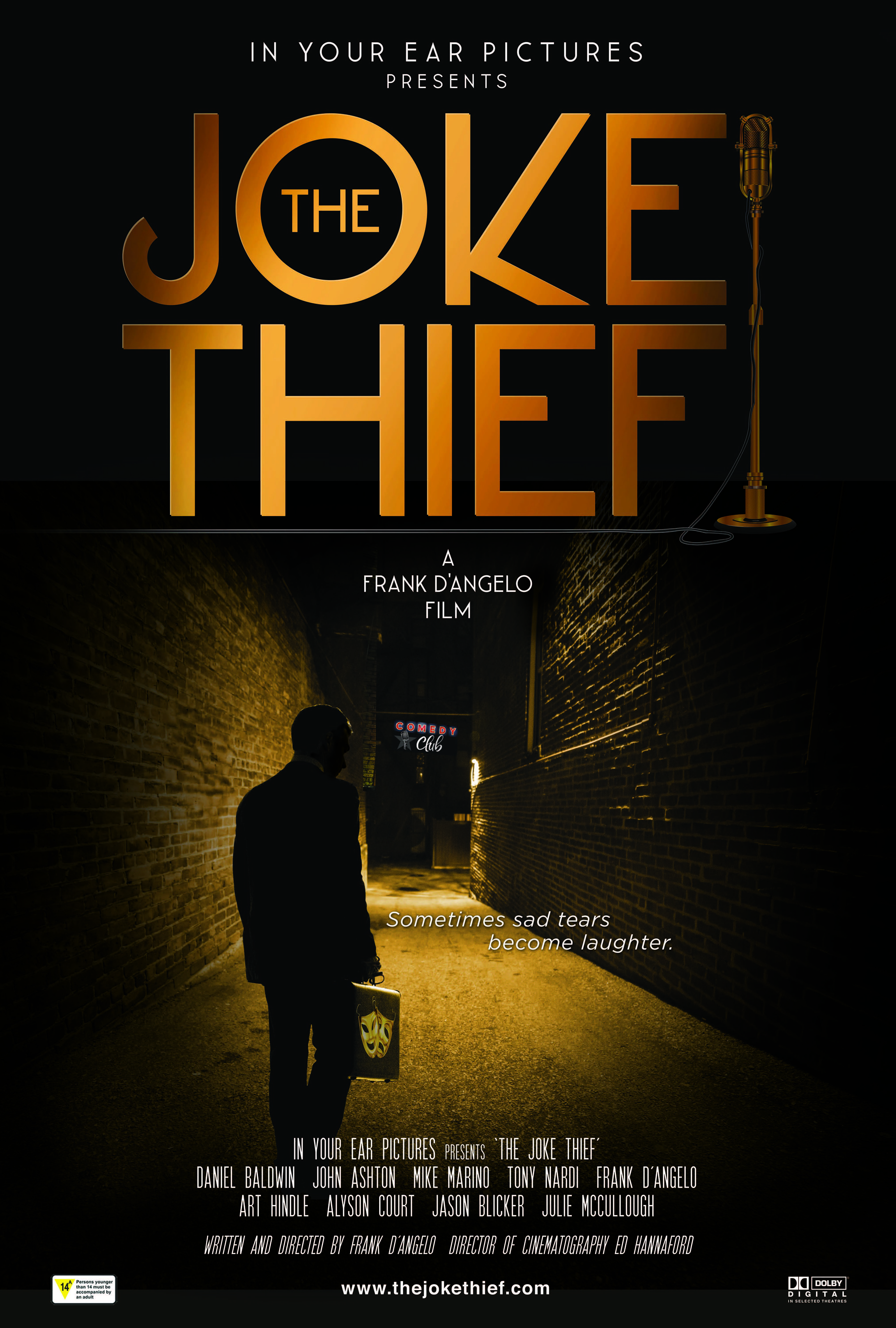
The Joke Thief (2018)

06 Tuesday Nov 2018

Posted by dullwood68 in Movies

≈ Leave a comment

Tags

Car dealership, Comedian, Daniel Baldwin, Drama, Frank D'Angelo, Indie movie, Review, Stand up comedy, Sugith Varughese, The Comedy Basement, Uber driver

D: Frank D’Angelo / 81m

Cast: Frank D’Angelo, Sugith Varughese, Daniel Baldwin, Jason Blicker, Tony Nardi, Alyson Court, Art Hindle, Mike Marino, John Ashton

Simon McCabe (D’Angelo) has wanted one thing his whole life: to be a comedian. But although he’s had a number of opportunities, he’s never been able to make the most of them. Now, with one last opportunity having landed in his lap – a spot on a show at the Comedy Basement which is being filmed for cable TV – Simon has to decide if he really wants his dream to come true. It’s a decision he appears ill-equipped to make, as over the years his lack of success has soured him, both professionally and personally. Having turned his back on the family business, a car dealership founded by his father (Hindle), Simon avoids responsibility and treats others, including his brother (Blicker), with disdain. What doesn’t help is that Simon has a reputation as a “joke thief”, someone who uses other people’s material in his act. While on his way to the Comedy Basement, Simon finds himself opening up to his Uber driver, Jerry (Varughese), and reflecting on various moments from his life that have led him to where he is now…

A melancholy, bittersweet, but ultimately rambling movie that dosn’t make as much sense as its writer/producer/director/star was probably aiming for, The Joke Thief relies too heavily on stand up performances from the likes of Marino to pad out an already slight storyline that revolves around Simon’s last shot at personal redemption. It also paints Simon as a misanthrope, and despite a last minute change of heart and soul – thanks to the clumsy intervention of Jerry the Uber driver, who tells Simon to have faith – he’s not a character you can warm to. Yes, he is funny, albeit in an offhand, determinedly rebellious kind of way, but D’Angelo’s script can’t decide if his being a joke thief is a bad thing or not. Baldwin’s host and Comedy Basement owner doesn’t like him, and only lets him have a slot as a favour to a fellow comedian (Nardi). But his other fellow comedians are courteous and encouraging toward him, which makes his reputation something that is certainly remarked upon but which remains unexplored. With all the flashbacks that D’Angelo inserts into the narrative, we never get a clue as to why Simon doesn’t write his own material, or why he’s chosen to plagiarise others.

In the end, D’Angelo makes an awkward fist of things, from Simon’s regret at not being with his father when he died, to being there for his mother’s last breath only for her to berate him for being sad and unhappy, and his regular dismissal of, and attempts at exploiting, his brother’s affection for him. There’s also Simon’s treatment of women, which is also exploitative and wildly inappropriate, and such is D’Angelo’s skewed approach to the character, he actually rewards his behaviour with the prospect of a long-term relationship (one that appears to be his first). But it’s the character of Jerry the Uber driver that belies any sense that D’Angelo has worked out in advance what his movie is about. Jerry is the balm for Simon’s misery, someone who doesn’t get his jokes but who knows he’s a good man and a good comedian anyway. Jerry has faith, and amazingly, during the course of a short trip, convinces Simon to have faith as well and believe in himself (ah, if only Life were so simple to work out). Apparently, D’Angelo only spends a couple of days writing his scripts, and sadly, it shows. Somewhere in this movie is a mordaunt meditation on the rehabilitation that can be achieved through humour, but here it’s a blunt message that doesn’t convince, and which comes at the expense of any sympathy for the main character.

Rating: 4/10 – surrounding himself with comedians who really do know how to be funny, D’Angelo struggles to make Simon anywhere near as good, and this disparity hurts The Joke Thief tremendously; with modest performances all round, but in service to material that doesn’t lend itself to providing viewers with anything too memorable, it’s a movie that frustrates more than it impresses.

Share this:

  • Click to share on X (Opens in new window) X
  • Click to share on Facebook (Opens in new window) Facebook
  • More
  • Click to print (Opens in new window) Print
  • Click to email a link to a friend (Opens in new window) Email
Like Loading...

Overlord (2018)

05 Monday Nov 2018

Posted by dullwood68 in Movies

≈ Leave a comment

Tags

Action, Drama, Horror, Jovan Adepo, Julius Avery, Mathilde Ollivier, Nazis, Pilou Asbæk, Review, Thriller, World War II, Wyatt Russell

D: Julius Avery / 109m

Cast: Jovan Adepo, Wyatt Russell, Pilou Asbæk, Mathilde Ollivier, John Magaro, Iain De Caestecker, Jacob Anderson, Dominic Applewhite, Gianny Taufer, Bokeem Woodbine

The night of 5 June 1944: a squad of paratroopers have been tasked with destroying a radio mast located in the tower of a church in a small Normandy village. When their plane is shot down before they can reach the drop zone, the survivors band together in order to complete their mission. Under the command of Corporal Ford (Russell), a demolitions expert, Privates Boyce (Adepo), Tibbet (Magaro), and Chase (De Caestecker), reach the outskirts of the village, where they encounter Chloe (Ollivier). Distrustful of them at first, Chloe agrees to help them once she realises what their mission is. But there’s a problem: the church has become part of a Nazi compound, and is heavily guarded. It soon becomes clear that there’s something strange going on in the compound, something that has seen the Nazis – under the command of Wafner (Asbæk) – abduct many of the villagers, who haven’t been seen again. A visit by Wafner to Chloe’s home, and Boyce unexpectedly finding himself inside the compound, ensures the mission becomes about more than just blowing up a radio mast…

Though the above synopsis is light on detail – and deliberately so – what you can gauge from the trailer for Overlord is that this is pretty much a big budget version of all those Outpost movies we’ve been “treated” to over the last ten years; it also bears a strong resemblance to Frankenstein’s Army (2013). Whatever the inspiration for its making, though, the key question is: is it any better than those movies? Fortunately, the answer is yes. However, the script – by Billy Ray and Mark L. Smith – doesn’t push the basic storyline in any new directions, and runs out of dramatic steam once Boyce gets in and out of the compound with remarkable ease. From then on, the material plays out in entirely familiar fashion, and regular viewers of this kind of thing will be able to predict each narrative development with a minimum of effort. The characters are broadly drawn too, with Boyce at first showing fear at every turn before displaying true bravery (as we know he will), Ford the taciturn brute, Tibbet the mouthy sharpshooter, Chloe the plucky heroine, and Wafner the smarmy villain who gets a taste of his own medicine (literally). Sometimes these stereotypes can be reassuring, but here they stop the audience from engaging with anyone. Instead, they and the viewer, are stuck with going through the appropriate (e)motions.

The movie is loud and violent and glaringly obtuse at times, though punctuated by odd moments of quiet where the script attempts to provide some depth to the characters, even though it’s already too late. Avery, who provided his first feature, Son of a Gun (2014), with a rough around the edges energy that suited the material, here finds himself constrained by the demands of both the material and the requirements of making a more mainstream movie. The cast do what they can, but there’s no challenge to any of the roles, and Asbæk opts to portray Wafner as a pantomime villain almost from the off. Along the way, there’s some good practical effects work (though none of it is as shocking as might be hoped for), and one scene where a paratrooper – and then everyone else – gets a nasty “wake up” call, is splendidly staged and proves to be the movie’s highlight. But all in all it’s the movie’s lack of inventiveness that stops it from being as successful as its makers would have hoped, and which robs of it any appreciable thrills and spills.

Rating: 6/10 – despite being better than its low budget rivals, Overlord still falls into the same traps as those movies, and proves to be a modest diversion at best; once again we’re confronted with a mainstream horror movie that falls way short of its aims, and which serves as a reminder that money can’t buy everything.

Share this:

  • Click to share on X (Opens in new window) X
  • Click to share on Facebook (Opens in new window) Facebook
  • More
  • Click to print (Opens in new window) Print
  • Click to email a link to a friend (Opens in new window) Email
Like Loading...

The White Orchid (2018)

02 Friday Nov 2018

Posted by dullwood68 in Movies

≈ 1 Comment

Tags

Drama, Hotel Rex, John Carroll Lynch, Morro Bay, Murder, Mystery, Nichelle Nichols, Olivia Thirlby, Review, Steve Anderson, Thriller

D: Steve Anderson / 88m

Cast: Olivia Thirlby, John Carroll Lynch, Janina Gavankar, Nichelle Nichols, Brendan Sexton III, Rachael Taylor, Jennifer Beals

A freelance investigator for Social Services, Claire Decker (Thirlby) is conscientious and very thorough when it comes to finding relatives of people who have died, seemingly, alone. But when her boss (Beals) gives her a new challenge, it’s not Claire’s usual type of case. The headless, mutilated corpse of a woman has been found on the beach of nearby Morro Bay, and though she appeared to be well-known in the area, the police have discovered that her name and I.D. were fake. Tasked with finding out who the murdered woman really was, Claire spends time at the woman’s home, and finds clues that the police have overlooked, clues that she keeps from the local police chief (Lynch). When Claire talks to some of the woman’s neighbours, she meets Teresa (Nichols), a blind lady who was asked to look after a suitcase the woman left with her before she died. The contents add to the mystery of the woman’s death, but by now Claire has worked out that the woman’s real name was Jessica, and that her murder is somehow linked to a hotel in San Francisco called the Hotel Rex…

Like many thrillers, The White Orchid sets out its central mystery as soon as its central character has been established as one type of person, and then has that same character behave increasingly in ways that don’t seem to match the character’s established personality. All this is in pursuit of the truth, of course, but it does make you wonder why it is that the movies do this. Are we meant to find a flawed heroine more interesting? Will determined and resourceful ever be enough? And what is it about Claire Decker that makes her want to dress up like the murder victim (as she inevitably does; it’s signposted so obviously) and put herself in harm’s way, especially as she knows there’s a potentially dangerous man lurking around who knows what she’s doing and has found out? These are all good questions, but sadly, not ones that writer/director Steve Anderson is interested in answering. Claire’s motivations remain murky throughout, and there’s something of a character swerve late on in her investigation that comes out of the blue, and which has the awkward effect of making the viewer review everything they’ve seen so far (though clues are there).

Of course, with Claire playing dress up in the dead woman’s clothes and wigs, there’s a psycho-sexual aspect to it all, and Thirlby is required to wear the kind of underwear that looks nice but which women don’t sit around in in real life. These voyeuristic moments aside, the mystery develops at a steady pace, teasing out the truth while failing to put Claire in any danger whatsoever. This leaves the movie tension-free, and largely unsure of where it’s going, content to plod along happily until a showdown between Claire and the killer that falls flat bcause of how contrived it all is. Much of the movie’s running time is taken up by scenes that hamper the flow of the narrative, from Claire discussing the case with her roommate (Gavankar), to one of Claire’s neighbours (Sexton III) expressing his worries over his daughter’s safety because a man with a gun was looking for our largely unconcerned heroine. With Anderson’s screenplay unsure if it wants to be a solid mystery thriller, or an exploration of the sexual awakening of a woman with no apparent social life (but a liking for the neck of a particular blonde), the movie is only fitfully intriguing, and rarely gets out of second gear.

Rating: 5/10 – acceptable as a way of filling time until something better comes along, The White Orchid is a laboured attempt at a modern day film noir, but without the skill and ingenuity needed to bring its over-burdened narrative to life; Thirlby and the rest of the cast acquit themselves well enough playing staple characters of the genre, and there’s some good location work along the California coast, but ultimately this is forgettable stuff that jars more than it gels.

Share this:

  • Click to share on X (Opens in new window) X
  • Click to share on Facebook (Opens in new window) Facebook
  • More
  • Click to print (Opens in new window) Print
  • Click to email a link to a friend (Opens in new window) Email
Like Loading...

Slaughterhouse Rulez (2018)

01 Thursday Nov 2018

Posted by dullwood68 in Movies

≈ Leave a comment

Tags

Asa Butterfield, Boarding school, Comedy, Crispian Mills, Drama, Finn Cole, Fracking, Horror, Michael Sheen, Monsters, Review, Simon Pegg

D: Crispian Mills / 104m

Cast: Asa Butterfield, Finn Cole, Simon Pegg, Michael Sheen, Hermione Corfield, Nick Frost, Max Raphael, Kit Connor, Isabella Laughland, Tom Rhys Harries, Louis Strong, Margot Robbie

Slaughterhouse is a traditional English boarding school, with the sons and daughters of the rich and famous and the establishment primed to follow in their parents’ footsteps. When a rare placement comes the way of Don Wallace (Cole), a teenager from a single parent, working class background, he doesn’t really want to go, but does so to please his mother. Once there, he’s placed in a room with Willoughby Blake (Butterfield), whose disaffection with the school leads him to carry out small acts of subversion. But the cruelties and occasional moments of relief from life at Slaughterhouse soon take a back seat to the consequences of a nearby fracking operation that has opened up a sinkhole. On a weekend when most of the pupils have gone home, the headmaster (Sheen), one of the teachers (Pegg), Don and Willoughby, along with a number of other pupils, find themselves fighting off attacks by a “frack” of subterranean monsters that have emerged from the sinkhole. It’s time to put personal differences aside and keep each other alive…

You know that feeling when you’re around five to ten minutes into a movie and you just know that you’re going to be disappointed – because you are already? That’s the feeling viewers of the first feature from Stolen Picture, a production company set up by stars Pegg and Frost, will have once they’ve started watching this ill-advised and poorly assembled comedy horror. It’s not just that Slaughterhouse Rulez isn’t that funny, or very effective in terms of its horror elements, it doesn’t work because it’s another movie that tries waaaaay too hard to be funny, scary, and exciting all at the same time, while not being able to strike a proper balance between all three. The script – by Mills and Henry Fitzherbert – adopts a kitchen sink approach to the comedy, with physical pratfalls, visual gags, terrible puns or references (you can guess the line that inevitably accompanies the apparent demise of the headmaster’s dog, Mr Chips), and lots of frightened yelling, screaming and running in fear. Like much else in the movie, it’s these efforts, and the extended effort that goes into them, that make you wonder if everyone’s trying too hard because they know the material isn’t strong enough to support itself.

So, the comedy is broad and buffoon-like, with the adult characters suffering the most, from Pegg’s lovelorn teacher, to Frost’s stoner anti-fracking campaigner, to Sheen’s priggish headmaster. These are caricature performances that have been done to death in dozens of other British (so-called) comedies, and they’re still not funny even now. The horror relies on gory special effects, and rapid fire editing to hide the deficiencies of the animatronics and prosthetics, while the monsters themselves look like they wouldn’t even pass muster in a Doctor Who episode. It’s also a movie that  fails to exploit the issue of fracking and approaches it in a simplistic, “fracking is bad” fashion that makes the whole thing a plot contrivance instead of anything more rigorous. Potshots at boarding school life are numerous but offer nothing new, and the characters are as passively stereotypical as you’d expect. Tasked with breathing life into a movie that begins tired and winds up positively comatose by the end, the cast can only struggle to make their characters’ plight convincing; though they’re hampered by Mills’ pedestrian and uninspired direction. A disappointing movie, then, and one that would have benefited from taking more risks with the material than it does.

Rating: 4/10 – not the auspicious debut for their production company that Pegg and Frost would have wished for, Slaughterhouse Rulez lacks energy and purpose, and doesn’t even charm on a pizza-and-beer-on-a-Saturday-night basis; as it goes through the motions, the same will be true of viewers wondering how they can escape this mess with their sanity intact.

Share this:

  • Click to share on X (Opens in new window) X
  • Click to share on Facebook (Opens in new window) Facebook
  • More
  • Click to print (Opens in new window) Print
  • Click to email a link to a friend (Opens in new window) Email
Like Loading...

The Happy Prince (2018)

30 Tuesday Oct 2018

Posted by dullwood68 in Movies

≈ Leave a comment

Tags

Biography, Colin Firth, Colin Morgan, Drama, Edwin Thomas, Emily Watson, France, History, Oscar Wilde, Passion project, Review, Rupert Everett

D: Rupert Everett / 106m

Cast: Rupert Everett, Colin Firth, Emily Watson, Colin Morgan, Edwin Thomas, Tom Wilkinson, Béatrice Dalle, Anna Chancellor, Julian Wadham, John Standing, Ronald Pickup

Oscar Wilde (Everett) has served his time in Reading Gaol and is living in France, supported by the kind attentions of one of his few remaining friends, Robbie Ross (Thomas). Suffering from ill health as a result of his stay in prison, Wilde is a shadow of his former self, wracked by torment and disillusionment, and his passion for writing exhausted. Against the better judgment and advice of his friends, including Reggie Turner (Firth), and his estranged wife, Constance (Watson), Wilde is reunited with the source of his downfall, Lord Alfred ‘Bosie’ Douglas (Morgan). They live together, though the relationship is strained, and Douglas’s selfish behaviour begins to drive an irreversible wedge between them. When their families each threaten to remove their financial support for the pair, the relationship founders completely, and Wilde becomes a lonely figure wandering from café to café spending what little money he has on alcohol. With his health deteriorating even further, Wilde becomes incapacitated, and is forced to see out the remainder of his days in a dingy Paris hotel room…

When actors or directors announce that their next movie will be a long cherished passion project, it’s often time to nod sagely and mutter, “that’ll be nice”. Rupert Everett had been trying to get a movie made about the final three years in the life of Oscar Wilde for over five years, and he’s finally succeeded. You can imagine the pitch to potential investors, though: a movie about an alcoholic writer in the decrepitude of his final years, and without any chance of a happy ending. Full marks then to Everett for his perseverance, because despite the downbeat nature of the material, and the sadness of seeing a once great man reduced to abject penury, The Happy Prince is a fascinating and poignant examination of the last three years of Wilde’s life, and how those years took a further, irrevocable toll on him after two years in prison. It’s a largely melancholy, subdued account, but there are moments of joy and laughter and hope in amongst the heartbreak and despair, as Wilde reflects on his success and his subsequent downfall. Unafraid to show Wilde at his worst, and with the worst happening to him, Everett presents an unflinching portrait of the artist as an old man robbed of all his powers.

The movie has all the hallmarks of a grim tragedy, from Wilde, Turner and Ross being pursued in Italy by English thugs looking to intimidate and bully a great man brought low, to the inevitability of Douglas’ rejection of Wilde when money becomes an issue. Everett is magnificent in a role that he’s often unrecognisable in, the quality of the make up obliterating the actor/director’s angular features; he’s like a poster child for rampant, self-inflicted dissolution. What Everett captures perfectly is the sense of a man who knows his life is effectively over, but who clings to it, desperately, and however he can, even if it’s inappropriate (his drinking etc.). Everett, who also wrote the script, is a confident, detailed director, and he has a good eye for composition that some more practiced directors would be envious of. He’s an unselfish actor too, allowing the likes of Morgan and Thomas to shine in roles that might otherwise have appeared to be in subservience to the orbit of Everett’s own. That the movie isn’t as heavy going as it looks is another testament to the skill with which Everett assembles the various elements of Wilde’s post-prison experiences, and the way he weaves the story of the Happy Prince through the narrative, and has it reflect the state of Wilde’s own life depending on where the story has gotten to. For a first-time writer/director, Everett has revealed himself to be someone who should be encouraged to get behind the camera again as quickly as possible.

Rating: 8/10 – though the movie examines the tragedy of Wilde’s final years, The Happy Prince isn’t the depressing, maudlin experience that some viewers might be expecting, and instead is a quietly powerful expression of the will to survive in the bleakest of circumstances and surroundings; with effective supporting turns from the likes of Firth, Watson and Wilkinson, and appropriately gloomy cinematography by John Conroy, this is yet another potent reminder of Wilde the man, and his legacy.

Share this:

  • Click to share on X (Opens in new window) X
  • Click to share on Facebook (Opens in new window) Facebook
  • More
  • Click to print (Opens in new window) Print
  • Click to email a link to a friend (Opens in new window) Email
Like Loading...

Galveston (2018)

29 Monday Oct 2018

Posted by dullwood68 in Movies

≈ Leave a comment

Tags

Beau Bridges, Ben Foster, Crime, Drama, Elle Fanning, Literary adaptation, Lung condition, Mélanie Laurent, Mob enforcer, Review, Texas, Thriller

D: Mélanie Laurent / 93m

Cast: Ben Foster, Elle Fanning, Beau Bridges, C.K. McFarland, Robert Aramayo, Adepero Oduye, María Valverde, Lili Reinhart

An enforcer for a local crime boss (Bridges), Roy Cady (Foster) finds out he has a lung condition but he refuses to have treatment for it. On the same day he’s given a job to scare a local lawyer into staying silent on a case that his boss is involved with; he’s also advised not to take a gun. Roy ignores this instruction, which proves fortuitous as it’s a set up that’s meant to see him killed and framed for the lawyer’s murder. Fleeing with Rocky (Fanning), a young girl he finds at the scene, Roy deliberates on what to do next, but before he can decide, Rocky persuades him to take her home so she can pick up some things. Circumstances mean that Rocky returns with her three year old sister, Tiffany, and the trio end up staying at a motel. There, Roy tries to work out the importance of some paperwork he found at the lawyer’s house, while a bond develops between him, Rocky, and her sister. He’s also approached by another resident at the motel, Tray (Aramayo), about taking part in a robbery at a local pharmacy, but it’s when the truth emerges about Rocky’s home visit that their lives are put in even further jeopardy…

For the first twenty minutes of Galveston, it’s business as usual as Foster’s brooding, moody mob enforcer acts in a brooding, moody manner in a movie that looks as if it’s going to be brooding and moody all the way through. But once Roy has been forced to rely on his violent proclivities, and he flees the lawyer’s home with Rocky in tow, the movie takes a left turn away from the kind of modern noir it looks and feels like, and becomes a different beast altogether. That noir feeling hangs around in the background waiting to be employed again, but not before the storyline morphs into a relationship drama that sees Roy become a de facto father figure to Rocky and Tiffany, and while he also explores – albeit hesitantly – his impending mortality. As Roy learns to be responsible for someone other than himself, the movie settles down into a melancholy groove that sees Rocky reveal a tragic past, and fate catch up with both of them. That this all takes up most of the movie’s running time, and the various plot strands are all tied up with almost indecent haste in the final twenty minutes, makes for a thriller that avoids being a thriller as much as it possibly can.

Part of this is undoubtedly due to the movie’s structure, and a script that was originally written by Nic Pizzolatto (who also wrote the novel from which this is adapted), but which received “contributions” from Laurent that led to Pizzolatto leaving the project (he’s credited under the pseudonym Jim Hammett). Whatever Laurent’s “contributions” were, the end result is a movie that underwhelms during its extended middle section, and which often strives for relevance in terms of its characters and the situation they find themselves in. Though Foster is as convincing as ever, this is still a role he could play in his sleep, that of the taciturn loner gradually brought out of his shell. But this time around his performance is in service to a story that doesn’t develop his character fully enough to make audiences care enough about his belated attempts at redemption. Likewise, Fanning is stranded in a role that gives Rocky little to do except make terrible decisions without ever learning from them. Laurent’s direction is uneven too, with individual scenes carrying much more weight than others (or the movie as a whole), and while the whole thing benefits from Arnaud Potier’s striking cinematography, the movie remains a frustrating exercise that never quite catches fire in the way it promises.

Rating: 6/10 – Foster and Fanning are a great pairing, but with both of them shackled by a script that doesn’t examine their characters’ relationship too closely, or exploit its potential, Galveston fails to impress in the manner that Laurent may have been hoping for; one to approach with caution then, but with sufficient bursts of the movie it could have been to make it an occasionally interesting experience.

Share this:

  • Click to share on X (Opens in new window) X
  • Click to share on Facebook (Opens in new window) Facebook
  • More
  • Click to print (Opens in new window) Print
  • Click to email a link to a friend (Opens in new window) Email
Like Loading...

Juliet, Naked (2018)

28 Sunday Oct 2018

Posted by dullwood68 in Movies

≈ Leave a comment

Tags

Chris O'Dowd, Comedy, Drama, Ethan Hawke, Jesse Peretz, Literary adaptation, Musician, Review, Romantic comedy, Rose Byrne, Sandcliff, Tucker Crowe

D: Jesse Peretz / 97m

Cast: Rose Byrne, Ethan Hawke, Chris O’Dowd, Azhy Robertson, Lily Brazier, Ayoola Smart, Phil Davis

For Duncan Thomson (O’Dowd), there is only one recording artist of any merit: Tucker Crowe (Hawke), a singer-songwriter who twenty years before walked away from a promising career as a musician after making a highly regarded first album called Juliet. Duncan has set up a blog site dedicated to Crowe and his short-lived career, and this takes up most of his spare time. Which doesn’t leave much room for his partner, Annie (Byrne). Having been together for fifteen years, Annie is beginning to realise that Duncan isn’t going to change, and things such as having children, or cutting back on the time he spends in Crowe-land, aren’t going to happen. When Duncan receives a CD that contains demo versions of the tracks on Juliet, the fact that she listens to it first causes a row between them. This leads to Annie posting a disparaging review of the demo versions on Duncan’s blog, which in turn leads to Annie receiving a response from Tucker himself. They begin corresponding (a fact that Annie keeps to herself), and soon find they’re able to be really honest with each other about their lives. And then Tucker reveals that he’s coming to London…

An adaptation of the novel by Nick Hornby, Juliet, Naked is one of the most easy-going romantic comedies of recent years. Treading a delicate path between meandering introspection and trifling whimsy, it’s a movie that could be the very cinematic definition of flimsy, so thin is its storyline and narrative arc. It’s also a movie that will have you wondering out loud about the characters and their pasts, and how they’ve come to be leading their lives now, from Tucker’s slacker muso and proto-dad, to Annie’s emotionally doused museum manager. Both Tucker and Annie seem to be treading water, waiting for someone or something to come along and free them from the traps they’ve fallen into. Tucker has allowed his talent to fray to nothing through fear of responsibility, while Annie has gone the opposite route and allowed responsibility to wither her creativity. They’re practically perfect for each other, albeit in an anodyne, nondescript fashion that makes their inevitable romance as cautious as they both are with everything else. Only Duncan remains true to himself throughout, even if he is thoroughly self-absorbed and operating entirely out of self-interest. Selfish he may be, but at least he’s doing what he really wants.

Thankfully, and despite the often vapid nature of the whole venture, the movie is rescued from being overwhelmingly twee by a trio of performances that elevate the material and make the characters more than the slavishly opaque stereotypes that the script – by Evgenia Peretz, Jim Taylor and Tamara Jenkins – seems determined to make them. Byrne makes Annie gentle yet resilient, put upon perhaps but not entirely a victim, and willing to take a stand when she needs to. Hawke plays Tucker as a man adrift from his own life but also willing to make amends for the mistakes he’s made; it’s a carefully crafted portrayal that Hawke pulls off with ease. O’Dowd appears to have the hardest task of all, that of making Duncan more than the arrogant, annoying arse that he clearly is, but there’s no small amount of pathos in his performance, and Duncan emerges as more rounded than expected. Elsewhere, Tucker’s family issues occupy a good deal of the running time, and though they feel very much like the movie’s token dramatic thread, they at least offset the predictable nature of the romantic elements. Peretz directs with an emphasis on keeping things light and airy, and succeeds in making both the romance and the comedy as agreeable as possible, but in the end, at the expense of achieving anything new or different.

Rating: 7/10 – so thin it’s almost diaphanous, Juliet, Naked is a tribute to the efforts of its cast and director in making a movie that borders constantly on being insubstantial without actually crossing that line; engaging enough to be enjoyable without being anywhere near memorable, it’s a light-hearted tale told with a sprinkling of playfulness that makes it all the more tolerable, and on this occasion, that’s entirely okay.

Share this:

  • Click to share on X (Opens in new window) X
  • Click to share on Facebook (Opens in new window) Facebook
  • More
  • Click to print (Opens in new window) Print
  • Click to email a link to a friend (Opens in new window) Email
Like Loading...

Madeline’s Madeline (2018)

23 Tuesday Oct 2018

Posted by dullwood68 in Movies

≈ Leave a comment

Tags

Drama, Experimental theatre, Helena Howard, Josephine Decker, Mental illness, Miranda July, Molly Parker, Review, Theatre group

D: Josephine Decker / 93m

Cast: Helena Howard, Molly Parker, Miranda July, Okwui Okpokwasili, Sunita Mani, Myra Lucretia Taylor, Curtiss Cook

Sixteen year old Madeline (Howard) is part of an experimental theatre group run by Evangeline (Parker). The group is working on a new production that will explore aspects of mental illness, but first, Evangeline wants them to take on animal roles and become the animals they choose. Madeline chooses to be a cat and a sea turtle, and she impresses Evangeline so much with her efforts and her commitment that Madeline soo receives more of Evangeline’s attention, and a bigger role within the production. While things are going well within the group though, at home it’s a different matter. Madeline lives with her mother, Regina (July), and they have a somewhat adversarial relationship, due mainly to the fact that Madeline has mental health issues that require her to take medication on a regular basis. When the lure of the group, and Evangeline’s attention, proves too powerful for Madeline to ignore, she becomes immersed in the production and begins to use her own experiences as a basis for her performance, something that causes a rift between Evangeline and the rest of the group (because she encourages it), and sees Madeline making a number of unwise decisions…

From the very beginning of Madeline’s Madeline (a reference to the immersive quality of her performance, where Madeline effectively plays herself), first-time writer/director Josephine Decker seeks to show the audience just how Madeline experiences the world around her. When she’s not taking her medication this means the world is a confusing, fractured series of blurred images and out-of-sync audio. It’s no wonder Madeline looks so overwhelmed all the time; it must be a continual struggle for her to assimilate what’s going on and/or why. At first, she’s shy but desperate to impress, quiet but not lacking in confidence in her acting abilities. Except she isn’t acting. Decker makes it clear: Madeline doesn’t know how to act, all she can do is inhabit a character – whether human or animal – and be herself as that character. There’s no role to create, just Madeline being Madeline. As she becomes more and more accepted, by Evangeline and by the group, the blurred lines between performance and reality fall away to reveal a young woman whose sense of self is so overwhelming that she cannot behave in any other way. And yet her mental illness is the very thing that allows her to stand out. But is it appropriate for Evangeline to exploit this?

Watching the movie you could be forgiven for thinking that it takes a side on the issue, but Decker is clever enough to make it a more difficult proposition to consider. By making Madeline wholly complicit in her own exploitation – and encouraging it – the issue becomes a question of just who is exploiting who. This ambiguous approach helps maintain a grim fascination as the story plays out and Madeline’s behaviour, particularly at a party at Evangeline’s home, becomes ever more worrying and unsettling. Howard, making her acting debut, is simply superb as Madeline, bright, intelligent, fearless, and giving such an assured, indelible performance that she dominates the whole movie, and leaves veterans such as Parker and July trailing in her wake. That said, Parker is also on exceptionally good form as Evangeline, her mother hen nature hiding a naturally cruel streak that brooks no contradiction because she knows what’s best for the group. July swings between Regina’s anguish and pride at Madeline’s behaviour, while there are telling moments from members of the group that mark them out as not just the followers they appear to be. In assembling such a provocative story, Decker has made an experimental movie about an experimental theatre group that is endlessly inventive and evocative, and which takes the viewer into the mind of its very erratic title character – which proves to be a place that’s hard to forget.

Rating: 8/10 – not a movie for all tastes, Madeline’s Madeline is a tremendous achievement by Decker, and features an equally tremendous performance from Howard; with wit and skill and an abundance of imagination, this is that rare movie that takes you to a world you think you know, and presents it in such a remarkable manner that you can’t help but be impressed by both its verve and the underlying simplicity of its approach.

Share this:

  • Click to share on X (Opens in new window) X
  • Click to share on Facebook (Opens in new window) Facebook
  • More
  • Click to print (Opens in new window) Print
  • Click to email a link to a friend (Opens in new window) Email
Like Loading...

On the Road #2 – Better Start Running (2018)

22 Monday Oct 2018

Posted by dullwood68 in Movies

≈ Leave a comment

Tags

Alex Sharp, Analeigh Tipton, Brett Simon, Comedy, Drama, FBI, Jeremy Irons, Maria Bello, Review, Road trip, Roadside attractions, Romance

D: Brett Simon / 92m

Cast: Alex Sharp, Analeigh Tipton, Jeremy Irons, Edi Gathegi, Maria Bello, Karan Soni, Chad Faust

Working at an All Shop, Harley (Sharp) is enamoured of Stephanie (Tipton), who in turn is the object of store boss’ Mr Hankey’s (Faust) inappropriate attentions. One night, with the store closed, Hankey makes a play for Stephanie in his office, then attempts to rape her, but Harley comes to her rescue. In the ensuing scuffle though, it’s Stephanie who causes Hankey to fall through a window to his death. Panicking, Harley calls the police to let them know what happened, but in doing so, unwittingly sets the FBI – in the manic form of Agent McFadden (Bello) and her neophyte partner, Agent Nelson (Soni) – on his and Stephanie’s trail. Not content with it being just the two of them, Harley also takes along his war veteran grandfather, Garrison (Irons). Intent on using being on the run as an excuse to visit a number of roadside attractions on their way to meet an old flame of Garrison’s, the trio become a quartet when they pick up wannabe hippie, Fitz Paradise (Gathegi). As the trip continues, they visit several of the attractions on Harley’s map, and discover they share a camaraderie that deepens the longer the trip goes on…

From its opening scenes where Harley moons over the object of his affections while she behaves as if she’s in a world of her own (which, it turns out, she is), Better Start Running sets out its stall as a quirky indie romantic comedy. That it’s only partially successful is down to the narrative vagaries inherent in the script by Chad Faust and Annie Burgstede, which keeps realigning its focus every few scenes and adds moments of drama to the mix that don’t always sit well with the movie’s overall rom-com vibe. Whether it’s Bello’s gung-ho bordering on psychotic FBI agent, or Irons’ irascible and lovelorn grandfather, or even Gathegi’s mid-life crisis experiencing husband and father, the movie takes occasional lurches into more serious territory before righting itself and remembering it’s a rom-com. And even then the romantic elements are subdued, with Harley and Stephanie only coming together as a couple out of necessity rather than anything resembling true love. Maybe the movie is being deliberately counter-intuitive, but if the romantic angle doesn’t convince, then why have it there in the first place? In truth, it suffers because of all the other elements the script has seen fit to squeeze in along the way.

So the movie is uneven and often frustrating, though when it strikes the right note, it does so with a great deal of charm and skill. Some of this is down to the performances – Irons and Bello add a great deal of energy to proceedings – some of it is due to the offbeat nature of the roadside attractions that get a visit (give a big shout out to Devil’s Tower, everyone), but mostly it’s because this is a movie chock-full of laugh out loud one-liners. From Garrison’s earnest instruction to Harley (“If you must come to tomorrow, I need a flash light, concertina wire and buckshot!”) to Harley’s own admission early on (“I’m sorry. I have to go now. I’m going on the run.”), Faust and Burgstede’s script ensures that the movie retains a spirit of fun throughout, even when it can’t help but slide sideways into Seriousville. Simon juggles the various elements with aplomb but can’t unite them into an acceptable whole, and he never finds a way to offset the feeling that the writers have deliberately ensured that Harley and Stephanie aren’t the brightest bunnies in the petting zoo (which isn’t necessary at all). Still, it is amusing, and thankfully so, otherwise this would have been one road trip best conducted from the driveway.

Rating: 6/10 – with the comedic aspects triumphing every time over the script’s other, less developed or worthy elements, Better Start Running is a mixed bag that sadly, doesn’t always gel as well as it should; likeable overall, it should still be approached with caution, a bit like Agent McFadden when she’s got a perp in her sights: “A cost of a year’s incarceration? $50,000. Cost of a bullet? Fifty cents. Do the math.”

Share this:

  • Click to share on X (Opens in new window) X
  • Click to share on Facebook (Opens in new window) Facebook
  • More
  • Click to print (Opens in new window) Print
  • Click to email a link to a friend (Opens in new window) Email
Like Loading...

On the Road #1 – The Fundamentals of Caring (2016)

21 Sunday Oct 2018

Posted by dullwood68 in Movies

≈ Leave a comment

Tags

Comedy, Craig Roberts, Drama, Duchenne muscular dystrophy, Literary adaptation, Paul Rudd, Review, Road trip, Roadside attractions, Rob Burnett, Selena Gomez

D: Rob Burnett / 97m

Cast: Paul Rudd, Craig Roberts, Selena Gomez, Jennifer Ehle, Megan Ferguson, Julia Denton, Frederick Weller, Bobby Cannavale

Ben Benjamin (Rudd) is a retired writer who takes a course to become a caregiver in order to support himself. He has a wife, Janet (Denton), but they’re in the process of getting divorced. Ben’s first job is to look after Trevor (Roberts), an eighteen year old suffering from Duchenne muscular dystrophy, while his mother, Elsa (Ehle), is at work. As the two get to know each other, Ben becomes aware that Trevor has a fascination for roadside attractions, particularly the World’s Deepest Pit. Ben suggests they take a road trip to the Pit and take in some other attractions along the way. Trevor wants to but is scared of leaving his home, while Elsa has her own worries about his safety. In the end, he and Trevor set off on a trip that will take them a week. On the way, they give a lift to Dot (Gomez), who’s hitchhiking to Denver to restart her life after the death of her mother, and later to Peaches (Ferguson), a young pregnant woman heading home to Nebraska. But it’s Trevor’s determination to visit his absent father in Salt Lake City that changes the nature of the trip indelibly…

The road trip movie is a staple of American movie making, the country’s wide open highways and variety of physical locations often providing a vivid backdrop for what is usually a journey of self-discovery. Adapted from the novel, The Revised Fundamentals of Caregiving by Jonathan Evison, this is yet another movie that takes that basic set up and offers a mix of heartfelt drama and sprightly humour as it plays out its simple storyline. This is a straightforward, no frills, no surprises feature that ticks all the boxes dramatically and comedically for this kind of movie, but which does so in such an inoffensive, pedestrian, but likeable manner that it’s hard not to approve of it, even though a lot of the time you’ll be wondering, Is this it? At first, Ben is out of his depth, but soon becomes adept at caring for Trevor, while Trevor’s initial snarky behaviour (and practical jokes) soon transforms into a respect for Ben that he hasn’t shown toward any of his previous carers. So far, so predictable then, but it’s the lightness of Burnett’s direction, and the relaxed performances of Rudd and Roberts that help offset any criticism. For once, a movie’s benign approach to the material makes it all the more enjoyable.

That’s not to say that it doesn’t address some serious issues along the way, because it does. Ben has a tragic past that is affecting his divorce; Trevor wants to resolve the emotional issues he has surrounding his father (who left when he was diagnosed at the age of three); Dot has her own father issues; and there are minor shout outs to the quality of disabled access at roadside attractions, depression, self-imposed guilt, and betrayal. But again, this isn’t a heavy drama, rather it’s a movie that makes its points with a laidback approach that suits the material and which is content to explore these matters with a restraint that underscores the characters’ emotional states throughout, and with a subtlety that’s refreshing. That old phrase, Less Is More, applies here, even when the material does thin out alarmingly in places, but it always slips back on track, thanks to the solid work of its cast, Burnett’s sense of rhythm and pace, and evocative camerawork by DoP Giles Nuttgens. The whole thing ends on a perfect coda, as well, one that will viewers away feeling good about the movie and having seen it in the first place. And what more could you ask for…?

Rating: 7/10 – anyone expecting a movie with the kind of depth that the World’s Deepest Pit might be a metaphor for, will find The Fundamentals of Caring to be anything but; however, it’s a lovely movie full of bright moments and with good intentions, and though you can accuse it of being slight and innocuous, on this occasion, these are actually strengths that make the movie more than it seems at first glance.

Share this:

  • Click to share on X (Opens in new window) X
  • Click to share on Facebook (Opens in new window) Facebook
  • More
  • Click to print (Opens in new window) Print
  • Click to email a link to a friend (Opens in new window) Email
Like Loading...

Private Life (2018)

20 Saturday Oct 2018

Posted by dullwood68 in Movies

≈ Leave a comment

Tags

Drama, Egg donor, Infertility, IVF treatment, Kathryn Hahn, Kayli Carter, Molly Shannon, Paul Giamatti, Review, Step-niece, Tamara Jenkins

D: Tamara Jenkins / 124m

Cast: Paul Giamatti, Kathryn Hahn, Kayli Carter, Molly Shannon, John Carroll Lynch, Emily Robinson, Desmin Borges, Denis O’Hare

Now in their forties, Richard (Giamatti) and Rachel (Hahn) are trying desperately to have a child before it’s too late. They’ve tried several attempts at artificial insemination but none have paid off. It’s only when they try for the first time with IVF treatment that they discover that their previous failures have been due to Richard having a blockage that stops him from providing sperm. He undergoes surgery to correct this, but still the IVF treatment isn’t successful. Their consultant, Dr Dordick (O’Hare), suggests they look into the possibility of finding an egg donor, but at first, Rachel is against the idea as she will have no biological input into any child that’s born. It’s only when their step-niece, Sadie (Carter), comes to stay with them after cutting short her college writing programme, that the couple begin to see a solution to their problems. It’s not an ideal solution – will Sadie want to give up some of her eggs, will it go down well with her parents, Cynthia (Shannon) and Charlie (Lynch), will it even be successful – but having warmed to the idea, Rachel and Richard decide to ask Sadie if she’ll be their egg donor…

Although it’s an often touching, and moving exploration of the trials and tribulations of trying to have a baby (but not in the old-fashioned way), Tamara Jenkins’ latest, only her third feature in twenty years, is refreshingly non-judgmental about its lead characters and their determination to have a child. But Private Life leaves the viewer knowing almost nothing at all about why the couple want a child, and in terms of their back story, we learn that Rachel is a well regarded writer, while Richard was a well regarded theatre director who now owns and runs an artisan pickle company. With the how and the why of where they are now left unexamined, their plight – though well developed and scripted by Jenkins – means their struggle to conceive (or adopt if absolutely necessary) doesn’t have the impact needed to make viewers empathise with them as much as might be expected. The impetus seems to be with Rachel, while Richard seems to be going along with it all to please her or, worse still, keep her happy. It’s this aspect of their relationship that’s more intriguing, but unfortunately, Jenkins doesn’t go that deeply into things, preferring instead to focus on how they’re feeling right now.

Inevitably, things don’t always go to plan for them, and the setbacks and attendant emotional pain and suffering that they endure is tellingly handled by Jenkins and her very talented cast. Hahn is perhaps a surprising choice for Rachel, but it’s possibly her best performance yet, with shading to the character that doesn’t appear to have been in the script. Whether angry or sad, or miserable or elated, or just plain confused by how difficult it all is, Hahn’s portrayal is authentic at every turn. As Richard, Giamatti suffers a little bit through his character’s continual ability to say the wrong thing at the wrong time and seem entirely shallow in comparison to Rachel. It’s still a good performance – Giamatti is one of the few actors working today who seems unable to give a bad performance in anything he does – but Richard isn’t as fully fleshed out as he could, or should, have been. The indignities of IVF and egg donor treatment are given due emphasis, and it all hinges on Sadie’s suitability as a donor, which is treated correctly as something beyond Richard and Rachel’s control. Overall, the movie is sympathetic to its desperate parents-to-be, though it does come close to being yet another teary-eyed tale of middle-class aspirations gone awry, something that would have derailed it from the start.

Rating: 7/10 – an observant and measured mix of emotional drama and physical comedy, Private Life still allows its characters hope in amongst all the setbacks they endure; thanks to Jenkins’ (mostly) incisive script, its cast being en point throughout, and a determination not to be melodramatic in any way, this is a compassionate and often witty study of infertility anxiety.

Share this:

  • Click to share on X (Opens in new window) X
  • Click to share on Facebook (Opens in new window) Facebook
  • More
  • Click to print (Opens in new window) Print
  • Click to email a link to a friend (Opens in new window) Email
Like Loading...

The Curse of Good Intentions – Halloween (2018)

19 Friday Oct 2018

Posted by dullwood68 in Movies

≈ Leave a comment

Tags

Andi Matichak, David Gordon Green, Drama, Haddonfield, Horror, Jamie Lee Curtis, Judy Greer, Review, Sequel, Serial killer, The Shape, Thriller

D: David Gordon Green / 106m

Cast: Jamie Lee Curtis, Judy Greer, Andi Matichak, Will Patton, Haluk Bilginer, Rhian Rees, Jefferson Hall, Toby Huss, Virginia Gardner, Dylan Arnold, Miles Robbins, James Jude Courtney, Nick Castle

And it seemed like such a good idea at the time… ah well…

In the UK, on 10 October – and in advance of the release of Halloween (2018) – some cinemas screened the original Halloween (1978). Those screenings were prefaced by an interview/introduction with John Carpenter that was shot in 2015, and in which he gave an overview of the original’s production and the problems he faced in getting it made. Seeing the original on the big screen, and in the Panavision format that Carpenter had designed it to be seen in, was a potent reminder of just why it has become such a seminal movie in the ensuing decades. With a further nine movies having been foisted on audiences since then, it looked as if Rob Zombie’s disastrous Halloween II (2009) had killed off Michael Myers (aka The Shape) once and for all. But in Hollywood, you can’t keep a popular serial killer dead forever, and so we have the latest (eleventh) instalment in a franchise that you could be forgiven for thinking had exhausted all the avenues open to it in telling, and re-telling, Michael Myers’ story. And you know what? You’d be right…

Halloween seeks to earn brownie points with fans and newcomers alike by ignoring entries two through ten, and by taking up the story forty years after the events of the first movie. In this retconned version, Michael Myers was captured after being shot by Dr Sam Loomis, and has spent the intervening years in a state-run sanatarium. Meanwhile, the lone survivor of The Night He Came Home, Laurie Strode (Curtis), has had a daughter, Karen (Greer), who in turn has had her own daughter, Allyson (Matichak). Laurie and Karen are estranged because Laurie is beyond paranoid in her belief that Michael will return to Haddonfield one day, and come for her. Allyson is less censorious, and keeps trying to get her mother and grandmother to reconcile. Inevitably, Michael escapes during a bus transfer to another facility, and as predicted, heads for Haddonfield. Soon he’s butchering people left, right and through the throat in a wilful display of murderous impunity. And just as inevitably, he finds his way to Laurie’s home and the showdown she’s been waiting and planning for for forty years.

Comparisons with John Carpenter’s original movie are entirely relevant here, as writers  David Gordon Green, Jeff Fradley and Danny McBride have made clear their intention to honour the spirit of Carpenter’s movie, while continuing and expanding on the mythology set out in the first two entries. What this means in practice is a movie that constantly references iconic moments from the original while putting a “clever” spin on them, such as Laurie falling from a balcony and having disappeared the second time Michael looks down. It also means that this Halloween is a sequel-reboot that ignores the subtlety and atmosphere of the original in favour of gory kill sequences that happen only so that Michael has something to do (at one point, he’s literally going from door to door in his efforts to kill people), and pulls off a left-field “twist” involving a secondary character that might have been halfway effective if it wasn’t so dramatically laughable. What Green et al seem to have forgotten in their efforts to update the story and make it more “attractive” to modern audiences is the main reason why the original was so compelling: it was genuinely scary. This plays out as a thriller more than it does a horror movie, and a clumsily handled one at that. By attempting to go back to the franchise’s roots, the makers haven’t just retconned the original storyline, but they’ve gotten lost along the way as well. To paraphrase a well known saying, “It’s Halloween, John, but not as we know it.”

Rating: 4/10 – with its muddled, and misguided attempts at reinvigorating the series, Halloween can’t even get the title right (shouldn’t there be a II in there somewhere?); Curtis is the movie’s MVP, but that’s not saying much when the script develops her character at the expense of all the others, and where the notion of creating anything remotely resembling tension seems to have been abandoned right at the start of shooting.

Share this:

  • Click to share on X (Opens in new window) X
  • Click to share on Facebook (Opens in new window) Facebook
  • More
  • Click to print (Opens in new window) Print
  • Click to email a link to a friend (Opens in new window) Email
Like Loading...

Funny Cow (2017)

18 Thursday Oct 2018

Posted by dullwood68 in Movies

≈ Leave a comment

Tags

Adrian Shergold, Comedienne, Comedy, Domestic abuse, Drama, Maxine Peake, Paddy Considine, Review, Stand-up, Tony Pitts

D: Adrian Shergold / 102m

Cast: Maxine Peake, Paddy Considine, Tony Pitts, Alun Armstrong, Macy Shackleton, Stephen Graham, Kevin Eldon, Lindsey Coulson

Growing up in Yorkshire in relative poverty, ‘Funny Cow’ (Peake – we never learn the character’s real name) experiences physical abuse from her father (Graham), indifference from her mother, and suffers attempts at bullying from other children. Through it all she remains defiant, using humour to help her through the worst of occasions. As a young woman, she meets and marries Bob, but although he’s loving and attentive at first, soon he reveals a violent nature that resembles her father’s. A night out at a local working men’s club offers an unlikely escape route: a comedian (Armstrong) helps ‘Funny Cow’ realise that this is something she can do, and which could offer her some form of independence. Meanwhile, she meets a bookshop owner, Angus (Considine), and a relationship develops between them. But Angus wants more from her than she is able to give, and her first attempt at taking to the stage falters due to her nervousness. While she tries to pull her life together, and make something positive out of it, another chance to prove her skill as a comedienne unexpectedly presents itself…

Told through a stage performance by its main character when it appears she’s reached a period of success, Funny Cow recounts her life more as a form of therapy than as a part of an established routine (if you were in the audience you’d be wondering when the jokes are going to start). Starting with her childhood and moving through the various stages and relationships that have brought her to this point, ‘Funny Cow’s story is one that proffers a dispiriting look at the life of a woman struggling to find happiness, and a true sense of her place in the world. It’s a harsh movie about a harsh life, relentless in the way it portrays domestic abuse and the psychological effects it has on ‘Funny Cow’, and unforgiving of the Northern working class background that she comes from. Almost everyone is either violent, depressed, selfish, abusive, or a mix of all four. Only Angus is different, but it’s his difference from all the other men she’s known that makes him unacceptable; she just doesn’t trust that he can be so naturally kind. With happiness feeling like a dream that’s not just out of reach but completely unobtainable, co-star Tony Pitts’ screenplay keeps ‘Funny Cow’ firmly in her place, trapped by her past and fearful of the future.

Of course, she has a wilful streak that gets her into trouble, and during her first stand up performance, out of it as well. But even her humour is harsh and unrelenting. A heckler suffers for his efforts, ‘Funny Cow’ using him as catharsis for all the abuse she’s suffered in the past. But she’s suffered too much for this to be anything but a temporary release. She’s angry too, and by using her stand up routine to express her anger, ‘Funny Cow’ finds a part of her life where she finally has some measure of control. As the unnamed title character, Peake is on superb form, audacious, brash, haunting, and fearless in her exploration of someone whose past is inextricably entwined wth her present, and to deleterious effect. Whether ‘Funny Cow’ is being mournful of her relationship with Angus, or laughing manically after having her nose broken by Bob, Peake is nothing less than outstanding. Making only his second feature, director Shergold adds poignancy to proceedings by having the older ‘Funny Cow’ cross paths with younger versions of herself, and he ensures that the humour is often pitch black – but still as devastating as the violence that’s depicted.

Rating: 8/10 – though as far from being a feelgood movie as you’re likely to find, conversely there is much to enjoy in Funny Cow, from Peake’s stellar performance, to a truly scabrous stand up routine, and flashes of magical realism in amongst all the tragedy; challenging and compelling, it also takes a sharp look at sexist attitudes of the period (the Seventies), and offers audiences an unflinching look at one woman’s attempt to break free from the patriarchal society that has continually aimed to hold her back.

Share this:

  • Click to share on X (Opens in new window) X
  • Click to share on Facebook (Opens in new window) Facebook
  • More
  • Click to print (Opens in new window) Print
  • Click to email a link to a friend (Opens in new window) Email
Like Loading...

Birthmarked (2018)

17 Wednesday Oct 2018

Posted by dullwood68 in Movies

≈ Leave a comment

Tags

Andreas Apergis, Comedy, Drama, Emanuel Hoss-Desmarais, Experiment, Marital problems, Matthew Goode, Michael Smiley, Nature vs Nurture, Review, Toni Collette

D: Emanuel Hoss-Desmarais / 90m

Cast: Toni Collette, Matthew Goode, Andreas Apergis, Jordan Poole, Megan O’Kelly, Anton Gillis-Adelman, Michael Smiley, Fionnula Flanagan, Suzanne Clément

Ben (Goode) and Catherine (Collette) are two scientists who are interested in examining the whole Nature vs Nurture debate through an idea for an experiment they have. Newly married and with a baby on the way, their idea is to raise their own child and two adopted babies against their genetic predispositions. They’re lucky enough to find a backer for their experiment, Randolph Gertz (Smiley), and they raise the children in a remote cabin in the woods, home-schooling them as well and focusing their minds on becoming an artist (their own son, Luke), an intellectual (their adopted daughter, Maya), and a pacifist (their adopted son, Maurice). They’re aided by an ex-Olympic level Russian marksman called Samsonov (Apergis) who defected to the West in the Seventies. With twelve years of a thirteen year experiment having passed, Gertz’s assessment that the children aren’t extraordinary examples of Nurture over Nature prompts Ben and Catherine to try harder to get the results they need, but their efforts come at a cost to their marriage, their professional relationship, and the needs of the children…

Somewhere in the midst of Birthmarked there’s the germ of a good idea struggling to be noticed. Like the children that are the subject of Ben and Catherine’s slightly less than ethical experiment, the movie wants to be something it’s not allowed to be: sprightly, perceptive, and engaging. It is funny in places, though in a law of averages kind of fashion that only highlights how much of Marc Tulin’s screenplay doesn’t gel cohesively, and it has an appealing cast who are at least trying their best to put over the material, but thanks to some poor decisions along the way, the movie coasts on too many occasions, and never hits a consistent stride. A great deal of what hampers the movie from being more successful is its inability to focus on one storyline over the rest, with Ben and Catherine’s marriage drawing more and more attention during the latter half, while each individual child receives occasional turns in the spotlight, but not in such a way that we get to know them. Then there’s Gertz, the obvious bad guy of the piece, and his equally obvious machinations (revealed late on but easily guessed at long before). Add in Samsonov’s presence – friend or foe? – and you have too many characters who lack substance, and who only occasionally drive the movie forward.

All this has the misfortune of making the movie uneven and feeling like the cinematic equivalent of a patchwork quilt that has several panels missing. Hoss-Desmarais, making only his second feature, has no answers for any of this, and though some scenes work better than others, often this is due to the cast’s efforts instead of his. Goode plays Ben as a rather blinkered, the-experiment-is-all character who behaves badly for no other reason than that the script needs him to, while Collette goes from entirely reasonable to inexplicably depressed over the course of a couple of scenes in order to provide the last third with some unneeded secondary drama. The young cast are often the best thing about the movie, and that’s largely due to their playing their roles like ordinary children (which they are, despite the intention of the experiment), and there’s some beautifully austere winter photography by Josée Deshaies that at least provides the action with a backdrop that reflects the muted dramatics. In the same way that Ben and Catherine’s experiment lacks coherence in the way they deal with any problems that arise, the movie also struggles to offer a consistency of tone or content. Maybe the movie, like the experiment it’s exploring, needed a longer nurturing period before committing itself to audiences.

Rating: 5/10 – sporadically amusing, with a cast that play their roles as capably as possible, Birthmarked is moderately appealing for the most part, but is mainly frustrating thanks to the opportunities it wastes; too wayward then to work effectively, it’s a movie that should be watched under proviso, or maybe as an experiment in itself.

Share this:

  • Click to share on X (Opens in new window) X
  • Click to share on Facebook (Opens in new window) Facebook
  • More
  • Click to print (Opens in new window) Print
  • Click to email a link to a friend (Opens in new window) Email
Like Loading...

Operation Finale (2018)

15 Monday Oct 2018

Posted by dullwood68 in Movies

≈ Leave a comment

Tags

1960, Abduction, Adolf Eichmann, Ben Kingsley, Buenos Aires, Chris Weitz, Drama, Israel, Mélanie Laurent, Oscar Isaac, Review, True story

D: Chris Weitz / 123m

Cast: Oscar Isaac, Ben Kingsley, Mélanie Laurent, Lior Raz, Nick Kroll, Haley Lu Richardson, Joe Alwyn, Michael Aronov, Greta Scacchi, Pêpê Rapazote, Peter Strauss, Simon Russell Beale

In Buenos Aires in 1960, a young woman called Sylvia Hermann (Richardson) begins dating a young man, Klaus (Alwyn), who tells her he lives with his uncle, who has been looking after him since his father died in World War II. The kindly uncle actually is his father, Adolf Eichmann (Kingsley), long wanted for war crimes, and now the focus of an Israeli attempt to kidnap him and bring him to trial. Mossad assembles a team that includes Peter Malkin (Isaac), a brash, opportunistic agent who was involved in a previous attempt to capture Eichmann that ended tragically; Rafi Eitan (Kroll), an intelligence specialist; and Hanna Elian (Laurent), a doctor and former agent. The team travels to Buenos Aires where they organise a safe house, and plot Eichmann’s abduction. Once captured, though, they find themselves with a problem: the only way they can get Eichmann out of the country is on an El Al plane that’s scheduled to leave in ten days’ time. But first, El Al wants a signed affidavit from Eichmann that he is willing to travel to Israel to stand trial…

The capture and subsequent “extradition” of Adolf Eichmann from Argentina to Israel in May 1960 has all the hallmarks of an exciting adventure story, with the Mossad team working in secrecy, and under the very real threat of being captured by the Argentinian police and finding themselves put on trial for espionage. And that’s without the substantial number of Nazis and Nazi sympathisers living in Buenos Aires at the time, who would most likely have had them killed on the spot. Eichmann’s capture was a huge coup for the Israelis, and though Operation Finale conflates much of the background detail – e.g. Sylvia Hermann began dating Klaus Eichmann in 1956 – it remains true to the spirit and the general sequence of events that saw one of the principle architects of the Final Solution finally brought to justice. However, Matthew Orton’s screenplay only provides an occasional sense of the danger Malkin and his colleagues were facing, and director Chris Weitz doesn’t seem able to make the movie as tense and exciting as it should be. Instead, we’re treated to a number of scenes where the team debate whether or not to kill Eichmann there and then (even though that’s not the mission), and several repetitive scenes where they endeavour to get him to sign El Al’s affidavit, but to no avail.

It’s a shame, as though this is a distinct improvement on The Man Who Captured Eichmann (1996), it never really gels as the historical thriller that was so clearly intended. The performances are uniformly good, with Kingsley subdued yet calculating as Eichmann, and Aronov matching him for intensity as chief interrogator Zvi Aharoni, but they’re in service to material that is often dry and unimaginative. Dramatic flourishes such as flashbacks to the death of Malkin’s sister (which put Eichmann unconvincingly at the scene), and a party where the entire gathering shouts “Sieg Heil!” and gives the Nazi salute over and over, stand out because they are more emotive, but elsewhere the movie treads an even keel and rarely strays from feeling perfunctory and ever so slightly mannered. Even the last minute race against time to get to the airport with the police on the team’s tail is less than exciting, just another cog in the story’s wheel that the makers feel obliged to turn for the audience’s sake. It’s another moment of restrained pretence in a movie that lacks the kind of emotional impact such a dramatic story truly deserves.

Rating: 5/10 – despite the good use of Argentinian locations, and David Brisbin’s detailed production design, Operation Finale feels more like the cinematic equivalent of a first draft than a finished product; with a handful of soap opera elements that further dilute the drama, the movie is too broad and too uneven in its approach to be anywhere near successful, but on its own terms it will suffice until the next interpretation comes along.

Share this:

  • Click to share on X (Opens in new window) X
  • Click to share on Facebook (Opens in new window) Facebook
  • More
  • Click to print (Opens in new window) Print
  • Click to email a link to a friend (Opens in new window) Email
Like Loading...

Support the Girls (2018)

14 Sunday Oct 2018

Posted by dullwood68 in Movies

≈ Leave a comment

Tags

Andrew Bujalski, Comedy, Double Whammies, Drama, Female solidarity, Haley Lu Richardson, James Le Gros, Regina Hall, Review, Sexism, Sports bar

D: Andrew Bujalski / 90m

Cast: Regina Hall, Haley Lu Richardson, James Le Gros, AJ Michalka, Dylan Gelula, Shayna McHayle, Lea DeLaria, Jana Kramer, Brooklyn Decker, John Elvis, Lawrence Varnado

It’s another day of problems at Double Whammies, a Hooters-style sports bar-cum-restaurant (or ‘breastaurant’) managed by the ever-reliable and ever-resourceful Lisa (Hall). What with having to carry out interviews before the bar opens, dealing with a man stuck in one of the air vents, organising a car wash with the proceeds going to a staff member who’s in financial difficulties, solving the issue of the TV screens having lost their signal, and the unwanted management advice of bar owner Cubby (Le Gros), as well as the prospect of a similar, rival company opening a restaurant nearby, Lisa has her work cut out for her – and that’s without providing support and practical advice to the staff, who have their own issues. Lisa is more of a den mother than a manager, but her expertise lies in treating everyone like family, and for this she gets back a lot of respect and loyalty. As she sidesteps further potential problems that arise as the day progresses, it’s not until an encounter with Cubby that she begins to question whether or not it’s time to move on…

Although the setting for Support the Girls is a tacky, less than appealing restaurant that promotes “family values” and which has a zero tolerance policy on customers who are disrespectful to the waitstaff, this isn’t about the restaurant itself, but about those waitstaff, and their manager, and the sisterhood that they promote amongst themselves. It’s this sense of solidarity, and everyone pulling together, that gives the movie much of its heart and soul, as writer/director Bujalski paints a portrait of ordinary women working in a low paid, low reward job but finding a purpose in supporting each other that makes up for the problems that said job throws at them on a daily basis, whether it be unruly patrons, unfair rules and prohibitions (Cubby won’t allow two black women to work the same shift), or their own unrealised needs and/or ambitions. Lisa does her best to juggle all these things and to keep Double Whammies running as smoothly as possible, but she’s like the classic image of a swan: on the surface she seems able to deal with anything, but below the surface she’s paddling like mad to maintain that semblance of being in control.

Adding depth to proceedings are themes surrounding perpetuated sexist attitudes, the socio-economic climate that keeps workers such as these from doing any better for themselves, and how senior management or owners are divorced from the day-to-day realities of managing such a business. These issues are given their due without the need for strident politicising or deftly written monologues bemoaning the current state of employment matters in the US, and this is because Bujalski is focused on how female solidarity allows the staff to feel and be more fulfilled than perhaps they would be otherwise. It’s a positive message given in the unlikeliest of locations, but it’s also the reason why it works so well. These are women who are working in an environment where it’s not just their gender that can come under attack but their sexuality, their physical appearance, their class, their race, and that’s without any challenges to their ability to do the job. That the movie balances all this without being too blunt or obvious, is a testament to the skill of Bujalski’s screenplay, and his confidence in handling the material. It’s also due to the talents of a terrific cast, with Hall giving her best performance yet as a woman doing her best to keep everything going, and by being that rare thing in the movies: consistently nice.

Rating: 8/10 – a comedy that avoids clumsy attempts at satire by being sincere in its approach to its characters’ environment, and their hopes and dreams, Support the Girls does just that, and in an affecting, heartwarming manner; as a snapshot of what it’s like to be a woman in 2018 America, it could be construed as dispiriting, but what it shows instead is that female solidarity is alive and well and ready for anything – and on its own terms.

Share this:

  • Click to share on X (Opens in new window) X
  • Click to share on Facebook (Opens in new window) Facebook
  • More
  • Click to print (Opens in new window) Print
  • Click to email a link to a friend (Opens in new window) Email
Like Loading...

Eighth Grade (2018)

13 Saturday Oct 2018

Posted by dullwood68 in Movies

≈ Leave a comment

Tags

Anxiety, Bo Burnham, Comedy, Drama, Elsie Fisher, Josh Hamilton, Middle school, Peer pressure, Review, Social media, Video blogs

D: Bo Burnham / 94m

Cast: Elsie Fisher, Josh Hamilton, Emily Robinson, Jake Ryan, Daniel Zolghadri, Fred Hechinger, Imani Lewis, Luke Prael, Catherine Oliviere

For Kayla Day (Fisher), coming to the end of eighth grade and leaving middle school should be a cause for celebration. But Kayla has a bunch of personal issues to contend with: she posts self-help videos on YouTube that hardly anyone watches, she’s naïve about boys but wants a boyfriend, her classmates give her a “Most Quiet” award, her dad (Hamilton) doesn’t understand how important social media is to her, and despite her best efforts, she’s never been able to fit in with the “regular” crowd let alone those girls thought of as most popular. A surprise invitation to the birthday party of one of those popular girls leads Kayla to attempt taking some of her own video advice and be more confident and take more chances. But even though she does so, things don’t automatically change, and it’s not until she attends a high school shadow day and meets twelfth grader Olivia (Robinson), that her efforts begin to pay off. Another invitation, this time to spend the evening with Olivia and some of her friends, leads to a moment of self-awareness that causes Kayla to reassess everything about her life, and what’s truly important to her…

Movies about the perils of being a high school student in the US are practically ten a penny, with every variation on the theme pretty well exhausted by now, but there are few that examine the perils of middle school. And of the few that are out there – e.g. the Diary of a Wimpy Kid series, Jessica Darling’s It List (2016) – none are as astutely handled or feel as authentic as Eighth Grade. First-time writer/director Bo Burnham has obviously done his homework, as he doesn’t strike one false note throughout the entire movie, from the dialogue to the exploration of Kayla’s anxiety, to the pervasive nature of social media, and the way in which peer pressure can lead to young people making ill-informed decisions in order to “fit in”. Burnham also presents Kayla’s relationship with her dad (a single parent doing his best since his wife left them both) as a convincing mix of adversity and co-dependency, their exhanges never working out the way either one of them wants them to. But the bulk of the movie examines Kayla’s efforts to establish herself as someone worth knowing, even as she strays far away from who she truly is.

One of the successes of Eighth Grade is that if you’re the age the movie depicts, the chances are that you’ll identify with the characters and the situations they find themelves in. Male or female, Kayla’s anxiety and insecurities are very relatable, from being seen at the party in an unflattering lime green swimsuit, to admitting to the boy she has a crush on that she has “dirty” pictures of herself on her phone in the hope that he’ll be interested in her. Kayla’s naïvety and inexperience lead her into some unpleasant situations, none more so than a backseat game of Truth or Dare that is as uncomfortable to watch as it is awkward and manipulative. Burnham is often uncompromisingly honest in his depictions of the lives of middle schoolers, and he doesn’t sugar coat the real life consequences that some ill-advised choices can have. This approach is aided by a terrific, nuanced performance from Fisher, who incorporates some of her own tics and behaviours into playing Kayla, and in doing so, is able to make the character entirely credible and sympathetic. She’s the movie’s ace in the hole, and interprets Burnham’s script as if she were Kayla herself – and who’s to say in some ways she isn’t?

Rating: 9/10 – an unexpectedly genuine examination of teen life that is able to resonate with people of all ages, Eighth Grade is a triumph: funny, knowing, sincere, poignant, affecting, and bracingly honest; with a standout performance from Fisher, and a script that’s unwilling to provide any obvious or disingenuous answers – but which does offer hope for Kayla instead – this is something to recommend to anyone who’s about to turn thirteen.

Share this:

  • Click to share on X (Opens in new window) X
  • Click to share on Facebook (Opens in new window) Facebook
  • More
  • Click to print (Opens in new window) Print
  • Click to email a link to a friend (Opens in new window) Email
Like Loading...

22 July (2018)

12 Friday Oct 2018

Posted by dullwood68 in Movies

≈ Leave a comment

Tags

Anders Danielsen Lie, Bombing, Drama, Jonas Strand Gravli, Literary adaptation, Norway, Paul Greengrass, Review, Terrorist attack, True story, Utøya Island

D: Paul Greengrass / 144m

Cast: Anders Danielsen Lie, Jonas Strand Gravli, Jon Øigarden, Maria Bock, Thorbjørn Harr, Seda Witt, Isak Bakli Algen, Ola G. Furuseth

On 22 July 2011, a right-wing extremist named Anders Behring Breivik (Lie) carried out two acts of domestic terrorism in Norway. In the first, he set off a bomb outside the executive government quarter in Oslo. Less than two hours later, at a summer camp on Utøya Island, he shot and killed dozens of the people there, most of whom were teenagers. With the two attacks, Breivik killed a total of seventy-seven people and injured over three hundred others. Breivik surrendered to police on Utøya, and was soon charged with carrying out both attacks. His lawyer, Geir Lippestad (Øigarden), suggested that Breivik opt for a defense based on insanity, and Breivik was assessed by psychiatrists who diagnosed him as being a “paranoid schizophrenic”. But at trial, and even though the prosecution had to accept the diagnosis (which would potentially have seen Breivik committed to an institution rather than prison), Breivik realised this would blunt the message he wanted to make. Insisting that he wasn’t insane, Breivik made it clear he was fully cognisant of his actions, and that he carried out the attacks out of a sense of necessity…

Any retelling of a tragedy of the scale of the 2011 Norway attacks needs a sensitive approach, and it’s no suprise that when the movie was first announced, a campaign to stop its production was raised, and 20,000 signatures were generated. But those who didn’t want to see the movie made needn’t have worried, because 22 July is as restrained and as unsensational as you could possibly get. Thanks to an intelligent, well-constructed script (by Paul Greengrass), and equally intelligent, perceptive direction, this adaptation of Åsne Seierstad’s book, One of Us: The Story of a Massacre in Norway – and Its Aftermath, is less about the terrorist attacks and more about what happened in their wake, from the trial of Breivik and its conclusion, to the physical, mental and emotional rehabilitation of a (fictional) survivor of the Utøya shootings, Viljar Hanssen (Gravli), to the ways in which Norway as a country dealt with the horror of such events happening on its native soil. Successfully mixing the broader details of this last with the personal details of Viljar’s struggle to regain his sense of self, and Breivik’s self-aggrandising polemical references, Greengrass avoids any potential accusations of unnecessary melodrama, and opts instead for a quiet sincerity that permeates the whole movie.

What this gives us is a movie that approaches the material in a patient matter-of-fact way that eschews the need for tension or more traditional thriller elements, but which does pack several emotional punches into its structure. Like much of the movie, these moments are quietly devastating, often coming out of the characters’ need to understand what happened and, more importantly, why it happened to them. To his credit, Greengrass doesn’t offer very many answers, and it’s this sense of confusion that carries much of the movie’s middle section, as conversely, it becomes clear that whatever larger motivations Breivik may have had, notoriety seems to be the one that he’s most comfortable with (there’s a horrible moment where he complains casually about a cut to his finger caused by a “skull fragment” from one of his victims). Lie is excellent in the role: smug, condescending, without an ounce of remorse, and chillingly banal; Breivik might not be a paranoid schizophrenic, but in Lie’s interpretation, he’s definitely got some kind of dissociative disorder. Gravli is equally compelling as the good-natured teen forced into some very dark corners through being a survivor, and Øigarden displays Lippestad’s patient forbearance of his client with great skill and diplomacy. In fact, this is that rare cast where everyone is on top form, and as they’re all Norwegian, that’s something that couldn’t have been better.

Rating: 8/10 – with only a tendency to drag during a middle section that repeats a number of encounters and narrative discursions to be held against it, 22 July is further proof that Paul Greengrass is one of the best writer/directors currently making movies; insightful and incisive, he’s crafted a movie that does full justice to the terrible events of that fateful day, and he does so with great skill and an abundance of straightforward honesty, something that should placate all those who didn’t want the movie made in the first place.

Share this:

  • Click to share on X (Opens in new window) X
  • Click to share on Facebook (Opens in new window) Facebook
  • More
  • Click to print (Opens in new window) Print
  • Click to email a link to a friend (Opens in new window) Email
Like Loading...

Nasty Baby (2015)

11 Thursday Oct 2018

Posted by dullwood68 in Movies

≈ Leave a comment

Tags

Brooklyn, Drama, Harrassment, Kristen Wiig, Performance art, Reg E. Cathey, Review, Sebastián Silva, Surrogacy, Tunde Adebimpe

D: Sebastián Silva / 101m

Cast: Sebastián Silva, Kristen Wiig, Tunde Adebimpe, Reg E. Cathey, Mark Margolis, Agustín Silva, Alia Shawkat, Lillias White, Neal Huff

Performance artist Freddy (Sebastián Silva) has two current ambitions: to complete a short movie that sees him explore what it is to be a baby (and with himself portraying one), and to have a baby with his best friend, Polly (Wiig). But Freddy’s sperm count is too low, which rules him out as a donor. This leaves Freddy’s partner, Mo (Adebimpe), as a potential substitute. At first, Mo is supportive and willing to take over from Freddy, but when it comes to making his first “contribution”, he finds he can’t do it. Meanwhile, Freddy decides to expand the content of his movie to include other people, including Mo, Polly, and his assistant, Wendy (Shawkat). Having secured a possible spot at a local art gallery, Freddy is keen to complete the project as quickly as he can, but as well as the issue of Polly’s pregnancy – which Mo eventually has a change of heart about – one of his neighbours, a mentally disturbed man who calls himself The Bishop (Cathey), is the source of anti-social behaviour that has a greater and greater effect on Freddy, and Polly as well…

Sometimes, when discussing a movie, it’s hard to do so when that movie trundles along quite happily in one direction – and for most of the running time – and then suddenly it changes tack, and heads off into the unknown or the unexpected. This is the case with Nasty Baby, writer/director Sebastián Silva’s ode to creativity and creation, and a movie that is for the most part quite amiable (if a little under-nourished in the drama department), but which becomes a different movie entirely in its last twenty minutes. Nasty Baby was (somewhat famously) meant to premiere at the 2014 Toronto International Film Festival, but the festival organisers didn’t like the ending and suggested Silva change it. Silva stuck to his guns, but so too did the organisers, and it wasn’t until the 2015 Sundance Film Festival that the movie was first shown to audiences. Watching the movie now, you can understand Toronto’s reluctance, and also Silva’s determination. The ending of the movie is so tonally and dramatically separated from what’s gone before that it’s hard to work out if Silva intended it all along, or it was designed to provide an ending where there wasn’t one before. (Hmmmm…)

On the other hand, the ending is much more dramatic than anything else that’s gone before. The rest of the movie is engaging enough, even though not much happens, and it features good performances from Wiig and Adebimpe, but there’s a tremendous sense of waiting – waiting for Silva to pick up the pace, and waiting for Silva to plot a through line that doesn’t feel forced or lacking in focus. The surrogacy issue is left largely unexplored, as well as Polly’s need for a baby, and Freddy’s performance art work lacks a reason for being also, making this a movie where things are set up for no discernible reason, and it jumps from scene to scene without many of them having an impact. Even Cathey’s mentally disturbed neighbour, who provides the movie’s only real source of conflict, soon becomes tiresome due to the repetitive nature of his harrassment. A trip to visit Mo’s family further underlines the waywardness of Silva’s screenplay, with an awkward dinner table conversation about the suitability of a black gay man being the sperm donor for a straight white woman, and how this would affect the child. It’s awkward not because the subject matter is obviously contentious, but because, like so many other aspects of the movie, Silva hasn’t quite worked out what he’s trying to say.

Rating: 6/10 – though on the face of it, Nasty Baby has the look and feel of an accomplished indie movie, the truth is that it stumbles way too often for comfort, and keeps its characters at a distance from the viewer; the aforementioned performances go a long way toward making up for the movie’s shortfalls, and Silva does at least make good use of his Fort Greene, Brooklyn locations, but overall this is a movie that lacks the cohesiveness needed to make it work effectively.

Share this:

  • Click to share on X (Opens in new window) X
  • Click to share on Facebook (Opens in new window) Facebook
  • More
  • Click to print (Opens in new window) Print
  • Click to email a link to a friend (Opens in new window) Email
Like Loading...

Sorry to Bother You (2018)

10 Wednesday Oct 2018

Posted by dullwood68 in Movies

≈ 2 Comments

Tags

Armie Hammer, Boots Riley, Comedy, Drama, Lakeith Stanfield, Power Caller, RegalView, Review, Satire, Telemarketing, Tessa Thompson, WorryFree

D: Boots Riley / 111m

Cast: Lakeith Stanfield, Tessa Thompson, Armie Hammer, Jermaine Fowler, Omari Hardwick, Steven Yeun, Terry Crews, Kate Berlant, Michael X. Sommers, Danny Glover, Robert Longstreet, Patton Oswalt, David Cross

For Cassius Green (Stanfield), life in an alternative-present Oakland is something of a struggle. When he lands a job at RegalView, a telemarketing company, things look like they might be about to improve. But despite his eagerness to succeed, he finds it hard to get anywhere with the sales leads he’s given. It’s not until a colleague, Langston (Glover), advises him to use his “white voice” that Cassius sees his fortunes improve. Soon he’s RegalView’s top salesman, but at the same time that the workforce are being prompted to strike for better pay and conditions by union organiser Squeeze (Yeun). Promoted to the position of Power Caller, Cassius opts for more money and prestige over helping his friends and colleagues, including his girlfriend, Detroit (Thompson). But entry to the upper echelons of RegalView reveal a side to the company that sits uncomfortably with Cassius’s political and social beliefs, beliefs that are challenged even further when he discovers a connection to WorryFree, an organisation that promotes a life of free food and lodging, plus no bills, but on condition that people accept a lifetime’s working contract…

For much of the its first hour, Sorry to Bother You is a sharply detailed, refreshingly adept satire that pokes fun at working-class aspirations and the various ways that the lower middle-class stops those aspirations from being successful. The sales floor at RegalView is used as a metaphor for those aspirations that remain stifled at every turn, while the management provide their workers with mixed messages and false assurances that success is only a few calls – or a positive attitude – away. Cassius’ eventual rise to the level of Power Caller serves as a further satirical swipe at the establishment’s exploitation and integration of talented individuals for its own nefarious purposes. It’s a little bit obvious, and borders on being a little trite in its execution, as are the problems it causes for Cassius with Detroit and his friends at work, but first-time writer/director Boots Riley gives the material a fresh enough reworking to offset any real concerns, and once the viewer has settled into the movie’s comfortable narrative groove, he introduces Cassius to WorryFree’s head honcho, Steve Lift (Hammer). And from there, the movie goes in a completely unexpected direction.

As the poster has it, this is “something you need to see to believe”. What Riley has up his sleeve will either grab you and keep you watching thanks to the sheer lunatic audacity of it all, or it will make you say to yourself, “nope, that’s it, I’m out of here”. But it does put an entirely different spin on things, and is a completely original take on the lengths that corporations will go to to maximise profits while exploiting their workforce. It’s a brave approach by Riley, but also one that makes Sorry to Bother You an unforgettable experience that really takes huge, confident strides forward in its second half, both in terms of the narrative, and in terms of the characters’ involvement. Cassius is torn between securing a good life for himself and the extent of the growing social responsibility he feels once he discovers what WorryFree is up to. Stanfield, whose potential as an actor has been obvious for a while now, grabs the role with both hands and gives a terrific performance that’s far more difficult than it seems because for most of the movie Cassius is more passive than aggressive. There’s terrific support too from Thompson as Detroit (whose choice of earrings is something to keep track of), and Hammer as Lift, the entrepreneur without a soul or a social conscience.

Rating: 8/10 – with an arresting visual style, and no shortage of humour, Sorry to Bother You is an audacious, bold, and confidently handled exposé of the perils of unchecked elitism and its association with new capitalism; it may get “weird” but by (mostly) playing it straight, the movie still makes a considerable impact, and is definitely not a movie that you’ll forget in a hurry – and that is very much a good thing.

Share this:

  • Click to share on X (Opens in new window) X
  • Click to share on Facebook (Opens in new window) Facebook
  • More
  • Click to print (Opens in new window) Print
  • Click to email a link to a friend (Opens in new window) Email
Like Loading...

Happy End (2017)

09 Tuesday Oct 2018

Posted by dullwood68 in Movies

≈ Leave a comment

Tags

Alcoholism, Calais, Depression, Drama, Dysfunctional family, Family relationships, Fantine Harduin, Isabelle Huppert, Jean-Louis Trintignant, Mathieu Kassovitz, Michael Haneke, Review, Suicide, Unhappiness

D: Michael Haneke / 107m

Cast: Jean-Louis Trintignant, Isabelle Huppert, Mathieu Kassovitz, Fantine Harduin, Franz Rogowski, Laura Verlinden, Toby Jones

For the Laurent family, life is full of challenges. Patriarch Georges (Trintignant) is in his mid-Eighties and suffering from dementia. He has two children, Anne (Huppert), who runs the family construction business, and Thomas (Kassovitz), who is a well respected surgeon. Anne is divorced, but has a grown son, Pierre (Rogowski), who is in line to take over the family business, but he has a drink problem and is prone to angry outbursts. Thomas is married to Anaïs (Verlinden), who is his second wife; they have an infant child. He also has a twelve year old daughter from his first marriage, Eva (Harduin). Eva comes to live with her extended family when her mother falls ill from an overdose of tablets and is admitted to hospital. As she navigates both a bigger family and a bigger house (in Calais), Eva soon learns that everyone has their secrets, from Georges’ determination to commit suicide while he still has the mental and physical will, to her own father’s extra-marital activities, and Anne’s unwillingness to let Pierre assume control of the family business. In different ways, each supposedly well kept secret is revealed over the course of a short space of time, and the Laurents are exposed as the dysfunctional people they truly are…

If you’re a fan of the work of Michael Haneke, then you’ll no doubt appreciate the irony of his latest movie being called Happy End. Here, happiness is in very short supply, and when it is “allowed out” (as it were), it isn’t for long. With themes such as suicide, depression, alcoholism and immorality highlighted within the narrative, it’s no wonder that this is at times heavy going, with no light at the end of the tunnel for either the characters or the audience. Sombre movies such as this one don’t necessarily have to be a chore, or “difficult to watch”, and Haneke is a master at teasing out the most obscure of motivations for his characters’ behaviour, and making them telling, but here the knack seems to have abandoned him. This is a dour soap opera populated by people who are stuck in the routine melodramas of their daily lives and have no idea of how to change anything – except to make themselves even more unhappy. The odd one out is Anne, whose relationship with British lawyer Lawrence (Jones), provides the only expression of hope in the whole movie.

With terrible events happening in isolation or viewed from a distance – a collapsed retainer wall at a Laurent construction site early on is a great example – Haneke ensures that the audience is kept at a distance from both the events themselves and the characters who experience them. This has the effect of dulling the emotional pull of such scenes and denying the audience any connection with what’s happening and to whom. When Pierre visits the family of a construction worker injured during the collapse of the retainer wall, Haneke opts for a long shot from beside Pierre’s car. When Pierre is assaulted, the camera remains fixed, even when he staggers back to the car. This distancing has the effect of negating any sympathy we might have for the character, or any sense of shock or outrage. Only the concern of a passerby registers as an emotional response, but again, Haneke’s approach appears unconcerned with such details. Inevitably, it’s hard to work out just what Haneke is trying to say, or even if he has a message for us in the first place. The situations and conversations Georges et al experience are interesting on a basic level but rarely resonate, and when they do, it’s in a superficial, stylistically clever yet empty fashion that makes you wonder why anyone would want to spend time with such a bunch of self-absorbed ingrates.

Rating: 6/10 – with impressive cinematography by DoP Christian Berger that enhances Olivier Radot’s equally impressive production design, it’s a shame that Happy End emerges as a cold, uninvolving melodrama that tries too hard to make you care about its characters; still, the performances are good – Huppert is superb in what at times feels like a supporting role – but as they’re in service to a script that isn’t quite as well thought out as it needed to be, this remains, at best and worst, the movie version of a curate’s egg.

Share this:

  • Click to share on X (Opens in new window) X
  • Click to share on Facebook (Opens in new window) Facebook
  • More
  • Click to print (Opens in new window) Print
  • Click to email a link to a friend (Opens in new window) Email
Like Loading...

10×10 (2018)

08 Monday Oct 2018

Posted by dullwood68 in Movies

≈ Leave a comment

Tags

Drama, Kelly Reilly, Kidnapping, Luke Evans, Mystery, Noel Clarke, Revenge, Review, Suzi Ewing, Thriller

D: Suzi Ewing / 87m

Cast: Luke Evans, Kelly Reilly, Norma Dixit, Skye Lucia Degruttola, Olivia Chenery, Jason Maza, Stacy Hall

Cathy Noland (Reilly) owns a florist shop in a small town, and seems happy being on her own. What she doesn’t know is that Lewis (Evans) has been watching her for months, learning everything he can about her, and tracking her daily routines. When she leaves a yoga class at the end of the day, Lewis grabs her in the parking lot and quickly ties her up and gags her before putting her in the boot of his car. He takes her to his home where he puts her in a soundproofed, hidden room. It soon becomes clear that Lewis has some questions for Cathy, and they may have something to do with a medical malpractice trial that he’s following on television. Cathy tries to escape, but isn’t successful, and as time passes, Lewis presses her to tell the truth about herself (starting with her name) and how it all relates to his wife, Alana (Chenery), and how she recently died. When Lewis finally learns the truth, it isn’t what he’s expecting, and he’s caught off guard when Cathy makes her next attempt at escaping…

The kind of mystery thrller that comes and goes without anyone really noticing it, 10×10 starts off well, but then stumbles repeatedly on its way to a violent showdown between Evans’ angry kidnapper and Reilly’s resourceful captive. Again, as with a lot of mystery thrillers, there’s the germ of a good idea here, but Noel Clarke’s screenplay (he also produces, and cameos as a waiter in a diner) is unable to connect the narrative dots in such a way that the movie forms into a cohesive whole. The script also tries to subvert audience expectations by throwing in a couple of “unexpected” twists along the way, and though these attempts are laudable in and of themselves, they don’t carry any weight or have any dramatic impact. Instead of being surprised, or even shocked, the average viewer’s reaction is likely to be a shrug of indifference. Part of the problem is the movie’s unfortunate habit of presenting scenes that act independently from the ones that precede and follow them, or which fail to increase the tension. One such scene involves Lewis driving to a favourite spot he and Alana went to. A squad car pulls up, and for a moment it looks as if Lewis is going to be in trouble. Only for a moment, though…

With scenes such as these being resolved too quickly, all that remains is for the cat and mouse game between Lewis and Cathy to hold the attention and provide all the thrills (the violent assaults that pepper the narrative soon become derivative and perfunctory in the way they’re staged and play out). Alas, once Cathy is kidnapped, any tension soon dissipates as the script’s awkward machinations are further undermined by first-time director Ewing’s unoriginal handling. Between the house’s open plan living area and the hidden room is a corridor; the number of times Lewis and Cathy run down it in either direction is about the only scary thing the viewer can rely on. In the end, and despite Evans’ and Reilly’s best efforts, the movie loses its way completely and becomes yet another generic thriller that is so generic it even includes a scene where the villain of the piece is supposedly dead – only to be miraculously resurrected the very next minute. When a movie resorts to such crude tactics in order to raise some excitement, then you know it’s been in trouble for some time already.

Rating: 3/10 – a woeful movie that is almost wholly free of subtext or metaphor, 10×10‘s main achievement is that it was made in the first place and induced both Evans and Reilly to take part; almost an object lesson in how not to create a tense, exciting thriller, this is one to avoid in favour of almost anything else.

Share this:

  • Click to share on X (Opens in new window) X
  • Click to share on Facebook (Opens in new window) Facebook
  • More
  • Click to print (Opens in new window) Print
  • Click to email a link to a friend (Opens in new window) Email
Like Loading...

Izzy Gets the Fuck Across Town (2017)

07 Sunday Oct 2018

Posted by dullwood68 in Movies

≈ Leave a comment

Tags

Alia Shawkat, Carrie Coon, Christian Papierniak, Comedy, Drama, Engagement, Haley Joel Osment, Los Angeles, Mackenzie Davis, Review, Romance

D: Christian Papierniak / 87m

Cast: Mackenzie Davis, Carrie Coon, Alex Russell, Alia Shawkat, Haley Joel Osment, Lakeith Stanfield, Annie Potts, Rob Huebel, Brandon T. Jackson, Sarah Goldberg, Meghan Lennox, Dolly Wells

Izzy (Davis) wakes one morning to find herself in the bed of a stranger (Stanfield). As she navigates leaving without waking him, she learns that her ex-boyfriend, Roger (Russell), is getting engaged to her best friend, Whitney (Goldberg), and there’s a party to celebrate that evening. Determined to get to the party and stop Roger from going through with it – she’s convinced he still loves her – Izzy sets off with plenty of time to get there. But obstacles soon present themselves. Her car isn’t ready at the garage, she can’t get enough money for cab fare, she takes a tumble on the bike she borrows and it’s too damaged to keep using, and the one person (Shawkat) who does give her a lift leaves her stranded in a neighbourhood she doesn’t know after going just a short distance. It’s only thanks to the help of another stranger (Potts) that Izzy is able to finally get to the engagement party. But when she does, things don’t exactly go as well as she’d planned…

There’s much to like in Christian Papierniak’s feature debut, not the least of which is Davis’s bullish, spiky performance, but Izzy Gets the Fuck Across Town is a movie whose episodic structure hampers both its flow and its effectiveness. It’s to be expected that Izzy will encounter setbacks in her journey to her ex’s engagement party, but it’s whether or not those setbacks are interesting or reflect on Izzy’s own emotional state that is the key. And that’s where Papierniak’s screenplay lacks consistency. Too preoccupied with trying to make eloquent statements about the nature of fate, or the validity of personal expectations and needs in relationships, the script often stops the action to contemplate these matters, and in doing so, negates the urgency of Izzy’s journey. What should be a more and more desperate race against time as the movie progresses, becomes instead a kind of semi-serious, semi-humorous series of bunny hops across Los Angeles as Izzy deals with one uninterested potential Samaritan after another (until Potts’s sympathetic romantic idealist comes along). Izzy herself is someone it’s well worth spending time with, and Papierniak is on firmer ground when she’s the focus of a scene, but the other characters don’t have anywhere near the same impact.

Again, this is largely due to the uneven nature of the script, and Papierniak not fully realising his thematic and subtextual ambitions. But it’s also due to a remarkable performance by Davis, who dominates the movie in a way that makes everyone else seem like they weren’t paying attention when Papierniak gave out notes. As Izzy, Davis is mercurial, fiery, amusing, good-natured at heart, abrasive when pushed, and altogether a person rather than an indie caricature (the drawback of both Shawkat and Osment’s characters). Only Coon as Izzy’s estranged sister, Virginia – they were a musical duo once before Virginia split them up – is as compelling, contrasting Davis’s messed up free spirit with a steely-eyed turn as a woman whose sense of responsibility is just as skewed as Izzy’s but in a way that has deadened her emotionally (there’s a hint that this could be Izzy’s ultimate fate but it isn’t developed any further). When it’s not trying to be serious about life and love, the movie is on much better footing, with a sly sense of humour that elevates the material, and there’s a bittersweet ending that feels antithetical to what’s gone before, but actually proves to be a bold move by Papierniak, and one that rounds off the movie much more effectively than if – well, you’ll just have to see for yourself.

Rating: 6/10 – although Davis steals the limelight and gives an indelible, finely-tuned performance, Izzy Gets the Fuck Across Town is let down by an uneven script and less than interesting secondary characters; that said, Papierniak isn’t afraid to throw in some odd stylistic choices that at least show he’s trying to do something different, and there’s a terrific moment that involves a bathroom, a change of lighting, and the exposure of past regrets.

Share this:

  • Click to share on X (Opens in new window) X
  • Click to share on Facebook (Opens in new window) Facebook
  • More
  • Click to print (Opens in new window) Print
  • Click to email a link to a friend (Opens in new window) Email
Like Loading...

Oh! the Horror! – The Giant Gila Monster (1959) and The Trollenberg Terror (1958)

06 Saturday Oct 2018

Posted by dullwood68 in Movies

≈ Leave a comment

Tags

Aliens, Don Sullivan, Drama, Forrest Tucker, Fred Graham, Gila monster, Horror, Hot rods, Janet Munro, Jennifer Jayne, Laurence Payne, Lisa Simone, Quentin Lawrence, Ray Kellogg, Review, Switzerland, Texas, Thriller

The Giant Gila Monster (1959) / D: Ray Kellogg / 75m

Cast: Don Sullivan, Fred Graham, Lisa Simone, Shug Fisher, Bob Thompson, Janice Stone, Ken Knox, Gay McLendon

In rural Texas, the disappearance of a teenage couple prompts the local sheriff (Graham) to enlist the help of the couple’s friends in determining if something has happened to them, or they’ve maybe eloped. Over the next few days, there are further disappearances, and increasing evidence that something strange is happening out near one particular ravine. When the couple’s car is finally found, there’s no sign of them. By now though, the sheriff and local car mechanic/hot rod enthusiast, Chase Winstead (Sullivan), have come to the conclusion that the cause of all the strange incidents might be some kind of abnormally large animal. The truth is revealed when the town drunk (Fisher) sees a giant gila monster, and it causes a train wreck. Before the sheriff can arrange for the state troopers to help kill the creature, it attacks a platter party being held a barn, an attack that prompts Chase to come up with a way of dispatching the monster once and for all…

Okay, so it’s not a gila monster, it’s a Mexican beaded lizard, and yes, the special effects involving it are shoddy and unconvincing (the trainwreck is not a highlight), but The Giant Gila Monster is definitely a cult classic. With its authentic Texan locations, mutually beneficial cooperation between its teenagers and the sheriff, unexpected rendition of The Mushroom Song by Sullivan (and twice, no less), and more hot rod inspired slang than you can shake a nerf bar at, the movie has a rudimentary charm that more than makes up for its deficiencies elsewhere. The performances are perfectly acceptable, Kellogg’s direction is simple yet effective, and the script by Jay Simms ensures that the characters (mostly) aren’t too one-dmensional. Like so many Fifties sci-fi/horrors it’s let down by the quality of its monster and the model work that surrounds it, and although this is the source of much amusement, there are sufficient good ideas present that if there had been a bigger budget, it would have meant a much more polished movie. It’s also that rare Fifties sci-fi/horror that can be watched more than once, and which remains way more superior than Gila!, the made-for-TV remake that escaped in 2012.

Rating: 6/10 – if you can ignore the low budget trappings, and the lack of any real threat from the titular creature, then The Giant Gila Monster is something of a pleasant surprise; almost gratuitously good-natured in its approach, this really isn’t a sci-fi or a horror movie, but it is more interesting to watch than the majority of its ilk.


The Trollenberg Terror (1958) / D: Quentin Lawrence / 81m

aka The Crawling Eye; Trollenberg Horror

Cast: Forrest Tucker, Laurence Payne, Jennifer Jayne, Janet Munro, Warren Mitchell, Frederick Schiller, Andrew Faulds, Stuart Saunders, Colin Douglas

Following several unexplained climbing deaths on the Swiss mountain of Trollenberg, UN investigator Alan Brooks (Tucker) travels to the observatory there in order to unravel the mystery of both the deaths and the presence of a radioactive cloud that doesn’t appear to move. On his journey he meets sisters Anne and Sarah Pilgrim (Munro, Jayne). Anne is telepathic and finds herself drawn to the mountain, cutting short their planned trip to Geneva. While at the local hotel, the trio encounter an Englishman called Philip Truscott (Payne), as well as a geologist called Dewhurst (Saunders) who is planning a trip up the mountain with a guide called Brett (Faulds). When their trip goes awry and Dewhurst is killed, Brett returns after having been lost overnight. But at the first opportunity he attempts to kill Anne, and when he’s stopped, Brooks and the rest, now assisted by observatory director Dr Crevett (Mitchell), learn that whatever is in the radioactive cloud is targeting anyone who goes onto the Trollenberg – and shows no sign of stopping…

Adapted from the 1956 UK TV series of the same name, The Trollenberg Terror is a sci-fi/horror movie that does its best on a limited budget, and though some of the model effects are particularly shoddy, its alien creature is one of the most effectively designed and realised of its time (those tentacles, though!). It’s played incredibly straight throughout, with its cast seemingly banned from raising a smile unless it’s absolutely necessary (and even then, only with written permission), and the serious nature of the aliens’ threat is emphasised at every turn. However, this doesn’t stop the movie from being enjoyable to watch – in a daft, you couldn’t make it up kind of way – and the performances, though a little po-faced at times, go a long way to selling the absurdity of it all. Lawrence, whose first feature this was, shows a knack for staging the horror elements to ensure maximum impact – the opening scene is grisly without being explicit – and though this is clearly set in Switzerland by way of a studio in Middlesex, there’s a keen sense of time and place.

Rating: 7/10 – let down by a final ten minutes that cruelly exposes its limited budget, The Trollenberg Terror is still a better than most example of late Fifties sci-fi/horror; apparently a partial inspiration for John Carpenter’s The Fog (1980), it’s a movie with some clever ideas, and one that isn’t afraid to throw a number of wild ones in there as well (zombies, anyone?).

Share this:

  • Click to share on X (Opens in new window) X
  • Click to share on Facebook (Opens in new window) Facebook
  • More
  • Click to print (Opens in new window) Print
  • Click to email a link to a friend (Opens in new window) Email
Like Loading...

The Fury of a Patient Man (2016)

05 Friday Oct 2018

Posted by dullwood68 in Movies

≈ Leave a comment

Tags

Antonio de la Torre, Drama, Luis Callejo, Raúl Arévalo, Revenge, Review, Robbery, Ruth Díaz, Spain, Thriller

Original title: Tarde para la ira

D: Raúl Arévalo / 92m

Cast: Antonio de la Torre, Luis Callejo, Ruth Díaz, Raúl Jiménez, Manolo Solo, Font García, Pilar Gómez

After taking part in a robbery (as the getaway driver) that goes wrong and leaves one person dead and another in a coma, Curro (Callejo) is sentenced to eight years in jail. His girlfriend, Ana (Díaz), stands by him and they have a son together. In the weeks before Curro is due to be released, a stranger, José (de la Torre), begins to frequent the bar where Ana works – and which is owned by her brother, Juanjo (Jiménez). José is quiet, but soon becomes friends with Juanjo, and an attraction develops between him and Ana. Days before Curro is released, the pair sleep together, and José shows an unexpected interest in the details of the robbery, and Curro’s compatriots. When Curro is released, his angry nature drives a wedge between him and Ana, and José is able to persuade her and her son to come away with him to his family home in the countryside. When José returns alone, and tells Curro he wants to see him, he can have no idea of the journey that he and José are about to embark upon…

The winner in the Best Film category at the 31st Goya Awards – previous winners include All About My Mother (1999) and Blancanieves (2012) – The Fury of a Patient Man is a slow-burn thriller that doesn’t take too long in revealing its central character’s intentions (the clue is in the title after all), but which does leave the viewer guessing as to just how far José will go in his desire for revenge. Up until Arévalo reveals the answer in the movie’s most memorable scene, things unfold at a steady yet involving pace, with great care taken to establish the characters and the interplay between them. This allows Ana to be more than just a pawn in Jose’s game, and Curro to be more than just an angry thug, decisions that help the narrative immensely, and which also leaves the viewer with characters other than José to consider when wondering what will happen to them. Curro may not be entirely sympathetic but it’s soon obvious he’s in way over his head, while Ana could be accused of using José just as much as he’s using her, but it’s this kind of ambiguity that ensures the movie isn’t rote or predictable.

Once José and Curro meet, and they begin a road trip that will change both of them (albeit in very different ways), Arévalo and co-screenwriter David Pulido quicken both the pace and the tone of the movie, and throw in a couple of violent set-pieces that are unflinchingly brutal but still in keeping with the needs of the material. There’s also an uncomfortable moment when a minor character, only minutes after being introduced, is revealed to be pregnant. The camera switches to José whose passive features betray nothing of what he’s thinking. It’s another, potent example of the ambiguity that runs like a thread through the narrative, and the way in which Arévalo is able to tighten the screws at will. de la Torre is terrific as José, effortlessly diffident at the start and slowly but surely revealing the rage he’s nursed for eight years. As José cuts a bloody swathe through Curro’s compatriots, de la Torre’s portrayal becomes even more insular, with the character’s violent outbursts proving expectedly cathartic, and yet leaving him emotionally detached. Callejo and Díaz provide good support, and there’s exemplary camerawork from DoP Arnau Valls Colomer, especially in the opening scene, which is shot entirely from the back seat of Curro’s getaway car – crash and all.

Rating: 8/10 – a movie that builds tension through the motivations of its characters, and is often unflinchingly violent because of those motivations, The Fury of a Patient Man is both subtle and judicious in its character building, and blunt and uncompromising once it steps up a gear; an English language remake is in the pipeline, but it already has its work cut out for it if it’s going to be as good as this version.

Share this:

  • Click to share on X (Opens in new window) X
  • Click to share on Facebook (Opens in new window) Facebook
  • More
  • Click to print (Opens in new window) Print
  • Click to email a link to a friend (Opens in new window) Email
Like Loading...

A Message from Mars (1913)

02 Tuesday Oct 2018

Posted by dullwood68 in Movies

≈ Leave a comment

Tags

Charles Hawtrey, Crissie Bell, Drama, E. Holman Clark, Martians, Review, Romance, Science fiction, Silent movie, Wallett Waller

D: Wallett Waller / 60m

Cast: Crissie Bell, Kate Tyndall, E. Holman Clark, Charles Hawtrey, Hubert Willis, Frank Hector, R. Crompton

On Mars, Ramiel (Clark), an acolyte of the Martian King (Crompton), is found to have committed a grave misdemeanour. His punishment is to remain in exile on Earth until he can redeem someone. That someone is Horace Parker (Hawtrey), a wealthy businessman whose selfish, and self-serving manner has attracted the Martian King’s attention. Horace is engaged to Minnie (Bell), but when he refuses to attend a dance with her, and ignores her entreaties, Minnie realises there’s no future for them as a couple and she returns her engagement ring. Horace isn’t too upset by this, but he is by the sudden appearance of Ramiel who quickly reveals his identity and his purpose on Earth. Forced by Ramiel’s powers to acquiesce, Horace still does his best to get out of being selfless, but the Martian is too strong for him, and too determined to get back to Mars. A second encounter with a tramp (Willis) who came to him for help earlier, leads to Horace finally understanding what it means to be unselfish and thoughtful of others, all of which has a profound effect, not just on Horace, but those around him…

Though it’s widely regarded as the UK’s first science fiction movie, A Message from Mars isn’t strictly speaking a science fiction movie. Yes, the framing story is set on Mars, and once on Earth Ramiel does show an aptitude for spontaneous teleportation, but the bulk of the movie is a sub-Dickensian drama with romantic overtones that will remind viewers much more of A Christmas Carol than anything else. Horace equates to Scrooge, and Ramiel is a thinly veiled conflation of Jacob Marley and the three ghosts (you could stretch this idea even further and have the tramp standing in for Tiny Tim). This familiarity – which to be fair might not have been so obvious to audiences of the time – makes the movie hugely enjoyable as each development in Horace’s transformation from miserly misanthrope to fine upstanding philanthropist plays out with the kind of rote predictability that only a hundred years and more of similar movies and plays and television programmes can engender. This may not be the first version of Richard Ganthony’s stage play – a one-reel version was released in New Zealand in 1903 – but it has a freshness about it, and a vigour, that’s aided by the play’s opening out to include contemporary London street scenes, and some rudimentary but effective special effects.

For the time, the acting is more than acceptable too. Though Clark overdoes the whole declamatory style of acting – watch what he does when he returns to Mars in triumph – the rest of the cast acquit themselves more naturally, with Hawtrey giving a spirited, sharply observed performance that never once strays into caricature or artifice. That the movie holds up so well is a tribute to its overall quality, including a well judged screenplay by original writer Ganthony and uncredited director Waller, convincing production design that belies the source material’s theatrical origins, and Waller’s canny, unfussy direction. All comparisons to Dickens aside, A Message from Mars is a hugely enjoyable gem from the silent era that, fortunately, has been lovingly restored by the British Film Institute, and features the original tinting and toning. As such it’s a movie that probably looks even better than it did on its original release; there’s only an occasional missing frame, and it doesn’t have the jerky, speeded-up quality that poorly projected prints of silent movies are often subjected to. So, if you’re a fan of silent cinema, this is one to check out as soon as possible.

Rating: 8/10 – with its science fiction trappings serving as an extra dramatic layer for the main storyline, A Message from Mars is classy silent fare that works on several different narrative levels, and doesn’t even appear to be trying too hard; the Martians may look and behave like over-dressed members of Ancient Rome, but they do bring with them a range of science fiction staples such as mind control and interplanetary space travel, and it’s embellishments like these that add further lustre to a movie that still sparkles over a hundred years after it was released.

NOTE: Unsurprisingly, there isn’t a trailer for A Message from Mars.

Share this:

  • Click to share on X (Opens in new window) X
  • Click to share on Facebook (Opens in new window) Facebook
  • More
  • Click to print (Opens in new window) Print
  • Click to email a link to a friend (Opens in new window) Email
Like Loading...

Monthly Roundup – September 2018

30 Sunday Sep 2018

Posted by dullwood68 in Movies

≈ Leave a comment

Tags

Action, Adam Driver, Adventure, Alien, Animation, Anjelah Johnson-Reyes, Anna Faris, Arnold Schwarzenegger, BlacKkKlansman, Bob Odenkirk, Boyd Holbrook, Brett Dalton, Children's movie, Christopher Robin (2018), Dallas Jenkins, Darrell Roodt, Destination Wedding, Documentary, Drama, El club se los buenos infieles, Eugenio Derbez, Ewan McGregor, Fele Martínez, Hayley Atwell, Horror, John Campopiano, John David Washington, Justin White, Katherine Barrell, Keanu Reeves, Kenne Duncan, Killing Gunther, Ku Klux Klan, Lake Placid: Legacy, Lluís Segura, Marc Forster, Melvin Goes to Dinner, Michael Blieden, Overboard (2018), Raúl Fernández de Pablo, Religion, Remake, Reviews, Rob Greenberg, Robert Clarke, Romance, Ronald V. Ashcroft, Sci-fi, Sequel, Shane Black, South Africa, Spain, Spike Lee, Stephanie Courtenay, Taran Killam, The Astounding She-Monster, The Predator, The Resurrection of Gavin Stone, Thriller, Tim Rozon, Trevante Rhodes, Unearthed & Untold: The Path to Pet Sematary, Victor Lewin, Winona Ryder

Christopher Robin (2018) / D: Marc Forster / 104m

Cast: Ewan McGregor, Hayley Atwell, Bronte Carmichael, Mark Gatiss, Oliver Ford Davies, Jim Cummings, Brad Garrett, Peter Capaldi, Sophie Okonedo, Toby Jones

Rating: 7/10 – having left behind his childhood friends at the Hundred Acre Wood, an adult Christopher Robin (McGregor), now married and weighed down by the demands of his work, is reunited with them just at the moment that they all most need each other; a live action/CGI variation on A.A. Milne’s Winnie the Pooh stories, Christopher Robin is an enjoyable if lightweight confection from Disney that features good performances from McGregor and Cummings (as both Pooh and Tigger), but which also takes a very straightforward approach to its story, and allows Gatiss to overdo it as the smug villain of the piece.

Melvin Goes to Dinner (2003) / D: Bob Odenkirk / 83m

Cast: Michael Blieden, Stephanie Courtney, Matt Price, Annabelle Gurwitch, Maura Tierney, David Cross, Melora Walters, Jack Black
Rating: 7/10 – two friends agree to meet for dinner but two other people end up joining them, leading to an evening of surprising connections and revelations that causes each to rethink their own opinions and feelings about each other; adapted from the stage play Phyro-Giants! (and written by Blieden), Odenkirk’s debut as a director is an amusing examination of what we tell ourselves to be true while being closely examined by others who may (or may not) know better, making Melvin Goes to Dinner a waspish if somewhat diffident look at social mores that feels a little forced in places, but is well acted by its cast.

BlacKkKlansman (2018) / D: Spike Lee / 135m

Cast: John David Washington, Adam Driver, Laura Harrier, Topher Grace, Jasper Pããkkönen, Ryan Eggold, Paul Walter Houser, Ashlie Atkinson, Michael Buscemi, Robert John Burke, Frederick Weller, Corey Hawkins, Harry Belafonte, Alec Baldwin

Rating: 9/10 – the true story of how, in the early Seventies, the Colorado Springs Police Department’s first black officer, Ron Stallworth (Washington), infiltrated the local chapter of the Ku Klux Klan with the aid of a fellow, Jewish officer, Flip Zimmerman (Driver); a return to form for Spike Lee, BlacKkKlansman is entertaining and frightening in equal measure for the way it deals with contentious issues surrounding politics and racism that are as entrenched today as they were back in the Seventies, and for the deft way in which Lee allows the humour to filter through without negating the seriousness of the issues he’s examining.

Unearthed & Untold: The Path to Pet Sematary (2017) / D: John Campopiano, Justin White / 97m

With: Mary Lambert, Dale Midkiff, Denise Crosby, Brad Greenquist, Peter Stein, Elliot Goldenthal, Miko Hughes, Susan Blommaert, Heather Langenkamp

Rating: 6/10 – a look at the making of Pet Sematary (1989), with interviews and recollections from the cast and crew, and an assessment of the movie’s impact and legacy in the years that have followed; coming across very much like a labour of love for its directors, Unearthed & Untold: The Path to Pet Sematary features a wealth of details about the making of the movie, some of which is fascinating, and some of which is less so, making this a mixed bag in terms of content, but if you’re a fan of Pet Sematary, this will be a must-see, and should offer up behind-the-scenes information that hasn’t been seen or heard before.

Lake Placid: Legacy (2018) / D: Darrell Roodt / 93m

Cast: Katherine Barrell, Tim Rozon, Sai Bennett, Luke Newton, Craig Stein, Joe Pantoliano, Alisha Bailey

Rating: 3/10 – a group of eco-warriors discover a remote island that’s not on any maps, and find a genetically altered apex predator that soon begins whittling down their numbers; the sixth entry in the franchise, Lake Placid: Legacy ignores the previous four movies and acts – without explanation – as a direct sequel to the original, though that doesn’t make it any less abysmal, and it’s easily the worst in the series, something it achieves thanks to a dreadful script, Roodt’s absentee direction, the less than stellar efforts of the cast, and just by being greenlit in the first place.

Killing Gunther (2017) / D: Taran Killam / 93m

Cast: Taran Killam, Bobby Moynihan, Hannah Simone, Cobie Smulders, Arnold Schwarzenegger, Allison Tolman, Paul Brittain, Aaron Yoo, Ryan Gaul, Amir Talai, Peter Kelamis
Rating: 4/10 – an assassin, Blake (Killam), hires a team of other assassins to help him track down and eliminate Gunther (Schwarzenegger), the world’s most feared, and successful, hitman; ostensibly a comedy, Killing Gunther is yet another ill-advised movie where the script – and the cast – try way too hard to make absurdist behaviour funny all by itself, and where the tone is as wayward as the narrative, something that makes the movie an uneven watch and less than successful in its attempts to entertain – and the less said about Schwarzenegger’s performance the better.

Overboard (2018) / D: Rob Greenberg / 112m

Cast: Eugenio Derbez, Anna Faris, Eva Longoria, John Hannah, Swoosie Kurtz, Mel Rodriguez, Josh Segarra, Hannah Nordberg, Alyvia Alyn Lind, Payton Lapinski, Fernando Luján, Cecilia Suárez, Mariana Treviño

Rating: 6/10 – when a rich, arrogant, multi-millionaire playboy (Derbez) falls overboard from his yacht and loses his memory, a struggling single mother (Faris) that he’s treated badly sees an opportunity to exploit his misfortune for her own personal gain; a gender-swap remake of the 1987 original, Overboard is pleasant enough, with well judged performances from Derbez and Faris, but it plays out in expected fashion, with only occasional moments that stand out, and never really tries to do anything that might make viewers think of it as anything more than an acceptable remake doing its best to keep audiences just interested enough to stay until the end.

El club de los buenos infieles (2017) / D: Lluís Segura / 84m

Cast: Raúl Fernández de Pablo, Fele Martínez, Juanma Cifuentes, Hovik Keuchkerian, Albert Ribalta, Jordi Vilches, Adrián Lastra
Rating: 7/10 – four friends, all married but experiencing a loss of desire for their wives, decide to start a club for men with similar problems, and in the hope that by “seeing” other women, it will rekindle their desire; based on a true story, El club de los buenos infieles starts off strongly as the men explain their feelings, but soon the ridiculous nature of their solution leads to all sorts of uncomfortable moments and situations that stretch the credibility of the material, leaving the principal cast’s performances to keep things engaging, along with Segura’s confident direction (which helps overcome much of the script’s deficiencies), and a couple of very funny set-pieces that are worth a look all by themselves.

Destination Wedding (2018) / D: Victor Lewin / 87m

Cast: Winona Ryder, Keanu Reeves

Rating: 5/10 – two misanthropes (Ryder, Reeves) invited to the same wedding (he’s the groom’s brother, she’s the groom’s ex), find they have much more in common than expected, including an attraction to each other; the kind of movie that has its characters spout pseudo-intellectual nonsense at every opportunity in an effort to make them sound wise and/or studiously profound, Destination Wedding could have been much funnier than it thinks it is, and wastes the talents of both Ryder and Reeves (yes, even Reeves) as it leaves no turn unstoned in its efforts to be a romantic comedy that isn’t in the least bit romantic, or comic.

The Resurrection of Gavin Stone (2016) / D: Dallas Jenkins / 92m

Cast: Brett Dalton, Anjelah Johnson-Reyes, Neil Flynn, D.B. Sweeney, Shawn Michaels, Patrick Gagnon, Tim Frank, Tara Rios
Rating: 6/10 – a former teen TV star whose adult acting career isn’t going as well as he’d hoped, finds himself doing community service at his hometown church, and discovering that having a lack of religious faith is the least of his problems; a bright and breezy romantic comedy, The Resurrection of Gavin Stone wears its Christian beliefs on its sleeve, while doing absolutely nothing that you wouldn’t expect it to, thanks to likable performances from Dalton and Johnson-Reyes, a solid if predictable script, and workmanlike direction that never lets the material stray from its formulaic constraints, though if truth be told, on this occasion that’s not necessarily a bad thing.

The Predator (2018) / D: Shane Black / 107m

Cast: Boyd Holbrook, Trevante Rhodes, Jacob Tremblay, Sterling K. Brown, Olivia Munn, Keegan-Michael Key, Thomas Jane, Alfie Allen, Augusto Aguilera, Jake Busey, Yvonne Strahovski
Rating: 5/10 – a rag-tag band of PTSD sufferers and an army sniper (Holbrook) find themselves taking on a couple of Predators while a secret arm of the US government atempts to exploit their presence on Earth; a movie that could and should have been so much better (soooo much better), The Predator is unnecessarily convoluted and stupid at the same time, and despite Black’s best efforts, remains the kind of sequel that everyone has high hopes for, only to see them drain away with every dumb moment that the script can squeeze in, and every tortuous twist of logic that can be forced onto the narrative, all of which leaves everyone hoping and praying that this is the end of the line.

The Astounding She-Monster (1957) / D: Ronald V. Ashcroft / 62m

aka Mysterious Invader

Cast: Robert Clarke, Kenne Duncan, Marilyn Harvey, Jeanne Tatum, Shirley Kilpatrick, Ewing Miles Brown

Rating: 3/10 – kidnappers take their hostage up into the mountains, unaware that a space ship has crash landed nearby, and the sole occupant (Kilpatrick) is more than capable of defending itself; not a cult classic, and not a movie to look back fondly on for any low-budget virtues it may have (it doesn’t), The Astounding She-Monster is a creature feature without a creature, a crime drama with an annoying voice over, a sci-fi horror with minimal elements of both, and a movie with far too many scenes where the cast run through the same stretch of woods trying to get away from an alien whose only speed is ultra-ultra-slow.

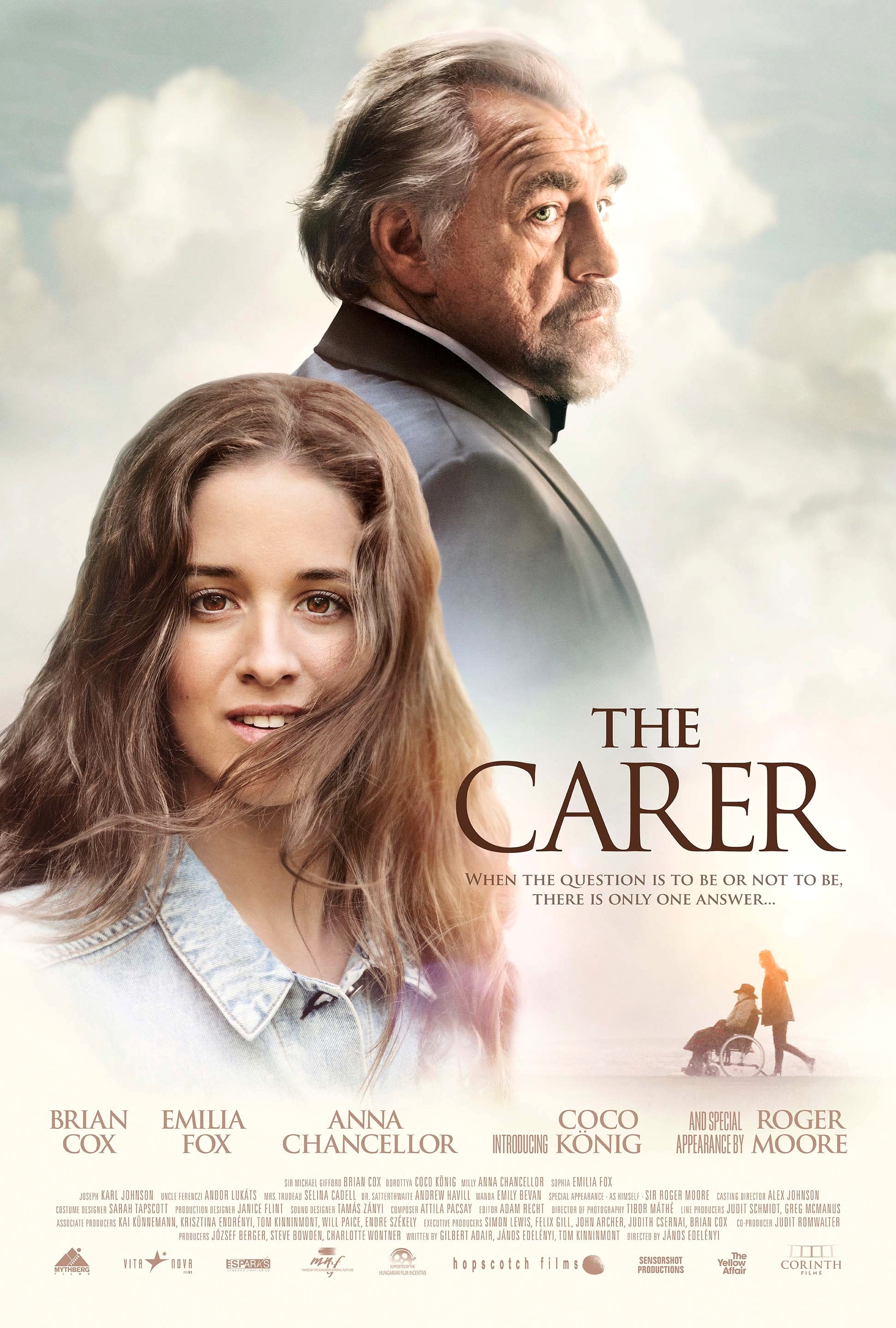
Share this:

  • Click to share on X (Opens in new window) X
  • Click to share on Facebook (Opens in new window) Facebook
  • More
  • Click to print (Opens in new window) Print
  • Click to email a link to a friend (Opens in new window) Email
Like Loading...

Film Stars Don’t Die in Liverpool (2017)

29 Saturday Sep 2018

Posted by dullwood68 in Movies

≈ Leave a comment

Tags

Annette Bening, Cancer, Drama, Gloria Grahame, Jamie Bell, Julie Walters, Liverpool, Oscar winner, Paul McGuigan, Review, Romance, True story

D: Paul McGuigan / 105m

Cast: Annette Bening, Jamie Bell, Julie Walters, Kenneth Cranham, Stephen Graham, Vanessa Redgrave, Frances Barber, Leanne Best

In London in 1979, aspiring young actor Peter Turner (Bell) met Oscar-winning actress Gloria Grahame (Bening). Although theirs was an unlikely friendship (at first), the pair soon found themselves in a romantic relationship, one that saw Grahame being introduced to Turner’s family – mum Bella (Walters), dad Joe (Cranham), and brother Joe Jr (Graham) – and in turn, Turner travelling to the US and meeting Grahame’s mother, Jean (Redgrave), and her sister, Joy (Barber). But it wasn’t long before their relationship foundered, and Turner returned home to continue his acting career. Two years later, while appearing in a production of The Glass Menagerie in the UK, Grahame was taken ill, but instead of staying in hospital, she contacted Turner and asked to stay at his family’s home in Liverpool. Despite her assertions that her illness was nothing serious, Grahame was actually suffering from cancer, but she didn’t want anyone to know, and made Turner swear not to tell anyone, not even her family. In the days that followed, Grahame’s health worsened, and Turner found it increasingly difficult to look after her, and in the end, the secrecy she wanted couldn’t be maintained…

Based on Peter Turner’s memoir of the same name, Film Stars Don’t Die in Liverpool is a tragic tale given muted relevance by the nature of its origins and its refusal to show just why Grahame was, during the early Fifties at least, such a big deal. Thanks to Matt Greenhalgh’s script, which focuses more on Turner than it does Grahame, the movie makes pointed comments about Grahame the woman – her four marriages (one of them to her stepson from her second marriage), her fading career, her frightened refusal to acknowledge the seriousness of having cancer – while giving audiences little in the way of examples as to why she became a star (a short clip from Naked Alibi (1954) doesn’t really cut it). Bening is superb in the role, and captures Grahame’s carefree nature and nagging insecurities with impressive precision, but there’s also a sense that she’s working extra hard to create such a telling portrayal, almost as if she’s filling in the blanks in the script. As the movie’s deus ex machina, she’s an essential component, but this is about Turner’s relationship with Grahame, not the other way round, and how her illness affects him.

The problem with this is that Turner isn’t that well-developed a character either. What’s missing is the spark that brought them together in the first place, because personable though he is, Turner remains something of a cipher, a young man swept up by the glamour surrounding Grahame and her fame, and a little too easily for comfort. Motives are missing on both sides, and again Greenhalgh’s script isn’t interested in exploring these issues, and McGuigan seems content to follow the dictates of the script. Thankfully, Bell is just as good as Bening in overcoming the drawbacks inherent in the script, and gives a nuanced, detailed performance that impresses as much as his co-star’s. Elsewhere, the movie is an odd combination of visual styles, with the scenes set in London and Liverpool having a naturalistic, somewhat dour look to them, while the scenes set in California and New York are bright, over-saturated, and almost rose-tinted in their representation. Maybe this is intended to reflect Turner’s memories of those visits, but the US scenes are jarring and feel like they should belong in another movie (or at least a different cut of this one). In the end, and no matter how much the two storylines are intriguingly intertwined, this is one tragic romance that doesn’t have the impact it should have.

Rating: 6/10 – despite two magnificent central performances, Film Stars Don’t Die in Liverpool isn’t as persuasive or emotionally devastating as it wants to be; there’s a distance here that stops the viewer from becoming too involved, and though it’s handsomely mounted and shot, it never seems to be aiming for anything other than perfectly acceptable.

Share this:

  • Click to share on X (Opens in new window) X
  • Click to share on Facebook (Opens in new window) Facebook
  • More
  • Click to print (Opens in new window) Print
  • Click to email a link to a friend (Opens in new window) Email
Like Loading...

Other People (2016)

28 Friday Sep 2018

Posted by dullwood68 in Movies

≈ Leave a comment

Tags

Black comedy, Bradley Whitford, Cancer, Chris Kelly, Drama, Family, Homosexuality, Jesse Plemons, Leiomyosarcoma, Molly Shannon, Review

D: Chris Kelly / 97m

Cast: Jesse Plemons, Molly Shannon, Bradley Whitford, Maude Apatow, Madisen Beaty, John Early, Zach Woods, Paul Dooley, June Squibb

Twenty-nine year old David Mulcahey (Plemons) is an aspiring comedy writer living in New York who decides to return home to Sacramento when his mother, Joanne (Shannon), is diagnosed with leiomyosarcoma, a form of cancer involving malignant tumours. Adopting the role of her primary carer at home, David tries to support his mother while dealing with a variety of issues in his own life, from the disappointment of a pilot TV show he’s written not being optioned, to the break up of his relationship of five years with Paul (Woods), to the continuing homophobia displayed by his otherwise loving father, Norman (Whitford), and his own doubts as to whether or not he’ll be able to cope “when the time comes”. Over the course of a year, David sees at first hand the struggle his mother has to maintain a semblance of normal life, and the efforts she makes to remain a caring mother to David and his two sisters, Alexandra (Apatow) and Rebeccah (Beaty), while negotiating the trials of funeral planning, quitting chemotherapy, and preparing for the inevitable…

Loosely based on writer/director Kelly’s own experiences with his mother’s death from cancer, Other People is a sobering yet darkly humorous movie that treats the subject of cancer with unflinching honesty while also showing that it doesn’t have to mean that life can’t continue, especially for those who are ill. It also avoids the clichés that come with this particular territory in movies, showing the various stages that Joanne experiences as she comes to terms with her cancer, but in a way that isn’t patronising or condescending. Several times we see David and Joanne taking a walk in their local park, and each occasion acts as a barometer for Joanne’s current state of health, Kelly using this cinematic shorthand to avoid big speeches or teary confessions. It’s one of many ways that the script makes subtle declarations about Joanne’s health, and about cancer in general. As a result, when it is referred to directly, it’s something of a surprise, though a welcome one at that; there shouldn’t be any avoidance of the topic at hand. And no one is shown to be particuarly brave. Instead, Kelly has everyone  finding it difficult to adjust to the idea of a loved one dying, something that rings true throughout, as well as David’s reticence to talk about his own problems, and everyone else’s dismay and confusion.

In amongst the main narrative thread of Joanne’s illness, issues concerning the rest of her family crop up quite often, from David’s inability to recognise that his sisters need his support as well, to the sad acceptance of Joanne’s parents (Dooley, Squibb) that they’re going to lose their only child. Kelly sidesteps any potential melodrama by keeping things simple, and by ensuring that any histrionics are kept to a minimum, saving it all for a scene in a supermarket where David can’t find the laxatives that are on a shelf right in front of him. Plemons, who gives the kind of break out performance he’s always been capable of, perfectly captures the despair, anger and panic that being on the verge of losing his mother is causing him. Kelly is also on firm ground when dealing with David’s homosexuality, planting the seeds for Norman’s discomfort in the family’s conservative religious background, but without being explicit about it. Much is left unacknowledged – verbally at least – but the script makes it clear how each character is feeling, and the family dynamic is well thought out and developed. And to cap it all off, Shannon is simply tremendous as Joanne: funny, angry, sad, but interestingly, never hopeful for herself, another thing that Kelly gets absolutely, completely right.

Rating: 8/10 – the subject matter may sound off-putting, but even though Other People pulls no punches, there’s a streak of black comedy that runs throughout the movie and helps the leaven the drama; Plemons and Shannon give career best performances, and Kelly (making his feature debut) shows the kind of promise that means his next project should receive plenty of deserving attention.

Share this:

  • Click to share on X (Opens in new window) X
  • Click to share on Facebook (Opens in new window) Facebook
  • More
  • Click to print (Opens in new window) Print
  • Click to email a link to a friend (Opens in new window) Email
Like Loading...

Jeune femme (2017)

27 Thursday Sep 2018

Posted by dullwood68 in Movies

≈ Leave a comment

Tags

Chameleon, Drama, France, Grégoire Monsaingeon, Laetitia Dosch, Léonor Serraille, Nanny, Paris, Relationships, Review, Romance, Souleymane Seye Ndiaye

aka Montparnasse Bienvenüe

D: Léonor Serraille / 98m

Cast: Laetitia Dosch, Grégoire Monsaingeon, Souleymane Seye Ndiaye, Léonie Simaga, Erika Sainte, Lilas-Rose Gilberti-Poisot, Audrey Bonnet, Nathalie Richard

After ten years living in Mexico with her boyfriend, professor and renowned photographer Joachim Deloche (Monsaingeon), Paula Simonian (Dosch) finds herself back in Paris (where they used to live), and chasing Joachim in an attempt to win him back. When her intital attempt fails – and leaves her with a nasty cut on her forehead – she takes his cat and decides to make a go of things by herself. However, that’s not as easy as it might seem. Paula has no friends, no job, no money, and a personality that could be charitably called inconstant. Moving from couch to couch, it’s not until she’s mistaken for someone else and befriends Yuki (Simaga) that things begin to improve. She finds work as a live-in nanny, finds a second job working in a knicker bar in a large shopping centre, and attempts to reconnect with her estranged mother (Richard). There’s a tentative romance on the horizon with security guard Ousmane (Ndiaye), even more tentative contact from Joachim, and surprising news that helps Paula make a number of important decisions…

Winner of the Caméra d’Or (for its director) at the 2017 Cannes Film Festival, Jeune femme opens with Paula headbutting Joachim’s front door and sustaining that nasty cut. In hospital, she launches into a free-form diatribe that seeks to challenge the nurse tending to her, and the wider world around her. It’s a direct confrontation, fuelled by what appears to be long-held anger, and a clear indication from writer/director Serraille that Paula is definitely not a shrinking violet. But Serraille isn’t going to let her volatility be the only aspect of Paula’s personality to define her. As the movie progresses, we find that she can be coy and approachable (as with Ousmane), enthusiastic and open (as during the interview for the knicker bar), sad and yet determined (when confronting her mother), silly and childish (in her role as a nanny), and expressive and flirtatious (with Yuki). With all this it would be easy to view Paula as a mass of contradictions, but Serraille’s take on the character is much more subtle than that. Paula is a chameleon, adapting to the people she’s with, and her surroundings. She even looks different at every turn, her features transforming themselves noticeably but to good advantage given the needs of the situation.

What this all provides is a portrait of an enigmatic, rootless woman who knows what she should be doing to fit in, but who finds it easier to compartmentalise her life and behave accordingly. All her relationships are transitory, and end despite Paula’s best efforts to maintain them. No matter how hard she tries, and no matter how good her intentions, it’s inevitable that Paula will need to start again. And keep trying – because what else can she do? Dosch gives a terrific performance as Paula, vulnerable and tough, self-assured and resilient, but still adrift from everyone around her. It’s an unsparing portrayal, highlighting the character’s flaws and strengths in equal measure, and doing more than enough to make her more and more sympathetic as events unfold. By the end you’re rooting for her, but Serraille remains true to Paula’s knack for snatching defeat from the jaws of victory. The final shot is a triumph of sorts for Paula, but in a bittersweet way that adds poignancy to the moment. It’s confident, persuasive elements such as this that help elevate the material from being another worthy yet predictable examination of how hard it is to be a woman in today’s society – and having its lead character be the architect of most of her troubles makes it resonate so much more.

Rating: 8/10 – with an awards-worthy performance from Dosch allied to a perceptive script and assured direction, Jeune femme is an intelligent, deftly handled movie with an eminently relatable heroine, and a sly streak of humour beneath all the drama; regarded by some as the French Frances Ha, this is far more involving and far more interesting, and is effortlessly sincere to boot.

Share this:

  • Click to share on X (Opens in new window) X
  • Click to share on Facebook (Opens in new window) Facebook
  • More
  • Click to print (Opens in new window) Print
  • Click to email a link to a friend (Opens in new window) Email
Like Loading...

King of Thieves (2018)

26 Wednesday Sep 2018

Posted by dullwood68 in Movies

≈ Leave a comment

Tags

Crime, Drama, Hatton Garden, James Marsh, Jim Broadbent, Michael Caine, Ray Winstone, Review, Robbery, Tom Courtenay, True story

D: James Marsh / 108m

Cast: Michael Caine, Jim Broadbent, Tom Courtenay, Ray Winstone, Charlie Cox, Paul Whitehouse, Michael Gambon, Francesca Annis

Following the death of his wife, retired thief Brian Reader (Caine) is approached by a young man named Basil (Cox) with the idea of robbing the Hatton Garden Safe Deposit. Tempted by the opportunity of one last, and hugely impressive, score, Brian enlists the help of some of his fellow thieves: Terry Perkins (Broadbent), Danny Jones (Winstone), Kenny Collins (Courtenay), and Carl Wood (Whitehouse). The robbery is planned for the Easter weekend of 2015; with the vault closed for four days they’ll have more than enough time to break into the vault and raid all the deposit boxes. Brian instructs Basil to look out for any diamonds that are marked FL for flawless, as these will net them the most money. On the second night, Basil (who has procured keys to the building) is late in arriving, and Carl panics and walks away. With Brian also having removed himself from the plan, it’s left to Terry, Danny and Basil to break into the vault and steal whatever they can find, and Kenny to be the lookout. But once they’ve made their getaway, dividing the spoils between them proves to be even more difficult than stealing it all in the first place…

As well as being the largest ever “burglary in English legal history”, the Hatton Garden Job as it became known, was notorious for being carried out by four old men in their sixties and seventies. It’s this aspect of the robbery that King of Thieves focuses on, and often in great, if repetitive, detail. It’s a movie that’s as much about the actual event as it is the men behind it and their reasons for doing it. Brian is a recent widower who finds himself without a purpose in life, living in a big house and unprepared for the silence that comes with being alone. He’s a sad, tragic figure, using the robbery to regain some semblance of his youthful virility, but who is also wise enough to recognise his limitations. It’s only when his partners’ duplicity threatens his permanent retirement, that he resumes the mantle of king of thieves, and attempts to settle matters. Caine shows us both the pride and the frailty in the man, and how being infamous when you’re in your prime means less and less as you get older.

It’s a harsh lesson (and message) for Brian to learn, and as the oldest of the group, the pack mentality that develops after the robbery, with Terry, Danny and Kenny trying to outmanoeuvre each other to keep a bigger slice of the pie, means Brian’s ousting becomes almost inevitable. Old age and its demerits are reflected in the characters’ speech and conversations, which always return to their various ailments, from Carl’s Crohns disease to Kenny’s hearing difficulties, and so on. In adopting this approach to the material, director James Marsh and screenwriter Joe Penhall offer an examination of feeling young while being old that is more melancholy than affirmative, but the seasoned cast, who, Broadbent aside, are all playing to type, aren’t given too much to work with. While the movie has some trenchant things to say about its characters, they’re often let down by the dialogue which becomes increasingly profane (and without adding anything of value to proceedings), and a sense that it’s all a little bit too perfunctory in the way they and events are being presented. Marsh makes the robbery itself a minor miracle of rapid editing, but elsewhere the movie lacks some much needed pace and energy.

Rating: 6/10 – the cast is the main draw here, alongside an acknowledgment that being old doesn’t mean being obsolete, but King of Thieves treats its subject matter with a lack of verve and vitality that ultimately detracts from its effectiveness; a bland visual approach doesn’t help either, and there are too many occasions where repetition is the order of the day, making this another “true story” that fails to fully impress.

Share this:

  • Click to share on X (Opens in new window) X
  • Click to share on Facebook (Opens in new window) Facebook
  • More
  • Click to print (Opens in new window) Print
  • Click to email a link to a friend (Opens in new window) Email
Like Loading...

Manhunt (2017)

23 Sunday Sep 2018

Posted by dullwood68 in Movies

≈ Leave a comment

Tags

Action, Crime, Drama, Ji-won Ha, John Woo, Lawyer, Masaharu Fukuyama, Murder, Osaka, Qi Wei, Review, Tenjin, Thriller, Zhang Hanyu

Original title: Zhui bu

D: John Woo / 109m

Cast: Zhang Hanyu, Masaharu Fukuyama, Qi Wei, Ji-won Ha, Jun Kunimura, Angeles Woo, Nanami Sakuraba, Hiroyuki Ikeuchi, Tao Okamoto, Kuniharu Tokunaga

Du Qiu (Zhang) is a Chinese lawyer whose work for Tenjin Pharmaceuticals in Osaka has made him successful and widely admired. At a party to celebrate Tenjin’s intention to launch a new drug on the market, Du is approached by a young woman, Mayumi (Qi), who wants to discuss a trial he won on Tenjin’s behalf three years before. They spend some time together before Du goes home. When he wakes the next morning, it’s to find the dead body of a woman in bed beside him. He calls the police, and Inspector Asano (Tokunaga) arrives. With evidence pointing to Du being the killer, Asano arrests him, but as they leave his apartment building, Asano makes it look as if Du has killed another officer while escaping. On the run, Du tries to stay one step ahead of the police, while trying to find out who’s framed him. Another detective, Inspector Yamura (Fukuyama), is also assigned to the case, and the more he investigates, the more he too begins to believe that Du was framed…

Made as a tribute to the late Ken Takakura, who starred in the 1976 original version, Kimi yo Fundo no Kawa o Watare (itself adapted from the novel by Juko Nishimura), Manhunt sees action auteur John Woo return to the style of movie making that made him famous back in the late Eighties and early Nineties. With its typically kinetic action sequences, and blistering bursts of gunfire, the movie acts like a compendium of Woo’s greatest hits as a director, with nods to Hard Boiled (1992), A Better Tomorrow (1986), and The Killer (1989) – which Woo will be remaking soon in an English language version. There’s plenty of slo-mo gunfire, explosions, guns being fired while people spin in mid-air, glass shattering at every turn, extended bouts of chaos, vehicular destruction (on land, on water, and in houses), and bone crunching fight scenes. There’s also the usual themes around identity, trust, honour, and respect; romantic elements that grow as the movie progresses; several moments of otherwise silly and unnecessary humour; and, of course, doves. For fans of the director who has given us at least five bona fide action classics, but whose more recent output hasn’t brought him the attention he deserves (though Red Cliff (2008-09) is superb), this is like welcoming back an old friend who’s been away too long.

That said, the storyline isn’t exactly original, and some of the newer material struggles for relevance (Tenjin doesn’t exist in the original version, and its making a weaponised designer drug strains credulity at every turn). It does all tie together, though the presence of Ha and Woo as assassins, and orphaned sisters to boot, feels like one sub-plot too many, while the ease with which Du gets around suggests a background as a spy rather than a lawyer. It’s all very melodramatic and giddily over the top, but with Woo the movie is also in safe hands. No matter how absurd it gets, Woo is there to bolster things with another expertly choreographed and executed action sequence, with more blood squibs going off than you can count in any one scene. Away from Woo’s trademark balletic violence, the movie is breathtakingly shot by DoP Takuta Ishizaka, and Yohei Taneda’s impressive production design provides the perfect backdrop for all the mayhem. If there’s one area where the movie feels like it’s been let down, it’s in the performances, but this isn’t because the cast are uniformly bad – they’re not – it’s simply because their characters aren’t given enough room to develop.

Rating: 7/10 – with its turgid narrative and unremarkable characters, Manhunt is disappointing on a basic movie making level, but with Woo in the director’s chair, it’s a also a movie that often transcends those issues and makes you forget about them; not, overall, one of Woo’s absolute best, but successful enough to remind audiences that he still knows what he’s doing when it comes to action.

Share this:

  • Click to share on X (Opens in new window) X
  • Click to share on Facebook (Opens in new window) Facebook
  • More
  • Click to print (Opens in new window) Print
  • Click to email a link to a friend (Opens in new window) Email
Like Loading...

The Little Stranger (2018)

22 Saturday Sep 2018

Posted by dullwood68 in Movies

≈ Leave a comment

Tags

Charlotte Rampling, Domhnall Gleeson, Drama, Hundreds Hall, Lenny Abrahamson, Literary adaptation, Mystery, Review, Ruth Wilson, Supernatural, Will Poulter

D: Lenny Abrahamson / 111m

Cast: Domhnall Gleeson, Ruth Wilson, Will Poulter, Charlotte Rampling, Liv Hill, Anna Madeley, Richard McCabe

In the wake of World War II, Dr Faraday (Gleeson), a recently appointed country doctor, is called to Hundreds Hall, a sprawling estate that he once visited as a child. There he meets the owners, the Ayres – the mother (Rampling), and her two children, Roderick (Poulter) and Caroline (Wilson). The main house is gloomy and in a state of decay that speaks of prolonged financial difficulties for the family. Roderick is in charge, but he also has to contend with severe injuries he received as a pilot in the war. When Faraday offers to provide some palliative care for Roderick, it’s also so that he can see Caroline, but as he begins to spend more and more time at the Hall, so he becomes aware that all is not well there. The Ayres’ believe there is a supernatural presence in the house, one that is targeting them one by one. Faraday refuses to believe this, but events seem to prove otherwise. As he and Caroline become closer, he’s forced to consider that she really is in danger, and that perhaps there really is a presence in the house…

An adaptation of Sarah Waters’ novel, The Little Stranger is a ghost story without a ghost – perhaps – and a mystery that remains a mystery once the movie has ended. Whether or not this is a good thing will be down to the individual, as Lucinda Coxon’s screenplay deals in ambiguity and narrative sleight-of-hand at several key moments, but what it does mean is that the mystery of what is happening at Hundreds Hall plays out like a riddle that no one is meant to unravel. There are clues to be had, and some of what is shown can be taken at face value, but the script, in conjunction with Abrahamson’s measured, calculating direction, is more concerned with atmosphere and mood than with providing answers. This makes for a somewhat disconcerting viewing experience as scenes that build tension dissipate quickly once they’re established, and Ole Bratt Birkeland’s precision-tooled cinematography – always looking, always probing into the house’s darkest nooks and crannies, and its past – invites observation rather than immersion. There’s a detachment here that stops the viewer from becoming too involved with the Ayres family and their fears, and this despite very good performances from Wilson, Poulter and Rampling as the beleaguered trio.

The reason for all this is the movie’s main theme, that of the rise of post-war socialism and the weakening of the power and influence once wielded by the landed gentry, here represented by the Ayres’ financial downfall, and Faraday’s barely concealed contempt for them. His pursuit of Caroline is less about love than about the need for possession, to have, finally, what he’s wanted ever since he was a child and saw Hundreds Hall in all its former glory. He’s the classic outsider: envious, ambitious, and determined to be on the inside. As played by a never better Gleeson, Faraday is supercilious and self-contained, yet brimming with indignation at the way in which the Ayres’ have let the Hall decline. Coxon and Abrahamson recognise the co-dependency that exists between Faraday and the Ayres’, and it’s this approach, and the way that it develops, that is ultimately more intriguing and compelling than if the movie was merely another haunted house tale. Abrahamson maintains a keen sense of unease in terms of Faraday’s motives, and as the threats to the Ayres’ become more tangible, a more human cause comes to the fore. But again, there’s that overwhelming ambiguity to keep the viewer on their toes, and wondering if what they’re seeing and hearing can be trusted.

Rating: 7/10 – some viewers may find The Little Stranger hard going as Abrahamson adopts an often glacial pace to the material while providing deft psychological insights into the characters and their social positions; with a pervasive sense of time and place, and an air of impending tragedy, it’s a movie that doesn’t trade in the accepted tropes of the genre, but instead, warps them to its own advantage.

Share this:

  • Click to share on X (Opens in new window) X
  • Click to share on Facebook (Opens in new window) Facebook
  • More
  • Click to print (Opens in new window) Print
  • Click to email a link to a friend (Opens in new window) Email
Like Loading...

The Middle of X (2018)

21 Friday Sep 2018

Posted by dullwood68 in Movies

≈ Leave a comment

Tags

Benjamin King, Bre Blair, Colin Egglesfield, Comedy, Drama, Friends, High school reunion, Josh Cooke, Marital problems, Nicky Whelan, Peter Odiorne, Relationships, Review

D: Peter Odiorne / 82m

Cast: Bre Blair, Ronnie Gene Blevins, Josh Cooke, Colin Egglesfield, Jeremy Gabriel, Jason Gray-Stanford, Sammi Hanratty, Benjamin King, Chrisdine King, Tina Parker, Elizabeth Stillwell, Nicky Whelan

Having graduated from high school, Mack Prescott finds himself at odds with his future, or at least, what it may bring. Twenty-five years later, and on the eve of a high school reunion that he’s hosting at the home that used to belong to the parents of his wife (and high school sweetheart) Emily (Whelan), Mack (Egglesfield) is still ambivalent about his life and where it’s taking him. As many of his teenage friends, some of whom he hasn’t seen in years, begin to arrive, Mack discovers that he’s not the only one with problems. His best friend, Carter (King), drinks too much and has an unhappy marriage; Dick (Gray-Stanford) and his wife, Lydia (King), are struggling financially; and teenage sweethearts Casey (Cooke) and Sam (Blair) are hopeful of rekindling their old romance. Only Marty (Blevins), who suffered a terrible personal tragedy the night everyone was last together, appears to be happy, and then through sobriety. As the evening unfolds, Mack begins to realise what it is to be happy, and why Life has a knack for leading people to where they need to be…

Upon reading that synopsis, you could be forgiven for thinking, Uh-oh, not another movie about angsty middle-aged, middle class people wondering where it all went wrong from the safety of their palatial homes. And you would be right; this is exactly that kind of movie. Thankfully, writer/director Odiorne offers just enough of a spin on this well-worn set up to make The Middle of X an entertaining if resolutely lightweight examination of middle-aged ennui. The drama unfolds in fits and starts, and some of the various sub-plots surrounding Mack and Emily’s fractured marriage – he cheated on her so she did the same – don’t play out as well as others. There’s a sense that the running time has been dictated not so much by the length of the script but by a limited budget, and as a result, those same sub-plots feel truncated. A case in point is Marty, who is given a terrific introduction, and who is set up to be a major character. But once he arrives at the house, his story doesn’t go anywhere, and he’s used as a way of undermining another, minor character who’s quickly disposed of. It’s as if Odiorne had loads of great ideas but didn’t know what to do with them all.

He – and the movie – are much more successful with the comedic elements. There’s a sardonic streak of humour that runs throughout the material, from Carter’s commitment to continual boozing, to Dick’s desperate attempts at nabbing new clients to keep his job afloat. By pricking at the aspirational natures of his characters, Odiorne makes their unhappiness and perceived failures a source of mirth. It’s cruel in places, but much sharper than if we were witnessing their unhappiness as straight drama. This also allows for a clutch of enjoyable performances, with Benjamin King and Whelan on particularly impressive form, while the likes of Cooke, Blair and Blevins are good but don’t have the opportunity to flesh out their roles to better advantage. By the movie’s end, a major wrong has been remedied (if a little too easily), problems have been solved (if only for a while – or until the next reunion), and there’s a moment of shameless manipulation that could have been horribly mawkish but which succeeds thanks to the efforts of the actress involved. It’s moments such as these, though few and far between, that show what Odiorne could do with a bigger budget and a sharper script.

Rating: 6/10 – the material could have made more effort to skewer the pretensions of its self-absorbed characters, and a longer running time could have allowed for more satisfying resolutions to many of the sub-plots, but for a first-time outing as a writer/director, Odiorne acquits himself well enough; The Middle of X may not attract many viewers because of its generic sounding nature, but for those prepared to give it a try, there are enough rewards to make it worth their while.

Share this:

  • Click to share on X (Opens in new window) X
  • Click to share on Facebook (Opens in new window) Facebook
  • More
  • Click to print (Opens in new window) Print
  • Click to email a link to a friend (Opens in new window) Email
Like Loading...
← Older posts
Newer posts →

Blog Stats

  • 486,628 hits

Recent Posts

  • 10 Reasons to Remember Bibi Andersson (1935-2019)
  • Fantasia (1940)
  • Dances With Wolves (1990) – The Special Edition
  • Kiss of the Spider Woman (1985)
  • The Three Musketeers (1973)

Top Posts & Pages

  • Lost for Life (2013) - Another Look
    Lost for Life (2013) - Another Look
  • Lost for Life (2013)
    Lost for Life (2013)
  • About
    About
  • BFI London Film Festival 2015
    BFI London Film Festival 2015
  • Mr. Topaze (1961)
    Mr. Topaze (1961)
  • Shock and Awe (2017)
    Shock and Awe (2017)
  • Hunt for the Wilderpeople (2016)
    Hunt for the Wilderpeople (2016)
  • Cardboard Boxer (2016)
    Cardboard Boxer (2016)
  • Billy Lynn's Long Halftime Walk (2016)
    Billy Lynn's Long Halftime Walk (2016)
  • Winter's Tale (2014)
    Winter's Tale (2014)
Follow thedullwoodexperiment on WordPress.com

Blogs I Follow

  • Rubbish Talk
  • Film 4 Fan
  • Fast Film Reviews
  • The Film Blog
  • All Things Movies UK
  • Interpreting the Stars
  • Let's Go To The Movies
  • Movie Reviews 101
  • TMI News
  • Dan the Man's Movie Reviews
  • Film History
  • Jordan and Eddie (The Movie Guys)

Archives

  • April 2019 (13)
  • March 2019 (28)
  • February 2019 (28)
  • January 2019 (32)
  • December 2018 (28)
  • November 2018 (30)
  • October 2018 (29)
  • September 2018 (29)
  • August 2018 (29)
  • July 2018 (30)
  • June 2018 (28)
  • May 2018 (24)
  • April 2018 (21)
  • March 2018 (31)
  • February 2018 (25)
  • January 2018 (30)
  • December 2017 (30)
  • November 2017 (27)
  • October 2017 (27)
  • September 2017 (26)
  • August 2017 (32)
  • July 2017 (32)
  • June 2017 (30)
  • May 2017 (29)
  • April 2017 (29)
  • March 2017 (30)
  • February 2017 (27)
  • January 2017 (32)
  • December 2016 (30)
  • November 2016 (28)
  • October 2016 (30)
  • September 2016 (27)
  • August 2016 (30)
  • July 2016 (30)
  • June 2016 (31)
  • May 2016 (34)
  • April 2016 (30)
  • March 2016 (30)
  • February 2016 (28)
  • January 2016 (35)
  • December 2015 (34)
  • November 2015 (31)
  • October 2015 (31)
  • September 2015 (34)
  • August 2015 (31)
  • July 2015 (33)
  • June 2015 (12)
  • May 2015 (31)
  • April 2015 (32)
  • March 2015 (30)
  • February 2015 (37)
  • January 2015 (39)
  • December 2014 (34)
  • November 2014 (34)
  • October 2014 (36)
  • September 2014 (25)
  • August 2014 (29)
  • July 2014 (29)
  • June 2014 (28)
  • May 2014 (23)
  • April 2014 (21)
  • March 2014 (42)
  • February 2014 (38)
  • January 2014 (29)
  • December 2013 (28)
  • November 2013 (34)
  • October 2013 (4)

Blog at WordPress.com.

Rubbish Talk

Film 4 Fan

A Movie Blog

Fast Film Reviews

The Film Blog

The official blog of everything in film

All Things Movies UK

Movie Reviews and Original Articles

Interpreting the Stars

Dave Examines Movies

Let's Go To The Movies

Film and Theatre Lover!

Movie Reviews 101

Daily Movie Reviews

TMI News

Latest weather, crime and breaking news

Dan the Man's Movie Reviews

All my aimless thoughts, ideas, and ramblings, all packed into one site!

Film History

Telling the story of film

Jordan and Eddie (The Movie Guys)

Movie Reviews & Ramblings from an Australian Based Film Fan

Privacy & Cookies: This site uses cookies. By continuing to use this website, you agree to their use.
To find out more, including how to control cookies, see here: Cookie Policy
  • Subscribe Subscribed
    • thedullwoodexperiment
    • Join 481 other subscribers
    • Already have a WordPress.com account? Log in now.
    • thedullwoodexperiment
    • Subscribe Subscribed
    • Sign up
    • Log in
    • Report this content
    • View site in Reader
    • Manage subscriptions
    • Collapse this bar
 

Loading Comments...
 

    %d