• 10 Reasons to Remember…
  • A Brief Word About…
  • About
  • For One Week Only
  • Happy Birthday
  • Monthly Roundup
  • Old-Time Crime
  • Other Posts
  • Poster of the Week
  • Question of the Week
  • Reviews
  • Trailers

thedullwoodexperiment

~ Viewing movies in a different light

thedullwoodexperiment

Tag Archives: Drama

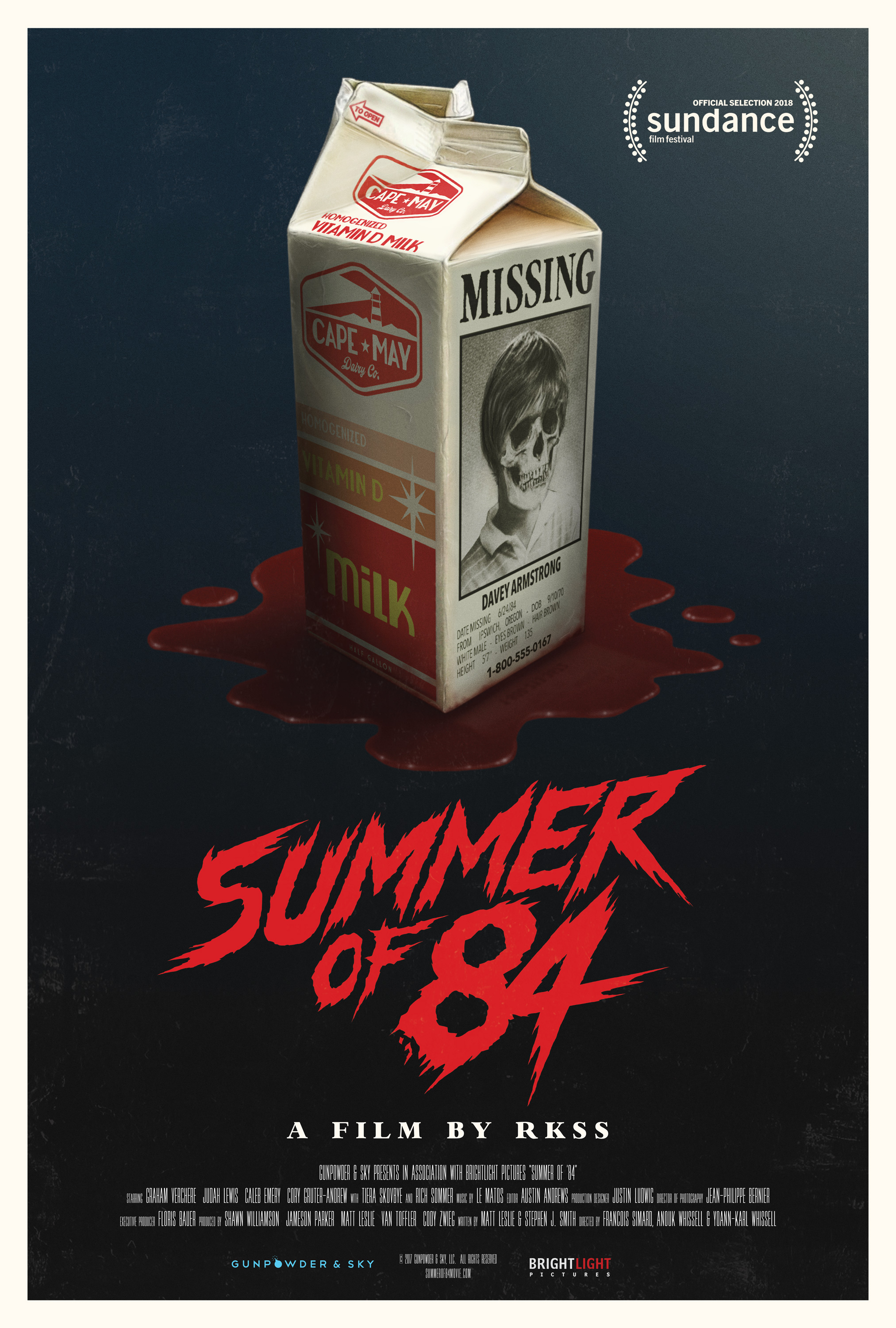
Summer of 84 (2018)

19 Wednesday Sep 2018

Posted by dullwood68 in Movies

≈ 1 Comment

Tags

Anouk Whissell, Cape May Slayer, Drama, François Simard, Graham Verchere, Missing children, Mystery, Review, Rich Sommer, Serial killer, Thriller, Yoann-Karl Whissell

D: François Simard, Anouk Whissell, Yoann-Karl Whissell / 105m

Cast: Graham Verchere, Judah Lewis, Caleb Emery, Cory Gruter-Andrew, Tiera Skovbye, Rich Sommer, Jason Gray-Stanford, Shauna Johannesen

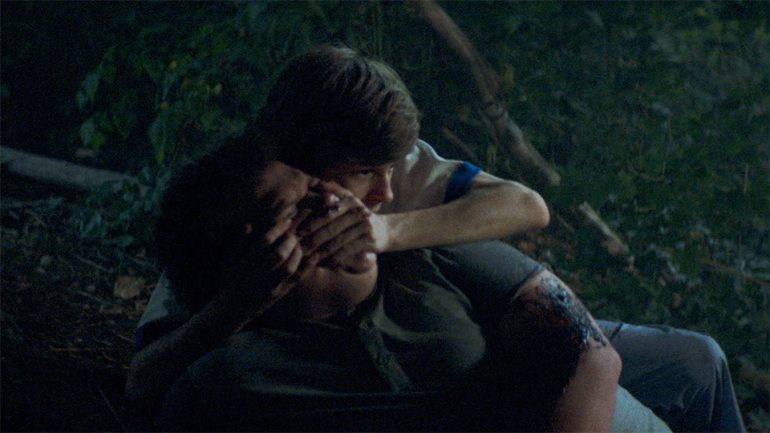
For fifteen year old Davey Armstrong (Verchere), life is full of mysteries, conspiracies and unexplained phenomena. Living in the small town of Cape May, not much really happens until the police announce that a serial killer has made his presence known in the area by (anonymously) admitting to being responsible for a number of children having gone missing over the past decade. When Davey sees a teenage boy in the home of his neighbour, police officer Wayne Mackey (Sommer), and that same boy is later reported as missing, Davey enlists the help of his best friends – Eats (Lewis), Woody (Emery), and Curtis (Gruter-Andrew) – in proving that Mackey is the so-called Cape May Slayer. They set about gathering evidence, but most of it is circumstantial, until Davey finds the missing boy’s bloodstained sweater in Mackey’s garden shed. He presents his “evidence” to his parents who are horrified by the boys’ behaviour, and make the four apologise to Mackey for what they believe is unwarranted harrassment. Mackey is understanding of what they’ve done, and even though a suspect is arrested soon after, Davey still can’t shake the idea that Mackey is really the Cape May Slayer…

A mystery thriller where the main mystery is why it was set in 1984 in the first place, Summer of 84 takes a generic, well established storyline and makes it very obvious whether or not Mackey is the killer – and it does so very early on. With the material played out slowly, if not entirely assuredly, the movie takes a while to get into its stride, but it’s aided by good performances from its young cast – even if they’re playing established stereotypes – and a deliberately creepy turn from Sommer as Mackey. What hinders the movie most is the sense of familiarity that it engenders, from that first sighting by Davey of a boy in Mackey’s house, to the policeman’s highly suspicious purchasing of digging tools and hundreds of pounds of dirt. These are tried and tested (and trusted) story developments, seen dozens if not hundreds of times before, and it’s this stretch of the movie that takes too long to play out. We already know if Mackey is the killer or not, so having to go through said story developments seems redundant, even though it’s expected.

Thankfully, Leslie and Smith have a surprise up their combined sleeves, and it comes in the form of the movie’s final twenty minutes, where the material takes a sharp left (or wrong) turn into full-on horror territory, and where the fate of Davey and his friends is thrown into real doubt. This is the point where the movie drops out of generic storytelling mode, and into something completely unexpected. It’s a shame that the rest of the movie couldn’t have been as bold in its approach, but it does mean that the movie ends in a way that compensates for much of what’s gone before. Making their second feature together, the trio of Simard and the Whissell siblings display a fondness for the period, but aside from a handful of clumsy and/or forced references, and the generic nature of the material, this could have been presented as modern day and it wouldn’t have made any difference. There’s an unlikely sub-plot involving Davey and an older ex-babysitter, Nikki (Skovbye), that aims to provide depth but lacks credibility, while some of the motivations of Davey and his friends rely more on the needs of the script than any believable tendencies. There’s a decent enough story in here somewhere, and it’s entertaining for the most part, but that final twenty minutes aside, it won’t linger in the memory.

Rating: 6/10 – good performances, and a Tangerine Dream-style soundtrack by Le Matos, help prop up a less than compelling storyline, leaving Summer of 84 feeling hard done by by its own creators; watchable, certainly, but one to approach with reservations, or with an eye to holding out for better things towards the end.

Share this:

  • Click to share on X (Opens in new window) X
  • Click to share on Facebook (Opens in new window) Facebook
  • More
  • Click to print (Opens in new window) Print
  • Click to email a link to a friend (Opens in new window) Email
Like Loading...

Breaking and Exiting (2018)

17 Monday Sep 2018

Posted by dullwood68 in Movies

≈ Leave a comment

Tags

Burglary, Comedy, Drama, Final meal, Jordan Hinson, Milo Gibson, Peter Facinelli, Review, Romance, Romantic comedy, Suicide

D: Peter Facinelli / 78m

Cast: Milo Gibson, Jordan Hinson, Adam Huber, James Kyson, Lily Anne Harrison, Justine Wachsberger, Joaquim de Almeida

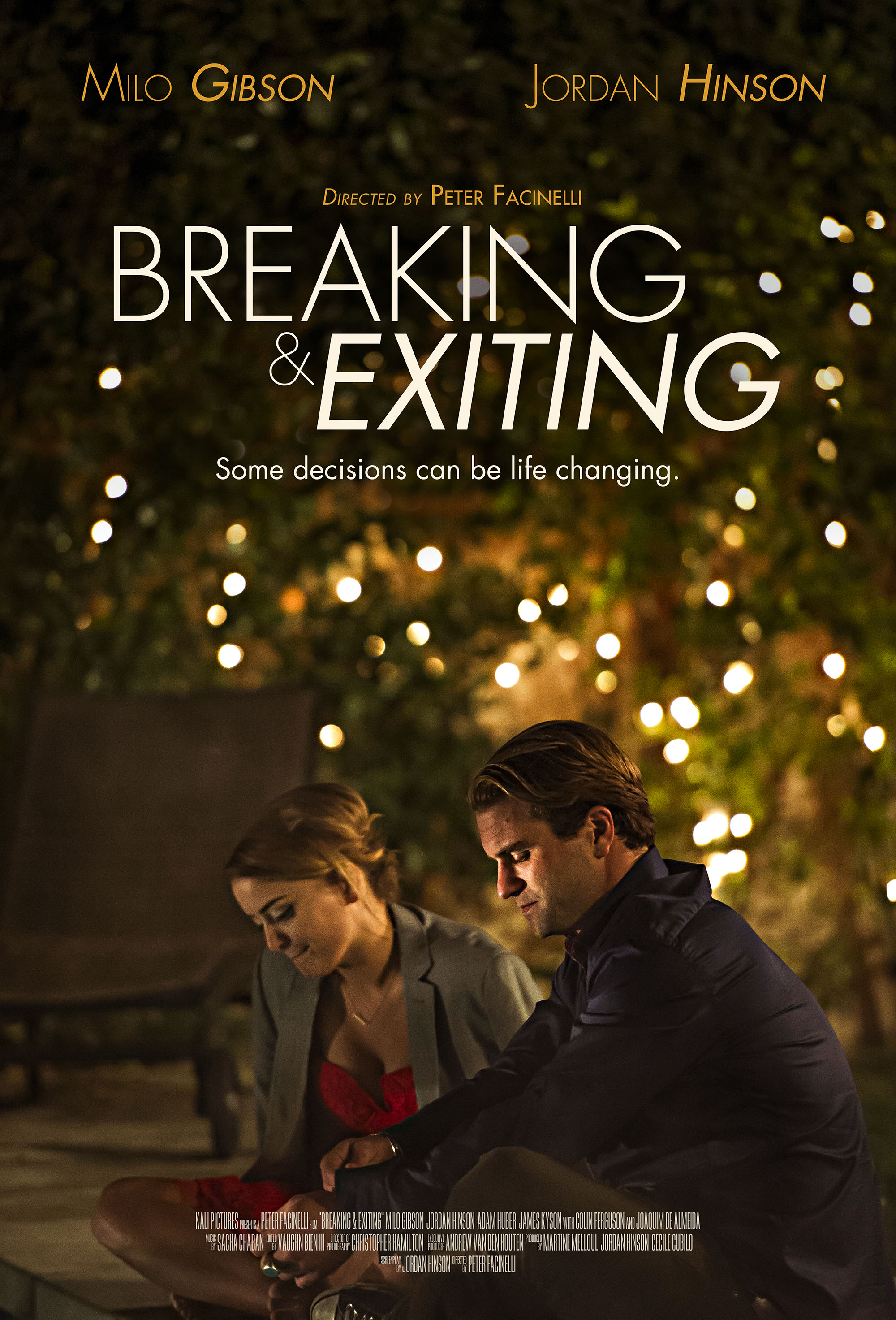
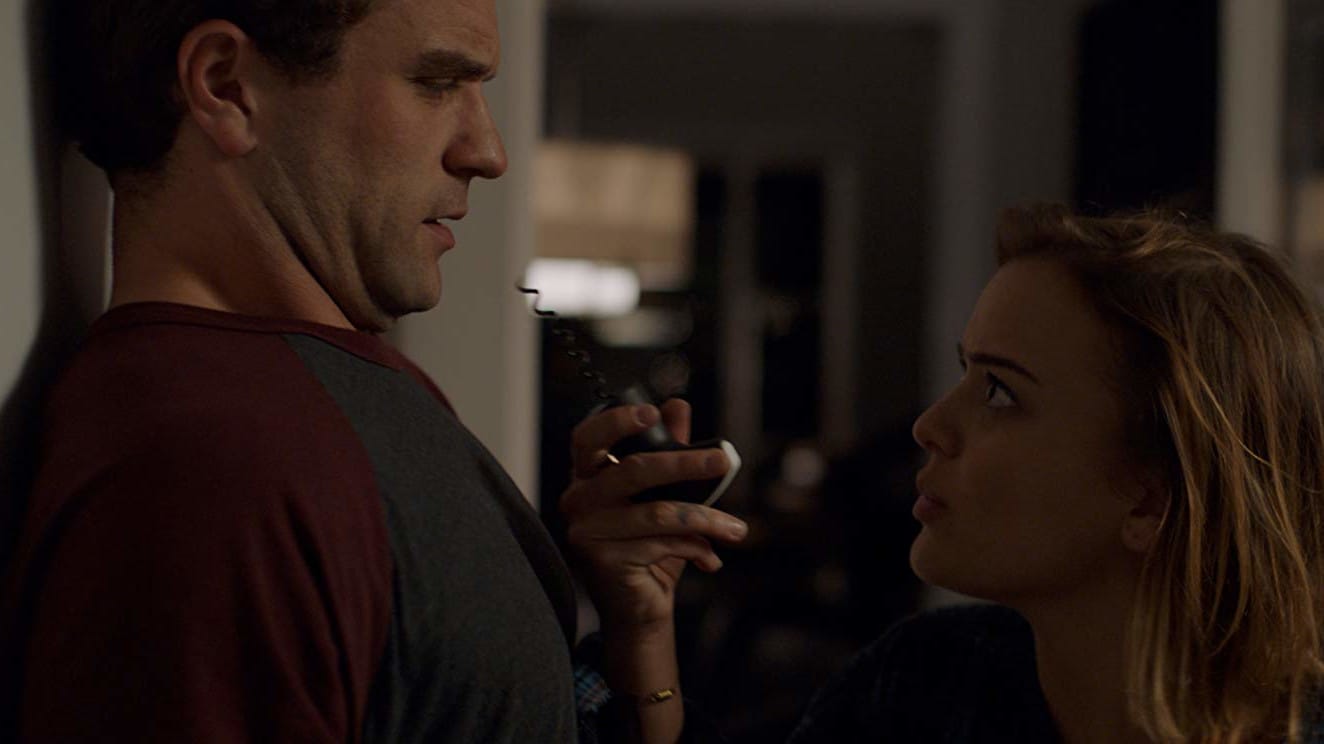
Harry (Gibson) is a career criminal, a burglar who targets homes when the owners are away on holiday, and who aren’t gun owners. Along with his cousin, Chris (Huber), he makes enough money to ensure he doesn’t have to get a proper job. One day, Chris announces that their next burglary will be his last: he has a temp job lined up, and he doesn’t want to wind up in jail. Harry is dismissive of Chris’s ambition, but their last burglary goes badly wrong and they’re lucky to avoid being caught. Harry still doesn’t Chris is being serious, but finds himself carrying out their next job on his own. While he goes from room to room gathering valuables and electronics, he discovers a woman (Hinson) in the bath who is trying to kill herself. Harry’s inherent lack of empathy causes him to point her in the direction of tablets that will help her achieve her aim, and then he leaves. But he doesn’t get far before he suffers a rare attack of conscience, and rushes back to try and save the woman, an unselfish act that sees him behaving in a way that’s completely new to him…

A romantic comedy (whose humour is largely on the dark, uncomfortable side), Breaking and Exiting does something unexpected from the start: it brings the viewer in  at a point where Harry is making the decision to return and save the woman – who is called Daisy – from killing herself. So, from the beginning we know that Harry isn’t as bad as the screenplay will subsequently paint him as it rewinds the action back a few days. As a result we can bear Harry’s selfish, egoistic behaviour and attitude towards Chris, and his girlfriend, Lana (Wachsberger), partly because it’s inappropriately funny, and partly because we know he’s going to change. Hinson, who wrote the script and also produces as well as starring, wisely allows the viewer to have some vicarious fun through Harry’s unalloyed narcissism before showing us the good heart he has buried deep, deep inside him. But he’s also curious, just like the viewer, to find out why Daisy wants to kill herself. There’s a boyfriend she’s angry with, but it always seems as though that’s merely a small part of it all, and just as she teases out Harry’s deeply-rooted compassion, so we slowly learn what’s at the root of her unhappiness.

Along the way, Harry and Daisy get to know each other, and although there are a handful of generic rom-com moments, the script does its best to steer clear of anything too obvious as the story develops. Harry is open and honest about his criminal activities, while Daisy behaves wildly and erratically in line with her current mental state. It’s not until Harry challenges Daisy to let him cook her a final meal that mixed emotions on both sides begin to coalesce into something more stable for both of them. Hinson is a winning presence, likeable and endearing even when talking about suicide with determination, while Gibson (looking and sounding very much like his father), has an easy-going charm about him that is appealing and sincere. Together, the pair add a surprising amount of texture and depth to their characters, and when things turn more serious, they make the necessary switch in tone that much more believable. Facinelli directs with a good understanding of the absurdity of the basic set up, but makes it work in tandem with his committed leads, and offers up a neatly assembled and handled rom-com that does its best to avoid being predictable in its details.

Rating: 8/10 – with the chemistry between Gibson and Hinson an added plus, and Hinson’s screenplay balancing humour and more serious matters with aplomb, Breaking and Exiting is that rare rom-com that could have benefited from being longer; with fluid, emotive camerawork from DoP Christopher Hamilton and his team, and a terrific soundtrack, the movie has more than enough going on for even the most casual of viewers.

Share this:

  • Click to share on X (Opens in new window) X
  • Click to share on Facebook (Opens in new window) Facebook
  • More
  • Click to print (Opens in new window) Print
  • Click to email a link to a friend (Opens in new window) Email
Like Loading...

Let’s Take a Walk Down Hype Street – Crazy Rich Asians (2018)

16 Sunday Sep 2018

Posted by dullwood68 in Movies

≈ 1 Comment

Tags

Comedy, Constance Wu, Drama, Family relationships, Gemma Chan, Henry Golding, Jon M. Chu, Literary adaptation, Michelle Yeoh, Review, Romance, Singapore, Wedding

D: Jon M. Chu / 121m

Cast: Constance Wu, Henry Golding, Michelle Yeoh, Gemma Chan, Lisa Lu, Awkwafina, Chris Pang, Jing Lusi, Nico Santos, Ken Jeong, Jimmy O. Yang, Pierre Png

In a summer that’s been dominated (as usual) by superhero movies, tired remakes, and special effects driven action movies, one movie has “broken out” and caught the attention of critics and audiences alike. It’s billed as a romantic comedy – though if there’s ever likely to be a breakout movie each summer it’s likely to be a comedy of some description – and it’s been hailed as not only a breakout movie but a breakthrough movie as well. The movie (surprise!) is Crazy Rich Asians, and it’s the first time since The Joy Luck Club (1993) that any feature has had a predominantly Asian cast (though it appears that an early producer thought it would be a good idea to whitewash the lead character, Rachel). Watching the movie in the wake of all this positive feedback is interesting, partly to see if it can or does live up to the hype it’s received, and partly to see if it succeeds on its own merits. Inevitably, it does and it doesn’t.

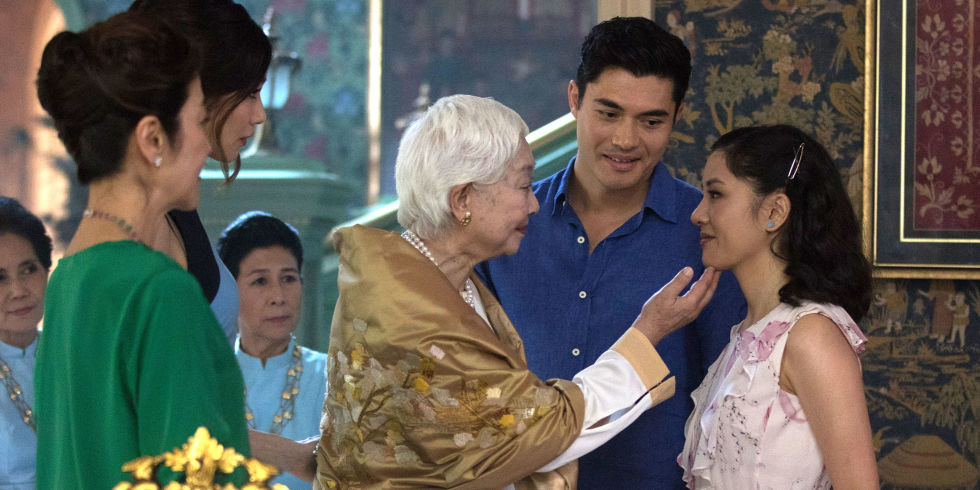
Let’s get the casting out of the way first. Perhaps a better way of describing the cast would be to say that they’re of “predominantly Asian heritage”, but that aside, it is good to see the major roles filled by recognisably Asian actors, and especially as the story is set within the confines of a recognisably Asian family and its attendant culture. But if you’ve seen one romantic comedy where the girlfriend or the boyfriend is the outsider who needs to win over a dysfunctional extended family, then much of what’s on offer in Crazy Rich Asians will be very familiar to you. Indeed, the only real difference between this movie and many others is the fact that it is an Asian family that’s on display – and display is perhaps the best word to describe what’s happening. In everyone’s rush to congratulate the movie, they seem to have forgotten that we’ve actually been here before, in My Big Fat Greek Wedding (2002) and its equally culturally exploitative sequel. That the cast is predominantly Asian doesn’t matter when the same romantic comedy tropes and characterisations are trotted out, and when we’re asked to laugh at comic behaviour that’s been seen too often before. It’s not enough to have an ethnic twist when the material remains the same.

And then there’s the whole idea that the movie is a romantic comedy. There is humour in Crazy Rich Asians, much of it delivered by Awkwafina as the kind of quirky best friend to the heroine that seems de rigeuer these days, or Santos’ stereotypical gay fashion designer. But in reality this is a romantic drama that has comic overtones. There are long stretches where the material isn’t even trying to raise a laugh as it seeks to explore ideas of cultural isolationism (or indigenous racism), bitterness, marital betrayal, emotional regret, depression and envy. The obstacles that loved up couple Rachel (Wu) and Nick (Golding) have to overcome lead to some very dramatic sequences, and the hurtful behaviour of Nick’s mother (Yeoh) towards Rachel borders on the perverse. And that’s without a subplot involving Chan as Nick’s sister, Astrid, whose unhappiness causes her to binge shop and hide the purchases from her husband (Png). Perhaps the makers were aware of the darkness inherent in the material from the start, but felt that promoting the movie as a romantic drama wouldn’t attract as many viewers. And therein lies the irony: as a romantic drama it’s much more effective than as a romantic comedy.

Rating: 7/10 – with very good performances in service to a good script, solid direction, and production design that emphasises the opulent above the mundane every time (the wedding is a particular standout), Crazy Rich Asians is let down by its unapologetic sense of cultural appropriation; not as groundbreaking as everyone makes out, it’s still a refreshing change from the usual summer blockbuster fare, but definitely not the movie it’s been hyped up to be.

Share this:

  • Click to share on X (Opens in new window) X
  • Click to share on Facebook (Opens in new window) Facebook
  • More
  • Click to print (Opens in new window) Print
  • Click to email a link to a friend (Opens in new window) Email
Like Loading...

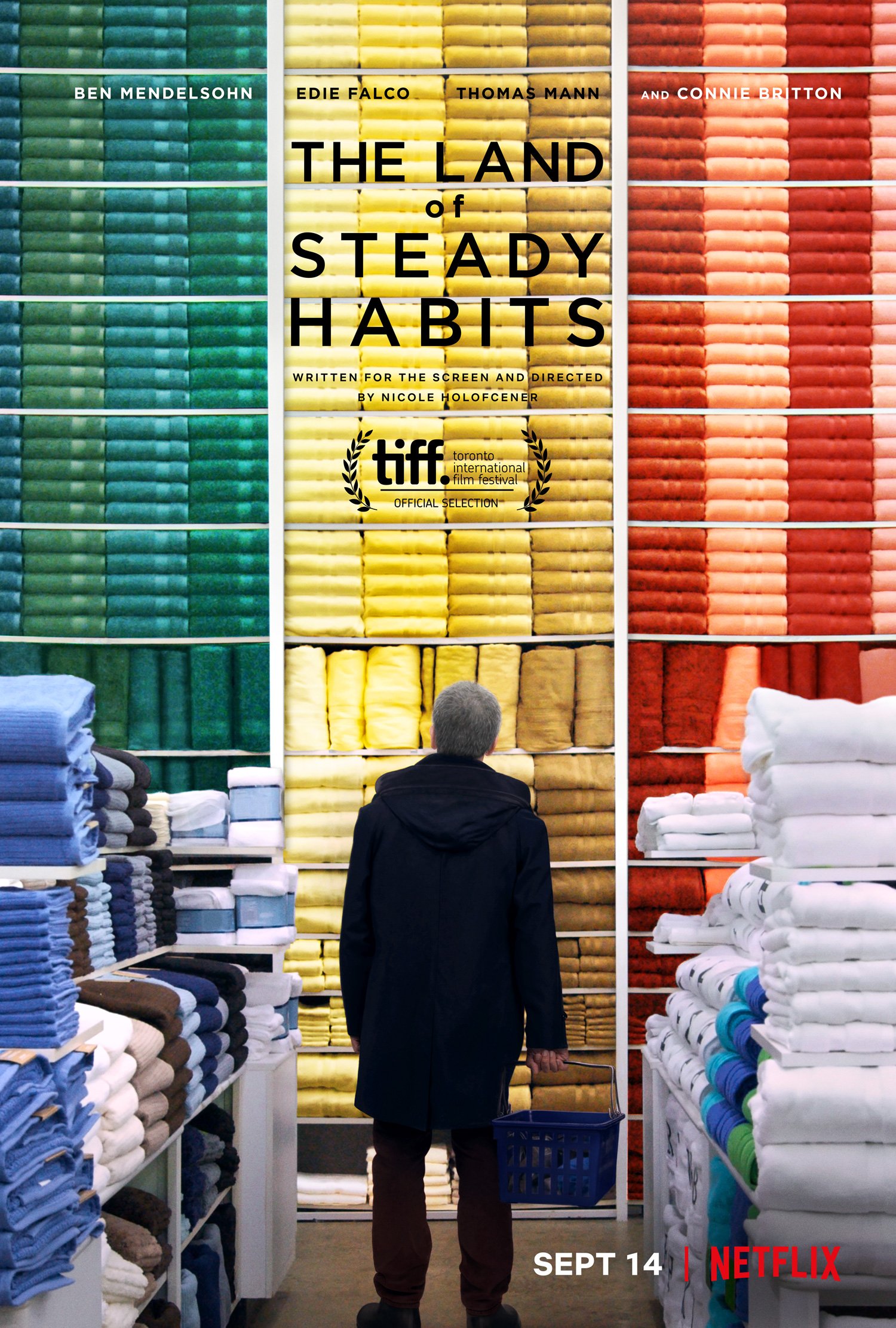
The Land of Steady Habits (2018)

14 Friday Sep 2018

Posted by dullwood68 in Movies

≈ Leave a comment

Tags

Ben Mendelsohn, Comedy, Drama, Drugs, Edie Falco, Father/son relationship, Literary adaptation, Mid-life crisis, Nicole Holofcener, Review, Thomas Mann

D: Nicole Holofcener / 98m

Cast: Ben Mendelsohn, Edie Falco, Thomas Mann, Bill Camp, Connie Britton, Elizabeth Marvel, Michael Gaston, Charlie Tahan

Anders Hill (Mendelsohn) has turned his back on his life as a husband and father, and his work in finance. Divorced and living in a condo, he’s “retired”, but finding it difficult to make his new life work. Casual (and disappointing) hook-ups with women only remind him of his ex-wife, Helene (Falco), and how much he misses her, and the fact that she’s now seeing someone he used to work with, Donny (Camp), makes it even worse. And their son, Preston (Mann), has graduated from university but seems rootless and unwilling to do anything with his life. When Anders is invited to an annual party given by his friends, the Ashfords (Marvel, Gaston), he’s not expected to actually turn up. But he does, and ends up taking drugs with the Ashfords’ son, Charlie (Tahan). When Charlie ends up in hospital that same night, it’s the beginning of an unexpected if not entirely appropriate friendship, while unresolved issues involving Helene and Preston continue to cause friction between the trio, and have a wider effect on Donny and the Ashfords, as well as a woman Anders meets called Barbara (Britton)…

The first movie directed by Nicole Holofcener that doesn’t feature Catherine Keener in the lead role, The Land of Steady Habits is an adaptation of the novel of the same name by Ted Thompson. The title refers to the collection of hamlets and towns that dot the Connecticut commuter line, and their similarity to each other. Anders has decided that he no longer wants to be a part of the “rat race”, and that his happiness has been impeded by his job and his marriage and having to be selfless in providing for everyone around him. But Anders is finding that being “free” brings its own set of problems, some that remain from his previous life, and newer ones that add to his woes. It’s clear he’s not happy, and it’s clear that he has no idea of what he’s doing (we first meet him trying to buy ornaments to fill the shelves in his condo; the choices he makes are less than complementary to each other). He wants to retain a connection with Helene but can’t articulate why, while he’s more in tune with Charlie and his issues with his parents than he is with his own son.

All this is handled by Holofcener (who also provides the screenplay) with her customary sincerity and sympathetic approach to each of the characters, and by doing this she manages to avoid making Anders’ story yet another dull tale of an affluent, middle-class man’s mid-life crisis. She’s helped enormously by Mendelsohn’s sensitive and often poignant portrayal of Anders as a man who is at odds with himself and what he needs out of life. Falco is slightly less well served by the material – Helene isn’t given the room to develop as a character – while Mann is terrific as Preston, with rehab in his past and facing an uncertain future. However, the movie is a mixture of drama and comedy that doesn’t always gel convincingly, the relationship between Anders and Charlie is the kind that exists purely in the movies, and there are times when it seems Holofcener has trouble making certain scenes appear relevant. The result is a movie that feels as if it’s holding itself back, and which, despite the cast’s commitment, always seems to be on the verge of saying something profound – without quite knowing just what it is it wants to say.

Rating: 7/10 – a great performance from Mendelsohn ensures The Land of Steady Habits remains watchable throughout, but the patchy material doesn’t always hold up; ultimately it’s a movie that remains likeable even when it’s not living up to its full potential, and it retains a certain charm that is hard to ignore, but a lot will depend on how much emotional dysfunction you can endure – and not just from Anders.

Share this:

  • Click to share on X (Opens in new window) X
  • Click to share on Facebook (Opens in new window) Facebook
  • More
  • Click to print (Opens in new window) Print
  • Click to email a link to a friend (Opens in new window) Email
Like Loading...

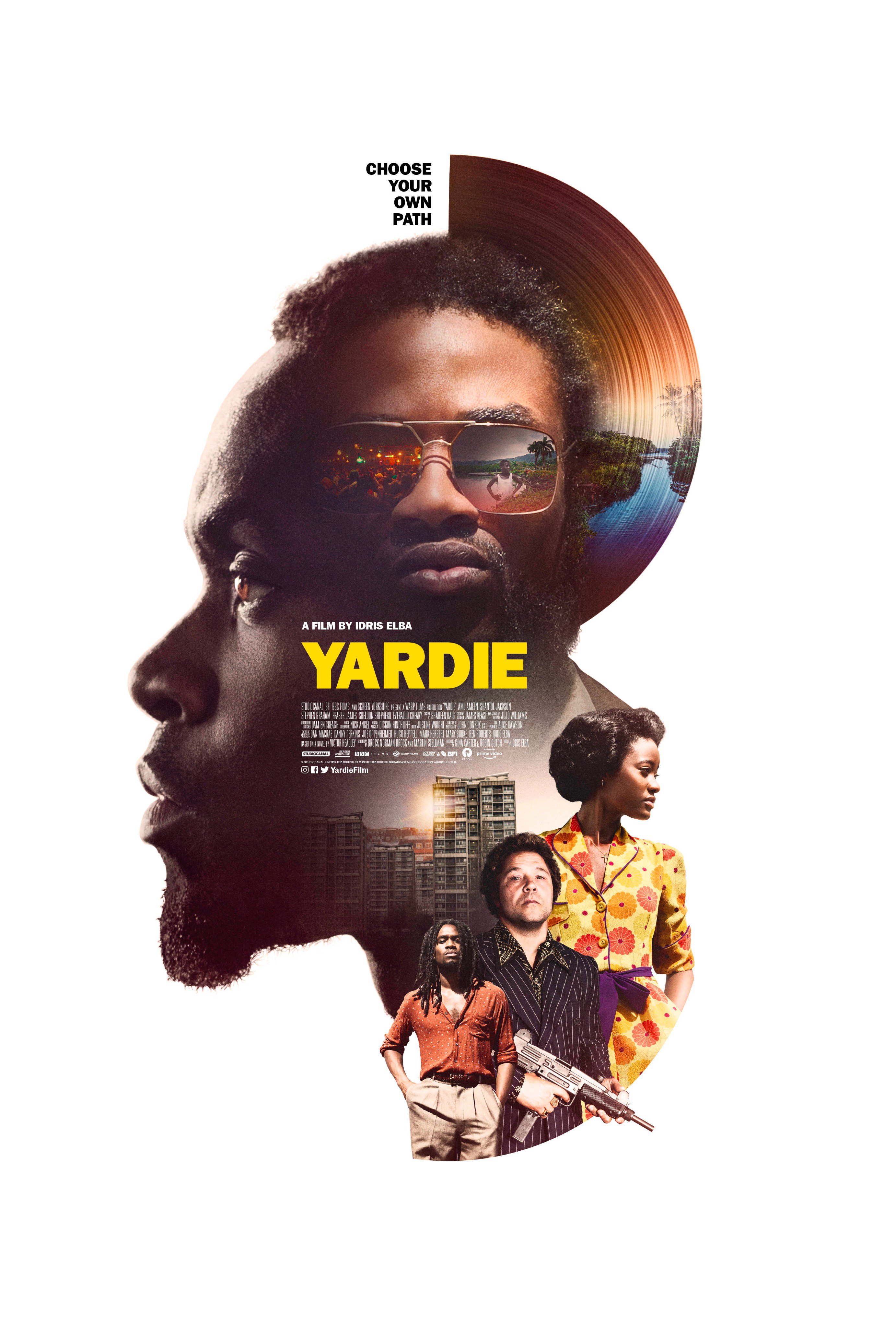
Yardie (2018)

12 Wednesday Sep 2018

Posted by dullwood68 in Movies

≈ 1 Comment

Tags

Aml Ameen, Drama, Drugs, Idris Elba, Jamaica, Literary adaptation, London, Review, Shantol Jackson, Stephen Graham, The Eighties, Thriller

D: Idris Elba / 101m

Cast: Aml Ameen, Shantol Jackson, Stephen Graham, Fraser James, Sheldon Shepherd, Everaldo Creary, Calvin Demba, Naomi Ackie

As a child in Jamaica, Dennis Campbell aka “D” (Ameen), saw his father shot and killed by another child, Clancy, who was never apprehended. His father was trying to broker peace between two rival gangsters, and in the wake of his father’s death, Dennis was taken under the wing of one of them, King Fox (Shepherd). Ten years later, Dennis works for King Fox, but his quick temper keeps getting him into trouble. To keep him from getting into any further trouble, Fox sends Dennis to London, to deliver a package to a local associate of Fox’s called Rico (Graham). But Dennis isn’t impressed by Rico’s mock-Jamaican phrasing and attitude, and decides to keep the package (which contains cocaine) for himself and find another distributor. He’s able to reconnect with his wife, Yvonne (Jackson), and young daughter, and he also becomes involved with a group of friends who want to break into the world of sound system competitions and become DJs. It’s when he discovers that Clancy is now working for Rico that Dennis’s actions begin to cause real problems for him, and for those around him…

Victor Headley’s debut novel, from which this is adapted, was a publishing sensation when it was first released in 1992, and it paved the way for a wave of new black fiction that continues today. Now regarded as something of a “cult” novel, Headley’s debut has been given the big screen treatment, and as perhaps could have been expected, Idris Elba’s debut feature treats the source material with obvious respect and admiration. Beginning in the Seventies in Jamaica, the screenplay by Brock Norman Brock and Martin Stellman shows a time in Dennis’s life when his father was a true source of optimism and inspiration in the face of gang warfare. His father’s death acts as a trigger for the pessimism and violent expression that Dennis displays as a young man, and the script, plus Elba’s confident direction, rightly keeps Dennis away from the path of redemption. Instead, he follows his own vengeful path, even when it means harm being caused to others. The script shows how much his anger has consumed him, and despite the assurances he gives Yvonne of changing things around and leading a better life, these are just empty words that not even he believes.

With such an anti-hero as a lead character, Yardie has something of a distance about it, thanks to Dennis being someone we wouldn’t want to know in real life, and also because he’s choosing a criminal lifestyle when he could do so much more – and has the opportunity to do so. Elba wisely exploits those moments of rare self-reflection that bring Dennis up short, but dramatically they’re not as convincing as they should be as Dennis soon returns to his criminal activities or thirst for revenge. Despite a very good performance by Ameen, Dennis remains a character on too rigid a journey to make him sympathetic, and unfortunately none of the supporting characters are fleshed out enough to make a difference. What we’re left with is a movie that’s well constructed by Elba and his cast and crew, but which fails to connect with its audience on an emotional level. So much of the material, and the narrative, plays out in a connect the dots fashion, leaving little room for spontaneity or surprises, that the movie often feels rote. Perhaps Elba and co have been too respectful and admiring of Headley’s novel, as this adaptation lacks the consistent passion and energy needed to make it work as well as it should.

Rating: 7/10 – though London in the Eighties is recreated with considerable skill, and given vibrant expression by DoP John Conroy (along with recurring visual motifs aplenty), Yardie can’t overcome the lack of attention given to the material and how to make it more gripping; a terrific soundtrack (naturally) adds to the sense of time and place, and though it’s not entirely successful, Elba shows enough talent behind the camera that if he were to give up his day job, it wouldn’t be such a bad thing after all.

Share this:

  • Click to share on X (Opens in new window) X
  • Click to share on Facebook (Opens in new window) Facebook
  • More
  • Click to print (Opens in new window) Print
  • Click to email a link to a friend (Opens in new window) Email
Like Loading...

Oh! the Horror! – The Nun (2018) and Strange Nature (2018)

11 Tuesday Sep 2018

Posted by dullwood68 in Movies

≈ Leave a comment

Tags

Corin Hardy, Deformed frogs, Demián Bichir, Drama, Horror, Jim Ojala, Lisa Sheridan, Minnesota, Mutations, Review, Romania, Series, Taissa Farmiga, Thriller

The Nun (2018) / D: Corin Hardy / 96m

Cast: Demián Bichir, Taissa Farmiga, Jonas Bloquet, Bonnie Aarons, Charlotte Hope, Ingrid Bisu, Sandra Teles

The fifth entry in the mega-successful Conjuring series, The Nun sees the franchise try to take a previously minor character and expand on them to make a stand-alone movie that fits in with the established mythos, while also providing the requisite scares and universe building that we’ve come to expect. But this is a horrible mis-step, a movie that makes absolutely no sense from beginning to end, but which does make you wonder if all this universe building is being as carefully planned and worked out in advance as it should be. On this evidence, the answer has to be a resounding No, because The Nun is truly terrible, with the slackest plotting seen so far, characters who barely register as recognisable human beings, a setting that seems arbitrary rather than necessary, a number of poorly executed paranormal effects sequences that are both narratively redundant and tiresome, and an overall vibe that says, “we did this because we could, not because we should”. And that’s without dialogue of the calibre of, “I’m afraid there is something very wrong with this place.”

In many ways, James Wan and co should be congratulated for the success they’ve had in creating the Conjuring universe, but this should be the point where they stop and take stock of where they’re taking the franchise, and why. The Nun is like the movie that quality control forgot. Watching it is akin to seeing a cinematic car crash happening in slow motion, but instead of bodies in the road it’s the makers’ reputations. Hardy, making his second feature after The Hallow (2015), appears to have been a director for hire only on this occasion, as he brings none of the visual flourishes he brought to that first feature, and his direction is largely anonymous. The cast don’t have a chance thanks to the banal nature of regular scribe Gary Dauberman’s screenplay, and Bichir in particular looks uncomfortable and/or wishing he’d taken another gig altogether. The set pieces rely on roving camera work to hide the so-called scares (which are astonishingly predictable), but worst of all, the title character remains a bystander in her own movie, brought out occasionally for a cheap jolt, and at the end for what amounts to a showdown. Anyone expecting to learn more about Valak and his origins (and why a nun) will be looking in the wrong place, as this is so badly constructed as to be completely nun-sensical.

Rating: 3/10 – The Nun‘s box office performance – $133 million so far – proves that you can fool a lot of the people (initially), but this is far from being a good movie, or one that deserves to do so well; a chore to sit through and woeful on so many levels – and just having a character called Frenchie is bad enough – this is movie making without thinking or conviction.


Strange Nature (2018) / D: Jim Ojala / 99m

Cast: Lisa Sheridan, Jonah Beres, Bruce Bohne, Faust Checho, Stephen Tobolowsky, John Hennigan, Carlos Alazraqui, Justen Overlander, David Mattey, Chalet Lizette Brannan, Angela Duffy, Tiffany Shepis

In Strange Nature, the world we’re introduced to is one that we can more easily recognise than in The Nun, but it’s not without its own unexplained phenomena. Based on a mystery that dates back to the mid-Nineties, when deformed frogs began appearing in ponds throughout Minnesota, the movie takes this as a jumping off point (excuse the pun) for a tale of mutations that begin with said frogs and which then makes its way up through the biological food chain until it starts to affect humans. Working with a limited budget, first-time feature writer/director Ojala has created a horror movie that trades on established genre tropes but which does so while doing its best to focus on a small town community that finds itself under attack from both outside and within. Ojala uses the character of Kim (Sheridan) as our guide to the ensuing developments, as stories of people going missing slowly become forgotten as the potential reason for their disappearances becomes more obvious. As Kim delves deeper into the mystery of the deformed frogs, various culprits – agricultural fertilisers, waterborne parasites, nature gone haywire – are explored, but as with real life (where the problem has since spread to India and China), the movie doesn’t settle for one easy explanation over the rest.

The movie wears its horror credentials on its sleeve, and peppers the narrative with various examples of body horror (a deformed puppy, skin sloughing away from flesh), but the effectiveness of these scenes is hampered by the budget, and though Ojala opts for practical, in-camera effects wherever possible, many of them betray the lack of funds available (editor David Mattey does what he can, but in trying to obscure the lacklustre effects he actually draws attention to them even more). Away from the more overt horror elements, Ojala does a good job of developing the sense of a small town whose initial scepticism soon gives way to fear and paranoia, and adds a layer of tragedy when one character’s pregnancy doesn’t end in the blessed event she was expecting. The performances are adequate, with Tobolowsky suitably oily as the town mayor, and the Duluth, Minnesota locations add a degree of verisimilitude that works well as a backdrop for the action. There’s nothing inherently wrong with Strange Nature, and it’s certainly not as bad as some other horror movies out there (see above), but it does suffer from a surfeit of ideas that it doesn’t have the wherewithal to explore fully, and refreshingly, keeps any unnecessary melodramatics to a minimum.

Rating: 6/10 – though its narrative arc is entirely predictable, and some of the characters remain stereotypes throughout, Strange Nature works exceedingly well as a cautionary tale, and is well worth a look; with a sense of ambition often missing from low budget horror movies, Ojala’s feature debut unfolds confidently, and more importantly, with a purpose that is often missing from some of its bigger budgeted brethren.

Share this:

  • Click to share on X (Opens in new window) X
  • Click to share on Facebook (Opens in new window) Facebook
  • More
  • Click to print (Opens in new window) Print
  • Click to email a link to a friend (Opens in new window) Email
Like Loading...

Hyena (2014)

10 Monday Sep 2018

Posted by dullwood68 in Movies

≈ 1 Comment

Tags

Corruption, Crime, Drama, Drugs, Elisa Lasowski, Gerard Johnson, Peter Ferdinando, Review, Richard Dormer, Stephen Graham, Thriller

D: Gerard Johnson / 112m

Cast: Peter Ferdinando, Richard Dormer, Neil Maskell, Elisa Lasowski, MyAnna Buring, Stephen Graham, Tony Pitts, Gordon Brown, Orli Shuka, Gjevat Kelmendi

For Detective Sergeant Michael Logan (Ferdinando), being an undercover police officer means striking deals with European drug syndicates, and along with his fellow task force colleagues, Martin (Maskell), Keith (Pitts), and Chris (Brown), receiving a cut for looking the other way. Logan is negotiating one such deal when his Turkish contact is murdered by Albanian gangsters the Kabashi brothers (Shuka, Kelmendi). With the brothers looking to expand their power base, Logan is forced to begin dealing with them instead. As he begins to salvage his original deal (which he has invested £100,000 into), Logan finds himself transferred to the vice squad, and onto an operation spearheaded by an old rival of his, Detective Inspector David Knight (Graham). The focus of the operation is the Kabashi brothers, and Logan finds himself walking a fine line between keeping his deal going and keeping it quiet from Knight. He also has Detective Inspector Nick Taylor (Dormer) from the Professional Standards department threatening to expose his crooked dealings. Beset from all sides, Logan finds things spiralling out of his control, and each new desperate attempt to maintain his position sees things get increasingly worse…

A dark, gritty, violent crime thriller, Hyena is a movie that takes the viewer on a trip through a sordid criminal underworld as experienced by its lead character, anti-hero Michael Logan, and in the process, it paints a very dark portrait indeed of police corruption and casual immorality. This is a bleak movie throughout, with plenty of violence (some of which is uncomfortable to watch), plenty of drug taking (Logan gets through a prodigious amount of cocaine), plenty of corrupt behaviour (mostly from the police, the villains aren’t quite so duplicitous), and plenty of amorality (courtesy of just about everyone except Logan’s friend, Lisa (Buring), and his boss on the task force). The message from writer/director Johnson is clear: this is a world you don’t want to be a part of. But at the same time, he makes it just fascinating enough for the viewer to become embroiled in Logan’s story and just how bad it can get. Johnson doesn’t disappoint, with even the one good thing that Logan does – rescuing a woman, Ariana (Lasowski), from the brothers’ clutches – inevitably causing him more trouble than he bargained for. How doomed, or damned, must he be that an actual good deed so quickly backfires on him?

The answer lies in Logan’s initially diffident, unconcerned nature. Even when he sees his Turkish contact killed and dismembered (a recurring violent motif), Logan’s shock soon wears off, and he’s back quickly to making deals and taking charge. It’s when he meets Ariana that his self-serving attitude begins to change. But Johnson is clever enough to obscure Logan’s motives for doing so. Is it because he has feelings for her, feelings he finds it hard to articulate? Or is it because, deep down, he still has a sense of right and wrong, however compromised? Thanks to the script’s ambiguity and a potent performance from Ferdinando, Logan’s motives remain a mystery even until the end. You could argue that there is good in him, but it’s unlikely Logan would agree with you. The character makes for a perfect guide into a world where notions of right and wrong are interchangeable, and where subterfuge exposes the flaws in those characters who need to lie in order to make personal connections. Johnson explores the tragedy of what this means for Logan as an individual, and in a wider sense as a police officer who’s strayed so far from the right path it’s like a distant memory.

Rating: 8/10 – an uncompromising look at personal, professional, institutional, and emotional betrayal and corruption, Hyena has a substantial streak of nihilism running through it, one that makes it relentless in its depiction of the pitiless world Logan inhabits; with first-rate performances from all concerned, and a tremendously fetid atmosphere that’s exploited to the full by Benjamin Kracun’s restless, probing cinematography, Johnson’s powerful, oppressive thriller is a tough watch but more than worth it.

Share this:

  • Click to share on X (Opens in new window) X
  • Click to share on Facebook (Opens in new window) Facebook
  • More
  • Click to print (Opens in new window) Print
  • Click to email a link to a friend (Opens in new window) Email
Like Loading...

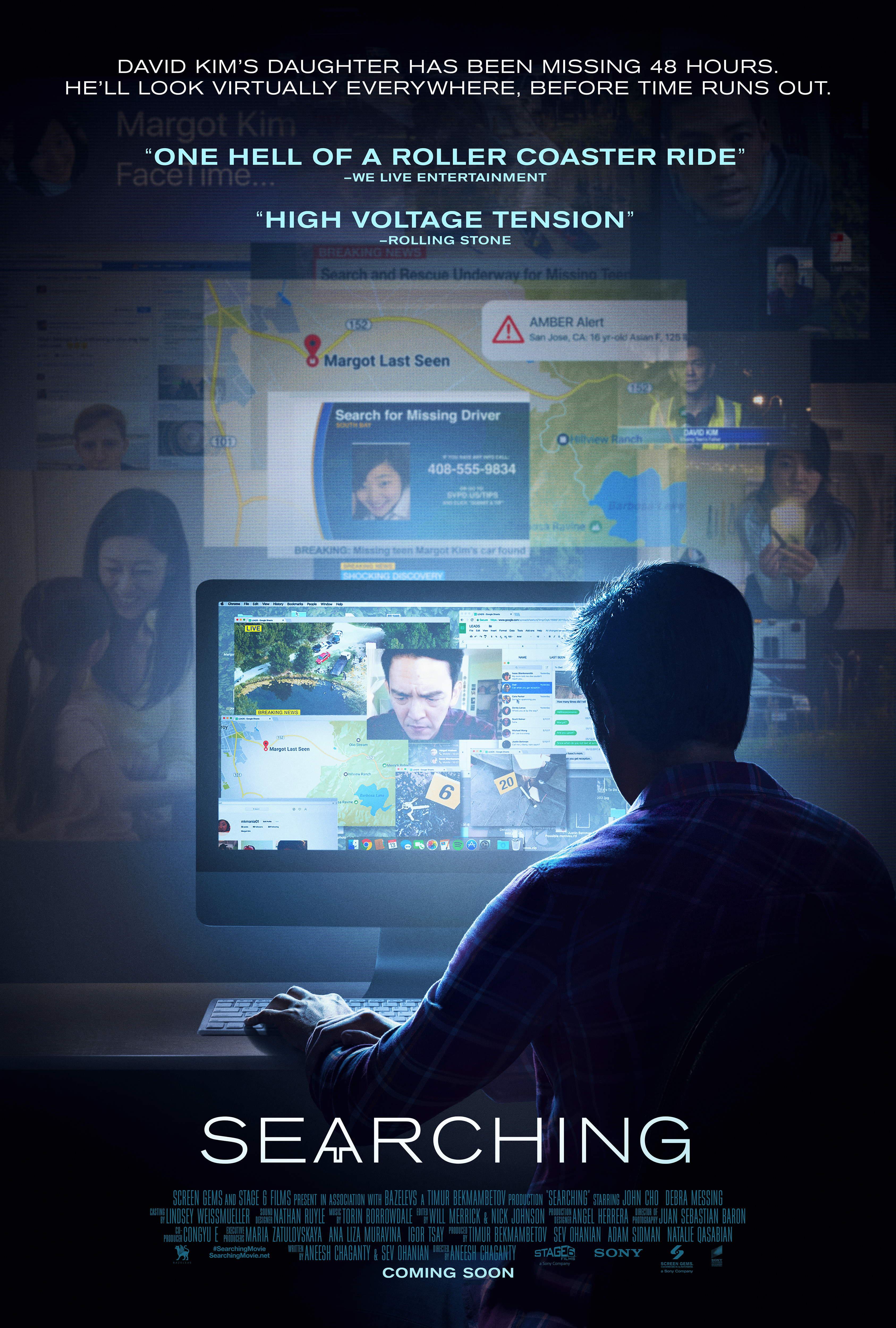
Searching (2018)

09 Sunday Sep 2018

Posted by dullwood68 in Movies

≈ Leave a comment

Tags

Aneesh Chaganty, Debra Messing, Drama, FaceTime, Internet, John Cho, Missing daughter, Mystery, Review, Thriller, YouCast

D: Aneesh Chaganty / 102m

Cast: John Cho, Debra Messing, Michelle La, Joseph Lee, Sara Sohn, Briana McLean, Erica Jenkins, Steven Michael Eich

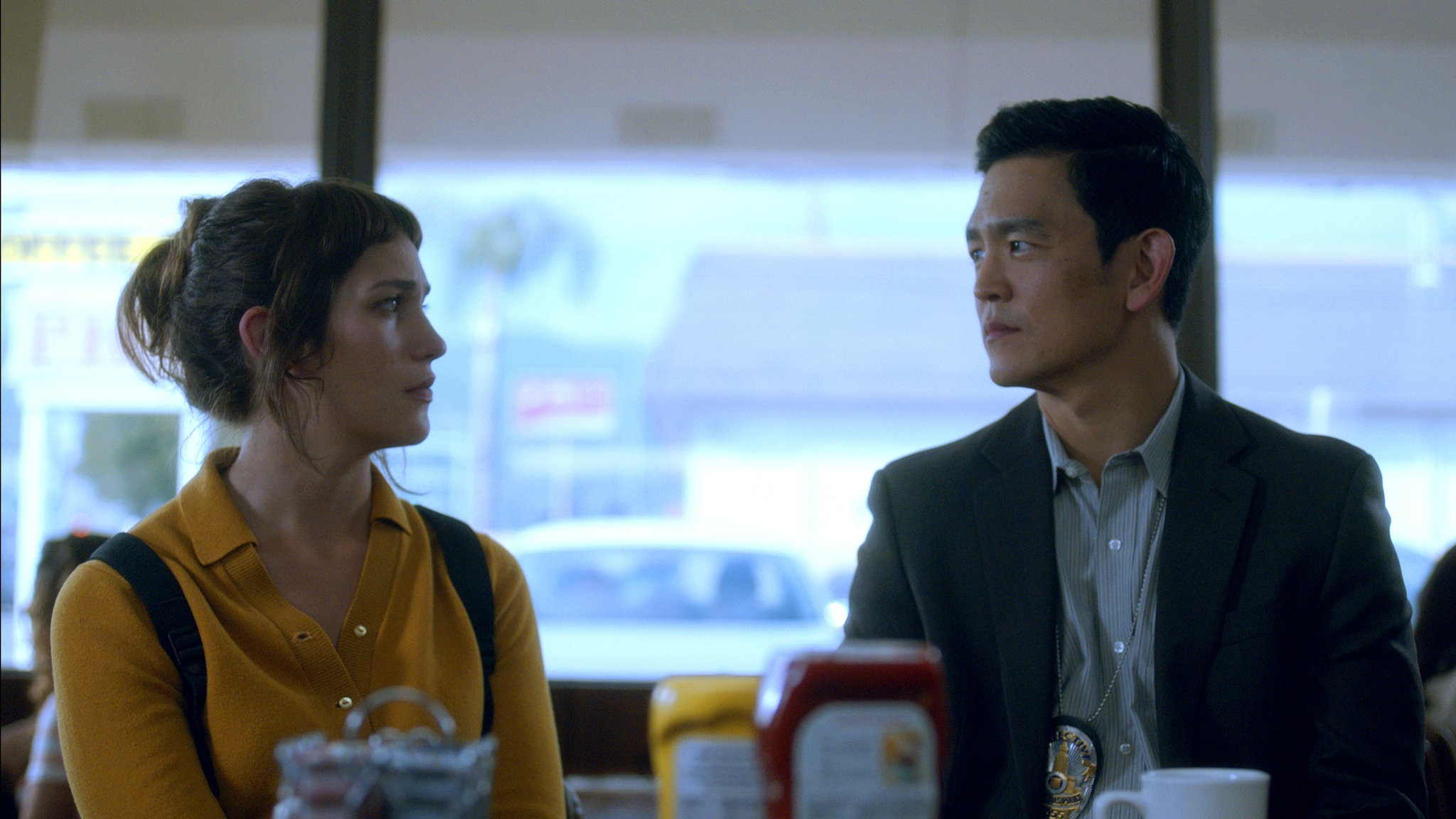
It’s been two years since David Kim (Cho) and his daughter, Margot (La), lost their wife and mother respectively to cancer. In those two years the pair have grown distant, with both waiting for the other to talk about what happened. Instead, David focuses on Margot’s education (she has a gift for playing the piano), while Margot tries to focus on being a normal teenager. One night, they speak via FaceTime while Margot is at a study group, and everything seems fine. Later that night, she tries to call David but he’s asleep and misses her calls. The next day, she doesn’t respond when he tries to call her back. Expecting her to be at a piano lesson after school David calls the tutor, only to learn that Margot cancelled her lessons six months before. When he finds himself unable to track her down, David calls the police and reports Margot as missing. The detective assigned to the case, Rosemary Vick (Messing) asks David to look into Margot’s background, her school life and her friends. But when he does he discovers things about his daughter that don’t make any sense, and which only make her disappearance that much more inexplicable…

Cleverly constructed from the start until the end, Searching is a mystery thriller that utilises modern technology in such a way that the movie feels – for much of its running time at least – like it hasn’t been filmed at all. Using a variety of virtual photography tricks and sleights of hand, we see the action unfold within the foreground of computer screens and other electronic devices, and against a backdrop of computer apps. Sometimes there’s so much going on on the screen that it’s hard to take it all in, but it’s all so cleverly assembled and handled that, much like reading subtitles, the eye and the brain soon compensate and pick out what’s relevant and what isn’t. David is our guide, and in Cho’s more than capable hands, we follow him willingly as he begins to piece together the various clues that go to make up the details of Margot’s disappearance. Whether he’s using FaceTime or Google or accessing photos, or trawling through Margot’s vlogs on YouCast, David takes us on a journey that is fascinating and akin to exploring a foreign country.

With the movie’s visuals broadening to include news footage (amongst others), and remaining compelling until the end, it’s a shame then that it’s all in service to a screenplay by director Chaganty and Sev Ohanian that can’t sustain the initial promise of its first hour. In amongst all the internet pages and online research that David carries out, and amid all the relevant information that Margot leaves behind (unknowingly), the script throws in a number of massively signposted clues that will have keen-eyed and -eared viewers shaking their heads in disbelief at how obvious the solution is. Up until the hour mark, Chaganty has kept the mystery elements front and centre and each twist and turn of the narrative has been smartly handled, but the need to start revealing things and head into the finishing stretch sees the movie lose momentum and its carefully assembled credibility. By the end, and a confession that sounds like the very definition of contrived, the movie has lost its way completely, and not even Cho, who is on superb form, can bring it back from the abyss it seems so set on throwing itself into. Make no mistake, this is a tense, visually arresting movie, but also one that doesn’t have a narrative that remains consistent enough throughout to match the quality of its presentation.

Rating: 7/10 – compelling and persuasive (for that first hour), Searching is a visual breath of fresh air, effectively handled and confidently displayed; a shame then that more attention couldn’t have been applied to the script, which lets down the visuals and which also hinders a terrific performance from Cho.

Share this:

  • Click to share on X (Opens in new window) X
  • Click to share on Facebook (Opens in new window) Facebook
  • More
  • Click to print (Opens in new window) Print
  • Click to email a link to a friend (Opens in new window) Email
Like Loading...

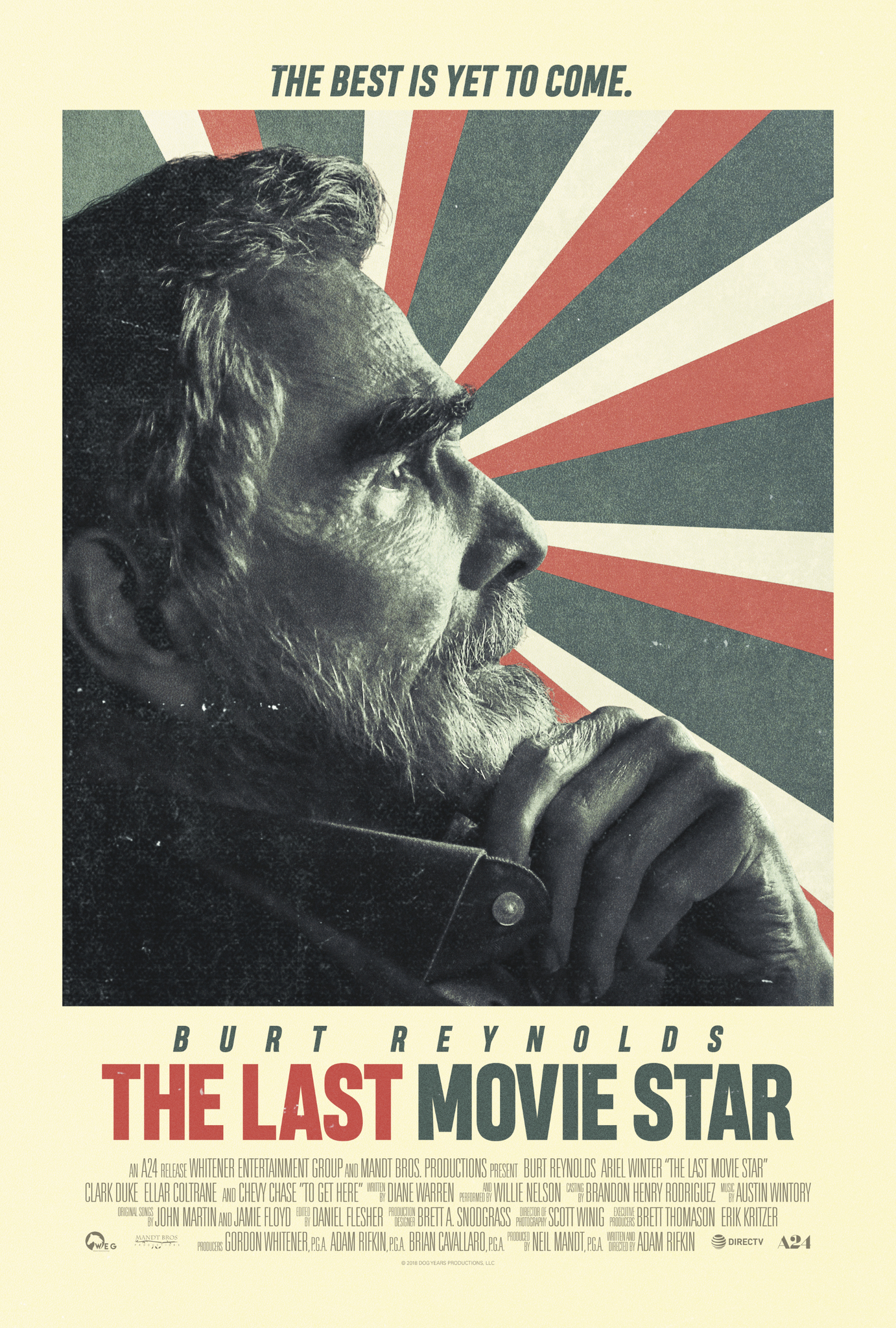
The Last Movie Star (2017)

07 Friday Sep 2018

Posted by dullwood68 in Movies

≈ Leave a comment

Tags

Adam Rifkin, Ariel Winter, Burt Reynolds, Clark Duke, Comedy, Drama, Film Festival, Knoxville, Lifetime Achievement Award, Nashville, Review

Original title: Dog Years

D: Adam Rifkin / 104m

Cast: Burt Reynolds, Ariel Winter, Clark Duke, Ellar Coltrane, Al-Jaleel Knox, Nikki Blonsky, Juston Street, Kathleen Nolan, Chevy Chase

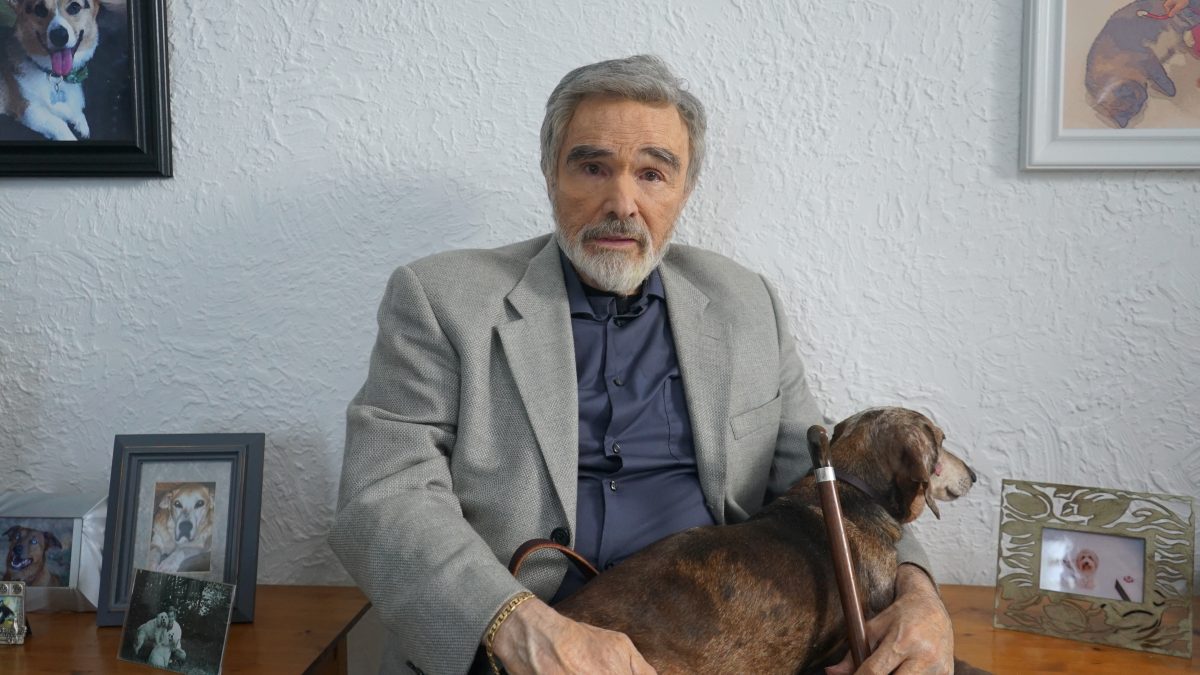
Vic Edwards (Reynolds) is an aging, and mostly forgotten, movie star who lives by himself in a sprawling home, and whose one remaining real friend is another aging, mostly forgotten actor called Sonny (Chase). When Vic receives an invitation to accept a Lifetime Achievement Award at the International Nashville Film Festival, he’s reluctant at first, but soon his curiosity gets the better of him, and he decides to attend. However, it soon becomes clear that the festival – run by two young friends, Doug (Duke) and Shane (Coltrane) – is on a shoestring, as evidenced by its being held in a bar. Annoyed at being fooled so badly, Vic decides to take advantage of having a personal driver, Doug’s sister Lil (Winter), and gets her to take her to Knoxville, where he was born and raised. Along the way, their adversarial relationship blossoms into something more friendly, as both share stories from their lives, and learn some life lessons that each other haven’t thought about…

Just in case you’re unsure of how “meta” The Last Movie Star is going to be, the opening scene dispels any doubts whatsover. Though introduced as Vic Edwards, it’s clearly Burt Reynolds being interviewed by David Frost sometime in the Seventies. So immediately we know that this movie is going to be self-reverential to quite a degree, and will be mining Reynolds’ own professional history (if not his personal life) for the details that make up the character of Vic Edwards. And following that interview is a close up of Edwards (or Reynolds; they’re interchangeable in too many ways for it to matter much of the time), his time-worn features bringing us up to date with the fate of a man once adored by millions. Edwards is a lonely man tempted by the limelight of long-past recognition. What’s a tired old actor who still wants to be relevant to do? In these early scenes, writer/director Rifkin shows us the monotony of Edwards’ daily life, the impulse to look at pretty girls his only remaining pleasure. Of course he’s going to go to Nashville, but Edwards still has his pride. He still remembers what it means to be a star. And being duped into attending a film festival both re-awakens that pride, and an unexpected need to reconnect with his childhood.

The subsequent tour of Knoxville and Edwards’ old haunts is a remarkably affecting and bittersweet occasion (bolstered by an overnight stay in a plush hotel), with Reynolds putting aside his character’s tetchy, arrogant persona and finding the man’s inner melancholy, those regrets he’s carried with him since becoming a star and living the kind of rarefied life that is being celebrated at the festival. As he revisits his past, Rifkin takes the movie into really “meta” territory and has Edwards share scenes with Reyynolds’ screen incarnations from Deliverance (1972) and Smokey and the Bandit (1977). They’re not entirely successful, both in terms of the visual effects used, and the dialogue on Reynolds’ side, which is minimal. But it’s a clever conceit, and much more subtle than the script’s approach to the matter of growing old, which is one area where it lets the side down. Rifkin is so keen to point out that growing old is a terrible thing that he hammers it home over and over, just in case we didn’t get it the first time. Along with an extraneous subplot involving Lil’s commitment-phobe boyfriend, and Edwards suffering the kinds of falls that would see most OAP’s end up in hospital, the movie rarely falters, and offers the kind of reflective musing on life that doesn’t have to be done in someone’s twilight years.

Rating: 7/10 – a moving performance from Reynolds anchors The Last Movie Star, and helps make it an enjoyable slice of life movie that is both bittersweet and poignant; with good support from Winter, and an apposite score by Austin Wintory, it’s the use of Reynolds’ screen history that has the most impact, and Rifkin is to be congratulated for not making it feel exploitative.

Share this:

  • Click to share on X (Opens in new window) X
  • Click to share on Facebook (Opens in new window) Facebook
  • More
  • Click to print (Opens in new window) Print
  • Click to email a link to a friend (Opens in new window) Email
Like Loading...

American Animals (2018)

06 Thursday Sep 2018

Posted by dullwood68 in Movies

≈ Leave a comment

Tags

Art heist, Barry Keoghan, Bart Layton, Blake Jenner, Drama, Evan Peters, Jared Abrahamson, Lexington, Rare books, Review, Thriller, True story

D: Bart Layton / 117m

Cast: Evan Peters, Barry Keoghan, Blake Jenner, Jared Abrahamson, Ann Dowd, Udo Kier, Gary Basaraba, Wayne Duvall, Spencer Reinhard, Warren Lipka, Eric Borsuk, Chas Allen, Betty Jean Gooch

In 2003, in Lexington, Kentucky, an art student by the name of Spencer Reinhard (Keoghan), feeling that his life has no meaning, looks for something exciting to happen to him. A visit to the Transylvania University library’s rare book room gives Spencer the idea to steal several of those rare books, including Audubon’s The Birds of America. Enlisting the help of another student, Warren Lipka (Peters), the pair begin to plan how to steal the books. When they learn that the books they’re targeting could bring them as much as $12 million, they decide they must go ahead with their plan. However, they soon realise that carrying out the theft by themselves is impractical, and they enlist the help of fellow students Erik Borsuk (Abrahamson) and Chas Allen (Jenner). Their first attempt, with all four disguised as elderly men, is abandoned when they realise there are too many other people in the rare books room. Warren quickly arranges a private visit for the next day, and despite the reservations of the others, the robbery goes ahead…

With a storyline that’s straight out of the “so crazy it must be true” box of cinematic adaptations, American Animals – a reference to animals inhabiting Kentucky caves from Darwin’s On the Origin of Species, one of the targeted books – is a movie that throws a curveball at the audience almost from the beginning, when we meet the real Spencer Reinhard and the real Warren Lipka and they start to comment on the action as it unfolds. It’s a clever way of approaching the material, but what’s even more clever is the way in which their own memories of what happened don’t always tally. Whenever a movie is based on a true story, there’s always that doubt in the viewer’s mind: did it really happen like this? Here, we get as close as possible – probably – and the essential details are there, but it’s these sometimes hazy recollections that make everything seem more realistic, rather than just being Layton’s interpretation. If it all added up, it would be too neat. So, rather than being an odd framing device, or a matter of dramatic contrivance, the movie benefits greatly from being a mix of documentary and drama.

The actual story itself is played out with a great deal of verve, with first class performances from Peters and Keoghan, and solid support from Jenner and Abrahmson, and as the librarian in charge of the rare books, the ever-reliable Dowd. It’s a tale that beggars belief, as well, as woven within the fabric of the robbery’s planning, are subtle hints that none of it will work out as they hope. Also, there are fantasy elements embedded in the narrative, where Spencer and Warren quote lines from the movies to illustrate the ease or difficulty of what they’re doing, as well as assigning each other names from the characters in Reservoir Dogs (1992) (and look how well that heist turned out). There’s a disconnect from reality that makes you wonder just how they could have believed they could have not only stolen the books but fenced them as well (and to a buyer (Kier) in Amsterdam). Layton lays it all out in clinical yet thrilling fashion, stepping up the tempo during the robbery itself and then highlighting the inevitable ways in which it all falls apart. But it’s the way in which Spencer et al reflect on what happened – and how, or why – that makes the movie so impressive, and which elevates this from being just another movie based on a true story.

Rating: 9/10 – absorbing, intelligent, gripping, and refreshingly character-driven, American Animals is a cautionary reminder about getting what you wish for, something Reinhard should have done before deciding that robbing a rare books collection was a way of adding excitement to his life; with an impressive screenplay by Layton, first rate cinematography from Ole Bratt Birkeland, and an immersive production design from Scott Dougan, this is heady stuff indeed, and one of this year’s best.

Share this:

  • Click to share on X (Opens in new window) X
  • Click to share on Facebook (Opens in new window) Facebook
  • More
  • Click to print (Opens in new window) Print
  • Click to email a link to a friend (Opens in new window) Email
Like Loading...

Happy Hunting (2017)

05 Wednesday Sep 2018

Posted by dullwood68 in Movies

≈ Leave a comment

Tags

Action, Bedford Flats, Desert, Drama, Joe Dietsch, Ken Lally, Louis Gibson, Manhunt, Martin Dingle Wall, Review, Thriller

D: Joe Dietsch, Louie Gibson / 91m

Cast: Martin Dingle Wall, Ken Lally, Kenny Wormald, Connor Williams, Gary Sturm, C.J. Baker, Jeremy Lawson, Michael Tipps, Liesel Hanson, Kenneth Billings, Frederick Lawrence, Sherry Leigh

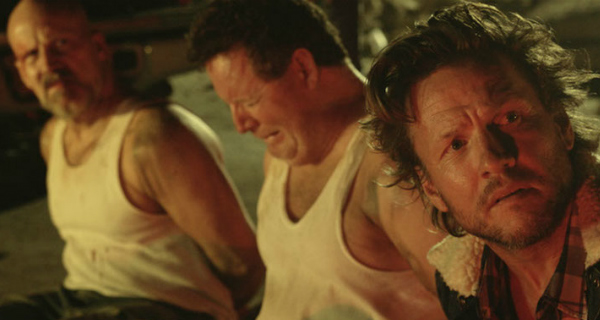
Warren Novack (Wall) receives news that an ex-girlfriend of his has died in Mexico, and that he has a daughter by her. Intending to travel to Mexico to do right by his daughter, Warren first has to negotiate a meth deal with a local drug dealer, Bo Dawg (Lawson). But the deal goes wrong, and Bo Dawg and his associate wind up dead. Warren heads for Mexico with two of Bo Dawg’s other associates (Williams, Lawrence) on his trail. On the way, Warren stops at the small town of Bedford Flats, close to the border. There are notices announcing an annual hunting event, but Warren has a more pressing concern: his chronic alcoholism and the need to go cold turkey before meeting his daughter. Help appears in the form of Steve (Lally), a local who runs a sobriety meeting. When Warren finds out Bo Dawg’s associates are in town, he accepts an offer of dinner with Steve and his wife (Leigh). But their hospitality has an ulterior motive, and after being drugged, Warren wakes to find himself, Bo Dawg’s associates and one of the townspeople, the objects of the annual hunt…

A tough, uncompromising reworking of The Most Dangerous Game (1932), Happy Hunting is an unashamedly brutal tale that puts its central character through the wringer time and time again while celebrating his impressive knack for survival. Warren comes with a minimal back story, but he has been in the Army (even though it didn’t work out), and he has a quick, intuitive mind that helps him problem solve being chased by the gun-toting hunters of Bedford Flats. With any movie that pits one person against a gang of would-be killers, it’s the ingenuity on display that counts, and the script, by co-writers/directors Dietsch and Gibson, is full of ingenious moments that keep the savagery and violence from being just that. It helps that Warren is given more motivation than usual to stay alive, and this, added to the clever solutions he comes up with, gives the movie a greater depth than usual. For every bloody injury and unforeseen setback, Dietsch and Gibson ensure Warren stays one (mangled) step ahead of his pursuers, and is able to turn the tables on them each time – even if it’s at a physical cost to himself (which is often).

Though the movie isn’t averse to showing the effects and consequences of the violence meted out – some of it is admirably hardcore – it’s shot through with a sardonic sense of humour that makes much of it easier to accept. There’s irony too in places (Warren encounters a group of Mexicans crossing into the US), and there’s a willingness to make the escalating bloodshed a little too extreme for comfort, but it’s all done with a calculated energy that serves the material well and which doesn’t allow it to become too outrageous or over the top. Wall is a terrific choice for Warren, his weather-beaten features and gruff manner perfectly suited to the needs of the character, while the largely unknown supporting cast add verisimilitude to the people of Bedford Flats. It’s all shot by Dietsch with an eye on the natural grandeur of the Californian desert locations, while he and Gibson edit the movie with a keen sense of how to maintain or increase the tension as required. Fans of this sort of thing will find much to enjoy, but even casual viewers should find this a rewarding, if occasonally harrowing experience – though in a good way.

Rating: 8/10 – harsh, gritty, and single-minded in its approach, Happy Hunting is an action thriller that doesn’t pull any punches, and which is unapologetic about doing so; with a terrific performance from Wall, and an ending that acts as a gut punch, this is strong, mature stuff that is gripping and expertly assembled.

Share this:

  • Click to share on X (Opens in new window) X
  • Click to share on Facebook (Opens in new window) Facebook
  • More
  • Click to print (Opens in new window) Print
  • Click to email a link to a friend (Opens in new window) Email
Like Loading...

Out of Thin Air (2017)

04 Tuesday Sep 2018

Posted by dullwood68 in Movies

≈ Leave a comment

Tags

Disappearances, Documentary, Drama, Dylan Howitt, Elín Sif Halldórsdóttir, Hinrik Kanneworff, Iceland, Memory Distrust Syndrome, Murder, Review, True story

D: Dylan Howitt / 83m

Cast: Elín Sif Halldórsdóttir, Hinrik Kanneworff, Tómas Kolbeinn Georgs, Tumi Björnsson, Hjalti Steinar Guðmundsson, Arnar Hauksson, Steinþór Hróar Steinþórsson, Ingi Hrafn Hilmarsson, Trausti Örn þóróarson

On 26 January 1974, while walking home that evening, Guðmundur Einarsson went missing, and was never seen again. On the evening of 19 November 1974, Geirfinnur Einarsson also went missing, and was never seen again. Despite their surnames, the two men weren’t related. Two such disappearances in such a short period of time prompted public concern in the lack of progress that the police had made in finding the two men, or discovering what had happened to them. In December 1975, the Icelandic police arrested a young couple, Erla Bolladóttir (Halldórsdóttir) and Sævar Ciesielski (Kanneworff), on a minor charge. Erla confessed immediately to the crime she was accused of, but just as she was leaving the interrogation room, the police showed her a photograph of Guðmundur Einarsson and asked her if she knew him. She admitted she did, and when pressed about the night he disappeared, she told them about a nightmare she’d had in which Sævar and his friends were whispering at her window. The police seized on this, and over the ensuing year, Erla and Sævar and four others confessed to their involvement in the murders of both men…

Reviewing the case forty years later, Dylan Howitt’s absorbing documentary is a sober, and sobering, account of a miscarriage of justice that is shocking not just for the deliberate handling of the case by the police, and the methods they used to extract the confessions – one of the suspects, Tryggvi Liefsson, spent 655 days in solitary confinement – but the suffering those suspects endured for years after they were found guilty. Slowly, and with great attention to detail, Howitt reveals the deliberate nature of a police investigation that encompassed physical and mental torture, and where basic human rights were ignored. Much is made early on about Iceland being a country of very little crime, and of how peaceful it is. As the movie unfolds, that assumption is shown to be just that – an assumption – and in a patient, methodical manner that suits the material, Howitt strips away the veneer of respectability that the Icelandic authorities presented publicly. What remains is disturbing for the ease with which it all happened, and the concurrent ease with which the six suspects cooperated with the police in admitting to two murders where there was no physical evidence to sustain the belief that murder had even been committed.

This extraordinary situation begs the question, how could this have happened? Enter Memory Distrust Syndrome, where a person can be led to believe that something happened and they were involved in it, even if they weren’t; it’s like the dark side of the power of suggestion. This is the tragedy that strikes at the heart of the movie, as even forty years on, the likes of Erla and co-suspect Guðjón Skarphéðinsson (who both appear as themselves) still have trouble believing what is true and what was instilled in their memories by the insistence of the police. Hearing Erla express her lingering confusion even now over what she remembers as being true is dispiriting and sad, while the fate of Sævar is far more tragic. Howitt does an excellent job of threading the procedural reportage with strands of the personal that are both affecting and distressing, and the movie takes an observational stance, content to let the material speak for itself. The result is powerful without being melodramatic, and appalling in what it reveals about a police force, and a complicit wider community, that resorts to torture in order to solve two murder cases that were never murder cases to begin with.

Rating: 8/10 – quietly and diligently going about its business, Out of Thin Air not only highlights a terrible miscarriage of justice, but it also paints an affecting portrait of the lives that were ruined in the process; sincere, and peppered with some very haunting imagery, it’s a documentary that isn’t so easy to shake off – and nor should it be.

Share this:

  • Click to share on X (Opens in new window) X
  • Click to share on Facebook (Opens in new window) Facebook
  • More
  • Click to print (Opens in new window) Print
  • Click to email a link to a friend (Opens in new window) Email
Like Loading...

A Hundred Streets (2016)

03 Monday Sep 2018

Posted by dullwood68 in Movies

≈ Leave a comment

Tags

Charlie Creed-Miles, Drama, Franz Drameh, Gemma Arterton, Idris Elba, Jim O'Hanlon, Ken Stott, London, Relationships, Review

aka 100 Streets; One Square Mile

D: Jim O’Hanlon / 93m

Cast: Idris Elba, Gemma Arterton, Charlie Creed-Miles, Franz Drameh, Kierston Wareing, Tom Cullen, Ken Stott, Ashley Thomas, Ryan Gage

Max Moore (Elba) is a retired rugby player whose fame on the field has translated into a media career where he promotes a favourite, sports-related charity. His public image – seen in clubs and bars and at functions, often surrounded by attractive women – is at odds with the fractured home life he’s trying to repair. He’s estranged from his wife, Emily (Arterton), and their two young children. While Max plays at being a responsible family man in an effort to win Emily back (after sleeping with the children’s nanny), she has embarked on an affair with an old friend, Jake (Cullen). Kingsley (Drameh) is a young man whose aptitude for street poetry, plus a chance meeting with well connected actor Terence (Stott), provides him with an opportunity to leave behind the gang he’s currently a part of. And George (Creed-Miles) is a cab driver who, along with his wife Kathy (Wareing), is looking to adopt their first child. Over the course of several weeks their lives will intersect in unexpected ways, but each will be irrevocably changed by their experiences…

A low budget British drama with a glossy sheen to it, A Hundred Streets looks like the kind of movie that will offer a pointed and affecting social commentary on modern life in the UK capital, and which will examine in detail the pressures that people endure in order to get by. Alas, a closer inspection reveals a movie that paints its characters against a far broader canvas than might be hoped for, and by using brush strokes better suited to a daytime soap opera. Writer/producer Leon Butler (who raised the entire budget single-handedly), immediately gives the viewer two problems to deal with. The first is Elba’s Max, a caricature of a faded sports star who behaves badly but underneath the promiscuity and self-loathing, has a good heart and loves his kids. Despite these good qualities, Max is unsympathetic from the start, and though Elba tries hard, remains so until the end, and a dramatically absurd sequence that sees him waving – and firing – a shotgun from a balcony window, while the police standby until Emily can get home and talk him down (and let’s not mention the police marksman who has Max in his sights the whole time – for tension purposes only).

Neither Max nor Emily are characters you can warm to, so self-absorbed are they in their individual needs. This leaves Drameh’s earnest Kingsley and Creed-Miles’s dopey George to pick up the slack, but therein lies the second problem: their storylines are just as routine as Max and Emily’s. Tragedy stalks them both, but in such a way that neither tragic incident comes as a surprise, or indeed the events and outcomes that follow. As the movie progresses, it becomes something of a tick-box exercise for the viewer, and for the movie makers, as the characters behave either recklessly for no reason, regressively for “dramatic” purposes, or reactively because the script demands it. Struggling to make more out of Butler’s script than he’s able to, director Jim O’Hanlon can only focus on the performances, and though Elba and Arterton are adequate, Creed-Miles, Drameh and Stott at least manage to make an impact in their roles, though this is very much against the odds. Stott in particular is good, but even he has trouble with some of the dialogue Terence is given, and hearing it makes you wish there had been more opportunities for improvisation.

Rating: 5/10 – formulaic and at times dramatically challenging – though not in a good way – A Hundred Streets aims for a modicum of prestige but misses by a square mile, and then some; adopting clichés as if they were the answer to every problem raised, the script undermines the movie from the word go, and as a result, leaves it in just as good a state as Max’s career as a rugby star.

Share this:

  • Click to share on X (Opens in new window) X
  • Click to share on Facebook (Opens in new window) Facebook
  • More
  • Click to print (Opens in new window) Print
  • Click to email a link to a friend (Opens in new window) Email
Like Loading...

I Don’t Feel at Home in This World Anymore. (2017)

01 Saturday Sep 2018

Posted by dullwood68 in Movies

≈ 3 Comments

Tags

Burglary, Comedy, David Yow, Devon Graye, Drama, Elijah Wood, Indie movie, Macon Blair, Melanie Lynskey, Review

D: Macon Blair / 93m

Cast: Melanie Lynskey, Elijah Wood, David Yow, Devon Graye, Jane Levy, Gary Anthony Williams, Myron Natwick, Christine Woods, Robert Longstreet

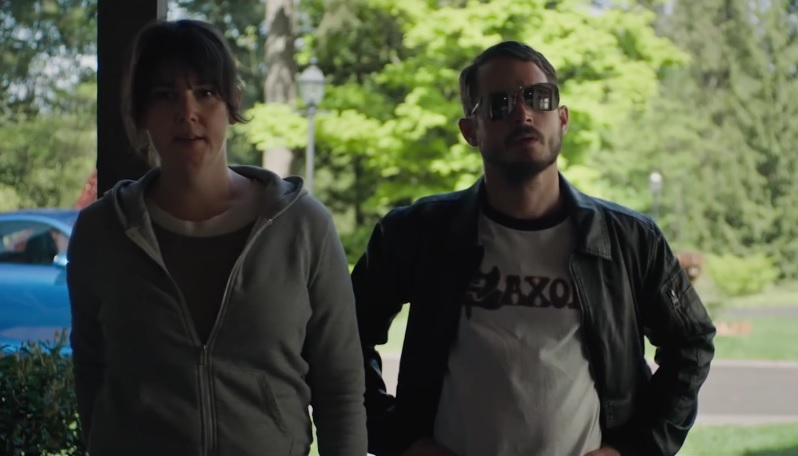
Ruth (Lynskey) is a nursing assistant who is continually annoyed by the thoughtlessness of others. When she comes home from work one day to find that she’s been burgled and the thief has stolen her laptop, grandmother’s silverware and some prescription medication, her day is made even worse when the investigating detective, Bendix (Williams), chides her for leaving her back door unlocked. Later, as she goes door to door to see if anyone saw anything, she meets Tony (Wood) who becomes violently outraged at what has happened. Ruth discovers evidence in her backyard – a conspicuous shoeprint in the mud – and when she uses a phone app to track her laptop, and discovers its location, Bendix is uninterested. Needing someone to go with her to retrieve her laptop, Ruth asks Tony, who’s only too keen to do so. When they get it back, they learn it was bought from a resale shop. There, Ruth discovers her grandmother’s silverware, and as she tries to sneak it out, she also discovers a young man (Graye) at the counter wearing a shoe that’s a match for the print in her garden…

The words ‘quirky’ and ‘unconventional’ seem tailor-made for I Don’t Feel at Home in This World Anymore., Macon Blair’s feature debut as a writer/director. You could add ‘wacky’ and ‘peculiar’, and they wouldn’t be too far off the mark either. But while there are plenty of other low budget indie movies that fit those descriptions quite easily, what Blair has achieved here is something a little more rarefied. In Ruth, there’s a temptation to view this as a “worm has turned” story, but that would be to cast a superficial eye over both the material and Ruth herself. Ruth may be one of Life’s minor victims, and she may appear to be a bystander in her own life, but she has an innate strength of character that just needs the right stimulus to bring her into her own. Being robbed does just that, and by aligning herself with Tony – who has a number of his own issues – Ruth becomes empowered in a way she’s unfamiliar with. It’s a step in the right direction, but Blair is confident enough in his screenplay to ensure that Ruth’s journey doesn’t change her completely. By the end, she’s more positive, but she’s still finding herself.

By making Ruth’s journey one that is affectionately handled and which resonates far more than expected, Blair has gifted Lynskey with yet another terrific role for the actress to make her own. Whether she’s sipping beer from a bottle out of habit, or being instinctively happy when she finds others are reading the same book she is, Ruth is a wonderful creation. Blair is equally on form with the rest of the characters, with Wood’s NWBHM-loving Tony prone to inappropriate violent outbursts, and Graye’s troubled teen burglar, Christian, having a back story that takes the material into unforeseen territory. In amongst the millennial concerns and suburban drama there’s a great deal of comedy, from Ruth’s look when asked the last words of a deceased patient, to a lovely visual gag involving Tony’s dog, Kevin, and the reaction of Christian’s stepmother (Woods) when asked why she’s speaking to two fake cops (that she knows are fake cops). Blair’s ‘quirky’ sensibility ensures the movie is always interesting for what’s going to happen next, and there’s first-rate cinematography from Larkin Seiple that paints Ruth’s particular part of suburbia as a bright yet deceptively unstable place to live.

Rating: 8/10 – another wonderful performance from the always reliable Lynskey anchors I Don’t Feel at Home in This World Anymore., and makes it one of the more enjoyable indie movies of recent years; with such a good meld of drama and comedy, and a cruel streak to keep things ‘unconventional’, Blair’s directorial debut is so good that his next movie can’t come quickly enough.

Share this:

  • Click to share on X (Opens in new window) X
  • Click to share on Facebook (Opens in new window) Facebook
  • More
  • Click to print (Opens in new window) Print
  • Click to email a link to a friend (Opens in new window) Email
Like Loading...

Monthly Roundup – August 2018

31 Friday Aug 2018

Posted by dullwood68 in Movies

≈ Leave a comment

Tags

Absolutely Fabulous: The Movie, Action, Adventure, Alicia Vikander, Alyson Walker, Animation, Antoine Fuqua, Benicio Del Toro, Brad Bird, Clay Kaytis, Clown, Comedy, Coralie Fargeat, Craig T. Nelson, Damien Leone, Dark Web, Denzel Washington, Dominic West, Doug Murphy, Drama, Drugs, Dylan O'Brien, Erdal Ceylan, Fergal Reilly, Frank Welker, Game adaptation, Gore, Grey Griffin, Holly Hunter, Horror, Incredibles 2, Jason Sudeikis, Jenna Kanell, Jennifer Saunders, Joanna Lumley, John Boyega, Josh Brolin, Josh Gad, Kaiju, Kaya Scodelario, Kevin Janssens, Mandie Fletcher, Matilda Anna Ingrid Lutz, Mexican cartels, Pacific Rim: Uprising, Paranormal, Pedro Pascal, Revenge (2017), Roar Uthaug, Samantha Scaffidi, Sci-fi, Scooby-Doo! and the Gourmet Ghost, Scott Eastwood, Selfie from Hell, Sequel, Sicario 2: Soldado, Stefano Sollima, Steven S. DeKnight, Terrifier, Terrorists, The Angry Birds Movie, The Death Cure, The Equalizer 2, The Flare, The Mystery Gang, Thriller, Tomb Raider, Tony Giroux, Violence, WCKD, Wes Ball

Absolutely Fabulous: The Movie (2016) / D: Mandie Fletcher / 91m

Cast: Jennifer Saunders, Joanna Lumley, Julia Sawalha, Jane Horrocks, June Whitfield, Kathy Burke, Celia Imrie, Robert Webb, Lulu, Emma Bunton, Rebel Wilson, Barry Humphries, Wanda Ventham, Kate Moss

Rating: 3/10 – fashionistas Edina (Saunders) and Patsy (Lumley) flee to the south of France after thinking they’ve killed supermodel Kate Moss; making this yet another British TV comedy success story that goes badly, horribly wrong when transferred to the big screen, Absolutely Fabulous: The Movie is another reminder that humour needs context in which to work, and rehashing the same old jokes over and over is less about giving fans what they want and more about lazy screenwriting.

Revenge (2017) / D: Coralie Fargeat / 108m

Cast: Matilda Anna Ingrid Lutz, Kevin Janssens, Vincent Colombe, Guillaume Bouchéde

Rating: 7/10 – a married CEO (Janssens) takes his mistress (Lutz) along with him on a hunting weekend with two friends (Colombe, Bouchéde), but things go badly wrong, and all three men find themselves being hunted instead; a visceral and very, very bloody thriller, Revenge is relentlessly nihilistic, and with characters so broadly drawn they might as well be archetypes, but Fargeat makes good use of the desert landscapes, and Lutz is a resourceful and unapologetically violent heroine.

Incredibles 2 (2018) / D: Brad Bird / 118m

Cast: Craig T. Nelson, Holly Hunter, Sarah Vowell, Huck Milner, Bob Odenkirk, Catherine Keener, Samuel L. Jackson, Brad Bird, Isabella Rossellini, Jonathan Banks, John Ratzenberger
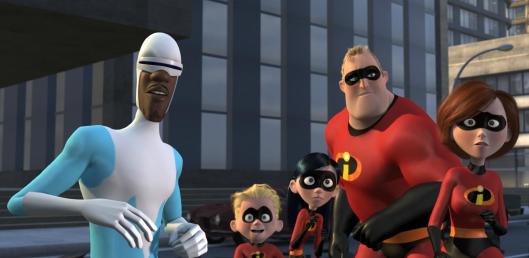
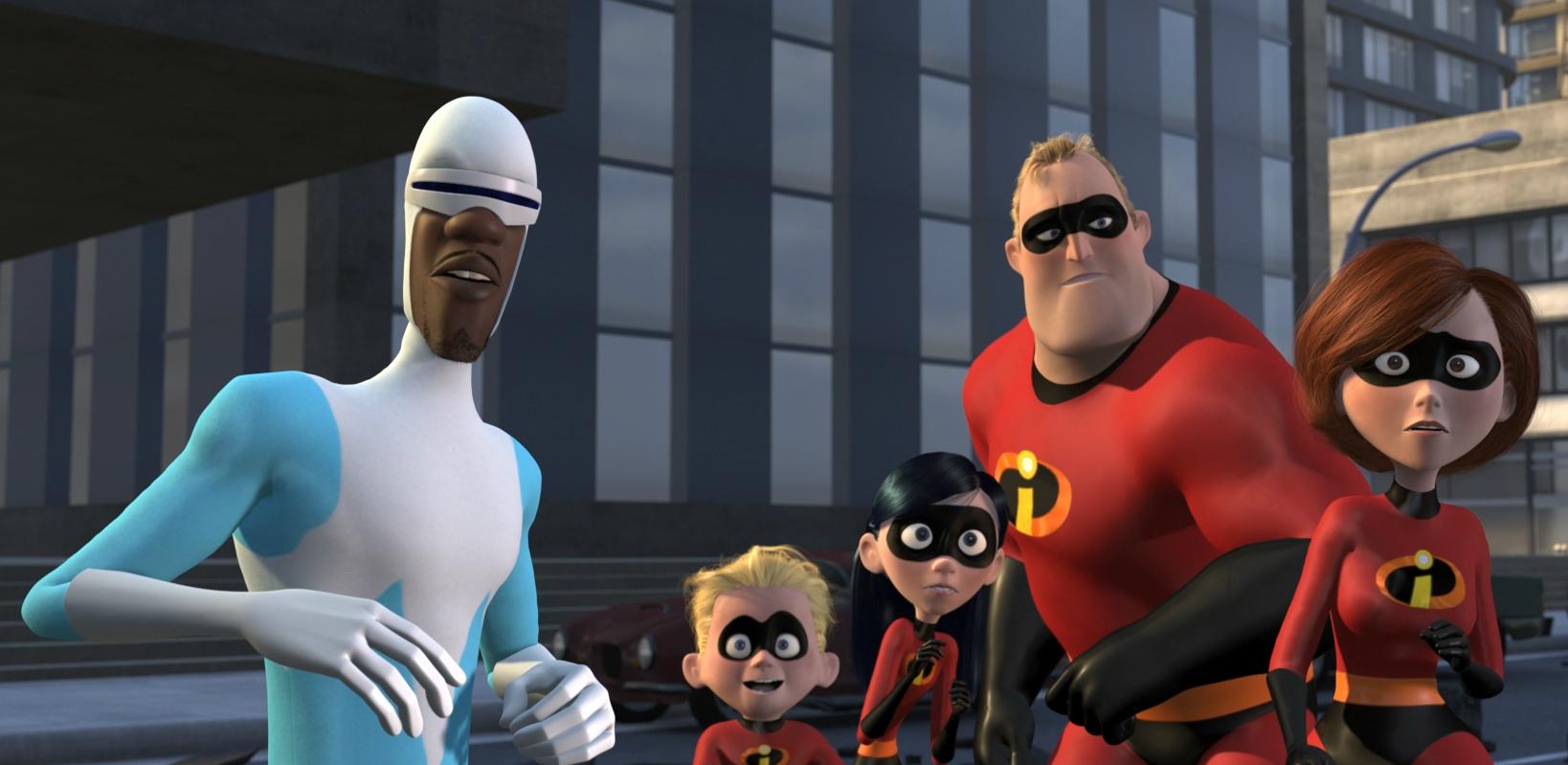
Rating: 9/10 – when a successful businessman (Odenkirk) approaches the Parr family with a plan to have Supers allowed to use their super powers again, it proves to be good timing as a new super villain, the Screenslaver, makes himself known; following directly on from the original, Incredibles 2 retains the Sixties vibe, visual ingenuity, and genuine laughs from before, and continues to focus on the Parr family first and foremost, making this a hugely entertaining sequel – even if the villain (as in a lot of superhero movies) is the movie’s weakest link.

Sicario 2: Soldado (2018) / D: Stefano Sollima / 122m

Original title: Sicario: Day of the Soldado

Cast: Benicio Del Toro, Josh Brolin, Isabela Moner, Jeffrey Donovan, Catherine Keener, Manuel Garcia-Ruffo, Matthew Modine, Shea Whigham, Elijah Rodriguez
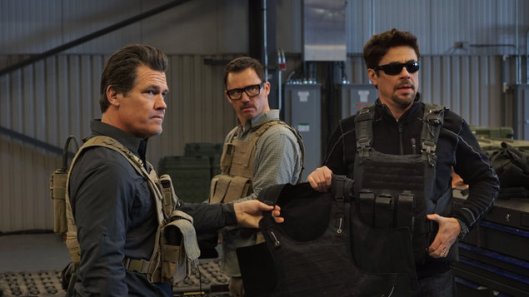
Rating: 7/10 – Federal agent Matt Graver (Brolin) is tasked with taking the fight to the Mexican drug cartels when evidence points to their helping terrorists get into the US; an odd sequel that goes off in an unexpected direction partway through (and which sets up what’s likely to be a banal third chapter), Sicario 2: Soldado is still head and shoulders above most action thrillers thanks to returning scribe Taylor Sheridan’s taut screenplay, Del Toro’s singular performance as the Sicario of the title, and a handful of well choreographed action scenes.

Terrifier (2017) / D: Damien Leone / 84m

Cast: Jenna Kanell, Samantha Scaffidi, David Howard Thornton, Catherine Corcoran, Pooya Mohseni, Matt McAllister, Katie Maguire

Rating: 4/10 – one night, two young women (Kanell, Scaffidi) find themselves being pursued by a killer clown (Thornton) intent on murdering them and anyone they come into contact with – and as gruesomely as possible; old school practical gore effects are the order of the day here, with Terrifier using every trick in the book to make viewers wince or look away, while building a fair amount of tension, but it’s let down by the usual non-investment in credible characters, lacklustre direction, and making its villain indestructible.

Tomb Raider (2018) / D: Roar Uthaug / 118m

Cast: Alicia Vikander, Dominic West, Walton Goggins, Daniel Wu, Kristen Scott Thomas, Derek Jacobi, Hannah John-Kamen

Rating: 6/10 – Lara Croft (Vikander) sets off in search of her missing father (West) when she discovers a clue to where he went missing, while looking for an ancient artefact that could have devastating consequences for the modern world; another unnecessary reboot, Tomb Raider tries hard – sometimes too hard – to make its by-the-numbers storyline exciting, but too many perfunctory action sequences, allied to so-so performances and Uthaug’s corporate directing style makes this an unlikely contender as the opener for a whole new franchise.

Pacific Rim: Uprising (2018) / D: Steven S. DeKnight / 111m

Cast: John Boyega, Scott Eastwood, Callee Spaeny, Burn Gorman, Charlie Day, Tian Jing, Jin Zhang, Adria Arjona, Rinko Kikuchi

Rating: 5/10 – a new threat to Earth’s defences brings the Jaeger force back into operation, but they soon find themselves fighting against a foe whose plans don’t just involve the Jaeger force’s destruction, but the return of the Kaiju as well; there’s an element of dumb fun about Pacific Rim: Uprising that keeps things ticking over, but though DeKnight is able to provide a decent amount of energy to proceedings, the looming threat to Earth lacks the first movie’s effectiveness, and the Kaiju arrive too late to improve things.

The Death Cure (2018) / D: Wes Ball / 141m

aka Maze Runner: The Death Cure

Cast: Dylan O’Brien, Kaya Scodelario, Thomas Brodie-Sangster, Ki Hong Lee, Dexter Darden, Will Poulter, Jacob Lofland, Rosa Salazar, Giancarlo Esposito, Patricia Clarkson, Aidan Gillen, Barry Pepper, Walton Goggins

Rating: 8/10 – with their friends imprisoned in the Last City, a WCKD stronghold, Thomas (O’Brien) and his fellow Gladers must find a way of freeing them, and of finding a cure for the Flare, before it’s too late; the final part of the Maze Runner trilogy, The Death Cure ensures the series goes out with a bang, with high octane action sequences, a strong emotional undercurrent to proceedings, and though it’s a little bit too long, it does provide each of the main characters with a suitable and satisfactory conclusion to their story arcs, and doesn’t leave things hanging on the possibility of there being any further chapters.

The Angry Birds Movie (2016) / D: Clay Kaytis, Fergal Reilly / 97m

Original title: Angry Birds

Cast: Jason Sudeikis, Josh Gad, Danny McBride, Maya Rudolph, Bill Hader, Peter Dinklage, Sean Penn, Keegan Michael-Key, Kate McKinnon, Tony Hale, Hannibal Buress, Ike Barinholtz, Tituss Burgess

Rating: 6/10 – trouble comes to an island of (mostly) happy birds in the form of green pigs who aren’t quite as friendly as they seem, leaving the unlikely trio of Red (Sudeikis), Chuck (Gad), and Bomb (McBride) to save the day; a brightly animated game adaptation that will appeal to children far more than adults, The Angry Birds Movie is acceptable fun within the confines of its basic storyline, but the humour is inconsistent, the plot developments seem designed to pad things out instead of feeling organic, and the whole thing becomes less interesting as it goes on.

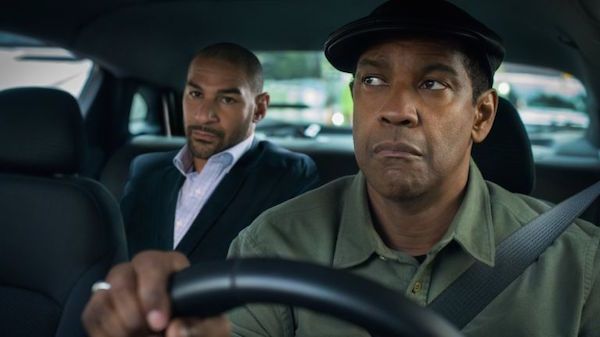
The Equalizer 2 (2018) / D: Antoine Fuqua / 121m

Cast: Denzel Washington, Pedro Pascal, Ashton Sanders, Orson Bean, Bill Pullman, Melissa Leo

Rating: 6/10 – ex-spy Robert McCall (Washington) goes after the people responsible for the murder of his ex-boss (Leo), and finds himself up against a cadre of mercenaries with a similar skill-set; Washington’s first sequel, The Equalizer 2 is unremarkable at best and unnecessary at worst, with a banal storyline and cookie cutter character motivations that are offset by Fuqua’s authoritative direction, Washington’s commanding performance, and several very effective fight sequences.

Selfie from Hell (2018) / D: Erdal Ceylan / 76m

Cast: Alyson Walker, Tony Giroux, Meelah Adams, Ian Butcher

Rating: 3/10 – strange paranormal events that have a connection to the Dark Web begin to affect a young woman (Walker) when her cousin (Adams) comes to visit; even for its modest running time, Selfie from Hell soon outwears its welcome, thanks to its confused plotting, wayward acting, leaden direction, and meaningless frights, all of which add up to yet another horror movie where things happen because they can instead of because they make sense within the terms of the story.

Scooby-Doo! and the Gourmet Ghost (2018) / D: Doug Murphy / 77m

Cast: Frank Welker, Grey Griffin, Matthew Lillard, Kate Micucci, Bobby Flay, Giada De Laurentiis, Marcus Samuelsson, David Kaye, Dana Snyder, Jason Spisak

Rating: 7/10 – the Mystery Gang travel to Bar Harbour to help Fred’s Uncle Bobby deal with a ghost that’s jeopardising the opening of a culinary resort; the format and the jokes are all present and correct, making Scooby-Doo! and the Gourmet Ghost another satisfying entry in the series, but it’s also one that highlights just how predictable these movies are becoming.

Share this:

  • Click to share on X (Opens in new window) X
  • Click to share on Facebook (Opens in new window) Facebook
  • More
  • Click to print (Opens in new window) Print
  • Click to email a link to a friend (Opens in new window) Email
Like Loading...

Gemini (2017)

31 Friday Aug 2018

Posted by dullwood68 in Movies

≈ Leave a comment

Tags

Aaron Katz, Actress, Drama, Film noir, John Cho, Lola Kirke, Murder, Mystery, Paparazzi, Review, Superfan, Thriller, Zoë Kravitz

D: Aaron Katz / 93m

Cast: Lola Kirke, Zoë Kravitz, Greta Lee, John Cho, Michelle Forbes, Nelson Franklin, Reeve Carney, Jessica Parker Kennedy, James Ransone, Ricki Lake

Jill LeBeau (Kirke) is the personal assistant to famous actress Heather Anderson (Kravitz). Heather has been in talks to make a new movie but has decided to take a break for a while instead. She persuades Jill to tell one of the producers, Greg (Franklin), the news, and he’s predictably angry. Ensuing attention from a self-proclaimed superfan (Kennedy), as well as a paparazzi, Stan (Ransone), adds further stress to Heather’s decision. When Heather asks Jill to borrow her gun because she doesn’t feel “safe”, Jill reluctantly agrees. At Heather’s home one morning, Jill tries to take back the gun but it goes off accidentally. No one is hurt, but Heather keeps the weapon. However, when Jill comes back later, she finds Heather dead from multiple gun shot wounds. It isn’t long before the police, led by Detective Ahn (Cho), deduce that Jill was the last person to see Heather alive, and that only her fingerprints are on the gun. With the residue from the misfire on her hand as well, Jill quickly becomes the prime suspect in the eyes of the police, but she determines to find out for herself just who did kill Heather…

For much of the first twenty minutes of Gemini, the nature of the relationship between Jill and Heather is somewhat blurred, and perhaps deliberately so. There’s a hint that they might be lovers, something that’s given a degree of credence when one of Heather’s ex-boyfriends, Devin (Carney), calls to say that he knows “what’s going on” (and to make a convenient death threat). Later, when the superfan asks if they’re an item, Heather’s response is indignant, but she doesn’t deny it outright. Nor does she when Stan the paparazzi asks the same question. But on another night, they share a bed at Heather’s home, and Heather whispers “I love you” while Jill sleeps. With the possibility of a deeper emotional relationship existing between the pair, writer-director Katz establishes a more profound meaning for Jill’s solo investigation of Heather’s murder: she’s not just keeping herself out of jail, she wants to find the killer of someone she truly cared about. This informs much of Jill’s quest to keep one step ahead of the police, while also providing the narrative with a depth that is both unexpected and entirely welcome.

What also helps is the modern day film noir vibe that the movie gives off, with Jill in the role of erstwhile private investigator, and the list of suspects such that any one of them could have done it. Katz manipulates the various clues and potential culprits with a great deal of skill, even including a scene where Jill speaks to Greg and he tells her who he thinks is the killer – if he were writing the whole thing as a script. Clever touches such as this, along with a number of visual flourishes, keep the movie from feeling stale or inevitable, and it’s further embellished by a terrific performance from Kirke, giving Jill a resourcefulness that keeps her focused and willing to take calculated risks, whether it’s sneaking into Devin’s hotel room or evading the police on a motorcycle. It’s a confident portrayal of a confident woman, and Kirke proves throughout that Katz was right to choose her for the role. In support, Kravitz is sweet natured yet nervy as Heather, while Cho is charmingly off kilter as the detective who would usually believe in the heroine’s innocence but instead is convinced she’s guilty. It’s another quirky, atypical choice from Katz, and like much else, makes Gemini more than just a pleasant diversion.

Rating: 8/10 – an conventional murder mystery given an unconventional spin, Gemini is an unexpected delight, thanks to Kirke’s self-assured performance, Katz’s witty screenplay, and a tremendously atmospheric mise en scene; only occasionally betraying its modest budget, it’s a movie that provides far more than meets the eye for the viewer willing to delve deeper into its seemingly straightforward plotting.

Share this:

  • Click to share on X (Opens in new window) X
  • Click to share on Facebook (Opens in new window) Facebook
  • More
  • Click to print (Opens in new window) Print
  • Click to email a link to a friend (Opens in new window) Email
Like Loading...

Chappaquiddick (2017)

30 Thursday Aug 2018

Posted by dullwood68 in Movies

≈ Leave a comment

Tags

Accident, Drama, Ed Helms, Jason Clarke, John Curran, Kate Mara, Mary Jo Kopechne, Politics, Review, Ted Kennedy, True story

aka The Senator

D: John Curran / 107m

Cast: Jason Clarke, Kate Mara, Ed Helms, Jim Gaffigan, Clancy Brown, Taylor Nichols, Bruce Dern, Olivia Thirlby, Lexie Roth, John Fiore

It’s July 18 1969, and while Apollo 11 speeds its way to the Moon, Massachusetts’ senator Edward ‘Ted’ Kennedy (Clarke) has travelled to Chappaquiddick Island to take part in a sail race with his cousin, Joe Gargan (Helms), and US Attorney for Massachusetts, Paul Markham (Gaffigan). That evening, Kennedy, Gargan, and Markham attend a party at a beach house for the Boiler Room Girls, women who were campaign workers for his brother Robert. One of them is Mary Jo Kopechne (Mara). Late on, she and Kennedy go for a drive. Kennedy loses control of the car, and it crashes off a bridge and into a pond. With the car upside down in the water, Kennedy manages to get clear but Mary Jo isn’t so lucky; she drowns. Kennedy returns to the beach house where he tells Joe and Paul what’s happened, but even though they return to the pond, they’re unable to do anything. One thing that both Joe and Paul are certain of is that Kennedy should report the accident as soon as possible. He agrees with them, but his subsequent actions show that doing the right thing is at odds with political expediency…

If you take anything away from Chappaquiddick, it’s that Ted Kennedy was very much in thrall to his family’s political ambitions, and this caused him to behave very erratically in the days following the accident that derailed his chances of ever becoming president. Somewhere behind the experienced political manipulator was a man with a conscience who knew what he had to do – the right thing – but who also didn’t want his political life to be ruined in the process. The tug-of-war between these two ideas is the focus of a movie that tries to be fair to Kennedy and the situation he found himself in, but when you have a character (from real life or not) who tries to manipulate the details of someone’s death for their own personal advantage, and who does so almost as soon as possible, then it’s hard to look at them so objectively. Two moments stand out: Kennedy deciding to say Mary Jo was driving, and later, at her funeral, deciding to wear a neck brace to back up the fabrication that he was suffering from concussion. The movie tries, but it’s hard to sympathise with someone who defaults to manipulation so easily.

As Kennedy, Clarke gives a terrific performance, presenting Kennedy as a weak man clutching at any and all options to keep his political career alive, but with little understanding of how this makes him seem, both to his advisors and the public – and ultimately, without the necessary self-respect that would allow him to see the difference. Mara has what amounts to a supporting role as Mary Jo, while Helms has a rare dramatic role as the increasingly disillusioned Gargan, a man adopted into the Kennedy family but having to come to terms with the fact that Ted isn’t in the same league as his older brothers. The movie keeps an even, methodical pace, but given the subject matter, lacks the energy and passion needed to reinforce just how much of an impact these events had on Kennedy and his future career. Curran directs with a firm eye on the performances, while visually the movie has a dour, melancholy feel to it that matches the subject matter. As an exercise in shining a light on a story that hasn’t been dramatised before, it’s a welcome look at a turbulent moment in late Sixties US history, and as a cautionary tale it’s more than effective.

Rating: 7/10 – with a potent central performance from Clarke, Chappaquiddick is a tale of political hubris that doesn’t pull its punches when exposing just how far someone will go to protect their public position; with a matter-of-fact approach to the material, and a straightforward narrative, it’s certainly a no frills movie, but in many ways it’s all the better for being so.

Share this:

  • Click to share on X (Opens in new window) X
  • Click to share on Facebook (Opens in new window) Facebook
  • More
  • Click to print (Opens in new window) Print
  • Click to email a link to a friend (Opens in new window) Email
Like Loading...

Love Me Till Monday (2013)

29 Wednesday Aug 2018

Posted by dullwood68 in Movies

≈ Leave a comment

Tags

Comedy, Dead-end job, Drama, Georgia Maguire, Justin Hardy, Love, Reading, Review, Romance, Romantic comedy, Tim Plester

D: Justin Hardy / 89m

Cast: Georgia Maguire, Tim Plester, Royce Pierreson, Sarah Jayne Butler, Sarah Barratt, Christopher Leveaux, Bennett Warden, Ludo Hardy

For Becky Williams (Maguire), life at twenty-five isn’t going the way she thought it would. Stuck in a dead-end job in an office, single, and still living with her mother, Becky is beginning to wonder if she’ll ever find true happiness. While her mother is away with her latest boyfriend, Becky also has to look after her eleven year old brother, Olly (Hardy). Things couldn’t get any bleaker. But a couple of unexpected encounters outside of work with her boss, Steve (Plester), hint at the possibility of a romantic relationship, one that grows on Becky the more she considers it. But all this happens while the main object of her would-be affections, another colleague (Pierreson), is on holiday. Should she keep her relationship with Steve going, or wait until her colleague – known only as HIM – returns to work. Fate intervenes and makes the decision for her, but as with most things in Becky’s life, what she hopes for and what actually happens proves to be something completely different, even when she seemingly gets what she wants…

A bright, entertaining romantic comedy, the basic set up of Love Me Till Monday will be familiar to fans of the genre, and even those who only occasionally watch such movies. It’s another underdog movie, where the heroine is faced with disappointment after disappointment in her search for Mr Right. Here, Becky works in an office where she’s very much the “junior”, both in terms of how long she’s been there, and her “accepted” rank with regard to the other female staff: brassy and ebullient receptionist Vicki (Butler), and classy and immaculate contracts manager Carly (Barratt) (of the three it’s noticeable that Becky wears little or no make up at work, such is her lack of confidence). With a quiet, semi-withdrawn personality as well, Becky’s hopes and dreams of finding true love are further hampered by her choice of men. Steve is a charmer outside of work while remaining stern and non-committal at the office, and HIM, though charming wherever he is, has the aura of being too good to be true. How Becky discovers the truth about both of them is the meat of a movie that drifts along from time to time, but in a wistful, breezy fashion that is engaging and often delightful as well.

Much of the movie’s success is down to Maguire’s sterling performance. Making her feature debut, Maguire perfectly inhabits and expresses a life made ordinary by circumstance and banal repetition. As Becky strives – in her own awkward way – to attain the kind of life she believes she needs, Maguire highlights Becky’s naïvete in believing that having the “right man” in her life will make her happier (she even uses a book that contains love spells as a way of securing HIM). With its improvised feel and upbeat rom-com sensibility, the movie works well, though some elements aren’t given enough screen time – or explanation – to work as effectively as they should, such as Becky’s having a book on witchcraft, the reason why she doesn’t appear to have any friends (bar one) outside of work, and why her ambitions relate only to romance. That said, Hardy injects just enough drama into the otherwise lightweight nature of the material to ensure that it’s not all sweetness and casual laughs, and thanks to Matthew Wicks’ deft cinematography, the movie’s Reading backdrop adds to the likeable nature of it all. Naturally, this is a low budget movie, but it’s also one that makes the effort to make the audience forget that it is. And like Becky herself, it’s better, and more deserving, than it looks.

Rating: 7/10 – though Love Me Till Monday has nothing new to offer, what is on offer is a charming, appealing romantic comedy anchored by an equally appealing, and genuine, performance from Maguire; an undemanding watch then, but one that is pleasant and entertaining enough to hold the attention from start to (optimistic) finish.

Share this:

  • Click to share on X (Opens in new window) X
  • Click to share on Facebook (Opens in new window) Facebook
  • More
  • Click to print (Opens in new window) Print
  • Click to email a link to a friend (Opens in new window) Email
Like Loading...

The Children Act (2017)

28 Tuesday Aug 2018

Posted by dullwood68 in Movies

≈ Leave a comment

Tags

Blood transfusion, Court case, Drama, Emma Thompson, Fionn Whitehead, Ian McEwan, Jehovah's Witness, Judge, Leukaemia, Literary adaptation, Review, Richard Eyre, Stanley Tucci

D: Richard Eyre / 105m

Cast: Emma Thompson, Stanley Tucci, Fionn Whitehead, Ben Chaplin, Jason Watkins, Nikki Amuka-Bird, Anthony Calf, Rosie Cavaliero, Rupert Vansittart, Nicholas Jones

Fiona Maye (Thompson) is a High Court judge who specialises in cases involving the Children Act 1989, cases that often involve a strict interpretation of the law and which require a consideration of what is best for the child, even if it’s at odds with the wishes of the parents. Fiona is married to Jack (Tucci), a classics professor, but in the wake of a particularly difficult case, Jack announces that he plans to have an affair; he’s unhappy with the lack of intimacy in their marriage. Fiona is upset by this but remains reticent until a call from her chambers advises of an emergency case that needs her attention. Jack leaves, while Fiona prepares to deal with the case of Adam Henry (Whitehead), a seventeen year old Jehovah’s Witness who will die from leukaemia unless he is given a blood transfusion. Adam is refusing to have the transfusion, and so the hospital is seeking a ruling to overturn his refusal. Against a background of religious determination and legal necessity, Fiona meets Adam before making her judgment. It’s a meeting that proves to have a profound effect on both of them…

Sometimes a movie has no choice but to rely heavily, if not completely, on the merits of a particular performance. Without that performance, the movie loses its central focus, or becomes less of an accomplished piece, or worst of all, lacks any appreciable impact. Such is the case with The Children Act, an adaptation of Ian McEwan’s 2014 novel, and with a screenplay by McEwan himself. Without Emma Thompson, this would be a hollow movie with little to recommend it (though that’s not to say that another actress couldn’t have carried off the role to the same degree). What comes across, and  very early on, is that Fiona is the whole show, and without her the storyline and the movie as a whole would amount to very little indeed. McEwan is a terrific novelist, but he’s not necessarily a terrific screenwriter, because in translating his novel to the big screen, he’s forgotten to make the elements around Fiona as interesting or intriguing as those that directly concern her. This leaves the movie dependent entirely on Thompson’s performance throughout, and in the process, relegates everyone else to the second tier.

The decision Fiona makes in regard to Adam’s case won’t surprise anyone, but once she makes it, the movie jettisons its legal drama set up and becomes something entirely expected and dramatically demoralising: Fiona finds herself “pursued” by an overly enamoured Adam. Up until now, the story has played out with a keen awareness of the legal, religious and emotional undercurrents of Adam’s case – in the witness box, Adam’s father (Chaplin) is a passionate advocate for his faith in God – but with the verdict in and Adam’s life saved, it becomes an unwieldy drama of misspent longing and unwanted attention that turns Adam from a fierce proponent of religious and personal choice into a drippy, Yeats-quoting stalker whose intelligence and wit seems to have been drained out of him along with his own blood. This sudden change hurts the movie tremendously, and makes the final half an hour something of a struggle in terms of credibility. At the same time, the sub-plot with Jack is allowed to resolve itself with a minimum of effort. With so much initial momentum overturned, it’s again thanks to Thompson’s subtle yet deeply emotive portrayal that the viewer is able to carry on until the end, but with the certain (and unavoidable) awareness that, whatever the outcome, it won’t be as insightful or impactful as what happens before Fiona reveals her decision.

Rating: 7/10 – Thompson’s magnificent performance is the real deal here, and the only deal as well, making The Children Act something of a lop-sided endeavour that’s compelling when focused on Fiona’s emotional confusion, but merely adequate at all other times; Eyre’s direction is solid, but Tucci is wasted in a thankless role, and the whole thing unfolds against a backdrop of repressed emotions that the script seems uninterested in revealing.

Share this:

  • Click to share on X (Opens in new window) X
  • Click to share on Facebook (Opens in new window) Facebook
  • More
  • Click to print (Opens in new window) Print
  • Click to email a link to a friend (Opens in new window) Email
Like Loading...

Don’t Go in the Water! – The Meg (2018) and Deep Blue Sea 2 (2018)

27 Monday Aug 2018

Posted by dullwood68 in Movies

≈ 1 Comment

Tags

Action, Bingbing Li, Cliff Curtis, Danielle Savre, Darin Scott, Drama, Jason Statham, Jon Turteltaub, Literary adaptation, Megalodon, Michael Beach, Rainn Wilson, Research facility, Review, Rob Mayes, Sci-fi, Sequel, Sharks, Thriller

It happens so often that it shouldn’t come as a surprise to anyone. A major studio release is announced, and before you know it, a “rival” production is rushed onto our screens. These so-called “rivals” often operate on a fraction of the budget of the mainstream release, have a cast that few people have heard of, and betray their lack of originality at every turn. Such is the case in 2018 with The Meg being pipped to the release post by Deep Blue Sea 2, a sequel/remake that no one wanted or needed (especially nineteen years after Renny Harlin’s enjoyable if still risible original).

The Meg (2018) / D: Jon Turteltaub / 113m

Cast: Jason Statham, Bingbing Li, Rainn Wilson, Cliff Curtis, Winston Chao, Ruby Rose, Page Kennedy, Robert Taylor, Shuya Sophia Cai, Ólafur Darri Ólafsson, Jessica McNamee, Masi Oka

The Meg is a silly, silly movie – let’s get that out of the way from the start. It provokes far more laughs than it does gasps, but at least it’s aware that it’s preposterous. This is most definitely a good thing, because if it wasn’t so self-aware, this would be an horrendously difficult movie to sit through. There are moments where the script (by Dean Georgaris and Jon and Erich Hoeber from the novel by Steve Alten) strives for serious drama – usually when someone dies, or the gravity of the situation needs reinforcing – but otherwise keeps things easy-going for much of its running time. It’s as if it can’t wait to poke fun at itself, whether it’s by giving Statham lines of the calibre of “Meg versus man isn’t a fight… it’s a slaughter” (though he does miss out on saying “Megalo-don’t”), or having its characters behave foolishly (add up how many times they deliberately put themselves at risk when there’s no need to). It’s also a movie that seems reluctant to give the Meg free rein when the script puts a resort full of swimmers, and a small dog, in its path. Anyone expecting mass carnage is going to be disappointed; better to watch Piranha 3D (2010) instead.

Of course, this is all professionally made with a suitably excessive budget needed to make the special effects look as impressive as possible, but as with many movies that have a larger than normal protagonist at its centre – see also Rampage (2018) – there are problems with the Meg’s size, and keeping it proportionally realistic in relation to its human co-stars. But there are bigger problems: the movie soon settles for being a series of showdowns between Statham’s gung-ho marine rescue specialist and the Meg that rely too often on the Meg swimming off once their encounters are over; so much for being a super-predator. Of course, this repetition is to allow the cast of characters to be picked off one by one, even though it’s obvious just who is still going to be around when the Meg is finally taken care of. Statham is fine as the improbably named Jonas (the makers clearly wanted to call him Jonah – but too much context maybe?), while Curtis and Wilson stand out because they both seem to have the measure of the material, and are obviously having fun. Turteltaub’s direction is competent without being flashy, there’s one climax too many, and sadly, Statham doesn’t get to punch or head butt the Meg (what were the makers thinking?).

Rating: 6/10 – nothing more or less than a summer popcorn movie with no other ambition than to provide audiences with a good time, The Meg is surprisingly toothless when it matters most; glossy and sleek, it goes where it needs to, but doesn’t offer the necessary thrills to make it stand out from the crowd, all of which just goes to prove that size isn’t everything.


Deep Blue Sea 2 (2018) / D: Darin Scott / 94m

Cast: Danielle Savre, Rob Mayes, Michael Beach, Nathan Lynn, Kim Syster, Jeremy Boado, Adrian Collins, Cameron Robertson, Darron Meyer

Where The Meg is a silly, silly movie, Deep Blue Sea 2 is a dreadful, dreadful movie, an uninspired retread of the original, and a chore to sit through (unless your standards are non-existent or you’ve suffered a recent brain trauma). Having the number two in the title would seem to make it a sequel, but in fact this is an unofficial remake, with several scenes rehashed from the first movie, and the action taking place in yet another submerged research station where genetic experiments have been carried out on – surprise! – a number of bull sharks. Sooner than you can say “shark lunch in a tin can”, things start to go wrong, and the tasty morsels – sorry, characters – inside the research facility are being picked off one by one. This tries for grim humour at times, but manages to miss the mark at every attempt; it can’t even raise some much needed unintentional humour either. Instead, the main response it provokes is one of profound ennui, and a deep regret that you started watching it in the first place. To say that it lacks energy, pace, commitment, good performances, and a decent script would be stating the obvious.

It does trade in a healthy amount of rampant absurdity, though, as evidenced by the decision to give the sharks a female leader who gives birth (thankfully off-screen) to a dozen or so little nippers who take over their mother’s murderous duties, and who make loud screeching noises when they attack (these sounds are audible above the water line – of course). Unlike The Meg, Deep Blue Sea 2 has no problem with showing the gory after effects of a shark attack, but against the odds this is one of the very few aspects it gets right. Again, the performances range from very poor (Savre) to perfunctory (Mayes, Lynn), while Beach outdoes the sharks for chewing the scenery as (the meg)alomaniacal sponsor of the research facility. Scott, clearly a long way from his days as a producer on movies such as To Sleep With Anger (1990) and Menace II Society (1993), struggles to make anything out of the by-the-numbers screenplay, its dreary nature and one-dimensional characters proving impossible to root for. If you have to see one shark-based movie in 2018, then make sure it isn’t this one. You have been warned.

Rating: 3/10 – awful enough to make you wish for a shark to come along and put you out of your misery, Deep Blue Sea 2 is the cinematic equivalent of chum in the water; brazenly stealing all the best bits from its predecessor and then doing nothing constructive with them, this is a movie that wastes no time in wearing out its welcome, and becoming irredeemably, dramatically soggy.

Share this:

  • Click to share on X (Opens in new window) X
  • Click to share on Facebook (Opens in new window) Facebook
  • More
  • Click to print (Opens in new window) Print
  • Click to email a link to a friend (Opens in new window) Email
Like Loading...

The House of Tomorrow (2017)

26 Sunday Aug 2018

Posted by dullwood68 in Movies

≈ Leave a comment

Tags

Alex Wolff, Asa Butterfield, Drama, Ellen Burstyn, Heart transplant, Literary adaptation, Nick Offerman, Punk rock, R. Buckminster Fuller, Review, The Rash

D: Peter Livolsi / 86m

Cast: Asa Butterfield, Alex Wolff, Nick Offerman, Ellen Burstyn, Maude Apatow, Michaela Watkins

The House of Tomorrow is a museum built to honour the life and work of noted futurist R. Buckminster Fuller. Run by one of his devotees, Josephine Prendergast (Burstyn) and her grandson, Sebastian (Butterfield), it sits in a beautiful woodland setting but doesn’t have a lot of visitors. When a Lutheran church group led by their pastor, Alan Whitcomb (Offerman), and including his son, Jared (Wolff), take a tour one day, Josephine suffers a stroke. While she’s in hospital, Sebastian finds himself spending more and more time with Jared, and experiencing his first actual friendship. Jared has recently had a heart transplant, and has ambitions to start a punk rock band. He convinces Sebastian to be the band’s bass player, but the time they spend together begins to interfere with Sebastian’s work at the museum, especially when Josephine returns home. Wanting to broaden his horizons, but afraid of hurting his grandmother, Sebastian finds himself living a double life. When Alan refuses to allow Jared’s band a spot at a church talent show, Sebastian uses subterfuge to ensure the museum can be used as a venue instead, something that has far-reaching consequences…

Sometimes it’s hard to work out just what would happen if the movies didn’t have the coming of age tale to revisit over and over. Dozens, if not hundreds of movies each year would vanish from the release schedules, and literary adaptations such as this one – from Peter Bognanni’s novel – would no longer see the light of day. On the one hand, that might be a good thing; just how many times can a teenager be seen to make the same mistakes in a variety of guises without it becoming tiresome? The answer, of sorts, can be found in The House of Tomorrow, a mostly well handled indie drama that takes a home-schooled innocent and throws him head first into the world in order to help him take the first steps towards maturity. Along the way, Sebastian learns to lie and steal (and apparently without regret), and to explore new experiences through his friendship with Jared, and Jared’s sister, Meredith (Apatow). In the hands of first-time writer/director Livolsi, all of this is treated very matter-of-factly, and in a deliberate manner that aids the material immensely, and which prompts good performances from all concerned.

However, though the movie is, on the whole, a good one, it does suffer from a kind of narrative indolence that it can’t avoid no matter how hard Livolsi and his talented cast try. Sebastian’s journey is so familiar to audiences, and the story is so predictable, that it robs the movie of any emotional impact. There’s simply not enough here to resonate, whether it’s Jared’s rebellious spirit and punk sensibility, or his heart condition, or Josephine’s increasing sadness and fear as she begins to understand Sebastian is willingly drifting away from her. Here, all this narrative familiarity is at least offset by the aforementioned quality of the performances (with Offerman on particularly good form), and Livolsi’s attention to detail, but even with Corey Walter’s savvy cinematography and a punk-centric soundtrack that includes tracks by The Stranglers and The Germs, The House of Tomorrow remains a movie that tries hard but succeeds only in offering a number of expected conclusions and outcomes. Even the use of R. Buckminster Fuller and his thoughts on architecture and systems design are used as an occasional diversion rather than as an integral part of the narrative. Which leaves little else for the casual viewer to enjoy, and that’s truly a shame.

Rating: 6/10 – lacking the depth or originality that could have elevated the material, The House of Tomorrow is a perfunctory coming of age tale that offers a diluted crash course in Teen Angst 101; while it’s not affecting, it is at least honest in its endeavours, but not so much that it offers viewers anything more than the barest of dramatic rewards.

Share this:

  • Click to share on X (Opens in new window) X
  • Click to share on Facebook (Opens in new window) Facebook
  • More
  • Click to print (Opens in new window) Print
  • Click to email a link to a friend (Opens in new window) Email
Like Loading...

Sixteen (2013)

24 Friday Aug 2018

Posted by dullwood68 in Movies

≈ Leave a comment

Tags

Child soldier, Congo, Drama, Fady Elsayed, Jumah, Rachael Stirling, Relationships, Review, Rob Brown, Roger Jean Nsengiyumva, Romance, Rosie Day, Sam Spruell, Violence

D: Rob Brown / 79m

Cast: Roger Jean Nsengiyumva, Rachael Stirling, Rosie Day, Fady Elsayed, Sam Spruell, Alexis Zegerman, Christopher Simpson, Deon Lee-Williams

Despite having escaped his life as a child soldier in Congo, and having been adopted by Laura (Stirling), fifteen year old Jumah (Nsengiyumva) is finding it difficult to adapt fully to his new, British life. He’s only been at his latest school for three weeks, and already he’s in trouble for headbutting one of the other students. He has a friend, Alex (Lee-Williams), and a potential girlfriend in Chloe (Day), but otherwise he keeps himself to himself. He wants to be a barber, but lacks the self-confidence to pursue his ambition. When he and Alex witness another student, Josh (Elsayed), commit a violent crime, it causes a rift between them, and brings local drug dealer Liam (Spruell) into Jumah’s life. As he struggles to maintain an equilibrium that is already difficult to achieve, Jumah’s relationship with Chloe begins to suffer just at the point where it becomes more serious, and Liam becomes a more and more threatening presence. His relationship with Laura becomes strained as well, and it all leads to Jumah making a fateful decision that could have dire consequences for all concerned…

The feature debut of award-winning shorts director Rob Brown, Sixteen is a bold piece of movie making that isn’t afraid to paint a dour portrait of average inner city life, and its effect on someone trying to leave behind a terrible past and adjust to better surroundings. What makes this so effective is the performance of Nsengiyumva, who himself escaped from Rwanda during the Nineties, and whose blank expressions coupled with a haunting gaze reveal the pain and anger Jumah is trying so desperately to put behind him. Dominating every scene he’s in, he’s a tightly wound force of nature, mature beyond his years in many ways but also still a child trying to make sense of the new world around him. When he’s first confronted by Liam, Liam expresses veiled concerns regarding what Jumah has seen that would normally intimidate any other teenager, but Jumah is unfazed and unimpressed. And when Liam has finished, Jumah dismisses him with a simple, “I’ve met men like you before.” This is the kind of adversarial relationship he has no trouble with. If only the same could be said of his budding romance with Chloe, a relationship that comes close to foundering completely because Jumah can’t express himself half as well.

Brown, who also wrote the script, arranges his characters against a backdrop of urban misfortune that highlights the daily struggles they all face, whether it’s Jumah’s faltering attempts at social integration, Laura’s working long hours to support them both (her husband left her because he couldn’t deal with Jumah’s behaviour), Chloe’s own need to be wanted, or Josh’s damaged aspirations. Brown doesn’t make it easy for any of them, but it’s through these struggles that he manages to create characters who feel real and sharply defined. Also, Brown doesn’t let the material descend into melodrama, keeping the action credible throughout, even when Jumah decides that his previous life of violence is the only way to solve his troubles. By doing this, Brown ensures an even tone and a steady pace that suits the narrative and which is further enhanced by Barry Moen’s precise editing. Beneath all the pessimism though, there is a message of hope, that a person’s life can change, even if their life till now has been terrifying and horrible. It’s a message that is best encapsulated by the example of its star’s own life, and which goes a long way to making this a movie with a tremendous emotional charge.

Rating: 8/10 – with a bravura performance from its lead, Sixteen isn’t the coming of age tale that it appears to be, but is instead a coming to terms tale that doesn’t soft peddle any easy answers for the tough questions it poses; affecting and mature movie making from a confident and instinctive director, it’s a movie that never gives up on its main character, and never opts for being simplistic.

Share this:

  • Click to share on X (Opens in new window) X
  • Click to share on Facebook (Opens in new window) Facebook
  • More
  • Click to print (Opens in new window) Print
  • Click to email a link to a friend (Opens in new window) Email
Like Loading...

Operation Avalanche (2016)

23 Thursday Aug 2018

Posted by dullwood68 in Movies

≈ Leave a comment

Tags

Andy Appelle, Apollo 11, CIA, Conspiracy theory, Drama, Found footage, Jared Raab, Matt Johnson, Moon landing, NASA, Owen Williams, Review, Thriller

D: Matt Johnson / 94m

Cast: Matt Johnson, Owen Williams, Andy Appelle, Jared Raab, Josh Boles, Ray James, Sharon Belle, Krista Madison, Joe J. Thomas

It’s 1967 and the US space programme is focused entirely on getting a man on the moon by the end of the decade, and in doing so, honouring a promise made by President John F. Kennedy in 1962, and stealing a march on the Soviet Union. When the CIA discovers that secrets about the space programme are finding their way to the Russians, they launch Operstion Zipper, an attempt at finding the mole within NASA. When recent CIA recruit Matt Johnson hears that the CIA is planning to send an agent who will be pretending to be a scientist – something Johnson believes would be doomed to failure – he manages to convince his boss, Director Brackett (James), to send himself and three other new recruits (Williams, Appelle, Raab) along to NASA posing as a documentary movie crew. The initial stages of their investigation reveals a startling truth: NASA won’t be able to put a man on the moon until 1971 at the earliest. This gives Johnson an idea: what if footage of the proposed moon landing could be fabricated, and broadcast as if it had really happened…?

By now, most of us will be aware of the conspiracy theory that the US faked the Apollo 11 moon landing, and that it was all shot in a studio somewhere. Capricorn One (1978) switched the moon for Mars, while in Moonwalkers (2015), Stanley Kubrick is approached to shoot the moon landing by a CIA agent. Operation Avalanche uses the notion of Kubrick’s involvement as well (and includes a shot that is technically very impressive for such a low budget movie), but in the end, takes a very different route in telling its somewhat laboured story. As a concept, Johnson and co-writer Boles’s take on things is a little off-kilter, with Johnson able to pull the wool over the eyes of his colleagues way too easily (he lies to them when he tells them Brackett has agreed to their shooting the moon landing as real). He’s also able to manufacture the “moon landing” so anonymously that when it looks as if either the Russians or the CIA themselves are monitoring his activity, he’s still able to bury the supporting evidence of what he’s done in a field – in broad daylight. Overall, these are minor issues, but when the movie takes a darker turn in the final third, a lot more reveal themselves.

For the most part, Johnson’s tale within a tale is a fascinating construction, taking many of the conspiracy theory clichés that are out there and building a largely cohesive story around them. Johnson’s alternate version of 1967 is studded with detail, and the recreation of the period is done remarkably well on such a low budget, but it’s the early scenes of the team’s subterfuge within NASA that Johnson handles really well. When it becomes clear that Johnson and his team are under surveillance, and they don’t know by whom, the movie kicks into gear after a slow start, but though the narrative picks up speed, Johnson’s behaviour becomes more and more erratic and paranoid, leading to a falling out with Williams, and the fear that Operation Avalanche might end up being sabotaged by the CIA (though the script can’t come up with a reason why this might happen). Some of it is risible, some of it is eerily effective, and there’s more that feels as if Johnson and Boles had several more ideas but they couldn’t find a way to fit them all in. The movie closes on a moment of artful ambiguity that is deceptively powerful, and incredibly apt considering the subject matter.

Rating: 6/10 – technically very impressive for a found footage movie, in the end Operation Avalanche raises more questions of its script than it provides pseudo-answers to the moon-landing-as-fake-footage question; with good performances and a subversive sense of period humour, it’s a movie that aims high, but much like the mission it’s “aiding”(?), it doesn’t always attain the goals Johnson has set out for it.

Share this:

  • Click to share on X (Opens in new window) X
  • Click to share on Facebook (Opens in new window) Facebook
  • More
  • Click to print (Opens in new window) Print
  • Click to email a link to a friend (Opens in new window) Email
Like Loading...

A Window in London (1940)

21 Tuesday Aug 2018

Posted by dullwood68 in Movies

≈ Leave a comment

Tags

Crane driver, Drama, Herbert Mason, Jealousy, Michael Redgrave, Paul Lukas, Remake, Review, Sally Gray, The Great Zoltini, Thriller, Waterloo Bridge

aka Lady in Distress

D: Herbert Mason / 76m

Cast: Michael Redgrave, Sally Gray, Paul Lukas, Hartley Power, Patricia Roc, Glen Alyn, George Carney

Peter (Redgrave) and Pat (Roc) are a young married couple whose jobs are keeping them apart. Peter is a crane driver working construction on Waterloo Bridge during the day, while Pat works as a hotel telephonist overnight. One morning, while travelling to work by train, Peter witnesses what looks like a murder being committed at an open window in one of the buildings opposite the rail line. He gets off the train and makes his way quickly to the flat where he saw the murder, only to find a couple – stage magician The Great Zoltini (Lukas) and his wife, Vivienne (Gray) – both alive and well and with an explanation for what Peter saw. A reporter covering the bridge’s construction hears about Peter’s heroism and the story ends up in the papers. But when Peter learns that Zoltini and his wife have duped him, it leads him into a world of sexual jealousy, showbusiness and danger that has potentially terrible consequences, both for Peter and his marriage, and for Vivienne, whose unhappiness proves to be the catalyst for a whirlwind twenty-four hours…

A remake of the 1939 French movie Métropolitain starring Albert Préjean, A Window in London had, until 2015, been unseen in its original UK version since its release (the US version was trimmed by eight minutes). It’s a shame, as the movie is a deceptively dark thriller that deserves better recognition than it’s received since 1940, and which features strong performances from Redgrave, Gray and Lukas in what is really an unlikely love triangle. An early scene sets the tone for Peter and Pat’s marriage: two years in and only able to spend any quality time together on a Sunday, Peter goes to kiss Pat “goodnight” only for her to yawn and turn away. It’s a telling moment, rendering the increasing awkwardness of their situation in one small action, and in Peter’s disappointed reaction, paves the way for his becoming embroiled in Vivienne’s wish to get away from her abusive husband. It’s rare for a British movie from the early Forties to deal with the subject of domestic abuse, but here the script by Ian Dalrymple doesn’t shy away from the violent emotions that underpin the Zoltinis’ marriage. It makes the scenes between Gray and Lukas crackle with tension, and when that tension boils over, what happens is abrupt and shocking.

What’s also fascinating is the ease with which Peter allows himself to become attracted to Vivienne. It’s as if she reminds him of the feelings he had when he first met Pat, when their relationship was new and exciting (if not so perilous). Drawn along in her wake, Peter is in way over his head, and doesn’t seem to care; Pat is forgotten as he follows Vivienne down the rabbit hole of her showbiz connections and a past that could be her only salvation. The movie maintains a terrible hold over the viewer, as it continually teeters on the edge of a happy ending – surely there’ll be a happy ending – but there’s a continual sense of foreboding throughout. And when the ending does arrive, it’s like a gut punch delivered full force. It’s a movie that’s tough and uncompromising in its own way, and which doesn’t pander to the accepted values of the time, preferring instead to retain the fatalistic Gallic flavour of the original. With an intriguing look at pre-war London, and scenes taking place at the site of Waterloo Bridge’s construction, this is an intimate and unsettling reflection of a time before things became really, really dark.

Rating: 7/10 – with fine performances from its three leads, and a dark, unnerving tone that Mason exploits to maximum effect, A Window in London is a minor British classic that deserves a wider, modern audience; a psychological drama in many respects, it’s also a nervy thriller and a doomed love story – though not in the way that you might be expecting.

NOTE: There’s no trailer currently available for A Window in London.

Share this:

  • Click to share on X (Opens in new window) X
  • Click to share on Facebook (Opens in new window) Facebook
  • More
  • Click to print (Opens in new window) Print
  • Click to email a link to a friend (Opens in new window) Email
Like Loading...

Blush (2015)

20 Monday Aug 2018

Posted by dullwood68 in Movies

≈ Leave a comment

Tags

Drama, Drugs, Dvir Benedek, Hadas Jade Sakori, Irit Pashtan, Israel, Lesbian, Michal Vinik, Review, Romance, Sexuality, Sivan Noam Shivon, Teens

Original title: Barash

D: Michal Vinik / 85m

Cast: Sivan Noam Shivon, Hadas Jade Sakori, Dvir Benedek, Irit Pashtan, Amit Muchtar, Bar Ben Vakil, Hila Gozlan, Einav Levi, Reut Akkerman

Naama (Shivon) is a typical Israeli teenager, living a different life from the one her parents (Benedek, Pashtan) believe she lives. Away from her home – where she’s something of a moody presence – Naama spends time with her best friends, Iris (Gozlan) and Lili (Levi), taking drugs and having casual sex with random boys. Her parents are more concerned with her older sister, Liora (Vakil), who’s a secretary in the Army, but who it soon transpires, has run off with her latest boyfriend. While the search for Liora escalates, Naama meets Dana (Sakori), a confident free spirit who she finds herself attracted to. The two become friends, and soon Dana is introducing Naama to the nightclub scene in Tel Aviv. Naama and Dana become lovers, but what is a serious development for Naama, appears to be less so for Dana, whose past hints at her having unresolved issues that threaten their relationship. When a trip to Tel Aviv takes an unexpected turn, Naama is forced to confront both the reality of her relationship with Dana, and her new-found sexuality…

A frank and appealing exploration of racial, sexual and political tensions in modern-day Israel, Michal Vinik’s debut feature (which she also wrote) is a movie that tells a familiar tale but with an edge that’s borne out of its setting and the parochialism of Naama’s social background. It’s a movie that avoids depicting easy sentimentality or indulging in melodramatic flourishes, and which subverts audience expectations in often clever and unexpected ways. One such occasion occurs when Naama, high on a drug whose effects will last for several hours, is given no choice but to accompany her mother on a trip to the military base where Liora is stationed. What feels like an opportunity for some embarrassing comedy at Naama’s expense, instead leads to an outpouring of rage at an unsuspecting (and inflexible) guard that is a perfect representation of the anger and frustration that Naama feels in her own life. So extreme is this outpouring that her mother can only stand and watch, unable to intervene. Elsewhere, Vinik casts an acerbic eye over a family dynamic that includes a father whose hatred of Palestinians is all-consuming, and a rebellious older sister whose personal liberation comes at the expense of her cultural heritage.

For much of the movie, this family dynamic, with its roiling undercurrents of inter-personal animosity, is the movie’s trump card, and easily more interesting than the somewhat standardised coming-of-age tale that sits at its centre. Though Naama is a wonderfully realised character – thanks to Shivon’s tough, unsparing efforts – and her sexual awakening is handled with a delicacy that’s at odds with the jarring discomfort of the social conventions she’s expected to adhere to, there’s still the feeling that we’re in much charted territory, even down to the inevitable betrayal that lies ahead of her. To offset this, Vinik employs Shai Peleg’s sharply composited cinematography to present a world that is both familiar and alien, and even to its protagonists. Often the frame teems with details that can be easily missed, visual cues that point to the stability of Naama’s emotional state. There are terrific performances from all concerned, with Shivon a standout as Naama, Benedek proving an uncompromising bull-like presence, and Pashtan quietly impressive as Naama’s mother, her passive body language and blank expressions hiding the kind of emotional intensity that has been repressed for far too long. In the end, it’s not the sadness of Naama’s failed romance that resonates, but the idea that it’s her mother’s life that is the future she’s locked into.

Rating: 8/10 – a mixture of the bold and the commonplace (dramatically speaking), Blush offers a fascinating insight into the trials and tribulations of an average Israeli family and the challenges faced when trying to be different; full of telling moments and deft directorial touches that add poignancy to an otherwise familiar tale of burgeoning sexual expression, this is finely tuned for the most part, and with a well-defined vibrancy that makes it all the more engaging.

Share this:

  • Click to share on X (Opens in new window) X
  • Click to share on Facebook (Opens in new window) Facebook
  • More
  • Click to print (Opens in new window) Print
  • Click to email a link to a friend (Opens in new window) Email
Like Loading...

Permission (2017)

14 Tuesday Aug 2018

Posted by dullwood68 in Movies

≈ Leave a comment

Tags

Affairs, Brian Crano, Casual sex, Dan Stevens, Drama, François Arnaud, Gina Gershon, Rebecca Hall, Relationships, Review, Romance

D: Brian Crano / 98m

Cast: Rebecca Hall, Dan Stevens, Gina Gershon, François Arnaud, Morgan Spector, David Joseph Craig, Jason Sudeikis

Anna (Hall) and Will (Stevens) have been together since forever, a couple with no other relationship experience except their own. They’ve never lived as a couple with anyone else, never had sex with anyone else, and never felt that they’ve missed out on anything as a result. In short, they live in a state of blissful monogamy. Will is an artisan who makes furniture and is renovating a house for he and Anna to move into, while Anna is finishing up her music thesis. Will has begun to believe that it’s the perfect time to propose, but at the same dinner in which he plans to pop the question, another one is raised by Reece (Spector), the partner of Anna’s brother, Hale (Craig): how can either of them be sure each is “the one” when they’ve never “been” with anyone else? Will holds off on proposing, and it isn’t long before both of them are contemplating the idea of sleeping with other people. Soon an agreement is reached whereby Anna meets musician Dane (Arnaud), and Will meets wealthy divorcée, Lydia (Gershon). But their agreement soon starts to cause problems between them…

It’s not immediately obvious while watching Permission, but Brian Crano’s second feature after the more easy-going A Bag of Hammers (2011), has a secret agenda that it doesn’t reveal until at the very end. You could say it’s in the nature of a twist, something that the viewer won’t see coming, but with any good twist the clues should be woven into the narrative from the start so that even if the twist really does come as a complete surprise then at least the viewer can look back and – hopefully – spot those moments where they were hoodwinked. Unfortunately, writer/director Crano doesn’t do this, so when one of his two main characters does pitch that curveball, it’s likely to provoke more headscratching than nodding in agreement. But before then, Crano is already sending the viewer mixed messages, so perhaps it shouldn’t be so surprising. Anna and Will are set up initially as the poster couple for committed monogamy, but the speed with which they allow Reece’s poser to have them throwing away their commitment to each other is as unseemly as Anna’s later encounter with a gallery owner.

Of course, this is the thrust of the movie: is Anna and Will’s specific kind of monogamy healthy enough for a relationship to succeed? But the material is too uneven to provide any kind of definitive answer (though it does decide that casual hook-ups are a no-no), and so instead of having Anna and Will explore other sexual experiences and then bring those experiences back to their own relationship, both engage in new relationships that test their own commitment in different ways. Crano can’t resist throwing in some clichés – Will asks if Dane is bigger than him, Dane falls in love with Anna – but too often the script fails to relate things back to Will and Anna except in the most perfunctory of ways. Hall is as spiky and watchable as ever, while Stevens has more of a comic role that feels at odds with the intended drama of the material. As the objects of Will and Anna’s new affections, Gershon is breezy and likeable while Arnaud is left high and dry by his character having nowhere to go. There’s an intriguing sub-plot involving Hale’s desire to have a baby (which isn’t shared by Reece), and at times this is more interesting, but overall this is a movie that puts its central characters into a number of uncomfortable situations and then gifts them a convenient way out almost every time – so where’s the lesson there?

Rating: 6/10 – if monogamy is your thing and “well-meaning” affairs are the antithesis of what you believe is right, then Permission won’t be the movie for you; even as a potential comedy of errors and/or manners it falls short, and if the movie has any kind of message it’s that you actually don’t have to be careful what you wish for.

Share this:

  • Click to share on X (Opens in new window) X
  • Click to share on Facebook (Opens in new window) Facebook
  • More
  • Click to print (Opens in new window) Print
  • Click to email a link to a friend (Opens in new window) Email
Like Loading...

7:19 (2016)

12 Sunday Aug 2018

Posted by dullwood68 in Movies

≈ Leave a comment

Tags

Demián Bichir, Disaster, Drama, Earthquake, Héctor Bonilla, Jorge Michel Grau, Mexico, Mexico City, Review, Survival, True story

D: Jorge Michel Grau / 94m

Cast: Demián Bichir, Héctor Bonilla, Óscar Serrano, Azalia Ortiz, Octavio Michel Grau, Carmen Beato

On the morning of 19 September 1985, the staff at an office building in Mexico City begin arriving for work. Already there is the building’s caretaker, Martin Soriano (Bonilla), who is waiting to go home having been there overnight. As he waits, the building becomes busier and busier, with cleaners and maintenance workers getting on with their tasks while people who work in the various offices arrive and chat at the beginning of their day. It’s an average Thursday, until at 7:19 am precisely, an earthquake registering 8.0 on the Richter Scale hits the seven storey building and brings it crumbling to the ground. Once the debris has settled, there are survivors, but they’re trapped beneath tons of rubble. There’s Dr Fernando Pellicer (Bichir), who’s a lawyer as well as a doctor, and who’s legs are trapped. He discovers a flashlight that’s just within reach. When he turns it on, he finds that Martin is trapped several feet away. As time passes, other survivors in other parts of the rubble make themselves known, and as they wait to be rescued, they all try to keep each other from despairing or losing hope…

In terms of its timing, this shortlisted entry for the Academy Award for Best Foreign Language Film at the 89th Academy Awards (it wasn’t selected), appears to be a movie that’s arrived at too far a remove from the original event to make much of an impact. It’s a simple, straightforward movie as well, devoid of any major special effects sequences – the earthquake itself is depicted from within the lobby of the building, and is effectively handled if brief – and focusing on Pellicer and Martin as they struggle to maintain their composure and their strength while trapped under a building that has collapsed on top of them. Anyone familiar with Oliver Stone’s World Trade Center (2006) will recognise the basic set up, as Bichir and Serrano (until very late on), are the only people we can see. We hear others, and one character has a radio that keeps everyone in touch with what’s happened and what is happening, but otherwise this is a two-man show. As the beleaguered pair, Bichir and Serrano acquit themselves well, and display mixed feelings of courage and fear that highlight the uncertainty of their situation. For them, every shudder and shift of the debris around them could mean a crushing death.

With the decision made to concentrate on Pellicer and Martin, Grau and co-scripter Alberto Chimal opt for a visual conceit post-quake to emphasise the horrible nature of their circumstances. The frame is reduced considerably, almost to an Academy ratio, as we focus closely on Pellicer. As he comes to terms with his plight, so the screen widens and expands to encompass the two men and the apparent unlikelihood of their being rescued. It’s a move designed to put the audience in the thick of things, to help them feel as helpless as the characters, but it’s also oddly distracting, a visual motif that keeps you watching for the changes in scope rather than the inevitable issues that Martin has with Pellicer. Grau switches back and forth between the two men in an unfussy, severe style that plays down the chances of any visual flourishes, and the disembodied voices, along with a number of distinct sound effects, illustrate the range of emotions felt by those who have been trapped. There’s little in the way of subtext or broader social themes, just a no frills, stripped back exploration of the will to survive against overwhelming odds in a seemingly impossible situation.

Rating: 7/10 – simply told, and with a minimum of artifice or glamour, 7:19 is a sobering, grimly effective story of quiet heroism and strength in adversity; dour for the most part – but deliberately so – this doesn’t always carry the emotional wallop that might be expected, but it is a finely tuned, true-to-life drama nevertheless.

NOTE: Alas, there isn’t a trailer with English subtitles available for 7:19.

Share this:

  • Click to share on X (Opens in new window) X
  • Click to share on Facebook (Opens in new window) Facebook
  • More
  • Click to print (Opens in new window) Print
  • Click to email a link to a friend (Opens in new window) Email
Like Loading...

Pin Cushion (2017)

10 Friday Aug 2018

Posted by dullwood68 in Movies

≈ Leave a comment

Tags

Bullying, Coming of age, Deborah Haywood, Drama, Fantasy, Horror, Hunchback, Joanna Scanlan, Lily Newmark, Mother/daughter relationship, Review

D: Deborah Haywood / 82m

Cast: Joanna Scanlan, Lily Newmark, Sacha Cordy-Nice, Saskia Paige Martin, Bethany Antonia, Loris Scarpa, Chanel Cresswell, John Henshaw, Isy Suttie, Nadine Coyle, Bruce Jones

It’s time for a new start for Lyn (Scanlan) and her teenage daughter, Iona (Newmark). Having moved to a new town, both are ready to fit in with their new surroundings. But several things aren’t likely to work in their favour: Lyn is a hunchback whose right leg is shorter than the other; she’s also socially awkward. Iona is almost desperate to fit in, but she has less life experience than her peers, and is easily manipulated. At her school she tries to be friends with a trio of girls – Keeley (Cordy-Nice) and her cohorts in bullying, Stacie (Martin) and Chelsea (Antonia) – and though she’s treated appallingly by them, Iona still regards them as her best friends, even when Keeley steals away the one boy (Scarpa) who’s shown any interest in her. Meanwhile, Lyn struggles with self-esteem and -confidence issues, and is rebuffed by everyone she meets, from an aggressive neighbour (Cresswell) to the organiser of a local support group (Suttie). As each suffers, their once solid relationship begins to fracture and tear…

When we first meet Lyn and Iona, their combined appearances immediately mark them out as different, as the kind of people society in general will be unkind to. And so it proves in Deborah Haywood’s first feature, a strikingly misanthropic and unremitting tale of deliberate social exclusion and unconscionable bullying. That both Lyn and Iona are victims is a given: they mis-read social cues, trust in others even when experience teaches them they shouldn’t, and persevere in the face of untold setbacks. They’re figures of fun for the people they encounter, a source of endless amusement and/or disgust, but such is the nature of their own needs that they carry on, hoping to make some connection – any connection – that can exist independently of their own. Being that much older (if not wiser), Lyn is more reluctant to engage with others; she’s had enough disappointment in her life already, and the depth of the pain she’s had to endure because of her physical appearance can only be guessed at (when she explains the circumstances of Iona’s conception it’s horrifying and heartrending at the same time). She tries her best, but the self-styled Dafty One (Iona is Dafty Two) can only absorb the blows she receives with a grieving acceptance.

Iona’s plight is explored in greater detail, and Haywood really piles on the agony. As Keeley and her pals take her under their wing, their ulterior motives are as obvious as Iona’s desperate need to fit in. It’s an awful thing to contemplate, but there’s a horrible symbiosis here, and the script exploits Iona’s capacity for self-abasement in such a rigidly unforgiving way that what begins as bullying becomes something worse: a situation in which she is entirely culpable. Haywood orchestrates Iona’s journey of self-deception as a terrifying coming of age drama spliced with fantasy moments that serve as pointers to the character’s self-delusions. It’s a supremely confident first feature, enhanced by Nicola Daley’s impeccable cinematography, and featuring two exemplary and moving performances from Scanlan as Lyn and Newmark as Iona (in her first starring role). Both actresses shine, highlighting their characters’ innate feelings of loneliness and vulnerabilities, and making the viewer hope that they’ll find some small measure of acceptance, even though it’s unlikely. In some ways, this is an urban horror movie, and there are moments of body horror that Haywood could have taken further, but she employs a restrained, matter-of-fact approach that is actually more effective. Mesmerising and fascinating, this an impressive first feature that isn’t so easily shaken off once it’s been seen.

Rating: 8/10 – with a deeply unsettling mise en scene and two central characters whose lives are blighted to such an extent that each successive misfortune they endure adds to the discomfort of spending time with them, Pin Cushion is a triumph for its writer/director; with an excess of style and form to help it along, this is a movie that’s unafraid to leave a nasty taste in the viewer’s mouth, or provide anything remotely close to a happy ending.

Share this:

  • Click to share on X (Opens in new window) X
  • Click to share on Facebook (Opens in new window) Facebook
  • More
  • Click to print (Opens in new window) Print
  • Click to email a link to a friend (Opens in new window) Email
Like Loading...

Aardvark (2017)

09 Thursday Aug 2018

Posted by dullwood68 in Movies

≈ Leave a comment

Tags

Brian Shoaf, Brothers, Drama, Jenny Slate, Jon Hamm, Mental illness, Review, Sheila Vand, Therapy, Zachary Quinto

D: Brian Shoaf / 89m

Cast: Zachary Quinto, Jenny Slate, Sheila Vand, Jon Hamm

Josh Norman (Quinto) has his fair share of issues – more, actually – and most of them relate to the strained relationship he has with his brother, Craig (Hamm). When he was nineteen, Josh suffered a psychotic break, and since then he’s been on a variety of medications for a variety of undiagnosed afflictions. In recent years, Josh has come to believe that Craig visits him from time to time, and in disguise as his latest role (and even if it’s an elderly homeless lady). Josh is aware that he is ill, and so he seeks out Emily Milburton (Slate), a licensed clinical support worker, to help him with his problems. Emily correctly identifies that much of what ails Josh stems from unresolved issues to do with Craig, but is unable to get Josh to face them – or Craig, who appears at Emily’s door one night. He and Emily begin a relationship, while Josh finds a measure of solace in a burgeoning romance with Hannah (Vand), with whom he goes for long walks. But Emily’s efforts to reconcile the two brothers aren’t as successful as she hopes they’ll be, and her own relationship with Craig suffers as a result…

The debut feature of writer/director Brian Shoaf, Aardvark is a curious beast (pun intended) that is likely to test the patience of viewers as they wait for Shoaf to work out just what it is he’s trying to say, and to put more than two scenes together that are organically linked. This is a meandering, focus-lite movie that generates a modicum of polite interest in its characters, all of whom interact with each other as if they’re meeting for the first time. It’s like a version of Chinese Whispers where no one deliberately pays any attention to what the other person is saying, and misconceptions and misunderstandings abound as a natural result. In Josh this would make sense as his perceptions are skewed anyway, but there’s no excuse for Emily, a therapist who is so obtuse that when her skill as a therapist is brought into question, you want to shout out, “Finally!” Perhaps Shoaf wants us to feel more sympathy for Emily than for Josh, and that would be fine if she weren’t so poorly defined as a character. Slate does what she can, but as Emily is called upon to look bewildered a lot of the time, perhaps it’s a more perfect meld of actress and role than expected.

As Josh, Quinto does well in portraying his character’s dissociative tendencies, and he does a nice line in wounded perplexity, but it’s still a performance that relies on the actor’s input rather than the script’s, or Shoaf’s imprecise direction. Josh’s friendship with Hannah also suffers, coming across at first as a staple meet-cute of romantic dramas but with added mental illness to help it stand out, something that doesn’t happen anyway thanks to Hannah’s status as a cypher and Josh’s judgmental narcissism. But Shoaf really scores an own goal with Craig, a character who appears to have all the answers for Josh’s condition, but is used more as a convenient plot device than a credible protagonist (you have to ask at what point Shoaf thought putting Emily and Craig together was ever a good idea). Stilted and frustrating, the movie wanders around in various directions without ever settling on a simple, straightforward through line, and by the end, all of the characters have been undermined for the sake of narrative expediency, and an ending that feels detached from what’s gone before. And the aardvark of the title? Hmmm…

Rating: 4/10 – an indie drama that plays at being smart and contemplative while missing the mark by a country mile, Aardvark is an awkwardly assembled reminder that good intentions alone don’t make a movie; a good cast can’t save this from being anything more than a curiosity, and even then, that curiosity is unlikely to be satisfied.

Share this:

  • Click to share on X (Opens in new window) X
  • Click to share on Facebook (Opens in new window) Facebook
  • More
  • Click to print (Opens in new window) Print
  • Click to email a link to a friend (Opens in new window) Email
Like Loading...

Struck by Lightning (2012)

07 Tuesday Aug 2018

Posted by dullwood68 in Movies

≈ Leave a comment

Tags

Allison Janney, Blackmail, Brian Dannelly, Chris Colfer, Christina Hendricks, Comedy, Dermot Mulroney, Drama, High School, Literary magazine, Rebel Wilson, Review

D: Brian Dannelly / 84m

Cast: Chris Colfer, Allison Janney, Rebel Wilson, Dermot Mulroney, Christina Hendricks, Sarah Hyland, Carter Jenkins, Brad William Henke, Angela Kinsey, Polly Bergen

Carson Phillips (Colfer) is a high school senior with a major literary ambition: to be the youngest ever editor of The New Yorker magazine. But life in high school isn’t exactly a bed of roses for Carson: he’s the kind of sarcastic, openly contemptuous of his peers teenager who’s treated harshly by his fellow students, and who can’t get a break to save his life. He’s the editor and sole contributor of the school paper – which no one reads, and his mother, Sheryl (Janney), is an over-medicated alcoholic who continually reminds him she would have had a better life if he hadn’t been born. But a chance discovery leads Carson to the possibility of getting his revenge on some of his fellow high schoolers while also adding to his prospects in getting into Northwestern University. His plan involves blackmailing his peers into providing material for a literary magazine, but while at first his plan seems to be paying dividends, Carson’s belligerent, anti-authoritarian attitude throws a massive spanner in the works, and what seemed like a foolproof idea, soon turns horribly wrong…

Told in flashback after Carson is struck by lightning and killed, this literally titled movie is a teen comedy-drama that puts its narrator front and centre while also taking a risk in doing so. Carson is so dismissive of everyone around him, adults and peers alike (with the exception of Wilson’s plagiaristic Malerie: “Call me Ishmael”), that Colfer’s script comes very close to making him completely unlikeable. His arrogance, though, is a thin line of defence against the blows he’s experienced throughout his life. From his parents’ break-up – dad Neal (Mulroney) has a new partner, April (Hendricks), who’s six months’ pregnant – to his grandmother (Bergen) developing Alzheimer’s, Carson’s unstable home life has left him sad and permanently at odds with everyone around him. He’s a figure to be pitied though rather than dismissed, and Colfer works hard to make the character more rounded than he appears on the page. Take away Colfer’s performance and you have a character who behaves meanly on purpose, and lacks any sense of proportion in his loathing of his peers (who he doesn’t regard as such). It’s only thanks to Colfer – who clearly understands Carson completely (and so he should) – that the role isn’t continuously one-note and irritating.

It’s the script and the performances that resonate the most. Colfer has a good ear for the rhythms and diction of high school teenagers, and though some of Carson’s co-seniors border on the stereotypical, there’s enough depth and detail provided by the mostly young cast to offset any over-familiarity (plus they’re having a lot of fun at the same time). Amongst the adults, Janney is good value as ever, giving Sheryl a weary self-awareness beneath the character’s own tattered dreams, while Mulroney’s feckless father is a purely comic creation that the actor also has a lot of fun with. Colfer adds a handful of sub-plots to his tale of foiled ambition, with the most notable being the awkward relationship between Sheryl and April, and there’s a strong sense of carpe diem that is used to spur the blackmailed students into writing for the magazine. Dannelly keeps things amusing and laced with teenage angst as appropriate, and the whole thing relies on an easy-going if pointed charm that works well in supporting the material. There’s a good balance between drama and comedy, and Colfer is a confident enough writer that he can mix the two in the same scene without it feeling contrived. And for a first-time script, that’s impressive.

Rating: 7/10 – an underdog movie where the protagonist doesn’t overcome all the challenges thrown at him, Struck by Lightning is instead an often witty, acerbic comedy of despair that doesn’t short change its main character or the audience; a familiar tale that can’t always shake off its more prosaic influences, it’s still a movie with a lot to offer, and several moments of (very) impressive and inspired humour.

Share this:

  • Click to share on X (Opens in new window) X
  • Click to share on Facebook (Opens in new window) Facebook
  • More
  • Click to print (Opens in new window) Print
  • Click to email a link to a friend (Opens in new window) Email
Like Loading...

Skybound (2017)

06 Monday Aug 2018

Posted by dullwood68 in Movies

≈ Leave a comment

Tags

Alex Tavakoli, Disaster, Drama, Gavin Stenhouse, Mystery, Private jet, Review, Rick Cosnett, Scarlett Byrne, Stowaway, Thriller

D: Alex Tavakoli / 81m

Cast: Scarlett Byrne, Gavin Stenhouse, Rick Cosnett, Morten Suurballe, Tyler Fayose, Carla Carolina Pimentel, Jerry Coyle

For their first date together, Matt (Cosnett) decides to take Lisa (Byrne) on a cross-country flight from The Hamptons to Malibu in his parents’ private jet. Joining them are their friends, Odin (Fayose) and Roxy (Pimentel), and by a twist of fate, Matt’s brother, Kyle (Stenhouse), with whom Lisa had a brief relationship the year before. At first the flight is uneventful but as they approach Chicago air space, a sudden electrical failure affects some of their systems, including the warning signal that alerts other planes to their presence. When Matt tries to rectify things he discovers they have a stowaway, Erik Harris (Suurballe). When Erik tries to take over the jet, Kyle ends up being shot before the stowaway can be overpowered. Needing to land and seek help for Kyle, they aim for Chicago but soon find dozens of other planes waiting in the sky as well, and all with the same problem warning signal problem. They decide to travel on, and the further they fly, the more they come to realise that staying skybound is their best option, as whatever has happened below the clouds is likely to mean their deaths if they land…

The debut feature of writer/producer/director Tavakoli, Skybound is a low-budget disaster movie that often belies its constrained production values, scattershot dramatics, and unlikely characters. It’s also a disaster movie that plays as a mystery for much of its running time, as Tavakoli makes a stab at increasing the tension of the situation and whether or not Matt and everyone else will survive the journey. But though it’s often stodgy in its execution, with some really tortured dialogue to complement the wayward character motivations, Tavakoli also manages to keep it all chugging along with a rude energy that flags on occasion but which also ensures a surprising level of enjoyment. Make no mistake, Skybound is exactly the kind of movie for which leaving your brain at the door is a prerequisite, but somehow – and against all the odds – it’s never tiresome or overstays its welcome. What it is, is a movie that revels in its implausibility and never apologises for it. It also piles on a number of WtF? moments that should hurt it irreparably, but which just add to the enjoyment of it all. Tavakoli may not be the best movie maker in the world, but here he does more than enough to hold the viewer’s attention.

The mystery elements are played to the fore, with Suurballe’s villainous stowaway employed as a narrative red herring, but the character’s presence does add a further layer to the riddle of what’s happening on the ground, and as more and more information is gathered, Tavakoli does a good job of delaying the big bad reveal. When he does, it proves to be less far-fetched than expected, and more credible than some of the other hypotheses that his characters come up with, especially those who’ve seen 2012 (2009). It all culminates in a last ditch effort for survival that relies on a level of narrative absurdity that is so absurd that you can only go with it or give up. But again, in a weirdly effective way, Tavakoli knows what he’s doing, and though it all depends on one character’s unexpected mathematical smarts and the most ridiculous act of self-sacrifice seen in many a recent disaster movie, it’s still carried off with a flair and a level of self-aware chutzpah that you have to applaud its creator’s audacity. And with low-budget disaster movies, how often can you say that?

Rating: 5/10 – bad movies can sometimes be really bad and still be enjoyable, and despite its many drawbacks, Skybound is one of them; a flawed production to be sure, but if given the right amount of leeway, it’s a movie that brings its own unexpected rewards, and one that has no right to be as entertaining as it is.

Share this:

  • Click to share on X (Opens in new window) X
  • Click to share on Facebook (Opens in new window) Facebook
  • More
  • Click to print (Opens in new window) Print
  • Click to email a link to a friend (Opens in new window) Email
Like Loading...

Siberia (2018)

05 Sunday Aug 2018

Posted by dullwood68 in Movies

≈ Leave a comment

Tags

Affair, Ana Ularu, Blue diamonds, Drama, Keanu Reeves, Matthew Ross, Mirny, Pasha D. Lychnikoff, Russia, St Petersburg, Thriller

D: Matthew Ross / 105m

Cast: Keanu Reeves, Ana Ularu, Pasha D. Lychnikoff, James Gracie, Veronica Ferres, Molly Ringwald, Dmitry Chepovetsky, Rafael Petardi, Eugene Lipinsky

Brought to St Petersburg by the promise of a high-figure deal, diamond merchant Lucas Hill (Reeves) arrives to find his Russian business partner, Pyotr, has vanished, and with the single blue diamond he was meant to give Lucas to help initiate the deal. The buyer, a shady businessman named Boris Volkov (Lychnikoff), allows Lucas two days in which to bring him the sample and the other twenty blue diamonds that make up the deal. Learning that his partner is waiting for him in the Siberian town of Mirny, Lucas flies there, only to learn that his partner has moved on again. With bad weather keeping him there, Lucas, who is married, begins an affair with café owner, Katya (Ularu); he also gets to know her fiercely protective brother, Ivan (Chepovetsky). Returning to St Petersburg, Lucas manages to find the sample diamond and discovers through bringing Katya to him, why his partner was in Mirny: he left another sample diamond there, but this one is a fake. As Lucas begins to piece together the details of the deal Pyotr was arranging, he comes to realise that his life is in danger – and so is Katya’s…

It has to be acknowledged that Keanu Reeves, away from the John Wick series (and any possible mention of a third Bill & Ted movie), appears to be much in demand and works steadily as a result. However, his choice of movies leaves a lot to be desired, and for every good movie he makes, there’s a five-to-one ratio of movies he makes that aren’t. Siberia definitely falls into the latter category. It starts off well enough, but that’s just the first ten minutes, with Lucas arriving in St Petersburg (to a cheery welcome from Ferres’ desk clerk), and learning that he’s already well on the way to being shafted by all and sundry. Thankfully, Lucas can speak Russian, a fact that doesn’t stop everyone around him talking in their native language as if he can’t understand them. This is one of many narrative decisions made by Scott B. Smith’s irritating screenplay that hinders the flow of the material, but none more so when the movie morphs from nascent crime thriller to fully fledged romantic drama within a handful of scenes. This development is too absurd to be credible: Katya is literally the only woman we see in Mirny, and she tells Lucas they might as well have sex because everyone else will think they’ve done it anyway.

So the middle third of the movie is taken up with scenes of Lucas and Katya having sex at every opportunity – bear in mind he’s only there for two days – and then having more sex when she’s in St Petersburg. The couple’s emotions are created to order, there’s little chemistry between them, and their pillow talk is of the “do you know why I like blue diamonds?” variety. As if this aspect of the movie isn’t bad enough, the shady business deal involving passing off fake diamonds as real never really holds any weight or plausibility, though Lychnikoff’s smiling dirtbag (while still its own kind of stereotype) is mesmerising in a callous, offhand manner that works better than it should. None of this is even remotely believable, and it all leads to a violent showdown that only goes to prove that the makers had painted themselves into a corner in terms of a credible outcome. Ross, making only his second feature after the much more accessible Frank & Lola (2016), fumbles things badly throughout, and the movie’s wayward tone undermines any serious attempts at drama – or thriller elements – that the script might be aiming for. There’s an obvious joke about being sent to Siberia, but on this occasion it’s too ironic for comfort.

Rating: 4/10 – another dire entry in the Reeves resumé, Siberia adds up to a collection of scenes and characters that feel like they were assembled by someone with only a rough idea of how to put a script together; definitely one to avoid unless you’re a committed Reeves fan, and even then you should think twice.

Share this:

  • Click to share on X (Opens in new window) X
  • Click to share on Facebook (Opens in new window) Facebook
  • More
  • Click to print (Opens in new window) Print
  • Click to email a link to a friend (Opens in new window) Email
Like Loading...

Shock and Awe (2017)

04 Saturday Aug 2018

Posted by dullwood68 in Movies

≈ 3 Comments

Tags

Drama, Iraq War, James Marsden, Jessica Biel, Journalism, Knight Ridder, Mainstream media, Milla Jovovich, Rob Reiner, Tommy Lee Jones, True story, US government, Woody Harrelson

D: Rob Reiner / 90m

Cast: Woody Harrelson, James Marsden, Rob Reiner, Tommy Lee Jones, Jessica Biel, Milla Jovovich, Richard Schiff, Luke Tennie

In the wake of the 9/11 terrorist attacks on the Pentagon and the World Trade Center, the US government began asserting that Al-Qaeda and Osama Bin Laden had been aided by Iragi leader Saddam Hussein. This was at odds with the perceived wisdom that Bin Laden was operating out of Afghanistan, and despite an on-going mission to bomb him and the country “back to the Stone Age”. With most of the mainstream media, including publishing giants such as The New York Times and The Washington Post accepting the government’s “shoddy intelligence” as fact, it was only the likes of independent news service Knight Ridder journalists Jonathan Landay (Harrelson) and Warren Strobel (Marsden) who challenged the government’s stance, and did their best to expose the neo-con conspiracy that wanted to manufacture a war with Iraq. Supported by their editor, John Walcott (Reiner), Landay and Strobel strove to find evidence to contradict the government’s assertions that Hussein had weapons of mass destruction, and that this was the excuse being used to support the call for war, a call that had no basis in fact…

Recently, the journalist Carl Bernstein tweeted, “This is worse than Watergate, because the system worked in Watergate.” Of course he’s referring to the current situation with Donald Trump as President, but his remark could equally apply to the state of play following 9/11. After Watergate, the Republicans began managing the mainstream news media in a way that can still be seen today, and the post-9/11 watershed in political reporting is a perfect example of how government manipulation of the truth – or outright lying, if you prefer – was aided and abetted by the news corporations. But if you’re looking for a savage indictment of this kind of behaviour then Shock and Awe is not the place to find it. Instead, the movie flits between scenes of rote exposition and misjudged solemnity as it tries to exploit a situation where one group of journalists were outmanoeuvred by the Bush Administration, and their message was undermined by not getting it out to the public in as wide a manner as was needed. So what we have is a movie that deals with failure but not in an outraged, we-demand-justice kind of way, but in a poor-naïve-us kind of way that just isn’t attractive.

It also tries to be more than it has to be by including a distaff side to things through the paranoid (yet correct) assertions of Landay’s Yugoslavian wife Vlatka (Jovovich), and an awkward, should-have-been-jettisoned-from-the-get-go boy-meets-girl scenario involving Strobel and his neighbour, Lisa Mayr (Biel) (the scene where she recounts a potted version of fourteen hundred years of Iraqi history has to be seen to be believed). These episodes sit uneasily between scenes of Landay failing to charm various sources, and Strobel continually doubting if what they’re discovering is right. Added to this is a clumsy sub-plot involving The Philadelphia Enquirer not running any of Knight Ridder’s stories when they contradict the government, and the inclusion of veteran war reporter turned State Department official Joe Galloway (Jones), whose sole purpose seems to be to provide pithy comments about the duplicitous nature of his bosses. It’s all a huge, uninspired, unworthy, and unrelentingly mediocre movie with no fire or energy, and which uses a disabled soldier (Tennie) to make a thumpingly obvious point about the waste of men and resources once the US got to Iraq. Harrelson and Marsden are unlikely reporters, and Reiner overdoes his serious, flinty editor role, but it makes no difference as there’s not one relatable character in the whole movie. Is there any shock and awe? Yes, but only at how bad it all is.

Rating: 4/10 – you know your movie’s in trouble when its best performance is given by George W. Bush in archive footage, but that’s just one of the dilemmas that Shock and Awe fails to overcome; with no sense of outrage to build on or to, and by telling a story that’s too little too late, the movie lacks a purpose or a workable design, something that should have been spotted right from the start.

Share this:

  • Click to share on X (Opens in new window) X
  • Click to share on Facebook (Opens in new window) Facebook
  • More
  • Click to print (Opens in new window) Print
  • Click to email a link to a friend (Opens in new window) Email
Like Loading...

Journeyman (2017)

03 Friday Aug 2018

Posted by dullwood68 in Movies

≈ Leave a comment

Tags

Anthony Welsh, Boxing, Brain injury, Drama, Jodie Whittaker, Paddy Considine, Rehabilitation, Review

D: Paddy Considine / 92m

Cast: Paddy Considine, Jodie Whittaker, Anthony Welsh, Tony Pitts, Paul Popplewell

For Matty Burton (Considine), his upcoming defence of his newly attained WBO World Middleweight Championship title, will be his last fight. He’s an average boxer who has become champion by default, and his best years are behind him. But his pride is pushing him to take up the challenge of rising star Andre Bryte (Welsh) and despite the younger boxer’s considerable talent, hope to win the fight. The bout is a bruising, punishing encounter, and Matty endures several traumatic blows to the head. Back home after the fight, he collapses. When he wakes, his memory is impaired and his personality is changed. His wife, Emma (Whittaker), does her best to help him with his rehabilitation, but when Matty becomes prone to violent outbursts when he doesn’t get what he wants, this and an incident involving their baby daughter, Mia, prompts her to leave him, for the safety of both of them. Another traumatising experience leads Matty back to the gym where his former trainers, Richie (Pitts) and Jackie (Popplewell), decide to take over his rehabilitation, and help him do enough to win Emma back – but will be able to fight back against the brain injury that has changed him so drastically…?

A powerful and uncompromising movie, Journeyman is Paddy Considine’s second outing as writer/director – after the equally impressive Tyrannosaur (2011) – and a showcase for his considerable talents both behind and in front of the camera. As a writer, Considine has a knack for keeping dialogue to a minimum while still allowing his characters to express so much of how they’re feeling. Here, the challenge is to ensure that Matty, despite his memory loss and personality change, is still fundamentally the same man, and Considine achieves this by the slow reveal of key phrases from pre-injury moments that show a mind in turmoil, but one that’s also able to lock onto those important phrases. It’s an emotional process as well, one that highlights Matty’s progress, and which gives hope for his eventual rehabilitation. As a director, Considine pays close attention to the small details that help in Matty’s recovery, such as remembering his father’s name, while also showing just how difficult it is through things such as Matty leaving tea bags in people’s drinks. He never romanticises Matty’s struggle, either, keeping the drama of his situation entirely credible, and the pitfalls and setbacks he experiences are often heart-rending.

But it’s Considine’s work as an actor that is the most impressive here. As Matty, he gives a tour-de-force portrayal of a proud man brought low by a traumatic experience, and the problems he faces in regaining everything he’s lost. It’s an unsentimental, sobering performance, flecked with moments of quiet yet affecting pathos and unsparing emotional simplicity. You can sense the pain behind Matty’s seemingly vacant gaze, and the depth of that pain. Considine is in a class of his own, wringing every last piece of poignancy and heartfelt regret from Matty’s journey back to himself. Alongside him, Whittaker – in what is effectively a secondary role – is a worried presence as Emma, anxious enough before the fight, and then increasingly so afterwards as her marriage begins to implode, and it becomes clear there’s nothing she can do in the short term to stop it. The future Doctor Who has perhaps the less “difficult” role, but Considine is such an unselfish actor that Whittaker is given the room to make Emma an equally integral part of Matty’s story. If there’s one moment of mild controversy it’s when Considine lets boxing off the hook for Matty’s injury – would he have sustained it otherwise? – but otherwise this is a fiercely intelligent, tough, and demanding movie that, thankfully, doesn’t pull its punches.

Rating: 9/10 – a sincere and credible story told incredibly well by its writer/director/star, Journeyman lands knockout after knockout in its unflinching tale of a boxer’s struggle to reboot his life; Considine’s performance is simply astonishing, and is the beating heart of a movie that packs an emotional wallop over and over again.

Share this:

  • Click to share on X (Opens in new window) X
  • Click to share on Facebook (Opens in new window) Facebook
  • More
  • Click to print (Opens in new window) Print
  • Click to email a link to a friend (Opens in new window) Email
Like Loading...

Monthly Roundup – July 2018

31 Tuesday Jul 2018

Posted by dullwood68 in Movies

≈ Leave a comment

Tags

Abby Kohn, Action, Amanda Seyfried, Amy Schumer, Ari Aster, Backlash (1956), Christopher McQuarrie, Comedy, Donna Reed, Drama, Dwayne Johnson, Edward Lexy, Fred Ellis, Gabriel Byrne, Henry Cavill, Hereditary, Horror, I Feel Pretty, John Sturges, Lily James, Mamma Mia! Here We Go Again, Marc Silverstein, Mary Clare, Michelle Williams, Mission: Impossible - Fallout, Mrs. Pym of Scotland Yard, Murder, Musical, Mystery, Neve Campbell, Ol Parker, Rawson Marshall Thurber, Richard Widmark, Romance, Skyscraper, Thriller, Tom Cruise, Toni Collette, Western

Hereditary (2018) / D: Ari Aster / 127m

Cast: Toni Collette, Gabriel Byrne, Alex Wolff, Milly Shapiro, Ann Dowd

Rating: 7/10 – following the death of her mother, miniaturist artist Annie (Collette) and her family begin to experience strange phenomena that hint at supernatural forces at work around them, and which appear to be malevolent in their intentions; this year’s critics’ favourite in the horror genre, Hereditary does boast a superb performance from Collette, and creates a fervid atmosphere in its first half that is genuinely unnerving, but this is a movie where the sum of its parts isn’t equal to a satisfying whole, and what should have been a tense, psychological thriller becomes a grandstanding Rosemary’s Baby for the new millennium, an outcome that robs it of much of its impact.

Mrs. Pym of Scotland Yard (1940) / D: Fred Ellis / 64m

Cast: Mary Clare, Edward Lexy, Nigel Patrick, Janet Johnson, Anthony Ireland, Irene Handl, Vernon Kelso

Rating: 7/10 – the predicted deaths of two members of a Psychic Society leads Scotland Yard to assign their lone female detective, Mrs. Pym (Clare), to the case in an effort to track down the victims’ killer; a boisterous little crime caper with a delightful performance by Clare (in her only starring role), Mrs. Pym of Scotland Yard retains a freshness nearly eighty years on that some movies can’t manage after eighty days, a feat that can be attributed to Ellis’s sprightly direction, a handful of engaging secondary performances, and a script – based on stories by Nigel Morland and adapted by Ellis and Peggy Barwell – that knows when to be amusing and when to be dramatic, and when to be delightfully daft (which, thankfully, is often).

Backlash (1956) / D: John Sturges / 84m

Cast: Richard Widmark, Donna Reed, William Campbell, John McIntire, Barton MacLane, Harry Morgan, Robert J. Wilke

Rating: 7/10 – while searching for his father’s killer, Jim Slater (Widmark) crosses paths with a woman (Reed) who may be connected to his father’s death, and who may be able to provide him with information that will lead him to the man responsible, an outcome that, when it happens, isn’t as straightforward as he’s been led to believe; a tough, muscular Western with psychological and film noir elements, Backlash is also a taut, uncompromising revenge tale that doesn’t pull its punches and which takes a sudden narrative turn halfway through that puts a whole different spin on Slater’s journey, something that Widmark handles with his usual aplomb, and Sturges – who would go on to helm Gunfight at the O.K. Corral (1957) and The Magnificent Seven (1960) – handles the twists and turns with confidence and no small amount of directorial flair.

Skyscraper (2018) / D: Rawson Marshall Thurber / 102m

Cast: Dwayne Johnson, Neve Campbell, Chin Han, Roland Møller, Noah Taylor, Byron Mann, Pablo Schreiber, McKenna Roberts, Noah Cottrell, Hannah Quinlivan

Rating: 4/10 – the world’s tallest building, The Pearl, is ready to open but needs a final sign-off from security analyst Will Sawyer (Johnson), but when terrorists set the building on fire, Sawyer has a greater problem: that of rescuing his family who are trapped above the fire line; there was a time when a movie like Skyscraper would have been a must-see at the cinema, but this Die Hard meets The Towering Inferno mash-up (scripted by Thurber) is a soulless, empty spectacle that can’t even put Sawyer’s family in any appreciable peril, wastes its talented cast by having them play one-dimensional stereotypes, and which uses Sawyer’s disability as a narrative parlour trick whenever the plot needs it.

Mamma Mia! Here We Go Again (2018) / D: Ol Parker / 114m

Cast: Lily James, Amanda Seyfried, Pierce Brosnan, Stellan Skarsgård, Colin Firth, Christine Baranski, Julie Walters, Dominic Cooper, Andy Garcia, Jeremy Irvine, Josh Dylan, Hugh Skinner, Jessica Keenan Wynn, Alexa Davies, Celia Imrie, Cher, Meryl Streep

Rating: 7/10 – with the reopening of her late mother’s hotel just days away, Sophie Sheridan (Seyfried) is worried that everything won’t go according to plan, while the story of how a young Donna Sheridan (James) came to own the hotel in the first place, plays out simultaneously; if you liked the first movie then you’ll definitely like Mamma Mia! Here We Go Again, another love letter to the music of ABBA, and a movie that has no simpler ambition than to charm its audience at every turn and provide fans with as good a time as before, something it achieves thanks to generous dollops of good-natured humour, a talented cast giving their all, and an if-it-ain’t-broke-don’t-fix-it approach that works wonders on what is very familiar material indeed.

Mission: Impossible – Fallout (2018) / D: Christopher McQuarrie / 147m

Cast: Tom Cruise, Henry Cavill, Simon Pegg, Ving Rhames, Rebecca Ferguson, Sean Harris, Vanessa Kirby, Angela Bassett, Alec Baldwin, Michelle Monaghan, Wes Bentley

Rating: 9/10 – a mission in Berlin to retrieve three plutonium cores leads Ethan Hunt (Cruise) and his IMF team into a high stakes race-against-time chase across the continents as they try to avert a terrorist attack orchestrated by the followers of arch-nemesis Solomon Lane (Harris); number six in the franchise, and Mission: Impossible – Fallout is the best entry yet, with hugely impressive action scenes, the strongest plot so far, and a surprisingly emotional core drawn from the interactions of the characters that puts this head and shoulders above every other action movie you’ll see this year – and who would have bet on that?

I Feel Pretty (2018) / D: Abby Kohn, Marc Silverstein / 111m

Cast: Amy Schumer, Michelle Williams, Tom Hopper, Rory Scovel, Adrian Martinez, Emily Ratajkowski, Aidy Bryant, Busy Philipps, Lauren Hutton, Naomi Campbell

Rating: 5/10 – when an insecure woman, Renee Bennett (Schumer), who works at an international cosmetics company suffers a blow to the head, she wakes seeing herself as beautiful and capable of achieving anything – but in reality she looks exactly the same; what should be an immensely likeable shout out to the power of self-belief, I Feel Pretty is hampered by the bludgeoning approach of the script (by directors Kohn and Silverstein), and the incredible ease with which Renee powers her way up the corporate ladder, aspects that are at least more palatable than the way in which the men are treated as accessories, something that, if the roles were reversed, would likely cause an outcry.

Share this:

  • Click to share on X (Opens in new window) X
  • Click to share on Facebook (Opens in new window) Facebook
  • More
  • Click to print (Opens in new window) Print
  • Click to email a link to a friend (Opens in new window) Email
Like Loading...

Black Mountain Poets (2015)

30 Monday Jul 2018

Posted by dullwood68 in Movies

≈ 1 Comment

Tags

Alice Lowe, Comedy, Dolly Wells, Drama, Jamie Adams, Poetry, Review, The Wilding Sisters, Tom Cullen, Wales

D: Jamie Adams / 85m

Cast: Alice Lowe, Dolly Wells, Tom Cullen, Rosa Robson, Richard Elis, Laura Patch

On the run from the police after trying to steal a JCB, con artist sisters Lisa (Lowe) and Claire (Wells) hijack a car belonging to the Wilding Sisters, well known poets on their way to a poetry gathering in Wales’ Black Mountains. Thinking that it’ll be easy to impersonate a couple of poets, even at a poetry weekend, Lisa and Claire head there as a way of hiding out, and because there’s a large cash prize up for grabs for the best poem. When they arrive at the Poet’s Poetry Society retreat, they’re welcomed with open arms by the other attendees, and particularly by Richard (Cullen), a poet who takes an instant shine to Claire. As the weekend unfolds, the group take to the nearby Black Mountains for a camping trip designed to help them bond and foster their creativity. While Claire and Richard get to know each better, a jealous Lisa does her best to sabotage their growing romance, while both sisters deal with the challenge of providing extemporaneous poetry at the drop of a hat, something that they find is greeted with unexpectedly warm approval…

Something of a mixed bag, Black Mountain Poets is a funny, moody, silly, melancholy, daft, affecting little movie that feels like much of it was improvised, and when it was, nominal scripter (and director) Jamie Adams was happy to go along with it all, and keep most of it in the movie. This might explain why Lowe’s character expresses herself in a weird, meant-to-be-awkwardly-amusing, stream of consciousness style that is at odds with the more reticent musings of the other characters, and why Lisa feels so under-developed. By comparison, Claire – nominally the follower in their relationship – grows in confidence and conviction as the weekend goes on, until it’s clear that she no longer needs Lisa as much as Lisa needs her. This sibling rivalry, an aspect of the material that helps anchor a somewhat rambling narrative, gives the movie some much needed heart in amongst all the poetry nerd jokes and predictable camping disasters. Lowe is a distinct cine-presence, reprising the same type of insecure, regressive character that’s she’s played in many of her recent movies, and it might not be long before she needs to broaden her range, but right now and right here, she’s the sole source of any dramatic friction.

The rest of the cast fit snugly into their roles, with Wells providing a nicely prosaic counterpoint to Lowe’s challenging demeanour, and Cullen content to be the quietly overwhelmed love interest who’s never too sure of himself or his poetry. As his jealous ex-girlfriend, Louise, Robson comes close to stealing the show, her desperate-for-attention behaviour proving ever more incautious and hilarious. But while the performances are mostly impressive, it’s the movie’s uneven tone and pacing that keep it from having a more sincere impact. Switching between comedy and drama with only an occasional acknowledgment that it’s a necessary switch, Adams sometimes tries for satire and pathos in the same scene, but rarely succeeds in pulling it off. Simply put, the material isn’t strong enough to support his ambitions. But there’s still much to enjoy, even if it’s entirely sporadic, from the sisters’ free-form “experimentation” to the running gag of the real Wilding Sisters stranded at the roadside and remaining there out of a misguided belief that someone will “come along”. As a backdrop, the Black Mountains are suitably impressive, but in another unfortunate consequence, the time of year lends itself more to melancholy and emotional reflection than the movie’s attempts at fractious humour or romantic self-empowerment.

Rating: 5/10 – a movie that stumbles too often in its efforts to be affecting and on point, Black Mountain Poets is a British indie comedy with the credentials to be successful, but not the consistency needed to ensure said success; not one to avoid but also not one to expect too much from, it wears its heart on its sleeve but at the expense of a focused, engaging narrative.

Share this:

  • Click to share on X (Opens in new window) X
  • Click to share on Facebook (Opens in new window) Facebook
  • More
  • Click to print (Opens in new window) Print
  • Click to email a link to a friend (Opens in new window) Email
Like Loading...

The Nile Hilton Incident (2017)

29 Sunday Jul 2018

Posted by dullwood68 in Movies

≈ Leave a comment

Tags

Cairo, Corruption, Crime, Drama, Egypt, Fares Fares, Mari Malek, Murder, Review, Tarik Saleh, Thriller, Yasser Ali Maher

aka Cairo Confidential

D: Tarik Saleh / 111m

Cast: Fares Fares, Mari Malek, Yasser Ali Maher, Ahmed Selim, Hania Amar, Mohamed Yousry, Slimane Dazi, Hichem Yacoubi, Ger Duany, Mohamed Sanaaeldin Shafie

January 2011, Cairo. At the city’s Nile Hilton hotel, a man is seen leaving the room of a well-known singer, Lalena. Later, the same chambermaid, Salwa (Malek), who saw the first man leave, hears cries from the same room and another man leave. The singer has been murdered, and the investigation is given to Major Noredin Mostafa (Fares) of the local police. When he looks through her effects, Noredin finds a receipt for some photographs. When he collects them, he finds compromising pictures of the singer with a high profile politician, Hatem Shafiq (Selim). At this point the official verdict is given as suicide, but Noredin confronts Shafiq about his relationship with Lalena. To Noredin’s surprise, instead of arranging his dismissal from the police force, Shafiq uses his position to have the case reopened, and he asks Noredin to continue his investigation. But while a suspect is soon revealed – a club owner called Nagy (Yacoubi) with a profitable sideline in blackmail – what seems like an open and shut case soon becomes something much more insidious, and much more dangerous…

Set in the run up to the Egyptian Revolution of Dignity that began on 25 January 2011, The Nile Hilton Incident is a tense, riveting thriller that also uses the murder of Lebanese Arab singer Suzanne Tamim in Dubai in 2008 as the basis for its main storyline. It paints the Egyptian capital as a hotbed of political avarice and corruption, with bribery, torture, intimidation and murder as commonplace occurrences – and that’s just the police. Once Noredin takes on the case, it’s expected that he will tow the official line as instructed by his boss (and uncle) Kammal (Maher). But though he’ll steal cash from a murder victim, and accepts how important bribery is in keeping the status quo, Noredin is straightforward in his sense of justice: murder is untenable. With Shafiq backing him, he finds himself at odds with his own department, and in time, with the State Security services. And that’s without the added problem of an unexpected relationship with Lalena’s friend, Gina (Amar), who works for Nagy. As he learns more and more, he also finds that he can’t trust what he knows, or anyone around him. And when Salwa is targeted, Noredin has no choice but to keep her alive to ensure justice is served.

A tremendously atmospheric and moody thriller, with a terrific central performance from the ever-reliable Fares, the movie uses its political and procedural backdrop to great effect, and with the impending revolution brewing in the background, has an immediacy that draws in the viewer and maintains its grip from start to finish. Saleh, directing his own script, keeps things tightly focused every step of the way, even if the reason for Lalena’s death remains a mystery right until the end, and the motivation for Shafiq’s hiring Noredin is unnecessarily oblique. These niggling issues aside, the movie shifts and turns relentlessly, throwing Noredin and the viewer off track with smooth regularity, and in doing so, it keeps the depths of its corruption angle suitably obscured. Throughout, Saleh highlights the economic divide between Cairo’s elite and its less better off denizens, and foreshadows the revolution with judicious use of contemporary footage and casual remarks made by the characters. Alongside Fares there are good performances from Malek and Amar, and Pierre Aïm’s gritty cinematography adds to the compelling sense of a time and a place when the political and social norms were on the verge of being swept away forever.

Rating: 8/10 – a powerful and arresting thriller, The Nile Hilton Incident is intelligent and provocative, and coercive in its depiction of the events happening in Cairo at the time; rarely has the gradual exposure of a society’s seedy underbelly been this persuasive, or portrayed so vividly and matter-of-factly.

Share this:

  • Click to share on X (Opens in new window) X
  • Click to share on Facebook (Opens in new window) Facebook
  • More
  • Click to print (Opens in new window) Print
  • Click to email a link to a friend (Opens in new window) Email
Like Loading...

The Lifeguard (2013)

28 Saturday Jul 2018

Posted by dullwood68 in Movies

≈ Leave a comment

Tags

David Lambert, Drama, Journalist, Kristen Bell, Liz W. Garcia, Mamie Gummer, Martin Starr, Review, Romance, Teenagers

D: Liz W. Garcia / 98m

Cast: Kristen Bell, Mamie Gummer, Martin Starr, Alex Shaffer, Joshua Harto, David Lambert, Amy Madigan, Adam LeFevre, John Finn, Paulie Litt, Sendhil Ramamurthy

Fast approaching thirty, Leigh London (Bell) is a journalist working for the Associated Press in New York City. When a piece she writes about a tiger cub kept as a pet in someone’s home isn’t given the prominence she feels it deserves, she takes issue with her boss (Ramamurthy) – who is also her lover. When she learns he’s newly engaged to someone else, it proves too much, and she decides to return to her family home and rethink what she’s going to do. She takes a job as a lifeguard, and re-connects with some old friends, including art appraiser Todd (Starr), and school vice principal Mel (Gummer). Through her new job, Leigh comes to know a couple of teenage boys – artistic Matt (Shaffer), and skateboarder Jason (Lambert). Both boys want to quit school and head for Vermont, but a burgeoning relationship with Jason means Leigh doesn’t want him to go. With their friendship becoming more and more serious, it causes problems for Mel: as vice principal she has a duty to report any inappropriate relationships involving a student. But Leigh’s need for Jason to stay has tragic consequences…

The feature debut from writer/director Liz W. Garcia, The Lifeguard is a tough sell of a movie, a pained and painful examination of one woman’s headlong rush into self-pity, and the inappropriate behaviour that she uses to make herself feel better. It’s hard to think of another movie that has its central character behave in such a selfish fashion, and which still asks the audience to view her actions with sympathy and understanding. It’s a difficult ask, as Garcia paints Leigh as a victim right from the start, whether it’s in the way she throws away her job without a second thought, or the fact that she does nothing to express her anger at being so poorly treated by her boss. Back in her hometown there are plenty of moments where we see Leigh looking forlorn or thoughtful or pensive, but while you might expect these moments to be examples of Leigh planning her next move, instead, Garcia has her use Matt and Jason to score some pot. She also involves Mel, who with her husband, John (Harto), is trying to have a baby, and whose position as vice principal becomes instantly compromised.

That Leigh does all this – as well as just turning up at her parents’ house without notice – and without any consideration of her friends, or her family, and especially Jason, harms the movie irreparably. There’s no sense of responsibility, only a need for self-gratification that Garcia is unable to offset with any feelings of regret until it’s too late. This should have been a movie where the main character uses returning home as a chance to gather their thoughts and reconnect with a simpler time, but Leigh makes everything worse with every effort she makes. She makes fun of her mother’s attempts to start a new fitness business, she causes a wedge between Mel and John to develop, she keeps Jason in town out of selfish need, and enters into yet another illicit relationship. Sadly Bell, though she’s a more than capable actress, can’t find a way to mitigate against the choices Garcia has made for her character. Left stranded by the narrative, the actress does her best, but like her fellow cast members, she’s unable to make this memorable or affecting or even partway satisfactory.

Rating: 4/10 – with the indie clichés coming thick and fast, and in service to a script that lacks the depth needed to make it more compelling (or just agreeable), The Lifeguard wastes any opportunity it had to provide viewers with a convincing tale of one woman’s emotional downward spiral; passable if you’re in an undemanding mood, it’s a movie that tests the patience and the charity of the viewer at every turn.

Share this:

  • Click to share on X (Opens in new window) X
  • Click to share on Facebook (Opens in new window) Facebook
  • More
  • Click to print (Opens in new window) Print
  • Click to email a link to a friend (Opens in new window) Email
Like Loading...

Henry Gamble’s Birthday Party (2015)

27 Friday Jul 2018

Posted by dullwood68 in Movies

≈ Leave a comment

Tags

Alcohol, Birthday party, Christianity, Cole Doman, Comedy, Drama, Elizabeth Laidlaw, Homosexuality, Nina Ganet, Pat Healy, Religious values, Review, Stephen Cone

D: Stephen Cone / 86m

Cast: Cole Doman, Pat Healy, Elizabeth Laidlaw, Nina Ganet, Daniel Kyri, Joe Keery, Mia Hulen, Kelly O’Sullivan, Francis Guinan, Patrick Andrews

For Henry Gamble (Doman), becoming seventeen means having a birthday party with all his friends invited, and a smattering of adults, including of course, his parents, Bob (Healy) and Kat (Laidlaw). His sister, Autumn (Ganet), is there too, back from college for a break. Becoming eighteen also means continuing to deal with his attraction for best friend Gabe (Keery), while avoiding the attentions of Logan (Kyri) who is attracted to Henry. And that’s without the attentions of Emily (Hulen), who’s also attracted to him. And as if that’s not enough to be getting on with, Henry’s father is the local pastor, so he has to deal with his religious upbringing as well. But Henry isn’t the only one with problems. As the day unfolds, relationships are tested, secrets are revealed, and hard decisions are made – not just by Henry but by some of his friends and even some of the adults. By the day’s end, few of Henry’s guests will remain unaffected by the events of the party, and few will forget the shocking incident that brought it to a close…

Fans of the coming-of-age sub-genre of teen movies will no doubt take to Henry Gamble’s Birthday Party like his guests take to the swimming pool they spend most of their time in. It’s an amiable movie, perfectly likeable, but a tad underdeveloped on the drama front, aiming as it does to be quietly observant of its characters’ hopes and fears instead of putting them through anything like an emotional wringer. It’s a laidback approach for the most part, with writer-director Stephen Cone opting for a (mostly) genial approach to the material, while throwing in the occasional slice of unexpected melodrama at odd moments, such as when Autumn freaks out – and it’s a serious freak out – when her ex-boyfriend shows up. These attempts to break up the languid flow of the proceedings come across as sudden, unnecessary lurches in tone rather than an organic consequence of what’s gone before, and Cone can only revert back to the genial approach he’s committed to once they’re over. There’s plenty of drama to be had from the basic set up and the secrets that Cone reveals as the party goes on, but by downplaying much of it, it’s hard to become too emotionally invested in the outcomes.

The religious backdrop proves to be more of a device than an active ingredient, and though it gets more than its fair share of attention, Henry doesn’t really seem to be bothered by the possible ramifications of being gay in a Christian community (and he has no idea that the rest of his family have their own issues). Again, this makes the movie less impactful than it should be, and a handful of concomitant issues such as incipient alcoholism, ostracism, emotional abuse, and peer pressure are raised, only for Cone to avoid following through on them. In the end, the movie provokes more questions than it has answers for, and though that might have been Cone’s intention, it leaves the viewer somewhat abandoned in terms of their involvement in the characters’ lives. The performances do a lot to rescue things, with Healy and Laidlaw particularly persuasive as Henry’s parents, a couple with a lot to discuss but unable to do so, and the young cast of relative unknowns prove well chosen for their roles, with newcomer Doman ensuring Henry comes across as a sweet-natured but sometimes oblivious teenager only just beginning to trust the decisions he’s making – like most of us at that age.

Rating: 6/10 – being only moderately successful at making the trials and tribulations of its characters of interest to the viewer, Henry Gamble’s Birthday Party is a lightweight concoction that struggles to expand on a number of relevant points, and which is too simplistic for its own good; the ensemble cast work well together, and there’s some good close up work by cinematographer Jason Chiu, but Cone’s script needed a greater sense of purpose in order for more of his movie to work effectively.

Share this:

  • Click to share on X (Opens in new window) X
  • Click to share on Facebook (Opens in new window) Facebook
  • More
  • Click to print (Opens in new window) Print
  • Click to email a link to a friend (Opens in new window) Email
Like Loading...

Hotel Artemis (2018)

25 Wednesday Jul 2018

Posted by dullwood68 in Movies

≈ Leave a comment

Tags

Action, Charlie Day, Crime, Dave Bautista, Drama, Drew Pearce, Hospital, Jeff Goldblum, Jodie Foster, Review, Sofia Boutella, Sterling K. Brown, Thriller

D: Drew Pearce / 94m

Cast: Jodie Foster, Sterling K. Brown, Sofia Boutella, Jeff Goldblum, Charlie Day, Dave Bautista, Jenny Slate, Zachary Quinto, Brian Tyree Henry

In the US in 2028, water has become a precious, but privatised commodity. When punitive restrictions are put in place by the company that controls the water supply, a riot breaks out that sweeps through Los Angeles. Using the riot as a cover, brothers Sherman (Brown) and Lev (Henry), plus two accomplices, plan to rob the vault of an up-market bank. Their plan backfires, and during their escape, Sherman and Lev are wounded by the police, Lev quite seriously. They manage to get to the Hotel Artemis, a kind of field hospital for criminals, where they are safe from the police, and thanks to the rules, any other criminals who might be there. Run by Nurse (Foster), with assistance from “health care professional” Everest (Bautista), the Artemis offers anonymity in the form of code names based around the room(s) they stay in. With female assassin Nice (Boutella) and loud-mouthed arms dealer Acapulco (Day) already there, Sherman begins to wonder just how safe he and his brother are going to be, especially when Nurse lets in a wounded police officer (Slate) – otherwise a strict no-no – and word reaches them that local crime boss, and founder of the Artemis, the Wolf (Goldblum) is on his way, and in need of medical attention…

Let’s get the obvious comparison out of the way: the Hotel Artemis is the medical facility version of the Continental Hotel in the John Wick movies. But that’s as far as the comparison goes, because in the self-assured hands of writer/director Drew Pearce, Hotel Artemis is a tribute to an era gone by, a high-tech yet nostalgic shout out to a time when honour amongst thieves actually meant something. By pitching the movie ten years on, Pearce is able to draw a distinction between the growing feudal state of affairs outside the hotel, and the semblance of order that Nurse feels compelled to uphold within the hotel’s walls and its rooms. It’s meant to be a neutral base for everyone, but machinations and plotting abound, and it’s not long before alliances are being forged, threats are being backed up, and an escalating sense of impending violence is allowed to bear fruit. The sense of an era coming to an end, imploding in on itself, is highlighted by the encroaching riot, and the swift descent of the hotel “guests” into murderous anarchy. There are rules, but once they begin to be broken, there’s no difference between inside and outside.

Pearce handles all this with a downplayed sense of fun, casting cruel aspersions on the morality of his characters – even the “good guys” do some unpalatable things in this movie – and by making sure everyone suffers to one degree or another. The humour is pitch black at times, but plays in support to the drama rather than overwhelming it, and Pearce draws out strong perfprmances from his cast, with Foster reminding us just how good an actress she is, while Brown continues his rise to the A-list, and Boutella exudes a silky menace that is captivating and unpleasant at the same time. Some things, however, are less successful. Slate’s wounded police officer awkwardly provides Nurse with a back story that feels forced and unnecessary, and Day’s obnoxious, sexist arms dealer seems like a throwback to the Nineties. But the real MVP of the movie is the Artemis itself, a triumph of cinematography, lighting, production design, art direction and set decoration that reflects the tired glory of the premises through the faded glamour of its hallways and rooms. It’s the perfect setting in which to record the end of an era…

Rating: 8/10 – flecked with nostalgia and a wistful harking back to simpler times, Hotel Artemis is a violent crime thriller that has a surprising amount of heart, and which tells its story with a welcome measure of simplicity; boosted by the detailed backdrop of the hotel itself, it’s a welcome entry into a sub-genre of crime drama that has slowly been cannabalising itself for far too long.

Share this:

  • Click to share on X (Opens in new window) X
  • Click to share on Facebook (Opens in new window) Facebook
  • More
  • Click to print (Opens in new window) Print
  • Click to email a link to a friend (Opens in new window) Email
Like Loading...

Tully (2018)

23 Monday Jul 2018

Posted by dullwood68 in Movies

≈ Leave a comment

Tags

Charlize Theron, Comedy, Diablo Cody, Drama, Family relationships, Jason Reitman, Mackenzie Davis, Mark Duplass, Motherhood, Night Nanny, Review, Ron Livingston

D: Jason Reitman / 95m

Cast: Charlize Theron, Mackenzie Davis, Ron Livingston, Mark Duplass, Elaine Tan, Asher Miles Fallica, Lia Frankland, Gameela Wright

Already finding it difficult to deal with having two young children – quiet but impressionable Sarah (Frankland), and Jonah (Fallica), who has an undiagnosed developmental disorder – Marlo (Theron) is pregnant with an unplanned third child. With her husband, Drew (Livingston), working long hours or having to travel a lot, Marlo is often on her own, and finding it increasingly hard to be heavily pregnant and a full-time mother to pre-teens. When the baby, Mia, is born, the pressure becomes too much, and a meltdown at Jonah’s school brings Marlo to the realisation that she needs help. Acting on an offer from her brother, Craig (Duplass), to pay for a night nanny, Marlo is surprised to find a young woman called Tully (Davis) arrive one night and begin to make her life a lot more easier. The two women forge a strong bond, and Marlo finds herself with a new lease of life. But one night, Tully is uncharacteristically miserable, citing an issue with her roommate. At her suggestion, she and Marlo head into the city for a night on the town, a decision that is to have serious consequences…

The fourth collaboration between director Jason Reitman and writer Diablo Cody – after Juno (2007), Jennifer’s Body (2009), and Young Adult (2011) – Tully is a heartfelt look at the narrow ledge some mothers find themselves traversing when motherhood proves overwhelming. Marlo appears to have been struggling ever since Jonah was born, both with his behavioural problems, and her own expectations of being a mother. With pressure from the outside competing with pressure from within, Marlo’s inability to manage consistently or even occasionally is a given, and Cody’s script has fun piling on heap after heap of setbacks and misfortune, while placing Marlo in the kind of family unit where her getting through the day is a major achievement. Is it anyone’s fault? Perhaps, but Cody and Reitman aren’t about assigning blame, they’re about rescuing Marlo from the mire she’s trapped in. And so we meet Tully, the damsel in shining armour, Marlo’s saviour and nascent best friend. As their friendship grows and becomes overly important in helping Marlo cope – she literally blossoms before our eyes – the bond between mother and daughter slips sideways until it’s about mother and nanny instead. There’s a love affair of sorts here, but it’s refreshingly chaste and wonderfully done.
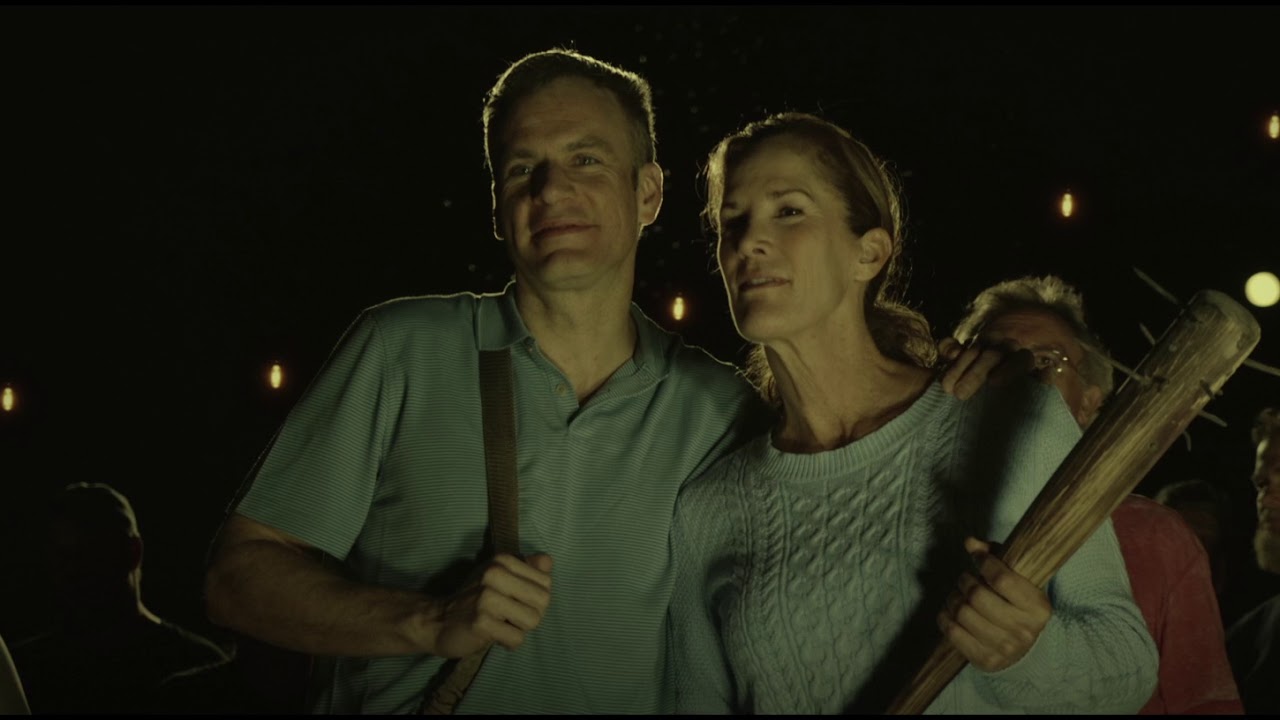
The movie is blessed by two outstanding performances from Theron and Davis. For most of the movie, Theron – who gained nearly fifty pounds for the role – appears unflatteringly, big and sweaty and looking red-eyed and exhausted. It’s a powerful, nuanced portrayal, with subtle flourishes throughout, but she’s matched by Davis, whose own performance is flecked with delicate little touches, a look here, a twinkle there. Together, the two actresses are mesmerising to watch, and dominate the narrative. Inevitably, with two such strong female roles at the movie’s centre, the male roles fare badly in comparison, with Livingston’s unobservant husband continually out of touch (unless confronted with an impromptu ménage à trois), and Duplass’s self-absorbed, materialistic brother given little to do beyond looking baffled and out of their depth when discussing “women’s issues”. This isn’t necessarily a feminist tract – Marlo makes too many poor choices for that – but it is a celebration of female solidarity, though as the movie unfolds, issues surrounding mental health begin to make themselves more keenly felt. This leads to a last act swerve in the narrative that isn’t completely successful, but at least brings the story to a (by then) predictable conclusion. But Reitman – directing as confidently and intuitively as ever – and Cody, are more focused on Marlo’s journey than her destination, and in that they’re more than successful.

Rating: 8/10 – with Theron and Davis at the top of their game, and in service to a balanced and thoughtful script, Tully is a perceptive look at the perils of motherhood told exclusively from the viewpoint of someone who can’t see those perils for having to deal with them; the kind of indie comedy-drama that rewards viewers in increasingly subtle and unexpected ways, it’s a genuine, ready and willing to please movie that has much to say and which does so very succinctly.

Share this:

  • Click to share on X (Opens in new window) X
  • Click to share on Facebook (Opens in new window) Facebook
  • More
  • Click to print (Opens in new window) Print
  • Click to email a link to a friend (Opens in new window) Email
Like Loading...

The Vanishing of Sidney Hall (2017)

22 Sunday Jul 2018

Posted by dullwood68 in Movies

≈ Leave a comment

Tags

Disappearance, Drama, Elle Fanning, High School, Kyle Chandler, Logan Lerman, Michelle Monaghan, Mystery, Pulitzer Prize, Review, Shawn Christensen, Suburban Tragedy

Original title: Sidney Hall

D: Shawn Christensen / 120m

Cast: Logan Lerman, Elle Fanning, Michelle Monaghan, Kyle Chandler, Blake Jenner, Nathan Lane, Yahya Abdul-Mateen II, Margaret Qualley, Janina Gavankar, Tim Blake Nelson, Darren Pettie

A publishing phenomenon, Sidney Hall (Lerman) writes a first novel called Suburban Tragedy that is nominated for a Pulitzer Prize; he’s only eighteen when he starts writing it. By the time he’s twenty-four, he’s written a follow-up, State of Execution; both novels sit atop the New York Times Best Seller list. But Sidney isn’t happy. His past, and in particular, the source of inspiration for Suburban Tragedy, haunts him. He has married his teenage sweetheart, Melody (Fanning), but is unable to resist the attentions of his publisher’s daughter, Alexandra (Qualley), leading to an affair. As time passes, Sidney becomes more and more reclusive, until he disappears altogether. Soon after, a spate of arson attacks in bookshops and libraries, where the only books burnt are Hall’s, attracts the attention of a police detective (Chandler). Tracing the arson attacks across the Midwest, the detective becomes convinced that the perpetrator is Hall himself. But why would he do such a thing, and why disappear in the first place? What could have made Sidney Hall throw away everything he’d achieved?

Non-linear stories such as The Vanishing of Sidney Hall have two benefits: they can tease out important plot points in a way that keeps the viewer intrigued and wanting to know more, and they can reshape a movie’s storyline to ensure a greater emotional or dramatic impact when the mystery (whatever it is) is finally revealed. Shawn Christensen’s second feature aims for both, and is moderately successful as a whole, but makes one fatal flaw that stops the movie from achieving the goals Christensen has set for it: it makes Hall himself too miserable – and unrelentingly so – for the viewer to feel much sympathy for him. While the roots of his melancholy lie in a terrible tragedy that he feels responsible for, it’s a long time before the movie reveals this. And by the time that it does, and those all important plot points have been left as clues for us to piece together, the movie has become lethargic and banal. A late-on reveal feels forced (and less than entirely credible), while key moments are replayed without ever adding any greater emotional or dramatic impact. At the same time, the movie’s structure is both its best and worst component.

Something of a labour of love for Christensen, the movie often wears its heart on its sleeve, and though Hall is the kind of tortured literary genius we’ve seen so many times before, the co-writer/director surrounds him with a number of supporting characters that often prove more interesting. Sidney’s mother (Monaghan) is the kind of toxic parent who blames their child for being born and ruining their life, while his English teacher (Abdul-Mateen II) is so desperate to ride Hall’s coat-tails to literary success that his neediness is embarrassing. These are stories that, on their own, could comprise a number of separate movies, but Christensen keeps them in Sidney’s orbit, satellites bouncing off his celebrity, and feeling hard done by because of it. In the end, Sidney’s determination to punish himself pushes everyone away from him (hence, in part, his disappearance), but the script always makes it feel deserved. As the complex literary genius, Lerman is a solid presence, better at playing him as a teenager than as an adult, while Fanning offers strong support as the love of his life. There are good performances throughout, and the movie is beautifully photographed by Daniel Katz, but in its themes and ambitions, it lacks the overall cogency needed to make it all gel.
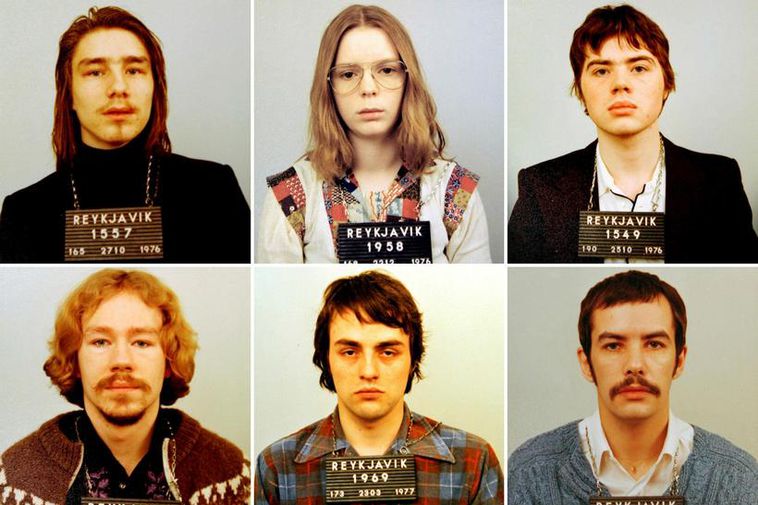
Rating: 6/10 – a worthy attempt at portraying the devastating effects of one tragic event on a young man’s much deserved success, The Vanishing of Sidney Hall falls short thanks to its title character’s unnecessary (and hard to condone) self-flagellation; with its insistence on breaking the story down into bite-size chunks of culpable exposition, it’s also a movie that says a lot but forgets to add enough substance to back it all up.

Share this:

  • Click to share on X (Opens in new window) X
  • Click to share on Facebook (Opens in new window) Facebook
  • More
  • Click to print (Opens in new window) Print
  • Click to email a link to a friend (Opens in new window) Email
Like Loading...

The Catcher Was a Spy (2018)

21 Saturday Jul 2018

Posted by dullwood68 in Movies

≈ Leave a comment

Tags

Baseball, Ben Lewin, Drama, Literary adaptation, Mark Strong, Morris "Moe" Berg, Nuclear bomb, Paul Rudd, Review, Sienna Miller, Thriller, True story, World War II

D: Ben Lewin / 95m

Cast: Paul Rudd, Mark Strong, Sienna Miller, Jeff Daniels, Tom Wilkinson, Guy Pearce, Paul Giamatti, Giancarlo Giannini, Hiroyuki Sanada, Connie Nielsen, Shea Whigham

In the years before the US enters World War II, Morris “Moe” Berg (Rudd) is a catcher for the Boston Red Sox. Regarded as the “strangest man ever to play baseball”, Berg is an average player, but of above average intelligence, being able to speak seven languages fluently, regularly contribute to the radio quiz programme Information, Please, and read and digest up to ten newspapers daily. A man of singular interests but also leading a very private life, Berg pursues a relationship with a woman, Estella (Miller), that he won’t acknowledge publicly, while on a trip to Japan, he takes it on himself to shoot footage of the Tokyo harbour. After Pearl Harbor, Berg uses the same footage to wangle himself a desk job with the Office of Strategic Services (OSS). Soon though, his expertise in languages lands him a job in the field: to track down the noted physicist Werner Heisenberg (Strong) and determine if his work for the Nazis will give them a nuclear weapon – and if it will, then Berg is to kill him…

Another tale of unsung heroics set during World War II, The Catcher Was a Spy (a title that’s both derivative and clever) is a movie that takes a real life person and spins a mostly true story out of events they took part in, but does so in a way that alerts the viewer very early on that, despite the mission, Berg won’t be put in any danger, so any tension will evaporate before it’s even got up a head of steam. So instead of a movie that should be increasingly tense and dramatic, we have a movie that plays matter-of-factly with the material, and is presented in a pedestrian, if sure-footed manner. Working from an adaptation of the book of the same name by Nicholas Dawidoff, director Ben Lewin and writer Robert Rodat have fashioned a moderately engaging espionage tale that moves elegantly yet far from robustly from scene to scene without providing much in the way of emotional impact. Partly this is due to Berg’s own nature, his muted feelings and intellectual prowess being ostensibly the whole man, and while the movie and Rudd’s performance adhere to Berg’s character, it leaves the viewer in the awkward position of being an observer and not a participant.

With Berg introduced “as is”, and with only the most minimal of character arcs to send him on, the movie soon becomes a wearying succession of exposition scenes, or opportunities to show off Berg’s gift for languages (which Rudd copies with aplomb). The early scenes with Estella show Berg trying to be “normal” but not quite knowing how to, give way to the mission to find Heisenberg, but the movie’s switch from domestic tribulations to wartime emergency – Berg literally has Heisenberg’s life, and possibly the fate of the world in his hands – dovetail at the same pace and with the same lack of urgency. Even a sequence where Berg, accompanied by military man Robert Furman (Pearce) and friendly physicist Samuel Goudsmit (Giamatti), try to thread their way through a town overrun by Germans lacks the necessary sense of imminent peril needed to make it work. Another issue is Andrij Parekh’s humdrum cinematography, which deadens the effect of Luciana Arrighi’s murky yet effective production design. Against all this, Rudd is a good choice for the enigmatic Berg, and the moments where he expresses Berg’s self-doubts, offer a rare glimpse of the man behind the façade. But, sadly, these moments aren’t plentiful enough to offset the flaws that dog the rest of the movie, and which keep it from being far more impressive than it is.

Rating: 5/10 – proficient enough without providing much more than the basics of Berg’s life as a catcher or an OSS man, The Catcher Was a Spy isn’t dull per se, just not as compelling as it could (or should) have been; Rudd aside, a quality cast is left with little to do except recite their lines in a competent manner, and any notions of political or intellectual morality are left undeveloped or overlooked.

Share this:

  • Click to share on X (Opens in new window) X
  • Click to share on Facebook (Opens in new window) Facebook
  • More
  • Click to print (Opens in new window) Print
  • Click to email a link to a friend (Opens in new window) Email
Like Loading...

Most Beautiful Island (2017)

19 Thursday Jul 2018

Posted by dullwood68 in Movies

≈ Leave a comment

Tags

Ana Asensio, Caprice Benedetti, Drama, First feature, Illegal immigrant, Mystery, Natasha Romanova, New York, Party, Review, Thriller

D: Ana Asensio / 79m

Cast: Ana Asensio, Natasha Romanova, Caprice Benedetti, David Little, Nicholas Tucci, Larry Fessenden, Anna Myrha, Ami Sheth, Brian Kleinman

Luciana (Asensio) has come to New York following a personal tragedy that occurred in her home country of Spain. She’s an illegal immigrant, sharing an apartment she can’t afford because she can’t get a permanent job (she doesn’t have a social security number, or a work visa), and when she’s unwell, dependent on the ministrations of a doctor (Little) who’s willing to provide her with medicine. Luciana has a friend, Olga (Romanova), with whom she occasionally works on cash-in-hand jobs. When Olga tells her that there’s a party where the girls can earn a lot of money for one night’s work, and it’s not that kind of party, Luciana agrees to go in Olga’s place when she’s asked. At a Chinese restaurant she’s given a padlocked purse and told to go to another address. There she finds other women (like her they’re attired in high heels and little black dresses), and Olga. While she tries to discover just what kind of party she’s a part of, one by one the women are chosen and led into another room, a room that many of the other women are frightened of…

When writer/director/actress Ana Asensio moved to New York City in 2001, little did she realise that a party she would work at, one that was “dangerous and illegal”, would help form the basis of her debut feature, the taut, award-winning thriller Most Beautiful Island. It’s perhaps a good thing that she did attend that party, because out of it, Asensio has fashioned a compelling, darkly unsettling movie that begins somewhat predictably, with Luciana travelling to the offices of Dr Horowitz to cajole him into giving her the medicine she needs, and then to Luciana arriving home to find a final reminder about the rent she owes. So far, an unremarkable exploration of the likely experiences of an undocumented immigrant, and one that will have viewers most likely wondering what further obstacles she will have to overcome. But Asensio isn’t interested in pursuing this kind of immigrant story; we’ve seen these kinds of trials before, after all. Instead, she takes Luciana, and the viewer, on a different kind of journey, with a very different kind of trial at the end of it, one that is expertly constructed and which relies on very little exposition.

Asensio creates a heavy sense of increasing dread from the moment Luciana arrives at the Chinese restaurant and is told she can’t take her shoulder bag with her, one that contains her personal effects. The inference is clear: without it she becomes anonymous, and if anything were to happen to her, who would know? The padlocked purse provides a further sense of mystery (when the contents are finally revealed, the moment provides a frisson of sick surprise that’s hard to ignore), and the gradual revelation of the party’s raison d’être is paced with great skill by Asensio’s confidence behind the camera, and Carl Ambrose and Francisco Bello’s incisive editing skills. This is a movie that grows uneasier to watch as it goes on, and the use of Fessenden and Tucci as crypto-villains cleverly adds to the anxiety Asensio builds up, while Benedetti’s role as the party’s organiser – all surface glamour and reptilian emotions – is hard to tear yourself away from. Asensio herself is a winning presence, deftly portraying her character’s desperate need for money without resorting to melodrama or making Luciana’s predicament more than it is. She also makes a handful of telling comments about the plight of female illegal immigrants, but this is no feminist polemic. Instead it’s a quietly impressive thriller that lingers in the memory, and a remarkable debut from its creator.

Rating: 8/10 – with only a small handful of awkward moments that serve as a reminder that this is Asensio’s first feature, Most Beautiful Island is still an intense, powerful experience that makes the most of its low budget and constrained production values; Asensio is definitely a movie maker to watch out for, and on this evidence, her next feature can’t come soon enough.

Share this:

  • Click to share on X (Opens in new window) X
  • Click to share on Facebook (Opens in new window) Facebook
  • More
  • Click to print (Opens in new window) Print
  • Click to email a link to a friend (Opens in new window) Email
Like Loading...

Entebbe (2018)

16 Monday Jul 2018

Posted by dullwood68 in Movies

≈ 1 Comment

Tags

Air France, Daniel Brühl, Drama, Eddie Marsan, Hijacking, José Padilha, Lior Ashkenazi, Literary adaptation, Review, Rosamund Pike, Thriller, True story, Uganda

aka 7 Days in Entebbe

D: José Padilha / 107m

Cast: Daniel Brühl, Rosamund Pike, Eddie Marsan, Lior Ashkenazi, Denis Ménochet, Nonso Anozie, Ben Schnetzer, Mark Ivanir, Angel Bonnani, Zina Zinchenko, Amir Khoury

On 27 June 1976, Air France Flight 139 from Tel Aviv to Paris was hijacked following a stopover in Athens. The hijackers – two members of the Popular Front for the Liberation of Palestine – External Operations, and two members of the German Revolutionary Cells (Brühl, Pike) – diverted the flight to Benghazi in Libya for re-fueling before heading to their planned destination of Entebbe Airport in Uganda. Once there, the passengers and crew were herded into the transit hall of an out-of-use terminal, where eventually, the Jewish passengers were separated from the rest. With the hijackers and their associates on the ground in Entebbe receiving support from Ugandan leader Idi Amin (Anozie), they made their demands to the Israeli government, then led by Itzhak Rabin (Ashkenazi): $5 million for the release of the plane, and the release of fifty-three Palestinian and Pro-Palestinian militants. With Israel having a no negotiation with terrorists policy, they made it seem that they were willing to break with their standard protocol, but while the hijackers began to feel that their mission was going to succeed, the Israelis actually had other plans…

With three previous movies about the hijacking of Air France Flight 139 already released, and all of them within a year of the actual event, the first question to ask about Entebbe is, why now? (A second might be, and does it retain any relevance?) The answer to the first question remains unclear, as the movie, freely adapted by Gregory Burke from the book Operation Thunderbolt (2015) by Saul David, has a tendency to flirt with the truth for dramatic purposes, and in doing so, it manages to dampen the drama by lacking the necessary focus to keep viewers on the edge of their seats. The second question is easier to answer: it doesn’t, and for much the same reason as the answer to the first question. With the script trying to cover too many bases – the hijackers, the Israeli government, the hostages, Idi Amin’s need for personal aggrandisement, the raid that ended the whole thing, and a dancer taking part in a performance of the traditional Jewish song Echad Mi Yodea – the movie never settles on any one aspect for long, and never maintains a sense of the terror and danger that the hostages must have experienced.

It’s a curiously bland affair, with plenty of gun-waving by Pike, but more navel-gazing from Brühl than is necessary, and lots of scenes where the enormity of the situation is trotted out for any slow-off-the-mark viewers – and with increasing emphasis. Most of the characters are forgettable, even the hijackers, as they’re treated more as functioning stereotypes than real people who existed in a real environment and experienced real emotions (much of this by the book). Pike’s angry revolutionary pops a lot of pills but we never learn the reason why, while Brühl’s softly softly bookseller seems out of place entirely. Ashkenazi is a tortured Rabin, Méncohet is the flight engineer who’s scared of no one, and Schnetzer gets his own journey as one of the Israeli commandos who take part in the raid (though why we need his journey is another question the script can’t answer). Only the ever-reliable Marsan, as hawkish Israeli Minister of Defence Shimon Peres, delivers a credible performance, and that’s against the odds, as Burke’s script and Padilha’s direction continually combine to undermine the cast in their efforts. Worst of all though, is the raid itself. After all the build-up, and all the foreshadowing, it’s shot using techniques and a style that wouldn’t have looked out of place in any of the movies made back in the wake of the hijacking.
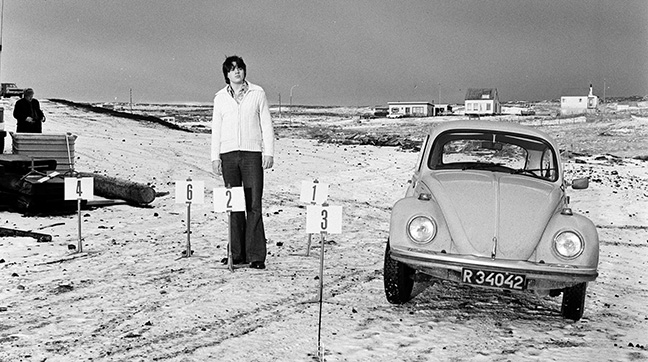
Rating: 5/10 – handled with a dull reluctance to make it the thriller it should be, Entebbe lacks energy, pace, and any conviction in the way that it tells its story; fascinating only for the way in which it does a disservice to the event itself, it’s a movie that wastes so many opportunities, it’s as if the material itself has been hijacked – but no one told the producers.

Share this:

  • Click to share on X (Opens in new window) X
  • Click to share on Facebook (Opens in new window) Facebook
  • More
  • Click to print (Opens in new window) Print
  • Click to email a link to a friend (Opens in new window) Email
Like Loading...

Last Seen in Idaho (2018)

15 Sunday Jul 2018

Posted by dullwood68 in Movies

≈ Leave a comment

Tags

Action, Casper Van Dien, Crime, Drama, Eric Colley, Hallie Shepherd, Murder, Premonitions, Review, Shawn Christian, Thriller, Wes Ramsey

D: Eric Colley / 109m

Cast: Hallie Shepherd, Wes Ramsey, Shawn Christian, Casper Van Dien, Alexis Monnie, Ted Rooney, Richard Carmen, Eric Colley

When Summer (Shepherd) discovers that her boss, Dex (Colley), is knee-deep in murder and corruption, she does so through finding two bodies brought to him by local crime boss, Lance (Christian), for disposal. When matters worsen, and Lance kills another of Dex’s employees at the same time, Summer – who has captured the murder on her phone – makes a run for it. She gets to her car but loses control trying to get away; she’s thrown clear and her car blows up. When Summer wakes in the hospital, it’s to learn that she has no memory of anything that happened immediately before the crash, that she was dead for five minutes, and that she has begun to be plagued by strange visions that show her events that haven’t happened, including her death. While Lance and his gang wait for a sign that Summer is beginning to remember what happened, she begins to realise that these visions are actually premonitions. Forced to confront the very real possibility that she could soon be dead, Summer tries to piece together the reasons why someone would want her killed…

Written by its star – who also serves as producer and co-editor with Colley – Last Seen in Idaho is a moderately entertaining, but uneven mix of female-centric crime thriller and elaborate mystery drama. There’s a reason the movie runs a hundred and forty-nine minutes, and it’s because Shepherd doesn’t know how to trim a scene – either on the page or in the editing suite. This leads to several moments where the material feels like it’s been stretched too thinly, and certain scenes lack the energy or pace required to keep them interesting. The opening scenes between Summer and her sister, Trina (Monnie), are padded out, and the dialogue soon becomes repetitive, and there are lots of other scenes where some judicious pruning would have been advisable, while in others there are narrative leaps that go unexplained or barely acknowledged. Shepherd is to be congratulated on writing a script that she’s managed to get made (as well as star in, produce, and co-edit), but the services of a script editor during the production’s early stages would have been a major benefit. That said, Shepherd does use Summer’s premonitions to wrong foot the audience from time to time, and the structure itself is sound, but too much feels either extended (for no reason) or superficial.

This being a movie made on a relatively small budget, there are further limitations that harm the movie and make it unintentionally awkward, from the very sudden flip and burn of Summer’s car, to a rooftop conversation between Summer and love interest-cum-possible bad guy, Franco (Ramsey), that is so poorly lit that the background looks false. It does win points for having a strong female central lead, but then wastes that advantage by having the only other notable female role portrayed as a spoilt brat throughout, and by including an unnecessary and uncomfortably misogynistic scene where Van Dien’s callous assassin sexually assaults the girlfriend of one of the gang members. It’s this unevenness of tone and approach that ultimately stops the movie from making any headway or proving sufficiently entertaining except on a basic level. There’s ambition here, certainly, but Shepherd isn’t as good a writer as she needs to be, while Colley’s direction is flat and uninspired, and the performances all appear to operate independently of each other. It all ends in a violent, slightly cartoonish showdown that raises as many laughs as it does gasps of excitement, but is at least, one of the few times when the movie manages to elicit more than a polite reaction from the viewer.

Rating: 4/10 – many’s the time a movie could have been improved by its makers simply taking their time in assembling their picture, and paying close attention to all the working parts, but with Last Seen in Idaho, that hasn’t happened; rough and ready  as a finished item, it’s a movie with plenty of ambition, but without the wherewithal to achieve – or come close to – that ambition, making it yet another movie to be filed under Missed Opportunity.

Share this:

  • Click to share on X (Opens in new window) X
  • Click to share on Facebook (Opens in new window) Facebook
  • More
  • Click to print (Opens in new window) Print
  • Click to email a link to a friend (Opens in new window) Email
Like Loading...

Hannah (2017)

14 Saturday Jul 2018

Posted by dullwood68 in Movies

≈ Leave a comment

Tags

André Wilms, Andrea Pallaoro, Arthouse, Charlotte Rampling, Drama, France, Imprisonment, Review

D: Andrea Pallaoro / 93m

Cast: Charlotte Rampling, André Wilms, Stéphanie Van Vyve, Simon Bisschop, Fatou Traoré, Julien Vargas, Gaspard Savini

Hannah (Rampling) is a quiet woman, not given to speaking much, and not given to engaging with people unless it’s the woman whose house she cleans, Elaine (Van Vyve), or Elaine’s blind son, Nicholas (Bisschop). Her usual reticence has been exacerbated though, by the imminent imprisonment of her husband (Wilms). She’s a dutiful wife who stands by him, even though his crime appears to be of a predatory sexual nature. Once he begins his prison sentence, Hannah becomes even more withdrawn, with only her cleaning job and an acting group that she attends regularly, to break up the monotony of being alone at home. There are further setbacks: her membership at the local baths is revoked, she’s turned away from her grandson’s birthday party, and she makes a discovery at home that has a profound effect on her relationship with her husband. Hannah tries to get her life back in order, but it’s increasingly difficult, and as she negotiates the new terrain of her life, letting go of the past proves more of a struggle than she could ever have expected…

From the start, Hannah is a movie that is likely to divide audiences. For those looking for more mainstream fare, Hannah will be a challenge that may find them abandoning the movie part way through, while those looking for arthouse fare that explores the “human condition”, this will be an unalloyed pleasure. Replete with takes and scenes that depict Hannah either staring glumly off into the distance, or staring glumly into the foreground, or even staring glumly while in repose, Andrea Pallaoro’s ultra-leisurely depiction of one lonely woman’s faltering attempts at personal rehabilitation is easily the kind of movie that will have some viewers asking themselves, “when is something going to happen?” But as the phrase has it, the devil is in the details, and while at first glance Hannah’s life is full of small, inconsequential moments, it’s precisely these moments and their gradual accumulation that carry an unexpected emotional heft. Hannah may be occupying a world that only she has access to, but it’s a world that is keeping her afloat following her husband’s incarceration. Here there aren’t any sudden life-changing decisions that solve all her problems overnight (as might happen in more mainstream fare), just a number of hesitant steps toward a newer, better life.

It helps that Pallaoro has enlisted the aid of Charlotte Rampling to tell Hannah’s story. Rampling is one of the few actresses who can display a range of emotions with just a glance, and here she’s on magnificent form, giving a performance that gets to the heart of Hannah’s predicament. Behind that seemingly passive face, with its mouth permanently turned down (when she does smile it’s misinterpreted), Rampling perfectly captures the hopes and fears and muted dreams and feelings that Hannah struggles to express, even to herself. We learn nothing of Hannah’s back story, never find out what she was like before her husband’s crime turned everything upside down (or even if it did), but Rampling shows us a woman seemingly trying to reconnect with herself as well as the wider world. There’s a scene towards the end with a beached whale that Hannah feels compelled to go and see, and though the symbolism is clumsy in a movie that is otherwise compellingly subtle, it’s a moment of hope for Hannah. The only question that remains – and it’s one that Pallaoro is rightly uninterested in answering – is whether or not Hannah can take this newfound hope and use it to push herself forward to where she needs to be. But that’s a tale for another movie…

Rating: 8/10 – not for all tastes, but intriguing and fascinating nevertheless for the way it paints a portrait of personal reclamation through the accumulated minutiae of daily endeavour, Hannah is an affecting drama with far more to say than at first glance; Pallaoro keeps the focus on Rampling throughout, a decision that allows his story to be given the fullest expression possible, and which allows the patient viewer to become heavily invested in its troubled central character.

Share this:

  • Click to share on X (Opens in new window) X
  • Click to share on Facebook (Opens in new window) Facebook
  • More
  • Click to print (Opens in new window) Print
  • Click to email a link to a friend (Opens in new window) Email
Like Loading...

Bees Make Honey (2017)

13 Friday Jul 2018

Posted by dullwood68 in Movies

≈ Leave a comment

Tags

Alice Eve, Comedy, Costume party, Drama, Halloween, Jack Eve, Murder, Mystery, Review, Trevor Eve, Wilf Scolding

D: Jack Eve / 85m

Cast: Alice Eve, Wilf Scolding, Joshua McGuire, Anatole Taubman, Trevor Eve, Hermione Corfield, Ivanno Jeremiah, Joséphine de La Baume

It’s Halloween 1934, and glamorous socialite Honey (Eve) is hosting her annual Halloween costume party. But this year’s event is tinged with bitterness and revenge, for on the same night the year before, Honey’s husband was killed, and the killer never caught. Tonight, Honey has invited everyone who was there the year before on the assumption that one of her guests was the murderer. Enlisting the help of newly appointed police Inspector Shoerope (Scolding), Honey is determined to uncover the killer’s identity, and see justice done. With the party well under way, Shoerope begins his investigation and soon finds that there a number of possible suspects, from local real estate broker Mr Conick (McGuire), to German businessman Herr Werner (Taubman), and even Shoerope’s own Commissioner (Eve). Matters are further complicated when it’s suggested by one of the guests that Honey isn’t being as honest with Shoerope as she seems, raising the possibility that his investigation is a means to a far different end than justice. But as the evening continues, various clues fall into place, and Shoerope discovers that there’s more to the murder of Honey’s husband than either of them could have imagined…

Something of a family affair – Alice and Jack Eve are siblings, while Trevor Eve is their father – Bees Make Honey is a period murder mystery comedy-drama that flirts with a lot of ideas as to how to present its story visually, and then decides to include them all. And so we have a movie that throws in all manner of cinematic trickery as if someone has opened a Pandora’s Box of visual effects (leaving Hope cowering at the bottom). When a movie is this visually erratic, it’s too often a sign that the material isn’t as lively as the makers have intended, and for long stretches, this is the case with Jack Eve’s honest yet overwrought pastiche of Thirties drawing room mysteries. A huge – and this is no understatement – part of the problem is the dialogue, which is meant to be clever and dazzlingly erudite, but which causes further problems for many of the cast, lumbered as they are with lines such as, “But one can never repeat the past with complete sincerity. There’s is always the possibility, if not inevitability, of a fleeting fancy throwing a spanner in the works.”

There’s also an anachronistic use of music, with the likes of The Libertines’ What a Waster, and The Clash’s Lover’s Rock littering the soundtrack as literal counterpoints to the action, but all these incidences do is to jar the viewer out of whatever temporary mood the material has just got them into. With such a lack of focus, it’s a shame also that any mystery is undermined by a massive visual clue given away when the murder is committed at the movie’s beginning. These and other directorial decisions made by Eve make the movie a stop-start affair that never really gels or fully entertains as the high-spirited romp it could (and should) have been, and viewers may find themselves hitting the fast-forward button more than they’d like. The cast are game, however, and muddle through in support of their director, though Trevor Eve is clearly having fun with a role he wouldn’t normally be asked to play. By the end, a kind of weary acceptance sets in, allied to the knowledge that the movie isn’t going to raise its game any higher. There’s a good idea in there somewhere, but this sort of murder mystery has been done too often before, and to much better effect.
Rating: 4/10 – when a movie tries to make an apple-bobbing competition one of its highlights, you know there’s a problem, and in this respect, it’s one of many that hamper Bees Make Honey from being a success;  one to approach with caution, it’s a movie that never settles on a through line, or maintains a consistent tone – unless not maintaining one was the original idea.

Share this:

  • Click to share on X (Opens in new window) X
  • Click to share on Facebook (Opens in new window) Facebook
  • More
  • Click to print (Opens in new window) Print
  • Click to email a link to a friend (Opens in new window) Email
Like Loading...

Two for the Kids: Molly Moon and the Incredible Book of Hypnotism (2015) and Curse of Cactus Jack (2017)

12 Thursday Jul 2018

Posted by dullwood68 in Movies

≈ Leave a comment

Tags

Adventure, Billy Kitchen, Christopher N. Rowley, Comedy, Craig McMahon, Drama, Fame, Fantasy, Gold mine, Hypnotism, Katie Kitchen, Literary adaptation, Orphanage, Raffey Cassidy, Reviews

Molly Moon and the Incredible Book of Hypnotism (2015) / D: Christopher N. Rowley / 98m

Cast: Raffey Cassidy, Lesley Manville, Emily Watson, Dominic Monaghan, Celia Imrie, Joan Collins, Anne-Marie Duff, Ben Miller, Sadie Frost, Omid Djalili, Gary Kemp, Jadon Carnelly Morris, Tallulah Evans, Tom Wisdom

Hardwick House is an orphanage that’s run on a tight rein by its headmistress, Miss Adderstone (Manville). Sour and unlikeable, and disliking the children in her care, she has to contend with Molly Moon (Cassidy), a constant thorn in her side, and someone for whom getting into mischief – deliberately or not – seems to be a way of life. When Molly discovers a book on hypnotism at the local library, she uses it to begin making life at the orphanage that much better. But she’s drawn toward living a better life far away, and travels to London, where she tricks her way into replacing incredibly famous Davina Nuttel (Evans) as the star du jour. But she’s being pursued by would-be arch-criminal Nockman (Monaghan), who wants to use the book as a means toward robbing a diamond house. Will Molly thwart Nockman’s plans, and in the process, will she abandon her friends at Hardwick House altogether…?

Based on the 2002 novel by Georgia Byng, Molly Moon’s Incredible Book of Hypnotism is a lightweight adaptation that hits its marks with all the energy and bounce of a movie that knows it’s not quite going to measure up in the entertainment department. This is despite a plethora of generous acting performances by a talented cast who all know what’s required of them, and a script that doesn’t skimp on making it seem as if being an orphan isn’t really that bad. Molly’s adventures in London – becoming a mega-star overnight, saving a friend, Rocky (Carnelly Morris), from the perils of middle class adoptive parents, and foiling Nockman’s plans – are played out in a day-glo fantasy world of crude ambition and guilt-free wish fulfilment. That it stays just on the right side of amiable and is even (whisper it) enjoyable for the most part, is a tribute to the invested cast and director Rowley’s simplistic approach to the material. It lacks depth – something that’s not unusual in these circumstances – and avoids presenting its target audience with anything that might be recognised as real life. But this is part of its charm, and though it relies heavily on adult caricature and Molly’s authority-defying behaviour, it’s pleasant enough, and at times, funny in a way that children will enjoy far more than the grown ups.

Rating: 6/10 – targeting its intended audience with almost laser precision, Molly Moon and the Incredible Book of Hypnotism will amuse and entertain those of a pre-teen persuasion, but older viewers won’t be so impressed; a great cast helps the script overcome some serious narrative hurdles, and the whole thing breezes along like a modern day fairy tale – just with manufactured magic.


Curse of Cactus Jack (2017) / D: Craig McMahon / 82m

Cast: Billy Kitchen, Katie Kitchen, Mitch Etter, Aaron Seever, Julie Van Lith, Glen Gold

Billy and Katie live with their parents (Seever, Van Lith) and their grandfather (Etter). When their mum and dad aren’t paying attention – which is often – their grandfather regales them with tales of the Old West, and in particular, the legend of Cactus Jack, a gold prospector who found what was said to be the most lucrative gold mine of all. Fearful of his find being taken away from him, Jack never revealed the location of his mine, though he left behind a bunch of keys and a map with cryptic clues as to its whereabouts. Now in their grandfather’s possession, he hands them over to Billy and Katie. The next day, while their parents are at work, Billy and Katie determine to find the mine and Cactus Jack’s long-hidden horde. Using the map and its clues, they realise that the mine is near to where they live (conveniently), and soon find an entrance that leads them into the mine and the first of many obstacles put in place by Cactus Jack. Risking their lives, they venture further and further into the mine, and discover the reason why the mine is known as the curse of Cactus Jack…

A tightly budgeted adventure movie for kids, Curse of Cactus Jack is an Indiana Jones-style feature that pits its intrepid siblings against a variety of deadly obstacles, but makes itself somewhat redundant in terms of actual peril thanks to the script’s decision to make almost every snag and hindrance solvable through the use of one of the keys (conveniently) left behind by Cactus Jack. This might hamper the effectiveness of the narrative, but it’s ultimately of little consequence thanks to the casting of real life siblings Billy and Katie Kitchen. The pair are most definitely a team, supportive of each other (though Billy does get to mention that he’s “been a great brother” a little too often to avoid sounding as if he’s crowing about it), and on the same page throughout. There’s no sibling rivalry here, no bickering or complaining, and while it fits with the overall blandness of their characters, it’s refreshing to see them just getting on with it all. Against this, mum and dad are the parental equivalent of Bobble Heads, grandpa speaks as if he’s just stepped out of the Old West himself, and there’s a supernatural element that sits uncomfortably amongst proceedings as if the story really needed it (it doesn’t), but this is a pleasant enough diversion, and its target audience will most likely be pleased to see two pre-teens being so proactive and capable.

Rating: 6/10 – something of a one-man show – director McMahon is also the co-writer, co-producer, cinematographer, editor, and post-production supervisor – Curse of Cactus Jack is amiable and inoffensive, but also enjoyable for being a basic, no frills kids’ adventure movie; first-timers the Kitchens are acceptable as the movie’s protagonists, but if there’s one character that steals every scene he’s in, it’s Scooter Bear – now let’s see him get his own movie.

Share this:

  • Click to share on X (Opens in new window) X
  • Click to share on Facebook (Opens in new window) Facebook
  • More
  • Click to print (Opens in new window) Print
  • Click to email a link to a friend (Opens in new window) Email
Like Loading...

The Forest of Lost Souls (2017)

10 Tuesday Jul 2018

Posted by dullwood68 in Movies

≈ Leave a comment

Tags

Daniela Love, Drama, Horror, Jorge Mota, José Pedro Lopes, Mafalda Banquart, Portugal, Review, Suicide, Thriller

Original title: A Floresta das Almas Perdidas

aka The Forest of the Lost Souls

D: José Pedro Lopes / 71m

Cast: Daniela Love, Jorge Mota, Mafalda Banquart, Lígia Roque, Tiago Jácome, Lília Lopes

A young woman (Lopes) travels to a remote area of forest that’s a favourite destination for people looking to commit suicide. She comes to a lake and takes a dose of poison. Wading out into the water she waits for the poison to take effect. When it does she collapses into the water. Some time later, an old man, Ricardo (Mota), also comes to the forest. There he meets a young woman, Carolina (Love); both are there (ostensibly) for the same reason: to take their own lives. Ricardo is there because he believes himself to be a failure as a father and a husband. Carolina is fearful of getting old and suffering the ill effects that old age brings. They venture deeper into the forest, and talk about their reasons for being there, and the lies they’ve told in order to be there without raising any suspicions amongst their friends and families. When Ricardo asks Carolina if she knows where the lake is, it leads to a turn of events that suggests their meeting wasn’t entirely accidental…

The first feature from writer/producer/director Lopes, The Forest of Lost Souls is a darkly disturbing psychological horror movie that spins its own version of Japan’s Aokigahara Forest, and in doing so depicts an unexpectedly grim portrait of extreme personal need. The poster sadly gives away something of the dynamic between Carolina and Ricardo, and acts as a warning as to where the movie is heading once they meet, but even with that marketing mis-step, Lopes does more than enough with his stripped back narrative to ensure that viewers will be wondering if Carolina’s “secret” will be matched or exceeded by Ricardo’s. As they challenge each other’s views and feelings on the mistakes they’ve made that have led them there, the pair spar in ways that hint at deeper motivations lurking beneath the pain that Ricardo is experiencing, and the jaunty cockiness that Carolina expresses (it’s not her first time in the forest, and she’s quick to point out the pros and cons of committing suicide if you’re not fully prepared to die). As they venture nearer to the lake, and a friendship of sorts develops between them, Lopes adroitly holds back from revealing which one of them might leave the forest alive. And then…

Well, and then the movie takes a left turn into vastly different, and yet completely related territory (there are hints of this in the trailer, but thankfully they’re not too blatant). Leaving behind the solitary, isolated forest with its occasionally discovered corpses, Lopes takes the movie and one of its two central characters off in a new direction, and cleverly links past and present through the use of a mobile phone and a sense of dread that’s borne out of knowing what must come next. As Lopes allows these scenes to play out in an unsettling and matter-of-fact manner, there’s the temptation to feel that this new direction is an unnecessary transition from the realm of psychological horror into more predictable slasher territory, but Lopes has a further trick up his sleeve, and connects the two halves of his movie with a coda that explains a great deal of what’s happened, and which does so in a way that wraps things up neatly and with a great deal of confidence and skill. It’s all enhanced by Francisco Lobo’s often beautiful widescreen compositions, with their sense of space and detachment, and the characters seemingly lost amidst the wider, wilder landscape.

Rating: 8/10 – for once, a movie’s brevity is a positive, as The Forest of Lost Souls and its deliberate pacing provide rich dividends for the viewer prepared to see it to the end; brutal in places but not gratuitously so, it’s a movie that is spare and unflinching when it needs to be, and is possibly the only psychological horror outing to name drop Nick Hornby not once but twice.

Share this:

  • Click to share on X (Opens in new window) X
  • Click to share on Facebook (Opens in new window) Facebook
  • More
  • Click to print (Opens in new window) Print
  • Click to email a link to a friend (Opens in new window) Email
Like Loading...
← Older posts
Newer posts →

Blog Stats

  • 492,161 hits

Recent Posts

  • 10 Reasons to Remember Bibi Andersson (1935-2019)
  • Fantasia (1940)
  • Dances With Wolves (1990) – The Special Edition
  • Kiss of the Spider Woman (1985)
  • The Three Musketeers (1973)

Top Posts & Pages

  • What's in a Name? - The Boy (2015) and The Boy (2016)
    What's in a Name? - The Boy (2015) and The Boy (2016)
  • Poster of the Week - Werewolf of London (1935)
    Poster of the Week - Werewolf of London (1935)
  • Overdrive (2017)
    Overdrive (2017)
  • Concussion (2013)
    Concussion (2013)
  • Dawn of the Planet of the Apes (2014)
    Dawn of the Planet of the Apes (2014)
  • Disaster Zone: Volcano in New York (2006)
    Disaster Zone: Volcano in New York (2006)
  • Lost for Life (2013)
    Lost for Life (2013)
  • 90 Minutes (2012)
    90 Minutes (2012)
  • Table 19 (2017)
    Table 19 (2017)
  • The Escape (2017)
    The Escape (2017)
Follow thedullwoodexperiment on WordPress.com

Blogs I Follow

  • Rubbish Talk
  • Film 4 Fan
  • Fast Film Reviews
  • The Film Blog
  • All Things Movies UK
  • Interpreting the Stars
  • Let's Go To The Movies
  • Movie Reviews 101
  • TMI News
  • Dan the Man's Movie Reviews
  • Film History
  • Jordan and Eddie (The Movie Guys)

Archives

  • April 2019 (13)
  • March 2019 (28)
  • February 2019 (28)
  • January 2019 (32)
  • December 2018 (28)
  • November 2018 (30)
  • October 2018 (29)
  • September 2018 (29)
  • August 2018 (29)
  • July 2018 (30)
  • June 2018 (28)
  • May 2018 (24)
  • April 2018 (21)
  • March 2018 (31)
  • February 2018 (25)
  • January 2018 (30)
  • December 2017 (30)
  • November 2017 (27)
  • October 2017 (27)
  • September 2017 (26)
  • August 2017 (32)
  • July 2017 (32)
  • June 2017 (30)
  • May 2017 (29)
  • April 2017 (29)
  • March 2017 (30)
  • February 2017 (27)
  • January 2017 (32)
  • December 2016 (30)
  • November 2016 (28)
  • October 2016 (30)
  • September 2016 (27)
  • August 2016 (30)
  • July 2016 (30)
  • June 2016 (31)
  • May 2016 (34)
  • April 2016 (30)
  • March 2016 (30)
  • February 2016 (28)
  • January 2016 (35)
  • December 2015 (34)
  • November 2015 (31)
  • October 2015 (31)
  • September 2015 (34)
  • August 2015 (31)
  • July 2015 (33)
  • June 2015 (12)
  • May 2015 (31)
  • April 2015 (32)
  • March 2015 (30)
  • February 2015 (37)
  • January 2015 (39)
  • December 2014 (34)
  • November 2014 (34)
  • October 2014 (36)
  • September 2014 (25)
  • August 2014 (29)
  • July 2014 (29)
  • June 2014 (28)
  • May 2014 (23)
  • April 2014 (21)
  • March 2014 (42)
  • February 2014 (38)
  • January 2014 (29)
  • December 2013 (28)
  • November 2013 (34)
  • October 2013 (4)

Blog at WordPress.com.

Rubbish Talk

Film 4 Fan

A Movie Blog

Fast Film Reviews

The Film Blog

The official blog of everything in film

All Things Movies UK

Movie Reviews and Original Articles

Interpreting the Stars

Dave Examines Movies

Let's Go To The Movies

Film and Theatre Lover!

Movie Reviews 101

Daily Movie Reviews

TMI News

Latest weather, crime and breaking news

Dan the Man's Movie Reviews

All my aimless thoughts, ideas, and ramblings, all packed into one site!

Film History

Telling the story of film

Jordan and Eddie (The Movie Guys)

Movie Reviews & Ramblings from an Australian Based Film Fan

Privacy & Cookies: This site uses cookies. By continuing to use this website, you agree to their use.
To find out more, including how to control cookies, see here: Cookie Policy
  • Subscribe Subscribed
    • thedullwoodexperiment
    • Join 481 other subscribers
    • Already have a WordPress.com account? Log in now.
    • thedullwoodexperiment
    • Subscribe Subscribed
    • Sign up
    • Log in
    • Report this content
    • View site in Reader
    • Manage subscriptions
    • Collapse this bar
 

Loading Comments...
 

    %d