• 10 Reasons to Remember…
  • A Brief Word About…
  • About
  • For One Week Only
  • Happy Birthday
  • Monthly Roundup
  • Old-Time Crime
  • Other Posts
  • Poster of the Week
  • Question of the Week
  • Reviews
  • Trailers

thedullwoodexperiment

~ Viewing movies in a different light

thedullwoodexperiment

Tag Archives: Review

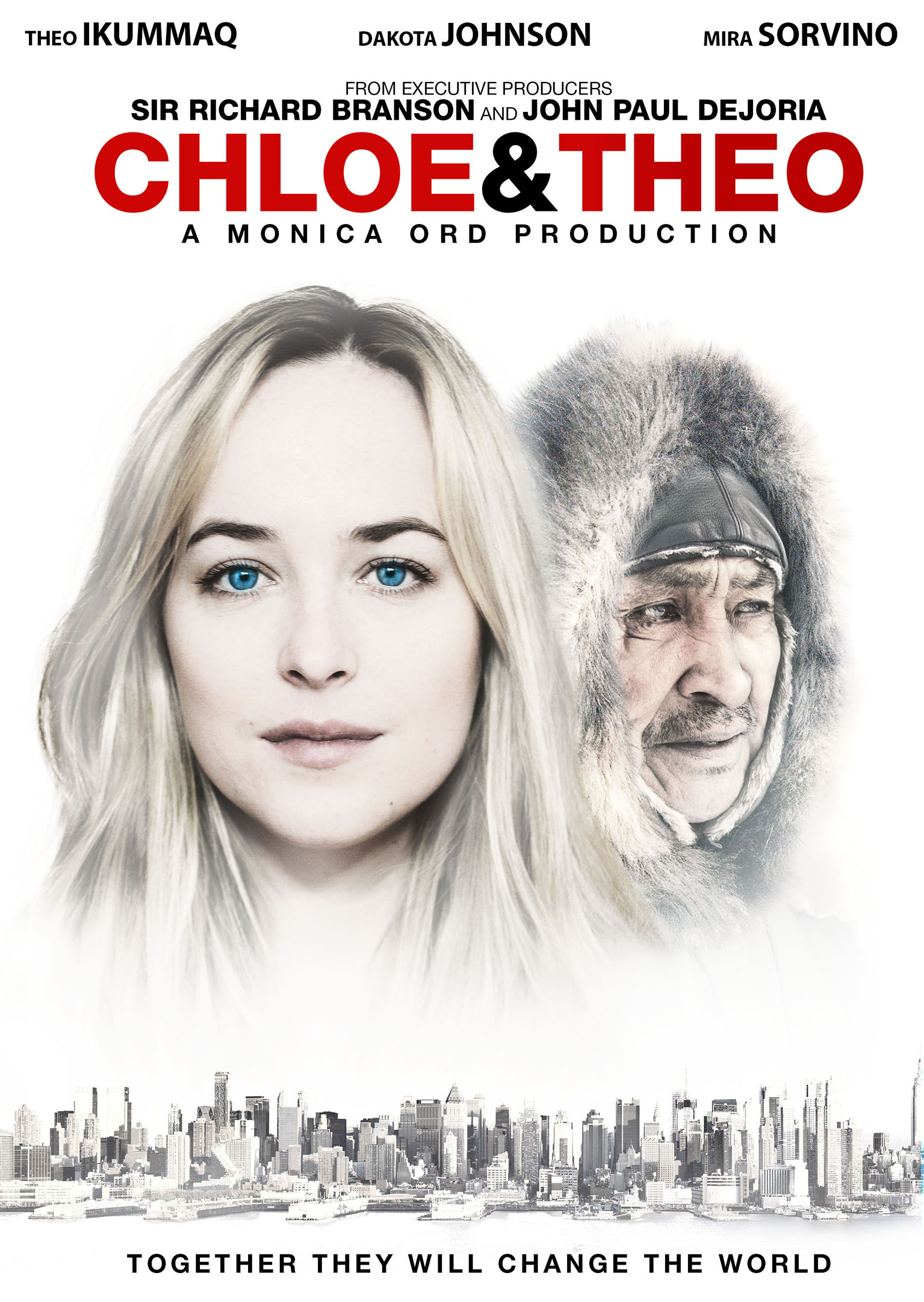
Chloe & Theo (2015)

12 Monday Mar 2018

Posted by dullwood68 in Movies

≈ Leave a comment

Tags

Dakota Johnson, Drama, Ezna Sands, Inook, Inuit, Mira Sorvino, Review, The Arctic, The Elders, Theo Ikummaq
D: Ezna Sands / 82m

Narrator: Michael Stiles

Cast: Theo Ikummaq, Dakota Johnson, Ashley Springer, André De Shields, Mira Sorvino, Eric Oram

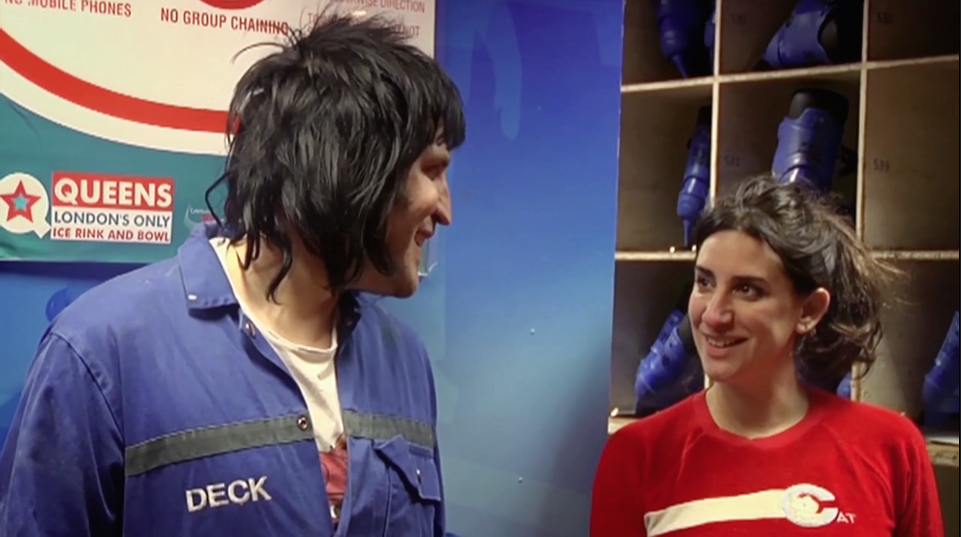
When the Elders of his tribe approach him and tell him the story of a dream they’ve had that warns of the end of the world, Inuk Theo (Ikummaq) takes up the task of bringing the dream’s message to the Elders of the South. He travels to New York City, rents a room in a hotel, and wanders the streets looking for the Elders he needs to warn. It’s there that he meets Chloe (Johnson), a young homeless woman. She takes him under her wing, and in turn she introduces him to her friends, Tyler (Springer), Sancho (Oram), and Mr Sweet (De Shields). They each react in different ways to the story that Theo tells, but Chloe wants to help him get his warning out to as wide an audience as possible. But it’s slow-going until Mr Sweet tells Theo about the United Nations building, and suggests he take his message there. Theo finds himself detained, but once he’s released he finds an unexpected ally in Monica (Sorvino), a green campaigner who can help Theo’s message reach a wider audience.

There’s no avoiding it: Chloe & Theo is not the movie it should be. What should have been an endearing, humorous, heartfelt movie with a late but still timely ecological message, instead is a lumpen mess, a blundering attempt at bringing together all those elements into one satisfying whole. It’s hard to work out how it all could have gone so horribly wrong. It’s a fish-out-of-water story told in a very simple fashion, but with so many visual and narrative non sequiturs that it feels like a longer movie hacked down to its current running time entirely for commercial reasons (and not very good ones at that). Its environmental message is more simplistic than simple, and boils down to “rampant consumerism bad”, “listening to the planet good”. But that focus is dropped into the narrative at random times and for random reasons, with the characters – aside from some unnecessarily aggressive U.N. security officers – fully on Theo’s side but with no idea of how to help him. This means the first forty-five minutes, before the arrival of Monica, is replete with scenes where Theo’s naïvete is treated as a source of easy laughs, and the narrative moves forward with all the purpose of a stranded whale.

In the end, the movie doesn’t have an end, and what happens feels like a cop-out, designed to add some pathos to a movie that has only one truly emotional moment – and even that comes and goes without any context to support it. Also, the movie isn’t helped by the two main performances. Ikummaq is a non-professional so can be excused some very awkward line readings, and even though he exudes a quiet strength and dignity, he lacks the on-screen presence that would have allowed audiences to connect with him more effectively. Johnson, however, is a professional, but hers is a terrible performance, a succession of pouts and glowering expressions that highlight just how one-note her portrayal actually is. And giving her a few dirty smudges around her face and a mane of unkempt hair (while everyone else who’s homeless remains immaculately groomed) further hinders any credibility she might be trying to attain. There’s so much else that either doesn’t make sense, or doesn’t fit in, or feels forced, that the movie feels like yet another bad idea from the lab of Victor Frankenstein. Sadly, Sands, and despite very good intentions, lacks the wherewithal to tie everything together, and includes too much that is either far-fetched, problematical, dramatically redundant, or all three.

Rating: 3/10 – the Arctic scenery is stunning, an animated sequence is appropriately nightmarish, and there’s a great Indie soundtrack, but overall, Chloe & Theo is a disaster on a par with the one it warns about; lacking depth and a consistent tone (a homeless march on the U.N., anyone?), this won’t do anything for the green movement, or for viewers unlucky enough to give it a try.


Share this:

  • Click to share on X (Opens in new window) X
  • Click to share on Facebook (Opens in new window) Facebook
  • More
  • Click to print (Opens in new window) Print
  • Click to email a link to a friend (Opens in new window) Email
Like Loading...

Strange Weather (2016)

11 Sunday Mar 2018

Posted by dullwood68 in Movies

≈ Leave a comment

Tags

Carrie Coon, Drama, Holly Hunter, Katherine Dieckmann, Kim Coates, Mystery, Review, Road trip, Suicide

D: Katherine Dieckmann / 91m

Cast: Holly Hunter, Carrie Coon, Kim Coates, Shane Jacobsen, Glenne Headly, Walker Babington, Craig Boe, Ransom Ashley, Susan Gallagher, Choppy Guillotte

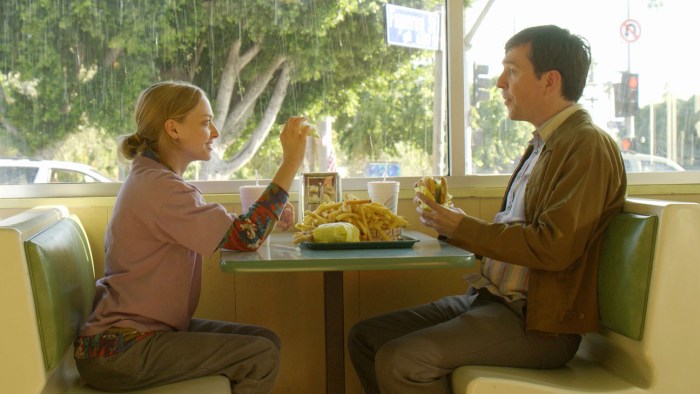
Still grieving seven years after her son, Walker (Ashley), committed suicide at the age of twenty-four, Darcy Baylor (Hunter) learns that a friend of her son back then, Mark Wright (Jacobsen), appropriated a business plan that Walker had come up with, and has made a success of the idea. Wright has even used a childhood memory that Walker had that illustrated his original concept for a chain of hot dog restaurants. Darcy decides to head down to New Orleans – where Wright has opened a chain of Hot Dawg sites – to confront him and find out why he did what he did. She’s accompanied by her best friend, Byrd (Coon), and along the way they learn things about Walker’s last day, and particularly the last few hours before he died, that brings into question the perception that he killed himself. When Darcy reaches New Orleans she has far more questions than she started out with, but when she finally confronts Wright, she learns that the answers she’s seeking aren’t as cut and dried as she expected…

In assembling Strange Weather, writer/director Katherine Dieckmann has made a movie that combines an examination of personal grief, a mystery, and a road trip, and in such a way that the viewer never quite knows where each element is leading them, or if any of them will be resolved satisfactorily. In portraying the residual grief that Darcy feels, Dieckmann shows how hollow her life has been, and how difficult it’s been to move forward when so many unspoken questions have been holding her back. Dieckmann also shows how Darcy’s grief has kept her going at the same time, and how she’s used that grief as a form of emotional support. It all makes Darcy a flawed yet interesting character, and unpredictable as well, as evidenced by her taking the gun that Walker killed himself with, on her journey to New Orleans. Dieckmann also keeps the mystery surrounding Walker’s death ticking over in the background, ever present and fueling Darcy’s need for the truth, and Byrd’s reasons for going with her. As the road trip takes them inexorably to the Big Easy, it serves as a conduit for the truth, and as a reckoning for the grief that Darcy feels so intensely.

Darcy is played with impeccable artistry by Hunter, an actress who just keeps getting better and better, and who portrays the pain and sadness that Darcy feels so adroitly that you can’t help but be moved by the determination she shows in getting the answers she needs. Hunter shows both the character’s inner strength and her unacknowledged vulnerability, and gives a performance of such subtlety and range that Darcy’s actions, even those that are somewhat questionable, retain a credibility that makes her all the more sympathetic. The supporting performances are good too, but Hunter is in a league of her own, and Dieckmann wisely leaves her to it (when someone like Hunter is this good, it’s best just to step back and make sure the cameras are rolling). The movie is honest and sincere in its approach to the material, and while a couple of plot developments do feel a little forced (and lifted from a daytime soap opera), by continually returning to Darcy’s dogged quest for answers to questions she hasn’t formulated yet, the movie remains a fascinating, if low-key, journey into the world of a mother who just can’t find it within herself to close the door fully on the death of her son… and who is proved right in not doing so.

Rating: 8/10 – an impressive performance by Hunter is the bedrock of a movie that is effective in terms of its examination of the nature of overwhelming grief, and which offers unexpected insights at several points along the way; David Rush Morrison’s cinematography provides a rich colour palette for the characters to appear against, and there’s a terrific soundtrack courtesy of Sharon Van Etten that complements the material in a rewarding and unforeseen manner, making Strange Weather the kind of movie that deserves a wider audience.

Share this:

  • Click to share on X (Opens in new window) X
  • Click to share on Facebook (Opens in new window) Facebook
  • More
  • Click to print (Opens in new window) Print
  • Click to email a link to a friend (Opens in new window) Email
Like Loading...

Gringo (2018)

10 Saturday Mar 2018

Posted by dullwood68 in Movies

≈ 1 Comment

Tags

Amanda Seyfried, Black comedy, Charlize Theron, Crime, David Oyelowo, Drama, Drugs, Joel Edgerton, Mexico, Nash Edgerton, Review, Sharlto Copley

D: Nash Edgerton / 110m

Cast: David Oyelowo, Charlize Theron, Joel Edgerton, Amanda Seyfried, Sharlto Copley, Harry Treadaway, Thandie Newton, Yul Vazquez, Carlos Corona, Diego Cataño, Rodrigo Corea, Hernán Mendoza, Alan Ruck, Kenneth Choi

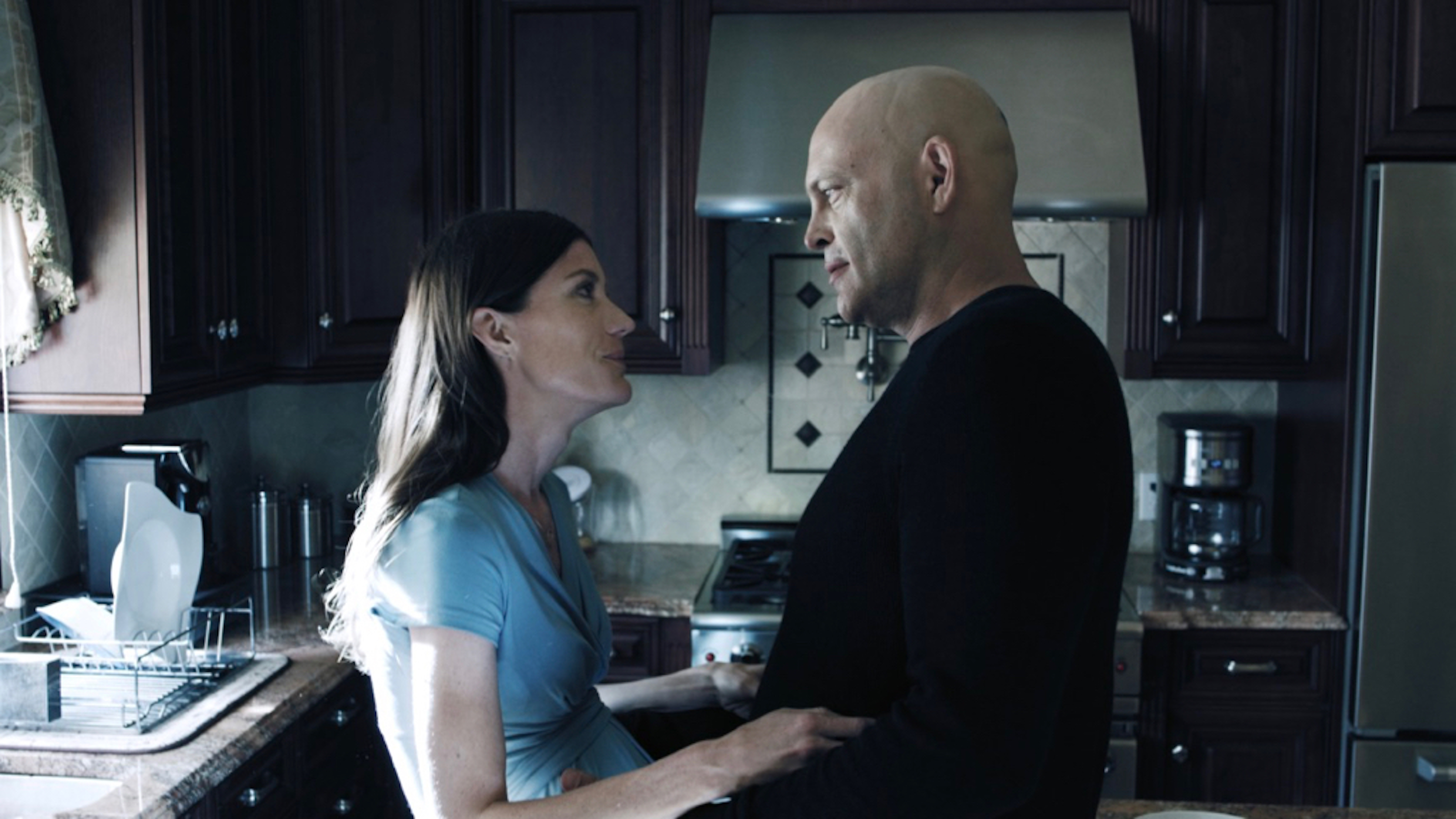
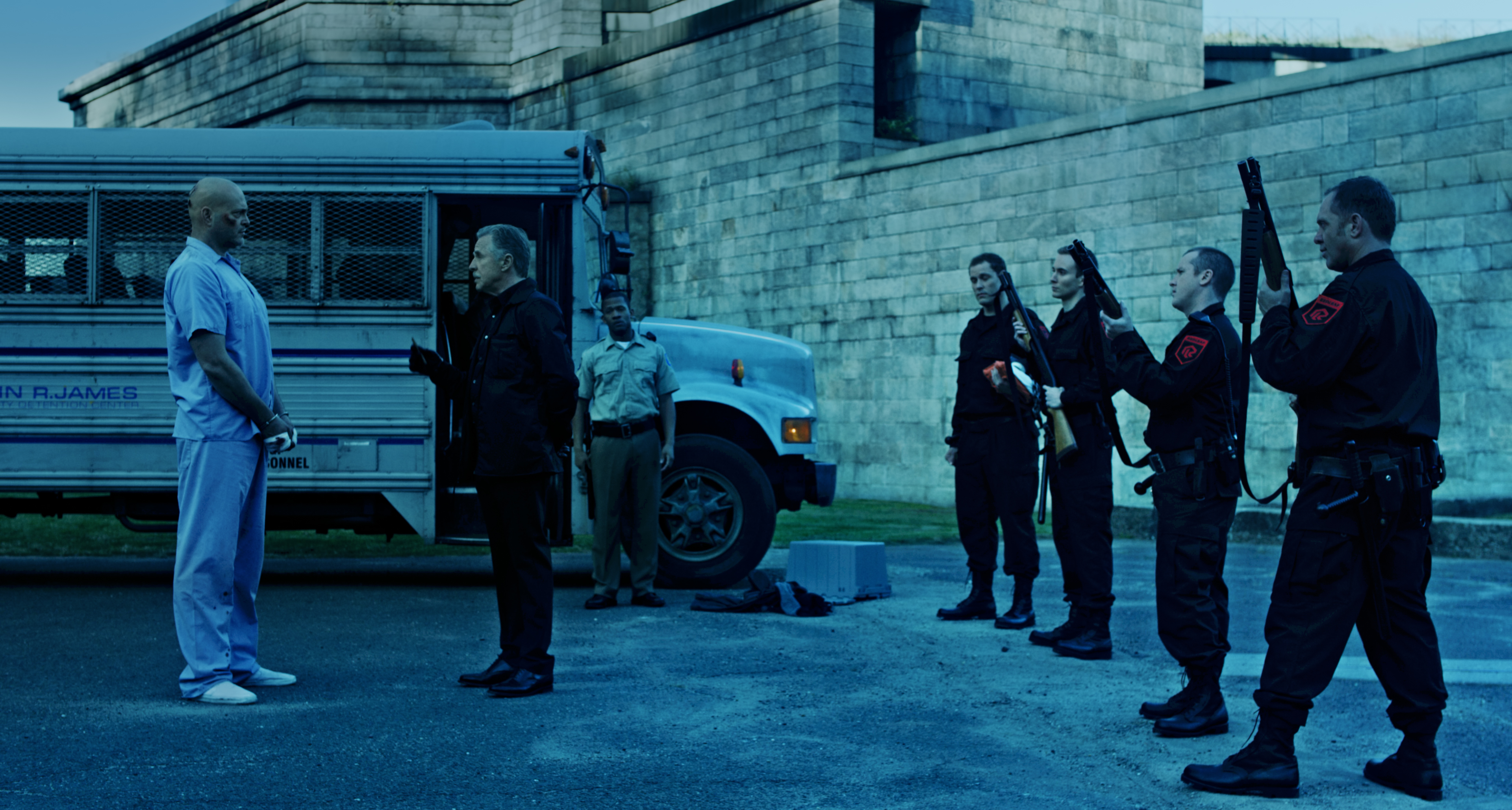
Ah, the underdog. The plucky, conscientious, yet continually overlooked underdog. One of Life’s also-rans, he or she rarely gets ahead because everyone around them is too busy feathering their own nests to do anything other than take them for granted – except when it comes time to make them the fall guy in some nefarious scheme or other. How many times have we seen this scenario in a movie? (Don’t answer, that’s an entirely rhetorical question.) And how many times have we seen the underdog, after many trials and tribulations, find a way to come out on top? (Again, don’t answer.) But it doesn’t seem to matter how often this kind of scenario plays out in a movie, someone will always come along and attempt to provide another variation on such a time-worn theme. Which leads us to Gringo, the second feature from Nash Edgerton, and another example of the underdog story. Here, the underdog is Harold Soyinka (Oyelowo), a Nigerian-born executive at a US pharmaceutical company, Cannabax Technologies Inc, who finds himself in trouble with a Mexican drugs cartel.

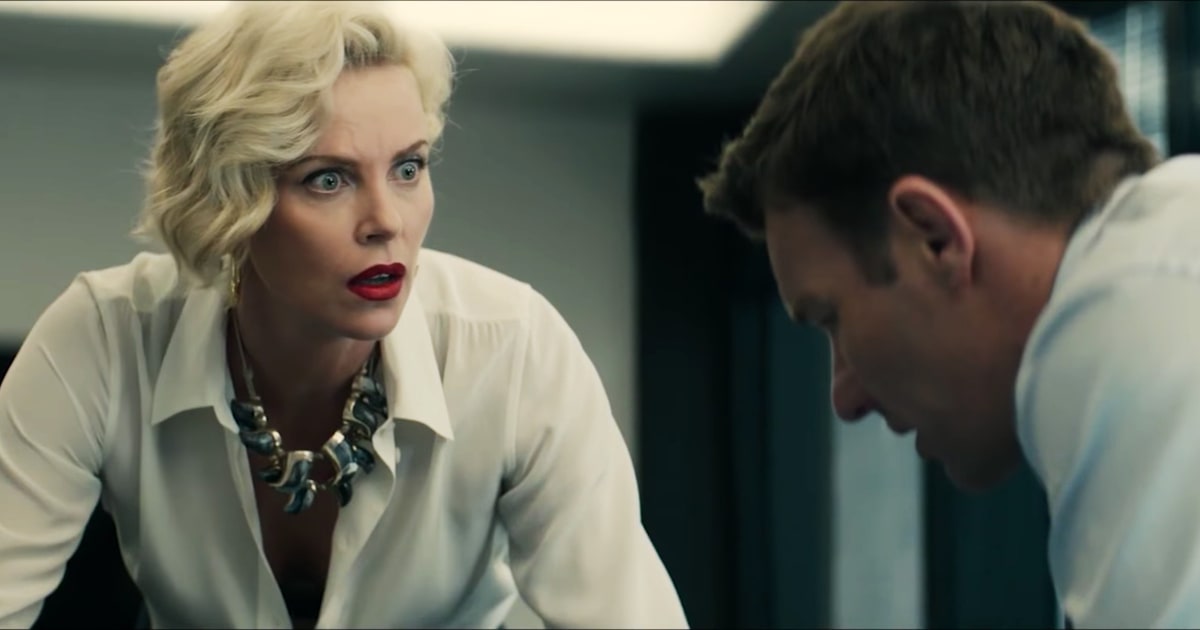
It’s all the fault of his duplicitous bosses, Richard Rusk (Edgerton), and Elaine Markinson (Theron). The marijuana-based drug they’ve been developing for the mass market is ready to go, but in their haste to rake in as much profit as they can, Richard and Elaine have decided to sever ties with the drugs cartel they have been colluding with up until now. Harold doesn’t know any of this at first, but he soon gets wise, and he learns that Richard and Elaine are planning to sell the company, meaning he’ll lose his job. So on a trip to Cannabax’s Mexican factory, Harold decides to fake his own kidnapping. He hopes to force Richard and Elaine into paying the “ransom demand” and pocketing the money for himself. Inevitably, things don’t go the way Harold has planned them, and soon he’s being chased by the cartel, getting involved with the girlfriend (Seyfried) of a drug mule (Treadaway) (they’re all staying in the same hotel where he’s hiding out), and finding an unlikely saviour in an ex-mercenary (Copley) who isn’t all that he seems.

Gringo is the kind of black comedy thriller that always seems to attract a great cast, but which then spends a lot of time and effort in giving them hardly anything to do, or to work with. It’s a busy movie, but messy and dramatically uneven, and unsure of what tone to adopt in any given scene. As it plays out, the movie seems committed to providing as many stock characters in as many stock situations as it can, and to adding a thick layer of humour to proceedings in the hope that if the drama doesn’t work, then the audience will be distracted by the sight of Harold’s high-pitched yelping when given an injection (admittedly funny thanks to Oyelowo), or the cartel boss’s obsession with The Beatles (less so). When things turn violent, the movie becomes another beast altogether, and it tries for tragedy as well, something it can’t pull off because by then it’s way too late. The performances suffer as a result, with Oyelowo and Copley coming off best, but Theron is saddled with a thankless “corporate bitch” role that even she can’t enliven. There’s a half decent movie in there somewhere, but thanks to the vagaries of the script (by Anthony Tambakis and Matthew Stone) and Edgerton’s inability to maintain a consistent tone throughout, it’s never going to see the light of day.

Rating: 5/10 – intermittently funny, but otherwise too predictable and/or derivative of other, similar movies, Gringo wants to be entertaining but lacks the wherewithal to know how; a movie that coasts along at times in its search for the next incident to move it forward, it’s amiable enough, but not very ambitious in its ideas, something that leaves it feeling rough and ready and under-developed.

Share this:

  • Click to share on X (Opens in new window) X
  • Click to share on Facebook (Opens in new window) Facebook
  • More
  • Click to print (Opens in new window) Print
  • Click to email a link to a friend (Opens in new window) Email
Like Loading...

Festival (2005)

08 Thursday Mar 2018

Posted by dullwood68 in Movies

≈ Leave a comment

Tags

Actors, Annie Griffin, Chris O'Dowd, Comedians, Comedy, Daniela Nardini, Drama, Edinburgh, Lucy Punch, Raquel Cassidy, Review, Sex, Stephen Mangan

D: Annie Griffin / 101m

Cast: Richard Ayoade, Amelia Bullmore, Billy Carter, Raquel Cassidy, Jonah Lotan, Stephen Mangan, Lyndsey Marshal, Stuart Milligan, Daniela Nardini, Chris O’Dowd, Deirdre O’Kane, Lucy Punch, Clive Russell

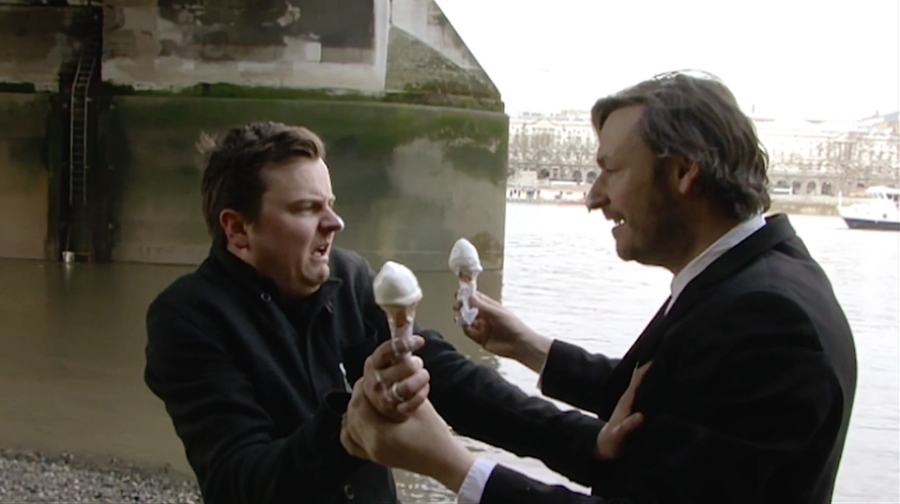
Set against the backdrop of the Edinburgh Festival Fringe (and shot there in 2004), Festival is a compendium of interlocking stories centred around various actors and comedians who are all trying to be noticed or win awards. Amongst the comedians there’s Tommy O’Dwyer (O’Dowd), returning for his ninth year of unqualified non-success; Conor Kelly (Carter), who works with puppets; and Nicky Romanowski (Punch), who tells comic stories based on her Jewish upbringing. Amongst the actors there’s Faith Myers (Marshal), a first-timer with a one-woman play about Dorothy Wordsworth; a Canadian trio that includes Rick (Lotan), who finds himself attracted to the owner of the house they’re renting, Micheline (Bullmore); and Father Mike (Russell), whose play about paedophile priests may not be entirely fictional. Orbiting these characters are the likes of über-famous comedian and Comedy Award judge Sean Sullivan (Mangan), and his put-upon PA Petra Loewenberg (Cassidy); radio presenter Joan Gerard (Nardini), who’s also a Comedy Award judge; and Arnold Weiss (Milligan), an American agent looking to represent Sean in the US.

Ensemble movies can be a tricky proposition. Give too much screen time to one character and their story and you risk making another character’s story slight and uninteresting. Reverse that idea and you don’t do justice to the other character and their story. With fifteen main characters to juggle with, Festival does a good job of getting the balance right, but of necessity it does focus on some characters more than others, though not to the extent that any one tale suffers accordingly. However, whether or not you care about any of the characters is another matter, because while Annie Griffin’s feature debut doesn’t short change any of them in terms of development, even the most sympathetic of characters – Petra, for example – fail to connect with the audience. You can perhaps understand the dilemma: whether to show the hypocrisy and rampant self-absorption of the performers at the Fringe, or to make them less objectionable – and the movie less credible as a result. But the consequence of opting to show the hypocrisy etc. means that the result is a movie where being immersed in the various storylines isn’t as rewarding as it could be.

Part of the problem is in the movie’s fluctuating tone. In trying to accommodate both comedy and drama, while also including flashes of bathos and heavy-handed irony, Griffin provides too many awkward transitions from one to the other (and sometimes in the same scene). It’s also a less than subtle movie, with one sex scene in particular guaranteed to have some viewers squirming with discomfort (though not as much as one of the characters involved in it), and Griffin making the point over and over that comedians are an unhappy bunch whose ability to be funny masks a myriad of personal and emotional problems. Thankfully, trite observations such as these are offset by the quality of the comedy elements, which are very funny indeed. The drama though, still retains an overcooked feel to it that stops it from being entirely credible, and it’s in these moments that you can see Griffin trying too hard. As for the performances, there isn’t one portrayal that stands out from all the rest – though Mangan’s obnoxious Sean Sullivan comes close – which makes this a truly ensemble experience. The hustle and bustle of the Edinburgh Festival is expressed through often guerrilla-style cinematography courtesy of DoP Danny Cohen, and allows for an authentic backdrop. It’s just a shame that not everything happening in the foreground matches the industry of the festival itself.

Rating: 6/10 – promoted as a “black comedy”, Festival is more of an unfulfilled dramedy, one that succeeds more in one area than it does in the other; it’s entertaining enough while you’re watching it, but the relevance and resonance it’s aiming for doesn’t come across, making this frustrating and satisfying in almost equal measure.

NOTE: Alas, there’s no available trailer for Festival.

Share this:

  • Click to share on X (Opens in new window) X
  • Click to share on Facebook (Opens in new window) Facebook
  • More
  • Click to print (Opens in new window) Print
  • Click to email a link to a friend (Opens in new window) Email
Like Loading...

Barakah Meets Barakah (2016)

06 Tuesday Mar 2018

Posted by dullwood68 in Movies

≈ Leave a comment

Tags

Barakah yoqabil Barakah, Comedy, Drama, Fatima AlBanawi, Hisham Fageeh, Instagram, Mahmoud Sabbagh, Review, Riyadh, Romance, Saudi Arabia

Original title: Barakah yoqabil Barakah

D: Mahmoud Sabbagh / 88m

Cast: Hisham Fageeh, Fatima AlBanawi, Sami Hifny, Khairia Nazmi, reem Habib, Abdulmajeed Al-Ruhaidi

Barakah (Fageeh) works for Riyadh’s Municipal Police, issuing fines for minor offences such as selling goods outside a store’s permitted area. He’s single, amiable, and despite the overbearing intentions of the local midwife (and his surrogate mother) Daya Sa’adiya (Nazmi), not in any hurry to find a wife. A report of a civil disturbance brings him into contact with Bibi (AlBanawi), a fashion model who uses carefully cropped images of herself on Instagram as a way of promoting her own political and social agendas (while staying within the law). Barakah is instantly smitten, and thanks to some unwitting help from his friend Maqbool (Al-Ruhaidi), he’s able to meet Bibi at an art exhibition. As their relationship develops, obstacles arise such as the controlling nature of Bibi’s mother – and head of the fashion chain Bibi is the face of – Madame Mayyada (Habib), Barakah’s own naïve approach to romance, and Saudi Arabia’s strict laws regarding public interaction. But it’s a misunderstanding over a push-up bra that may just prove to be the biggest obstacle of all…

When you think about the rom-coms churned out by Hollywood, there’s always something that keeps true love from conquering all (until the last five minutes, that is), but one of the most refreshing things about Barakah Meets Barakah is that the “something” in question is Saudi Arabian law. The very real threat of imprisonment that hangs over the heads of Barakah and Bibi gives the movie a depth and a resonance that you rarely see in an average rom-com. First-time writer-director Sabbagh rarely alludes to it head on, happy to let it hover in the background while his script concentrates on providing viewers with one of the sweetest, and most endearing romantic comedies of recent years. Barakah is simply one of the nicest protagonists you’re ever likely to encounter: good-natured, a pleasure to spend time with, and like a puppy that’s eager to please in his pursuit of Bibi. She’s more fiery, able and willing to challenge the accepted order of things, but in such a way that she builds support for her efforts through her careful manipulation of social media. As a way of expressing female empowerment, it’s a clever conceit, and Sabbagh is equally clever enough not to wield the idea like a big stick.

In many areas of the movie the key word is restraint, as Sabbagh tells his story with admirable economy of style, and a minimum of fuss. His talented cast ensure that each character appears fully formed from the moment we meet them, with Fageeh proving that gauche and awkward can be charming as well, and AlBanawi investing Bibi with a seductive vulnerability (like Barakah, you can’t help but be captivated by her). Sabbagh peppers his script with wry observations on contemporary Saudi culture, has Barakah co-opted into a local amateur production of Hamlet to play Ophelia, provides unnecessarily pixellated images as a barb to state censors, and gets overtly political by contrasting the more liberal Saudi Arabia of the 60’s and 70’s with the restrictions that have been in place since 1979. But none of this is to distract from the central romance that anchors the movie and makes it so appealing. The movie brings its chaste lovebirds together at the end, but not in the traditional “love has conquered all” way that Hollywood approves of. Instead, Sabbagh offers us a reunion that speaks of hope for the future, a message that is both simple and powerful, and as much about Barakah and Bibi, as it is about Saudi Arabia itself.

Rating: 8/10 – an example of what can be achieved when you don’t have to follow a clichéd narrative pattern or formula, Barakah Meets Barakah is beautifully shot by Victor Credi, and hugely entertaining; by keeping things natural and straightforward, Sabbagh has created a movie where you never feel like you’re being led by the hand, and where you’re more than happy to share in the journeys undertaken by the characters.

Share this:

  • Click to share on X (Opens in new window) X
  • Click to share on Facebook (Opens in new window) Facebook
  • More
  • Click to print (Opens in new window) Print
  • Click to email a link to a friend (Opens in new window) Email
Like Loading...

Oh! the Horror! – Victor Crowley (2017) and Another WolfCop (2017)

05 Monday Mar 2018

Posted by dullwood68 in Movies

≈ Leave a comment

Tags

Adam Green, Amy Matysio, Chicken Milk Stout, Dave Sheridan, Donuts, Honey Island Swamp, Horror, Kane Hodder, Laura Ortiz, Leo Fafard, Lowell Dean, Parry Shen, Review, Sequels, Woodhaven, Yannick Bisson

Victor Crowley (2017) / D: Adam Green / 83m

Cast: Parry Shen, Kane Hodder, Laura Ortiz, Dave Sheridan, Krystal Joy Brown, Brian Quinn, Felissa Rose, Chase Williamson, Katie Booth, Tiffany Shepis

You just can’t keep a hulking, deformed mass murderer down… Ten years after the events that occuured in Hatchet III (2013), sole survivor of the last Honey Island Swamp massacre Andrew Yong (Shen) has written a book about his experiences, but he’s still viewed with suspicion as being the real culprit. His publicist (Rose) persuades him to return to Honey Island Swamp as part of the anniversary “celebrations”. Meanwhile, a trio of would-be movie makers, Chloe (Booth), her boyfriend Alex (Williamson), and Rose (Ortiz), head there in order to try and involve Andrew in a trailer they’re making to try and get funding for a movie about Crowley and the murders. Andrew’s flight crash lands in the swamp, while Chloe’s insistence on using the curse that made Crowley the way he is in the trailer, leads to his resurrection. Soon, Victor is back to his old tricks: hacking and tearing and rending his victims’ limbs from their bodies while they themselves fight to stay alive.

Does the world need another Hatchet movie? Do we really need another gore-splattered ode to Eighties horror? Thanks to the presence of series’ creator and overseer Adam Green, then the answer is… yes and no. Green is an old hand at this, and he knows what he’s doing, but this is easily the slightest entry in the series, and trades in comedy more than it does horror. The characters are forgettable, with even pantomime turns from Rose and Sheridan (as a swamp tour guide called Dillon) failing to engage the audience. With such a slight story, thanks be to almighty Victor that Green ladles on the ketchup with gleeful abandon, and makes as much of his victims-trapped-in-a-plane-waiting-to-die scenario as he can. The cast are clearly having fun, Green is clearly encouraging them to do so, Victor’s resurrection allows him a bit of a makeover from previous entries, and the truncated finale reminds everyone that this is a low budget horror movie when all’s said and dismembered.

Rating: 6/10 – Green is the key player here, his affection for the tropes and themes of Eighties horror movies serving him well, even if this latest outing lacks the franchise integrity of the previous entries; unrepentently gory, and made for fans of the series before anyone else, Victor Crowley at least retains the crude energy of its predecessors, but spends too much time trying to make us care about characters who are merely cannon fodder for Green’s cursed protagonist.

Another WolfCop (2017) / D: Lowell Dean / 79m

Cast: Leo Fafard, Yannick Bisson, Amy Matysio, Jonathan Cherry, Serena Miller, Devery Jacobs, Kris Blackwell, Kevin Smith

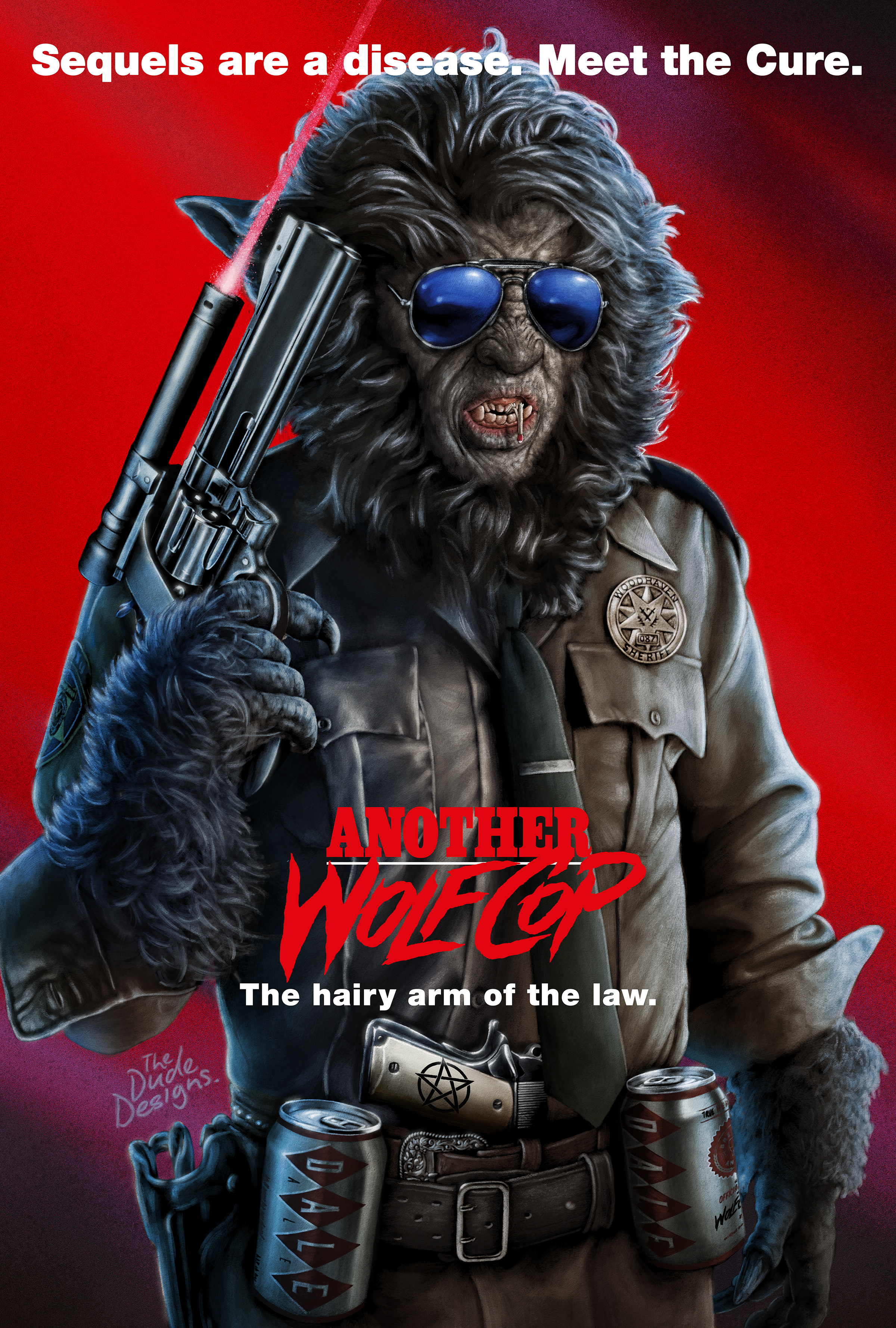
In the small, run down Canadian town of Woodhaven, things are looking up: self-made billionaire drinks manufacturer Swallows (Bisson) is opening a factory to make and distribute his new beer, Chicken Milk Stout (no, really). Swallows has an ulterior motive though: his beer contains a formula that allows hideous, malformed creatures to gestate in people’s abdomens (though why he’s doing this is never explained; naturally). The local police, led by new Chief Tina Walsh (Matysio), know that something isn’t right in their town, but can’t quite connect the dots. Even Lou Garou (Fafard), the force’s own WolfCop, is at a loss. But with the help of former enemy Willie Higgins (Cherry), and Willie’s sister, Kat (Miller), Lou and Tina begin to put two and two together and realise what Swallows is up to. This leads to a bloody confrontation between Garou as WolfCop and Swallows’ minions, as the fight to save the town from being overrun by Swallows’ hideous creatures can only have one outcome.

Does the world need another WolfCop movie? Do we really need another comedy horror that’s content to amble through its poorly conceived set up with all the aplomb of a drunk trying to pass a sobriety test? Thanks to the presence of creator and overseer Lowell Dean then the answer is… yes and no. This is yet another horror sequel where the makers’ intentions are hampered by the practicalities of making the movie itself. There’s nothing ostensibly wrong with low budget horror movies, but Another WolfCop shows that with fewer production values, there are often fewer moments where the movie works. Here, there are too many occasions where the script comes up with a fairly good idea only to abandon it minutes later, or it thinks of something cool to include, but then it doesn’t look as cool in its execution (a sex scene between Lou in his human form and Kat in her shapeshifting form fits the bill entirely). The first WolfCop showed invention and a degree of wit that suited the material, but on returning to the well, Dean has failed to produce the same kind of magic that made the first one work so well. At the end, the movie promises that WolfCop will return. If he does, then let’s hope Dean comes up with better material than he has here.

Rating: 4/10 – a massive drop in quality from the first movie shows that Another WolfCop should have been kept on the back burner until more money or a better script – or both – were available; the cast don’t seem able to muster the necessary enthusiasm to make things more palatable, the waywardness of the script derails both the drama and the comedy, and even the presence of Kevin Smith (as Mayor Bubba no less) can’t stop this from looking and sounding like a bad idea from the start.

Share this:

  • Click to share on X (Opens in new window) X
  • Click to share on Facebook (Opens in new window) Facebook
  • More
  • Click to print (Opens in new window) Print
  • Click to email a link to a friend (Opens in new window) Email
Like Loading...

The Watchman’s Canoe (2017)

04 Sunday Mar 2018

Posted by dullwood68 in Movies

≈ Leave a comment

Tags

Adam Beach, Adventure, Barri Chase, Drama, Kiri Goodson, Reservation, Review, Roger Willie, Tribal customs, Witch's Island

D: Barri Chase / 101m

Cast: Kiri Goodson, Roger Willie, Adam Beach, Stephanie Wallace, Ian Stevenson, Matthew Johnson, John Thomas, Dez Tillman, Jennifer Oswald

Jett (Goodson) is a young girl of mixed Native American and caucasian parentage who goes to live on the reservation of her mother’s people following the death of her father. Due to her dual heritage, she doesn’t fit in with the rest of the children her age, but her older brother, Tommy (Stevenson) – who happens to look more indigenous than Jett – fits in easily with some of the older boys. Jett is drawn to the surrounding trees and meadows, and has a deep affinity with nature. This affinity is recognised by her Uncle Ralph (Willie), who tells the tribal medicine man (Thomas) that Jett is a watchman, someone who can hear the voices of the wind, trees, plants, animals and water. The medicine man rejects this idea because Jett is a girl (though there is a precedent for it). But Jett becomes aware of the tribal myths and legends, and those surrounding nearby Witch’s Island, a place she becomes determined to visit. However, when she takes a canoe and travels to the island with her cousin Peedie (Johnson), the experience proves to be more of a test than she could ever have imagined.

From the outset it’s clear that first-time feature writer/director Barri Chase wants to make a lyrical, poetic movie about the ethereal nature of Native American mythology. To this end, there are plenty of shots of Jett communing with nature, walking in the woods and along the shoreline, and talking to the spirits that guide her. These are moments that are beautifully set up and shot by DoP AJ Young, and in terms of the journey of self-discovery that Jett embarks upon, eloquently reflect the spiritual nature of the world around her. But somewhere along the way, Chase has forgotten to make Jett’s journey as compelling as it should be. There are too many longueurs that ensure the movie’s sedate yet methodical rhythm grinds to a halt, and many of them involve Willie staring off into the distance – with meaning (though whatever meaning these longueurs have is never fully established). Chase has a terrific visual sense (unsurprising in someone with a background in fine art photography), but her narrative is like Jett’s canoe: it’s not long before it’s taking on water.

As a coming-of-age tale, the movie fares moderately well, but Chase lacks the experience to tie all the elements of her story together in a way that makes everything feel organic. There are several strands on show, and one that relates to the Fort Gang boys (the group Tommy falls in with) takes up too much time and peters out in terms of its importance to the overall story. Likewise, the problems Jett’s mother, Onie (Wallace), is facing trying to hold down a job: ultimately it’s one sub-plot too many. As for the performances, Willie is reticent and aloof (even from Jett at times), while Beach, as an historian who lives on Witch’s Island, is required to be enigmatic, but it’s an approach that is hampered by Chase not really knowing what to do with the character once he’s introduced. Goodson, initially, seems a perfect choice for the role of Jett, but she often looks uncomfortable, and there are times when the appropriate emotion, or response, in a scene escapes her. Chase doesn’t have a solution to this, or to several other issues, and so the movie stutters from scene to scene trying to build up a momentum that it can’t achieve. In the end, it remains enigmatic about tribal myths and customs, and never becomes as compelling as it should be.

Rating: 4/10 – sometimes, the format of a movie stops it from being all it can be, and this is the case with The Watchman’s Canoe, a movie that would have been more effective as a short; though beautiful to watch, the material isn’t strong enough to support anything but the most basic of ideas, and even then it does so falteringly and inconsistently – which is a shame, as Chase’s basic concept is a sound one.

Share this:

  • Click to share on X (Opens in new window) X
  • Click to share on Facebook (Opens in new window) Facebook
  • More
  • Click to print (Opens in new window) Print
  • Click to email a link to a friend (Opens in new window) Email
Like Loading...

I Am Nasrine (2012)

03 Saturday Mar 2018

Posted by dullwood68 in Movies

≈ Leave a comment

Tags

Drama, Iran, Micsha Sadeghi, Refugees, Relationships, Review, Sexuality, Shiraz Haq, Tina Gharavi, Travellers

D: Tina Gharavi / 88m

Cast: Micsha Sadeghi, Shiraz Haq, Steven Hooper, Christian Coulson, Nichole Hall

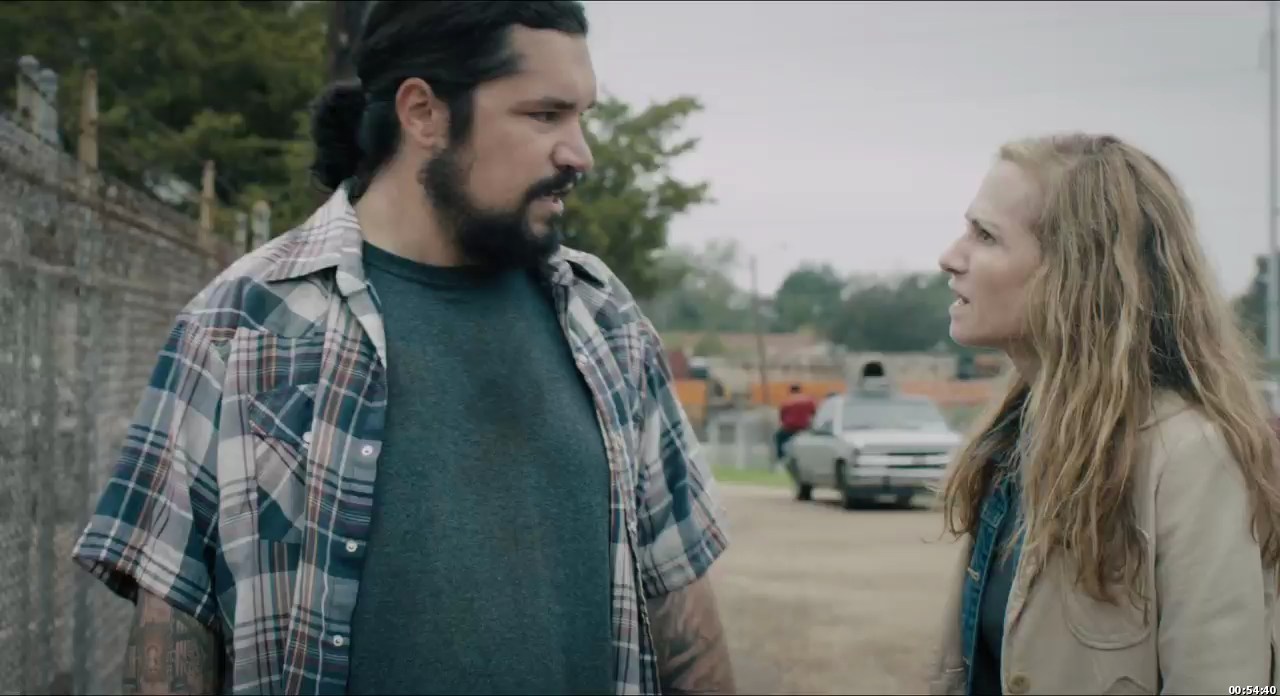
Nasrine (Sadeghi) lives in Iran with her mother and father, and her older brother, Ali (Haq). One day she finds herself being detained by the police. What happens to her is both violent and distressing. Fearing for her continued safety, her father decides that she and Ali must travel to the UK and seek asylum there. They enter the country illegally and find themselves in another difficult situation: while their application is processed, Nasrine has to attend school, while Ali is forbidden to work. They are given a flat in which to live, but in order for them both to get by, Ali finds work in a car wash and, later, a kebab shop as well. At school, Nasrine finds it hard to fit in, but makes a friend in Nicole (Hall), who is part of the local travellers community. Meanwhile, Ali struggles to fit in socially, his serious demeanour keeping others at bay (his concerns about his sexuality don’t help either). Nasrine also has relationship issues, having attracted the attention of Nicole’s older brother, Leigh (Hooper). But with the events of 9/11, both Nasrine and Ali discover that being refugees in a foreign country has unexpected consequences…

The debut feature of Iranian-born Gharavi, I Am Nasrine is a coming-of-age tale that explores issues surrounding the refugee experience, politics and sexuality, and finding one’s place in the world. But though it addresses these issues in various ways, and to varying degrees, it’s a movie that is about connections, how difficult they are to make, how difficult they are to maintain, and how difficult they are to break when they’ve run their course. In Iran, Nasrine’s actions cause the end of her middle-class lifestyle. In the UK she has to start again. The same applies to Ali, charged with being Nasrine’s protector, but equally unnerved by the changes that have led them to a dingy flat in London, and an uncertain future. Whether they are better off proves more and more debatable as the movie progresses, but it’s the siblings’ attempts at fitting in that provide the necessary dramatic focus. Whether it’s Nasrine’s growing friendship with Nicole and then Leigh, or Ali’s attempts to deal with his feelings for other men, including kebab shop customer Tommy (Coulson), it’s the way that writer/director Gharavi takes these basic desires and shows their universality that makes it all work so well. Refugees or not, Nasrine and Ali deserve the same respect we ourselves feel entitled to.

Gharavi’s approach is often straighforward and/or blunt, but this isn’t a bad thing as it precludes the possibility of any unnecessary sentiment, and allows what happens to Nasrine and Ali to remain unforced throughout. There’s a degree of unexpected and poetic beauty in the movie’s imagery as well, from the shot of Nasrine looking back from the motorbike she’s riding on in Tehran (see above), to the moment when she and Leigh experience their first kiss. Gharavi is also confident enough to minimise the impact of 9/11, safe in the knowledge that it will resonate quietly as the narrative unfolds, an unspoken component of the racial distrust and hatred that follows. She’s aided by a terrific performance from first-timer Sadeghi who instills Nasrine with a naïve yet determined quality that won’t be swayed, and unobtrusive production design courtesy of Chryssanthy Kofidou that anchors the narrative in a recognisable and credible setting. Gharavi occasionally makes some obvious dramatic choices that border on being predictable and rote, but the sincerity and the integrity of the story she’s telling more than make up for these choices, making the movie an absorbing exercise in what it is to try and belong anywhere where belonging comes at a price.

Rating: 8/10 – an engaging, thought-provoking movie that paints a candid and guileless picture of the need for acceptance, whatever someone’s personal circumstances, I Am Nasrine is severe and heartelt at the same time, and entirely up front about its plea for inclusivity; Gharavi’s passion for telling Nasrine’s story is evident throughout, and the story itself is rendered with compassion and honesty, making this a movie that is far more effective, and affecting, than it might seem at the outset.

NOTE: The quote by Ben Kingsley on the poster translates as: “An important and much needed film.”

Share this:

  • Click to share on X (Opens in new window) X
  • Click to share on Facebook (Opens in new window) Facebook
  • More
  • Click to print (Opens in new window) Print
  • Click to email a link to a friend (Opens in new window) Email
Like Loading...

Too Late (2015)

02 Friday Mar 2018

Posted by dullwood68 in Movies

≈ Leave a comment

Tags

Crystal Reed, Dennis Hauck, Dichen Lachman, Drama, John Hawkes, Murder, Private investigator, Revenge, Review, Thriller

D: Dennis Hauck / 107m

Cast: John Hawkes, Vail Bloom, Joanna Cassidy, Jeff Fahey, Robert Forster, Brett Jacobsen, Dichen Lachman, Dash Mihok, Sydney Tamiia Poitier, Crystal Reed, Rider Strong, Natalie Zea

A modern day noir that sports a grim measure of inevitability, the central character in Too Late is not John Hawkes’ determined private investigator, Samson, but Dorothy (Reed), the stripper he befriends then loses touch with for three years. When she asks to meet him, she’s already in trouble, and by the time he arrives for their rendezvous, she’s already dead. So what’s a newly embittered P.I. to do? Why, go after the people responsible of course. Dorothy’s murder gives Samson a purpose he’s been missing, and he’s as dogged and persistent as gumshoes in the movies usually are, but writer-director Dennis Hauck isn’t interested solely in presenting Samson’s woes, he’s equally (if not more) interested in revealing Dorothy’s hopes and dreams. Too often in noir thrillers, the murder victim serves as a modus operandi for the hero’s actions. Here, Dorothy is more than that: she’s someone the viewer gets to know, and in some detail, and that’s because once she’s dead, she’s not really dead.

How is this possible, you might ask? Well, Hauck has a trick up his sleeve. Once the first scene is over and we’ve met Dorothy and gotten to know a lot about her and she’s wound up dead, Hauck brings her back in the third scene, one where we get to see her meet Samson for the first time. The movie consists of five scenes in total, but they’re assembled in a non-linear fashion. This isn’t as confusing as it might sound – though some viewers may feel aggrieved when they realise that scene five is actually a precursor to scene four – and what it does is to allow Dorothy’s character to be present throughout the whole movie, and to leave an indelible impression. That way, Samson’s determination to track down and punish the people responsible for her death becomes understandable in a way that doesn’t often occur in noir thrillers. And Hauck is clever enough through his screenplay to make Samson’s “mission” a personal one that really comes across as personal, instead of something perfunctory in order to get the movie started. There is an air of personal redemption going on with Samson, and his persistence hints at deeper feelings for Dorothy than he might admit.

Each scene has been shot in one single, continuous twenty-two minute take, so there’s a lot of Steadicam work, plus a lot of swinging the camera from one character to another, which can be really distracting (there’s also an impressive zoom in the first scene that is technically superb for the distance it covers). On occasion the need to maintain the integrity of the take makes for some uncomfortable transitions, but overall Hauck and DoP Bill Fernandez have done an impressive job of immersing the viewer in what’s happening, and populating the frame with details that support the emotion of each scene as it unfolds. The performances are very good indeed, with Hawkes, Lachman and Reed all at the top of their game, while the likes of Bloom – re-enacting Julianne Moore’s famous nude scene from Short Cuts (1993) – Zea and Jacobsen all make an impact in minor roles. This being a modern noir thriller, there’s plenty of violence, but it’s always in service to the demands of the narrative, rather than the other way round. As a tale of flawed human beings trying their best to get by in the world with what little they have that’s theirs, Too Late is an intriguing, thought-provoking revenge drama that has no intention of telling its heartfelt story in any other way than with honesty, sincerity and an unfailing commitment to its characters.

Rating: 8/10 – the commitment to continuous twenty-two minute scenes does lead to some pacing issues, and some moments do feel like filler (e.g. the point where Samson picks up a guitar and performs an admittedly lovely song), but Too Late is far too good everywhere else; a meditative, earnest thriller that impresses every time it surprises, this also serves as an example of how character can – and always should – drive the narrative of a movie forward, and how it should be allowed to maintain that ambition right to the very end.

Share this:

  • Click to share on X (Opens in new window) X
  • Click to share on Facebook (Opens in new window) Facebook
  • More
  • Click to print (Opens in new window) Print
  • Click to email a link to a friend (Opens in new window) Email
Like Loading...

Brakes (2016)

26 Monday Feb 2018

Posted by dullwood68 in Movies

≈ Leave a comment

Tags

Break ups, Comedy, Drama, Julia Davis, Julian Barratt, Kerry Fox, Mercedes Grower, Noel Fielding, Paul McGann, Peter Wight, Relationships, Review, Romance

D: Mercedes Grower / 85m

Cast: Julian Barratt, Kelly Campbell, Seb Cardinal, Juliet Cowan, Julia Davis, Noel Fielding, Jess-Luisa Flynn, Kerry Fox, Roland Gift, Salena Godden, Mercedes Grower, Martin Hancock, Kate Hardie, Siobhan Hewlett, Oliver Maltman, Paul McGann, John Milroy, Steve Oram, Daniel Roch, Morgan Thomas, Peter Wight

In Mercedes Grower’s debut feature, we’re introduced to a number of couples whose relationships are on the verge of breaking up, or which have actually reached the point of no return (or further investment by one or both parties). There’s Elliot (Barratt) and Raymond (Maltman), whose unexpected fling in Spain has been misinterpreted as something more permanent by Elliot. There’s Rhys (Gift) and Brinie (Fox), a couple who can’t spend time together without trading veiled insults or outright criticism, and there’s Livy (Davis) and Alan (Wight), a would-be actress and her theatrical producer partner who are finding themselves at odds over the types of roles that Livy can play. And then there’s Daniel (Fielding) and Layla (Grower), a couple expecting a child but being forced apart by his apathy and intransigence. These and several other stories show the various ways in which relationships can come to an end, and how differently people allow themselves to be affected.

All of this makes up Part II of Brakes, and is shown first. We see the characters often at their worst, and Grower shows just how selfish and uncaring we can be when we want to extricate ourselves from a relationship we no longer want to be a part of. On the flip side, we see the pain and the hurt that this approach can cause, and Grower wades through a variety of emotions and responses, from anger to disbelief, to sadness and resignation, and denial and regret. Inevitably, some stories fare better than others, with Daniel and Layla’s break up in a public toilet coming across as too absurd to be credible, and hampered by the decision to have Daniel behave like a six year old. Conversely, the austere yet stinging conversation between Rhys and Brinie is so tense and uncomfortable that it’s a relief when he goes out for beers (it also helps that Fox’s performance is particularly impressive). Most of the other scenarios fall somewhere in between, but the necessity of keeping things short (for the most part), means that if one story disappoints there’ll be another one along quite soon.

Once Part II is out of the way, then Grower presents us with Part I, in which we see how these relationships began originally. It’s a neat idea, and having seen the outcomes of each one already, the viewer can judge for themselves if any might or should have turned out differently, and it does allow the movie to end on a positive note, but the knowledge that none of these promising, hopeful unions is going to end well also leaves a bitter after-taste. With the script proving to be a hit or miss affair in terms of the stories, the performances fall into the same category. Alongside Fox, there are fine portrayals from Davis, Wight, and Barratt, while some of the cast – e.g. McGann, Milroy, Hewlett, and Oram – are hamstrung by clichéd dialogue and unconvincing set ups. Grower does show promise, and she’s able to inject some much needed humour when it’s required, but she needs an idea that she can focus on exclusively instead of a number of different ones all at the same time. That said, the movie does feature some appropriately gloomy cinematography by Denzil Armour-Brown and Gabi Norland in Part II, and a brighter, more upbeat tone in Part I, something that gives rise to the notion that if more time had been available, then this could have been so much better.

Rating: 6/10 – with a sixty per cent success rate in regard to the stories themselves, Brakes is often a frustrating movie to watch, but it does have singular moments where the breadth of Grower’s ambition is met and exceeded upon; in the end, though, it’s a movie that makes a number of telling points about our inability to communicate with each other when it matters, but which doesn’t always find the right context to express itself fully.

Share this:

  • Click to share on X (Opens in new window) X
  • Click to share on Facebook (Opens in new window) Facebook
  • More
  • Click to print (Opens in new window) Print
  • Click to email a link to a friend (Opens in new window) Email
Like Loading...

The Breadwinner (2017)

25 Sunday Feb 2018

Posted by dullwood68 in Movies

≈ Leave a comment

Tags

Afghanistan, Animation, Deborah Ellis, Drama, Kabul, Literary adaptation, Nora Twomey, Review, Saara Chaudry, Soma Chhaya, Taliban

D: Nora Twomey / 94m

Cast: Saara Chaudry, Soma Chhaya, Noorin Gulamgaus, Laara Sadiq, Ali Badshah, Shaista Latif, Kanza Feris, Kawa Ada

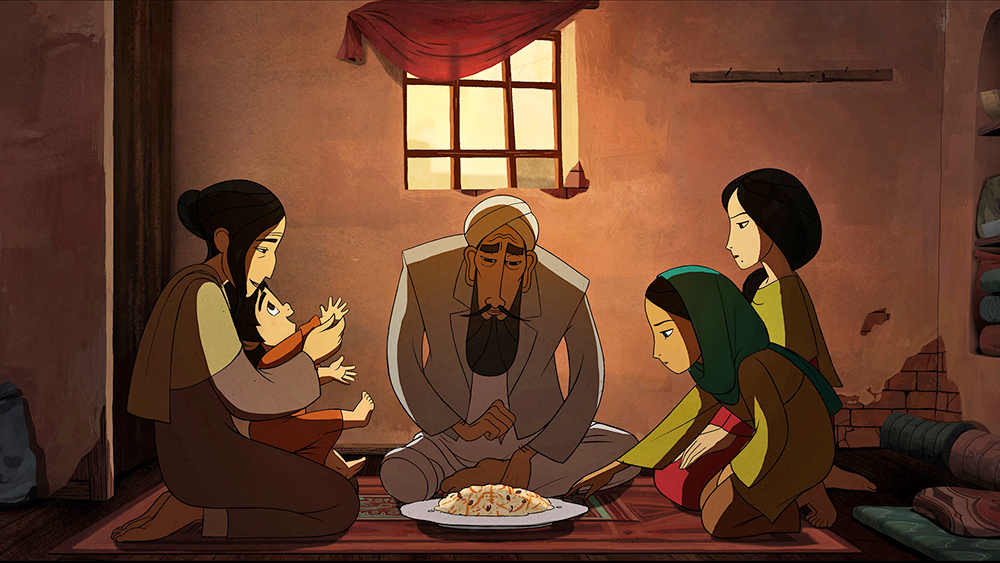
In Taliban controlled Kabul, Afghanistan, eleven year old Parvana (Chaudry) and her family – father Nurullah (Badshah), mother Soraya (Latif), older sister Fattema (Sadiq), and younger brother Zaki – get by through selling personal items on the street. Business isn’t always good, though, and when a run in with a member of the local militia, Idrees (Gulamgaus), leads to Nurullah being arrested and imprisoned without charge, things become even more difficult. With money and food running out, and women unable to move about freely unless accompanied by a man, Parvana hits on the idea to look and dress like a boy. She cuts her hair short, wears clothes worn by her deceased older brother, and along with Shauzia (Chhaya), a girl she knew when she went to school and who is also disguised as a boy, she begins to earn enough money to keep her family from becoming destitute. Parvana has a bigger aim, though: she wants to see her father, and maybe get him out of prison. Shauzia helps her get enough money together to bribe the guards, but Parvana’s plan doesn’t work. But as life in Kabul becomes more and more dangerous, the kindness of a stranger, Razaq (Ada), may prove to mean all the difference in Pavarna’s family being reunited…

Adapted from the literary award-winning novel of the same name by Deborah Ellis, The Breadwinner is the kind of animated movie we don’t often see enough of. Dealing with serious topics such as female persecution and religious intolerance in an honest and direct manner, the movie allows us a glimpse into a world most of us can’t even imagine. But like the best animation, the world it presents to us is just as real and just as affecting as if it were a documentary. The importance of the family unit, and the daily struggle to keep it intact, is highlighted by the little sacrifices that Parvana’s mother and sister make in the wake of Nurullah’s imprisonment. For Parvana, her experiences in the wider world – in a male-dominated world – bring both freedom of movement and unexpected restrictions due to her increased responsibility. It’s a dangerous path Parvana is taking, and the anguish it causes her family if she’s late home, is explored with impressive sincerity and pitched at just the right level of paranoia. Likewise, the risk of Parvana being found out, and the knowledge that if she is, everyone in her family will suffer, adds to the tension.

As a result, the movie draws in the viewer and provides them with a sincere, heartfelt story that is peppered with moments of philosophical reflection on the nature of modern Afghanistan, as well as showing that it’s still possible, even in a country ruled by the Taliban, to have hopes and dreams. Parvana hopes to be reunited with her father, Shauzia wants to see the ocean. Neither is unobtainable, but the script by Anita Doron makes it clear that achieving these things won’t be easy. The script also makes it clear that despite the hostility and the religious fundamentalism that the Taliban use to enforce their beliefs, there is also room for personal respect and understanding amongst the “people”. There are other messages to be found (relating to issues such as integrity, the abuse of power, and recurring injustice), but this is a movie about the power of hope and the power of family (a narrative strand that is best exemplified by the story within a story that Pavarna tells when there is a lull in her endeavours, and which features a brave villager taking on a terrible Elephant King). Twomey’s direction is confident, intelligent and humane, while the animation, with its clean lines and vibrant colours, is simple, yet tremendously effective.

Rating: 9/10 – nominated at this year’s Academy Awards in the Best Animated Feature Film category, The Breadwinner is an outstanding movie that features a great voice cast, superb animation, and a story that is compelling, thought-provoking, and ultimately, uplifting; not afraid to pull any narrative punches, the movie offers insights into life under the Taliban, but paints a picture of hope amidst all the suffering, and the refusal of the human spirit to be crushed completely.

Share this:

  • Click to share on X (Opens in new window) X
  • Click to share on Facebook (Opens in new window) Facebook
  • More
  • Click to print (Opens in new window) Print
  • Click to email a link to a friend (Opens in new window) Email
Like Loading...

Siembamba (2017)

24 Saturday Feb 2018

Posted by dullwood68 in Movies

≈ Leave a comment

Tags

Brandon Auret, Darrell Roodt, Drama, Eden Rock, Horror, Midwife, Post-partum depression, Psychological thriller, Reine Swart, Review, South Africa, Thandi Puren

aka The Lullaby

D: Darrell Roodt / 86m

Cast: Reine Swart, Thandi Puren, Brandon Auret, Deànré Reiners, Dorothy Ann Gould

Touted as the first horror movie from South Africa, Siembamba is as much a psychological thriller as it is a straight-out chiller, and it juggles both interpretations with a degree of confidence as it tells the story of nineteen year old Chloe van Heerden (Swart), returning to her home in Eden Rock with a newborn baby, Liam, in tow. Chloe ran away after a row with her mother, Ruby (Puren). What happened to her, and why she fell pregnant, Chloe won’t – or can’t – explain, but she is resigned to being back home and being a young mother. Soon, strange things begin happening around the house, and Chloe becomes convinced that there is a strange presence there, and it wants Liam. She sees and hears things, including a nightmarish vision of a woman, a midwife, wearing a black bonnet. Ruby shares her own concerns with Dr Reed (Auret), who wonders if Chloe is merely suffering from post-partum depression. But Chloe’s visions become more and more violent, and she even begins to doubt her mother’s role in everything, her paranoia and distrust building with each new frightening experience. And then, on Dr Reed’s advice, Chloe is left by herself for the evening…

If you’re a country that’s never made an out and out horror movie before, but you don’t want to make just another slasher movie, then what better way to start off than by adapting a poem by South African poet Louis Leipoldt that, with some slight re-wording, goes as follows: Siembamba, mother’s little baby / Siembamba, mother’s little child / Wring his neck, throw him in the ditch / Step on his head, make sure he is dead. And the movie sets out its stall right from the beginning with a baby having its neck broken within the first five minutes; as a statement of intent it’s up there with Georgie Denbrough getting his arm torn off by Pennywise in It (2017). This is strong, mature stuff (albeit shot in a distressed, found-footage style that grates more than it should), and as the movie delves into Chloe’s tortured present and past, Tarryn-Tanille Prinsloo’s script finds ever more horrible and unsettling ways to put little Liam in harm’s way, including a nerve-wracking moment where Chloe is trimming his fingernails – or is she cutting off his fingers? The movie is at its best in moments like these, when the viewer can’t be sure if it’s all in Chloe’s mind or if there really is a supernatural presence in the house.

But while the movie goes to great pains to keep the audience guessing, it does so with little regard to pacing or the overall tone. Like many horror movies it makes the mistake of having strange events happen as soon as Chloe gets home after giving birth. There’s no appreciable build-up, and the adversarial nature of Chloe and Ruby’s relationship is exacerbated by the script’s refusal to have them actually talk to each other unless it involves recriminations on each side. Likewise, when Chloe sees Dr Reed, a scene that could have provided audiences with a deeper understanding of the folklore the movie is based on, instead remains a missed opportunity. But these issues are to be expected in a modern horror movie, whereas the pacing is seriously off, with scenes lacking energy and purpose at times, making the movie as a whole a somewhat frustrating experience. Roodt is an experienced director, and in many ways a good choice for South Africa’s first horror movie, but the fractured imagery and off-kilter visual style he’s adopted along with editor Leon Gerber hampers the movie instead of helping it. There are a couple of good scares to be had along the way, but much of what frights there are involve the midwife, a character that wouldn’t feel out of place in the Insidious franchise. As things progress, the movie relies on her presence more and more, though without her, the psychological aspects could have been used to make things even more unsettling. For a first attempt, Siembamba overcomes some hurdles with ease, but it also manages to knock down too many others in its efforts to stand out from the crowd.

Rating: 6/10 – good performances from Swart and Puren keep Siembamba from dissembling under the weight of its (modest) ambitions, and though there is much that doesn’t work as well as it should, genre enthusiasts should seek this one out because of its provenance; neither great nor terrible, it’s to be hoped that South Africa doesn’t stop here in its attempts to make horror movies, because even though a lot of the movie is derivative of other work, there’s enough here to be hopeful for better things to come.

Share this:

  • Click to share on X (Opens in new window) X
  • Click to share on Facebook (Opens in new window) Facebook
  • More
  • Click to print (Opens in new window) Print
  • Click to email a link to a friend (Opens in new window) Email
Like Loading...

Wonder Wheel (2017)

23 Friday Feb 2018

Posted by dullwood68 in Movies

≈ 1 Comment

Tags

1950's, Affair, Coney Island, Drama, James Belushi, Juno Temple, Justin Timberlake, Kate Winslet, Review, Romance, Woody Allen

D: Woody Allen / 101m

Cast: James Belushi, Juno Temple, Justin Timberlake, Kate Winslet, Max Casella, Jack Gore, David Krumholtz

At one point in Wonder Wheel, Mickey (Timberlake), a lifeguard at Coney Island (and the movie’s narrator), gives Ginny (Winslet), the married woman he’s having an affair with, a book of plays by Eugene O’Neill for her birthday. Once upon a time, Ginny was an aspiring actress, until she met and married a drummer. That relationship ended when she had an affair, and now she’s in the process of cheating on her second husband, ‘Humpty’ (Belushi), a carousel operator. Ginny works as a waitress in a restaurant on the boardwalk; she’s already unhappy in her marriage, and has a young son from her first marriage, Richie (Gore), who likes to set fires. She’s struggling to hold onto her hopes and dreams, and Mickey’s attentions are a way for her to do that. Fast approaching forty, and trapped in a marriage of convenience, Ginny is desperately looking for happiness. But a book of O’Neill’s plays? How much more of a clue as to whether or not Ginny will find the happiness she seeks does an audience need?

Woody Allen’s latest is one of his serious movies, a drama that starts off by showing the surface glamour of Coney Island in the 1950’s, before quickly going behind the scenes and revealing the hardships and the despair that exist just a short distance from the lights and the attractions. ‘Humpty’ has a daughter, Carolina (Temple), who left home five years before to marry a gangster. Now she’s back, having left him but also having been “marked”; she’s hoping her established estrangement from her father will mean no one will look for her there. But when Carolina meets Mickey, Ginny sees her chance for happiness coming under threat. Ginny’s desperation increases, and her behaviour becomes more erratic than usual. Unable to help herself, Ginny begins to alienate everyone around her, and when the opportunity arises to do the right thing, the decision she makes has profound, and irreversible, consequences. It’s a simple premise, confidently set up and handled by Allen, but also one that feels more like an abandoned stage play than an original screenplay. This also means the movie has the look of a theatrical production at times, and Vittorio Storaro’s cinematography stutters back and forth between interior and exterior scenes with all the dexterity of an artist who can’t decide on natural or artificial light.

But production issues aside, this is Winslet’s movie through and through. Ginny is an emotional trainwreck, only taking responsibility for her actions when it will bring her sympathy, and defending herself by attacking others. She’s an ersatz Blanche DuBois, hurting instead of loving, and Winslet gives a driving, intense performance that is in many ways out of place within the movie because it overhadows everything else that Allen comes up with. And Winslet is on such tremendous form that her co-stars have no choice but to run to keep up. Belushi and Temple are good in roles that aren’t quite as well developed as Winslet’s, but Timberlake is the odd man out as Mickey. He never looks comfortable in the role, and in his scenes with Winslet, the gulf between them is highlighted every time. In the end, Allen elects to leave many of the sub-plots and storylines unresolved, especially the one involving Richie, which goes nowhere and seems included just to pad out the running time. Otherwise, the movie’s open-endedness proves unexpectedly satisfying, and though this may not be a prime example of Allen’s more recent output, thanks to Winslet’s superb performance, it’s a movie that deserves a look, if for no other reason than that.

Rating: 7/10 – featuring Winslet on incredible form, Wonder Wheel tells its story as if it had been written in the 1950’s but has been given a modern day makeover; the milieu has been lovingly recreated by production designer Santo Loquasto, Allen remains a dependable if unexciting visual artist, and for once the romance doesn’t have such a pronounced age gap.

Share this:

  • Click to share on X (Opens in new window) X
  • Click to share on Facebook (Opens in new window) Facebook
  • More
  • Click to print (Opens in new window) Print
  • Click to email a link to a friend (Opens in new window) Email
Like Loading...

Acts of Vengeance (2017)

22 Thursday Feb 2018

Posted by dullwood68 in Movies

≈ Leave a comment

Tags

Action, Antonio Banderas, Drama, Isaac Florentine, Karl Urban, Murder, Paz Vega, Revenge, Review, Thriller

D: Isaac Florentine / 86m

Cast: Antonio Banderas, Karl Urban, Paz Vega, Clint Dyer, Johnathon Schaech, Cristina Serafini, Lillian Blankenship, Atanas Srebrev, Mark Rhino Smith, Raycho Vasilev, Stacey Clickner, Robert Forster

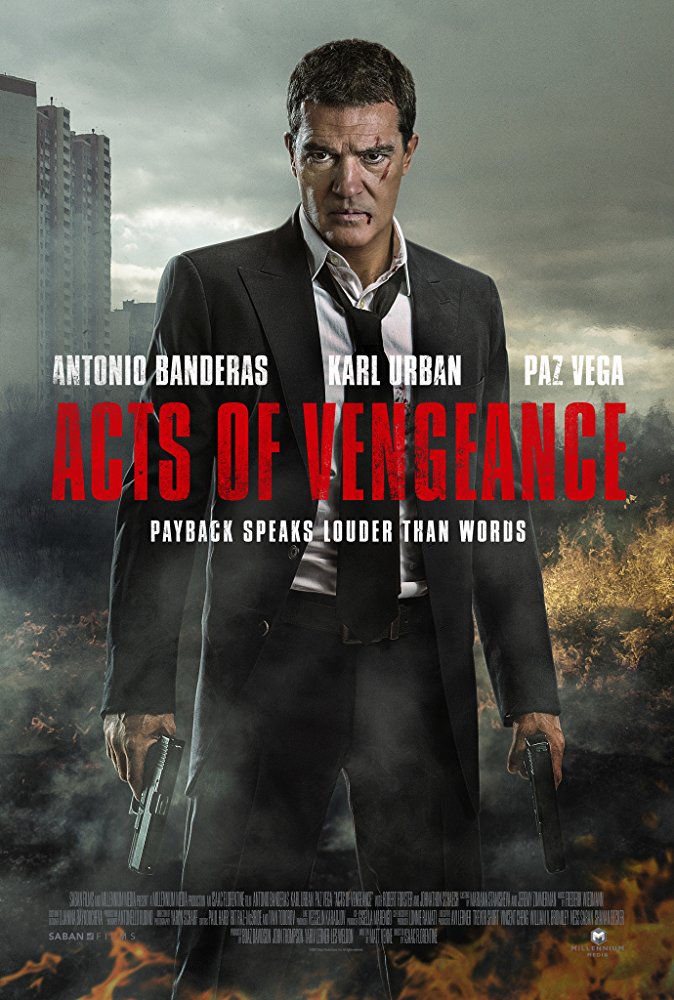
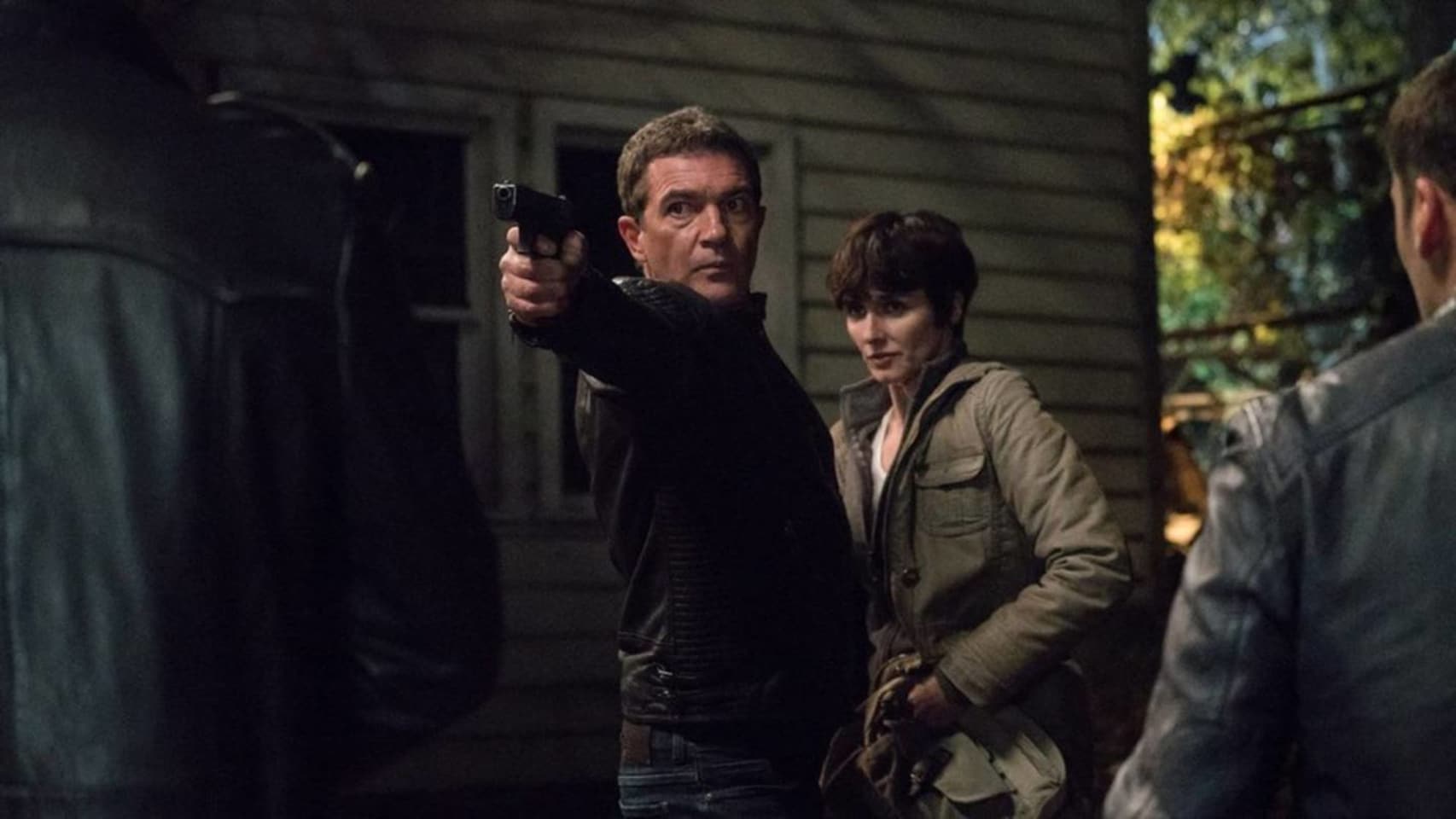
Acts of Vengeance (or, the latest episode in the on-going series, Whatever Happened to Antonio Banderas) is, on the face of it, not a great movie. It’s another low-budget action thriller with Bulgaria standing in for America (and poorly at that; you know that a movie’s in trouble when the sign outside a book store says exactly that: Bookstore). It has a trio of internationally known stars who clearly had a fortnight’s break in their schedule, and nothing better to do, plus a cameo (from Forster) that lasts all of two minutes. The movie is a curious mix of the standard and the bizarre – which at least helps it stand out somewhat from the crowd – and it has a clutch of fight scenes that are well choreographed and shot. It keeps Banderas mute for much of the running time, has a plot that’s so worn out it’s practically invisible, telegraphs its villain with all the subtlety of a stampeding rhino, and features one laughably absurd scene after another. In short, it’s two steps away from being a complete disaster. But the movie has an ace up its sleeve, an ace in the form of its director, Isaac Florentine.

If you’re not familiar with Florentine’s career, and if you’re a fan of DTV movies, then where the hell have you been since 1992? Although he’s never made a mainstream movie, Florentine is more than adept at turning some of the least promising material into something that works in ways that it really shouldn’t do. And the man knows how to put together a fight scene. This is just as true here, with Banderas doing the majority of his own stunt work, and Florentine ensuring that Yaron Scharf’s cinematography provides the best coverage possible. So we have Banderas’ avenging lawyer, Frank Valera – he’s looking for the killer or killers of his wife and daughter (Serafini, Blankenship) – learning a range of fighting techniques, and getting into a number of scraps where his newfound skills are shown off to very good effect. These fight scenes, and Banderas’ involvement in them, are what raise the movie out of the various narrative doldrums that leave the story waiting around to be kickstarted again after stalling. These scenes are also the movie’s modus operandi; if they’re not any good, then what’s the point of watching it in the first place?

There are the aforementioned bizarre elements to help it along, though, such as the story being structured in such a way that quotes from Marcus Aurelius’ Meditations can be used as chapter headings (“To expect bad men not to do wrong is madness”), and the recurring presence of Russian mobsters for Frank to beat up on – and without any reprisals. Factor in Vega’s handy nurse in a medical crisis, Urban’s illegal cage fighting cop (don’t ask), Frank’s hearing becoming pin sharp within days of his deciding to remain mute until he’s avenged his family (which has him acting like a sighted DareDevil), and the villain conveniently leaving his house key in a planter right outside his front door, and you have a movie that’s only on nodding terms with reality. But even with all that, Florentine has a clean, unfussy visual style that suits the material down to the ground, and he instills the movie with a rhythm that moves things along with a surprising amount of energy. While it’s true that the limitations of Matt Venne’s screenplay are evident in almost every scene, Acts of Vengeance has enough to recommend it as a one-off, just-for-the-fun-of-it viewing.

Rating: 4/10 – yes, it’s bad, and yes, it’s another nail in the career of its star, but thanks to Florentine’s involvement, Acts of Vengeance can be regarded as something of a guilty pleasure; with a handful of well choreographed fight scenes that belie the dire nature of the rest of the material, this is a movie that at least doesn’t outstay its welcome, and wraps things up neatly and concisely.

Share this:

  • Click to share on X (Opens in new window) X
  • Click to share on Facebook (Opens in new window) Facebook
  • More
  • Click to print (Opens in new window) Print
  • Click to email a link to a friend (Opens in new window) Email
Like Loading...

Freak Show (2017)

19 Monday Feb 2018

Posted by dullwood68 in Movies

≈ Leave a comment

Tags

Abigail Breslin, Alex Lawther, AnnaSophia Robb, Bette Midler, Comedy, Cross-dressing, Drama, High School, Homecoming Queen, Literary adaptation, Review, Trudie Styler

D: Trudie Styler / 91m

Cast: Alex Lawther, Abigail Breslin, AnnaSophia Robb, Ian Nelson, Larry Pine, Bette Midler, Celia Weston, Willa Fitzgerald, Charlotte Ubben, Laverne Cox, Christopher Dylan White, Michael Park, Mickey Sumner, John McEnroe, Eddie Schweighardt

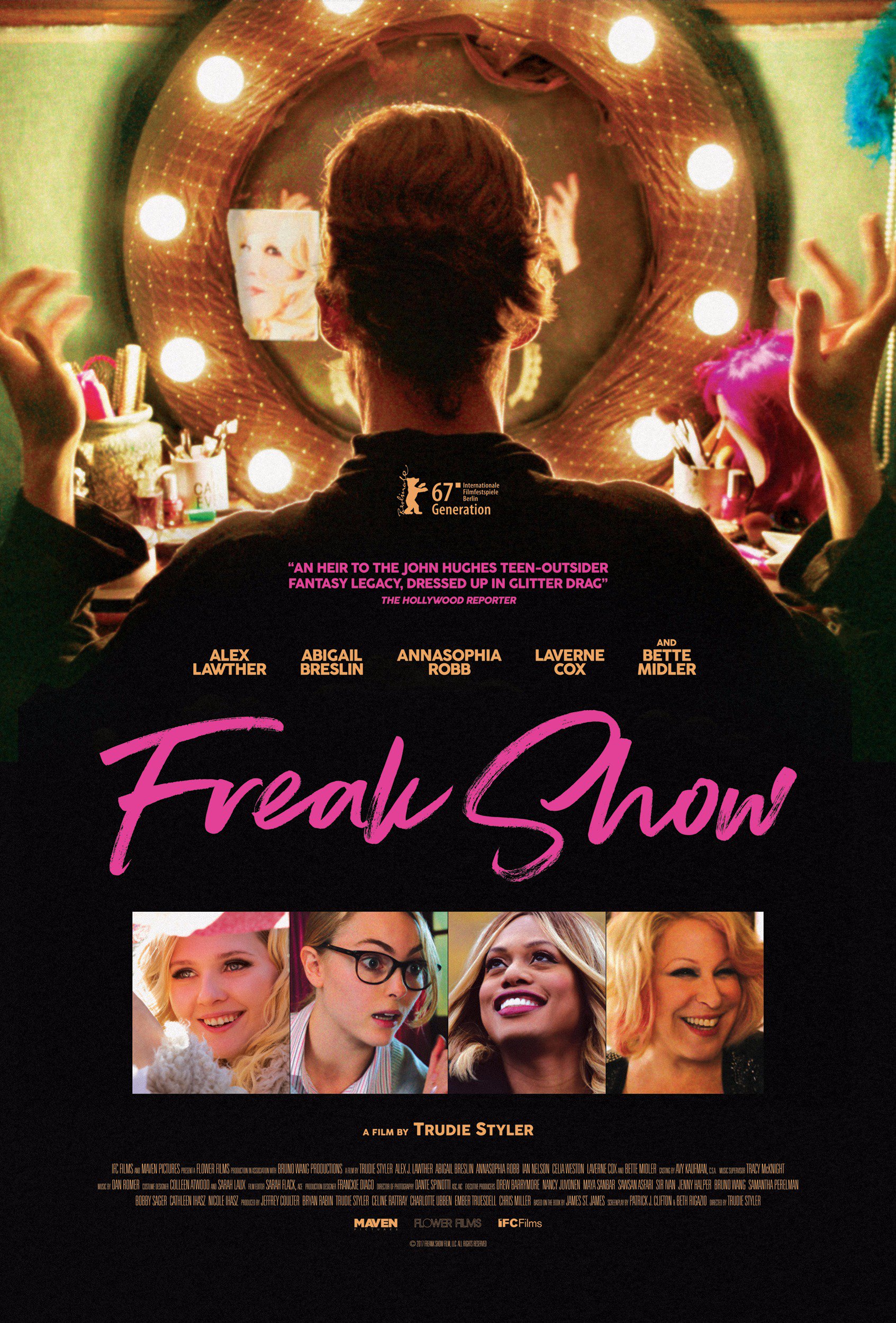
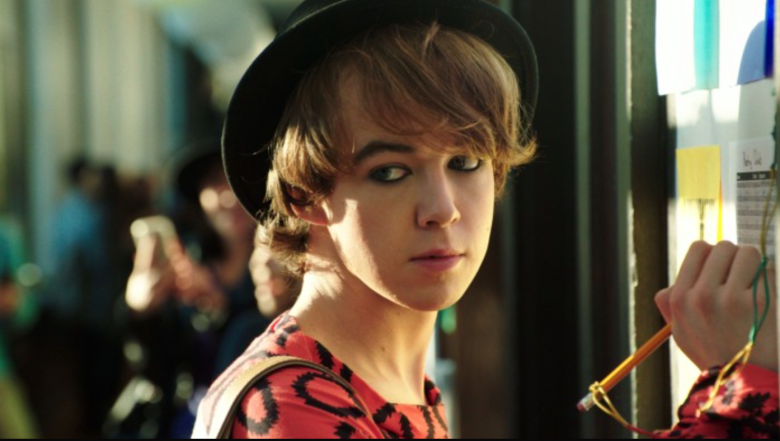
What if you didn’t fit in anywhere, and most days went out of your way not to fit in? And what if you were bullied by your fellow high schoolers, ignored by your father, missed your absentee mother terribly, and expressed your inner feelings by dressing up in outrageous yet clearly female outfits… and the source of all this was because you’re a boy? How would all that make you feel? And what would you do to combat the unwanted attention you’re getting from the other students? Well, in the feature debut of director Trudie Styler, the answer new kid Billy Bloom (Lawther) opts for is to be bolder and more outrageous, and to treat the majority of the other kids with disdain. But for all his outward self-confidence, Billy is still the outsider who wants to be accepted for who he is. The trouble is he’s flamboyant, shamelessly narcissistic, and completely uninterested in fitting in unless it’s on his own terms. But when he’s viciously beaten up by members of the school football team, things begin to edge his way, and a wider acceptance makes itself felt, an acceptance that is put to the test when Billy decides to run for Homecoming Queen…

Anyone coming to Freak Show might find themselves wondering if its origins lay between the pages of a Young Adult novel, and those assumptions would be right. Adapted from the novel of the same name by self-styled celebutante James St. James, Freak Show is a movie predicated to the idea of individuality above all else, and being true to yourself, even if you’re not sure just who you are yet. It’s an ode to persevering against the odds, but told in an uneven and often uncertain way thanks to a screenplay by Patrick J.Clifton and Beth Rigazio that can’t decide if Billy should fully integrate into high school life or remain a consenting outsider. Outside of school, Billy lives with his father (Pine) who doesn’t understand him, and he dreams of the day his mother (Midler) will come to rescue him from the terrible life he really doesn’t lead. Within school, Billy makes friends with Blah Blah Blah (Robb), who thinks he’s amazing, and football star Flip (Nelson) who has an artistic side he doesn’t feel he can express except when he’s around Billy.

The relationship that develops between Billy and Flip occupies a lot of the movie’s running time, and it spends a lot of that time not going where you might expect it to (but then it does). It’s not always handled well, and there’s a frankly embarrassing moment between Flip and Billy’s mother that has all the dramatic subtlety of a police baton strike to the lower right thigh (sorry, wrong movie). Billy’s decision to run for Homecoming Queen includes the movie’s heartfelt plea for tolerance, and though it’s beautifully expressed by Lawther, the movie tries to be ironic immediately after – and doesn’t even come close. With the screenplay also unable to pin down its approach to gender politics, it’s left to Lawther and the make up, costume and wardrobe departments to provide a series of outfits that best express Billy’s glamour obsessed personality, and in doing so to gloss over the movie’s various shortcomings, not the least of which is Breslin’s God-bothering rival for the Homecoming Queen tiara, Lynette. It is Lawther’s movie though, the young actor giving a relaxed, confident, and sincere performance that keeps Billy sympathetic throughout, even when it’s hard to feel entirely sorry for him.

Rating: 6/10 – bolstered by a terrific performance from Lawther, but hampered at the same time by so many high school movie clichés it’s like shooting fish in a barrel, Freak Show is at least funny when it’s trying to be, but tiresome when it’s trying to be serious; with its mixed messages centering around individuality and integration, the movie is only half as effective as it should be, and too often opts for warm and fuzzy when it should be direct and uncomfortable.

Share this:

  • Click to share on X (Opens in new window) X
  • Click to share on Facebook (Opens in new window) Facebook
  • More
  • Click to print (Opens in new window) Print
  • Click to email a link to a friend (Opens in new window) Email
Like Loading...

Professor Marston and the Wonder Women (2017)

18 Sunday Feb 2018

Posted by dullwood68 in Movies

≈ Leave a comment

Tags

Angela Robinson, Bella Heathcote, Drama, Lie detector, Luke Evans, Psychology, Rebecca Hall, Review, Sexuality, True story, Wonder Woman

D: Angela Robinson / 108m

Cast: Luke Evans, Rebecca Hall, Bella Heathcote, Connie Britton, JJ Feild, Oliver Platt, Chris Conroy, Alexa Havins

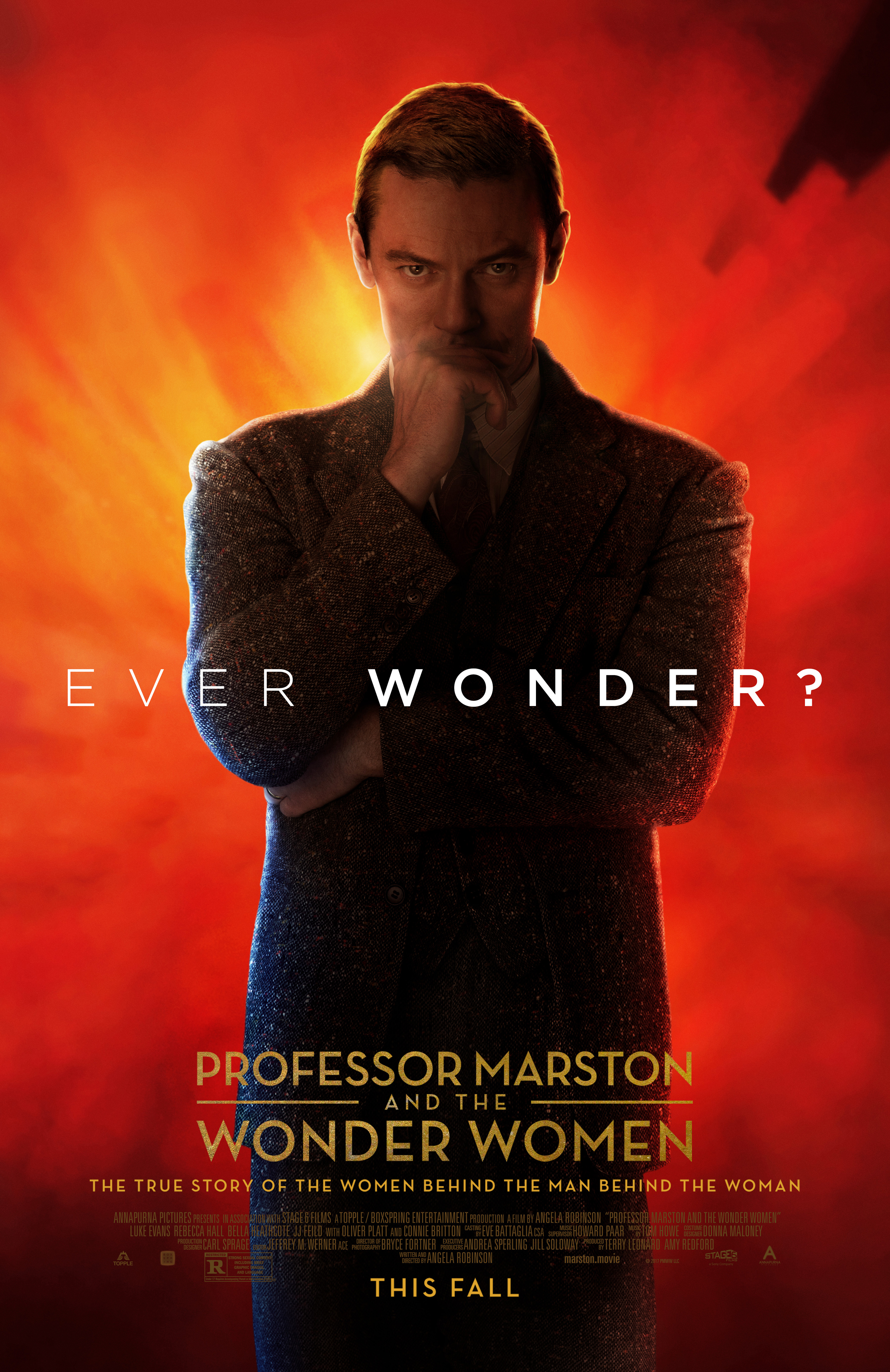
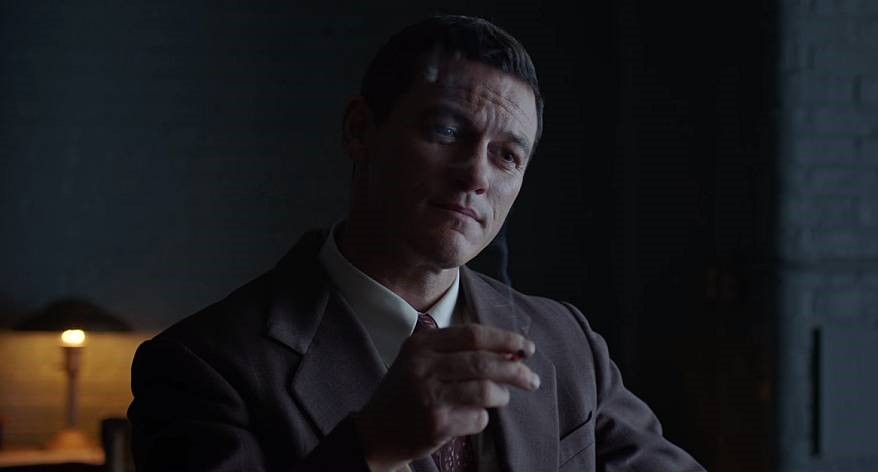
The creation of Wonder Woman, or at least, the source of her creation, is the kind of story that should be filed under “so incredible it must be true”. And that’s exactly right. Wonder Woman was the lasso-twirling, tiara-wearing brainchild of ex-Harvard faculty member William Moulton Marston (Evans), a psychology professor who also invented the systolic blood pressure cuff used with lie detectors (though he forgot to patent it). Wonder Woman was born out of Marston’s belief that women could only truly be happy by “submitting to a loving authority”, i.e. a husband. As a result, the early Wonder Woman comic strips were full of scenes of bondage, domination and spanking, with the majority of the female characters passively accepting their situations. Some of this was due to the structure of Marston’s private life. He was married to Elizabeth (Hall), also a professor of psychology, and they in turn lived with a research assistant of Marston’s who became their joint lover, Olive Byrne (Heathcote). Both women had children by Marston, and for a number of years their living arrangements went unquestioned. This polyamorous relationship led to Marston’s creation of the Amazonian princess, but even though the Wonder Woman comic strip was enormously popular, its content ensured that it would fall under the spotlight of Josette Frank (Britton) and the Child Study Association of America, and find itself at risk of public censure…

In telling Marston’s story, and that of Elizabeth and Olive, Angela Robinson’s earnest biopic relates a story of a ménage à trois that succeeded on its own terms, and in flagrant defiance of the societal norms of the period. This is the movie’s focus: not the creation of Wonder Woman, but the creation of a three-way relationship that withstood both internal and external pressures, the addition of children (four in total), long periods where Marston was reliant on his writing to bring in money (Elizabeth was a better breadwinner), and which did so because of the trio’s commitment to each other (though inevitably, there’s a blip). Robinson’s screenplay is firmly on the side of Marston and his two Wonder Women, and the personal and sexual explorations they undertook in order to make their relationship work, and if there isn’t too much in the way of judgment or objective criticism about the nature of their private lives, then it doesn’t hurt the story overall. But there are moments where the narrative seems in need of a dramatic push, and Robinson obliges accordingly.

But this is a movie about feelings, and emotions, and the best way of expressing them. Refreshingly, and aside from a closing scene in a hospital room that seems to go on for far too long (see if you think someone should have come in at some point), the characters make their points succinctly and quickly before moving on the next, and despite some occasionally clunky expository dialogue, the cast all give strong, skillful performances. It’s good to see Evans taking on a more meatier role than of late, and he expertly navigates the twin poles of Marston’s personality, aiming for dominance in his public and working lives, while being submissive in private. Hall is terrific as Elizabeth, hiding her vulnerability and insecurities behind a fearsome exterior, and Heathcote is equally impressive as Olive, the young woman neither Marston nor his wife can live without. As a framing device, Marston’s meeting with Frank doesn’t always tie up with what amount to flashbacks of his life up until then, but it does give the viewer a better understanding of Marston’s views on relationships and submission and all areas in between. This is a movie that’s unafraid to explore issues surrounding marriage and polygamy and notions of what constitutes individual pleasure, and in doing so proves itself to be intelligent and thought-provoking, though a little too matter-of-fact in its approach.

Rating: 7/10 – purposeful and intense for the most part, Professor Marston and the Wonder Women plays it straight, and in doing so, does justice to its trio of lead characters and their unconventional lifestyles; Bryce Fortner’s cinematography adds a layer of nostalgia to things, and Robinson is to be congratulated for interpreting Marston’s life in such a way that the majority of the movie remains plausible if not always entirely convincing.

Share this:

  • Click to share on X (Opens in new window) X
  • Click to share on Facebook (Opens in new window) Facebook
  • More
  • Click to print (Opens in new window) Print
  • Click to email a link to a friend (Opens in new window) Email
Like Loading...

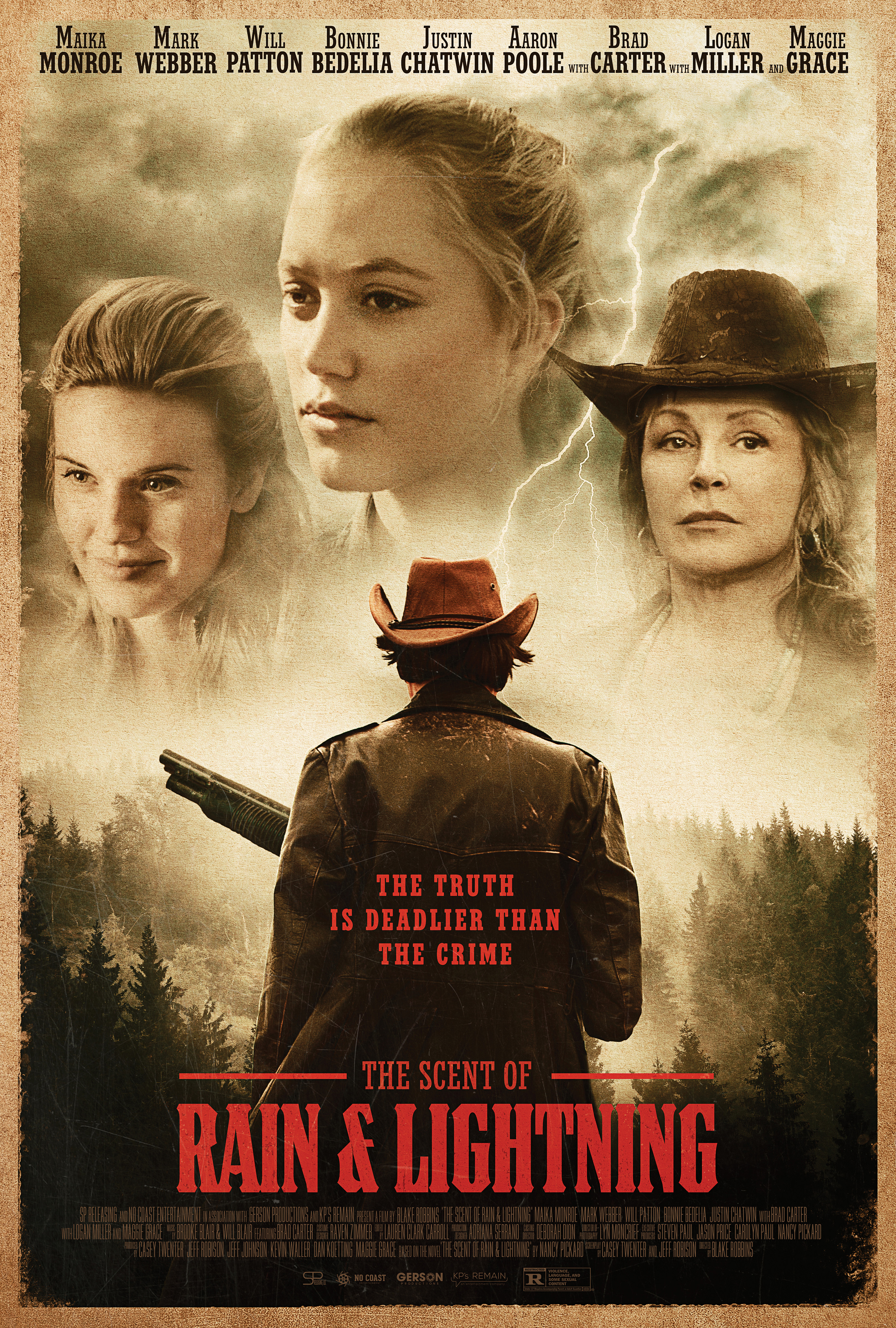
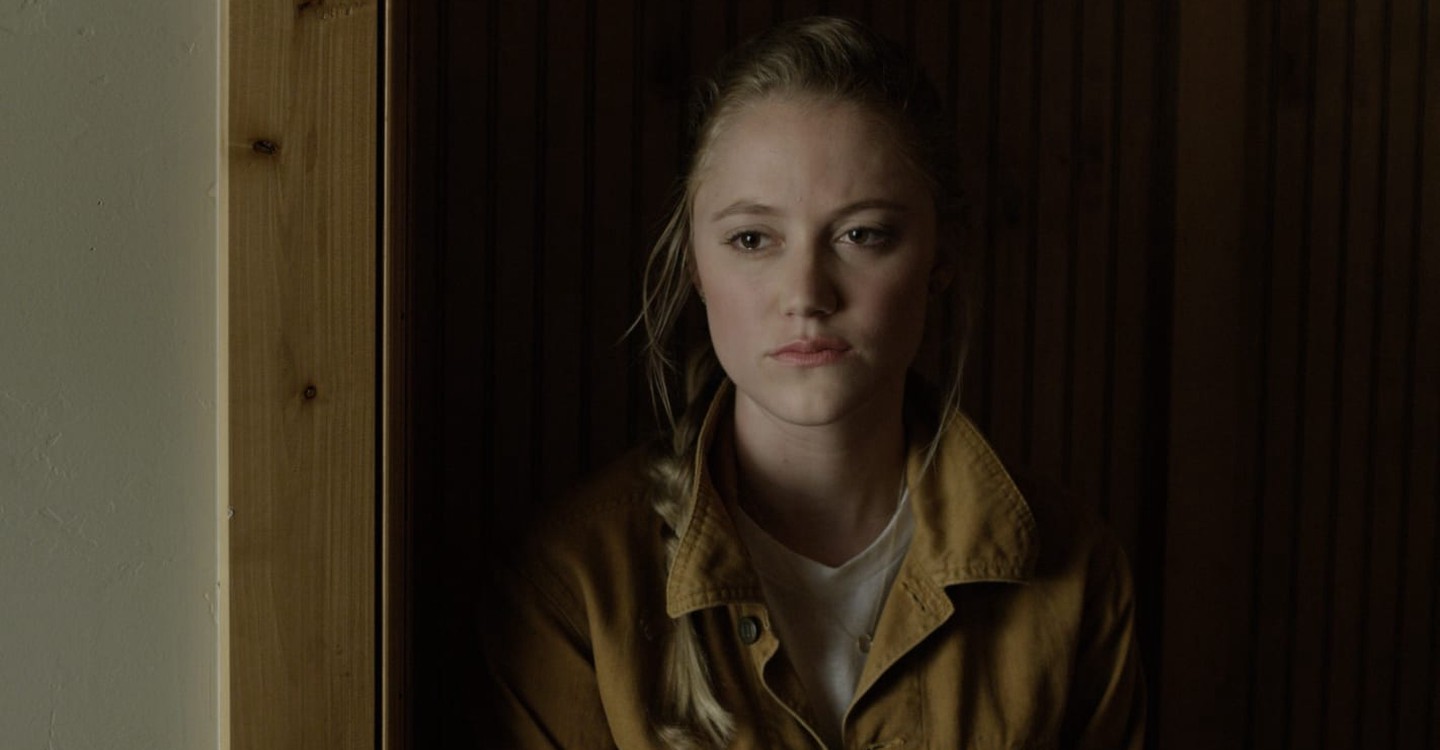
The Scent of Rain & Lightning (2017)

17 Saturday Feb 2018

Posted by dullwood68 in Movies

≈ Leave a comment

Tags

Blake Robbins, Drama, Literary adaptation, Maggie Grace, Maika Monroe, Mark Webber, Murder, Revenge, Review, Thriller, Will Patton

D: Blake Robbins / 103m

Cast: Maika Monroe, Mark Webber, Will Patton, Maggie Grace, Justin Chatwin, Bonnie Bedelia, Aaron Poole, Brad Carter, Logan Miller, Kassia Conway, Sarah Noble Peck

A small town murder mystery with an arthouse feel, The Scent of Rain & Lightning opens with bad news for Jody Linder (Monroe): Billy Croyle (Carter), the man who was jailed for killing her parents, Laurie and Hugh (Grace, Chatwin), twelve years before has had his sentence commuted and is being released from prison. Understandably, Jody and the rest of her family – grandfather ‘Senior’ (Patton), grandmother Annabelle (Bedelia), uncles Chace (Webber) and Meryl (Poole) – aren’t too happy about this, but when Jody confronts Croyle and he accuses ‘Senior’ of getting the verdict he wanted, as well as denying he killed her parents, Jody begins to ask questions around town, questions that make her believe that not everything about her parents’ deaths is as cut and dried as she’s been led to believe. As the town – and her family – start to give up their secrets, Jody is forced to accept that the answers she’s looking for may lie closer to home. But then a senseless act of violence occurs, one that puts Jody in danger, and which threatens her family as well…

A slow burn thriller that looks and feels like an arthouse movie, The Scent of Rain & Lightning (adapted from the novel of the same name by Nancy Pickard) doesn’t offer anything new for viewers with a liking for small town murder mysteries, but it does provide a non-linear narrative that interweaves Jody’s somewhat random approach to investigating her parents’ deaths, with flashbacks to the events that led up to the murders, and finally, what actually happened. These flashbacks are necessary, as Jody proves to be the Rick Deckard of small town murder mysteries, and never learns anything of real value. Thankfully, while she’s looking for answers, the script by Casey Twenter and Jeff Robison (also two of the movie’s producers) keeps the viewer up to speed with what happened, why, how, and who was responsible. It makes for an uneven narrative, with neither strand complementing each other, or finding common moments where they might connect effectively, and as a result, it’s a movie that often feels like it’s been stitched together Frankenstein Monster-style, with no clear idea of which part goes with which. This also leaves some scenes feeling a little lost, or there just to pad out the running time.

Performance-wise, the movie is a bit of a mixed bag also. None of the characters are particularly well developed, and Jody’s expected character arc fizzles out around two thirds in. Monroe, a very talented young actress who’s still looking for that perfect follow up to her breakout role in It Follows (2014), hasn’t much to do beyond ask awkward questions and have those questions go unanswered. As the movie progresses, her role diminishes further and further, and the need to solve the mystery takes precedence. This brings Grace’s character to the fore, but Laurie and her secret prove to be very stereotypical, which leaves any emotional connection the viewer might be looking to make as unlikely as Kevin Spacey winning a Best Supporting Actor award at this year’s Oscars. Elsewhere, the likes of Patton, Bedelia and Poole flit in and out of the narrative, while Webber struggles to make his character ambivalent enough to be considered a viable suspect. Robbins, making his second feature (and appearing as the town sheriff), opts for a muted visual style that is at least atmospheric, but which doesn’t elevate the material, and there are too many occasions where the image is refracted through water as if it has an important psychological resonance.

Rating: 5/10 – with two narrative strands that work independently of each other, and a sense that no amount of screenplay jiggery-pokery could have brought them together, The Scent of Rain & Lightning lacks the impact needed to make its mystery elements work, and its small town milieu appropriately claustrophobic; disappointing then – though not unwatchable – it’s another indie thriller that tries hard to be different while forgetting that it’s using very basic materials to begin with.

Share this:

  • Click to share on X (Opens in new window) X
  • Click to share on Facebook (Opens in new window) Facebook
  • More
  • Click to print (Opens in new window) Print
  • Click to email a link to a friend (Opens in new window) Email
Like Loading...

Entanglement (2017)

16 Friday Feb 2018

Posted by dullwood68 in Movies

≈ Leave a comment

Tags

Comedy, Diana Bang, Drama, Jason James, Jess Weixler, Review, Romance, Suicide, Thomas Middleditch

D: Jason James / 85m

Cast: Thomas Middleditch, Jess Weixler, Diana Bang, Randal Edwards, Marilyn Norry, Eric Keenleyside, Johannah Newmarch, Jena Skodje, Shauna Johannesen

When we first meet Ben Layten (Middleditch), he’s trying to kill himself. He’s recently divorced, increasingly depressed, and all alone. But death isn’t going to let him off so easily, and despite cutting his wrists, Ben survives. As he begins to get his life back on track, he learns he almost had a sister: his parents (Norry, Keenleyside), believing they wouldn’t have children of their own, had adopted a baby girl. But on the very day the baby was given to them, Ben’s mother discovered she was pregnant. The baby was returned for adoption, Ben was born nine months later, and now Ben has a mission: to find his near-sister and see how she’s turned out, and if he’s lucky, to establish a brother-sister relationship with her. His search leads him to Hanna Weathers (Weixler), a free-spirited young woman who slowly brings Ben out of his shell. In the process, Ben begins to find more and more reasons to continue living, and ways of putting the past behind him. But then he learns a truth about Hanna that challenges his perception of his new-found happiness…

Entanglement is the kind of indie movie that comes along several times a year, plays at various festivals, gets a good buzz behind it, and then goes out into the big wide world of cinema releases or VOD, and then promptly vanishes from people’s radar. It’s not the movie’s fault – after all, there are just sooooo many movies out there, all jostling for our attention – but it does make finding such a movie all the more rewarding. This is the case here, with the combination of Jason Filiatrault’s adroit, cleverly constructed screenplay, and Jason James’ easy-going yet focused direction. Between them they ensure that Ben’s attempts to make sense of his life and where it’s going aren’t just the actions of a pretentious, navel-gazing nebbish (which could have easily been the case), but a sincere and heartfelt look at how easy and difficult it can be to find the courage to move on after a traumatic experience. Deep down, Ben knows he can move on, but he doesn’t know how to; being with Hanna helps him find out – just not in a way he ever expected. (Some viewers may find themselves ahead of Ben for most of the movie, but rest assured, this doesn’t detract from the enjoyment to be had in waiting for him to catch up.)

The movie isn’t afraid to throw in some whimsical fantasy elements, such as the planets on a bowling alley wall that begin to rotate while Hanna speaks to Ben, or the puppet in the office of Ben’s therapist that takes him to task over his relationship with Hanna. These elements serve as psychological cues for Ben’s state of mind, and are introduced at various points in the narrative, but with a great deal of circumspection attached. Are these signs of progress, or backward steps? Filiatrault wisely leaves it up to the viewer to decide. By the time the truth about Hanna is revealed, the movie has become intriguing and absorbing, and thanks in no small part to the performances of Middleditch and Weixler. Middleditch is self-contained and vulnerable as Ben, giving a shy, diffident portrayal that is affecting and quietly impressive. Weixler, an actress who deserves to be better known, is more extrovert but in a way that is considered and entirely apt for her character. There’s good support too from Bang as Tabby, Ben’s neighbour and one true friend. The whole thing plays out at a good pace, there’s sterling work from DoP James Liston, and it’s all topped off by a terrific soundtrack.

Rating: 8/10 – a movie about connections, including the ones we can’t see but which have the most impact in our lives, Entanglement is a light-hearted, comic, yet earnest movie that achieves its modest ambitions with ease; quirky and intelligent, plausible and deftly handled, it’s another indie movie wih buckets of charm and a winning sensibility.

Share this:

  • Click to share on X (Opens in new window) X
  • Click to share on Facebook (Opens in new window) Facebook
  • More
  • Click to print (Opens in new window) Print
  • Click to email a link to a friend (Opens in new window) Email
Like Loading...

Goodbye Christopher Robin (2017)

15 Thursday Feb 2018

Posted by dullwood68 in Movies

≈ Leave a comment

Tags

A.A. Milne, Domhnall Gleeson, Drama, Kelly Macdonald, Margot Robbie, Review, Simon Curtis, True story, Winnie the Pooh, Writing

D: Simon Curtis / 107m

Cast: Domhnall Gleeson, Margot Robbie, Kelly Macdonald, Will Tilston, Alex Lawther, Stephen Campbell Moore, Richard McCabe, Geraldine Somerville, Phoebe Waller-Bridge

After fighting in the First World War, the playwright A.A. Milne (Gleeson) has difficulty adjusting to post-War life in the same way that his contemporaries have. While they behave as if the war had never happened, Milne suffers from delayed shell shock and debilitating flashbacks of his time at the Somme. Unable to reconcile his recent past with the demands of the present, Milne struggles to resume his writing; even the arrival of his first child, Christopher, is unable to make a difference. With a nanny, Olive (Macdonald), to look after Christopher (but called Billy), Milne moves his family to a secluded house in the Sussex countryside. When circumstances collude to leave Milne and Billy (Tilston) by themselves, their time together leads to Milne writing a series of books based around Billy’s toys, books whose main character is Christopher/Billy himself. But their success comes at a price, and Milne and his wife, Daphne (Robbie), allow Billy to become a part of the media circus that springs up around them, a decision that will have unexpected consequences when World War II brings things full circle…

From the outset, Goodbye Christopher Robin has all the hallmarks of a classic British heritage picture. With its impeccable period production design (courtesy of David Roger), sharply detailed costumes, attention to the social and political mores of the time, beautifully composed and lit cinematography (from Ben Smithard), and a surfeit of stiff upper lips, the movie has nostalgia running through it like a plumb line. This is a movie that looks and feels as if you could step into it at any moment and join A.A. Milne and his young son on their walks throught the Hundred Acre Wood. Luckily though, the script – by Frank Cottrell Boyce and Simon Vaughan – isn’t content with just recreating a bucolic time gone by. Instead it wants to paint a darker picture, one that encompasses PTSD, the expoitation of childhood innocence, remote parenting, the pitfalls of fame, and emotional disconnection. But while these issues serve to make the movie less superficial than it might be otherwise, even when they’re combined they don’t quite provide enough depth to stop the movie from feeling like a carefully selected box of confectionery. Make no mistake, it’s a lovely selection, but after a while you begin to realise that all the centres have the same flavour.

That’s not to say that the movie is a bad one, or that it fails somehow in its ambitions. Rather it’s a case of a movie doing exactly what is expected of it and very little more. There are the requisite number of moments where a loud noise sends Milne back to the trenches, the long-delayed moment when Olive tells her employers what she thinks of their parenting skills, and several more moments when Billy brings Milne out of his moody, self-imposed shell just by being a smiling young moppet. It’s attractively put together by director Simon Curtis, who shows more engagement with the subject matter than he did with his last feature, Woman in Gold (2015), and he coaxes a terrific performance from first-timer Tilston. Gleeson glowers in silence a lot but is effective as Milne, Macdonald shines in the kind of servant role she can do in her sleep now, Moore contributes a sensitive turn as Winnie the Pooh’s original illustrator, E.H. Shepard, but Robbie’s turn as Daphne is spoilt by the character’s unrelentingly mean-spirited and mercenary nature; the actress has nowhere to go with it. All in all though, the movie is an enjoyable one, with a strong emotional core to it, and a good sense of the childhood wonder that helped create such enduring and much-loved characters as Winnie the Pooh, Tigger and Piglet.

Rating: 7/10 – beautifully shot and edited, and with keenly expressed moments of insight into the creative process, Goodbye Christopher Robin nevertheless struggles to keep its dramatic elements meaningful or to the fore; thankfully it gets by on much else besides, including a magical vibe that’s maintained throughout, and the committed performances of its cast.

Share this:

  • Click to share on X (Opens in new window) X
  • Click to share on Facebook (Opens in new window) Facebook
  • More
  • Click to print (Opens in new window) Print
  • Click to email a link to a friend (Opens in new window) Email
Like Loading...

Phantom Thread (2017)

14 Wednesday Feb 2018

Posted by dullwood68 in Movies

≈ 2 Comments

Tags

Daniel Day-Lewis, Drama, Haute couture, Lesley Manville, Paul Thomas Anderson, Review, Romance, The Fifties, The House of Woodcock, Vicky Krieps

D: Paul Thomas Anderson / 130m

Cast: Daniel Day-Lewis, Vicky Krieps, Lesley Manville, Camilla Rutherford, Gina McKee, Brian Gleeson, Harriet Sansom Harris, Lujza Richter, Julia Davis

In Paul Thomas Anderson’s latest movie, we’re introduced to the splendidly named Reynolds Woodcock (Day-Lewis), a London-based couturier to those with money and prestige and power. Woodcock’s name is a byword for quality, and his meticulous designs and ability to match the outfit to the client has brought him his own versions of his clients’ money, prestige and power. He is fastidious, particular, uncompromising, and resolute. When he meets a waitress, Alma (Krieps), a relationship develops between them, and she moves into the home which also serves as his fashion house. Alma becomes Woodcock’s lover, and also his muse and assistant. But Woodcock proves to be a difficult partner to please. His daily routines are ingrained and not to be interfered with, and his idea of a relationship is that it comes second to the work he does. Alma rails against this, but it’s only when Woodcock falls ill and she nurses him back to health that their mutual need for each other becomes apparent and things improve between them. But Woodcock’s mercurial yet pedantic nature soon reasserts itself, and Alma’s importance in his life becomes even more precarious…

Coco Chanel once said, “Dress shabbily and they remember the dress; dress impeccably and they remember the woman.” In the world of Reynolds Woodcock, he would no doubt amend Chanel’s statement to read “remember the designer.” Woodcock is a creative genius who basks in the reflected glory of the outfits he designs, his position within the upper echelons of 50’s London high society assured because of the work ethic he has devised, and because he doesn’t deviate from that work ethic. And he expects everyone around him to fit in with that work ethic also; for Woodcock, nothing is more important than the dress or the outfit he’s creating. The beauty of Anderson’s foray into The House of Woodcock is the challenge to his authority from Alma. Can she break through the barriers that Woodcock has erected over the years, and can she get him to focus on her rather than his designs? Anderson wants you to think she can, but at the same time he won’t make it easy for her, and his script is often a series of brutal rebuttals punctuated by moments of calm that offer both Alma and the viewer a sense of hope. Alma, though, is just as stubborn as Woodcock, and just as tenacious in what she wants. This is force majeure for lovers.

Anderson is on dazzling form here, his own considerable creative energies in service to a story that is formed of strong emotional undercurrents and perceptive examinations of the shifting balances of power within a relationship that is both mutually beneficial and destructive. It all plays out against a rarefied world that’s much like love itself: heightened and demanding, but also incredibly rewarding. Woodcock and Alma battle against each other for dominance, and their war brooks no attrition, and yet Anderson never allows the viewer to lose sight of the fact that they are in love with each other. It’s a compelling, sometimes devastating story, and each twist and turn is superbly orchestrated by Anderson, and delivered impeccably by Day-Lewis and Krieps, their performances drawing you in and making you understand fully the characters and their motivations. They’re ably supported by Manville as Woodcock’s no-nonsense yet sensitive sister Cyril, tremendous cinematography and production design (by an uncredited Anderson, and Mark Tildesley respectively), and yet another hugely impressive score by Jonny Greenwood. This is a beautiful, meticulously assembled movie that looks austere from the outside, but which has an energy and a passion seen all too rarely in modern cinema.

Rating: 9/10 – a movie that explores a world few of us will have any direct knowledge of, but which guides us through it with so much assurance, Phantom Thread is like a love letter to a different age: enchanting, exhilarating, and exquisitely depicted; on this evidence, Anderson is possibly the finest writer/director working today, such is the confidence he shows here in detailing both the narrative and the characters.

Share this:

  • Click to share on X (Opens in new window) X
  • Click to share on Facebook (Opens in new window) Facebook
  • More
  • Click to print (Opens in new window) Print
  • Click to email a link to a friend (Opens in new window) Email
Like Loading...

The Black Panther (1977)

13 Tuesday Feb 2018

Posted by dullwood68 in Movies

≈ Leave a comment

Tags

Crime, Debbie Farrington, Donald Neilson, Donald Sumpter, Drama, Ian Merrick, Kidnapping, Lesley Whittle, Murder, Review, Thriller

D: Ian Merrick / 97m

Cast: Donald Sumpter, Debbie Farrington, Marjorie Yates, Sylvia O’Donnell, Andrew Burt, Alison Key, Ruth Dunning, David Swift

For a short time in the early Seventies, Donald Neilson (Sumpter) was the unheralded centre of public attention in the UK due to a number of sub-post office robberies he committed, some of which ended in murder. Neilson’s motive for these robberies was purely financial, but they rarely netted him much in the way of consistent reward for his efforts. Then he saw a newspaper article about a sixteen year old girl, Lesley Whittle (Farrington), who had recently inherited a fortune from her late father. Neilson planned to kidnap Lesley and hold her to ransom for £50,000. He located a drainage shaft where he could hide her, and on 14 January 1975, Neilson abducted Lesley from her bedroom, but his ransom plan foundered due to the involvement of the police. Worse was to follow: Lesley died while he was holding her captive, and he was forced to abandon his plan altogether. Her body was found two months later. Still, Neilson might have got away with even that, if it wasn’t for a completely unexpected turn of events that occurred in December of the same year.

For fans of true crimes stories, The Black Panther is something of a must-see, and something of a cause célèbre in itself. The movie has a measured, documentary feel to it that is reinforced by Joseph Mangine’s cinema verité-style cinematography, and Merrick’s matter-of-fact approach to the material. It’s a studious, unshowy movie that highlights the meticulous planning that Neilson put into his robberies and Lesley’s kidnapping, and then contrasts that planning with the various ways in which his plans managed to fall apart once they were carried out. If truth be told, Neilson was an average thief, and Michael Armstrong’s astute, carefully constructed screenplay shows Neilson to be a classic under-achiever, always looking to make it big but having too narrow an outlook or ambition to ever achieve any lasting success. Sumpter pitches Neilson as a man desperate to be in control, but lacking the wherewithal to maintain or build on what little control he does have, and which largely involves verbally abusing his wife, Irene (Yates), and daughter, Kathryn (O”Donnell). In marked contrast, Neilson treats Lesley with compassion and concern for her welfare, and treats her in a far better way than his own daughter. Again, the script carefully illustrates the various ways in which Neilson’s own moral code – however warped – was important to his own sense of who he was (at one point he sneers at the idea of being called the Black Panther).

While the psychological aspects of Neilson’s character are examined to a degree, and Sumpter’s performance supports a psychological approach to the character, where this would be acceptable by modern standards (and some might say it doesn’t explore Neilson’s habits and personality enough), back in 1977 the movie came under attack for daring to even portray Neilson and his criminal activities in the first place. In a case of “perhaps too soon”, the movie was deemed as exploitative (and it does have that vibe in places, particularly when Lesley is abducted from her bedroom), and was withdrawn from UK cinemas. But this is a movie that has a quiet power to it, and which is disturbing not for its violence but because Donald Neilson could be our neighbour next door, or a family member. It’s the otherwise mundane existence he leads that is unsettling, and the milieu he’s a part of. Merrick’s first outing as a director is now regarded – rightly – as a classic of UK true crime, and even now, over forty years on, it still has the ability to fascinate and appal at the same time.

Rating: 8/10 – a grim depiction of Donald Neilson’s exploits, The Black Panther uses its minimal production values to superb effect, and in doing so, emerges as a movie that is challenging to watch but necessarily so also; Sumpter’s performance, all pent up fury and phlegmatic stares, suits the movie to a tee, and Merrick’s confident direction proves to be exactly the right approach for the material, leaving the movie as a whole to get under the viewer’s skin and lodge there like an unwelcome guest.

Share this:

  • Click to share on X (Opens in new window) X
  • Click to share on Facebook (Opens in new window) Facebook
  • More
  • Click to print (Opens in new window) Print
  • Click to email a link to a friend (Opens in new window) Email
Like Loading...

HHhH (2017)

12 Monday Feb 2018

Posted by dullwood68 in Movies

≈ Leave a comment

Tags

Assassination, Cédric Jimenez, Drama, History, Jack O'Connell, Jack Reynor, Jason Clarke, Literary adaptation, Mia Wasikowska, Reinhard Heydrich, Review, Rosamund Pike, Thriller, World War II

aka Killing Heydrich; The Man With the Iron Heart

D: Cédric Jimenez / 120m

Cast: Jason Clarke, Rosamund Pike, Jack O’Connell, Jack Reynor, Mia Wasikowska, Stephen Graham, Thomas M. Wright, Noah Jupe, Geoff Bell, Enzo Cilenti, Volker Bruch, David Rintoul, David Horovitch, Abigail Lawrie, Adam Nagaitis

Let’s get this out of the way right from the start: HHhH is an odd movie. In fact, it’s very odd. Not because of the title, which is an acronym for Himmlers Hirn heißt Heydrich (Himmler’s brain is called Heydrich, a quip you wouldn’t dare repeat back then), and not because you have to wade through a long list of actors before you find someone whose first language is actually German or Czechoslovakian. No, what makes the movie so odd is that, for a drama based around the assassination of Reinhard Heydrich (Clarke), keen violinist and one of the main architects of the Final Solution, it lacks ambition and drive, and often moves from scene to scene as if seeking the right direction in which to move forward. It also lacks focus, telling us much about Heydrich’s early life in its first twenty minutes (including his love of fencing, and his dishonourable discharge from the German Navy), but then failing to link it all to anything that happens once he’s fully committed to being a Nazi.

Like a lot of members of the Nazi Party, Heydrich went from being something of a nobody to somebody wielding quite a lot of power in a very short space of time, and the movie recognises this. However, thanks to the vagaries of the script, and Clarke’s gloomy demeanour throughout, Heydrich remains a sadistic bully boy in adult’s clothing – and just that. No one is looking for the movie to redeem Heydrich in some way (though that would make it more interesting), but for all its attempts at trying to shine a spotlight on his pre-Nazi activities, they’re all left abandoned as the movie progresses. Instead we see Heydrich’s rise to prominence through the patronage of, first, his wife, Lina von Osten (Pike playing Lady Macbeth as if her career depends upon it), and then, second, Heinrich Himmler (Graham playing Hitler’s right hand man as the uncle you do visit). He does some expectedly nasty things, behaves unconscionably whenever possible, and then his story, with over an hour of the movie to go, takes a back seat to Operation Anthropoid.

By changing its focus nearly halfway through, Jimenez’s movie only narrowly avoids feeling schizophrenic. As we’re introduced to Jan Kubiš (O’Connell) and Jozef Gabčík (Reynor), the two men chosen to head up the assassination attempt, we also get to meet a whole roster of new characters that we don’t have time to get to know or care about. And once Heydrich is out of the way, the terrible reprisals carried out by the Nazis are represented by the razing of Lidice (which actually happened), but in such a brusque way that it makes it obvious that HHhH wants to move on quickly to address the fate of Kubiš and Gabčík and their compatriots – which goes on for far too long and features the kind of gung-ho heroics that only a movie would feel was appropriate. Add the fact that the script – by Jiminez, Audrey Diwan and David Farr from Laurent Binet’s novel – is represented by some of the blandest, most depressing cinematography seen in recent years, and you have a movie that is tonally awkward, flatly directed, and which flirts in earnest with having nothing meaningful to say.

Rating: 5/10 – clunky and dour, and only sporadically engaging, HHhH tells its story as if it was being forced to – and the whole process is painful; a missed opportunity would be putting it mildly, but the movie’s very oddness allows for a certain fascination to develop as the movie unfolds, making it watchable if you don’t expect too much from it.

Share this:

  • Click to share on X (Opens in new window) X
  • Click to share on Facebook (Opens in new window) Facebook
  • More
  • Click to print (Opens in new window) Print
  • Click to email a link to a friend (Opens in new window) Email
Like Loading...

I, Tonya (2017)

11 Sunday Feb 2018

Posted by dullwood68 in Movies

≈ 1 Comment

Tags

Allison Janney, Craig Gillespie, Crime, Drama, Figure skating, Jeff Gillooly, Margot Robbie, Nancy Kerrigan, Olympics, Review, Sebastian Stan, Tonya Harding, True story

D: Craig Gillespie / 120m

Cast: Margot Robbie, Sebastian Stan, Allison Janney, Julianne Nicholson, Paul Walter Hauser, Bobby Cannavale, Bojana Novakovic, Caitlin Carver, Mckenna Grace, Anthony Reynolds, Ricky Russert

When a movie is said to be based on a true story, then chances are it won’t bear any resemblance to what actually happened. The movie becomes an approximation, an interpretation of events that took place, of conversations that people had, and their outcomes. Many movies use this idea to tell their own version of what they think happened and why, but often it’s in disservice to the original – and correct – story. If you want the truth, purists might argue, go see a documentary (like they don’t have their own biases). With so many movies released each year that are based on true stories, it’s often difficult to determine which ones are more accurate than others. But the makers of I, Tonya address this issue right from the start, with a caption that states: Based on irony free, wildly contradictory, totally true interviews with Tonya Harding and Jeff Gillooly. It’s a clever, and very effective tactic. By the movie’s end, and with no two individuals agreeing completely on the events that led to Tonya Harding’s fall from grace, the viewer is left to make up their own mind about what really happened. It’s akin to doing cinematic jury service.

Harding’s story (again if true) is another one that’s concerned with achieving the American dream, but it’s also a story that highlights the unspoken class divide that exists in the US and is still prevalent today. Born on the wrong side of the tracks and with a fearsome, domineering mother, LaVona (Janney), Harding (Robbie) was always going to find it difficult to adapt to and fit in with the somewhat rarefied surroundings of US professional figure skating, but even her ability to carry off a triple axel jump (she was the first American female figure skater to do so in competitions) couldn’t offset the disdain that her behaviour both on and off the ice prompted in both judges and followers of the sport. What didn’t help was her relationship with her husband, Jeff Gillooly (Stan). Harding was often the victim of domestic violence – something the movie goes to some uncomfortable lengths to illustrate – and the battles she waged at home were reflected in her demeanour during competitions. The movie doesn’t shy away from any of this, and Harding’s struggles to maintain an acceptable balance on the ice (no pun intended), point toward the reason why she was never entirely accepted by the figure skating cognoscenti.

Steven Rogers’ extremely fascinating and absorbing screenplay tells a mostly linear story but isn’t afraid to take detours that allow the characters to express themselves more fully during recorded interviews. There are other moments where the fourth wall is broken, but these again allow the characters to provide their own opinions on what’s happening, and it’s largely this approach to the material that keeps the movie from feeling routine or a best available reconstruction of recent history. The performances are uniformly superb, with Robbie and Stan giving career-best turns, while Janney almost steals the movie from everyone (everyone that is apart from Hauser, who plays Harding’s bodyguard, and self-professed “spy”, with such unorthodox charm that the character’s innate stupidity remains likeable throughout). Gillespie, bouncing back after the less than stellar The Finest Hours (2016), gives the movie a pace and a vibrancy that is upheld by Nicolas Karakatsanis’s stylish cinematography, and Tatiana S. Riegel’s flawless editing, while the soundtrack is peppered with songs that relate both to the period the movie covers and to the emotional peaks and troughs threaded throughout the screenplay. If Tonya Harding’s story is one that you’re unfamiliar with, then this is a great place to start if you want to find out how someone goes from being arguably the best female figure skater in the world, to someone who ends up being banned from the sport for life.

Rating: 9/10 – a dazzling concoction that mixes high drama with low comedy, and which also has time to be poignant, mournful, ecstatic, sad, joyous, profane, and reproachful, I, Tonya is a whirlwind of a movie that impresses at every turn; based on a true story, and open and honest about its various source materials, this gives everyone involved a voice and treats them all with respect, even when they do things that are irretrievably dumb – and that happens a lot.

Share this:

  • Click to share on X (Opens in new window) X
  • Click to share on Facebook (Opens in new window) Facebook
  • More
  • Click to print (Opens in new window) Print
  • Click to email a link to a friend (Opens in new window) Email
Like Loading...

Handsome Devil (2016)

10 Saturday Feb 2018

Posted by dullwood68 in Movies

≈ Leave a comment

Tags

Andrew Scott, Boarding school, Comedy, Coming of age, Drama, Fionn O'Shea, Ireland, John Butler, Nicholas Galitzine, Review, Rugby, Talent show

D: John Butler / 95m

Cast: Fionn O’Shea, Nicholas Galitzine, Andrew Scott, Michael McElhatton, Moe Dunford, Ruairi O’Connor, Jay Duffy, Ardal O’Hanlon, Amy Huberman, Stephen Hogan

Ned (O”Shea) is returning to boarding school for another year of being the outsider, the one pupil in the entire school for whom rugby – which the school is obsessed by – doesn’t mean anything. Ned prefers reading and music, but this has earned him the enmity of some of the other pupils, including Weasel (O”Connor), who is on the current team. However, there is good news: this year he has a room to himself. But this good fortune doesn’t last long. A new pupil called Connor (Galitzine), is assigned to Ned’s room. First impressions don’t help and the pair initially don’t get along. An incident in their English class allows for the barriers they’ve erected (literally and figuratively) to be broken down, and soon they share a genuine friendship. A joint love of music sees them cajoled by their English teacher, Mr Sherry (Scott), into taking part in a local talent show. But Connor has also made the school rugby team and is proving to be their star player. But Connor has a secret, one that Ned discovers by accident, and one that leads to their friendship becoming strained, as well as forcing Connor to make a difficult choice if he wants to remain at the school.

Told in the form of an extended flashback as Ned recounts the events of the previous months, Handsome Devil is another very likeable, very enjoyable movie that serves as a reminder that when it comes to coming-of-age tales, Ireland has assembled a pretty good track record in recent years. Irish movie makers seem to know instinctively how to balance comedy and drama in their movies, and John Butler’s follow up to The Stag (2013) is no exception. And more importantly, one isn’t allowed to overshadow the other. It’s sometimes a precarious balancing act, but here the dramatics surrounding Connor’s secret (an obvious one but treated with sympathy and understanding by Butler’s screenplay) are played out with a credibility lacking in many other movies, and thanks to a deftly handled performance by Galitzine. Connor’s friendship with Ned is another aspect that’s handled well, growing organically out of their shared appreciation for music. Butler gives both characters the chance to grow as the movie progresses, and they both emerge from their self-imposed shells more confident and more determined not to return to them.

There’s plenty of humour to be had as well, and the movie makes several salient points about the highs and lows to be experienced in a boarding school environment. There’s also a devil and angel scenario whereby Connor’s “soul” is the concern of both Mr Sherry and his rugby coach, Mr O’Keeffe (Dunmore). This leads to a few awkward scenes that don’t feel as well developed as in other areas, and despite good performances from both actors, these scenes always feel a little leaden in comparison. In truth, the main storyline isn’t anything new, but it’s the way in which Butler handles it that makes it so enjoyable. There’s an impish yet sincere quality to the material that is engaging, and within the world he’s created, much is recognisable in terms of the characters and their troubles. Butler is utilising universal elements to tell his story, and it’s this universality that makes it look and sound so good, even if sometimes, his message is a little too simplistic (the movie ends on a moment of fantasy wish fulfillment that will either make you groan or cheer).Your world won’t be changed – probably – by seeing this movie, but you will enjoy spending time with it.

Rating: 8/10 – bright and entertaining, and with a welcome degree of poignancy, Handsome Devil is a delightful movie full of terrific performances topped off by Butler’s assured direction, and a number of first-rate song choices on the soundtrack; definitely a feelgood movie, then, and one that doesn’t strain to be something it’s not or strive to make more of its story than is completely necessary.

Share this:

  • Click to share on X (Opens in new window) X
  • Click to share on Facebook (Opens in new window) Facebook
  • More
  • Click to print (Opens in new window) Print
  • Click to email a link to a friend (Opens in new window) Email
Like Loading...

Dan Dream (2017)

07 Wednesday Feb 2018

Posted by dullwood68 in Movies

≈ Leave a comment

Tags

Casper Christensen, Comedy, Denmark, Drama, Electric car, Frank Hvam, Hope Whisper, Jesper Rofelt, Marcus Millang, Niclas Vessel Kølpin, Review, True story

D: Jesper Rofelt / 98m

Cast: Casper Christensen, Frank Hvam, Marcus Millang, Niclas Vessel Kølpin, Louisa Yaa Aisin, Stine Schrøder Jensen, Lars Hjortshøj, Jelina Moumou Meyer, Peter Gantzler, Mia Lyhne, Jacob Lohmann

Outside of Denmark it’s unlikely that anyone has heard of Whisper Electronic Car A/S, but back in the early Eighties, this company attempted to design and manufacture a Danish electric car intended for mass consumption. They even got so far as to introduce the first version, called the Hope Whisper, at a premiere event in front of then Danish Prime Minister, Poul Schlüter. The fact that the Hope Whisper isn’t a household name the world over (or even in Denmark) should give you an idea of just how successful it was, but in Dan Dream, whether or not it succeeds or fails is beside the point. Tired of being patronised or ignored by his bosses, sales executive Thorkil Bonnesen (Christensen) quits his job and following a chance encounter with engineer Jens Knagstrup (Hvam) and his electric bicycle, decides to give Denmark their first electric car. Using Jens’ battery design, Thorkil enlists the aid of a one-armed mechanic, Vonsil (Millang), and ex-colleague Henrik (Kølpin), and together they move to the quiet country town of Bjerringsund to set up shop and build their (Dan) dream car.

There’s some local opposition at first, even though the town’s mayor, Kai Ove (Hjortshøj), is behind them a hundred per cent. But Thorkil charms them enough to win them over to his side, and the car’s production proceeds smoothly until the fateful day of the premiere. Along the way, director Rofelt and co-writers (and co-stars) Christensen and Hvam provide us with a hugely entertaining movie that wears its heart on its sleeve from the beginning, and which proves to be one of the unsung “heroes” of 2017. There’s drama to be had from the setbacks that have to be overcome, but this is less about the creation and launch of a revolutionary mode of transport, but a look at how it affects the lives of those involved (well, some of them; Vonsil and Henrik remain much the same throughout). It’s interesting to note that of the three male characters most affected – Thorkil, Jens and Kai – each has issues relating to their wives. One is a bully in need of a comeuppance, one learns his wife has had an affair since arriving in Bjerringsund, while the last treats his wife badly in a moment of weakness. Some of this allows for trenchant comments about the racist and sexist atttudes of the time, and the script isn’t afraid to have Thorkil et al look stupid or unwittingly insensitive.

But first and foremost, Dan Dream is a comedy whose easy-going material revolves around the notion that “everything is impossible until it’s been done”, a bright, positive statement that reflects well on the team’s efforts, even in the face of subsequent disaster. The humour is light and unforced, and reliant on its cast’s abilities to play bemused, baffled, and flustered in equal measure while also retaining a naīvete that allows for sympathy and the viewer’s support in their efforts. Making his feature debut, Rofelt directs with a flair for capturing the minor details in a scene, details that add credibility to the often whimsical nature of the script, and he deftly handles the underlying seriousness of much of the material. He’s supported by a cast who all play their roles with a terrific awareness of when too much is enough, and who are clearly having a great deal of fun in the process. This transfers itself to the viewer, and the movie remains amusing and involving throughout. It’s amiable and far from overly dramatic, but it is a gently unfolding piece that is confidently handled, wonderfully consistent, and a very pleasant way to spend ninety-eight minutes.

Rating: 8/10 – smart, amusing, and providing a wry commentary on the times (in Denmark at least), Dan Dream is a movie that offers a number of simple pleasures throughout its run time, all of which make it immensely enjoyable; one of those movies that absolutely should be given a chance when you come across it, it proves that some movies don’t have to be profound to make an impact, or have a message to justify their existence.

NOTE: There’s no trailer with English subtitles available at present.

Share this:

  • Click to share on X (Opens in new window) X
  • Click to share on Facebook (Opens in new window) Facebook
  • More
  • Click to print (Opens in new window) Print
  • Click to email a link to a friend (Opens in new window) Email
Like Loading...

The Cloverfield Paradox (2018)

06 Tuesday Feb 2018

Posted by dullwood68 in Movies

≈ 1 Comment

Tags

Aksel Hennie, Chris O'Dowd, Daniel Brühl, David Oyelowo, Drama, Elizabeth Debicki, Gugu Mbatha-Raw, John Ortiz, Julius Onah, Prequel, Review, Sci-fi, Shepard particle accelerator, Space station, Thriller, Ziyi Zhang

D: Julius Onah / 102m

Cast: Daniel Brühl, Elizabeth Debicki, Aksel Hennie, Gugu Mbatha-Raw, Chris O’Dowd, John Ortiz, David Oyelowo, Ziyi Zhang, Roger Davies, Clover Nee

Originally titled God Particle and delayed twice before Netflix picked it up, The Cloverfield Paradox is the third in the series that began with Cloverfield (2008 – is it really that long ago?), and continued with 10 Cloverfield Lane (2016). A prequel to both movies in that it provides a partial explanation for the existence of the Cloverfield monster, this latest instalment has neither the strong visual aesthetic of the first movie, nor the strong storyline and characters of the second. It does have a great cast, but this time round the story isn’t there, and the muddled narrative that unfolds is chock-full of dramatic clichés, characters you’re never close to caring about (even Mbatha-Raw’s nominal heroine, Ava), and the kind of cod-science that sounds good unless you listen to what’s being said too closely. In essence, it’s a big let-down, both as a sci-fi movie, and as another entry in the Cloverfield franchise. And that shouldn’t be much of a surprise. Oren Uziel’s screenplay was originally a spec script that was picked up by J.J. Abrams’ Bad Robot production company back in 2012, and which had nothing to do with the Cloverfield universe. Until production began in 2016…

The story is a rote one that contains elements of Alien (1979), Event Horizon (1997), and any other sci-fi movie set on a space ship or station where the crew has to fight off an unseen and/or murderous presence. It also splits the narrative between scenes on the space station that see the plucky crew trying to reverse the effects of an infinite energy experiment that has flung them into an alternate reality, and scenes involving Ava’s doctor husband (Davies) back on Earth as the Cloverfield monster makes its presence felt. Each provides a respite from the other but only for a short while, and by the halfway mark, a complete respite from the whole silly set up is required. As the script inevitably picks off its space station characters one by one, the manner in which they’re dispatched ranges from the banal to the overly thought out set piece and back again. The cause of most of these deaths is concerning as Uziel’s script seems unable to explain exactly what is going on, and how, and why. A lot happens just because the characters are in a weird situation, and it seems fitting to throw weird stuff at them – a severed arm, a crew member trapped in a wall space, a condensation issue becoming a flood – but none of it makes any coherent sense.

As a result, the very talented cast have to work very, very hard to make the most of the script’s weaknesses and Onah’s by-the-numbers direction. Mbatha-Raw fares better than most, but then she’s playing the one character who has anything like a story arc. Ava has a tragic past, and the alternate reality she finds herself in gives her a chance to change things and alleviate her guilt. Against this, O’Dowd brings some necessary humour to the mix, while everyone else offers tepid support, from Oyelowo’s nondescript mission commander to Brühl’s German (and possibly villainous) scientist – #HollywoodStillSoRacist anyone? The movie also betrays its modest production values, with several scenes, especially those involving corridors on the space station, looking decidedly cheap. All in all, it’s a movie that offers nothing new to the franchise, or to viewers who might be intrigued enough to take a chance on watching it without having seen its predecessors. With the good possibility that a fourth movie in the Cloverfield universe will be with us in the next eighteen months, let’s hope that it’s not another spec script given a Cloverfield once-over, and instead an original story that fits more neatly into the world Bad Robot created ten years ago.

Rating: 4/10 – stock characters, stock situations, a garbled political crisis on Earth, and much more besides that doesn’t work, The Cloverfield Paradox is let down by its confusing screenplay, and by Onah’s inability to make much of it interesting; a jarring experience given the quality of its predecessors, the real paradox here isn’t why it was made, but how anyone could have thought it was any good.

Share this:

  • Click to share on X (Opens in new window) X
  • Click to share on Facebook (Opens in new window) Facebook
  • More
  • Click to print (Opens in new window) Print
  • Click to email a link to a friend (Opens in new window) Email
Like Loading...

Roman J. Israel, Esq. (2017)

05 Monday Feb 2018

Posted by dullwood68 in Movies

≈ 1 Comment

Tags

Carmen Ejogo, Colin Farrell, Dan Gilroy, Denzel Washington, Drama, Justice, Law firm, Legal drama, Review

D: Dan Gilroy / 122m

Cast: Denzel Washington, Colin Farrell, Carmen Ejogo, Lynda Gravatt, Amanda Warren, Hugo Armstrong, Sam Gilroy, Tony Plana, DeRon Horton, Amari Cheatom

Roman J. Israel, Esq. (Washington) is the smarter half of a two-partner legal firm, the backroom brains of the outfit, and gladly so because he’s not comfortable in the courtroom. He’s something of a savant, and follows the rule of Law to the letter, even if everyone else around him doesn’t. When his partner suffers a heart attack, Roman is thrust into the spotlight, but his court appearances don’t go so well. It’s something of a mixed blessing then, when his firm is wound down and he has to find a new job. But Roman doesn’t have the social skills to keep himself from upsetting or annoying others, and it’s only when one of his partner’s ex-students (and very successful lawyer heading up his own firm) George Pierce (Farrell) gives him a job that Roman begins to find another place in the world for himself. Given cases to oversee, Roman does his best, but when he ruins a potentially good deal for one of his clients – one that could have prevented a tragedy – a combination of Roman’s guilt and his loathing for the system he works within, leads him to make a decision that will have far-reaching consequences.

A movie that feels like its central character was written with Washington in mind, Roman J. Israel, Esq. does feature yet another notable performance from the man himself, but anyone rushing to see this should be forewarned: while Washington is as impressive as ever, and commands the screen whenever he’s in a scene (which is pretty much all of them), the story that flits around him looking to settle into a comfortable groove, never quite achieves its aims and ambitions, leaving the movie looking and sounding important but upon closer inspection, lacking the shrewdness to make it work overall. Gilroy is a talented writer, but he juggles too many ideas and too many storylines with too little attention to detail. Whether Israel is battling against his own sense of justice, finding possible romance with NACP volunteer Maya (Ejogo), or antagonising the other lawyers in Pierce’s firm, Gilroy never quite succeeds in making it all gel. The various storylines weave in and around each other without ever really connecting, and though Washington is a great choice to unite them all, in the end he’s unable to lift the material out of its self-imposed doldrums.

There’s a lot of talk about justice for all and changing the US judicial system for the better, but it’s a hard sell when Gilroy has Israel abandon his principles because something he does leads to something horrible happening. It’s less a loss of faith and more a chance to inject some much needed drama into a movie that up until then has ambled along quite smoothly but without much purpose. It also lends credence to the idea that Gilroy doesn’t entirely know what to do with Roman, and his character arc suffers accordingly, with his loss of faith setting up a volte face that feels awkward and unconvincing. The same can be said for Pierce, a character who is hugely understanding and supportive of Roman one minute, and then hugely critical and despairing of him the next. Farrell plays him with a lot of charm and surprising sincerity, but has no way of anchoring the character or fleshing it out. Spare a thought for Ejogo, though, saddled with perhaps the worst of all female roles, that of the woman whose sole job it is to tell the lead male character how wonderful and inspiring he is at almost every turn. #HollywoodStillSoSexist anyone?

Rating: 5/10 – dull in stretches, and lacking dramatic focus, it’s unsurprising to learn that Roman J. Israel, Esq. was trimmed by twelve minutes following its Toronto International Film Festival premiere; Washington is the movie’s MVP, but without him it would be a long, slow trudge to the end, and a largely unrewarding one at that.

Share this:

  • Click to share on X (Opens in new window) X
  • Click to share on Facebook (Opens in new window) Facebook
  • More
  • Click to print (Opens in new window) Print
  • Click to email a link to a friend (Opens in new window) Email
Like Loading...

The Space Between Us (2017)

04 Sunday Feb 2018

Posted by dullwood68 in Movies

≈ Leave a comment

Tags

Asa Butterfield, Britt Robertson, Carla Gugino, Catch Up movie, Drama, Gary Oldman, Mars, Peter Chelsom, Review, Romance, Sci-fi

D: Peter Chelsom / 121m

Cast: Asa Butterfield, Gary Oldman, Carla Gugino, Britt Robertson, BD Wong, Janet Montgomery, Gil Birmingham, Colin Egglesfield

In a strange version of the future that appears to be happening today, space exploration bigwig Nathaniel Shepherd (Oldman) announces the latest mission to Mars, and the crew that are going there to continue the Red Planet’s colonisation. But in one of those “What if?” scenarios that jump start way too many movies, the lone female astronaut, Sarah Elliot (Montgomery), proves to be pregnant. She gives birth to a son on Mars, and promptly dies from eclampsia. And from that moment on, The Space Between Us throws all sense and logic out of the window, and gallops headlong towards absurdity with all the gusto of a starving man at an all-you-can-eat buffet. It’s unsurprising to learn that the movie has been in development in one form or another since 1999, when it was titled Mainland and its central protagonist was a boy born on the Moon. Put in turnaround until it was picked up again in 2014, the basic idea has remained the same – boy born in space wants to visit Earth – but the idea that his physiology would be compromised, perhaps fatally, has also remained. Tough break for the kid, huh? Just don’t think it about it too much, though – no, really, don’t.

The Space Between Us is a movie that wants to tell its cute romantic story against a backdrop of new-fangled technological advancement and old school moral dilemmas. It’s a movie that bounces from scene to scene with no clear through line, and which lets its lovers on the run scenario get sillier and sillier as Gardner and his only friend on Earth, Tulsa (Robertson), avoid capture by stealing cars at every turn staying one step ahead of a pursuing Shepherd and astronaut-nominally-playing-stepmother-to-Gardner Kendra (Gugino) (with all the technology at Shepherd’s disposal you wonder how he’s so bad at catching up to them). Gardner’s mission on Earth is to find his father, something that should be easy enough as he has a photo of the man with his mother, but the script throws huge curve balls in the way of this, including a detour to a shaman (Birmingham), and a sidetrip to an ER where Gardner’s bone implants (don’t ask) barely register as a concern. And along the way, Gardner gets a crash course in human relationships including how not to sound weird, and losing your virginity (not to be funny, but does anyone remember that Eighties movie, Earth Girls Are Easy?).

There are far too many moments and scenes where the average viewer will be asking themselves, Really? Most of them involve Oldman, whose performance can best be described as desperately seeking relevance. Stuck with some of the movie’s worst dialogue, the more than capable Oldman has no redress against the inanities of both the script and his character. It’s a similar situation for Butterfield, playing a role that requires him to be a science whizz on the one hand but one who’s learned absolutely zero social skills while growing up on Mars (yes, he’s smart and dumb at the same time). Gugino and Robertson have interchangeable roles once you take out the sex, and everyone else has no option but to go along with it all and hope for the best. In the director’s chair, Chelsom keeps things moving in the haphazard way the script (by Allan Loeb) dictates, but he appears to lose interest early on, while Barry Peterson’s sharp and detailed cinematography proves to be one of the movie’s few blessings. At several points, Gardner asks people, What’s your favourite thing about Earth? One answer seems obvious: being able to avoid seeing this inane, stupid movie.

Rating: 3/10 – with its tortured science (just think about the environment Gardner has been living in since birth and ask yourself, would he really suffer on Earth?), and equally tortured YA theatrics, The Space Between Us is a movie that trips over itself continually in its efforts to tell a coherent, relatable story; a waste of everybody’s time and effort, the hint should have been taken back in 1999 when rewrites on the original Mainland script proved unworkable.

Share this:

  • Click to share on X (Opens in new window) X
  • Click to share on Facebook (Opens in new window) Facebook
  • More
  • Click to print (Opens in new window) Print
  • Click to email a link to a friend (Opens in new window) Email
Like Loading...

Brawl in Cell Block 99 (2017)

03 Saturday Feb 2018

Posted by dullwood68 in Movies

≈ 1 Comment

Tags

Crime, Don Johnson, Drama, Jennifer Carpenter, Prison, Review, S. Craig Zahler, Thriller, Udo Kier, Vince Vaughn

D: S. Craig Zahler / 132m

Cast: Vince Vaughn, Jennifer Carpenter, Marc Blucas, Dion Mucciacito, Don Johnson, Udo Kier, Geno Segers, Victor Almanzar, Willie C. Carpenter, Tom Guiry, Clark Johnson, Pooja Kumar, Fred Melamed

In Craig S. Zahler’s follow up to Bone Tomahawk (2015), Vince Vaughn is Bradley (never Brad) Thomas, a man who turns to being a drug runner when he gets laid off from his job at an auto-repair shop. Eighteen months later, he and his wife, Lauren (Carpenter), are expecting a baby (their second after they lost the first), and living a pretty luxurious lifestyle; crime has been good to them. Bradley works for an old friend, Gil (Blucas), but when Gil goes into partnership with a Mexican drug boss called Eleazar (Mucciacito), their first pick up ends in a shootout with the police and Bradley causing the death of one of Eleazar’s men and incapacitating another. Despite this, he’s sentenced to seven years in a medium security prison. But Eleazar wants revenge. He has Lauren kidnapped, and through an emissary (Kier), lets Bradley know that unless he kills an inmate at a maximum security hellhole called Redleaf, his unborn baby will be “operated on”. Getting transferred to Redleaf is the easy part however, while surviving it, and the regime set up by Warden Tuggs (Johnson), is a whole other matter…

In recent years, Vince Vaughn’s career has been about relinquishing his comic persona in favour of more dramatic roles, from his appearance in Season Two of True Detective (2015) to his role in the Oscar-winning Hacksaw Ridge (2016). Now he gives his best dramatic performance yet as a drug runner with principles, the stoic Bradley Thomas, a man you can hit with a billy club and he’ll barely flinch. It’s a role that keeps him quiet for much of the picture, but with Vaughn it’s all in the eyes and the way they can convey a range of emotions with clarity and precision. You know when Bradley is angry, you know when he’s trying to keep that anger in check, and you know when he’s about to unleash that anger. This all makes Bradley something of a coiled spring, and Vaughn is a commanding physical presence in the role, expertly channelling Bradley’s propensity for extreme violence while maintaining the character’s deep-rooted humanity. Vaughn is never less than convincing, and he brings an intensity to the part that is mesmerising.

He’s ably supported by Carpenter, Kier and Johnson, but while the performances are good, the movie does suffer from a storyline that, once it picks up momentum and Bradley starts hurting people in ever more violent ways, reveals itself to be more than a little on the slight side. There’s a prologue that proves superfluous, while the stretch that leads up to Bradley’s incarceration is long-winded and could have benefited from some judicious cutting (when will movie makers learn that scenes where characters drive from place to place looking thoughtful don’t add anything to a movie?). But even when Bradley does start showing us what he’s really good at, and the movie’s pace increases, what we’re left with is a succession of increasingly violent (and cartoonish) altercations that are well choreographed and executed, but which also appear to be the movie’s sole raison d’être. With this in mind, and despite the visceral and very effective quality of the fight scenes, the movie reveals a hollow centre that stops it from being as rewarding a viewing experience as intended. Zahler is certainly a director of talent, and the movie’s visual aesthetic becomes more and more squalid as Bradley’s descent into prison hell continues. But this is that difficult second feature that doesn’t quite match the promise raised by its predecessor.

Rating: 6/10 – Vaughn’s imposing performance is the main attraction here, and while it helps elevate the material above its grindhouse ambitions, Brawl in Cell Block 99 is still a movie that doesn’t work as well as it should; overlong, and with Bradley impervious to any blows that come his way, there’s too little in the way of actual jeopardy for the character to find himself in, making this a movie where tension is ignored, and nihilism is the primary order of the day.

Share this:

  • Click to share on X (Opens in new window) X
  • Click to share on Facebook (Opens in new window) Facebook
  • More
  • Click to print (Opens in new window) Print
  • Click to email a link to a friend (Opens in new window) Email
Like Loading...

The Clapper (2017)

02 Friday Feb 2018

Posted by dullwood68 in Movies

≈ 1 Comment

Tags

Amanda Seyfried, Comedy, Dito Montiel, Drama, Ed Helms, Infomercials, Literary adaptation, Review, Romance, Tracy Morgan

D: Dito Montiel / 90m

Cast: Ed Helms, Amanda Seyfried, Tracy Morgan, Adam Levine, Russell Peters, P.J. Byrne, Brenda Vaccaro, Leah Remini

Eddie Krumble (Helms) is a professional clapper, a paid audience member of informercials who sometimes gets paid extra for asking a question, or standing out from the crowd in some other way. It’s not the best paid job in the world, but Eddie is kept busy, and along with his best (and only) friend, Chris (Morgan), he makes a good enough living to suit his needs. He’s also struck up an unlikely friendship with a young woman, Judy (Seyfried), who works at a gas station. But just as they begin dating, a late night TV show shines a spotlight on Eddie’s clapper activities, and asks the question, Who is the Clapper? This unwanted attention causes problems for Eddie as he doesn’t want the exposure, and it leads to Judy being fired from her job at the gas station. Not knowing how to contact her, and with the TV show still trying to track him down, Eddie hits on an idea that he thinks will keep everyone happy: he’ll appear on the show and ask people to help him find Judy. But Eddie’s efforts backfire, and soon it looks as if he and Judy are destined never to be reunited.

snap1.44861.4

In adapting his own novel, writer/director Dito Montiel has crafted an uneven yet enjoyable movie that tries to take a number of heavy-handed potshots at lowest common denominator television, while also featuring a sweetly nuanced romance, and a deft exploration of the lasting effects of overwhelming grief. In targeting the exploitative nature of some US TV shows, Montiel’s approach feels a little old and past its time, and it lacks the satirical bite that’s needed for his barbs to hit home with the required effect. The burgeoning romance between Eddie and Judy is handled with a lightness of touch that is magnified by the just-this-side of overbearingly cute performances by Helms and Seyfried. In their capable hands, what could have been sickly and off-putting is instead winning and delightful, a meeting of unsure hearts and minds with each needing to protect themselves as much as possible while also trying to find the courage to make a commitment. Their romance is touching and sincere, and the awkwardness each feels is tenderly expressed on both sides, with Eddie’s nervous ramblings a perfect foil for Judy’s equally nervous uncertainty.

But where the movie really works is in its depiction of the emotional troubles affecting Eddie, and his consternation at being singled out. Helms is terrific as Eddie, a man just trying to get along without being noticed, and trying to put a devastating trauma behind him. There’s a frailty and an anger and a desperation in Eddie, and they all threaten to leak out and overwhelm him, and Helms is at his best when showing us how his character is trying to keep all these feelings in check. There are moments when it seems as though Montiel has let Helms run with a scene, and if this is true, then it was a wise decision; this is one of Helms’s finest performances. However, it’s a performance that can’t make up for some of the other decisions Montiel has made, such as the late inclusion of Vaccaro as Eddie’s mother (there just to push Eddie into a necessary narrative corner), and the length of time that Eddie remains anonymous (when she wants to, Judy finds his agent/manager with ease; yet the TV show struggles for weeks to do the same thing). The tone of the piece changes too often as well, with the disparate storylines not always fitting well together. Nevertheless, this is diverting enough to warrant maybe a repeat watch, just for the pleasure of seeing Helms at his best.

Rating: 7/10 – that man Helms rescues The Clapper from a lower score purely by the strength and subtlety of his performance, and Montiel’s inspired decision to cast him; Morgan too is on good form, and so is Seyfried (even if she’s given less and less to do as the movie progresses), but narrative inconsistencies, and a sense that Montiel hasn’t fully locked in the script, undermine the good work on show elsewhere, leaving the movie feeling likeable yet also incomplete.

Share this:

  • Click to share on X (Opens in new window) X
  • Click to share on Facebook (Opens in new window) Facebook
  • More
  • Click to print (Opens in new window) Print
  • Click to email a link to a friend (Opens in new window) Email
Like Loading...

Snake in the Eagle’s Shadow (1978)

30 Tuesday Jan 2018

Posted by dullwood68 in Movies

≈ Leave a comment

Tags

Action, Comedy, Drama, Hong Kong, Hwang Jang Lee, Jackie Chan, Martial arts, Review, Se ying diu sau, Thriller, Yuen Siu Tin, Yuen Woo-Ping

Original title: Se ying diu sau

D: Yuen Woo-Ping / 98m

Cast: Jackie Chan, Yuen Siu Tin, Hwang Jang Lee, Dean Shek, Roy Horan, Fung Hark-On, Chen Yao Lin, Chen Tien Lung, Chiu Chi Ling, Gam Yam, Hsu Hsia

The movie that really kickstarted Jackie Chan’s career, Snake in the Eagle’s Shadow is a compendium of established martial arts stylings with added humour that remains as fresh today as it was forty years ago. Which, on the face of it, seems unlikely, as the story is so conventional that the average viewer could work out what’s going to happen even if they’ve never seen a Hong Kong martial arts movie before. There are two rival clans, one that uses the Eagle Claw style of fighting, and one that uses the Snake style. The leader of the Eagle Claw clan, Lord Sheng Kuan (Hwang), has sworn to kill each and every member of the Snake clan, and is on the trail of one of the last surviving masters of said clan, Pai Cheng-Tien (Yuen). Fleeing Kuan, Pai ends up in a small town where he befriends Chien Fu (Chan), a janitor at a kung fu school who is mistreated by his masters. Pai teaches Chien how to defend himself using the Snake style of fighting, and Chien proves a fast learner… which proves to be a huge benefit when Kuan makes his presence known in the town.

The master and the pupil is a popular storyline in martial arts movies, and here it’s the source of much of the humour, as Pai uses a variety of (often) humiliating techniques to help Chien learn faster. The rival clans, necessarily good and bad, are another staple, and proud fighters squaring off against each other with determined faces is yet another, but though the movie provides enough familiarity to keep audiences reassured that they’ll have a good time, what it does so much more effectively is in depicting each individual fight scene in a way that makes each one seem fresh and unforced. With so many fight scenes crammed in to what is a relatively short running time, there’s the likelihood that they’ll all merge into one by the end, but the choreography is so expertly done, and so focused on showing the technique involved as well as the speed and the precision, that much of what is shown is breathtaking in both its simplicity and its impact (and it’s the only movie where you’ll see Jackie Chan kill someone with a groin strike). The only disappointment comes with the final showdown between Chien and Kuan, a sequence that suffers from some very choppy editing, and which lacks the flow of earlier encounters.

Away from the action there’s mileage to be had from Shek’s turn as the abusive Teacher Li, a character so rotten you wish for a better comeuppance than he receives (though he is part of a marvellous piece of physical slapstick with Chan that is one of the movie’s several highlights), and an equally enjoyable turn by Yuen (the director’s father) as the impish and badly be-wigged Grandmaster Pai. Hwang proves to be a smooth and likeable villain (for a change), even though his obsession with killing the Snake clan is a little genocidal, and the presence of Horan as a sword-wielding Russian masquerading as a priest adds an extra dimension to the fighting styles on show. But this is Chan’s breakthrough role, and the movie trains its focus on him at every turn, capturing every knowing smile and perplexed expression. You can argue that in his early movies Chan wasn’t really required to “act” because his physical presence and abilities were more important, but it’s clear that he’s aware of his limitations. This helps him give an enjoyable, spirited performance, and one that remains as entertaining now as it was then.

Rating: 8/10 – the debut feature of Yuen Woo-Ping, Snake in the Eagle’s Shadow is a martial arts movie that overcomes its prosaic storyline and simple plotting to provide a hugely satisfying experience; with intricate, complex fight choreography and very basic (and amusing) sound effects to accompany every blow, this is Cat’s Claws above the majority of Hong Kong martial arts movies made at the time, and a bona fide classic of the genre.

Share this:

  • Click to share on X (Opens in new window) X
  • Click to share on Facebook (Opens in new window) Facebook
  • More
  • Click to print (Opens in new window) Print
  • Click to email a link to a friend (Opens in new window) Email
Like Loading...

Electric Boogaloo: The Wild, Untold Story of Cannon Films (2014)

29 Monday Jan 2018

Posted by dullwood68 in Movies

≈ Leave a comment

Tags

Catch Up movie, Documentary, Exploitation, Mark Hartley, Menahem Golan, Movies, Review, The Cannon Group Inc, True story, Yoram Globus

D: Mark Hartley / 106m

With: Sam Firstenberg, Boaz Davidson, Mark Helfrich, John Thompson, Mark Rosenthal, Christopher Pearce, David Engelbach, Pieter Jan Brugge, Lance Hool, Frank Yablans, Rusty Lemorande, Avi Lerner, Stephen Tolkin

There’s a saying that if you remember the Sixties then you weren’t really there. In a similar fashion, if you remember the Eighties but never saw a Cannon movie then you’re not really a movie buff (though in reality you probably did but just didn’t realise it). Cannon, run by Israeli cousins Menahem Golan and Yoram Globus, were the ne plus ultra of awful, low budget movies, often taking the most basic of ideas and using as little money as possible in order to get the finished product out there. Did they worry about the quality of the movies they produced? Most of the time, no. But they did know what they were doing, and between 1979 and 1994, Cannon Films released a succession of movies that played poorly in cinemas, were slammed by critics, but which were perfect for the home video market. Titles such as Dr. Heckyl and Mr. Hype (1980), The Seven Magnificent Gladiators (1983), and The Naked Cage (1986) were all movies you’d normally cross the street to avoid, but thanks to Cannon’s continuous and unerring ability to make the worst movies possible, their output became the cinematic equivalent of a car wreck: you just had to see how bad they could be.

In Mark Hartley’s latest documentary to explore the wider reaches of low budget movie making – after Not Quite Hollywood: The Wild, Untold Story of Ozploitation! (2008) and Machete Maidens Unleashed! (2010) – the story of the Cannon Group and their feckless approach to movie making is given a thorough deconstruction thanks to the people who were there: the production executives, the screenwriters, the directors, and the stars. The very existence of Cannon Films, and the fact that it survived as long as it did as a producing entity is a testament to the stubbornness of Golan and the financial smarts of Globus. Their business model was simple: sell the distribution rights for one movie and use that money to make another. Occasionally they worked with some very well-known stars (Richard Chamberlain, Charles Bronson, even Katharine Hepburn), and gave some directors the chance to make movies they couldn’t make elsewhere (John Cassavetes, Jean-Luc Godard, Franco Zeffirelli). They were as much an enigma to themselves perhaps as they were to everyone else. For Golan and Globus it was all about being successful, and being seen to be successful. The movies? In the end, merely the tools to achieve that success.

Electric Boogaloo presents a fair and balanced overview of the life of Cannon, and the wider impact such a company had on Hollywood during the Eighties when their movies were being distributed by MGM. It also allows those who were involved with Cannon to air their views and opinions in a way that appears consistently derogatory (there are only so many ways you can say a Cannon movie is bad), but which also as the documentary progresses, reveals a common fondness for the so-called Go-Go Boys and the movies they made. There are plenty of humorous anecdotes to be had, and some stories would be hard to believe if they were about another studio or production company, but with Golan and Globus often unsure themselves as to what constituted a Cannon movie – they were both unaware that Tobe Hooper’s The Texas Chainsaw Massacre 2 (1986) was intended as a comedy – the stark reality of just how little they knew about what they were doing comes across as plainly as the awful special effects in Superman IV: The Quest for Peace (1987) (they wanted to match the quality of the first three movies, but on a fraction of the budget needed). Like many of the interviewees, you’ll be shaking your head at some of the revelations, and at the same time telling yourself, “it could only be them.”

Rating: 8/10 – plenty of clips and archival footage as well as a plethora of talking heads means Electric Boogaloo: The Wild, Untold Story of Cannon Films covers a lot of bases and does so with a great deal of affection and an earned respect; Golan and Globus may have given us some of the worst movies ever made, but there were times when their luck and their movie making acumen paid off in spades, though you have to admit that after ruining Superman on the big screen, thank [insert preferred deity here] they never got the chance to ruin Spider-Man as well.

Share this:

  • Click to share on X (Opens in new window) X
  • Click to share on Facebook (Opens in new window) Facebook
  • More
  • Click to print (Opens in new window) Print
  • Click to email a link to a friend (Opens in new window) Email
Like Loading...

Unexpected (2015)

28 Sunday Jan 2018

Posted by dullwood68 in Movies

≈ Leave a comment

Tags

Anders Holm, Catch Up movie, Cobie Smulders, Comedy, Drama, Friendship, Gail Bean, High School, Kris Swanberg, Pregnancy, Review

D: Kris Swanberg / 85m

Cast: Cobie Smulders, Anders Holm, Gail Bean, Elizabeth McGovern, Aaron J. Nelson, Tyla Abercrumbie, Audrey Morgan

A teacher at a Chicago inner city high school, Samantha Abbott (Smulders) has a dilemma: what to do when the high school closes in a few months’ time. She thinks she’s found the ideal job to apply for, but then another dilemma presents itself: she finds out she’s pregnant. Terrified by the implications that come with being pregnant, as well as the future responsibilities of being a parent, Samantha doesn’t know what to do. Luckily, her partner, John (Holm), knows exactly what she should do: marry him, and when the baby is born, spend a couple of years as a stay-at-home mother before working again. So, they get married, and Samantha continues to teach. This leads to the discovery that one of her brightest pupils, Jasmine (Bean), is also pregnant. So what is a scared, confused thirty year old teacher to do in such circumstances? The answer is to support Jasmine as much as possible with her college applications, and her pregnancy, while at the same time coping poorly with her own upcoming “blessed event”. After all, what could possibly go wrong?

At first glance, Unexpected appears to be about – yes, you’ve guessed it – being pregnant. However, a closer look reveals that it’s as much about the friendship that develops between Samantha and Jasmine as it is about anything else. Sure, they have pregnancy in common, but it’s how they share their thoughts and feelings about it, and their experiences of being pregnant, that carries the most weight. We see Samantha poring over books on pregnancy, trying desperately to work out if she’s doing it right, seeking approbation, and finding it through her support for Jasmine. Of the two, Jasmine is the more confident mother-to-be, her background and personal situation making her more able to cope with any issues or problems that arise. In many respects, Samantha behaves in a less mature manner than Jasmine does, so much so that when John rebuffs her complaints about not getting the job she wants by telling her to “get over it”, you have to agree with him (though that may not be the response director Kris Swanberg and co-screenwriter Megan Mercier are looking for).

Though the movie does address a number of pregnancy-related issues – finding a college place with a baby in tow, what to do if the father isn’t involved – it does so in a lightweight, easy-going manner that doesn’t allow for much in the way of real drama. Even when Samantha and Jasmine have an inevitable falling out, it’s all done in such a restrained, matter-of-fact way that the entire moment lacks conviction and power. What Swanberg and Mercier have done is to construct a story that plays out in what feels like a very normal fashion, and with mistakes being made by both expectant mothers. It’s a simple approach, one that’s enhanced by two terrific performances from Smulders and Bean, who both display a notable sincerity in their roles, and a thorough understanding of their characters’ emotional make-up (Smulders was actually pregnant during shooting, definitely a happy coincidence). As a slice of life drama it weaves its story with ease, and the comic elements add spice to the mix, making the movie enjoyable if not particularly invigorating. With little or no relevance to the wider world it takes place in, this exercise in female bonding solves its characters’ problems too easily to be wholly effective, but as if to make up for it, is unremittingly charming throughout.

Rating: 7/10 – low-key and thoughtful are two words that spring to mind when thinking about Unexpected, but these are strengths in a movie that avoids any real calamity in case it breaks the mood; inviting popularity with every scene, it’s a movie equivalent of a work-out that doesn’t make you sweat, but which still leaves you feeling good when you’ve finished.

Share this:

  • Click to share on X (Opens in new window) X
  • Click to share on Facebook (Opens in new window) Facebook
  • More
  • Click to print (Opens in new window) Print
  • Click to email a link to a friend (Opens in new window) Email
Like Loading...

The Witch Who Came from the Sea (1976)

27 Saturday Jan 2018

Posted by dullwood68 in Movies

≈ Leave a comment

Tags

Abuse, Drama, Lonny Chapman, Matt Cimber, Millie Perkins, Murder, Psychological thriller, Review, Robert Thom, Vanessa Brown, Video nasty

D: Matt Cimber / 87m

Cast: Millie Perkins, Lonny Chapman, Vanessa Brown, Peggy Feury, Jean Pierre Camps, Mark Livingston, Rick Jason, Stafford Morgan, Richard Kennedy, George ‘Buck’ Flower, Roberta Collins

As a child, Molly (Perkins) was sexually abused by her father. As an adult, Molly works in a bar called the Boathouse, and is in a relationship with the owner, Long John (Chapman). She has a sister, Cathy (Brown), and two young nephews she adores, Tadd (Camps) and Triploi (Livingston). She regales her nephews with tales of their grandfather and what a kind, loving man he was, a captain of a ship who was lost at sea when she was much younger. The two boys believe her stories completely, but these fantasies are indicative of the struggle that Molly is having in dealing with the psychological trauma of her childhood. She experiences a fever dream in which she kills two famous football players, but when the two men are found dead, Molly faces an even greater struggle to stop herself from falling victim to the murderous rages that come over her whenever she’s around men who remind her of her father, or who project a certain masculine image through television adverts.

A movie that was once regarded in the UK as a “video nasty”, The Witch Who Came from the Sea is an under-rated psychological thriller (with horror overtones) that charts one woman’s descent into madness in a way that is both haunting and disturbing. The movie is directed with great skill by Cimber, and there’s a terrific central performance from Perkins, but the key player here is sceenwriter Robert Thom. During the Seventies, Thom wrote the screenplays for Bloody Mama (1970), Death Race 2000 (1975), this, and several others. All were low budget movies that like this one, thrived on Thom’s ability to exceed audience expectations thanks to his unerring ability to ground even the most extreme incidents, and his sharp ear for dialogue. Thom started out writing for the theatre, and there are moments where the movie feels like it’s a play that has been adapted for the screen. This gives the movie a greater sense of depth, and a greater sense of tragedy as events unfold. As Molly drifts between reality and fantasy, and becomes increasingly unable to differentiate between the two, Thom’s layered screenplay, Perkins’ bold portrayal, and Cimber’s restrained yet visceral direction, combine to create a movie that is hard to look away from – but in a good way.

For an actress who has never been entirely comfortable with the trappings of being an actress, Perkins gives a formdiable performance, investing Molly with a forlorn, anxious appearance that affords glimpses of self-awareness in amongst her mostly irrational behaviour. She’s also able to make Molly’s dialogue sound at times like an interior monologue, an effect that further illustrates the emotional and psychological dysfunction she’s experiencing. Perkins is provided with fine support from the likes of Chapman, Brown and Feury (as another Boathouse waitress who provides Molly with “pharmaceutical assistance”), and Cimber ensures that even the smallest of roles fits in neatly with the overall scenario. The visual look of the movie is quite subdued, with mostly grey and brown tones used throughout, but the cinematography – by Ken Gibb and Dean Cundey – is a good match for the dark emotional undercurrents that pepper the screenplay. Also effective is the decision to distort the audio during those sequences when Molly can’t tell if she’s fantasising about killing someone, or is actually doing it. It’s all done very cleverly, and takes the movie far from the exploitation trappings that viewers might be expecting.

Rating: 8/10 – far better than it perhaps has any right to be on paper, The Witch Who Came from the Sea is a first-rate psychological thriller that is unsettling, and oppressive, for much of its running time; Perkins gives an exceptional performance, and the whole tortured narrative feels disarmingly organic, with any missteps serving only to highlight just how good this movie is, and how well it’s been put together.

Share this:

  • Click to share on X (Opens in new window) X
  • Click to share on Facebook (Opens in new window) Facebook
  • More
  • Click to print (Opens in new window) Print
  • Click to email a link to a friend (Opens in new window) Email
Like Loading...

Foreign Moon (1996)

26 Friday Jan 2018

Posted by dullwood68 in Movies

≈ Leave a comment

Tags

Chen Daming, Chen Hsaio-hsuan, Drama, Harrison Liu, London, Music student, Review, Romance, Zeming Zhang

D: Zeming Zhang / 87m

Cast: Chen Hsiao-hsuan, Harrison Liu, Chen Daming, David Tse, Hong Xiang, Jian Rui Chao, Tanya Broome, Vanessa Earl

Arriving in London from Mainland China, Lan Lan (Chen Hsiao-hsuan) is a music student finding herself stranded at Waterloo Station when her sponsor doesn’t show up to collect her. She approaches a Chinese man, Su Tong (Liu), who helps her find her sponsor’s home, but when she learns her sponsorship comes with a major string attached – marriage to her sponsor’s son, Charles (Tse) – she soon leaves. With nowhere else to go she turns again to Su Tong who finds her somewhere to live and helps her navigate the confusing requirements of college scholarships and living in London. In time, Su Tong persuades her to live with both him and his younger friend, Deng Lin (Chen Daming), and help them with their new Chinese takeaway/delivery business. Despite Su Tong having a wife and a young son back in China, Lan Lan begins to develop feelings for him, feelings that he appears to have for her in return. With both of them too afraid to reveal their feelings for each other, it takes a violent intervention to highlight the strength of the emotional bond they’ve developed, but also why they shouldn’t act on it…

What first appears to be an examination of the experiences of a Chinese student coming to London for the first time, Foreign Moon soon morphs from a promising (if lightweight) fish out of water tale into something quite different. Unconcerned with making Lan Lan’s story one that sees her hampered by bureaucracy – which would have been a more predictable path to take – writer/director Zeming instead develops it into a delicate romantic drama, one that retains a healthy respect for Chinese norms of behaviour, while also recognising that China and its influences are a long way off.

The trio of central characters all act and behave in ways that are understandable given the close quarters that all three live and work in, and Zeming ensures that the drama that unfolds as strains are placed on all of them – Lan Lan tries to hide her feelings for Su Tong, he has to deal with the disappointment of his wife and child having to remain in China, Deng Lin allows his hedonistic lifestyle to get him into trouble – isn’t allowed to become melodramatic, but remains realistic instead. Zeming achieves this through close attention to the characters’ emotional states, and dialogue that remains naturalistic throughout.

It’s a shame then that the performances aren’t always able to match the quality of Zeming’s script. Chen Hsiao-hsuan makes her feature debut here, and though she’s a beguiling and appealing presence, there are moments where her inexperience catches her out, and the demands of the role remain unfulfilled. Similarly, Daming Chen, though exuding confidence in his role as a young Chinese man with only three things on his mind: sex, money, and a passport, is allowed to overdo the angry young man that Deng Lin is required to be at times. Liu however, is a strong focal point, his grasp of the emotional and cultural responsibilities facing Su Tong adding gravitas to a role that could have been far less complex, and easily so. On the plus side, Zeming doesn’t make London another character in the drama, but uses it as an ordinary backdrop (though Piccadilly Circus does get more than the one look-in). The interiors are equally well handled, stage sets that don’t feel like stage sets, and they’re explored more throughly than expected thanks to Lik Lu’s probing camerawork, creating a verité feel that grounds the action effectively and with a fine attention to detail.

Rating: 8/10 – with its story of two not-quite lovers wanting to connect with each other but afraid to do so, Foreign Moon isn’t an original piece by any means, but it has a sincerity and a humanity that singles it out from other, similar movies; Zeming directs with a directness that doesn’t allow for ambiguity or misunderstanding – which in some ways is refreshing – while his cast, despite the drawbacks mentioned already, help make this a perceptive and engaging viewing experience.

NOTE: Sadly, there’s no trailer available for Foreign Moon.

Share this:

  • Click to share on X (Opens in new window) X
  • Click to share on Facebook (Opens in new window) Facebook
  • More
  • Click to print (Opens in new window) Print
  • Click to email a link to a friend (Opens in new window) Email
Like Loading...

Final Portrait (2017)

25 Thursday Jan 2018

Posted by dullwood68 in Movies

≈ Leave a comment

Tags

Alberto Giacometti, Armie Hammer, Art, Comedy, Drama, Geoffrey Rush, James Lord, Literary adaptation, Painting, Paris, Review, Stanley Tucci

D: Stanley Tucci / 90m

Cast: Geoffrey Rush, Armie Hammer, Clémence Poésy, Tony Shalhoub, Sylvie Testud

In 1964, the writer James Lord (Hammer) is in Paris on a short trip when his friend, the artist Alberto Giacometti (Rush), asks him to sit for a portrait. Giacometti initially says it will take a few hours – one afternoon – but his own eccentricities and his own self-doubts mean that one afternoon becomes several weeks, and Lord is faced with postponing his return to the US until the portrait is finished. Giacometti works in fits and starts, and his personal life often interferes with his progress with the painting. There are long-standing animosities between Giacometti and his wife, Annette (Testud), that are exacerbated by his relationship with Caroline (Poésy), whose portrait he’s also painting. As the time passes, Lord becomes an observer of Giacometti’s life and work, and his insecurities and obsessions.

Based on the biography written by Lord a year later, A Giacometti Portrait, Stanley Tucci’s fourth feature as a writer/director is a meditative exploration of the creative process, and the notion that no work of art can ever truly be regarded as finished. It’s an interesting idea for a movie to examine, as by its very nature, Final Portrait is exactly that: a finished product (unless Tucci decides to release revised versions of the movie in future years). But it’s an idea that Giacometti adheres to, and Tucci has him continually looking at the sculptures in his studio, examining them, assessing them, and sometimes changing them slightly, albeit in very minor ways, as if by doing so, he can improve the work in such a way that it becomes more relevant, and worth the effort he’s put into it. The same applies to Lord’s portrait, an endeavour that Giacometti says will never be truly completed, even if Lord were to be available to sit for the rest of his life; even then, more can always be done to improve the work, and then more again.

Tucci isn’t one for histrionics or exaggerated performances, and his cast comply with the needs of a script that requires a delicacy of touch and a sympathetic approach to both Giacometti and his erratic genius. Rush is a terrific choice as the artist who thinks nothing of throwing an envelope with two million francs in it under a bed and forgetting about it. Chain-smoking his way through the movie, Rush portrays Giacometti as a restless man who is always searching for that one moment of clarity in his work but never quite finding it. As the trapped, slightly bewildered, and increasingly frustrated Lord, Hammer is effectively the straight man to Rush’s manic devilry, but he carries the role well, and is a charming foil for Giacometti’s maddening behaviour. In support, Poésy and Testud offer polar opposites as the women in Giacometti’s life (neither of whom are as well treated as they would like), and there’s the quiet, reflective presence of Shalhoub as Giacometti’s brother, Diego. The movie is beautifully constructed, with the artist’s studio a wonderfully designed and assembled cave of wonders courtesy of production designer James Merifield, art director David Hindle, and set decorator Sarah Wan. The camera takes in all the elements that are on display and a wonderfully evocative world is entered into as a result. It’s all overlaid with a tremendous sense of fun, along with a dash of rueful humour here and there, and remains a captivating and entertaining experience throughout.

Rating: 8/10 – an affectionate tribute to the difficulties inherent in the artistic process, Final Portrait is a thoughtful, sincere, modest, and clever movie that offers a beguiling yet intuitive examination of the artist Alberto Giacometti and his work; Rush and Hammer give wonderful performances, Tucci directs with verve and confidence in his own script, and it all proves as invigorating as the pursuit of artistic “truth” should be.

Share this:

  • Click to share on X (Opens in new window) X
  • Click to share on Facebook (Opens in new window) Facebook
  • More
  • Click to print (Opens in new window) Print
  • Click to email a link to a friend (Opens in new window) Email
Like Loading...

Bad Day for the Cut (2017)

23 Tuesday Jan 2018

Posted by dullwood68 in Movies

≈ Leave a comment

Tags

Chris Baugh, Drama, Józef Pawlowski, Murder, Nigel O'Neill, Northern Ireland, Revenge, Review, Stuart Graham, Susan Lynch, Thriller

D: Chris Baugh / 99m

Cast: Nigel O’Neill, Susan Lynch, Józef Pawlowski, Stuart Graham, David Pearse, Anna Próchniak, Stella McCusker, Ian McElhinney

Donal (O”Neill) and his mother, Florence (McCusker), live on a farm on the outskirts of a small town in Northern Ireland. The pair keep themselves to themselves, and seem to be contented with their lot. But when Donal does go out one evening, he returns to find a stranger leaving the farmhouse and his mother dead inside. Some time later, Donal is surprised by two hooded intruders who attempt to kill him as well. He turns the tables on them, and coerces one of them, a young Polish man named Bartosz (Pawlowski), to help him track down the man who killed his mother. The trail leads to a prostitution ring run by a woman called Charlie (Lynch). Soon, Donal and Bartosz are both hunters and hunted as Charlie targets them, and a game of cat and mouse ensues, one that reveals an unexpected connection between Florence, Donal, and Charlie, and events that took place around thirty years before, events that have a major bearing on Florence’s murder and Donal’s current predicament.

A tough and gritty Western transposed to the wilds of Northern Ireland, Bad Day for the Cut is a modest amalgam of revenge motifs that makes the most of its equally modest production values and its sparsely populated locations, and which benefits further from good performances and Baugh’s measured direction. Along with co-screenwriter Brendan Mullins, Baugh (making his feature debut) has constructed a movie that harkens back to so many other, similar movies from the past, but which still maintains an identity all its own. Donal is a familiar figure, the man rendered alone through the death of his family and consumed with anger. It makes him determined and uncompromising, but Baugh is careful to avoid making him a murderous automaton. When Bartosz reveals that his sister, Kaja (Próchniak), is one of the girls in Charlie’s stable, Donal allows himself to be sidetracked in his mission to make Charlie pay for his mother’s murder. Despite his need for revenge, Donal retains an innate honesty and sense of morality that he fights hard not to compromise. As the beleaguered Donal, O’Neill is a quiet force of nature, taciturn for the most part but capable of moments of irredeemable violence; you wouldn’t want to be trapped in a camper van with Donal and a hot saucepan.

Like all good thrillers, Donal’s quest for revenge doesn’t go as planned (partly because he doesn’t really have a plan), and partly because there are things he doesn’t know, things that he only becomes aware of as the movie progresses. These things stop the movie from being too simplistic, and they also allow the character of Frankie (played with unrestrained vitriol by Lynch) to become more than just a matriarchal monster figure. Baugh plays up the rural isolation that Donal leaves behind in his search for vengeance, but thanks to some well chosen locations, keeps him acting in isolation (even while being helped by Bartosz, who has his own agenda), and adrift from any semblance of a normal life. There’s a real sense that even if he does succeed in getting his revenge, it won’t mean that his grief will be assuaged. Against this, the movie does have a wry sense of humour, and is often funny in a “you-shouldn’t-laugh” kind of way that offsets those moments where the violence is busy being harsh and inflexible. Tough and unyielding then at times, Baugh has managed to put together an agreeable thriller that overcomes several narrative stumbles (which ultimately don’t hurt it as much as they should), and in doing so, he emerges as a director to watch out for in the future.

Rating: 7/10 – with wonderful cinematography by DoP Ryan Kernaghan, and a straightforward approach to the material that works wonders, Bad Day for the Cut is an enjoyable Irish Western that pays due respect to its genre inspirations; anchored by a terrific performance from O’Neill, it’s also a movie whose narrative doesn’t feel forced (except once), and which never tries to be smarter than it already is.

Share this:

  • Click to share on X (Opens in new window) X
  • Click to share on Facebook (Opens in new window) Facebook
  • More
  • Click to print (Opens in new window) Print
  • Click to email a link to a friend (Opens in new window) Email
Like Loading...

The Corpse of Anna Fritz (2015)

22 Monday Jan 2018

Posted by dullwood68 in Movies

≈ Leave a comment

Tags

Alba Ribas, Albert Carbó, Bernat Saumell, Cristian Valencia, Drama, Hèctor Hernández Vicens, Horror, Mortuary, Review, Spain, Thriller

Original title: El Cadáver de Anna Fritz

D: Hèctor Hernández Vicens / 74m

Cast: Alba Ribas, Cristian Valencia, Albert Carbó, Bernat Saumell

You have a friend, Pau (Carbó), who works evenings at the local hospital mortuary. When a famous actress, Anna Fritz (Ribas), dies and her body is kept overnight at the mortuary before an autopsy can be performed, you’d expect him to send you a photo of the dead actress, wouldn’t you? And you’d expect him to let you come to the hospital and have a look for yourselves, right? After all, how often do you get a chance to see a famous, and beautiful, actress live (so to speak) and in the flesh? And better still, naked? That’s the situation Iván (Valencia) and Javi (Saumell) hope to find themselves in when Pau sends exactly the kind of photograph that piques their interest and has them rushing to the hospital with unseemly haste. But seeing Anna Fritz naked isn’t enough, not for Iván at least. He wants to have sex with her; it doesn’t matter to him if she’s dead. So he does, and he cajoles Pau into doing the same. But when Pau takes his turn, something unexpected happens, something that will change everything, even to whether or not the three men will leave the hospital alive…

For some people, just hearing there’s necrophilia involved, and depicted, in The Corpse of Anna Fritz will have them reaching for the off button, or deciding not to watch the movie at all. But the movie has a lot more to offer the viewer than extremely inappropriate sexual behaviour, and once that section is dispensed with, it becomes a claustrophobic mix of horror movie and suspense thriller, with a handful of twists and turns that, while not exactly original, are still put together with enough skill and confidence by Vicens (here making his feature debut) that much of what follows is suitably tense and appropriately visceral. Iván, Javi and Pau find themselves trapped in the basement of the hospital as much by their own actions as any relating to the famous Miss Fritz, and as their predicament worsens, their alliance is threatened, broken apart, and irredeemably ruined. Vicens tracks all this with a predatory eye for the politics of survival, and the breakdown of societal norms. Having sex with a dead woman? That deserves more than just as slap on the wrist, and Vicens ensures the three men suffer for their crime.

Throughout its compact running time, the movie goes to great lengths to make one of its male characters someone the viewer can sympathise with, or even root for, but if there’s one issue that Vicens and co-writer Isaac P. Creus can’t solve, it’s that the characters exist in a vacuum, with no development occurring as the movie progresses. Any sympathy therefore is stymied in order for them to suffer instead. Thus the movie is more of an exercise in what will happen to them, when, and how. This mechanism works for the most part, and there are some clever riffs on one of the “punishments”, but as it builds to a climax, some of the tension is sacrificed at the altar of narrative expediency, though the movie does retain an urgency of purpose that could have been allowed to dissipate much earlier on. At least the main location explains the lack of other hospital staff in the vicinity, and the photography by Ricard Canyellas highlights M. Carmen Sanfrancisco’s spare yet effective production design. It’s all assembled with a view to providing the movie with an oppressive air, and though this approach isn’t always successful, there’s more than enough here to warrant a look-see.

Rating: 6/10 – a modest achievement that is only occasionally as challenging to watch as its makers may have wanted, The Corpse of Anna Fritz is nevertheless bolstered by its choice of location for the material, and the drama inherent in Miss Fritz’s situation; a bit of a mixed bag over all, but a bag that contains at least a couple of surprises, and one that shows that Vicens – with the right material – could well make a stone cold classic one of these days.

Share this:

  • Click to share on X (Opens in new window) X
  • Click to share on Facebook (Opens in new window) Facebook
  • More
  • Click to print (Opens in new window) Print
  • Click to email a link to a friend (Opens in new window) Email
Like Loading...

Early Man (2018)

21 Sunday Jan 2018

Posted by dullwood68 in Movies

≈ 1 Comment

Tags

Aardman, Bronze Age, Comedy, Drama, Eddie Redmayne, Football, Maisie Williams, Nick Park, Review, Stone Age, Timothy Spall, Tom Hiddleston

D: Nick Park / 89m

Cast: Eddie Redmayne, Tom Hiddleston, Maisie Williams, Timothy Spall, Miriam Margolyes, Rob Brydon, Richard Ayoade, Mark Williams, Kayvan Novak, Johnny Vegas, Gina Yashere, Nick Park

In Nick Park’s debut feature as a solo director (and somehow that doesn’t feel right), we’re asked to take a lot on faith: that football was created by an isolated tribe in the Stone Age, that said tribe have remained isolated until the arrival of the Bronze Age, that they’ve lost the ability to play football during that period, and that they’ve somehow survived all this time purely through hunting rabbits (and though they all wear the skins of much larger animals – whom we never see). All perfectly plausible, right? Right. And especially so in the uniquely weird and wonderful world of Aardman animation. After all, what could be so unlikely about a challenge match between a Stone Age team of under-achievers and a Bronze Age team overseen by a villainous nobleman called Lord Nooth (Hiddleston)? There’s nothing unlikely in that at all. The only thing about it that’s unlikely is that audiences might not be charmed and amused by the exploits of Dug (Redmayne), his pet wild boar Hognob (Park), his tribe, and their bronze coin loving adversary. It’s Aardman; what’s not to like?

Now if that all sounds like a set up designed to reveal that the movie isn’t very good, then rest assured it is good, and very much so. But Early Man is an Aardman movie that requires audiences to approach it with a certain amount of caution. First of all, it’s very funny, and in the whimsical, very British way that only Aardman can manufacture. Park (who came up with the original story idea) and co-writers Mark Burton and James Higginson have created a world full of inspired sight gags, inspired dialogue, inspired character-based comedy, and a ton of in-jokes. The animation, as expected, is on a par with previous Aardman movies and shorts – meaning it’s excellent – and there is a limited use of CG that, for once, is in support of the Claymation process and doesn’t overwhelm it. Park’s direction is fluid, with an economy of style that matches the material, and there’s terrific voice work from the entire cast, though if you had to highlight anyone’s performance, it would be Brydon as the messenger bird (think Zazu from The Lion King (1994) but with increased attitude). Like all Aardman productions there is a surfeit of riches, and it’s immensely enjoyable.

The caution, though, is to do with the storyline. It’s slight, very slight. So slight in fact that there are periods where the movie stalls in its own version of a half-time break. This is where Park and his co-contributors provide more exposition than is actually needed, where the rhythm of the movie slows noticeably and the pace struggles to be regained, and the need to make the movie play out to around the ninety minute mark becomes all too obvious. All these things stop Early Man from being on a par with Chicken Run (2000) or Wallace & Gromit in the Curse of the Were-Rabbit (2005). Here – and despite all the plusses to be found elsewhere – by the time the match starts it’s with some semblance of relief. At this point, the script and the movie both knuckle down and provide a satisfying climax and they earn enough overall merit points to make it all feel as if it’s been time well spent… which it has. It’s an unusual feeling, to be watching something that’s so enjoyable, while at the same time, feeling that there’s something lacking, but that’s the vibe that Early Man gives off. But it’s still a must-see movie, if only to witness once again the absolute pleasure that can be achieved with, and by, lumps of clay.

Rating: 7/10 – like Pixar, Aardman work to very high standards, so when a movie doesn’t quite hit the heights that they or their fans are expecting, it’s always a bit of a disappointment, but though Early Man isn’t as impressive story-wise as it could have been, it’s still a great movie with much to offer; Hognob is like a Stone Age Gromit (no bad thing), there are more football puns than you can shake a woolly mammoth at, and look out for dinosaurs Ray and Harry – a lovely tribute to stop-motion legend Ray Harryhausen.


Postscript: Early Man was given a preview screening at London’s BFI Southbank on 20 January 2018. Following the screening there was a Q&A with Nick Park. Questions were taken from the audience, and one little girl asked, “What was the name of the rabbit?” (a rabbit, a likely ancestor of Hutch from Curse of the Were-Rabbit, is the main target of Dug’s tribe). Park admitted that the rabbit was never given a name, and then he asked the little girl what she thought the rabbit should be called. There was a pause, and then the little girl replied (and with perfect timing), “Rabbit.”

Share this:

  • Click to share on X (Opens in new window) X
  • Click to share on Facebook (Opens in new window) Facebook
  • More
  • Click to print (Opens in new window) Print
  • Click to email a link to a friend (Opens in new window) Email
Like Loading...

The Shape of Water (2017)

19 Friday Jan 2018

Posted by dullwood68 in Movies

≈ 1 Comment

Tags

Baltimore, Cold War, Creature, Doug Jones, Drama, Guillermo del Toro, Michael Shannon, Michael Stuhlbarg, Music, Octavia Spencer, Review, Richard Jenkins, Romance, Sally Hawkins, Sci-fi, The Sixties

D: Guillermo del Toro / 123m

Cast: Sally Hawkins, Michael Shannon, Richard Jenkins, Octavia Spencer, Michael Stuhlbarg, Doug Jones, David Hewlett, Nick Searcy, Lauren Lee Smith

A romantic fairy tale set during the Cold War era of the Sixties, Guillermo del Toro’s latest feature is set in a secret government laboratory in Baltimore. Elisa Esposito (Hawkins) is a cleaner who works the night shift. She’s also mute from birth. One night the laboratory receives a new “asset”, an amphibious creature (Jones) captured in the Amazon river by military man Richard Strickland (Shannon). The creature proves to be humanoid, and though it’s ostensibly dangerous, Elisa develops a bond with it, and even uses sign language to communicate with it on a basic level. With the creature able to breathe in and out of water, the intricacies of its anatomy lead to the decision to have it vivisected. Elisa is horrified by this, and with the aid of her fellow cleaner, Zelda (Spencer), and her neighbour, elderly artist Giles (Jenkins), she determines to free the creature and return it to the sea. As she puts her plan into action, she finds unexpected assistance from one of the scientists at the laboratory, Dr Hoffstetler (Stuhlbarg), and unwanted attention from Strickland.

Fully and firmly back on track after the disappointment that was Crimson Peak (2015), Guillermo del Toro has made perhaps his best movie yet. The Shape of Water is a veritable treasure trove of delights. By turns funny, dramatic, sad, tender, exciting, joyous, imaginative, bold, romantic, uplifting, and poignant, it’s a movie that crams so much into its two hour running time that it should feel heavy-handed. Instead it feels like the lightest of confections, even with the overtly darker undertones that are threaded throughout the narrative and which help the movie add a credible and palpable sense of menace to the overall tone. del Toro has long wanted to make a movie inspired by Creature from the Black Lagoon (1954), but it’s unlikely even he could have predicted just how good the end result would be. From Paul D. Austerberry’s masterful period production design, to the efforts of the set dressers (so much detail), this is a movie that is constantly inviting the viewer to come nearer and peer closely at all the objects that fill each frame. And then there are the small yet seemingly effortless moments that pepper the movie, moments such as Elisa and Giles’ seated dance routine, or the man at the bus stop with the partially eaten cake. It all adds up to a richness of texture that is nigh-on faultless.

But the movie isn’t just beautiful to look at, it’s also an old-fashioned love story (an inter-species love story, to be fair, but hey, so what? As Joe E. Brown says at the end of Some Like It Hot (1959), “Nobody’s perfect”). It would have been so easy to misjudge the tone and the mood in presenting this romance, but del Toro and co-screenwriter Vanessa Taylor handle it perfectly, combining elements of magical realism and the aforementioned fairy tale aspect to wonderful effect. Hawkins – for whom the role of Elisa was written – gives a mesmerising performance, passionate and vulnerable, determined and caring, and capable of expressing any of Elisa’s emotions through the delicate shading of her features. As the principal villain, Shannon gets to add unexpected psychological layers to the role of Strickland, something that keeps the part from being that of a stereotypical bad guy, while Jenkins provides the majority of the laughs (and a great deal of pathos) as Giles, an elderly gay man still hoping to find love himself. Everything is rounded off by the music, as del Toro harks back to the golden era of Hollywood musicals. And just when you think he can’t squeeze in anything else, he gives us a black and white dance number featuring Elisa and the creature which is a tribute to Follow the Fleet (1936). This all leaves just one option: this much confidence must be applauded.

Rating: 9/10 – made with an intense amount of love and affection for its central characters, and with an elegance that shines throughout, The Shape of Water is a triumph of both style and substance; look closely, though, and you’ll find del Toro being quietly and unobtrusively subversive: ask yourself – which other movie are you likely to see where the heroes are in turn disabled, gay, black, and a Communist?

Share this:

  • Click to share on X (Opens in new window) X
  • Click to share on Facebook (Opens in new window) Facebook
  • More
  • Click to print (Opens in new window) Print
  • Click to email a link to a friend (Opens in new window) Email
Like Loading...

The Foreigner (2017)

18 Thursday Jan 2018

Posted by dullwood68 in Movies

≈ 1 Comment

Tags

Action, Authentic IRA, Bombing, Drama, Ireland, Jackie Chan, Literary adaptation, London, Martin Campbell, Pierce Brosnan, Review, Thriller

D: Martin Campbell / 113m

Cast: Jackie Chan, Pierce Brosnan, Orla Brady, Dermot Crowley, Rory Fleck Byrne, Charlie Murphy, Niall McNamee, Rufus Jones, Ray Fearon, Lia Williams, Michael McElhatton

At the beginning of The Foreigner we see Jackie Chan playing a role that we’ve not seen him play before: that of a concerned father. Already it’s a refreshing change, and though you might think he’s being a little over-protective of his teenage daughter, even he can’t foresee that when he drops her off a boutique clothes shop that she’s going to be the victim of a terrorist bom blast just moments later. But if Chan’s character, a Chinese Nuang chef called Ngoc Minh Quan, is stone-faced before, then he’s positively chiselled granite afterwards, as the London Metropolitan police investigation stalls quickly in its efforts to discover which dissident faction of the IRA carried out the bombing (they call themselves the “Authentic IRA”, as if the real IRA were somehow a bunch of phoneys). Quan learns enough from the police to enable him to go after Northern Ireland Deputy First Minister Liam Hennessy (Brosnan), an ex-member of the original IRA brought into the Establishment but who still has ties to his once and fellow comrades. Is Hennessy the link that Quan needs to find the bombers? Will Quan be able to stay one step ahead of the police as he wages his own one-man war against Hennessy and his associates? And will anyone be able to answer the question, just how does one lone sixty-one year old Asian man that everyone’s on the lookout for, travel backwards and forwards between London and Ireland without racking up some serious air miles (oh yes, and being spotted)?

Adapted from Stephen Leather’s novel of the same name, The Foreigner is an action thriller that requires the usual suspension of disbelief at almost every turn, but which still manages, for the most part, to be entertaining. Chan is excellent value as the grieving yet violently focused Quan, a role he slips into with very little effort. It’s sometimes easy to write off stars such as Chan as not being “real” actors, but as Arnold Schwarzenegger showed in Maggie (2015), there will always be roles they can play that will surprise us. Chan’s melancholy, devastated presence is one that adds a layer of sympathy to the character that isn’t always considered a necessity in this kind of movie, but it’s a more than welcome change, and again, Chan is more than up to the task. So too is Brosnan, clearly relishing the chance to play an Irishman for a change and ramping up the character’s ambiguity; is he a good guy, or a bad guy, or just caught in the middle? Further down the cast list there are fine supporting turns from the likes of Crowley and Murphy (though her role is a little too similar to Polly Walker’s in Patriot Games (1992), and from the ever reliable McElhatton.

But while the performances are above average for a thick-ear thriller such as this, and director Martin Campbell does his best to keep things moving quickly enough so that the viewer won’t notice some of the more patent absurdities on display (again, just who is Quan’s remarkable travel agent?), the script by David Marconi either relies on too much exposition, or jumps from scene to scene disjointedly, making it difficult to keep track of what’s happening exactly, and why. That said, Campbell does know how to put together an effective action sequence, and though Chan isn’t as fast as he used to be, he still doesn’t have to rely on carefully chosen camera angles or rapid-fire editing to make himself look good. All in all, the movie is good in places, long-winded in others, but still well assembled enough to provide a couple of hours of harmless enjoyment – and sometimes that’s all you need.

Rating: 7/10 – Chan and Brosnan make for great adversaries, and Campbell is on solid form in the director’s chair, making The Foreigner an above average thriller with better ambitions than most; a bit of a throwback to thrillers from the Seventies (but with extra added millennial-style violence), this gives Chan his best role in years, and is an entertaining if occasionally cheesy action movie that doesn’t worry in the slightest about the things it gets irretrievably wrong.

Share this:

  • Click to share on X (Opens in new window) X
  • Click to share on Facebook (Opens in new window) Facebook
  • More
  • Click to print (Opens in new window) Print
  • Click to email a link to a friend (Opens in new window) Email
Like Loading...

Sand Storm (2016)

17 Wednesday Jan 2018

Posted by dullwood68 in Movies

≈ Leave a comment

Tags

Arranged marriage, Bedouins, Drama, Elite Zexer, First wife, Haitham Omari, Israel, Lamis Ammar, Review, Ruba Blal-Asfour, Sufat Chol

Original title: Sufat Chol

D: Elite Zexer / 88m

Cast: Lamis Ammar, Ruba Blal-Asfour, Haitham Omari, Khadija Alakel, Jalal Masarwa, Elham Arraf, Shaden Kanboura, May Azliah, Diamond Zaccak

The first feature by Israeli movie maker Elite Zexer, Sand Storm focuses on a Bedouin family whose patriarch, Suliman (Omari), has just married his second wife. His first wife, Jalila (Blal-Asfour), is none too happy about it, but as it’s part of the Bedouin culture and it’s a male-dominated society, she has no choice in the matter. Jalila has given Suliman four daughters, including teenager Layla (Ammar), who is in college. Layla and her father have a somewhat easy-going relationship, while her mother is stricter and less inclined to indulge her daughter’s wayward and more modern behaviour. Suliman’s marriage, combined with Layla’s recent exam results being less than satisfactory, focuses his mind on what he should do about his eldest daughter, and her future. His answer is to marry her to a man she doesn’t know, and whom she has never spoken to. Despite their differences, Jalila defends her daughter’s wish not to marry this man, but as tensions rise and threaten to boil over, it isn’t clear which side will win out: centuries old traditions or modern day aspirations.

Throughout Sand Storm, there’s the palpable sense of a tragedy unfolding, one that will prove life-changing for all concerned. As modern sensibilities clash with established social norms, the struggle that comes with understanding both sides of the argument is highlighted in the character of Suliman. He loves his first daughter, but he is bound by what is expected of him as a father; he may want Layla to be free to live her own life with the man of her choice, but he has no more say in what happens than she does. This element of Bedouin culture, so apparently cruel in its disregard for the feelings of an individual, adds tension and a dark, emotional undercurrent to the material, and as the movie progresses, it proves more gripping than expected. By the time Layla makes the decision to pack her bags and leave for good, Zexer’s tightly constructed and intelligent screenplay ensures that there’s no guarantee that she’ll be successful in her escape. And what the consequences will be of her actions carries an equally palpable sense of dread. Here, love is irrelevant. Here, love is a distant second to the marriage contract. Here, love is likely to be punished.

The tone throughout is one of simmering antipathy allowed an occasional outburst when things prove too much. This applies to all three main characters, with Jalila angry at her husband’s callous choice of husband for Layla (“Did you ever look at your daughter?”), Layla herself challenging her mother and father over their perceived intransigence, and Suliman when his authority is questioned repeatedly. Zexer neatly explores the ties that bind ever more tightly in these circumstances and sidesteps any potential sentimentality by showing that – sadly – there’s no place for it in any of the characters’ lives. The cast are uniformly impressive, their performances rich in detail and hugely affecting, with Blal-Asfour’s portrayal of the downtrodden yet still resilient Jalila commanding the viewer’s attention from the start. Zexer has a good eye for the rhythms of daily family life, and she’s careful to portray traditional Bedouin culture without any overt criticism, making this a respectful piece but one that’s also hopeful of change, even if takes a few more generations to achieve.

Rating: 8/10 – winner of the Grand Jury Prize in the World Cinema category at the 2016 Sundance Film Festival, Sand Storm has an emotional heft that belies the simplicity of its appearance and its plot; it’s a standard tale to be sure, and seen many times before, but this is a movie that is both humane and surprisingly tender despite its dramatic, and often devastating, exploration of the limits of female empowerment when brought up against the rigid cultural expectations of Bedouin society.

Share this:

  • Click to share on X (Opens in new window) X
  • Click to share on Facebook (Opens in new window) Facebook
  • More
  • Click to print (Opens in new window) Print
  • Click to email a link to a friend (Opens in new window) Email
Like Loading...

West of Memphis (2012)

15 Monday Jan 2018

Posted by dullwood68 in Movies

≈ Leave a comment

Tags

Amy Berg, Crime, Damien Echols, Documentary, Jason Baldwin, Jessie Misskelley Jr, Lorri Davis, Miscarriage of justice, Pam Hobbs, Review, Robin Hood Hills, True story

D: Amy Berg / 149m

With: Pam Hobbs, Terry Hobbs, Damien Echols, Lorri Davis, Jessie Misskelley Jr, Jason Baldwin, John Mark Byers, David Burnett, Peter Jackson, David Jacoby, Holly Ballard

The case of the West Memphis Three – Echols, Baldwin and Misskelley Jr – is one that has attracted a lot of media attention in the years since they were convicted of the murders of three young boys in the Robin Hood Hills area of West Memphis. Their convictions occurred in 1994. Misskelley Jr was tried separately from his friends and sentenced to life plus forty years in prison. Baldwin was sentenced to life in prison, while Echols, regarded as the ringleader, was sentenced to death. Throughout the police investigation and the trials, there was no physical evidence linking the three teenagers to the murders, other potential suspects were ignored, and so-called “experts” on Satanic cults gave evidence that ascribed all three defendants’ behaviours and interests as consistent with involvement in Satanism and ritual sacrifice. The three young men were convicted on a combination of local hearsay, prejudice, police incompetence, and judicial lethargy. The phrase, “miscarriage of justice”, couldn’t be more apt.

There have been three previous documentaries that have followed the case from beginning to near end, and while these are impressive in their own right for being of the moment and for the access to the various people involved – the families of the victims, the police, the lawyers on both sides, interested parties etc. – none of them are able to do what West of Memphis can do, and that’s tell the whole story in one fell swoop. It also has contributions from the likes of Eddie Vedder and Henry Rollins, and one of this movie’s producers, Peter Jackson, as they explain their involvement in trying to get the trio’s convictions overturned. Part of this documentary’s allure is the sense of outrage that it maintains, as each twist and turn in the story prompts an ever-increasing disbelief that the police and the legal system could have knowingly conspired to send three young men to jail on the flimsiest of evidence – and feel justified in doing so. And then continue to see them remain incarcerated even as more and more evidence is discovered that should exonerate them. By the movie’s end, and the details of their eventual release after eighteen years, your faith in the US legal system should be in tatters, so tarnished is its reputation.

Fortunately, in assembling this movie, director Amy Berg has also gained the trust and cooperation of two very important people in this story: Pam Hobbs, mother of Stevie Branch, one of the victims, and Lorri Davis, a young woman who befriended Damien Echols while he was in prison, and who eventually married him. Watching Pam come to terms with her grief and her growing belief in the trio’s innocence, while also trying to come to terms with the mounting evidence that her husband, Terry, may have killed the children, is often heartbreaking to watch. Lorri, meanwhile, is a tireless advocate for Echols, and as she shares her feelings about him, she also reveals an inner strength that is reflected in Pam’s need to know the truth about her son’s death. Both are admirable women, and in their different ways, have managed not to be subsumed by the events of 5 May 1993, when the children were murdered. Berg addresses all the theories about those murders, including other potential killers that the police failed to follow up on, and she keeps a strict focus on the inability of the law and jurisprudence to behave in any other way than appallingly. The West Memphis Three may have their freedom, but as this sincere and gripping documentary points out, the cost to them and everyone associated with that terrible event twenty-five years ago, will remain, and despite an outwardly “happy” ending, the movie also makes it clear that moving on may not be entirely possible for anyone.

Rating: 9/10 – the human element is kept to the fore in Berg’s excellent documentary about a murder case that, despite three convictions, remains unsolved, and which remains endlessly fascinating; with new evidence, new sources, and a fresh take on the whole godawful mess, West of Memphis is the kind of documentary you don’t want to take your eyes from in case you miss something important, and which will have you praying you’re never charged with murder in the state of Arkansas.

Share this:

  • Click to share on X (Opens in new window) X
  • Click to share on Facebook (Opens in new window) Facebook
  • More
  • Click to print (Opens in new window) Print
  • Click to email a link to a friend (Opens in new window) Email
Like Loading...

Mustang Island (2017)

14 Sunday Jan 2018

Posted by dullwood68 in Movies

≈ Leave a comment

Tags

Comedy, Craig Elrod, Drama, John Merriman, Lee Eddy, Macon Blair, Relationships, Review, Romance, Texas

D: Craig Elrod / 86m

Cast: Macon Blair, Lee Eddy, John Merriman, Molly Karrasch, Jason Newman, Byron Brown, Haley Alea Erickson

In Mustang Island, the second feature from writer/director Craig Elrod, Bill (Blair) and his girlfriend Molly (Karrasch) break up on New Year’s Eve. Reduced to uncontrollable tears by this event, Bill crashes his car into a boat, breaks his arm and flees the scene before he’s arrested by the police. Later, he learns that Molly may have gone to her family’s place on Mustang Island. Rounding up his brother, John (Merriman), and John’s friend and co-worker Travis (Newman), the trio set off for the island with Bill intending to make things right with Molly. When they get there, the house is empty and there’s no sign that Molly has even been there. Bill decides to stay a while in the hope that Molly shows up, and John and Travis stay with him. At a local diner, John spies a waitress, Lee (Eddy), that he’s attracted to. But John is painfully shy and despite Bill’s attempts to bring them together, it soon becomes clear that Lee likes Bill instead of John. Bill finds that he has feelings for Lee as well, but as ever with Bill, there are problems to overcome…

Set on the real Mustang Island (which is located on the Gulf Coast of Texas), Elrod’s follow up to The Man from Orlando (2012) is a quirky, understated tale that relies heavily on nuance and tone in order to tell its simple yet engrossing story. Elrod’s script calls for dozens of moments where the camera lingers on a character’s face and the viewer is given the time to realise and understand what that character is feeling or thinking. It’s these quiet moments that are of the greatest importance, as the characters are not as articulate as they would like to be, and expressing their emotions is uncomfortable and scary for them. By focusing on their features and the range of expressions that play across them, Elrod and his talented cast ensure that the viewer is in no doubt as to what anyone is thinking or feeling. This allows for moments of sadness, heartbreak, vulnerability, and poignancy as the characters strive to make sense of their own feelings while trying not to hurt anyone else’s. It’s a subdued, reflective movie that offers hope amidst the setbacks experienced by its characters, and is shot through with a winning sense of humour, particularly in a diner scene where Bill thinks everyone is looking at him.

Headed by Blair, the main cast members offer impressive, detailed performances that are sincere and refreshingly unspoiled by notions of “acting”. Blair and Eddy are married in real life, and this adds a sensitivity to their portrayals that makes them all the more convincing. Merriman is one of the movie’s best assets, though, his solid, restrained performance a sheer pleasure to watch whenever he’s on screen, and his expressions of happiness and delight are to be treasured thanks to the childlike innocence they convey. The movie’s real trump card, however, is the decision to shoot in black and white. This adds another level of detail to Elrod’s already meticulously assembled screenplay, and the use of light and shade to complement the characters’ moods, emotions and desires, adds depth to all those aspects. And the movie is simply beautiful to look at, with as many striking compositions encompassing the island surroundings as there are devastating close-ups (especially the final one). It’s all rounded off by a well chosen soundtrack, and a warm and thoughtful score by first-timer Benjamin Prosser.

Rating: 8/10 – assembled with care and intelligence and a surfeit of confidence, Mustang Island is a beautifully observed romantic comedy drama that does justice to all those elements, and which has so much to offer viewers, it’s a stone’s throw from being embarrassing; Elrod and everyone else involved are to be congratulated for making a movie that is genuinely, unashamedly heartfelt in places, and unswervingly affectionate toward its delightful cast of characters.

NOTE: Surprisingly, there is no trailer available for Mustang Island.

Share this:

  • Click to share on X (Opens in new window) X
  • Click to share on Facebook (Opens in new window) Facebook
  • More
  • Click to print (Opens in new window) Print
  • Click to email a link to a friend (Opens in new window) Email
Like Loading...

Marshall (2017)

13 Saturday Jan 2018

Posted by dullwood68 in Movies

≈ Leave a comment

Tags

Chadwick Boseman, Dan Stevens, Drama, Historical drama, James Cromwell, Josh Gad, Kate Hudson, NAACP, Rape trial, Reginald Hudlin, Review, Sterling K. Brown, True story

D: Reginald Hudlin / 118m

Cast: Chadwick Boseman, Josh Gad, Kate Hudson, Sterling K. Brown, Dan Stevens, James Cromwell, Keesha Sharp, Roger Guenveur Smith, Derrick Baskin, Barrett Doss, Marina Squerciati, John Magaro, Ahna O’Reilly, Jeffrey DeMunn

Thurgood Marshall (Boseman) was a lawyer who worked across the US for the National Association for the Advancement of Coloured People (NAACP) during the Thirties and Forties. During his time with the NAACP he tried cases in front of the US Supreme Court, and won twenty-nine out of thirty-two of them. His most famous case was Brown v Board of Education, Topeka in 1954, in which the the educational segregation of whites and blacks was deemed unconstitutional. It was a landmark case, and a major victory for the Civil Rights Movement. But instead of telling that story, the makers of Marshall have opted to tell the story of The State of Connecticut v Joseph Spell, a lurid rape case that occurred in 1940. The movie, capably directed by Reginald Hudlin from a screenplay by father and son team Michael and Jakob Koskoff, also makes the decision to change things around so that Marshall himself is the focus and not the original trial lawyer, Sam Friedman (Gad). Does this really matter in a movie that’s based on a true story? Let’s answer that with another question: what’s wrong with the true story by itself?

The differences between what actually happened and what occurs in the movie are many (as you might expect), but one aspect that leaves a bitter after taste is the treatment of Sam Friedman. Here he’s Marshall’s flunky, criticised repeatedly, and treated in such a poor way for so long that bullying becomes the only word for it. In a role reversal that would be outrageous if it weren’t so credulous, Marshall treats Friedman as if their racial positions were reversed: Marshall is the master and Friedman is the slave. Friedman was a more than capable lawyer who in 1940 had more trial experience than Marshall, and who was hired by the NAACP to defend Joseph Spell (Brown). Marshall was sent as a consultant, and the legal liberties the movie takes to reduce his presence in court while at the same time making him look like a puppet master pulling Friedman’s strings, is objectionable. While it’s good to see an educated, strong, confident, and positive example of a black man on our screens, did it really have to be at the expense of the white man who actually did all the heavy lifting?

Things aren’t helped by the predictable plotting, and the stereotypical characters, from Stevens’ arrogant prosecution lawyer to Cromwell’s obstructionist, authoritarian judge. The trial scenes have a certain amount of energy to them, as do the flashbacks to the night of the rape (Spell was a chauffeur who was accused by his employer’s wife, Eleanor Strubing (Hudson), of rape and attempted murder), but away from the courtroom, much of the movie is perfunctory, and the visuals are quite drab. It’s also a movie that recounts the more tawdry aspects of the alleged rape with a degree of detachment, and what should be shocking sounds more as if it were unrelated to anyone who’s actually involved in it all. As Marshall, Boseman adds another real-life person to his resumé, and invests the character with a lot of passion and vigour, but as the movie finally gets round to giving Friedman his due, Marshall becomes a secondary character and his impact diminishes. Gad handles the enforced comic aspects of his character with his usual amiable skill, but doesn’t always look comfortable doing so. Hudson brings a degree of ambiguity to her role as Eleanor, and Brown is a solid, dependable presence throughout. In dramatic terms, the verdict is a given, and it’s a mark of the movie’s lacklustre approach, that when that verdict is announced, the response from the viewer is likely to be “Okay” instead of Oh my God!”

Rating: 6/10 – patchy and hesitant in parts, Marshall beefs up its main character’s involvement in a rape trial and spends much of its time reminding the viewer that Thurgood Marshall was a better man than anyone else depicted in the movie; a hagiography then – though not the first – and one that, by adopting such an approach, reinforces that old newspaper saying, “If you can’t print the truth, print the legend”.

Share this:

  • Click to share on X (Opens in new window) X
  • Click to share on Facebook (Opens in new window) Facebook
  • More
  • Click to print (Opens in new window) Print
  • Click to email a link to a friend (Opens in new window) Email
Like Loading...

Floating! (2015)

12 Friday Jan 2018

Posted by dullwood68 in Movies

≈ 2 Comments

Tags

Anna König, Comedy, Drama, Jakob Renger, Julia Becker, Julia C. Kaiser, Relationships, Review, Romance, Sperm donor

Original title: Das Floß!

D: Julia C. Kaiser / 86m

Cast: Julia Becker, Jakob Renger, Anna König, Till Butterbach, Rhon Diels, Christian Natter, Nina Bernards, Sina Bianca Hentschel

German movies haven’t really been too conspicuous in recent years. In the new millennium, and though the German movie industry has climbed out of the doldrums brought about by the rise in home viewing in the 1990’s, on the international stage, German movies have rarely made an impact. The arrival of Toni Erdmann (2016) was a much needed fillip for the industry, but for the movie buff who is prepared to do a little digging, there are other movies out there that are worth a look and a mention. One such movie is Floating!, the first feature of writer/director Julia C. Kaiser. The set up is a simple one: Katha (Becker) and Jana (König) have decided to get married and to have a child via artificial insemination. They’ve even chosen a sperm donor, called Momo (Renger). One weekend, both have their bachelor/bachelorette parties. Katha heads off to the countryside to meet her brother Tobi (Natter), her oldest friend Charly (Butterbach), and friend and work colleague, Ken (Diels), for a trip on a motorised raft. Jana meanwhile, stays at their flat and has several of her friends over. But unexpected guests at both parties – Momo at the raft, Jana’s ex-partner Susan (Bernards) at the flat – threaten to cause both women to question their relationship.

Floating! is exactly the kind of feature that’s needed to remind people that German movie makers can produce the same astute, enjoyable, and carefully crafted movies that their European counterparts can make. Focusing on the pre-marital doubts that could affect any couple, straight or gay, Kaiser’s gently probing script gives the us time to get to know the characters and understand enough of their back stories so that we can sympathise with the emotional issues that they find themselves facing. Katha, surrounded by males who all view her differently, finds herself wondering if there’s any merit in being straight (or at least finding out what it might be like). She’s comfortable with their bloke-ish camaraderie and easy-going behaviour. She even comes to appreciate Momo’s presence, even though she makes it clear he won’t have a role in the baby’s life. With copious amounts of alcohol to help confuse matters further, Katha becomes unsure of herself and her commitment to Jana. Meanwhile, Jana is shocked by the presence of Susan at her party, and though she does all the right things in trying to avoid her/get rid of her, when Susan explains why she’s there, Jana – who walked out of their relationship – begins to doubt the wisdom of her past actions. And she too finds herself torn between what she has and what she could have.

This being a romantic drama with suitable helpings of comedy to make it more agreeable, Floating! remains a consistently plausible and thoughtful examination of the natural doubts any couple might have before making that final commitment to each other. There’s a lightness of touch and emphasis in Kaiser’s direction that allows us to feel like we’ve known the characters all their lives, and the cast respond accordingly, giving natural, appealing performances that further enhance the sense that these are all people you could meet at any time, and anywhere. The dialogue is entirely natural sounding too, and very little feels forced or contrived. It’s all shot by DoP Dominik Berg using an autumnal colour palette that emphasises the possibility of change within the characters as well as the season, and Nicole Weber’s editing ensures that the pace of the movie is reflected in the bustle of Jana’s party and the laconic ease of the raft party.

Rating: 8/10 – a wry, sympathetic, and engaging look at love found and nearly lost, Floating! is a delightful movie anchored by finely balanced, intuitive performances, and Kaiser’s confident direction; one not only for fans of German cinema, but for anyone who wants to see a movie that tells its tale with an understated grace and in a very simple, yet very effective fashion.

NOTE: The trailer below doesn’t have English subtitles.

Share this:

  • Click to share on X (Opens in new window) X
  • Click to share on Facebook (Opens in new window) Facebook
  • More
  • Click to print (Opens in new window) Print
  • Click to email a link to a friend (Opens in new window) Email
Like Loading...

Victoria & Abdul (2017)

11 Thursday Jan 2018

Posted by dullwood68 in Movies

≈ Leave a comment

Tags

Ali Fazal, Drama, Eddie Izzard, History, Judi Dench, Mohur, Munshi, Queen Victoria, Review, Stephen Frears, Tim Pigott-Smith, True story

D: Stephen Frears / 111m

Cast: Judi Dench, Ali Fazal, Eddie Izzard, Tim Pigott-Smith, Adeel Akhtar, Michael Gambon, Paul Higgins, Olivia Williams, Fenella Woolgar, Julian Wadham, Robin Soans, Simon Callow

There’s a saying that “history repeats itself”, and it’s an apt concept when discussing the latest slice of heritage cinema concerning Queen Victoria and the post-Albert years that saw her decline in health if not in will. In Victoria & Abdul, the Queen (Dench) has been a widow for twenty-six years. It’s also 1887 and the British Empire is celebrating fifty years of Victoria’s reign. As part of the celebrations, two Muslims are sent from India to present a mohur, a special gold coin, to the Queen. One is a prison clerk, Abdul Karim (Fazal). Bored with the fawning antics of her inner circle and courtiers, Victoria develops an interest in Abdul and makes him her “munshi”, a native language teacher. Soon, Abdul is teaching her Urdu and instructing her in the Quran. Of course, this horrifies the Queen’s household, as well as her son, Bertie (Izzard), and efforts are made to discredit Abdul or reduce the increasing influence he has on Victoria through their friendship. But the Queen refuses to listen, and Abdul remains at her side for the remainder of her reign…

Much of that previous sentence could be rewritten to reflect the turbulent friendship that Victoria experienced with John Brown, her Scottish manservant. That relationship occurred post-Albert and pre-Abdul, but there are remarkable similarities between the two men that would make watching this and Mrs. Brown (1997) something of an exercise in deliberately instilled déjà vu. Suffice it to say, the similarities don’t end there. The active racism of the period is front and centre, as is the general xenophobia of the Queen’s household, but the distaste with which Abdul’s presence is regarded is pushed to the fore on too many occasions for it to remain effective. It’s a given that there’s going to be a resistance from the Establishment over Abdul’s perceived influence, but in the end this is the main focus of the movie and the source of much of the drama, whether it’s Eddie Izzard’s churlish Bertie looking miffed behind his beard, or Tim Pigott-Smith’s equerry, Sir Henry Ponsonby, being rebuffed at every turn in his efforts to undermine Abdul’s position. Efforts are made or attempted to have Abdul removed, Victoria stands firm against these impositions, and then – repeat. This does allow the movie to maintain a certain rhythm, but the repetitive nature of the screenplay (plus the story’s inevitable ending) leaves the movie feeling more and more dramatically redundant as it progresses.

But while the material may feel a little fusty, there’s no denying the energy of Stephen Frears’ direction, or the merits of the performances. Frears is too experienced to let the predictable nature of the material get in the way of stopping him from making an entertaining and enjoyable movie, and this is the case with Victoria & Abdul. Frears has the confidence to alter the mood of a scene on the turn of a sentence or the change of a look, and he does so on several occasions, and often through observing the characters in repose or in thought. Judi Dench gives another exemplary portrayal of Victoria, and it’s one that reveals several hidden layers to the character, all of which highlight the often lonely and fragile nature of the Queen at that time, while also reinforcing her reputation for being obstinate and direct. As Abdul, Fazal has much less to do, but still makes a good impression in a portrayal that, despite being that of a title character, is effectively a supporting role. The rest of the cast, all seasoned professionals who could carry off this sort of thing in their collective sleep, encourage the familiarity of the period and the material, and it’s all beautifully rendered by DoP Danny Cohen, who is something of an unsung hero in the world of cinematography.

Rating: 7/10 – though put together with enough due care and attention to ensure that watching it is a gratifying experience for the most part, Victoria & Abdul remains a standard piece of history-telling that won’t surprise viewers in any way at all; the cinematic equivalent then of a pair of comfy slippers, this avoids being bland and unremarkable thanks to the talent involved, and because everyone still enjoys seeing the Establishment being thwarted at every turn in its machinations.

Share this:

  • Click to share on X (Opens in new window) X
  • Click to share on Facebook (Opens in new window) Facebook
  • More
  • Click to print (Opens in new window) Print
  • Click to email a link to a friend (Opens in new window) Email
Like Loading...

Bang Gang (A Modern Love Story) (2015)

10 Wednesday Jan 2018

Posted by dullwood68 in Movies

≈ Leave a comment

Tags

Daisy Broom, Drama, Eva Husson, Finnegan Oldfield, France, Lorenzo Lefèbvre, Marilyn Lima, Relationships, Review, Sex, Teenagers

Original title: Bang Gang (une histoire d’amour moderne)

D: Eva Husson / 94m

Cast: Finnegan Oldfield, Marilyn Lima, Lorenzo Lefèbvre, Daisy Broom, Fred Hotier, Manuel Husson, Olivia Lancelot, Raphaël Porcheron, Tatiana Werner, Olivier Lefebvre

Eva Husson’s debut feature, set in the world of Biarritz high-schoolers, could be described as a French reworking of Fight Club (1999), but with sexual activity instead of fighting. What’s the first rule of Sex Club? Answer: nobody talks about Sex Club! This may sound like a trite way of approaching the movie but it’s hard not to draw parallels with a number of other movies that focus on teens and the troubles they have in negotiating that dread period of time between being a teenager and becoming an adult. Here, the teens are predictably bored, listless and lacking in ambition (except for Gabriel (Lefèbvre), who creates his own music). Alex (Oldfield) has his mother’s house all to himself and has decided that conspicuous hedonism is the way forward; he’s aided by his friend, Niki (Hotier), who’s a little dorky but not as arrogant as Alex. Best friends George (Lima) and Laetitia (Broom) have little experience of the opposite sex, though both are curious to learn in their separate ways. Gabriel, meanwhile, is Laetitia’s neighbour, something of a loner, and attracted to George.

Thus the movie is ripe for exploring the tangled relationships that only horny and confused teenagers can endure, and the inevitable fallout when things start to go irretrievably wrong (as it does here, when their school is forced to implement a particularly embarrasing round of health screenings). But the movie doesn’t quite manage to make any of the characters’ predicaments anything more than perfunctory. The sex parties (which begin innocuously enough with games of spin the bottle) include drug taking as well, and participants are allowed to take photos or record videos of what goes on, but only for future sharing within the group. Of course, this lasts about as long as it takes for George and Laetitia’s friendship to crumble when they both sleep with Alex, and soon the widespread knowledge of the group’s activities causes further problems, but for the most part, these teenagers are still as bored, listless, and lacking in ambition as they were at the beginning. Does anyone learn anything? It’s hard to tell, not even if the lesson is simply to avoid getting involved with sex parties, and Husson’s script strives for meaning far too often and without providing any answers.

That said, the performances are engaging and acceptably fearless, with Lima a stand out as the emotionally compromised George, a character whose injured self-esteem leads her into wanton behaviour that undermines her self-esteem even more. But Husson doesn’t seem able to make anyone truly sympathetic enough for the viewer to identify with, and the whole sorry mess that the sex parties engender is best summed up by Gabriel’s father (Husson) as, “…so profoundly mediocre.” This extends to the parties themselves, which provide tame examples of the kind of “action” that would be taking place, and which for all the “freedom” that is on display, is content to show females kissing and getting together, but not males doing the same (are there no gay teens in Biarritz?). It’s a movie that also feels lightweight in terms of any social or sexual subtexts, and there are frequent allusions to train wrecks on the local news that offer clumsy counterpoints to the derailment of normal teenage behaviour taking place at Alex’s house. All in all, the movie struggles for relevance, and tells its story in too mundane a fashion for it to strike any chords – even amongst teenagers.

Rating: 5/10 – not as controversial as may have been intended, and not as fascinating as the scenario could have been, Bang Gang (A Modern Love Story) offers a glimpse at a world that seeks to flout traditional rules of propriety, and without any long-term consequences; all wrapped up too neatly, Husson’s feature debut reveals a director with a certain visual flair but who needs to be aware that narrative loopholes – of which there are several – can hinder the success of any project.

Share this:

  • Click to share on X (Opens in new window) X
  • Click to share on Facebook (Opens in new window) Facebook
  • More
  • Click to print (Opens in new window) Print
  • Click to email a link to a friend (Opens in new window) Email
Like Loading...

Molly’s Game (2017)

08 Monday Jan 2018

Posted by dullwood68 in Movies

≈ 1 Comment

Tags

Aaron Sorkin, Biography, Drama, Gambling, Idris Elba, Jessica Chastain, Kevin Costner, Poker, Review, True story

D: Aaron Sorkin / 140m

Cast: Jessica Chastain, Idris Elba, Kevin Costner, Michael Cera, Jeremy Strong, Chris O’Dowd, J.C. MacKenzie, Brian d’Arcy James, Bill Camp, Graham Greene, Jon Bass

With the issue of women trying to get ahead in a “man’s world” receiving so much attention right now, the arrival of Aaron Sorkin’s debut as a director seems like very good timing indeed. Based on the true story of Molly Bloom (Chastain), a potential Olympic-class skier forced to retire through injury, and how she came to run one of the world’s most exclusive high-stakes poker games – twice, Sorkin’s debut is a dazzling whirl through the twilight world of underground gambling where fortunes are won and lost at the turn of a card. Molly begins her second career while working for Dean Keith (Strong), a struggling businessman who hosts his own underground game, and who tells her to oversee the game each week. When her relationship with Keith becomes irretrievably strained, she starts up her own game, steals away one of his main players, an actor referred to as Player X (Cera), and begins to make a name for herself. Avoiding taking a cut of the money being wagered, Molly isn’t doing anything illegal, but she falls foul of Player X’s ego and the game is taken away from her. She moves to New York where she starts another game but this time she begins to take a cut. She bows out after a couple of years, but two years later, finds herself being arrested and charged with, amongst other things, money laundering. Enter the man who will represent her in court, Charlie Jaffey (Elba)…

Like many biopics, Molly’s Game doesn’t tell Bloom’s real story, but instead uses its bare bones to explore a world where gambling is its own addictive drug of choice, and the players wage obscene amounts of money for the thrill of it. It’s a world that Sorkin portrays with a great deal of fidelity, but while it’s an interesting and compelling world to spend time in – and the movie spends as much time there as it can – it does mean that Molly herself is placed firmly in the background. There are too many times where she’s the observer, watching the players while offering a pointed commentary on their habits and foibles. The movie is on firmer ground when it’s showing the process by which Molly and Jaffey spar their way to a workable defence strategy, with her refusal to implicate others or break her own self-imposed ethical code, proving at odds with Jaffey’s efforts to keep her out of jail. The scenes between Chastain and Elba crackle with an urgency and an intensity that isn’t always there when Molly’s past is being recounted, and while Sorkin the director in conjunction with editors Alan Baumgarten, Elliot Graham, and Josh Schaeffer, keeps things moving at quite a lick (the running time doesn’t feel like it’s anywhere near two hours and twenty minutes), the movie’s non-linear approach does undercut any potential or hard-earned momentum.

But if there’s one area of the screenplay that no one should worry about, it’s the dialogue. This is a movie where the dialogue is so well structured and so well held together through the various vocal rhythms associated with the characters, that not one word feels false or sounds awkward when it’s spoken. Sorkin’s good ear works its magic as usual, and there are times when it’s easy to believe that Molly et al spoke these actual words during the real-life situations being depicted. Even a scene late on between Molly and her uncompromising father (Costner), a scene that screams plot contrivance at the top of its lungs, is so deftly written that you can almost forgive the hackneyed nature of it. Sorkin is also well served by his cast, with Chastain and Elba both giving terrific performances, and they in turn are given equally terrific support from the likes of Costner, Cera, and O’Dowd. This is a confident debut feature from Sorkin, and even though some of it feels a little stretched in terms of “did it really happen that way?” there’s no denying the energy and the appeal of seeing one woman carving out her own niche in a man’s world and sticking to her own principles while she does it.

Rating: 8/10 – top-notch performances from Chastain and Elba added to another script full of riches from Sorkin (and his surprisingly flexible direction) make Molly’s Game a hugely enjoyable movie even when it steers perilously close to Movie Biopic Clichés 101; if you’re not into poker some of this will go way over your head, and there are a few silly missteps along the way, but otherwise this is a fast-paced, freewheeling, and above all fun experience that doesn’t rely on depth or subtexts at all in telling Bloom’s story.

Share this:

  • Click to share on X (Opens in new window) X
  • Click to share on Facebook (Opens in new window) Facebook
  • More
  • Click to print (Opens in new window) Print
  • Click to email a link to a friend (Opens in new window) Email
Like Loading...

A Bad Idea Gone Wrong (2017)

07 Sunday Jan 2018

Posted by dullwood68 in Movies

≈ Leave a comment

Tags

Comedy, Debut feature, Drama, Eleanore Pienta, Gated community, Jason Headley, Matt Jones, Review, Robbery, Will Rogers

D: Jason Headley / 81m

Cast: Matt Jones, Eleanore Pienta, Will Rogers, Jonny Mars, Jennymarie Jemison, Sam Eidson

In Jason Headley’s very amusing feature debut, he introduces us to Marlon (Jones) and Leo (Rogers) as they sit in a diner and discuss the various places they can rob. Right away we know that they aren’t the brightest of potential thieves as they’re sitting in a diner discussing their plans where anyone can hear them. They bat ideas back and forth before Leo announces that he’s found somewhere, a house where the owners will be away for a while, and that he knows how to get into. Marlon is surprised but willing to go along with Leo’s suggestion. That night, they put Leo’s plan into action. But the first of several obstacles they’ll face presents itself when Leo reveals that the house is part of a gated community. Still proving that their I.Q.’s are probably lower than their shoe sizes, the pair persuade a pizza delivery driver to let them hide in the trunk of his car and get onto the estate that way. That obstacle overcome, Leo uses the key he knows will be hidden outside to gain entry. But Marlon decides to play with the house alarm, and ends up arming it, leaving them trapped inside. Deciding to go ahead with the robbery and work out a solution to the alarm later, two things soon become very apparent indeed: one, Leo knows way too much about the house and its owners than he should, and two, they’re not alone…
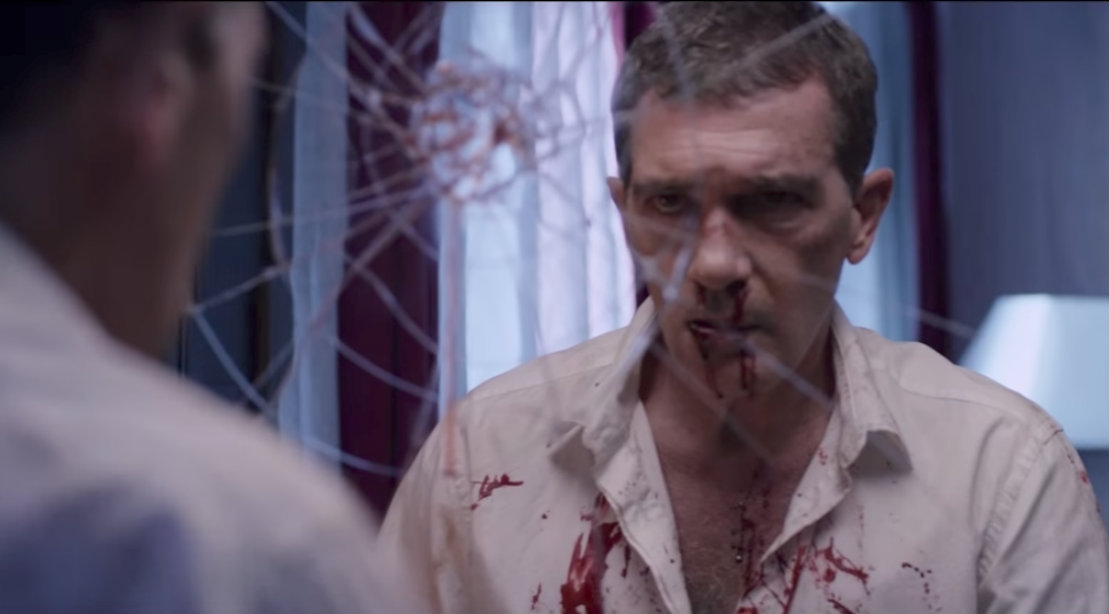
A Bad Idea Gone Wrong is a comedy of errors that finds inventive yet credible ways in which to make things more and more difficult for its two protagonists, and the unexpected housesitter, Darcy (Pienta), they find upstairs in one of the bedrooms. Some of these problems are worse than others and some are more casually signposted by Headley, but they all conspire to make the movie an enjoyable romp and spin on the humble home invasion movie. By making Marlon and Leo less than brilliant in the planning and executing stakes, many of the obstacles they face are the result of their own incompetence, or more particularly, Leo holding back some hugely relevant information about the house they’re attempting to rob. Add in the complication of Darcy’s presence and the uneasy truce that they arrive at in attempting to solve all their issues – Darcy isn’t completely honest with Marlon and Leo; not at first, anyway – and you have a quirky, sometimes surreal comedy that is brisk, clever, and which features three very good performances from Jones, Pienta and Rogers.
Headley makes sure that all three characters are gifted with some very witty dialogue, and though we only get to know a few things about them – Marlon is obsessed with landing a big payday, Leo has ex-girlfriend issues, Darcy is shadier than she appears – within the confines of the house and the scenario, Headley is right not to give the audience too much in the way of back stories. The plot plays out smoothly, with each twist and turn feeling like a logical extension of the one that’s gone before, and by the time a community security guard (Mars) arrives on the scene, the movie has successfully and somewhat easily become such an enjoyable experience that a late injection of sentimentality – unnecessary but not surprising given the connections made between the trio – is unable to derail things. Headley mixes daft humour with broad farce to good effect and there’s a warmth towards the characters that allows for a great deal of sympathy for them and their predicament. It’s a lightweight concoction at times, but in a good way, and one that will have you smiling throughout and laughing out loud on more occasions than you’d expect.

Rating: 8/10 – a low budget indie comedy with smarts, A Bad Idea Gone Wrong has its own offbeat sensibility, and offers a reminder that more mainstream comedies can only dream that they could be this well put together; touching in places, absurdist in others, yet consistently amusing and appealing, it’s another of the many “unsung heroes” of 2017.

Share this:

  • Click to share on X (Opens in new window) X
  • Click to share on Facebook (Opens in new window) Facebook
  • More
  • Click to print (Opens in new window) Print
  • Click to email a link to a friend (Opens in new window) Email
Like Loading...
← Older posts
Newer posts →

Blog Stats

  • 483,568 hits

Recent Posts

  • 10 Reasons to Remember Bibi Andersson (1935-2019)
  • Fantasia (1940)
  • Dances With Wolves (1990) – The Special Edition
  • Kiss of the Spider Woman (1985)
  • The Three Musketeers (1973)

Top Posts & Pages

  • Lost for Life (2013) - Another Look
    Lost for Life (2013) - Another Look
  • Lost for Life (2013)
    Lost for Life (2013)
  • The Monuments Men (2014)
    The Monuments Men (2014)
  • About
    About
  • Exposed (2016)
    Exposed (2016)
  • Cardboard Boxer (2016)
    Cardboard Boxer (2016)
  • Irrational Man (2015)
    Irrational Man (2015)
  • 10 Movies to Avoid in 2016
    10 Movies to Avoid in 2016
  • Mini-Review: Good Kill (2014)
    Mini-Review: Good Kill (2014)
  • 10 Reasons to Remember Arthur Hiller (1923-2016)
    10 Reasons to Remember Arthur Hiller (1923-2016)
Follow thedullwoodexperiment on WordPress.com

Blogs I Follow

  • Rubbish Talk
  • Film 4 Fan
  • Fast Film Reviews
  • The Film Blog
  • All Things Movies UK
  • Interpreting the Stars
  • Let's Go To The Movies
  • Movie Reviews 101
  • TMI News
  • Dan the Man's Movie Reviews
  • Film History
  • Jordan and Eddie (The Movie Guys)

Archives

  • April 2019 (13)
  • March 2019 (28)
  • February 2019 (28)
  • January 2019 (32)
  • December 2018 (28)
  • November 2018 (30)
  • October 2018 (29)
  • September 2018 (29)
  • August 2018 (29)
  • July 2018 (30)
  • June 2018 (28)
  • May 2018 (24)
  • April 2018 (21)
  • March 2018 (31)
  • February 2018 (25)
  • January 2018 (30)
  • December 2017 (30)
  • November 2017 (27)
  • October 2017 (27)
  • September 2017 (26)
  • August 2017 (32)
  • July 2017 (32)
  • June 2017 (30)
  • May 2017 (29)
  • April 2017 (29)
  • March 2017 (30)
  • February 2017 (27)
  • January 2017 (32)
  • December 2016 (30)
  • November 2016 (28)
  • October 2016 (30)
  • September 2016 (27)
  • August 2016 (30)
  • July 2016 (30)
  • June 2016 (31)
  • May 2016 (34)
  • April 2016 (30)
  • March 2016 (30)
  • February 2016 (28)
  • January 2016 (35)
  • December 2015 (34)
  • November 2015 (31)
  • October 2015 (31)
  • September 2015 (34)
  • August 2015 (31)
  • July 2015 (33)
  • June 2015 (12)
  • May 2015 (31)
  • April 2015 (32)
  • March 2015 (30)
  • February 2015 (37)
  • January 2015 (39)
  • December 2014 (34)
  • November 2014 (34)
  • October 2014 (36)
  • September 2014 (25)
  • August 2014 (29)
  • July 2014 (29)
  • June 2014 (28)
  • May 2014 (23)
  • April 2014 (21)
  • March 2014 (42)
  • February 2014 (38)
  • January 2014 (29)
  • December 2013 (28)
  • November 2013 (34)
  • October 2013 (4)

Create a free website or blog at WordPress.com.

Rubbish Talk

Film 4 Fan

A Movie Blog

Fast Film Reviews

The Film Blog

The official blog of everything in film

All Things Movies UK

Movie Reviews and Original Articles

Interpreting the Stars

Dave Examines Movies

Let's Go To The Movies

Film and Theatre Lover!

Movie Reviews 101

Daily Movie Reviews

TMI News

Latest weather, crime and breaking news

Dan the Man's Movie Reviews

All my aimless thoughts, ideas, and ramblings, all packed into one site!

Film History

Telling the story of film

Jordan and Eddie (The Movie Guys)

Movie Reviews & Ramblings from an Australian Based Film Fan

Privacy & Cookies: This site uses cookies. By continuing to use this website, you agree to their use.
To find out more, including how to control cookies, see here: Cookie Policy
  • Subscribe Subscribed
    • thedullwoodexperiment
    • Join 481 other subscribers
    • Already have a WordPress.com account? Log in now.
    • thedullwoodexperiment
    • Subscribe Subscribed
    • Sign up
    • Log in
    • Report this content
    • View site in Reader
    • Manage subscriptions
    • Collapse this bar
 

Loading Comments...
 

    %d