• 10 Reasons to Remember…
  • A Brief Word About…
  • About
  • For One Week Only
  • Happy Birthday
  • Monthly Roundup
  • Old-Time Crime
  • Other Posts
  • Poster of the Week
  • Question of the Week
  • Reviews
  • Trailers

thedullwoodexperiment

~ Viewing movies in a different light

thedullwoodexperiment

Tag Archives: Thriller

The Cloverfield Paradox (2018)

06 Tuesday Feb 2018

Posted by dullwood68 in Movies

≈ 1 Comment

Tags

Aksel Hennie, Chris O'Dowd, Daniel Brühl, David Oyelowo, Drama, Elizabeth Debicki, Gugu Mbatha-Raw, John Ortiz, Julius Onah, Prequel, Review, Sci-fi, Shepard particle accelerator, Space station, Thriller, Ziyi Zhang
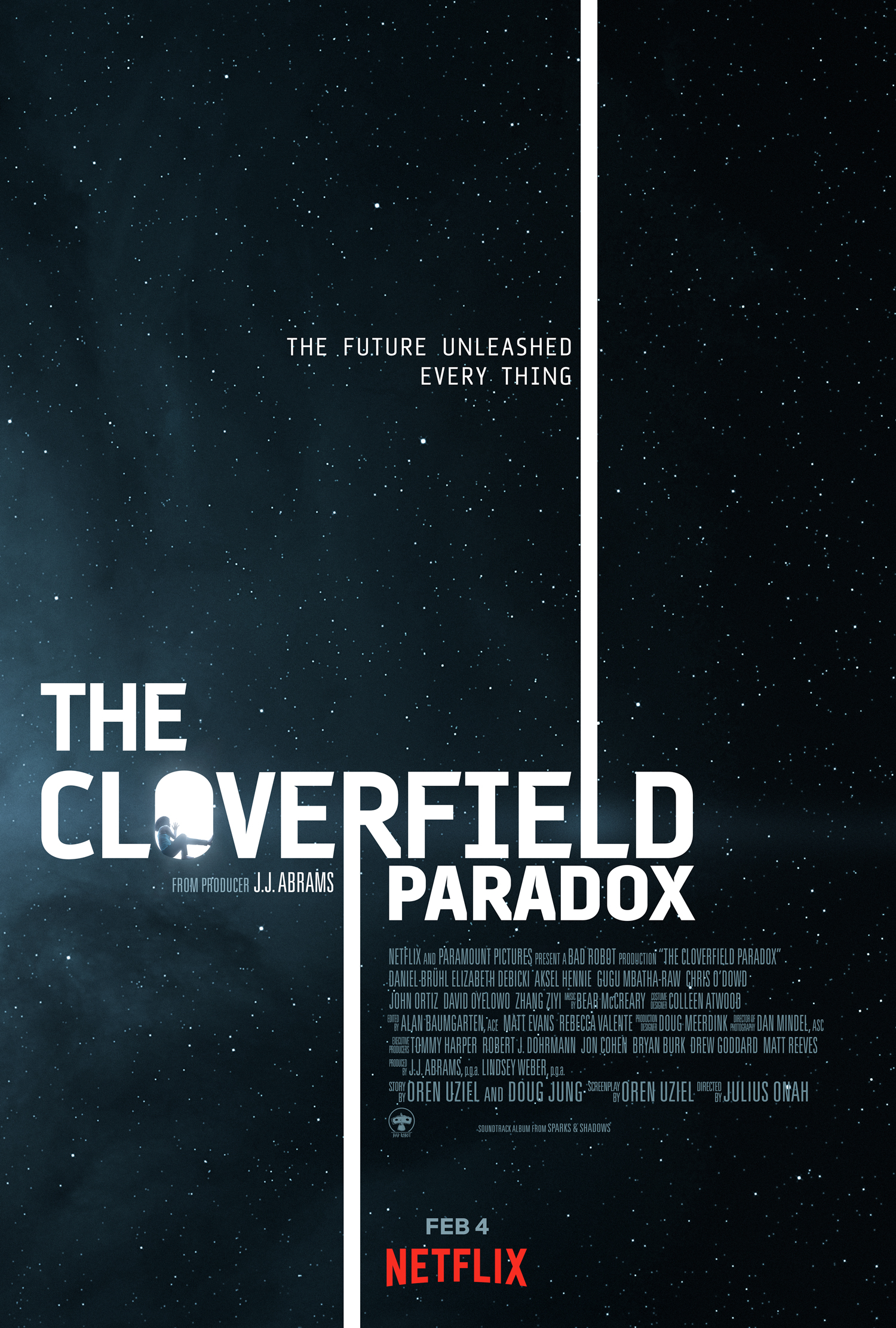
D: Julius Onah / 102m

Cast: Daniel Brühl, Elizabeth Debicki, Aksel Hennie, Gugu Mbatha-Raw, Chris O’Dowd, John Ortiz, David Oyelowo, Ziyi Zhang, Roger Davies, Clover Nee

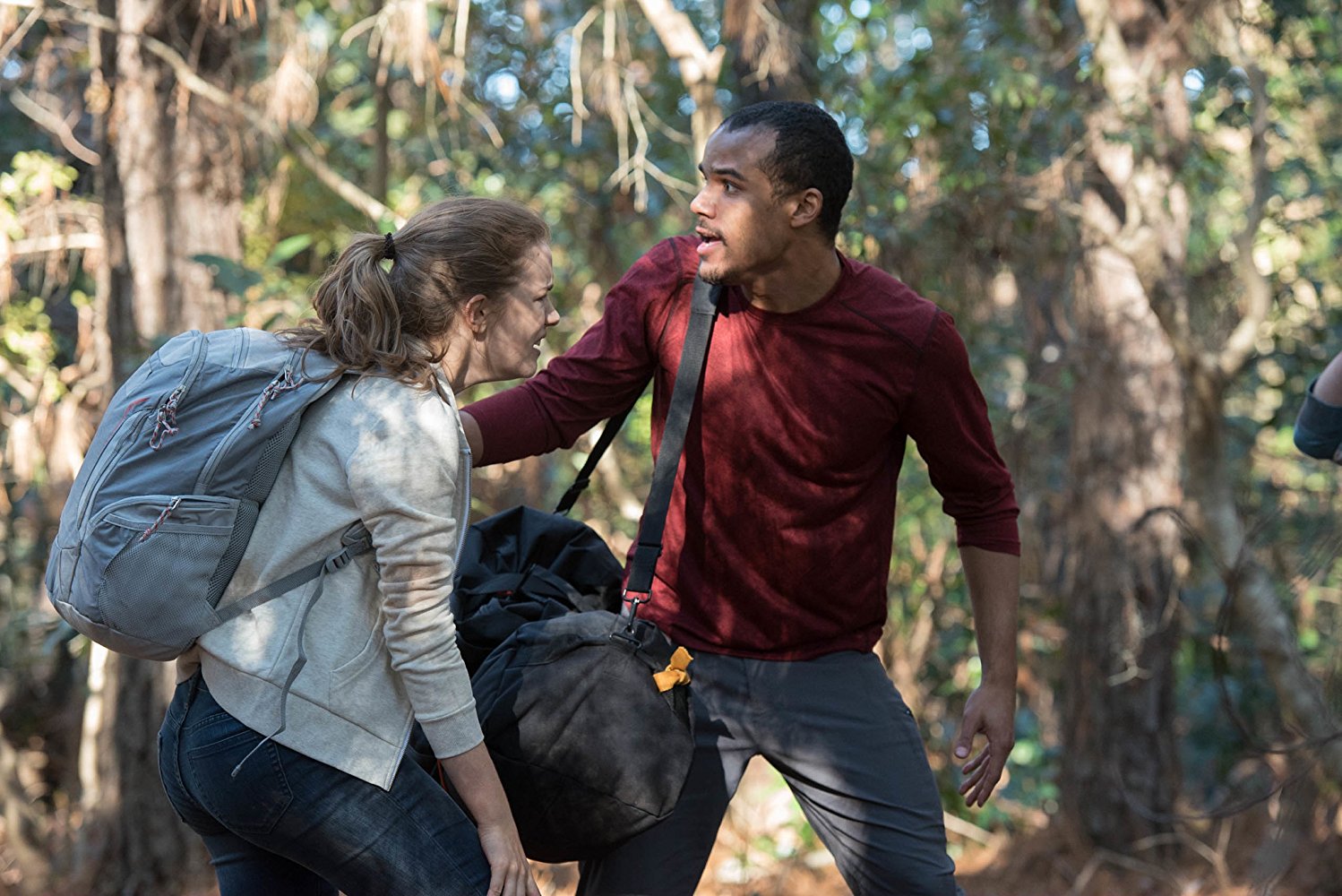
Originally titled God Particle and delayed twice before Netflix picked it up, The Cloverfield Paradox is the third in the series that began with Cloverfield (2008 – is it really that long ago?), and continued with 10 Cloverfield Lane (2016). A prequel to both movies in that it provides a partial explanation for the existence of the Cloverfield monster, this latest instalment has neither the strong visual aesthetic of the first movie, nor the strong storyline and characters of the second. It does have a great cast, but this time round the story isn’t there, and the muddled narrative that unfolds is chock-full of dramatic clichés, characters you’re never close to caring about (even Mbatha-Raw’s nominal heroine, Ava), and the kind of cod-science that sounds good unless you listen to what’s being said too closely. In essence, it’s a big let-down, both as a sci-fi movie, and as another entry in the Cloverfield franchise. And that shouldn’t be much of a surprise. Oren Uziel’s screenplay was originally a spec script that was picked up by J.J. Abrams’ Bad Robot production company back in 2012, and which had nothing to do with the Cloverfield universe. Until production began in 2016…
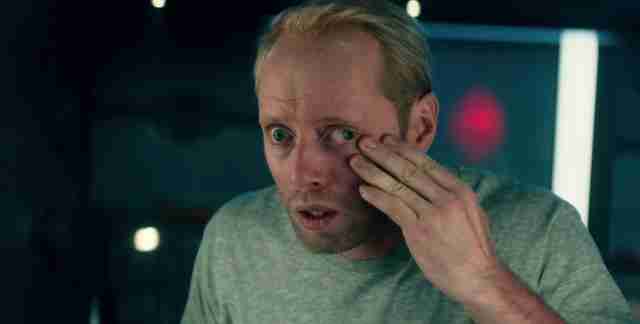
The story is a rote one that contains elements of Alien (1979), Event Horizon (1997), and any other sci-fi movie set on a space ship or station where the crew has to fight off an unseen and/or murderous presence. It also splits the narrative between scenes on the space station that see the plucky crew trying to reverse the effects of an infinite energy experiment that has flung them into an alternate reality, and scenes involving Ava’s doctor husband (Davies) back on Earth as the Cloverfield monster makes its presence felt. Each provides a respite from the other but only for a short while, and by the halfway mark, a complete respite from the whole silly set up is required. As the script inevitably picks off its space station characters one by one, the manner in which they’re dispatched ranges from the banal to the overly thought out set piece and back again. The cause of most of these deaths is concerning as Uziel’s script seems unable to explain exactly what is going on, and how, and why. A lot happens just because the characters are in a weird situation, and it seems fitting to throw weird stuff at them – a severed arm, a crew member trapped in a wall space, a condensation issue becoming a flood – but none of it makes any coherent sense.

As a result, the very talented cast have to work very, very hard to make the most of the script’s weaknesses and Onah’s by-the-numbers direction. Mbatha-Raw fares better than most, but then she’s playing the one character who has anything like a story arc. Ava has a tragic past, and the alternate reality she finds herself in gives her a chance to change things and alleviate her guilt. Against this, O’Dowd brings some necessary humour to the mix, while everyone else offers tepid support, from Oyelowo’s nondescript mission commander to Brühl’s German (and possibly villainous) scientist – #HollywoodStillSoRacist anyone? The movie also betrays its modest production values, with several scenes, especially those involving corridors on the space station, looking decidedly cheap. All in all, it’s a movie that offers nothing new to the franchise, or to viewers who might be intrigued enough to take a chance on watching it without having seen its predecessors. With the good possibility that a fourth movie in the Cloverfield universe will be with us in the next eighteen months, let’s hope that it’s not another spec script given a Cloverfield once-over, and instead an original story that fits more neatly into the world Bad Robot created ten years ago.

Rating: 4/10 – stock characters, stock situations, a garbled political crisis on Earth, and much more besides that doesn’t work, The Cloverfield Paradox is let down by its confusing screenplay, and by Onah’s inability to make much of it interesting; a jarring experience given the quality of its predecessors, the real paradox here isn’t why it was made, but how anyone could have thought it was any good.
Share this:

  • Click to share on X (Opens in new window) X
  • Click to share on Facebook (Opens in new window) Facebook
  • More
  • Click to print (Opens in new window) Print
  • Click to email a link to a friend (Opens in new window) Email
Like Loading...

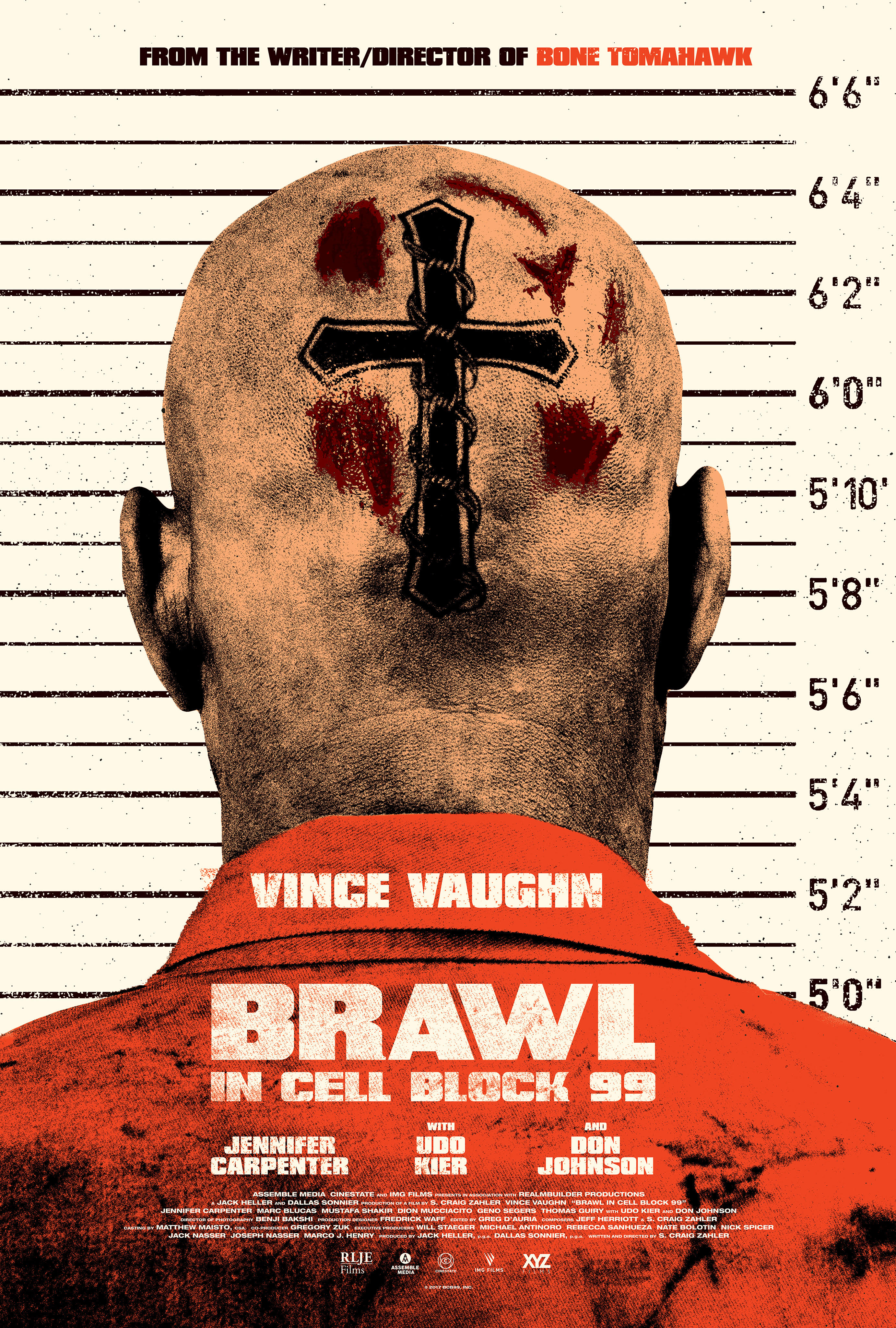
Brawl in Cell Block 99 (2017)

03 Saturday Feb 2018

Posted by dullwood68 in Movies

≈ 1 Comment

Tags

Crime, Don Johnson, Drama, Jennifer Carpenter, Prison, Review, S. Craig Zahler, Thriller, Udo Kier, Vince Vaughn

D: S. Craig Zahler / 132m

Cast: Vince Vaughn, Jennifer Carpenter, Marc Blucas, Dion Mucciacito, Don Johnson, Udo Kier, Geno Segers, Victor Almanzar, Willie C. Carpenter, Tom Guiry, Clark Johnson, Pooja Kumar, Fred Melamed

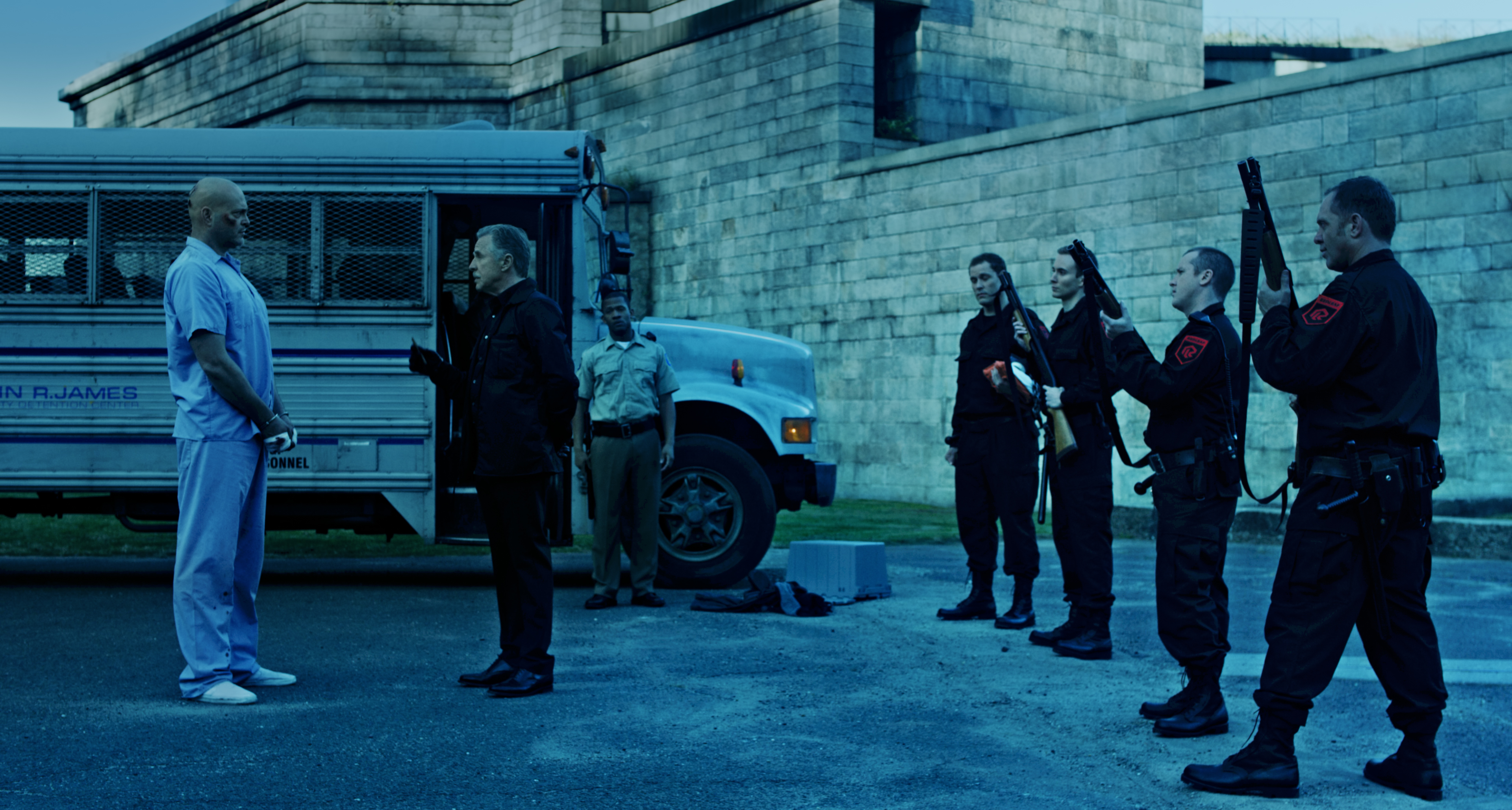
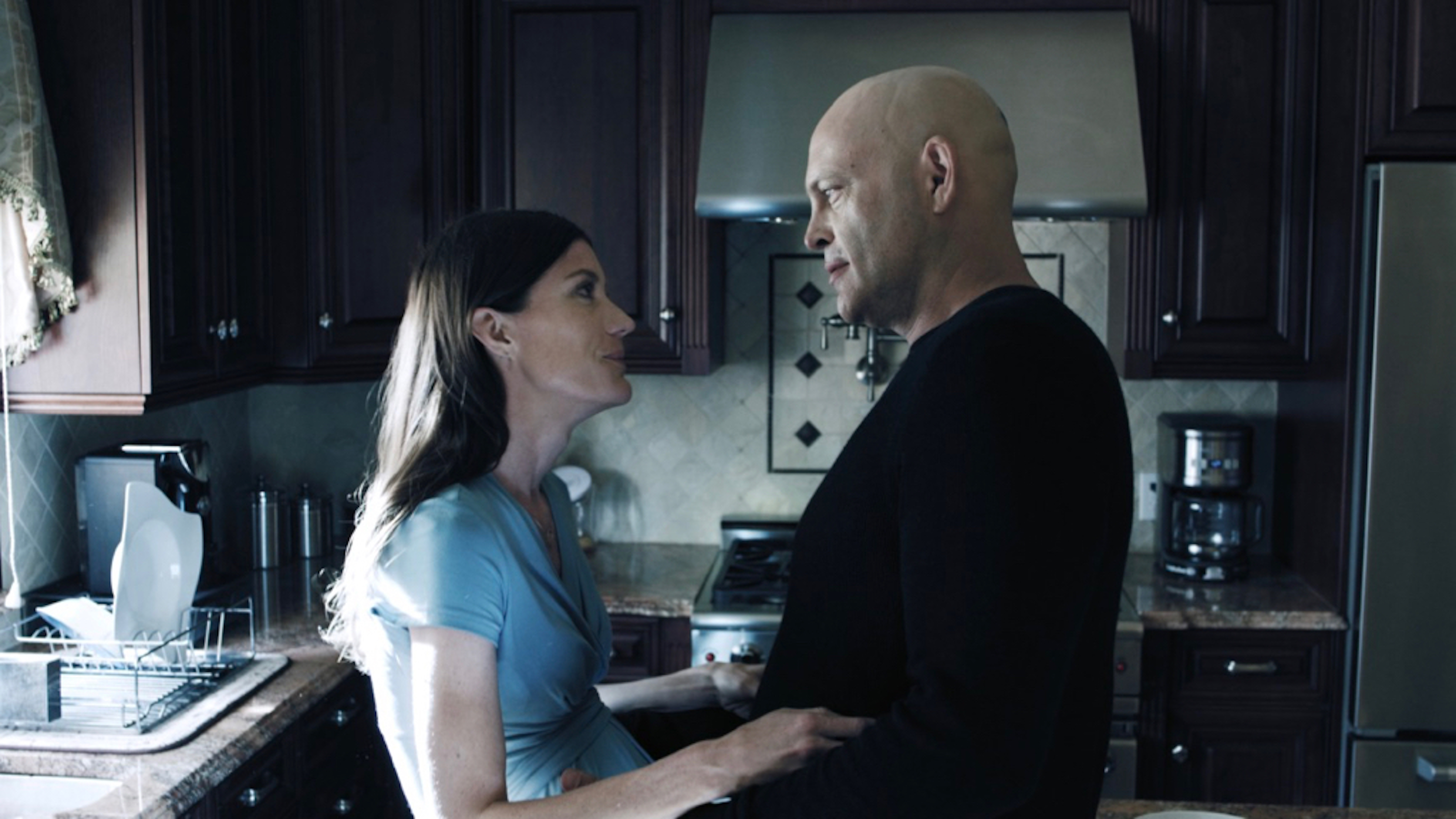
In Craig S. Zahler’s follow up to Bone Tomahawk (2015), Vince Vaughn is Bradley (never Brad) Thomas, a man who turns to being a drug runner when he gets laid off from his job at an auto-repair shop. Eighteen months later, he and his wife, Lauren (Carpenter), are expecting a baby (their second after they lost the first), and living a pretty luxurious lifestyle; crime has been good to them. Bradley works for an old friend, Gil (Blucas), but when Gil goes into partnership with a Mexican drug boss called Eleazar (Mucciacito), their first pick up ends in a shootout with the police and Bradley causing the death of one of Eleazar’s men and incapacitating another. Despite this, he’s sentenced to seven years in a medium security prison. But Eleazar wants revenge. He has Lauren kidnapped, and through an emissary (Kier), lets Bradley know that unless he kills an inmate at a maximum security hellhole called Redleaf, his unborn baby will be “operated on”. Getting transferred to Redleaf is the easy part however, while surviving it, and the regime set up by Warden Tuggs (Johnson), is a whole other matter…

In recent years, Vince Vaughn’s career has been about relinquishing his comic persona in favour of more dramatic roles, from his appearance in Season Two of True Detective (2015) to his role in the Oscar-winning Hacksaw Ridge (2016). Now he gives his best dramatic performance yet as a drug runner with principles, the stoic Bradley Thomas, a man you can hit with a billy club and he’ll barely flinch. It’s a role that keeps him quiet for much of the picture, but with Vaughn it’s all in the eyes and the way they can convey a range of emotions with clarity and precision. You know when Bradley is angry, you know when he’s trying to keep that anger in check, and you know when he’s about to unleash that anger. This all makes Bradley something of a coiled spring, and Vaughn is a commanding physical presence in the role, expertly channelling Bradley’s propensity for extreme violence while maintaining the character’s deep-rooted humanity. Vaughn is never less than convincing, and he brings an intensity to the part that is mesmerising.

He’s ably supported by Carpenter, Kier and Johnson, but while the performances are good, the movie does suffer from a storyline that, once it picks up momentum and Bradley starts hurting people in ever more violent ways, reveals itself to be more than a little on the slight side. There’s a prologue that proves superfluous, while the stretch that leads up to Bradley’s incarceration is long-winded and could have benefited from some judicious cutting (when will movie makers learn that scenes where characters drive from place to place looking thoughtful don’t add anything to a movie?). But even when Bradley does start showing us what he’s really good at, and the movie’s pace increases, what we’re left with is a succession of increasingly violent (and cartoonish) altercations that are well choreographed and executed, but which also appear to be the movie’s sole raison d’être. With this in mind, and despite the visceral and very effective quality of the fight scenes, the movie reveals a hollow centre that stops it from being as rewarding a viewing experience as intended. Zahler is certainly a director of talent, and the movie’s visual aesthetic becomes more and more squalid as Bradley’s descent into prison hell continues. But this is that difficult second feature that doesn’t quite match the promise raised by its predecessor.

Rating: 6/10 – Vaughn’s imposing performance is the main attraction here, and while it helps elevate the material above its grindhouse ambitions, Brawl in Cell Block 99 is still a movie that doesn’t work as well as it should; overlong, and with Bradley impervious to any blows that come his way, there’s too little in the way of actual jeopardy for the character to find himself in, making this a movie where tension is ignored, and nihilism is the primary order of the day.

Share this:

  • Click to share on X (Opens in new window) X
  • Click to share on Facebook (Opens in new window) Facebook
  • More
  • Click to print (Opens in new window) Print
  • Click to email a link to a friend (Opens in new window) Email
Like Loading...

Monthly Roundup – January 2018

31 Wednesday Jan 2018

Posted by dullwood68 in Movies

≈ 2 Comments

Tags

Adrian Molina, Alexander Payne, Animation, Anthony Gonzalez, Awakening the Zodiac, Chadwick Boseman, Christoph Waltz, Coco, Comedy, Darkest Hour, Downsizing, Drama, Dylan Minnette, Fabrice du Welz, Family Fever, Gael García Bernal, Gary Oldman, Germany, Hallie Meyers-Shyer, History, Home Again, Horror, Jaume Collet-Serra, Joe Wright, Jonathan Wright, Kathrin Waligura, Kristin Scott Thomas, Lee Unkrich, Leslie Bibb, Liam Neeson, Matt Angel, Matt Damon, Meryl Streep, Message from the King, Mexico, Michael Sheen, Nico Sommer, Peter Trabner, Pixar, Reese Witherspoon, Reviews, Romance, Serial killer, Shane West, Steven Spielberg, Suzanne Coote, The Commuter, The Open House, The Pentagon Papers, The Post, The Washington Post, Thriller, Tom Hanks, True story, Vera Farmiga

Awakening the Zodiac (2017) / D: Jonathan Wright / 100m

Cast: Shane West, Leslie Bibb, Matt Craven, Nicholas Campbell, Kenneth Welsh, Stephen McHattie

Rating: 4/10 – no one knew it at the time but the notorious (and uncaptured) Zodiac killer filmed the murders he committed, something cash-strapped couple Mick and Zoe Branson (West, Bibb) discover when they come into possession of one of the reels, and then find themselves and those around them targeted by the Zodiac killer himself; there’s the germ of a good idea lurking somewhere in Awakening the Zodiac, but thanks to a sloppy script, wayward direction, and an indifferent approach to the Zodiac killer himself (by the end he’s just a generic movie-made serial killer), this never gets out of first gear, and settles for trundling along and signposting each narrative development with all the skill and style of a one-legged man at an ass-kicking contest.

Home Again (2017) / D: Hallie Meyers-Shyer / 97m

Cast: Reese Witherspoon, Michael Sheen, Candice Bergen, Pico Alexander, Jon Rudnitzky, Nat Wolff, Lake Bell

Rating: 7/10 – when middle-aged fledgling interior designer Alice (Witherspoon) splits from her unreliable husband (Sheen), the last thing she expects to do is allow three young men trying to break into the movie business to move into her guest house – and then become romantically involved with one of them (Alexander); it’s hard to criticise Home Again because despite it being almost drama-free and the very definition of innocuous, it also just wants to give audiences a good time, and on that very basic level it succeeds, but it’s still possibly the most lightweight romantic comedy of 2017.

Downsizing (2017) / D: Alexander Payne / 135m

Cast: Matt Damon, Christoph Waltz, Hong Chau, Kristen Wiig, Rolf Lassgård, Udo Kier, Søren Pilmark, Jason Sudeikis

Rating: 5/10 – the answer to the world’s population crisis is revealed to be shrinking people to the point where they’re five inches tall, something that sad-sack occupational therapist Paul Safranek (Damon) agrees to with alacrity, but being small proves to be no different from being normal-sized, and soon Paul is having to re-think everything he’s ever thought or believed; a closer examination of Downsizing (under a microscope perhaps) reveals a movie that contains too many scenes that pass by without contributing anything to the overall storyline, and a satirical approach to the idea itself that lacks purpose, and sadly for Payne fans, his trademark wit, making it all a dreary, leaden experience that goes on for waaaaaay too long.

Family Fever (2014) / D: Nico Sommer / 71m

Original title: Familien fieber

Cast: Kathrin Waligura, Peter Trabner, Deborah Kaufmann, Jörg Witte, Jan Amazigh Sid, Anais Urban

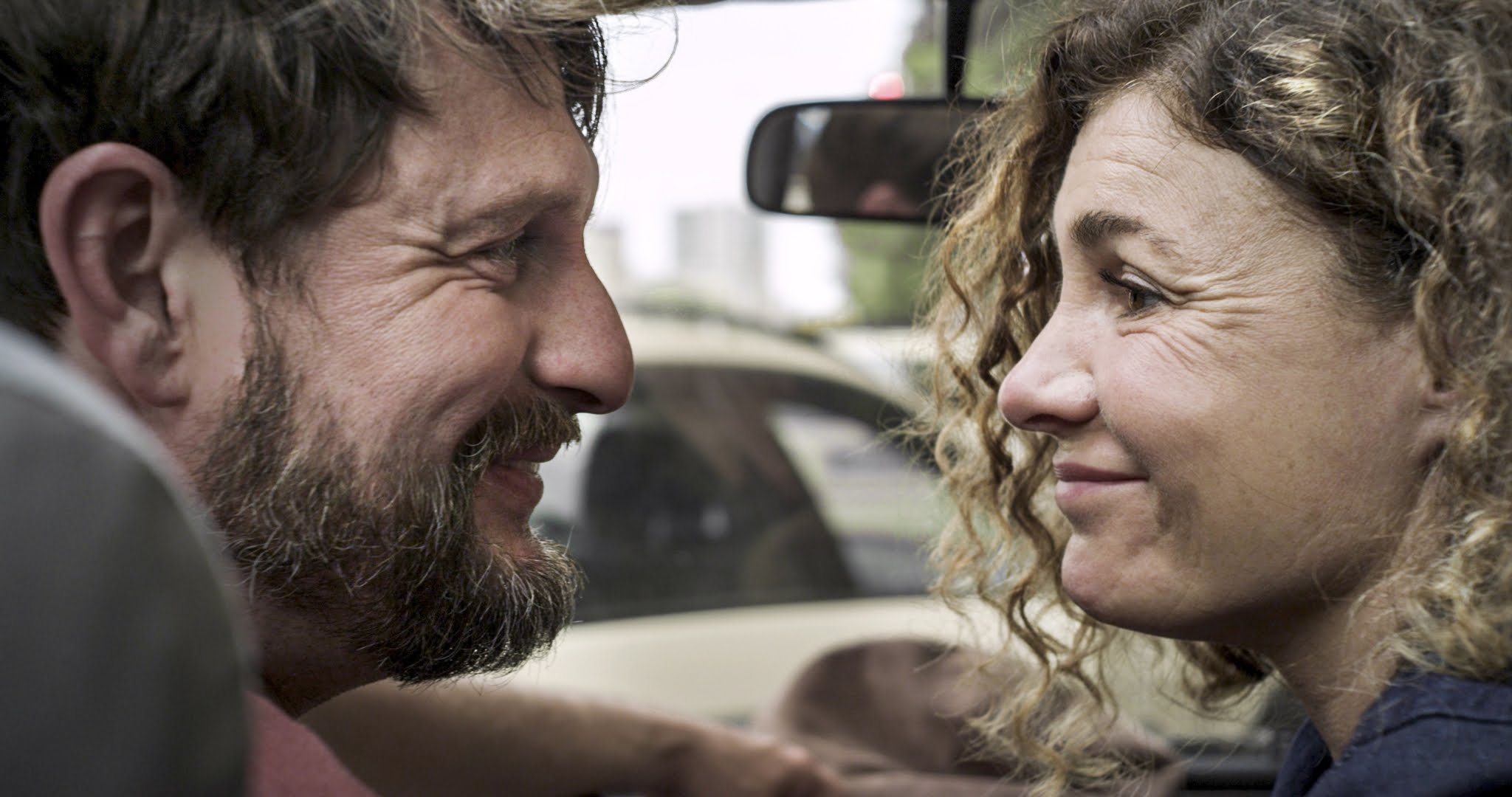
Rating: 7/10 – when two sets of parents get together for the weekend at the request of their respective children (who are a couple), none of them are able to deal with the fallout that comes with the revelation of a secret that threatens the security of both marriages; a German comedy/drama that doesn’t always go where the viewer might expect it to, Family Fever revels in the awkwardness and frustration felt by its quartet of main characters, and though it sadly runs out of steam in the last fifteen minutes, by then it’s done more than enough to provide plenty of wicked laughs and affecting drama.

Coco (2017) / D: Lee Unkrich, Adrian Molina / 105m

Cast: Anthony Gonzalez, Gael García Bernal, Benjamin Bratt, Alanna Ubach, Renee Victor, Jaime Camil, Alfonso Arau

Rating: 8/10 – Miguel (Gonzalez) is a young boy whose family has rejected any kind of music in order to focus on selling shoes, which leads him into all sorts of trouble in the Underworld on Mexico’s Day of the Dead, trouble that could also mean his never returning to the land of the living; right now you’re never quite sure how a Pixar movie is going to work out, but Coco is a treat, its mix of clever character design, beautifully rendered animation (naturally), heartfelt storylines, and memorable songs making it one to savour time and again… though, be warned, you will be in tears towards the end.

Darkest Hour (2017) / D: Joe Wright / 125m

Cast: Gary Oldman, Kristin Scott Thomas, Lily James, Stephen Dillane, Ben Mendelsohn, Ronald Pickup, Nicholas Jones, Samuel West

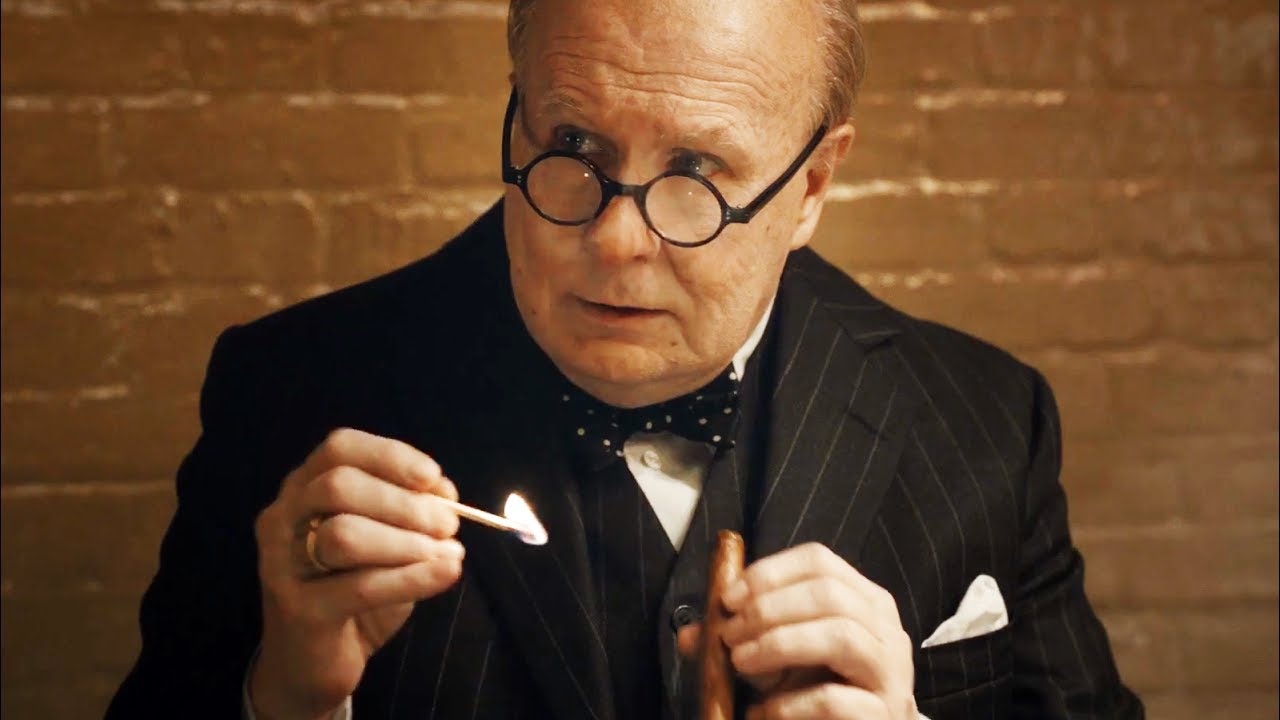
Rating: 8/10 – it’s 1940 and Great Britain is faced with a challenge: who is to lead them against the fast-approaching menace of the Nazis, and if it has to be Winston Churchill (Oldman), then what can be done to undermine him and his authority?; the answer is quite a bit – for the most part – but history is firm on Churchill’s success, and so Darkest Hour, while featuring a superb performance from Oldman, has no choice but to succumb to retelling events that have already been retold numerous times before, and in doing so doesn’t offer the viewer anything new except for a number of very good performances and assured, and surprisingly sinewy direction from Wright.

Message from the King (2016) / D: Fabrice du Welz / 102m

Cast: Chadwick Boseman, Luke Evans, Alfred Molina, Teresa Palmer, Natalie Martinez, Arthur Darbinyan, Lucan Melkonian, Diego Josef, Tom Felton, Chris Mulkey, Jake Weary

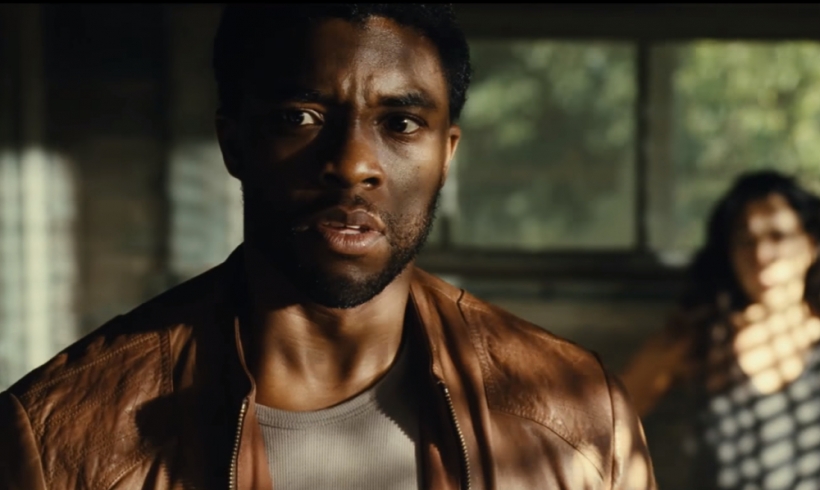
Rating: 5/10 – when his younger sister dies in suspicious circumstances in Los Angeles, South African cab driver Jacob King (Boseman) travels there to find out who caused her death and why – and exact revenge; a throwback to the kind of blaxploitation movies made in the Seventies, Message from the King at least refers to King as an angry brother in the traditional sense, but the movie’s plot is hollow, and the likes of Evans and Molina are wasted in roles that might have seemed fresh (again) in the Seventies, but here feel like caricatures for the movie to focus on in between bouts of King exacting his violent revenge.

The Commuter (2018) / D: Jaume Collet-Serra / 105m

Cast: Liam Neeson, Vera Farmiga, Patrick Wilson, Jonathan Banks, Sam Neill, Elizabeth McGovern, Killian Scott, Shazad Latif, Andy Nyman, Clara Lago, Roland Møller, Florence Pugh

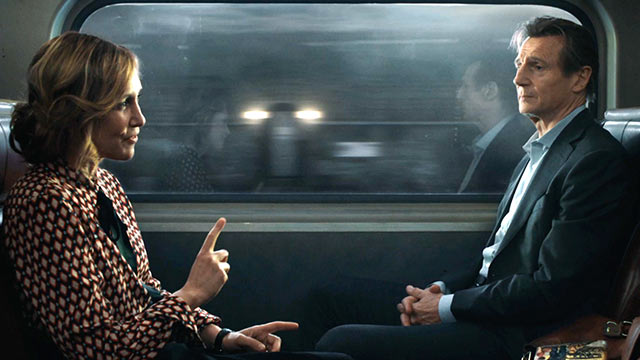
Rating: 4/10 – ex-cop turned insurance salesman Michael MacCauley (Neeson) is approached by a mysterious woman (Farmiga) on his train home and tasked with finding a complete stranger who’s also on the train – what could possibly go wrong?; everything as it turns out, with The Commuter going off the rails soon after, and never getting back on track, something confirmed (if there was any doubt before then) when the script throws in an “I’m Spartacus/I’m Brian” moment (take your pick), as well as reminding everyone that Neeson really is too old for this kind of thing.

The Post (2017) / D: Steven Spielberg / 116m

Cast: Meryl Streep, Tom Hanks, Sarah Paulson, Bob Odenkirk, Tracy Letts, Bradley Whitford, Bruce Greenwood, Matthew Rhys, Alison Brie, Carrie Coon, Jesse Plemons, David Cross, Zach Woods, Pat Healy

Rating: 9/10 – the publication of the Pentagon Papers, which exposed the level of deceit the US government had perpetrated on its citizens about its involvement in Vietnam, is explored through the days leading up to the Washington Times‘ courageous decision to publish despite the threat of imprisonment for treason that the White House was prepared to enforce; Streep is publisher Kay Graham, Hanks is legendary editor Ben Bradlee, and Spielberg is on excellent form, giving The Post a sense of immediacy and potency that other historical dramas can only dream of (and the relevance to today’s US political scene doesn’t even need to be made obvious).

The Open House (2018) / D: Matt Angel, Suzanne Coote / 94m

Cast: Dylan Minnette, Piercey Dalton, Patricia Bethune, Sharif Atkins, Aaron Abrams, Edward Olson, Katie Walder

Rating: 3/10 – a recent widow (Dalton) and her mopey son (Minnette) get away from their grief and their problems at a house that’s up for sale – and find strange things going on there right from the start; an awful thriller that just refuses to make any sense or make either of its two main characters sympathetic, The Open House does everything it can to make you look away… and not in a good way.

Share this:

  • Click to share on X (Opens in new window) X
  • Click to share on Facebook (Opens in new window) Facebook
  • More
  • Click to print (Opens in new window) Print
  • Click to email a link to a friend (Opens in new window) Email
Like Loading...

Snake in the Eagle’s Shadow (1978)

30 Tuesday Jan 2018

Posted by dullwood68 in Movies

≈ Leave a comment

Tags

Action, Comedy, Drama, Hong Kong, Hwang Jang Lee, Jackie Chan, Martial arts, Review, Se ying diu sau, Thriller, Yuen Siu Tin, Yuen Woo-Ping

Original title: Se ying diu sau

D: Yuen Woo-Ping / 98m

Cast: Jackie Chan, Yuen Siu Tin, Hwang Jang Lee, Dean Shek, Roy Horan, Fung Hark-On, Chen Yao Lin, Chen Tien Lung, Chiu Chi Ling, Gam Yam, Hsu Hsia

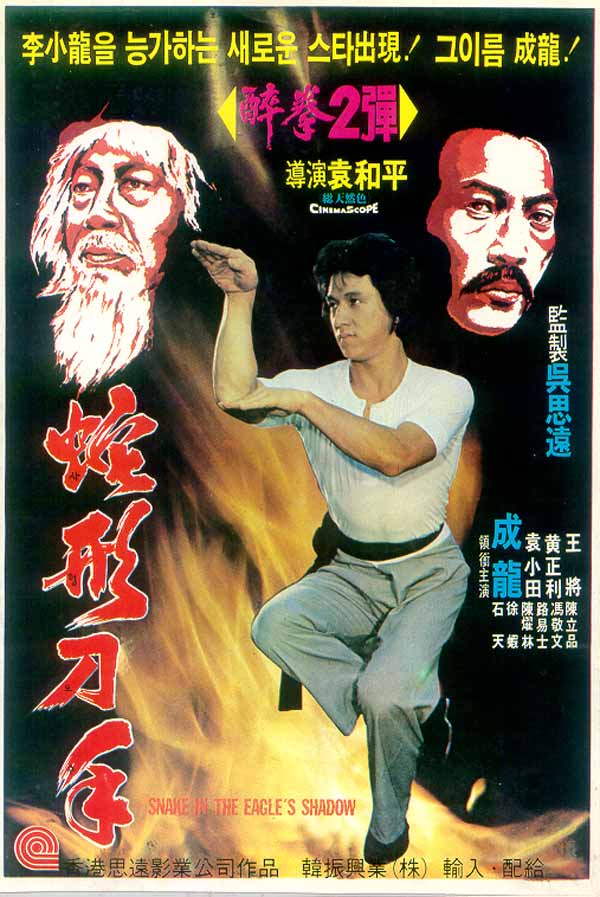
The movie that really kickstarted Jackie Chan’s career, Snake in the Eagle’s Shadow is a compendium of established martial arts stylings with added humour that remains as fresh today as it was forty years ago. Which, on the face of it, seems unlikely, as the story is so conventional that the average viewer could work out what’s going to happen even if they’ve never seen a Hong Kong martial arts movie before. There are two rival clans, one that uses the Eagle Claw style of fighting, and one that uses the Snake style. The leader of the Eagle Claw clan, Lord Sheng Kuan (Hwang), has sworn to kill each and every member of the Snake clan, and is on the trail of one of the last surviving masters of said clan, Pai Cheng-Tien (Yuen). Fleeing Kuan, Pai ends up in a small town where he befriends Chien Fu (Chan), a janitor at a kung fu school who is mistreated by his masters. Pai teaches Chien how to defend himself using the Snake style of fighting, and Chien proves a fast learner… which proves to be a huge benefit when Kuan makes his presence known in the town.

The master and the pupil is a popular storyline in martial arts movies, and here it’s the source of much of the humour, as Pai uses a variety of (often) humiliating techniques to help Chien learn faster. The rival clans, necessarily good and bad, are another staple, and proud fighters squaring off against each other with determined faces is yet another, but though the movie provides enough familiarity to keep audiences reassured that they’ll have a good time, what it does so much more effectively is in depicting each individual fight scene in a way that makes each one seem fresh and unforced. With so many fight scenes crammed in to what is a relatively short running time, there’s the likelihood that they’ll all merge into one by the end, but the choreography is so expertly done, and so focused on showing the technique involved as well as the speed and the precision, that much of what is shown is breathtaking in both its simplicity and its impact (and it’s the only movie where you’ll see Jackie Chan kill someone with a groin strike). The only disappointment comes with the final showdown between Chien and Kuan, a sequence that suffers from some very choppy editing, and which lacks the flow of earlier encounters.

Away from the action there’s mileage to be had from Shek’s turn as the abusive Teacher Li, a character so rotten you wish for a better comeuppance than he receives (though he is part of a marvellous piece of physical slapstick with Chan that is one of the movie’s several highlights), and an equally enjoyable turn by Yuen (the director’s father) as the impish and badly be-wigged Grandmaster Pai. Hwang proves to be a smooth and likeable villain (for a change), even though his obsession with killing the Snake clan is a little genocidal, and the presence of Horan as a sword-wielding Russian masquerading as a priest adds an extra dimension to the fighting styles on show. But this is Chan’s breakthrough role, and the movie trains its focus on him at every turn, capturing every knowing smile and perplexed expression. You can argue that in his early movies Chan wasn’t really required to “act” because his physical presence and abilities were more important, but it’s clear that he’s aware of his limitations. This helps him give an enjoyable, spirited performance, and one that remains as entertaining now as it was then.

Rating: 8/10 – the debut feature of Yuen Woo-Ping, Snake in the Eagle’s Shadow is a martial arts movie that overcomes its prosaic storyline and simple plotting to provide a hugely satisfying experience; with intricate, complex fight choreography and very basic (and amusing) sound effects to accompany every blow, this is Cat’s Claws above the majority of Hong Kong martial arts movies made at the time, and a bona fide classic of the genre.

Share this:

  • Click to share on X (Opens in new window) X
  • Click to share on Facebook (Opens in new window) Facebook
  • More
  • Click to print (Opens in new window) Print
  • Click to email a link to a friend (Opens in new window) Email
Like Loading...

Bad Day for the Cut (2017)

23 Tuesday Jan 2018

Posted by dullwood68 in Movies

≈ Leave a comment

Tags

Chris Baugh, Drama, Józef Pawlowski, Murder, Nigel O'Neill, Northern Ireland, Revenge, Review, Stuart Graham, Susan Lynch, Thriller

D: Chris Baugh / 99m

Cast: Nigel O’Neill, Susan Lynch, Józef Pawlowski, Stuart Graham, David Pearse, Anna Próchniak, Stella McCusker, Ian McElhinney

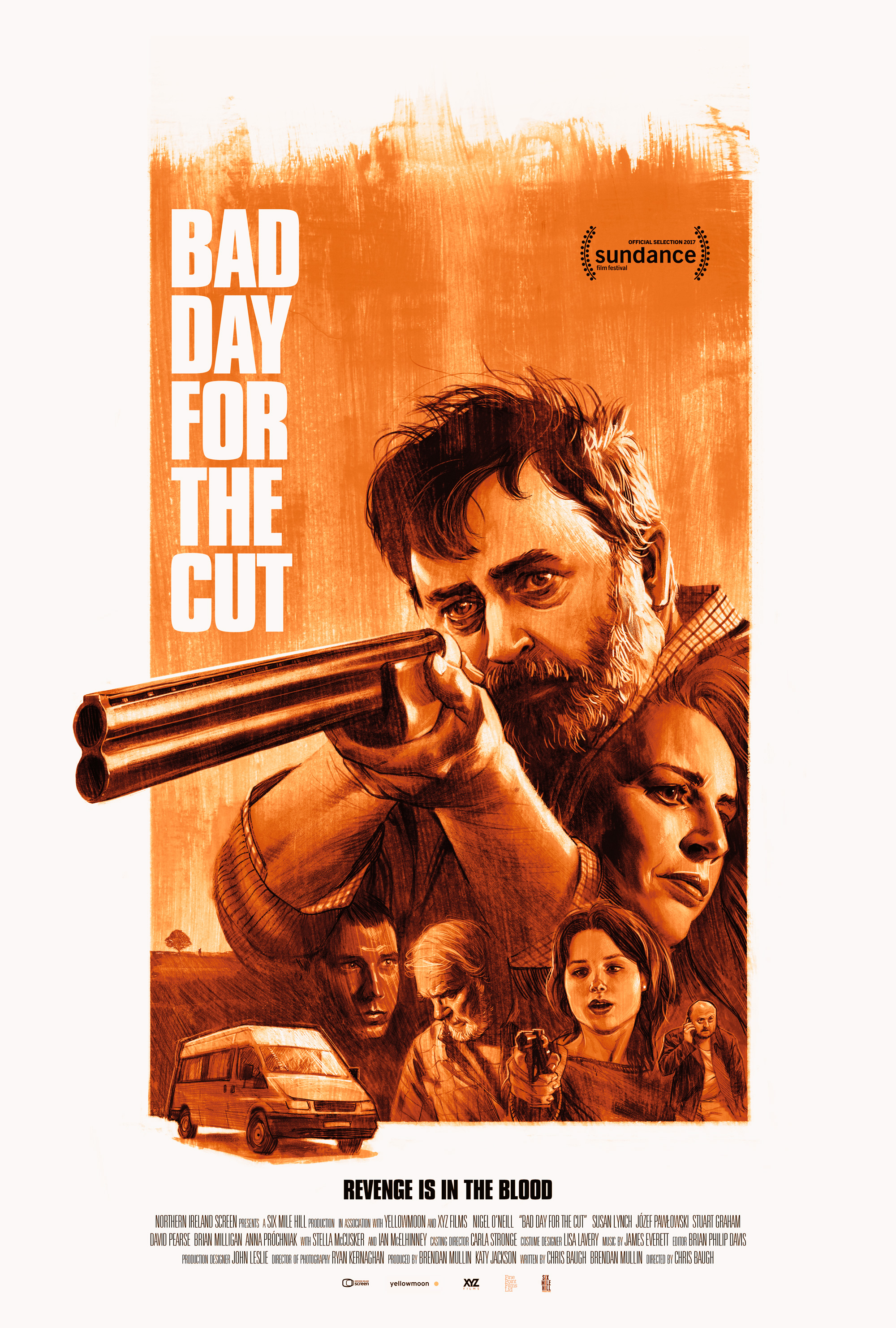
Donal (O”Neill) and his mother, Florence (McCusker), live on a farm on the outskirts of a small town in Northern Ireland. The pair keep themselves to themselves, and seem to be contented with their lot. But when Donal does go out one evening, he returns to find a stranger leaving the farmhouse and his mother dead inside. Some time later, Donal is surprised by two hooded intruders who attempt to kill him as well. He turns the tables on them, and coerces one of them, a young Polish man named Bartosz (Pawlowski), to help him track down the man who killed his mother. The trail leads to a prostitution ring run by a woman called Charlie (Lynch). Soon, Donal and Bartosz are both hunters and hunted as Charlie targets them, and a game of cat and mouse ensues, one that reveals an unexpected connection between Florence, Donal, and Charlie, and events that took place around thirty years before, events that have a major bearing on Florence’s murder and Donal’s current predicament.

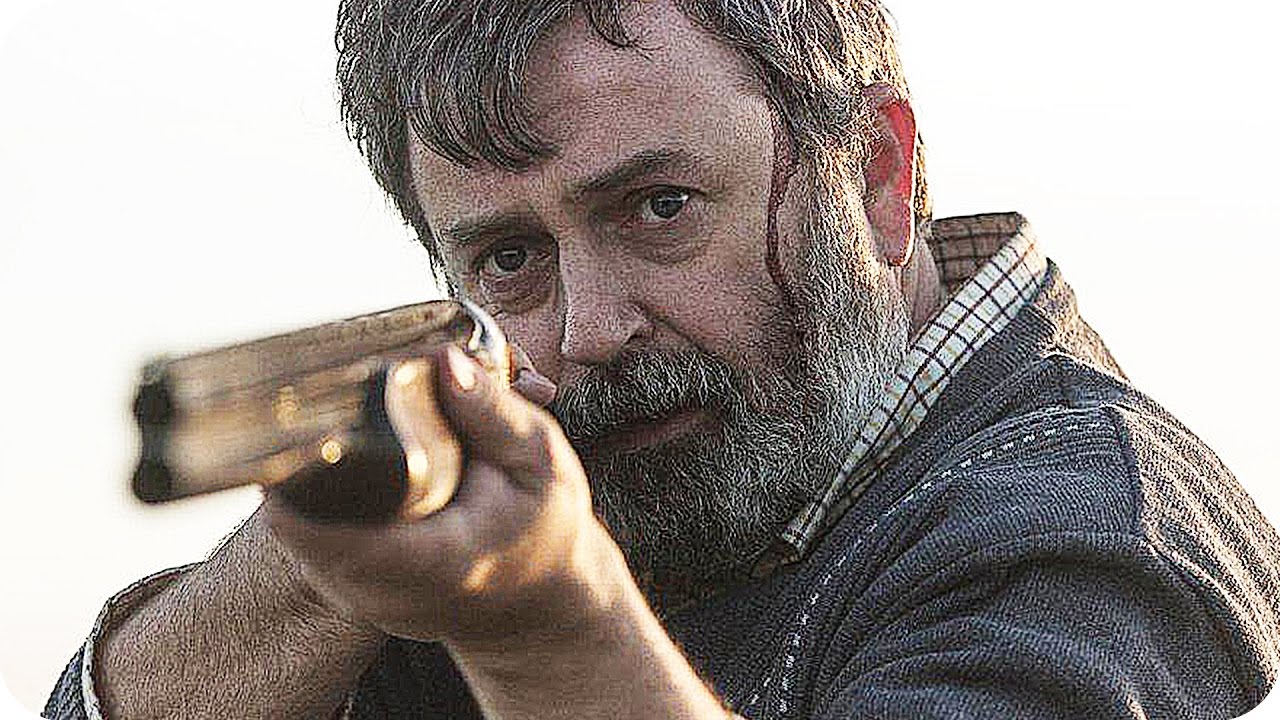
A tough and gritty Western transposed to the wilds of Northern Ireland, Bad Day for the Cut is a modest amalgam of revenge motifs that makes the most of its equally modest production values and its sparsely populated locations, and which benefits further from good performances and Baugh’s measured direction. Along with co-screenwriter Brendan Mullins, Baugh (making his feature debut) has constructed a movie that harkens back to so many other, similar movies from the past, but which still maintains an identity all its own. Donal is a familiar figure, the man rendered alone through the death of his family and consumed with anger. It makes him determined and uncompromising, but Baugh is careful to avoid making him a murderous automaton. When Bartosz reveals that his sister, Kaja (Próchniak), is one of the girls in Charlie’s stable, Donal allows himself to be sidetracked in his mission to make Charlie pay for his mother’s murder. Despite his need for revenge, Donal retains an innate honesty and sense of morality that he fights hard not to compromise. As the beleaguered Donal, O’Neill is a quiet force of nature, taciturn for the most part but capable of moments of irredeemable violence; you wouldn’t want to be trapped in a camper van with Donal and a hot saucepan.

Like all good thrillers, Donal’s quest for revenge doesn’t go as planned (partly because he doesn’t really have a plan), and partly because there are things he doesn’t know, things that he only becomes aware of as the movie progresses. These things stop the movie from being too simplistic, and they also allow the character of Frankie (played with unrestrained vitriol by Lynch) to become more than just a matriarchal monster figure. Baugh plays up the rural isolation that Donal leaves behind in his search for vengeance, but thanks to some well chosen locations, keeps him acting in isolation (even while being helped by Bartosz, who has his own agenda), and adrift from any semblance of a normal life. There’s a real sense that even if he does succeed in getting his revenge, it won’t mean that his grief will be assuaged. Against this, the movie does have a wry sense of humour, and is often funny in a “you-shouldn’t-laugh” kind of way that offsets those moments where the violence is busy being harsh and inflexible. Tough and unyielding then at times, Baugh has managed to put together an agreeable thriller that overcomes several narrative stumbles (which ultimately don’t hurt it as much as they should), and in doing so, he emerges as a director to watch out for in the future.

Rating: 7/10 – with wonderful cinematography by DoP Ryan Kernaghan, and a straightforward approach to the material that works wonders, Bad Day for the Cut is an enjoyable Irish Western that pays due respect to its genre inspirations; anchored by a terrific performance from O’Neill, it’s also a movie whose narrative doesn’t feel forced (except once), and which never tries to be smarter than it already is.

Share this:

  • Click to share on X (Opens in new window) X
  • Click to share on Facebook (Opens in new window) Facebook
  • More
  • Click to print (Opens in new window) Print
  • Click to email a link to a friend (Opens in new window) Email
Like Loading...

The Corpse of Anna Fritz (2015)

22 Monday Jan 2018

Posted by dullwood68 in Movies

≈ Leave a comment

Tags

Alba Ribas, Albert Carbó, Bernat Saumell, Cristian Valencia, Drama, Hèctor Hernández Vicens, Horror, Mortuary, Review, Spain, Thriller

Original title: El Cadáver de Anna Fritz

D: Hèctor Hernández Vicens / 74m

Cast: Alba Ribas, Cristian Valencia, Albert Carbó, Bernat Saumell

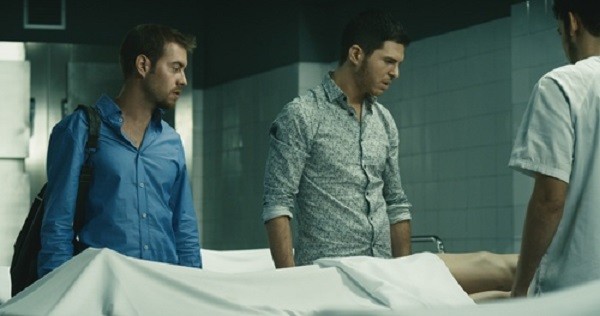
You have a friend, Pau (Carbó), who works evenings at the local hospital mortuary. When a famous actress, Anna Fritz (Ribas), dies and her body is kept overnight at the mortuary before an autopsy can be performed, you’d expect him to send you a photo of the dead actress, wouldn’t you? And you’d expect him to let you come to the hospital and have a look for yourselves, right? After all, how often do you get a chance to see a famous, and beautiful, actress live (so to speak) and in the flesh? And better still, naked? That’s the situation Iván (Valencia) and Javi (Saumell) hope to find themselves in when Pau sends exactly the kind of photograph that piques their interest and has them rushing to the hospital with unseemly haste. But seeing Anna Fritz naked isn’t enough, not for Iván at least. He wants to have sex with her; it doesn’t matter to him if she’s dead. So he does, and he cajoles Pau into doing the same. But when Pau takes his turn, something unexpected happens, something that will change everything, even to whether or not the three men will leave the hospital alive…

For some people, just hearing there’s necrophilia involved, and depicted, in The Corpse of Anna Fritz will have them reaching for the off button, or deciding not to watch the movie at all. But the movie has a lot more to offer the viewer than extremely inappropriate sexual behaviour, and once that section is dispensed with, it becomes a claustrophobic mix of horror movie and suspense thriller, with a handful of twists and turns that, while not exactly original, are still put together with enough skill and confidence by Vicens (here making his feature debut) that much of what follows is suitably tense and appropriately visceral. Iván, Javi and Pau find themselves trapped in the basement of the hospital as much by their own actions as any relating to the famous Miss Fritz, and as their predicament worsens, their alliance is threatened, broken apart, and irredeemably ruined. Vicens tracks all this with a predatory eye for the politics of survival, and the breakdown of societal norms. Having sex with a dead woman? That deserves more than just as slap on the wrist, and Vicens ensures the three men suffer for their crime.

Throughout its compact running time, the movie goes to great lengths to make one of its male characters someone the viewer can sympathise with, or even root for, but if there’s one issue that Vicens and co-writer Isaac P. Creus can’t solve, it’s that the characters exist in a vacuum, with no development occurring as the movie progresses. Any sympathy therefore is stymied in order for them to suffer instead. Thus the movie is more of an exercise in what will happen to them, when, and how. This mechanism works for the most part, and there are some clever riffs on one of the “punishments”, but as it builds to a climax, some of the tension is sacrificed at the altar of narrative expediency, though the movie does retain an urgency of purpose that could have been allowed to dissipate much earlier on. At least the main location explains the lack of other hospital staff in the vicinity, and the photography by Ricard Canyellas highlights M. Carmen Sanfrancisco’s spare yet effective production design. It’s all assembled with a view to providing the movie with an oppressive air, and though this approach isn’t always successful, there’s more than enough here to warrant a look-see.

Rating: 6/10 – a modest achievement that is only occasionally as challenging to watch as its makers may have wanted, The Corpse of Anna Fritz is nevertheless bolstered by its choice of location for the material, and the drama inherent in Miss Fritz’s situation; a bit of a mixed bag over all, but a bag that contains at least a couple of surprises, and one that shows that Vicens – with the right material – could well make a stone cold classic one of these days.

Share this:

  • Click to share on X (Opens in new window) X
  • Click to share on Facebook (Opens in new window) Facebook
  • More
  • Click to print (Opens in new window) Print
  • Click to email a link to a friend (Opens in new window) Email
Like Loading...

The Foreigner (2017)

18 Thursday Jan 2018

Posted by dullwood68 in Movies

≈ 1 Comment

Tags

Action, Authentic IRA, Bombing, Drama, Ireland, Jackie Chan, Literary adaptation, London, Martin Campbell, Pierce Brosnan, Review, Thriller

D: Martin Campbell / 113m

Cast: Jackie Chan, Pierce Brosnan, Orla Brady, Dermot Crowley, Rory Fleck Byrne, Charlie Murphy, Niall McNamee, Rufus Jones, Ray Fearon, Lia Williams, Michael McElhatton

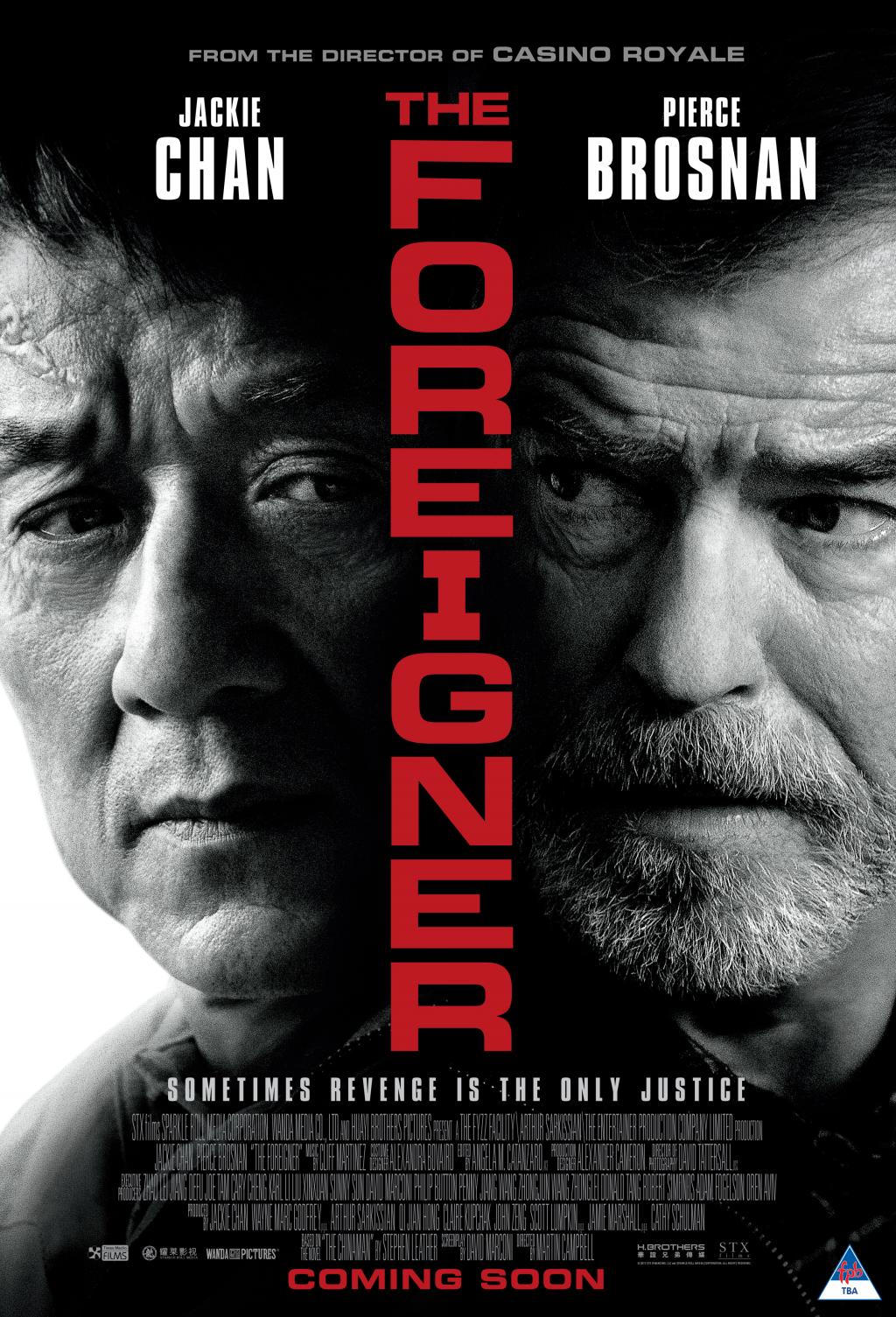
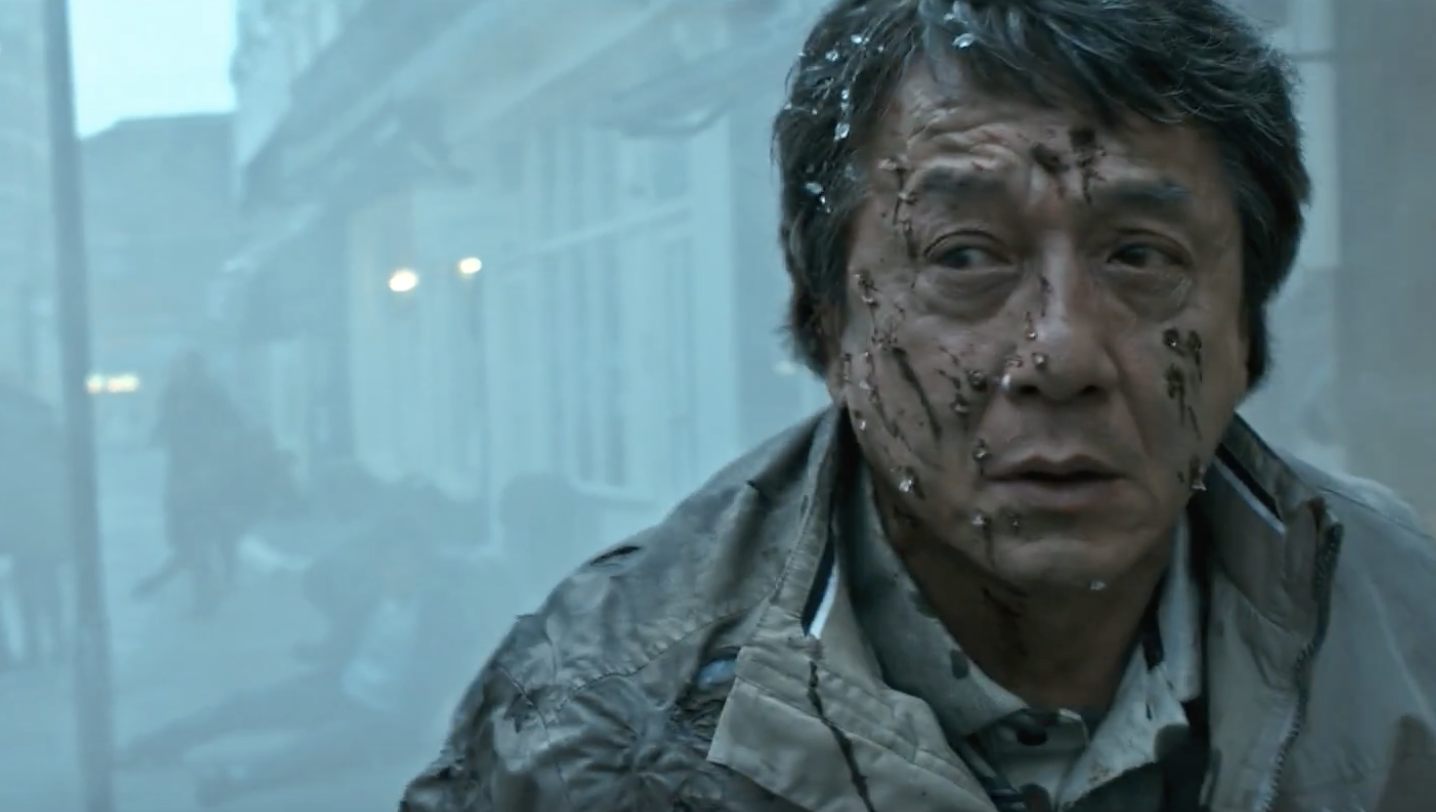
At the beginning of The Foreigner we see Jackie Chan playing a role that we’ve not seen him play before: that of a concerned father. Already it’s a refreshing change, and though you might think he’s being a little over-protective of his teenage daughter, even he can’t foresee that when he drops her off a boutique clothes shop that she’s going to be the victim of a terrorist bom blast just moments later. But if Chan’s character, a Chinese Nuang chef called Ngoc Minh Quan, is stone-faced before, then he’s positively chiselled granite afterwards, as the London Metropolitan police investigation stalls quickly in its efforts to discover which dissident faction of the IRA carried out the bombing (they call themselves the “Authentic IRA”, as if the real IRA were somehow a bunch of phoneys). Quan learns enough from the police to enable him to go after Northern Ireland Deputy First Minister Liam Hennessy (Brosnan), an ex-member of the original IRA brought into the Establishment but who still has ties to his once and fellow comrades. Is Hennessy the link that Quan needs to find the bombers? Will Quan be able to stay one step ahead of the police as he wages his own one-man war against Hennessy and his associates? And will anyone be able to answer the question, just how does one lone sixty-one year old Asian man that everyone’s on the lookout for, travel backwards and forwards between London and Ireland without racking up some serious air miles (oh yes, and being spotted)?

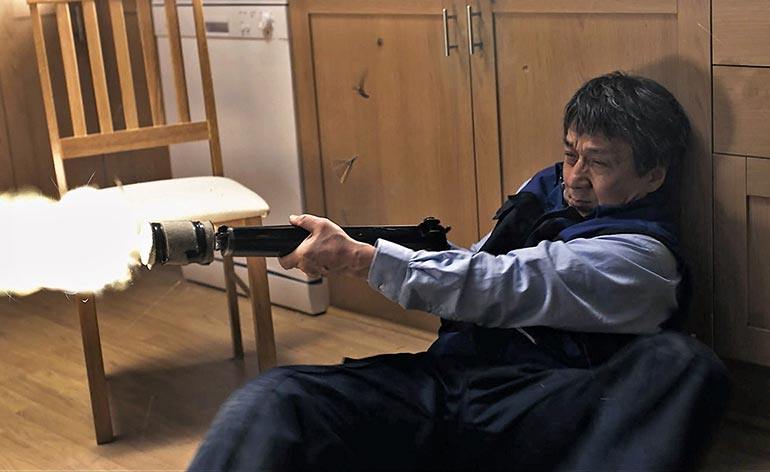
Adapted from Stephen Leather’s novel of the same name, The Foreigner is an action thriller that requires the usual suspension of disbelief at almost every turn, but which still manages, for the most part, to be entertaining. Chan is excellent value as the grieving yet violently focused Quan, a role he slips into with very little effort. It’s sometimes easy to write off stars such as Chan as not being “real” actors, but as Arnold Schwarzenegger showed in Maggie (2015), there will always be roles they can play that will surprise us. Chan’s melancholy, devastated presence is one that adds a layer of sympathy to the character that isn’t always considered a necessity in this kind of movie, but it’s a more than welcome change, and again, Chan is more than up to the task. So too is Brosnan, clearly relishing the chance to play an Irishman for a change and ramping up the character’s ambiguity; is he a good guy, or a bad guy, or just caught in the middle? Further down the cast list there are fine supporting turns from the likes of Crowley and Murphy (though her role is a little too similar to Polly Walker’s in Patriot Games (1992), and from the ever reliable McElhatton.

But while the performances are above average for a thick-ear thriller such as this, and director Martin Campbell does his best to keep things moving quickly enough so that the viewer won’t notice some of the more patent absurdities on display (again, just who is Quan’s remarkable travel agent?), the script by David Marconi either relies on too much exposition, or jumps from scene to scene disjointedly, making it difficult to keep track of what’s happening exactly, and why. That said, Campbell does know how to put together an effective action sequence, and though Chan isn’t as fast as he used to be, he still doesn’t have to rely on carefully chosen camera angles or rapid-fire editing to make himself look good. All in all, the movie is good in places, long-winded in others, but still well assembled enough to provide a couple of hours of harmless enjoyment – and sometimes that’s all you need.

Rating: 7/10 – Chan and Brosnan make for great adversaries, and Campbell is on solid form in the director’s chair, making The Foreigner an above average thriller with better ambitions than most; a bit of a throwback to thrillers from the Seventies (but with extra added millennial-style violence), this gives Chan his best role in years, and is an entertaining if occasionally cheesy action movie that doesn’t worry in the slightest about the things it gets irretrievably wrong.

Share this:

  • Click to share on X (Opens in new window) X
  • Click to share on Facebook (Opens in new window) Facebook
  • More
  • Click to print (Opens in new window) Print
  • Click to email a link to a friend (Opens in new window) Email
Like Loading...

Old-Time Crime: The Whistler (1944) and The Mark of the Whistler (1944)

03 Wednesday Jan 2018

Posted by dullwood68 in Movies

≈ Leave a comment

Tags

Columbia, Crime, Drama, Gloria Stuart, J. Carrol Naish, Janis Carter, Murder, Radio drama, Review, Richard Dix, Thriller, William Castle

The Whistler (1944) / D: William Castle / 60m

Cast: Richard Dix, Gloria Stuart, J. Carrol Naish, Alan Dinehart, Joan Woodbury, Don Costello, George Lloyd, William ‘Billy’ Benedict, Byron Foulger, Robert Homans, Otto Forrest

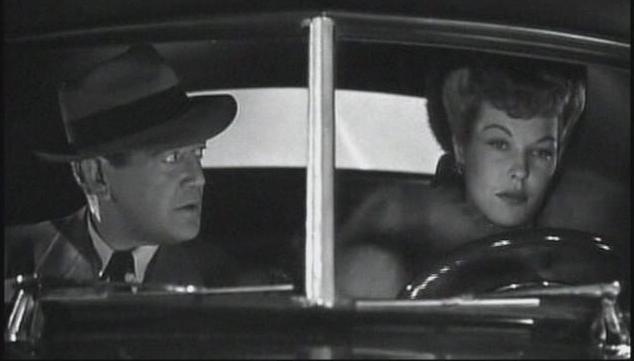
The first in a series of eight movies released by Columbia between 1944 and 1948, The Whistler is based on the radio drama of the same name. Each movie begins with the same voice over: “I am the Whistler, and I know many things…”, and each movie features a different story “narrated” by the Whistler (Forrest). In this first outing, Richard Dix plays Earl C. Conrad, an industrialist who decides to have a contract taken out on himself. Guilt-ridden over the loss of his wife at sea, Conrad wants to end it all, and arranges with a career criminal called Lefty Vigran (Costello) to have someone kill him within the next few days. But then news reaches him that his wife is still alive, and of course he tries to call off the hit. But Vigran is unable to call a halt to things, and Conrad must spend the next few days trying to find out who’s been hired, and if he finds him, persuade the killer (Naish) not to go through with it.

As ever with this kind of story, the killer is determined to see out his contract as a matter of personal pride, and to uphold his reputation. This leaves Conrad in a tight spot, and the second half of the movie sees him trying to avoid being killed, while the killer tries – at first – to scare him to death, having read a book about the very same thing. It’s little quirks like these that make The Whistler more enjoyable than you might expect, and Naish’s performance as the killer is an equally enjoyable combination of tortured soul and pedantic assassin. Like many movies he appeared in, Naish is fun to watch, and he throws himself into the role with obvious enthusiasm, and he brings an unexpected level of sincerity to the part. It’s easy to forget, but Naish was nominated twice for an Oscar for Best Supporting Actor, first for Sahara (1943), and again for A Medal for Benny (1945).

As these kind of things go however, it’s only occasionally effective, and only occasionally gripping. It does have a slightness of tone in the scenes between Dix’s anguished industrialist and his super-supportive secretary, Alice Walker (Stuart) (who’s clearly in love with him), but otherwise it opts for a sub-noir approach full of menacing shadows and drawn-out sequences where Conrad is stalked by the killer. Making only his third feature, future schlockmeister William Castle contributes little in the way of anything substantial, but he does ensure that Dix gets to show viewers his entire repertoire of worried expressions. As with Naish it’s easy to forget that Dix was also an Oscar nominated actor – for Cimarron (1931) – but he’s a long way from that movie, and he looks tired throughout, a reflection on the personal problems he had at the time.

Overall it’s not the most rewarding of franchise openers, but it did establish a template that would see Dix return as different characters in a further six movies, while the last in the series saw the main character played by Michael Duane. Castle would return for the next movie, and direct two more later entries, and he would develop a better approach in regard to pacing and performances. As for the Whistler himself, he would remain in the shadows offering specious comments about the wicked nature of Man, and reminding everyone that he knows “many things”. As a framing device for the stories that are told it’s not entirely successful, and to be fair, these tales could have been made as stand-alone movies without the Whistler’s presence to connect them all, but as the series unfolded, lessons were learned, and the quality – thankfully – improved.

Rating: 5/10 – not the most auspicious of debuts, The Whistler squanders much of its running time by having Naish stalk Dix with little or no consequence or outcome, and by reducing the supporting characters to little more than walk-ons; straightforward direction from Castle doesn’t help, and there’s too much of an air of “contractual obligation” for much of this to work, and without Naish’s involvement, this would be even less interesting than it is already.

The Mark of the Whistler (1944) / D: William Castle / 61m

aka The Marked Man

Cast: Richard Dix, Janis Carter, Porter Hall, Paul Guilfoyle, John Calvert, Matt Willis, Willie Best, Otto Forrest

By contrast to the tired machinations of The Whistler, its sequel (released a little over six months later) has much more verve and energy, and the reason is simple: it’s based on a story by Cornell Woolrich. Woolrich was a novelist and crime author who during the Forties wrote some of the best noir thrillers of the period, and so prolific was he that more film noir screenplays have been adapted from his works than any other crime novelist. Here, his short story, Dormant Account, is used as the basis for another “narrated” tale by the Whistler. In it, a returning Richard Dix is a bum called Lee Selfridge Nugent. One day, Nugent sees a notice in a newspaper. A bank is looking for a Lee Nugent to come forward and claim the money in – surprise! – a dormant account. With the aid of a tailor (Hall) who provides him with a new suit, and by dint of doing his research into the other Nugent’s background, Lee “inherits” $29,000. But when his picture ends up in the local paper, he becomes the target of two brothers (Calvert, Willis) who are looking for the real Nugent. Suffice it to say, their intentions aren’t exactly good…

Woolrich’s stories and novels are the very definition of page-turners: fast-paced, always intriguing, and practically forcing you to see what happens next. He also understood how to turn the screws on his characters and leave them at the hands of a whimsical fate. This is best expressed when Lee is waiting in the bank while a clerk goes to get some paperwork. Lee can’t help but become nervous, and he begins to overthink things: what if he’s been rumbled, what if the police are being called right then, why is the bank guard always looking over at him, etc. etc. It’s a terrific distillation of the tension that Woolrich could invoke in his writing, and the two occasions when Lee has to visit the bank provide the movie with two very tense and formidable scenes indeed. Dix doesn’t look quite as bad as he did in the first movie, and the actor seems more engaged with the material. He’s even able to have a little fun in his scenes with Hall, whose parsimonious tailor is the movie’s comic relief (something the first movie could have done with).

With the money claimed, the movie changes gear and becomes an out-and-out thriller, with Calvert and Willis tracking down Lee and threatening to put holes in him unless he hands over the money. This all happens while Lee is focused on wining and dining newspaper reporter Patricia Henley (Carter). For the second time, it’s refreshing to see the lead female character kept away from harm, and not interfering in a way that will see her put in harm’s way, but the character is one of the few areas where the script by George Bricker doesn’t know how to proceed. As a result, Patricia is reduced to background traffic while Dix fights off the brothers with the aid of Guilfoyle’s down on his luck pencil salesman, ‘Limpy’ Smith. It’s another example of the institutionalised sexism of the times, and not exactly unheard of, but it still rankles as unnecessary.

With a much better script to get to grips with, Castle’s return to the director’s chair shows a marked improvement on the first movie, and he orchestrates matters with much more vigour than before, and even manages to elicit a better portrayal from Dix than previously. The hour-long running time is free of the filler that hampered the first movie, and the increased production values mean the movie doesn’t look like it’s been shot through a foggy lens or on a cheaply rented soundstage. A sequel then that’s been shown more care and attention than these kind of ‘B’ movies usually received, and very much worth seeking out.

Rating: 7/10 – an agreeable and entertaining entry in the series, The Mark of the Whistler proves that with the right source material, even the lowest budget crime thriller can be successful; tightly plotted and appropriately tense in places, this is that rare beast: a sequel (kind of) that’s better than the original.

Share this:

  • Click to share on X (Opens in new window) X
  • Click to share on Facebook (Opens in new window) Facebook
  • More
  • Click to print (Opens in new window) Print
  • Click to email a link to a friend (Opens in new window) Email
Like Loading...

Palace of Fun (2016)

01 Monday Jan 2018

Posted by dullwood68 in Movies

≈ Leave a comment

Tags

Andrew Mullan, Brighton, Drama, Eadward Stocks, First feature, George Stocks, Phoebe Naughton, Review, Thriller

D: Eadward Stocks / 82m

Cast: Andrew Mullan, Phoebe Naughton, George Stocks

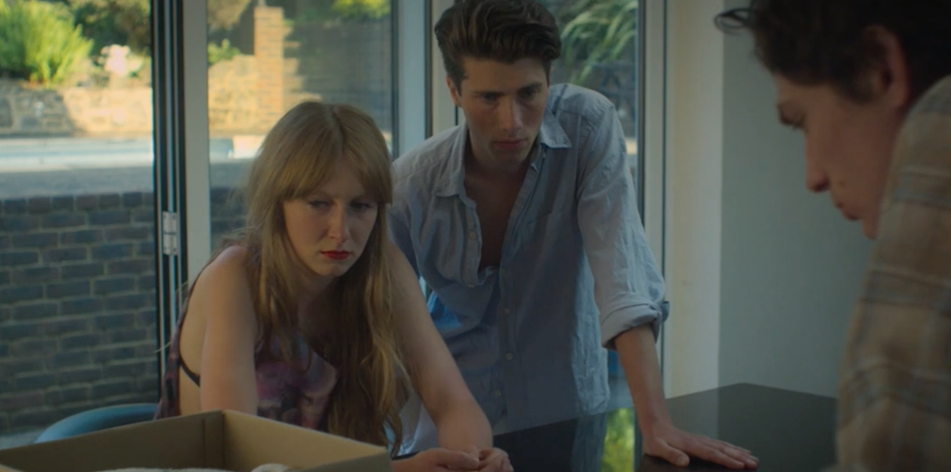
In this ultra-low budget British thriller set in Brighton, Lily (Naughton) and Finn (Mullan) meet in a nightclub. There’s an immediate attraction between them, and Lily takes Finn back to her parents’ home. The next morning, Finn meets Lily’s brother, Jamie (Stocks), and the three of them go on a yachting trip together. However, a disagreement between Lily and Jamie hints at an instability in Jamie’s character, and when he takes the opportunity to look through Finn’s satchel, what he discovers there leads all three down a very dark path indeed. With Finn and Jamie both doing their best to manipulate matters between the trio – though for very different reasons – Lily soon finds herself caught in the middle, until Finn decides to reveal the secret that Jamie has already discovered. When Jamie sees that his sister and Finn are still together, things become even darker, and his attempts to derail their relationship has unfortunate consequences…

First-time features often go one of two ways: they’re either first-out-of-the-gate original, both in terms of the story or the visual design, or they’re derivative yet respectful of pre-existing material. Palace of Fun adopts a third option, that of being a combination of the two, and it does so with a degree of style and confidence that helps it during some of the less successfully rendered moments or scenes. The narrative will be familiar to most viewers, but it’s cuckoo-in-the-nest storyline, coupled with its Patricia Highsmith-inspired tone, is offset by George and Eadward Stocks’ measured, and understated screenplay which threatens to drift into melodrama on more than one occasion but which also manages to avoid the same pitfall thanks to Stocks the director’s firm grip on the material. It’s a presure cooker environment that the first-timer maintains comfortably throughout, and without giving too many clues as to whether or not said pressure cooker does boil over, there’s a grim inevitability about the movie’s outcome that suits it perfectly.

The screenplay is keen to explore the dynamics of the relationship between Jamie and Lily, but it does so without qualifying why Finn is effectively taken in by Lily, and why Jamie takes against him so quickly. By pushing the narrative on in this way (and in deference to the running time), the story becomes more involving and less trite in its exploration of the characters and the twists and turns that drive the material, but it does also make Finn more of a cipher than is necessary for any sympathy or collusion on the part of the viewer to be established. Finn is the deus ex machina of the story, and while we don’t get to know too much about him, what little information we are given about him is too generic to work properly. That said, Mullan gives a very good performance as the mysterious Finn, and he works hard to ensure that the character retains a sense of vulnerability beneath his outwardly confident demeanour.

Similarly, the relationship between Jamie and Finn is one that leads to a couple of scenes where the lines are blurred as to just which one of them is the manipulator and which one is the manipulated. What seems like a frivolous game of cat and mouse soon gives way to a more (apparently) calculated game of psychological oneupmanship. Jamie appears to be in control, and he seems more able than Finn to manoeuvre things to his advantage, but as the movie progresses it’s Jamie whose grip on matters starts to falter. This leads to him taking increasingly more desperate measures in an attempt to split up Finn and Lily for good. Although not explicitly revealed, there’s more than a hint of sexual jealousy at play here, and while Jamie is certainly a devious and easily maligned character – he could be best described as someone who “doesn’t play well with others” – the script makes it clear that he’s operating out of a need for approbation that a) his actions don’t always deserve, and b) he’s not always able to control.

In the middle of all this is Lily, somewhat carefree but left on the sidelines for long stretches, her presence almost incidental to the main storyline even though the character is an integral (and very necessary) part of the drama that unfolds. At one point she has to make an important decision regarding her relationship with Finn, and though it’s a decision that the script can’t avoid Lily making in order for things to progress, it would look and feel more clumsy than it is thanks to Naughton’s honest approach to the character, and her rendition of the emotional bewilderment Lily feels at the time. It’s a role that requires Naughton to be reactive for much of the movie, but thanks to her portrayal, Lily remains the most honest of the three, and the only one without an ulterior motive for her behaviour.

The performances are a little rough around the edges at times, but this can be attributed to the minimal experience each has accrued so far in their careers (this is actually Naughton’s first acting gig). However, each contributes greatly to the overall effectiveness of the movie, and they’re matched by the efforts made behind the camera. Stocks the director displays an over-fondness for slightly off-centre framing, but it helps keep the viewer off balance in terms of what’s really happening, while Brighton itself is shot by DoP Murren Tullett with a view to providing a bright and sunny counterpoint to the increasing darkness of the material. As well, there’s an often ominous soundtrack that heightens the drama of certain scenes, and which acts as a warning that something bad might be about to happen. It’s all put together in a way that makes the movie compelling to watch for the most part, but which also labours the point quite heavily at times as well. Still, the Stocks brothers have proven themselves as movie makers to watch out for, and their debut feature is, for the most part, a triumph of ultra-low budget movie making.

Rating: 8/10 – a deliberately uneasy blend of slow-build menace and pitch-black humour that smooths out some of the narrative bumps in the road (e.g. Finn suddenly gains a mobile phone that he shouldn’t be able to afford), Palace of Fun is an ironic title for a movie that treads in very deep waters; acerbic and violent at times, and touching and warm-hearted at others, it’s a movie that has very specific aims and ambitions, ones that it achieves without too much fuss, and a simpicity of effort.

Share this:

  • Click to share on X (Opens in new window) X
  • Click to share on Facebook (Opens in new window) Facebook
  • More
  • Click to print (Opens in new window) Print
  • Click to email a link to a friend (Opens in new window) Email
Like Loading...

Flatliners (2017)

24 Sunday Dec 2017

Posted by dullwood68 in Movies

≈ 1 Comment

Tags

Diego Luna, Drama, Ellen Page, Horror, James Norton, Kiersey Clemons, Medical students, Near death experience, Niels Arden Oplev, Nina Dobrev, Remake, Thriller

D: Niels Arden Oplev / 109m

Cast: Ellen Page, Diego Luna, Nina Dobrev, James Norton, Kiersey Clemons, Kiefer Sutherland, Madison Brydges, Jacob Soley, Anna Arden, Miguel Anthony, Jenny Raven, Wendy Raquel Robinson

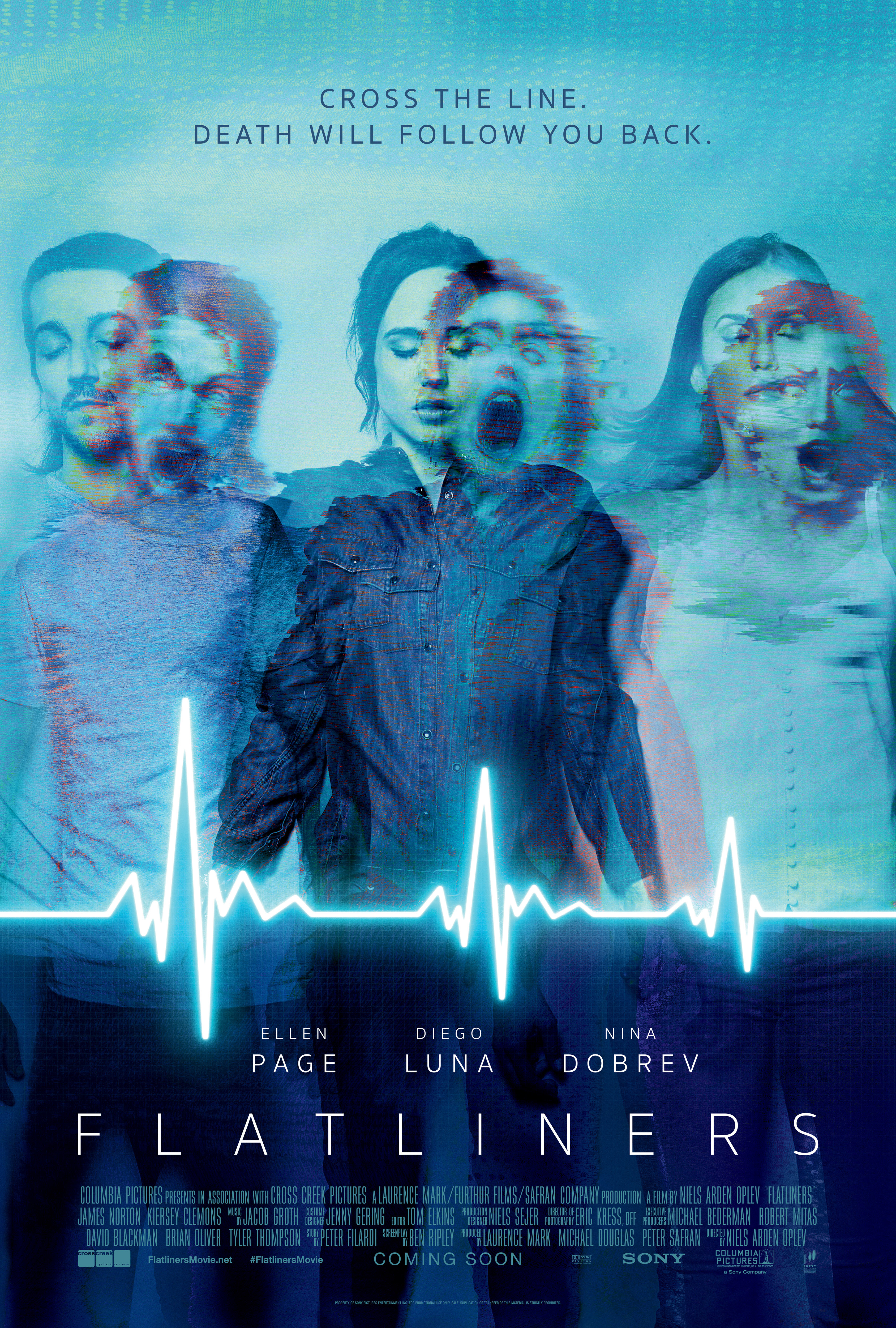
Another remake no one wanted or needed, Flatliners is certainly a shocker, but not in the way that the producers (and they include Michael Douglas) probably intended. The story of five medical students who agree to conduct near death experiments on themselves in an effort to find out what’s “on the other side”, it’s a movie to endure rather than engage with. It begins with a very well staged car crash, in which Ellen Page’s mobile phone-focused driver, Courtney, loses control of her vehicle, ends up in a river, but survives… which is more than can be said for her younger sister. Years later, Courtney is a medical student obsessed with discovering if there’s an afterlife. She badgers patients who’ve had near death experiences, reads up on the phenomena, and does her best to live with the guilt of causing her sister’s death.

By persuading two of her fellow students, Jamie (Norton) and Sophia (Clemons), to help her, Courtney begins an experiment to try and record what happens when someone “flatlines”. Naturally, Courtney is the first to have her death induced and then be brought back to life after a minute, albeit with the help of Ray (Luna), another medical student. Yet another student, Marlo (Dobrev), also becomes involved. Courtney finds that near death has brought back long forgotten memories, and boosted her medical knowledge. Witnessing this, Jamie goes next, followed by Marlo, then finally Sophia. Ray sensibly steers clear of flatlining, but continues to help the others with the experiment. Each of the four experiences initial euphoria and heightened senses and awareness, but they all soon become troubled by visions of things they have done in their lives that they feel guilty about or haven’t admitted. Courtney is haunted by the ghost of her sister, Jamie by an ex-girlfriend and the baby she was pregnant with when  he abandoned them, Marlo by a patient she killed by giving him the wrong medication, and Sophia by the girl she humiliated in college by posting private, intimate photos of her on social media.

The rest is predictable, perfunctory, and incredibly dull, as all four affected characters seek answers to the visions and visitations that plague them. The fact that it’s obvious what’s happening to them doesn’t stop them from moping around, or acting in an irrational manner, and mostly not talking to each other. Time passes in this way to the point that you wonder just how they all managed to get into medical school in the first place; they’re about as bright as a dimmer bulb on its minimum setting. They all have guilty feelings over what they’ve done, and though the screenplay by Ben Ripley gets them to a solution eventually, by then one of them is dead, one of them has been stabbed in the hand, and Ray has been forced into playing the voice of reason even when the increasing evidence is there to say, “hang on, explain this away then”.

But the main failing of this movie is that it places four of its main characters in increasing peril, and despite the best efforts of all concerned – well, perhaps not Norton – there’s not one of them that’s worth caring about. Courtney is the loner of the group, Jamie is the party boy, Marlo is arrogant and self-absorbed, and Sophia is an under-achiever in her own mind. Watching these characters struggle with their personal guilt is about as gratifying dramatically as watching from the outside while someone tries to escape from a locked room with no windows – and never knowing if they succeeded. There are a number of scenes where Courtney et al are menaced by the people they’ve wronged, but it’s hard to understand why this is all happening because they’ve had near death experiences. And why some of the victims are dead and others aren’t. If the afterlife is involved, and if it’s the pivotal reason for these manifestations, are the four experiencing genuine supernatural phenomena, or is it all in their collective heads?

The script never makes a firm declaration one way or the other (though it does lean towards the supernatural), and where a hint of ambiguity is usually a good thing in a movie, here it serves only to muddy the waters. Stranded by the idea that these apparitions can have a physical effect when it suits the needs of the script, the movie lumbers from one tedious set piece to another, and throws in the kind of sub-par horror imagery that only serves to highlight the lack of imagination shown elsewhere and throughout. Oplev keeps it all looking glossy and generic, but his usual edgy directorial style is left high and dry, unsupported by any sense of urgency within the narrative, and the overall flatness of the material (seeing the dailies must have been so dispiriting). The lax nature of it all can best be summed up by the speed with which one of the wronged forgives the student they’re connected to. It’s another moment in yet another movie that will prompt a WTF? from the viewer.

Inevitably, the performances don’t add up to much. Page is earnest but dull, Luna looks as if the full enormity of how bad it all is is creeping up on him with every scene, Dobrev reacts to everything by looking startled (as well she might), Norton appears unable to judge the right reaction to provide for whatever’s happening, and Clemons does anxious with ever-decreasing sincerity or attention to Sophia’s limited character arc. As the only alumni from the 1990 original, Sutherland sports white hair and a cane in an effort to make himself stand out from the crowd, but his performance is as perfunctory as everyone else’s. If we can be thankful for anything it’s that the movie doesn’t end by setting up an unnecessary sequel, but rather closes out the story in distinctly sentimental style. Thankfully too, the movie under-performed at the box office, ensuring that the chance of there being a sequel is limited. So, there is at least one thing to shout about.

Rating: 3/10 – another movie to add to the long list of underwhelming remakes foisted on us in recent years, Flatliners is yet another dreary exercise in taking material that worked perfectly well the first time around, and then jettisoning everything that made the original work so well; even without the original to compare it with, this fails to make the grade, and manages to insult both its own characters and the viewer in equal measure, something that is one of the movie’s few actual achievements.

Share this:

  • Click to share on X (Opens in new window) X
  • Click to share on Facebook (Opens in new window) Facebook
  • More
  • Click to print (Opens in new window) Print
  • Click to email a link to a friend (Opens in new window) Email
Like Loading...

Bright (2017)

23 Saturday Dec 2017

Posted by dullwood68 in Movies

≈ 1 Comment

Tags

Action, David Ayer, Drama, Edgar Ramirez, Elves, Fantasy, Joel Edgerton, Lucy Fry, Magic wand, Noomi Rapace, Orcs, Review, Thriller, Will Smith

D: David Ayer / 118m

Cast: Will Smith, Joel Edgerton, Noomi Rapace, Lucy Fry, Edgar Ramírez, Veronica Ngo, Alex Meraz, Happy Anderson, Ike Barinholtz, Dawn Olivieri, Matt Gerald, Margaret Cho, Joseph Piccuirro, Brad William Henke, Jay Hernandez, Enrique Murciano

And so, like the cinematic equivalent of a pair of socks (but for the same foot), we have Bright, the latest Netflix original to grace the small screen and remind us that not all the bad movies get a cinema release. Penned by Max Landis and directed by David Ayer, this lumpen mix of fantasy and crime arrives D.O.A. before it’s even started, and not once during its near-on two hour run time, shows any sign that it can be resurrected (unlike one of its characters). If you have to see this movie, then be warned: it’s as if Alien Nation (1988) never happened.

Mismatched buddy cop movies have been around for some time now, but rarely have they been as ill-advised and as poorly constructed as this movie. Bright takes a great central conceit – what if magic was real and fantasy creatures co-existed with us in some alternate reality? – and then keeps on reminding the viewer that beyond this central conceit, the script has no idea what to do with it other than to make an action thriller out of it, and one that rarely makes any coherent sense. There’s a Dark Lord who was vanquished two thousand years ago, and now a bad elf, Leilah (Rapace), wants to use one of three magic wands to bring the Dark Lord back so he can kill billions of people and enslave the rest. (As wth most fantasy movies where there’s a Big Bad who just wants to destroy everything, there’s no actual reason given as to why they want to do all this, or why they have followers who can’t see this isn’t actually a good thing.) Our heroes are a couple of L.A. cops, the mismatched buddies of this paragraph’s first sentence. One is Daryl Ward (Smith), a long-serving officer about to resume active duty after being shot, and the other is his partner, Nick Jakoby (Edgerton), the first and only Orc to become a police officer.

It won’t surprise anyone that Nick being an Orc gives rise to notions of racism, both casual and institutional, and the movie does spend some time examining this particular theme, but it does so in such a clumsy, ham-fisted way that it’s almost embarrassing. The Orc population primarily lives in ghetto-ised areas, while the Elves have their own exclusive part of town, are rich and influential, and apparently exist to go boutique shopping (there are fairies too but they’re not important). Both keep out of each other’s way, both have sketchily drawn histories, and there’s no attempt to explain how they and humans came to be co-existing with each other, or how long it’s been going on. Landis and Ayer aren’t interested in creating a credible world that makes any sense, and that’s evident by the way in which the movie throws the viewer in at the deep end and then wanders off without throwing them a lifeline. Instead, Ward and Nick are soon running from everyone in their efforts to keep Leilah’s magic wand – stolen by good elf Tikka (Fry) – from ending up in the wrong hands. Corrupt cops want it, a local gang wants it, Leilah and two of her followers (Ngo, Meraz) want it, and an FBI agent, Kandomere (Ramirez), wants it as well. What’s a couple of increasingly isolated police officers to do?

The answer is to wait until the movie delivers on a piece of information a minor character imparts near the beginning. The title refers to someone who can wield a magic wand – usually an elf – but who can also be human, even though the odds are (unsurprisingly) astronomical. With this fairly important tidbit introduced into the narrative, and in such a way as to draw direct attention to it, the ending of the movie is set up, and any tension intended to keep viewers on the edge of their seats wondering how Leilah can be defeated, is abandoned. Landis and Ayer know what’s going to happen, the viewer knows what’s going to happen, and if you took a straw poll of a hundred random strangers, they’d all know too. This means wading through a number of encounters that offer a succession of action beats – one inside a convenience store is at least well choreographed – interspersed with scenes that are meant to reveal more about the characters. Sadly, much of this is tedious to watch and dramatically redundant. This is fantasy by numbers, and Landis’s script doesn’t bring anything new to the table, just stock characters and a predictable scenario.

It’s concerning that Landis thinks of this movie as his “Star Wars“, and that Ayer has said (in response to a negative review) that “it’s a big fun movie”. Landis needs to rethink his opinion, and Ayer needs to reflect on what aspects could be regarded as “fun”. Following on so soon after the debacle that was Suicide Squad (2016), Ayer should be persuaded to avoid big budget fantasy spectacles and maybe concentrate on smaller, more personal movies or return to making gritty, immediate cop thrillers such as End of Watch (2012). Equally, Landis should forget about high concept screenplays and maybe write some more of the quirky, low budget stuff that actually has an impact, such as Mr. Right (2015). The trap that both men have fallen into is in believing that audiences will just accept what they’re being shown, and will be more than happy with the numerous action scenes that bulk out the movie. But when everything seems either laboured or ignored or both, audiences will take that on board, and they will be disappointed.

The performances are adequate, with Edgerton coming away with a degree of kudos for his portrayal of Nick, but for Smith this is another misfire in what seems to be a consistent series of misfires stretching all the way back to Men in Black 3 (2012). Whether you believe his judgment has been affected in some way, and that his choice of projects over the last five years has made him appear “off his game”, what remains is a portrayal here that doesn’t resonate in the way that a Will Smith performance used to. There isn’t the energy or the knowing humour that we’ve come to expect in the past; instead it’s another occasion where his presence is almost a guarantee of disappointment. Rapace has even less chance of making an impact, reduced as she is to playing generic villain of the month, while the rest of the cast make up the numbers in a variety of unassuming and unaffecting ways. It all looks gloomy and portentous, but not in a good way, and there are moments where any good intentions or creative ideas appear to have been jettisoned in favour of sticking to Landis’s screenplay. There’s a great movie to be made from the idea of fantasy creatures inhabiting the same world as humans, and living side by side with us, but unfortunately, Bright isn’t it.

Rating: 3/10 – with a sequel already greenlit and Smith set to return, the notion that Netflix have seen all they need to see in relation to Bright is quite a worrying development, especially as there’s nothing here to warrant continuing Ward or Nick’s story; loud, dumb, and superficially entertaining, it’s a movie that lacks heart and soul and a sense of wonder at the world it’s seeking to show, and which quickly descends into a melee of rote situations and trite outcomes.

Share this:

  • Click to share on X (Opens in new window) X
  • Click to share on Facebook (Opens in new window) Facebook
  • More
  • Click to print (Opens in new window) Print
  • Click to email a link to a friend (Opens in new window) Email
Like Loading...

The Mountain Between Us (2017)

22 Friday Dec 2017

Posted by dullwood68 in Movies

≈ Leave a comment

Tags

Drama, Hany Abu-Assad, High Uintas Wilderness, Idris Elba, Kate Winslet, Plane crash, Review, Survival, Thriller

D: Hany Abu-Assad / 112m

Cast: Idris Elba, Kate Winslet, Dermot Mulroney, Beau Bridges

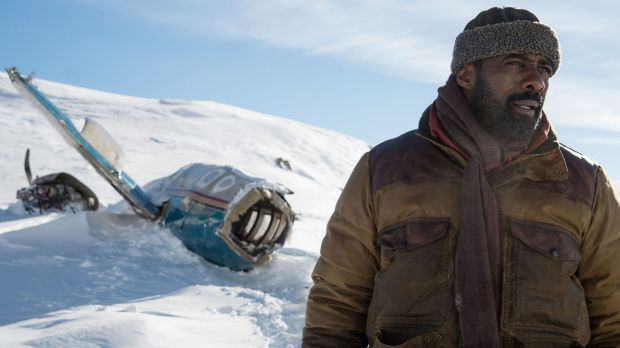
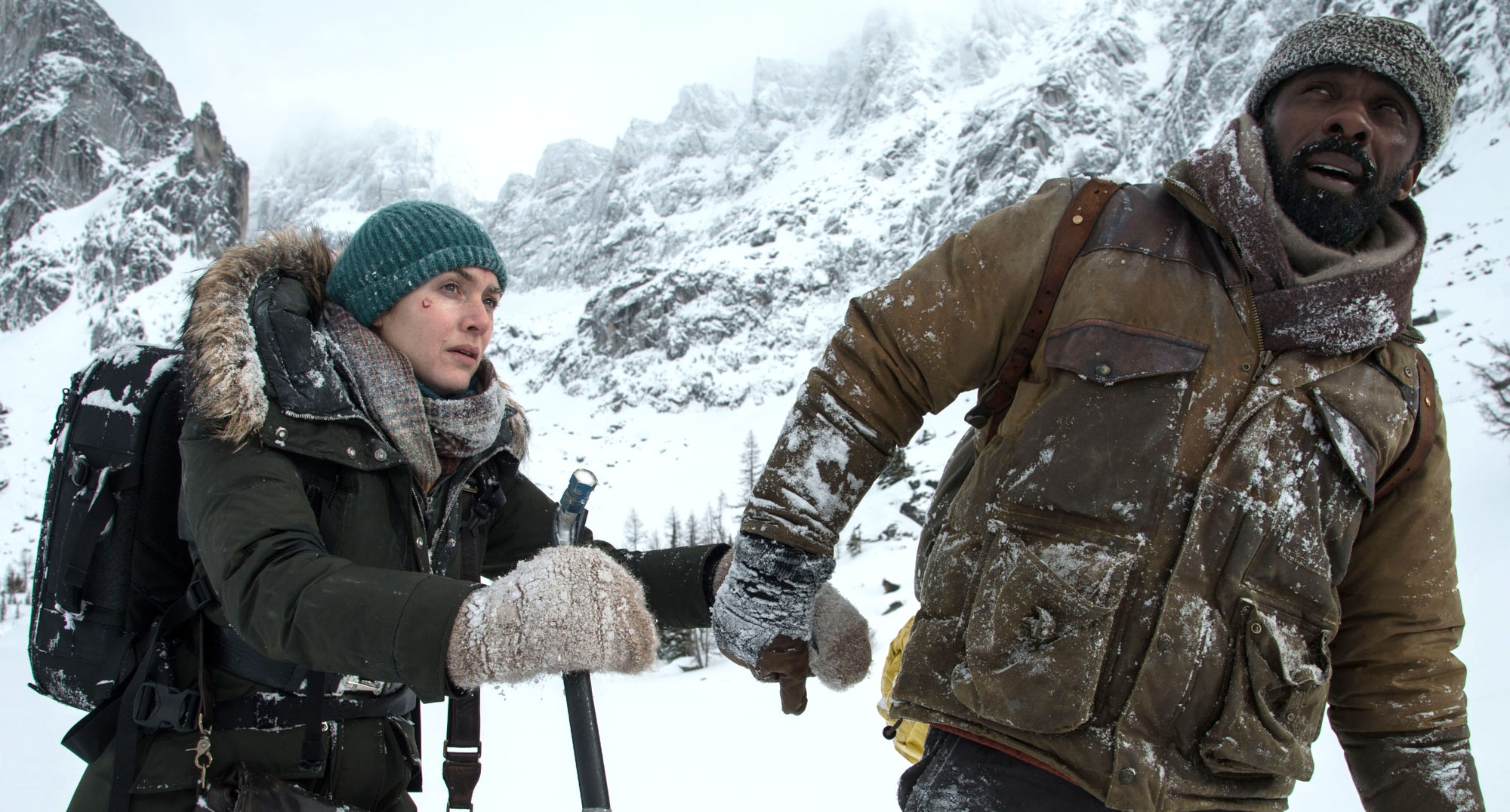
Sometimes, and even in the best of movies, characters will do or say something that makes the viewer take a breath before uttering that immortal phrase, “What the hell?” (or some similar version). It might be something that’s out of character, or that doesn’t make any sense, or both, but it’s something that always takes the viewer out of the moment and leaves them wondering, “what idiot came up with that idea?” There’s such a moment in The Mountain Between Us, an adaptation of the novel by Charles Martin, that sees Idris Elba’s moody neurosurgeon Ben Bass, and Kate Winslet’s overly inquisitive photo-journalist Alex Martin, stranded in the High Uintas Wilderness (in Utah) after their charter plane crashes there. It would be unfair to mention this moment in detail, but any prospective viewer will know it when they see it. The problem with this moment in particular is that once it happens, the movie – already teetering on the brink of credibility – decides not to bother anymore and appropriately given Ben and Alex’s predicament, it’s all downhill from there.

Ostensibly a survival thriller, The Mountain Between Us isn’t content with being one type of movie: it wants to be a romantic drama as well. This would be all well and good if both approaches worked well together, but in the hands of director Hany Abu-Assad, and writers Chris Weitz and J. Mills Goodloe, the movie begins well enough with a well conceived and executed plane crash, and places its two main characters in a great deal of jeopardy, but then settles down to ensure that they become attracted to each other, and that their reliance on each other in order to survive becomes something greater. Yes, love is the order of the day, and is as clearly signposted as the various trials and tribulations they’ll face on their trek out of the wilderness. What this romantic development means though, is that the movie can’t decide which is more important in terms of the narrative: finding safety, or falling in love (and not into a frozen lake as Alex does).

This uncertainty leads to the movie feeling schizophrenic at times, as it develops a tendency to focus on the relationship/burgeoning love affair storyline for a while, before remembering it’s also a survival thriller and focusing on that before remembering again that it’s a romantic drama. As a result of this narrative to-ing and fro-ing, the movie never settles into a consistent groove, and as noted above, it loses its way once a certain point is reached, and from there it consequently loses traction. What could have been a tense, enthralling tale of two strangers learning how to survive against perilous odds, and using their combined wits and ingenuity to make it out of the wilderness alive (if not exactly in one piece: Ben has broken ribs, Alex has a leg injury), is left unrealised thanks to the romantic angle. And what could have been an emotive, touching love story borne out of an unexpected mutual attraction is made unlikely and annoying by the conventions used to tell said story.

As the movie unfolds it becomes obvious that the romance between Ben and Alex is more important to the overall story than whether or not they survive (though the outcome is entirely predictable). This means there are plenty of those odd, awkward moments that only seem to occur in the movies where characters remain reticent and hold back their emotions for no other reason than that the script needs them to, and misunderstanding is piled on top of further misunderstanding as the same script keeps both characters from openly declaring their love for each other until the very end. Someone, somewhere, has decided that this makes for good viewing. Someone, somewhere, needs to know this isn’t true. And if you’re a viewer watching this kind of thing drag itself out, you’ll be annoyed and frustrated and want to yell things like, “Kiss her/him already!” or “Just get on with it!” Ben and Alex do exactly this, andthe script can’t find adequate reasons for them to be so afraid of talking openly to each other.

Fortunately, and though the characters are somewhat insipid and stereotypical, they’re played by Idris Elba and Kate Winslet, two of the best actors working today. Doing their best to compensate for the vagaries of the script, the pair make Ben and Alex more sympathetic than they perhaps have any right to be, and though their inevitable coming together is less than convincing, they at least make it less dispiriting than it could have been. Elba uses his familiar taciturn demeanour to good effect throughout, while Winslet always seems to be thinking about what her character is doing and why. True, she looks puzzled more often than not, but it’s in keeping with the way that Alex views things and tries to make sense of them. Together they share a definite chemistry; it’s just a shame that the script and Abu-Assad’s direction can’t provide a suitable scenario for them to build on more effectively. And there aren’t many actors who could take the last couple of scenes in the movie and make them work as well as Elba and Winslet – and that’s no mean feat.

Alas, the movie is further undermined by its refusal to put Ben and Alex in anything truly like harm’s way. Problems arise and are quickly overcome, whether it’s Ben’s broken ribs (which don’t seem to slow him down at all) or Alex’s injured leg (she proves equally adept at getting about despite the pain she’s in), or a cougar looking for an easy lunch, or the aforementioned dip in the frozen lake that Alex enjoys: none of these problems pose much of a realistic threat, or give any indication that they might stop Ben and Alex from reaching civilisation. With any and all peril removed so easily and consistently, the movie loses any sense of urgency it might have been able to assemble, and Abu-Assad’s flaccid direction ensures that any thrills to be had are left behind with the plane crash. That said, the Canadian locations have been beautifully photographed by DoP Mandy Walker, displaying their snowy peaks and valleys to often striking effect, and emphasising the vastness of the wilderness Ben and Alex are stranded in. Sadly, it’s really only these aspects of the production that Abu-Assad and his team have managed to get completely right, leaving a movie that’s good in some places, but (mostly) not in others.

Rating: 5/10 – Elba and Winslet are the main draw here, an acting dream team who can only do so much against a script that lacks conviction and somewhat counter-intuitively at times, a clear purpose; another of the many missed opportunities that 2017 has seen fit to put in front of us, The Mountain Between Us just doesn’t register strongly enough to make much of an impact, and comes perilously close at times to wasting the talents of both its stars, something that should be regarded as unforgivable.

Share this:

  • Click to share on X (Opens in new window) X
  • Click to share on Facebook (Opens in new window) Facebook
  • More
  • Click to print (Opens in new window) Print
  • Click to email a link to a friend (Opens in new window) Email
Like Loading...

Mayhem (2017)

21 Thursday Dec 2017

Posted by dullwood68 in Movies

≈ 1 Comment

Tags

Comedy, Drama, Horror, ID7 Strain, Joe Lynch, Kerry Fox, Quarantine, Review, Samara Weaving, Steven Brand, Steven Yeun, Thriller, Towers & Smythe Consulting

D: Joe Lynch / 87m

Cast: Steven Yeun, Samara Weaving, Steven Brand, Caroline Chikezie, Kerry Fox, Dallas Roberts, Mark Frost, Claire Dellamar, André Eriksen, Nikola Kent, Lucy Chappell, Olja Hrustic

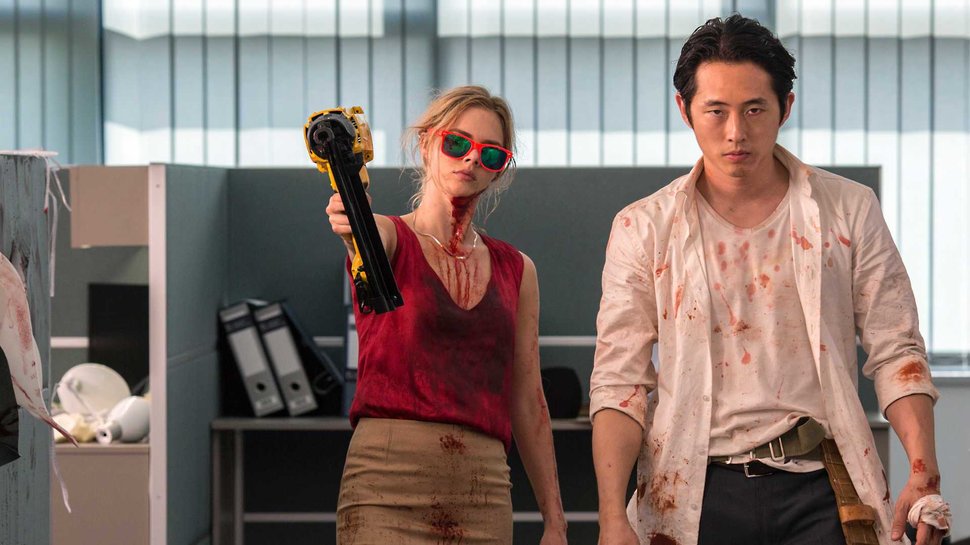
Multi-hyphenate Joe Lynch has come a long way since Wrong Turn 2: Dead End (2007), his debut as a director. Knights of Badassdom (2013) was a mess that at least confirmed Lynch had promise (if he had the right material to work with), while Everly (2014) was an over-the-top action fest that showed Lynch was indeed learning his craft, and becoming increasingly more confident. And now, with his latest movie, Lynch  displays an even greater confidence, and makes his most polished feature so far. It’s a darkly humorous, splatter-infused second cousin to The Belko Experiment (2016), but where that was a terrible attempt at creating an old-fashioned exploitation flick, Mayhem is an old-fashioned exploitation flick, and one that is far more successful in both its aims and its achievements.

The McGuffin of the movie is a virus, the ID7 Strain, a nasty little bugger that causes people to throw caution, responsibility and morality out of the window, and indulge in whatever hidden desires they’ve held back from carrying out in the past. ID7 means self-control is anathema to the infected, and be it lust, greed, violence, or a mix of all three, those afflicted will ignore any calls for restraint. Thankfully, an antidote has been found, but the company that created the virus, Towers & Smythe Consulting, is about to fall victim to a very bad case of schadenfreude: their corporate headquarters is about to be put into quarantine because of an outbreak in the building. It will take eight hours for the antidote to reverse the effects of the virus; until then it’s every man and woman for themselves. Two of the infected – executive Derek Cho (Yeun), who has been set up as a patsy for one of his colleagues’ malpractice and then fired, and Melanie Cross (Weaving), a victim of one of T&SC’s sharp practices – find themselves teaming up and using a legal loophole (no one affected by the virus can be arrested or tried for any crimes they commit while suffering from ID7) to fight their way to the top floor and “persuade” the company’s board of directors to give Derek his job back, and allow Melanie to keep her home.

Of course, the path to the top floor is paved with numerous obstacles and murderous intentions, as the company’s head honcho, coke-snorting, golf club-wielding John Towers (Brand), takes offence to Derek wanting his job back, and takes even further offence when Derek starts leaking company secrets. With both Derek and Towers determined to use the eight hour quarantine period to advance their own agendas, the stage is set for a bloody boardroom showdown and a number of violent “dismissals” along the way. As Derek and Melanie fight their way up the building using an assortment of tools including a nail gun and a wrench, they find themselves facing the likes of the Reaper (Roberts), an HR executive who does the firing, the Siren (Chikezie), Derek’s rival and the colleague who got him fired, and the Bull (Eriksen), Towers’ head of security.

It’s all good, propulsive stuff, violent and preposterous, clever and absurd, and bearing absolutely no resemblance to anything that’s even remotely credible – at any stage. By creating the legal loophole whereby anything goes and no one is responsible for their actions (a la The Purge series), Mayhem ensures that any criticism of what takes place is fruitless, and that only the more extreme moments, such as when Derek is stabbed through the hand with a pair of scissors and shrugs it off for the rest of the movie, can be called into question. With Lynch and co given free rein thanks to Matias Caruso’s knowing screenplay, the movie embraces its exploitation roots and allows itself to throw narrative caution to the wind in its efforts to provide thrills, gore, action, comedy, and blunt force drama. There’s enough blood spilt here to keep the cleaners mopping up for days. And Lynch orchestrates it all with the glee of someone getting to play at being sadistic while also keeping their tongue firmly in their cheek. The violence may be bloody and raw on occasion, but it’s leavened by a cruel sense of humour at the same time, and there are moments when the viewer won’t know whether to wince or laugh or both.

There’s also a fair and pleasing dose of corporate satire at play here, as the script pokes fun at the culture of ladder climbing at all costs that exists in modern US buinesses (and elsewhere in the world, no doubt). Derek is seen when he first comes to work for T&SC and he’s a naïve, hopeful individual whose experiences soon make him more callous and dismissive of others. He retains an innate sense of justice but outwardly and for the most part he’s just as much a jerk as the rest of his colleagues. Yuen plays him to perfection, channelling Derek’s anger at being fired and using it as a way to control the virus in his system. Likewise, Weaving does the same with Melanie, only allowing her to cut loose when needing to take someone down (and/or out). Both actors are clearly having fun with their roles and this transfers itself well to the viewer, who will be on their side and willing them on at every turn. Against this, Brand is a terrific villain: vain, arrogant, and getting through mounds of cocaine like a pig in a trough.

Elsewhere, Fox provides another exemplary portrayal as the Smythe in T&SC, there’s a lovely moment where Derek and Melanie pause to debate the merits of the Dave Matthews Band, and viewers should keep one eye focused on what’s going on in the background in certain scenes. The movie has a good pace, takes an adequate amount of time to introduce its central characters, maintains a good narrative structure, mounts several good action scenes, includes several unexpected pop culture references, and makes the very most of its limited budget. It’s not a perfect movie, but it’s far better than most exploitation flicks out there these days and it’s immensely likeable, with strong characters and Lynch’s (by now) trademark rock ‘n’ roll sensibility urging it along. For fans of this sort of thing it will feel like a welcome breath of fresh air, and for others it should prove to be far more enjoyable than expected. Either way, this is a movie whose spiky energy should be welcomed and applauded.

Rating: 8/10 – with several plusses – Yuen in a starring role and corporate culture being skewered left, right and centre (to name just a couple) – Mayhem sets out its stall early on in a bravura pre-credits scene, and doesn’t let up once the ID7 Strain makes its presence felt; a popcorn movie it may be, but this has much more than that to recommend it, and by confidently mixing its genres, makes itself all the more praiseworthy, and well worth seeking out.

Share this:

  • Click to share on X (Opens in new window) X
  • Click to share on Facebook (Opens in new window) Facebook
  • More
  • Click to print (Opens in new window) Print
  • Click to email a link to a friend (Opens in new window) Email
Like Loading...

The Killing of a Sacred Deer (2017)

15 Friday Dec 2017

Posted by dullwood68 in Movies

≈ 1 Comment

Tags

Barry Keoghan, Colin Farrell, Drama, Heart surgeon, Mystery, Nicole Kidman, Raffey Cassidy, Revenge, Review, Thriller, Yorgos Lanthimos

D: Yorgos Lanthimos / 121m

Cast: Colin Farrell, Nicole Kidman, Barry Keoghan, Raffey Cassidy, Sunny Suljic, Alicia Silverstone, Bill Camp

In Yorgos Lanthimos’s follow up to the multi-award winning The Lobster (2015), he teams up again with Colin Farrell to tell a story adapted from Iphigenia at Aulis by the Greek playwright Euripides. Lanthimos is an idiosyncratic writer/director, and his approach to movie making can often seem experimental and/or challenging. That’s certainly the case here, as he shines a light on the aftermath of a man dying during surgery, a man that Farrell’s character, cardiothoracic specialist Steven Moore, operated on. Steven is part of a traditional nuclear family – wife Anna (Kidman), teenage daughter Kim (Cassidy), younger son Bob (Suljic) – is well respected by his peers, and appears to have everything he could need. The only odd thing about his life is his relationship with a teenage boy called Martin (Keoghan). They meet in coffee shops, and though Martin at first seems as if he could be some kind of outpatient that Steven is treating, his openly expressed neediness is at odds with Steven’s more reserved demeanour.

Martin begins to visit the hospital instead of waiting for their meetings outside. He appears without warning, and his beahviour becomes increasingly erratic. In an effort to placate him, Steven invites Martin to his home for dinner. Over time, Martin ingratiates himself into Steven’s family, and wins the affection of Kim. A reciprocal arrangement sees Steven going to dinner at Martin’s home, where he meets Martin’s mother (Silverstone). The evening doesn’t go well, and it prompts Steven to start ignoring Martin’s calls and attempts to meet up. Then one day Bob wakes to find he’s paralysed from the waist down. Soon he’s refusing to eat as well, but despite the best medical treatment that Steven can arrange, there is no physical reason found to explain what’s happening. And then, during choir practice, Kim too loses the use of her legs, and she and her brother find themselves in hospital, in the same room, and facing the same outcome: death.

In adapting Iphigenia at Aulis, Lanthimos has taken the central theme – what would you do if you had to kill a loved one to avert a greater number of deaths – and made it into a psychological thriller that proves difficult to engage with from the very start. Beginning with a close up of a beating human heart that’s been operated on, this is as close as the movie gets to displaying anything like the same kind of “heart” to its characters. As a result, Steven, Anna, Martin et al become chess pieces to be moved around a board of Lanthimos’ design, and with no greater ambition than to reach the endgame. What doesn’t help is the emotional constraint the movie adopts, particularly with Steven, where his dialogue is largely clipped and/or neutral in its relation to other dialogue in any given scene. This makes Steven something of an emotional cipher, physically present in the moment, but otherwise withdrawn or remote from the people around him (he’s more present with his children but then only when they’re doing what he expects of them). And even when he does display any real emotion, such as during a row with Anna, his responses are childish and inappropriate; he’s a man approximating what it is to feel anything.

Steven is also a dissembler, hiding the facts about his relationship with Martin from everyone else until matters dictate he reveal the truth. This should lead to a point from which the audience can begin to have some sympathy for his predicament – in order to save the lives of everyone in his family he must choose to kill one of them deliberately, to make a sacrificial offering as atonement for his sins – but thanks to Lanthimos’ determination to continue on and make Steven’s predicament a tragic one, the movie becomes instead a visual treat if not one that is likely to stir any feelings beyond impatience or apathy. The how and the why of his children falling ill is explained fully and with no room for misunderstanding, but despite this the actual source of their illness remains illogically set up and maintained. As an act of revenge it has its merits (as Euripides knew), but it’s introduced in a way that robs it of any merit as a narrative device; the audience is expected to go along with it because the script doesn’t offer any alternative. It also leaves the inter-relationships between the likes of Martin and Kim, and Steven and Anna – and most notably, Anna and Matthew (Camp), one of Steven’s colleagues – feeling contrived and under-developed.

There are times when it seems as if Lanthimos is more interested in mood and tone than he is in characterisation or narrative meaning, but what this does mean is that the movie has such a strong, consistent visual aesthetic that it compensates for some of the more wayward decisions made in regard to the plot. Each shot is lovingly framed and lit by DoP Thimios Bakatakis, and there are moments of quiet beauty, such as the very high, overhead shot of Anna and Bob that sees them about to leave the hospital after Bob has been allowed to go home, only for him to collapse. The camera stays fixed in place, maintaining its distance, as Anna desperately tries to rouse him. There are other moments where the cinematography excels, but these moments aren’t always in service to the narrative, unless Lanthimos’ intention really is to keep the viewer at a distance, and make it more difficult (than it is already) to engage with the characters.

In the end, and despite Lanthimos’ best efforts, this is a movie that relies on its main character behaving inappropriately and oddly in spite of the gravity of his situation, and Keoghan giving the kind of performance that is technically impressive – and that’s about all. As the movie spirals down towards a scene that is likely to have viewers laughing when they should be horrified, the nature of the material reveals itself to be a carefully constructed farce rather than the psychological mystery thriller that it appears to be (though whether or not this is Lanthimos’ intention is still debatable). Watched as such, the movie makes more sense and is more enjoyable, but if taken at face value it’s more likely to alienate viewers than entice them in with the offer of a probing, insightful melodrama. More simply put, and despite a handful of good performances, it’s a movie that looks very good indeed on the surface, but which lacks the necessary substance when you look more closely.

Rating: 6/10 – an arthouse thriller that takes a step back from its central plot before it’s even begun, The Killing of a Sacred Deer strives for eloquence and meaning, but falls short because of its detachment from the material; Farrell et al are left stranded sometimes by Lanthimos’ approach to the movie’s subject matter, and there are too many occasions where the viewer’s response will be one of bemusement or disbelief at what they’re seeing.

Share this:

  • Click to share on X (Opens in new window) X
  • Click to share on Facebook (Opens in new window) Facebook
  • More
  • Click to print (Opens in new window) Print
  • Click to email a link to a friend (Opens in new window) Email
Like Loading...

The Show (2017)

10 Sunday Dec 2017

Posted by dullwood68 in Movies

≈ Leave a comment

Tags

Drama, Famke Janssen, Giancarlo Esposito, Josh Duhamel, Review, Suicide, This Is Your Death, Thriller, TV show

Original title: This Is Your Death

D: Giancarlo Esposito / 105m

Cast: Josh Duhamel, Giancarlo Esposito, Famke Janssen, Caitlin FitzGerald, Sarah Wayne Callies, Chris Ellis, Lucia Walters, Brooke Warrington, Jaeden Noel

The rise and rise and continued rise of reality TV shows has, according to the latest movie to feature James Franco in an “anyone could have played it” cameo, brought us to a bit of an impasse. With audiences (apparently) becoming bored with watching the lives of celebrities, would-be celebrities and those looking for love, what’s a television network to do when their latest hit show, Marriage to a Millionaire, ends in murder and suicide? For the show’s host, Adam Rogers (Duhamel), it proves to be a bit of a wake up call. For network chief Ilana Katz (Janssen), it provides an opportunity to create a brand new show unlike any seen before on national TV. Ilana wants to make a show that features ordinary members of the public killing themselves live on television. At first, Adam is repulsed by the idea, as is the live event producer, Sylvia (FitzGerald), that Ilana wants to hire. But Adam convinces himself that the show doesn’t have to be as tawdry or exploitative as it sounds. Instead, he believes the deaths can have meaning, and he comes up with an idea that facilitates this: the death of each person who takes part will be financially beneficial to someone in their lives…

It’s a measure of The Show‘s innate stupidity as a movie that this notion – and all by itself – doesn’t derail things from the moment the idea is mentioned. It’s certainly the moment when the movie gives up all attempts at credibility, and settles for being an unadulterated mess. As Adam demands more and more creative control (and gets it), his insistence that the show is “real” (whatever that means), and is helping people to see that their lives can make a difference, becomes more and more nonsensical as the movie progresses. Both Adam and the script – the work of Kenny Yakkel and Noah Pink – become less and less convincing as the show, titled This Is Your Death, becomes a ratings winner, and any initial horror or disgust is conveniently overlooked. Behind the scenes, Sylvia acts as the show’s voice of conscience, but her objections to the show’s format and content is continually undermined by her remaining as the producer. Away from the show, the only other voice of dissent is provided by Adam’s sister, Karina (Callies), a nurse who quickly points out the immorality of what her brother is doing. But Adam doesn’t want to listen because Adam has his own agenda.

The movie tries to keep several plot strands going all at the same time, but while some of those strands are pursued to the end, there are just as many that are maintained in such a haphazard fashion that they add to the sense that nobody working on this movie had a clear idea as to what it was actually about. Anyone looking for a movie that supports the idea of dignity through suicide will find the televised versions shown here abhorrent, while anyone looking for a cogent and thoughtful examination of what it means to sacrifice yourself for the good of your loved ones, will come away perplexed by the simplistic and lunk-headed approach that’s adopted by Yakkel and Pink’s unimpressive screenplay. There are themes and issues raised that the movie could have addressed more directly, such as the audience’s complicity in people’s deaths, and the need for each death to be as violent as possible (when someone takes their life by lethal injection, it’s something of a relief).

But the movie is trying to be a thriller first and foremost, even though at best it’s a muddled drama that seeks to hurl contentious barbs at our obsession with reality television, and to a lesser extent, social media. Some of this is addressed through the character of Ilana, who wants only for the show to be successful, and who is willing to look the other way when circumstances dictate. But the character is an easy target, the network executive without a conscience, and though Janssen is a talented actress, there’s nothing she can do with the role because Ilana is a caricature without any substance. Then there’s Adam himself, increasingly arrogant, increasingly self-aggrandising, and only interested in what benefits the show can give him, from national fame on a whole different level to what he’s experienced before, to a new house that is way too big for just one person. The script tries to make it seem that Adam truly believes in what the show is trying to do, but whenever it tries to get him to explain his beliefs, they remain as unconvincing as the show as a whole.

Away from the studio, the movie offers us two stories, the one that relates to Karina and her efforts to remain clean from drugs (and which you know is going to collide with the show at some stage), and the efforts of a fifty-something ex-salesman, Mason Washington (Esposito), and his efforts to keep a roof over the heads of himself and his family. Mason is working two jobs when we first meet him, but inevitably he loses both thanks to Basic Plotting 101, and when he can’t find any alternative work (and even gets turned down by a loan shark; yes, a loan shark whose conscience works better than anyone on the show), Mason begins to think about trading his life for his family’s future security. He’s the emotional core of the movie, someone we can care about and hope doesn’t kill himself, and thanks to Esposito’s sympathetic portrayal, that’s easily done. But Esposito the director still has the issue of connecting what’s essentially a character drama (Mason’s trouble finding a job etc.) with a low-concept reality TV-based thriller. Sadly, the two don’t mix as well as intended.

The performances are consistent with the lack of consistency in the narrative, and the likes of Callies, FitzGerald, and Janssen can only do so much to ensure their characters aren’t completely stereotypical. But while Esposito makes it work, Duhamel isn’t so lucky, and as he showed in Misconduct (2016), when the character isn’t fully there, he’s not always able to build on what’s available and create a compelling portrayal. Duhamel is a likeable actor, but in this kind of movie and in this kind of role, he often seems out of his depth, and he struggles accordingly. By the end of the movie, and a scene set outside the studio, the limitations of his performance are on full display (though he’s not helped by Esposito’s clumsy direction; watch Esposito exit the scene as Mason to see just how clumsy Esposito’s direction can be). With so much that doesn’t work, or is simply under-developed, the movie coasts along trying to be relevant and/or insightful, but instead, falls down at every turn, and relies too heavily on dramatic clichés to ever achieve anything that isn’t superficial or half-baked.

Rating: 3/10 – as ideas go, it’s not a bad one, but the treatment is what keeps The Show from being anything other than a jumbled, unconvincing, and embarrassing farrago; another example of a movie that feels as if everyone is working from a first draft, it plays out like a bad dream that you hope you’ll be able to forget, but which lingers in the memory just a little too long for comfort.

Share this:

  • Click to share on X (Opens in new window) X
  • Click to share on Facebook (Opens in new window) Facebook
  • More
  • Click to print (Opens in new window) Print
  • Click to email a link to a friend (Opens in new window) Email
Like Loading...

Black Snow (2017)

09 Saturday Dec 2017

Posted by dullwood68 in Movies

≈ Leave a comment

Tags

Argentina, Drama, Laia Costa, Leonardo Sbaraglia, Martin Hodara, Mystery, Patagonia, Review, Ricardo Darín, Thriller, Tragedy

Original title: Nieve negra

D: Martin Hodara / 91m

Cast: Ricardo Darín, Leonardo Sbaraglia, Laia Costa, Federico Luppi, Dolores Fonzi, Andrés Herrera, Biel Montoro, Liah O’Prey, Mikel Iglesias, Iván Luengo

Upon learning of his father’s death, Marcos (Sbaraglia), along with his pregnant wife, Laura (Costa), travels to his home in Patagonia to settle his father’s affairs and sell the family home. But he encounters an obstacle to his plans in the form of his older brother, Salvador (Darín). Salvador still lives in the family home, and has no wish to move to somewhere new; nor is he tempted by gaining a share of the sale price that’s being offered by a local lawyer, Sepia (Luppi). He makes it clear that he wants to stay because of a tragedy that befell the family when he and Marcos when children, and their younger brother, Juan (Luengo), was accidentally killed during a hunting trip. Their father (Herrera) blamed Salvador for Juan’s death, and ever since, Salvador has lived a life of solitude and penitence, while Marcos has made a life for himself elsewhere, and their sister, Sabrina (Fonzi), has battled with mental health issues connected with the death of her younger brother. As Marcos does his best to persuade Salvador to change his mind, the truth about what happened when Juan was killed begins to surface, and secrets long buried come back to haunt the brothers, and send them down a path towards bloody conflict…

With family tragedies – and the inevitable dark secrets that seem to go with them at every turn – fuelling so many movies over the years, Argentinian thriller Black Snow has its work cut out for it before it’s even started. But while it doesn’t offer anything that’s particularly striking or original, it does have the benefit of its Patagonian setting, and a strong cast whose performances contribute greatly in making the viewer overlook how predictable it all is. It also takes great care through the various flashbacks that pepper the narrative, in revealing just enough about what happened the day Juan died, but without giving the viewer too much information to help them work out the why. Sharp-eyed and -eared viewers – or just those who have seen one too many of these kinds of thrillers – will be able to work out who did what, but this doesn’t spoil anything going forward, and the script – by director Hodara and Leonel D’Agostino – works hard to concentrate on the characters and their fractured relationships instead of making it all about the mystery surrounding Juan’s death.

Away from that central mystery, there is still much to keep viewers occupied, from the sad fate of Sabrina, her brother’s death having scarred her to the point where she’s retreated from the world, to the legacy that their father has bequeathed them all, one that encompasses unhappiness and emotional distance. Marcos initially seems to have succeeded in avoiding the effects of their father’s legacy but his marriage shows signs that this isn’t the case, and as the movie progresses and he fights to maintain his own fragile equilibrium, whenever Laura challenges him about his behaviour or what happened all that time ago, you can see the façade that he’s so carefully hidden behind for so long begin to slip. For his part, Salvador is reticent and unhappy with Marcos’ attempts at further marginalising their shared tragedy, and the idea of selling their childhood home fuels the anger he’s kept at bay in the intervening years. And when Marcos finally goes too far, both brothers’ actions have unforeseen consequences.

The snow-covered mountains of Patagonia serve as an effective backdrop for the icy interactions between Marcos and Salvador, and the wintry weather also helps to highlight the simmering emotions that both brothers are trying to keep in check. (That said, a scene where Marcos’ and Laura’s car ends up stuck in a snowdrift, and they remain there until nightfall, sees a mistral-like wind suddenly spring up, and then just as quickly disappear once they reach safety.) It’s all shot by DoP Arnau Valls Colomer with a view to increasing the sense of isolation that these characters are experiencing, both within themselves, and as a result of where they are. Hodara takes care to make sure all this isn’t shown in a way that could be construed as heavy-handed, and as he teases out the various strands of the narrative, the overall effect is maintained and built on until those same strands are pulled together into an ending that offers both closure and ambiguity.

The final shot may have some viewers feeling that they’ve had the rug pulled out from under them, but there are clues that support the ending, and in terms of the narrative and what’s gone before, there’s a psychological underpinning that works well in supporting it. It’s also a moment that leaves you wanting to see what happens next, something that doesn’t always happen in this type of thriller, and if there is to be a sequel of some sort (though it’s unlikely), and if Hodara and his very talented cast do return, then the story really needs to be locked in before everyone’s on board. On the evidence here, though, the cast would be the least of Hodara’s worries. Darín, as usual, gives a terrific, detailed performance of a man living under a terrible shadow, but who is still able to retain an innate dignity despite what he’s done (which isn’t as straightforward as it seems). As his unwanted nemesis, Sbaraglia exudes a callous disregard for others that shows Marcos is more self-serving than he would ever admit, or want others to realise, and it’s in his scenes with Costa that this becomes more and more evident. Rounding out the main cast, Costa too is good in a role that seems like it’s going to be yet another “female character ignored by the plot” arrangement, but Laura proves integral to said plot, and Costa makes her determined and not at all vulnerable – which is a nice change.

The pace of the movie is measured, with the aforementioned flashbacks layered into the narrative at appropriate points, and the tone of the movie is suitably dark and gloomy, infused as it is by references to fratricide, mental illness, abuse, and emotional pessimism. It’s not a cheerful, sanguine movie by any means, but it tells its story in a way that maintains interest and keeps its central mystery exactly that – a mystery – until the final fifteen minutes. There are times when the material feels a little strained, and Hodara and D’Agostino seem to have painted themselves into a corner in terms of allowing the story to unfold organically, but these instances don’t hinder the movie too much even though they are noticeable, and the story is strong enough to press on without suffering any “ill effects”. A compelling thriller then, and one that has more than enough going on to attract even the most casual of viewers.

Rating: 8/10 – a neat psychological mystery that doesn’t feel like it’s trying to trick the viewer or string them along until a big twist is revealed, Black Snow is a confident, darkly agreeable movie that works hard to make its characters credible and their story more believable still; another winner from South America, and further evidence that movies from that part of the world deserve a wider platform on which to shine.

NOTE: The trailer below doesn’t have English subtitles, but it does enough without them to give you a good idea of what the movie is about, and its themes.

Share this:

  • Click to share on X (Opens in new window) X
  • Click to share on Facebook (Opens in new window) Facebook
  • More
  • Click to print (Opens in new window) Print
  • Click to email a link to a friend (Opens in new window) Email
Like Loading...

Darkland (2017)

08 Friday Dec 2017

Posted by dullwood68 in Movies

≈ Leave a comment

Tags

Ali Sivandi, Crime, Dar Salim, Denmark, Drama, Fenar Ahmad, Review, Stine Fischer Christensen, Thriller, Vigilante

Original title: Underverden

D: Fenar Ahmad / 113m

Cast: Dar Salim, Stine Fischer Christensen, Ali Sivandi, Dulfi Al-Jabouri, Jakob Ulrik Lohmann, Roland Møller, B. Branco, Anis Alobaidi

Two brothers, two different paths in Life. One, Zaid (Salim), is a respected heart surgeon whose wife, Stine (Christensen), is expecting their first child. The other, Yasin (Alobaidi), is involved with a criminal gang. They appear to lead separate lives, but Fate brings Yasin to Zaid’s door one evening after a bank heist he’s been involved in has gone badly wrong. Yasin seeks his older brother’s help but is sent on his way unceremoniously. The next day, Yasin’s badly beaten body arrives at the hospital where Zaid works, and despite the staff’s best efforts, he dies. Zaid grieves for his brother, and with the aid of one of Yasin’s friends, Alex (Al-Jabouri), begins to understand just what kind of criminal gang Yasin was a part of, and why he was so brutally attacked and left for dead. An early encounter with one of the gang’s enforcers, Branco (Branco), leaves Zaid bruised and beaten himself, but at least he’s let off with a warning to leave things well alone. But Zaid isn’t so easily persuaded, and with the aid of close friend, Torben (Lohmann), he trains to become a better fighter, and to show the gang’s boss, Semion (Sivandi), that killing Yasin was a big mistake…

Away from Hollywood, vigilante thrillers tend to be gloomy, atmospheric movies that focus more on the characters than the mechanics of getting them from one action set-piece to the next. Scenes play out in longer fashion, the interplay between the characters is given room to imbed itself within the narrative, and the action set-pieces, when they come, have a more satisfying feel to them. In short, the viewer can make more of an investment in what’s happening, and in the complexities of how and why. (And they can do all this and still cheer when the anti-hero starts kicking ass.) In Fenar Ahmad’s second feature, the very gloomy, very atmospheric Darkland, the main protagonist embarks on a journey that sees him slowly but surely strip away his humanity, the very attribute that has made him so successful, in his pursuit of vengeance for his brother. It all comes at a very high cost indeed, with his marriage and his career put under increasing pressure, and his priorities skewed in one very dark direction indeed.

One of the movie’s strong points is that even though Zaid is the central protagonist and his motives are entirely understandable, he’s not the most sympathetic of characters. Thanks to Ahmad and co-screenwriter Adam August’s considered approach, Zaid’s decision to seek vengeance for the death of Yasin always seems a little self-serving, as if it’s more important for him to be the avenger out of some misguided sense of filial obligation; what would it say about him if he did nothing? Between them, the script and Salim’s pressure cooker performance point up this emotional disparity, and the usual assurances that the central character is looking to avenge someone’s death purely for the deceased’s sake are undermined from the start. This alters the standard vigilante movie dynamic just enough to make the movie more interesting, and more likely to subvert audience expectations.

Ahmad is also clever enough to make Zaid’s immersion into the world of the vigilante one that doesn’t occur overnight. Following his beating at the hands of Branco and his men, Zaid wisely seeks help and the movie spends time with him as he learns to protect himself through a combination of boxing moves, body armour, and mysterious injections that only make sense when the final showdown between Zaid and Semion arrives. As he becomes more confident and more focused, his commitment leads to a deadening of his emotions. His relationship with Stine suffers as he closes himself off from everyone around him, and even when she becomes embroiled in the cat and mouse game that develops between Zaid and Semion he remains remote from her and their unborn child. Where you would expect him to become angrier and perhaps more reckless in his efforts, here Zaid tamps down those feelings and focuses on the job at hand. By the time he faces off with Semion he’s an automaton.

At one point a strong contender as Denmark’s official selection for the Best Foreign Language Film at next year’s Oscars (it lost out to You Disappear), Darkland has more to offer than a central character whose motives may not be as selfless as they should be. The contrast between Zaid’s comfortable, ordered lifestyle and his brother’s is perfectly illustrated by Yasin’s visit for help. With a dinner party in full swing, and already having ignored his brother’s calls, Zaid is in no mood to introduce Yasin to his guests. He keeps him outside in the hallway and gets him to leave as soon as possible. It’s when Zaid and Stine are enjoying an evening meal at a restaurant, and Semion and his entourage arrive as well, that the contrasts begin to blur, and in an icy encounter between the two men, Semion chastises Zaid for not being as charitable to the local community as he is. From that moment on, Zaid’s world is Semion’s world, and he has no intention of removing himself from it.

All this is aided by, and benefits from, sterling production design courtesy of Sabine Hviid, and excellent cinematography from Kasper Tuxen. Much of the movie takes place at night, and the semi-deserted streets of Copenhagen are used to very good effect, with the lighting providing an occasionally hallucinatory feel, as if Zaid is interacting with a different “reality”, one that has danger lurking around every corner. Tuxen is particularly good at framing the action so that each incident contains the necessary impact, and in the quieter scenes he uses lighting to create and support the various emotional moods on display. Ahmad directs with a firm understanding of how to avoid the clichés that can so easily make this kind of story seem derivative and underwhelming, and he draws out good performances from all concerned, with special mention going to Salim, and Al-Jabouri. There are times when the script feels like it’s going to cut corners in telling its tale, but thankfully it draws back from doing so, leaving the movie feeling and sounding more considered and thought out than expected.

Rating: 8/10 – with its secondary themes of personal honour and emotional neglect firmly established through its characters and their behaviours, Darkland has a lot more going on than its vigilante-out-for-revenge concept might imply; visually intense in places, and packing a visceral punch when needed, it’s a movie that also has a surprisingly melancholy vibe to it at times, something which adds further to the effectiveness of the piece as a whole.

Share this:

  • Click to share on X (Opens in new window) X
  • Click to share on Facebook (Opens in new window) Facebook
  • More
  • Click to print (Opens in new window) Print
  • Click to email a link to a friend (Opens in new window) Email
Like Loading...

Death Race 2050 (2017)

07 Thursday Dec 2017

Posted by dullwood68 in Movies

≈ 1 Comment

Tags

Action, Comedy, Drama, Frankenstein, G.J. Echternkamp, Malcolm McDowell, Manu Bennett, Marci Miller, Political commentary, Review, Roger Corman, Sequel, Thriller, United Corporations of America

D: G.J. Echternkamp / 93m

Cast: Manu Bennett, Malcolm McDowell, Marci Miller, Burt Grinstead, Folake Olowofoyeku, Anessa Ramsey, Yancy Butler, Charlie Farrell, Shanna Olson, Leslie Shaw

Ah, Roger Corman. Yes, he’s a legend in the movie business, and yes, he’s made some lowest-common-denominator movies over the years, but he’s still highly regarded and his movies still continue to make money (which isn’t difficult as he still doesn’t spend very much on them). But Corman, for all his skill at getting movies made cheaply – and whether he’s directing and/or producing – doesn’t always get it right. For every House of Usher (1960), there’s a Supergator (2007), and for every Piranha (1978), there’s an Escape from Afghanistan (2001). And now you can add, for every Death Race 2000 (1975), there’s a Death Race 2050. A direct sequel to the original movie, Death Race 2050 ignores the three movies made by Universal between 2008 and 2013. Although those movies suffered a serious decline in quality by the third outing (or arguably the second), the move to revisit the milieu created for the David Carradine-starring original came from Corman himself, who felt that what was missing from the Universal movies was the political commentary.

Fair enough, you may think. Political commentary usually worked for George A. Romero, then why shouldn’t it work for Corman? The answer to that question is sharply illustrated when the viewer gets their first glimpse of Malcolm McDowell as the movie’s über-villain, the Chairman. With his floating, white-haired pompadour and “I’m in charge” attitude – and not to mention being surrounded by sycophants – it isn’t hard to think who Corman might be using as the inspiration for the Chairman. But aside from having America renamed as the United Corporations of America, that’s the full extent of any attempts at providing any political commentary or subtext. So with that out of the way, what else do we have? Surely there are some terrific action sequences involving uniquely designed muscle cars, and a wealth of pedestrian kills that are both gory and funny at the same time? And what about a group of weird and wild drivers all out to win the race and dispose of returning champion Frankenstein (Bennett)? Well, no; kind of; nearly; and sometimes. (It’s that kind of movie.)

Sadly, but perhaps predictably, whatever sense of originality or invention was intended to be part of the movie’s make up, has been ruthlessly excised in favour of a succession of appallingly directed, acted, shot, edited and scored scenes that aim for the darkly humorous tone of the original but which miss the mark by such a wide margin that you begin to wonder if it’s all deliberate (it’s the only answer that makes any sense). This is an extremely dispiriting sequel: crass, idiotic, banal, stupid, half-baked, laughable, nonsensical, hackneyed, trite, ludicrous – the list goes on and on. It’s almost as if the makers have taken a cursory glance at the original, made a few notes as to its content, and then decided that the best way to honour it is to make a sequel that trashes the original’s legacy, and in the most derogatory way possible.

From McDowell’s turn as the Chairman – replete with nods to his role in Caligula (1979) – to the decision to have Frankenstein remove his mask once the race gets under way, and to the inclusion of a group of rebels hellbent on disrupting the race for their own inane agenda, the movie flits from one ridiculous idea or set-piece to another with faint regard for its own skewed internal logic, or any interest in maintaining continuity. Almost all the interior scenes of the racers are shot in picture cars, while any scenes where the cars are seen in long shot are either speeded up or so poorly framed that any intended sense of urgency or excitement is over before it’s begun. Death Race 2050 may have been made on a shoestring budget, but watching it is like being privy to a rough cut of a movie and then finding out that the post-production funds have run out already.

The script – such as it is – is the work of director G.J. Echternkamp and Matt Yamashita. If any congratulations can be afforded them, it’s that between them they’ve managed to concoct a story that makes no sense, and which seems to have been stitched together from a variety of unremarkable sources. To mention all the areas where they’ve undermined their own narrative, or provided grist for the mill of their own incompetence would see this review double in length. But it’s with the dialogue that they’ve truly excelled themselves, coming up with such gems as, “Why did those pilgrims land on Plymouth Rock? Because they needed a place to stage the greatest pissing contest known to Man”, and “I’ll drink your tears, Frankenstein. I’ll lick them off your handsome face.” There are more, and almost all of them are likely to induce groans or slapped foreheads. The cast struggle (it’s the only thing they can do) against all of this, and even stalwarts of this kind of thing such as McDowell and Butler can’t do anything to make much of a difference. The characters all strive for relevance even within the fractured nature of the narrative, but ultimately they’re all hollow constructs whose fate is to be inter-changeable with each other – and even then not that successfully.

With the odds stacked so highly against it, the movie pivots from one ill-considered plot development to another, and relies on exposition-heavy scenes to fill in the gaps created by the script’s willingness to change tack at the slightest provocation. It looks tacky, and the visual design of the movie serves only to reinforce the idea that there was very little money available to get it made. As mentioned above, this is an appallingly assembled movie that becomes more and more depressing to watch the longer it goes on. If this really is the best sequel to Death Race 2000 that Roger Corman could come up with, then perhaps it would have been better to have left well alone and made something more distinctive or singular. As it is, we have this instead, a terrible farrago of a movie that is hard to defend both artistically and commercially.

Rating: 2/10 – a leaden, dreadful, uninspired movie that aims so low that it’s hard to work out what its aims actually are (aside from ripping off The Hunger Games as often as it can), Death Race 2050 is an insult to its predecessor, and easily qualifies as one of the very worst movies of 2017; low budget doesn’t have to mean poor quality, but this is one movie where any care or attention due to the project seems to have been jettisoned on day one as being completely unnecessary.

Share this:

  • Click to share on X (Opens in new window) X
  • Click to share on Facebook (Opens in new window) Facebook
  • More
  • Click to print (Opens in new window) Print
  • Click to email a link to a friend (Opens in new window) Email
Like Loading...

Blood Money (2017)

03 Sunday Dec 2017

Posted by dullwood68 in Movies

≈ Leave a comment

Tags

Drama, Ellar Coltrane, Jacob Artist, John Cusack, Lucky McKee, Review, Stolen money, Thriller, Willa Fitzgerald

D: Lucky McKee / 85m

Cast: John Cusack, Ellar Coltrane, Willa Fitzgerald, Jacob Artist

A movie that should really have the tag line, “If you go down to the woods today…” Blood Money shows us that, if nothing else, three friends should never go camping together for the weekend, especially if the girl, Lynn (Fitzgerald), once had a relationship with one of the guys, Victor (Coltrane), and is now seeing the other guy, Jeff (Artist). With all that baggage hanging over them, what’s the likeliest thing that could happen (aside from their falling out, that is)? The answer – of course – is that they run into an embezzler on the run, Miller (Cusack), and the four bags he’s jumped out of a plane with but become separated from. The bags contain a cool eight million dollars, and Miller is determined to be reunited with them. But he hasn’t counted on Lynn’s equal determination to keep them for herself…

And that’s the movie in a nutshell. Embezzler jumps out of a plane with eight million dollars in cash stuffed into four bags, loses them to Lynn and Jeff (Victor correctly guesses it’s stolen money and he doesn’t want anything to do with it; hooray for someone behaving sensibly in one of these movies), and spends the remainder of the movie trying to get it all back from them. A simple plot, no frills, and potentially, a timely reminder that it’s often the simplest of plots that make for the best movies. Just not this time though. Instead, Blood Money insists on putting its characters through the mill in a succession of scenes that make you wonder if writers Jared Butler and Lars Norberg had worked out any of it in advance. The trio of unhappy campers bicker and argue while Miller wanders along the side of a river seemingly in no hurry to retrieve his ill-gotten gains and then skip the country (there’s an element of the D.B. Cooper story here but that has more drama to it than this does). At one point, Victor, having left his “friends”, comes upon Miller lying asleep on a makeshift table. It’s as potent a message as to the movie’s reliance on logic as you could ever need.

The movie does do something right, though, and while it may not pan out as effectively as hoped, it is a better idea than might be expected. The standard approach for this kind of wilderness thriller is to have the thief as the bad guy (he won’t let anything stand in his way, etc. etc.), and the lone female the eventual heroine who overcomes fear, panic, injury and several attempts on her life before eventually triumphing over the bad guy. Here, though, Butler and Norberg have chosen to make Lynn the bad guy, and Miller the character the viewer ends up rooting for. Once Lynn gets her hands on the money, it’s instant addiction time, and no one, not even Miller is going to stop her from keeping it. Again, it’s a great idea, and Fitzgerald has a field day with the role, but the drawback – yes, inevitably, there is one – is that over the course of the movie, Lynn’s determination becomes more than a little tedious, and by the time the script calls on her to explain herself, and she’s become a psycho with a mission, what she comes up with makes about as much sense as anything else in the movie (it’s something to do with becoming a woman, or something like that; in truth, it doesn’t really matter).

Against this the characters of Victor and Jeff have no chance but to sound and feel like also rans, with Victor bemoaning the way in which Lynn broke up with him, and Jeff forever feeling paranoid that Lynn will give Victor a second chance. And as Lynn is so awful to both of them, you can’t help but wonder why either one of them wants to be with her. But the dynamic feels forced anyway. With no credible reason for the trio to be together in the first place – where else but in the movies do these kinds of trips ever take place? – except to grab the loot when it shows up and set the thriller elements in motion, the script’s attempts at keeping us interested in which one out of Victor and Jeff, Lynn will end up with soon becomes irrelevant, and partly because it’s pretty obvious she doesn’t want either of them. So Blood Money becomes a chase movie, and in doing so, becomes even more generic.

At the helm of all this redactive nonsense, director Lucky McKee, who can normally be counted on to elevate the material he works with – check out May (2002) or The Woman (2011) if you need any persuading – approaches the material with no clear idea of how to make more of the script than is there, or to make the narrative more thrilling. This means the movie plods along lacking any appreciable energy, and Fitzgerald aside, wastes the talents of Cusack and Coltrane accordingly (Artist’s role as Jeff is so poorly written that the actor is undermined before he can even start). It’s a shame to see Cusack’s run of terrible movies continue, but here he’s in on the act, giving a less-than convincing turn as a thief with a conscience and an easy-going manner that changes whenever he has a weapon in his hand. Miller is a character you never get to know beyond the obvious, and when he tries explaining to Victor why he stole the money, the scene fades out before he can finish. If that’s an example of how well the character has been created then there’s little hope that any of it will ever matter.

In the end, and thankfully it’s a short enough experience that it rolls around quite acceptably, Blood Money has no clear agenda beyond its basic plot. There are no hidden subtexts, no attempts at allegory, and no sense that there was ever any intention to include them. But with that being the case, then the movie had every opportunity to up the ante on its simple narrative and make it all as tense and as thrilling as possible. That hasn’t happened though, and the movie is a plodding exercise in undercooked thrills, rampant narcissism (Lynn), and underwhelming relationship advice, and it all ends as precisely as you’d expect. So beware: if you go down to the woods today…

Rating: 4/10 – shoddy and inconsistent in its efforts to provide a convincing mise en scene, Blood Money is another forgettable outdoors thriller that seems to have been written on spec and directed accordingly; only worth watching if you want to see deconstructed gender politics given a light dusting of credibility, or the movie’s Georgia locations rendered beautifully by DoP Alex Vendler.

Share this:

  • Click to share on X (Opens in new window) X
  • Click to share on Facebook (Opens in new window) Facebook
  • More
  • Click to print (Opens in new window) Print
  • Click to email a link to a friend (Opens in new window) Email
Like Loading...

Monthly Roundup – November 2017

30 Thursday Nov 2017

Posted by dullwood68 in Movies

≈ Leave a comment

Tags

Action, Adventure, Arrest Bulldog Drummond, Bank robbery, Blue White and Perfect, Comedy, Crime, Franco Nero, Frank Grillo, Heather Angel, Herbert I. Leeds, James P. Hogan, Jeremy Rush, Joan Collins, John Howard, Lloyd Nolan, Mary Beth Hughes, Michael Shayne, Murder, Pauline Collins, Reviews, Roger Goldby, Tales of Halloween, The Time of Their Lives (2017), Thriller, Wheelman (2017)

Arrest Bulldog Drummond (1938) / D: James P. Hogan / 57m

Cast: John Howard, Heather Angel, H.B. Warner, Reginald Denny, E.E. Clive, Jean Fenwick, Zeffie Tilbury, George Zucco, Leonard Mudie, Evan Thomas

Rating: 6/10 – on the eve of his wedding, Drummond (Howard) gets involved in the murder of an inventor of an electrical device that can cause explosions from a distance; another robust entry in the series, Arrest Bulldog Drummond has all the usual elements in place and keeps things moving in sprightly fashion thanks to a spirited sense of adventure, and a well-versed cast who all know exactly what they’re doing.

Blue, White and Perfect (1942) / D: Herbert I. Leeds / 75m

Cast: Lloyd Nolan, Mary Beth Hughes, Helene Reynolds, George Reeves, Steven Geray, Henry Victor, Curt Bois

Rating: 7/10 – ace detective Michael Shayne (Nolan) finds himself on the trail of industrial diamond smugglers, just as his long-suffering girlfriend, Merle (Hughes), thinks she’s finally got him to marry her; the Michael Shayne series hits its midway point and proves just as entertaining, if not more so, than its predecessors, with Nolan fully invested in the role, a number of narrative twists to keep the viewer guessing, Leeds’ easy-going direction, and an appealing sense of humour throughout that makes Blue, White and Perfect an engaging and fun-packed franchise entry.

Tales of Halloween (2015) / D: David Parker, Darren Lynn Bousman, Adam Gierasch, Paul Solet, Axelle Carolyn, Lucky McKee, John Skipp, Andrew Kasch, Mike Mendez, Ryan Schifrin, Neil Marshall / 97m

Cast: Adrienne Barbeau, Daniel DiMaggio, Barry Bostwick, John F. Beach, Tiffany Shepis, Lin Shaye, Barbara Crampton, Lisa Marie, Mick Garris, Stuart Gordon, Marc Senter, Pollyanna McIntosh, Ben Woolf, Keir Gilchrist, Gracie Gillam, Dana Gould, James Duval, Amanda Moyer, Nick Principe, John Landis, Jose Pablo Cantillo, Sam Witwer, Kristina Klebe, Pat Healy, John Savage, Joe Dante

Rating: 4/10 – ten tales set around Halloween in a small, suburban town, and encompassing everything from the Devil, aliens, axe murderers, trick ‘n’ treat, warring neighbours, and psycho imps; ten tales are arguably six too many, with several of the entries in Tales of Halloween proving lukewarm at best (and dull at worst), with Mendez’s Friday the 31st segment standing out from the rest of the pack thanks to its gonzo mix of gore and humour.

The Time of Their Lives (2017) / D: Roger Goldby / 104m

Cast: Joan Collins, Pauline Collins, Franco Nero, Ronald Pickup, Sian Reeves, Joely Richardson, Michael Brandon

Rating: 4/10 – a faded Hollywood star (Joan Collins) hijacks the goodwill of a put-upon housewife (Pauline Collins) in her efforts to attend the funeral of a former leading man and ex-lover; a tepid comedy-drama that meanders from one dispiriting scene to another in its efforts to be entertaining, The Time of Their Lives wastes the talents of both its leading ladies while it insists on cranking out endless platitudes about what it is to be old and unappreciated, something that, at some point, this movie will succeed in being.

Wheelman (2017) / D: Jeremy Rush / 82m

Cast: Frank Grillo, Caitlin Carmichael, Garret Dillahunt, Shea Whigham, Wendy Moniz, John Cenatiempo, Slaine

Rating: 6/10 – a getaway driver (Grillo) finds himself trying to stay one step ahead of the various “interested parties” who want the money he has from a bank robbery gone wrong – and who’ll stop at nothing to get it; an action movie variation on Locke (2013) with much of the action filmed from within the confines of the getaway car, Wheelman strives for a stripped-back, gritty aesthetic, but suffers from having Grillo’s unnamed character repeating the same lines over and over, the action taking place in a strange night-time netherworld where the police are perpetually absent, the unlikely involvement of the driver’s teenage daughter (Carmichael) towards the end, and the car’s speedometer never getting above zero.

Share this:

  • Click to share on X (Opens in new window) X
  • Click to share on Facebook (Opens in new window) Facebook
  • More
  • Click to print (Opens in new window) Print
  • Click to email a link to a friend (Opens in new window) Email
Like Loading...

Dismissed (2017)

26 Sunday Nov 2017

Posted by dullwood68 in Movies

≈ Leave a comment

Tags

Benjamin Arfmann, Blackmail, Drama, Dylan Sprouse, Grade A, High School, Kent Osborne, Murder, Psychopath, Review, Thriller

D: Benjamin Arfmann / 87m

Cast: Kent Osborne, Dylan Sprouse, Rae Gray, Alycia Delmore, Chris Bauer, Leslie Thurston, Robert Longstreet, Mark Kelly, Randall Park

Movies where the central character is menaced by someone they’ve upset or betrayed, or just plain let down in some way (at least in the eyes of that someone), aren’t exactly new, and in many ways the format has been done to death over the years. With each new release riffing on storylines and characters and situations that have been done so often before, it’s difficult for any new movie to buck the trend or provide viewers with anything tangible enough to qualify as “original” or even “offbeat”. With so many movies out there having paved such a wide path already, anyone attempting a psychological thriller has their work cut out for them from day one. So what can an aspiring thriller do to overcome such hurdles?

In the case of Dismissed, the first feature from Benjamin Arfmann, the solution is to embrace those already firmly established tropes and values that come with the territory, and in doing so, treat them with a healthy dose of respect. The result is a thriller that is very much aware that it’s not telling a new story, or that it’s venturing into territory that won’t be over-familiar to anyone watching it. But what the movie does do, is to present everything in a low-key, matter-of-fact way that makes it look and feel more persuasive than if it had played as a flashy, strident melodrama. Thanks to Arfmann’s patient direction, and Yong Ok Lee’s deliberately unremarkable production design, Dismissed is that rare beast: a psychological thriller that doesn’t make the mistake of going overboard in its efforts to keep the viewer on the edge of their seats. Instead it builds tension by degrees, and the screenplay by Brian McAuley allows each new development to happen with a grim sense of inevitability, as what starts off with petty acts of revenge becomes more and more sinister and violent.

The central protagonists are high school English teacher David Butler (Osborne), and new transfer student, Lucas Ward (Sprouse). David’s class is largely disinterested in his teaching them about Othello, or Crime and Punishment (though this level, and kind of lethargy is only seen in the movies), so when super-knowledgeable Lucas makes his presence felt, David is only too glad to have a student who actually knows some (if not all) of the answers. But when David gives one of Lucas’s assignments a B+, Lucas makes his displeasure known: he’s a straight-A student, and that’s what David should have given him for his work. David sticks to his guns, and so begins a series of incidents that are the beginning of Lucas’s retaliation. David leaves for school only to find his tyre is flat. In the classroom his marker pens don’t work, and in the staffroom, his lunch is missing from the fridge. But it’s when his application to a prestigious university, one that will make him a professor and give him tenure, is replaced by a version that costs him the position, David begins to realise that Lucas is behind everything.

Now, at this stage, you might be saying, all this is over a grade? And while that does sound a little shallow, or even a little risible as a motive for Lucas’ behaviour, what the movie does really cleverly is to make Lucas’s psychopathy not only about being the best at all costs, but also what it means in terms of his “place” in the world. The opening scene shows video footage of a young child practising facial expressions, and from this we can understand that Lucas wants to fit in, even if ultimately it’s on his terms. The why is more understandable, and McAuley’s script leaves subtle clues here and there as to the details of why, but in keeping with the genre, it’s the how that leaves much to be desired. Lucas may be outwardly charming and persuasive, but like all good movie psychopaths, inside he’s as hollow as an Easter egg. Cue the aforementioned incidents of petty retaliation, plus the emotional manipulation of another student (Gray), attempted blackmail, veiled threats, murder, and evidence of Lucas having done similar things before.

In assembling all this, the movie does suffer from a handful of narrative short cuts that hurry things along, particularly in the last half an hour, and some of these short cuts are awkward in nature and upset the movie’s measured pace. But these are small prices to pay in respect of a movie that is otherwise confidently handled by Arfmann, and which features two central performances that anchor the story and give both central characters sincerity and credibility. Osborne is quietly effective as the English teacher who’s initially out of his depth in dealing with a teenage psychopath, but as the movie progresses his genial, accommodating persona becomes more steely and determined. At the point where he tells Lucas that if he comes near David’s family, he’ll kill him, Osborne delivers the line in just the way you’d expect an average man to say it: not like an action hero, but with genuine feeling. It’s moments like these, where the supposedly weaker character “turns” but it’s done with care and attention to the character’s personality, that helps make the movie more impressive than expected.

For some viewers though, the main attraction will be Sprouse, making his first acting foray since saying goodbye to  the role of Zack Martin in The Suite Life on Deck (2008-11). From TV star to murderous psychopath, one could be forgiven for thinking that Sprouse is doing his best to put behind him the lovable moppet he played for six years, and for the most part he does, making Lucas the kind of over-achiever who really should set off more warning bells than he does. As his plan to get that all-important A inevitably falls apart, Sprouse stays true to the character and keeps him removed from any recognisable emotion until the screenplay requires him to ramp things up for an overly melodramatic showdown that’s as unnecessary as it is unfortunate (the one time the script really drops the ball). Sprouse is on solid ground with his portrayal, and in his own way, is as quietly effective as Osborne. Both actors seem aware of the requirements of the genre they’re working in, and provided with good support from Arfmann, who facilitates the action with a darkly portentous quality that makes it more involving than you might think at first glance, they help the movie overcome some of the more uninspired aspects of the material, and ensure that the game of cat-and-mouse David and Lucas engage in remains as credible as possible.

Rating: 7/10 – a movie that does a lot more with its simple premise than is immediately apparent, Dismissed is let down by the inconsistent way in which it treats some of its supporting characters (David’s wife, Rachel (Delmore), is a perfect example), and those previously noted narrative short cuts; with much to admire, it’s the movie’s decision to adhere to many of the genre’s devices but in a way that’s not lazy or convenient that marks it out from all the other psychological thrillers out there.

Share this:

  • Click to share on X (Opens in new window) X
  • Click to share on Facebook (Opens in new window) Facebook
  • More
  • Click to print (Opens in new window) Print
  • Click to email a link to a friend (Opens in new window) Email
Like Loading...

2:22 (2017)

24 Friday Nov 2017

Posted by dullwood68 in Movies

≈ Leave a comment

Tags

Cosmic event, Drama, Grand Central Station, Michiel Huisman, Murder, Paul Currie, Review, Sam Reid, Sci-fi, Teresa Palmer, Thriller

D: Paul Currie / 99m

Cast: Teresa Palmer, Michiel Huisman, Sam Reid, Maeve Dermody, Remy Hii, Simone Kessell, John Waters, Richard Davies, Kerry Armstrong

When a movie provides the viewer with an intriguing concept (and does so early on) it sets itself something of a problem: namely, how to maintain that sense of intrigue the longer the movie goes on, and the more that has to be explained. There are plenty of movies where that intriguing concept flounders soon after being introduced, and plenty more where it doesn’t go anywhere at all. And then there are the movies that keep that concept evolving and expanding, and in doing so, keep the viewer engaged and entertained throughout. But these movies aren’t as prevalent as we might like, and though it does its best to join that elusive and elite group, 2:22 has a basic flaw that stops it from gaining a place at the table: it never decides to settle for one cause out of three or four for the events that take place.

Dylan Branson (Huisman) is an air traffic controller living in New York. He has the ability to see patterns in all things, which makes it easy for him to make predictions out of what appear to be random variables. It also means that some of the flights under his control can sometimes take off and land within yards of each other, something that, frighteningly, his boss and his colleagues treat as more of a trick to be bet on than as an inappropriate way of dealing with hundreds of lives each time. But when a cosmic event – the shock waves from the collapse of a star in space from thirty years before – has an effect on the Earth, Dylan’s attention becomes focused on the patterns that are revealed through the waves, and he is lucky to avoid the deaths of around nine hundred people when this occurs. Rightly suspended, Dylan still goes about his daily routine, but soon begins to notice that the same things keep happening each day, and at the same times. However, it’s a fascination with Grand Central Station, and the time of 2:22pm, that he’s unable to shake.

As the patterns and repetitions become more and more ingrained, Dylan finds himself drawn into the story of three deaths that occurred thirty years before on the concourse at Grand Central. A love triangle that ended in tragedy, it saw a singer and her boyfriend, and a cop, all shot and killed. Dylan becomes obsessed with finding out why he’s seeing all this within the patterns, and why from so long ago. And when he meets Sarah (Palmer), an art gallery manager, he begins to realise that their relationship is in some way connected to the events of the past. What this all means is what Dylan feels compelled to work out, but at first it frightens Sarah, and she distances herself from him, but as their story begins to dovetail with the story from 1985, and too many coincidences occur to dispute what seems to be happening, Dylan tries to ensure that there isn’t a repeat of the concourse tragedy, and that he and Sarah can make it past 2:22pm.

There’s not exactly a glut of intelligent, well thought out science fiction movies available to audiences these days, and 2:22 clearly has ambitions to fulfill that particular requirement, but while it begins well – and with a couple of airport runway scenes that should have even the most blasé of frequent fliers gripping their upright tray tables – it’s not long before it gets bogged down in an unwieldy narrative, and it starts tripping over itself in its attempts to provide a coherent, viable framework for the mystery of thirty years ago and its relevance to what’s happening around Dylan today. At first, it’s clever, but then the movie tries to be too clever, and before long it has Dylan sounding like he’s in need of some serious medication. Sarah avoids him because he sounds crazy, the truth of the past reveals itself piece by piece, and it’s all done in such a way that makes it confusing as to whether or not it’s all in Dylan’s head, or the result of this strange cosmic event, or some kind of reincarnation version of history repeating itself. As to which one of those is the actual reason for Dylan’s visions of the past, the viewer is free to take a guess.

It may be that there is one true answer, but the screenplay by Todd Stein and Nathan Parker (from a story by Stein) is too respectful of its muddled internal logic to settle for a definitive solution. Instead it piles erratic images and mismatched scenes on top of one another, and as if it needs to add a sense of confusion to proceedings, when it does attempt to explain matters, it falls just shy of being convincing (which unfortunately leaves Michiel Huisman holding the exposition bag quite awkwardly a lot of the time). It’s obvious that the movie doesn’t want to come across as a sci-fi variation of Groundhog Day (1993), and so it throws too many extra elements into the mix, but without testing first to see if they match the level of intrigue required, and/or the details. Currie orchestrates matters with an eye for a compelling image at times, but on other occasions, there’s a pedestrian vibe to many of the scenes early on that aren’t exactly involving; thankfully, as the narrative speeds up, Currie’s confidence in his handling of the material increases also.

The well chosen cast do as well as can be expected with some of Stein and Parker’s more utilitarian dialogue, and overall Huisman and Palmer make for an interesting pairing, their characters not quite the star-crossed lovers they’re made out to be, but competently played nevertheless. By the end though, the sci-fi elements have been shoved aside so that the thriller elements can be pushed to the fore, and there’s a stretch where the familiarity of the narrative – or the obvious nature of it – casts a pall over proceedings as the screenplay manipulates the story into getting Dylan and Sarah, and her jealous ex-boyfriend, Jonas (Reid), to the station on time for the 2:22 deadline. Faced with these strong-arm tactics, the movie has no choice but to go along for the ride and hope that the drily philosophical dictum quoted at the end, “A star shines brightest right before it dies”, strikes the viewer as poignant instead of ironic.

Rating: 6/10 – narrative trips and tumbles aside, 2:22 is a modest sci-fi thriller with modest ambitions, but ones that should be applauded nevertheless; that it doesn’t work entirely is down to the lack of focus in the storyline, and some occasionally lazy “hey, kids, let’s connect the dots for the viewer” decision making, but though it’s very rough around the edges, you could do a lot worse, sci-fi wise, than to give this “out of its comfort zone” movie a chance.

Share this:

  • Click to share on X (Opens in new window) X
  • Click to share on Facebook (Opens in new window) Facebook
  • More
  • Click to print (Opens in new window) Print
  • Click to email a link to a friend (Opens in new window) Email
Like Loading...

Hangman (2017)

23 Thursday Nov 2017

Posted by dullwood68 in Movies

≈ 3 Comments

Tags

Al Pacino, Brittany Snow, Crime, Drama, Johnny Martin, Karl Urban, Murder, Review, Serial killer, Thriller

D: Johnny Martin / 98m

Cast: Al Pacino, Karl Urban, Brittany Snow, Joe Anderson, Sarah Shahi, Chelle Ramos, Steve Coulter, Sloane Warren

Not every movie can be accomplished, original, or a must-see. In fact, the majority of movies – the vast majority – often have the effect of making you wonder just how they got made in the first place. And why. Sometimes it seems that there’s a lot of people out there with money to burn. Other times it’s as if a movie has been made on a dare. Some movies challenge the very notion that quality was ever a consideration when the movie itself was being made. And some movies provoke such an abject response – what the hell is all this? – that there’s nothing for it but to carry on watching in the vain hope that the whole sorry mess will find some way to improve (not that it does though). There are literally thousands of these movies made each and every year, and if there’s an end in sight to all of them, then it’s so far off in the distance as to not to be there at all.

And so we come to Hangman, the latest movie to feature Al Pacino in a performance that makes him look like a disinterested bystander and not the lead character. It fits so neatly into the genre of underwhelming thriller movie that should never have been made, that it’s almost scary. It’s bad in a way that actually elevates average movies into looking and sounding better than they are, and provides further evidence – if any were needed – that if you take a script that doesn’t make any sense whatsoever and film it, then the finished product won’t make any sense either. A project that has been in development since at least 2011, Hangman arrives to dispel the notion that if you spend enough time on something then you can iron out all the kinks and grooves in a script and make something of real quality. Let’s make this clear: whatever time Michael Caissie and Charles Huttinger spent on putting the screenplay together, it wasn’t enough.

In a feat akin to shoving a square peg into a round hole, the makers of Hangman have taken one of the world’s most famous and enduring guessing games, and tried to make it the modus operandi of a serial killer (Anderson) whose motivations remain obscure and unconvincing throughout. And not only that, but the word the killer is challenging the police to solve isn’t even in English, a decision that further adds to the confusion created over the killer’s psychological state, and what drives him to murder. All this is as tortuous as it sounds, and the plot – such as it is – quickly surrenders any high ground and goes meekly along with whatever delirious developments Caissie and Huttinger’s screenplay can come up with. This leaves Pacino’s retired detective Archer, and Urban’s moody active detective Ruiney (pronounced Rooney), led by their noses from one staged, and unlikely, crime scene to another while they are gifted clues by a script that really doesn’t care how poorly constructed it is.

The presence of Snow’s Pulitzer-nominated journalist, Christi Davies – no offence, but really? – on assignment to shadow Ruiney for an article, adds a further level of creative insult to the mix as her “signed off by the mayor” involvement sees her included in crime scene searches, put at risk by Archer and Ruiney at almost every turn, and provided with a back story that should be relevant but isn’t. As for the serial killer himself, he’s yet another “brilliant” psychopath who’s always several steps ahead of the police, and can stage the most elaborate murder scenes at the drop of a hat. Thankfully, he’s also susceptible to the kind of cod-psychology musings that Archer comes up with when they finally meet, and Christi’s life is in danger. There are other characters, and much less important ones at that, such as Ruiney’s captain, Lisa Watson (Shahi), who finds herself targeted by the killer, potential suspect, Joey Truman (Ramos), and a raft of even more minor characters who are there to make up the numbers (or the killer’s victims). It’s a measure of the script’s desperate attempts to give these characters some kind of “life” on screen that Ruiney’s wife may have been the killer’s first victim some time before, Watson is in a wheelchair, and Joey and the first victim are lesbians into BDSM.

Wandering through it all, though, as if his reputation as one of the finest actors of his generation, or his position as joint president of the Actors Studio didn’t mean a thing is Pacino. The actor looks permanently surprised in so many scenes it’s hard not to think that each time it happens it’s as if he’s just realising how bad it all is. Whether he’s mumbling his lines or reacting just a beat too slowly to what’s happening around him, it’s a performance that could easily qualify as his worst, even worse than his portrayal as himself in Jack and Jill (2011). There’s no spark here, no animation in his performance, just the sign of an actor treading water and going through the motions. It’s a sad sight, and adds another level of dismay for the viewer to contend with. In contrast, Urban at least tries to inject some energy into his role, but he’s held back by his character’s bull-headed nature and one-note demeanour. Snow fares no better, and the movie wastes her talent as an actress by having her follow her male co-stars around while waiting to be the killer’s eventual last victim.

Making an even worse fist of things than he did on Vengeance: A Love Story (2017), director Johnny Martin continues to show a lack of aptitude behind the camera that, in conjunction with the terrible script, means the movie has no chance of succeeding as the clever, gritty thriller it so desperately wants to be. Whether he’s putting the camera in the wrong place or leaving his talented cast to fend for themselves, Martin does little to lift the material or make it interesting. As a result, the movie lacks pace and intensity, and stutters from scene to scene without any apparent attempt to connect them into a meaningful whole. By the time Archer and Ruiney come face to face with the killer, it’s doubtful just who the average viewer will want to see put out of their misery more: the killer, Archer and Ruiney, or themselves.

Rating: 3/10 – spectacularly awful in a way that, surely, couldn’t have been intended, Hangman is a low-concept thriller that misfires at every step, and makes for one of the  laziest, most apathetic movies of 2017; wrong on so many levels, this should be held up as an object lesson in how not to construct and shoot a movie when the script isn’t there, the director hasn’t a clue, and its main star can’t be bothered.

Share this:

  • Click to share on X (Opens in new window) X
  • Click to share on Facebook (Opens in new window) Facebook
  • More
  • Click to print (Opens in new window) Print
  • Click to email a link to a friend (Opens in new window) Email
Like Loading...

Trailers – A Quiet Place (2018), A Bad Idea Gone Wrong (2017) and Game Night (2018)

21 Tuesday Nov 2017

Posted by dullwood68 in Movies

≈ Leave a comment

Tags

Comedy, Emily Blunt, Horror, Jason Bateman, Jason Headley, John Krasinski, Matt Jones, Previews, Rachel McAdams, Thriller, Trailers, Will Rogers

The premise of A Quiet Place is a simple one: a family must remain ever vigilant and ever quiet, or some things will find them and kill them. At this stage, the whys and the hows of this particular scenario remain unknown, which makes the trailer that much more effective. Star John Krasinski also directs – making this his third feature after Brief Interviews With Hideous Men (2009) and The Hollars (2016) – and he’s rewritten the original script by Scott Beck and Bryan Woods, so this is close to a one-man show, but with an additional dose of nepotism, as Blunt is Krasinski’s real-life wife. This has the potential to be as scary as a mofo, and it will be interesting to see just how long the movie goes on for before a word is spoken, and if at all. Though it will inevitably include sound effects and music, what might be a modern day silent movie is an intriguing idea, and if Krasinski has got a confident grip on the tension and what looks to be a slowburn build up of terror, then the movie could be a breakout hit that attracts audiences wanting to be terrified.


When two life-long friends (and loveable schlubs) plan a burglary at a house that they absolutely know will be unoccupied, you just know that it’s not going to go according to plan. And so it proves in Jason Headley’s feature debut, the kind of indie comedy that looks down its nose at more mainstream comedy fare, and then sneezes heavily and appropriately (or inappropriately), as the case may be. As the two friends, Matt Jones and Will Rogers make for a good pair of lunkheads, and Headley’s script seems well set up to provide a mix of belly laughs, moments of wry amusement, and a knowing sense of the story’s complete and utter absurdity. Adding a measure of romance to the mix may be a smart move on Headley’s part, but whether or not the movie needs it is another matter. Unlikely as it may be that the movie will find a wider audience than expected, this still looks as if it could overcome the expectations everyone has for it and gain a lot more kudos for itself along the way.


Comedy thrillers are notoriously difficult to pull off, and though Game Night is billed as such, the trailer seems determined to skirt around the movie’s thriller elements and concentrate on the comedy. Whether or not this is a good thing remains to be seen, but what is promising is a cast that includes Jason Bateman, Rachel McAdams, and Jesse “give this man more starring roles” Plemons. The idea, that a kidnapping of one of a group of good friends may or may not be real, and they have to decide which is the case, could and should provide plenty of laughs, and the trailer does its best to confirm this, but there’s the nagging sense that the best bits have been included in it, and the movie will prove less sharp than it looks (though the squeaky toy is inspired). Still, Bateman et al are all good value for money, and this could be just the silly alternative that’s needed when every other movie in 2018 looks like it’s going to involve superheroes being, well, super and heroic.

Share this:

  • Click to share on X (Opens in new window) X
  • Click to share on Facebook (Opens in new window) Facebook
  • More
  • Click to print (Opens in new window) Print
  • Click to email a link to a friend (Opens in new window) Email
Like Loading...

Small Crimes (2017)

15 Wednesday Nov 2017

Posted by dullwood68 in Movies

≈ 1 Comment

Tags

Crime, Drama, Evan Katz, Gary Cole, Literary adaptation, Molly Parker, Murder, Nikolaj Coster-Waldau, Review, Robert Forster, Thriller

D: Evan Katz / 95m

Cast: Nikolaj Coster-Waldau, Gary Cole, Molly Parker, Robert Forster, Jacki Weaver, Macon Blair, Pat Healy, Michael Kinney, Daniela Sandiford, Shawn Lawrence

At one point in Evan Katz’s Small Crimes, the lead character, ex-cop and recent ex-con Joe Denton (Coster-Waldau) sets out to blackmail the local DA (Kinney) by setting him up with an obliging stripper in a motel room. With a camera in place to record the “tryst”, Joe settles back in an adjacent room and waits for the DA, Phil Coakley, to turn up. Coakley duly arrives but just as it looks as if Joe’s plan is going to work, along comes the stripper’s boyfriend – and with a gun. The boyfriend bursts in, Joe hears shots fired, and then looks out the window to see Coakley emerge unscathed with a gun in his hand. Rushing to the room, he finds the stripper and her boyfriend are both dead and the camera is gone. It’s not the first of Joe’s plans to go wrong since he got out of jail (nor will it be the last), but as the movie continues, and there’s no immediate follow up with either Coakley or Joe, it leaves the viewer wondering: where does all that fit in?

This happens several times during the course of the movie, and though it’s all part of Katz’ and co-screenwriter (and supporting actor) Macon Blair’s screenplay, such a non-linear approach – while it can be applauded as a way of making the movie more distinctive than some of its many cinematic cousins – doesn’t help the viewer to become more involved in the plot and with the various characters that pop up here and there, do their thing, and then disappear again. Only Joe is consistent in his appearance and involvement, and while the viewer can be thankful for this, Joe himself is less of a protagonist and more of a violence-attracting bystander. On his very first night of freedom after spending six years in jail for an extremely vicious assault on the same DA he later tries to blackmail, Joe graciously offers a young woman (Sandiford) a ride home from a bar. But it’s a honey trap, one that Joe fights his way out of, only to learn that the young woman is Coakley’s daughter.

Coincidence or set up? A set up is the likely answer, but the script fumbles this, as it does quite a lot else that could be explained by the odd line of exposition, but Katz and Blair aren’t interested in keeping things simple. Instead their brief seems to be the murkier the better. Motivations are kept frustratingly vague, and even when some decisions or events have to be explained, they’re done in such a way that often it makes it even more difficult to understand why something is happening, and where it fits in. Sometimes a scene will play out, and though it may feel important in the grand scheme of things, that scene will find itself isolated from the rest of the script until such time as Katz and Blair decide they can return to it. And sometimes, they never do. What this all means is that Small Crimes often feels arch and tiresome, as if it can’t make up its mind just what sort of tone it should be adopting, and is trundling along in the hope that inspiration will strike and help it on its way.

The movie has been adapted from the novel by Dave Zeltserman, and while it may seem to have all the requirements for a modern day noir – Joe just wants to go straight for the sake of his kids, who he’s not allowed to see – there’s no femme fatale, there’s no devious figure in the background pulling all the strings, and the only mystery involves a death that occurred before Joe went to jail and which he may be responsible for. The machinations that are set up once Joe is out of jail don’t always make sense, and though all the main characters are surprisingly well drawn (even Molly Parker’s superfluous cat lady-cum-love interest), they’re all in service to a narrative that only occasionally flexes its muscles, and which does so only when there’s violence involved. Otherwise, personal animosities are the order of the day, Joe’s efforts to extricate himself backfire then succeed out of nowhere once too often, and the material tries too hard to be ironic when it just needs to be sincere.

There’s humour then, but not so much that it makes watching the movie a more enjoyable experience. It’s often at a cost to the credibility of Joe himself and Coster-Waldau’s performance, which is through necessity, a more passive role than might be expected. Joe makes a lot of noise when he needs to, but that’s all it is: a lot of noise. He’s also surprisingly naïve in his thinking, believing that he can get himself out of the fix he’s in without there being any bloodshed. There’s noise too from Joe’s mother, Irma (Weaver), who seems there only to shout at him in a disapproving, angry manner. Later, she suffers an injury that could have been avoided, but the irony is in the detail of what happens. Alongside her is Joe’s father, Joe Sr (Forster), her antithesis, a man who is calm and confident and coordinated, and apparently unflustered by anything anyone says. Each gives a better performance than might be expected, and though Coster-Waldau is as charming as ever, there are times when he tries too hard, and the result is some obvious mugging.

The movie at least tries to be interesting, but its tired old scenario isn’t gripping enough for it to make a consistent impact, and some viewers may well be asking themselves why, with admittedly a lot going on, that there’s a distance between the material and the viewer. The simple answer is that what’s happening on screen isn’t anything so convincing or compelling that the viewer is ever likely to maintain continued interest throughout, or care about the characters and what happens to them. And even when the movie pulls a surprise out of its hat at the end, what should be a highly effective, and emotional moment, is undermined by there having been so little previously that would warrant that kind of reaction when it’s needed. Things are further hindered by Katz’s low-key directing style and the bland visual palette used to make the characters seem more interesting than they are. When murder and mayhem in a small town are this unaffecting, then it’s time to look elsewhere for your villainy and deceit.

Rating: 5/10 – patchy and rarely absorbing, Small Crimes unfolds patiently but with few moments where the pace quickens enough for the movie to become entirely interesting; the performances help, but the main storyline lacks cohesion and there’s a distinct sense that the material is laboured, something that it never finds a way to overcome.

Share this:

  • Click to share on X (Opens in new window) X
  • Click to share on Facebook (Opens in new window) Facebook
  • More
  • Click to print (Opens in new window) Print
  • Click to email a link to a friend (Opens in new window) Email
Like Loading...

The Villainess (2017)

12 Sunday Nov 2017

Posted by dullwood68 in Movies

≈ 1 Comment

Tags

Action, Ak-Nyeo, Assassin, Drama, Jung Byung-gil, Kim Ok-bin, Review, Shin Ha-kyun, Sleeper agent, South Korea, Sung Jun, Thriller

Original title: Ak-Nyeo

D: Jung Byung-gil / 123m

Cast: Kim Ok-bin, Shin Ha-kyun, Bang Sung-jun, Kim Seo-hyeong, Jo Eun-ji, Lee Seung-joo, Son Min-ji, Min Ye-ji, Kim Yeon-woo

Beginning with a bravura Hardcore Henry-style action sequence where a lone female takes on a warehouse full of goons before despatching their boss (who may have killed her father), The Villainess makes one thing very clear: this isn’t going to be the kind of generic, Hollywood-style action thriller we’re all used to. Instead, this is going to continue the trend where the Far East shows us just how to put together an exciting, pulse-pounding, and above all, gob-smacking slice of mayhem, with its shoot/stab/gouge first, don’t even bother with questions afterwards characters lashing out in all directions and sending blood flying all over the place (even on the camera lens). This is brutal, uncompromising, stunt-filled stuff that combines excellent fight choreography with sometimes astonishingly fluid camera work, and yet still finds the time to tell a compelling story of love and revenge, as well as layering the action with an emotional weight that is expertly expressed by its cast.

Our heroine is called Sook-hee (Kim Ok-bin), a young woman whose father is killed over his possession of a rare and valuable jewel. She witnesses his death as a young girl, but is saved from being killed herself by aspiring gangster Joong-sang (Shin). He raises her as his own and trains her in the art of assassination. When she becomes an adult, her feelings for Joong-sang lead her to marry him. But shortly afterwards, he’s killed, and apparently by the man we see Sook-hee kill at the beginning. Having avenged both her father’s death and her husband’s in one fell swoop, Sook-hee allows herself to be arrested, but instead of being put on trial she finds herself being recruited into a secret South Korean government agency. There, under the watchful eye of her commander, Chief Kwon (Kim Seo-hyeong), Sook-hee’s skills as an assassin are added to, and she is offered a chance at a normal life if she works for the government for ten years as a sleeper agent. She agrees, and is soon set up with a new life as an actress, and with an apartment for her and her daughter, Eun-hye (Kim Yeon-woo) (Sook-hee was pregnant with Joong-sang’s baby when she was arrested).

Sook-hee moves in on the same day as her neighbour, Hyun-soo (Bang), and they soon strike an easy friendship. But Hyun-soo also works for the agency, and is there to keep an eye on Sook-hee. Their relationship becomes gradually more and more romantic until he asks her to marry him, ostensibly as part of his cover but because he has fallen in love with her for real. She’s sent on a couple of missions, neither of which is entirely successful, but it’s the third assignment she’s given that makes all the difference. Tasked with carrying out this assignment on her wedding day, Sook-hee is shocked to discover that her target is someone from her past, someone who she believes is dead. With her loyalties potentially in question (the hit is botched), Sook-hee is watched even more closely by the agency, while also coming to the attention of her target. Soon, no one is safe as Sook-hee’s past comes back to haunt her, and no one in her present day life is safe from harm…

The Villianess tells the bulk of its story in non-linear fashion, skipping backwards and forwards between episodes of Sook-hee’s life as a child, her time with Joong-sang, and her time working for the government. Thanks to a taut script by director Jung Byung-gil and Jung Byeong-sik, there isn’t an ounce of narrative flab on the movie’s carefully constructed bones, and each development and revelation in the script is expertly crafted to provide the maximum effect as Sook-hee first tries to adjust to a “normal” life and at last finds a measure of true happiness, and then sees it all put at risk. As she fights to preserve life instead of wantonly despatching it, the movie invests Sook-hee’s character with a desperate craving for the peace she’s never truly known. And though when that peace is destroyed she reverts to the crazed killer instincts she has managed to keep under wraps, for once it’s entirely understandable that she does so. Revenge is an easy motive in too many action thrillers, but here there’s an emotional element to it all that makes Sook-hee’s murderous retaliation all the more credible.

As with so many of the best action movies coming out of South Korea these days, the movie isn’t just about the action, and there’s strong character development to offset some of the more predictable aspects of the script (it’s not an original story by any means but it is better assembled than most). As the tormented Sook-hee, Kim Ok-bin gives a terrific performance, tough as nails when in a scrap, and yet tender and vulnerable in her scenes with Bang and Kim Yeon-woo. Bang portrays Hyun-soo as a bashful romantic with a floppy fringe, and his role is a nice counterpoint to the testosterone-fuelled bellicosity of his other male colleagues, as well as some of Sook-hee’s fellow students. In the pivotal role of Joong-sang, Shin is equally as tough and tender as Sook-hee, and this ambivalence in the character makes him more intriguing than expected.

But when all’s said and discussed, and despite the need for a compelling narrative to fill in the gaps between the action sequences, The Villainess is still a movie that stands or falls on the quality of said action sequences. And it doesn’t disappoint at all. The opening sequence is a blast, slickly choreographed and edited (and with yet another bloody showdown in a corridor; what is it since Oldboy (2003) about corridor fights?), and as brutal as anything you’ve yet seen. Individual set pieces punctuate the rest of the movie, and maintain a similar intensity despite being briefer, but then Jung ups the ante and provides viewers with an incredible final showdown that includes Sook-hee and the principal villain fighting on the outside of a building, and a section involving a bus where bodies are flung all over the place, even through the rear window and onto the bonnet of a car. It’s impressively bonkers, and shows more visual invention and technical prowess in roughly twenty minutes than most Hollywood action thrillers manage in two hours (even John Wick isn’t this outrageous). If there is to be a Hollywood remake, rest assured it won’t be as good as it is here. But then, we all know that already, don’t we?

Rating: 9/10 – with a great deal of heart and soul amidst all the blood and broken bones, The Villainess is fierce, imposing stuff that has plenty of OMG moments as well as quieter, more character focused moments that help elevate the material throughout; bold in its visual design and enervating cinematography (take a bow, Park Jung-hun), this is everything you could ever want from a South Korean action thriller, and a lot more besides.

Share this:

  • Click to share on X (Opens in new window) X
  • Click to share on Facebook (Opens in new window) Facebook
  • More
  • Click to print (Opens in new window) Print
  • Click to email a link to a friend (Opens in new window) Email
Like Loading...

M.F.A. (2017)

09 Thursday Nov 2017

Posted by dullwood68 in Movies

≈ Leave a comment

Tags

Balboa University, Clifton Collins Jr, Drama, Francesca Eastwood, Leah McKendrick, Master of Fine Arts, Natalia Leite, Painting, Revenge, Review, Thriller, Vigilante

D: Natalia Leite / 92m

Cast: Francesca Eastwood, Clifton Collins Jr, Leah McKendrick, Peter Vack, David Sullivan, David Huynh, Marlon Young, Jess Nurse, Mary Price Moore

A movie that invites the viewer to play an extended version of Spot the Influence, M.F.A. (that’s Master of Fine Arts in case you didn’t know) is a splatter cake of references and themes from other features, most of which are really obvious, and which have an unfortunate tendency to interrupt the narrative, and pull the viewer out of the strange effect that the movie creates in between these interruptions. So every now and then, the viewer is forced to exclaim, “Hey! That’s from [insert relevant movie title here]” before being able to reconnect with art student Noelle (Eastwood) and her attempts at university-based vigilantism. That’s the first, really obvious influence: Michael Winner’s seminal Death Wish (1974). But don’t worry, there are plenty of others to pick out. (There’s a game derived from Withnail & I (1987) where the viewer is required to have a drink every time one of the characters has a drink; you might want to train for it. You could play a similar sort of game with M.F.A. and have a drink every time a movie influence, or reference, appears on screen.)

At first, this is all kind of fun, but the movie soon runs the risk of adding all these references to the detriment of the script as a whole, with Eastwood’s revenge focused antagonist seemingly at the mercy of every pause and insert that writer, producer and co-star Leah McKendrick can come up with. It all begins well enough with under-achieving Noelle in danger of failing her class and not graduating due to a lack of emotion in her paintings. As if this wasn’t bad enough, she gets an invite to a party by a guy she likes, Luke (Vack), and while she’s there he takes her to his room and rapes her. Understandably shocked, she’s further shocked by the attitude of her best friend, Skye (McKendrick), who tells her to forget about it, and a school councellor, Mrs Sanders (Moore), who questions Noelle as if she were making it all up. When Luke invites her over to his place as if nothing has happened, he ends up dead and Noelle begins to walk a very dark path of revenge and cold-blooded murder.

By this stage, the movie has begun its salute to Death Wish, and has done so via a shout out to The Hunting Ground (2015). We learn that Balboa University, the fictional campus where Noelle studies, has never acknowledged the rape of a student within its grounds in its entire history, and the script winds this into the narrative in an effort to make a point about contemporary gender politics, but while it’s a noble aim, it feels just as forced as the idea that a counsellor would dismiss a claim of rape entirely (especially these days), and just as forced as the idea that because they’re male and likely to be sports stars, rapists will always get away with it (even if there’s widely available video evidence to prove they did it). The script adopts then a very black and white attitude that seems intent on providing Noelle with a reason for going all Paul Kersey, but which also doesn’t forget to include moments of sexploitation when she does so (her first targeted victim has to be seduced before he dies). Despite this kind of direct approach, the combination of McKendrick’s screenplay and Leite’s direction doesn’t ensure this means an effective approach, and the two elements tend to work against each other.

Of course, Noelle isn’t satisfied with avenging her own assault, though it’s only when she becomes aware of another rape – that went unpunished – that she decides to do something more. As she works her way through a list of rapists, Noelle finds that her art work gains that missing emotion, or passion, that was holding her back. This idea, that murder can be an inspiration for artistic expression, has been seen several times before, including the likes of House of Wax (1953) and Color Me Blood Red (1965), but here it seems like an afterthought, so long does it take for Noelle to begin using her new feelings in order to improve her work (which of course is immediately recognised as being significantly better by her tutor and the rest of her class). And of course, once she begins killing her fellow students, Noelle has a detective on her trail called Kennedy (Collins Jr), who’s always one step behind her until the end (though like Rick Deckard in Blade Runner (1982) he doesn’t actually do any detecting, but is gifted her identity when an intended victim survives her attack on him). The tropes and long range subtleties of low budget horror thrillers are all present and correct, from the ease with which Noelle carries out her crimes, to the fetishisation of Eastwood herself, as she’s called upon to wear revealing outfit after revealing outfit before finally appearing nude.

With M.F.A. throwing together so many disparate elements, and sometimes in the same scene, it’s inevitable that the movie itself doesn’t always work as well as intended. Some of the dialogue is clunky and several moments of exposition sound like they’re being read from cue cards, but in a strange way the movie is quite hypnotic to watch. This is partly due to the various influences on display (which one will the viewer spot next?), and partly due to Eastwood’s committed performance, which anchors the movie and helps gloss over some of the longueurs that occur when the script tries to be didactic. Utilising a sympathetic approach to the character of Noelle that she manages to retain even when she’s wearing her vigilante hat, she gives an emotionally redolent, purposeful performance that could well prove to be her break-out role. In support, Collins Jr has very little to do except grow a beard very quickly, while McKendrick is erratic as the poorly written best friend whose involvement in Noelle’s life leads to an easily anticipated tragedy.

But again, even with all this going on, the movie is worth a watch, it’s strangled dynamic proving unexpectedly gripping in places, and with a dark thriller atmosphere that, for the most part, is well handled by Leite and which adds power to the material. There are brief moments of levity, a few nods to the kind of life Noelle could have had if she didn’t become a vigilante, and a couple of painful instances where Noelle’s self-awareness has the potential for self-destruction. The ending at least is dramatically satisfying, even though the build-up to it is wayward and not entirely confident in what it’s trying to say. A good try, then, and one that shows promise for all concerned.

Rating: 7/10 – thematically bizarre, and unabashedly dogmatic in places, M.F.A. is nevertheless a dour but entertaining, low budget rehash of the vigilante movies of the late Seventies; with a persuasive central performance by Eastwood, it’s a movie that wears its influences on its sleeves, and which isn’t afraid to mix things up – even if that mixing isn’t too successful – in order to tell its uncompromising tale.

Share this:

  • Click to share on X (Opens in new window) X
  • Click to share on Facebook (Opens in new window) Facebook
  • More
  • Click to print (Opens in new window) Print
  • Click to email a link to a friend (Opens in new window) Email
Like Loading...

Guest in the House (1944)

08 Wednesday Nov 2017

Posted by dullwood68 in Movies

≈ Leave a comment

Tags

Aline MacMahon, Anne Baxter, Cuckoo in the nest, Drama, John Brahm, Ralph Bellamy, Review, Romance, Ruth Warrick, Thriller

aka Satan in Skirts

D: John Brahm / 121m

Cast: Anne Baxter, Ralph Bellamy, Aline MacMahon, Ruth Warrick, Scott McKay, Marie McDonald, Jerome Cowan, Margaret Hamilton, Percy Kilbride, Connie Laird

A semi-remote house on the cliffs of Maine, a psychiatric patient who can’t help her manipulative ways, a family about to be torn apart thanks to jealousy and the propagation and belief of certain lies, and a dark, brooding atmosphere to cap it all off. Welcome to the psycho-noir theatrics of Guest in the House, a movie that is as brazen and as wanton as it can be given the decade it was produced, and which was unfairly derided on its initial release. Time hasn’t been entirely kind to the movie, as seeing it in its original full length is now very difficult – most extant prints run around one hundred minutes – but it’s definitely one to seek out and admire for its fervid tone and rampant paranoia.

Adapted for the stage by Hagar Wilde and Dale Eunson, from a story by Katherine Albert, this screen adaptation by the wonderfully named Ketti Frings (who would go on to write the screenplays for The File on Thelma Jordon (1950) and Come Back, Little Sheba (1952) amongst others), and with an uncredited contribution by André De Toth, is a cuckoo in the nest tale that concerns Evelyn Heath (Baxter), who suffers from a heart condition and a traumatic past. She’s been a patient under the care of Dr Dan Proctor (McKay), and now they’re engaged. Having decided that she needs peace and quiet in order to recover from a recent bout of ill health, Dan brings her to his home on the Maine coast, and persuades his family to let her stay there indefinitely. Although she’s initially fearful of her new environment, and stays in her room a lot, Evelyn soon earns the sympathy of Dan’s family – his artist brother, Douglas (Bellamy), Douglas’s wife, Ann (Warrick), their daughter, Lee (Laird), and Dan and Douglas’s aunt Martha (MacMahon) – as well as their good friends, Miriam (McDonald), who lives there and works as a model for Douglas, and Mr Hackett (Cowan).

Douglas is an attentive and supportive substitute for Dan, and though she has feelings for Dan, she soon decides that she needs to clear the way in order that she and Douglas can be together permanently. She begins by insisting that Dan returns to the clinic where they met and continue his work there; she also maintains that she’ll be reunited with him when she’s better (so no patient-doctor dilemma there). With Dan out of the way, Evelyn sees to it that, one by one, everyone else is either forced to leave the house or leaves of their own accord thanks to the web of lies she weaves. A once happy and carefree household becomes a hostile, prejudicial environment where not even Lee is safe from Evelyn’s machinations. And as Douglas becomes more and more withdrawn from the people who love him, and falls victim to Evelyn’s plan, his antipathy and anger towards them appears to be the one thing, that if it remains unchecked, will see Evelyn achieve everything she’s aiming for.

Guest in the House is a movie that betrays its stagebound origins at almost every turn, and while there’s an awful lot of scenes that require the cast to go up and down stairs as if it’s going to break out into a farce at any minute, these scenes do serve to highlight the increasing aloofness of the characters from each other, and the dramatic significance of what goes on behind the closed doors on the house’s upper level. The house is used in quite a clever way, looking and feeling bright and airy and welcoming (particularly to Evelyn) at the beginning, but becoming increasingly claustrophobic as the movie continues. This is helped tremendously by Lee Garmes’ cinematography, which adds more and more shadows to bolster that sense of claustrophobia, and which acts as a measure of the psychological effect that Evelyn’s plotting has on all concerned. The weather too transforms from bright and sunny to dark and stormy, further adding to the sense of impending disaster, and in the hands of director John Brahm (himself brought in after original director Lewis Milestone fell ill, and second choice John Cromwell was unavailable), the movie’s tone becomes equally as dramatic and the characters more and more isolated thanks to their location.

As a psychological thriller, its success or failure rests entirely on the character of Evelyn, and though there are times when her manipulation of others is likely to strike viewers as entirely too obvious, and Baxter’s performance borders too often on being overly melodramatic, in the end it’s the effect she has on the other characters that is compelling rather than whether or not she’s credible in her actions and her dialogue. Seeing Douglas and Ann’s marriage unravel makes for disturbing viewing, not just for the ease with which Evelyn makes it happen, but for the way in which Douglas – our hero, at least at the beginning – embraces it. Overlooked for the most part, it’s Douglas’s descent into antagonsim and dissent that is the movie’s strong suit, and the psycholgical underpinnings that allow him to do so are exploited superbly, making Bellamy’s performance much better than usual – it’s a far cry from the second-string romantic roles he played in movies such as Dance, Girl, Dance (1940) and Affectionately Yours (1941).

The cast as a whole contribute solid, considered performances, and there’s fine supporting work from the likes of MacMahon and Warrick, and Hamilton as the housekeeper whose morality is offended by the lies that Evelyn fosters. It all races to an over the top finale that stretches credibility quite a bit, but where a degree of ambiguity may have made for a better ending, what there is is satisfying (for the most part) on a dramatic level, if not a psychological one. Brahm orchestrates the sometimes over-ripe material to maximum effect, and throws in odd visual moments that are startling in their appearance, such as Evelyn looking intently out of a rain-swept window. Elsewhere, there are times when certain scenes wouldn’t feel out of place in a Hitchcock movie, and despite its often florid approach, it maintains a mordaunt sensibility that keeps the viewer in thrall to the unfolding narrative.

Rating: 8/10 – not a masterpiece by any means, but still a terrific example of what might be described today as a “home invasion” thriller, Guest in the House is subtler than it looks, and more gripping than you’d expect; with a troubling, unsettling subtext relating to sexual desire to make it even more interesting, it’s a movie that deserves to be rediscovered, and hopefully in its full length version.

NOTE: At present, there is no trailer for Guest in the House.

Share this:

  • Click to share on X (Opens in new window) X
  • Click to share on Facebook (Opens in new window) Facebook
  • More
  • Click to print (Opens in new window) Print
  • Click to email a link to a friend (Opens in new window) Email
Like Loading...

Jungle (2017)

01 Wednesday Nov 2017

Posted by dullwood68 in Movies

≈ 1 Comment

Tags

Alex Russell, Amazon Rain Forest, Bolivia, Daniel Radcliffe, Drama, Greg McLean, Joel Jackson, Literary adaptation, Review, Survival, Thomas Kretschmann, Thriller, True story, Yossi Ghinsberg

D: Greg McLean / 116m

Cast: Daniel Radcliffe, Thomas Kretschmann, Alex Russell, Joel Jackson, Yasmin Kassim, Luis Jose Lopez, Lily Sullivan, Jacek Koman, Angie Milliken, John Bluthal

After serving three years in the Israeli military, and forgoing his father’s wish that he study to become a lawyer, Yossi Ghinsberg (Radcliffe) travelled to South America where he spent time travelling around the region until he wound up in Bolivia in 1981. There he made two new friends, Swiss school teacher Marcus Stamm (Jackson), and Marcus’s friend, Kevin Gale (Russell), an American and an avid adventurer-cum-photographer. Yossi also met an Austrian named Karl Ruchprecter (Kretschmann). Karl persuaded Yossi and his two new friends to go on an expedition into the jungle to find a lost Indian tribe that Karl was certain could be found. They set off on foot, and were soon miles from any kind of human habitation. But the dynamic of the group began to sour, especially when Marcus’s feet became badly blistered and he became unable to keep up the pace. With the expedition only partly completed, Karl announced that he was going back on foot, but that the others could use a raft to traverse the river that would take them to their destination. Marcus went with Karl, and Yossi and Kevin put together a raft and set off. But when the current proved too strong, and an accident caused the two to be separated, it left Yossi alone in the jungle, and with no tools to help him survive or find his way to safety…

As Jungle is based on the book of the same name by Ghinsberg himself, there’s no surprise in how the movie ends, but what is surprising is how compelling it all is once Ghinsberg is separated from Kevin, and the perils of being lost in the jungle become all too apparent. However, before all that, the viewer has to wade through some fairly tortuous scenes in the first hour, where the four main characters are introduced but without providing them with any appreciable depth, or Yossi aside, any clear motivations as to why they’re all there in the first place. Karl remains a mystery right until the end, when we learn something very important about him, while Kevin and Marcus come across as the unfortunate tag-alongs who share part of Yossi’s trials and tribulations, but whose own dilemmas don’t rate as much interest in Justin Monjo’s straightforward screenplay.

Once tensions arise within the group, it’s Yossi’s unintended lack of sympathy for Marcus’s plight that provokes the turning point where the quartet split up, but once that happens, the movie seems to breathe a huge sigh of relief, as if now it can concentrate on the story it really wants to tell. And aided by yet another impressive performance from Daniel Radcliffe, the movie quickly comes into its own and puts both Yossi and the viewer through the wringer as days pass and Yossi’s situation worsens with every step. He has to combat starvation, fatigue, disorientation, hallucinations, jungle predators, and the likelihood that he will wander round and round in circles without ever coming close to being found. It’s a horrifying situation to be in, and the script (perhaps unfairly) revels in giving Yossi moments of hope only to have them dashed a moment later. But these occasions also help to sharpen the narrative and accentuate the idea that the jungle has no time for sympathy if you’re unprepared for what it can do.

As the beleaguered Yossi, Radcliffe provides further evidence that he’s a more than capable actor, and though the role of Ghinsberg could be considered as just another in the long line of physical endurance roles that actors take on from time to time, thanks to Radcliffe’s commitment and understanding of the effects these rigours can have, Yossi’s deteriorating physical appearance and fast-eroding mental stability is made all the more credible and shocking when at last he reveals the extent of his (admittedly CGI enhanced) malnourishment. Ghinsberg somehow managed to survive for nineteen days before he was found, and though McLean fumbles the moment of discovery through some poor editing choices, there’s still an emotional kick to be found that is undeniable.

In telling such a dramatic true story, McLean and Monjo have crafted an old-fashioned survival story that focuses (eventually) on its central character’s will to cheat death and find their way back to civilisation, no matter how remote. McLean knows how to maintain dramatic tension – even if he hasn’t applied that ability to some of his more recent movies; The Darkness (2016) anyone? – and he uses close ups and an always unsettling, always encroaching soundscape to highlight both the pressure and the impending sense of doom that Yossi is experiencing. It’s a shame then that all this tension and pressure doesn’t come into play until around the halfway mark, and that McLean hasn’t been able to make Munjo’s script as compelling from the first page as it is to the last. Still, it’s a movie that goes someway to redeeming McLean’s “street cred” as a director, and there are plenty of moments where his skill as a director can be recognised in the claustrophobic nature of the jungle itself, and the ease with which he integrates Yossi’s hallucinations into the narrative so that they look and feel like an organic part of the whole.

True stories ultimately stand or fall based on the risks a movie maker is willing to take with the material, and though McLean has been stuck in something of a creative rut in recent years, here those risks relate to the various hallucinations/dream sequences that Yossi has, some of which provide some much needed humour into the mix. By taking Yossi, and the viewer, away from the threatening environment of the jungle, McLean gives both a chance to grab a breather and prepare themselves for the next part of Yossi’s heroic journey. The jungle itself is a fearsome opponent, and helped by cinematographer Stefan Duscio, McLean disorients and distracts both Yossi and the viewer so that each new setback to his finding safety increases the sense of fearfulness and increasing despair that the real Yossi must have felt all those years ago. That his predicament has proven so effective in terms of his will to survive, is as much a testament to the man himself, as it is – for the most part – to the movie itself.

Rating: 7/10 – an unfortunate first hour aside, Jungle is a harsh, unblinking look at a stranger in a strange land and the unwise decisions that cause him to be lost and alone in an inhospitable and deadly setting; Radcliffe is the main draw here, and then it’s McLean, and though McLean could have been tougher with some of the narrative decisions that were made, all in all this is a tough, unsentimental true story that impresses more than it disappoints.

Share this:

  • Click to share on X (Opens in new window) X
  • Click to share on Facebook (Opens in new window) Facebook
  • More
  • Click to print (Opens in new window) Print
  • Click to email a link to a friend (Opens in new window) Email
Like Loading...

1922 (2017)

23 Monday Oct 2017

Posted by dullwood68 in Movies

≈ Leave a comment

Tags

Drama, Dylan Schmid, Hemingford Home, Horror, Literary adaptation, Molly Parker, Murder, Review, Thomas Jane, Thriller, Zak Hilditch

D: Zak Hilditch / 102m

Cast: Thomas Jane, Molly Parker, Dylan Schmid, Kaitlyn Bernard, Neal McDonough, Brian d’Arcy James

Hemingford Home, Nebraska, 1922. Wilfred James (Jane), a farmer, owns eighty acres of land. His wife, Arlette (Parker), owns an adjoining one hundred acres of land, an inheritance from her late father. They have a teenage son, Henry (Schmid). Arlette is frustrated by having to live outside of town and wants the three of them to sell their combined land and move to Omaha. Wilfred is against the idea, but Arlette is insistent, telling him that if he won’t agree to her wish then she’ll sell her hundred acres and move to Omaha anyway; and she’ll take Henry with her. Wilfred is against this idea even more, and decides that he needs to do something to stop his wife from going through with her plan.

Now this being an adaptation of a Stephen King novella, Wilfred’s solution is, of course, to murder Arlette and dispose of her body down a well that’s conveniently located on the property. But Wilfred can’t do this on his own, and so he inveigles Henry into helping him. He does this by convincing his son that Arlette leaving will be the ruin of the farm (which is actually true), and that it will mean Henry will no longer be able to see his girlfriend, Shannon (Bernard), the daughter of another local farmer, Harlan Cotterie (McDonough). Henry has reservations about his father’s plan, but as there’s no particular love lost between him and his mother, he agrees. Between them, they murder Arlette, and as planned, her body ends up at the bottom of the well. Realising that he’ll need a reason to fill in the well (or it will look suspicious), Wilfred has one of his cows fall in as well. Then he fills it with concrete. It’s not long before Arlette’s disappearance – Wilfred tells the sheriff (James) that she just upped and left – has its consequences. Wilfred and Henry have trouble dealing with their individual guilt, and they become estranged from each other. And then Henry reveals Shannon is pregnant…

Secrets, and the dead, rarely remain quiet, and this is very true in 1922, the latest feature from Australian movie maker Zak Hilditch, and the latest in what seems to be a neverending conveyor belt of Stephen King adaptations that have been released this year. Once Arlette has been killed, things go quickly from bad to worse to simply terrible for Wilfred, as his relationship with Henry disintegrates, and Arlette’s ghost – aided by the presence of rats that seem to be in league with her – begins to appear with increasing malevolence. Wilfred has no one to turn to, no one he can ask for help, and as he sinks into a morass of terror and despair, he finds that his one fear, that Arlette’s leaving would be the ruin of the farm, is going to happen anyway (though just how he and Henry by themselves were going to manage one hundred and eighty acres remains a mystery). Taunted by Arlette’s ghost, menaced by rats, and abandoned by Henry who runs off with Shannon, Wilfred’s fate is sealed.

Despite its obvious thriller and horror trappings, 1922 is a movie that’s more concerned with its traditional theme of pride going before a fall. Many of the characters exhibit this trait in one form or another, and while it does provide the backbone of the narrative, writer/director Hilditch is clever enough not to overdo it. He adopts a matter of fact approach to the material that serves it well, and especially when pride turns to guilt and then to unavoidable resignation. There’s grief here too, painful, overwhelming grief, and again, Hilditch makes it an organic part of the narrative, and not something to be trotted out to make one or two scenes work independently of all the rest. These emotions are pervasive and tied to the fates of all concerned. When Wilfred comes up with his plan, it’s not just Arlette that is doomed, it’s Henry, and Shannon (they become Bonnie and Clyde-style robbers nicknamed The Sweetheart Bandits), and Harlan too. These emotions also help anchor the movie when it moves into the realm of the supernatural, and they help to make Wilfred’s situation all the more credible in the face of Arlette’s ghostly return.

The supernatural elements do feel a little forced however, with Arlette appearing randomly at first, but always at moments when you’d expected her to. And despite Hilditch’s best efforts, she’s not really that frightening or scary, her presence more of an obligation to the story than something to really be afraid of. Of course, she appears in a post mortem state, with blood and all, but it’s only in the movie’s best sequence, where she relates Henry and Shannon’s fate to a cowering Wilfred, her lips in kissing distance to his face, and shot in close up, that Hilditch makes the most of Arlette’s oppressive presence. As Arlette, Parker has little to do except be a self-regarding shrew for around twenty minutes before being killed off, and quite explicitly at that. Schmid is good as the conflicted yet defiant Henry, rushing off into the world without a clue as to how to tackle it and paying the price for his feelings of guilt and anguish. The other secondary and minor performances range from adequate to perfunctory, but all in all this is Jane’s movie from start to finish. Jane’s now rugged features are a perfect match for Wilfred, and helped by a severe haircut he paints a terrific portrait of a man defined by his pride and his actions, and who does what he does out of loyalty to the land and to his son. That both are taken away from him when he would sacrifice his own life for both of them – something that Jane incorporates into his portrayal with ease – adds to the tragedy of it all. This is by far and away Jane’s best performance in quite some time, and one that maintains a subdued energy throughout.

The era is replicated quite nicely, though the movie does suffer from a surfeit of patently false looking backdrops and CGI surroundings, no doubt a budgetary constraint rather than an artistic decision, but these are noticeable, and they do hamper the sense of time and place that the movie is looking to represent. The movie also moves at a slow, deliberate pace that suits the material in the early stages, but which does it no favours when applied to events in the last forty minutes. The story itself is told in wraparound fashion by Wilfred as he writes everything down in an attempt at a confessional while in a hotel room (not 1408). Here, Hilditch eschews the ambiguity of King’s original ending in favour of one last fright, and while this does provide a frisson to see out the movie, its literal nature isn’t quite as effective in terms of the story as it could have been. But these are caveats in a movie that gets far more right than it does wrong, and which can be added to the list of better than average Stephen King adaptations.

Rating: 7/10 – Hilditch has adapted King’s novella with a great deal of care, and 1922 is one adaptation where the characters and their motivations and emotions are more important than providing just a succession of frights and jump scares; a slow burn build up helps also, as well as Jane’s compelling performance, making this a movie that, while it may not be to all tastes, is still worth seeking out on its own terms.

Share this:

  • Click to share on X (Opens in new window) X
  • Click to share on Facebook (Opens in new window) Facebook
  • More
  • Click to print (Opens in new window) Print
  • Click to email a link to a friend (Opens in new window) Email
Like Loading...

6 Days (2017)

21 Saturday Oct 2017

Posted by dullwood68 in Movies

≈ Leave a comment

Tags

Abbie Cornish, DFRLA, Drama, Hostages, Iranian Embassy, Jamie Bell, Kate Adie, Literary adaptation, London, Mark Strong, Review, Rusty Firmin, SAS, Thriller, Toa Fraser, True story

D: Toa Fraser / 94m

Cast: Jamie Bell, Mark Strong, Abbie Cornish, Martin Shaw, Ben Turner, Emun Elliott, Aymen Hamdouchi, Andrew Grainger, Colin Garlick, Te Kohe Tuhaka, Tim Pigott-Smith

Between 30 April and 5 May 1980, the Iranian Embassy in London came under siege from six armed men whose aim was to secure the release of ninety-one Arab prisoners being held in Iran. Taking twenty-six hostages, they also demanded safe passage out of the United Kingdom once their goal was achieved. Of course, the outcome was very much different from what they were hoping for. Following the killing of one of the hostages, the order was given to send in the SAS. On the evening of the sixth day of the siege, they stormed the building and in the ensuing seventeen minutes killed five of the six armed men, rescued all but one of the remaining hostages (five had been released over the previous days), and gave notice to the world that the UK would not tolerate terrorism on any level.

What 6 Days does is to cover that dramatic period from a variety of angles in an effort to provide the viewer with a comprehensive overview of what was going on at the time both inside the embassy and outside it. So we see the six members of the Democratic Revolutionary Front for the Liberation of Arabistan (DRFLA), led by Salim (Turner), as they try to control the situation from an ever decreasing state of authority, as well as the Metropolitan Police’s chief negotiator, Max Vernon (Strong), as he does his best to keep things from escalating out of control. We also see the SAS teams that would eventually end the siege gathering intelligence on how best to enter the building, BBC reporter Kate Adie (Cornish) establish her reputation as a serious news journalist, and the political manoeuvring that went on behind the scenes involving the Home Secretary, William Whitelaw (Pigott-Smith), and the various decision makers who would debate and interpret the government’s policy of non-compliance in terrorist matters.

With such an intense, dramatic situation, and one whose violent conclusion was played out – deliberately – in front of a number of assembled news cameras, you might expect 6 Days to be as equally intense and dramatic, but sadly, whatever tension is achieved is arrived at accidentally. Glenn Standring’s screenplay, adapted from the awkwardly titled Go! Go! Go!: The SAS. The Iranian Embassy Siege. The True Story (2011) by Rusty Firmin and Will Pearson, alternates between each angle with an initial promise that soon falls away to offer routine exchanges between all concerned, a worrying number of occasions where we see the SAS fail in their preparations, Cornish’s role as Kate Adie built up so that her billing is made more credible, and negotiations between Vernon and Salim that consist of Vernon reassuring Salim that he wants to help, while Salim insists that he’ll kill a hostage if his demands aren’t met – over and over. (If there was ever any intention of exploring the psychological aspects of hostage negotiation, they certainly didn’t make it into the final script.)

There are other problems, some that relate to the movie’s pacing, and others that relate to director Toa Fraser’s handling of the material. Fraser made the enjoyably quirky Dean Spanley (2008), but here the confidence he showed with that movie appears to have deserted him. With an array of characters and situations to be exploited, Fraser leaves many scenes high and dry in terms of their potential effectiveness, opting for a flatness of tone that proves wearying the more it happens. As a result, he often leaves his talented cast looking as if they’ve been cast adrift from the narrative and are wondering where the lifeboats are. Bell, as the same Rusty Firmin whose book this is based on, can’t quite convince as a lance corporal in the SAS, and he’s too bland a character to make much of an impact. Cornish is kept on standby until the siege is broken, which is the point at which Adie came into her own and sealed her journalistic reputation by reporting events as they happened (though the movie has her standing heroically out in the open, whereas in reality Adie wisely hid behind a car door). Cornish also attempts a vocal interpretation of Adie that is off-putting to say the least.

But if you have to spare a thought for anyone in the movie it’s Mark Strong, a fine actor with an impressive range, but here reduced to staring continually in anguished sincerity while his character tries to keep things from going very wrong very quickly. In comparison with much of the rest of the movie, he’s one of the best things in it, but he’s hamstrung by the demands of the script and his director’s inability to make each scene anything more than flat and undemanding. This inattention leads to the movie having an equally flat and undemanding tone that negates any sense of urgency about the siege and the political machinations surrounding it. It’s not until the SAS storm the building that the movie wakes up and remembers it’s as much a thriller as a political drama, but even then there’s a great deal of confusion as to what’s happening where and, in the case of the SAS themselves, to whom.

Again, there are pacing issues as well, and too much repetition to make 6 Days anything other than a pedestrian representation of an event that made international headlines and kept a nation glued to their televisions and radios throughout its duration. There are flashes of humour that are largely muted (though a comment from an embassy staff member to Firmin is priceless by itself), the odd attempt at post-ironic commentary, contemporary footage that sits side by side with the movie’s recreations of the same images, and an eerily effective opening shot that sees the six terrorists passing by the Royal Albert Hall, but they’re not enough on their own to make the movie more engaging or gripping. There’s a great deal of earnestness and melodramatic sincerity on display, but it’s all in service to a script that feels as if it’s trying to tell its story at a remove from the actual events, and which compresses those fateful six days into an hour and a half and still finds the need to pad out the narrative with unnecessary detours and longueurs.

Rating: 4/10 – muddled and far from absorbing, 6 Days is an undemanding viewing experience that doesn’t try too hard to make its true story anything other than perfunctory and banal; by the time the SAS storm the embassy you’ll be thinking “at last” – not because the movie is finally going to be halfway exciting, but because it means the movie is close to being over.

Share this:

  • Click to share on X (Opens in new window) X
  • Click to share on Facebook (Opens in new window) Facebook
  • More
  • Click to print (Opens in new window) Print
  • Click to email a link to a friend (Opens in new window) Email
Like Loading...

Thelma (2017)

20 Friday Oct 2017

Posted by dullwood68 in Movies

≈ 1 Comment

Tags

Drama, Eili Harboe, Ellen Dorrit Petersen, Henrik Rafaelsen, Joachim Trier, Kaya Wilkins, Mystery, Norway, Review, Romance, Thriller

D: Joachim Trier / 116m

Cast: Eili Harboe, Kaya Wilkins, Henrik Rafaelsen, Ellen Dorrit Petersen, Grethe Eltervåg, Vanessa Borgli

Selected as Norway’s entry for the Best Foreign Language Film at next year’s Oscars, Thelma is a curious mix of genres that starts off slowly but which quickly gathers momentum as it examines the life of its titular character (Harboe), and explores the mystery that surrounds a series of strange phenomena that occur around her. It’s an often beguiling movie, a drama that shifts its narrative focus from time to time in order to wrong foot the viewer, and to keep them guessing as to the true nature of said strange phenomena. As well as a drama it’s a psychological thriller, a romance, a muted horror, and these are all wrapped up in a mystery that draws them together to provide a slow burn experience that is increasingly effective even when it seems that it’s not going to offer much in the way of anything really new.

Thelma is a student who has moved to Oslo to complete her studies. She’s quiet, a little removed from the other students, but otherwise there’s nothing to distinguish her outwardly from anyone else. She’s studious, speaks to her parents (Rafaelsen, Petersen) regularly, and doesn’t drink or smoke because of her religious beliefs – which are really her parents’ beliefs. Her father is a doctor, and her mother is in a wheelchair following an accident that we don’t get to know about until near the end of the movie. Thelma allows herself to be instructed by them in how to behave socially, and if she deviates in any way from the pattern her life is fitting into, then they behave suspiciously about her motives and actions until she can reassure them. More important still, she has to take the medication her father has prescribed for her since she was a child.

Things begin to change when she notices Anja (Wilkins), a fellow student. A mutual attraction develops between them, and as their relationship becomes more intimate, Thelma begins to experience strange dreams and reveries that hark back to her childhood. Increasingly confused and concerned about these experiences, Thelma submits to various medical tests but they prove inconclusive while adding to the stress she’s increasingly feeling. Her fear and uncertainty also leads to her breaking many of her parents’ rules, but the consequence of this is that her relationship with Anja begins to suffer. Needing to find some answers to the visions she’s experiencing, Thelma finds that those answers are much closer to home than she could have ever expected. (The audience will already have garnered as much from the movie’s opening scene, where a young Thelma (Eltervåg) has a rifle pointed at her by her father while he decides whether or not to pull the trigger.)

Trier is a director who likes to introduce an uncomfortable tension into the most mundane of circumstances or moments, and Thelma is no different. Thelma’s quiet, modest demeanour is reflected in the way that Trier presents the world around her, an equally quiet, modest part of Oslo that acts as the perfect backdrop for a story that slowly reveals a darkness both inside its main character and lurking around her almost like a living thing. Thelma herself is a young woman who’s almost a blank slate when we first meet her, but as the movie progresses we begin to find that she’s also a young woman who has modest personal ambitions, and who wants to break away from the religious yoke that’s been imposed on her by her parents. But this religious yoke has a reason behind it, as does the medication she takes, and as the mystery of the strange phenomena that happen around her begins to take shape and Thelma is revealed to be much more of a danger to herself and others – particularly others – Trier increases the tension within the narrative, and keeps the viewer unwittingly on the edge of their seat. You might be able to work out what’s going on, and Trier isn’t too concerned if you do, but what he does so well is to draw in the viewer and make them eager to see where Thelma’s story is going to end.

It’s clear that the movie is heading toward a tragedy, but along the way, the movie adds further tragedy to the mix, making Thelma’s emotional awakening something to be feared rather than admired. There are echoes of Carrie (1976) here, as Thelma learns something startling and frightening about herself, and there are moments of dread that are powerful and disturbing. Trier orchestrates these moments with an efficient disregard for Hollywood or mainstream conventions, and mounts them with a clear-eyed focus on the emotional traumas that arise from them. These moments carry an impact that becomes more oppressive with each reverie or actual occurrence, and by the movie’s end, Trier has successfully reached a pitch that highlights the full nature of the tragedy hidden in Thelma’s childhood. But as bleak and as uncompromising as the movie gets toward the end, Trier is able to offer the viewer a measure of hope amidst all the misfortune that befalls Thelma and the people around her.
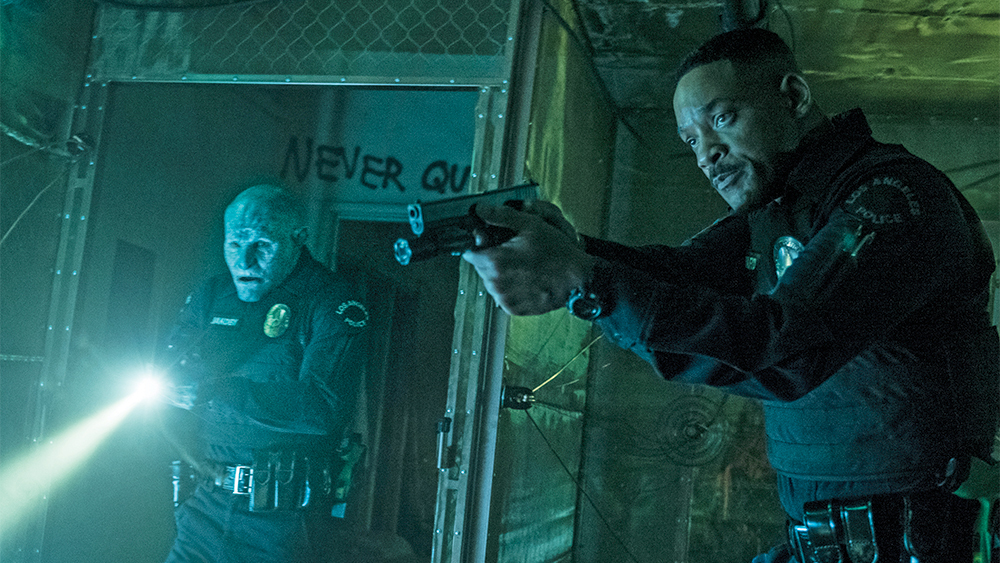
As Thelma, Harboe – making only her second feature in a leading role (take note, BFI staff) – gives a studied, sympathetic performance that bodes well for the actress’s future. Her open gaze and gauche approach to the character works well in the opening scenes, and as Thelma begins to find herself, Harboe gives full expression to the blossoming that the character undergoes and the mixture of happiness and disorientation that she experiences; it’s like watching a teenage girl slowly coming to terms with becoming an adult, and all that that entails. Wilkins is an ethereal presence at times, with a wistful look that is enticing, and in their scenes together, she and Harboe exhibit a natural chemistry that makes their characters’ relationship all the more credible. Visually, the movie is quite austere, though deliberately so, with Jakob Ihre’s cinematography perfectly matching the emotional astringence shown at the movie’s beginning, and then subtly changing to then match the more emotional and dramatic elements seen later on. There’s also a somewhat disconcerting but effective score courtesy of Ola Fløttum that provides a further layer of unease to Trier’s poignant love story and Thelma’s journey of self-discovery.

Rating: 8/10 – some of Trier’s inspirations for Thelma will be obvious, but he uses them in such unexpected and unforced ways that they always feel suitable to the material and not just for show; a movie that gathers an inexorable momentum as it goes, this is the kind of intelligent psychological romantic horror thriller that doesn’t come along too often, but which you’ll be glad to have seen now that it has.

Share this:

  • Click to share on X (Opens in new window) X
  • Click to share on Facebook (Opens in new window) Facebook
  • More
  • Click to print (Opens in new window) Print
  • Click to email a link to a friend (Opens in new window) Email
Like Loading...

The Cured (2017)

19 Thursday Oct 2017

Posted by dullwood68 in Movies

≈ 1 Comment

Tags

David Freyne, Drama, Ellen Page, Horror, Ireland, Maze Virus, Review, Sam Keeley, Thriller, Tom Vaughan-Lawlor, Zombies

D: David Freyne / 95m

Cast: Ellen Page, Sam Keeley, Tom Vaughan-Lawlor, Stuart Graham, Paula Malcomson, Oscar Nolan

In the near future, the Maze Virus has almost caused the end of civilisation as we know it. In Ireland it has affected three quarters of the population, with millions having been turned into slavering, flesh-hungry zombies. However, a cure has been found, and it’s been administered to all the sufferers, but only around seventy-five per cent of the affected have responded positively to the cure. Now, they’re back to something resembling normal: they no longer want to eat human flesh, they don’t have to worry about the virus reasserting itself, and they are being allowed to reintegrate back into the society that only a short while ago was hunting them down and exterminating them. But there’s a catch, an unforeseen side effect of the cure: they remember everything they did, everyone they killed and ate, while they were affected.

This proves particularly troublesome for Senan (Keeley), a young man who upon his release from a military quarantine, is allowed to move into the home of his widowed sister-in-law, Abbie (Page). Abbie’s husband (and Senan’s brother) has been missing since the outbreak, but Senan knows what happened to him, a secret he shares with fellow survivor Conor (Vaughan-Lawlor). As more and more of the recently cured attempt to pick up their lives where they left off, they find themselves encountering prejudice and discrimination at every turn, with only Abbie and a research scientist at the military quarantine, Dr Lyons (Malcomson) (who is looking for a cure that will work for all the affected) providing any support amongst the uninfected. With growing animosity towards them, the cured seek to secure their rights as human beings, but through the kind of insurgency that the country has historically had to deal with. With Conor taking the fight to the authorities, Senan’s loyalty to Conor is called to account as he tries to protect Abbie and her son, and his nephew, Cillian (Nolan). But Conor has a darker plan than just fighting for the rights of the cured…
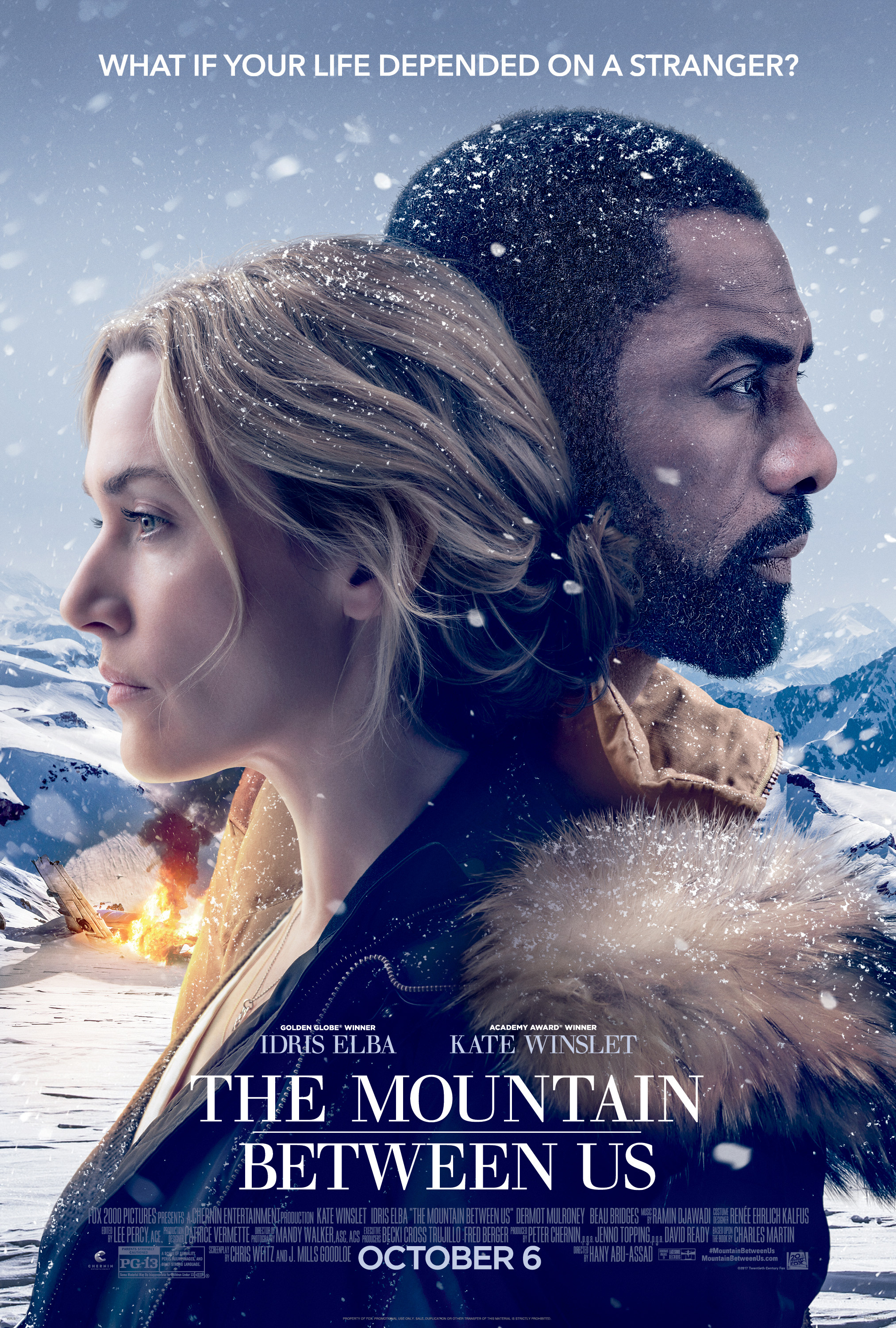
A fresh twist on the zombie movie, The Cured does what all the best zombie movies do: it tells its story against a recognisable social and political backdrop, and adopts a measure of gloomy sincerity that grounds the material even as it makes it overly serious. There’s very little time or room for humour here, as David Freyne’s debut feature paints a terrifying portrait of a period where social order nearly collapsed and four years of bloodthirsty savagery has left deep, unimaginable scars on a nation’s psyche. The cured, it’s made clear, aren’t to be trusted. Worse still, they’re figures of fear, shunned by the majority of the uninfected who show little faith in the idea of an effective and non-reversible cure. With two previous reintegrations having failed, it’s no wonder the cured are required to report to the military each week, as if they were on probation. Freyne, working from his own script, shows the worry and the anxiety shown on both sides, as distrust builds between them and Conor seeks to exploit the concerns of the cured while focusing on his own agenda.

The political backdrop is perhaps inevitable given Ireland’s troubled history, and Freyne charts a clear allegorical course through the narrative that adds depth to the drama and a layer of inevitable tension in the movie’s latter stages. Some of it is simplistic in nature, but it’s carried off with a great deal of style which helps immensely as the style on show is somewhat grungy and dimly lit (which isn’t a bad thing, as Piers McGrail’s cinematography will attest). Page’s character is an American whose place in Ireland is neatly ascribed to a mix of the personal (her son) and the political (US restrictions on travellers from countries with infected populations). She’s also a journalist who can anticipate what’s going to happen, but in one of the movie’s few stumbles, is instructed to forget the potential for a new outbreak and attend the opening of a new McDonalds instead. It’s at moments like these that allegory mixes well with fatalism, and the future becomes increasingly bleaker and bleaker.

Away from the political and social upheaval, the relationship between Senan and Conor is given plenty of room to grow, and Freyne uses it to explore the nature of their connection before they were cured. This connection is one of the movie’s better ideas, and is used sparingly but effectively to show both how bad things were, and how much worse they will be if Conor gets his way. Senan is wracked by guilt at what he did while infected, but Conor is willing to re-embrace the monster he became. Senan is desperate to retain every last ounce of his humanity, and is wracked by nightmares. Conor allows himself to be subsumed by anger and a lust for personal power, discarding his own humanity out of a misguided sense of injustice. Freyne keeps their personal dynamic at the heart of the movie, and though it’s often at the expense of Abbie and her journey toward an unwanted revelation, it’s more than effective thanks to committed and sincere performances from Keeley and Vaughan-Lawlor.

Freyne also finds time and space to offer moments of genuine horror and pathos, and provides a well staged, and convincing breakdown of law and order in the movie’s final stretch that belies the movie’s low budget. And like an increasing number of movies these days, there are plenty of well placed and very loud sound effects to facilitate a number of (mostly) successful jump scares, but these aren’t really needed thanks to the morbid atmosphere that’s already been created at the beginning. With Freyne threading notions of loss and grief into the already gloomy narrative, there’s as much to think about in The Cured as there is to take in visually. This is an intelligent, and intelligently handled, zombie movie that stumbles only occasionally, but when it does it’s not enough to derail the momentum that it builds up quite skilfully and to such credible effect.

Rating: 8/10 – easily one of the better zombie movies released in recent years, The Cured is a thoughtful, well crafted movie that is confidently handled by its writer/director; with an emotional core that helps anchor the tragedy at the movie’s forefront, this is a horror movie that works on several levels and all with a great deal of aplomb.

NOTE: There’s no trailer for The Cured available at the moment. When there is it’ll be added here.

Share this:

  • Click to share on X (Opens in new window) X
  • Click to share on Facebook (Opens in new window) Facebook
  • More
  • Click to print (Opens in new window) Print
  • Click to email a link to a friend (Opens in new window) Email
Like Loading...

The Snowman (2017)

18 Wednesday Oct 2017

Posted by dullwood68 in Movies

≈ Leave a comment

Tags

Charlotte Gainsbourg, Crime, Drama, Harry Hole, Jo Nesbø, Literary adaptation, Michael Fassbender, Murder, Rebecca Ferguson, Review, Serial killer, Thriller, Tomas Alfredson

D: Tomas Alfredson / 119m

Cast: Michael Fassbender, Rebecca Ferguson, Charlotte Gainsbourg, Val Kilmer, J.K. Simmons, Toby Jones, David Dencik, Chloë Sevigny, James D’Arcy, Jonas Karlsson, Adrian Dunbar, Ronan Vibert, Michael Yates

Another week, another literary adaptation, another disappointment… Sometimes it’s hard to understand just what happened when a movie based on a well regarded novel hits our screens with all the turgid urgency of dripping sludge. Who do you blame? The director? Maybe. They are in overall charge of how the movie looks and sounds and how thrilling or dramatic or funny or affecting it should be. Or maybe it’s the screenwriter(s). Maybe they didn’t “get” the novel or work out the best way of transferring it to the big screen. Maybe it’s the cast. Maybe they weren’t “feeling it” and couldn’t find their way to putting in good performances. Or perhaps it’s just something a little less tangible, the tone perhaps, or the pacing, or the emotion of the piece. Maybe – maybe – it’s a combination of all these.

That certainly seems to be the case with The Snowman, an adaptation of the novel by Jo Nesbø, and the first movie to feature his troubled detective, Harry Hole (played here by Michael Fassbender in a portrayal that seems based around Hole having only the one expression). Now, if you’ve read this paragraph up til now and you’ve been pronouncing Hole as in a hole in the ground, then you have the first problem that the movie can’t or won’t overcome: no one can even pronounce the lead character’s name correctly. Harry’s surname is pronounced Ho-ly as in holy scripture, or as with this movie, what the holy hell is happening? When the makers of a movie can’t even get the lead character’s name right, then what chance does the rest of the movie have? In short, hardly any chance at all.

A rushed production that finished shooting in April 2016, but which required reshoots in the spring of this year, the movie quickly gets bogged down by the requirements of a muddled script that wants to be regarded as another excellent example of the awkwardly named Scandi-noir. All the elements are there to be ticked off one by one: the dark, brooding lead detective, the dark, brooding atmosphere, the dark, brooding nature of the murders, the killer’s dark, brooding psychological profile, the dark, brooding visual backdrop – clearly if it wasn’t dark and brooding then it wasn’t allowed to remain in the screenplay. But just as having too much of a good thing can spoil that very same thing, having too little in the way of structure, common sense and thrills can also damage a movie’s chances, and The Snowman sabotages its own semi-focused ambitions at every turn.

For a thriller that should grip like a vice, there are just too many risible moments that offer unfortunate injections of humour, such as when James D’Arcy’s character reveals that he’s “infertile. I can’t have children”, just to make sure there’s no one in the audience who won’t understand what infertile means. Then there are the dreadful, logic-takes-a-beating moments such as when the killer uses a mobile phone they know the police will be monitoring to help them pin the blame on someone else, but who then forgets that they can be traced through the use of another mobile phone later on. Scenes come and go that don’t always follow on from each other (though it’s more disheartening to think there might be a longer Director’s Cut out there somewhere), and Harry’s maverick cop activities keep him in the front line no matter how often he acts independently of the rest of the Oslo police force, while Rebecca Ferguson’s impassioned rookie, Katrine, gets sidelined the first time she uses her own initiative. Some of this is in service of the plot, but mostly it just seems that in piecing together the key points of Nesbø’s novel, screenwriters Hossein Amini, Peter Straughan, and Søren Sveistrup have decided to only include the events from every other chapter in the novel, and not adapt the novel as a whole.

Characterisations suffer too as a result of this approach, with Harry’s alcoholism only of any relevance in introducing him to the audience, and to provide a degree of drama surrounding his continual inability to spend time with the son (Yates) of his old flame, Rakel (Gainsbourg). Being an alcoholic isn’t allowed to get in the way of showing just how good a detective Harry really is, and so it becomes less and less effective as a character defect the longer the movie goes on. Likewise the relationship between Harry and Rakel is confusing because there’s no back story for the viewer to latch onto (it might have helped if the producers had decided to adapt the first book in the Harry Hole series, instead of the seventh). The killer’s motives remain vague and unconvincing throughout, and their need to build a snowman at the scene of each crime is as baffling at the end as it is at the beginning. It’s as if it’s use as a signature “flourish” by the killer is all that’s needed. (A reason for it? Ah, don’t worry about it; it’ll look cool.)

Alfredson has spoken about the challenges of making the movie within a short period of time, and without a completed script, leading to issues that were discovered in the editing suite. But while it does seem that there are huge gaps in the narrative, and the movie has to work extra hard to maintain any tension or sense of urgency, it’s the flatness of the drama and the lethargy in certain scenes that can’t be explained away just because of a shortened production period. In the end, Nesbø’s page-turner has become a movie that fails to match up to its energy and verve, and which remains a leaden, dreary experience for the viewer. The performances are adequate (though Kilmer, worryingly, looks as if he’s trying to impersonate present day Gary Busey), and Dion Beebe’s cinematography does at least capture the beautiful isolation of rural Norway in often stunning fashion. But otherwise, this is a routine, formulaic serial killer movie that does itself no favours from beginning to end.

Rating: 4/10 – muddled and convoluted aren’t words that any potential viewer wants to hear, but they describe The Snowman perfectly; uninspired and chock full of thriller clichés, the movie stumbles along trying to be clever and effective, but instead ends up putting a finish to any notion of an intended Harry Hole franchise.

Share this:

  • Click to share on X (Opens in new window) X
  • Click to share on Facebook (Opens in new window) Facebook
  • More
  • Click to print (Opens in new window) Print
  • Click to email a link to a friend (Opens in new window) Email
Like Loading...

The Summit (2017)

17 Tuesday Oct 2017

Posted by dullwood68 in Movies

≈ Leave a comment

Tags

Argentina, Érica Rivas, Brazil, Chile, Dolores Fonzi, Drama, Mexico, Politics, Review, Ricardo Darín, Santiago Mitre, South America, Thriller

Original title: La cordillera

D: Santiago Mitre / 114m

Cast: Ricardo Darín, Dolores Fonzi, Erica Rivas, Gerardo Romano, Héctor Díaz, Daniel Giménez Cacho, Alfredo Castro, Paulina García, Leonardo Franco, Elena Anaya, Christian Slater

At the beginning of The Summit, one thing is made abundantly clear: that as Argentina’s recently elected President Blanco (Darín) is on the verge of travelling to Chile to take part in a summit arranged to discuss the setting up of a South American version of OPEC, there’s trouble waiting in the wings in the form of his son-in-law. Blanco may have been involved in a misappropriation of state funds before he became president. His team of advisors are worried about the possible repercussions if this knowledge becomes public, but with the summit just a day away, they decide to play a waiting game. Blanco makes one decision, though: he arranges for his daughter, Marina (Fonzi), to be brought out to the remote Andean hotel all the delegates are staying at. Perhaps she can provide some insight into her husband’s motives, even though they’re separated.

And so, the first of four separate plot strands is woven into place. Soon there will be the political machinations that go hand in hand with a number of countries all vying to get a large piece of the pie from assembling a mult-national oil conglomerate. Marina will suffer a breakdown that will reveal one of two things: a dark family secret, or a darker personal tragedy. And to wrap things up, Blanco will be put in a position that will make or break him as a hero of his country (this plot strand arrives a little late but it’s there nonetheless). It’s an ambitious mix of storylines, but stitched together awkwardly and with each strand causing problems for the others. Will Blanco be able to find a way out of the dilemma posed by his son-in-law? Will Marina’s breakdown bring her father’s presidency crashing down around his ears? Will Brazil, the guiding force behind the oil summit, get its own way at the expense of a better option? And will Blanco, faced with making a momentous decision that could backfire on him just as easily as it could be the making of him, survive everything that’s being thrown at him?

To answer all those questions, would inevitably, negate any reasons to watch this movie in the first place. But the answers themselves aren’t as compelling as they could have been. Without giving too much away, one answer can be guessed easily, another is resolved by an unexpected event, one could go either way, and the last is – very strangely – a mix of all three. As to which of those coded answers matches which plot strand, that would be telling, but it’s enough to also say that director Mitre and his co-screenwriter, Mariano Llinás, have attempted to tell a political drama that continually stops to explore the private lives of two of its main characters, and often forgets for long stretches that there’s even a summit going on (for the most part it seems as if the summit takes place for only an hour or so each day, such is the amount of time that Blanco has to deal with all the other issues that crop up).

Where it might have been a good idea to devote equal time and emphasis to all the various strands, and make them part of a slowly evolving (and involving) narrative, Mitre decides instead to concentrate on each one as if they were unconnected to each other. This leads to abrupt transitions of both tone and pacing, as when the summit is forgotten about in order for Marina’s breakdown to be explored in ever greater detail (and long enough for an Argentinian doctor (Castro) to be flown in to treat her). Likewise the arrival of Slater’s US government representative, which requires a hush-hush meeting with Blanco that again calls for him to be away from the summit for a length of time that in any other political thriller, would have the other delegates looking at him with dark suspicion. It’s at moments like these that Mitre seems unable to decide what’s more important: the basic set up of the summit, or the other stories he and Llinás have concocted in order to pad out the running time.

With its inelegant narrative that flits back and forth and never really lets the viewer get comfortable with what’s happening, The Summit has too many longueurs that bring it up sharply and require something of a kick start to get things moving again. Mitre also wants us to invest heavily in the relationship between Blanco and Marina, but thanks to the decision to take a side-step into psychological thriller territory, the issues each has with the other are allowed to be subsumed in a game of guess-the-truth, a game that could have been intriguing and more absorbing if it wasn’t dropped as soon as the movie needed too get back to the summit and wrap things up in a nice neat bow. Like a lot of the movie’s attempts at providing a probing, incisive narrative to draw in its audience, the end result provides instead a feeling that’s more akin to frustration than satisfaction.

Against all this, the cast struggle gamely with roles that often prove perfunctory, with even the usually dependable Darín unable to make much headway with a script that paints Blanco as a politician somewhat out of his depth on the world stage, and never really changes or challenges that assessment. As the daughter with a range of issues that every politican’s daughter seems to have, Fonzi does stary-eyed before emotion, and always seems half a beat behind where her character needs to be in any given scene. Rivas is good as the president’s loyal personal secretary, Cacho makes an impression as a Machiavellian Mexican president, and Anaya has a small role as a journalist who pops up here and there to ask “difficult” questions of the countries’ leaders. But the acting is often left to fend for itself at the expense of the material, and only Javier Julia’s crisp cinematography is allowed to furnish any respite from the dull stetches that hamper the movie’s ability to keep its audience from being truly engaged with it.

Rating: 6/10 – ponderous when it should be exciting, clumsy when it should be gripping, The Summit is an unfortunate title for a movie that never hits any creative heights, and which remains stranded at ground level throughout; somewhere in its screenplay are the makings of two, better, thrillers, but it’s unlikely now that we’ll ever see them, something that is more affecting by itself than the movie as a whole.

NOTE: The following trailer doesn’t have any English language subtitles, but it does give a good sense of the movie itself.

Share this:

  • Click to share on X (Opens in new window) X
  • Click to share on Facebook (Opens in new window) Facebook
  • More
  • Click to print (Opens in new window) Print
  • Click to email a link to a friend (Opens in new window) Email
Like Loading...

You Were Never Really Here (2017)

16 Monday Oct 2017

Posted by dullwood68 in Movies

≈ Leave a comment

Tags

Drama, Ekaterina Samsonov, Joaquin Phoenix, Judith Roberts, Literary adaptation, Lynne Ramsay, Review, Sex trade, Thriller, Violence

D: Lynne Ramsay / 95m

Cast: Joaquin Phoenix, Judith Roberts, Ekaterina Samsonov, Alex Manette, John Doman, Alessandro Nivola

A funny thing happened on the way from the Cannes Film Festival…

At Cannes this year, Lynne Ramsay’s latest feature, an adaptation of the novella of the same name by Jonathan Ames, won a joint best screenplay award (tying with The Killing of a Sacred Deer), and the best actor award for Joaquin Phoenix’s performance as Joe, an ex-Marine working “undercover of the law” rescuing young girls from the sex trade. The movie was greeted with widespread critical acclaim, received a seven-minute standing ovation from its premiere audience, and was believed to be a strong contender for the Palme d’Or (though it lost out to Ruben Östlund’s The Square). Since then it has appeared at four further festivals before arriving at the BFI London Film Festival where it was shown three times.

At the second of its screenings in London, Ramsay was in attendance to introduce the movie. Within moments of coming out on stage she advised the audience not to hang around for the Q&A afterwards as she hated them. When pressed to answer a couple of questions there and then, Ramsay demurred to the point where the member of the BFI team who was on stage with her, realised that Ramsay wasn’t going to “play ball”, and somewhat embarrassingly, they left the stage and the movie began. Ninety-five minutes later the movie ended, and many in the audience waited for the Q&A to begin. It didn’t. Ramsay never came back out, and no one from the BFI clarified the situation. Having seen the movie, quite a few people in the audience felt they knew why Ramsay didn’t want to discuss her new movie.

First and foremost, You Were Never Really Here is a movie that invites a lot of scrutiny. It deals with themes surrounding the nature of violence, has a stripped back approach to the narrative, paints an austere portrait of a man who battles with his own demons to little avail, is uncompromising in its depiction of the aftermath of extreme violence (though it’s very fuzzy on the actual violence itself), operates within a noir-ish version of New York City, and features exemplary cinematography from Thomas Townend. It’s a movie that looks and feels important, a movie that wants to be taken seriously, and that appears to have something to say about the darkness within us and how, through the character of Joe, we can both explore and deny that darkness. In short, it’s a movie that looks to carry weight and meaning.

But here’s the odd thing: along with Phoenix’s tortured, semi-burnt out portrayal, and another impressive score from Jonny Greenwood, the movie has a lot of very good things going for it. And yet, as a whole, it doesn’t work. So many of the elements that go to make up the movie – Joe Bini’s editing, Tim Grimes’ production design, for example – are so good, so well executed, that it would seem that the movie can’t be anything other than hugely successful on its own terms. How could it not be? And yet, it’s not Ramsay’s best movie, not by a very wide margin. That honour belongs to Ratcatcher (1999). In the end, and despite all the effort put in by all concerned, You Were Never Really Here doesn’t match the potential all those disparate elements should do when they’re all combined. It’s a movie that isn’t the sum of all its parts.

Ultimately, the movie is one to admire for the way it tells its story rather than the response it provokes in its audience (which is muted to say the least). Technically well made, and with fine performances from all concerned (except for Nivola, whose appearance amounts to a cameo), Ramsay’s adaptation is hard to get involved with. There’s no sense of danger about what Joe does because he seems indestructible. At the beginning he’s attacked from behind by a man with a length of pipe. But Joe shrugs off the blow, head-butts his assailant who falls to the ground, and then he walks off as if it’s all part of his daily routine. But while it tells us that Joe is inured to the violent world he lives in, it makes the viewer inured as well. If it doesn’t mean anything to Joe, then why should it mean anything to us? It’s also no surprise that Joe has an elderly mother (Roberts) whom he looks after, but even their relationship doesn’t resonate in the way Ramsay might want it to. And then there’s Joe’s childhood, a period we see glimpses of, and which should invite the audience’s sympathy, but which remain violent additions to an already violent story, and as such, don’t have the power they’re meant to.

The movie’s basic storyline is also one that feels undercooked, with its political corruption and sex trade background something that we’ve seen countless times before. Ramsay works hard to make this section of the movie thrilling, and helped by Bini’s considerable editing skills she almost pulls it off, but the decision to obscure the violent acts taking place and to disallow any cathartic expression in either Joe or the viewer makes these violent outbursts triumphs of style instead of emotion. You can admire the way they’ve been shot and assembled, but they don’t evoke any feelings the viewer can experience for themselves. Ramsay keeps everyone, even her characters, at a remove, and closes out the movie with a moment of such extreme nihilism that it literally feels shoehorned in to provoke a response when none is actually needed. And that response? Just one of bafflement, which is not a response any movie maker should be looking for.

Rating: 7/10 – having surrounded herself with a cast and crew all working flat out to make the best movie they can, director Lynne Ramsay fails to put their efforts to practical good use, and leaves You Were Never Really Here feeling like an abandoned first cut; a movie that is likely to provoke serious debate over its merits for quite some time to come, it’s perhaps best described as an experiment that needed more time to be completed before any results could be unveiled.

Share this:

  • Click to share on X (Opens in new window) X
  • Click to share on Facebook (Opens in new window) Facebook
  • More
  • Click to print (Opens in new window) Print
  • Click to email a link to a friend (Opens in new window) Email
Like Loading...

A Brief Word About the BFI London Film Festival 2017

13 Friday Oct 2017

Posted by dullwood68 in Movies

≈ Leave a comment

Tags

Argentina, BFI, China, Drama, France, Ivan Mosjoukine, Joachim Trier, London Film Festival 2017, Lynne Ramsay, Movies, Norway, Sean Baker, Silent movie, Thriller

Each year in October, the London Film Festival takes place, and each year I endeavour to see as many movies as I can within – usually – a five day period. And with each passing year it proves more and more difficult to decide what to see. Quite simply, there’s too much choice, so much so that it’s impossible to see every movie that is shown. This year, however, and thanks to a new job, my visit to the Festival has been reduced to the final two days, the 14th and 15th. Here is my itinerary for the next two days:

Saturday 14 October:

The Florida Project (2017) – Sean Baker’s follow up to Tangerine (2015) about a family living in the shadow of Disney World and struggling to make ends meet.

The Prince of Adventurers (1927) – a French production charting the life of Casanova with the Italian lover played by Russian émigré Ivan Mosjoukine.

The Cured (2017) – an Irish horror movie where a zombie outbreak has seen a cure found, but distrust of the once infected leads to social injustice and eventual martial interference.

Wrath of Silence (2017) – more international intrigue in this Chinese movie set in a small town where corruption is rife and a mute miner takes a violent stand against it.

Sunday 15 October:

You Were Never Really Here (2017) – Lynne Ramsay’s latest is a taut psychological thriller that promises a terrific performance from Joaquin Phoenix.

Thelma (2017) – a Norwegian thriller that’s also a mystery and a romantic drama, and the latest mainstream art movie from Joachim Trier.

The Endless (2017) – this is a dark, cult-like movie about a cult and two ex-members who begin to wonder/suspect that maybe there’s more to the cult’s beliefs than they ever considered.

The Summit (2017) – an Argentinian political thriller that places that country’s (fictional) President in a personal bind that could have far-reaching effects on his personal and professional lives.

Needless to say, I’m looking forward to seeing all of these movies – and reviewing them over the coming week. Being at the Festival and seeing a range of movies that are unlikely to be released in UK cinemas (and sometimes no matter how well received they are) is a massive bonus each year, and the BFI always manages to pull together an impressive programme of movies for everyone to enjoy. Away from the special gala showings and red carpet screenings, it’s often the less well known movies that have the most to offer, and not one of the movies that I’m planning to see lacks the ability to stand out from the crowd. I just can’t wait to get started!

Share this:

  • Click to share on X (Opens in new window) X
  • Click to share on Facebook (Opens in new window) Facebook
  • More
  • Click to print (Opens in new window) Print
  • Click to email a link to a friend (Opens in new window) Email
Like Loading...

Blade Runner 2049 (2017)

07 Saturday Oct 2017

Posted by dullwood68 in Movies

≈ 2 Comments

Tags

Ana de Armas, Denis Villeneuve, Drama, Harrison Ford, Jared Leto, Replicants, Review, Ryan Gosling, Sci-fi, Sequel, Thriller

D: Denis Villeneuve / 163m

Cast: Ryan Gosling, Harrison Ford, Ana de Armas, Sylvia Hoeks, Jared Leto, Robin Wright, Mackenzie Davis, Hiam Abbass, Carla Juri, Lennie James, Barkhad Abdi, Dave Bautista, Edward James Olmos

Perhaps the most anticipated sequel of 2017, Blade Runner 2049 is finally with us, having been in development – in one form or another – since 1999. It’s a fascinating movie to watch, built as it is on the legacy of its predecessor, and it’s received a lot of praise from critics and fans alike. But it’s not entirely successful in the goals it’s set itself, and despite some terrific performances, Villeneuve’s inspired direction, and sterling efforts from all concerned with the movie’s look and design, the movie struggles at times to maintain proper focus and to make more of its story elements than it actually does. The style is tremendous, then, but the story it supports isn’t as well worked out as it initially looks. Partly this is to do with decisions made at the pre-production stages, and partly to do with a script – by returning scribe Hampton Fancher, and Michael Green – that rarely tries to flesh out its themes or tease out the inherent subtleties within them. This is being touted as intelligent sci-fi and a worthy successor to its predecessor (and on the whole, it is), but in reality it’s a movie that looks amazing, but can’t make its mind up about the story it wants to tell.

It seems straightforward enough. Modern replicants are now being used as blade runners, and are tasked with tracking down and eliminating any remaining Nexus-8 models that are still out there. K (Gosling) is one such replicant, and he’s generally regarded as good at his job. But then what should be a simple “retirement” throws up an unexpected development in the form of buried human remains. But the truth is stranger still: the bones are those of a female replicant who has given birth, something that was, and is still, regarded as impossible, due to it not being a part of their bio-engineering. K’s superior, Lieutenant Joshi (Wright), fearing such information would be catastrophic if it were made public, orders K to destroy all evidence relating to the case, and locate and kill the child. K visits replicant manufacturer Nyander Wallace (Leto), who identifies the remains as those of Rachael, a replicant who thirty years before, had an affair with a blade runner called Deckard (Ford). Wallace, who can’t manufacture replicants fast enough to match the demand for them both on Earth and on the Off-Worlds, instructs his enforcer, Luv (Hoeks), to follow K and locate the child before it can be “retired”.

And so the stage is set for a race against time in the search for the child (now clearly an adult but referred to as a child throughout). Except Fancher and Green’s script isn’t too concerned about this, and despite the amount of time it’s taken to set it all up. Instead we’re treated to extended passages concerning K’s relationship with a hologram called Joi (de Armas), evidence that K might be the child everyone (including himself) is seeking, meditations on the nature of memory and its veracity, an encounter with what could charitably called the Popular Replicant’s Front of Judea, and further oblique references to Joshi’s insistence that social upheaval will be the result of the child’s existence being made public. Some of this is interesting on a superficial, let’s-not-think-about-this-too-closely level, but that’s also why it remains at a superficial level. The idea that there’ll be a breakdown in the way that replicants are treated comes only from Lieutenant Joshi, but as there doesn’t seem to be anyone that she reports to (she and K could be the only two people in the blade runner department; we never see anyone else), this can only be looked on as her assumption, or her prejudice. But as neither idea is addressed or delved into, the viewer is left with the understanding that if she hadn’t raised it conveniently as an issue, then the movie would struggle to provide audiences with a strong plot.

Out of this, there’s still the confusing issue of whether or not replicants having children is a good or a bad thing. With nothing to suggest that it’s a bad thing – even though the viewer is asked to go along with this idea on faith alone – the fact that Wallace wants to crack this particular genetic anomaly in order to beef up his workforce in the off-world colonies (which would be a benefit for everyone), doesn’t seem such a bad idea at all. But the script insists that he has to behave badly in order to solve this issue  and move forward (actually Luv behaves badly, and deliberately so, while Wallace is confined to the sidelines for much of the movie). As a result, tension and discord amongst the characters is encouraged instead of any détente, and once K finds Deckard hiding out amid the ruins of Las Vegas, the movie remembers it’s also a thriller as well as a romantic drama (K and Joi), and it ramps up the action accordingly.

From this it could be assumed that Blade Runner 2049 is a movie that doesn’t make a lot of sense when you look at it closely – and this is true. Fancher and Green’s script doesn’t always delve as deeply as it could do, particularly as replicants are still being treated as slave labour, a situation that should resonate but which is soundly ignored. But fortunately, the movie has Villeneuve as its director, and if he’s not able to smooth overt the cracks in the plot successfully, what he is able to do is make this sequel one of the most visually impressive movies of the last five/ten/fifteen (delete as applicable) years. Along with DoP Roger Deakins, Villeneuve has created a world that has devolved even further in the last thirty years, and which is alternately breathtaking and disconcerting. Dennis Gassner’s production design should be singled out for praise as well, as he makes every last aspect of 2049 life feel immediate and yet compromised, as if everyone is living in a world that’s becoming more and more withdrawn from their day-to-day reality. Large areas surrounding Los Angeles are now wastelands to varying degrees, and there’s still that perpetual rain to remind you of how bad things have remained, and the movie widens its horizons appropriately as it tells its bigger, broader story.

There are good performances throughout, with Gosling proving a good choice as K, his initially blank features slowly giving way to pained resignation mixed with profound hope as to his possibly being “the child”. It’s another outsider-looking-in portrayal, the kind of role that Gosling is so good at playing, and here he doesn’t disappoint. Ford is terrific as well, reconnecting with a role that he hasn’t played in thirty-five years but which he infuses with a grizzled intensity, and a great deal of sympathy. It’s good to see him embracing a part in a way that, Han Solo aside, he hasn’t done for quite some time. There’s great support from the likes of de Armas (in a role that is intended to make K’s replicant nature more human, but which remains surplus to requirements, no matter how hard the screenplay tries), and Hoeks as the movie’s resident replicant psycho. Leto wears odd contact lenses that contribute to his character’s blindness, and aims for urbane but still bizarro villain and largely succeeds thanks to his decision to underplay the role, while Wright, ultimately, is given too little to do other than repeat dire warnings about the child etc. etc.

A sequel to Blade Runner (1982) may have been on a lot of people’s wish lists over the years, but now that it’s here, there’s something of a temptation to praise it for what it does do – look astounding on too many occasions to count, have a score that complements Vangelis’ original score while being its own thing, create several worlds in one – instead of admitting that what it doesn’t do harms it too often (and on a couple of occasions, irreparably). Yes, it’s an incredible movie visually, and the makers should be congratulated, and awarded, for their efforts, but the script isn’t as convincing as it could have been. Still a movie to watch on the biggest screen possible (though not in 3D, which doesn’t add anything to the experience), and one to discuss for some time to come, this is one sequel that could have been bolder in its approach, and more complex in its ruminations.

Rating: 7/10 – though hugely effective for long stretches, Blade Runner 2049 does get bogged down in too many needless secondary plot lines during its middle section, but rallies to provide an exciting action sequence that rounds things off satisfactorily (even if it’s a long time coming); with many scenes that could have been trimmed or excised altogether, this is still a triumph for Villeneuve and his two male leads, and serves as another example of a movie that strives to be different from the rest of its multiplex brethren, even if it’s not fully successful.

Share this:

  • Click to share on X (Opens in new window) X
  • Click to share on Facebook (Opens in new window) Facebook
  • More
  • Click to print (Opens in new window) Print
  • Click to email a link to a friend (Opens in new window) Email
Like Loading...

American Assassin (2017)

05 Thursday Oct 2017

Posted by dullwood68 in Movies

≈ 1 Comment

Tags

Action, Drama, Dylan O'Brien, Literary adaptation, Michael Cuesta, Michael Keaton, Mitch Rapp, Nuclear bomb, Revenge, Review, Sanaa Lathan, Shiva Negar, Taylor Kitsch, Thriller

D: Michael Cuesta / 112m

Cast: Dylan O’Brien, Michael Keaton, Sanaa Lathan, Shiva Negar, Taylor Kitsch, David Suchet, Scott Adkins, Joseph Long, Mohammad Bakri, Navid Negahban, Khalid Laith, Vladimir Friedman, Charlotte Vega

It doesn’t take long – or much – to work out that American Assassin wants to be the first in a new spy/action series. After all, it’s an origin story, and the main character, Mitch Rapp (O’Brien), is in his early twenties at this point, so the potential is there for several more movies to be adapted from the novels by Vince Flynn, and made into the kind of slick, glossily produced, but largely pedestrian movie that’s been put together here. Depending on your patience or your level of appreciation for Rapp and his personal mission to rid the world of terrorists – particuarly Muslim ones – this will either have you urging him on, or wondering what makes him so special. However, what is certain, is that Mitch’s origin story leaves a lot to be desired.

What sets Mitch off on his pesonal mission happens on a beach in Ibiza. Having just proposed to his girlfriend, Katrina (Vega), Mitch is getting them drinks to celebrate when, from out of nowhere and with no warning at all, the beach is overrun by terrorists who start shooting randomly at everyone, including Mitch himself, who gets wounded, and (of course) Katrina, who is killed right in front of him. Fast forward eighteen months, and Mitch is now on the trail of the terrorist responsible for the beach attack. He’s managed to persuade said terrorist that they share the same aims and gotten himself a personal invitation to meet up in person. But just as he’s face to face with his arch-nemesis, a team of US Special Forces ops take out the terrorist and his men, and leave taking Mitch with them. He’s taken to a CIA safe house where he spends thirty days being debriefed, and impressing CIA Deputy Director Irene Kennedy (Lathan). She wants him for a black ops team called Orion, because “he tests off the chart” for what they need.

Without wishing to use this site’s favourite I-word, what follows could be predicted by just about anyone, even someone who’s never seen this kind of movie before (or any kind of revenge flick). Mitch is revealed to have authority issues, and he clashes with his trainer/handler Stan Hurley (Keaton), while also getting on the nerves of the rest of his team, and in particular, those of Victor (Adkins), his main rival for the position of Alpha Male. But Irene keeps on vouching for him, even when Mitch makes it clear he’s not a team player, and even when Stan correctly deduces that he’s driven by revenge and not by any patriotic duty (which is apparently preferable, as revenge is regarded as something that gets in the way of being a fully competent operative). Sent on the trail of some missing weapons grade plutonium that may or may not be about to fall into the hands of a trio of Iranian hardliners, Mitch disobeys orders on a mission in Istanbul, but is fortunate enough to retrieve vital information in the process.

This sets the pattern for the rest of the movie, as Stan tries to focus Mitch’s energies in the right direction, while Mitch continues acting impulsively and without the slightest idea of what he’s going to do next until he makes it up on the spot. He’s kind of an anti-hero, using the resources of the CIA to wage his own war on terror, while being told that his approach and attitude isn’t the best. This leads to a fair bit of confusion on the script’s part, as Irene and Stan (mostly Stan) keep telling him that his motives are wrong. But without them, Mitch wouldn’t have the skill set that he has, and he wouldn’t “test off the chart”. Apparently, he’s a natural, the kind of operative that the CIA prays comes along every so often, but at the same time they want to reign him in and make him fit their approach and attitude. And they wonder why it doesn’t work…

In the end, the movie can’t help but try and have its cake and eat it, as Mitch swings into action single-handedly at every turn, ignoring Stan’s orders and advice, and getting by on sheer exuberance and luck. O’Brien gives an intense performance as Mitch, but aside from a growing respect for Stan that fits the standard template for this kind of movie, there’s no character arc as such because he goes from delighted fiancé to revenge-fuelled assassin in the space of those eighteen months we never get to see. What we’re left with is a dour, singularly remote character that the viewer can’t connect with, and whose only emotional trait is anger. Other than that, Mitch is pretty much a stiff with a variety of weapons. As his mentor, Keaton continues a run of performances that prove he’s an actor who can make more out of a character than is on the page, and whose work ethic is almost second to none. Whenever he’s on screen, the movie picks up, and his energy helps carry the movie forward when at times it’s in danger of stalling.

Elsewhere, Lathan’s CIA Deputy Director remains a bland interpretation of an even blander role, while Negar grabs some of the limelight as an Iranian agent who’s part of the team when they get to Rome. The main villain is a renegade Orion operative called Ghost (Kitsch) who has his own revenge issues, but like a lot of self-absorbed bad guys he’s prone to too much monologuing and being lenient when it’s absolutely not in his best interest. The script’s nuclear bomb McGuffin feels old hat, and it all leads to an unfortunate bout of ruinous CGI involving the US Navy’s Sixth Fleet that requires such a major suspension of disbelief that only unintentional laughter can be regarded as the correct response to it. Trying to keep all this feeling fresh and exciting, but being undermined by the tired scenarios on display, Cuesta – whose pedigree includes stints on TV’s Six Feet Under, Dexter and Homeland – does what he can, and there are flashes of what he could have achieved, but they’re not enough to lift the material out of its self-imposed doldrums. By the end of the movie, you’ll either be optimistically looking forward to another outing for Mitch and his authority issues, or you might be agreeing with Tina Turner and saying, “We don’t need another hero”.

Rating: 5/10 – a broad spectrum action thriller that’s at least professionally made, American Assassin is the result of the work of four screenwriters (including Edward Zwick when he was attached to direct as well) who, between them, couldn’t make the material memorable enough; formulaic and predictable at every turn, it’s not a bad movie per se, just one that doesn’t have the necessary impact to help it rise above the bar set by the likes of James Bond or Jason Bourne.

Share this:

  • Click to share on X (Opens in new window) X
  • Click to share on Facebook (Opens in new window) Facebook
  • More
  • Click to print (Opens in new window) Print
  • Click to email a link to a friend (Opens in new window) Email
Like Loading...

Cult of Chucky (2017)

03 Tuesday Oct 2017

Posted by dullwood68 in Movies

≈ Leave a comment

Tags

Brad Dourif, Don Mancini, Drama, Fiona Dourif, Good Guy doll, Horror, Jennifer Tilly, Mental institution, Sequel, Thriller

D: Don Mancini / 91m

Cast: Fiona Dourif, Brad Dourif, Michael Therriault, Alex Vincent, Adam Hurtig, Elisabeth Rosen, Grace Lynn Kung, Zak Santiago, Ali Tataryn, Marina Stephenson Kerr, Jennifer Tilly

Number seven in a franchise that’s proving as hard to keep down as the titular character itself, Cult of Chucky is the latest instalment in a series that at least has tried to do something different with each entry. However, while this has its moments, it’s not as good as Child’s Play (1988), or its predecessor, Curse of Chucky (2013), but instead, occupies the largely stagnant middle ground of the rest of the series. Fans will no doubt love it, while non-fans will spend much of their time trying to work out who all the returning characters are. It’s very much a movie that’s been made to satisfy the fans, but if so, then it has to be argued that said fans are pretty undemanding.

It’s a movie that throws the viewer in at the deep end right from the start, and assumes that they’ll know exactly what’s going on, why, and who it’s happening to. It’s a continuation of the story that began in Curse of Chucky, but here the story is presented in a much more straightforward way that doesn’t try to connect itself with the events and characters of earlier entries as Curse did. But what it does do, as so many of the other entries have done, is to cut narrative corners whenever it’s convenient to do so. This means the movie is disjointed, takes liberties with its own continuity, and poses questions it has no intention of answering. For fans of horror franchises, a lot of this will be familiar territory, but as this is another entry written and directed by series’ keeper of the flame, Don Mancini, it’s all the more disappointing.

Set largely in a medium security mental institution, the movie focuses on Nica Pierce (Fiona Dourif), who was framed by Chucky (Brad Dourif) for the murders of her family in the last movie. Four years have passed, and her therapist, Dr Foley (Therriault), has managed to persuade Nica that she murdered her family, and that attributing their murders to Chucky has been a way of dealing with the guilt of what she “did”. But it’s not long before Chucky’s presence begins to make itself felt, first by one of the other patients, Angela (Kerr), telling Nica she’s spoken to Chucky and he’s coming for her, and then by Dr Foley bringing a talking Chucky doll into a group therapy session. A vsit by Tiffany Valentine (Tilly) sees Nica given another talking Chucky doll as a gift, and so, the stage is set for Chucky to go on yet another murderous rampage.

Having toned down the humour that marred Bride of Chucky (1998) and Seed of Chucky (2004), and reconnected with the strengths of the first movie, Mancini seems to be bogged down by what looks and feels like a transition movie, or that difficult second movie in a trilogy. It certainly leaves several plot strands dangling, and then right at the death (so to speak) it springs a surprise that has to be addressed/followed up in the next instalment (it’s one of those moments that will have fans punching the air in delight, while baffling the average viewer). Despite Mancini’s best efforts, the movie plays out with a grim determination to provide just enough death and franchise maintenance to keep people interested until next time, when perhaps, there’ll be a better payoff. And at least this time, the makers have foregone the low budget CGI employed on the last couple of entries, and returned to the animatronic and puppetry effects that have been used so well in the past. Chucky still moves like he’s got rickets, or is in need of a hip replacement, but it’s in keeping with how a plastic doll without functioning knees or ankles would move if it really was alive.

Fortunately though, and amidst all the pedestrian plotting and characterisations, Mancini manages to pull off a number of masterful moments that elevate the material, if only briefly. There are several establishing shots of the interior of the mental institution that show off its sharp lines and white open spaces, and there’s a character reveal that is both unexpected and effective purely because there’s no previous set up for it. There’s the puzzle of why one Chucky doll has a brutal fringe, and best of all, a death scene involving a skylight that Mancini shoots first with an eye for its initial static beauty, and then with an eye for its devastating, bloody outcome. These help the movie haul itself out of the doldrums it finds itself in at times, and gives some hope that if Mancini has already got number eight mapped out in his head, that it will contain moments as good as these, and perhaps a lot more besides.

Another bonus is the presence of the Dourifs, with Brad providing more solid voice work as Chucky, and daughter Fiona back in the fray as Nica. Fiona isn’t always best served by the script, but she has a similar intensity to her father that keeps the character more credible than most. As the movie progresses – and this may have been deliberate on Mancini’s part – Fiona looks more and more like her father, so much so that in a scene where she’s being hypnotised by Dr Foley and a light flashes in front of her, her features alternate between her own and what could have been her father’s super-imposed on hers, though that’s clearly not the case. It’s an odd, somewhat disturbing moment, and the feeling persists from that moment on. If it is deliberate, then it’s a clever trick considering where the movie ends up. Along the way though, Mancini plays to genre conventions for the most part, and keeps the movie from looking or feeling too fresh (the setting is yet another hospital where only the same three members of staff are on duty at any one time; otherwise it’s deserted). Held back perhaps by budgetary restrictions, the movie is nevertheless one that tries to bring something new to the series, but doesn’t quite manage it. Maybe next time…

Rating: 5/10 – lacking the consistency and attention to detail of its predecessor, Cult of Chucky gets by on a handful of bravura moments, but lets itself down by abandoning any attempt at maintaining its own internal logic very early on; the need to set up another sequel means the ending is something of a letdown, but if you’re a fan then this is something you’re probably going to derive a lot of pleasure from.

Share this:

  • Click to share on X (Opens in new window) X
  • Click to share on Facebook (Opens in new window) Facebook
  • More
  • Click to print (Opens in new window) Print
  • Click to email a link to a friend (Opens in new window) Email
Like Loading...

Gerald’s Game (2017)

30 Saturday Sep 2017

Posted by dullwood68 in Movies

≈ 1 Comment

Tags

Bruce Greenwood, Carla Gugino, Drama, Handcuffs, Heart attack, Henry Thomas, Literary adaptation, Mike Flanagan, Review, Stephen King, Thriller

D: Mike Flanagan / 103m

Cast: Carla Gugino, Bruce Greenwood, Henry Thomas, Chiara Aurelia, Kate Siegel, Carel Struycken

And so we have another Stephen King adaptation, the third within two months after The Dark Tower and It, and a movie that falls somewhere in between the two in terms of quality. Gerald’s Game may not be as bad as The Dark Tower, but it’s certainly nowhere near as good as It. But what it is, is a huge disappointment, one that forgets the cardinal rule when adapting one of King’s novels: that all the interior stuff that King does so well, doesn’t translate well to the screen. Unfortunately, that’s what takes up most of King’s novel, as unhappy wife Jessie Burlingame (Gugino) finds herself handcuffed to a bed while her previously equally unhappy husband, Gerald (Greenwood), lies dead on the floor from a heart attack. The one major problem? They’re at a deserted lake house, and no one’s likely to happen by any time soon. In fact, it might be a week or more before anyone shows up. And by then? Well, if Jessie doesn’t find a way out of her predicament, then whoever does show up is likely to find two dead bodies for the price of one.

And there you have it: the plot in a nutshell. It’s a slight plot, very simple in its nature, and if you were to make a movie based purely on that plotline and nothing else, you’d have a very short movie (and King would most likely have written a short story). But King wrote a novel, and he gave Jessie an abusive childhood (one more example of his parents as monsters motif) that enabled the basic plot to be expanded upon and Jessie’s plight made all the more resonant for highlighting how trapped she’s been throughout her life, first as a protector to her sister, and then as a trophy wife. More importantly, King is very good indeed at exploring the interior lives of his characters. But again, how King writes, and the detail he provides, doesn’t translate well to the (on this occasion small) screen. But director Mike Flanagan – who gave us the better than average Oculus (2013) and the entertaining if flawed Before I Wake (2016) – along with his fellow screenwriter, Jeff Howard, opts to include Jessie’s back story, but ends up having far more trouble connecting it to her present situation than perhaps should be the case. What the viewer is left with, is a movie that plays connect the psychological dots, but which manages to leave out some of those very same dots.

The basic set up is one we’ve seen many times before, both in novels and the movies, with a couple whose marriage isn’t working as well as it used to (if it did at all), trying to “spice things up in the bedroom” as way of improving things. But it’s obvious from the start that Jessie isn’t as confident about this as Gerald is, and when things become uncomfortable for her she calls a halt. But she’s already handcuffed to the bed, and after a short marital spat where a number of home truths are laid out on both sides, Gerald has a heart attack and dies (let that be a lesson to hypertensives who take Viagra). Cue Jessie having conversations in her head that are shown as hallucinations. Gerald keeps returning to tell her just how bad her situation is, and how unlikely it is that she’ll survive, while she also conjures up a version of herself who is more supportive and willing to do a bit of problem solving in order to keep Jessie alive. Both “characters” function as a part of Jessie’s psyche, which is fractured enough (and very quickly thanks to the demands of the script), but the repetitive nature of their dialogue soon becomes tiring, and any impact they initially have from “being there” disappears just as quickly as they show up.

From this we head off into Jessie’s childhood and the abuse she suffered at the hands of her father, Tom (Thomas). But Flanagan and Howard don’t quite know how to equate the abuse she suffered with the way in which Jessie behaves as an adult; the two don’t connect in a way that would make Jessie’s current predicament that much more affecting. In the end, the movie seems to be more about laying to rest the ghosts of Jessie’s childhood. And once that’s done, then it can get back to the small matter of Jessie being handcuffed to the bed. With that having been decided on, it’s left to Gugino to look increasingly awful thanks to dehydration, and to use an incident from her childhood to spark an idea as to how she can free herself. (Those familiar with the novel may be pleased/repulsed to know that King’s solution has been retained – and it’s not for the squeamish.)

Along the way there’s the added danger of a hungry stray dog who takes a liking to Gerald’s body and who might want to have a taste of “fresher meat”, and a mysterious presence, the Moonlight Man (Struycken), who may or may not be real. The problem with these elements, and many more besides, is that they are all signposted long before they become unveiled, and any suspense is squashed before it has a chance to make itself felt. Consequently, there is very little tension in the movie, and the pacing is erratic, with whole scenes feeling flat and pedestrian in nature. When the movie does pick up the pace, it’s only fleeting, but it still feels as if Flanagan hasn’t got as firm a grip on the material as he should have. He’s not helped by the performances of Gugino and Greenwood, which are serviceable at best, and often hampered by some unappealing dialogue (kudos to Greenwood though: he looks great for sixty-one).

Somewhat predictably, the script can’t help but throw in some referential dialogue to other works by King – the dog is referred to as “Cujo”, Gerald tells Jessie “all things serve the beam” – and there are moments when the promise inherent in the material threatens to break out, particularly with the Moonlight Man, but the wordplay is allowed to dominate, making this a movie that stops on several occasions to allow for lengthy speeches and broad declarations of how bad Jessie and Gerald’s marriage had become, or Jessie’s feelings about her childhood. Flanagan manages the odd flourish here and there, and visually it’s quite robust despite its mostly single set restrictions. There’s also a simple, yet evocative score by the Newton Brothers that does its best to amplify the emotional and psychological components of the script without making them too heavy handed. Good as these things are, though, they’re not enough to prevent Gerald’s Game from being a bit of a letdown.

Rating: 5/10 – yet another King adaptation that could have been a whole lot better, Gerald’s Game is a movie that only occasionally delivers any suspense or tension, and which concentrates more on its central character’s mental health than on tightening the structure of the main plot; earnest and a little bland (and despite the basic premise), this should be a tour-de-force of acting and directing, but instead it falls down way too often to provide the impact it needs.

Share this:

  • Click to share on X (Opens in new window) X
  • Click to share on Facebook (Opens in new window) Facebook
  • More
  • Click to print (Opens in new window) Print
  • Click to email a link to a friend (Opens in new window) Email
Like Loading...

Bushwick (2017)

27 Wednesday Sep 2017

Posted by dullwood68 in Movies

≈ Leave a comment

Tags

Brittany Snow, Brooklyn, Cary Murnion, Civil War, Dave Bautista, Drama, Jonathan Milott, Martial law, Review, Thriller

D: Cary Murnion, Jonathan Milott / 94m

Cast: Dave Bautista, Brittany Snow, Angelic Zambrana, Jeremie Harris, Myra Lucretia Taylor, Alex Breaux, Arturo Castro

Bushwick asks the question, what would a modern day US Civil War be like? The answer is a lot like The Purge (2013), abut without that movie’s intended freakshow aesthetic or its extreme fantasy elements. Here, everybody is fair game, but not just for one night. Here, secessionists go from door to door shooting everyone on sight, and the local residents of Bushwick fight back as best they can, and without really knowing why it’s all happening. What should have been an easy takeover of the US political system has become a guerrilla-led fight to the death. But is this a fight to maintain the status quo, or is it just because you shouldn’t mess with Bushwick?

The straightforward answer is, you shouldn’t mess with Bushwick. This is shown by the way in which Lucy (Snow) transforms from being a scared college student into a gutsy, gun-toting leader of others, solving problems and taking charge and kicking ass when necessary. She’s from the area, and when we first meet her she’s just trying to get home accompanied by her boyfriend, Jose (Castro). Getting off the subway they find it’s deserted except for a man who runs through the station screaming because he’s on fire. Adopting a “let’s-not-get-involved” stance, Lucy decides it would be better if they just headed to her parents’ house. As they ascend the steps out of the subway station though, they soon become aware that something wrong is going on, a fact that’s confirmed when Jose goes to see what’s happening and is promptly killed in an explosion. Lucy tries to find her way to her grandmother’s house, but along the way she witnesses a murder and is chased into a basement dwelling by the killer and his accomplice. It’s there that she meets Stupe (Bautista), who saves her from the two men.

By the time night has fallen, and the pair have had more than their fair share of shootouts, near misses, murderous encounters, disappointments, and injuries – Stupe suffers a nasty leg wound that needs to be cauterised, Lucy loses half a finger (“Oh my God. Oh my God. What am I going to do when I get married?”) – Lucy and Stupe have switched roles, and she displays a confidence and a determination that she didn’t have when they first met. Lucy learns to survive, and to keep others around her alive, and though the experience of being thrust into the midst of a bona fide Civil War is immediately frightening, she steps up and starts to make a difference. Lucy is exactly the kind of person we’d all like to think we would be if we were in the same situation, but probably wouldn’t be (run and hide until it’s all over? Now that sounds like a plan). Watching her character arc play out over the course of the movie is one of the best things about it, and Snow portrays Lucy as credibly and persuasively as you could expect, and for the viewer, she’s someone to admire and respect.

Snow is matched by an equally intuitive and convincing performance by Bautista as an ex-US Army medic turned janitor who has a tragic back story. His is a more contained portrayal, but combined with Snow’s more emotionally expressive performance, the difference in their characters’ respective temperaments allows their growing friendship and reliance on each other to blossom naturally and without feeling forced. The script – by Nick Damici and Graham Reznick – keeps the duo at the forefront of the action, and despite a couple of occasions where plot developments stretch the movie’s otherwise carefully constructed plausibility (Lucy’s encounter with a priest is particularly jarring), following their progress to safety is handled extremely well by both the script and directing team Murnion and Milott.

Indeed it’s the way in which Murnion and Milott – making their second feature together after Cooties (2014) – handle the material that makes the movie so effective. Adopting a Steadicam approach to the photography that provides a sense of immediacy, the duo also keep much of what is happening around Stupe and Lucy at the edge of the frame or just outside it. It all adds to the sense that despite their being careful, that something could happen to them at any moment. This feeling of jeopardy is maintained throughout, and the script’s investment in them as recognisable characters adds a further sense of uncertainty that increases the tension. The directing duo also elicit good performances from the supporting cast, and with the aid of sound mixer Richard Hart and supervising sound editor Rich Bologna, they’ve constructed an aural landscape for the movie that ensures there is always something going on in the background or just out of sight (except for when Stupe reveals his tragic back story).

Wisely perhaps, the movie doesn’t attempt to provide much more of a political statement regarding its Civil War backdrop other than the secessionists having a misguided sense of patriotism, but in doing so (and you could argue this may be deliberate) a parallel can be drawn with the recent upsurge of sentiments in the US around Making America Great Again. If this is a deliberate ploy by the makers to pass comment on what could happen as a result of parts of the US electorate deciding they want to have their own government, then the movie does have an eerie prescience about it, despite common sense saying this won’t ever happen. But then, whoever thought that an actor would become President, or a black man, or a businessman who’d end up keeping Alec Baldwin in continuous work for at least four years? A good movie overall, Bushwick has more going on behind the gunfire and the street-level anarchy than is at first apparent, and this adds to its considerable effectiveness.

Rating: 7/10 – a solid, well thought out thriller with modest ambitions, most of which it achieves, Bushwick is engrossing for the most part and not always as predictable as it sounds; with very good performances from Bautista and Snow, and fine attention to detail, it’s marred only by a generic urban soundtrack by Aesop Rock, and an ending that disappoints thanks the movie’s need to be edgy and dark at a point where it doesn’t need to be at all.

Share this:

  • Click to share on X (Opens in new window) X
  • Click to share on Facebook (Opens in new window) Facebook
  • More
  • Click to print (Opens in new window) Print
  • Click to email a link to a friend (Opens in new window) Email
Like Loading...

mother! (2017)

26 Tuesday Sep 2017

Posted by dullwood68 in Movies

≈ 2 Comments

Tags

Darren Aronofsky, Drama, Ed Harris, Horror, Javier Bardem, Jennifer Lawrence, Michelle Pfeiffer, Religious allegory, Review, Thriller

D: Darren Aronofsky / 121m

Cast: Jennifer Lawrence, Javier Bardem, Ed Harris, Michelle Pfeiffer, Brian Gleeson, Domhnall Gleeson, Stephen McHattie, Kristen Wiig, Jovan Adepo

Tucked away near the bottom left hand corner of the poster for mother! is the tagline, seeing is believing. Like much of the movie itself, it’s a phrase that’s open to interpretation, while at the same time, it can also be dismissed quite readily. If what we’re seeing is to be believed, then principal production company Protozoa Pictures have handed writer/director Darren Aronofsky $30 million in order for him to go off and make a movie that reaches for great heights but which fails to achieve those heights because somewhere along the way – and apologies for the clumsy analogy – Aronofsky forgot to bring along the ladder that would allow him to get there. It’s a brave, fearless movie, reckless even, and one that challenges its audience on many levels, not least as to whether or not they’ll like it. But it’s not the great success that some critics are avowing, and it’s not the complete disaster that others are saying of it. Instead it’s a movie that reveals a truth about artistic vision that often gets overlooked: it’s the vision of one individual, and as such, isn’t likely to be shared or appreciated by everyone.

For the most part, mother! is a religious allegory, with the main characters – mother (Lawrence), Him (Bardem), Man (Harris), and Woman (Pfeiffer) – recycling moments from the Old Testament that trade on our familiarity with them in order to help the viewer process the world they’ve been thrust into. The house where mother and Him live is a veritable Garden of Eden; beyond it is blasted ground and decaying flora. It’s an oasis that mother wants to perpetuate, and while Him is having trouble writing (he’s known also as the Poet), mother busies herself in renovating the large, spacious house they live in. But into every paradise must come discord, and soon the arrival of man, someone who appears to know Him (though how is never decided on), leads to the beginning of a great unhappiness for mother, as Him puts their guest before both Himself and mother. mother can’t understand it, and her attempts to return things to how they were before man’s arrival, all of which are unsuccessful, are further overturned by the arrival of man’s wife, woman.

If you know your Old Testament then you’ll know that the further arrival of their two sons, known as younger brother (Brian Gleeson) and oldest son (Domhnall Gleeson), will lead predictably to the movie’s first outbreak of violence. The wake that follows sees the guests take advantage of Him’s hospitality, but while Him isn’t bothered by it all, mother becomes more and more angry and annoyed, and eventually throws them all out. mother confronts Him about his willingness to embrace the love he’s shown by others, while in turn he ignores the love she has for him. Her anger sparks passion in Him and they have sex; the next morning, mother announces she’s pregnant. At that, Him’s writing block vanishes and he sets to work again with renewed vigour and enthusiasm. Time passes (though perhaps not in the same fashion as we are aware of it). mother is heavily pregnant, and Him has finished writing his first poem. mother takes steps to celebrate their good fortune, but the arrival of fans of the Poet at the house soon makes the events of the wake seem trivial in comparison…

Written (apparently) in five days, mother! sets out its stall quite early on, and builds from an intimate character piece to a cautionary tale, and finally, to a riotous excursion into the apocalypse. For all the religious allegory that litters and upholds the screenplay, as well as its occasional forays into the consequences of much sought after celebrity, when it’s brought fully into play it lacks any subtlety, and Aronofsky seems determined to batter his audience over the head with the intensity of it all. An extended sequence that sees mother battling for her home and her life provides little respite as the director of the much more polished Black Swan (2010) gives us a potted history of the world and its fall from grace, and its adoption of original sin as a mission statement for pursuing life (or should that be death?). It’s a heavy-handed though technically stunning section of the movie, but it also proves numbing, as violence is meted out at every turn and each atrocity depicted has less and less effect on the viewer. There may be a point being made here about the way in which we’ve become inured or desensitised to violence, but if there is it’s buried beneath Aronofsky’s bludgeoning approach and the combination of Matthew Libatique’s careering cinematography and Andrew Weisblum’s frenetic editing.

Whatever message Aronofsky might be trying to get across, what hampers the movie most in enabling that message to be received by audiences, is the singular lack of sympathy or empathy that the viewer could have for any of the characters. mother may seem like the most obvious choice for the viewer to connect with – after all, the camera follows her around capturing close ups of her for most of the movie – but for the most part it’s a passive role that requires Lawrence to react rather than participate, and she’s forced to shuttle through a variety of expressions that range from unpleasantly surprised to easily confused and back again. It’s a good performance from Lawrence, but somehow it’s against the odds, as if Aronofsky was more concerned with the physical surroundings of his characters – the house is like a maze of unconnected rooms and dislocated floors – rather than any interior life they might have. Bardem is equally good and in the same fashion, making two good performances that help make the movie more accessible than perhaps Aronofsky was prepared to agree to.

In the end, mother! is a movie that is likely to prove divisive for some time to come. Some will like it immensely, others will be repulsed by it (and especially by a scene that has a less literal parallel in real life). It would be wrong to claim it as a masterpiece, as there are long stretches where the pace is becalmed, and mother’s persistent inability to control what’s happening around her soon becomes increasingly frustrating to watch. It would also be wrong to claim it as a catastrophe as it’s a movie that’s striving to be ambitious on its own terms, and in that sense it is successful; it’s unlikely you’ll see another movie this year that is so uncompromising and unapologetic in the way it’s being presented. On balance then, there’s more that’s good about the movie than bad, though it’s a narrow margin that separates the two. But whatever anyone may think about its successes or failings, this is bold, visionary storytelling from a director who has made a movie that is both experimental and formal in its design, and thought-provoking for much of its demanding running time.

Rating: 6/10 – a movie that may well develop a better reputation in years to come, mother! is a frustrating, relentless, impressive, and yet reproachful assault on the senses; emotionally oblique and intellectually compromised it may be, but this is still a visually and aesthetically astounding feature that flirts with the kind of regressive ideas that other movie makers wouldn’t even begin to contemplate taking on.

Share this:

  • Click to share on X (Opens in new window) X
  • Click to share on Facebook (Opens in new window) Facebook
  • More
  • Click to print (Opens in new window) Print
  • Click to email a link to a friend (Opens in new window) Email
Like Loading...

Old-Time Crime: The Rogues Tavern (1936) and Lady in the Death House (1944)

23 Saturday Sep 2017

Posted by dullwood68 in Movies

≈ Leave a comment

Tags

Barbara Pepper, Crime, Drama, Jean Parker, Lionel Atwill, Murder, Mystery, Old-Time Crime, Review, Robert F. Hill, Steve Sekely, Thriller, Wallace Ford

The Rogues Tavern (1936) / D: Robert F. Hill / 70m

Cast: Wallace Ford, Barbara Pepper, Joan Woodbury, Clara Kimball Young, Jack Mulhall, John Elliott, Earl Dwire, John W. Cowell, Vincent Dennis, Arthur Loft, Ivo Henderson, Ed Cassidy, Silver Wolf

Wise-cracking detective Jimmy Kelly (Ford) is in a hurry to marry ex-store detective Marjorie Burns (Pepper), but has to cross the state line in order to do so. The pair end up at the Red Rock Tavern late one night waiting for a justice of the peace to turn up. Soon, one of the other guests, a man named Harrison (Henderson) has been killed, his throat ostensibly ripped out by a dog (Silver Wolf) that roams around the outside of the inn. When a second murder occurs, Kelly takes charge of the situation, but finds few clues to help him. A third murder, plus the arrival of another guest named Wentworth (Loft), makes things even more confusing, but it’s not long before the inn’s owner, wheelchair bound Mr Jamison (Elliott), points Jimmy in the right direction, and it becomes clear that a conspiracy is in progress and that the guests are all potential murder victims of an unknown assailant. But is that assailant someone who is already there at the inn?

There were literally hundreds (if not thousands) of murder mysteries set in old dark houses during the Thirties and Forties, and they all followed a very predictable formula: a group of people are brought together (some might know each other, most will be strangers to each other) at a remote location, soon their numbers will begin to dwindle as one by one they’re killed off, and one of the assembled guests will prove to be a detective (or amateur sleuth) who will solve the mystery in the last reel (and may even get to sock the villain on the jaw in the process). Along the way there will be the usual amount of red herrings, obvious characters who must be the villain but who will turn out to be innocent, and a leading lady acting as the hero’s annoying, always-getting-into-trouble girlfriend (or if he’s a newspaperman, then she’ll be a rival journalist trying to figure out who the murderer is before he does).

The Rogues Tavern follows that formula very carefully, with its stranded characters arguing amongst each other as the wily murderer picks them off one by one, and the screenplay – an original by Al Martin – seeks to keep the viewer guessing at every turn, and doing a pretty good job of it. The first two murders are blamed on the dog (who looks about as frightening as Lassie), but when it’s in the same room as (nearly) all the others and a third murder is committed, then it’s clear that the movie has something else up its sleeve. This is eventually revealed in the final reel, where the murderer’s identity is uncovered, they laugh maniacally while explaining their dastardly plan for everyone, and are overpowered by Kelly appearing at the last second to save the day. Before then secrets are exposed, Marjorie does her own sleuthing (which pays off), Kelly gets socked on the jaw more than once (and not by the villain), and the inn is revealed to be one big death trap.

Despite its unprepossessing scenario and overly familiar set up, the movie is a sprightly example of what could be achieved on a meagre budget. Hill – who would go on to direct Flash Gordon’s Trip to Mars (1938) – refrains from using too many wide shots and keeps things tight, giving the movie an occasionally claustrophobic feel, an effect that’s helped by the camera staying close to the characters and capturing as many close ups as it can. The cast, many of whom are veterans of this type of movie, play their parts with agreeable gusto, while Ford makes for an enjoyable leading man, his easy-going demeanour and vaudeville background ensuring Kelly isn’t the genre’s usual earnest young hero. Pepper is stranded in blonde-bimboland but acquits herself well, and there’s an opportunity to see silent era star Kimball Young in a small but pivotal role that shows off the skills that, by that stage in her career, were criminally under-used.

Rating: 6/10 – despite its familiar setting and occasionally dodgy line readings, The Rogues Tavern is an entertaining old dark house mystery thriller that offers a handful of surprises to sweeten the experience; there’s comedy too amongst the thrills, and the whole thing is a delightful reminder that not every low budget, minor league thriller from the Thirties was a poor excuse for entertainment.

Lady in the Death House (1944) / D: Steve Sekely / 55m

Cast: Jean Parker, Lionel Atwill, Douglas Fowley, Marcia Mae Jones, Cy Kendall, John Maxwell, Robert Middlemass, George Irving

The tag line for Lady in the Death House says it all really: “Condemned to die…by the hand of the man I love!”, and only in a murder mystery from the Forties (oh, okay, and maybe the Fifties as well) would a scenario such as that one even exist. The movie begins with Mary Kirk Logan (Parker) on her way to the electric chair for the murder of a blackmailer. She’s just written a letter to a friend, criminal psychologist Dr Charles Finch (Atwill), who recounts both the details of the letter, and the case, to a group of journalists. We see Finch first meet struggling scientist Dwight Bradford (Fowley), and then they in turn meet Mary. Bradford and Mary soon fall in love but there’s a sticking point to their relationship: in order to make ends meet and further his research into reviving dead tissue, he has a second job as the state executioner (you can see where this is going, can’t you?). Mary won’t marry him while he’s a sanctioned killer, but before they get a chance to patch things up, Mary is sent to prison, and it’s down to Finch and Bradford, aided by Mary’s younger sister, Suzy (Jones), to prove her innocence before she’s executed.

Despite the absurdity of its romantic conundrum, Lady in the Death House is a neat, compelling little murder mystery that packs a lot into its short running time, and is far more rewarding than it has any right to be. A lot of its appeal has to do with the presence of Parker and Atwill, two actors who rarely gave disappointing performances and who should have had much bigger careers than was actually the case. Parker was a very talented actress, and it shows here as she resists the urge to make Mary’s situation one that many other actresses would have decided was ripe for unrestrained melodrama. It’s this very restraint that makes her role all the more sympathetic and credible. Atwill is at his most charming and relaxed, carrying the weight of so much exposition with an ease that most other actors would have wilted under. Like Parker, he divests his character of any melodramatic tendencies, something that for the time wasn’t the norm. When they share a scene together, it’s like a mini acting masterclass, and their performances stand out from those around them.

They’re helped immensely by Harry O. Hoyt’s focused screenplay – from a story by Frederick C. Davis – which culminates in a race against time to keep Mary alive. Bradford has a crisis of conscience along the way, but by then it’s too late for the character, who proves to be the movie’s one weak link. Fowley was a capable actor for the most part, but here he’s cruelly exposed by the constraints of a character who can’t or won’t give up his job as state executioner for the woman he loves (because the script says he can’t or won’t). Whenever it’s brought up, Fowley adopts the look of a man suffering from extreme emotional torment and remains quiet, frowning in apparent pain and wishing he was elsewhere. It’s not Fowley’s fault, but Bradford’s avoidance of the subject makes the character appear wilfully stupid.

That one issue aside though, the movie has a consistent, well developed pace that Hungarian-born director Sekely maintains through using effective cutting to provide a sense of urgency. His use of light and shadow is also much more effective than is usual for this kind of movie (see above image), and though this is a Producers Releasing Corporation production – a company more usually associated with so-called Poverty Row releases – it doesn’t look as washed out or as bland as many other movies made on such a small budget. The mystery elements are cleverly and plausibly established (even if there’s a clear miscarriage of justice at the heart of Mary’s trial that’s likely to have modern day audiences yelling at the screen), and the identity of the murderer, and their motive, is revealed in an equally acceptable and plausible way. On the whole, this is a low budget thriller that’s had a lot more attention paid to it than you’d usually expect.

Rating: 6/10 – good performances from Parker and Atwill, and confident direction from Sekely, help tremendously in keeping Lady in the Death House from becoming a pedestrian retread of every other innocent-facing-certain-death mystery movie; a largely polished exercise in small-scale thrills, it may not strike a chord with everyone, but for those who enjoy this sort of thing, there’s plenty to keep them happy.

Share this:

  • Click to share on X (Opens in new window) X
  • Click to share on Facebook (Opens in new window) Facebook
  • More
  • Click to print (Opens in new window) Print
  • Click to email a link to a friend (Opens in new window) Email
Like Loading...

The Limehouse Golem (2016)

15 Friday Sep 2017

Posted by dullwood68 in Movies

≈ Leave a comment

Tags

Bill Nighy, Dan Leno, Daniel Mays, Douglas Booth, George Gissing, Horror, Juan Carlos Medina, Karl Marx, Limehouse, Literary adaptation, Murders, Music Hall, Olivia Cooke, Sam Reid, Thriller

D: Juan Carlos Medina / 109m

Cast: Bill Nighy, Olivia Cooke, Douglas Booth, Daniel Mays, Sam Reid, María Valverde, Eddie Marsan, Henry Goodman, Morgan Watkins

A music hall comedian and musical theatre actor. A Prussian-born philosopher. An English novelist. And an aspiring playwright. All four of them men, and all four suspected of being the infamous Limehouse Golem, a murderer whose latest outrage has claimed the lives of an entire family and their maid.  Which of these four men – Dan Leno (Booth), Karl Marx (Goodman), George Gissing (Watkins), and John Cree (Reid) – is the crazed, psychopathic killer, and why?

It’s a measure of the confidence that screenwriter Jane Goldman (adapting Peter Ackroyd’s novel, Dan Leno and the Limehouse Golem) has in the material that she keeps this central conceit ticking along for so long, because if you stopped to think about it for more than a cursory second, then said conceit would crumble to dust before your eyes. Ackroyd may have presented his story in better ways on the page, but Goldman is hampered by the requirements of a movie interpretation, and the scenes where the murders are re-enacted from the viewpoint of each suspect in turn leads to some very awkward moments indeed. The sight of Karl Marx – a bushy bearded Goodman – acting violently makes for one of the most inappropriately amusing murder scenes in recent cinema history. And the same can be said of Gissing’s turn behind the knife. Leno fares slightly better but that’s mostly thanks to Booth’s florid turn as the theatrical maestro, while Cree, this movie’s Most Likely does mentally unbalanced with too much glee to be even considered as the Golem. So with each of the suspects lacking that certain murderous je ne sais quoi, what’s a mystery thriller meant to do?

The answer is to focus instead on Cree’s wife, Lizzie (Cooke), a member of Leno’s troupe, and soon on trial for poisoning her husband. Cree’s death doesn’t immediately rule him out of being the Golem, but it does prompt Inspector John Kildare (Nighy) to attempt to kill two birds with one stone: to prove that Cree was the Golem, and in doing so, provide his wife with a motive for killing him that would make her a heroine and see her avoid the gallows. Aided by Constable George Flood (Mays), Kildare follows a clue left by the Golem at a murder scene to the British Library and a book by Thomas de Quincey that contains a diary written by the Golem within its pages. With only the four men mentioned above having had access to the book on the day of its last entry, Kildare sets about obtaining samples of the men’s handwriting in an effort to eliminate/incriminate them. Leno, Marx and Gissing are soon ruled out, but Cree’s death remains an obstacle to the truth: before he died he burnt all his personal papers.

With all this investigative work going on, and grisly accountings of the murders punctuating the narrative to boot, the movie recounts Lizzie’s life from sexually abused pre-teen to orphan to theatrical protegé to music hall star. It feels like a soap opera tale given a grim Victorian veneer, and takes up too much of the movie’s run time. For long stretches it’s Lizzie’s back story at the forefront of the material, and the search for the Golem is left feeling as if it’s been relegated to second place, a position that doesn’t feel right for the story or the overall structure. Allied with a number of scenes that see Kildare visiting Lizzie in prison and reassuring her all will be well, the mystery elements are forced to take a back seat as Kildare pursues his twin aims, all of which is likely to lead some viewers into construing that his visits are indicative of some burgeoning romance (Kildare is conscientious it’s true, but nothing fully explains his obsessive determination to save Lizzie from certain death). But wait, Kildare isn’t “interested” in women, he follows another persuasion, a detail the script brings up every now and then in a misguided attempt at adding depth to the character, and which only prompts Flood to reveal his own “interests” in a scene that is as awkwardly written as it is played out.

Lizzie’s theatrical experiences are used as a backdrop for the rise of the Golem, and there are plenty of clues dropped along the way as to the murderer’s identity (fans of this sort of thing will have no problem working out the whodunnit aspect of things). Along the way there are also several music hall interludes, and back stage confrontations, that help to throw suspicion on Leno and Cree respectively, but in an effort to stretch the material even further, there are minor sub-plots that add little to the larger storyline, and by the time the murderer’s identity is revealed, a certain amount of ennui has settled in as scenes are recycled or repeated without adding anything new or relevant to the proceedings. Even the murders themselves, touted as grisly and shocking, prove unambitious in their execution (excuse the pun), and a number of incidental deaths prove equally uninspired (and more than a little predictable).

That said, there are some good performances to be had, with Nighy putting aside all the tics and pauses that usually make up one of his portrayals (and subbing for a too ill to take part Alan Rickman), while Booth (who just keeps getting better and better) is on formidable form as Leno, imbuing the character with a melancholy nature off stage that is at odds with his more ebullient and public persona on stage. Marsan is good value as always as a senior member of Leno’s troupe, Reid plays the anger-driven Cree with a fierce passion, but Mays looks out of place, and Cooke does her best with a role that should be more sympathetic than it actually is, and which suffers from having too much attention focused on it. Medina organises everything in a frustratingly direct manner, with too many scenes and developments lacking the necessary impact, and though he has fine support from the likes of cinematographer Simon Dennis, production designer Grant Montgomery, and costume designer Claire Anderson, it’s not enough for the movie to look good when it doesn’t always feel right.

Rating: 6/10 – a mixed bag overall, The Limehouse Golem captures the squalid nature of the Victorian era with aplomb and sets up its central storyline well, but dials down on the melodrama and the lurid nature of the Golem’s activities; perfectly acceptable then in a “what to watch on a Sunday evening” kind of way, but not quite as formidable in its approach as it needed to be.

Share this:

  • Click to share on X (Opens in new window) X
  • Click to share on Facebook (Opens in new window) Facebook
  • More
  • Click to print (Opens in new window) Print
  • Click to email a link to a friend (Opens in new window) Email
Like Loading...

It (2017)

14 Thursday Sep 2017

Posted by dullwood68 in Movies

≈ 4 Comments

Tags

Andy Muschietti, Bill Skarsgård, Drama, Finn Wolfhard, Horror, Jaeden Lieberher, Jeremy Ray Taylor, Literary adaptation, Pennywise, Review, Sophia Lillis, Stephen King, The Losers Club, Thriller

D: Andy Muschietti / 135m

Cast: Jaeden Liberher, Jeremy Ray Taylor, Sophia Lillis, Finn Wolfhard, Chosen Jacobs, Jack Dylan Grazer, Wyatt Oleff, Bill Skarsgård, Nicholas Hamilton, Jake Sim, Logan Thompson, Owen Teague, Jackson Robert Scott, Stephen Bogaert

Somebody somewhere knows just how many movie adaptations there are of novels, novellas and short stories (and random ideas) by Stephen King. But having that knowledge will also mean that if they’ve seen all those adaptations, then the ratio of good to bad is going to be firmly on the bad side. For every Carrie (1976) there’s a Graveyard Shift (1990), or an unwanted sequel such as The Lawnmower Man 2: Beyond Cyberspace (1996). Then there are the TV adaptations, but even there the ratio is still predominantly bad over good, with the likes of The Tommyknockers (1993) and Trucks (1997) proving less than successful. However, one TV adaptation that had a better reception was It (1990), and mostly because of Tim Curry’s performance as Pennywise the Dancing Clown. A big screen remake has been in the works since 2009, and after a couple of false starts it’s finally here.

The first thing to mention about It is that it’s a far better adaptation of King’s novel than we could have ever expected. The script – a rewrite by Gary Dauberman of one written by previously attached director Cary Fukunaga and Chase Palmer – gives us several avenues down which we can explore, from the camaraderie of the Losers Club (the group of six boys and one girl who take on Pennywise the Clown), to the troubled history of their hometown of Derry, Maine, and the reluctance of the adults in Derry to acknowledge the evil that lurks in their town. The movie is also a coming-of-age story, as the members of the Losers Club try to overcome their fears and take on an evil entity that identifies and plays on those fears in order to feed every twenty-seven years. Led by Bill Denbrough (Lieberher), who loses his little brother, Georgie (Scott), to the sewer-dwelling clown who calls himself Pennywise (Skarsgård), the Losers Club is a select band of friends who become aware of Pennywise’s presence in Derry, and decide to do something about it. There’s motormouth Richie (Wolfhard), hypochondriac  Eddie (Grazer), orphaned Mike (Jacobs), germaphobe Stanley (Oleff), new kid in town and local history buff Ben (Taylor), and in time, strong-willed Beverly (Lillis).

Their friendships are at the heart of the movie, adding a rich layer of emotional consequence that could so easily have been overlooked in favour of the next big scare. Instead, the hopes and dreams and fears of a group of young kids take centre stage, and thanks to the script and Muschietti’s adept direction it’s easy to feel anxious for them, whether they’re being bullied by older teen Henry Bowers (Hamilton) and his cronies, or facing up to the malicious intentions of Pennywise and his abductions of children. As each is drawn into a tighter and tighter circle of responsibility – they all realise that there aren’t any adults who could deal with what’s happening (or want to; there’s a pervading sense that the adults are complicit in Pennywise’s actions) – friendships old and new are tested like they’ve never been tested before, and they discover a heroism in themselves that proves to be their greatest achievement, both individually and as a group. They bicker, they argue, they prove their love for each other – even and especially Beverly – and they unite to defeat Pennywise… for the time being.

With the characters and the performances of the Losers Club locked in, Muschietti is free to concentrate on making It as scary and as terrifying as he possibly can, and he does so by making Pennywise a more vicious and intense incarnation of the Dancing Clown than was the case back in 1990. A little flirtatious, and tempting with it, the sewer-dwelling entity is an unnerving creation made all the more unsettling by the quality of Skarsgård’s portrayal. Using his gangly frame to excellent advantage, Skarsgård adds a serpent-like nuance to his performance, his physical presence (even when still) exuding menace at every turn. Aided by a terrific visual design, inspired in part by Lon Chaney’s portrayal of The Phantom of the Opera (1925), Pennywise is the stuff of coulrophobics’ nightmares, and the movie exploits that fear in various clever and impressive ways; for once he’s just as scary out of the shadows as he is within them.

The movie is bolstered by a host of impressive performances from its young cast members, with Lieberher leading the charge as stuttering Bill Denbrough, evincing Bill’s grief at losing his little brother, and looking an unlikely hero in the grand scheme of things with complete conviction. Equally as good (if not slightly better) is Lillis as the tomboyish Beverly, plagued by the unsavoury attentions of her father and finding respite in the company of a group of boys whose own worries and concerns are easier for her to deal with. The unofficial mother and girlfriend of the group, Beverly dares and challenges them to be better than they are. There’s good support from Wolfhard and Taylor, though inevitably, and despite their best efforts, Jacobs, Oleff and Grazer are at the mercy of a script that can’t possibly focus on everyone equally, and so have less to do in terms of the overall narrative.

Structurally, the movie does suffer by having two confrontations between the Losers Club and Pennywise occupying the last hour, and there’s a sense that the longer the movie goes on, the less frightening Pennywise becomes, though this would be to overlook the notion that’s spelt out towards the end that the Losers Club are becoming less and less scared of It, and with their doing so, the entity itself becomes less intimidating. It’s another clever conceit in a movie that is dominated by a plethora of good ideas in terms of the adaptation carved out of King’s novel, and Muschietti’s assured direction is augmented and complemented by Claude Paré’s splendid production design and Chung-hoon Chung’s dread-fuelled cinematography. There are scares to be had throughout, some of them very effective indeed, and the movie maintains a morbid, chilling atmosphere from the first rain-soaked scene to the climactic battle below the streets of Derry. A definite winner as an adaptation of a Stephen King novel, if Muschietti and co are able to maintain this level of consistency in Chapter Two, then 2019 can’t come round quickly enough.

Rating: 8/10 – King’s sprawling tome is transferred to the big screen with a great deal of skill and enviable attention paid to the dynamics of the Losers Club and the vicious nature of its villain, making It a much better option than another more recent King adaptation; visually arresting at times, and a lot more uncompromising than a mainstream horror movie usually aims for (let alone achieves), this is an old-fashioned chiller that is both discomfiting and disturbing – and wants the viewer to know it.

Share this:

  • Click to share on X (Opens in new window) X
  • Click to share on Facebook (Opens in new window) Facebook
  • More
  • Click to print (Opens in new window) Print
  • Click to email a link to a friend (Opens in new window) Email
Like Loading...

Wind River (2017)

13 Wednesday Sep 2017

Posted by dullwood68 in Movies

≈ 1 Comment

Tags

Drama, Elizabeth Olsen, FBI, Graham Greene, Indian reservation, Jeremy Renner, Murder, Mystery, Native American, Review, Taylor Sheridan, Thriller

D: Taylor Sheridan / 107m

Cast: Jeremy Renner, Elizabeth Olsen, Graham Greene, Gil Birmingham, James Jordan, Jon Bernthal, Kelsey Asbille, Martin Sensmeier

The Wind River Indian Reservation is situated in Wyoming’s Wind River Basin and occupies an area of nearly three and a half thousand square miles. It’s surrounded by the Wind River Mountain Range, the Owl Creek Mountains and the Absaroka Mountains, and temperatures can drop to a point where rapid breathing of the cold air can cause death by pulmonary haemorrhage. It’s also a place where the lives of its Native Americans are blighted by a persistent drug problem and sense of aimlessness amongst its youth. These points are all worth bearing in mind when considering the merits of Wind River, the latest movie written by Taylor Sheridan, and his first as a director. Sheridan is responsible for the screenplays for Sicario (2015) and Hell or High Water (2016), two very impressive movies indeed thanks to his contributions, and this, his latest, is equally as impressive (if not more so).

This is a movie where the locations are just as important as the characters themselves and the tangled narrative that they inhabit. The backdrop for a tale of rape and murder that takes place on tribal lands, Sheridan takes the inhospitable nature of the reservation in winter and uses it as a way of examining the issues affecting the tribes people who live there, and to provide an unforgiving environment against which the plot unfolds. It begins with an eighteen year old called Natalie Hanson (Asbille) as she flees across the snow, panicked and bloody. Eventually she collapses and lies still, and remains there until she’s discovered the next day by US Fish and Wildlife agent Cory Lambert (Renner). Lambert reports his discovery to Ben (Greene), the tribal chief of police, and he in turn alerts the FBI. Their response is to send rookie agent Jane Banner (Olsen), who arrives completely unprepared for the harsh winter weather, and who has no awareness of, or background in, Indian affairs.

Banner hopes that an autopsy will prove that Natalie’s death was murder but the cause of death, pulmonary haemorrhage, won’t support that contention. Unable to bring in a full FBI investigative team, Banner decides to enlist Lambert’s help in finding out what caused Natalie to be so far from the nearest shelter. They learn from her brother, Chip (Sensmeier), that Natalie had a new boyfriend, a security guard at a nearby oil drilling site. Lambert discovers the track of a snowmobile that leads up into the mountains. He and Banner follow the track and find the naked body of a male that’s been ravaged by the local wildlife. Eventually, Banner and Ben, along with a few local deputies and members of the tribal police visit the oil drilling site on the pretext of wanting to speak to Natalie’s boyfriend, who they now know is called Matt (Bernthal). But the security guards that greet them begin behaving suspiciously, and while Banner staves off an armed confrontation between them all, Lambert is up in the mountains where the male body was found, and where he also finds a snowmobile track that leads down to the oil drilling site…

Wind River is a tough, uncompromising thriller that doesn’t stint on the emotional lives of its characters, even allowing the viewer a glimpse of the life that Natalie could have enjoyed if she’d lived, and it’s this approach that helps to anchor the murder investigation that drives the movie forward. Lambert agrees to help Banner because his daughter also died of exposure in the snow three years before, and he wants to assuage his feelings of guilt at not being able to save her. Lambert uses his skills as a tracker to piece together the events that led to Natalie’s murder, and with step he takes, Renner’s thoughtful, subdued performance allows the viewer to see his sadness slip slowly from his shoulders until he’s in a position to offer advice to Martin (Birmingham), Natalie’s father, that is both affecting and heartfelt. Aside from his supporting role in Arrival (2016), Renner hasn’t exactly been best served by the roles he’s taken over the last few years, but his portayal of the taciturn Lambert is one of his best, and a reminder that when he’s given the right material he can be very good indeed.

Sheridan is also careful to make Banner not just a fish out of water, but someone doing their best in a situation that isn’t ideal for them, but which is pushing them beyond their comfort zone. From arriving unprepared for the harsh weather conditions to the point where she begins to understand both the environment and the social climate of the reservation, Banner visibly grows as a character, and Olsen also reminds viewers that she is one of the best actresses of her generation. Displaying a tough determination, and a commitment to finding the truth, Sheridan and Olsen use Banner’s inexperience as a way of bringing out the clues and the details of Natalie’s murder and making them as fresh for the audience as they are for her. Though Lambert is nominally the lead character, and discovers said clues and details, we still see the bulk of the investigation through Banner’s eyes, and we also see the effect that it has on her throughout.

But while Sheridan concentrates on the characters, even to giving us brief moments that tell their stories concisely and effectively, he doesn’t lose sight of the mystery he’s created and the narrative structure that allows it to unfold at a pace that doesn’t disappoint in terms of detail or leaves the viewer feeling as if they’re being led by the nose. Given the bleak (yet beautiful) nature of the environment, it’s unsurprising that there are some harsh, and somewhat brutal outbursts of violence, and the fate of one character has a pleasing, Old Testament eye-for-an-eye feel to it, but again it’s all in keeping with the milieu that Sheridan has created, and there’s an appropriate sense of nihilism that infuses the movie and keeps any sentimentality at bay, particularly in relation to the fractured outlook of its young Native Americans.

Behind the camera, Sheridan has enlisted the aid of a number of collaborators whose contributions add further lustre to the quality of the movie, and without whom this may not have been as successful. There’s Ben Richardson’s rich, detailed cinematography that also highlights the vastness of the Wind River Basin and its austere, wintry beauty, and a beautifully expressive score by Nick Cave and Warren Ellis that is both unobtrusive and eerily soulful at the same time. These collaborators, along with production designer Neil Spisak and editor Gary Roach – and many more – all help make the movie a hugely rewarding and outstanding feature debut for its writer.

Rating: 9/10 – a near perfect combination of mystery thriller and cleverly mounted character-driven drama, Wind River succeeds on so many levels that it would be churlish to say otherwise; Sheridan just keeps on getting better and better, and he draws out terrific performances from his two leads, making this one of the more worthwhile movies out there, and deserving of far more awards than just Sheridan’s Un Certain Regard Director Award at Cannes this year.

Share this:

  • Click to share on X (Opens in new window) X
  • Click to share on Facebook (Opens in new window) Facebook
  • More
  • Click to print (Opens in new window) Print
  • Click to email a link to a friend (Opens in new window) Email
Like Loading...

Contratiempo (2016)

07 Thursday Sep 2017

Posted by dullwood68 in Movies

≈ Leave a comment

Tags

Ana Wagener, Bárbara Lennie, Drama, Jose Coronado, Mario Casas, Murder, Mystery, Oriol Paulo, Review, Spain, The Invisible Guest, Thriller

aka The Invisible Guest

D: Oriol Paulo / 106m

Cast: Mario Casas, Ana Wagener, Jose Coronado, Bárbara Lennie, Francesc Orella, David Selvas, Iñigo Gastesi, San Yélamos

Early on in Contratiempo, murder suspect Adrián Doria (Casas) is caught out in a lie by the defence attorney, Virginia Goodman (Wagener), who has been hired to keep him out of prison. Having recounted the circumstances in which he came to be accused of the murder of his lover, Laura Vidal (Lennie), Doria is surprised to find that Virginia isn’t convinced that he’s told her the whole truth. It’s only when she shows him a newspaper article about a young man who is missing that the certainty of his story begins to waver, and the viewer begins to realise that they can’t trust anything that they’re being told. The basic premise – Doria and Laura are coerced into meeting up in a hotel room to hand over money to a blackmailer who knows about their affair, only for Laura to end up killed by an unknown assailant and all the evidence pointing to Doria – is soon expanded on to involve a car accident, a cover up, the aforementioned missing young man, grieving parents, a locked room mystery, and a race against time to get Doria’s story “straight” before he’s called before a judge in a matter of three hours.

The events that have led to Laura’s death are recounted in detail as Virginia goads and cajoles Doria into remembering the details of what happened, and tries to put together a defence that will see the charges against him dismissed. She’s taken his case as a favour to his lawyer, and has a one hundred per cent success rate in keeping her clients out of jail. As the story unfolds, and with revelations coming thick and fast, director Paulo’s script keeps the viewer guessing as to the truth of Doria’s recollections and also Virginia’s assertions when she believes he’s lying to her (often she already seems to know more about the case than Doria has revealed). Paulo has assembled a tale that continually keeps shifting, as each retelling of events adds further layers of uncertainty and mystery to proceedings, and Doria’s guilt – did he kill Laura or was she really the victim of someone who was able to escape from their locked hotel room? – becomes clearer and then more obscure and then clearer again as the truth changes from scene to scene.

Paulo is able to do all this thanks to his tightly constructed script, which packs in so many twists and turns and narrative sleights of hand that the viewer is in danger of missing the most important moments of all, the ones where Doria’s story trembles on the precipice of exposure, but pulls back just in time while also revealing elements of the wider truth that will ultimately be revealed in the final fifteen minutes. It’s an impressive juggling act, one that stumbles only occasionally as Paulo weaves tangled thread after tangled thread in his efforts to bamboozle the viewer and keep things up in the air. Along the way he maintains an enviable level of tension, but it’s not just through the convoluted script, but also thanks to the performances.

As the morally compromised Doria, Casas plays it deadly straight throughout, protesting Doria’s innocence of Laura’s murder with a great deal of conviction while also providing enough doubt for the viewer to be questioning both his motives and his innocence. Casas brings a much needed sincerity to the role, and proves more than capable of investing Doria with a degree of wounded pride in conjunction with a surprising vulnerability when the script requires it. He’s matched by a fierce, uncompromising performance by Wagener as the defence attorney whose zero tolerance for ambiguity or avoidance (“Your testimony has holes, and I need details”) drives the narrative forward as she pursues the truth no matter what it means for her client. Between them, the two actors play an exacting game of cat-and-mouse that sees them engage in the kind of verbal sparring that keeps audiences engrossed and the material flowing inexorably to its one-last-twist conclusion.

But even though Paulo has gone to a lot of trouble in littering his script with more red herrings than it seems possible to include, fans of this kind of mystery thriller will realise what’s going on pretty much right from the start. However, this awareness doesn’t detract from the consistently clever and successful attempts to wrongfoot the viewer in terms of why things happen as they do, and who is responsible for it all. Paulo examines much of what occurs from different perspectives and different angles, and in doing so, manages to add unexpected emotional layers to the story that help to anchor the characters’ motives and reinforce the credibility of certain scenes that might otherwise have fallen short in terms of their effectiveness.

By the time all is revealed, Contratiempo has proven to be a gripping, provocative thriller that never lets up in its efforts to keep the viewer guessing, and it does so with no small amount of skill and confidence on Paulo’s part. He’s aided greatly by Xavi Giménez’s chilly, atmospheric cinematography, and Balter Gallart’s austere production design (this is a movie that eschews bright colours in favour of muted browns and dulled pastels), and these elements all join to make the movie feel appropriately suspenseful in a dour but thankfully arresting fashion. Casas and Wagener are terrific adversaries, and there’s good support from Coronado and Lennie, both of whom provide sympathetic performances as the father of the missing young man and Doria’s unlucky mistress respectively. It’s all rounded off by an unobtrusive yet effective score by Fernando Velázquez, that adds to the overall ambience and sense of subdued menace that the movie promotes throughout.

Rating: 8/10 – a couple of forced narrative moments aside, Contratiempo is the kind of thriller that demands the viewer’s complete attention, and rewards that attention over and over; if there’s ever a Hollywood remake, rest assured it will not be as entertaining or as assured as this version is.

Share this:

  • Click to share on X (Opens in new window) X
  • Click to share on Facebook (Opens in new window) Facebook
  • More
  • Click to print (Opens in new window) Print
  • Click to email a link to a friend (Opens in new window) Email
Like Loading...

Let Us Prey (2014)

06 Wednesday Sep 2017

Posted by dullwood68 in Movies

≈ 1 Comment

Tags

Brian O'Malley, Catch Up movie, Drama, Horror, Liam Cunningham, Police station, Pollyanna McIntosh, Retribution, Review, Thriller

D: Brian O’Malley / 95m

Cast: Liam Cunningham, Pollyanna McIntosh, Bryan Larkin, Hanna Stanbridge, Douglas Russell, Niall Greig Fulton, Jonathan Watson, Brian Vernel

At one point in Brian O’Malley’s debut feature, acerbic police sergeant Jim MacReady (Russell) states, “The world is full of evil. Police stations doubly so.” It’s a perfect summing up of the situation the movie is concerned with, as the small Scottish town of Inveree – population: seven, plus hundreds of crows – finds itself the focus of a night of retribution instigated by a mysterious bearded figure referred to only as Six (Cunningham) (for the cell he’s assigned to). Each person who finds themself in the town’s police station has their secrets, some more obvious than others, but you can bet that by the time the midnight hour arrives that there won’t be any secrets anymore – or perhaps anyone alive.

There’s the aforementioned Sgt MacReady, the officer in charge, a forty-something relic from a previous generation of policing whose caustic approach to people and police procedure hides a very dark personal secret indeed. Then there’s newbie Rachel McHeggie (McIntosh), a police constable working her very first shift at the station who is still dealing with the trauma of events from her childhood. Completing the police roster are PC Jack Warnock (Larkin) and PC Jennifer Mundie (Stanbridge), who share more than the one secret, their relationship one of mutual affinity and dependency. In the cells already is a teacher with a penchant for beating his wife, Ralph Beswick (Watson), and joining him after being arrested earlier by Heggie, is local hooligan Caesar (Vernel). Caesar’s arrest is for apparently hitting Six while driving at speed through the town, but while there’s blood on the headlights, there’s no sign of Six’s body. Later, Warnock and Mundie find Six and bring him to the station, where a head wound he has prompts them to call in a local doctor, Hume (Fulton). And yes, Hume has a terrible secret, just like everyone else.

With everyone in place and Six about to stir things up, Let Us Prey is poised to offer up a smorgasbord of tension, ultra-violence, psychological terror, and heightened realism. What it provides instead is a juiced-up series of extreme physical shocks interspersed with cod-religious truisms, rampant melodrama, and any number of plot developments that feel forced and/or contrived. Along the way, eagle-eyed (and -eared) viewers will spot John Carpenter’s heavy influence, from the movie’s Assault on Precinct 13 (1976)-style setting, to the electronic-based score by Steve Lynch with its thudding sub-Carpenter phrasing. Not a bad pedigree, by any means, but though imitation may well be the sincerest form of flattery, here it’s used to bludgeon the audience with a succession of moments where violence is meted out in either cartoonish or visceral fashion, and with no clear tone established from one moment to the next.

The movie does open well though, with atmospheric shots of Six emerging from the rocks of a broiling seashore, with spray and fume crashing together in great arcs, and crows littering the sky above. As Six makes his way inland, crossing hills and fields until he arrives at Inveree, the script – by Fiona Watson and David Cairns with additional input from O’Malley – looks as if it’s going to retain the atmosphere it’s already built up, and those opening, highly distinctive and impressive shots will serve as a template for the rest of the movie. Alas, this idea proves short-lived, and the law of budgetary constraints begins to make itself felt, with the police station divided into two main sets: the office space (there’s no front desk or area separating the public from the police), and the cells at the rear. Aiming for an increasingly claustrophobic vibe from the start, the movie settles instead for using these areas as drab backdrops to the main action, bursts of unsettling violence that don’t always fit organically into the overall narrative, and which serve, strangely enough, to take the viewer out of the flow of the story.

The idea of a stranger who knows everyone’s deepest, darkest secrets and who exploits those secrets for his or her own ends isn’t exactly a new concept (J.B. Priestley’s An Inspector Calls (1954) is probably the best version yet made), and here the use of Six as an instigator for what appears to be divine retribution, albeit through a less than heavenly approach, is given better credence than expected thanks to Cunningham’s resolute performance, and scathing impatience with the denials of others. Cunningham is a character actor whose career hasn’t always allowed him to deliver the kind of performances that would have made him better known, but this is one where he fleshes out the mystery of his character with a seething, pitiless bearing that makes even more sense when his identity is revealed near the end. As the heroine of the movie, McIntosh is another in a long line of cinematic female warriors, taking her lumps but coming through against much greater odds. Her character’s back story (and related “secret”) is used to differentiate her from the other participants, and though the importance of it all is fumbled in terms of how it relates to her involvement now, it does help provide the movie with an ending that is both unexpected and somewhat baffling.

Though O’Malley directs with a great deal of verve, and an appreciation of the genre he’s working in, the movie is still let down by the vagaries of its script and the various directions it takes along the way, as well as some crushingly awful dialogue (sometimes it’s better if characters don’t explain their reasons for murdering/torturing people; the justifications screenwriters come up with always seem to defeat the best of actors). There’s some uneasy humour added here and there to the mix, but on the whole, the movie opts for a fierce, angry tone that it tries hard to escalate the longer events go on. This unfortunately leads to scenes where melodrama swiftly turns to unrepentant psychodrama, and the motives of the characters become less and less persuasive, and more in keeping with the way in which the script needs to tie things up. A good try, then, but like so many low budget horror thrillers, not quite managing to achieve the goals it’s given itself.

Rating: 5/10 – while there’s a fair amount to admire here, in the end Let Us Prey can’t maintain a consistent tone, or make the viewer care about any of the characters, plus it places too much emphasis on providing moments of extreme violence in place of ratcheting up the tension; solid enough to keep viewers watching until the end, and grisly enough to keep gorehounds happy, the movie wastes too many opportunities to provide a more satisfying experience.

Share this:

  • Click to share on X (Opens in new window) X
  • Click to share on Facebook (Opens in new window) Facebook
  • More
  • Click to print (Opens in new window) Print
  • Click to email a link to a friend (Opens in new window) Email
Like Loading...

Monthly Roundup – August 2017

31 Thursday Aug 2017

Posted by dullwood68 in Movies

≈ Leave a comment

Tags

Action, Argentina, Bad Santa 2, Baires, Bela Lugosi, Benjamín Vicuña, Billy Bob Thornton, Charlie Chan, Comedy, Daniel de la Vega, Darth Vader, David Prowse, Disappearance, Documentary, Drugs, Germán Palacios, Hamilton MacFadden, Honolulu, Horror, I Am Your Father, Jean-Pierre Melville, Julieta Cardinali, Kathy Bates, Marcelo Páez Cubells, Marcos Cabotá, Mark Waters, Mexico, Mystery, New York, Pierre Grasset, Reviews, Roland Winters, Sally Eilers, Sequel, The Black Camel, The Feathered Serpent, The Green Cross Code Man, Thriller, Toni Basterd, Tony Cox, Two Men in Manhattan, White Coffin, William Beaudine

The Feathered Serpent (1948) / D: William Beaudine / 61m

Cast: Roland Winters, Keye Luke, Mantan Moreland, Victor Sen Yung, Carol Forman, Robert Livingston, Nils Asther, Beverly Jons, Martin Garralaga

Rating: 4/10 – while on vacation in Mexico, Charlie Chan finds himself drawn into a mystery involving murder and the search for an ancient Aztec temple; the penultimate Charlie Chan movie, The Feathered Serpent is as disappointing as the rest of the entries made by Monogram, but does at least see the return of Luke as Number One Son after eleven years, though even this can’t mitigate for the tired, recycled script (originally a Three Mesquiteers outing), and performances that aim for perfunctory – and almost achieve it.

The Black Camel (1931) / D: Hamilton MacFadden / 71m

Cast: Warner Oland, Sally Eilers, Bela Lugosi, Dorothy Revier, Victor Varconi, Murray Kinnell, William Post Jr, Robert Young, Violet Dunn, Otto Yamaoka, Dwight Frye

Rating: 6/10 – Charlie Chan investigates when an actress is found murdered, and discovers that her death relates to another murder that occurred three years previously; the second Charlie Chan movie proper, The Black Camel keeps the Oriental detective in Honolulu (where creator Earl Derr Biggers based him), and at the forefront of a murder mystery that has more twists and turns and suspects than usual, and which proves an enjoyable outing thanks to good supporting turns by Kinnell and Young (making his debut and irrepressible as ever), and a more relaxed performance by Lugosi than most people will be used to.

I Am Your Father (2015) / D: Toni Basterd, Marcos Cabotá / 82m

Narrator: Colm Meaney

With: David Prowse, Marcos Cabotá, Gary Kurtz, Robert Watts, Marcus Hearn, Jonathan Rigby, Robert Prowse, James Prowse

Rating: 7/10 – Spanish movie maker Marcos Cabotá hits on an idea to tell the story of the man behind the mask of Darth Vader, and to restage Vader’s death scene with Prowse finally acting the part as he’s always felt he should have done; a likeable documentary, I Am Your Father is a tribute to Prowse’s continued commitment to the role of Darth Vader, and along the way paints Lucasfilm in a very poor light for mistreating him during shooting of Episodes V and VI, and blackballing Prowse since 1983 (over his “revealing” Vader’s death in Return of the Jedi), but the movie is let down by a haphazard structure, and not being able to show the re-shot scene (no doubt thanks to Lucasfilm).

White Coffin (2016) / D: Daniel de la Vega / 71m

Original title: Ataúd Blanco: El Juego Diabólico

Cast: Julieta Cardinali, Eleonora Wexler, Rafael Ferro, Damián Dreizik, Fiorela Duranda, Verónica Intile

Rating: 5/10 – when a young girl (Duranda) is kidnapped by a mysterious cult, her mother (Cardinali) discovers that not even death is an obstacle to getting her back; five features in and Argentinian horror maestro de la Vega still can’t assemble a coherent script to accompany his homages to Seventies Euro horror, making White Coffin a frustrating viewing experience that offers too many moments of unrealised potential, and leaves its cast adrift in terms of meaningful or sympathetic characterisations.

Bad Santa 2 (2016) / D: Mark Waters / 92m

Cast: Billy Bob Thornton, Kathy Bates, Tony Cox, Christina Hendricks, Brett Kelly, Ryan Hansen, Jenny Zigrino, Jeff Skowron, Mike Starr, Octavia Spencer

Rating: 6/10 – against his better judgment, alcoholic ex-criminal Willie (Thornton) teams up with his old friend Marcus (Cox) to steal two million dollars from a charity at Xmas time, which means donning a Santa suit once more; more defiantly scurrilous and offensive than the original, Bad Santa 2 benefits from Thornton’s ambivalent attitude as Willie, a plethora of cruel yet hilarious one-liners, and a great turn by Bates as Willie’s mother, but it also fails to pull together a decent plot, contains too many scenes that fall flat, and can’t quite replicate the energy of its predecessor.

Baires (2015) / D: Marcelo Páez Cubells / 82m

Cast: Germán Palacios, Benjamín Vicuña, Sabrina Garciarena, Juana Viale, Carlos Belloso

Rating: 4/10 – gullible Spanish tourist Mateo (Vicuña) parties with the wrong crowd in Buenos Aires and finds his girlfriend, Trini (Garciarena), threatened with a sticky end unless he transports drugs back to Spain; a thick-ear thriller Argentinian-style, Baires is mercifully short but dreary in its set up and cumbersome in its “thump a villain every five minutes” approach to tracking down the chief villain(s), all of which leaves little room for sympathetic characters, a credible narrative, or anything more than flat-pack direction from Cubells.

Two Men in Manhattan (1959) / D: Jean-Pierre Melville / 84m

Original title: Deux hommes dans Manhattan

Cast: Pierre Grasset, Jean-Pierre Melville, Christiane Eudes, Ginger Hall, Glenda Leigh, Colette Fleury, Monique Hennessy, Jean Darcante, Jerry Mengo, Jean Lara

Rating: 6/10 – when the French UN delegate disappears in New York, the job of tracking him down is given to a reporter (Melville), and a photographer (Grasset) who has his own agenda; practically dismissed by French critics on its first release, Melville’s ode to New York and film noir, Two Men in Manhattan is a nimble yet forgettable movie that prompted the writer/director to move away from the Nouvelle Vague movement he’d helped to create, leaving this as an enjoyable if predictable drama that could have done without Melville’s awkward presence in front of the cameras.

Share this:

  • Click to share on X (Opens in new window) X
  • Click to share on Facebook (Opens in new window) Facebook
  • More
  • Click to print (Opens in new window) Print
  • Click to email a link to a friend (Opens in new window) Email
Like Loading...
← Older posts
Newer posts →

Blog Stats

  • 486,736 hits

Recent Posts

  • 10 Reasons to Remember Bibi Andersson (1935-2019)
  • Fantasia (1940)
  • Dances With Wolves (1990) – The Special Edition
  • Kiss of the Spider Woman (1985)
  • The Three Musketeers (1973)

Top Posts & Pages

  • Lost for Life (2013) - Another Look
    Lost for Life (2013) - Another Look
  • Lost for Life (2013)
    Lost for Life (2013)
  • About
    About
  • Exposed (2016)
    Exposed (2016)
  • Cardboard Boxer (2016)
    Cardboard Boxer (2016)
  • A Brief Word About La La Land (2016)
    A Brief Word About La La Land (2016)
  • The Monuments Men (2014)
    The Monuments Men (2014)
  • A Brief Word About Netflix Original Comedies
    A Brief Word About Netflix Original Comedies
  • Removal (2010)
    Removal (2010)
  • My Top 10 Guilty Pleasures
    My Top 10 Guilty Pleasures
Follow thedullwoodexperiment on WordPress.com

Blogs I Follow

  • Rubbish Talk
  • Film 4 Fan
  • Fast Film Reviews
  • The Film Blog
  • All Things Movies UK
  • Interpreting the Stars
  • Let's Go To The Movies
  • Movie Reviews 101
  • TMI News
  • Dan the Man's Movie Reviews
  • Film History
  • Jordan and Eddie (The Movie Guys)

Archives

  • April 2019 (13)
  • March 2019 (28)
  • February 2019 (28)
  • January 2019 (32)
  • December 2018 (28)
  • November 2018 (30)
  • October 2018 (29)
  • September 2018 (29)
  • August 2018 (29)
  • July 2018 (30)
  • June 2018 (28)
  • May 2018 (24)
  • April 2018 (21)
  • March 2018 (31)
  • February 2018 (25)
  • January 2018 (30)
  • December 2017 (30)
  • November 2017 (27)
  • October 2017 (27)
  • September 2017 (26)
  • August 2017 (32)
  • July 2017 (32)
  • June 2017 (30)
  • May 2017 (29)
  • April 2017 (29)
  • March 2017 (30)
  • February 2017 (27)
  • January 2017 (32)
  • December 2016 (30)
  • November 2016 (28)
  • October 2016 (30)
  • September 2016 (27)
  • August 2016 (30)
  • July 2016 (30)
  • June 2016 (31)
  • May 2016 (34)
  • April 2016 (30)
  • March 2016 (30)
  • February 2016 (28)
  • January 2016 (35)
  • December 2015 (34)
  • November 2015 (31)
  • October 2015 (31)
  • September 2015 (34)
  • August 2015 (31)
  • July 2015 (33)
  • June 2015 (12)
  • May 2015 (31)
  • April 2015 (32)
  • March 2015 (30)
  • February 2015 (37)
  • January 2015 (39)
  • December 2014 (34)
  • November 2014 (34)
  • October 2014 (36)
  • September 2014 (25)
  • August 2014 (29)
  • July 2014 (29)
  • June 2014 (28)
  • May 2014 (23)
  • April 2014 (21)
  • March 2014 (42)
  • February 2014 (38)
  • January 2014 (29)
  • December 2013 (28)
  • November 2013 (34)
  • October 2013 (4)

Blog at WordPress.com.

Rubbish Talk

Film 4 Fan

A Movie Blog

Fast Film Reviews

The Film Blog

The official blog of everything in film

All Things Movies UK

Movie Reviews and Original Articles

Interpreting the Stars

Dave Examines Movies

Let's Go To The Movies

Film and Theatre Lover!

Movie Reviews 101

Daily Movie Reviews

TMI News

Latest weather, crime and breaking news

Dan the Man's Movie Reviews

All my aimless thoughts, ideas, and ramblings, all packed into one site!

Film History

Telling the story of film

Jordan and Eddie (The Movie Guys)

Movie Reviews & Ramblings from an Australian Based Film Fan

Privacy & Cookies: This site uses cookies. By continuing to use this website, you agree to their use.
To find out more, including how to control cookies, see here: Cookie Policy
  • Subscribe Subscribed
    • thedullwoodexperiment
    • Join 481 other subscribers
    • Already have a WordPress.com account? Log in now.
    • thedullwoodexperiment
    • Subscribe Subscribed
    • Sign up
    • Log in
    • Report this content
    • View site in Reader
    • Manage subscriptions
    • Collapse this bar
 

Loading Comments...
 

    %d